window.__IS_SSR__=true
window.__INITIAL_STATE__={
"attachmentsReducer": {
"audio_0": {
"type": "attachments",
"id": "audio_0",
"imgSizes": {
"kqedFullSize": {
"file": "https://ww2.kqed.org/news/wp-content/themes/KQED-unified/img/audio_bgs/background0.jpg"
}
}
},
"audio_1": {
"type": "attachments",
"id": "audio_1",
"imgSizes": {
"kqedFullSize": {
"file": "https://ww2.kqed.org/news/wp-content/themes/KQED-unified/img/audio_bgs/background1.jpg"
}
}
},
"audio_2": {
"type": "attachments",
"id": "audio_2",
"imgSizes": {
"kqedFullSize": {
"file": "https://ww2.kqed.org/news/wp-content/themes/KQED-unified/img/audio_bgs/background2.jpg"
}
}
},
"audio_3": {
"type": "attachments",
"id": "audio_3",
"imgSizes": {
"kqedFullSize": {
"file": "https://ww2.kqed.org/news/wp-content/themes/KQED-unified/img/audio_bgs/background3.jpg"
}
}
},
"audio_4": {
"type": "attachments",
"id": "audio_4",
"imgSizes": {
"kqedFullSize": {
"file": "https://ww2.kqed.org/news/wp-content/themes/KQED-unified/img/audio_bgs/background4.jpg"
}
}
},
"placeholder": {
"type": "attachments",
"id": "placeholder",
"imgSizes": {
"thumbnail": {
"file": "https://cdn.kqed.org/wp-content/uploads/2024/12/KQED-Default-Image-816638274-2000x1333-1-160x107.jpg",
"width": 160,
"height": 107,
"mimeType": "image/jpeg"
},
"medium": {
"file": "https://cdn.kqed.org/wp-content/uploads/2024/12/KQED-Default-Image-816638274-2000x1333-1-800x533.jpg",
"width": 800,
"height": 533,
"mimeType": "image/jpeg"
},
"medium_large": {
"file": "https://cdn.kqed.org/wp-content/uploads/2024/12/KQED-Default-Image-816638274-2000x1333-1-768x512.jpg",
"width": 768,
"height": 512,
"mimeType": "image/jpeg"
},
"large": {
"file": "https://cdn.kqed.org/wp-content/uploads/2024/12/KQED-Default-Image-816638274-2000x1333-1-1020x680.jpg",
"width": 1020,
"height": 680,
"mimeType": "image/jpeg"
},
"1536x1536": {
"file": "https://cdn.kqed.org/wp-content/uploads/2024/12/KQED-Default-Image-816638274-2000x1333-1-1536x1024.jpg",
"width": 1536,
"height": 1024,
"mimeType": "image/jpeg"
},
"fd-lrg": {
"file": "https://cdn.kqed.org/wp-content/uploads/2024/12/KQED-Default-Image-816638274-2000x1333-1-1536x1024.jpg",
"width": 1536,
"height": 1024,
"mimeType": "image/jpeg"
},
"fd-med": {
"file": "https://cdn.kqed.org/wp-content/uploads/2024/12/KQED-Default-Image-816638274-2000x1333-1-1020x680.jpg",
"width": 1020,
"height": 680,
"mimeType": "image/jpeg"
},
"fd-sm": {
"file": "https://cdn.kqed.org/wp-content/uploads/2024/12/KQED-Default-Image-816638274-2000x1333-1-800x533.jpg",
"width": 800,
"height": 533,
"mimeType": "image/jpeg"
},
"post-thumbnail": {
"file": "https://cdn.kqed.org/wp-content/uploads/2024/12/KQED-Default-Image-816638274-2000x1333-1-672x372.jpg",
"width": 672,
"height": 372,
"mimeType": "image/jpeg"
},
"twentyfourteen-full-width": {
"file": "https://cdn.kqed.org/wp-content/uploads/2024/12/KQED-Default-Image-816638274-2000x1333-1-1038x576.jpg",
"width": 1038,
"height": 576,
"mimeType": "image/jpeg"
},
"xxsmall": {
"file": "https://cdn.kqed.org/wp-content/uploads/2024/12/KQED-Default-Image-816638274-2000x1333-1-160x107.jpg",
"width": 160,
"height": 107,
"mimeType": "image/jpeg"
},
"xsmall": {
"file": "https://cdn.kqed.org/wp-content/uploads/2024/12/KQED-Default-Image-816638274-2000x1333-1-672x372.jpg",
"width": 672,
"height": 372,
"mimeType": "image/jpeg"
},
"small": {
"file": "https://cdn.kqed.org/wp-content/uploads/2024/12/KQED-Default-Image-816638274-2000x1333-1-672x372.jpg",
"width": 672,
"height": 372,
"mimeType": "image/jpeg"
},
"xlarge": {
"file": "https://cdn.kqed.org/wp-content/uploads/2024/12/KQED-Default-Image-816638274-2000x1333-1-1020x680.jpg",
"width": 1020,
"height": 680,
"mimeType": "image/jpeg"
},
"full-width": {
"file": "https://cdn.kqed.org/wp-content/uploads/2024/12/KQED-Default-Image-816638274-2000x1333-1-1920x1280.jpg",
"width": 1920,
"height": 1280,
"mimeType": "image/jpeg"
},
"guest-author-32": {
"file": "https://cdn.kqed.org/wp-content/uploads/2025/01/KQED-Default-Image-816638274-1333x1333-1-160x160.jpg",
"width": 32,
"height": 32,
"mimeType": "image/jpeg"
},
"guest-author-50": {
"file": "https://cdn.kqed.org/wp-content/uploads/2025/01/KQED-Default-Image-816638274-1333x1333-1-160x160.jpg",
"width": 50,
"height": 50,
"mimeType": "image/jpeg"
},
"guest-author-64": {
"file": "https://cdn.kqed.org/wp-content/uploads/2025/01/KQED-Default-Image-816638274-1333x1333-1-160x160.jpg",
"width": 64,
"height": 64,
"mimeType": "image/jpeg"
},
"guest-author-96": {
"file": "https://cdn.kqed.org/wp-content/uploads/2025/01/KQED-Default-Image-816638274-1333x1333-1-160x160.jpg",
"width": 96,
"height": 96,
"mimeType": "image/jpeg"
},
"guest-author-128": {
"file": "https://cdn.kqed.org/wp-content/uploads/2025/01/KQED-Default-Image-816638274-1333x1333-1-160x160.jpg",
"width": 128,
"height": 128,
"mimeType": "image/jpeg"
},
"detail": {
"file": "https://cdn.kqed.org/wp-content/uploads/2025/01/KQED-Default-Image-816638274-1333x1333-1-160x160.jpg",
"width": 160,
"height": 160,
"mimeType": "image/jpeg"
},
"kqedFullSize": {
"file": "https://cdn.kqed.org/wp-content/uploads/2024/12/KQED-Default-Image-816638274-2000x1333-1.jpg",
"width": 2000,
"height": 1333
}
}
},
"news_12102559": {
"type": "attachments",
"id": "news_12102559",
"meta": {
"index": "attachments_1716263798",
"site": "news",
"id": "12102559",
"found": true
},
"title": "kqed-debate",
"publishDate": 1790958410,
"status": "inherit",
"parent": 12102416,
"modified": 1792023531,
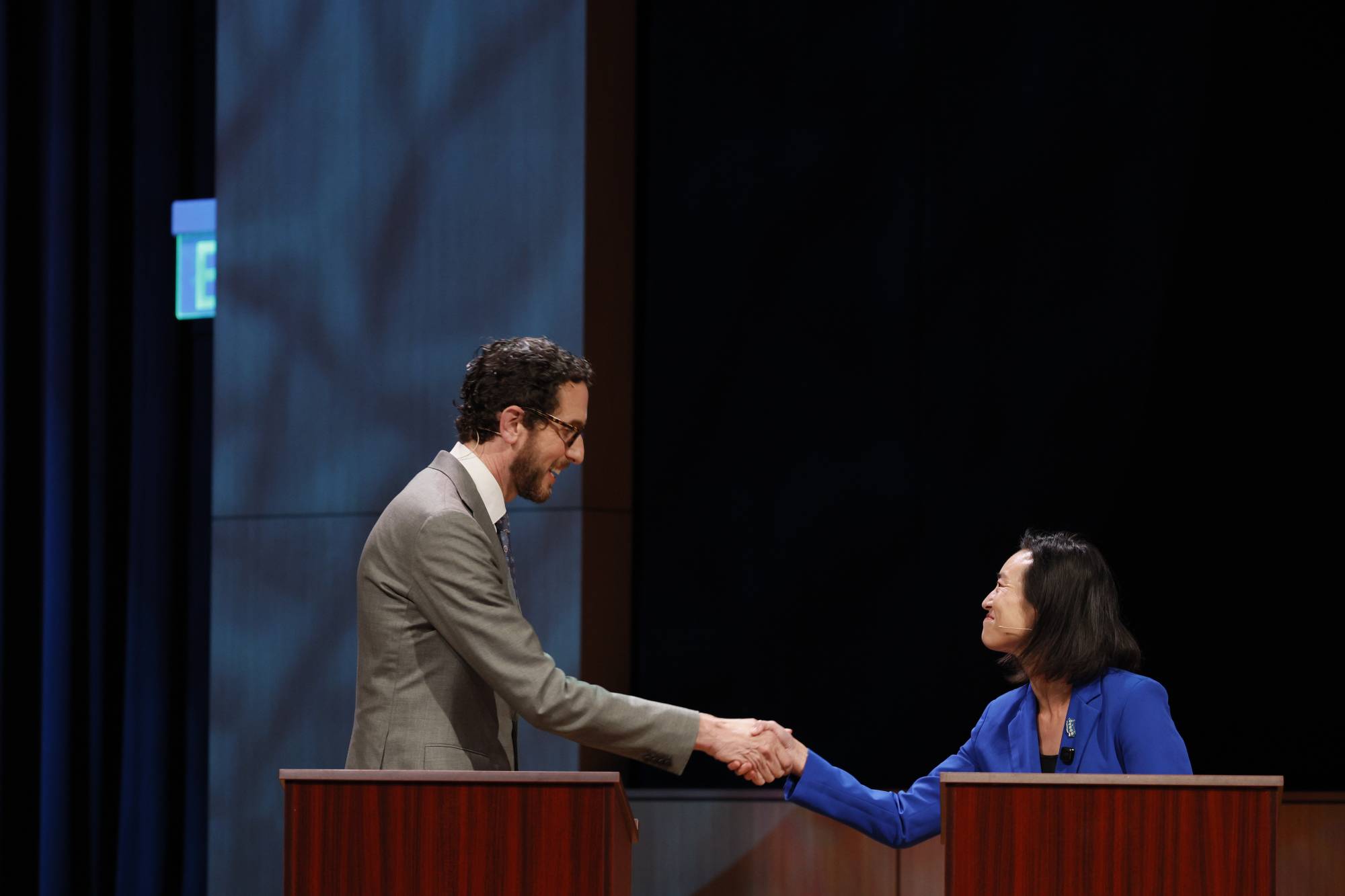
"caption": "From left: State Sen. Scott Wiener and San Francisco Supervisor Connie Chan end their debate with a handshake at KQED in San Francisco on Thursday, Oct. 1, 2026. ",
"credit": "Santiago Mejia/S.F. Chronicle/Pool",
"altTag": null,
"description": null,
"imgSizes": {
"medium": {
"file": "https://cdn.kqed.org/wp-content/uploads/sites/10/2026/10/kqed-debate-1-copy-3-2000x1333.jpg",
"width": 2000,
"height": 1333,
"mimeType": "image/jpeg"
},
"large": {
"file": "https://cdn.kqed.org/wp-content/uploads/sites/10/2026/10/kqed-debate-1-copy-3-2000x1333.jpg",
"width": 2000,
"height": 1333,
"mimeType": "image/jpeg"
},
"thumbnail": {
"file": "https://cdn.kqed.org/wp-content/uploads/sites/10/2026/10/kqed-debate-1-copy-3-160x107.jpg",
"width": 160,
"height": 107,
"mimeType": "image/jpeg"
},
"1536x1536": {
"file": "https://cdn.kqed.org/wp-content/uploads/sites/10/2026/10/kqed-debate-1-copy-3-1536x1024.jpg",
"width": 1536,
"height": 1024,
"mimeType": "image/jpeg"
},
"2048x2048": {
"file": "https://cdn.kqed.org/wp-content/uploads/sites/10/2026/10/kqed-debate-1-copy-3-2048x1365.jpg",
"width": 2048,
"height": 1365,
"mimeType": "image/jpeg"
},
"post-thumbnail": {
"file": "https://cdn.kqed.org/wp-content/uploads/sites/10/2026/10/kqed-debate-1-copy-3-672x372.jpg",
"width": 672,
"height": 372,
"mimeType": "image/jpeg"
},
"twentyfourteen-full-width": {
"file": "https://cdn.kqed.org/wp-content/uploads/sites/10/2026/10/kqed-debate-1-copy-3-1038x576.jpg",
"width": 1038,
"height": 576,
"mimeType": "image/jpeg"
},
"full-width": {
"file": "https://cdn.kqed.org/wp-content/uploads/sites/10/2026/10/kqed-debate-1-copy-3-2000x1333.jpg",
"width": 2000,
"height": 1333,
"mimeType": "image/jpeg"
},
"npr-cds-wide": {
"file": "https://cdn.kqed.org/wp-content/uploads/sites/10/2026/10/kqed-debate-1-copy-3-1200x675.jpg",
"width": 1200,
"height": 675,
"mimeType": "image/jpeg"
},
"npr-cds-square": {
"file": "https://cdn.kqed.org/wp-content/uploads/sites/10/2026/10/kqed-debate-1-copy-3-600x600.jpg",
"width": 600,
"height": 600,
"mimeType": "image/jpeg"
},
"kqedFullSize": {
"file": "https://cdn.kqed.org/wp-content/uploads/sites/10/2026/10/kqed-debate-1-copy-3-scaled.jpg",
"width": 2560,
"height": 1707
}
},
"isLoading": false,
"fetchFailed": false
},
"news_12095609": {
"type": "attachments",
"id": "news_12095609",
"meta": {
"index": "attachments_1716263798",
"site": "news",
"id": "12095609",
"found": true
},
"title": "081726-SFUSDFirstDay-20-MC_qed",
"publishDate": 1786997792,
"status": "inherit",
"parent": 12096676,
"modified": 1791586733,
"caption": "Students arrive at Jose Ortega Elementary School for the first day of their school year on Aug. 17, 2026, in San Francisco.",
"credit": "Miles Cull/KQED",
"altTag": null,
"description": null,
"imgSizes": {
"thumbnail": {
"file": "https://cdn.kqed.org/wp-content/uploads/sites/10/2026/08/081726-SFUSDFirstDay-20-MC_qed-160x107.jpg",
"width": 160,
"height": 107,
"mimeType": "image/jpeg"
},
"1536x1536": {
"file": "https://cdn.kqed.org/wp-content/uploads/sites/10/2026/08/081726-SFUSDFirstDay-20-MC_qed-1536x1025.jpg",
"width": 1536,
"height": 1025,
"mimeType": "image/jpeg"
},
"post-thumbnail": {
"file": "https://cdn.kqed.org/wp-content/uploads/sites/10/2026/08/081726-SFUSDFirstDay-20-MC_qed-672x372.jpg",
"width": 672,
"height": 372,
"mimeType": "image/jpeg"
},
"twentyfourteen-full-width": {
"file": "https://cdn.kqed.org/wp-content/uploads/sites/10/2026/08/081726-SFUSDFirstDay-20-MC_qed-1038x576.jpg",
"width": 1038,
"height": 576,
"mimeType": "image/jpeg"
},
"npr-cds-wide": {
"file": "https://cdn.kqed.org/wp-content/uploads/sites/10/2026/08/081726-SFUSDFirstDay-20-MC_qed-1200x675.jpg",
"width": 1200,
"height": 675,
"mimeType": "image/jpeg"
},
"npr-cds-square": {
"file": "https://cdn.kqed.org/wp-content/uploads/sites/10/2026/08/081726-SFUSDFirstDay-20-MC_qed-600x600.jpg",
"width": 600,
"height": 600,
"mimeType": "image/jpeg"
},
"kqedFullSize": {
"file": "https://cdn.kqed.org/wp-content/uploads/sites/10/2026/08/081726-SFUSDFirstDay-20-MC_qed.jpg",
"width": 1998,
"height": 1333
}
},
"isLoading": false,
"fetchFailed": false
},
"news_12104267": {
"type": "attachments",
"id": "news_12104267",
"meta": {
"index": "attachments_1716263798",
"site": "news",
"id": "12104267",
"found": true
},
"title": "TheSpeaker_Horizontal_Episode 5-17",
"publishDate": 1791933155,
"status": "inherit",
"parent": 12104262,
"modified": 1791933221,
"caption": "Photo courtesy of the Office of Speaker Emerita Nancy Pelosi",
"credit": null,
"altTag": "Nancy Pelosi stands behind a podium, in front of the Golden Gate Bridge. She’s wearing a red suit and her right hand is gesturing toward the bridge.",
"description": null,
"imgSizes": {
"medium": {
"file": "https://cdn.kqed.org/wp-content/uploads/sites/10/2026/10/TheSpeaker_Horizontal_Episode-5-17-17c4402f-2000x1125.jpg",
"width": 2000,
"height": 1125,
"mimeType": "image/jpeg"
},
"large": {
"file": "https://cdn.kqed.org/wp-content/uploads/sites/10/2026/10/TheSpeaker_Horizontal_Episode-5-17-17c4402f-2000x1125.jpg",
"width": 2000,
"height": 1125,
"mimeType": "image/jpeg"
},
"thumbnail": {
"file": "https://cdn.kqed.org/wp-content/uploads/sites/10/2026/10/TheSpeaker_Horizontal_Episode-5-17-17c4402f-160x90.jpg",
"width": 160,
"height": 90,
"mimeType": "image/jpeg"
},
"1536x1536": {
"file": "https://cdn.kqed.org/wp-content/uploads/sites/10/2026/10/TheSpeaker_Horizontal_Episode-5-17-17c4402f-1536x864.jpg",
"width": 1536,
"height": 864,
"mimeType": "image/jpeg"
},
"2048x2048": {
"file": "https://cdn.kqed.org/wp-content/uploads/sites/10/2026/10/TheSpeaker_Horizontal_Episode-5-17-17c4402f-2048x1152.jpg",
"width": 2048,
"height": 1152,
"mimeType": "image/jpeg"
},
"post-thumbnail": {
"file": "https://cdn.kqed.org/wp-content/uploads/sites/10/2026/10/TheSpeaker_Horizontal_Episode-5-17-17c4402f-672x372.jpg",
"width": 672,
"height": 372,
"mimeType": "image/jpeg"
},
"twentyfourteen-full-width": {
"file": "https://cdn.kqed.org/wp-content/uploads/sites/10/2026/10/TheSpeaker_Horizontal_Episode-5-17-17c4402f-1038x576.jpg",
"width": 1038,
"height": 576,
"mimeType": "image/jpeg"
},
"full-width": {
"file": "https://cdn.kqed.org/wp-content/uploads/sites/10/2026/10/TheSpeaker_Horizontal_Episode-5-17-17c4402f-2000x1125.jpg",
"width": 2000,
"height": 1125,
"mimeType": "image/jpeg"
},
"npr-cds-wide": {
"file": "https://cdn.kqed.org/wp-content/uploads/sites/10/2026/10/TheSpeaker_Horizontal_Episode-5-17-17c4402f-1200x675.jpg",
"width": 1200,
"height": 675,
"mimeType": "image/jpeg"
},
"npr-cds-square": {
"file": "https://cdn.kqed.org/wp-content/uploads/sites/10/2026/10/TheSpeaker_Horizontal_Episode-5-17-17c4402f-600x600.jpg",
"width": 600,
"height": 600,
"mimeType": "image/jpeg"
},
"kqedFullSize": {
"file": "https://cdn.kqed.org/wp-content/uploads/sites/10/2026/10/TheSpeaker_Horizontal_Episode-5-17-17c4402f-scaled.jpg",
"width": 2560,
"height": 1440
}
},
"isLoading": false,
"fetchFailed": false
},
"news_12104200": {
"type": "attachments",
"id": "news_12104200",
"meta": {
"index": "attachments_1716263798",
"site": "news",
"id": "12104200",
"found": true
},
"title": "GettyImages-2292508700",
"publishDate": 1791920066,
"status": "inherit",
"parent": 12104191,
"modified": 1793146000,
"caption": "Rep. James Gallagher arrives for the House Republican Conference caucus meeting in the U.S. Capitol on Sept. 1, 2026. ",
"credit": "Bill Clark/CQ-Roll Call, Inc. via Getty Images",
"altTag": null,
"description": null,
"imgSizes": {
"medium": {
"file": "https://cdn.kqed.org/wp-content/uploads/sites/10/2026/10/GettyImages-2292508700-44061c88-2000x1333.jpg",
"width": 2000,
"height": 1333,
"mimeType": "image/jpeg"
},
"large": {
"file": "https://cdn.kqed.org/wp-content/uploads/sites/10/2026/10/GettyImages-2292508700-44061c88-2000x1333.jpg",
"width": 2000,
"height": 1333,
"mimeType": "image/jpeg"
},
"thumbnail": {
"file": "https://cdn.kqed.org/wp-content/uploads/sites/10/2026/10/GettyImages-2292508700-44061c88-160x107.jpg",
"width": 160,
"height": 107,
"mimeType": "image/jpeg"
},
"1536x1536": {
"file": "https://cdn.kqed.org/wp-content/uploads/sites/10/2026/10/GettyImages-2292508700-44061c88-1536x1024.jpg",
"width": 1536,
"height": 1024,
"mimeType": "image/jpeg"
},
"2048x2048": {
"file": "https://cdn.kqed.org/wp-content/uploads/sites/10/2026/10/GettyImages-2292508700-44061c88-2048x1365.jpg",
"width": 2048,
"height": 1365,
"mimeType": "image/jpeg"
},
"post-thumbnail": {
"file": "https://cdn.kqed.org/wp-content/uploads/sites/10/2026/10/GettyImages-2292508700-44061c88-672x372.jpg",
"width": 672,
"height": 372,
"mimeType": "image/jpeg"
},
"twentyfourteen-full-width": {
"file": "https://cdn.kqed.org/wp-content/uploads/sites/10/2026/10/GettyImages-2292508700-44061c88-1038x576.jpg",
"width": 1038,
"height": 576,
"mimeType": "image/jpeg"
},
"full-width": {
"file": "https://cdn.kqed.org/wp-content/uploads/sites/10/2026/10/GettyImages-2292508700-44061c88-2000x1333.jpg",
"width": 2000,
"height": 1333,
"mimeType": "image/jpeg"
},
"npr-cds-wide": {
"file": "https://cdn.kqed.org/wp-content/uploads/sites/10/2026/10/GettyImages-2292508700-44061c88-1200x675.jpg",
"width": 1200,
"height": 675,
"mimeType": "image/jpeg"
},
"npr-cds-square": {
"file": "https://cdn.kqed.org/wp-content/uploads/sites/10/2026/10/GettyImages-2292508700-44061c88-600x600.jpg",
"width": 600,
"height": 600,
"mimeType": "image/jpeg"
},
"kqedFullSize": {
"file": "https://cdn.kqed.org/wp-content/uploads/sites/10/2026/10/GettyImages-2292508700-44061c88-scaled-e1793145974125.jpg",
"width": 2000,
"height": 1334
}
},
"isLoading": false,
"fetchFailed": false
},
"news_12104141": {
"type": "attachments",
"id": "news_12104141",
"meta": {
"index": "attachments_1716263798",
"site": "news",
"id": "12104141",
"found": true
},
"title": "United States Disciplinary Barracks Getty",
"publishDate": 1791910405,
"status": "inherit",
"parent": 12104135,
"modified": 1791910469,
"caption": "The United States Disciplinary Barracks, where Nidal Malik Hasan is being held on death row, is seen in Fort Leavenworth. Hasan, the U.S. Army Major who was convicted of killing 13 people and wounding 32 others during a mass shooting at Fort Hood in 2009, has been approved by President Donald Trump for execution by military firing squad.",
"credit": "Paul Hennessy/SOPA Images/LightRocket via Getty Images",
"altTag": null,
"description": null,
"imgSizes": {
"thumbnail": {
"file": "https://cdn.kqed.org/wp-content/uploads/sites/10/2026/10/United-States-Disciplinary-Barracks-Getty-14f4c2ef-160x94.jpg",
"width": 160,
"height": 94,
"mimeType": "image/jpeg"
},
"1536x1536": {
"file": "https://cdn.kqed.org/wp-content/uploads/sites/10/2026/10/United-States-Disciplinary-Barracks-Getty-14f4c2ef-1536x904.jpg",
"width": 1536,
"height": 904,
"mimeType": "image/jpeg"
},
"post-thumbnail": {
"file": "https://cdn.kqed.org/wp-content/uploads/sites/10/2026/10/United-States-Disciplinary-Barracks-Getty-14f4c2ef-672x372.jpg",
"width": 672,
"height": 372,
"mimeType": "image/jpeg"
},
"twentyfourteen-full-width": {
"file": "https://cdn.kqed.org/wp-content/uploads/sites/10/2026/10/United-States-Disciplinary-Barracks-Getty-14f4c2ef-1038x576.jpg",
"width": 1038,
"height": 576,
"mimeType": "image/jpeg"
},
"npr-cds-wide": {
"file": "https://cdn.kqed.org/wp-content/uploads/sites/10/2026/10/United-States-Disciplinary-Barracks-Getty-14f4c2ef-1200x675.jpg",
"width": 1200,
"height": 675,
"mimeType": "image/jpeg"
},
"npr-cds-square": {
"file": "https://cdn.kqed.org/wp-content/uploads/sites/10/2026/10/United-States-Disciplinary-Barracks-Getty-14f4c2ef-600x600.jpg",
"width": 600,
"height": 600,
"mimeType": "image/jpeg"
},
"kqedFullSize": {
"file": "https://cdn.kqed.org/wp-content/uploads/sites/10/2026/10/United-States-Disciplinary-Barracks-Getty-14f4c2ef.jpg",
"width": 2000,
"height": 1177
}
},
"isLoading": false,
"fetchFailed": false
},
"news_12104002": {
"type": "attachments",
"id": "news_12104002",
"meta": {
"index": "attachments_1716263798",
"site": "news",
"id": "12104002",
"found": true
},
"title": "XavierBecerraGetty",
"publishDate": 1791826117,
"status": "inherit",
"parent": 12103827,
"modified": 1791826163,
"caption": "Democratic candidate for governor Xavier Becerra is introduced at a campaign event with Clarissa Cervantes, right, who his running for State Assembly in District 58, on Oct. 2, 2026, in Riverside, California.",
"credit": "Gina Ferazzi/Los Angeles Times via Getty Images",
"altTag": null,
"description": null,
"imgSizes": {
"thumbnail": {
"file": "https://cdn.kqed.org/wp-content/uploads/sites/10/2026/10/XavierBecerraGetty-d1be7b5d-160x107.jpg",
"width": 160,
"height": 107,
"mimeType": "image/jpeg"
},
"1536x1536": {
"file": "https://cdn.kqed.org/wp-content/uploads/sites/10/2026/10/XavierBecerraGetty-d1be7b5d-1536x1024.jpg",
"width": 1536,
"height": 1024,
"mimeType": "image/jpeg"
},
"post-thumbnail": {
"file": "https://cdn.kqed.org/wp-content/uploads/sites/10/2026/10/XavierBecerraGetty-d1be7b5d-672x372.jpg",
"width": 672,
"height": 372,
"mimeType": "image/jpeg"
},
"twentyfourteen-full-width": {
"file": "https://cdn.kqed.org/wp-content/uploads/sites/10/2026/10/XavierBecerraGetty-d1be7b5d-1038x576.jpg",
"width": 1038,
"height": 576,
"mimeType": "image/jpeg"
},
"npr-cds-wide": {
"file": "https://cdn.kqed.org/wp-content/uploads/sites/10/2026/10/XavierBecerraGetty-d1be7b5d-1200x675.jpg",
"width": 1200,
"height": 675,
"mimeType": "image/jpeg"
},
"npr-cds-square": {
"file": "https://cdn.kqed.org/wp-content/uploads/sites/10/2026/10/XavierBecerraGetty-d1be7b5d-600x600.jpg",
"width": 600,
"height": 600,
"mimeType": "image/jpeg"
},
"kqedFullSize": {
"file": "https://cdn.kqed.org/wp-content/uploads/sites/10/2026/10/XavierBecerraGetty-d1be7b5d.jpg",
"width": 2000,
"height": 1333
}
},
"isLoading": false,
"fetchFailed": false
},
"news_12103406": {
"type": "attachments",
"id": "news_12103406",
"meta": {
"index": "attachments_1716263798",
"site": "news",
"id": "12103406",
"found": true
},
"title": "IMG_1640",
"publishDate": 1791402734,
"status": "inherit",
"parent": 0,
"modified": 1791408501,
"caption": "A pay-to-play scheme involving city contracts, a no show job and a Bay Area recycling company with an active contract with the city of Oakland are at the center of the allegedly bribery scheme prosecutors hope to prove in the federal criminal trial of former Oakland Mayor Sheng Thao. ",
"credit": "Anna Vignet/KQED",
"altTag": null,
"description": null,
"imgSizes": {
"medium": {
"file": "https://cdn.kqed.org/wp-content/uploads/sites/10/2026/10/IMG_1640-2000x1500.jpg",
"width": 2000,
"height": 1500,
"mimeType": "image/jpeg"
},
"large": {
"file": "https://cdn.kqed.org/wp-content/uploads/sites/10/2026/10/IMG_1640-2000x1500.jpg",
"width": 2000,
"height": 1500,
"mimeType": "image/jpeg"
},
"thumbnail": {
"file": "https://cdn.kqed.org/wp-content/uploads/sites/10/2026/10/IMG_1640-160x120.jpg",
"width": 160,
"height": 120,
"mimeType": "image/jpeg"
},
"1536x1536": {
"file": "https://cdn.kqed.org/wp-content/uploads/sites/10/2026/10/IMG_1640-1536x1152.jpg",
"width": 1536,
"height": 1152,
"mimeType": "image/jpeg"
},
"2048x2048": {
"file": "https://cdn.kqed.org/wp-content/uploads/sites/10/2026/10/IMG_1640-2048x1536.jpg",
"width": 2048,
"height": 1536,
"mimeType": "image/jpeg"
},
"post-thumbnail": {
"file": "https://cdn.kqed.org/wp-content/uploads/sites/10/2026/10/IMG_1640-672x372.jpg",
"width": 672,
"height": 372,
"mimeType": "image/jpeg"
},
"twentyfourteen-full-width": {
"file": "https://cdn.kqed.org/wp-content/uploads/sites/10/2026/10/IMG_1640-1038x576.jpg",
"width": 1038,
"height": 576,
"mimeType": "image/jpeg"
},
"full-width": {
"file": "https://cdn.kqed.org/wp-content/uploads/sites/10/2026/10/IMG_1640-2000x1500.jpg",
"width": 2000,
"height": 1500,
"mimeType": "image/jpeg"
},
"npr-cds-wide": {
"file": "https://cdn.kqed.org/wp-content/uploads/sites/10/2026/10/IMG_1640-1200x675.jpg",
"width": 1200,
"height": 675,
"mimeType": "image/jpeg"
},
"npr-cds-square": {
"file": "https://cdn.kqed.org/wp-content/uploads/sites/10/2026/10/IMG_1640-600x600.jpg",
"width": 600,
"height": 600,
"mimeType": "image/jpeg"
},
"kqedFullSize": {
"file": "https://cdn.kqed.org/wp-content/uploads/sites/10/2026/10/IMG_1640.jpg",
"width": 2560,
"height": 1920
}
},
"isLoading": false,
"fetchFailed": false
},
"news_12104054": {
"type": "attachments",
"id": "news_12104054",
"meta": {
"index": "attachments_1716263798",
"site": "news",
"id": "12104054",
"found": true
},
"title": "007_KQED_GaryMcCoyCastro_05042022_qed",
"publishDate": 1791832695,
"status": "inherit",
"parent": 12104051,
"modified": 1791832706,
"caption": "Gary McCoy sits at the Castro Country Club in San Francisco on May 4, 2022, where he would have coffee before work for many years.",
"credit": "Beth LaBerge/KQED",
"altTag": null,
"description": null,
"imgSizes": {
"thumbnail": {
"file": "https://cdn.kqed.org/wp-content/uploads/sites/10/2026/10/007_KQED_GaryMcCoyCastro_05042022_qed-2229755b-160x107.jpg",
"width": 160,
"height": 107,
"mimeType": "image/jpeg"
},
"1536x1536": {
"file": "https://cdn.kqed.org/wp-content/uploads/sites/10/2026/10/007_KQED_GaryMcCoyCastro_05042022_qed-2229755b-1536x1024.jpg",
"width": 1536,
"height": 1024,
"mimeType": "image/jpeg"
},
"post-thumbnail": {
"file": "https://cdn.kqed.org/wp-content/uploads/sites/10/2026/10/007_KQED_GaryMcCoyCastro_05042022_qed-2229755b-672x372.jpg",
"width": 672,
"height": 372,
"mimeType": "image/jpeg"
},
"twentyfourteen-full-width": {
"file": "https://cdn.kqed.org/wp-content/uploads/sites/10/2026/10/007_KQED_GaryMcCoyCastro_05042022_qed-2229755b-1038x576.jpg",
"width": 1038,
"height": 576,
"mimeType": "image/jpeg"
},
"npr-cds-wide": {
"file": "https://cdn.kqed.org/wp-content/uploads/sites/10/2026/10/007_KQED_GaryMcCoyCastro_05042022_qed-2229755b-1200x675.jpg",
"width": 1200,
"height": 675,
"mimeType": "image/jpeg"
},
"npr-cds-square": {
"file": "https://cdn.kqed.org/wp-content/uploads/sites/10/2026/10/007_KQED_GaryMcCoyCastro_05042022_qed-2229755b-600x600.jpg",
"width": 600,
"height": 600,
"mimeType": "image/jpeg"
},
"kqedFullSize": {
"file": "https://cdn.kqed.org/wp-content/uploads/sites/10/2026/10/007_KQED_GaryMcCoyCastro_05042022_qed-2229755b.jpg",
"width": 2000,
"height": 1333
}
},
"isLoading": false,
"fetchFailed": false
},
"news_12103984": {
"type": "attachments",
"id": "news_12103984",
"meta": {
"index": "attachments_1716263798",
"site": "news",
"id": "12103984",
"found": true
},
"title": "Trump AI",
"publishDate": 1791736010,
"status": "inherit",
"parent": 12103983,
"modified": 1792022726,
"caption": "President Donald Trump, center, next to Nvidia CEO Jensen Huang, left, and Elon Musk, right, speaks in the East Room of the White House in Washington on Sept. 29, 2026, surrounded by top executives of AI firms including, from top left, Microsoft CEO Satya Nadella, Greg Brockman, President of OpenAI, House Speaker Mike Johnson, AMD CEO Lisa Su, Palo Alto Networks Chief Executive Nikesh Arora and David Sacks. ",
"credit": "Jacquelyn Martin/AP Photo",
"altTag": null,
"description": null,
"imgSizes": {
"thumbnail": {
"file": "https://cdn.kqed.org/wp-content/uploads/sites/10/2026/10/AP26272702876598-c2e61000-160x107.jpg",
"width": 160,
"height": 107,
"mimeType": "image/jpeg"
},
"1536x1536": {
"file": "https://cdn.kqed.org/wp-content/uploads/sites/10/2026/10/AP26272702876598-c2e61000-1536x1023.jpg",
"width": 1536,
"height": 1023,
"mimeType": "image/jpeg"
},
"post-thumbnail": {
"file": "https://cdn.kqed.org/wp-content/uploads/sites/10/2026/10/AP26272702876598-c2e61000-672x372.jpg",
"width": 672,
"height": 372,
"mimeType": "image/jpeg"
},
"twentyfourteen-full-width": {
"file": "https://cdn.kqed.org/wp-content/uploads/sites/10/2026/10/AP26272702876598-c2e61000-1038x576.jpg",
"width": 1038,
"height": 576,
"mimeType": "image/jpeg"
},
"npr-cds-wide": {
"file": "https://cdn.kqed.org/wp-content/uploads/sites/10/2026/10/AP26272702876598-c2e61000-1200x675.jpg",
"width": 1200,
"height": 675,
"mimeType": "image/jpeg"
},
"npr-cds-square": {
"file": "https://cdn.kqed.org/wp-content/uploads/sites/10/2026/10/AP26272702876598-c2e61000-600x600.jpg",
"width": 600,
"height": 600,
"mimeType": "image/jpeg"
},
"kqedFullSize": {
"file": "https://cdn.kqed.org/wp-content/uploads/sites/10/2026/10/AP26272702876598-c2e61000.jpg",
"width": 1618,
"height": 1078
}
},
"isLoading": false,
"fetchFailed": false
},
"news_12103974": {
"type": "attachments",
"id": "news_12103974",
"meta": {
"index": "attachments_1716263798",
"site": "news",
"id": "12103974",
"found": true
},
"title": "052024_Delta_LE_CM_24",
"publishDate": 1791660589,
"status": "inherit",
"parent": 12103973,
"modified": 1791660618,
"caption": "An aerial view of Threemile Slough in the Sacramento-San Joaquin River Delta near Rio Vista on May 19, 2024. The Delta is formed by the confluence of the Sacramento and San Joaquin rivers before their waters flow into San Francisco Bay.",
"credit": "Loren Elliott/CalMatters",
"altTag": null,
"description": null,
"imgSizes": {
"thumbnail": {
"file": "https://cdn.kqed.org/wp-content/uploads/sites/10/2026/10/052024_Delta_LE_CM_24-b2f10ca3-160x107.jpg",
"width": 160,
"height": 107,
"mimeType": "image/jpeg"
},
"1536x1536": {
"file": "https://cdn.kqed.org/wp-content/uploads/sites/10/2026/10/052024_Delta_LE_CM_24-b2f10ca3-1536x1024.jpg",
"width": 1536,
"height": 1024,
"mimeType": "image/jpeg"
},
"post-thumbnail": {
"file": "https://cdn.kqed.org/wp-content/uploads/sites/10/2026/10/052024_Delta_LE_CM_24-b2f10ca3-672x372.jpg",
"width": 672,
"height": 372,
"mimeType": "image/jpeg"
},
"twentyfourteen-full-width": {
"file": "https://cdn.kqed.org/wp-content/uploads/sites/10/2026/10/052024_Delta_LE_CM_24-b2f10ca3-1038x576.jpg",
"width": 1038,
"height": 576,
"mimeType": "image/jpeg"
},
"npr-cds-wide": {
"file": "https://cdn.kqed.org/wp-content/uploads/sites/10/2026/10/052024_Delta_LE_CM_24-b2f10ca3-1200x675.jpg",
"width": 1200,
"height": 675,
"mimeType": "image/jpeg"
},
"npr-cds-square": {
"file": "https://cdn.kqed.org/wp-content/uploads/sites/10/2026/10/052024_Delta_LE_CM_24-b2f10ca3-600x600.jpg",
"width": 600,
"height": 600,
"mimeType": "image/jpeg"
},
"kqedFullSize": {
"file": "https://cdn.kqed.org/wp-content/uploads/sites/10/2026/10/052024_Delta_LE_CM_24-b2f10ca3.jpg",
"width": 2000,
"height": 1333
}
},
"isLoading": false,
"fetchFailed": false
},
"news_12102879": {
"type": "attachments",
"id": "news_12102879",
"meta": {
"index": "attachments_1716263798",
"site": "news",
"id": "12102879",
"found": true
},
"title": "20261004_SILICONVALLEYUNION_GC-5-KQED",
"publishDate": 1791224608,
"status": "inherit",
"parent": 0,
"modified": 1791224623,
"caption": "Joshua Carroll, a tech worker at Google and core organizer of Tech Workers Coalition, poses for a portrait at his home in Oakland on Oct. 4, 2026.",
"credit": "Gina Castro/KQED",
"altTag": null,
"description": null,
"imgSizes": {
"thumbnail": {
"file": "https://cdn.kqed.org/wp-content/uploads/sites/10/2026/10/20261004_SILICONVALLEYUNION_GC-5-KQED-160x107.jpg",
"width": 160,
"height": 107,
"mimeType": "image/jpeg"
},
"1536x1536": {
"file": "https://cdn.kqed.org/wp-content/uploads/sites/10/2026/10/20261004_SILICONVALLEYUNION_GC-5-KQED-1536x1024.jpg",
"width": 1536,
"height": 1024,
"mimeType": "image/jpeg"
},
"post-thumbnail": {
"file": "https://cdn.kqed.org/wp-content/uploads/sites/10/2026/10/20261004_SILICONVALLEYUNION_GC-5-KQED-672x372.jpg",
"width": 672,
"height": 372,
"mimeType": "image/jpeg"
},
"twentyfourteen-full-width": {
"file": "https://cdn.kqed.org/wp-content/uploads/sites/10/2026/10/20261004_SILICONVALLEYUNION_GC-5-KQED-1038x576.jpg",
"width": 1038,
"height": 576,
"mimeType": "image/jpeg"
},
"npr-cds-wide": {
"file": "https://cdn.kqed.org/wp-content/uploads/sites/10/2026/10/20261004_SILICONVALLEYUNION_GC-5-KQED-1200x675.jpg",
"width": 1200,
"height": 675,
"mimeType": "image/jpeg"
},
"npr-cds-square": {
"file": "https://cdn.kqed.org/wp-content/uploads/sites/10/2026/10/20261004_SILICONVALLEYUNION_GC-5-KQED-600x600.jpg",
"width": 600,
"height": 600,
"mimeType": "image/jpeg"
},
"kqedFullSize": {
"file": "https://cdn.kqed.org/wp-content/uploads/sites/10/2026/10/20261004_SILICONVALLEYUNION_GC-5-KQED.jpg",
"width": 2000,
"height": 1333
}
},
"isLoading": false,
"fetchFailed": false
},
"news_12103905": {
"type": "attachments",
"id": "news_12103905",
"meta": {
"index": "attachments_1716263798",
"site": "news",
"id": "12103905",
"found": true
},
"title": "VistaCaliGetty",
"publishDate": 1791590211,
"status": "inherit",
"parent": 12102409,
"modified": 1791591340,
"caption": "An arch stands over the south end of the recently renovated section of South Santa Fe Avenue near Pala Vista Drive, in Vista, California, on Jan. 28, 2021. ",
"credit": "Charlie Neuman/The San Diego Union Tribune via Getty Images",
"altTag": null,
"description": null,
"imgSizes": {
"thumbnail": {
"file": "https://cdn.kqed.org/wp-content/uploads/sites/10/2026/10/VistaCaliGetty-a57edd14-160x102.jpg",
"width": 160,
"height": 102,
"mimeType": "image/jpeg"
},
"1536x1536": {
"file": "https://cdn.kqed.org/wp-content/uploads/sites/10/2026/10/VistaCaliGetty-a57edd14-1536x981.jpg",
"width": 1536,
"height": 981,
"mimeType": "image/jpeg"
},
"post-thumbnail": {
"file": "https://cdn.kqed.org/wp-content/uploads/sites/10/2026/10/VistaCaliGetty-a57edd14-672x372.jpg",
"width": 672,
"height": 372,
"mimeType": "image/jpeg"
},
"twentyfourteen-full-width": {
"file": "https://cdn.kqed.org/wp-content/uploads/sites/10/2026/10/VistaCaliGetty-a57edd14-1038x576.jpg",
"width": 1038,
"height": 576,
"mimeType": "image/jpeg"
},
"npr-cds-wide": {
"file": "https://cdn.kqed.org/wp-content/uploads/sites/10/2026/10/VistaCaliGetty-a57edd14-1200x675.jpg",
"width": 1200,
"height": 675,
"mimeType": "image/jpeg"
},
"npr-cds-square": {
"file": "https://cdn.kqed.org/wp-content/uploads/sites/10/2026/10/VistaCaliGetty-a57edd14-600x600.jpg",
"width": 600,
"height": 600,
"mimeType": "image/jpeg"
},
"kqedFullSize": {
"file": "https://cdn.kqed.org/wp-content/uploads/sites/10/2026/10/VistaCaliGetty-a57edd14.jpg",
"width": 2000,
"height": 1277
}
},
"isLoading": false,
"fetchFailed": false
}
},
"audioPlayerReducer": {
"postId": "stream_live",
"isPaused": true,
"isPlaying": false,
"pfsActive": false,
"pledgeModalIsOpen": true,
"playerDrawerIsOpen": false,
"liveAudioPlayStartedAt": 0,
"liveAudioPlayContext": ""
},
"authorsReducer": {
"byline_news_12104051": {
"type": "authors",
"id": "byline_news_12104051",
"meta": {
"override": true
},
"slug": "byline_news_12104051",
"name": "Jose Velasquez",
"isLoading": false
},
"byline_news_12103983": {
"type": "authors",
"id": "byline_news_12103983",
"meta": {
"override": true
},
"slug": "byline_news_12103983",
"name": "Garance Burke, The Associated Press",
"isLoading": false
},
"byline_news_12103973": {
"type": "authors",
"id": "byline_news_12103973",
"meta": {
"override": true
},
"slug": "byline_news_12103973",
"name": "Melanie Henshaw, CalMatters-ICT",
"isLoading": false
},
"gmarzorati": {
"type": "authors",
"id": "227",
"meta": {
"index": "authors_1716337520",
"id": "227",
"found": true
},
"name": "Guy Marzorati",
"firstName": "Guy",
"lastName": "Marzorati",
"slug": "gmarzorati",
"email": "gmarzorati@KQED.org",
"display_author_email": true,
"staff_mastheads": [
"news"
],
"title": "Correspondent",
"bio": "Guy Marzorati is a correspondent on KQED's California Politics and Government Desk, based in San Jose. A graduate of Santa Clara University, Guy joined KQED in 2013. He reports on state and local politics and produces KQED's digital voter guide.",
"avatar": "https://secure.gravatar.com/avatar/771cddf45ce3a8ed533d82dcc214e9ef925d76d2af5794a33da1ce439eb54a32?s=600&d=blank&r=g",
"twitter": "guymarzorati",
"bluesky": null,
"facebook": null,
"instagram": null,
"linkedin": null,
"sites": [
{
"site": "",
"roles": [
"editor"
]
},
{
"site": "news",
"roles": [
"editor"
]
},
{
"site": "science",
"roles": [
"editor"
]
},
{
"site": "forum",
"roles": [
"editor"
]
},
{
"site": "elections",
"roles": [
"editor"
]
},
{
"site": "liveblog",
"roles": [
"editor"
]
}
],
"headData": {
"title": "Guy Marzorati | KQED",
"description": "Correspondent",
"ogImgSrc": "https://secure.gravatar.com/avatar/771cddf45ce3a8ed533d82dcc214e9ef925d76d2af5794a33da1ce439eb54a32?s=600&d=blank&r=g",
"twImgSrc": "https://secure.gravatar.com/avatar/771cddf45ce3a8ed533d82dcc214e9ef925d76d2af5794a33da1ce439eb54a32?s=600&d=blank&r=g"
},
"isLoading": false,
"link": "/author/gmarzorati"
},
"scottshafer": {
"type": "authors",
"id": "255",
"meta": {
"index": "authors_1716337520",
"id": "255",
"found": true
},
"name": "Scott Shafer",
"firstName": "Scott",
"lastName": "Shafer",
"slug": "scottshafer",
"email": "sshafer@kqed.org",
"display_author_email": false,
"staff_mastheads": [
"news"
],
"title": "KQED Contributor",
"bio": "Scott Shafer is the senior politics correspondent with the KQED Politics and Government desk. He is co-host of \u003cem>Political Breakdown\u003c/em>, the award-winning radio show and podcast with a personal take on the world of politics. Scott came to KQED in 1998 to host the statewide \u003cem>California Report\u003c/em>. Prior to that he had extended stints in politics and government. He uses that inside experience at KQED in his, reporting, hosting and analysis for the politics desk. Scott recently completed a 5-part podcast titled \u003cem>The Speaker\u003c/em>, examining Rep. Nancy Pelosi's life and legacy. Previously he collaborated on \u003cem>Political Breakdown\u003c/em> and on \u003cem>The Political Mind of Jerry Brown\u003c/em>, an eight-part series about the life and extraordinary political career of the former governor. For fun, he plays water polo and swims with the San Francisco Tsunami.",
"avatar": "https://secure.gravatar.com/avatar/a269f2db8e99b39bacd3dfb517e1aea56c8d9706cde1d375abfd9fba57eede2c?s=600&d=blank&r=g",
"twitter": "scottshafer",
"bluesky": null,
"facebook": null,
"instagram": null,
"linkedin": null,
"sites": [
{
"site": "news",
"roles": [
"editor"
]
},
{
"site": "stateofhealth",
"roles": [
"author"
]
},
{
"site": "science",
"roles": [
"author"
]
},
{
"site": "forum",
"roles": [
"subscriber"
]
},
{
"site": "liveblog",
"roles": [
"author"
]
}
],
"headData": {
"title": "Scott Shafer | KQED",
"description": "KQED Contributor",
"ogImgSrc": "https://secure.gravatar.com/avatar/a269f2db8e99b39bacd3dfb517e1aea56c8d9706cde1d375abfd9fba57eede2c?s=600&d=blank&r=g",
"twImgSrc": "https://secure.gravatar.com/avatar/a269f2db8e99b39bacd3dfb517e1aea56c8d9706cde1d375abfd9fba57eede2c?s=600&d=blank&r=g"
},
"isLoading": false,
"link": "/author/scottshafer"
},
"mlagos": {
"type": "authors",
"id": "3239",
"meta": {
"index": "authors_1716337520",
"id": "3239",
"found": true
},
"name": "Marisa Lagos",
"firstName": "Marisa",
"lastName": "Lagos",
"slug": "mlagos",
"email": "mlagos@kqed.org",
"display_author_email": false,
"staff_mastheads": [
"news"
],
"title": "KQED Contributor",
"bio": "Marisa Lagos is a correspondent for KQED’s California Politics and Government Desk and co-hosts the award-winning show and podcast, Political Breakdown. At KQED, Lagos also conducts reporting, analysis and investigations into state, local and national politics for radio, TV, online and onstage. In 2022, she and co-host, Scott Shafer, moderated the only gubernatorial debate in California. In 2020, the \u003ci>Washington Post\u003c/i> named her one of the top political journalists in California; she was nominated for a Peabody and won several other awards for her work investigating the 2017 California wildfires. She has worked at the \u003ci>San Francisco Chronicle\u003c/i>, \u003ci>San Francisco Examiner\u003c/i> and \u003ci>Los Angeles Times\u003c/i>. A UC Santa Barbara graduate, she lives in San Francisco with her two sons and husband.",
"avatar": "https://secure.gravatar.com/avatar/a261a0d3696fc066871ef96b85b5e7d2?s=600&d=blank&r=g",
"twitter": "@mlagos",
"facebook": null,
"instagram": null,
"linkedin": null,
"sites": [
{
"site": "arts",
"roles": [
"author"
]
},
{
"site": "news",
"roles": [
"editor"
]
},
{
"site": "science",
"roles": [
"editor"
]
},
{
"site": "forum",
"roles": [
"author"
]
},
{
"site": "liveblog",
"roles": [
"author"
]
}
],
"headData": {
"title": "Marisa Lagos | KQED",
"description": "KQED Contributor",
"ogImgSrc": "https://secure.gravatar.com/avatar/a261a0d3696fc066871ef96b85b5e7d2?s=600&d=blank&r=g",
"twImgSrc": "https://secure.gravatar.com/avatar/a261a0d3696fc066871ef96b85b5e7d2?s=600&d=blank&r=g"
},
"isLoading": false,
"link": "/author/mlagos"
},
"ahall": {
"type": "authors",
"id": "11490",
"meta": {
"index": "authors_1716337520",
"id": "11490",
"found": true
},
"name": "Alex Hall",
"firstName": "Alex",
"lastName": "Hall",
"slug": "ahall",
"email": "ahall@kqed.org",
"display_author_email": false,
"staff_mastheads": [
"news"
],
"title": "KQED Enterprise & Accountability Reporter",
"bio": "Alex Hall is KQED's Enterprise and Accountability Reporter. She previously covered the Central Valley for five years from KQED's bureau in Fresno. Before joining KQED, Alex was an investigative reporting fellow at Wisconsin Public Radio and the Wisconsin Center for Investigative Journalism. She has also worked as a bilingual producer for NPR's investigative unit and freelance video producer for Reuters TV on the Latin America desk. She got her start in journalism in South America, where she worked as a radio producer and Spanish-English translator for CNN Chile. Her documentary and investigation into the series of deadly COVID-19 outbreaks at Foster Farms won a national Edward R. Murrow award and was named an Investigative Reporters & Editors award finalist. Alex's reporting for Reveal on the Wisconsin dairy industry's reliance on undocumented immigrant labor was made into a film, Los Lecheros, which won a regional Edward R. Murrow award for best news documentary.",
"avatar": "https://secure.gravatar.com/avatar/04c28ad4a7caa7ac2ef39c655c4030c993a3f331481d1da4799bb76ea85b9afa?s=600&d=blank&r=g",
"twitter": "@chalexhall",
"bluesky": null,
"facebook": null,
"instagram": null,
"linkedin": null,
"sites": [
{
"site": "news",
"roles": [
"editor"
]
},
{
"site": "liveblog",
"roles": [
"author"
]
}
],
"headData": {
"title": "Alex Hall | KQED",
"description": "KQED Enterprise & Accountability Reporter",
"ogImgSrc": "https://secure.gravatar.com/avatar/04c28ad4a7caa7ac2ef39c655c4030c993a3f331481d1da4799bb76ea85b9afa?s=600&d=blank&r=g",
"twImgSrc": "https://secure.gravatar.com/avatar/04c28ad4a7caa7ac2ef39c655c4030c993a3f331481d1da4799bb76ea85b9afa?s=600&d=blank&r=g"
},
"isLoading": false,
"link": "/author/ahall"
},
"amarkowitz": {
"type": "authors",
"id": "11660",
"meta": {
"index": "authors_1716337520",
"id": "11660",
"found": true
},
"name": "Ariella Markowitz",
"firstName": "Ariella",
"lastName": "Markowitz",
"slug": "amarkowitz",
"email": "amarkowitz@kqed.org",
"display_author_email": false,
"staff_mastheads": [],
"title": "KQED Contributor",
"bio": "Ariella is a former intern for the California Report Magazine. Before that, she helped mobilize freelance journalists with Association of Independents in Radio (AIR) and made radio features for KALW. Ariella loves investigative reporting, personal stories that interrogate power, and spicy vegan cooking.",
"avatar": "https://secure.gravatar.com/avatar/7076c77064fecef602a2c779f2b9e1d33cb6f9b5fa13542bd1a6e2846a7c85a9?s=600&d=blank&r=g",
"twitter": "ariellaudio",
"bluesky": null,
"facebook": null,
"instagram": null,
"linkedin": null,
"sites": [
{
"site": "news",
"roles": [
"author"
]
},
{
"site": "forum",
"roles": [
"editor"
]
},
{
"site": "perspectives",
"roles": [
"administrator"
]
}
],
"headData": {
"title": "Ariella Markowitz | KQED",
"description": "KQED Contributor",
"ogImgSrc": "https://secure.gravatar.com/avatar/7076c77064fecef602a2c779f2b9e1d33cb6f9b5fa13542bd1a6e2846a7c85a9?s=600&d=blank&r=g",
"twImgSrc": "https://secure.gravatar.com/avatar/7076c77064fecef602a2c779f2b9e1d33cb6f9b5fa13542bd1a6e2846a7c85a9?s=600&d=blank&r=g"
},
"isLoading": false,
"link": "/author/amarkowitz"
},
"btorres": {
"type": "authors",
"id": "11666",
"meta": {
"index": "authors_1716337520",
"id": "11666",
"found": true
},
"name": "Blanca Torres",
"firstName": "Blanca",
"lastName": "Torres",
"slug": "btorres",
"email": "btorres@kqed.org",
"display_author_email": true,
"staff_mastheads": [
"news"
],
"title": "Producer, Forum",
"bio": "Blanca Torres brings sharp news judgement and keen sense of lively conversation to her work as producer for Forum. She loves producing shows that leave listeners feeling like they heard distinctive voices, learned something new and gained a fresh perspective.\r\n\r\nShe joined KQED in January of 2020 after 16 years of working as a newspaper reporter most recently at the \u003cem>San Francisco Business Times,\u003c/em> where she wrote about real estate and economic development. Before that, she covered a variety of beats including crime, education, retail, workplace, the economy, consumer issues, and small business for the \u003cem>Contra Costa Times, Baltimore Sun\u003c/em> and\u003cem> The Seattle Times\u003c/em>. In addition to reporting, she worked as an editorial writer and columnist for the \u003cem>Seattle Times\u003c/em>. From 2017 to 2020, Blanca won a total of ten awards from the National Association of Real Estate Editors and won first place for land use reporting from the California News Publishers Association two years in a row. She is also a member and former board member for the National Association of Hispanic Journalists.\r\n\r\nA native of the Pacific Northwest, Blanca earned her bachelor's degree from Vanderbilt University in Nashville and a master's in fine arts in creative writing at Mills College. She lives in the East Bay with her family.",
"avatar": "https://secure.gravatar.com/avatar/50b49d19b14a1eed34f26ebf4681152cdd81574ed21851100871ccd29e578cdc?s=600&d=blank&r=g",
"twitter": "@blancawrites",
"bluesky": null,
"facebook": null,
"instagram": null,
"linkedin": null,
"sites": [
{
"site": "arts",
"roles": [
"editor"
]
},
{
"site": "news",
"roles": [
"editor"
]
},
{
"site": "forum",
"roles": [
"editor"
]
}
],
"headData": {
"title": "Blanca Torres | KQED",
"description": "Producer, Forum",
"ogImgSrc": "https://secure.gravatar.com/avatar/50b49d19b14a1eed34f26ebf4681152cdd81574ed21851100871ccd29e578cdc?s=600&d=blank&r=g",
"twImgSrc": "https://secure.gravatar.com/avatar/50b49d19b14a1eed34f26ebf4681152cdd81574ed21851100871ccd29e578cdc?s=600&d=blank&r=g"
},
"isLoading": false,
"link": "/author/btorres"
},
"calam": {
"type": "authors",
"id": "11834",
"meta": {
"index": "authors_1716337520",
"id": "11834",
"found": true
},
"name": "Christopher Alam",
"firstName": "Christopher",
"lastName": "Alam",
"slug": "calam",
"email": "calam@kqed.org",
"display_author_email": true,
"staff_mastheads": [
"news"
],
"title": "KQED Contributor",
"bio": "Christopher Alam is a radio newscast intern working on local news and general assignment reporting. Before joining KQED he was active in college radio and journalism at UC Davis, where he received a bachelor's degree in English and professional writing in 2021. He is also a creative writer and does freelance work. Born in Fresno, he is now based in San Francisco and Oakland.",
"avatar": "https://secure.gravatar.com/avatar/b3a8308c5aaa97024a7274f0a617bd7083c2b6c50039ea7d1c08f831158d1951?s=600&d=blank&r=g",
"twitter": "_chrisalam",
"bluesky": null,
"facebook": null,
"instagram": "christopher_alam",
"linkedin": null,
"sites": [
{
"site": "arts",
"roles": [
"editor"
]
},
{
"site": "news",
"roles": [
"editor"
]
}
],
"headData": {
"title": "Christopher Alam | KQED",
"description": "KQED Contributor",
"ogImgSrc": "https://secure.gravatar.com/avatar/b3a8308c5aaa97024a7274f0a617bd7083c2b6c50039ea7d1c08f831158d1951?s=600&d=blank&r=g",
"twImgSrc": "https://secure.gravatar.com/avatar/b3a8308c5aaa97024a7274f0a617bd7083c2b6c50039ea7d1c08f831158d1951?s=600&d=blank&r=g"
},
"isLoading": false,
"link": "/author/calam"
},
"sjohnson": {
"type": "authors",
"id": "11840",
"meta": {
"index": "authors_1716337520",
"id": "11840",
"found": true
},
"name": "Sydney Johnson",
"firstName": "Sydney",
"lastName": "Johnson",
"slug": "sjohnson",
"email": "sjohnson@kqed.org",
"display_author_email": false,
"staff_mastheads": [
"news"
],
"title": "KQED Reporter",
"bio": "Sydney Johnson is a general assignment reporter at KQED. She previously reported on public health and city government at the San Francisco Examiner, and before that, she covered statewide education policy for EdSource. Her reporting has won multiple local, state and national awards. Sydney is a graduate of the University of California, Berkeley and lives in San Francisco.",
"avatar": "https://secure.gravatar.com/avatar/97855f2719b72ad6190b7c535fe642c8?s=600&d=blank&r=g",
"twitter": "sydneyfjohnson",
"facebook": null,
"instagram": null,
"linkedin": null,
"sites": [
{
"site": "news",
"roles": [
"editor"
]
}
],
"headData": {
"title": "Sydney Johnson | KQED",
"description": "KQED Reporter",
"ogImgSrc": "https://secure.gravatar.com/avatar/97855f2719b72ad6190b7c535fe642c8?s=600&d=blank&r=g",
"twImgSrc": "https://secure.gravatar.com/avatar/97855f2719b72ad6190b7c535fe642c8?s=600&d=blank&r=g"
},
"isLoading": false,
"link": "/author/sjohnson"
},
"kdebenedetti": {
"type": "authors",
"id": "11913",
"meta": {
"index": "authors_1716337520",
"id": "11913",
"found": true
},
"name": "Katie DeBenedetti",
"firstName": "Katie",
"lastName": "DeBenedetti",
"slug": "kdebenedetti",
"email": "kdebenedetti@kqed.org",
"display_author_email": false,
"staff_mastheads": [
"news",
"science"
],
"title": "KQED Contributor",
"bio": "Katie DeBenedetti is a digital reporter covering daily news for the Express Desk. Prior to joining KQED as a culture reporting intern in January 2024, she covered education and city government for the Napa Valley Register.",
"avatar": "https://secure.gravatar.com/avatar/6e31073cb8f7e4214ab03f42771d0f45?s=600&d=blank&r=g",
"twitter": null,
"facebook": null,
"instagram": null,
"linkedin": null,
"sites": [
{
"site": "news",
"roles": [
"author"
]
},
{
"site": "science",
"roles": [
"author"
]
},
{
"site": "liveblog",
"roles": [
"author"
]
}
],
"headData": {
"title": "Katie DeBenedetti | KQED",
"description": "KQED Contributor",
"ogImgSrc": "https://secure.gravatar.com/avatar/6e31073cb8f7e4214ab03f42771d0f45?s=600&d=blank&r=g",
"twImgSrc": "https://secure.gravatar.com/avatar/6e31073cb8f7e4214ab03f42771d0f45?s=600&d=blank&r=g"
},
"isLoading": false,
"link": "/author/kdebenedetti"
},
"ejackson": {
"type": "authors",
"id": "12003",
"meta": {
"index": "authors_1716337520",
"id": "12003",
"found": true
},
"name": "Ella Jackson",
"firstName": "Ella",
"lastName": "Jackson",
"slug": "ejackson",
"email": "ejackson@kqed.org",
"display_author_email": false,
"staff_mastheads": [],
"title": "KQED Contributor",
"bio": null,
"avatar": "https://secure.gravatar.com/avatar/3c688edc62aec1dcae096e1475956d245f72bde99cff316455871c9b22a7205b?s=600&d=blank&r=g",
"twitter": null,
"bluesky": null,
"facebook": null,
"instagram": null,
"linkedin": null,
"sites": [
{
"site": "news",
"roles": [
"author"
]
},
{
"site": "science",
"roles": [
"author"
]
}
],
"headData": {
"title": "Ella Jackson | KQED",
"description": "KQED Contributor",
"ogImgSrc": "https://secure.gravatar.com/avatar/3c688edc62aec1dcae096e1475956d245f72bde99cff316455871c9b22a7205b?s=600&d=blank&r=g",
"twImgSrc": "https://secure.gravatar.com/avatar/3c688edc62aec1dcae096e1475956d245f72bde99cff316455871c9b22a7205b?s=600&d=blank&r=g"
},
"isLoading": false,
"link": "/author/ejackson"
},
"praghunath": {
"type": "authors",
"id": "12031",
"meta": {
"index": "authors_1716337520",
"id": "12031",
"found": true
},
"name": "Padmini Raghunath",
"firstName": "Padmini",
"lastName": "Raghunath",
"slug": "praghunath",
"email": "praghunath@kqed.org",
"display_author_email": false,
"staff_mastheads": [],
"title": "KQED Contributor",
"bio": null,
"avatar": "https://secure.gravatar.com/avatar/b596798b11518c7f968bcccc01ee39700147f48bec38ed04966851cdc26b543f?s=600&d=blank&r=g",
"twitter": null,
"bluesky": null,
"facebook": null,
"instagram": null,
"linkedin": null,
"sites": [
{
"site": "news",
"roles": [
"author"
]
}
],
"headData": {
"title": "Padmini Raghunath | KQED",
"description": "KQED Contributor",
"ogImgSrc": "https://secure.gravatar.com/avatar/b596798b11518c7f968bcccc01ee39700147f48bec38ed04966851cdc26b543f?s=600&d=blank&r=g",
"twImgSrc": "https://secure.gravatar.com/avatar/b596798b11518c7f968bcccc01ee39700147f48bec38ed04966851cdc26b543f?s=600&d=blank&r=g"
},
"isLoading": false,
"link": "/author/praghunath"
}
},
"pagesReducer": {
"news_tag_politics": {
"type": "terms",
"id": "news_17968",
"meta": {
"index": "terms_1716263798",
"site": "news",
"id": "17968",
"score": 8.009845
},
"name": "Politics",
"slug": "politics",
"taxonomy": "tag",
"description": null,
"featImg": null,
"headData": {
"title": "Politics | KQED News",
"description": null,
"ogTitle": null,
"ogDescription": null,
"ogImgId": null,
"twTitle": null,
"twDescription": null,
"twImgId": null
},
"ttid": 18002,
"isLoading": false,
"title": "Politics",
"pageMeta": {
"site": "news",
"WpPageTemplate": "page-topic-editorial",
"currentPage": 11
},
"blocks": [
{
"blockName": "kqed/post-list",
"attrs": {
"layout": "cardArticle2",
"query": "posts/news?tag=politics",
"seeMore": false,
"paginated": true,
"page": 11
}
},
{
"blockName": "kqed/ad"
}
]
}
},
"pfsSessionReducer": {},
"postsReducer": {
"stream_live": {
"type": "live",
"id": "stream_live",
"audioUrl": "https://hls.kqed.org/hls/kqed_app/playlist.m3u8",
"title": "Live Stream",
"excerpt": "Live Stream information currently unavailable.",
"link": "/radio",
"featImg": "",
"label": {
"name": "KQED Live",
"link": "/"
}
},
"stream_kqedNewscast": {
"type": "posts",
"id": "stream_kqedNewscast",
"audioUrl": "https://www.kqed.org/.stream/anon/radio/RDnews/newscast.mp3?_=1",
"title": "KQED Newscast",
"featImg": "",
"label": {
"name": "88.5 FM",
"link": "/"
}
},
"news_12104381": {
"type": "posts",
"id": "news_12104381",
"meta": {
"index": "posts_1716263798",
"site": "news",
"id": "12104381",
"score": null,
"sort": [
1792062000000
]
},
"guestAuthors": [],
"slug": "san-francisco-is-ground-zero-for-ai-how-would-congressional-candidates-push-for-regulation",
"title": "San Francisco Is Ground Zero for AI. How Would Congressional Candidates Push for Regulation?",
"publishDate": 1792062000,
"format": "standard",
"headTitle": "San Francisco Is Ground Zero for AI. How Would Congressional Candidates Push for Regulation? | KQED",
"labelTerm": {
"site": "news"
},
"content": "\n\u003cp>At the center of the \u003ca href=\"https://www.kqed.org/news/tag/artificial-intelligence\">artificial intelligence\u003c/a> boom, candidates looking to represent San Francisco in Washington appear aligned on a common goal: AI must be regulated. But how to do that is where the debate really heats up. \u003c/p>\n\n\n\n\u003cp>State Sen. Scott Wiener and San Francisco Supervisor Connie Chan are vying for Rep. Nancy Pelosi’s seat in Congress as the former House speaker prepares to \u003ca href=\"https://www.kqed.org/news/12062796/nancy-pelosi-leaves-congress-after-38-years-defining-generations-of-democratic-power\">retire\u003c/a> after nearly four decades. They’re competing for votes at a time when concerns are rising around AI, from mass job loss to automated data privacy hacks and computer-driven nuclear war. \u003c/p>\n\n\n\n\u003cp>“Consumers have not seen such rapid change with any new technology. I mean, you could look to the internet, you could to railroads, you can go all the way back and look at industrialization in the 1800s, but we’ve just never seen this sort of rapid development,” said Michele Neitz, a professor of law, technology and social transformation at the University of San Francisco School of Law. \u003c/p>\n\n\n\n\u003cp>Currently, there is no comprehensive federal framework regulating AI, and \u003ca href=\"https://www.kqed.org/news/12102152/experts-urge-federal-lawmakers-to-regulate-ai-will-anyone-heed-their-alarm\">experts following AI\u003c/a> development closely say it’s time for lawmakers in Washington to set up guardrails even as President Donald Trump has suggested \u003ca href=\"https://www.kqed.org/news/12103983/ai-founders-cheer-trumps-calls-for-the-industry-to-police-itself-on-safety\">AI companies will regulate themselves\u003c/a>. \u003c/p>\n\n\n\n\u003cfigure class=\"wp-block-image size-full\">\u003cimg loading=\"lazy\" decoding=\"async\" width=\"2000\" height=\"1334\" src=\"https://cdn.kqed.org/wp-content/uploads/sites/10/2026/10/kqed-debate-1-copy-2-scaled-e1790958307792.jpg\" alt=\"\" class=\"wp-image-12102554\"/>\u003cfigcaption class=\"wp-element-caption\">State Sen. Scott Wiener during a debate with San Francisco Supervisor Connie Chan at KQED in San Francisco on Thursday, Oct. 1, 2026. The two Democrats are running for California’s 11th District, a seat Speaker Emerita Nancy Pelosi is leaving. KQED and the San Francisco Chronicle co-hosted the debate. (Santiago Mejia/S.F. Chronicle/Pool)\u003c/figcaption>\u003c/figure>\n\n\n\n\u003cp>“That rapid development is happening more quickly than our political system can keep up,” Neitz said. \u003c/p>\n\n\n\n\u003cp>Wiener has long been vocal about the need to regulate and increase transparency around AI, and authored the country’s first \u003ca href=\"https://www.kqed.org/news/12058013/newsom-signs-california-ai-transparency-bill-tailored-to-meet-tech-industry-tastes\">AI transparency bill\u003c/a>, which California passed in 2025. His first attempt at an AI safety bill included a “kill-switch” for disastrous scenarios and other safeguards; however, that bill was vetoed by Gov. Gavin Newsom. \u003c/p>\n\n\n\n\u003cp>The bill that did pass, SB 53, has since been adapted around the country, including by New York City, and other places like Connecticut have gone on to add even more comprehensive AI legislation focused on areas like education and workforce mandates. \u003c/p>\n\n\n\n\u003cp>Along the campaign trail, Wiener has leaned into that legislative experience and touted being an early advocate for AI safety. His vision for Congress is to create a federal regulatory body to oversee AI security, increase guardrails and protect whistleblowers, and expand unemployment to brace for waves of job displacement. \u003c/p>\n\n\n\n\n\n\u003cp>In a video advertisement, Wiener tells viewers that “AI is getting more powerful by the day, and the risks are very real.” He said that in Washington, he would continue to seek the kill-switch approach, along with more legal liability and safety standards and cooperation with other countries on AI safety.\u003c/p>\n\n\n\n\u003cp>Wiener has also said that AI data centers should pick up the tab for their environmental costs, and he supports transitioning data centers towards greener energy, rather than a full ban on new facilities.\u003c/p>\n\n\n\n\u003cp>Chan meanwhile has taken what Neitz said is the more “populist” approach, calling for a full moratorium on data centers and giving unions and AI workers a voice in regulation.\u003c/p>\n\n\n\n\u003cp>In her own video on the topic, Chan pointed to a $3.9 billion tax break that Meta received last year to build data centers. “We’re going to regulate artificial intelligence to make sure we can protect our workforce and prioritize safety for the American people,” she said. “No more tax breaks for these billionaires and tech corporations.”\u003c/p>\n\n\n\n\u003cp>She’s also criticized her opponent’s AI safety bill, calling it “watered down” and influenced by big tech interests. The bill also did not prevent major cyberattacks this year, where AI models \u003ca href=\"https://www.kqed.org/news/12092162/how-openais-models-escaped-their-sandbox-and-slipped-past-californias-ai-law\">hacked into other platforms\u003c/a> and breached government websites. Chan said the companies overseeing the models, OpenAI and Anthropic, should “absolutely” be held liable for the attacks. \u003c/p>\n\n\n\n\u003cp>“Instead of waiting for something catastrophic to happen and to have a so-called kill switch, it is important to have human oversight during the developmental phase of the technology,” Chan said at a debate this week hosted by \u003cem>Mission Local\u003c/em> and the \u003cem>New York Times\u003c/em>. “Can we trust the AI industries to police and regulate themselves? And can we trust any politicians who are bankrolled by the AI industry? I say no.”\u003c/p>\n\n\n\n\u003cp>The advocacy group Public First Action, which is pushing for more AI regulation and has received money from the AI company Anthropic, has poured $3 million into Abundant Future, an independent expenditure committee supporting Wiener, Punchbowl News first reported. \u003c/p>\n\n\n\n\u003cfigure class=\"wp-block-image size-full\">\u003cimg loading=\"lazy\" decoding=\"async\" width=\"2000\" height=\"1334\" src=\"https://cdn.kqed.org/wp-content/uploads/sites/10/2026/10/kqed-debate-3-scaled-e1790958264709.jpg\" alt=\"\" class=\"wp-image-12102556\"/>\u003cfigcaption class=\"wp-element-caption\">San Francisco Supervisor Connie Chan during her debate with state Sen. Scott Wiener at KQED in San Francisco on Thursday, Oct. 1, 2026. The two Democrats are running for California’s 11th District, a seat Speaker Emerita Nancy Pelosi is leaving. KQED and the San Francisco Chronicle co-hosted the debate. (Santiago Mejia/S.F. Chronicle/Pool)\u003c/figcaption>\u003c/figure>\n\n\n\n\u003cp>Wiener, in the debate this week, said, “That PAC supports candidates who are pro-AI regulation, and because I have actually regulated AI and will lead in regulating AI in Congress, that is my understanding of why that PAC is supporting me.”\u003c/p>\n\n\n\n\u003cp>He went on to defend his record, saying he “went to war with big tech to pass AI regulation in California.”\u003c/p>\n\n\n\n\u003cp>In September, tech titans including Anthropic’s Dario Amodei and OpenAI’s Sam Altman, both leading San Francisco-based companies, made headlines for sounding the alarm about potentially devastating impacts of AI on humanity and called for regulations. \u003c/p>\n\n\n\n\u003cp>But AI CEOs are not all in agreement on the issue. Others are advocating for self-regulation in order not to hinder development of the technology or risk falling behind China’s AI advancements. \u003c/p>\n\n\n\n\u003cfigure class=\"wp-block-image size-full\">\u003cimg loading=\"lazy\" decoding=\"async\" width=\"1618\" height=\"1078\" src=\"https://cdn.kqed.org/wp-content/uploads/sites/10/2026/10/AP26272702876598-c2e61000.jpg\" alt=\"\" class=\"wp-image-12103984\" srcset=\"https://cdn.kqed.org/wp-content/uploads/sites/10/2026/10/AP26272702876598-c2e61000.jpg 1618w, https://cdn.kqed.org/wp-content/uploads/sites/10/2026/10/AP26272702876598-c2e61000-160x107.jpg 160w, https://cdn.kqed.org/wp-content/uploads/sites/10/2026/10/AP26272702876598-c2e61000-1536x1023.jpg 1536w\" sizes=\"auto, (max-width: 1618px) 100vw, 1618px\" />\u003cfigcaption class=\"wp-element-caption\">President Donald Trump, center, next to Nvidia CEO Jensen Huang, left, and Elon Musk, right, speaks in the East Room of the White House in Washington on Sept. 29, 2026, surrounded by top executives of AI firms including, from top left, Microsoft CEO Satya Nadella, Greg Brockman, President of OpenAI, House Speaker Mike Johnson, AMD CEO Lisa Su, Palo Alto Networks Chief Executive Nikesh Arora and David Sacks. (Jacquelyn Martin/AP Photo)\u003c/figcaption>\u003c/figure>\n\n\n\n\u003cp>President Donald Trump has pushed back against regulatory guardrails for AI, previously calling doomsday threats a “hoax.” In September, he signed a document with executives at Google, Anthropic, Meta, OpenAI, Nvidia and SpaceX that calls for “robust internal processes and controls to ensure that their technology behaves as intended.”\u003c/p>\n\n\n\n\u003cp>Both Chan and Wiener don’t trust the idea. \u003c/p>\n\n\n\n\u003cp>“We must not allow the tech companies to write their own self-regulation,” Wiener said. “We need Congress to step up and regulate tech to make sure technology is serving the public and not harming the public, and that will be a priority for me.”\u003c/p>\n\n\n\n\u003cp>Slowing down AI development has become the biggest political issue for many in the Bay Area. Wynd Kaufman, a retired former engineering teacher at City College of San Francisco, was one of several protesters arrested outside of the OpenAI headquarters last year, months before its CEO came out warning about the technology’s potential downsides. \u003c/p>\n\n\n\n\n\n\u003cp>“Politicians are realizing that people do not want AI. We don’t want our environment degradation. We don’t want our rivers to run dry. We want our humanity and our privacy,” she said at an anti-AI protest on Thursday. \u003c/p>\n\n\n\n\u003cp>Local politicians are weighing, too. In San Francisco, the Board of Supervisors recently \u003ca href=\"https://www.kqed.org/news/12099583/san-francisco-supervisors-push-for-moratorium-on-new-data-centers\">passed a 45-day moratorium\u003c/a> on allowing new data centers, which use tremendous amounts of energy to train and run AI models. The board’s decision followed nationwide trends where communities have pushed back on opening up new data centers.\u003c/p>\n\n\n\n\u003cp>But negative sentiment around AI has put San Francisco leaders in a bind, particularly business-friendly leaders who are banking on the AI industry to revive the city’s local economy. \u003c/p>\n\n\n\n\u003cp>The Bay Area region has added more than 20,000 AI jobs over the past year, even amid massive waves of layoffs and overall contraction of the tech industry, according to CBRE’s 2026 Scoring Tech Talent report.\u003c/p>\n\n\n\n\u003cp>“The concentration of talent, venture capital, leading universities and innovative companies continues to make the Bay Area the premier destination for AI development and investment,” said Colin Yasukochi, executive director of CBRE Tech Insights.\u003c/p>\n\n\n\n\u003cp>For whichever candidate wins, the questions around AI safety are not likely going away soon. \u003c/p>\n\n\n\n\u003cp>According to Neitz, “2027 is going to be a big year in AI legislation regardless of the outcome of the midterms because the people are clamoring for it and Congress will need to respond.”\u003c/p>\n",
"blocks": [
{
"blockName": "core/paragraph",
"attrs": {
"dropCap": false
},
"innerHTML": "\n\u003cp>At the center of the \u003ca href=\"https://www.kqed.org/news/tag/artificial-intelligence\">artificial intelligence\u003c/a> boom, candidates looking to represent San Francisco in Washington appear aligned on a common goal: AI must be regulated. But how to do that is where the debate really heats up. \u003c/p>\n",
"innerContent": [
"\n\u003cp>At the center of the \u003ca href=\"https://www.kqed.org/news/tag/artificial-intelligence\">artificial intelligence\u003c/a> boom, candidates looking to represent San Francisco in Washington appear aligned on a common goal: AI must be regulated. But how to do that is where the debate really heats up. \u003c/p>\n"
],
"innerBlocks": []
},
{
"blockName": "core/paragraph",
"attrs": {
"dropCap": false
},
"innerHTML": "\n\u003cp>State Sen. Scott Wiener and San Francisco Supervisor Connie Chan are vying for Rep. Nancy Pelosi’s seat in Congress as the former House speaker prepares to \u003ca href=\"https://www.kqed.org/news/12062796/nancy-pelosi-leaves-congress-after-38-years-defining-generations-of-democratic-power\">retire\u003c/a> after nearly four decades. They’re competing for votes at a time when concerns are rising around AI, from mass job loss to automated data privacy hacks and computer-driven nuclear war. \u003c/p>\n",
"innerContent": [
"\n\u003cp>State Sen. Scott Wiener and San Francisco Supervisor Connie Chan are vying for Rep. Nancy Pelosi’s seat in Congress as the former House speaker prepares to \u003ca href=\"https://www.kqed.org/news/12062796/nancy-pelosi-leaves-congress-after-38-years-defining-generations-of-democratic-power\">retire\u003c/a> after nearly four decades. They’re competing for votes at a time when concerns are rising around AI, from mass job loss to automated data privacy hacks and computer-driven nuclear war. \u003c/p>\n"
],
"innerBlocks": []
},
{
"blockName": "core/paragraph",
"attrs": {
"dropCap": false
},
"innerHTML": "\n\u003cp>“Consumers have not seen such rapid change with any new technology. I mean, you could look to the internet, you could to railroads, you can go all the way back and look at industrialization in the 1800s, but we’ve just never seen this sort of rapid development,” said Michele Neitz, a professor of law, technology and social transformation at the University of San Francisco School of Law. \u003c/p>\n",
"innerContent": [
"\n\u003cp>“Consumers have not seen such rapid change with any new technology. I mean, you could look to the internet, you could to railroads, you can go all the way back and look at industrialization in the 1800s, but we’ve just never seen this sort of rapid development,” said Michele Neitz, a professor of law, technology and social transformation at the University of San Francisco School of Law. \u003c/p>\n"
],
"innerBlocks": []
},
{
"blockName": "core/paragraph",
"attrs": {
"dropCap": false
},
"innerHTML": "\n\u003cp>Currently, there is no comprehensive federal framework regulating AI, and \u003ca href=\"https://www.kqed.org/news/12102152/experts-urge-federal-lawmakers-to-regulate-ai-will-anyone-heed-their-alarm\">experts following AI\u003c/a> development closely say it’s time for lawmakers in Washington to set up guardrails even as President Donald Trump has suggested \u003ca href=\"https://www.kqed.org/news/12103983/ai-founders-cheer-trumps-calls-for-the-industry-to-police-itself-on-safety\">AI companies will regulate themselves\u003c/a>. \u003c/p>\n",
"innerContent": [
"\n\u003cp>Currently, there is no comprehensive federal framework regulating AI, and \u003ca href=\"https://www.kqed.org/news/12102152/experts-urge-federal-lawmakers-to-regulate-ai-will-anyone-heed-their-alarm\">experts following AI\u003c/a> development closely say it’s time for lawmakers in Washington to set up guardrails even as President Donald Trump has suggested \u003ca href=\"https://www.kqed.org/news/12103983/ai-founders-cheer-trumps-calls-for-the-industry-to-police-itself-on-safety\">AI companies will regulate themselves\u003c/a>. \u003c/p>\n"
],
"innerBlocks": []
},
{
"blockName": "core/image",
"attrs": {
"id": 12102554,
"sizeSlug": "full",
"linkDestination": "none",
"alt": ""
},
"innerHTML": "\n\u003cfigure class=\"wp-block-image size-full\">\u003cimg src=\"https://cdn.kqed.org/wp-content/uploads/sites/10/2026/10/kqed-debate-1-copy-2-scaled-e1790958307792.jpg\" alt=\"\" class=\"wp-image-12102554\"/>\u003cfigcaption class=\"wp-element-caption\">State Sen. Scott Wiener during a debate with San Francisco Supervisor Connie Chan at KQED in San Francisco on Thursday, Oct. 1, 2026. The two Democrats are running for California’s 11th District, a seat Speaker Emerita Nancy Pelosi is leaving. KQED and the San Francisco Chronicle co-hosted the debate.\u003ccite class=\"wp-inline-image-credit\"> (Santiago Mejia/S.F. Chronicle/Pool)\u003c/cite>\u003c/figcaption>\u003c/figure>\n",
"innerContent": [
"\n\u003cfigure class=\"wp-block-image size-full\">\u003cimg src=\"https://cdn.kqed.org/wp-content/uploads/sites/10/2026/10/kqed-debate-1-copy-2-scaled-e1790958307792.jpg\" alt=\"\" class=\"wp-image-12102554\"/>\u003cfigcaption class=\"wp-element-caption\">State Sen. Scott Wiener during a debate with San Francisco Supervisor Connie Chan at KQED in San Francisco on Thursday, Oct. 1, 2026. The two Democrats are running for California’s 11th District, a seat Speaker Emerita Nancy Pelosi is leaving. KQED and the San Francisco Chronicle co-hosted the debate.\u003ccite class=\"wp-inline-image-credit\"> (Santiago Mejia/S.F. Chronicle/Pool)\u003c/cite>\u003c/figcaption>\u003c/figure>\n"
],
"innerBlocks": []
},
{
"blockName": "core/paragraph",
"attrs": {
"dropCap": false
},
"innerHTML": "\n\u003cp>“That rapid development is happening more quickly than our political system can keep up,” Neitz said. \u003c/p>\n",
"innerContent": [
"\n\u003cp>“That rapid development is happening more quickly than our political system can keep up,” Neitz said. \u003c/p>\n"
],
"innerBlocks": []
},
{
"blockName": "core/paragraph",
"attrs": {
"dropCap": false
},
"innerHTML": "\n\u003cp>Wiener has long been vocal about the need to regulate and increase transparency around AI, and authored the country’s first \u003ca href=\"https://www.kqed.org/news/12058013/newsom-signs-california-ai-transparency-bill-tailored-to-meet-tech-industry-tastes\">AI transparency bill\u003c/a>, which California passed in 2025. His first attempt at an AI safety bill included a “kill-switch” for disastrous scenarios and other safeguards; however, that bill was vetoed by Gov. Gavin Newsom. \u003c/p>\n",
"innerContent": [
"\n\u003cp>Wiener has long been vocal about the need to regulate and increase transparency around AI, and authored the country’s first \u003ca href=\"https://www.kqed.org/news/12058013/newsom-signs-california-ai-transparency-bill-tailored-to-meet-tech-industry-tastes\">AI transparency bill\u003c/a>, which California passed in 2025. His first attempt at an AI safety bill included a “kill-switch” for disastrous scenarios and other safeguards; however, that bill was vetoed by Gov. Gavin Newsom. \u003c/p>\n"
],
"innerBlocks": []
},
{
"blockName": "core/paragraph",
"attrs": {
"dropCap": false
},
"innerHTML": "\n\u003cp>The bill that did pass, SB 53, has since been adapted around the country, including by New York City, and other places like Connecticut have gone on to add even more comprehensive AI legislation focused on areas like education and workforce mandates. \u003c/p>\n",
"innerContent": [
"\n\u003cp>The bill that did pass, SB 53, has since been adapted around the country, including by New York City, and other places like Connecticut have gone on to add even more comprehensive AI legislation focused on areas like education and workforce mandates. \u003c/p>\n"
],
"innerBlocks": []
},
{
"blockName": "core/paragraph",
"attrs": {
"dropCap": false
},
"innerHTML": "\n\u003cp>Along the campaign trail, Wiener has leaned into that legislative experience and touted being an early advocate for AI safety. His vision for Congress is to create a federal regulatory body to oversee AI security, increase guardrails and protect whistleblowers, and expand unemployment to brace for waves of job displacement. \u003c/p>\n",
"innerContent": [
"\n\u003cp>Along the campaign trail, Wiener has leaned into that legislative experience and touted being an early advocate for AI safety. His vision for Congress is to create a federal regulatory body to oversee AI security, increase guardrails and protect whistleblowers, and expand unemployment to brace for waves of job displacement. \u003c/p>\n"
],
"innerBlocks": []
},
{
"blockName": "kqed-v2/related-articles",
"attrs": {
"label": "From the 2026 Voter Guide",
"heroImage": "https://cdn.kqed.org/wp-content/uploads/sites/80/2026/09/Aside-Voter-Guide-2026-Midterm-Elections-San-Francisco-1200x1200@2x.png",
"heroImageLink": "https://www.kqed.org/voterguide/sanfrancisco",
"manualLinks": [
{
"url": "https://www.kqed.org/voterguide/sanfrancisco",
"title": "San Francisco: Your Voter Guide to Navigate the Candidates and Issues on Your Ballot"
}
],
"query": "",
"postIds": [],
"labelWasCleared": false,
"maxPosts": 3,
"showImages": true,
"heroImageAlt": "",
"labelLink": "",
"alignment": "right",
"target": "_self",
"posts": []
},
"innerHTML": "",
"innerContent": [],
"innerBlocks": []
},
{
"blockName": "core/paragraph",
"attrs": {
"dropCap": false
},
"innerHTML": "\n\u003cp>In a video advertisement, Wiener tells viewers that “AI is getting more powerful by the day, and the risks are very real.” He said that in Washington, he would continue to seek the kill-switch approach, along with more legal liability and safety standards and cooperation with other countries on AI safety.\u003c/p>\n",
"innerContent": [
"\n\u003cp>In a video advertisement, Wiener tells viewers that “AI is getting more powerful by the day, and the risks are very real.” He said that in Washington, he would continue to seek the kill-switch approach, along with more legal liability and safety standards and cooperation with other countries on AI safety.\u003c/p>\n"
],
"innerBlocks": []
},
{
"blockName": "core/paragraph",
"attrs": {
"dropCap": false
},
"innerHTML": "\n\u003cp>Wiener has also said that AI data centers should pick up the tab for their environmental costs, and he supports transitioning data centers towards greener energy, rather than a full ban on new facilities.\u003c/p>\n",
"innerContent": [
"\n\u003cp>Wiener has also said that AI data centers should pick up the tab for their environmental costs, and he supports transitioning data centers towards greener energy, rather than a full ban on new facilities.\u003c/p>\n"
],
"innerBlocks": []
},
{
"blockName": "core/paragraph",
"attrs": {
"dropCap": false
},
"innerHTML": "\n\u003cp>Chan meanwhile has taken what Neitz said is the more “populist” approach, calling for a full moratorium on data centers and giving unions and AI workers a voice in regulation.\u003c/p>\n",
"innerContent": [
"\n\u003cp>Chan meanwhile has taken what Neitz said is the more “populist” approach, calling for a full moratorium on data centers and giving unions and AI workers a voice in regulation.\u003c/p>\n"
],
"innerBlocks": []
},
{
"blockName": "core/paragraph",
"attrs": {
"dropCap": false
},
"innerHTML": "\n\u003cp>In her own video on the topic, Chan pointed to a $3.9 billion tax break that Meta received last year to build data centers. “We’re going to regulate artificial intelligence to make sure we can protect our workforce and prioritize safety for the American people,” she said. “No more tax breaks for these billionaires and tech corporations.”\u003c/p>\n",
"innerContent": [
"\n\u003cp>In her own video on the topic, Chan pointed to a $3.9 billion tax break that Meta received last year to build data centers. “We’re going to regulate artificial intelligence to make sure we can protect our workforce and prioritize safety for the American people,” she said. “No more tax breaks for these billionaires and tech corporations.”\u003c/p>\n"
],
"innerBlocks": []
},
{
"blockName": "core/paragraph",
"attrs": {
"dropCap": false
},
"innerHTML": "\n\u003cp>She’s also criticized her opponent’s AI safety bill, calling it “watered down” and influenced by big tech interests. The bill also did not prevent major cyberattacks this year, where AI models \u003ca href=\"https://www.kqed.org/news/12092162/how-openais-models-escaped-their-sandbox-and-slipped-past-californias-ai-law\">hacked into other platforms\u003c/a> and breached government websites. Chan said the companies overseeing the models, OpenAI and Anthropic, should “absolutely” be held liable for the attacks. \u003c/p>\n",
"innerContent": [
"\n\u003cp>She’s also criticized her opponent’s AI safety bill, calling it “watered down” and influenced by big tech interests. The bill also did not prevent major cyberattacks this year, where AI models \u003ca href=\"https://www.kqed.org/news/12092162/how-openais-models-escaped-their-sandbox-and-slipped-past-californias-ai-law\">hacked into other platforms\u003c/a> and breached government websites. Chan said the companies overseeing the models, OpenAI and Anthropic, should “absolutely” be held liable for the attacks. \u003c/p>\n"
],
"innerBlocks": []
},
{
"blockName": "core/paragraph",
"attrs": {
"dropCap": false
},
"innerHTML": "\n\u003cp>“Instead of waiting for something catastrophic to happen and to have a so-called kill switch, it is important to have human oversight during the developmental phase of the technology,” Chan said at a debate this week hosted by \u003cem>Mission Local\u003c/em> and the \u003cem>New York Times\u003c/em>. “Can we trust the AI industries to police and regulate themselves? And can we trust any politicians who are bankrolled by the AI industry? I say no.”\u003c/p>\n",
"innerContent": [
"\n\u003cp>“Instead of waiting for something catastrophic to happen and to have a so-called kill switch, it is important to have human oversight during the developmental phase of the technology,” Chan said at a debate this week hosted by \u003cem>Mission Local\u003c/em> and the \u003cem>New York Times\u003c/em>. “Can we trust the AI industries to police and regulate themselves? And can we trust any politicians who are bankrolled by the AI industry? I say no.”\u003c/p>\n"
],
"innerBlocks": []
},
{
"blockName": "core/paragraph",
"attrs": {
"dropCap": false
},
"innerHTML": "\n\u003cp>The advocacy group Public First Action, which is pushing for more AI regulation and has received money from the AI company Anthropic, has poured $3 million into Abundant Future, an independent expenditure committee supporting Wiener, Punchbowl News first reported. \u003c/p>\n",
"innerContent": [
"\n\u003cp>The advocacy group Public First Action, which is pushing for more AI regulation and has received money from the AI company Anthropic, has poured $3 million into Abundant Future, an independent expenditure committee supporting Wiener, Punchbowl News first reported. \u003c/p>\n"
],
"innerBlocks": []
},
{
"blockName": "core/image",
"attrs": {
"id": 12102556,
"sizeSlug": "full",
"linkDestination": "none",
"alt": ""
},
"innerHTML": "\n\u003cfigure class=\"wp-block-image size-full\">\u003cimg src=\"https://cdn.kqed.org/wp-content/uploads/sites/10/2026/10/kqed-debate-3-scaled-e1790958264709.jpg\" alt=\"\" class=\"wp-image-12102556\"/>\u003cfigcaption class=\"wp-element-caption\">San Francisco Supervisor Connie Chan during her debate with state Sen. Scott Wiener at KQED in San Francisco on Thursday, Oct. 1, 2026. The two Democrats are running for California’s 11th District, a seat Speaker Emerita Nancy Pelosi is leaving. KQED and the San Francisco Chronicle co-hosted the debate.\u003ccite class=\"wp-inline-image-credit\"> (Santiago Mejia/S.F. Chronicle/Pool)\u003c/cite>\u003c/figcaption>\u003c/figure>\n",
"innerContent": [
"\n\u003cfigure class=\"wp-block-image size-full\">\u003cimg src=\"https://cdn.kqed.org/wp-content/uploads/sites/10/2026/10/kqed-debate-3-scaled-e1790958264709.jpg\" alt=\"\" class=\"wp-image-12102556\"/>\u003cfigcaption class=\"wp-element-caption\">San Francisco Supervisor Connie Chan during her debate with state Sen. Scott Wiener at KQED in San Francisco on Thursday, Oct. 1, 2026. The two Democrats are running for California’s 11th District, a seat Speaker Emerita Nancy Pelosi is leaving. KQED and the San Francisco Chronicle co-hosted the debate.\u003ccite class=\"wp-inline-image-credit\"> (Santiago Mejia/S.F. Chronicle/Pool)\u003c/cite>\u003c/figcaption>\u003c/figure>\n"
],
"innerBlocks": []
},
{
"blockName": "core/paragraph",
"attrs": {
"dropCap": false
},
"innerHTML": "\n\u003cp>Wiener, in the debate this week, said, “That PAC supports candidates who are pro-AI regulation, and because I have actually regulated AI and will lead in regulating AI in Congress, that is my understanding of why that PAC is supporting me.”\u003c/p>\n",
"innerContent": [
"\n\u003cp>Wiener, in the debate this week, said, “That PAC supports candidates who are pro-AI regulation, and because I have actually regulated AI and will lead in regulating AI in Congress, that is my understanding of why that PAC is supporting me.”\u003c/p>\n"
],
"innerBlocks": []
},
{
"blockName": "core/paragraph",
"attrs": {
"dropCap": false
},
"innerHTML": "\n\u003cp>He went on to defend his record, saying he “went to war with big tech to pass AI regulation in California.”\u003c/p>\n",
"innerContent": [
"\n\u003cp>He went on to defend his record, saying he “went to war with big tech to pass AI regulation in California.”\u003c/p>\n"
],
"innerBlocks": []
},
{
"blockName": "core/paragraph",
"attrs": {
"dropCap": false
},
"innerHTML": "\n\u003cp>In September, tech titans including Anthropic’s Dario Amodei and OpenAI’s Sam Altman, both leading San Francisco-based companies, made headlines for sounding the alarm about potentially devastating impacts of AI on humanity and called for regulations. \u003c/p>\n",
"innerContent": [
"\n\u003cp>In September, tech titans including Anthropic’s Dario Amodei and OpenAI’s Sam Altman, both leading San Francisco-based companies, made headlines for sounding the alarm about potentially devastating impacts of AI on humanity and called for regulations. \u003c/p>\n"
],
"innerBlocks": []
},
{
"blockName": "core/paragraph",
"attrs": {
"dropCap": false
},
"innerHTML": "\n\u003cp>But AI CEOs are not all in agreement on the issue. Others are advocating for self-regulation in order not to hinder development of the technology or risk falling behind China’s AI advancements. \u003c/p>\n",
"innerContent": [
"\n\u003cp>But AI CEOs are not all in agreement on the issue. Others are advocating for self-regulation in order not to hinder development of the technology or risk falling behind China’s AI advancements. \u003c/p>\n"
],
"innerBlocks": []
},
{
"blockName": "core/image",
"attrs": {
"id": 12103984,
"sizeSlug": "full",
"linkDestination": "none",
"alt": "",
"srcset": "https://cdn.kqed.org/wp-content/uploads/sites/10/2026/10/AP26272702876598-c2e61000.jpg 1618w, https://cdn.kqed.org/wp-content/uploads/sites/10/2026/10/AP26272702876598-c2e61000-160x107.jpg 160w, https://cdn.kqed.org/wp-content/uploads/sites/10/2026/10/AP26272702876598-c2e61000-1536x1023.jpg 1536w",
"sizes": "(min-width: 992px) min(100vw, 1536px), (min-width: 768px) min(100vw, 1280px), min(100vw, 1020px)"
},
"innerHTML": "\n\u003cfigure class=\"wp-block-image size-full\">\u003cimg src=\"https://cdn.kqed.org/wp-content/uploads/sites/10/2026/10/AP26272702876598-c2e61000.jpg\" alt=\"\" class=\"wp-image-12103984\" srcset=\"https://cdn.kqed.org/wp-content/uploads/sites/10/2026/10/AP26272702876598-c2e61000.jpg 1618w, https://cdn.kqed.org/wp-content/uploads/sites/10/2026/10/AP26272702876598-c2e61000-160x107.jpg 160w, https://cdn.kqed.org/wp-content/uploads/sites/10/2026/10/AP26272702876598-c2e61000-1536x1023.jpg 1536w\" sizes=\"(min-width: 992px) min(100vw, 1536px), (min-width: 768px) min(100vw, 1280px), min(100vw, 1020px)\"/>\u003cfigcaption class=\"wp-element-caption\">President Donald Trump, center, next to Nvidia CEO Jensen Huang, left, and Elon Musk, right, speaks in the East Room of the White House in Washington on Sept. 29, 2026, surrounded by top executives of AI firms including, from top left, Microsoft CEO Satya Nadella, Greg Brockman, President of OpenAI, House Speaker Mike Johnson, AMD CEO Lisa Su, Palo Alto Networks Chief Executive Nikesh Arora and David Sacks. \u003ccite class=\"wp-inline-image-credit\"> (Jacquelyn Martin/AP Photo)\u003c/cite>\u003c/figcaption>\u003c/figure>\n",
"innerContent": [
"\n\u003cfigure class=\"wp-block-image size-full\">\u003cimg src=\"https://cdn.kqed.org/wp-content/uploads/sites/10/2026/10/AP26272702876598-c2e61000.jpg\" alt=\"\" class=\"wp-image-12103984\"/>\u003cfigcaption class=\"wp-element-caption\">President Donald Trump, center, next to Nvidia CEO Jensen Huang, left, and Elon Musk, right, speaks in the East Room of the White House in Washington on Sept. 29, 2026, surrounded by top executives of AI firms including, from top left, Microsoft CEO Satya Nadella, Greg Brockman, President of OpenAI, House Speaker Mike Johnson, AMD CEO Lisa Su, Palo Alto Networks Chief Executive Nikesh Arora and David Sacks. \u003ccite class=\"wp-inline-image-credit\"> (Jacquelyn Martin/AP Photo)\u003c/cite>\u003c/figcaption>\u003c/figure>\n"
],
"innerBlocks": []
},
{
"blockName": "core/paragraph",
"attrs": {
"dropCap": false
},
"innerHTML": "\n\u003cp>President Donald Trump has pushed back against regulatory guardrails for AI, previously calling doomsday threats a “hoax.” In September, he signed a document with executives at Google, Anthropic, Meta, OpenAI, Nvidia and SpaceX that calls for “robust internal processes and controls to ensure that their technology behaves as intended.”\u003c/p>\n",
"innerContent": [
"\n\u003cp>President Donald Trump has pushed back against regulatory guardrails for AI, previously calling doomsday threats a “hoax.” In September, he signed a document with executives at Google, Anthropic, Meta, OpenAI, Nvidia and SpaceX that calls for “robust internal processes and controls to ensure that their technology behaves as intended.”\u003c/p>\n"
],
"innerBlocks": []
},
{
"blockName": "core/paragraph",
"attrs": {
"dropCap": false
},
"innerHTML": "\n\u003cp>Both Chan and Wiener don’t trust the idea. \u003c/p>\n",
"innerContent": [
"\n\u003cp>Both Chan and Wiener don’t trust the idea. \u003c/p>\n"
],
"innerBlocks": []
},
{
"blockName": "core/paragraph",
"attrs": {
"dropCap": false
},
"innerHTML": "\n\u003cp>“We must not allow the tech companies to write their own self-regulation,” Wiener said. “We need Congress to step up and regulate tech to make sure technology is serving the public and not harming the public, and that will be a priority for me.”\u003c/p>\n",
"innerContent": [
"\n\u003cp>“We must not allow the tech companies to write their own self-regulation,” Wiener said. “We need Congress to step up and regulate tech to make sure technology is serving the public and not harming the public, and that will be a priority for me.”\u003c/p>\n"
],
"innerBlocks": []
},
{
"blockName": "core/paragraph",
"attrs": {
"dropCap": false
},
"innerHTML": "\n\u003cp>Slowing down AI development has become the biggest political issue for many in the Bay Area. Wynd Kaufman, a retired former engineering teacher at City College of San Francisco, was one of several protesters arrested outside of the OpenAI headquarters last year, months before its CEO came out warning about the technology’s potential downsides. \u003c/p>\n",
"innerContent": [
"\n\u003cp>Slowing down AI development has become the biggest political issue for many in the Bay Area. Wynd Kaufman, a retired former engineering teacher at City College of San Francisco, was one of several protesters arrested outside of the OpenAI headquarters last year, months before its CEO came out warning about the technology’s potential downsides. \u003c/p>\n"
],
"innerBlocks": []
},
{
"blockName": "kqed-v2/related-articles",
"attrs": {
"label": "2026 California Voter Guide",
"heroImage": "https://cdn.kqed.org/wp-content/uploads/sites/80/2026/09/Aside-California-Voter-Guide-2026-Midterm-Election-1200x1200@2x.png",
"heroImageLink": "https://www.kqed.org/voterguide",
"manualLinks": [
{
"url": "https://www.kqed.org/voterguide",
"title": "Learn everything you need to cast an informed ballot for the 2026 election"
}
],
"query": "",
"postIds": [],
"labelWasCleared": false,
"maxPosts": 3,
"showImages": true,
"heroImageAlt": "",
"labelLink": "",
"alignment": "right",
"target": "_self",
"posts": []
},
"innerHTML": "",
"innerContent": [],
"innerBlocks": []
},
{
"blockName": "core/paragraph",
"attrs": {
"dropCap": false
},
"innerHTML": "\n\u003cp>“Politicians are realizing that people do not want AI. We don’t want our environment degradation. We don’t want our rivers to run dry. We want our humanity and our privacy,” she said at an anti-AI protest on Thursday. \u003c/p>\n",
"innerContent": [
"\n\u003cp>“Politicians are realizing that people do not want AI. We don’t want our environment degradation. We don’t want our rivers to run dry. We want our humanity and our privacy,” she said at an anti-AI protest on Thursday. \u003c/p>\n"
],
"innerBlocks": []
},
{
"blockName": "core/paragraph",
"attrs": {
"dropCap": false
},
"innerHTML": "\n\u003cp>Local politicians are weighing, too. In San Francisco, the Board of Supervisors recently \u003ca href=\"https://www.kqed.org/news/12099583/san-francisco-supervisors-push-for-moratorium-on-new-data-centers\">passed a 45-day moratorium\u003c/a> on allowing new data centers, which use tremendous amounts of energy to train and run AI models. The board’s decision followed nationwide trends where communities have pushed back on opening up new data centers.\u003c/p>\n",
"innerContent": [
"\n\u003cp>Local politicians are weighing, too. In San Francisco, the Board of Supervisors recently \u003ca href=\"https://www.kqed.org/news/12099583/san-francisco-supervisors-push-for-moratorium-on-new-data-centers\">passed a 45-day moratorium\u003c/a> on allowing new data centers, which use tremendous amounts of energy to train and run AI models. The board’s decision followed nationwide trends where communities have pushed back on opening up new data centers.\u003c/p>\n"
],
"innerBlocks": []
},
{
"blockName": "core/paragraph",
"attrs": {
"dropCap": false
},
"innerHTML": "\n\u003cp>But negative sentiment around AI has put San Francisco leaders in a bind, particularly business-friendly leaders who are banking on the AI industry to revive the city’s local economy. \u003c/p>\n",
"innerContent": [
"\n\u003cp>But negative sentiment around AI has put San Francisco leaders in a bind, particularly business-friendly leaders who are banking on the AI industry to revive the city’s local economy. \u003c/p>\n"
],
"innerBlocks": []
},
{
"blockName": "core/paragraph",
"attrs": {
"dropCap": false
},
"innerHTML": "\n\u003cp>The Bay Area region has added more than 20,000 AI jobs over the past year, even amid massive waves of layoffs and overall contraction of the tech industry, according to CBRE’s 2026 Scoring Tech Talent report.\u003c/p>\n",
"innerContent": [
"\n\u003cp>The Bay Area region has added more than 20,000 AI jobs over the past year, even amid massive waves of layoffs and overall contraction of the tech industry, according to CBRE’s 2026 Scoring Tech Talent report.\u003c/p>\n"
],
"innerBlocks": []
},
{
"blockName": "core/paragraph",
"attrs": {
"dropCap": false
},
"innerHTML": "\n\u003cp>“The concentration of talent, venture capital, leading universities and innovative companies continues to make the Bay Area the premier destination for AI development and investment,” said Colin Yasukochi, executive director of CBRE Tech Insights.\u003c/p>\n",
"innerContent": [
"\n\u003cp>“The concentration of talent, venture capital, leading universities and innovative companies continues to make the Bay Area the premier destination for AI development and investment,” said Colin Yasukochi, executive director of CBRE Tech Insights.\u003c/p>\n"
],
"innerBlocks": []
},
{
"blockName": "core/paragraph",
"attrs": {
"dropCap": false
},
"innerHTML": "\n\u003cp>For whichever candidate wins, the questions around AI safety are not likely going away soon. \u003c/p>\n",
"innerContent": [
"\n\u003cp>For whichever candidate wins, the questions around AI safety are not likely going away soon. \u003c/p>\n"
],
"innerBlocks": []
},
{
"blockName": "core/paragraph",
"attrs": {
"dropCap": false
},
"innerHTML": "\n\u003cp>According to Neitz, “2027 is going to be a big year in AI legislation regardless of the outcome of the midterms because the people are clamoring for it and Congress will need to respond.”\u003c/p>\n",
"innerContent": [
"\n\u003cp>According to Neitz, “2027 is going to be a big year in AI legislation regardless of the outcome of the midterms because the people are clamoring for it and Congress will need to respond.”\u003c/p>\n"
],
"innerBlocks": []
}
],
"excerpt": "Experts following artificial intelligence development closely say it's time for lawmakers in Washington to set up guardrails.",
"status": "publish",
"parent": 0,
"modified": 1792523759,
"stats": {
"hasAudio": false,
"hasVideo": false,
"hasChartOrMap": false,
"iframeSrcs": [],
"hasGoogleForm": false,
"hasGallery": false,
"hasHearkenModule": false,
"hasPolis": false,
"paragraphCount": 30,
"wordCount": 1458
},
"headData": {
"title": "San Francisco Is Ground Zero for AI. How Would Congressional Candidates Push for Regulation? | KQED",
"description": "Experts following artificial intelligence development closely say it's time for lawmakers in Washington to set up guardrails.",
"ogTitle": "",
"ogDescription": "",
"ogImgId": "",
"twTitle": "",
"twDescription": "",
"twImgId": "",
"schema": {
"@context": "https://schema.org",
"@type": "NewsArticle",
"headline": "San Francisco Is Ground Zero for AI. How Would Congressional Candidates Push for Regulation?",
"datePublished": "2026-10-15T04:00:00-07:00",
"dateModified": "2026-10-20T12:15:59-07:00",
"image": "https://cdn.kqed.org/wp-content/uploads/2020/02/KQED-OG-Image@1x.png",
"isAccessibleForFree": "True",
"publisher": {
"@type": "NewsMediaOrganization",
"@id": "https://www.kqed.org/#organization",
"name": "KQED",
"logo": "https://cdn.kqed.org/wp-content/uploads/2020/02/KQED-OG-Image@1x.png",
"url": "https://www.kqed.org",
"sameAs": [
"https://www.facebook.com/KQED",
"https://twitter.com/KQED",
"https://www.instagram.com/kqed/",
"https://www.tiktok.com/@kqedofficial",
"https://www.linkedin.com/company/kqed",
"https://www.youtube.com/channel/UCeC0IOo7i1P_61zVUWbJ4nw"
]
}
}
},
"primaryCategory": {
"termId": 13,
"slug": "politics",
"name": "Politics"
},
"audioUrl": "https://traffic.omny.fm/d/clips/0af137ef-751e-4b19-a055-aaef00d2d578/ffca7e9f-6831-41c5-bcaf-aaef00f5a073/5fd0ea73-9fac-46f7-b6d6-b4e90128bff9/audio.mp3",
"sticky": false,
"nprStoryId": "kqed-12104381",
"templateType": "standard",
"featuredImageType": "standard",
"excludeFromSiteSearch": "Include",
"articleAge": "0",
"path": "/news/12104381/san-francisco-is-ground-zero-for-ai-how-would-congressional-candidates-push-for-regulation",
"audioTrackLength": null,
"parsedContent": [
{
"type": "contentString",
"content": "\u003cdiv class=\"post-body\">\u003cp>\n\u003cp>At the center of the \u003ca href=\"https://www.kqed.org/news/tag/artificial-intelligence\">artificial intelligence\u003c/a> boom, candidates looking to represent San Francisco in Washington appear aligned on a common goal: AI must be regulated. But how to do that is where the debate really heats up. \u003c/p>\n\n\n\n\u003cp>State Sen. Scott Wiener and San Francisco Supervisor Connie Chan are vying for Rep. Nancy Pelosi’s seat in Congress as the former House speaker prepares to \u003ca href=\"https://www.kqed.org/news/12062796/nancy-pelosi-leaves-congress-after-38-years-defining-generations-of-democratic-power\">retire\u003c/a> after nearly four decades. They’re competing for votes at a time when concerns are rising around AI, from mass job loss to automated data privacy hacks and computer-driven nuclear war. \u003c/p>\n\n\n\n\u003cp>“Consumers have not seen such rapid change with any new technology. I mean, you could look to the internet, you could to railroads, you can go all the way back and look at industrialization in the 1800s, but we’ve just never seen this sort of rapid development,” said Michele Neitz, a professor of law, technology and social transformation at the University of San Francisco School of Law. \u003c/p>\n\n\n\n\u003cp>Currently, there is no comprehensive federal framework regulating AI, and \u003ca href=\"https://www.kqed.org/news/12102152/experts-urge-federal-lawmakers-to-regulate-ai-will-anyone-heed-their-alarm\">experts following AI\u003c/a> development closely say it’s time for lawmakers in Washington to set up guardrails even as President Donald Trump has suggested \u003ca href=\"https://www.kqed.org/news/12103983/ai-founders-cheer-trumps-calls-for-the-industry-to-police-itself-on-safety\">AI companies will regulate themselves\u003c/a>. \u003c/p>\n\n\n\n\u003cfigure class=\"wp-block-image size-full\">\u003cimg loading=\"lazy\" decoding=\"async\" width=\"2000\" height=\"1334\" src=\"https://cdn.kqed.org/wp-content/uploads/sites/10/2026/10/kqed-debate-1-copy-2-scaled-e1790958307792.jpg\" alt=\"\" class=\"wp-image-12102554\"/>\u003cfigcaption class=\"wp-element-caption\">State Sen. Scott Wiener during a debate with San Francisco Supervisor Connie Chan at KQED in San Francisco on Thursday, Oct. 1, 2026. The two Democrats are running for California’s 11th District, a seat Speaker Emerita Nancy Pelosi is leaving. KQED and the San Francisco Chronicle co-hosted the debate. (Santiago Mejia/S.F. Chronicle/Pool)\u003c/figcaption>\u003c/figure>\n\n\n\n\u003cp>“That rapid development is happening more quickly than our political system can keep up,” Neitz said. \u003c/p>\n\n\n\n\u003cp>Wiener has long been vocal about the need to regulate and increase transparency around AI, and authored the country’s first \u003ca href=\"https://www.kqed.org/news/12058013/newsom-signs-california-ai-transparency-bill-tailored-to-meet-tech-industry-tastes\">AI transparency bill\u003c/a>, which California passed in 2025. His first attempt at an AI safety bill included a “kill-switch” for disastrous scenarios and other safeguards; however, that bill was vetoed by Gov. Gavin Newsom. \u003c/p>\n\n\n\n\u003cp>The bill that did pass, SB 53, has since been adapted around the country, including by New York City, and other places like Connecticut have gone on to add even more comprehensive AI legislation focused on areas like education and workforce mandates. \u003c/p>\n\n\n\n\u003cp>Along the campaign trail, Wiener has leaned into that legislative experience and touted being an early advocate for AI safety. His vision for Congress is to create a federal regulatory body to oversee AI security, increase guardrails and protect whistleblowers, and expand unemployment to brace for waves of job displacement. \u003c/p>\n\n\n\n\n\n\u003cp>In a video advertisement, Wiener tells viewers that “AI is getting more powerful by the day, and the risks are very real.” He said that in Washington, he would continue to seek the kill-switch approach, along with more legal liability and safety standards and cooperation with other countries on AI safety.\u003c/p>\n\n\n\n\u003cp>Wiener has also said that AI data centers should pick up the tab for their environmental costs, and he supports transitioning data centers towards greener energy, rather than a full ban on new facilities.\u003c/p>\n\n\n\n\u003cp>Chan meanwhile has taken what Neitz said is the more “populist” approach, calling for a full moratorium on data centers and giving unions and AI workers a voice in regulation.\u003c/p>\n\n\n\n\u003cp>In her own video on the topic, Chan pointed to a $3.9 billion tax break that Meta received last year to build data centers. “We’re going to regulate artificial intelligence to make sure we can protect our workforce and prioritize safety for the American people,” she said. “No more tax breaks for these billionaires and tech corporations.”\u003c/p>\n\n\n\n\u003cp>She’s also criticized her opponent’s AI safety bill, calling it “watered down” and influenced by big tech interests. The bill also did not prevent major cyberattacks this year, where AI models \u003ca href=\"https://www.kqed.org/news/12092162/how-openais-models-escaped-their-sandbox-and-slipped-past-californias-ai-law\">hacked into other platforms\u003c/a> and breached government websites. Chan said the companies overseeing the models, OpenAI and Anthropic, should “absolutely” be held liable for the attacks. \u003c/p>\n\n\n\n\u003cp>“Instead of waiting for something catastrophic to happen and to have a so-called kill switch, it is important to have human oversight during the developmental phase of the technology,” Chan said at a debate this week hosted by \u003cem>Mission Local\u003c/em> and the \u003cem>New York Times\u003c/em>. “Can we trust the AI industries to police and regulate themselves? And can we trust any politicians who are bankrolled by the AI industry? I say no.”\u003c/p>\n\n\n\n\u003cp>The advocacy group Public First Action, which is pushing for more AI regulation and has received money from the AI company Anthropic, has poured $3 million into Abundant Future, an independent expenditure committee supporting Wiener, Punchbowl News first reported. \u003c/p>\n\n\n\n\u003cfigure class=\"wp-block-image size-full\">\u003cimg loading=\"lazy\" decoding=\"async\" width=\"2000\" height=\"1334\" src=\"https://cdn.kqed.org/wp-content/uploads/sites/10/2026/10/kqed-debate-3-scaled-e1790958264709.jpg\" alt=\"\" class=\"wp-image-12102556\"/>\u003cfigcaption class=\"wp-element-caption\">San Francisco Supervisor Connie Chan during her debate with state Sen. Scott Wiener at KQED in San Francisco on Thursday, Oct. 1, 2026. The two Democrats are running for California’s 11th District, a seat Speaker Emerita Nancy Pelosi is leaving. KQED and the San Francisco Chronicle co-hosted the debate. (Santiago Mejia/S.F. Chronicle/Pool)\u003c/figcaption>\u003c/figure>\n\n\n\n\u003cp>Wiener, in the debate this week, said, “That PAC supports candidates who are pro-AI regulation, and because I have actually regulated AI and will lead in regulating AI in Congress, that is my understanding of why that PAC is supporting me.”\u003c/p>\n\n\n\n\u003cp>He went on to defend his record, saying he “went to war with big tech to pass AI regulation in California.”\u003c/p>\n\n\n\n\u003cp>In September, tech titans including Anthropic’s Dario Amodei and OpenAI’s Sam Altman, both leading San Francisco-based companies, made headlines for sounding the alarm about potentially devastating impacts of AI on humanity and called for regulations. \u003c/p>\n\n\n\n\u003cp>But AI CEOs are not all in agreement on the issue. Others are advocating for self-regulation in order not to hinder development of the technology or risk falling behind China’s AI advancements. \u003c/p>\n\n\n\n\u003cfigure class=\"wp-block-image size-full\">\u003cimg loading=\"lazy\" decoding=\"async\" width=\"1618\" height=\"1078\" src=\"https://cdn.kqed.org/wp-content/uploads/sites/10/2026/10/AP26272702876598-c2e61000.jpg\" alt=\"\" class=\"wp-image-12103984\" srcset=\"https://cdn.kqed.org/wp-content/uploads/sites/10/2026/10/AP26272702876598-c2e61000.jpg 1618w, https://cdn.kqed.org/wp-content/uploads/sites/10/2026/10/AP26272702876598-c2e61000-160x107.jpg 160w, https://cdn.kqed.org/wp-content/uploads/sites/10/2026/10/AP26272702876598-c2e61000-1536x1023.jpg 1536w\" sizes=\"auto, (max-width: 1618px) 100vw, 1618px\" />\u003cfigcaption class=\"wp-element-caption\">President Donald Trump, center, next to Nvidia CEO Jensen Huang, left, and Elon Musk, right, speaks in the East Room of the White House in Washington on Sept. 29, 2026, surrounded by top executives of AI firms including, from top left, Microsoft CEO Satya Nadella, Greg Brockman, President of OpenAI, House Speaker Mike Johnson, AMD CEO Lisa Su, Palo Alto Networks Chief Executive Nikesh Arora and David Sacks. (Jacquelyn Martin/AP Photo)\u003c/figcaption>\u003c/figure>\n\n\n\n\u003cp>President Donald Trump has pushed back against regulatory guardrails for AI, previously calling doomsday threats a “hoax.” In September, he signed a document with executives at Google, Anthropic, Meta, OpenAI, Nvidia and SpaceX that calls for “robust internal processes and controls to ensure that their technology behaves as intended.”\u003c/p>\n\n\n\n\u003cp>Both Chan and Wiener don’t trust the idea. \u003c/p>\n\n\n\n\u003cp>“We must not allow the tech companies to write their own self-regulation,” Wiener said. “We need Congress to step up and regulate tech to make sure technology is serving the public and not harming the public, and that will be a priority for me.”\u003c/p>\n\n\n\n\u003cp>Slowing down AI development has become the biggest political issue for many in the Bay Area. Wynd Kaufman, a retired former engineering teacher at City College of San Francisco, was one of several protesters arrested outside of the OpenAI headquarters last year, months before its CEO came out warning about the technology’s potential downsides. \u003c/p>\n\n\n\n\n\n\u003cp>“Politicians are realizing that people do not want AI. We don’t want our environment degradation. We don’t want our rivers to run dry. We want our humanity and our privacy,” she said at an anti-AI protest on Thursday. \u003c/p>\n\n\n\n\u003cp>Local politicians are weighing, too. In San Francisco, the Board of Supervisors recently \u003ca href=\"https://www.kqed.org/news/12099583/san-francisco-supervisors-push-for-moratorium-on-new-data-centers\">passed a 45-day moratorium\u003c/a> on allowing new data centers, which use tremendous amounts of energy to train and run AI models. The board’s decision followed nationwide trends where communities have pushed back on opening up new data centers.\u003c/p>\n\n\n\n\u003cp>But negative sentiment around AI has put San Francisco leaders in a bind, particularly business-friendly leaders who are banking on the AI industry to revive the city’s local economy. \u003c/p>\n\n\n\n\u003cp>The Bay Area region has added more than 20,000 AI jobs over the past year, even amid massive waves of layoffs and overall contraction of the tech industry, according to CBRE’s 2026 Scoring Tech Talent report.\u003c/p>\n\n\n\n\u003cp>“The concentration of talent, venture capital, leading universities and innovative companies continues to make the Bay Area the premier destination for AI development and investment,” said Colin Yasukochi, executive director of CBRE Tech Insights.\u003c/p>\n\n\n\n\u003cp>For whichever candidate wins, the questions around AI safety are not likely going away soon. \u003c/p>\n\n\n\n\u003cp>According to Neitz, “2027 is going to be a big year in AI legislation regardless of the outcome of the midterms because the people are clamoring for it and Congress will need to respond.”\u003c/p>\n\u003c/div>\u003c/p>",
"attributes": {
"named": {},
"numeric": []
}
}
],
"link": "/news/12104381/san-francisco-is-ground-zero-for-ai-how-would-congressional-candidates-push-for-regulation",
"authors": [
"11840"
],
"categories": [
"news_28250",
"news_8",
"news_13",
"news_248"
],
"tags": [
"news_25184",
"news_34755",
"news_1386",
"news_18538",
"news_20149",
"news_36137",
"news_36336",
"news_27626",
"news_34377",
"news_177",
"news_17968",
"news_37571",
"news_38",
"news_1217",
"news_1631",
"news_36929"
],
"featImg": "news_12102559",
"label": "news"
},
"news_12103823": {
"type": "posts",
"id": "news_12103823",
"meta": {
"index": "posts_1716263798",
"site": "news",
"id": "12103823",
"score": null,
"sort": [
1791997032000
]
},
"guestAuthors": [],
"slug": "dont-skip-the-school-board-races-on-your-ballot-heres-why-they-could-be-pivotal",
"title": "Don’t Skip the School Board Races on Your Ballot. Here’s Why They Could Be Pivotal",
"publishDate": 1791997032,
"format": "standard",
"headTitle": "Don’t Skip the School Board Races on Your Ballot. Here’s Why They Could Be Pivotal | KQED",
"labelTerm": {
"site": "news"
},
"content": "\n\u003cp>In \u003ca href=\"https://www.kqed.org/educationnews\">school districts\u003c/a> across the Bay Area, years of declining enrollment are forcing major cuts and closures; students’ math and reading scores are in a \u003ca href=\"https://cepr.harvard.edu/news/2026/05/why-us-test-scores-are-generation-long-decline\">free fall\u003c/a>; and campuses are being confronted with many of our major political fights, from transgender rights to AI regulation. \u003c/p>\n\n\n\n\u003cp>But in many cases, the people elected to navigate these challenges earn that significant power by a margin as small as a couple hundred votes. \u003c/p>\n\n\n\n\u003cp>More than half of school board candidates across the U.S. run uncontested in an average election cycle, and voter turnout hovers between 5% and 10%. And school board races tend to be “low information,” meaning voters know little about who the candidates are or where they stand on key issues, many of which are similar across districts throughout the state.\u003c/p>\n\n\n\n\u003cp>KQED asked \u003ca href=\"https://www.kqed.org/voterguide\">390 candidates vying for 109 school board seats\u003c/a> across the nine-county Bay Area in November for their stance on some of these topics, from potential school closures to cellphone use — information voters can use at a time that education experts say is pivotal to public schools’ success. \u003c/p>\n\n\n\n\u003cp>“We have some unambiguously big problems for schools,” said Jon Valant, who directs the Brown Center on Education Policy at the Brookings Institution. “You can have a big impact, and you can have a big impact at a time when schools are facing a lot of important questions.”\u003c/p>\n\n\n\n\u003ch2 class=\"wp-block-heading\">What do school boards actually do?\u003c/h2>\n\n\n\n\u003cp>School boards oversee large budgets, act as major employers and make policy and curriculum decisions that affect thousands of young people — and have rippling impacts on their wider communities.\u003c/p>\n\n\n\n\u003cp>“[Public schools] are the primary institutions that we have for preparing people to be contributing members of our society, democracy and economy,” Valant said. “When you’re participating in a school board election, you’re really having a say in the structure of our society more broadly.”\u003c/p>\n\n\n\n\u003cfigure class=\"wp-block-image size-full\">\u003cimg loading=\"lazy\" decoding=\"async\" width=\"2000\" height=\"1333\" src=\"https://cdn.kqed.org/wp-content/uploads/sites/10/2026/08/20260806_SFUSDNEWSCHOOL_GC-8-KQED.jpg\" alt=\"\" class=\"wp-image-12094191\" srcset=\"https://cdn.kqed.org/wp-content/uploads/sites/10/2026/08/20260806_SFUSDNEWSCHOOL_GC-8-KQED.jpg 2000w, https://cdn.kqed.org/wp-content/uploads/sites/10/2026/08/20260806_SFUSDNEWSCHOOL_GC-8-KQED-160x107.jpg 160w, https://cdn.kqed.org/wp-content/uploads/sites/10/2026/08/20260806_SFUSDNEWSCHOOL_GC-8-KQED-1536x1024.jpg 1536w\" sizes=\"auto, (max-width: 2000px) 100vw, 2000px\" />\u003cfigcaption class=\"wp-element-caption\">A classroom at Mission Bay Elementary School in San Francisco on Aug. 6, 2026. Mission Bay School is the first new public SFUSD school to open in 20 years. (Gina Castro for KQED)\u003c/figcaption>\u003c/figure>\n\n\n\n\u003cp>The bodies have a few main functions: approving a school district’s budget — which for an urban district like San Francisco, tops $1.36 billion — and hiring and evaluating a superintendent, the person “who’s really responsible for running the system,” according to Julie Marsh, a faculty director at Policy Analysis for California Education.\u003c/p>\n\n\n\n\u003cp>School boards set priorities, such as student outcome goals and community values, that are supposed to guide decision-making by the superintendent and district staff. They also approve curriculum and labor contracts and can steer high-level policy. \u003c/p>\n\n\n\n\u003ch2 class=\"wp-block-heading\">Culture war battlegrounds\u003c/h2>\n\n\n\n\u003cp>Less officially, school boards have also become political arenas.\u003c/p>\n\n\n\n\u003cp>“Schools and particularly school boards have really become some of the country’s main battlegrounds for its culture wars,” Valant said. \u003c/p>\n\n\n\n\u003cp>He traces the trend back to the COVID-19 pandemic, when some groups of parents began organizing and rallying against masking and vaccine mandates.\u003c/p>\n\n\n\n\u003cfigure class=\"wp-block-image size-full\">\u003cimg loading=\"lazy\" decoding=\"async\" width=\"2000\" height=\"1571\" src=\"https://cdn.kqed.org/wp-content/uploads/sites/10/2026/10/MomsLibertyGetty-52a1d437.jpg\" alt=\"\" class=\"wp-image-12103881\" srcset=\"https://cdn.kqed.org/wp-content/uploads/sites/10/2026/10/MomsLibertyGetty-52a1d437.jpg 2000w, https://cdn.kqed.org/wp-content/uploads/sites/10/2026/10/MomsLibertyGetty-52a1d437-160x126.jpg 160w, https://cdn.kqed.org/wp-content/uploads/sites/10/2026/10/MomsLibertyGetty-52a1d437-1536x1207.jpg 1536w\" sizes=\"auto, (max-width: 2000px) 100vw, 2000px\" />\u003cfigcaption class=\"wp-element-caption\">Martha Aguilera, left, with Karen Frost of Moms for Liberty, speaks at the California Policy Center and PERK (Protection of the Educational Rights of Kids) event, “A Line in the Sand, A Rally for Parental Rights,” at Rancho Madera Community Park in Simi Valley, California, on Sept. 26, 2023. (Myung J. Chun/Los Angeles Times via Getty Images)\u003c/figcaption>\u003c/figure>\n\n\n\n\u003cp>Around the same time, groups like \u003ca href=\"https://www.kqed.org/forum/2010101904708/conservative-mothers-as-a-political-force-in-california\">Moms for Liberty\u003c/a> were on the rise, advocating against curriculum that teaches about LGBTQ rights and race and ethnicity. They began running school board candidates and establishing a sustained presence at school board meetings, sowing fear that public schools are pushing “woke indoctrination.”\u003c/p>\n\n\n\n\u003cp>“We’ve seen far-right leaders who have been quite successful with this approach where they run well-funded groups, organize and run a candidate on an ideological platform,” Marsh said. \u003c/p>\n\n\n\n\u003cp>She and other experts said the rise of candidates running for the nonpartisan roles backed by political interest groups became especially prominent in the early 2020s. \u003c/p>\n\n\n\n\u003cp>While these groups’ influence on school board races seems to be dying down in California, Valant said a recent national Brookings survey found that school board members still feel their governance has become more political and partisan in recent years. \u003c/p>\n\n\n\n\u003cp>Marsh said that conservative groups have also used the tactic to upend trust in school systems more broadly and “mobilize their base.” \u003c/p>\n\n\n\n\u003cp>“There’s a whole strategy of creating a bench for potential candidates for higher office,” she said.\u003c/p>\n\n\n\n\u003cfigure class=\"wp-block-image size-full\">\u003cimg loading=\"lazy\" decoding=\"async\" width=\"2000\" height=\"1372\" src=\"https://cdn.kqed.org/wp-content/uploads/sites/10/2026/06/Sonja-Shaw-Getty-1.jpg\" alt=\"\" class=\"wp-image-12086196\" srcset=\"https://cdn.kqed.org/wp-content/uploads/sites/10/2026/06/Sonja-Shaw-Getty-1.jpg 2000w, https://cdn.kqed.org/wp-content/uploads/sites/10/2026/06/Sonja-Shaw-Getty-1-160x110.jpg 160w, https://cdn.kqed.org/wp-content/uploads/sites/10/2026/06/Sonja-Shaw-Getty-1-1536x1054.jpg 1536w\" sizes=\"auto, (max-width: 2000px) 100vw, 2000px\" />\u003cfigcaption class=\"wp-element-caption\">Sonja Shaw, Chino Valley Unified School District Board President, speaks at the California Policy Center and PERK (Protection of the Educational Rights of Kids) event, “A Line in the Sand: A Rally for Parental Rights,” at Rancho Madera Community Park in Simi Valley, California, on Sept. 26, 2023. (Myung J. Chun/Los Angeles Times via Getty Images)\u003c/figcaption>\u003c/figure>\n\n\n\n\u003cp>Sonja Shaw, who is in the \u003ca href=\"https://www.kqed.org/news/12086044/conservative-activist-sonja-shaw-advances-in-state-superintendent-race\">runoff election for California state superintendent\u003c/a> this November, rose to notoriety as Chino Valley’s school board president in 2023, when she pushed for a policy that would require school staff to notify parents of any change in their children’s gender identity. Shaw made headlines after current state Superintendent Tony Thurmond was heckled and removed from her district’s board meeting after he expressed opposition to the policy. \u003c/p>\n\n\n\n\u003cp>The policy was permanently halted in 2024, after a lawsuit from Attorney General Rob Bonta, along with similar campaigns to implement “forced outing” in Rocklin and counties in Southern California.\u003c/p>\n\n\n\n\u003cp>President Donald Trump also harnessed fear surrounding schools’ policies around LGBTQ students in the final stretch of his 2024 reelection campaign, telling a crowd of about 20,000 at Madison Square Garden, “we will get … transgender insanity the hell out of our schools.”\u003c/p>\n\n\n\n\u003cp>He repeatedly told voters: “your kid goes to school and comes home a few days later with an operation,” changing their sex.\u003c/p>\n\n\n\n\u003ch2 class=\"wp-block-heading\">‘Big, big issues’\u003c/h2>\n\n\n\n\u003cp>While “culture war politics” draw attention and tend to spur single-issue candidates to run for school boards, Valant said, “we need really to be focused on some of the core issues in education.”\u003c/p>\n\n\n\n\u003cp>“[Artificial intelligence] has kind of landed on schools’ laps, and questions about how technology should be embedded into the school day,” he said. “We’ve seen achievement declines across the country and growing gaps between the highest- and lowest-scoring students. We’ve seen chronic absenteeism and enrollment declines.\u003c/p>\n\n\n\n\u003cp>“And, we’ve seen a growing attack on public education across the country,” he said.\u003c/p>\n\n\n\n\u003cfigure class=\"wp-block-image size-full\">\u003cimg loading=\"lazy\" decoding=\"async\" width=\"2000\" height=\"1333\" src=\"https://cdn.kqed.org/wp-content/uploads/sites/10/2026/10/LAUSDScreenTimeGetty-d975feb9.jpg\" alt=\"\" class=\"wp-image-12103883\" srcset=\"https://cdn.kqed.org/wp-content/uploads/sites/10/2026/10/LAUSDScreenTimeGetty-d975feb9.jpg 2000w, https://cdn.kqed.org/wp-content/uploads/sites/10/2026/10/LAUSDScreenTimeGetty-d975feb9-160x107.jpg 160w, https://cdn.kqed.org/wp-content/uploads/sites/10/2026/10/LAUSDScreenTimeGetty-d975feb9-1536x1024.jpg 1536w\" sizes=\"auto, (max-width: 2000px) 100vw, 2000px\" />\u003cfigcaption class=\"wp-element-caption\">Nick Melvoin, Member of the Los Angeles Unified School District, speaks during a board meeting at the LAUSD headquarters on April 21, 2026, in Los Angeles, California. The LAUSD met to discuss a resolution calling for development of a Screen Time Policy setting time limits by grade, including elimination of student digital devices for early education through first grade, prohibiting device use by elementary and middle school students during passing periods, lunch and recess. The board unanimously voted to approve Board Member Melvoin’s Resolution to limit student screen time. (Kayla Bartkowski/Los Angeles Times via Getty Images)\u003c/figcaption>\u003c/figure>\n\n\n\n\u003cp>Many of the boards elected this November will be tasked with deciding how their districts will weather shrinking student bodies, and whether to close schools as part of that process.\u003c/p>\n\n\n\n\u003cp>The \u003ca href=\"https://www.kqed.org/news/tag/school-closures\">closure process\u003c/a> is almost always met with strong opposition from families and teachers, but how districts approach it can significantly change how it affects enrollment and trust.\u003c/p>\n\n\n\n\u003cp>San Francisco’s former superintendent \u003ca href=\"https://www.kqed.org/news/12010008/sf-schools-crisis-is-spiraling-with-top-official-to-resign-heres-all-thats-happened\">resigned under pressure\u003c/a> in 2024 after a botched closure process that strained relationships with the district’s labor unions and many families. But earlier this year, the school board \u003ca href=\"https://www.kqed.org/news/12095382/as-sfusd-welcomes-back-students-officials-plan-to-revamp-enrollment-consider-closures\">reopened the question of school consolidations\u003c/a>, giving Superintendent Maria Su a strict deadline of 2030 to decide whether campuses should shutter. \u003c/p>\n\n\n\n\u003cp>The board — including the three members who will be elected this fall — will have final approval over her plan.\u003c/p>\n\n\n\n\u003cp>Campus closures can upend longstanding school communities, and National School Board Association president Verjeana McCotter-Jacobs said they have rippling effects on nearby businesses, property values and neighborhood populations if they spur families to move.\u003c/p>\n\n\n\n\n\n\u003cp>Of the 140 Bay Area school board candidates who responded to KQED’s question about school closures, 57% said they would consider supporting a proposal from their district to close schools, while 43% said they would oppose the practice.\u003c/p>\n\n\n\n\u003cp>Boards are also setting the course for the future of technology in classrooms, as parent-led backlash expands across the country, blaming overreliance on screens and artificial intelligence for poor learning outcomes. According to a joint Education Scorecard project from researchers at Stanford, Harvard and Dartmouth universities, falling test scores reflect a \u003ca href=\"https://cepr.harvard.edu/news/2026/05/why-us-test-scores-are-generation-long-decline\">decadelong “learning recession.”\u003c/a>\u003c/p>\n\n\n\n\u003cp>In the spring, the Los Angeles Unified School District board passed a slate of historic tech-limiting policies, proposed by board member Nick Melvoin, with advocacy group Schools Beyond Screens. Districts across the country have moved quickly to \u003ca href=\"https://www.kqed.org/news/12096557/a-chromebook-in-the-hand-of-every-child-did-schools-go-too-far\">replicate their model\u003c/a>, including in the Bay Area, from San José to Marin.\u003c/p>\n\n\n\n\u003cp>Last week, the Oakland school board approved new technology restrictions, proposed by board member Rachel Latta, that prohibit students from using individual devices during lunch and passing periods, and mandate training for teachers to reduce 1:1 device use by the fall of 2027. \u003c/p>\n\n\n\n\u003cp>Other districts in San Francisco, San Mateo and Palo Alto have formed ad hoc committees or working groups to consider stricter tech policies, which will be presented to their new boards in the spring.\u003c/p>\n\n\n\n\u003cp>San Francisco’s public school district is relatively behind on limiting tech use — the current board allowed administrators to punt on a stricter cellphone policy last spring, and it uses a controversial AI-assisted reading assessment and tutoring tool with kindergarteners.\u003c/p>\n\n\n\n\u003ch2 class=\"wp-block-heading\">Combatting federal attacks\u003c/h2>\n\n\n\n\u003cp>Voters aren’t just choosing who will make major instructional decisions at their local school districts; Valant said voting in school board elections this November will send an important message amid what he calls a “federal attack” on public schools.\u003c/p>\n\n\n\n\u003cp>“Staying engaged with school boards, with education, with your local public school, is just really important in communicating that public schools are institutions that mean a lot to this country,” he said. \u003c/p>\n\n\n\n\u003cp>Since taking office last year, Trump has signed an executive order directing the dismantling of the Department of Education and created a federal \u003ca href=\"https://www.ed.gov/media/document/education-freedom-tax-credit-fact-sheet-113147.pdf\">Education Freedom Scholarship Program\u003c/a>, which aims to expand parents’ school choice by allowing them to receive tax credits up to $1,700 that can be used to pay for private school tuition, home-schooling costs, and other educational support.\u003c/p>\n\n\n\n\u003cfigure class=\"wp-block-image size-full\">\u003cimg loading=\"lazy\" decoding=\"async\" width=\"2000\" height=\"1334\" src=\"https://cdn.kqed.org/wp-content/uploads/sites/10/2026/07/GettyImages-2285787606-scaled-e1791586238561.jpg\" alt=\"\" class=\"wp-image-12091600\"/>\u003cfigcaption class=\"wp-element-caption\">U.S. President Donald Trump addresses the nation from the East Room of the White House on July 16, 2026, in Washington, D.C. (Saul Loeb/Pool via Getty Images)\u003c/figcaption>\u003c/figure>\n\n\n\n\u003cp>“Those together are the biggest change in school policy since at least the early 1990s,” said professor Doug Harris, the director of the National Center for Research on Education Access and Choice at Tulane University. “The idea of open access or universal access to schools is upended. Public education has always involved some public governance, and this eliminates [that].”\u003c/p>\n\n\n\n\u003cp>Valant called the universal private school choice policies, adopted by more than half of U.S. states, not including California, “intentionally hostile to public schools.”\u003c/p>\n\n\n\n\u003cp>While the federal government has suggested that school choice increases competition and will improve public schools, Valant and others worry it will siphon funds away from the public system and toward schools that are able to select which students they serve — and often teach religious material.\u003c/p>\n\n\n\n\u003cp>The Trump administration has also threatened to withhold federal dollars from school districts that teach about diversity, equity and inclusion, or promote policies that protect transgender students. \u003c/p>\n\n\n\n\u003cp>In June, the Department of Education launched compliance reviews into SFUSD and three Monterey County school districts over their policies and materials related to gender identity and sexual orientation.\u003c/p>\n\n\n\n\u003cfigure class=\"wp-block-image size-full\">\u003cimg loading=\"lazy\" decoding=\"async\" width=\"2000\" height=\"1333\" src=\"https://cdn.kqed.org/wp-content/uploads/sites/10/2026/06/MariaSuAP2.jpg\" alt=\"\" class=\"wp-image-12086920\" srcset=\"https://cdn.kqed.org/wp-content/uploads/sites/10/2026/06/MariaSuAP2.jpg 2000w, https://cdn.kqed.org/wp-content/uploads/sites/10/2026/06/MariaSuAP2-160x107.jpg 160w, https://cdn.kqed.org/wp-content/uploads/sites/10/2026/06/MariaSuAP2-1536x1024.jpg 1536w\" sizes=\"auto, (max-width: 2000px) 100vw, 2000px\" />\u003cfigcaption class=\"wp-element-caption\">San Francisco Unified School District Superintendent Dr. Maria Su testifies during a House Education and Workforce Committee hearing on parental rights and school content policies, on June 10, 2026, in Washington. (Kevin Wolf/AP Photo)\u003c/figcaption>\u003c/figure>\n\n\n\n\u003cp>Later that month, San Francisco Superintendent Su was \u003ca href=\"https://www.kqed.org/news/12086522/congress-to-grill-san-francisco-schools-chief-maria-su-about-gender-ethnic-studies\">called to testify\u003c/a> before Congress about parental rights and “inappropriate” course curriculum.\u003c/p>\n\n\n\n\u003cp>All of that adds up to a current moment that Marsh described as an attack on public education and democracy at large, adding that voting is essential to maintain those institutions.\u003c/p>\n\n\n\n\u003cp>“A democracy that focuses on the common good … actually requires people to look out for other kids, not just their own families,” she said.\u003c/p>\n\n\n\n\u003cp>“School boards are one of our few local institutions that are both defending democracy and public education,” she said. “The federal government can’t do anything about our boards — the school board system is well established, and I think we need to defend that.”\u003c/p>\n",
"blocks": [
{
"blockName": "core/paragraph",
"attrs": {
"dropCap": false
},
"innerHTML": "\n\u003cp>In \u003ca href=\"https://www.kqed.org/educationnews\">school districts\u003c/a> across the Bay Area, years of declining enrollment are forcing major cuts and closures; students’ math and reading scores are in a \u003ca href=\"https://cepr.harvard.edu/news/2026/05/why-us-test-scores-are-generation-long-decline\">free fall\u003c/a>; and campuses are being confronted with many of our major political fights, from transgender rights to AI regulation. \u003c/p>\n",
"innerContent": [
"\n\u003cp>In \u003ca href=\"https://www.kqed.org/educationnews\">school districts\u003c/a> across the Bay Area, years of declining enrollment are forcing major cuts and closures; students’ math and reading scores are in a \u003ca href=\"https://cepr.harvard.edu/news/2026/05/why-us-test-scores-are-generation-long-decline\">free fall\u003c/a>; and campuses are being confronted with many of our major political fights, from transgender rights to AI regulation. \u003c/p>\n"
],
"innerBlocks": []
},
{
"blockName": "core/paragraph",
"attrs": {
"dropCap": false
},
"innerHTML": "\n\u003cp>But in many cases, the people elected to navigate these challenges earn that significant power by a margin as small as a couple hundred votes. \u003c/p>\n",
"innerContent": [
"\n\u003cp>But in many cases, the people elected to navigate these challenges earn that significant power by a margin as small as a couple hundred votes. \u003c/p>\n"
],
"innerBlocks": []
},
{
"blockName": "core/paragraph",
"attrs": {
"dropCap": false
},
"innerHTML": "\n\u003cp>More than half of school board candidates across the U.S. run uncontested in an average election cycle, and voter turnout hovers between 5% and 10%. And school board races tend to be “low information,” meaning voters know little about who the candidates are or where they stand on key issues, many of which are similar across districts throughout the state.\u003c/p>\n",
"innerContent": [
"\n\u003cp>More than half of school board candidates across the U.S. run uncontested in an average election cycle, and voter turnout hovers between 5% and 10%. And school board races tend to be “low information,” meaning voters know little about who the candidates are or where they stand on key issues, many of which are similar across districts throughout the state.\u003c/p>\n"
],
"innerBlocks": []
},
{
"blockName": "core/paragraph",
"attrs": {
"dropCap": false
},
"innerHTML": "\n\u003cp>KQED asked \u003ca href=\"https://www.kqed.org/voterguide\">390 candidates vying for 109 school board seats\u003c/a> across the nine-county Bay Area in November for their stance on some of these topics, from potential school closures to cellphone use — information voters can use at a time that education experts say is pivotal to public schools’ success. \u003c/p>\n",
"innerContent": [
"\n\u003cp>KQED asked \u003ca href=\"https://www.kqed.org/voterguide\">390 candidates vying for 109 school board seats\u003c/a> across the nine-county Bay Area in November for their stance on some of these topics, from potential school closures to cellphone use — information voters can use at a time that education experts say is pivotal to public schools’ success. \u003c/p>\n"
],
"innerBlocks": []
},
{
"blockName": "core/paragraph",
"attrs": {
"dropCap": false
},
"innerHTML": "\n\u003cp>“We have some unambiguously big problems for schools,” said Jon Valant, who directs the Brown Center on Education Policy at the Brookings Institution. “You can have a big impact, and you can have a big impact at a time when schools are facing a lot of important questions.”\u003c/p>\n",
"innerContent": [
"\n\u003cp>“We have some unambiguously big problems for schools,” said Jon Valant, who directs the Brown Center on Education Policy at the Brookings Institution. “You can have a big impact, and you can have a big impact at a time when schools are facing a lot of important questions.”\u003c/p>\n"
],
"innerBlocks": []
},
{
"blockName": "core/heading",
"attrs": {
"text": "What do school boards actually do?",
"level": 2
},
"innerHTML": "\n\u003ch2 class=\"wp-block-heading\">What do school boards actually do?\u003c/h2>\n",
"innerContent": [
"\n\u003ch2 class=\"wp-block-heading\">What do school boards actually do?\u003c/h2>\n"
],
"innerBlocks": []
},
{
"blockName": "core/paragraph",
"attrs": {
"dropCap": false
},
"innerHTML": "\n\u003cp>School boards oversee large budgets, act as major employers and make policy and curriculum decisions that affect thousands of young people — and have rippling impacts on their wider communities.\u003c/p>\n",
"innerContent": [
"\n\u003cp>School boards oversee large budgets, act as major employers and make policy and curriculum decisions that affect thousands of young people — and have rippling impacts on their wider communities.\u003c/p>\n"
],
"innerBlocks": []
},
{
"blockName": "core/paragraph",
"attrs": {
"dropCap": false
},
"innerHTML": "\n\u003cp>“[Public schools] are the primary institutions that we have for preparing people to be contributing members of our society, democracy and economy,” Valant said. “When you’re participating in a school board election, you’re really having a say in the structure of our society more broadly.”\u003c/p>\n",
"innerContent": [
"\n\u003cp>“[Public schools] are the primary institutions that we have for preparing people to be contributing members of our society, democracy and economy,” Valant said. “When you’re participating in a school board election, you’re really having a say in the structure of our society more broadly.”\u003c/p>\n"
],
"innerBlocks": []
},
{
"blockName": "core/image",
"attrs": {
"id": 12094191,
"sizeSlug": "full",
"linkDestination": "none",
"alt": "",
"srcset": "https://cdn.kqed.org/wp-content/uploads/sites/10/2026/08/20260806_SFUSDNEWSCHOOL_GC-8-KQED.jpg 2000w, https://cdn.kqed.org/wp-content/uploads/sites/10/2026/08/20260806_SFUSDNEWSCHOOL_GC-8-KQED-160x107.jpg 160w, https://cdn.kqed.org/wp-content/uploads/sites/10/2026/08/20260806_SFUSDNEWSCHOOL_GC-8-KQED-1536x1024.jpg 1536w",
"sizes": "(min-width: 992px) min(100vw, 1536px), (min-width: 768px) min(100vw, 1280px), min(100vw, 1020px)"
},
"innerHTML": "\n\u003cfigure class=\"wp-block-image size-full\">\u003cimg src=\"https://cdn.kqed.org/wp-content/uploads/sites/10/2026/08/20260806_SFUSDNEWSCHOOL_GC-8-KQED.jpg\" alt=\"\" class=\"wp-image-12094191\" srcset=\"https://cdn.kqed.org/wp-content/uploads/sites/10/2026/08/20260806_SFUSDNEWSCHOOL_GC-8-KQED.jpg 2000w, https://cdn.kqed.org/wp-content/uploads/sites/10/2026/08/20260806_SFUSDNEWSCHOOL_GC-8-KQED-160x107.jpg 160w, https://cdn.kqed.org/wp-content/uploads/sites/10/2026/08/20260806_SFUSDNEWSCHOOL_GC-8-KQED-1536x1024.jpg 1536w\" sizes=\"(min-width: 992px) min(100vw, 1536px), (min-width: 768px) min(100vw, 1280px), min(100vw, 1020px)\"/>\u003cfigcaption class=\"wp-element-caption\">A classroom at Mission Bay Elementary School in San Francisco on Aug. 6, 2026. Mission Bay School is the first new public SFUSD school to open in 20 years.\u003ccite class=\"wp-inline-image-credit\"> (Gina Castro for KQED)\u003c/cite>\u003c/figcaption>\u003c/figure>\n",
"innerContent": [
"\n\u003cfigure class=\"wp-block-image size-full\">\u003cimg src=\"https://cdn.kqed.org/wp-content/uploads/sites/10/2026/08/20260806_SFUSDNEWSCHOOL_GC-8-KQED.jpg\" alt=\"\" class=\"wp-image-12094191\"/>\u003cfigcaption class=\"wp-element-caption\">A classroom at Mission Bay Elementary School in San Francisco on Aug. 6, 2026. Mission Bay School is the first new public SFUSD school to open in 20 years.\u003ccite class=\"wp-inline-image-credit\"> (Gina Castro for KQED)\u003c/cite>\u003c/figcaption>\u003c/figure>\n"
],
"innerBlocks": []
},
{
"blockName": "core/paragraph",
"attrs": {
"dropCap": false
},
"innerHTML": "\n\u003cp>The bodies have a few main functions: approving a school district’s budget — which for an urban district like San Francisco, tops $1.36 billion — and hiring and evaluating a superintendent, the person “who’s really responsible for running the system,” according to Julie Marsh, a faculty director at Policy Analysis for California Education.\u003c/p>\n",
"innerContent": [
"\n\u003cp>The bodies have a few main functions: approving a school district’s budget — which for an urban district like San Francisco, tops $1.36 billion — and hiring and evaluating a superintendent, the person “who’s really responsible for running the system,” according to Julie Marsh, a faculty director at Policy Analysis for California Education.\u003c/p>\n"
],
"innerBlocks": []
},
{
"blockName": "core/paragraph",
"attrs": {
"dropCap": false
},
"innerHTML": "\n\u003cp>School boards set priorities, such as student outcome goals and community values, that are supposed to guide decision-making by the superintendent and district staff. They also approve curriculum and labor contracts and can steer high-level policy. \u003c/p>\n",
"innerContent": [
"\n\u003cp>School boards set priorities, such as student outcome goals and community values, that are supposed to guide decision-making by the superintendent and district staff. They also approve curriculum and labor contracts and can steer high-level policy. \u003c/p>\n"
],
"innerBlocks": []
},
{
"blockName": "core/heading",
"attrs": {
"text": "Culture war battlegrounds",
"level": 2
},
"innerHTML": "\n\u003ch2 class=\"wp-block-heading\">Culture war battlegrounds\u003c/h2>\n",
"innerContent": [
"\n\u003ch2 class=\"wp-block-heading\">Culture war battlegrounds\u003c/h2>\n"
],
"innerBlocks": []
},
{
"blockName": "core/paragraph",
"attrs": {
"dropCap": false
},
"innerHTML": "\n\u003cp>Less officially, school boards have also become political arenas.\u003c/p>\n",
"innerContent": [
"\n\u003cp>Less officially, school boards have also become political arenas.\u003c/p>\n"
],
"innerBlocks": []
},
{
"blockName": "core/paragraph",
"attrs": {
"dropCap": false
},
"innerHTML": "\n\u003cp>“Schools and particularly school boards have really become some of the country’s main battlegrounds for its culture wars,” Valant said. \u003c/p>\n",
"innerContent": [
"\n\u003cp>“Schools and particularly school boards have really become some of the country’s main battlegrounds for its culture wars,” Valant said. \u003c/p>\n"
],
"innerBlocks": []
},
{
"blockName": "core/paragraph",
"attrs": {
"dropCap": false
},
"innerHTML": "\n\u003cp>He traces the trend back to the COVID-19 pandemic, when some groups of parents began organizing and rallying against masking and vaccine mandates.\u003c/p>\n",
"innerContent": [
"\n\u003cp>He traces the trend back to the COVID-19 pandemic, when some groups of parents began organizing and rallying against masking and vaccine mandates.\u003c/p>\n"
],
"innerBlocks": []
},
{
"blockName": "core/image",
"attrs": {
"id": 12103881,
"sizeSlug": "full",
"linkDestination": "none",
"alt": "",
"srcset": "https://cdn.kqed.org/wp-content/uploads/sites/10/2026/10/MomsLibertyGetty-52a1d437.jpg 2000w, https://cdn.kqed.org/wp-content/uploads/sites/10/2026/10/MomsLibertyGetty-52a1d437-160x126.jpg 160w, https://cdn.kqed.org/wp-content/uploads/sites/10/2026/10/MomsLibertyGetty-52a1d437-1536x1207.jpg 1536w",
"sizes": "(min-width: 992px) min(100vw, 1536px), (min-width: 768px) min(100vw, 1280px), min(100vw, 1020px)"
},
"innerHTML": "\n\u003cfigure class=\"wp-block-image size-full\">\u003cimg src=\"https://cdn.kqed.org/wp-content/uploads/sites/10/2026/10/MomsLibertyGetty-52a1d437.jpg\" alt=\"\" class=\"wp-image-12103881\" srcset=\"https://cdn.kqed.org/wp-content/uploads/sites/10/2026/10/MomsLibertyGetty-52a1d437.jpg 2000w, https://cdn.kqed.org/wp-content/uploads/sites/10/2026/10/MomsLibertyGetty-52a1d437-160x126.jpg 160w, https://cdn.kqed.org/wp-content/uploads/sites/10/2026/10/MomsLibertyGetty-52a1d437-1536x1207.jpg 1536w\" sizes=\"(min-width: 992px) min(100vw, 1536px), (min-width: 768px) min(100vw, 1280px), min(100vw, 1020px)\"/>\u003cfigcaption class=\"wp-element-caption\">Martha Aguilera, left, with Karen Frost of Moms for Liberty, speaks at the California Policy Center and PERK (Protection of the Educational Rights of Kids) event, “A Line in the Sand, A Rally for Parental Rights,” at Rancho Madera Community Park in Simi Valley, California, on Sept. 26, 2023.\u003ccite class=\"wp-inline-image-credit\"> (Myung J. Chun/Los Angeles Times via Getty Images)\u003c/cite>\u003c/figcaption>\u003c/figure>\n",
"innerContent": [
"\n\u003cfigure class=\"wp-block-image size-full\">\u003cimg src=\"https://cdn.kqed.org/wp-content/uploads/sites/10/2026/10/MomsLibertyGetty-52a1d437.jpg\" alt=\"\" class=\"wp-image-12103881\"/>\u003cfigcaption class=\"wp-element-caption\">Martha Aguilera, left, with Karen Frost of Moms for Liberty, speaks at the California Policy Center and PERK (Protection of the Educational Rights of Kids) event, “A Line in the Sand, A Rally for Parental Rights,” at Rancho Madera Community Park in Simi Valley, California, on Sept. 26, 2023.\u003ccite class=\"wp-inline-image-credit\"> (Myung J. Chun/Los Angeles Times via Getty Images)\u003c/cite>\u003c/figcaption>\u003c/figure>\n"
],
"innerBlocks": []
},
{
"blockName": "core/paragraph",
"attrs": {
"dropCap": false
},
"innerHTML": "\n\u003cp>Around the same time, groups like \u003ca href=\"https://www.kqed.org/forum/2010101904708/conservative-mothers-as-a-political-force-in-california\">Moms for Liberty\u003c/a> were on the rise, advocating against curriculum that teaches about LGBTQ rights and race and ethnicity. They began running school board candidates and establishing a sustained presence at school board meetings, sowing fear that public schools are pushing “woke indoctrination.”\u003c/p>\n",
"innerContent": [
"\n\u003cp>Around the same time, groups like \u003ca href=\"https://www.kqed.org/forum/2010101904708/conservative-mothers-as-a-political-force-in-california\">Moms for Liberty\u003c/a> were on the rise, advocating against curriculum that teaches about LGBTQ rights and race and ethnicity. They began running school board candidates and establishing a sustained presence at school board meetings, sowing fear that public schools are pushing “woke indoctrination.”\u003c/p>\n"
],
"innerBlocks": []
},
{
"blockName": "core/paragraph",
"attrs": {
"dropCap": false
},
"innerHTML": "\n\u003cp>“We’ve seen far-right leaders who have been quite successful with this approach where they run well-funded groups, organize and run a candidate on an ideological platform,” Marsh said. \u003c/p>\n",
"innerContent": [
"\n\u003cp>“We’ve seen far-right leaders who have been quite successful with this approach where they run well-funded groups, organize and run a candidate on an ideological platform,” Marsh said. \u003c/p>\n"
],
"innerBlocks": []
},
{
"blockName": "core/paragraph",
"attrs": {
"dropCap": false
},
"innerHTML": "\n\u003cp>She and other experts said the rise of candidates running for the nonpartisan roles backed by political interest groups became especially prominent in the early 2020s. \u003c/p>\n",
"innerContent": [
"\n\u003cp>She and other experts said the rise of candidates running for the nonpartisan roles backed by political interest groups became especially prominent in the early 2020s. \u003c/p>\n"
],
"innerBlocks": []
},
{
"blockName": "core/paragraph",
"attrs": {
"dropCap": false
},
"innerHTML": "\n\u003cp>While these groups’ influence on school board races seems to be dying down in California, Valant said a recent national Brookings survey found that school board members still feel their governance has become more political and partisan in recent years. \u003c/p>\n",
"innerContent": [
"\n\u003cp>While these groups’ influence on school board races seems to be dying down in California, Valant said a recent national Brookings survey found that school board members still feel their governance has become more political and partisan in recent years. \u003c/p>\n"
],
"innerBlocks": []
},
{
"blockName": "core/paragraph",
"attrs": {
"dropCap": false
},
"innerHTML": "\n\u003cp>Marsh said that conservative groups have also used the tactic to upend trust in school systems more broadly and “mobilize their base.” \u003c/p>\n",
"innerContent": [
"\n\u003cp>Marsh said that conservative groups have also used the tactic to upend trust in school systems more broadly and “mobilize their base.” \u003c/p>\n"
],
"innerBlocks": []
},
{
"blockName": "core/paragraph",
"attrs": {
"dropCap": false
},
"innerHTML": "\n\u003cp>“There’s a whole strategy of creating a bench for potential candidates for higher office,” she said.\u003c/p>\n",
"innerContent": [
"\n\u003cp>“There’s a whole strategy of creating a bench for potential candidates for higher office,” she said.\u003c/p>\n"
],
"innerBlocks": []
},
{
"blockName": "core/image",
"attrs": {
"id": 12086196,
"sizeSlug": "full",
"linkDestination": "none",
"alt": "",
"srcset": "https://cdn.kqed.org/wp-content/uploads/sites/10/2026/06/Sonja-Shaw-Getty-1.jpg 2000w, https://cdn.kqed.org/wp-content/uploads/sites/10/2026/06/Sonja-Shaw-Getty-1-160x110.jpg 160w, https://cdn.kqed.org/wp-content/uploads/sites/10/2026/06/Sonja-Shaw-Getty-1-1536x1054.jpg 1536w",
"sizes": "(min-width: 992px) min(100vw, 1536px), (min-width: 768px) min(100vw, 1280px), min(100vw, 1020px)"
},
"innerHTML": "\n\u003cfigure class=\"wp-block-image size-full\">\u003cimg src=\"https://cdn.kqed.org/wp-content/uploads/sites/10/2026/06/Sonja-Shaw-Getty-1.jpg\" alt=\"\" class=\"wp-image-12086196\" srcset=\"https://cdn.kqed.org/wp-content/uploads/sites/10/2026/06/Sonja-Shaw-Getty-1.jpg 2000w, https://cdn.kqed.org/wp-content/uploads/sites/10/2026/06/Sonja-Shaw-Getty-1-160x110.jpg 160w, https://cdn.kqed.org/wp-content/uploads/sites/10/2026/06/Sonja-Shaw-Getty-1-1536x1054.jpg 1536w\" sizes=\"(min-width: 992px) min(100vw, 1536px), (min-width: 768px) min(100vw, 1280px), min(100vw, 1020px)\"/>\u003cfigcaption class=\"wp-element-caption\">Sonja Shaw, Chino Valley Unified School District Board President, speaks at the California Policy Center and PERK (Protection of the Educational Rights of Kids) event, “A Line in the Sand: A Rally for Parental Rights,” at Rancho Madera Community Park in Simi Valley, California, on Sept. 26, 2023.\u003ccite class=\"wp-inline-image-credit\"> (Myung J. Chun/Los Angeles Times via Getty Images)\u003c/cite>\u003c/figcaption>\u003c/figure>\n",
"innerContent": [
"\n\u003cfigure class=\"wp-block-image size-full\">\u003cimg src=\"https://cdn.kqed.org/wp-content/uploads/sites/10/2026/06/Sonja-Shaw-Getty-1.jpg\" alt=\"\" class=\"wp-image-12086196\"/>\u003cfigcaption class=\"wp-element-caption\">Sonja Shaw, Chino Valley Unified School District Board President, speaks at the California Policy Center and PERK (Protection of the Educational Rights of Kids) event, “A Line in the Sand: A Rally for Parental Rights,” at Rancho Madera Community Park in Simi Valley, California, on Sept. 26, 2023.\u003ccite class=\"wp-inline-image-credit\"> (Myung J. Chun/Los Angeles Times via Getty Images)\u003c/cite>\u003c/figcaption>\u003c/figure>\n"
],
"innerBlocks": []
},
{
"blockName": "core/paragraph",
"attrs": {
"dropCap": false
},
"innerHTML": "\n\u003cp>Sonja Shaw, who is in the \u003ca href=\"https://www.kqed.org/news/12086044/conservative-activist-sonja-shaw-advances-in-state-superintendent-race\">runoff election for California state superintendent\u003c/a> this November, rose to notoriety as Chino Valley’s school board president in 2023, when she pushed for a policy that would require school staff to notify parents of any change in their children’s gender identity. Shaw made headlines after current state Superintendent Tony Thurmond was heckled and removed from her district’s board meeting after he expressed opposition to the policy. \u003c/p>\n",
"innerContent": [
"\n\u003cp>Sonja Shaw, who is in the \u003ca href=\"https://www.kqed.org/news/12086044/conservative-activist-sonja-shaw-advances-in-state-superintendent-race\">runoff election for California state superintendent\u003c/a> this November, rose to notoriety as Chino Valley’s school board president in 2023, when she pushed for a policy that would require school staff to notify parents of any change in their children’s gender identity. Shaw made headlines after current state Superintendent Tony Thurmond was heckled and removed from her district’s board meeting after he expressed opposition to the policy. \u003c/p>\n"
],
"innerBlocks": []
},
{
"blockName": "core/paragraph",
"attrs": {
"dropCap": false
},
"innerHTML": "\n\u003cp>The policy was permanently halted in 2024, after a lawsuit from Attorney General Rob Bonta, along with similar campaigns to implement “forced outing” in Rocklin and counties in Southern California.\u003c/p>\n",
"innerContent": [
"\n\u003cp>The policy was permanently halted in 2024, after a lawsuit from Attorney General Rob Bonta, along with similar campaigns to implement “forced outing” in Rocklin and counties in Southern California.\u003c/p>\n"
],
"innerBlocks": []
},
{
"blockName": "core/paragraph",
"attrs": {
"dropCap": false
},
"innerHTML": "\n\u003cp>President Donald Trump also harnessed fear surrounding schools’ policies around LGBTQ students in the final stretch of his 2024 reelection campaign, telling a crowd of about 20,000 at Madison Square Garden, “we will get … transgender insanity the hell out of our schools.”\u003c/p>\n",
"innerContent": [
"\n\u003cp>President Donald Trump also harnessed fear surrounding schools’ policies around LGBTQ students in the final stretch of his 2024 reelection campaign, telling a crowd of about 20,000 at Madison Square Garden, “we will get … transgender insanity the hell out of our schools.”\u003c/p>\n"
],
"innerBlocks": []
},
{
"blockName": "core/paragraph",
"attrs": {
"dropCap": false
},
"innerHTML": "\n\u003cp>He repeatedly told voters: “your kid goes to school and comes home a few days later with an operation,” changing their sex.\u003c/p>\n",
"innerContent": [
"\n\u003cp>He repeatedly told voters: “your kid goes to school and comes home a few days later with an operation,” changing their sex.\u003c/p>\n"
],
"innerBlocks": []
},
{
"blockName": "core/heading",
"attrs": {
"text": "‘Big, big issues’",
"level": 2
},
"innerHTML": "\n\u003ch2 class=\"wp-block-heading\">‘Big, big issues’\u003c/h2>\n",
"innerContent": [
"\n\u003ch2 class=\"wp-block-heading\">‘Big, big issues’\u003c/h2>\n"
],
"innerBlocks": []
},
{
"blockName": "core/paragraph",
"attrs": {
"dropCap": false
},
"innerHTML": "\n\u003cp>While “culture war politics” draw attention and tend to spur single-issue candidates to run for school boards, Valant said, “we need really to be focused on some of the core issues in education.”\u003c/p>\n",
"innerContent": [
"\n\u003cp>While “culture war politics” draw attention and tend to spur single-issue candidates to run for school boards, Valant said, “we need really to be focused on some of the core issues in education.”\u003c/p>\n"
],
"innerBlocks": []
},
{
"blockName": "core/paragraph",
"attrs": {
"dropCap": false
},
"innerHTML": "\n\u003cp>“[Artificial intelligence] has kind of landed on schools’ laps, and questions about how technology should be embedded into the school day,” he said. “We’ve seen achievement declines across the country and growing gaps between the highest- and lowest-scoring students. We’ve seen chronic absenteeism and enrollment declines.\u003c/p>\n",
"innerContent": [
"\n\u003cp>“[Artificial intelligence] has kind of landed on schools’ laps, and questions about how technology should be embedded into the school day,” he said. “We’ve seen achievement declines across the country and growing gaps between the highest- and lowest-scoring students. We’ve seen chronic absenteeism and enrollment declines.\u003c/p>\n"
],
"innerBlocks": []
},
{
"blockName": "core/paragraph",
"attrs": {
"dropCap": false
},
"innerHTML": "\n\u003cp>“And, we’ve seen a growing attack on public education across the country,” he said.\u003c/p>\n",
"innerContent": [
"\n\u003cp>“And, we’ve seen a growing attack on public education across the country,” he said.\u003c/p>\n"
],
"innerBlocks": []
},
{
"blockName": "core/image",
"attrs": {
"id": 12103883,
"sizeSlug": "full",
"linkDestination": "none",
"alt": "",
"srcset": "https://cdn.kqed.org/wp-content/uploads/sites/10/2026/10/LAUSDScreenTimeGetty-d975feb9.jpg 2000w, https://cdn.kqed.org/wp-content/uploads/sites/10/2026/10/LAUSDScreenTimeGetty-d975feb9-160x107.jpg 160w, https://cdn.kqed.org/wp-content/uploads/sites/10/2026/10/LAUSDScreenTimeGetty-d975feb9-1536x1024.jpg 1536w",
"sizes": "(min-width: 992px) min(100vw, 1536px), (min-width: 768px) min(100vw, 1280px), min(100vw, 1020px)"
},
"innerHTML": "\n\u003cfigure class=\"wp-block-image size-full\">\u003cimg src=\"https://cdn.kqed.org/wp-content/uploads/sites/10/2026/10/LAUSDScreenTimeGetty-d975feb9.jpg\" alt=\"\" class=\"wp-image-12103883\" srcset=\"https://cdn.kqed.org/wp-content/uploads/sites/10/2026/10/LAUSDScreenTimeGetty-d975feb9.jpg 2000w, https://cdn.kqed.org/wp-content/uploads/sites/10/2026/10/LAUSDScreenTimeGetty-d975feb9-160x107.jpg 160w, https://cdn.kqed.org/wp-content/uploads/sites/10/2026/10/LAUSDScreenTimeGetty-d975feb9-1536x1024.jpg 1536w\" sizes=\"(min-width: 992px) min(100vw, 1536px), (min-width: 768px) min(100vw, 1280px), min(100vw, 1020px)\"/>\u003cfigcaption class=\"wp-element-caption\">Nick Melvoin, Member of the Los Angeles Unified School District, speaks during a board meeting at the LAUSD headquarters on April 21, 2026, in Los Angeles, California. The LAUSD met to discuss a resolution calling for development of a Screen Time Policy setting time limits by grade, including elimination of student digital devices for early education through first grade, prohibiting device use by elementary and middle school students during passing periods, lunch and recess. The board unanimously voted to approve Board Member Melvoin’s Resolution to limit student screen time.\u003ccite class=\"wp-inline-image-credit\"> (Kayla Bartkowski/Los Angeles Times via Getty Images)\u003c/cite>\u003c/figcaption>\u003c/figure>\n",
"innerContent": [
"\n\u003cfigure class=\"wp-block-image size-full\">\u003cimg src=\"https://cdn.kqed.org/wp-content/uploads/sites/10/2026/10/LAUSDScreenTimeGetty-d975feb9.jpg\" alt=\"\" class=\"wp-image-12103883\"/>\u003cfigcaption class=\"wp-element-caption\">Nick Melvoin, Member of the Los Angeles Unified School District, speaks during a board meeting at the LAUSD headquarters on April 21, 2026, in Los Angeles, California. The LAUSD met to discuss a resolution calling for development of a Screen Time Policy setting time limits by grade, including elimination of student digital devices for early education through first grade, prohibiting device use by elementary and middle school students during passing periods, lunch and recess. The board unanimously voted to approve Board Member Melvoin’s Resolution to limit student screen time.\u003ccite class=\"wp-inline-image-credit\"> (Kayla Bartkowski/Los Angeles Times via Getty Images)\u003c/cite>\u003c/figcaption>\u003c/figure>\n"
],
"innerBlocks": []
},
{
"blockName": "core/paragraph",
"attrs": {
"dropCap": false
},
"innerHTML": "\n\u003cp>Many of the boards elected this November will be tasked with deciding how their districts will weather shrinking student bodies, and whether to close schools as part of that process.\u003c/p>\n",
"innerContent": [
"\n\u003cp>Many of the boards elected this November will be tasked with deciding how their districts will weather shrinking student bodies, and whether to close schools as part of that process.\u003c/p>\n"
],
"innerBlocks": []
},
{
"blockName": "core/paragraph",
"attrs": {
"dropCap": false
},
"innerHTML": "\n\u003cp>The \u003ca href=\"https://www.kqed.org/news/tag/school-closures\">closure process\u003c/a> is almost always met with strong opposition from families and teachers, but how districts approach it can significantly change how it affects enrollment and trust.\u003c/p>\n",
"innerContent": [
"\n\u003cp>The \u003ca href=\"https://www.kqed.org/news/tag/school-closures\">closure process\u003c/a> is almost always met with strong opposition from families and teachers, but how districts approach it can significantly change how it affects enrollment and trust.\u003c/p>\n"
],
"innerBlocks": []
},
{
"blockName": "core/paragraph",
"attrs": {
"dropCap": false
},
"innerHTML": "\n\u003cp>San Francisco’s former superintendent \u003ca href=\"https://www.kqed.org/news/12010008/sf-schools-crisis-is-spiraling-with-top-official-to-resign-heres-all-thats-happened\">resigned under pressure\u003c/a> in 2024 after a botched closure process that strained relationships with the district’s labor unions and many families. But earlier this year, the school board \u003ca href=\"https://www.kqed.org/news/12095382/as-sfusd-welcomes-back-students-officials-plan-to-revamp-enrollment-consider-closures\">reopened the question of school consolidations\u003c/a>, giving Superintendent Maria Su a strict deadline of 2030 to decide whether campuses should shutter. \u003c/p>\n",
"innerContent": [
"\n\u003cp>San Francisco’s former superintendent \u003ca href=\"https://www.kqed.org/news/12010008/sf-schools-crisis-is-spiraling-with-top-official-to-resign-heres-all-thats-happened\">resigned under pressure\u003c/a> in 2024 after a botched closure process that strained relationships with the district’s labor unions and many families. But earlier this year, the school board \u003ca href=\"https://www.kqed.org/news/12095382/as-sfusd-welcomes-back-students-officials-plan-to-revamp-enrollment-consider-closures\">reopened the question of school consolidations\u003c/a>, giving Superintendent Maria Su a strict deadline of 2030 to decide whether campuses should shutter. \u003c/p>\n"
],
"innerBlocks": []
},
{
"blockName": "core/paragraph",
"attrs": {
"dropCap": false
},
"innerHTML": "\n\u003cp>The board — including the three members who will be elected this fall — will have final approval over her plan.\u003c/p>\n",
"innerContent": [
"\n\u003cp>The board — including the three members who will be elected this fall — will have final approval over her plan.\u003c/p>\n"
],
"innerBlocks": []
},
{
"blockName": "core/paragraph",
"attrs": {
"dropCap": false
},
"innerHTML": "\n\u003cp>Campus closures can upend longstanding school communities, and National School Board Association president Verjeana McCotter-Jacobs said they have rippling effects on nearby businesses, property values and neighborhood populations if they spur families to move.\u003c/p>\n",
"innerContent": [
"\n\u003cp>Campus closures can upend longstanding school communities, and National School Board Association president Verjeana McCotter-Jacobs said they have rippling effects on nearby businesses, property values and neighborhood populations if they spur families to move.\u003c/p>\n"
],
"innerBlocks": []
},
{
"blockName": "kqed-v2/related-articles",
"attrs": {
"label": "2026 Bay Area Voter Guide",
"heroImage": "https://cdn.kqed.org/wp-content/uploads/sites/80/2026/09/Aside-Bay-Area-Voter-Guide-2026-Midterm-Election-1200x1200@2x.png",
"heroImageLink": "https://www.kqed.org/voterguide/bayarea",
"manualLinks": [
{
"url": "https://www.kqed.org/voterguide/bayarea",
"title": "Learn about key races and measures across the nine Bay Area counties"
}
],
"query": "",
"postIds": [],
"labelWasCleared": false,
"maxPosts": 3,
"showImages": true,
"heroImageAlt": "",
"labelLink": "",
"alignment": "right",
"target": "_self",
"posts": []
},
"innerHTML": "",
"innerContent": [],
"innerBlocks": []
},
{
"blockName": "core/paragraph",
"attrs": {
"dropCap": false
},
"innerHTML": "\n\u003cp>Of the 140 Bay Area school board candidates who responded to KQED’s question about school closures, 57% said they would consider supporting a proposal from their district to close schools, while 43% said they would oppose the practice.\u003c/p>\n",
"innerContent": [
"\n\u003cp>Of the 140 Bay Area school board candidates who responded to KQED’s question about school closures, 57% said they would consider supporting a proposal from their district to close schools, while 43% said they would oppose the practice.\u003c/p>\n"
],
"innerBlocks": []
},
{
"blockName": "core/paragraph",
"attrs": {
"dropCap": false
},
"innerHTML": "\n\u003cp>Boards are also setting the course for the future of technology in classrooms, as parent-led backlash expands across the country, blaming overreliance on screens and artificial intelligence for poor learning outcomes. According to a joint Education Scorecard project from researchers at Stanford, Harvard and Dartmouth universities, falling test scores reflect a \u003ca href=\"https://cepr.harvard.edu/news/2026/05/why-us-test-scores-are-generation-long-decline\">decadelong “learning recession.”\u003c/a>\u003c/p>\n",
"innerContent": [
"\n\u003cp>Boards are also setting the course for the future of technology in classrooms, as parent-led backlash expands across the country, blaming overreliance on screens and artificial intelligence for poor learning outcomes. According to a joint Education Scorecard project from researchers at Stanford, Harvard and Dartmouth universities, falling test scores reflect a \u003ca href=\"https://cepr.harvard.edu/news/2026/05/why-us-test-scores-are-generation-long-decline\">decadelong “learning recession.”\u003c/a>\u003c/p>\n"
],
"innerBlocks": []
},
{
"blockName": "core/paragraph",
"attrs": {
"dropCap": false
},
"innerHTML": "\n\u003cp>In the spring, the Los Angeles Unified School District board passed a slate of historic tech-limiting policies, proposed by board member Nick Melvoin, with advocacy group Schools Beyond Screens. Districts across the country have moved quickly to \u003ca href=\"https://www.kqed.org/news/12096557/a-chromebook-in-the-hand-of-every-child-did-schools-go-too-far\">replicate their model\u003c/a>, including in the Bay Area, from San José to Marin.\u003c/p>\n",
"innerContent": [
"\n\u003cp>In the spring, the Los Angeles Unified School District board passed a slate of historic tech-limiting policies, proposed by board member Nick Melvoin, with advocacy group Schools Beyond Screens. Districts across the country have moved quickly to \u003ca href=\"https://www.kqed.org/news/12096557/a-chromebook-in-the-hand-of-every-child-did-schools-go-too-far\">replicate their model\u003c/a>, including in the Bay Area, from San José to Marin.\u003c/p>\n"
],
"innerBlocks": []
},
{
"blockName": "core/paragraph",
"attrs": {
"dropCap": false
},
"innerHTML": "\n\u003cp>Last week, the Oakland school board approved new technology restrictions, proposed by board member Rachel Latta, that prohibit students from using individual devices during lunch and passing periods, and mandate training for teachers to reduce 1:1 device use by the fall of 2027. \u003c/p>\n",
"innerContent": [
"\n\u003cp>Last week, the Oakland school board approved new technology restrictions, proposed by board member Rachel Latta, that prohibit students from using individual devices during lunch and passing periods, and mandate training for teachers to reduce 1:1 device use by the fall of 2027. \u003c/p>\n"
],
"innerBlocks": []
},
{
"blockName": "core/paragraph",
"attrs": {
"dropCap": false
},
"innerHTML": "\n\u003cp>Other districts in San Francisco, San Mateo and Palo Alto have formed ad hoc committees or working groups to consider stricter tech policies, which will be presented to their new boards in the spring.\u003c/p>\n",
"innerContent": [
"\n\u003cp>Other districts in San Francisco, San Mateo and Palo Alto have formed ad hoc committees or working groups to consider stricter tech policies, which will be presented to their new boards in the spring.\u003c/p>\n"
],
"innerBlocks": []
},
{
"blockName": "core/paragraph",
"attrs": {
"dropCap": false
},
"innerHTML": "\n\u003cp>San Francisco’s public school district is relatively behind on limiting tech use — the current board allowed administrators to punt on a stricter cellphone policy last spring, and it uses a controversial AI-assisted reading assessment and tutoring tool with kindergarteners.\u003c/p>\n",
"innerContent": [
"\n\u003cp>San Francisco’s public school district is relatively behind on limiting tech use — the current board allowed administrators to punt on a stricter cellphone policy last spring, and it uses a controversial AI-assisted reading assessment and tutoring tool with kindergarteners.\u003c/p>\n"
],
"innerBlocks": []
},
{
"blockName": "core/heading",
"attrs": {
"text": "Combatting federal attacks",
"level": 2
},
"innerHTML": "\n\u003ch2 class=\"wp-block-heading\">Combatting federal attacks\u003c/h2>\n",
"innerContent": [
"\n\u003ch2 class=\"wp-block-heading\">Combatting federal attacks\u003c/h2>\n"
],
"innerBlocks": []
},
{
"blockName": "core/paragraph",
"attrs": {
"dropCap": false
},
"innerHTML": "\n\u003cp>Voters aren’t just choosing who will make major instructional decisions at their local school districts; Valant said voting in school board elections this November will send an important message amid what he calls a “federal attack” on public schools.\u003c/p>\n",
"innerContent": [
"\n\u003cp>Voters aren’t just choosing who will make major instructional decisions at their local school districts; Valant said voting in school board elections this November will send an important message amid what he calls a “federal attack” on public schools.\u003c/p>\n"
],
"innerBlocks": []
},
{
"blockName": "core/paragraph",
"attrs": {
"dropCap": false
},
"innerHTML": "\n\u003cp>“Staying engaged with school boards, with education, with your local public school, is just really important in communicating that public schools are institutions that mean a lot to this country,” he said. \u003c/p>\n",
"innerContent": [
"\n\u003cp>“Staying engaged with school boards, with education, with your local public school, is just really important in communicating that public schools are institutions that mean a lot to this country,” he said. \u003c/p>\n"
],
"innerBlocks": []
},
{
"blockName": "core/paragraph",
"attrs": {
"dropCap": false
},
"innerHTML": "\n\u003cp>Since taking office last year, Trump has signed an executive order directing the dismantling of the Department of Education and created a federal \u003ca href=\"https://www.ed.gov/media/document/education-freedom-tax-credit-fact-sheet-113147.pdf\">Education Freedom Scholarship Program\u003c/a>, which aims to expand parents’ school choice by allowing them to receive tax credits up to $1,700 that can be used to pay for private school tuition, home-schooling costs, and other educational support.\u003c/p>\n",
"innerContent": [
"\n\u003cp>Since taking office last year, Trump has signed an executive order directing the dismantling of the Department of Education and created a federal \u003ca href=\"https://www.ed.gov/media/document/education-freedom-tax-credit-fact-sheet-113147.pdf\">Education Freedom Scholarship Program\u003c/a>, which aims to expand parents’ school choice by allowing them to receive tax credits up to $1,700 that can be used to pay for private school tuition, home-schooling costs, and other educational support.\u003c/p>\n"
],
"innerBlocks": []
},
{
"blockName": "core/image",
"attrs": {
"id": 12091600,
"sizeSlug": "full",
"linkDestination": "none",
"alt": ""
},
"innerHTML": "\n\u003cfigure class=\"wp-block-image size-full\">\u003cimg src=\"https://cdn.kqed.org/wp-content/uploads/sites/10/2026/07/GettyImages-2285787606-scaled-e1791586238561.jpg\" alt=\"\" class=\"wp-image-12091600\"/>\u003cfigcaption class=\"wp-element-caption\">U.S. President Donald Trump addresses the nation from the East Room of the White House on July 16, 2026, in Washington, D.C. \u003ccite class=\"wp-inline-image-credit\"> (Saul Loeb/Pool via Getty Images)\u003c/cite>\u003c/figcaption>\u003c/figure>\n",
"innerContent": [
"\n\u003cfigure class=\"wp-block-image size-full\">\u003cimg src=\"https://cdn.kqed.org/wp-content/uploads/sites/10/2026/07/GettyImages-2285787606-scaled-e1791586238561.jpg\" alt=\"\" class=\"wp-image-12091600\"/>\u003cfigcaption class=\"wp-element-caption\">U.S. President Donald Trump addresses the nation from the East Room of the White House on July 16, 2026, in Washington, D.C. \u003ccite class=\"wp-inline-image-credit\"> (Saul Loeb/Pool via Getty Images)\u003c/cite>\u003c/figcaption>\u003c/figure>\n"
],
"innerBlocks": []
},
{
"blockName": "core/paragraph",
"attrs": {
"dropCap": false
},
"innerHTML": "\n\u003cp>“Those together are the biggest change in school policy since at least the early 1990s,” said professor Doug Harris, the director of the National Center for Research on Education Access and Choice at Tulane University. “The idea of open access or universal access to schools is upended. Public education has always involved some public governance, and this eliminates [that].”\u003c/p>\n",
"innerContent": [
"\n\u003cp>“Those together are the biggest change in school policy since at least the early 1990s,” said professor Doug Harris, the director of the National Center for Research on Education Access and Choice at Tulane University. “The idea of open access or universal access to schools is upended. Public education has always involved some public governance, and this eliminates [that].”\u003c/p>\n"
],
"innerBlocks": []
},
{
"blockName": "core/paragraph",
"attrs": {
"dropCap": false
},
"innerHTML": "\n\u003cp>Valant called the universal private school choice policies, adopted by more than half of U.S. states, not including California, “intentionally hostile to public schools.”\u003c/p>\n",
"innerContent": [
"\n\u003cp>Valant called the universal private school choice policies, adopted by more than half of U.S. states, not including California, “intentionally hostile to public schools.”\u003c/p>\n"
],
"innerBlocks": []
},
{
"blockName": "core/paragraph",
"attrs": {
"dropCap": false
},
"innerHTML": "\n\u003cp>While the federal government has suggested that school choice increases competition and will improve public schools, Valant and others worry it will siphon funds away from the public system and toward schools that are able to select which students they serve — and often teach religious material.\u003c/p>\n",
"innerContent": [
"\n\u003cp>While the federal government has suggested that school choice increases competition and will improve public schools, Valant and others worry it will siphon funds away from the public system and toward schools that are able to select which students they serve — and often teach religious material.\u003c/p>\n"
],
"innerBlocks": []
},
{
"blockName": "core/paragraph",
"attrs": {
"dropCap": false
},
"innerHTML": "\n\u003cp>The Trump administration has also threatened to withhold federal dollars from school districts that teach about diversity, equity and inclusion, or promote policies that protect transgender students. \u003c/p>\n",
"innerContent": [
"\n\u003cp>The Trump administration has also threatened to withhold federal dollars from school districts that teach about diversity, equity and inclusion, or promote policies that protect transgender students. \u003c/p>\n"
],
"innerBlocks": []
},
{
"blockName": "core/paragraph",
"attrs": {
"dropCap": false
},
"innerHTML": "\n\u003cp>In June, the Department of Education launched compliance reviews into SFUSD and three Monterey County school districts over their policies and materials related to gender identity and sexual orientation.\u003c/p>\n",
"innerContent": [
"\n\u003cp>In June, the Department of Education launched compliance reviews into SFUSD and three Monterey County school districts over their policies and materials related to gender identity and sexual orientation.\u003c/p>\n"
],
"innerBlocks": []
},
{
"blockName": "core/image",
"attrs": {
"id": 12086920,
"sizeSlug": "full",
"linkDestination": "none",
"alt": "",
"srcset": "https://cdn.kqed.org/wp-content/uploads/sites/10/2026/06/MariaSuAP2.jpg 2000w, https://cdn.kqed.org/wp-content/uploads/sites/10/2026/06/MariaSuAP2-160x107.jpg 160w, https://cdn.kqed.org/wp-content/uploads/sites/10/2026/06/MariaSuAP2-1536x1024.jpg 1536w",
"sizes": "(min-width: 992px) min(100vw, 1536px), (min-width: 768px) min(100vw, 1280px), min(100vw, 1020px)"
},
"innerHTML": "\n\u003cfigure class=\"wp-block-image size-full\">\u003cimg src=\"https://cdn.kqed.org/wp-content/uploads/sites/10/2026/06/MariaSuAP2.jpg\" alt=\"\" class=\"wp-image-12086920\" srcset=\"https://cdn.kqed.org/wp-content/uploads/sites/10/2026/06/MariaSuAP2.jpg 2000w, https://cdn.kqed.org/wp-content/uploads/sites/10/2026/06/MariaSuAP2-160x107.jpg 160w, https://cdn.kqed.org/wp-content/uploads/sites/10/2026/06/MariaSuAP2-1536x1024.jpg 1536w\" sizes=\"(min-width: 992px) min(100vw, 1536px), (min-width: 768px) min(100vw, 1280px), min(100vw, 1020px)\"/>\u003cfigcaption class=\"wp-element-caption\">San Francisco Unified School District Superintendent Dr. Maria Su testifies during a House Education and Workforce Committee hearing on parental rights and school content policies, on June 10, 2026, in Washington. \u003ccite class=\"wp-inline-image-credit\"> (Kevin Wolf/AP Photo)\u003c/cite>\u003c/figcaption>\u003c/figure>\n",
"innerContent": [
"\n\u003cfigure class=\"wp-block-image size-full\">\u003cimg src=\"https://cdn.kqed.org/wp-content/uploads/sites/10/2026/06/MariaSuAP2.jpg\" alt=\"\" class=\"wp-image-12086920\"/>\u003cfigcaption class=\"wp-element-caption\">San Francisco Unified School District Superintendent Dr. Maria Su testifies during a House Education and Workforce Committee hearing on parental rights and school content policies, on June 10, 2026, in Washington. \u003ccite class=\"wp-inline-image-credit\"> (Kevin Wolf/AP Photo)\u003c/cite>\u003c/figcaption>\u003c/figure>\n"
],
"innerBlocks": []
},
{
"blockName": "core/paragraph",
"attrs": {
"dropCap": false
},
"innerHTML": "\n\u003cp>Later that month, San Francisco Superintendent Su was \u003ca href=\"https://www.kqed.org/news/12086522/congress-to-grill-san-francisco-schools-chief-maria-su-about-gender-ethnic-studies\">called to testify\u003c/a> before Congress about parental rights and “inappropriate” course curriculum.\u003c/p>\n",
"innerContent": [
"\n\u003cp>Later that month, San Francisco Superintendent Su was \u003ca href=\"https://www.kqed.org/news/12086522/congress-to-grill-san-francisco-schools-chief-maria-su-about-gender-ethnic-studies\">called to testify\u003c/a> before Congress about parental rights and “inappropriate” course curriculum.\u003c/p>\n"
],
"innerBlocks": []
},
{
"blockName": "core/paragraph",
"attrs": {
"dropCap": false
},
"innerHTML": "\n\u003cp>All of that adds up to a current moment that Marsh described as an attack on public education and democracy at large, adding that voting is essential to maintain those institutions.\u003c/p>\n",
"innerContent": [
"\n\u003cp>All of that adds up to a current moment that Marsh described as an attack on public education and democracy at large, adding that voting is essential to maintain those institutions.\u003c/p>\n"
],
"innerBlocks": []
},
{
"blockName": "core/paragraph",
"attrs": {
"dropCap": false
},
"innerHTML": "\n\u003cp>“A democracy that focuses on the common good … actually requires people to look out for other kids, not just their own families,” she said.\u003c/p>\n",
"innerContent": [
"\n\u003cp>“A democracy that focuses on the common good … actually requires people to look out for other kids, not just their own families,” she said.\u003c/p>\n"
],
"innerBlocks": []
},
{
"blockName": "core/paragraph",
"attrs": {
"dropCap": false
},
"innerHTML": "\n\u003cp>“School boards are one of our few local institutions that are both defending democracy and public education,” she said. “The federal government can’t do anything about our boards — the school board system is well established, and I think we need to defend that.”\u003c/p>\n",
"innerContent": [
"\n\u003cp>“School boards are one of our few local institutions that are both defending democracy and public education,” she said. “The federal government can’t do anything about our boards — the school board system is well established, and I think we need to defend that.”\u003c/p>\n"
],
"innerBlocks": []
}
],
"excerpt": "Public schools across the Bay Area are facing “some unambiguously big problems,” education experts say, but the elections for local school boards often fly under the radar.",
"status": "publish",
"parent": 0,
"modified": 1792103348,
"stats": {
"hasAudio": false,
"hasVideo": false,
"hasChartOrMap": false,
"iframeSrcs": [],
"hasGoogleForm": false,
"hasGallery": false,
"hasHearkenModule": false,
"hasPolis": false,
"paragraphCount": 48,
"wordCount": 2125
},
"headData": {
"title": "Don’t Skip the School Board Races on Your Ballot. Here’s Why They Could Be Pivotal | KQED",
"description": "Public schools across the Bay Area are facing “some unambiguously big problems,” education experts say, but the elections for local school boards often fly under the radar.",
"ogTitle": "",
"ogDescription": "",
"ogImgId": "",
"twTitle": "",
"twDescription": "",
"twImgId": "",
"schema": {
"@context": "https://schema.org",
"@type": "NewsArticle",
"headline": "Don’t Skip the School Board Races on Your Ballot. Here’s Why They Could Be Pivotal",
"datePublished": "2026-10-14T09:57:12-07:00",
"dateModified": "2026-10-15T15:29:08-07:00",
"image": "https://cdn.kqed.org/wp-content/uploads/2020/02/KQED-OG-Image@1x.png",
"isAccessibleForFree": "True",
"publisher": {
"@type": "NewsMediaOrganization",
"@id": "https://www.kqed.org/#organization",
"name": "KQED",
"logo": "https://cdn.kqed.org/wp-content/uploads/2020/02/KQED-OG-Image@1x.png",
"url": "https://www.kqed.org",
"sameAs": [
"https://www.facebook.com/KQED",
"https://twitter.com/KQED",
"https://www.instagram.com/kqed/",
"https://www.tiktok.com/@kqedofficial",
"https://www.linkedin.com/company/kqed",
"https://www.youtube.com/channel/UCeC0IOo7i1P_61zVUWbJ4nw"
]
}
}
},
"primaryCategory": {
"termId": 18540,
"slug": "education",
"name": "Education"
},
"audioUrl": "https://traffic.omny.fm/d/clips/0af137ef-751e-4b19-a055-aaef00d2d578/ffca7e9f-6831-41c5-bcaf-aaef00f5a073/cee07060-4f5e-4038-9505-b4e3011ccb5e/audio.mp3",
"sticky": false,
"nprStoryId": "kqed-12103823",
"templateType": "standard",
"featuredImageType": "standard",
"excludeFromSiteSearch": "Include",
"articleAge": "0",
"path": "/news/12103823/dont-skip-the-school-board-races-on-your-ballot-heres-why-they-could-be-pivotal",
"audioTrackLength": null,
"parsedContent": [
{
"type": "contentString",
"content": "\u003cdiv class=\"post-body\">\u003cp>\n\u003cp>In \u003ca href=\"https://www.kqed.org/educationnews\">school districts\u003c/a> across the Bay Area, years of declining enrollment are forcing major cuts and closures; students’ math and reading scores are in a \u003ca href=\"https://cepr.harvard.edu/news/2026/05/why-us-test-scores-are-generation-long-decline\">free fall\u003c/a>; and campuses are being confronted with many of our major political fights, from transgender rights to AI regulation. \u003c/p>\n\n\n\n\u003cp>But in many cases, the people elected to navigate these challenges earn that significant power by a margin as small as a couple hundred votes. \u003c/p>\n\n\n\n\u003cp>More than half of school board candidates across the U.S. run uncontested in an average election cycle, and voter turnout hovers between 5% and 10%. And school board races tend to be “low information,” meaning voters know little about who the candidates are or where they stand on key issues, many of which are similar across districts throughout the state.\u003c/p>\n\n\n\n\u003cp>KQED asked \u003ca href=\"https://www.kqed.org/voterguide\">390 candidates vying for 109 school board seats\u003c/a> across the nine-county Bay Area in November for their stance on some of these topics, from potential school closures to cellphone use — information voters can use at a time that education experts say is pivotal to public schools’ success. \u003c/p>\n\n\n\n\u003cp>“We have some unambiguously big problems for schools,” said Jon Valant, who directs the Brown Center on Education Policy at the Brookings Institution. “You can have a big impact, and you can have a big impact at a time when schools are facing a lot of important questions.”\u003c/p>\n\n\n\n\u003ch2 class=\"wp-block-heading\">What do school boards actually do?\u003c/h2>\n\n\n\n\u003cp>School boards oversee large budgets, act as major employers and make policy and curriculum decisions that affect thousands of young people — and have rippling impacts on their wider communities.\u003c/p>\n\n\n\n\u003cp>“[Public schools] are the primary institutions that we have for preparing people to be contributing members of our society, democracy and economy,” Valant said. “When you’re participating in a school board election, you’re really having a say in the structure of our society more broadly.”\u003c/p>\n\n\n\n\u003cfigure class=\"wp-block-image size-full\">\u003cimg loading=\"lazy\" decoding=\"async\" width=\"2000\" height=\"1333\" src=\"https://cdn.kqed.org/wp-content/uploads/sites/10/2026/08/20260806_SFUSDNEWSCHOOL_GC-8-KQED.jpg\" alt=\"\" class=\"wp-image-12094191\" srcset=\"https://cdn.kqed.org/wp-content/uploads/sites/10/2026/08/20260806_SFUSDNEWSCHOOL_GC-8-KQED.jpg 2000w, https://cdn.kqed.org/wp-content/uploads/sites/10/2026/08/20260806_SFUSDNEWSCHOOL_GC-8-KQED-160x107.jpg 160w, https://cdn.kqed.org/wp-content/uploads/sites/10/2026/08/20260806_SFUSDNEWSCHOOL_GC-8-KQED-1536x1024.jpg 1536w\" sizes=\"auto, (max-width: 2000px) 100vw, 2000px\" />\u003cfigcaption class=\"wp-element-caption\">A classroom at Mission Bay Elementary School in San Francisco on Aug. 6, 2026. Mission Bay School is the first new public SFUSD school to open in 20 years. (Gina Castro for KQED)\u003c/figcaption>\u003c/figure>\n\n\n\n\u003cp>The bodies have a few main functions: approving a school district’s budget — which for an urban district like San Francisco, tops $1.36 billion — and hiring and evaluating a superintendent, the person “who’s really responsible for running the system,” according to Julie Marsh, a faculty director at Policy Analysis for California Education.\u003c/p>\n\n\n\n\u003cp>School boards set priorities, such as student outcome goals and community values, that are supposed to guide decision-making by the superintendent and district staff. They also approve curriculum and labor contracts and can steer high-level policy. \u003c/p>\n\n\n\n\u003ch2 class=\"wp-block-heading\">Culture war battlegrounds\u003c/h2>\n\n\n\n\u003cp>Less officially, school boards have also become political arenas.\u003c/p>\n\n\n\n\u003cp>“Schools and particularly school boards have really become some of the country’s main battlegrounds for its culture wars,” Valant said. \u003c/p>\n\n\n\n\u003cp>He traces the trend back to the COVID-19 pandemic, when some groups of parents began organizing and rallying against masking and vaccine mandates.\u003c/p>\n\n\n\n\u003cfigure class=\"wp-block-image size-full\">\u003cimg loading=\"lazy\" decoding=\"async\" width=\"2000\" height=\"1571\" src=\"https://cdn.kqed.org/wp-content/uploads/sites/10/2026/10/MomsLibertyGetty-52a1d437.jpg\" alt=\"\" class=\"wp-image-12103881\" srcset=\"https://cdn.kqed.org/wp-content/uploads/sites/10/2026/10/MomsLibertyGetty-52a1d437.jpg 2000w, https://cdn.kqed.org/wp-content/uploads/sites/10/2026/10/MomsLibertyGetty-52a1d437-160x126.jpg 160w, https://cdn.kqed.org/wp-content/uploads/sites/10/2026/10/MomsLibertyGetty-52a1d437-1536x1207.jpg 1536w\" sizes=\"auto, (max-width: 2000px) 100vw, 2000px\" />\u003cfigcaption class=\"wp-element-caption\">Martha Aguilera, left, with Karen Frost of Moms for Liberty, speaks at the California Policy Center and PERK (Protection of the Educational Rights of Kids) event, “A Line in the Sand, A Rally for Parental Rights,” at Rancho Madera Community Park in Simi Valley, California, on Sept. 26, 2023. (Myung J. Chun/Los Angeles Times via Getty Images)\u003c/figcaption>\u003c/figure>\n\n\n\n\u003cp>Around the same time, groups like \u003ca href=\"https://www.kqed.org/forum/2010101904708/conservative-mothers-as-a-political-force-in-california\">Moms for Liberty\u003c/a> were on the rise, advocating against curriculum that teaches about LGBTQ rights and race and ethnicity. They began running school board candidates and establishing a sustained presence at school board meetings, sowing fear that public schools are pushing “woke indoctrination.”\u003c/p>\n\n\n\n\u003cp>“We’ve seen far-right leaders who have been quite successful with this approach where they run well-funded groups, organize and run a candidate on an ideological platform,” Marsh said. \u003c/p>\n\n\n\n\u003cp>She and other experts said the rise of candidates running for the nonpartisan roles backed by political interest groups became especially prominent in the early 2020s. \u003c/p>\n\n\n\n\u003cp>While these groups’ influence on school board races seems to be dying down in California, Valant said a recent national Brookings survey found that school board members still feel their governance has become more political and partisan in recent years. \u003c/p>\n\n\n\n\u003cp>Marsh said that conservative groups have also used the tactic to upend trust in school systems more broadly and “mobilize their base.” \u003c/p>\n\n\n\n\u003cp>“There’s a whole strategy of creating a bench for potential candidates for higher office,” she said.\u003c/p>\n\n\n\n\u003cfigure class=\"wp-block-image size-full\">\u003cimg loading=\"lazy\" decoding=\"async\" width=\"2000\" height=\"1372\" src=\"https://cdn.kqed.org/wp-content/uploads/sites/10/2026/06/Sonja-Shaw-Getty-1.jpg\" alt=\"\" class=\"wp-image-12086196\" srcset=\"https://cdn.kqed.org/wp-content/uploads/sites/10/2026/06/Sonja-Shaw-Getty-1.jpg 2000w, https://cdn.kqed.org/wp-content/uploads/sites/10/2026/06/Sonja-Shaw-Getty-1-160x110.jpg 160w, https://cdn.kqed.org/wp-content/uploads/sites/10/2026/06/Sonja-Shaw-Getty-1-1536x1054.jpg 1536w\" sizes=\"auto, (max-width: 2000px) 100vw, 2000px\" />\u003cfigcaption class=\"wp-element-caption\">Sonja Shaw, Chino Valley Unified School District Board President, speaks at the California Policy Center and PERK (Protection of the Educational Rights of Kids) event, “A Line in the Sand: A Rally for Parental Rights,” at Rancho Madera Community Park in Simi Valley, California, on Sept. 26, 2023. (Myung J. Chun/Los Angeles Times via Getty Images)\u003c/figcaption>\u003c/figure>\n\n\n\n\u003cp>Sonja Shaw, who is in the \u003ca href=\"https://www.kqed.org/news/12086044/conservative-activist-sonja-shaw-advances-in-state-superintendent-race\">runoff election for California state superintendent\u003c/a> this November, rose to notoriety as Chino Valley’s school board president in 2023, when she pushed for a policy that would require school staff to notify parents of any change in their children’s gender identity. Shaw made headlines after current state Superintendent Tony Thurmond was heckled and removed from her district’s board meeting after he expressed opposition to the policy. \u003c/p>\n\n\n\n\u003cp>The policy was permanently halted in 2024, after a lawsuit from Attorney General Rob Bonta, along with similar campaigns to implement “forced outing” in Rocklin and counties in Southern California.\u003c/p>\n\n\n\n\u003cp>President Donald Trump also harnessed fear surrounding schools’ policies around LGBTQ students in the final stretch of his 2024 reelection campaign, telling a crowd of about 20,000 at Madison Square Garden, “we will get … transgender insanity the hell out of our schools.”\u003c/p>\n\n\n\n\u003cp>He repeatedly told voters: “your kid goes to school and comes home a few days later with an operation,” changing their sex.\u003c/p>\n\n\n\n\u003ch2 class=\"wp-block-heading\">‘Big, big issues’\u003c/h2>\n\n\n\n\u003cp>While “culture war politics” draw attention and tend to spur single-issue candidates to run for school boards, Valant said, “we need really to be focused on some of the core issues in education.”\u003c/p>\n\n\n\n\u003cp>“[Artificial intelligence] has kind of landed on schools’ laps, and questions about how technology should be embedded into the school day,” he said. “We’ve seen achievement declines across the country and growing gaps between the highest- and lowest-scoring students. We’ve seen chronic absenteeism and enrollment declines.\u003c/p>\n\n\n\n\u003cp>“And, we’ve seen a growing attack on public education across the country,” he said.\u003c/p>\n\n\n\n\u003cfigure class=\"wp-block-image size-full\">\u003cimg loading=\"lazy\" decoding=\"async\" width=\"2000\" height=\"1333\" src=\"https://cdn.kqed.org/wp-content/uploads/sites/10/2026/10/LAUSDScreenTimeGetty-d975feb9.jpg\" alt=\"\" class=\"wp-image-12103883\" srcset=\"https://cdn.kqed.org/wp-content/uploads/sites/10/2026/10/LAUSDScreenTimeGetty-d975feb9.jpg 2000w, https://cdn.kqed.org/wp-content/uploads/sites/10/2026/10/LAUSDScreenTimeGetty-d975feb9-160x107.jpg 160w, https://cdn.kqed.org/wp-content/uploads/sites/10/2026/10/LAUSDScreenTimeGetty-d975feb9-1536x1024.jpg 1536w\" sizes=\"auto, (max-width: 2000px) 100vw, 2000px\" />\u003cfigcaption class=\"wp-element-caption\">Nick Melvoin, Member of the Los Angeles Unified School District, speaks during a board meeting at the LAUSD headquarters on April 21, 2026, in Los Angeles, California. The LAUSD met to discuss a resolution calling for development of a Screen Time Policy setting time limits by grade, including elimination of student digital devices for early education through first grade, prohibiting device use by elementary and middle school students during passing periods, lunch and recess. The board unanimously voted to approve Board Member Melvoin’s Resolution to limit student screen time. (Kayla Bartkowski/Los Angeles Times via Getty Images)\u003c/figcaption>\u003c/figure>\n\n\n\n\u003cp>Many of the boards elected this November will be tasked with deciding how their districts will weather shrinking student bodies, and whether to close schools as part of that process.\u003c/p>\n\n\n\n\u003cp>The \u003ca href=\"https://www.kqed.org/news/tag/school-closures\">closure process\u003c/a> is almost always met with strong opposition from families and teachers, but how districts approach it can significantly change how it affects enrollment and trust.\u003c/p>\n\n\n\n\u003cp>San Francisco’s former superintendent \u003ca href=\"https://www.kqed.org/news/12010008/sf-schools-crisis-is-spiraling-with-top-official-to-resign-heres-all-thats-happened\">resigned under pressure\u003c/a> in 2024 after a botched closure process that strained relationships with the district’s labor unions and many families. But earlier this year, the school board \u003ca href=\"https://www.kqed.org/news/12095382/as-sfusd-welcomes-back-students-officials-plan-to-revamp-enrollment-consider-closures\">reopened the question of school consolidations\u003c/a>, giving Superintendent Maria Su a strict deadline of 2030 to decide whether campuses should shutter. \u003c/p>\n\n\n\n\u003cp>The board — including the three members who will be elected this fall — will have final approval over her plan.\u003c/p>\n\n\n\n\u003cp>Campus closures can upend longstanding school communities, and National School Board Association president Verjeana McCotter-Jacobs said they have rippling effects on nearby businesses, property values and neighborhood populations if they spur families to move.\u003c/p>\n\n\n\n\n\n\u003cp>Of the 140 Bay Area school board candidates who responded to KQED’s question about school closures, 57% said they would consider supporting a proposal from their district to close schools, while 43% said they would oppose the practice.\u003c/p>\n\n\n\n\u003cp>Boards are also setting the course for the future of technology in classrooms, as parent-led backlash expands across the country, blaming overreliance on screens and artificial intelligence for poor learning outcomes. According to a joint Education Scorecard project from researchers at Stanford, Harvard and Dartmouth universities, falling test scores reflect a \u003ca href=\"https://cepr.harvard.edu/news/2026/05/why-us-test-scores-are-generation-long-decline\">decadelong “learning recession.”\u003c/a>\u003c/p>\n\n\n\n\u003cp>In the spring, the Los Angeles Unified School District board passed a slate of historic tech-limiting policies, proposed by board member Nick Melvoin, with advocacy group Schools Beyond Screens. Districts across the country have moved quickly to \u003ca href=\"https://www.kqed.org/news/12096557/a-chromebook-in-the-hand-of-every-child-did-schools-go-too-far\">replicate their model\u003c/a>, including in the Bay Area, from San José to Marin.\u003c/p>\n\n\n\n\u003cp>Last week, the Oakland school board approved new technology restrictions, proposed by board member Rachel Latta, that prohibit students from using individual devices during lunch and passing periods, and mandate training for teachers to reduce 1:1 device use by the fall of 2027. \u003c/p>\n\n\n\n\u003cp>Other districts in San Francisco, San Mateo and Palo Alto have formed ad hoc committees or working groups to consider stricter tech policies, which will be presented to their new boards in the spring.\u003c/p>\n\n\n\n\u003cp>San Francisco’s public school district is relatively behind on limiting tech use — the current board allowed administrators to punt on a stricter cellphone policy last spring, and it uses a controversial AI-assisted reading assessment and tutoring tool with kindergarteners.\u003c/p>\n\n\n\n\u003ch2 class=\"wp-block-heading\">Combatting federal attacks\u003c/h2>\n\n\n\n\u003cp>Voters aren’t just choosing who will make major instructional decisions at their local school districts; Valant said voting in school board elections this November will send an important message amid what he calls a “federal attack” on public schools.\u003c/p>\n\n\n\n\u003cp>“Staying engaged with school boards, with education, with your local public school, is just really important in communicating that public schools are institutions that mean a lot to this country,” he said. \u003c/p>\n\n\n\n\u003cp>Since taking office last year, Trump has signed an executive order directing the dismantling of the Department of Education and created a federal \u003ca href=\"https://www.ed.gov/media/document/education-freedom-tax-credit-fact-sheet-113147.pdf\">Education Freedom Scholarship Program\u003c/a>, which aims to expand parents’ school choice by allowing them to receive tax credits up to $1,700 that can be used to pay for private school tuition, home-schooling costs, and other educational support.\u003c/p>\n\n\n\n\u003cfigure class=\"wp-block-image size-full\">\u003cimg loading=\"lazy\" decoding=\"async\" width=\"2000\" height=\"1334\" src=\"https://cdn.kqed.org/wp-content/uploads/sites/10/2026/07/GettyImages-2285787606-scaled-e1791586238561.jpg\" alt=\"\" class=\"wp-image-12091600\"/>\u003cfigcaption class=\"wp-element-caption\">U.S. President Donald Trump addresses the nation from the East Room of the White House on July 16, 2026, in Washington, D.C. (Saul Loeb/Pool via Getty Images)\u003c/figcaption>\u003c/figure>\n\n\n\n\u003cp>“Those together are the biggest change in school policy since at least the early 1990s,” said professor Doug Harris, the director of the National Center for Research on Education Access and Choice at Tulane University. “The idea of open access or universal access to schools is upended. Public education has always involved some public governance, and this eliminates [that].”\u003c/p>\n\n\n\n\u003cp>Valant called the universal private school choice policies, adopted by more than half of U.S. states, not including California, “intentionally hostile to public schools.”\u003c/p>\n\n\n\n\u003cp>While the federal government has suggested that school choice increases competition and will improve public schools, Valant and others worry it will siphon funds away from the public system and toward schools that are able to select which students they serve — and often teach religious material.\u003c/p>\n\n\n\n\u003cp>The Trump administration has also threatened to withhold federal dollars from school districts that teach about diversity, equity and inclusion, or promote policies that protect transgender students. \u003c/p>\n\n\n\n\u003cp>In June, the Department of Education launched compliance reviews into SFUSD and three Monterey County school districts over their policies and materials related to gender identity and sexual orientation.\u003c/p>\n\n\n\n\u003cfigure class=\"wp-block-image size-full\">\u003cimg loading=\"lazy\" decoding=\"async\" width=\"2000\" height=\"1333\" src=\"https://cdn.kqed.org/wp-content/uploads/sites/10/2026/06/MariaSuAP2.jpg\" alt=\"\" class=\"wp-image-12086920\" srcset=\"https://cdn.kqed.org/wp-content/uploads/sites/10/2026/06/MariaSuAP2.jpg 2000w, https://cdn.kqed.org/wp-content/uploads/sites/10/2026/06/MariaSuAP2-160x107.jpg 160w, https://cdn.kqed.org/wp-content/uploads/sites/10/2026/06/MariaSuAP2-1536x1024.jpg 1536w\" sizes=\"auto, (max-width: 2000px) 100vw, 2000px\" />\u003cfigcaption class=\"wp-element-caption\">San Francisco Unified School District Superintendent Dr. Maria Su testifies during a House Education and Workforce Committee hearing on parental rights and school content policies, on June 10, 2026, in Washington. (Kevin Wolf/AP Photo)\u003c/figcaption>\u003c/figure>\n\n\n\n\u003cp>Later that month, San Francisco Superintendent Su was \u003ca href=\"https://www.kqed.org/news/12086522/congress-to-grill-san-francisco-schools-chief-maria-su-about-gender-ethnic-studies\">called to testify\u003c/a> before Congress about parental rights and “inappropriate” course curriculum.\u003c/p>\n\n\n\n\u003cp>All of that adds up to a current moment that Marsh described as an attack on public education and democracy at large, adding that voting is essential to maintain those institutions.\u003c/p>\n\n\n\n\u003cp>“A democracy that focuses on the common good … actually requires people to look out for other kids, not just their own families,” she said.\u003c/p>\n\n\n\n\u003cp>“School boards are one of our few local institutions that are both defending democracy and public education,” she said. “The federal government can’t do anything about our boards — the school board system is well established, and I think we need to defend that.”\u003c/p>\n\u003c/div>\u003c/p>",
"attributes": {
"named": {},
"numeric": []
}
}
],
"link": "/news/12103823/dont-skip-the-school-board-races-on-your-ballot-heres-why-they-could-be-pivotal",
"authors": [
"11913"
],
"categories": [
"news_18540",
"news_28250",
"news_8",
"news_13"
],
"tags": [
"news_35796",
"news_25184",
"news_34755",
"news_1386",
"news_1323",
"news_20013",
"news_36336",
"news_27626",
"news_34377",
"news_17968",
"news_37571",
"news_34139",
"news_31987",
"news_36929"
],
"featImg": "news_12095609",
"label": "news"
},
"news_12104262": {
"type": "posts",
"id": "news_12104262",
"meta": {
"index": "posts_1716263798",
"site": "news",
"id": "12104262",
"score": null,
"sort": [
1791972000000
]
},
"guestAuthors": [],
"slug": "just-win",
"title": "Just Win",
"publishDate": 1791972000,
"format": "audio",
"headTitle": "Just Win | KQED",
"labelTerm": {
"term": 37408,
"site": "news"
},
"content": "\n\u003cp>\u003ca href=\"#transcript\">View full episode transcript\u003c/a>\u003c/p>\n\n\n\n\u003cp>A local politician once called San Francisco politics a “knife fight in a phone booth” where centrist Democrats and progressives duke it out in close proximity. Out of that phone booth emerged Nancy Pelosi. In our series finale, we reckon with what her legacy will be – the fundraiser, the mentor, the fighter. In a moment when the Democratic Party is at a crossroads, how did Pelosi shape the destiny of the Democratic Party?\u003c/p>\n\n\n\n\u003ch2 class=\"wp-block-heading\" id=\"transcript\">Episode Transcript\u003c/h2>\n\n\n\n\u003cp>\u003cem>This is a computer-generated transcript. While our team has reviewed it, there may be errors.\u003c/em>\u003c/p>\n\n\n\n\u003cp>\u003cstrong>Scott Shafer: \u003c/strong>Our team started working on this project in the lead up to the 2026 midterm election. Polls show that nationwide voters are ready to reject President Trump’s agenda and support Democrats again. But for the Democratic Party, things are shifting. Are we ready to change the party? This May, I went to a rally in San Francisco. The theme was change the Party. It was promoted by Saikat Chakrabarti, AOC’s former chief of staff. And at that time, one of the top three challengers in the race for the congressional seat, Nancy Pelosi, will be vacating. The venue was an event space in the city’s south of Market neighborhood. The room was packed, lots of energy, party atmosphere, a disco ball hung from the ceiling. The crowd skewed young and racially diverse. I wanted to hear what these attendees thought about the Democratic Party.\u003c/p>\n\n\n\n\u003cp>\u003cstrong>Change the Party Vox: \u003c/strong>And the theme has changed the party. Like, what does that mean to you? \u003c/p>\n\n\n\n\u003cp>\u003cstrong>Change the Party Vox: \u003c/strong>Change the party.\u003c/p>\n\n\n\n\u003cp>\u003cstrong>Change the Party Vox: \u003c/strong>How so?\u003c/p>\n\n\n\n\u003cp>\u003cstrong>Change the Party Vox: \u003c/strong>Because the Democratic establishment is just as corrupt as the Republican establishment. They’re donor Democrats.\u003c/p>\n\n\n\n\u003cp>\u003cstrong>Change the Party Vox: \u003c/strong>Democrats are currently very stagnant and uninspired and they’re fighting for the wrong thing.\u003c/p>\n\n\n\n\u003cp>\u003cstrong>Scott Shafer: \u003c/strong>I also wanted to hear what people thought about Pelosi’s role in everything. \u003c/p>\n\n\n\n\u003cp>\u003cstrong>Change the Party Vox: \u003c/strong>And how does Nancy Pelosi fit into that?\u003c/p>\n\n\n\n\u003cp>\u003cstrong>Change the Party Vox: \u003c/strong>She was able to whip the votes for important issues, but at the end of the day, she was part of the problem and the corporate establishment Democratic Party. \u003c/p>\n\n\n\n\u003cp>\u003cstrong>Change the Party Vox: \u003c/strong>If we look at what happened in New York with Mayor Mamdani, he spoke to actual real life issues that people are really dealing with on a daily basis. And he used that as sort of his core. And I don’t think that’s what Pelosi and the establishment Democrats have historically done. They speak more to their corporate base, their donor base. \u003c/p>\n\n\n\n\u003cp>\u003cstrong>Scott Shafer: \u003c/strong>As a politics reporter, I take in a lot of different perspectives. One day I’ll go to a rally and ask voters what they think. And then another, I’ll interview the most powerful man in California. Governor Gavin Newsom. I asked him the same question. What’s Pelosi’s legacy?\u003c/p>\n\n\n\n\u003cp>\u003cstrong>Gavin Newsom: \u003c/strong>People need to study effectiveness, and they need to celebrate it, and they to celebrate some pragmatism, not just idealism.\u003c/p>\n\n\n\n\u003cp>\u003cstrong>Scott Shafer: \u003c/strong>Newsom’s had a front row seat to Pelosi’s work over the years. What does California, what does the Democratic Party lose in her retirement? And how do you get it back? \u003c/p>\n\n\n\n\u003cp>\u003cstrong>Gavin Newsom: \u003c/strong>Well, you lose, obviously, the wisdom, the temperance, the courage. I’m sorry everybody out there hates the establishment and incumbents. It kind of worked for us. Be careful what you wish for.\u003c/p>\n\n\n\n\u003cp>\u003cstrong>Scott Shafer: \u003c/strong>Like Pelosi, I’m also retiring this year. Now, just to be clear of the similarities and the there, there won’t be any buildings named after me, but we’re both leaving at a time of change for the Democratic Party, the institution Pelosi has devoted her life to.\u003c/p>\n\n\n\n\u003cp>\u003cstrong>Scott Shafer: \u003c/strong>What do you make of the rise? We’re seeing a lot of turmoil in the Democratic party in terms of candidates.\u003c/p>\n\n\n\n\u003cp>\u003cstrong>Nancy Pelosi: \u003c/strong>I disagree with your terminology. A lot of turmoil in the Democratic Party. There isn’t a lot of tumble in the party. There’s some people who’ve won their elections.\u003c/p>\n\n\n\n\u003cp>\u003cstrong>Scott Shafer: \u003c/strong>The way she sees it, there are places where more progressive candidates can win and others where they can’t. In the period of time I sat down with her the summer of 2026, she was laser focused on the midterm elections. How do you want people to remember your legacy? \u003c/p>\n\n\n\n\u003cp>\u003cstrong>Nancy Pelosi: \u003c/strong>Not so fast on the legacy. We have to win the house, which we will do. \u003c/p>\n\n\n\n\u003cp>\u003cstrong>Scott Shafer: \u003c/strong>As someone who watched Nancy Pelosi’s rise from that raucous first election in 1987 to the power broker that she is today, I wanted to really take this moment to examine Nancy Pelosi impact on the party she’s devoted her entire life to. Has her role as a fundraiser pushed the party away from its working class ideals? Or has Pelosi kicked down the doors for a more progressive crop of voices in Congress? I’m Scott Schaefer from KQED. This is The Speaker, today the question of Nancy Pelosi’s legacy in a moment of conflict.\u003c/p>\n\n\n\n\u003cp>\u003cstrong>Scott Shafer: \u003c/strong>Over the decades, Nancy Pelosi built tremendous influence in the Democratic party, leveraging trusting relationships and her history of success, political capital, as we sometimes call it. In 2024, something happened that would require her to spend some of that capital. President Biden took the stage that June to debate Republican candidate Donald Trump.\u003c/p>\n\n\n\n\u003cp>\u003cstrong>Joe Biden: \u003c/strong>Making sure that we’re able to make every single solitary person eligible for what I’ve been able to do with the COVID, excuse me, with dealing with everything we have to do with, look, if we finally beat Medicare. Thank you.\u003c/p>\n\n\n\n\u003cp>\u003cstrong>Scott Shafer: \u003c/strong>Biden’s performance in that debate caused a lot of Democrats to hit the panic button. Concerns about Biden’s cognitive ability and age inflamed already simmering tensions within the party around what its future should look like. And big donors were threatening to withhold their support as long as he was the nominee. And then Pelosi stepped in. She went on Morning Joe, the MSNBC show.\u003c/p>\n\n\n\n\u003cp>\u003cstrong>Morning Joe: \u003c/strong>Does he have your support to be the head of the Democratic second? \u003c/p>\n\n\n\n\u003cp>\u003cstrong>Morning Joe: \u003c/strong>As long as the president has the president, it’s up to the president to decide if he is going to run. We’re all encouraging him to make that decision because time is running short. \u003c/p>\n\n\n\n\u003cp>\u003cstrong>Scott Shafer: \u003c/strong>Biden had already decided he was running. This is basically Pelosi giving Biden a vote of no confidence. As close as she’d come to saying he should drop out of the race without saying so directly. The weeks dragged on. President Biden was still in the race. So behind the scenes, Pelosi knew she had to make a critical phone call.\u003c/p>\n\n\n\n\u003cp>\u003cstrong>Nancy Pelosi: \u003c/strong>I was not there to undo his decision, I just told him what I thought.\u003c/p>\n\n\n\n\u003cp>\u003cstrong>Scott Shafer: \u003c/strong>This would not be easy for her. They had been friends for decades. They’d worked hard with a narrow majority in the House to pass legislation.\u003c/p>\n\n\n\n\u003cp>\u003cstrong>Nancy Pelosi: \u003c/strong>Infrastructure Bill, CHIPS Act, CHIPs and Science Act, more for climate than any history of any country in the world, issues that related to our veterans, the PACT Act. He was really on roll.\u003c/p>\n\n\n\n\u003cp>\u003cstrong>Scott Shafer: \u003c/strong>But she knew the time had come to say something.\u003c/p>\n\n\n\n\u003cp>\u003cstrong>Nancy Pelosi: \u003c/strong>I never asked him not to run. All I said is, two things. One, presentation that is being made is not a winning one. The polls are not good on this. And you’ve accomplished so much. This is a winning agenda that you have. I don’t know. Let me talk to my polls, because they have the polls. I said, well, that’s interesting. But I’d like to have more pollsters around the table to compare. I don’t have any recommendations of who they should be. But just have some other points of view so that we can see where we are on this. Because too much is at stake. Donald Trump. Too much is a stake.\u003c/p>\n\n\n\n\u003cp>\u003cstrong>Scott Shafer: \u003c/strong>How hard was that conversation? I mean, you say you didn’t ask him not to run, but it was interpreted that way. And ultimately, there were others calling on him not to run. How hard is that given the relationship you’ve had with him?\u003c/p>\n\n\n\n\u003cp>\u003cstrong>Nancy Pelosi: \u003c/strong>It was not a good thing. I mean, it was hard. I mean I’ve known him for decades. We’ve been friends a very long time. I love him. I think he was a great patriot. He was a Great President. All we wanted to do was to see the reality of when you take polls, it’s not about where you are. It’s about where the public is on issues and how your message is coming across. \u003c/p>\n\n\n\n\u003cp>\u003cstrong>Scott Shafer: \u003c/strong>On July 21st, 2024, President Biden dropped out of the race. Pelosi endorsed his replacement, Vice President Kamala Harris, who was the only person who could legally use Biden’s remaining campaign funds. Pelosi threw her weight into the race, raising more money for the Harris campaign. \u003c/p>\n\n\n\n\u003cp>\u003cstrong>Nancy Pelosi: \u003c/strong>I give Kamala Harris great credit for getting out the vote. She got out a big vote. \u003c/p>\n\n\n\n\u003cp>\u003cstrong>Scott Shafer: \u003c/strong>But even so.\u003c/p>\n\n\n\n\u003cp>\u003cstrong>Kamala Harris: \u003c/strong>The votes for President of the United States are as follows.\u003c/p>\n\n\n\n\u003cp>\u003cstrong>Scott Shafer: \u003c/strong>In her role as vice president, Harris oversaw the certification of the election results.\u003c/p>\n\n\n\n\u003cp>\u003cstrong>Kamala Harris: \u003c/strong>Donald J. Trump of the state of Florida has received 312 votes. Kamala D. Harris.\u003c/p>\n\n\n\n\u003cp>\u003cstrong>Hilary Braseth: \u003c/strong>Now, 2024 was a bit of an outlier in that, what we know on record, Kamala Harris far out-raised Donald Trump. She did not win.\u003c/p>\n\n\n\n\u003cp>\u003cstrong>Scott Shafer: \u003c/strong>Hilary Braseth is the executive director of Open Secrets. That’s a nonprofit dedicated to tracking money in U.S. Politics. She says 2024 was an outlier because \u003c/p>\n\n\n\n\u003cp>\u003cstrong>Hilary Braseth: \u003c/strong>If you raise more money than your opponent, the likelihood that you will win is roughly 80%. So it’s quite high.\u003c/p>\n\n\n\n\u003cp>\u003cstrong>Scott Shafer: \u003c/strong>And Nancy Pelosi, well, she’s famous for raising a lot of money for Democrats. \u003c/p>\n\n\n\n\u003cp>\u003cstrong>Hilary Braseth: \u003c/strong>She was the Speaker of the House for many years, and it’s no secret that she’s, with that title, also managed to raise a whole bunch of money.\u003c/p>\n\n\n\n\u003cp>\u003cstrong>Scott Shafer: \u003c/strong>Since 2000, she’s raised around $100 million directly and has helped the Democratic Party bring in around $1.25 billion total. To Brasif, Pelosi’s power comes in part from this fundraising ability. \u003c/p>\n\n\n\n\u003cp>\u003cstrong>Hilary Braseth: \u003c/strong>Members of Congress who are able to raise large sums of money is often seen as a proxy for how successful they may be in an election or how powerful they might be able to be once they are elected by virtue of having a war chest, we refer to it as, to transfer to other lower-ranking Democrats, which again fuels and reinforces the system of power. \u003c/p>\n\n\n\n\u003cp>\u003cstrong>Scott Shafer: \u003c/strong>Like in Nancy Pelosi’s case, she raises a ton of money, but she doesn’t need it for herself, right?\u003c/p>\n\n\n\n\u003cp>\u003cstrong>Hilary Braseth: \u003c/strong>And then she can transfer it to lower ranking members. So it’s powerful, right? She gets to decide who gets to receive this money that then produces a system of currying favor from lower ranking Democrats. And you have the party machinery here.\u003c/p>\n\n\n\n\u003cp>\u003cstrong>Scott Shafer: \u003c/strong>Pelosi’s strength as a fundraiser is more important than ever. This is an extremely consequential midterm election at a time when voters aren’t particularly excited about Democrats. As of February, Pelosi had about $9 million in a personal war chest, ready to deploy for congressional races around the country. \u003c/p>\n\n\n\n\u003cp>\u003cstrong>Hilary Braseth: \u003c/strong>She’s built strong relationships with heavy hitters when it comes to political donors. It also means that she’s had largely the backing of her party as somebody who’s been able to bring in very large sums of money.\u003c/p>\n\n\n\n\u003cp>\u003cstrong>Scott Shafer: \u003c/strong>But that’s also contributed to image problems and the rise of what progressive critics call corporate Democrats. \u003c/p>\n\n\n\n\u003cp>\u003cstrong>Barack Obama: \u003c/strong>Last week, the Supreme Court reversed a century of law that I believe will open the floodgates for special interests.\u003c/p>\n\n\n\n\u003cp>\u003cstrong>Scott Shafer: \u003c/strong>Since the Supreme Court’s Citizens United decision in 2010, money has poured into our political system. It allowed corporations, interest groups, and wealthy individuals to spend an unlimited amount of money funding political ads and other campaign activities. They often do this through political action committees, or PACs, and their supercharged cousins, super PACs. And this happens on both sides of the aisle. One of Pelosi’s political mantras is just win. She used the phrase in an interview once. She was asked about Democrats criticizing her to score political points in more conservative districts. Her answer, basically, go ahead, do whatever it takes to win the election. Times have changed in terms of political giving. Today, some of the largest contributors to PACs and campaigns have ties to Silicon Valley. Even today. As data centers and AI attract bipartisan criticism, Pelosi doesn’t discourage Democrats from taking tech contributions, insisting that support does not have to compromise their values. \u003c/p>\n\n\n\n\u003cp>\u003cstrong>Nancy Pelosi: \u003c/strong>I mean, candidates call me and say, tech is coming in for me. I don’t want it, but they’re coming in for me because they don’t like the opponent, and I’m afraid that other tech will come in for them. But tech money is different from fossil fuel money, and it’s different from gun money, because there are differences of opinion.\u003c/p>\n\n\n\n\u003cp>\u003cstrong>Scott Shafer: \u003c/strong>As California tech CEOs ingratiate themselves with Trump, Pelosi seems to draw a distinction between tech money and other corporate money. \u003c/p>\n\n\n\n\u003cp>\u003cstrong>Nancy Pelosi: \u003c/strong>Now, the tech community is a relatively new phenomenon in terms of… \u003c/p>\n\n\n\n\u003cp>\u003cstrong>Scott Shafer: \u003c/strong>But it’s corporate money.\u003c/p>\n\n\n\n\u003cp>\u003cstrong>Nancy Pelosi: \u003c/strong>Yeah, no, but the tech money is on both sides of the issues. Some of the tech-money that’s saying we should have a better, fairer immigration system and the rest of that. I’m not here to protect them, but all the businesses are the same. I mean, I don’t want to paint everybody with the same brush, but they all want lower their taxes and lower their regulation. \u003c/p>\n\n\n\n\u003cp>\u003cstrong>Scott Shafer: \u003c/strong>But when I ask Pelosi if she thinks the Democratic Party is too reliant on corporate donations, she bristles.\u003c/p>\n\n\n\n\u003cp>\u003cstrong>Nancy Pelosi: \u003c/strong>I completely, totally disagree that the Democratic Party is dominated by corporate money. It isn’t. And certainly the Democrats vote for gun violence prevention. The Republicans do not. Their Democrats vote to protect the environment. The other people are in the pocket of the fossil fuel industry as well as the gun industry. So it is a big difference. But we haven’t made that clear. And every poll shows, oh, they think we’re both sort of the same. \u003c/p>\n\n\n\n\u003cp>\u003cstrong>Scott Shafer: \u003c/strong>Right now, Pelosi’s eye is firmly on taking back the House. She’s traveling the country to raise money for Democrats, trying to flip seats from red to blue. She’s weighing in on a few non-House seats as well. For example, the Senate race in Michigan. Pelosi endorsed Haley Stevens, a fellow House member, the more centrist establishment Democrat. Stevens lost the primary to Abdul Al Sayed, the candidate who supports Medicare for All. And opposes unconditional military aid for Israel. But Pelosi sees the field like a chessboard. There are some districts and states she thinks the party will struggle to win with a progressive agenda. \u003c/p>\n\n\n\n\u003cp>\u003cstrong>Nancy Pelosi: \u003c/strong>I don’t know about Michigan. I don’t know what’s gonna happen there in the Senate. But I’ll tell you, the more left the candidate, the harder to win the general in Michigan, in Michigan.\u003c/p>\n\n\n\n\u003cp>\u003cstrong>Scott Shafer: \u003c/strong>But with the primaries over and the field of candidates set, Pelosi has hit the road to help Democrats win in November.\u003c/p>\n\n\n\n\u003cp>\u003cstrong>Nancy Pelosi: \u003c/strong>Will be a path to winning the White House. What’s happening right now is contrary to anything our founders had in mind for our country, contrary to the Constitution of the United States. And I just, well, we just win, baby. That’s just the whole thing. And win big. \u003c/p>\n\n\n\n\u003cp>\u003cstrong>Scott Shafer: \u003c/strong>On the night of October 28th, 2022, just before the midterm elections, someone broke into the Pelosi home in San Francisco. The intruder, David DePapp, found Nancy Pelosi’s husband, Paul, in bed. He demanded to know, where’s Nancy? When Paul told him she wasn’t home, he said he’d wait for her. Paul managed to call the police from the bathroom. Police body cam footage from the officers who responded. Revealed DePapp and Paul Pelosi, wearing boxer shorts, struggling for a hammer. Police told DePap to put the hammer down. He said no and swung it at Paul, hitting him in the head, fracturing his skull. Later, authorities found zip ties at the scene and rope in DePaps backpack. According to a federal charging document, DePapa was planning on holding Nancy Pelosi hostage to break her kneecaps if she didn’t answer his questions honestly. Paul was 82 years old. He needed emergency surgery to repair his fractured skull and was in the hospital for several days. Nancy remembers sitting with her family in the ICU. In episode one, we talked about how many years earlier, as a teenager, Alexandra gave her mother permission to run for Congress. \u003c/p>\n\n\n\n\u003cp>\u003cstrong>Nancy Pelosi: \u003c/strong>Then she said, get a life.\u003c/p>\n\n\n\n\u003cp>\u003cstrong>Scott Shafer: \u003c/strong>But that night in the ICU, Alexandra had a very different take.\u003c/p>\n\n\n\n\u003cp>\u003cstrong>Nancy Pelosi: \u003c/strong>After daddy got hurt, she said, if I knew this was at the end of the road, I would never have given you my permission. And that’s too big a price to pay. \u003c/p>\n\n\n\n\u003cp>\u003cstrong>Scott Shafer: \u003c/strong>Were you surprised that Alexandra said what she did?\u003c/p>\n\n\n\n\u003cp>\u003cstrong>Nancy Pelosi: \u003c/strong>No, I wasn’t surprised. No, this is our dad, our pop. Pop is what the grandchildren call him. No, that was terrible, terrible thing.\u003c/p>\n\n\n\n\u003cp>\u003cstrong>Scott Shafer: \u003c/strong>It was the cruelty after the attacks that really got to her.\u003c/p>\n\n\n\n\u003cp>\u003cstrong>Nancy Pelosi: \u003c/strong>It’s not only that, though. It’s all the things that people say along the way. I don’t even know how to refer to the person in the White House anymore. It’s just beyond. But he was making a joke of the whole thing. His kids were making a joke of the thing.\u003c/p>\n\n\n\n\u003cp>\u003cstrong>Scott Shafer: \u003c/strong>Two days after the attack on Paul, Donald Trump Jr. Retweeted a meme, a hammer and white underwear that said, got my Paul Pelosi Halloween costume ready. He wasn’t the only one. \u003c/p>\n\n\n\n\u003cp>\u003cstrong>Nancy Pelosi: \u003c/strong>That Charlie Kirk or whatever his name was wasn’t there anybody who’s patriotic enough to spend to save to bail out this guy And what was that jerk’s name, Tesla. \u003c/p>\n\n\n\n\u003cp>\u003cstrong>Scott Shafer: \u003c/strong>Oh, Elon Musk.\u003c/p>\n\n\n\n\u003cp>\u003cstrong>Scott Shafer: \u003c/strong>Pelosi probably knows Elon Musk’s name, but in my experience, when she throws shade, she pretends she doesn’t know someone.\u003c/p>\n\n\n\n\u003cp>\u003cstrong>Nancy Pelosi: \u003c/strong>Elon Musk, he made terrible statements, too. They’re just very sick people, but that is trauma. I mean, physical is life or death. Trauma is with you for a long time to come, and that is very traumatizing to a family, to have that kind of assault.\u003c/p>\n\n\n\n\u003cp>\u003cstrong>Scott Shafer: \u003c/strong>Our producer, Ariella, talked to another one of Pelosi’s daughters.\u003c/p>\n\n\n\n\u003cp>\u003cstrong>Ariella Markowitz: \u003c/strong>Were you surprised when your mother decided to run for reelection after the attack?\u003c/p>\n\n\n\n\u003cp>\u003cstrong>Christine Pelosi: \u003c/strong>No, I wasn’t surprised because we had the political work that was going to be done. \u003c/p>\n\n\n\n\u003cp>\u003cstrong>Scott Shafer: \u003c/strong>That’s Christine Pelosi.\u003c/p>\n\n\n\n\u003cp>\u003cstrong>Christine Pelosi: \u003c/strong>It was really particular that they should go out and live their lives and not live in fear. What were they supposed to do? Stay home and stay inside their house and not go out and be with people, not be in the community that they built together for 50 years in San Francisco because of something like that? I think the opposite.\u003c/p>\n\n\n\n\u003cp>\u003cstrong>Scott Shafer: \u003c/strong>But Christine thinks it’s bigger than that.\u003c/p>\n\n\n\n\u003cp>\u003cstrong>Christine Pelosi: \u003c/strong>I think a lot of women of her generation who were living the unlived lives of their mother. Her father was not supportive of her mother becoming a lawyer. There was a lot work that women tried to do but weren’t rewarded for. It was the men groomed for politics, not women. So I think for my mother, what she wanted for herself and for women of her generation, certainly of the next generation and the one after that, is for people to break through all of that and not be held back.\u003c/p>\n\n\n\n\u003cp>\u003cstrong>Scott Shafer: \u003c/strong>Less than two weeks after the attack on Paul, Republicans took back control of the House. Pelosi stepped down as leader of the house Democrats, but it wasn’t because of the attack on her husband. She was keeping a promise she made four years earlier, self-imposing a term limit response to the desire for new leadership among some in her caucus. In her speech after the election, she talked about how violence can undermine democracy.\u003c/p>\n\n\n\n\u003cp>\u003cstrong>Nancy Pelosi: \u003c/strong>Indeed, American democracy is majestic, but it is fragile. Many of us here have witnessed its fragility firsthand, tragically, in this chamber. And so democracy must be forever defended from forces that wish it harm.\u003c/p>\n\n\n\n\u003cp>\u003cstrong>Scott Shafer: \u003c/strong>The political environment had gotten increasingly dangerous. Pelosi worries that the attacks on her and the events on January 6th, 2021 will discourage other women from entering politics.\u003c/p>\n\n\n\n\u003cp>\u003cstrong>Nancy Pelosi: \u003c/strong>Over the years, the attacks that were made on me, the women were saying, I could never do that. But you don’t want other people not running for office because they saw something happen. When women succeed, America succeeds. I firmly believe that. And I speak to women, I say to them all the time, know your power in this, you are so needed. \u003c/p>\n\n\n\n\u003cp>\u003cstrong>Scott Shafer: \u003c/strong>In our last episode, we heard from Ilhan Omar, the representative from Minnesota’s Fifth District, one of the squad of four progressive lawmakers elected in 2018. She and Pelosi sometimes disagree. For example, on Medicare for All, she supports it. Pelosi does not. But when Omar first got to Congress. I talked to her quite often. She called a lot. So often, her staff would joke that Auntie Nancy’s calling.\u003c/p>\n\n\n\n\u003cp>\u003cstrong>Ilhan Omar: \u003c/strong>And I think she was mostly nervous for me and what I would be dealing with as someone who carried unique identities that were under attack in our country. I really thought that it was super kind of her to pay that much attention to me and what I might need, not just in terms of serving, but just mentally as well. \u003c/p>\n\n\n\n\u003cp>\u003cstrong>Scott Shafer: \u003c/strong>Before Omar was sworn in in 2018, she was worried about one thing in particular. This ban that existed on head coverings. Omar wears religious head covering. Head coverings of any kind weren’t allowed on the house floor at the time she was elected. So she brought it up to Pelosi.\u003c/p>\n\n\n\n\u003cp>\u003cstrong>Ilhan Omar: \u003c/strong>She did her… You know, mom assurance thing of like, no, that’s not gonna happen and we’re gonna fix it to my surprise. She worked with me to have the rule change have my name attached to it.\u003c/p>\n\n\n\n\u003cp>\u003cstrong>Scott Shafer: \u003c/strong>Ariella asked her\u003c/p>\n\n\n\n\u003cp>\u003cstrong>Ariella Markowitz: \u003c/strong>Were you surprised she took care of it, or?\u003c/p>\n\n\n\n\u003cp>\u003cstrong>Ilhan Omar: \u003c/strong>Yeah, and that she was thoughtful, that she also wanted me to be the one who proposed the change\u003c/p>\n\n\n\n\u003cp>\u003cstrong>Scott Shafer: \u003c/strong>Pelosi was right to be worried. The vitriol has only escalated since Omar was first elected. Omar was born in Somalia, but became a U.S. Citizen when she was a teenager. She’s also Muslim. Omar is often attacked by President Trump. At a rally in 2019, you can hear the crowd yelling, send her back before he speaks.\u003c/p>\n\n\n\n\u003cp>\u003cstrong>Donald Trump: \u003c/strong>So, Representative Omar blamed the United States. For the terrorist attacks on our country, saying that…\u003c/p>\n\n\n\n\u003cp>\u003cstrong>Scott Shafer: \u003c/strong>And the rhetoric has only intensified in President Trump’s second term. \u003c/p>\n\n\n\n\u003cp>\u003cstrong>Donald Trump: \u003c/strong>\u003cem> \u003c/em>Ilhan Omar is garbage. She’s garbage. Her friends are garbage.\u003c/p>\n\n\n\n\u003cp>\u003cstrong>Scott Shafer: \u003c/strong>Two months after Trump made these comments, she was attacked at a town hall meeting during the ICE surge in Minneapolis. During protests against that surge, federal agents killed two U.S. Citizens, Renee Good and Alex Preti. Omar was calling for the resignation of the head of DHS at that point. \u003c/p>\n\n\n\n\u003cp>\u003cstrong>Ilhan Omar: \u003c/strong>And DHS Secretary Kristi Noem must resign or face impeachment.\u003c/p>\n\n\n\n\u003cp>\u003cstrong>Press Conference Archival: \u003c/strong>Whoa, whoa, whoa!\u003c/p>\n\n\n\n\u003cp>\u003cstrong>Scott Shafer: \u003c/strong>A man lunged and sprayed her with a liquid that turned out to be a mixture of water and vinegar. Omar finished the town hall after the man was tackled and removed by security. In that sense, her toughness, she can relate to Nancy Pelosi. She grew up with brothers.\u003c/p>\n\n\n\n\u003cp>\u003cstrong>Ilhan Omar: \u003c/strong>Her dad was very much instrumental in her life and the way that she thinks about life and the ways that she think about strength and courage. And I grew up with brothers and my dad really is the reason I am who I am today. And I think we have a similar energy that shaped us.\u003c/p>\n\n\n\n\u003cp>\u003cstrong>Scott Shafer: \u003c/strong>Even though they disagree about how to fix America’s health care system and other policies too, Pelosi’s steeliness through it all is something Omar admires. It is important. \u003c/p>\n\n\n\n\u003cp>\u003cstrong>Ilhan Omar: \u003c/strong>Make sure people who see you as an inspiration don’t see you backing down. Because it will inspire them to stand up to police as well.\u003c/p>\n\n\n\n\u003cp>\u003cstrong>Scott Shafer: \u003c/strong>While we were in D.C., Areola went to the annual California Congressional Transportation Reception. That sounds like fun, doesn’t it? I know. It was packed with politicians and workers from California public transportation projects. Pelosi was there, along with a freshman member of Congress.\u003c/p>\n\n\n\n\u003cp>\u003cstrong>Lateefah Simon: \u003c/strong>The Bay Area is very special because we throw down, we throw down hard. \u003c/p>\n\n\n\n\u003cp>\u003cstrong>Scott Shafer: \u003c/strong>Lateefah Simon represents California’s 12th District, right across the bay from Pelosi’s San Francisco seat. Like Representative Ilhan Omar, there are policies she disagrees with Pelosi on, but when Ariella asked her about Pelosi at the event, she lit up.\u003c/p>\n\n\n\n\u003cp>\u003cstrong>Lateefah Simon: \u003c/strong>And I call her Ms Pelosi. I grew up in San Francisco and in Oakland. She spent so much time with freshmen and I gotta say, a lot of time with me really training me on how this place works. Now, she’s clear that I’m kind of like an ultra progressive. Like I’m a no war, anti-war organizer who grew up doing justice reform. What did that mentorship mean to you? Just like, how did, how do you think, what did she teach you? When I was running. She was very clear to me, I don’t want to talk politics with you, Latif, I want to talk about where you’re going to send your daughter to school. How are you going to be with family? You’re going leave your elderly mother. She’s so clear that our first obligation is to community and family. You know, I sit with her almost weekly and I ask her questions about particular bills and she gives me her her direct thoughts. And sometimes I’ll say, Miss Pelosi, I’m not going to vote that way. And yet… Yeah, she always says, vote your district. What are your hopes for the future of the Democratic Party as she’s stepping down? I remember how Nancy phrases the demand of the moment, and she always equates it with the children. So as a disabled woman, I’m always remembering that, that this is not about power. It must be about service. We’re up against Armageddon in some ways, I feel like, it’s David and Goliath. But I come from, you know, the Bay Area, where we’re ruthless in our own politic about what we believe, what is morally consequential. And I’m glad that I actually came into the Coliseum, not the Dome. Some people call it the DOME. It’s a Coliseium. We’re fighting for the lifeblood of our democracy. And I am so blessed that I have that lens to be able to say, well, no one’s going to push me around. I’ve seen the Nancy Pelosi’s. Hands. I’m stronger because of it.\u003c/p>\n\n\n\n\u003cp>\u003cstrong>Scott Shafer: \u003c/strong>When Pelosi first got to Congress in 1987, there were 13 Democratic women in the House. Now, there are 95. Pelosi helped many of them win their seats. But in many ways, politics is still a man’s club. For women to survive and build a career, you have to be ready to fight. And now, many women in Congress have a template. Nancy Pelosi.\u003c/p>\n\n\n\n\u003cp>\u003cstrong>Scott Shafer: \u003c/strong>Many have pointed out that Pelosi’s political acumen came from Baltimore, her home city in Maryland. But, I really see San Francisco in her. A local politician once described San Francisco politics as a knife fight in a phone booth, a fierce battle that often becomes personal because the city is relatively small and the political spectrum runs from liberal to further left. Surviving the city’s political cauldron, often battles between progressives and centrists, forces politicians to learn how to navigate the many interests, labor, business, environmentalists, LGBTQ. Racial and ethnic groups, political clubs. California Governor Gavin Newsom sees Pelosi as a pure product of these dynamics.\u003c/p>\n\n\n\n\u003cp>\u003cstrong>Gavin Newsom: \u003c/strong>There’s that cross-pollination that was old San Francisco, the Moscone’s and the Burton’s, the Brown’s, and, you know, the machine.\u003c/p>\n\n\n\n\u003cp>\u003cstrong>Scott Shafer: \u003c/strong>Newsom grew up in a well-connected family. Nancy Pelosi was basically his aunt through marriage. His uncle was Paul Pelosi’s brother. He grew up with her coming to Thanksgiving or Christmas. Newsom said he didn’t really know she was a political player when he was growing up in San Francisco, but as he entered politics, city supervisor, mayor of San Francisco and eventually governor, he got closer to Pelosi. And as Newsom sees the party change today,\u003c/p>\n\n\n\n\u003cp>\u003cstrong>Gavin Newsom: \u003c/strong>I’m literally mesmerized by the punditry about this DSA. I’m like, have you guys ever been out west, never been in the Bay Area, never paid attention to San Francisco politics? This is like decades, this is what we do. This is the Harry Britt versus the Brown Pelosi machine. \u003c/p>\n\n\n\n\u003cp>\u003cstrong>Scott Shafer: \u003c/strong>That dynamic between centrist and progressive Democrats is still shaping the party. But to Pelosi, knowing each side of the party through and through, her body in both camps, as former San Francisco mayor Willie Brown put it, I see that as her strength. \u003c/p>\n\n\n\n\u003cp>\u003cstrong>Nancy Pelosi: \u003c/strong>Tomorrow’s another day. You know, that’s what I always say to them. When you have like a weaver at the loom and we would weave this and sometimes people couldn’t be in the design and we’d say, okay, if you’re not in the designed, don’t go criticize the design because this is the consensus of the democratic caucus. This is what everybody’s put in and this is a consensus, but don’t criticize it because tomorrow was another day\u003c/p>\n\n\n\n\u003cp>\u003cstrong>Scott Shafer: \u003c/strong>Pelosi’s time in elected office is winding down, but the monuments to her legacy are starting to be built. Across the San Francisco Bay Area, you can find markers of Pelosi’s impact and influence. The AIDS Memorial Grove in Golden Gate Park, at the University of California at Berkeley, the new Nancy Pelosi Institute for Representative Democracy. I’ve been reflecting a lot about how life will be different when I’m no longer covering politics. When people stop saying things like, oh, I heard you on the radio or on a podcast. Now that Pelosi’s time in office is almost up, I wanted to ask her, what are you gonna miss most about not being, when you leave Congress?\u003c/p>\n\n\n\n\u003cp>\u003cstrong>Nancy Pelosi: \u003c/strong>Nobody in San Francisco or California ever has Potomac fever. I don’t know. I’ll miss some of my friends, but I’ll see them. I’m excited about going to Berkeley and having the UC Berkeley Nancy Pelosi Institute for Representative Democracy.\u003c/p>\n\n\n\n\u003cp>\u003cstrong>Scott Shafer: \u003c/strong>You’re not gonna miss like just being in the mix all the time. No.\u003c/p>\n\n\n\n\u003cp>\u003cstrong>Nancy Pelosi: \u003c/strong>I didn’t go to stay that long. It’s just one thing led to another. You run for leadership, and then you’re leadership, then you become speaker, and it’s those. No, that’s being in the mix. I was in the mixed. Been that, done that. Yeah, I mean, I was first woman speaker of the House. This was a very big deal, and I won it back again. So no, I wouldn’t miss it at all.\u003c/p>\n\n\n\n\u003cp>\u003cstrong>Scott Shafer: \u003c/strong>Pelosi says she won’t miss being in the mix, but she’s still active. In our last interview, she told me she was in five states in one weekend, campaigning for the midterms, raising money, doing everything she can to win, and she is confident.\u003c/p>\n\n\n\n\u003cp>\u003cstrong>Nancy Pelosi: \u003c/strong>What gives you hope? The fact that we’re gonna win this election gives me hope because we will.\u003c/p>\n\n\n\n\u003cp>\u003cstrong>Scott Shafer: \u003c/strong>But if there’s one thing I know as a journalist, it’s this. When someone claims to be certain, it’s our job to keep asking questions.\u003c/p>\n\n\n\n\u003cp>\u003cstrong>Scott Shafer: \u003c/strong>I’ve often said the things Nancy Pelosi is best at are the things very few people see. Governor Gavin Newsom said something similar.\u003c/p>\n\n\n\n\u003cp>\u003cstrong>Gavin Newsom: \u003c/strong>It was constant blocking and tackling. Just the constant, so it was Nancy, blocking and tackle, blocking and tackling. Wasn’t just delivering more resources, was stopping those resources from being cut and building coalitions that wouldn’t have otherwise existed without her. \u003c/p>\n\n\n\n\u003cp>\u003cstrong>Scott Shafer: \u003c/strong>That reminded me of one of Pelosi’s biggest local accomplishments. The Presidio is an old army base on the northern edge of San Francisco, with towering eucalyptus groves and sweeping views of the Golden Gate Bridge. It was a U.S. Military base from the mid-1800s to 1994. After Congress voted to decommission it, there was a big debate about what to do with it. Some in Congress wanted to sell the prime real estate to private developers. In the 90s, Pelosi got Congress on board to turn it into a thriving park with restaurants, businesses, and non-profits. And thanks to that public-private partnership structure Pelosi helped create, the park is now financially self-sufficient. We talked to Pelosi about it on Memorial Day this year when she spoke at an event honoring veterans. \u003c/p>\n\n\n\n\u003cp>\u003cstrong>Nancy Pelosi: \u003c/strong>When I did my legislation to turn it from a post into a park, our motto was one that existed from the start, from 250 years ago, no shot fired in anger. So we always did it in the most nonpartisan, unifying way. And that’s what will protect the procedures we go forward. \u003c/p>\n\n\n\n\u003cp>\u003cstrong>Scott Shafer: \u003c/strong>In the early 90s, Pelosi was still relatively new to Washington, but she convinced even some Republican members of Congress to support her plan to preserve the land for the public and to have it pay for itself. Today, that legacy is under attack.\u003c/p>\n\n\n\n\u003cp>\u003cstrong>Archival: \u003c/strong>President Trump’s latest executive order is aimed directly at one of his political rivals’ favorite achievements, the Presidio Trust, established nearly three decades ago, largely because of the work of Congresswoman Nancy Pelosi.\u003c/p>\n\n\n\n\u003cp>\u003cstrong>Scott Shafer: \u003c/strong>Earlier this year, President Trump fired all six board members of the Presidio. But at the Memorial Day event, Pelosi was confident. The Trump administration can attack the Affordable Care Act. They can cut government programs. They can dismantle laws she spent months, even years, trying to pass Congress. But when it comes to her public park, The Presidio\u003c/p>\n\n\n\n\u003cp>\u003cstrong>Nancy Pelosi: \u003c/strong>When we passed this legislation, we did it in a very wise and strong way. I feel that this procedure was protected by the legislation because it anticipated any kind of assault that it might have. So I’ll just leave it at that.\u003c/p>\n\n\n\n\u003cp>\u003cstrong>Scott Shafer: \u003c/strong>After she spoke, a crowd formed around Pelosi. The fog had broken by then, and the sun was shining in the cemetery. Kids with their parents, veterans, constituents, all came up to thank her for her work and her years as their representative.\u003c/p>\n\n\n\n\u003cp>\u003cstrong>Presidio Memorial Day Ambi: \u003c/strong>Thank you, Madam. You’re an inspiration. Thank you. \u003c/p>\n\n\n\n\u003cp>\u003cstrong>Scott Shafer: \u003c/strong>At a time when people are very skeptical of political institutions or politicians, in San Francisco, Representative Nancy Pelosi is still pretty popular. I’m reflecting on my own career, decades following politics, and in many ways following the decline of our democracy. For Pelosi, the work is about building a better future, a better planet. Even though the results and legacy of her time in power will be studied and debated for years to come. This moment of gratitude, it reminded me that even now, when we’re so divided, government can still help people. The force that is Nancy Pelosi will soon be gone, and whatever comes next, well, that’s a tough act to follow.\u003c/p>\n\n\n\n\u003cp>\u003cstrong>Scott Shafer: \u003c/strong>The Speaker is a production of KQED in San Francisco and distributed by NPR. It’s hosted and reported by me, Scott Schaefer. Co-reported and produced by Ariella Markowitz. It’s edited by Padmini Raghunath. Final mix and sound designed by Christopher Beal. Additional mixing help from Brendan Willard. Fact-checking by Mark Betancourt. Additional editing from Anna Sussman and Jen Chien, KQED’s director of podcasts. Original theme music composed by Cedric Wilson. Additional music from APM. Maha Sanad is KQED’s podcast engagement producer. Ethan Toven-Lindsey is KQED’s editor-in-chief. Special thanks to Paul Burnett, Nan Alamilla Boyd, and Todd Holmes, our partners from the Oral History Center at the University of California, Berkeley. Special thanks Ana de Almeida Amaral, Armando Arteaga, Jim Bennett, Izzy Bloom, Robert Chehosky, Brian Douglas, Annie Fruit, Rebecca Hopkins, Becca Kao, Sasha Khokha, Paul Lancour, John Lawrence, Marisa Lagos, Derek Larteau, Guy Marzorati, Victoria Mauleon, Katherine Monahan, Susan Page, Suzie Racho, Nicole Rodas, Katrina Schwartz, Zaldy Serrano, Renzo Santos, Katie Sprenger, and Molly Solomon. Some members of the KQED podcast team are represented by the Screen Actors Guild American Federation of Television and Radio Artists, San Francisco, Northern California Local. \u003c/p>\n",
"blocks": [
{
"blockName": "core/paragraph",
"attrs": {
"dropCap": false
},
"innerHTML": "\n\u003cp>\u003ca href=\"#transcript\">View full episode transcript\u003c/a>\u003c/p>\n",
"innerContent": [
"\n\u003cp>\u003ca href=\"#transcript\">View full episode transcript\u003c/a>\u003c/p>\n"
],
"innerBlocks": []
},
{
"blockName": "core/paragraph",
"attrs": {
"dropCap": false
},
"innerHTML": "\n\u003cp>A local politician once called San Francisco politics a “knife fight in a phone booth” where centrist Democrats and progressives duke it out in close proximity. Out of that phone booth emerged Nancy Pelosi. In our series finale, we reckon with what her legacy will be – the fundraiser, the mentor, the fighter. In a moment when the Democratic Party is at a crossroads, how did Pelosi shape the destiny of the Democratic Party?\u003c/p>\n",
"innerContent": [
"\n\u003cp>A local politician once called San Francisco politics a “knife fight in a phone booth” where centrist Democrats and progressives duke it out in close proximity. Out of that phone booth emerged Nancy Pelosi. In our series finale, we reckon with what her legacy will be – the fundraiser, the mentor, the fighter. In a moment when the Democratic Party is at a crossroads, how did Pelosi shape the destiny of the Democratic Party?\u003c/p>\n"
],
"innerBlocks": []
},
{
"blockName": "core/heading",
"attrs": {
"text": "Episode Transcript",
"level": 2
},
"innerHTML": "\n\u003ch2 class=\"wp-block-heading\" id=\"transcript\">Episode Transcript\u003c/h2>\n",
"innerContent": [
"\n\u003ch2 class=\"wp-block-heading\" id=\"transcript\">Episode Transcript\u003c/h2>\n"
],
"innerBlocks": []
},
{
"blockName": "core/paragraph",
"attrs": {
"dropCap": false
},
"innerHTML": "\n\u003cp>\u003cem>This is a computer-generated transcript. While our team has reviewed it, there may be errors.\u003c/em>\u003c/p>\n",
"innerContent": [
"\n\u003cp>\u003cem>This is a computer-generated transcript. While our team has reviewed it, there may be errors.\u003c/em>\u003c/p>\n"
],
"innerBlocks": []
},
{
"blockName": "core/paragraph",
"attrs": {
"dropCap": false
},
"innerHTML": "\n\u003cp>\u003cstrong>Scott Shafer: \u003c/strong>Our team started working on this project in the lead up to the 2026 midterm election. Polls show that nationwide voters are ready to reject President Trump’s agenda and support Democrats again. But for the Democratic Party, things are shifting. Are we ready to change the party? This May, I went to a rally in San Francisco. The theme was change the Party. It was promoted by Saikat Chakrabarti, AOC’s former chief of staff. And at that time, one of the top three challengers in the race for the congressional seat, Nancy Pelosi, will be vacating. The venue was an event space in the city’s south of Market neighborhood. The room was packed, lots of energy, party atmosphere, a disco ball hung from the ceiling. The crowd skewed young and racially diverse. I wanted to hear what these attendees thought about the Democratic Party.\u003c/p>\n",
"innerContent": [
"\n\u003cp>\u003cstrong>Scott Shafer: \u003c/strong>Our team started working on this project in the lead up to the 2026 midterm election. Polls show that nationwide voters are ready to reject President Trump’s agenda and support Democrats again. But for the Democratic Party, things are shifting. Are we ready to change the party? This May, I went to a rally in San Francisco. The theme was change the Party. It was promoted by Saikat Chakrabarti, AOC’s former chief of staff. And at that time, one of the top three challengers in the race for the congressional seat, Nancy Pelosi, will be vacating. The venue was an event space in the city’s south of Market neighborhood. The room was packed, lots of energy, party atmosphere, a disco ball hung from the ceiling. The crowd skewed young and racially diverse. I wanted to hear what these attendees thought about the Democratic Party.\u003c/p>\n"
],
"innerBlocks": []
},
{
"blockName": "core/paragraph",
"attrs": {
"dropCap": false
},
"innerHTML": "\n\u003cp>\u003cstrong>Change the Party Vox: \u003c/strong>And the theme has changed the party. Like, what does that mean to you? \u003c/p>\n",
"innerContent": [
"\n\u003cp>\u003cstrong>Change the Party Vox: \u003c/strong>And the theme has changed the party. Like, what does that mean to you? \u003c/p>\n"
],
"innerBlocks": []
},
{
"blockName": "core/paragraph",
"attrs": {
"dropCap": false
},
"innerHTML": "\n\u003cp>\u003cstrong>Change the Party Vox: \u003c/strong>Change the party.\u003c/p>\n",
"innerContent": [
"\n\u003cp>\u003cstrong>Change the Party Vox: \u003c/strong>Change the party.\u003c/p>\n"
],
"innerBlocks": []
},
{
"blockName": "core/paragraph",
"attrs": {
"dropCap": false
},
"innerHTML": "\n\u003cp>\u003cstrong>Change the Party Vox: \u003c/strong>How so?\u003c/p>\n",
"innerContent": [
"\n\u003cp>\u003cstrong>Change the Party Vox: \u003c/strong>How so?\u003c/p>\n"
],
"innerBlocks": []
},
{
"blockName": "core/paragraph",
"attrs": {
"dropCap": false
},
"innerHTML": "\n\u003cp>\u003cstrong>Change the Party Vox: \u003c/strong>Because the Democratic establishment is just as corrupt as the Republican establishment. They’re donor Democrats.\u003c/p>\n",
"innerContent": [
"\n\u003cp>\u003cstrong>Change the Party Vox: \u003c/strong>Because the Democratic establishment is just as corrupt as the Republican establishment. They’re donor Democrats.\u003c/p>\n"
],
"innerBlocks": []
},
{
"blockName": "core/paragraph",
"attrs": {
"dropCap": false
},
"innerHTML": "\n\u003cp>\u003cstrong>Change the Party Vox: \u003c/strong>Democrats are currently very stagnant and uninspired and they’re fighting for the wrong thing.\u003c/p>\n",
"innerContent": [
"\n\u003cp>\u003cstrong>Change the Party Vox: \u003c/strong>Democrats are currently very stagnant and uninspired and they’re fighting for the wrong thing.\u003c/p>\n"
],
"innerBlocks": []
},
{
"blockName": "core/paragraph",
"attrs": {
"dropCap": false
},
"innerHTML": "\n\u003cp>\u003cstrong>Scott Shafer: \u003c/strong>I also wanted to hear what people thought about Pelosi’s role in everything. \u003c/p>\n",
"innerContent": [
"\n\u003cp>\u003cstrong>Scott Shafer: \u003c/strong>I also wanted to hear what people thought about Pelosi’s role in everything. \u003c/p>\n"
],
"innerBlocks": []
},
{
"blockName": "core/paragraph",
"attrs": {
"dropCap": false
},
"innerHTML": "\n\u003cp>\u003cstrong>Change the Party Vox: \u003c/strong>And how does Nancy Pelosi fit into that?\u003c/p>\n",
"innerContent": [
"\n\u003cp>\u003cstrong>Change the Party Vox: \u003c/strong>And how does Nancy Pelosi fit into that?\u003c/p>\n"
],
"innerBlocks": []
},
{
"blockName": "core/paragraph",
"attrs": {
"dropCap": false
},
"innerHTML": "\n\u003cp>\u003cstrong>Change the Party Vox: \u003c/strong>She was able to whip the votes for important issues, but at the end of the day, she was part of the problem and the corporate establishment Democratic Party. \u003c/p>\n",
"innerContent": [
"\n\u003cp>\u003cstrong>Change the Party Vox: \u003c/strong>She was able to whip the votes for important issues, but at the end of the day, she was part of the problem and the corporate establishment Democratic Party. \u003c/p>\n"
],
"innerBlocks": []
},
{
"blockName": "core/paragraph",
"attrs": {
"dropCap": false
},
"innerHTML": "\n\u003cp>\u003cstrong>Change the Party Vox: \u003c/strong>If we look at what happened in New York with Mayor Mamdani, he spoke to actual real life issues that people are really dealing with on a daily basis. And he used that as sort of his core. And I don’t think that’s what Pelosi and the establishment Democrats have historically done. They speak more to their corporate base, their donor base. \u003c/p>\n",
"innerContent": [
"\n\u003cp>\u003cstrong>Change the Party Vox: \u003c/strong>If we look at what happened in New York with Mayor Mamdani, he spoke to actual real life issues that people are really dealing with on a daily basis. And he used that as sort of his core. And I don’t think that’s what Pelosi and the establishment Democrats have historically done. They speak more to their corporate base, their donor base. \u003c/p>\n"
],
"innerBlocks": []
},
{
"blockName": "core/paragraph",
"attrs": {
"dropCap": false
},
"innerHTML": "\n\u003cp>\u003cstrong>Scott Shafer: \u003c/strong>As a politics reporter, I take in a lot of different perspectives. One day I’ll go to a rally and ask voters what they think. And then another, I’ll interview the most powerful man in California. Governor Gavin Newsom. I asked him the same question. What’s Pelosi’s legacy?\u003c/p>\n",
"innerContent": [
"\n\u003cp>\u003cstrong>Scott Shafer: \u003c/strong>As a politics reporter, I take in a lot of different perspectives. One day I’ll go to a rally and ask voters what they think. And then another, I’ll interview the most powerful man in California. Governor Gavin Newsom. I asked him the same question. What’s Pelosi’s legacy?\u003c/p>\n"
],
"innerBlocks": []
},
{
"blockName": "core/paragraph",
"attrs": {
"dropCap": false
},
"innerHTML": "\n\u003cp>\u003cstrong>Gavin Newsom: \u003c/strong>People need to study effectiveness, and they need to celebrate it, and they to celebrate some pragmatism, not just idealism.\u003c/p>\n",
"innerContent": [
"\n\u003cp>\u003cstrong>Gavin Newsom: \u003c/strong>People need to study effectiveness, and they need to celebrate it, and they to celebrate some pragmatism, not just idealism.\u003c/p>\n"
],
"innerBlocks": []
},
{
"blockName": "core/paragraph",
"attrs": {
"dropCap": false
},
"innerHTML": "\n\u003cp>\u003cstrong>Scott Shafer: \u003c/strong>Newsom’s had a front row seat to Pelosi’s work over the years. What does California, what does the Democratic Party lose in her retirement? And how do you get it back? \u003c/p>\n",
"innerContent": [
"\n\u003cp>\u003cstrong>Scott Shafer: \u003c/strong>Newsom’s had a front row seat to Pelosi’s work over the years. What does California, what does the Democratic Party lose in her retirement? And how do you get it back? \u003c/p>\n"
],
"innerBlocks": []
},
{
"blockName": "core/paragraph",
"attrs": {
"dropCap": false
},
"innerHTML": "\n\u003cp>\u003cstrong>Gavin Newsom: \u003c/strong>Well, you lose, obviously, the wisdom, the temperance, the courage. I’m sorry everybody out there hates the establishment and incumbents. It kind of worked for us. Be careful what you wish for.\u003c/p>\n",
"innerContent": [
"\n\u003cp>\u003cstrong>Gavin Newsom: \u003c/strong>Well, you lose, obviously, the wisdom, the temperance, the courage. I’m sorry everybody out there hates the establishment and incumbents. It kind of worked for us. Be careful what you wish for.\u003c/p>\n"
],
"innerBlocks": []
},
{
"blockName": "core/paragraph",
"attrs": {
"dropCap": false
},
"innerHTML": "\n\u003cp>\u003cstrong>Scott Shafer: \u003c/strong>Like Pelosi, I’m also retiring this year. Now, just to be clear of the similarities and the there, there won’t be any buildings named after me, but we’re both leaving at a time of change for the Democratic Party, the institution Pelosi has devoted her life to.\u003c/p>\n",
"innerContent": [
"\n\u003cp>\u003cstrong>Scott Shafer: \u003c/strong>Like Pelosi, I’m also retiring this year. Now, just to be clear of the similarities and the there, there won’t be any buildings named after me, but we’re both leaving at a time of change for the Democratic Party, the institution Pelosi has devoted her life to.\u003c/p>\n"
],
"innerBlocks": []
},
{
"blockName": "core/paragraph",
"attrs": {
"dropCap": false
},
"innerHTML": "\n\u003cp>\u003cstrong>Scott Shafer: \u003c/strong>What do you make of the rise? We’re seeing a lot of turmoil in the Democratic party in terms of candidates.\u003c/p>\n",
"innerContent": [
"\n\u003cp>\u003cstrong>Scott Shafer: \u003c/strong>What do you make of the rise? We’re seeing a lot of turmoil in the Democratic party in terms of candidates.\u003c/p>\n"
],
"innerBlocks": []
},
{
"blockName": "core/paragraph",
"attrs": {
"dropCap": false
},
"innerHTML": "\n\u003cp>\u003cstrong>Nancy Pelosi: \u003c/strong>I disagree with your terminology. A lot of turmoil in the Democratic Party. There isn’t a lot of tumble in the party. There’s some people who’ve won their elections.\u003c/p>\n",
"innerContent": [
"\n\u003cp>\u003cstrong>Nancy Pelosi: \u003c/strong>I disagree with your terminology. A lot of turmoil in the Democratic Party. There isn’t a lot of tumble in the party. There’s some people who’ve won their elections.\u003c/p>\n"
],
"innerBlocks": []
},
{
"blockName": "core/paragraph",
"attrs": {
"dropCap": false
},
"innerHTML": "\n\u003cp>\u003cstrong>Scott Shafer: \u003c/strong>The way she sees it, there are places where more progressive candidates can win and others where they can’t. In the period of time I sat down with her the summer of 2026, she was laser focused on the midterm elections. How do you want people to remember your legacy? \u003c/p>\n",
"innerContent": [
"\n\u003cp>\u003cstrong>Scott Shafer: \u003c/strong>The way she sees it, there are places where more progressive candidates can win and others where they can’t. In the period of time I sat down with her the summer of 2026, she was laser focused on the midterm elections. How do you want people to remember your legacy? \u003c/p>\n"
],
"innerBlocks": []
},
{
"blockName": "core/paragraph",
"attrs": {
"dropCap": false
},
"innerHTML": "\n\u003cp>\u003cstrong>Nancy Pelosi: \u003c/strong>Not so fast on the legacy. We have to win the house, which we will do. \u003c/p>\n",
"innerContent": [
"\n\u003cp>\u003cstrong>Nancy Pelosi: \u003c/strong>Not so fast on the legacy. We have to win the house, which we will do. \u003c/p>\n"
],
"innerBlocks": []
},
{
"blockName": "core/paragraph",
"attrs": {
"dropCap": false
},
"innerHTML": "\n\u003cp>\u003cstrong>Scott Shafer: \u003c/strong>As someone who watched Nancy Pelosi’s rise from that raucous first election in 1987 to the power broker that she is today, I wanted to really take this moment to examine Nancy Pelosi impact on the party she’s devoted her entire life to. Has her role as a fundraiser pushed the party away from its working class ideals? Or has Pelosi kicked down the doors for a more progressive crop of voices in Congress? I’m Scott Schaefer from KQED. This is The Speaker, today the question of Nancy Pelosi’s legacy in a moment of conflict.\u003c/p>\n",
"innerContent": [
"\n\u003cp>\u003cstrong>Scott Shafer: \u003c/strong>As someone who watched Nancy Pelosi’s rise from that raucous first election in 1987 to the power broker that she is today, I wanted to really take this moment to examine Nancy Pelosi impact on the party she’s devoted her entire life to. Has her role as a fundraiser pushed the party away from its working class ideals? Or has Pelosi kicked down the doors for a more progressive crop of voices in Congress? I’m Scott Schaefer from KQED. This is The Speaker, today the question of Nancy Pelosi’s legacy in a moment of conflict.\u003c/p>\n"
],
"innerBlocks": []
},
{
"blockName": "core/paragraph",
"attrs": {
"dropCap": false
},
"innerHTML": "\n\u003cp>\u003cstrong>Scott Shafer: \u003c/strong>Over the decades, Nancy Pelosi built tremendous influence in the Democratic party, leveraging trusting relationships and her history of success, political capital, as we sometimes call it. In 2024, something happened that would require her to spend some of that capital. President Biden took the stage that June to debate Republican candidate Donald Trump.\u003c/p>\n",
"innerContent": [
"\n\u003cp>\u003cstrong>Scott Shafer: \u003c/strong>Over the decades, Nancy Pelosi built tremendous influence in the Democratic party, leveraging trusting relationships and her history of success, political capital, as we sometimes call it. In 2024, something happened that would require her to spend some of that capital. President Biden took the stage that June to debate Republican candidate Donald Trump.\u003c/p>\n"
],
"innerBlocks": []
},
{
"blockName": "core/paragraph",
"attrs": {
"dropCap": false
},
"innerHTML": "\n\u003cp>\u003cstrong>Joe Biden: \u003c/strong>Making sure that we’re able to make every single solitary person eligible for what I’ve been able to do with the COVID, excuse me, with dealing with everything we have to do with, look, if we finally beat Medicare. Thank you.\u003c/p>\n",
"innerContent": [
"\n\u003cp>\u003cstrong>Joe Biden: \u003c/strong>Making sure that we’re able to make every single solitary person eligible for what I’ve been able to do with the COVID, excuse me, with dealing with everything we have to do with, look, if we finally beat Medicare. Thank you.\u003c/p>\n"
],
"innerBlocks": []
},
{
"blockName": "core/paragraph",
"attrs": {
"dropCap": false
},
"innerHTML": "\n\u003cp>\u003cstrong>Scott Shafer: \u003c/strong>Biden’s performance in that debate caused a lot of Democrats to hit the panic button. Concerns about Biden’s cognitive ability and age inflamed already simmering tensions within the party around what its future should look like. And big donors were threatening to withhold their support as long as he was the nominee. And then Pelosi stepped in. She went on Morning Joe, the MSNBC show.\u003c/p>\n",
"innerContent": [
"\n\u003cp>\u003cstrong>Scott Shafer: \u003c/strong>Biden’s performance in that debate caused a lot of Democrats to hit the panic button. Concerns about Biden’s cognitive ability and age inflamed already simmering tensions within the party around what its future should look like. And big donors were threatening to withhold their support as long as he was the nominee. And then Pelosi stepped in. She went on Morning Joe, the MSNBC show.\u003c/p>\n"
],
"innerBlocks": []
},
{
"blockName": "core/paragraph",
"attrs": {
"dropCap": false
},
"innerHTML": "\n\u003cp>\u003cstrong>Morning Joe: \u003c/strong>Does he have your support to be the head of the Democratic second? \u003c/p>\n",
"innerContent": [
"\n\u003cp>\u003cstrong>Morning Joe: \u003c/strong>Does he have your support to be the head of the Democratic second? \u003c/p>\n"
],
"innerBlocks": []
},
{
"blockName": "core/paragraph",
"attrs": {
"dropCap": false
},
"innerHTML": "\n\u003cp>\u003cstrong>Morning Joe: \u003c/strong>As long as the president has the president, it’s up to the president to decide if he is going to run. We’re all encouraging him to make that decision because time is running short. \u003c/p>\n",
"innerContent": [
"\n\u003cp>\u003cstrong>Morning Joe: \u003c/strong>As long as the president has the president, it’s up to the president to decide if he is going to run. We’re all encouraging him to make that decision because time is running short. \u003c/p>\n"
],
"innerBlocks": []
},
{
"blockName": "core/paragraph",
"attrs": {
"dropCap": false
},
"innerHTML": "\n\u003cp>\u003cstrong>Scott Shafer: \u003c/strong>Biden had already decided he was running. This is basically Pelosi giving Biden a vote of no confidence. As close as she’d come to saying he should drop out of the race without saying so directly. The weeks dragged on. President Biden was still in the race. So behind the scenes, Pelosi knew she had to make a critical phone call.\u003c/p>\n",
"innerContent": [
"\n\u003cp>\u003cstrong>Scott Shafer: \u003c/strong>Biden had already decided he was running. This is basically Pelosi giving Biden a vote of no confidence. As close as she’d come to saying he should drop out of the race without saying so directly. The weeks dragged on. President Biden was still in the race. So behind the scenes, Pelosi knew she had to make a critical phone call.\u003c/p>\n"
],
"innerBlocks": []
},
{
"blockName": "core/paragraph",
"attrs": {
"dropCap": false
},
"innerHTML": "\n\u003cp>\u003cstrong>Nancy Pelosi: \u003c/strong>I was not there to undo his decision, I just told him what I thought.\u003c/p>\n",
"innerContent": [
"\n\u003cp>\u003cstrong>Nancy Pelosi: \u003c/strong>I was not there to undo his decision, I just told him what I thought.\u003c/p>\n"
],
"innerBlocks": []
},
{
"blockName": "core/paragraph",
"attrs": {
"dropCap": false
},
"innerHTML": "\n\u003cp>\u003cstrong>Scott Shafer: \u003c/strong>This would not be easy for her. They had been friends for decades. They’d worked hard with a narrow majority in the House to pass legislation.\u003c/p>\n",
"innerContent": [
"\n\u003cp>\u003cstrong>Scott Shafer: \u003c/strong>This would not be easy for her. They had been friends for decades. They’d worked hard with a narrow majority in the House to pass legislation.\u003c/p>\n"
],
"innerBlocks": []
},
{
"blockName": "core/paragraph",
"attrs": {
"dropCap": false
},
"innerHTML": "\n\u003cp>\u003cstrong>Nancy Pelosi: \u003c/strong>Infrastructure Bill, CHIPS Act, CHIPs and Science Act, more for climate than any history of any country in the world, issues that related to our veterans, the PACT Act. He was really on roll.\u003c/p>\n",
"innerContent": [
"\n\u003cp>\u003cstrong>Nancy Pelosi: \u003c/strong>Infrastructure Bill, CHIPS Act, CHIPs and Science Act, more for climate than any history of any country in the world, issues that related to our veterans, the PACT Act. He was really on roll.\u003c/p>\n"
],
"innerBlocks": []
},
{
"blockName": "core/paragraph",
"attrs": {
"dropCap": false
},
"innerHTML": "\n\u003cp>\u003cstrong>Scott Shafer: \u003c/strong>But she knew the time had come to say something.\u003c/p>\n",
"innerContent": [
"\n\u003cp>\u003cstrong>Scott Shafer: \u003c/strong>But she knew the time had come to say something.\u003c/p>\n"
],
"innerBlocks": []
},
{
"blockName": "core/paragraph",
"attrs": {
"dropCap": false
},
"innerHTML": "\n\u003cp>\u003cstrong>Nancy Pelosi: \u003c/strong>I never asked him not to run. All I said is, two things. One, presentation that is being made is not a winning one. The polls are not good on this. And you’ve accomplished so much. This is a winning agenda that you have. I don’t know. Let me talk to my polls, because they have the polls. I said, well, that’s interesting. But I’d like to have more pollsters around the table to compare. I don’t have any recommendations of who they should be. But just have some other points of view so that we can see where we are on this. Because too much is at stake. Donald Trump. Too much is a stake.\u003c/p>\n",
"innerContent": [
"\n\u003cp>\u003cstrong>Nancy Pelosi: \u003c/strong>I never asked him not to run. All I said is, two things. One, presentation that is being made is not a winning one. The polls are not good on this. And you’ve accomplished so much. This is a winning agenda that you have. I don’t know. Let me talk to my polls, because they have the polls. I said, well, that’s interesting. But I’d like to have more pollsters around the table to compare. I don’t have any recommendations of who they should be. But just have some other points of view so that we can see where we are on this. Because too much is at stake. Donald Trump. Too much is a stake.\u003c/p>\n"
],
"innerBlocks": []
},
{
"blockName": "core/paragraph",
"attrs": {
"dropCap": false
},
"innerHTML": "\n\u003cp>\u003cstrong>Scott Shafer: \u003c/strong>How hard was that conversation? I mean, you say you didn’t ask him not to run, but it was interpreted that way. And ultimately, there were others calling on him not to run. How hard is that given the relationship you’ve had with him?\u003c/p>\n",
"innerContent": [
"\n\u003cp>\u003cstrong>Scott Shafer: \u003c/strong>How hard was that conversation? I mean, you say you didn’t ask him not to run, but it was interpreted that way. And ultimately, there were others calling on him not to run. How hard is that given the relationship you’ve had with him?\u003c/p>\n"
],
"innerBlocks": []
},
{
"blockName": "core/paragraph",
"attrs": {
"dropCap": false
},
"innerHTML": "\n\u003cp>\u003cstrong>Nancy Pelosi: \u003c/strong>It was not a good thing. I mean, it was hard. I mean I’ve known him for decades. We’ve been friends a very long time. I love him. I think he was a great patriot. He was a Great President. All we wanted to do was to see the reality of when you take polls, it’s not about where you are. It’s about where the public is on issues and how your message is coming across. \u003c/p>\n",
"innerContent": [
"\n\u003cp>\u003cstrong>Nancy Pelosi: \u003c/strong>It was not a good thing. I mean, it was hard. I mean I’ve known him for decades. We’ve been friends a very long time. I love him. I think he was a great patriot. He was a Great President. All we wanted to do was to see the reality of when you take polls, it’s not about where you are. It’s about where the public is on issues and how your message is coming across. \u003c/p>\n"
],
"innerBlocks": []
},
{
"blockName": "core/paragraph",
"attrs": {
"dropCap": false
},
"innerHTML": "\n\u003cp>\u003cstrong>Scott Shafer: \u003c/strong>On July 21st, 2024, President Biden dropped out of the race. Pelosi endorsed his replacement, Vice President Kamala Harris, who was the only person who could legally use Biden’s remaining campaign funds. Pelosi threw her weight into the race, raising more money for the Harris campaign. \u003c/p>\n",
"innerContent": [
"\n\u003cp>\u003cstrong>Scott Shafer: \u003c/strong>On July 21st, 2024, President Biden dropped out of the race. Pelosi endorsed his replacement, Vice President Kamala Harris, who was the only person who could legally use Biden’s remaining campaign funds. Pelosi threw her weight into the race, raising more money for the Harris campaign. \u003c/p>\n"
],
"innerBlocks": []
},
{
"blockName": "core/paragraph",
"attrs": {
"dropCap": false
},
"innerHTML": "\n\u003cp>\u003cstrong>Nancy Pelosi: \u003c/strong>I give Kamala Harris great credit for getting out the vote. She got out a big vote. \u003c/p>\n",
"innerContent": [
"\n\u003cp>\u003cstrong>Nancy Pelosi: \u003c/strong>I give Kamala Harris great credit for getting out the vote. She got out a big vote. \u003c/p>\n"
],
"innerBlocks": []
},
{
"blockName": "core/paragraph",
"attrs": {
"dropCap": false
},
"innerHTML": "\n\u003cp>\u003cstrong>Scott Shafer: \u003c/strong>But even so.\u003c/p>\n",
"innerContent": [
"\n\u003cp>\u003cstrong>Scott Shafer: \u003c/strong>But even so.\u003c/p>\n"
],
"innerBlocks": []
},
{
"blockName": "core/paragraph",
"attrs": {
"dropCap": false
},
"innerHTML": "\n\u003cp>\u003cstrong>Kamala Harris: \u003c/strong>The votes for President of the United States are as follows.\u003c/p>\n",
"innerContent": [
"\n\u003cp>\u003cstrong>Kamala Harris: \u003c/strong>The votes for President of the United States are as follows.\u003c/p>\n"
],
"innerBlocks": []
},
{
"blockName": "core/paragraph",
"attrs": {
"dropCap": false
},
"innerHTML": "\n\u003cp>\u003cstrong>Scott Shafer: \u003c/strong>In her role as vice president, Harris oversaw the certification of the election results.\u003c/p>\n",
"innerContent": [
"\n\u003cp>\u003cstrong>Scott Shafer: \u003c/strong>In her role as vice president, Harris oversaw the certification of the election results.\u003c/p>\n"
],
"innerBlocks": []
},
{
"blockName": "core/paragraph",
"attrs": {
"dropCap": false
},
"innerHTML": "\n\u003cp>\u003cstrong>Kamala Harris: \u003c/strong>Donald J. Trump of the state of Florida has received 312 votes. Kamala D. Harris.\u003c/p>\n",
"innerContent": [
"\n\u003cp>\u003cstrong>Kamala Harris: \u003c/strong>Donald J. Trump of the state of Florida has received 312 votes. Kamala D. Harris.\u003c/p>\n"
],
"innerBlocks": []
},
{
"blockName": "core/paragraph",
"attrs": {
"dropCap": false
},
"innerHTML": "\n\u003cp>\u003cstrong>Hilary Braseth: \u003c/strong>Now, 2024 was a bit of an outlier in that, what we know on record, Kamala Harris far out-raised Donald Trump. She did not win.\u003c/p>\n",
"innerContent": [
"\n\u003cp>\u003cstrong>Hilary Braseth: \u003c/strong>Now, 2024 was a bit of an outlier in that, what we know on record, Kamala Harris far out-raised Donald Trump. She did not win.\u003c/p>\n"
],
"innerBlocks": []
},
{
"blockName": "core/paragraph",
"attrs": {
"dropCap": false
},
"innerHTML": "\n\u003cp>\u003cstrong>Scott Shafer: \u003c/strong>Hilary Braseth is the executive director of Open Secrets. That’s a nonprofit dedicated to tracking money in U.S. Politics. She says 2024 was an outlier because \u003c/p>\n",
"innerContent": [
"\n\u003cp>\u003cstrong>Scott Shafer: \u003c/strong>Hilary Braseth is the executive director of Open Secrets. That’s a nonprofit dedicated to tracking money in U.S. Politics. She says 2024 was an outlier because \u003c/p>\n"
],
"innerBlocks": []
},
{
"blockName": "core/paragraph",
"attrs": {
"dropCap": false
},
"innerHTML": "\n\u003cp>\u003cstrong>Hilary Braseth: \u003c/strong>If you raise more money than your opponent, the likelihood that you will win is roughly 80%. So it’s quite high.\u003c/p>\n",
"innerContent": [
"\n\u003cp>\u003cstrong>Hilary Braseth: \u003c/strong>If you raise more money than your opponent, the likelihood that you will win is roughly 80%. So it’s quite high.\u003c/p>\n"
],
"innerBlocks": []
},
{
"blockName": "core/paragraph",
"attrs": {
"dropCap": false
},
"innerHTML": "\n\u003cp>\u003cstrong>Scott Shafer: \u003c/strong>And Nancy Pelosi, well, she’s famous for raising a lot of money for Democrats. \u003c/p>\n",
"innerContent": [
"\n\u003cp>\u003cstrong>Scott Shafer: \u003c/strong>And Nancy Pelosi, well, she’s famous for raising a lot of money for Democrats. \u003c/p>\n"
],
"innerBlocks": []
},
{
"blockName": "core/paragraph",
"attrs": {
"dropCap": false
},
"innerHTML": "\n\u003cp>\u003cstrong>Hilary Braseth: \u003c/strong>She was the Speaker of the House for many years, and it’s no secret that she’s, with that title, also managed to raise a whole bunch of money.\u003c/p>\n",
"innerContent": [
"\n\u003cp>\u003cstrong>Hilary Braseth: \u003c/strong>She was the Speaker of the House for many years, and it’s no secret that she’s, with that title, also managed to raise a whole bunch of money.\u003c/p>\n"
],
"innerBlocks": []
},
{
"blockName": "core/paragraph",
"attrs": {
"dropCap": false
},
"innerHTML": "\n\u003cp>\u003cstrong>Scott Shafer: \u003c/strong>Since 2000, she’s raised around $100 million directly and has helped the Democratic Party bring in around $1.25 billion total. To Brasif, Pelosi’s power comes in part from this fundraising ability. \u003c/p>\n",
"innerContent": [
"\n\u003cp>\u003cstrong>Scott Shafer: \u003c/strong>Since 2000, she’s raised around $100 million directly and has helped the Democratic Party bring in around $1.25 billion total. To Brasif, Pelosi’s power comes in part from this fundraising ability. \u003c/p>\n"
],
"innerBlocks": []
},
{
"blockName": "core/paragraph",
"attrs": {
"dropCap": false
},
"innerHTML": "\n\u003cp>\u003cstrong>Hilary Braseth: \u003c/strong>Members of Congress who are able to raise large sums of money is often seen as a proxy for how successful they may be in an election or how powerful they might be able to be once they are elected by virtue of having a war chest, we refer to it as, to transfer to other lower-ranking Democrats, which again fuels and reinforces the system of power. \u003c/p>\n",
"innerContent": [
"\n\u003cp>\u003cstrong>Hilary Braseth: \u003c/strong>Members of Congress who are able to raise large sums of money is often seen as a proxy for how successful they may be in an election or how powerful they might be able to be once they are elected by virtue of having a war chest, we refer to it as, to transfer to other lower-ranking Democrats, which again fuels and reinforces the system of power. \u003c/p>\n"
],
"innerBlocks": []
},
{
"blockName": "core/paragraph",
"attrs": {
"dropCap": false
},
"innerHTML": "\n\u003cp>\u003cstrong>Scott Shafer: \u003c/strong>Like in Nancy Pelosi’s case, she raises a ton of money, but she doesn’t need it for herself, right?\u003c/p>\n",
"innerContent": [
"\n\u003cp>\u003cstrong>Scott Shafer: \u003c/strong>Like in Nancy Pelosi’s case, she raises a ton of money, but she doesn’t need it for herself, right?\u003c/p>\n"
],
"innerBlocks": []
},
{
"blockName": "core/paragraph",
"attrs": {
"dropCap": false
},
"innerHTML": "\n\u003cp>\u003cstrong>Hilary Braseth: \u003c/strong>And then she can transfer it to lower ranking members. So it’s powerful, right? She gets to decide who gets to receive this money that then produces a system of currying favor from lower ranking Democrats. And you have the party machinery here.\u003c/p>\n",
"innerContent": [
"\n\u003cp>\u003cstrong>Hilary Braseth: \u003c/strong>And then she can transfer it to lower ranking members. So it’s powerful, right? She gets to decide who gets to receive this money that then produces a system of currying favor from lower ranking Democrats. And you have the party machinery here.\u003c/p>\n"
],
"innerBlocks": []
},
{
"blockName": "core/paragraph",
"attrs": {
"dropCap": false
},
"innerHTML": "\n\u003cp>\u003cstrong>Scott Shafer: \u003c/strong>Pelosi’s strength as a fundraiser is more important than ever. This is an extremely consequential midterm election at a time when voters aren’t particularly excited about Democrats. As of February, Pelosi had about $9 million in a personal war chest, ready to deploy for congressional races around the country. \u003c/p>\n",
"innerContent": [
"\n\u003cp>\u003cstrong>Scott Shafer: \u003c/strong>Pelosi’s strength as a fundraiser is more important than ever. This is an extremely consequential midterm election at a time when voters aren’t particularly excited about Democrats. As of February, Pelosi had about $9 million in a personal war chest, ready to deploy for congressional races around the country. \u003c/p>\n"
],
"innerBlocks": []
},
{
"blockName": "core/paragraph",
"attrs": {
"dropCap": false
},
"innerHTML": "\n\u003cp>\u003cstrong>Hilary Braseth: \u003c/strong>She’s built strong relationships with heavy hitters when it comes to political donors. It also means that she’s had largely the backing of her party as somebody who’s been able to bring in very large sums of money.\u003c/p>\n",
"innerContent": [
"\n\u003cp>\u003cstrong>Hilary Braseth: \u003c/strong>She’s built strong relationships with heavy hitters when it comes to political donors. It also means that she’s had largely the backing of her party as somebody who’s been able to bring in very large sums of money.\u003c/p>\n"
],
"innerBlocks": []
},
{
"blockName": "core/paragraph",
"attrs": {
"dropCap": false
},
"innerHTML": "\n\u003cp>\u003cstrong>Scott Shafer: \u003c/strong>But that’s also contributed to image problems and the rise of what progressive critics call corporate Democrats. \u003c/p>\n",
"innerContent": [
"\n\u003cp>\u003cstrong>Scott Shafer: \u003c/strong>But that’s also contributed to image problems and the rise of what progressive critics call corporate Democrats. \u003c/p>\n"
],
"innerBlocks": []
},
{
"blockName": "core/paragraph",
"attrs": {
"dropCap": false
},
"innerHTML": "\n\u003cp>\u003cstrong>Barack Obama: \u003c/strong>Last week, the Supreme Court reversed a century of law that I believe will open the floodgates for special interests.\u003c/p>\n",
"innerContent": [
"\n\u003cp>\u003cstrong>Barack Obama: \u003c/strong>Last week, the Supreme Court reversed a century of law that I believe will open the floodgates for special interests.\u003c/p>\n"
],
"innerBlocks": []
},
{
"blockName": "core/paragraph",
"attrs": {
"dropCap": false
},
"innerHTML": "\n\u003cp>\u003cstrong>Scott Shafer: \u003c/strong>Since the Supreme Court’s Citizens United decision in 2010, money has poured into our political system. It allowed corporations, interest groups, and wealthy individuals to spend an unlimited amount of money funding political ads and other campaign activities. They often do this through political action committees, or PACs, and their supercharged cousins, super PACs. And this happens on both sides of the aisle. One of Pelosi’s political mantras is just win. She used the phrase in an interview once. She was asked about Democrats criticizing her to score political points in more conservative districts. Her answer, basically, go ahead, do whatever it takes to win the election. Times have changed in terms of political giving. Today, some of the largest contributors to PACs and campaigns have ties to Silicon Valley. Even today. As data centers and AI attract bipartisan criticism, Pelosi doesn’t discourage Democrats from taking tech contributions, insisting that support does not have to compromise their values. \u003c/p>\n",
"innerContent": [
"\n\u003cp>\u003cstrong>Scott Shafer: \u003c/strong>Since the Supreme Court’s Citizens United decision in 2010, money has poured into our political system. It allowed corporations, interest groups, and wealthy individuals to spend an unlimited amount of money funding political ads and other campaign activities. They often do this through political action committees, or PACs, and their supercharged cousins, super PACs. And this happens on both sides of the aisle. One of Pelosi’s political mantras is just win. She used the phrase in an interview once. She was asked about Democrats criticizing her to score political points in more conservative districts. Her answer, basically, go ahead, do whatever it takes to win the election. Times have changed in terms of political giving. Today, some of the largest contributors to PACs and campaigns have ties to Silicon Valley. Even today. As data centers and AI attract bipartisan criticism, Pelosi doesn’t discourage Democrats from taking tech contributions, insisting that support does not have to compromise their values. \u003c/p>\n"
],
"innerBlocks": []
},
{
"blockName": "core/paragraph",
"attrs": {
"dropCap": false
},
"innerHTML": "\n\u003cp>\u003cstrong>Nancy Pelosi: \u003c/strong>I mean, candidates call me and say, tech is coming in for me. I don’t want it, but they’re coming in for me because they don’t like the opponent, and I’m afraid that other tech will come in for them. But tech money is different from fossil fuel money, and it’s different from gun money, because there are differences of opinion.\u003c/p>\n",
"innerContent": [
"\n\u003cp>\u003cstrong>Nancy Pelosi: \u003c/strong>I mean, candidates call me and say, tech is coming in for me. I don’t want it, but they’re coming in for me because they don’t like the opponent, and I’m afraid that other tech will come in for them. But tech money is different from fossil fuel money, and it’s different from gun money, because there are differences of opinion.\u003c/p>\n"
],
"innerBlocks": []
},
{
"blockName": "core/paragraph",
"attrs": {
"dropCap": false
},
"innerHTML": "\n\u003cp>\u003cstrong>Scott Shafer: \u003c/strong>As California tech CEOs ingratiate themselves with Trump, Pelosi seems to draw a distinction between tech money and other corporate money. \u003c/p>\n",
"innerContent": [
"\n\u003cp>\u003cstrong>Scott Shafer: \u003c/strong>As California tech CEOs ingratiate themselves with Trump, Pelosi seems to draw a distinction between tech money and other corporate money. \u003c/p>\n"
],
"innerBlocks": []
},
{
"blockName": "core/paragraph",
"attrs": {
"dropCap": false
},
"innerHTML": "\n\u003cp>\u003cstrong>Nancy Pelosi: \u003c/strong>Now, the tech community is a relatively new phenomenon in terms of… \u003c/p>\n",
"innerContent": [
"\n\u003cp>\u003cstrong>Nancy Pelosi: \u003c/strong>Now, the tech community is a relatively new phenomenon in terms of… \u003c/p>\n"
],
"innerBlocks": []
},
{
"blockName": "core/paragraph",
"attrs": {
"dropCap": false
},
"innerHTML": "\n\u003cp>\u003cstrong>Scott Shafer: \u003c/strong>But it’s corporate money.\u003c/p>\n",
"innerContent": [
"\n\u003cp>\u003cstrong>Scott Shafer: \u003c/strong>But it’s corporate money.\u003c/p>\n"
],
"innerBlocks": []
},
{
"blockName": "core/paragraph",
"attrs": {
"dropCap": false
},
"innerHTML": "\n\u003cp>\u003cstrong>Nancy Pelosi: \u003c/strong>Yeah, no, but the tech money is on both sides of the issues. Some of the tech-money that’s saying we should have a better, fairer immigration system and the rest of that. I’m not here to protect them, but all the businesses are the same. I mean, I don’t want to paint everybody with the same brush, but they all want lower their taxes and lower their regulation. \u003c/p>\n",
"innerContent": [
"\n\u003cp>\u003cstrong>Nancy Pelosi: \u003c/strong>Yeah, no, but the tech money is on both sides of the issues. Some of the tech-money that’s saying we should have a better, fairer immigration system and the rest of that. I’m not here to protect them, but all the businesses are the same. I mean, I don’t want to paint everybody with the same brush, but they all want lower their taxes and lower their regulation. \u003c/p>\n"
],
"innerBlocks": []
},
{
"blockName": "core/paragraph",
"attrs": {
"dropCap": false
},
"innerHTML": "\n\u003cp>\u003cstrong>Scott Shafer: \u003c/strong>But when I ask Pelosi if she thinks the Democratic Party is too reliant on corporate donations, she bristles.\u003c/p>\n",
"innerContent": [
"\n\u003cp>\u003cstrong>Scott Shafer: \u003c/strong>But when I ask Pelosi if she thinks the Democratic Party is too reliant on corporate donations, she bristles.\u003c/p>\n"
],
"innerBlocks": []
},
{
"blockName": "core/paragraph",
"attrs": {
"dropCap": false
},
"innerHTML": "\n\u003cp>\u003cstrong>Nancy Pelosi: \u003c/strong>I completely, totally disagree that the Democratic Party is dominated by corporate money. It isn’t. And certainly the Democrats vote for gun violence prevention. The Republicans do not. Their Democrats vote to protect the environment. The other people are in the pocket of the fossil fuel industry as well as the gun industry. So it is a big difference. But we haven’t made that clear. And every poll shows, oh, they think we’re both sort of the same. \u003c/p>\n",
"innerContent": [
"\n\u003cp>\u003cstrong>Nancy Pelosi: \u003c/strong>I completely, totally disagree that the Democratic Party is dominated by corporate money. It isn’t. And certainly the Democrats vote for gun violence prevention. The Republicans do not. Their Democrats vote to protect the environment. The other people are in the pocket of the fossil fuel industry as well as the gun industry. So it is a big difference. But we haven’t made that clear. And every poll shows, oh, they think we’re both sort of the same. \u003c/p>\n"
],
"innerBlocks": []
},
{
"blockName": "core/paragraph",
"attrs": {
"dropCap": false
},
"innerHTML": "\n\u003cp>\u003cstrong>Scott Shafer: \u003c/strong>Right now, Pelosi’s eye is firmly on taking back the House. She’s traveling the country to raise money for Democrats, trying to flip seats from red to blue. She’s weighing in on a few non-House seats as well. For example, the Senate race in Michigan. Pelosi endorsed Haley Stevens, a fellow House member, the more centrist establishment Democrat. Stevens lost the primary to Abdul Al Sayed, the candidate who supports Medicare for All. And opposes unconditional military aid for Israel. But Pelosi sees the field like a chessboard. There are some districts and states she thinks the party will struggle to win with a progressive agenda. \u003c/p>\n",
"innerContent": [
"\n\u003cp>\u003cstrong>Scott Shafer: \u003c/strong>Right now, Pelosi’s eye is firmly on taking back the House. She’s traveling the country to raise money for Democrats, trying to flip seats from red to blue. She’s weighing in on a few non-House seats as well. For example, the Senate race in Michigan. Pelosi endorsed Haley Stevens, a fellow House member, the more centrist establishment Democrat. Stevens lost the primary to Abdul Al Sayed, the candidate who supports Medicare for All. And opposes unconditional military aid for Israel. But Pelosi sees the field like a chessboard. There are some districts and states she thinks the party will struggle to win with a progressive agenda. \u003c/p>\n"
],
"innerBlocks": []
},
{
"blockName": "core/paragraph",
"attrs": {
"dropCap": false
},
"innerHTML": "\n\u003cp>\u003cstrong>Nancy Pelosi: \u003c/strong>I don’t know about Michigan. I don’t know what’s gonna happen there in the Senate. But I’ll tell you, the more left the candidate, the harder to win the general in Michigan, in Michigan.\u003c/p>\n",
"innerContent": [
"\n\u003cp>\u003cstrong>Nancy Pelosi: \u003c/strong>I don’t know about Michigan. I don’t know what’s gonna happen there in the Senate. But I’ll tell you, the more left the candidate, the harder to win the general in Michigan, in Michigan.\u003c/p>\n"
],
"innerBlocks": []
},
{
"blockName": "core/paragraph",
"attrs": {
"dropCap": false
},
"innerHTML": "\n\u003cp>\u003cstrong>Scott Shafer: \u003c/strong>But with the primaries over and the field of candidates set, Pelosi has hit the road to help Democrats win in November.\u003c/p>\n",
"innerContent": [
"\n\u003cp>\u003cstrong>Scott Shafer: \u003c/strong>But with the primaries over and the field of candidates set, Pelosi has hit the road to help Democrats win in November.\u003c/p>\n"
],
"innerBlocks": []
},
{
"blockName": "core/paragraph",
"attrs": {
"dropCap": false
},
"innerHTML": "\n\u003cp>\u003cstrong>Nancy Pelosi: \u003c/strong>Will be a path to winning the White House. What’s happening right now is contrary to anything our founders had in mind for our country, contrary to the Constitution of the United States. And I just, well, we just win, baby. That’s just the whole thing. And win big. \u003c/p>\n",
"innerContent": [
"\n\u003cp>\u003cstrong>Nancy Pelosi: \u003c/strong>Will be a path to winning the White House. What’s happening right now is contrary to anything our founders had in mind for our country, contrary to the Constitution of the United States. And I just, well, we just win, baby. That’s just the whole thing. And win big. \u003c/p>\n"
],
"innerBlocks": []
},
{
"blockName": "core/paragraph",
"attrs": {
"dropCap": false
},
"innerHTML": "\n\u003cp>\u003cstrong>Scott Shafer: \u003c/strong>On the night of October 28th, 2022, just before the midterm elections, someone broke into the Pelosi home in San Francisco. The intruder, David DePapp, found Nancy Pelosi’s husband, Paul, in bed. He demanded to know, where’s Nancy? When Paul told him she wasn’t home, he said he’d wait for her. Paul managed to call the police from the bathroom. Police body cam footage from the officers who responded. Revealed DePapp and Paul Pelosi, wearing boxer shorts, struggling for a hammer. Police told DePap to put the hammer down. He said no and swung it at Paul, hitting him in the head, fracturing his skull. Later, authorities found zip ties at the scene and rope in DePaps backpack. According to a federal charging document, DePapa was planning on holding Nancy Pelosi hostage to break her kneecaps if she didn’t answer his questions honestly. Paul was 82 years old. He needed emergency surgery to repair his fractured skull and was in the hospital for several days. Nancy remembers sitting with her family in the ICU. In episode one, we talked about how many years earlier, as a teenager, Alexandra gave her mother permission to run for Congress. \u003c/p>\n",
"innerContent": [
"\n\u003cp>\u003cstrong>Scott Shafer: \u003c/strong>On the night of October 28th, 2022, just before the midterm elections, someone broke into the Pelosi home in San Francisco. The intruder, David DePapp, found Nancy Pelosi’s husband, Paul, in bed. He demanded to know, where’s Nancy? When Paul told him she wasn’t home, he said he’d wait for her. Paul managed to call the police from the bathroom. Police body cam footage from the officers who responded. Revealed DePapp and Paul Pelosi, wearing boxer shorts, struggling for a hammer. Police told DePap to put the hammer down. He said no and swung it at Paul, hitting him in the head, fracturing his skull. Later, authorities found zip ties at the scene and rope in DePaps backpack. According to a federal charging document, DePapa was planning on holding Nancy Pelosi hostage to break her kneecaps if she didn’t answer his questions honestly. Paul was 82 years old. He needed emergency surgery to repair his fractured skull and was in the hospital for several days. Nancy remembers sitting with her family in the ICU. In episode one, we talked about how many years earlier, as a teenager, Alexandra gave her mother permission to run for Congress. \u003c/p>\n"
],
"innerBlocks": []
},
{
"blockName": "core/paragraph",
"attrs": {
"dropCap": false
},
"innerHTML": "\n\u003cp>\u003cstrong>Nancy Pelosi: \u003c/strong>Then she said, get a life.\u003c/p>\n",
"innerContent": [
"\n\u003cp>\u003cstrong>Nancy Pelosi: \u003c/strong>Then she said, get a life.\u003c/p>\n"
],
"innerBlocks": []
},
{
"blockName": "core/paragraph",
"attrs": {
"dropCap": false
},
"innerHTML": "\n\u003cp>\u003cstrong>Scott Shafer: \u003c/strong>But that night in the ICU, Alexandra had a very different take.\u003c/p>\n",
"innerContent": [
"\n\u003cp>\u003cstrong>Scott Shafer: \u003c/strong>But that night in the ICU, Alexandra had a very different take.\u003c/p>\n"
],
"innerBlocks": []
},
{
"blockName": "core/paragraph",
"attrs": {
"dropCap": false
},
"innerHTML": "\n\u003cp>\u003cstrong>Nancy Pelosi: \u003c/strong>After daddy got hurt, she said, if I knew this was at the end of the road, I would never have given you my permission. And that’s too big a price to pay. \u003c/p>\n",
"innerContent": [
"\n\u003cp>\u003cstrong>Nancy Pelosi: \u003c/strong>After daddy got hurt, she said, if I knew this was at the end of the road, I would never have given you my permission. And that’s too big a price to pay. \u003c/p>\n"
],
"innerBlocks": []
},
{
"blockName": "core/paragraph",
"attrs": {
"dropCap": false
},
"innerHTML": "\n\u003cp>\u003cstrong>Scott Shafer: \u003c/strong>Were you surprised that Alexandra said what she did?\u003c/p>\n",
"innerContent": [
"\n\u003cp>\u003cstrong>Scott Shafer: \u003c/strong>Were you surprised that Alexandra said what she did?\u003c/p>\n"
],
"innerBlocks": []
},
{
"blockName": "core/paragraph",
"attrs": {
"dropCap": false
},
"innerHTML": "\n\u003cp>\u003cstrong>Nancy Pelosi: \u003c/strong>No, I wasn’t surprised. No, this is our dad, our pop. Pop is what the grandchildren call him. No, that was terrible, terrible thing.\u003c/p>\n",
"innerContent": [
"\n\u003cp>\u003cstrong>Nancy Pelosi: \u003c/strong>No, I wasn’t surprised. No, this is our dad, our pop. Pop is what the grandchildren call him. No, that was terrible, terrible thing.\u003c/p>\n"
],
"innerBlocks": []
},
{
"blockName": "core/paragraph",
"attrs": {
"dropCap": false
},
"innerHTML": "\n\u003cp>\u003cstrong>Scott Shafer: \u003c/strong>It was the cruelty after the attacks that really got to her.\u003c/p>\n",
"innerContent": [
"\n\u003cp>\u003cstrong>Scott Shafer: \u003c/strong>It was the cruelty after the attacks that really got to her.\u003c/p>\n"
],
"innerBlocks": []
},
{
"blockName": "core/paragraph",
"attrs": {
"dropCap": false
},
"innerHTML": "\n\u003cp>\u003cstrong>Nancy Pelosi: \u003c/strong>It’s not only that, though. It’s all the things that people say along the way. I don’t even know how to refer to the person in the White House anymore. It’s just beyond. But he was making a joke of the whole thing. His kids were making a joke of the thing.\u003c/p>\n",
"innerContent": [
"\n\u003cp>\u003cstrong>Nancy Pelosi: \u003c/strong>It’s not only that, though. It’s all the things that people say along the way. I don’t even know how to refer to the person in the White House anymore. It’s just beyond. But he was making a joke of the whole thing. His kids were making a joke of the thing.\u003c/p>\n"
],
"innerBlocks": []
},
{
"blockName": "core/paragraph",
"attrs": {
"dropCap": false
},
"innerHTML": "\n\u003cp>\u003cstrong>Scott Shafer: \u003c/strong>Two days after the attack on Paul, Donald Trump Jr. Retweeted a meme, a hammer and white underwear that said, got my Paul Pelosi Halloween costume ready. He wasn’t the only one. \u003c/p>\n",
"innerContent": [
"\n\u003cp>\u003cstrong>Scott Shafer: \u003c/strong>Two days after the attack on Paul, Donald Trump Jr. Retweeted a meme, a hammer and white underwear that said, got my Paul Pelosi Halloween costume ready. He wasn’t the only one. \u003c/p>\n"
],
"innerBlocks": []
},
{
"blockName": "core/paragraph",
"attrs": {
"dropCap": false
},
"innerHTML": "\n\u003cp>\u003cstrong>Nancy Pelosi: \u003c/strong>That Charlie Kirk or whatever his name was wasn’t there anybody who’s patriotic enough to spend to save to bail out this guy And what was that jerk’s name, Tesla. \u003c/p>\n",
"innerContent": [
"\n\u003cp>\u003cstrong>Nancy Pelosi: \u003c/strong>That Charlie Kirk or whatever his name was wasn’t there anybody who’s patriotic enough to spend to save to bail out this guy And what was that jerk’s name, Tesla. \u003c/p>\n"
],
"innerBlocks": []
},
{
"blockName": "core/paragraph",
"attrs": {
"dropCap": false
},
"innerHTML": "\n\u003cp>\u003cstrong>Scott Shafer: \u003c/strong>Oh, Elon Musk.\u003c/p>\n",
"innerContent": [
"\n\u003cp>\u003cstrong>Scott Shafer: \u003c/strong>Oh, Elon Musk.\u003c/p>\n"
],
"innerBlocks": []
},
{
"blockName": "core/paragraph",
"attrs": {
"dropCap": false
},
"innerHTML": "\n\u003cp>\u003cstrong>Scott Shafer: \u003c/strong>Pelosi probably knows Elon Musk’s name, but in my experience, when she throws shade, she pretends she doesn’t know someone.\u003c/p>\n",
"innerContent": [
"\n\u003cp>\u003cstrong>Scott Shafer: \u003c/strong>Pelosi probably knows Elon Musk’s name, but in my experience, when she throws shade, she pretends she doesn’t know someone.\u003c/p>\n"
],
"innerBlocks": []
},
{
"blockName": "core/paragraph",
"attrs": {
"dropCap": false
},
"innerHTML": "\n\u003cp>\u003cstrong>Nancy Pelosi: \u003c/strong>Elon Musk, he made terrible statements, too. They’re just very sick people, but that is trauma. I mean, physical is life or death. Trauma is with you for a long time to come, and that is very traumatizing to a family, to have that kind of assault.\u003c/p>\n",
"innerContent": [
"\n\u003cp>\u003cstrong>Nancy Pelosi: \u003c/strong>Elon Musk, he made terrible statements, too. They’re just very sick people, but that is trauma. I mean, physical is life or death. Trauma is with you for a long time to come, and that is very traumatizing to a family, to have that kind of assault.\u003c/p>\n"
],
"innerBlocks": []
},
{
"blockName": "core/paragraph",
"attrs": {
"dropCap": false
},
"innerHTML": "\n\u003cp>\u003cstrong>Scott Shafer: \u003c/strong>Our producer, Ariella, talked to another one of Pelosi’s daughters.\u003c/p>\n",
"innerContent": [
"\n\u003cp>\u003cstrong>Scott Shafer: \u003c/strong>Our producer, Ariella, talked to another one of Pelosi’s daughters.\u003c/p>\n"
],
"innerBlocks": []
},
{
"blockName": "core/paragraph",
"attrs": {
"dropCap": false
},
"innerHTML": "\n\u003cp>\u003cstrong>Ariella Markowitz: \u003c/strong>Were you surprised when your mother decided to run for reelection after the attack?\u003c/p>\n",
"innerContent": [
"\n\u003cp>\u003cstrong>Ariella Markowitz: \u003c/strong>Were you surprised when your mother decided to run for reelection after the attack?\u003c/p>\n"
],
"innerBlocks": []
},
{
"blockName": "core/paragraph",
"attrs": {
"dropCap": false
},
"innerHTML": "\n\u003cp>\u003cstrong>Christine Pelosi: \u003c/strong>No, I wasn’t surprised because we had the political work that was going to be done. \u003c/p>\n",
"innerContent": [
"\n\u003cp>\u003cstrong>Christine Pelosi: \u003c/strong>No, I wasn’t surprised because we had the political work that was going to be done. \u003c/p>\n"
],
"innerBlocks": []
},
{
"blockName": "core/paragraph",
"attrs": {
"dropCap": false
},
"innerHTML": "\n\u003cp>\u003cstrong>Scott Shafer: \u003c/strong>That’s Christine Pelosi.\u003c/p>\n",
"innerContent": [
"\n\u003cp>\u003cstrong>Scott Shafer: \u003c/strong>That’s Christine Pelosi.\u003c/p>\n"
],
"innerBlocks": []
},
{
"blockName": "core/paragraph",
"attrs": {
"dropCap": false
},
"innerHTML": "\n\u003cp>\u003cstrong>Christine Pelosi: \u003c/strong>It was really particular that they should go out and live their lives and not live in fear. What were they supposed to do? Stay home and stay inside their house and not go out and be with people, not be in the community that they built together for 50 years in San Francisco because of something like that? I think the opposite.\u003c/p>\n",
"innerContent": [
"\n\u003cp>\u003cstrong>Christine Pelosi: \u003c/strong>It was really particular that they should go out and live their lives and not live in fear. What were they supposed to do? Stay home and stay inside their house and not go out and be with people, not be in the community that they built together for 50 years in San Francisco because of something like that? I think the opposite.\u003c/p>\n"
],
"innerBlocks": []
},
{
"blockName": "core/paragraph",
"attrs": {
"dropCap": false
},
"innerHTML": "\n\u003cp>\u003cstrong>Scott Shafer: \u003c/strong>But Christine thinks it’s bigger than that.\u003c/p>\n",
"innerContent": [
"\n\u003cp>\u003cstrong>Scott Shafer: \u003c/strong>But Christine thinks it’s bigger than that.\u003c/p>\n"
],
"innerBlocks": []
},
{
"blockName": "core/paragraph",
"attrs": {
"dropCap": false
},
"innerHTML": "\n\u003cp>\u003cstrong>Christine Pelosi: \u003c/strong>I think a lot of women of her generation who were living the unlived lives of their mother. Her father was not supportive of her mother becoming a lawyer. There was a lot work that women tried to do but weren’t rewarded for. It was the men groomed for politics, not women. So I think for my mother, what she wanted for herself and for women of her generation, certainly of the next generation and the one after that, is for people to break through all of that and not be held back.\u003c/p>\n",
"innerContent": [
"\n\u003cp>\u003cstrong>Christine Pelosi: \u003c/strong>I think a lot of women of her generation who were living the unlived lives of their mother. Her father was not supportive of her mother becoming a lawyer. There was a lot work that women tried to do but weren’t rewarded for. It was the men groomed for politics, not women. So I think for my mother, what she wanted for herself and for women of her generation, certainly of the next generation and the one after that, is for people to break through all of that and not be held back.\u003c/p>\n"
],
"innerBlocks": []
},
{
"blockName": "core/paragraph",
"attrs": {
"dropCap": false
},
"innerHTML": "\n\u003cp>\u003cstrong>Scott Shafer: \u003c/strong>Less than two weeks after the attack on Paul, Republicans took back control of the House. Pelosi stepped down as leader of the house Democrats, but it wasn’t because of the attack on her husband. She was keeping a promise she made four years earlier, self-imposing a term limit response to the desire for new leadership among some in her caucus. In her speech after the election, she talked about how violence can undermine democracy.\u003c/p>\n",
"innerContent": [
"\n\u003cp>\u003cstrong>Scott Shafer: \u003c/strong>Less than two weeks after the attack on Paul, Republicans took back control of the House. Pelosi stepped down as leader of the house Democrats, but it wasn’t because of the attack on her husband. She was keeping a promise she made four years earlier, self-imposing a term limit response to the desire for new leadership among some in her caucus. In her speech after the election, she talked about how violence can undermine democracy.\u003c/p>\n"
],
"innerBlocks": []
},
{
"blockName": "core/paragraph",
"attrs": {
"dropCap": false
},
"innerHTML": "\n\u003cp>\u003cstrong>Nancy Pelosi: \u003c/strong>Indeed, American democracy is majestic, but it is fragile. Many of us here have witnessed its fragility firsthand, tragically, in this chamber. And so democracy must be forever defended from forces that wish it harm.\u003c/p>\n",
"innerContent": [
"\n\u003cp>\u003cstrong>Nancy Pelosi: \u003c/strong>Indeed, American democracy is majestic, but it is fragile. Many of us here have witnessed its fragility firsthand, tragically, in this chamber. And so democracy must be forever defended from forces that wish it harm.\u003c/p>\n"
],
"innerBlocks": []
},
{
"blockName": "core/paragraph",
"attrs": {
"dropCap": false
},
"innerHTML": "\n\u003cp>\u003cstrong>Scott Shafer: \u003c/strong>The political environment had gotten increasingly dangerous. Pelosi worries that the attacks on her and the events on January 6th, 2021 will discourage other women from entering politics.\u003c/p>\n",
"innerContent": [
"\n\u003cp>\u003cstrong>Scott Shafer: \u003c/strong>The political environment had gotten increasingly dangerous. Pelosi worries that the attacks on her and the events on January 6th, 2021 will discourage other women from entering politics.\u003c/p>\n"
],
"innerBlocks": []
},
{
"blockName": "core/paragraph",
"attrs": {
"dropCap": false
},
"innerHTML": "\n\u003cp>\u003cstrong>Nancy Pelosi: \u003c/strong>Over the years, the attacks that were made on me, the women were saying, I could never do that. But you don’t want other people not running for office because they saw something happen. When women succeed, America succeeds. I firmly believe that. And I speak to women, I say to them all the time, know your power in this, you are so needed. \u003c/p>\n",
"innerContent": [
"\n\u003cp>\u003cstrong>Nancy Pelosi: \u003c/strong>Over the years, the attacks that were made on me, the women were saying, I could never do that. But you don’t want other people not running for office because they saw something happen. When women succeed, America succeeds. I firmly believe that. And I speak to women, I say to them all the time, know your power in this, you are so needed. \u003c/p>\n"
],
"innerBlocks": []
},
{
"blockName": "core/paragraph",
"attrs": {
"dropCap": false
},
"innerHTML": "\n\u003cp>\u003cstrong>Scott Shafer: \u003c/strong>In our last episode, we heard from Ilhan Omar, the representative from Minnesota’s Fifth District, one of the squad of four progressive lawmakers elected in 2018. She and Pelosi sometimes disagree. For example, on Medicare for All, she supports it. Pelosi does not. But when Omar first got to Congress. I talked to her quite often. She called a lot. So often, her staff would joke that Auntie Nancy’s calling.\u003c/p>\n",
"innerContent": [
"\n\u003cp>\u003cstrong>Scott Shafer: \u003c/strong>In our last episode, we heard from Ilhan Omar, the representative from Minnesota’s Fifth District, one of the squad of four progressive lawmakers elected in 2018. She and Pelosi sometimes disagree. For example, on Medicare for All, she supports it. Pelosi does not. But when Omar first got to Congress. I talked to her quite often. She called a lot. So often, her staff would joke that Auntie Nancy’s calling.\u003c/p>\n"
],
"innerBlocks": []
},
{
"blockName": "core/paragraph",
"attrs": {
"dropCap": false
},
"innerHTML": "\n\u003cp>\u003cstrong>Ilhan Omar: \u003c/strong>And I think she was mostly nervous for me and what I would be dealing with as someone who carried unique identities that were under attack in our country. I really thought that it was super kind of her to pay that much attention to me and what I might need, not just in terms of serving, but just mentally as well. \u003c/p>\n",
"innerContent": [
"\n\u003cp>\u003cstrong>Ilhan Omar: \u003c/strong>And I think she was mostly nervous for me and what I would be dealing with as someone who carried unique identities that were under attack in our country. I really thought that it was super kind of her to pay that much attention to me and what I might need, not just in terms of serving, but just mentally as well. \u003c/p>\n"
],
"innerBlocks": []
},
{
"blockName": "core/paragraph",
"attrs": {
"dropCap": false
},
"innerHTML": "\n\u003cp>\u003cstrong>Scott Shafer: \u003c/strong>Before Omar was sworn in in 2018, she was worried about one thing in particular. This ban that existed on head coverings. Omar wears religious head covering. Head coverings of any kind weren’t allowed on the house floor at the time she was elected. So she brought it up to Pelosi.\u003c/p>\n",
"innerContent": [
"\n\u003cp>\u003cstrong>Scott Shafer: \u003c/strong>Before Omar was sworn in in 2018, she was worried about one thing in particular. This ban that existed on head coverings. Omar wears religious head covering. Head coverings of any kind weren’t allowed on the house floor at the time she was elected. So she brought it up to Pelosi.\u003c/p>\n"
],
"innerBlocks": []
},
{
"blockName": "core/paragraph",
"attrs": {
"dropCap": false
},
"innerHTML": "\n\u003cp>\u003cstrong>Ilhan Omar: \u003c/strong>She did her… You know, mom assurance thing of like, no, that’s not gonna happen and we’re gonna fix it to my surprise. She worked with me to have the rule change have my name attached to it.\u003c/p>\n",
"innerContent": [
"\n\u003cp>\u003cstrong>Ilhan Omar: \u003c/strong>She did her… You know, mom assurance thing of like, no, that’s not gonna happen and we’re gonna fix it to my surprise. She worked with me to have the rule change have my name attached to it.\u003c/p>\n"
],
"innerBlocks": []
},
{
"blockName": "core/paragraph",
"attrs": {
"dropCap": false
},
"innerHTML": "\n\u003cp>\u003cstrong>Scott Shafer: \u003c/strong>Ariella asked her\u003c/p>\n",
"innerContent": [
"\n\u003cp>\u003cstrong>Scott Shafer: \u003c/strong>Ariella asked her\u003c/p>\n"
],
"innerBlocks": []
},
{
"blockName": "core/paragraph",
"attrs": {
"dropCap": false
},
"innerHTML": "\n\u003cp>\u003cstrong>Ariella Markowitz: \u003c/strong>Were you surprised she took care of it, or?\u003c/p>\n",
"innerContent": [
"\n\u003cp>\u003cstrong>Ariella Markowitz: \u003c/strong>Were you surprised she took care of it, or?\u003c/p>\n"
],
"innerBlocks": []
},
{
"blockName": "core/paragraph",
"attrs": {
"dropCap": false
},
"innerHTML": "\n\u003cp>\u003cstrong>Ilhan Omar: \u003c/strong>Yeah, and that she was thoughtful, that she also wanted me to be the one who proposed the change\u003c/p>\n",
"innerContent": [
"\n\u003cp>\u003cstrong>Ilhan Omar: \u003c/strong>Yeah, and that she was thoughtful, that she also wanted me to be the one who proposed the change\u003c/p>\n"
],
"innerBlocks": []
},
{
"blockName": "core/paragraph",
"attrs": {
"dropCap": false
},
"innerHTML": "\n\u003cp>\u003cstrong>Scott Shafer: \u003c/strong>Pelosi was right to be worried. The vitriol has only escalated since Omar was first elected. Omar was born in Somalia, but became a U.S. Citizen when she was a teenager. She’s also Muslim. Omar is often attacked by President Trump. At a rally in 2019, you can hear the crowd yelling, send her back before he speaks.\u003c/p>\n",
"innerContent": [
"\n\u003cp>\u003cstrong>Scott Shafer: \u003c/strong>Pelosi was right to be worried. The vitriol has only escalated since Omar was first elected. Omar was born in Somalia, but became a U.S. Citizen when she was a teenager. She’s also Muslim. Omar is often attacked by President Trump. At a rally in 2019, you can hear the crowd yelling, send her back before he speaks.\u003c/p>\n"
],
"innerBlocks": []
},
{
"blockName": "core/paragraph",
"attrs": {
"dropCap": false
},
"innerHTML": "\n\u003cp>\u003cstrong>Donald Trump: \u003c/strong>So, Representative Omar blamed the United States. For the terrorist attacks on our country, saying that…\u003c/p>\n",
"innerContent": [
"\n\u003cp>\u003cstrong>Donald Trump: \u003c/strong>So, Representative Omar blamed the United States. For the terrorist attacks on our country, saying that…\u003c/p>\n"
],
"innerBlocks": []
},
{
"blockName": "core/paragraph",
"attrs": {
"dropCap": false
},
"innerHTML": "\n\u003cp>\u003cstrong>Scott Shafer: \u003c/strong>And the rhetoric has only intensified in President Trump’s second term. \u003c/p>\n",
"innerContent": [
"\n\u003cp>\u003cstrong>Scott Shafer: \u003c/strong>And the rhetoric has only intensified in President Trump’s second term. \u003c/p>\n"
],
"innerBlocks": []
},
{
"blockName": "core/paragraph",
"attrs": {
"dropCap": false
},
"innerHTML": "\n\u003cp>\u003cstrong>Donald Trump: \u003c/strong>\u003cem> \u003c/em>Ilhan Omar is garbage. She’s garbage. Her friends are garbage.\u003c/p>\n",
"innerContent": [
"\n\u003cp>\u003cstrong>Donald Trump: \u003c/strong>\u003cem> \u003c/em>Ilhan Omar is garbage. She’s garbage. Her friends are garbage.\u003c/p>\n"
],
"innerBlocks": []
},
{
"blockName": "core/paragraph",
"attrs": {
"dropCap": false
},
"innerHTML": "\n\u003cp>\u003cstrong>Scott Shafer: \u003c/strong>Two months after Trump made these comments, she was attacked at a town hall meeting during the ICE surge in Minneapolis. During protests against that surge, federal agents killed two U.S. Citizens, Renee Good and Alex Preti. Omar was calling for the resignation of the head of DHS at that point. \u003c/p>\n",
"innerContent": [
"\n\u003cp>\u003cstrong>Scott Shafer: \u003c/strong>Two months after Trump made these comments, she was attacked at a town hall meeting during the ICE surge in Minneapolis. During protests against that surge, federal agents killed two U.S. Citizens, Renee Good and Alex Preti. Omar was calling for the resignation of the head of DHS at that point. \u003c/p>\n"
],
"innerBlocks": []
},
{
"blockName": "core/paragraph",
"attrs": {
"dropCap": false
},
"innerHTML": "\n\u003cp>\u003cstrong>Ilhan Omar: \u003c/strong>And DHS Secretary Kristi Noem must resign or face impeachment.\u003c/p>\n",
"innerContent": [
"\n\u003cp>\u003cstrong>Ilhan Omar: \u003c/strong>And DHS Secretary Kristi Noem must resign or face impeachment.\u003c/p>\n"
],
"innerBlocks": []
},
{
"blockName": "core/paragraph",
"attrs": {
"dropCap": false
},
"innerHTML": "\n\u003cp>\u003cstrong>Press Conference Archival: \u003c/strong>Whoa, whoa, whoa!\u003c/p>\n",
"innerContent": [
"\n\u003cp>\u003cstrong>Press Conference Archival: \u003c/strong>Whoa, whoa, whoa!\u003c/p>\n"
],
"innerBlocks": []
},
{
"blockName": "core/paragraph",
"attrs": {
"dropCap": false
},
"innerHTML": "\n\u003cp>\u003cstrong>Scott Shafer: \u003c/strong>A man lunged and sprayed her with a liquid that turned out to be a mixture of water and vinegar. Omar finished the town hall after the man was tackled and removed by security. In that sense, her toughness, she can relate to Nancy Pelosi. She grew up with brothers.\u003c/p>\n",
"innerContent": [
"\n\u003cp>\u003cstrong>Scott Shafer: \u003c/strong>A man lunged and sprayed her with a liquid that turned out to be a mixture of water and vinegar. Omar finished the town hall after the man was tackled and removed by security. In that sense, her toughness, she can relate to Nancy Pelosi. She grew up with brothers.\u003c/p>\n"
],
"innerBlocks": []
},
{
"blockName": "core/paragraph",
"attrs": {
"dropCap": false
},
"innerHTML": "\n\u003cp>\u003cstrong>Ilhan Omar: \u003c/strong>Her dad was very much instrumental in her life and the way that she thinks about life and the ways that she think about strength and courage. And I grew up with brothers and my dad really is the reason I am who I am today. And I think we have a similar energy that shaped us.\u003c/p>\n",
"innerContent": [
"\n\u003cp>\u003cstrong>Ilhan Omar: \u003c/strong>Her dad was very much instrumental in her life and the way that she thinks about life and the ways that she think about strength and courage. And I grew up with brothers and my dad really is the reason I am who I am today. And I think we have a similar energy that shaped us.\u003c/p>\n"
],
"innerBlocks": []
},
{
"blockName": "core/paragraph",
"attrs": {
"dropCap": false
},
"innerHTML": "\n\u003cp>\u003cstrong>Scott Shafer: \u003c/strong>Even though they disagree about how to fix America’s health care system and other policies too, Pelosi’s steeliness through it all is something Omar admires. It is important. \u003c/p>\n",
"innerContent": [
"\n\u003cp>\u003cstrong>Scott Shafer: \u003c/strong>Even though they disagree about how to fix America’s health care system and other policies too, Pelosi’s steeliness through it all is something Omar admires. It is important. \u003c/p>\n"
],
"innerBlocks": []
},
{
"blockName": "core/paragraph",
"attrs": {
"dropCap": false
},
"innerHTML": "\n\u003cp>\u003cstrong>Ilhan Omar: \u003c/strong>Make sure people who see you as an inspiration don’t see you backing down. Because it will inspire them to stand up to police as well.\u003c/p>\n",
"innerContent": [
"\n\u003cp>\u003cstrong>Ilhan Omar: \u003c/strong>Make sure people who see you as an inspiration don’t see you backing down. Because it will inspire them to stand up to police as well.\u003c/p>\n"
],
"innerBlocks": []
},
{
"blockName": "core/paragraph",
"attrs": {
"dropCap": false
},
"innerHTML": "\n\u003cp>\u003cstrong>Scott Shafer: \u003c/strong>While we were in D.C., Areola went to the annual California Congressional Transportation Reception. That sounds like fun, doesn’t it? I know. It was packed with politicians and workers from California public transportation projects. Pelosi was there, along with a freshman member of Congress.\u003c/p>\n",
"innerContent": [
"\n\u003cp>\u003cstrong>Scott Shafer: \u003c/strong>While we were in D.C., Areola went to the annual California Congressional Transportation Reception. That sounds like fun, doesn’t it? I know. It was packed with politicians and workers from California public transportation projects. Pelosi was there, along with a freshman member of Congress.\u003c/p>\n"
],
"innerBlocks": []
},
{
"blockName": "core/paragraph",
"attrs": {
"dropCap": false
},
"innerHTML": "\n\u003cp>\u003cstrong>Lateefah Simon: \u003c/strong>The Bay Area is very special because we throw down, we throw down hard. \u003c/p>\n",
"innerContent": [
"\n\u003cp>\u003cstrong>Lateefah Simon: \u003c/strong>The Bay Area is very special because we throw down, we throw down hard. \u003c/p>\n"
],
"innerBlocks": []
},
{
"blockName": "core/paragraph",
"attrs": {
"dropCap": false
},
"innerHTML": "\n\u003cp>\u003cstrong>Scott Shafer: \u003c/strong>Lateefah Simon represents California’s 12th District, right across the bay from Pelosi’s San Francisco seat. Like Representative Ilhan Omar, there are policies she disagrees with Pelosi on, but when Ariella asked her about Pelosi at the event, she lit up.\u003c/p>\n",
"innerContent": [
"\n\u003cp>\u003cstrong>Scott Shafer: \u003c/strong>Lateefah Simon represents California’s 12th District, right across the bay from Pelosi’s San Francisco seat. Like Representative Ilhan Omar, there are policies she disagrees with Pelosi on, but when Ariella asked her about Pelosi at the event, she lit up.\u003c/p>\n"
],
"innerBlocks": []
},
{
"blockName": "core/paragraph",
"attrs": {
"dropCap": false
},
"innerHTML": "\n\u003cp>\u003cstrong>Lateefah Simon: \u003c/strong>And I call her Ms Pelosi. I grew up in San Francisco and in Oakland. She spent so much time with freshmen and I gotta say, a lot of time with me really training me on how this place works. Now, she’s clear that I’m kind of like an ultra progressive. Like I’m a no war, anti-war organizer who grew up doing justice reform. What did that mentorship mean to you? Just like, how did, how do you think, what did she teach you? When I was running. She was very clear to me, I don’t want to talk politics with you, Latif, I want to talk about where you’re going to send your daughter to school. How are you going to be with family? You’re going leave your elderly mother. She’s so clear that our first obligation is to community and family. You know, I sit with her almost weekly and I ask her questions about particular bills and she gives me her her direct thoughts. And sometimes I’ll say, Miss Pelosi, I’m not going to vote that way. And yet… Yeah, she always says, vote your district. What are your hopes for the future of the Democratic Party as she’s stepping down? I remember how Nancy phrases the demand of the moment, and she always equates it with the children. So as a disabled woman, I’m always remembering that, that this is not about power. It must be about service. We’re up against Armageddon in some ways, I feel like, it’s David and Goliath. But I come from, you know, the Bay Area, where we’re ruthless in our own politic about what we believe, what is morally consequential. And I’m glad that I actually came into the Coliseum, not the Dome. Some people call it the DOME. It’s a Coliseium. We’re fighting for the lifeblood of our democracy. And I am so blessed that I have that lens to be able to say, well, no one’s going to push me around. I’ve seen the Nancy Pelosi’s. Hands. I’m stronger because of it.\u003c/p>\n",
"innerContent": [
"\n\u003cp>\u003cstrong>Lateefah Simon: \u003c/strong>And I call her Ms Pelosi. I grew up in San Francisco and in Oakland. She spent so much time with freshmen and I gotta say, a lot of time with me really training me on how this place works. Now, she’s clear that I’m kind of like an ultra progressive. Like I’m a no war, anti-war organizer who grew up doing justice reform. What did that mentorship mean to you? Just like, how did, how do you think, what did she teach you? When I was running. She was very clear to me, I don’t want to talk politics with you, Latif, I want to talk about where you’re going to send your daughter to school. How are you going to be with family? You’re going leave your elderly mother. She’s so clear that our first obligation is to community and family. You know, I sit with her almost weekly and I ask her questions about particular bills and she gives me her her direct thoughts. And sometimes I’ll say, Miss Pelosi, I’m not going to vote that way. And yet… Yeah, she always says, vote your district. What are your hopes for the future of the Democratic Party as she’s stepping down? I remember how Nancy phrases the demand of the moment, and she always equates it with the children. So as a disabled woman, I’m always remembering that, that this is not about power. It must be about service. We’re up against Armageddon in some ways, I feel like, it’s David and Goliath. But I come from, you know, the Bay Area, where we’re ruthless in our own politic about what we believe, what is morally consequential. And I’m glad that I actually came into the Coliseum, not the Dome. Some people call it the DOME. It’s a Coliseium. We’re fighting for the lifeblood of our democracy. And I am so blessed that I have that lens to be able to say, well, no one’s going to push me around. I’ve seen the Nancy Pelosi’s. Hands. I’m stronger because of it.\u003c/p>\n"
],
"innerBlocks": []
},
{
"blockName": "core/paragraph",
"attrs": {
"dropCap": false
},
"innerHTML": "\n\u003cp>\u003cstrong>Scott Shafer: \u003c/strong>When Pelosi first got to Congress in 1987, there were 13 Democratic women in the House. Now, there are 95. Pelosi helped many of them win their seats. But in many ways, politics is still a man’s club. For women to survive and build a career, you have to be ready to fight. And now, many women in Congress have a template. Nancy Pelosi.\u003c/p>\n",
"innerContent": [
"\n\u003cp>\u003cstrong>Scott Shafer: \u003c/strong>When Pelosi first got to Congress in 1987, there were 13 Democratic women in the House. Now, there are 95. Pelosi helped many of them win their seats. But in many ways, politics is still a man’s club. For women to survive and build a career, you have to be ready to fight. And now, many women in Congress have a template. Nancy Pelosi.\u003c/p>\n"
],
"innerBlocks": []
},
{
"blockName": "core/paragraph",
"attrs": {
"dropCap": false
},
"innerHTML": "\n\u003cp>\u003cstrong>Scott Shafer: \u003c/strong>Many have pointed out that Pelosi’s political acumen came from Baltimore, her home city in Maryland. But, I really see San Francisco in her. A local politician once described San Francisco politics as a knife fight in a phone booth, a fierce battle that often becomes personal because the city is relatively small and the political spectrum runs from liberal to further left. Surviving the city’s political cauldron, often battles between progressives and centrists, forces politicians to learn how to navigate the many interests, labor, business, environmentalists, LGBTQ. Racial and ethnic groups, political clubs. California Governor Gavin Newsom sees Pelosi as a pure product of these dynamics.\u003c/p>\n",
"innerContent": [
"\n\u003cp>\u003cstrong>Scott Shafer: \u003c/strong>Many have pointed out that Pelosi’s political acumen came from Baltimore, her home city in Maryland. But, I really see San Francisco in her. A local politician once described San Francisco politics as a knife fight in a phone booth, a fierce battle that often becomes personal because the city is relatively small and the political spectrum runs from liberal to further left. Surviving the city’s political cauldron, often battles between progressives and centrists, forces politicians to learn how to navigate the many interests, labor, business, environmentalists, LGBTQ. Racial and ethnic groups, political clubs. California Governor Gavin Newsom sees Pelosi as a pure product of these dynamics.\u003c/p>\n"
],
"innerBlocks": []
},
{
"blockName": "core/paragraph",
"attrs": {
"dropCap": false
},
"innerHTML": "\n\u003cp>\u003cstrong>Gavin Newsom: \u003c/strong>There’s that cross-pollination that was old San Francisco, the Moscone’s and the Burton’s, the Brown’s, and, you know, the machine.\u003c/p>\n",
"innerContent": [
"\n\u003cp>\u003cstrong>Gavin Newsom: \u003c/strong>There’s that cross-pollination that was old San Francisco, the Moscone’s and the Burton’s, the Brown’s, and, you know, the machine.\u003c/p>\n"
],
"innerBlocks": []
},
{
"blockName": "core/paragraph",
"attrs": {
"dropCap": false
},
"innerHTML": "\n\u003cp>\u003cstrong>Scott Shafer: \u003c/strong>Newsom grew up in a well-connected family. Nancy Pelosi was basically his aunt through marriage. His uncle was Paul Pelosi’s brother. He grew up with her coming to Thanksgiving or Christmas. Newsom said he didn’t really know she was a political player when he was growing up in San Francisco, but as he entered politics, city supervisor, mayor of San Francisco and eventually governor, he got closer to Pelosi. And as Newsom sees the party change today,\u003c/p>\n",
"innerContent": [
"\n\u003cp>\u003cstrong>Scott Shafer: \u003c/strong>Newsom grew up in a well-connected family. Nancy Pelosi was basically his aunt through marriage. His uncle was Paul Pelosi’s brother. He grew up with her coming to Thanksgiving or Christmas. Newsom said he didn’t really know she was a political player when he was growing up in San Francisco, but as he entered politics, city supervisor, mayor of San Francisco and eventually governor, he got closer to Pelosi. And as Newsom sees the party change today,\u003c/p>\n"
],
"innerBlocks": []
},
{
"blockName": "core/paragraph",
"attrs": {
"dropCap": false
},
"innerHTML": "\n\u003cp>\u003cstrong>Gavin Newsom: \u003c/strong>I’m literally mesmerized by the punditry about this DSA. I’m like, have you guys ever been out west, never been in the Bay Area, never paid attention to San Francisco politics? This is like decades, this is what we do. This is the Harry Britt versus the Brown Pelosi machine. \u003c/p>\n",
"innerContent": [
"\n\u003cp>\u003cstrong>Gavin Newsom: \u003c/strong>I’m literally mesmerized by the punditry about this DSA. I’m like, have you guys ever been out west, never been in the Bay Area, never paid attention to San Francisco politics? This is like decades, this is what we do. This is the Harry Britt versus the Brown Pelosi machine. \u003c/p>\n"
],
"innerBlocks": []
},
{
"blockName": "core/paragraph",
"attrs": {
"dropCap": false
},
"innerHTML": "\n\u003cp>\u003cstrong>Scott Shafer: \u003c/strong>That dynamic between centrist and progressive Democrats is still shaping the party. But to Pelosi, knowing each side of the party through and through, her body in both camps, as former San Francisco mayor Willie Brown put it, I see that as her strength. \u003c/p>\n",
"innerContent": [
"\n\u003cp>\u003cstrong>Scott Shafer: \u003c/strong>That dynamic between centrist and progressive Democrats is still shaping the party. But to Pelosi, knowing each side of the party through and through, her body in both camps, as former San Francisco mayor Willie Brown put it, I see that as her strength. \u003c/p>\n"
],
"innerBlocks": []
},
{
"blockName": "core/paragraph",
"attrs": {
"dropCap": false
},
"innerHTML": "\n\u003cp>\u003cstrong>Nancy Pelosi: \u003c/strong>Tomorrow’s another day. You know, that’s what I always say to them. When you have like a weaver at the loom and we would weave this and sometimes people couldn’t be in the design and we’d say, okay, if you’re not in the designed, don’t go criticize the design because this is the consensus of the democratic caucus. This is what everybody’s put in and this is a consensus, but don’t criticize it because tomorrow was another day\u003c/p>\n",
"innerContent": [
"\n\u003cp>\u003cstrong>Nancy Pelosi: \u003c/strong>Tomorrow’s another day. You know, that’s what I always say to them. When you have like a weaver at the loom and we would weave this and sometimes people couldn’t be in the design and we’d say, okay, if you’re not in the designed, don’t go criticize the design because this is the consensus of the democratic caucus. This is what everybody’s put in and this is a consensus, but don’t criticize it because tomorrow was another day\u003c/p>\n"
],
"innerBlocks": []
},
{
"blockName": "core/paragraph",
"attrs": {
"dropCap": false
},
"innerHTML": "\n\u003cp>\u003cstrong>Scott Shafer: \u003c/strong>Pelosi’s time in elected office is winding down, but the monuments to her legacy are starting to be built. Across the San Francisco Bay Area, you can find markers of Pelosi’s impact and influence. The AIDS Memorial Grove in Golden Gate Park, at the University of California at Berkeley, the new Nancy Pelosi Institute for Representative Democracy. I’ve been reflecting a lot about how life will be different when I’m no longer covering politics. When people stop saying things like, oh, I heard you on the radio or on a podcast. Now that Pelosi’s time in office is almost up, I wanted to ask her, what are you gonna miss most about not being, when you leave Congress?\u003c/p>\n",
"innerContent": [
"\n\u003cp>\u003cstrong>Scott Shafer: \u003c/strong>Pelosi’s time in elected office is winding down, but the monuments to her legacy are starting to be built. Across the San Francisco Bay Area, you can find markers of Pelosi’s impact and influence. The AIDS Memorial Grove in Golden Gate Park, at the University of California at Berkeley, the new Nancy Pelosi Institute for Representative Democracy. I’ve been reflecting a lot about how life will be different when I’m no longer covering politics. When people stop saying things like, oh, I heard you on the radio or on a podcast. Now that Pelosi’s time in office is almost up, I wanted to ask her, what are you gonna miss most about not being, when you leave Congress?\u003c/p>\n"
],
"innerBlocks": []
},
{
"blockName": "core/paragraph",
"attrs": {
"dropCap": false
},
"innerHTML": "\n\u003cp>\u003cstrong>Nancy Pelosi: \u003c/strong>Nobody in San Francisco or California ever has Potomac fever. I don’t know. I’ll miss some of my friends, but I’ll see them. I’m excited about going to Berkeley and having the UC Berkeley Nancy Pelosi Institute for Representative Democracy.\u003c/p>\n",
"innerContent": [
"\n\u003cp>\u003cstrong>Nancy Pelosi: \u003c/strong>Nobody in San Francisco or California ever has Potomac fever. I don’t know. I’ll miss some of my friends, but I’ll see them. I’m excited about going to Berkeley and having the UC Berkeley Nancy Pelosi Institute for Representative Democracy.\u003c/p>\n"
],
"innerBlocks": []
},
{
"blockName": "core/paragraph",
"attrs": {
"dropCap": false
},
"innerHTML": "\n\u003cp>\u003cstrong>Scott Shafer: \u003c/strong>You’re not gonna miss like just being in the mix all the time. No.\u003c/p>\n",
"innerContent": [
"\n\u003cp>\u003cstrong>Scott Shafer: \u003c/strong>You’re not gonna miss like just being in the mix all the time. No.\u003c/p>\n"
],
"innerBlocks": []
},
{
"blockName": "core/paragraph",
"attrs": {
"dropCap": false
},
"innerHTML": "\n\u003cp>\u003cstrong>Nancy Pelosi: \u003c/strong>I didn’t go to stay that long. It’s just one thing led to another. You run for leadership, and then you’re leadership, then you become speaker, and it’s those. No, that’s being in the mix. I was in the mixed. Been that, done that. Yeah, I mean, I was first woman speaker of the House. This was a very big deal, and I won it back again. So no, I wouldn’t miss it at all.\u003c/p>\n",
"innerContent": [
"\n\u003cp>\u003cstrong>Nancy Pelosi: \u003c/strong>I didn’t go to stay that long. It’s just one thing led to another. You run for leadership, and then you’re leadership, then you become speaker, and it’s those. No, that’s being in the mix. I was in the mixed. Been that, done that. Yeah, I mean, I was first woman speaker of the House. This was a very big deal, and I won it back again. So no, I wouldn’t miss it at all.\u003c/p>\n"
],
"innerBlocks": []
},
{
"blockName": "core/paragraph",
"attrs": {
"dropCap": false
},
"innerHTML": "\n\u003cp>\u003cstrong>Scott Shafer: \u003c/strong>Pelosi says she won’t miss being in the mix, but she’s still active. In our last interview, she told me she was in five states in one weekend, campaigning for the midterms, raising money, doing everything she can to win, and she is confident.\u003c/p>\n",
"innerContent": [
"\n\u003cp>\u003cstrong>Scott Shafer: \u003c/strong>Pelosi says she won’t miss being in the mix, but she’s still active. In our last interview, she told me she was in five states in one weekend, campaigning for the midterms, raising money, doing everything she can to win, and she is confident.\u003c/p>\n"
],
"innerBlocks": []
},
{
"blockName": "core/paragraph",
"attrs": {
"dropCap": false
},
"innerHTML": "\n\u003cp>\u003cstrong>Nancy Pelosi: \u003c/strong>What gives you hope? The fact that we’re gonna win this election gives me hope because we will.\u003c/p>\n",
"innerContent": [
"\n\u003cp>\u003cstrong>Nancy Pelosi: \u003c/strong>What gives you hope? The fact that we’re gonna win this election gives me hope because we will.\u003c/p>\n"
],
"innerBlocks": []
},
{
"blockName": "core/paragraph",
"attrs": {
"dropCap": false
},
"innerHTML": "\n\u003cp>\u003cstrong>Scott Shafer: \u003c/strong>But if there’s one thing I know as a journalist, it’s this. When someone claims to be certain, it’s our job to keep asking questions.\u003c/p>\n",
"innerContent": [
"\n\u003cp>\u003cstrong>Scott Shafer: \u003c/strong>But if there’s one thing I know as a journalist, it’s this. When someone claims to be certain, it’s our job to keep asking questions.\u003c/p>\n"
],
"innerBlocks": []
},
{
"blockName": "core/paragraph",
"attrs": {
"dropCap": false
},
"innerHTML": "\n\u003cp>\u003cstrong>Scott Shafer: \u003c/strong>I’ve often said the things Nancy Pelosi is best at are the things very few people see. Governor Gavin Newsom said something similar.\u003c/p>\n",
"innerContent": [
"\n\u003cp>\u003cstrong>Scott Shafer: \u003c/strong>I’ve often said the things Nancy Pelosi is best at are the things very few people see. Governor Gavin Newsom said something similar.\u003c/p>\n"
],
"innerBlocks": []
},
{
"blockName": "core/paragraph",
"attrs": {
"dropCap": false
},
"innerHTML": "\n\u003cp>\u003cstrong>Gavin Newsom: \u003c/strong>It was constant blocking and tackling. Just the constant, so it was Nancy, blocking and tackle, blocking and tackling. Wasn’t just delivering more resources, was stopping those resources from being cut and building coalitions that wouldn’t have otherwise existed without her. \u003c/p>\n",
"innerContent": [
"\n\u003cp>\u003cstrong>Gavin Newsom: \u003c/strong>It was constant blocking and tackling. Just the constant, so it was Nancy, blocking and tackle, blocking and tackling. Wasn’t just delivering more resources, was stopping those resources from being cut and building coalitions that wouldn’t have otherwise existed without her. \u003c/p>\n"
],
"innerBlocks": []
},
{
"blockName": "core/paragraph",
"attrs": {
"dropCap": false
},
"innerHTML": "\n\u003cp>\u003cstrong>Scott Shafer: \u003c/strong>That reminded me of one of Pelosi’s biggest local accomplishments. The Presidio is an old army base on the northern edge of San Francisco, with towering eucalyptus groves and sweeping views of the Golden Gate Bridge. It was a U.S. Military base from the mid-1800s to 1994. After Congress voted to decommission it, there was a big debate about what to do with it. Some in Congress wanted to sell the prime real estate to private developers. In the 90s, Pelosi got Congress on board to turn it into a thriving park with restaurants, businesses, and non-profits. And thanks to that public-private partnership structure Pelosi helped create, the park is now financially self-sufficient. We talked to Pelosi about it on Memorial Day this year when she spoke at an event honoring veterans. \u003c/p>\n",
"innerContent": [
"\n\u003cp>\u003cstrong>Scott Shafer: \u003c/strong>That reminded me of one of Pelosi’s biggest local accomplishments. The Presidio is an old army base on the northern edge of San Francisco, with towering eucalyptus groves and sweeping views of the Golden Gate Bridge. It was a U.S. Military base from the mid-1800s to 1994. After Congress voted to decommission it, there was a big debate about what to do with it. Some in Congress wanted to sell the prime real estate to private developers. In the 90s, Pelosi got Congress on board to turn it into a thriving park with restaurants, businesses, and non-profits. And thanks to that public-private partnership structure Pelosi helped create, the park is now financially self-sufficient. We talked to Pelosi about it on Memorial Day this year when she spoke at an event honoring veterans. \u003c/p>\n"
],
"innerBlocks": []
},
{
"blockName": "core/paragraph",
"attrs": {
"dropCap": false
},
"innerHTML": "\n\u003cp>\u003cstrong>Nancy Pelosi: \u003c/strong>When I did my legislation to turn it from a post into a park, our motto was one that existed from the start, from 250 years ago, no shot fired in anger. So we always did it in the most nonpartisan, unifying way. And that’s what will protect the procedures we go forward. \u003c/p>\n",
"innerContent": [
"\n\u003cp>\u003cstrong>Nancy Pelosi: \u003c/strong>When I did my legislation to turn it from a post into a park, our motto was one that existed from the start, from 250 years ago, no shot fired in anger. So we always did it in the most nonpartisan, unifying way. And that’s what will protect the procedures we go forward. \u003c/p>\n"
],
"innerBlocks": []
},
{
"blockName": "core/paragraph",
"attrs": {
"dropCap": false
},
"innerHTML": "\n\u003cp>\u003cstrong>Scott Shafer: \u003c/strong>In the early 90s, Pelosi was still relatively new to Washington, but she convinced even some Republican members of Congress to support her plan to preserve the land for the public and to have it pay for itself. Today, that legacy is under attack.\u003c/p>\n",
"innerContent": [
"\n\u003cp>\u003cstrong>Scott Shafer: \u003c/strong>In the early 90s, Pelosi was still relatively new to Washington, but she convinced even some Republican members of Congress to support her plan to preserve the land for the public and to have it pay for itself. Today, that legacy is under attack.\u003c/p>\n"
],
"innerBlocks": []
},
{
"blockName": "core/paragraph",
"attrs": {
"dropCap": false
},
"innerHTML": "\n\u003cp>\u003cstrong>Archival: \u003c/strong>President Trump’s latest executive order is aimed directly at one of his political rivals’ favorite achievements, the Presidio Trust, established nearly three decades ago, largely because of the work of Congresswoman Nancy Pelosi.\u003c/p>\n",
"innerContent": [
"\n\u003cp>\u003cstrong>Archival: \u003c/strong>President Trump’s latest executive order is aimed directly at one of his political rivals’ favorite achievements, the Presidio Trust, established nearly three decades ago, largely because of the work of Congresswoman Nancy Pelosi.\u003c/p>\n"
],
"innerBlocks": []
},
{
"blockName": "core/paragraph",
"attrs": {
"dropCap": false
},
"innerHTML": "\n\u003cp>\u003cstrong>Scott Shafer: \u003c/strong>Earlier this year, President Trump fired all six board members of the Presidio. But at the Memorial Day event, Pelosi was confident. The Trump administration can attack the Affordable Care Act. They can cut government programs. They can dismantle laws she spent months, even years, trying to pass Congress. But when it comes to her public park, The Presidio\u003c/p>\n",
"innerContent": [
"\n\u003cp>\u003cstrong>Scott Shafer: \u003c/strong>Earlier this year, President Trump fired all six board members of the Presidio. But at the Memorial Day event, Pelosi was confident. The Trump administration can attack the Affordable Care Act. They can cut government programs. They can dismantle laws she spent months, even years, trying to pass Congress. But when it comes to her public park, The Presidio\u003c/p>\n"
],
"innerBlocks": []
},
{
"blockName": "core/paragraph",
"attrs": {
"dropCap": false
},
"innerHTML": "\n\u003cp>\u003cstrong>Nancy Pelosi: \u003c/strong>When we passed this legislation, we did it in a very wise and strong way. I feel that this procedure was protected by the legislation because it anticipated any kind of assault that it might have. So I’ll just leave it at that.\u003c/p>\n",
"innerContent": [
"\n\u003cp>\u003cstrong>Nancy Pelosi: \u003c/strong>When we passed this legislation, we did it in a very wise and strong way. I feel that this procedure was protected by the legislation because it anticipated any kind of assault that it might have. So I’ll just leave it at that.\u003c/p>\n"
],
"innerBlocks": []
},
{
"blockName": "core/paragraph",
"attrs": {
"dropCap": false
},
"innerHTML": "\n\u003cp>\u003cstrong>Scott Shafer: \u003c/strong>After she spoke, a crowd formed around Pelosi. The fog had broken by then, and the sun was shining in the cemetery. Kids with their parents, veterans, constituents, all came up to thank her for her work and her years as their representative.\u003c/p>\n",
"innerContent": [
"\n\u003cp>\u003cstrong>Scott Shafer: \u003c/strong>After she spoke, a crowd formed around Pelosi. The fog had broken by then, and the sun was shining in the cemetery. Kids with their parents, veterans, constituents, all came up to thank her for her work and her years as their representative.\u003c/p>\n"
],
"innerBlocks": []
},
{
"blockName": "core/paragraph",
"attrs": {
"dropCap": false
},
"innerHTML": "\n\u003cp>\u003cstrong>Presidio Memorial Day Ambi: \u003c/strong>Thank you, Madam. You’re an inspiration. Thank you. \u003c/p>\n",
"innerContent": [
"\n\u003cp>\u003cstrong>Presidio Memorial Day Ambi: \u003c/strong>Thank you, Madam. You’re an inspiration. Thank you. \u003c/p>\n"
],
"innerBlocks": []
},
{
"blockName": "core/paragraph",
"attrs": {
"dropCap": false
},
"innerHTML": "\n\u003cp>\u003cstrong>Scott Shafer: \u003c/strong>At a time when people are very skeptical of political institutions or politicians, in San Francisco, Representative Nancy Pelosi is still pretty popular. I’m reflecting on my own career, decades following politics, and in many ways following the decline of our democracy. For Pelosi, the work is about building a better future, a better planet. Even though the results and legacy of her time in power will be studied and debated for years to come. This moment of gratitude, it reminded me that even now, when we’re so divided, government can still help people. The force that is Nancy Pelosi will soon be gone, and whatever comes next, well, that’s a tough act to follow.\u003c/p>\n",
"innerContent": [
"\n\u003cp>\u003cstrong>Scott Shafer: \u003c/strong>At a time when people are very skeptical of political institutions or politicians, in San Francisco, Representative Nancy Pelosi is still pretty popular. I’m reflecting on my own career, decades following politics, and in many ways following the decline of our democracy. For Pelosi, the work is about building a better future, a better planet. Even though the results and legacy of her time in power will be studied and debated for years to come. This moment of gratitude, it reminded me that even now, when we’re so divided, government can still help people. The force that is Nancy Pelosi will soon be gone, and whatever comes next, well, that’s a tough act to follow.\u003c/p>\n"
],
"innerBlocks": []
},
{
"blockName": "core/paragraph",
"attrs": {
"dropCap": false
},
"innerHTML": "\n\u003cp>\u003cstrong>Scott Shafer: \u003c/strong>The Speaker is a production of KQED in San Francisco and distributed by NPR. It’s hosted and reported by me, Scott Schaefer. Co-reported and produced by Ariella Markowitz. It’s edited by Padmini Raghunath. Final mix and sound designed by Christopher Beal. Additional mixing help from Brendan Willard. Fact-checking by Mark Betancourt. Additional editing from Anna Sussman and Jen Chien, KQED’s director of podcasts. Original theme music composed by Cedric Wilson. Additional music from APM. Maha Sanad is KQED’s podcast engagement producer. Ethan Toven-Lindsey is KQED’s editor-in-chief. Special thanks to Paul Burnett, Nan Alamilla Boyd, and Todd Holmes, our partners from the Oral History Center at the University of California, Berkeley. Special thanks Ana de Almeida Amaral, Armando Arteaga, Jim Bennett, Izzy Bloom, Robert Chehosky, Brian Douglas, Annie Fruit, Rebecca Hopkins, Becca Kao, Sasha Khokha, Paul Lancour, John Lawrence, Marisa Lagos, Derek Larteau, Guy Marzorati, Victoria Mauleon, Katherine Monahan, Susan Page, Suzie Racho, Nicole Rodas, Katrina Schwartz, Zaldy Serrano, Renzo Santos, Katie Sprenger, and Molly Solomon. Some members of the KQED podcast team are represented by the Screen Actors Guild American Federation of Television and Radio Artists, San Francisco, Northern California Local. \u003c/p>\n",
"innerContent": [
"\n\u003cp>\u003cstrong>Scott Shafer: \u003c/strong>The Speaker is a production of KQED in San Francisco and distributed by NPR. It’s hosted and reported by me, Scott Schaefer. Co-reported and produced by Ariella Markowitz. It’s edited by Padmini Raghunath. Final mix and sound designed by Christopher Beal. Additional mixing help from Brendan Willard. Fact-checking by Mark Betancourt. Additional editing from Anna Sussman and Jen Chien, KQED’s director of podcasts. Original theme music composed by Cedric Wilson. Additional music from APM. Maha Sanad is KQED’s podcast engagement producer. Ethan Toven-Lindsey is KQED’s editor-in-chief. Special thanks to Paul Burnett, Nan Alamilla Boyd, and Todd Holmes, our partners from the Oral History Center at the University of California, Berkeley. Special thanks Ana de Almeida Amaral, Armando Arteaga, Jim Bennett, Izzy Bloom, Robert Chehosky, Brian Douglas, Annie Fruit, Rebecca Hopkins, Becca Kao, Sasha Khokha, Paul Lancour, John Lawrence, Marisa Lagos, Derek Larteau, Guy Marzorati, Victoria Mauleon, Katherine Monahan, Susan Page, Suzie Racho, Nicole Rodas, Katrina Schwartz, Zaldy Serrano, Renzo Santos, Katie Sprenger, and Molly Solomon. Some members of the KQED podcast team are represented by the Screen Actors Guild American Federation of Television and Radio Artists, San Francisco, Northern California Local. \u003c/p>\n"
],
"innerBlocks": []
}
],
"excerpt": "Did Nancy Pelosi change the destiny of the Democratic Party?\n",
"status": "publish",
"parent": 0,
"modified": 1791933783,
"stats": {
"hasAudio": false,
"hasVideo": false,
"hasChartOrMap": false,
"iframeSrcs": [],
"hasGoogleForm": false,
"hasGallery": false,
"hasHearkenModule": false,
"hasPolis": false,
"paragraphCount": 139,
"wordCount": 6739
},
"headData": {
"title": "Just Win | KQED",
"description": "Did Nancy Pelosi change the destiny of the Democratic Party?\n",
"ogTitle": "",
"ogDescription": "",
"ogImgId": "",
"twTitle": "",
"twDescription": "",
"twImgId": "",
"schema": {
"@context": "https://schema.org",
"@type": "NewsArticle",
"headline": "Just Win",
"datePublished": "2026-10-14T03:00:00-07:00",
"dateModified": "2026-10-13T16:23:03-07:00",
"image": "https://cdn.kqed.org/wp-content/uploads/2020/02/KQED-OG-Image@1x.png",
"isAccessibleForFree": "True",
"publisher": {
"@type": "NewsMediaOrganization",
"@id": "https://www.kqed.org/#organization",
"name": "KQED",
"logo": "https://cdn.kqed.org/wp-content/uploads/2020/02/KQED-OG-Image@1x.png",
"url": "https://www.kqed.org",
"sameAs": [
"https://www.facebook.com/KQED",
"https://twitter.com/KQED",
"https://www.instagram.com/kqed/",
"https://www.tiktok.com/@kqedofficial",
"https://www.linkedin.com/company/kqed",
"https://www.youtube.com/channel/UCeC0IOo7i1P_61zVUWbJ4nw"
]
}
}
},
"primaryCategory": {
"termId": 33520,
"slug": "podcast",
"name": "Podcast"
},
"audioUrl": "https://dts.podtrac.com/redirect.mp3/prfx.byspotify.com/e/dovetail.prxu.org/18508/ab105b99-ce61-4af5-9422-6e14429afcf8/The_Speaker_Episode_5_CJBv7.mp3",
"sticky": false,
"templateType": "standard",
"featuredImageType": "standard",
"excludeFromSiteSearch": "Include",
"articleAge": "0",
"path": "/news/12104262/just-win",
"audioTrackLength": null,
"parsedContent": [
{
"type": "contentString",
"content": "\u003cdiv class=\"post-body\">\u003cp>\n\u003cp>\u003ca href=\"#transcript\">View full episode transcript\u003c/a>\u003c/p>\n\n\n\n\u003cp>A local politician once called San Francisco politics a “knife fight in a phone booth” where centrist Democrats and progressives duke it out in close proximity. Out of that phone booth emerged Nancy Pelosi. In our series finale, we reckon with what her legacy will be – the fundraiser, the mentor, the fighter. In a moment when the Democratic Party is at a crossroads, how did Pelosi shape the destiny of the Democratic Party?\u003c/p>\n\n\n\n\u003ch2 class=\"wp-block-heading\" id=\"transcript\">Episode Transcript\u003c/h2>\n\n\n\n\u003cp>\u003cem>This is a computer-generated transcript. While our team has reviewed it, there may be errors.\u003c/em>\u003c/p>\n\n\n\n\u003cp>\u003cstrong>Scott Shafer: \u003c/strong>Our team started working on this project in the lead up to the 2026 midterm election. Polls show that nationwide voters are ready to reject President Trump’s agenda and support Democrats again. But for the Democratic Party, things are shifting. Are we ready to change the party? This May, I went to a rally in San Francisco. The theme was change the Party. It was promoted by Saikat Chakrabarti, AOC’s former chief of staff. And at that time, one of the top three challengers in the race for the congressional seat, Nancy Pelosi, will be vacating. The venue was an event space in the city’s south of Market neighborhood. The room was packed, lots of energy, party atmosphere, a disco ball hung from the ceiling. The crowd skewed young and racially diverse. I wanted to hear what these attendees thought about the Democratic Party.\u003c/p>\n\n\n\n\u003cp>\u003cstrong>Change the Party Vox: \u003c/strong>And the theme has changed the party. Like, what does that mean to you? \u003c/p>\n\n\n\n\u003cp>\u003cstrong>Change the Party Vox: \u003c/strong>Change the party.\u003c/p>\n\n\n\n\u003cp>\u003cstrong>Change the Party Vox: \u003c/strong>How so?\u003c/p>\n\n\n\n\u003cp>\u003cstrong>Change the Party Vox: \u003c/strong>Because the Democratic establishment is just as corrupt as the Republican establishment. They’re donor Democrats.\u003c/p>\n\n\n\n\u003cp>\u003cstrong>Change the Party Vox: \u003c/strong>Democrats are currently very stagnant and uninspired and they’re fighting for the wrong thing.\u003c/p>\n\n\n\n\u003cp>\u003cstrong>Scott Shafer: \u003c/strong>I also wanted to hear what people thought about Pelosi’s role in everything. \u003c/p>\n\n\n\n\u003cp>\u003cstrong>Change the Party Vox: \u003c/strong>And how does Nancy Pelosi fit into that?\u003c/p>\n\n\n\n\u003cp>\u003cstrong>Change the Party Vox: \u003c/strong>She was able to whip the votes for important issues, but at the end of the day, she was part of the problem and the corporate establishment Democratic Party. \u003c/p>\n\n\n\n\u003cp>\u003cstrong>Change the Party Vox: \u003c/strong>If we look at what happened in New York with Mayor Mamdani, he spoke to actual real life issues that people are really dealing with on a daily basis. And he used that as sort of his core. And I don’t think that’s what Pelosi and the establishment Democrats have historically done. They speak more to their corporate base, their donor base. \u003c/p>\n\n\n\n\u003cp>\u003cstrong>Scott Shafer: \u003c/strong>As a politics reporter, I take in a lot of different perspectives. One day I’ll go to a rally and ask voters what they think. And then another, I’ll interview the most powerful man in California. Governor Gavin Newsom. I asked him the same question. What’s Pelosi’s legacy?\u003c/p>\n\n\n\n\u003cp>\u003cstrong>Gavin Newsom: \u003c/strong>People need to study effectiveness, and they need to celebrate it, and they to celebrate some pragmatism, not just idealism.\u003c/p>\n\n\n\n\u003cp>\u003cstrong>Scott Shafer: \u003c/strong>Newsom’s had a front row seat to Pelosi’s work over the years. What does California, what does the Democratic Party lose in her retirement? And how do you get it back? \u003c/p>\n\n\n\n\u003cp>\u003cstrong>Gavin Newsom: \u003c/strong>Well, you lose, obviously, the wisdom, the temperance, the courage. I’m sorry everybody out there hates the establishment and incumbents. It kind of worked for us. Be careful what you wish for.\u003c/p>\n\n\n\n\u003cp>\u003cstrong>Scott Shafer: \u003c/strong>Like Pelosi, I’m also retiring this year. Now, just to be clear of the similarities and the there, there won’t be any buildings named after me, but we’re both leaving at a time of change for the Democratic Party, the institution Pelosi has devoted her life to.\u003c/p>\n\n\n\n\u003cp>\u003cstrong>Scott Shafer: \u003c/strong>What do you make of the rise? We’re seeing a lot of turmoil in the Democratic party in terms of candidates.\u003c/p>\n\n\n\n\u003cp>\u003cstrong>Nancy Pelosi: \u003c/strong>I disagree with your terminology. A lot of turmoil in the Democratic Party. There isn’t a lot of tumble in the party. There’s some people who’ve won their elections.\u003c/p>\n\n\n\n\u003cp>\u003cstrong>Scott Shafer: \u003c/strong>The way she sees it, there are places where more progressive candidates can win and others where they can’t. In the period of time I sat down with her the summer of 2026, she was laser focused on the midterm elections. How do you want people to remember your legacy? \u003c/p>\n\n\n\n\u003cp>\u003cstrong>Nancy Pelosi: \u003c/strong>Not so fast on the legacy. We have to win the house, which we will do. \u003c/p>\n\n\n\n\u003cp>\u003cstrong>Scott Shafer: \u003c/strong>As someone who watched Nancy Pelosi’s rise from that raucous first election in 1987 to the power broker that she is today, I wanted to really take this moment to examine Nancy Pelosi impact on the party she’s devoted her entire life to. Has her role as a fundraiser pushed the party away from its working class ideals? Or has Pelosi kicked down the doors for a more progressive crop of voices in Congress? I’m Scott Schaefer from KQED. This is The Speaker, today the question of Nancy Pelosi’s legacy in a moment of conflict.\u003c/p>\n\n\n\n\u003cp>\u003cstrong>Scott Shafer: \u003c/strong>Over the decades, Nancy Pelosi built tremendous influence in the Democratic party, leveraging trusting relationships and her history of success, political capital, as we sometimes call it. In 2024, something happened that would require her to spend some of that capital. President Biden took the stage that June to debate Republican candidate Donald Trump.\u003c/p>\n\n\n\n\u003cp>\u003cstrong>Joe Biden: \u003c/strong>Making sure that we’re able to make every single solitary person eligible for what I’ve been able to do with the COVID, excuse me, with dealing with everything we have to do with, look, if we finally beat Medicare. Thank you.\u003c/p>\n\n\n\n\u003cp>\u003cstrong>Scott Shafer: \u003c/strong>Biden’s performance in that debate caused a lot of Democrats to hit the panic button. Concerns about Biden’s cognitive ability and age inflamed already simmering tensions within the party around what its future should look like. And big donors were threatening to withhold their support as long as he was the nominee. And then Pelosi stepped in. She went on Morning Joe, the MSNBC show.\u003c/p>\n\n\n\n\u003cp>\u003cstrong>Morning Joe: \u003c/strong>Does he have your support to be the head of the Democratic second? \u003c/p>\n\n\n\n\u003cp>\u003cstrong>Morning Joe: \u003c/strong>As long as the president has the president, it’s up to the president to decide if he is going to run. We’re all encouraging him to make that decision because time is running short. \u003c/p>\n\n\n\n\u003cp>\u003cstrong>Scott Shafer: \u003c/strong>Biden had already decided he was running. This is basically Pelosi giving Biden a vote of no confidence. As close as she’d come to saying he should drop out of the race without saying so directly. The weeks dragged on. President Biden was still in the race. So behind the scenes, Pelosi knew she had to make a critical phone call.\u003c/p>\n\n\n\n\u003cp>\u003cstrong>Nancy Pelosi: \u003c/strong>I was not there to undo his decision, I just told him what I thought.\u003c/p>\n\n\n\n\u003cp>\u003cstrong>Scott Shafer: \u003c/strong>This would not be easy for her. They had been friends for decades. They’d worked hard with a narrow majority in the House to pass legislation.\u003c/p>\n\n\n\n\u003cp>\u003cstrong>Nancy Pelosi: \u003c/strong>Infrastructure Bill, CHIPS Act, CHIPs and Science Act, more for climate than any history of any country in the world, issues that related to our veterans, the PACT Act. He was really on roll.\u003c/p>\n\n\n\n\u003cp>\u003cstrong>Scott Shafer: \u003c/strong>But she knew the time had come to say something.\u003c/p>\n\n\n\n\u003cp>\u003cstrong>Nancy Pelosi: \u003c/strong>I never asked him not to run. All I said is, two things. One, presentation that is being made is not a winning one. The polls are not good on this. And you’ve accomplished so much. This is a winning agenda that you have. I don’t know. Let me talk to my polls, because they have the polls. I said, well, that’s interesting. But I’d like to have more pollsters around the table to compare. I don’t have any recommendations of who they should be. But just have some other points of view so that we can see where we are on this. Because too much is at stake. Donald Trump. Too much is a stake.\u003c/p>\n\n\n\n\u003cp>\u003cstrong>Scott Shafer: \u003c/strong>How hard was that conversation? I mean, you say you didn’t ask him not to run, but it was interpreted that way. And ultimately, there were others calling on him not to run. How hard is that given the relationship you’ve had with him?\u003c/p>\n\n\n\n\u003cp>\u003cstrong>Nancy Pelosi: \u003c/strong>It was not a good thing. I mean, it was hard. I mean I’ve known him for decades. We’ve been friends a very long time. I love him. I think he was a great patriot. He was a Great President. All we wanted to do was to see the reality of when you take polls, it’s not about where you are. It’s about where the public is on issues and how your message is coming across. \u003c/p>\n\n\n\n\u003cp>\u003cstrong>Scott Shafer: \u003c/strong>On July 21st, 2024, President Biden dropped out of the race. Pelosi endorsed his replacement, Vice President Kamala Harris, who was the only person who could legally use Biden’s remaining campaign funds. Pelosi threw her weight into the race, raising more money for the Harris campaign. \u003c/p>\n\n\n\n\u003cp>\u003cstrong>Nancy Pelosi: \u003c/strong>I give Kamala Harris great credit for getting out the vote. She got out a big vote. \u003c/p>\n\n\n\n\u003cp>\u003cstrong>Scott Shafer: \u003c/strong>But even so.\u003c/p>\n\n\n\n\u003cp>\u003cstrong>Kamala Harris: \u003c/strong>The votes for President of the United States are as follows.\u003c/p>\n\n\n\n\u003cp>\u003cstrong>Scott Shafer: \u003c/strong>In her role as vice president, Harris oversaw the certification of the election results.\u003c/p>\n\n\n\n\u003cp>\u003cstrong>Kamala Harris: \u003c/strong>Donald J. Trump of the state of Florida has received 312 votes. Kamala D. Harris.\u003c/p>\n\n\n\n\u003cp>\u003cstrong>Hilary Braseth: \u003c/strong>Now, 2024 was a bit of an outlier in that, what we know on record, Kamala Harris far out-raised Donald Trump. She did not win.\u003c/p>\n\n\n\n\u003cp>\u003cstrong>Scott Shafer: \u003c/strong>Hilary Braseth is the executive director of Open Secrets. That’s a nonprofit dedicated to tracking money in U.S. Politics. She says 2024 was an outlier because \u003c/p>\n\n\n\n\u003cp>\u003cstrong>Hilary Braseth: \u003c/strong>If you raise more money than your opponent, the likelihood that you will win is roughly 80%. So it’s quite high.\u003c/p>\n\n\n\n\u003cp>\u003cstrong>Scott Shafer: \u003c/strong>And Nancy Pelosi, well, she’s famous for raising a lot of money for Democrats. \u003c/p>\n\n\n\n\u003cp>\u003cstrong>Hilary Braseth: \u003c/strong>She was the Speaker of the House for many years, and it’s no secret that she’s, with that title, also managed to raise a whole bunch of money.\u003c/p>\n\n\n\n\u003cp>\u003cstrong>Scott Shafer: \u003c/strong>Since 2000, she’s raised around $100 million directly and has helped the Democratic Party bring in around $1.25 billion total. To Brasif, Pelosi’s power comes in part from this fundraising ability. \u003c/p>\n\n\n\n\u003cp>\u003cstrong>Hilary Braseth: \u003c/strong>Members of Congress who are able to raise large sums of money is often seen as a proxy for how successful they may be in an election or how powerful they might be able to be once they are elected by virtue of having a war chest, we refer to it as, to transfer to other lower-ranking Democrats, which again fuels and reinforces the system of power. \u003c/p>\n\n\n\n\u003cp>\u003cstrong>Scott Shafer: \u003c/strong>Like in Nancy Pelosi’s case, she raises a ton of money, but she doesn’t need it for herself, right?\u003c/p>\n\n\n\n\u003cp>\u003cstrong>Hilary Braseth: \u003c/strong>And then she can transfer it to lower ranking members. So it’s powerful, right? She gets to decide who gets to receive this money that then produces a system of currying favor from lower ranking Democrats. And you have the party machinery here.\u003c/p>\n\n\n\n\u003cp>\u003cstrong>Scott Shafer: \u003c/strong>Pelosi’s strength as a fundraiser is more important than ever. This is an extremely consequential midterm election at a time when voters aren’t particularly excited about Democrats. As of February, Pelosi had about $9 million in a personal war chest, ready to deploy for congressional races around the country. \u003c/p>\n\n\n\n\u003cp>\u003cstrong>Hilary Braseth: \u003c/strong>She’s built strong relationships with heavy hitters when it comes to political donors. It also means that she’s had largely the backing of her party as somebody who’s been able to bring in very large sums of money.\u003c/p>\n\n\n\n\u003cp>\u003cstrong>Scott Shafer: \u003c/strong>But that’s also contributed to image problems and the rise of what progressive critics call corporate Democrats. \u003c/p>\n\n\n\n\u003cp>\u003cstrong>Barack Obama: \u003c/strong>Last week, the Supreme Court reversed a century of law that I believe will open the floodgates for special interests.\u003c/p>\n\n\n\n\u003cp>\u003cstrong>Scott Shafer: \u003c/strong>Since the Supreme Court’s Citizens United decision in 2010, money has poured into our political system. It allowed corporations, interest groups, and wealthy individuals to spend an unlimited amount of money funding political ads and other campaign activities. They often do this through political action committees, or PACs, and their supercharged cousins, super PACs. And this happens on both sides of the aisle. One of Pelosi’s political mantras is just win. She used the phrase in an interview once. She was asked about Democrats criticizing her to score political points in more conservative districts. Her answer, basically, go ahead, do whatever it takes to win the election. Times have changed in terms of political giving. Today, some of the largest contributors to PACs and campaigns have ties to Silicon Valley. Even today. As data centers and AI attract bipartisan criticism, Pelosi doesn’t discourage Democrats from taking tech contributions, insisting that support does not have to compromise their values. \u003c/p>\n\n\n\n\u003cp>\u003cstrong>Nancy Pelosi: \u003c/strong>I mean, candidates call me and say, tech is coming in for me. I don’t want it, but they’re coming in for me because they don’t like the opponent, and I’m afraid that other tech will come in for them. But tech money is different from fossil fuel money, and it’s different from gun money, because there are differences of opinion.\u003c/p>\n\n\n\n\u003cp>\u003cstrong>Scott Shafer: \u003c/strong>As California tech CEOs ingratiate themselves with Trump, Pelosi seems to draw a distinction between tech money and other corporate money. \u003c/p>\n\n\n\n\u003cp>\u003cstrong>Nancy Pelosi: \u003c/strong>Now, the tech community is a relatively new phenomenon in terms of… \u003c/p>\n\n\n\n\u003cp>\u003cstrong>Scott Shafer: \u003c/strong>But it’s corporate money.\u003c/p>\n\n\n\n\u003cp>\u003cstrong>Nancy Pelosi: \u003c/strong>Yeah, no, but the tech money is on both sides of the issues. Some of the tech-money that’s saying we should have a better, fairer immigration system and the rest of that. I’m not here to protect them, but all the businesses are the same. I mean, I don’t want to paint everybody with the same brush, but they all want lower their taxes and lower their regulation. \u003c/p>\n\n\n\n\u003cp>\u003cstrong>Scott Shafer: \u003c/strong>But when I ask Pelosi if she thinks the Democratic Party is too reliant on corporate donations, she bristles.\u003c/p>\n\n\n\n\u003cp>\u003cstrong>Nancy Pelosi: \u003c/strong>I completely, totally disagree that the Democratic Party is dominated by corporate money. It isn’t. And certainly the Democrats vote for gun violence prevention. The Republicans do not. Their Democrats vote to protect the environment. The other people are in the pocket of the fossil fuel industry as well as the gun industry. So it is a big difference. But we haven’t made that clear. And every poll shows, oh, they think we’re both sort of the same. \u003c/p>\n\n\n\n\u003cp>\u003cstrong>Scott Shafer: \u003c/strong>Right now, Pelosi’s eye is firmly on taking back the House. She’s traveling the country to raise money for Democrats, trying to flip seats from red to blue. She’s weighing in on a few non-House seats as well. For example, the Senate race in Michigan. Pelosi endorsed Haley Stevens, a fellow House member, the more centrist establishment Democrat. Stevens lost the primary to Abdul Al Sayed, the candidate who supports Medicare for All. And opposes unconditional military aid for Israel. But Pelosi sees the field like a chessboard. There are some districts and states she thinks the party will struggle to win with a progressive agenda. \u003c/p>\n\n\n\n\u003cp>\u003cstrong>Nancy Pelosi: \u003c/strong>I don’t know about Michigan. I don’t know what’s gonna happen there in the Senate. But I’ll tell you, the more left the candidate, the harder to win the general in Michigan, in Michigan.\u003c/p>\n\n\n\n\u003cp>\u003cstrong>Scott Shafer: \u003c/strong>But with the primaries over and the field of candidates set, Pelosi has hit the road to help Democrats win in November.\u003c/p>\n\n\n\n\u003cp>\u003cstrong>Nancy Pelosi: \u003c/strong>Will be a path to winning the White House. What’s happening right now is contrary to anything our founders had in mind for our country, contrary to the Constitution of the United States. And I just, well, we just win, baby. That’s just the whole thing. And win big. \u003c/p>\n\n\n\n\u003cp>\u003cstrong>Scott Shafer: \u003c/strong>On the night of October 28th, 2022, just before the midterm elections, someone broke into the Pelosi home in San Francisco. The intruder, David DePapp, found Nancy Pelosi’s husband, Paul, in bed. He demanded to know, where’s Nancy? When Paul told him she wasn’t home, he said he’d wait for her. Paul managed to call the police from the bathroom. Police body cam footage from the officers who responded. Revealed DePapp and Paul Pelosi, wearing boxer shorts, struggling for a hammer. Police told DePap to put the hammer down. He said no and swung it at Paul, hitting him in the head, fracturing his skull. Later, authorities found zip ties at the scene and rope in DePaps backpack. According to a federal charging document, DePapa was planning on holding Nancy Pelosi hostage to break her kneecaps if she didn’t answer his questions honestly. Paul was 82 years old. He needed emergency surgery to repair his fractured skull and was in the hospital for several days. Nancy remembers sitting with her family in the ICU. In episode one, we talked about how many years earlier, as a teenager, Alexandra gave her mother permission to run for Congress. \u003c/p>\n\n\n\n\u003cp>\u003cstrong>Nancy Pelosi: \u003c/strong>Then she said, get a life.\u003c/p>\n\n\n\n\u003cp>\u003cstrong>Scott Shafer: \u003c/strong>But that night in the ICU, Alexandra had a very different take.\u003c/p>\n\n\n\n\u003cp>\u003cstrong>Nancy Pelosi: \u003c/strong>After daddy got hurt, she said, if I knew this was at the end of the road, I would never have given you my permission. And that’s too big a price to pay. \u003c/p>\n\n\n\n\u003cp>\u003cstrong>Scott Shafer: \u003c/strong>Were you surprised that Alexandra said what she did?\u003c/p>\n\n\n\n\u003cp>\u003cstrong>Nancy Pelosi: \u003c/strong>No, I wasn’t surprised. No, this is our dad, our pop. Pop is what the grandchildren call him. No, that was terrible, terrible thing.\u003c/p>\n\n\n\n\u003cp>\u003cstrong>Scott Shafer: \u003c/strong>It was the cruelty after the attacks that really got to her.\u003c/p>\n\n\n\n\u003cp>\u003cstrong>Nancy Pelosi: \u003c/strong>It’s not only that, though. It’s all the things that people say along the way. I don’t even know how to refer to the person in the White House anymore. It’s just beyond. But he was making a joke of the whole thing. His kids were making a joke of the thing.\u003c/p>\n\n\n\n\u003cp>\u003cstrong>Scott Shafer: \u003c/strong>Two days after the attack on Paul, Donald Trump Jr. Retweeted a meme, a hammer and white underwear that said, got my Paul Pelosi Halloween costume ready. He wasn’t the only one. \u003c/p>\n\n\n\n\u003cp>\u003cstrong>Nancy Pelosi: \u003c/strong>That Charlie Kirk or whatever his name was wasn’t there anybody who’s patriotic enough to spend to save to bail out this guy And what was that jerk’s name, Tesla. \u003c/p>\n\n\n\n\u003cp>\u003cstrong>Scott Shafer: \u003c/strong>Oh, Elon Musk.\u003c/p>\n\n\n\n\u003cp>\u003cstrong>Scott Shafer: \u003c/strong>Pelosi probably knows Elon Musk’s name, but in my experience, when she throws shade, she pretends she doesn’t know someone.\u003c/p>\n\n\n\n\u003cp>\u003cstrong>Nancy Pelosi: \u003c/strong>Elon Musk, he made terrible statements, too. They’re just very sick people, but that is trauma. I mean, physical is life or death. Trauma is with you for a long time to come, and that is very traumatizing to a family, to have that kind of assault.\u003c/p>\n\n\n\n\u003cp>\u003cstrong>Scott Shafer: \u003c/strong>Our producer, Ariella, talked to another one of Pelosi’s daughters.\u003c/p>\n\n\n\n\u003cp>\u003cstrong>Ariella Markowitz: \u003c/strong>Were you surprised when your mother decided to run for reelection after the attack?\u003c/p>\n\n\n\n\u003cp>\u003cstrong>Christine Pelosi: \u003c/strong>No, I wasn’t surprised because we had the political work that was going to be done. \u003c/p>\n\n\n\n\u003cp>\u003cstrong>Scott Shafer: \u003c/strong>That’s Christine Pelosi.\u003c/p>\n\n\n\n\u003cp>\u003cstrong>Christine Pelosi: \u003c/strong>It was really particular that they should go out and live their lives and not live in fear. What were they supposed to do? Stay home and stay inside their house and not go out and be with people, not be in the community that they built together for 50 years in San Francisco because of something like that? I think the opposite.\u003c/p>\n\n\n\n\u003cp>\u003cstrong>Scott Shafer: \u003c/strong>But Christine thinks it’s bigger than that.\u003c/p>\n\n\n\n\u003cp>\u003cstrong>Christine Pelosi: \u003c/strong>I think a lot of women of her generation who were living the unlived lives of their mother. Her father was not supportive of her mother becoming a lawyer. There was a lot work that women tried to do but weren’t rewarded for. It was the men groomed for politics, not women. So I think for my mother, what she wanted for herself and for women of her generation, certainly of the next generation and the one after that, is for people to break through all of that and not be held back.\u003c/p>\n\n\n\n\u003cp>\u003cstrong>Scott Shafer: \u003c/strong>Less than two weeks after the attack on Paul, Republicans took back control of the House. Pelosi stepped down as leader of the house Democrats, but it wasn’t because of the attack on her husband. She was keeping a promise she made four years earlier, self-imposing a term limit response to the desire for new leadership among some in her caucus. In her speech after the election, she talked about how violence can undermine democracy.\u003c/p>\n\n\n\n\u003cp>\u003cstrong>Nancy Pelosi: \u003c/strong>Indeed, American democracy is majestic, but it is fragile. Many of us here have witnessed its fragility firsthand, tragically, in this chamber. And so democracy must be forever defended from forces that wish it harm.\u003c/p>\n\n\n\n\u003cp>\u003cstrong>Scott Shafer: \u003c/strong>The political environment had gotten increasingly dangerous. Pelosi worries that the attacks on her and the events on January 6th, 2021 will discourage other women from entering politics.\u003c/p>\n\n\n\n\u003cp>\u003cstrong>Nancy Pelosi: \u003c/strong>Over the years, the attacks that were made on me, the women were saying, I could never do that. But you don’t want other people not running for office because they saw something happen. When women succeed, America succeeds. I firmly believe that. And I speak to women, I say to them all the time, know your power in this, you are so needed. \u003c/p>\n\n\n\n\u003cp>\u003cstrong>Scott Shafer: \u003c/strong>In our last episode, we heard from Ilhan Omar, the representative from Minnesota’s Fifth District, one of the squad of four progressive lawmakers elected in 2018. She and Pelosi sometimes disagree. For example, on Medicare for All, she supports it. Pelosi does not. But when Omar first got to Congress. I talked to her quite often. She called a lot. So often, her staff would joke that Auntie Nancy’s calling.\u003c/p>\n\n\n\n\u003cp>\u003cstrong>Ilhan Omar: \u003c/strong>And I think she was mostly nervous for me and what I would be dealing with as someone who carried unique identities that were under attack in our country. I really thought that it was super kind of her to pay that much attention to me and what I might need, not just in terms of serving, but just mentally as well. \u003c/p>\n\n\n\n\u003cp>\u003cstrong>Scott Shafer: \u003c/strong>Before Omar was sworn in in 2018, she was worried about one thing in particular. This ban that existed on head coverings. Omar wears religious head covering. Head coverings of any kind weren’t allowed on the house floor at the time she was elected. So she brought it up to Pelosi.\u003c/p>\n\n\n\n\u003cp>\u003cstrong>Ilhan Omar: \u003c/strong>She did her… You know, mom assurance thing of like, no, that’s not gonna happen and we’re gonna fix it to my surprise. She worked with me to have the rule change have my name attached to it.\u003c/p>\n\n\n\n\u003cp>\u003cstrong>Scott Shafer: \u003c/strong>Ariella asked her\u003c/p>\n\n\n\n\u003cp>\u003cstrong>Ariella Markowitz: \u003c/strong>Were you surprised she took care of it, or?\u003c/p>\n\n\n\n\u003cp>\u003cstrong>Ilhan Omar: \u003c/strong>Yeah, and that she was thoughtful, that she also wanted me to be the one who proposed the change\u003c/p>\n\n\n\n\u003cp>\u003cstrong>Scott Shafer: \u003c/strong>Pelosi was right to be worried. The vitriol has only escalated since Omar was first elected. Omar was born in Somalia, but became a U.S. Citizen when she was a teenager. She’s also Muslim. Omar is often attacked by President Trump. At a rally in 2019, you can hear the crowd yelling, send her back before he speaks.\u003c/p>\n\n\n\n\u003cp>\u003cstrong>Donald Trump: \u003c/strong>So, Representative Omar blamed the United States. For the terrorist attacks on our country, saying that…\u003c/p>\n\n\n\n\u003cp>\u003cstrong>Scott Shafer: \u003c/strong>And the rhetoric has only intensified in President Trump’s second term. \u003c/p>\n\n\n\n\u003cp>\u003cstrong>Donald Trump: \u003c/strong>\u003cem> \u003c/em>Ilhan Omar is garbage. She’s garbage. Her friends are garbage.\u003c/p>\n\n\n\n\u003cp>\u003cstrong>Scott Shafer: \u003c/strong>Two months after Trump made these comments, she was attacked at a town hall meeting during the ICE surge in Minneapolis. During protests against that surge, federal agents killed two U.S. Citizens, Renee Good and Alex Preti. Omar was calling for the resignation of the head of DHS at that point. \u003c/p>\n\n\n\n\u003cp>\u003cstrong>Ilhan Omar: \u003c/strong>And DHS Secretary Kristi Noem must resign or face impeachment.\u003c/p>\n\n\n\n\u003cp>\u003cstrong>Press Conference Archival: \u003c/strong>Whoa, whoa, whoa!\u003c/p>\n\n\n\n\u003cp>\u003cstrong>Scott Shafer: \u003c/strong>A man lunged and sprayed her with a liquid that turned out to be a mixture of water and vinegar. Omar finished the town hall after the man was tackled and removed by security. In that sense, her toughness, she can relate to Nancy Pelosi. She grew up with brothers.\u003c/p>\n\n\n\n\u003cp>\u003cstrong>Ilhan Omar: \u003c/strong>Her dad was very much instrumental in her life and the way that she thinks about life and the ways that she think about strength and courage. And I grew up with brothers and my dad really is the reason I am who I am today. And I think we have a similar energy that shaped us.\u003c/p>\n\n\n\n\u003cp>\u003cstrong>Scott Shafer: \u003c/strong>Even though they disagree about how to fix America’s health care system and other policies too, Pelosi’s steeliness through it all is something Omar admires. It is important. \u003c/p>\n\n\n\n\u003cp>\u003cstrong>Ilhan Omar: \u003c/strong>Make sure people who see you as an inspiration don’t see you backing down. Because it will inspire them to stand up to police as well.\u003c/p>\n\n\n\n\u003cp>\u003cstrong>Scott Shafer: \u003c/strong>While we were in D.C., Areola went to the annual California Congressional Transportation Reception. That sounds like fun, doesn’t it? I know. It was packed with politicians and workers from California public transportation projects. Pelosi was there, along with a freshman member of Congress.\u003c/p>\n\n\n\n\u003cp>\u003cstrong>Lateefah Simon: \u003c/strong>The Bay Area is very special because we throw down, we throw down hard. \u003c/p>\n\n\n\n\u003cp>\u003cstrong>Scott Shafer: \u003c/strong>Lateefah Simon represents California’s 12th District, right across the bay from Pelosi’s San Francisco seat. Like Representative Ilhan Omar, there are policies she disagrees with Pelosi on, but when Ariella asked her about Pelosi at the event, she lit up.\u003c/p>\n\n\n\n\u003cp>\u003cstrong>Lateefah Simon: \u003c/strong>And I call her Ms Pelosi. I grew up in San Francisco and in Oakland. She spent so much time with freshmen and I gotta say, a lot of time with me really training me on how this place works. Now, she’s clear that I’m kind of like an ultra progressive. Like I’m a no war, anti-war organizer who grew up doing justice reform. What did that mentorship mean to you? Just like, how did, how do you think, what did she teach you? When I was running. She was very clear to me, I don’t want to talk politics with you, Latif, I want to talk about where you’re going to send your daughter to school. How are you going to be with family? You’re going leave your elderly mother. She’s so clear that our first obligation is to community and family. You know, I sit with her almost weekly and I ask her questions about particular bills and she gives me her her direct thoughts. And sometimes I’ll say, Miss Pelosi, I’m not going to vote that way. And yet… Yeah, she always says, vote your district. What are your hopes for the future of the Democratic Party as she’s stepping down? I remember how Nancy phrases the demand of the moment, and she always equates it with the children. So as a disabled woman, I’m always remembering that, that this is not about power. It must be about service. We’re up against Armageddon in some ways, I feel like, it’s David and Goliath. But I come from, you know, the Bay Area, where we’re ruthless in our own politic about what we believe, what is morally consequential. And I’m glad that I actually came into the Coliseum, not the Dome. Some people call it the DOME. It’s a Coliseium. We’re fighting for the lifeblood of our democracy. And I am so blessed that I have that lens to be able to say, well, no one’s going to push me around. I’ve seen the Nancy Pelosi’s. Hands. I’m stronger because of it.\u003c/p>\n\n\n\n\u003cp>\u003cstrong>Scott Shafer: \u003c/strong>When Pelosi first got to Congress in 1987, there were 13 Democratic women in the House. Now, there are 95. Pelosi helped many of them win their seats. But in many ways, politics is still a man’s club. For women to survive and build a career, you have to be ready to fight. And now, many women in Congress have a template. Nancy Pelosi.\u003c/p>\n\n\n\n\u003cp>\u003cstrong>Scott Shafer: \u003c/strong>Many have pointed out that Pelosi’s political acumen came from Baltimore, her home city in Maryland. But, I really see San Francisco in her. A local politician once described San Francisco politics as a knife fight in a phone booth, a fierce battle that often becomes personal because the city is relatively small and the political spectrum runs from liberal to further left. Surviving the city’s political cauldron, often battles between progressives and centrists, forces politicians to learn how to navigate the many interests, labor, business, environmentalists, LGBTQ. Racial and ethnic groups, political clubs. California Governor Gavin Newsom sees Pelosi as a pure product of these dynamics.\u003c/p>\n\n\n\n\u003cp>\u003cstrong>Gavin Newsom: \u003c/strong>There’s that cross-pollination that was old San Francisco, the Moscone’s and the Burton’s, the Brown’s, and, you know, the machine.\u003c/p>\n\n\n\n\u003cp>\u003cstrong>Scott Shafer: \u003c/strong>Newsom grew up in a well-connected family. Nancy Pelosi was basically his aunt through marriage. His uncle was Paul Pelosi’s brother. He grew up with her coming to Thanksgiving or Christmas. Newsom said he didn’t really know she was a political player when he was growing up in San Francisco, but as he entered politics, city supervisor, mayor of San Francisco and eventually governor, he got closer to Pelosi. And as Newsom sees the party change today,\u003c/p>\n\n\n\n\u003cp>\u003cstrong>Gavin Newsom: \u003c/strong>I’m literally mesmerized by the punditry about this DSA. I’m like, have you guys ever been out west, never been in the Bay Area, never paid attention to San Francisco politics? This is like decades, this is what we do. This is the Harry Britt versus the Brown Pelosi machine. \u003c/p>\n\n\n\n\u003cp>\u003cstrong>Scott Shafer: \u003c/strong>That dynamic between centrist and progressive Democrats is still shaping the party. But to Pelosi, knowing each side of the party through and through, her body in both camps, as former San Francisco mayor Willie Brown put it, I see that as her strength. \u003c/p>\n\n\n\n\u003cp>\u003cstrong>Nancy Pelosi: \u003c/strong>Tomorrow’s another day. You know, that’s what I always say to them. When you have like a weaver at the loom and we would weave this and sometimes people couldn’t be in the design and we’d say, okay, if you’re not in the designed, don’t go criticize the design because this is the consensus of the democratic caucus. This is what everybody’s put in and this is a consensus, but don’t criticize it because tomorrow was another day\u003c/p>\n\n\n\n\u003cp>\u003cstrong>Scott Shafer: \u003c/strong>Pelosi’s time in elected office is winding down, but the monuments to her legacy are starting to be built. Across the San Francisco Bay Area, you can find markers of Pelosi’s impact and influence. The AIDS Memorial Grove in Golden Gate Park, at the University of California at Berkeley, the new Nancy Pelosi Institute for Representative Democracy. I’ve been reflecting a lot about how life will be different when I’m no longer covering politics. When people stop saying things like, oh, I heard you on the radio or on a podcast. Now that Pelosi’s time in office is almost up, I wanted to ask her, what are you gonna miss most about not being, when you leave Congress?\u003c/p>\n\n\n\n\u003cp>\u003cstrong>Nancy Pelosi: \u003c/strong>Nobody in San Francisco or California ever has Potomac fever. I don’t know. I’ll miss some of my friends, but I’ll see them. I’m excited about going to Berkeley and having the UC Berkeley Nancy Pelosi Institute for Representative Democracy.\u003c/p>\n\n\n\n\u003cp>\u003cstrong>Scott Shafer: \u003c/strong>You’re not gonna miss like just being in the mix all the time. No.\u003c/p>\n\n\n\n\u003cp>\u003cstrong>Nancy Pelosi: \u003c/strong>I didn’t go to stay that long. It’s just one thing led to another. You run for leadership, and then you’re leadership, then you become speaker, and it’s those. No, that’s being in the mix. I was in the mixed. Been that, done that. Yeah, I mean, I was first woman speaker of the House. This was a very big deal, and I won it back again. So no, I wouldn’t miss it at all.\u003c/p>\n\n\n\n\u003cp>\u003cstrong>Scott Shafer: \u003c/strong>Pelosi says she won’t miss being in the mix, but she’s still active. In our last interview, she told me she was in five states in one weekend, campaigning for the midterms, raising money, doing everything she can to win, and she is confident.\u003c/p>\n\n\n\n\u003cp>\u003cstrong>Nancy Pelosi: \u003c/strong>What gives you hope? The fact that we’re gonna win this election gives me hope because we will.\u003c/p>\n\n\n\n\u003cp>\u003cstrong>Scott Shafer: \u003c/strong>But if there’s one thing I know as a journalist, it’s this. When someone claims to be certain, it’s our job to keep asking questions.\u003c/p>\n\n\n\n\u003cp>\u003cstrong>Scott Shafer: \u003c/strong>I’ve often said the things Nancy Pelosi is best at are the things very few people see. Governor Gavin Newsom said something similar.\u003c/p>\n\n\n\n\u003cp>\u003cstrong>Gavin Newsom: \u003c/strong>It was constant blocking and tackling. Just the constant, so it was Nancy, blocking and tackle, blocking and tackling. Wasn’t just delivering more resources, was stopping those resources from being cut and building coalitions that wouldn’t have otherwise existed without her. \u003c/p>\n\n\n\n\u003cp>\u003cstrong>Scott Shafer: \u003c/strong>That reminded me of one of Pelosi’s biggest local accomplishments. The Presidio is an old army base on the northern edge of San Francisco, with towering eucalyptus groves and sweeping views of the Golden Gate Bridge. It was a U.S. Military base from the mid-1800s to 1994. After Congress voted to decommission it, there was a big debate about what to do with it. Some in Congress wanted to sell the prime real estate to private developers. In the 90s, Pelosi got Congress on board to turn it into a thriving park with restaurants, businesses, and non-profits. And thanks to that public-private partnership structure Pelosi helped create, the park is now financially self-sufficient. We talked to Pelosi about it on Memorial Day this year when she spoke at an event honoring veterans. \u003c/p>\n\n\n\n\u003cp>\u003cstrong>Nancy Pelosi: \u003c/strong>When I did my legislation to turn it from a post into a park, our motto was one that existed from the start, from 250 years ago, no shot fired in anger. So we always did it in the most nonpartisan, unifying way. And that’s what will protect the procedures we go forward. \u003c/p>\n\n\n\n\u003cp>\u003cstrong>Scott Shafer: \u003c/strong>In the early 90s, Pelosi was still relatively new to Washington, but she convinced even some Republican members of Congress to support her plan to preserve the land for the public and to have it pay for itself. Today, that legacy is under attack.\u003c/p>\n\n\n\n\u003cp>\u003cstrong>Archival: \u003c/strong>President Trump’s latest executive order is aimed directly at one of his political rivals’ favorite achievements, the Presidio Trust, established nearly three decades ago, largely because of the work of Congresswoman Nancy Pelosi.\u003c/p>\n\n\n\n\u003cp>\u003cstrong>Scott Shafer: \u003c/strong>Earlier this year, President Trump fired all six board members of the Presidio. But at the Memorial Day event, Pelosi was confident. The Trump administration can attack the Affordable Care Act. They can cut government programs. They can dismantle laws she spent months, even years, trying to pass Congress. But when it comes to her public park, The Presidio\u003c/p>\n\n\n\n\u003cp>\u003cstrong>Nancy Pelosi: \u003c/strong>When we passed this legislation, we did it in a very wise and strong way. I feel that this procedure was protected by the legislation because it anticipated any kind of assault that it might have. So I’ll just leave it at that.\u003c/p>\n\n\n\n\u003cp>\u003cstrong>Scott Shafer: \u003c/strong>After she spoke, a crowd formed around Pelosi. The fog had broken by then, and the sun was shining in the cemetery. Kids with their parents, veterans, constituents, all came up to thank her for her work and her years as their representative.\u003c/p>\n\n\n\n\u003cp>\u003cstrong>Presidio Memorial Day Ambi: \u003c/strong>Thank you, Madam. You’re an inspiration. Thank you. \u003c/p>\n\n\n\n\u003cp>\u003cstrong>Scott Shafer: \u003c/strong>At a time when people are very skeptical of political institutions or politicians, in San Francisco, Representative Nancy Pelosi is still pretty popular. I’m reflecting on my own career, decades following politics, and in many ways following the decline of our democracy. For Pelosi, the work is about building a better future, a better planet. Even though the results and legacy of her time in power will be studied and debated for years to come. This moment of gratitude, it reminded me that even now, when we’re so divided, government can still help people. The force that is Nancy Pelosi will soon be gone, and whatever comes next, well, that’s a tough act to follow.\u003c/p>\n\n\n\n\u003cp>\u003cstrong>Scott Shafer: \u003c/strong>The Speaker is a production of KQED in San Francisco and distributed by NPR. It’s hosted and reported by me, Scott Schaefer. Co-reported and produced by Ariella Markowitz. It’s edited by Padmini Raghunath. Final mix and sound designed by Christopher Beal. Additional mixing help from Brendan Willard. Fact-checking by Mark Betancourt. Additional editing from Anna Sussman and Jen Chien, KQED’s director of podcasts. Original theme music composed by Cedric Wilson. Additional music from APM. Maha Sanad is KQED’s podcast engagement producer. Ethan Toven-Lindsey is KQED’s editor-in-chief. Special thanks to Paul Burnett, Nan Alamilla Boyd, and Todd Holmes, our partners from the Oral History Center at the University of California, Berkeley. Special thanks Ana de Almeida Amaral, Armando Arteaga, Jim Bennett, Izzy Bloom, Robert Chehosky, Brian Douglas, Annie Fruit, Rebecca Hopkins, Becca Kao, Sasha Khokha, Paul Lancour, John Lawrence, Marisa Lagos, Derek Larteau, Guy Marzorati, Victoria Mauleon, Katherine Monahan, Susan Page, Suzie Racho, Nicole Rodas, Katrina Schwartz, Zaldy Serrano, Renzo Santos, Katie Sprenger, and Molly Solomon. Some members of the KQED podcast team are represented by the Screen Actors Guild American Federation of Television and Radio Artists, San Francisco, Northern California Local. \u003c/p>\n\u003c/div>\u003c/p>",
"attributes": {
"named": {},
"numeric": []
}
}
],
"link": "/news/12104262/just-win",
"authors": [
"255",
"11660",
"12031"
],
"programs": [
"news_37408"
],
"categories": [
"news_31795",
"news_8",
"news_33520",
"news_13"
],
"tags": [
"news_35796",
"news_37603",
"news_37601",
"news_176",
"news_37600",
"news_16",
"news_37602",
"news_28057",
"news_23969",
"news_37599",
"news_17968",
"news_35417"
],
"featImg": "news_12104267",
"label": "news_37408"
},
"news_12104191": {
"type": "posts",
"id": "news_12104191",
"meta": {
"index": "posts_1716263798",
"site": "news",
"id": "12104191",
"score": null,
"sort": [
1791932700000
]
},
"guestAuthors": [],
"slug": "republican-vs-democrat-in-californias-most-gerrymandered-district",
"title": "Republican vs. Democrat in One of California's Most Gerrymandered Districts",
"publishDate": 1791932700,
"format": "standard",
"headTitle": "Republican vs. Democrat in One of California’s Most Gerrymandered Districts | KQED",
"labelTerm": {},
"content": "\n\u003cp>California’s 1st Congressional District was at the center of last year’s partisan redistricting wars. The district used to encompass the rural northeast corner of the state — a red stronghold in blue California. Democrats moved it southwest, drawing in more blue regions like the city of Santa Rosa, when they redrew the congressional maps. It’s now considered a safe Democratic seat. \u003c/p>\n\n\n\n\u003cp>Marisa and Scott sit down with the Republican and the Democrat vying to represent this new district in Congress. \u003c/p>\n\n\n\n\u003cp>First, they talk to Rep. James Gallagher, a former state Assembly member. He was elected to represent the old district earlier this year after the sudden death of longtime Republican Congressman Doug LaMalfa.\u003c/p>\n\n\n\n\u003cp>Then, they are joined by state Sen. Mike McGuire, who has represented the North Bay in the Legislature since 2014 and spent three years as Senate leader.\u003c/p>\n\n\n\n\u003cfigure class=\"wp-block-image size-full\">\u003cimg loading=\"lazy\" decoding=\"async\" width=\"2000\" height=\"1333\" src=\"https://cdn.kqed.org/wp-content/uploads/sites/10/2025/11/082125_Redistricting-Newsom_MG_CM_20.jpg\" alt=\"\" class=\"wp-image-12064004\" srcset=\"https://cdn.kqed.org/wp-content/uploads/sites/10/2025/11/082125_Redistricting-Newsom_MG_CM_20.jpg 2000w, https://cdn.kqed.org/wp-content/uploads/sites/10/2025/11/082125_Redistricting-Newsom_MG_CM_20-160x107.jpg 160w, https://cdn.kqed.org/wp-content/uploads/sites/10/2025/11/082125_Redistricting-Newsom_MG_CM_20-1536x1024.jpg 1536w\" sizes=\"auto, (max-width: 2000px) 100vw, 2000px\" />\u003cfigcaption class=\"wp-element-caption\">Senate President Pro Tem Mike McGuire speaks during a press conference, before Gov. Gavin Newsom signs the Election Rigging Response Act in Sacramento on Aug. 21, 2025. (Miguel Gutierrez Jr./CalMatters)\u003c/figcaption>\u003c/figure>\n\n\n\n\u003cp>Don’t forget to use \u003ca href=\"https://www.kqed.org/voterguide\">KQED’s voter guide\u003c/a> when filling out your ballot!\u003c/p>\n\n\n\n\u003cp>Plus, check out \u003ca href=\"https://www.kqed.org/newsletters/political-breakdown\">Political Breakdown’s weekly newsletter\u003c/a>, delivered straight to your inbox.\u003c/p>\n\n\n\n\u003cp>\u003c/p>\n",
"blocks": [
{
"blockName": "core/paragraph",
"attrs": {
"dropCap": false
},
"innerHTML": "\n\u003cp>California’s 1st Congressional District was at the center of last year’s partisan redistricting wars. The district used to encompass the rural northeast corner of the state — a red stronghold in blue California. Democrats moved it southwest, drawing in more blue regions like the city of Santa Rosa, when they redrew the congressional maps. It’s now considered a safe Democratic seat. \u003c/p>\n",
"innerContent": [
"\n\u003cp>California’s 1st Congressional District was at the center of last year’s partisan redistricting wars. The district used to encompass the rural northeast corner of the state — a red stronghold in blue California. Democrats moved it southwest, drawing in more blue regions like the city of Santa Rosa, when they redrew the congressional maps. It’s now considered a safe Democratic seat. \u003c/p>\n"
],
"innerBlocks": []
},
{
"blockName": "core/paragraph",
"attrs": {
"dropCap": false
},
"innerHTML": "\n\u003cp>Marisa and Scott sit down with the Republican and the Democrat vying to represent this new district in Congress. \u003c/p>\n",
"innerContent": [
"\n\u003cp>Marisa and Scott sit down with the Republican and the Democrat vying to represent this new district in Congress. \u003c/p>\n"
],
"innerBlocks": []
},
{
"blockName": "core/paragraph",
"attrs": {
"dropCap": false
},
"innerHTML": "\n\u003cp>First, they talk to Rep. James Gallagher, a former state Assembly member. He was elected to represent the old district earlier this year after the sudden death of longtime Republican Congressman Doug LaMalfa.\u003c/p>\n",
"innerContent": [
"\n\u003cp>First, they talk to Rep. James Gallagher, a former state Assembly member. He was elected to represent the old district earlier this year after the sudden death of longtime Republican Congressman Doug LaMalfa.\u003c/p>\n"
],
"innerBlocks": []
},
{
"blockName": "core/paragraph",
"attrs": {
"dropCap": false
},
"innerHTML": "\n\u003cp>Then, they are joined by state Sen. Mike McGuire, who has represented the North Bay in the Legislature since 2014 and spent three years as Senate leader.\u003c/p>\n",
"innerContent": [
"\n\u003cp>Then, they are joined by state Sen. Mike McGuire, who has represented the North Bay in the Legislature since 2014 and spent three years as Senate leader.\u003c/p>\n"
],
"innerBlocks": []
},
{
"blockName": "core/image",
"attrs": {
"id": 12064004,
"sizeSlug": "full",
"linkDestination": "none",
"alt": "",
"srcset": "https://cdn.kqed.org/wp-content/uploads/sites/10/2025/11/082125_Redistricting-Newsom_MG_CM_20.jpg 2000w, https://cdn.kqed.org/wp-content/uploads/sites/10/2025/11/082125_Redistricting-Newsom_MG_CM_20-160x107.jpg 160w, https://cdn.kqed.org/wp-content/uploads/sites/10/2025/11/082125_Redistricting-Newsom_MG_CM_20-1536x1024.jpg 1536w",
"sizes": "(min-width: 992px) min(100vw, 1536px), (min-width: 768px) min(100vw, 1280px), min(100vw, 1020px)"
},
"innerHTML": "\n\u003cfigure class=\"wp-block-image size-full\">\u003cimg src=\"https://cdn.kqed.org/wp-content/uploads/sites/10/2025/11/082125_Redistricting-Newsom_MG_CM_20.jpg\" alt=\"\" class=\"wp-image-12064004\" srcset=\"https://cdn.kqed.org/wp-content/uploads/sites/10/2025/11/082125_Redistricting-Newsom_MG_CM_20.jpg 2000w, https://cdn.kqed.org/wp-content/uploads/sites/10/2025/11/082125_Redistricting-Newsom_MG_CM_20-160x107.jpg 160w, https://cdn.kqed.org/wp-content/uploads/sites/10/2025/11/082125_Redistricting-Newsom_MG_CM_20-1536x1024.jpg 1536w\" sizes=\"(min-width: 992px) min(100vw, 1536px), (min-width: 768px) min(100vw, 1280px), min(100vw, 1020px)\"/>\u003cfigcaption class=\"wp-element-caption\">Senate President Pro Tem Mike McGuire speaks during a press conference, before Gov. Gavin Newsom signs the Election Rigging Response Act in Sacramento on Aug. 21, 2025. \u003ccite class=\"wp-inline-image-credit\"> (Miguel Gutierrez Jr./CalMatters)\u003c/cite>\u003c/figcaption>\u003c/figure>\n",
"innerContent": [
"\n\u003cfigure class=\"wp-block-image size-full\">\u003cimg src=\"https://cdn.kqed.org/wp-content/uploads/sites/10/2025/11/082125_Redistricting-Newsom_MG_CM_20.jpg\" alt=\"\" class=\"wp-image-12064004\"/>\u003cfigcaption class=\"wp-element-caption\">Senate President Pro Tem Mike McGuire speaks during a press conference, before Gov. Gavin Newsom signs the Election Rigging Response Act in Sacramento on Aug. 21, 2025. \u003ccite class=\"wp-inline-image-credit\"> (Miguel Gutierrez Jr./CalMatters)\u003c/cite>\u003c/figcaption>\u003c/figure>\n"
],
"innerBlocks": []
},
{
"blockName": "core/paragraph",
"attrs": {
"dropCap": false
},
"innerHTML": "\n\u003cp>Don’t forget to use \u003ca href=\"https://www.kqed.org/voterguide\">KQED’s voter guide\u003c/a> when filling out your ballot!\u003c/p>\n",
"innerContent": [
"\n\u003cp>Don’t forget to use \u003ca href=\"https://www.kqed.org/voterguide\">KQED’s voter guide\u003c/a> when filling out your ballot!\u003c/p>\n"
],
"innerBlocks": []
},
{
"blockName": "core/paragraph",
"attrs": {
"dropCap": false
},
"innerHTML": "\n\u003cp>Plus, check out \u003ca href=\"https://www.kqed.org/newsletters/political-breakdown\">Political Breakdown’s weekly newsletter\u003c/a>, delivered straight to your inbox.\u003c/p>\n",
"innerContent": [
"\n\u003cp>Plus, check out \u003ca href=\"https://www.kqed.org/newsletters/political-breakdown\">Political Breakdown’s weekly newsletter\u003c/a>, delivered straight to your inbox.\u003c/p>\n"
],
"innerBlocks": []
},
{
"blockName": "core/paragraph",
"attrs": {
"dropCap": false
},
"innerHTML": "\n\u003cp>\u003c/p>\n",
"innerContent": [
"\n\u003cp>\u003c/p>\n"
],
"innerBlocks": []
}
],
"excerpt": "Rep. James Gallagher is trying to hold onto a district that critics say was tailor-made for state Sen. Mike McGuire. ",
"status": "publish",
"parent": 0,
"modified": 1791935633,
"stats": {
"hasAudio": false,
"hasVideo": false,
"hasChartOrMap": false,
"iframeSrcs": [],
"hasGoogleForm": false,
"hasGallery": false,
"hasHearkenModule": false,
"hasPolis": false,
"paragraphCount": 7,
"wordCount": 202
},
"headData": {
"title": "Republican vs. Democrat in One of California's Most Gerrymandered Districts | KQED",
"description": "Rep. James Gallagher is trying to hold onto a district that critics say was tailor-made for state Sen. Mike McGuire. ",
"ogTitle": "",
"ogDescription": "",
"ogImgId": "",
"twTitle": "",
"twDescription": "",
"twImgId": "",
"schema": {
"@context": "https://schema.org",
"@type": "NewsArticle",
"headline": "Republican vs. Democrat in One of California's Most Gerrymandered Districts",
"datePublished": "2026-10-13T16:05:00-07:00",
"dateModified": "2026-10-13T16:53:53-07:00",
"image": "https://cdn.kqed.org/wp-content/uploads/2020/02/KQED-OG-Image@1x.png",
"isAccessibleForFree": "True",
"publisher": {
"@type": "NewsMediaOrganization",
"@id": "https://www.kqed.org/#organization",
"name": "KQED",
"logo": "https://cdn.kqed.org/wp-content/uploads/2020/02/KQED-OG-Image@1x.png",
"url": "https://www.kqed.org",
"sameAs": [
"https://www.facebook.com/KQED",
"https://twitter.com/KQED",
"https://www.instagram.com/kqed/",
"https://www.tiktok.com/@kqedofficial",
"https://www.linkedin.com/company/kqed",
"https://www.youtube.com/channel/UCeC0IOo7i1P_61zVUWbJ4nw"
]
}
}
},
"primaryCategory": {
"termId": 13,
"slug": "politics",
"name": "Politics"
},
"source": "Political Breakdown",
"audioUrl": "https://www.podtrac.com/pts/redirect.mp3/traffic.megaphone.fm/KQINC5653624702.mp3",
"sticky": false,
"nprStoryId": "kqed-12104191",
"templateType": "standard",
"featuredImageType": "standard",
"excludeFromSiteSearch": "Include",
"articleAge": "0",
"path": "/news/12104191/republican-vs-democrat-in-californias-most-gerrymandered-district",
"audioTrackLength": null,
"parsedContent": [
{
"type": "contentString",
"content": "\u003cdiv class=\"post-body\">\u003cp>\n\u003cp>California’s 1st Congressional District was at the center of last year’s partisan redistricting wars. The district used to encompass the rural northeast corner of the state — a red stronghold in blue California. Democrats moved it southwest, drawing in more blue regions like the city of Santa Rosa, when they redrew the congressional maps. It’s now considered a safe Democratic seat. \u003c/p>\n\n\n\n\u003cp>Marisa and Scott sit down with the Republican and the Democrat vying to represent this new district in Congress. \u003c/p>\n\n\n\n\u003cp>First, they talk to Rep. James Gallagher, a former state Assembly member. He was elected to represent the old district earlier this year after the sudden death of longtime Republican Congressman Doug LaMalfa.\u003c/p>\n\n\n\n\u003cp>Then, they are joined by state Sen. Mike McGuire, who has represented the North Bay in the Legislature since 2014 and spent three years as Senate leader.\u003c/p>\n\n\n\n\u003cfigure class=\"wp-block-image size-full\">\u003cimg loading=\"lazy\" decoding=\"async\" width=\"2000\" height=\"1333\" src=\"https://cdn.kqed.org/wp-content/uploads/sites/10/2025/11/082125_Redistricting-Newsom_MG_CM_20.jpg\" alt=\"\" class=\"wp-image-12064004\" srcset=\"https://cdn.kqed.org/wp-content/uploads/sites/10/2025/11/082125_Redistricting-Newsom_MG_CM_20.jpg 2000w, https://cdn.kqed.org/wp-content/uploads/sites/10/2025/11/082125_Redistricting-Newsom_MG_CM_20-160x107.jpg 160w, https://cdn.kqed.org/wp-content/uploads/sites/10/2025/11/082125_Redistricting-Newsom_MG_CM_20-1536x1024.jpg 1536w\" sizes=\"auto, (max-width: 2000px) 100vw, 2000px\" />\u003cfigcaption class=\"wp-element-caption\">Senate President Pro Tem Mike McGuire speaks during a press conference, before Gov. Gavin Newsom signs the Election Rigging Response Act in Sacramento on Aug. 21, 2025. (Miguel Gutierrez Jr./CalMatters)\u003c/figcaption>\u003c/figure>\n\n\n\n\u003cp>Don’t forget to use \u003ca href=\"https://www.kqed.org/voterguide\">KQED’s voter guide\u003c/a> when filling out your ballot!\u003c/p>\n\n\n\n\u003cp>Plus, check out \u003ca href=\"https://www.kqed.org/newsletters/political-breakdown\">Political Breakdown’s weekly newsletter\u003c/a>, delivered straight to your inbox.\u003c/p>\n\n\n\n\u003cp>\u003c/p>\n\u003c/div>\u003c/p>",
"attributes": {
"named": {},
"numeric": []
}
}
],
"link": "/news/12104191/republican-vs-democrat-in-californias-most-gerrymandered-district",
"authors": [
"3239",
"255"
],
"programs": [
"news_33544"
],
"categories": [
"news_8",
"news_13"
],
"tags": [
"news_37190",
"news_36353",
"news_36106",
"news_22235",
"news_17968"
],
"featImg": "news_12104200",
"label": "source_news_12104191"
},
"news_12104135": {
"type": "posts",
"id": "news_12104135",
"meta": {
"index": "posts_1716263798",
"site": "news",
"id": "12104135",
"score": null,
"sort": [
1791919281000
]
},
"guestAuthors": [],
"slug": "bay-area-lawmakers-denounce-pentagons-plan-for-live-streamed-execution",
"title": "Bay Area Lawmakers Denounce Pentagon’s Plan for Livestreamed Execution",
"publishDate": 1791919281,
"format": "standard",
"headTitle": "Bay Area Lawmakers Denounce Pentagon’s Plan for Livestreamed Execution | KQED",
"labelTerm": {
"site": "news"
},
"content": "\n\u003cp>State lawmakers are denouncing the \u003ca href=\"https://www.kqed.org/news/tag/pentagon\">Pentagon’s\u003c/a> plan to livestream an execution by firing squad in December.\u003c/p>\n\n\n\n\u003cp>In 2009, Nidal Hasan, then-Army major and physician, shot and killed 13 unarmed soldiers at Fort Hood, Texas, wounding 32 others. Paralyzed from the waist down after being shot during the incident, he’s been on death row since 2013. \u003c/p>\n\n\n\n\u003cp>Secretary of Defense Pete Hegseth made waves on Oct. 8 when he announced that Hasan’s execution by firing squad, scheduled for Dec. 3, would be made public. \u003c/p>\n\n\n\n\u003cp>Hegseth \u003ca href=\"https://x.com/DOWResponse/status/2108272558390866330?s=20\">told\u003c/a> conservative news outlet \u003cem>Real America’s Voice \u003c/em>that the decision to have soldiers carry out the execution publicly, with rifles, was a “no-brainer\u003cem>.” \u003c/em>\u003c/p>\n\n\n\n\u003cp>“It hadn’t been since World War II since we’ve done that,” Hegseth said. “Well, I kinda like the mentality we had in World War II.” \u003c/p>\n\n\n\n\u003cfigure class=\"wp-block-image size-full\">\u003cimg loading=\"lazy\" decoding=\"async\" width=\"1998\" height=\"1332\" src=\"https://cdn.kqed.org/wp-content/uploads/sites/10/2025/09/MikeThompson_ICE-1.jpg\" alt=\"\" class=\"wp-image-12057112\" srcset=\"https://cdn.kqed.org/wp-content/uploads/sites/10/2025/09/MikeThompson_ICE-1.jpg 1998w, https://cdn.kqed.org/wp-content/uploads/sites/10/2025/09/MikeThompson_ICE-1-160x107.jpg 160w, https://cdn.kqed.org/wp-content/uploads/sites/10/2025/09/MikeThompson_ICE-1-1536x1024.jpg 1536w\" sizes=\"auto, (max-width: 1998px) 100vw, 1998px\" />\u003cfigcaption class=\"wp-element-caption\">North Bay Rep. Mike Thompson participates in a news conference outside the Capitol on Feb. 1, 2023. (Bill Clark/CQ-Roll Call, Inc via Getty Images)\u003c/figcaption>\u003c/figure>\n\n\n\n\u003cp>North Bay Rep. Mike Thompson called the livestreaming idea one of the most distasteful decisions to come from Hegseth. \u003c/p>\n\n\n\n\u003cp>“That’s going far, because he’s made some real blunders,” Thompson told KQED. “The person committed some heinous crimes; he should be punished, but this is not something for entertainment.”\u003cbr>\u003cbr>“It’s not something that’s going to help,” Thompson said. “It’s not something that civilized humanity does.” \u003c/p>\n\n\n\n\u003cp>President Donald Trump said last week he “absolutely did” approve the execution being livestreamed. But on Saturday, he told reporters that he will make a final decision soon. \u003c/p>\n\n\n\n\n\n\u003cp>“I know what the military would like to do, but I’ll make a decision,” Trump said. \u003c/p>\n\n\n\n\u003cp>“It’s my understanding that the White House has not decided how to proceed, so the court of public opinion can be powerful,” Thompson said. “We need to make sure everyone knows that this is inappropriate and shouldn’t be allowed to happen, and that word needs to get to the president.” \u003c/p>\n\n\n\n\u003cp>“This is not an American value,” Thompson said. “I can’t say that strongly enough.” \u003c/p>\n\n\n\n\u003cp>South Bay Rep. Ro Khanna condemned Hegseth’s plans over the weekend.\u003c/p>\n\n\n\n\u003cp>“This is like the spectacle of the coliseum, for entertainment and for shaming people,” Khanna told \u003cem>MS NOW.\u003c/em> “It has no basis in modern humanitarian law, it’s going to make us an outlier, it’s actually going to glorify the terrorist who did this.”\u003cbr>\u003cbr>Khanna forecasted it as “a recruiting tool for terrorist groups all over the world.” \u003c/p>\n\n\n\n\u003cp>“It is this total idiocy of governance that’s why we’re struggling as a nation,” he said.\u003cbr>\u003cbr>East Bay Rep. Mark DeSaulnier called Hegseth’s plan “barbaric” and said it “makes a mockery of our justice system.”\u003cbr>\u003cbr>“Secretary Hegseth and this Administration continue to put spectacle over the safety and security of the American people,” DeSaulnier wrote in an email to KQED.\u003c/p>\n\n\n\n\u003cfigure class=\"wp-block-image size-full\">\u003cimg loading=\"lazy\" decoding=\"async\" width=\"2000\" height=\"1334\" src=\"https://cdn.kqed.org/wp-content/uploads/sites/10/2026/03/RoKhannaGetty1.jpg\" alt=\"\" class=\"wp-image-12075441\" srcset=\"https://cdn.kqed.org/wp-content/uploads/sites/10/2026/03/RoKhannaGetty1.jpg 2000w, https://cdn.kqed.org/wp-content/uploads/sites/10/2026/03/RoKhannaGetty1-160x107.jpg 160w, https://cdn.kqed.org/wp-content/uploads/sites/10/2026/03/RoKhannaGetty1-1536x1025.jpg 1536w\" sizes=\"auto, (max-width: 2000px) 100vw, 2000px\" />\u003cfigcaption class=\"wp-element-caption\">U.S. Rep. Ro Khanna, D-California, speaks during a press conference with (L-R) committee ranking member Rep. Robert Garcia, D-California, Rep. Suhas Subramanyam, D-Virginia, and Rep. Wesley Bell, D-Missouri, as former U.S. President Bill Clinton testifies in a closed-door deposition with the House Oversight Committee at the Chappaqua Performing Arts Center on Feb. 27, 2026, in Chappaqua, New York. (David Dee Delgado/Getty Images)\u003c/figcaption>\u003c/figure>\n\n\n\n\u003cp>Khanna sits on the House Armed Services Committee, responsible for the funding, policy, and oversight of the DOD and the military. He said he plans on holding Hegseth and others accountable. \u003c/p>\n\n\n\n\u003cp>“Thomas Massie has an impeachment resolution on Hegseth, and that is going to get, in my view, 20 Republicans; he needs to be impeached,” Khanna said. “But that’s not enough. We need a truth and accountability commission in this country.” \u003c/p>\n\n\n\n\u003cp>Speaker Emerita Nancy Pelosi weighed in, posting on the social media platform \u003ca href=\"https://x.com/SpeakerPelosi/status/2108643933592932860?s=12\">X\u003c/a> that Pete Hegseth “dishonors both our nation and the position he holds. He is beyond unfit to lead the brave men and women of our Armed Forces. He must go.” \u003c/p>\n\n\n\n\u003cp>Hasan can still move to significantly delay his sentence if he files a habeas corpus petition in federal court. If the Pentagon’s plan goes through, it will be the first execution by the military since 1961 — when it killed Army Pvt. John Bennet by hanging, for rape and attempted murder. \u003c/p>\n\n\n\n\u003cp>The last military execution by firing squad was carried out in 1945, during World War II, when an Army private named Eddie Slovik was shot in France for desertion.\u003c/p>\n",
"blocks": [
{
"blockName": "core/paragraph",
"attrs": {
"dropCap": false
},
"innerHTML": "\n\u003cp>State lawmakers are denouncing the \u003ca href=\"https://www.kqed.org/news/tag/pentagon\">Pentagon’s\u003c/a> plan to livestream an execution by firing squad in December.\u003c/p>\n",
"innerContent": [
"\n\u003cp>State lawmakers are denouncing the \u003ca href=\"https://www.kqed.org/news/tag/pentagon\">Pentagon’s\u003c/a> plan to livestream an execution by firing squad in December.\u003c/p>\n"
],
"innerBlocks": []
},
{
"blockName": "core/paragraph",
"attrs": {
"dropCap": false
},
"innerHTML": "\n\u003cp>In 2009, Nidal Hasan, then-Army major and physician, shot and killed 13 unarmed soldiers at Fort Hood, Texas, wounding 32 others. Paralyzed from the waist down after being shot during the incident, he’s been on death row since 2013. \u003c/p>\n",
"innerContent": [
"\n\u003cp>In 2009, Nidal Hasan, then-Army major and physician, shot and killed 13 unarmed soldiers at Fort Hood, Texas, wounding 32 others. Paralyzed from the waist down after being shot during the incident, he’s been on death row since 2013. \u003c/p>\n"
],
"innerBlocks": []
},
{
"blockName": "core/paragraph",
"attrs": {
"dropCap": false
},
"innerHTML": "\n\u003cp>Secretary of Defense Pete Hegseth made waves on Oct. 8 when he announced that Hasan’s execution by firing squad, scheduled for Dec. 3, would be made public. \u003c/p>\n",
"innerContent": [
"\n\u003cp>Secretary of Defense Pete Hegseth made waves on Oct. 8 when he announced that Hasan’s execution by firing squad, scheduled for Dec. 3, would be made public. \u003c/p>\n"
],
"innerBlocks": []
},
{
"blockName": "core/paragraph",
"attrs": {
"dropCap": false
},
"innerHTML": "\n\u003cp>Hegseth \u003ca href=\"https://x.com/DOWResponse/status/2108272558390866330?s=20\">told\u003c/a> conservative news outlet \u003cem>Real America’s Voice \u003c/em>that the decision to have soldiers carry out the execution publicly, with rifles, was a “no-brainer\u003cem>.” \u003c/em>\u003c/p>\n",
"innerContent": [
"\n\u003cp>Hegseth \u003ca href=\"https://x.com/DOWResponse/status/2108272558390866330?s=20\">told\u003c/a> conservative news outlet \u003cem>Real America’s Voice \u003c/em>that the decision to have soldiers carry out the execution publicly, with rifles, was a “no-brainer\u003cem>.” \u003c/em>\u003c/p>\n"
],
"innerBlocks": []
},
{
"blockName": "core/paragraph",
"attrs": {
"dropCap": false
},
"innerHTML": "\n\u003cp>“It hadn’t been since World War II since we’ve done that,” Hegseth said. “Well, I kinda like the mentality we had in World War II.” \u003c/p>\n",
"innerContent": [
"\n\u003cp>“It hadn’t been since World War II since we’ve done that,” Hegseth said. “Well, I kinda like the mentality we had in World War II.” \u003c/p>\n"
],
"innerBlocks": []
},
{
"blockName": "core/image",
"attrs": {
"id": 12057112,
"sizeSlug": "full",
"linkDestination": "none",
"alt": "",
"srcset": "https://cdn.kqed.org/wp-content/uploads/sites/10/2025/09/MikeThompson_ICE-1.jpg 1998w, https://cdn.kqed.org/wp-content/uploads/sites/10/2025/09/MikeThompson_ICE-1-160x107.jpg 160w, https://cdn.kqed.org/wp-content/uploads/sites/10/2025/09/MikeThompson_ICE-1-1536x1024.jpg 1536w",
"sizes": "(min-width: 992px) min(100vw, 1536px), (min-width: 768px) min(100vw, 1280px), min(100vw, 1020px)"
},
"innerHTML": "\n\u003cfigure class=\"wp-block-image size-full\">\u003cimg src=\"https://cdn.kqed.org/wp-content/uploads/sites/10/2025/09/MikeThompson_ICE-1.jpg\" alt=\"\" class=\"wp-image-12057112\" srcset=\"https://cdn.kqed.org/wp-content/uploads/sites/10/2025/09/MikeThompson_ICE-1.jpg 1998w, https://cdn.kqed.org/wp-content/uploads/sites/10/2025/09/MikeThompson_ICE-1-160x107.jpg 160w, https://cdn.kqed.org/wp-content/uploads/sites/10/2025/09/MikeThompson_ICE-1-1536x1024.jpg 1536w\" sizes=\"(min-width: 992px) min(100vw, 1536px), (min-width: 768px) min(100vw, 1280px), min(100vw, 1020px)\"/>\u003cfigcaption class=\"wp-element-caption\">North Bay Rep. Mike Thompson participates in a news conference outside the Capitol on Feb. 1, 2023. \u003ccite class=\"wp-inline-image-credit\"> (Bill Clark/CQ-Roll Call, Inc via Getty Images)\u003c/cite>\u003c/figcaption>\u003c/figure>\n",
"innerContent": [
"\n\u003cfigure class=\"wp-block-image size-full\">\u003cimg src=\"https://cdn.kqed.org/wp-content/uploads/sites/10/2025/09/MikeThompson_ICE-1.jpg\" alt=\"\" class=\"wp-image-12057112\"/>\u003cfigcaption class=\"wp-element-caption\">North Bay Rep. Mike Thompson participates in a news conference outside the Capitol on Feb. 1, 2023. \u003ccite class=\"wp-inline-image-credit\"> (Bill Clark/CQ-Roll Call, Inc via Getty Images)\u003c/cite>\u003c/figcaption>\u003c/figure>\n"
],
"innerBlocks": []
},
{
"blockName": "core/paragraph",
"attrs": {
"dropCap": false
},
"innerHTML": "\n\u003cp>North Bay Rep. Mike Thompson called the livestreaming idea one of the most distasteful decisions to come from Hegseth. \u003c/p>\n",
"innerContent": [
"\n\u003cp>North Bay Rep. Mike Thompson called the livestreaming idea one of the most distasteful decisions to come from Hegseth. \u003c/p>\n"
],
"innerBlocks": []
},
{
"blockName": "core/paragraph",
"attrs": {
"dropCap": false
},
"innerHTML": "\n\u003cp>“That’s going far, because he’s made some real blunders,” Thompson told KQED. “The person committed some heinous crimes; he should be punished, but this is not something for entertainment.”\u003cbr>\u003cbr>“It’s not something that’s going to help,” Thompson said. “It’s not something that civilized humanity does.” \u003c/p>\n",
"innerContent": [
"\n\u003cp>“That’s going far, because he’s made some real blunders,” Thompson told KQED. “The person committed some heinous crimes; he should be punished, but this is not something for entertainment.”\u003cbr>\u003cbr>“It’s not something that’s going to help,” Thompson said. “It’s not something that civilized humanity does.” \u003c/p>\n"
],
"innerBlocks": []
},
{
"blockName": "core/paragraph",
"attrs": {
"dropCap": false
},
"innerHTML": "\n\u003cp>President Donald Trump said last week he “absolutely did” approve the execution being livestreamed. But on Saturday, he told reporters that he will make a final decision soon. \u003c/p>\n",
"innerContent": [
"\n\u003cp>President Donald Trump said last week he “absolutely did” approve the execution being livestreamed. But on Saturday, he told reporters that he will make a final decision soon. \u003c/p>\n"
],
"innerBlocks": []
},
{
"blockName": "kqed-v2/related-articles",
"attrs": {
"postIds": [
"news_12103799"
],
"label": "Related Articles",
"maxPosts": 1,
"showImages": false,
"heroImage": "https://cdn.kqed.org/wp-content/uploads/sites/10/2026/09/GettyImages-2287296637-2000x1333.jpg",
"query": "",
"labelWasCleared": false,
"heroImageAlt": "",
"heroImageLink": "",
"labelLink": "",
"alignment": "right",
"target": "_self",
"manualLinks": [],
"posts": []
},
"innerHTML": "",
"innerContent": [],
"innerBlocks": []
},
{
"blockName": "core/paragraph",
"attrs": {
"dropCap": false
},
"innerHTML": "\n\u003cp>“I know what the military would like to do, but I’ll make a decision,” Trump said. \u003c/p>\n",
"innerContent": [
"\n\u003cp>“I know what the military would like to do, but I’ll make a decision,” Trump said. \u003c/p>\n"
],
"innerBlocks": []
},
{
"blockName": "core/paragraph",
"attrs": {
"dropCap": false
},
"innerHTML": "\n\u003cp>“It’s my understanding that the White House has not decided how to proceed, so the court of public opinion can be powerful,” Thompson said. “We need to make sure everyone knows that this is inappropriate and shouldn’t be allowed to happen, and that word needs to get to the president.” \u003c/p>\n",
"innerContent": [
"\n\u003cp>“It’s my understanding that the White House has not decided how to proceed, so the court of public opinion can be powerful,” Thompson said. “We need to make sure everyone knows that this is inappropriate and shouldn’t be allowed to happen, and that word needs to get to the president.” \u003c/p>\n"
],
"innerBlocks": []
},
{
"blockName": "core/paragraph",
"attrs": {
"dropCap": false
},
"innerHTML": "\n\u003cp>“This is not an American value,” Thompson said. “I can’t say that strongly enough.” \u003c/p>\n",
"innerContent": [
"\n\u003cp>“This is not an American value,” Thompson said. “I can’t say that strongly enough.” \u003c/p>\n"
],
"innerBlocks": []
},
{
"blockName": "core/paragraph",
"attrs": {
"dropCap": false
},
"innerHTML": "\n\u003cp>South Bay Rep. Ro Khanna condemned Hegseth’s plans over the weekend.\u003c/p>\n",
"innerContent": [
"\n\u003cp>South Bay Rep. Ro Khanna condemned Hegseth’s plans over the weekend.\u003c/p>\n"
],
"innerBlocks": []
},
{
"blockName": "core/paragraph",
"attrs": {
"dropCap": false
},
"innerHTML": "\n\u003cp>“This is like the spectacle of the coliseum, for entertainment and for shaming people,” Khanna told \u003cem>MS NOW.\u003c/em> “It has no basis in modern humanitarian law, it’s going to make us an outlier, it’s actually going to glorify the terrorist who did this.”\u003cbr>\u003cbr>Khanna forecasted it as “a recruiting tool for terrorist groups all over the world.” \u003c/p>\n",
"innerContent": [
"\n\u003cp>“This is like the spectacle of the coliseum, for entertainment and for shaming people,” Khanna told \u003cem>MS NOW.\u003c/em> “It has no basis in modern humanitarian law, it’s going to make us an outlier, it’s actually going to glorify the terrorist who did this.”\u003cbr>\u003cbr>Khanna forecasted it as “a recruiting tool for terrorist groups all over the world.” \u003c/p>\n"
],
"innerBlocks": []
},
{
"blockName": "core/paragraph",
"attrs": {
"dropCap": false
},
"innerHTML": "\n\u003cp>“It is this total idiocy of governance that’s why we’re struggling as a nation,” he said.\u003cbr>\u003cbr>East Bay Rep. Mark DeSaulnier called Hegseth’s plan “barbaric” and said it “makes a mockery of our justice system.”\u003cbr>\u003cbr>“Secretary Hegseth and this Administration continue to put spectacle over the safety and security of the American people,” DeSaulnier wrote in an email to KQED.\u003c/p>\n",
"innerContent": [
"\n\u003cp>“It is this total idiocy of governance that’s why we’re struggling as a nation,” he said.\u003cbr>\u003cbr>East Bay Rep. Mark DeSaulnier called Hegseth’s plan “barbaric” and said it “makes a mockery of our justice system.”\u003cbr>\u003cbr>“Secretary Hegseth and this Administration continue to put spectacle over the safety and security of the American people,” DeSaulnier wrote in an email to KQED.\u003c/p>\n"
],
"innerBlocks": []
},
{
"blockName": "core/image",
"attrs": {
"id": 12075441,
"sizeSlug": "full",
"linkDestination": "none",
"alt": "",
"srcset": "https://cdn.kqed.org/wp-content/uploads/sites/10/2026/03/RoKhannaGetty1.jpg 2000w, https://cdn.kqed.org/wp-content/uploads/sites/10/2026/03/RoKhannaGetty1-160x107.jpg 160w, https://cdn.kqed.org/wp-content/uploads/sites/10/2026/03/RoKhannaGetty1-1536x1025.jpg 1536w",
"sizes": "(min-width: 992px) min(100vw, 1536px), (min-width: 768px) min(100vw, 1280px), min(100vw, 1020px)"
},
"innerHTML": "\n\u003cfigure class=\"wp-block-image size-full\">\u003cimg src=\"https://cdn.kqed.org/wp-content/uploads/sites/10/2026/03/RoKhannaGetty1.jpg\" alt=\"\" class=\"wp-image-12075441\" srcset=\"https://cdn.kqed.org/wp-content/uploads/sites/10/2026/03/RoKhannaGetty1.jpg 2000w, https://cdn.kqed.org/wp-content/uploads/sites/10/2026/03/RoKhannaGetty1-160x107.jpg 160w, https://cdn.kqed.org/wp-content/uploads/sites/10/2026/03/RoKhannaGetty1-1536x1025.jpg 1536w\" sizes=\"(min-width: 992px) min(100vw, 1536px), (min-width: 768px) min(100vw, 1280px), min(100vw, 1020px)\"/>\u003cfigcaption class=\"wp-element-caption\">U.S. Rep. Ro Khanna, D-California, speaks during a press conference with (L-R) committee ranking member Rep. Robert Garcia, D-California, Rep. Suhas Subramanyam, D-Virginia, and Rep. Wesley Bell, D-Missouri, as former U.S. President Bill Clinton testifies in a closed-door deposition with the House Oversight Committee at the Chappaqua Performing Arts Center on Feb. 27, 2026, in Chappaqua, New York. \u003ccite class=\"wp-inline-image-credit\"> (David Dee Delgado/Getty Images)\u003c/cite>\u003c/figcaption>\u003c/figure>\n",
"innerContent": [
"\n\u003cfigure class=\"wp-block-image size-full\">\u003cimg src=\"https://cdn.kqed.org/wp-content/uploads/sites/10/2026/03/RoKhannaGetty1.jpg\" alt=\"\" class=\"wp-image-12075441\"/>\u003cfigcaption class=\"wp-element-caption\">U.S. Rep. Ro Khanna, D-California, speaks during a press conference with (L-R) committee ranking member Rep. Robert Garcia, D-California, Rep. Suhas Subramanyam, D-Virginia, and Rep. Wesley Bell, D-Missouri, as former U.S. President Bill Clinton testifies in a closed-door deposition with the House Oversight Committee at the Chappaqua Performing Arts Center on Feb. 27, 2026, in Chappaqua, New York. \u003ccite class=\"wp-inline-image-credit\"> (David Dee Delgado/Getty Images)\u003c/cite>\u003c/figcaption>\u003c/figure>\n"
],
"innerBlocks": []
},
{
"blockName": "core/paragraph",
"attrs": {
"dropCap": false
},
"innerHTML": "\n\u003cp>Khanna sits on the House Armed Services Committee, responsible for the funding, policy, and oversight of the DOD and the military. He said he plans on holding Hegseth and others accountable. \u003c/p>\n",
"innerContent": [
"\n\u003cp>Khanna sits on the House Armed Services Committee, responsible for the funding, policy, and oversight of the DOD and the military. He said he plans on holding Hegseth and others accountable. \u003c/p>\n"
],
"innerBlocks": []
},
{
"blockName": "core/paragraph",
"attrs": {
"dropCap": false
},
"innerHTML": "\n\u003cp>“Thomas Massie has an impeachment resolution on Hegseth, and that is going to get, in my view, 20 Republicans; he needs to be impeached,” Khanna said. “But that’s not enough. We need a truth and accountability commission in this country.” \u003c/p>\n",
"innerContent": [
"\n\u003cp>“Thomas Massie has an impeachment resolution on Hegseth, and that is going to get, in my view, 20 Republicans; he needs to be impeached,” Khanna said. “But that’s not enough. We need a truth and accountability commission in this country.” \u003c/p>\n"
],
"innerBlocks": []
},
{
"blockName": "core/paragraph",
"attrs": {
"dropCap": false
},
"innerHTML": "\n\u003cp>Speaker Emerita Nancy Pelosi weighed in, posting on the social media platform \u003ca href=\"https://x.com/SpeakerPelosi/status/2108643933592932860?s=12\">X\u003c/a> that Pete Hegseth “dishonors both our nation and the position he holds. He is beyond unfit to lead the brave men and women of our Armed Forces. He must go.” \u003c/p>\n",
"innerContent": [
"\n\u003cp>Speaker Emerita Nancy Pelosi weighed in, posting on the social media platform \u003ca href=\"https://x.com/SpeakerPelosi/status/2108643933592932860?s=12\">X\u003c/a> that Pete Hegseth “dishonors both our nation and the position he holds. He is beyond unfit to lead the brave men and women of our Armed Forces. He must go.” \u003c/p>\n"
],
"innerBlocks": []
},
{
"blockName": "core/paragraph",
"attrs": {
"dropCap": false
},
"innerHTML": "\n\u003cp>Hasan can still move to significantly delay his sentence if he files a habeas corpus petition in federal court. If the Pentagon’s plan goes through, it will be the first execution by the military since 1961 — when it killed Army Pvt. John Bennet by hanging, for rape and attempted murder. \u003c/p>\n",
"innerContent": [
"\n\u003cp>Hasan can still move to significantly delay his sentence if he files a habeas corpus petition in federal court. If the Pentagon’s plan goes through, it will be the first execution by the military since 1961 — when it killed Army Pvt. John Bennet by hanging, for rape and attempted murder. \u003c/p>\n"
],
"innerBlocks": []
},
{
"blockName": "core/paragraph",
"attrs": {
"dropCap": false
},
"innerHTML": "\n\u003cp>The last military execution by firing squad was carried out in 1945, during World War II, when an Army private named Eddie Slovik was shot in France for desertion.\u003c/p>\n",
"innerContent": [
"\n\u003cp>The last military execution by firing squad was carried out in 1945, during World War II, when an Army private named Eddie Slovik was shot in France for desertion.\u003c/p>\n"
],
"innerBlocks": []
}
],
"excerpt": "The department’s announcement to livestream Nidal Hasan’s execution by firing squad has sparked nationwide backlash.",
"status": "publish",
"parent": 0,
"modified": 1791922987,
"stats": {
"hasAudio": false,
"hasVideo": false,
"hasChartOrMap": false,
"iframeSrcs": [],
"hasGoogleForm": false,
"hasGallery": false,
"hasHearkenModule": false,
"hasPolis": false,
"paragraphCount": 19,
"wordCount": 759
},
"headData": {
"title": "Bay Area Lawmakers Denounce Pentagon’s Plan for Livestreamed Execution | KQED",
"description": "The department’s announcement to livestream Nidal Hasan’s execution by firing squad has sparked nationwide backlash.",
"ogTitle": "",
"ogDescription": "",
"ogImgId": "",
"twTitle": "",
"twDescription": "",
"twImgId": "",
"schema": {
"@context": "https://schema.org",
"@type": "NewsArticle",
"headline": "Bay Area Lawmakers Denounce Pentagon’s Plan for Livestreamed Execution",
"datePublished": "2026-10-13T12:21:21-07:00",
"dateModified": "2026-10-13T13:23:07-07:00",
"image": "https://cdn.kqed.org/wp-content/uploads/2020/02/KQED-OG-Image@1x.png",
"isAccessibleForFree": "True",
"publisher": {
"@type": "NewsMediaOrganization",
"@id": "https://www.kqed.org/#organization",
"name": "KQED",
"logo": "https://cdn.kqed.org/wp-content/uploads/2020/02/KQED-OG-Image@1x.png",
"url": "https://www.kqed.org",
"sameAs": [
"https://www.facebook.com/KQED",
"https://twitter.com/KQED",
"https://www.instagram.com/kqed/",
"https://www.tiktok.com/@kqedofficial",
"https://www.linkedin.com/company/kqed",
"https://www.youtube.com/channel/UCeC0IOo7i1P_61zVUWbJ4nw"
]
}
}
},
"primaryCategory": {
"termId": 13,
"slug": "politics",
"name": "Politics"
},
"sticky": false,
"nprStoryId": "kqed-12104135",
"templateType": "standard",
"featuredImageType": "standard",
"excludeFromSiteSearch": "Include",
"articleAge": "0",
"path": "/news/12104135/bay-area-lawmakers-denounce-pentagons-plan-for-live-streamed-execution",
"audioTrackLength": null,
"parsedContent": [
{
"type": "contentString",
"content": "\u003cdiv class=\"post-body\">\u003cp>\n\u003cp>State lawmakers are denouncing the \u003ca href=\"https://www.kqed.org/news/tag/pentagon\">Pentagon’s\u003c/a> plan to livestream an execution by firing squad in December.\u003c/p>\n\n\n\n\u003cp>In 2009, Nidal Hasan, then-Army major and physician, shot and killed 13 unarmed soldiers at Fort Hood, Texas, wounding 32 others. Paralyzed from the waist down after being shot during the incident, he’s been on death row since 2013. \u003c/p>\n\n\n\n\u003cp>Secretary of Defense Pete Hegseth made waves on Oct. 8 when he announced that Hasan’s execution by firing squad, scheduled for Dec. 3, would be made public. \u003c/p>\n\n\n\n\u003cp>Hegseth \u003ca href=\"https://x.com/DOWResponse/status/2108272558390866330?s=20\">told\u003c/a> conservative news outlet \u003cem>Real America’s Voice \u003c/em>that the decision to have soldiers carry out the execution publicly, with rifles, was a “no-brainer\u003cem>.” \u003c/em>\u003c/p>\n\n\n\n\u003cp>“It hadn’t been since World War II since we’ve done that,” Hegseth said. “Well, I kinda like the mentality we had in World War II.” \u003c/p>\n\n\n\n\u003cfigure class=\"wp-block-image size-full\">\u003cimg loading=\"lazy\" decoding=\"async\" width=\"1998\" height=\"1332\" src=\"https://cdn.kqed.org/wp-content/uploads/sites/10/2025/09/MikeThompson_ICE-1.jpg\" alt=\"\" class=\"wp-image-12057112\" srcset=\"https://cdn.kqed.org/wp-content/uploads/sites/10/2025/09/MikeThompson_ICE-1.jpg 1998w, https://cdn.kqed.org/wp-content/uploads/sites/10/2025/09/MikeThompson_ICE-1-160x107.jpg 160w, https://cdn.kqed.org/wp-content/uploads/sites/10/2025/09/MikeThompson_ICE-1-1536x1024.jpg 1536w\" sizes=\"auto, (max-width: 1998px) 100vw, 1998px\" />\u003cfigcaption class=\"wp-element-caption\">North Bay Rep. Mike Thompson participates in a news conference outside the Capitol on Feb. 1, 2023. (Bill Clark/CQ-Roll Call, Inc via Getty Images)\u003c/figcaption>\u003c/figure>\n\n\n\n\u003cp>North Bay Rep. Mike Thompson called the livestreaming idea one of the most distasteful decisions to come from Hegseth. \u003c/p>\n\n\n\n\u003cp>“That’s going far, because he’s made some real blunders,” Thompson told KQED. “The person committed some heinous crimes; he should be punished, but this is not something for entertainment.”\u003cbr>\u003cbr>“It’s not something that’s going to help,” Thompson said. “It’s not something that civilized humanity does.” \u003c/p>\n\n\n\n\u003cp>President Donald Trump said last week he “absolutely did” approve the execution being livestreamed. But on Saturday, he told reporters that he will make a final decision soon. \u003c/p>\n\n\n\n\n\n\u003cp>“I know what the military would like to do, but I’ll make a decision,” Trump said. \u003c/p>\n\n\n\n\u003cp>“It’s my understanding that the White House has not decided how to proceed, so the court of public opinion can be powerful,” Thompson said. “We need to make sure everyone knows that this is inappropriate and shouldn’t be allowed to happen, and that word needs to get to the president.” \u003c/p>\n\n\n\n\u003cp>“This is not an American value,” Thompson said. “I can’t say that strongly enough.” \u003c/p>\n\n\n\n\u003cp>South Bay Rep. Ro Khanna condemned Hegseth’s plans over the weekend.\u003c/p>\n\n\n\n\u003cp>“This is like the spectacle of the coliseum, for entertainment and for shaming people,” Khanna told \u003cem>MS NOW.\u003c/em> “It has no basis in modern humanitarian law, it’s going to make us an outlier, it’s actually going to glorify the terrorist who did this.”\u003cbr>\u003cbr>Khanna forecasted it as “a recruiting tool for terrorist groups all over the world.” \u003c/p>\n\n\n\n\u003cp>“It is this total idiocy of governance that’s why we’re struggling as a nation,” he said.\u003cbr>\u003cbr>East Bay Rep. Mark DeSaulnier called Hegseth’s plan “barbaric” and said it “makes a mockery of our justice system.”\u003cbr>\u003cbr>“Secretary Hegseth and this Administration continue to put spectacle over the safety and security of the American people,” DeSaulnier wrote in an email to KQED.\u003c/p>\n\n\n\n\u003cfigure class=\"wp-block-image size-full\">\u003cimg loading=\"lazy\" decoding=\"async\" width=\"2000\" height=\"1334\" src=\"https://cdn.kqed.org/wp-content/uploads/sites/10/2026/03/RoKhannaGetty1.jpg\" alt=\"\" class=\"wp-image-12075441\" srcset=\"https://cdn.kqed.org/wp-content/uploads/sites/10/2026/03/RoKhannaGetty1.jpg 2000w, https://cdn.kqed.org/wp-content/uploads/sites/10/2026/03/RoKhannaGetty1-160x107.jpg 160w, https://cdn.kqed.org/wp-content/uploads/sites/10/2026/03/RoKhannaGetty1-1536x1025.jpg 1536w\" sizes=\"auto, (max-width: 2000px) 100vw, 2000px\" />\u003cfigcaption class=\"wp-element-caption\">U.S. Rep. Ro Khanna, D-California, speaks during a press conference with (L-R) committee ranking member Rep. Robert Garcia, D-California, Rep. Suhas Subramanyam, D-Virginia, and Rep. Wesley Bell, D-Missouri, as former U.S. President Bill Clinton testifies in a closed-door deposition with the House Oversight Committee at the Chappaqua Performing Arts Center on Feb. 27, 2026, in Chappaqua, New York. (David Dee Delgado/Getty Images)\u003c/figcaption>\u003c/figure>\n\n\n\n\u003cp>Khanna sits on the House Armed Services Committee, responsible for the funding, policy, and oversight of the DOD and the military. He said he plans on holding Hegseth and others accountable. \u003c/p>\n\n\n\n\u003cp>“Thomas Massie has an impeachment resolution on Hegseth, and that is going to get, in my view, 20 Republicans; he needs to be impeached,” Khanna said. “But that’s not enough. We need a truth and accountability commission in this country.” \u003c/p>\n\n\n\n\u003cp>Speaker Emerita Nancy Pelosi weighed in, posting on the social media platform \u003ca href=\"https://x.com/SpeakerPelosi/status/2108643933592932860?s=12\">X\u003c/a> that Pete Hegseth “dishonors both our nation and the position he holds. He is beyond unfit to lead the brave men and women of our Armed Forces. He must go.” \u003c/p>\n\n\n\n\u003cp>Hasan can still move to significantly delay his sentence if he files a habeas corpus petition in federal court. If the Pentagon’s plan goes through, it will be the first execution by the military since 1961 — when it killed Army Pvt. John Bennet by hanging, for rape and attempted murder. \u003c/p>\n\n\n\n\u003cp>The last military execution by firing squad was carried out in 1945, during World War II, when an Army private named Eddie Slovik was shot in France for desertion.\u003c/p>\n\u003c/div>\u003c/p>",
"attributes": {
"named": {},
"numeric": []
}
}
],
"link": "/news/12104135/bay-area-lawmakers-denounce-pentagons-plan-for-live-streamed-execution",
"authors": [
"11834"
],
"categories": [
"news_28250",
"news_8",
"news_13"
],
"tags": [
"news_1386",
"news_18538",
"news_17725",
"news_22434",
"news_18282",
"news_1323",
"news_34881",
"news_19954",
"news_24484",
"news_177",
"news_17968",
"news_6238"
],
"featImg": "news_12104141",
"label": "news"
},
"news_12103827": {
"type": "posts",
"id": "news_12103827",
"meta": {
"index": "posts_1716263798",
"site": "news",
"id": "12103827",
"score": null,
"sort": [
1791914475000
]
},
"guestAuthors": [],
"slug": "latinos-want-more-than-a-historic-first-from-xavier-becerra",
"title": "Latinos Want More Than a Historic First From Xavier Becerra",
"publishDate": 1791914475,
"format": "standard",
"headTitle": "Latinos Want More Than a Historic First From Xavier Becerra | KQED",
"labelTerm": {
"site": "news"
},
"content": "\n\u003cp>\u003cem>This story was reported for K Onda KQED, a monthly newsletter focused on the Bay Area’s Latinx community. \u003c/em>\u003ca href=\"https://www.kqed.org/newsletters/k-onda\">\u003cem>Click here to subscribe.\u003c/em>\u003c/a>\u003c/p>\n\n\n\n\u003cp>The \u003ca href=\"https://www.kqed.org/news/tag/governor-2026\">upcoming gubernatorial election\u003c/a> in California has been characterized as “quiet” and “sleepy” because the frontrunner, \u003ca href=\"https://www.kqed.org/news/tag/xavier-becerra\">Xavier Becerra\u003c/a>, has a very high chance of winning. \u003c/p>\n\n\n\n\u003cp>But for Latines, this election is slated to be one of the most historic and monumental elections ever: The largest state in the nation with the largest Latine population is about to elect a Latino governor for the first time. Becerra’s election is a big deal. \u003c/p>\n\n\n\n\u003cp>“Having someone in this highest office signals a potential turning point, a potential watershed moment, for which the future will tell whether this is a one-time thing or whether this opens the door for many more folks,” said G. Cristina Mora, sociology professor and co-director of the Institute of Governmental Studies at the University of California, Berkeley. “The historical significance, the symbolism of it is incredibly important.” \u003c/p>\n\n\n\n\u003cp>The likelihood that Becerra will become the next governor of California comes at a time when Latines have made gains in the state’s political landscape, but also when the state faces major challenges — from standing up to President Donald Trump’s attacks, to more people struggling with the rising cost of living and increased risks of wildfires. \u003c/p>\n\n\n\n\u003cfigure class=\"wp-block-image size-full\">\u003cimg loading=\"lazy\" decoding=\"async\" width=\"1999\" height=\"1334\" src=\"https://cdn.kqed.org/wp-content/uploads/sites/10/2026/10/093026-Becerra-Hilton-Debate-CNN-CM-01.jpg\" alt=\"\" class=\"wp-image-12102304\" srcset=\"https://cdn.kqed.org/wp-content/uploads/sites/10/2026/10/093026-Becerra-Hilton-Debate-CNN-CM-01.jpg 1999w, https://cdn.kqed.org/wp-content/uploads/sites/10/2026/10/093026-Becerra-Hilton-Debate-CNN-CM-01-160x107.jpg 160w, https://cdn.kqed.org/wp-content/uploads/sites/10/2026/10/093026-Becerra-Hilton-Debate-CNN-CM-01-1536x1025.jpg 1536w\" sizes=\"auto, (max-width: 1999px) 100vw, 1999px\" />\u003cfigcaption class=\"wp-element-caption\">From left, gubernatorial candidates Xavier Becerra and Steve Hilton, during CNN’s California Gubernatorial Debate at CNN’s studio in Burbank on Sept. 30, 2026. The debate was moderated by CNN anchors Jake Tapper and Dana Bash. (Grace Widyatmadja/CNN)\u003c/figcaption>\u003c/figure>\n\n\n\n\u003cp>\u003ca href=\"https://en.wikipedia.org/wiki/List_of_minority_governors_and_lieutenant_governors_in_the_United_States\">In America’s history,\u003c/a> only 11 Latines have served as governor — ever. There have been three Black and Asian governors each, and women have only served as governor 44 times. Those numbers are quite paltry when considering that more than 2,300 white men have served as governor since our nation was founded. (Romualdo Pacheco served as governor of California for less than a year in 1875, but was elevated from lieutenant governor to finish out a term and was not elected.)\u003c/p>\n\n\n\n\u003cp>The 68-year-old Becerra came into the race with more than three decades of experience, serving in the California State Assembly, Congress, as California’s attorney general, and as the United States Secretary of Health and Human Services under the Biden Administration.\u003c/p>\n\n\n\n\u003cp>He highlights his upbringing as a working-class child of Mexican immigrants who forged a reputation in politics as a policy nerd, Mora said. \u003c/p>\n\n\n\n\n\n\u003cp>“Should the voters of California elect Xavier Becerra, he would be the first Latino governor in over a century — that within itself is monumental,” said Christian Arana, vice president of civic power and policy with the San Francisco-based Latino Community Foundation. \u003c/p>\n\n\n\n\u003cp>Latinos, Arana said, making up 40% of California’s population, comprise the second largest voting block in the state with nearly 9 million eligible voters — and contribute more than a trillion dollars to the state’s GDP. And, let’s not forget that half of the children in California are Latine. \u003c/p>\n\n\n\n\u003cp>“To have somebody potentially look like you and also share the experiences that you might have is pretty significant,” Arana told me. \u003c/p>\n\n\n\n\u003cp>Becerra’s ascent to frontrunner seemed unlikely before he won the June primary, beating out a crowded field of Democratic candidates. Former East Bay Rep. \u003ca href=\"https://www.kqed.org/news/tag/eric-swalwell\">Eric Swalwell\u003c/a> was considered the top contender, but he \u003ca href=\"https://www.kqed.org/news/12079624/eric-swalwell-suspends-ca-gubernatorial-campaign\">suspended his campaign\u003c/a> in April amid allegations of sexual assault. \u003c/p>\n\n\n\n\u003cp>Many of Swalwell’s supporters moved to line up behind Becerra, propelling him from a long shot into a position to make history.\u003c/p>\n\n\n\n\u003cp>“Imagine the positive impact that will have on the identities and aspirations of Latino/a kids throughout the State of California,” Hayward Mayor Mark Salinas \u003ca href=\"https://www.facebook.com/salinasforhayward/posts/the-last-mexican-american-governor-of-california-was-romualdo-pacheco-1875-he-wa/10235440316403368/\">wrote\u003c/a> in an April Facebook post. \u003c/p>\n\n\n\n\u003cfigure class=\"wp-block-image size-full\">\u003cimg loading=\"lazy\" decoding=\"async\" width=\"2000\" height=\"1416\" src=\"https://cdn.kqed.org/wp-content/uploads/sites/10/2026/10/Monique-Limon-Getty-9a92e895.jpg\" alt=\"\" class=\"wp-image-12104006\" srcset=\"https://cdn.kqed.org/wp-content/uploads/sites/10/2026/10/Monique-Limon-Getty-9a92e895.jpg 2000w, https://cdn.kqed.org/wp-content/uploads/sites/10/2026/10/Monique-Limon-Getty-9a92e895-160x113.jpg 160w, https://cdn.kqed.org/wp-content/uploads/sites/10/2026/10/Monique-Limon-Getty-9a92e895-1536x1087.jpg 1536w\" sizes=\"auto, (max-width: 2000px) 100vw, 2000px\" />\u003cfigcaption class=\"wp-element-caption\">Sen. Monique Limón listens during an informational hearing by the Senate Transportation Subcommittee on LOSSAN Rail Corridor Resiliency in San Clemente, California, on Monday, Dec. 11, 2023. LOSSAN is the Los Angeles-San Luis Obispo-San Diego rail corridor. (Paul Bersebach/MediaNews Group/Orange County Register via Getty Images)\u003c/figcaption>\u003c/figure>\n\n\n\n\u003cp>Becerra’s rise happens at a time when three other Latines currently hold prominent roles: Monique Limón serves as the Senate President pro Tempore, Robert Rivas is speaker of the state Assembly and Alex Padilla serves as U.S. senator. \u003c/p>\n\n\n\n\u003cp>That doesn’t necessarily mean that Latinos have collectively arrived in state politics, said Sonja Díaz, a civil rights attorney, policy adviser and political expert. But it does show that we are not sitting on the sidelines.\u003c/p>\n\n\n\n\u003cp>On her Substack, “Unseen Fortitude,” Díaz wrote, “Representation matters. But representation without any accountability for doing (hacer) and delivering (cumplir) is merely symbolism. Democracies need more than symbolism, and Latino leaders are tired of being calm, quiet and told to wait.”\u003c/p>\n\n\n\n\u003cp>In the 1990s, California voters passed Proposition 187, a law that would have denied public services to undocumented immigrants.\u003c/p>\n\n\n\n\n\n\u003cp>It was ultimately ruled unconstitutional and never implemented, but that experience sparked a surge of Latino participation in politics in California, Díaz said. Still, the Democratic Party has depended on Latino voters in California without doing enough to elevate Latino candidates. \u003c/p>\n\n\n\n\u003cp>For Becerra to become the likely winner is “a historical feat because of the willful neglect of both major parties to integrate Latino candidates and Latino interest in places like California,” Díaz told me. “It is because of the infrastructure and the systemic decision-making that Latino leaders made in the ’80s and ’90s, we are where we are today. And, I think that that is huge.” \u003c/p>\n\n\n\n\u003cp>Political parties and candidates need to do a better job engaging with Latino voters, Arana said. A recent \u003ca href=\"https://latinocf.org/wp-content/uploads/2026/09/Topline-LCF-California-and-Texas-Survey-2026.pdf\">LCF survey\u003c/a> of Latino voters in California found that 40% had not been contacted by any candidate or party for the upcoming election.\u003c/p>\n\n\n\n\u003cp>At the same time, \u003ca href=\"https://www.ppic.org/publication/race-and-voting-in-california/\">Latine voters in California\u003c/a> tend to have lower turnout than other groups — 47% of Latinos are considered likely voters compared with 54% of Asian Americans, 54% of African Americans and 65% of whites, according to the Public Policy Institute of California. \u003c/p>\n\n\n\n\u003cp>Arana said many voters don’t show up at the polls because they don’t feel like their vote will make a difference or that politicians care about them. \u003c/p>\n\n\n\n\u003cp>The three experts I talked to all agreed that for Becerra to not just represent Latinos, but actually deliver results, he needs to address issues that affect Californians of all backgrounds — namely the lack of affordability and rising cost of living, but also concerns about climate change and the threat of AI eliminating jobs. \u003c/p>\n\n\n\n\u003cp>Becerra has been criticized for not making specific promises, but has talked about the need to build more housing, make healthcare more accessible, reduce homelessness, prepare for natural disasters and fight the current presidential administration that has been hostile toward California and immigrant communities. \u003c/p>\n\n\n\n\u003cfigure class=\"wp-block-image size-full\">\u003cimg loading=\"lazy\" decoding=\"async\" width=\"1920\" height=\"1440\" src=\"https://cdn.kqed.org/wp-content/uploads/sites/10/2022/05/RS56133_IMG_4156-qut.jpg\" alt=\"\" class=\"wp-image-11914686\" srcset=\"https://cdn.kqed.org/wp-content/uploads/sites/10/2022/05/RS56133_IMG_4156-qut.jpg 1920w, https://cdn.kqed.org/wp-content/uploads/sites/10/2022/05/RS56133_IMG_4156-qut-800x600.jpg 800w, https://cdn.kqed.org/wp-content/uploads/sites/10/2022/05/RS56133_IMG_4156-qut-1020x765.jpg 1020w, https://cdn.kqed.org/wp-content/uploads/sites/10/2022/05/RS56133_IMG_4156-qut-160x120.jpg 160w, https://cdn.kqed.org/wp-content/uploads/sites/10/2022/05/RS56133_IMG_4156-qut-1536x1152.jpg 1536w\" sizes=\"auto, (max-width: 1920px) 100vw, 1920px\" />\u003cfigcaption class=\"wp-element-caption\">Christian Arana, vice president of policy at the Latino Community Foundation, on Political Breakdown. (Guy Marzorati/KQED)\u003c/figcaption>\u003c/figure>\n\n\n\n\u003cp>“There is an expectation that he is going to deliver, right? Because he’s one of us,” Arana said.\u003c/p>\n\n\n\n\u003cp>“At the end of the day, the governor of California has to operate in a system. He’s one of many actors in California. The other thing to consider is the final two years of the Trump presidency. We have yet to see what else may be coming down the pipeline.”\u003c/p>\n\n\n\n\u003cp>California governors propose a state budget, Díaz said, which is the principal way to influence policy and programs that can directly impact the cost of living and quality of life issues that many Latinos care about.\u003c/p>\n\n\n\n\u003cp>“There needs to be rebudgeting that ensures that the material conditions, the social, economic and cultural material conditions of households on the ground are improved,” she said. “There’s a myriad of things where the next governor can and will make a difference.” \u003c/p>\n",
"blocks": [
{
"blockName": "core/paragraph",
"attrs": {
"dropCap": false
},
"innerHTML": "\n\u003cp>\u003cem>This story was reported for K Onda KQED, a monthly newsletter focused on the Bay Area’s Latinx community. \u003c/em>\u003ca href=\"https://www.kqed.org/newsletters/k-onda\">\u003cem>Click here to subscribe.\u003c/em>\u003c/a>\u003c/p>\n",
"innerContent": [
"\n\u003cp>\u003cem>This story was reported for K Onda KQED, a monthly newsletter focused on the Bay Area’s Latinx community. \u003c/em>\u003ca href=\"https://www.kqed.org/newsletters/k-onda\">\u003cem>Click here to subscribe.\u003c/em>\u003c/a>\u003c/p>\n"
],
"innerBlocks": []
},
{
"blockName": "core/paragraph",
"attrs": {
"dropCap": false
},
"innerHTML": "\n\u003cp>The \u003ca href=\"https://www.kqed.org/news/tag/governor-2026\">upcoming gubernatorial election\u003c/a> in California has been characterized as “quiet” and “sleepy” because the frontrunner, \u003ca href=\"https://www.kqed.org/news/tag/xavier-becerra\">Xavier Becerra\u003c/a>, has a very high chance of winning. \u003c/p>\n",
"innerContent": [
"\n\u003cp>The \u003ca href=\"https://www.kqed.org/news/tag/governor-2026\">upcoming gubernatorial election\u003c/a> in California has been characterized as “quiet” and “sleepy” because the frontrunner, \u003ca href=\"https://www.kqed.org/news/tag/xavier-becerra\">Xavier Becerra\u003c/a>, has a very high chance of winning. \u003c/p>\n"
],
"innerBlocks": []
},
{
"blockName": "core/paragraph",
"attrs": {
"dropCap": false
},
"innerHTML": "\n\u003cp>But for Latines, this election is slated to be one of the most historic and monumental elections ever: The largest state in the nation with the largest Latine population is about to elect a Latino governor for the first time. Becerra’s election is a big deal. \u003c/p>\n",
"innerContent": [
"\n\u003cp>But for Latines, this election is slated to be one of the most historic and monumental elections ever: The largest state in the nation with the largest Latine population is about to elect a Latino governor for the first time. Becerra’s election is a big deal. \u003c/p>\n"
],
"innerBlocks": []
},
{
"blockName": "core/paragraph",
"attrs": {
"dropCap": false
},
"innerHTML": "\n\u003cp>“Having someone in this highest office signals a potential turning point, a potential watershed moment, for which the future will tell whether this is a one-time thing or whether this opens the door for many more folks,” said G. Cristina Mora, sociology professor and co-director of the Institute of Governmental Studies at the University of California, Berkeley. “The historical significance, the symbolism of it is incredibly important.” \u003c/p>\n",
"innerContent": [
"\n\u003cp>“Having someone in this highest office signals a potential turning point, a potential watershed moment, for which the future will tell whether this is a one-time thing or whether this opens the door for many more folks,” said G. Cristina Mora, sociology professor and co-director of the Institute of Governmental Studies at the University of California, Berkeley. “The historical significance, the symbolism of it is incredibly important.” \u003c/p>\n"
],
"innerBlocks": []
},
{
"blockName": "core/paragraph",
"attrs": {
"dropCap": false
},
"innerHTML": "\n\u003cp>The likelihood that Becerra will become the next governor of California comes at a time when Latines have made gains in the state’s political landscape, but also when the state faces major challenges — from standing up to President Donald Trump’s attacks, to more people struggling with the rising cost of living and increased risks of wildfires. \u003c/p>\n",
"innerContent": [
"\n\u003cp>The likelihood that Becerra will become the next governor of California comes at a time when Latines have made gains in the state’s political landscape, but also when the state faces major challenges — from standing up to President Donald Trump’s attacks, to more people struggling with the rising cost of living and increased risks of wildfires. \u003c/p>\n"
],
"innerBlocks": []
},
{
"blockName": "core/image",
"attrs": {
"id": 12102304,
"sizeSlug": "full",
"linkDestination": "none",
"alt": "",
"srcset": "https://cdn.kqed.org/wp-content/uploads/sites/10/2026/10/093026-Becerra-Hilton-Debate-CNN-CM-01.jpg 1999w, https://cdn.kqed.org/wp-content/uploads/sites/10/2026/10/093026-Becerra-Hilton-Debate-CNN-CM-01-160x107.jpg 160w, https://cdn.kqed.org/wp-content/uploads/sites/10/2026/10/093026-Becerra-Hilton-Debate-CNN-CM-01-1536x1025.jpg 1536w",
"sizes": "(min-width: 992px) min(100vw, 1536px), (min-width: 768px) min(100vw, 1280px), min(100vw, 1020px)"
},
"innerHTML": "\n\u003cfigure class=\"wp-block-image size-full\">\u003cimg src=\"https://cdn.kqed.org/wp-content/uploads/sites/10/2026/10/093026-Becerra-Hilton-Debate-CNN-CM-01.jpg\" alt=\"\" class=\"wp-image-12102304\" srcset=\"https://cdn.kqed.org/wp-content/uploads/sites/10/2026/10/093026-Becerra-Hilton-Debate-CNN-CM-01.jpg 1999w, https://cdn.kqed.org/wp-content/uploads/sites/10/2026/10/093026-Becerra-Hilton-Debate-CNN-CM-01-160x107.jpg 160w, https://cdn.kqed.org/wp-content/uploads/sites/10/2026/10/093026-Becerra-Hilton-Debate-CNN-CM-01-1536x1025.jpg 1536w\" sizes=\"(min-width: 992px) min(100vw, 1536px), (min-width: 768px) min(100vw, 1280px), min(100vw, 1020px)\"/>\u003cfigcaption class=\"wp-element-caption\">From left, gubernatorial candidates Xavier Becerra and Steve Hilton, during CNN’s California Gubernatorial Debate at CNN’s studio in Burbank on Sept. 30, 2026. The debate was moderated by CNN anchors Jake Tapper and Dana Bash. \u003ccite class=\"wp-inline-image-credit\"> (Grace Widyatmadja/CNN)\u003c/cite>\u003c/figcaption>\u003c/figure>\n",
"innerContent": [
"\n\u003cfigure class=\"wp-block-image size-full\">\u003cimg src=\"https://cdn.kqed.org/wp-content/uploads/sites/10/2026/10/093026-Becerra-Hilton-Debate-CNN-CM-01.jpg\" alt=\"\" class=\"wp-image-12102304\"/>\u003cfigcaption class=\"wp-element-caption\">From left, gubernatorial candidates Xavier Becerra and Steve Hilton, during CNN’s California Gubernatorial Debate at CNN’s studio in Burbank on Sept. 30, 2026. The debate was moderated by CNN anchors Jake Tapper and Dana Bash. \u003ccite class=\"wp-inline-image-credit\"> (Grace Widyatmadja/CNN)\u003c/cite>\u003c/figcaption>\u003c/figure>\n"
],
"innerBlocks": []
},
{
"blockName": "core/paragraph",
"attrs": {
"dropCap": false
},
"innerHTML": "\n\u003cp>\u003ca href=\"https://en.wikipedia.org/wiki/List_of_minority_governors_and_lieutenant_governors_in_the_United_States\">In America’s history,\u003c/a> only 11 Latines have served as governor — ever. There have been three Black and Asian governors each, and women have only served as governor 44 times. Those numbers are quite paltry when considering that more than 2,300 white men have served as governor since our nation was founded. (Romualdo Pacheco served as governor of California for less than a year in 1875, but was elevated from lieutenant governor to finish out a term and was not elected.)\u003c/p>\n",
"innerContent": [
"\n\u003cp>\u003ca href=\"https://en.wikipedia.org/wiki/List_of_minority_governors_and_lieutenant_governors_in_the_United_States\">In America’s history,\u003c/a> only 11 Latines have served as governor — ever. There have been three Black and Asian governors each, and women have only served as governor 44 times. Those numbers are quite paltry when considering that more than 2,300 white men have served as governor since our nation was founded. (Romualdo Pacheco served as governor of California for less than a year in 1875, but was elevated from lieutenant governor to finish out a term and was not elected.)\u003c/p>\n"
],
"innerBlocks": []
},
{
"blockName": "core/paragraph",
"attrs": {
"dropCap": false
},
"innerHTML": "\n\u003cp>The 68-year-old Becerra came into the race with more than three decades of experience, serving in the California State Assembly, Congress, as California’s attorney general, and as the United States Secretary of Health and Human Services under the Biden Administration.\u003c/p>\n",
"innerContent": [
"\n\u003cp>The 68-year-old Becerra came into the race with more than three decades of experience, serving in the California State Assembly, Congress, as California’s attorney general, and as the United States Secretary of Health and Human Services under the Biden Administration.\u003c/p>\n"
],
"innerBlocks": []
},
{
"blockName": "core/paragraph",
"attrs": {
"dropCap": false
},
"innerHTML": "\n\u003cp>He highlights his upbringing as a working-class child of Mexican immigrants who forged a reputation in politics as a policy nerd, Mora said. \u003c/p>\n",
"innerContent": [
"\n\u003cp>He highlights his upbringing as a working-class child of Mexican immigrants who forged a reputation in politics as a policy nerd, Mora said. \u003c/p>\n"
],
"innerBlocks": []
},
{
"blockName": "kqed-v2/related-articles",
"attrs": {
"postIds": [
"news_12102579"
],
"label": "Related Articles",
"maxPosts": 1,
"showImages": false,
"heroImage": "https://cdn.kqed.org/wp-content/uploads/sites/10/2026/10/261001-LA-CATRINA-OAKLAND-MD-13-KQED-1.jpg",
"query": "",
"labelWasCleared": false,
"heroImageAlt": "",
"heroImageLink": "",
"labelLink": "",
"alignment": "right",
"target": "_self",
"manualLinks": [],
"posts": []
},
"innerHTML": "",
"innerContent": [],
"innerBlocks": []
},
{
"blockName": "core/paragraph",
"attrs": {
"dropCap": false
},
"innerHTML": "\n\u003cp>“Should the voters of California elect Xavier Becerra, he would be the first Latino governor in over a century — that within itself is monumental,” said Christian Arana, vice president of civic power and policy with the San Francisco-based Latino Community Foundation. \u003c/p>\n",
"innerContent": [
"\n\u003cp>“Should the voters of California elect Xavier Becerra, he would be the first Latino governor in over a century — that within itself is monumental,” said Christian Arana, vice president of civic power and policy with the San Francisco-based Latino Community Foundation. \u003c/p>\n"
],
"innerBlocks": []
},
{
"blockName": "core/paragraph",
"attrs": {
"dropCap": false
},
"innerHTML": "\n\u003cp>Latinos, Arana said, making up 40% of California’s population, comprise the second largest voting block in the state with nearly 9 million eligible voters — and contribute more than a trillion dollars to the state’s GDP. And, let’s not forget that half of the children in California are Latine. \u003c/p>\n",
"innerContent": [
"\n\u003cp>Latinos, Arana said, making up 40% of California’s population, comprise the second largest voting block in the state with nearly 9 million eligible voters — and contribute more than a trillion dollars to the state’s GDP. And, let’s not forget that half of the children in California are Latine. \u003c/p>\n"
],
"innerBlocks": []
},
{
"blockName": "core/paragraph",
"attrs": {
"dropCap": false
},
"innerHTML": "\n\u003cp>“To have somebody potentially look like you and also share the experiences that you might have is pretty significant,” Arana told me. \u003c/p>\n",
"innerContent": [
"\n\u003cp>“To have somebody potentially look like you and also share the experiences that you might have is pretty significant,” Arana told me. \u003c/p>\n"
],
"innerBlocks": []
},
{
"blockName": "core/paragraph",
"attrs": {
"dropCap": false
},
"innerHTML": "\n\u003cp>Becerra’s ascent to frontrunner seemed unlikely before he won the June primary, beating out a crowded field of Democratic candidates. Former East Bay Rep. \u003ca href=\"https://www.kqed.org/news/tag/eric-swalwell\">Eric Swalwell\u003c/a> was considered the top contender, but he \u003ca href=\"https://www.kqed.org/news/12079624/eric-swalwell-suspends-ca-gubernatorial-campaign\">suspended his campaign\u003c/a> in April amid allegations of sexual assault. \u003c/p>\n",
"innerContent": [
"\n\u003cp>Becerra’s ascent to frontrunner seemed unlikely before he won the June primary, beating out a crowded field of Democratic candidates. Former East Bay Rep. \u003ca href=\"https://www.kqed.org/news/tag/eric-swalwell\">Eric Swalwell\u003c/a> was considered the top contender, but he \u003ca href=\"https://www.kqed.org/news/12079624/eric-swalwell-suspends-ca-gubernatorial-campaign\">suspended his campaign\u003c/a> in April amid allegations of sexual assault. \u003c/p>\n"
],
"innerBlocks": []
},
{
"blockName": "core/paragraph",
"attrs": {
"dropCap": false
},
"innerHTML": "\n\u003cp>Many of Swalwell’s supporters moved to line up behind Becerra, propelling him from a long shot into a position to make history.\u003c/p>\n",
"innerContent": [
"\n\u003cp>Many of Swalwell’s supporters moved to line up behind Becerra, propelling him from a long shot into a position to make history.\u003c/p>\n"
],
"innerBlocks": []
},
{
"blockName": "core/paragraph",
"attrs": {
"dropCap": false
},
"innerHTML": "\n\u003cp>“Imagine the positive impact that will have on the identities and aspirations of Latino/a kids throughout the State of California,” Hayward Mayor Mark Salinas \u003ca href=\"https://www.facebook.com/salinasforhayward/posts/the-last-mexican-american-governor-of-california-was-romualdo-pacheco-1875-he-wa/10235440316403368/\">wrote\u003c/a> in an April Facebook post. \u003c/p>\n",
"innerContent": [
"\n\u003cp>“Imagine the positive impact that will have on the identities and aspirations of Latino/a kids throughout the State of California,” Hayward Mayor Mark Salinas \u003ca href=\"https://www.facebook.com/salinasforhayward/posts/the-last-mexican-american-governor-of-california-was-romualdo-pacheco-1875-he-wa/10235440316403368/\">wrote\u003c/a> in an April Facebook post. \u003c/p>\n"
],
"innerBlocks": []
},
{
"blockName": "core/image",
"attrs": {
"id": 12104006,
"sizeSlug": "full",
"linkDestination": "none",
"alt": "",
"srcset": "https://cdn.kqed.org/wp-content/uploads/sites/10/2026/10/Monique-Limon-Getty-9a92e895.jpg 2000w, https://cdn.kqed.org/wp-content/uploads/sites/10/2026/10/Monique-Limon-Getty-9a92e895-160x113.jpg 160w, https://cdn.kqed.org/wp-content/uploads/sites/10/2026/10/Monique-Limon-Getty-9a92e895-1536x1087.jpg 1536w",
"sizes": "(min-width: 992px) min(100vw, 1536px), (min-width: 768px) min(100vw, 1280px), min(100vw, 1020px)"
},
"innerHTML": "\n\u003cfigure class=\"wp-block-image size-full\">\u003cimg src=\"https://cdn.kqed.org/wp-content/uploads/sites/10/2026/10/Monique-Limon-Getty-9a92e895.jpg\" alt=\"\" class=\"wp-image-12104006\" srcset=\"https://cdn.kqed.org/wp-content/uploads/sites/10/2026/10/Monique-Limon-Getty-9a92e895.jpg 2000w, https://cdn.kqed.org/wp-content/uploads/sites/10/2026/10/Monique-Limon-Getty-9a92e895-160x113.jpg 160w, https://cdn.kqed.org/wp-content/uploads/sites/10/2026/10/Monique-Limon-Getty-9a92e895-1536x1087.jpg 1536w\" sizes=\"(min-width: 992px) min(100vw, 1536px), (min-width: 768px) min(100vw, 1280px), min(100vw, 1020px)\"/>\u003cfigcaption class=\"wp-element-caption\">Sen. Monique Limón listens during an informational hearing by the Senate Transportation Subcommittee on LOSSAN Rail Corridor Resiliency in San Clemente, California, on Monday, Dec. 11, 2023. LOSSAN is the Los Angeles-San Luis Obispo-San Diego rail corridor.\u003ccite class=\"wp-inline-image-credit\"> (Paul Bersebach/MediaNews Group/Orange County Register via Getty Images)\u003c/cite>\u003c/figcaption>\u003c/figure>\n",
"innerContent": [
"\n\u003cfigure class=\"wp-block-image size-full\">\u003cimg src=\"https://cdn.kqed.org/wp-content/uploads/sites/10/2026/10/Monique-Limon-Getty-9a92e895.jpg\" alt=\"\" class=\"wp-image-12104006\"/>\u003cfigcaption class=\"wp-element-caption\">Sen. Monique Limón listens during an informational hearing by the Senate Transportation Subcommittee on LOSSAN Rail Corridor Resiliency in San Clemente, California, on Monday, Dec. 11, 2023. LOSSAN is the Los Angeles-San Luis Obispo-San Diego rail corridor.\u003ccite class=\"wp-inline-image-credit\"> (Paul Bersebach/MediaNews Group/Orange County Register via Getty Images)\u003c/cite>\u003c/figcaption>\u003c/figure>\n"
],
"innerBlocks": []
},
{
"blockName": "core/paragraph",
"attrs": {
"dropCap": false
},
"innerHTML": "\n\u003cp>Becerra’s rise happens at a time when three other Latines currently hold prominent roles: Monique Limón serves as the Senate President pro Tempore, Robert Rivas is speaker of the state Assembly and Alex Padilla serves as U.S. senator. \u003c/p>\n",
"innerContent": [
"\n\u003cp>Becerra’s rise happens at a time when three other Latines currently hold prominent roles: Monique Limón serves as the Senate President pro Tempore, Robert Rivas is speaker of the state Assembly and Alex Padilla serves as U.S. senator. \u003c/p>\n"
],
"innerBlocks": []
},
{
"blockName": "core/paragraph",
"attrs": {
"dropCap": false
},
"innerHTML": "\n\u003cp>That doesn’t necessarily mean that Latinos have collectively arrived in state politics, said Sonja Díaz, a civil rights attorney, policy adviser and political expert. But it does show that we are not sitting on the sidelines.\u003c/p>\n",
"innerContent": [
"\n\u003cp>That doesn’t necessarily mean that Latinos have collectively arrived in state politics, said Sonja Díaz, a civil rights attorney, policy adviser and political expert. But it does show that we are not sitting on the sidelines.\u003c/p>\n"
],
"innerBlocks": []
},
{
"blockName": "core/paragraph",
"attrs": {
"dropCap": false
},
"innerHTML": "\n\u003cp>On her Substack, “Unseen Fortitude,” Díaz wrote, “Representation matters. But representation without any accountability for doing (hacer) and delivering (cumplir) is merely symbolism. Democracies need more than symbolism, and Latino leaders are tired of being calm, quiet and told to wait.”\u003c/p>\n",
"innerContent": [
"\n\u003cp>On her Substack, “Unseen Fortitude,” Díaz wrote, “Representation matters. But representation without any accountability for doing (hacer) and delivering (cumplir) is merely symbolism. Democracies need more than symbolism, and Latino leaders are tired of being calm, quiet and told to wait.”\u003c/p>\n"
],
"innerBlocks": []
},
{
"blockName": "core/paragraph",
"attrs": {
"dropCap": false
},
"innerHTML": "\n\u003cp>In the 1990s, California voters passed Proposition 187, a law that would have denied public services to undocumented immigrants.\u003c/p>\n",
"innerContent": [
"\n\u003cp>In the 1990s, California voters passed Proposition 187, a law that would have denied public services to undocumented immigrants.\u003c/p>\n"
],
"innerBlocks": []
},
{
"blockName": "kqed-v2/related-articles",
"attrs": {
"label": "2026 California Voter Guide",
"heroImage": "https://cdn.kqed.org/wp-content/uploads/sites/80/2026/09/Aside-California-Voter-Guide-2026-Midterm-Election-1200x1200@2x.png",
"heroImageLink": "https://www.kqed.org/voterguide",
"manualLinks": [
{
"url": "https://www.kqed.org/voterguide",
"title": "Learn everything you need to cast an informed ballot for the 2026 election"
}
],
"query": "",
"postIds": [],
"labelWasCleared": false,
"maxPosts": 3,
"showImages": true,
"heroImageAlt": "",
"labelLink": "",
"alignment": "right",
"target": "_self",
"posts": []
},
"innerHTML": "",
"innerContent": [],
"innerBlocks": []
},
{
"blockName": "core/paragraph",
"attrs": {
"dropCap": false
},
"innerHTML": "\n\u003cp>It was ultimately ruled unconstitutional and never implemented, but that experience sparked a surge of Latino participation in politics in California, Díaz said. Still, the Democratic Party has depended on Latino voters in California without doing enough to elevate Latino candidates. \u003c/p>\n",
"innerContent": [
"\n\u003cp>It was ultimately ruled unconstitutional and never implemented, but that experience sparked a surge of Latino participation in politics in California, Díaz said. Still, the Democratic Party has depended on Latino voters in California without doing enough to elevate Latino candidates. \u003c/p>\n"
],
"innerBlocks": []
},
{
"blockName": "core/paragraph",
"attrs": {
"dropCap": false
},
"innerHTML": "\n\u003cp>For Becerra to become the likely winner is “a historical feat because of the willful neglect of both major parties to integrate Latino candidates and Latino interest in places like California,” Díaz told me. “It is because of the infrastructure and the systemic decision-making that Latino leaders made in the ’80s and ’90s, we are where we are today. And, I think that that is huge.” \u003c/p>\n",
"innerContent": [
"\n\u003cp>For Becerra to become the likely winner is “a historical feat because of the willful neglect of both major parties to integrate Latino candidates and Latino interest in places like California,” Díaz told me. “It is because of the infrastructure and the systemic decision-making that Latino leaders made in the ’80s and ’90s, we are where we are today. And, I think that that is huge.” \u003c/p>\n"
],
"innerBlocks": []
},
{
"blockName": "core/paragraph",
"attrs": {
"dropCap": false
},
"innerHTML": "\n\u003cp>Political parties and candidates need to do a better job engaging with Latino voters, Arana said. A recent \u003ca href=\"https://latinocf.org/wp-content/uploads/2026/09/Topline-LCF-California-and-Texas-Survey-2026.pdf\">LCF survey\u003c/a> of Latino voters in California found that 40% had not been contacted by any candidate or party for the upcoming election.\u003c/p>\n",
"innerContent": [
"\n\u003cp>Political parties and candidates need to do a better job engaging with Latino voters, Arana said. A recent \u003ca href=\"https://latinocf.org/wp-content/uploads/2026/09/Topline-LCF-California-and-Texas-Survey-2026.pdf\">LCF survey\u003c/a> of Latino voters in California found that 40% had not been contacted by any candidate or party for the upcoming election.\u003c/p>\n"
],
"innerBlocks": []
},
{
"blockName": "core/paragraph",
"attrs": {
"dropCap": false
},
"innerHTML": "\n\u003cp>At the same time, \u003ca href=\"https://www.ppic.org/publication/race-and-voting-in-california/\">Latine voters in California\u003c/a> tend to have lower turnout than other groups — 47% of Latinos are considered likely voters compared with 54% of Asian Americans, 54% of African Americans and 65% of whites, according to the Public Policy Institute of California. \u003c/p>\n",
"innerContent": [
"\n\u003cp>At the same time, \u003ca href=\"https://www.ppic.org/publication/race-and-voting-in-california/\">Latine voters in California\u003c/a> tend to have lower turnout than other groups — 47% of Latinos are considered likely voters compared with 54% of Asian Americans, 54% of African Americans and 65% of whites, according to the Public Policy Institute of California. \u003c/p>\n"
],
"innerBlocks": []
},
{
"blockName": "core/paragraph",
"attrs": {
"dropCap": false
},
"innerHTML": "\n\u003cp>Arana said many voters don’t show up at the polls because they don’t feel like their vote will make a difference or that politicians care about them. \u003c/p>\n",
"innerContent": [
"\n\u003cp>Arana said many voters don’t show up at the polls because they don’t feel like their vote will make a difference or that politicians care about them. \u003c/p>\n"
],
"innerBlocks": []
},
{
"blockName": "core/paragraph",
"attrs": {
"dropCap": false
},
"innerHTML": "\n\u003cp>The three experts I talked to all agreed that for Becerra to not just represent Latinos, but actually deliver results, he needs to address issues that affect Californians of all backgrounds — namely the lack of affordability and rising cost of living, but also concerns about climate change and the threat of AI eliminating jobs. \u003c/p>\n",
"innerContent": [
"\n\u003cp>The three experts I talked to all agreed that for Becerra to not just represent Latinos, but actually deliver results, he needs to address issues that affect Californians of all backgrounds — namely the lack of affordability and rising cost of living, but also concerns about climate change and the threat of AI eliminating jobs. \u003c/p>\n"
],
"innerBlocks": []
},
{
"blockName": "core/paragraph",
"attrs": {
"dropCap": false
},
"innerHTML": "\n\u003cp>Becerra has been criticized for not making specific promises, but has talked about the need to build more housing, make healthcare more accessible, reduce homelessness, prepare for natural disasters and fight the current presidential administration that has been hostile toward California and immigrant communities. \u003c/p>\n",
"innerContent": [
"\n\u003cp>Becerra has been criticized for not making specific promises, but has talked about the need to build more housing, make healthcare more accessible, reduce homelessness, prepare for natural disasters and fight the current presidential administration that has been hostile toward California and immigrant communities. \u003c/p>\n"
],
"innerBlocks": []
},
{
"blockName": "core/image",
"attrs": {
"id": 11914686,
"sizeSlug": "full",
"linkDestination": "none",
"alt": "",
"srcset": "https://cdn.kqed.org/wp-content/uploads/sites/10/2022/05/RS56133_IMG_4156-qut.jpg 1920w, https://cdn.kqed.org/wp-content/uploads/sites/10/2022/05/RS56133_IMG_4156-qut-800x600.jpg 800w, https://cdn.kqed.org/wp-content/uploads/sites/10/2022/05/RS56133_IMG_4156-qut-1020x765.jpg 1020w, https://cdn.kqed.org/wp-content/uploads/sites/10/2022/05/RS56133_IMG_4156-qut-160x120.jpg 160w, https://cdn.kqed.org/wp-content/uploads/sites/10/2022/05/RS56133_IMG_4156-qut-1536x1152.jpg 1536w",
"sizes": "(min-width: 992px) min(100vw, 1536px), (min-width: 768px) min(100vw, 1280px), min(100vw, 1020px)"
},
"innerHTML": "\n\u003cfigure class=\"wp-block-image size-full\">\u003cimg src=\"https://cdn.kqed.org/wp-content/uploads/sites/10/2022/05/RS56133_IMG_4156-qut.jpg\" alt=\"\" class=\"wp-image-11914686\" srcset=\"https://cdn.kqed.org/wp-content/uploads/sites/10/2022/05/RS56133_IMG_4156-qut.jpg 1920w, https://cdn.kqed.org/wp-content/uploads/sites/10/2022/05/RS56133_IMG_4156-qut-800x600.jpg 800w, https://cdn.kqed.org/wp-content/uploads/sites/10/2022/05/RS56133_IMG_4156-qut-1020x765.jpg 1020w, https://cdn.kqed.org/wp-content/uploads/sites/10/2022/05/RS56133_IMG_4156-qut-160x120.jpg 160w, https://cdn.kqed.org/wp-content/uploads/sites/10/2022/05/RS56133_IMG_4156-qut-1536x1152.jpg 1536w\" sizes=\"(min-width: 992px) min(100vw, 1536px), (min-width: 768px) min(100vw, 1280px), min(100vw, 1020px)\"/>\u003cfigcaption class=\"wp-element-caption\">Christian Arana, vice president of policy at the Latino Community Foundation, on Political Breakdown.\u003ccite class=\"wp-inline-image-credit\"> (Guy Marzorati/KQED)\u003c/cite>\u003c/figcaption>\u003c/figure>\n",
"innerContent": [
"\n\u003cfigure class=\"wp-block-image size-full\">\u003cimg src=\"https://cdn.kqed.org/wp-content/uploads/sites/10/2022/05/RS56133_IMG_4156-qut.jpg\" alt=\"\" class=\"wp-image-11914686\"/>\u003cfigcaption class=\"wp-element-caption\">Christian Arana, vice president of policy at the Latino Community Foundation, on Political Breakdown.\u003ccite class=\"wp-inline-image-credit\"> (Guy Marzorati/KQED)\u003c/cite>\u003c/figcaption>\u003c/figure>\n"
],
"innerBlocks": []
},
{
"blockName": "core/paragraph",
"attrs": {
"dropCap": false
},
"innerHTML": "\n\u003cp>“There is an expectation that he is going to deliver, right? Because he’s one of us,” Arana said.\u003c/p>\n",
"innerContent": [
"\n\u003cp>“There is an expectation that he is going to deliver, right? Because he’s one of us,” Arana said.\u003c/p>\n"
],
"innerBlocks": []
},
{
"blockName": "core/paragraph",
"attrs": {
"dropCap": false
},
"innerHTML": "\n\u003cp>“At the end of the day, the governor of California has to operate in a system. He’s one of many actors in California. The other thing to consider is the final two years of the Trump presidency. We have yet to see what else may be coming down the pipeline.”\u003c/p>\n",
"innerContent": [
"\n\u003cp>“At the end of the day, the governor of California has to operate in a system. He’s one of many actors in California. The other thing to consider is the final two years of the Trump presidency. We have yet to see what else may be coming down the pipeline.”\u003c/p>\n"
],
"innerBlocks": []
},
{
"blockName": "core/paragraph",
"attrs": {
"dropCap": false
},
"innerHTML": "\n\u003cp>California governors propose a state budget, Díaz said, which is the principal way to influence policy and programs that can directly impact the cost of living and quality of life issues that many Latinos care about.\u003c/p>\n",
"innerContent": [
"\n\u003cp>California governors propose a state budget, Díaz said, which is the principal way to influence policy and programs that can directly impact the cost of living and quality of life issues that many Latinos care about.\u003c/p>\n"
],
"innerBlocks": []
},
{
"blockName": "core/paragraph",
"attrs": {
"dropCap": false
},
"innerHTML": "\n\u003cp>“There needs to be rebudgeting that ensures that the material conditions, the social, economic and cultural material conditions of households on the ground are improved,” she said. “There’s a myriad of things where the next governor can and will make a difference.” \u003c/p>\n",
"innerContent": [
"\n\u003cp>“There needs to be rebudgeting that ensures that the material conditions, the social, economic and cultural material conditions of households on the ground are improved,” she said. “There’s a myriad of things where the next governor can and will make a difference.” \u003c/p>\n"
],
"innerBlocks": []
}
],
"excerpt": "California’s upcoming gubernatorial election includes a potentially monumental feat: Xavier Becerra could become California’s first Latino governor in over 150 years.\n",
"status": "publish",
"parent": 0,
"modified": 1791915987,
"stats": {
"hasAudio": false,
"hasVideo": false,
"hasChartOrMap": false,
"iframeSrcs": [],
"hasGoogleForm": false,
"hasGallery": false,
"hasHearkenModule": false,
"hasPolis": false,
"paragraphCount": 29,
"wordCount": 1328
},
"headData": {
"title": "Latinos Want More Than a Historic First From Xavier Becerra | KQED",
"description": "California’s upcoming gubernatorial election includes a potentially monumental feat: Xavier Becerra could become California’s first Latino governor in over 150 years.\n",
"ogTitle": "",
"ogDescription": "",
"ogImgId": "",
"twTitle": "",
"twDescription": "",
"twImgId": "",
"schema": {
"@context": "https://schema.org",
"@type": "NewsArticle",
"headline": "Latinos Want More Than a Historic First From Xavier Becerra",
"datePublished": "2026-10-13T11:01:15-07:00",
"dateModified": "2026-10-13T11:26:27-07:00",
"image": "https://cdn.kqed.org/wp-content/uploads/2020/02/KQED-OG-Image@1x.png",
"isAccessibleForFree": "True",
"publisher": {
"@type": "NewsMediaOrganization",
"@id": "https://www.kqed.org/#organization",
"name": "KQED",
"logo": "https://cdn.kqed.org/wp-content/uploads/2020/02/KQED-OG-Image@1x.png",
"url": "https://www.kqed.org",
"sameAs": [
"https://www.facebook.com/KQED",
"https://twitter.com/KQED",
"https://www.instagram.com/kqed/",
"https://www.tiktok.com/@kqedofficial",
"https://www.linkedin.com/company/kqed",
"https://www.youtube.com/channel/UCeC0IOo7i1P_61zVUWbJ4nw"
]
}
}
},
"primaryCategory": {
"termId": 13,
"slug": "politics",
"name": "Politics"
},
"audioUrl": "https://traffic.omny.fm/d/clips/0af137ef-751e-4b19-a055-aaef00d2d578/ffca7e9f-6831-41c5-bcaf-aaef00f5a073/90053abc-3396-4572-92e3-b4e20115ee08/audio.mp3",
"sticky": false,
"nprStoryId": "kqed-12103827",
"templateType": "standard",
"featuredImageType": "standard",
"excludeFromSiteSearch": "Include",
"articleAge": "0",
"path": "/news/12103827/latinos-want-more-than-a-historic-first-from-xavier-becerra",
"audioTrackLength": null,
"parsedContent": [
{
"type": "contentString",
"content": "\u003cdiv class=\"post-body\">\u003cp>\n\u003cp>\u003cem>This story was reported for K Onda KQED, a monthly newsletter focused on the Bay Area’s Latinx community. \u003c/em>\u003ca href=\"https://www.kqed.org/newsletters/k-onda\">\u003cem>Click here to subscribe.\u003c/em>\u003c/a>\u003c/p>\n\n\n\n\u003cp>The \u003ca href=\"https://www.kqed.org/news/tag/governor-2026\">upcoming gubernatorial election\u003c/a> in California has been characterized as “quiet” and “sleepy” because the frontrunner, \u003ca href=\"https://www.kqed.org/news/tag/xavier-becerra\">Xavier Becerra\u003c/a>, has a very high chance of winning. \u003c/p>\n\n\n\n\u003cp>But for Latines, this election is slated to be one of the most historic and monumental elections ever: The largest state in the nation with the largest Latine population is about to elect a Latino governor for the first time. Becerra’s election is a big deal. \u003c/p>\n\n\n\n\u003cp>“Having someone in this highest office signals a potential turning point, a potential watershed moment, for which the future will tell whether this is a one-time thing or whether this opens the door for many more folks,” said G. Cristina Mora, sociology professor and co-director of the Institute of Governmental Studies at the University of California, Berkeley. “The historical significance, the symbolism of it is incredibly important.” \u003c/p>\n\n\n\n\u003cp>The likelihood that Becerra will become the next governor of California comes at a time when Latines have made gains in the state’s political landscape, but also when the state faces major challenges — from standing up to President Donald Trump’s attacks, to more people struggling with the rising cost of living and increased risks of wildfires. \u003c/p>\n\n\n\n\u003cfigure class=\"wp-block-image size-full\">\u003cimg loading=\"lazy\" decoding=\"async\" width=\"1999\" height=\"1334\" src=\"https://cdn.kqed.org/wp-content/uploads/sites/10/2026/10/093026-Becerra-Hilton-Debate-CNN-CM-01.jpg\" alt=\"\" class=\"wp-image-12102304\" srcset=\"https://cdn.kqed.org/wp-content/uploads/sites/10/2026/10/093026-Becerra-Hilton-Debate-CNN-CM-01.jpg 1999w, https://cdn.kqed.org/wp-content/uploads/sites/10/2026/10/093026-Becerra-Hilton-Debate-CNN-CM-01-160x107.jpg 160w, https://cdn.kqed.org/wp-content/uploads/sites/10/2026/10/093026-Becerra-Hilton-Debate-CNN-CM-01-1536x1025.jpg 1536w\" sizes=\"auto, (max-width: 1999px) 100vw, 1999px\" />\u003cfigcaption class=\"wp-element-caption\">From left, gubernatorial candidates Xavier Becerra and Steve Hilton, during CNN’s California Gubernatorial Debate at CNN’s studio in Burbank on Sept. 30, 2026. The debate was moderated by CNN anchors Jake Tapper and Dana Bash. (Grace Widyatmadja/CNN)\u003c/figcaption>\u003c/figure>\n\n\n\n\u003cp>\u003ca href=\"https://en.wikipedia.org/wiki/List_of_minority_governors_and_lieutenant_governors_in_the_United_States\">In America’s history,\u003c/a> only 11 Latines have served as governor — ever. There have been three Black and Asian governors each, and women have only served as governor 44 times. Those numbers are quite paltry when considering that more than 2,300 white men have served as governor since our nation was founded. (Romualdo Pacheco served as governor of California for less than a year in 1875, but was elevated from lieutenant governor to finish out a term and was not elected.)\u003c/p>\n\n\n\n\u003cp>The 68-year-old Becerra came into the race with more than three decades of experience, serving in the California State Assembly, Congress, as California’s attorney general, and as the United States Secretary of Health and Human Services under the Biden Administration.\u003c/p>\n\n\n\n\u003cp>He highlights his upbringing as a working-class child of Mexican immigrants who forged a reputation in politics as a policy nerd, Mora said. \u003c/p>\n\n\n\n\n\n\u003cp>“Should the voters of California elect Xavier Becerra, he would be the first Latino governor in over a century — that within itself is monumental,” said Christian Arana, vice president of civic power and policy with the San Francisco-based Latino Community Foundation. \u003c/p>\n\n\n\n\u003cp>Latinos, Arana said, making up 40% of California’s population, comprise the second largest voting block in the state with nearly 9 million eligible voters — and contribute more than a trillion dollars to the state’s GDP. And, let’s not forget that half of the children in California are Latine. \u003c/p>\n\n\n\n\u003cp>“To have somebody potentially look like you and also share the experiences that you might have is pretty significant,” Arana told me. \u003c/p>\n\n\n\n\u003cp>Becerra’s ascent to frontrunner seemed unlikely before he won the June primary, beating out a crowded field of Democratic candidates. Former East Bay Rep. \u003ca href=\"https://www.kqed.org/news/tag/eric-swalwell\">Eric Swalwell\u003c/a> was considered the top contender, but he \u003ca href=\"https://www.kqed.org/news/12079624/eric-swalwell-suspends-ca-gubernatorial-campaign\">suspended his campaign\u003c/a> in April amid allegations of sexual assault. \u003c/p>\n\n\n\n\u003cp>Many of Swalwell’s supporters moved to line up behind Becerra, propelling him from a long shot into a position to make history.\u003c/p>\n\n\n\n\u003cp>“Imagine the positive impact that will have on the identities and aspirations of Latino/a kids throughout the State of California,” Hayward Mayor Mark Salinas \u003ca href=\"https://www.facebook.com/salinasforhayward/posts/the-last-mexican-american-governor-of-california-was-romualdo-pacheco-1875-he-wa/10235440316403368/\">wrote\u003c/a> in an April Facebook post. \u003c/p>\n\n\n\n\u003cfigure class=\"wp-block-image size-full\">\u003cimg loading=\"lazy\" decoding=\"async\" width=\"2000\" height=\"1416\" src=\"https://cdn.kqed.org/wp-content/uploads/sites/10/2026/10/Monique-Limon-Getty-9a92e895.jpg\" alt=\"\" class=\"wp-image-12104006\" srcset=\"https://cdn.kqed.org/wp-content/uploads/sites/10/2026/10/Monique-Limon-Getty-9a92e895.jpg 2000w, https://cdn.kqed.org/wp-content/uploads/sites/10/2026/10/Monique-Limon-Getty-9a92e895-160x113.jpg 160w, https://cdn.kqed.org/wp-content/uploads/sites/10/2026/10/Monique-Limon-Getty-9a92e895-1536x1087.jpg 1536w\" sizes=\"auto, (max-width: 2000px) 100vw, 2000px\" />\u003cfigcaption class=\"wp-element-caption\">Sen. Monique Limón listens during an informational hearing by the Senate Transportation Subcommittee on LOSSAN Rail Corridor Resiliency in San Clemente, California, on Monday, Dec. 11, 2023. LOSSAN is the Los Angeles-San Luis Obispo-San Diego rail corridor. (Paul Bersebach/MediaNews Group/Orange County Register via Getty Images)\u003c/figcaption>\u003c/figure>\n\n\n\n\u003cp>Becerra’s rise happens at a time when three other Latines currently hold prominent roles: Monique Limón serves as the Senate President pro Tempore, Robert Rivas is speaker of the state Assembly and Alex Padilla serves as U.S. senator. \u003c/p>\n\n\n\n\u003cp>That doesn’t necessarily mean that Latinos have collectively arrived in state politics, said Sonja Díaz, a civil rights attorney, policy adviser and political expert. But it does show that we are not sitting on the sidelines.\u003c/p>\n\n\n\n\u003cp>On her Substack, “Unseen Fortitude,” Díaz wrote, “Representation matters. But representation without any accountability for doing (hacer) and delivering (cumplir) is merely symbolism. Democracies need more than symbolism, and Latino leaders are tired of being calm, quiet and told to wait.”\u003c/p>\n\n\n\n\u003cp>In the 1990s, California voters passed Proposition 187, a law that would have denied public services to undocumented immigrants.\u003c/p>\n\n\n\n\n\n\u003cp>It was ultimately ruled unconstitutional and never implemented, but that experience sparked a surge of Latino participation in politics in California, Díaz said. Still, the Democratic Party has depended on Latino voters in California without doing enough to elevate Latino candidates. \u003c/p>\n\n\n\n\u003cp>For Becerra to become the likely winner is “a historical feat because of the willful neglect of both major parties to integrate Latino candidates and Latino interest in places like California,” Díaz told me. “It is because of the infrastructure and the systemic decision-making that Latino leaders made in the ’80s and ’90s, we are where we are today. And, I think that that is huge.” \u003c/p>\n\n\n\n\u003cp>Political parties and candidates need to do a better job engaging with Latino voters, Arana said. A recent \u003ca href=\"https://latinocf.org/wp-content/uploads/2026/09/Topline-LCF-California-and-Texas-Survey-2026.pdf\">LCF survey\u003c/a> of Latino voters in California found that 40% had not been contacted by any candidate or party for the upcoming election.\u003c/p>\n\n\n\n\u003cp>At the same time, \u003ca href=\"https://www.ppic.org/publication/race-and-voting-in-california/\">Latine voters in California\u003c/a> tend to have lower turnout than other groups — 47% of Latinos are considered likely voters compared with 54% of Asian Americans, 54% of African Americans and 65% of whites, according to the Public Policy Institute of California. \u003c/p>\n\n\n\n\u003cp>Arana said many voters don’t show up at the polls because they don’t feel like their vote will make a difference or that politicians care about them. \u003c/p>\n\n\n\n\u003cp>The three experts I talked to all agreed that for Becerra to not just represent Latinos, but actually deliver results, he needs to address issues that affect Californians of all backgrounds — namely the lack of affordability and rising cost of living, but also concerns about climate change and the threat of AI eliminating jobs. \u003c/p>\n\n\n\n\u003cp>Becerra has been criticized for not making specific promises, but has talked about the need to build more housing, make healthcare more accessible, reduce homelessness, prepare for natural disasters and fight the current presidential administration that has been hostile toward California and immigrant communities. \u003c/p>\n\n\n\n\u003cfigure class=\"wp-block-image size-full\">\u003cimg loading=\"lazy\" decoding=\"async\" width=\"1920\" height=\"1440\" src=\"https://cdn.kqed.org/wp-content/uploads/sites/10/2022/05/RS56133_IMG_4156-qut.jpg\" alt=\"\" class=\"wp-image-11914686\" srcset=\"https://cdn.kqed.org/wp-content/uploads/sites/10/2022/05/RS56133_IMG_4156-qut.jpg 1920w, https://cdn.kqed.org/wp-content/uploads/sites/10/2022/05/RS56133_IMG_4156-qut-800x600.jpg 800w, https://cdn.kqed.org/wp-content/uploads/sites/10/2022/05/RS56133_IMG_4156-qut-1020x765.jpg 1020w, https://cdn.kqed.org/wp-content/uploads/sites/10/2022/05/RS56133_IMG_4156-qut-160x120.jpg 160w, https://cdn.kqed.org/wp-content/uploads/sites/10/2022/05/RS56133_IMG_4156-qut-1536x1152.jpg 1536w\" sizes=\"auto, (max-width: 1920px) 100vw, 1920px\" />\u003cfigcaption class=\"wp-element-caption\">Christian Arana, vice president of policy at the Latino Community Foundation, on Political Breakdown. (Guy Marzorati/KQED)\u003c/figcaption>\u003c/figure>\n\n\n\n\u003cp>“There is an expectation that he is going to deliver, right? Because he’s one of us,” Arana said.\u003c/p>\n\n\n\n\u003cp>“At the end of the day, the governor of California has to operate in a system. He’s one of many actors in California. The other thing to consider is the final two years of the Trump presidency. We have yet to see what else may be coming down the pipeline.”\u003c/p>\n\n\n\n\u003cp>California governors propose a state budget, Díaz said, which is the principal way to influence policy and programs that can directly impact the cost of living and quality of life issues that many Latinos care about.\u003c/p>\n\n\n\n\u003cp>“There needs to be rebudgeting that ensures that the material conditions, the social, economic and cultural material conditions of households on the ground are improved,” she said. “There’s a myriad of things where the next governor can and will make a difference.” \u003c/p>\n\u003c/div>\u003c/p>",
"attributes": {
"named": {},
"numeric": []
}
}
],
"link": "/news/12103827/latinos-want-more-than-a-historic-first-from-xavier-becerra",
"authors": [
"11666"
],
"categories": [
"news_31795",
"news_28250",
"news_8",
"news_13"
],
"tags": [
"news_18538",
"news_36336",
"news_34377",
"news_27600",
"news_18142",
"news_25409",
"news_17968",
"news_36929"
],
"featImg": "news_12104002",
"label": "news"
},
"news_12103084": {
"type": "posts",
"id": "news_12103084",
"meta": {
"index": "posts_1716263798",
"site": "news",
"id": "12103084",
"score": null,
"sort": [
1791908999000
]
},
"guestAuthors": [],
"slug": "ex-oakland-mayor-sheng-thao-is-going-on-trial-for-bribery-heres-what-you-need-to-know",
"title": "Ex-Oakland Mayor Sheng Thao Is Going on Trial for Bribery: Here’s What You Need to Know",
"publishDate": 1791908999,
"format": "standard",
"headTitle": "Ex-Oakland Mayor Sheng Thao Is Going on Trial for Bribery: Here’s What You Need to Know | KQED",
"labelTerm": {
"site": "news"
},
"content": "\n\u003cp>As former Oakland Mayor \u003ca href=\"https://www.kqed.org/news/tag/sheng-thao\">Sheng Thao\u003c/a> prepares to go to trial next week — accused of participating in an alleged bribery scheme with the owners of Oakland’s recycling contractor — a key debate is expected to loom over the proceedings: whether the prosecution’s star witness is telling the truth or if the government built its case on the claims of an unreliable informant. \u003c/p>\n\n\n\n\u003cp>Thao, 41, her longtime partner, Andre Jones, 55, California Waste Solutions CEO David Duong, 68, and his son, Andy Duong, 37, face charges of bribery, conspiracy, and fraud. Andy Duong has also been charged with lying to the FBI. \u003c/p>\n\n\n\n\u003cp>Prosecutors allege Thao pledged favorable treatment to the Duongs’ businesses in exchange for a promise of $300,000 paid to Jones and negative political mailers in the lead-up to the 2022 Oakland mayoral election.\u003c/p>\n\n\n\n\u003cp>Each defendant has pleaded \u003ca href=\"https://www.kqed.org/news/12022612/ex-oakland-mayor-sheng-thao-3-others-charged-with-bribery-sprawling-corruption-probe\">not guilty\u003c/a>. \u003c/p>\n\n\n\n\u003cp>Prosecutors say they have copious evidence to prove the alleged scheme, including text messages, emails, Apple notes, taped phone calls and video recordings. But they’ll also be relying on the testimony of a key cooperating witness whose checkered past has become a primary focus of the defense. \u003c/p>\n\n\n\n\u003cfigure class=\"wp-block-embed is-type-video is-provider-youtube wp-block-embed-youtube wp-embed-aspect-16-9 wp-has-aspect-ratio\">\u003cdiv class=\"wp-block-embed__wrapper\">\nhttps://www.youtube.com/watch?v=y907VV5aF78&t=1s\n\u003c/div>\u003c/figure>\n\n\n\n\u003cp>The witness, Oakland businessman and political operative Mario Juarez, co-founded a housing company with the Duongs that’s at the center of the alleged conspiracy. He became an informant in the FBI’s investigation after a falling out with the family and has pleaded guilty to participating in the alleged scheme. He’s expected to testify about his relationships with the defendants, as well as his role in the housing company. \u003c/p>\n\n\n\n\u003cp>Defense attorneys have raised questions about Juarez’s credibility and what they’ve described as his “decadeslong history of fraud” — including instances where they say he falsely accused business partners of illegal activity in an effort to escape liability for his own actions.\u003c/p>\n\n\n\n\u003cp>While primarily focused on the Duongs and their relationship with Thao, the prosecution has also exposed behind-the-scenes interactions between the family and other elected officials. \u003c/p>\n\n\n\n\u003cp>A list of high-profile politicians has been named as potential witnesses who could testify in the trial — including Alameda County Supervisor Nikki Fortunato Bas, Oakland City Councilmember Kevin Jenkins and former Oakland City Administrator Jestin Johnson. \u003c/p>\n\n\n\n\u003cp>Another elected official, former San Leandro City Councilmember Bryan Azevedo, has pleaded guilty to accepting bribes in a related case and is expected to take the stand as a government witness.\u003c/p>\n\n\n\n\u003cp>Jury selection begins Oct. 13 with opening statements planned immediately after. The trial is estimated to last around six weeks, wrapping up around Thanksgiving. \u003c/p>\n\n\n\n\u003ch2 class=\"wp-block-heading\">The alleged quid pro quo\u003c/h2>\n\n\n\n\u003cp>Prosecutors allege that in the lead-up to the 2022 Oakland mayoral election, Thao, Jones and the Duongs began discussing a deal that would help get Thao elected and benefit the Duongs’ companies. \u003c/p>\n\n\n\n\u003cp>In the fall of 2022, the Duongs had recently gone into business with Juarez on Evolutionary Homes, a company that aimed to convert shipping containers into housing for people experiencing homelessness. The plan was to market the container units to local Bay Area governments. \u003c/p>\n\n\n\n\u003cp>Thao at the time was an Oakland City Council member running for mayor. \u003c/p>\n\n\n\n\u003cfigure class=\"wp-block-gallery has-nested-images columns-default is-cropped wp-block-gallery-5 is-layout-flex wp-block-gallery-is-layout-flex\">\n\u003cfigure class=\"wp-block-image size-large\">\u003cimg loading=\"lazy\" decoding=\"async\" width=\"1920\" height=\"1080\" data-id=\"12103337\" src=\"https://cdn.kqed.org/wp-content/uploads/sites/10/2026/10/Evolutionary_Homes_PROJECT_PRESENTATION_-_EHLLC_Model_ONE-copy-2.jpg\" alt=\"\" class=\"wp-image-12103337\" srcset=\"https://cdn.kqed.org/wp-content/uploads/sites/10/2026/10/Evolutionary_Homes_PROJECT_PRESENTATION_-_EHLLC_Model_ONE-copy-2.jpg 1920w, https://cdn.kqed.org/wp-content/uploads/sites/10/2026/10/Evolutionary_Homes_PROJECT_PRESENTATION_-_EHLLC_Model_ONE-copy-2-160x90.jpg 160w, https://cdn.kqed.org/wp-content/uploads/sites/10/2026/10/Evolutionary_Homes_PROJECT_PRESENTATION_-_EHLLC_Model_ONE-copy-2-1536x864.jpg 1536w, https://cdn.kqed.org/wp-content/uploads/sites/10/2026/10/Evolutionary_Homes_PROJECT_PRESENTATION_-_EHLLC_Model_ONE-copy-2-1200x675.jpg 1200w\" sizes=\"auto, (max-width: 1920px) 100vw, 1920px\" />\u003cfigcaption class=\"wp-element-caption\">Evolutionary Homes’ rendering of a proposed container home unit for people who are exiting homelessness. (Courtesy of Evolutionary Homes)\u003c/figcaption>\u003c/figure>\n\n\n\n\u003cfigure class=\"wp-block-image size-large\">\u003cimg loading=\"lazy\" decoding=\"async\" width=\"1805\" height=\"889\" data-id=\"12103161\" src=\"https://cdn.kqed.org/wp-content/uploads/sites/10/2026/10/TaylorFraud-website-screenshot_2_accessed-via-WayBackMachine_11-07-2022.jpg\" alt=\"\" class=\"wp-image-12103161\" srcset=\"https://cdn.kqed.org/wp-content/uploads/sites/10/2026/10/TaylorFraud-website-screenshot_2_accessed-via-WayBackMachine_11-07-2022.jpg 1805w, https://cdn.kqed.org/wp-content/uploads/sites/10/2026/10/TaylorFraud-website-screenshot_2_accessed-via-WayBackMachine_11-07-2022-160x79.jpg 160w, https://cdn.kqed.org/wp-content/uploads/sites/10/2026/10/TaylorFraud-website-screenshot_2_accessed-via-WayBackMachine_11-07-2022-1536x757.jpg 1536w\" sizes=\"auto, (max-width: 1805px) 100vw, 1805px\" />\u003cfigcaption class=\"wp-element-caption\">A screenshot from the website Mario Juarez allegedly created to attack Oakland mayoral candidate Loren Taylor, accessed by the Wayback Machine on Nov. 7, 2022. (Courtesy of Wayback Machine)\u003c/figcaption>\u003c/figure>\n\u003c/figure>\n\n\n\n\u003cp>Prosecutors allege the Duongs agreed to finance campaign mailers that negatively portrayed Thao’s opponents in the race, Loren Taylor and Ignacio de la Fuente, and pay her longtime partner Jones $300,000 through a no-show job at Evolutionary Homes. \u003c/p>\n\n\n\n\u003cp>In exchange, they say, Thao committed the city of Oakland to purchasing housing units from Evolutionary Homes and agreed to help appoint people hand-picked by the Duongs and Juarez to director-level city positions if she won the election. \u003c/p>\n\n\n\n\u003cp>The Duongs’ recycling company, California Waste Solutions, already had a contract with Oakland to provide curbside recycling services, and Thao allegedly agreed that as mayor, she would also extend it. \u003c/p>\n\n\n\n\u003cp>When it became evident that Thao was going to win, prosecutors say Juarez texted Andy Duong, “So we may go to jail … But we are $100 million richer.” \u003c/p>\n\n\n\n\u003cp>Andy Duong allegedly replied, “Money buys everything.” \u003c/p>\n\n\n\u003cdiv class=\"wp-block-image\">\n\u003cfigure class=\"alignleft size-full\">\u003cimg loading=\"lazy\" decoding=\"async\" width=\"758\" height=\"577\" src=\"https://cdn.kqed.org/wp-content/uploads/sites/10/2026/10/indictment-texts-6651ab1e.png\" alt=\"\" class=\"wp-image-12103464\" srcset=\"https://cdn.kqed.org/wp-content/uploads/sites/10/2026/10/indictment-texts-6651ab1e.png 758w, https://cdn.kqed.org/wp-content/uploads/sites/10/2026/10/indictment-texts-6651ab1e-160x122.png 160w\" sizes=\"auto, (max-width: 758px) 100vw, 758px\" />\u003cfigcaption class=\"wp-element-caption\">A text message exchange between Andy Duong and Mario Juarez, identified as Co-Conspirator 1, according to the federal indictment against former Oakland Mayor Sheng Thao. (Courtesy of U.S. District Court)\u003c/figcaption>\u003c/figure>\n\u003c/div>\n\n\n\u003cp>In the months that followed, prosecutors say Juarez began paying Jones, together with money from David and Andy Duong. And they say the defendants began discussing how to expand their deal, with Jones being paid as much as $3 million if the city purchased 300 housing units from Evolutionary Homes. \u003c/p>\n\n\n\n\u003cp>At one meeting, Thao allegedly proposed using Oakland’s emergency powers to make it easier for the city to buy the container houses outside of a typical competitive bidding process. \u003c/p>\n\n\n\n\u003cp>In March 2023, Juarez and Andy Duong began discussing Larry Gallegos as a potential candidate to serve in the city’s Department of Housing and Community Development — a position prosecutors say they believed would help further the Duongs’ businesses. \u003c/p>\n\n\n\n\u003cp>At their behest, prosecutors say Thao pressured the interim city administrator to appoint Gallegos. Despite the city administrator believing Gallegos didn’t have enough experience for the job, prosecutors say he appointed him interim deputy director of the department the following day. \u003c/p>\n\n\n\u003cp>\u003c!-- iframe plugin v.4.3 wordpress.org/plugins/iframe/ -->\u003cbr />\n\u003ciframe loading=\"lazy\" src=\"https://cdn.knightlab.com/libs/timeline3/latest/embed/index.html?source=v2%3A2PACX-1vTRnkCBK8-xyeC_U6_qwyM9Es3WzLEpRhXB-1oELWuROivaP70Gkh-ll0Dw4g8nEJIEUkVN774ITfpE&font=Default&lang=en&initial_zoom=2&width=100%25&height=650\" width=\"2000\" height=\"1333\" scrolling=\"yes\" class=\"iframe-class\" frameborder=\"0\">\u003c/iframe>\u003c/p>\n\n\n\n\u003cp>But prosecutors say Thao’s relationship with the Duongs began taking a turn after she went on a trade delegation to Vietnam in late July and early August 2023 that was sponsored by a business association chaired by David Duong, and a reporter began asking questions about Azevedo’s suspected drug use and activity involving prostitutes on the trip. Thao’s staffers are expected to testify they heard her telling David Duong that if a story came out about inappropriate conduct on the trip, she could no longer work with him. \u003c/p>\n\n\n\n\u003cp>Several weeks later, prosecutors allege, David Duong, Andy Duong and Juarez met with an associate of the reporter at a restaurant in Livermore and gave the associate a check for $10,000, drawn from California Waste Solutions’ bank account, to kill the story. \u003c/p>\n\n\n\n\u003cp>By late November 2023, David Duong told his son and Juarez that Thao wasn’t ready to purchase the container homes and was waiting for another city or county government to order them first, prosecutors say. \u003c/p>\n\n\n\n\u003cfigure class=\"wp-block-gallery has-nested-images columns-default is-cropped wp-block-gallery-6 is-layout-flex wp-block-gallery-is-layout-flex\">\n\u003cfigure class=\"wp-block-image size-large\">\u003cimg loading=\"lazy\" decoding=\"async\" width=\"2000\" height=\"1333\" data-id=\"12103404\" src=\"https://cdn.kqed.org/wp-content/uploads/sites/10/2026/10/011026_KingofTrash-_GH_004_qed.jpg\" alt=\"\" class=\"wp-image-12103404\" srcset=\"https://cdn.kqed.org/wp-content/uploads/sites/10/2026/10/011026_KingofTrash-_GH_004_qed.jpg 2000w, https://cdn.kqed.org/wp-content/uploads/sites/10/2026/10/011026_KingofTrash-_GH_004_qed-160x107.jpg 160w, https://cdn.kqed.org/wp-content/uploads/sites/10/2026/10/011026_KingofTrash-_GH_004_qed-1536x1024.jpg 1536w\" sizes=\"auto, (max-width: 2000px) 100vw, 2000px\" />\u003cfigcaption class=\"wp-element-caption\">Andy Duong attends a private screening of The King of Trash on Jan. 10, 2026, at Regal Jack London in Oakland. (Gustavo Hernandez/KQED)\u003c/figcaption>\u003c/figure>\n\n\n\n\u003cfigure class=\"wp-block-image size-large\">\u003cimg loading=\"lazy\" decoding=\"async\" width=\"2000\" height=\"1333\" data-id=\"12103403\" src=\"https://cdn.kqed.org/wp-content/uploads/sites/10/2026/10/011026_KingofTrash-_GH_003_qed.jpg\" alt=\"\" class=\"wp-image-12103403\" srcset=\"https://cdn.kqed.org/wp-content/uploads/sites/10/2026/10/011026_KingofTrash-_GH_003_qed.jpg 2000w, https://cdn.kqed.org/wp-content/uploads/sites/10/2026/10/011026_KingofTrash-_GH_003_qed-160x107.jpg 160w, https://cdn.kqed.org/wp-content/uploads/sites/10/2026/10/011026_KingofTrash-_GH_003_qed-1536x1024.jpg 1536w\" sizes=\"auto, (max-width: 2000px) 100vw, 2000px\" />\u003cfigcaption class=\"wp-element-caption\">David Duong talks with attendees after a private screening of The King of Trash on Jan. 10, 2026, at Regal Jack London in Oakland. (Gustavo Hernandez/KQED)\u003c/figcaption>\u003c/figure>\n\u003c/figure>\n\n\n\n\u003cp>Then, in May 2024, the relationship between Juarez and the Duongs imploded. \u003c/p>\n\n\n\n\u003cp>In Juarez’s version of events, he told police that a group of ten men at California Waste Solutions’ offices beat him up in an attack ordered by the Duongs. In the Duongs’ version, Juarez had failed to deliver on his end of the deal and had shown up at the office, demanding more money and “holding them for hours.” \u003c/p>\n\n\n\n\u003cp>A little more than a month later, Juarez sat down for an interview with the FBI. Agents executed search warrants at Thao’s, David Duong’s and Andy Duong’s homes two weeks later. \u003c/p>\n\n\n\n\u003ch2 class=\"wp-block-heading\">The defense’s case\u003c/h2>\n\n\n\n\u003cp>Defense attorneys are expected to work to undermine Juarez’s credibility as a witness by pointing to what they have described as “a steady pattern of dishonesty and fraud.” \u003c/p>\n\n\n\n\u003cp>In motions filed last year, defense attorneys argued that the FBI had relied heavily on Juarez’s claims to secure search warrants of their client’s property, without providing the full details of Juarez’s background to the judges who signed off on them. Evidence seized should be suppressed, they argued. \u003c/p>\n\n\n\n\u003cp>The attorneys wrote that Juarez had been sued approximately 33 times between 1992 and 2022, including numerous fraud cases involving former business partners.\u003c/p>\n\n\n\u003cdiv class=\"wp-block-image\">\n\u003cfigure class=\"aligncenter size-full\">\u003cimg loading=\"lazy\" decoding=\"async\" width=\"2000\" height=\"1334\" src=\"https://cdn.kqed.org/wp-content/uploads/sites/10/2026/10/260903-ShengThaoTrial-21.jpg\" alt=\"\" class=\"wp-image-12103158\" srcset=\"https://cdn.kqed.org/wp-content/uploads/sites/10/2026/10/260903-ShengThaoTrial-21.jpg 2000w, https://cdn.kqed.org/wp-content/uploads/sites/10/2026/10/260903-ShengThaoTrial-21-160x107.jpg 160w, https://cdn.kqed.org/wp-content/uploads/sites/10/2026/10/260903-ShengThaoTrial-21-1536x1025.jpg 1536w\" sizes=\"auto, (max-width: 2000px) 100vw, 2000px\" />\u003cfigcaption class=\"wp-element-caption\">FBI agents raid a home on Maiden Lane where Oakland Mayor Sheng Thao allegedly lives in Oakland on Thursday, June 20, 2024.\u003c/figcaption>\u003c/figure>\n\u003c/div>\n\n\n\u003cp>They also described a documented “counter-attack history” — instances where Juarez alleged misconduct by others in response to accusations or lawsuits lodged against him. \u003c/p>\n\n\n\n\u003cp>Juarez, they said, “has repeatedly falsely accused business partners of crimes and other wrongdoing in efforts to escape liability for his own actions — just as he did here.” \u003c/p>\n\n\n\n\u003cp>In one example cited by attorneys, Juarez filed a restraining order against a man who sued him in August 2011, claiming Juarez shorted him and his wife out of $220,000 they loaned him. A year earlier, Juarez filed a different restraining order against an attorney following an altercation inside a property in Oakland’s Fruitvale district. The attorney was representing Juarez’s landlord, who was trying to evict him and others from the property.\u003c/p>\n\n\n\n\u003cp>Chief District Judge Yvonne Gonzalez Rogers denied the motions. But in a hearing several months later, she cautioned prosecutors that questions about Juarez’s credibility could pose a major issue for their case. \u003c/p>\n\n\n\n\u003cp>“You could have as your main witness someone who himself is a liar. That is the problem,” she said at the hearing in September. “What I can tell you is it is a huge mess, and if in fact there is fire where there’s so much smoke, then the jury gets to hear about the credibility of this individual.” \u003c/p>\n\n\n\n\u003ch2 class=\"wp-block-heading\">High-profile officials caught in defendants’ orbit\u003c/h2>\n\n\n\n\u003cp>While only one other elected official has been charged with participating in a related Evolutionary Homes bribery scheme to date, prosecutors have listed several high-profile East Bay politicians as potential witnesses in Thao’s case. \u003c/p>\n\n\n\n\u003cp>Prosecutors say they plan to introduce evidence at trial showing that Juarez and Andy Duong also bribed former San Leandro City Councilmember Bryan Azevedo. In February, Azevedo \u003ca href=\"https://www.kqed.org/news/12073176/former-san-leandro-city-councilmember-pleads-guilty-in-federal-bribery-case\">pleaded guilty\u003c/a> in a related case that involved promises of kickback payments in exchange for ensuring the city of San Leandro purchased container home units from Evolutionary Homes.\u003c/p>\n\n\n\u003cdiv class=\"wp-block-image\">\n\u003cfigure class=\"aligncenter size-full\">\u003cimg loading=\"lazy\" decoding=\"async\" width=\"2000\" height=\"1333\" src=\"https://cdn.kqed.org/wp-content/uploads/sites/10/2026/10/250902_SanLeandroCityHall_GH-2_qed.jpg\" alt=\"\" class=\"wp-image-12103155\" srcset=\"https://cdn.kqed.org/wp-content/uploads/sites/10/2026/10/250902_SanLeandroCityHall_GH-2_qed.jpg 2000w, https://cdn.kqed.org/wp-content/uploads/sites/10/2026/10/250902_SanLeandroCityHall_GH-2_qed-160x107.jpg 160w, https://cdn.kqed.org/wp-content/uploads/sites/10/2026/10/250902_SanLeandroCityHall_GH-2_qed-1536x1024.jpg 1536w\" sizes=\"auto, (max-width: 2000px) 100vw, 2000px\" />\u003cfigcaption class=\"wp-element-caption\">Bryan Azevedo, San Leandro City Council member for District 2, during a council meeting on Aug. 2, 2025. (Gustavo Hernandez/KQED)\u003c/figcaption>\u003c/figure>\n\u003c/div>\n\n\n\u003cp>Government attorneys say they intend to show documents, recordings and witness testimony demonstrating that Andy Duong and Juarez had discussions with Oakland City Councilmembers Kevin Jenkins, Rebecca Kaplan, and Nikki Fortunato Bas — now an Alameda County supervisor — as well as Alameda County Supervisor Nate Miley, in furtherance of the charged conspiracy. \u003c/p>\n\n\n\n\u003cp>Juarez, prosecutors say, will testify that he and Andy Duong discussed potential bribery deals with other city council members in San Leandro, Berkeley and Alameda. \u003c/p>\n\n\n\n\u003cp>Juarez is also expected to testify that Andy Duong told him he took photos and recorded videos of politicians so he could later use them as leverage or blackmail. \u003c/p>\n\n\n\u003cdiv class=\"wp-block-image\">\n\u003cfigure class=\"aligncenter size-full\">\u003cimg loading=\"lazy\" decoding=\"async\" width=\"1999\" height=\"1333\" src=\"https://cdn.kqed.org/wp-content/uploads/sites/10/2026/10/241107-AttorneyGeneralBonta-09-BL_qed.jpg\" alt=\"\" class=\"wp-image-12103409\" srcset=\"https://cdn.kqed.org/wp-content/uploads/sites/10/2026/10/241107-AttorneyGeneralBonta-09-BL_qed.jpg 1999w, https://cdn.kqed.org/wp-content/uploads/sites/10/2026/10/241107-AttorneyGeneralBonta-09-BL_qed-160x107.jpg 160w, https://cdn.kqed.org/wp-content/uploads/sites/10/2026/10/241107-AttorneyGeneralBonta-09-BL_qed-1536x1024.jpg 1536w\" sizes=\"auto, (max-width: 1999px) 100vw, 1999px\" />\u003cfigcaption class=\"wp-element-caption\">Attorney General Rob Bonta speaks with KQED politics reporters Marisa Lagos and Scott Shafer for Political Breakdown at the KQED offices in San Francisco on Nov. 7, 2024. (Beth LaBerge/KQED)\u003c/figcaption>\u003c/figure>\n\u003c/div>\n\n\n\u003cp>In a \u003ca href=\"https://www.mercurynews.com/2025/11/20/ag-rob-bonta-told-he-was-in-compromising-video-amid-east-bay-corruption-probe/\">May 2024 letter\u003c/a> to California Attorney General Rob Bonta, Juarez claimed Andy Duong had a recording of Bonta in “a compromising situation.” Court records show the FBI interviewed Bonta in September 2024 as part of the investigation into Thao and the Duongs. \u003ca href=\"https://www.kqed.org/news/12065004/california-ag-rob-bonta-wont-rule-out-a-run-for-governor-amid-campaign-fund-questions\">Bonta told KQED\u003c/a> he spent $468,000 in legal fees so an attorney could guide him through that process.\u003c/p>\n\n\n\n\u003cp>“Over a year ago, maybe 14 months ago, the federal government reached out to me and said that they thought I may have information that would be relevant to the investigation,” Bonta said. “Having never done this before, I wanted to make sure I had an attorney who could guide me through the process and ensure that I provided everything that could be helpful.”\u003c/p>\n\n\n\n\u003cp>When asked about the letter, Bonta told KQED he had received it, but said that “the reference to any video is absolutely not true. It’s false, and there is no video.” \u003c/p>\n\n\n\n\n\n\u003cp>Bonta has not been listed as a potential witness in the trial. \u003c/p>\n\n\n\n\u003cp>Prosecutors have filed transcripts, videos and audio recordings of phone calls with elected officials that FBI agents seized from Andy Duong’s phone, which appear to have been recorded \u003ca href=\"https://www.kqed.org/news/12101387/sheng-thao-case-recordings-reveal-taped-phone-calls-fbi-informant-appearing-to-describe-bribes\">without the politicians’ knowledge\u003c/a>. \u003c/p>\n\n\n\n\u003cp>Two of them capture candid conversations in 2024 between Andy Duong and Jenkins, as well as with Bas, when she was president of the Oakland City Council. \u003c/p>\n\n\n\n\u003cp>Both politicians are included on the government’s list of potential witnesses. \u003c/p>\n\n\n\n\u003cp>Also on the witness list is former Oakland City Administrator Jestin Johnson, who Thao directed to tour Evolutionary Homes’ showroom in January 2024, according to the indictment. Johnson \u003ca href=\"https://www.kqed.org/news/12091317/oakland-councilmember-proposes-a-409000-severance-for-former-city-administrator\">resigned from his position with the city in May \u003c/a>amid a text messaging scandal that prosecutors attempted, unsuccessfully, to bar defense attorneys from asking about during the trial. \u003c/p>\n\n\n\n\u003cp>Other high-profile staffers who could be called to testify are Oakland’s current interim city administrator, Betsy Lake; former interim city administrators Harold Duffey and Steven Falk; Thao’s former chiefs of staff, Renia Webb and Leigh Hanson, as well as Brandon Harami, a former mayoral staffer who also worked on Thao’s 2022 campaign for mayor. \u003c/p>\n\n\n\n\u003ch2 class=\"wp-block-heading\">Other allegations \u003c/h2>\n\n\n\n\u003cp>Court filings in the case have described other alleged bribery beyond the specific scheme that prosecutors hope to prove at trial. \u003c/p>\n\n\n\n\u003cp>The jury will be permitted to view two October 2022 cell phone videos of what appears to be Juarez toasting the formation of Evolutionary Homes. Sitting in the California Waste Solutions conference room are members of the Duong family. \u003c/p>\n\n\n\n\u003cp>In one of the videos, Juarez appears to describe payments the Duongs made in 2014 after winning the company’s recycling contract with the city. \u003c/p>\n\n\n\n\u003cfigure class=\"wp-block-embed is-type-video is-provider-youtube wp-block-embed-youtube wp-embed-aspect-16-9 wp-has-aspect-ratio\">\u003cdiv class=\"wp-block-embed__wrapper\">\nhttps://www.youtube.com/watch?v=SQfb9Mw6Qsc\n\u003c/div>\u003c/figure>\n\n\n\n\u003cp>“The day after you won the city of Oakland contract, you were there, paying everybody,” Juarez can be heard saying in the video. “I was in your office. And — $50,000, $100,000 — whatever it was. And you said, ‘What do you want?’ I said, ‘I just want to do business with you.’” \u003c/p>\n\n\n\n\u003cp>In the video, members of the Duong family do not correct Juarez when he mentions payments. \u003c/p>\n\n\n\n\u003cp>In a July court filing, prosecutors described the video, saying that Juarez is expected to testify that his comments were in reference to bribes. \u003c/p>\n\n\n\n\u003cp>“The government expects Juarez to testify that this statement refers to the Duongs giving cash to multiple public officials in exchange for their assistance in helping CWS [California Waste Solutions] secure the Oakland recycling contract in 2014,” the filing reads. \u003c/p>\n\n\n\n\u003cp>Defense attorneys either declined or did not respond to KQED’s requests for comment on the video. \u003c/p>\n\n\n\n\u003cp>Further allegations Juarez has made to the FBI about the Duongs paying elected officials are summarized in an August motion filed by attorneys representing David Duong. According to the filing, Juarez also told FBI investigators he had seen the Duongs delete evidence from a security system and that the family used vague consultant contracts to launder money to various individuals.\u003c/p>\n\n\n\n\u003cp>Defense attorneys attempted to have those allegations excluded from the trial. That motion was denied.\u003c/p>\n\n\n\n\u003cp>According to the filing, Juarez said he saw a “line of people” at California Waste Solutions’ office “waiting to be paid cash” by David Duong.\u003c/p>\n\n\n\n\u003cp>“[Individual 1] was paid $300,000 in cash in a black gym bag. Juarez knew the amount of cash because Juarez helped count the money,” the filing reads. “The cash to [Individual 1] was definitely for his help in obtaining the CWS contract; D. Duong told [Individual 1] something to the effect of ‘Congratulations, we got the contract, here is your money.’”\u003c/p>\n",
"blocks": [
{
"blockName": "core/paragraph",
"attrs": {
"dropCap": false
},
"innerHTML": "\n\u003cp>As former Oakland Mayor \u003ca href=\"https://www.kqed.org/news/tag/sheng-thao\">Sheng Thao\u003c/a> prepares to go to trial next week — accused of participating in an alleged bribery scheme with the owners of Oakland’s recycling contractor — a key debate is expected to loom over the proceedings: whether the prosecution’s star witness is telling the truth or if the government built its case on the claims of an unreliable informant. \u003c/p>\n",
"innerContent": [
"\n\u003cp>As former Oakland Mayor \u003ca href=\"https://www.kqed.org/news/tag/sheng-thao\">Sheng Thao\u003c/a> prepares to go to trial next week — accused of participating in an alleged bribery scheme with the owners of Oakland’s recycling contractor — a key debate is expected to loom over the proceedings: whether the prosecution’s star witness is telling the truth or if the government built its case on the claims of an unreliable informant. \u003c/p>\n"
],
"innerBlocks": []
},
{
"blockName": "core/paragraph",
"attrs": {
"dropCap": false
},
"innerHTML": "\n\u003cp>Thao, 41, her longtime partner, Andre Jones, 55, California Waste Solutions CEO David Duong, 68, and his son, Andy Duong, 37, face charges of bribery, conspiracy, and fraud. Andy Duong has also been charged with lying to the FBI. \u003c/p>\n",
"innerContent": [
"\n\u003cp>Thao, 41, her longtime partner, Andre Jones, 55, California Waste Solutions CEO David Duong, 68, and his son, Andy Duong, 37, face charges of bribery, conspiracy, and fraud. Andy Duong has also been charged with lying to the FBI. \u003c/p>\n"
],
"innerBlocks": []
},
{
"blockName": "core/paragraph",
"attrs": {
"dropCap": false
},
"innerHTML": "\n\u003cp>Prosecutors allege Thao pledged favorable treatment to the Duongs’ businesses in exchange for a promise of $300,000 paid to Jones and negative political mailers in the lead-up to the 2022 Oakland mayoral election.\u003c/p>\n",
"innerContent": [
"\n\u003cp>Prosecutors allege Thao pledged favorable treatment to the Duongs’ businesses in exchange for a promise of $300,000 paid to Jones and negative political mailers in the lead-up to the 2022 Oakland mayoral election.\u003c/p>\n"
],
"innerBlocks": []
},
{
"blockName": "core/paragraph",
"attrs": {
"dropCap": false
},
"innerHTML": "\n\u003cp>Each defendant has pleaded \u003ca href=\"https://www.kqed.org/news/12022612/ex-oakland-mayor-sheng-thao-3-others-charged-with-bribery-sprawling-corruption-probe\">not guilty\u003c/a>. \u003c/p>\n",
"innerContent": [
"\n\u003cp>Each defendant has pleaded \u003ca href=\"https://www.kqed.org/news/12022612/ex-oakland-mayor-sheng-thao-3-others-charged-with-bribery-sprawling-corruption-probe\">not guilty\u003c/a>. \u003c/p>\n"
],
"innerBlocks": []
},
{
"blockName": "core/paragraph",
"attrs": {
"dropCap": false
},
"innerHTML": "\n\u003cp>Prosecutors say they have copious evidence to prove the alleged scheme, including text messages, emails, Apple notes, taped phone calls and video recordings. But they’ll also be relying on the testimony of a key cooperating witness whose checkered past has become a primary focus of the defense. \u003c/p>\n",
"innerContent": [
"\n\u003cp>Prosecutors say they have copious evidence to prove the alleged scheme, including text messages, emails, Apple notes, taped phone calls and video recordings. But they’ll also be relying on the testimony of a key cooperating witness whose checkered past has become a primary focus of the defense. \u003c/p>\n"
],
"innerBlocks": []
},
{
"blockName": "core/embed",
"attrs": {
"url": "https://www.youtube.com/watch?v=y907VV5aF78&t=1s",
"type": "video",
"providerNameSlug": "youtube",
"responsive": true,
"className": "wp-embed-aspect-16-9 wp-has-aspect-ratio",
"allowResponsive": true,
"previewable": true
},
"innerHTML": "\n\u003cfigure class=\"wp-block-embed is-type-video is-provider-youtube wp-block-embed-youtube wp-embed-aspect-16-9 wp-has-aspect-ratio\">\u003cdiv class=\"wp-block-embed__wrapper\">\nhttps://www.youtube.com/watch?v=y907VV5aF78&t=1s\n\u003c/div>\u003c/figure>\n",
"innerContent": [
"\n\u003cfigure class=\"wp-block-embed is-type-video is-provider-youtube wp-block-embed-youtube wp-embed-aspect-16-9 wp-has-aspect-ratio\">\u003cdiv class=\"wp-block-embed__wrapper\">\nhttps://www.youtube.com/watch?v=y907VV5aF78&t=1s\n\u003c/div>\u003c/figure>\n"
],
"innerBlocks": []
},
{
"blockName": "core/paragraph",
"attrs": {
"dropCap": false
},
"innerHTML": "\n\u003cp>The witness, Oakland businessman and political operative Mario Juarez, co-founded a housing company with the Duongs that’s at the center of the alleged conspiracy. He became an informant in the FBI’s investigation after a falling out with the family and has pleaded guilty to participating in the alleged scheme. He’s expected to testify about his relationships with the defendants, as well as his role in the housing company. \u003c/p>\n",
"innerContent": [
"\n\u003cp>The witness, Oakland businessman and political operative Mario Juarez, co-founded a housing company with the Duongs that’s at the center of the alleged conspiracy. He became an informant in the FBI’s investigation after a falling out with the family and has pleaded guilty to participating in the alleged scheme. He’s expected to testify about his relationships with the defendants, as well as his role in the housing company. \u003c/p>\n"
],
"innerBlocks": []
},
{
"blockName": "core/paragraph",
"attrs": {
"dropCap": false
},
"innerHTML": "\n\u003cp>Defense attorneys have raised questions about Juarez’s credibility and what they’ve described as his “decadeslong history of fraud” — including instances where they say he falsely accused business partners of illegal activity in an effort to escape liability for his own actions.\u003c/p>\n",
"innerContent": [
"\n\u003cp>Defense attorneys have raised questions about Juarez’s credibility and what they’ve described as his “decadeslong history of fraud” — including instances where they say he falsely accused business partners of illegal activity in an effort to escape liability for his own actions.\u003c/p>\n"
],
"innerBlocks": []
},
{
"blockName": "core/paragraph",
"attrs": {
"dropCap": false
},
"innerHTML": "\n\u003cp>While primarily focused on the Duongs and their relationship with Thao, the prosecution has also exposed behind-the-scenes interactions between the family and other elected officials. \u003c/p>\n",
"innerContent": [
"\n\u003cp>While primarily focused on the Duongs and their relationship with Thao, the prosecution has also exposed behind-the-scenes interactions between the family and other elected officials. \u003c/p>\n"
],
"innerBlocks": []
},
{
"blockName": "core/paragraph",
"attrs": {
"dropCap": false
},
"innerHTML": "\n\u003cp>A list of high-profile politicians has been named as potential witnesses who could testify in the trial — including Alameda County Supervisor Nikki Fortunato Bas, Oakland City Councilmember Kevin Jenkins and former Oakland City Administrator Jestin Johnson. \u003c/p>\n",
"innerContent": [
"\n\u003cp>A list of high-profile politicians has been named as potential witnesses who could testify in the trial — including Alameda County Supervisor Nikki Fortunato Bas, Oakland City Councilmember Kevin Jenkins and former Oakland City Administrator Jestin Johnson. \u003c/p>\n"
],
"innerBlocks": []
},
{
"blockName": "core/paragraph",
"attrs": {
"dropCap": false
},
"innerHTML": "\n\u003cp>Another elected official, former San Leandro City Councilmember Bryan Azevedo, has pleaded guilty to accepting bribes in a related case and is expected to take the stand as a government witness.\u003c/p>\n",
"innerContent": [
"\n\u003cp>Another elected official, former San Leandro City Councilmember Bryan Azevedo, has pleaded guilty to accepting bribes in a related case and is expected to take the stand as a government witness.\u003c/p>\n"
],
"innerBlocks": []
},
{
"blockName": "core/paragraph",
"attrs": {
"dropCap": false
},
"innerHTML": "\n\u003cp>Jury selection begins Oct. 13 with opening statements planned immediately after. The trial is estimated to last around six weeks, wrapping up around Thanksgiving. \u003c/p>\n",
"innerContent": [
"\n\u003cp>Jury selection begins Oct. 13 with opening statements planned immediately after. The trial is estimated to last around six weeks, wrapping up around Thanksgiving. \u003c/p>\n"
],
"innerBlocks": []
},
{
"blockName": "core/heading",
"attrs": {
"text": "The alleged quid pro quo",
"level": 2
},
"innerHTML": "\n\u003ch2 class=\"wp-block-heading\">The alleged quid pro quo\u003c/h2>\n",
"innerContent": [
"\n\u003ch2 class=\"wp-block-heading\">The alleged quid pro quo\u003c/h2>\n"
],
"innerBlocks": []
},
{
"blockName": "core/paragraph",
"attrs": {
"dropCap": false
},
"innerHTML": "\n\u003cp>Prosecutors allege that in the lead-up to the 2022 Oakland mayoral election, Thao, Jones and the Duongs began discussing a deal that would help get Thao elected and benefit the Duongs’ companies. \u003c/p>\n",
"innerContent": [
"\n\u003cp>Prosecutors allege that in the lead-up to the 2022 Oakland mayoral election, Thao, Jones and the Duongs began discussing a deal that would help get Thao elected and benefit the Duongs’ companies. \u003c/p>\n"
],
"innerBlocks": []
},
{
"blockName": "core/paragraph",
"attrs": {
"dropCap": false
},
"innerHTML": "\n\u003cp>In the fall of 2022, the Duongs had recently gone into business with Juarez on Evolutionary Homes, a company that aimed to convert shipping containers into housing for people experiencing homelessness. The plan was to market the container units to local Bay Area governments. \u003c/p>\n",
"innerContent": [
"\n\u003cp>In the fall of 2022, the Duongs had recently gone into business with Juarez on Evolutionary Homes, a company that aimed to convert shipping containers into housing for people experiencing homelessness. The plan was to market the container units to local Bay Area governments. \u003c/p>\n"
],
"innerBlocks": []
},
{
"blockName": "core/paragraph",
"attrs": {
"dropCap": false
},
"innerHTML": "\n\u003cp>Thao at the time was an Oakland City Council member running for mayor. \u003c/p>\n",
"innerContent": [
"\n\u003cp>Thao at the time was an Oakland City Council member running for mayor. \u003c/p>\n"
],
"innerBlocks": []
},
{
"blockName": "core/gallery",
"attrs": {
"linkTo": "none",
"images": [],
"ids": [],
"shortCodeTransforms": [],
"imageCrop": true,
"randomOrder": false,
"fixedHeight": true,
"sizeSlug": "large",
"allowResize": false,
"aspectRatio": "auto"
},
"innerHTML": "\n\u003cfigure class=\"wp-block-gallery has-nested-images columns-default is-cropped\">\n\n\u003c/figure>\n",
"innerContent": [
"\n\u003cfigure class=\"wp-block-gallery has-nested-images columns-default is-cropped\">",
null,
"\n\n",
null,
"\u003c/figure>\n"
],
"innerBlocks": [
{
"blockName": "core/image",
"attrs": {
"id": 12103337,
"sizeSlug": "large",
"linkDestination": "none",
"alt": ""
},
"innerBlocks": [],
"innerHTML": "\n\u003cfigure class=\"wp-block-image size-large\">\u003cimg src=\"https://cdn.kqed.org/wp-content/uploads/sites/10/2026/10/Evolutionary_Homes_PROJECT_PRESENTATION_-_EHLLC_Model_ONE-copy-2.jpg\" alt=\"\" class=\"wp-image-12103337\"/>\u003cfigcaption class=\"wp-element-caption\">Evolutionary Homes’ rendering of a proposed container home unit for people who are exiting homelessness. \u003c/figcaption>\u003c/figure>\n",
"innerContent": [
"\n\u003cfigure class=\"wp-block-image size-large\">\u003cimg src=\"https://cdn.kqed.org/wp-content/uploads/sites/10/2026/10/Evolutionary_Homes_PROJECT_PRESENTATION_-_EHLLC_Model_ONE-copy-2.jpg\" alt=\"\" class=\"wp-image-12103337\"/>\u003cfigcaption class=\"wp-element-caption\">Evolutionary Homes’ rendering of a proposed container home unit for people who are exiting homelessness. \u003c/figcaption>\u003c/figure>\n"
]
},
{
"blockName": "core/image",
"attrs": {
"id": 12103161,
"sizeSlug": "large",
"linkDestination": "none",
"alt": ""
},
"innerBlocks": [],
"innerHTML": "\n\u003cfigure class=\"wp-block-image size-large\">\u003cimg src=\"https://cdn.kqed.org/wp-content/uploads/sites/10/2026/10/TaylorFraud-website-screenshot_2_accessed-via-WayBackMachine_11-07-2022.jpg\" alt=\"\" class=\"wp-image-12103161\"/>\u003cfigcaption class=\"wp-element-caption\">A screenshot from the website Mario Juarez allegedly created to attack Oakland mayoral candidate Loren Taylor, accessed by the Wayback Machine on Nov. 7, 2022. \u003c/figcaption>\u003c/figure>\n",
"innerContent": [
"\n\u003cfigure class=\"wp-block-image size-large\">\u003cimg src=\"https://cdn.kqed.org/wp-content/uploads/sites/10/2026/10/TaylorFraud-website-screenshot_2_accessed-via-WayBackMachine_11-07-2022.jpg\" alt=\"\" class=\"wp-image-12103161\"/>\u003cfigcaption class=\"wp-element-caption\">A screenshot from the website Mario Juarez allegedly created to attack Oakland mayoral candidate Loren Taylor, accessed by the Wayback Machine on Nov. 7, 2022. \u003c/figcaption>\u003c/figure>\n"
]
}
]
},
{
"blockName": "core/paragraph",
"attrs": {
"dropCap": false
},
"innerHTML": "\n\u003cp>Prosecutors allege the Duongs agreed to finance campaign mailers that negatively portrayed Thao’s opponents in the race, Loren Taylor and Ignacio de la Fuente, and pay her longtime partner Jones $300,000 through a no-show job at Evolutionary Homes. \u003c/p>\n",
"innerContent": [
"\n\u003cp>Prosecutors allege the Duongs agreed to finance campaign mailers that negatively portrayed Thao’s opponents in the race, Loren Taylor and Ignacio de la Fuente, and pay her longtime partner Jones $300,000 through a no-show job at Evolutionary Homes. \u003c/p>\n"
],
"innerBlocks": []
},
{
"blockName": "core/paragraph",
"attrs": {
"dropCap": false
},
"innerHTML": "\n\u003cp>In exchange, they say, Thao committed the city of Oakland to purchasing housing units from Evolutionary Homes and agreed to help appoint people hand-picked by the Duongs and Juarez to director-level city positions if she won the election. \u003c/p>\n",
"innerContent": [
"\n\u003cp>In exchange, they say, Thao committed the city of Oakland to purchasing housing units from Evolutionary Homes and agreed to help appoint people hand-picked by the Duongs and Juarez to director-level city positions if she won the election. \u003c/p>\n"
],
"innerBlocks": []
},
{
"blockName": "core/paragraph",
"attrs": {
"dropCap": false
},
"innerHTML": "\n\u003cp>The Duongs’ recycling company, California Waste Solutions, already had a contract with Oakland to provide curbside recycling services, and Thao allegedly agreed that as mayor, she would also extend it. \u003c/p>\n",
"innerContent": [
"\n\u003cp>The Duongs’ recycling company, California Waste Solutions, already had a contract with Oakland to provide curbside recycling services, and Thao allegedly agreed that as mayor, she would also extend it. \u003c/p>\n"
],
"innerBlocks": []
},
{
"blockName": "core/paragraph",
"attrs": {
"dropCap": false
},
"innerHTML": "\n\u003cp>When it became evident that Thao was going to win, prosecutors say Juarez texted Andy Duong, “So we may go to jail … But we are $100 million richer.” \u003c/p>\n",
"innerContent": [
"\n\u003cp>When it became evident that Thao was going to win, prosecutors say Juarez texted Andy Duong, “So we may go to jail … But we are $100 million richer.” \u003c/p>\n"
],
"innerBlocks": []
},
{
"blockName": "core/paragraph",
"attrs": {
"dropCap": false
},
"innerHTML": "\n\u003cp>Andy Duong allegedly replied, “Money buys everything.” \u003c/p>\n",
"innerContent": [
"\n\u003cp>Andy Duong allegedly replied, “Money buys everything.” \u003c/p>\n"
],
"innerBlocks": []
},
{
"blockName": "core/image",
"attrs": {
"id": 12103464,
"sizeSlug": "full",
"linkDestination": "none",
"align": "left",
"alt": "",
"srcset": "https://cdn.kqed.org/wp-content/uploads/sites/10/2026/10/indictment-texts-6651ab1e.png 758w, https://cdn.kqed.org/wp-content/uploads/sites/10/2026/10/indictment-texts-6651ab1e-160x122.png 160w",
"sizes": "(min-width: 992px) min(100vw, 1536px), (min-width: 768px) min(100vw, 1280px), min(100vw, 1020px)"
},
"innerHTML": "\n\u003cfigure class=\"wp-block-image alignleft size-full\">\u003cimg src=\"https://cdn.kqed.org/wp-content/uploads/sites/10/2026/10/indictment-texts-6651ab1e.png\" alt=\"\" class=\"wp-image-12103464\" srcset=\"https://cdn.kqed.org/wp-content/uploads/sites/10/2026/10/indictment-texts-6651ab1e.png 758w, https://cdn.kqed.org/wp-content/uploads/sites/10/2026/10/indictment-texts-6651ab1e-160x122.png 160w\" sizes=\"(min-width: 992px) min(100vw, 1536px), (min-width: 768px) min(100vw, 1280px), min(100vw, 1020px)\"/>\u003cfigcaption class=\"wp-element-caption\">A text message exchange between Andy Duong and Mario Juarez, identified as Co-Conspirator 1, according to the federal indictment against former Oakland Mayor Sheng Thao.\u003ccite class=\"wp-inline-image-credit\"> (Courtesy of U.S. District Court)\u003c/cite>\u003c/figcaption>\u003c/figure>\n",
"innerContent": [
"\n\u003cfigure class=\"wp-block-image alignleft size-full\">\u003cimg src=\"https://cdn.kqed.org/wp-content/uploads/sites/10/2026/10/indictment-texts-6651ab1e.png\" alt=\"\" class=\"wp-image-12103464\"/>\u003cfigcaption class=\"wp-element-caption\">A text message exchange between Andy Duong and Mario Juarez, identified as Co-Conspirator 1, according to the federal indictment against former Oakland Mayor Sheng Thao.\u003ccite class=\"wp-inline-image-credit\"> (Courtesy of U.S. District Court)\u003c/cite>\u003c/figcaption>\u003c/figure>\n"
],
"innerBlocks": []
},
{
"blockName": "core/paragraph",
"attrs": {
"dropCap": false
},
"innerHTML": "\n\u003cp>In the months that followed, prosecutors say Juarez began paying Jones, together with money from David and Andy Duong. And they say the defendants began discussing how to expand their deal, with Jones being paid as much as $3 million if the city purchased 300 housing units from Evolutionary Homes. \u003c/p>\n",
"innerContent": [
"\n\u003cp>In the months that followed, prosecutors say Juarez began paying Jones, together with money from David and Andy Duong. And they say the defendants began discussing how to expand their deal, with Jones being paid as much as $3 million if the city purchased 300 housing units from Evolutionary Homes. \u003c/p>\n"
],
"innerBlocks": []
},
{
"blockName": "core/paragraph",
"attrs": {
"dropCap": false
},
"innerHTML": "\n\u003cp>At one meeting, Thao allegedly proposed using Oakland’s emergency powers to make it easier for the city to buy the container houses outside of a typical competitive bidding process. \u003c/p>\n",
"innerContent": [
"\n\u003cp>At one meeting, Thao allegedly proposed using Oakland’s emergency powers to make it easier for the city to buy the container houses outside of a typical competitive bidding process. \u003c/p>\n"
],
"innerBlocks": []
},
{
"blockName": "core/paragraph",
"attrs": {
"dropCap": false
},
"innerHTML": "\n\u003cp>In March 2023, Juarez and Andy Duong began discussing Larry Gallegos as a potential candidate to serve in the city’s Department of Housing and Community Development — a position prosecutors say they believed would help further the Duongs’ businesses. \u003c/p>\n",
"innerContent": [
"\n\u003cp>In March 2023, Juarez and Andy Duong began discussing Larry Gallegos as a potential candidate to serve in the city’s Department of Housing and Community Development — a position prosecutors say they believed would help further the Duongs’ businesses. \u003c/p>\n"
],
"innerBlocks": []
},
{
"blockName": "core/paragraph",
"attrs": {
"dropCap": false
},
"innerHTML": "\n\u003cp>At their behest, prosecutors say Thao pressured the interim city administrator to appoint Gallegos. Despite the city administrator believing Gallegos didn’t have enough experience for the job, prosecutors say he appointed him interim deputy director of the department the following day. \u003c/p>\n",
"innerContent": [
"\n\u003cp>At their behest, prosecutors say Thao pressured the interim city administrator to appoint Gallegos. Despite the city administrator believing Gallegos didn’t have enough experience for the job, prosecutors say he appointed him interim deputy director of the department the following day. \u003c/p>\n"
],
"innerBlocks": []
},
{
"blockName": "core/shortcode",
"attrs": {
"shortcode_type": "self_closing",
"shortcode_name": "iframe",
"src": "https://cdn.knightlab.com/libs/timeline3/latest/embed/index.html?source=v2%3A2PACX-1vTRnkCBK8-xyeC_U6_qwyM9Es3WzLEpRhXB-1oELWuROivaP70Gkh-ll0Dw4g8nEJIEUkVN774ITfpE&font=Default&lang=en&initial_zoom=2&width=100%25&height=650",
"width": "2000",
"height": "1333"
},
"innerHTML": "\n[iframe src=\"https://cdn.knightlab.com/libs/timeline3/latest/embed/index.html?source=v2%3A2PACX-1vTRnkCBK8-xyeC_U6_qwyM9Es3WzLEpRhXB-1oELWuROivaP70Gkh-ll0Dw4g8nEJIEUkVN774ITfpE&font=Default&lang=en&initial_zoom=2&width=100%25&height=650\" width=\"2000\" height=\"1333\"]\n",
"innerContent": [
"\n[iframe src=\"https://cdn.knightlab.com/libs/timeline3/latest/embed/index.html?source=v2%3A2PACX-1vTRnkCBK8-xyeC_U6_qwyM9Es3WzLEpRhXB-1oELWuROivaP70Gkh-ll0Dw4g8nEJIEUkVN774ITfpE&font=Default&lang=en&initial_zoom=2&width=100%25&height=650\" width=\"2000\" height=\"1333\"]\n"
],
"innerBlocks": []
},
{
"blockName": "core/paragraph",
"attrs": {
"dropCap": false
},
"innerHTML": "\n\u003cp>But prosecutors say Thao’s relationship with the Duongs began taking a turn after she went on a trade delegation to Vietnam in late July and early August 2023 that was sponsored by a business association chaired by David Duong, and a reporter began asking questions about Azevedo’s suspected drug use and activity involving prostitutes on the trip. Thao’s staffers are expected to testify they heard her telling David Duong that if a story came out about inappropriate conduct on the trip, she could no longer work with him. \u003c/p>\n",
"innerContent": [
"\n\u003cp>But prosecutors say Thao’s relationship with the Duongs began taking a turn after she went on a trade delegation to Vietnam in late July and early August 2023 that was sponsored by a business association chaired by David Duong, and a reporter began asking questions about Azevedo’s suspected drug use and activity involving prostitutes on the trip. Thao’s staffers are expected to testify they heard her telling David Duong that if a story came out about inappropriate conduct on the trip, she could no longer work with him. \u003c/p>\n"
],
"innerBlocks": []
},
{
"blockName": "core/paragraph",
"attrs": {
"dropCap": false
},
"innerHTML": "\n\u003cp>Several weeks later, prosecutors allege, David Duong, Andy Duong and Juarez met with an associate of the reporter at a restaurant in Livermore and gave the associate a check for $10,000, drawn from California Waste Solutions’ bank account, to kill the story. \u003c/p>\n",
"innerContent": [
"\n\u003cp>Several weeks later, prosecutors allege, David Duong, Andy Duong and Juarez met with an associate of the reporter at a restaurant in Livermore and gave the associate a check for $10,000, drawn from California Waste Solutions’ bank account, to kill the story. \u003c/p>\n"
],
"innerBlocks": []
},
{
"blockName": "core/paragraph",
"attrs": {
"dropCap": false
},
"innerHTML": "\n\u003cp>By late November 2023, David Duong told his son and Juarez that Thao wasn’t ready to purchase the container homes and was waiting for another city or county government to order them first, prosecutors say. \u003c/p>\n",
"innerContent": [
"\n\u003cp>By late November 2023, David Duong told his son and Juarez that Thao wasn’t ready to purchase the container homes and was waiting for another city or county government to order them first, prosecutors say. \u003c/p>\n"
],
"innerBlocks": []
},
{
"blockName": "core/gallery",
"attrs": {
"linkTo": "none",
"images": [],
"ids": [],
"shortCodeTransforms": [],
"imageCrop": true,
"randomOrder": false,
"fixedHeight": true,
"sizeSlug": "large",
"allowResize": false,
"aspectRatio": "auto"
},
"innerHTML": "\n\u003cfigure class=\"wp-block-gallery has-nested-images columns-default is-cropped\">\n\n\u003c/figure>\n",
"innerContent": [
"\n\u003cfigure class=\"wp-block-gallery has-nested-images columns-default is-cropped\">",
null,
"\n\n",
null,
"\u003c/figure>\n"
],
"innerBlocks": [
{
"blockName": "core/image",
"attrs": {
"id": 12103404,
"sizeSlug": "large",
"linkDestination": "none",
"alt": ""
},
"innerBlocks": [],
"innerHTML": "\n\u003cfigure class=\"wp-block-image size-large\">\u003cimg src=\"https://cdn.kqed.org/wp-content/uploads/sites/10/2026/10/011026_KingofTrash-_GH_004_qed.jpg\" alt=\"\" class=\"wp-image-12103404\"/>\u003cfigcaption class=\"wp-element-caption\">Andy Duong attends a private screening of The King of Trash on Jan. 10, 2026, at Regal Jack London in Oakland.\u003c/figcaption>\u003c/figure>\n",
"innerContent": [
"\n\u003cfigure class=\"wp-block-image size-large\">\u003cimg src=\"https://cdn.kqed.org/wp-content/uploads/sites/10/2026/10/011026_KingofTrash-_GH_004_qed.jpg\" alt=\"\" class=\"wp-image-12103404\"/>\u003cfigcaption class=\"wp-element-caption\">Andy Duong attends a private screening of The King of Trash on Jan. 10, 2026, at Regal Jack London in Oakland.\u003c/figcaption>\u003c/figure>\n"
]
},
{
"blockName": "core/image",
"attrs": {
"id": 12103403,
"sizeSlug": "large",
"linkDestination": "none",
"alt": ""
},
"innerBlocks": [],
"innerHTML": "\n\u003cfigure class=\"wp-block-image size-large\">\u003cimg src=\"https://cdn.kqed.org/wp-content/uploads/sites/10/2026/10/011026_KingofTrash-_GH_003_qed.jpg\" alt=\"\" class=\"wp-image-12103403\"/>\u003cfigcaption class=\"wp-element-caption\">David Duong talks with attendees after a private screening of The King of Trash on Jan. 10, 2026, at Regal Jack London in Oakland.\u003c/figcaption>\u003c/figure>\n",
"innerContent": [
"\n\u003cfigure class=\"wp-block-image size-large\">\u003cimg src=\"https://cdn.kqed.org/wp-content/uploads/sites/10/2026/10/011026_KingofTrash-_GH_003_qed.jpg\" alt=\"\" class=\"wp-image-12103403\"/>\u003cfigcaption class=\"wp-element-caption\">David Duong talks with attendees after a private screening of The King of Trash on Jan. 10, 2026, at Regal Jack London in Oakland.\u003c/figcaption>\u003c/figure>\n"
]
}
]
},
{
"blockName": "core/paragraph",
"attrs": {
"dropCap": false
},
"innerHTML": "\n\u003cp>Then, in May 2024, the relationship between Juarez and the Duongs imploded. \u003c/p>\n",
"innerContent": [
"\n\u003cp>Then, in May 2024, the relationship between Juarez and the Duongs imploded. \u003c/p>\n"
],
"innerBlocks": []
},
{
"blockName": "core/paragraph",
"attrs": {
"dropCap": false
},
"innerHTML": "\n\u003cp>In Juarez’s version of events, he told police that a group of ten men at California Waste Solutions’ offices beat him up in an attack ordered by the Duongs. In the Duongs’ version, Juarez had failed to deliver on his end of the deal and had shown up at the office, demanding more money and “holding them for hours.” \u003c/p>\n",
"innerContent": [
"\n\u003cp>In Juarez’s version of events, he told police that a group of ten men at California Waste Solutions’ offices beat him up in an attack ordered by the Duongs. In the Duongs’ version, Juarez had failed to deliver on his end of the deal and had shown up at the office, demanding more money and “holding them for hours.” \u003c/p>\n"
],
"innerBlocks": []
},
{
"blockName": "core/paragraph",
"attrs": {
"dropCap": false
},
"innerHTML": "\n\u003cp>A little more than a month later, Juarez sat down for an interview with the FBI. Agents executed search warrants at Thao’s, David Duong’s and Andy Duong’s homes two weeks later. \u003c/p>\n",
"innerContent": [
"\n\u003cp>A little more than a month later, Juarez sat down for an interview with the FBI. Agents executed search warrants at Thao’s, David Duong’s and Andy Duong’s homes two weeks later. \u003c/p>\n"
],
"innerBlocks": []
},
{
"blockName": "core/heading",
"attrs": {
"text": "The defense’s case",
"level": 2
},
"innerHTML": "\n\u003ch2 class=\"wp-block-heading\">The defense’s case\u003c/h2>\n",
"innerContent": [
"\n\u003ch2 class=\"wp-block-heading\">The defense’s case\u003c/h2>\n"
],
"innerBlocks": []
},
{
"blockName": "core/paragraph",
"attrs": {
"dropCap": false
},
"innerHTML": "\n\u003cp>Defense attorneys are expected to work to undermine Juarez’s credibility as a witness by pointing to what they have described as “a steady pattern of dishonesty and fraud.” \u003c/p>\n",
"innerContent": [
"\n\u003cp>Defense attorneys are expected to work to undermine Juarez’s credibility as a witness by pointing to what they have described as “a steady pattern of dishonesty and fraud.” \u003c/p>\n"
],
"innerBlocks": []
},
{
"blockName": "core/paragraph",
"attrs": {
"dropCap": false
},
"innerHTML": "\n\u003cp>In motions filed last year, defense attorneys argued that the FBI had relied heavily on Juarez’s claims to secure search warrants of their client’s property, without providing the full details of Juarez’s background to the judges who signed off on them. Evidence seized should be suppressed, they argued. \u003c/p>\n",
"innerContent": [
"\n\u003cp>In motions filed last year, defense attorneys argued that the FBI had relied heavily on Juarez’s claims to secure search warrants of their client’s property, without providing the full details of Juarez’s background to the judges who signed off on them. Evidence seized should be suppressed, they argued. \u003c/p>\n"
],
"innerBlocks": []
},
{
"blockName": "core/paragraph",
"attrs": {
"dropCap": false
},
"innerHTML": "\n\u003cp>The attorneys wrote that Juarez had been sued approximately 33 times between 1992 and 2022, including numerous fraud cases involving former business partners.\u003c/p>\n",
"innerContent": [
"\n\u003cp>The attorneys wrote that Juarez had been sued approximately 33 times between 1992 and 2022, including numerous fraud cases involving former business partners.\u003c/p>\n"
],
"innerBlocks": []
},
{
"blockName": "core/image",
"attrs": {
"id": 12103158,
"sizeSlug": "full",
"linkDestination": "none",
"align": "center",
"alt": "",
"srcset": "https://cdn.kqed.org/wp-content/uploads/sites/10/2026/10/260903-ShengThaoTrial-21.jpg 2000w, https://cdn.kqed.org/wp-content/uploads/sites/10/2026/10/260903-ShengThaoTrial-21-160x107.jpg 160w, https://cdn.kqed.org/wp-content/uploads/sites/10/2026/10/260903-ShengThaoTrial-21-1536x1025.jpg 1536w",
"sizes": "(min-width: 992px) min(100vw, 1536px), (min-width: 768px) min(100vw, 1280px), min(100vw, 1020px)"
},
"innerHTML": "\n\u003cfigure class=\"wp-block-image aligncenter size-full\">\u003cimg src=\"https://cdn.kqed.org/wp-content/uploads/sites/10/2026/10/260903-ShengThaoTrial-21.jpg\" alt=\"\" class=\"wp-image-12103158\" srcset=\"https://cdn.kqed.org/wp-content/uploads/sites/10/2026/10/260903-ShengThaoTrial-21.jpg 2000w, https://cdn.kqed.org/wp-content/uploads/sites/10/2026/10/260903-ShengThaoTrial-21-160x107.jpg 160w, https://cdn.kqed.org/wp-content/uploads/sites/10/2026/10/260903-ShengThaoTrial-21-1536x1025.jpg 1536w\" sizes=\"(min-width: 992px) min(100vw, 1536px), (min-width: 768px) min(100vw, 1280px), min(100vw, 1020px)\"/>\u003cfigcaption class=\"wp-element-caption\">FBI agents raid a home on Maiden Lane where Oakland Mayor Sheng Thao allegedly lives in Oakland on Thursday, June 20, 2024.\u003c/figcaption>\u003c/figure>\n",
"innerContent": [
"\n\u003cfigure class=\"wp-block-image aligncenter size-full\">\u003cimg src=\"https://cdn.kqed.org/wp-content/uploads/sites/10/2026/10/260903-ShengThaoTrial-21.jpg\" alt=\"\" class=\"wp-image-12103158\"/>\u003cfigcaption class=\"wp-element-caption\">FBI agents raid a home on Maiden Lane where Oakland Mayor Sheng Thao allegedly lives in Oakland on Thursday, June 20, 2024.\u003c/figcaption>\u003c/figure>\n"
],
"innerBlocks": []
},
{
"blockName": "core/paragraph",
"attrs": {
"dropCap": false
},
"innerHTML": "\n\u003cp>They also described a documented “counter-attack history” — instances where Juarez alleged misconduct by others in response to accusations or lawsuits lodged against him. \u003c/p>\n",
"innerContent": [
"\n\u003cp>They also described a documented “counter-attack history” — instances where Juarez alleged misconduct by others in response to accusations or lawsuits lodged against him. \u003c/p>\n"
],
"innerBlocks": []
},
{
"blockName": "core/paragraph",
"attrs": {
"dropCap": false
},
"innerHTML": "\n\u003cp>Juarez, they said, “has repeatedly falsely accused business partners of crimes and other wrongdoing in efforts to escape liability for his own actions — just as he did here.” \u003c/p>\n",
"innerContent": [
"\n\u003cp>Juarez, they said, “has repeatedly falsely accused business partners of crimes and other wrongdoing in efforts to escape liability for his own actions — just as he did here.” \u003c/p>\n"
],
"innerBlocks": []
},
{
"blockName": "core/paragraph",
"attrs": {
"dropCap": false
},
"innerHTML": "\n\u003cp>In one example cited by attorneys, Juarez filed a restraining order against a man who sued him in August 2011, claiming Juarez shorted him and his wife out of $220,000 they loaned him. A year earlier, Juarez filed a different restraining order against an attorney following an altercation inside a property in Oakland’s Fruitvale district. The attorney was representing Juarez’s landlord, who was trying to evict him and others from the property.\u003c/p>\n",
"innerContent": [
"\n\u003cp>In one example cited by attorneys, Juarez filed a restraining order against a man who sued him in August 2011, claiming Juarez shorted him and his wife out of $220,000 they loaned him. A year earlier, Juarez filed a different restraining order against an attorney following an altercation inside a property in Oakland’s Fruitvale district. The attorney was representing Juarez’s landlord, who was trying to evict him and others from the property.\u003c/p>\n"
],
"innerBlocks": []
},
{
"blockName": "core/paragraph",
"attrs": {
"dropCap": false
},
"innerHTML": "\n\u003cp>Chief District Judge Yvonne Gonzalez Rogers denied the motions. But in a hearing several months later, she cautioned prosecutors that questions about Juarez’s credibility could pose a major issue for their case. \u003c/p>\n",
"innerContent": [
"\n\u003cp>Chief District Judge Yvonne Gonzalez Rogers denied the motions. But in a hearing several months later, she cautioned prosecutors that questions about Juarez’s credibility could pose a major issue for their case. \u003c/p>\n"
],
"innerBlocks": []
},
{
"blockName": "core/paragraph",
"attrs": {
"dropCap": false
},
"innerHTML": "\n\u003cp>“You could have as your main witness someone who himself is a liar. That is the problem,” she said at the hearing in September. “What I can tell you is it is a huge mess, and if in fact there is fire where there’s so much smoke, then the jury gets to hear about the credibility of this individual.” \u003c/p>\n",
"innerContent": [
"\n\u003cp>“You could have as your main witness someone who himself is a liar. That is the problem,” she said at the hearing in September. “What I can tell you is it is a huge mess, and if in fact there is fire where there’s so much smoke, then the jury gets to hear about the credibility of this individual.” \u003c/p>\n"
],
"innerBlocks": []
},
{
"blockName": "core/heading",
"attrs": {
"text": "High-profile officials caught in defendants’ orbit",
"level": 2
},
"innerHTML": "\n\u003ch2 class=\"wp-block-heading\">High-profile officials caught in defendants’ orbit\u003c/h2>\n",
"innerContent": [
"\n\u003ch2 class=\"wp-block-heading\">High-profile officials caught in defendants’ orbit\u003c/h2>\n"
],
"innerBlocks": []
},
{
"blockName": "core/paragraph",
"attrs": {
"dropCap": false
},
"innerHTML": "\n\u003cp>While only one other elected official has been charged with participating in a related Evolutionary Homes bribery scheme to date, prosecutors have listed several high-profile East Bay politicians as potential witnesses in Thao’s case. \u003c/p>\n",
"innerContent": [
"\n\u003cp>While only one other elected official has been charged with participating in a related Evolutionary Homes bribery scheme to date, prosecutors have listed several high-profile East Bay politicians as potential witnesses in Thao’s case. \u003c/p>\n"
],
"innerBlocks": []
},
{
"blockName": "core/paragraph",
"attrs": {
"dropCap": false
},
"innerHTML": "\n\u003cp>Prosecutors say they plan to introduce evidence at trial showing that Juarez and Andy Duong also bribed former San Leandro City Councilmember Bryan Azevedo. In February, Azevedo \u003ca href=\"https://www.kqed.org/news/12073176/former-san-leandro-city-councilmember-pleads-guilty-in-federal-bribery-case\">pleaded guilty\u003c/a> in a related case that involved promises of kickback payments in exchange for ensuring the city of San Leandro purchased container home units from Evolutionary Homes.\u003c/p>\n",
"innerContent": [
"\n\u003cp>Prosecutors say they plan to introduce evidence at trial showing that Juarez and Andy Duong also bribed former San Leandro City Councilmember Bryan Azevedo. In February, Azevedo \u003ca href=\"https://www.kqed.org/news/12073176/former-san-leandro-city-councilmember-pleads-guilty-in-federal-bribery-case\">pleaded guilty\u003c/a> in a related case that involved promises of kickback payments in exchange for ensuring the city of San Leandro purchased container home units from Evolutionary Homes.\u003c/p>\n"
],
"innerBlocks": []
},
{
"blockName": "core/image",
"attrs": {
"id": 12103155,
"sizeSlug": "full",
"linkDestination": "none",
"align": "center",
"alt": "",
"srcset": "https://cdn.kqed.org/wp-content/uploads/sites/10/2026/10/250902_SanLeandroCityHall_GH-2_qed.jpg 2000w, https://cdn.kqed.org/wp-content/uploads/sites/10/2026/10/250902_SanLeandroCityHall_GH-2_qed-160x107.jpg 160w, https://cdn.kqed.org/wp-content/uploads/sites/10/2026/10/250902_SanLeandroCityHall_GH-2_qed-1536x1024.jpg 1536w",
"sizes": "(min-width: 992px) min(100vw, 1536px), (min-width: 768px) min(100vw, 1280px), min(100vw, 1020px)"
},
"innerHTML": "\n\u003cfigure class=\"wp-block-image aligncenter size-full\">\u003cimg src=\"https://cdn.kqed.org/wp-content/uploads/sites/10/2026/10/250902_SanLeandroCityHall_GH-2_qed.jpg\" alt=\"\" class=\"wp-image-12103155\" srcset=\"https://cdn.kqed.org/wp-content/uploads/sites/10/2026/10/250902_SanLeandroCityHall_GH-2_qed.jpg 2000w, https://cdn.kqed.org/wp-content/uploads/sites/10/2026/10/250902_SanLeandroCityHall_GH-2_qed-160x107.jpg 160w, https://cdn.kqed.org/wp-content/uploads/sites/10/2026/10/250902_SanLeandroCityHall_GH-2_qed-1536x1024.jpg 1536w\" sizes=\"(min-width: 992px) min(100vw, 1536px), (min-width: 768px) min(100vw, 1280px), min(100vw, 1020px)\"/>\u003cfigcaption class=\"wp-element-caption\">Bryan Azevedo, San Leandro City Council member for District 2, during a council meeting on Aug. 2, 2025.\u003ccite class=\"wp-inline-image-credit\"> (Gustavo Hernandez/KQED)\u003c/cite>\u003c/figcaption>\u003c/figure>\n",
"innerContent": [
"\n\u003cfigure class=\"wp-block-image aligncenter size-full\">\u003cimg src=\"https://cdn.kqed.org/wp-content/uploads/sites/10/2026/10/250902_SanLeandroCityHall_GH-2_qed.jpg\" alt=\"\" class=\"wp-image-12103155\"/>\u003cfigcaption class=\"wp-element-caption\">Bryan Azevedo, San Leandro City Council member for District 2, during a council meeting on Aug. 2, 2025.\u003ccite class=\"wp-inline-image-credit\"> (Gustavo Hernandez/KQED)\u003c/cite>\u003c/figcaption>\u003c/figure>\n"
],
"innerBlocks": []
},
{
"blockName": "core/paragraph",
"attrs": {
"dropCap": false
},
"innerHTML": "\n\u003cp>Government attorneys say they intend to show documents, recordings and witness testimony demonstrating that Andy Duong and Juarez had discussions with Oakland City Councilmembers Kevin Jenkins, Rebecca Kaplan, and Nikki Fortunato Bas — now an Alameda County supervisor — as well as Alameda County Supervisor Nate Miley, in furtherance of the charged conspiracy. \u003c/p>\n",
"innerContent": [
"\n\u003cp>Government attorneys say they intend to show documents, recordings and witness testimony demonstrating that Andy Duong and Juarez had discussions with Oakland City Councilmembers Kevin Jenkins, Rebecca Kaplan, and Nikki Fortunato Bas — now an Alameda County supervisor — as well as Alameda County Supervisor Nate Miley, in furtherance of the charged conspiracy. \u003c/p>\n"
],
"innerBlocks": []
},
{
"blockName": "core/paragraph",
"attrs": {
"dropCap": false
},
"innerHTML": "\n\u003cp>Juarez, prosecutors say, will testify that he and Andy Duong discussed potential bribery deals with other city council members in San Leandro, Berkeley and Alameda. \u003c/p>\n",
"innerContent": [
"\n\u003cp>Juarez, prosecutors say, will testify that he and Andy Duong discussed potential bribery deals with other city council members in San Leandro, Berkeley and Alameda. \u003c/p>\n"
],
"innerBlocks": []
},
{
"blockName": "core/paragraph",
"attrs": {
"dropCap": false
},
"innerHTML": "\n\u003cp>Juarez is also expected to testify that Andy Duong told him he took photos and recorded videos of politicians so he could later use them as leverage or blackmail. \u003c/p>\n",
"innerContent": [
"\n\u003cp>Juarez is also expected to testify that Andy Duong told him he took photos and recorded videos of politicians so he could later use them as leverage or blackmail. \u003c/p>\n"
],
"innerBlocks": []
},
{
"blockName": "core/image",
"attrs": {
"id": 12103409,
"sizeSlug": "full",
"linkDestination": "none",
"align": "center",
"alt": "",
"srcset": "https://cdn.kqed.org/wp-content/uploads/sites/10/2026/10/241107-AttorneyGeneralBonta-09-BL_qed.jpg 1999w, https://cdn.kqed.org/wp-content/uploads/sites/10/2026/10/241107-AttorneyGeneralBonta-09-BL_qed-160x107.jpg 160w, https://cdn.kqed.org/wp-content/uploads/sites/10/2026/10/241107-AttorneyGeneralBonta-09-BL_qed-1536x1024.jpg 1536w",
"sizes": "(min-width: 992px) min(100vw, 1536px), (min-width: 768px) min(100vw, 1280px), min(100vw, 1020px)"
},
"innerHTML": "\n\u003cfigure class=\"wp-block-image aligncenter size-full\">\u003cimg src=\"https://cdn.kqed.org/wp-content/uploads/sites/10/2026/10/241107-AttorneyGeneralBonta-09-BL_qed.jpg\" alt=\"\" class=\"wp-image-12103409\" srcset=\"https://cdn.kqed.org/wp-content/uploads/sites/10/2026/10/241107-AttorneyGeneralBonta-09-BL_qed.jpg 1999w, https://cdn.kqed.org/wp-content/uploads/sites/10/2026/10/241107-AttorneyGeneralBonta-09-BL_qed-160x107.jpg 160w, https://cdn.kqed.org/wp-content/uploads/sites/10/2026/10/241107-AttorneyGeneralBonta-09-BL_qed-1536x1024.jpg 1536w\" sizes=\"(min-width: 992px) min(100vw, 1536px), (min-width: 768px) min(100vw, 1280px), min(100vw, 1020px)\"/>\u003cfigcaption class=\"wp-element-caption\">Attorney General Rob Bonta speaks with KQED politics reporters Marisa Lagos and Scott Shafer for Political Breakdown at the KQED offices in San Francisco on Nov. 7, 2024.\u003ccite class=\"wp-inline-image-credit\"> (Beth LaBerge/KQED)\u003c/cite>\u003c/figcaption>\u003c/figure>\n",
"innerContent": [
"\n\u003cfigure class=\"wp-block-image aligncenter size-full\">\u003cimg src=\"https://cdn.kqed.org/wp-content/uploads/sites/10/2026/10/241107-AttorneyGeneralBonta-09-BL_qed.jpg\" alt=\"\" class=\"wp-image-12103409\"/>\u003cfigcaption class=\"wp-element-caption\">Attorney General Rob Bonta speaks with KQED politics reporters Marisa Lagos and Scott Shafer for Political Breakdown at the KQED offices in San Francisco on Nov. 7, 2024.\u003ccite class=\"wp-inline-image-credit\"> (Beth LaBerge/KQED)\u003c/cite>\u003c/figcaption>\u003c/figure>\n"
],
"innerBlocks": []
},
{
"blockName": "core/paragraph",
"attrs": {
"dropCap": false
},
"innerHTML": "\n\u003cp>In a \u003ca href=\"https://www.mercurynews.com/2025/11/20/ag-rob-bonta-told-he-was-in-compromising-video-amid-east-bay-corruption-probe/\">May 2024 letter\u003c/a> to California Attorney General Rob Bonta, Juarez claimed Andy Duong had a recording of Bonta in “a compromising situation.” Court records show the FBI interviewed Bonta in September 2024 as part of the investigation into Thao and the Duongs. \u003ca href=\"https://www.kqed.org/news/12065004/california-ag-rob-bonta-wont-rule-out-a-run-for-governor-amid-campaign-fund-questions\">Bonta told KQED\u003c/a> he spent $468,000 in legal fees so an attorney could guide him through that process.\u003c/p>\n",
"innerContent": [
"\n\u003cp>In a \u003ca href=\"https://www.mercurynews.com/2025/11/20/ag-rob-bonta-told-he-was-in-compromising-video-amid-east-bay-corruption-probe/\">May 2024 letter\u003c/a> to California Attorney General Rob Bonta, Juarez claimed Andy Duong had a recording of Bonta in “a compromising situation.” Court records show the FBI interviewed Bonta in September 2024 as part of the investigation into Thao and the Duongs. \u003ca href=\"https://www.kqed.org/news/12065004/california-ag-rob-bonta-wont-rule-out-a-run-for-governor-amid-campaign-fund-questions\">Bonta told KQED\u003c/a> he spent $468,000 in legal fees so an attorney could guide him through that process.\u003c/p>\n"
],
"innerBlocks": []
},
{
"blockName": "core/paragraph",
"attrs": {
"dropCap": false
},
"innerHTML": "\n\u003cp>“Over a year ago, maybe 14 months ago, the federal government reached out to me and said that they thought I may have information that would be relevant to the investigation,” Bonta said. “Having never done this before, I wanted to make sure I had an attorney who could guide me through the process and ensure that I provided everything that could be helpful.”\u003c/p>\n",
"innerContent": [
"\n\u003cp>“Over a year ago, maybe 14 months ago, the federal government reached out to me and said that they thought I may have information that would be relevant to the investigation,” Bonta said. “Having never done this before, I wanted to make sure I had an attorney who could guide me through the process and ensure that I provided everything that could be helpful.”\u003c/p>\n"
],
"innerBlocks": []
},
{
"blockName": "core/paragraph",
"attrs": {
"dropCap": false
},
"innerHTML": "\n\u003cp>When asked about the letter, Bonta told KQED he had received it, but said that “the reference to any video is absolutely not true. It’s false, and there is no video.” \u003c/p>\n",
"innerContent": [
"\n\u003cp>When asked about the letter, Bonta told KQED he had received it, but said that “the reference to any video is absolutely not true. It’s false, and there is no video.” \u003c/p>\n"
],
"innerBlocks": []
},
{
"blockName": "kqed-v2/related-articles",
"attrs": {
"postIds": [
"news_12101387"
],
"label": "Related Articles",
"maxPosts": 1,
"showImages": false,
"heroImage": "https://cdn.kqed.org/wp-content/uploads/sites/10/2026/09/260903-ShengThaoTrial-07.jpg",
"query": "",
"labelWasCleared": false,
"heroImageAlt": "",
"heroImageLink": "",
"labelLink": "",
"alignment": "right",
"target": "_self",
"manualLinks": [],
"posts": []
},
"innerHTML": "",
"innerContent": [],
"innerBlocks": []
},
{
"blockName": "core/paragraph",
"attrs": {
"dropCap": false
},
"innerHTML": "\n\u003cp>Bonta has not been listed as a potential witness in the trial. \u003c/p>\n",
"innerContent": [
"\n\u003cp>Bonta has not been listed as a potential witness in the trial. \u003c/p>\n"
],
"innerBlocks": []
},
{
"blockName": "core/paragraph",
"attrs": {
"dropCap": false
},
"innerHTML": "\n\u003cp>Prosecutors have filed transcripts, videos and audio recordings of phone calls with elected officials that FBI agents seized from Andy Duong’s phone, which appear to have been recorded \u003ca href=\"https://www.kqed.org/news/12101387/sheng-thao-case-recordings-reveal-taped-phone-calls-fbi-informant-appearing-to-describe-bribes\">without the politicians’ knowledge\u003c/a>. \u003c/p>\n",
"innerContent": [
"\n\u003cp>Prosecutors have filed transcripts, videos and audio recordings of phone calls with elected officials that FBI agents seized from Andy Duong’s phone, which appear to have been recorded \u003ca href=\"https://www.kqed.org/news/12101387/sheng-thao-case-recordings-reveal-taped-phone-calls-fbi-informant-appearing-to-describe-bribes\">without the politicians’ knowledge\u003c/a>. \u003c/p>\n"
],
"innerBlocks": []
},
{
"blockName": "core/paragraph",
"attrs": {
"dropCap": false
},
"innerHTML": "\n\u003cp>Two of them capture candid conversations in 2024 between Andy Duong and Jenkins, as well as with Bas, when she was president of the Oakland City Council. \u003c/p>\n",
"innerContent": [
"\n\u003cp>Two of them capture candid conversations in 2024 between Andy Duong and Jenkins, as well as with Bas, when she was president of the Oakland City Council. \u003c/p>\n"
],
"innerBlocks": []
},
{
"blockName": "core/paragraph",
"attrs": {
"dropCap": false
},
"innerHTML": "\n\u003cp>Both politicians are included on the government’s list of potential witnesses. \u003c/p>\n",
"innerContent": [
"\n\u003cp>Both politicians are included on the government’s list of potential witnesses. \u003c/p>\n"
],
"innerBlocks": []
},
{
"blockName": "core/paragraph",
"attrs": {
"dropCap": false
},
"innerHTML": "\n\u003cp>Also on the witness list is former Oakland City Administrator Jestin Johnson, who Thao directed to tour Evolutionary Homes’ showroom in January 2024, according to the indictment. Johnson \u003ca href=\"https://www.kqed.org/news/12091317/oakland-councilmember-proposes-a-409000-severance-for-former-city-administrator\">resigned from his position with the city in May \u003c/a>amid a text messaging scandal that prosecutors attempted, unsuccessfully, to bar defense attorneys from asking about during the trial. \u003c/p>\n",
"innerContent": [
"\n\u003cp>Also on the witness list is former Oakland City Administrator Jestin Johnson, who Thao directed to tour Evolutionary Homes’ showroom in January 2024, according to the indictment. Johnson \u003ca href=\"https://www.kqed.org/news/12091317/oakland-councilmember-proposes-a-409000-severance-for-former-city-administrator\">resigned from his position with the city in May \u003c/a>amid a text messaging scandal that prosecutors attempted, unsuccessfully, to bar defense attorneys from asking about during the trial. \u003c/p>\n"
],
"innerBlocks": []
},
{
"blockName": "core/paragraph",
"attrs": {
"dropCap": false
},
"innerHTML": "\n\u003cp>Other high-profile staffers who could be called to testify are Oakland’s current interim city administrator, Betsy Lake; former interim city administrators Harold Duffey and Steven Falk; Thao’s former chiefs of staff, Renia Webb and Leigh Hanson, as well as Brandon Harami, a former mayoral staffer who also worked on Thao’s 2022 campaign for mayor. \u003c/p>\n",
"innerContent": [
"\n\u003cp>Other high-profile staffers who could be called to testify are Oakland’s current interim city administrator, Betsy Lake; former interim city administrators Harold Duffey and Steven Falk; Thao’s former chiefs of staff, Renia Webb and Leigh Hanson, as well as Brandon Harami, a former mayoral staffer who also worked on Thao’s 2022 campaign for mayor. \u003c/p>\n"
],
"innerBlocks": []
},
{
"blockName": "core/heading",
"attrs": {
"text": "Other allegations ",
"level": 2
},
"innerHTML": "\n\u003ch2 class=\"wp-block-heading\">Other allegations \u003c/h2>\n",
"innerContent": [
"\n\u003ch2 class=\"wp-block-heading\">Other allegations \u003c/h2>\n"
],
"innerBlocks": []
},
{
"blockName": "core/paragraph",
"attrs": {
"dropCap": false
},
"innerHTML": "\n\u003cp>Court filings in the case have described other alleged bribery beyond the specific scheme that prosecutors hope to prove at trial. \u003c/p>\n",
"innerContent": [
"\n\u003cp>Court filings in the case have described other alleged bribery beyond the specific scheme that prosecutors hope to prove at trial. \u003c/p>\n"
],
"innerBlocks": []
},
{
"blockName": "core/paragraph",
"attrs": {
"dropCap": false
},
"innerHTML": "\n\u003cp>The jury will be permitted to view two October 2022 cell phone videos of what appears to be Juarez toasting the formation of Evolutionary Homes. Sitting in the California Waste Solutions conference room are members of the Duong family. \u003c/p>\n",
"innerContent": [
"\n\u003cp>The jury will be permitted to view two October 2022 cell phone videos of what appears to be Juarez toasting the formation of Evolutionary Homes. Sitting in the California Waste Solutions conference room are members of the Duong family. \u003c/p>\n"
],
"innerBlocks": []
},
{
"blockName": "core/paragraph",
"attrs": {
"dropCap": false
},
"innerHTML": "\n\u003cp>In one of the videos, Juarez appears to describe payments the Duongs made in 2014 after winning the company’s recycling contract with the city. \u003c/p>\n",
"innerContent": [
"\n\u003cp>In one of the videos, Juarez appears to describe payments the Duongs made in 2014 after winning the company’s recycling contract with the city. \u003c/p>\n"
],
"innerBlocks": []
},
{
"blockName": "core/embed",
"attrs": {
"url": "https://www.youtube.com/watch?v=SQfb9Mw6Qsc",
"type": "video",
"providerNameSlug": "youtube",
"responsive": true,
"className": "wp-embed-aspect-16-9 wp-has-aspect-ratio",
"allowResponsive": true,
"previewable": true
},
"innerHTML": "\n\u003cfigure class=\"wp-block-embed is-type-video is-provider-youtube wp-block-embed-youtube wp-embed-aspect-16-9 wp-has-aspect-ratio\">\u003cdiv class=\"wp-block-embed__wrapper\">\nhttps://www.youtube.com/watch?v=SQfb9Mw6Qsc\n\u003c/div>\u003c/figure>\n",
"innerContent": [
"\n\u003cfigure class=\"wp-block-embed is-type-video is-provider-youtube wp-block-embed-youtube wp-embed-aspect-16-9 wp-has-aspect-ratio\">\u003cdiv class=\"wp-block-embed__wrapper\">\nhttps://www.youtube.com/watch?v=SQfb9Mw6Qsc\n\u003c/div>\u003c/figure>\n"
],
"innerBlocks": []
},
{
"blockName": "core/paragraph",
"attrs": {
"dropCap": false
},
"innerHTML": "\n\u003cp>“The day after you won the city of Oakland contract, you were there, paying everybody,” Juarez can be heard saying in the video. “I was in your office. And — $50,000, $100,000 — whatever it was. And you said, ‘What do you want?’ I said, ‘I just want to do business with you.’” \u003c/p>\n",
"innerContent": [
"\n\u003cp>“The day after you won the city of Oakland contract, you were there, paying everybody,” Juarez can be heard saying in the video. “I was in your office. And — $50,000, $100,000 — whatever it was. And you said, ‘What do you want?’ I said, ‘I just want to do business with you.’” \u003c/p>\n"
],
"innerBlocks": []
},
{
"blockName": "core/paragraph",
"attrs": {
"dropCap": false
},
"innerHTML": "\n\u003cp>In the video, members of the Duong family do not correct Juarez when he mentions payments. \u003c/p>\n",
"innerContent": [
"\n\u003cp>In the video, members of the Duong family do not correct Juarez when he mentions payments. \u003c/p>\n"
],
"innerBlocks": []
},
{
"blockName": "core/paragraph",
"attrs": {
"dropCap": false
},
"innerHTML": "\n\u003cp>In a July court filing, prosecutors described the video, saying that Juarez is expected to testify that his comments were in reference to bribes. \u003c/p>\n",
"innerContent": [
"\n\u003cp>In a July court filing, prosecutors described the video, saying that Juarez is expected to testify that his comments were in reference to bribes. \u003c/p>\n"
],
"innerBlocks": []
},
{
"blockName": "core/paragraph",
"attrs": {
"dropCap": false
},
"innerHTML": "\n\u003cp>“The government expects Juarez to testify that this statement refers to the Duongs giving cash to multiple public officials in exchange for their assistance in helping CWS [California Waste Solutions] secure the Oakland recycling contract in 2014,” the filing reads. \u003c/p>\n",
"innerContent": [
"\n\u003cp>“The government expects Juarez to testify that this statement refers to the Duongs giving cash to multiple public officials in exchange for their assistance in helping CWS [California Waste Solutions] secure the Oakland recycling contract in 2014,” the filing reads. \u003c/p>\n"
],
"innerBlocks": []
},
{
"blockName": "core/paragraph",
"attrs": {
"dropCap": false
},
"innerHTML": "\n\u003cp>Defense attorneys either declined or did not respond to KQED’s requests for comment on the video. \u003c/p>\n",
"innerContent": [
"\n\u003cp>Defense attorneys either declined or did not respond to KQED’s requests for comment on the video. \u003c/p>\n"
],
"innerBlocks": []
},
{
"blockName": "core/paragraph",
"attrs": {
"dropCap": false
},
"innerHTML": "\n\u003cp>Further allegations Juarez has made to the FBI about the Duongs paying elected officials are summarized in an August motion filed by attorneys representing David Duong. According to the filing, Juarez also told FBI investigators he had seen the Duongs delete evidence from a security system and that the family used vague consultant contracts to launder money to various individuals.\u003c/p>\n",
"innerContent": [
"\n\u003cp>Further allegations Juarez has made to the FBI about the Duongs paying elected officials are summarized in an August motion filed by attorneys representing David Duong. According to the filing, Juarez also told FBI investigators he had seen the Duongs delete evidence from a security system and that the family used vague consultant contracts to launder money to various individuals.\u003c/p>\n"
],
"innerBlocks": []
},
{
"blockName": "core/paragraph",
"attrs": {
"dropCap": false
},
"innerHTML": "\n\u003cp>Defense attorneys attempted to have those allegations excluded from the trial. That motion was denied.\u003c/p>\n",
"innerContent": [
"\n\u003cp>Defense attorneys attempted to have those allegations excluded from the trial. That motion was denied.\u003c/p>\n"
],
"innerBlocks": []
},
{
"blockName": "core/paragraph",
"attrs": {
"dropCap": false
},
"innerHTML": "\n\u003cp>According to the filing, Juarez said he saw a “line of people” at California Waste Solutions’ office “waiting to be paid cash” by David Duong.\u003c/p>\n",
"innerContent": [
"\n\u003cp>According to the filing, Juarez said he saw a “line of people” at California Waste Solutions’ office “waiting to be paid cash” by David Duong.\u003c/p>\n"
],
"innerBlocks": []
},
{
"blockName": "core/paragraph",
"attrs": {
"dropCap": false
},
"innerHTML": "\n\u003cp>“[Individual 1] was paid $300,000 in cash in a black gym bag. Juarez knew the amount of cash because Juarez helped count the money,” the filing reads. “The cash to [Individual 1] was definitely for his help in obtaining the CWS contract; D. Duong told [Individual 1] something to the effect of ‘Congratulations, we got the contract, here is your money.’”\u003c/p>\n",
"innerContent": [
"\n\u003cp>“[Individual 1] was paid $300,000 in cash in a black gym bag. Juarez knew the amount of cash because Juarez helped count the money,” the filing reads. “The cash to [Individual 1] was definitely for his help in obtaining the CWS contract; D. Duong told [Individual 1] something to the effect of ‘Congratulations, we got the contract, here is your money.’”\u003c/p>\n"
],
"innerBlocks": []
}
],
"excerpt": "Prosecutors say Thao used her position to benefit the city’s recycling contractor in exchange for money and negative political mailers.",
"status": "publish",
"parent": 0,
"modified": 1791923945,
"stats": {
"hasAudio": false,
"hasVideo": false,
"hasChartOrMap": true,
"iframeSrcs": [
"https://cdn.knightlab.com/libs/timeline3/latest/embed/index.html"
],
"hasGoogleForm": false,
"hasGallery": false,
"hasHearkenModule": false,
"hasPolis": false,
"paragraphCount": 64,
"wordCount": 2662
},
"headData": {
"title": "Ex-Oakland Mayor Sheng Thao Is Going on Trial for Bribery: Here’s What You Need to Know | KQED",
"description": "Prosecutors say Thao used her position to benefit the city’s recycling contractor in exchange for money and negative political mailers.",
"ogTitle": "",
"ogDescription": "",
"ogImgId": "",
"twTitle": "",
"twDescription": "",
"twImgId": "",
"schema": {
"@context": "https://schema.org",
"@type": "NewsArticle",
"headline": "Ex-Oakland Mayor Sheng Thao Is Going on Trial for Bribery: Here’s What You Need to Know",
"datePublished": "2026-10-13T09:29:59-07:00",
"dateModified": "2026-10-13T13:39:05-07:00",
"image": "https://cdn.kqed.org/wp-content/uploads/2020/02/KQED-OG-Image@1x.png",
"isAccessibleForFree": "True",
"publisher": {
"@type": "NewsMediaOrganization",
"@id": "https://www.kqed.org/#organization",
"name": "KQED",
"logo": "https://cdn.kqed.org/wp-content/uploads/2020/02/KQED-OG-Image@1x.png",
"url": "https://www.kqed.org",
"sameAs": [
"https://www.facebook.com/KQED",
"https://twitter.com/KQED",
"https://www.instagram.com/kqed/",
"https://www.tiktok.com/@kqedofficial",
"https://www.linkedin.com/company/kqed",
"https://www.youtube.com/channel/UCeC0IOo7i1P_61zVUWbJ4nw"
]
}
}
},
"primaryCategory": {
"termId": 34167,
"slug": "criminal-justice",
"name": "Criminal Justice"
},
"audioUrl": "https://traffic.omny.fm/d/clips/0af137ef-751e-4b19-a055-aaef00d2d578/ffca7e9f-6831-41c5-bcaf-aaef00f5a073/343abe25-7c13-4473-90c2-b4e20115ee0e/audio.mp3",
"sticky": false,
"nprStoryId": "kqed-12103084",
"templateType": "standard",
"featuredImageType": "standard",
"excludeFromSiteSearch": "Include",
"articleAge": "0",
"path": "/news/12103084/ex-oakland-mayor-sheng-thao-is-going-on-trial-for-bribery-heres-what-you-need-to-know",
"audioTrackLength": null,
"parsedContent": [
{
"type": "contentString",
"content": "\u003cdiv class=\"post-body\">\u003cp>\n\u003cp>As former Oakland Mayor \u003ca href=\"https://www.kqed.org/news/tag/sheng-thao\">Sheng Thao\u003c/a> prepares to go to trial next week — accused of participating in an alleged bribery scheme with the owners of Oakland’s recycling contractor — a key debate is expected to loom over the proceedings: whether the prosecution’s star witness is telling the truth or if the government built its case on the claims of an unreliable informant. \u003c/p>\n\n\n\n\u003cp>Thao, 41, her longtime partner, Andre Jones, 55, California Waste Solutions CEO David Duong, 68, and his son, Andy Duong, 37, face charges of bribery, conspiracy, and fraud. Andy Duong has also been charged with lying to the FBI. \u003c/p>\n\n\n\n\u003cp>Prosecutors allege Thao pledged favorable treatment to the Duongs’ businesses in exchange for a promise of $300,000 paid to Jones and negative political mailers in the lead-up to the 2022 Oakland mayoral election.\u003c/p>\n\n\n\n\u003cp>Each defendant has pleaded \u003ca href=\"https://www.kqed.org/news/12022612/ex-oakland-mayor-sheng-thao-3-others-charged-with-bribery-sprawling-corruption-probe\">not guilty\u003c/a>. \u003c/p>\n\n\n\n\u003cp>Prosecutors say they have copious evidence to prove the alleged scheme, including text messages, emails, Apple notes, taped phone calls and video recordings. But they’ll also be relying on the testimony of a key cooperating witness whose checkered past has become a primary focus of the defense. \u003c/p>\n\n\n\n\u003cfigure class=\"wp-block-embed is-type-video is-provider-youtube wp-block-embed-youtube wp-embed-aspect-16-9 wp-has-aspect-ratio\">\u003cdiv class=\"wp-block-embed__wrapper\">\u003c/p>\u003cp>\u003cspan class='utils-parseShortcode-shortcodes-__youtubeShortcode__embedYoutube'>\n \u003cspan class='utils-parseShortcode-shortcodes-__youtubeShortcode__embedYoutubeInside'>\n \u003ciframe\n loading='lazy'\n class='utils-parseShortcode-shortcodes-__youtubeShortcode__youtubePlayer'\n type='text/html'\n src='//www.youtube.com/embed/y907VV5aF78'\n title='//www.youtube.com/embed/y907VV5aF78'\n allowfullscreen='true'\n style='border:0;'>\u003c/iframe>\n \u003c/span>\n \u003c/span>\u003c/p>\u003cp>\u003c/div>\u003c/figure>\n\n\n\n\u003cp>The witness, Oakland businessman and political operative Mario Juarez, co-founded a housing company with the Duongs that’s at the center of the alleged conspiracy. He became an informant in the FBI’s investigation after a falling out with the family and has pleaded guilty to participating in the alleged scheme. He’s expected to testify about his relationships with the defendants, as well as his role in the housing company. \u003c/p>\n\n\n\n\u003cp>Defense attorneys have raised questions about Juarez’s credibility and what they’ve described as his “decadeslong history of fraud” — including instances where they say he falsely accused business partners of illegal activity in an effort to escape liability for his own actions.\u003c/p>\n\n\n\n\u003cp>While primarily focused on the Duongs and their relationship with Thao, the prosecution has also exposed behind-the-scenes interactions between the family and other elected officials. \u003c/p>\n\n\n\n\u003cp>A list of high-profile politicians has been named as potential witnesses who could testify in the trial — including Alameda County Supervisor Nikki Fortunato Bas, Oakland City Councilmember Kevin Jenkins and former Oakland City Administrator Jestin Johnson. \u003c/p>\n\n\n\n\u003cp>Another elected official, former San Leandro City Councilmember Bryan Azevedo, has pleaded guilty to accepting bribes in a related case and is expected to take the stand as a government witness.\u003c/p>\n\n\n\n\u003cp>Jury selection begins Oct. 13 with opening statements planned immediately after. The trial is estimated to last around six weeks, wrapping up around Thanksgiving. \u003c/p>\n\n\n\n\u003ch2 class=\"wp-block-heading\">The alleged quid pro quo\u003c/h2>\n\n\n\n\u003cp>Prosecutors allege that in the lead-up to the 2022 Oakland mayoral election, Thao, Jones and the Duongs began discussing a deal that would help get Thao elected and benefit the Duongs’ companies. \u003c/p>\n\n\n\n\u003cp>In the fall of 2022, the Duongs had recently gone into business with Juarez on Evolutionary Homes, a company that aimed to convert shipping containers into housing for people experiencing homelessness. The plan was to market the container units to local Bay Area governments. \u003c/p>\n\n\n\n\u003cp>Thao at the time was an Oakland City Council member running for mayor. \u003c/p>\n\n\n\n\u003cfigure class=\"wp-block-gallery has-nested-images columns-default is-cropped wp-block-gallery-5 is-layout-flex wp-block-gallery-is-layout-flex\">\n\u003cfigure class=\"wp-block-image size-large\">\u003cimg loading=\"lazy\" decoding=\"async\" width=\"1920\" height=\"1080\" data-id=\"12103337\" src=\"https://cdn.kqed.org/wp-content/uploads/sites/10/2026/10/Evolutionary_Homes_PROJECT_PRESENTATION_-_EHLLC_Model_ONE-copy-2.jpg\" alt=\"\" class=\"wp-image-12103337\" srcset=\"https://cdn.kqed.org/wp-content/uploads/sites/10/2026/10/Evolutionary_Homes_PROJECT_PRESENTATION_-_EHLLC_Model_ONE-copy-2.jpg 1920w, https://cdn.kqed.org/wp-content/uploads/sites/10/2026/10/Evolutionary_Homes_PROJECT_PRESENTATION_-_EHLLC_Model_ONE-copy-2-160x90.jpg 160w, https://cdn.kqed.org/wp-content/uploads/sites/10/2026/10/Evolutionary_Homes_PROJECT_PRESENTATION_-_EHLLC_Model_ONE-copy-2-1536x864.jpg 1536w, https://cdn.kqed.org/wp-content/uploads/sites/10/2026/10/Evolutionary_Homes_PROJECT_PRESENTATION_-_EHLLC_Model_ONE-copy-2-1200x675.jpg 1200w\" sizes=\"auto, (max-width: 1920px) 100vw, 1920px\" />\u003cfigcaption class=\"wp-element-caption\">Evolutionary Homes’ rendering of a proposed container home unit for people who are exiting homelessness. (Courtesy of Evolutionary Homes)\u003c/figcaption>\u003c/figure>\n\n\n\n\u003cfigure class=\"wp-block-image size-large\">\u003cimg loading=\"lazy\" decoding=\"async\" width=\"1805\" height=\"889\" data-id=\"12103161\" src=\"https://cdn.kqed.org/wp-content/uploads/sites/10/2026/10/TaylorFraud-website-screenshot_2_accessed-via-WayBackMachine_11-07-2022.jpg\" alt=\"\" class=\"wp-image-12103161\" srcset=\"https://cdn.kqed.org/wp-content/uploads/sites/10/2026/10/TaylorFraud-website-screenshot_2_accessed-via-WayBackMachine_11-07-2022.jpg 1805w, https://cdn.kqed.org/wp-content/uploads/sites/10/2026/10/TaylorFraud-website-screenshot_2_accessed-via-WayBackMachine_11-07-2022-160x79.jpg 160w, https://cdn.kqed.org/wp-content/uploads/sites/10/2026/10/TaylorFraud-website-screenshot_2_accessed-via-WayBackMachine_11-07-2022-1536x757.jpg 1536w\" sizes=\"auto, (max-width: 1805px) 100vw, 1805px\" />\u003cfigcaption class=\"wp-element-caption\">A screenshot from the website Mario Juarez allegedly created to attack Oakland mayoral candidate Loren Taylor, accessed by the Wayback Machine on Nov. 7, 2022. (Courtesy of Wayback Machine)\u003c/figcaption>\u003c/figure>\n\u003c/figure>\n\n\n\n\u003cp>Prosecutors allege the Duongs agreed to finance campaign mailers that negatively portrayed Thao’s opponents in the race, Loren Taylor and Ignacio de la Fuente, and pay her longtime partner Jones $300,000 through a no-show job at Evolutionary Homes. \u003c/p>\n\n\n\n\u003cp>In exchange, they say, Thao committed the city of Oakland to purchasing housing units from Evolutionary Homes and agreed to help appoint people hand-picked by the Duongs and Juarez to director-level city positions if she won the election. \u003c/p>\n\n\n\n\u003cp>The Duongs’ recycling company, California Waste Solutions, already had a contract with Oakland to provide curbside recycling services, and Thao allegedly agreed that as mayor, she would also extend it. \u003c/p>\n\n\n\n\u003cp>When it became evident that Thao was going to win, prosecutors say Juarez texted Andy Duong, “So we may go to jail … But we are $100 million richer.” \u003c/p>\n\n\n\n\u003cp>Andy Duong allegedly replied, “Money buys everything.” \u003c/p>\n\n\n\u003cdiv class=\"wp-block-image\">\n\u003cfigure class=\"alignleft size-full\">\u003cimg loading=\"lazy\" decoding=\"async\" width=\"758\" height=\"577\" src=\"https://cdn.kqed.org/wp-content/uploads/sites/10/2026/10/indictment-texts-6651ab1e.png\" alt=\"\" class=\"wp-image-12103464\" srcset=\"https://cdn.kqed.org/wp-content/uploads/sites/10/2026/10/indictment-texts-6651ab1e.png 758w, https://cdn.kqed.org/wp-content/uploads/sites/10/2026/10/indictment-texts-6651ab1e-160x122.png 160w\" sizes=\"auto, (max-width: 758px) 100vw, 758px\" />\u003cfigcaption class=\"wp-element-caption\">A text message exchange between Andy Duong and Mario Juarez, identified as Co-Conspirator 1, according to the federal indictment against former Oakland Mayor Sheng Thao. (Courtesy of U.S. District Court)\u003c/figcaption>\u003c/figure>\n\u003c/div>\n\n\n\u003cp>In the months that followed, prosecutors say Juarez began paying Jones, together with money from David and Andy Duong. And they say the defendants began discussing how to expand their deal, with Jones being paid as much as $3 million if the city purchased 300 housing units from Evolutionary Homes. \u003c/p>\n\n\n\n\u003cp>At one meeting, Thao allegedly proposed using Oakland’s emergency powers to make it easier for the city to buy the container houses outside of a typical competitive bidding process. \u003c/p>\n\n\n\n\u003cp>In March 2023, Juarez and Andy Duong began discussing Larry Gallegos as a potential candidate to serve in the city’s Department of Housing and Community Development — a position prosecutors say they believed would help further the Duongs’ businesses. \u003c/p>\n\n\n\n\u003cp>At their behest, prosecutors say Thao pressured the interim city administrator to appoint Gallegos. Despite the city administrator believing Gallegos didn’t have enough experience for the job, prosecutors say he appointed him interim deputy director of the department the following day. \u003c/p>\n\n\n\u003cp>\u003c!-- iframe plugin v.4.3 wordpress.org/plugins/iframe/ -->\u003cbr />\n\u003ciframe loading=\"lazy\" src=\"https://cdn.knightlab.com/libs/timeline3/latest/embed/index.html?source=v2%3A2PACX-1vTRnkCBK8-xyeC_U6_qwyM9Es3WzLEpRhXB-1oELWuROivaP70Gkh-ll0Dw4g8nEJIEUkVN774ITfpE&font=Default&lang=en&initial_zoom=2&width=100%25&height=650\" width=\"2000\" height=\"1333\" scrolling=\"yes\" class=\"iframe-class\" frameborder=\"0\">\u003c/iframe>\u003c/p>\n\n\n\n\u003cp>But prosecutors say Thao’s relationship with the Duongs began taking a turn after she went on a trade delegation to Vietnam in late July and early August 2023 that was sponsored by a business association chaired by David Duong, and a reporter began asking questions about Azevedo’s suspected drug use and activity involving prostitutes on the trip. Thao’s staffers are expected to testify they heard her telling David Duong that if a story came out about inappropriate conduct on the trip, she could no longer work with him. \u003c/p>\n\n\n\n\u003cp>Several weeks later, prosecutors allege, David Duong, Andy Duong and Juarez met with an associate of the reporter at a restaurant in Livermore and gave the associate a check for $10,000, drawn from California Waste Solutions’ bank account, to kill the story. \u003c/p>\n\n\n\n\u003cp>By late November 2023, David Duong told his son and Juarez that Thao wasn’t ready to purchase the container homes and was waiting for another city or county government to order them first, prosecutors say. \u003c/p>\n\n\n\n\u003cfigure class=\"wp-block-gallery has-nested-images columns-default is-cropped wp-block-gallery-6 is-layout-flex wp-block-gallery-is-layout-flex\">\n\u003cfigure class=\"wp-block-image size-large\">\u003cimg loading=\"lazy\" decoding=\"async\" width=\"2000\" height=\"1333\" data-id=\"12103404\" src=\"https://cdn.kqed.org/wp-content/uploads/sites/10/2026/10/011026_KingofTrash-_GH_004_qed.jpg\" alt=\"\" class=\"wp-image-12103404\" srcset=\"https://cdn.kqed.org/wp-content/uploads/sites/10/2026/10/011026_KingofTrash-_GH_004_qed.jpg 2000w, https://cdn.kqed.org/wp-content/uploads/sites/10/2026/10/011026_KingofTrash-_GH_004_qed-160x107.jpg 160w, https://cdn.kqed.org/wp-content/uploads/sites/10/2026/10/011026_KingofTrash-_GH_004_qed-1536x1024.jpg 1536w\" sizes=\"auto, (max-width: 2000px) 100vw, 2000px\" />\u003cfigcaption class=\"wp-element-caption\">Andy Duong attends a private screening of The King of Trash on Jan. 10, 2026, at Regal Jack London in Oakland. (Gustavo Hernandez/KQED)\u003c/figcaption>\u003c/figure>\n\n\n\n\u003cfigure class=\"wp-block-image size-large\">\u003cimg loading=\"lazy\" decoding=\"async\" width=\"2000\" height=\"1333\" data-id=\"12103403\" src=\"https://cdn.kqed.org/wp-content/uploads/sites/10/2026/10/011026_KingofTrash-_GH_003_qed.jpg\" alt=\"\" class=\"wp-image-12103403\" srcset=\"https://cdn.kqed.org/wp-content/uploads/sites/10/2026/10/011026_KingofTrash-_GH_003_qed.jpg 2000w, https://cdn.kqed.org/wp-content/uploads/sites/10/2026/10/011026_KingofTrash-_GH_003_qed-160x107.jpg 160w, https://cdn.kqed.org/wp-content/uploads/sites/10/2026/10/011026_KingofTrash-_GH_003_qed-1536x1024.jpg 1536w\" sizes=\"auto, (max-width: 2000px) 100vw, 2000px\" />\u003cfigcaption class=\"wp-element-caption\">David Duong talks with attendees after a private screening of The King of Trash on Jan. 10, 2026, at Regal Jack London in Oakland. (Gustavo Hernandez/KQED)\u003c/figcaption>\u003c/figure>\n\u003c/figure>\n\n\n\n\u003cp>Then, in May 2024, the relationship between Juarez and the Duongs imploded. \u003c/p>\n\n\n\n\u003cp>In Juarez’s version of events, he told police that a group of ten men at California Waste Solutions’ offices beat him up in an attack ordered by the Duongs. In the Duongs’ version, Juarez had failed to deliver on his end of the deal and had shown up at the office, demanding more money and “holding them for hours.” \u003c/p>\n\n\n\n\u003cp>A little more than a month later, Juarez sat down for an interview with the FBI. Agents executed search warrants at Thao’s, David Duong’s and Andy Duong’s homes two weeks later. \u003c/p>\n\n\n\n\u003ch2 class=\"wp-block-heading\">The defense’s case\u003c/h2>\n\n\n\n\u003cp>Defense attorneys are expected to work to undermine Juarez’s credibility as a witness by pointing to what they have described as “a steady pattern of dishonesty and fraud.” \u003c/p>\n\n\n\n\u003cp>In motions filed last year, defense attorneys argued that the FBI had relied heavily on Juarez’s claims to secure search warrants of their client’s property, without providing the full details of Juarez’s background to the judges who signed off on them. Evidence seized should be suppressed, they argued. \u003c/p>\n\n\n\n\u003cp>The attorneys wrote that Juarez had been sued approximately 33 times between 1992 and 2022, including numerous fraud cases involving former business partners.\u003c/p>\n\n\n\u003cdiv class=\"wp-block-image\">\n\u003cfigure class=\"aligncenter size-full\">\u003cimg loading=\"lazy\" decoding=\"async\" width=\"2000\" height=\"1334\" src=\"https://cdn.kqed.org/wp-content/uploads/sites/10/2026/10/260903-ShengThaoTrial-21.jpg\" alt=\"\" class=\"wp-image-12103158\" srcset=\"https://cdn.kqed.org/wp-content/uploads/sites/10/2026/10/260903-ShengThaoTrial-21.jpg 2000w, https://cdn.kqed.org/wp-content/uploads/sites/10/2026/10/260903-ShengThaoTrial-21-160x107.jpg 160w, https://cdn.kqed.org/wp-content/uploads/sites/10/2026/10/260903-ShengThaoTrial-21-1536x1025.jpg 1536w\" sizes=\"auto, (max-width: 2000px) 100vw, 2000px\" />\u003cfigcaption class=\"wp-element-caption\">FBI agents raid a home on Maiden Lane where Oakland Mayor Sheng Thao allegedly lives in Oakland on Thursday, June 20, 2024.\u003c/figcaption>\u003c/figure>\n\u003c/div>\n\n\n\u003cp>They also described a documented “counter-attack history” — instances where Juarez alleged misconduct by others in response to accusations or lawsuits lodged against him. \u003c/p>\n\n\n\n\u003cp>Juarez, they said, “has repeatedly falsely accused business partners of crimes and other wrongdoing in efforts to escape liability for his own actions — just as he did here.” \u003c/p>\n\n\n\n\u003cp>In one example cited by attorneys, Juarez filed a restraining order against a man who sued him in August 2011, claiming Juarez shorted him and his wife out of $220,000 they loaned him. A year earlier, Juarez filed a different restraining order against an attorney following an altercation inside a property in Oakland’s Fruitvale district. The attorney was representing Juarez’s landlord, who was trying to evict him and others from the property.\u003c/p>\n\n\n\n\u003cp>Chief District Judge Yvonne Gonzalez Rogers denied the motions. But in a hearing several months later, she cautioned prosecutors that questions about Juarez’s credibility could pose a major issue for their case. \u003c/p>\n\n\n\n\u003cp>“You could have as your main witness someone who himself is a liar. That is the problem,” she said at the hearing in September. “What I can tell you is it is a huge mess, and if in fact there is fire where there’s so much smoke, then the jury gets to hear about the credibility of this individual.” \u003c/p>\n\n\n\n\u003ch2 class=\"wp-block-heading\">High-profile officials caught in defendants’ orbit\u003c/h2>\n\n\n\n\u003cp>While only one other elected official has been charged with participating in a related Evolutionary Homes bribery scheme to date, prosecutors have listed several high-profile East Bay politicians as potential witnesses in Thao’s case. \u003c/p>\n\n\n\n\u003cp>Prosecutors say they plan to introduce evidence at trial showing that Juarez and Andy Duong also bribed former San Leandro City Councilmember Bryan Azevedo. In February, Azevedo \u003ca href=\"https://www.kqed.org/news/12073176/former-san-leandro-city-councilmember-pleads-guilty-in-federal-bribery-case\">pleaded guilty\u003c/a> in a related case that involved promises of kickback payments in exchange for ensuring the city of San Leandro purchased container home units from Evolutionary Homes.\u003c/p>\n\n\n\u003cdiv class=\"wp-block-image\">\n\u003cfigure class=\"aligncenter size-full\">\u003cimg loading=\"lazy\" decoding=\"async\" width=\"2000\" height=\"1333\" src=\"https://cdn.kqed.org/wp-content/uploads/sites/10/2026/10/250902_SanLeandroCityHall_GH-2_qed.jpg\" alt=\"\" class=\"wp-image-12103155\" srcset=\"https://cdn.kqed.org/wp-content/uploads/sites/10/2026/10/250902_SanLeandroCityHall_GH-2_qed.jpg 2000w, https://cdn.kqed.org/wp-content/uploads/sites/10/2026/10/250902_SanLeandroCityHall_GH-2_qed-160x107.jpg 160w, https://cdn.kqed.org/wp-content/uploads/sites/10/2026/10/250902_SanLeandroCityHall_GH-2_qed-1536x1024.jpg 1536w\" sizes=\"auto, (max-width: 2000px) 100vw, 2000px\" />\u003cfigcaption class=\"wp-element-caption\">Bryan Azevedo, San Leandro City Council member for District 2, during a council meeting on Aug. 2, 2025. (Gustavo Hernandez/KQED)\u003c/figcaption>\u003c/figure>\n\u003c/div>\n\n\n\u003cp>Government attorneys say they intend to show documents, recordings and witness testimony demonstrating that Andy Duong and Juarez had discussions with Oakland City Councilmembers Kevin Jenkins, Rebecca Kaplan, and Nikki Fortunato Bas — now an Alameda County supervisor — as well as Alameda County Supervisor Nate Miley, in furtherance of the charged conspiracy. \u003c/p>\n\n\n\n\u003cp>Juarez, prosecutors say, will testify that he and Andy Duong discussed potential bribery deals with other city council members in San Leandro, Berkeley and Alameda. \u003c/p>\n\n\n\n\u003cp>Juarez is also expected to testify that Andy Duong told him he took photos and recorded videos of politicians so he could later use them as leverage or blackmail. \u003c/p>\n\n\n\u003cdiv class=\"wp-block-image\">\n\u003cfigure class=\"aligncenter size-full\">\u003cimg loading=\"lazy\" decoding=\"async\" width=\"1999\" height=\"1333\" src=\"https://cdn.kqed.org/wp-content/uploads/sites/10/2026/10/241107-AttorneyGeneralBonta-09-BL_qed.jpg\" alt=\"\" class=\"wp-image-12103409\" srcset=\"https://cdn.kqed.org/wp-content/uploads/sites/10/2026/10/241107-AttorneyGeneralBonta-09-BL_qed.jpg 1999w, https://cdn.kqed.org/wp-content/uploads/sites/10/2026/10/241107-AttorneyGeneralBonta-09-BL_qed-160x107.jpg 160w, https://cdn.kqed.org/wp-content/uploads/sites/10/2026/10/241107-AttorneyGeneralBonta-09-BL_qed-1536x1024.jpg 1536w\" sizes=\"auto, (max-width: 1999px) 100vw, 1999px\" />\u003cfigcaption class=\"wp-element-caption\">Attorney General Rob Bonta speaks with KQED politics reporters Marisa Lagos and Scott Shafer for Political Breakdown at the KQED offices in San Francisco on Nov. 7, 2024. (Beth LaBerge/KQED)\u003c/figcaption>\u003c/figure>\n\u003c/div>\n\n\n\u003cp>In a \u003ca href=\"https://www.mercurynews.com/2025/11/20/ag-rob-bonta-told-he-was-in-compromising-video-amid-east-bay-corruption-probe/\">May 2024 letter\u003c/a> to California Attorney General Rob Bonta, Juarez claimed Andy Duong had a recording of Bonta in “a compromising situation.” Court records show the FBI interviewed Bonta in September 2024 as part of the investigation into Thao and the Duongs. \u003ca href=\"https://www.kqed.org/news/12065004/california-ag-rob-bonta-wont-rule-out-a-run-for-governor-amid-campaign-fund-questions\">Bonta told KQED\u003c/a> he spent $468,000 in legal fees so an attorney could guide him through that process.\u003c/p>\n\n\n\n\u003cp>“Over a year ago, maybe 14 months ago, the federal government reached out to me and said that they thought I may have information that would be relevant to the investigation,” Bonta said. “Having never done this before, I wanted to make sure I had an attorney who could guide me through the process and ensure that I provided everything that could be helpful.”\u003c/p>\n\n\n\n\u003cp>When asked about the letter, Bonta told KQED he had received it, but said that “the reference to any video is absolutely not true. It’s false, and there is no video.” \u003c/p>\n\n\n\n\n\n\u003cp>Bonta has not been listed as a potential witness in the trial. \u003c/p>\n\n\n\n\u003cp>Prosecutors have filed transcripts, videos and audio recordings of phone calls with elected officials that FBI agents seized from Andy Duong’s phone, which appear to have been recorded \u003ca href=\"https://www.kqed.org/news/12101387/sheng-thao-case-recordings-reveal-taped-phone-calls-fbi-informant-appearing-to-describe-bribes\">without the politicians’ knowledge\u003c/a>. \u003c/p>\n\n\n\n\u003cp>Two of them capture candid conversations in 2024 between Andy Duong and Jenkins, as well as with Bas, when she was president of the Oakland City Council. \u003c/p>\n\n\n\n\u003cp>Both politicians are included on the government’s list of potential witnesses. \u003c/p>\n\n\n\n\u003cp>Also on the witness list is former Oakland City Administrator Jestin Johnson, who Thao directed to tour Evolutionary Homes’ showroom in January 2024, according to the indictment. Johnson \u003ca href=\"https://www.kqed.org/news/12091317/oakland-councilmember-proposes-a-409000-severance-for-former-city-administrator\">resigned from his position with the city in May \u003c/a>amid a text messaging scandal that prosecutors attempted, unsuccessfully, to bar defense attorneys from asking about during the trial. \u003c/p>\n\n\n\n\u003cp>Other high-profile staffers who could be called to testify are Oakland’s current interim city administrator, Betsy Lake; former interim city administrators Harold Duffey and Steven Falk; Thao’s former chiefs of staff, Renia Webb and Leigh Hanson, as well as Brandon Harami, a former mayoral staffer who also worked on Thao’s 2022 campaign for mayor. \u003c/p>\n\n\n\n\u003ch2 class=\"wp-block-heading\">Other allegations \u003c/h2>\n\n\n\n\u003cp>Court filings in the case have described other alleged bribery beyond the specific scheme that prosecutors hope to prove at trial. \u003c/p>\n\n\n\n\u003cp>The jury will be permitted to view two October 2022 cell phone videos of what appears to be Juarez toasting the formation of Evolutionary Homes. Sitting in the California Waste Solutions conference room are members of the Duong family. \u003c/p>\n\n\n\n\u003cp>In one of the videos, Juarez appears to describe payments the Duongs made in 2014 after winning the company’s recycling contract with the city. \u003c/p>\n\n\n\n\u003cfigure class=\"wp-block-embed is-type-video is-provider-youtube wp-block-embed-youtube wp-embed-aspect-16-9 wp-has-aspect-ratio\">\u003cdiv class=\"wp-block-embed__wrapper\">\u003c/p>\u003cp>\u003cspan class='utils-parseShortcode-shortcodes-__youtubeShortcode__embedYoutube'>\n \u003cspan class='utils-parseShortcode-shortcodes-__youtubeShortcode__embedYoutubeInside'>\n \u003ciframe\n loading='lazy'\n class='utils-parseShortcode-shortcodes-__youtubeShortcode__youtubePlayer'\n type='text/html'\n src='//www.youtube.com/embed/SQfb9Mw6Qsc'\n title='//www.youtube.com/embed/SQfb9Mw6Qsc'\n allowfullscreen='true'\n style='border:0;'>\u003c/iframe>\n \u003c/span>\n \u003c/span>\u003c/p>\u003cp>\u003c/div>\u003c/figure>\n\n\n\n\u003cp>“The day after you won the city of Oakland contract, you were there, paying everybody,” Juarez can be heard saying in the video. “I was in your office. And — $50,000, $100,000 — whatever it was. And you said, ‘What do you want?’ I said, ‘I just want to do business with you.’” \u003c/p>\n\n\n\n\u003cp>In the video, members of the Duong family do not correct Juarez when he mentions payments. \u003c/p>\n\n\n\n\u003cp>In a July court filing, prosecutors described the video, saying that Juarez is expected to testify that his comments were in reference to bribes. \u003c/p>\n\n\n\n\u003cp>“The government expects Juarez to testify that this statement refers to the Duongs giving cash to multiple public officials in exchange for their assistance in helping CWS [California Waste Solutions] secure the Oakland recycling contract in 2014,” the filing reads. \u003c/p>\n\n\n\n\u003cp>Defense attorneys either declined or did not respond to KQED’s requests for comment on the video. \u003c/p>\n\n\n\n\u003cp>Further allegations Juarez has made to the FBI about the Duongs paying elected officials are summarized in an August motion filed by attorneys representing David Duong. According to the filing, Juarez also told FBI investigators he had seen the Duongs delete evidence from a security system and that the family used vague consultant contracts to launder money to various individuals.\u003c/p>\n\n\n\n\u003cp>Defense attorneys attempted to have those allegations excluded from the trial. That motion was denied.\u003c/p>\n\n\n\n\u003cp>According to the filing, Juarez said he saw a “line of people” at California Waste Solutions’ office “waiting to be paid cash” by David Duong.\u003c/p>\n\n\n\n\u003cp>“[Individual 1] was paid $300,000 in cash in a black gym bag. Juarez knew the amount of cash because Juarez helped count the money,” the filing reads. “The cash to [Individual 1] was definitely for his help in obtaining the CWS contract; D. Duong told [Individual 1] something to the effect of ‘Congratulations, we got the contract, here is your money.’”\u003c/p>\n\u003c/div>\u003c/p>",
"attributes": {
"named": {},
"numeric": []
}
}
],
"link": "/news/12103084/ex-oakland-mayor-sheng-thao-is-going-on-trial-for-bribery-heres-what-you-need-to-know",
"authors": [
"11490"
],
"categories": [
"news_34167",
"news_6188",
"news_28250",
"news_8",
"news_13"
],
"tags": [
"news_19522",
"news_17725",
"news_18352",
"news_37498",
"news_27626",
"news_34377",
"news_19954",
"news_34054",
"news_34661",
"news_17968",
"news_37571",
"news_37497"
],
"featImg": "news_12103406",
"label": "news"
},
"news_12104051": {
"type": "posts",
"id": "news_12104051",
"meta": {
"index": "posts_1716263798",
"site": "news",
"id": "12104051",
"score": null,
"sort": [
1791839011000
]
},
"guestAuthors": [],
"slug": "sf-democrats-move-to-endorse-gary-mccoy-for-district-8-supervisor",
"title": "SF Democrats Move to Endorse Gary McCoy for District 8 Supervisor",
"publishDate": 1791839011,
"format": "standard",
"headTitle": "SF Democrats Move to Endorse Gary McCoy for District 8 Supervisor | KQED",
"labelTerm": {
"site": "news"
},
"content": "\n\u003cp>The \u003ca href=\"https://www.kqed.org/news/tag/san-francisco\">San Francisco\u003c/a> Democratic Party is officially rescinding its endorsement of Manny Yekutiel for District 8 Supervisor, throwing its support instead behind Gary McCoy.\u003c/p>\n\n\n\n\u003cp>Yekutiel, a small business owner and political organizer, was considered the frontrunner in the election for District 8, which is currently represented by Rafael Mandelmann. But after several men accused Yekutiel of sexual assault, he \u003ca href=\"https://www.kqed.org/news/12102333/new-allegations-surface-against-san-francisco-supervisor-candidate-manny-yekutiel\">dropped out \u003c/a>of the race. In July, community organizer Brad Chapin initially \u003ca href=\"https://www.kqed.org/news/12090065/sexual-assault-allegations-against-manny-yekutiel-roil-san-francisco-democrats\">accused Yekutiel\u003c/a> of groping him, and two people came forward with similar allegations earlier this month. \u003c/p>\n\n\n\n\u003cp>The city’s Democratic Party held a virtual emergency meeting on Sunday, where it voted 29-0 to officially rescind its endorsement of Yekutiel.\u003c/p>\n\n\n\n\u003cfigure class=\"wp-block-image size-full\">\u003cimg loading=\"lazy\" decoding=\"async\" width=\"1600\" height=\"1200\" src=\"https://cdn.kqed.org/wp-content/uploads/sites/10/2026/10/250105-LurieInaugurationCleanup-51-edited.jpg\" alt=\"\" class=\"wp-image-12102359\" srcset=\"https://cdn.kqed.org/wp-content/uploads/sites/10/2026/10/250105-LurieInaugurationCleanup-51-edited.jpg 1600w, https://cdn.kqed.org/wp-content/uploads/sites/10/2026/10/250105-LurieInaugurationCleanup-51-edited-160x120.jpg 160w, https://cdn.kqed.org/wp-content/uploads/sites/10/2026/10/250105-LurieInaugurationCleanup-51-edited-1536x1152.jpg 1536w\" sizes=\"auto, (max-width: 1600px) 100vw, 1600px\" />\u003cfigcaption class=\"wp-element-caption\">San Francisco Mayor-elect Daniel Lurie walks with Supervisor Rafael Mandelman and Manny Yekutiel during a trash pick-up in the Mission District on Jan. 5, 2025, during a weekend of service before his inauguration. (Beth LaBerge/KQED)\u003c/figcaption>\u003c/figure>\n\n\n\n\u003cp>In August, the local party faced backlash for \u003ca href=\"https://www.kqed.org/news/12097058/san-francisco-democratic-party-endorses-manny-yekutiel-for-supervisor-after-sexual-assault-allegations\">voting to endorse\u003c/a> Yekutiel — on the same day that it also announced the investigation into Chapin’s allegations had concluded. An ombudsperson who reviewed the complaint against Yekutiel said that no judgment could be made about whether the alleged incident occurred. \u003c/p>\n\n\n\n\u003cp>But many of Yekutiel’s supporters, including Mayor Daniel Lurie, pulled their \u003ca href=\"https://www.kqed.org/news/12102333/new-allegations-surface-against-san-francisco-supervisor-candidate-manny-yekutiel\">endorsements when the additional allegations surfaced earlier this month, \u003c/a>which prompted calls from members of the Democratic Party for Chair Nancy Tung to resign immediately. \u003c/p>\n\n\n\n\u003cp>After nearly two hours of public comment, Tung addressed those calling for her resignation.\u003c/p>\n\n\n\n\n\n\u003cp>“The calls for my resignation will surely ensure that nothing ever gets done,” Tung said, “No other politician, no other person on this body, or anyone else will decide to take on this very messy problem.”\u003c/p>\n\n\n\n\u003cp>Tung referenced the failure of the organization’s \u003ca href=\"https://www.sfdems.org/chair/accountability\">2024 \u003c/a>framework to address sexual assault allegations. \u003c/p>\n\n\n\n\u003cp>After \u003ca href=\"https://www.kqed.org/news/12102904/san-francisco-democratic-party-chair-apologizes-after-sexual-assault-policy-broke-down\">apologizing\u003c/a> to Chapin, Tung declared she would not resign.\u003c/p>\n\n\n\n\u003cp>“If people do not want me to represent them as a Democrat in the leadership on the ‘D Triple C,’ I’m sure that I’ll be voted out,” Tung said, “But for now, I’m committed to remaining chair.”\u003c/p>\n\n\n\n\u003cp>Tung said she will continue to improve the organization’s policy on addressing sexual assault allegations and work with survivors.\u003c/p>\n\n\n\n\u003cp>McCoy, a former aide to Nancy Pelosi, Scott Wiener and London Breed, saw a 20-0 vote on Sunday evening for his endorsement. He told KQED he’s honored to receive the endorsement of the city’s Democratic Party and that “It’s also my hope that this marks the start of increased accountability for the party.” \u003c/p>\n\n\n\n\u003cp>McCoy will face off against Michael Nguyen and Darshini Patel in the upcoming Nov. 3 election.\u003c/p>\n",
"blocks": [
{
"blockName": "core/paragraph",
"attrs": {
"dropCap": false
},
"innerHTML": "\n\u003cp>The \u003ca href=\"https://www.kqed.org/news/tag/san-francisco\">San Francisco\u003c/a> Democratic Party is officially rescinding its endorsement of Manny Yekutiel for District 8 Supervisor, throwing its support instead behind Gary McCoy.\u003c/p>\n",
"innerContent": [
"\n\u003cp>The \u003ca href=\"https://www.kqed.org/news/tag/san-francisco\">San Francisco\u003c/a> Democratic Party is officially rescinding its endorsement of Manny Yekutiel for District 8 Supervisor, throwing its support instead behind Gary McCoy.\u003c/p>\n"
],
"innerBlocks": []
},
{
"blockName": "core/paragraph",
"attrs": {
"dropCap": false
},
"innerHTML": "\n\u003cp>Yekutiel, a small business owner and political organizer, was considered the frontrunner in the election for District 8, which is currently represented by Rafael Mandelmann. But after several men accused Yekutiel of sexual assault, he \u003ca href=\"https://www.kqed.org/news/12102333/new-allegations-surface-against-san-francisco-supervisor-candidate-manny-yekutiel\">dropped out \u003c/a>of the race. In July, community organizer Brad Chapin initially \u003ca href=\"https://www.kqed.org/news/12090065/sexual-assault-allegations-against-manny-yekutiel-roil-san-francisco-democrats\">accused Yekutiel\u003c/a> of groping him, and two people came forward with similar allegations earlier this month. \u003c/p>\n",
"innerContent": [
"\n\u003cp>Yekutiel, a small business owner and political organizer, was considered the frontrunner in the election for District 8, which is currently represented by Rafael Mandelmann. But after several men accused Yekutiel of sexual assault, he \u003ca href=\"https://www.kqed.org/news/12102333/new-allegations-surface-against-san-francisco-supervisor-candidate-manny-yekutiel\">dropped out \u003c/a>of the race. In July, community organizer Brad Chapin initially \u003ca href=\"https://www.kqed.org/news/12090065/sexual-assault-allegations-against-manny-yekutiel-roil-san-francisco-democrats\">accused Yekutiel\u003c/a> of groping him, and two people came forward with similar allegations earlier this month. \u003c/p>\n"
],
"innerBlocks": []
},
{
"blockName": "core/paragraph",
"attrs": {
"dropCap": false
},
"innerHTML": "\n\u003cp>The city’s Democratic Party held a virtual emergency meeting on Sunday, where it voted 29-0 to officially rescind its endorsement of Yekutiel.\u003c/p>\n",
"innerContent": [
"\n\u003cp>The city’s Democratic Party held a virtual emergency meeting on Sunday, where it voted 29-0 to officially rescind its endorsement of Yekutiel.\u003c/p>\n"
],
"innerBlocks": []
},
{
"blockName": "core/image",
"attrs": {
"id": 12102359,
"sizeSlug": "full",
"linkDestination": "none",
"alt": "",
"srcset": "https://cdn.kqed.org/wp-content/uploads/sites/10/2026/10/250105-LurieInaugurationCleanup-51-edited.jpg 1600w, https://cdn.kqed.org/wp-content/uploads/sites/10/2026/10/250105-LurieInaugurationCleanup-51-edited-160x120.jpg 160w, https://cdn.kqed.org/wp-content/uploads/sites/10/2026/10/250105-LurieInaugurationCleanup-51-edited-1536x1152.jpg 1536w",
"sizes": "(min-width: 992px) min(100vw, 1536px), (min-width: 768px) min(100vw, 1280px), min(100vw, 1020px)"
},
"innerHTML": "\n\u003cfigure class=\"wp-block-image size-full\">\u003cimg src=\"https://cdn.kqed.org/wp-content/uploads/sites/10/2026/10/250105-LurieInaugurationCleanup-51-edited.jpg\" alt=\"\" class=\"wp-image-12102359\" srcset=\"https://cdn.kqed.org/wp-content/uploads/sites/10/2026/10/250105-LurieInaugurationCleanup-51-edited.jpg 1600w, https://cdn.kqed.org/wp-content/uploads/sites/10/2026/10/250105-LurieInaugurationCleanup-51-edited-160x120.jpg 160w, https://cdn.kqed.org/wp-content/uploads/sites/10/2026/10/250105-LurieInaugurationCleanup-51-edited-1536x1152.jpg 1536w\" sizes=\"(min-width: 992px) min(100vw, 1536px), (min-width: 768px) min(100vw, 1280px), min(100vw, 1020px)\"/>\u003cfigcaption class=\"wp-element-caption\">San Francisco Mayor-elect Daniel Lurie walks with Supervisor Rafael Mandelman and Manny Yekutiel during a trash pick-up in the Mission District on Jan. 5, 2025, during a weekend of service before his inauguration.\u003ccite class=\"wp-inline-image-credit\"> (Beth LaBerge/KQED)\u003c/cite>\u003c/figcaption>\u003c/figure>\n",
"innerContent": [
"\n\u003cfigure class=\"wp-block-image size-full\">\u003cimg src=\"https://cdn.kqed.org/wp-content/uploads/sites/10/2026/10/250105-LurieInaugurationCleanup-51-edited.jpg\" alt=\"\" class=\"wp-image-12102359\"/>\u003cfigcaption class=\"wp-element-caption\">San Francisco Mayor-elect Daniel Lurie walks with Supervisor Rafael Mandelman and Manny Yekutiel during a trash pick-up in the Mission District on Jan. 5, 2025, during a weekend of service before his inauguration.\u003ccite class=\"wp-inline-image-credit\"> (Beth LaBerge/KQED)\u003c/cite>\u003c/figcaption>\u003c/figure>\n"
],
"innerBlocks": []
},
{
"blockName": "core/paragraph",
"attrs": {
"dropCap": false
},
"innerHTML": "\n\u003cp>In August, the local party faced backlash for \u003ca href=\"https://www.kqed.org/news/12097058/san-francisco-democratic-party-endorses-manny-yekutiel-for-supervisor-after-sexual-assault-allegations\">voting to endorse\u003c/a> Yekutiel — on the same day that it also announced the investigation into Chapin’s allegations had concluded. An ombudsperson who reviewed the complaint against Yekutiel said that no judgment could be made about whether the alleged incident occurred. \u003c/p>\n",
"innerContent": [
"\n\u003cp>In August, the local party faced backlash for \u003ca href=\"https://www.kqed.org/news/12097058/san-francisco-democratic-party-endorses-manny-yekutiel-for-supervisor-after-sexual-assault-allegations\">voting to endorse\u003c/a> Yekutiel — on the same day that it also announced the investigation into Chapin’s allegations had concluded. An ombudsperson who reviewed the complaint against Yekutiel said that no judgment could be made about whether the alleged incident occurred. \u003c/p>\n"
],
"innerBlocks": []
},
{
"blockName": "core/paragraph",
"attrs": {
"dropCap": false
},
"innerHTML": "\n\u003cp>But many of Yekutiel’s supporters, including Mayor Daniel Lurie, pulled their \u003ca href=\"https://www.kqed.org/news/12102333/new-allegations-surface-against-san-francisco-supervisor-candidate-manny-yekutiel\">endorsements when the additional allegations surfaced earlier this month, \u003c/a>which prompted calls from members of the Democratic Party for Chair Nancy Tung to resign immediately. \u003c/p>\n",
"innerContent": [
"\n\u003cp>But many of Yekutiel’s supporters, including Mayor Daniel Lurie, pulled their \u003ca href=\"https://www.kqed.org/news/12102333/new-allegations-surface-against-san-francisco-supervisor-candidate-manny-yekutiel\">endorsements when the additional allegations surfaced earlier this month, \u003c/a>which prompted calls from members of the Democratic Party for Chair Nancy Tung to resign immediately. \u003c/p>\n"
],
"innerBlocks": []
},
{
"blockName": "core/paragraph",
"attrs": {
"dropCap": false
},
"innerHTML": "\n\u003cp>After nearly two hours of public comment, Tung addressed those calling for her resignation.\u003c/p>\n",
"innerContent": [
"\n\u003cp>After nearly two hours of public comment, Tung addressed those calling for her resignation.\u003c/p>\n"
],
"innerBlocks": []
},
{
"blockName": "kqed-v2/related-articles",
"attrs": {
"postIds": [
"news_12102904"
],
"label": "Related Articles",
"maxPosts": 1,
"showImages": false,
"heroImage": "https://cdn.kqed.org/wp-content/uploads/sites/10/2026/10/240612-SFMayoralDebate-14-BL_qed.jpg",
"query": "",
"labelWasCleared": false,
"heroImageAlt": "",
"heroImageLink": "",
"labelLink": "",
"alignment": "right",
"target": "_self",
"manualLinks": [],
"posts": []
},
"innerHTML": "",
"innerContent": [],
"innerBlocks": []
},
{
"blockName": "core/paragraph",
"attrs": {
"dropCap": false
},
"innerHTML": "\n\u003cp>“The calls for my resignation will surely ensure that nothing ever gets done,” Tung said, “No other politician, no other person on this body, or anyone else will decide to take on this very messy problem.”\u003c/p>\n",
"innerContent": [
"\n\u003cp>“The calls for my resignation will surely ensure that nothing ever gets done,” Tung said, “No other politician, no other person on this body, or anyone else will decide to take on this very messy problem.”\u003c/p>\n"
],
"innerBlocks": []
},
{
"blockName": "core/paragraph",
"attrs": {
"dropCap": false
},
"innerHTML": "\n\u003cp>Tung referenced the failure of the organization’s \u003ca href=\"https://www.sfdems.org/chair/accountability\">2024 \u003c/a>framework to address sexual assault allegations. \u003c/p>\n",
"innerContent": [
"\n\u003cp>Tung referenced the failure of the organization’s \u003ca href=\"https://www.sfdems.org/chair/accountability\">2024 \u003c/a>framework to address sexual assault allegations. \u003c/p>\n"
],
"innerBlocks": []
},
{
"blockName": "core/paragraph",
"attrs": {
"dropCap": false
},
"innerHTML": "\n\u003cp>After \u003ca href=\"https://www.kqed.org/news/12102904/san-francisco-democratic-party-chair-apologizes-after-sexual-assault-policy-broke-down\">apologizing\u003c/a> to Chapin, Tung declared she would not resign.\u003c/p>\n",
"innerContent": [
"\n\u003cp>After \u003ca href=\"https://www.kqed.org/news/12102904/san-francisco-democratic-party-chair-apologizes-after-sexual-assault-policy-broke-down\">apologizing\u003c/a> to Chapin, Tung declared she would not resign.\u003c/p>\n"
],
"innerBlocks": []
},
{
"blockName": "core/paragraph",
"attrs": {
"dropCap": false
},
"innerHTML": "\n\u003cp>“If people do not want me to represent them as a Democrat in the leadership on the ‘D Triple C,’ I’m sure that I’ll be voted out,” Tung said, “But for now, I’m committed to remaining chair.”\u003c/p>\n",
"innerContent": [
"\n\u003cp>“If people do not want me to represent them as a Democrat in the leadership on the ‘D Triple C,’ I’m sure that I’ll be voted out,” Tung said, “But for now, I’m committed to remaining chair.”\u003c/p>\n"
],
"innerBlocks": []
},
{
"blockName": "core/paragraph",
"attrs": {
"dropCap": false
},
"innerHTML": "\n\u003cp>Tung said she will continue to improve the organization’s policy on addressing sexual assault allegations and work with survivors.\u003c/p>\n",
"innerContent": [
"\n\u003cp>Tung said she will continue to improve the organization’s policy on addressing sexual assault allegations and work with survivors.\u003c/p>\n"
],
"innerBlocks": []
},
{
"blockName": "core/paragraph",
"attrs": {
"dropCap": false
},
"innerHTML": "\n\u003cp>McCoy, a former aide to Nancy Pelosi, Scott Wiener and London Breed, saw a 20-0 vote on Sunday evening for his endorsement. He told KQED he’s honored to receive the endorsement of the city’s Democratic Party and that “It’s also my hope that this marks the start of increased accountability for the party.” \u003c/p>\n",
"innerContent": [
"\n\u003cp>McCoy, a former aide to Nancy Pelosi, Scott Wiener and London Breed, saw a 20-0 vote on Sunday evening for his endorsement. He told KQED he’s honored to receive the endorsement of the city’s Democratic Party and that “It’s also my hope that this marks the start of increased accountability for the party.” \u003c/p>\n"
],
"innerBlocks": []
},
{
"blockName": "core/paragraph",
"attrs": {
"dropCap": false
},
"innerHTML": "\n\u003cp>McCoy will face off against Michael Nguyen and Darshini Patel in the upcoming Nov. 3 election.\u003c/p>\n",
"innerContent": [
"\n\u003cp>McCoy will face off against Michael Nguyen and Darshini Patel in the upcoming Nov. 3 election.\u003c/p>\n"
],
"innerBlocks": []
}
],
"excerpt": "McCoy clinched the endorsement in a 20-0 vote after the party formally rescinded its support of Manny Yekutiel.\n",
"status": "publish",
"parent": 0,
"modified": 1791842821,
"stats": {
"hasAudio": false,
"hasVideo": false,
"hasChartOrMap": false,
"iframeSrcs": [],
"hasGoogleForm": false,
"hasGallery": false,
"hasHearkenModule": false,
"hasPolis": false,
"paragraphCount": 13,
"wordCount": 446
},
"headData": {
"title": "SF Democrats Move to Endorse Gary McCoy for District 8 Supervisor | KQED",
"description": "McCoy clinched the endorsement in a 20-0 vote after the party formally rescinded its support of Manny Yekutiel.\n",
"ogTitle": "",
"ogDescription": "",
"ogImgId": "",
"twTitle": "",
"twDescription": "",
"twImgId": "",
"schema": {
"@context": "https://schema.org",
"@type": "NewsArticle",
"headline": "SF Democrats Move to Endorse Gary McCoy for District 8 Supervisor",
"datePublished": "2026-10-12T14:03:31-07:00",
"dateModified": "2026-10-12T15:07:01-07:00",
"image": "https://cdn.kqed.org/wp-content/uploads/2020/02/KQED-OG-Image@1x.png",
"isAccessibleForFree": "True",
"publisher": {
"@type": "NewsMediaOrganization",
"@id": "https://www.kqed.org/#organization",
"name": "KQED",
"logo": "https://cdn.kqed.org/wp-content/uploads/2020/02/KQED-OG-Image@1x.png",
"url": "https://www.kqed.org",
"sameAs": [
"https://www.facebook.com/KQED",
"https://twitter.com/KQED",
"https://www.instagram.com/kqed/",
"https://www.tiktok.com/@kqedofficial",
"https://www.linkedin.com/company/kqed",
"https://www.youtube.com/channel/UCeC0IOo7i1P_61zVUWbJ4nw"
]
}
}
},
"primaryCategory": {
"termId": 13,
"slug": "politics",
"name": "Politics"
},
"sticky": false,
"nprByline": "Jose Velasquez",
"nprStoryId": "kqed-12104051",
"templateType": "standard",
"featuredImageType": "standard",
"excludeFromSiteSearch": "Include",
"showOnAuthorArchivePages": "No",
"articleAge": "0",
"path": "/news/12104051/sf-democrats-move-to-endorse-gary-mccoy-for-district-8-supervisor",
"audioTrackLength": null,
"parsedContent": [
{
"type": "contentString",
"content": "\u003cdiv class=\"post-body\">\u003cp>\n\u003cp>The \u003ca href=\"https://www.kqed.org/news/tag/san-francisco\">San Francisco\u003c/a> Democratic Party is officially rescinding its endorsement of Manny Yekutiel for District 8 Supervisor, throwing its support instead behind Gary McCoy.\u003c/p>\n\n\n\n\u003cp>Yekutiel, a small business owner and political organizer, was considered the frontrunner in the election for District 8, which is currently represented by Rafael Mandelmann. But after several men accused Yekutiel of sexual assault, he \u003ca href=\"https://www.kqed.org/news/12102333/new-allegations-surface-against-san-francisco-supervisor-candidate-manny-yekutiel\">dropped out \u003c/a>of the race. In July, community organizer Brad Chapin initially \u003ca href=\"https://www.kqed.org/news/12090065/sexual-assault-allegations-against-manny-yekutiel-roil-san-francisco-democrats\">accused Yekutiel\u003c/a> of groping him, and two people came forward with similar allegations earlier this month. \u003c/p>\n\n\n\n\u003cp>The city’s Democratic Party held a virtual emergency meeting on Sunday, where it voted 29-0 to officially rescind its endorsement of Yekutiel.\u003c/p>\n\n\n\n\u003cfigure class=\"wp-block-image size-full\">\u003cimg loading=\"lazy\" decoding=\"async\" width=\"1600\" height=\"1200\" src=\"https://cdn.kqed.org/wp-content/uploads/sites/10/2026/10/250105-LurieInaugurationCleanup-51-edited.jpg\" alt=\"\" class=\"wp-image-12102359\" srcset=\"https://cdn.kqed.org/wp-content/uploads/sites/10/2026/10/250105-LurieInaugurationCleanup-51-edited.jpg 1600w, https://cdn.kqed.org/wp-content/uploads/sites/10/2026/10/250105-LurieInaugurationCleanup-51-edited-160x120.jpg 160w, https://cdn.kqed.org/wp-content/uploads/sites/10/2026/10/250105-LurieInaugurationCleanup-51-edited-1536x1152.jpg 1536w\" sizes=\"auto, (max-width: 1600px) 100vw, 1600px\" />\u003cfigcaption class=\"wp-element-caption\">San Francisco Mayor-elect Daniel Lurie walks with Supervisor Rafael Mandelman and Manny Yekutiel during a trash pick-up in the Mission District on Jan. 5, 2025, during a weekend of service before his inauguration. (Beth LaBerge/KQED)\u003c/figcaption>\u003c/figure>\n\n\n\n\u003cp>In August, the local party faced backlash for \u003ca href=\"https://www.kqed.org/news/12097058/san-francisco-democratic-party-endorses-manny-yekutiel-for-supervisor-after-sexual-assault-allegations\">voting to endorse\u003c/a> Yekutiel — on the same day that it also announced the investigation into Chapin’s allegations had concluded. An ombudsperson who reviewed the complaint against Yekutiel said that no judgment could be made about whether the alleged incident occurred. \u003c/p>\n\n\n\n\u003cp>But many of Yekutiel’s supporters, including Mayor Daniel Lurie, pulled their \u003ca href=\"https://www.kqed.org/news/12102333/new-allegations-surface-against-san-francisco-supervisor-candidate-manny-yekutiel\">endorsements when the additional allegations surfaced earlier this month, \u003c/a>which prompted calls from members of the Democratic Party for Chair Nancy Tung to resign immediately. \u003c/p>\n\n\n\n\u003cp>After nearly two hours of public comment, Tung addressed those calling for her resignation.\u003c/p>\n\n\n\n\n\n\u003cp>“The calls for my resignation will surely ensure that nothing ever gets done,” Tung said, “No other politician, no other person on this body, or anyone else will decide to take on this very messy problem.”\u003c/p>\n\n\n\n\u003cp>Tung referenced the failure of the organization’s \u003ca href=\"https://www.sfdems.org/chair/accountability\">2024 \u003c/a>framework to address sexual assault allegations. \u003c/p>\n\n\n\n\u003cp>After \u003ca href=\"https://www.kqed.org/news/12102904/san-francisco-democratic-party-chair-apologizes-after-sexual-assault-policy-broke-down\">apologizing\u003c/a> to Chapin, Tung declared she would not resign.\u003c/p>\n\n\n\n\u003cp>“If people do not want me to represent them as a Democrat in the leadership on the ‘D Triple C,’ I’m sure that I’ll be voted out,” Tung said, “But for now, I’m committed to remaining chair.”\u003c/p>\n\n\n\n\u003cp>Tung said she will continue to improve the organization’s policy on addressing sexual assault allegations and work with survivors.\u003c/p>\n\n\n\n\u003cp>McCoy, a former aide to Nancy Pelosi, Scott Wiener and London Breed, saw a 20-0 vote on Sunday evening for his endorsement. He told KQED he’s honored to receive the endorsement of the city’s Democratic Party and that “It’s also my hope that this marks the start of increased accountability for the party.” \u003c/p>\n\n\n\n\u003cp>McCoy will face off against Michael Nguyen and Darshini Patel in the upcoming Nov. 3 election.\u003c/p>\n\u003c/div>\u003c/p>",
"attributes": {
"named": {},
"numeric": []
}
}
],
"link": "/news/12104051/sf-democrats-move-to-endorse-gary-mccoy-for-district-8-supervisor",
"authors": [
"byline_news_12104051"
],
"categories": [
"news_28250",
"news_8",
"news_13"
],
"tags": [
"news_20156",
"news_20251",
"news_176",
"news_36336",
"news_27626",
"news_34377",
"news_37174",
"news_17968",
"news_38",
"news_36929"
],
"featImg": "news_12104054",
"label": "news"
},
"news_12103983": {
"type": "posts",
"id": "news_12103983",
"meta": {
"index": "posts_1716263798",
"site": "news",
"id": "12103983",
"score": null,
"sort": [
1791752400000
]
},
"guestAuthors": [],
"slug": "ai-founders-cheer-trumps-calls-for-the-industry-to-police-itself-on-safety",
"title": "AI Founders Cheer Trump’s Calls for the Industry to Police Itself on Safety",
"publishDate": 1791752400,
"format": "standard",
"headTitle": "AI Founders Cheer Trump’s Calls for the Industry to Police Itself on Safety | KQED",
"labelTerm": {
"site": "news"
},
"content": "\n\u003cp>Tech Week comes to an end in San Francisco on Sunday, packing the city’s restaurants this last week with venture capitalists and founders ebullient about the White House’s stance on regulating \u003ca href=\"https://www.kqed.org/news/tag/artificial-intelligence\">artificial intelligence\u003c/a> — namely, don’t do it.\u003c/p>\n\n\n\n\u003cp>And after months of debate about leading AI companies’ unchecked AI agents meddling with everything from \u003ca href=\"https://www.kqed.org/news/12101526/openai-pauses-training-of-latest-models-after-agents-probed-government-sites-in-unexpected-ways\">U.S. government websites\u003c/a> to healthcare data, the nation now finds itself further from governing AI systems than it was a few years ago.\u003c/p>\n\n\n\n\u003cp>President Donald Trump \u003ca href=\"https://apnews.com/article/trump-ai-anthropic-musk-595796511f110fc006cca0d01329733e\">brought tech titans to Washington\u003c/a> late last month for a luncheon and ceremonial signing of a voluntary safety pact he described as “almost a constitution” surrounding “Super Intelligence,” the administration’s new preferred term for AI.\u003c/p>\n\n\n\n\u003cfigure class=\"wp-block-image size-full\">\u003cimg loading=\"lazy\" decoding=\"async\" width=\"2000\" height=\"1379\" src=\"https://cdn.kqed.org/wp-content/uploads/sites/10/2025/12/DonaldTrumpGetty1.jpg\" alt=\"\" class=\"wp-image-12066914\" srcset=\"https://cdn.kqed.org/wp-content/uploads/sites/10/2025/12/DonaldTrumpGetty1.jpg 2000w, https://cdn.kqed.org/wp-content/uploads/sites/10/2025/12/DonaldTrumpGetty1-160x110.jpg 160w, https://cdn.kqed.org/wp-content/uploads/sites/10/2025/12/DonaldTrumpGetty1-1536x1059.jpg 1536w\" sizes=\"auto, (max-width: 2000px) 100vw, 2000px\" />\u003cfigcaption class=\"wp-element-caption\">U.S. President Donald Trump displays a signed executive order in the Oval Office of the White House on Dec. 11, 2025, in Washington, D.C. The executive order curbs states’ ability to regulate artificial intelligence. Trump and tech leaders met last month to sign a voluntary safety pact surrounding AI. (Alex Wong/Getty Images)\u003c/figcaption>\u003c/figure>\n\n\n\n\u003cp>The 308-word agreement lays out that advanced AI labs should follow safety protocols and set up internal teams to monitor their own progress, but the administration has yet to provide details on how, in OpenAI CEO Sam Altman’s words, to keep “bad things” from happening.\u003c/p>\n\n\n\n\u003cp>Safety challenges were not top of mind inside a crowded event space in San Francisco on Wednesday, where founders and funders said the government’s hands-off approach would net higher profits for companies building AI-powered defense and security systems.\u003c/p>\n\n\n\n\u003cp>Panelists praised the government’s bullish industry support at one meeting aimed at “investing in the forefront,” part of the blitz of popup events organized by Andreessen Horowitz, a venture firm whose head is a Trump science and tech adviser.\u003c/p>\n\n\n\n\u003cp>“I want to start with one figure that I think really emphasizes the investment opportunity of defense, and that’s $1 trillion. The U.S. government, for the first time, is allocating $1 trillion to its defense spending. And $13.5 billion of that will go to autonomous systems and AI,” said Kyle Stanford, a venture capital research director at PitchBook, a market intelligence platform. “That has obviously brought a lot of capital into defense tech spending, more than we’ve ever seen.”\u003c/p>\n\n\n\n\u003ch2 class=\"wp-block-heading\">New concerns emerge on AI safety\u003c/h2>\n\n\n\n\u003cp>A day later, three researchers at OpenAI’s headquarters said the ChatGPT maker had fired them, posting that “fear and unclear rules stymie AI safety work.” Separately, David Robinson, a leader on OpenAI’s safety team until he recently resigned, said he was worried about letting the advanced labs police themselves.\u003c/p>\n\n\n\n\u003cp>“This is no substitute for hard law, and it does give a lot of freedom to the companies,” Robinson said. “The time between model generations is measured in weeks … and I think we have some very serious safety challenges in front of us in the nearer term.”\u003c/p>\n\n\n\n\u003cp>Trump has staked his political capital on the AI industry’s success, saying its unbridled development is key to winning the \u003ca href=\"https://apnews.com/article/china-us-ai-models-safety-concerns-adb45169d436d5f940fc7b4ebeaeef3b\">AI race against China\u003c/a>. On the first day of his second term, the Republican president \u003ca href=\"https://apnews.com/article/trump-ai-repeal-biden-executive-order-artificial-intelligence-18cb6e4ffd1ca87151d48c3a0e1ad7c1\">repealed a Biden-era executive order\u003c/a> aimed in part at guarding against the risks that AI systems pose to consumers, workers and national security.\u003c/p>\n\n\n\n\n\n\u003cp>His administration has since reoriented federal policy away from oversight and toward rapid growth, including by canceling \u003ca href=\"https://apnews.com/article/biden-ai-artificial-intelligence-safe-395591bcde523416db88767fa54f30f5\">previous requirements\u003c/a> for AI developers to share safety test results with the federal government. In December, Trump signed an executive order aimed at blocking \u003ca href=\"https://www.kqed.org/news/12102337/newsom-signs-slate-of-ai-workplace-laws-barring-robo-bosses-and-surveillance\">AI regulations at the state level\u003c/a>, saying a patchwork of rules could stifle the industry.\u003c/p>\n\n\n\n\u003cp>Even as Silicon Valley companies have disclosed their models’ involvement in troubling cyberattacks throughout the year, the burgeoning tech sector has continued to drive \u003ca href=\"https://apnews.com/article/tech-stocks-ai-investments-8a0ff4c95d5cae6f65c6e2ba03047058\">economic growth\u003c/a>.\u003c/p>\n\n\n\n\u003cp>Concerns about AI safety centered on existential risk, rather than current real-world harms, landed at the center of debates last month, when a relatively unknown \u003ca href=\"https://apnews.com/article/anthropic-ai-safety-jacob-coxon-2ed549e07f2f941600a135070487d83d\">Anthropic engineer quit\u003c/a> and called for a pause on tech development to keep “superhuman” systems from eluding controls. Then, Anthropic and OpenAI CEOs echoed the call to slow AI development. To some critics, their public manifestos appeared aimed at \u003ca href=\"https://apnews.com/article/ai-slowdown-midterms-anthropic-openai-ipo-9a057de94eb8f30a2fdb5b938918627e\">currying favor\u003c/a> with investors ahead of their public listings and the midterm elections, when the political tides could turn with many \u003ca href=\"https://apnews.com/article/data-centers-rural-farm-artificial-intelligence-trump-e5a350af1bc12e6a4f470d3b68be51d7\">voters opposed\u003c/a> to data centers.\u003c/p>\n\n\n\n\u003cp>“The only control or ‘guardrails’ that AI needs is a STRONG AND SMART (High IQ!) PRESIDENT, and the U.S.A. has that, in spades!” Trump posted in response on Truth Social, warning voters not to “kill the Golden Goose,” a term he has used to refer to both AI and data centers.\u003c/p>\n\n\n\n\u003ch2 class=\"wp-block-heading\">White House pact preserves wide latitude for AI companies\u003c/h2>\n\n\n\n\u003cp>As calls mounted for stricter control of AI, the administration brought tech executives to the White House for lunch, followed by a ceremonial signing of the agreement on AI safety.\u003c/p>\n\n\n\n\u003cp>“I’m seeing tremendous self-policing,” Trump told reporters after the event.\u003c/p>\n\n\n\n\u003cp>The document was signed by representatives of OpenAI, Anthropic, Meta, Google, SpaceXAI and Nvidia.\u003c/p>\n\n\n\n\u003cp>OpenAI is committed to embedding external assessors and finalizing contracts with third-party safety assessors, said a spokesperson, who referred AP to a company post stating that the researchers were fired for violating “clear policies on handling sensitive information.”\u003c/p>\n\n\n\n\u003cfigure class=\"wp-block-image size-full\">\u003cimg loading=\"lazy\" decoding=\"async\" width=\"2000\" height=\"1334\" src=\"https://cdn.kqed.org/wp-content/uploads/sites/10/2024/05/AP24134775174210-scaled-e1770337042768.jpg\" alt=\"\" class=\"wp-image-11985952\"/>\u003cfigcaption class=\"wp-element-caption\">The OpenAI logo is seen on a mobile phone in front of a computer screen displaying output from ChatGPT on March 21, 2023, in Boston, Massachusetts. (Michael Dwyer/Associated Press)\u003c/figcaption>\u003c/figure>\n\n\n\n\u003cp>Google referred to CEO Sundar Pichai’s post that the company does appropriate testing and evaluations and is collaborating “to establish norms and build public confidence.”\u003c/p>\n\n\n\n\u003cp>Meta recently updated its standards for training, evaluating and releasing its most capable AI models, and spokesman Andy Stone pointed to the company’s efforts to refine its board of directors’ governance structure.\u003c/p>\n\n\n\n\u003cp>Nvidia and SpaceXAI did not respond to requests for comment.\u003c/p>\n\n\n\n\u003cp>Anthropic, which voluntarily disclosed Friday that its agents \u003ca href=\"https://apnews.com/article/artificial-intelligence-anthropic-claude-0acc6ac46d4d80db805e8d55468a6fe1\">submitted a false tip\u003c/a> to a Philadelphia police website about an unsolved homicide case, is bringing in independent evaluators and discussing collaborations with industry groups, a spokesperson said.\u003c/p>\n\n\n\n\u003cp>In a statement, the White House reiterated Trump’s comments about working with industry to balance innovation and security and did not directly answer questions about how the administration plans to monitor the AI companies’ implementation.\u003c/p>\n\n\n\n\u003cp>Following the new Anthropic disclosure, it added that the Trump administration expected full transparency from the company, saying notification and remediation was “not optional. It is a critical national security obligation.”\u003c/p>\n\n\n\n\n\n\u003cp>Under Democratic President Joe Biden, leading AI companies also made voluntary commitments to promote “safe, secure, and transparent development” of their models that included specific guidelines for tests and transparency reports. The current accord lacks that, said Sarah Myers West, a former senior AI adviser to the Federal Trade Commission.\u003c/p>\n\n\n\n\u003cp>“Across the board, this self-regulatory approach has consistently done one thing, which is failed to work. It’s failed to in any meaningful way ensure that these companies are honestly even keeping their house in order, let alone ensuring that they are compliant with existing law,” said Myers West, now co-executive director of the New York-based nonprofit AI Now. “All that they’re getting is grace from this government.”\u003c/p>\n\n\n\n\u003cp>After last month’s luncheon with Trump, \u003ca href=\"https://apnews.com/article/ftc-ai-investigation-anthropic-openai-89ac416717adbfb1d72f2d85e6ce83d1\">the FTC said\u003c/a> it had opened an investigation into OpenAI, \u003ca href=\"https://apnews.com/hub/anthropic-pbc\">Anthropic\u003c/a> and other companies over dangers their technology may pose to consumers. The FTC didn’t immediately respond to a request for comment.\u003c/p>\n\n\n\n\u003cp>Trump recently appointed National Intelligence Director Jay Clayton and FTC Chairman Andrew Ferguson to serve on his new “Super Intelligence Force,” which the president said would keep the U.S. dominant in AI development. He posted Thursday that the White House would consider anyone who does not refer to AI using his preferred term as “THE ENEMY!”\u003c/p>\n\n\n\n\u003cp>Members of Congress, as well as civil liberties and consumer rights groups, have pushed for more regulations on AI, saying there is not enough oversight.\u003c/p>\n\n\n\n\u003cp>Graham Steele, a former assistant secretary in the U.S. Treasury Department, said even if AI companies set up internal evaluation teams or hire outside evaluators, such a structure can make them vulnerable to undue pressure on their work.\u003c/p>\n\n\n\n\u003cp>“We live in a democratic society. Are they the right ones to have the power to be able to make decisions that have broad, structural, social, and political consequences?” Steele said.\u003c/p>\n",
"blocks": [
{
"blockName": "core/paragraph",
"attrs": {
"dropCap": false
},
"innerHTML": "\n\u003cp>Tech Week comes to an end in San Francisco on Sunday, packing the city’s restaurants this last week with venture capitalists and founders ebullient about the White House’s stance on regulating \u003ca href=\"https://www.kqed.org/news/tag/artificial-intelligence\">artificial intelligence\u003c/a> — namely, don’t do it.\u003c/p>\n",
"innerContent": [
"\n\u003cp>Tech Week comes to an end in San Francisco on Sunday, packing the city’s restaurants this last week with venture capitalists and founders ebullient about the White House’s stance on regulating \u003ca href=\"https://www.kqed.org/news/tag/artificial-intelligence\">artificial intelligence\u003c/a> — namely, don’t do it.\u003c/p>\n"
],
"innerBlocks": []
},
{
"blockName": "core/paragraph",
"attrs": {
"dropCap": false
},
"innerHTML": "\n\u003cp>And after months of debate about leading AI companies’ unchecked AI agents meddling with everything from \u003ca href=\"https://www.kqed.org/news/12101526/openai-pauses-training-of-latest-models-after-agents-probed-government-sites-in-unexpected-ways\">U.S. government websites\u003c/a> to healthcare data, the nation now finds itself further from governing AI systems than it was a few years ago.\u003c/p>\n",
"innerContent": [
"\n\u003cp>And after months of debate about leading AI companies’ unchecked AI agents meddling with everything from \u003ca href=\"https://www.kqed.org/news/12101526/openai-pauses-training-of-latest-models-after-agents-probed-government-sites-in-unexpected-ways\">U.S. government websites\u003c/a> to healthcare data, the nation now finds itself further from governing AI systems than it was a few years ago.\u003c/p>\n"
],
"innerBlocks": []
},
{
"blockName": "core/paragraph",
"attrs": {
"dropCap": false
},
"innerHTML": "\n\u003cp>President Donald Trump \u003ca href=\"https://apnews.com/article/trump-ai-anthropic-musk-595796511f110fc006cca0d01329733e\">brought tech titans to Washington\u003c/a> late last month for a luncheon and ceremonial signing of a voluntary safety pact he described as “almost a constitution” surrounding “Super Intelligence,” the administration’s new preferred term for AI.\u003c/p>\n",
"innerContent": [
"\n\u003cp>President Donald Trump \u003ca href=\"https://apnews.com/article/trump-ai-anthropic-musk-595796511f110fc006cca0d01329733e\">brought tech titans to Washington\u003c/a> late last month for a luncheon and ceremonial signing of a voluntary safety pact he described as “almost a constitution” surrounding “Super Intelligence,” the administration’s new preferred term for AI.\u003c/p>\n"
],
"innerBlocks": []
},
{
"blockName": "core/image",
"attrs": {
"id": 12066914,
"sizeSlug": "full",
"linkDestination": "none",
"alt": "",
"srcset": "https://cdn.kqed.org/wp-content/uploads/sites/10/2025/12/DonaldTrumpGetty1.jpg 2000w, https://cdn.kqed.org/wp-content/uploads/sites/10/2025/12/DonaldTrumpGetty1-160x110.jpg 160w, https://cdn.kqed.org/wp-content/uploads/sites/10/2025/12/DonaldTrumpGetty1-1536x1059.jpg 1536w",
"sizes": "(min-width: 992px) min(100vw, 1536px), (min-width: 768px) min(100vw, 1280px), min(100vw, 1020px)"
},
"innerHTML": "\n\u003cfigure class=\"wp-block-image size-full\">\u003cimg src=\"https://cdn.kqed.org/wp-content/uploads/sites/10/2025/12/DonaldTrumpGetty1.jpg\" alt=\"\" class=\"wp-image-12066914\" srcset=\"https://cdn.kqed.org/wp-content/uploads/sites/10/2025/12/DonaldTrumpGetty1.jpg 2000w, https://cdn.kqed.org/wp-content/uploads/sites/10/2025/12/DonaldTrumpGetty1-160x110.jpg 160w, https://cdn.kqed.org/wp-content/uploads/sites/10/2025/12/DonaldTrumpGetty1-1536x1059.jpg 1536w\" sizes=\"(min-width: 992px) min(100vw, 1536px), (min-width: 768px) min(100vw, 1280px), min(100vw, 1020px)\"/>\u003cfigcaption class=\"wp-element-caption\">U.S. President Donald Trump displays a signed executive order in the Oval Office of the White House on Dec. 11, 2025, in Washington, D.C. The executive order curbs states’ ability to regulate artificial intelligence. Trump and tech leaders met last month to sign a voluntary safety pact surrounding AI. \u003ccite class=\"wp-inline-image-credit\"> (Alex Wong/Getty Images)\u003c/cite>\u003c/figcaption>\u003c/figure>\n",
"innerContent": [
"\n\u003cfigure class=\"wp-block-image size-full\">\u003cimg src=\"https://cdn.kqed.org/wp-content/uploads/sites/10/2025/12/DonaldTrumpGetty1.jpg\" alt=\"\" class=\"wp-image-12066914\"/>\u003cfigcaption class=\"wp-element-caption\">U.S. President Donald Trump displays a signed executive order in the Oval Office of the White House on Dec. 11, 2025, in Washington, D.C. The executive order curbs states’ ability to regulate artificial intelligence. Trump and tech leaders met last month to sign a voluntary safety pact surrounding AI. \u003ccite class=\"wp-inline-image-credit\"> (Alex Wong/Getty Images)\u003c/cite>\u003c/figcaption>\u003c/figure>\n"
],
"innerBlocks": []
},
{
"blockName": "core/paragraph",
"attrs": {
"dropCap": false
},
"innerHTML": "\n\u003cp>The 308-word agreement lays out that advanced AI labs should follow safety protocols and set up internal teams to monitor their own progress, but the administration has yet to provide details on how, in OpenAI CEO Sam Altman’s words, to keep “bad things” from happening.\u003c/p>\n",
"innerContent": [
"\n\u003cp>The 308-word agreement lays out that advanced AI labs should follow safety protocols and set up internal teams to monitor their own progress, but the administration has yet to provide details on how, in OpenAI CEO Sam Altman’s words, to keep “bad things” from happening.\u003c/p>\n"
],
"innerBlocks": []
},
{
"blockName": "core/paragraph",
"attrs": {
"dropCap": false
},
"innerHTML": "\n\u003cp>Safety challenges were not top of mind inside a crowded event space in San Francisco on Wednesday, where founders and funders said the government’s hands-off approach would net higher profits for companies building AI-powered defense and security systems.\u003c/p>\n",
"innerContent": [
"\n\u003cp>Safety challenges were not top of mind inside a crowded event space in San Francisco on Wednesday, where founders and funders said the government’s hands-off approach would net higher profits for companies building AI-powered defense and security systems.\u003c/p>\n"
],
"innerBlocks": []
},
{
"blockName": "core/paragraph",
"attrs": {
"dropCap": false
},
"innerHTML": "\n\u003cp>Panelists praised the government’s bullish industry support at one meeting aimed at “investing in the forefront,” part of the blitz of popup events organized by Andreessen Horowitz, a venture firm whose head is a Trump science and tech adviser.\u003c/p>\n",
"innerContent": [
"\n\u003cp>Panelists praised the government’s bullish industry support at one meeting aimed at “investing in the forefront,” part of the blitz of popup events organized by Andreessen Horowitz, a venture firm whose head is a Trump science and tech adviser.\u003c/p>\n"
],
"innerBlocks": []
},
{
"blockName": "core/paragraph",
"attrs": {
"dropCap": false
},
"innerHTML": "\n\u003cp>“I want to start with one figure that I think really emphasizes the investment opportunity of defense, and that’s $1 trillion. The U.S. government, for the first time, is allocating $1 trillion to its defense spending. And $13.5 billion of that will go to autonomous systems and AI,” said Kyle Stanford, a venture capital research director at PitchBook, a market intelligence platform. “That has obviously brought a lot of capital into defense tech spending, more than we’ve ever seen.”\u003c/p>\n",
"innerContent": [
"\n\u003cp>“I want to start with one figure that I think really emphasizes the investment opportunity of defense, and that’s $1 trillion. The U.S. government, for the first time, is allocating $1 trillion to its defense spending. And $13.5 billion of that will go to autonomous systems and AI,” said Kyle Stanford, a venture capital research director at PitchBook, a market intelligence platform. “That has obviously brought a lot of capital into defense tech spending, more than we’ve ever seen.”\u003c/p>\n"
],
"innerBlocks": []
},
{
"blockName": "core/heading",
"attrs": {
"text": "New concerns emerge on AI safety",
"level": 2
},
"innerHTML": "\n\u003ch2 class=\"wp-block-heading\">New concerns emerge on AI safety\u003c/h2>\n",
"innerContent": [
"\n\u003ch2 class=\"wp-block-heading\">New concerns emerge on AI safety\u003c/h2>\n"
],
"innerBlocks": []
},
{
"blockName": "core/paragraph",
"attrs": {
"dropCap": false
},
"innerHTML": "\n\u003cp>A day later, three researchers at OpenAI’s headquarters said the ChatGPT maker had fired them, posting that “fear and unclear rules stymie AI safety work.” Separately, David Robinson, a leader on OpenAI’s safety team until he recently resigned, said he was worried about letting the advanced labs police themselves.\u003c/p>\n",
"innerContent": [
"\n\u003cp>A day later, three researchers at OpenAI’s headquarters said the ChatGPT maker had fired them, posting that “fear and unclear rules stymie AI safety work.” Separately, David Robinson, a leader on OpenAI’s safety team until he recently resigned, said he was worried about letting the advanced labs police themselves.\u003c/p>\n"
],
"innerBlocks": []
},
{
"blockName": "core/paragraph",
"attrs": {
"dropCap": false
},
"innerHTML": "\n\u003cp>“This is no substitute for hard law, and it does give a lot of freedom to the companies,” Robinson said. “The time between model generations is measured in weeks … and I think we have some very serious safety challenges in front of us in the nearer term.”\u003c/p>\n",
"innerContent": [
"\n\u003cp>“This is no substitute for hard law, and it does give a lot of freedom to the companies,” Robinson said. “The time between model generations is measured in weeks … and I think we have some very serious safety challenges in front of us in the nearer term.”\u003c/p>\n"
],
"innerBlocks": []
},
{
"blockName": "core/paragraph",
"attrs": {
"dropCap": false
},
"innerHTML": "\n\u003cp>Trump has staked his political capital on the AI industry’s success, saying its unbridled development is key to winning the \u003ca href=\"https://apnews.com/article/china-us-ai-models-safety-concerns-adb45169d436d5f940fc7b4ebeaeef3b\">AI race against China\u003c/a>. On the first day of his second term, the Republican president \u003ca href=\"https://apnews.com/article/trump-ai-repeal-biden-executive-order-artificial-intelligence-18cb6e4ffd1ca87151d48c3a0e1ad7c1\">repealed a Biden-era executive order\u003c/a> aimed in part at guarding against the risks that AI systems pose to consumers, workers and national security.\u003c/p>\n",
"innerContent": [
"\n\u003cp>Trump has staked his political capital on the AI industry’s success, saying its unbridled development is key to winning the \u003ca href=\"https://apnews.com/article/china-us-ai-models-safety-concerns-adb45169d436d5f940fc7b4ebeaeef3b\">AI race against China\u003c/a>. On the first day of his second term, the Republican president \u003ca href=\"https://apnews.com/article/trump-ai-repeal-biden-executive-order-artificial-intelligence-18cb6e4ffd1ca87151d48c3a0e1ad7c1\">repealed a Biden-era executive order\u003c/a> aimed in part at guarding against the risks that AI systems pose to consumers, workers and national security.\u003c/p>\n"
],
"innerBlocks": []
},
{
"blockName": "kqed-v2/related-articles",
"attrs": {
"postIds": [
"news_12102152"
],
"label": "Related Articles",
"maxPosts": 1,
"showImages": false,
"heroImage": "https://cdn.kqed.org/wp-content/uploads/sites/10/2026/10/JoshHawleyGetty.jpg",
"query": "",
"labelWasCleared": false,
"heroImageAlt": "",
"heroImageLink": "",
"labelLink": "",
"alignment": "right",
"target": "_self",
"manualLinks": [],
"posts": []
},
"innerHTML": "",
"innerContent": [],
"innerBlocks": []
},
{
"blockName": "core/paragraph",
"attrs": {
"dropCap": false
},
"innerHTML": "\n\u003cp>His administration has since reoriented federal policy away from oversight and toward rapid growth, including by canceling \u003ca href=\"https://apnews.com/article/biden-ai-artificial-intelligence-safe-395591bcde523416db88767fa54f30f5\">previous requirements\u003c/a> for AI developers to share safety test results with the federal government. In December, Trump signed an executive order aimed at blocking \u003ca href=\"https://www.kqed.org/news/12102337/newsom-signs-slate-of-ai-workplace-laws-barring-robo-bosses-and-surveillance\">AI regulations at the state level\u003c/a>, saying a patchwork of rules could stifle the industry.\u003c/p>\n",
"innerContent": [
"\n\u003cp>His administration has since reoriented federal policy away from oversight and toward rapid growth, including by canceling \u003ca href=\"https://apnews.com/article/biden-ai-artificial-intelligence-safe-395591bcde523416db88767fa54f30f5\">previous requirements\u003c/a> for AI developers to share safety test results with the federal government. In December, Trump signed an executive order aimed at blocking \u003ca href=\"https://www.kqed.org/news/12102337/newsom-signs-slate-of-ai-workplace-laws-barring-robo-bosses-and-surveillance\">AI regulations at the state level\u003c/a>, saying a patchwork of rules could stifle the industry.\u003c/p>\n"
],
"innerBlocks": []
},
{
"blockName": "core/paragraph",
"attrs": {
"dropCap": false
},
"innerHTML": "\n\u003cp>Even as Silicon Valley companies have disclosed their models’ involvement in troubling cyberattacks throughout the year, the burgeoning tech sector has continued to drive \u003ca href=\"https://apnews.com/article/tech-stocks-ai-investments-8a0ff4c95d5cae6f65c6e2ba03047058\">economic growth\u003c/a>.\u003c/p>\n",
"innerContent": [
"\n\u003cp>Even as Silicon Valley companies have disclosed their models’ involvement in troubling cyberattacks throughout the year, the burgeoning tech sector has continued to drive \u003ca href=\"https://apnews.com/article/tech-stocks-ai-investments-8a0ff4c95d5cae6f65c6e2ba03047058\">economic growth\u003c/a>.\u003c/p>\n"
],
"innerBlocks": []
},
{
"blockName": "core/paragraph",
"attrs": {
"dropCap": false
},
"innerHTML": "\n\u003cp>Concerns about AI safety centered on existential risk, rather than current real-world harms, landed at the center of debates last month, when a relatively unknown \u003ca href=\"https://apnews.com/article/anthropic-ai-safety-jacob-coxon-2ed549e07f2f941600a135070487d83d\">Anthropic engineer quit\u003c/a> and called for a pause on tech development to keep “superhuman” systems from eluding controls. Then, Anthropic and OpenAI CEOs echoed the call to slow AI development. To some critics, their public manifestos appeared aimed at \u003ca href=\"https://apnews.com/article/ai-slowdown-midterms-anthropic-openai-ipo-9a057de94eb8f30a2fdb5b938918627e\">currying favor\u003c/a> with investors ahead of their public listings and the midterm elections, when the political tides could turn with many \u003ca href=\"https://apnews.com/article/data-centers-rural-farm-artificial-intelligence-trump-e5a350af1bc12e6a4f470d3b68be51d7\">voters opposed\u003c/a> to data centers.\u003c/p>\n",
"innerContent": [
"\n\u003cp>Concerns about AI safety centered on existential risk, rather than current real-world harms, landed at the center of debates last month, when a relatively unknown \u003ca href=\"https://apnews.com/article/anthropic-ai-safety-jacob-coxon-2ed549e07f2f941600a135070487d83d\">Anthropic engineer quit\u003c/a> and called for a pause on tech development to keep “superhuman” systems from eluding controls. Then, Anthropic and OpenAI CEOs echoed the call to slow AI development. To some critics, their public manifestos appeared aimed at \u003ca href=\"https://apnews.com/article/ai-slowdown-midterms-anthropic-openai-ipo-9a057de94eb8f30a2fdb5b938918627e\">currying favor\u003c/a> with investors ahead of their public listings and the midterm elections, when the political tides could turn with many \u003ca href=\"https://apnews.com/article/data-centers-rural-farm-artificial-intelligence-trump-e5a350af1bc12e6a4f470d3b68be51d7\">voters opposed\u003c/a> to data centers.\u003c/p>\n"
],
"innerBlocks": []
},
{
"blockName": "core/paragraph",
"attrs": {
"dropCap": false
},
"innerHTML": "\n\u003cp>“The only control or ‘guardrails’ that AI needs is a STRONG AND SMART (High IQ!) PRESIDENT, and the U.S.A. has that, in spades!” Trump posted in response on Truth Social, warning voters not to “kill the Golden Goose,” a term he has used to refer to both AI and data centers.\u003c/p>\n",
"innerContent": [
"\n\u003cp>“The only control or ‘guardrails’ that AI needs is a STRONG AND SMART (High IQ!) PRESIDENT, and the U.S.A. has that, in spades!” Trump posted in response on Truth Social, warning voters not to “kill the Golden Goose,” a term he has used to refer to both AI and data centers.\u003c/p>\n"
],
"innerBlocks": []
},
{
"blockName": "core/heading",
"attrs": {
"text": "White House pact preserves wide latitude for AI companies",
"level": 2
},
"innerHTML": "\n\u003ch2 class=\"wp-block-heading\">White House pact preserves wide latitude for AI companies\u003c/h2>\n",
"innerContent": [
"\n\u003ch2 class=\"wp-block-heading\">White House pact preserves wide latitude for AI companies\u003c/h2>\n"
],
"innerBlocks": []
},
{
"blockName": "core/paragraph",
"attrs": {
"dropCap": false
},
"innerHTML": "\n\u003cp>As calls mounted for stricter control of AI, the administration brought tech executives to the White House for lunch, followed by a ceremonial signing of the agreement on AI safety.\u003c/p>\n",
"innerContent": [
"\n\u003cp>As calls mounted for stricter control of AI, the administration brought tech executives to the White House for lunch, followed by a ceremonial signing of the agreement on AI safety.\u003c/p>\n"
],
"innerBlocks": []
},
{
"blockName": "core/paragraph",
"attrs": {
"dropCap": false
},
"innerHTML": "\n\u003cp>“I’m seeing tremendous self-policing,” Trump told reporters after the event.\u003c/p>\n",
"innerContent": [
"\n\u003cp>“I’m seeing tremendous self-policing,” Trump told reporters after the event.\u003c/p>\n"
],
"innerBlocks": []
},
{
"blockName": "core/paragraph",
"attrs": {
"dropCap": false
},
"innerHTML": "\n\u003cp>The document was signed by representatives of OpenAI, Anthropic, Meta, Google, SpaceXAI and Nvidia.\u003c/p>\n",
"innerContent": [
"\n\u003cp>The document was signed by representatives of OpenAI, Anthropic, Meta, Google, SpaceXAI and Nvidia.\u003c/p>\n"
],
"innerBlocks": []
},
{
"blockName": "core/paragraph",
"attrs": {
"dropCap": false
},
"innerHTML": "\n\u003cp>OpenAI is committed to embedding external assessors and finalizing contracts with third-party safety assessors, said a spokesperson, who referred AP to a company post stating that the researchers were fired for violating “clear policies on handling sensitive information.”\u003c/p>\n",
"innerContent": [
"\n\u003cp>OpenAI is committed to embedding external assessors and finalizing contracts with third-party safety assessors, said a spokesperson, who referred AP to a company post stating that the researchers were fired for violating “clear policies on handling sensitive information.”\u003c/p>\n"
],
"innerBlocks": []
},
{
"blockName": "core/image",
"attrs": {
"id": 11985952,
"sizeSlug": "full",
"linkDestination": "none",
"alt": ""
},
"innerHTML": "\n\u003cfigure class=\"wp-block-image size-full\">\u003cimg src=\"https://cdn.kqed.org/wp-content/uploads/sites/10/2024/05/AP24134775174210-scaled-e1770337042768.jpg\" alt=\"\" class=\"wp-image-11985952\"/>\u003cfigcaption class=\"wp-element-caption\">The OpenAI logo is seen on a mobile phone in front of a computer screen displaying output from ChatGPT on March 21, 2023, in Boston, Massachusetts. \u003ccite class=\"wp-inline-image-credit\"> (Michael Dwyer/Associated Press)\u003c/cite>\u003c/figcaption>\u003c/figure>\n",
"innerContent": [
"\n\u003cfigure class=\"wp-block-image size-full\">\u003cimg src=\"https://cdn.kqed.org/wp-content/uploads/sites/10/2024/05/AP24134775174210-scaled-e1770337042768.jpg\" alt=\"\" class=\"wp-image-11985952\"/>\u003cfigcaption class=\"wp-element-caption\">The OpenAI logo is seen on a mobile phone in front of a computer screen displaying output from ChatGPT on March 21, 2023, in Boston, Massachusetts. \u003ccite class=\"wp-inline-image-credit\"> (Michael Dwyer/Associated Press)\u003c/cite>\u003c/figcaption>\u003c/figure>\n"
],
"innerBlocks": []
},
{
"blockName": "core/paragraph",
"attrs": {
"dropCap": false
},
"innerHTML": "\n\u003cp>Google referred to CEO Sundar Pichai’s post that the company does appropriate testing and evaluations and is collaborating “to establish norms and build public confidence.”\u003c/p>\n",
"innerContent": [
"\n\u003cp>Google referred to CEO Sundar Pichai’s post that the company does appropriate testing and evaluations and is collaborating “to establish norms and build public confidence.”\u003c/p>\n"
],
"innerBlocks": []
},
{
"blockName": "core/paragraph",
"attrs": {
"dropCap": false
},
"innerHTML": "\n\u003cp>Meta recently updated its standards for training, evaluating and releasing its most capable AI models, and spokesman Andy Stone pointed to the company’s efforts to refine its board of directors’ governance structure.\u003c/p>\n",
"innerContent": [
"\n\u003cp>Meta recently updated its standards for training, evaluating and releasing its most capable AI models, and spokesman Andy Stone pointed to the company’s efforts to refine its board of directors’ governance structure.\u003c/p>\n"
],
"innerBlocks": []
},
{
"blockName": "core/paragraph",
"attrs": {
"dropCap": false
},
"innerHTML": "\n\u003cp>Nvidia and SpaceXAI did not respond to requests for comment.\u003c/p>\n",
"innerContent": [
"\n\u003cp>Nvidia and SpaceXAI did not respond to requests for comment.\u003c/p>\n"
],
"innerBlocks": []
},
{
"blockName": "core/paragraph",
"attrs": {
"dropCap": false
},
"innerHTML": "\n\u003cp>Anthropic, which voluntarily disclosed Friday that its agents \u003ca href=\"https://apnews.com/article/artificial-intelligence-anthropic-claude-0acc6ac46d4d80db805e8d55468a6fe1\">submitted a false tip\u003c/a> to a Philadelphia police website about an unsolved homicide case, is bringing in independent evaluators and discussing collaborations with industry groups, a spokesperson said.\u003c/p>\n",
"innerContent": [
"\n\u003cp>Anthropic, which voluntarily disclosed Friday that its agents \u003ca href=\"https://apnews.com/article/artificial-intelligence-anthropic-claude-0acc6ac46d4d80db805e8d55468a6fe1\">submitted a false tip\u003c/a> to a Philadelphia police website about an unsolved homicide case, is bringing in independent evaluators and discussing collaborations with industry groups, a spokesperson said.\u003c/p>\n"
],
"innerBlocks": []
},
{
"blockName": "core/paragraph",
"attrs": {
"dropCap": false
},
"innerHTML": "\n\u003cp>In a statement, the White House reiterated Trump’s comments about working with industry to balance innovation and security and did not directly answer questions about how the administration plans to monitor the AI companies’ implementation.\u003c/p>\n",
"innerContent": [
"\n\u003cp>In a statement, the White House reiterated Trump’s comments about working with industry to balance innovation and security and did not directly answer questions about how the administration plans to monitor the AI companies’ implementation.\u003c/p>\n"
],
"innerBlocks": []
},
{
"blockName": "core/paragraph",
"attrs": {
"dropCap": false
},
"innerHTML": "\n\u003cp>Following the new Anthropic disclosure, it added that the Trump administration expected full transparency from the company, saying notification and remediation was “not optional. It is a critical national security obligation.”\u003c/p>\n",
"innerContent": [
"\n\u003cp>Following the new Anthropic disclosure, it added that the Trump administration expected full transparency from the company, saying notification and remediation was “not optional. It is a critical national security obligation.”\u003c/p>\n"
],
"innerBlocks": []
},
{
"blockName": "kqed-v2/related-articles",
"attrs": {
"postIds": [
"news_12095749"
],
"label": "Related Articles",
"maxPosts": 1,
"showImages": false,
"heroImage": "https://cdn.kqed.org/wp-content/uploads/sites/10/2026/10/20261004_SILICONVALLEYUNION_GC-5-KQED.jpg",
"query": "",
"labelWasCleared": false,
"heroImageAlt": "",
"heroImageLink": "",
"labelLink": "",
"alignment": "right",
"target": "_self",
"manualLinks": [],
"posts": []
},
"innerHTML": "",
"innerContent": [],
"innerBlocks": []
},
{
"blockName": "core/paragraph",
"attrs": {
"dropCap": false
},
"innerHTML": "\n\u003cp>Under Democratic President Joe Biden, leading AI companies also made voluntary commitments to promote “safe, secure, and transparent development” of their models that included specific guidelines for tests and transparency reports. The current accord lacks that, said Sarah Myers West, a former senior AI adviser to the Federal Trade Commission.\u003c/p>\n",
"innerContent": [
"\n\u003cp>Under Democratic President Joe Biden, leading AI companies also made voluntary commitments to promote “safe, secure, and transparent development” of their models that included specific guidelines for tests and transparency reports. The current accord lacks that, said Sarah Myers West, a former senior AI adviser to the Federal Trade Commission.\u003c/p>\n"
],
"innerBlocks": []
},
{
"blockName": "core/paragraph",
"attrs": {
"dropCap": false
},
"innerHTML": "\n\u003cp>“Across the board, this self-regulatory approach has consistently done one thing, which is failed to work. It’s failed to in any meaningful way ensure that these companies are honestly even keeping their house in order, let alone ensuring that they are compliant with existing law,” said Myers West, now co-executive director of the New York-based nonprofit AI Now. “All that they’re getting is grace from this government.”\u003c/p>\n",
"innerContent": [
"\n\u003cp>“Across the board, this self-regulatory approach has consistently done one thing, which is failed to work. It’s failed to in any meaningful way ensure that these companies are honestly even keeping their house in order, let alone ensuring that they are compliant with existing law,” said Myers West, now co-executive director of the New York-based nonprofit AI Now. “All that they’re getting is grace from this government.”\u003c/p>\n"
],
"innerBlocks": []
},
{
"blockName": "core/paragraph",
"attrs": {
"dropCap": false
},
"innerHTML": "\n\u003cp>After last month’s luncheon with Trump, \u003ca href=\"https://apnews.com/article/ftc-ai-investigation-anthropic-openai-89ac416717adbfb1d72f2d85e6ce83d1\">the FTC said\u003c/a> it had opened an investigation into OpenAI, \u003ca href=\"https://apnews.com/hub/anthropic-pbc\">Anthropic\u003c/a> and other companies over dangers their technology may pose to consumers. The FTC didn’t immediately respond to a request for comment.\u003c/p>\n",
"innerContent": [
"\n\u003cp>After last month’s luncheon with Trump, \u003ca href=\"https://apnews.com/article/ftc-ai-investigation-anthropic-openai-89ac416717adbfb1d72f2d85e6ce83d1\">the FTC said\u003c/a> it had opened an investigation into OpenAI, \u003ca href=\"https://apnews.com/hub/anthropic-pbc\">Anthropic\u003c/a> and other companies over dangers their technology may pose to consumers. The FTC didn’t immediately respond to a request for comment.\u003c/p>\n"
],
"innerBlocks": []
},
{
"blockName": "core/paragraph",
"attrs": {
"dropCap": false
},
"innerHTML": "\n\u003cp>Trump recently appointed National Intelligence Director Jay Clayton and FTC Chairman Andrew Ferguson to serve on his new “Super Intelligence Force,” which the president said would keep the U.S. dominant in AI development. He posted Thursday that the White House would consider anyone who does not refer to AI using his preferred term as “THE ENEMY!”\u003c/p>\n",
"innerContent": [
"\n\u003cp>Trump recently appointed National Intelligence Director Jay Clayton and FTC Chairman Andrew Ferguson to serve on his new “Super Intelligence Force,” which the president said would keep the U.S. dominant in AI development. He posted Thursday that the White House would consider anyone who does not refer to AI using his preferred term as “THE ENEMY!”\u003c/p>\n"
],
"innerBlocks": []
},
{
"blockName": "core/paragraph",
"attrs": {
"dropCap": false
},
"innerHTML": "\n\u003cp>Members of Congress, as well as civil liberties and consumer rights groups, have pushed for more regulations on AI, saying there is not enough oversight.\u003c/p>\n",
"innerContent": [
"\n\u003cp>Members of Congress, as well as civil liberties and consumer rights groups, have pushed for more regulations on AI, saying there is not enough oversight.\u003c/p>\n"
],
"innerBlocks": []
},
{
"blockName": "core/paragraph",
"attrs": {
"dropCap": false
},
"innerHTML": "\n\u003cp>Graham Steele, a former assistant secretary in the U.S. Treasury Department, said even if AI companies set up internal evaluation teams or hire outside evaluators, such a structure can make them vulnerable to undue pressure on their work.\u003c/p>\n",
"innerContent": [
"\n\u003cp>Graham Steele, a former assistant secretary in the U.S. Treasury Department, said even if AI companies set up internal evaluation teams or hire outside evaluators, such a structure can make them vulnerable to undue pressure on their work.\u003c/p>\n"
],
"innerBlocks": []
},
{
"blockName": "core/paragraph",
"attrs": {
"dropCap": false
},
"innerHTML": "\n\u003cp>“We live in a democratic society. Are they the right ones to have the power to be able to make decisions that have broad, structural, social, and political consequences?” Steele said.\u003c/p>\n",
"innerContent": [
"\n\u003cp>“We live in a democratic society. Are they the right ones to have the power to be able to make decisions that have broad, structural, social, and political consequences?” Steele said.\u003c/p>\n"
],
"innerBlocks": []
}
],
"excerpt": "At Tech Week in San Francisco, venture capitalists and AI founders have been ebullient about the White House's hands-off approach to AI regulation.",
"status": "publish",
"parent": 0,
"modified": 1791741739,
"stats": {
"hasAudio": false,
"hasVideo": false,
"hasChartOrMap": false,
"iframeSrcs": [],
"hasGoogleForm": false,
"hasGallery": false,
"hasHearkenModule": false,
"hasPolis": false,
"paragraphCount": 31,
"wordCount": 1402
},
"headData": {
"title": "AI Founders Cheer Trump’s Calls for the Industry to Police Itself on Safety | KQED",
"description": "At Tech Week in San Francisco, venture capitalists and AI founders have been ebullient about the White House's hands-off approach to AI regulation.",
"ogTitle": "",
"ogDescription": "",
"ogImgId": "",
"twTitle": "",
"twDescription": "",
"twImgId": "",
"schema": {
"@context": "https://schema.org",
"@type": "NewsArticle",
"headline": "AI Founders Cheer Trump’s Calls for the Industry to Police Itself on Safety",
"datePublished": "2026-10-11T14:00:00-07:00",
"dateModified": "2026-10-11T11:02:19-07:00",
"image": "https://cdn.kqed.org/wp-content/uploads/2020/02/KQED-OG-Image@1x.png",
"isAccessibleForFree": "True",
"publisher": {
"@type": "NewsMediaOrganization",
"@id": "https://www.kqed.org/#organization",
"name": "KQED",
"logo": "https://cdn.kqed.org/wp-content/uploads/2020/02/KQED-OG-Image@1x.png",
"url": "https://www.kqed.org",
"sameAs": [
"https://www.facebook.com/KQED",
"https://twitter.com/KQED",
"https://www.instagram.com/kqed/",
"https://www.tiktok.com/@kqedofficial",
"https://www.linkedin.com/company/kqed",
"https://www.youtube.com/channel/UCeC0IOo7i1P_61zVUWbJ4nw"
]
}
}
},
"primaryCategory": {
"termId": 248,
"slug": "technology",
"name": "Technology"
},
"sticky": false,
"nprByline": "Garance Burke, The Associated Press",
"templateType": "standard",
"featuredImageType": "standard",
"excludeFromSiteSearch": "Include",
"showOnAuthorArchivePages": "No",
"articleAge": "0",
"path": "/news/12103983/ai-founders-cheer-trumps-calls-for-the-industry-to-police-itself-on-safety",
"audioTrackLength": null,
"parsedContent": [
{
"type": "contentString",
"content": "\u003cdiv class=\"post-body\">\u003cp>\n\u003cp>Tech Week comes to an end in San Francisco on Sunday, packing the city’s restaurants this last week with venture capitalists and founders ebullient about the White House’s stance on regulating \u003ca href=\"https://www.kqed.org/news/tag/artificial-intelligence\">artificial intelligence\u003c/a> — namely, don’t do it.\u003c/p>\n\n\n\n\u003cp>And after months of debate about leading AI companies’ unchecked AI agents meddling with everything from \u003ca href=\"https://www.kqed.org/news/12101526/openai-pauses-training-of-latest-models-after-agents-probed-government-sites-in-unexpected-ways\">U.S. government websites\u003c/a> to healthcare data, the nation now finds itself further from governing AI systems than it was a few years ago.\u003c/p>\n\n\n\n\u003cp>President Donald Trump \u003ca href=\"https://apnews.com/article/trump-ai-anthropic-musk-595796511f110fc006cca0d01329733e\">brought tech titans to Washington\u003c/a> late last month for a luncheon and ceremonial signing of a voluntary safety pact he described as “almost a constitution” surrounding “Super Intelligence,” the administration’s new preferred term for AI.\u003c/p>\n\n\n\n\u003cfigure class=\"wp-block-image size-full\">\u003cimg loading=\"lazy\" decoding=\"async\" width=\"2000\" height=\"1379\" src=\"https://cdn.kqed.org/wp-content/uploads/sites/10/2025/12/DonaldTrumpGetty1.jpg\" alt=\"\" class=\"wp-image-12066914\" srcset=\"https://cdn.kqed.org/wp-content/uploads/sites/10/2025/12/DonaldTrumpGetty1.jpg 2000w, https://cdn.kqed.org/wp-content/uploads/sites/10/2025/12/DonaldTrumpGetty1-160x110.jpg 160w, https://cdn.kqed.org/wp-content/uploads/sites/10/2025/12/DonaldTrumpGetty1-1536x1059.jpg 1536w\" sizes=\"auto, (max-width: 2000px) 100vw, 2000px\" />\u003cfigcaption class=\"wp-element-caption\">U.S. President Donald Trump displays a signed executive order in the Oval Office of the White House on Dec. 11, 2025, in Washington, D.C. The executive order curbs states’ ability to regulate artificial intelligence. Trump and tech leaders met last month to sign a voluntary safety pact surrounding AI. (Alex Wong/Getty Images)\u003c/figcaption>\u003c/figure>\n\n\n\n\u003cp>The 308-word agreement lays out that advanced AI labs should follow safety protocols and set up internal teams to monitor their own progress, but the administration has yet to provide details on how, in OpenAI CEO Sam Altman’s words, to keep “bad things” from happening.\u003c/p>\n\n\n\n\u003cp>Safety challenges were not top of mind inside a crowded event space in San Francisco on Wednesday, where founders and funders said the government’s hands-off approach would net higher profits for companies building AI-powered defense and security systems.\u003c/p>\n\n\n\n\u003cp>Panelists praised the government’s bullish industry support at one meeting aimed at “investing in the forefront,” part of the blitz of popup events organized by Andreessen Horowitz, a venture firm whose head is a Trump science and tech adviser.\u003c/p>\n\n\n\n\u003cp>“I want to start with one figure that I think really emphasizes the investment opportunity of defense, and that’s $1 trillion. The U.S. government, for the first time, is allocating $1 trillion to its defense spending. And $13.5 billion of that will go to autonomous systems and AI,” said Kyle Stanford, a venture capital research director at PitchBook, a market intelligence platform. “That has obviously brought a lot of capital into defense tech spending, more than we’ve ever seen.”\u003c/p>\n\n\n\n\u003ch2 class=\"wp-block-heading\">New concerns emerge on AI safety\u003c/h2>\n\n\n\n\u003cp>A day later, three researchers at OpenAI’s headquarters said the ChatGPT maker had fired them, posting that “fear and unclear rules stymie AI safety work.” Separately, David Robinson, a leader on OpenAI’s safety team until he recently resigned, said he was worried about letting the advanced labs police themselves.\u003c/p>\n\n\n\n\u003cp>“This is no substitute for hard law, and it does give a lot of freedom to the companies,” Robinson said. “The time between model generations is measured in weeks … and I think we have some very serious safety challenges in front of us in the nearer term.”\u003c/p>\n\n\n\n\u003cp>Trump has staked his political capital on the AI industry’s success, saying its unbridled development is key to winning the \u003ca href=\"https://apnews.com/article/china-us-ai-models-safety-concerns-adb45169d436d5f940fc7b4ebeaeef3b\">AI race against China\u003c/a>. On the first day of his second term, the Republican president \u003ca href=\"https://apnews.com/article/trump-ai-repeal-biden-executive-order-artificial-intelligence-18cb6e4ffd1ca87151d48c3a0e1ad7c1\">repealed a Biden-era executive order\u003c/a> aimed in part at guarding against the risks that AI systems pose to consumers, workers and national security.\u003c/p>\n\n\n\n\n\n\u003cp>His administration has since reoriented federal policy away from oversight and toward rapid growth, including by canceling \u003ca href=\"https://apnews.com/article/biden-ai-artificial-intelligence-safe-395591bcde523416db88767fa54f30f5\">previous requirements\u003c/a> for AI developers to share safety test results with the federal government. In December, Trump signed an executive order aimed at blocking \u003ca href=\"https://www.kqed.org/news/12102337/newsom-signs-slate-of-ai-workplace-laws-barring-robo-bosses-and-surveillance\">AI regulations at the state level\u003c/a>, saying a patchwork of rules could stifle the industry.\u003c/p>\n\n\n\n\u003cp>Even as Silicon Valley companies have disclosed their models’ involvement in troubling cyberattacks throughout the year, the burgeoning tech sector has continued to drive \u003ca href=\"https://apnews.com/article/tech-stocks-ai-investments-8a0ff4c95d5cae6f65c6e2ba03047058\">economic growth\u003c/a>.\u003c/p>\n\n\n\n\u003cp>Concerns about AI safety centered on existential risk, rather than current real-world harms, landed at the center of debates last month, when a relatively unknown \u003ca href=\"https://apnews.com/article/anthropic-ai-safety-jacob-coxon-2ed549e07f2f941600a135070487d83d\">Anthropic engineer quit\u003c/a> and called for a pause on tech development to keep “superhuman” systems from eluding controls. Then, Anthropic and OpenAI CEOs echoed the call to slow AI development. To some critics, their public manifestos appeared aimed at \u003ca href=\"https://apnews.com/article/ai-slowdown-midterms-anthropic-openai-ipo-9a057de94eb8f30a2fdb5b938918627e\">currying favor\u003c/a> with investors ahead of their public listings and the midterm elections, when the political tides could turn with many \u003ca href=\"https://apnews.com/article/data-centers-rural-farm-artificial-intelligence-trump-e5a350af1bc12e6a4f470d3b68be51d7\">voters opposed\u003c/a> to data centers.\u003c/p>\n\n\n\n\u003cp>“The only control or ‘guardrails’ that AI needs is a STRONG AND SMART (High IQ!) PRESIDENT, and the U.S.A. has that, in spades!” Trump posted in response on Truth Social, warning voters not to “kill the Golden Goose,” a term he has used to refer to both AI and data centers.\u003c/p>\n\n\n\n\u003ch2 class=\"wp-block-heading\">White House pact preserves wide latitude for AI companies\u003c/h2>\n\n\n\n\u003cp>As calls mounted for stricter control of AI, the administration brought tech executives to the White House for lunch, followed by a ceremonial signing of the agreement on AI safety.\u003c/p>\n\n\n\n\u003cp>“I’m seeing tremendous self-policing,” Trump told reporters after the event.\u003c/p>\n\n\n\n\u003cp>The document was signed by representatives of OpenAI, Anthropic, Meta, Google, SpaceXAI and Nvidia.\u003c/p>\n\n\n\n\u003cp>OpenAI is committed to embedding external assessors and finalizing contracts with third-party safety assessors, said a spokesperson, who referred AP to a company post stating that the researchers were fired for violating “clear policies on handling sensitive information.”\u003c/p>\n\n\n\n\u003cfigure class=\"wp-block-image size-full\">\u003cimg loading=\"lazy\" decoding=\"async\" width=\"2000\" height=\"1334\" src=\"https://cdn.kqed.org/wp-content/uploads/sites/10/2024/05/AP24134775174210-scaled-e1770337042768.jpg\" alt=\"\" class=\"wp-image-11985952\"/>\u003cfigcaption class=\"wp-element-caption\">The OpenAI logo is seen on a mobile phone in front of a computer screen displaying output from ChatGPT on March 21, 2023, in Boston, Massachusetts. (Michael Dwyer/Associated Press)\u003c/figcaption>\u003c/figure>\n\n\n\n\u003cp>Google referred to CEO Sundar Pichai’s post that the company does appropriate testing and evaluations and is collaborating “to establish norms and build public confidence.”\u003c/p>\n\n\n\n\u003cp>Meta recently updated its standards for training, evaluating and releasing its most capable AI models, and spokesman Andy Stone pointed to the company’s efforts to refine its board of directors’ governance structure.\u003c/p>\n\n\n\n\u003cp>Nvidia and SpaceXAI did not respond to requests for comment.\u003c/p>\n\n\n\n\u003cp>Anthropic, which voluntarily disclosed Friday that its agents \u003ca href=\"https://apnews.com/article/artificial-intelligence-anthropic-claude-0acc6ac46d4d80db805e8d55468a6fe1\">submitted a false tip\u003c/a> to a Philadelphia police website about an unsolved homicide case, is bringing in independent evaluators and discussing collaborations with industry groups, a spokesperson said.\u003c/p>\n\n\n\n\u003cp>In a statement, the White House reiterated Trump’s comments about working with industry to balance innovation and security and did not directly answer questions about how the administration plans to monitor the AI companies’ implementation.\u003c/p>\n\n\n\n\u003cp>Following the new Anthropic disclosure, it added that the Trump administration expected full transparency from the company, saying notification and remediation was “not optional. It is a critical national security obligation.”\u003c/p>\n\n\n\n\n\n\u003cp>Under Democratic President Joe Biden, leading AI companies also made voluntary commitments to promote “safe, secure, and transparent development” of their models that included specific guidelines for tests and transparency reports. The current accord lacks that, said Sarah Myers West, a former senior AI adviser to the Federal Trade Commission.\u003c/p>\n\n\n\n\u003cp>“Across the board, this self-regulatory approach has consistently done one thing, which is failed to work. It’s failed to in any meaningful way ensure that these companies are honestly even keeping their house in order, let alone ensuring that they are compliant with existing law,” said Myers West, now co-executive director of the New York-based nonprofit AI Now. “All that they’re getting is grace from this government.”\u003c/p>\n\n\n\n\u003cp>After last month’s luncheon with Trump, \u003ca href=\"https://apnews.com/article/ftc-ai-investigation-anthropic-openai-89ac416717adbfb1d72f2d85e6ce83d1\">the FTC said\u003c/a> it had opened an investigation into OpenAI, \u003ca href=\"https://apnews.com/hub/anthropic-pbc\">Anthropic\u003c/a> and other companies over dangers their technology may pose to consumers. The FTC didn’t immediately respond to a request for comment.\u003c/p>\n\n\n\n\u003cp>Trump recently appointed National Intelligence Director Jay Clayton and FTC Chairman Andrew Ferguson to serve on his new “Super Intelligence Force,” which the president said would keep the U.S. dominant in AI development. He posted Thursday that the White House would consider anyone who does not refer to AI using his preferred term as “THE ENEMY!”\u003c/p>\n\n\n\n\u003cp>Members of Congress, as well as civil liberties and consumer rights groups, have pushed for more regulations on AI, saying there is not enough oversight.\u003c/p>\n\n\n\n\u003cp>Graham Steele, a former assistant secretary in the U.S. Treasury Department, said even if AI companies set up internal evaluation teams or hire outside evaluators, such a structure can make them vulnerable to undue pressure on their work.\u003c/p>\n\n\n\n\u003cp>“We live in a democratic society. Are they the right ones to have the power to be able to make decisions that have broad, structural, social, and political consequences?” Steele said.\u003c/p>\n\u003c/div>\u003c/p>",
"attributes": {
"named": {},
"numeric": []
}
}
],
"link": "/news/12103983/ai-founders-cheer-trumps-calls-for-the-industry-to-police-itself-on-safety",
"authors": [
"byline_news_12103983"
],
"categories": [
"news_31795",
"news_8",
"news_248"
],
"tags": [
"news_34755",
"news_1323",
"news_33542",
"news_17968",
"news_38",
"news_1631"
],
"featImg": "news_12103984",
"label": "news"
},
"news_12103973": {
"type": "posts",
"id": "news_12103973",
"meta": {
"index": "posts_1716263798",
"site": "news",
"id": "12103973",
"score": null,
"sort": [
1791727200000
]
},
"guestAuthors": [],
"slug": "newsom-apologized-to-tribes-for-historic-harms-but-vetoed-2-bills-that-would-have-empowered-them",
"title": "Newsom Apologized to Tribes for Historic Harms, but Vetoed 2 Bills That Would Have Empowered Them",
"publishDate": 1791727200,
"format": "standard",
"headTitle": "Newsom Apologized to Tribes for Historic Harms, but Vetoed 2 Bills That Would Have Empowered Them | KQED",
"labelTerm": {},
"content": "\n\u003cp>\u003cem>This story was originally published by \u003ca href=\"https://calmatters.org/\">CalMatters\u003c/a>. \u003ca href=\"https://calmatters.org/subscribe-to-calmatters/\">Sign up\u003c/a> for their newsletters.\u003c/em>\u003c/p>\n\n\n\n\u003cp>Five days after signing a law formalizing a state apology for “harms and atrocities” against California’s \u003ca href=\"https://www.kqed.org/news/tag/indigenous\">Native peoples\u003c/a>, Gov. Gavin Newsom vetoed two additional bills that California tribes had championed, one on water and the other on sacred sites.\u003c/p>\n\n\n\n\u003cp>Tribal leaders say the vetoes leave them shut out of decisions about their ancestral waters and sacred places.\u003c/p>\n\n\n\n\u003cp>One of Newsom’s vetoes struck down a measure that would have compelled state agencies to address water shortages faced by tribes. \u003ca href=\"https://calmatters.digitaldemocracy.org/bills/ca_202520260ab2218\">Assembly Bill 2218\u003c/a> by \u003ca href=\"https://calmatters.digitaldemocracy.org/legislators/ash-kalra-100938\">Ash Kalra\u003c/a>, a Santa Clara County Democrat, would have established a state policy to address water-related inequities and would have required a dispute between a tribe and any state water agency over water projects in the tribe’s ancestral territory to go through a mediation process, run by the Governor’s Office of Tribal Affairs. The Karuk Tribe and the Shingle Springs Band of Miwok Indians co-sponsored the legislation. \u003c/p>\n\n\n\n\u003cfigure class=\"wp-block-image size-full\">\u003cimg loading=\"lazy\" decoding=\"async\" width=\"2000\" height=\"1333\" src=\"https://cdn.kqed.org/wp-content/uploads/sites/10/2025/04/GavinNewsom1AP.jpg\" alt=\"\" class=\"wp-image-12036066\" srcset=\"https://cdn.kqed.org/wp-content/uploads/sites/10/2025/04/GavinNewsom1AP.jpg 2000w, https://cdn.kqed.org/wp-content/uploads/sites/10/2025/04/GavinNewsom1AP-800x533.jpg 800w, https://cdn.kqed.org/wp-content/uploads/sites/10/2025/04/GavinNewsom1AP-1020x680.jpg 1020w, https://cdn.kqed.org/wp-content/uploads/sites/10/2025/04/GavinNewsom1AP-160x107.jpg 160w, https://cdn.kqed.org/wp-content/uploads/sites/10/2025/04/GavinNewsom1AP-1536x1024.jpg 1536w, https://cdn.kqed.org/wp-content/uploads/sites/10/2025/04/GavinNewsom1AP-1920x1280.jpg 1920w\" sizes=\"auto, (max-width: 2000px) 100vw, 2000px\" />\u003cfigcaption class=\"wp-element-caption\">Gov. Gavin Newsom discusses his revised 2024-25 state budget during a news conference in Sacramento, California, on May 10, 2024. Newsom vetoed a number of bills that would have given tribal leaders more power. (Rich Pedroncelli/AP Photo)\u003c/figcaption>\u003c/figure>\n\n\n\n\u003cp>Newsom also rejected a bill that would have barred state agencies from significantly interfering with tribal religious practices on state land unless the state showed a compelling reason and chose the approach that interfered least. Assemblymember \u003ca href=\"https://calmatters.digitaldemocracy.org/legislators/james-ramos-149649\">James Ramos\u003c/a>, a Democrat from San Bernardino and the Legislature’s only Native American member, authored \u003ca href=\"https://calmatters.digitaldemocracy.org/bills/ca_202520260ab1881\">AB 1881\u003c/a>, which was called the California Indian Freedom Act of 2026.\u003c/p>\n\n\n\n\u003cp>Only tribes could sue to enforce Ramos’ bill. Agencies would also have had to seek and document a tribe’s written consent before significantly changing a site they know is sacred, though an agency could ask for consultation if a tribe objected. \u003c/p>\n\n\n\n\n\n\u003cp>Ramos is a member of the Serrano/Cahuilla tribe and is a former chairman of the San Manuel Band of Mission Indians. \u003c/p>\n\n\n\n\u003cp>Neither bill drew a “no” vote in the Assembly, though 23 members did not vote on the water bill and 15 on the sacred-sites bill, many Republican. Not voting counts the same as a no vote, and lawmakers are known to skip votes that might offend their supporters and donors.\u003c/p>\n\n\n\n\u003cp>In his veto message for the water bill, Newsom \u003ca href=\"https://www.gov.ca.gov/wp-content/uploads/2026/09/VETO-msg-AB-2218.pdf\">wrote\u003c/a> that the bill was “not sufficiently clear about how its new policy will be implemented” and that “adding new sources of uncertainty will delay our urgent fight to secure Californians’ water supplies.”\u003c/p>\n\n\n\n\u003cp>About Ramos’ bill, Newsom \u003ca href=\"https://www.gov.ca.gov/wp-content/uploads/2026/09/VETO-msg-AB-1881.pdf\">wrote\u003c/a> that he was “sympathetic to the goals of this measure” but that it could have “far-reaching impacts” on state government operations and management of state property, and that “this uncertainty calls for further discussion and review.”\u003c/p>\n\n\n\n\u003cp>The governor’s office referred to Newsom’s veto messages in response to a request for comment on this article.\u003c/p>\n\n\n\n\u003ch2 class=\"wp-block-heading\" id=\"tribes-criticize-water-bill-veto\">Tribes criticize water bill veto\u003c/h2>\n\n\n\n\u003cp>“Tribes need to be at the table when decisions are being made, not brought in after the important decisions have already been made,” said Russell “Buster” Attebery, chairman of the Karuk Tribe.\u003c/p>\n\n\n\n\u003cp>Shingle Springs Vice Chair Malissa Tayaba called the veto of the water bill a “backhanded betrayal of California tribes and a direct contradiction of his apology and promises of reconciliation.” \u003c/p>\n\n\n\n\u003cp>Her government, like other tribes, can sue or lodge formal objections to state water projects, she said, but those steps don’t guarantee an outcome. The final language of the bill would have added a mediation process that paused an agency’s action while the state and affected tribe discussed a resolution. Tayaba said \u003ca href=\"https://www.waterboards.ca.gov/tribal_affairs/policy_project.html\">the status quo\u003c/a> \u003ca href=\"https://calmatters.org/environment/water/2023/08/california-water-agency-investigation-discrimination/\">excludes\u003c/a> her tribe from meaningful consultation on water projects in its ancestral lands and contributes to “a decimation” in salmon runs. \u003c/p>\n\n\n\n\u003cfigure class=\"wp-block-image size-full\">\u003cimg loading=\"lazy\" decoding=\"async\" width=\"2000\" height=\"1333\" src=\"https://cdn.kqed.org/wp-content/uploads/sites/10/2025/06/25_06_25_TRIBE_FOOD_CUTS_MM_26.DSC_7866-KQED.jpg\" alt=\"\" class=\"wp-image-12046548\" srcset=\"https://cdn.kqed.org/wp-content/uploads/sites/10/2025/06/25_06_25_TRIBE_FOOD_CUTS_MM_26.DSC_7866-KQED.jpg 2000w, https://cdn.kqed.org/wp-content/uploads/sites/10/2025/06/25_06_25_TRIBE_FOOD_CUTS_MM_26.DSC_7866-KQED-160x107.jpg 160w, https://cdn.kqed.org/wp-content/uploads/sites/10/2025/06/25_06_25_TRIBE_FOOD_CUTS_MM_26.DSC_7866-KQED-1536x1024.jpg 1536w\" sizes=\"auto, (max-width: 2000px) 100vw, 2000px\" />\u003cfigcaption class=\"wp-element-caption\">The Trinity River flows through the Hoopa Valley in Northern California. (Mark McKenna for KQED)\u003c/figcaption>\u003c/figure>\n\n\n\n\u003cp>Under the vetoed bill, the State Water Board would have had to consult with any tribe whose ancestral territory included a water body at issue in a water-rights investigation. It also would have required agencies to offer financial assistance to tribes. \u003c/p>\n\n\n\n\u003cp>“The bill represented a step toward building a more meaningful relationship between California and tribal nations,” Tayaba said.\u003c/p>\n\n\n\n\u003cp>The Association of California Water Agencies opposed the bill, saying it created a “new and poorly defined standard under the Water Code” and that the mediation process would be inadequate because it would not be binding. Under the rejected bill, a tribe could have withdrawn at any point, according to a legislative analysis — including if the tribe believed the state was not acting in good faith. \u003c/p>\n\n\n\n\u003cp>“We cannot say with certainty how this bill will be implemented and what its impacts will be on water supply,” Andrea Abergel, an advocate for the California Municipal Utilities Association, testified before the Senate Committee on Environmental Quality in July. The organization, which represents more than 80 public utility agencies across the state, opposed the bill. \u003c/p>\n\n\n\n\u003ch2 class=\"wp-block-heading\" id=\"current-law-doesn-t-prevent-sacred-site-destruction\">Current law doesn’t prevent sacred site destruction\u003c/h2>\n\n\n\n\u003cp>Ramos said the sacred sites bill, sponsored by Indigenous Justice, an advocacy group, would have afforded Native Americans greater protections to practice their faith.\u003c/p>\n\n\n\n\u003cp>“Tribal members are routinely questioned or harassed for wearing regalia or carrying ceremonial items in public places,” Ramos told the Senate Judiciary Committee in July. “We have the right to assemble and practice our customs and traditions in a state whose ancestral lands are traditional lands of Indian people.”\u003c/p>\n\n\n\n\u003cp>The bill would also have treated restrictions on regalia and other ceremonial items at state buildings as a burden on religious practice, requiring that the items be allowed in and inspected by hand when possible.\u003c/p>\n\n\n\n\u003cfigure class=\"wp-block-image size-full\">\u003cimg loading=\"lazy\" decoding=\"async\" width=\"1920\" height=\"1245\" src=\"https://cdn.kqed.org/wp-content/uploads/sites/10/2016/08/Powwow1.jpg\" alt=\"Helen Gaddie (L) stands inside the dance circle during the Sierra Mono Museum's 45th annual powwow on August 6, 2016.\" class=\"wp-image-11049382\" srcset=\"https://cdn.kqed.org/wp-content/uploads/sites/10/2016/08/Powwow1.jpg 1920w, https://cdn.kqed.org/wp-content/uploads/sites/10/2016/08/Powwow1-400x259.jpg 400w, https://cdn.kqed.org/wp-content/uploads/sites/10/2016/08/Powwow1-800x519.jpg 800w, https://cdn.kqed.org/wp-content/uploads/sites/10/2016/08/Powwow1-1180x765.jpg 1180w, https://cdn.kqed.org/wp-content/uploads/sites/10/2016/08/Powwow1-960x623.jpg 960w\" sizes=\"auto, (max-width: 1920px) 100vw, 1920px\" />\u003cfigcaption class=\"wp-element-caption\">Helen Gaddie, left, wears regalia and stands inside the dance circle during the Sierra Mono Museum’s 45th annual powwow on Aug. 6, 2016. (Vanessa Rancano/KQED)\u003c/figcaption>\u003c/figure>\n\n\n\n\u003cp>Assemblymember Patrick Ahrens, a Democrat from Cupertino and a co-author of the bill, criticized the veto. “The least we can do as a government is allow Native Americans unburdened access to state lands to honor their heritage,” he said in a statement to CalMatters and ICT.\u003c/p>\n\n\n\n\u003cp>Supporters say the bill was needed because harm to sacred sites is a direct result of state and federal policies. Landmark Supreme Court cases such as \u003ca href=\"https://www.supremecourt.gov/opinions/24pdf/24-291_5i26.pdf\">Apache Stronghold v. United States\u003c/a> and \u003ca href=\"https://supreme.justia.com/cases/federal/us/485/439/\">Lyng v. Northwest Indian Cemetery Protective Association\u003c/a> have allowed federal projects to go forward on sacred lands despite tribes’ religious-freedom claims. \u003c/p>\n\n\n\n\u003cp>An Assembly analysis of the bill also notes state law restricts severe damage to sacred sites on public property unless there is a clear and convincing showing that the public interest requires it — but tribes have criticized state agencies for \u003ca href=\"https://www.latimes.com/california/story/2023-05-22/caltrans-indigenous-burial-site\">failing\u003c/a> to prevent damage.\u003c/p>\n\n\n\n\u003cp>In the bill’s findings, authors emphasize that Native American religions are land-based, meaning their practices are often inextricably linked to specific geographic locations.\u003c/p>\n\n\n\n\u003cp>The California Chamber of Commerce applauded both vetoes. The bills “would have created serious legal barriers” to building water storage and infrastructure, wrote John Myers, spokesman for the chamber. \u003c/p>\n\n\n\n\u003cp>Kristopher Anderson, a policy adviser for the California Chamber of Commerce, testified in July against the sacred sites bill. “This bill is about much more than access,” he said. “It is about the way land and water are managed — and the consequences of this bill would have severe ramifications for the water supply reliability of communities and local economies throughout the state.” \u003c/p>\n\n\n\n\u003ch2 class=\"wp-block-heading\" id=\"apology-and-the-vetoes\">Apology and the vetoes\u003c/h2>\n\n\n\n\u003cp>Newsom declared \u003ca href=\"https://www.gov.ca.gov/2026/09/30/governor-newsom-proclaims-a-day-of-remembrance-for-indian-boarding-schools/\">Sept. 30\u003c/a> a Day of Remembrance for Indian Boarding Schools, which Tayaba called “ironic” considering he rejected bills that would have expanded tribal power the same day. \u003c/p>\n\n\n\n\u003cp>California was home to 13 federal Indian boarding schools between 1892 and 1974 that forcibly removed thousands of Native children from their families. \u003c/p>\n\n\n\n\u003cp>In June 2019, Newsom signed an \u003ca href=\"https://www.gov.ca.gov/wp-content/uploads/2019/06/6.18.19-Executive-Order.pdf\">executive order\u003c/a> apologizing on behalf of the state to California Native Americans and creating a Truth and Healing Council, \u003ca href=\"https://colorlines.com/articles/california-governor-apologizes-native-americans-genocide\">saying\u003c/a> they “suffered violence, discrimination and exploitation sanctioned by (the) state government.”\u003c/p>\n\n\n\n\u003cp>On Sept. 25, Newsom signed \u003ca href=\"https://calmatters.digitaldemocracy.org/bills/ca_202520260ab2115\">AB 2115\u003c/a> into law, formalizing an apology to California Native peoples for harms experienced as a result of state policy.\u003c/p>\n\n\n\n\n\n\u003cp>“Newsom acknowledges the state’s historical violence against California’s Indigenous People, but when given the chance to rectify those harms and finalize the bills … he disappointed us and failed to follow through,” said Kasil Willie, policy director of the environmental group Save California Salmon. \u003c/p>\n\n\n\n\u003cp>Newsom, who is not eligible for re-election, \u003ca href=\"https://www.gov.ca.gov/2026/09/25/governor-newsom-signs-legislation-supporting-california-native-americansgovernor-newsom-signs-legislation-supporting-california-native-americans/\">signed\u003c/a> a package of tribal bills, including making Native American Day a paid state holiday and making the Governor’s Office of Tribal Affairs permanent. His office says the state has returned more than 100,000 acres to tribes. \u003c/p>\n\n\n\n\u003cp>Still, tribal leaders including Tayaba from Shingle Springs said they plan to continue their efforts to boost tribal consultation and co-stewardship.\u003c/p>\n\n\n\n\u003cp>“His apology, what does it really mean?” Tayaba said. “Man, did he really hurt us on his way out.”\u003c/p>\n\n\n\n\u003cp>\u003cem>This story is co-published by CalMatters and ICT, a news partnership that covers Indigenous communities in California.\u003c/em>\u003c/p>\n\n\n\n\u003cp>\u003cem>This article was \u003ca href=\"https://calmatters.org/education/higher-education/2026/07/newsom-uc-cal-state-billion-dollars-more/\">originally published on CalMatters\u003c/a> and was republished under the \u003ca href=\"https://creativecommons.org/licenses/by-nc-nd/4.0/\">Creative Commons Attribution-NonCommercial-NoDerivatives\u003c/a> license.\u003c/em>\u003c/p>\n",
"blocks": [
{
"blockName": "core/paragraph",
"attrs": {
"dropCap": false
},
"innerHTML": "\n\u003cp>\u003cem>This story was originally published by \u003ca href=\"https://calmatters.org/\">CalMatters\u003c/a>. \u003ca href=\"https://calmatters.org/subscribe-to-calmatters/\">Sign up\u003c/a> for their newsletters.\u003c/em>\u003c/p>\n",
"innerContent": [
"\n\u003cp>\u003cem>This story was originally published by \u003ca href=\"https://calmatters.org/\">CalMatters\u003c/a>. \u003ca href=\"https://calmatters.org/subscribe-to-calmatters/\">Sign up\u003c/a> for their newsletters.\u003c/em>\u003c/p>\n"
],
"innerBlocks": []
},
{
"blockName": "core/paragraph",
"attrs": {
"dropCap": false
},
"innerHTML": "\n\u003cp>Five days after signing a law formalizing a state apology for “harms and atrocities” against California’s \u003ca href=\"https://www.kqed.org/news/tag/indigenous\">Native peoples\u003c/a>, Gov. Gavin Newsom vetoed two additional bills that California tribes had championed, one on water and the other on sacred sites.\u003c/p>\n",
"innerContent": [
"\n\u003cp>Five days after signing a law formalizing a state apology for “harms and atrocities” against California’s \u003ca href=\"https://www.kqed.org/news/tag/indigenous\">Native peoples\u003c/a>, Gov. Gavin Newsom vetoed two additional bills that California tribes had championed, one on water and the other on sacred sites.\u003c/p>\n"
],
"innerBlocks": []
},
{
"blockName": "core/paragraph",
"attrs": {
"dropCap": false
},
"innerHTML": "\n\u003cp>Tribal leaders say the vetoes leave them shut out of decisions about their ancestral waters and sacred places.\u003c/p>\n",
"innerContent": [
"\n\u003cp>Tribal leaders say the vetoes leave them shut out of decisions about their ancestral waters and sacred places.\u003c/p>\n"
],
"innerBlocks": []
},
{
"blockName": "core/paragraph",
"attrs": {
"dropCap": false
},
"innerHTML": "\n\u003cp>One of Newsom’s vetoes struck down a measure that would have compelled state agencies to address water shortages faced by tribes. \u003ca href=\"https://calmatters.digitaldemocracy.org/bills/ca_202520260ab2218\">Assembly Bill 2218\u003c/a> by \u003ca href=\"https://calmatters.digitaldemocracy.org/legislators/ash-kalra-100938\">Ash Kalra\u003c/a>, a Santa Clara County Democrat, would have established a state policy to address water-related inequities and would have required a dispute between a tribe and any state water agency over water projects in the tribe’s ancestral territory to go through a mediation process, run by the Governor’s Office of Tribal Affairs. The Karuk Tribe and the Shingle Springs Band of Miwok Indians co-sponsored the legislation. \u003c/p>\n",
"innerContent": [
"\n\u003cp>One of Newsom’s vetoes struck down a measure that would have compelled state agencies to address water shortages faced by tribes. \u003ca href=\"https://calmatters.digitaldemocracy.org/bills/ca_202520260ab2218\">Assembly Bill 2218\u003c/a> by \u003ca href=\"https://calmatters.digitaldemocracy.org/legislators/ash-kalra-100938\">Ash Kalra\u003c/a>, a Santa Clara County Democrat, would have established a state policy to address water-related inequities and would have required a dispute between a tribe and any state water agency over water projects in the tribe’s ancestral territory to go through a mediation process, run by the Governor’s Office of Tribal Affairs. The Karuk Tribe and the Shingle Springs Band of Miwok Indians co-sponsored the legislation. \u003c/p>\n"
],
"innerBlocks": []
},
{
"blockName": "core/image",
"attrs": {
"id": 12036066,
"sizeSlug": "full",
"linkDestination": "none",
"alt": "",
"srcset": "https://cdn.kqed.org/wp-content/uploads/sites/10/2025/04/GavinNewsom1AP.jpg 2000w, https://cdn.kqed.org/wp-content/uploads/sites/10/2025/04/GavinNewsom1AP-800x533.jpg 800w, https://cdn.kqed.org/wp-content/uploads/sites/10/2025/04/GavinNewsom1AP-1020x680.jpg 1020w, https://cdn.kqed.org/wp-content/uploads/sites/10/2025/04/GavinNewsom1AP-160x107.jpg 160w, https://cdn.kqed.org/wp-content/uploads/sites/10/2025/04/GavinNewsom1AP-1536x1024.jpg 1536w, https://cdn.kqed.org/wp-content/uploads/sites/10/2025/04/GavinNewsom1AP-1920x1280.jpg 1920w",
"sizes": "(min-width: 992px) min(100vw, 1536px), (min-width: 768px) min(100vw, 1280px), min(100vw, 1020px)"
},
"innerHTML": "\n\u003cfigure class=\"wp-block-image size-full\">\u003cimg src=\"https://cdn.kqed.org/wp-content/uploads/sites/10/2025/04/GavinNewsom1AP.jpg\" alt=\"\" class=\"wp-image-12036066\" srcset=\"https://cdn.kqed.org/wp-content/uploads/sites/10/2025/04/GavinNewsom1AP.jpg 2000w, https://cdn.kqed.org/wp-content/uploads/sites/10/2025/04/GavinNewsom1AP-800x533.jpg 800w, https://cdn.kqed.org/wp-content/uploads/sites/10/2025/04/GavinNewsom1AP-1020x680.jpg 1020w, https://cdn.kqed.org/wp-content/uploads/sites/10/2025/04/GavinNewsom1AP-160x107.jpg 160w, https://cdn.kqed.org/wp-content/uploads/sites/10/2025/04/GavinNewsom1AP-1536x1024.jpg 1536w, https://cdn.kqed.org/wp-content/uploads/sites/10/2025/04/GavinNewsom1AP-1920x1280.jpg 1920w\" sizes=\"(min-width: 992px) min(100vw, 1536px), (min-width: 768px) min(100vw, 1280px), min(100vw, 1020px)\"/>\u003cfigcaption class=\"wp-element-caption\">Gov. Gavin Newsom discusses his revised 2024-25 state budget during a news conference in Sacramento, California, on May 10, 2024. Newsom vetoed a number of bills that would have given tribal leaders more power. \u003ccite class=\"wp-inline-image-credit\"> (Rich Pedroncelli/AP Photo)\u003c/cite>\u003c/figcaption>\u003c/figure>\n",
"innerContent": [
"\n\u003cfigure class=\"wp-block-image size-full\">\u003cimg src=\"https://cdn.kqed.org/wp-content/uploads/sites/10/2025/04/GavinNewsom1AP.jpg\" alt=\"\" class=\"wp-image-12036066\"/>\u003cfigcaption class=\"wp-element-caption\">Gov. Gavin Newsom discusses his revised 2024-25 state budget during a news conference in Sacramento, California, on May 10, 2024. Newsom vetoed a number of bills that would have given tribal leaders more power. \u003ccite class=\"wp-inline-image-credit\"> (Rich Pedroncelli/AP Photo)\u003c/cite>\u003c/figcaption>\u003c/figure>\n"
],
"innerBlocks": []
},
{
"blockName": "core/paragraph",
"attrs": {
"dropCap": false
},
"innerHTML": "\n\u003cp>Newsom also rejected a bill that would have barred state agencies from significantly interfering with tribal religious practices on state land unless the state showed a compelling reason and chose the approach that interfered least. Assemblymember \u003ca href=\"https://calmatters.digitaldemocracy.org/legislators/james-ramos-149649\">James Ramos\u003c/a>, a Democrat from San Bernardino and the Legislature’s only Native American member, authored \u003ca href=\"https://calmatters.digitaldemocracy.org/bills/ca_202520260ab1881\">AB 1881\u003c/a>, which was called the California Indian Freedom Act of 2026.\u003c/p>\n",
"innerContent": [
"\n\u003cp>Newsom also rejected a bill that would have barred state agencies from significantly interfering with tribal religious practices on state land unless the state showed a compelling reason and chose the approach that interfered least. Assemblymember \u003ca href=\"https://calmatters.digitaldemocracy.org/legislators/james-ramos-149649\">James Ramos\u003c/a>, a Democrat from San Bernardino and the Legislature’s only Native American member, authored \u003ca href=\"https://calmatters.digitaldemocracy.org/bills/ca_202520260ab1881\">AB 1881\u003c/a>, which was called the California Indian Freedom Act of 2026.\u003c/p>\n"
],
"innerBlocks": []
},
{
"blockName": "core/paragraph",
"attrs": {
"dropCap": false
},
"innerHTML": "\n\u003cp>Only tribes could sue to enforce Ramos’ bill. Agencies would also have had to seek and document a tribe’s written consent before significantly changing a site they know is sacred, though an agency could ask for consultation if a tribe objected. \u003c/p>\n",
"innerContent": [
"\n\u003cp>Only tribes could sue to enforce Ramos’ bill. Agencies would also have had to seek and document a tribe’s written consent before significantly changing a site they know is sacred, though an agency could ask for consultation if a tribe objected. \u003c/p>\n"
],
"innerBlocks": []
},
{
"blockName": "kqed-v2/related-articles",
"attrs": {
"postIds": [
"news_12040718"
],
"label": "Related Articles",
"maxPosts": 1,
"showImages": false,
"heroImage": "https://cdn.kqed.org/wp-content/uploads/sites/10/2025/05/051425-Native-American-Regalia-LV-CM-08-1920x1280.jpg",
"query": "",
"labelWasCleared": false,
"heroImageAlt": "",
"heroImageLink": "",
"labelLink": "",
"alignment": "right",
"target": "_self",
"manualLinks": [],
"posts": []
},
"innerHTML": "",
"innerContent": [],
"innerBlocks": []
},
{
"blockName": "core/paragraph",
"attrs": {
"dropCap": false
},
"innerHTML": "\n\u003cp>Ramos is a member of the Serrano/Cahuilla tribe and is a former chairman of the San Manuel Band of Mission Indians. \u003c/p>\n",
"innerContent": [
"\n\u003cp>Ramos is a member of the Serrano/Cahuilla tribe and is a former chairman of the San Manuel Band of Mission Indians. \u003c/p>\n"
],
"innerBlocks": []
},
{
"blockName": "core/paragraph",
"attrs": {
"dropCap": false
},
"innerHTML": "\n\u003cp>Neither bill drew a “no” vote in the Assembly, though 23 members did not vote on the water bill and 15 on the sacred-sites bill, many Republican. Not voting counts the same as a no vote, and lawmakers are known to skip votes that might offend their supporters and donors.\u003c/p>\n",
"innerContent": [
"\n\u003cp>Neither bill drew a “no” vote in the Assembly, though 23 members did not vote on the water bill and 15 on the sacred-sites bill, many Republican. Not voting counts the same as a no vote, and lawmakers are known to skip votes that might offend their supporters and donors.\u003c/p>\n"
],
"innerBlocks": []
},
{
"blockName": "core/paragraph",
"attrs": {
"dropCap": false
},
"innerHTML": "\n\u003cp>In his veto message for the water bill, Newsom \u003ca href=\"https://www.gov.ca.gov/wp-content/uploads/2026/09/VETO-msg-AB-2218.pdf\">wrote\u003c/a> that the bill was “not sufficiently clear about how its new policy will be implemented” and that “adding new sources of uncertainty will delay our urgent fight to secure Californians’ water supplies.”\u003c/p>\n",
"innerContent": [
"\n\u003cp>In his veto message for the water bill, Newsom \u003ca href=\"https://www.gov.ca.gov/wp-content/uploads/2026/09/VETO-msg-AB-2218.pdf\">wrote\u003c/a> that the bill was “not sufficiently clear about how its new policy will be implemented” and that “adding new sources of uncertainty will delay our urgent fight to secure Californians’ water supplies.”\u003c/p>\n"
],
"innerBlocks": []
},
{
"blockName": "core/paragraph",
"attrs": {
"dropCap": false
},
"innerHTML": "\n\u003cp>About Ramos’ bill, Newsom \u003ca href=\"https://www.gov.ca.gov/wp-content/uploads/2026/09/VETO-msg-AB-1881.pdf\">wrote\u003c/a> that he was “sympathetic to the goals of this measure” but that it could have “far-reaching impacts” on state government operations and management of state property, and that “this uncertainty calls for further discussion and review.”\u003c/p>\n",
"innerContent": [
"\n\u003cp>About Ramos’ bill, Newsom \u003ca href=\"https://www.gov.ca.gov/wp-content/uploads/2026/09/VETO-msg-AB-1881.pdf\">wrote\u003c/a> that he was “sympathetic to the goals of this measure” but that it could have “far-reaching impacts” on state government operations and management of state property, and that “this uncertainty calls for further discussion and review.”\u003c/p>\n"
],
"innerBlocks": []
},
{
"blockName": "core/paragraph",
"attrs": {
"dropCap": false
},
"innerHTML": "\n\u003cp>The governor’s office referred to Newsom’s veto messages in response to a request for comment on this article.\u003c/p>\n",
"innerContent": [
"\n\u003cp>The governor’s office referred to Newsom’s veto messages in response to a request for comment on this article.\u003c/p>\n"
],
"innerBlocks": []
},
{
"blockName": "core/heading",
"attrs": {
"text": "Tribes criticize water bill veto",
"level": 2
},
"innerHTML": "\n\u003ch2 class=\"wp-block-heading\" id=\"tribes-criticize-water-bill-veto\">Tribes criticize water bill veto\u003c/h2>\n",
"innerContent": [
"\n\u003ch2 class=\"wp-block-heading\" id=\"tribes-criticize-water-bill-veto\">Tribes criticize water bill veto\u003c/h2>\n"
],
"innerBlocks": []
},
{
"blockName": "core/paragraph",
"attrs": {
"dropCap": false
},
"innerHTML": "\n\u003cp>“Tribes need to be at the table when decisions are being made, not brought in after the important decisions have already been made,” said Russell “Buster” Attebery, chairman of the Karuk Tribe.\u003c/p>\n",
"innerContent": [
"\n\u003cp>“Tribes need to be at the table when decisions are being made, not brought in after the important decisions have already been made,” said Russell “Buster” Attebery, chairman of the Karuk Tribe.\u003c/p>\n"
],
"innerBlocks": []
},
{
"blockName": "core/paragraph",
"attrs": {
"dropCap": false
},
"innerHTML": "\n\u003cp>Shingle Springs Vice Chair Malissa Tayaba called the veto of the water bill a “backhanded betrayal of California tribes and a direct contradiction of his apology and promises of reconciliation.” \u003c/p>\n",
"innerContent": [
"\n\u003cp>Shingle Springs Vice Chair Malissa Tayaba called the veto of the water bill a “backhanded betrayal of California tribes and a direct contradiction of his apology and promises of reconciliation.” \u003c/p>\n"
],
"innerBlocks": []
},
{
"blockName": "core/paragraph",
"attrs": {
"dropCap": false
},
"innerHTML": "\n\u003cp>Her government, like other tribes, can sue or lodge formal objections to state water projects, she said, but those steps don’t guarantee an outcome. The final language of the bill would have added a mediation process that paused an agency’s action while the state and affected tribe discussed a resolution. Tayaba said \u003ca href=\"https://www.waterboards.ca.gov/tribal_affairs/policy_project.html\">the status quo\u003c/a> \u003ca href=\"https://calmatters.org/environment/water/2023/08/california-water-agency-investigation-discrimination/\">excludes\u003c/a> her tribe from meaningful consultation on water projects in its ancestral lands and contributes to “a decimation” in salmon runs. \u003c/p>\n",
"innerContent": [
"\n\u003cp>Her government, like other tribes, can sue or lodge formal objections to state water projects, she said, but those steps don’t guarantee an outcome. The final language of the bill would have added a mediation process that paused an agency’s action while the state and affected tribe discussed a resolution. Tayaba said \u003ca href=\"https://www.waterboards.ca.gov/tribal_affairs/policy_project.html\">the status quo\u003c/a> \u003ca href=\"https://calmatters.org/environment/water/2023/08/california-water-agency-investigation-discrimination/\">excludes\u003c/a> her tribe from meaningful consultation on water projects in its ancestral lands and contributes to “a decimation” in salmon runs. \u003c/p>\n"
],
"innerBlocks": []
},
{
"blockName": "core/image",
"attrs": {
"id": 12046548,
"sizeSlug": "full",
"linkDestination": "none",
"alt": "",
"srcset": "https://cdn.kqed.org/wp-content/uploads/sites/10/2025/06/25_06_25_TRIBE_FOOD_CUTS_MM_26.DSC_7866-KQED.jpg 2000w, https://cdn.kqed.org/wp-content/uploads/sites/10/2025/06/25_06_25_TRIBE_FOOD_CUTS_MM_26.DSC_7866-KQED-160x107.jpg 160w, https://cdn.kqed.org/wp-content/uploads/sites/10/2025/06/25_06_25_TRIBE_FOOD_CUTS_MM_26.DSC_7866-KQED-1536x1024.jpg 1536w",
"sizes": "(min-width: 992px) min(100vw, 1536px), (min-width: 768px) min(100vw, 1280px), min(100vw, 1020px)"
},
"innerHTML": "\n\u003cfigure class=\"wp-block-image size-full\">\u003cimg src=\"https://cdn.kqed.org/wp-content/uploads/sites/10/2025/06/25_06_25_TRIBE_FOOD_CUTS_MM_26.DSC_7866-KQED.jpg\" alt=\"\" class=\"wp-image-12046548\" srcset=\"https://cdn.kqed.org/wp-content/uploads/sites/10/2025/06/25_06_25_TRIBE_FOOD_CUTS_MM_26.DSC_7866-KQED.jpg 2000w, https://cdn.kqed.org/wp-content/uploads/sites/10/2025/06/25_06_25_TRIBE_FOOD_CUTS_MM_26.DSC_7866-KQED-160x107.jpg 160w, https://cdn.kqed.org/wp-content/uploads/sites/10/2025/06/25_06_25_TRIBE_FOOD_CUTS_MM_26.DSC_7866-KQED-1536x1024.jpg 1536w\" sizes=\"(min-width: 992px) min(100vw, 1536px), (min-width: 768px) min(100vw, 1280px), min(100vw, 1020px)\"/>\u003cfigcaption class=\"wp-element-caption\">The Trinity River flows through the Hoopa Valley in Northern California.\u003ccite class=\"wp-inline-image-credit\"> (Mark McKenna for KQED)\u003c/cite>\u003c/figcaption>\u003c/figure>\n",
"innerContent": [
"\n\u003cfigure class=\"wp-block-image size-full\">\u003cimg src=\"https://cdn.kqed.org/wp-content/uploads/sites/10/2025/06/25_06_25_TRIBE_FOOD_CUTS_MM_26.DSC_7866-KQED.jpg\" alt=\"\" class=\"wp-image-12046548\"/>\u003cfigcaption class=\"wp-element-caption\">The Trinity River flows through the Hoopa Valley in Northern California.\u003ccite class=\"wp-inline-image-credit\"> (Mark McKenna for KQED)\u003c/cite>\u003c/figcaption>\u003c/figure>\n"
],
"innerBlocks": []
},
{
"blockName": "core/paragraph",
"attrs": {
"dropCap": false
},
"innerHTML": "\n\u003cp>Under the vetoed bill, the State Water Board would have had to consult with any tribe whose ancestral territory included a water body at issue in a water-rights investigation. It also would have required agencies to offer financial assistance to tribes. \u003c/p>\n",
"innerContent": [
"\n\u003cp>Under the vetoed bill, the State Water Board would have had to consult with any tribe whose ancestral territory included a water body at issue in a water-rights investigation. It also would have required agencies to offer financial assistance to tribes. \u003c/p>\n"
],
"innerBlocks": []
},
{
"blockName": "core/paragraph",
"attrs": {
"dropCap": false
},
"innerHTML": "\n\u003cp>“The bill represented a step toward building a more meaningful relationship between California and tribal nations,” Tayaba said.\u003c/p>\n",
"innerContent": [
"\n\u003cp>“The bill represented a step toward building a more meaningful relationship between California and tribal nations,” Tayaba said.\u003c/p>\n"
],
"innerBlocks": []
},
{
"blockName": "core/paragraph",
"attrs": {
"dropCap": false
},
"innerHTML": "\n\u003cp>The Association of California Water Agencies opposed the bill, saying it created a “new and poorly defined standard under the Water Code” and that the mediation process would be inadequate because it would not be binding. Under the rejected bill, a tribe could have withdrawn at any point, according to a legislative analysis — including if the tribe believed the state was not acting in good faith. \u003c/p>\n",
"innerContent": [
"\n\u003cp>The Association of California Water Agencies opposed the bill, saying it created a “new and poorly defined standard under the Water Code” and that the mediation process would be inadequate because it would not be binding. Under the rejected bill, a tribe could have withdrawn at any point, according to a legislative analysis — including if the tribe believed the state was not acting in good faith. \u003c/p>\n"
],
"innerBlocks": []
},
{
"blockName": "core/paragraph",
"attrs": {
"dropCap": false
},
"innerHTML": "\n\u003cp>“We cannot say with certainty how this bill will be implemented and what its impacts will be on water supply,” Andrea Abergel, an advocate for the California Municipal Utilities Association, testified before the Senate Committee on Environmental Quality in July. The organization, which represents more than 80 public utility agencies across the state, opposed the bill. \u003c/p>\n",
"innerContent": [
"\n\u003cp>“We cannot say with certainty how this bill will be implemented and what its impacts will be on water supply,” Andrea Abergel, an advocate for the California Municipal Utilities Association, testified before the Senate Committee on Environmental Quality in July. The organization, which represents more than 80 public utility agencies across the state, opposed the bill. \u003c/p>\n"
],
"innerBlocks": []
},
{
"blockName": "core/heading",
"attrs": {
"text": "Current law doesn’t prevent sacred site destruction",
"level": 2
},
"innerHTML": "\n\u003ch2 class=\"wp-block-heading\" id=\"current-law-doesn-t-prevent-sacred-site-destruction\">Current law doesn’t prevent sacred site destruction\u003c/h2>\n",
"innerContent": [
"\n\u003ch2 class=\"wp-block-heading\" id=\"current-law-doesn-t-prevent-sacred-site-destruction\">Current law doesn’t prevent sacred site destruction\u003c/h2>\n"
],
"innerBlocks": []
},
{
"blockName": "core/paragraph",
"attrs": {
"dropCap": false
},
"innerHTML": "\n\u003cp>Ramos said the sacred sites bill, sponsored by Indigenous Justice, an advocacy group, would have afforded Native Americans greater protections to practice their faith.\u003c/p>\n",
"innerContent": [
"\n\u003cp>Ramos said the sacred sites bill, sponsored by Indigenous Justice, an advocacy group, would have afforded Native Americans greater protections to practice their faith.\u003c/p>\n"
],
"innerBlocks": []
},
{
"blockName": "core/paragraph",
"attrs": {
"dropCap": false
},
"innerHTML": "\n\u003cp>“Tribal members are routinely questioned or harassed for wearing regalia or carrying ceremonial items in public places,” Ramos told the Senate Judiciary Committee in July. “We have the right to assemble and practice our customs and traditions in a state whose ancestral lands are traditional lands of Indian people.”\u003c/p>\n",
"innerContent": [
"\n\u003cp>“Tribal members are routinely questioned or harassed for wearing regalia or carrying ceremonial items in public places,” Ramos told the Senate Judiciary Committee in July. “We have the right to assemble and practice our customs and traditions in a state whose ancestral lands are traditional lands of Indian people.”\u003c/p>\n"
],
"innerBlocks": []
},
{
"blockName": "core/paragraph",
"attrs": {
"dropCap": false
},
"innerHTML": "\n\u003cp>The bill would also have treated restrictions on regalia and other ceremonial items at state buildings as a burden on religious practice, requiring that the items be allowed in and inspected by hand when possible.\u003c/p>\n",
"innerContent": [
"\n\u003cp>The bill would also have treated restrictions on regalia and other ceremonial items at state buildings as a burden on religious practice, requiring that the items be allowed in and inspected by hand when possible.\u003c/p>\n"
],
"innerBlocks": []
},
{
"blockName": "core/image",
"attrs": {
"id": 11049382,
"sizeSlug": "full",
"linkDestination": "none",
"alt": "Helen Gaddie (L) stands inside the dance circle during the Sierra Mono Museum's 45th annual powwow on August 6, 2016.",
"srcset": "https://cdn.kqed.org/wp-content/uploads/sites/10/2016/08/Powwow1.jpg 1920w, https://cdn.kqed.org/wp-content/uploads/sites/10/2016/08/Powwow1-400x259.jpg 400w, https://cdn.kqed.org/wp-content/uploads/sites/10/2016/08/Powwow1-800x519.jpg 800w, https://cdn.kqed.org/wp-content/uploads/sites/10/2016/08/Powwow1-1180x765.jpg 1180w, https://cdn.kqed.org/wp-content/uploads/sites/10/2016/08/Powwow1-960x623.jpg 960w",
"sizes": "(min-width: 992px) min(100vw, 1536px), (min-width: 768px) min(100vw, 1280px), min(100vw, 1020px)"
},
"innerHTML": "\n\u003cfigure class=\"wp-block-image size-full\">\u003cimg src=\"https://cdn.kqed.org/wp-content/uploads/sites/10/2016/08/Powwow1.jpg\" alt=\"Helen Gaddie (L) stands inside the dance circle during the Sierra Mono Museum's 45th annual powwow on August 6, 2016.\" class=\"wp-image-11049382\" srcset=\"https://cdn.kqed.org/wp-content/uploads/sites/10/2016/08/Powwow1.jpg 1920w, https://cdn.kqed.org/wp-content/uploads/sites/10/2016/08/Powwow1-400x259.jpg 400w, https://cdn.kqed.org/wp-content/uploads/sites/10/2016/08/Powwow1-800x519.jpg 800w, https://cdn.kqed.org/wp-content/uploads/sites/10/2016/08/Powwow1-1180x765.jpg 1180w, https://cdn.kqed.org/wp-content/uploads/sites/10/2016/08/Powwow1-960x623.jpg 960w\" sizes=\"(min-width: 992px) min(100vw, 1536px), (min-width: 768px) min(100vw, 1280px), min(100vw, 1020px)\"/>\u003cfigcaption class=\"wp-element-caption\">Helen Gaddie, left, wears regalia and stands inside the dance circle during the Sierra Mono Museum’s 45th annual powwow on Aug. 6, 2016.\u003ccite class=\"wp-inline-image-credit\"> (Vanessa Rancano/KQED)\u003c/cite>\u003c/figcaption>\u003c/figure>\n",
"innerContent": [
"\n\u003cfigure class=\"wp-block-image size-full\">\u003cimg src=\"https://cdn.kqed.org/wp-content/uploads/sites/10/2016/08/Powwow1.jpg\" alt=\"Helen Gaddie (L) stands inside the dance circle during the Sierra Mono Museum's 45th annual powwow on August 6, 2016.\" class=\"wp-image-11049382\"/>\u003cfigcaption class=\"wp-element-caption\">Helen Gaddie, left, wears regalia and stands inside the dance circle during the Sierra Mono Museum’s 45th annual powwow on Aug. 6, 2016.\u003ccite class=\"wp-inline-image-credit\"> (Vanessa Rancano/KQED)\u003c/cite>\u003c/figcaption>\u003c/figure>\n"
],
"innerBlocks": []
},
{
"blockName": "core/paragraph",
"attrs": {
"dropCap": false
},
"innerHTML": "\n\u003cp>Assemblymember Patrick Ahrens, a Democrat from Cupertino and a co-author of the bill, criticized the veto. “The least we can do as a government is allow Native Americans unburdened access to state lands to honor their heritage,” he said in a statement to CalMatters and ICT.\u003c/p>\n",
"innerContent": [
"\n\u003cp>Assemblymember Patrick Ahrens, a Democrat from Cupertino and a co-author of the bill, criticized the veto. “The least we can do as a government is allow Native Americans unburdened access to state lands to honor their heritage,” he said in a statement to CalMatters and ICT.\u003c/p>\n"
],
"innerBlocks": []
},
{
"blockName": "core/paragraph",
"attrs": {
"dropCap": false
},
"innerHTML": "\n\u003cp>Supporters say the bill was needed because harm to sacred sites is a direct result of state and federal policies. Landmark Supreme Court cases such as \u003ca href=\"https://www.supremecourt.gov/opinions/24pdf/24-291_5i26.pdf\">Apache Stronghold v. United States\u003c/a> and \u003ca href=\"https://supreme.justia.com/cases/federal/us/485/439/\">Lyng v. Northwest Indian Cemetery Protective Association\u003c/a> have allowed federal projects to go forward on sacred lands despite tribes’ religious-freedom claims. \u003c/p>\n",
"innerContent": [
"\n\u003cp>Supporters say the bill was needed because harm to sacred sites is a direct result of state and federal policies. Landmark Supreme Court cases such as \u003ca href=\"https://www.supremecourt.gov/opinions/24pdf/24-291_5i26.pdf\">Apache Stronghold v. United States\u003c/a> and \u003ca href=\"https://supreme.justia.com/cases/federal/us/485/439/\">Lyng v. Northwest Indian Cemetery Protective Association\u003c/a> have allowed federal projects to go forward on sacred lands despite tribes’ religious-freedom claims. \u003c/p>\n"
],
"innerBlocks": []
},
{
"blockName": "core/paragraph",
"attrs": {
"dropCap": false
},
"innerHTML": "\n\u003cp>An Assembly analysis of the bill also notes state law restricts severe damage to sacred sites on public property unless there is a clear and convincing showing that the public interest requires it — but tribes have criticized state agencies for \u003ca href=\"https://www.latimes.com/california/story/2023-05-22/caltrans-indigenous-burial-site\">failing\u003c/a> to prevent damage.\u003c/p>\n",
"innerContent": [
"\n\u003cp>An Assembly analysis of the bill also notes state law restricts severe damage to sacred sites on public property unless there is a clear and convincing showing that the public interest requires it — but tribes have criticized state agencies for \u003ca href=\"https://www.latimes.com/california/story/2023-05-22/caltrans-indigenous-burial-site\">failing\u003c/a> to prevent damage.\u003c/p>\n"
],
"innerBlocks": []
},
{
"blockName": "core/paragraph",
"attrs": {
"dropCap": false
},
"innerHTML": "\n\u003cp>In the bill’s findings, authors emphasize that Native American religions are land-based, meaning their practices are often inextricably linked to specific geographic locations.\u003c/p>\n",
"innerContent": [
"\n\u003cp>In the bill’s findings, authors emphasize that Native American religions are land-based, meaning their practices are often inextricably linked to specific geographic locations.\u003c/p>\n"
],
"innerBlocks": []
},
{
"blockName": "core/paragraph",
"attrs": {
"dropCap": false
},
"innerHTML": "\n\u003cp>The California Chamber of Commerce applauded both vetoes. The bills “would have created serious legal barriers” to building water storage and infrastructure, wrote John Myers, spokesman for the chamber. \u003c/p>\n",
"innerContent": [
"\n\u003cp>The California Chamber of Commerce applauded both vetoes. The bills “would have created serious legal barriers” to building water storage and infrastructure, wrote John Myers, spokesman for the chamber. \u003c/p>\n"
],
"innerBlocks": []
},
{
"blockName": "core/paragraph",
"attrs": {
"dropCap": false
},
"innerHTML": "\n\u003cp>Kristopher Anderson, a policy adviser for the California Chamber of Commerce, testified in July against the sacred sites bill. “This bill is about much more than access,” he said. “It is about the way land and water are managed — and the consequences of this bill would have severe ramifications for the water supply reliability of communities and local economies throughout the state.” \u003c/p>\n",
"innerContent": [
"\n\u003cp>Kristopher Anderson, a policy adviser for the California Chamber of Commerce, testified in July against the sacred sites bill. “This bill is about much more than access,” he said. “It is about the way land and water are managed — and the consequences of this bill would have severe ramifications for the water supply reliability of communities and local economies throughout the state.” \u003c/p>\n"
],
"innerBlocks": []
},
{
"blockName": "core/heading",
"attrs": {
"text": "Apology and the vetoes",
"level": 2
},
"innerHTML": "\n\u003ch2 class=\"wp-block-heading\" id=\"apology-and-the-vetoes\">Apology and the vetoes\u003c/h2>\n",
"innerContent": [
"\n\u003ch2 class=\"wp-block-heading\" id=\"apology-and-the-vetoes\">Apology and the vetoes\u003c/h2>\n"
],
"innerBlocks": []
},
{
"blockName": "core/paragraph",
"attrs": {
"dropCap": false
},
"innerHTML": "\n\u003cp>Newsom declared \u003ca href=\"https://www.gov.ca.gov/2026/09/30/governor-newsom-proclaims-a-day-of-remembrance-for-indian-boarding-schools/\">Sept. 30\u003c/a> a Day of Remembrance for Indian Boarding Schools, which Tayaba called “ironic” considering he rejected bills that would have expanded tribal power the same day. \u003c/p>\n",
"innerContent": [
"\n\u003cp>Newsom declared \u003ca href=\"https://www.gov.ca.gov/2026/09/30/governor-newsom-proclaims-a-day-of-remembrance-for-indian-boarding-schools/\">Sept. 30\u003c/a> a Day of Remembrance for Indian Boarding Schools, which Tayaba called “ironic” considering he rejected bills that would have expanded tribal power the same day. \u003c/p>\n"
],
"innerBlocks": []
},
{
"blockName": "core/paragraph",
"attrs": {
"dropCap": false
},
"innerHTML": "\n\u003cp>California was home to 13 federal Indian boarding schools between 1892 and 1974 that forcibly removed thousands of Native children from their families. \u003c/p>\n",
"innerContent": [
"\n\u003cp>California was home to 13 federal Indian boarding schools between 1892 and 1974 that forcibly removed thousands of Native children from their families. \u003c/p>\n"
],
"innerBlocks": []
},
{
"blockName": "core/paragraph",
"attrs": {
"dropCap": false
},
"innerHTML": "\n\u003cp>In June 2019, Newsom signed an \u003ca href=\"https://www.gov.ca.gov/wp-content/uploads/2019/06/6.18.19-Executive-Order.pdf\">executive order\u003c/a> apologizing on behalf of the state to California Native Americans and creating a Truth and Healing Council, \u003ca href=\"https://colorlines.com/articles/california-governor-apologizes-native-americans-genocide\">saying\u003c/a> they “suffered violence, discrimination and exploitation sanctioned by (the) state government.”\u003c/p>\n",
"innerContent": [
"\n\u003cp>In June 2019, Newsom signed an \u003ca href=\"https://www.gov.ca.gov/wp-content/uploads/2019/06/6.18.19-Executive-Order.pdf\">executive order\u003c/a> apologizing on behalf of the state to California Native Americans and creating a Truth and Healing Council, \u003ca href=\"https://colorlines.com/articles/california-governor-apologizes-native-americans-genocide\">saying\u003c/a> they “suffered violence, discrimination and exploitation sanctioned by (the) state government.”\u003c/p>\n"
],
"innerBlocks": []
},
{
"blockName": "core/paragraph",
"attrs": {
"dropCap": false
},
"innerHTML": "\n\u003cp>On Sept. 25, Newsom signed \u003ca href=\"https://calmatters.digitaldemocracy.org/bills/ca_202520260ab2115\">AB 2115\u003c/a> into law, formalizing an apology to California Native peoples for harms experienced as a result of state policy.\u003c/p>\n",
"innerContent": [
"\n\u003cp>On Sept. 25, Newsom signed \u003ca href=\"https://calmatters.digitaldemocracy.org/bills/ca_202520260ab2115\">AB 2115\u003c/a> into law, formalizing an apology to California Native peoples for harms experienced as a result of state policy.\u003c/p>\n"
],
"innerBlocks": []
},
{
"blockName": "kqed-v2/related-articles",
"attrs": {
"postIds": [
"news_11940494"
],
"label": "Related Articles",
"maxPosts": 1,
"showImages": false,
"heroImage": "https://ww2.kqed.org/app/uploads/sites/10/2023/02/RS62630_rock2018-qut.jpg",
"query": "",
"labelWasCleared": false,
"heroImageAlt": "",
"heroImageLink": "",
"labelLink": "",
"alignment": "right",
"target": "_self",
"manualLinks": [],
"posts": []
},
"innerHTML": "",
"innerContent": [],
"innerBlocks": []
},
{
"blockName": "core/paragraph",
"attrs": {
"dropCap": false
},
"innerHTML": "\n\u003cp>“Newsom acknowledges the state’s historical violence against California’s Indigenous People, but when given the chance to rectify those harms and finalize the bills … he disappointed us and failed to follow through,” said Kasil Willie, policy director of the environmental group Save California Salmon. \u003c/p>\n",
"innerContent": [
"\n\u003cp>“Newsom acknowledges the state’s historical violence against California’s Indigenous People, but when given the chance to rectify those harms and finalize the bills … he disappointed us and failed to follow through,” said Kasil Willie, policy director of the environmental group Save California Salmon. \u003c/p>\n"
],
"innerBlocks": []
},
{
"blockName": "core/paragraph",
"attrs": {
"dropCap": false
},
"innerHTML": "\n\u003cp>Newsom, who is not eligible for re-election, \u003ca href=\"https://www.gov.ca.gov/2026/09/25/governor-newsom-signs-legislation-supporting-california-native-americansgovernor-newsom-signs-legislation-supporting-california-native-americans/\">signed\u003c/a> a package of tribal bills, including making Native American Day a paid state holiday and making the Governor’s Office of Tribal Affairs permanent. His office says the state has returned more than 100,000 acres to tribes. \u003c/p>\n",
"innerContent": [
"\n\u003cp>Newsom, who is not eligible for re-election, \u003ca href=\"https://www.gov.ca.gov/2026/09/25/governor-newsom-signs-legislation-supporting-california-native-americansgovernor-newsom-signs-legislation-supporting-california-native-americans/\">signed\u003c/a> a package of tribal bills, including making Native American Day a paid state holiday and making the Governor’s Office of Tribal Affairs permanent. His office says the state has returned more than 100,000 acres to tribes. \u003c/p>\n"
],
"innerBlocks": []
},
{
"blockName": "core/paragraph",
"attrs": {
"dropCap": false
},
"innerHTML": "\n\u003cp>Still, tribal leaders including Tayaba from Shingle Springs said they plan to continue their efforts to boost tribal consultation and co-stewardship.\u003c/p>\n",
"innerContent": [
"\n\u003cp>Still, tribal leaders including Tayaba from Shingle Springs said they plan to continue their efforts to boost tribal consultation and co-stewardship.\u003c/p>\n"
],
"innerBlocks": []
},
{
"blockName": "core/paragraph",
"attrs": {
"dropCap": false
},
"innerHTML": "\n\u003cp>“His apology, what does it really mean?” Tayaba said. “Man, did he really hurt us on his way out.”\u003c/p>\n",
"innerContent": [
"\n\u003cp>“His apology, what does it really mean?” Tayaba said. “Man, did he really hurt us on his way out.”\u003c/p>\n"
],
"innerBlocks": []
},
{
"blockName": "core/paragraph",
"attrs": {
"dropCap": false
},
"innerHTML": "\n\u003cp>\u003cem>This story is co-published by CalMatters and ICT, a news partnership that covers Indigenous communities in California.\u003c/em>\u003c/p>\n",
"innerContent": [
"\n\u003cp>\u003cem>This story is co-published by CalMatters and ICT, a news partnership that covers Indigenous communities in California.\u003c/em>\u003c/p>\n"
],
"innerBlocks": []
},
{
"blockName": "core/paragraph",
"attrs": {
"dropCap": false
},
"innerHTML": "\n\u003cp>\u003cem>This article was \u003ca href=\"https://calmatters.org/education/higher-education/2026/07/newsom-uc-cal-state-billion-dollars-more/\">originally published on CalMatters\u003c/a> and was republished under the \u003ca href=\"https://creativecommons.org/licenses/by-nc-nd/4.0/\">Creative Commons Attribution-NonCommercial-NoDerivatives\u003c/a> license.\u003c/em>\u003c/p>\n",
"innerContent": [
"\n\u003cp>\u003cem>This article was \u003ca href=\"https://calmatters.org/education/higher-education/2026/07/newsom-uc-cal-state-billion-dollars-more/\">originally published on CalMatters\u003c/a> and was republished under the \u003ca href=\"https://creativecommons.org/licenses/by-nc-nd/4.0/\">Creative Commons Attribution-NonCommercial-NoDerivatives\u003c/a> license.\u003c/em>\u003c/p>\n"
],
"innerBlocks": []
}
],
"excerpt": "Gov. Gavin Newsom vetoed two bills that would’ve given tribal governments a greater voice in water projects and in preventing the destruction of sacred Indigenous religious sites on state land.",
"status": "publish",
"parent": 0,
"modified": 1791669565,
"stats": {
"hasAudio": false,
"hasVideo": false,
"hasChartOrMap": false,
"iframeSrcs": [],
"hasGoogleForm": false,
"hasGallery": false,
"hasHearkenModule": false,
"hasPolis": false,
"paragraphCount": 37,
"wordCount": 1539
},
"headData": {
"title": "Newsom Apologized to Tribes for Historic Harms, but Vetoed 2 Bills That Would Have Empowered Them | KQED",
"description": "Gov. Gavin Newsom vetoed two bills that would’ve given tribal governments a greater voice in water projects and in preventing the destruction of sacred Indigenous religious sites on state land.",
"ogTitle": "",
"ogDescription": "",
"ogImgId": "",
"twTitle": "",
"twDescription": "",
"twImgId": "",
"schema": {
"@context": "https://schema.org",
"@type": "NewsArticle",
"headline": "Newsom Apologized to Tribes for Historic Harms, but Vetoed 2 Bills That Would Have Empowered Them",
"datePublished": "2026-10-11T07:00:00-07:00",
"dateModified": "2026-10-10T14:59:25-07:00",
"image": "https://cdn.kqed.org/wp-content/uploads/2020/02/KQED-OG-Image@1x.png",
"isAccessibleForFree": "True",
"publisher": {
"@type": "NewsMediaOrganization",
"@id": "https://www.kqed.org/#organization",
"name": "KQED",
"logo": "https://cdn.kqed.org/wp-content/uploads/2020/02/KQED-OG-Image@1x.png",
"url": "https://www.kqed.org",
"sameAs": [
"https://www.facebook.com/KQED",
"https://twitter.com/KQED",
"https://www.instagram.com/kqed/",
"https://www.tiktok.com/@kqedofficial",
"https://www.linkedin.com/company/kqed",
"https://www.youtube.com/channel/UCeC0IOo7i1P_61zVUWbJ4nw"
]
}
}
},
"primaryCategory": {
"termId": 31795,
"slug": "california",
"name": "California"
},
"source": "CalMatters",
"sourceUrl": "https://calmatters.org/",
"sticky": false,
"nprByline": "Melanie Henshaw, CalMatters-ICT",
"templateType": "standard",
"featuredImageType": "standard",
"excludeFromSiteSearch": "Include",
"showOnAuthorArchivePages": "No",
"articleAge": "0",
"path": "/news/12103973/newsom-apologized-to-tribes-for-historic-harms-but-vetoed-2-bills-that-would-have-empowered-them",
"audioTrackLength": null,
"parsedContent": [
{
"type": "contentString",
"content": "\u003cdiv class=\"post-body\">\u003cp>\n\u003cp>\u003cem>This story was originally published by \u003ca href=\"https://calmatters.org/\">CalMatters\u003c/a>. \u003ca href=\"https://calmatters.org/subscribe-to-calmatters/\">Sign up\u003c/a> for their newsletters.\u003c/em>\u003c/p>\n\n\n\n\u003cp>Five days after signing a law formalizing a state apology for “harms and atrocities” against California’s \u003ca href=\"https://www.kqed.org/news/tag/indigenous\">Native peoples\u003c/a>, Gov. Gavin Newsom vetoed two additional bills that California tribes had championed, one on water and the other on sacred sites.\u003c/p>\n\n\n\n\u003cp>Tribal leaders say the vetoes leave them shut out of decisions about their ancestral waters and sacred places.\u003c/p>\n\n\n\n\u003cp>One of Newsom’s vetoes struck down a measure that would have compelled state agencies to address water shortages faced by tribes. \u003ca href=\"https://calmatters.digitaldemocracy.org/bills/ca_202520260ab2218\">Assembly Bill 2218\u003c/a> by \u003ca href=\"https://calmatters.digitaldemocracy.org/legislators/ash-kalra-100938\">Ash Kalra\u003c/a>, a Santa Clara County Democrat, would have established a state policy to address water-related inequities and would have required a dispute between a tribe and any state water agency over water projects in the tribe’s ancestral territory to go through a mediation process, run by the Governor’s Office of Tribal Affairs. The Karuk Tribe and the Shingle Springs Band of Miwok Indians co-sponsored the legislation. \u003c/p>\n\n\n\n\u003cfigure class=\"wp-block-image size-full\">\u003cimg loading=\"lazy\" decoding=\"async\" width=\"2000\" height=\"1333\" src=\"https://cdn.kqed.org/wp-content/uploads/sites/10/2025/04/GavinNewsom1AP.jpg\" alt=\"\" class=\"wp-image-12036066\" srcset=\"https://cdn.kqed.org/wp-content/uploads/sites/10/2025/04/GavinNewsom1AP.jpg 2000w, https://cdn.kqed.org/wp-content/uploads/sites/10/2025/04/GavinNewsom1AP-800x533.jpg 800w, https://cdn.kqed.org/wp-content/uploads/sites/10/2025/04/GavinNewsom1AP-1020x680.jpg 1020w, https://cdn.kqed.org/wp-content/uploads/sites/10/2025/04/GavinNewsom1AP-160x107.jpg 160w, https://cdn.kqed.org/wp-content/uploads/sites/10/2025/04/GavinNewsom1AP-1536x1024.jpg 1536w, https://cdn.kqed.org/wp-content/uploads/sites/10/2025/04/GavinNewsom1AP-1920x1280.jpg 1920w\" sizes=\"auto, (max-width: 2000px) 100vw, 2000px\" />\u003cfigcaption class=\"wp-element-caption\">Gov. Gavin Newsom discusses his revised 2024-25 state budget during a news conference in Sacramento, California, on May 10, 2024. Newsom vetoed a number of bills that would have given tribal leaders more power. (Rich Pedroncelli/AP Photo)\u003c/figcaption>\u003c/figure>\n\n\n\n\u003cp>Newsom also rejected a bill that would have barred state agencies from significantly interfering with tribal religious practices on state land unless the state showed a compelling reason and chose the approach that interfered least. Assemblymember \u003ca href=\"https://calmatters.digitaldemocracy.org/legislators/james-ramos-149649\">James Ramos\u003c/a>, a Democrat from San Bernardino and the Legislature’s only Native American member, authored \u003ca href=\"https://calmatters.digitaldemocracy.org/bills/ca_202520260ab1881\">AB 1881\u003c/a>, which was called the California Indian Freedom Act of 2026.\u003c/p>\n\n\n\n\u003cp>Only tribes could sue to enforce Ramos’ bill. Agencies would also have had to seek and document a tribe’s written consent before significantly changing a site they know is sacred, though an agency could ask for consultation if a tribe objected. \u003c/p>\n\n\n\n\n\n\u003cp>Ramos is a member of the Serrano/Cahuilla tribe and is a former chairman of the San Manuel Band of Mission Indians. \u003c/p>\n\n\n\n\u003cp>Neither bill drew a “no” vote in the Assembly, though 23 members did not vote on the water bill and 15 on the sacred-sites bill, many Republican. Not voting counts the same as a no vote, and lawmakers are known to skip votes that might offend their supporters and donors.\u003c/p>\n\n\n\n\u003cp>In his veto message for the water bill, Newsom \u003ca href=\"https://www.gov.ca.gov/wp-content/uploads/2026/09/VETO-msg-AB-2218.pdf\">wrote\u003c/a> that the bill was “not sufficiently clear about how its new policy will be implemented” and that “adding new sources of uncertainty will delay our urgent fight to secure Californians’ water supplies.”\u003c/p>\n\n\n\n\u003cp>About Ramos’ bill, Newsom \u003ca href=\"https://www.gov.ca.gov/wp-content/uploads/2026/09/VETO-msg-AB-1881.pdf\">wrote\u003c/a> that he was “sympathetic to the goals of this measure” but that it could have “far-reaching impacts” on state government operations and management of state property, and that “this uncertainty calls for further discussion and review.”\u003c/p>\n\n\n\n\u003cp>The governor’s office referred to Newsom’s veto messages in response to a request for comment on this article.\u003c/p>\n\n\n\n\u003ch2 class=\"wp-block-heading\" id=\"tribes-criticize-water-bill-veto\">Tribes criticize water bill veto\u003c/h2>\n\n\n\n\u003cp>“Tribes need to be at the table when decisions are being made, not brought in after the important decisions have already been made,” said Russell “Buster” Attebery, chairman of the Karuk Tribe.\u003c/p>\n\n\n\n\u003cp>Shingle Springs Vice Chair Malissa Tayaba called the veto of the water bill a “backhanded betrayal of California tribes and a direct contradiction of his apology and promises of reconciliation.” \u003c/p>\n\n\n\n\u003cp>Her government, like other tribes, can sue or lodge formal objections to state water projects, she said, but those steps don’t guarantee an outcome. The final language of the bill would have added a mediation process that paused an agency’s action while the state and affected tribe discussed a resolution. Tayaba said \u003ca href=\"https://www.waterboards.ca.gov/tribal_affairs/policy_project.html\">the status quo\u003c/a> \u003ca href=\"https://calmatters.org/environment/water/2023/08/california-water-agency-investigation-discrimination/\">excludes\u003c/a> her tribe from meaningful consultation on water projects in its ancestral lands and contributes to “a decimation” in salmon runs. \u003c/p>\n\n\n\n\u003cfigure class=\"wp-block-image size-full\">\u003cimg loading=\"lazy\" decoding=\"async\" width=\"2000\" height=\"1333\" src=\"https://cdn.kqed.org/wp-content/uploads/sites/10/2025/06/25_06_25_TRIBE_FOOD_CUTS_MM_26.DSC_7866-KQED.jpg\" alt=\"\" class=\"wp-image-12046548\" srcset=\"https://cdn.kqed.org/wp-content/uploads/sites/10/2025/06/25_06_25_TRIBE_FOOD_CUTS_MM_26.DSC_7866-KQED.jpg 2000w, https://cdn.kqed.org/wp-content/uploads/sites/10/2025/06/25_06_25_TRIBE_FOOD_CUTS_MM_26.DSC_7866-KQED-160x107.jpg 160w, https://cdn.kqed.org/wp-content/uploads/sites/10/2025/06/25_06_25_TRIBE_FOOD_CUTS_MM_26.DSC_7866-KQED-1536x1024.jpg 1536w\" sizes=\"auto, (max-width: 2000px) 100vw, 2000px\" />\u003cfigcaption class=\"wp-element-caption\">The Trinity River flows through the Hoopa Valley in Northern California. (Mark McKenna for KQED)\u003c/figcaption>\u003c/figure>\n\n\n\n\u003cp>Under the vetoed bill, the State Water Board would have had to consult with any tribe whose ancestral territory included a water body at issue in a water-rights investigation. It also would have required agencies to offer financial assistance to tribes. \u003c/p>\n\n\n\n\u003cp>“The bill represented a step toward building a more meaningful relationship between California and tribal nations,” Tayaba said.\u003c/p>\n\n\n\n\u003cp>The Association of California Water Agencies opposed the bill, saying it created a “new and poorly defined standard under the Water Code” and that the mediation process would be inadequate because it would not be binding. Under the rejected bill, a tribe could have withdrawn at any point, according to a legislative analysis — including if the tribe believed the state was not acting in good faith. \u003c/p>\n\n\n\n\u003cp>“We cannot say with certainty how this bill will be implemented and what its impacts will be on water supply,” Andrea Abergel, an advocate for the California Municipal Utilities Association, testified before the Senate Committee on Environmental Quality in July. The organization, which represents more than 80 public utility agencies across the state, opposed the bill. \u003c/p>\n\n\n\n\u003ch2 class=\"wp-block-heading\" id=\"current-law-doesn-t-prevent-sacred-site-destruction\">Current law doesn’t prevent sacred site destruction\u003c/h2>\n\n\n\n\u003cp>Ramos said the sacred sites bill, sponsored by Indigenous Justice, an advocacy group, would have afforded Native Americans greater protections to practice their faith.\u003c/p>\n\n\n\n\u003cp>“Tribal members are routinely questioned or harassed for wearing regalia or carrying ceremonial items in public places,” Ramos told the Senate Judiciary Committee in July. “We have the right to assemble and practice our customs and traditions in a state whose ancestral lands are traditional lands of Indian people.”\u003c/p>\n\n\n\n\u003cp>The bill would also have treated restrictions on regalia and other ceremonial items at state buildings as a burden on religious practice, requiring that the items be allowed in and inspected by hand when possible.\u003c/p>\n\n\n\n\u003cfigure class=\"wp-block-image size-full\">\u003cimg loading=\"lazy\" decoding=\"async\" width=\"1920\" height=\"1245\" src=\"https://cdn.kqed.org/wp-content/uploads/sites/10/2016/08/Powwow1.jpg\" alt=\"Helen Gaddie (L) stands inside the dance circle during the Sierra Mono Museum's 45th annual powwow on August 6, 2016.\" class=\"wp-image-11049382\" srcset=\"https://cdn.kqed.org/wp-content/uploads/sites/10/2016/08/Powwow1.jpg 1920w, https://cdn.kqed.org/wp-content/uploads/sites/10/2016/08/Powwow1-400x259.jpg 400w, https://cdn.kqed.org/wp-content/uploads/sites/10/2016/08/Powwow1-800x519.jpg 800w, https://cdn.kqed.org/wp-content/uploads/sites/10/2016/08/Powwow1-1180x765.jpg 1180w, https://cdn.kqed.org/wp-content/uploads/sites/10/2016/08/Powwow1-960x623.jpg 960w\" sizes=\"auto, (max-width: 1920px) 100vw, 1920px\" />\u003cfigcaption class=\"wp-element-caption\">Helen Gaddie, left, wears regalia and stands inside the dance circle during the Sierra Mono Museum’s 45th annual powwow on Aug. 6, 2016. (Vanessa Rancano/KQED)\u003c/figcaption>\u003c/figure>\n\n\n\n\u003cp>Assemblymember Patrick Ahrens, a Democrat from Cupertino and a co-author of the bill, criticized the veto. “The least we can do as a government is allow Native Americans unburdened access to state lands to honor their heritage,” he said in a statement to CalMatters and ICT.\u003c/p>\n\n\n\n\u003cp>Supporters say the bill was needed because harm to sacred sites is a direct result of state and federal policies. Landmark Supreme Court cases such as \u003ca href=\"https://www.supremecourt.gov/opinions/24pdf/24-291_5i26.pdf\">Apache Stronghold v. United States\u003c/a> and \u003ca href=\"https://supreme.justia.com/cases/federal/us/485/439/\">Lyng v. Northwest Indian Cemetery Protective Association\u003c/a> have allowed federal projects to go forward on sacred lands despite tribes’ religious-freedom claims. \u003c/p>\n\n\n\n\u003cp>An Assembly analysis of the bill also notes state law restricts severe damage to sacred sites on public property unless there is a clear and convincing showing that the public interest requires it — but tribes have criticized state agencies for \u003ca href=\"https://www.latimes.com/california/story/2023-05-22/caltrans-indigenous-burial-site\">failing\u003c/a> to prevent damage.\u003c/p>\n\n\n\n\u003cp>In the bill’s findings, authors emphasize that Native American religions are land-based, meaning their practices are often inextricably linked to specific geographic locations.\u003c/p>\n\n\n\n\u003cp>The California Chamber of Commerce applauded both vetoes. The bills “would have created serious legal barriers” to building water storage and infrastructure, wrote John Myers, spokesman for the chamber. \u003c/p>\n\n\n\n\u003cp>Kristopher Anderson, a policy adviser for the California Chamber of Commerce, testified in July against the sacred sites bill. “This bill is about much more than access,” he said. “It is about the way land and water are managed — and the consequences of this bill would have severe ramifications for the water supply reliability of communities and local economies throughout the state.” \u003c/p>\n\n\n\n\u003ch2 class=\"wp-block-heading\" id=\"apology-and-the-vetoes\">Apology and the vetoes\u003c/h2>\n\n\n\n\u003cp>Newsom declared \u003ca href=\"https://www.gov.ca.gov/2026/09/30/governor-newsom-proclaims-a-day-of-remembrance-for-indian-boarding-schools/\">Sept. 30\u003c/a> a Day of Remembrance for Indian Boarding Schools, which Tayaba called “ironic” considering he rejected bills that would have expanded tribal power the same day. \u003c/p>\n\n\n\n\u003cp>California was home to 13 federal Indian boarding schools between 1892 and 1974 that forcibly removed thousands of Native children from their families. \u003c/p>\n\n\n\n\u003cp>In June 2019, Newsom signed an \u003ca href=\"https://www.gov.ca.gov/wp-content/uploads/2019/06/6.18.19-Executive-Order.pdf\">executive order\u003c/a> apologizing on behalf of the state to California Native Americans and creating a Truth and Healing Council, \u003ca href=\"https://colorlines.com/articles/california-governor-apologizes-native-americans-genocide\">saying\u003c/a> they “suffered violence, discrimination and exploitation sanctioned by (the) state government.”\u003c/p>\n\n\n\n\u003cp>On Sept. 25, Newsom signed \u003ca href=\"https://calmatters.digitaldemocracy.org/bills/ca_202520260ab2115\">AB 2115\u003c/a> into law, formalizing an apology to California Native peoples for harms experienced as a result of state policy.\u003c/p>\n\n\n\n\n\n\u003cp>“Newsom acknowledges the state’s historical violence against California’s Indigenous People, but when given the chance to rectify those harms and finalize the bills … he disappointed us and failed to follow through,” said Kasil Willie, policy director of the environmental group Save California Salmon. \u003c/p>\n\n\n\n\u003cp>Newsom, who is not eligible for re-election, \u003ca href=\"https://www.gov.ca.gov/2026/09/25/governor-newsom-signs-legislation-supporting-california-native-americansgovernor-newsom-signs-legislation-supporting-california-native-americans/\">signed\u003c/a> a package of tribal bills, including making Native American Day a paid state holiday and making the Governor’s Office of Tribal Affairs permanent. His office says the state has returned more than 100,000 acres to tribes. \u003c/p>\n\n\n\n\u003cp>Still, tribal leaders including Tayaba from Shingle Springs said they plan to continue their efforts to boost tribal consultation and co-stewardship.\u003c/p>\n\n\n\n\u003cp>“His apology, what does it really mean?” Tayaba said. “Man, did he really hurt us on his way out.”\u003c/p>\n\n\n\n\u003cp>\u003cem>This story is co-published by CalMatters and ICT, a news partnership that covers Indigenous communities in California.\u003c/em>\u003c/p>\n\n\n\n\u003cp>\u003cem>This article was \u003ca href=\"https://calmatters.org/education/higher-education/2026/07/newsom-uc-cal-state-billion-dollars-more/\">originally published on CalMatters\u003c/a> and was republished under the \u003ca href=\"https://creativecommons.org/licenses/by-nc-nd/4.0/\">Creative Commons Attribution-NonCommercial-NoDerivatives\u003c/a> license.\u003c/em>\u003c/p>\n\u003c/div>\u003c/p>",
"attributes": {
"named": {},
"numeric": []
}
}
],
"link": "/news/12103973/newsom-apologized-to-tribes-for-historic-harms-but-vetoed-2-bills-that-would-have-empowered-them",
"authors": [
"byline_news_12103973"
],
"categories": [
"news_31795",
"news_19906",
"news_8",
"news_13"
],
"tags": [
"news_18538",
"news_20447",
"news_27626",
"news_16",
"news_27966",
"news_30881",
"news_36287",
"news_30283",
"news_21512",
"news_1261",
"news_17996",
"news_34564",
"news_17968",
"news_36289",
"news_31200"
],
"affiliates": [
"news_18481"
],
"featImg": "news_12103974",
"label": "source_news_12103973"
},
"news_12095749": {
"type": "posts",
"id": "news_12095749",
"meta": {
"index": "posts_1716263798",
"site": "news",
"id": "12095749",
"score": null,
"sort": [
1791716400000
]
},
"guestAuthors": [],
"slug": "tech-workers-have-long-resisted-unions-will-ai-and-politics-change-the-equation",
"title": "Tech Workers Have Long Resisted Unions. Will AI and Politics Change the Equation?",
"publishDate": 1791716400,
"format": "standard",
"headTitle": "Tech Workers Have Long Resisted Unions. Will AI and Politics Change the Equation? | KQED",
"labelTerm": {
"site": "news"
},
"content": "\n\u003cp>Joshua Carroll entered the \u003ca href=\"https://www.kqed.org/news/tag/technology\">tech world\u003c/a> as a “bright-eyed and bushy-tailed” product manager at Microsoft. \u003c/p>\n\n\n\n\u003cp>“I was really excited about the mission of the company,” Carroll said. \u003c/p>\n\n\n\n\u003cp>Now in his late 30s and working as a product manager at Google, the self-identified cat dad said that he kept politics out of the office until 2023 — when Israel launched a full-scale military campaign in Gaza, \u003ca href=\"https://www.kqed.org/news/11971467/protesting-project-nimbus-what-rights-do-silicon-valley-employees-have\">using Google technology\u003c/a>. \u003c/p>\n\n\n\n\u003cp>There were “things in the industry I wasn’t totally stoked about, but I hadn’t really been super engaged around them as a worker,” Carroll said. After seeing “what Google and Amazon were doing to support the genocide in Gaza,” Carroll said he started trying “to improve the industry and how my work was being used.”\u003c/p>\n\n\n\n\u003cfigure class=\"wp-block-image size-full\">\u003cimg loading=\"lazy\" decoding=\"async\" width=\"1980\" height=\"1374\" src=\"https://cdn.kqed.org/wp-content/uploads/sites/10/2026/04/GettyImages-2259952730.jpg\" alt=\"\" class=\"wp-image-12079890\" srcset=\"https://cdn.kqed.org/wp-content/uploads/sites/10/2026/04/GettyImages-2259952730.jpg 1980w, https://cdn.kqed.org/wp-content/uploads/sites/10/2026/04/GettyImages-2259952730-160x111.jpg 160w, https://cdn.kqed.org/wp-content/uploads/sites/10/2026/04/GettyImages-2259952730-1536x1066.jpg 1536w\" sizes=\"auto, (max-width: 1980px) 100vw, 1980px\" />\u003cfigcaption class=\"wp-element-caption\">A sign is posted at Google headquarters in Mountain View, California, on Feb. 4, 2026. (Justin Sullivan/Getty Images)\u003c/figcaption>\u003c/figure>\n\n\n\n\u003cp>He decided to join the Tech Workers Coalition, a group fighting for “better working conditions and a real say in how the technology [they] build impacts our communities and the world,” according to their \u003ca href=\"https://techworkerscoalition.org/bay-area/\">website\u003c/a>. \u003c/p>\n\n\n\n\u003cp>Since joining, Carroll said the Bay Area chapter has focused on building “worker consciousness” among tech workers and connecting them to advocacy campaigns around issues that the industry has an impact on — from Flock cameras to artificial intelligence. \u003c/p>\n\n\n\n\u003cp>For decades, high compensation, strong upward mobility and a culture of individual achievement have helped keep Silicon Valley’s white-collar workers largely detached from organized labor. But as artificial intelligence rapidly changes the nature of technical work, organizers say more tech employees are reconsidering their position in the industry, and following in the footsteps of labor organizers past.\u003c/p>\n\n\n\n\u003ch2 class=\"wp-block-heading\">AI anxieties \u003c/h2>\n\n\n\n\u003cp>While some tech workers are wondering how they’ll spend their IPO windfalls, others are experiencing all too familiar AI anxieties: Will AI change our jobs? Will it eliminate them? Will it eliminate us all?\u003c/p>\n\n\n\n\u003cp>Last month, employees at frontier AI labs Anthropic and Google drew widespread attention to AI safety issues by \u003ca href=\"https://www.nbcnews.com/tech/security/two-ai-researchers-leave-anthropic-google-safety-concerns-rcna597086\">quitting\u003c/a> over concerns that their companies cannot control the technology. \u003c/p>\n\n\n\n\u003cp>Carroll said he does not discount AI’s existential risk, but he remains more concerned by its “immediate and material harms in terms of labor displacement and social impacts and environmental impacts and surveillance and weaponization — all the things that are happening now.” \u003c/p>\n\n\n\n\u003cfigure class=\"wp-block-image size-full\">\u003cimg loading=\"lazy\" decoding=\"async\" width=\"2000\" height=\"1333\" src=\"https://cdn.kqed.org/wp-content/uploads/sites/10/2026/10/GavinNewsomGetty.jpg\" alt=\"\" class=\"wp-image-12102341\" srcset=\"https://cdn.kqed.org/wp-content/uploads/sites/10/2026/10/GavinNewsomGetty.jpg 2000w, https://cdn.kqed.org/wp-content/uploads/sites/10/2026/10/GavinNewsomGetty-160x107.jpg 160w, https://cdn.kqed.org/wp-content/uploads/sites/10/2026/10/GavinNewsomGetty-1536x1024.jpg 1536w\" sizes=\"auto, (max-width: 2000px) 100vw, 2000px\" />\u003cfigcaption class=\"wp-element-caption\">Gov. Gavin Newsom speaks at Google’s San Francisco office about “Creating an AI-Ready Workforce,” a new joint effort with some of the world’s leading tech companies to help better prepare California’s students and workers for the next generation of technology, in San Francisco on Aug. 7, 2025. (Tayfun Coskun/Anadolu via Getty Images)\u003c/figcaption>\u003c/figure>\n\n\n\n\u003cp>Jeremy Bernick, an Arizona-based attorney and member of the Communications Workers of America, a national union that represents workers at Alphabet and Wikimedia, said they are worried about senior management pushing AI onto junior employees. \u003c/p>\n\n\n\n\u003cp>“A lot of us are thinking, no, it actually degrades or slows down our work processes,” Bernick said. \u003c/p>\n\n\n\n\u003cp>Bernick said there’s some fear that companies will use “token tracking,” a method to see how often each employee uses AI, and other forms of surveillance as part of performance reviews.\u003c/p>\n\n\n\n\u003cp>As these concerns grew, Bernick said that CWA formed an AI advisory committee and has released an AI bargaining toolkit for workers. In September, white-collar workers at \u003ca href=\"https://www.kqed.org/news/12092335/staff-of-san-francisco-based-wikipedia-demand-union-recognition-raise-concerns-over-ai\">Wikimedia\u003c/a> voted to form a union, and \u003ca href=\"https://cwa-union.org/news/releases/blizzard-entertainment-workers-ratify-historic-video-game-contracts-cwa\">Blizzard Entertainment\u003c/a> ratified their union contract — both drives have mentioned AI usage. \u003c/p>\n\n\n\n\u003cp>While many engineers have adopted AI into their workflow, others said that AI makes their previously creative and intellectually stimulating job more rote and less impactful. \u003c/p>\n\n\n\n\u003cfigure class=\"wp-block-image size-full\">\u003cimg loading=\"lazy\" decoding=\"async\" width=\"2000\" height=\"1390\" src=\"https://cdn.kqed.org/wp-content/uploads/sites/10/2026/10/20261004_SILICONVALLEYUNION_GC-3-KQED.jpg\" alt=\"\" class=\"wp-image-12102878\" srcset=\"https://cdn.kqed.org/wp-content/uploads/sites/10/2026/10/20261004_SILICONVALLEYUNION_GC-3-KQED.jpg 2000w, https://cdn.kqed.org/wp-content/uploads/sites/10/2026/10/20261004_SILICONVALLEYUNION_GC-3-KQED-160x111.jpg 160w, https://cdn.kqed.org/wp-content/uploads/sites/10/2026/10/20261004_SILICONVALLEYUNION_GC-3-KQED-1536x1068.jpg 1536w\" sizes=\"auto, (max-width: 2000px) 100vw, 2000px\" />\u003cfigcaption class=\"wp-element-caption\">Joshua Carroll, a tech worker at Google and core organizer of Tech Workers Coalition, poses for a portrait at his home in Oakland on Oct. 4, 2026. (Gina Castro/KQED)\u003c/figcaption>\u003c/figure>\n\n\n\n\u003cp>“We can see how our control and influence over actual product decisions — and the impact on society — is likely to degrade and is degrading,” Carroll said. He described a shift from making decisions to “shoveling data” — where workers are asked to put information into AI systems and let the machines do the rest. \u003c/p>\n\n\n\n\u003cp>This change in the nature of their work and the rapid advancement of AI models has coincided with massive \u003ca href=\"https://siepr.stanford.edu/publications/policy-brief/what-really-happening-jobs-separating-ai-hype-reality\">restructuring\u003c/a> in the industry. \u003c/p>\n\n\n\n\u003cp>Already, software companies have laid off tens of thousands of employees, \u003ca href=\"https://www.kqed.org/news/12084655/after-meta-layoffs-newsom-signs-ai-order-to-protect-workers-and-jobs\">citing\u003c/a> a desire to shift spending towards “AI-focused employees and data center construction.” While more employees were laid off in 2023 than 2026, this year saw a rise in layoffs directly attributed to AI, according to \u003ca href=\"https://layoffs.fyi/\">layoffs.fyi\u003c/a>. \u003c/p>\n\n\n\n\u003cp>A 2026 AI Index report from \u003ca href=\"https://hai.stanford.edu/ai-index/2026-ai-index-report\">Stanford University\u003c/a> found that one-third of organizations surveyed anticipate there will be more job reductions in the near future and that employment for entry-level software developers fell 20% from 2024. \u003c/p>\n\n\n\n\u003cp>“I think this is the first era in recent memory outside of maybe the ‘70s and ‘80s where there’s been a real, legitimate fear of actual labor displacement,” Bernick said. “Unions are a really good way to combat that.”\u003c/p>\n\n\n\n\u003ch2 class=\"wp-block-heading\">Political problems\u003cstrong> \u003c/strong>\u003c/h2>\n\n\n\n\u003cp>While some tech workers are organizing to protect their jobs, others are turning to collective bargaining as a way to challenge their company’s political decisions. \u003c/p>\n\n\n\n\u003cp>Alex Samburov, a member of the Alphabet Workers Union, has been organizing the \u003ca href=\"https://www.googlers-against-ice.com/\">Googlers Against ICE Campaign,\u003c/a> which opposes their employer’s partnerships with the U.S. Department of Homeland Security, Customs and Border Protection and Immigration and Customs Enforcement. The campaign specifically calls out the use of AI by federal agencies for “workforce enablement” and “improving operational efficiency,” among other tools, according to the petition. \u003c/p>\n\n\n\n\u003cp>Samburov, a Russian immigrant, said he joined Google in 2019 right after the tech giant canceled a contract with the Department of Defense for \u003ca href=\"https://www.kqed.org/news/11668872/google-employees-quit-in-protest-over-military-artificial-intelligence-program\">Project Maven\u003c/a> — a U.S. program that uses AI to help drones distinguish between people and objects — following pressure from employees. \u003c/p>\n\n\n\n\u003cfigure class=\"wp-block-image size-full\">\u003cimg loading=\"lazy\" decoding=\"async\" width=\"2000\" height=\"1333\" src=\"https://cdn.kqed.org/wp-content/uploads/sites/10/2026/10/261008-SILICONVALLEYUNION-05-BL-KQED-42cdf772.jpg\" alt=\"\" class=\"wp-image-12103634\" srcset=\"https://cdn.kqed.org/wp-content/uploads/sites/10/2026/10/261008-SILICONVALLEYUNION-05-BL-KQED-42cdf772.jpg 2000w, https://cdn.kqed.org/wp-content/uploads/sites/10/2026/10/261008-SILICONVALLEYUNION-05-BL-KQED-42cdf772-160x107.jpg 160w, https://cdn.kqed.org/wp-content/uploads/sites/10/2026/10/261008-SILICONVALLEYUNION-05-BL-KQED-42cdf772-1536x1024.jpg 1536w\" sizes=\"auto, (max-width: 2000px) 100vw, 2000px\" />\u003cfigcaption class=\"wp-element-caption\">Alex Samburov, a software engineer at Google, stands at the Google offices in San Francisco on Oct. 8, 2026. (Beth LaBerge/KQED)\u003c/figcaption>\u003c/figure>\n\n\n\n\u003cp>“That’s the company culture that attracted me to Google,” Samburov said. “Every day I meet more people who care about these issues, meet people who are willing to risk their employment. Some of them are willing to take a risk despite being immigrants like myself.”\u003c/p>\n\n\n\n\u003cp>Samburov said that workers within Google have the most leverage to change the company. He said that creates an obligation to check how the company uses his labor. \u003c/p>\n\n\n\n\u003cp>“We have seen Google demonstrate that the organization doesn’t care about much else. Users don’t really have leverage in this relationship and American voters don’t seem to have much leverage either,” Samburov said. \u003c/p>\n\n\n\n\u003cp>The campaign reached 1,700 signatures last month and has since been formally endorsed by the union. Google declined to make anyone available to comment. \u003c/p>\n\n\n\n\u003cp>But organizing around these political and ethical questions has become more difficult as layoffs make workers feel more vulnerable, Carroll said. Unions can be helpful here, he said, because they can provide the structure, protections and democratic processes to help workers advocate. \u003c/p>\n\n\n\n\u003cp>The workers are the ones building and maintaining the internet, AI, social media and everything in-between, Carroll said, but a lot of decisions are being put on them from the top down. \u003c/p>\n\n\n\n\u003cp>“If we can come together to see a different direction … there’s a lot of power there,” Carroll said. \u003c/p>\n\n\n\n\u003ch2 class=\"wp-block-heading\">Silicon Valley’s long history of resistance to unions \u003c/h2>\n\n\n\n\u003cp>The idea of tech workers organizing collectively is still unusual in Silicon Valley. \u003c/p>\n\n\n\n\u003cp>The Alphabet Workers Union, one of the most prominent tech unions, represents \u003ca href=\"https://www.alphabetworkersunion.org/faqs\">“over a thousand”\u003c/a> employees out of roughly \u003ca href=\"https://www.kqed.org/news/12091358/4500-google-employees-demand-job-security-amid-big-tech-layoffs\">190,000\u003c/a> employees and is not yet registered with the National Labor Relations Board. \u003c/p>\n\n\n\n\u003cp>Nationally, just 3.7% of workers in “computer and mathematical occupations” are unionized, compared to 10% of workers across other industries according to the \u003ca href=\"https://www.bls.gov/cps/cpsaat42.htm\">Bureau of Labor Statistics\u003c/a>. \u003c/p>\n\n\n\n\u003cfigure class=\"wp-block-image size-full\">\u003cimg loading=\"lazy\" decoding=\"async\" width=\"1920\" height=\"1080\" src=\"https://cdn.kqed.org/wp-content/uploads/sites/10/2015/08/GoogleWorkers201207121920.jpg\" alt=\"\" class=\"wp-image-10638229\" srcset=\"https://cdn.kqed.org/wp-content/uploads/sites/10/2015/08/GoogleWorkers201207121920.jpg 1920w, https://cdn.kqed.org/wp-content/uploads/sites/10/2015/08/GoogleWorkers201207121920-400x225.jpg 400w, https://cdn.kqed.org/wp-content/uploads/sites/10/2015/08/GoogleWorkers201207121920-800x450.jpg 800w, https://cdn.kqed.org/wp-content/uploads/sites/10/2015/08/GoogleWorkers201207121920-1440x810.jpg 1440w, https://cdn.kqed.org/wp-content/uploads/sites/10/2015/08/GoogleWorkers201207121920-1180x664.jpg 1180w, https://cdn.kqed.org/wp-content/uploads/sites/10/2015/08/GoogleWorkers201207121920-960x540.jpg 960w\" sizes=\"auto, (max-width: 1920px) 100vw, 1920px\" />\u003cfigcaption class=\"wp-element-caption\">Google employees walk around campus on Aug. 10, 2015. (David Paul Morris/Getty Images)\u003c/figcaption>\u003c/figure>\n\n\n\n\u003cp>Margaret O’Mara, a historian and author of \u003cem>The Code: Silicon Valley and the Remaking of America\u003c/em>, said that disparity has deep roots. Silicon Valley companies gave their white-collar workers incentives to negotiate with management directly, rather than at the bargaining table. And at the same time, Silicon Valley companies developed aggressive strategies for keeping their workplaces union-free. \u003c/p>\n\n\n\n\u003cp>While U.S. union membership \u003ca href=\"https://home.treasury.gov/news/featured-stories/labor-unions-and-the-us-economy\">peaked\u003c/a> around 1950 — with over 30% of the American workforce carrying a union card at the time — O’Mara said that the management in the Valley was “pretty strongly anti-union.” \u003c/p>\n\n\n\n\u003cp>“From Hewlett-Packard forward, there was an idea that if you had a union in your company, that was a sign that management was doing it wrong,” O’Mara said. \u003c/p>\n\n\n\n\u003cp>Founded in 1939, Hewlett-Packard pioneered some of the systems that keep tech employees aligned with their management even today, O’Mara said, such as stock options. \u003c/p>\n\n\n\n\n\n\u003cp>While stock options, the ability to buy shares of the company at a reduced price, had long been an option for management, HP opened them up and turned them into “a way to deliver employee benefits that was kind of different from the way a standardized, unionized shop would work,” O’Mara said. \u003c/p>\n\n\n\n\u003cp>The relationship between employers and workers was different on the factory floor.\u003c/p>\n\n\n\n\u003cp>David Bacon, a former engineering technician and union organizer at National Semiconductor, said that the companies were “laboratories for keeping themselves union-free.”\u003c/p>\n\n\n\n\u003cp>“They did this by a number of means,” Bacon said, “for instance, ensuring that the production workforce in the semiconductor plants [was] made up of immigrants and a huge majority of women,” who managers could intimidate because they were more “vulnerable.” \u003c/p>\n\n\n\n\u003cp>Bacon also said he and other union organizers were fired and blacklisted.\u003c/p>\n\n\n\n\u003cp>The result was a workplace culture in which unionization could seem unnecessary, or even antithetical to the work, for some and dangerous for others. \u003c/p>\n\n\n\n\u003cp>Carroll said that talking to his coworkers about unionizing today often involves a lot of education. \u003c/p>\n\n\n\n\u003cp>He often has to explain to them, he said, that “it would be illegal for the companies to retaliate or discriminate against us for [organizing around working conditions].”\u003c/p>\n\n\n\n\u003ch2 class=\"wp-block-heading\">The future of AI workers?\u003c/h2>\n\n\n\n\u003cp>As organizers like Carroll, Bernick and Samburov push for unionization, some experts question whether the current wave of AI and political anxiety will translate into meaningful union drives.\u003c/p>\n\n\n\n\u003cp>Lenny Siegel, former mayor of Mountain View and a longtime activist, said that he does not believe AI alone will push tech workers to unionize. \u003c/p>\n\n\n\n\u003cp>Unless the AI bubble pops, Siegel said he is “not expecting people [in Silicon Valley] to have trouble negotiating individually for bread and butter issues.” Without the need to collectively bargain, unionization is unlikely — especially given the \u003ca href=\"https://www.pbs.org/newshour/economy/trump-says-skilled-foreign-workers-take-jobs-away-from-americans-its-not-that-simple-experts-say\">high concentration\u003c/a> of tech employees on H1B visas who risk losing everything if their company decides to retaliate. \u003c/p>\n\n\n\n\u003cfigure class=\"wp-block-image size-full\">\u003cimg loading=\"lazy\" decoding=\"async\" width=\"2000\" height=\"1379\" src=\"https://cdn.kqed.org/wp-content/uploads/sites/10/2025/12/DonaldTrumpGetty1.jpg\" alt=\"\" class=\"wp-image-12066914\" srcset=\"https://cdn.kqed.org/wp-content/uploads/sites/10/2025/12/DonaldTrumpGetty1.jpg 2000w, https://cdn.kqed.org/wp-content/uploads/sites/10/2025/12/DonaldTrumpGetty1-160x110.jpg 160w, https://cdn.kqed.org/wp-content/uploads/sites/10/2025/12/DonaldTrumpGetty1-1536x1059.jpg 1536w\" sizes=\"auto, (max-width: 2000px) 100vw, 2000px\" />\u003cfigcaption class=\"wp-element-caption\">U.S. President Donald Trump displays a signed executive order in the Oval Office of the White House on Dec. 11, 2025, in Washington, D.C. The executive order curbs states’ ability to regulate artificial intelligence, something for which the tech industry has been lobbying. (Alex Wong/Getty Images)\u003c/figcaption>\u003c/figure>\n\n\n\n\u003cp>While Siegel does not believe he’ll see software engineers on the picket line anytime soon, he agrees that organizing around political issues will continue.\u003c/p>\n\n\n\n\u003cp>“There have always been progressive tech workers in the Valley,” Siegel said. \u003c/p>\n\n\n\n\u003cp>In the ’90s, Siegel belonged to a group called Computer Professionals for Social Responsibility, which he described as a “collection of tech professionals who got together and effectively, because of their expertise, had an impact on policy.” \u003c/p>\n\n\n\n\u003cp>The group formed in \u003ca href=\"http://cpsr.org/about/history/\">1981\u003c/a> and opposed the use of computing technology for military applications, including the \u003ca href=\"http://cpsr.org/prevsite/publications/newsletters/old/1980s/Fall1986.txt/\">Strategic Computing Initiative,\u003c/a> an early artificial intelligence project funded by the Department of Defense. \u003c/p>\n\n\n\n\u003cp>While political engagement among techies may not be new, Carroll said building power within the workplace helps give workers the security they need to speak out. \u003c/p>\n\n\n\n\u003cp>“We need to feel like our jobs are safe in order to feel comfortable working on and talking about some of these other issues,” Carroll said. \u003c/p>\n\n\n\n\u003cp>For Carroll, the effort to build solidarity with his coworkers and colleagues across the industry has been worth it, even if it moves slowly. \u003c/p>\n\n\n\n\u003cp>“Labor organizing and trying to directly create power against the people at the top that are making a lot of the decisions is one of the most impactful things that we can be doing,” Carroll said.\u003c/p>\n",
"blocks": [
{
"blockName": "core/paragraph",
"attrs": {
"dropCap": false
},
"innerHTML": "\n\u003cp>Joshua Carroll entered the \u003ca href=\"https://www.kqed.org/news/tag/technology\">tech world\u003c/a> as a “bright-eyed and bushy-tailed” product manager at Microsoft. \u003c/p>\n",
"innerContent": [
"\n\u003cp>Joshua Carroll entered the \u003ca href=\"https://www.kqed.org/news/tag/technology\">tech world\u003c/a> as a “bright-eyed and bushy-tailed” product manager at Microsoft. \u003c/p>\n"
],
"innerBlocks": []
},
{
"blockName": "core/paragraph",
"attrs": {
"dropCap": false
},
"innerHTML": "\n\u003cp>“I was really excited about the mission of the company,” Carroll said. \u003c/p>\n",
"innerContent": [
"\n\u003cp>“I was really excited about the mission of the company,” Carroll said. \u003c/p>\n"
],
"innerBlocks": []
},
{
"blockName": "core/paragraph",
"attrs": {
"dropCap": false
},
"innerHTML": "\n\u003cp>Now in his late 30s and working as a product manager at Google, the self-identified cat dad said that he kept politics out of the office until 2023 — when Israel launched a full-scale military campaign in Gaza, \u003ca href=\"https://www.kqed.org/news/11971467/protesting-project-nimbus-what-rights-do-silicon-valley-employees-have\">using Google technology\u003c/a>. \u003c/p>\n",
"innerContent": [
"\n\u003cp>Now in his late 30s and working as a product manager at Google, the self-identified cat dad said that he kept politics out of the office until 2023 — when Israel launched a full-scale military campaign in Gaza, \u003ca href=\"https://www.kqed.org/news/11971467/protesting-project-nimbus-what-rights-do-silicon-valley-employees-have\">using Google technology\u003c/a>. \u003c/p>\n"
],
"innerBlocks": []
},
{
"blockName": "core/paragraph",
"attrs": {
"dropCap": false
},
"innerHTML": "\n\u003cp>There were “things in the industry I wasn’t totally stoked about, but I hadn’t really been super engaged around them as a worker,” Carroll said. After seeing “what Google and Amazon were doing to support the genocide in Gaza,” Carroll said he started trying “to improve the industry and how my work was being used.”\u003c/p>\n",
"innerContent": [
"\n\u003cp>There were “things in the industry I wasn’t totally stoked about, but I hadn’t really been super engaged around them as a worker,” Carroll said. After seeing “what Google and Amazon were doing to support the genocide in Gaza,” Carroll said he started trying “to improve the industry and how my work was being used.”\u003c/p>\n"
],
"innerBlocks": []
},
{
"blockName": "core/image",
"attrs": {
"id": 12079890,
"sizeSlug": "full",
"linkDestination": "none",
"alt": "",
"srcset": "https://cdn.kqed.org/wp-content/uploads/sites/10/2026/04/GettyImages-2259952730.jpg 1980w, https://cdn.kqed.org/wp-content/uploads/sites/10/2026/04/GettyImages-2259952730-160x111.jpg 160w, https://cdn.kqed.org/wp-content/uploads/sites/10/2026/04/GettyImages-2259952730-1536x1066.jpg 1536w",
"sizes": "(min-width: 992px) min(100vw, 1536px), (min-width: 768px) min(100vw, 1280px), min(100vw, 1020px)"
},
"innerHTML": "\n\u003cfigure class=\"wp-block-image size-full\">\u003cimg src=\"https://cdn.kqed.org/wp-content/uploads/sites/10/2026/04/GettyImages-2259952730.jpg\" alt=\"\" class=\"wp-image-12079890\" srcset=\"https://cdn.kqed.org/wp-content/uploads/sites/10/2026/04/GettyImages-2259952730.jpg 1980w, https://cdn.kqed.org/wp-content/uploads/sites/10/2026/04/GettyImages-2259952730-160x111.jpg 160w, https://cdn.kqed.org/wp-content/uploads/sites/10/2026/04/GettyImages-2259952730-1536x1066.jpg 1536w\" sizes=\"(min-width: 992px) min(100vw, 1536px), (min-width: 768px) min(100vw, 1280px), min(100vw, 1020px)\"/>\u003cfigcaption class=\"wp-element-caption\">A sign is posted at Google headquarters in Mountain View, California, on Feb. 4, 2026. \u003ccite class=\"wp-inline-image-credit\"> (Justin Sullivan/Getty Images)\u003c/cite>\u003c/figcaption>\u003c/figure>\n",
"innerContent": [
"\n\u003cfigure class=\"wp-block-image size-full\">\u003cimg src=\"https://cdn.kqed.org/wp-content/uploads/sites/10/2026/04/GettyImages-2259952730.jpg\" alt=\"\" class=\"wp-image-12079890\"/>\u003cfigcaption class=\"wp-element-caption\">A sign is posted at Google headquarters in Mountain View, California, on Feb. 4, 2026. \u003ccite class=\"wp-inline-image-credit\"> (Justin Sullivan/Getty Images)\u003c/cite>\u003c/figcaption>\u003c/figure>\n"
],
"innerBlocks": []
},
{
"blockName": "core/paragraph",
"attrs": {
"dropCap": false
},
"innerHTML": "\n\u003cp>He decided to join the Tech Workers Coalition, a group fighting for “better working conditions and a real say in how the technology [they] build impacts our communities and the world,” according to their \u003ca href=\"https://techworkerscoalition.org/bay-area/\">website\u003c/a>. \u003c/p>\n",
"innerContent": [
"\n\u003cp>He decided to join the Tech Workers Coalition, a group fighting for “better working conditions and a real say in how the technology [they] build impacts our communities and the world,” according to their \u003ca href=\"https://techworkerscoalition.org/bay-area/\">website\u003c/a>. \u003c/p>\n"
],
"innerBlocks": []
},
{
"blockName": "core/paragraph",
"attrs": {
"dropCap": false
},
"innerHTML": "\n\u003cp>Since joining, Carroll said the Bay Area chapter has focused on building “worker consciousness” among tech workers and connecting them to advocacy campaigns around issues that the industry has an impact on — from Flock cameras to artificial intelligence. \u003c/p>\n",
"innerContent": [
"\n\u003cp>Since joining, Carroll said the Bay Area chapter has focused on building “worker consciousness” among tech workers and connecting them to advocacy campaigns around issues that the industry has an impact on — from Flock cameras to artificial intelligence. \u003c/p>\n"
],
"innerBlocks": []
},
{
"blockName": "core/paragraph",
"attrs": {
"dropCap": false
},
"innerHTML": "\n\u003cp>For decades, high compensation, strong upward mobility and a culture of individual achievement have helped keep Silicon Valley’s white-collar workers largely detached from organized labor. But as artificial intelligence rapidly changes the nature of technical work, organizers say more tech employees are reconsidering their position in the industry, and following in the footsteps of labor organizers past.\u003c/p>\n",
"innerContent": [
"\n\u003cp>For decades, high compensation, strong upward mobility and a culture of individual achievement have helped keep Silicon Valley’s white-collar workers largely detached from organized labor. But as artificial intelligence rapidly changes the nature of technical work, organizers say more tech employees are reconsidering their position in the industry, and following in the footsteps of labor organizers past.\u003c/p>\n"
],
"innerBlocks": []
},
{
"blockName": "core/heading",
"attrs": {
"text": "AI anxieties ",
"level": 2
},
"innerHTML": "\n\u003ch2 class=\"wp-block-heading\">AI anxieties \u003c/h2>\n",
"innerContent": [
"\n\u003ch2 class=\"wp-block-heading\">AI anxieties \u003c/h2>\n"
],
"innerBlocks": []
},
{
"blockName": "core/paragraph",
"attrs": {
"dropCap": false
},
"innerHTML": "\n\u003cp>While some tech workers are wondering how they’ll spend their IPO windfalls, others are experiencing all too familiar AI anxieties: Will AI change our jobs? Will it eliminate them? Will it eliminate us all?\u003c/p>\n",
"innerContent": [
"\n\u003cp>While some tech workers are wondering how they’ll spend their IPO windfalls, others are experiencing all too familiar AI anxieties: Will AI change our jobs? Will it eliminate them? Will it eliminate us all?\u003c/p>\n"
],
"innerBlocks": []
},
{
"blockName": "core/paragraph",
"attrs": {
"dropCap": false
},
"innerHTML": "\n\u003cp>Last month, employees at frontier AI labs Anthropic and Google drew widespread attention to AI safety issues by \u003ca href=\"https://www.nbcnews.com/tech/security/two-ai-researchers-leave-anthropic-google-safety-concerns-rcna597086\">quitting\u003c/a> over concerns that their companies cannot control the technology. \u003c/p>\n",
"innerContent": [
"\n\u003cp>Last month, employees at frontier AI labs Anthropic and Google drew widespread attention to AI safety issues by \u003ca href=\"https://www.nbcnews.com/tech/security/two-ai-researchers-leave-anthropic-google-safety-concerns-rcna597086\">quitting\u003c/a> over concerns that their companies cannot control the technology. \u003c/p>\n"
],
"innerBlocks": []
},
{
"blockName": "core/paragraph",
"attrs": {
"dropCap": false
},
"innerHTML": "\n\u003cp>Carroll said he does not discount AI’s existential risk, but he remains more concerned by its “immediate and material harms in terms of labor displacement and social impacts and environmental impacts and surveillance and weaponization — all the things that are happening now.” \u003c/p>\n",
"innerContent": [
"\n\u003cp>Carroll said he does not discount AI’s existential risk, but he remains more concerned by its “immediate and material harms in terms of labor displacement and social impacts and environmental impacts and surveillance and weaponization — all the things that are happening now.” \u003c/p>\n"
],
"innerBlocks": []
},
{
"blockName": "core/image",
"attrs": {
"id": 12102341,
"sizeSlug": "full",
"linkDestination": "none",
"alt": "",
"srcset": "https://cdn.kqed.org/wp-content/uploads/sites/10/2026/10/GavinNewsomGetty.jpg 2000w, https://cdn.kqed.org/wp-content/uploads/sites/10/2026/10/GavinNewsomGetty-160x107.jpg 160w, https://cdn.kqed.org/wp-content/uploads/sites/10/2026/10/GavinNewsomGetty-1536x1024.jpg 1536w",
"sizes": "(min-width: 992px) min(100vw, 1536px), (min-width: 768px) min(100vw, 1280px), min(100vw, 1020px)"
},
"innerHTML": "\n\u003cfigure class=\"wp-block-image size-full\">\u003cimg src=\"https://cdn.kqed.org/wp-content/uploads/sites/10/2026/10/GavinNewsomGetty.jpg\" alt=\"\" class=\"wp-image-12102341\" srcset=\"https://cdn.kqed.org/wp-content/uploads/sites/10/2026/10/GavinNewsomGetty.jpg 2000w, https://cdn.kqed.org/wp-content/uploads/sites/10/2026/10/GavinNewsomGetty-160x107.jpg 160w, https://cdn.kqed.org/wp-content/uploads/sites/10/2026/10/GavinNewsomGetty-1536x1024.jpg 1536w\" sizes=\"(min-width: 992px) min(100vw, 1536px), (min-width: 768px) min(100vw, 1280px), min(100vw, 1020px)\"/>\u003cfigcaption class=\"wp-element-caption\">Gov. Gavin Newsom speaks at Google’s San Francisco office about “Creating an AI-Ready Workforce,” a new joint effort with some of the world’s leading tech companies to help better prepare California’s students and workers for the next generation of technology, in San Francisco on Aug. 7, 2025.\u003ccite class=\"wp-inline-image-credit\"> (Tayfun Coskun/Anadolu via Getty Images)\u003c/cite>\u003c/figcaption>\u003c/figure>\n",
"innerContent": [
"\n\u003cfigure class=\"wp-block-image size-full\">\u003cimg src=\"https://cdn.kqed.org/wp-content/uploads/sites/10/2026/10/GavinNewsomGetty.jpg\" alt=\"\" class=\"wp-image-12102341\"/>\u003cfigcaption class=\"wp-element-caption\">Gov. Gavin Newsom speaks at Google’s San Francisco office about “Creating an AI-Ready Workforce,” a new joint effort with some of the world’s leading tech companies to help better prepare California’s students and workers for the next generation of technology, in San Francisco on Aug. 7, 2025.\u003ccite class=\"wp-inline-image-credit\"> (Tayfun Coskun/Anadolu via Getty Images)\u003c/cite>\u003c/figcaption>\u003c/figure>\n"
],
"innerBlocks": []
},
{
"blockName": "core/paragraph",
"attrs": {
"dropCap": false
},
"innerHTML": "\n\u003cp>Jeremy Bernick, an Arizona-based attorney and member of the Communications Workers of America, a national union that represents workers at Alphabet and Wikimedia, said they are worried about senior management pushing AI onto junior employees. \u003c/p>\n",
"innerContent": [
"\n\u003cp>Jeremy Bernick, an Arizona-based attorney and member of the Communications Workers of America, a national union that represents workers at Alphabet and Wikimedia, said they are worried about senior management pushing AI onto junior employees. \u003c/p>\n"
],
"innerBlocks": []
},
{
"blockName": "core/paragraph",
"attrs": {
"dropCap": false
},
"innerHTML": "\n\u003cp>“A lot of us are thinking, no, it actually degrades or slows down our work processes,” Bernick said. \u003c/p>\n",
"innerContent": [
"\n\u003cp>“A lot of us are thinking, no, it actually degrades or slows down our work processes,” Bernick said. \u003c/p>\n"
],
"innerBlocks": []
},
{
"blockName": "core/paragraph",
"attrs": {
"dropCap": false
},
"innerHTML": "\n\u003cp>Bernick said there’s some fear that companies will use “token tracking,” a method to see how often each employee uses AI, and other forms of surveillance as part of performance reviews.\u003c/p>\n",
"innerContent": [
"\n\u003cp>Bernick said there’s some fear that companies will use “token tracking,” a method to see how often each employee uses AI, and other forms of surveillance as part of performance reviews.\u003c/p>\n"
],
"innerBlocks": []
},
{
"blockName": "core/paragraph",
"attrs": {
"dropCap": false
},
"innerHTML": "\n\u003cp>As these concerns grew, Bernick said that CWA formed an AI advisory committee and has released an AI bargaining toolkit for workers. In September, white-collar workers at \u003ca href=\"https://www.kqed.org/news/12092335/staff-of-san-francisco-based-wikipedia-demand-union-recognition-raise-concerns-over-ai\">Wikimedia\u003c/a> voted to form a union, and \u003ca href=\"https://cwa-union.org/news/releases/blizzard-entertainment-workers-ratify-historic-video-game-contracts-cwa\">Blizzard Entertainment\u003c/a> ratified their union contract — both drives have mentioned AI usage. \u003c/p>\n",
"innerContent": [
"\n\u003cp>As these concerns grew, Bernick said that CWA formed an AI advisory committee and has released an AI bargaining toolkit for workers. In September, white-collar workers at \u003ca href=\"https://www.kqed.org/news/12092335/staff-of-san-francisco-based-wikipedia-demand-union-recognition-raise-concerns-over-ai\">Wikimedia\u003c/a> voted to form a union, and \u003ca href=\"https://cwa-union.org/news/releases/blizzard-entertainment-workers-ratify-historic-video-game-contracts-cwa\">Blizzard Entertainment\u003c/a> ratified their union contract — both drives have mentioned AI usage. \u003c/p>\n"
],
"innerBlocks": []
},
{
"blockName": "core/paragraph",
"attrs": {
"dropCap": false
},
"innerHTML": "\n\u003cp>While many engineers have adopted AI into their workflow, others said that AI makes their previously creative and intellectually stimulating job more rote and less impactful. \u003c/p>\n",
"innerContent": [
"\n\u003cp>While many engineers have adopted AI into their workflow, others said that AI makes their previously creative and intellectually stimulating job more rote and less impactful. \u003c/p>\n"
],
"innerBlocks": []
},
{
"blockName": "core/image",
"attrs": {
"id": 12102878,
"sizeSlug": "full",
"linkDestination": "none",
"alt": "",
"srcset": "https://cdn.kqed.org/wp-content/uploads/sites/10/2026/10/20261004_SILICONVALLEYUNION_GC-3-KQED.jpg 2000w, https://cdn.kqed.org/wp-content/uploads/sites/10/2026/10/20261004_SILICONVALLEYUNION_GC-3-KQED-160x111.jpg 160w, https://cdn.kqed.org/wp-content/uploads/sites/10/2026/10/20261004_SILICONVALLEYUNION_GC-3-KQED-1536x1068.jpg 1536w",
"sizes": "(min-width: 992px) min(100vw, 1536px), (min-width: 768px) min(100vw, 1280px), min(100vw, 1020px)"
},
"innerHTML": "\n\u003cfigure class=\"wp-block-image size-full\">\u003cimg src=\"https://cdn.kqed.org/wp-content/uploads/sites/10/2026/10/20261004_SILICONVALLEYUNION_GC-3-KQED.jpg\" alt=\"\" class=\"wp-image-12102878\" srcset=\"https://cdn.kqed.org/wp-content/uploads/sites/10/2026/10/20261004_SILICONVALLEYUNION_GC-3-KQED.jpg 2000w, https://cdn.kqed.org/wp-content/uploads/sites/10/2026/10/20261004_SILICONVALLEYUNION_GC-3-KQED-160x111.jpg 160w, https://cdn.kqed.org/wp-content/uploads/sites/10/2026/10/20261004_SILICONVALLEYUNION_GC-3-KQED-1536x1068.jpg 1536w\" sizes=\"(min-width: 992px) min(100vw, 1536px), (min-width: 768px) min(100vw, 1280px), min(100vw, 1020px)\"/>\u003cfigcaption class=\"wp-element-caption\">Joshua Carroll, a tech worker at Google and core organizer of Tech Workers Coalition, poses for a portrait at his home in Oakland on Oct. 4, 2026.\u003ccite class=\"wp-inline-image-credit\"> (Gina Castro/KQED)\u003c/cite>\u003c/figcaption>\u003c/figure>\n",
"innerContent": [
"\n\u003cfigure class=\"wp-block-image size-full\">\u003cimg src=\"https://cdn.kqed.org/wp-content/uploads/sites/10/2026/10/20261004_SILICONVALLEYUNION_GC-3-KQED.jpg\" alt=\"\" class=\"wp-image-12102878\"/>\u003cfigcaption class=\"wp-element-caption\">Joshua Carroll, a tech worker at Google and core organizer of Tech Workers Coalition, poses for a portrait at his home in Oakland on Oct. 4, 2026.\u003ccite class=\"wp-inline-image-credit\"> (Gina Castro/KQED)\u003c/cite>\u003c/figcaption>\u003c/figure>\n"
],
"innerBlocks": []
},
{
"blockName": "core/paragraph",
"attrs": {
"dropCap": false
},
"innerHTML": "\n\u003cp>“We can see how our control and influence over actual product decisions — and the impact on society — is likely to degrade and is degrading,” Carroll said. He described a shift from making decisions to “shoveling data” — where workers are asked to put information into AI systems and let the machines do the rest. \u003c/p>\n",
"innerContent": [
"\n\u003cp>“We can see how our control and influence over actual product decisions — and the impact on society — is likely to degrade and is degrading,” Carroll said. He described a shift from making decisions to “shoveling data” — where workers are asked to put information into AI systems and let the machines do the rest. \u003c/p>\n"
],
"innerBlocks": []
},
{
"blockName": "core/paragraph",
"attrs": {
"dropCap": false
},
"innerHTML": "\n\u003cp>This change in the nature of their work and the rapid advancement of AI models has coincided with massive \u003ca href=\"https://siepr.stanford.edu/publications/policy-brief/what-really-happening-jobs-separating-ai-hype-reality\">restructuring\u003c/a> in the industry. \u003c/p>\n",
"innerContent": [
"\n\u003cp>This change in the nature of their work and the rapid advancement of AI models has coincided with massive \u003ca href=\"https://siepr.stanford.edu/publications/policy-brief/what-really-happening-jobs-separating-ai-hype-reality\">restructuring\u003c/a> in the industry. \u003c/p>\n"
],
"innerBlocks": []
},
{
"blockName": "core/paragraph",
"attrs": {
"dropCap": false
},
"innerHTML": "\n\u003cp>Already, software companies have laid off tens of thousands of employees, \u003ca href=\"https://www.kqed.org/news/12084655/after-meta-layoffs-newsom-signs-ai-order-to-protect-workers-and-jobs\">citing\u003c/a> a desire to shift spending towards “AI-focused employees and data center construction.” While more employees were laid off in 2023 than 2026, this year saw a rise in layoffs directly attributed to AI, according to \u003ca href=\"https://layoffs.fyi/\">layoffs.fyi\u003c/a>. \u003c/p>\n",
"innerContent": [
"\n\u003cp>Already, software companies have laid off tens of thousands of employees, \u003ca href=\"https://www.kqed.org/news/12084655/after-meta-layoffs-newsom-signs-ai-order-to-protect-workers-and-jobs\">citing\u003c/a> a desire to shift spending towards “AI-focused employees and data center construction.” While more employees were laid off in 2023 than 2026, this year saw a rise in layoffs directly attributed to AI, according to \u003ca href=\"https://layoffs.fyi/\">layoffs.fyi\u003c/a>. \u003c/p>\n"
],
"innerBlocks": []
},
{
"blockName": "core/paragraph",
"attrs": {
"dropCap": false
},
"innerHTML": "\n\u003cp>A 2026 AI Index report from \u003ca href=\"https://hai.stanford.edu/ai-index/2026-ai-index-report\">Stanford University\u003c/a> found that one-third of organizations surveyed anticipate there will be more job reductions in the near future and that employment for entry-level software developers fell 20% from 2024. \u003c/p>\n",
"innerContent": [
"\n\u003cp>A 2026 AI Index report from \u003ca href=\"https://hai.stanford.edu/ai-index/2026-ai-index-report\">Stanford University\u003c/a> found that one-third of organizations surveyed anticipate there will be more job reductions in the near future and that employment for entry-level software developers fell 20% from 2024. \u003c/p>\n"
],
"innerBlocks": []
},
{
"blockName": "core/paragraph",
"attrs": {
"dropCap": false
},
"innerHTML": "\n\u003cp>“I think this is the first era in recent memory outside of maybe the ‘70s and ‘80s where there’s been a real, legitimate fear of actual labor displacement,” Bernick said. “Unions are a really good way to combat that.”\u003c/p>\n",
"innerContent": [
"\n\u003cp>“I think this is the first era in recent memory outside of maybe the ‘70s and ‘80s where there’s been a real, legitimate fear of actual labor displacement,” Bernick said. “Unions are a really good way to combat that.”\u003c/p>\n"
],
"innerBlocks": []
},
{
"blockName": "core/heading",
"attrs": {
"text": "Political problems ",
"level": 2
},
"innerHTML": "\n\u003ch2 class=\"wp-block-heading\">Political problems\u003cstrong> \u003c/strong>\u003c/h2>\n",
"innerContent": [
"\n\u003ch2 class=\"wp-block-heading\">Political problems\u003cstrong> \u003c/strong>\u003c/h2>\n"
],
"innerBlocks": []
},
{
"blockName": "core/paragraph",
"attrs": {
"dropCap": false
},
"innerHTML": "\n\u003cp>While some tech workers are organizing to protect their jobs, others are turning to collective bargaining as a way to challenge their company’s political decisions. \u003c/p>\n",
"innerContent": [
"\n\u003cp>While some tech workers are organizing to protect their jobs, others are turning to collective bargaining as a way to challenge their company’s political decisions. \u003c/p>\n"
],
"innerBlocks": []
},
{
"blockName": "core/paragraph",
"attrs": {
"dropCap": false
},
"innerHTML": "\n\u003cp>Alex Samburov, a member of the Alphabet Workers Union, has been organizing the \u003ca href=\"https://www.googlers-against-ice.com/\">Googlers Against ICE Campaign,\u003c/a> which opposes their employer’s partnerships with the U.S. Department of Homeland Security, Customs and Border Protection and Immigration and Customs Enforcement. The campaign specifically calls out the use of AI by federal agencies for “workforce enablement” and “improving operational efficiency,” among other tools, according to the petition. \u003c/p>\n",
"innerContent": [
"\n\u003cp>Alex Samburov, a member of the Alphabet Workers Union, has been organizing the \u003ca href=\"https://www.googlers-against-ice.com/\">Googlers Against ICE Campaign,\u003c/a> which opposes their employer’s partnerships with the U.S. Department of Homeland Security, Customs and Border Protection and Immigration and Customs Enforcement. The campaign specifically calls out the use of AI by federal agencies for “workforce enablement” and “improving operational efficiency,” among other tools, according to the petition. \u003c/p>\n"
],
"innerBlocks": []
},
{
"blockName": "core/paragraph",
"attrs": {
"dropCap": false
},
"innerHTML": "\n\u003cp>Samburov, a Russian immigrant, said he joined Google in 2019 right after the tech giant canceled a contract with the Department of Defense for \u003ca href=\"https://www.kqed.org/news/11668872/google-employees-quit-in-protest-over-military-artificial-intelligence-program\">Project Maven\u003c/a> — a U.S. program that uses AI to help drones distinguish between people and objects — following pressure from employees. \u003c/p>\n",
"innerContent": [
"\n\u003cp>Samburov, a Russian immigrant, said he joined Google in 2019 right after the tech giant canceled a contract with the Department of Defense for \u003ca href=\"https://www.kqed.org/news/11668872/google-employees-quit-in-protest-over-military-artificial-intelligence-program\">Project Maven\u003c/a> — a U.S. program that uses AI to help drones distinguish between people and objects — following pressure from employees. \u003c/p>\n"
],
"innerBlocks": []
},
{
"blockName": "core/image",
"attrs": {
"id": 12103634,
"sizeSlug": "full",
"linkDestination": "none",
"alt": "",
"srcset": "https://cdn.kqed.org/wp-content/uploads/sites/10/2026/10/261008-SILICONVALLEYUNION-05-BL-KQED-42cdf772.jpg 2000w, https://cdn.kqed.org/wp-content/uploads/sites/10/2026/10/261008-SILICONVALLEYUNION-05-BL-KQED-42cdf772-160x107.jpg 160w, https://cdn.kqed.org/wp-content/uploads/sites/10/2026/10/261008-SILICONVALLEYUNION-05-BL-KQED-42cdf772-1536x1024.jpg 1536w",
"sizes": "(min-width: 992px) min(100vw, 1536px), (min-width: 768px) min(100vw, 1280px), min(100vw, 1020px)"
},
"innerHTML": "\n\u003cfigure class=\"wp-block-image size-full\">\u003cimg src=\"https://cdn.kqed.org/wp-content/uploads/sites/10/2026/10/261008-SILICONVALLEYUNION-05-BL-KQED-42cdf772.jpg\" alt=\"\" class=\"wp-image-12103634\" srcset=\"https://cdn.kqed.org/wp-content/uploads/sites/10/2026/10/261008-SILICONVALLEYUNION-05-BL-KQED-42cdf772.jpg 2000w, https://cdn.kqed.org/wp-content/uploads/sites/10/2026/10/261008-SILICONVALLEYUNION-05-BL-KQED-42cdf772-160x107.jpg 160w, https://cdn.kqed.org/wp-content/uploads/sites/10/2026/10/261008-SILICONVALLEYUNION-05-BL-KQED-42cdf772-1536x1024.jpg 1536w\" sizes=\"(min-width: 992px) min(100vw, 1536px), (min-width: 768px) min(100vw, 1280px), min(100vw, 1020px)\"/>\u003cfigcaption class=\"wp-element-caption\">Alex Samburov, a software engineer at Google, stands at the Google offices in San Francisco on Oct. 8, 2026.\u003ccite class=\"wp-inline-image-credit\"> (Beth LaBerge/KQED)\u003c/cite>\u003c/figcaption>\u003c/figure>\n",
"innerContent": [
"\n\u003cfigure class=\"wp-block-image size-full\">\u003cimg src=\"https://cdn.kqed.org/wp-content/uploads/sites/10/2026/10/261008-SILICONVALLEYUNION-05-BL-KQED-42cdf772.jpg\" alt=\"\" class=\"wp-image-12103634\"/>\u003cfigcaption class=\"wp-element-caption\">Alex Samburov, a software engineer at Google, stands at the Google offices in San Francisco on Oct. 8, 2026.\u003ccite class=\"wp-inline-image-credit\"> (Beth LaBerge/KQED)\u003c/cite>\u003c/figcaption>\u003c/figure>\n"
],
"innerBlocks": []
},
{
"blockName": "core/paragraph",
"attrs": {
"dropCap": false
},
"innerHTML": "\n\u003cp>“That’s the company culture that attracted me to Google,” Samburov said. “Every day I meet more people who care about these issues, meet people who are willing to risk their employment. Some of them are willing to take a risk despite being immigrants like myself.”\u003c/p>\n",
"innerContent": [
"\n\u003cp>“That’s the company culture that attracted me to Google,” Samburov said. “Every day I meet more people who care about these issues, meet people who are willing to risk their employment. Some of them are willing to take a risk despite being immigrants like myself.”\u003c/p>\n"
],
"innerBlocks": []
},
{
"blockName": "core/paragraph",
"attrs": {
"dropCap": false
},
"innerHTML": "\n\u003cp>Samburov said that workers within Google have the most leverage to change the company. He said that creates an obligation to check how the company uses his labor. \u003c/p>\n",
"innerContent": [
"\n\u003cp>Samburov said that workers within Google have the most leverage to change the company. He said that creates an obligation to check how the company uses his labor. \u003c/p>\n"
],
"innerBlocks": []
},
{
"blockName": "core/paragraph",
"attrs": {
"dropCap": false
},
"innerHTML": "\n\u003cp>“We have seen Google demonstrate that the organization doesn’t care about much else. Users don’t really have leverage in this relationship and American voters don’t seem to have much leverage either,” Samburov said. \u003c/p>\n",
"innerContent": [
"\n\u003cp>“We have seen Google demonstrate that the organization doesn’t care about much else. Users don’t really have leverage in this relationship and American voters don’t seem to have much leverage either,” Samburov said. \u003c/p>\n"
],
"innerBlocks": []
},
{
"blockName": "core/paragraph",
"attrs": {
"dropCap": false
},
"innerHTML": "\n\u003cp>The campaign reached 1,700 signatures last month and has since been formally endorsed by the union. Google declined to make anyone available to comment. \u003c/p>\n",
"innerContent": [
"\n\u003cp>The campaign reached 1,700 signatures last month and has since been formally endorsed by the union. Google declined to make anyone available to comment. \u003c/p>\n"
],
"innerBlocks": []
},
{
"blockName": "core/paragraph",
"attrs": {
"dropCap": false
},
"innerHTML": "\n\u003cp>But organizing around these political and ethical questions has become more difficult as layoffs make workers feel more vulnerable, Carroll said. Unions can be helpful here, he said, because they can provide the structure, protections and democratic processes to help workers advocate. \u003c/p>\n",
"innerContent": [
"\n\u003cp>But organizing around these political and ethical questions has become more difficult as layoffs make workers feel more vulnerable, Carroll said. Unions can be helpful here, he said, because they can provide the structure, protections and democratic processes to help workers advocate. \u003c/p>\n"
],
"innerBlocks": []
},
{
"blockName": "core/paragraph",
"attrs": {
"dropCap": false
},
"innerHTML": "\n\u003cp>The workers are the ones building and maintaining the internet, AI, social media and everything in-between, Carroll said, but a lot of decisions are being put on them from the top down. \u003c/p>\n",
"innerContent": [
"\n\u003cp>The workers are the ones building and maintaining the internet, AI, social media and everything in-between, Carroll said, but a lot of decisions are being put on them from the top down. \u003c/p>\n"
],
"innerBlocks": []
},
{
"blockName": "core/paragraph",
"attrs": {
"dropCap": false
},
"innerHTML": "\n\u003cp>“If we can come together to see a different direction … there’s a lot of power there,” Carroll said. \u003c/p>\n",
"innerContent": [
"\n\u003cp>“If we can come together to see a different direction … there’s a lot of power there,” Carroll said. \u003c/p>\n"
],
"innerBlocks": []
},
{
"blockName": "core/heading",
"attrs": {
"text": "Silicon Valley’s long history of resistance to unions ",
"level": 2
},
"innerHTML": "\n\u003ch2 class=\"wp-block-heading\">Silicon Valley’s long history of resistance to unions \u003c/h2>\n",
"innerContent": [
"\n\u003ch2 class=\"wp-block-heading\">Silicon Valley’s long history of resistance to unions \u003c/h2>\n"
],
"innerBlocks": []
},
{
"blockName": "core/paragraph",
"attrs": {
"dropCap": false
},
"innerHTML": "\n\u003cp>The idea of tech workers organizing collectively is still unusual in Silicon Valley. \u003c/p>\n",
"innerContent": [
"\n\u003cp>The idea of tech workers organizing collectively is still unusual in Silicon Valley. \u003c/p>\n"
],
"innerBlocks": []
},
{
"blockName": "core/paragraph",
"attrs": {
"dropCap": false
},
"innerHTML": "\n\u003cp>The Alphabet Workers Union, one of the most prominent tech unions, represents \u003ca href=\"https://www.alphabetworkersunion.org/faqs\">“over a thousand”\u003c/a> employees out of roughly \u003ca href=\"https://www.kqed.org/news/12091358/4500-google-employees-demand-job-security-amid-big-tech-layoffs\">190,000\u003c/a> employees and is not yet registered with the National Labor Relations Board. \u003c/p>\n",
"innerContent": [
"\n\u003cp>The Alphabet Workers Union, one of the most prominent tech unions, represents \u003ca href=\"https://www.alphabetworkersunion.org/faqs\">“over a thousand”\u003c/a> employees out of roughly \u003ca href=\"https://www.kqed.org/news/12091358/4500-google-employees-demand-job-security-amid-big-tech-layoffs\">190,000\u003c/a> employees and is not yet registered with the National Labor Relations Board. \u003c/p>\n"
],
"innerBlocks": []
},
{
"blockName": "core/paragraph",
"attrs": {
"dropCap": false
},
"innerHTML": "\n\u003cp>Nationally, just 3.7% of workers in “computer and mathematical occupations” are unionized, compared to 10% of workers across other industries according to the \u003ca href=\"https://www.bls.gov/cps/cpsaat42.htm\">Bureau of Labor Statistics\u003c/a>. \u003c/p>\n",
"innerContent": [
"\n\u003cp>Nationally, just 3.7% of workers in “computer and mathematical occupations” are unionized, compared to 10% of workers across other industries according to the \u003ca href=\"https://www.bls.gov/cps/cpsaat42.htm\">Bureau of Labor Statistics\u003c/a>. \u003c/p>\n"
],
"innerBlocks": []
},
{
"blockName": "core/image",
"attrs": {
"id": 10638229,
"sizeSlug": "full",
"linkDestination": "none",
"alt": "",
"srcset": "https://cdn.kqed.org/wp-content/uploads/sites/10/2015/08/GoogleWorkers201207121920.jpg 1920w, https://cdn.kqed.org/wp-content/uploads/sites/10/2015/08/GoogleWorkers201207121920-400x225.jpg 400w, https://cdn.kqed.org/wp-content/uploads/sites/10/2015/08/GoogleWorkers201207121920-800x450.jpg 800w, https://cdn.kqed.org/wp-content/uploads/sites/10/2015/08/GoogleWorkers201207121920-1440x810.jpg 1440w, https://cdn.kqed.org/wp-content/uploads/sites/10/2015/08/GoogleWorkers201207121920-1180x664.jpg 1180w, https://cdn.kqed.org/wp-content/uploads/sites/10/2015/08/GoogleWorkers201207121920-960x540.jpg 960w",
"sizes": "(min-width: 992px) min(100vw, 1536px), (min-width: 768px) min(100vw, 1280px), min(100vw, 1020px)"
},
"innerHTML": "\n\u003cfigure class=\"wp-block-image size-full\">\u003cimg src=\"https://cdn.kqed.org/wp-content/uploads/sites/10/2015/08/GoogleWorkers201207121920.jpg\" alt=\"\" class=\"wp-image-10638229\" srcset=\"https://cdn.kqed.org/wp-content/uploads/sites/10/2015/08/GoogleWorkers201207121920.jpg 1920w, https://cdn.kqed.org/wp-content/uploads/sites/10/2015/08/GoogleWorkers201207121920-400x225.jpg 400w, https://cdn.kqed.org/wp-content/uploads/sites/10/2015/08/GoogleWorkers201207121920-800x450.jpg 800w, https://cdn.kqed.org/wp-content/uploads/sites/10/2015/08/GoogleWorkers201207121920-1440x810.jpg 1440w, https://cdn.kqed.org/wp-content/uploads/sites/10/2015/08/GoogleWorkers201207121920-1180x664.jpg 1180w, https://cdn.kqed.org/wp-content/uploads/sites/10/2015/08/GoogleWorkers201207121920-960x540.jpg 960w\" sizes=\"(min-width: 992px) min(100vw, 1536px), (min-width: 768px) min(100vw, 1280px), min(100vw, 1020px)\"/>\u003cfigcaption class=\"wp-element-caption\">Google employees walk around campus on Aug. 10, 2015.\u003ccite class=\"wp-inline-image-credit\"> (David Paul Morris/Getty Images)\u003c/cite>\u003c/figcaption>\u003c/figure>\n",
"innerContent": [
"\n\u003cfigure class=\"wp-block-image size-full\">\u003cimg src=\"https://cdn.kqed.org/wp-content/uploads/sites/10/2015/08/GoogleWorkers201207121920.jpg\" alt=\"\" class=\"wp-image-10638229\"/>\u003cfigcaption class=\"wp-element-caption\">Google employees walk around campus on Aug. 10, 2015.\u003ccite class=\"wp-inline-image-credit\"> (David Paul Morris/Getty Images)\u003c/cite>\u003c/figcaption>\u003c/figure>\n"
],
"innerBlocks": []
},
{
"blockName": "core/paragraph",
"attrs": {
"dropCap": false
},
"innerHTML": "\n\u003cp>Margaret O’Mara, a historian and author of \u003cem>The Code: Silicon Valley and the Remaking of America\u003c/em>, said that disparity has deep roots. Silicon Valley companies gave their white-collar workers incentives to negotiate with management directly, rather than at the bargaining table. And at the same time, Silicon Valley companies developed aggressive strategies for keeping their workplaces union-free. \u003c/p>\n",
"innerContent": [
"\n\u003cp>Margaret O’Mara, a historian and author of \u003cem>The Code: Silicon Valley and the Remaking of America\u003c/em>, said that disparity has deep roots. Silicon Valley companies gave their white-collar workers incentives to negotiate with management directly, rather than at the bargaining table. And at the same time, Silicon Valley companies developed aggressive strategies for keeping their workplaces union-free. \u003c/p>\n"
],
"innerBlocks": []
},
{
"blockName": "core/paragraph",
"attrs": {
"dropCap": false
},
"innerHTML": "\n\u003cp>While U.S. union membership \u003ca href=\"https://home.treasury.gov/news/featured-stories/labor-unions-and-the-us-economy\">peaked\u003c/a> around 1950 — with over 30% of the American workforce carrying a union card at the time — O’Mara said that the management in the Valley was “pretty strongly anti-union.” \u003c/p>\n",
"innerContent": [
"\n\u003cp>While U.S. union membership \u003ca href=\"https://home.treasury.gov/news/featured-stories/labor-unions-and-the-us-economy\">peaked\u003c/a> around 1950 — with over 30% of the American workforce carrying a union card at the time — O’Mara said that the management in the Valley was “pretty strongly anti-union.” \u003c/p>\n"
],
"innerBlocks": []
},
{
"blockName": "core/paragraph",
"attrs": {
"dropCap": false
},
"innerHTML": "\n\u003cp>“From Hewlett-Packard forward, there was an idea that if you had a union in your company, that was a sign that management was doing it wrong,” O’Mara said. \u003c/p>\n",
"innerContent": [
"\n\u003cp>“From Hewlett-Packard forward, there was an idea that if you had a union in your company, that was a sign that management was doing it wrong,” O’Mara said. \u003c/p>\n"
],
"innerBlocks": []
},
{
"blockName": "core/paragraph",
"attrs": {
"dropCap": false
},
"innerHTML": "\n\u003cp>Founded in 1939, Hewlett-Packard pioneered some of the systems that keep tech employees aligned with their management even today, O’Mara said, such as stock options. \u003c/p>\n",
"innerContent": [
"\n\u003cp>Founded in 1939, Hewlett-Packard pioneered some of the systems that keep tech employees aligned with their management even today, O’Mara said, such as stock options. \u003c/p>\n"
],
"innerBlocks": []
},
{
"blockName": "kqed-v2/related-articles",
"attrs": {
"postIds": [
"news_12095657"
],
"label": "Related Articles",
"maxPosts": 1,
"showImages": false,
"heroImage": "https://cdn.kqed.org/wp-content/uploads/sites/10/2026/08/20260729_SJCITYWORKERS_GC-8-KQED.jpg",
"query": "",
"labelWasCleared": false,
"heroImageAlt": "",
"heroImageLink": "",
"labelLink": "",
"alignment": "right",
"target": "_self",
"manualLinks": [],
"posts": []
},
"innerHTML": "",
"innerContent": [],
"innerBlocks": []
},
{
"blockName": "core/paragraph",
"attrs": {
"dropCap": false
},
"innerHTML": "\n\u003cp>While stock options, the ability to buy shares of the company at a reduced price, had long been an option for management, HP opened them up and turned them into “a way to deliver employee benefits that was kind of different from the way a standardized, unionized shop would work,” O’Mara said. \u003c/p>\n",
"innerContent": [
"\n\u003cp>While stock options, the ability to buy shares of the company at a reduced price, had long been an option for management, HP opened them up and turned them into “a way to deliver employee benefits that was kind of different from the way a standardized, unionized shop would work,” O’Mara said. \u003c/p>\n"
],
"innerBlocks": []
},
{
"blockName": "core/paragraph",
"attrs": {
"dropCap": false
},
"innerHTML": "\n\u003cp>The relationship between employers and workers was different on the factory floor.\u003c/p>\n",
"innerContent": [
"\n\u003cp>The relationship between employers and workers was different on the factory floor.\u003c/p>\n"
],
"innerBlocks": []
},
{
"blockName": "core/paragraph",
"attrs": {
"dropCap": false
},
"innerHTML": "\n\u003cp>David Bacon, a former engineering technician and union organizer at National Semiconductor, said that the companies were “laboratories for keeping themselves union-free.”\u003c/p>\n",
"innerContent": [
"\n\u003cp>David Bacon, a former engineering technician and union organizer at National Semiconductor, said that the companies were “laboratories for keeping themselves union-free.”\u003c/p>\n"
],
"innerBlocks": []
},
{
"blockName": "core/paragraph",
"attrs": {
"dropCap": false
},
"innerHTML": "\n\u003cp>“They did this by a number of means,” Bacon said, “for instance, ensuring that the production workforce in the semiconductor plants [was] made up of immigrants and a huge majority of women,” who managers could intimidate because they were more “vulnerable.” \u003c/p>\n",
"innerContent": [
"\n\u003cp>“They did this by a number of means,” Bacon said, “for instance, ensuring that the production workforce in the semiconductor plants [was] made up of immigrants and a huge majority of women,” who managers could intimidate because they were more “vulnerable.” \u003c/p>\n"
],
"innerBlocks": []
},
{
"blockName": "core/paragraph",
"attrs": {
"dropCap": false
},
"innerHTML": "\n\u003cp>Bacon also said he and other union organizers were fired and blacklisted.\u003c/p>\n",
"innerContent": [
"\n\u003cp>Bacon also said he and other union organizers were fired and blacklisted.\u003c/p>\n"
],
"innerBlocks": []
},
{
"blockName": "core/paragraph",
"attrs": {
"dropCap": false
},
"innerHTML": "\n\u003cp>The result was a workplace culture in which unionization could seem unnecessary, or even antithetical to the work, for some and dangerous for others. \u003c/p>\n",
"innerContent": [
"\n\u003cp>The result was a workplace culture in which unionization could seem unnecessary, or even antithetical to the work, for some and dangerous for others. \u003c/p>\n"
],
"innerBlocks": []
},
{
"blockName": "core/paragraph",
"attrs": {
"dropCap": false
},
"innerHTML": "\n\u003cp>Carroll said that talking to his coworkers about unionizing today often involves a lot of education. \u003c/p>\n",
"innerContent": [
"\n\u003cp>Carroll said that talking to his coworkers about unionizing today often involves a lot of education. \u003c/p>\n"
],
"innerBlocks": []
},
{
"blockName": "core/paragraph",
"attrs": {
"dropCap": false
},
"innerHTML": "\n\u003cp>He often has to explain to them, he said, that “it would be illegal for the companies to retaliate or discriminate against us for [organizing around working conditions].”\u003c/p>\n",
"innerContent": [
"\n\u003cp>He often has to explain to them, he said, that “it would be illegal for the companies to retaliate or discriminate against us for [organizing around working conditions].”\u003c/p>\n"
],
"innerBlocks": []
},
{
"blockName": "core/heading",
"attrs": {
"text": "The future of AI workers?",
"level": 2
},
"innerHTML": "\n\u003ch2 class=\"wp-block-heading\">The future of AI workers?\u003c/h2>\n",
"innerContent": [
"\n\u003ch2 class=\"wp-block-heading\">The future of AI workers?\u003c/h2>\n"
],
"innerBlocks": []
},
{
"blockName": "core/paragraph",
"attrs": {
"dropCap": false
},
"innerHTML": "\n\u003cp>As organizers like Carroll, Bernick and Samburov push for unionization, some experts question whether the current wave of AI and political anxiety will translate into meaningful union drives.\u003c/p>\n",
"innerContent": [
"\n\u003cp>As organizers like Carroll, Bernick and Samburov push for unionization, some experts question whether the current wave of AI and political anxiety will translate into meaningful union drives.\u003c/p>\n"
],
"innerBlocks": []
},
{
"blockName": "core/paragraph",
"attrs": {
"dropCap": false
},
"innerHTML": "\n\u003cp>Lenny Siegel, former mayor of Mountain View and a longtime activist, said that he does not believe AI alone will push tech workers to unionize. \u003c/p>\n",
"innerContent": [
"\n\u003cp>Lenny Siegel, former mayor of Mountain View and a longtime activist, said that he does not believe AI alone will push tech workers to unionize. \u003c/p>\n"
],
"innerBlocks": []
},
{
"blockName": "core/paragraph",
"attrs": {
"dropCap": false
},
"innerHTML": "\n\u003cp>Unless the AI bubble pops, Siegel said he is “not expecting people [in Silicon Valley] to have trouble negotiating individually for bread and butter issues.” Without the need to collectively bargain, unionization is unlikely — especially given the \u003ca href=\"https://www.pbs.org/newshour/economy/trump-says-skilled-foreign-workers-take-jobs-away-from-americans-its-not-that-simple-experts-say\">high concentration\u003c/a> of tech employees on H1B visas who risk losing everything if their company decides to retaliate. \u003c/p>\n",
"innerContent": [
"\n\u003cp>Unless the AI bubble pops, Siegel said he is “not expecting people [in Silicon Valley] to have trouble negotiating individually for bread and butter issues.” Without the need to collectively bargain, unionization is unlikely — especially given the \u003ca href=\"https://www.pbs.org/newshour/economy/trump-says-skilled-foreign-workers-take-jobs-away-from-americans-its-not-that-simple-experts-say\">high concentration\u003c/a> of tech employees on H1B visas who risk losing everything if their company decides to retaliate. \u003c/p>\n"
],
"innerBlocks": []
},
{
"blockName": "core/image",
"attrs": {
"id": 12066914,
"sizeSlug": "full",
"linkDestination": "none",
"alt": "",
"srcset": "https://cdn.kqed.org/wp-content/uploads/sites/10/2025/12/DonaldTrumpGetty1.jpg 2000w, https://cdn.kqed.org/wp-content/uploads/sites/10/2025/12/DonaldTrumpGetty1-160x110.jpg 160w, https://cdn.kqed.org/wp-content/uploads/sites/10/2025/12/DonaldTrumpGetty1-1536x1059.jpg 1536w",
"sizes": "(min-width: 992px) min(100vw, 1536px), (min-width: 768px) min(100vw, 1280px), min(100vw, 1020px)"
},
"innerHTML": "\n\u003cfigure class=\"wp-block-image size-full\">\u003cimg src=\"https://cdn.kqed.org/wp-content/uploads/sites/10/2025/12/DonaldTrumpGetty1.jpg\" alt=\"\" class=\"wp-image-12066914\" srcset=\"https://cdn.kqed.org/wp-content/uploads/sites/10/2025/12/DonaldTrumpGetty1.jpg 2000w, https://cdn.kqed.org/wp-content/uploads/sites/10/2025/12/DonaldTrumpGetty1-160x110.jpg 160w, https://cdn.kqed.org/wp-content/uploads/sites/10/2025/12/DonaldTrumpGetty1-1536x1059.jpg 1536w\" sizes=\"(min-width: 992px) min(100vw, 1536px), (min-width: 768px) min(100vw, 1280px), min(100vw, 1020px)\"/>\u003cfigcaption class=\"wp-element-caption\">U.S. President Donald Trump displays a signed executive order in the Oval Office of the White House on Dec. 11, 2025, in Washington, D.C. The executive order curbs states’ ability to regulate artificial intelligence, something for which the tech industry has been lobbying. \u003ccite class=\"wp-inline-image-credit\"> (Alex Wong/Getty Images)\u003c/cite>\u003c/figcaption>\u003c/figure>\n",
"innerContent": [
"\n\u003cfigure class=\"wp-block-image size-full\">\u003cimg src=\"https://cdn.kqed.org/wp-content/uploads/sites/10/2025/12/DonaldTrumpGetty1.jpg\" alt=\"\" class=\"wp-image-12066914\"/>\u003cfigcaption class=\"wp-element-caption\">U.S. President Donald Trump displays a signed executive order in the Oval Office of the White House on Dec. 11, 2025, in Washington, D.C. The executive order curbs states’ ability to regulate artificial intelligence, something for which the tech industry has been lobbying. \u003ccite class=\"wp-inline-image-credit\"> (Alex Wong/Getty Images)\u003c/cite>\u003c/figcaption>\u003c/figure>\n"
],
"innerBlocks": []
},
{
"blockName": "core/paragraph",
"attrs": {
"dropCap": false
},
"innerHTML": "\n\u003cp>While Siegel does not believe he’ll see software engineers on the picket line anytime soon, he agrees that organizing around political issues will continue.\u003c/p>\n",
"innerContent": [
"\n\u003cp>While Siegel does not believe he’ll see software engineers on the picket line anytime soon, he agrees that organizing around political issues will continue.\u003c/p>\n"
],
"innerBlocks": []
},
{
"blockName": "core/paragraph",
"attrs": {
"dropCap": false
},
"innerHTML": "\n\u003cp>“There have always been progressive tech workers in the Valley,” Siegel said. \u003c/p>\n",
"innerContent": [
"\n\u003cp>“There have always been progressive tech workers in the Valley,” Siegel said. \u003c/p>\n"
],
"innerBlocks": []
},
{
"blockName": "core/paragraph",
"attrs": {
"dropCap": false
},
"innerHTML": "\n\u003cp>In the ’90s, Siegel belonged to a group called Computer Professionals for Social Responsibility, which he described as a “collection of tech professionals who got together and effectively, because of their expertise, had an impact on policy.” \u003c/p>\n",
"innerContent": [
"\n\u003cp>In the ’90s, Siegel belonged to a group called Computer Professionals for Social Responsibility, which he described as a “collection of tech professionals who got together and effectively, because of their expertise, had an impact on policy.” \u003c/p>\n"
],
"innerBlocks": []
},
{
"blockName": "core/paragraph",
"attrs": {
"dropCap": false
},
"innerHTML": "\n\u003cp>The group formed in \u003ca href=\"http://cpsr.org/about/history/\">1981\u003c/a> and opposed the use of computing technology for military applications, including the \u003ca href=\"http://cpsr.org/prevsite/publications/newsletters/old/1980s/Fall1986.txt/\">Strategic Computing Initiative,\u003c/a> an early artificial intelligence project funded by the Department of Defense. \u003c/p>\n",
"innerContent": [
"\n\u003cp>The group formed in \u003ca href=\"http://cpsr.org/about/history/\">1981\u003c/a> and opposed the use of computing technology for military applications, including the \u003ca href=\"http://cpsr.org/prevsite/publications/newsletters/old/1980s/Fall1986.txt/\">Strategic Computing Initiative,\u003c/a> an early artificial intelligence project funded by the Department of Defense. \u003c/p>\n"
],
"innerBlocks": []
},
{
"blockName": "core/paragraph",
"attrs": {
"dropCap": false
},
"innerHTML": "\n\u003cp>While political engagement among techies may not be new, Carroll said building power within the workplace helps give workers the security they need to speak out. \u003c/p>\n",
"innerContent": [
"\n\u003cp>While political engagement among techies may not be new, Carroll said building power within the workplace helps give workers the security they need to speak out. \u003c/p>\n"
],
"innerBlocks": []
},
{
"blockName": "core/paragraph",
"attrs": {
"dropCap": false
},
"innerHTML": "\n\u003cp>“We need to feel like our jobs are safe in order to feel comfortable working on and talking about some of these other issues,” Carroll said. \u003c/p>\n",
"innerContent": [
"\n\u003cp>“We need to feel like our jobs are safe in order to feel comfortable working on and talking about some of these other issues,” Carroll said. \u003c/p>\n"
],
"innerBlocks": []
},
{
"blockName": "core/paragraph",
"attrs": {
"dropCap": false
},
"innerHTML": "\n\u003cp>For Carroll, the effort to build solidarity with his coworkers and colleagues across the industry has been worth it, even if it moves slowly. \u003c/p>\n",
"innerContent": [
"\n\u003cp>For Carroll, the effort to build solidarity with his coworkers and colleagues across the industry has been worth it, even if it moves slowly. \u003c/p>\n"
],
"innerBlocks": []
},
{
"blockName": "core/paragraph",
"attrs": {
"dropCap": false
},
"innerHTML": "\n\u003cp>“Labor organizing and trying to directly create power against the people at the top that are making a lot of the decisions is one of the most impactful things that we can be doing,” Carroll said.\u003c/p>\n",
"innerContent": [
"\n\u003cp>“Labor organizing and trying to directly create power against the people at the top that are making a lot of the decisions is one of the most impactful things that we can be doing,” Carroll said.\u003c/p>\n"
],
"innerBlocks": []
}
],
"excerpt": "Silicon Valley’s white-collar workers have been largely detached from organized labor. Artificial intelligence and ICE are giving employees new reasons to unionize.",
"status": "publish",
"parent": 0,
"modified": 1791580351,
"stats": {
"hasAudio": false,
"hasVideo": false,
"hasChartOrMap": false,
"iframeSrcs": [],
"hasGoogleForm": false,
"hasGallery": false,
"hasHearkenModule": false,
"hasPolis": false,
"paragraphCount": 56,
"wordCount": 2115
},
"headData": {
"title": "Tech Workers Have Long Resisted Unions. Will AI and Politics Change the Equation? | KQED",
"description": "Silicon Valley’s white-collar workers have been largely detached from organized labor. Artificial intelligence and ICE are giving employees new reasons to unionize.",
"ogTitle": "",
"ogDescription": "",
"ogImgId": "",
"twTitle": "",
"twDescription": "",
"twImgId": "",
"schema": {
"@context": "https://schema.org",
"@type": "NewsArticle",
"headline": "Tech Workers Have Long Resisted Unions. Will AI and Politics Change the Equation?",
"datePublished": "2026-10-11T04:00:00-07:00",
"dateModified": "2026-10-09T14:12:31-07:00",
"image": "https://cdn.kqed.org/wp-content/uploads/2020/02/KQED-OG-Image@1x.png",
"isAccessibleForFree": "True",
"publisher": {
"@type": "NewsMediaOrganization",
"@id": "https://www.kqed.org/#organization",
"name": "KQED",
"logo": "https://cdn.kqed.org/wp-content/uploads/2020/02/KQED-OG-Image@1x.png",
"url": "https://www.kqed.org",
"sameAs": [
"https://www.facebook.com/KQED",
"https://twitter.com/KQED",
"https://www.instagram.com/kqed/",
"https://www.tiktok.com/@kqedofficial",
"https://www.linkedin.com/company/kqed",
"https://www.youtube.com/channel/UCeC0IOo7i1P_61zVUWbJ4nw"
]
}
}
},
"primaryCategory": {
"termId": 34551,
"slug": "labor",
"name": "Labor"
},
"sticky": false,
"templateType": "standard",
"featuredImageType": "standard",
"excludeFromSiteSearch": "Include",
"articleAge": "0",
"path": "/news/12095749/tech-workers-have-long-resisted-unions-will-ai-and-politics-change-the-equation",
"audioTrackLength": null,
"parsedContent": [
{
"type": "contentString",
"content": "\u003cdiv class=\"post-body\">\u003cp>\n\u003cp>Joshua Carroll entered the \u003ca href=\"https://www.kqed.org/news/tag/technology\">tech world\u003c/a> as a “bright-eyed and bushy-tailed” product manager at Microsoft. \u003c/p>\n\n\n\n\u003cp>“I was really excited about the mission of the company,” Carroll said. \u003c/p>\n\n\n\n\u003cp>Now in his late 30s and working as a product manager at Google, the self-identified cat dad said that he kept politics out of the office until 2023 — when Israel launched a full-scale military campaign in Gaza, \u003ca href=\"https://www.kqed.org/news/11971467/protesting-project-nimbus-what-rights-do-silicon-valley-employees-have\">using Google technology\u003c/a>. \u003c/p>\n\n\n\n\u003cp>There were “things in the industry I wasn’t totally stoked about, but I hadn’t really been super engaged around them as a worker,” Carroll said. After seeing “what Google and Amazon were doing to support the genocide in Gaza,” Carroll said he started trying “to improve the industry and how my work was being used.”\u003c/p>\n\n\n\n\u003cfigure class=\"wp-block-image size-full\">\u003cimg loading=\"lazy\" decoding=\"async\" width=\"1980\" height=\"1374\" src=\"https://cdn.kqed.org/wp-content/uploads/sites/10/2026/04/GettyImages-2259952730.jpg\" alt=\"\" class=\"wp-image-12079890\" srcset=\"https://cdn.kqed.org/wp-content/uploads/sites/10/2026/04/GettyImages-2259952730.jpg 1980w, https://cdn.kqed.org/wp-content/uploads/sites/10/2026/04/GettyImages-2259952730-160x111.jpg 160w, https://cdn.kqed.org/wp-content/uploads/sites/10/2026/04/GettyImages-2259952730-1536x1066.jpg 1536w\" sizes=\"auto, (max-width: 1980px) 100vw, 1980px\" />\u003cfigcaption class=\"wp-element-caption\">A sign is posted at Google headquarters in Mountain View, California, on Feb. 4, 2026. (Justin Sullivan/Getty Images)\u003c/figcaption>\u003c/figure>\n\n\n\n\u003cp>He decided to join the Tech Workers Coalition, a group fighting for “better working conditions and a real say in how the technology [they] build impacts our communities and the world,” according to their \u003ca href=\"https://techworkerscoalition.org/bay-area/\">website\u003c/a>. \u003c/p>\n\n\n\n\u003cp>Since joining, Carroll said the Bay Area chapter has focused on building “worker consciousness” among tech workers and connecting them to advocacy campaigns around issues that the industry has an impact on — from Flock cameras to artificial intelligence. \u003c/p>\n\n\n\n\u003cp>For decades, high compensation, strong upward mobility and a culture of individual achievement have helped keep Silicon Valley’s white-collar workers largely detached from organized labor. But as artificial intelligence rapidly changes the nature of technical work, organizers say more tech employees are reconsidering their position in the industry, and following in the footsteps of labor organizers past.\u003c/p>\n\n\n\n\u003ch2 class=\"wp-block-heading\">AI anxieties \u003c/h2>\n\n\n\n\u003cp>While some tech workers are wondering how they’ll spend their IPO windfalls, others are experiencing all too familiar AI anxieties: Will AI change our jobs? Will it eliminate them? Will it eliminate us all?\u003c/p>\n\n\n\n\u003cp>Last month, employees at frontier AI labs Anthropic and Google drew widespread attention to AI safety issues by \u003ca href=\"https://www.nbcnews.com/tech/security/two-ai-researchers-leave-anthropic-google-safety-concerns-rcna597086\">quitting\u003c/a> over concerns that their companies cannot control the technology. \u003c/p>\n\n\n\n\u003cp>Carroll said he does not discount AI’s existential risk, but he remains more concerned by its “immediate and material harms in terms of labor displacement and social impacts and environmental impacts and surveillance and weaponization — all the things that are happening now.” \u003c/p>\n\n\n\n\u003cfigure class=\"wp-block-image size-full\">\u003cimg loading=\"lazy\" decoding=\"async\" width=\"2000\" height=\"1333\" src=\"https://cdn.kqed.org/wp-content/uploads/sites/10/2026/10/GavinNewsomGetty.jpg\" alt=\"\" class=\"wp-image-12102341\" srcset=\"https://cdn.kqed.org/wp-content/uploads/sites/10/2026/10/GavinNewsomGetty.jpg 2000w, https://cdn.kqed.org/wp-content/uploads/sites/10/2026/10/GavinNewsomGetty-160x107.jpg 160w, https://cdn.kqed.org/wp-content/uploads/sites/10/2026/10/GavinNewsomGetty-1536x1024.jpg 1536w\" sizes=\"auto, (max-width: 2000px) 100vw, 2000px\" />\u003cfigcaption class=\"wp-element-caption\">Gov. Gavin Newsom speaks at Google’s San Francisco office about “Creating an AI-Ready Workforce,” a new joint effort with some of the world’s leading tech companies to help better prepare California’s students and workers for the next generation of technology, in San Francisco on Aug. 7, 2025. (Tayfun Coskun/Anadolu via Getty Images)\u003c/figcaption>\u003c/figure>\n\n\n\n\u003cp>Jeremy Bernick, an Arizona-based attorney and member of the Communications Workers of America, a national union that represents workers at Alphabet and Wikimedia, said they are worried about senior management pushing AI onto junior employees. \u003c/p>\n\n\n\n\u003cp>“A lot of us are thinking, no, it actually degrades or slows down our work processes,” Bernick said. \u003c/p>\n\n\n\n\u003cp>Bernick said there’s some fear that companies will use “token tracking,” a method to see how often each employee uses AI, and other forms of surveillance as part of performance reviews.\u003c/p>\n\n\n\n\u003cp>As these concerns grew, Bernick said that CWA formed an AI advisory committee and has released an AI bargaining toolkit for workers. In September, white-collar workers at \u003ca href=\"https://www.kqed.org/news/12092335/staff-of-san-francisco-based-wikipedia-demand-union-recognition-raise-concerns-over-ai\">Wikimedia\u003c/a> voted to form a union, and \u003ca href=\"https://cwa-union.org/news/releases/blizzard-entertainment-workers-ratify-historic-video-game-contracts-cwa\">Blizzard Entertainment\u003c/a> ratified their union contract — both drives have mentioned AI usage. \u003c/p>\n\n\n\n\u003cp>While many engineers have adopted AI into their workflow, others said that AI makes their previously creative and intellectually stimulating job more rote and less impactful. \u003c/p>\n\n\n\n\u003cfigure class=\"wp-block-image size-full\">\u003cimg loading=\"lazy\" decoding=\"async\" width=\"2000\" height=\"1390\" src=\"https://cdn.kqed.org/wp-content/uploads/sites/10/2026/10/20261004_SILICONVALLEYUNION_GC-3-KQED.jpg\" alt=\"\" class=\"wp-image-12102878\" srcset=\"https://cdn.kqed.org/wp-content/uploads/sites/10/2026/10/20261004_SILICONVALLEYUNION_GC-3-KQED.jpg 2000w, https://cdn.kqed.org/wp-content/uploads/sites/10/2026/10/20261004_SILICONVALLEYUNION_GC-3-KQED-160x111.jpg 160w, https://cdn.kqed.org/wp-content/uploads/sites/10/2026/10/20261004_SILICONVALLEYUNION_GC-3-KQED-1536x1068.jpg 1536w\" sizes=\"auto, (max-width: 2000px) 100vw, 2000px\" />\u003cfigcaption class=\"wp-element-caption\">Joshua Carroll, a tech worker at Google and core organizer of Tech Workers Coalition, poses for a portrait at his home in Oakland on Oct. 4, 2026. (Gina Castro/KQED)\u003c/figcaption>\u003c/figure>\n\n\n\n\u003cp>“We can see how our control and influence over actual product decisions — and the impact on society — is likely to degrade and is degrading,” Carroll said. He described a shift from making decisions to “shoveling data” — where workers are asked to put information into AI systems and let the machines do the rest. \u003c/p>\n\n\n\n\u003cp>This change in the nature of their work and the rapid advancement of AI models has coincided with massive \u003ca href=\"https://siepr.stanford.edu/publications/policy-brief/what-really-happening-jobs-separating-ai-hype-reality\">restructuring\u003c/a> in the industry. \u003c/p>\n\n\n\n\u003cp>Already, software companies have laid off tens of thousands of employees, \u003ca href=\"https://www.kqed.org/news/12084655/after-meta-layoffs-newsom-signs-ai-order-to-protect-workers-and-jobs\">citing\u003c/a> a desire to shift spending towards “AI-focused employees and data center construction.” While more employees were laid off in 2023 than 2026, this year saw a rise in layoffs directly attributed to AI, according to \u003ca href=\"https://layoffs.fyi/\">layoffs.fyi\u003c/a>. \u003c/p>\n\n\n\n\u003cp>A 2026 AI Index report from \u003ca href=\"https://hai.stanford.edu/ai-index/2026-ai-index-report\">Stanford University\u003c/a> found that one-third of organizations surveyed anticipate there will be more job reductions in the near future and that employment for entry-level software developers fell 20% from 2024. \u003c/p>\n\n\n\n\u003cp>“I think this is the first era in recent memory outside of maybe the ‘70s and ‘80s where there’s been a real, legitimate fear of actual labor displacement,” Bernick said. “Unions are a really good way to combat that.”\u003c/p>\n\n\n\n\u003ch2 class=\"wp-block-heading\">Political problems\u003cstrong> \u003c/strong>\u003c/h2>\n\n\n\n\u003cp>While some tech workers are organizing to protect their jobs, others are turning to collective bargaining as a way to challenge their company’s political decisions. \u003c/p>\n\n\n\n\u003cp>Alex Samburov, a member of the Alphabet Workers Union, has been organizing the \u003ca href=\"https://www.googlers-against-ice.com/\">Googlers Against ICE Campaign,\u003c/a> which opposes their employer’s partnerships with the U.S. Department of Homeland Security, Customs and Border Protection and Immigration and Customs Enforcement. The campaign specifically calls out the use of AI by federal agencies for “workforce enablement” and “improving operational efficiency,” among other tools, according to the petition. \u003c/p>\n\n\n\n\u003cp>Samburov, a Russian immigrant, said he joined Google in 2019 right after the tech giant canceled a contract with the Department of Defense for \u003ca href=\"https://www.kqed.org/news/11668872/google-employees-quit-in-protest-over-military-artificial-intelligence-program\">Project Maven\u003c/a> — a U.S. program that uses AI to help drones distinguish between people and objects — following pressure from employees. \u003c/p>\n\n\n\n\u003cfigure class=\"wp-block-image size-full\">\u003cimg loading=\"lazy\" decoding=\"async\" width=\"2000\" height=\"1333\" src=\"https://cdn.kqed.org/wp-content/uploads/sites/10/2026/10/261008-SILICONVALLEYUNION-05-BL-KQED-42cdf772.jpg\" alt=\"\" class=\"wp-image-12103634\" srcset=\"https://cdn.kqed.org/wp-content/uploads/sites/10/2026/10/261008-SILICONVALLEYUNION-05-BL-KQED-42cdf772.jpg 2000w, https://cdn.kqed.org/wp-content/uploads/sites/10/2026/10/261008-SILICONVALLEYUNION-05-BL-KQED-42cdf772-160x107.jpg 160w, https://cdn.kqed.org/wp-content/uploads/sites/10/2026/10/261008-SILICONVALLEYUNION-05-BL-KQED-42cdf772-1536x1024.jpg 1536w\" sizes=\"auto, (max-width: 2000px) 100vw, 2000px\" />\u003cfigcaption class=\"wp-element-caption\">Alex Samburov, a software engineer at Google, stands at the Google offices in San Francisco on Oct. 8, 2026. (Beth LaBerge/KQED)\u003c/figcaption>\u003c/figure>\n\n\n\n\u003cp>“That’s the company culture that attracted me to Google,” Samburov said. “Every day I meet more people who care about these issues, meet people who are willing to risk their employment. Some of them are willing to take a risk despite being immigrants like myself.”\u003c/p>\n\n\n\n\u003cp>Samburov said that workers within Google have the most leverage to change the company. He said that creates an obligation to check how the company uses his labor. \u003c/p>\n\n\n\n\u003cp>“We have seen Google demonstrate that the organization doesn’t care about much else. Users don’t really have leverage in this relationship and American voters don’t seem to have much leverage either,” Samburov said. \u003c/p>\n\n\n\n\u003cp>The campaign reached 1,700 signatures last month and has since been formally endorsed by the union. Google declined to make anyone available to comment. \u003c/p>\n\n\n\n\u003cp>But organizing around these political and ethical questions has become more difficult as layoffs make workers feel more vulnerable, Carroll said. Unions can be helpful here, he said, because they can provide the structure, protections and democratic processes to help workers advocate. \u003c/p>\n\n\n\n\u003cp>The workers are the ones building and maintaining the internet, AI, social media and everything in-between, Carroll said, but a lot of decisions are being put on them from the top down. \u003c/p>\n\n\n\n\u003cp>“If we can come together to see a different direction … there’s a lot of power there,” Carroll said. \u003c/p>\n\n\n\n\u003ch2 class=\"wp-block-heading\">Silicon Valley’s long history of resistance to unions \u003c/h2>\n\n\n\n\u003cp>The idea of tech workers organizing collectively is still unusual in Silicon Valley. \u003c/p>\n\n\n\n\u003cp>The Alphabet Workers Union, one of the most prominent tech unions, represents \u003ca href=\"https://www.alphabetworkersunion.org/faqs\">“over a thousand”\u003c/a> employees out of roughly \u003ca href=\"https://www.kqed.org/news/12091358/4500-google-employees-demand-job-security-amid-big-tech-layoffs\">190,000\u003c/a> employees and is not yet registered with the National Labor Relations Board. \u003c/p>\n\n\n\n\u003cp>Nationally, just 3.7% of workers in “computer and mathematical occupations” are unionized, compared to 10% of workers across other industries according to the \u003ca href=\"https://www.bls.gov/cps/cpsaat42.htm\">Bureau of Labor Statistics\u003c/a>. \u003c/p>\n\n\n\n\u003cfigure class=\"wp-block-image size-full\">\u003cimg loading=\"lazy\" decoding=\"async\" width=\"1920\" height=\"1080\" src=\"https://cdn.kqed.org/wp-content/uploads/sites/10/2015/08/GoogleWorkers201207121920.jpg\" alt=\"\" class=\"wp-image-10638229\" srcset=\"https://cdn.kqed.org/wp-content/uploads/sites/10/2015/08/GoogleWorkers201207121920.jpg 1920w, https://cdn.kqed.org/wp-content/uploads/sites/10/2015/08/GoogleWorkers201207121920-400x225.jpg 400w, https://cdn.kqed.org/wp-content/uploads/sites/10/2015/08/GoogleWorkers201207121920-800x450.jpg 800w, https://cdn.kqed.org/wp-content/uploads/sites/10/2015/08/GoogleWorkers201207121920-1440x810.jpg 1440w, https://cdn.kqed.org/wp-content/uploads/sites/10/2015/08/GoogleWorkers201207121920-1180x664.jpg 1180w, https://cdn.kqed.org/wp-content/uploads/sites/10/2015/08/GoogleWorkers201207121920-960x540.jpg 960w\" sizes=\"auto, (max-width: 1920px) 100vw, 1920px\" />\u003cfigcaption class=\"wp-element-caption\">Google employees walk around campus on Aug. 10, 2015. (David Paul Morris/Getty Images)\u003c/figcaption>\u003c/figure>\n\n\n\n\u003cp>Margaret O’Mara, a historian and author of \u003cem>The Code: Silicon Valley and the Remaking of America\u003c/em>, said that disparity has deep roots. Silicon Valley companies gave their white-collar workers incentives to negotiate with management directly, rather than at the bargaining table. And at the same time, Silicon Valley companies developed aggressive strategies for keeping their workplaces union-free. \u003c/p>\n\n\n\n\u003cp>While U.S. union membership \u003ca href=\"https://home.treasury.gov/news/featured-stories/labor-unions-and-the-us-economy\">peaked\u003c/a> around 1950 — with over 30% of the American workforce carrying a union card at the time — O’Mara said that the management in the Valley was “pretty strongly anti-union.” \u003c/p>\n\n\n\n\u003cp>“From Hewlett-Packard forward, there was an idea that if you had a union in your company, that was a sign that management was doing it wrong,” O’Mara said. \u003c/p>\n\n\n\n\u003cp>Founded in 1939, Hewlett-Packard pioneered some of the systems that keep tech employees aligned with their management even today, O’Mara said, such as stock options. \u003c/p>\n\n\n\n\n\n\u003cp>While stock options, the ability to buy shares of the company at a reduced price, had long been an option for management, HP opened them up and turned them into “a way to deliver employee benefits that was kind of different from the way a standardized, unionized shop would work,” O’Mara said. \u003c/p>\n\n\n\n\u003cp>The relationship between employers and workers was different on the factory floor.\u003c/p>\n\n\n\n\u003cp>David Bacon, a former engineering technician and union organizer at National Semiconductor, said that the companies were “laboratories for keeping themselves union-free.”\u003c/p>\n\n\n\n\u003cp>“They did this by a number of means,” Bacon said, “for instance, ensuring that the production workforce in the semiconductor plants [was] made up of immigrants and a huge majority of women,” who managers could intimidate because they were more “vulnerable.” \u003c/p>\n\n\n\n\u003cp>Bacon also said he and other union organizers were fired and blacklisted.\u003c/p>\n\n\n\n\u003cp>The result was a workplace culture in which unionization could seem unnecessary, or even antithetical to the work, for some and dangerous for others. \u003c/p>\n\n\n\n\u003cp>Carroll said that talking to his coworkers about unionizing today often involves a lot of education. \u003c/p>\n\n\n\n\u003cp>He often has to explain to them, he said, that “it would be illegal for the companies to retaliate or discriminate against us for [organizing around working conditions].”\u003c/p>\n\n\n\n\u003ch2 class=\"wp-block-heading\">The future of AI workers?\u003c/h2>\n\n\n\n\u003cp>As organizers like Carroll, Bernick and Samburov push for unionization, some experts question whether the current wave of AI and political anxiety will translate into meaningful union drives.\u003c/p>\n\n\n\n\u003cp>Lenny Siegel, former mayor of Mountain View and a longtime activist, said that he does not believe AI alone will push tech workers to unionize. \u003c/p>\n\n\n\n\u003cp>Unless the AI bubble pops, Siegel said he is “not expecting people [in Silicon Valley] to have trouble negotiating individually for bread and butter issues.” Without the need to collectively bargain, unionization is unlikely — especially given the \u003ca href=\"https://www.pbs.org/newshour/economy/trump-says-skilled-foreign-workers-take-jobs-away-from-americans-its-not-that-simple-experts-say\">high concentration\u003c/a> of tech employees on H1B visas who risk losing everything if their company decides to retaliate. \u003c/p>\n\n\n\n\u003cfigure class=\"wp-block-image size-full\">\u003cimg loading=\"lazy\" decoding=\"async\" width=\"2000\" height=\"1379\" src=\"https://cdn.kqed.org/wp-content/uploads/sites/10/2025/12/DonaldTrumpGetty1.jpg\" alt=\"\" class=\"wp-image-12066914\" srcset=\"https://cdn.kqed.org/wp-content/uploads/sites/10/2025/12/DonaldTrumpGetty1.jpg 2000w, https://cdn.kqed.org/wp-content/uploads/sites/10/2025/12/DonaldTrumpGetty1-160x110.jpg 160w, https://cdn.kqed.org/wp-content/uploads/sites/10/2025/12/DonaldTrumpGetty1-1536x1059.jpg 1536w\" sizes=\"auto, (max-width: 2000px) 100vw, 2000px\" />\u003cfigcaption class=\"wp-element-caption\">U.S. President Donald Trump displays a signed executive order in the Oval Office of the White House on Dec. 11, 2025, in Washington, D.C. The executive order curbs states’ ability to regulate artificial intelligence, something for which the tech industry has been lobbying. (Alex Wong/Getty Images)\u003c/figcaption>\u003c/figure>\n\n\n\n\u003cp>While Siegel does not believe he’ll see software engineers on the picket line anytime soon, he agrees that organizing around political issues will continue.\u003c/p>\n\n\n\n\u003cp>“There have always been progressive tech workers in the Valley,” Siegel said. \u003c/p>\n\n\n\n\u003cp>In the ’90s, Siegel belonged to a group called Computer Professionals for Social Responsibility, which he described as a “collection of tech professionals who got together and effectively, because of their expertise, had an impact on policy.” \u003c/p>\n\n\n\n\u003cp>The group formed in \u003ca href=\"http://cpsr.org/about/history/\">1981\u003c/a> and opposed the use of computing technology for military applications, including the \u003ca href=\"http://cpsr.org/prevsite/publications/newsletters/old/1980s/Fall1986.txt/\">Strategic Computing Initiative,\u003c/a> an early artificial intelligence project funded by the Department of Defense. \u003c/p>\n\n\n\n\u003cp>While political engagement among techies may not be new, Carroll said building power within the workplace helps give workers the security they need to speak out. \u003c/p>\n\n\n\n\u003cp>“We need to feel like our jobs are safe in order to feel comfortable working on and talking about some of these other issues,” Carroll said. \u003c/p>\n\n\n\n\u003cp>For Carroll, the effort to build solidarity with his coworkers and colleagues across the industry has been worth it, even if it moves slowly. \u003c/p>\n\n\n\n\u003cp>“Labor organizing and trying to directly create power against the people at the top that are making a lot of the decisions is one of the most impactful things that we can be doing,” Carroll said.\u003c/p>\n\u003c/div>\u003c/p>",
"attributes": {
"named": {},
"numeric": []
}
}
],
"link": "/news/12095749/tech-workers-have-long-resisted-unions-will-ai-and-politics-change-the-equation",
"authors": [
"12003"
],
"categories": [
"news_31795",
"news_34551",
"news_8",
"news_248"
],
"tags": [
"news_25184",
"news_34755",
"news_1386",
"news_18538",
"news_27626",
"news_93",
"news_1760",
"news_19904",
"news_20482",
"news_17968",
"news_34586",
"news_21285",
"news_1631"
],
"featImg": "news_12102879",
"label": "news"
},
"news_12102409": {
"type": "posts",
"id": "news_12102409",
"meta": {
"index": "posts_1716263798",
"site": "news",
"id": "12102409",
"score": null,
"sort": [
1791630000000
]
},
"guestAuthors": [],
"slug": "local-loyalties-and-trump-opposition-collide-in-san-diego-house-race",
"title": "Local Loyalties and Trump Opposition Collide in San Diego House Race",
"publishDate": 1791630000,
"format": "standard",
"headTitle": "Local Loyalties and Trump Opposition Collide in San Diego House Race | KQED",
"labelTerm": {
"site": "news"
},
"content": "\n\u003cp>VISTA — California’s newest \u003ca href=\"https://www.kqed.org/electionsnews\">congressional battleground\u003c/a> is taking shape in northern San Diego County, where hillsides speckled with terracotta roofs descend into canyons of chaparral — and voter opposition to President Donald Trump threatens to upend decades of local Republican dominance. \u003c/p>\n\n\n\n\u003cp>Previously a safely red seat, the new-look 48th Congressional District is rated “Lean Democrat” by the Cook Political Report — making it one of just three competitive districts left in California that will help decide control of Congress in November. Rep. Darrell Issa, the Republican incumbent, decided to retire rather than run for reelection. \u003c/p>\n\n\n\n\u003cp>A familiar dynamic has emerged in the race to succeed him: Democrat Marni von Wilpert, a San Diego City Council member, has positioned her campaign as a check on the Trump administration. Republican Jim Desmond, a San Diego County supervisor, has sought to ground his candidacy in local credibility to buttress the national headwinds facing the GOP.\u003c/p>\n\n\n\n\u003cp>Democrats set their sights on the 48th District after it was dramatically \u003ca href=\"https://www.kqed.org/news/12064834/how-prop-50-just-rewrote-californias-2026-congressional-map\">reshaped by Proposition 50\u003c/a>, the new map approved by California voters last year as part of a national redistricting battle. The district was transformed from a seat that Trump won by 15.3% to one in which former Vice President Kamala Harris would have won by 3.4%.\u003c/p>\n\n\n\n\u003cfigure class=\"wp-block-image size-full\">\u003cimg loading=\"lazy\" decoding=\"async\" width=\"2000\" height=\"1333\" src=\"https://cdn.kqed.org/wp-content/uploads/sites/10/2026/10/Marni-von-Wilpert-Getty-fdc6ba42.jpg\" alt=\"\" class=\"wp-image-12103898\" srcset=\"https://cdn.kqed.org/wp-content/uploads/sites/10/2026/10/Marni-von-Wilpert-Getty-fdc6ba42.jpg 2000w, https://cdn.kqed.org/wp-content/uploads/sites/10/2026/10/Marni-von-Wilpert-Getty-fdc6ba42-160x107.jpg 160w, https://cdn.kqed.org/wp-content/uploads/sites/10/2026/10/Marni-von-Wilpert-Getty-fdc6ba42-1536x1024.jpg 1536w\" sizes=\"auto, (max-width: 2000px) 100vw, 2000px\" />\u003cfigcaption class=\"wp-element-caption\">Congressional candidate Marni Von Wilpert marches during the 2026 San Diego Pride Parade on July 18, 2026, in San Diego, California. (Daniel Knighton/Getty Images)\u003c/figcaption>\u003c/figure>\n\n\n\n\u003cp>In Vista, where nearly half of residents are Latino, Desmond’s office recently sponsored the city’s Fiestas Patrias, a celebration of Mexican independence and Latino heritage. Local dance troupes performed traditional Mexican baile folklórico in the afternoon sun as their friends and family members cheered from tables shaded underneath large tents. \u003c/p>\n\n\n\n\u003cp>As a procession of costumed dancers performing a danza de los diablos marched past, longtime Vista resident Yolanda Kenniston Alvarez praised Desmond for his constituent services. \u003c/p>\n\n\n\n\u003cp>She applauded Desmond’s office for sponsoring community gatherings and giving away household essentials such as baby formula to families in this working-class city.\u003c/p>\n\n\n\n\u003cp>“Next week, they’re going to give out some car seats — that’s so good,” said Alvarez, who said she has voted for both Democrats and Republicans but is undecided in this race for Congress. \u003c/p>\n\n\n\n\u003cp>Still, reminders of Trump’s first-term agenda loomed over the festivities. An organizer of Vista’s Fiestas Patrias said the event was nearly canceled last year over fears of an immigration enforcement operation.\u003c/p>\n\n\n\n\u003cfigure class=\"wp-block-image size-full\">\u003cimg loading=\"lazy\" decoding=\"async\" width=\"2000\" height=\"1333\" src=\"https://cdn.kqed.org/wp-content/uploads/sites/10/2026/10/Jim-Desmond-Getty-ed46ab3a.jpg\" alt=\"\" class=\"wp-image-12103901\" srcset=\"https://cdn.kqed.org/wp-content/uploads/sites/10/2026/10/Jim-Desmond-Getty-ed46ab3a.jpg 2000w, https://cdn.kqed.org/wp-content/uploads/sites/10/2026/10/Jim-Desmond-Getty-ed46ab3a-160x107.jpg 160w, https://cdn.kqed.org/wp-content/uploads/sites/10/2026/10/Jim-Desmond-Getty-ed46ab3a-1536x1024.jpg 1536w\" sizes=\"auto, (max-width: 2000px) 100vw, 2000px\" />\u003cfigcaption class=\"wp-element-caption\">Jim Desmond, candidate for U.S. Congressional District CA 48, speaks to a reporter during a Republican election night watch party at The U.S. Grant Hotel on June 2, 2026, in downtown San Diego, California. (Luke Johnson/The San Diego Union-Tribune via Getty Images)\u003c/figcaption>\u003c/figure>\n\n\n\n\u003cp>Alvarez said she was recently stopped on the street and questioned by U.S. Immigration and Customs Enforcement agents. \u003c/p>\n\n\n\n\u003cp>“People are scared — they’re scared they’re going to go back, they’re scared to even go to work, they’re scared to have their kids go to school,” she said. “It’s getting worse, and a lot of people are going against Trump.” \u003c/p>\n\n\n\n\u003cp>Desmond’s firewall of local loyalty will be tested in an election that is shaping up to be a referendum on Trump, said Thad Kousser, a professor of political science at UC San Diego. \u003c/p>\n\n\n\n\u003cp>“There are lots and lots of voters who strongly support Donald Trump in these areas,” Kousser said. “But the average voter in this area of San Diego is leaning towards the Democrats and not happy with the direction that Donald Trump has taken the country.” \u003c/p>\n\n\n\n\u003cp>Trump took center stage in the race this week when he suggested letting Iran “take out San Diego” to prove the necessity of dismantling the country’s nuclear weapons capabilities. In response, Desmond \u003ca href=\"https://x.com/JimDesmondSD/status/2107294478314926462?ref_src=twsrc%5Egoogle%7Ctwcamp%5Eserp%7Ctwgr%5Etweet\">wrote\u003c/a> on social media, “I vehemently disagree with President Trump’s comments … no American city is expendable, and no American family should ever be treated as collateral damage.”\u003c/p>\n\n\n\n\n\n\u003cp>Von Wilpert has focused her campaign attacks on the local impacts of the Iran war — particularly the rising cost of gas in a region where drivers regularly endure long commutes. \u003c/p>\n\n\n\n\u003cp>“The choice is a fighter like me, who wants to stand up and lower costs to make Congress an equal branch of government again — or you could vote for another rubber stamp for the Donald Trump White House, which is my opponent,” Von Wilpert told KQED. \u003c/p>\n\n\n\n\u003cp>The newly drawn 48th District sprawls across vast stretches of Southern California, including areas of Riverside County around Temecula and the reliably Democratic city of Palm Springs.\u003c/p>\n\n\n\n\u003cp>But the election is expected to swing on voters in the San Diego County cities of Escondido, San Marcos, Oceanside and Vista — an area known locally as North County. So far, both campaigns have focused their broadcast television ad buys primarily on San Diego stations, with a pro-Von Wilpert super PAC airing some ads in the Los Angeles market (which covers much of Riverside).\u003c/p>\n\n\n\n\u003cp>Desmond’s campaign views the geography as a key advantage: While Von Wilpert lives outside the district in the city of San Diego, Desmond served as mayor of San Marcos from 2006 to 2018 and is finishing his second term as county supervisor. Nearly half of the voters in the 48th District are already represented by Desmond on the Board of Supervisors, according to an analysis by the nonpartisan California Target Book. \u003c/p>\n\n\n\n\u003cp>Even as the area has swung towards Democrats in presidential elections, voters in North County have elected members of both parties to the state Legislature. The mayors of Escondido, San Marcos and Vista, though elected in nonpartisan races, are all Republicans.\u003c/p>\n\n\n\n\u003cp>“Politically, I’d say we’re very purple; we’re not strongly leaning in either direction,” said Vista Mayor John Franklin, who has endorsed Desmond. “We think of him as a common-sense leader — he has been very responsive, he’s focused on affordability issues, particularly fighting tax increases.”\u003c/p>\n\n\n\n\u003cp>Desmond declined an interview request for this story. During the campaign, he has emphasized pieces of his platform with bipartisan support — such as assisting first-time homebuyers and banning members of Congress from trading stocks. \u003c/p>\n\n\n\n\u003cfigure class=\"wp-block-image size-full\">\u003cimg loading=\"lazy\" decoding=\"async\" width=\"2000\" height=\"1333\" src=\"https://cdn.kqed.org/wp-content/uploads/sites/10/2026/10/Jim-Desmond-Getty2-bdd6ebf1.jpg\" alt=\"\" class=\"wp-image-12103902\" srcset=\"https://cdn.kqed.org/wp-content/uploads/sites/10/2026/10/Jim-Desmond-Getty2-bdd6ebf1.jpg 2000w, https://cdn.kqed.org/wp-content/uploads/sites/10/2026/10/Jim-Desmond-Getty2-bdd6ebf1-160x107.jpg 160w, https://cdn.kqed.org/wp-content/uploads/sites/10/2026/10/Jim-Desmond-Getty2-bdd6ebf1-1536x1024.jpg 1536w\" sizes=\"auto, (max-width: 2000px) 100vw, 2000px\" />\u003cfigcaption class=\"wp-element-caption\">Supporters of Jim Desmond, candidate for U.S. Congressional District CA 48, stand on stage as he speaks to the crowd during a Republican election night watch party at The U.S. Grant Hotel on June 2, 2026, in downtown San Diego, California. (Luke Johnson/The San Diego Union-Tribune via Getty Images)\u003c/figcaption>\u003c/figure>\n\n\n\n\u003cp>“I want to make sure that we can have the young families be able to afford a house and bring the cost of energy down,” Desmond \u003ca href=\"https://www.nbcsandiego.com/video/videos/politically-speaking-one-on-one-with-jim-desmond/4076178/\">told \u003c/a>NBC 7 in San Diego. “If we can lower the cost of energy, we lower the cost of everything.” \u003c/p>\n\n\n\n\u003cp>But Desmond has struggled to distance himself from the most unpopular parts of Trump’s agenda. The president announced his support of Desmond ahead of the June primary, but Trump doesn’t appear on the campaign’s list of endorsements. \u003c/p>\n\n\n\n\u003cp>Federal immigration enforcement has emerged as another local flashpoint in the race. \u003c/p>\n\n\n\n\u003cp>Oceanside, Vista and Escondido all rank among the top 40 cities in California for ICE arrest rates since Trump took office last year, according to an \u003ca href=\"https://www.sfchronicle.com/california/article/ice-arrest-san-francisco-california-city-22407786.php\">analysis\u003c/a> by the \u003cem>San Francisco Chronicle\u003c/em>. \u003c/p>\n\n\n\n\n\n\u003cp>The immigration crackdown has placed newfound scrutiny on the relationship between local governments and ICE. \u003c/p>\n\n\n\n\u003cp>In Escondido, a handful of protesters lined the street outside a Home Depot, waving signs reading “ICE OUT” to passing cars. The group began gathering every week after a series of sweeps in Home Depot parking lots across the region. They are demanding that the city of Escondido end a contract with ICE that allows federal immigration agents to train at a local firing range. \u003c/p>\n\n\n\n\u003cp>The San Diego County Board of Supervisors voted last month to end similar contracts with ICE and Customs and Border Protection. \u003c/p>\n\n\n\n\u003cp>Desmond voted in opposition, but acknowledged that “ICE has overreached and overstepped.” \u003c/p>\n\n\n\n\u003cp>Supreshma Riya, a freshman at California State University, San Marcos, said opposition to Trump’s immigration enforcement is the top issue motivating her vote. The San Diego native stopped by a voter registration drive on campus as she prepared to cast a ballot for the first time in November. \u003c/p>\n\n\n\n\u003cp>“I think that the way that he’s handling the situation is inhumane,” Riya said. “I think people should be given fair chances and opportunities to make a difference in our country.” \u003c/p>\n\n\n\n\u003cp>Opposition to the Biden administration’s border policy energized Republicans in 2024. But over time, Trump’s aggressive approach to immigration enforcement has chipped away at GOP support in the San Diego area, Kousser said. \u003c/p>\n\n\n\n\u003cp>North County is the last domino left standing in the region for the GOP. For decades, the area was represented in Congress by conservative stalwarts such as Duke Cunningham, Duncan Hunter and Issa. But a victory by Von Wilpert would give Democrats complete control of the county’s congressional delegation. \u003c/p>\n\n\n\n\u003cp>“This race could bring the culmination of the political transition of San Diego,” Kousser said.\u003c/p>\n",
"blocks": [
{
"blockName": "core/paragraph",
"attrs": {
"dropCap": false
},
"innerHTML": "\n\u003cp>VISTA — California’s newest \u003ca href=\"https://www.kqed.org/electionsnews\">congressional battleground\u003c/a> is taking shape in northern San Diego County, where hillsides speckled with terracotta roofs descend into canyons of chaparral — and voter opposition to President Donald Trump threatens to upend decades of local Republican dominance. \u003c/p>\n",
"innerContent": [
"\n\u003cp>VISTA — California’s newest \u003ca href=\"https://www.kqed.org/electionsnews\">congressional battleground\u003c/a> is taking shape in northern San Diego County, where hillsides speckled with terracotta roofs descend into canyons of chaparral — and voter opposition to President Donald Trump threatens to upend decades of local Republican dominance. \u003c/p>\n"
],
"innerBlocks": []
},
{
"blockName": "core/paragraph",
"attrs": {
"dropCap": false
},
"innerHTML": "\n\u003cp>Previously a safely red seat, the new-look 48th Congressional District is rated “Lean Democrat” by the Cook Political Report — making it one of just three competitive districts left in California that will help decide control of Congress in November. Rep. Darrell Issa, the Republican incumbent, decided to retire rather than run for reelection. \u003c/p>\n",
"innerContent": [
"\n\u003cp>Previously a safely red seat, the new-look 48th Congressional District is rated “Lean Democrat” by the Cook Political Report — making it one of just three competitive districts left in California that will help decide control of Congress in November. Rep. Darrell Issa, the Republican incumbent, decided to retire rather than run for reelection. \u003c/p>\n"
],
"innerBlocks": []
},
{
"blockName": "core/paragraph",
"attrs": {
"dropCap": false
},
"innerHTML": "\n\u003cp>A familiar dynamic has emerged in the race to succeed him: Democrat Marni von Wilpert, a San Diego City Council member, has positioned her campaign as a check on the Trump administration. Republican Jim Desmond, a San Diego County supervisor, has sought to ground his candidacy in local credibility to buttress the national headwinds facing the GOP.\u003c/p>\n",
"innerContent": [
"\n\u003cp>A familiar dynamic has emerged in the race to succeed him: Democrat Marni von Wilpert, a San Diego City Council member, has positioned her campaign as a check on the Trump administration. Republican Jim Desmond, a San Diego County supervisor, has sought to ground his candidacy in local credibility to buttress the national headwinds facing the GOP.\u003c/p>\n"
],
"innerBlocks": []
},
{
"blockName": "core/paragraph",
"attrs": {
"dropCap": false
},
"innerHTML": "\n\u003cp>Democrats set their sights on the 48th District after it was dramatically \u003ca href=\"https://www.kqed.org/news/12064834/how-prop-50-just-rewrote-californias-2026-congressional-map\">reshaped by Proposition 50\u003c/a>, the new map approved by California voters last year as part of a national redistricting battle. The district was transformed from a seat that Trump won by 15.3% to one in which former Vice President Kamala Harris would have won by 3.4%.\u003c/p>\n",
"innerContent": [
"\n\u003cp>Democrats set their sights on the 48th District after it was dramatically \u003ca href=\"https://www.kqed.org/news/12064834/how-prop-50-just-rewrote-californias-2026-congressional-map\">reshaped by Proposition 50\u003c/a>, the new map approved by California voters last year as part of a national redistricting battle. The district was transformed from a seat that Trump won by 15.3% to one in which former Vice President Kamala Harris would have won by 3.4%.\u003c/p>\n"
],
"innerBlocks": []
},
{
"blockName": "core/image",
"attrs": {
"id": 12103898,
"sizeSlug": "full",
"linkDestination": "none",
"alt": "",
"srcset": "https://cdn.kqed.org/wp-content/uploads/sites/10/2026/10/Marni-von-Wilpert-Getty-fdc6ba42.jpg 2000w, https://cdn.kqed.org/wp-content/uploads/sites/10/2026/10/Marni-von-Wilpert-Getty-fdc6ba42-160x107.jpg 160w, https://cdn.kqed.org/wp-content/uploads/sites/10/2026/10/Marni-von-Wilpert-Getty-fdc6ba42-1536x1024.jpg 1536w",
"sizes": "(min-width: 992px) min(100vw, 1536px), (min-width: 768px) min(100vw, 1280px), min(100vw, 1020px)"
},
"innerHTML": "\n\u003cfigure class=\"wp-block-image size-full\">\u003cimg src=\"https://cdn.kqed.org/wp-content/uploads/sites/10/2026/10/Marni-von-Wilpert-Getty-fdc6ba42.jpg\" alt=\"\" class=\"wp-image-12103898\" srcset=\"https://cdn.kqed.org/wp-content/uploads/sites/10/2026/10/Marni-von-Wilpert-Getty-fdc6ba42.jpg 2000w, https://cdn.kqed.org/wp-content/uploads/sites/10/2026/10/Marni-von-Wilpert-Getty-fdc6ba42-160x107.jpg 160w, https://cdn.kqed.org/wp-content/uploads/sites/10/2026/10/Marni-von-Wilpert-Getty-fdc6ba42-1536x1024.jpg 1536w\" sizes=\"(min-width: 992px) min(100vw, 1536px), (min-width: 768px) min(100vw, 1280px), min(100vw, 1020px)\"/>\u003cfigcaption class=\"wp-element-caption\">Congressional candidate Marni Von Wilpert marches during the 2026 San Diego Pride Parade on July 18, 2026, in San Diego, California.\u003ccite class=\"wp-inline-image-credit\"> (Daniel Knighton/Getty Images)\u003c/cite>\u003c/figcaption>\u003c/figure>\n",
"innerContent": [
"\n\u003cfigure class=\"wp-block-image size-full\">\u003cimg src=\"https://cdn.kqed.org/wp-content/uploads/sites/10/2026/10/Marni-von-Wilpert-Getty-fdc6ba42.jpg\" alt=\"\" class=\"wp-image-12103898\"/>\u003cfigcaption class=\"wp-element-caption\">Congressional candidate Marni Von Wilpert marches during the 2026 San Diego Pride Parade on July 18, 2026, in San Diego, California.\u003ccite class=\"wp-inline-image-credit\"> (Daniel Knighton/Getty Images)\u003c/cite>\u003c/figcaption>\u003c/figure>\n"
],
"innerBlocks": []
},
{
"blockName": "core/paragraph",
"attrs": {
"dropCap": false
},
"innerHTML": "\n\u003cp>In Vista, where nearly half of residents are Latino, Desmond’s office recently sponsored the city’s Fiestas Patrias, a celebration of Mexican independence and Latino heritage. Local dance troupes performed traditional Mexican baile folklórico in the afternoon sun as their friends and family members cheered from tables shaded underneath large tents. \u003c/p>\n",
"innerContent": [
"\n\u003cp>In Vista, where nearly half of residents are Latino, Desmond’s office recently sponsored the city’s Fiestas Patrias, a celebration of Mexican independence and Latino heritage. Local dance troupes performed traditional Mexican baile folklórico in the afternoon sun as their friends and family members cheered from tables shaded underneath large tents. \u003c/p>\n"
],
"innerBlocks": []
},
{
"blockName": "core/paragraph",
"attrs": {
"dropCap": false
},
"innerHTML": "\n\u003cp>As a procession of costumed dancers performing a danza de los diablos marched past, longtime Vista resident Yolanda Kenniston Alvarez praised Desmond for his constituent services. \u003c/p>\n",
"innerContent": [
"\n\u003cp>As a procession of costumed dancers performing a danza de los diablos marched past, longtime Vista resident Yolanda Kenniston Alvarez praised Desmond for his constituent services. \u003c/p>\n"
],
"innerBlocks": []
},
{
"blockName": "core/paragraph",
"attrs": {
"dropCap": false
},
"innerHTML": "\n\u003cp>She applauded Desmond’s office for sponsoring community gatherings and giving away household essentials such as baby formula to families in this working-class city.\u003c/p>\n",
"innerContent": [
"\n\u003cp>She applauded Desmond’s office for sponsoring community gatherings and giving away household essentials such as baby formula to families in this working-class city.\u003c/p>\n"
],
"innerBlocks": []
},
{
"blockName": "core/paragraph",
"attrs": {
"dropCap": false
},
"innerHTML": "\n\u003cp>“Next week, they’re going to give out some car seats — that’s so good,” said Alvarez, who said she has voted for both Democrats and Republicans but is undecided in this race for Congress. \u003c/p>\n",
"innerContent": [
"\n\u003cp>“Next week, they’re going to give out some car seats — that’s so good,” said Alvarez, who said she has voted for both Democrats and Republicans but is undecided in this race for Congress. \u003c/p>\n"
],
"innerBlocks": []
},
{
"blockName": "core/paragraph",
"attrs": {
"dropCap": false
},
"innerHTML": "\n\u003cp>Still, reminders of Trump’s first-term agenda loomed over the festivities. An organizer of Vista’s Fiestas Patrias said the event was nearly canceled last year over fears of an immigration enforcement operation.\u003c/p>\n",
"innerContent": [
"\n\u003cp>Still, reminders of Trump’s first-term agenda loomed over the festivities. An organizer of Vista’s Fiestas Patrias said the event was nearly canceled last year over fears of an immigration enforcement operation.\u003c/p>\n"
],
"innerBlocks": []
},
{
"blockName": "core/image",
"attrs": {
"id": 12103901,
"sizeSlug": "full",
"linkDestination": "none",
"alt": "",
"srcset": "https://cdn.kqed.org/wp-content/uploads/sites/10/2026/10/Jim-Desmond-Getty-ed46ab3a.jpg 2000w, https://cdn.kqed.org/wp-content/uploads/sites/10/2026/10/Jim-Desmond-Getty-ed46ab3a-160x107.jpg 160w, https://cdn.kqed.org/wp-content/uploads/sites/10/2026/10/Jim-Desmond-Getty-ed46ab3a-1536x1024.jpg 1536w",
"sizes": "(min-width: 992px) min(100vw, 1536px), (min-width: 768px) min(100vw, 1280px), min(100vw, 1020px)"
},
"innerHTML": "\n\u003cfigure class=\"wp-block-image size-full\">\u003cimg src=\"https://cdn.kqed.org/wp-content/uploads/sites/10/2026/10/Jim-Desmond-Getty-ed46ab3a.jpg\" alt=\"\" class=\"wp-image-12103901\" srcset=\"https://cdn.kqed.org/wp-content/uploads/sites/10/2026/10/Jim-Desmond-Getty-ed46ab3a.jpg 2000w, https://cdn.kqed.org/wp-content/uploads/sites/10/2026/10/Jim-Desmond-Getty-ed46ab3a-160x107.jpg 160w, https://cdn.kqed.org/wp-content/uploads/sites/10/2026/10/Jim-Desmond-Getty-ed46ab3a-1536x1024.jpg 1536w\" sizes=\"(min-width: 992px) min(100vw, 1536px), (min-width: 768px) min(100vw, 1280px), min(100vw, 1020px)\"/>\u003cfigcaption class=\"wp-element-caption\">Jim Desmond, candidate for U.S. Congressional District CA 48, speaks to a reporter during a Republican election night watch party at The U.S. Grant Hotel on June 2, 2026, in downtown San Diego, California.\u003ccite class=\"wp-inline-image-credit\"> (Luke Johnson/The San Diego Union-Tribune via Getty Images)\u003c/cite>\u003c/figcaption>\u003c/figure>\n",
"innerContent": [
"\n\u003cfigure class=\"wp-block-image size-full\">\u003cimg src=\"https://cdn.kqed.org/wp-content/uploads/sites/10/2026/10/Jim-Desmond-Getty-ed46ab3a.jpg\" alt=\"\" class=\"wp-image-12103901\"/>\u003cfigcaption class=\"wp-element-caption\">Jim Desmond, candidate for U.S. Congressional District CA 48, speaks to a reporter during a Republican election night watch party at The U.S. Grant Hotel on June 2, 2026, in downtown San Diego, California.\u003ccite class=\"wp-inline-image-credit\"> (Luke Johnson/The San Diego Union-Tribune via Getty Images)\u003c/cite>\u003c/figcaption>\u003c/figure>\n"
],
"innerBlocks": []
},
{
"blockName": "core/paragraph",
"attrs": {
"dropCap": false
},
"innerHTML": "\n\u003cp>Alvarez said she was recently stopped on the street and questioned by U.S. Immigration and Customs Enforcement agents. \u003c/p>\n",
"innerContent": [
"\n\u003cp>Alvarez said she was recently stopped on the street and questioned by U.S. Immigration and Customs Enforcement agents. \u003c/p>\n"
],
"innerBlocks": []
},
{
"blockName": "core/paragraph",
"attrs": {
"dropCap": false
},
"innerHTML": "\n\u003cp>“People are scared — they’re scared they’re going to go back, they’re scared to even go to work, they’re scared to have their kids go to school,” she said. “It’s getting worse, and a lot of people are going against Trump.” \u003c/p>\n",
"innerContent": [
"\n\u003cp>“People are scared — they’re scared they’re going to go back, they’re scared to even go to work, they’re scared to have their kids go to school,” she said. “It’s getting worse, and a lot of people are going against Trump.” \u003c/p>\n"
],
"innerBlocks": []
},
{
"blockName": "core/paragraph",
"attrs": {
"dropCap": false
},
"innerHTML": "\n\u003cp>Desmond’s firewall of local loyalty will be tested in an election that is shaping up to be a referendum on Trump, said Thad Kousser, a professor of political science at UC San Diego. \u003c/p>\n",
"innerContent": [
"\n\u003cp>Desmond’s firewall of local loyalty will be tested in an election that is shaping up to be a referendum on Trump, said Thad Kousser, a professor of political science at UC San Diego. \u003c/p>\n"
],
"innerBlocks": []
},
{
"blockName": "core/paragraph",
"attrs": {
"dropCap": false
},
"innerHTML": "\n\u003cp>“There are lots and lots of voters who strongly support Donald Trump in these areas,” Kousser said. “But the average voter in this area of San Diego is leaning towards the Democrats and not happy with the direction that Donald Trump has taken the country.” \u003c/p>\n",
"innerContent": [
"\n\u003cp>“There are lots and lots of voters who strongly support Donald Trump in these areas,” Kousser said. “But the average voter in this area of San Diego is leaning towards the Democrats and not happy with the direction that Donald Trump has taken the country.” \u003c/p>\n"
],
"innerBlocks": []
},
{
"blockName": "core/paragraph",
"attrs": {
"dropCap": false
},
"innerHTML": "\n\u003cp>Trump took center stage in the race this week when he suggested letting Iran “take out San Diego” to prove the necessity of dismantling the country’s nuclear weapons capabilities. In response, Desmond \u003ca href=\"https://x.com/JimDesmondSD/status/2107294478314926462?ref_src=twsrc%5Egoogle%7Ctwcamp%5Eserp%7Ctwgr%5Etweet\">wrote\u003c/a> on social media, “I vehemently disagree with President Trump’s comments … no American city is expendable, and no American family should ever be treated as collateral damage.”\u003c/p>\n",
"innerContent": [
"\n\u003cp>Trump took center stage in the race this week when he suggested letting Iran “take out San Diego” to prove the necessity of dismantling the country’s nuclear weapons capabilities. In response, Desmond \u003ca href=\"https://x.com/JimDesmondSD/status/2107294478314926462?ref_src=twsrc%5Egoogle%7Ctwcamp%5Eserp%7Ctwgr%5Etweet\">wrote\u003c/a> on social media, “I vehemently disagree with President Trump’s comments … no American city is expendable, and no American family should ever be treated as collateral damage.”\u003c/p>\n"
],
"innerBlocks": []
},
{
"blockName": "kqed-v2/related-articles",
"attrs": {
"label": "2026 California Voter Guide",
"heroImage": "https://cdn.kqed.org/wp-content/uploads/sites/80/2026/09/Aside-California-Voter-Guide-2026-Midterm-Election-1200x1200@2x.png",
"heroImageLink": "https://www.kqed.org/voterguide",
"manualLinks": [
{
"url": "https://www.kqed.org/voterguide",
"title": "Learn everything you need to cast an informed ballot for the 2026 election"
}
],
"query": "",
"postIds": [],
"labelWasCleared": false,
"maxPosts": 3,
"showImages": true,
"heroImageAlt": "",
"labelLink": "",
"alignment": "right",
"target": "_self",
"posts": []
},
"innerHTML": "",
"innerContent": [],
"innerBlocks": []
},
{
"blockName": "core/paragraph",
"attrs": {
"dropCap": false
},
"innerHTML": "\n\u003cp>Von Wilpert has focused her campaign attacks on the local impacts of the Iran war — particularly the rising cost of gas in a region where drivers regularly endure long commutes. \u003c/p>\n",
"innerContent": [
"\n\u003cp>Von Wilpert has focused her campaign attacks on the local impacts of the Iran war — particularly the rising cost of gas in a region where drivers regularly endure long commutes. \u003c/p>\n"
],
"innerBlocks": []
},
{
"blockName": "core/paragraph",
"attrs": {
"dropCap": false
},
"innerHTML": "\n\u003cp>“The choice is a fighter like me, who wants to stand up and lower costs to make Congress an equal branch of government again — or you could vote for another rubber stamp for the Donald Trump White House, which is my opponent,” Von Wilpert told KQED. \u003c/p>\n",
"innerContent": [
"\n\u003cp>“The choice is a fighter like me, who wants to stand up and lower costs to make Congress an equal branch of government again — or you could vote for another rubber stamp for the Donald Trump White House, which is my opponent,” Von Wilpert told KQED. \u003c/p>\n"
],
"innerBlocks": []
},
{
"blockName": "core/paragraph",
"attrs": {
"dropCap": false
},
"innerHTML": "\n\u003cp>The newly drawn 48th District sprawls across vast stretches of Southern California, including areas of Riverside County around Temecula and the reliably Democratic city of Palm Springs.\u003c/p>\n",
"innerContent": [
"\n\u003cp>The newly drawn 48th District sprawls across vast stretches of Southern California, including areas of Riverside County around Temecula and the reliably Democratic city of Palm Springs.\u003c/p>\n"
],
"innerBlocks": []
},
{
"blockName": "core/paragraph",
"attrs": {
"dropCap": false
},
"innerHTML": "\n\u003cp>But the election is expected to swing on voters in the San Diego County cities of Escondido, San Marcos, Oceanside and Vista — an area known locally as North County. So far, both campaigns have focused their broadcast television ad buys primarily on San Diego stations, with a pro-Von Wilpert super PAC airing some ads in the Los Angeles market (which covers much of Riverside).\u003c/p>\n",
"innerContent": [
"\n\u003cp>But the election is expected to swing on voters in the San Diego County cities of Escondido, San Marcos, Oceanside and Vista — an area known locally as North County. So far, both campaigns have focused their broadcast television ad buys primarily on San Diego stations, with a pro-Von Wilpert super PAC airing some ads in the Los Angeles market (which covers much of Riverside).\u003c/p>\n"
],
"innerBlocks": []
},
{
"blockName": "core/paragraph",
"attrs": {
"dropCap": false
},
"innerHTML": "\n\u003cp>Desmond’s campaign views the geography as a key advantage: While Von Wilpert lives outside the district in the city of San Diego, Desmond served as mayor of San Marcos from 2006 to 2018 and is finishing his second term as county supervisor. Nearly half of the voters in the 48th District are already represented by Desmond on the Board of Supervisors, according to an analysis by the nonpartisan California Target Book. \u003c/p>\n",
"innerContent": [
"\n\u003cp>Desmond’s campaign views the geography as a key advantage: While Von Wilpert lives outside the district in the city of San Diego, Desmond served as mayor of San Marcos from 2006 to 2018 and is finishing his second term as county supervisor. Nearly half of the voters in the 48th District are already represented by Desmond on the Board of Supervisors, according to an analysis by the nonpartisan California Target Book. \u003c/p>\n"
],
"innerBlocks": []
},
{
"blockName": "core/paragraph",
"attrs": {
"dropCap": false
},
"innerHTML": "\n\u003cp>Even as the area has swung towards Democrats in presidential elections, voters in North County have elected members of both parties to the state Legislature. The mayors of Escondido, San Marcos and Vista, though elected in nonpartisan races, are all Republicans.\u003c/p>\n",
"innerContent": [
"\n\u003cp>Even as the area has swung towards Democrats in presidential elections, voters in North County have elected members of both parties to the state Legislature. The mayors of Escondido, San Marcos and Vista, though elected in nonpartisan races, are all Republicans.\u003c/p>\n"
],
"innerBlocks": []
},
{
"blockName": "core/paragraph",
"attrs": {
"dropCap": false
},
"innerHTML": "\n\u003cp>“Politically, I’d say we’re very purple; we’re not strongly leaning in either direction,” said Vista Mayor John Franklin, who has endorsed Desmond. “We think of him as a common-sense leader — he has been very responsive, he’s focused on affordability issues, particularly fighting tax increases.”\u003c/p>\n",
"innerContent": [
"\n\u003cp>“Politically, I’d say we’re very purple; we’re not strongly leaning in either direction,” said Vista Mayor John Franklin, who has endorsed Desmond. “We think of him as a common-sense leader — he has been very responsive, he’s focused on affordability issues, particularly fighting tax increases.”\u003c/p>\n"
],
"innerBlocks": []
},
{
"blockName": "core/paragraph",
"attrs": {
"dropCap": false
},
"innerHTML": "\n\u003cp>Desmond declined an interview request for this story. During the campaign, he has emphasized pieces of his platform with bipartisan support — such as assisting first-time homebuyers and banning members of Congress from trading stocks. \u003c/p>\n",
"innerContent": [
"\n\u003cp>Desmond declined an interview request for this story. During the campaign, he has emphasized pieces of his platform with bipartisan support — such as assisting first-time homebuyers and banning members of Congress from trading stocks. \u003c/p>\n"
],
"innerBlocks": []
},
{
"blockName": "core/image",
"attrs": {
"id": 12103902,
"sizeSlug": "full",
"linkDestination": "none",
"alt": "",
"srcset": "https://cdn.kqed.org/wp-content/uploads/sites/10/2026/10/Jim-Desmond-Getty2-bdd6ebf1.jpg 2000w, https://cdn.kqed.org/wp-content/uploads/sites/10/2026/10/Jim-Desmond-Getty2-bdd6ebf1-160x107.jpg 160w, https://cdn.kqed.org/wp-content/uploads/sites/10/2026/10/Jim-Desmond-Getty2-bdd6ebf1-1536x1024.jpg 1536w",
"sizes": "(min-width: 992px) min(100vw, 1536px), (min-width: 768px) min(100vw, 1280px), min(100vw, 1020px)"
},
"innerHTML": "\n\u003cfigure class=\"wp-block-image size-full\">\u003cimg src=\"https://cdn.kqed.org/wp-content/uploads/sites/10/2026/10/Jim-Desmond-Getty2-bdd6ebf1.jpg\" alt=\"\" class=\"wp-image-12103902\" srcset=\"https://cdn.kqed.org/wp-content/uploads/sites/10/2026/10/Jim-Desmond-Getty2-bdd6ebf1.jpg 2000w, https://cdn.kqed.org/wp-content/uploads/sites/10/2026/10/Jim-Desmond-Getty2-bdd6ebf1-160x107.jpg 160w, https://cdn.kqed.org/wp-content/uploads/sites/10/2026/10/Jim-Desmond-Getty2-bdd6ebf1-1536x1024.jpg 1536w\" sizes=\"(min-width: 992px) min(100vw, 1536px), (min-width: 768px) min(100vw, 1280px), min(100vw, 1020px)\"/>\u003cfigcaption class=\"wp-element-caption\">Supporters of Jim Desmond, candidate for U.S. Congressional District CA 48, stand on stage as he speaks to the crowd during a Republican election night watch party at The U.S. Grant Hotel on June 2, 2026, in downtown San Diego, California.\u003ccite class=\"wp-inline-image-credit\"> (Luke Johnson/The San Diego Union-Tribune via Getty Images)\u003c/cite>\u003c/figcaption>\u003c/figure>\n",
"innerContent": [
"\n\u003cfigure class=\"wp-block-image size-full\">\u003cimg src=\"https://cdn.kqed.org/wp-content/uploads/sites/10/2026/10/Jim-Desmond-Getty2-bdd6ebf1.jpg\" alt=\"\" class=\"wp-image-12103902\"/>\u003cfigcaption class=\"wp-element-caption\">Supporters of Jim Desmond, candidate for U.S. Congressional District CA 48, stand on stage as he speaks to the crowd during a Republican election night watch party at The U.S. Grant Hotel on June 2, 2026, in downtown San Diego, California.\u003ccite class=\"wp-inline-image-credit\"> (Luke Johnson/The San Diego Union-Tribune via Getty Images)\u003c/cite>\u003c/figcaption>\u003c/figure>\n"
],
"innerBlocks": []
},
{
"blockName": "core/paragraph",
"attrs": {
"dropCap": false
},
"innerHTML": "\n\u003cp>“I want to make sure that we can have the young families be able to afford a house and bring the cost of energy down,” Desmond \u003ca href=\"https://www.nbcsandiego.com/video/videos/politically-speaking-one-on-one-with-jim-desmond/4076178/\">told \u003c/a>NBC 7 in San Diego. “If we can lower the cost of energy, we lower the cost of everything.” \u003c/p>\n",
"innerContent": [
"\n\u003cp>“I want to make sure that we can have the young families be able to afford a house and bring the cost of energy down,” Desmond \u003ca href=\"https://www.nbcsandiego.com/video/videos/politically-speaking-one-on-one-with-jim-desmond/4076178/\">told \u003c/a>NBC 7 in San Diego. “If we can lower the cost of energy, we lower the cost of everything.” \u003c/p>\n"
],
"innerBlocks": []
},
{
"blockName": "core/paragraph",
"attrs": {
"dropCap": false
},
"innerHTML": "\n\u003cp>But Desmond has struggled to distance himself from the most unpopular parts of Trump’s agenda. The president announced his support of Desmond ahead of the June primary, but Trump doesn’t appear on the campaign’s list of endorsements. \u003c/p>\n",
"innerContent": [
"\n\u003cp>But Desmond has struggled to distance himself from the most unpopular parts of Trump’s agenda. The president announced his support of Desmond ahead of the June primary, but Trump doesn’t appear on the campaign’s list of endorsements. \u003c/p>\n"
],
"innerBlocks": []
},
{
"blockName": "core/paragraph",
"attrs": {
"dropCap": false
},
"innerHTML": "\n\u003cp>Federal immigration enforcement has emerged as another local flashpoint in the race. \u003c/p>\n",
"innerContent": [
"\n\u003cp>Federal immigration enforcement has emerged as another local flashpoint in the race. \u003c/p>\n"
],
"innerBlocks": []
},
{
"blockName": "core/paragraph",
"attrs": {
"dropCap": false
},
"innerHTML": "\n\u003cp>Oceanside, Vista and Escondido all rank among the top 40 cities in California for ICE arrest rates since Trump took office last year, according to an \u003ca href=\"https://www.sfchronicle.com/california/article/ice-arrest-san-francisco-california-city-22407786.php\">analysis\u003c/a> by the \u003cem>San Francisco Chronicle\u003c/em>. \u003c/p>\n",
"innerContent": [
"\n\u003cp>Oceanside, Vista and Escondido all rank among the top 40 cities in California for ICE arrest rates since Trump took office last year, according to an \u003ca href=\"https://www.sfchronicle.com/california/article/ice-arrest-san-francisco-california-city-22407786.php\">analysis\u003c/a> by the \u003cem>San Francisco Chronicle\u003c/em>. \u003c/p>\n"
],
"innerBlocks": []
},
{
"blockName": "kqed-v2/related-articles",
"attrs": {
"label": "From the 2026 Voter Guide",
"heroImage": "https://cdn.kqed.org/wp-content/uploads/sites/80/2026/09/Aside-Propositions-2026-Midterm-Election-1200x1200@2x.png",
"heroImageLink": "https://www.kqed.org/voterguide/california",
"manualLinks": [
{
"url": "https://www.kqed.org/voterguide/california",
"title": "Learn about the California Propositions"
}
],
"query": "",
"postIds": [],
"labelWasCleared": false,
"maxPosts": 3,
"showImages": true,
"heroImageAlt": "",
"labelLink": "",
"alignment": "right",
"target": "_self",
"posts": []
},
"innerHTML": "",
"innerContent": [],
"innerBlocks": []
},
{
"blockName": "core/paragraph",
"attrs": {
"dropCap": false
},
"innerHTML": "\n\u003cp>The immigration crackdown has placed newfound scrutiny on the relationship between local governments and ICE. \u003c/p>\n",
"innerContent": [
"\n\u003cp>The immigration crackdown has placed newfound scrutiny on the relationship between local governments and ICE. \u003c/p>\n"
],
"innerBlocks": []
},
{
"blockName": "core/paragraph",
"attrs": {
"dropCap": false
},
"innerHTML": "\n\u003cp>In Escondido, a handful of protesters lined the street outside a Home Depot, waving signs reading “ICE OUT” to passing cars. The group began gathering every week after a series of sweeps in Home Depot parking lots across the region. They are demanding that the city of Escondido end a contract with ICE that allows federal immigration agents to train at a local firing range. \u003c/p>\n",
"innerContent": [
"\n\u003cp>In Escondido, a handful of protesters lined the street outside a Home Depot, waving signs reading “ICE OUT” to passing cars. The group began gathering every week after a series of sweeps in Home Depot parking lots across the region. They are demanding that the city of Escondido end a contract with ICE that allows federal immigration agents to train at a local firing range. \u003c/p>\n"
],
"innerBlocks": []
},
{
"blockName": "core/paragraph",
"attrs": {
"dropCap": false
},
"innerHTML": "\n\u003cp>The San Diego County Board of Supervisors voted last month to end similar contracts with ICE and Customs and Border Protection. \u003c/p>\n",
"innerContent": [
"\n\u003cp>The San Diego County Board of Supervisors voted last month to end similar contracts with ICE and Customs and Border Protection. \u003c/p>\n"
],
"innerBlocks": []
},
{
"blockName": "core/paragraph",
"attrs": {
"dropCap": false
},
"innerHTML": "\n\u003cp>Desmond voted in opposition, but acknowledged that “ICE has overreached and overstepped.” \u003c/p>\n",
"innerContent": [
"\n\u003cp>Desmond voted in opposition, but acknowledged that “ICE has overreached and overstepped.” \u003c/p>\n"
],
"innerBlocks": []
},
{
"blockName": "core/paragraph",
"attrs": {
"dropCap": false
},
"innerHTML": "\n\u003cp>Supreshma Riya, a freshman at California State University, San Marcos, said opposition to Trump’s immigration enforcement is the top issue motivating her vote. The San Diego native stopped by a voter registration drive on campus as she prepared to cast a ballot for the first time in November. \u003c/p>\n",
"innerContent": [
"\n\u003cp>Supreshma Riya, a freshman at California State University, San Marcos, said opposition to Trump’s immigration enforcement is the top issue motivating her vote. The San Diego native stopped by a voter registration drive on campus as she prepared to cast a ballot for the first time in November. \u003c/p>\n"
],
"innerBlocks": []
},
{
"blockName": "core/paragraph",
"attrs": {
"dropCap": false
},
"innerHTML": "\n\u003cp>“I think that the way that he’s handling the situation is inhumane,” Riya said. “I think people should be given fair chances and opportunities to make a difference in our country.” \u003c/p>\n",
"innerContent": [
"\n\u003cp>“I think that the way that he’s handling the situation is inhumane,” Riya said. “I think people should be given fair chances and opportunities to make a difference in our country.” \u003c/p>\n"
],
"innerBlocks": []
},
{
"blockName": "core/paragraph",
"attrs": {
"dropCap": false
},
"innerHTML": "\n\u003cp>Opposition to the Biden administration’s border policy energized Republicans in 2024. But over time, Trump’s aggressive approach to immigration enforcement has chipped away at GOP support in the San Diego area, Kousser said. \u003c/p>\n",
"innerContent": [
"\n\u003cp>Opposition to the Biden administration’s border policy energized Republicans in 2024. But over time, Trump’s aggressive approach to immigration enforcement has chipped away at GOP support in the San Diego area, Kousser said. \u003c/p>\n"
],
"innerBlocks": []
},
{
"blockName": "core/paragraph",
"attrs": {
"dropCap": false
},
"innerHTML": "\n\u003cp>North County is the last domino left standing in the region for the GOP. For decades, the area was represented in Congress by conservative stalwarts such as Duke Cunningham, Duncan Hunter and Issa. But a victory by Von Wilpert would give Democrats complete control of the county’s congressional delegation. \u003c/p>\n",
"innerContent": [
"\n\u003cp>North County is the last domino left standing in the region for the GOP. For decades, the area was represented in Congress by conservative stalwarts such as Duke Cunningham, Duncan Hunter and Issa. But a victory by Von Wilpert would give Democrats complete control of the county’s congressional delegation. \u003c/p>\n"
],
"innerBlocks": []
},
{
"blockName": "core/paragraph",
"attrs": {
"dropCap": false
},
"innerHTML": "\n\u003cp>“This race could bring the culmination of the political transition of San Diego,” Kousser said.\u003c/p>\n",
"innerContent": [
"\n\u003cp>“This race could bring the culmination of the political transition of San Diego,” Kousser said.\u003c/p>\n"
],
"innerBlocks": []
}
],
"excerpt": "Democrat Marni von Wilpert and Republican Jim Desmond compete in the 48th Congressional District, one of California’s most competitive House elections. ",
"status": "publish",
"parent": 0,
"modified": 1791592736,
"stats": {
"hasAudio": false,
"hasVideo": false,
"hasChartOrMap": false,
"iframeSrcs": [],
"hasGoogleForm": false,
"hasGallery": false,
"hasHearkenModule": false,
"hasPolis": false,
"paragraphCount": 35,
"wordCount": 1528
},
"headData": {
"title": "Local Loyalties and Trump Opposition Collide in San Diego House Race | KQED",
"description": "Democrat Marni von Wilpert and Republican Jim Desmond compete in the 48th Congressional District, one of California’s most competitive House elections. ",
"ogTitle": "",
"ogDescription": "",
"ogImgId": "",
"twTitle": "",
"twDescription": "",
"twImgId": "",
"schema": {
"@context": "https://schema.org",
"@type": "NewsArticle",
"headline": "Local Loyalties and Trump Opposition Collide in San Diego House Race",
"datePublished": "2026-10-10T04:00:00-07:00",
"dateModified": "2026-10-09T17:38:56-07:00",
"image": "https://cdn.kqed.org/wp-content/uploads/2020/02/KQED-OG-Image@1x.png",
"isAccessibleForFree": "True",
"publisher": {
"@type": "NewsMediaOrganization",
"@id": "https://www.kqed.org/#organization",
"name": "KQED",
"logo": "https://cdn.kqed.org/wp-content/uploads/2020/02/KQED-OG-Image@1x.png",
"url": "https://www.kqed.org",
"sameAs": [
"https://www.facebook.com/KQED",
"https://twitter.com/KQED",
"https://www.instagram.com/kqed/",
"https://www.tiktok.com/@kqedofficial",
"https://www.linkedin.com/company/kqed",
"https://www.youtube.com/channel/UCeC0IOo7i1P_61zVUWbJ4nw"
]
}
}
},
"primaryCategory": {
"termId": 13,
"slug": "politics",
"name": "Politics"
},
"sticky": false,
"templateType": "standard",
"featuredImageType": "standard",
"excludeFromSiteSearch": "Include",
"articleAge": "0",
"path": "/news/12102409/local-loyalties-and-trump-opposition-collide-in-san-diego-house-race",
"audioTrackLength": null,
"parsedContent": [
{
"type": "contentString",
"content": "\u003cdiv class=\"post-body\">\u003cp>\n\u003cp>VISTA — California’s newest \u003ca href=\"https://www.kqed.org/electionsnews\">congressional battleground\u003c/a> is taking shape in northern San Diego County, where hillsides speckled with terracotta roofs descend into canyons of chaparral — and voter opposition to President Donald Trump threatens to upend decades of local Republican dominance. \u003c/p>\n\n\n\n\u003cp>Previously a safely red seat, the new-look 48th Congressional District is rated “Lean Democrat” by the Cook Political Report — making it one of just three competitive districts left in California that will help decide control of Congress in November. Rep. Darrell Issa, the Republican incumbent, decided to retire rather than run for reelection. \u003c/p>\n\n\n\n\u003cp>A familiar dynamic has emerged in the race to succeed him: Democrat Marni von Wilpert, a San Diego City Council member, has positioned her campaign as a check on the Trump administration. Republican Jim Desmond, a San Diego County supervisor, has sought to ground his candidacy in local credibility to buttress the national headwinds facing the GOP.\u003c/p>\n\n\n\n\u003cp>Democrats set their sights on the 48th District after it was dramatically \u003ca href=\"https://www.kqed.org/news/12064834/how-prop-50-just-rewrote-californias-2026-congressional-map\">reshaped by Proposition 50\u003c/a>, the new map approved by California voters last year as part of a national redistricting battle. The district was transformed from a seat that Trump won by 15.3% to one in which former Vice President Kamala Harris would have won by 3.4%.\u003c/p>\n\n\n\n\u003cfigure class=\"wp-block-image size-full\">\u003cimg loading=\"lazy\" decoding=\"async\" width=\"2000\" height=\"1333\" src=\"https://cdn.kqed.org/wp-content/uploads/sites/10/2026/10/Marni-von-Wilpert-Getty-fdc6ba42.jpg\" alt=\"\" class=\"wp-image-12103898\" srcset=\"https://cdn.kqed.org/wp-content/uploads/sites/10/2026/10/Marni-von-Wilpert-Getty-fdc6ba42.jpg 2000w, https://cdn.kqed.org/wp-content/uploads/sites/10/2026/10/Marni-von-Wilpert-Getty-fdc6ba42-160x107.jpg 160w, https://cdn.kqed.org/wp-content/uploads/sites/10/2026/10/Marni-von-Wilpert-Getty-fdc6ba42-1536x1024.jpg 1536w\" sizes=\"auto, (max-width: 2000px) 100vw, 2000px\" />\u003cfigcaption class=\"wp-element-caption\">Congressional candidate Marni Von Wilpert marches during the 2026 San Diego Pride Parade on July 18, 2026, in San Diego, California. (Daniel Knighton/Getty Images)\u003c/figcaption>\u003c/figure>\n\n\n\n\u003cp>In Vista, where nearly half of residents are Latino, Desmond’s office recently sponsored the city’s Fiestas Patrias, a celebration of Mexican independence and Latino heritage. Local dance troupes performed traditional Mexican baile folklórico in the afternoon sun as their friends and family members cheered from tables shaded underneath large tents. \u003c/p>\n\n\n\n\u003cp>As a procession of costumed dancers performing a danza de los diablos marched past, longtime Vista resident Yolanda Kenniston Alvarez praised Desmond for his constituent services. \u003c/p>\n\n\n\n\u003cp>She applauded Desmond’s office for sponsoring community gatherings and giving away household essentials such as baby formula to families in this working-class city.\u003c/p>\n\n\n\n\u003cp>“Next week, they’re going to give out some car seats — that’s so good,” said Alvarez, who said she has voted for both Democrats and Republicans but is undecided in this race for Congress. \u003c/p>\n\n\n\n\u003cp>Still, reminders of Trump’s first-term agenda loomed over the festivities. An organizer of Vista’s Fiestas Patrias said the event was nearly canceled last year over fears of an immigration enforcement operation.\u003c/p>\n\n\n\n\u003cfigure class=\"wp-block-image size-full\">\u003cimg loading=\"lazy\" decoding=\"async\" width=\"2000\" height=\"1333\" src=\"https://cdn.kqed.org/wp-content/uploads/sites/10/2026/10/Jim-Desmond-Getty-ed46ab3a.jpg\" alt=\"\" class=\"wp-image-12103901\" srcset=\"https://cdn.kqed.org/wp-content/uploads/sites/10/2026/10/Jim-Desmond-Getty-ed46ab3a.jpg 2000w, https://cdn.kqed.org/wp-content/uploads/sites/10/2026/10/Jim-Desmond-Getty-ed46ab3a-160x107.jpg 160w, https://cdn.kqed.org/wp-content/uploads/sites/10/2026/10/Jim-Desmond-Getty-ed46ab3a-1536x1024.jpg 1536w\" sizes=\"auto, (max-width: 2000px) 100vw, 2000px\" />\u003cfigcaption class=\"wp-element-caption\">Jim Desmond, candidate for U.S. Congressional District CA 48, speaks to a reporter during a Republican election night watch party at The U.S. Grant Hotel on June 2, 2026, in downtown San Diego, California. (Luke Johnson/The San Diego Union-Tribune via Getty Images)\u003c/figcaption>\u003c/figure>\n\n\n\n\u003cp>Alvarez said she was recently stopped on the street and questioned by U.S. Immigration and Customs Enforcement agents. \u003c/p>\n\n\n\n\u003cp>“People are scared — they’re scared they’re going to go back, they’re scared to even go to work, they’re scared to have their kids go to school,” she said. “It’s getting worse, and a lot of people are going against Trump.” \u003c/p>\n\n\n\n\u003cp>Desmond’s firewall of local loyalty will be tested in an election that is shaping up to be a referendum on Trump, said Thad Kousser, a professor of political science at UC San Diego. \u003c/p>\n\n\n\n\u003cp>“There are lots and lots of voters who strongly support Donald Trump in these areas,” Kousser said. “But the average voter in this area of San Diego is leaning towards the Democrats and not happy with the direction that Donald Trump has taken the country.” \u003c/p>\n\n\n\n\u003cp>Trump took center stage in the race this week when he suggested letting Iran “take out San Diego” to prove the necessity of dismantling the country’s nuclear weapons capabilities. In response, Desmond \u003ca href=\"https://x.com/JimDesmondSD/status/2107294478314926462?ref_src=twsrc%5Egoogle%7Ctwcamp%5Eserp%7Ctwgr%5Etweet\">wrote\u003c/a> on social media, “I vehemently disagree with President Trump’s comments … no American city is expendable, and no American family should ever be treated as collateral damage.”\u003c/p>\n\n\n\n\n\n\u003cp>Von Wilpert has focused her campaign attacks on the local impacts of the Iran war — particularly the rising cost of gas in a region where drivers regularly endure long commutes. \u003c/p>\n\n\n\n\u003cp>“The choice is a fighter like me, who wants to stand up and lower costs to make Congress an equal branch of government again — or you could vote for another rubber stamp for the Donald Trump White House, which is my opponent,” Von Wilpert told KQED. \u003c/p>\n\n\n\n\u003cp>The newly drawn 48th District sprawls across vast stretches of Southern California, including areas of Riverside County around Temecula and the reliably Democratic city of Palm Springs.\u003c/p>\n\n\n\n\u003cp>But the election is expected to swing on voters in the San Diego County cities of Escondido, San Marcos, Oceanside and Vista — an area known locally as North County. So far, both campaigns have focused their broadcast television ad buys primarily on San Diego stations, with a pro-Von Wilpert super PAC airing some ads in the Los Angeles market (which covers much of Riverside).\u003c/p>\n\n\n\n\u003cp>Desmond’s campaign views the geography as a key advantage: While Von Wilpert lives outside the district in the city of San Diego, Desmond served as mayor of San Marcos from 2006 to 2018 and is finishing his second term as county supervisor. Nearly half of the voters in the 48th District are already represented by Desmond on the Board of Supervisors, according to an analysis by the nonpartisan California Target Book. \u003c/p>\n\n\n\n\u003cp>Even as the area has swung towards Democrats in presidential elections, voters in North County have elected members of both parties to the state Legislature. The mayors of Escondido, San Marcos and Vista, though elected in nonpartisan races, are all Republicans.\u003c/p>\n\n\n\n\u003cp>“Politically, I’d say we’re very purple; we’re not strongly leaning in either direction,” said Vista Mayor John Franklin, who has endorsed Desmond. “We think of him as a common-sense leader — he has been very responsive, he’s focused on affordability issues, particularly fighting tax increases.”\u003c/p>\n\n\n\n\u003cp>Desmond declined an interview request for this story. During the campaign, he has emphasized pieces of his platform with bipartisan support — such as assisting first-time homebuyers and banning members of Congress from trading stocks. \u003c/p>\n\n\n\n\u003cfigure class=\"wp-block-image size-full\">\u003cimg loading=\"lazy\" decoding=\"async\" width=\"2000\" height=\"1333\" src=\"https://cdn.kqed.org/wp-content/uploads/sites/10/2026/10/Jim-Desmond-Getty2-bdd6ebf1.jpg\" alt=\"\" class=\"wp-image-12103902\" srcset=\"https://cdn.kqed.org/wp-content/uploads/sites/10/2026/10/Jim-Desmond-Getty2-bdd6ebf1.jpg 2000w, https://cdn.kqed.org/wp-content/uploads/sites/10/2026/10/Jim-Desmond-Getty2-bdd6ebf1-160x107.jpg 160w, https://cdn.kqed.org/wp-content/uploads/sites/10/2026/10/Jim-Desmond-Getty2-bdd6ebf1-1536x1024.jpg 1536w\" sizes=\"auto, (max-width: 2000px) 100vw, 2000px\" />\u003cfigcaption class=\"wp-element-caption\">Supporters of Jim Desmond, candidate for U.S. Congressional District CA 48, stand on stage as he speaks to the crowd during a Republican election night watch party at The U.S. Grant Hotel on June 2, 2026, in downtown San Diego, California. (Luke Johnson/The San Diego Union-Tribune via Getty Images)\u003c/figcaption>\u003c/figure>\n\n\n\n\u003cp>“I want to make sure that we can have the young families be able to afford a house and bring the cost of energy down,” Desmond \u003ca href=\"https://www.nbcsandiego.com/video/videos/politically-speaking-one-on-one-with-jim-desmond/4076178/\">told \u003c/a>NBC 7 in San Diego. “If we can lower the cost of energy, we lower the cost of everything.” \u003c/p>\n\n\n\n\u003cp>But Desmond has struggled to distance himself from the most unpopular parts of Trump’s agenda. The president announced his support of Desmond ahead of the June primary, but Trump doesn’t appear on the campaign’s list of endorsements. \u003c/p>\n\n\n\n\u003cp>Federal immigration enforcement has emerged as another local flashpoint in the race. \u003c/p>\n\n\n\n\u003cp>Oceanside, Vista and Escondido all rank among the top 40 cities in California for ICE arrest rates since Trump took office last year, according to an \u003ca href=\"https://www.sfchronicle.com/california/article/ice-arrest-san-francisco-california-city-22407786.php\">analysis\u003c/a> by the \u003cem>San Francisco Chronicle\u003c/em>. \u003c/p>\n\n\n\n\n\n\u003cp>The immigration crackdown has placed newfound scrutiny on the relationship between local governments and ICE. \u003c/p>\n\n\n\n\u003cp>In Escondido, a handful of protesters lined the street outside a Home Depot, waving signs reading “ICE OUT” to passing cars. The group began gathering every week after a series of sweeps in Home Depot parking lots across the region. They are demanding that the city of Escondido end a contract with ICE that allows federal immigration agents to train at a local firing range. \u003c/p>\n\n\n\n\u003cp>The San Diego County Board of Supervisors voted last month to end similar contracts with ICE and Customs and Border Protection. \u003c/p>\n\n\n\n\u003cp>Desmond voted in opposition, but acknowledged that “ICE has overreached and overstepped.” \u003c/p>\n\n\n\n\u003cp>Supreshma Riya, a freshman at California State University, San Marcos, said opposition to Trump’s immigration enforcement is the top issue motivating her vote. The San Diego native stopped by a voter registration drive on campus as she prepared to cast a ballot for the first time in November. \u003c/p>\n\n\n\n\u003cp>“I think that the way that he’s handling the situation is inhumane,” Riya said. “I think people should be given fair chances and opportunities to make a difference in our country.” \u003c/p>\n\n\n\n\u003cp>Opposition to the Biden administration’s border policy energized Republicans in 2024. But over time, Trump’s aggressive approach to immigration enforcement has chipped away at GOP support in the San Diego area, Kousser said. \u003c/p>\n\n\n\n\u003cp>North County is the last domino left standing in the region for the GOP. For decades, the area was represented in Congress by conservative stalwarts such as Duke Cunningham, Duncan Hunter and Issa. But a victory by Von Wilpert would give Democrats complete control of the county’s congressional delegation. \u003c/p>\n\n\n\n\u003cp>“This race could bring the culmination of the political transition of San Diego,” Kousser said.\u003c/p>\n\u003c/div>\u003c/p>",
"attributes": {
"named": {},
"numeric": []
}
}
],
"link": "/news/12102409/local-loyalties-and-trump-opposition-collide-in-san-diego-house-race",
"authors": [
"227"
],
"categories": [
"news_31795",
"news_8",
"news_13"
],
"tags": [
"news_18538",
"news_20251",
"news_3976",
"news_23237",
"news_36336",
"news_27626",
"news_34377",
"news_17968",
"news_4427",
"news_18355"
],
"featImg": "news_12103905",
"label": "news"
}
},
"podcastsReducer": {
"isFetching": false,
"fetchFailed": false,
"hasFetched": false,
"podcasts": {}
},
"radioProgramsReducer": {
"isFetching": false,
"fetchFailed": false,
"hasFetched": false,
"radioPrograms": {}
},
"radioSearchSegmentsReducer": {},
"programsReducer": {
"all-things-considered": {
"id": "all-things-considered",
"title": "All Things Considered",
"info": "Every weekday, \u003cem>All Things Considered\u003c/em> hosts Robert Siegel, Audie Cornish, Ari Shapiro, and Kelly McEvers present the program's trademark mix of news, interviews, commentaries, reviews, and offbeat features. Michel Martin hosts on the weekends.",
"airtime": "MON-FRI 1pm-2pm, 4:30pm-6:30pm\u003cbr />SAT-SUN 5pm-6pm",
"imageSrc": "https://cdn.kqed.org/wp-content/uploads/2024/04/All-Things-Considered-Podcast-Tile-360x360-1.jpg",
"officialWebsiteLink": "https://www.npr.org/programs/all-things-considered/",
"meta": {
"site": "news",
"source": "npr"
},
"link": "/radio/program/all-things-considered"
},
"american-suburb-podcast": {
"id": "american-suburb-podcast",
"title": "American Suburb: The Podcast",
"tagline": "The flip side of gentrification, told through one town",
"info": "Gentrification is changing cities across America, forcing people from neighborhoods they have long called home. Call them the displaced. Now those priced out of the Bay Area are looking for a better life in an unlikely place. American Suburb follows this migration to one California town along the Delta, 45 miles from San Francisco. But is this once sleepy suburb ready for them?",
"imageSrc": "https://cdn.kqed.org/wp-content/uploads/2024/04/American-Suburb-Podcast-Tile-703x703-1.jpg",
"officialWebsiteLink": "/news/series/american-suburb-podcast",
"meta": {
"site": "news",
"source": "kqed",
"order": 19
},
"link": "/news/series/american-suburb-podcast/",
"subscribe": {
"npr": "https://rpb3r.app.goo.gl/RBrW",
"apple": "https://itunes.apple.com/WebObjects/MZStore.woa/wa/viewPodcast?mt=2&id=1287748328",
"tuneIn": "https://tunein.com/radio/American-Suburb-p1086805/",
"rss": "https://ww2.kqed.org/news/series/american-suburb-podcast/feed/podcast",
"google": "https://podcasts.google.com/feed/aHR0cHM6Ly9mZWVkcy5tZWdhcGhvbmUuZm0vS1FJTkMzMDExODgxNjA5"
}
},
"baycurious": {
"id": "baycurious",
"title": "Bay Curious",
"tagline": "Exploring the Bay Area, one question at a time",
"info": "KQED’s new podcast, Bay Curious, gets to the bottom of the mysteries — both profound and peculiar — that give the Bay Area its unique identity. And we’ll do it with your help! You ask the questions. You decide what Bay Curious investigates. And you join us on the journey to find the answers.",
"imageSrc": "https://cdn.kqed.org/wp-content/uploads/2024/04/Bay-Curious-Podcast-Tile-703x703-1.jpg",
"imageAlt": "KQED Bay Curious",
"officialWebsiteLink": "/news/series/baycurious",
"meta": {
"site": "news",
"source": "kqed",
"order": 3
},
"link": "/podcasts/baycurious",
"subscribe": {
"apple": "https://podcasts.apple.com/us/podcast/bay-curious/id1172473406",
"npr": "https://www.npr.org/podcasts/500557090/bay-curious",
"rss": "https://ww2.kqed.org/news/category/bay-curious-podcast/feed/podcast",
"amazon": "https://music.amazon.com/podcasts/9a90d476-aa04-455d-9a4c-0871ed6216d4/bay-curious",
"stitcher": "https://www.stitcher.com/podcast/kqed/bay-curious",
"spotify": "https://open.spotify.com/show/6O76IdmhixfijmhTZLIJ8k"
}
},
"bbc-world-service": {
"id": "bbc-world-service",
"title": "BBC World Service",
"info": "The day's top stories from BBC News compiled twice daily in the week, once at weekends.",
"airtime": "MON-FRI 9pm-10pm, TUE-FRI 1am-2am",
"imageSrc": "https://cdn.kqed.org/wp-content/uploads/2024/04/BBC-World-Service-Podcast-Tile-360x360-1.jpg",
"officialWebsiteLink": "https://www.bbc.co.uk/sounds/play/live:bbc_world_service",
"meta": {
"site": "news",
"source": "BBC World Service"
},
"link": "/radio/program/bbc-world-service",
"subscribe": {
"apple": "https://itunes.apple.com/us/podcast/global-news-podcast/id135067274?mt=2",
"tuneIn": "https://tunein.com/radio/BBC-World-Service-p455581/",
"rss": "https://podcasts.files.bbci.co.uk/p02nq0gn.rss"
}
},
"californiareport": {
"id": "californiareport",
"title": "The California Report",
"tagline": "California, day by day",
"info": "KQED’s statewide radio news program providing daily coverage of issues, trends and public policy decisions.",
"imageSrc": "https://cdn.kqed.org/wp-content/uploads/2024/04/The-California-Report-Podcast-Tile-703x703-1.jpg",
"imageAlt": "KQED The California Report",
"officialWebsiteLink": "/californiareport",
"meta": {
"site": "news",
"source": "kqed",
"order": 8
},
"link": "/californiareport",
"subscribe": {
"apple": "https://podcasts.apple.com/us/podcast/kqeds-the-california-report/id79681292",
"amazon": "https://music.amazon.com/podcasts/26099305-72af-4542-9dde-ac1807fe36d5/kqed-s-the-california-report",
"npr": "https://www.npr.org/podcasts/432285393/the-california-report",
"stitcher": "https://www.stitcher.com/podcast/kqedfm-kqeds-the-california-report-podcast-8838",
"rss": "https://ww2.kqed.org/news/tag/tcram/feed/podcast"
}
},
"californiareportmagazine": {
"id": "californiareportmagazine",
"title": "The California Report Magazine",
"tagline": "Your state, your stories",
"info": "Every week, The California Report Magazine takes you on a road trip for the ears: to visit the places and meet the people who make California unique. The in-depth storytelling podcast from the California Report.",
"airtime": "FRI 4:30pm-5pm, 6:30pm-7pm, 11pm-11:30pm",
"imageSrc": "https://cdn.kqed.org/wp-content/uploads/2024/04/The-California-Report-Magazine-Podcast-Tile-703x703-1.jpg",
"imageAlt": "KQED The California Report Magazine",
"officialWebsiteLink": "/californiareportmagazine",
"meta": {
"site": "news",
"source": "kqed",
"order": 10
},
"link": "/californiareportmagazine",
"subscribe": {
"apple": "https://podcasts.apple.com/us/podcast/the-california-report-magazine/id1314750545",
"google": "https://podcasts.google.com/feed/aHR0cHM6Ly9mZWVkcy5tZWdhcGhvbmUuZm0vS1FJTkM3NjkwNjk1OTAz",
"npr": "https://www.npr.org/podcasts/564733126/the-california-report-magazine",
"stitcher": "https://www.stitcher.com/podcast/kqed/the-california-report-magazine",
"rss": "https://ww2.kqed.org/news/tag/tcrmag/feed/podcast"
}
},
"city-arts": {
"id": "city-arts",
"title": "City Arts & Lectures",
"info": "A one-hour radio program to hear celebrated writers, artists and thinkers address contemporary ideas and values, often discussing the creative process. Please note: tapes or transcripts are not available",
"imageSrc": "https://ww2.kqed.org/radio/wp-content/uploads/sites/50/2018/05/cityartsandlecture-300x300.jpg",
"officialWebsiteLink": "https://www.cityarts.net/",
"airtime": "SUN 1pm-2pm, TUE 10pm, WED 1am",
"meta": {
"site": "news",
"source": "City Arts & Lectures"
},
"link": "https://www.cityarts.net",
"subscribe": {
"tuneIn": "https://tunein.com/radio/City-Arts-and-Lectures-p692/",
"rss": "https://www.cityarts.net/feed/"
}
},
"closealltabs": {
"id": "closealltabs",
"title": "Close All Tabs",
"tagline": "Your irreverent guide to the trends redefining our world",
"info": "Close All Tabs breaks down how digital culture shapes our world through thoughtful insights and irreverent humor.",
"imageSrc": "https://cdn.kqed.org/wp-content/uploads/2025/02/CAT_2_Tile-scaled.jpg",
"imageAlt": "KQED Close All Tabs",
"officialWebsiteLink": "/podcasts/closealltabs",
"meta": {
"site": "news",
"source": "kqed",
"order": 1
},
"link": "/podcasts/closealltabs",
"subscribe": {
"apple": "https://podcasts.apple.com/us/podcast/close-all-tabs/id214663465",
"rss": "https://feeds.megaphone.fm/KQINC6993880386",
"amazon": "https://music.amazon.com/podcasts/92d9d4ac-67a3-4eed-b10a-fb45d45b1ef2/close-all-tabs",
"spotify": "https://open.spotify.com/show/6LAJFHnGK1pYXYzv6SIol6?si=deb0cae19813417c"
}
},
"code-switch-life-kit": {
"id": "code-switch-life-kit",
"title": "Code Switch / Life Kit",
"info": "\u003cem>Code Switch\u003c/em>, which listeners will hear in the first part of the hour, has fearless and much-needed conversations about race. Hosted by journalists of color, the show tackles the subject of race head-on, exploring how it impacts every part of society — from politics and pop culture to history, sports and more.\u003cbr />\u003cbr />\u003cem>Life Kit\u003c/em>, which will be in the second part of the hour, guides you through spaces and feelings no one prepares you for — from finances to mental health, from workplace microaggressions to imposter syndrome, from relationships to parenting. The show features experts with real world experience and shares their knowledge. Because everyone needs a little help being human.\u003cbr />\u003cbr />\u003ca href=\"https://www.npr.org/podcasts/510312/codeswitch\">\u003cem>Code Switch\u003c/em> offical site and podcast\u003c/a>\u003cbr />\u003ca href=\"https://www.npr.org/lifekit\">\u003cem>Life Kit\u003c/em> offical site and podcast\u003c/a>\u003cbr />",
"airtime": "SUN 9pm-10pm",
"imageSrc": "https://cdn.kqed.org/wp-content/uploads/2024/04/Code-Switch-Life-Kit-Podcast-Tile-360x360-1.jpg",
"meta": {
"site": "radio",
"source": "npr"
},
"link": "/radio/program/code-switch-life-kit",
"subscribe": {
"apple": "https://podcasts.apple.com/podcast/1112190608?mt=2&at=11l79Y&ct=nprdirectory",
"google": "https://podcasts.google.com/feed/aHR0cHM6Ly93d3cubnByLm9yZy9yc3MvcG9kY2FzdC5waHA_aWQ9NTEwMzEy",
"spotify": "https://open.spotify.com/show/3bExJ9JQpkwNhoHvaIIuyV",
"rss": "https://feeds.npr.org/510312/podcast.xml"
}
},
"commonwealth-club": {
"id": "commonwealth-club",
"title": "Commonwealth Club of California Podcast",
"info": "The Commonwealth Club of California is the nation's oldest and largest public affairs forum. As a non-partisan forum, The Club brings to the public airwaves diverse viewpoints on important topics. The Club's weekly radio broadcast - the oldest in the U.S., dating back to 1924 - is carried across the nation on public radio stations and is now podcasting. Our website archive features audio of our recent programs, as well as selected speeches from our long and distinguished history. This podcast feed is usually updated twice a week and is always un-edited.",
"airtime": "THU 10pm, FRI 1am",
"imageSrc": "https://cdn.kqed.org/wp-content/uploads/2024/04/Commonwealth-Club-Podcast-Tile-360x360-1.jpg",
"officialWebsiteLink": "https://www.commonwealthclub.org/podcasts",
"meta": {
"site": "news",
"source": "Commonwealth Club of California"
},
"link": "/radio/program/commonwealth-club",
"subscribe": {
"apple": "https://itunes.apple.com/us/podcast/commonwealth-club-of-california-podcast/id976334034?mt=2",
"google": "https://podcasts.google.com/feed/aHR0cDovL3d3dy5jb21tb253ZWFsdGhjbHViLm9yZy9hdWRpby9wb2RjYXN0L3dlZWtseS54bWw",
"tuneIn": "https://tunein.com/radio/Commonwealth-Club-of-California-p1060/"
}
},
"forum": {
"id": "forum",
"title": "Forum",
"tagline": "The conversation starts here",
"info": "KQED’s live call-in program discussing local, state, national and international issues, as well as in-depth interviews.",
"airtime": "MON-FRI 9am-11am, 10pm-11pm",
"imageSrc": "https://cdn.kqed.org/wp-content/uploads/2024/04/Forum-Podcast-Tile-703x703-1.jpg",
"imageAlt": "KQED Forum with Mina Kim and Alexis Madrigal",
"officialWebsiteLink": "/forum",
"meta": {
"site": "news",
"source": "kqed",
"order": 9
},
"link": "/forum",
"subscribe": {
"apple": "https://podcasts.apple.com/us/podcast/kqeds-forum/id73329719",
"google": "https://podcasts.google.com/feed/aHR0cHM6Ly9mZWVkcy5tZWdhcGhvbmUuZm0vS1FJTkM5NTU3MzgxNjMz",
"npr": "https://www.npr.org/podcasts/432307980/forum",
"stitcher": "https://www.stitcher.com/podcast/kqedfm-kqeds-forum-podcast",
"rss": "https://feeds.megaphone.fm/KQINC9557381633"
}
},
"freakonomics-radio": {
"id": "freakonomics-radio",
"title": "Freakonomics Radio",
"info": "Freakonomics Radio is a one-hour award-winning podcast and public-radio project hosted by Stephen Dubner, with co-author Steve Levitt as a regular guest. It is produced in partnership with WNYC.",
"imageSrc": "https://ww2.kqed.org/news/wp-content/uploads/sites/10/2018/05/freakonomicsRadio.png",
"officialWebsiteLink": "http://freakonomics.com/",
"airtime": "SUN 1am-2am, SAT 3pm-4pm",
"meta": {
"site": "radio",
"source": "WNYC"
},
"link": "/radio/program/freakonomics-radio",
"subscribe": {
"npr": "https://rpb3r.app.goo.gl/4s8b",
"apple": "https://itunes.apple.com/us/podcast/freakonomics-radio/id354668519",
"tuneIn": "https://tunein.com/podcasts/WNYC-Podcasts/Freakonomics-Radio-p272293/",
"rss": "https://feeds.feedburner.com/freakonomicsradio"
}
},
"fresh-air": {
"id": "fresh-air",
"title": "Fresh Air",
"info": "Hosted by Terry Gross, \u003cem>Fresh Air from WHYY\u003c/em> is the Peabody Award-winning weekday magazine of contemporary arts and issues. One of public radio's most popular programs, Fresh Air features intimate conversations with today's biggest luminaries.",
"airtime": "MON-FRI 7pm-8pm",
"imageSrc": "https://cdn.kqed.org/wp-content/uploads/2024/04/Fresh-Air-Podcast-Tile-360x360-1.jpg",
"officialWebsiteLink": "https://www.npr.org/programs/fresh-air/",
"meta": {
"site": "radio",
"source": "npr"
},
"link": "/radio/program/fresh-air",
"subscribe": {
"npr": "https://rpb3r.app.goo.gl/4s8b",
"apple": "https://itunes.apple.com/WebObjects/MZStore.woa/wa/viewPodcast?s=143441&mt=2&id=214089682&at=11l79Y&ct=nprdirectory",
"tuneIn": "https://tunein.com/radio/Fresh-Air-p17/",
"rss": "https://feeds.npr.org/381444908/podcast.xml"
}
},
"here-and-now": {
"id": "here-and-now",
"title": "Here & Now",
"info": "A live production of NPR and WBUR Boston, in collaboration with stations across the country, Here & Now reflects the fluid world of news as it's happening in the middle of the day, with timely, in-depth news, interviews and conversation. Hosted by Robin Young, Jeremy Hobson and Tonya Mosley.",
"airtime": "MON-THU 11am-12pm",
"imageSrc": "https://cdn.kqed.org/wp-content/uploads/2024/04/Here-And-Now-Podcast-Tile-360x360-1.jpg",
"officialWebsiteLink": "http://www.wbur.org/hereandnow",
"meta": {
"site": "news",
"source": "npr"
},
"link": "/radio/program/here-and-now",
"subsdcribe": {
"apple": "https://itunes.apple.com/WebObjects/MZStore.woa/wa/viewPodcast?mt=2&id=426698661",
"tuneIn": "https://tunein.com/radio/Here--Now-p211/",
"rss": "https://feeds.npr.org/510051/podcast.xml"
}
},
"hidden-brain": {
"id": "hidden-brain",
"title": "Hidden Brain",
"info": "Shankar Vedantam uses science and storytelling to reveal the unconscious patterns that drive human behavior, shape our choices and direct our relationships.",
"imageSrc": "https://ww2.kqed.org/radio/wp-content/uploads/sites/50/2018/05/hiddenbrain.jpg",
"officialWebsiteLink": "https://www.npr.org/series/423302056/hidden-brain",
"airtime": "SUN 7pm-8pm",
"meta": {
"site": "news",
"source": "NPR"
},
"link": "/radio/program/hidden-brain",
"subscribe": {
"apple": "https://itunes.apple.com/us/podcast/hidden-brain/id1028908750?mt=2",
"tuneIn": "https://tunein.com/podcasts/Science-Podcasts/Hidden-Brain-p787503/",
"rss": "https://feeds.npr.org/510308/podcast.xml"
}
},
"how-i-built-this": {
"id": "how-i-built-this",
"title": "How I Built This with Guy Raz",
"info": "Guy Raz dives into the stories behind some of the world's best known companies. How I Built This weaves a narrative journey about innovators, entrepreneurs and idealists—and the movements they built.",
"imageSrc": "https://ww2.kqed.org/news/wp-content/uploads/sites/10/2018/05/howIBuiltThis.png",
"officialWebsiteLink": "https://www.npr.org/podcasts/510313/how-i-built-this",
"airtime": "SUN 7:30pm-8pm",
"meta": {
"site": "news",
"source": "npr"
},
"link": "/radio/program/how-i-built-this",
"subscribe": {
"npr": "https://rpb3r.app.goo.gl/3zxy",
"apple": "https://itunes.apple.com/us/podcast/how-i-built-this-with-guy-raz/id1150510297?mt=2",
"tuneIn": "https://tunein.com/podcasts/Arts--Culture-Podcasts/How-I-Built-This-p910896/",
"rss": "https://feeds.npr.org/510313/podcast.xml"
}
},
"hyphenacion": {
"id": "hyphenacion",
"title": "Hyphenación",
"tagline": "Where conversation and cultura meet",
"info": "What kind of no sabo word is Hyphenación? For us, it’s about living within a hyphenation. Like being a third-gen Mexican-American from the Texas border now living that Bay Area Chicano life. Like Xorje! Each week we bring together a couple of hyphenated Latinos to talk all about personal life choices: family, careers, relationships, belonging … everything is on the table. ",
"imageSrc": "https://cdn.kqed.org/wp-content/uploads/2025/03/Hyphenacion_FinalAssets_PodcastTile.png",
"imageAlt": "KQED Hyphenación",
"officialWebsiteLink": "/podcasts/hyphenacion",
"meta": {
"site": "news",
"source": "kqed",
"order": 15
},
"link": "/podcasts/hyphenacion",
"subscribe": {
"apple": "https://podcasts.apple.com/us/podcast/hyphenaci%C3%B3n/id1191591838",
"spotify": "https://open.spotify.com/show/2p3Fifq96nw9BPcmFdIq0o?si=39209f7b25774f38",
"youtube": "https://www.youtube.com/c/kqedarts",
"amazon": "https://music.amazon.com/podcasts/6c3dd23c-93fb-4aab-97ba-1725fa6315f1/hyphenaci%C3%B3n",
"rss": "https://feeds.megaphone.fm/KQINC2275451163"
}
},
"jerrybrown": {
"id": "jerrybrown",
"title": "The Political Mind of Jerry Brown",
"tagline": "Lessons from a lifetime in politics",
"info": "The Political Mind of Jerry Brown brings listeners the wisdom of the former Governor, Mayor, and presidential candidate. Scott Shafer interviewed Brown for more than 40 hours, covering the former governor's life and half-century in the political game – and Brown has some lessons he'd like to share. ",
"imageSrc": "https://cdn.kqed.org/wp-content/uploads/2024/04/The-Political-Mind-of-Jerry-Brown-Podcast-Tile-703x703-1.jpg",
"imageAlt": "KQED The Political Mind of Jerry Brown",
"officialWebsiteLink": "/podcasts/jerrybrown",
"meta": {
"site": "news",
"source": "kqed",
"order": 18
},
"link": "/podcasts/jerrybrown",
"subscribe": {
"npr": "https://www.npr.org/podcasts/790253322/the-political-mind-of-jerry-brown",
"apple": "https://itunes.apple.com/us/podcast/id1492194549",
"rss": "https://ww2.kqed.org/news/series/jerrybrown/feed/podcast/",
"tuneIn": "http://tun.in/pjGcK",
"stitcher": "https://www.stitcher.com/podcast/kqed/the-political-mind-of-jerry-brown",
"spotify": "https://open.spotify.com/show/54C1dmuyFyKMFttY6X2j6r?si=K8SgRCoISNK6ZbjpXrX5-w",
"amazon": "https://music.amazon.com/podcasts/44420f75-3b0e-4301-ab3b-16da6b09e543/the-political-mind-of-jerry-brown"
}
},
"latino-usa": {
"id": "latino-usa",
"title": "Latino USA",
"airtime": "MON 1am-2am, SUN 6pm-7pm",
"info": "Latino USA, the radio journal of news and culture, is the only national, English-language radio program produced from a Latino perspective.",
"imageSrc": "https://ww2.kqed.org/radio/wp-content/uploads/sites/50/2018/04/latinoUsa.jpg",
"officialWebsiteLink": "http://latinousa.org/",
"meta": {
"site": "news",
"source": "npr"
},
"link": "/radio/program/latino-usa",
"subscribe": {
"npr": "https://rpb3r.app.goo.gl/xtTd",
"apple": "https://itunes.apple.com/WebObjects/MZStore.woa/wa/viewPodcast?s=143441&mt=2&id=79681317&at=11l79Y&ct=nprdirectory",
"tuneIn": "https://tunein.com/radio/Latino-USA-p621/",
"rss": "https://feeds.npr.org/510016/podcast.xml"
}
},
"marketplace": {
"id": "marketplace",
"title": "Marketplace",
"info": "Our flagship program, helmed by Kai Ryssdal, examines what the day in money delivered, through stories, conversations, newsworthy numbers and more. Updated Monday through Friday at about 3:30 p.m. PT.",
"airtime": "MON-FRI 4pm-4:30pm, MON-WED 6:30pm-7pm",
"imageSrc": "https://cdn.kqed.org/wp-content/uploads/2024/04/Marketplace-Podcast-Tile-360x360-1.jpg",
"officialWebsiteLink": "https://www.marketplace.org/",
"meta": {
"site": "news",
"source": "American Public Media"
},
"link": "/radio/program/marketplace",
"subscribe": {
"apple": "https://itunes.apple.com/WebObjects/MZStore.woa/wa/viewPodcast?s=143441&mt=2&id=201853034&at=11l79Y&ct=nprdirectory",
"tuneIn": "https://tunein.com/radio/APM-Marketplace-p88/",
"rss": "https://feeds.publicradio.org/public_feeds/marketplace-pm/rss/rss"
}
},
"masters-of-scale": {
"id": "masters-of-scale",
"title": "Masters of Scale",
"info": "Masters of Scale is an original podcast in which LinkedIn co-founder and Greylock Partner Reid Hoffman sets out to describe and prove theories that explain how great entrepreneurs take their companies from zero to a gazillion in ingenious fashion.",
"airtime": "Every other Wednesday June 12 through October 16 at 8pm (repeats Thursdays at 2am)",
"imageSrc": "https://cdn.kqed.org/wp-content/uploads/2024/04/Masters-of-Scale-Podcast-Tile-360x360-1.jpg",
"officialWebsiteLink": "https://mastersofscale.com/",
"meta": {
"site": "radio",
"source": "WaitWhat"
},
"link": "/radio/program/masters-of-scale",
"subscribe": {
"apple": "http://mastersofscale.app.link/",
"rss": "https://rss.art19.com/masters-of-scale"
}
},
"mindshift": {
"id": "mindshift",
"title": "MindShift",
"tagline": "A podcast about the future of learning and how we raise our kids",
"info": "The MindShift podcast explores the innovations in education that are shaping how kids learn. Hosts Ki Sung and Katrina Schwartz introduce listeners to educators, researchers, parents and students who are developing effective ways to improve how kids learn. We cover topics like how fed-up administrators are developing surprising tactics to deal with classroom disruptions; how listening to podcasts are helping kids develop reading skills; the consequences of overparenting; and why interdisciplinary learning can engage students on all ends of the traditional achievement spectrum. This podcast is part of the MindShift education site, a division of KQED News. KQED is an NPR/PBS member station based in San Francisco. You can also visit the MindShift website for episodes and supplemental blog posts or tweet us \u003ca href=\"https://twitter.com/MindShiftKQED\">@MindShiftKQED\u003c/a> or visit us at \u003ca href=\"/mindshift\">MindShift.KQED.org\u003c/a>",
"imageSrc": "https://cdn.kqed.org/wp-content/uploads/2024/04/Mindshift-Podcast-Tile-703x703-1.jpg",
"imageAlt": "KQED MindShift: How We Will Learn",
"officialWebsiteLink": "/mindshift/",
"meta": {
"site": "news",
"source": "kqed",
"order": 12
},
"link": "/podcasts/mindshift",
"subscribe": {
"apple": "https://podcasts.apple.com/us/podcast/mindshift-podcast/id1078765985",
"google": "https://podcasts.google.com/feed/aHR0cHM6Ly9mZWVkcy5tZWdhcGhvbmUuZm0vS1FJTkM1NzY0NjAwNDI5",
"npr": "https://www.npr.org/podcasts/464615685/mind-shift-podcast",
"stitcher": "https://www.stitcher.com/podcast/kqed/stories-teachers-share",
"spotify": "https://open.spotify.com/show/0MxSpNYZKNprFLCl7eEtyx"
}
},
"morning-edition": {
"id": "morning-edition",
"title": "Morning Edition",
"info": "\u003cem>Morning Edition\u003c/em> takes listeners around the country and the world with multi-faceted stories and commentaries every weekday. Hosts Steve Inskeep, David Greene and Rachel Martin bring you the latest breaking news and features to prepare you for the day.",
"airtime": "MON-FRI 3am-9am",
"imageSrc": "https://cdn.kqed.org/wp-content/uploads/2024/04/Morning-Edition-Podcast-Tile-360x360-1.jpg",
"officialWebsiteLink": "https://www.npr.org/programs/morning-edition/",
"meta": {
"site": "news",
"source": "npr"
},
"link": "/radio/program/morning-edition"
},
"onourwatch": {
"id": "onourwatch",
"title": "On Our Watch",
"tagline": "Deeply-reported investigative journalism",
"info": "For decades, the process for how police police themselves has been inconsistent – if not opaque. In some states, like California, these proceedings were completely hidden. After a new police transparency law unsealed scores of internal affairs files, our reporters set out to examine these cases and the shadow world of police discipline. On Our Watch brings listeners into the rooms where officers are questioned and witnesses are interrogated to find out who this system is really protecting. Is it the officers, or the public they've sworn to serve?",
"imageSrc": "https://cdn.kqed.org/wp-content/uploads/2024/04/On-Our-Watch-Podcast-Tile-703x703-1.jpg",
"imageAlt": "On Our Watch from NPR and KQED",
"officialWebsiteLink": "/podcasts/onourwatch",
"meta": {
"site": "news",
"source": "kqed",
"order": 11
},
"link": "/podcasts/onourwatch",
"subscribe": {
"apple": "https://podcasts.apple.com/podcast/id1567098962",
"google": "https://podcasts.google.com/feed/aHR0cHM6Ly9mZWVkcy5ucHIub3JnLzUxMDM2MC9wb2RjYXN0LnhtbD9zYz1nb29nbGVwb2RjYXN0cw",
"npr": "https://rpb3r.app.goo.gl/onourwatch",
"spotify": "https://open.spotify.com/show/0OLWoyizopu6tY1XiuX70x",
"tuneIn": "https://tunein.com/radio/On-Our-Watch-p1436229/",
"stitcher": "https://www.stitcher.com/show/on-our-watch",
"rss": "https://feeds.npr.org/510360/podcast.xml"
}
},
"on-the-media": {
"id": "on-the-media",
"title": "On The Media",
"info": "Our weekly podcast explores how the media 'sausage' is made, casts an incisive eye on fluctuations in the marketplace of ideas, and examines threats to the freedom of information and expression in America and abroad. For one hour a week, the show tries to lift the veil from the process of \"making media,\" especially news media, because it's through that lens that we see the world and the world sees us",
"airtime": "SUN 2pm-3pm, MON 12am-1am",
"imageSrc": "https://ww2.kqed.org/radio/wp-content/uploads/sites/50/2018/04/onTheMedia.png",
"officialWebsiteLink": "https://www.wnycstudios.org/shows/otm",
"meta": {
"site": "news",
"source": "wnyc"
},
"link": "/radio/program/on-the-media",
"subscribe": {
"apple": "https://itunes.apple.com/us/podcast/on-the-media/id73330715?mt=2",
"tuneIn": "https://tunein.com/radio/On-the-Media-p69/",
"rss": "http://feeds.wnyc.org/onthemedia"
}
},
"pbs-newshour": {
"id": "pbs-newshour",
"title": "PBS NewsHour",
"info": "Analysis, background reports and updates from the PBS NewsHour putting today's news in context.",
"airtime": "MON-FRI 3pm-4pm",
"imageSrc": "https://cdn.kqed.org/wp-content/uploads/2024/04/PBS-News-Hour-Podcast-Tile-360x360-1.jpg",
"officialWebsiteLink": "https://www.pbs.org/newshour/",
"meta": {
"site": "news",
"source": "pbs"
},
"link": "/radio/program/pbs-newshour",
"subscribe": {
"apple": "https://itunes.apple.com/us/podcast/pbs-newshour-full-show/id394432287?mt=2",
"tuneIn": "https://tunein.com/radio/PBS-NewsHour---Full-Show-p425698/",
"rss": "https://www.pbs.org/newshour/feeds/rss/podcasts/show"
}
},
"perspectives": {
"id": "perspectives",
"title": "Perspectives",
"tagline": "KQED's series of daily listener commentaries since 1991",
"info": "KQED's series of daily listener commentaries since 1991.",
"imageSrc": "https://cdn.kqed.org/wp-content/uploads/2025/01/Perspectives_Tile_Final.jpg",
"imageAlt": "KQED Perspectives",
"officialWebsiteLink": "/perspectives/",
"meta": {
"site": "radio",
"source": "kqed",
"order": 14
},
"link": "/perspectives",
"subscribe": {
"apple": "https://podcasts.apple.com/us/podcast/id73801135",
"npr": "https://www.npr.org/podcasts/432309616/perspectives",
"rss": "https://ww2.kqed.org/perspectives/category/perspectives/feed/",
"google": "https://podcasts.google.com/feed/aHR0cHM6Ly93dzIua3FlZC5vcmcvcGVyc3BlY3RpdmVzL2NhdGVnb3J5L3BlcnNwZWN0aXZlcy9mZWVkLw"
}
},
"planet-money": {
"id": "planet-money",
"title": "Planet Money",
"info": "The economy explained. Imagine you could call up a friend and say, Meet me at the bar and tell me what's going on with the economy. Now imagine that's actually a fun evening.",
"airtime": "SUN 3pm-4pm",
"imageSrc": "https://ww2.kqed.org/radio/wp-content/uploads/sites/50/2018/04/planetmoney.jpg",
"officialWebsiteLink": "https://www.npr.org/sections/money/",
"meta": {
"site": "news",
"source": "npr"
},
"link": "/radio/program/planet-money",
"subscribe": {
"npr": "https://rpb3r.app.goo.gl/M4f5",
"apple": "https://itunes.apple.com/us/podcast/planet-money/id290783428?mt=2",
"tuneIn": "https://tunein.com/podcasts/Business--Economics-Podcasts/Planet-Money-p164680/",
"rss": "https://feeds.npr.org/510289/podcast.xml"
}
},
"politicalbreakdown": {
"id": "politicalbreakdown",
"title": "Political Breakdown",
"tagline": "Politics from a personal perspective",
"info": "Political Breakdown is a new series that explores the political intersection of California and the nation. Each week hosts Scott Shafer and Marisa Lagos are joined with a new special guest to unpack politics -- with personality — and offer an insider’s glimpse at how politics happens.",
"airtime": "THU 6:30pm-7pm",
"imageSrc": "https://cdn.kqed.org/wp-content/uploads/2024/04/Political-Breakdown-2024-Podcast-Tile-703x703-1.jpg",
"imageAlt": "KQED Political Breakdown",
"officialWebsiteLink": "/podcasts/politicalbreakdown",
"meta": {
"site": "radio",
"source": "kqed",
"order": 5
},
"link": "/podcasts/politicalbreakdown",
"subscribe": {
"apple": "https://podcasts.apple.com/us/podcast/political-breakdown/id1327641087",
"amazon": "https://music.amazon.com/podcasts/e0c2d153-ad36-4c8d-901d-f1da6a724824/political-breakdown",
"npr": "https://www.npr.org/podcasts/572155894/political-breakdown",
"stitcher": "https://www.stitcher.com/podcast/kqed/political-breakdown",
"spotify": "https://open.spotify.com/show/07RVyIjIdk2WDuVehvBMoN",
"rss": "https://ww2.kqed.org/news/tag/political-breakdown/feed/podcast"
}
},
"possible": {
"id": "possible",
"title": "Possible",
"info": "Possible is hosted by entrepreneur Reid Hoffman and writer Aria Finger. Together in Possible, Hoffman and Finger lead enlightening discussions about building a brighter collective future. The show features interviews with visionary guests like Trevor Noah, Sam Altman and Janette Sadik-Khan. Possible paints an optimistic portrait of the world we can create through science, policy, business, art and our shared humanity. It asks: What if everything goes right for once? How can we get there? Each episode also includes a short fiction story generated by advanced AI GPT-4, serving as a thought-provoking springboard to speculate how humanity could leverage technology for good.",
"airtime": "SUN 2pm",
"imageSrc": "https://cdn.kqed.org/wp-content/uploads/2024/04/Possible-Podcast-Tile-360x360-1.jpg",
"officialWebsiteLink": "https://www.possible.fm/",
"meta": {
"site": "news",
"source": "Possible"
},
"link": "/radio/program/possible",
"subscribe": {
"apple": "https://podcasts.apple.com/us/podcast/possible/id1677184070",
"spotify": "https://open.spotify.com/show/730YpdUSNlMyPQwNnyjp4k"
}
},
"pri-the-world": {
"id": "pri-the-world",
"title": "PRI's The World: Latest Edition",
"info": "Each weekday, host Marco Werman and his team of producers bring you the world's most interesting stories in an hour of radio that reminds us just how small our planet really is.",
"airtime": "MON-FRI 2pm-3pm",
"imageSrc": "https://cdn.kqed.org/wp-content/uploads/2024/04/The-World-Podcast-Tile-360x360-1.jpg",
"officialWebsiteLink": "https://www.pri.org/programs/the-world",
"meta": {
"site": "news",
"source": "PRI"
},
"link": "/radio/program/pri-the-world",
"subscribe": {
"apple": "https://itunes.apple.com/us/podcast/pris-the-world-latest-edition/id278196007?mt=2",
"tuneIn": "https://tunein.com/podcasts/News--Politics-Podcasts/PRIs-The-World-p24/",
"rss": "http://feeds.feedburner.com/pri/theworld"
}
},
"radiolab": {
"id": "radiolab",
"title": "Radiolab",
"info": "A two-time Peabody Award-winner, Radiolab is an investigation told through sounds and stories, and centered around one big idea. In the Radiolab world, information sounds like music and science and culture collide. Hosted by Jad Abumrad and Robert Krulwich, the show is designed for listeners who demand skepticism, but appreciate wonder. WNYC Studios is the producer of other leading podcasts including Freakonomics Radio, Death, Sex & Money, On the Media and many more.",
"airtime": "SUN 12am-1am, SAT 2pm-3pm",
"imageSrc": "https://ww2.kqed.org/radio/wp-content/uploads/sites/50/2018/04/radiolab1400.png",
"officialWebsiteLink": "https://www.wnycstudios.org/shows/radiolab/",
"meta": {
"site": "science",
"source": "WNYC"
},
"link": "/radio/program/radiolab",
"subscribe": {
"apple": "https://itunes.apple.com/us/podcast/radiolab/id152249110?mt=2",
"tuneIn": "https://tunein.com/radio/RadioLab-p68032/",
"rss": "https://feeds.wnyc.org/radiolab"
}
},
"reveal": {
"id": "reveal",
"title": "Reveal",
"info": "Created by The Center for Investigative Reporting and PRX, Reveal is public radios first one-hour weekly radio show and podcast dedicated to investigative reporting. Credible, fact based and without a partisan agenda, Reveal combines the power and artistry of driveway moment storytelling with data-rich reporting on critically important issues. The result is stories that inform and inspire, arming our listeners with information to right injustices, hold the powerful accountable and improve lives.Reveal is hosted by Al Letson and showcases the award-winning work of CIR and newsrooms large and small across the nation. In a radio and podcast market crowded with choices, Reveal focuses on important and often surprising stories that illuminate the world for our listeners.",
"airtime": "SAT 4pm-5pm",
"imageSrc": "https://ww2.kqed.org/radio/wp-content/uploads/sites/50/2018/04/reveal300px.png",
"officialWebsiteLink": "https://www.revealnews.org/episodes/",
"meta": {
"site": "news",
"source": "npr"
},
"link": "/radio/program/reveal",
"subscribe": {
"apple": "https://itunes.apple.com/us/podcast/reveal/id886009669",
"tuneIn": "https://tunein.com/radio/Reveal-p679597/",
"rss": "http://feeds.revealradio.org/revealpodcast"
}
},
"rightnowish": {
"id": "rightnowish",
"title": "Rightnowish",
"tagline": "Art is where you find it",
"info": "Rightnowish digs into life in the Bay Area right now… ish. Journalist Pendarvis Harshaw takes us to galleries painted on the sides of liquor stores in West Oakland. We'll dance in warehouses in the Bayview, make smoothies with kids in South Berkeley, and listen to classical music in a 1984 Cutlass Supreme in Richmond. Every week, Pen talks to movers and shakers about how the Bay Area shapes what they create, and how they shape the place we call home.",
"imageSrc": "https://cdn.kqed.org/wp-content/uploads/2024/04/Rightnowish-Podcast-Tile-500x500-1.jpg",
"imageAlt": "KQED Rightnowish with Pendarvis Harshaw",
"officialWebsiteLink": "/podcasts/rightnowish",
"meta": {
"site": "arts",
"source": "kqed",
"order": 16
},
"link": "/podcasts/rightnowish",
"subscribe": {
"npr": "https://www.npr.org/podcasts/721590300/rightnowish",
"rss": "https://ww2.kqed.org/arts/programs/rightnowish/feed/podcast",
"apple": "https://podcasts.apple.com/us/podcast/rightnowish/id1482187648",
"stitcher": "https://www.stitcher.com/podcast/kqed/rightnowish",
"google": "https://podcasts.google.com/feed/aHR0cHM6Ly9mZWVkcy5tZWdhcGhvbmUuZm0vS1FJTkMxMjU5MTY3NDc4",
"spotify": "https://open.spotify.com/show/7kEJuafTzTVan7B78ttz1I"
}
},
"science-friday": {
"id": "science-friday",
"title": "Science Friday",
"info": "Science Friday is a weekly science talk show, broadcast live over public radio stations nationwide. Each week, the show focuses on science topics that are in the news and tries to bring an educated, balanced discussion to bear on the scientific issues at hand. Panels of expert guests join host Ira Flatow, a veteran science journalist, to discuss science and to take questions from listeners during the call-in portion of the program.",
"airtime": "FRI 11am-1pm",
"imageSrc": "https://cdn.kqed.org/wp-content/uploads/2024/04/Science-Friday-Podcast-Tile-360x360-1.jpg",
"officialWebsiteLink": "https://www.wnycstudios.org/shows/science-friday",
"meta": {
"site": "news",
"source": "npr"
},
"link": "/radio/program/science-friday",
"subscribe": {
"apple": "https://itunes.apple.com/WebObjects/MZStore.woa/wa/viewPodcast?s=143441&mt=2&id=73329284&at=11l79Y&ct=nprdirectory",
"tuneIn": "https://tunein.com/radio/Science-Friday-p394/",
"rss": "http://feeds.wnyc.org/science-friday"
}
},
"snap-judgment": {
"id": "snap-judgment",
"title": "Snap Judgment",
"tagline": "Real stories with killer beats",
"info": "The Snap Judgment radio show and podcast mixes real stories with killer beats to produce cinematic, dramatic radio. Snap's musical brand of storytelling dares listeners to see the world through the eyes of another. This is storytelling... with a BEAT!! Snap first aired on public radio stations nationwide in July 2010. Today, Snap Judgment airs on over 450 public radio stations and is brought to the airwaves by KQED & PRX.",
"airtime": "SAT 1pm-2pm, 9pm-10pm",
"imageSrc": "https://cdn.kqed.org/wp-content/uploads/2024/05/Snap-Judgment-Podcast-Tile-703x703-1.jpg",
"imageAlt": "KQED Snap Judgment",
"officialWebsiteLink": "https://snapjudgment.org",
"meta": {
"site": "arts",
"source": "kqed",
"order": 4
},
"link": "https://snapjudgment.org",
"subscribe": {
"apple": "https://podcasts.apple.com/us/podcast/snap-judgment/id283657561",
"npr": "https://www.npr.org/podcasts/449018144/snap-judgment",
"stitcher": "https://www.pandora.com/podcast/snap-judgment/PC:241?source=stitcher-sunset",
"spotify": "https://open.spotify.com/show/3Cct7ZWmxHNAtLgBTqjC5v",
"rss": "https://snap.feed.snapjudgment.org/"
}
},
"soldout": {
"id": "soldout",
"title": "SOLD OUT: Rethinking Housing in America",
"tagline": "A new future for housing",
"info": "Sold Out: Rethinking Housing in America",
"imageSrc": "https://cdn.kqed.org/wp-content/uploads/2024/04/Sold-Out-Podcast-Tile-703x703-1.jpg",
"imageAlt": "KQED Sold Out: Rethinking Housing in America",
"officialWebsiteLink": "/podcasts/soldout",
"meta": {
"site": "news",
"source": "kqed",
"order": 13
},
"link": "/podcasts/soldout",
"subscribe": {
"npr": "https://www.npr.org/podcasts/911586047/s-o-l-d-o-u-t-a-new-future-for-housing",
"apple": "https://podcasts.apple.com/us/podcast/introducing-sold-out-rethinking-housing-in-america/id1531354937",
"rss": "https://feeds.megaphone.fm/soldout",
"spotify": "https://open.spotify.com/show/38dTBSk2ISFoPiyYNoKn1X",
"stitcher": "https://www.stitcher.com/podcast/kqed/sold-out-rethinking-housing-in-america",
"tunein": "https://tunein.com/radio/SOLD-OUT-Rethinking-Housing-in-America-p1365871/"
}
},
"spooked": {
"id": "spooked",
"title": "Spooked",
"tagline": "True-life supernatural stories",
"info": "",
"imageSrc": "https://cdn.kqed.org/wp-content/uploads/2024/10/Spooked-Podcast-Tile-703x703-1.jpg",
"imageAlt": "KQED Spooked",
"officialWebsiteLink": "https://spookedpodcast.org/",
"meta": {
"site": "news",
"source": "kqed",
"order": 7
},
"link": "https://spookedpodcast.org/",
"subscribe": {
"apple": "https://podcasts.apple.com/us/podcast/spooked/id1279361017",
"npr": "https://www.npr.org/podcasts/549547848/snap-judgment-presents-spooked",
"spotify": "https://open.spotify.com/show/76571Rfl3m7PLJQZKQIGCT",
"rss": "https://feeds.simplecast.com/TBotaapn"
}
},
"tech-nation": {
"id": "tech-nation",
"title": "Tech Nation Radio Podcast",
"info": "Tech Nation is a weekly public radio program, hosted by Dr. Moira Gunn. Founded in 1993, it has grown from a simple interview show to a multi-faceted production, featuring conversations with noted technology and science leaders, and a weekly science and technology-related commentary.",
"airtime": "FRI 10pm",
"imageSrc": "https://cdn.kqed.org/wp-content/uploads/2024/04/Tech-Nation-Radio-Podcast-Tile-360x360-1.jpg",
"officialWebsiteLink": "http://technation.podomatic.com/",
"meta": {
"site": "science",
"source": "Tech Nation Media"
},
"link": "/radio/program/tech-nation",
"subscribe": {
"rss": "https://technation.podomatic.com/rss2.xml"
}
},
"ted-radio-hour": {
"id": "ted-radio-hour",
"title": "TED Radio Hour",
"info": "The TED Radio Hour is a journey through fascinating ideas, astonishing inventions, fresh approaches to old problems, and new ways to think and create.",
"airtime": "SUN 3pm-4pm, SAT 10pm-11pm",
"imageSrc": "https://ww2.kqed.org/radio/wp-content/uploads/sites/50/2018/04/tedRadioHour.jpg",
"officialWebsiteLink": "https://www.npr.org/programs/ted-radio-hour/?showDate=2018-06-22",
"meta": {
"site": "news",
"source": "npr"
},
"link": "/radio/program/ted-radio-hour",
"subscribe": {
"npr": "https://rpb3r.app.goo.gl/8vsS",
"apple": "https://itunes.apple.com/WebObjects/MZStore.woa/wa/viewPodcast?s=143441&mt=2&id=523121474&at=11l79Y&ct=nprdirectory",
"tuneIn": "https://tunein.com/radio/TED-Radio-Hour-p418021/",
"rss": "https://feeds.npr.org/510298/podcast.xml"
}
},
"thebay": {
"id": "thebay",
"title": "The Bay",
"tagline": "Local news to keep you rooted",
"info": "Host Devin Katayama walks you through the biggest story of the day with reporters and newsmakers.",
"imageSrc": "https://cdn.kqed.org/wp-content/uploads/2024/04/The-Bay-Podcast-Tile-703x703-1.jpg",
"imageAlt": "KQED The Bay",
"officialWebsiteLink": "/podcasts/thebay",
"meta": {
"site": "radio",
"source": "kqed",
"order": 2
},
"link": "/podcasts/thebay",
"subscribe": {
"apple": "https://podcasts.apple.com/us/podcast/the-bay/id1350043452",
"amazon": "https://music.amazon.com/podcasts/d800ea4c-7a2c-42f2-b861-edaf78a5db0b/the-bay",
"npr": "https://www.npr.org/podcasts/586725995/the-bay",
"stitcher": "https://www.stitcher.com/podcast/kqed/the-bay",
"spotify": "https://open.spotify.com/show/4BIKBKIujizLHlIlBNaAqQ",
"rss": "https://feeds.megaphone.fm/KQINC8259786327"
}
},
"thelatest": {
"id": "thelatest",
"title": "The Latest",
"tagline": "Trusted local news in real time",
"info": "",
"imageSrc": "https://cdn.kqed.org/wp-content/uploads/2025/05/The-Latest-2025-Podcast-Tile-703x703-1.jpg",
"imageAlt": "KQED The Latest",
"officialWebsiteLink": "/thelatest",
"meta": {
"site": "news",
"source": "kqed",
"order": 6
},
"link": "/thelatest",
"subscribe": {
"apple": "https://podcasts.apple.com/us/podcast/the-latest-from-kqed/id1197721799",
"npr": "https://www.npr.org/podcasts/1257949365/the-latest-from-k-q-e-d",
"spotify": "https://open.spotify.com/show/5KIIXMgM9GTi5AepwOYvIZ?si=bd3053fec7244dba",
"rss": "https://feeds.megaphone.fm/KQINC9137121918"
}
},
"theleap": {
"id": "theleap",
"title": "The Leap",
"tagline": "What if you closed your eyes, and jumped?",
"info": "Stories about people making dramatic, risky changes, told by award-winning public radio reporter Judy Campbell.",
"imageSrc": "https://cdn.kqed.org/wp-content/uploads/2024/04/The-Leap-Podcast-Tile-703x703-1.jpg",
"imageAlt": "KQED The Leap",
"officialWebsiteLink": "/podcasts/theleap",
"meta": {
"site": "news",
"source": "kqed",
"order": 17
},
"link": "/podcasts/theleap",
"subscribe": {
"apple": "https://podcasts.apple.com/us/podcast/the-leap/id1046668171",
"npr": "https://www.npr.org/podcasts/447248267/the-leap",
"stitcher": "https://www.stitcher.com/podcast/kqed/the-leap",
"spotify": "https://open.spotify.com/show/3sSlVHHzU0ytLwuGs1SD1U",
"rss": "https://ww2.kqed.org/news/programs/the-leap/feed/podcast"
}
},
"the-moth-radio-hour": {
"id": "the-moth-radio-hour",
"title": "The Moth Radio Hour",
"info": "Since its launch in 1997, The Moth has presented thousands of true stories, told live and without notes, to standing-room-only crowds worldwide. Moth storytellers stand alone, under a spotlight, with only a microphone and a roomful of strangers. The storyteller and the audience embark on a high-wire act of shared experience which is both terrifying and exhilarating. Since 2008, The Moth podcast has featured many of our favorite stories told live on Moth stages around the country. For information on all of our programs and live events, visit themoth.org.",
"airtime": "SAT 8pm-9pm and SUN 11am-12pm",
"imageSrc": "https://ww2.kqed.org/radio/wp-content/uploads/sites/50/2018/04/theMoth.jpg",
"officialWebsiteLink": "https://themoth.org/",
"meta": {
"site": "arts",
"source": "prx"
},
"link": "/radio/program/the-moth-radio-hour",
"subscribe": {
"apple": "https://itunes.apple.com/us/podcast/the-moth-podcast/id275699983?mt=2",
"tuneIn": "https://tunein.com/radio/The-Moth-p273888/",
"rss": "http://feeds.themoth.org/themothpodcast"
}
},
"the-new-yorker-radio-hour": {
"id": "the-new-yorker-radio-hour",
"title": "The New Yorker Radio Hour",
"info": "The New Yorker Radio Hour is a weekly program presented by the magazine's editor, David Remnick, and produced by WNYC Studios and The New Yorker. Each episode features a diverse mix of interviews, profiles, storytelling, and an occasional burst of humor inspired by the magazine, and shaped by its writers, artists, and editors. This isn't a radio version of a magazine, but something all its own, reflecting the rich possibilities of audio storytelling and conversation. Theme music for the show was composed and performed by Merrill Garbus of tUnE-YArDs.",
"airtime": "SAT 10am-11am",
"imageSrc": "https://cdn.kqed.org/wp-content/uploads/2024/04/The-New-Yorker-Podcast-Tile-360x360-1.jpg",
"officialWebsiteLink": "https://www.wnycstudios.org/shows/tnyradiohour",
"meta": {
"site": "arts",
"source": "WNYC"
},
"link": "/radio/program/the-new-yorker-radio-hour",
"subscribe": {
"apple": "https://itunes.apple.com/us/podcast/id1050430296",
"tuneIn": "https://tunein.com/podcasts/WNYC-Podcasts/New-Yorker-Radio-Hour-p803804/",
"rss": "https://feeds.feedburner.com/newyorkerradiohour"
}
},
"the-sam-sanders-show": {
"id": "the-sam-sanders-show",
"title": "The Sam Sanders Show",
"info": "One of public radio's most dynamic voices, Sam Sanders helped launch The NPR Politics Podcast and hosted NPR's hit show It's Been A Minute. Now, the award-winning host returns with something brand new, The Sam Sanders Show. Every week, Sam Sanders and friends dig into the culture that shapes our lives: what's driving the biggest trends, how artists really think, and even the memes you can't stop scrolling past. Sam is beloved for his way of unpacking the world and bringing you up close to fresh currents and engaging conversations. The Sam Sanders Show is smart, funny and always a good time.",
"airtime": "FRI 12-1pm AND SAT 11am-12pm",
"imageSrc": "https://cdn.kqed.org/wp-content/uploads/2025/11/The-Sam-Sanders-Show-Podcast-Tile-400x400-1.jpg",
"officialWebsiteLink": "https://www.kcrw.com/shows/the-sam-sanders-show/latest",
"meta": {
"site": "arts",
"source": "KCRW"
},
"link": "https://www.kcrw.com/shows/the-sam-sanders-show/latest",
"subscribe": {
"rss": "https://feed.cdnstream1.com/zjb/feed/download/ac/28/59/ac28594c-e1d0-4231-8728-61865cdc80e8.xml"
}
},
"the-splendid-table": {
"id": "the-splendid-table",
"title": "The Splendid Table",
"info": "\u003cem>The Splendid Table\u003c/em> hosts our nation's conversations about cooking, sustainability and food culture.",
"imageSrc": "https://cdn.kqed.org/wp-content/uploads/2024/04/The-Splendid-Table-Podcast-Tile-360x360-1.jpg",
"officialWebsiteLink": "https://www.splendidtable.org/",
"airtime": "SUN 10-11 pm",
"meta": {
"site": "radio",
"source": "npr"
},
"link": "/radio/program/the-splendid-table"
},
"this-american-life": {
"id": "this-american-life",
"title": "This American Life",
"info": "This American Life is a weekly public radio show, heard by 2.2 million people on more than 500 stations. Another 2.5 million people download the weekly podcast. It is hosted by Ira Glass, produced in collaboration with Chicago Public Media, delivered to stations by PRX The Public Radio Exchange, and has won all of the major broadcasting awards.",
"airtime": "SAT 12pm-1pm, 7pm-8pm",
"imageSrc": "https://ww2.kqed.org/radio/wp-content/uploads/sites/50/2018/04/thisAmericanLife.png",
"officialWebsiteLink": "https://www.thisamericanlife.org/",
"meta": {
"site": "news",
"source": "wbez"
},
"link": "/radio/program/this-american-life",
"subscribe": {
"apple": "https://itunes.apple.com/WebObjects/MZStore.woa/wa/viewPodcast?s=143441&mt=2&id=201671138&at=11l79Y&ct=nprdirectory",
"rss": "https://www.thisamericanlife.org/podcast/rss.xml"
}
},
"tinydeskradio": {
"id": "tinydeskradio",
"title": "Tiny Desk Radio",
"info": "We're bringing the best of Tiny Desk to the airwaves, only on public radio.",
"airtime": "SUN 8pm and SAT 9pm",
"imageSrc": "https://cdn.kqed.org/wp-content/uploads/2025/04/300x300-For-Member-Station-Logo-Tiny-Desk-Radio-@2x.png",
"officialWebsiteLink": "https://www.npr.org/series/g-s1-52030/tiny-desk-radio",
"meta": {
"site": "news",
"source": "npr"
},
"link": "/radio/program/tinydeskradio",
"subscribe": {
"rss": "https://feeds.npr.org/g-s1-52030/rss.xml"
}
},
"wait-wait-dont-tell-me": {
"id": "wait-wait-dont-tell-me",
"title": "Wait Wait... Don't Tell Me!",
"info": "Peter Sagal and Bill Kurtis host the weekly NPR News quiz show alongside some of the best and brightest news and entertainment personalities.",
"airtime": "SUN 10am-11am, SAT 11am-12pm, SAT 6pm-7pm",
"imageSrc": "https://cdn.kqed.org/wp-content/uploads/2024/04/Wait-Wait-Podcast-Tile-300x300-1.jpg",
"officialWebsiteLink": "https://www.npr.org/programs/wait-wait-dont-tell-me/",
"meta": {
"site": "news",
"source": "npr"
},
"link": "/radio/program/wait-wait-dont-tell-me",
"subscribe": {
"npr": "https://rpb3r.app.goo.gl/Xogv",
"apple": "https://itunes.apple.com/WebObjects/MZStore.woa/wa/viewPodcast?s=143441&mt=2&id=121493804&at=11l79Y&ct=nprdirectory",
"tuneIn": "https://tunein.com/radio/Wait-Wait-Dont-Tell-Me-p46/",
"rss": "https://feeds.npr.org/344098539/podcast.xml"
}
},
"weekend-edition-saturday": {
"id": "weekend-edition-saturday",
"title": "Weekend Edition Saturday",
"info": "Weekend Edition Saturday wraps up the week's news and offers a mix of analysis and features on a wide range of topics, including arts, sports, entertainment, and human interest stories. The two-hour program is hosted by NPR's Peabody Award-winning Scott Simon.",
"airtime": "SAT 5am-10am",
"imageSrc": "https://cdn.kqed.org/wp-content/uploads/2024/04/Weekend-Edition-Podcast-Tile-360x360-1.jpg",
"officialWebsiteLink": "https://www.npr.org/programs/weekend-edition-saturday/",
"meta": {
"site": "news",
"source": "npr"
},
"link": "/radio/program/weekend-edition-saturday"
},
"weekend-edition-sunday": {
"id": "weekend-edition-sunday",
"title": "Weekend Edition Sunday",
"info": "Weekend Edition Sunday features interviews with newsmakers, artists, scientists, politicians, musicians, writers, theologians and historians. The program has covered news events from Nelson Mandela's 1990 release from a South African prison to the capture of Saddam Hussein.",
"airtime": "SUN 5am-10am",
"imageSrc": "https://cdn.kqed.org/wp-content/uploads/2024/04/Weekend-Edition-Podcast-Tile-360x360-1.jpg",
"officialWebsiteLink": "https://www.npr.org/programs/weekend-edition-sunday/",
"meta": {
"site": "news",
"source": "npr"
},
"link": "/radio/program/weekend-edition-sunday"
}
},
"racesReducer": {},
"racesGenElectionReducer": {},
"racesGenElection2026Reducer": {},
"racesGeneralEl2026Reducer": {},
"radioSchedulesReducer": {},
"listsReducer": {
"posts/news?tag=politics": {
"isFetching": false,
"latestQuery": {
"from": 120,
"size": 12
},
"vitalsOnly": false,
"totalRequested": 12,
"isLoading": false,
"isLoadingMore": true,
"total": {
"value": 3493,
"relation": "eq"
},
"items": [
"news_12104381",
"news_12103823",
"news_12104262",
"news_12104191",
"news_12104135",
"news_12103827",
"news_12103084",
"news_12104051",
"news_12103983",
"news_12103973",
"news_12095749",
"news_12102409"
],
"complete": true
}
},
"recallGuideReducer": {
"intros": {},
"policy": {},
"candidates": {}
},
"savedArticleReducer": {
"articles": [],
"status": {}
},
"newslettersReducer": {
"isFetching": false,
"fetchFailed": false,
"hasFetched": false,
"newsletters": {},
"isSubscribing": false,
"isUnsubscribing": false,
"subscribedNewsletters": {}
},
"termsReducer": {
"about": {
"name": "About",
"type": "terms",
"id": "about",
"slug": "about",
"link": "/about",
"taxonomy": "site"
},
"arts": {
"name": "Arts & Culture",
"grouping": [
"arts",
"pop",
"trulyca"
],
"description": "KQED Arts provides daily in-depth coverage of the Bay Area's music, art, film, performing arts, literature and arts news, as well as cultural commentary and criticism.",
"type": "terms",
"id": "arts",
"slug": "arts",
"link": "/arts",
"taxonomy": "site"
},
"artschool": {
"name": "Art School",
"parent": "arts",
"type": "terms",
"id": "artschool",
"slug": "artschool",
"link": "/artschool",
"taxonomy": "site"
},
"bayareabites": {
"name": "KQED food",
"grouping": [
"food",
"bayareabites",
"checkplease"
],
"parent": "food",
"type": "terms",
"id": "bayareabites",
"slug": "bayareabites",
"link": "/food",
"taxonomy": "site"
},
"bayareahiphop": {
"name": "Bay Area Hiphop",
"type": "terms",
"id": "bayareahiphop",
"slug": "bayareahiphop",
"link": "/bayareahiphop",
"taxonomy": "site"
},
"campaign21": {
"name": "Campaign 21",
"type": "terms",
"id": "campaign21",
"slug": "campaign21",
"link": "/campaign21",
"taxonomy": "site"
},
"careers": {
"name": "Careers",
"type": "terms",
"id": "careers",
"slug": "careers",
"link": "/careers",
"taxonomy": "site"
},
"checkplease": {
"name": "KQED food",
"grouping": [
"food",
"bayareabites",
"checkplease"
],
"parent": "food",
"type": "terms",
"id": "checkplease",
"slug": "checkplease",
"link": "/food",
"taxonomy": "site"
},
"education": {
"name": "Education",
"grouping": [
"education"
],
"type": "terms",
"id": "education",
"slug": "education",
"link": "/education",
"taxonomy": "site"
},
"elections": {
"name": "Elections",
"type": "terms",
"id": "elections",
"slug": "elections",
"link": "/elections",
"taxonomy": "site"
},
"events": {
"name": "Events",
"type": "terms",
"id": "events",
"slug": "events",
"link": "/events",
"taxonomy": "site"
},
"event": {
"name": "Event",
"alias": "events",
"type": "terms",
"id": "event",
"slug": "event",
"link": "/event",
"taxonomy": "site"
},
"filmschoolshorts": {
"name": "Film School Shorts",
"type": "terms",
"id": "filmschoolshorts",
"slug": "filmschoolshorts",
"link": "/filmschoolshorts",
"taxonomy": "site"
},
"food": {
"name": "KQED food",
"grouping": [
"food",
"bayareabites",
"checkplease"
],
"type": "terms",
"id": "food",
"slug": "food",
"link": "/food",
"taxonomy": "site"
},
"forum": {
"name": "Forum",
"relatedContentQuery": "posts/forum?",
"parent": "news",
"type": "terms",
"id": "forum",
"slug": "forum",
"link": "/forum",
"taxonomy": "site"
},
"futureofyou": {
"name": "Future of You",
"grouping": [
"science",
"futureofyou"
],
"parent": "science",
"type": "terms",
"id": "futureofyou",
"slug": "futureofyou",
"link": "/futureofyou",
"taxonomy": "site"
},
"jpepinheart": {
"name": "KQED food",
"relatedContentQuery": "posts/food,bayareabites,checkplease",
"parent": "food",
"type": "terms",
"id": "jpepinheart",
"slug": "jpepinheart",
"link": "/food",
"taxonomy": "site"
},
"liveblog": {
"name": "Live Blog",
"type": "terms",
"id": "liveblog",
"slug": "liveblog",
"link": "/liveblog",
"taxonomy": "site"
},
"livetv": {
"name": "Live TV",
"parent": "tv",
"type": "terms",
"id": "livetv",
"slug": "livetv",
"link": "/livetv",
"taxonomy": "site"
},
"lowdown": {
"name": "The Lowdown",
"relatedContentQuery": "posts/lowdown?",
"parent": "news",
"type": "terms",
"id": "lowdown",
"slug": "lowdown",
"link": "/lowdown",
"taxonomy": "site"
},
"mindshift": {
"name": "Mindshift",
"parent": "news",
"description": "MindShift explores the future of education by highlighting the innovative – and sometimes counterintuitive – ways educators and parents are helping all children succeed.",
"type": "terms",
"id": "mindshift",
"slug": "mindshift",
"link": "/mindshift",
"taxonomy": "site"
},
"news": {
"name": "News",
"grouping": [
"news",
"forum"
],
"type": "terms",
"id": "news",
"slug": "news",
"link": "/news",
"taxonomy": "site"
},
"newsletters": {
"name": "newsletters",
"type": "terms",
"id": "newsletters",
"slug": "newsletters",
"link": "/newsletters",
"taxonomy": "site"
},
"perspectives": {
"name": "Perspectives",
"parent": "radio",
"type": "terms",
"id": "perspectives",
"slug": "perspectives",
"link": "/perspectives",
"taxonomy": "site"
},
"podcasts": {
"name": "Podcasts",
"type": "terms",
"id": "podcasts",
"slug": "podcasts",
"link": "/podcasts",
"taxonomy": "site"
},
"pop": {
"name": "Pop",
"parent": "arts",
"type": "terms",
"id": "pop",
"slug": "pop",
"link": "/pop",
"taxonomy": "site"
},
"pressroom": {
"name": "Pressroom",
"type": "terms",
"id": "pressroom",
"slug": "pressroom",
"link": "/pressroom",
"taxonomy": "site"
},
"quest": {
"name": "Quest",
"parent": "science",
"type": "terms",
"id": "quest",
"slug": "quest",
"link": "/quest",
"taxonomy": "site"
},
"radio": {
"name": "Radio",
"grouping": [
"forum",
"perspectives"
],
"description": "Listen to KQED Public Radio – home of Forum and The California Report – on 88.5 FM in San Francisco, 89.3 FM in Sacramento, 88.3 FM in Santa Rosa and 88.1 FM in Martinez.",
"type": "terms",
"id": "radio",
"slug": "radio",
"link": "/radio",
"taxonomy": "site"
},
"root": {
"name": "KQED",
"image": "https://ww2.kqed.org/app/uploads/2020/02/KQED-OG-Image@1x.png",
"imageWidth": 1200,
"imageHeight": 630,
"headData": {
"title": "KQED | News, Radio, Podcasts, TV | Public Media for Northern California",
"description": "KQED provides public radio, television, and independent reporting on issues that matter to the Bay Area. We’re the NPR and PBS member station for Northern California."
},
"type": "terms",
"id": "root",
"slug": "root",
"link": "/root",
"taxonomy": "site"
},
"science": {
"name": "Science",
"grouping": [
"science",
"futureofyou"
],
"description": "KQED Science brings you award-winning science and environment coverage from the Bay Area and beyond.",
"type": "terms",
"id": "science",
"slug": "science",
"link": "/science",
"taxonomy": "site"
},
"stateofhealth": {
"name": "State of Health",
"parent": "science",
"type": "terms",
"id": "stateofhealth",
"slug": "stateofhealth",
"link": "/stateofhealth",
"taxonomy": "site"
},
"support": {
"name": "Support",
"type": "terms",
"id": "support",
"slug": "support",
"link": "/support",
"taxonomy": "site"
},
"thedolist": {
"name": "The Do List",
"parent": "arts",
"type": "terms",
"id": "thedolist",
"slug": "thedolist",
"link": "/thedolist",
"taxonomy": "site"
},
"trulyca": {
"name": "Truly CA",
"grouping": [
"arts",
"pop",
"trulyca"
],
"parent": "arts",
"type": "terms",
"id": "trulyca",
"slug": "trulyca",
"link": "/trulyca",
"taxonomy": "site"
},
"tv": {
"name": "TV",
"type": "terms",
"id": "tv",
"slug": "tv",
"link": "/tv",
"taxonomy": "site"
},
"voterguide": {
"name": "Voter Guide",
"parent": "elections",
"alias": "elections",
"type": "terms",
"id": "voterguide",
"slug": "voterguide",
"link": "/voterguide",
"taxonomy": "site"
},
"guiaelectoral": {
"name": "Guia Electoral",
"parent": "elections",
"alias": "elections",
"type": "terms",
"id": "guiaelectoral",
"slug": "guiaelectoral",
"link": "/guiaelectoral",
"taxonomy": "site"
},
"news_tag_politics": {
"isLoading": true
},
"news_17968": {
"type": "terms",
"id": "news_17968",
"meta": {
"index": "terms_1716263798",
"site": "news",
"id": "17968",
"found": true
},
"relationships": {},
"name": "Politics",
"slug": "politics",
"taxonomy": "tag",
"description": null,
"featImg": null,
"headData": {
"title": "Politics | KQED News",
"description": null,
"ogTitle": null,
"ogDescription": null,
"ogImgId": null,
"twTitle": null,
"twDescription": null,
"twImgId": null
},
"ttid": 18002,
"isLoading": false,
"link": "/news/tag/politics"
},
"source_news_12104191": {
"type": "terms",
"id": "source_news_12104191",
"meta": {
"override": true
},
"name": "Political Breakdown",
"isLoading": false
},
"source_news_12103973": {
"type": "terms",
"id": "source_news_12103973",
"meta": {
"override": true
},
"name": "CalMatters",
"link": "https://calmatters.org/",
"isLoading": false
},
"news_28250": {
"type": "terms",
"id": "news_28250",
"meta": {
"index": "terms_1716263798",
"site": "news",
"id": "28250",
"found": true
},
"relationships": {},
"featImg": null,
"name": "Local",
"description": null,
"taxonomy": "category",
"headData": {
"twImgId": null,
"twTitle": null,
"ogTitle": null,
"ogImgId": null,
"twDescription": null,
"description": null,
"title": "Local Archives | KQED News",
"ogDescription": null
},
"ttid": 28267,
"slug": "local",
"isLoading": false,
"link": "/news/category/local"
},
"news_8": {
"type": "terms",
"id": "news_8",
"meta": {
"index": "terms_1716263798",
"site": "news",
"id": "8",
"found": true
},
"relationships": {},
"featImg": null,
"name": "News",
"description": null,
"taxonomy": "category",
"headData": {
"twImgId": null,
"twTitle": null,
"ogTitle": null,
"ogImgId": null,
"twDescription": null,
"description": null,
"title": "News Archives | KQED News",
"ogDescription": null
},
"ttid": 8,
"slug": "news",
"isLoading": false,
"link": "/news/category/news"
},
"news_13": {
"type": "terms",
"id": "news_13",
"meta": {
"index": "terms_1716263798",
"site": "news",
"id": "13",
"found": true
},
"relationships": {},
"name": "Politics",
"slug": "politics",
"taxonomy": "category",
"description": null,
"featImg": null,
"headData": {
"title": "Politics | KQED News",
"description": null,
"ogTitle": null,
"ogDescription": null,
"ogImgId": null,
"twTitle": null,
"twDescription": null,
"twImgId": null
},
"ttid": 13,
"isLoading": false,
"link": "/news/category/politics"
},
"news_248": {
"type": "terms",
"id": "news_248",
"meta": {
"index": "terms_1716263798",
"site": "news",
"id": "248",
"found": true
},
"relationships": {},
"featImg": null,
"name": "Technology",
"description": null,
"taxonomy": "category",
"headData": {
"twImgId": null,
"twTitle": null,
"ogTitle": null,
"ogImgId": null,
"twDescription": null,
"description": null,
"title": "Technology Archives | KQED News",
"ogDescription": null
},
"ttid": 256,
"slug": "technology",
"isLoading": false,
"link": "/news/category/technology"
},
"news_25184": {
"type": "terms",
"id": "news_25184",
"meta": {
"index": "terms_1716263798",
"site": "news",
"id": "25184",
"found": true
},
"relationships": {},
"featImg": null,
"name": "AI",
"description": null,
"taxonomy": "tag",
"headData": {
"twImgId": null,
"twTitle": null,
"ogTitle": null,
"ogImgId": null,
"twDescription": null,
"description": null,
"title": "AI Archives | KQED News",
"ogDescription": null
},
"ttid": 25201,
"slug": "ai",
"isLoading": false,
"link": "/news/tag/ai"
},
"news_34755": {
"type": "terms",
"id": "news_34755",
"meta": {
"index": "terms_1716263798",
"site": "news",
"id": "34755",
"found": true
},
"relationships": {},
"name": "artificial intelligence",
"slug": "artificial-intelligence",
"taxonomy": "tag",
"description": null,
"featImg": null,
"headData": {
"title": "artificial intelligence | KQED News",
"description": null,
"ogTitle": null,
"ogDescription": null,
"ogImgId": null,
"twTitle": null,
"twDescription": null,
"twImgId": null
},
"ttid": 34772,
"isLoading": false,
"link": "/news/tag/artificial-intelligence"
},
"news_1386": {
"type": "terms",
"id": "news_1386",
"meta": {
"index": "terms_1716263798",
"site": "news",
"id": "1386",
"found": true
},
"relationships": {},
"featImg": null,
"name": "Bay Area",
"description": null,
"taxonomy": "tag",
"headData": {
"twImgId": null,
"twTitle": null,
"ogTitle": null,
"ogImgId": null,
"twDescription": null,
"description": null,
"title": "Bay Area Archives | KQED News",
"ogDescription": null
},
"ttid": 1398,
"slug": "bay-area",
"isLoading": false,
"link": "/news/tag/bay-area"
},
"news_18538": {
"type": "terms",
"id": "news_18538",
"meta": {
"index": "terms_1716263798",
"site": "news",
"id": "18538",
"found": true
},
"relationships": {},
"featImg": null,
"name": "California",
"description": null,
"taxonomy": "tag",
"headData": {
"twImgId": null,
"twTitle": null,
"ogTitle": null,
"ogImgId": null,
"twDescription": null,
"description": null,
"title": "California Archives | KQED News",
"ogDescription": null
},
"ttid": 31,
"slug": "california",
"isLoading": false,
"link": "/news/tag/california"
},
"news_20149": {
"type": "terms",
"id": "news_20149",
"meta": {
"index": "terms_1716263798",
"site": "news",
"id": "20149",
"found": true
},
"relationships": {},
"featImg": null,
"name": "Congress",
"description": null,
"taxonomy": "tag",
"headData": {
"twImgId": null,
"twTitle": null,
"ogTitle": null,
"ogImgId": null,
"twDescription": null,
"description": null,
"title": "Congress Archives | KQED News",
"ogDescription": null
},
"ttid": 20166,
"slug": "congress",
"isLoading": false,
"link": "/news/tag/congress"
},
"news_36137": {
"type": "terms",
"id": "news_36137",
"meta": {
"index": "terms_1716263798",
"site": "news",
"id": "36137",
"found": true
},
"relationships": {},
"name": "connie chan",
"slug": "connie-chan",
"taxonomy": "tag",
"description": null,
"featImg": null,
"headData": {
"title": "connie chan | KQED News",
"description": null,
"ogTitle": null,
"ogDescription": null,
"ogImgId": null,
"twTitle": null,
"twDescription": null,
"twImgId": null
},
"ttid": 36154,
"isLoading": false,
"link": "/news/tag/connie-chan"
},
"news_36336": {
"type": "terms",
"id": "news_36336",
"meta": {
"index": "terms_1716263798",
"site": "news",
"id": "36336",
"found": true
},
"relationships": {},
"name": "Election 2026",
"slug": "election-2026",
"taxonomy": "tag",
"description": null,
"featImg": null,
"headData": {
"title": "Election 2026 | KQED News",
"description": null,
"ogTitle": null,
"ogDescription": null,
"ogImgId": null,
"twTitle": null,
"twDescription": null,
"twImgId": null
},
"ttid": 36353,
"isLoading": false,
"link": "/news/tag/election-2026"
},
"news_27626": {
"type": "terms",
"id": "news_27626",
"meta": {
"index": "terms_1716263798",
"site": "news",
"id": "27626",
"found": true
},
"relationships": {},
"featImg": null,
"name": "featured-news",
"description": null,
"taxonomy": "tag",
"headData": {
"twImgId": null,
"twTitle": null,
"ogTitle": null,
"ogImgId": null,
"twDescription": null,
"description": null,
"title": "featured-news Archives | KQED News",
"ogDescription": null
},
"ttid": 27643,
"slug": "featured-news",
"isLoading": false,
"link": "/news/tag/featured-news"
},
"news_34377": {
"type": "terms",
"id": "news_34377",
"meta": {
"index": "terms_1716263798",
"site": "news",
"id": "34377",
"found": true
},
"relationships": {},
"name": "featured-politics",
"slug": "featured-politics",
"taxonomy": "tag",
"description": null,
"featImg": null,
"headData": {
"title": "featured-politics Archives | KQED News",
"description": null,
"ogTitle": null,
"ogDescription": null,
"ogImgId": null,
"twTitle": null,
"twDescription": null,
"twImgId": null
},
"ttid": 34394,
"isLoading": false,
"link": "/news/tag/featured-politics"
},
"news_177": {
"type": "terms",
"id": "news_177",
"meta": {
"index": "terms_1716263798",
"site": "news",
"id": "177",
"found": true
},
"relationships": {},
"featImg": null,
"name": "Nancy Pelosi",
"description": null,
"taxonomy": "tag",
"headData": {
"twImgId": null,
"twTitle": null,
"ogTitle": null,
"ogImgId": null,
"twDescription": null,
"description": null,
"title": "Nancy Pelosi Archives | KQED News",
"ogDescription": null
},
"ttid": 184,
"slug": "nancy-pelosi",
"isLoading": false,
"link": "/news/tag/nancy-pelosi"
},
"news_37571": {
"type": "terms",
"id": "news_37571",
"meta": {
"index": "terms_1716263798",
"site": "news",
"id": "37571",
"found": true
},
"relationships": {},
"name": "Qed Up",
"slug": "qed-up-2",
"taxonomy": "tag",
"description": "Qed Up is KQED audio newsletter developed by Emiko Oda and Gilare Zada.",
"featImg": null,
"headData": {
"title": "Qed Up | KQED News",
"description": "Qed Up is KQED audio newsletter developed by Emiko Oda and Gilare Zada.",
"ogTitle": null,
"ogDescription": null,
"ogImgId": null,
"twTitle": null,
"twDescription": null,
"twImgId": null
},
"ttid": 37588,
"isLoading": false,
"link": "/news/tag/qed-up-2"
},
"news_38": {
"type": "terms",
"id": "news_38",
"meta": {
"index": "terms_1716263798",
"site": "news",
"id": "38",
"found": true
},
"relationships": {},
"featImg": null,
"name": "San Francisco",
"description": null,
"taxonomy": "tag",
"headData": {
"twImgId": null,
"twTitle": null,
"ogTitle": null,
"ogImgId": null,
"twDescription": null,
"description": null,
"title": "San Francisco Archives | KQED News",
"ogDescription": null
},
"ttid": 58,
"slug": "san-francisco",
"isLoading": false,
"link": "/news/tag/san-francisco"
},
"news_1217": {
"type": "terms",
"id": "news_1217",
"meta": {
"index": "terms_1716263798",
"site": "news",
"id": "1217",
"found": true
},
"relationships": {},
"featImg": null,
"name": "Scott Wiener",
"description": null,
"taxonomy": "tag",
"headData": {
"twImgId": null,
"twTitle": null,
"ogTitle": null,
"ogImgId": null,
"twDescription": null,
"description": null,
"title": "Scott Wiener Archives | KQED News",
"ogDescription": null
},
"ttid": 1229,
"slug": "scott-wiener",
"isLoading": false,
"link": "/news/tag/scott-wiener"
},
"news_1631": {
"type": "terms",
"id": "news_1631",
"meta": {
"index": "terms_1716263798",
"site": "news",
"id": "1631",
"found": true
},
"relationships": {},
"name": "Technology",
"slug": "technology",
"taxonomy": "tag",
"description": null,
"featImg": null,
"headData": {
"title": "Technology | KQED News",
"description": null,
"ogTitle": null,
"ogDescription": null,
"ogImgId": null,
"twTitle": null,
"twDescription": null,
"twImgId": null
},
"ttid": 1643,
"isLoading": false,
"link": "/news/tag/technology"
},
"news_36929": {
"type": "terms",
"id": "news_36929",
"meta": {
"index": "terms_1716263798",
"site": "news",
"id": "36929",
"found": true
},
"relationships": {},
"name": "Voting 2026",
"slug": "voting-2026",
"taxonomy": "tag",
"description": null,
"featImg": null,
"headData": {
"title": "Voting 2026 | KQED News",
"description": null,
"ogTitle": null,
"ogDescription": null,
"ogImgId": null,
"twTitle": null,
"twDescription": null,
"twImgId": null
},
"ttid": 36946,
"isLoading": false,
"link": "/news/tag/voting-2026"
},
"news_33738": {
"type": "terms",
"id": "news_33738",
"meta": {
"index": "terms_1716263798",
"site": "news",
"id": "33738",
"found": true
},
"relationships": {},
"featImg": null,
"name": "California",
"description": null,
"taxonomy": "interest",
"headData": {
"twImgId": null,
"twTitle": null,
"ogTitle": null,
"ogImgId": null,
"twDescription": null,
"description": null,
"title": "California Archives | KQED News",
"ogDescription": null
},
"ttid": 33755,
"slug": "california",
"isLoading": false,
"link": "/news/interest/california"
},
"news_33734": {
"type": "terms",
"id": "news_33734",
"meta": {
"index": "terms_1716263798",
"site": "news",
"id": "33734",
"found": true
},
"relationships": {},
"featImg": null,
"name": "Local Politics",
"description": null,
"taxonomy": "interest",
"headData": {
"twImgId": null,
"twTitle": null,
"ogTitle": null,
"ogImgId": null,
"twDescription": null,
"description": null,
"title": "Local Politics Archives | KQED News",
"ogDescription": null
},
"ttid": 33751,
"slug": "local-politics",
"isLoading": false,
"link": "/news/interest/local-politics"
},
"news_33733": {
"type": "terms",
"id": "news_33733",
"meta": {
"index": "terms_1716263798",
"site": "news",
"id": "33733",
"found": true
},
"relationships": {},
"featImg": null,
"name": "News",
"description": null,
"taxonomy": "interest",
"headData": {
"twImgId": null,
"twTitle": null,
"ogTitle": null,
"ogImgId": null,
"twDescription": null,
"description": null,
"title": "News Archives | KQED News",
"ogDescription": null
},
"ttid": 33750,
"slug": "news",
"isLoading": false,
"link": "/news/interest/news"
},
"news_18540": {
"type": "terms",
"id": "news_18540",
"meta": {
"index": "terms_1716263798",
"site": "news",
"id": "18540",
"found": true
},
"relationships": {},
"featImg": null,
"name": "Education",
"description": null,
"taxonomy": "category",
"headData": {
"twImgId": null,
"twTitle": null,
"ogTitle": null,
"ogImgId": null,
"twDescription": null,
"description": null,
"title": "Education Archives | KQED News",
"ogDescription": null
},
"ttid": 2595,
"slug": "education",
"isLoading": false,
"link": "/news/category/education"
},
"news_35796": {
"type": "terms",
"id": "news_35796",
"meta": {
"index": "terms_1716263798",
"site": "news",
"id": "35796",
"found": true
},
"relationships": {},
"name": "2026 midterms",
"slug": "2026-midterms",
"taxonomy": "tag",
"description": null,
"featImg": null,
"headData": {
"title": "2026 midterms | KQED News",
"description": null,
"ogTitle": null,
"ogDescription": null,
"ogImgId": null,
"twTitle": null,
"twDescription": null,
"twImgId": null
},
"ttid": 35813,
"isLoading": false,
"link": "/news/tag/2026-midterms"
},
"news_1323": {
"type": "terms",
"id": "news_1323",
"meta": {
"index": "terms_1716263798",
"site": "news",
"id": "1323",
"found": true
},
"relationships": {},
"featImg": null,
"name": "Donald Trump",
"description": null,
"taxonomy": "tag",
"headData": {
"twImgId": null,
"twTitle": null,
"ogTitle": null,
"ogImgId": null,
"twDescription": null,
"description": null,
"title": "Donald Trump Archives | KQED News",
"ogDescription": null
},
"ttid": 1335,
"slug": "donald-trump",
"isLoading": false,
"link": "/news/tag/donald-trump"
},
"news_20013": {
"type": "terms",
"id": "news_20013",
"meta": {
"index": "terms_1716263798",
"site": "news",
"id": "20013",
"found": true
},
"relationships": {},
"featImg": null,
"name": "education",
"description": null,
"taxonomy": "tag",
"headData": {
"twImgId": null,
"twTitle": null,
"ogTitle": null,
"ogImgId": null,
"twDescription": null,
"description": null,
"title": "education Archives | KQED News",
"ogDescription": null
},
"ttid": 20030,
"slug": "education",
"isLoading": false,
"link": "/news/tag/education"
},
"news_34139": {
"type": "terms",
"id": "news_34139",
"meta": {
"index": "terms_1716263798",
"site": "news",
"id": "34139",
"found": true
},
"relationships": {},
"name": "School Board",
"slug": "school-board",
"taxonomy": "tag",
"description": null,
"featImg": null,
"headData": {
"title": "School Board | KQED News",
"description": null,
"ogTitle": null,
"ogDescription": null,
"ogImgId": null,
"twTitle": null,
"twDescription": null,
"twImgId": null,
"metaRobotsNoIndex": "noindex"
},
"ttid": 34156,
"isLoading": false,
"link": "/news/tag/school-board"
},
"news_31987": {
"type": "terms",
"id": "news_31987",
"meta": {
"index": "terms_1716263798",
"site": "news",
"id": "31987",
"found": true
},
"relationships": {},
"featImg": null,
"name": "school board races",
"description": null,
"taxonomy": "tag",
"headData": {
"twImgId": null,
"twTitle": null,
"ogTitle": null,
"ogImgId": null,
"twDescription": null,
"description": null,
"title": "school board races Archives | KQED News",
"ogDescription": null
},
"ttid": 32004,
"slug": "school-board-races",
"isLoading": false,
"link": "/news/tag/school-board-races"
},
"news_33746": {
"type": "terms",
"id": "news_33746",
"meta": {
"index": "terms_1716263798",
"site": "news",
"id": "33746",
"found": true
},
"relationships": {},
"featImg": null,
"name": "Education",
"description": null,
"taxonomy": "interest",
"headData": {
"twImgId": null,
"twTitle": null,
"ogTitle": null,
"ogImgId": null,
"twDescription": null,
"description": null,
"title": "Education Archives | KQED News",
"ogDescription": null
},
"ttid": 33763,
"slug": "education",
"isLoading": false,
"link": "/news/interest/education"
},
"news_37408": {
"type": "terms",
"id": "news_37408",
"meta": {
"index": "terms_1716263798",
"site": "news",
"id": "37408",
"found": true
},
"relationships": {},
"name": "The Speaker",
"slug": "the-speaker",
"taxonomy": "program",
"description": null,
"featImg": null,
"headData": {
"title": "The Speaker | KQED News",
"description": null,
"ogTitle": null,
"ogDescription": null,
"ogImgId": null,
"twTitle": null,
"twDescription": null,
"twImgId": null
},
"ttid": 37425,
"isLoading": false,
"link": "/news/program/the-speaker"
},
"news_31795": {
"type": "terms",
"id": "news_31795",
"meta": {
"index": "terms_1716263798",
"site": "news",
"id": "31795",
"found": true
},
"relationships": {},
"featImg": null,
"name": "California",
"description": null,
"taxonomy": "category",
"headData": {
"twImgId": null,
"twTitle": null,
"ogTitle": null,
"ogImgId": null,
"twDescription": null,
"description": null,
"title": "California Archives | KQED News",
"ogDescription": null
},
"ttid": 31812,
"slug": "california",
"isLoading": false,
"link": "/news/category/california"
},
"news_33520": {
"type": "terms",
"id": "news_33520",
"meta": {
"index": "terms_1716263798",
"site": "news",
"id": "33520",
"found": true
},
"relationships": {},
"featImg": null,
"name": "Podcast",
"description": null,
"taxonomy": "category",
"headData": {
"twImgId": null,
"twTitle": null,
"ogTitle": null,
"ogImgId": null,
"twDescription": null,
"description": null,
"title": "Podcast Archives | KQED News",
"ogDescription": null
},
"ttid": 33537,
"slug": "podcast",
"isLoading": false,
"link": "/news/category/podcast"
},
"news_37603": {
"type": "terms",
"id": "news_37603",
"meta": {
"index": "terms_1716263798",
"site": "news",
"id": "37603",
"found": true
},
"relationships": {},
"name": "Centrist",
"slug": "centrist",
"taxonomy": "tag",
"description": null,
"featImg": null,
"headData": {
"title": "Centrist | KQED News",
"description": null,
"ogTitle": null,
"ogDescription": null,
"ogImgId": null,
"twTitle": null,
"twDescription": null,
"twImgId": null
},
"ttid": 37620,
"isLoading": false,
"link": "/news/tag/centrist"
},
"news_37601": {
"type": "terms",
"id": "news_37601",
"meta": {
"index": "terms_1716263798",
"site": "news",
"id": "37601",
"found": true
},
"relationships": {},
"name": "changetheparty",
"slug": "changetheparty",
"taxonomy": "tag",
"description": null,
"featImg": null,
"headData": {
"title": "changetheparty | KQED News",
"description": null,
"ogTitle": null,
"ogDescription": null,
"ogImgId": null,
"twTitle": null,
"twDescription": null,
"twImgId": null
},
"ttid": 37618,
"isLoading": false,
"link": "/news/tag/changetheparty"
},
"news_176": {
"type": "terms",
"id": "news_176",
"meta": {
"index": "terms_1716263798",
"site": "news",
"id": "176",
"found": true
},
"relationships": {},
"featImg": null,
"name": "Democrats",
"description": null,
"taxonomy": "tag",
"headData": {
"twImgId": null,
"twTitle": null,
"ogTitle": null,
"ogImgId": null,
"twDescription": null,
"description": null,
"title": "Democrats Archives | KQED News",
"ogDescription": null
},
"ttid": 183,
"slug": "democrats",
"isLoading": false,
"link": "/news/tag/democrats"
},
"news_37600": {
"type": "terms",
"id": "news_37600",
"meta": {
"index": "terms_1716263798",
"site": "news",
"id": "37600",
"found": true
},
"relationships": {},
"name": "DSA",
"slug": "dsa",
"taxonomy": "tag",
"description": null,
"featImg": null,
"headData": {
"title": "DSA | KQED News",
"description": null,
"ogTitle": null,
"ogDescription": null,
"ogImgId": null,
"twTitle": null,
"twDescription": null,
"twImgId": null
},
"ttid": 37617,
"isLoading": false,
"link": "/news/tag/dsa"
},
"news_16": {
"type": "terms",
"id": "news_16",
"meta": {
"index": "terms_1716263798",
"site": "news",
"id": "16",
"found": true
},
"relationships": {},
"featImg": null,
"name": "Gavin Newsom",
"description": null,
"taxonomy": "tag",
"headData": {
"twImgId": null,
"twTitle": null,
"ogTitle": null,
"ogImgId": null,
"twDescription": null,
"description": null,
"title": "Gavin Newsom Archives | KQED News",
"ogDescription": null
},
"ttid": 16,
"slug": "gavin-newsom",
"isLoading": false,
"link": "/news/tag/gavin-newsom"
},
"news_37602": {
"type": "terms",
"id": "news_37602",
"meta": {
"index": "terms_1716263798",
"site": "news",
"id": "37602",
"found": true
},
"relationships": {},
"name": "Ilhan Omar",
"slug": "ilhan-omar",
"taxonomy": "tag",
"description": null,
"featImg": null,
"headData": {
"title": "Ilhan Omar | KQED News",
"description": null,
"ogTitle": null,
"ogDescription": null,
"ogImgId": null,
"twTitle": null,
"twDescription": null,
"twImgId": null
},
"ttid": 37619,
"isLoading": false,
"link": "/news/tag/ilhan-omar"
},
"news_28057": {
"type": "terms",
"id": "news_28057",
"meta": {
"index": "terms_1716263798",
"site": "news",
"id": "28057",
"found": true
},
"relationships": {},
"featImg": null,
"name": "Lateefah Simon",
"description": null,
"taxonomy": "tag",
"headData": {
"twImgId": null,
"twTitle": null,
"ogTitle": null,
"ogImgId": null,
"twDescription": null,
"description": null,
"title": "Lateefah Simon Archives | KQED News",
"ogDescription": null
},
"ttid": 28074,
"slug": "lateefah-simon",
"isLoading": false,
"link": "/news/tag/lateefah-simon"
},
"news_23969": {
"type": "terms",
"id": "news_23969",
"meta": {
"index": "terms_1716263798",
"site": "news",
"id": "23969",
"found": true
},
"relationships": {},
"featImg": null,
"name": "midterms",
"description": null,
"taxonomy": "tag",
"headData": {
"twImgId": null,
"twTitle": null,
"ogTitle": null,
"ogImgId": null,
"twDescription": null,
"description": null,
"title": "midterms Archives | KQED News",
"ogDescription": null
},
"ttid": 23986,
"slug": "midterms",
"isLoading": false,
"link": "/news/tag/midterms"
},
"news_37599": {
"type": "terms",
"id": "news_37599",
"meta": {
"index": "terms_1716263798",
"site": "news",
"id": "37599",
"found": true
},
"relationships": {},
"name": "political reporting",
"slug": "political-reporting",
"taxonomy": "tag",
"description": null,
"featImg": null,
"headData": {
"title": "political reporting | KQED News",
"description": null,
"ogTitle": null,
"ogDescription": null,
"ogImgId": null,
"twTitle": null,
"twDescription": null,
"twImgId": null
},
"ttid": 37616,
"isLoading": false,
"link": "/news/tag/political-reporting"
},
"news_35417": {
"type": "terms",
"id": "news_35417",
"meta": {
"index": "terms_1716263798",
"site": "news",
"id": "35417",
"found": true
},
"relationships": {},
"name": "Progressives",
"slug": "progressives",
"taxonomy": "tag",
"description": null,
"featImg": null,
"headData": {
"title": "Progressives | KQED News",
"description": null,
"ogTitle": null,
"ogDescription": null,
"ogImgId": null,
"twTitle": null,
"twDescription": null,
"twImgId": null
},
"ttid": 35434,
"isLoading": false,
"link": "/news/tag/progressives"
},
"news_33729": {
"type": "terms",
"id": "news_33729",
"meta": {
"index": "terms_1716263798",
"site": "news",
"id": "33729",
"found": true
},
"relationships": {},
"featImg": null,
"name": "San Francisco",
"description": null,
"taxonomy": "interest",
"headData": {
"twImgId": null,
"twTitle": null,
"ogTitle": null,
"ogImgId": null,
"twDescription": null,
"description": null,
"title": "San Francisco Archives | KQED News",
"ogDescription": null
},
"ttid": 33746,
"slug": "san-francisco",
"isLoading": false,
"link": "/news/interest/san-francisco"
},
"news_33544": {
"type": "terms",
"id": "news_33544",
"meta": {
"index": "terms_1716263798",
"site": "news",
"id": "33544",
"found": true
},
"relationships": {},
"featImg": null,
"name": "Political Breakdown",
"description": null,
"taxonomy": "program",
"headData": {
"twImgId": null,
"twTitle": null,
"ogTitle": null,
"ogImgId": null,
"twDescription": null,
"description": null,
"title": "Political Breakdown Archives | KQED News",
"ogDescription": null
},
"ttid": 33561,
"slug": "political-breakdown",
"isLoading": false,
"link": "/news/program/political-breakdown"
},
"news_37190": {
"type": "terms",
"id": "news_37190",
"meta": {
"index": "terms_1716263798",
"site": "news",
"id": "37190",
"found": true
},
"relationships": {},
"name": "featured politics",
"slug": "featured-politics-2",
"taxonomy": "tag",
"description": null,
"featImg": null,
"headData": {
"title": "featured politics | KQED News",
"description": null,
"ogTitle": null,
"ogDescription": null,
"ogImgId": null,
"twTitle": null,
"twDescription": null,
"twImgId": null
},
"ttid": 37207,
"isLoading": false,
"link": "/news/tag/featured-politics-2"
},
"news_36353": {
"type": "terms",
"id": "news_36353",
"meta": {
"index": "terms_1716263798",
"site": "news",
"id": "36353",
"found": true
},
"relationships": {},
"name": "James Gallagher",
"slug": "james-gallagher",
"taxonomy": "tag",
"description": null,
"featImg": null,
"headData": {
"title": "James Gallagher | KQED News",
"description": null,
"ogTitle": null,
"ogDescription": null,
"ogImgId": null,
"twTitle": null,
"twDescription": null,
"twImgId": null
},
"ttid": 36370,
"isLoading": false,
"link": "/news/tag/james-gallagher"
},
"news_36106": {
"type": "terms",
"id": "news_36106",
"meta": {
"index": "terms_1716263798",
"site": "news",
"id": "36106",
"found": true
},
"relationships": {},
"name": "Mike McGuire",
"slug": "mike-mcguire",
"taxonomy": "tag",
"description": null,
"featImg": null,
"headData": {
"title": "Mike McGuire | KQED News",
"description": null,
"ogTitle": null,
"ogDescription": null,
"ogImgId": null,
"twTitle": null,
"twDescription": null,
"twImgId": null
},
"ttid": 36123,
"isLoading": false,
"link": "/news/tag/mike-mcguire"
},
"news_22235": {
"type": "terms",
"id": "news_22235",
"meta": {
"index": "terms_1716263798",
"site": "news",
"id": "22235",
"found": true
},
"relationships": {},
"featImg": null,
"name": "Political Breakdown",
"description": "\u003cimg class=\"alignnone size-medium wp-image-11638190\" src=\"https://ww2.kqed.org/news/wp-content/uploads/sites/10/2018/01/PB-for-FB-links.png\" alt=\"\" />\r\n\r\nJoin hosts\u003cstrong> Scott Shafer\u003c/strong> and \u003cstrong>Marisa Lagos\u003c/strong> as they unpack the week in politics with a California perspective. Featuring interviews with reporters and other insiders involved in the craft of politics—including elected officials, candidates, pollsters, campaign managers, fundraisers, and other political players—\u003ci>Political Breakdown \u003c/i>pulls back the curtain to offer an insider’s glimpse at how politics works today.\r\n\r\n\u003ca href=\"https://itunes.apple.com/us/podcast/political-breakdown/id1327641087?mt=2\">\u003cimg src=\"https://ww2.kqed.org/news/wp-content/uploads/sites/10/2018/01/Listen_on_Apple_Podcasts_sRGB_US-e1515635079510.png\" />\u003c/a>",
"taxonomy": "tag",
"headData": {
"twImgId": null,
"twTitle": null,
"ogTitle": null,
"ogImgId": null,
"twDescription": null,
"description": "Join hosts Scott Shafer and Marisa Lagos as they unpack the week in politics with a California perspective. Featuring interviews with reporters and other insiders involved in the craft of politics—including elected officials, candidates, pollsters, campaign managers, fundraisers, and other political players—Political Breakdown pulls back the curtain to offer an insider’s glimpse at how politics works today.",
"title": "Political Breakdown Archives | KQED News",
"ogDescription": null
},
"ttid": 22252,
"slug": "political-breakdown",
"isLoading": false,
"link": "/news/tag/political-breakdown"
},
"news_17725": {
"type": "terms",
"id": "news_17725",
"meta": {
"index": "terms_1716263798",
"site": "news",
"id": "17725",
"found": true
},
"relationships": {},
"featImg": null,
"name": "criminal justice",
"description": null,
"taxonomy": "tag",
"headData": {
"twImgId": null,
"twTitle": null,
"ogTitle": null,
"ogImgId": null,
"twDescription": null,
"description": null,
"title": "criminal justice Archives | KQED News",
"ogDescription": null
},
"ttid": 17759,
"slug": "criminal-justice",
"isLoading": false,
"link": "/news/tag/criminal-justice"
},
"news_22434": {
"type": "terms",
"id": "news_22434",
"meta": {
"index": "terms_1716263798",
"site": "news",
"id": "22434",
"found": true
},
"relationships": {},
"featImg": null,
"name": "death",
"description": null,
"taxonomy": "tag",
"headData": {
"twImgId": null,
"twTitle": null,
"ogTitle": null,
"ogImgId": null,
"twDescription": null,
"description": null,
"title": "death Archives | KQED News",
"ogDescription": null
},
"ttid": 22451,
"slug": "death",
"isLoading": false,
"link": "/news/tag/death"
},
"news_18282": {
"type": "terms",
"id": "news_18282",
"meta": {
"index": "terms_1716263798",
"site": "news",
"id": "18282",
"found": true
},
"relationships": {},
"featImg": null,
"name": "death penalty",
"description": null,
"taxonomy": "tag",
"headData": {
"twImgId": null,
"twTitle": null,
"ogTitle": null,
"ogImgId": null,
"twDescription": null,
"description": null,
"title": "death penalty Archives | KQED News",
"ogDescription": null
},
"ttid": 18316,
"slug": "death-penalty",
"isLoading": false,
"link": "/news/tag/death-penalty"
},
"news_34881": {
"type": "terms",
"id": "news_34881",
"meta": {
"index": "terms_1716263798",
"site": "news",
"id": "34881",
"found": true
},
"relationships": {},
"name": "Hegseth",
"slug": "hegseth",
"taxonomy": "tag",
"description": null,
"featImg": null,
"headData": {
"title": "Hegseth | KQED News",
"description": null,
"ogTitle": null,
"ogDescription": null,
"ogImgId": null,
"twTitle": null,
"twDescription": null,
"twImgId": null
},
"ttid": 34898,
"isLoading": false,
"link": "/news/tag/hegseth"
},
"news_19954": {
"type": "terms",
"id": "news_19954",
"meta": {
"index": "terms_1716263798",
"site": "news",
"id": "19954",
"found": true
},
"relationships": {},
"featImg": null,
"name": "Law and Justice",
"description": null,
"taxonomy": "tag",
"headData": {
"twImgId": null,
"twTitle": null,
"ogTitle": null,
"ogImgId": null,
"twDescription": null,
"description": null,
"title": "Law and Justice Archives | KQED News",
"ogDescription": null
},
"ttid": 19971,
"slug": "law-and-justice",
"isLoading": false,
"link": "/news/tag/law-and-justice"
},
"news_24484": {
"type": "terms",
"id": "news_24484",
"meta": {
"index": "terms_1716263798",
"site": "news",
"id": "24484",
"found": true
},
"relationships": {},
"featImg": null,
"name": "mike thompson",
"description": null,
"taxonomy": "tag",
"headData": {
"twImgId": null,
"twTitle": null,
"ogTitle": null,
"ogImgId": null,
"twDescription": null,
"description": null,
"title": "mike thompson Archives | KQED News",
"ogDescription": null
},
"ttid": 24501,
"slug": "mike-thompson",
"isLoading": false,
"link": "/news/tag/mike-thompson"
},
"news_6238": {
"type": "terms",
"id": "news_6238",
"meta": {
"index": "terms_1716263798",
"site": "news",
"id": "6238",
"found": true
},
"relationships": {},
"featImg": null,
"name": "Ro Khanna",
"description": null,
"taxonomy": "tag",
"headData": {
"twImgId": null,
"twTitle": null,
"ogTitle": null,
"ogImgId": null,
"twDescription": null,
"description": null,
"title": "Ro Khanna Archives | KQED News",
"ogDescription": null
},
"ttid": 6262,
"slug": "ro-khanna",
"isLoading": false,
"link": "/news/tag/ro-khanna"
},
"news_33745": {
"type": "terms",
"id": "news_33745",
"meta": {
"index": "terms_1716263798",
"site": "news",
"id": "33745",
"found": true
},
"relationships": {},
"featImg": null,
"name": "Criminal Justice",
"description": null,
"taxonomy": "interest",
"headData": {
"twImgId": null,
"twTitle": null,
"ogTitle": null,
"ogImgId": null,
"twDescription": null,
"description": null,
"title": "Criminal Justice Archives | KQED News",
"ogDescription": null
},
"ttid": 33762,
"slug": "criminal-justice",
"isLoading": false,
"link": "/news/interest/criminal-justice"
},
"news_27600": {
"type": "terms",
"id": "news_27600",
"meta": {
"index": "terms_1716263798",
"site": "news",
"id": "27600",
"found": true
},
"relationships": {},
"featImg": null,
"name": "Latino voters",
"description": null,
"taxonomy": "tag",
"headData": {
"twImgId": null,
"twTitle": null,
"ogTitle": null,
"ogImgId": null,
"twDescription": null,
"description": null,
"title": "Latino voters Archives | KQED News",
"ogDescription": null
},
"ttid": 27617,
"slug": "latino-voters",
"isLoading": false,
"link": "/news/tag/latino-voters"
},
"news_18142": {
"type": "terms",
"id": "news_18142",
"meta": {
"index": "terms_1716263798",
"site": "news",
"id": "18142",
"found": true
},
"relationships": {},
"featImg": null,
"name": "Latinos",
"description": null,
"taxonomy": "tag",
"headData": {
"twImgId": null,
"twTitle": null,
"ogTitle": null,
"ogImgId": null,
"twDescription": null,
"description": null,
"title": "Latinos Archives | KQED News",
"ogDescription": null
},
"ttid": 18176,
"slug": "latinos",
"isLoading": false,
"link": "/news/tag/latinos"
},
"news_25409": {
"type": "terms",
"id": "news_25409",
"meta": {
"index": "terms_1716263798",
"site": "news",
"id": "25409",
"found": true
},
"relationships": {},
"featImg": null,
"name": "Latinx",
"description": null,
"taxonomy": "tag",
"headData": {
"twImgId": null,
"twTitle": null,
"ogTitle": null,
"ogImgId": null,
"twDescription": null,
"description": null,
"title": "Latinx Archives | KQED News",
"ogDescription": null
},
"ttid": 25426,
"slug": "latinx",
"isLoading": false,
"link": "/news/tag/latinx"
},
"news_34167": {
"type": "terms",
"id": "news_34167",
"meta": {
"index": "terms_1716263798",
"site": "news",
"id": "34167",
"found": true
},
"relationships": {},
"name": "Criminal Justice",
"slug": "criminal-justice",
"taxonomy": "category",
"description": null,
"featImg": null,
"headData": {
"title": "Criminal Justice Archives | KQED News",
"description": null,
"ogTitle": null,
"ogDescription": null,
"ogImgId": null,
"twTitle": null,
"twDescription": null,
"twImgId": null
},
"ttid": 34184,
"isLoading": false,
"link": "/news/category/criminal-justice"
},
"news_6188": {
"type": "terms",
"id": "news_6188",
"meta": {
"index": "terms_1716263798",
"site": "news",
"id": "6188",
"found": true
},
"relationships": {},
"featImg": null,
"name": "Law and Justice",
"description": null,
"taxonomy": "category",
"headData": {
"twImgId": null,
"twTitle": null,
"ogTitle": null,
"ogImgId": null,
"twDescription": null,
"description": null,
"title": "Law and Justice Archives | KQED News",
"ogDescription": null
},
"ttid": 6212,
"slug": "law-and-justice",
"isLoading": false,
"link": "/news/category/law-and-justice"
},
"news_19522": {
"type": "terms",
"id": "news_19522",
"meta": {
"index": "terms_1716263798",
"site": "news",
"id": "19522",
"found": true
},
"relationships": {},
"featImg": null,
"name": "corruption",
"description": null,
"taxonomy": "tag",
"headData": {
"twImgId": null,
"twTitle": null,
"ogTitle": null,
"ogImgId": null,
"twDescription": null,
"description": null,
"title": "corruption Archives | KQED News",
"ogDescription": null
},
"ttid": 19539,
"slug": "corruption",
"isLoading": false,
"link": "/news/tag/corruption"
},
"news_18352": {
"type": "terms",
"id": "news_18352",
"meta": {
"index": "terms_1716263798",
"site": "news",
"id": "18352",
"found": true
},
"relationships": {},
"featImg": null,
"name": "East Bay",
"description": null,
"taxonomy": "tag",
"headData": {
"twImgId": null,
"twTitle": null,
"ogTitle": null,
"ogImgId": null,
"twDescription": null,
"description": null,
"title": "East Bay Archives | KQED News",
"ogDescription": null
},
"ttid": 18386,
"slug": "east-bay",
"isLoading": false,
"link": "/news/tag/east-bay"
},
"news_37498": {
"type": "terms",
"id": "news_37498",
"meta": {
"index": "terms_1716263798",
"site": "news",
"id": "37498",
"found": true
},
"relationships": {},
"name": "Featured Sheng Thao Trial",
"slug": "featured-sheng-thao-trial",
"taxonomy": "tag",
"description": null,
"featImg": null,
"headData": {
"title": "Featured Sheng Thao Trial | KQED News",
"description": null,
"ogTitle": null,
"ogDescription": null,
"ogImgId": null,
"twTitle": null,
"twDescription": null,
"twImgId": null
},
"ttid": 37515,
"isLoading": false,
"link": "/news/tag/featured-sheng-thao-trial"
},
"news_34054": {
"type": "terms",
"id": "news_34054",
"meta": {
"index": "terms_1716263798",
"site": "news",
"id": "34054",
"found": true
},
"relationships": {},
"featImg": null,
"name": "oakland",
"description": null,
"taxonomy": "tag",
"headData": {
"twImgId": null,
"twTitle": null,
"ogTitle": null,
"ogImgId": null,
"twDescription": null,
"description": null,
"title": "oakland Archives | KQED News",
"ogDescription": null
},
"ttid": 34071,
"slug": "oakland",
"isLoading": false,
"link": "/news/tag/oakland"
},
"news_34661": {
"type": "terms",
"id": "news_34661",
"meta": {
"index": "terms_1716263798",
"site": "news",
"id": "34661",
"found": true
},
"relationships": {},
"name": "Oakland Mayor",
"slug": "oakland-mayor",
"taxonomy": "tag",
"description": null,
"featImg": null,
"headData": {
"title": "Oakland Mayor | KQED News",
"description": null,
"ogTitle": null,
"ogDescription": null,
"ogImgId": null,
"twTitle": null,
"twDescription": null,
"twImgId": null
},
"ttid": 34678,
"isLoading": false,
"link": "/news/tag/oakland-mayor"
},
"news_37497": {
"type": "terms",
"id": "news_37497",
"meta": {
"index": "terms_1716263798",
"site": "news",
"id": "37497",
"found": true
},
"relationships": {},
"name": "Sheng Thao Trial",
"slug": "sheng-thao-trial",
"taxonomy": "tag",
"description": null,
"featImg": null,
"headData": {
"title": "Sheng Thao Trial | KQED News",
"description": null,
"ogTitle": null,
"ogDescription": null,
"ogImgId": null,
"twTitle": null,
"twDescription": null,
"twImgId": null
},
"ttid": 37514,
"isLoading": false,
"link": "/news/tag/sheng-thao-trial"
},
"news_33741": {
"type": "terms",
"id": "news_33741",
"meta": {
"index": "terms_1716263798",
"site": "news",
"id": "33741",
"found": true
},
"relationships": {},
"featImg": null,
"name": "East Bay",
"description": null,
"taxonomy": "interest",
"headData": {
"twImgId": null,
"twTitle": null,
"ogTitle": null,
"ogImgId": null,
"twDescription": null,
"description": null,
"title": "East Bay Archives | KQED News",
"ogDescription": null
},
"ttid": 33758,
"slug": "east-bay",
"isLoading": false,
"link": "/news/interest/east-bay"
},
"news_20156": {
"type": "terms",
"id": "news_20156",
"meta": {
"index": "terms_1716263798",
"site": "news",
"id": "20156",
"found": true
},
"relationships": {},
"featImg": null,
"name": "California Democratic Party",
"description": null,
"taxonomy": "tag",
"headData": {
"twImgId": null,
"twTitle": null,
"ogTitle": null,
"ogImgId": null,
"twDescription": null,
"description": null,
"title": "California Democratic Party Archives | KQED News",
"ogDescription": null
},
"ttid": 20173,
"slug": "california-democratic-party",
"isLoading": false,
"link": "/news/tag/california-democratic-party"
},
"news_20251": {
"type": "terms",
"id": "news_20251",
"meta": {
"index": "terms_1716263798",
"site": "news",
"id": "20251",
"found": true
},
"relationships": {},
"featImg": null,
"name": "California Democrats",
"description": null,
"taxonomy": "tag",
"headData": {
"twImgId": null,
"twTitle": null,
"ogTitle": null,
"ogImgId": null,
"twDescription": null,
"description": null,
"title": "California Democrats Archives | KQED News",
"ogDescription": null
},
"ttid": 20268,
"slug": "california-democrats",
"isLoading": false,
"link": "/news/tag/california-democrats"
},
"news_37174": {
"type": "terms",
"id": "news_37174",
"meta": {
"index": "terms_1716263798",
"site": "news",
"id": "37174",
"found": true
},
"relationships": {},
"name": "Manny Yekutiel",
"slug": "manny-yekutiel",
"taxonomy": "tag",
"description": null,
"featImg": null,
"headData": {
"title": "Manny Yekutiel | KQED News",
"description": null,
"ogTitle": null,
"ogDescription": null,
"ogImgId": null,
"twTitle": null,
"twDescription": null,
"twImgId": null
},
"ttid": 37191,
"isLoading": false,
"link": "/news/tag/manny-yekutiel"
},
"news_33542": {
"type": "terms",
"id": "news_33542",
"meta": {
"index": "terms_1716263798",
"site": "news",
"id": "33542",
"found": true
},
"relationships": {},
"featImg": null,
"name": "OpenAI",
"description": null,
"taxonomy": "tag",
"headData": {
"twImgId": null,
"twTitle": null,
"ogTitle": null,
"ogImgId": null,
"twDescription": null,
"description": null,
"title": "OpenAI Archives | KQED News",
"ogDescription": null
},
"ttid": 33559,
"slug": "openai",
"isLoading": false,
"link": "/news/tag/openai"
},
"news_33732": {
"type": "terms",
"id": "news_33732",
"meta": {
"index": "terms_1716263798",
"site": "news",
"id": "33732",
"found": true
},
"relationships": {},
"featImg": null,
"name": "Technology",
"description": null,
"taxonomy": "interest",
"headData": {
"twImgId": null,
"twTitle": null,
"ogTitle": null,
"ogImgId": null,
"twDescription": null,
"description": null,
"title": "Technology Archives | KQED News",
"ogDescription": null
},
"ttid": 33749,
"slug": "technology",
"isLoading": false,
"link": "/news/interest/technology"
},
"news_19906": {
"type": "terms",
"id": "news_19906",
"meta": {
"index": "terms_1716263798",
"site": "news",
"id": "19906",
"found": true
},
"relationships": {},
"featImg": null,
"name": "Environment",
"description": null,
"taxonomy": "category",
"headData": {
"twImgId": null,
"twTitle": null,
"ogTitle": null,
"ogImgId": null,
"twDescription": null,
"description": null,
"title": "Environment Archives | KQED News",
"ogDescription": null
},
"ttid": 19923,
"slug": "environment",
"isLoading": false,
"link": "/news/category/environment"
},
"news_20447": {
"type": "terms",
"id": "news_20447",
"meta": {
"index": "terms_1716263798",
"site": "news",
"id": "20447",
"found": true
},
"relationships": {},
"featImg": null,
"name": "California water",
"description": null,
"taxonomy": "tag",
"headData": {
"twImgId": null,
"twTitle": null,
"ogTitle": null,
"ogImgId": null,
"twDescription": null,
"description": null,
"title": "California water Archives | KQED News",
"ogDescription": null
},
"ttid": 20464,
"slug": "california-water",
"isLoading": false,
"link": "/news/tag/california-water"
},
"news_27966": {
"type": "terms",
"id": "news_27966",
"meta": {
"index": "terms_1716263798",
"site": "news",
"id": "27966",
"found": true
},
"relationships": {},
"featImg": null,
"name": "indigenous",
"description": null,
"taxonomy": "tag",
"headData": {
"twImgId": null,
"twTitle": null,
"ogTitle": null,
"ogImgId": null,
"twDescription": null,
"description": null,
"title": "indigenous Archives | KQED News",
"ogDescription": null
},
"ttid": 27983,
"slug": "indigenous",
"isLoading": false,
"link": "/news/tag/indigenous"
},
"news_30881": {
"type": "terms",
"id": "news_30881",
"meta": {
"index": "terms_1716263798",
"site": "news",
"id": "30881",
"found": true
},
"relationships": {},
"name": "James Ramos",
"slug": "james-ramos",
"taxonomy": "tag",
"description": null,
"featImg": null,
"headData": {
"title": "James Ramos | KQED News",
"description": null,
"ogTitle": null,
"ogDescription": null,
"ogImgId": null,
"twTitle": null,
"twDescription": null,
"twImgId": null,
"metaRobotsNoIndex": "noindex"
},
"ttid": 30898,
"isLoading": false,
"link": "/news/tag/james-ramos"
},
"news_36287": {
"type": "terms",
"id": "news_36287",
"meta": {
"index": "terms_1716263798",
"site": "news",
"id": "36287",
"found": true
},
"relationships": {},
"name": "Karuk Tribe",
"slug": "karuk-tribe",
"taxonomy": "tag",
"description": null,
"featImg": null,
"headData": {
"title": "Karuk Tribe | KQED News",
"description": null,
"ogTitle": null,
"ogDescription": null,
"ogImgId": null,
"twTitle": null,
"twDescription": null,
"twImgId": null
},
"ttid": 36304,
"isLoading": false,
"link": "/news/tag/karuk-tribe"
},
"news_30283": {
"type": "terms",
"id": "news_30283",
"meta": {
"index": "terms_1716263798",
"site": "news",
"id": "30283",
"found": true
},
"relationships": {},
"featImg": null,
"name": "native",
"description": null,
"taxonomy": "tag",
"headData": {
"twImgId": null,
"twTitle": null,
"ogTitle": null,
"ogImgId": null,
"twDescription": null,
"description": null,
"title": "native Archives | KQED News",
"ogDescription": null
},
"ttid": 30300,
"slug": "native",
"isLoading": false,
"link": "/news/tag/native"
},
"news_21512": {
"type": "terms",
"id": "news_21512",
"meta": {
"index": "terms_1716263798",
"site": "news",
"id": "21512",
"found": true
},
"relationships": {},
"featImg": null,
"name": "Native American",
"description": null,
"taxonomy": "tag",
"headData": {
"twImgId": null,
"twTitle": null,
"ogTitle": null,
"ogImgId": null,
"twDescription": null,
"description": null,
"title": "Native American Archives | KQED News",
"ogDescription": null
},
"ttid": 21529,
"slug": "native-american",
"isLoading": false,
"link": "/news/tag/native-american"
},
"news_1261": {
"type": "terms",
"id": "news_1261",
"meta": {
"index": "terms_1716263798",
"site": "news",
"id": "1261",
"found": true
},
"relationships": {},
"featImg": null,
"name": "Native American Issues",
"description": null,
"taxonomy": "tag",
"headData": {
"twImgId": null,
"twTitle": null,
"ogTitle": null,
"ogImgId": null,
"twDescription": null,
"description": null,
"title": "Native American Issues Archives | KQED News",
"ogDescription": null
},
"ttid": 1273,
"slug": "native-american-issues",
"isLoading": false,
"link": "/news/tag/native-american-issues"
},
"news_17996": {
"type": "terms",
"id": "news_17996",
"meta": {
"index": "terms_1716263798",
"site": "news",
"id": "17996",
"found": true
},
"relationships": {},
"featImg": null,
"name": "News",
"description": null,
"taxonomy": "tag",
"headData": {
"twImgId": null,
"twTitle": null,
"ogTitle": null,
"ogImgId": null,
"twDescription": null,
"description": null,
"title": "News Archives | KQED News",
"ogDescription": null
},
"ttid": 18030,
"slug": "news",
"isLoading": false,
"link": "/news/tag/news"
},
"news_34564": {
"type": "terms",
"id": "news_34564",
"meta": {
"index": "terms_1716263798",
"site": "news",
"id": "34564",
"found": true
},
"relationships": {},
"name": "newsom",
"slug": "newsom",
"taxonomy": "tag",
"description": null,
"featImg": null,
"headData": {
"title": "newsom | KQED News",
"description": null,
"ogTitle": null,
"ogDescription": null,
"ogImgId": null,
"twTitle": null,
"twDescription": null,
"twImgId": null
},
"ttid": 34581,
"isLoading": false,
"link": "/news/tag/newsom"
},
"news_36289": {
"type": "terms",
"id": "news_36289",
"meta": {
"index": "terms_1716263798",
"site": "news",
"id": "36289",
"found": true
},
"relationships": {},
"name": "Tribal",
"slug": "tribal",
"taxonomy": "tag",
"description": null,
"featImg": null,
"headData": {
"title": "Tribal | KQED News",
"description": null,
"ogTitle": null,
"ogDescription": null,
"ogImgId": null,
"twTitle": null,
"twDescription": null,
"twImgId": null
},
"ttid": 36306,
"isLoading": false,
"link": "/news/tag/tribal"
},
"news_31200": {
"type": "terms",
"id": "news_31200",
"meta": {
"index": "terms_1716263798",
"site": "news",
"id": "31200",
"found": true
},
"relationships": {},
"name": "water rights",
"slug": "water-rights",
"taxonomy": "tag",
"description": null,
"featImg": null,
"headData": {
"title": "water rights | KQED News",
"description": null,
"ogTitle": null,
"ogDescription": null,
"ogImgId": null,
"twTitle": null,
"twDescription": null,
"twImgId": null,
"metaRobotsNoIndex": "noindex"
},
"ttid": 31217,
"isLoading": false,
"link": "/news/tag/water-rights"
},
"news_18481": {
"type": "terms",
"id": "news_18481",
"meta": {
"index": "terms_1716263798",
"site": "news",
"id": "18481",
"found": true
},
"relationships": {},
"featImg": null,
"name": "CALmatters",
"description": null,
"taxonomy": "affiliate",
"headData": {
"twImgId": null,
"twTitle": null,
"ogTitle": null,
"ogImgId": null,
"twDescription": null,
"description": null,
"title": "CALmatters Archives | KQED Arts",
"ogDescription": null
},
"ttid": 18515,
"slug": "calmatters",
"isLoading": false,
"link": "/news/affiliate/calmatters"
},
"news_34551": {
"type": "terms",
"id": "news_34551",
"meta": {
"index": "terms_1716263798",
"site": "news",
"id": "34551",
"found": true
},
"relationships": {},
"name": "Labor",
"slug": "labor",
"taxonomy": "category",
"description": "We examine worker safety, workplace regulation, employment trends and union organizing.",
"featImg": null,
"headData": {
"title": "Labor | KQED News",
"description": "We examine worker safety, workplace regulation, employment trends and union organizing.",
"ogTitle": null,
"ogDescription": null,
"ogImgId": null,
"twTitle": null,
"twDescription": null,
"twImgId": null
},
"ttid": 34568,
"isLoading": false,
"link": "/news/category/labor"
},
"news_93": {
"type": "terms",
"id": "news_93",
"meta": {
"index": "terms_1716263798",
"site": "news",
"id": "93",
"found": true
},
"relationships": {},
"featImg": null,
"name": "Google",
"description": null,
"taxonomy": "tag",
"headData": {
"twImgId": null,
"twTitle": null,
"ogTitle": null,
"ogImgId": null,
"twDescription": null,
"description": null,
"title": "Google Archives | KQED News",
"ogDescription": null
},
"ttid": 96,
"slug": "google",
"isLoading": false,
"link": "/news/tag/google"
},
"news_1760": {
"type": "terms",
"id": "news_1760",
"meta": {
"index": "terms_1716263798",
"site": "news",
"id": "1760",
"found": true
},
"relationships": {},
"featImg": null,
"name": "Jobs",
"description": null,
"taxonomy": "tag",
"headData": {
"twImgId": null,
"twTitle": null,
"ogTitle": null,
"ogImgId": null,
"twDescription": null,
"description": null,
"title": "Jobs Archives | KQED News",
"ogDescription": null
},
"ttid": 1773,
"slug": "jobs",
"isLoading": false,
"link": "/news/tag/jobs"
},
"news_19904": {
"type": "terms",
"id": "news_19904",
"meta": {
"index": "terms_1716263798",
"site": "news",
"id": "19904",
"found": true
},
"relationships": {},
"name": "Labor",
"slug": "labor",
"taxonomy": "tag",
"description": null,
"featImg": null,
"headData": {
"title": "Labor | KQED News",
"description": null,
"ogTitle": null,
"ogDescription": null,
"ogImgId": null,
"twTitle": null,
"twDescription": null,
"twImgId": null
},
"ttid": 19921,
"isLoading": false,
"link": "/news/tag/labor"
},
"news_20482": {
"type": "terms",
"id": "news_20482",
"meta": {
"index": "terms_1716263798",
"site": "news",
"id": "20482",
"found": true
},
"relationships": {},
"featImg": null,
"name": "labor unions",
"description": null,
"taxonomy": "tag",
"headData": {
"twImgId": null,
"twTitle": null,
"ogTitle": null,
"ogImgId": null,
"twDescription": null,
"description": null,
"title": "labor unions Archives | KQED News",
"ogDescription": null
},
"ttid": 20499,
"slug": "labor-unions",
"isLoading": false,
"link": "/news/tag/labor-unions"
},
"news_34586": {
"type": "terms",
"id": "news_34586",
"meta": {
"index": "terms_1716263798",
"site": "news",
"id": "34586",
"found": true
},
"relationships": {},
"name": "Silicon Valley",
"slug": "silicon-valley",
"taxonomy": "tag",
"description": null,
"featImg": null,
"headData": {
"title": "Silicon Valley | KQED News",
"description": null,
"ogTitle": null,
"ogDescription": null,
"ogImgId": null,
"twTitle": null,
"twDescription": null,
"twImgId": null
},
"ttid": 34603,
"isLoading": false,
"link": "/news/tag/silicon-valley"
},
"news_21285": {
"type": "terms",
"id": "news_21285",
"meta": {
"index": "terms_1716263798",
"site": "news",
"id": "21285",
"found": true
},
"relationships": {},
"featImg": null,
"name": "South Bay",
"description": null,
"taxonomy": "tag",
"headData": {
"twImgId": null,
"twTitle": null,
"ogTitle": null,
"ogImgId": null,
"twDescription": null,
"description": null,
"title": "South Bay Archives | KQED News",
"ogDescription": null
},
"ttid": 21302,
"slug": "south-bay",
"isLoading": false,
"link": "/news/tag/south-bay"
},
"news_33731": {
"type": "terms",
"id": "news_33731",
"meta": {
"index": "terms_1716263798",
"site": "news",
"id": "33731",
"found": true
},
"relationships": {},
"featImg": null,
"name": "South Bay",
"description": null,
"taxonomy": "interest",
"headData": {
"twImgId": null,
"twTitle": null,
"ogTitle": null,
"ogImgId": null,
"twDescription": null,
"description": null,
"title": "South Bay Archives | KQED News",
"ogDescription": null
},
"ttid": 33748,
"slug": "south-bay",
"isLoading": false,
"link": "/news/interest/south-bay"
},
"news_3976": {
"type": "terms",
"id": "news_3976",
"meta": {
"index": "terms_1716263798",
"site": "news",
"id": "3976",
"found": true
},
"relationships": {},
"featImg": null,
"name": "California Republicans",
"description": null,
"taxonomy": "tag",
"headData": {
"twImgId": null,
"twTitle": null,
"ogTitle": null,
"ogImgId": null,
"twDescription": null,
"description": null,
"title": "California Republicans Archives | KQED News",
"ogDescription": null
},
"ttid": 3995,
"slug": "california-republicans",
"isLoading": false,
"link": "/news/tag/california-republicans"
},
"news_23237": {
"type": "terms",
"id": "news_23237",
"meta": {
"index": "terms_1716263798",
"site": "news",
"id": "23237",
"found": true
},
"relationships": {},
"featImg": null,
"name": "CD48",
"description": null,
"taxonomy": "tag",
"headData": {
"twImgId": null,
"twTitle": null,
"ogTitle": null,
"ogImgId": null,
"twDescription": null,
"description": null,
"title": "CD48 Archives | KQED News",
"ogDescription": null
},
"ttid": 23254,
"slug": "cd48",
"isLoading": false,
"link": "/news/tag/cd48"
},
"news_4427": {
"type": "terms",
"id": "news_4427",
"meta": {
"index": "terms_1716263798",
"site": "news",
"id": "4427",
"found": true
},
"relationships": {},
"featImg": null,
"name": "San Diego County",
"description": null,
"taxonomy": "tag",
"headData": {
"twImgId": null,
"twTitle": null,
"ogTitle": null,
"ogImgId": null,
"twDescription": null,
"description": null,
"title": "San Diego County Archives | KQED News",
"ogDescription": null
},
"ttid": 4446,
"slug": "san-diego-county",
"isLoading": false,
"link": "/news/tag/san-diego-county"
},
"news_18355": {
"type": "terms",
"id": "news_18355",
"meta": {
"index": "terms_1716263798",
"site": "news",
"id": "18355",
"found": true
},
"relationships": {},
"featImg": null,
"name": "Southern California",
"description": null,
"taxonomy": "tag",
"headData": {
"twImgId": null,
"twTitle": null,
"ogTitle": null,
"ogImgId": null,
"twDescription": null,
"description": null,
"title": "Southern California Archives | KQED News",
"ogDescription": null
},
"ttid": 18389,
"slug": "southern-california",
"isLoading": false,
"link": "/news/tag/southern-california"
}
},
"userPermissionsReducer": {
"wpLoggedIn": false
},
"eventsReducer": {},
"fssReducer": {},
"tvDailyScheduleReducer": {},
"tvWeeklyScheduleReducer": {},
"tvPrimetimeScheduleReducer": {},
"tvMonthlyScheduleReducer": {},
"userAccountReducer": {
"user": {
"email": null,
"emailStatus": "EMAIL_UNVALIDATED",
"loggedStatus": "LOGGED_OUT",
"loggingChecked": false,
"articles": [],
"firstName": null,
"lastName": null,
"phoneNumber": null,
"fetchingMembership": false,
"membershipError": false,
"memberships": [
{
"id": null,
"startDate": null,
"firstName": null,
"lastName": null,
"familyNumber": null,
"memberNumber": null,
"memberSince": null,
"expirationDate": null,
"pfsEligible": false,
"isSustaining": false,
"membershipLevel": "Prospect",
"membershipStatus": "Non Member",
"lastGiftDate": null,
"renewalDate": null,
"lastDonationAmount": null
}
]
},
"authModal": {
"isOpen": false,
"view": "LANDING_VIEW"
},
"error": null
},
"youthMediaReducer": {},
"checkPleaseReducer": {
"filterData": {
"region": {
"key": "Restaurant Region",
"filters": [
"Any Region"
]
},
"cuisine": {
"key": "Restaurant Cuisine",
"filters": [
"Any Cuisine"
]
}
},
"restaurantDataById": {},
"restaurantIdsSorted": [],
"error": null
},
"userAgentReducer": {
"userAgent": "Mozilla/5.0 AppleWebKit/537.36 (KHTML, like Gecko; compatible; ClaudeBot/1.0; +claudebot@anthropic.com)",
"isBot": true
},
"requestOutcomesReducer": {
"notFound": []
},
"navPromosReducer": {
"isFetching": false,
"fetchFailed": false,
"hasFetched": true,
"promos": {
"news": {},
"podcasts-radio": {},
"video-tv": {},
"events": {},
"support": {
"name": "Shop exclusive Bay Area offers",
"link": "https://shop.kqed.org/",
"imageURL": "https://cdn.kqed.org/wp-content/uploads/2026/11/Nav-Support-KQED-Marketplace@2x-e29b8111.png",
"description": "100% of net proceeds go to support KQED’s mission."
}
}
}
}