Witness the Bay Area through captivating images and compelling narratives. Explore the latest visually-driven storytelling by KQED and immerse yourself in the heart of our community.
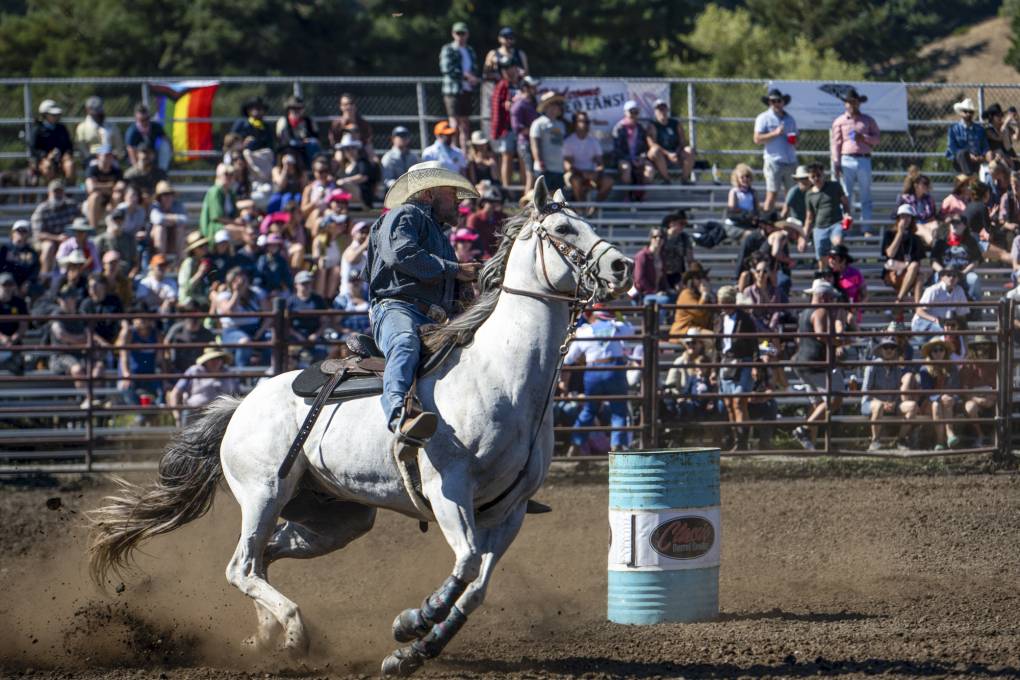
North Bay Gay Rodeo Puts Inclusivity and Showmanship in the Saddle
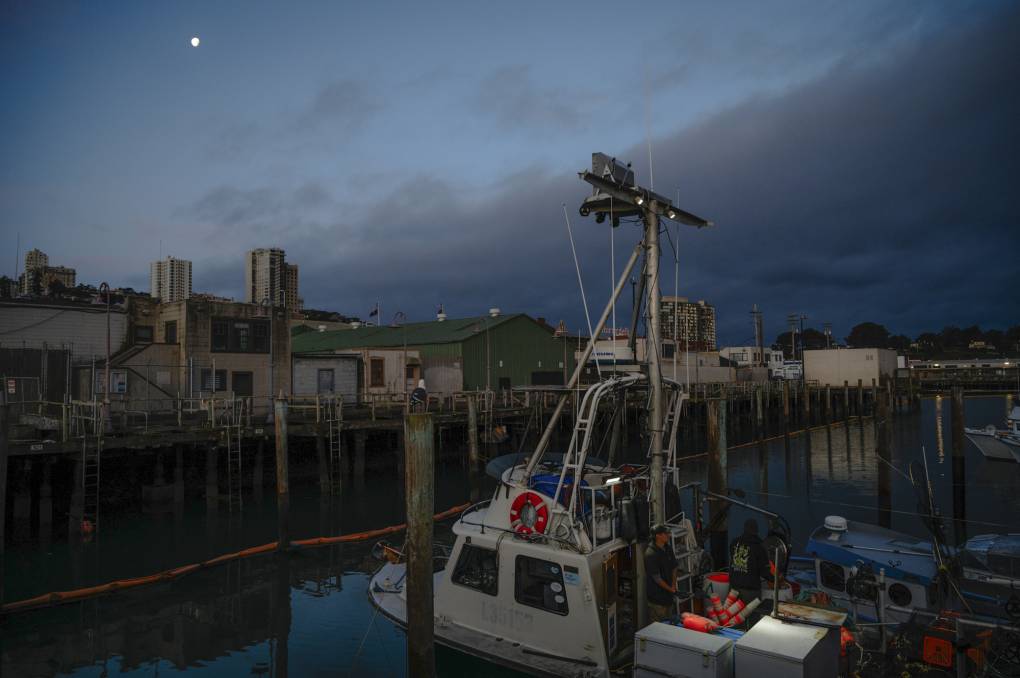
California's Salmon Fishers Are Facing a Summer Without Salmon. Will They Get Federal Help?
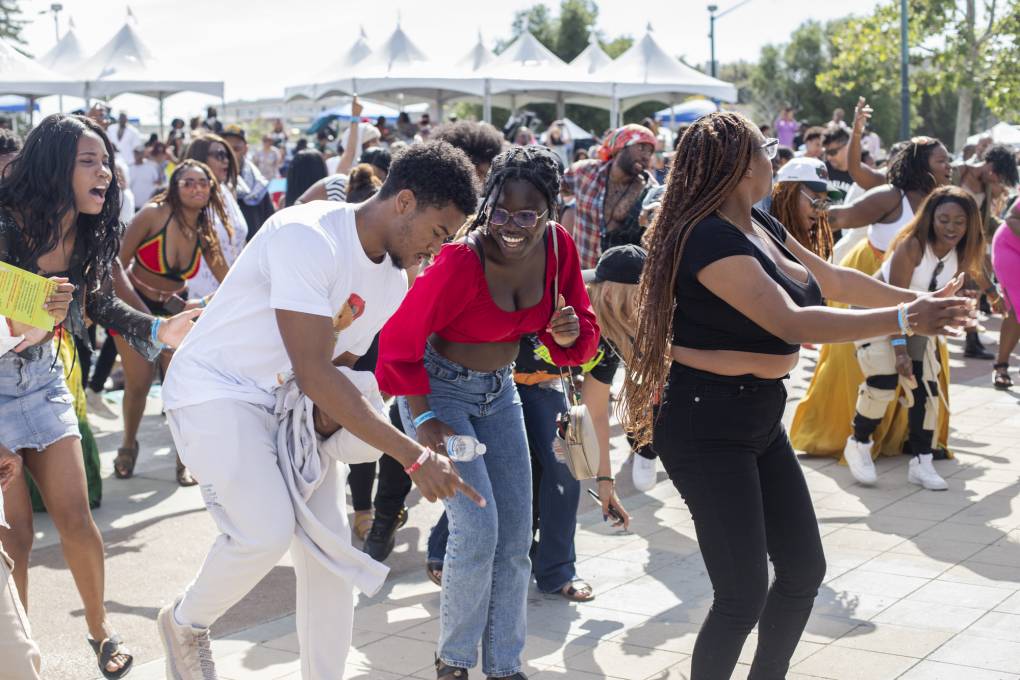
Juneteenth Across the Bay: A Celebration of Heritage and Reflections on Injustice Past and Present
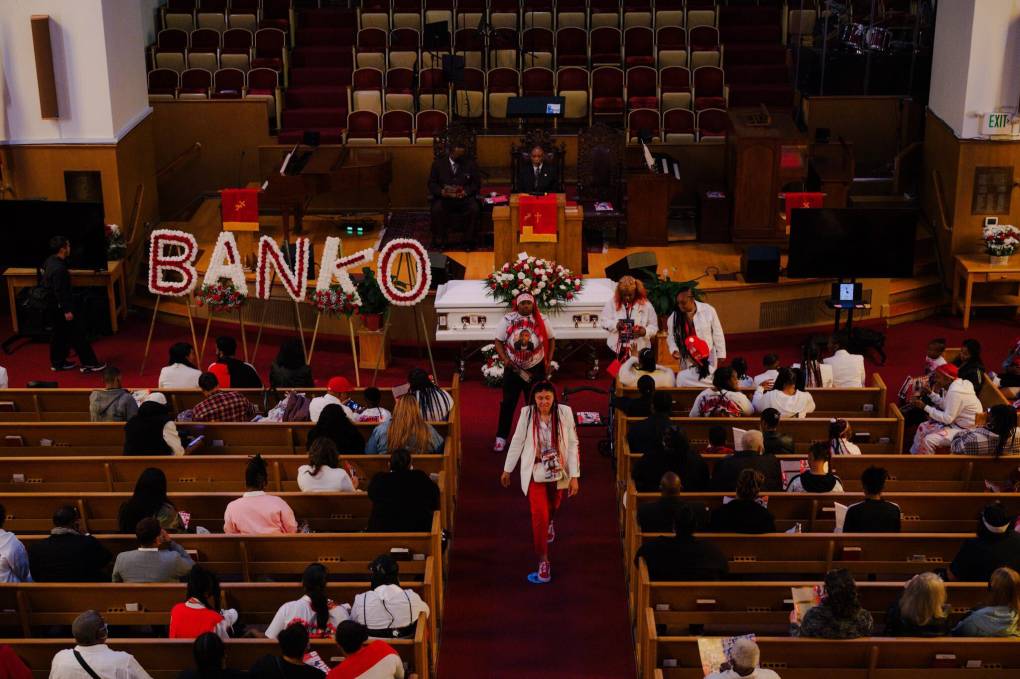
Mourners Gather in San Francisco to Grieve, Celebrate Life of Banko Brown
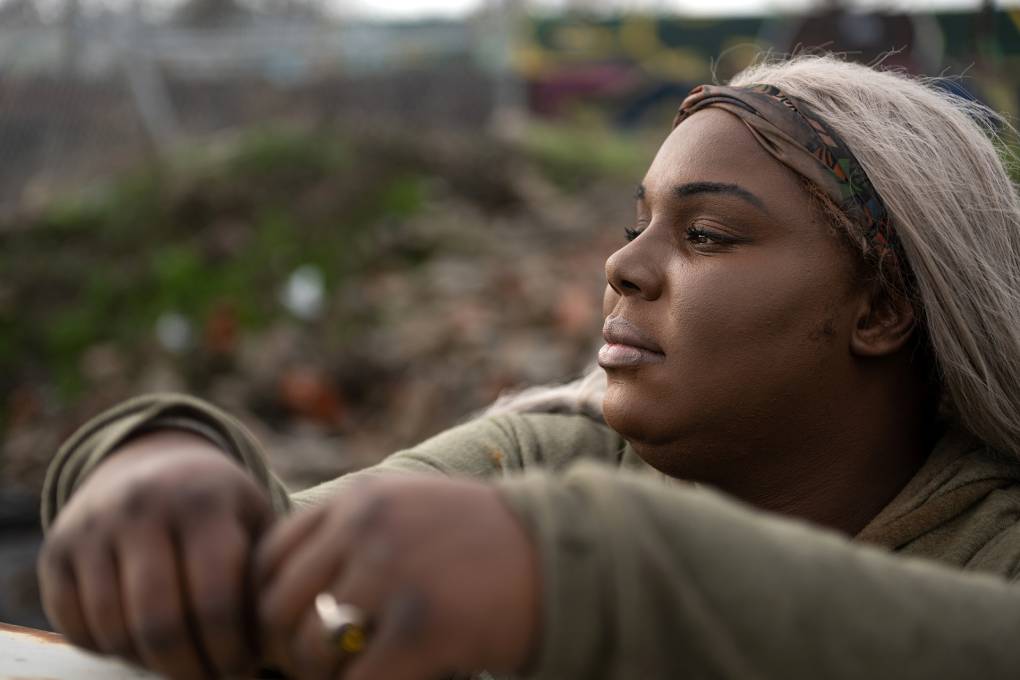
'I Fight for My Community': How 1 Woman Found Courage, Pride and Meaning at Wood Street Settlement
Hope for Older Refugees of War: A Bay Area Resident's Mission to Save Older Adults in Ukraine
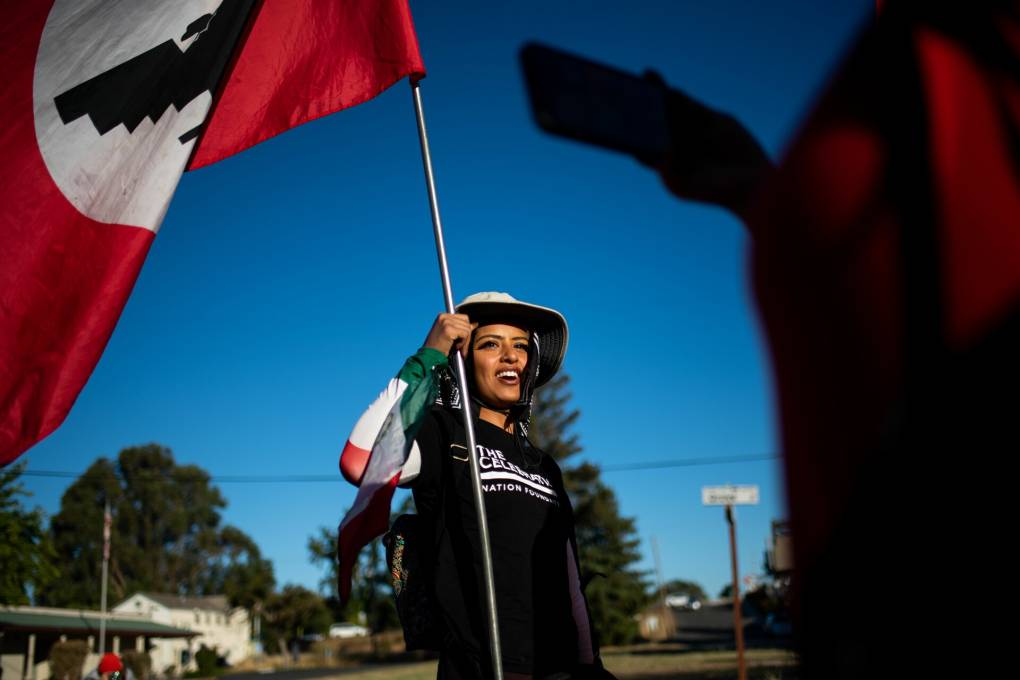
Protests, Pain and Passion: The Photos That Capture 2022 in the Bay Area
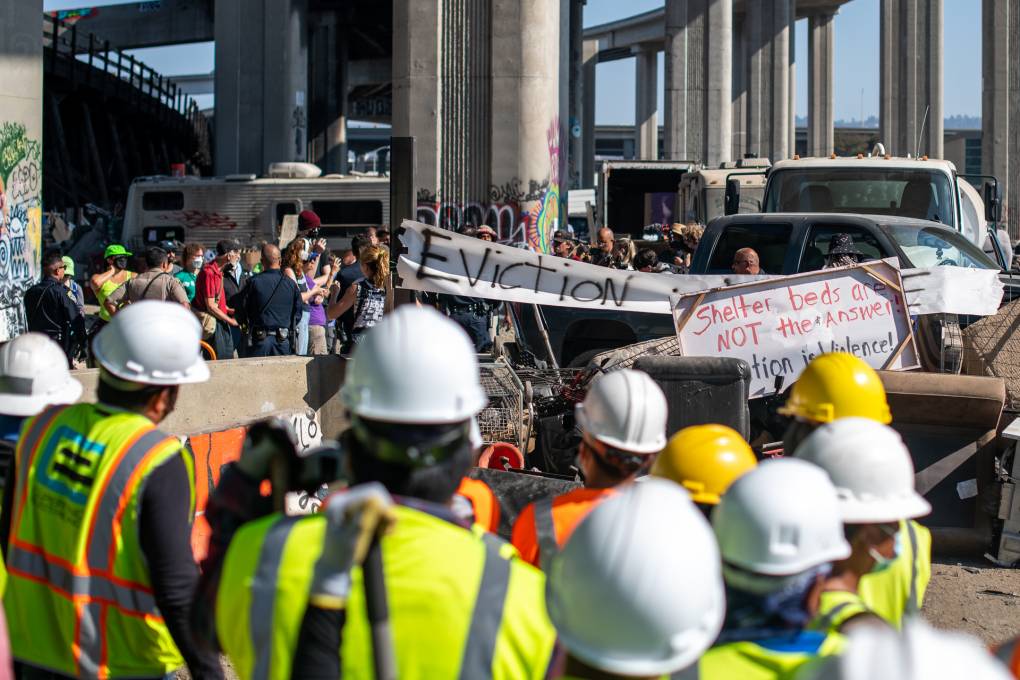
Residents, Activists Decry Evictions at Oakland's Largest Homeless Encampment
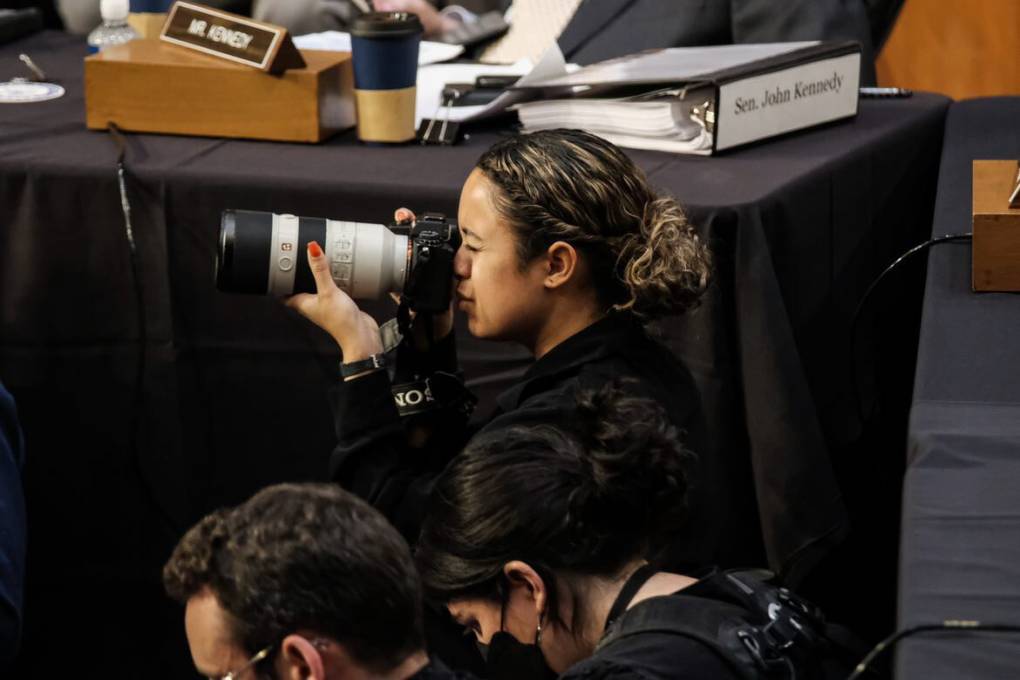
'I Shoot What It Feels Like': Oakland's Sarahbeth Maney on Her Iconic Photo of Ketanji Brown Jackson's Family
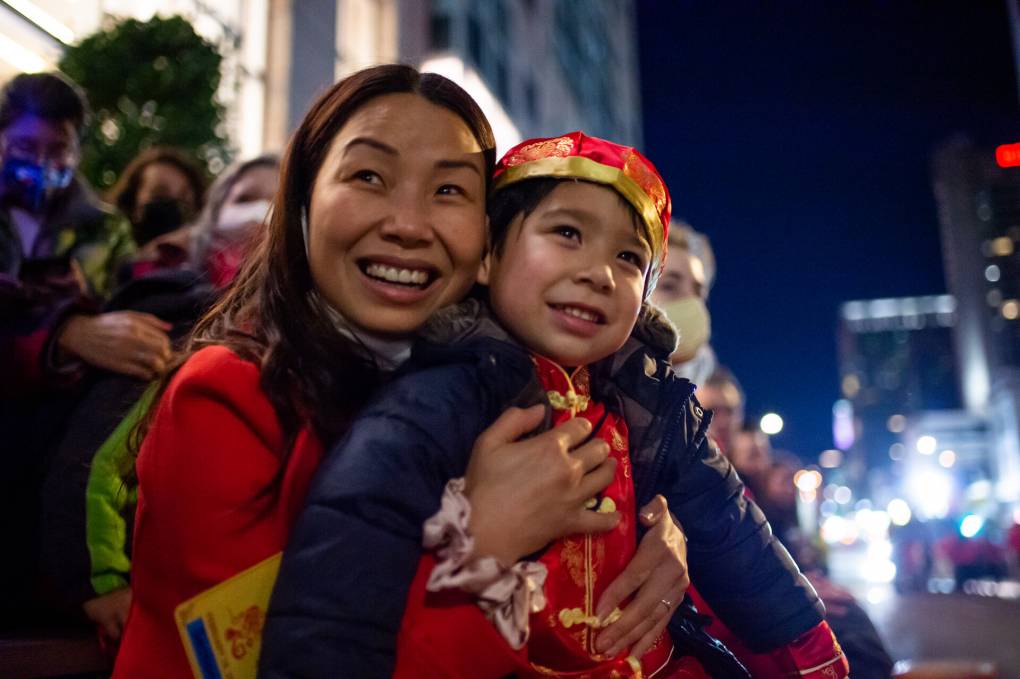
Photos: Year of the Tiger Sees Community Come Together for Joyous Chinese New Year Parade
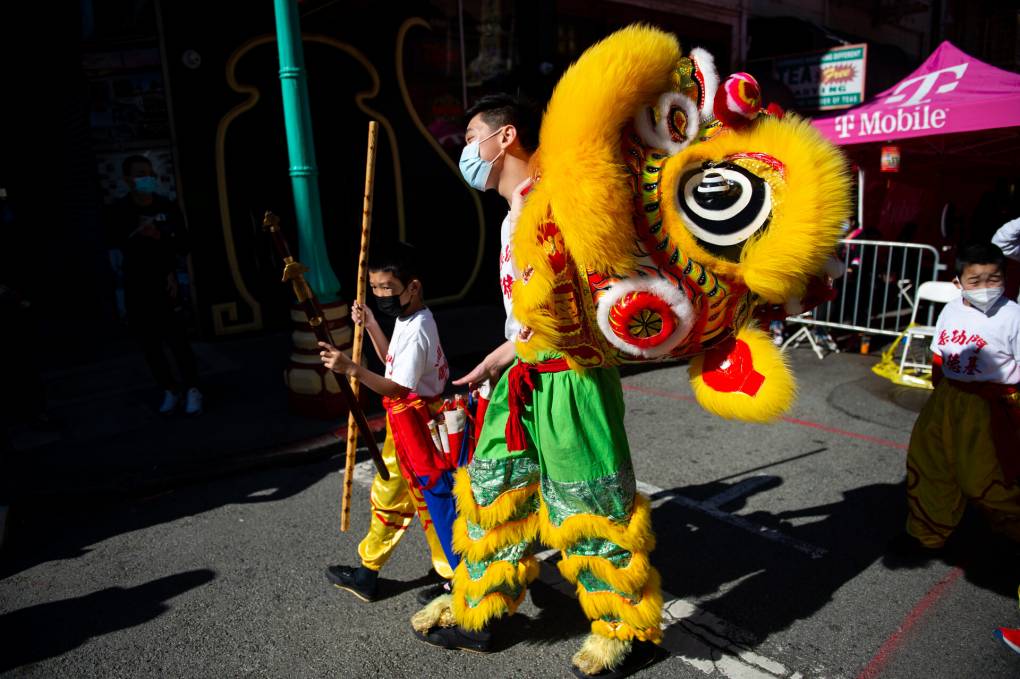
'Hope for Community': Storied Chinatown Kung Fu School Gears Up for First Lunar New Year Parade Since Pandemic Began
A Look at the Bay Area's Perseverance in 2021 Through Photos
window.__IS_SSR__=true
window.__INITIAL_STATE__={
"attachmentsReducer": {
"audio_0": {
"type": "attachments",
"id": "audio_0",
"imgSizes": {
"kqedFullSize": {
"file": "https://ww2.kqed.org/news/wp-content/themes/KQED-unified/img/audio_bgs/background0.jpg"
}
}
},
"audio_1": {
"type": "attachments",
"id": "audio_1",
"imgSizes": {
"kqedFullSize": {
"file": "https://ww2.kqed.org/news/wp-content/themes/KQED-unified/img/audio_bgs/background1.jpg"
}
}
},
"audio_2": {
"type": "attachments",
"id": "audio_2",
"imgSizes": {
"kqedFullSize": {
"file": "https://ww2.kqed.org/news/wp-content/themes/KQED-unified/img/audio_bgs/background2.jpg"
}
}
},
"audio_3": {
"type": "attachments",
"id": "audio_3",
"imgSizes": {
"kqedFullSize": {
"file": "https://ww2.kqed.org/news/wp-content/themes/KQED-unified/img/audio_bgs/background3.jpg"
}
}
},
"audio_4": {
"type": "attachments",
"id": "audio_4",
"imgSizes": {
"kqedFullSize": {
"file": "https://ww2.kqed.org/news/wp-content/themes/KQED-unified/img/audio_bgs/background4.jpg"
}
}
},
"placeholder": {
"type": "attachments",
"id": "placeholder",
"imgSizes": {
"thumbnail": {
"file": "https://cdn.kqed.org/wp-content/uploads/2024/12/KQED-Default-Image-816638274-2000x1333-1-160x107.jpg",
"width": 160,
"height": 107,
"mimeType": "image/jpeg"
},
"medium": {
"file": "https://cdn.kqed.org/wp-content/uploads/2024/12/KQED-Default-Image-816638274-2000x1333-1-800x533.jpg",
"width": 800,
"height": 533,
"mimeType": "image/jpeg"
},
"medium_large": {
"file": "https://cdn.kqed.org/wp-content/uploads/2024/12/KQED-Default-Image-816638274-2000x1333-1-768x512.jpg",
"width": 768,
"height": 512,
"mimeType": "image/jpeg"
},
"large": {
"file": "https://cdn.kqed.org/wp-content/uploads/2024/12/KQED-Default-Image-816638274-2000x1333-1-1020x680.jpg",
"width": 1020,
"height": 680,
"mimeType": "image/jpeg"
},
"1536x1536": {
"file": "https://cdn.kqed.org/wp-content/uploads/2024/12/KQED-Default-Image-816638274-2000x1333-1-1536x1024.jpg",
"width": 1536,
"height": 1024,
"mimeType": "image/jpeg"
},
"fd-lrg": {
"file": "https://cdn.kqed.org/wp-content/uploads/2024/12/KQED-Default-Image-816638274-2000x1333-1-1536x1024.jpg",
"width": 1536,
"height": 1024,
"mimeType": "image/jpeg"
},
"fd-med": {
"file": "https://cdn.kqed.org/wp-content/uploads/2024/12/KQED-Default-Image-816638274-2000x1333-1-1020x680.jpg",
"width": 1020,
"height": 680,
"mimeType": "image/jpeg"
},
"fd-sm": {
"file": "https://cdn.kqed.org/wp-content/uploads/2024/12/KQED-Default-Image-816638274-2000x1333-1-800x533.jpg",
"width": 800,
"height": 533,
"mimeType": "image/jpeg"
},
"post-thumbnail": {
"file": "https://cdn.kqed.org/wp-content/uploads/2024/12/KQED-Default-Image-816638274-2000x1333-1-672x372.jpg",
"width": 672,
"height": 372,
"mimeType": "image/jpeg"
},
"twentyfourteen-full-width": {
"file": "https://cdn.kqed.org/wp-content/uploads/2024/12/KQED-Default-Image-816638274-2000x1333-1-1038x576.jpg",
"width": 1038,
"height": 576,
"mimeType": "image/jpeg"
},
"xxsmall": {
"file": "https://cdn.kqed.org/wp-content/uploads/2024/12/KQED-Default-Image-816638274-2000x1333-1-160x107.jpg",
"width": 160,
"height": 107,
"mimeType": "image/jpeg"
},
"xsmall": {
"file": "https://cdn.kqed.org/wp-content/uploads/2024/12/KQED-Default-Image-816638274-2000x1333-1-672x372.jpg",
"width": 672,
"height": 372,
"mimeType": "image/jpeg"
},
"small": {
"file": "https://cdn.kqed.org/wp-content/uploads/2024/12/KQED-Default-Image-816638274-2000x1333-1-672x372.jpg",
"width": 672,
"height": 372,
"mimeType": "image/jpeg"
},
"xlarge": {
"file": "https://cdn.kqed.org/wp-content/uploads/2024/12/KQED-Default-Image-816638274-2000x1333-1-1020x680.jpg",
"width": 1020,
"height": 680,
"mimeType": "image/jpeg"
},
"full-width": {
"file": "https://cdn.kqed.org/wp-content/uploads/2024/12/KQED-Default-Image-816638274-2000x1333-1-1920x1280.jpg",
"width": 1920,
"height": 1280,
"mimeType": "image/jpeg"
},
"guest-author-32": {
"file": "https://cdn.kqed.org/wp-content/uploads/2025/01/KQED-Default-Image-816638274-1333x1333-1-160x160.jpg",
"width": 32,
"height": 32,
"mimeType": "image/jpeg"
},
"guest-author-50": {
"file": "https://cdn.kqed.org/wp-content/uploads/2025/01/KQED-Default-Image-816638274-1333x1333-1-160x160.jpg",
"width": 50,
"height": 50,
"mimeType": "image/jpeg"
},
"guest-author-64": {
"file": "https://cdn.kqed.org/wp-content/uploads/2025/01/KQED-Default-Image-816638274-1333x1333-1-160x160.jpg",
"width": 64,
"height": 64,
"mimeType": "image/jpeg"
},
"guest-author-96": {
"file": "https://cdn.kqed.org/wp-content/uploads/2025/01/KQED-Default-Image-816638274-1333x1333-1-160x160.jpg",
"width": 96,
"height": 96,
"mimeType": "image/jpeg"
},
"guest-author-128": {
"file": "https://cdn.kqed.org/wp-content/uploads/2025/01/KQED-Default-Image-816638274-1333x1333-1-160x160.jpg",
"width": 128,
"height": 128,
"mimeType": "image/jpeg"
},
"detail": {
"file": "https://cdn.kqed.org/wp-content/uploads/2025/01/KQED-Default-Image-816638274-1333x1333-1-160x160.jpg",
"width": 160,
"height": 160,
"mimeType": "image/jpeg"
},
"kqedFullSize": {
"file": "https://cdn.kqed.org/wp-content/uploads/2024/12/KQED-Default-Image-816638274-2000x1333-1.jpg",
"width": 2000,
"height": 1333
}
}
},
"news_11960589": {
"type": "attachments",
"id": "news_11960589",
"meta": {
"index": "attachments_1716263798",
"site": "news",
"id": "11960589",
"found": true
},
"parent": 0,
"imgSizes": {
"twentyfourteen-full-width": {
"file": "https://ww2.kqed.org/app/uploads/sites/10/2023/09/230909-BestBuckintheBay-068-BL-KQED-1038x576.jpg",
"width": 1038,
"mimeType": "image/jpeg",
"height": 576
},
"thumbnail": {
"file": "https://ww2.kqed.org/app/uploads/sites/10/2023/09/230909-BestBuckintheBay-068-BL-KQED-160x107.jpg",
"width": 160,
"mimeType": "image/jpeg",
"height": 107
},
"post-thumbnail": {
"file": "https://ww2.kqed.org/app/uploads/sites/10/2023/09/230909-BestBuckintheBay-068-BL-KQED-672x372.jpg",
"width": 672,
"mimeType": "image/jpeg",
"height": 372
},
"kqedFullSize": {
"file": "https://ww2.kqed.org/app/uploads/sites/10/2023/09/230909-BestBuckintheBay-068-BL-KQED.jpg",
"width": 2000,
"height": 1333
},
"large": {
"file": "https://ww2.kqed.org/app/uploads/sites/10/2023/09/230909-BestBuckintheBay-068-BL-KQED-1020x680.jpg",
"width": 1020,
"mimeType": "image/jpeg",
"height": 680
},
"1536x1536": {
"file": "https://ww2.kqed.org/app/uploads/sites/10/2023/09/230909-BestBuckintheBay-068-BL-KQED-1536x1024.jpg",
"width": 1536,
"mimeType": "image/jpeg",
"height": 1024
},
"full-width": {
"file": "https://ww2.kqed.org/app/uploads/sites/10/2023/09/230909-BestBuckintheBay-068-BL-KQED-1920x1280.jpg",
"width": 1920,
"mimeType": "image/jpeg",
"height": 1280
},
"medium": {
"file": "https://ww2.kqed.org/app/uploads/sites/10/2023/09/230909-BestBuckintheBay-068-BL-KQED-800x533.jpg",
"width": 800,
"mimeType": "image/jpeg",
"height": 533
}
},
"publishDate": 1694452642,
"modified": 1694532573,
"caption": "Chuck Browning competes in the barrel racing competition at the Best Buck in the Bay gay rodeo at the Russian River Rodeo grounds in Duncans Mills, Sonoma County, on Sept. 9, 2023. Barrel racing is a speed competition where a contestant races their horse around 3 barrels.",
"description": null,
"title": "230909-BestBuckintheBay-068-BL-KQED",
"credit": "Beth LaBerge/KQED",
"status": "inherit",
"altTag": "A person wearing cowboy attire rides a horse on a dirt field with people watching from stands.",
"isLoading": false,
"fetchFailed": false
},
"news_11954999": {
"type": "attachments",
"id": "news_11954999",
"meta": {
"index": "attachments_1716263798",
"site": "news",
"id": "11954999",
"found": true
},
"parent": 0,
"imgSizes": {
"twentyfourteen-full-width": {
"file": "https://ww2.kqed.org/app/uploads/sites/10/2023/07/01_RS66397_230607-salmon-closures-03-ksA-KQED-1038x576.jpg",
"width": 1038,
"mimeType": "image/jpeg",
"height": 576
},
"thumbnail": {
"file": "https://ww2.kqed.org/app/uploads/sites/10/2023/07/01_RS66397_230607-salmon-closures-03-ksA-KQED-160x106.jpg",
"width": 160,
"mimeType": "image/jpeg",
"height": 106
},
"post-thumbnail": {
"file": "https://ww2.kqed.org/app/uploads/sites/10/2023/07/01_RS66397_230607-salmon-closures-03-ksA-KQED-672x372.jpg",
"width": 672,
"mimeType": "image/jpeg",
"height": 372
},
"kqedFullSize": {
"file": "https://ww2.kqed.org/app/uploads/sites/10/2023/07/01_RS66397_230607-salmon-closures-03-ksA-KQED.jpg",
"width": 2000,
"height": 1330
},
"large": {
"file": "https://ww2.kqed.org/app/uploads/sites/10/2023/07/01_RS66397_230607-salmon-closures-03-ksA-KQED-1020x678.jpg",
"width": 1020,
"mimeType": "image/jpeg",
"height": 678
},
"1536x1536": {
"file": "https://ww2.kqed.org/app/uploads/sites/10/2023/07/01_RS66397_230607-salmon-closures-03-ksA-KQED-1536x1021.jpg",
"width": 1536,
"mimeType": "image/jpeg",
"height": 1021
},
"full-width": {
"file": "https://ww2.kqed.org/app/uploads/sites/10/2023/07/01_RS66397_230607-salmon-closures-03-ksA-KQED-1920x1277.jpg",
"width": 1920,
"mimeType": "image/jpeg",
"height": 1277
},
"medium": {
"file": "https://ww2.kqed.org/app/uploads/sites/10/2023/07/01_RS66397_230607-salmon-closures-03-ksA-KQED-800x532.jpg",
"width": 800,
"mimeType": "image/jpeg",
"height": 532
}
},
"publishDate": 1688578905,
"modified": 1688591051,
"caption": "The moon sets over Fisherman's Wharf in San Francisco as commercial salmon fisher Matt Juanes' boat, the FV Plumeria, sits docked on June 7, 2023. With California's salmon season shut down this year, Juanes is pivoting to try fishing for shrimp for the first time.",
"description": null,
"title": "01_RS66397_230607-salmon closures-03-ksA-KQED",
"credit": "Kori Suzuki/KQED",
"status": "inherit",
"altTag": "The moon sets as people work on a boat in a harbor in the early morning light.",
"isLoading": false,
"fetchFailed": false
},
"news_11953315": {
"type": "attachments",
"id": "news_11953315",
"meta": {
"index": "attachments_1716263798",
"site": "news",
"id": "11953315",
"found": true
},
"title": "RS66366_20230617_Juneteenth_KQED-35-KQED",
"publishDate": 1687062947,
"status": "inherit",
"parent": 0,
"modified": 1718742416,
"caption": "People dance at Lake Merritt as part of the 14th annual Fam Bam Afrocentric Juneteenth festival in Oakland on June 17, 2023.",
"credit": "Amaya Edwards/KQED",
"altTag": "A group of people dance together on a sunny day.",
"description": null,
"imgSizes": {
"medium": {
"file": "https://cdn.kqed.org/wp-content/uploads/sites/10/2023/06/RS66366_20230617_Juneteenth_KQED-35-KQED-800x533.jpg",
"width": 800,
"height": 533,
"mimeType": "image/jpeg"
},
"large": {
"file": "https://cdn.kqed.org/wp-content/uploads/sites/10/2023/06/RS66366_20230617_Juneteenth_KQED-35-KQED-1020x680.jpg",
"width": 1020,
"height": 680,
"mimeType": "image/jpeg"
},
"thumbnail": {
"file": "https://cdn.kqed.org/wp-content/uploads/sites/10/2023/06/RS66366_20230617_Juneteenth_KQED-35-KQED-160x107.jpg",
"width": 160,
"height": 107,
"mimeType": "image/jpeg"
},
"1536x1536": {
"file": "https://cdn.kqed.org/wp-content/uploads/sites/10/2023/06/RS66366_20230617_Juneteenth_KQED-35-KQED-1536x1024.jpg",
"width": 1536,
"height": 1024,
"mimeType": "image/jpeg"
},
"post-thumbnail": {
"file": "https://cdn.kqed.org/wp-content/uploads/sites/10/2023/06/RS66366_20230617_Juneteenth_KQED-35-KQED-672x372.jpg",
"width": 672,
"height": 372,
"mimeType": "image/jpeg"
},
"twentyfourteen-full-width": {
"file": "https://cdn.kqed.org/wp-content/uploads/sites/10/2023/06/RS66366_20230617_Juneteenth_KQED-35-KQED-1038x576.jpg",
"width": 1038,
"height": 576,
"mimeType": "image/jpeg"
},
"full-width": {
"file": "https://cdn.kqed.org/wp-content/uploads/sites/10/2023/06/RS66366_20230617_Juneteenth_KQED-35-KQED-1920x1280.jpg",
"width": 1920,
"height": 1280,
"mimeType": "image/jpeg"
},
"kqedFullSize": {
"file": "https://cdn.kqed.org/wp-content/uploads/sites/10/2023/06/RS66366_20230617_Juneteenth_KQED-35-KQED.jpg",
"width": 2000,
"height": 1333
}
},
"isLoading": false,
"fetchFailed": false
},
"news_11950688": {
"type": "attachments",
"id": "news_11950688",
"meta": {
"index": "attachments_1716263798",
"site": "news",
"id": "11950688",
"found": true
},
"parent": 0,
"imgSizes": {
"twentyfourteen-full-width": {
"file": "https://ww2.kqed.org/app/uploads/sites/10/2023/05/IMG_2690-1038x576.jpg",
"width": 1038,
"mimeType": "image/jpeg",
"height": 576
},
"thumbnail": {
"file": "https://ww2.kqed.org/app/uploads/sites/10/2023/05/IMG_2690-160x106.jpg",
"width": 160,
"mimeType": "image/jpeg",
"height": 106
},
"post-thumbnail": {
"file": "https://ww2.kqed.org/app/uploads/sites/10/2023/05/IMG_2690-672x372.jpg",
"width": 672,
"mimeType": "image/jpeg",
"height": 372
},
"kqedFullSize": {
"file": "https://ww2.kqed.org/app/uploads/sites/10/2023/05/IMG_2690.jpg",
"width": 2048,
"height": 1363
},
"large": {
"file": "https://ww2.kqed.org/app/uploads/sites/10/2023/05/IMG_2690-1020x679.jpg",
"width": 1020,
"mimeType": "image/jpeg",
"height": 679
},
"1536x1536": {
"file": "https://ww2.kqed.org/app/uploads/sites/10/2023/05/IMG_2690-1536x1022.jpg",
"width": 1536,
"mimeType": "image/jpeg",
"height": 1022
},
"full-width": {
"file": "https://ww2.kqed.org/app/uploads/sites/10/2023/05/IMG_2690-1920x1278.jpg",
"width": 1920,
"mimeType": "image/jpeg",
"height": 1278
},
"medium": {
"file": "https://ww2.kqed.org/app/uploads/sites/10/2023/05/IMG_2690-800x532.jpg",
"width": 800,
"mimeType": "image/jpeg",
"height": 532
}
},
"publishDate": 1685041901,
"modified": 1685058884,
"caption": "Mourners gather inside the Third Baptist Church of San Francisco ahead of a memorial service for Banko Brown on May 25, 2023.",
"description": null,
"title": "IMG_2690",
"credit": "Kori Suzuki/KQED",
"status": "inherit",
"altTag": "Inside a church the name \"Banko\" is spelled out in a floral display next to a white casket. Many sit in rows gathered to pay respect at this funeral.",
"isLoading": false,
"fetchFailed": false
},
"news_11950151": {
"type": "attachments",
"id": "news_11950151",
"meta": {
"index": "attachments_1716263798",
"site": "news",
"id": "11950151",
"found": true
},
"parent": 0,
"imgSizes": {
"twentyfourteen-full-width": {
"file": "https://ww2.kqed.org/app/uploads/sites/10/2023/05/001_KQED_WoodStreet_JessicaFountaine_01052023-1038x576.jpg",
"width": 1038,
"mimeType": "image/jpeg",
"height": 576
},
"thumbnail": {
"file": "https://ww2.kqed.org/app/uploads/sites/10/2023/05/001_KQED_WoodStreet_JessicaFountaine_01052023-160x107.jpg",
"width": 160,
"mimeType": "image/jpeg",
"height": 107
},
"post-thumbnail": {
"file": "https://ww2.kqed.org/app/uploads/sites/10/2023/05/001_KQED_WoodStreet_JessicaFountaine_01052023-672x372.jpg",
"width": 672,
"mimeType": "image/jpeg",
"height": 372
},
"kqedFullSize": {
"file": "https://ww2.kqed.org/app/uploads/sites/10/2023/05/001_KQED_WoodStreet_JessicaFountaine_01052023.jpg",
"width": 1920,
"height": 1280
},
"large": {
"file": "https://ww2.kqed.org/app/uploads/sites/10/2023/05/001_KQED_WoodStreet_JessicaFountaine_01052023-1020x680.jpg",
"width": 1020,
"mimeType": "image/jpeg",
"height": 680
},
"1536x1536": {
"file": "https://ww2.kqed.org/app/uploads/sites/10/2023/05/001_KQED_WoodStreet_JessicaFountaine_01052023-1536x1024.jpg",
"width": 1536,
"mimeType": "image/jpeg",
"height": 1024
},
"medium": {
"file": "https://ww2.kqed.org/app/uploads/sites/10/2023/05/001_KQED_WoodStreet_JessicaFountaine_01052023-800x533.jpg",
"width": 800,
"mimeType": "image/jpeg",
"height": 533
}
},
"publishDate": 1684462565,
"modified": 1684462642,
"caption": "Jessica Fountaine looks into an empty lot beside her RV at the end of 9th and Pine streets in Oakland.",
"description": null,
"title": "001_KQED_WoodStreet_JessicaFountaine_01052023",
"credit": "Beth LaBerge/KQED",
"status": "inherit",
"altTag": "Close-up of an African American woman looking out and away from the camera as her arms rest on something and an open blurred area behind.",
"isLoading": false,
"fetchFailed": false
},
"news_11936562": {
"type": "attachments",
"id": "news_11936562",
"meta": {
"index": "attachments_1716263798",
"site": "news",
"id": "11936562",
"found": true
},
"parent": 11936535,
"imgSizes": {
"twentyfourteen-full-width": {
"file": "https://ww2.kqed.org/app/uploads/sites/10/2022/12/5-1038x576.jpg",
"width": 1038,
"mimeType": "image/jpeg",
"height": 576
},
"thumbnail": {
"file": "https://ww2.kqed.org/app/uploads/sites/10/2022/12/5-160x107.jpg",
"width": 160,
"mimeType": "image/jpeg",
"height": 107
},
"post-thumbnail": {
"file": "https://ww2.kqed.org/app/uploads/sites/10/2022/12/5-672x372.jpg",
"width": 672,
"mimeType": "image/jpeg",
"height": 372
},
"kqedFullSize": {
"file": "https://ww2.kqed.org/app/uploads/sites/10/2022/12/5-scaled.jpg",
"width": 2560,
"height": 1707
},
"2048x2048": {
"file": "https://ww2.kqed.org/app/uploads/sites/10/2022/12/5-2048x1365.jpg",
"width": 2048,
"mimeType": "image/jpeg",
"height": 1365
},
"large": {
"file": "https://ww2.kqed.org/app/uploads/sites/10/2022/12/5-1020x680.jpg",
"width": 1020,
"mimeType": "image/jpeg",
"height": 680
},
"1536x1536": {
"file": "https://ww2.kqed.org/app/uploads/sites/10/2022/12/5-1536x1024.jpg",
"width": 1536,
"mimeType": "image/jpeg",
"height": 1024
},
"full-width": {
"file": "https://ww2.kqed.org/app/uploads/sites/10/2022/12/5-1920x1280.jpg",
"width": 1920,
"mimeType": "image/jpeg",
"height": 1280
},
"medium": {
"file": "https://ww2.kqed.org/app/uploads/sites/10/2022/12/5-800x533.jpg",
"width": 800,
"mimeType": "image/jpeg",
"height": 533
}
},
"publishDate": 1672519125,
"modified": 1672776856,
"caption": "Olema, 57, in a church-turned-shelter, has to make the difficult choice to turn down an apartment because her multiple sclerosis would prevent her from climbing the stairs.",
"description": null,
"title": "5",
"credit": "Aryk Copley/KQED",
"status": "inherit",
"altTag": "An elderly woman sits solemnly on her bed cot inside of a church office.",
"isLoading": false,
"fetchFailed": false
},
"news_11935850": {
"type": "attachments",
"id": "news_11935850",
"meta": {
"index": "attachments_1716263798",
"site": "news",
"id": "11935850",
"found": true
},
"parent": 11935811,
"imgSizes": {
"twentyfourteen-full-width": {
"file": "https://ww2.kqed.org/app/uploads/sites/10/2022/12/RS61696_PkA3bWts-qut-1038x576.jpg",
"width": 1038,
"mimeType": "image/jpeg",
"height": 576
},
"thumbnail": {
"file": "https://ww2.kqed.org/app/uploads/sites/10/2022/12/RS61696_PkA3bWts-qut-160x107.jpg",
"width": 160,
"mimeType": "image/jpeg",
"height": 107
},
"post-thumbnail": {
"file": "https://ww2.kqed.org/app/uploads/sites/10/2022/12/RS61696_PkA3bWts-qut-672x372.jpg",
"width": 672,
"mimeType": "image/jpeg",
"height": 372
},
"kqedFullSize": {
"file": "https://ww2.kqed.org/app/uploads/sites/10/2022/12/RS61696_PkA3bWts-qut.jpg",
"width": 1920,
"height": 1280
},
"large": {
"file": "https://ww2.kqed.org/app/uploads/sites/10/2022/12/RS61696_PkA3bWts-qut-1020x680.jpg",
"width": 1020,
"mimeType": "image/jpeg",
"height": 680
},
"1536x1536": {
"file": "https://ww2.kqed.org/app/uploads/sites/10/2022/12/RS61696_PkA3bWts-qut-1536x1024.jpg",
"width": 1536,
"mimeType": "image/jpeg",
"height": 1024
},
"medium": {
"file": "https://ww2.kqed.org/app/uploads/sites/10/2022/12/RS61696_PkA3bWts-qut-800x533.jpg",
"width": 800,
"mimeType": "image/jpeg",
"height": 533
}
},
"publishDate": 1671483174,
"modified": 1671504423,
"caption": "Members of United Farm Workers and their supporters leave Walnut Grove on Day 22 of a 24-day 'March for the Governor’s Signature' on Wednesday, Aug. 24, 2022, to convince Gov. Gavin Newsom to sign Assembly Bill 2183, the Agricultural Labor Relations Voting Choice Act. ",
"description": null,
"title": "RS61696_PkA3bWts-qut",
"credit": "Beth LaBerge/KQED",
"status": "inherit",
"altTag": "A young woman wearing a wide-brimmed hat smiles and carries a flag aloft",
"isLoading": false,
"fetchFailed": false
},
"news_11925180": {
"type": "attachments",
"id": "news_11925180",
"meta": {
"index": "attachments_1716263798",
"site": "news",
"id": "11925180",
"found": true
},
"parent": 11925169,
"imgSizes": {
"twentyfourteen-full-width": {
"file": "https://ww2.kqed.org/app/uploads/sites/10/2022/09/022_KQED_WoodStreetOaklandCalTrans_09082022-1038x576.jpg",
"width": 1038,
"mimeType": "image/jpeg",
"height": 576
},
"thumbnail": {
"file": "https://ww2.kqed.org/app/uploads/sites/10/2022/09/022_KQED_WoodStreetOaklandCalTrans_09082022-160x107.jpg",
"width": 160,
"mimeType": "image/jpeg",
"height": 107
},
"post-thumbnail": {
"file": "https://ww2.kqed.org/app/uploads/sites/10/2022/09/022_KQED_WoodStreetOaklandCalTrans_09082022-672x372.jpg",
"width": 672,
"mimeType": "image/jpeg",
"height": 372
},
"kqedFullSize": {
"file": "https://ww2.kqed.org/app/uploads/sites/10/2022/09/022_KQED_WoodStreetOaklandCalTrans_09082022.jpg",
"width": 1920,
"height": 1280
},
"large": {
"file": "https://ww2.kqed.org/app/uploads/sites/10/2022/09/022_KQED_WoodStreetOaklandCalTrans_09082022-1020x680.jpg",
"width": 1020,
"mimeType": "image/jpeg",
"height": 680
},
"1536x1536": {
"file": "https://ww2.kqed.org/app/uploads/sites/10/2022/09/022_KQED_WoodStreetOaklandCalTrans_09082022-1536x1024.jpg",
"width": 1536,
"mimeType": "image/jpeg",
"height": 1024
},
"medium": {
"file": "https://ww2.kqed.org/app/uploads/sites/10/2022/09/022_KQED_WoodStreetOaklandCalTrans_09082022-800x533.jpg",
"width": 800,
"mimeType": "image/jpeg",
"height": 533
}
},
"publishDate": 1662759779,
"modified": 1663002999,
"caption": "Caltrans crews wait to clear the Wood Street encampment in Oakland on Sept. 8, 2022, while residents and advocates block the road.",
"description": null,
"title": "022_KQED_WoodStreetOaklandCalTrans_09082022",
"credit": "Beth LaBerge/KQED",
"status": "inherit",
"altTag": "Several people stand with signs saying 'shelter beds are not the answer' police and people with hardhats can be seen among the crowd",
"isLoading": false,
"fetchFailed": false
},
"news_11909328": {
"type": "attachments",
"id": "news_11909328",
"meta": {
"index": "attachments_1716263798",
"site": "news",
"id": "11909328",
"found": true
},
"parent": 11909316,
"imgSizes": {
"twentyfourteen-full-width": {
"file": "https://ww2.kqed.org/app/uploads/sites/10/2022/03/RS54668_Sarahbeth-Maney-qut-1038x576.jpg",
"width": 1038,
"mimeType": "image/jpeg",
"height": 576
},
"thumbnail": {
"file": "https://ww2.kqed.org/app/uploads/sites/10/2022/03/RS54668_Sarahbeth-Maney-qut-160x107.jpg",
"width": 160,
"mimeType": "image/jpeg",
"height": 107
},
"post-thumbnail": {
"file": "https://ww2.kqed.org/app/uploads/sites/10/2022/03/RS54668_Sarahbeth-Maney-qut-672x372.jpg",
"width": 672,
"mimeType": "image/jpeg",
"height": 372
},
"kqedFullSize": {
"file": "https://ww2.kqed.org/app/uploads/sites/10/2022/03/RS54668_Sarahbeth-Maney-qut.jpg",
"width": 1170,
"height": 780
},
"large": {
"file": "https://ww2.kqed.org/app/uploads/sites/10/2022/03/RS54668_Sarahbeth-Maney-qut-1020x680.jpg",
"width": 1020,
"mimeType": "image/jpeg",
"height": 680
},
"medium": {
"file": "https://ww2.kqed.org/app/uploads/sites/10/2022/03/RS54668_Sarahbeth-Maney-qut-800x533.jpg",
"width": 800,
"mimeType": "image/jpeg",
"height": 533
}
},
"publishDate": 1648240227,
"modified": 1648252932,
"caption": "Sarahbeth Maney, photography fellow in the Washington, D.C., bureau of The New York Times, pictured on the job photographing Judge Ketanji Brown Jackson's confirmation hearing to the Supreme Court.",
"description": null,
"title": "RS54668_Sarahbeth Maney-qut",
"credit": "Michael McCoy/Bloomberg",
"status": "inherit",
"altTag": null,
"isLoading": false,
"fetchFailed": false
},
"news_11905938": {
"type": "attachments",
"id": "news_11905938",
"meta": {
"index": "attachments_1716263798",
"site": "news",
"id": "11905938",
"found": true
},
"parent": 11905929,
"imgSizes": {
"twentyfourteen-full-width": {
"file": "https://ww2.kqed.org/app/uploads/sites/10/2022/02/RS53793_018_KQED_LunarNewYearSF_02192022-qut-1038x576.jpg",
"width": 1038,
"mimeType": "image/jpeg",
"height": 576
},
"thumbnail": {
"file": "https://ww2.kqed.org/app/uploads/sites/10/2022/02/RS53793_018_KQED_LunarNewYearSF_02192022-qut-160x107.jpg",
"width": 160,
"mimeType": "image/jpeg",
"height": 107
},
"post-thumbnail": {
"file": "https://ww2.kqed.org/app/uploads/sites/10/2022/02/RS53793_018_KQED_LunarNewYearSF_02192022-qut-672x372.jpg",
"width": 672,
"mimeType": "image/jpeg",
"height": 372
},
"kqedFullSize": {
"file": "https://ww2.kqed.org/app/uploads/sites/10/2022/02/RS53793_018_KQED_LunarNewYearSF_02192022-qut.jpg",
"width": 1920,
"height": 1278
},
"large": {
"file": "https://ww2.kqed.org/app/uploads/sites/10/2022/02/RS53793_018_KQED_LunarNewYearSF_02192022-qut-1020x679.jpg",
"width": 1020,
"mimeType": "image/jpeg",
"height": 679
},
"1536x1536": {
"file": "https://ww2.kqed.org/app/uploads/sites/10/2022/02/RS53793_018_KQED_LunarNewYearSF_02192022-qut-1536x1022.jpg",
"width": 1536,
"mimeType": "image/jpeg",
"height": 1022
},
"medium": {
"file": "https://ww2.kqed.org/app/uploads/sites/10/2022/02/RS53793_018_KQED_LunarNewYearSF_02192022-qut-800x533.jpg",
"width": 800,
"mimeType": "image/jpeg",
"height": 533
}
},
"publishDate": 1645376787,
"modified": 1645557952,
"caption": "Cheyenne and her son Xavier watch the Chinese New Year Parade in San Francisco on Feb. 19, 2022.",
"description": null,
"title": "RS53793_018_KQED_LunarNewYearSF_02192022-qut",
"credit": "Beth LaBerge/KQED",
"status": "inherit",
"altTag": null,
"isLoading": false,
"fetchFailed": false
},
"news_11905623": {
"type": "attachments",
"id": "news_11905623",
"meta": {
"index": "attachments_1716263798",
"site": "news",
"id": "11905623",
"found": true
},
"parent": 11904680,
"imgSizes": {
"twentyfourteen-full-width": {
"file": "https://ww2.kqed.org/app/uploads/sites/10/2023/02/RS53673_067_SanFrancisco_YauKungMoonPerformance_01302022-qut-1038x576.jpg",
"width": 1038,
"mimeType": "image/jpeg",
"height": 576
},
"thumbnail": {
"file": "https://ww2.kqed.org/app/uploads/sites/10/2023/02/RS53673_067_SanFrancisco_YauKungMoonPerformance_01302022-qut-160x107.jpg",
"width": 160,
"mimeType": "image/jpeg",
"height": 107
},
"post-thumbnail": {
"file": "https://ww2.kqed.org/app/uploads/sites/10/2023/02/RS53673_067_SanFrancisco_YauKungMoonPerformance_01302022-qut-672x372.jpg",
"width": 672,
"mimeType": "image/jpeg",
"height": 372
},
"kqedFullSize": {
"file": "https://ww2.kqed.org/app/uploads/sites/10/2023/02/RS53673_067_SanFrancisco_YauKungMoonPerformance_01302022-qut.jpg",
"width": 1920,
"height": 1278
},
"large": {
"file": "https://ww2.kqed.org/app/uploads/sites/10/2023/02/RS53673_067_SanFrancisco_YauKungMoonPerformance_01302022-qut-1020x679.jpg",
"width": 1020,
"mimeType": "image/jpeg",
"height": 679
},
"1536x1536": {
"file": "https://ww2.kqed.org/app/uploads/sites/10/2023/02/RS53673_067_SanFrancisco_YauKungMoonPerformance_01302022-qut-1536x1022.jpg",
"width": 1536,
"mimeType": "image/jpeg",
"height": 1022
},
"medium": {
"file": "https://ww2.kqed.org/app/uploads/sites/10/2023/02/RS53673_067_SanFrancisco_YauKungMoonPerformance_01302022-qut-800x533.jpg",
"width": 800,
"mimeType": "image/jpeg",
"height": 533
}
},
"publishDate": 1645138666,
"modified": 1671478072,
"caption": "The Yau Kung Moon School's Matthew Wong walks back to the studio with students after their performance at the Chinese New Year Flower Market Fair in Chinatown, San Francisco, on Jan. 30, 2022.",
"description": null,
"title": "RS53673_067_SanFrancisco_YauKungMoonPerformance_01302022-qut",
"credit": "Beth LaBerge/KQED",
"status": "inherit",
"altTag": "An Asian man carrying a large yellow dragon head, wearing green leggings with gold trim, walks with a young boy carrying a staff outside in Chinatown",
"isLoading": false,
"fetchFailed": false
},
"news_11899818": {
"type": "attachments",
"id": "news_11899818",
"meta": {
"index": "attachments_1716263798",
"site": "news",
"id": "11899818",
"found": true
},
"parent": 11899667,
"imgSizes": {
"twentyfourteen-full-width": {
"file": "https://ww2.kqed.org/app/uploads/sites/10/2021/12/016_Oakland_JuneteenthBBPMiniMuseum_06192021-1038x576.jpg",
"width": 1038,
"mimeType": "image/jpeg",
"height": 576
},
"thumbnail": {
"file": "https://ww2.kqed.org/app/uploads/sites/10/2021/12/016_Oakland_JuneteenthBBPMiniMuseum_06192021-160x107.jpg",
"width": 160,
"mimeType": "image/jpeg",
"height": 107
},
"post-thumbnail": {
"file": "https://ww2.kqed.org/app/uploads/sites/10/2021/12/016_Oakland_JuneteenthBBPMiniMuseum_06192021-672x372.jpg",
"width": 672,
"mimeType": "image/jpeg",
"height": 372
},
"kqedFullSize": {
"file": "https://ww2.kqed.org/app/uploads/sites/10/2021/12/016_Oakland_JuneteenthBBPMiniMuseum_06192021.jpg",
"width": 1920,
"height": 1280
},
"large": {
"file": "https://ww2.kqed.org/app/uploads/sites/10/2021/12/016_Oakland_JuneteenthBBPMiniMuseum_06192021-1020x680.jpg",
"width": 1020,
"mimeType": "image/jpeg",
"height": 680
},
"1536x1536": {
"file": "https://ww2.kqed.org/app/uploads/sites/10/2021/12/016_Oakland_JuneteenthBBPMiniMuseum_06192021-1536x1024.jpg",
"width": 1536,
"mimeType": "image/jpeg",
"height": 1024
},
"medium": {
"file": "https://ww2.kqed.org/app/uploads/sites/10/2021/12/016_Oakland_JuneteenthBBPMiniMuseum_06192021-800x533.jpg",
"width": 800,
"mimeType": "image/jpeg",
"height": 533
}
},
"publishDate": 1639959657,
"modified": 1640052639,
"caption": "Donnell McAlister gives kids a chance to sit on top of his horse JJ, named after Jesse James, during a Juneteenth block party to celebrate the opening of Black Panther Party Mini Museum in West Oakland on June 19, 2021.",
"description": "Donnell McAlister gives kids a chance to sit on top of his horse JJ, named after Jesse James, during a Juneteenth block party to celebrate the opening of Black Panther Party Mini Museum in West Oakland on June 19, 2021.",
"title": "Oakland_Juneteenth_BlackPantherPartyMiniMuseum_06192021",
"credit": "Beth LaBerge/KQED",
"status": "inherit",
"altTag": "A child smiles as she is lifted onto a horse by a man in a cowboy hat in front of a blue mural that says, \"Women of the Black Panther Party.\"",
"isLoading": false,
"fetchFailed": false
}
},
"audioPlayerReducer": {
"postId": "stream_live",
"isPaused": true,
"isPlaying": false,
"pfsActive": false,
"pledgeModalIsOpen": true,
"playerDrawerIsOpen": false,
"liveAudioPlayStartedAt": 0,
"liveAudioPlayContext": ""
},
"authorsReducer": {
"byline_news_11954645": {
"type": "authors",
"id": "byline_news_11954645",
"meta": {
"override": true
},
"slug": "byline_news_11954645",
"name": "\u003ca href=\"https://twitter.com/koritsuzuki\">Kori Suzuki\u003c/a>",
"isLoading": false
},
"byline_news_11936535": {
"type": "authors",
"id": "byline_news_11936535",
"meta": {
"override": true
},
"slug": "byline_news_11936535",
"name": "Aryk Copley",
"isLoading": false
},
"kqed": {
"type": "authors",
"id": "236",
"meta": {
"index": "authors_1716337520",
"id": "236",
"found": true
},
"name": "KQED News Staff",
"firstName": "KQED News Staff",
"lastName": null,
"slug": "kqed",
"email": "faq@kqed.org",
"display_author_email": false,
"staff_mastheads": [],
"title": null,
"bio": null,
"avatar": "https://secure.gravatar.com/avatar/ef0e801a68c4c54afa9180db14084167?s=600&d=blank&r=g",
"twitter": null,
"facebook": null,
"instagram": null,
"linkedin": null,
"sites": [
{
"site": "arts",
"roles": [
"contributor"
]
},
{
"site": "news",
"roles": [
"editor"
]
},
{
"site": "futureofyou",
"roles": [
"author"
]
}
],
"headData": {
"title": "KQED News Staff | KQED",
"description": null,
"ogImgSrc": "https://secure.gravatar.com/avatar/ef0e801a68c4c54afa9180db14084167?s=600&d=blank&r=g",
"twImgSrc": "https://secure.gravatar.com/avatar/ef0e801a68c4c54afa9180db14084167?s=600&d=blank&r=g"
},
"isLoading": false,
"link": "/author/kqed"
},
"tarasiler": {
"type": "authors",
"id": "257",
"meta": {
"index": "authors_1716337520",
"id": "257",
"found": true
},
"name": "Tara Siler",
"firstName": "Tara",
"lastName": "Siler",
"slug": "tarasiler",
"email": "tsiler@kqed.org",
"display_author_email": false,
"staff_mastheads": [
"news"
],
"title": "KQED Contributor",
"bio": "Tara reports and anchors for KQED news. She covers a range of issues from community-police relations to local politics. Tara started out in community radio in the Bay Area, where she was raised. She eventually moved to Washington DC where she covered Congress for eight years for Pacifica and Monitor Radio. Her stories have also been heard on NPR's All Things Considered, Morning Edition and The World.\r\n\r\nTara lives with her husband in Oakland-- where they raised their two sons. She enjoys spending time with her family, gardening and hiking in the Oakland hills... and keeping up with the news.",
"avatar": "https://secure.gravatar.com/avatar/99802f9746fb80b65fd8ec6c57954450?s=600&d=blank&r=g",
"twitter": null,
"facebook": null,
"instagram": null,
"linkedin": null,
"sites": [
{
"site": "news",
"roles": [
"contributor",
"edit_others_posts"
]
},
{
"site": "stateofhealth",
"roles": [
"author"
]
}
],
"headData": {
"title": "Tara Siler | KQED",
"description": "KQED Contributor",
"ogImgSrc": "https://secure.gravatar.com/avatar/99802f9746fb80b65fd8ec6c57954450?s=600&d=blank&r=g",
"twImgSrc": "https://secure.gravatar.com/avatar/99802f9746fb80b65fd8ec6c57954450?s=600&d=blank&r=g"
},
"isLoading": false,
"link": "/author/tarasiler"
},
"carlysevern": {
"type": "authors",
"id": "3243",
"meta": {
"index": "authors_1716337520",
"id": "3243",
"found": true
},
"name": "Carly Severn",
"firstName": "Carly",
"lastName": "Severn",
"slug": "carlysevern",
"email": "csevern@kqed.org",
"display_author_email": false,
"staff_mastheads": [
"news"
],
"title": "Senior Editor, Audience News ",
"bio": "Carly is KQED's Senior Editor of Audience News on the Digital News team, and has reported for the California Report Magazine, Bay Curious and KQED Arts. She's formerly the host of \u003ca href=\"http://ww2.kqed.org/pop/category/the-cooler/\" rel=\"noopener noreferrer\">The Cooler\u003c/a> podcast.",
"avatar": "https://secure.gravatar.com/avatar/54037bf5c128fe678f0ef26cec97a93f2e7f220a22d7285703328f12c42c1b1d?s=600&d=blank&r=g",
"twitter": "teacupinthebay",
"bluesky": null,
"facebook": null,
"instagram": null,
"linkedin": null,
"sites": [
{
"site": "",
"roles": [
"editor"
]
},
{
"site": "arts",
"roles": [
"editor"
]
},
{
"site": "news",
"roles": [
"administrator"
]
},
{
"site": "pop",
"roles": [
"editor"
]
},
{
"site": "futureofyou",
"roles": [
"editor"
]
},
{
"site": "about",
"roles": [
"administrator"
]
},
{
"site": "mindshift",
"roles": [
"editor"
]
},
{
"site": "bayareabites",
"roles": [
"editor"
]
},
{
"site": "stateofhealth",
"roles": [
"editor"
]
},
{
"site": "science",
"roles": [
"editor"
]
},
{
"site": "food",
"roles": [
"contributor"
]
},
{
"site": "forum",
"roles": [
"editor"
]
},
{
"site": "perspectives",
"roles": [
"administrator"
]
},
{
"site": "liveblog",
"roles": [
"editor"
]
}
],
"headData": {
"title": "Carly Severn | KQED",
"description": "Senior Editor, Audience News ",
"ogImgSrc": "https://secure.gravatar.com/avatar/54037bf5c128fe678f0ef26cec97a93f2e7f220a22d7285703328f12c42c1b1d?s=600&d=blank&r=g",
"twImgSrc": "https://secure.gravatar.com/avatar/54037bf5c128fe678f0ef26cec97a93f2e7f220a22d7285703328f12c42c1b1d?s=600&d=blank&r=g"
},
"isLoading": false,
"link": "/author/carlysevern"
},
"lsarah": {
"type": "authors",
"id": "11626",
"meta": {
"index": "authors_1716337520",
"id": "11626",
"found": true
},
"name": "Lakshmi Sarah",
"firstName": "Lakshmi",
"lastName": "Sarah",
"slug": "lsarah",
"email": "lsarah@kqed.org",
"display_author_email": false,
"staff_mastheads": [],
"title": "Digital Producer",
"bio": "Lakshmi Sarah is an educator, author and journalist with a focus on innovative storytelling. She has worked with newspapers, radio and magazines from Ahmedabad, India to Los Angeles, California. She has written and produced for Die Zeit, Global Voices, AJ+, KQED, Fusion Media Group and the New York Times.",
"avatar": "https://secure.gravatar.com/avatar/652dcaecd8b28826fc17a8b2d6bb4e93?s=600&d=blank&r=g",
"twitter": "lakitalki",
"facebook": null,
"instagram": "https://www.instagram.com/laki.talki/",
"linkedin": "https://www.linkedin.com/in/lakisarah/",
"sites": [
{
"site": "arts",
"roles": []
},
{
"site": "news",
"roles": []
},
{
"site": "bayareabites",
"roles": []
},
{
"site": "science",
"roles": []
}
],
"headData": {
"title": "Lakshmi Sarah | KQED",
"description": "Digital Producer",
"ogImgSrc": "https://secure.gravatar.com/avatar/652dcaecd8b28826fc17a8b2d6bb4e93?s=600&d=blank&r=g",
"twImgSrc": "https://secure.gravatar.com/avatar/652dcaecd8b28826fc17a8b2d6bb4e93?s=600&d=blank&r=g"
},
"isLoading": false,
"link": "/author/lsarah"
},
"ebaldassari": {
"type": "authors",
"id": "11652",
"meta": {
"index": "authors_1716337520",
"id": "11652",
"found": true
},
"name": "Erin Baldassari",
"firstName": "Erin",
"lastName": "Baldassari",
"slug": "ebaldassari",
"email": "ebaldassari@KQED.org",
"display_author_email": true,
"staff_mastheads": [
"news"
],
"title": "Staff Writer",
"bio": "Erin Baldassari covers housing for KQED. She's a former print journalist and most recently worked as the transportation reporter for the \u003cem>Mercury News\u003c/em> and \u003cem>East Bay Times. \u003c/em>There, she focused on how the Bay Area’s housing shortage has changed the way people move around the region. She also served on the \u003cem>East Bay Times\u003c/em>’ 2017 Pulitzer Prize-winning team for coverage of the Ghost Ship Fire in Oakland. Prior to that, Erin worked as a breaking news and general assignment reporter for a variety of outlets in the Bay Area and the greater Boston area. A Tufts University alumna, Erin grew up in the foothills of the Sierra Nevada mountains and in Sonoma County. She is a life-long KQED listener.",
"avatar": "https://secure.gravatar.com/avatar/5e95cad64a8ca08288082212e199d2b0cbeb4fd8e8ef5339395f361032bbe005?s=600&d=blank&r=g",
"twitter": "e_baldi",
"bluesky": null,
"facebook": null,
"instagram": null,
"linkedin": null,
"sites": [
{
"site": "news",
"roles": [
"edit_others_posts",
"editor"
]
},
{
"site": "science",
"roles": [
"editor"
]
},
{
"site": "liveblog",
"roles": [
"editor"
]
}
],
"headData": {
"title": "Erin Baldassari | KQED",
"description": "Staff Writer",
"ogImgSrc": "https://secure.gravatar.com/avatar/5e95cad64a8ca08288082212e199d2b0cbeb4fd8e8ef5339395f361032bbe005?s=600&d=blank&r=g",
"twImgSrc": "https://secure.gravatar.com/avatar/5e95cad64a8ca08288082212e199d2b0cbeb4fd8e8ef5339395f361032bbe005?s=600&d=blank&r=g"
},
"isLoading": false,
"link": "/author/ebaldassari"
},
"blaberge": {
"type": "authors",
"id": "11667",
"meta": {
"index": "authors_1716337520",
"id": "11667",
"found": true
},
"name": "Beth LaBerge",
"firstName": "Beth",
"lastName": "LaBerge",
"slug": "blaberge",
"email": "blaberge@KQED.org",
"display_author_email": true,
"staff_mastheads": [
"news"
],
"title": "Photographer, News",
"bio": "Beth LaBerge is a visual journalist for \u003ca href=\"https://www.kqed.org/news\">KQED News\u003c/a>.",
"avatar": "https://secure.gravatar.com/avatar/ce49ecd7a1306685637b45a1f6f5dedfc4ae9481966eb596fea5160466dd6319?s=600&d=blank&r=g",
"twitter": null,
"bluesky": null,
"facebook": null,
"instagram": "https://www.instagram.com/bethlaberge/",
"linkedin": null,
"sites": [
{
"site": "arts",
"roles": [
"editor",
"manage_categories"
]
},
{
"site": "news",
"roles": [
"editor",
"edit_plugins",
"manage_categories"
]
},
{
"site": "science",
"roles": [
"editor",
"contributor",
"author",
"manage_categories"
]
},
{
"site": "perspectives",
"roles": [
"editor"
]
},
{
"site": "liveblog",
"roles": [
"editor"
]
}
],
"headData": {
"title": "Beth LaBerge | KQED",
"description": "Photographer, News",
"ogImgSrc": "https://secure.gravatar.com/avatar/ce49ecd7a1306685637b45a1f6f5dedfc4ae9481966eb596fea5160466dd6319?s=600&d=blank&r=g",
"twImgSrc": "https://secure.gravatar.com/avatar/ce49ecd7a1306685637b45a1f6f5dedfc4ae9481966eb596fea5160466dd6319?s=600&d=blank&r=g"
},
"isLoading": false,
"link": "/author/blaberge"
},
"jrodriguez": {
"type": "authors",
"id": "11690",
"meta": {
"index": "authors_1716337520",
"id": "11690",
"found": true
},
"name": "Joe Fitzgerald Rodriguez",
"firstName": "Joe",
"lastName": "Fitzgerald Rodriguez",
"slug": "jrodriguez",
"email": "jrodriguez@kqed.org",
"display_author_email": true,
"staff_mastheads": [
"news"
],
"title": "Reporter and Producer",
"bio": "Joe Fitzgerald Rodriguez is a reporter and digital producer for KQED covering politics. Joe most recently wrote for the \u003cem>San Francisco Examiner\u003c/em> as a political columnist covering The City. He was raised in San Francisco and has spent his reporting career in his beloved, foggy, city by the bay. Joe was 12-years-old when he conducted his first interview in journalism, grilling former San Francisco Mayor Willie Brown for the Marina Middle School newspaper, \u003cem>The Penguin Press, \u003c/em>and he continues to report on the San Francisco Bay Area to this day.",
"avatar": "https://secure.gravatar.com/avatar/2247beb0564c1e9c62228d5649d2edac?s=600&d=blank&r=g",
"twitter": "FitztheReporter",
"facebook": null,
"instagram": "https://www.instagram.com/fitzthereporter/",
"linkedin": null,
"sites": [
{
"site": "",
"roles": [
"editor"
]
},
{
"site": "arts",
"roles": [
"editor"
]
},
{
"site": "news",
"roles": [
"editor"
]
},
{
"site": "science",
"roles": [
"editor"
]
},
{
"site": "elections",
"roles": [
"editor"
]
},
{
"site": "liveblog",
"roles": [
"editor"
]
}
],
"headData": {
"title": "Joe Fitzgerald Rodriguez | KQED",
"description": "Reporter and Producer",
"ogImgSrc": "https://secure.gravatar.com/avatar/2247beb0564c1e9c62228d5649d2edac?s=600&d=blank&r=g",
"twImgSrc": "https://secure.gravatar.com/avatar/2247beb0564c1e9c62228d5649d2edac?s=600&d=blank&r=g"
},
"isLoading": false,
"link": "/author/jrodriguez"
},
"swhitney": {
"type": "authors",
"id": "11784",
"meta": {
"index": "authors_1716337520",
"id": "11784",
"found": true
},
"name": "Spencer Whitney",
"firstName": "Spencer",
"lastName": "Whitney",
"slug": "swhitney",
"email": "swhitney@kqed.org",
"display_author_email": false,
"staff_mastheads": [],
"title": "KQED Digital Editor",
"bio": "Spencer Whitney is currently a Digital Editor for KQED News. Prior to joining KQED News, Spencer worked as the Multimedia Editor at the Oakland Post and an Assistant Editor in the Editorial department at the San Francisco Chronicle. He attended Howard University as an undergraduate and interned with SiriusXM. He also attended UC Berkeley's Graduate School of Journalism and had the opportunity to write for the hyperlocal news sites Richmond Confidential and Oakland North.",
"avatar": "https://secure.gravatar.com/avatar/e33ff4fd8b8f0d2796f36472fb32607ca8fc46ef5e537dcfdbdee688d8ea5b80?s=600&d=mm&r=g",
"twitter": null,
"bluesky": null,
"facebook": null,
"instagram": null,
"linkedin": null,
"sites": [
{
"site": "arts",
"roles": [
"editor"
]
},
{
"site": "news",
"roles": [
"editor"
]
},
{
"site": "science",
"roles": [
"editor"
]
},
{
"site": "perspectives",
"roles": [
"editor"
]
}
],
"headData": {
"title": "Spencer Whitney | KQED",
"description": "KQED Digital Editor",
"ogImgSrc": "https://secure.gravatar.com/avatar/e33ff4fd8b8f0d2796f36472fb32607ca8fc46ef5e537dcfdbdee688d8ea5b80?s=600&d=mm&r=g",
"twImgSrc": "https://secure.gravatar.com/avatar/e33ff4fd8b8f0d2796f36472fb32607ca8fc46ef5e537dcfdbdee688d8ea5b80?s=600&d=mm&r=g"
},
"isLoading": false,
"link": "/author/swhitney"
},
"sjohnson": {
"type": "authors",
"id": "11840",
"meta": {
"index": "authors_1716337520",
"id": "11840",
"found": true
},
"name": "Sydney Johnson",
"firstName": "Sydney",
"lastName": "Johnson",
"slug": "sjohnson",
"email": "sjohnson@kqed.org",
"display_author_email": false,
"staff_mastheads": [
"news"
],
"title": "KQED Reporter",
"bio": "Sydney Johnson is a general assignment reporter at KQED. She previously reported on public health and city government at the San Francisco Examiner, and before that, she covered statewide education policy for EdSource. Her reporting has won multiple local, state and national awards. Sydney is a graduate of the University of California, Berkeley and lives in San Francisco.",
"avatar": "https://secure.gravatar.com/avatar/97855f2719b72ad6190b7c535fe642c8?s=600&d=blank&r=g",
"twitter": "sydneyfjohnson",
"facebook": null,
"instagram": null,
"linkedin": null,
"sites": [
{
"site": "news",
"roles": [
"editor"
]
}
],
"headData": {
"title": "Sydney Johnson | KQED",
"description": "KQED Reporter",
"ogImgSrc": "https://secure.gravatar.com/avatar/97855f2719b72ad6190b7c535fe642c8?s=600&d=blank&r=g",
"twImgSrc": "https://secure.gravatar.com/avatar/97855f2719b72ad6190b7c535fe642c8?s=600&d=blank&r=g"
},
"isLoading": false,
"link": "/author/sjohnson"
}
},
"pagesReducer": {
"news_tag_photography": {
"type": "terms",
"id": "news_2672",
"meta": {
"index": "terms_1716263798",
"site": "news",
"id": "2672",
"score": 8.282905
},
"featImg": null,
"name": "Photography",
"description": "Witness the Bay Area through captivating images and compelling narratives. Explore the latest visually-driven storytelling by KQED and immerse yourself in the heart of our community.",
"taxonomy": "tag",
"headData": {
"twImgId": null,
"twTitle": null,
"ogTitle": null,
"ogImgId": null,
"twDescription": null,
"description": "Witness the Bay Area through captivating images and compelling narratives. Explore the latest visually-driven storytelling by KQED and immerse yourself in the heart of our community.",
"title": "Photography Archives | KQED News",
"ogDescription": null
},
"ttid": 2689,
"slug": "photography",
"isLoading": false,
"title": "Photography",
"pageMeta": {
"site": "news",
"WpPageTemplate": "page-topic-editorial",
"currentPage": 11
},
"blocks": [
{
"blockName": "kqed/company-paragraph",
"content": "Witness the Bay Area through captivating images and compelling narratives. Explore the latest visually-driven storytelling by KQED and immerse yourself in the heart of our community."
},
{
"blockName": "kqed/post-list",
"attrs": {
"layout": "cardArticle2",
"query": "posts/news?tag=photography",
"seeMore": false,
"paginated": true,
"page": 11
}
},
{
"blockName": "kqed/ad"
}
]
}
},
"pfsSessionReducer": {},
"postsReducer": {
"stream_live": {
"type": "live",
"id": "stream_live",
"audioUrl": "https://streams.kqed.org/kqedradio",
"title": "Live Stream",
"excerpt": "Live Stream information currently unavailable.",
"link": "/radio",
"featImg": "",
"label": {
"name": "KQED Live",
"link": "/"
}
},
"stream_kqedNewscast": {
"type": "posts",
"id": "stream_kqedNewscast",
"audioUrl": "https://www.kqed.org/.stream/anon/radio/RDnews/newscast.mp3?_=1",
"title": "KQED Newscast",
"featImg": "",
"label": {
"name": "88.5 FM",
"link": "/"
}
},
"news_11960703": {
"type": "posts",
"id": "news_11960703",
"meta": {
"index": "posts_1716263798",
"site": "news",
"id": "11960703",
"score": null,
"sort": [
1694517309000
]
},
"guestAuthors": [],
"slug": "north-bay-gay-rodeo-puts-inclusivity-and-showmanship-in-the-saddle",
"title": "North Bay Gay Rodeo Puts Inclusivity and Showmanship in the Saddle",
"publishDate": 1694517309,
"format": "standard",
"headTitle": "North Bay Gay Rodeo Puts Inclusivity and Showmanship in the Saddle | KQED",
"labelTerm": {
"site": "news"
},
"content": "\u003cp>Hundreds of people gathered at the Russian River Rodeo grounds in Duncans Mills over the weekend for the “Best Buck in the Bay” event, hosted by the Bay Area Chapter of the Golden State Gay Rodeo Association.\u003c/p>\n\u003cp>[pullquote size=\"medium\" align=\"right\" citation=\"Eva Mas, rodeo spectator\"]‘With the political climate of the whole country and the whole world, it’s really important to make sure all kinds of activities are for all kinds of people.’[/pullquote]Gay rodeo differs from other rodeos, allowing anyone to participate in whatever event they choose — regardless of gender identity. Often in traditional rodeos, men ride bulls and women compete in barrel racing, an event in which a rider gallops their horse in a cloverleaf pattern around barrels, competing for the fastest time. Events at Best Buck in the Bay this year included bull riding, team roping, a barrel race and a wild drag race.\u003c/p>\n\u003cfigure id=\"attachment_11960597\" class=\"wp-caption aligncenter\" style=\"max-width: 2000px\">\u003ca href=\"https://ww2.kqed.org/app/uploads/sites/10/2023/09/230909-BestBuckintheBay-104-BL-KQED.jpg\">\u003cimg loading=\"lazy\" decoding=\"async\" class=\"wp-image-11960597 size-full\" src=\"https://ww2.kqed.org/app/uploads/sites/10/2023/09/230909-BestBuckintheBay-104-BL-KQED.jpg\" alt=\"Several people wearing various outfits and dance outside.\" width=\"2000\" height=\"1333\" srcset=\"https://cdn.kqed.org/wp-content/uploads/sites/10/2023/09/230909-BestBuckintheBay-104-BL-KQED.jpg 2000w, https://cdn.kqed.org/wp-content/uploads/sites/10/2023/09/230909-BestBuckintheBay-104-BL-KQED-800x533.jpg 800w, https://cdn.kqed.org/wp-content/uploads/sites/10/2023/09/230909-BestBuckintheBay-104-BL-KQED-1020x680.jpg 1020w, https://cdn.kqed.org/wp-content/uploads/sites/10/2023/09/230909-BestBuckintheBay-104-BL-KQED-160x107.jpg 160w, https://cdn.kqed.org/wp-content/uploads/sites/10/2023/09/230909-BestBuckintheBay-104-BL-KQED-1536x1024.jpg 1536w, https://cdn.kqed.org/wp-content/uploads/sites/10/2023/09/230909-BestBuckintheBay-104-BL-KQED-1920x1280.jpg 1920w\" sizes=\"(max-width: 2000px) 100vw, 2000px\">\u003c/a>\u003cfigcaption class=\"wp-caption-text\">People dance during a fundraising competition at the Whiskey & Wigs afterparty at the Best Buck in the Bay gay rodeo at the Russian River Rodeo grounds in Duncans Mills on Sept. 9, 2023. \u003ccite>(Beth LaBerge/KQED)\u003c/cite>\u003c/figcaption>\u003c/figure>\n\u003cfigure id=\"attachment_11960605\" class=\"wp-caption aligncenter\" style=\"max-width: 2500px\">\u003ca href=\"https://ww2.kqed.org/app/uploads/sites/10/2023/09/Best-Buck-Diptych-1.jpg\">\u003cimg loading=\"lazy\" decoding=\"async\" class=\"wp-image-11960605 size-full\" src=\"https://ww2.kqed.org/app/uploads/sites/10/2023/09/Best-Buck-Diptych-1.jpg\" alt='Two photos side-by-side. Left: A person wears sunglasses and a rainbow hat. Right: People walk in the foreground and are blurred from a sign that reads \"Welcome to the Best Buck in the Bay Rodeo!\"' width=\"2500\" height=\"813\" srcset=\"https://cdn.kqed.org/wp-content/uploads/sites/10/2023/09/Best-Buck-Diptych-1.jpg 2500w, https://cdn.kqed.org/wp-content/uploads/sites/10/2023/09/Best-Buck-Diptych-1-800x260.jpg 800w, https://cdn.kqed.org/wp-content/uploads/sites/10/2023/09/Best-Buck-Diptych-1-1020x332.jpg 1020w, https://cdn.kqed.org/wp-content/uploads/sites/10/2023/09/Best-Buck-Diptych-1-160x52.jpg 160w, https://cdn.kqed.org/wp-content/uploads/sites/10/2023/09/Best-Buck-Diptych-1-1536x500.jpg 1536w, https://cdn.kqed.org/wp-content/uploads/sites/10/2023/09/Best-Buck-Diptych-1-2048x666.jpg 2048w, https://cdn.kqed.org/wp-content/uploads/sites/10/2023/09/Best-Buck-Diptych-1-1920x624.jpg 1920w\" sizes=\"(max-width: 2500px) 100vw, 2500px\">\u003c/a>\u003cfigcaption class=\"wp-caption-text\">Left: Rainbow John wears sunglasses that reflect friend Rainbow Jerry at the Best Buck in the Bay gay rodeo. Right: Attendees head toward the Whiskey & Wigs afterparty. \u003ccite>(Beth LaBerge/KQED)\u003c/cite>\u003c/figcaption>\u003c/figure>\n\u003cfigure id=\"attachment_11960590\" class=\"wp-caption aligncenter\" style=\"max-width: 2000px\">\u003ca href=\"https://ww2.kqed.org/app/uploads/sites/10/2023/09/230909-BestBuckintheBay-070-BL-KQED.jpg\">\u003cimg loading=\"lazy\" decoding=\"async\" class=\"wp-image-11960590 size-full\" src=\"https://ww2.kqed.org/app/uploads/sites/10/2023/09/230909-BestBuckintheBay-070-BL-KQED.jpg\" alt=\"A white person wears a black hat, vest and designed button down shirt walking next a Black person holding a purple fan and red bandana.\" width=\"2000\" height=\"1333\" srcset=\"https://cdn.kqed.org/wp-content/uploads/sites/10/2023/09/230909-BestBuckintheBay-070-BL-KQED.jpg 2000w, https://cdn.kqed.org/wp-content/uploads/sites/10/2023/09/230909-BestBuckintheBay-070-BL-KQED-800x533.jpg 800w, https://cdn.kqed.org/wp-content/uploads/sites/10/2023/09/230909-BestBuckintheBay-070-BL-KQED-1020x680.jpg 1020w, https://cdn.kqed.org/wp-content/uploads/sites/10/2023/09/230909-BestBuckintheBay-070-BL-KQED-160x107.jpg 160w, https://cdn.kqed.org/wp-content/uploads/sites/10/2023/09/230909-BestBuckintheBay-070-BL-KQED-1536x1024.jpg 1536w, https://cdn.kqed.org/wp-content/uploads/sites/10/2023/09/230909-BestBuckintheBay-070-BL-KQED-1920x1280.jpg 1920w\" sizes=\"(max-width: 2000px) 100vw, 2000px\">\u003c/a>\u003cfigcaption class=\"wp-caption-text\">Eva Mas (left) and Queen chat during the Best Buck in the Bay gay rodeo. \u003ccite>(Beth LaBerge/KQED)\u003c/cite>\u003c/figcaption>\u003c/figure>\n\u003ch2>‘It’s just celebratory’\u003c/h2>\n\u003cp>Eva Mas, who attended the rodeo with their family from San Francisco, said having events that center queerness and family is an important aspect of gay rodeo.\u003c/p>\n\u003cp>“With the political climate of the whole country and the whole world, it’s really important to make sure all kinds of activities are for all kinds of people,” they said. “And it’s just celebratory to be at a queer rodeo.”\u003c/p>\n\u003cfigure id=\"attachment_11960571\" class=\"wp-caption aligncenter\" style=\"max-width: 2000px\">\u003ca href=\"https://ww2.kqed.org/app/uploads/sites/10/2023/09/230909-BestBuckintheBay-004-BL-KQED.jpg\">\u003cimg loading=\"lazy\" decoding=\"async\" class=\"wp-image-11960571 size-full\" src=\"https://ww2.kqed.org/app/uploads/sites/10/2023/09/230909-BestBuckintheBay-004-BL-KQED.jpg\" alt=\"A person wearing a cowboy hat watches over a metal gate a person riding a horse while holding an American flag on a dirt track with people sitting on stands in the distance.\" width=\"2000\" height=\"1333\" srcset=\"https://cdn.kqed.org/wp-content/uploads/sites/10/2023/09/230909-BestBuckintheBay-004-BL-KQED.jpg 2000w, https://cdn.kqed.org/wp-content/uploads/sites/10/2023/09/230909-BestBuckintheBay-004-BL-KQED-800x533.jpg 800w, https://cdn.kqed.org/wp-content/uploads/sites/10/2023/09/230909-BestBuckintheBay-004-BL-KQED-1020x680.jpg 1020w, https://cdn.kqed.org/wp-content/uploads/sites/10/2023/09/230909-BestBuckintheBay-004-BL-KQED-160x107.jpg 160w, https://cdn.kqed.org/wp-content/uploads/sites/10/2023/09/230909-BestBuckintheBay-004-BL-KQED-1536x1024.jpg 1536w, https://cdn.kqed.org/wp-content/uploads/sites/10/2023/09/230909-BestBuckintheBay-004-BL-KQED-1920x1280.jpg 1920w\" sizes=\"(max-width: 2000px) 100vw, 2000px\">\u003c/a>\u003cfigcaption class=\"wp-caption-text\">David Lawson carries an American flag during the opening ceremony at the Best Buck in the Bay gay rodeo. \u003ccite>(Beth LaBerge/KQED)\u003c/cite>\u003c/figcaption>\u003c/figure>\n\u003cfigure id=\"attachment_11960615\" class=\"wp-caption aligncenter\" style=\"max-width: 2500px\">\u003ca href=\"https://ww2.kqed.org/app/uploads/sites/10/2023/09/Best-Buck-Diptych-2.jpg\">\u003cimg loading=\"lazy\" decoding=\"async\" class=\"wp-image-11960615 size-full\" src=\"https://ww2.kqed.org/app/uploads/sites/10/2023/09/Best-Buck-Diptych-2.jpg\" alt=\"Two photos side-by-side. Left: A woman wearing a cowboy hat, red shirt and blue sash and jeans stands in front of people with her arms outstretched. Right: A man wearing a light-colored cowboy hat and light dress shirt hands an object to a person wearing a dark cowboy hat and sleeveless black shirt.\" width=\"2500\" height=\"813\" srcset=\"https://cdn.kqed.org/wp-content/uploads/sites/10/2023/09/Best-Buck-Diptych-2.jpg 2500w, https://cdn.kqed.org/wp-content/uploads/sites/10/2023/09/Best-Buck-Diptych-2-800x260.jpg 800w, https://cdn.kqed.org/wp-content/uploads/sites/10/2023/09/Best-Buck-Diptych-2-1020x332.jpg 1020w, https://cdn.kqed.org/wp-content/uploads/sites/10/2023/09/Best-Buck-Diptych-2-160x52.jpg 160w, https://cdn.kqed.org/wp-content/uploads/sites/10/2023/09/Best-Buck-Diptych-2-1536x500.jpg 1536w, https://cdn.kqed.org/wp-content/uploads/sites/10/2023/09/Best-Buck-Diptych-2-2048x666.jpg 2048w, https://cdn.kqed.org/wp-content/uploads/sites/10/2023/09/Best-Buck-Diptych-2-1920x624.jpg 1920w\" sizes=\"(max-width: 2500px) 100vw, 2500px\">\u003c/a>\u003cfigcaption class=\"wp-caption-text\">Left: Tessa Trujillo, Miss Golden State Gay Rodeo Association (GSGRA) 2023, thanked the crowd for attending the Best Buck in the Bay gay rodeo. Right: GSGRA President Bruce Roby (center) awards Kevin Calderon and Bryan Moreno first prize in the community goat dressing competition. \u003ccite>(Beth LaBerge/KQED)\u003c/cite>\u003c/figcaption>\u003c/figure>\n\u003ch2>‘My life was saved by finding rodeo’\u003c/h2>\n\u003cp>Bruce Roby, who goes by “Grumpy,” says rodeo saved his life. He said he struggled with drinking and was challenging his identity growing up in conservative southern Idaho.\u003c/p>\n\u003cp>[ad fullwidth]\u003c/p>\n\u003cp>“My life was saved by finding rodeo and volunteering,” he said. In 1998, after attending his first gay rodeo, he said: “I just felt like, oh, my God, I found home.” He said he’d never had so much fun in his life and will continue to volunteer in different capacities.\u003c/p>\n\u003cp>[aside postID=\"pop_25802\"]He’s now president of the board of the Bay Area Chapter of the GSGRA.\u003c/p>\n\u003cp>“You don’t have to be a card-carrying gay man or woman to come and compete, to come and enjoy the party, to come and just watch,” Roby said. “You just have to be a person with an open mind and an open heart.”\u003c/p>\n\u003cp>Roby said this week will mark 22 years that he’s been sober.\u003c/p>\n\u003cfigure id=\"attachment_11960573\" class=\"wp-caption aligncenter\" style=\"max-width: 2000px\">\u003ca href=\"https://ww2.kqed.org/app/uploads/sites/10/2023/09/230909-BestBuckintheBay-011-BL-KQED.jpg\">\u003cimg loading=\"lazy\" decoding=\"async\" class=\"wp-image-11960573 size-full\" src=\"https://ww2.kqed.org/app/uploads/sites/10/2023/09/230909-BestBuckintheBay-011-BL-KQED.jpg\" alt=\"A person wearing a cow-printed hat and sun glasses sits next to others in a stand outdoors.\" width=\"2000\" height=\"1333\" srcset=\"https://cdn.kqed.org/wp-content/uploads/sites/10/2023/09/230909-BestBuckintheBay-011-BL-KQED.jpg 2000w, https://cdn.kqed.org/wp-content/uploads/sites/10/2023/09/230909-BestBuckintheBay-011-BL-KQED-800x533.jpg 800w, https://cdn.kqed.org/wp-content/uploads/sites/10/2023/09/230909-BestBuckintheBay-011-BL-KQED-1020x680.jpg 1020w, https://cdn.kqed.org/wp-content/uploads/sites/10/2023/09/230909-BestBuckintheBay-011-BL-KQED-160x107.jpg 160w, https://cdn.kqed.org/wp-content/uploads/sites/10/2023/09/230909-BestBuckintheBay-011-BL-KQED-1536x1024.jpg 1536w, https://cdn.kqed.org/wp-content/uploads/sites/10/2023/09/230909-BestBuckintheBay-011-BL-KQED-1920x1280.jpg 1920w\" sizes=\"(max-width: 2000px) 100vw, 2000px\">\u003c/a>\u003cfigcaption class=\"wp-caption-text\">Orionne Malool watches the Best Buck in the Bay gay rodeo. \u003ccite>(Beth LaBerge/KQED)\u003c/cite>\u003c/figcaption>\u003c/figure>\n\u003cfigure id=\"attachment_11960609\" class=\"wp-caption aligncenter\" style=\"max-width: 2500px\">\u003ca href=\"https://ww2.kqed.org/app/uploads/sites/10/2023/09/Best-Buck-Diptych-3.jpg\">\u003cimg loading=\"lazy\" decoding=\"async\" class=\"wp-image-11960609 size-full\" src=\"https://ww2.kqed.org/app/uploads/sites/10/2023/09/Best-Buck-Diptych-3.jpg\" alt=\"Two photos side-by-side. Left: Crowds fill the stands at the Best Buck in the Bay gay rodeo at the Russian River Rodeo Grounds in Duncans Mills, Calif., on Sept. 9, 2023. Right: Jarrod Roselove holds Sidney, 14 months, during the Best Buck in the Bay gay rodeo at the Russian River Rodeo Grounds in Duncans Mills, Calif., on Sept. 9, 2023.\" width=\"2500\" height=\"813\" srcset=\"https://cdn.kqed.org/wp-content/uploads/sites/10/2023/09/Best-Buck-Diptych-3.jpg 2500w, https://cdn.kqed.org/wp-content/uploads/sites/10/2023/09/Best-Buck-Diptych-3-800x260.jpg 800w, https://cdn.kqed.org/wp-content/uploads/sites/10/2023/09/Best-Buck-Diptych-3-1020x332.jpg 1020w, https://cdn.kqed.org/wp-content/uploads/sites/10/2023/09/Best-Buck-Diptych-3-160x52.jpg 160w, https://cdn.kqed.org/wp-content/uploads/sites/10/2023/09/Best-Buck-Diptych-3-1536x500.jpg 1536w, https://cdn.kqed.org/wp-content/uploads/sites/10/2023/09/Best-Buck-Diptych-3-2048x666.jpg 2048w, https://cdn.kqed.org/wp-content/uploads/sites/10/2023/09/Best-Buck-Diptych-3-1920x624.jpg 1920w\" sizes=\"(max-width: 2500px) 100vw, 2500px\">\u003c/a>\u003cfigcaption class=\"wp-caption-text\">Left: Crowds fill the stands at the Best Buck in the Bay gay rodeo. Right: Jarrod Roselove holds Sidney, 14 months, during the Best Buck in the Bay gay rodeo. \u003ccite>(Beth LaBerge/KQED)\u003c/cite>\u003c/figcaption>\u003c/figure>\n\u003cfigure id=\"attachment_11960593\" class=\"wp-caption aligncenter\" style=\"max-width: 2000px\">\u003ca href=\"https://ww2.kqed.org/app/uploads/sites/10/2023/09/230909-BestBuckintheBay-086-BL-KQED.jpg\">\u003cimg loading=\"lazy\" decoding=\"async\" class=\"wp-image-11960593 size-full\" src=\"https://ww2.kqed.org/app/uploads/sites/10/2023/09/230909-BestBuckintheBay-086-BL-KQED.jpg\" alt=\"Janet Stange wears a dinosaur costume to compete in the Wild Drag Race during the Best Buck in the Bay gay rodeo at the Russian River Rodeo Grounds in Duncans Mills, Calif., on Sept. 9, 2023. The Wild Drag Race is a ‘Camp Event’ where three teammates herd a steer toward a mark in the arena where, at this point, the person in drag attempts to mount the steer.\" width=\"2000\" height=\"1333\" srcset=\"https://cdn.kqed.org/wp-content/uploads/sites/10/2023/09/230909-BestBuckintheBay-086-BL-KQED.jpg 2000w, https://cdn.kqed.org/wp-content/uploads/sites/10/2023/09/230909-BestBuckintheBay-086-BL-KQED-800x533.jpg 800w, https://cdn.kqed.org/wp-content/uploads/sites/10/2023/09/230909-BestBuckintheBay-086-BL-KQED-1020x680.jpg 1020w, https://cdn.kqed.org/wp-content/uploads/sites/10/2023/09/230909-BestBuckintheBay-086-BL-KQED-160x107.jpg 160w, https://cdn.kqed.org/wp-content/uploads/sites/10/2023/09/230909-BestBuckintheBay-086-BL-KQED-1536x1024.jpg 1536w, https://cdn.kqed.org/wp-content/uploads/sites/10/2023/09/230909-BestBuckintheBay-086-BL-KQED-1920x1280.jpg 1920w\" sizes=\"(max-width: 2000px) 100vw, 2000px\">\u003c/a>\u003cfigcaption class=\"wp-caption-text\">Janet Stange wears a dinosaur costume to compete in the Wild Drag Race during the Best Buck in the Bay gay rodeo. The Wild Drag Race is a ‘Camp Event’ where 3 teammates herd a steer toward a mark in the arena where the person in drag attempts to mount the steer. \u003ccite>(Beth LaBerge/KQED)\u003c/cite>\u003c/figcaption>\u003c/figure>\n\u003ch2>‘This is our family. This is home’\u003c/h2>\n\u003cp>Janet Stange, who is now based in Wichita, Kansas, has been competing in the gay rodeo for the last 18 years. She competed in seven events on Saturday — including chute dogging and the Wild Drag Race. For her, the rodeo is about much more than the competition.\u003c/p>\n\u003cp>“This is our family. This is home,” said Stange, who met her wife at the rodeo several years ago.\u003c/p>\n\u003cp>Stange said rodeo is expensive and requires having passion to “be with your family and be yourself.” She goes to 12 to 14 gay rodeos a year.\u003c/p>\n\u003cfigure id=\"attachment_11960584\" class=\"wp-caption aligncenter\" style=\"max-width: 2000px\">\u003ca href=\"https://ww2.kqed.org/app/uploads/sites/10/2023/09/230909-BestBuckintheBay-045-BL-KQED.jpg\">\u003cimg loading=\"lazy\" decoding=\"async\" class=\"wp-image-11960584 size-full\" src=\"https://ww2.kqed.org/app/uploads/sites/10/2023/09/230909-BestBuckintheBay-045-BL-KQED.jpg\" alt=\"Contestants compete to put underwear on a goat during the goat dressing competition at the Best Buck in the Bay gay rodeo.\" width=\"2000\" height=\"1333\" srcset=\"https://cdn.kqed.org/wp-content/uploads/sites/10/2023/09/230909-BestBuckintheBay-045-BL-KQED.jpg 2000w, https://cdn.kqed.org/wp-content/uploads/sites/10/2023/09/230909-BestBuckintheBay-045-BL-KQED-800x533.jpg 800w, https://cdn.kqed.org/wp-content/uploads/sites/10/2023/09/230909-BestBuckintheBay-045-BL-KQED-1020x680.jpg 1020w, https://cdn.kqed.org/wp-content/uploads/sites/10/2023/09/230909-BestBuckintheBay-045-BL-KQED-160x107.jpg 160w, https://cdn.kqed.org/wp-content/uploads/sites/10/2023/09/230909-BestBuckintheBay-045-BL-KQED-1536x1024.jpg 1536w, https://cdn.kqed.org/wp-content/uploads/sites/10/2023/09/230909-BestBuckintheBay-045-BL-KQED-1920x1280.jpg 1920w\" sizes=\"(max-width: 2000px) 100vw, 2000px\">\u003c/a>\u003cfigcaption class=\"wp-caption-text\">Contestants compete to put underwear on a goat during the goat dressing competition, an event unique to the gay rodeo. \u003ccite>(Beth LaBerge/KQED)\u003c/cite>\u003c/figcaption>\u003c/figure>\n\u003cfigure id=\"attachment_11960610\" class=\"wp-caption aligncenter\" style=\"max-width: 2500px\">\u003ca href=\"https://ww2.kqed.org/app/uploads/sites/10/2023/09/Best-Buck-Diptych-4.jpg\">\u003cimg loading=\"lazy\" decoding=\"async\" class=\"wp-image-11960610 size-full\" src=\"https://ww2.kqed.org/app/uploads/sites/10/2023/09/Best-Buck-Diptych-4.jpg\" alt=\"Two photos side-by-side. Left: Hannah Mac Dula holds a pair of underwear during the goat dressing competition at the Best Buck in the Bay gay rodeo at the Russian River Rodeo Grounds in Duncans Mills, Calif., on Sept. 9, 2023. The team competes to put underwear on a goat the fastest. Right: A goat wears underwear during the goat dressing competition at the Best Buck in the Bay gay rodeo at the Russian River Rodeo Grounds in Duncans Mills, Calif., on Sept. 9, 2023, an event unique to the gay rodeo.\" width=\"2500\" height=\"813\" srcset=\"https://cdn.kqed.org/wp-content/uploads/sites/10/2023/09/Best-Buck-Diptych-4.jpg 2500w, https://cdn.kqed.org/wp-content/uploads/sites/10/2023/09/Best-Buck-Diptych-4-800x260.jpg 800w, https://cdn.kqed.org/wp-content/uploads/sites/10/2023/09/Best-Buck-Diptych-4-1020x332.jpg 1020w, https://cdn.kqed.org/wp-content/uploads/sites/10/2023/09/Best-Buck-Diptych-4-160x52.jpg 160w, https://cdn.kqed.org/wp-content/uploads/sites/10/2023/09/Best-Buck-Diptych-4-1536x500.jpg 1536w, https://cdn.kqed.org/wp-content/uploads/sites/10/2023/09/Best-Buck-Diptych-4-2048x666.jpg 2048w, https://cdn.kqed.org/wp-content/uploads/sites/10/2023/09/Best-Buck-Diptych-4-1920x624.jpg 1920w\" sizes=\"(max-width: 2500px) 100vw, 2500px\">\u003c/a>\u003cfigcaption class=\"wp-caption-text\">Left: Hannah Mac Dula holds a pair of underwear during the goat dressing competition. Each team competes to put underwear on a goat the fastest. Right: A goat wears underwear during the goat dressing competition. \u003ccite>(Beth LaBerge/KQED)\u003c/cite>\u003c/figcaption>\u003c/figure>\n\u003cfigure id=\"attachment_11960582\" class=\"wp-caption aligncenter\" style=\"max-width: 2000px\">\u003ca href=\"https://ww2.kqed.org/app/uploads/sites/10/2023/09/230909-BestBuckintheBay-039-BL-KQED.jpg\">\u003cimg loading=\"lazy\" decoding=\"async\" class=\"wp-image-11960582 size-full\" src=\"https://ww2.kqed.org/app/uploads/sites/10/2023/09/230909-BestBuckintheBay-039-BL-KQED.jpg\" alt=\"Friends and competitors David Lawson (left) and Greg Begay talk on horseback during the Best Buck in the Bay gay rodeo at the Russian River Rodeo Grounds in Duncans Mills, Calif., on Sept. 9, 2023.\" width=\"2000\" height=\"1333\" srcset=\"https://cdn.kqed.org/wp-content/uploads/sites/10/2023/09/230909-BestBuckintheBay-039-BL-KQED.jpg 2000w, https://cdn.kqed.org/wp-content/uploads/sites/10/2023/09/230909-BestBuckintheBay-039-BL-KQED-800x533.jpg 800w, https://cdn.kqed.org/wp-content/uploads/sites/10/2023/09/230909-BestBuckintheBay-039-BL-KQED-1020x680.jpg 1020w, https://cdn.kqed.org/wp-content/uploads/sites/10/2023/09/230909-BestBuckintheBay-039-BL-KQED-160x107.jpg 160w, https://cdn.kqed.org/wp-content/uploads/sites/10/2023/09/230909-BestBuckintheBay-039-BL-KQED-1536x1024.jpg 1536w, https://cdn.kqed.org/wp-content/uploads/sites/10/2023/09/230909-BestBuckintheBay-039-BL-KQED-1920x1280.jpg 1920w\" sizes=\"(max-width: 2000px) 100vw, 2000px\">\u003c/a>\u003cfigcaption class=\"wp-caption-text\">Friends and competitors David Lawson (left) and Greg Begay laugh on horseback. \u003ccite>(Beth LaBerge/KQED)\u003c/cite>\u003c/figcaption>\u003c/figure>\n\u003ch2>‘A safe space where we can celebrate together’\u003c/h2>\n\u003cp>Kevin Roche is the volunteer coordinator for Best Buck in the Bay and has been involved for over a decade. He says part of the importance of gay rodeo is about representation, and that queer people are mostly invisible when it comes to tropes of country and Western media portrayals.\u003c/p>\n\u003cp>“This rodeo feels like a safe space where we can celebrate together,” Roche said. “It feels like a big family playing together.”\u003c/p>\n\u003cfigure id=\"attachment_11960592\" class=\"wp-caption aligncenter\" style=\"max-width: 2000px\">\u003ca href=\"https://ww2.kqed.org/app/uploads/sites/10/2023/09/230909-BestBuckintheBay-079-BL-KQED.jpg\">\u003cimg loading=\"lazy\" decoding=\"async\" class=\"wp-image-11960592 size-full\" src=\"https://ww2.kqed.org/app/uploads/sites/10/2023/09/230909-BestBuckintheBay-079-BL-KQED.jpg\" alt=\"Chuck Browning waits to compete during the Best Buck in the Bay gay rodeo at the Russian River Rodeo Grounds in Duncans Mills, Calif., on Sept. 9, 2023.\" width=\"2000\" height=\"1333\" srcset=\"https://cdn.kqed.org/wp-content/uploads/sites/10/2023/09/230909-BestBuckintheBay-079-BL-KQED.jpg 2000w, https://cdn.kqed.org/wp-content/uploads/sites/10/2023/09/230909-BestBuckintheBay-079-BL-KQED-800x533.jpg 800w, https://cdn.kqed.org/wp-content/uploads/sites/10/2023/09/230909-BestBuckintheBay-079-BL-KQED-1020x680.jpg 1020w, https://cdn.kqed.org/wp-content/uploads/sites/10/2023/09/230909-BestBuckintheBay-079-BL-KQED-160x107.jpg 160w, https://cdn.kqed.org/wp-content/uploads/sites/10/2023/09/230909-BestBuckintheBay-079-BL-KQED-1536x1024.jpg 1536w, https://cdn.kqed.org/wp-content/uploads/sites/10/2023/09/230909-BestBuckintheBay-079-BL-KQED-1920x1280.jpg 1920w\" sizes=\"(max-width: 2000px) 100vw, 2000px\">\u003c/a>\u003cfigcaption class=\"wp-caption-text\">Chuck Browning waits to compete during the Best Buck in the Bay gay rodeo. \u003ccite>(Beth LaBerge/KQED)\u003c/cite>\u003c/figcaption>\u003c/figure>\n\u003ch2>‘Nobody’s judging anybody for anything’\u003c/h2>\n\u003cp>Chuck Browning, who lives in Phoenix, began volunteering for gay rodeos nearly 30 years ago. After about six years of volunteering, he decided to try some of the events. A friend sold him a horse and he’s been competing ever since. Browning said the culture is what keeps him coming back.\u003c/p>\n\u003cp>“Everybody is everybody,” he said. “Nobody’s judging anybody for anything.” He added that gay rodeos are all about charity and giving back — all the funds raised go to community organizations.\u003c/p>\n\u003cp>“We’ve been struggling, getting the younger generation to come out and compete with us,” he said. “We’re hopeful that we will get out there, and people will find us and more contestants will come and try it and find out that it’s awesome and love it.”\u003c/p>\n\u003cfigure id=\"attachment_11960577\" class=\"wp-caption aligncenter\" style=\"max-width: 2000px\">\u003ca href=\"https://ww2.kqed.org/app/uploads/sites/10/2023/09/230909-BestBuckintheBay-027-BL-KQED.jpg\">\u003cimg loading=\"lazy\" decoding=\"async\" class=\"wp-image-11960577 size-full\" src=\"https://ww2.kqed.org/app/uploads/sites/10/2023/09/230909-BestBuckintheBay-027-BL-KQED.jpg\" alt=\"Laurynn Malilay smiles after competing in the pole bending competition at the Best Buck in the Bay gay rodeo at the Russian River Rodeo Grounds in Duncans Mills, Calif., on Sept. 9, 2023. Pole bending is a test of skill at controlling the horse where the horse and rider try to achieve the fastest time while weaving in and out through 6 six-foot poles.\" width=\"2000\" height=\"1333\" srcset=\"https://cdn.kqed.org/wp-content/uploads/sites/10/2023/09/230909-BestBuckintheBay-027-BL-KQED.jpg 2000w, https://cdn.kqed.org/wp-content/uploads/sites/10/2023/09/230909-BestBuckintheBay-027-BL-KQED-800x533.jpg 800w, https://cdn.kqed.org/wp-content/uploads/sites/10/2023/09/230909-BestBuckintheBay-027-BL-KQED-1020x680.jpg 1020w, https://cdn.kqed.org/wp-content/uploads/sites/10/2023/09/230909-BestBuckintheBay-027-BL-KQED-160x107.jpg 160w, https://cdn.kqed.org/wp-content/uploads/sites/10/2023/09/230909-BestBuckintheBay-027-BL-KQED-1536x1024.jpg 1536w, https://cdn.kqed.org/wp-content/uploads/sites/10/2023/09/230909-BestBuckintheBay-027-BL-KQED-1920x1280.jpg 1920w\" sizes=\"(max-width: 2000px) 100vw, 2000px\">\u003c/a>\u003cfigcaption class=\"wp-caption-text\">Laurynn Malilay smiles after competing in the pole bending competition. Pole bending is a test of skill at controlling your horse where horse and rider try to achieve the fastest time weaving in and out of 6 tall poles. \u003ccite>(Beth LaBerge/KQED)\u003c/cite>\u003c/figcaption>\u003c/figure>\n\u003cfigure id=\"attachment_11960613\" class=\"wp-caption aligncenter\" style=\"max-width: 2500px\">\u003ca href=\"https://ww2.kqed.org/app/uploads/sites/10/2023/09/Best-Buck-Diptych-5.jpg\">\u003cimg loading=\"lazy\" decoding=\"async\" class=\"wp-image-11960613 size-full\" src=\"https://ww2.kqed.org/app/uploads/sites/10/2023/09/Best-Buck-Diptych-5.jpg\" alt=\"Two photos side-by-side. Left: Two people dressed in cowboy attire converse. One on the left sits on a horse while the other stands in front of them with their hand in front of the horse's mouth. Right: A person wearing a helmet that has bars covering the face and a turquoise shirt hols on to a steer with people in the background.\" width=\"2500\" height=\"813\" srcset=\"https://cdn.kqed.org/wp-content/uploads/sites/10/2023/09/Best-Buck-Diptych-5.jpg 2500w, https://cdn.kqed.org/wp-content/uploads/sites/10/2023/09/Best-Buck-Diptych-5-800x260.jpg 800w, https://cdn.kqed.org/wp-content/uploads/sites/10/2023/09/Best-Buck-Diptych-5-1020x332.jpg 1020w, https://cdn.kqed.org/wp-content/uploads/sites/10/2023/09/Best-Buck-Diptych-5-160x52.jpg 160w, https://cdn.kqed.org/wp-content/uploads/sites/10/2023/09/Best-Buck-Diptych-5-1536x500.jpg 1536w, https://cdn.kqed.org/wp-content/uploads/sites/10/2023/09/Best-Buck-Diptych-5-2048x666.jpg 2048w, https://cdn.kqed.org/wp-content/uploads/sites/10/2023/09/Best-Buck-Diptych-5-1920x624.jpg 1920w\" sizes=\"(max-width: 2500px) 100vw, 2500px\">\u003c/a>\u003cfigcaption class=\"wp-caption-text\">Left: David Lawson talks with a pole bending contestant before they ride. Right: Jennifer Vrana, from Philadelphia, competes in the chute dogging competition. Chute dogging is steer wrestling on foot, where a contestant is timed while wrestling a 400- to 500-pound steer to the ground. \u003ccite>(Beth LaBerge/KQED)\u003c/cite>\u003c/figcaption>\u003c/figure>\n\u003ch2>A shifting interest in rodeo participants?\u003c/h2>\n\u003cp>Things have changed since the first gay rodeo was held nearly 50 years ago in Reno, Nevada. Some people attribute the high costs to participate and having more inclusive venues available for the LGBTQ+ community as factors. But David Lawson, who trains horses for a living, says overall that membership of the International Gay Rodeo Association — the governing body of the GSGRA — is much older. He also said membership of the GSGRA has been getting more diverse, with more women involved.\u003c/p>\n\u003cp>Lawson said he wants more people to know about the \u003ca href=\"http://www.igra.com/index.htm\">International Gay Rodeo Association’s\u003c/a> existence, one of the largest organizations in the world that coordinates rodeo events around the country welcoming LGBTQ+ participants and spectators. Even though he competes in other rodeos, Lawson said gay rodeo is where he is able to combine what he enjoys.\u003c/p>\n\u003cp>“I want to have community with the gay community,” Lawson said. He also said he’d like to see more young people with social media skills join the association.\u003c/p>\n\u003cp>Roger Bergmann, president of the Gay and Lesbian Rodeo Heritage Foundation, still remembers attending his first rodeo in 1980 where around 8,000 people attended. In the past, they’d have 120 contestants in one day, but these days it is down to 33 contestants.\u003c/p>\n\u003cp>For Vanessa Modragon, a grad student from Santa Rosa, this was her first gay rodeo. She appreciated feeling accepted as an LGBTQ person at the event. She said with other rodeos, she hasn’t quite felt seen or able to participate.\u003c/p>\n\u003cp>“Being here, I can kind of combine … what I love, which is rodeos and cowboy culture and stuff, and also being myself,” she said.\u003c/p>\n\u003cfigure id=\"attachment_11960588\" class=\"wp-caption aligncenter\" style=\"max-width: 2000px\">\u003ca href=\"https://ww2.kqed.org/app/uploads/sites/10/2023/09/230909-BestBuckintheBay-062-BL-KQED.jpg\">\u003cimg loading=\"lazy\" decoding=\"async\" class=\"wp-image-11960588 size-full\" src=\"https://ww2.kqed.org/app/uploads/sites/10/2023/09/230909-BestBuckintheBay-062-BL-KQED.jpg\" alt=\"A person rides a mechanical bull outside in front of other people watching.\" width=\"2000\" height=\"1333\" srcset=\"https://cdn.kqed.org/wp-content/uploads/sites/10/2023/09/230909-BestBuckintheBay-062-BL-KQED.jpg 2000w, https://cdn.kqed.org/wp-content/uploads/sites/10/2023/09/230909-BestBuckintheBay-062-BL-KQED-800x533.jpg 800w, https://cdn.kqed.org/wp-content/uploads/sites/10/2023/09/230909-BestBuckintheBay-062-BL-KQED-1020x680.jpg 1020w, https://cdn.kqed.org/wp-content/uploads/sites/10/2023/09/230909-BestBuckintheBay-062-BL-KQED-160x107.jpg 160w, https://cdn.kqed.org/wp-content/uploads/sites/10/2023/09/230909-BestBuckintheBay-062-BL-KQED-1536x1024.jpg 1536w, https://cdn.kqed.org/wp-content/uploads/sites/10/2023/09/230909-BestBuckintheBay-062-BL-KQED-1920x1280.jpg 1920w\" sizes=\"(max-width: 2000px) 100vw, 2000px\">\u003c/a>\u003cfigcaption class=\"wp-caption-text\">Hannah Mac Dula rides a mechanical bull. \u003ccite>(Beth LaBerge/KQED)\u003c/cite>\u003c/figcaption>\u003c/figure>\n\u003cp>[ad floatright]\u003c/p>\n",
"blocks": [],
"excerpt": "The family-friendly Best Buck in the Bay gay rodeo drew large crowds and featured regulars as well those attending a rodeo for the first time.",
"status": "publish",
"parent": 0,
"modified": 1718389207,
"stats": {
"hasAudio": false,
"hasVideo": false,
"hasChartOrMap": false,
"iframeSrcs": [],
"hasGoogleForm": false,
"hasGallery": false,
"hasHearkenModule": false,
"hasPolis": false,
"paragraphCount": 25,
"wordCount": 1516
},
"headData": {
"title": "North Bay Gay Rodeo Puts Inclusivity and Showmanship in the Saddle | KQED",
"description": "The family-friendly Best Buck in the Bay gay rodeo drew large crowds and featured regulars as well those attending a rodeo for the first time.",
"ogTitle": "",
"ogDescription": "",
"ogImgId": "",
"twTitle": "",
"twDescription": "",
"twImgId": "",
"schema": {
"@context": "https://schema.org",
"@type": "NewsArticle",
"headline": "North Bay Gay Rodeo Puts Inclusivity and Showmanship in the Saddle",
"datePublished": "2023-09-12T04:15:09-07:00",
"dateModified": "2024-06-14T11:20:07-07:00",
"image": "https://cdn.kqed.org/wp-content/uploads/2020/02/KQED-OG-Image@1x.png",
"isAccessibleForFree": "True",
"publisher": {
"@type": "NewsMediaOrganization",
"@id": "https://www.kqed.org/#organization",
"name": "KQED",
"logo": "https://cdn.kqed.org/wp-content/uploads/2020/02/KQED-OG-Image@1x.png",
"url": "https://www.kqed.org",
"sameAs": [
"https://www.facebook.com/KQED",
"https://twitter.com/KQED",
"https://www.instagram.com/kqed/",
"https://www.tiktok.com/@kqedofficial",
"https://www.linkedin.com/company/kqed",
"https://www.youtube.com/channel/UCeC0IOo7i1P_61zVUWbJ4nw"
]
}
}
},
"sticky": false,
"excludeFromSiteSearch": "Include",
"articleAge": "0",
"path": "/news/11960703/north-bay-gay-rodeo-puts-inclusivity-and-showmanship-in-the-saddle",
"audioTrackLength": null,
"parsedContent": [
{
"type": "contentString",
"content": "\u003cdiv class=\"post-body\">\u003cp>\u003cp>Hundreds of people gathered at the Russian River Rodeo grounds in Duncans Mills over the weekend for the “Best Buck in the Bay” event, hosted by the Bay Area Chapter of the Golden State Gay Rodeo Association.\u003c/p>\n\u003cp>\u003c/p>\u003c/div>",
"attributes": {
"named": {},
"numeric": []
}
},
{
"type": "component",
"content": "‘With the political climate of the whole country and the whole world, it’s really important to make sure all kinds of activities are for all kinds of people.’",
"name": "pullquote",
"attributes": {
"named": {
"size": "medium",
"align": "right",
"citation": "Eva Mas, rodeo spectator",
"label": ""
},
"numeric": []
}
},
{
"type": "contentString",
"content": "\u003cdiv class=\"post-body\">\u003cp>Gay rodeo differs from other rodeos, allowing anyone to participate in whatever event they choose — regardless of gender identity. Often in traditional rodeos, men ride bulls and women compete in barrel racing, an event in which a rider gallops their horse in a cloverleaf pattern around barrels, competing for the fastest time. Events at Best Buck in the Bay this year included bull riding, team roping, a barrel race and a wild drag race.\u003c/p>\n\u003cfigure id=\"attachment_11960597\" class=\"wp-caption aligncenter\" style=\"max-width: 2000px\">\u003ca href=\"https://ww2.kqed.org/app/uploads/sites/10/2023/09/230909-BestBuckintheBay-104-BL-KQED.jpg\">\u003cimg loading=\"lazy\" decoding=\"async\" class=\"wp-image-11960597 size-full\" src=\"https://ww2.kqed.org/app/uploads/sites/10/2023/09/230909-BestBuckintheBay-104-BL-KQED.jpg\" alt=\"Several people wearing various outfits and dance outside.\" width=\"2000\" height=\"1333\" srcset=\"https://cdn.kqed.org/wp-content/uploads/sites/10/2023/09/230909-BestBuckintheBay-104-BL-KQED.jpg 2000w, https://cdn.kqed.org/wp-content/uploads/sites/10/2023/09/230909-BestBuckintheBay-104-BL-KQED-800x533.jpg 800w, https://cdn.kqed.org/wp-content/uploads/sites/10/2023/09/230909-BestBuckintheBay-104-BL-KQED-1020x680.jpg 1020w, https://cdn.kqed.org/wp-content/uploads/sites/10/2023/09/230909-BestBuckintheBay-104-BL-KQED-160x107.jpg 160w, https://cdn.kqed.org/wp-content/uploads/sites/10/2023/09/230909-BestBuckintheBay-104-BL-KQED-1536x1024.jpg 1536w, https://cdn.kqed.org/wp-content/uploads/sites/10/2023/09/230909-BestBuckintheBay-104-BL-KQED-1920x1280.jpg 1920w\" sizes=\"(max-width: 2000px) 100vw, 2000px\">\u003c/a>\u003cfigcaption class=\"wp-caption-text\">People dance during a fundraising competition at the Whiskey & Wigs afterparty at the Best Buck in the Bay gay rodeo at the Russian River Rodeo grounds in Duncans Mills on Sept. 9, 2023. \u003ccite>(Beth LaBerge/KQED)\u003c/cite>\u003c/figcaption>\u003c/figure>\n\u003cfigure id=\"attachment_11960605\" class=\"wp-caption aligncenter\" style=\"max-width: 2500px\">\u003ca href=\"https://ww2.kqed.org/app/uploads/sites/10/2023/09/Best-Buck-Diptych-1.jpg\">\u003cimg loading=\"lazy\" decoding=\"async\" class=\"wp-image-11960605 size-full\" src=\"https://ww2.kqed.org/app/uploads/sites/10/2023/09/Best-Buck-Diptych-1.jpg\" alt='Two photos side-by-side. Left: A person wears sunglasses and a rainbow hat. Right: People walk in the foreground and are blurred from a sign that reads \"Welcome to the Best Buck in the Bay Rodeo!\"' width=\"2500\" height=\"813\" srcset=\"https://cdn.kqed.org/wp-content/uploads/sites/10/2023/09/Best-Buck-Diptych-1.jpg 2500w, https://cdn.kqed.org/wp-content/uploads/sites/10/2023/09/Best-Buck-Diptych-1-800x260.jpg 800w, https://cdn.kqed.org/wp-content/uploads/sites/10/2023/09/Best-Buck-Diptych-1-1020x332.jpg 1020w, https://cdn.kqed.org/wp-content/uploads/sites/10/2023/09/Best-Buck-Diptych-1-160x52.jpg 160w, https://cdn.kqed.org/wp-content/uploads/sites/10/2023/09/Best-Buck-Diptych-1-1536x500.jpg 1536w, https://cdn.kqed.org/wp-content/uploads/sites/10/2023/09/Best-Buck-Diptych-1-2048x666.jpg 2048w, https://cdn.kqed.org/wp-content/uploads/sites/10/2023/09/Best-Buck-Diptych-1-1920x624.jpg 1920w\" sizes=\"(max-width: 2500px) 100vw, 2500px\">\u003c/a>\u003cfigcaption class=\"wp-caption-text\">Left: Rainbow John wears sunglasses that reflect friend Rainbow Jerry at the Best Buck in the Bay gay rodeo. Right: Attendees head toward the Whiskey & Wigs afterparty. \u003ccite>(Beth LaBerge/KQED)\u003c/cite>\u003c/figcaption>\u003c/figure>\n\u003cfigure id=\"attachment_11960590\" class=\"wp-caption aligncenter\" style=\"max-width: 2000px\">\u003ca href=\"https://ww2.kqed.org/app/uploads/sites/10/2023/09/230909-BestBuckintheBay-070-BL-KQED.jpg\">\u003cimg loading=\"lazy\" decoding=\"async\" class=\"wp-image-11960590 size-full\" src=\"https://ww2.kqed.org/app/uploads/sites/10/2023/09/230909-BestBuckintheBay-070-BL-KQED.jpg\" alt=\"A white person wears a black hat, vest and designed button down shirt walking next a Black person holding a purple fan and red bandana.\" width=\"2000\" height=\"1333\" srcset=\"https://cdn.kqed.org/wp-content/uploads/sites/10/2023/09/230909-BestBuckintheBay-070-BL-KQED.jpg 2000w, https://cdn.kqed.org/wp-content/uploads/sites/10/2023/09/230909-BestBuckintheBay-070-BL-KQED-800x533.jpg 800w, https://cdn.kqed.org/wp-content/uploads/sites/10/2023/09/230909-BestBuckintheBay-070-BL-KQED-1020x680.jpg 1020w, https://cdn.kqed.org/wp-content/uploads/sites/10/2023/09/230909-BestBuckintheBay-070-BL-KQED-160x107.jpg 160w, https://cdn.kqed.org/wp-content/uploads/sites/10/2023/09/230909-BestBuckintheBay-070-BL-KQED-1536x1024.jpg 1536w, https://cdn.kqed.org/wp-content/uploads/sites/10/2023/09/230909-BestBuckintheBay-070-BL-KQED-1920x1280.jpg 1920w\" sizes=\"(max-width: 2000px) 100vw, 2000px\">\u003c/a>\u003cfigcaption class=\"wp-caption-text\">Eva Mas (left) and Queen chat during the Best Buck in the Bay gay rodeo. \u003ccite>(Beth LaBerge/KQED)\u003c/cite>\u003c/figcaption>\u003c/figure>\n\u003ch2>‘It’s just celebratory’\u003c/h2>\n\u003cp>Eva Mas, who attended the rodeo with their family from San Francisco, said having events that center queerness and family is an important aspect of gay rodeo.\u003c/p>\n\u003cp>“With the political climate of the whole country and the whole world, it’s really important to make sure all kinds of activities are for all kinds of people,” they said. “And it’s just celebratory to be at a queer rodeo.”\u003c/p>\n\u003cfigure id=\"attachment_11960571\" class=\"wp-caption aligncenter\" style=\"max-width: 2000px\">\u003ca href=\"https://ww2.kqed.org/app/uploads/sites/10/2023/09/230909-BestBuckintheBay-004-BL-KQED.jpg\">\u003cimg loading=\"lazy\" decoding=\"async\" class=\"wp-image-11960571 size-full\" src=\"https://ww2.kqed.org/app/uploads/sites/10/2023/09/230909-BestBuckintheBay-004-BL-KQED.jpg\" alt=\"A person wearing a cowboy hat watches over a metal gate a person riding a horse while holding an American flag on a dirt track with people sitting on stands in the distance.\" width=\"2000\" height=\"1333\" srcset=\"https://cdn.kqed.org/wp-content/uploads/sites/10/2023/09/230909-BestBuckintheBay-004-BL-KQED.jpg 2000w, https://cdn.kqed.org/wp-content/uploads/sites/10/2023/09/230909-BestBuckintheBay-004-BL-KQED-800x533.jpg 800w, https://cdn.kqed.org/wp-content/uploads/sites/10/2023/09/230909-BestBuckintheBay-004-BL-KQED-1020x680.jpg 1020w, https://cdn.kqed.org/wp-content/uploads/sites/10/2023/09/230909-BestBuckintheBay-004-BL-KQED-160x107.jpg 160w, https://cdn.kqed.org/wp-content/uploads/sites/10/2023/09/230909-BestBuckintheBay-004-BL-KQED-1536x1024.jpg 1536w, https://cdn.kqed.org/wp-content/uploads/sites/10/2023/09/230909-BestBuckintheBay-004-BL-KQED-1920x1280.jpg 1920w\" sizes=\"(max-width: 2000px) 100vw, 2000px\">\u003c/a>\u003cfigcaption class=\"wp-caption-text\">David Lawson carries an American flag during the opening ceremony at the Best Buck in the Bay gay rodeo. \u003ccite>(Beth LaBerge/KQED)\u003c/cite>\u003c/figcaption>\u003c/figure>\n\u003cfigure id=\"attachment_11960615\" class=\"wp-caption aligncenter\" style=\"max-width: 2500px\">\u003ca href=\"https://ww2.kqed.org/app/uploads/sites/10/2023/09/Best-Buck-Diptych-2.jpg\">\u003cimg loading=\"lazy\" decoding=\"async\" class=\"wp-image-11960615 size-full\" src=\"https://ww2.kqed.org/app/uploads/sites/10/2023/09/Best-Buck-Diptych-2.jpg\" alt=\"Two photos side-by-side. Left: A woman wearing a cowboy hat, red shirt and blue sash and jeans stands in front of people with her arms outstretched. Right: A man wearing a light-colored cowboy hat and light dress shirt hands an object to a person wearing a dark cowboy hat and sleeveless black shirt.\" width=\"2500\" height=\"813\" srcset=\"https://cdn.kqed.org/wp-content/uploads/sites/10/2023/09/Best-Buck-Diptych-2.jpg 2500w, https://cdn.kqed.org/wp-content/uploads/sites/10/2023/09/Best-Buck-Diptych-2-800x260.jpg 800w, https://cdn.kqed.org/wp-content/uploads/sites/10/2023/09/Best-Buck-Diptych-2-1020x332.jpg 1020w, https://cdn.kqed.org/wp-content/uploads/sites/10/2023/09/Best-Buck-Diptych-2-160x52.jpg 160w, https://cdn.kqed.org/wp-content/uploads/sites/10/2023/09/Best-Buck-Diptych-2-1536x500.jpg 1536w, https://cdn.kqed.org/wp-content/uploads/sites/10/2023/09/Best-Buck-Diptych-2-2048x666.jpg 2048w, https://cdn.kqed.org/wp-content/uploads/sites/10/2023/09/Best-Buck-Diptych-2-1920x624.jpg 1920w\" sizes=\"(max-width: 2500px) 100vw, 2500px\">\u003c/a>\u003cfigcaption class=\"wp-caption-text\">Left: Tessa Trujillo, Miss Golden State Gay Rodeo Association (GSGRA) 2023, thanked the crowd for attending the Best Buck in the Bay gay rodeo. Right: GSGRA President Bruce Roby (center) awards Kevin Calderon and Bryan Moreno first prize in the community goat dressing competition. \u003ccite>(Beth LaBerge/KQED)\u003c/cite>\u003c/figcaption>\u003c/figure>\n\u003ch2>‘My life was saved by finding rodeo’\u003c/h2>\n\u003cp>Bruce Roby, who goes by “Grumpy,” says rodeo saved his life. He said he struggled with drinking and was challenging his identity growing up in conservative southern Idaho.\u003c/p>\n\u003cp>\u003c/p>\u003c/div>",
"attributes": {
"named": {},
"numeric": []
}
},
{
"type": "component",
"content": "",
"name": "ad",
"attributes": {
"named": {
"label": "fullwidth"
},
"numeric": [
"fullwidth"
]
}
},
{
"type": "contentString",
"content": "\u003cdiv class=\"post-body\">\u003cp>\u003c/p>\n\u003cp>“My life was saved by finding rodeo and volunteering,” he said. In 1998, after attending his first gay rodeo, he said: “I just felt like, oh, my God, I found home.” He said he’d never had so much fun in his life and will continue to volunteer in different capacities.\u003c/p>\n\u003cp>\u003c/p>\u003c/div>",
"attributes": {
"named": {},
"numeric": []
}
},
{
"type": "component",
"content": "",
"name": "aside",
"attributes": {
"named": {
"postid": "pop_25802",
"label": ""
},
"numeric": []
}
},
{
"type": "contentString",
"content": "\u003cdiv class=\"post-body\">\u003cp>He’s now president of the board of the Bay Area Chapter of the GSGRA.\u003c/p>\n\u003cp>“You don’t have to be a card-carrying gay man or woman to come and compete, to come and enjoy the party, to come and just watch,” Roby said. “You just have to be a person with an open mind and an open heart.”\u003c/p>\n\u003cp>Roby said this week will mark 22 years that he’s been sober.\u003c/p>\n\u003cfigure id=\"attachment_11960573\" class=\"wp-caption aligncenter\" style=\"max-width: 2000px\">\u003ca href=\"https://ww2.kqed.org/app/uploads/sites/10/2023/09/230909-BestBuckintheBay-011-BL-KQED.jpg\">\u003cimg loading=\"lazy\" decoding=\"async\" class=\"wp-image-11960573 size-full\" src=\"https://ww2.kqed.org/app/uploads/sites/10/2023/09/230909-BestBuckintheBay-011-BL-KQED.jpg\" alt=\"A person wearing a cow-printed hat and sun glasses sits next to others in a stand outdoors.\" width=\"2000\" height=\"1333\" srcset=\"https://cdn.kqed.org/wp-content/uploads/sites/10/2023/09/230909-BestBuckintheBay-011-BL-KQED.jpg 2000w, https://cdn.kqed.org/wp-content/uploads/sites/10/2023/09/230909-BestBuckintheBay-011-BL-KQED-800x533.jpg 800w, https://cdn.kqed.org/wp-content/uploads/sites/10/2023/09/230909-BestBuckintheBay-011-BL-KQED-1020x680.jpg 1020w, https://cdn.kqed.org/wp-content/uploads/sites/10/2023/09/230909-BestBuckintheBay-011-BL-KQED-160x107.jpg 160w, https://cdn.kqed.org/wp-content/uploads/sites/10/2023/09/230909-BestBuckintheBay-011-BL-KQED-1536x1024.jpg 1536w, https://cdn.kqed.org/wp-content/uploads/sites/10/2023/09/230909-BestBuckintheBay-011-BL-KQED-1920x1280.jpg 1920w\" sizes=\"(max-width: 2000px) 100vw, 2000px\">\u003c/a>\u003cfigcaption class=\"wp-caption-text\">Orionne Malool watches the Best Buck in the Bay gay rodeo. \u003ccite>(Beth LaBerge/KQED)\u003c/cite>\u003c/figcaption>\u003c/figure>\n\u003cfigure id=\"attachment_11960609\" class=\"wp-caption aligncenter\" style=\"max-width: 2500px\">\u003ca href=\"https://ww2.kqed.org/app/uploads/sites/10/2023/09/Best-Buck-Diptych-3.jpg\">\u003cimg loading=\"lazy\" decoding=\"async\" class=\"wp-image-11960609 size-full\" src=\"https://ww2.kqed.org/app/uploads/sites/10/2023/09/Best-Buck-Diptych-3.jpg\" alt=\"Two photos side-by-side. Left: Crowds fill the stands at the Best Buck in the Bay gay rodeo at the Russian River Rodeo Grounds in Duncans Mills, Calif., on Sept. 9, 2023. Right: Jarrod Roselove holds Sidney, 14 months, during the Best Buck in the Bay gay rodeo at the Russian River Rodeo Grounds in Duncans Mills, Calif., on Sept. 9, 2023.\" width=\"2500\" height=\"813\" srcset=\"https://cdn.kqed.org/wp-content/uploads/sites/10/2023/09/Best-Buck-Diptych-3.jpg 2500w, https://cdn.kqed.org/wp-content/uploads/sites/10/2023/09/Best-Buck-Diptych-3-800x260.jpg 800w, https://cdn.kqed.org/wp-content/uploads/sites/10/2023/09/Best-Buck-Diptych-3-1020x332.jpg 1020w, https://cdn.kqed.org/wp-content/uploads/sites/10/2023/09/Best-Buck-Diptych-3-160x52.jpg 160w, https://cdn.kqed.org/wp-content/uploads/sites/10/2023/09/Best-Buck-Diptych-3-1536x500.jpg 1536w, https://cdn.kqed.org/wp-content/uploads/sites/10/2023/09/Best-Buck-Diptych-3-2048x666.jpg 2048w, https://cdn.kqed.org/wp-content/uploads/sites/10/2023/09/Best-Buck-Diptych-3-1920x624.jpg 1920w\" sizes=\"(max-width: 2500px) 100vw, 2500px\">\u003c/a>\u003cfigcaption class=\"wp-caption-text\">Left: Crowds fill the stands at the Best Buck in the Bay gay rodeo. Right: Jarrod Roselove holds Sidney, 14 months, during the Best Buck in the Bay gay rodeo. \u003ccite>(Beth LaBerge/KQED)\u003c/cite>\u003c/figcaption>\u003c/figure>\n\u003cfigure id=\"attachment_11960593\" class=\"wp-caption aligncenter\" style=\"max-width: 2000px\">\u003ca href=\"https://ww2.kqed.org/app/uploads/sites/10/2023/09/230909-BestBuckintheBay-086-BL-KQED.jpg\">\u003cimg loading=\"lazy\" decoding=\"async\" class=\"wp-image-11960593 size-full\" src=\"https://ww2.kqed.org/app/uploads/sites/10/2023/09/230909-BestBuckintheBay-086-BL-KQED.jpg\" alt=\"Janet Stange wears a dinosaur costume to compete in the Wild Drag Race during the Best Buck in the Bay gay rodeo at the Russian River Rodeo Grounds in Duncans Mills, Calif., on Sept. 9, 2023. The Wild Drag Race is a ‘Camp Event’ where three teammates herd a steer toward a mark in the arena where, at this point, the person in drag attempts to mount the steer.\" width=\"2000\" height=\"1333\" srcset=\"https://cdn.kqed.org/wp-content/uploads/sites/10/2023/09/230909-BestBuckintheBay-086-BL-KQED.jpg 2000w, https://cdn.kqed.org/wp-content/uploads/sites/10/2023/09/230909-BestBuckintheBay-086-BL-KQED-800x533.jpg 800w, https://cdn.kqed.org/wp-content/uploads/sites/10/2023/09/230909-BestBuckintheBay-086-BL-KQED-1020x680.jpg 1020w, https://cdn.kqed.org/wp-content/uploads/sites/10/2023/09/230909-BestBuckintheBay-086-BL-KQED-160x107.jpg 160w, https://cdn.kqed.org/wp-content/uploads/sites/10/2023/09/230909-BestBuckintheBay-086-BL-KQED-1536x1024.jpg 1536w, https://cdn.kqed.org/wp-content/uploads/sites/10/2023/09/230909-BestBuckintheBay-086-BL-KQED-1920x1280.jpg 1920w\" sizes=\"(max-width: 2000px) 100vw, 2000px\">\u003c/a>\u003cfigcaption class=\"wp-caption-text\">Janet Stange wears a dinosaur costume to compete in the Wild Drag Race during the Best Buck in the Bay gay rodeo. The Wild Drag Race is a ‘Camp Event’ where 3 teammates herd a steer toward a mark in the arena where the person in drag attempts to mount the steer. \u003ccite>(Beth LaBerge/KQED)\u003c/cite>\u003c/figcaption>\u003c/figure>\n\u003ch2>‘This is our family. This is home’\u003c/h2>\n\u003cp>Janet Stange, who is now based in Wichita, Kansas, has been competing in the gay rodeo for the last 18 years. She competed in seven events on Saturday — including chute dogging and the Wild Drag Race. For her, the rodeo is about much more than the competition.\u003c/p>\n\u003cp>“This is our family. This is home,” said Stange, who met her wife at the rodeo several years ago.\u003c/p>\n\u003cp>Stange said rodeo is expensive and requires having passion to “be with your family and be yourself.” She goes to 12 to 14 gay rodeos a year.\u003c/p>\n\u003cfigure id=\"attachment_11960584\" class=\"wp-caption aligncenter\" style=\"max-width: 2000px\">\u003ca href=\"https://ww2.kqed.org/app/uploads/sites/10/2023/09/230909-BestBuckintheBay-045-BL-KQED.jpg\">\u003cimg loading=\"lazy\" decoding=\"async\" class=\"wp-image-11960584 size-full\" src=\"https://ww2.kqed.org/app/uploads/sites/10/2023/09/230909-BestBuckintheBay-045-BL-KQED.jpg\" alt=\"Contestants compete to put underwear on a goat during the goat dressing competition at the Best Buck in the Bay gay rodeo.\" width=\"2000\" height=\"1333\" srcset=\"https://cdn.kqed.org/wp-content/uploads/sites/10/2023/09/230909-BestBuckintheBay-045-BL-KQED.jpg 2000w, https://cdn.kqed.org/wp-content/uploads/sites/10/2023/09/230909-BestBuckintheBay-045-BL-KQED-800x533.jpg 800w, https://cdn.kqed.org/wp-content/uploads/sites/10/2023/09/230909-BestBuckintheBay-045-BL-KQED-1020x680.jpg 1020w, https://cdn.kqed.org/wp-content/uploads/sites/10/2023/09/230909-BestBuckintheBay-045-BL-KQED-160x107.jpg 160w, https://cdn.kqed.org/wp-content/uploads/sites/10/2023/09/230909-BestBuckintheBay-045-BL-KQED-1536x1024.jpg 1536w, https://cdn.kqed.org/wp-content/uploads/sites/10/2023/09/230909-BestBuckintheBay-045-BL-KQED-1920x1280.jpg 1920w\" sizes=\"(max-width: 2000px) 100vw, 2000px\">\u003c/a>\u003cfigcaption class=\"wp-caption-text\">Contestants compete to put underwear on a goat during the goat dressing competition, an event unique to the gay rodeo. \u003ccite>(Beth LaBerge/KQED)\u003c/cite>\u003c/figcaption>\u003c/figure>\n\u003cfigure id=\"attachment_11960610\" class=\"wp-caption aligncenter\" style=\"max-width: 2500px\">\u003ca href=\"https://ww2.kqed.org/app/uploads/sites/10/2023/09/Best-Buck-Diptych-4.jpg\">\u003cimg loading=\"lazy\" decoding=\"async\" class=\"wp-image-11960610 size-full\" src=\"https://ww2.kqed.org/app/uploads/sites/10/2023/09/Best-Buck-Diptych-4.jpg\" alt=\"Two photos side-by-side. Left: Hannah Mac Dula holds a pair of underwear during the goat dressing competition at the Best Buck in the Bay gay rodeo at the Russian River Rodeo Grounds in Duncans Mills, Calif., on Sept. 9, 2023. The team competes to put underwear on a goat the fastest. Right: A goat wears underwear during the goat dressing competition at the Best Buck in the Bay gay rodeo at the Russian River Rodeo Grounds in Duncans Mills, Calif., on Sept. 9, 2023, an event unique to the gay rodeo.\" width=\"2500\" height=\"813\" srcset=\"https://cdn.kqed.org/wp-content/uploads/sites/10/2023/09/Best-Buck-Diptych-4.jpg 2500w, https://cdn.kqed.org/wp-content/uploads/sites/10/2023/09/Best-Buck-Diptych-4-800x260.jpg 800w, https://cdn.kqed.org/wp-content/uploads/sites/10/2023/09/Best-Buck-Diptych-4-1020x332.jpg 1020w, https://cdn.kqed.org/wp-content/uploads/sites/10/2023/09/Best-Buck-Diptych-4-160x52.jpg 160w, https://cdn.kqed.org/wp-content/uploads/sites/10/2023/09/Best-Buck-Diptych-4-1536x500.jpg 1536w, https://cdn.kqed.org/wp-content/uploads/sites/10/2023/09/Best-Buck-Diptych-4-2048x666.jpg 2048w, https://cdn.kqed.org/wp-content/uploads/sites/10/2023/09/Best-Buck-Diptych-4-1920x624.jpg 1920w\" sizes=\"(max-width: 2500px) 100vw, 2500px\">\u003c/a>\u003cfigcaption class=\"wp-caption-text\">Left: Hannah Mac Dula holds a pair of underwear during the goat dressing competition. Each team competes to put underwear on a goat the fastest. Right: A goat wears underwear during the goat dressing competition. \u003ccite>(Beth LaBerge/KQED)\u003c/cite>\u003c/figcaption>\u003c/figure>\n\u003cfigure id=\"attachment_11960582\" class=\"wp-caption aligncenter\" style=\"max-width: 2000px\">\u003ca href=\"https://ww2.kqed.org/app/uploads/sites/10/2023/09/230909-BestBuckintheBay-039-BL-KQED.jpg\">\u003cimg loading=\"lazy\" decoding=\"async\" class=\"wp-image-11960582 size-full\" src=\"https://ww2.kqed.org/app/uploads/sites/10/2023/09/230909-BestBuckintheBay-039-BL-KQED.jpg\" alt=\"Friends and competitors David Lawson (left) and Greg Begay talk on horseback during the Best Buck in the Bay gay rodeo at the Russian River Rodeo Grounds in Duncans Mills, Calif., on Sept. 9, 2023.\" width=\"2000\" height=\"1333\" srcset=\"https://cdn.kqed.org/wp-content/uploads/sites/10/2023/09/230909-BestBuckintheBay-039-BL-KQED.jpg 2000w, https://cdn.kqed.org/wp-content/uploads/sites/10/2023/09/230909-BestBuckintheBay-039-BL-KQED-800x533.jpg 800w, https://cdn.kqed.org/wp-content/uploads/sites/10/2023/09/230909-BestBuckintheBay-039-BL-KQED-1020x680.jpg 1020w, https://cdn.kqed.org/wp-content/uploads/sites/10/2023/09/230909-BestBuckintheBay-039-BL-KQED-160x107.jpg 160w, https://cdn.kqed.org/wp-content/uploads/sites/10/2023/09/230909-BestBuckintheBay-039-BL-KQED-1536x1024.jpg 1536w, https://cdn.kqed.org/wp-content/uploads/sites/10/2023/09/230909-BestBuckintheBay-039-BL-KQED-1920x1280.jpg 1920w\" sizes=\"(max-width: 2000px) 100vw, 2000px\">\u003c/a>\u003cfigcaption class=\"wp-caption-text\">Friends and competitors David Lawson (left) and Greg Begay laugh on horseback. \u003ccite>(Beth LaBerge/KQED)\u003c/cite>\u003c/figcaption>\u003c/figure>\n\u003ch2>‘A safe space where we can celebrate together’\u003c/h2>\n\u003cp>Kevin Roche is the volunteer coordinator for Best Buck in the Bay and has been involved for over a decade. He says part of the importance of gay rodeo is about representation, and that queer people are mostly invisible when it comes to tropes of country and Western media portrayals.\u003c/p>\n\u003cp>“This rodeo feels like a safe space where we can celebrate together,” Roche said. “It feels like a big family playing together.”\u003c/p>\n\u003cfigure id=\"attachment_11960592\" class=\"wp-caption aligncenter\" style=\"max-width: 2000px\">\u003ca href=\"https://ww2.kqed.org/app/uploads/sites/10/2023/09/230909-BestBuckintheBay-079-BL-KQED.jpg\">\u003cimg loading=\"lazy\" decoding=\"async\" class=\"wp-image-11960592 size-full\" src=\"https://ww2.kqed.org/app/uploads/sites/10/2023/09/230909-BestBuckintheBay-079-BL-KQED.jpg\" alt=\"Chuck Browning waits to compete during the Best Buck in the Bay gay rodeo at the Russian River Rodeo Grounds in Duncans Mills, Calif., on Sept. 9, 2023.\" width=\"2000\" height=\"1333\" srcset=\"https://cdn.kqed.org/wp-content/uploads/sites/10/2023/09/230909-BestBuckintheBay-079-BL-KQED.jpg 2000w, https://cdn.kqed.org/wp-content/uploads/sites/10/2023/09/230909-BestBuckintheBay-079-BL-KQED-800x533.jpg 800w, https://cdn.kqed.org/wp-content/uploads/sites/10/2023/09/230909-BestBuckintheBay-079-BL-KQED-1020x680.jpg 1020w, https://cdn.kqed.org/wp-content/uploads/sites/10/2023/09/230909-BestBuckintheBay-079-BL-KQED-160x107.jpg 160w, https://cdn.kqed.org/wp-content/uploads/sites/10/2023/09/230909-BestBuckintheBay-079-BL-KQED-1536x1024.jpg 1536w, https://cdn.kqed.org/wp-content/uploads/sites/10/2023/09/230909-BestBuckintheBay-079-BL-KQED-1920x1280.jpg 1920w\" sizes=\"(max-width: 2000px) 100vw, 2000px\">\u003c/a>\u003cfigcaption class=\"wp-caption-text\">Chuck Browning waits to compete during the Best Buck in the Bay gay rodeo. \u003ccite>(Beth LaBerge/KQED)\u003c/cite>\u003c/figcaption>\u003c/figure>\n\u003ch2>‘Nobody’s judging anybody for anything’\u003c/h2>\n\u003cp>Chuck Browning, who lives in Phoenix, began volunteering for gay rodeos nearly 30 years ago. After about six years of volunteering, he decided to try some of the events. A friend sold him a horse and he’s been competing ever since. Browning said the culture is what keeps him coming back.\u003c/p>\n\u003cp>“Everybody is everybody,” he said. “Nobody’s judging anybody for anything.” He added that gay rodeos are all about charity and giving back — all the funds raised go to community organizations.\u003c/p>\n\u003cp>“We’ve been struggling, getting the younger generation to come out and compete with us,” he said. “We’re hopeful that we will get out there, and people will find us and more contestants will come and try it and find out that it’s awesome and love it.”\u003c/p>\n\u003cfigure id=\"attachment_11960577\" class=\"wp-caption aligncenter\" style=\"max-width: 2000px\">\u003ca href=\"https://ww2.kqed.org/app/uploads/sites/10/2023/09/230909-BestBuckintheBay-027-BL-KQED.jpg\">\u003cimg loading=\"lazy\" decoding=\"async\" class=\"wp-image-11960577 size-full\" src=\"https://ww2.kqed.org/app/uploads/sites/10/2023/09/230909-BestBuckintheBay-027-BL-KQED.jpg\" alt=\"Laurynn Malilay smiles after competing in the pole bending competition at the Best Buck in the Bay gay rodeo at the Russian River Rodeo Grounds in Duncans Mills, Calif., on Sept. 9, 2023. Pole bending is a test of skill at controlling the horse where the horse and rider try to achieve the fastest time while weaving in and out through 6 six-foot poles.\" width=\"2000\" height=\"1333\" srcset=\"https://cdn.kqed.org/wp-content/uploads/sites/10/2023/09/230909-BestBuckintheBay-027-BL-KQED.jpg 2000w, https://cdn.kqed.org/wp-content/uploads/sites/10/2023/09/230909-BestBuckintheBay-027-BL-KQED-800x533.jpg 800w, https://cdn.kqed.org/wp-content/uploads/sites/10/2023/09/230909-BestBuckintheBay-027-BL-KQED-1020x680.jpg 1020w, https://cdn.kqed.org/wp-content/uploads/sites/10/2023/09/230909-BestBuckintheBay-027-BL-KQED-160x107.jpg 160w, https://cdn.kqed.org/wp-content/uploads/sites/10/2023/09/230909-BestBuckintheBay-027-BL-KQED-1536x1024.jpg 1536w, https://cdn.kqed.org/wp-content/uploads/sites/10/2023/09/230909-BestBuckintheBay-027-BL-KQED-1920x1280.jpg 1920w\" sizes=\"(max-width: 2000px) 100vw, 2000px\">\u003c/a>\u003cfigcaption class=\"wp-caption-text\">Laurynn Malilay smiles after competing in the pole bending competition. Pole bending is a test of skill at controlling your horse where horse and rider try to achieve the fastest time weaving in and out of 6 tall poles. \u003ccite>(Beth LaBerge/KQED)\u003c/cite>\u003c/figcaption>\u003c/figure>\n\u003cfigure id=\"attachment_11960613\" class=\"wp-caption aligncenter\" style=\"max-width: 2500px\">\u003ca href=\"https://ww2.kqed.org/app/uploads/sites/10/2023/09/Best-Buck-Diptych-5.jpg\">\u003cimg loading=\"lazy\" decoding=\"async\" class=\"wp-image-11960613 size-full\" src=\"https://ww2.kqed.org/app/uploads/sites/10/2023/09/Best-Buck-Diptych-5.jpg\" alt=\"Two photos side-by-side. Left: Two people dressed in cowboy attire converse. One on the left sits on a horse while the other stands in front of them with their hand in front of the horse's mouth. Right: A person wearing a helmet that has bars covering the face and a turquoise shirt hols on to a steer with people in the background.\" width=\"2500\" height=\"813\" srcset=\"https://cdn.kqed.org/wp-content/uploads/sites/10/2023/09/Best-Buck-Diptych-5.jpg 2500w, https://cdn.kqed.org/wp-content/uploads/sites/10/2023/09/Best-Buck-Diptych-5-800x260.jpg 800w, https://cdn.kqed.org/wp-content/uploads/sites/10/2023/09/Best-Buck-Diptych-5-1020x332.jpg 1020w, https://cdn.kqed.org/wp-content/uploads/sites/10/2023/09/Best-Buck-Diptych-5-160x52.jpg 160w, https://cdn.kqed.org/wp-content/uploads/sites/10/2023/09/Best-Buck-Diptych-5-1536x500.jpg 1536w, https://cdn.kqed.org/wp-content/uploads/sites/10/2023/09/Best-Buck-Diptych-5-2048x666.jpg 2048w, https://cdn.kqed.org/wp-content/uploads/sites/10/2023/09/Best-Buck-Diptych-5-1920x624.jpg 1920w\" sizes=\"(max-width: 2500px) 100vw, 2500px\">\u003c/a>\u003cfigcaption class=\"wp-caption-text\">Left: David Lawson talks with a pole bending contestant before they ride. Right: Jennifer Vrana, from Philadelphia, competes in the chute dogging competition. Chute dogging is steer wrestling on foot, where a contestant is timed while wrestling a 400- to 500-pound steer to the ground. \u003ccite>(Beth LaBerge/KQED)\u003c/cite>\u003c/figcaption>\u003c/figure>\n\u003ch2>A shifting interest in rodeo participants?\u003c/h2>\n\u003cp>Things have changed since the first gay rodeo was held nearly 50 years ago in Reno, Nevada. Some people attribute the high costs to participate and having more inclusive venues available for the LGBTQ+ community as factors. But David Lawson, who trains horses for a living, says overall that membership of the International Gay Rodeo Association — the governing body of the GSGRA — is much older. He also said membership of the GSGRA has been getting more diverse, with more women involved.\u003c/p>\n\u003cp>Lawson said he wants more people to know about the \u003ca href=\"http://www.igra.com/index.htm\">International Gay Rodeo Association’s\u003c/a> existence, one of the largest organizations in the world that coordinates rodeo events around the country welcoming LGBTQ+ participants and spectators. Even though he competes in other rodeos, Lawson said gay rodeo is where he is able to combine what he enjoys.\u003c/p>\n\u003cp>“I want to have community with the gay community,” Lawson said. He also said he’d like to see more young people with social media skills join the association.\u003c/p>\n\u003cp>Roger Bergmann, president of the Gay and Lesbian Rodeo Heritage Foundation, still remembers attending his first rodeo in 1980 where around 8,000 people attended. In the past, they’d have 120 contestants in one day, but these days it is down to 33 contestants.\u003c/p>\n\u003cp>For Vanessa Modragon, a grad student from Santa Rosa, this was her first gay rodeo. She appreciated feeling accepted as an LGBTQ person at the event. She said with other rodeos, she hasn’t quite felt seen or able to participate.\u003c/p>\n\u003cp>“Being here, I can kind of combine … what I love, which is rodeos and cowboy culture and stuff, and also being myself,” she said.\u003c/p>\n\u003cfigure id=\"attachment_11960588\" class=\"wp-caption aligncenter\" style=\"max-width: 2000px\">\u003ca href=\"https://ww2.kqed.org/app/uploads/sites/10/2023/09/230909-BestBuckintheBay-062-BL-KQED.jpg\">\u003cimg loading=\"lazy\" decoding=\"async\" class=\"wp-image-11960588 size-full\" src=\"https://ww2.kqed.org/app/uploads/sites/10/2023/09/230909-BestBuckintheBay-062-BL-KQED.jpg\" alt=\"A person rides a mechanical bull outside in front of other people watching.\" width=\"2000\" height=\"1333\" srcset=\"https://cdn.kqed.org/wp-content/uploads/sites/10/2023/09/230909-BestBuckintheBay-062-BL-KQED.jpg 2000w, https://cdn.kqed.org/wp-content/uploads/sites/10/2023/09/230909-BestBuckintheBay-062-BL-KQED-800x533.jpg 800w, https://cdn.kqed.org/wp-content/uploads/sites/10/2023/09/230909-BestBuckintheBay-062-BL-KQED-1020x680.jpg 1020w, https://cdn.kqed.org/wp-content/uploads/sites/10/2023/09/230909-BestBuckintheBay-062-BL-KQED-160x107.jpg 160w, https://cdn.kqed.org/wp-content/uploads/sites/10/2023/09/230909-BestBuckintheBay-062-BL-KQED-1536x1024.jpg 1536w, https://cdn.kqed.org/wp-content/uploads/sites/10/2023/09/230909-BestBuckintheBay-062-BL-KQED-1920x1280.jpg 1920w\" sizes=\"(max-width: 2000px) 100vw, 2000px\">\u003c/a>\u003cfigcaption class=\"wp-caption-text\">Hannah Mac Dula rides a mechanical bull. \u003ccite>(Beth LaBerge/KQED)\u003c/cite>\u003c/figcaption>\u003c/figure>\n\u003cp>\u003c/p>\u003c/div>",
"attributes": {
"named": {},
"numeric": []
}
},
{
"type": "component",
"content": "",
"name": "ad",
"attributes": {
"named": {
"label": "floatright"
},
"numeric": [
"floatright"
]
}
},
{
"type": "contentString",
"content": "\u003cdiv class=\"post-body\">\u003cp>\u003c/p>\n\u003c/div>\u003c/p>",
"attributes": {
"named": {},
"numeric": []
}
}
],
"link": "/news/11960703/north-bay-gay-rodeo-puts-inclusivity-and-showmanship-in-the-saddle",
"authors": [
"11626",
"11667"
],
"categories": [
"news_8"
],
"tags": [
"news_6033",
"news_2780",
"news_2672"
],
"featImg": "news_11960589",
"label": "news"
},
"news_11954645": {
"type": "posts",
"id": "news_11954645",
"meta": {
"index": "posts_1716263798",
"site": "news",
"id": "11954645",
"score": null,
"sort": [
1688595838000
]
},
"guestAuthors": [],
"slug": "californias-salmon-fishers-are-facing-a-summer-without-salmon-will-they-get-federal-help",
"title": "California's Salmon Fishers Are Facing a Summer Without Salmon. Will They Get Federal Help?",
"publishDate": 1688595838,
"format": "standard",
"headTitle": "California’s Salmon Fishers Are Facing a Summer Without Salmon. Will They Get Federal Help? | KQED",
"labelTerm": {
"site": "news"
},
"content": "\u003cp>[dropcap]O[/dropcap]n another day, Matt Juanes would have set out on the water long before sunrise.\u003c/p>\n\u003cp>But this still June morning, Juanes was taking his time. As dawn flickered across the sky, the San Francisco-based commercial fisher and his deckhand carefully checked their ropes and bait jars and the dozens of fishing pots piled at the back of Juanes’ boat. Juanes was hoping to get ahead of any issues they might encounter out at sea. Still, he was almost certain something would go wrong.\u003c/p>\n\u003cp>Juanes, an experienced salmon and crab fisher who has worked out of Fisherman’s Wharf for over five years, is no stranger to the trade. Today, though, he would be chasing an unfamiliar catch for the first time: coonstripe shrimp.\u003c/p>\n\u003cp>“This is all new to me,” Juanes, 46, said. “This is going to be a learning experience.”\u003c/p>\n\u003cp>\u003cimg loading=\"lazy\" decoding=\"async\" class=\"alignnone wp-image-11954620 size-full\" src=\"https://ww2.kqed.org/app/uploads/sites/10/2023/06/02_RS66391_230607-salmon-closures-02-ksA.jpg\" alt=\"A person works with brightly colored buoys aboard a boat beside a pier.\" width=\"2500\" height=\"1662\" srcset=\"https://cdn.kqed.org/wp-content/uploads/sites/10/2023/06/02_RS66391_230607-salmon-closures-02-ksA.jpg 2500w, https://cdn.kqed.org/wp-content/uploads/sites/10/2023/06/02_RS66391_230607-salmon-closures-02-ksA-800x532.jpg 800w, https://cdn.kqed.org/wp-content/uploads/sites/10/2023/06/02_RS66391_230607-salmon-closures-02-ksA-1020x678.jpg 1020w, https://cdn.kqed.org/wp-content/uploads/sites/10/2023/06/02_RS66391_230607-salmon-closures-02-ksA-160x106.jpg 160w, https://cdn.kqed.org/wp-content/uploads/sites/10/2023/06/02_RS66391_230607-salmon-closures-02-ksA-1536x1021.jpg 1536w, https://cdn.kqed.org/wp-content/uploads/sites/10/2023/06/02_RS66391_230607-salmon-closures-02-ksA-2048x1362.jpg 2048w, https://cdn.kqed.org/wp-content/uploads/sites/10/2023/06/02_RS66391_230607-salmon-closures-02-ksA-1920x1276.jpg 1920w\" sizes=\"(max-width: 2500px) 100vw, 2500px\" />\u003c/p>\n\u003cfigure id=\"attachment_11954621\" class=\"wp-caption alignnone\" style=\"max-width: 2500px\">\u003cimg loading=\"lazy\" decoding=\"async\" class=\"size-full wp-image-11954621\" src=\"https://ww2.kqed.org/app/uploads/sites/10/2023/06/03_preparing-to-depart_horizontal-7A.jpg\" alt=\"Two photos side-by-side: on the left, the silhouette of a person is seen against an early morning sky; on the right, boats are seen in harbor early in the morning.\" width=\"2500\" height=\"892\" srcset=\"https://cdn.kqed.org/wp-content/uploads/sites/10/2023/06/03_preparing-to-depart_horizontal-7A.jpg 2500w, https://cdn.kqed.org/wp-content/uploads/sites/10/2023/06/03_preparing-to-depart_horizontal-7A-800x285.jpg 800w, https://cdn.kqed.org/wp-content/uploads/sites/10/2023/06/03_preparing-to-depart_horizontal-7A-1020x364.jpg 1020w, https://cdn.kqed.org/wp-content/uploads/sites/10/2023/06/03_preparing-to-depart_horizontal-7A-160x57.jpg 160w, https://cdn.kqed.org/wp-content/uploads/sites/10/2023/06/03_preparing-to-depart_horizontal-7A-1536x548.jpg 1536w, https://cdn.kqed.org/wp-content/uploads/sites/10/2023/06/03_preparing-to-depart_horizontal-7A-2048x731.jpg 2048w, https://cdn.kqed.org/wp-content/uploads/sites/10/2023/06/03_preparing-to-depart_horizontal-7A-1920x685.jpg 1920w\" sizes=\"(max-width: 2500px) 100vw, 2500px\" />\u003cfigcaption class=\"wp-caption-text\">Top: Dawn flickers across the sky as salmon fisher Matt Juanes checks his buoys at Pier 47 in San Francisco on June 7, 2023. With California’s salmon season shut down this year, Juanes is pivoting to try fishing for shrimp for the first time. Left: Deckhand Angelo Rovetta prepares jars of bait as he and Juanes set sail from Pier 47. Right: The sun rises over Fisherman’s Wharf. \u003ccite>(Kori Suzuki/KQED)\u003c/cite>\u003c/figcaption>\u003c/figure>\n\u003cp>Juanes is one of hundreds of commercial fishers who dock along the Golden State coast and who would normally be out hunting mighty chinook or “king” salmon — the mainstay of California’s commercial salmon fishing industry. The first months of summer are typically a premier time for both salmon and salmon fishers.\u003c/p>\n\u003cp>But this summer, California’s salmon fishing season is completely shut down for the first time in over a decade. Last year, only \u003ca href=\"https://nrm.dfg.ca.gov/FileHandler.ashx?DocumentID=210788&inline\">62,000 adult fall chinook salmon returned\u003c/a> to the rivers of the Sacramento Valley to spawn — the third-worst year on record, according to the state Department of Fish and Wildlife. In April, the Pacific Fishery Management Council issued its response: Salmon fishing all along the California coast \u003ca href=\"https://www.pcouncil.org/documents/2023/04/pacific-fishery-management-council-adopts-2023-west-coast-ocean-salmon-seasons.pdf/\">would be shut down (PDF)\u003c/a> this year.\u003c/p>\n\u003cp>The decision, which fishery managers hope will give salmon time to recover, has left California’s commercial fishers scrambling to find alternate sources of income.\u003c/p>\n\u003cp>“There’s a lot of fear and panic all up and down the coast,” said John McManus, senior policy director of the Golden State Salmon Association, at a press conference in April. “People are wondering how they’re gonna pay the bills this year.”\u003c/p>\n\u003cp>The Biden administration is considering whether to declare a \u003ca href=\"https://www.fisheries.noaa.gov/national/resources-fishing/frequent-questions-fishery-disaster-assistance\">federal resource disaster\u003c/a>, which would allow Congress to provide financial assistance to people affected by the closure. A disaster declaration came swiftly during the last salmon fishing closures in 2008 and 2009, and political leaders, including Gov. Gavin Newsom and U.S. Rep. Nancy Pelosi, have called on the federal government to act quickly again.\u003c/p>\n\u003cp>But as summer arrives, fishers are still waiting for news.\u003c/p>\n\u003cfigure id=\"attachment_11954622\" class=\"wp-caption alignnone\" style=\"max-width: 2500px\">\u003cimg loading=\"lazy\" decoding=\"async\" class=\"size-full wp-image-11954622\" src=\"https://ww2.kqed.org/app/uploads/sites/10/2023/06/04_RS66400_230607-salmon-closures-14-ksA.jpg\" alt=\"Two people, one inside a boat and leaning on a steering wheel and the other outside, talk.\" width=\"2500\" height=\"1662\" srcset=\"https://cdn.kqed.org/wp-content/uploads/sites/10/2023/06/04_RS66400_230607-salmon-closures-14-ksA.jpg 2500w, https://cdn.kqed.org/wp-content/uploads/sites/10/2023/06/04_RS66400_230607-salmon-closures-14-ksA-800x532.jpg 800w, https://cdn.kqed.org/wp-content/uploads/sites/10/2023/06/04_RS66400_230607-salmon-closures-14-ksA-1020x678.jpg 1020w, https://cdn.kqed.org/wp-content/uploads/sites/10/2023/06/04_RS66400_230607-salmon-closures-14-ksA-160x106.jpg 160w, https://cdn.kqed.org/wp-content/uploads/sites/10/2023/06/04_RS66400_230607-salmon-closures-14-ksA-1536x1021.jpg 1536w, https://cdn.kqed.org/wp-content/uploads/sites/10/2023/06/04_RS66400_230607-salmon-closures-14-ksA-2048x1362.jpg 2048w, https://cdn.kqed.org/wp-content/uploads/sites/10/2023/06/04_RS66400_230607-salmon-closures-14-ksA-1920x1276.jpg 1920w\" sizes=\"(max-width: 2500px) 100vw, 2500px\" />\u003cfigcaption class=\"wp-caption-text\">Juanes chats with Rovetta as he guides the Plumeria toward the mouth of San Francisco Bay. \u003ccite>(Kori Suzuki/KQED)\u003c/cite>\u003c/figcaption>\u003c/figure>\n\u003cp>Back at Fisherman’s Wharf on that early June morning, Juanes and his deckhand, Angelo Rovetta, were making the final preparations to Juanes’ boat, the FV Plumeria, to set out.\u003c/p>\n\u003cp>Salmon account for close to two-thirds of his income every year, Juanes says, meaning a federal relief check would make a big difference. Shrimping could bring in some cash, he said, but it wouldn’t be anywhere near enough to make up the loss.\u003c/p>\n\u003cp>“Nothing’s going to replace salmon,” he said. “It’s going to be a real tough struggle this year.”\u003c/p>\n\u003cp>He and Rovetta undid the moorings, and headed for the open ocean.\u003c/p>\n\u003cfigure id=\"attachment_11954623\" class=\"wp-caption alignnone\" style=\"max-width: 2500px\">\u003cimg loading=\"lazy\" decoding=\"async\" class=\"wp-image-11954623 size-full\" src=\"https://ww2.kqed.org/app/uploads/sites/10/2023/06/05_12152022_salmontrucking_nimbushatchery-1662A.jpg\" alt=\"A large fish jumps against a section of concrete splashing water.\" width=\"2500\" height=\"1662\" srcset=\"https://cdn.kqed.org/wp-content/uploads/sites/10/2023/06/05_12152022_salmontrucking_nimbushatchery-1662A.jpg 2500w, https://cdn.kqed.org/wp-content/uploads/sites/10/2023/06/05_12152022_salmontrucking_nimbushatchery-1662A-800x532.jpg 800w, https://cdn.kqed.org/wp-content/uploads/sites/10/2023/06/05_12152022_salmontrucking_nimbushatchery-1662A-1020x678.jpg 1020w, https://cdn.kqed.org/wp-content/uploads/sites/10/2023/06/05_12152022_salmontrucking_nimbushatchery-1662A-160x106.jpg 160w, https://cdn.kqed.org/wp-content/uploads/sites/10/2023/06/05_12152022_salmontrucking_nimbushatchery-1662A-1536x1021.jpg 1536w, https://cdn.kqed.org/wp-content/uploads/sites/10/2023/06/05_12152022_salmontrucking_nimbushatchery-1662A-2048x1362.jpg 2048w, https://cdn.kqed.org/wp-content/uploads/sites/10/2023/06/05_12152022_salmontrucking_nimbushatchery-1662A-1920x1276.jpg 1920w\" sizes=\"(max-width: 2500px) 100vw, 2500px\" />\u003cfigcaption class=\"wp-caption-text\">An adult chinook salmon hurls itself against a section of concrete near Nimbus Dam in Gold River on Dec. 15, 2022. \u003ccite>(Kori Suzuki/KQED)\u003c/cite>\u003c/figcaption>\u003c/figure>\n\u003ch2>The salmon, the fishers and the crash\u003c/h2>\n\u003cp>Biologists have estimated that before the Gold Rush, more than 1 million fall chinook would come back to the Central Valley to spawn — a stark contrast to the 62,000 that arrived last fall.\u003c/p>\n\u003cp>The decline is largely the result of nearly \u003ca href=\"https://onlinelibrary.wiley.com/doi/full/10.1111/gcb.16029\">two centuries of environmental degradation\u003c/a> the Central Valley’s rivers and tributaries have suffered since the Gold Rush, first through the effects of intensive gold mining, then thanks to generations of dam and levee building and massive water diversions to serve the state’s farms and cities. Introduction of non-native predators and fishing pressure have also played a part.\u003c/p>\n\u003cfigure id=\"attachment_11954624\" class=\"wp-caption alignnone\" style=\"max-width: 2500px\">\u003cimg loading=\"lazy\" decoding=\"async\" class=\"wp-image-11954624 size-full\" src=\"https://ww2.kqed.org/app/uploads/sites/10/2023/06/06_12152022_salmontrucking_nimbushatchery-1019A.jpg\" alt=\"A bird flies over river with dried grasses on its banks and a low bridge in the background.\" width=\"2500\" height=\"1662\" srcset=\"https://cdn.kqed.org/wp-content/uploads/sites/10/2023/06/06_12152022_salmontrucking_nimbushatchery-1019A.jpg 2500w, https://cdn.kqed.org/wp-content/uploads/sites/10/2023/06/06_12152022_salmontrucking_nimbushatchery-1019A-800x532.jpg 800w, https://cdn.kqed.org/wp-content/uploads/sites/10/2023/06/06_12152022_salmontrucking_nimbushatchery-1019A-1020x678.jpg 1020w, https://cdn.kqed.org/wp-content/uploads/sites/10/2023/06/06_12152022_salmontrucking_nimbushatchery-1019A-160x106.jpg 160w, https://cdn.kqed.org/wp-content/uploads/sites/10/2023/06/06_12152022_salmontrucking_nimbushatchery-1019A-1536x1021.jpg 1536w, https://cdn.kqed.org/wp-content/uploads/sites/10/2023/06/06_12152022_salmontrucking_nimbushatchery-1019A-2048x1362.jpg 2048w, https://cdn.kqed.org/wp-content/uploads/sites/10/2023/06/06_12152022_salmontrucking_nimbushatchery-1019A-1920x1276.jpg 1920w\" sizes=\"(max-width: 2500px) 100vw, 2500px\" />\u003cfigcaption class=\"wp-caption-text\">A bird soars over fall chinook salmon spawning grounds along the American River in Gold River on Dec. 15, 2022. \u003ccite>(Kori Suzuki/KQED)\u003c/cite>\u003c/figcaption>\u003c/figure>\n\u003cp>The dams cut off most chinook from their cold-water spawning grounds in the upper reaches of Central Valley tributaries and streams. To try to mitigate the damage, state and federal authorities built \u003ca href=\"https://www.fisheries.noaa.gov/west-coast/endangered-species-conservation/hatchery-programs-california\">hatcheries\u003c/a> up and down the valley. But now, the effects of climate change — limiting the supply of cold water during drought years and playing havoc with salmon’s food supply in the Pacific Ocean — appear to be accelerating the fish’s decline. The fall chinook population has plunged to record lows twice over the last two decades.\u003c/p>\n\u003cp>Although salmon numbers tend to rise and fall every few years, researchers say the fall chinook have become increasingly volatile.\u003c/p>\n\u003cp>“We are not in a great phase,” said Rachael Ryan, a doctoral candidate studying salmon life histories at UC Berkeley. “It’s just going to get worse — the unpredictability.”\u003c/p>\n\u003cfigure id=\"attachment_11954625\" class=\"wp-caption alignnone\" style=\"max-width: 2500px\">\u003cimg loading=\"lazy\" decoding=\"async\" class=\"wp-image-11954625 size-full\" src=\"https://ww2.kqed.org/app/uploads/sites/10/2023/06/07_04072023_ksuzuki_salmontrucking-178A.jpg\" alt=\"A group of people wearing jackets and sweatshirts with their hoods up and baseball caps all look in the same direction on a gray day.\" width=\"2500\" height=\"1662\" srcset=\"https://cdn.kqed.org/wp-content/uploads/sites/10/2023/06/07_04072023_ksuzuki_salmontrucking-178A.jpg 2500w, https://cdn.kqed.org/wp-content/uploads/sites/10/2023/06/07_04072023_ksuzuki_salmontrucking-178A-800x532.jpg 800w, https://cdn.kqed.org/wp-content/uploads/sites/10/2023/06/07_04072023_ksuzuki_salmontrucking-178A-1020x678.jpg 1020w, https://cdn.kqed.org/wp-content/uploads/sites/10/2023/06/07_04072023_ksuzuki_salmontrucking-178A-160x106.jpg 160w, https://cdn.kqed.org/wp-content/uploads/sites/10/2023/06/07_04072023_ksuzuki_salmontrucking-178A-1536x1021.jpg 1536w, https://cdn.kqed.org/wp-content/uploads/sites/10/2023/06/07_04072023_ksuzuki_salmontrucking-178A-2048x1362.jpg 2048w, https://cdn.kqed.org/wp-content/uploads/sites/10/2023/06/07_04072023_ksuzuki_salmontrucking-178A-1920x1276.jpg 1920w\" sizes=\"(max-width: 2500px) 100vw, 2500px\" />\u003cfigcaption class=\"wp-caption-text\">Matt Juanes (gray jacket with orange sleeves, looking down at phone) and other fishers listen as political leaders and fishers address the shutdown of the year’s salmon fishing season at Pier 47 in San Francisco on April 7, 2023. \u003ccite>(Kori Suzuki/KQED)\u003c/cite>\u003c/figcaption>\u003c/figure>\n\u003ch2>Fishery disaster declarations, explained\u003c/h2>\n\u003cp>When disaster hits one of the country’s regional fishing areas, or fisheries, the federal government can use \u003ca href=\"https://www.fisheries.noaa.gov/national/resources-fishing/frequent-questions-fishery-disaster-assistance\">a disaster declaration\u003c/a> to send aid checks directly to the fishing communities affected.\u003c/p>\n\u003cp>Last year, the Commerce Department did just that after several crab and salmon fisheries failed in Alaska and Washington state. The decision led to $220 million in aid for the fishers, businesses and communities those disasters affected.\u003c/p>\n\u003cp>The federal government also declared a disaster when critically low numbers of chinook salmon led fishery managers to shut down fishing off the California coast in 2008 and 2009.\u003c/p>\n\u003cp>\u003cb>How a declaration works\u003c/b>\u003c/p>\n\u003cp>The first step in the disaster declaration process is a request for aid, often from a state governor. Then, the \u003ca href=\"http://www.nmfs.noaa.gov/\">National Oceanic and Atmospheric Administration\u003c/a> (NOAA) looks at the situation and reviews that request.\u003c/p>\n\u003cp>Next, the secretary of commerce makes the final decision on whether to declare a disaster. The declaration moves to Congress, which decides how many federal dollars to set aside for relief aid. Finally, NOAA distributes the funds to fishers.\u003c/p>\n\u003cp>\u003cb>How quickly did it happen last time?\u003c/b>\u003c/p>\n\u003cp>When California’s last salmon closure happened, the disaster process moved fast. In March 2008, the governors of California, Oregon and Washington signed a letter asking for a federal disaster declaration. Secretary of Commerce Carlos Gutierrez issued the declaration May 1. In July, Congress approved \u003ca href=\"https://www.spokesman.com/stories/2008/nov/26/70-million-released-for-salmon-disaster-aid/\">$170 million\u003c/a> in relief. By September, payments had started making their way to salmon fishers along the West Coast.\u003c/p>\n\u003cfigure id=\"attachment_11954626\" class=\"wp-caption alignnone\" style=\"max-width: 2500px\">\u003cimg loading=\"lazy\" decoding=\"async\" class=\"size-full wp-image-11954626\" src=\"https://ww2.kqed.org/app/uploads/sites/10/2023/06/08_04072023_ksuzuki_salmontrucking-294-1A.jpg\" alt=\"A hunched over woman speaks into microphones while surrounded by people in front of a boat by a pier.\" width=\"2500\" height=\"1662\" srcset=\"https://cdn.kqed.org/wp-content/uploads/sites/10/2023/06/08_04072023_ksuzuki_salmontrucking-294-1A.jpg 2500w, https://cdn.kqed.org/wp-content/uploads/sites/10/2023/06/08_04072023_ksuzuki_salmontrucking-294-1A-800x532.jpg 800w, https://cdn.kqed.org/wp-content/uploads/sites/10/2023/06/08_04072023_ksuzuki_salmontrucking-294-1A-1020x678.jpg 1020w, https://cdn.kqed.org/wp-content/uploads/sites/10/2023/06/08_04072023_ksuzuki_salmontrucking-294-1A-160x106.jpg 160w, https://cdn.kqed.org/wp-content/uploads/sites/10/2023/06/08_04072023_ksuzuki_salmontrucking-294-1A-1536x1021.jpg 1536w, https://cdn.kqed.org/wp-content/uploads/sites/10/2023/06/08_04072023_ksuzuki_salmontrucking-294-1A-2048x1362.jpg 2048w, https://cdn.kqed.org/wp-content/uploads/sites/10/2023/06/08_04072023_ksuzuki_salmontrucking-294-1A-1920x1276.jpg 1920w\" sizes=\"(max-width: 2500px) 100vw, 2500px\" />\u003cfigcaption class=\"wp-caption-text\">Reporters speak to U.S. Rep. Nancy Pelosi at a press conference to address the shutdown of this year’s salmon fishing season, at Pier 47 in San Francisco on April 7, 2023. \u003ccite>(Kori Suzuki/KQED)\u003c/cite>\u003c/figcaption>\u003c/figure>\n\u003cp>\u003cb>Where are we right now?\u003c/b>\u003c/p>\n\u003cp>The process is moving more slowly this year. Newsom formally requested a disaster declaration on April 6, but it’s still unclear when or whether the Commerce Department will act. A NOAA spokesperson told KQED that the agency is still reviewing the situation.\u003c/p>\n\u003cp>“We are evaluating the current requests as promptly as we can,” NOAA Public Affairs Officer Michael Milstein wrote in an email. “But at this point we cannot predict a specific timeline” for referring the requests to Commerce Secretary Gina Raimondo.\u003c/p>\n\u003cp>Northern California’s Yurok Tribe and the governor of Oregon also have requested similar declarations for their salmon fisheries.\u003c/p>\n\u003cp>If Raimondo does declare a fishery disaster in California, some experts say Congress is likely to respond promptly. Lawmakers have already set aside $300 million for fishery disaster aid as part of the \u003ca href=\"https://huffman.house.gov/imo/media/doc/California%20Salmon%20Disaster%20Declaration%20Congressional%20Support%20Letter_4.11.2023.pdf\">2023 fiscal year appropriations bill\u003c/a>.\u003c/p>\n\u003cp>“This is exactly the kind of problem that Congress especially loves to respond to,” said UC Santa Barbara Professor Sarah Anderson, who studies how governments react to environmental disasters. “It’s likely to lead to some relief for those who are affected by the closure.”\u003c/p>\n\u003cp>“We are pretty good at thinking quickly in an emergency,” San Francisco-based commercial fisher Sarah Bates told reporters during a press conference in April. “Things happen at sea. But this one is bigger than that — we need help.”\u003c/p>\n\u003cfigure id=\"attachment_11954627\" class=\"wp-caption alignnone\" style=\"max-width: 2500px\">\u003cimg loading=\"lazy\" decoding=\"async\" class=\"wp-image-11954627 size-full\" src=\"https://ww2.kqed.org/app/uploads/sites/10/2023/06/09_20230607_salmon_mattjuanes-472A.jpg\" alt=\"A man wearing a life vest stands beside with red and black cages looking off into the distance.\" width=\"2500\" height=\"1662\" srcset=\"https://cdn.kqed.org/wp-content/uploads/sites/10/2023/06/09_20230607_salmon_mattjuanes-472A.jpg 2500w, https://cdn.kqed.org/wp-content/uploads/sites/10/2023/06/09_20230607_salmon_mattjuanes-472A-800x532.jpg 800w, https://cdn.kqed.org/wp-content/uploads/sites/10/2023/06/09_20230607_salmon_mattjuanes-472A-1020x678.jpg 1020w, https://cdn.kqed.org/wp-content/uploads/sites/10/2023/06/09_20230607_salmon_mattjuanes-472A-160x106.jpg 160w, https://cdn.kqed.org/wp-content/uploads/sites/10/2023/06/09_20230607_salmon_mattjuanes-472A-1536x1021.jpg 1536w, https://cdn.kqed.org/wp-content/uploads/sites/10/2023/06/09_20230607_salmon_mattjuanes-472A-2048x1362.jpg 2048w, https://cdn.kqed.org/wp-content/uploads/sites/10/2023/06/09_20230607_salmon_mattjuanes-472A-1920x1276.jpg 1920w\" sizes=\"(max-width: 2500px) 100vw, 2500px\" />\u003cfigcaption class=\"wp-caption-text\">Angelo Rovetta looks out over the water as he and Matt Juanes prepare to drop their shrimping gear off the Northern California coast. \u003ccite>(Kori Suzuki/KQED)\u003c/cite>\u003c/figcaption>\u003c/figure>\n\u003ch2>A long year ahead\u003c/h2>\n\u003cp>Whether aid comes or not, this year will be a long one for many salmon fishers. Some, like Juanes, are making sharp pivots to new kinds of catch that they have little experience with. Others are turning to land jobs.\u003c/p>\n\u003cp>All are once again confronting the murky future of California’s chinook salmon and the state’s commercial fishing sector — an industry that has shrunk \u003ca href=\"https://calmatters.org/environment/water/2023/03/california-salmon-fishery-shut-down/#:~:text=Salmon%20season%20usually%20runs%20from%20May%20through%20October.\">from thousands of boats in the 1980s to fewer than 500\u003c/a> today.\u003c/p>\n\u003cp>\u003cimg loading=\"lazy\" decoding=\"async\" class=\"size-full wp-image-11954628\" src=\"https://ww2.kqed.org/app/uploads/sites/10/2023/06/10_20230607_salmon_mattjuanes-834A.jpg\" alt=\"Two men work with red and black cages on a boat.\" width=\"2500\" height=\"1662\" srcset=\"https://cdn.kqed.org/wp-content/uploads/sites/10/2023/06/10_20230607_salmon_mattjuanes-834A.jpg 2500w, https://cdn.kqed.org/wp-content/uploads/sites/10/2023/06/10_20230607_salmon_mattjuanes-834A-800x532.jpg 800w, https://cdn.kqed.org/wp-content/uploads/sites/10/2023/06/10_20230607_salmon_mattjuanes-834A-1020x678.jpg 1020w, https://cdn.kqed.org/wp-content/uploads/sites/10/2023/06/10_20230607_salmon_mattjuanes-834A-160x106.jpg 160w, https://cdn.kqed.org/wp-content/uploads/sites/10/2023/06/10_20230607_salmon_mattjuanes-834A-1536x1021.jpg 1536w, https://cdn.kqed.org/wp-content/uploads/sites/10/2023/06/10_20230607_salmon_mattjuanes-834A-2048x1362.jpg 2048w, https://cdn.kqed.org/wp-content/uploads/sites/10/2023/06/10_20230607_salmon_mattjuanes-834A-1920x1276.jpg 1920w\" sizes=\"(max-width: 2500px) 100vw, 2500px\" />\u003c/p>\n\u003cfigure id=\"attachment_11954629\" class=\"wp-caption alignnone\" style=\"max-width: 2500px\">\u003cimg loading=\"lazy\" decoding=\"async\" class=\"size-full wp-image-11954629\" src=\"https://ww2.kqed.org/app/uploads/sites/10/2023/06/11_ocean_landscapeA.jpg\" alt=\"Two photos side-by-side: On the left, a view of the ocean seen through the cabin windows of a boat; on the right, small crests of water on the ocean.\" width=\"2500\" height=\"892\" srcset=\"https://cdn.kqed.org/wp-content/uploads/sites/10/2023/06/11_ocean_landscapeA.jpg 2500w, https://cdn.kqed.org/wp-content/uploads/sites/10/2023/06/11_ocean_landscapeA-800x285.jpg 800w, https://cdn.kqed.org/wp-content/uploads/sites/10/2023/06/11_ocean_landscapeA-1020x364.jpg 1020w, https://cdn.kqed.org/wp-content/uploads/sites/10/2023/06/11_ocean_landscapeA-160x57.jpg 160w, https://cdn.kqed.org/wp-content/uploads/sites/10/2023/06/11_ocean_landscapeA-1536x548.jpg 1536w, https://cdn.kqed.org/wp-content/uploads/sites/10/2023/06/11_ocean_landscapeA-2048x731.jpg 2048w, https://cdn.kqed.org/wp-content/uploads/sites/10/2023/06/11_ocean_landscapeA-1920x685.jpg 1920w\" sizes=\"(max-width: 2500px) 100vw, 2500px\" />\u003cfigcaption class=\"wp-caption-text\">Top: Rovetta (left) and Juanes haul stacks of extra shrimp pots from a storage area belowdecks. Left: Clouds darken the sky above the Pacific Ocean through the cabin windows of the Plumeria. Right: The water is calm as the Plumeria floats off coast; Juanes waited for mild weather to make his first attempt at shrimping. \u003ccite>(Kori Suzuki/KQED)\u003c/cite>\u003c/figcaption>\u003c/figure>\n\u003cp>Juanes suspects fishery managers will want to give salmon more time to recover and cancel next year’s fishing season, too.\u003c/p>\n\u003cp>As they turned out along the coastline toward his planned shrimping grounds, Juanes leaned on the helm and recalled his decision to start fishing full time.\u003c/p>\n\u003cp>Juanes himself was not a commercial fisher during the chaos of the last salmon closures in 2008 and 2009. He was at work repairing high-end ovens and stoves across Northern California. It was a stressful job, full of hours of traffic and frustrated clients.\u003c/p>\n\u003cp>“I drove all over the place and kind of burnt myself out,” he said. “I just never felt really happy.”\u003c/p>\n\u003cfigure id=\"attachment_11954630\" class=\"wp-caption alignnone\" style=\"max-width: 2500px\">\u003cimg loading=\"lazy\" decoding=\"async\" class=\"size-full wp-image-11954630\" src=\"https://ww2.kqed.org/app/uploads/sites/10/2023/06/12_RS66403_230607-salmon-closures-13-ksA.jpg\" alt=\"A man smiles holding a cup of coffee and leaning on the steering wheel of a boat. Through the window over his shoulder is the Golden Gate Bridge.\" width=\"2500\" height=\"1662\" srcset=\"https://cdn.kqed.org/wp-content/uploads/sites/10/2023/06/12_RS66403_230607-salmon-closures-13-ksA.jpg 2500w, https://cdn.kqed.org/wp-content/uploads/sites/10/2023/06/12_RS66403_230607-salmon-closures-13-ksA-800x532.jpg 800w, https://cdn.kqed.org/wp-content/uploads/sites/10/2023/06/12_RS66403_230607-salmon-closures-13-ksA-1020x678.jpg 1020w, https://cdn.kqed.org/wp-content/uploads/sites/10/2023/06/12_RS66403_230607-salmon-closures-13-ksA-160x106.jpg 160w, https://cdn.kqed.org/wp-content/uploads/sites/10/2023/06/12_RS66403_230607-salmon-closures-13-ksA-1536x1021.jpg 1536w, https://cdn.kqed.org/wp-content/uploads/sites/10/2023/06/12_RS66403_230607-salmon-closures-13-ksA-2048x1362.jpg 2048w, https://cdn.kqed.org/wp-content/uploads/sites/10/2023/06/12_RS66403_230607-salmon-closures-13-ksA-1920x1276.jpg 1920w\" sizes=\"(max-width: 2500px) 100vw, 2500px\" />\u003cfigcaption class=\"wp-caption-text\">Juanes smiles as he guides the Plumeria toward the mouth of the bay. \u003ccite>(Kori Suzuki/KQED)\u003c/cite>\u003c/figcaption>\u003c/figure>\n\u003cp>In his spare time, Juanes would drive to the coast from his home in Santa Clara, take a small boat with an outboard motor out on the water and go fishing for halibut and rockfish. He didn’t completely know what he was doing, but he knew that it felt a lot better than his appliance work. In 2017, Juanes made the decision to leave his job to start fishing commercially.\u003c/p>\n\u003cp>Looking back, Juanes wishes he had taken more time to learn about the industry before taking that leap. He wasn’t prepared for how demanding the work was and didn’t know that the industry was facing turbulent conditions. That year, the number of chinook salmon returning to the rivers \u003ca href=\"https://nrm.dfg.ca.gov/FileHandler.ashx?DocumentID=210788&inline\">had plunged again\u003c/a>.\u003c/p>\n\u003cp>But Juanes says he has no regrets. Immediately, he remembers, he felt some of the stress lift from his shoulders.\u003c/p>\n\u003cp>“I don’t say it was the smartest thing to do,” he said. “But it was something that I did.”\u003c/p>\n\u003cp>Out on the water, Juanes slowed the Plumeria to a crawl. The ocean was calm and still. In the distance, the towers of the Golden Gate Bridge rose against a gray sky.\u003c/p>\n\u003cfigure id=\"attachment_11954631\" class=\"wp-caption alignnone\" style=\"max-width: 2500px\">\u003cimg loading=\"lazy\" decoding=\"async\" class=\"wp-image-11954631 size-full\" src=\"https://ww2.kqed.org/app/uploads/sites/10/2023/06/13_RS66419_230607-salmon-closures-31-ksA.jpg\" alt=\"Two men work together with a cage and rope on a boat on the water.\" width=\"2500\" height=\"1662\" srcset=\"https://cdn.kqed.org/wp-content/uploads/sites/10/2023/06/13_RS66419_230607-salmon-closures-31-ksA.jpg 2500w, https://cdn.kqed.org/wp-content/uploads/sites/10/2023/06/13_RS66419_230607-salmon-closures-31-ksA-800x532.jpg 800w, https://cdn.kqed.org/wp-content/uploads/sites/10/2023/06/13_RS66419_230607-salmon-closures-31-ksA-1020x678.jpg 1020w, https://cdn.kqed.org/wp-content/uploads/sites/10/2023/06/13_RS66419_230607-salmon-closures-31-ksA-160x106.jpg 160w, https://cdn.kqed.org/wp-content/uploads/sites/10/2023/06/13_RS66419_230607-salmon-closures-31-ksA-1536x1021.jpg 1536w, https://cdn.kqed.org/wp-content/uploads/sites/10/2023/06/13_RS66419_230607-salmon-closures-31-ksA-2048x1362.jpg 2048w, https://cdn.kqed.org/wp-content/uploads/sites/10/2023/06/13_RS66419_230607-salmon-closures-31-ksA-1920x1276.jpg 1920w\" sizes=\"(max-width: 2500px) 100vw, 2500px\" />\u003cfigcaption class=\"wp-caption-text\">Juanes and Rovetta prepare to drop a line of shrimp pots. \u003ccite>(Kori Suzuki/KQED)\u003c/cite>\u003c/figcaption>\u003c/figure>\n\u003cp>Juanes and Rovetta hauled their shrimp gear up against the railing and readied a long length of rope and a set of buoys. Rovetta rearranged a stack of shrimp pots so they were ready to drop into the water.\u003c/p>\n\u003cp>“Kind of scary, setting all this up and then knowing you’re just throwing it out in the ocean,” Juanes said.\u003c/p>\n\u003cp>He laughed. “Hopefully it comes back to me,” he said.\u003c/p>\n\u003cp>\u003cimg loading=\"lazy\" decoding=\"async\" class=\"size-full wp-image-11954632\" src=\"https://ww2.kqed.org/app/uploads/sites/10/2023/06/14_back-to-the-doc_landscapeA.jpg\" alt=\"Two photos side-by-side: On the left, a view of San Francisco skyline seen through a window on a boat. On the right: two men work on a boat in a dock.\" width=\"2500\" height=\"892\" srcset=\"https://cdn.kqed.org/wp-content/uploads/sites/10/2023/06/14_back-to-the-doc_landscapeA.jpg 2500w, https://cdn.kqed.org/wp-content/uploads/sites/10/2023/06/14_back-to-the-doc_landscapeA-800x285.jpg 800w, https://cdn.kqed.org/wp-content/uploads/sites/10/2023/06/14_back-to-the-doc_landscapeA-1020x364.jpg 1020w, https://cdn.kqed.org/wp-content/uploads/sites/10/2023/06/14_back-to-the-doc_landscapeA-160x57.jpg 160w, https://cdn.kqed.org/wp-content/uploads/sites/10/2023/06/14_back-to-the-doc_landscapeA-1536x548.jpg 1536w, https://cdn.kqed.org/wp-content/uploads/sites/10/2023/06/14_back-to-the-doc_landscapeA-2048x731.jpg 2048w, https://cdn.kqed.org/wp-content/uploads/sites/10/2023/06/14_back-to-the-doc_landscapeA-1920x685.jpg 1920w\" sizes=\"(max-width: 2500px) 100vw, 2500px\" />\u003c/p>\n\u003cfigure id=\"attachment_11954633\" class=\"wp-caption alignnone\" style=\"max-width: 2500px\">\u003cimg loading=\"lazy\" decoding=\"async\" class=\"size-full wp-image-11954633\" src=\"https://ww2.kqed.org/app/uploads/sites/10/2023/06/15_RS66458_230607-salmon-closures-71-ksA.jpg\" alt=\"A close-up of hands holding a shrimp with red stripes.\" width=\"2500\" height=\"1662\" srcset=\"https://cdn.kqed.org/wp-content/uploads/sites/10/2023/06/15_RS66458_230607-salmon-closures-71-ksA.jpg 2500w, https://cdn.kqed.org/wp-content/uploads/sites/10/2023/06/15_RS66458_230607-salmon-closures-71-ksA-800x532.jpg 800w, https://cdn.kqed.org/wp-content/uploads/sites/10/2023/06/15_RS66458_230607-salmon-closures-71-ksA-1020x678.jpg 1020w, https://cdn.kqed.org/wp-content/uploads/sites/10/2023/06/15_RS66458_230607-salmon-closures-71-ksA-160x106.jpg 160w, https://cdn.kqed.org/wp-content/uploads/sites/10/2023/06/15_RS66458_230607-salmon-closures-71-ksA-1536x1021.jpg 1536w, https://cdn.kqed.org/wp-content/uploads/sites/10/2023/06/15_RS66458_230607-salmon-closures-71-ksA-2048x1362.jpg 2048w, https://cdn.kqed.org/wp-content/uploads/sites/10/2023/06/15_RS66458_230607-salmon-closures-71-ksA-1920x1276.jpg 1920w\" sizes=\"(max-width: 2500px) 100vw, 2500px\" />\u003cfigcaption class=\"wp-caption-text\">Top left: The San Francisco skyline is seen through a window from the cabin of the Plumeria. Top right: Juanes and Rovetta guide the Plumeria back into Hyde Street Pier in San Francisco. Bottom: Juanes proudly displays a freshly caught coonstripe shrimp at Fisherman’s Wharf in San Francisco, two days later on June 9, 2023. \u003ccite>(Kori Suzuki/KQED)\u003c/cite>\u003c/figcaption>\u003c/figure>\n",
"blocks": [],
"excerpt": "Commercial fishers are scrambling to find alternate sources of income with California's salmon season completely shut down for the first time in over a decade.",
"status": "publish",
"parent": 0,
"modified": 1718390692,
"stats": {
"hasAudio": false,
"hasVideo": false,
"hasChartOrMap": false,
"iframeSrcs": [],
"hasGoogleForm": false,
"hasGallery": false,
"hasHearkenModule": false,
"hasPolis": false,
"paragraphCount": 51,
"wordCount": 2115
},
"headData": {
"title": "California's Salmon Fishers Are Facing a Summer Without Salmon. Will They Get Federal Help? | KQED",
"description": "Commercial fishers are scrambling to find alternate sources of income with California's salmon season completely shut down for the first time in over a decade.",
"ogTitle": "",
"ogDescription": "",
"ogImgId": "",
"twTitle": "",
"twDescription": "",
"twImgId": "",
"schema": {
"@context": "https://schema.org",
"@type": "NewsArticle",
"headline": "California's Salmon Fishers Are Facing a Summer Without Salmon. Will They Get Federal Help?",
"datePublished": "2023-07-05T15:23:58-07:00",
"dateModified": "2024-06-14T11:44:52-07:00",
"image": "https://cdn.kqed.org/wp-content/uploads/2020/02/KQED-OG-Image@1x.png",
"isAccessibleForFree": "True",
"publisher": {
"@type": "NewsMediaOrganization",
"@id": "https://www.kqed.org/#organization",
"name": "KQED",
"logo": "https://cdn.kqed.org/wp-content/uploads/2020/02/KQED-OG-Image@1x.png",
"url": "https://www.kqed.org",
"sameAs": [
"https://www.facebook.com/KQED",
"https://twitter.com/KQED",
"https://www.instagram.com/kqed/",
"https://www.tiktok.com/@kqedofficial",
"https://www.linkedin.com/company/kqed",
"https://www.youtube.com/channel/UCeC0IOo7i1P_61zVUWbJ4nw"
]
}
}
},
"sticky": false,
"nprByline": "\u003ca href=\"https://twitter.com/koritsuzuki\">Kori Suzuki\u003c/a>",
"excludeFromSiteSearch": "Include",
"showOnAuthorArchivePages": "No",
"articleAge": "0",
"path": "/news/11954645/californias-salmon-fishers-are-facing-a-summer-without-salmon-will-they-get-federal-help",
"audioTrackLength": null,
"parsedContent": [
{
"type": "contentString",
"content": "\u003cdiv class=\"post-body\">\u003cp>\u003cp>\u003c/p>\u003cp>\u003cspan class=\"utils-parseShortcode-shortcodes-__dropcapShortcode__dropcap\">O\u003c/span>\u003c/p>\u003cp>n another day, Matt Juanes would have set out on the water long before sunrise.\u003c/p>\n\u003cp>But this still June morning, Juanes was taking his time. As dawn flickered across the sky, the San Francisco-based commercial fisher and his deckhand carefully checked their ropes and bait jars and the dozens of fishing pots piled at the back of Juanes’ boat. Juanes was hoping to get ahead of any issues they might encounter out at sea. Still, he was almost certain something would go wrong.\u003c/p>\n\u003cp>Juanes, an experienced salmon and crab fisher who has worked out of Fisherman’s Wharf for over five years, is no stranger to the trade. Today, though, he would be chasing an unfamiliar catch for the first time: coonstripe shrimp.\u003c/p>\n\u003cp>“This is all new to me,” Juanes, 46, said. “This is going to be a learning experience.”\u003c/p>\n\u003cp>\u003cimg loading=\"lazy\" decoding=\"async\" class=\"alignnone wp-image-11954620 size-full\" src=\"https://ww2.kqed.org/app/uploads/sites/10/2023/06/02_RS66391_230607-salmon-closures-02-ksA.jpg\" alt=\"A person works with brightly colored buoys aboard a boat beside a pier.\" width=\"2500\" height=\"1662\" srcset=\"https://cdn.kqed.org/wp-content/uploads/sites/10/2023/06/02_RS66391_230607-salmon-closures-02-ksA.jpg 2500w, https://cdn.kqed.org/wp-content/uploads/sites/10/2023/06/02_RS66391_230607-salmon-closures-02-ksA-800x532.jpg 800w, https://cdn.kqed.org/wp-content/uploads/sites/10/2023/06/02_RS66391_230607-salmon-closures-02-ksA-1020x678.jpg 1020w, https://cdn.kqed.org/wp-content/uploads/sites/10/2023/06/02_RS66391_230607-salmon-closures-02-ksA-160x106.jpg 160w, https://cdn.kqed.org/wp-content/uploads/sites/10/2023/06/02_RS66391_230607-salmon-closures-02-ksA-1536x1021.jpg 1536w, https://cdn.kqed.org/wp-content/uploads/sites/10/2023/06/02_RS66391_230607-salmon-closures-02-ksA-2048x1362.jpg 2048w, https://cdn.kqed.org/wp-content/uploads/sites/10/2023/06/02_RS66391_230607-salmon-closures-02-ksA-1920x1276.jpg 1920w\" sizes=\"(max-width: 2500px) 100vw, 2500px\" />\u003c/p>\n\u003cfigure id=\"attachment_11954621\" class=\"wp-caption alignnone\" style=\"max-width: 2500px\">\u003cimg loading=\"lazy\" decoding=\"async\" class=\"size-full wp-image-11954621\" src=\"https://ww2.kqed.org/app/uploads/sites/10/2023/06/03_preparing-to-depart_horizontal-7A.jpg\" alt=\"Two photos side-by-side: on the left, the silhouette of a person is seen against an early morning sky; on the right, boats are seen in harbor early in the morning.\" width=\"2500\" height=\"892\" srcset=\"https://cdn.kqed.org/wp-content/uploads/sites/10/2023/06/03_preparing-to-depart_horizontal-7A.jpg 2500w, https://cdn.kqed.org/wp-content/uploads/sites/10/2023/06/03_preparing-to-depart_horizontal-7A-800x285.jpg 800w, https://cdn.kqed.org/wp-content/uploads/sites/10/2023/06/03_preparing-to-depart_horizontal-7A-1020x364.jpg 1020w, https://cdn.kqed.org/wp-content/uploads/sites/10/2023/06/03_preparing-to-depart_horizontal-7A-160x57.jpg 160w, https://cdn.kqed.org/wp-content/uploads/sites/10/2023/06/03_preparing-to-depart_horizontal-7A-1536x548.jpg 1536w, https://cdn.kqed.org/wp-content/uploads/sites/10/2023/06/03_preparing-to-depart_horizontal-7A-2048x731.jpg 2048w, https://cdn.kqed.org/wp-content/uploads/sites/10/2023/06/03_preparing-to-depart_horizontal-7A-1920x685.jpg 1920w\" sizes=\"(max-width: 2500px) 100vw, 2500px\" />\u003cfigcaption class=\"wp-caption-text\">Top: Dawn flickers across the sky as salmon fisher Matt Juanes checks his buoys at Pier 47 in San Francisco on June 7, 2023. With California’s salmon season shut down this year, Juanes is pivoting to try fishing for shrimp for the first time. Left: Deckhand Angelo Rovetta prepares jars of bait as he and Juanes set sail from Pier 47. Right: The sun rises over Fisherman’s Wharf. \u003ccite>(Kori Suzuki/KQED)\u003c/cite>\u003c/figcaption>\u003c/figure>\n\u003cp>Juanes is one of hundreds of commercial fishers who dock along the Golden State coast and who would normally be out hunting mighty chinook or “king” salmon — the mainstay of California’s commercial salmon fishing industry. The first months of summer are typically a premier time for both salmon and salmon fishers.\u003c/p>\n\u003cp>But this summer, California’s salmon fishing season is completely shut down for the first time in over a decade. Last year, only \u003ca href=\"https://nrm.dfg.ca.gov/FileHandler.ashx?DocumentID=210788&inline\">62,000 adult fall chinook salmon returned\u003c/a> to the rivers of the Sacramento Valley to spawn — the third-worst year on record, according to the state Department of Fish and Wildlife. In April, the Pacific Fishery Management Council issued its response: Salmon fishing all along the California coast \u003ca href=\"https://www.pcouncil.org/documents/2023/04/pacific-fishery-management-council-adopts-2023-west-coast-ocean-salmon-seasons.pdf/\">would be shut down (PDF)\u003c/a> this year.\u003c/p>\n\u003cp>The decision, which fishery managers hope will give salmon time to recover, has left California’s commercial fishers scrambling to find alternate sources of income.\u003c/p>\n\u003cp>“There’s a lot of fear and panic all up and down the coast,” said John McManus, senior policy director of the Golden State Salmon Association, at a press conference in April. “People are wondering how they’re gonna pay the bills this year.”\u003c/p>\n\u003cp>The Biden administration is considering whether to declare a \u003ca href=\"https://www.fisheries.noaa.gov/national/resources-fishing/frequent-questions-fishery-disaster-assistance\">federal resource disaster\u003c/a>, which would allow Congress to provide financial assistance to people affected by the closure. A disaster declaration came swiftly during the last salmon fishing closures in 2008 and 2009, and political leaders, including Gov. Gavin Newsom and U.S. Rep. Nancy Pelosi, have called on the federal government to act quickly again.\u003c/p>\n\u003cp>But as summer arrives, fishers are still waiting for news.\u003c/p>\n\u003cfigure id=\"attachment_11954622\" class=\"wp-caption alignnone\" style=\"max-width: 2500px\">\u003cimg loading=\"lazy\" decoding=\"async\" class=\"size-full wp-image-11954622\" src=\"https://ww2.kqed.org/app/uploads/sites/10/2023/06/04_RS66400_230607-salmon-closures-14-ksA.jpg\" alt=\"Two people, one inside a boat and leaning on a steering wheel and the other outside, talk.\" width=\"2500\" height=\"1662\" srcset=\"https://cdn.kqed.org/wp-content/uploads/sites/10/2023/06/04_RS66400_230607-salmon-closures-14-ksA.jpg 2500w, https://cdn.kqed.org/wp-content/uploads/sites/10/2023/06/04_RS66400_230607-salmon-closures-14-ksA-800x532.jpg 800w, https://cdn.kqed.org/wp-content/uploads/sites/10/2023/06/04_RS66400_230607-salmon-closures-14-ksA-1020x678.jpg 1020w, https://cdn.kqed.org/wp-content/uploads/sites/10/2023/06/04_RS66400_230607-salmon-closures-14-ksA-160x106.jpg 160w, https://cdn.kqed.org/wp-content/uploads/sites/10/2023/06/04_RS66400_230607-salmon-closures-14-ksA-1536x1021.jpg 1536w, https://cdn.kqed.org/wp-content/uploads/sites/10/2023/06/04_RS66400_230607-salmon-closures-14-ksA-2048x1362.jpg 2048w, https://cdn.kqed.org/wp-content/uploads/sites/10/2023/06/04_RS66400_230607-salmon-closures-14-ksA-1920x1276.jpg 1920w\" sizes=\"(max-width: 2500px) 100vw, 2500px\" />\u003cfigcaption class=\"wp-caption-text\">Juanes chats with Rovetta as he guides the Plumeria toward the mouth of San Francisco Bay. \u003ccite>(Kori Suzuki/KQED)\u003c/cite>\u003c/figcaption>\u003c/figure>\n\u003cp>Back at Fisherman’s Wharf on that early June morning, Juanes and his deckhand, Angelo Rovetta, were making the final preparations to Juanes’ boat, the FV Plumeria, to set out.\u003c/p>\n\u003cp>Salmon account for close to two-thirds of his income every year, Juanes says, meaning a federal relief check would make a big difference. Shrimping could bring in some cash, he said, but it wouldn’t be anywhere near enough to make up the loss.\u003c/p>\n\u003cp>“Nothing’s going to replace salmon,” he said. “It’s going to be a real tough struggle this year.”\u003c/p>\n\u003cp>He and Rovetta undid the moorings, and headed for the open ocean.\u003c/p>\n\u003cfigure id=\"attachment_11954623\" class=\"wp-caption alignnone\" style=\"max-width: 2500px\">\u003cimg loading=\"lazy\" decoding=\"async\" class=\"wp-image-11954623 size-full\" src=\"https://ww2.kqed.org/app/uploads/sites/10/2023/06/05_12152022_salmontrucking_nimbushatchery-1662A.jpg\" alt=\"A large fish jumps against a section of concrete splashing water.\" width=\"2500\" height=\"1662\" srcset=\"https://cdn.kqed.org/wp-content/uploads/sites/10/2023/06/05_12152022_salmontrucking_nimbushatchery-1662A.jpg 2500w, https://cdn.kqed.org/wp-content/uploads/sites/10/2023/06/05_12152022_salmontrucking_nimbushatchery-1662A-800x532.jpg 800w, https://cdn.kqed.org/wp-content/uploads/sites/10/2023/06/05_12152022_salmontrucking_nimbushatchery-1662A-1020x678.jpg 1020w, https://cdn.kqed.org/wp-content/uploads/sites/10/2023/06/05_12152022_salmontrucking_nimbushatchery-1662A-160x106.jpg 160w, https://cdn.kqed.org/wp-content/uploads/sites/10/2023/06/05_12152022_salmontrucking_nimbushatchery-1662A-1536x1021.jpg 1536w, https://cdn.kqed.org/wp-content/uploads/sites/10/2023/06/05_12152022_salmontrucking_nimbushatchery-1662A-2048x1362.jpg 2048w, https://cdn.kqed.org/wp-content/uploads/sites/10/2023/06/05_12152022_salmontrucking_nimbushatchery-1662A-1920x1276.jpg 1920w\" sizes=\"(max-width: 2500px) 100vw, 2500px\" />\u003cfigcaption class=\"wp-caption-text\">An adult chinook salmon hurls itself against a section of concrete near Nimbus Dam in Gold River on Dec. 15, 2022. \u003ccite>(Kori Suzuki/KQED)\u003c/cite>\u003c/figcaption>\u003c/figure>\n\u003ch2>The salmon, the fishers and the crash\u003c/h2>\n\u003cp>Biologists have estimated that before the Gold Rush, more than 1 million fall chinook would come back to the Central Valley to spawn — a stark contrast to the 62,000 that arrived last fall.\u003c/p>\n\u003cp>The decline is largely the result of nearly \u003ca href=\"https://onlinelibrary.wiley.com/doi/full/10.1111/gcb.16029\">two centuries of environmental degradation\u003c/a> the Central Valley’s rivers and tributaries have suffered since the Gold Rush, first through the effects of intensive gold mining, then thanks to generations of dam and levee building and massive water diversions to serve the state’s farms and cities. Introduction of non-native predators and fishing pressure have also played a part.\u003c/p>\n\u003cfigure id=\"attachment_11954624\" class=\"wp-caption alignnone\" style=\"max-width: 2500px\">\u003cimg loading=\"lazy\" decoding=\"async\" class=\"wp-image-11954624 size-full\" src=\"https://ww2.kqed.org/app/uploads/sites/10/2023/06/06_12152022_salmontrucking_nimbushatchery-1019A.jpg\" alt=\"A bird flies over river with dried grasses on its banks and a low bridge in the background.\" width=\"2500\" height=\"1662\" srcset=\"https://cdn.kqed.org/wp-content/uploads/sites/10/2023/06/06_12152022_salmontrucking_nimbushatchery-1019A.jpg 2500w, https://cdn.kqed.org/wp-content/uploads/sites/10/2023/06/06_12152022_salmontrucking_nimbushatchery-1019A-800x532.jpg 800w, https://cdn.kqed.org/wp-content/uploads/sites/10/2023/06/06_12152022_salmontrucking_nimbushatchery-1019A-1020x678.jpg 1020w, https://cdn.kqed.org/wp-content/uploads/sites/10/2023/06/06_12152022_salmontrucking_nimbushatchery-1019A-160x106.jpg 160w, https://cdn.kqed.org/wp-content/uploads/sites/10/2023/06/06_12152022_salmontrucking_nimbushatchery-1019A-1536x1021.jpg 1536w, https://cdn.kqed.org/wp-content/uploads/sites/10/2023/06/06_12152022_salmontrucking_nimbushatchery-1019A-2048x1362.jpg 2048w, https://cdn.kqed.org/wp-content/uploads/sites/10/2023/06/06_12152022_salmontrucking_nimbushatchery-1019A-1920x1276.jpg 1920w\" sizes=\"(max-width: 2500px) 100vw, 2500px\" />\u003cfigcaption class=\"wp-caption-text\">A bird soars over fall chinook salmon spawning grounds along the American River in Gold River on Dec. 15, 2022. \u003ccite>(Kori Suzuki/KQED)\u003c/cite>\u003c/figcaption>\u003c/figure>\n\u003cp>The dams cut off most chinook from their cold-water spawning grounds in the upper reaches of Central Valley tributaries and streams. To try to mitigate the damage, state and federal authorities built \u003ca href=\"https://www.fisheries.noaa.gov/west-coast/endangered-species-conservation/hatchery-programs-california\">hatcheries\u003c/a> up and down the valley. But now, the effects of climate change — limiting the supply of cold water during drought years and playing havoc with salmon’s food supply in the Pacific Ocean — appear to be accelerating the fish’s decline. The fall chinook population has plunged to record lows twice over the last two decades.\u003c/p>\n\u003cp>Although salmon numbers tend to rise and fall every few years, researchers say the fall chinook have become increasingly volatile.\u003c/p>\n\u003cp>“We are not in a great phase,” said Rachael Ryan, a doctoral candidate studying salmon life histories at UC Berkeley. “It’s just going to get worse — the unpredictability.”\u003c/p>\n\u003cfigure id=\"attachment_11954625\" class=\"wp-caption alignnone\" style=\"max-width: 2500px\">\u003cimg loading=\"lazy\" decoding=\"async\" class=\"wp-image-11954625 size-full\" src=\"https://ww2.kqed.org/app/uploads/sites/10/2023/06/07_04072023_ksuzuki_salmontrucking-178A.jpg\" alt=\"A group of people wearing jackets and sweatshirts with their hoods up and baseball caps all look in the same direction on a gray day.\" width=\"2500\" height=\"1662\" srcset=\"https://cdn.kqed.org/wp-content/uploads/sites/10/2023/06/07_04072023_ksuzuki_salmontrucking-178A.jpg 2500w, https://cdn.kqed.org/wp-content/uploads/sites/10/2023/06/07_04072023_ksuzuki_salmontrucking-178A-800x532.jpg 800w, https://cdn.kqed.org/wp-content/uploads/sites/10/2023/06/07_04072023_ksuzuki_salmontrucking-178A-1020x678.jpg 1020w, https://cdn.kqed.org/wp-content/uploads/sites/10/2023/06/07_04072023_ksuzuki_salmontrucking-178A-160x106.jpg 160w, https://cdn.kqed.org/wp-content/uploads/sites/10/2023/06/07_04072023_ksuzuki_salmontrucking-178A-1536x1021.jpg 1536w, https://cdn.kqed.org/wp-content/uploads/sites/10/2023/06/07_04072023_ksuzuki_salmontrucking-178A-2048x1362.jpg 2048w, https://cdn.kqed.org/wp-content/uploads/sites/10/2023/06/07_04072023_ksuzuki_salmontrucking-178A-1920x1276.jpg 1920w\" sizes=\"(max-width: 2500px) 100vw, 2500px\" />\u003cfigcaption class=\"wp-caption-text\">Matt Juanes (gray jacket with orange sleeves, looking down at phone) and other fishers listen as political leaders and fishers address the shutdown of the year’s salmon fishing season at Pier 47 in San Francisco on April 7, 2023. \u003ccite>(Kori Suzuki/KQED)\u003c/cite>\u003c/figcaption>\u003c/figure>\n\u003ch2>Fishery disaster declarations, explained\u003c/h2>\n\u003cp>When disaster hits one of the country’s regional fishing areas, or fisheries, the federal government can use \u003ca href=\"https://www.fisheries.noaa.gov/national/resources-fishing/frequent-questions-fishery-disaster-assistance\">a disaster declaration\u003c/a> to send aid checks directly to the fishing communities affected.\u003c/p>\n\u003cp>Last year, the Commerce Department did just that after several crab and salmon fisheries failed in Alaska and Washington state. The decision led to $220 million in aid for the fishers, businesses and communities those disasters affected.\u003c/p>\n\u003cp>The federal government also declared a disaster when critically low numbers of chinook salmon led fishery managers to shut down fishing off the California coast in 2008 and 2009.\u003c/p>\n\u003cp>\u003cb>How a declaration works\u003c/b>\u003c/p>\n\u003cp>The first step in the disaster declaration process is a request for aid, often from a state governor. Then, the \u003ca href=\"http://www.nmfs.noaa.gov/\">National Oceanic and Atmospheric Administration\u003c/a> (NOAA) looks at the situation and reviews that request.\u003c/p>\n\u003cp>Next, the secretary of commerce makes the final decision on whether to declare a disaster. The declaration moves to Congress, which decides how many federal dollars to set aside for relief aid. Finally, NOAA distributes the funds to fishers.\u003c/p>\n\u003cp>\u003cb>How quickly did it happen last time?\u003c/b>\u003c/p>\n\u003cp>When California’s last salmon closure happened, the disaster process moved fast. In March 2008, the governors of California, Oregon and Washington signed a letter asking for a federal disaster declaration. Secretary of Commerce Carlos Gutierrez issued the declaration May 1. In July, Congress approved \u003ca href=\"https://www.spokesman.com/stories/2008/nov/26/70-million-released-for-salmon-disaster-aid/\">$170 million\u003c/a> in relief. By September, payments had started making their way to salmon fishers along the West Coast.\u003c/p>\n\u003cfigure id=\"attachment_11954626\" class=\"wp-caption alignnone\" style=\"max-width: 2500px\">\u003cimg loading=\"lazy\" decoding=\"async\" class=\"size-full wp-image-11954626\" src=\"https://ww2.kqed.org/app/uploads/sites/10/2023/06/08_04072023_ksuzuki_salmontrucking-294-1A.jpg\" alt=\"A hunched over woman speaks into microphones while surrounded by people in front of a boat by a pier.\" width=\"2500\" height=\"1662\" srcset=\"https://cdn.kqed.org/wp-content/uploads/sites/10/2023/06/08_04072023_ksuzuki_salmontrucking-294-1A.jpg 2500w, https://cdn.kqed.org/wp-content/uploads/sites/10/2023/06/08_04072023_ksuzuki_salmontrucking-294-1A-800x532.jpg 800w, https://cdn.kqed.org/wp-content/uploads/sites/10/2023/06/08_04072023_ksuzuki_salmontrucking-294-1A-1020x678.jpg 1020w, https://cdn.kqed.org/wp-content/uploads/sites/10/2023/06/08_04072023_ksuzuki_salmontrucking-294-1A-160x106.jpg 160w, https://cdn.kqed.org/wp-content/uploads/sites/10/2023/06/08_04072023_ksuzuki_salmontrucking-294-1A-1536x1021.jpg 1536w, https://cdn.kqed.org/wp-content/uploads/sites/10/2023/06/08_04072023_ksuzuki_salmontrucking-294-1A-2048x1362.jpg 2048w, https://cdn.kqed.org/wp-content/uploads/sites/10/2023/06/08_04072023_ksuzuki_salmontrucking-294-1A-1920x1276.jpg 1920w\" sizes=\"(max-width: 2500px) 100vw, 2500px\" />\u003cfigcaption class=\"wp-caption-text\">Reporters speak to U.S. Rep. Nancy Pelosi at a press conference to address the shutdown of this year’s salmon fishing season, at Pier 47 in San Francisco on April 7, 2023. \u003ccite>(Kori Suzuki/KQED)\u003c/cite>\u003c/figcaption>\u003c/figure>\n\u003cp>\u003cb>Where are we right now?\u003c/b>\u003c/p>\n\u003cp>The process is moving more slowly this year. Newsom formally requested a disaster declaration on April 6, but it’s still unclear when or whether the Commerce Department will act. A NOAA spokesperson told KQED that the agency is still reviewing the situation.\u003c/p>\n\u003cp>“We are evaluating the current requests as promptly as we can,” NOAA Public Affairs Officer Michael Milstein wrote in an email. “But at this point we cannot predict a specific timeline” for referring the requests to Commerce Secretary Gina Raimondo.\u003c/p>\n\u003cp>Northern California’s Yurok Tribe and the governor of Oregon also have requested similar declarations for their salmon fisheries.\u003c/p>\n\u003cp>If Raimondo does declare a fishery disaster in California, some experts say Congress is likely to respond promptly. Lawmakers have already set aside $300 million for fishery disaster aid as part of the \u003ca href=\"https://huffman.house.gov/imo/media/doc/California%20Salmon%20Disaster%20Declaration%20Congressional%20Support%20Letter_4.11.2023.pdf\">2023 fiscal year appropriations bill\u003c/a>.\u003c/p>\n\u003cp>“This is exactly the kind of problem that Congress especially loves to respond to,” said UC Santa Barbara Professor Sarah Anderson, who studies how governments react to environmental disasters. “It’s likely to lead to some relief for those who are affected by the closure.”\u003c/p>\n\u003cp>“We are pretty good at thinking quickly in an emergency,” San Francisco-based commercial fisher Sarah Bates told reporters during a press conference in April. “Things happen at sea. But this one is bigger than that — we need help.”\u003c/p>\n\u003cfigure id=\"attachment_11954627\" class=\"wp-caption alignnone\" style=\"max-width: 2500px\">\u003cimg loading=\"lazy\" decoding=\"async\" class=\"wp-image-11954627 size-full\" src=\"https://ww2.kqed.org/app/uploads/sites/10/2023/06/09_20230607_salmon_mattjuanes-472A.jpg\" alt=\"A man wearing a life vest stands beside with red and black cages looking off into the distance.\" width=\"2500\" height=\"1662\" srcset=\"https://cdn.kqed.org/wp-content/uploads/sites/10/2023/06/09_20230607_salmon_mattjuanes-472A.jpg 2500w, https://cdn.kqed.org/wp-content/uploads/sites/10/2023/06/09_20230607_salmon_mattjuanes-472A-800x532.jpg 800w, https://cdn.kqed.org/wp-content/uploads/sites/10/2023/06/09_20230607_salmon_mattjuanes-472A-1020x678.jpg 1020w, https://cdn.kqed.org/wp-content/uploads/sites/10/2023/06/09_20230607_salmon_mattjuanes-472A-160x106.jpg 160w, https://cdn.kqed.org/wp-content/uploads/sites/10/2023/06/09_20230607_salmon_mattjuanes-472A-1536x1021.jpg 1536w, https://cdn.kqed.org/wp-content/uploads/sites/10/2023/06/09_20230607_salmon_mattjuanes-472A-2048x1362.jpg 2048w, https://cdn.kqed.org/wp-content/uploads/sites/10/2023/06/09_20230607_salmon_mattjuanes-472A-1920x1276.jpg 1920w\" sizes=\"(max-width: 2500px) 100vw, 2500px\" />\u003cfigcaption class=\"wp-caption-text\">Angelo Rovetta looks out over the water as he and Matt Juanes prepare to drop their shrimping gear off the Northern California coast. \u003ccite>(Kori Suzuki/KQED)\u003c/cite>\u003c/figcaption>\u003c/figure>\n\u003ch2>A long year ahead\u003c/h2>\n\u003cp>Whether aid comes or not, this year will be a long one for many salmon fishers. Some, like Juanes, are making sharp pivots to new kinds of catch that they have little experience with. Others are turning to land jobs.\u003c/p>\n\u003cp>All are once again confronting the murky future of California’s chinook salmon and the state’s commercial fishing sector — an industry that has shrunk \u003ca href=\"https://calmatters.org/environment/water/2023/03/california-salmon-fishery-shut-down/#:~:text=Salmon%20season%20usually%20runs%20from%20May%20through%20October.\">from thousands of boats in the 1980s to fewer than 500\u003c/a> today.\u003c/p>\n\u003cp>\u003cimg loading=\"lazy\" decoding=\"async\" class=\"size-full wp-image-11954628\" src=\"https://ww2.kqed.org/app/uploads/sites/10/2023/06/10_20230607_salmon_mattjuanes-834A.jpg\" alt=\"Two men work with red and black cages on a boat.\" width=\"2500\" height=\"1662\" srcset=\"https://cdn.kqed.org/wp-content/uploads/sites/10/2023/06/10_20230607_salmon_mattjuanes-834A.jpg 2500w, https://cdn.kqed.org/wp-content/uploads/sites/10/2023/06/10_20230607_salmon_mattjuanes-834A-800x532.jpg 800w, https://cdn.kqed.org/wp-content/uploads/sites/10/2023/06/10_20230607_salmon_mattjuanes-834A-1020x678.jpg 1020w, https://cdn.kqed.org/wp-content/uploads/sites/10/2023/06/10_20230607_salmon_mattjuanes-834A-160x106.jpg 160w, https://cdn.kqed.org/wp-content/uploads/sites/10/2023/06/10_20230607_salmon_mattjuanes-834A-1536x1021.jpg 1536w, https://cdn.kqed.org/wp-content/uploads/sites/10/2023/06/10_20230607_salmon_mattjuanes-834A-2048x1362.jpg 2048w, https://cdn.kqed.org/wp-content/uploads/sites/10/2023/06/10_20230607_salmon_mattjuanes-834A-1920x1276.jpg 1920w\" sizes=\"(max-width: 2500px) 100vw, 2500px\" />\u003c/p>\n\u003cfigure id=\"attachment_11954629\" class=\"wp-caption alignnone\" style=\"max-width: 2500px\">\u003cimg loading=\"lazy\" decoding=\"async\" class=\"size-full wp-image-11954629\" src=\"https://ww2.kqed.org/app/uploads/sites/10/2023/06/11_ocean_landscapeA.jpg\" alt=\"Two photos side-by-side: On the left, a view of the ocean seen through the cabin windows of a boat; on the right, small crests of water on the ocean.\" width=\"2500\" height=\"892\" srcset=\"https://cdn.kqed.org/wp-content/uploads/sites/10/2023/06/11_ocean_landscapeA.jpg 2500w, https://cdn.kqed.org/wp-content/uploads/sites/10/2023/06/11_ocean_landscapeA-800x285.jpg 800w, https://cdn.kqed.org/wp-content/uploads/sites/10/2023/06/11_ocean_landscapeA-1020x364.jpg 1020w, https://cdn.kqed.org/wp-content/uploads/sites/10/2023/06/11_ocean_landscapeA-160x57.jpg 160w, https://cdn.kqed.org/wp-content/uploads/sites/10/2023/06/11_ocean_landscapeA-1536x548.jpg 1536w, https://cdn.kqed.org/wp-content/uploads/sites/10/2023/06/11_ocean_landscapeA-2048x731.jpg 2048w, https://cdn.kqed.org/wp-content/uploads/sites/10/2023/06/11_ocean_landscapeA-1920x685.jpg 1920w\" sizes=\"(max-width: 2500px) 100vw, 2500px\" />\u003cfigcaption class=\"wp-caption-text\">Top: Rovetta (left) and Juanes haul stacks of extra shrimp pots from a storage area belowdecks. Left: Clouds darken the sky above the Pacific Ocean through the cabin windows of the Plumeria. Right: The water is calm as the Plumeria floats off coast; Juanes waited for mild weather to make his first attempt at shrimping. \u003ccite>(Kori Suzuki/KQED)\u003c/cite>\u003c/figcaption>\u003c/figure>\n\u003cp>Juanes suspects fishery managers will want to give salmon more time to recover and cancel next year’s fishing season, too.\u003c/p>\n\u003cp>As they turned out along the coastline toward his planned shrimping grounds, Juanes leaned on the helm and recalled his decision to start fishing full time.\u003c/p>\n\u003cp>Juanes himself was not a commercial fisher during the chaos of the last salmon closures in 2008 and 2009. He was at work repairing high-end ovens and stoves across Northern California. It was a stressful job, full of hours of traffic and frustrated clients.\u003c/p>\n\u003cp>“I drove all over the place and kind of burnt myself out,” he said. “I just never felt really happy.”\u003c/p>\n\u003cfigure id=\"attachment_11954630\" class=\"wp-caption alignnone\" style=\"max-width: 2500px\">\u003cimg loading=\"lazy\" decoding=\"async\" class=\"size-full wp-image-11954630\" src=\"https://ww2.kqed.org/app/uploads/sites/10/2023/06/12_RS66403_230607-salmon-closures-13-ksA.jpg\" alt=\"A man smiles holding a cup of coffee and leaning on the steering wheel of a boat. Through the window over his shoulder is the Golden Gate Bridge.\" width=\"2500\" height=\"1662\" srcset=\"https://cdn.kqed.org/wp-content/uploads/sites/10/2023/06/12_RS66403_230607-salmon-closures-13-ksA.jpg 2500w, https://cdn.kqed.org/wp-content/uploads/sites/10/2023/06/12_RS66403_230607-salmon-closures-13-ksA-800x532.jpg 800w, https://cdn.kqed.org/wp-content/uploads/sites/10/2023/06/12_RS66403_230607-salmon-closures-13-ksA-1020x678.jpg 1020w, https://cdn.kqed.org/wp-content/uploads/sites/10/2023/06/12_RS66403_230607-salmon-closures-13-ksA-160x106.jpg 160w, https://cdn.kqed.org/wp-content/uploads/sites/10/2023/06/12_RS66403_230607-salmon-closures-13-ksA-1536x1021.jpg 1536w, https://cdn.kqed.org/wp-content/uploads/sites/10/2023/06/12_RS66403_230607-salmon-closures-13-ksA-2048x1362.jpg 2048w, https://cdn.kqed.org/wp-content/uploads/sites/10/2023/06/12_RS66403_230607-salmon-closures-13-ksA-1920x1276.jpg 1920w\" sizes=\"(max-width: 2500px) 100vw, 2500px\" />\u003cfigcaption class=\"wp-caption-text\">Juanes smiles as he guides the Plumeria toward the mouth of the bay. \u003ccite>(Kori Suzuki/KQED)\u003c/cite>\u003c/figcaption>\u003c/figure>\n\u003cp>In his spare time, Juanes would drive to the coast from his home in Santa Clara, take a small boat with an outboard motor out on the water and go fishing for halibut and rockfish. He didn’t completely know what he was doing, but he knew that it felt a lot better than his appliance work. In 2017, Juanes made the decision to leave his job to start fishing commercially.\u003c/p>\n\u003cp>Looking back, Juanes wishes he had taken more time to learn about the industry before taking that leap. He wasn’t prepared for how demanding the work was and didn’t know that the industry was facing turbulent conditions. That year, the number of chinook salmon returning to the rivers \u003ca href=\"https://nrm.dfg.ca.gov/FileHandler.ashx?DocumentID=210788&inline\">had plunged again\u003c/a>.\u003c/p>\n\u003cp>But Juanes says he has no regrets. Immediately, he remembers, he felt some of the stress lift from his shoulders.\u003c/p>\n\u003cp>“I don’t say it was the smartest thing to do,” he said. “But it was something that I did.”\u003c/p>\n\u003cp>Out on the water, Juanes slowed the Plumeria to a crawl. The ocean was calm and still. In the distance, the towers of the Golden Gate Bridge rose against a gray sky.\u003c/p>\n\u003cfigure id=\"attachment_11954631\" class=\"wp-caption alignnone\" style=\"max-width: 2500px\">\u003cimg loading=\"lazy\" decoding=\"async\" class=\"wp-image-11954631 size-full\" src=\"https://ww2.kqed.org/app/uploads/sites/10/2023/06/13_RS66419_230607-salmon-closures-31-ksA.jpg\" alt=\"Two men work together with a cage and rope on a boat on the water.\" width=\"2500\" height=\"1662\" srcset=\"https://cdn.kqed.org/wp-content/uploads/sites/10/2023/06/13_RS66419_230607-salmon-closures-31-ksA.jpg 2500w, https://cdn.kqed.org/wp-content/uploads/sites/10/2023/06/13_RS66419_230607-salmon-closures-31-ksA-800x532.jpg 800w, https://cdn.kqed.org/wp-content/uploads/sites/10/2023/06/13_RS66419_230607-salmon-closures-31-ksA-1020x678.jpg 1020w, https://cdn.kqed.org/wp-content/uploads/sites/10/2023/06/13_RS66419_230607-salmon-closures-31-ksA-160x106.jpg 160w, https://cdn.kqed.org/wp-content/uploads/sites/10/2023/06/13_RS66419_230607-salmon-closures-31-ksA-1536x1021.jpg 1536w, https://cdn.kqed.org/wp-content/uploads/sites/10/2023/06/13_RS66419_230607-salmon-closures-31-ksA-2048x1362.jpg 2048w, https://cdn.kqed.org/wp-content/uploads/sites/10/2023/06/13_RS66419_230607-salmon-closures-31-ksA-1920x1276.jpg 1920w\" sizes=\"(max-width: 2500px) 100vw, 2500px\" />\u003cfigcaption class=\"wp-caption-text\">Juanes and Rovetta prepare to drop a line of shrimp pots. \u003ccite>(Kori Suzuki/KQED)\u003c/cite>\u003c/figcaption>\u003c/figure>\n\u003cp>Juanes and Rovetta hauled their shrimp gear up against the railing and readied a long length of rope and a set of buoys. Rovetta rearranged a stack of shrimp pots so they were ready to drop into the water.\u003c/p>\n\u003cp>“Kind of scary, setting all this up and then knowing you’re just throwing it out in the ocean,” Juanes said.\u003c/p>\n\u003cp>He laughed. “Hopefully it comes back to me,” he said.\u003c/p>\n\u003cp>\u003cimg loading=\"lazy\" decoding=\"async\" class=\"size-full wp-image-11954632\" src=\"https://ww2.kqed.org/app/uploads/sites/10/2023/06/14_back-to-the-doc_landscapeA.jpg\" alt=\"Two photos side-by-side: On the left, a view of San Francisco skyline seen through a window on a boat. On the right: two men work on a boat in a dock.\" width=\"2500\" height=\"892\" srcset=\"https://cdn.kqed.org/wp-content/uploads/sites/10/2023/06/14_back-to-the-doc_landscapeA.jpg 2500w, https://cdn.kqed.org/wp-content/uploads/sites/10/2023/06/14_back-to-the-doc_landscapeA-800x285.jpg 800w, https://cdn.kqed.org/wp-content/uploads/sites/10/2023/06/14_back-to-the-doc_landscapeA-1020x364.jpg 1020w, https://cdn.kqed.org/wp-content/uploads/sites/10/2023/06/14_back-to-the-doc_landscapeA-160x57.jpg 160w, https://cdn.kqed.org/wp-content/uploads/sites/10/2023/06/14_back-to-the-doc_landscapeA-1536x548.jpg 1536w, https://cdn.kqed.org/wp-content/uploads/sites/10/2023/06/14_back-to-the-doc_landscapeA-2048x731.jpg 2048w, https://cdn.kqed.org/wp-content/uploads/sites/10/2023/06/14_back-to-the-doc_landscapeA-1920x685.jpg 1920w\" sizes=\"(max-width: 2500px) 100vw, 2500px\" />\u003c/p>\n\u003cfigure id=\"attachment_11954633\" class=\"wp-caption alignnone\" style=\"max-width: 2500px\">\u003cimg loading=\"lazy\" decoding=\"async\" class=\"size-full wp-image-11954633\" src=\"https://ww2.kqed.org/app/uploads/sites/10/2023/06/15_RS66458_230607-salmon-closures-71-ksA.jpg\" alt=\"A close-up of hands holding a shrimp with red stripes.\" width=\"2500\" height=\"1662\" srcset=\"https://cdn.kqed.org/wp-content/uploads/sites/10/2023/06/15_RS66458_230607-salmon-closures-71-ksA.jpg 2500w, https://cdn.kqed.org/wp-content/uploads/sites/10/2023/06/15_RS66458_230607-salmon-closures-71-ksA-800x532.jpg 800w, https://cdn.kqed.org/wp-content/uploads/sites/10/2023/06/15_RS66458_230607-salmon-closures-71-ksA-1020x678.jpg 1020w, https://cdn.kqed.org/wp-content/uploads/sites/10/2023/06/15_RS66458_230607-salmon-closures-71-ksA-160x106.jpg 160w, https://cdn.kqed.org/wp-content/uploads/sites/10/2023/06/15_RS66458_230607-salmon-closures-71-ksA-1536x1021.jpg 1536w, https://cdn.kqed.org/wp-content/uploads/sites/10/2023/06/15_RS66458_230607-salmon-closures-71-ksA-2048x1362.jpg 2048w, https://cdn.kqed.org/wp-content/uploads/sites/10/2023/06/15_RS66458_230607-salmon-closures-71-ksA-1920x1276.jpg 1920w\" sizes=\"(max-width: 2500px) 100vw, 2500px\" />\u003cfigcaption class=\"wp-caption-text\">Top left: The San Francisco skyline is seen through a window from the cabin of the Plumeria. Top right: Juanes and Rovetta guide the Plumeria back into Hyde Street Pier in San Francisco. Bottom: Juanes proudly displays a freshly caught coonstripe shrimp at Fisherman’s Wharf in San Francisco, two days later on June 9, 2023. \u003ccite>(Kori Suzuki/KQED)\u003c/cite>\u003c/figcaption>\u003c/figure>\n\u003c/div>\u003c/p>",
"attributes": {
"named": {},
"numeric": []
}
}
],
"link": "/news/11954645/californias-salmon-fishers-are-facing-a-summer-without-salmon-will-they-get-federal-help",
"authors": [
"byline_news_11954645"
],
"categories": [
"news_8",
"news_356"
],
"tags": [
"news_18538",
"news_20023",
"news_19904",
"news_2672",
"news_3531"
],
"featImg": "news_11954999",
"label": "news"
},
"news_11953298": {
"type": "posts",
"id": "news_11953298",
"meta": {
"index": "posts_1716263798",
"site": "news",
"id": "11953298",
"score": null,
"sort": [
1687114185000
]
},
"guestAuthors": [],
"slug": "juneteenth-across-the-bay-a-celebration-of-heritage-and-reflections-on-injustice-past-and-present",
"title": "Juneteenth Across the Bay: A Celebration of Heritage and Reflections on Injustice Past and Present",
"publishDate": 1687114185,
"format": "standard",
"headTitle": "Juneteenth Across the Bay: A Celebration of Heritage and Reflections on Injustice Past and Present | KQED",
"labelTerm": {
"site": "news"
},
"content": "\u003cp>On June 19, 1865, two months after Confederate General Robert E. Lee surrendered to end the Civil War, a Union general trotted into Galveston, Texas, to notify still-enslaved Black people that they were free. [aside label=\"Reparations in California\" link1=\"https://www.kqed.org/reparations,Explore why California launched the first-in-the-nation task force to study reparations for Black people\" hero=\"https://ww2.kqed.org/app/uploads/2022/02/RiCLandingPageGraphic-1020x574.png\"]\u003c/p>\n\u003cp>That was the beginning of Juneteenth — Black Independence Day, if you will. Juneteenth has been celebrated by Black people, many of whom are ancestors of enslaved Africans and Americans, for more than 150 years. And in 2021, President Biden made Juneteenth — June 19 — a federal holiday in the wake of nationwide protests over police killings of Black Americans. Federal observance of a day commemorating the emancipation of enslaved people should be a reminder that the United States continues to avert a true reckoning over the treatment of Black people. And instead of intentional policies to repair the harm caused by slavery and the systemic racism and discrimination that continues to emanate from more than two centuries of forced labor, most Americans get an extra day off of work.\u003c/p>\n\u003cp>But let’s not rain on a day when Black joy shines.\u003c/p>\n\u003cfigure id=\"attachment_11953313\" class=\"wp-caption alignnone\" style=\"max-width: 800px\">\u003cimg loading=\"lazy\" decoding=\"async\" class=\"wp-image-11953313 size-medium\" src=\"https://ww2.kqed.org/app/uploads/sites/10/2023/06/RS66364_20230617_Juneteenth_KQED_0028-KQED-800x533.jpg\" alt=\"Two Black women, one in Bantu knots and another in a bright yellow head wrap, both in long, flowing, colorful clothing, dance alongside a drum circle on an outdoor stage.\" width=\"800\" height=\"533\" srcset=\"https://cdn.kqed.org/wp-content/uploads/sites/10/2023/06/RS66364_20230617_Juneteenth_KQED_0028-KQED-800x533.jpg 800w, https://cdn.kqed.org/wp-content/uploads/sites/10/2023/06/RS66364_20230617_Juneteenth_KQED_0028-KQED-1020x680.jpg 1020w, https://cdn.kqed.org/wp-content/uploads/sites/10/2023/06/RS66364_20230617_Juneteenth_KQED_0028-KQED-160x107.jpg 160w, https://cdn.kqed.org/wp-content/uploads/sites/10/2023/06/RS66364_20230617_Juneteenth_KQED_0028-KQED-1536x1024.jpg 1536w, https://cdn.kqed.org/wp-content/uploads/sites/10/2023/06/RS66364_20230617_Juneteenth_KQED_0028-KQED-1920x1280.jpg 1920w, https://cdn.kqed.org/wp-content/uploads/sites/10/2023/06/RS66364_20230617_Juneteenth_KQED_0028-KQED.jpg 2000w\" sizes=\"(max-width: 800px) 100vw, 800px\">\u003cfigcaption class=\"wp-caption-text\">Women dance alongside a drum circle during the Juneteenth celebration in Oakland on Saturday. \u003ccite>(Amaya Edwards/KQED)\u003c/cite>\u003c/figcaption>\u003c/figure>\n\u003cp>Juneteenth in Oakland, which held its 14th annual Juneteenth festival Saturday, is a family affair. Known as \u003ca href=\"https://www.eventbrite.com/e/fam-bam-oaklands-14th-annual-juneteenth-festival-registration-596989340187\">Fam Bam\u003c/a>, the party honoring Black culture and held at Lake Merritt Amphitheater, was actually the kickoff of a weekend-long celebration.\u003c/p>\n\u003cp>As people celebrate freedoms granted in the past, some are thinking about California’s ongoing reparations efforts.\u003c/p>\n\u003cfigure id=\"attachment_11953318\" class=\"wp-caption alignnone\" style=\"max-width: 800px\">\u003cimg loading=\"lazy\" decoding=\"async\" class=\"wp-image-11953318 size-medium\" src=\"https://ww2.kqed.org/app/uploads/sites/10/2023/06/RS66373_20230617_Juneteenth_KQED_0022-KQED-800x533.jpg\" alt=\"Rows of people, mostly Black, sit outside on a green and brown lawn, with pitched white tents in rows behind them.\" width=\"800\" height=\"533\" srcset=\"https://cdn.kqed.org/wp-content/uploads/sites/10/2023/06/RS66373_20230617_Juneteenth_KQED_0022-KQED-800x533.jpg 800w, https://cdn.kqed.org/wp-content/uploads/sites/10/2023/06/RS66373_20230617_Juneteenth_KQED_0022-KQED-1020x680.jpg 1020w, https://cdn.kqed.org/wp-content/uploads/sites/10/2023/06/RS66373_20230617_Juneteenth_KQED_0022-KQED-160x107.jpg 160w, https://cdn.kqed.org/wp-content/uploads/sites/10/2023/06/RS66373_20230617_Juneteenth_KQED_0022-KQED-1536x1024.jpg 1536w, https://cdn.kqed.org/wp-content/uploads/sites/10/2023/06/RS66373_20230617_Juneteenth_KQED_0022-KQED-1920x1280.jpg 1920w, https://cdn.kqed.org/wp-content/uploads/sites/10/2023/06/RS66373_20230617_Juneteenth_KQED_0022-KQED.jpg 2000w\" sizes=\"(max-width: 800px) 100vw, 800px\">\u003cfigcaption class=\"wp-caption-text\">People sit facing Lake Merritt during Saturday’s Juneteenth festival. \u003ccite>(Amaya Edwards/KQED)\u003c/cite>\u003c/figcaption>\u003c/figure>\n\u003cp>For Oakland resident Michael Spender, reparations mean “more channels to economic wealth, more channels to health care, more channels to security, the things that we need to have a better life … There’s a lot of money that is passed down, but it never seems to get where it’s supposed to go.”\u003c/p>\n\u003cfigure id=\"attachment_11953321\" class=\"wp-caption alignnone\" style=\"max-width: 800px\">\u003cimg loading=\"lazy\" decoding=\"async\" class=\"wp-image-11953321 size-medium\" src=\"https://ww2.kqed.org/app/uploads/sites/10/2023/06/RS66377_20230617_Juneteenth_KQED_0019-KQED-800x533.jpg\" alt=\"Amid white and red vendor tents, two Black men in checkered shirts, jeans, and baseball caps sit atop horses on the asphalt, both stopped to talk to people below them dressed casually and carrying drinks.\" width=\"800\" height=\"533\" srcset=\"https://cdn.kqed.org/wp-content/uploads/sites/10/2023/06/RS66377_20230617_Juneteenth_KQED_0019-KQED-800x533.jpg 800w, https://cdn.kqed.org/wp-content/uploads/sites/10/2023/06/RS66377_20230617_Juneteenth_KQED_0019-KQED-1020x680.jpg 1020w, https://cdn.kqed.org/wp-content/uploads/sites/10/2023/06/RS66377_20230617_Juneteenth_KQED_0019-KQED-160x107.jpg 160w, https://cdn.kqed.org/wp-content/uploads/sites/10/2023/06/RS66377_20230617_Juneteenth_KQED_0019-KQED-1536x1024.jpg 1536w, https://cdn.kqed.org/wp-content/uploads/sites/10/2023/06/RS66377_20230617_Juneteenth_KQED_0019-KQED-1920x1280.jpg 1920w, https://cdn.kqed.org/wp-content/uploads/sites/10/2023/06/RS66377_20230617_Juneteenth_KQED_0019-KQED.jpg 2000w\" sizes=\"(max-width: 800px) 100vw, 800px\">\u003cfigcaption class=\"wp-caption-text\">People look on as Black cowboys ride past festivalgoers. \u003ccite>(Amaya Edwards/KQED)\u003c/cite>\u003c/figcaption>\u003c/figure>\n\u003cp>The California Reparations Task Force will submit final recommendations to the Legislature at the end of this month.\u003c/p>\n\u003cp>Proposals will include how Black residents should be compensated for enduring oppression, and will suggest measures to repair decades of discriminatory policies in housing, education, health care, criminal justice and other areas.\u003c/p>\n\u003cfigure id=\"attachment_11953317\" class=\"wp-caption alignnone\" style=\"max-width: 800px\">\u003cimg loading=\"lazy\" decoding=\"async\" class=\"wp-image-11953317 size-medium\" src=\"https://ww2.kqed.org/app/uploads/sites/10/2023/06/RS66368_20230617_Juneteenth_KQED-33-KQED-800x533.jpg\" alt=\"A Black man with a wide grin and salt and pepper in his beard and mustache smiles into the sun beneath a woven cowboy hat.\" width=\"800\" height=\"533\" srcset=\"https://cdn.kqed.org/wp-content/uploads/sites/10/2023/06/RS66368_20230617_Juneteenth_KQED-33-KQED-800x533.jpg 800w, https://cdn.kqed.org/wp-content/uploads/sites/10/2023/06/RS66368_20230617_Juneteenth_KQED-33-KQED-1020x680.jpg 1020w, https://cdn.kqed.org/wp-content/uploads/sites/10/2023/06/RS66368_20230617_Juneteenth_KQED-33-KQED-160x107.jpg 160w, https://cdn.kqed.org/wp-content/uploads/sites/10/2023/06/RS66368_20230617_Juneteenth_KQED-33-KQED-1536x1024.jpg 1536w, https://cdn.kqed.org/wp-content/uploads/sites/10/2023/06/RS66368_20230617_Juneteenth_KQED-33-KQED-1920x1280.jpg 1920w, https://cdn.kqed.org/wp-content/uploads/sites/10/2023/06/RS66368_20230617_Juneteenth_KQED-33-KQED.jpg 2000w\" sizes=\"(max-width: 800px) 100vw, 800px\">\u003cfigcaption class=\"wp-caption-text\">Rapper Larussel poses for a portrait during Juneteenth in Oakland. \u003ccite>(Amaya Edwards/KQED)\u003c/cite>\u003c/figcaption>\u003c/figure>\n\u003cp>“It’s more than just monetary,” said Fam Bam attendee Tonda Jackson from Oakland. “[It’s] education, housing, jobs.”\u003c/p>\n\u003cp>People gathered in cities across the Bay Area, including at Grace Bible Fellowship of Antioch for a Juneteenth celebration hosted by \u003ca href=\"https://www.gracearmsofantioch.org/\">Grace Arms of Antioch\u003c/a>, where there were bouncy houses, music and poetry performances, and wellness stations offering first aid and prayers.\u003c/p>\n\u003cp>Writer, poet and Antioch resident Ari Why said Juneteenth was open to everybody who’s ever been impoverished and “brought down by the system.”\u003c/p>\n\u003cfigure id=\"attachment_11953312\" class=\"wp-caption alignnone\" style=\"max-width: 800px\">\u003cimg loading=\"lazy\" decoding=\"async\" class=\"wp-image-11953312 size-medium\" src=\"https://ww2.kqed.org/app/uploads/sites/10/2023/06/RS66362_20230617_Juneteenth_KQED_0027-KQED-800x533.jpg\" alt=\"A wooden bookshelf with three rows of children's books, covers facing out, and a chalk sign at the top saying, "Oakland Public Library."\" width=\"800\" height=\"533\" srcset=\"https://cdn.kqed.org/wp-content/uploads/sites/10/2023/06/RS66362_20230617_Juneteenth_KQED_0027-KQED-800x533.jpg 800w, https://cdn.kqed.org/wp-content/uploads/sites/10/2023/06/RS66362_20230617_Juneteenth_KQED_0027-KQED-1020x680.jpg 1020w, https://cdn.kqed.org/wp-content/uploads/sites/10/2023/06/RS66362_20230617_Juneteenth_KQED_0027-KQED-160x107.jpg 160w, https://cdn.kqed.org/wp-content/uploads/sites/10/2023/06/RS66362_20230617_Juneteenth_KQED_0027-KQED-1536x1024.jpg 1536w, https://cdn.kqed.org/wp-content/uploads/sites/10/2023/06/RS66362_20230617_Juneteenth_KQED_0027-KQED-1920x1280.jpg 1920w, https://cdn.kqed.org/wp-content/uploads/sites/10/2023/06/RS66362_20230617_Juneteenth_KQED_0027-KQED.jpg 2000w\" sizes=\"(max-width: 800px) 100vw, 800px\">\u003cfigcaption class=\"wp-caption-text\">The Oakland Public Library booth at Saturday’s Juneteenth festival. \u003ccite>(Amaya Edwards/KQED)\u003c/cite>\u003c/figcaption>\u003c/figure>\n\u003cp>“\u003cb>\u003c/b>If you look into the history, African Americans are the only ones that haven’t received reparations for what they went through,” said Why, who also shared a poem on stage. “Every other nationality actually \u003cem>was\u003c/em> paid off. Even white Americans were paid off … Slave owners that lost slaves got reparations.”\u003c/p>\n\u003cfigure id=\"attachment_11953320\" class=\"wp-caption alignnone\" style=\"max-width: 800px\">\u003cimg loading=\"lazy\" decoding=\"async\" class=\"wp-image-11953320 size-medium\" src=\"https://ww2.kqed.org/app/uploads/sites/10/2023/06/RS66376_20230617_Juneteenth_KQED_0009-KQED-800x533.jpg\" alt='A young Black man with trim hair and goatee and tattoo sleeves, wearing a black T-shirt that says \"Retired Slave / In Honor & Memory and My Ancestors,\" raises his right fist and smiles slightly as he looks at the camera.' width=\"800\" height=\"533\" srcset=\"https://cdn.kqed.org/wp-content/uploads/sites/10/2023/06/RS66376_20230617_Juneteenth_KQED_0009-KQED-800x533.jpg 800w, https://cdn.kqed.org/wp-content/uploads/sites/10/2023/06/RS66376_20230617_Juneteenth_KQED_0009-KQED-1020x680.jpg 1020w, https://cdn.kqed.org/wp-content/uploads/sites/10/2023/06/RS66376_20230617_Juneteenth_KQED_0009-KQED-160x107.jpg 160w, https://cdn.kqed.org/wp-content/uploads/sites/10/2023/06/RS66376_20230617_Juneteenth_KQED_0009-KQED-1536x1024.jpg 1536w, https://cdn.kqed.org/wp-content/uploads/sites/10/2023/06/RS66376_20230617_Juneteenth_KQED_0009-KQED-1920x1280.jpg 1920w, https://cdn.kqed.org/wp-content/uploads/sites/10/2023/06/RS66376_20230617_Juneteenth_KQED_0009-KQED.jpg 2000w\" sizes=\"(max-width: 800px) 100vw, 800px\">\u003cfigcaption class=\"wp-caption-text\">John Cannon, outreach coordinator with Legal Services for Prisoners With Children, poses for a portrait. \u003ccite>(Amaya Edwards/KQED)\u003c/cite>\u003c/figcaption>\u003c/figure>\n\u003cp>“Our country seems to be in denial about slavery. They don’t want to talk about things,” said Carrie Frazier, executive director for \u003ca href=\"https://www.villagekeeper.com/\">Village Keepers\u003c/a>, a nonprofit that supports Black families affected by poverty and systemic racism in East and Central Contra Costa County. “So for us to be able to know that our history is valid, it happened, and there was legislation to make it be freedom is important for us to know, because if we wait for the schools to teach it, we may never hear anything.”\u003c/p>\n\u003cfigure id=\"attachment_11953319\" class=\"wp-caption alignnone\" style=\"max-width: 800px\">\u003cimg loading=\"lazy\" decoding=\"async\" class=\"wp-image-11953319 size-medium\" src=\"https://ww2.kqed.org/app/uploads/sites/10/2023/06/RS66375_20230617_Juneteenth_KQED_0002-KQED-800x533.jpg\" alt=\"Three Black children tumble and smile in an open jumpy house that is bright yellow, with neighborhood scenes on it, as a Black woman with long black hair and sunglasses rests her right arm on the side and watches them.\" width=\"800\" height=\"533\" srcset=\"https://cdn.kqed.org/wp-content/uploads/sites/10/2023/06/RS66375_20230617_Juneteenth_KQED_0002-KQED-800x533.jpg 800w, https://cdn.kqed.org/wp-content/uploads/sites/10/2023/06/RS66375_20230617_Juneteenth_KQED_0002-KQED-1020x680.jpg 1020w, https://cdn.kqed.org/wp-content/uploads/sites/10/2023/06/RS66375_20230617_Juneteenth_KQED_0002-KQED-160x107.jpg 160w, https://cdn.kqed.org/wp-content/uploads/sites/10/2023/06/RS66375_20230617_Juneteenth_KQED_0002-KQED-1536x1024.jpg 1536w, https://cdn.kqed.org/wp-content/uploads/sites/10/2023/06/RS66375_20230617_Juneteenth_KQED_0002-KQED-1920x1280.jpg 1920w, https://cdn.kqed.org/wp-content/uploads/sites/10/2023/06/RS66375_20230617_Juneteenth_KQED_0002-KQED.jpg 2000w\" sizes=\"(max-width: 800px) 100vw, 800px\">\u003cfigcaption class=\"wp-caption-text\">Lameir Moncrese, 6, Paris Moncrese, 5, and Legend Moncrese, 3, play. \u003ccite>(Amaya Edwards/KQED)\u003c/cite>\u003c/figcaption>\u003c/figure>\n\u003cfigure id=\"attachment_11953325\" class=\"wp-caption alignnone\" style=\"max-width: 800px\">\u003cimg loading=\"lazy\" decoding=\"async\" class=\"wp-image-11953325 size-medium\" src=\"https://ww2.kqed.org/app/uploads/sites/10/2023/06/RS66384_20230617_Juneteenth_KQED_0030-KQED-800x533.jpg\" alt=\"A young Black girl turns her face, smiling, to the camera, red dots decorating the right side of her face, as a Black woman in an orange and green dress and sunglasses paints the left side of her face. They sit knee to knee on folding chairs.\" width=\"800\" height=\"533\" srcset=\"https://cdn.kqed.org/wp-content/uploads/sites/10/2023/06/RS66384_20230617_Juneteenth_KQED_0030-KQED-800x533.jpg 800w, https://cdn.kqed.org/wp-content/uploads/sites/10/2023/06/RS66384_20230617_Juneteenth_KQED_0030-KQED-1020x680.jpg 1020w, https://cdn.kqed.org/wp-content/uploads/sites/10/2023/06/RS66384_20230617_Juneteenth_KQED_0030-KQED-160x107.jpg 160w, https://cdn.kqed.org/wp-content/uploads/sites/10/2023/06/RS66384_20230617_Juneteenth_KQED_0030-KQED-1536x1024.jpg 1536w, https://cdn.kqed.org/wp-content/uploads/sites/10/2023/06/RS66384_20230617_Juneteenth_KQED_0030-KQED-1920x1280.jpg 1920w, https://cdn.kqed.org/wp-content/uploads/sites/10/2023/06/RS66384_20230617_Juneteenth_KQED_0030-KQED.jpg 2000w\" sizes=\"(max-width: 800px) 100vw, 800px\">\u003cfigcaption class=\"wp-caption-text\">Keena Romano (right) paints Leairah Lockett, 10. \u003ccite>(Amaya Edwards/KQED)\u003c/cite>\u003c/figcaption>\u003c/figure>\n\u003cfigure id=\"attachment_11953324\" class=\"wp-caption alignnone\" style=\"max-width: 800px\">\u003cimg loading=\"lazy\" decoding=\"async\" class=\"wp-image-11953324 size-medium\" src=\"https://ww2.kqed.org/app/uploads/sites/10/2023/06/RS66382_20230617_Juneteenth_KQED_0029-KQED-800x533.jpg\" alt=\"A young Black girl, maybe 9, with yellow painted dots on her face sits smiling beside an older Black woman, wearing a colorful embroidered tunic with her head wrapped beneath matching white cotton with yellow dots painted across her forehead and nose, standing beside a Black man in sunglasses, a wide-brimmed hat, and a Tupac Shakur T-shirt, also smiling and holding two bubble hands in his left hand.\" width=\"800\" height=\"533\" srcset=\"https://cdn.kqed.org/wp-content/uploads/sites/10/2023/06/RS66382_20230617_Juneteenth_KQED_0029-KQED-800x533.jpg 800w, https://cdn.kqed.org/wp-content/uploads/sites/10/2023/06/RS66382_20230617_Juneteenth_KQED_0029-KQED-1020x680.jpg 1020w, https://cdn.kqed.org/wp-content/uploads/sites/10/2023/06/RS66382_20230617_Juneteenth_KQED_0029-KQED-160x107.jpg 160w, https://cdn.kqed.org/wp-content/uploads/sites/10/2023/06/RS66382_20230617_Juneteenth_KQED_0029-KQED-1536x1024.jpg 1536w, https://cdn.kqed.org/wp-content/uploads/sites/10/2023/06/RS66382_20230617_Juneteenth_KQED_0029-KQED-1920x1280.jpg 1920w, https://cdn.kqed.org/wp-content/uploads/sites/10/2023/06/RS66382_20230617_Juneteenth_KQED_0029-KQED.jpg 2000w\" sizes=\"(max-width: 800px) 100vw, 800px\">\u003cfigcaption class=\"wp-caption-text\">From left, Saniyah Johnson, Bush Mama Africa and Rick Johnson pose for a portrait. \u003ccite>(Amaya Edwards/KQED)\u003c/cite>\u003c/figcaption>\u003c/figure>\n\u003cfigure id=\"attachment_11953322\" class=\"wp-caption alignnone\" style=\"max-width: 800px\">\u003cimg loading=\"lazy\" decoding=\"async\" class=\"wp-image-11953322 size-medium\" src=\"https://ww2.kqed.org/app/uploads/sites/10/2023/06/RS66378_20230617_Juneteenth_KQED_0007-KQED-800x533.jpg\" alt=\"A young Black women with elaborate makeup -- pink and orange eye shadow, lined lips, '80s-style gold bamboo hoops, and a nose ring -- with long reflective blue-gray nails, holding a red parasol and wearing a black beanie with brooches on it, looks beyond the camera.\" width=\"800\" height=\"533\" srcset=\"https://cdn.kqed.org/wp-content/uploads/sites/10/2023/06/RS66378_20230617_Juneteenth_KQED_0007-KQED-800x533.jpg 800w, https://cdn.kqed.org/wp-content/uploads/sites/10/2023/06/RS66378_20230617_Juneteenth_KQED_0007-KQED-1020x680.jpg 1020w, https://cdn.kqed.org/wp-content/uploads/sites/10/2023/06/RS66378_20230617_Juneteenth_KQED_0007-KQED-160x107.jpg 160w, https://cdn.kqed.org/wp-content/uploads/sites/10/2023/06/RS66378_20230617_Juneteenth_KQED_0007-KQED-1536x1024.jpg 1536w, https://cdn.kqed.org/wp-content/uploads/sites/10/2023/06/RS66378_20230617_Juneteenth_KQED_0007-KQED-1920x1280.jpg 1920w, https://cdn.kqed.org/wp-content/uploads/sites/10/2023/06/RS66378_20230617_Juneteenth_KQED_0007-KQED.jpg 2000w\" sizes=\"(max-width: 800px) 100vw, 800px\">\u003cfigcaption class=\"wp-caption-text\">Keiyana Kemp poses for a portrait. \u003ccite>(Amaya Edwards/KQED)\u003c/cite>\u003c/figcaption>\u003c/figure>\n\u003cfigure id=\"attachment_11953323\" class=\"wp-caption alignnone\" style=\"max-width: 800px\">\u003cimg loading=\"lazy\" decoding=\"async\" class=\"wp-image-11953323 size-medium\" src=\"https://ww2.kqed.org/app/uploads/sites/10/2023/06/RS66379_20230617_Juneteenth_KQED_0006-KQED-800x533.jpg\" alt=\"A close-up of a Black woman holding up her '80s-style bamboo earring, with the word "Oakland" across it. Her hand has long, dark gray-painted nails.\" width=\"800\" height=\"533\" srcset=\"https://cdn.kqed.org/wp-content/uploads/sites/10/2023/06/RS66379_20230617_Juneteenth_KQED_0006-KQED-800x533.jpg 800w, https://cdn.kqed.org/wp-content/uploads/sites/10/2023/06/RS66379_20230617_Juneteenth_KQED_0006-KQED-1020x680.jpg 1020w, https://cdn.kqed.org/wp-content/uploads/sites/10/2023/06/RS66379_20230617_Juneteenth_KQED_0006-KQED-160x107.jpg 160w, https://cdn.kqed.org/wp-content/uploads/sites/10/2023/06/RS66379_20230617_Juneteenth_KQED_0006-KQED-1536x1024.jpg 1536w, https://cdn.kqed.org/wp-content/uploads/sites/10/2023/06/RS66379_20230617_Juneteenth_KQED_0006-KQED-1920x1280.jpg 1920w, https://cdn.kqed.org/wp-content/uploads/sites/10/2023/06/RS66379_20230617_Juneteenth_KQED_0006-KQED.jpg 2000w\" sizes=\"(max-width: 800px) 100vw, 800px\">\u003cfigcaption class=\"wp-caption-text\">Keiyana Kemp shows her earrings. \u003ccite>(Amaya Edwards/KQED)\u003c/cite>\u003c/figcaption>\u003c/figure>\n\u003cfigure id=\"attachment_11953326\" class=\"wp-caption alignnone\" style=\"max-width: 800px\">\u003cimg loading=\"lazy\" decoding=\"async\" class=\"wp-image-11953326 size-medium\" src=\"https://ww2.kqed.org/app/uploads/sites/10/2023/06/RS66386_20230617_Juneteenth_KQED_0011-KQED-800x533.jpg\" alt=\"Two Black woman pose, smiling at the camera. The woman on the left looks over her right shoulder, showing the graphic on the back of her T-shirt and holding her friend's shoulder with her right arm. Both have long braids; the woman on the right has red, green, and yellow braids, and wears a red crop top, also a graphic T with an image of a Black woman.\" width=\"800\" height=\"533\" srcset=\"https://cdn.kqed.org/wp-content/uploads/sites/10/2023/06/RS66386_20230617_Juneteenth_KQED_0011-KQED-800x533.jpg 800w, https://cdn.kqed.org/wp-content/uploads/sites/10/2023/06/RS66386_20230617_Juneteenth_KQED_0011-KQED-1020x680.jpg 1020w, https://cdn.kqed.org/wp-content/uploads/sites/10/2023/06/RS66386_20230617_Juneteenth_KQED_0011-KQED-160x107.jpg 160w, https://cdn.kqed.org/wp-content/uploads/sites/10/2023/06/RS66386_20230617_Juneteenth_KQED_0011-KQED-1536x1024.jpg 1536w, https://cdn.kqed.org/wp-content/uploads/sites/10/2023/06/RS66386_20230617_Juneteenth_KQED_0011-KQED-1920x1280.jpg 1920w, https://cdn.kqed.org/wp-content/uploads/sites/10/2023/06/RS66386_20230617_Juneteenth_KQED_0011-KQED.jpg 2000w\" sizes=\"(max-width: 800px) 100vw, 800px\">\u003cfigcaption class=\"wp-caption-text\">Fanna Jackson-Hill (left) and Sarah Morgan pose for a portrait . \u003ccite>(Amaya Edwards/KQED)\u003c/cite>\u003c/figcaption>\u003c/figure>\n\u003cp>\u003cem>KQED’s Otis R. Taylor Jr., María Fernanda Bernal, Billy Cruz, Amaya Edwards, Lakshmi Sarah and Attila Pelit contributed to this story.\u003c/em>\u003c/p>\n\u003cp>[ad fullwidth]\u003c/p>\n\u003cp>\u003c/p>\n",
"blocks": [],
"excerpt": "In 2021, President Biden made Juneteenth — June 19 — a federal holiday in the wake of nationwide protests over police killings of Black Americans. Here's how some people are celebrating in the Bay Area.",
"status": "publish",
"parent": 0,
"modified": 1718391014,
"stats": {
"hasAudio": false,
"hasVideo": false,
"hasChartOrMap": false,
"iframeSrcs": [],
"hasGoogleForm": false,
"hasGallery": false,
"hasHearkenModule": false,
"hasPolis": false,
"paragraphCount": 16,
"wordCount": 817
},
"headData": {
"title": "Juneteenth Across the Bay: A Celebration of Heritage and Reflections on Injustice Past and Present | KQED",
"description": "In 2021, President Biden made Juneteenth — June 19 — a federal holiday in the wake of nationwide protests over police killings of Black Americans. Here's how some people are celebrating in the Bay Area.",
"ogTitle": "",
"ogDescription": "",
"ogImgId": "",
"twTitle": "",
"twDescription": "",
"twImgId": "",
"schema": {
"@context": "https://schema.org",
"@type": "NewsArticle",
"headline": "Juneteenth Across the Bay: A Celebration of Heritage and Reflections on Injustice Past and Present",
"datePublished": "2023-06-18T11:49:45-07:00",
"dateModified": "2024-06-14T11:50:14-07:00",
"image": "https://cdn.kqed.org/wp-content/uploads/2020/02/KQED-OG-Image@1x.png",
"isAccessibleForFree": "True",
"publisher": {
"@type": "NewsMediaOrganization",
"@id": "https://www.kqed.org/#organization",
"name": "KQED",
"logo": "https://cdn.kqed.org/wp-content/uploads/2020/02/KQED-OG-Image@1x.png",
"url": "https://www.kqed.org",
"sameAs": [
"https://www.facebook.com/KQED",
"https://twitter.com/KQED",
"https://www.instagram.com/kqed/",
"https://www.tiktok.com/@kqedofficial",
"https://www.linkedin.com/company/kqed",
"https://www.youtube.com/channel/UCeC0IOo7i1P_61zVUWbJ4nw"
]
}
}
},
"sticky": false,
"excludeFromSiteSearch": "Include",
"articleAge": "0",
"path": "/news/11953298/juneteenth-across-the-bay-a-celebration-of-heritage-and-reflections-on-injustice-past-and-present",
"audioTrackLength": null,
"parsedContent": [
{
"type": "contentString",
"content": "\u003cdiv class=\"post-body\">\u003cp>\u003cp>On June 19, 1865, two months after Confederate General Robert E. Lee surrendered to end the Civil War, a Union general trotted into Galveston, Texas, to notify still-enslaved Black people that they were free. \u003c/p>\u003c/div>",
"attributes": {
"named": {},
"numeric": []
}
},
{
"type": "component",
"content": "",
"name": "aside",
"attributes": {
"named": {
"label": "Reparations in California ",
"link1": "https://www.kqed.org/reparations,Explore why California launched the first-in-the-nation task force to study reparations for Black people",
"hero": "https://ww2.kqed.org/app/uploads/2022/02/RiCLandingPageGraphic-1020x574.png"
},
"numeric": []
}
},
{
"type": "contentString",
"content": "\u003cdiv class=\"post-body\">\u003cp>\u003c/p>\n\u003cp>That was the beginning of Juneteenth — Black Independence Day, if you will. Juneteenth has been celebrated by Black people, many of whom are ancestors of enslaved Africans and Americans, for more than 150 years. And in 2021, President Biden made Juneteenth — June 19 — a federal holiday in the wake of nationwide protests over police killings of Black Americans. Federal observance of a day commemorating the emancipation of enslaved people should be a reminder that the United States continues to avert a true reckoning over the treatment of Black people. And instead of intentional policies to repair the harm caused by slavery and the systemic racism and discrimination that continues to emanate from more than two centuries of forced labor, most Americans get an extra day off of work.\u003c/p>\n\u003cp>But let’s not rain on a day when Black joy shines.\u003c/p>\n\u003cfigure id=\"attachment_11953313\" class=\"wp-caption alignnone\" style=\"max-width: 800px\">\u003cimg loading=\"lazy\" decoding=\"async\" class=\"wp-image-11953313 size-medium\" src=\"https://ww2.kqed.org/app/uploads/sites/10/2023/06/RS66364_20230617_Juneteenth_KQED_0028-KQED-800x533.jpg\" alt=\"Two Black women, one in Bantu knots and another in a bright yellow head wrap, both in long, flowing, colorful clothing, dance alongside a drum circle on an outdoor stage.\" width=\"800\" height=\"533\" srcset=\"https://cdn.kqed.org/wp-content/uploads/sites/10/2023/06/RS66364_20230617_Juneteenth_KQED_0028-KQED-800x533.jpg 800w, https://cdn.kqed.org/wp-content/uploads/sites/10/2023/06/RS66364_20230617_Juneteenth_KQED_0028-KQED-1020x680.jpg 1020w, https://cdn.kqed.org/wp-content/uploads/sites/10/2023/06/RS66364_20230617_Juneteenth_KQED_0028-KQED-160x107.jpg 160w, https://cdn.kqed.org/wp-content/uploads/sites/10/2023/06/RS66364_20230617_Juneteenth_KQED_0028-KQED-1536x1024.jpg 1536w, https://cdn.kqed.org/wp-content/uploads/sites/10/2023/06/RS66364_20230617_Juneteenth_KQED_0028-KQED-1920x1280.jpg 1920w, https://cdn.kqed.org/wp-content/uploads/sites/10/2023/06/RS66364_20230617_Juneteenth_KQED_0028-KQED.jpg 2000w\" sizes=\"(max-width: 800px) 100vw, 800px\">\u003cfigcaption class=\"wp-caption-text\">Women dance alongside a drum circle during the Juneteenth celebration in Oakland on Saturday. \u003ccite>(Amaya Edwards/KQED)\u003c/cite>\u003c/figcaption>\u003c/figure>\n\u003cp>Juneteenth in Oakland, which held its 14th annual Juneteenth festival Saturday, is a family affair. Known as \u003ca href=\"https://www.eventbrite.com/e/fam-bam-oaklands-14th-annual-juneteenth-festival-registration-596989340187\">Fam Bam\u003c/a>, the party honoring Black culture and held at Lake Merritt Amphitheater, was actually the kickoff of a weekend-long celebration.\u003c/p>\n\u003cp>As people celebrate freedoms granted in the past, some are thinking about California’s ongoing reparations efforts.\u003c/p>\n\u003cfigure id=\"attachment_11953318\" class=\"wp-caption alignnone\" style=\"max-width: 800px\">\u003cimg loading=\"lazy\" decoding=\"async\" class=\"wp-image-11953318 size-medium\" src=\"https://ww2.kqed.org/app/uploads/sites/10/2023/06/RS66373_20230617_Juneteenth_KQED_0022-KQED-800x533.jpg\" alt=\"Rows of people, mostly Black, sit outside on a green and brown lawn, with pitched white tents in rows behind them.\" width=\"800\" height=\"533\" srcset=\"https://cdn.kqed.org/wp-content/uploads/sites/10/2023/06/RS66373_20230617_Juneteenth_KQED_0022-KQED-800x533.jpg 800w, https://cdn.kqed.org/wp-content/uploads/sites/10/2023/06/RS66373_20230617_Juneteenth_KQED_0022-KQED-1020x680.jpg 1020w, https://cdn.kqed.org/wp-content/uploads/sites/10/2023/06/RS66373_20230617_Juneteenth_KQED_0022-KQED-160x107.jpg 160w, https://cdn.kqed.org/wp-content/uploads/sites/10/2023/06/RS66373_20230617_Juneteenth_KQED_0022-KQED-1536x1024.jpg 1536w, https://cdn.kqed.org/wp-content/uploads/sites/10/2023/06/RS66373_20230617_Juneteenth_KQED_0022-KQED-1920x1280.jpg 1920w, https://cdn.kqed.org/wp-content/uploads/sites/10/2023/06/RS66373_20230617_Juneteenth_KQED_0022-KQED.jpg 2000w\" sizes=\"(max-width: 800px) 100vw, 800px\">\u003cfigcaption class=\"wp-caption-text\">People sit facing Lake Merritt during Saturday’s Juneteenth festival. \u003ccite>(Amaya Edwards/KQED)\u003c/cite>\u003c/figcaption>\u003c/figure>\n\u003cp>For Oakland resident Michael Spender, reparations mean “more channels to economic wealth, more channels to health care, more channels to security, the things that we need to have a better life … There’s a lot of money that is passed down, but it never seems to get where it’s supposed to go.”\u003c/p>\n\u003cfigure id=\"attachment_11953321\" class=\"wp-caption alignnone\" style=\"max-width: 800px\">\u003cimg loading=\"lazy\" decoding=\"async\" class=\"wp-image-11953321 size-medium\" src=\"https://ww2.kqed.org/app/uploads/sites/10/2023/06/RS66377_20230617_Juneteenth_KQED_0019-KQED-800x533.jpg\" alt=\"Amid white and red vendor tents, two Black men in checkered shirts, jeans, and baseball caps sit atop horses on the asphalt, both stopped to talk to people below them dressed casually and carrying drinks.\" width=\"800\" height=\"533\" srcset=\"https://cdn.kqed.org/wp-content/uploads/sites/10/2023/06/RS66377_20230617_Juneteenth_KQED_0019-KQED-800x533.jpg 800w, https://cdn.kqed.org/wp-content/uploads/sites/10/2023/06/RS66377_20230617_Juneteenth_KQED_0019-KQED-1020x680.jpg 1020w, https://cdn.kqed.org/wp-content/uploads/sites/10/2023/06/RS66377_20230617_Juneteenth_KQED_0019-KQED-160x107.jpg 160w, https://cdn.kqed.org/wp-content/uploads/sites/10/2023/06/RS66377_20230617_Juneteenth_KQED_0019-KQED-1536x1024.jpg 1536w, https://cdn.kqed.org/wp-content/uploads/sites/10/2023/06/RS66377_20230617_Juneteenth_KQED_0019-KQED-1920x1280.jpg 1920w, https://cdn.kqed.org/wp-content/uploads/sites/10/2023/06/RS66377_20230617_Juneteenth_KQED_0019-KQED.jpg 2000w\" sizes=\"(max-width: 800px) 100vw, 800px\">\u003cfigcaption class=\"wp-caption-text\">People look on as Black cowboys ride past festivalgoers. \u003ccite>(Amaya Edwards/KQED)\u003c/cite>\u003c/figcaption>\u003c/figure>\n\u003cp>The California Reparations Task Force will submit final recommendations to the Legislature at the end of this month.\u003c/p>\n\u003cp>Proposals will include how Black residents should be compensated for enduring oppression, and will suggest measures to repair decades of discriminatory policies in housing, education, health care, criminal justice and other areas.\u003c/p>\n\u003cfigure id=\"attachment_11953317\" class=\"wp-caption alignnone\" style=\"max-width: 800px\">\u003cimg loading=\"lazy\" decoding=\"async\" class=\"wp-image-11953317 size-medium\" src=\"https://ww2.kqed.org/app/uploads/sites/10/2023/06/RS66368_20230617_Juneteenth_KQED-33-KQED-800x533.jpg\" alt=\"A Black man with a wide grin and salt and pepper in his beard and mustache smiles into the sun beneath a woven cowboy hat.\" width=\"800\" height=\"533\" srcset=\"https://cdn.kqed.org/wp-content/uploads/sites/10/2023/06/RS66368_20230617_Juneteenth_KQED-33-KQED-800x533.jpg 800w, https://cdn.kqed.org/wp-content/uploads/sites/10/2023/06/RS66368_20230617_Juneteenth_KQED-33-KQED-1020x680.jpg 1020w, https://cdn.kqed.org/wp-content/uploads/sites/10/2023/06/RS66368_20230617_Juneteenth_KQED-33-KQED-160x107.jpg 160w, https://cdn.kqed.org/wp-content/uploads/sites/10/2023/06/RS66368_20230617_Juneteenth_KQED-33-KQED-1536x1024.jpg 1536w, https://cdn.kqed.org/wp-content/uploads/sites/10/2023/06/RS66368_20230617_Juneteenth_KQED-33-KQED-1920x1280.jpg 1920w, https://cdn.kqed.org/wp-content/uploads/sites/10/2023/06/RS66368_20230617_Juneteenth_KQED-33-KQED.jpg 2000w\" sizes=\"(max-width: 800px) 100vw, 800px\">\u003cfigcaption class=\"wp-caption-text\">Rapper Larussel poses for a portrait during Juneteenth in Oakland. \u003ccite>(Amaya Edwards/KQED)\u003c/cite>\u003c/figcaption>\u003c/figure>\n\u003cp>“It’s more than just monetary,” said Fam Bam attendee Tonda Jackson from Oakland. “[It’s] education, housing, jobs.”\u003c/p>\n\u003cp>People gathered in cities across the Bay Area, including at Grace Bible Fellowship of Antioch for a Juneteenth celebration hosted by \u003ca href=\"https://www.gracearmsofantioch.org/\">Grace Arms of Antioch\u003c/a>, where there were bouncy houses, music and poetry performances, and wellness stations offering first aid and prayers.\u003c/p>\n\u003cp>Writer, poet and Antioch resident Ari Why said Juneteenth was open to everybody who’s ever been impoverished and “brought down by the system.”\u003c/p>\n\u003cfigure id=\"attachment_11953312\" class=\"wp-caption alignnone\" style=\"max-width: 800px\">\u003cimg loading=\"lazy\" decoding=\"async\" class=\"wp-image-11953312 size-medium\" src=\"https://ww2.kqed.org/app/uploads/sites/10/2023/06/RS66362_20230617_Juneteenth_KQED_0027-KQED-800x533.jpg\" alt=\"A wooden bookshelf with three rows of children's books, covers facing out, and a chalk sign at the top saying, "Oakland Public Library."\" width=\"800\" height=\"533\" srcset=\"https://cdn.kqed.org/wp-content/uploads/sites/10/2023/06/RS66362_20230617_Juneteenth_KQED_0027-KQED-800x533.jpg 800w, https://cdn.kqed.org/wp-content/uploads/sites/10/2023/06/RS66362_20230617_Juneteenth_KQED_0027-KQED-1020x680.jpg 1020w, https://cdn.kqed.org/wp-content/uploads/sites/10/2023/06/RS66362_20230617_Juneteenth_KQED_0027-KQED-160x107.jpg 160w, https://cdn.kqed.org/wp-content/uploads/sites/10/2023/06/RS66362_20230617_Juneteenth_KQED_0027-KQED-1536x1024.jpg 1536w, https://cdn.kqed.org/wp-content/uploads/sites/10/2023/06/RS66362_20230617_Juneteenth_KQED_0027-KQED-1920x1280.jpg 1920w, https://cdn.kqed.org/wp-content/uploads/sites/10/2023/06/RS66362_20230617_Juneteenth_KQED_0027-KQED.jpg 2000w\" sizes=\"(max-width: 800px) 100vw, 800px\">\u003cfigcaption class=\"wp-caption-text\">The Oakland Public Library booth at Saturday’s Juneteenth festival. \u003ccite>(Amaya Edwards/KQED)\u003c/cite>\u003c/figcaption>\u003c/figure>\n\u003cp>“\u003cb>\u003c/b>If you look into the history, African Americans are the only ones that haven’t received reparations for what they went through,” said Why, who also shared a poem on stage. “Every other nationality actually \u003cem>was\u003c/em> paid off. Even white Americans were paid off … Slave owners that lost slaves got reparations.”\u003c/p>\n\u003cfigure id=\"attachment_11953320\" class=\"wp-caption alignnone\" style=\"max-width: 800px\">\u003cimg loading=\"lazy\" decoding=\"async\" class=\"wp-image-11953320 size-medium\" src=\"https://ww2.kqed.org/app/uploads/sites/10/2023/06/RS66376_20230617_Juneteenth_KQED_0009-KQED-800x533.jpg\" alt='A young Black man with trim hair and goatee and tattoo sleeves, wearing a black T-shirt that says \"Retired Slave / In Honor & Memory and My Ancestors,\" raises his right fist and smiles slightly as he looks at the camera.' width=\"800\" height=\"533\" srcset=\"https://cdn.kqed.org/wp-content/uploads/sites/10/2023/06/RS66376_20230617_Juneteenth_KQED_0009-KQED-800x533.jpg 800w, https://cdn.kqed.org/wp-content/uploads/sites/10/2023/06/RS66376_20230617_Juneteenth_KQED_0009-KQED-1020x680.jpg 1020w, https://cdn.kqed.org/wp-content/uploads/sites/10/2023/06/RS66376_20230617_Juneteenth_KQED_0009-KQED-160x107.jpg 160w, https://cdn.kqed.org/wp-content/uploads/sites/10/2023/06/RS66376_20230617_Juneteenth_KQED_0009-KQED-1536x1024.jpg 1536w, https://cdn.kqed.org/wp-content/uploads/sites/10/2023/06/RS66376_20230617_Juneteenth_KQED_0009-KQED-1920x1280.jpg 1920w, https://cdn.kqed.org/wp-content/uploads/sites/10/2023/06/RS66376_20230617_Juneteenth_KQED_0009-KQED.jpg 2000w\" sizes=\"(max-width: 800px) 100vw, 800px\">\u003cfigcaption class=\"wp-caption-text\">John Cannon, outreach coordinator with Legal Services for Prisoners With Children, poses for a portrait. \u003ccite>(Amaya Edwards/KQED)\u003c/cite>\u003c/figcaption>\u003c/figure>\n\u003cp>“Our country seems to be in denial about slavery. They don’t want to talk about things,” said Carrie Frazier, executive director for \u003ca href=\"https://www.villagekeeper.com/\">Village Keepers\u003c/a>, a nonprofit that supports Black families affected by poverty and systemic racism in East and Central Contra Costa County. “So for us to be able to know that our history is valid, it happened, and there was legislation to make it be freedom is important for us to know, because if we wait for the schools to teach it, we may never hear anything.”\u003c/p>\n\u003cfigure id=\"attachment_11953319\" class=\"wp-caption alignnone\" style=\"max-width: 800px\">\u003cimg loading=\"lazy\" decoding=\"async\" class=\"wp-image-11953319 size-medium\" src=\"https://ww2.kqed.org/app/uploads/sites/10/2023/06/RS66375_20230617_Juneteenth_KQED_0002-KQED-800x533.jpg\" alt=\"Three Black children tumble and smile in an open jumpy house that is bright yellow, with neighborhood scenes on it, as a Black woman with long black hair and sunglasses rests her right arm on the side and watches them.\" width=\"800\" height=\"533\" srcset=\"https://cdn.kqed.org/wp-content/uploads/sites/10/2023/06/RS66375_20230617_Juneteenth_KQED_0002-KQED-800x533.jpg 800w, https://cdn.kqed.org/wp-content/uploads/sites/10/2023/06/RS66375_20230617_Juneteenth_KQED_0002-KQED-1020x680.jpg 1020w, https://cdn.kqed.org/wp-content/uploads/sites/10/2023/06/RS66375_20230617_Juneteenth_KQED_0002-KQED-160x107.jpg 160w, https://cdn.kqed.org/wp-content/uploads/sites/10/2023/06/RS66375_20230617_Juneteenth_KQED_0002-KQED-1536x1024.jpg 1536w, https://cdn.kqed.org/wp-content/uploads/sites/10/2023/06/RS66375_20230617_Juneteenth_KQED_0002-KQED-1920x1280.jpg 1920w, https://cdn.kqed.org/wp-content/uploads/sites/10/2023/06/RS66375_20230617_Juneteenth_KQED_0002-KQED.jpg 2000w\" sizes=\"(max-width: 800px) 100vw, 800px\">\u003cfigcaption class=\"wp-caption-text\">Lameir Moncrese, 6, Paris Moncrese, 5, and Legend Moncrese, 3, play. \u003ccite>(Amaya Edwards/KQED)\u003c/cite>\u003c/figcaption>\u003c/figure>\n\u003cfigure id=\"attachment_11953325\" class=\"wp-caption alignnone\" style=\"max-width: 800px\">\u003cimg loading=\"lazy\" decoding=\"async\" class=\"wp-image-11953325 size-medium\" src=\"https://ww2.kqed.org/app/uploads/sites/10/2023/06/RS66384_20230617_Juneteenth_KQED_0030-KQED-800x533.jpg\" alt=\"A young Black girl turns her face, smiling, to the camera, red dots decorating the right side of her face, as a Black woman in an orange and green dress and sunglasses paints the left side of her face. They sit knee to knee on folding chairs.\" width=\"800\" height=\"533\" srcset=\"https://cdn.kqed.org/wp-content/uploads/sites/10/2023/06/RS66384_20230617_Juneteenth_KQED_0030-KQED-800x533.jpg 800w, https://cdn.kqed.org/wp-content/uploads/sites/10/2023/06/RS66384_20230617_Juneteenth_KQED_0030-KQED-1020x680.jpg 1020w, https://cdn.kqed.org/wp-content/uploads/sites/10/2023/06/RS66384_20230617_Juneteenth_KQED_0030-KQED-160x107.jpg 160w, https://cdn.kqed.org/wp-content/uploads/sites/10/2023/06/RS66384_20230617_Juneteenth_KQED_0030-KQED-1536x1024.jpg 1536w, https://cdn.kqed.org/wp-content/uploads/sites/10/2023/06/RS66384_20230617_Juneteenth_KQED_0030-KQED-1920x1280.jpg 1920w, https://cdn.kqed.org/wp-content/uploads/sites/10/2023/06/RS66384_20230617_Juneteenth_KQED_0030-KQED.jpg 2000w\" sizes=\"(max-width: 800px) 100vw, 800px\">\u003cfigcaption class=\"wp-caption-text\">Keena Romano (right) paints Leairah Lockett, 10. \u003ccite>(Amaya Edwards/KQED)\u003c/cite>\u003c/figcaption>\u003c/figure>\n\u003cfigure id=\"attachment_11953324\" class=\"wp-caption alignnone\" style=\"max-width: 800px\">\u003cimg loading=\"lazy\" decoding=\"async\" class=\"wp-image-11953324 size-medium\" src=\"https://ww2.kqed.org/app/uploads/sites/10/2023/06/RS66382_20230617_Juneteenth_KQED_0029-KQED-800x533.jpg\" alt=\"A young Black girl, maybe 9, with yellow painted dots on her face sits smiling beside an older Black woman, wearing a colorful embroidered tunic with her head wrapped beneath matching white cotton with yellow dots painted across her forehead and nose, standing beside a Black man in sunglasses, a wide-brimmed hat, and a Tupac Shakur T-shirt, also smiling and holding two bubble hands in his left hand.\" width=\"800\" height=\"533\" srcset=\"https://cdn.kqed.org/wp-content/uploads/sites/10/2023/06/RS66382_20230617_Juneteenth_KQED_0029-KQED-800x533.jpg 800w, https://cdn.kqed.org/wp-content/uploads/sites/10/2023/06/RS66382_20230617_Juneteenth_KQED_0029-KQED-1020x680.jpg 1020w, https://cdn.kqed.org/wp-content/uploads/sites/10/2023/06/RS66382_20230617_Juneteenth_KQED_0029-KQED-160x107.jpg 160w, https://cdn.kqed.org/wp-content/uploads/sites/10/2023/06/RS66382_20230617_Juneteenth_KQED_0029-KQED-1536x1024.jpg 1536w, https://cdn.kqed.org/wp-content/uploads/sites/10/2023/06/RS66382_20230617_Juneteenth_KQED_0029-KQED-1920x1280.jpg 1920w, https://cdn.kqed.org/wp-content/uploads/sites/10/2023/06/RS66382_20230617_Juneteenth_KQED_0029-KQED.jpg 2000w\" sizes=\"(max-width: 800px) 100vw, 800px\">\u003cfigcaption class=\"wp-caption-text\">From left, Saniyah Johnson, Bush Mama Africa and Rick Johnson pose for a portrait. \u003ccite>(Amaya Edwards/KQED)\u003c/cite>\u003c/figcaption>\u003c/figure>\n\u003cfigure id=\"attachment_11953322\" class=\"wp-caption alignnone\" style=\"max-width: 800px\">\u003cimg loading=\"lazy\" decoding=\"async\" class=\"wp-image-11953322 size-medium\" src=\"https://ww2.kqed.org/app/uploads/sites/10/2023/06/RS66378_20230617_Juneteenth_KQED_0007-KQED-800x533.jpg\" alt=\"A young Black women with elaborate makeup -- pink and orange eye shadow, lined lips, '80s-style gold bamboo hoops, and a nose ring -- with long reflective blue-gray nails, holding a red parasol and wearing a black beanie with brooches on it, looks beyond the camera.\" width=\"800\" height=\"533\" srcset=\"https://cdn.kqed.org/wp-content/uploads/sites/10/2023/06/RS66378_20230617_Juneteenth_KQED_0007-KQED-800x533.jpg 800w, https://cdn.kqed.org/wp-content/uploads/sites/10/2023/06/RS66378_20230617_Juneteenth_KQED_0007-KQED-1020x680.jpg 1020w, https://cdn.kqed.org/wp-content/uploads/sites/10/2023/06/RS66378_20230617_Juneteenth_KQED_0007-KQED-160x107.jpg 160w, https://cdn.kqed.org/wp-content/uploads/sites/10/2023/06/RS66378_20230617_Juneteenth_KQED_0007-KQED-1536x1024.jpg 1536w, https://cdn.kqed.org/wp-content/uploads/sites/10/2023/06/RS66378_20230617_Juneteenth_KQED_0007-KQED-1920x1280.jpg 1920w, https://cdn.kqed.org/wp-content/uploads/sites/10/2023/06/RS66378_20230617_Juneteenth_KQED_0007-KQED.jpg 2000w\" sizes=\"(max-width: 800px) 100vw, 800px\">\u003cfigcaption class=\"wp-caption-text\">Keiyana Kemp poses for a portrait. \u003ccite>(Amaya Edwards/KQED)\u003c/cite>\u003c/figcaption>\u003c/figure>\n\u003cfigure id=\"attachment_11953323\" class=\"wp-caption alignnone\" style=\"max-width: 800px\">\u003cimg loading=\"lazy\" decoding=\"async\" class=\"wp-image-11953323 size-medium\" src=\"https://ww2.kqed.org/app/uploads/sites/10/2023/06/RS66379_20230617_Juneteenth_KQED_0006-KQED-800x533.jpg\" alt=\"A close-up of a Black woman holding up her '80s-style bamboo earring, with the word "Oakland" across it. Her hand has long, dark gray-painted nails.\" width=\"800\" height=\"533\" srcset=\"https://cdn.kqed.org/wp-content/uploads/sites/10/2023/06/RS66379_20230617_Juneteenth_KQED_0006-KQED-800x533.jpg 800w, https://cdn.kqed.org/wp-content/uploads/sites/10/2023/06/RS66379_20230617_Juneteenth_KQED_0006-KQED-1020x680.jpg 1020w, https://cdn.kqed.org/wp-content/uploads/sites/10/2023/06/RS66379_20230617_Juneteenth_KQED_0006-KQED-160x107.jpg 160w, https://cdn.kqed.org/wp-content/uploads/sites/10/2023/06/RS66379_20230617_Juneteenth_KQED_0006-KQED-1536x1024.jpg 1536w, https://cdn.kqed.org/wp-content/uploads/sites/10/2023/06/RS66379_20230617_Juneteenth_KQED_0006-KQED-1920x1280.jpg 1920w, https://cdn.kqed.org/wp-content/uploads/sites/10/2023/06/RS66379_20230617_Juneteenth_KQED_0006-KQED.jpg 2000w\" sizes=\"(max-width: 800px) 100vw, 800px\">\u003cfigcaption class=\"wp-caption-text\">Keiyana Kemp shows her earrings. \u003ccite>(Amaya Edwards/KQED)\u003c/cite>\u003c/figcaption>\u003c/figure>\n\u003cfigure id=\"attachment_11953326\" class=\"wp-caption alignnone\" style=\"max-width: 800px\">\u003cimg loading=\"lazy\" decoding=\"async\" class=\"wp-image-11953326 size-medium\" src=\"https://ww2.kqed.org/app/uploads/sites/10/2023/06/RS66386_20230617_Juneteenth_KQED_0011-KQED-800x533.jpg\" alt=\"Two Black woman pose, smiling at the camera. The woman on the left looks over her right shoulder, showing the graphic on the back of her T-shirt and holding her friend's shoulder with her right arm. Both have long braids; the woman on the right has red, green, and yellow braids, and wears a red crop top, also a graphic T with an image of a Black woman.\" width=\"800\" height=\"533\" srcset=\"https://cdn.kqed.org/wp-content/uploads/sites/10/2023/06/RS66386_20230617_Juneteenth_KQED_0011-KQED-800x533.jpg 800w, https://cdn.kqed.org/wp-content/uploads/sites/10/2023/06/RS66386_20230617_Juneteenth_KQED_0011-KQED-1020x680.jpg 1020w, https://cdn.kqed.org/wp-content/uploads/sites/10/2023/06/RS66386_20230617_Juneteenth_KQED_0011-KQED-160x107.jpg 160w, https://cdn.kqed.org/wp-content/uploads/sites/10/2023/06/RS66386_20230617_Juneteenth_KQED_0011-KQED-1536x1024.jpg 1536w, https://cdn.kqed.org/wp-content/uploads/sites/10/2023/06/RS66386_20230617_Juneteenth_KQED_0011-KQED-1920x1280.jpg 1920w, https://cdn.kqed.org/wp-content/uploads/sites/10/2023/06/RS66386_20230617_Juneteenth_KQED_0011-KQED.jpg 2000w\" sizes=\"(max-width: 800px) 100vw, 800px\">\u003cfigcaption class=\"wp-caption-text\">Fanna Jackson-Hill (left) and Sarah Morgan pose for a portrait . \u003ccite>(Amaya Edwards/KQED)\u003c/cite>\u003c/figcaption>\u003c/figure>\n\u003cp>\u003cem>KQED’s Otis R. Taylor Jr., María Fernanda Bernal, Billy Cruz, Amaya Edwards, Lakshmi Sarah and Attila Pelit contributed to this story.\u003c/em>\u003c/p>\n\u003cp>\u003c/p>\u003c/div>",
"attributes": {
"named": {},
"numeric": []
}
},
{
"type": "component",
"content": "",
"name": "ad",
"attributes": {
"named": {
"label": "fullwidth"
},
"numeric": [
"fullwidth"
]
}
},
{
"type": "contentString",
"content": "\u003cdiv class=\"post-body\">\u003cp>\u003c/p>\n\u003cp>\u003c/p>\n\u003c/div>\u003c/p>",
"attributes": {
"named": {},
"numeric": []
}
}
],
"link": "/news/11953298/juneteenth-across-the-bay-a-celebration-of-heritage-and-reflections-on-injustice-past-and-present",
"authors": [
"236"
],
"categories": [
"news_223",
"news_8"
],
"tags": [
"news_30656",
"news_6385",
"news_32487",
"news_23528",
"news_2672",
"news_2923",
"news_22493"
],
"featImg": "news_11953315",
"label": "news"
},
"news_11950633": {
"type": "posts",
"id": "news_11950633",
"meta": {
"index": "posts_1716263798",
"site": "news",
"id": "11950633",
"score": null,
"sort": [
1685043512000
]
},
"guestAuthors": [],
"slug": "dozens-gather-in-san-francisco-to-grieve-celebrate-the-life-of-banko-brown",
"title": "Mourners Gather in San Francisco to Grieve, Celebrate Life of Banko Brown",
"publishDate": 1685043512,
"format": "standard",
"headTitle": "Mourners Gather in San Francisco to Grieve, Celebrate Life of Banko Brown | KQED",
"labelTerm": {
"site": "news"
},
"content": "\u003cp>\u003cem>Updated 1:45 p.m. Thursday\u003c/em>\u003c/p>\n\u003cp>Family and friends gathered inside the historic Third Baptist Church of San Francisco on a foggy Thursday morning to say their final goodbyes to Banko Brown.\u003c/p>\n\u003cp>Many of the nearly 100 guests dressed in red and white, with matching flowers at the front of the church spelling “Banko.” Some had “Long Live” and “Justice for Banko Brown” painted from shoulder to shoulder.\u003c/p>\n\u003cp>The room hummed with soft greetings and babies cooing as guests settled into pews.\u003c/p>\n\u003cfigure id=\"attachment_11950733\" class=\"wp-caption alignnone\" style=\"max-width: 1920px\">\u003cimg loading=\"lazy\" decoding=\"async\" class=\"size-full wp-image-11950733\" src=\"https://ww2.kqed.org/app/uploads/sites/10/2023/05/RS65870_05252023_bankobrownfuneral-053-qut.jpg\" alt=\"\" width=\"1920\" height=\"1282\" srcset=\"https://cdn.kqed.org/wp-content/uploads/sites/10/2023/05/RS65870_05252023_bankobrownfuneral-053-qut.jpg 1920w, https://cdn.kqed.org/wp-content/uploads/sites/10/2023/05/RS65870_05252023_bankobrownfuneral-053-qut-800x534.jpg 800w, https://cdn.kqed.org/wp-content/uploads/sites/10/2023/05/RS65870_05252023_bankobrownfuneral-053-qut-1020x681.jpg 1020w, https://cdn.kqed.org/wp-content/uploads/sites/10/2023/05/RS65870_05252023_bankobrownfuneral-053-qut-160x107.jpg 160w, https://cdn.kqed.org/wp-content/uploads/sites/10/2023/05/RS65870_05252023_bankobrownfuneral-053-qut-1536x1026.jpg 1536w\" sizes=\"(max-width: 1920px) 100vw, 1920px\">\u003cfigcaption class=\"wp-caption-text\">Rev. Amos C. Brown stands next to family and friends of Banko Brown inside Third Baptist Church. \u003ccite>(Kori Suzuki/KQED)\u003c/cite>\u003c/figcaption>\u003c/figure>\n\u003cp>Rev. Amos Brown, president of the San Francisco branch of the NAACP and pastor of Third Baptist Church, who is not related to Banko Brown, consoled the mourners.\u003c/p>\n\u003cp>“This is a sad day. The loss of Banko gives us pain, it gives us anguish,” he said. “We’ve always been focused on the good coming, the people who need good in their lives. This is a house of help.”\u003c/p>\n\u003cp>[ad fullwidth]\u003c/p>\n\u003cp>The service was interrupted as guests began shouting at each other. After a scripture reading, some of the people who identified as Brown’s parents had been acknowledged; apparently, others who had played a role in his life were upset about being omitted. Some guests had to be restrained from charging at others, and several were escorted outside as police officers walked down the aisle.\u003c/p>\n\u003cp>Brown’s stepmother, Barbara Brown, pleaded with the group to calm down. “You need to be respectful. We are in a church,” she said. “We are here for Banko Brown.”\u003c/p>\n\u003cp>https://twitter.com/FitzTheReporter/status/1661800210639753216\u003c/p>\n\u003cp>After about 10 minutes, Rev. Brown resumed his speech, evoking the classic novel \u003cem>Lord of the Flies\u003c/em>, saying it reflected the fighting that had just broken out.\u003c/p>\n\u003cp>“Those boys were on this airplane,” Brown said, referring to the book. “Unfortunately, the airplane crashed in the Pacific. And when the airplane crashed, only the boys survived. These otherwise dignified white boys become savages.”\u003c/p>\n\u003cfigure id=\"attachment_11950740\" class=\"wp-caption alignnone\" style=\"max-width: 1920px\">\u003cimg loading=\"lazy\" decoding=\"async\" class=\"size-full wp-image-11950740\" src=\"https://ww2.kqed.org/app/uploads/sites/10/2023/05/RS65871_05252023_bankobrownfuneral-183-qut.jpg\" alt=\"\" width=\"1920\" height=\"1282\" srcset=\"https://cdn.kqed.org/wp-content/uploads/sites/10/2023/05/RS65871_05252023_bankobrownfuneral-183-qut.jpg 1920w, https://cdn.kqed.org/wp-content/uploads/sites/10/2023/05/RS65871_05252023_bankobrownfuneral-183-qut-800x534.jpg 800w, https://cdn.kqed.org/wp-content/uploads/sites/10/2023/05/RS65871_05252023_bankobrownfuneral-183-qut-1020x681.jpg 1020w, https://cdn.kqed.org/wp-content/uploads/sites/10/2023/05/RS65871_05252023_bankobrownfuneral-183-qut-160x107.jpg 160w, https://cdn.kqed.org/wp-content/uploads/sites/10/2023/05/RS65871_05252023_bankobrownfuneral-183-qut-1536x1026.jpg 1536w\" sizes=\"(max-width: 1920px) 100vw, 1920px\">\u003cfigcaption class=\"wp-caption-text\">Banko Brown’s stepmother, Barbara Brown, tries to keep people calm after arguments erupted. People spoke out angrily after a scripture reading acknowledged only some of those who identified as Brown’s parents. ‘This is not showing any respect,’ Brown said. \u003ccite>(Kori Suzuki/KQED)\u003c/cite>\u003c/figcaption>\u003c/figure>\n\u003cp>“This is what America has done to you,” he continued, turning to the people in the pews. “You are somebody. You are made in the image of God, but America has defined you. … Banko’s death will not be in vain.”\u003c/p>\n\u003cp>On April 27, Walgreens security guard Michael Earl-Wayne Anthony shot and killed Brown after Brown allegedly attempted to shoplift from the store’s Market Street location.[aside label=\"related coverage\" tag=\"banko-brown\"]Brown, a 24-year-old transgender Black man, was unarmed.\u003c/p>\n\u003cp>On May 1, San Francisco District Attorney Brooke Jenkins announced she would not file charges against Anthony. City leaders and members of the public \u003ca href=\"https://www.kqed.org/news/11948964/san-francisco-supervisors-raise-pressure-on-da-to-release-video-of-banko-brown-killing\">called for Jenkins\u003c/a> to release the \u003ca href=\"https://www.kqed.org/news/11949558/district-attorney-releases-video-of-banko-brown-shooting-at-walgreens-wont-files-charges-against-security-gaurd\">store’s surveillance footage\u003c/a>, which she did on May 15.\u003c/p>\n\u003cp>The six-minute video shows Anthony confronting Brown as he attempts to exit the store. The two scuffle before Anthony wrestles Brown to the ground. After Anthony lets Brown stand up, Brown grabs his bag and turns to leave. As Brown is on the store’s threshold, he turns around and gestures toward Anthony. Brown is moving backward when he’s shot by Anthony, who fires only once. A passerby attempts to revive Brown.\u003c/p>\n\u003cfigure id=\"attachment_11950736\" class=\"wp-caption alignnone\" style=\"max-width: 1920px\">\u003cimg loading=\"lazy\" decoding=\"async\" class=\"size-full wp-image-11950736\" src=\"https://ww2.kqed.org/app/uploads/sites/10/2023/05/RS65880_05252023_bankobrownfuneral-415-qut.jpg\" alt=\"\" width=\"1920\" height=\"1282\" srcset=\"https://cdn.kqed.org/wp-content/uploads/sites/10/2023/05/RS65880_05252023_bankobrownfuneral-415-qut.jpg 1920w, https://cdn.kqed.org/wp-content/uploads/sites/10/2023/05/RS65880_05252023_bankobrownfuneral-415-qut-800x534.jpg 800w, https://cdn.kqed.org/wp-content/uploads/sites/10/2023/05/RS65880_05252023_bankobrownfuneral-415-qut-1020x681.jpg 1020w, https://cdn.kqed.org/wp-content/uploads/sites/10/2023/05/RS65880_05252023_bankobrownfuneral-415-qut-160x107.jpg 160w, https://cdn.kqed.org/wp-content/uploads/sites/10/2023/05/RS65880_05252023_bankobrownfuneral-415-qut-1536x1026.jpg 1536w\" sizes=\"(max-width: 1920px) 100vw, 1920px\">\u003cfigcaption class=\"wp-caption-text\">Barbara Brown embraces another attendee outside Third Baptist Church. \u003ccite>(Kori Suzuki/KQED)\u003c/cite>\u003c/figcaption>\u003c/figure>\n\u003cp>Anthony told investigators that Brown “repeatedly threatened to stab him,” according to the 25-page report released by Jenkins, who said she didn’t believe she could prove a case against Anthony beyond a reasonable doubt. Police did not recover a knife from Brown’s bag or the scene. \u003ca href=\"https://sfstandard.com/criminal-justice/banko-brown-protesters-rage-outside-walgreens-after-da-jenkins-decision/\">Hundreds marched on Market Street\u003c/a> to protest Jenkins’ decision.\u003c/p>\n\u003cp>After the footage was released, San Francisco supervisors unanimously called on state \u003ca href=\"https://www.kqed.org/news/11950595/banko-browns-supporters-applaud-attorney-generals-decision-to-review-killing-after-sf-da-passes-on-prosecution\">Attorney General Rob Bonta\u003c/a> and the U.S. Department of Justice to step in to \u003ca href=\"https://www.kqed.org/news/11949763/group-of-sf-lawmakers-seek-state-federal-intervention-in-banko-brown-killing-after-da-declines-to-prosecute\">review the fatal shooting\u003c/a>. On Wednesday, Bonta agreed to review the evidence.\u003c/p>\n\u003cfigure id=\"attachment_11950737\" class=\"wp-caption alignnone\" style=\"max-width: 1920px\">\u003cimg loading=\"lazy\" decoding=\"async\" class=\"size-full wp-image-11950737\" src=\"https://ww2.kqed.org/app/uploads/sites/10/2023/05/RS65885_05252023_bankobrownfuneral-486-qut.jpg\" alt=\"\" width=\"1920\" height=\"1278\" srcset=\"https://cdn.kqed.org/wp-content/uploads/sites/10/2023/05/RS65885_05252023_bankobrownfuneral-486-qut.jpg 1920w, https://cdn.kqed.org/wp-content/uploads/sites/10/2023/05/RS65885_05252023_bankobrownfuneral-486-qut-800x533.jpg 800w, https://cdn.kqed.org/wp-content/uploads/sites/10/2023/05/RS65885_05252023_bankobrownfuneral-486-qut-1020x679.jpg 1020w, https://cdn.kqed.org/wp-content/uploads/sites/10/2023/05/RS65885_05252023_bankobrownfuneral-486-qut-160x107.jpg 160w, https://cdn.kqed.org/wp-content/uploads/sites/10/2023/05/RS65885_05252023_bankobrownfuneral-486-qut-1536x1022.jpg 1536w\" sizes=\"(max-width: 1920px) 100vw, 1920px\">\u003cfigcaption class=\"wp-caption-text\">Calvin Breedlove (in black jacket), cousin of Banko Brown, and other pallbearers carry Brown’s coffin out of Third Baptist Church. \u003ccite>(Kori Suzuki/KQED)\u003c/cite>\u003c/figcaption>\u003c/figure>\n\u003cp>John Burris, a civil rights attorney representing Brown’s family, plans to file lawsuits against Walgreens and Kingdom Group Protective Services, the security company that employed Anthony. Walgreens has since cut ties with KGPS.\u003c/p>\n\u003cp>Former San Francisco Supervisor Jane Kim, who attended the funeral, welcomed Bonta’s review.\u003c/p>\n\u003cp>“There are so many questions in the community, and it’s important there is a process and as many eyes on this investigation so that it moves forward in the right way,” she said.\u003c/p>\n\u003cfigure id=\"attachment_11950738\" class=\"wp-caption alignnone\" style=\"max-width: 1920px\">\u003cimg loading=\"lazy\" decoding=\"async\" class=\"size-full wp-image-11950738\" src=\"https://ww2.kqed.org/app/uploads/sites/10/2023/05/RS65889_05252023_bankobrownfuneral-531-qut.jpg\" alt=\"\" width=\"1920\" height=\"1277\" srcset=\"https://cdn.kqed.org/wp-content/uploads/sites/10/2023/05/RS65889_05252023_bankobrownfuneral-531-qut.jpg 1920w, https://cdn.kqed.org/wp-content/uploads/sites/10/2023/05/RS65889_05252023_bankobrownfuneral-531-qut-800x532.jpg 800w, https://cdn.kqed.org/wp-content/uploads/sites/10/2023/05/RS65889_05252023_bankobrownfuneral-531-qut-1020x678.jpg 1020w, https://cdn.kqed.org/wp-content/uploads/sites/10/2023/05/RS65889_05252023_bankobrownfuneral-531-qut-160x106.jpg 160w, https://cdn.kqed.org/wp-content/uploads/sites/10/2023/05/RS65889_05252023_bankobrownfuneral-531-qut-1536x1022.jpg 1536w\" sizes=\"(max-width: 1920px) 100vw, 1920px\">\u003cfigcaption class=\"wp-caption-text\">Attendees of Banko Brown’s funeral embrace outside Third Baptist Church. \u003ccite>(Kori Suzuki/KQED)\u003c/cite>\u003c/figcaption>\u003c/figure>\n\u003cp>Kim also questioned the training of armed security guards.\u003c/p>\n\u003cp>“What we saw with the Walgreens incident is that [security guards] usually get less than a day of training before they are given guns,” she said. “That’s a big responsibility to carry. That, to me, feels like the question that needs to be answered.”\u003c/p>\n\u003cp>Family members continued crying after the service. Some shared memories of Brown, who had a distinct style and loved shoes.\u003c/p>\n\u003cp>“My grandmother raised a lot of us. We used to cook together,” said De’von Hamilton, Brown’s cousin. “Thanksgiving dinners, [Banko] would help with the greens. I would help with the turkey and we would season together.”\u003c/p>\n\u003cfigure id=\"attachment_11950739\" class=\"wp-caption alignnone\" style=\"max-width: 1920px\">\u003cimg loading=\"lazy\" decoding=\"async\" class=\"size-full wp-image-11950739\" src=\"https://ww2.kqed.org/app/uploads/sites/10/2023/05/RS65895_05252023_bankobrownfuneral-581-qut.jpg\" alt=\"\" width=\"1920\" height=\"1277\" srcset=\"https://cdn.kqed.org/wp-content/uploads/sites/10/2023/05/RS65895_05252023_bankobrownfuneral-581-qut.jpg 1920w, https://cdn.kqed.org/wp-content/uploads/sites/10/2023/05/RS65895_05252023_bankobrownfuneral-581-qut-800x532.jpg 800w, https://cdn.kqed.org/wp-content/uploads/sites/10/2023/05/RS65895_05252023_bankobrownfuneral-581-qut-1020x678.jpg 1020w, https://cdn.kqed.org/wp-content/uploads/sites/10/2023/05/RS65895_05252023_bankobrownfuneral-581-qut-160x106.jpg 160w, https://cdn.kqed.org/wp-content/uploads/sites/10/2023/05/RS65895_05252023_bankobrownfuneral-581-qut-1536x1022.jpg 1536w\" sizes=\"(max-width: 1920px) 100vw, 1920px\">\u003cfigcaption class=\"wp-caption-text\">Calvin Breedlove leans over to kiss the window of the hearse bearing Brown’s coffin as it pulls away from Third Baptist Church. \u003ccite>(Kori Suzuki/KQED)\u003c/cite>\u003c/figcaption>\u003c/figure>\n\u003cp>Another cousin, Harrishiana Lee, believes the family will get justice for Brown’s death.\u003c/p>\n\u003cp>“My cousin didn’t deserve to go out like this. His mom is going to get justice for her baby,” Lee said. “It’s not fair, he’s been through a lot as it is. For him to overcome everything he’s been through only to be gunned down — he don’t deserve that.”\u003c/p>\n\u003cp>Malcolm Smeed, Brown’s brother and one of the pallbearers at the funeral, remembered how creative and artistic Brown was, pointing to some of the airbrushed artwork on the jackets of mourners that was in honor of Brown.\u003c/p>\n\u003cp>Jackie Louis, Brown’s sister, simply said, “The world did not deserve Banko.”\u003c/p>\n\u003cp>[ad floatright]\u003c/p>\n",
"blocks": [],
"excerpt": "Family and friends gathered inside the historic Third Baptist Church in San Francisco on Thursday morning to say their final goodbyes to Banko Brown, a 24-year-old Black trans man who was killed by a Walgreens security guard on April 27.",
"status": "publish",
"parent": 0,
"modified": 1718390762,
"stats": {
"hasAudio": false,
"hasVideo": false,
"hasChartOrMap": false,
"iframeSrcs": [],
"hasGoogleForm": false,
"hasGallery": false,
"hasHearkenModule": false,
"hasPolis": false,
"paragraphCount": 29,
"wordCount": 1141
},
"headData": {
"title": "Mourners Gather in San Francisco to Grieve, Celebrate Life of Banko Brown | KQED",
"description": "Family and friends gathered inside the historic Third Baptist Church in San Francisco on Thursday morning to say their final goodbyes to Banko Brown, a 24-year-old Black trans man who was killed by a Walgreens security guard on April 27.",
"ogTitle": "",
"ogDescription": "",
"ogImgId": "",
"twTitle": "",
"twDescription": "",
"twImgId": "",
"schema": {
"@context": "https://schema.org",
"@type": "NewsArticle",
"headline": "Mourners Gather in San Francisco to Grieve, Celebrate Life of Banko Brown",
"datePublished": "2023-05-25T12:38:32-07:00",
"dateModified": "2024-06-14T11:46:02-07:00",
"image": "https://cdn.kqed.org/wp-content/uploads/2020/02/KQED-OG-Image@1x.png",
"isAccessibleForFree": "True",
"publisher": {
"@type": "NewsMediaOrganization",
"@id": "https://www.kqed.org/#organization",
"name": "KQED",
"logo": "https://cdn.kqed.org/wp-content/uploads/2020/02/KQED-OG-Image@1x.png",
"url": "https://www.kqed.org",
"sameAs": [
"https://www.facebook.com/KQED",
"https://twitter.com/KQED",
"https://www.instagram.com/kqed/",
"https://www.tiktok.com/@kqedofficial",
"https://www.linkedin.com/company/kqed",
"https://www.youtube.com/channel/UCeC0IOo7i1P_61zVUWbJ4nw"
]
}
}
},
"sticky": false,
"excludeFromSiteSearch": "Include",
"articleAge": "0",
"path": "/news/11950633/dozens-gather-in-san-francisco-to-grieve-celebrate-the-life-of-banko-brown",
"audioTrackLength": null,
"parsedContent": [
{
"type": "contentString",
"content": "\u003cdiv class=\"post-body\">\u003cp>\u003cp>\u003cem>Updated 1:45 p.m. Thursday\u003c/em>\u003c/p>\n\u003cp>Family and friends gathered inside the historic Third Baptist Church of San Francisco on a foggy Thursday morning to say their final goodbyes to Banko Brown.\u003c/p>\n\u003cp>Many of the nearly 100 guests dressed in red and white, with matching flowers at the front of the church spelling “Banko.” Some had “Long Live” and “Justice for Banko Brown” painted from shoulder to shoulder.\u003c/p>\n\u003cp>The room hummed with soft greetings and babies cooing as guests settled into pews.\u003c/p>\n\u003cfigure id=\"attachment_11950733\" class=\"wp-caption alignnone\" style=\"max-width: 1920px\">\u003cimg loading=\"lazy\" decoding=\"async\" class=\"size-full wp-image-11950733\" src=\"https://ww2.kqed.org/app/uploads/sites/10/2023/05/RS65870_05252023_bankobrownfuneral-053-qut.jpg\" alt=\"\" width=\"1920\" height=\"1282\" srcset=\"https://cdn.kqed.org/wp-content/uploads/sites/10/2023/05/RS65870_05252023_bankobrownfuneral-053-qut.jpg 1920w, https://cdn.kqed.org/wp-content/uploads/sites/10/2023/05/RS65870_05252023_bankobrownfuneral-053-qut-800x534.jpg 800w, https://cdn.kqed.org/wp-content/uploads/sites/10/2023/05/RS65870_05252023_bankobrownfuneral-053-qut-1020x681.jpg 1020w, https://cdn.kqed.org/wp-content/uploads/sites/10/2023/05/RS65870_05252023_bankobrownfuneral-053-qut-160x107.jpg 160w, https://cdn.kqed.org/wp-content/uploads/sites/10/2023/05/RS65870_05252023_bankobrownfuneral-053-qut-1536x1026.jpg 1536w\" sizes=\"(max-width: 1920px) 100vw, 1920px\">\u003cfigcaption class=\"wp-caption-text\">Rev. Amos C. Brown stands next to family and friends of Banko Brown inside Third Baptist Church. \u003ccite>(Kori Suzuki/KQED)\u003c/cite>\u003c/figcaption>\u003c/figure>\n\u003cp>Rev. Amos Brown, president of the San Francisco branch of the NAACP and pastor of Third Baptist Church, who is not related to Banko Brown, consoled the mourners.\u003c/p>\n\u003cp>“This is a sad day. The loss of Banko gives us pain, it gives us anguish,” he said. “We’ve always been focused on the good coming, the people who need good in their lives. This is a house of help.”\u003c/p>\n\u003cp>\u003c/p>\u003c/div>",
"attributes": {
"named": {},
"numeric": []
}
},
{
"type": "component",
"content": "",
"name": "ad",
"attributes": {
"named": {
"label": "fullwidth"
},
"numeric": [
"fullwidth"
]
}
},
{
"type": "contentString",
"content": "\u003cdiv class=\"post-body\">\u003cp>\u003c/p>\n\u003cp>The service was interrupted as guests began shouting at each other. After a scripture reading, some of the people who identified as Brown’s parents had been acknowledged; apparently, others who had played a role in his life were upset about being omitted. Some guests had to be restrained from charging at others, and several were escorted outside as police officers walked down the aisle.\u003c/p>\n\u003cp>Brown’s stepmother, Barbara Brown, pleaded with the group to calm down. “You need to be respectful. We are in a church,” she said. “We are here for Banko Brown.”\u003c/p>\u003c/p>\u003c/div>",
"attributes": {
"named": {},
"numeric": []
}
},
{
"type": "component",
"content": "",
"name": "singleTwitterStatus",
"attributes": {
"named": {
"id": "1661800210639753216"
},
"numeric": []
}
},
{
"type": "contentString",
"content": "\u003cdiv class=\"post-body\">\u003cp>\n\u003cp>After about 10 minutes, Rev. Brown resumed his speech, evoking the classic novel \u003cem>Lord of the Flies\u003c/em>, saying it reflected the fighting that had just broken out.\u003c/p>\n\u003cp>“Those boys were on this airplane,” Brown said, referring to the book. “Unfortunately, the airplane crashed in the Pacific. And when the airplane crashed, only the boys survived. These otherwise dignified white boys become savages.”\u003c/p>\n\u003cfigure id=\"attachment_11950740\" class=\"wp-caption alignnone\" style=\"max-width: 1920px\">\u003cimg loading=\"lazy\" decoding=\"async\" class=\"size-full wp-image-11950740\" src=\"https://ww2.kqed.org/app/uploads/sites/10/2023/05/RS65871_05252023_bankobrownfuneral-183-qut.jpg\" alt=\"\" width=\"1920\" height=\"1282\" srcset=\"https://cdn.kqed.org/wp-content/uploads/sites/10/2023/05/RS65871_05252023_bankobrownfuneral-183-qut.jpg 1920w, https://cdn.kqed.org/wp-content/uploads/sites/10/2023/05/RS65871_05252023_bankobrownfuneral-183-qut-800x534.jpg 800w, https://cdn.kqed.org/wp-content/uploads/sites/10/2023/05/RS65871_05252023_bankobrownfuneral-183-qut-1020x681.jpg 1020w, https://cdn.kqed.org/wp-content/uploads/sites/10/2023/05/RS65871_05252023_bankobrownfuneral-183-qut-160x107.jpg 160w, https://cdn.kqed.org/wp-content/uploads/sites/10/2023/05/RS65871_05252023_bankobrownfuneral-183-qut-1536x1026.jpg 1536w\" sizes=\"(max-width: 1920px) 100vw, 1920px\">\u003cfigcaption class=\"wp-caption-text\">Banko Brown’s stepmother, Barbara Brown, tries to keep people calm after arguments erupted. People spoke out angrily after a scripture reading acknowledged only some of those who identified as Brown’s parents. ‘This is not showing any respect,’ Brown said. \u003ccite>(Kori Suzuki/KQED)\u003c/cite>\u003c/figcaption>\u003c/figure>\n\u003cp>“This is what America has done to you,” he continued, turning to the people in the pews. “You are somebody. You are made in the image of God, but America has defined you. … Banko’s death will not be in vain.”\u003c/p>\n\u003cp>On April 27, Walgreens security guard Michael Earl-Wayne Anthony shot and killed Brown after Brown allegedly attempted to shoplift from the store’s Market Street location.\u003c/p>\u003c/div>",
"attributes": {
"named": {},
"numeric": []
}
},
{
"type": "component",
"content": "",
"name": "aside",
"attributes": {
"named": {
"label": "related coverage ",
"tag": "banko-brown"
},
"numeric": []
}
},
{
"type": "contentString",
"content": "\u003cdiv class=\"post-body\">\u003cp>Brown, a 24-year-old transgender Black man, was unarmed.\u003c/p>\n\u003cp>On May 1, San Francisco District Attorney Brooke Jenkins announced she would not file charges against Anthony. City leaders and members of the public \u003ca href=\"https://www.kqed.org/news/11948964/san-francisco-supervisors-raise-pressure-on-da-to-release-video-of-banko-brown-killing\">called for Jenkins\u003c/a> to release the \u003ca href=\"https://www.kqed.org/news/11949558/district-attorney-releases-video-of-banko-brown-shooting-at-walgreens-wont-files-charges-against-security-gaurd\">store’s surveillance footage\u003c/a>, which she did on May 15.\u003c/p>\n\u003cp>The six-minute video shows Anthony confronting Brown as he attempts to exit the store. The two scuffle before Anthony wrestles Brown to the ground. After Anthony lets Brown stand up, Brown grabs his bag and turns to leave. As Brown is on the store’s threshold, he turns around and gestures toward Anthony. Brown is moving backward when he’s shot by Anthony, who fires only once. A passerby attempts to revive Brown.\u003c/p>\n\u003cfigure id=\"attachment_11950736\" class=\"wp-caption alignnone\" style=\"max-width: 1920px\">\u003cimg loading=\"lazy\" decoding=\"async\" class=\"size-full wp-image-11950736\" src=\"https://ww2.kqed.org/app/uploads/sites/10/2023/05/RS65880_05252023_bankobrownfuneral-415-qut.jpg\" alt=\"\" width=\"1920\" height=\"1282\" srcset=\"https://cdn.kqed.org/wp-content/uploads/sites/10/2023/05/RS65880_05252023_bankobrownfuneral-415-qut.jpg 1920w, https://cdn.kqed.org/wp-content/uploads/sites/10/2023/05/RS65880_05252023_bankobrownfuneral-415-qut-800x534.jpg 800w, https://cdn.kqed.org/wp-content/uploads/sites/10/2023/05/RS65880_05252023_bankobrownfuneral-415-qut-1020x681.jpg 1020w, https://cdn.kqed.org/wp-content/uploads/sites/10/2023/05/RS65880_05252023_bankobrownfuneral-415-qut-160x107.jpg 160w, https://cdn.kqed.org/wp-content/uploads/sites/10/2023/05/RS65880_05252023_bankobrownfuneral-415-qut-1536x1026.jpg 1536w\" sizes=\"(max-width: 1920px) 100vw, 1920px\">\u003cfigcaption class=\"wp-caption-text\">Barbara Brown embraces another attendee outside Third Baptist Church. \u003ccite>(Kori Suzuki/KQED)\u003c/cite>\u003c/figcaption>\u003c/figure>\n\u003cp>Anthony told investigators that Brown “repeatedly threatened to stab him,” according to the 25-page report released by Jenkins, who said she didn’t believe she could prove a case against Anthony beyond a reasonable doubt. Police did not recover a knife from Brown’s bag or the scene. \u003ca href=\"https://sfstandard.com/criminal-justice/banko-brown-protesters-rage-outside-walgreens-after-da-jenkins-decision/\">Hundreds marched on Market Street\u003c/a> to protest Jenkins’ decision.\u003c/p>\n\u003cp>After the footage was released, San Francisco supervisors unanimously called on state \u003ca href=\"https://www.kqed.org/news/11950595/banko-browns-supporters-applaud-attorney-generals-decision-to-review-killing-after-sf-da-passes-on-prosecution\">Attorney General Rob Bonta\u003c/a> and the U.S. Department of Justice to step in to \u003ca href=\"https://www.kqed.org/news/11949763/group-of-sf-lawmakers-seek-state-federal-intervention-in-banko-brown-killing-after-da-declines-to-prosecute\">review the fatal shooting\u003c/a>. On Wednesday, Bonta agreed to review the evidence.\u003c/p>\n\u003cfigure id=\"attachment_11950737\" class=\"wp-caption alignnone\" style=\"max-width: 1920px\">\u003cimg loading=\"lazy\" decoding=\"async\" class=\"size-full wp-image-11950737\" src=\"https://ww2.kqed.org/app/uploads/sites/10/2023/05/RS65885_05252023_bankobrownfuneral-486-qut.jpg\" alt=\"\" width=\"1920\" height=\"1278\" srcset=\"https://cdn.kqed.org/wp-content/uploads/sites/10/2023/05/RS65885_05252023_bankobrownfuneral-486-qut.jpg 1920w, https://cdn.kqed.org/wp-content/uploads/sites/10/2023/05/RS65885_05252023_bankobrownfuneral-486-qut-800x533.jpg 800w, https://cdn.kqed.org/wp-content/uploads/sites/10/2023/05/RS65885_05252023_bankobrownfuneral-486-qut-1020x679.jpg 1020w, https://cdn.kqed.org/wp-content/uploads/sites/10/2023/05/RS65885_05252023_bankobrownfuneral-486-qut-160x107.jpg 160w, https://cdn.kqed.org/wp-content/uploads/sites/10/2023/05/RS65885_05252023_bankobrownfuneral-486-qut-1536x1022.jpg 1536w\" sizes=\"(max-width: 1920px) 100vw, 1920px\">\u003cfigcaption class=\"wp-caption-text\">Calvin Breedlove (in black jacket), cousin of Banko Brown, and other pallbearers carry Brown’s coffin out of Third Baptist Church. \u003ccite>(Kori Suzuki/KQED)\u003c/cite>\u003c/figcaption>\u003c/figure>\n\u003cp>John Burris, a civil rights attorney representing Brown’s family, plans to file lawsuits against Walgreens and Kingdom Group Protective Services, the security company that employed Anthony. Walgreens has since cut ties with KGPS.\u003c/p>\n\u003cp>Former San Francisco Supervisor Jane Kim, who attended the funeral, welcomed Bonta’s review.\u003c/p>\n\u003cp>“There are so many questions in the community, and it’s important there is a process and as many eyes on this investigation so that it moves forward in the right way,” she said.\u003c/p>\n\u003cfigure id=\"attachment_11950738\" class=\"wp-caption alignnone\" style=\"max-width: 1920px\">\u003cimg loading=\"lazy\" decoding=\"async\" class=\"size-full wp-image-11950738\" src=\"https://ww2.kqed.org/app/uploads/sites/10/2023/05/RS65889_05252023_bankobrownfuneral-531-qut.jpg\" alt=\"\" width=\"1920\" height=\"1277\" srcset=\"https://cdn.kqed.org/wp-content/uploads/sites/10/2023/05/RS65889_05252023_bankobrownfuneral-531-qut.jpg 1920w, https://cdn.kqed.org/wp-content/uploads/sites/10/2023/05/RS65889_05252023_bankobrownfuneral-531-qut-800x532.jpg 800w, https://cdn.kqed.org/wp-content/uploads/sites/10/2023/05/RS65889_05252023_bankobrownfuneral-531-qut-1020x678.jpg 1020w, https://cdn.kqed.org/wp-content/uploads/sites/10/2023/05/RS65889_05252023_bankobrownfuneral-531-qut-160x106.jpg 160w, https://cdn.kqed.org/wp-content/uploads/sites/10/2023/05/RS65889_05252023_bankobrownfuneral-531-qut-1536x1022.jpg 1536w\" sizes=\"(max-width: 1920px) 100vw, 1920px\">\u003cfigcaption class=\"wp-caption-text\">Attendees of Banko Brown’s funeral embrace outside Third Baptist Church. \u003ccite>(Kori Suzuki/KQED)\u003c/cite>\u003c/figcaption>\u003c/figure>\n\u003cp>Kim also questioned the training of armed security guards.\u003c/p>\n\u003cp>“What we saw with the Walgreens incident is that [security guards] usually get less than a day of training before they are given guns,” she said. “That’s a big responsibility to carry. That, to me, feels like the question that needs to be answered.”\u003c/p>\n\u003cp>Family members continued crying after the service. Some shared memories of Brown, who had a distinct style and loved shoes.\u003c/p>\n\u003cp>“My grandmother raised a lot of us. We used to cook together,” said De’von Hamilton, Brown’s cousin. “Thanksgiving dinners, [Banko] would help with the greens. I would help with the turkey and we would season together.”\u003c/p>\n\u003cfigure id=\"attachment_11950739\" class=\"wp-caption alignnone\" style=\"max-width: 1920px\">\u003cimg loading=\"lazy\" decoding=\"async\" class=\"size-full wp-image-11950739\" src=\"https://ww2.kqed.org/app/uploads/sites/10/2023/05/RS65895_05252023_bankobrownfuneral-581-qut.jpg\" alt=\"\" width=\"1920\" height=\"1277\" srcset=\"https://cdn.kqed.org/wp-content/uploads/sites/10/2023/05/RS65895_05252023_bankobrownfuneral-581-qut.jpg 1920w, https://cdn.kqed.org/wp-content/uploads/sites/10/2023/05/RS65895_05252023_bankobrownfuneral-581-qut-800x532.jpg 800w, https://cdn.kqed.org/wp-content/uploads/sites/10/2023/05/RS65895_05252023_bankobrownfuneral-581-qut-1020x678.jpg 1020w, https://cdn.kqed.org/wp-content/uploads/sites/10/2023/05/RS65895_05252023_bankobrownfuneral-581-qut-160x106.jpg 160w, https://cdn.kqed.org/wp-content/uploads/sites/10/2023/05/RS65895_05252023_bankobrownfuneral-581-qut-1536x1022.jpg 1536w\" sizes=\"(max-width: 1920px) 100vw, 1920px\">\u003cfigcaption class=\"wp-caption-text\">Calvin Breedlove leans over to kiss the window of the hearse bearing Brown’s coffin as it pulls away from Third Baptist Church. \u003ccite>(Kori Suzuki/KQED)\u003c/cite>\u003c/figcaption>\u003c/figure>\n\u003cp>Another cousin, Harrishiana Lee, believes the family will get justice for Brown’s death.\u003c/p>\n\u003cp>“My cousin didn’t deserve to go out like this. His mom is going to get justice for her baby,” Lee said. “It’s not fair, he’s been through a lot as it is. For him to overcome everything he’s been through only to be gunned down — he don’t deserve that.”\u003c/p>\n\u003cp>Malcolm Smeed, Brown’s brother and one of the pallbearers at the funeral, remembered how creative and artistic Brown was, pointing to some of the airbrushed artwork on the jackets of mourners that was in honor of Brown.\u003c/p>\n\u003cp>Jackie Louis, Brown’s sister, simply said, “The world did not deserve Banko.”\u003c/p>\n\u003cp>\u003c/p>\u003c/div>",
"attributes": {
"named": {},
"numeric": []
}
},
{
"type": "component",
"content": "",
"name": "ad",
"attributes": {
"named": {
"label": "floatright"
},
"numeric": [
"floatright"
]
}
},
{
"type": "contentString",
"content": "\u003cdiv class=\"post-body\">\u003cp>\u003c/p>\n\u003c/div>\u003c/p>",
"attributes": {
"named": {},
"numeric": []
}
}
],
"link": "/news/11950633/dozens-gather-in-san-francisco-to-grieve-celebrate-the-life-of-banko-brown",
"authors": [
"11840"
],
"categories": [
"news_6188",
"news_8"
],
"tags": [
"news_32718",
"news_17725",
"news_32719",
"news_2672",
"news_38"
],
"featImg": "news_11950688",
"label": "news"
},
"news_11949978": {
"type": "posts",
"id": "news_11949978",
"meta": {
"index": "posts_1716263798",
"site": "news",
"id": "11949978",
"score": null,
"sort": [
1684504805000
]
},
"guestAuthors": [],
"slug": "i-fight-for-my-community-how-1-woman-found-courage-pride-and-meaning-at-wood-street-settlement",
"title": "'I Fight for My Community': How 1 Woman Found Courage, Pride and Meaning at Wood Street Settlement",
"publishDate": 1684504805,
"format": "standard",
"headTitle": "‘I Fight for My Community’: How 1 Woman Found Courage, Pride and Meaning at Wood Street Settlement | KQED",
"labelTerm": {
"site": "news"
},
"content": "\u003cp>Born in Oakland, Jessica Katrice Fountaine and her family moved around the Bay, first to Hayward, then Vallejo. But she still spent much of her time in The Town. “I don’t remember a weekend where I was not out here. I was always here,” she said.\u003c/p>\n\u003cp>When she moved to the Wood Street encampment last year at the age of 33, she said she felt like she had come home.\u003c/p>\n\u003cp>This area of the Wood Street community stretched along a long-vacant plot of land in West Oakland under a maze of freeway overpasses, a wastewater treatment plant and freight-train tracks on one side, and a line of warehouses and businesses on the other. Fountaine said she became familiar with this area as a kid. One day, her brothers made a game of jumping off a railroad bridge onto a mattress on the dirt below.[aside label=\"Related Stories\" postID=\"news_11949327,news_11945984,news_11945422\"]“The first bone I broke was off this bridge,” she said, recalling how, as she jumped, her brothers pulled the mattress out from under her. “It made me tough, though.”\u003c/p>\n\u003cp>Fountaine said she had lived with her family for much of her life but, after a falling out, set out on her own, first living in her truck, then in an RV community in Richmond, before arriving at Wood Street in June 2022. The settlement provided a safety net, she said, a community where people looked out for each other.\u003c/p>\n\u003cp>At the time, it was Northern California’s largest settlement of unhoused people. But in September, just months after Fountaine arrived at Wood Street, a serious fire near her trailer prompted Caltrans, the agency that owns the land, to order all of the roughly 300 residents to pack up and leave within five days.\u003c/p>\n\u003cp>After the eviction, many residents scattered to areas around Wood Street, including the neighboring city-owned land, which they dubbed the Commons. But people staying there were soon forced to leave as well, and by April, the city had cleared the last remaining residents, with Oakland officials saying the site would be used to develop 170 units of affordable housing. Hundreds of people continue to live in the area without permanent housing.\u003c/p>\n\u003cp>\u003cem>This story follows Jessica Katrice Fountaine from July 2022 through May 2023.\u003c/em>\u003c/p>\n\u003cfigure id=\"attachment_11950152\" class=\"wp-caption alignnone\" style=\"max-width: 800px\">\u003cimg loading=\"lazy\" decoding=\"async\" class=\"size-medium wp-image-11950152\" src=\"https://ww2.kqed.org/app/uploads/sites/10/2023/05/002_KQED_WoodStreet_JessicaFountaine_08032022-800x533.jpg\" alt=\"An RV parked beneath a freeway ramp.\" width=\"800\" height=\"533\" srcset=\"https://cdn.kqed.org/wp-content/uploads/sites/10/2023/05/002_KQED_WoodStreet_JessicaFountaine_08032022-800x533.jpg 800w, https://cdn.kqed.org/wp-content/uploads/sites/10/2023/05/002_KQED_WoodStreet_JessicaFountaine_08032022-1020x680.jpg 1020w, https://cdn.kqed.org/wp-content/uploads/sites/10/2023/05/002_KQED_WoodStreet_JessicaFountaine_08032022-160x107.jpg 160w, https://cdn.kqed.org/wp-content/uploads/sites/10/2023/05/002_KQED_WoodStreet_JessicaFountaine_08032022-1536x1024.jpg 1536w, https://cdn.kqed.org/wp-content/uploads/sites/10/2023/05/002_KQED_WoodStreet_JessicaFountaine_08032022.jpg 1920w\" sizes=\"auto, (max-width: 800px) 100vw, 800px\">\u003cfigcaption class=\"wp-caption-text\">The sun sets on the Wood Street settlement seen from an abandoned railroad bridge in West Oakland. \u003ccite>(Beth LaBerge/KQED)\u003c/cite>\u003c/figcaption>\u003c/figure>\n\u003cfigure id=\"attachment_11950153\" class=\"wp-caption alignnone\" style=\"max-width: 800px\">\u003cimg loading=\"lazy\" decoding=\"async\" class=\"size-medium wp-image-11950153\" src=\"https://ww2.kqed.org/app/uploads/sites/10/2023/05/003_KQED_WoodStreet_JessicaFountaine_08302022-800x533.jpg\" alt=\"An African American woman with a black shirt and a denim jacket fixes the baseball hat on her head inside her RV as she laughs.\" width=\"800\" height=\"533\" srcset=\"https://cdn.kqed.org/wp-content/uploads/sites/10/2023/05/003_KQED_WoodStreet_JessicaFountaine_08302022-800x533.jpg 800w, https://cdn.kqed.org/wp-content/uploads/sites/10/2023/05/003_KQED_WoodStreet_JessicaFountaine_08302022-1020x680.jpg 1020w, https://cdn.kqed.org/wp-content/uploads/sites/10/2023/05/003_KQED_WoodStreet_JessicaFountaine_08302022-160x107.jpg 160w, https://cdn.kqed.org/wp-content/uploads/sites/10/2023/05/003_KQED_WoodStreet_JessicaFountaine_08302022-1536x1024.jpg 1536w, https://cdn.kqed.org/wp-content/uploads/sites/10/2023/05/003_KQED_WoodStreet_JessicaFountaine_08302022.jpg 1920w\" sizes=\"auto, (max-width: 800px) 100vw, 800px\">\u003cfigcaption class=\"wp-caption-text\">Jessica Fountaine laughs with a friend in her RV at Wood Street. \u003ccite>(Beth LaBerge/KQED)\u003c/cite>\u003c/figcaption>\u003c/figure>\n\u003cp>When Fountaine arrived at Wood Street, a friend let her live in an empty trailer at his compound. Although residents see themselves as one community, most people separate into smaller groups — or compounds — for both camaraderie and protection. “I’m the compound cook,” Fountaine said.\u003c/p>\n\u003cfigure id=\"attachment_11950154\" class=\"wp-caption alignnone\" style=\"max-width: 800px\">\u003cimg loading=\"lazy\" decoding=\"async\" class=\"size-medium wp-image-11950154\" src=\"https://ww2.kqed.org/app/uploads/sites/10/2023/05/004_KQED_WoodStreet_JessicaFountaine_08022022-800x533.jpg\" alt=\"An African American woman applies eye makeup in a mirror.\" width=\"800\" height=\"533\" srcset=\"https://cdn.kqed.org/wp-content/uploads/sites/10/2023/05/004_KQED_WoodStreet_JessicaFountaine_08022022-800x533.jpg 800w, https://cdn.kqed.org/wp-content/uploads/sites/10/2023/05/004_KQED_WoodStreet_JessicaFountaine_08022022-1020x680.jpg 1020w, https://cdn.kqed.org/wp-content/uploads/sites/10/2023/05/004_KQED_WoodStreet_JessicaFountaine_08022022-160x107.jpg 160w, https://cdn.kqed.org/wp-content/uploads/sites/10/2023/05/004_KQED_WoodStreet_JessicaFountaine_08022022-1536x1024.jpg 1536w, https://cdn.kqed.org/wp-content/uploads/sites/10/2023/05/004_KQED_WoodStreet_JessicaFountaine_08022022.jpg 1920w\" sizes=\"auto, (max-width: 800px) 100vw, 800px\">\u003cfigcaption class=\"wp-caption-text\">Fountaine practices putting makeup on herself in her RV at Wood Street. \u003ccite>(Beth LaBerge/KQED)\u003c/cite>\u003c/figcaption>\u003c/figure>\n\u003cp>Before the pandemic, Fountaine worked as an in-home caregiver to her two godchildren. After losing her job when the lockdown started, she said she took time to think about what she wanted to do to make money. “I don’t want to live to work. And I don’t want to work to live,” she said. “I want to be able to enjoy some part of it and try to make a change just a little bit.”\u003c/p>\n\u003cfigure id=\"attachment_11950172\" class=\"wp-caption alignnone\" style=\"max-width: 800px\">\u003cimg loading=\"lazy\" decoding=\"async\" class=\"size-medium wp-image-11950172\" src=\"https://ww2.kqed.org/app/uploads/sites/10/2023/05/005_KQED_WoodStreet_JessicaFountaine_08302022-800x533.jpg\" alt=\"A written note in red ink on lined notebook paper lays on the ground.\" width=\"800\" height=\"533\" srcset=\"https://cdn.kqed.org/wp-content/uploads/sites/10/2023/05/005_KQED_WoodStreet_JessicaFountaine_08302022-800x533.jpg 800w, https://cdn.kqed.org/wp-content/uploads/sites/10/2023/05/005_KQED_WoodStreet_JessicaFountaine_08302022-1020x680.jpg 1020w, https://cdn.kqed.org/wp-content/uploads/sites/10/2023/05/005_KQED_WoodStreet_JessicaFountaine_08302022-160x107.jpg 160w, https://cdn.kqed.org/wp-content/uploads/sites/10/2023/05/005_KQED_WoodStreet_JessicaFountaine_08302022-1536x1024.jpg 1536w, https://cdn.kqed.org/wp-content/uploads/sites/10/2023/05/005_KQED_WoodStreet_JessicaFountaine_08302022.jpg 1920w\" sizes=\"auto, (max-width: 800px) 100vw, 800px\">\u003cfigcaption class=\"wp-caption-text\">A sign notifying people not to disturb Fountaine’s virtual church fell to the ground after being taped to her RV door at Wood Street. \u003ccite>(Beth LaBerge/KQED)\u003c/cite>\u003c/figcaption>\u003c/figure>\n\u003cp>Fountaine grew up attending Trinity Missionary Baptist Church in West Oakland, where she was baptized and went to her first praise dance, and religion continues to play a large role in her life. She recalled a time before moving to Wood Street that brought her closer to her church: “I walked around for days with nowhere to go. I couldn’t sleep because it’s not safe. It just took one person to offer for me to live in her trailer that she wasn’t living in, and I cried for three days. I slept, and I cried. And then I just got up. It was a Sunday, and I got on my phone, and I went to church because my church goes live on Facebook … I’ve never been more deep and more strong in my religion than I am now.”\u003c/p>\n\u003cfigure id=\"attachment_11950155\" class=\"wp-caption alignnone\" style=\"max-width: 800px\">\u003cimg loading=\"lazy\" decoding=\"async\" class=\"size-medium wp-image-11950155\" src=\"https://ww2.kqed.org/app/uploads/sites/10/2023/05/006_KQED_WoodStreet_JessicaFountaine_08302022-800x533.jpg\" alt=\"An African American woman leaves her RV as she prepares to exit the open door and down the stairs.\" width=\"800\" height=\"533\" srcset=\"https://cdn.kqed.org/wp-content/uploads/sites/10/2023/05/006_KQED_WoodStreet_JessicaFountaine_08302022-800x533.jpg 800w, https://cdn.kqed.org/wp-content/uploads/sites/10/2023/05/006_KQED_WoodStreet_JessicaFountaine_08302022-1020x680.jpg 1020w, https://cdn.kqed.org/wp-content/uploads/sites/10/2023/05/006_KQED_WoodStreet_JessicaFountaine_08302022-160x107.jpg 160w, https://cdn.kqed.org/wp-content/uploads/sites/10/2023/05/006_KQED_WoodStreet_JessicaFountaine_08302022-1536x1024.jpg 1536w, https://cdn.kqed.org/wp-content/uploads/sites/10/2023/05/006_KQED_WoodStreet_JessicaFountaine_08302022.jpg 1920w\" sizes=\"auto, (max-width: 800px) 100vw, 800px\">\u003cfigcaption class=\"wp-caption-text\">Jessica Fountaine leaves her RV to visit a neighbor. \u003ccite>(Beth LaBerge/KQED)\u003c/cite>\u003c/figcaption>\u003c/figure>\n\u003cp>Wood Street life could be tough. Residents often used generators or solar power for electricity, and there was no running water. That scarcity heightened Fountaine’s awareness of the resources she uses.\u003c/p>\n\u003cp>“I come from a very traditional background, so it’s weird for my family to see or to accept how I live, but I’ve never been more aware of my carbon footprint in my life,” she said. “I went home for Christmas, and I sat back, and I watched how they just let the water run washing dishes. I don’t have that luxury no more. How I used to let the shower run to get hot. I don’t have that luxury no more … I don’t let food go to waste. I preserve my lights. My everything has changed with me living like this.”\u003c/p>\n\u003cfigure id=\"attachment_11950156\" class=\"wp-caption alignnone\" style=\"max-width: 800px\">\u003cimg loading=\"lazy\" decoding=\"async\" class=\"size-medium wp-image-11950156\" src=\"https://ww2.kqed.org/app/uploads/sites/10/2023/05/007_KQED_WoodStreet_JessicaFountaine_08302022-800x533.jpg\" alt=\"Manicured and stylized long fingernails in a photo of an African American woman's right hand with a denim jacket sleeve.\" width=\"800\" height=\"533\" srcset=\"https://cdn.kqed.org/wp-content/uploads/sites/10/2023/05/007_KQED_WoodStreet_JessicaFountaine_08302022-800x533.jpg 800w, https://cdn.kqed.org/wp-content/uploads/sites/10/2023/05/007_KQED_WoodStreet_JessicaFountaine_08302022-1020x680.jpg 1020w, https://cdn.kqed.org/wp-content/uploads/sites/10/2023/05/007_KQED_WoodStreet_JessicaFountaine_08302022-160x107.jpg 160w, https://cdn.kqed.org/wp-content/uploads/sites/10/2023/05/007_KQED_WoodStreet_JessicaFountaine_08302022-1536x1024.jpg 1536w, https://cdn.kqed.org/wp-content/uploads/sites/10/2023/05/007_KQED_WoodStreet_JessicaFountaine_08302022.jpg 1920w\" sizes=\"auto, (max-width: 800px) 100vw, 800px\">\u003cfigcaption class=\"wp-caption-text\">Fountaine shows off the nails she did for herself in her RV at Wood Street. \u003ccite>(Beth LaBerge/KQED)\u003c/cite>\u003c/figcaption>\u003c/figure>\n\u003cp>Nevertheless, Fountaine said, she still considers herself “a girly girl.” “I like nails. I like makeup. So I made the choice to go to cosmetology school,” she said. Fountaine said she has already picked a name for the salon she hopes to one day own: Rosalind’s Beauty Bar, an homage to her mother. Despite their strained relationship, she said, she still cares deeply about her mom. “And all I do is pray about it. I just pray that, before God calls either one of us home, he fix whatever is broken.”\u003c/p>\n\u003cfigure id=\"attachment_11950157\" class=\"wp-caption alignnone\" style=\"max-width: 800px\">\u003cimg loading=\"lazy\" decoding=\"async\" class=\"size-medium wp-image-11950157\" src=\"https://ww2.kqed.org/app/uploads/sites/10/2023/05/008_KQED_WoodStreet_JessicaFountaine_08022022-800x533.jpg\" alt=\"Two African American women, one seated in the drivers seat of a car and the other standing outside her car door, holding a box.\" width=\"800\" height=\"533\" srcset=\"https://cdn.kqed.org/wp-content/uploads/sites/10/2023/05/008_KQED_WoodStreet_JessicaFountaine_08022022-800x533.jpg 800w, https://cdn.kqed.org/wp-content/uploads/sites/10/2023/05/008_KQED_WoodStreet_JessicaFountaine_08022022-1020x680.jpg 1020w, https://cdn.kqed.org/wp-content/uploads/sites/10/2023/05/008_KQED_WoodStreet_JessicaFountaine_08022022-160x107.jpg 160w, https://cdn.kqed.org/wp-content/uploads/sites/10/2023/05/008_KQED_WoodStreet_JessicaFountaine_08022022-1536x1024.jpg 1536w, https://cdn.kqed.org/wp-content/uploads/sites/10/2023/05/008_KQED_WoodStreet_JessicaFountaine_08022022.jpg 1920w\" sizes=\"auto, (max-width: 800px) 100vw, 800px\">\u003cfigcaption class=\"wp-caption-text\">Fountaine talks with her friend Shavon who had recently been in a car accident near Wood Street. As soon as Fountaine heard about it, she and another friend jumped into action to tow the car back to the settlement. \u003ccite>(Beth LaBerge/KQED)\u003c/cite>\u003c/figcaption>\u003c/figure>\n\u003cfigure id=\"attachment_11950158\" class=\"wp-caption alignnone\" style=\"max-width: 800px\">\u003cimg loading=\"lazy\" decoding=\"async\" class=\"size-medium wp-image-11950158\" src=\"https://ww2.kqed.org/app/uploads/sites/10/2023/05/009_KQED_WoodStreet_JessicaFountaine_08022022-800x533.jpg\" alt=\"A car being towed ahead seen from inside another car driving behind it as they pass under an overpass.\" width=\"800\" height=\"533\" srcset=\"https://cdn.kqed.org/wp-content/uploads/sites/10/2023/05/009_KQED_WoodStreet_JessicaFountaine_08022022-800x533.jpg 800w, https://cdn.kqed.org/wp-content/uploads/sites/10/2023/05/009_KQED_WoodStreet_JessicaFountaine_08022022-1020x680.jpg 1020w, https://cdn.kqed.org/wp-content/uploads/sites/10/2023/05/009_KQED_WoodStreet_JessicaFountaine_08022022-160x107.jpg 160w, https://cdn.kqed.org/wp-content/uploads/sites/10/2023/05/009_KQED_WoodStreet_JessicaFountaine_08022022-1536x1024.jpg 1536w, https://cdn.kqed.org/wp-content/uploads/sites/10/2023/05/009_KQED_WoodStreet_JessicaFountaine_08022022.jpg 1920w\" sizes=\"auto, (max-width: 800px) 100vw, 800px\">\u003cfigcaption class=\"wp-caption-text\">Fountaine drives behind as her friend Shavon’s car is towed into the settlement to be repaired. \u003ccite>(Beth LaBerge/KQED)\u003c/cite>\u003c/figcaption>\u003c/figure>\n\u003cfigure id=\"attachment_11950159\" class=\"wp-caption alignnone\" style=\"max-width: 800px\">\u003cimg loading=\"lazy\" decoding=\"async\" class=\"size-medium wp-image-11950159\" src=\"https://ww2.kqed.org/app/uploads/sites/10/2023/05/010_KQED_WoodStreet_JessicaFountaine_08302022-800x533.jpg\" alt=\"An African American woman wearing a blue denim jacket smoking while seated inside an RV.\" width=\"800\" height=\"533\" srcset=\"https://cdn.kqed.org/wp-content/uploads/sites/10/2023/05/010_KQED_WoodStreet_JessicaFountaine_08302022-800x533.jpg 800w, https://cdn.kqed.org/wp-content/uploads/sites/10/2023/05/010_KQED_WoodStreet_JessicaFountaine_08302022-1020x680.jpg 1020w, https://cdn.kqed.org/wp-content/uploads/sites/10/2023/05/010_KQED_WoodStreet_JessicaFountaine_08302022-160x107.jpg 160w, https://cdn.kqed.org/wp-content/uploads/sites/10/2023/05/010_KQED_WoodStreet_JessicaFountaine_08302022-1536x1024.jpg 1536w, https://cdn.kqed.org/wp-content/uploads/sites/10/2023/05/010_KQED_WoodStreet_JessicaFountaine_08302022.jpg 1920w\" sizes=\"auto, (max-width: 800px) 100vw, 800px\">\u003cfigcaption class=\"wp-caption-text\">Jessica Fountaine smokes a vape pen in her RV. \u003ccite>(Beth LaBerge/KQED)\u003c/cite>\u003c/figcaption>\u003c/figure>\n\u003cfigure id=\"attachment_11950160\" class=\"wp-caption alignnone\" style=\"max-width: 800px\">\u003cimg loading=\"lazy\" decoding=\"async\" class=\"size-medium wp-image-11950160\" src=\"https://ww2.kqed.org/app/uploads/sites/10/2023/05/011_KQED_WoodStreet_JessicaFountaine_08032022-800x533.jpg\" alt=\"An African American woman dancing with a dog as dust is kicked up, with industrial structures behind them, and she's wearing a pink sleeveless shirt.\" width=\"800\" height=\"533\" srcset=\"https://cdn.kqed.org/wp-content/uploads/sites/10/2023/05/011_KQED_WoodStreet_JessicaFountaine_08032022-800x533.jpg 800w, https://cdn.kqed.org/wp-content/uploads/sites/10/2023/05/011_KQED_WoodStreet_JessicaFountaine_08032022-1020x680.jpg 1020w, https://cdn.kqed.org/wp-content/uploads/sites/10/2023/05/011_KQED_WoodStreet_JessicaFountaine_08032022-160x107.jpg 160w, https://cdn.kqed.org/wp-content/uploads/sites/10/2023/05/011_KQED_WoodStreet_JessicaFountaine_08032022-1536x1024.jpg 1536w, https://cdn.kqed.org/wp-content/uploads/sites/10/2023/05/011_KQED_WoodStreet_JessicaFountaine_08032022.jpg 1920w\" sizes=\"auto, (max-width: 800px) 100vw, 800px\">\u003cfigcaption class=\"wp-caption-text\">At Wood Street, Fountaine dances with Bonita, a neighbor’s dog, in front of an abandoned railroad bridge. \u003ccite>(Beth LaBerge/KQED)\u003c/cite>\u003c/figcaption>\u003c/figure>\n\u003cp>Although people formed into small compounds, Fountaine said Wood Street residents also saw themselves as one community and built up shared resources. “We still all come together. We have a community center called the Cob. It’s all the way in the middle … It’s pretty nice,” she said, as the eviction loomed closer. “During what’s going on now, we’ve been having a lot of family dinners and stuff. You will find more help here than you will from a government facility. Clothes, food, shelter from the weather, mental health, hygiene.”\u003c/p>\n\u003cfigure id=\"attachment_11950161\" class=\"wp-caption alignnone\" style=\"max-width: 800px\">\u003cimg loading=\"lazy\" decoding=\"async\" class=\"size-medium wp-image-11950161\" src=\"https://ww2.kqed.org/app/uploads/sites/10/2023/05/012_KQED_WoodStreet_JessicaFountaine_09022022-800x533.jpg\" alt=\"An African American woman looks out pensively from the passenger seat of a car.\" width=\"800\" height=\"533\" srcset=\"https://cdn.kqed.org/wp-content/uploads/sites/10/2023/05/012_KQED_WoodStreet_JessicaFountaine_09022022-800x533.jpg 800w, https://cdn.kqed.org/wp-content/uploads/sites/10/2023/05/012_KQED_WoodStreet_JessicaFountaine_09022022-1020x680.jpg 1020w, https://cdn.kqed.org/wp-content/uploads/sites/10/2023/05/012_KQED_WoodStreet_JessicaFountaine_09022022-160x107.jpg 160w, https://cdn.kqed.org/wp-content/uploads/sites/10/2023/05/012_KQED_WoodStreet_JessicaFountaine_09022022-1536x1024.jpg 1536w, https://cdn.kqed.org/wp-content/uploads/sites/10/2023/05/012_KQED_WoodStreet_JessicaFountaine_09022022.jpg 1920w\" sizes=\"auto, (max-width: 800px) 100vw, 800px\">\u003cfigcaption class=\"wp-caption-text\">Fountaine sits in a friend’s car at Wood Street Fountaine after losing the RV where she was living. \u003ccite>(Beth LaBerge/KQED)\u003c/cite>\u003c/figcaption>\u003c/figure>\n\u003cp>But things weren’t always harmonious. A dispute within her compound at the beginning of September cost her the trailer where she was living: Its owner took it back without warning, along with all her belongings. Although she didn’t know where she would live at the time, she expressed confidence in her friends and herself. “My family … They did not raise a quitter. And they didn’t raise me to just sit and wallow in my self-pity. So I’m figuring it out one day at a time.”\u003c/p>\n\u003cp>When Caltrans began evicting residents just days later, she remained optimistic. “Well, I’ll be OK. I just got to make sure that my family’s OK because that’s what they don’t understand. We are not friends. We are not associates. This is our family. We depend on one another. We help one another, and when we sick, we help each other get well. That’s us.”\u003c/p>\n\u003cfigure id=\"attachment_11950162\" class=\"wp-caption alignnone\" style=\"max-width: 800px\">\u003cimg loading=\"lazy\" decoding=\"async\" class=\"size-medium wp-image-11950162\" src=\"https://ww2.kqed.org/app/uploads/sites/10/2023/05/013_KQED_WoodStreet_JessicaFountaine_09082022-800x533.jpg\" alt=\"RVs in an encampment under a freeway ramp with signs that say 'Where do we go?' draped on the nearest RV.\" width=\"800\" height=\"533\" srcset=\"https://cdn.kqed.org/wp-content/uploads/sites/10/2023/05/013_KQED_WoodStreet_JessicaFountaine_09082022-800x533.jpg 800w, https://cdn.kqed.org/wp-content/uploads/sites/10/2023/05/013_KQED_WoodStreet_JessicaFountaine_09082022-1020x680.jpg 1020w, https://cdn.kqed.org/wp-content/uploads/sites/10/2023/05/013_KQED_WoodStreet_JessicaFountaine_09082022-160x107.jpg 160w, https://cdn.kqed.org/wp-content/uploads/sites/10/2023/05/013_KQED_WoodStreet_JessicaFountaine_09082022-1536x1024.jpg 1536w, https://cdn.kqed.org/wp-content/uploads/sites/10/2023/05/013_KQED_WoodStreet_JessicaFountaine_09082022.jpg 1920w\" sizes=\"auto, (max-width: 800px) 100vw, 800px\">\u003cfigcaption class=\"wp-caption-text\">Signs cover 2 RVs at the Wood Street encampment as Caltrans moved in to clear the area. \u003ccite>(Beth LaBerge/KQED)\u003c/cite>\u003c/figcaption>\u003c/figure>\n\u003cp>As the evictions continued over several weeks, Fountaine reflected on the resilience of her community. “We didn’t [just] survive. We were living. We lived here. We can do it anywhere. So just shutting us down and pushing us out does nothing but make the city have to really figure it out because where are we gonna go? We’re just going to find another empty lot, and we’re gonna do this all over. So find a permanent solution,” Fountaine said.\u003c/p>\n\u003cfigure id=\"attachment_11950163\" class=\"wp-caption alignnone\" style=\"max-width: 800px\">\u003cimg loading=\"lazy\" decoding=\"async\" class=\"size-medium wp-image-11950163\" src=\"https://ww2.kqed.org/app/uploads/sites/10/2023/05/014_KQED_WoodStreet_JessicaFountaine_01182023-800x533.jpg\" alt=\"An African American woman sweeps a dirt path with a broom with cars and RVs parked behind her.\" width=\"800\" height=\"533\" srcset=\"https://cdn.kqed.org/wp-content/uploads/sites/10/2023/05/014_KQED_WoodStreet_JessicaFountaine_01182023-800x533.jpg 800w, https://cdn.kqed.org/wp-content/uploads/sites/10/2023/05/014_KQED_WoodStreet_JessicaFountaine_01182023-1020x680.jpg 1020w, https://cdn.kqed.org/wp-content/uploads/sites/10/2023/05/014_KQED_WoodStreet_JessicaFountaine_01182023-160x107.jpg 160w, https://cdn.kqed.org/wp-content/uploads/sites/10/2023/05/014_KQED_WoodStreet_JessicaFountaine_01182023-1536x1024.jpg 1536w, https://cdn.kqed.org/wp-content/uploads/sites/10/2023/05/014_KQED_WoodStreet_JessicaFountaine_01182023.jpg 1920w\" sizes=\"auto, (max-width: 800px) 100vw, 800px\">\u003cfigcaption class=\"wp-caption-text\">Jessica Fountaine uses a broom to sweep around her new RV parked at the end of 9th and Pine streets, near the Lower Bobs Skatepark. \u003ccite>(Beth LaBerge/KQED)\u003c/cite>\u003c/figcaption>\u003c/figure>\n\u003cp>After being evicted from Wood Street, Fountaine found another RV to live in and relocated about a mile away to 9th and Pine streets in October, where a growing number of displaced residents had relocated.\u003c/p>\n\u003cfigure id=\"attachment_11950164\" class=\"wp-caption alignnone\" style=\"max-width: 800px\">\u003cimg loading=\"lazy\" decoding=\"async\" class=\"size-medium wp-image-11950164\" src=\"https://ww2.kqed.org/app/uploads/sites/10/2023/05/015_KQED_WoodStreet_JessicaFountaine_10272022-800x533.jpg\" alt=\"A white man leans on the open door of an SUV with window rolled down, talking with an African American woman seated in the drivers seat.\" width=\"800\" height=\"533\" srcset=\"https://cdn.kqed.org/wp-content/uploads/sites/10/2023/05/015_KQED_WoodStreet_JessicaFountaine_10272022-800x533.jpg 800w, https://cdn.kqed.org/wp-content/uploads/sites/10/2023/05/015_KQED_WoodStreet_JessicaFountaine_10272022-1020x680.jpg 1020w, https://cdn.kqed.org/wp-content/uploads/sites/10/2023/05/015_KQED_WoodStreet_JessicaFountaine_10272022-160x107.jpg 160w, https://cdn.kqed.org/wp-content/uploads/sites/10/2023/05/015_KQED_WoodStreet_JessicaFountaine_10272022-1536x1024.jpg 1536w, https://cdn.kqed.org/wp-content/uploads/sites/10/2023/05/015_KQED_WoodStreet_JessicaFountaine_10272022.jpg 1920w\" sizes=\"auto, (max-width: 800px) 100vw, 800px\">\u003cfigcaption class=\"wp-caption-text\">Fountaine talks with her neighbor, Bradford Nicholson, on 9th and Pine streets. \u003ccite>(Beth LaBerge/KQED)\u003c/cite>\u003c/figcaption>\u003c/figure>\n\u003cp>At the new site, Fountaine helped arrange toilets, a sink and a regular trash pick-up at the end of the street. “I fight for my community to be better because I want my family to come over here,” she said.\u003c/p>\n\u003cfigure id=\"attachment_11950165\" class=\"wp-caption alignnone\" style=\"max-width: 800px\">\u003cimg loading=\"lazy\" decoding=\"async\" class=\"size-medium wp-image-11950165\" src=\"https://ww2.kqed.org/app/uploads/sites/10/2023/05/016_KQED_WoodStreet_JessicaFountaine_05142023-800x533.jpg\" alt=\"An African American looking out of her RV door, smiling, seen from the left.\" width=\"800\" height=\"533\" srcset=\"https://cdn.kqed.org/wp-content/uploads/sites/10/2023/05/016_KQED_WoodStreet_JessicaFountaine_05142023-800x533.jpg 800w, https://cdn.kqed.org/wp-content/uploads/sites/10/2023/05/016_KQED_WoodStreet_JessicaFountaine_05142023-1020x680.jpg 1020w, https://cdn.kqed.org/wp-content/uploads/sites/10/2023/05/016_KQED_WoodStreet_JessicaFountaine_05142023-160x107.jpg 160w, https://cdn.kqed.org/wp-content/uploads/sites/10/2023/05/016_KQED_WoodStreet_JessicaFountaine_05142023-1536x1024.jpg 1536w, https://cdn.kqed.org/wp-content/uploads/sites/10/2023/05/016_KQED_WoodStreet_JessicaFountaine_05142023.jpg 1920w\" sizes=\"auto, (max-width: 800px) 100vw, 800px\">\u003cfigcaption class=\"wp-caption-text\">Fountaine talks to her cousins from the doorway of the RV where she lives at 9th and Pine streets. A sign about faith and trust in God she made hangs on the wall. \u003ccite>(Beth LaBerge/KQED)\u003c/cite>\u003c/figcaption>\u003c/figure>\n\u003cfigure id=\"attachment_11950166\" class=\"wp-caption alignnone\" style=\"max-width: 800px\">\u003cimg loading=\"lazy\" decoding=\"async\" class=\"size-medium wp-image-11950166\" src=\"https://ww2.kqed.org/app/uploads/sites/10/2023/05/017_KQED_WoodStreet_JessicaFountaine_01182023-800x533.jpg\" alt=\"An African American woman lying in bed with her cat\" width=\"800\" height=\"533\" srcset=\"https://cdn.kqed.org/wp-content/uploads/sites/10/2023/05/017_KQED_WoodStreet_JessicaFountaine_01182023-800x533.jpg 800w, https://cdn.kqed.org/wp-content/uploads/sites/10/2023/05/017_KQED_WoodStreet_JessicaFountaine_01182023-1020x680.jpg 1020w, https://cdn.kqed.org/wp-content/uploads/sites/10/2023/05/017_KQED_WoodStreet_JessicaFountaine_01182023-160x107.jpg 160w, https://cdn.kqed.org/wp-content/uploads/sites/10/2023/05/017_KQED_WoodStreet_JessicaFountaine_01182023-1536x1024.jpg 1536w, https://cdn.kqed.org/wp-content/uploads/sites/10/2023/05/017_KQED_WoodStreet_JessicaFountaine_01182023.jpg 1920w\" sizes=\"auto, (max-width: 800px) 100vw, 800px\">\u003cfigcaption class=\"wp-caption-text\">Jessica Fountaine lies in bed with her cat BW in the bedroom of her RV on 9th and Pine Streets. \u003ccite>(Beth LaBerge/KQED)\u003c/cite>\u003c/figcaption>\u003c/figure>\n\u003cp>In December, as the holidays approached, Fountaine said she had been thinking a lot about her relationship with her mother after her difficult teen and young-adult years. “Our relationship is so torn apart. All I can do is be the best daughter that I can be right now. I want her to see me for who I am now and not who I was 10 years ago. Like she doesn’t understand how important a hug means to me right now … I miss her so much,” she said.\u003c/p>\n\u003cfigure id=\"attachment_11950167\" class=\"wp-caption alignnone\" style=\"max-width: 800px\">\u003cimg loading=\"lazy\" decoding=\"async\" class=\"size-medium wp-image-11950167\" src=\"https://ww2.kqed.org/app/uploads/sites/10/2023/05/018_KQED_WoodStreet_JessicaFountaine_05142023-800x533.jpg\" alt=\"A notebook open on a lap.\" width=\"800\" height=\"533\" srcset=\"https://cdn.kqed.org/wp-content/uploads/sites/10/2023/05/018_KQED_WoodStreet_JessicaFountaine_05142023-800x533.jpg 800w, https://cdn.kqed.org/wp-content/uploads/sites/10/2023/05/018_KQED_WoodStreet_JessicaFountaine_05142023-1020x680.jpg 1020w, https://cdn.kqed.org/wp-content/uploads/sites/10/2023/05/018_KQED_WoodStreet_JessicaFountaine_05142023-160x107.jpg 160w, https://cdn.kqed.org/wp-content/uploads/sites/10/2023/05/018_KQED_WoodStreet_JessicaFountaine_05142023-1536x1024.jpg 1536w, https://cdn.kqed.org/wp-content/uploads/sites/10/2023/05/018_KQED_WoodStreet_JessicaFountaine_05142023.jpg 1920w\" sizes=\"auto, (max-width: 800px) 100vw, 800px\">\u003cfigcaption class=\"wp-caption-text\">While lying in her bed in the RV at 9th and Pine streets, Fountaine reads through responses she wrote to prompts in a life-story journal. For her greatest achievement, she wrote, ‘Living on my own.’ \u003ccite>(Beth LaBerge/KQED)\u003c/cite>\u003c/figcaption>\u003c/figure>\n\u003cp>“I was taught that being book smart is one thing, but you still need to know how to be street smart. And it comes in handy,” she said.\u003c/p>\n\u003cfigure id=\"attachment_11950168\" class=\"wp-caption alignnone\" style=\"max-width: 800px\">\u003cimg loading=\"lazy\" decoding=\"async\" class=\"size-medium wp-image-11950168\" src=\"https://ww2.kqed.org/app/uploads/sites/10/2023/05/019_KQED_WoodStreet_JessicaFountaine_05142023-800x533.jpg\" alt=\"An African American man smiles as he looks through an RV window.\" width=\"800\" height=\"533\" srcset=\"https://cdn.kqed.org/wp-content/uploads/sites/10/2023/05/019_KQED_WoodStreet_JessicaFountaine_05142023-800x533.jpg 800w, https://cdn.kqed.org/wp-content/uploads/sites/10/2023/05/019_KQED_WoodStreet_JessicaFountaine_05142023-1020x680.jpg 1020w, https://cdn.kqed.org/wp-content/uploads/sites/10/2023/05/019_KQED_WoodStreet_JessicaFountaine_05142023-160x107.jpg 160w, https://cdn.kqed.org/wp-content/uploads/sites/10/2023/05/019_KQED_WoodStreet_JessicaFountaine_05142023-1536x1024.jpg 1536w, https://cdn.kqed.org/wp-content/uploads/sites/10/2023/05/019_KQED_WoodStreet_JessicaFountaine_05142023.jpg 1864w\" sizes=\"auto, (max-width: 800px) 100vw, 800px\">\u003cfigcaption class=\"wp-caption-text\">Fountaine’s cousin, Earnest Jasper, talks to her through the window of her RV at 9th and Pine streets. \u003ccite>(Beth LaBerge/KQED)\u003c/cite>\u003c/figcaption>\u003c/figure>\n\u003cfigure id=\"attachment_11950169\" class=\"wp-caption alignnone\" style=\"max-width: 800px\">\u003cimg loading=\"lazy\" decoding=\"async\" class=\"size-medium wp-image-11950169\" src=\"https://ww2.kqed.org/app/uploads/sites/10/2023/05/020_KQED_WoodStreet_JessicaFountaine_10272022-800x533.jpg\" alt=\"An African American woman cooking food on a BBQ, wearing a broadbrimmed hat.\" width=\"800\" height=\"533\" srcset=\"https://cdn.kqed.org/wp-content/uploads/sites/10/2023/05/020_KQED_WoodStreet_JessicaFountaine_10272022-800x533.jpg 800w, https://cdn.kqed.org/wp-content/uploads/sites/10/2023/05/020_KQED_WoodStreet_JessicaFountaine_10272022-1020x680.jpg 1020w, https://cdn.kqed.org/wp-content/uploads/sites/10/2023/05/020_KQED_WoodStreet_JessicaFountaine_10272022-160x107.jpg 160w, https://cdn.kqed.org/wp-content/uploads/sites/10/2023/05/020_KQED_WoodStreet_JessicaFountaine_10272022-1536x1024.jpg 1536w, https://cdn.kqed.org/wp-content/uploads/sites/10/2023/05/020_KQED_WoodStreet_JessicaFountaine_10272022.jpg 1920w\" sizes=\"auto, (max-width: 800px) 100vw, 800px\">\u003cfigcaption class=\"wp-caption-text\">Fountaine cooks on a stove she created in the bed of a pickup truck on 9th and Pine streets. \u003ccite>(Beth LaBerge/KQED)\u003c/cite>\u003c/figcaption>\u003c/figure>\n\u003cp>Fountaine is often the cook for her community but said they also look out for her. “We all depend on each other. I’m diabetic,” she said. “My neighbors come over there and be like, ‘You eat today?’” But living alone, often without a cellphone, also worries her.\u003c/p>\n\u003cfigure id=\"attachment_11950170\" class=\"wp-caption alignnone\" style=\"max-width: 800px\">\u003cimg loading=\"lazy\" decoding=\"async\" class=\"size-medium wp-image-11950170\" src=\"https://ww2.kqed.org/app/uploads/sites/10/2023/05/021_KQED_WoodStreet_JessicaFountaine_12162022-800x533.jpg\" alt=\"An RV kitchen with food on the counter.\" width=\"800\" height=\"533\" srcset=\"https://cdn.kqed.org/wp-content/uploads/sites/10/2023/05/021_KQED_WoodStreet_JessicaFountaine_12162022-800x533.jpg 800w, https://cdn.kqed.org/wp-content/uploads/sites/10/2023/05/021_KQED_WoodStreet_JessicaFountaine_12162022-1020x680.jpg 1020w, https://cdn.kqed.org/wp-content/uploads/sites/10/2023/05/021_KQED_WoodStreet_JessicaFountaine_12162022-160x107.jpg 160w, https://cdn.kqed.org/wp-content/uploads/sites/10/2023/05/021_KQED_WoodStreet_JessicaFountaine_12162022-1536x1024.jpg 1536w, https://cdn.kqed.org/wp-content/uploads/sites/10/2023/05/021_KQED_WoodStreet_JessicaFountaine_12162022.jpg 1920w\" sizes=\"auto, (max-width: 800px) 100vw, 800px\">\u003cfigcaption class=\"wp-caption-text\">Food sits in Fountaine’s kitchen as smoke wafts through the air. \u003ccite>(Beth LaBerge/KQED)\u003c/cite>\u003c/figcaption>\u003c/figure>\n\u003cp>Fountaine said she has considered moving into safe RV parking, a space for RV residents that offers electrical hookups, bathrooms and other amenities, but the rumors of limited-term stays or RV park closures have dissuaded her. \u003cb>“\u003c/b>\u003cspan style=\"font-weight: 400\">That’s what these are for, to house those who are unhoused,” she said. “So you’re going to house us, then unhouse us?”\u003c/span>\u003c/p>\n\u003cfigure id=\"attachment_11950171\" class=\"wp-caption alignnone\" style=\"max-width: 800px\">\u003cimg loading=\"lazy\" decoding=\"async\" class=\"size-medium wp-image-11950171\" src=\"https://ww2.kqed.org/app/uploads/sites/10/2023/05/022_KQED_WoodStreet_JessicaFountaine_01092023-800x533.jpg\" alt=\"An African American woman sits on a chair outside by the road, closing her eyes as she smokes a cigarette, wearing a black outfit.\" width=\"800\" height=\"533\" srcset=\"https://cdn.kqed.org/wp-content/uploads/sites/10/2023/05/022_KQED_WoodStreet_JessicaFountaine_01092023-800x533.jpg 800w, https://cdn.kqed.org/wp-content/uploads/sites/10/2023/05/022_KQED_WoodStreet_JessicaFountaine_01092023-1020x680.jpg 1020w, https://cdn.kqed.org/wp-content/uploads/sites/10/2023/05/022_KQED_WoodStreet_JessicaFountaine_01092023-160x107.jpg 160w, https://cdn.kqed.org/wp-content/uploads/sites/10/2023/05/022_KQED_WoodStreet_JessicaFountaine_01092023-1536x1024.jpg 1536w, https://cdn.kqed.org/wp-content/uploads/sites/10/2023/05/022_KQED_WoodStreet_JessicaFountaine_01092023.jpg 1920w\" sizes=\"auto, (max-width: 800px) 100vw, 800px\">\u003cfigcaption class=\"wp-caption-text\">Jessica Fountaine sits on an abandoned chair left on the road outside her RV. \u003ccite>(Beth LaBerge/KQED)\u003c/cite>\u003c/figcaption>\u003c/figure>\n\u003cp>With the 9th and Pine streets area scheduled to be cleared by the city of Oakland on May 17, 2023, Fountaine said she’s considering moving to a city-run shelter, consisting of “community cabins” — essentially, Tuff Sheds — where other former Wood Street residents have gone. But she said that would only be a temporary solution to a long-term problem.\u003c/p>\n\u003cp>“How I live is not who I am. And unfortunately, I’m sorry. I can’t afford that $1,500, that $1,200 rent,” she said, adding that lower-cost housing is the only solution she can see.\u003c/p>\n\u003cp>“If we can’t afford it, we gonna be right back where we started. That’s what I feel like nobody understands.”\u003c/p>\n\u003cp>[ad fullwidth]\u003c/p>\n\u003cp>[ad floatright]\u003c/p>\n",
"blocks": [],
"excerpt": "Oakland-born Jessica Katrice Fountaine was estranged from her family and fell on hard times with nowhere to go — until she found home at Wood Street.",
"status": "publish",
"parent": 0,
"modified": 1740516864,
"stats": {
"hasAudio": false,
"hasVideo": false,
"hasChartOrMap": false,
"iframeSrcs": [],
"hasGoogleForm": false,
"hasGallery": false,
"hasHearkenModule": false,
"hasPolis": false,
"paragraphCount": 28,
"wordCount": 2218
},
"headData": {
"title": "'I Fight for My Community': How 1 Woman Found Courage, Pride and Meaning at Wood Street Settlement | KQED",
"description": "Oakland-born Jessica Katrice Fountaine was estranged from her family and fell on hard times with nowhere to go — until she found home at Wood Street.",
"ogTitle": "",
"ogDescription": "",
"ogImgId": "",
"twTitle": "",
"twDescription": "",
"twImgId": "",
"schema": {
"@context": "https://schema.org",
"@type": "NewsArticle",
"headline": "'I Fight for My Community': How 1 Woman Found Courage, Pride and Meaning at Wood Street Settlement",
"datePublished": "2023-05-19T07:00:05-07:00",
"dateModified": "2025-02-25T12:54:24-08:00",
"image": "https://cdn.kqed.org/wp-content/uploads/2020/02/KQED-OG-Image@1x.png",
"isAccessibleForFree": "True",
"publisher": {
"@type": "NewsMediaOrganization",
"@id": "https://www.kqed.org/#organization",
"name": "KQED",
"logo": "https://cdn.kqed.org/wp-content/uploads/2020/02/KQED-OG-Image@1x.png",
"url": "https://www.kqed.org",
"sameAs": [
"https://www.facebook.com/KQED",
"https://twitter.com/KQED",
"https://www.instagram.com/kqed/",
"https://www.tiktok.com/@kqedofficial",
"https://www.linkedin.com/company/kqed",
"https://www.youtube.com/channel/UCeC0IOo7i1P_61zVUWbJ4nw"
]
}
}
},
"sticky": false,
"excludeFromSiteSearch": "Include",
"articleAge": "0",
"path": "/news/11949978/i-fight-for-my-community-how-1-woman-found-courage-pride-and-meaning-at-wood-street-settlement",
"audioTrackLength": null,
"parsedContent": [
{
"type": "contentString",
"content": "\u003cdiv class=\"post-body\">\u003cp>\u003cp>Born in Oakland, Jessica Katrice Fountaine and her family moved around the Bay, first to Hayward, then Vallejo. But she still spent much of her time in The Town. “I don’t remember a weekend where I was not out here. I was always here,” she said.\u003c/p>\n\u003cp>When she moved to the Wood Street encampment last year at the age of 33, she said she felt like she had come home.\u003c/p>\n\u003cp>This area of the Wood Street community stretched along a long-vacant plot of land in West Oakland under a maze of freeway overpasses, a wastewater treatment plant and freight-train tracks on one side, and a line of warehouses and businesses on the other. Fountaine said she became familiar with this area as a kid. One day, her brothers made a game of jumping off a railroad bridge onto a mattress on the dirt below.\u003c/p>\u003c/div>",
"attributes": {
"named": {},
"numeric": []
}
},
{
"type": "component",
"content": "",
"name": "aside",
"attributes": {
"named": {
"label": "Related Stories ",
"postid": "news_11949327,news_11945984,news_11945422"
},
"numeric": []
}
},
{
"type": "contentString",
"content": "\u003cdiv class=\"post-body\">\u003cp>“The first bone I broke was off this bridge,” she said, recalling how, as she jumped, her brothers pulled the mattress out from under her. “It made me tough, though.”\u003c/p>\n\u003cp>Fountaine said she had lived with her family for much of her life but, after a falling out, set out on her own, first living in her truck, then in an RV community in Richmond, before arriving at Wood Street in June 2022. The settlement provided a safety net, she said, a community where people looked out for each other.\u003c/p>\n\u003cp>At the time, it was Northern California’s largest settlement of unhoused people. But in September, just months after Fountaine arrived at Wood Street, a serious fire near her trailer prompted Caltrans, the agency that owns the land, to order all of the roughly 300 residents to pack up and leave within five days.\u003c/p>\n\u003cp>After the eviction, many residents scattered to areas around Wood Street, including the neighboring city-owned land, which they dubbed the Commons. But people staying there were soon forced to leave as well, and by April, the city had cleared the last remaining residents, with Oakland officials saying the site would be used to develop 170 units of affordable housing. Hundreds of people continue to live in the area without permanent housing.\u003c/p>\n\u003cp>\u003cem>This story follows Jessica Katrice Fountaine from July 2022 through May 2023.\u003c/em>\u003c/p>\n\u003cfigure id=\"attachment_11950152\" class=\"wp-caption alignnone\" style=\"max-width: 800px\">\u003cimg loading=\"lazy\" decoding=\"async\" class=\"size-medium wp-image-11950152\" src=\"https://ww2.kqed.org/app/uploads/sites/10/2023/05/002_KQED_WoodStreet_JessicaFountaine_08032022-800x533.jpg\" alt=\"An RV parked beneath a freeway ramp.\" width=\"800\" height=\"533\" srcset=\"https://cdn.kqed.org/wp-content/uploads/sites/10/2023/05/002_KQED_WoodStreet_JessicaFountaine_08032022-800x533.jpg 800w, https://cdn.kqed.org/wp-content/uploads/sites/10/2023/05/002_KQED_WoodStreet_JessicaFountaine_08032022-1020x680.jpg 1020w, https://cdn.kqed.org/wp-content/uploads/sites/10/2023/05/002_KQED_WoodStreet_JessicaFountaine_08032022-160x107.jpg 160w, https://cdn.kqed.org/wp-content/uploads/sites/10/2023/05/002_KQED_WoodStreet_JessicaFountaine_08032022-1536x1024.jpg 1536w, https://cdn.kqed.org/wp-content/uploads/sites/10/2023/05/002_KQED_WoodStreet_JessicaFountaine_08032022.jpg 1920w\" sizes=\"auto, (max-width: 800px) 100vw, 800px\">\u003cfigcaption class=\"wp-caption-text\">The sun sets on the Wood Street settlement seen from an abandoned railroad bridge in West Oakland. \u003ccite>(Beth LaBerge/KQED)\u003c/cite>\u003c/figcaption>\u003c/figure>\n\u003cfigure id=\"attachment_11950153\" class=\"wp-caption alignnone\" style=\"max-width: 800px\">\u003cimg loading=\"lazy\" decoding=\"async\" class=\"size-medium wp-image-11950153\" src=\"https://ww2.kqed.org/app/uploads/sites/10/2023/05/003_KQED_WoodStreet_JessicaFountaine_08302022-800x533.jpg\" alt=\"An African American woman with a black shirt and a denim jacket fixes the baseball hat on her head inside her RV as she laughs.\" width=\"800\" height=\"533\" srcset=\"https://cdn.kqed.org/wp-content/uploads/sites/10/2023/05/003_KQED_WoodStreet_JessicaFountaine_08302022-800x533.jpg 800w, https://cdn.kqed.org/wp-content/uploads/sites/10/2023/05/003_KQED_WoodStreet_JessicaFountaine_08302022-1020x680.jpg 1020w, https://cdn.kqed.org/wp-content/uploads/sites/10/2023/05/003_KQED_WoodStreet_JessicaFountaine_08302022-160x107.jpg 160w, https://cdn.kqed.org/wp-content/uploads/sites/10/2023/05/003_KQED_WoodStreet_JessicaFountaine_08302022-1536x1024.jpg 1536w, https://cdn.kqed.org/wp-content/uploads/sites/10/2023/05/003_KQED_WoodStreet_JessicaFountaine_08302022.jpg 1920w\" sizes=\"auto, (max-width: 800px) 100vw, 800px\">\u003cfigcaption class=\"wp-caption-text\">Jessica Fountaine laughs with a friend in her RV at Wood Street. \u003ccite>(Beth LaBerge/KQED)\u003c/cite>\u003c/figcaption>\u003c/figure>\n\u003cp>When Fountaine arrived at Wood Street, a friend let her live in an empty trailer at his compound. Although residents see themselves as one community, most people separate into smaller groups — or compounds — for both camaraderie and protection. “I’m the compound cook,” Fountaine said.\u003c/p>\n\u003cfigure id=\"attachment_11950154\" class=\"wp-caption alignnone\" style=\"max-width: 800px\">\u003cimg loading=\"lazy\" decoding=\"async\" class=\"size-medium wp-image-11950154\" src=\"https://ww2.kqed.org/app/uploads/sites/10/2023/05/004_KQED_WoodStreet_JessicaFountaine_08022022-800x533.jpg\" alt=\"An African American woman applies eye makeup in a mirror.\" width=\"800\" height=\"533\" srcset=\"https://cdn.kqed.org/wp-content/uploads/sites/10/2023/05/004_KQED_WoodStreet_JessicaFountaine_08022022-800x533.jpg 800w, https://cdn.kqed.org/wp-content/uploads/sites/10/2023/05/004_KQED_WoodStreet_JessicaFountaine_08022022-1020x680.jpg 1020w, https://cdn.kqed.org/wp-content/uploads/sites/10/2023/05/004_KQED_WoodStreet_JessicaFountaine_08022022-160x107.jpg 160w, https://cdn.kqed.org/wp-content/uploads/sites/10/2023/05/004_KQED_WoodStreet_JessicaFountaine_08022022-1536x1024.jpg 1536w, https://cdn.kqed.org/wp-content/uploads/sites/10/2023/05/004_KQED_WoodStreet_JessicaFountaine_08022022.jpg 1920w\" sizes=\"auto, (max-width: 800px) 100vw, 800px\">\u003cfigcaption class=\"wp-caption-text\">Fountaine practices putting makeup on herself in her RV at Wood Street. \u003ccite>(Beth LaBerge/KQED)\u003c/cite>\u003c/figcaption>\u003c/figure>\n\u003cp>Before the pandemic, Fountaine worked as an in-home caregiver to her two godchildren. After losing her job when the lockdown started, she said she took time to think about what she wanted to do to make money. “I don’t want to live to work. And I don’t want to work to live,” she said. “I want to be able to enjoy some part of it and try to make a change just a little bit.”\u003c/p>\n\u003cfigure id=\"attachment_11950172\" class=\"wp-caption alignnone\" style=\"max-width: 800px\">\u003cimg loading=\"lazy\" decoding=\"async\" class=\"size-medium wp-image-11950172\" src=\"https://ww2.kqed.org/app/uploads/sites/10/2023/05/005_KQED_WoodStreet_JessicaFountaine_08302022-800x533.jpg\" alt=\"A written note in red ink on lined notebook paper lays on the ground.\" width=\"800\" height=\"533\" srcset=\"https://cdn.kqed.org/wp-content/uploads/sites/10/2023/05/005_KQED_WoodStreet_JessicaFountaine_08302022-800x533.jpg 800w, https://cdn.kqed.org/wp-content/uploads/sites/10/2023/05/005_KQED_WoodStreet_JessicaFountaine_08302022-1020x680.jpg 1020w, https://cdn.kqed.org/wp-content/uploads/sites/10/2023/05/005_KQED_WoodStreet_JessicaFountaine_08302022-160x107.jpg 160w, https://cdn.kqed.org/wp-content/uploads/sites/10/2023/05/005_KQED_WoodStreet_JessicaFountaine_08302022-1536x1024.jpg 1536w, https://cdn.kqed.org/wp-content/uploads/sites/10/2023/05/005_KQED_WoodStreet_JessicaFountaine_08302022.jpg 1920w\" sizes=\"auto, (max-width: 800px) 100vw, 800px\">\u003cfigcaption class=\"wp-caption-text\">A sign notifying people not to disturb Fountaine’s virtual church fell to the ground after being taped to her RV door at Wood Street. \u003ccite>(Beth LaBerge/KQED)\u003c/cite>\u003c/figcaption>\u003c/figure>\n\u003cp>Fountaine grew up attending Trinity Missionary Baptist Church in West Oakland, where she was baptized and went to her first praise dance, and religion continues to play a large role in her life. She recalled a time before moving to Wood Street that brought her closer to her church: “I walked around for days with nowhere to go. I couldn’t sleep because it’s not safe. It just took one person to offer for me to live in her trailer that she wasn’t living in, and I cried for three days. I slept, and I cried. And then I just got up. It was a Sunday, and I got on my phone, and I went to church because my church goes live on Facebook … I’ve never been more deep and more strong in my religion than I am now.”\u003c/p>\n\u003cfigure id=\"attachment_11950155\" class=\"wp-caption alignnone\" style=\"max-width: 800px\">\u003cimg loading=\"lazy\" decoding=\"async\" class=\"size-medium wp-image-11950155\" src=\"https://ww2.kqed.org/app/uploads/sites/10/2023/05/006_KQED_WoodStreet_JessicaFountaine_08302022-800x533.jpg\" alt=\"An African American woman leaves her RV as she prepares to exit the open door and down the stairs.\" width=\"800\" height=\"533\" srcset=\"https://cdn.kqed.org/wp-content/uploads/sites/10/2023/05/006_KQED_WoodStreet_JessicaFountaine_08302022-800x533.jpg 800w, https://cdn.kqed.org/wp-content/uploads/sites/10/2023/05/006_KQED_WoodStreet_JessicaFountaine_08302022-1020x680.jpg 1020w, https://cdn.kqed.org/wp-content/uploads/sites/10/2023/05/006_KQED_WoodStreet_JessicaFountaine_08302022-160x107.jpg 160w, https://cdn.kqed.org/wp-content/uploads/sites/10/2023/05/006_KQED_WoodStreet_JessicaFountaine_08302022-1536x1024.jpg 1536w, https://cdn.kqed.org/wp-content/uploads/sites/10/2023/05/006_KQED_WoodStreet_JessicaFountaine_08302022.jpg 1920w\" sizes=\"auto, (max-width: 800px) 100vw, 800px\">\u003cfigcaption class=\"wp-caption-text\">Jessica Fountaine leaves her RV to visit a neighbor. \u003ccite>(Beth LaBerge/KQED)\u003c/cite>\u003c/figcaption>\u003c/figure>\n\u003cp>Wood Street life could be tough. Residents often used generators or solar power for electricity, and there was no running water. That scarcity heightened Fountaine’s awareness of the resources she uses.\u003c/p>\n\u003cp>“I come from a very traditional background, so it’s weird for my family to see or to accept how I live, but I’ve never been more aware of my carbon footprint in my life,” she said. “I went home for Christmas, and I sat back, and I watched how they just let the water run washing dishes. I don’t have that luxury no more. How I used to let the shower run to get hot. I don’t have that luxury no more … I don’t let food go to waste. I preserve my lights. My everything has changed with me living like this.”\u003c/p>\n\u003cfigure id=\"attachment_11950156\" class=\"wp-caption alignnone\" style=\"max-width: 800px\">\u003cimg loading=\"lazy\" decoding=\"async\" class=\"size-medium wp-image-11950156\" src=\"https://ww2.kqed.org/app/uploads/sites/10/2023/05/007_KQED_WoodStreet_JessicaFountaine_08302022-800x533.jpg\" alt=\"Manicured and stylized long fingernails in a photo of an African American woman's right hand with a denim jacket sleeve.\" width=\"800\" height=\"533\" srcset=\"https://cdn.kqed.org/wp-content/uploads/sites/10/2023/05/007_KQED_WoodStreet_JessicaFountaine_08302022-800x533.jpg 800w, https://cdn.kqed.org/wp-content/uploads/sites/10/2023/05/007_KQED_WoodStreet_JessicaFountaine_08302022-1020x680.jpg 1020w, https://cdn.kqed.org/wp-content/uploads/sites/10/2023/05/007_KQED_WoodStreet_JessicaFountaine_08302022-160x107.jpg 160w, https://cdn.kqed.org/wp-content/uploads/sites/10/2023/05/007_KQED_WoodStreet_JessicaFountaine_08302022-1536x1024.jpg 1536w, https://cdn.kqed.org/wp-content/uploads/sites/10/2023/05/007_KQED_WoodStreet_JessicaFountaine_08302022.jpg 1920w\" sizes=\"auto, (max-width: 800px) 100vw, 800px\">\u003cfigcaption class=\"wp-caption-text\">Fountaine shows off the nails she did for herself in her RV at Wood Street. \u003ccite>(Beth LaBerge/KQED)\u003c/cite>\u003c/figcaption>\u003c/figure>\n\u003cp>Nevertheless, Fountaine said, she still considers herself “a girly girl.” “I like nails. I like makeup. So I made the choice to go to cosmetology school,” she said. Fountaine said she has already picked a name for the salon she hopes to one day own: Rosalind’s Beauty Bar, an homage to her mother. Despite their strained relationship, she said, she still cares deeply about her mom. “And all I do is pray about it. I just pray that, before God calls either one of us home, he fix whatever is broken.”\u003c/p>\n\u003cfigure id=\"attachment_11950157\" class=\"wp-caption alignnone\" style=\"max-width: 800px\">\u003cimg loading=\"lazy\" decoding=\"async\" class=\"size-medium wp-image-11950157\" src=\"https://ww2.kqed.org/app/uploads/sites/10/2023/05/008_KQED_WoodStreet_JessicaFountaine_08022022-800x533.jpg\" alt=\"Two African American women, one seated in the drivers seat of a car and the other standing outside her car door, holding a box.\" width=\"800\" height=\"533\" srcset=\"https://cdn.kqed.org/wp-content/uploads/sites/10/2023/05/008_KQED_WoodStreet_JessicaFountaine_08022022-800x533.jpg 800w, https://cdn.kqed.org/wp-content/uploads/sites/10/2023/05/008_KQED_WoodStreet_JessicaFountaine_08022022-1020x680.jpg 1020w, https://cdn.kqed.org/wp-content/uploads/sites/10/2023/05/008_KQED_WoodStreet_JessicaFountaine_08022022-160x107.jpg 160w, https://cdn.kqed.org/wp-content/uploads/sites/10/2023/05/008_KQED_WoodStreet_JessicaFountaine_08022022-1536x1024.jpg 1536w, https://cdn.kqed.org/wp-content/uploads/sites/10/2023/05/008_KQED_WoodStreet_JessicaFountaine_08022022.jpg 1920w\" sizes=\"auto, (max-width: 800px) 100vw, 800px\">\u003cfigcaption class=\"wp-caption-text\">Fountaine talks with her friend Shavon who had recently been in a car accident near Wood Street. As soon as Fountaine heard about it, she and another friend jumped into action to tow the car back to the settlement. \u003ccite>(Beth LaBerge/KQED)\u003c/cite>\u003c/figcaption>\u003c/figure>\n\u003cfigure id=\"attachment_11950158\" class=\"wp-caption alignnone\" style=\"max-width: 800px\">\u003cimg loading=\"lazy\" decoding=\"async\" class=\"size-medium wp-image-11950158\" src=\"https://ww2.kqed.org/app/uploads/sites/10/2023/05/009_KQED_WoodStreet_JessicaFountaine_08022022-800x533.jpg\" alt=\"A car being towed ahead seen from inside another car driving behind it as they pass under an overpass.\" width=\"800\" height=\"533\" srcset=\"https://cdn.kqed.org/wp-content/uploads/sites/10/2023/05/009_KQED_WoodStreet_JessicaFountaine_08022022-800x533.jpg 800w, https://cdn.kqed.org/wp-content/uploads/sites/10/2023/05/009_KQED_WoodStreet_JessicaFountaine_08022022-1020x680.jpg 1020w, https://cdn.kqed.org/wp-content/uploads/sites/10/2023/05/009_KQED_WoodStreet_JessicaFountaine_08022022-160x107.jpg 160w, https://cdn.kqed.org/wp-content/uploads/sites/10/2023/05/009_KQED_WoodStreet_JessicaFountaine_08022022-1536x1024.jpg 1536w, https://cdn.kqed.org/wp-content/uploads/sites/10/2023/05/009_KQED_WoodStreet_JessicaFountaine_08022022.jpg 1920w\" sizes=\"auto, (max-width: 800px) 100vw, 800px\">\u003cfigcaption class=\"wp-caption-text\">Fountaine drives behind as her friend Shavon’s car is towed into the settlement to be repaired. \u003ccite>(Beth LaBerge/KQED)\u003c/cite>\u003c/figcaption>\u003c/figure>\n\u003cfigure id=\"attachment_11950159\" class=\"wp-caption alignnone\" style=\"max-width: 800px\">\u003cimg loading=\"lazy\" decoding=\"async\" class=\"size-medium wp-image-11950159\" src=\"https://ww2.kqed.org/app/uploads/sites/10/2023/05/010_KQED_WoodStreet_JessicaFountaine_08302022-800x533.jpg\" alt=\"An African American woman wearing a blue denim jacket smoking while seated inside an RV.\" width=\"800\" height=\"533\" srcset=\"https://cdn.kqed.org/wp-content/uploads/sites/10/2023/05/010_KQED_WoodStreet_JessicaFountaine_08302022-800x533.jpg 800w, https://cdn.kqed.org/wp-content/uploads/sites/10/2023/05/010_KQED_WoodStreet_JessicaFountaine_08302022-1020x680.jpg 1020w, https://cdn.kqed.org/wp-content/uploads/sites/10/2023/05/010_KQED_WoodStreet_JessicaFountaine_08302022-160x107.jpg 160w, https://cdn.kqed.org/wp-content/uploads/sites/10/2023/05/010_KQED_WoodStreet_JessicaFountaine_08302022-1536x1024.jpg 1536w, https://cdn.kqed.org/wp-content/uploads/sites/10/2023/05/010_KQED_WoodStreet_JessicaFountaine_08302022.jpg 1920w\" sizes=\"auto, (max-width: 800px) 100vw, 800px\">\u003cfigcaption class=\"wp-caption-text\">Jessica Fountaine smokes a vape pen in her RV. \u003ccite>(Beth LaBerge/KQED)\u003c/cite>\u003c/figcaption>\u003c/figure>\n\u003cfigure id=\"attachment_11950160\" class=\"wp-caption alignnone\" style=\"max-width: 800px\">\u003cimg loading=\"lazy\" decoding=\"async\" class=\"size-medium wp-image-11950160\" src=\"https://ww2.kqed.org/app/uploads/sites/10/2023/05/011_KQED_WoodStreet_JessicaFountaine_08032022-800x533.jpg\" alt=\"An African American woman dancing with a dog as dust is kicked up, with industrial structures behind them, and she's wearing a pink sleeveless shirt.\" width=\"800\" height=\"533\" srcset=\"https://cdn.kqed.org/wp-content/uploads/sites/10/2023/05/011_KQED_WoodStreet_JessicaFountaine_08032022-800x533.jpg 800w, https://cdn.kqed.org/wp-content/uploads/sites/10/2023/05/011_KQED_WoodStreet_JessicaFountaine_08032022-1020x680.jpg 1020w, https://cdn.kqed.org/wp-content/uploads/sites/10/2023/05/011_KQED_WoodStreet_JessicaFountaine_08032022-160x107.jpg 160w, https://cdn.kqed.org/wp-content/uploads/sites/10/2023/05/011_KQED_WoodStreet_JessicaFountaine_08032022-1536x1024.jpg 1536w, https://cdn.kqed.org/wp-content/uploads/sites/10/2023/05/011_KQED_WoodStreet_JessicaFountaine_08032022.jpg 1920w\" sizes=\"auto, (max-width: 800px) 100vw, 800px\">\u003cfigcaption class=\"wp-caption-text\">At Wood Street, Fountaine dances with Bonita, a neighbor’s dog, in front of an abandoned railroad bridge. \u003ccite>(Beth LaBerge/KQED)\u003c/cite>\u003c/figcaption>\u003c/figure>\n\u003cp>Although people formed into small compounds, Fountaine said Wood Street residents also saw themselves as one community and built up shared resources. “We still all come together. We have a community center called the Cob. It’s all the way in the middle … It’s pretty nice,” she said, as the eviction loomed closer. “During what’s going on now, we’ve been having a lot of family dinners and stuff. You will find more help here than you will from a government facility. Clothes, food, shelter from the weather, mental health, hygiene.”\u003c/p>\n\u003cfigure id=\"attachment_11950161\" class=\"wp-caption alignnone\" style=\"max-width: 800px\">\u003cimg loading=\"lazy\" decoding=\"async\" class=\"size-medium wp-image-11950161\" src=\"https://ww2.kqed.org/app/uploads/sites/10/2023/05/012_KQED_WoodStreet_JessicaFountaine_09022022-800x533.jpg\" alt=\"An African American woman looks out pensively from the passenger seat of a car.\" width=\"800\" height=\"533\" srcset=\"https://cdn.kqed.org/wp-content/uploads/sites/10/2023/05/012_KQED_WoodStreet_JessicaFountaine_09022022-800x533.jpg 800w, https://cdn.kqed.org/wp-content/uploads/sites/10/2023/05/012_KQED_WoodStreet_JessicaFountaine_09022022-1020x680.jpg 1020w, https://cdn.kqed.org/wp-content/uploads/sites/10/2023/05/012_KQED_WoodStreet_JessicaFountaine_09022022-160x107.jpg 160w, https://cdn.kqed.org/wp-content/uploads/sites/10/2023/05/012_KQED_WoodStreet_JessicaFountaine_09022022-1536x1024.jpg 1536w, https://cdn.kqed.org/wp-content/uploads/sites/10/2023/05/012_KQED_WoodStreet_JessicaFountaine_09022022.jpg 1920w\" sizes=\"auto, (max-width: 800px) 100vw, 800px\">\u003cfigcaption class=\"wp-caption-text\">Fountaine sits in a friend’s car at Wood Street Fountaine after losing the RV where she was living. \u003ccite>(Beth LaBerge/KQED)\u003c/cite>\u003c/figcaption>\u003c/figure>\n\u003cp>But things weren’t always harmonious. A dispute within her compound at the beginning of September cost her the trailer where she was living: Its owner took it back without warning, along with all her belongings. Although she didn’t know where she would live at the time, she expressed confidence in her friends and herself. “My family … They did not raise a quitter. And they didn’t raise me to just sit and wallow in my self-pity. So I’m figuring it out one day at a time.”\u003c/p>\n\u003cp>When Caltrans began evicting residents just days later, she remained optimistic. “Well, I’ll be OK. I just got to make sure that my family’s OK because that’s what they don’t understand. We are not friends. We are not associates. This is our family. We depend on one another. We help one another, and when we sick, we help each other get well. That’s us.”\u003c/p>\n\u003cfigure id=\"attachment_11950162\" class=\"wp-caption alignnone\" style=\"max-width: 800px\">\u003cimg loading=\"lazy\" decoding=\"async\" class=\"size-medium wp-image-11950162\" src=\"https://ww2.kqed.org/app/uploads/sites/10/2023/05/013_KQED_WoodStreet_JessicaFountaine_09082022-800x533.jpg\" alt=\"RVs in an encampment under a freeway ramp with signs that say 'Where do we go?' draped on the nearest RV.\" width=\"800\" height=\"533\" srcset=\"https://cdn.kqed.org/wp-content/uploads/sites/10/2023/05/013_KQED_WoodStreet_JessicaFountaine_09082022-800x533.jpg 800w, https://cdn.kqed.org/wp-content/uploads/sites/10/2023/05/013_KQED_WoodStreet_JessicaFountaine_09082022-1020x680.jpg 1020w, https://cdn.kqed.org/wp-content/uploads/sites/10/2023/05/013_KQED_WoodStreet_JessicaFountaine_09082022-160x107.jpg 160w, https://cdn.kqed.org/wp-content/uploads/sites/10/2023/05/013_KQED_WoodStreet_JessicaFountaine_09082022-1536x1024.jpg 1536w, https://cdn.kqed.org/wp-content/uploads/sites/10/2023/05/013_KQED_WoodStreet_JessicaFountaine_09082022.jpg 1920w\" sizes=\"auto, (max-width: 800px) 100vw, 800px\">\u003cfigcaption class=\"wp-caption-text\">Signs cover 2 RVs at the Wood Street encampment as Caltrans moved in to clear the area. \u003ccite>(Beth LaBerge/KQED)\u003c/cite>\u003c/figcaption>\u003c/figure>\n\u003cp>As the evictions continued over several weeks, Fountaine reflected on the resilience of her community. “We didn’t [just] survive. We were living. We lived here. We can do it anywhere. So just shutting us down and pushing us out does nothing but make the city have to really figure it out because where are we gonna go? We’re just going to find another empty lot, and we’re gonna do this all over. So find a permanent solution,” Fountaine said.\u003c/p>\n\u003cfigure id=\"attachment_11950163\" class=\"wp-caption alignnone\" style=\"max-width: 800px\">\u003cimg loading=\"lazy\" decoding=\"async\" class=\"size-medium wp-image-11950163\" src=\"https://ww2.kqed.org/app/uploads/sites/10/2023/05/014_KQED_WoodStreet_JessicaFountaine_01182023-800x533.jpg\" alt=\"An African American woman sweeps a dirt path with a broom with cars and RVs parked behind her.\" width=\"800\" height=\"533\" srcset=\"https://cdn.kqed.org/wp-content/uploads/sites/10/2023/05/014_KQED_WoodStreet_JessicaFountaine_01182023-800x533.jpg 800w, https://cdn.kqed.org/wp-content/uploads/sites/10/2023/05/014_KQED_WoodStreet_JessicaFountaine_01182023-1020x680.jpg 1020w, https://cdn.kqed.org/wp-content/uploads/sites/10/2023/05/014_KQED_WoodStreet_JessicaFountaine_01182023-160x107.jpg 160w, https://cdn.kqed.org/wp-content/uploads/sites/10/2023/05/014_KQED_WoodStreet_JessicaFountaine_01182023-1536x1024.jpg 1536w, https://cdn.kqed.org/wp-content/uploads/sites/10/2023/05/014_KQED_WoodStreet_JessicaFountaine_01182023.jpg 1920w\" sizes=\"auto, (max-width: 800px) 100vw, 800px\">\u003cfigcaption class=\"wp-caption-text\">Jessica Fountaine uses a broom to sweep around her new RV parked at the end of 9th and Pine streets, near the Lower Bobs Skatepark. \u003ccite>(Beth LaBerge/KQED)\u003c/cite>\u003c/figcaption>\u003c/figure>\n\u003cp>After being evicted from Wood Street, Fountaine found another RV to live in and relocated about a mile away to 9th and Pine streets in October, where a growing number of displaced residents had relocated.\u003c/p>\n\u003cfigure id=\"attachment_11950164\" class=\"wp-caption alignnone\" style=\"max-width: 800px\">\u003cimg loading=\"lazy\" decoding=\"async\" class=\"size-medium wp-image-11950164\" src=\"https://ww2.kqed.org/app/uploads/sites/10/2023/05/015_KQED_WoodStreet_JessicaFountaine_10272022-800x533.jpg\" alt=\"A white man leans on the open door of an SUV with window rolled down, talking with an African American woman seated in the drivers seat.\" width=\"800\" height=\"533\" srcset=\"https://cdn.kqed.org/wp-content/uploads/sites/10/2023/05/015_KQED_WoodStreet_JessicaFountaine_10272022-800x533.jpg 800w, https://cdn.kqed.org/wp-content/uploads/sites/10/2023/05/015_KQED_WoodStreet_JessicaFountaine_10272022-1020x680.jpg 1020w, https://cdn.kqed.org/wp-content/uploads/sites/10/2023/05/015_KQED_WoodStreet_JessicaFountaine_10272022-160x107.jpg 160w, https://cdn.kqed.org/wp-content/uploads/sites/10/2023/05/015_KQED_WoodStreet_JessicaFountaine_10272022-1536x1024.jpg 1536w, https://cdn.kqed.org/wp-content/uploads/sites/10/2023/05/015_KQED_WoodStreet_JessicaFountaine_10272022.jpg 1920w\" sizes=\"auto, (max-width: 800px) 100vw, 800px\">\u003cfigcaption class=\"wp-caption-text\">Fountaine talks with her neighbor, Bradford Nicholson, on 9th and Pine streets. \u003ccite>(Beth LaBerge/KQED)\u003c/cite>\u003c/figcaption>\u003c/figure>\n\u003cp>At the new site, Fountaine helped arrange toilets, a sink and a regular trash pick-up at the end of the street. “I fight for my community to be better because I want my family to come over here,” she said.\u003c/p>\n\u003cfigure id=\"attachment_11950165\" class=\"wp-caption alignnone\" style=\"max-width: 800px\">\u003cimg loading=\"lazy\" decoding=\"async\" class=\"size-medium wp-image-11950165\" src=\"https://ww2.kqed.org/app/uploads/sites/10/2023/05/016_KQED_WoodStreet_JessicaFountaine_05142023-800x533.jpg\" alt=\"An African American looking out of her RV door, smiling, seen from the left.\" width=\"800\" height=\"533\" srcset=\"https://cdn.kqed.org/wp-content/uploads/sites/10/2023/05/016_KQED_WoodStreet_JessicaFountaine_05142023-800x533.jpg 800w, https://cdn.kqed.org/wp-content/uploads/sites/10/2023/05/016_KQED_WoodStreet_JessicaFountaine_05142023-1020x680.jpg 1020w, https://cdn.kqed.org/wp-content/uploads/sites/10/2023/05/016_KQED_WoodStreet_JessicaFountaine_05142023-160x107.jpg 160w, https://cdn.kqed.org/wp-content/uploads/sites/10/2023/05/016_KQED_WoodStreet_JessicaFountaine_05142023-1536x1024.jpg 1536w, https://cdn.kqed.org/wp-content/uploads/sites/10/2023/05/016_KQED_WoodStreet_JessicaFountaine_05142023.jpg 1920w\" sizes=\"auto, (max-width: 800px) 100vw, 800px\">\u003cfigcaption class=\"wp-caption-text\">Fountaine talks to her cousins from the doorway of the RV where she lives at 9th and Pine streets. A sign about faith and trust in God she made hangs on the wall. \u003ccite>(Beth LaBerge/KQED)\u003c/cite>\u003c/figcaption>\u003c/figure>\n\u003cfigure id=\"attachment_11950166\" class=\"wp-caption alignnone\" style=\"max-width: 800px\">\u003cimg loading=\"lazy\" decoding=\"async\" class=\"size-medium wp-image-11950166\" src=\"https://ww2.kqed.org/app/uploads/sites/10/2023/05/017_KQED_WoodStreet_JessicaFountaine_01182023-800x533.jpg\" alt=\"An African American woman lying in bed with her cat\" width=\"800\" height=\"533\" srcset=\"https://cdn.kqed.org/wp-content/uploads/sites/10/2023/05/017_KQED_WoodStreet_JessicaFountaine_01182023-800x533.jpg 800w, https://cdn.kqed.org/wp-content/uploads/sites/10/2023/05/017_KQED_WoodStreet_JessicaFountaine_01182023-1020x680.jpg 1020w, https://cdn.kqed.org/wp-content/uploads/sites/10/2023/05/017_KQED_WoodStreet_JessicaFountaine_01182023-160x107.jpg 160w, https://cdn.kqed.org/wp-content/uploads/sites/10/2023/05/017_KQED_WoodStreet_JessicaFountaine_01182023-1536x1024.jpg 1536w, https://cdn.kqed.org/wp-content/uploads/sites/10/2023/05/017_KQED_WoodStreet_JessicaFountaine_01182023.jpg 1920w\" sizes=\"auto, (max-width: 800px) 100vw, 800px\">\u003cfigcaption class=\"wp-caption-text\">Jessica Fountaine lies in bed with her cat BW in the bedroom of her RV on 9th and Pine Streets. \u003ccite>(Beth LaBerge/KQED)\u003c/cite>\u003c/figcaption>\u003c/figure>\n\u003cp>In December, as the holidays approached, Fountaine said she had been thinking a lot about her relationship with her mother after her difficult teen and young-adult years. “Our relationship is so torn apart. All I can do is be the best daughter that I can be right now. I want her to see me for who I am now and not who I was 10 years ago. Like she doesn’t understand how important a hug means to me right now … I miss her so much,” she said.\u003c/p>\n\u003cfigure id=\"attachment_11950167\" class=\"wp-caption alignnone\" style=\"max-width: 800px\">\u003cimg loading=\"lazy\" decoding=\"async\" class=\"size-medium wp-image-11950167\" src=\"https://ww2.kqed.org/app/uploads/sites/10/2023/05/018_KQED_WoodStreet_JessicaFountaine_05142023-800x533.jpg\" alt=\"A notebook open on a lap.\" width=\"800\" height=\"533\" srcset=\"https://cdn.kqed.org/wp-content/uploads/sites/10/2023/05/018_KQED_WoodStreet_JessicaFountaine_05142023-800x533.jpg 800w, https://cdn.kqed.org/wp-content/uploads/sites/10/2023/05/018_KQED_WoodStreet_JessicaFountaine_05142023-1020x680.jpg 1020w, https://cdn.kqed.org/wp-content/uploads/sites/10/2023/05/018_KQED_WoodStreet_JessicaFountaine_05142023-160x107.jpg 160w, https://cdn.kqed.org/wp-content/uploads/sites/10/2023/05/018_KQED_WoodStreet_JessicaFountaine_05142023-1536x1024.jpg 1536w, https://cdn.kqed.org/wp-content/uploads/sites/10/2023/05/018_KQED_WoodStreet_JessicaFountaine_05142023.jpg 1920w\" sizes=\"auto, (max-width: 800px) 100vw, 800px\">\u003cfigcaption class=\"wp-caption-text\">While lying in her bed in the RV at 9th and Pine streets, Fountaine reads through responses she wrote to prompts in a life-story journal. For her greatest achievement, she wrote, ‘Living on my own.’ \u003ccite>(Beth LaBerge/KQED)\u003c/cite>\u003c/figcaption>\u003c/figure>\n\u003cp>“I was taught that being book smart is one thing, but you still need to know how to be street smart. And it comes in handy,” she said.\u003c/p>\n\u003cfigure id=\"attachment_11950168\" class=\"wp-caption alignnone\" style=\"max-width: 800px\">\u003cimg loading=\"lazy\" decoding=\"async\" class=\"size-medium wp-image-11950168\" src=\"https://ww2.kqed.org/app/uploads/sites/10/2023/05/019_KQED_WoodStreet_JessicaFountaine_05142023-800x533.jpg\" alt=\"An African American man smiles as he looks through an RV window.\" width=\"800\" height=\"533\" srcset=\"https://cdn.kqed.org/wp-content/uploads/sites/10/2023/05/019_KQED_WoodStreet_JessicaFountaine_05142023-800x533.jpg 800w, https://cdn.kqed.org/wp-content/uploads/sites/10/2023/05/019_KQED_WoodStreet_JessicaFountaine_05142023-1020x680.jpg 1020w, https://cdn.kqed.org/wp-content/uploads/sites/10/2023/05/019_KQED_WoodStreet_JessicaFountaine_05142023-160x107.jpg 160w, https://cdn.kqed.org/wp-content/uploads/sites/10/2023/05/019_KQED_WoodStreet_JessicaFountaine_05142023-1536x1024.jpg 1536w, https://cdn.kqed.org/wp-content/uploads/sites/10/2023/05/019_KQED_WoodStreet_JessicaFountaine_05142023.jpg 1864w\" sizes=\"auto, (max-width: 800px) 100vw, 800px\">\u003cfigcaption class=\"wp-caption-text\">Fountaine’s cousin, Earnest Jasper, talks to her through the window of her RV at 9th and Pine streets. \u003ccite>(Beth LaBerge/KQED)\u003c/cite>\u003c/figcaption>\u003c/figure>\n\u003cfigure id=\"attachment_11950169\" class=\"wp-caption alignnone\" style=\"max-width: 800px\">\u003cimg loading=\"lazy\" decoding=\"async\" class=\"size-medium wp-image-11950169\" src=\"https://ww2.kqed.org/app/uploads/sites/10/2023/05/020_KQED_WoodStreet_JessicaFountaine_10272022-800x533.jpg\" alt=\"An African American woman cooking food on a BBQ, wearing a broadbrimmed hat.\" width=\"800\" height=\"533\" srcset=\"https://cdn.kqed.org/wp-content/uploads/sites/10/2023/05/020_KQED_WoodStreet_JessicaFountaine_10272022-800x533.jpg 800w, https://cdn.kqed.org/wp-content/uploads/sites/10/2023/05/020_KQED_WoodStreet_JessicaFountaine_10272022-1020x680.jpg 1020w, https://cdn.kqed.org/wp-content/uploads/sites/10/2023/05/020_KQED_WoodStreet_JessicaFountaine_10272022-160x107.jpg 160w, https://cdn.kqed.org/wp-content/uploads/sites/10/2023/05/020_KQED_WoodStreet_JessicaFountaine_10272022-1536x1024.jpg 1536w, https://cdn.kqed.org/wp-content/uploads/sites/10/2023/05/020_KQED_WoodStreet_JessicaFountaine_10272022.jpg 1920w\" sizes=\"auto, (max-width: 800px) 100vw, 800px\">\u003cfigcaption class=\"wp-caption-text\">Fountaine cooks on a stove she created in the bed of a pickup truck on 9th and Pine streets. \u003ccite>(Beth LaBerge/KQED)\u003c/cite>\u003c/figcaption>\u003c/figure>\n\u003cp>Fountaine is often the cook for her community but said they also look out for her. “We all depend on each other. I’m diabetic,” she said. “My neighbors come over there and be like, ‘You eat today?’” But living alone, often without a cellphone, also worries her.\u003c/p>\n\u003cfigure id=\"attachment_11950170\" class=\"wp-caption alignnone\" style=\"max-width: 800px\">\u003cimg loading=\"lazy\" decoding=\"async\" class=\"size-medium wp-image-11950170\" src=\"https://ww2.kqed.org/app/uploads/sites/10/2023/05/021_KQED_WoodStreet_JessicaFountaine_12162022-800x533.jpg\" alt=\"An RV kitchen with food on the counter.\" width=\"800\" height=\"533\" srcset=\"https://cdn.kqed.org/wp-content/uploads/sites/10/2023/05/021_KQED_WoodStreet_JessicaFountaine_12162022-800x533.jpg 800w, https://cdn.kqed.org/wp-content/uploads/sites/10/2023/05/021_KQED_WoodStreet_JessicaFountaine_12162022-1020x680.jpg 1020w, https://cdn.kqed.org/wp-content/uploads/sites/10/2023/05/021_KQED_WoodStreet_JessicaFountaine_12162022-160x107.jpg 160w, https://cdn.kqed.org/wp-content/uploads/sites/10/2023/05/021_KQED_WoodStreet_JessicaFountaine_12162022-1536x1024.jpg 1536w, https://cdn.kqed.org/wp-content/uploads/sites/10/2023/05/021_KQED_WoodStreet_JessicaFountaine_12162022.jpg 1920w\" sizes=\"auto, (max-width: 800px) 100vw, 800px\">\u003cfigcaption class=\"wp-caption-text\">Food sits in Fountaine’s kitchen as smoke wafts through the air. \u003ccite>(Beth LaBerge/KQED)\u003c/cite>\u003c/figcaption>\u003c/figure>\n\u003cp>Fountaine said she has considered moving into safe RV parking, a space for RV residents that offers electrical hookups, bathrooms and other amenities, but the rumors of limited-term stays or RV park closures have dissuaded her. \u003cb>“\u003c/b>\u003cspan style=\"font-weight: 400\">That’s what these are for, to house those who are unhoused,” she said. “So you’re going to house us, then unhouse us?”\u003c/span>\u003c/p>\n\u003cfigure id=\"attachment_11950171\" class=\"wp-caption alignnone\" style=\"max-width: 800px\">\u003cimg loading=\"lazy\" decoding=\"async\" class=\"size-medium wp-image-11950171\" src=\"https://ww2.kqed.org/app/uploads/sites/10/2023/05/022_KQED_WoodStreet_JessicaFountaine_01092023-800x533.jpg\" alt=\"An African American woman sits on a chair outside by the road, closing her eyes as she smokes a cigarette, wearing a black outfit.\" width=\"800\" height=\"533\" srcset=\"https://cdn.kqed.org/wp-content/uploads/sites/10/2023/05/022_KQED_WoodStreet_JessicaFountaine_01092023-800x533.jpg 800w, https://cdn.kqed.org/wp-content/uploads/sites/10/2023/05/022_KQED_WoodStreet_JessicaFountaine_01092023-1020x680.jpg 1020w, https://cdn.kqed.org/wp-content/uploads/sites/10/2023/05/022_KQED_WoodStreet_JessicaFountaine_01092023-160x107.jpg 160w, https://cdn.kqed.org/wp-content/uploads/sites/10/2023/05/022_KQED_WoodStreet_JessicaFountaine_01092023-1536x1024.jpg 1536w, https://cdn.kqed.org/wp-content/uploads/sites/10/2023/05/022_KQED_WoodStreet_JessicaFountaine_01092023.jpg 1920w\" sizes=\"auto, (max-width: 800px) 100vw, 800px\">\u003cfigcaption class=\"wp-caption-text\">Jessica Fountaine sits on an abandoned chair left on the road outside her RV. \u003ccite>(Beth LaBerge/KQED)\u003c/cite>\u003c/figcaption>\u003c/figure>\n\u003cp>With the 9th and Pine streets area scheduled to be cleared by the city of Oakland on May 17, 2023, Fountaine said she’s considering moving to a city-run shelter, consisting of “community cabins” — essentially, Tuff Sheds — where other former Wood Street residents have gone. But she said that would only be a temporary solution to a long-term problem.\u003c/p>\n\u003cp>“How I live is not who I am. And unfortunately, I’m sorry. I can’t afford that $1,500, that $1,200 rent,” she said, adding that lower-cost housing is the only solution she can see.\u003c/p>\n\u003cp>“If we can’t afford it, we gonna be right back where we started. That’s what I feel like nobody understands.”\u003c/p>\n\u003cp>\u003c/p>\u003c/div>",
"attributes": {
"named": {},
"numeric": []
}
},
{
"type": "component",
"content": "",
"name": "ad",
"attributes": {
"named": {
"label": "fullwidth"
},
"numeric": [
"fullwidth"
]
}
},
{
"type": "contentString",
"content": "\u003cdiv class=\"post-body\">\u003cp>\u003c/p>\n\u003cp>\u003c/p>\u003c/div>",
"attributes": {
"named": {},
"numeric": []
}
},
{
"type": "component",
"content": "",
"name": "ad",
"attributes": {
"named": {
"label": "floatright"
},
"numeric": [
"floatright"
]
}
},
{
"type": "contentString",
"content": "\u003cdiv class=\"post-body\">\u003cp>\u003c/p>\n\u003c/div>\u003c/p>",
"attributes": {
"named": {},
"numeric": []
}
}
],
"link": "/news/11949978/i-fight-for-my-community-how-1-woman-found-courage-pride-and-meaning-at-wood-street-settlement",
"authors": [
"11667",
"11652"
],
"categories": [
"news_18540",
"news_6266",
"news_28250",
"news_8"
],
"tags": [
"news_20013",
"news_4020",
"news_2672",
"news_29607"
],
"featImg": "news_11950151",
"label": "news"
},
"news_11936535": {
"type": "posts",
"id": "news_11936535",
"meta": {
"index": "posts_1716263798",
"site": "news",
"id": "11936535",
"score": null,
"sort": [
1672537861000
]
},
"guestAuthors": [],
"slug": "hope-for-elderly-refugees-of-war-a-bay-area-residents-mission-to-save-seniors-in-ukraine",
"title": "Hope for Older Refugees of War: A Bay Area Resident's Mission to Save Older Adults in Ukraine",
"publishDate": 1672537861,
"format": "standard",
"headTitle": "Hope for Older Refugees of War: A Bay Area Resident’s Mission to Save Older Adults in Ukraine | KQED",
"labelTerm": {
"site": "news"
},
"content": "\u003cp>Maria Galbo wandered amid the decaying walls of a Soviet-era apartment in Chernivtsi, Ukraine. She stepped into the living room and pulled open the door to the terrace. Warm, humid air poured in. The piercing call of an air raid siren invaded the room, reverberating through the entire aging structure. This was the second apartment she’d been to that morning.\u003c/p>\n\u003cfigure id=\"attachment_11936559\" class=\"wp-caption aligncenter\" style=\"max-width: 2560px\">\u003cimg loading=\"lazy\" decoding=\"async\" class=\"wp-image-11936559 size-full\" src=\"https://cdn.kqed.org/wp-content/uploads/sites/10/2022/12/1-scaled.jpg\" alt=\"A youngish white woman with short, unkempt, light pink hair sits in the backseat of a car, the knuckles of her left hand holding her chin, looking out the window with a serious look on her face.\" width=\"2560\" height=\"1707\" srcset=\"https://cdn.kqed.org/wp-content/uploads/sites/10/2022/12/1-scaled.jpg 2560w, https://cdn.kqed.org/wp-content/uploads/sites/10/2022/12/1-800x533.jpg 800w, https://cdn.kqed.org/wp-content/uploads/sites/10/2022/12/1-1020x680.jpg 1020w, https://cdn.kqed.org/wp-content/uploads/sites/10/2022/12/1-160x107.jpg 160w, https://cdn.kqed.org/wp-content/uploads/sites/10/2022/12/1-1536x1024.jpg 1536w, https://cdn.kqed.org/wp-content/uploads/sites/10/2022/12/1-2048x1365.jpg 2048w, https://cdn.kqed.org/wp-content/uploads/sites/10/2022/12/1-1920x1280.jpg 1920w\" sizes=\"(max-width: 2560px) 100vw, 2560px\">\u003cfigcaption class=\"wp-caption-text\">Maria Galbo, a resident of Albany, started an organization that works to re-home older refugees from Ukraine’s dangerous eastern regions. The organization, Under a Kind Roof, visits shelters in western Ukraine to create profiles of refugees in need of permanent shelter, and then finds, negotiates and leases homes for them. \u003ccite>(Aryk Copley/KQED)\u003c/cite>\u003c/figcaption>\u003c/figure>\n\u003cp>[pullquote size=\"medium\" align=\"right\" citation=\"Maria Galbo, founder, Under a Kind Roof\"]‘My friend’s mom died through this ordeal. She had dementia, and she was in Bucha when they had this horrible situation. The doctors and nurses only took people who could walk, and those who couldn’t move remained there. By the time transportation came, they were already hungry and neglected.’[/pullquote]\u003c/p>\n\u003cp>Later, she visited a shelter where refugees from the Russian invasion to the east were staying. Disabled older adults cried as they shared their stories with her, many having spent the last six months moving from shelter to shelter, living off donated groceries and crowded into churches, gymnasiums and schools.\u003c/p>\n\u003cp>Galbo listened to their stories and copied their information into a spreadsheet on her laptop. She spent the next week traveling all over the city to find permanent housing for them before the looming winter swept the country.\u003c/p>\n\u003cp>Galbo isn’t from Ukraine. She moved to the U.S. from Russia in 2001, and has been living in the Bay Area for nine years. She traveled to Ukraine from her home in Albany, temporarily leaving behind her family and her tech job to provide relief to refugees.\u003c/p>\n\u003cfigure id=\"attachment_11936560\" class=\"wp-caption aligncenter\" style=\"max-width: 2560px\">\u003cimg loading=\"lazy\" decoding=\"async\" class=\"wp-image-11936560 size-full\" src=\"https://cdn.kqed.org/wp-content/uploads/sites/10/2022/12/2-scaled.jpg\" alt=\"Two dogs stand on the hard-packed dirt in front of a blue-green, two-story building with a peaked roof and gable. Four cars and vans are parked around the building, under a gray sky.\" width=\"2560\" height=\"1707\" srcset=\"https://cdn.kqed.org/wp-content/uploads/sites/10/2022/12/2-scaled.jpg 2560w, https://cdn.kqed.org/wp-content/uploads/sites/10/2022/12/2-800x533.jpg 800w, https://cdn.kqed.org/wp-content/uploads/sites/10/2022/12/2-1020x680.jpg 1020w, https://cdn.kqed.org/wp-content/uploads/sites/10/2022/12/2-160x107.jpg 160w, https://cdn.kqed.org/wp-content/uploads/sites/10/2022/12/2-1536x1024.jpg 1536w, https://cdn.kqed.org/wp-content/uploads/sites/10/2022/12/2-2048x1365.jpg 2048w, https://cdn.kqed.org/wp-content/uploads/sites/10/2022/12/2-1920x1280.jpg 1920w\" sizes=\"(max-width: 2560px) 100vw, 2560px\">\u003cfigcaption class=\"wp-caption-text\">Two dogs roam a property for lease in Chernivtsi, Ukraine. The owner runs a car lot on the property, and the buildings are in poor condition. \u003ccite>(Aryk Copley/KQED)\u003c/cite>\u003c/figcaption>\u003c/figure>\n\u003cp>“My friend’s mom died through this ordeal. She had dementia, and she was in Bucha when they had this horrible situation,” Galbo recalled. “The doctors and nurses only took people who could walk, and those who couldn’t move remained there. By the time transportation came, they were already hungry and neglected.”\u003c/p>\n\u003cp>She tag-teams with her husband, Yevgeniy Sverdlik, so someone is always home to support their two children. As of December, Galbo and Sverdlik have made a combined seven trips to Ukraine to volunteer.\u003c/p>\n\u003cfigure id=\"attachment_11936561\" class=\"wp-caption aligncenter\" style=\"max-width: 2560px\">\u003cimg loading=\"lazy\" decoding=\"async\" class=\"wp-image-11936561 size-full\" src=\"https://cdn.kqed.org/wp-content/uploads/sites/10/2022/12/3-scaled.jpg\" alt=\"A group of four mostly young-looking adults stand along the wooden banister in the upstairs area of a home, with bright light coming through tall windows dressed in gauzy curtains.\" width=\"2560\" height=\"1707\" srcset=\"https://cdn.kqed.org/wp-content/uploads/sites/10/2022/12/3-scaled.jpg 2560w, https://cdn.kqed.org/wp-content/uploads/sites/10/2022/12/3-800x533.jpg 800w, https://cdn.kqed.org/wp-content/uploads/sites/10/2022/12/3-1020x680.jpg 1020w, https://cdn.kqed.org/wp-content/uploads/sites/10/2022/12/3-160x107.jpg 160w, https://cdn.kqed.org/wp-content/uploads/sites/10/2022/12/3-1536x1024.jpg 1536w, https://cdn.kqed.org/wp-content/uploads/sites/10/2022/12/3-2048x1365.jpg 2048w, https://cdn.kqed.org/wp-content/uploads/sites/10/2022/12/3-1920x1280.jpg 1920w\" sizes=\"(max-width: 2560px) 100vw, 2560px\">\u003cfigcaption class=\"wp-caption-text\">Stanislav Shoupletsov (left) and Maria Galbo (right) discuss rental terms for a potential property with Elena Akopova (center left) and Anna Gnatiuk (center right). The home has water damage and mold, and the owner is boisterous and rude. Galbo and her team decide not to lease the home. \u003ccite>(Aryk Copley/KQED)\u003c/cite>\u003c/figcaption>\u003c/figure>\n\u003cp>Galbo’s first trip was back in March of 2022, right after the start of the Russian invasion, and she worked with volunteer organizations to provide financial aid to refugees fleeing across the Polish border. However, after evacuations at the border died down, Galbo realized that those in direst need were the older refugees still in the country. [aside tag=\"ukraine\" label=\"More Related Stories\"]That summer, Galbo started her own organization, \u003ca href=\"https://www.underakindroof.com/\">Under a Kind Roof\u003c/a>. She began raising money in the Bay Area and abroad to provide financial help to neglected older adults in Ukraine.\u003c/p>\n\u003cp>“It was so painful for all of us to watch the elderly people suffer, those who don’t have relatives to help them,” Galbo said. “So we decided, let’s try to help.”\u003c/p>\n\u003cp>Galbo created a survey and distributed it among shelters in Chernivtsi and Ivano-Frankivsk. With the responses, she created a spreadsheet of refugees’ information. Then she created a priority list to match refugees with available housing. Every month or so, she travels to Ukraine and links up with a team of volunteers who work to find available housing in cities like Chernivtsi, which have high volumes of older refugees.\u003c/p>\n\u003cfigure id=\"attachment_11936563\" class=\"wp-caption aligncenter\" style=\"max-width: 2560px\">\u003cimg loading=\"lazy\" decoding=\"async\" class=\"wp-image-11936563 size-full\" src=\"https://cdn.kqed.org/wp-content/uploads/sites/10/2022/12/7-scaled.jpg\" alt=\"A woman with short, light pink hair, wearing a denim dress and holding a long, olive-colored backpack, walks toward a 10-story apartment building with a facade of white, peach, and brick.\" width=\"2560\" height=\"1707\" srcset=\"https://cdn.kqed.org/wp-content/uploads/sites/10/2022/12/7-scaled.jpg 2560w, https://cdn.kqed.org/wp-content/uploads/sites/10/2022/12/7-800x533.jpg 800w, https://cdn.kqed.org/wp-content/uploads/sites/10/2022/12/7-1020x680.jpg 1020w, https://cdn.kqed.org/wp-content/uploads/sites/10/2022/12/7-160x107.jpg 160w, https://cdn.kqed.org/wp-content/uploads/sites/10/2022/12/7-1536x1024.jpg 1536w, https://cdn.kqed.org/wp-content/uploads/sites/10/2022/12/7-2048x1365.jpg 2048w, https://cdn.kqed.org/wp-content/uploads/sites/10/2022/12/7-1920x1280.jpg 1920w\" sizes=\"(max-width: 2560px) 100vw, 2560px\">\u003cfigcaption class=\"wp-caption-text\">Galbo approaches a Soviet-era apartment complex, where a unit has become available for lease. Soviet-style apartments like this one can prove difficult for older refugees with mobility issues, and leasing these types of apartments can come down to them having a reliable elevator. \u003ccite>(Aryk Copley/KQED)\u003c/cite>\u003c/figcaption>\u003c/figure>\n\u003cp>But finding housing is challenging. Accommodation is already in short supply, and the infrastructure in many Ukrainian towns suffers from decay and neglect. To protect older adults from poor living conditions, Galbo and her team personally visit available apartments. Potential homes are often disqualified for water damage, mold and even landlords with apparent substance use issues.\u003c/p>\n\u003cp>Still, safe shelters do appear. Galbo’s team makes sure a potential candidate is a good fit, then shows them the space and leases it for three to six months on their behalf. This can be lifesaving for older adults: An insulated shelter and a warm bed can be the difference between life and death.\u003c/p>\n\u003cfigure id=\"attachment_11936564\" class=\"wp-caption aligncenter\" style=\"max-width: 2560px\">\u003cimg loading=\"lazy\" decoding=\"async\" class=\"wp-image-11936564 size-full\" src=\"https://cdn.kqed.org/wp-content/uploads/sites/10/2022/12/8-scaled.jpg\" alt=\"A woman stands framed in a doorway, which with adjacent windows frames and the wall are in shadow, to a terrace outside an apartment building.\" width=\"2560\" height=\"1707\" srcset=\"https://cdn.kqed.org/wp-content/uploads/sites/10/2022/12/8-scaled.jpg 2560w, https://cdn.kqed.org/wp-content/uploads/sites/10/2022/12/8-800x533.jpg 800w, https://cdn.kqed.org/wp-content/uploads/sites/10/2022/12/8-1020x680.jpg 1020w, https://cdn.kqed.org/wp-content/uploads/sites/10/2022/12/8-160x107.jpg 160w, https://cdn.kqed.org/wp-content/uploads/sites/10/2022/12/8-1536x1024.jpg 1536w, https://cdn.kqed.org/wp-content/uploads/sites/10/2022/12/8-2048x1365.jpg 2048w, https://cdn.kqed.org/wp-content/uploads/sites/10/2022/12/8-1920x1280.jpg 1920w\" sizes=\"(max-width: 2560px) 100vw, 2560px\">\u003cfigcaption class=\"wp-caption-text\">Galbo inspects the balcony of a Soviet-era apartment in Chernivtsi while air raid sirens cry outside. \u003ccite>(Aryk Copley/KQED)\u003c/cite>\u003c/figcaption>\u003c/figure>\n\u003cp>“Giving them a home is giving them hope,” Galbo said. “We see that they start building little homes and getting attached to the new places.”\u003c/p>\n\u003cp>Galbo completed her second trip under her new organization in October, and has been back in the Bay Area preparing for her next trip. The Russian and Ukrainian community in the Bay Area has been a keystone of the fundraising efforts, with volunteer bakers providing thousands of dollars worth of pastries for bake sales in San Francisco, raising over $10,000 for Under a Kind Roof.\u003c/p>\n\u003cfigure id=\"attachment_11936565\" class=\"wp-caption aligncenter\" style=\"max-width: 2560px\">\u003cimg loading=\"lazy\" decoding=\"async\" class=\"wp-image-11936565 size-full\" src=\"https://cdn.kqed.org/wp-content/uploads/sites/10/2022/12/12-scaled.jpg\" alt=\"A long room filled with makeshift beds and cots, with personal belongings scattered about.\" width=\"2560\" height=\"1707\" srcset=\"https://cdn.kqed.org/wp-content/uploads/sites/10/2022/12/12-scaled.jpg 2560w, https://cdn.kqed.org/wp-content/uploads/sites/10/2022/12/12-800x533.jpg 800w, https://cdn.kqed.org/wp-content/uploads/sites/10/2022/12/12-1020x680.jpg 1020w, https://cdn.kqed.org/wp-content/uploads/sites/10/2022/12/12-160x107.jpg 160w, https://cdn.kqed.org/wp-content/uploads/sites/10/2022/12/12-1536x1024.jpg 1536w, https://cdn.kqed.org/wp-content/uploads/sites/10/2022/12/12-2048x1365.jpg 2048w, https://cdn.kqed.org/wp-content/uploads/sites/10/2022/12/12-1920x1280.jpg 1920w\" sizes=\"(max-width: 2560px) 100vw, 2560px\">\u003cfigcaption class=\"wp-caption-text\">A school hall that has been turned into a shelter for older refugees. Summer break is about to end, and these residents are being asked to relocate. \u003ccite>(Aryk Copley/KQED)\u003c/cite>\u003c/figcaption>\u003c/figure>\n\u003cp>Galbo plans to continue growing \u003ca href=\"https://www.underakindroof.com/\">Under a Kind Roof\u003c/a> by expanding volunteer opportunities and financial aid. With the help of her husband and her team, she is working tirelessly to continue providing support to the nearly 40 people in her program while continuing to enroll new participants as the war continues.\u003c/p>\n\u003cp>“I want everybody to just constantly mind that the war is still on right now, more than ever. It’s wintertime. It’s blackouts,” she said. “People have no electricity, no heat, there’s bombings, and there’s no housing.”\u003c/p>\n\u003cfigure id=\"attachment_11936566\" class=\"wp-caption aligncenter\" style=\"max-width: 2560px\">\u003cimg loading=\"lazy\" decoding=\"async\" class=\"wp-image-11936566 size-full\" src=\"https://cdn.kqed.org/wp-content/uploads/sites/10/2022/12/13-scaled.jpg\" alt=\"A youngish white man with very short brown hair, wearing a white T-shirt and shorts with the strap of a black bag across his chest, sits on a cot next to an older white woman, with short, brown hair, who wears a short-sleeved navy blue blouse and jeans. He appears to be listening intently, leaning toward her, as she rests her near hand on the bed between them, her other hand between her knees, gazing beyond him to speak.\" width=\"2560\" height=\"1707\" srcset=\"https://cdn.kqed.org/wp-content/uploads/sites/10/2022/12/13-scaled.jpg 2560w, https://cdn.kqed.org/wp-content/uploads/sites/10/2022/12/13-800x533.jpg 800w, https://cdn.kqed.org/wp-content/uploads/sites/10/2022/12/13-1020x680.jpg 1020w, https://cdn.kqed.org/wp-content/uploads/sites/10/2022/12/13-160x107.jpg 160w, https://cdn.kqed.org/wp-content/uploads/sites/10/2022/12/13-1536x1024.jpg 1536w, https://cdn.kqed.org/wp-content/uploads/sites/10/2022/12/13-2048x1365.jpg 2048w, https://cdn.kqed.org/wp-content/uploads/sites/10/2022/12/13-1920x1280.jpg 1920w\" sizes=\"(max-width: 2560px) 100vw, 2560px\">\u003cfigcaption class=\"wp-caption-text\">Stanislav Shoupletsov (left) listens to Tatyana Gubchenko, 66, as she becomes emotional discussing how she came to be in a shelter. Stanislav joined Under a Kind Roof after losing his close friend, an older neighbor. \u003ccite>(Aryk Copley/KQED)\u003c/cite>\u003c/figcaption>\u003c/figure>\n\u003cfigure id=\"attachment_11936567\" class=\"wp-caption aligncenter\" style=\"max-width: 2560px\">\u003cimg loading=\"lazy\" decoding=\"async\" class=\"wp-image-11936567 size-full\" src=\"https://cdn.kqed.org/wp-content/uploads/sites/10/2022/12/14-scaled.jpg\" alt=\"An older woman wearing a white, scoop-neck T-shirt, jeans, and white shoes, sits atop a peach-colored coverlet, the top of a desk looming above two pillows, in front of a row of wooden lockers.\" width=\"2560\" height=\"1707\" srcset=\"https://cdn.kqed.org/wp-content/uploads/sites/10/2022/12/14-scaled.jpg 2560w, https://cdn.kqed.org/wp-content/uploads/sites/10/2022/12/14-800x533.jpg 800w, https://cdn.kqed.org/wp-content/uploads/sites/10/2022/12/14-1020x680.jpg 1020w, https://cdn.kqed.org/wp-content/uploads/sites/10/2022/12/14-160x107.jpg 160w, https://cdn.kqed.org/wp-content/uploads/sites/10/2022/12/14-1536x1024.jpg 1536w, https://cdn.kqed.org/wp-content/uploads/sites/10/2022/12/14-2048x1365.jpg 2048w, https://cdn.kqed.org/wp-content/uploads/sites/10/2022/12/14-1920x1280.jpg 1920w\" sizes=\"(max-width: 2560px) 100vw, 2560px\">\u003cfigcaption class=\"wp-caption-text\">Liudmyla Ivashchenko, 64, sits on her cot at a school-turned-shelter for refugees. \u003ccite>(Aryk Copley/KQED)\u003c/cite>\u003c/figcaption>\u003c/figure>\n\u003cfigure id=\"attachment_11936568\" class=\"wp-caption aligncenter\" style=\"max-width: 2560px\">\u003cimg loading=\"lazy\" decoding=\"async\" class=\"wp-image-11936568 size-full\" src=\"https://cdn.kqed.org/wp-content/uploads/sites/10/2022/12/15-scaled.jpg\" alt=\"A group of elderly people line up in front of a woman with a laptop.\" width=\"2560\" height=\"1707\" srcset=\"https://cdn.kqed.org/wp-content/uploads/sites/10/2022/12/15-scaled.jpg 2560w, https://cdn.kqed.org/wp-content/uploads/sites/10/2022/12/15-800x533.jpg 800w, https://cdn.kqed.org/wp-content/uploads/sites/10/2022/12/15-1020x680.jpg 1020w, https://cdn.kqed.org/wp-content/uploads/sites/10/2022/12/15-160x107.jpg 160w, https://cdn.kqed.org/wp-content/uploads/sites/10/2022/12/15-1536x1024.jpg 1536w, https://cdn.kqed.org/wp-content/uploads/sites/10/2022/12/15-2048x1365.jpg 2048w, https://cdn.kqed.org/wp-content/uploads/sites/10/2022/12/15-1920x1280.jpg 1920w\" sizes=\"(max-width: 2560px) 100vw, 2560px\">\u003cfigcaption class=\"wp-caption-text\">Older refugees line up to offer their stories and details to Galbo so she can create profiles and her organization can try to find them more permanent shelter. \u003ccite>(Aryk Copley/KQED)\u003c/cite>\u003c/figcaption>\u003c/figure>\n\u003cfigure id=\"attachment_11936569\" class=\"wp-caption aligncenter\" style=\"max-width: 2560px\">\u003cimg loading=\"lazy\" decoding=\"async\" class=\"wp-image-11936569 size-full\" src=\"https://cdn.kqed.org/wp-content/uploads/sites/10/2022/12/20-scaled.jpg\" alt=\"An elderly woman stands in the doorway of a pink room.\" width=\"2560\" height=\"1707\" srcset=\"https://cdn.kqed.org/wp-content/uploads/sites/10/2022/12/20-scaled.jpg 2560w, https://cdn.kqed.org/wp-content/uploads/sites/10/2022/12/20-800x533.jpg 800w, https://cdn.kqed.org/wp-content/uploads/sites/10/2022/12/20-1020x680.jpg 1020w, https://cdn.kqed.org/wp-content/uploads/sites/10/2022/12/20-160x107.jpg 160w, https://cdn.kqed.org/wp-content/uploads/sites/10/2022/12/20-1536x1024.jpg 1536w, https://cdn.kqed.org/wp-content/uploads/sites/10/2022/12/20-2048x1365.jpg 2048w, https://cdn.kqed.org/wp-content/uploads/sites/10/2022/12/20-1920x1280.jpg 1920w\" sizes=\"(max-width: 2560px) 100vw, 2560px\">\u003cfigcaption class=\"wp-caption-text\">Liudmyla Ivashchenko, 64, is the first candidate to view this newly leased apartment. She likes it, but insists she wants her own room after having no privacy for several months. \u003ccite>(Aryk Copley/KQED)\u003c/cite>\u003c/figcaption>\u003c/figure>\n\u003cfigure id=\"attachment_11936570\" class=\"wp-caption aligncenter\" style=\"max-width: 2560px\">\u003cimg loading=\"lazy\" decoding=\"async\" class=\"wp-image-11936570 size-full\" src=\"https://cdn.kqed.org/wp-content/uploads/sites/10/2022/12/22-scaled.jpg\" alt=\"A group of women behind a table of baked goods.\" width=\"2560\" height=\"1707\" srcset=\"https://cdn.kqed.org/wp-content/uploads/sites/10/2022/12/22-scaled.jpg 2560w, https://cdn.kqed.org/wp-content/uploads/sites/10/2022/12/22-800x533.jpg 800w, https://cdn.kqed.org/wp-content/uploads/sites/10/2022/12/22-1020x680.jpg 1020w, https://cdn.kqed.org/wp-content/uploads/sites/10/2022/12/22-160x107.jpg 160w, https://cdn.kqed.org/wp-content/uploads/sites/10/2022/12/22-1536x1024.jpg 1536w, https://cdn.kqed.org/wp-content/uploads/sites/10/2022/12/22-2048x1365.jpg 2048w, https://cdn.kqed.org/wp-content/uploads/sites/10/2022/12/22-1920x1280.jpg 1920w\" sizes=\"(max-width: 2560px) 100vw, 2560px\">\u003cfigcaption class=\"wp-caption-text\">From left, Yevgeniy Sverdlik, Yana Sikorskaya, Maria Galbo and Vera Boguslavskaya host a bake and crafts sale on Chestnut St. in San Francisco to raise money for Under a Kind Roof on Dec. 18, 2022. \u003ccite>(Aryk Copley/KQED)\u003c/cite>\u003c/figcaption>\u003c/figure>\n\u003cfigure id=\"attachment_11936571\" class=\"wp-caption aligncenter\" style=\"max-width: 2560px\">\u003cimg loading=\"lazy\" decoding=\"async\" class=\"wp-image-11936571 size-full\" src=\"https://cdn.kqed.org/wp-content/uploads/sites/10/2022/12/23-scaled.jpg\" alt=\"A woman hangs a Ukrainian flag out of an apartment window.\" width=\"2560\" height=\"1707\" srcset=\"https://cdn.kqed.org/wp-content/uploads/sites/10/2022/12/23-scaled.jpg 2560w, https://cdn.kqed.org/wp-content/uploads/sites/10/2022/12/23-800x533.jpg 800w, https://cdn.kqed.org/wp-content/uploads/sites/10/2022/12/23-1020x680.jpg 1020w, https://cdn.kqed.org/wp-content/uploads/sites/10/2022/12/23-160x107.jpg 160w, https://cdn.kqed.org/wp-content/uploads/sites/10/2022/12/23-1536x1024.jpg 1536w, https://cdn.kqed.org/wp-content/uploads/sites/10/2022/12/23-2048x1365.jpg 2048w, https://cdn.kqed.org/wp-content/uploads/sites/10/2022/12/23-1920x1280.jpg 1920w\" sizes=\"(max-width: 2560px) 100vw, 2560px\">\u003cfigcaption class=\"wp-caption-text\">Galbo hangs the Ukrainian flag from her apartment window in Albany. \u003ccite>(Aryk Copley/KQED)\u003c/cite>\u003c/figcaption>\u003c/figure>\n\u003cfigure id=\"attachment_11936572\" class=\"wp-caption aligncenter\" style=\"max-width: 2560px\">\u003cimg loading=\"lazy\" decoding=\"async\" class=\"wp-image-11936572 size-full\" src=\"https://cdn.kqed.org/wp-content/uploads/sites/10/2022/12/24-scaled.jpg\" alt=\"A husband and wife with their two children sit on a couch together.\" width=\"2560\" height=\"1707\" srcset=\"https://cdn.kqed.org/wp-content/uploads/sites/10/2022/12/24-scaled.jpg 2560w, https://cdn.kqed.org/wp-content/uploads/sites/10/2022/12/24-800x533.jpg 800w, https://cdn.kqed.org/wp-content/uploads/sites/10/2022/12/24-1020x680.jpg 1020w, https://cdn.kqed.org/wp-content/uploads/sites/10/2022/12/24-160x107.jpg 160w, https://cdn.kqed.org/wp-content/uploads/sites/10/2022/12/24-1536x1024.jpg 1536w, https://cdn.kqed.org/wp-content/uploads/sites/10/2022/12/24-2048x1365.jpg 2048w, https://cdn.kqed.org/wp-content/uploads/sites/10/2022/12/24-1920x1280.jpg 1920w\" sizes=\"(max-width: 2560px) 100vw, 2560px\">\u003cfigcaption class=\"wp-caption-text\">Galbo (center right) with her husband, Yevgeniy Sverdlik (left), and two children, Lev (center left) and Alex (right), at their family apartment in Albany. \u003ccite>(Aryk Copley/KQED)\u003c/cite>\u003c/figcaption>\u003c/figure>\n\u003cfigure id=\"attachment_11936573\" class=\"wp-caption aligncenter\" style=\"max-width: 2560px\">\u003cimg loading=\"lazy\" decoding=\"async\" class=\"wp-image-11936573 size-full\" src=\"https://cdn.kqed.org/wp-content/uploads/sites/10/2022/12/25-scaled.jpg\" alt=\"A woman with blue hair wearing a blue Ukraine shirt.\" width=\"2560\" height=\"1707\" srcset=\"https://cdn.kqed.org/wp-content/uploads/sites/10/2022/12/25-scaled.jpg 2560w, https://cdn.kqed.org/wp-content/uploads/sites/10/2022/12/25-800x533.jpg 800w, https://cdn.kqed.org/wp-content/uploads/sites/10/2022/12/25-1020x680.jpg 1020w, https://cdn.kqed.org/wp-content/uploads/sites/10/2022/12/25-160x107.jpg 160w, https://cdn.kqed.org/wp-content/uploads/sites/10/2022/12/25-1536x1024.jpg 1536w, https://cdn.kqed.org/wp-content/uploads/sites/10/2022/12/25-2048x1365.jpg 2048w, https://cdn.kqed.org/wp-content/uploads/sites/10/2022/12/25-1920x1280.jpg 1920w\" sizes=\"(max-width: 2560px) 100vw, 2560px\">\u003cfigcaption class=\"wp-caption-text\">Galbo in the courtyard outside her family apartment overlooking the Bay Area. \u003ccite>(Aryk Copley/KQED)\u003c/cite>\u003c/figcaption>\u003c/figure>\n\u003cp>[ad fullwidth]\u003c/p>\n\u003cp>[ad floatright]\u003c/p>\n",
"blocks": [],
"excerpt": "Maria Galbo started the organization Under a Kind Roof, which works to re-home older refugees from Ukraine, providing permanent shelter, homes and apartments for them.",
"status": "publish",
"parent": 0,
"modified": 1718402253,
"stats": {
"hasAudio": false,
"hasVideo": false,
"hasChartOrMap": false,
"iframeSrcs": [],
"hasGoogleForm": false,
"hasGallery": false,
"hasHearkenModule": false,
"hasPolis": false,
"paragraphCount": 18,
"wordCount": 1326
},
"headData": {
"title": "Hope for Older Refugees of War: A Bay Area Resident's Mission to Save Older Adults in Ukraine | KQED",
"description": "Maria Galbo started the organization Under a Kind Roof, which works to re-home older refugees from Ukraine, providing permanent shelter, homes and apartments for them.",
"ogTitle": "",
"ogDescription": "",
"ogImgId": "",
"twTitle": "",
"twDescription": "",
"twImgId": "",
"schema": {
"@context": "https://schema.org",
"@type": "NewsArticle",
"headline": "Hope for Older Refugees of War: A Bay Area Resident's Mission to Save Older Adults in Ukraine",
"datePublished": "2022-12-31T17:51:01-08:00",
"dateModified": "2024-06-14T14:57:33-07:00",
"image": "https://cdn.kqed.org/wp-content/uploads/2020/02/KQED-OG-Image@1x.png",
"isAccessibleForFree": "True",
"publisher": {
"@type": "NewsMediaOrganization",
"@id": "https://www.kqed.org/#organization",
"name": "KQED",
"logo": "https://cdn.kqed.org/wp-content/uploads/2020/02/KQED-OG-Image@1x.png",
"url": "https://www.kqed.org",
"sameAs": [
"https://www.facebook.com/KQED",
"https://twitter.com/KQED",
"https://www.instagram.com/kqed/",
"https://www.tiktok.com/@kqedofficial",
"https://www.linkedin.com/company/kqed",
"https://www.youtube.com/channel/UCeC0IOo7i1P_61zVUWbJ4nw"
]
}
}
},
"sticky": false,
"nprByline": "Aryk Copley",
"excludeFromSiteSearch": "Include",
"showOnAuthorArchivePages": "No",
"articleAge": "0",
"path": "/news/11936535/hope-for-elderly-refugees-of-war-a-bay-area-residents-mission-to-save-seniors-in-ukraine",
"audioTrackLength": null,
"parsedContent": [
{
"type": "contentString",
"content": "\u003cdiv class=\"post-body\">\u003cp>\u003cp>Maria Galbo wandered amid the decaying walls of a Soviet-era apartment in Chernivtsi, Ukraine. She stepped into the living room and pulled open the door to the terrace. Warm, humid air poured in. The piercing call of an air raid siren invaded the room, reverberating through the entire aging structure. This was the second apartment she’d been to that morning.\u003c/p>\n\u003cfigure id=\"attachment_11936559\" class=\"wp-caption aligncenter\" style=\"max-width: 2560px\">\u003cimg loading=\"lazy\" decoding=\"async\" class=\"wp-image-11936559 size-full\" src=\"https://cdn.kqed.org/wp-content/uploads/sites/10/2022/12/1-scaled.jpg\" alt=\"A youngish white woman with short, unkempt, light pink hair sits in the backseat of a car, the knuckles of her left hand holding her chin, looking out the window with a serious look on her face.\" width=\"2560\" height=\"1707\" srcset=\"https://cdn.kqed.org/wp-content/uploads/sites/10/2022/12/1-scaled.jpg 2560w, https://cdn.kqed.org/wp-content/uploads/sites/10/2022/12/1-800x533.jpg 800w, https://cdn.kqed.org/wp-content/uploads/sites/10/2022/12/1-1020x680.jpg 1020w, https://cdn.kqed.org/wp-content/uploads/sites/10/2022/12/1-160x107.jpg 160w, https://cdn.kqed.org/wp-content/uploads/sites/10/2022/12/1-1536x1024.jpg 1536w, https://cdn.kqed.org/wp-content/uploads/sites/10/2022/12/1-2048x1365.jpg 2048w, https://cdn.kqed.org/wp-content/uploads/sites/10/2022/12/1-1920x1280.jpg 1920w\" sizes=\"(max-width: 2560px) 100vw, 2560px\">\u003cfigcaption class=\"wp-caption-text\">Maria Galbo, a resident of Albany, started an organization that works to re-home older refugees from Ukraine’s dangerous eastern regions. The organization, Under a Kind Roof, visits shelters in western Ukraine to create profiles of refugees in need of permanent shelter, and then finds, negotiates and leases homes for them. \u003ccite>(Aryk Copley/KQED)\u003c/cite>\u003c/figcaption>\u003c/figure>\n\u003cp>\u003c/p>\u003c/div>",
"attributes": {
"named": {},
"numeric": []
}
},
{
"type": "component",
"content": "‘My friend’s mom died through this ordeal. She had dementia, and she was in Bucha when they had this horrible situation. The doctors and nurses only took people who could walk, and those who couldn’t move remained there. By the time transportation came, they were already hungry and neglected.’",
"name": "pullquote",
"attributes": {
"named": {
"size": "medium",
"align": "right",
"citation": "Maria Galbo, founder, Under a Kind Roof",
"label": ""
},
"numeric": []
}
},
{
"type": "contentString",
"content": "\u003cdiv class=\"post-body\">\u003cp>\u003c/p>\n\u003cp>Later, she visited a shelter where refugees from the Russian invasion to the east were staying. Disabled older adults cried as they shared their stories with her, many having spent the last six months moving from shelter to shelter, living off donated groceries and crowded into churches, gymnasiums and schools.\u003c/p>\n\u003cp>Galbo listened to their stories and copied their information into a spreadsheet on her laptop. She spent the next week traveling all over the city to find permanent housing for them before the looming winter swept the country.\u003c/p>\n\u003cp>Galbo isn’t from Ukraine. She moved to the U.S. from Russia in 2001, and has been living in the Bay Area for nine years. She traveled to Ukraine from her home in Albany, temporarily leaving behind her family and her tech job to provide relief to refugees.\u003c/p>\n\u003cfigure id=\"attachment_11936560\" class=\"wp-caption aligncenter\" style=\"max-width: 2560px\">\u003cimg loading=\"lazy\" decoding=\"async\" class=\"wp-image-11936560 size-full\" src=\"https://cdn.kqed.org/wp-content/uploads/sites/10/2022/12/2-scaled.jpg\" alt=\"Two dogs stand on the hard-packed dirt in front of a blue-green, two-story building with a peaked roof and gable. Four cars and vans are parked around the building, under a gray sky.\" width=\"2560\" height=\"1707\" srcset=\"https://cdn.kqed.org/wp-content/uploads/sites/10/2022/12/2-scaled.jpg 2560w, https://cdn.kqed.org/wp-content/uploads/sites/10/2022/12/2-800x533.jpg 800w, https://cdn.kqed.org/wp-content/uploads/sites/10/2022/12/2-1020x680.jpg 1020w, https://cdn.kqed.org/wp-content/uploads/sites/10/2022/12/2-160x107.jpg 160w, https://cdn.kqed.org/wp-content/uploads/sites/10/2022/12/2-1536x1024.jpg 1536w, https://cdn.kqed.org/wp-content/uploads/sites/10/2022/12/2-2048x1365.jpg 2048w, https://cdn.kqed.org/wp-content/uploads/sites/10/2022/12/2-1920x1280.jpg 1920w\" sizes=\"(max-width: 2560px) 100vw, 2560px\">\u003cfigcaption class=\"wp-caption-text\">Two dogs roam a property for lease in Chernivtsi, Ukraine. The owner runs a car lot on the property, and the buildings are in poor condition. \u003ccite>(Aryk Copley/KQED)\u003c/cite>\u003c/figcaption>\u003c/figure>\n\u003cp>“My friend’s mom died through this ordeal. She had dementia, and she was in Bucha when they had this horrible situation,” Galbo recalled. “The doctors and nurses only took people who could walk, and those who couldn’t move remained there. By the time transportation came, they were already hungry and neglected.”\u003c/p>\n\u003cp>She tag-teams with her husband, Yevgeniy Sverdlik, so someone is always home to support their two children. As of December, Galbo and Sverdlik have made a combined seven trips to Ukraine to volunteer.\u003c/p>\n\u003cfigure id=\"attachment_11936561\" class=\"wp-caption aligncenter\" style=\"max-width: 2560px\">\u003cimg loading=\"lazy\" decoding=\"async\" class=\"wp-image-11936561 size-full\" src=\"https://cdn.kqed.org/wp-content/uploads/sites/10/2022/12/3-scaled.jpg\" alt=\"A group of four mostly young-looking adults stand along the wooden banister in the upstairs area of a home, with bright light coming through tall windows dressed in gauzy curtains.\" width=\"2560\" height=\"1707\" srcset=\"https://cdn.kqed.org/wp-content/uploads/sites/10/2022/12/3-scaled.jpg 2560w, https://cdn.kqed.org/wp-content/uploads/sites/10/2022/12/3-800x533.jpg 800w, https://cdn.kqed.org/wp-content/uploads/sites/10/2022/12/3-1020x680.jpg 1020w, https://cdn.kqed.org/wp-content/uploads/sites/10/2022/12/3-160x107.jpg 160w, https://cdn.kqed.org/wp-content/uploads/sites/10/2022/12/3-1536x1024.jpg 1536w, https://cdn.kqed.org/wp-content/uploads/sites/10/2022/12/3-2048x1365.jpg 2048w, https://cdn.kqed.org/wp-content/uploads/sites/10/2022/12/3-1920x1280.jpg 1920w\" sizes=\"(max-width: 2560px) 100vw, 2560px\">\u003cfigcaption class=\"wp-caption-text\">Stanislav Shoupletsov (left) and Maria Galbo (right) discuss rental terms for a potential property with Elena Akopova (center left) and Anna Gnatiuk (center right). The home has water damage and mold, and the owner is boisterous and rude. Galbo and her team decide not to lease the home. \u003ccite>(Aryk Copley/KQED)\u003c/cite>\u003c/figcaption>\u003c/figure>\n\u003cp>Galbo’s first trip was back in March of 2022, right after the start of the Russian invasion, and she worked with volunteer organizations to provide financial aid to refugees fleeing across the Polish border. However, after evacuations at the border died down, Galbo realized that those in direst need were the older refugees still in the country. \u003c/p>\u003c/div>",
"attributes": {
"named": {},
"numeric": []
}
},
{
"type": "component",
"content": "",
"name": "aside",
"attributes": {
"named": {
"tag": "ukraine",
"label": "More Related Stories "
},
"numeric": []
}
},
{
"type": "contentString",
"content": "\u003cdiv class=\"post-body\">\u003cp>That summer, Galbo started her own organization, \u003ca href=\"https://www.underakindroof.com/\">Under a Kind Roof\u003c/a>. She began raising money in the Bay Area and abroad to provide financial help to neglected older adults in Ukraine.\u003c/p>\n\u003cp>“It was so painful for all of us to watch the elderly people suffer, those who don’t have relatives to help them,” Galbo said. “So we decided, let’s try to help.”\u003c/p>\n\u003cp>Galbo created a survey and distributed it among shelters in Chernivtsi and Ivano-Frankivsk. With the responses, she created a spreadsheet of refugees’ information. Then she created a priority list to match refugees with available housing. Every month or so, she travels to Ukraine and links up with a team of volunteers who work to find available housing in cities like Chernivtsi, which have high volumes of older refugees.\u003c/p>\n\u003cfigure id=\"attachment_11936563\" class=\"wp-caption aligncenter\" style=\"max-width: 2560px\">\u003cimg loading=\"lazy\" decoding=\"async\" class=\"wp-image-11936563 size-full\" src=\"https://cdn.kqed.org/wp-content/uploads/sites/10/2022/12/7-scaled.jpg\" alt=\"A woman with short, light pink hair, wearing a denim dress and holding a long, olive-colored backpack, walks toward a 10-story apartment building with a facade of white, peach, and brick.\" width=\"2560\" height=\"1707\" srcset=\"https://cdn.kqed.org/wp-content/uploads/sites/10/2022/12/7-scaled.jpg 2560w, https://cdn.kqed.org/wp-content/uploads/sites/10/2022/12/7-800x533.jpg 800w, https://cdn.kqed.org/wp-content/uploads/sites/10/2022/12/7-1020x680.jpg 1020w, https://cdn.kqed.org/wp-content/uploads/sites/10/2022/12/7-160x107.jpg 160w, https://cdn.kqed.org/wp-content/uploads/sites/10/2022/12/7-1536x1024.jpg 1536w, https://cdn.kqed.org/wp-content/uploads/sites/10/2022/12/7-2048x1365.jpg 2048w, https://cdn.kqed.org/wp-content/uploads/sites/10/2022/12/7-1920x1280.jpg 1920w\" sizes=\"(max-width: 2560px) 100vw, 2560px\">\u003cfigcaption class=\"wp-caption-text\">Galbo approaches a Soviet-era apartment complex, where a unit has become available for lease. Soviet-style apartments like this one can prove difficult for older refugees with mobility issues, and leasing these types of apartments can come down to them having a reliable elevator. \u003ccite>(Aryk Copley/KQED)\u003c/cite>\u003c/figcaption>\u003c/figure>\n\u003cp>But finding housing is challenging. Accommodation is already in short supply, and the infrastructure in many Ukrainian towns suffers from decay and neglect. To protect older adults from poor living conditions, Galbo and her team personally visit available apartments. Potential homes are often disqualified for water damage, mold and even landlords with apparent substance use issues.\u003c/p>\n\u003cp>Still, safe shelters do appear. Galbo’s team makes sure a potential candidate is a good fit, then shows them the space and leases it for three to six months on their behalf. This can be lifesaving for older adults: An insulated shelter and a warm bed can be the difference between life and death.\u003c/p>\n\u003cfigure id=\"attachment_11936564\" class=\"wp-caption aligncenter\" style=\"max-width: 2560px\">\u003cimg loading=\"lazy\" decoding=\"async\" class=\"wp-image-11936564 size-full\" src=\"https://cdn.kqed.org/wp-content/uploads/sites/10/2022/12/8-scaled.jpg\" alt=\"A woman stands framed in a doorway, which with adjacent windows frames and the wall are in shadow, to a terrace outside an apartment building.\" width=\"2560\" height=\"1707\" srcset=\"https://cdn.kqed.org/wp-content/uploads/sites/10/2022/12/8-scaled.jpg 2560w, https://cdn.kqed.org/wp-content/uploads/sites/10/2022/12/8-800x533.jpg 800w, https://cdn.kqed.org/wp-content/uploads/sites/10/2022/12/8-1020x680.jpg 1020w, https://cdn.kqed.org/wp-content/uploads/sites/10/2022/12/8-160x107.jpg 160w, https://cdn.kqed.org/wp-content/uploads/sites/10/2022/12/8-1536x1024.jpg 1536w, https://cdn.kqed.org/wp-content/uploads/sites/10/2022/12/8-2048x1365.jpg 2048w, https://cdn.kqed.org/wp-content/uploads/sites/10/2022/12/8-1920x1280.jpg 1920w\" sizes=\"(max-width: 2560px) 100vw, 2560px\">\u003cfigcaption class=\"wp-caption-text\">Galbo inspects the balcony of a Soviet-era apartment in Chernivtsi while air raid sirens cry outside. \u003ccite>(Aryk Copley/KQED)\u003c/cite>\u003c/figcaption>\u003c/figure>\n\u003cp>“Giving them a home is giving them hope,” Galbo said. “We see that they start building little homes and getting attached to the new places.”\u003c/p>\n\u003cp>Galbo completed her second trip under her new organization in October, and has been back in the Bay Area preparing for her next trip. The Russian and Ukrainian community in the Bay Area has been a keystone of the fundraising efforts, with volunteer bakers providing thousands of dollars worth of pastries for bake sales in San Francisco, raising over $10,000 for Under a Kind Roof.\u003c/p>\n\u003cfigure id=\"attachment_11936565\" class=\"wp-caption aligncenter\" style=\"max-width: 2560px\">\u003cimg loading=\"lazy\" decoding=\"async\" class=\"wp-image-11936565 size-full\" src=\"https://cdn.kqed.org/wp-content/uploads/sites/10/2022/12/12-scaled.jpg\" alt=\"A long room filled with makeshift beds and cots, with personal belongings scattered about.\" width=\"2560\" height=\"1707\" srcset=\"https://cdn.kqed.org/wp-content/uploads/sites/10/2022/12/12-scaled.jpg 2560w, https://cdn.kqed.org/wp-content/uploads/sites/10/2022/12/12-800x533.jpg 800w, https://cdn.kqed.org/wp-content/uploads/sites/10/2022/12/12-1020x680.jpg 1020w, https://cdn.kqed.org/wp-content/uploads/sites/10/2022/12/12-160x107.jpg 160w, https://cdn.kqed.org/wp-content/uploads/sites/10/2022/12/12-1536x1024.jpg 1536w, https://cdn.kqed.org/wp-content/uploads/sites/10/2022/12/12-2048x1365.jpg 2048w, https://cdn.kqed.org/wp-content/uploads/sites/10/2022/12/12-1920x1280.jpg 1920w\" sizes=\"(max-width: 2560px) 100vw, 2560px\">\u003cfigcaption class=\"wp-caption-text\">A school hall that has been turned into a shelter for older refugees. Summer break is about to end, and these residents are being asked to relocate. \u003ccite>(Aryk Copley/KQED)\u003c/cite>\u003c/figcaption>\u003c/figure>\n\u003cp>Galbo plans to continue growing \u003ca href=\"https://www.underakindroof.com/\">Under a Kind Roof\u003c/a> by expanding volunteer opportunities and financial aid. With the help of her husband and her team, she is working tirelessly to continue providing support to the nearly 40 people in her program while continuing to enroll new participants as the war continues.\u003c/p>\n\u003cp>“I want everybody to just constantly mind that the war is still on right now, more than ever. It’s wintertime. It’s blackouts,” she said. “People have no electricity, no heat, there’s bombings, and there’s no housing.”\u003c/p>\n\u003cfigure id=\"attachment_11936566\" class=\"wp-caption aligncenter\" style=\"max-width: 2560px\">\u003cimg loading=\"lazy\" decoding=\"async\" class=\"wp-image-11936566 size-full\" src=\"https://cdn.kqed.org/wp-content/uploads/sites/10/2022/12/13-scaled.jpg\" alt=\"A youngish white man with very short brown hair, wearing a white T-shirt and shorts with the strap of a black bag across his chest, sits on a cot next to an older white woman, with short, brown hair, who wears a short-sleeved navy blue blouse and jeans. He appears to be listening intently, leaning toward her, as she rests her near hand on the bed between them, her other hand between her knees, gazing beyond him to speak.\" width=\"2560\" height=\"1707\" srcset=\"https://cdn.kqed.org/wp-content/uploads/sites/10/2022/12/13-scaled.jpg 2560w, https://cdn.kqed.org/wp-content/uploads/sites/10/2022/12/13-800x533.jpg 800w, https://cdn.kqed.org/wp-content/uploads/sites/10/2022/12/13-1020x680.jpg 1020w, https://cdn.kqed.org/wp-content/uploads/sites/10/2022/12/13-160x107.jpg 160w, https://cdn.kqed.org/wp-content/uploads/sites/10/2022/12/13-1536x1024.jpg 1536w, https://cdn.kqed.org/wp-content/uploads/sites/10/2022/12/13-2048x1365.jpg 2048w, https://cdn.kqed.org/wp-content/uploads/sites/10/2022/12/13-1920x1280.jpg 1920w\" sizes=\"(max-width: 2560px) 100vw, 2560px\">\u003cfigcaption class=\"wp-caption-text\">Stanislav Shoupletsov (left) listens to Tatyana Gubchenko, 66, as she becomes emotional discussing how she came to be in a shelter. Stanislav joined Under a Kind Roof after losing his close friend, an older neighbor. \u003ccite>(Aryk Copley/KQED)\u003c/cite>\u003c/figcaption>\u003c/figure>\n\u003cfigure id=\"attachment_11936567\" class=\"wp-caption aligncenter\" style=\"max-width: 2560px\">\u003cimg loading=\"lazy\" decoding=\"async\" class=\"wp-image-11936567 size-full\" src=\"https://cdn.kqed.org/wp-content/uploads/sites/10/2022/12/14-scaled.jpg\" alt=\"An older woman wearing a white, scoop-neck T-shirt, jeans, and white shoes, sits atop a peach-colored coverlet, the top of a desk looming above two pillows, in front of a row of wooden lockers.\" width=\"2560\" height=\"1707\" srcset=\"https://cdn.kqed.org/wp-content/uploads/sites/10/2022/12/14-scaled.jpg 2560w, https://cdn.kqed.org/wp-content/uploads/sites/10/2022/12/14-800x533.jpg 800w, https://cdn.kqed.org/wp-content/uploads/sites/10/2022/12/14-1020x680.jpg 1020w, https://cdn.kqed.org/wp-content/uploads/sites/10/2022/12/14-160x107.jpg 160w, https://cdn.kqed.org/wp-content/uploads/sites/10/2022/12/14-1536x1024.jpg 1536w, https://cdn.kqed.org/wp-content/uploads/sites/10/2022/12/14-2048x1365.jpg 2048w, https://cdn.kqed.org/wp-content/uploads/sites/10/2022/12/14-1920x1280.jpg 1920w\" sizes=\"(max-width: 2560px) 100vw, 2560px\">\u003cfigcaption class=\"wp-caption-text\">Liudmyla Ivashchenko, 64, sits on her cot at a school-turned-shelter for refugees. \u003ccite>(Aryk Copley/KQED)\u003c/cite>\u003c/figcaption>\u003c/figure>\n\u003cfigure id=\"attachment_11936568\" class=\"wp-caption aligncenter\" style=\"max-width: 2560px\">\u003cimg loading=\"lazy\" decoding=\"async\" class=\"wp-image-11936568 size-full\" src=\"https://cdn.kqed.org/wp-content/uploads/sites/10/2022/12/15-scaled.jpg\" alt=\"A group of elderly people line up in front of a woman with a laptop.\" width=\"2560\" height=\"1707\" srcset=\"https://cdn.kqed.org/wp-content/uploads/sites/10/2022/12/15-scaled.jpg 2560w, https://cdn.kqed.org/wp-content/uploads/sites/10/2022/12/15-800x533.jpg 800w, https://cdn.kqed.org/wp-content/uploads/sites/10/2022/12/15-1020x680.jpg 1020w, https://cdn.kqed.org/wp-content/uploads/sites/10/2022/12/15-160x107.jpg 160w, https://cdn.kqed.org/wp-content/uploads/sites/10/2022/12/15-1536x1024.jpg 1536w, https://cdn.kqed.org/wp-content/uploads/sites/10/2022/12/15-2048x1365.jpg 2048w, https://cdn.kqed.org/wp-content/uploads/sites/10/2022/12/15-1920x1280.jpg 1920w\" sizes=\"(max-width: 2560px) 100vw, 2560px\">\u003cfigcaption class=\"wp-caption-text\">Older refugees line up to offer their stories and details to Galbo so she can create profiles and her organization can try to find them more permanent shelter. \u003ccite>(Aryk Copley/KQED)\u003c/cite>\u003c/figcaption>\u003c/figure>\n\u003cfigure id=\"attachment_11936569\" class=\"wp-caption aligncenter\" style=\"max-width: 2560px\">\u003cimg loading=\"lazy\" decoding=\"async\" class=\"wp-image-11936569 size-full\" src=\"https://cdn.kqed.org/wp-content/uploads/sites/10/2022/12/20-scaled.jpg\" alt=\"An elderly woman stands in the doorway of a pink room.\" width=\"2560\" height=\"1707\" srcset=\"https://cdn.kqed.org/wp-content/uploads/sites/10/2022/12/20-scaled.jpg 2560w, https://cdn.kqed.org/wp-content/uploads/sites/10/2022/12/20-800x533.jpg 800w, https://cdn.kqed.org/wp-content/uploads/sites/10/2022/12/20-1020x680.jpg 1020w, https://cdn.kqed.org/wp-content/uploads/sites/10/2022/12/20-160x107.jpg 160w, https://cdn.kqed.org/wp-content/uploads/sites/10/2022/12/20-1536x1024.jpg 1536w, https://cdn.kqed.org/wp-content/uploads/sites/10/2022/12/20-2048x1365.jpg 2048w, https://cdn.kqed.org/wp-content/uploads/sites/10/2022/12/20-1920x1280.jpg 1920w\" sizes=\"(max-width: 2560px) 100vw, 2560px\">\u003cfigcaption class=\"wp-caption-text\">Liudmyla Ivashchenko, 64, is the first candidate to view this newly leased apartment. She likes it, but insists she wants her own room after having no privacy for several months. \u003ccite>(Aryk Copley/KQED)\u003c/cite>\u003c/figcaption>\u003c/figure>\n\u003cfigure id=\"attachment_11936570\" class=\"wp-caption aligncenter\" style=\"max-width: 2560px\">\u003cimg loading=\"lazy\" decoding=\"async\" class=\"wp-image-11936570 size-full\" src=\"https://cdn.kqed.org/wp-content/uploads/sites/10/2022/12/22-scaled.jpg\" alt=\"A group of women behind a table of baked goods.\" width=\"2560\" height=\"1707\" srcset=\"https://cdn.kqed.org/wp-content/uploads/sites/10/2022/12/22-scaled.jpg 2560w, https://cdn.kqed.org/wp-content/uploads/sites/10/2022/12/22-800x533.jpg 800w, https://cdn.kqed.org/wp-content/uploads/sites/10/2022/12/22-1020x680.jpg 1020w, https://cdn.kqed.org/wp-content/uploads/sites/10/2022/12/22-160x107.jpg 160w, https://cdn.kqed.org/wp-content/uploads/sites/10/2022/12/22-1536x1024.jpg 1536w, https://cdn.kqed.org/wp-content/uploads/sites/10/2022/12/22-2048x1365.jpg 2048w, https://cdn.kqed.org/wp-content/uploads/sites/10/2022/12/22-1920x1280.jpg 1920w\" sizes=\"(max-width: 2560px) 100vw, 2560px\">\u003cfigcaption class=\"wp-caption-text\">From left, Yevgeniy Sverdlik, Yana Sikorskaya, Maria Galbo and Vera Boguslavskaya host a bake and crafts sale on Chestnut St. in San Francisco to raise money for Under a Kind Roof on Dec. 18, 2022. \u003ccite>(Aryk Copley/KQED)\u003c/cite>\u003c/figcaption>\u003c/figure>\n\u003cfigure id=\"attachment_11936571\" class=\"wp-caption aligncenter\" style=\"max-width: 2560px\">\u003cimg loading=\"lazy\" decoding=\"async\" class=\"wp-image-11936571 size-full\" src=\"https://cdn.kqed.org/wp-content/uploads/sites/10/2022/12/23-scaled.jpg\" alt=\"A woman hangs a Ukrainian flag out of an apartment window.\" width=\"2560\" height=\"1707\" srcset=\"https://cdn.kqed.org/wp-content/uploads/sites/10/2022/12/23-scaled.jpg 2560w, https://cdn.kqed.org/wp-content/uploads/sites/10/2022/12/23-800x533.jpg 800w, https://cdn.kqed.org/wp-content/uploads/sites/10/2022/12/23-1020x680.jpg 1020w, https://cdn.kqed.org/wp-content/uploads/sites/10/2022/12/23-160x107.jpg 160w, https://cdn.kqed.org/wp-content/uploads/sites/10/2022/12/23-1536x1024.jpg 1536w, https://cdn.kqed.org/wp-content/uploads/sites/10/2022/12/23-2048x1365.jpg 2048w, https://cdn.kqed.org/wp-content/uploads/sites/10/2022/12/23-1920x1280.jpg 1920w\" sizes=\"(max-width: 2560px) 100vw, 2560px\">\u003cfigcaption class=\"wp-caption-text\">Galbo hangs the Ukrainian flag from her apartment window in Albany. \u003ccite>(Aryk Copley/KQED)\u003c/cite>\u003c/figcaption>\u003c/figure>\n\u003cfigure id=\"attachment_11936572\" class=\"wp-caption aligncenter\" style=\"max-width: 2560px\">\u003cimg loading=\"lazy\" decoding=\"async\" class=\"wp-image-11936572 size-full\" src=\"https://cdn.kqed.org/wp-content/uploads/sites/10/2022/12/24-scaled.jpg\" alt=\"A husband and wife with their two children sit on a couch together.\" width=\"2560\" height=\"1707\" srcset=\"https://cdn.kqed.org/wp-content/uploads/sites/10/2022/12/24-scaled.jpg 2560w, https://cdn.kqed.org/wp-content/uploads/sites/10/2022/12/24-800x533.jpg 800w, https://cdn.kqed.org/wp-content/uploads/sites/10/2022/12/24-1020x680.jpg 1020w, https://cdn.kqed.org/wp-content/uploads/sites/10/2022/12/24-160x107.jpg 160w, https://cdn.kqed.org/wp-content/uploads/sites/10/2022/12/24-1536x1024.jpg 1536w, https://cdn.kqed.org/wp-content/uploads/sites/10/2022/12/24-2048x1365.jpg 2048w, https://cdn.kqed.org/wp-content/uploads/sites/10/2022/12/24-1920x1280.jpg 1920w\" sizes=\"(max-width: 2560px) 100vw, 2560px\">\u003cfigcaption class=\"wp-caption-text\">Galbo (center right) with her husband, Yevgeniy Sverdlik (left), and two children, Lev (center left) and Alex (right), at their family apartment in Albany. \u003ccite>(Aryk Copley/KQED)\u003c/cite>\u003c/figcaption>\u003c/figure>\n\u003cfigure id=\"attachment_11936573\" class=\"wp-caption aligncenter\" style=\"max-width: 2560px\">\u003cimg loading=\"lazy\" decoding=\"async\" class=\"wp-image-11936573 size-full\" src=\"https://cdn.kqed.org/wp-content/uploads/sites/10/2022/12/25-scaled.jpg\" alt=\"A woman with blue hair wearing a blue Ukraine shirt.\" width=\"2560\" height=\"1707\" srcset=\"https://cdn.kqed.org/wp-content/uploads/sites/10/2022/12/25-scaled.jpg 2560w, https://cdn.kqed.org/wp-content/uploads/sites/10/2022/12/25-800x533.jpg 800w, https://cdn.kqed.org/wp-content/uploads/sites/10/2022/12/25-1020x680.jpg 1020w, https://cdn.kqed.org/wp-content/uploads/sites/10/2022/12/25-160x107.jpg 160w, https://cdn.kqed.org/wp-content/uploads/sites/10/2022/12/25-1536x1024.jpg 1536w, https://cdn.kqed.org/wp-content/uploads/sites/10/2022/12/25-2048x1365.jpg 2048w, https://cdn.kqed.org/wp-content/uploads/sites/10/2022/12/25-1920x1280.jpg 1920w\" sizes=\"(max-width: 2560px) 100vw, 2560px\">\u003cfigcaption class=\"wp-caption-text\">Galbo in the courtyard outside her family apartment overlooking the Bay Area. \u003ccite>(Aryk Copley/KQED)\u003c/cite>\u003c/figcaption>\u003c/figure>\n\u003cp>\u003c/p>\u003c/div>",
"attributes": {
"named": {},
"numeric": []
}
},
{
"type": "component",
"content": "",
"name": "ad",
"attributes": {
"named": {
"label": "fullwidth"
},
"numeric": [
"fullwidth"
]
}
},
{
"type": "contentString",
"content": "\u003cdiv class=\"post-body\">\u003cp>\u003c/p>\n\u003cp>\u003c/p>\u003c/div>",
"attributes": {
"named": {},
"numeric": []
}
},
{
"type": "component",
"content": "",
"name": "ad",
"attributes": {
"named": {
"label": "floatright"
},
"numeric": [
"floatright"
]
}
},
{
"type": "contentString",
"content": "\u003cdiv class=\"post-body\">\u003cp>\u003c/p>\n\u003c/div>\u003c/p>",
"attributes": {
"named": {},
"numeric": []
}
}
],
"link": "/news/11936535/hope-for-elderly-refugees-of-war-a-bay-area-residents-mission-to-save-seniors-in-ukraine",
"authors": [
"byline_news_11936535"
],
"categories": [
"news_1169",
"news_28250",
"news_8"
],
"tags": [
"news_2672",
"news_26723",
"news_30818"
],
"featImg": "news_11936562",
"label": "news"
},
"news_11935811": {
"type": "posts",
"id": "news_11935811",
"meta": {
"index": "posts_1716263798",
"site": "news",
"id": "11935811",
"score": null,
"sort": [
1671552048000
]
},
"parent": 0,
"labelTerm": {
"site": "news"
},
"blocks": [],
"publishDate": 1671552048,
"format": "standard",
"title": "Protests, Pain and Passion: The Photos That Capture 2022 in the Bay Area",
"headTitle": "KQED News",
"content": "\u003cp>Impassioned protests. An ongoing pandemic. Reckonings with history. And amid it all, celebrations of life, joy and resistance.\u003c/p>\n\u003cp>2022 offered no shortage of indelible images in the Bay Area. Keep reading to see a selection of photography by KQED's News Photographer \u003ca href=\"https://www.kqed.org/author/blaberge\">Beth LaBerge\u003c/a>, alongside work by KQED's Aryk Copley, Amaya Edwards and Marlena Sloss.\u003c/p>\n\u003cp>\u003cem>Words below by Lesley McClurg, Annelise Finney, Spencer Whitney, Matthew Green, Marisol Medina-Cadena, Gabe Meline, Jaclyn Diaz, Carlos Cabrera-Lomelí, Carly Severn, Lindsay Gauthier, Nastia Voynovskaya, Scott Shafer, Amaya Edwards, Cesar Saldaña, Lakshmi Sarah, Sara Hossaini, Anaïs-Ophelia Lino and Daisy Nguyen.\u003c/em>\u003c/p>\n\u003cfigure id=\"attachment_11902362\" class=\"wp-caption alignnone\" style=\"max-width: 1920px\">\u003cimg class=\"size-full wp-image-11902362\" src=\"https://ww2.kqed.org/app/uploads/sites/10/2022/01/RS53238_007_Berkeley_SassyOutwaterWright_01202022-qut.jpg\" alt=\"A black guide dog leads a woman with a face mask down a sidewalk.\" width=\"1920\" height=\"1280\" srcset=\"https://ww2.kqed.org/app/uploads/sites/10/2022/01/RS53238_007_Berkeley_SassyOutwaterWright_01202022-qut.jpg 1920w, https://ww2.kqed.org/app/uploads/sites/10/2022/01/RS53238_007_Berkeley_SassyOutwaterWright_01202022-qut-800x533.jpg 800w, https://ww2.kqed.org/app/uploads/sites/10/2022/01/RS53238_007_Berkeley_SassyOutwaterWright_01202022-qut-1020x680.jpg 1020w, https://ww2.kqed.org/app/uploads/sites/10/2022/01/RS53238_007_Berkeley_SassyOutwaterWright_01202022-qut-160x107.jpg 160w, https://ww2.kqed.org/app/uploads/sites/10/2022/01/RS53238_007_Berkeley_SassyOutwaterWright_01202022-qut-1536x1024.jpg 1536w\" sizes=\"(max-width: 1920px) 100vw, 1920px\">\u003cfigcaption class=\"wp-caption-text\">Sassy Outwater-Wright walks through her Berkeley neighborhood with her guide dog, Ferdinand, on Jan. 20, 2022. \u003ccite>(Beth LaBerge/KQED)\u003c/cite>\u003c/figcaption>\u003c/figure>\n\u003cp>As the omicron surge ended in early January of 2022, COVID-19 continued to be a challenge, especially difficult for the roughly 7 million immunocompromised Americans. Among them was Sassy Outwater-Wright. Her 39-year-old body is also very fragile.\u003c/p>\n\u003cp>Right when COVID hit in the spring of 2020, the Berkeley resident started feeling an agonizing pain in her head and face. Doctors discovered a very aggressive soft-tissue cancer creeping toward her brain. Radiation and chemotherapy treatment wiped out her white blood cells, and therefore her immune system. Leaving the house, let alone taking an Uber to and from the hospital for screenings and checkups, was and still is terrifying for her. Public transportation is still out of the question.\u003c/p>\n\u003cp>\u003cstrong>Read \u003ca href=\"https://www.kqed.org/news/11902253/risk-no-matter-where-i-go-for-many-disabled-people-a-future-of-ever-present-covid-is-daunting\">'Risk No Matter Where I Go': For Many Disabled People, a Future of Ever-Present COVID Is Daunting\u003c/a>\u003c/strong>\u003c/p>\n\u003cp> \u003c/p>\n\u003cfigure id=\"attachment_11935865\" class=\"wp-caption alignnone\" style=\"max-width: 1920px\">\u003cimg class=\"wp-image-11935865 size-full\" src=\"https://ww2.kqed.org/app/uploads/sites/10/2022/12/RS53334_040_KQED_NaomiKubotaLee_01272022-qut.jpg\" alt=\"An older Asian woman with straight black hair with streaks of grey at the front wears a grey sleeveless shirt, and sits at a table surrounded by papers and books. She is holding one piece of paper in her right hand and looking at it.\" width=\"1920\" height=\"1280\" srcset=\"https://ww2.kqed.org/app/uploads/sites/10/2022/12/RS53334_040_KQED_NaomiKubotaLee_01272022-qut.jpg 1920w, https://ww2.kqed.org/app/uploads/sites/10/2022/12/RS53334_040_KQED_NaomiKubotaLee_01272022-qut-800x533.jpg 800w, https://ww2.kqed.org/app/uploads/sites/10/2022/12/RS53334_040_KQED_NaomiKubotaLee_01272022-qut-1020x680.jpg 1020w, https://ww2.kqed.org/app/uploads/sites/10/2022/12/RS53334_040_KQED_NaomiKubotaLee_01272022-qut-160x107.jpg 160w, https://ww2.kqed.org/app/uploads/sites/10/2022/12/RS53334_040_KQED_NaomiKubotaLee_01272022-qut-1536x1024.jpg 1536w\" sizes=\"(max-width: 1920px) 100vw, 1920px\">\u003cfigcaption class=\"wp-caption-text\">Naomi Kubota Lee looks through her archive of documents and photos relating to the Japanese American redress and reparations movement in Mill Valley on Jan. 27, 2022. \u003ccite>(Beth LaBerge/KQED)\u003c/cite>\u003c/figcaption>\u003c/figure>\n\u003cp>In 1981, Naomi Kubota Lee, then a UC Berkeley undergraduate student, was the co-chair for the San Francisco branch of the National Coalition for Redress/Reparations, a Japanese American grassroots organization that organized people to testify at the commission hearings. Lee’s parents and grandparents were incarcerated at Topaz War Relocation Center in Utah.\u003c/p>\n\u003cp>Lee keeps an archive from the hearings, filled with transcripts of testimony and handbills, stored in three rows of filing boxes in a studio in her Mill Valley home. She remembers sitting in the audience, surrounded by other Japanese Americans, listening to people describe their experiences, in some cases, for the very first time. The rapt audience cheered for the speakers, while also weeping with them. “It’s really quite an emotional process when I reopen and read some testimonies here and there,” Lee said.\u003c/p>\n\u003cp>\u003cstrong>Read \u003ca href=\"https://www.kqed.org/news/11906015/how-japanese-americans-in-the-bay-area-are-carrying-forward-the-legacy-of-reparations\">How Japanese Americans in the Bay Area Are Carrying Forward the Legacy of Reparations\u003c/a>\u003c/strong>\u003c/p>\n\u003cp> \u003c/p>\n\u003cfigure id=\"attachment_11905623\" class=\"wp-caption alignnone\" style=\"max-width: 1920px\">\u003cimg class=\"size-full wp-image-11905623\" src=\"https://ww2.kqed.org/app/uploads/sites/10/2023/02/RS53673_067_SanFrancisco_YauKungMoonPerformance_01302022-qut.jpg\" alt=\"An Asian man carrying a large yellow dragon head, wearing green leggings with gold trim, walks with a young boy carrying a staff outside in Chinatown\" width=\"1920\" height=\"1278\" srcset=\"https://ww2.kqed.org/app/uploads/sites/10/2023/02/RS53673_067_SanFrancisco_YauKungMoonPerformance_01302022-qut.jpg 1920w, https://ww2.kqed.org/app/uploads/sites/10/2023/02/RS53673_067_SanFrancisco_YauKungMoonPerformance_01302022-qut-800x533.jpg 800w, https://ww2.kqed.org/app/uploads/sites/10/2023/02/RS53673_067_SanFrancisco_YauKungMoonPerformance_01302022-qut-1020x679.jpg 1020w, https://ww2.kqed.org/app/uploads/sites/10/2023/02/RS53673_067_SanFrancisco_YauKungMoonPerformance_01302022-qut-160x107.jpg 160w, https://ww2.kqed.org/app/uploads/sites/10/2023/02/RS53673_067_SanFrancisco_YauKungMoonPerformance_01302022-qut-1536x1022.jpg 1536w\" sizes=\"(max-width: 1920px) 100vw, 1920px\">\u003cfigcaption class=\"wp-caption-text\">The Yau Kung Moon School's Matthew Wong walks back to the studio with students after their performance at the Chinese New Year Flower Market Fair in Chinatown, San Francisco, on Jan. 30, 2022. \u003ccite>(Beth LaBerge/KQED)\u003c/cite>\u003c/figcaption>\u003c/figure>\n\u003cp>“The Lunar New Year parade is about bringing out positivity and hope for community,” said Richard Ow, referred to as \"sifu,\" meaning teacher. Students at the Yau Kung Moon School learn the fundamentals of the Yau Kung Moon style, and the Nam Si Buk Mo lion dance style.\u003c/p>\n\u003cp>“For the performance, we bring in members that have been with us for 22 years, and it’s like a family gathering again,” Ow said. “People still come out rain or shine. We represent our community positively in Chinatown.”\u003c/p>\n\u003cp>\u003cstrong>Read \u003ca href=\"https://www.kqed.org/news/11904680/yau-kung-moon-school-brings-joy-to-chinatown-with-lunar-new-year-performances\">'Hope for Community': Storied Chinatown Kung Fu School Gears Up for First Lunar New Year Parade Since Pandemic Began\u003c/a>\u003c/strong>\u003c/p>\n\u003cp> \u003c/p>\n\u003cfigure id=\"attachment_11935864\" class=\"wp-caption alignnone\" style=\"max-width: 1920px\">\u003cimg class=\"wp-image-11935864 size-full\" src=\"https://ww2.kqed.org/app/uploads/sites/10/2022/12/RS53905_012_KQED_UkraineRally_02242022-qut.jpg\" alt='A woman with light skin stands in a crowd of protesters, wearing a pink jacket. A crown of red flowers is on top of her head, and she is holding her right hand to her chest and appears to be singing. A sign saying \"STOP RUSSIA\" is being held behind her head.' width=\"1920\" height=\"1280\" srcset=\"https://ww2.kqed.org/app/uploads/sites/10/2022/12/RS53905_012_KQED_UkraineRally_02242022-qut.jpg 1920w, https://ww2.kqed.org/app/uploads/sites/10/2022/12/RS53905_012_KQED_UkraineRally_02242022-qut-800x533.jpg 800w, https://ww2.kqed.org/app/uploads/sites/10/2022/12/RS53905_012_KQED_UkraineRally_02242022-qut-1020x680.jpg 1020w, https://ww2.kqed.org/app/uploads/sites/10/2022/12/RS53905_012_KQED_UkraineRally_02242022-qut-160x107.jpg 160w, https://ww2.kqed.org/app/uploads/sites/10/2022/12/RS53905_012_KQED_UkraineRally_02242022-qut-1536x1024.jpg 1536w\" sizes=\"(max-width: 1920px) 100vw, 1920px\">\u003cfigcaption class=\"wp-caption-text\">Julia Kosivchuk sings the Ukrainian national anthem during a protest in front of San Francisco City Hall on Feb. 24, 2022, against the Russian invasion of Ukraine. \u003ccite>(Beth LaBerge/KQED)\u003c/cite>\u003c/figcaption>\u003c/figure>\n\u003cp>Russia commenced its attack on Ukraine early on the morning of Feb. 24, unleashing a barrage of airstrikes on cities and military bases and sending in troops and tanks from multiple directions, as civilians piled into trains and cars to flee.\u003c/p>\n\u003cp>Later that same day, hundreds of people gathered outside San Francisco City Hall to protest the invasion. There are roughly 20,000 people of Ukrainian descent living in the Bay Area, according to the Ukrainian consulate in San Francisco.\u003c/p>\n\u003cp>\u003cstrong>Read \u003ca href=\"https://www.kqed.org/news/11906335/im-devastated-bay-area-ukrainians-react-to-russian-invasion-of-their-homeland\">'I'm Devastated': Bay Area Ukrainians React to Russian Invasion of Their Homeland\u003c/a>\u003c/strong>\u003c/p>\n\u003cp> \u003c/p>\n\u003cfigure id=\"attachment_11935897\" class=\"wp-caption alignnone\" style=\"max-width: 1920px\">\u003cimg class=\"size-full wp-image-11935897\" src=\"https://ww2.kqed.org/app/uploads/sites/10/2022/12/20220310_AmayaEdwards.jpg\" alt=\"A Native American woman gazes into the camera. Her hair is long and dark, and she's wearing a beaded necklace and earrings. Behind her is the water, and just visible out of focus is Alcatraz Island.\" width=\"1920\" height=\"1280\" srcset=\"https://ww2.kqed.org/app/uploads/sites/10/2022/12/20220310_AmayaEdwards.jpg 1920w, https://ww2.kqed.org/app/uploads/sites/10/2022/12/20220310_AmayaEdwards-800x533.jpg 800w, https://ww2.kqed.org/app/uploads/sites/10/2022/12/20220310_AmayaEdwards-1020x680.jpg 1020w, https://ww2.kqed.org/app/uploads/sites/10/2022/12/20220310_AmayaEdwards-160x107.jpg 160w, https://ww2.kqed.org/app/uploads/sites/10/2022/12/20220310_AmayaEdwards-1536x1024.jpg 1536w\" sizes=\"(max-width: 1920px) 100vw, 1920px\">\u003cfigcaption class=\"wp-caption-text\">Sharaya Souza, co-founder and executive director of the American Indian Cultural District, stands at Fort Mason in San Francisco with Alcatraz in the background on March 10, 2022. \u003ccite>(Amaya Edwards/KQED)\u003c/cite>\u003c/figcaption>\u003c/figure>\n\u003cp>In 2020, the American Indian Cultural District was created in La Misión in San Francisco — a home base for the Urban Native community. Rightnowish introduces us to the people behind this cultural district, including Sharaya Souza.\u003c/p>\n\u003cp>\"What people don't know is that at one point, the Mission district was called the 'Red Ghetto,'\" said Souza. \"At one point, it was a thriving, bustling area of American Indian businesses, organizations and community members. And today, when we look at the data that comes from a map, we still see many of our members actually reside in the cultural district ... It is a continuing history. It is a living history.”\u003c/p>\n\u003cp>Read \u003cstrong>\u003ca href=\"https://www.kqed.org/arts/13916457/youre-on-native-land-the-cultural-district-honoring-urban-native-history\">'You're On Native Land' : The Cultural District Honoring Urban Native History\u003c/a>\u003c/strong>\u003c/p>\n\u003cp> \u003c/p>\n\u003cfigure id=\"attachment_11935901\" class=\"wp-caption alignnone\" style=\"max-width: 1920px\">\u003cimg class=\"wp-image-11935901 size-full\" src=\"https://ww2.kqed.org/app/uploads/sites/10/2022/12/075_KQEDArts_SFMOMASoapboxDerby_04102022-02.jpg\" alt=\"A person with light skin screams in what looks like a mix of excitement, delight and fear as they ride a red colored soapbox car down a hill. A crowd of people stands behind them out of focus behind a bright red barrier.\" width=\"1920\" height=\"1278\" srcset=\"https://ww2.kqed.org/app/uploads/sites/10/2022/12/075_KQEDArts_SFMOMASoapboxDerby_04102022-02.jpg 1920w, https://ww2.kqed.org/app/uploads/sites/10/2022/12/075_KQEDArts_SFMOMASoapboxDerby_04102022-02-800x533.jpg 800w, https://ww2.kqed.org/app/uploads/sites/10/2022/12/075_KQEDArts_SFMOMASoapboxDerby_04102022-02-1020x679.jpg 1020w, https://ww2.kqed.org/app/uploads/sites/10/2022/12/075_KQEDArts_SFMOMASoapboxDerby_04102022-02-160x107.jpg 160w, https://ww2.kqed.org/app/uploads/sites/10/2022/12/075_KQEDArts_SFMOMASoapboxDerby_04102022-02-1536x1022.jpg 1536w\" sizes=\"(max-width: 1920px) 100vw, 1920px\">\u003cfigcaption class=\"wp-caption-text\">'Roshambo,' created by the Rock Paper Scissors Collective, crosses the finish line after losing some pieces on the course during the San Francisco Museum of Modern Art Soapbox Derby in McLaren Park, San Francisco, on April 10, 2022. \u003ccite>(Beth LaBerge/KQED)\u003c/cite>\u003c/figcaption>\u003c/figure>\n\u003cp>The Soapbox Derby made its grand, colorful return to McLaren Park in San Francisco on April 10 with thrills, hills and spills.\u003c/p>\n\u003cp>Thousands turned out to see 57 art cars, none of them equipped with engines or motors, hurl (and occasionally crawl) precariously downhill. The races took place on John F. Shelley Drive, an under-maintained asphalt obstacle of a street, complete with potholes, cracks and — presenting a source of sometimes slapstick comedy for the crowd — a speed bump.\u003c/p>\n\u003cp>\u003cstrong>Read \u003ca href=\"https://www.kqed.org/arts/13911741/soapbox-derby-photos-mclaren-park-san-francisco\">PHOTOS: The Soapbox Derby's Wild Downhill Action in San Francisco\u003c/a>\u003c/strong>\u003c/p>\n\u003cp> \u003c/p>\n\u003cfigure id=\"attachment_11935898\" class=\"wp-caption alignnone\" style=\"max-width: 1920px\">\u003cimg class=\"wp-image-11935898 size-full\" src=\"https://ww2.kqed.org/app/uploads/sites/10/2022/12/012_KQED_CAReparationsTaskForce_04132022-02.jpg\" alt=\"A Black man sits at a church pew, photographed in profile, looking like he is listening intently to something. He is wearing a cloth mask that is pulled down below his nose.\" width=\"1920\" height=\"1278\" srcset=\"https://ww2.kqed.org/app/uploads/sites/10/2022/12/012_KQED_CAReparationsTaskForce_04132022-02.jpg 1920w, https://ww2.kqed.org/app/uploads/sites/10/2022/12/012_KQED_CAReparationsTaskForce_04132022-02-800x533.jpg 800w, https://ww2.kqed.org/app/uploads/sites/10/2022/12/012_KQED_CAReparationsTaskForce_04132022-02-1020x679.jpg 1020w, https://ww2.kqed.org/app/uploads/sites/10/2022/12/012_KQED_CAReparationsTaskForce_04132022-02-160x107.jpg 160w, https://ww2.kqed.org/app/uploads/sites/10/2022/12/012_KQED_CAReparationsTaskForce_04132022-02-1536x1022.jpg 1536w\" sizes=\"(max-width: 1920px) 100vw, 1920px\">\u003cfigcaption class=\"wp-caption-text\">Chris Lodgson listens to public comment during the first in-person meeting of the California Reparations Task Force at the Third Baptist Church in San Francisco's Fillmore District on April 14, 2022. \u003ccite>(Beth LaBerge/KQED)\u003c/cite>\u003c/figcaption>\u003c/figure>\n\u003cp>Chris Lodgson, lead organizer of the Coalition for a Just and Equitable California, said that Black Californians who are descendants of U.S. slaves are subject to shocking economic disparities and oppression.\u003c/p>\n\u003cp>Lodgson told news outlet Axios that this mandate to collect detailed demographic information from state employees will open the door to revealing disparities in income, careers and leadership within California state agencies. \"You can't fix a problem until you see it, until you acknowledge it,\" Lodgson told Axios.\u003c/p>\n\u003cp>\u003cstrong>Read \u003ca href=\"https://www.kqed.org/news/11922786/california-becomes-the-first-state-to-break-down-black-employee-data-by-lineage\">California Becomes the First State to Break Down Black Employee Data by Lineage\u003c/a> and \u003ca href=\"https://www.kqed.org/news/11916026/no-the-reparations-task-force-report-isnt-a-watershed-moment-action-will-be\">No, the Reparations Task Force Report Isn't a 'Watershed Moment.' Action Will Be\u003c/a>\u003c/strong>\u003c/p>\n\u003cp> \u003c/p>\n\u003cfigure id=\"attachment_11913455\" class=\"wp-caption alignnone\" style=\"max-width: 1920px\">\u003cimg class=\"wp-image-11913455 size-full\" src=\"https://ww2.kqed.org/app/uploads/sites/10/2022/05/RS55729_078_KQED_AbortionRallySF_05032022-qut.jpg\" alt=\"A group of marchers hold colorful signs reading 'Women's rights are human rights' and 'My body my choice'\" width=\"1920\" height=\"1280\" srcset=\"https://ww2.kqed.org/app/uploads/sites/10/2022/05/RS55729_078_KQED_AbortionRallySF_05032022-qut.jpg 1920w, https://ww2.kqed.org/app/uploads/sites/10/2022/05/RS55729_078_KQED_AbortionRallySF_05032022-qut-800x533.jpg 800w, https://ww2.kqed.org/app/uploads/sites/10/2022/05/RS55729_078_KQED_AbortionRallySF_05032022-qut-1020x680.jpg 1020w, https://ww2.kqed.org/app/uploads/sites/10/2022/05/RS55729_078_KQED_AbortionRallySF_05032022-qut-160x107.jpg 160w, https://ww2.kqed.org/app/uploads/sites/10/2022/05/RS55729_078_KQED_AbortionRallySF_05032022-qut-1536x1024.jpg 1536w\" sizes=\"(max-width: 1920px) 100vw, 1920px\">\u003cfigcaption class=\"wp-caption-text\">Demonstrators march on Market Street in San Francisco on May 3, 2022, during a rally for abortion rights following a leaked draft opinion suggesting the Supreme Court will overturn Roe v. Wade. \u003ccite>(Beth LaBerge/KQED)\u003c/cite>\u003c/figcaption>\u003c/figure>\n\u003cp>The Supreme Court decision in Dobbs v. Jackson Women’s Health Organization, announced on June 24, overturned Roe v. Wade and eliminated the constitutional right to an abortion.\u003c/p>\n\u003cp>California guarantees the right to abortion in statute and the state constitution. Our state’s abortion laws are the strongest in the United States. Both officials and abortion providers have made it very clear that abortion access in California will not change because of the U.S. Supreme Court’s decision.\u003c/p>\n\u003cp>\u003cstrong>Read \u003ca href=\"https://www.kqed.org/news/11917975/with-roe-v-wade-overturned-whats-next-for-our-constitutional-rights\">With Roe v. Wade Overturned, What's Next for Our Constitutional Rights?\u003c/a> and \u003ca href=\"https://www.kqed.org/news/11913295/lgbtq-advocates-fear-implications-of-overturning-roe-v-wade\">LGBTQ+ Advocates Fear Implications of Overturning Roe v. Wade\u003c/a>\u003c/strong>\u003c/p>\n\u003cp> \u003c/p>\n\u003cfigure id=\"attachment_11935860\" class=\"wp-caption alignnone\" style=\"max-width: 1920px\">\u003cimg class=\"wp-image-11935860 size-full\" src=\"https://ww2.kqed.org/app/uploads/sites/10/2022/12/RS61626_067_KQEDArts_IfCitiesCouldDance_05122022-qut.jpg\" alt=\"A group of dancers twirl dressed in strapless dresses that are aqua blue and white, photographed mid-twirl. Behind them is a striking view of the downtown San Francisco skyline.\" width=\"1920\" height=\"1280\" srcset=\"https://ww2.kqed.org/app/uploads/sites/10/2022/12/RS61626_067_KQEDArts_IfCitiesCouldDance_05122022-qut.jpg 1920w, https://ww2.kqed.org/app/uploads/sites/10/2022/12/RS61626_067_KQEDArts_IfCitiesCouldDance_05122022-qut-800x533.jpg 800w, https://ww2.kqed.org/app/uploads/sites/10/2022/12/RS61626_067_KQEDArts_IfCitiesCouldDance_05122022-qut-1020x680.jpg 1020w, https://ww2.kqed.org/app/uploads/sites/10/2022/12/RS61626_067_KQEDArts_IfCitiesCouldDance_05122022-qut-160x107.jpg 160w, https://ww2.kqed.org/app/uploads/sites/10/2022/12/RS61626_067_KQEDArts_IfCitiesCouldDance_05122022-qut-1536x1024.jpg 1536w\" sizes=\"(max-width: 1920px) 100vw, 1920px\">\u003cfigcaption class=\"wp-caption-text\">Sean Dorsey and his dance company perform for the filming of KQED's If Cities Could Dance on Twin Peaks in San Francisco on May 12, 2022. \u003ccite>(Beth LaBerge/KQED)\u003c/cite>\u003c/figcaption>\u003c/figure>\n\u003cp>A sense of hope is at the heart of Sean Dorsey’s new work, \u003cem>The Lost Art of Dreaming\u003c/em>. It’s also the impetus for a new, forward-looking phase of Dorsey’s artistic life, focused on encouraging trans and nonbinary people to claim their right to a life they love.\u003c/p>\n\u003cp>“So many trans people are told that we won’t have a future,” Dorsey said. “So many of us are discouraged from dreaming, are discouraged from imagining, finding love, finding community. Dreaming invites us all to imagine expansive futures that are joyful and liberated, and in which we lift each other up with love.”\u003c/p>\n\u003cp>\u003cstrong>Read \u003ca href=\"https://www.kqed.org/arts/13915486/seandorseydance\">Transgender Dancer Invites Trans and Queer People to Dream Big\u003c/a>\u003c/strong>\u003c/p>\n\u003cp> \u003c/p>\n\u003cfigure id=\"attachment_11935857\" class=\"wp-caption alignnone\" style=\"max-width: 1920px\">\u003cimg class=\"wp-image-11935857 size-full\" src=\"https://ww2.kqed.org/app/uploads/sites/10/2022/12/RS56884_018_KQED_SFPrideParade_06262022-qut.jpg\" alt=\"Drag queens dance on a float at San Francisco Pride with tall building and a bright blue sky behind them. At the front is Nicki Jizz, a Black drag queen wearing a short iridescent purple dress.\" width=\"1920\" height=\"1280\" srcset=\"https://ww2.kqed.org/app/uploads/sites/10/2022/12/RS56884_018_KQED_SFPrideParade_06262022-qut.jpg 1920w, https://ww2.kqed.org/app/uploads/sites/10/2022/12/RS56884_018_KQED_SFPrideParade_06262022-qut-800x533.jpg 800w, https://ww2.kqed.org/app/uploads/sites/10/2022/12/RS56884_018_KQED_SFPrideParade_06262022-qut-1020x680.jpg 1020w, https://ww2.kqed.org/app/uploads/sites/10/2022/12/RS56884_018_KQED_SFPrideParade_06262022-qut-160x107.jpg 160w, https://ww2.kqed.org/app/uploads/sites/10/2022/12/RS56884_018_KQED_SFPrideParade_06262022-qut-1536x1024.jpg 1536w\" sizes=\"(max-width: 1920px) 100vw, 1920px\">\u003cfigcaption class=\"wp-caption-text\">Drag queens Nicki Jizz, Heaven on Earth and Snaxx dance on the Oasis SF float during the San Francisco Pride Parade on June 26, 2022. \u003ccite>(Beth LaBerge/KQED)\u003c/cite>\u003c/figcaption>\u003c/figure>\n\u003cp>Grief and anger swept the Bay Area as San Francisco headed into Pride weekend after the Supreme Court's decision to overturn Roe v. Wade. But LGBTQ+ people didn’t cower in fear — they celebrated in defiance.\u003c/p>\n\u003cp>As thousands of people joined the Trans March at Dolores Park on June 24, the day the ruling came down, a queer and trans drum ensemble kept a steady beat while the crowd chanted, “When our community is under attack, what do we do?/Rise up, fight back!” Though Roe is technically dead, and numerous states are legislating against trans health care and other rights, the Trans March didn’t feel like a funeral procession. Instead, it became a ritual transmuting rage into collective power and offering a prayer for the next generation.\u003c/p>\n\u003cfigure id=\"attachment_11935858\" class=\"wp-caption alignnone\" style=\"max-width: 1920px\">\u003cimg class=\"wp-image-11935858 size-full\" src=\"https://ww2.kqed.org/app/uploads/sites/10/2022/12/RS56887_002_KQED_SFDykeMarch_06252022-qut.jpg\" alt=\"A group of people with light skin march close to the camera, turning to look at each other with happy smiles. In the houses behind them you can see others watching from their open windows.\" width=\"1920\" height=\"1280\" srcset=\"https://ww2.kqed.org/app/uploads/sites/10/2022/12/RS56887_002_KQED_SFDykeMarch_06252022-qut.jpg 1920w, https://ww2.kqed.org/app/uploads/sites/10/2022/12/RS56887_002_KQED_SFDykeMarch_06252022-qut-800x533.jpg 800w, https://ww2.kqed.org/app/uploads/sites/10/2022/12/RS56887_002_KQED_SFDykeMarch_06252022-qut-1020x680.jpg 1020w, https://ww2.kqed.org/app/uploads/sites/10/2022/12/RS56887_002_KQED_SFDykeMarch_06252022-qut-160x107.jpg 160w, https://ww2.kqed.org/app/uploads/sites/10/2022/12/RS56887_002_KQED_SFDykeMarch_06252022-qut-1536x1024.jpg 1536w\" sizes=\"(max-width: 1920px) 100vw, 1920px\">\u003cfigcaption class=\"wp-caption-text\">People watch from their windows as the San Francisco Dyke March passes by in the Mission District on June 25, 2022. \u003ccite>(Beth LaBerge/KQED)\u003c/cite>\u003c/figcaption>\u003c/figure>\n\u003cp>While every few people at the Trans March held protest signs, the Dyke March — which also took off from Dolores Park on June 25 — mostly made a political statement by way of joy, and making people feel seen and heard.\u003c/p>\n\u003cp>“Being together helps us heal,” an attendee said as the march made its way back from the Castro. The women of the Dyke March cheered and waved to the people partying on their porches and playing disco in their front yards. After the march ended, everyone dispersed into Dolores Park, where hundreds of LGBTQ+ friend groups picnicked, drank and danced.\u003c/p>\n\u003cp>\u003cstrong>Read \u003ca href=\"https://www.kqed.org/arts/13915237/san-francisco-pride-parade-2022-dyke-trans-march\">SF Pride Celebrates in Defiance of Attacks on Reproductive, Trans Rights\u003c/a>\u003c/strong>\u003c/p>\n\u003cp> \u003c/p>\n\u003cfigure id=\"attachment_11919024\" class=\"wp-caption alignnone\" style=\"max-width: 1920px\">\u003cimg class=\"wp-image-11919024 size-full\" src=\"https://ww2.kqed.org/app/uploads/sites/10/2022/07/001_KQED_DABrookeJenkins_07072022-1.jpg\" alt=\"A Black and Latina woman covered in shadow walks across a room. She's in profile, and head is dipped.\" width=\"1920\" height=\"1278\" srcset=\"https://ww2.kqed.org/app/uploads/sites/10/2022/07/001_KQED_DABrookeJenkins_07072022-1.jpg 1920w, https://ww2.kqed.org/app/uploads/sites/10/2022/07/001_KQED_DABrookeJenkins_07072022-1-800x533.jpg 800w, https://ww2.kqed.org/app/uploads/sites/10/2022/07/001_KQED_DABrookeJenkins_07072022-1-1020x679.jpg 1020w, https://ww2.kqed.org/app/uploads/sites/10/2022/07/001_KQED_DABrookeJenkins_07072022-1-160x107.jpg 160w, https://ww2.kqed.org/app/uploads/sites/10/2022/07/001_KQED_DABrookeJenkins_07072022-1-1536x1022.jpg 1536w\" sizes=\"(max-width: 1920px) 100vw, 1920px\">\u003cfigcaption class=\"wp-caption-text\">Brooke Jenkins, Mayor London Breed's pick for district attorney, enters a press conference at City Hall on July 7, 2022. \u003ccite>(Beth LaBerge/KQED)\u003c/cite>\u003c/figcaption>\u003c/figure>\n\u003cp>San Francisco Mayor London Breed on July 7 tapped Brooke Jenkins to be the city's next district attorney, choosing a homicide prosecutor who left the DA's office last year and became a leading critic of her former boss Chesa Boudin.\u003c/p>\n\u003cp>The appointment comes a month after 55% of voters in the city opted to recall Boudin from office, midway through his first term. Jenkins described herself as a “progressive prosecutor,” but also said she intended to rebalance the office's approach to crime and punishment. “As a Black and Latina woman, I have seen the imbalances and disproportionate impacts of our criminal justice firsthand,” Jenkins said at a City Hall press conference, after Breed introduced her.\u003c/p>\n\u003cp>\u003cstrong>Read \u003ca href=\"https://www.kqed.org/news/11918804/breed-taps-boudin-critic-brooke-jenkins-as-new-san-francisco-da\">Breed Taps Boudin Critic Brooke Jenkins as New San Francisco DA\u003c/a>\u003c/strong>\u003c/p>\n\u003cp> \u003c/p>\n\u003cfigure id=\"attachment_11935855\" class=\"wp-caption alignnone\" style=\"max-width: 1920px\">\u003cimg class=\"wp-image-11935855 size-full\" src=\"https://ww2.kqed.org/app/uploads/sites/10/2022/12/RS61697_Zbya08HI-qut.jpg\" alt=\"A Black woman wearing double denim rides a tan horse in a sandy arena watched by a crowd. They are photographed leaning forward and to the side as both horse and rider pivot around a purple painted drum.\" width=\"1920\" height=\"1304\" srcset=\"https://ww2.kqed.org/app/uploads/sites/10/2022/12/RS61697_Zbya08HI-qut.jpg 1920w, https://ww2.kqed.org/app/uploads/sites/10/2022/12/RS61697_Zbya08HI-qut-800x543.jpg 800w, https://ww2.kqed.org/app/uploads/sites/10/2022/12/RS61697_Zbya08HI-qut-1020x693.jpg 1020w, https://ww2.kqed.org/app/uploads/sites/10/2022/12/RS61697_Zbya08HI-qut-160x109.jpg 160w, https://ww2.kqed.org/app/uploads/sites/10/2022/12/RS61697_Zbya08HI-qut-1536x1043.jpg 1536w\" sizes=\"(max-width: 1920px) 100vw, 1920px\">\u003cfigcaption class=\"wp-caption-text\">KK Brinson competes in an exhibition barrel race at the Bill Pickett Invitational Rodeo on July 10, 2022, in Castro Valley. \u003ccite>(Amaya Edwards/KQED)\u003c/cite>\u003c/figcaption>\u003c/figure>\n\u003cp>On July 9 and 10, KK Brinson competed at the Bill Pickett Invitational Rodeo (BPIR). William “Bill” Pickett was born in 1870 in Taylor, Texas. He invented the specialty rodeo event “bulldogging,” also known as steer wrestling, and is one of the most well-known Black cowboys in American history. The touring event named in his honor celebrates Black cowboy culture around the country.\u003c/p>\n\u003cp>Participating in another BPIR felt like a homecoming for Brinson, making it even more important to “show up and show out.” “When I was 13, that was the first rodeo I ever started with. That was the first rodeo I’ve ever seen. That was the first rodeo that I was ever welcome to,” Brinson said.\u003c/p>\n\u003cp>\u003cstrong>Read \u003ca href=\"https://www.kqed.org/arts/13916039/kk-brinson-black-cowgirl-oakland-bill-pickett\">KK Brinson, a Black Cowgirl from Oakland, Gets Ready for Her Comeback\u003c/a>\u003c/strong>\u003c/p>\n\u003cp> \u003c/p>\n\u003cfigure id=\"attachment_11935853\" class=\"wp-caption alignnone\" style=\"max-width: 1920px\">\u003cimg class=\"wp-image-11935853 size-full\" src=\"https://ww2.kqed.org/app/uploads/sites/10/2022/12/RS57657_003_KQED_CastroTheatreInterior_08102022-qut.jpg\" alt=\"An ornate theater interior in the Art Deco style, bathed in warm tones of red and gold. The photograph is taken from the back of the theater, facing the stage and its gold draped curtain.\" width=\"1920\" height=\"1280\" srcset=\"https://ww2.kqed.org/app/uploads/sites/10/2022/12/RS57657_003_KQED_CastroTheatreInterior_08102022-qut.jpg 1920w, https://ww2.kqed.org/app/uploads/sites/10/2022/12/RS57657_003_KQED_CastroTheatreInterior_08102022-qut-800x533.jpg 800w, https://ww2.kqed.org/app/uploads/sites/10/2022/12/RS57657_003_KQED_CastroTheatreInterior_08102022-qut-1020x680.jpg 1020w, https://ww2.kqed.org/app/uploads/sites/10/2022/12/RS57657_003_KQED_CastroTheatreInterior_08102022-qut-160x107.jpg 160w, https://ww2.kqed.org/app/uploads/sites/10/2022/12/RS57657_003_KQED_CastroTheatreInterior_08102022-qut-1536x1024.jpg 1536w\" sizes=\"(max-width: 1920px) 100vw, 1920px\">\u003cfigcaption class=\"wp-caption-text\">The interior of the Castro Theatre in San Francisco on Aug. 10, 2022. \u003ccite>(Beth LaBerge/KQED)\u003c/cite>\u003c/figcaption>\u003c/figure>\n\u003cp>On Aug. 11, the Castro Theatre's new operators, the live-music promoters Another Planet Entertainment (APE), hosted a town hall to discuss the theater's future. The proposed restoration and renovation of the 100-year-old theater includes the ceiling, marquee, proscenium, dressing rooms, bathrooms, ADA compliance and more — upgrades widely welcomed. One part of APE's proposal, however, inspired over 5,000 opponents to sign a petition launched by the nonprofit Castro Theatre Conservancy, which names famous film directors like Martin Scorsese, Steven Spielberg and Francis Ford Coppola among its supporters.\u003c/p>\n\u003cp>The controversy comes down to the raked theater floor and the Castro’s traditional orchestra-style theater seating, which APE has proposed replacing with removable seats on multilevel, flat platforms more conducive to standing-room concerts.\u003c/p>\n\u003cp>\u003cstrong>Read \u003ca href=\"https://www.kqed.org/arts/13917362/castro-theatre-seating-renovation-town-hall\">There's Only One Castro Theatre. Why Change It Now?\u003c/a>\u003c/strong>\u003c/p>\n\u003cp> \u003c/p>\n\u003cfigure id=\"attachment_11935879\" class=\"wp-caption alignnone\" style=\"max-width: 1920px\">\u003cimg class=\"wp-image-11935879 size-full\" src=\"https://ww2.kqed.org/app/uploads/sites/10/2022/12/RS58044_038_KQED_UnitedFarmWorkersMarch_08242022-qut.jpg\" alt=\"A rural highway set against green fields, where four people can be seen in silhouette marching with red flags.\" width=\"1920\" height=\"1280\" srcset=\"https://ww2.kqed.org/app/uploads/sites/10/2022/12/RS58044_038_KQED_UnitedFarmWorkersMarch_08242022-qut.jpg 1920w, https://ww2.kqed.org/app/uploads/sites/10/2022/12/RS58044_038_KQED_UnitedFarmWorkersMarch_08242022-qut-800x533.jpg 800w, https://ww2.kqed.org/app/uploads/sites/10/2022/12/RS58044_038_KQED_UnitedFarmWorkersMarch_08242022-qut-1020x680.jpg 1020w, https://ww2.kqed.org/app/uploads/sites/10/2022/12/RS58044_038_KQED_UnitedFarmWorkersMarch_08242022-qut-160x107.jpg 160w, https://ww2.kqed.org/app/uploads/sites/10/2022/12/RS58044_038_KQED_UnitedFarmWorkersMarch_08242022-qut-1536x1024.jpg 1536w\" sizes=\"(max-width: 1920px) 100vw, 1920px\">\u003cfigcaption class=\"wp-caption-text\">Members of United Farm Workers and their supporters march through Walnut Grove on Day 22 of a 24-day 'March for the Governor’s Signature' on Wednesday, Aug. 24, 2022, to convince Gov. Gavin Newsom to sign Assembly Bill 2183, the Agricultural Labor Relations Voting Choice Act. The march started in the Central Valley and concluded with a rally in Sacramento on Aug. 26. \u003ccite>(Beth LaBerge/KQED)\u003c/cite>\u003c/figcaption>\u003c/figure>\n\u003cp>Thousands of farmworkers and their allies finished a march to California’s Capitol in Sacramento on Aug. 26, completing the last leg of a 24-day journey that began 350 miles away in Delano. The United Farm Workers union designed the march to pressure Gov. Gavin Newsom to sign a bill that would give farmworkers the option to vote by mail in union elections, mirroring the way Californians vote for candidates for political office.\u003c/p>\n\u003cp>Newsom initially announced his intention to veto the bill — one of the most contentious bills before the governor this year — but reversed course after President Joe Biden and Vice President Kamala Harris publicly backed it, pinning him in a difficult political position. However, Newsom approved the bill only after he, the United Farm Workers and the California Labor Federation agreed on clarifying language to be considered during next year’s legislative session to address his concerns around implementation and voting integrity.\u003c/p>\n\u003cp>\u003cstrong>Read \u003ca href=\"https://www.kqed.org/news/11923693/farmworkers-24-day-march-culminates-in-sacramento-pressuring-newsom-to-sign-union-bill\">Farmworkers' 24-Day March Culminates in Sacramento, Pressuring Newsom to Sign Union Bill\u003c/a>\u003c/strong>\u003c/p>\n\u003cp> \u003c/p>\n\u003cfigure id=\"attachment_11925271\" class=\"wp-caption alignnone\" style=\"max-width: 1920px\">\u003cimg class=\"wp-image-11925271 size-full\" src=\"https://ww2.kqed.org/app/uploads/sites/10/2022/09/081_KQED_WoodStreetOaklandCalTrans_09082022.jpg\" alt=\"A Black man is photographed hugging another person, with his face visible over their shoulder. He is wearing a black wide-brimmed hat and blue shirt, and his friend (whose face we can't see) is wearing a red vest and a black baseball cap. They are photographed under a freeway overpass.\" width=\"1920\" height=\"1280\" srcset=\"https://ww2.kqed.org/app/uploads/sites/10/2022/09/081_KQED_WoodStreetOaklandCalTrans_09082022.jpg 1920w, https://ww2.kqed.org/app/uploads/sites/10/2022/09/081_KQED_WoodStreetOaklandCalTrans_09082022-800x533.jpg 800w, https://ww2.kqed.org/app/uploads/sites/10/2022/09/081_KQED_WoodStreetOaklandCalTrans_09082022-1020x680.jpg 1020w, https://ww2.kqed.org/app/uploads/sites/10/2022/09/081_KQED_WoodStreetOaklandCalTrans_09082022-160x107.jpg 160w, https://ww2.kqed.org/app/uploads/sites/10/2022/09/081_KQED_WoodStreetOaklandCalTrans_09082022-1536x1024.jpg 1536w\" sizes=\"(max-width: 1920px) 100vw, 1920px\">\u003cfigcaption class=\"wp-caption-text\">Wood Street resident LaMonte Ford hugs a friend while Caltrans clears the encampment in Oakland on Sept. 8, 2022. \u003ccite>(Beth LaBerge/KQED)\u003c/cite>\u003c/figcaption>\u003c/figure>\n\u003cp>Emotions ran hot Sept. 8, as Caltrans began evicting residents from Oakland’s largest encampment of unhoused people. Some residents of the Wood Street encampment, with help from volunteers and activists, erected a makeshift barricade to block the only access road to the site.\u003c/p>\n\u003cp>Woody Guthrie’s folk anthem “This Land Is Your Land” blared from a windup amplifier as Oakland police and California Highway Patrol officers faced off with residents and supporters.\u003c/p>\n\u003cp>“You destroy people's lives, you take their belongings,” said Ben Murawski, 47, his voice quivering. “And how are they supposed to get back on their feet to do anything to move forward in life?”\u003c/p>\n\u003cp>\u003cstrong>Read \u003ca href=\"https://www.kqed.org/news/11925169/residents-activists-decry-evictions-at-oaklands-largest-homeless-encampment\">Residents, Activists Decry Evictions at Oakland's Largest Homeless Encampment\u003c/a>\u003c/strong>\u003c/p>\n\u003cp> \u003c/p>\n\u003cfigure id=\"attachment_11928219\" class=\"wp-caption alignnone\" style=\"max-width: 1920px\">\u003cimg class=\"size-full wp-image-11928219\" src=\"https://ww2.kqed.org/app/uploads/sites/10/2022/10/RS59174_DSC02077-qut.jpg\" alt=\"Several women in a crowd raising their hands and holding signs and flags in a large crowd outside.\" width=\"1920\" height=\"1280\" srcset=\"https://ww2.kqed.org/app/uploads/sites/10/2022/10/RS59174_DSC02077-qut.jpg 1920w, https://ww2.kqed.org/app/uploads/sites/10/2022/10/RS59174_DSC02077-qut-800x533.jpg 800w, https://ww2.kqed.org/app/uploads/sites/10/2022/10/RS59174_DSC02077-qut-1020x680.jpg 1020w, https://ww2.kqed.org/app/uploads/sites/10/2022/10/RS59174_DSC02077-qut-160x107.jpg 160w, https://ww2.kqed.org/app/uploads/sites/10/2022/10/RS59174_DSC02077-qut-1536x1024.jpg 1536w\" sizes=\"(max-width: 1920px) 100vw, 1920px\">\u003cfigcaption class=\"wp-caption-text\">Sahar Nayrami shows support for Iranian women with a homemade sign during a protest at San Francisco City Hall on Oct. 9, 2022. \u003ccite>(Aryk Copley/KQED)\u003c/cite>\u003c/figcaption>\u003c/figure>\n\u003cp>On Oct. 9, around 2,000 Iranian Americans joined a host of local politicians outside San Francisco's City Hall in support of the ongoing woman-led uprising in Iran.\u003c/p>\n\u003cp>\"What is happening in Iran now is a lesson to the world of what happens when you let religious extremists take control,\" said state Sen. Scott Wiener at the protest. \"We have to demand our leaders and our media, that we shed a light on this and that the entire world rally with the women of Iran to put an end to this regime.\"\u003c/p>\n\u003cp>\u003cstrong>Read \u003ca href=\"https://www.kqed.org/news/11928140/four-ways-to-take-action-in-solidarity-with-the-people-of-iran\">Four Ways to Take Action in Solidarity With the People of Iran \u003c/a>\u003c/strong>\u003c/p>\n\u003cp> \u003c/p>\n\u003cfigure id=\"attachment_11928339\" class=\"wp-caption alignnone\" style=\"max-width: 1920px\">\u003cimg class=\"wp-image-11928339 size-full\" src=\"https://ww2.kqed.org/app/uploads/sites/10/2022/10/RS59224_Indigenous_Peoples_Day_003-qut.jpg\" alt=\"A shot from above of a person's legs and feet as they sit on a blue blanket. Their ankles and wrists are adorned with a ceremonial dress, and a long brown feather is in the foreground.\" width=\"1920\" height=\"1282\" srcset=\"https://ww2.kqed.org/app/uploads/sites/10/2022/10/RS59224_Indigenous_Peoples_Day_003-qut.jpg 1920w, https://ww2.kqed.org/app/uploads/sites/10/2022/10/RS59224_Indigenous_Peoples_Day_003-qut-800x534.jpg 800w, https://ww2.kqed.org/app/uploads/sites/10/2022/10/RS59224_Indigenous_Peoples_Day_003-qut-1020x681.jpg 1020w, https://ww2.kqed.org/app/uploads/sites/10/2022/10/RS59224_Indigenous_Peoples_Day_003-qut-160x107.jpg 160w, https://ww2.kqed.org/app/uploads/sites/10/2022/10/RS59224_Indigenous_Peoples_Day_003-qut-1536x1026.jpg 1536w\" sizes=\"(max-width: 1920px) 100vw, 1920px\">\u003cfigcaption class=\"wp-caption-text\">Xochitl Flores of San Francisco puts ayoyotes on his ankles in preparation for performing a traditional Mexica dance during San Francisco's Indigenous Peoples Day celebration at the Yerba Buena Gardens in San Francisco on Monday, Oct. 10, 2022. \u003ccite>(Marlena Sloss/KQED)\u003c/cite>\u003c/figcaption>\u003c/figure>\n\u003cp>On Oct. 10, hundreds gathered in San Francisco's Yerba Buena Gardens to celebrate Indigenous Peoples Day with an afternoon of performance, community and creative expression. Xochitl Flores of San Francisco was one of them, photographed as he put ayoyotes on his ankles in preparation for performing a traditional Mexica dance at the gathering.\u003c/p>\n\u003cp>“Today is a celebration of our continued resistance, our solidarity with Indigenous people all over the world,” said event emcee Morning Star Gali. “It’s really beautiful … to see Indigenous people celebrated in this way. It’s about our ongoing resistance to colonialism.”\u003c/p>\n\u003cp>\u003cstrong>Read \u003ca href=\"https://www.kqed.org/news/11928345/our-ongoing-resistance-see-indigenous-peoples-day-celebrated-in-san-francisco\">'Our Ongoing Resistance': See Indigenous Peoples Day Celebrated in San Francisco\u003c/a>\u003c/strong>\u003c/p>\n\u003cp> \u003c/p>\n\u003cfigure id=\"attachment_11935899\" class=\"wp-caption alignnone\" style=\"max-width: 1920px\">\u003cimg class=\"wp-image-11935899 size-full\" src=\"https://ww2.kqed.org/app/uploads/sites/10/2022/12/RS59378_DSC01497-qut-Edit-2-1.jpg\" alt=\"A man with medium toned skin and a thick black mustache wearing a beekeeper's outfit with a protective mesh helmet stands holding a large comb of honey, gazing at it, with a sunny sky behind him\" width=\"1920\" height=\"1280\" srcset=\"https://ww2.kqed.org/app/uploads/sites/10/2022/12/RS59378_DSC01497-qut-Edit-2-1.jpg 1920w, https://ww2.kqed.org/app/uploads/sites/10/2022/12/RS59378_DSC01497-qut-Edit-2-1-800x533.jpg 800w, https://ww2.kqed.org/app/uploads/sites/10/2022/12/RS59378_DSC01497-qut-Edit-2-1-1020x680.jpg 1020w, https://ww2.kqed.org/app/uploads/sites/10/2022/12/RS59378_DSC01497-qut-Edit-2-1-160x107.jpg 160w, https://ww2.kqed.org/app/uploads/sites/10/2022/12/RS59378_DSC01497-qut-Edit-2-1-1536x1024.jpg 1536w\" sizes=\"(max-width: 1920px) 100vw, 1920px\">\u003cfigcaption class=\"wp-caption-text\">Khaled Almaghafi tends his apiary on the roof of his home in Oakland on Oct. 13, 2022. \u003ccite>(Aryk Copley/KQED)\u003c/cite>\u003c/figcaption>\u003c/figure>\n\u003cp>Khaled Almaghafi is the local beekeeper whom BART has tasked for the last five years with removing beehives and safely relocating their increasingly vulnerable insect inhabitants — while also getting some good honey out of the deal.\u003c/p>\n\u003cp>“BART came along and said, ‘Do you remove bees alive?’ I said, ‘Of course I do,’” said Almaghafi, who has tended bees in the Bay Area for nearly three decades and now takes care of, and harvests from, over a hundred beehives that he keeps in Oakland and Richmond. Almaghafi is paid per job and keeps the bees and honey he finds.\u003c/p>\n\u003cp>\u003cstrong>Read \u003ca href=\"https://www.kqed.org/news/11928638/a-sweet-deal-this-oakland-beekeeper-rescues-bees-from-bart-then-sells-the-honey\">A Sweet Deal: This Oakland Beekeeper Rescues Bees From BART — Then Sells the Honey\u003c/a>\u003c/strong>\u003c/p>\n\u003cp> \u003c/p>\n\u003cfigure id=\"attachment_11935844\" class=\"wp-caption alignnone\" style=\"max-width: 1920px\">\u003cimg class=\"wp-image-11935844 size-full\" src=\"https://ww2.kqed.org/app/uploads/sites/10/2022/12/RS60198_039_KQED_OneLoveBlackCommunity_11132022-qut.jpg\" alt=\"A Black woman sits on a couch, visibly laughing as she faced another person silhouetted in the foreground in front of the camera. She is holding a very young baby, who is wearing a blue onesie.\" width=\"1920\" height=\"1280\" srcset=\"https://ww2.kqed.org/app/uploads/sites/10/2022/12/RS60198_039_KQED_OneLoveBlackCommunity_11132022-qut.jpg 1920w, https://ww2.kqed.org/app/uploads/sites/10/2022/12/RS60198_039_KQED_OneLoveBlackCommunity_11132022-qut-800x533.jpg 800w, https://ww2.kqed.org/app/uploads/sites/10/2022/12/RS60198_039_KQED_OneLoveBlackCommunity_11132022-qut-1020x680.jpg 1020w, https://ww2.kqed.org/app/uploads/sites/10/2022/12/RS60198_039_KQED_OneLoveBlackCommunity_11132022-qut-160x107.jpg 160w, https://ww2.kqed.org/app/uploads/sites/10/2022/12/RS60198_039_KQED_OneLoveBlackCommunity_11132022-qut-1536x1024.jpg 1536w\" sizes=\"(max-width: 1920px) 100vw, 1920px\">\u003cfigcaption class=\"wp-caption-text\">Sabrina Hall holds her newborn, Harleigh Quin, at her home in Bayview on Nov. 13, 2022, while visiting with volunteers from One Love Black Community. \u003ccite>(Beth LaBerge/KQED)\u003c/cite>\u003c/figcaption>\u003c/figure>\n\u003cp>In San Francisco, Black birthing people make up half of the city’s pregnancy-related deaths, and Black children make up 15% of infant deaths despite representing just 4% of all births. City data also shows nearly 14% of Black infants are born prematurely compared with 7.3% of white infants.\u003c/p>\n\u003cp>Asmara Gebre, a nurse-midwife, founded One Love Black Community, a local group dedicated to improving Black people’s access to reproductive health care. Sabrina Hall is just one of those Gebre and her most dedicated volunteer, Cassandra Perkins — an outreach coordinator for the San Francisco Department of Public Health — have been supporting.\u003c/p>\n\u003cp>\u003cstrong>Read \u003ca href=\"https://www.kqed.org/news/11933199/diapers-food-and-cash-san-francisco-group-helps-black-moms-one-delivery-at-a-time\">Diapers, Food and Cash: San Francisco Group Helps Black Families, One Delivery at a Time\u003c/a>\u003c/strong>\u003c/p>\n\u003cp> \u003c/p>\n\u003cfigure id=\"attachment_11935841\" class=\"wp-caption alignnone\" style=\"max-width: 1920px\">\u003cimg class=\"wp-image-11935841 size-full\" src=\"https://ww2.kqed.org/app/uploads/sites/10/2022/12/RS61477_008_KQED_TransamericaPyramid_11302022-qut.jpg\" alt=\"A view of a tall, pointed white pyramid-shaped building with a bright blue sky as a backdrop, and a cable car in the foreground in silhouette.\" width=\"1920\" height=\"1280\" srcset=\"https://ww2.kqed.org/app/uploads/sites/10/2022/12/RS61477_008_KQED_TransamericaPyramid_11302022-qut.jpg 1920w, https://ww2.kqed.org/app/uploads/sites/10/2022/12/RS61477_008_KQED_TransamericaPyramid_11302022-qut-800x533.jpg 800w, https://ww2.kqed.org/app/uploads/sites/10/2022/12/RS61477_008_KQED_TransamericaPyramid_11302022-qut-1020x680.jpg 1020w, https://ww2.kqed.org/app/uploads/sites/10/2022/12/RS61477_008_KQED_TransamericaPyramid_11302022-qut-160x107.jpg 160w, https://ww2.kqed.org/app/uploads/sites/10/2022/12/RS61477_008_KQED_TransamericaPyramid_11302022-qut-1536x1024.jpg 1536w\" sizes=\"(max-width: 1920px) 100vw, 1920px\">\u003cfigcaption class=\"wp-caption-text\">A cable car goes by the Transamerica Pyramid in San Francisco on Nov. 30, 2022. \u003ccite>(Beth LaBerge/KQED)\u003c/cite>\u003c/figcaption>\u003c/figure>\n\u003cp>The Golden Gate Bridge. The Bay Bridge. Sutro Tower. Coit Tower. Perhaps even (whisper it) the Salesforce Tower. When it comes to instantly recognizable structures, San Francisco suffers no shortage. But if asked to pick their favorite, many people might go for a classic: the Transamerica Pyramid.\u003c/p>\n\u003cp>The Pyramid — officially known as the Transamerica Pyramid Center — first opened back in 1972, making it a half-century old this year. At over 850 feet high, back then it was the tallest building San Francisco had ever seen. It has over 3,000 windows, an exterior of white quartz, and an illuminated spire at its very top, like the star on top of a Christmas tree.\u003c/p>\n\u003cp>\u003cstrong>Read \u003ca href=\"https://www.kqed.org/news/11934056/the-transamerica-pyramid-at-50-from-architectural-butchery-to-icon\">The Transamerica Pyramid at 50: From 'Architectural Butchery' to Icon\u003c/a>\u003c/strong>\u003c/p>\n\u003cp>[ad fullwidth]\u003c/p>\n\u003cp>[ad floatright]\u003c/p>\n",
"stats": {
"hasVideo": false,
"hasChartOrMap": false,
"hasAudio": false,
"hasPolis": false,
"wordCount": 3392,
"hasGoogleForm": false,
"hasGallery": false,
"hasHearkenModule": false,
"iframeSrcs": [],
"paragraphCount": 68
},
"modified": 1671747552,
"excerpt": "See the compelling photographs that capture 2022 in the Bay Area.",
"headData": {
"twImgId": "",
"twTitle": "",
"ogTitle": "",
"ogImgId": "",
"twDescription": "",
"description": "See the compelling photographs that capture 2022 in the Bay Area.",
"title": "Protests, Pain and Passion: The Photos That Capture 2022 in the Bay Area | KQED",
"ogDescription": "",
"schema": {
"@context": "https://schema.org",
"@type": "NewsArticle",
"headline": "Protests, Pain and Passion: The Photos That Capture 2022 in the Bay Area",
"datePublished": "2022-12-20T08:00:48-08:00",
"dateModified": "2022-12-22T14:19:12-08:00",
"image": "https://cdn.kqed.org/wp-content/uploads/2020/02/KQED-OG-Image@1x.png",
"isAccessibleForFree": "True",
"publisher": {
"@type": "NewsMediaOrganization",
"@id": "https://www.kqed.org/#organization",
"name": "KQED",
"logo": "https://cdn.kqed.org/wp-content/uploads/2020/02/KQED-OG-Image@1x.png",
"url": "https://www.kqed.org",
"sameAs": [
"https://www.facebook.com/KQED",
"https://twitter.com/KQED",
"https://www.instagram.com/kqed/",
"https://www.tiktok.com/@kqedofficial",
"https://www.linkedin.com/company/kqed",
"https://www.youtube.com/channel/UCeC0IOo7i1P_61zVUWbJ4nw"
]
}
}
},
"guestAuthors": [],
"slug": "protests-pain-and-passion-the-photos-that-capture-2022-in-the-bay-area",
"status": "publish",
"excludeFromSiteSearch": "Include",
"WpOldSlug": "protests-pain-and-passion-the-photos-that-capture-2023-in-the-bay-area",
"articleAge": "0",
"path": "/news/11935811/protests-pain-and-passion-the-photos-that-capture-2022-in-the-bay-area",
"audioTrackLength": null,
"parsedContent": [
{
"type": "contentString",
"content": "\u003cdiv class=\"post-body\">\u003cp>\u003cp>Impassioned protests. An ongoing pandemic. Reckonings with history. And amid it all, celebrations of life, joy and resistance.\u003c/p>\n\u003cp>2022 offered no shortage of indelible images in the Bay Area. Keep reading to see a selection of photography by KQED's News Photographer \u003ca href=\"https://www.kqed.org/author/blaberge\">Beth LaBerge\u003c/a>, alongside work by KQED's Aryk Copley, Amaya Edwards and Marlena Sloss.\u003c/p>\n\u003cp>\u003cem>Words below by Lesley McClurg, Annelise Finney, Spencer Whitney, Matthew Green, Marisol Medina-Cadena, Gabe Meline, Jaclyn Diaz, Carlos Cabrera-Lomelí, Carly Severn, Lindsay Gauthier, Nastia Voynovskaya, Scott Shafer, Amaya Edwards, Cesar Saldaña, Lakshmi Sarah, Sara Hossaini, Anaïs-Ophelia Lino and Daisy Nguyen.\u003c/em>\u003c/p>\n\u003cfigure id=\"attachment_11902362\" class=\"wp-caption alignnone\" style=\"max-width: 1920px\">\u003cimg class=\"size-full wp-image-11902362\" src=\"https://ww2.kqed.org/app/uploads/sites/10/2022/01/RS53238_007_Berkeley_SassyOutwaterWright_01202022-qut.jpg\" alt=\"A black guide dog leads a woman with a face mask down a sidewalk.\" width=\"1920\" height=\"1280\" srcset=\"https://ww2.kqed.org/app/uploads/sites/10/2022/01/RS53238_007_Berkeley_SassyOutwaterWright_01202022-qut.jpg 1920w, https://ww2.kqed.org/app/uploads/sites/10/2022/01/RS53238_007_Berkeley_SassyOutwaterWright_01202022-qut-800x533.jpg 800w, https://ww2.kqed.org/app/uploads/sites/10/2022/01/RS53238_007_Berkeley_SassyOutwaterWright_01202022-qut-1020x680.jpg 1020w, https://ww2.kqed.org/app/uploads/sites/10/2022/01/RS53238_007_Berkeley_SassyOutwaterWright_01202022-qut-160x107.jpg 160w, https://ww2.kqed.org/app/uploads/sites/10/2022/01/RS53238_007_Berkeley_SassyOutwaterWright_01202022-qut-1536x1024.jpg 1536w\" sizes=\"(max-width: 1920px) 100vw, 1920px\">\u003cfigcaption class=\"wp-caption-text\">Sassy Outwater-Wright walks through her Berkeley neighborhood with her guide dog, Ferdinand, on Jan. 20, 2022. \u003ccite>(Beth LaBerge/KQED)\u003c/cite>\u003c/figcaption>\u003c/figure>\n\u003cp>As the omicron surge ended in early January of 2022, COVID-19 continued to be a challenge, especially difficult for the roughly 7 million immunocompromised Americans. Among them was Sassy Outwater-Wright. Her 39-year-old body is also very fragile.\u003c/p>\n\u003cp>Right when COVID hit in the spring of 2020, the Berkeley resident started feeling an agonizing pain in her head and face. Doctors discovered a very aggressive soft-tissue cancer creeping toward her brain. Radiation and chemotherapy treatment wiped out her white blood cells, and therefore her immune system. Leaving the house, let alone taking an Uber to and from the hospital for screenings and checkups, was and still is terrifying for her. Public transportation is still out of the question.\u003c/p>\n\u003cp>\u003cstrong>Read \u003ca href=\"https://www.kqed.org/news/11902253/risk-no-matter-where-i-go-for-many-disabled-people-a-future-of-ever-present-covid-is-daunting\">'Risk No Matter Where I Go': For Many Disabled People, a Future of Ever-Present COVID Is Daunting\u003c/a>\u003c/strong>\u003c/p>\n\u003cp> \u003c/p>\n\u003cfigure id=\"attachment_11935865\" class=\"wp-caption alignnone\" style=\"max-width: 1920px\">\u003cimg class=\"wp-image-11935865 size-full\" src=\"https://ww2.kqed.org/app/uploads/sites/10/2022/12/RS53334_040_KQED_NaomiKubotaLee_01272022-qut.jpg\" alt=\"An older Asian woman with straight black hair with streaks of grey at the front wears a grey sleeveless shirt, and sits at a table surrounded by papers and books. She is holding one piece of paper in her right hand and looking at it.\" width=\"1920\" height=\"1280\" srcset=\"https://ww2.kqed.org/app/uploads/sites/10/2022/12/RS53334_040_KQED_NaomiKubotaLee_01272022-qut.jpg 1920w, https://ww2.kqed.org/app/uploads/sites/10/2022/12/RS53334_040_KQED_NaomiKubotaLee_01272022-qut-800x533.jpg 800w, https://ww2.kqed.org/app/uploads/sites/10/2022/12/RS53334_040_KQED_NaomiKubotaLee_01272022-qut-1020x680.jpg 1020w, https://ww2.kqed.org/app/uploads/sites/10/2022/12/RS53334_040_KQED_NaomiKubotaLee_01272022-qut-160x107.jpg 160w, https://ww2.kqed.org/app/uploads/sites/10/2022/12/RS53334_040_KQED_NaomiKubotaLee_01272022-qut-1536x1024.jpg 1536w\" sizes=\"(max-width: 1920px) 100vw, 1920px\">\u003cfigcaption class=\"wp-caption-text\">Naomi Kubota Lee looks through her archive of documents and photos relating to the Japanese American redress and reparations movement in Mill Valley on Jan. 27, 2022. \u003ccite>(Beth LaBerge/KQED)\u003c/cite>\u003c/figcaption>\u003c/figure>\n\u003cp>In 1981, Naomi Kubota Lee, then a UC Berkeley undergraduate student, was the co-chair for the San Francisco branch of the National Coalition for Redress/Reparations, a Japanese American grassroots organization that organized people to testify at the commission hearings. Lee’s parents and grandparents were incarcerated at Topaz War Relocation Center in Utah.\u003c/p>\n\u003cp>Lee keeps an archive from the hearings, filled with transcripts of testimony and handbills, stored in three rows of filing boxes in a studio in her Mill Valley home. She remembers sitting in the audience, surrounded by other Japanese Americans, listening to people describe their experiences, in some cases, for the very first time. The rapt audience cheered for the speakers, while also weeping with them. “It’s really quite an emotional process when I reopen and read some testimonies here and there,” Lee said.\u003c/p>\n\u003cp>\u003cstrong>Read \u003ca href=\"https://www.kqed.org/news/11906015/how-japanese-americans-in-the-bay-area-are-carrying-forward-the-legacy-of-reparations\">How Japanese Americans in the Bay Area Are Carrying Forward the Legacy of Reparations\u003c/a>\u003c/strong>\u003c/p>\n\u003cp> \u003c/p>\n\u003cfigure id=\"attachment_11905623\" class=\"wp-caption alignnone\" style=\"max-width: 1920px\">\u003cimg class=\"size-full wp-image-11905623\" src=\"https://ww2.kqed.org/app/uploads/sites/10/2023/02/RS53673_067_SanFrancisco_YauKungMoonPerformance_01302022-qut.jpg\" alt=\"An Asian man carrying a large yellow dragon head, wearing green leggings with gold trim, walks with a young boy carrying a staff outside in Chinatown\" width=\"1920\" height=\"1278\" srcset=\"https://ww2.kqed.org/app/uploads/sites/10/2023/02/RS53673_067_SanFrancisco_YauKungMoonPerformance_01302022-qut.jpg 1920w, https://ww2.kqed.org/app/uploads/sites/10/2023/02/RS53673_067_SanFrancisco_YauKungMoonPerformance_01302022-qut-800x533.jpg 800w, https://ww2.kqed.org/app/uploads/sites/10/2023/02/RS53673_067_SanFrancisco_YauKungMoonPerformance_01302022-qut-1020x679.jpg 1020w, https://ww2.kqed.org/app/uploads/sites/10/2023/02/RS53673_067_SanFrancisco_YauKungMoonPerformance_01302022-qut-160x107.jpg 160w, https://ww2.kqed.org/app/uploads/sites/10/2023/02/RS53673_067_SanFrancisco_YauKungMoonPerformance_01302022-qut-1536x1022.jpg 1536w\" sizes=\"(max-width: 1920px) 100vw, 1920px\">\u003cfigcaption class=\"wp-caption-text\">The Yau Kung Moon School's Matthew Wong walks back to the studio with students after their performance at the Chinese New Year Flower Market Fair in Chinatown, San Francisco, on Jan. 30, 2022. \u003ccite>(Beth LaBerge/KQED)\u003c/cite>\u003c/figcaption>\u003c/figure>\n\u003cp>“The Lunar New Year parade is about bringing out positivity and hope for community,” said Richard Ow, referred to as \"sifu,\" meaning teacher. Students at the Yau Kung Moon School learn the fundamentals of the Yau Kung Moon style, and the Nam Si Buk Mo lion dance style.\u003c/p>\n\u003cp>“For the performance, we bring in members that have been with us for 22 years, and it’s like a family gathering again,” Ow said. “People still come out rain or shine. We represent our community positively in Chinatown.”\u003c/p>\n\u003cp>\u003cstrong>Read \u003ca href=\"https://www.kqed.org/news/11904680/yau-kung-moon-school-brings-joy-to-chinatown-with-lunar-new-year-performances\">'Hope for Community': Storied Chinatown Kung Fu School Gears Up for First Lunar New Year Parade Since Pandemic Began\u003c/a>\u003c/strong>\u003c/p>\n\u003cp> \u003c/p>\n\u003cfigure id=\"attachment_11935864\" class=\"wp-caption alignnone\" style=\"max-width: 1920px\">\u003cimg class=\"wp-image-11935864 size-full\" src=\"https://ww2.kqed.org/app/uploads/sites/10/2022/12/RS53905_012_KQED_UkraineRally_02242022-qut.jpg\" alt='A woman with light skin stands in a crowd of protesters, wearing a pink jacket. A crown of red flowers is on top of her head, and she is holding her right hand to her chest and appears to be singing. A sign saying \"STOP RUSSIA\" is being held behind her head.' width=\"1920\" height=\"1280\" srcset=\"https://ww2.kqed.org/app/uploads/sites/10/2022/12/RS53905_012_KQED_UkraineRally_02242022-qut.jpg 1920w, https://ww2.kqed.org/app/uploads/sites/10/2022/12/RS53905_012_KQED_UkraineRally_02242022-qut-800x533.jpg 800w, https://ww2.kqed.org/app/uploads/sites/10/2022/12/RS53905_012_KQED_UkraineRally_02242022-qut-1020x680.jpg 1020w, https://ww2.kqed.org/app/uploads/sites/10/2022/12/RS53905_012_KQED_UkraineRally_02242022-qut-160x107.jpg 160w, https://ww2.kqed.org/app/uploads/sites/10/2022/12/RS53905_012_KQED_UkraineRally_02242022-qut-1536x1024.jpg 1536w\" sizes=\"(max-width: 1920px) 100vw, 1920px\">\u003cfigcaption class=\"wp-caption-text\">Julia Kosivchuk sings the Ukrainian national anthem during a protest in front of San Francisco City Hall on Feb. 24, 2022, against the Russian invasion of Ukraine. \u003ccite>(Beth LaBerge/KQED)\u003c/cite>\u003c/figcaption>\u003c/figure>\n\u003cp>Russia commenced its attack on Ukraine early on the morning of Feb. 24, unleashing a barrage of airstrikes on cities and military bases and sending in troops and tanks from multiple directions, as civilians piled into trains and cars to flee.\u003c/p>\n\u003cp>Later that same day, hundreds of people gathered outside San Francisco City Hall to protest the invasion. There are roughly 20,000 people of Ukrainian descent living in the Bay Area, according to the Ukrainian consulate in San Francisco.\u003c/p>\n\u003cp>\u003cstrong>Read \u003ca href=\"https://www.kqed.org/news/11906335/im-devastated-bay-area-ukrainians-react-to-russian-invasion-of-their-homeland\">'I'm Devastated': Bay Area Ukrainians React to Russian Invasion of Their Homeland\u003c/a>\u003c/strong>\u003c/p>\n\u003cp> \u003c/p>\n\u003cfigure id=\"attachment_11935897\" class=\"wp-caption alignnone\" style=\"max-width: 1920px\">\u003cimg class=\"size-full wp-image-11935897\" src=\"https://ww2.kqed.org/app/uploads/sites/10/2022/12/20220310_AmayaEdwards.jpg\" alt=\"A Native American woman gazes into the camera. Her hair is long and dark, and she's wearing a beaded necklace and earrings. Behind her is the water, and just visible out of focus is Alcatraz Island.\" width=\"1920\" height=\"1280\" srcset=\"https://ww2.kqed.org/app/uploads/sites/10/2022/12/20220310_AmayaEdwards.jpg 1920w, https://ww2.kqed.org/app/uploads/sites/10/2022/12/20220310_AmayaEdwards-800x533.jpg 800w, https://ww2.kqed.org/app/uploads/sites/10/2022/12/20220310_AmayaEdwards-1020x680.jpg 1020w, https://ww2.kqed.org/app/uploads/sites/10/2022/12/20220310_AmayaEdwards-160x107.jpg 160w, https://ww2.kqed.org/app/uploads/sites/10/2022/12/20220310_AmayaEdwards-1536x1024.jpg 1536w\" sizes=\"(max-width: 1920px) 100vw, 1920px\">\u003cfigcaption class=\"wp-caption-text\">Sharaya Souza, co-founder and executive director of the American Indian Cultural District, stands at Fort Mason in San Francisco with Alcatraz in the background on March 10, 2022. \u003ccite>(Amaya Edwards/KQED)\u003c/cite>\u003c/figcaption>\u003c/figure>\n\u003cp>In 2020, the American Indian Cultural District was created in La Misión in San Francisco — a home base for the Urban Native community. Rightnowish introduces us to the people behind this cultural district, including Sharaya Souza.\u003c/p>\n\u003cp>\"What people don't know is that at one point, the Mission district was called the 'Red Ghetto,'\" said Souza. \"At one point, it was a thriving, bustling area of American Indian businesses, organizations and community members. And today, when we look at the data that comes from a map, we still see many of our members actually reside in the cultural district ... It is a continuing history. It is a living history.”\u003c/p>\n\u003cp>Read \u003cstrong>\u003ca href=\"https://www.kqed.org/arts/13916457/youre-on-native-land-the-cultural-district-honoring-urban-native-history\">'You're On Native Land' : The Cultural District Honoring Urban Native History\u003c/a>\u003c/strong>\u003c/p>\n\u003cp> \u003c/p>\n\u003cfigure id=\"attachment_11935901\" class=\"wp-caption alignnone\" style=\"max-width: 1920px\">\u003cimg class=\"wp-image-11935901 size-full\" src=\"https://ww2.kqed.org/app/uploads/sites/10/2022/12/075_KQEDArts_SFMOMASoapboxDerby_04102022-02.jpg\" alt=\"A person with light skin screams in what looks like a mix of excitement, delight and fear as they ride a red colored soapbox car down a hill. A crowd of people stands behind them out of focus behind a bright red barrier.\" width=\"1920\" height=\"1278\" srcset=\"https://ww2.kqed.org/app/uploads/sites/10/2022/12/075_KQEDArts_SFMOMASoapboxDerby_04102022-02.jpg 1920w, https://ww2.kqed.org/app/uploads/sites/10/2022/12/075_KQEDArts_SFMOMASoapboxDerby_04102022-02-800x533.jpg 800w, https://ww2.kqed.org/app/uploads/sites/10/2022/12/075_KQEDArts_SFMOMASoapboxDerby_04102022-02-1020x679.jpg 1020w, https://ww2.kqed.org/app/uploads/sites/10/2022/12/075_KQEDArts_SFMOMASoapboxDerby_04102022-02-160x107.jpg 160w, https://ww2.kqed.org/app/uploads/sites/10/2022/12/075_KQEDArts_SFMOMASoapboxDerby_04102022-02-1536x1022.jpg 1536w\" sizes=\"(max-width: 1920px) 100vw, 1920px\">\u003cfigcaption class=\"wp-caption-text\">'Roshambo,' created by the Rock Paper Scissors Collective, crosses the finish line after losing some pieces on the course during the San Francisco Museum of Modern Art Soapbox Derby in McLaren Park, San Francisco, on April 10, 2022. \u003ccite>(Beth LaBerge/KQED)\u003c/cite>\u003c/figcaption>\u003c/figure>\n\u003cp>The Soapbox Derby made its grand, colorful return to McLaren Park in San Francisco on April 10 with thrills, hills and spills.\u003c/p>\n\u003cp>Thousands turned out to see 57 art cars, none of them equipped with engines or motors, hurl (and occasionally crawl) precariously downhill. The races took place on John F. Shelley Drive, an under-maintained asphalt obstacle of a street, complete with potholes, cracks and — presenting a source of sometimes slapstick comedy for the crowd — a speed bump.\u003c/p>\n\u003cp>\u003cstrong>Read \u003ca href=\"https://www.kqed.org/arts/13911741/soapbox-derby-photos-mclaren-park-san-francisco\">PHOTOS: The Soapbox Derby's Wild Downhill Action in San Francisco\u003c/a>\u003c/strong>\u003c/p>\n\u003cp> \u003c/p>\n\u003cfigure id=\"attachment_11935898\" class=\"wp-caption alignnone\" style=\"max-width: 1920px\">\u003cimg class=\"wp-image-11935898 size-full\" src=\"https://ww2.kqed.org/app/uploads/sites/10/2022/12/012_KQED_CAReparationsTaskForce_04132022-02.jpg\" alt=\"A Black man sits at a church pew, photographed in profile, looking like he is listening intently to something. He is wearing a cloth mask that is pulled down below his nose.\" width=\"1920\" height=\"1278\" srcset=\"https://ww2.kqed.org/app/uploads/sites/10/2022/12/012_KQED_CAReparationsTaskForce_04132022-02.jpg 1920w, https://ww2.kqed.org/app/uploads/sites/10/2022/12/012_KQED_CAReparationsTaskForce_04132022-02-800x533.jpg 800w, https://ww2.kqed.org/app/uploads/sites/10/2022/12/012_KQED_CAReparationsTaskForce_04132022-02-1020x679.jpg 1020w, https://ww2.kqed.org/app/uploads/sites/10/2022/12/012_KQED_CAReparationsTaskForce_04132022-02-160x107.jpg 160w, https://ww2.kqed.org/app/uploads/sites/10/2022/12/012_KQED_CAReparationsTaskForce_04132022-02-1536x1022.jpg 1536w\" sizes=\"(max-width: 1920px) 100vw, 1920px\">\u003cfigcaption class=\"wp-caption-text\">Chris Lodgson listens to public comment during the first in-person meeting of the California Reparations Task Force at the Third Baptist Church in San Francisco's Fillmore District on April 14, 2022. \u003ccite>(Beth LaBerge/KQED)\u003c/cite>\u003c/figcaption>\u003c/figure>\n\u003cp>Chris Lodgson, lead organizer of the Coalition for a Just and Equitable California, said that Black Californians who are descendants of U.S. slaves are subject to shocking economic disparities and oppression.\u003c/p>\n\u003cp>Lodgson told news outlet Axios that this mandate to collect detailed demographic information from state employees will open the door to revealing disparities in income, careers and leadership within California state agencies. \"You can't fix a problem until you see it, until you acknowledge it,\" Lodgson told Axios.\u003c/p>\n\u003cp>\u003cstrong>Read \u003ca href=\"https://www.kqed.org/news/11922786/california-becomes-the-first-state-to-break-down-black-employee-data-by-lineage\">California Becomes the First State to Break Down Black Employee Data by Lineage\u003c/a> and \u003ca href=\"https://www.kqed.org/news/11916026/no-the-reparations-task-force-report-isnt-a-watershed-moment-action-will-be\">No, the Reparations Task Force Report Isn't a 'Watershed Moment.' Action Will Be\u003c/a>\u003c/strong>\u003c/p>\n\u003cp> \u003c/p>\n\u003cfigure id=\"attachment_11913455\" class=\"wp-caption alignnone\" style=\"max-width: 1920px\">\u003cimg class=\"wp-image-11913455 size-full\" src=\"https://ww2.kqed.org/app/uploads/sites/10/2022/05/RS55729_078_KQED_AbortionRallySF_05032022-qut.jpg\" alt=\"A group of marchers hold colorful signs reading 'Women's rights are human rights' and 'My body my choice'\" width=\"1920\" height=\"1280\" srcset=\"https://ww2.kqed.org/app/uploads/sites/10/2022/05/RS55729_078_KQED_AbortionRallySF_05032022-qut.jpg 1920w, https://ww2.kqed.org/app/uploads/sites/10/2022/05/RS55729_078_KQED_AbortionRallySF_05032022-qut-800x533.jpg 800w, https://ww2.kqed.org/app/uploads/sites/10/2022/05/RS55729_078_KQED_AbortionRallySF_05032022-qut-1020x680.jpg 1020w, https://ww2.kqed.org/app/uploads/sites/10/2022/05/RS55729_078_KQED_AbortionRallySF_05032022-qut-160x107.jpg 160w, https://ww2.kqed.org/app/uploads/sites/10/2022/05/RS55729_078_KQED_AbortionRallySF_05032022-qut-1536x1024.jpg 1536w\" sizes=\"(max-width: 1920px) 100vw, 1920px\">\u003cfigcaption class=\"wp-caption-text\">Demonstrators march on Market Street in San Francisco on May 3, 2022, during a rally for abortion rights following a leaked draft opinion suggesting the Supreme Court will overturn Roe v. Wade. \u003ccite>(Beth LaBerge/KQED)\u003c/cite>\u003c/figcaption>\u003c/figure>\n\u003cp>The Supreme Court decision in Dobbs v. Jackson Women’s Health Organization, announced on June 24, overturned Roe v. Wade and eliminated the constitutional right to an abortion.\u003c/p>\n\u003cp>California guarantees the right to abortion in statute and the state constitution. Our state’s abortion laws are the strongest in the United States. Both officials and abortion providers have made it very clear that abortion access in California will not change because of the U.S. Supreme Court’s decision.\u003c/p>\n\u003cp>\u003cstrong>Read \u003ca href=\"https://www.kqed.org/news/11917975/with-roe-v-wade-overturned-whats-next-for-our-constitutional-rights\">With Roe v. Wade Overturned, What's Next for Our Constitutional Rights?\u003c/a> and \u003ca href=\"https://www.kqed.org/news/11913295/lgbtq-advocates-fear-implications-of-overturning-roe-v-wade\">LGBTQ+ Advocates Fear Implications of Overturning Roe v. Wade\u003c/a>\u003c/strong>\u003c/p>\n\u003cp> \u003c/p>\n\u003cfigure id=\"attachment_11935860\" class=\"wp-caption alignnone\" style=\"max-width: 1920px\">\u003cimg class=\"wp-image-11935860 size-full\" src=\"https://ww2.kqed.org/app/uploads/sites/10/2022/12/RS61626_067_KQEDArts_IfCitiesCouldDance_05122022-qut.jpg\" alt=\"A group of dancers twirl dressed in strapless dresses that are aqua blue and white, photographed mid-twirl. Behind them is a striking view of the downtown San Francisco skyline.\" width=\"1920\" height=\"1280\" srcset=\"https://ww2.kqed.org/app/uploads/sites/10/2022/12/RS61626_067_KQEDArts_IfCitiesCouldDance_05122022-qut.jpg 1920w, https://ww2.kqed.org/app/uploads/sites/10/2022/12/RS61626_067_KQEDArts_IfCitiesCouldDance_05122022-qut-800x533.jpg 800w, https://ww2.kqed.org/app/uploads/sites/10/2022/12/RS61626_067_KQEDArts_IfCitiesCouldDance_05122022-qut-1020x680.jpg 1020w, https://ww2.kqed.org/app/uploads/sites/10/2022/12/RS61626_067_KQEDArts_IfCitiesCouldDance_05122022-qut-160x107.jpg 160w, https://ww2.kqed.org/app/uploads/sites/10/2022/12/RS61626_067_KQEDArts_IfCitiesCouldDance_05122022-qut-1536x1024.jpg 1536w\" sizes=\"(max-width: 1920px) 100vw, 1920px\">\u003cfigcaption class=\"wp-caption-text\">Sean Dorsey and his dance company perform for the filming of KQED's If Cities Could Dance on Twin Peaks in San Francisco on May 12, 2022. \u003ccite>(Beth LaBerge/KQED)\u003c/cite>\u003c/figcaption>\u003c/figure>\n\u003cp>A sense of hope is at the heart of Sean Dorsey’s new work, \u003cem>The Lost Art of Dreaming\u003c/em>. It’s also the impetus for a new, forward-looking phase of Dorsey’s artistic life, focused on encouraging trans and nonbinary people to claim their right to a life they love.\u003c/p>\n\u003cp>“So many trans people are told that we won’t have a future,” Dorsey said. “So many of us are discouraged from dreaming, are discouraged from imagining, finding love, finding community. Dreaming invites us all to imagine expansive futures that are joyful and liberated, and in which we lift each other up with love.”\u003c/p>\n\u003cp>\u003cstrong>Read \u003ca href=\"https://www.kqed.org/arts/13915486/seandorseydance\">Transgender Dancer Invites Trans and Queer People to Dream Big\u003c/a>\u003c/strong>\u003c/p>\n\u003cp> \u003c/p>\n\u003cfigure id=\"attachment_11935857\" class=\"wp-caption alignnone\" style=\"max-width: 1920px\">\u003cimg class=\"wp-image-11935857 size-full\" src=\"https://ww2.kqed.org/app/uploads/sites/10/2022/12/RS56884_018_KQED_SFPrideParade_06262022-qut.jpg\" alt=\"Drag queens dance on a float at San Francisco Pride with tall building and a bright blue sky behind them. At the front is Nicki Jizz, a Black drag queen wearing a short iridescent purple dress.\" width=\"1920\" height=\"1280\" srcset=\"https://ww2.kqed.org/app/uploads/sites/10/2022/12/RS56884_018_KQED_SFPrideParade_06262022-qut.jpg 1920w, https://ww2.kqed.org/app/uploads/sites/10/2022/12/RS56884_018_KQED_SFPrideParade_06262022-qut-800x533.jpg 800w, https://ww2.kqed.org/app/uploads/sites/10/2022/12/RS56884_018_KQED_SFPrideParade_06262022-qut-1020x680.jpg 1020w, https://ww2.kqed.org/app/uploads/sites/10/2022/12/RS56884_018_KQED_SFPrideParade_06262022-qut-160x107.jpg 160w, https://ww2.kqed.org/app/uploads/sites/10/2022/12/RS56884_018_KQED_SFPrideParade_06262022-qut-1536x1024.jpg 1536w\" sizes=\"(max-width: 1920px) 100vw, 1920px\">\u003cfigcaption class=\"wp-caption-text\">Drag queens Nicki Jizz, Heaven on Earth and Snaxx dance on the Oasis SF float during the San Francisco Pride Parade on June 26, 2022. \u003ccite>(Beth LaBerge/KQED)\u003c/cite>\u003c/figcaption>\u003c/figure>\n\u003cp>Grief and anger swept the Bay Area as San Francisco headed into Pride weekend after the Supreme Court's decision to overturn Roe v. Wade. But LGBTQ+ people didn’t cower in fear — they celebrated in defiance.\u003c/p>\n\u003cp>As thousands of people joined the Trans March at Dolores Park on June 24, the day the ruling came down, a queer and trans drum ensemble kept a steady beat while the crowd chanted, “When our community is under attack, what do we do?/Rise up, fight back!” Though Roe is technically dead, and numerous states are legislating against trans health care and other rights, the Trans March didn’t feel like a funeral procession. Instead, it became a ritual transmuting rage into collective power and offering a prayer for the next generation.\u003c/p>\n\u003cfigure id=\"attachment_11935858\" class=\"wp-caption alignnone\" style=\"max-width: 1920px\">\u003cimg class=\"wp-image-11935858 size-full\" src=\"https://ww2.kqed.org/app/uploads/sites/10/2022/12/RS56887_002_KQED_SFDykeMarch_06252022-qut.jpg\" alt=\"A group of people with light skin march close to the camera, turning to look at each other with happy smiles. In the houses behind them you can see others watching from their open windows.\" width=\"1920\" height=\"1280\" srcset=\"https://ww2.kqed.org/app/uploads/sites/10/2022/12/RS56887_002_KQED_SFDykeMarch_06252022-qut.jpg 1920w, https://ww2.kqed.org/app/uploads/sites/10/2022/12/RS56887_002_KQED_SFDykeMarch_06252022-qut-800x533.jpg 800w, https://ww2.kqed.org/app/uploads/sites/10/2022/12/RS56887_002_KQED_SFDykeMarch_06252022-qut-1020x680.jpg 1020w, https://ww2.kqed.org/app/uploads/sites/10/2022/12/RS56887_002_KQED_SFDykeMarch_06252022-qut-160x107.jpg 160w, https://ww2.kqed.org/app/uploads/sites/10/2022/12/RS56887_002_KQED_SFDykeMarch_06252022-qut-1536x1024.jpg 1536w\" sizes=\"(max-width: 1920px) 100vw, 1920px\">\u003cfigcaption class=\"wp-caption-text\">People watch from their windows as the San Francisco Dyke March passes by in the Mission District on June 25, 2022. \u003ccite>(Beth LaBerge/KQED)\u003c/cite>\u003c/figcaption>\u003c/figure>\n\u003cp>While every few people at the Trans March held protest signs, the Dyke March — which also took off from Dolores Park on June 25 — mostly made a political statement by way of joy, and making people feel seen and heard.\u003c/p>\n\u003cp>“Being together helps us heal,” an attendee said as the march made its way back from the Castro. The women of the Dyke March cheered and waved to the people partying on their porches and playing disco in their front yards. After the march ended, everyone dispersed into Dolores Park, where hundreds of LGBTQ+ friend groups picnicked, drank and danced.\u003c/p>\n\u003cp>\u003cstrong>Read \u003ca href=\"https://www.kqed.org/arts/13915237/san-francisco-pride-parade-2022-dyke-trans-march\">SF Pride Celebrates in Defiance of Attacks on Reproductive, Trans Rights\u003c/a>\u003c/strong>\u003c/p>\n\u003cp> \u003c/p>\n\u003cfigure id=\"attachment_11919024\" class=\"wp-caption alignnone\" style=\"max-width: 1920px\">\u003cimg class=\"wp-image-11919024 size-full\" src=\"https://ww2.kqed.org/app/uploads/sites/10/2022/07/001_KQED_DABrookeJenkins_07072022-1.jpg\" alt=\"A Black and Latina woman covered in shadow walks across a room. She's in profile, and head is dipped.\" width=\"1920\" height=\"1278\" srcset=\"https://ww2.kqed.org/app/uploads/sites/10/2022/07/001_KQED_DABrookeJenkins_07072022-1.jpg 1920w, https://ww2.kqed.org/app/uploads/sites/10/2022/07/001_KQED_DABrookeJenkins_07072022-1-800x533.jpg 800w, https://ww2.kqed.org/app/uploads/sites/10/2022/07/001_KQED_DABrookeJenkins_07072022-1-1020x679.jpg 1020w, https://ww2.kqed.org/app/uploads/sites/10/2022/07/001_KQED_DABrookeJenkins_07072022-1-160x107.jpg 160w, https://ww2.kqed.org/app/uploads/sites/10/2022/07/001_KQED_DABrookeJenkins_07072022-1-1536x1022.jpg 1536w\" sizes=\"(max-width: 1920px) 100vw, 1920px\">\u003cfigcaption class=\"wp-caption-text\">Brooke Jenkins, Mayor London Breed's pick for district attorney, enters a press conference at City Hall on July 7, 2022. \u003ccite>(Beth LaBerge/KQED)\u003c/cite>\u003c/figcaption>\u003c/figure>\n\u003cp>San Francisco Mayor London Breed on July 7 tapped Brooke Jenkins to be the city's next district attorney, choosing a homicide prosecutor who left the DA's office last year and became a leading critic of her former boss Chesa Boudin.\u003c/p>\n\u003cp>The appointment comes a month after 55% of voters in the city opted to recall Boudin from office, midway through his first term. Jenkins described herself as a “progressive prosecutor,” but also said she intended to rebalance the office's approach to crime and punishment. “As a Black and Latina woman, I have seen the imbalances and disproportionate impacts of our criminal justice firsthand,” Jenkins said at a City Hall press conference, after Breed introduced her.\u003c/p>\n\u003cp>\u003cstrong>Read \u003ca href=\"https://www.kqed.org/news/11918804/breed-taps-boudin-critic-brooke-jenkins-as-new-san-francisco-da\">Breed Taps Boudin Critic Brooke Jenkins as New San Francisco DA\u003c/a>\u003c/strong>\u003c/p>\n\u003cp> \u003c/p>\n\u003cfigure id=\"attachment_11935855\" class=\"wp-caption alignnone\" style=\"max-width: 1920px\">\u003cimg class=\"wp-image-11935855 size-full\" src=\"https://ww2.kqed.org/app/uploads/sites/10/2022/12/RS61697_Zbya08HI-qut.jpg\" alt=\"A Black woman wearing double denim rides a tan horse in a sandy arena watched by a crowd. They are photographed leaning forward and to the side as both horse and rider pivot around a purple painted drum.\" width=\"1920\" height=\"1304\" srcset=\"https://ww2.kqed.org/app/uploads/sites/10/2022/12/RS61697_Zbya08HI-qut.jpg 1920w, https://ww2.kqed.org/app/uploads/sites/10/2022/12/RS61697_Zbya08HI-qut-800x543.jpg 800w, https://ww2.kqed.org/app/uploads/sites/10/2022/12/RS61697_Zbya08HI-qut-1020x693.jpg 1020w, https://ww2.kqed.org/app/uploads/sites/10/2022/12/RS61697_Zbya08HI-qut-160x109.jpg 160w, https://ww2.kqed.org/app/uploads/sites/10/2022/12/RS61697_Zbya08HI-qut-1536x1043.jpg 1536w\" sizes=\"(max-width: 1920px) 100vw, 1920px\">\u003cfigcaption class=\"wp-caption-text\">KK Brinson competes in an exhibition barrel race at the Bill Pickett Invitational Rodeo on July 10, 2022, in Castro Valley. \u003ccite>(Amaya Edwards/KQED)\u003c/cite>\u003c/figcaption>\u003c/figure>\n\u003cp>On July 9 and 10, KK Brinson competed at the Bill Pickett Invitational Rodeo (BPIR). William “Bill” Pickett was born in 1870 in Taylor, Texas. He invented the specialty rodeo event “bulldogging,” also known as steer wrestling, and is one of the most well-known Black cowboys in American history. The touring event named in his honor celebrates Black cowboy culture around the country.\u003c/p>\n\u003cp>Participating in another BPIR felt like a homecoming for Brinson, making it even more important to “show up and show out.” “When I was 13, that was the first rodeo I ever started with. That was the first rodeo I’ve ever seen. That was the first rodeo that I was ever welcome to,” Brinson said.\u003c/p>\n\u003cp>\u003cstrong>Read \u003ca href=\"https://www.kqed.org/arts/13916039/kk-brinson-black-cowgirl-oakland-bill-pickett\">KK Brinson, a Black Cowgirl from Oakland, Gets Ready for Her Comeback\u003c/a>\u003c/strong>\u003c/p>\n\u003cp> \u003c/p>\n\u003cfigure id=\"attachment_11935853\" class=\"wp-caption alignnone\" style=\"max-width: 1920px\">\u003cimg class=\"wp-image-11935853 size-full\" src=\"https://ww2.kqed.org/app/uploads/sites/10/2022/12/RS57657_003_KQED_CastroTheatreInterior_08102022-qut.jpg\" alt=\"An ornate theater interior in the Art Deco style, bathed in warm tones of red and gold. The photograph is taken from the back of the theater, facing the stage and its gold draped curtain.\" width=\"1920\" height=\"1280\" srcset=\"https://ww2.kqed.org/app/uploads/sites/10/2022/12/RS57657_003_KQED_CastroTheatreInterior_08102022-qut.jpg 1920w, https://ww2.kqed.org/app/uploads/sites/10/2022/12/RS57657_003_KQED_CastroTheatreInterior_08102022-qut-800x533.jpg 800w, https://ww2.kqed.org/app/uploads/sites/10/2022/12/RS57657_003_KQED_CastroTheatreInterior_08102022-qut-1020x680.jpg 1020w, https://ww2.kqed.org/app/uploads/sites/10/2022/12/RS57657_003_KQED_CastroTheatreInterior_08102022-qut-160x107.jpg 160w, https://ww2.kqed.org/app/uploads/sites/10/2022/12/RS57657_003_KQED_CastroTheatreInterior_08102022-qut-1536x1024.jpg 1536w\" sizes=\"(max-width: 1920px) 100vw, 1920px\">\u003cfigcaption class=\"wp-caption-text\">The interior of the Castro Theatre in San Francisco on Aug. 10, 2022. \u003ccite>(Beth LaBerge/KQED)\u003c/cite>\u003c/figcaption>\u003c/figure>\n\u003cp>On Aug. 11, the Castro Theatre's new operators, the live-music promoters Another Planet Entertainment (APE), hosted a town hall to discuss the theater's future. The proposed restoration and renovation of the 100-year-old theater includes the ceiling, marquee, proscenium, dressing rooms, bathrooms, ADA compliance and more — upgrades widely welcomed. One part of APE's proposal, however, inspired over 5,000 opponents to sign a petition launched by the nonprofit Castro Theatre Conservancy, which names famous film directors like Martin Scorsese, Steven Spielberg and Francis Ford Coppola among its supporters.\u003c/p>\n\u003cp>The controversy comes down to the raked theater floor and the Castro’s traditional orchestra-style theater seating, which APE has proposed replacing with removable seats on multilevel, flat platforms more conducive to standing-room concerts.\u003c/p>\n\u003cp>\u003cstrong>Read \u003ca href=\"https://www.kqed.org/arts/13917362/castro-theatre-seating-renovation-town-hall\">There's Only One Castro Theatre. Why Change It Now?\u003c/a>\u003c/strong>\u003c/p>\n\u003cp> \u003c/p>\n\u003cfigure id=\"attachment_11935879\" class=\"wp-caption alignnone\" style=\"max-width: 1920px\">\u003cimg class=\"wp-image-11935879 size-full\" src=\"https://ww2.kqed.org/app/uploads/sites/10/2022/12/RS58044_038_KQED_UnitedFarmWorkersMarch_08242022-qut.jpg\" alt=\"A rural highway set against green fields, where four people can be seen in silhouette marching with red flags.\" width=\"1920\" height=\"1280\" srcset=\"https://ww2.kqed.org/app/uploads/sites/10/2022/12/RS58044_038_KQED_UnitedFarmWorkersMarch_08242022-qut.jpg 1920w, https://ww2.kqed.org/app/uploads/sites/10/2022/12/RS58044_038_KQED_UnitedFarmWorkersMarch_08242022-qut-800x533.jpg 800w, https://ww2.kqed.org/app/uploads/sites/10/2022/12/RS58044_038_KQED_UnitedFarmWorkersMarch_08242022-qut-1020x680.jpg 1020w, https://ww2.kqed.org/app/uploads/sites/10/2022/12/RS58044_038_KQED_UnitedFarmWorkersMarch_08242022-qut-160x107.jpg 160w, https://ww2.kqed.org/app/uploads/sites/10/2022/12/RS58044_038_KQED_UnitedFarmWorkersMarch_08242022-qut-1536x1024.jpg 1536w\" sizes=\"(max-width: 1920px) 100vw, 1920px\">\u003cfigcaption class=\"wp-caption-text\">Members of United Farm Workers and their supporters march through Walnut Grove on Day 22 of a 24-day 'March for the Governor’s Signature' on Wednesday, Aug. 24, 2022, to convince Gov. Gavin Newsom to sign Assembly Bill 2183, the Agricultural Labor Relations Voting Choice Act. The march started in the Central Valley and concluded with a rally in Sacramento on Aug. 26. \u003ccite>(Beth LaBerge/KQED)\u003c/cite>\u003c/figcaption>\u003c/figure>\n\u003cp>Thousands of farmworkers and their allies finished a march to California’s Capitol in Sacramento on Aug. 26, completing the last leg of a 24-day journey that began 350 miles away in Delano. The United Farm Workers union designed the march to pressure Gov. Gavin Newsom to sign a bill that would give farmworkers the option to vote by mail in union elections, mirroring the way Californians vote for candidates for political office.\u003c/p>\n\u003cp>Newsom initially announced his intention to veto the bill — one of the most contentious bills before the governor this year — but reversed course after President Joe Biden and Vice President Kamala Harris publicly backed it, pinning him in a difficult political position. However, Newsom approved the bill only after he, the United Farm Workers and the California Labor Federation agreed on clarifying language to be considered during next year’s legislative session to address his concerns around implementation and voting integrity.\u003c/p>\n\u003cp>\u003cstrong>Read \u003ca href=\"https://www.kqed.org/news/11923693/farmworkers-24-day-march-culminates-in-sacramento-pressuring-newsom-to-sign-union-bill\">Farmworkers' 24-Day March Culminates in Sacramento, Pressuring Newsom to Sign Union Bill\u003c/a>\u003c/strong>\u003c/p>\n\u003cp> \u003c/p>\n\u003cfigure id=\"attachment_11925271\" class=\"wp-caption alignnone\" style=\"max-width: 1920px\">\u003cimg class=\"wp-image-11925271 size-full\" src=\"https://ww2.kqed.org/app/uploads/sites/10/2022/09/081_KQED_WoodStreetOaklandCalTrans_09082022.jpg\" alt=\"A Black man is photographed hugging another person, with his face visible over their shoulder. He is wearing a black wide-brimmed hat and blue shirt, and his friend (whose face we can't see) is wearing a red vest and a black baseball cap. They are photographed under a freeway overpass.\" width=\"1920\" height=\"1280\" srcset=\"https://ww2.kqed.org/app/uploads/sites/10/2022/09/081_KQED_WoodStreetOaklandCalTrans_09082022.jpg 1920w, https://ww2.kqed.org/app/uploads/sites/10/2022/09/081_KQED_WoodStreetOaklandCalTrans_09082022-800x533.jpg 800w, https://ww2.kqed.org/app/uploads/sites/10/2022/09/081_KQED_WoodStreetOaklandCalTrans_09082022-1020x680.jpg 1020w, https://ww2.kqed.org/app/uploads/sites/10/2022/09/081_KQED_WoodStreetOaklandCalTrans_09082022-160x107.jpg 160w, https://ww2.kqed.org/app/uploads/sites/10/2022/09/081_KQED_WoodStreetOaklandCalTrans_09082022-1536x1024.jpg 1536w\" sizes=\"(max-width: 1920px) 100vw, 1920px\">\u003cfigcaption class=\"wp-caption-text\">Wood Street resident LaMonte Ford hugs a friend while Caltrans clears the encampment in Oakland on Sept. 8, 2022. \u003ccite>(Beth LaBerge/KQED)\u003c/cite>\u003c/figcaption>\u003c/figure>\n\u003cp>Emotions ran hot Sept. 8, as Caltrans began evicting residents from Oakland’s largest encampment of unhoused people. Some residents of the Wood Street encampment, with help from volunteers and activists, erected a makeshift barricade to block the only access road to the site.\u003c/p>\n\u003cp>Woody Guthrie’s folk anthem “This Land Is Your Land” blared from a windup amplifier as Oakland police and California Highway Patrol officers faced off with residents and supporters.\u003c/p>\n\u003cp>“You destroy people's lives, you take their belongings,” said Ben Murawski, 47, his voice quivering. “And how are they supposed to get back on their feet to do anything to move forward in life?”\u003c/p>\n\u003cp>\u003cstrong>Read \u003ca href=\"https://www.kqed.org/news/11925169/residents-activists-decry-evictions-at-oaklands-largest-homeless-encampment\">Residents, Activists Decry Evictions at Oakland's Largest Homeless Encampment\u003c/a>\u003c/strong>\u003c/p>\n\u003cp> \u003c/p>\n\u003cfigure id=\"attachment_11928219\" class=\"wp-caption alignnone\" style=\"max-width: 1920px\">\u003cimg class=\"size-full wp-image-11928219\" src=\"https://ww2.kqed.org/app/uploads/sites/10/2022/10/RS59174_DSC02077-qut.jpg\" alt=\"Several women in a crowd raising their hands and holding signs and flags in a large crowd outside.\" width=\"1920\" height=\"1280\" srcset=\"https://ww2.kqed.org/app/uploads/sites/10/2022/10/RS59174_DSC02077-qut.jpg 1920w, https://ww2.kqed.org/app/uploads/sites/10/2022/10/RS59174_DSC02077-qut-800x533.jpg 800w, https://ww2.kqed.org/app/uploads/sites/10/2022/10/RS59174_DSC02077-qut-1020x680.jpg 1020w, https://ww2.kqed.org/app/uploads/sites/10/2022/10/RS59174_DSC02077-qut-160x107.jpg 160w, https://ww2.kqed.org/app/uploads/sites/10/2022/10/RS59174_DSC02077-qut-1536x1024.jpg 1536w\" sizes=\"(max-width: 1920px) 100vw, 1920px\">\u003cfigcaption class=\"wp-caption-text\">Sahar Nayrami shows support for Iranian women with a homemade sign during a protest at San Francisco City Hall on Oct. 9, 2022. \u003ccite>(Aryk Copley/KQED)\u003c/cite>\u003c/figcaption>\u003c/figure>\n\u003cp>On Oct. 9, around 2,000 Iranian Americans joined a host of local politicians outside San Francisco's City Hall in support of the ongoing woman-led uprising in Iran.\u003c/p>\n\u003cp>\"What is happening in Iran now is a lesson to the world of what happens when you let religious extremists take control,\" said state Sen. Scott Wiener at the protest. \"We have to demand our leaders and our media, that we shed a light on this and that the entire world rally with the women of Iran to put an end to this regime.\"\u003c/p>\n\u003cp>\u003cstrong>Read \u003ca href=\"https://www.kqed.org/news/11928140/four-ways-to-take-action-in-solidarity-with-the-people-of-iran\">Four Ways to Take Action in Solidarity With the People of Iran \u003c/a>\u003c/strong>\u003c/p>\n\u003cp> \u003c/p>\n\u003cfigure id=\"attachment_11928339\" class=\"wp-caption alignnone\" style=\"max-width: 1920px\">\u003cimg class=\"wp-image-11928339 size-full\" src=\"https://ww2.kqed.org/app/uploads/sites/10/2022/10/RS59224_Indigenous_Peoples_Day_003-qut.jpg\" alt=\"A shot from above of a person's legs and feet as they sit on a blue blanket. Their ankles and wrists are adorned with a ceremonial dress, and a long brown feather is in the foreground.\" width=\"1920\" height=\"1282\" srcset=\"https://ww2.kqed.org/app/uploads/sites/10/2022/10/RS59224_Indigenous_Peoples_Day_003-qut.jpg 1920w, https://ww2.kqed.org/app/uploads/sites/10/2022/10/RS59224_Indigenous_Peoples_Day_003-qut-800x534.jpg 800w, https://ww2.kqed.org/app/uploads/sites/10/2022/10/RS59224_Indigenous_Peoples_Day_003-qut-1020x681.jpg 1020w, https://ww2.kqed.org/app/uploads/sites/10/2022/10/RS59224_Indigenous_Peoples_Day_003-qut-160x107.jpg 160w, https://ww2.kqed.org/app/uploads/sites/10/2022/10/RS59224_Indigenous_Peoples_Day_003-qut-1536x1026.jpg 1536w\" sizes=\"(max-width: 1920px) 100vw, 1920px\">\u003cfigcaption class=\"wp-caption-text\">Xochitl Flores of San Francisco puts ayoyotes on his ankles in preparation for performing a traditional Mexica dance during San Francisco's Indigenous Peoples Day celebration at the Yerba Buena Gardens in San Francisco on Monday, Oct. 10, 2022. \u003ccite>(Marlena Sloss/KQED)\u003c/cite>\u003c/figcaption>\u003c/figure>\n\u003cp>On Oct. 10, hundreds gathered in San Francisco's Yerba Buena Gardens to celebrate Indigenous Peoples Day with an afternoon of performance, community and creative expression. Xochitl Flores of San Francisco was one of them, photographed as he put ayoyotes on his ankles in preparation for performing a traditional Mexica dance at the gathering.\u003c/p>\n\u003cp>“Today is a celebration of our continued resistance, our solidarity with Indigenous people all over the world,” said event emcee Morning Star Gali. “It’s really beautiful … to see Indigenous people celebrated in this way. It’s about our ongoing resistance to colonialism.”\u003c/p>\n\u003cp>\u003cstrong>Read \u003ca href=\"https://www.kqed.org/news/11928345/our-ongoing-resistance-see-indigenous-peoples-day-celebrated-in-san-francisco\">'Our Ongoing Resistance': See Indigenous Peoples Day Celebrated in San Francisco\u003c/a>\u003c/strong>\u003c/p>\n\u003cp> \u003c/p>\n\u003cfigure id=\"attachment_11935899\" class=\"wp-caption alignnone\" style=\"max-width: 1920px\">\u003cimg class=\"wp-image-11935899 size-full\" src=\"https://ww2.kqed.org/app/uploads/sites/10/2022/12/RS59378_DSC01497-qut-Edit-2-1.jpg\" alt=\"A man with medium toned skin and a thick black mustache wearing a beekeeper's outfit with a protective mesh helmet stands holding a large comb of honey, gazing at it, with a sunny sky behind him\" width=\"1920\" height=\"1280\" srcset=\"https://ww2.kqed.org/app/uploads/sites/10/2022/12/RS59378_DSC01497-qut-Edit-2-1.jpg 1920w, https://ww2.kqed.org/app/uploads/sites/10/2022/12/RS59378_DSC01497-qut-Edit-2-1-800x533.jpg 800w, https://ww2.kqed.org/app/uploads/sites/10/2022/12/RS59378_DSC01497-qut-Edit-2-1-1020x680.jpg 1020w, https://ww2.kqed.org/app/uploads/sites/10/2022/12/RS59378_DSC01497-qut-Edit-2-1-160x107.jpg 160w, https://ww2.kqed.org/app/uploads/sites/10/2022/12/RS59378_DSC01497-qut-Edit-2-1-1536x1024.jpg 1536w\" sizes=\"(max-width: 1920px) 100vw, 1920px\">\u003cfigcaption class=\"wp-caption-text\">Khaled Almaghafi tends his apiary on the roof of his home in Oakland on Oct. 13, 2022. \u003ccite>(Aryk Copley/KQED)\u003c/cite>\u003c/figcaption>\u003c/figure>\n\u003cp>Khaled Almaghafi is the local beekeeper whom BART has tasked for the last five years with removing beehives and safely relocating their increasingly vulnerable insect inhabitants — while also getting some good honey out of the deal.\u003c/p>\n\u003cp>“BART came along and said, ‘Do you remove bees alive?’ I said, ‘Of course I do,’” said Almaghafi, who has tended bees in the Bay Area for nearly three decades and now takes care of, and harvests from, over a hundred beehives that he keeps in Oakland and Richmond. Almaghafi is paid per job and keeps the bees and honey he finds.\u003c/p>\n\u003cp>\u003cstrong>Read \u003ca href=\"https://www.kqed.org/news/11928638/a-sweet-deal-this-oakland-beekeeper-rescues-bees-from-bart-then-sells-the-honey\">A Sweet Deal: This Oakland Beekeeper Rescues Bees From BART — Then Sells the Honey\u003c/a>\u003c/strong>\u003c/p>\n\u003cp> \u003c/p>\n\u003cfigure id=\"attachment_11935844\" class=\"wp-caption alignnone\" style=\"max-width: 1920px\">\u003cimg class=\"wp-image-11935844 size-full\" src=\"https://ww2.kqed.org/app/uploads/sites/10/2022/12/RS60198_039_KQED_OneLoveBlackCommunity_11132022-qut.jpg\" alt=\"A Black woman sits on a couch, visibly laughing as she faced another person silhouetted in the foreground in front of the camera. She is holding a very young baby, who is wearing a blue onesie.\" width=\"1920\" height=\"1280\" srcset=\"https://ww2.kqed.org/app/uploads/sites/10/2022/12/RS60198_039_KQED_OneLoveBlackCommunity_11132022-qut.jpg 1920w, https://ww2.kqed.org/app/uploads/sites/10/2022/12/RS60198_039_KQED_OneLoveBlackCommunity_11132022-qut-800x533.jpg 800w, https://ww2.kqed.org/app/uploads/sites/10/2022/12/RS60198_039_KQED_OneLoveBlackCommunity_11132022-qut-1020x680.jpg 1020w, https://ww2.kqed.org/app/uploads/sites/10/2022/12/RS60198_039_KQED_OneLoveBlackCommunity_11132022-qut-160x107.jpg 160w, https://ww2.kqed.org/app/uploads/sites/10/2022/12/RS60198_039_KQED_OneLoveBlackCommunity_11132022-qut-1536x1024.jpg 1536w\" sizes=\"(max-width: 1920px) 100vw, 1920px\">\u003cfigcaption class=\"wp-caption-text\">Sabrina Hall holds her newborn, Harleigh Quin, at her home in Bayview on Nov. 13, 2022, while visiting with volunteers from One Love Black Community. \u003ccite>(Beth LaBerge/KQED)\u003c/cite>\u003c/figcaption>\u003c/figure>\n\u003cp>In San Francisco, Black birthing people make up half of the city’s pregnancy-related deaths, and Black children make up 15% of infant deaths despite representing just 4% of all births. City data also shows nearly 14% of Black infants are born prematurely compared with 7.3% of white infants.\u003c/p>\n\u003cp>Asmara Gebre, a nurse-midwife, founded One Love Black Community, a local group dedicated to improving Black people’s access to reproductive health care. Sabrina Hall is just one of those Gebre and her most dedicated volunteer, Cassandra Perkins — an outreach coordinator for the San Francisco Department of Public Health — have been supporting.\u003c/p>\n\u003cp>\u003cstrong>Read \u003ca href=\"https://www.kqed.org/news/11933199/diapers-food-and-cash-san-francisco-group-helps-black-moms-one-delivery-at-a-time\">Diapers, Food and Cash: San Francisco Group Helps Black Families, One Delivery at a Time\u003c/a>\u003c/strong>\u003c/p>\n\u003cp> \u003c/p>\n\u003cfigure id=\"attachment_11935841\" class=\"wp-caption alignnone\" style=\"max-width: 1920px\">\u003cimg class=\"wp-image-11935841 size-full\" src=\"https://ww2.kqed.org/app/uploads/sites/10/2022/12/RS61477_008_KQED_TransamericaPyramid_11302022-qut.jpg\" alt=\"A view of a tall, pointed white pyramid-shaped building with a bright blue sky as a backdrop, and a cable car in the foreground in silhouette.\" width=\"1920\" height=\"1280\" srcset=\"https://ww2.kqed.org/app/uploads/sites/10/2022/12/RS61477_008_KQED_TransamericaPyramid_11302022-qut.jpg 1920w, https://ww2.kqed.org/app/uploads/sites/10/2022/12/RS61477_008_KQED_TransamericaPyramid_11302022-qut-800x533.jpg 800w, https://ww2.kqed.org/app/uploads/sites/10/2022/12/RS61477_008_KQED_TransamericaPyramid_11302022-qut-1020x680.jpg 1020w, https://ww2.kqed.org/app/uploads/sites/10/2022/12/RS61477_008_KQED_TransamericaPyramid_11302022-qut-160x107.jpg 160w, https://ww2.kqed.org/app/uploads/sites/10/2022/12/RS61477_008_KQED_TransamericaPyramid_11302022-qut-1536x1024.jpg 1536w\" sizes=\"(max-width: 1920px) 100vw, 1920px\">\u003cfigcaption class=\"wp-caption-text\">A cable car goes by the Transamerica Pyramid in San Francisco on Nov. 30, 2022. \u003ccite>(Beth LaBerge/KQED)\u003c/cite>\u003c/figcaption>\u003c/figure>\n\u003cp>The Golden Gate Bridge. The Bay Bridge. Sutro Tower. Coit Tower. Perhaps even (whisper it) the Salesforce Tower. When it comes to instantly recognizable structures, San Francisco suffers no shortage. But if asked to pick their favorite, many people might go for a classic: the Transamerica Pyramid.\u003c/p>\n\u003cp>The Pyramid — officially known as the Transamerica Pyramid Center — first opened back in 1972, making it a half-century old this year. At over 850 feet high, back then it was the tallest building San Francisco had ever seen. It has over 3,000 windows, an exterior of white quartz, and an illuminated spire at its very top, like the star on top of a Christmas tree.\u003c/p>\n\u003cp>\u003cstrong>Read \u003ca href=\"https://www.kqed.org/news/11934056/the-transamerica-pyramid-at-50-from-architectural-butchery-to-icon\">The Transamerica Pyramid at 50: From 'Architectural Butchery' to Icon\u003c/a>\u003c/strong>\u003c/p>\n\u003cp>\u003c/p>\u003c/div>",
"attributes": {
"named": {},
"numeric": []
}
},
{
"type": "component",
"content": "",
"name": "ad",
"attributes": {
"named": {
"label": "fullwidth"
},
"numeric": [
"fullwidth"
]
}
},
{
"type": "contentString",
"content": "\u003cdiv class=\"post-body\">\u003cp>\u003c/p>\n\u003cp>\u003c/p>\u003c/div>",
"attributes": {
"named": {},
"numeric": []
}
},
{
"type": "component",
"content": "",
"name": "ad",
"attributes": {
"named": {
"label": "floatright"
},
"numeric": [
"floatright"
]
}
},
{
"type": "contentString",
"content": "\u003cdiv class=\"post-body\">\u003cp>\u003c/p>\n\u003c/div>\u003c/p>",
"attributes": {
"named": {},
"numeric": []
}
}
],
"link": "/news/11935811/protests-pain-and-passion-the-photos-that-capture-2022-in-the-bay-area",
"authors": [
"236"
],
"categories": [
"news_8"
],
"tags": [
"news_27626",
"news_2672",
"news_32195"
],
"featImg": "news_11935850",
"label": "news"
},
"news_11925169": {
"type": "posts",
"id": "news_11925169",
"meta": {
"index": "posts_1716263798",
"site": "news",
"id": "11925169",
"score": null,
"sort": [
1662826272000
]
},
"guestAuthors": [],
"slug": "residents-activists-decry-evictions-at-oaklands-largest-homeless-encampment",
"title": "Residents, Activists Decry Evictions at Oakland's Largest Homeless Encampment",
"publishDate": 1662826272,
"format": "image",
"headTitle": "Residents, Activists Decry Evictions at Oakland’s Largest Homeless Encampment | KQED",
"labelTerm": {
"site": "news"
},
"content": "\u003cp>Emotions ran hot Thursday as Caltrans began evicting residents from Oakland’s largest encampment of unhoused people. Some residents of the Wood Street encampment, with help from volunteers and activists, erected a makeshift barricade to block the only access road to the site.\u003c/p>\n\u003cp>[pullquote size=\"medium\" align=\"right\" citation=\"Ben Murawski, 47, Wood Street resident\"]‘You destroy people’s lives, you take their belongings … how are they supposed to get back on their feet to do anything to move forward in life?’[/pullquote]\u003c/p>\n\u003cp>Woody Guthrie’s folk anthem “This Land Is Your Land” blared from a windup amplifier as Oakland police and California Highway Patrol officers faced off with residents and supporters.\u003c/p>\n\u003cp>“You destroy people’s lives, you take their belongings,” said Ben Murawski, 47, his voice quivering. “And how are they supposed to get back on their feet to do anything to move forward in life?”\u003c/p>\n\u003cp>Two people — Ron McGowan, who lived in the northern area of the encampment and was set to be evicted Thursday, and Jaz Colibri, a resident and organizer — both were arrested after refusing to leave a pickup truck that was blocking the access road. Colibri lay down, motionless, in the bed of the truck, prompting officers to pick her up and physically carry her away, as supporters chanted, “We love you, Jaz!” and “Housing is a human right!”\u003c/p>\n\u003cfigure id=\"attachment_11925196\" class=\"wp-caption alignnone\" style=\"max-width: 800px\">\u003cimg loading=\"lazy\" decoding=\"async\" class=\"size-medium wp-image-11925196\" src=\"https://ww2.kqed.org/app/uploads/sites/10/2022/09/RS58517_061_KQED_WoodStreetOaklandCalTrans_09082022-qut-800x533.jpg\" alt=\"Three officers hold a person as they are arrested with a dumpster in the background\" width=\"800\" height=\"533\" srcset=\"https://cdn.kqed.org/wp-content/uploads/sites/10/2022/09/RS58517_061_KQED_WoodStreetOaklandCalTrans_09082022-qut-800x533.jpg 800w, https://cdn.kqed.org/wp-content/uploads/sites/10/2022/09/RS58517_061_KQED_WoodStreetOaklandCalTrans_09082022-qut-1020x680.jpg 1020w, https://cdn.kqed.org/wp-content/uploads/sites/10/2022/09/RS58517_061_KQED_WoodStreetOaklandCalTrans_09082022-qut-160x107.jpg 160w, https://cdn.kqed.org/wp-content/uploads/sites/10/2022/09/RS58517_061_KQED_WoodStreetOaklandCalTrans_09082022-qut-1536x1024.jpg 1536w, https://cdn.kqed.org/wp-content/uploads/sites/10/2022/09/RS58517_061_KQED_WoodStreetOaklandCalTrans_09082022-qut.jpg 1920w\" sizes=\"auto, (max-width: 800px) 100vw, 800px\">\u003cfigcaption class=\"wp-caption-text\">Wood Street resident Jaz Colibri is arrested and carried by police officers after she attempted to block Caltrans from removing a barricade from the Wood Street encampment in Oakland on Sept. 8, 2022. \u003ccite>(Beth LaBerge/KQED)\u003c/cite>\u003c/figcaption>\u003c/figure>\n\u003cp>The evictions came after a more-than-month-long delay, resulting from a lawsuit residents filed in July to block Caltrans from clearing the site. Federal District Judge William Orrick ruled last month they could continue, citing safety concerns.\u003c/p>\n\u003cp>[ad fullwidth]\u003c/p>\n\u003cp>But despite the delay, for many residents, the evictions came too quickly. Caltrans posted notices on Tuesday that the first of the three-phased evictions would start in two days.\u003c/p>\n\u003cp>“How could you complain if you’re on somebody else’s land, and they want you to leave in 30 days? Seems reasonable,” said Matthew Schatzinger, 45, who’s lived at Wood Street for nearly four years. “But to get out of here in two days or then destroy your stuff, or take your stuff, it just doesn’t make sense to me.”\u003c/p>\n\u003cfigure id=\"attachment_11925192\" class=\"wp-caption aligncenter\" style=\"max-width: 800px\">\u003cimg loading=\"lazy\" decoding=\"async\" class=\"size-medium wp-image-11925192\" src=\"https://ww2.kqed.org/app/uploads/sites/10/2022/09/RS58499_038_KQED_WoodStreetOaklandCalTrans_09082022-qut-800x533.jpg\" alt=\"People standing on a car that is spray-painted saying: 'where do we go?'\" width=\"800\" height=\"533\" srcset=\"https://cdn.kqed.org/wp-content/uploads/sites/10/2022/09/RS58499_038_KQED_WoodStreetOaklandCalTrans_09082022-qut-800x533.jpg 800w, https://cdn.kqed.org/wp-content/uploads/sites/10/2022/09/RS58499_038_KQED_WoodStreetOaklandCalTrans_09082022-qut-1020x680.jpg 1020w, https://cdn.kqed.org/wp-content/uploads/sites/10/2022/09/RS58499_038_KQED_WoodStreetOaklandCalTrans_09082022-qut-160x107.jpg 160w, https://cdn.kqed.org/wp-content/uploads/sites/10/2022/09/RS58499_038_KQED_WoodStreetOaklandCalTrans_09082022-qut-1536x1024.jpg 1536w, https://cdn.kqed.org/wp-content/uploads/sites/10/2022/09/RS58499_038_KQED_WoodStreetOaklandCalTrans_09082022-qut.jpg 1920w\" sizes=\"auto, (max-width: 800px) 100vw, 800px\">\u003cfigcaption class=\"wp-caption-text\">Wood Street residents and supporters stand on a truck to barricade Caltrans workers from entering the encampment In Oakland to begin clearing garbage on Sept. 8, 2022. \u003ccite>(Beth LaBerge/KQED)\u003c/cite>\u003c/figcaption>\u003c/figure>\n\u003cp>In his order, Judge Orrick directed Caltrans to work with the city of Oakland and Alameda County to offer shelter to the estimated 200 residents who live at Wood Street. As of Thursday, the county had made contact with 75 residents and around half had accepted offers of shelter, said Jerri Applegate Randrup, a spokesperson for Alameda County.\u003c/p>\n\u003cp>Randrup said the county offered residents spaces in congregate shelters, Oakland’s “cabin community” or “tuff shed” shelters, and safe RV parking, among other options.\u003c/p>\n\u003cp>Jeremy Oliveira, 42, said he got a spot at a hotel that’s been converted into housing for people who were formerly homeless. Even though he’ll have to share a room, he said it was a much better situation than some of the other shelters. [aside tag=\"housing, homeless\" label=\"More Related Stories\"]“I’m really happy. It’s gonna help me out a whole lot,” Oliveira said. “It’s going to be good. I’m going to actually be able to get restful sleep.”\u003c/p>\n\u003cp>But Schatzinger said he was offered only a spot at a tuff shed site, which he declined because there is no parking within three blocks, residents aren’t allowed to bring in mattresses or bedding and can only use city-provided cots, and there is little space to store his belongings. Instead, he and his neighbor, Jessica Huffman, 42, will likely be looking for some other place to park their RVs.\u003c/p>\n\u003cp>They came to Wood Street after being forced to leave other encampments, Huffman said, and she didn’t want to return to a situation where she’s required to move her RV every few days.\u003c/p>\n\u003cp>“It’s going to be a big problem when we’re forced into residential neighborhoods,” Huffman said. “That’s why the cops all pushed us out here in the first place. But it looks like we’re probably going to have to.”\u003c/p>\n\u003cp>Over the past decade, the encampment at Wood Street has grown from a few RVs parked on the street to a sprawling tangle of structures, vehicles and trailers. It stretches for more than 15 city blocks underneath the I-880 overpass between Wood Street and the BNSF and Union Pacific railroad tracks on land owned by Caltrans, the city of Oakland, BNSF and private entities.\u003c/p>\n\u003cfigure id=\"attachment_11925205\" class=\"wp-caption alignnone\" style=\"max-width: 800px\">\u003cimg loading=\"lazy\" decoding=\"async\" class=\"size-medium wp-image-11925205\" src=\"https://ww2.kqed.org/app/uploads/sites/10/2022/09/RS58525_074_KQED_WoodStreetOaklandCalTrans_09082022-qut-800x533.jpg\" alt=\"A man puts some items onto a truck\" width=\"800\" height=\"533\" srcset=\"https://cdn.kqed.org/wp-content/uploads/sites/10/2022/09/RS58525_074_KQED_WoodStreetOaklandCalTrans_09082022-qut-800x533.jpg 800w, https://cdn.kqed.org/wp-content/uploads/sites/10/2022/09/RS58525_074_KQED_WoodStreetOaklandCalTrans_09082022-qut-1020x680.jpg 1020w, https://cdn.kqed.org/wp-content/uploads/sites/10/2022/09/RS58525_074_KQED_WoodStreetOaklandCalTrans_09082022-qut-160x107.jpg 160w, https://cdn.kqed.org/wp-content/uploads/sites/10/2022/09/RS58525_074_KQED_WoodStreetOaklandCalTrans_09082022-qut-1536x1024.jpg 1536w, https://cdn.kqed.org/wp-content/uploads/sites/10/2022/09/RS58525_074_KQED_WoodStreetOaklandCalTrans_09082022-qut.jpg 1920w\" sizes=\"auto, (max-width: 800px) 100vw, 800px\">\u003cfigcaption class=\"wp-caption-text\">Ben Murawski fills a truck with his belongings in an attempt to remove the items from an area being cleared by Caltrans at the Wood Street encampment in Oakland on Sept. 8, 2022. \u003ccite>(Beth LaBerge/KQED)\u003c/cite>\u003c/figcaption>\u003c/figure>\n\u003cp>But attorneys for Caltrans say the encampment posed a serious health and safety risk, citing some 200 fires over the past two years, including one on July 11 that sent plumes of smoke onto the freeway and prompted the transportation agency to begin clearing the site.\u003c/p>\n\u003cp>“The frequency with fires, especially in that area,” Mark Guenzi, an attorney for Caltrans, said at an August 26 hearing, “is just very concerning given the potential for catastrophic risk.”\u003c/p>\n\u003cp>[ad floatright]\u003c/p>\n\u003cp>The evictions are expected to continue over the next six weeks.\u003c/p>\n\u003cfigure id=\"attachment_11925268\" class=\"wp-caption alignnone\" style=\"max-width: 800px\">\u003cimg loading=\"lazy\" decoding=\"async\" class=\"wp-image-11925268 size-medium\" src=\"https://ww2.kqed.org/app/uploads/sites/10/2022/09/017_KQED_WoodStreetOaklandCalTrans_09082022-800x533.jpg\" alt=\"Several people in hard hats and construction bests stand in a line under a freeway overpass\" width=\"800\" height=\"533\" srcset=\"https://cdn.kqed.org/wp-content/uploads/sites/10/2022/09/017_KQED_WoodStreetOaklandCalTrans_09082022-800x533.jpg 800w, https://cdn.kqed.org/wp-content/uploads/sites/10/2022/09/017_KQED_WoodStreetOaklandCalTrans_09082022-1020x680.jpg 1020w, https://cdn.kqed.org/wp-content/uploads/sites/10/2022/09/017_KQED_WoodStreetOaklandCalTrans_09082022-160x107.jpg 160w, https://cdn.kqed.org/wp-content/uploads/sites/10/2022/09/017_KQED_WoodStreetOaklandCalTrans_09082022-1536x1024.jpg 1536w, https://cdn.kqed.org/wp-content/uploads/sites/10/2022/09/017_KQED_WoodStreetOaklandCalTrans_09082022.jpg 1920w\" sizes=\"auto, (max-width: 800px) 100vw, 800px\">\u003cfigcaption class=\"wp-caption-text\">Caltrans crews wait to clear the Wood Street encampment in Oakland on Sept. 8, 2022, while residents and advocates block the road. \u003ccite>(Beth LaBerge/KQED)\u003c/cite>\u003c/figcaption>\u003c/figure>\n\u003cfigure id=\"attachment_11925269\" class=\"wp-caption alignnone\" style=\"max-width: 800px\">\u003cimg loading=\"lazy\" decoding=\"async\" class=\"wp-image-11925269 size-medium\" src=\"https://ww2.kqed.org/app/uploads/sites/10/2022/09/034_KQED_WoodStreetOaklandCalTrans_09082022-800x533.jpg\" alt=\"Image from further away of the highway overpass and the clearing of Wood Street encampment\" width=\"800\" height=\"533\" srcset=\"https://cdn.kqed.org/wp-content/uploads/sites/10/2022/09/034_KQED_WoodStreetOaklandCalTrans_09082022-800x533.jpg 800w, https://cdn.kqed.org/wp-content/uploads/sites/10/2022/09/034_KQED_WoodStreetOaklandCalTrans_09082022-1020x680.jpg 1020w, https://cdn.kqed.org/wp-content/uploads/sites/10/2022/09/034_KQED_WoodStreetOaklandCalTrans_09082022-160x107.jpg 160w, https://cdn.kqed.org/wp-content/uploads/sites/10/2022/09/034_KQED_WoodStreetOaklandCalTrans_09082022-1536x1024.jpg 1536w, https://cdn.kqed.org/wp-content/uploads/sites/10/2022/09/034_KQED_WoodStreetOaklandCalTrans_09082022.jpg 1920w\" sizes=\"auto, (max-width: 800px) 100vw, 800px\">\u003cfigcaption class=\"wp-caption-text\">Caltrans workers clear a barricade made by Wood Street residents meant to keep Caltrans out of the encampment in Oakland on Sept. 8, 2022. \u003ccite>(Beth LaBerge/KQED)\u003c/cite>\u003c/figcaption>\u003c/figure>\n\u003cfigure id=\"attachment_11925270\" class=\"wp-caption alignnone\" style=\"max-width: 800px\">\u003cimg loading=\"lazy\" decoding=\"async\" class=\"wp-image-11925270 size-medium\" src=\"https://ww2.kqed.org/app/uploads/sites/10/2022/09/067_KQED_WoodStreetOaklandCalTrans_09082022-800x533.jpg\" alt=\"Several people in hard hats, bright vests and masks clear away debris from the encampment with rakes\" width=\"800\" height=\"533\" srcset=\"https://cdn.kqed.org/wp-content/uploads/sites/10/2022/09/067_KQED_WoodStreetOaklandCalTrans_09082022-800x533.jpg 800w, https://cdn.kqed.org/wp-content/uploads/sites/10/2022/09/067_KQED_WoodStreetOaklandCalTrans_09082022-1020x680.jpg 1020w, https://cdn.kqed.org/wp-content/uploads/sites/10/2022/09/067_KQED_WoodStreetOaklandCalTrans_09082022-160x107.jpg 160w, https://cdn.kqed.org/wp-content/uploads/sites/10/2022/09/067_KQED_WoodStreetOaklandCalTrans_09082022-1536x1024.jpg 1536w, https://cdn.kqed.org/wp-content/uploads/sites/10/2022/09/067_KQED_WoodStreetOaklandCalTrans_09082022.jpg 1920w\" sizes=\"auto, (max-width: 800px) 100vw, 800px\">\u003cfigcaption class=\"wp-caption-text\">Caltrans workers clear garbage from the Wood Street encampment in Oakland on Sept. 8, 2022. \u003ccite>(Beth LaBerge/KQED)\u003c/cite>\u003c/figcaption>\u003c/figure>\n\u003cfigure id=\"attachment_11925272\" class=\"wp-caption alignnone\" style=\"max-width: 800px\">\u003cimg loading=\"lazy\" decoding=\"async\" class=\"wp-image-11925272 size-medium\" src=\"https://ww2.kqed.org/app/uploads/sites/10/2022/09/073_KQED_WoodStreetOaklandCalTrans_09082022-800x533.jpg\" alt=\"Two people pack items on one side, while another person speaks to a police officer in the foreground with a trailer in the background\" width=\"800\" height=\"533\" srcset=\"https://cdn.kqed.org/wp-content/uploads/sites/10/2022/09/073_KQED_WoodStreetOaklandCalTrans_09082022-800x533.jpg 800w, https://cdn.kqed.org/wp-content/uploads/sites/10/2022/09/073_KQED_WoodStreetOaklandCalTrans_09082022-1020x680.jpg 1020w, https://cdn.kqed.org/wp-content/uploads/sites/10/2022/09/073_KQED_WoodStreetOaklandCalTrans_09082022-160x107.jpg 160w, https://cdn.kqed.org/wp-content/uploads/sites/10/2022/09/073_KQED_WoodStreetOaklandCalTrans_09082022-1536x1024.jpg 1536w, https://cdn.kqed.org/wp-content/uploads/sites/10/2022/09/073_KQED_WoodStreetOaklandCalTrans_09082022.jpg 1920w\" sizes=\"auto, (max-width: 800px) 100vw, 800px\">\u003cfigcaption class=\"wp-caption-text\">Ben Murawski fills a truck with his belongings in an attempt to remove the items from an area being cleared by Caltrans at the Wood Street encampment in Oakland on Sept. 8, 2022. \u003ccite>(Beth LaBerge/KQED)\u003c/cite>\u003c/figcaption>\u003c/figure>\n\u003cfigure id=\"attachment_11925274\" class=\"wp-caption alignnone\" style=\"max-width: 800px\">\u003cimg loading=\"lazy\" decoding=\"async\" class=\"size-medium wp-image-11925274\" src=\"https://ww2.kqed.org/app/uploads/sites/10/2022/09/RS58537_086_KQED_WoodStreetOaklandCalTrans_09082022-qut-800x533.jpg\" alt=\"A man in a hat looks on in anguish next to four others \" width=\"800\" height=\"533\" srcset=\"https://cdn.kqed.org/wp-content/uploads/sites/10/2022/09/RS58537_086_KQED_WoodStreetOaklandCalTrans_09082022-qut-800x533.jpg 800w, https://cdn.kqed.org/wp-content/uploads/sites/10/2022/09/RS58537_086_KQED_WoodStreetOaklandCalTrans_09082022-qut-1020x680.jpg 1020w, https://cdn.kqed.org/wp-content/uploads/sites/10/2022/09/RS58537_086_KQED_WoodStreetOaklandCalTrans_09082022-qut-160x107.jpg 160w, https://cdn.kqed.org/wp-content/uploads/sites/10/2022/09/RS58537_086_KQED_WoodStreetOaklandCalTrans_09082022-qut-1536x1024.jpg 1536w, https://cdn.kqed.org/wp-content/uploads/sites/10/2022/09/RS58537_086_KQED_WoodStreetOaklandCalTrans_09082022-qut.jpg 1920w\" sizes=\"auto, (max-width: 800px) 100vw, 800px\">\u003cfigcaption class=\"wp-caption-text\">Wood Street resident LaMonte Ford looks on while Caltrans clears the area in Oakland on Sept. 8, 2022. \u003ccite>(Beth LaBerge/KQED)\u003c/cite>\u003c/figcaption>\u003c/figure>\n\u003cfigure id=\"attachment_11925275\" class=\"wp-caption alignnone\" style=\"max-width: 800px\">\u003cimg loading=\"lazy\" decoding=\"async\" class=\"size-medium wp-image-11925275\" src=\"https://ww2.kqed.org/app/uploads/sites/10/2022/09/RS58506_042_KQED_WoodStreetOaklandCalTrans_09082022-qut-800x533.jpg\" alt=\"Three police officers stand around a man in a blue shirt as another police officer stands in the foreground\" width=\"800\" height=\"533\" srcset=\"https://cdn.kqed.org/wp-content/uploads/sites/10/2022/09/RS58506_042_KQED_WoodStreetOaklandCalTrans_09082022-qut-800x533.jpg 800w, https://cdn.kqed.org/wp-content/uploads/sites/10/2022/09/RS58506_042_KQED_WoodStreetOaklandCalTrans_09082022-qut-1020x680.jpg 1020w, https://cdn.kqed.org/wp-content/uploads/sites/10/2022/09/RS58506_042_KQED_WoodStreetOaklandCalTrans_09082022-qut-160x107.jpg 160w, https://cdn.kqed.org/wp-content/uploads/sites/10/2022/09/RS58506_042_KQED_WoodStreetOaklandCalTrans_09082022-qut-1536x1024.jpg 1536w, https://cdn.kqed.org/wp-content/uploads/sites/10/2022/09/RS58506_042_KQED_WoodStreetOaklandCalTrans_09082022-qut.jpg 1920w\" sizes=\"auto, (max-width: 800px) 100vw, 800px\">\u003cfigcaption class=\"wp-caption-text\">Wood Street resident Ron McGowan is arrested after standing on a truck that was blocking Caltrans from entering the encampment in Oakland on Sept. 8, 2022. \u003ccite>(Beth LaBerge/KQED)\u003c/cite>\u003c/figcaption>\u003c/figure>\n\u003cfigure id=\"attachment_11925271\" class=\"wp-caption alignnone\" style=\"max-width: 800px\">\u003cimg loading=\"lazy\" decoding=\"async\" class=\"size-medium wp-image-11925271\" src=\"https://ww2.kqed.org/app/uploads/sites/10/2022/09/081_KQED_WoodStreetOaklandCalTrans_09082022-800x533.jpg\" alt=\"\" width=\"800\" height=\"533\" srcset=\"https://cdn.kqed.org/wp-content/uploads/sites/10/2022/09/081_KQED_WoodStreetOaklandCalTrans_09082022-800x533.jpg 800w, https://cdn.kqed.org/wp-content/uploads/sites/10/2022/09/081_KQED_WoodStreetOaklandCalTrans_09082022-1020x680.jpg 1020w, https://cdn.kqed.org/wp-content/uploads/sites/10/2022/09/081_KQED_WoodStreetOaklandCalTrans_09082022-160x107.jpg 160w, https://cdn.kqed.org/wp-content/uploads/sites/10/2022/09/081_KQED_WoodStreetOaklandCalTrans_09082022-1536x1024.jpg 1536w, https://cdn.kqed.org/wp-content/uploads/sites/10/2022/09/081_KQED_WoodStreetOaklandCalTrans_09082022.jpg 1920w\" sizes=\"auto, (max-width: 800px) 100vw, 800px\">\u003cfigcaption class=\"wp-caption-text\">Wood Street resident LaMonte Ford hugs a friend while Caltrans clears the encampment in Oakland on Sept. 8, 2022. \u003ccite>(Beth LaBerge/KQED)\u003c/cite>\u003c/figcaption>\u003c/figure>\n\n",
"blocks": [],
"excerpt": "After a more than month-long delay, Caltrans on Thursday began evicting residents at Wood Street, an encampment for people experiencing homelessness that stretches for more than 15 city blocks in West Oakland.",
"status": "publish",
"parent": 0,
"modified": 1740517112,
"stats": {
"hasAudio": false,
"hasVideo": false,
"hasChartOrMap": false,
"iframeSrcs": [],
"hasGoogleForm": false,
"hasGallery": false,
"hasHearkenModule": false,
"hasPolis": false,
"paragraphCount": 20,
"wordCount": 1166
},
"headData": {
"title": "Residents, Activists Decry Evictions at Oakland's Largest Homeless Encampment | KQED",
"description": "After a more than month-long delay, Caltrans on Thursday began evicting residents at Wood Street, an encampment for people experiencing homelessness that stretches for more than 15 city blocks in West Oakland.",
"ogTitle": "",
"ogDescription": "",
"ogImgId": "",
"twTitle": "",
"twDescription": "",
"twImgId": "",
"schema": {
"@context": "https://schema.org",
"@type": "NewsArticle",
"headline": "Residents, Activists Decry Evictions at Oakland's Largest Homeless Encampment",
"datePublished": "2022-09-10T09:11:12-07:00",
"dateModified": "2025-02-25T12:58:32-08:00",
"image": "https://cdn.kqed.org/wp-content/uploads/2020/02/KQED-OG-Image@1x.png",
"isAccessibleForFree": "True",
"publisher": {
"@type": "NewsMediaOrganization",
"@id": "https://www.kqed.org/#organization",
"name": "KQED",
"logo": "https://cdn.kqed.org/wp-content/uploads/2020/02/KQED-OG-Image@1x.png",
"url": "https://www.kqed.org",
"sameAs": [
"https://www.facebook.com/KQED",
"https://twitter.com/KQED",
"https://www.instagram.com/kqed/",
"https://www.tiktok.com/@kqedofficial",
"https://www.linkedin.com/company/kqed",
"https://www.youtube.com/channel/UCeC0IOo7i1P_61zVUWbJ4nw"
]
}
}
},
"sticky": false,
"excludeFromSiteSearch": "Include",
"articleAge": "0",
"path": "/news/11925169/residents-activists-decry-evictions-at-oaklands-largest-homeless-encampment",
"audioTrackLength": null,
"parsedContent": [
{
"type": "contentString",
"content": "\u003cdiv class=\"post-body\">\u003cp>\u003cp>Emotions ran hot Thursday as Caltrans began evicting residents from Oakland’s largest encampment of unhoused people. Some residents of the Wood Street encampment, with help from volunteers and activists, erected a makeshift barricade to block the only access road to the site.\u003c/p>\n\u003cp>\u003c/p>\u003c/div>",
"attributes": {
"named": {},
"numeric": []
}
},
{
"type": "component",
"content": "‘You destroy people’s lives, you take their belongings … how are they supposed to get back on their feet to do anything to move forward in life?’",
"name": "pullquote",
"attributes": {
"named": {
"size": "medium",
"align": "right",
"citation": "Ben Murawski, 47, Wood Street resident",
"label": ""
},
"numeric": []
}
},
{
"type": "contentString",
"content": "\u003cdiv class=\"post-body\">\u003cp>\u003c/p>\n\u003cp>Woody Guthrie’s folk anthem “This Land Is Your Land” blared from a windup amplifier as Oakland police and California Highway Patrol officers faced off with residents and supporters.\u003c/p>\n\u003cp>“You destroy people’s lives, you take their belongings,” said Ben Murawski, 47, his voice quivering. “And how are they supposed to get back on their feet to do anything to move forward in life?”\u003c/p>\n\u003cp>Two people — Ron McGowan, who lived in the northern area of the encampment and was set to be evicted Thursday, and Jaz Colibri, a resident and organizer — both were arrested after refusing to leave a pickup truck that was blocking the access road. Colibri lay down, motionless, in the bed of the truck, prompting officers to pick her up and physically carry her away, as supporters chanted, “We love you, Jaz!” and “Housing is a human right!”\u003c/p>\n\u003cfigure id=\"attachment_11925196\" class=\"wp-caption alignnone\" style=\"max-width: 800px\">\u003cimg loading=\"lazy\" decoding=\"async\" class=\"size-medium wp-image-11925196\" src=\"https://ww2.kqed.org/app/uploads/sites/10/2022/09/RS58517_061_KQED_WoodStreetOaklandCalTrans_09082022-qut-800x533.jpg\" alt=\"Three officers hold a person as they are arrested with a dumpster in the background\" width=\"800\" height=\"533\" srcset=\"https://cdn.kqed.org/wp-content/uploads/sites/10/2022/09/RS58517_061_KQED_WoodStreetOaklandCalTrans_09082022-qut-800x533.jpg 800w, https://cdn.kqed.org/wp-content/uploads/sites/10/2022/09/RS58517_061_KQED_WoodStreetOaklandCalTrans_09082022-qut-1020x680.jpg 1020w, https://cdn.kqed.org/wp-content/uploads/sites/10/2022/09/RS58517_061_KQED_WoodStreetOaklandCalTrans_09082022-qut-160x107.jpg 160w, https://cdn.kqed.org/wp-content/uploads/sites/10/2022/09/RS58517_061_KQED_WoodStreetOaklandCalTrans_09082022-qut-1536x1024.jpg 1536w, https://cdn.kqed.org/wp-content/uploads/sites/10/2022/09/RS58517_061_KQED_WoodStreetOaklandCalTrans_09082022-qut.jpg 1920w\" sizes=\"auto, (max-width: 800px) 100vw, 800px\">\u003cfigcaption class=\"wp-caption-text\">Wood Street resident Jaz Colibri is arrested and carried by police officers after she attempted to block Caltrans from removing a barricade from the Wood Street encampment in Oakland on Sept. 8, 2022. \u003ccite>(Beth LaBerge/KQED)\u003c/cite>\u003c/figcaption>\u003c/figure>\n\u003cp>The evictions came after a more-than-month-long delay, resulting from a lawsuit residents filed in July to block Caltrans from clearing the site. Federal District Judge William Orrick ruled last month they could continue, citing safety concerns.\u003c/p>\n\u003cp>\u003c/p>\u003c/div>",
"attributes": {
"named": {},
"numeric": []
}
},
{
"type": "component",
"content": "",
"name": "ad",
"attributes": {
"named": {
"label": "fullwidth"
},
"numeric": [
"fullwidth"
]
}
},
{
"type": "contentString",
"content": "\u003cdiv class=\"post-body\">\u003cp>\u003c/p>\n\u003cp>But despite the delay, for many residents, the evictions came too quickly. Caltrans posted notices on Tuesday that the first of the three-phased evictions would start in two days.\u003c/p>\n\u003cp>“How could you complain if you’re on somebody else’s land, and they want you to leave in 30 days? Seems reasonable,” said Matthew Schatzinger, 45, who’s lived at Wood Street for nearly four years. “But to get out of here in two days or then destroy your stuff, or take your stuff, it just doesn’t make sense to me.”\u003c/p>\n\u003cfigure id=\"attachment_11925192\" class=\"wp-caption aligncenter\" style=\"max-width: 800px\">\u003cimg loading=\"lazy\" decoding=\"async\" class=\"size-medium wp-image-11925192\" src=\"https://ww2.kqed.org/app/uploads/sites/10/2022/09/RS58499_038_KQED_WoodStreetOaklandCalTrans_09082022-qut-800x533.jpg\" alt=\"People standing on a car that is spray-painted saying: 'where do we go?'\" width=\"800\" height=\"533\" srcset=\"https://cdn.kqed.org/wp-content/uploads/sites/10/2022/09/RS58499_038_KQED_WoodStreetOaklandCalTrans_09082022-qut-800x533.jpg 800w, https://cdn.kqed.org/wp-content/uploads/sites/10/2022/09/RS58499_038_KQED_WoodStreetOaklandCalTrans_09082022-qut-1020x680.jpg 1020w, https://cdn.kqed.org/wp-content/uploads/sites/10/2022/09/RS58499_038_KQED_WoodStreetOaklandCalTrans_09082022-qut-160x107.jpg 160w, https://cdn.kqed.org/wp-content/uploads/sites/10/2022/09/RS58499_038_KQED_WoodStreetOaklandCalTrans_09082022-qut-1536x1024.jpg 1536w, https://cdn.kqed.org/wp-content/uploads/sites/10/2022/09/RS58499_038_KQED_WoodStreetOaklandCalTrans_09082022-qut.jpg 1920w\" sizes=\"auto, (max-width: 800px) 100vw, 800px\">\u003cfigcaption class=\"wp-caption-text\">Wood Street residents and supporters stand on a truck to barricade Caltrans workers from entering the encampment In Oakland to begin clearing garbage on Sept. 8, 2022. \u003ccite>(Beth LaBerge/KQED)\u003c/cite>\u003c/figcaption>\u003c/figure>\n\u003cp>In his order, Judge Orrick directed Caltrans to work with the city of Oakland and Alameda County to offer shelter to the estimated 200 residents who live at Wood Street. As of Thursday, the county had made contact with 75 residents and around half had accepted offers of shelter, said Jerri Applegate Randrup, a spokesperson for Alameda County.\u003c/p>\n\u003cp>Randrup said the county offered residents spaces in congregate shelters, Oakland’s “cabin community” or “tuff shed” shelters, and safe RV parking, among other options.\u003c/p>\n\u003cp>Jeremy Oliveira, 42, said he got a spot at a hotel that’s been converted into housing for people who were formerly homeless. Even though he’ll have to share a room, he said it was a much better situation than some of the other shelters. \u003c/p>\u003c/div>",
"attributes": {
"named": {},
"numeric": []
}
},
{
"type": "component",
"content": "",
"name": "aside",
"attributes": {
"named": {
"tag": "housing, homeless",
"label": "More Related Stories "
},
"numeric": []
}
},
{
"type": "contentString",
"content": "\u003cdiv class=\"post-body\">\u003cp>“I’m really happy. It’s gonna help me out a whole lot,” Oliveira said. “It’s going to be good. I’m going to actually be able to get restful sleep.”\u003c/p>\n\u003cp>But Schatzinger said he was offered only a spot at a tuff shed site, which he declined because there is no parking within three blocks, residents aren’t allowed to bring in mattresses or bedding and can only use city-provided cots, and there is little space to store his belongings. Instead, he and his neighbor, Jessica Huffman, 42, will likely be looking for some other place to park their RVs.\u003c/p>\n\u003cp>They came to Wood Street after being forced to leave other encampments, Huffman said, and she didn’t want to return to a situation where she’s required to move her RV every few days.\u003c/p>\n\u003cp>“It’s going to be a big problem when we’re forced into residential neighborhoods,” Huffman said. “That’s why the cops all pushed us out here in the first place. But it looks like we’re probably going to have to.”\u003c/p>\n\u003cp>Over the past decade, the encampment at Wood Street has grown from a few RVs parked on the street to a sprawling tangle of structures, vehicles and trailers. It stretches for more than 15 city blocks underneath the I-880 overpass between Wood Street and the BNSF and Union Pacific railroad tracks on land owned by Caltrans, the city of Oakland, BNSF and private entities.\u003c/p>\n\u003cfigure id=\"attachment_11925205\" class=\"wp-caption alignnone\" style=\"max-width: 800px\">\u003cimg loading=\"lazy\" decoding=\"async\" class=\"size-medium wp-image-11925205\" src=\"https://ww2.kqed.org/app/uploads/sites/10/2022/09/RS58525_074_KQED_WoodStreetOaklandCalTrans_09082022-qut-800x533.jpg\" alt=\"A man puts some items onto a truck\" width=\"800\" height=\"533\" srcset=\"https://cdn.kqed.org/wp-content/uploads/sites/10/2022/09/RS58525_074_KQED_WoodStreetOaklandCalTrans_09082022-qut-800x533.jpg 800w, https://cdn.kqed.org/wp-content/uploads/sites/10/2022/09/RS58525_074_KQED_WoodStreetOaklandCalTrans_09082022-qut-1020x680.jpg 1020w, https://cdn.kqed.org/wp-content/uploads/sites/10/2022/09/RS58525_074_KQED_WoodStreetOaklandCalTrans_09082022-qut-160x107.jpg 160w, https://cdn.kqed.org/wp-content/uploads/sites/10/2022/09/RS58525_074_KQED_WoodStreetOaklandCalTrans_09082022-qut-1536x1024.jpg 1536w, https://cdn.kqed.org/wp-content/uploads/sites/10/2022/09/RS58525_074_KQED_WoodStreetOaklandCalTrans_09082022-qut.jpg 1920w\" sizes=\"auto, (max-width: 800px) 100vw, 800px\">\u003cfigcaption class=\"wp-caption-text\">Ben Murawski fills a truck with his belongings in an attempt to remove the items from an area being cleared by Caltrans at the Wood Street encampment in Oakland on Sept. 8, 2022. \u003ccite>(Beth LaBerge/KQED)\u003c/cite>\u003c/figcaption>\u003c/figure>\n\u003cp>But attorneys for Caltrans say the encampment posed a serious health and safety risk, citing some 200 fires over the past two years, including one on July 11 that sent plumes of smoke onto the freeway and prompted the transportation agency to begin clearing the site.\u003c/p>\n\u003cp>“The frequency with fires, especially in that area,” Mark Guenzi, an attorney for Caltrans, said at an August 26 hearing, “is just very concerning given the potential for catastrophic risk.”\u003c/p>\n\u003cp>\u003c/p>\u003c/div>",
"attributes": {
"named": {},
"numeric": []
}
},
{
"type": "component",
"content": "",
"name": "ad",
"attributes": {
"named": {
"label": "floatright"
},
"numeric": [
"floatright"
]
}
},
{
"type": "contentString",
"content": "\u003cdiv class=\"post-body\">\u003cp>\u003c/p>\n\u003cp>The evictions are expected to continue over the next six weeks.\u003c/p>\n\u003cfigure id=\"attachment_11925268\" class=\"wp-caption alignnone\" style=\"max-width: 800px\">\u003cimg loading=\"lazy\" decoding=\"async\" class=\"wp-image-11925268 size-medium\" src=\"https://ww2.kqed.org/app/uploads/sites/10/2022/09/017_KQED_WoodStreetOaklandCalTrans_09082022-800x533.jpg\" alt=\"Several people in hard hats and construction bests stand in a line under a freeway overpass\" width=\"800\" height=\"533\" srcset=\"https://cdn.kqed.org/wp-content/uploads/sites/10/2022/09/017_KQED_WoodStreetOaklandCalTrans_09082022-800x533.jpg 800w, https://cdn.kqed.org/wp-content/uploads/sites/10/2022/09/017_KQED_WoodStreetOaklandCalTrans_09082022-1020x680.jpg 1020w, https://cdn.kqed.org/wp-content/uploads/sites/10/2022/09/017_KQED_WoodStreetOaklandCalTrans_09082022-160x107.jpg 160w, https://cdn.kqed.org/wp-content/uploads/sites/10/2022/09/017_KQED_WoodStreetOaklandCalTrans_09082022-1536x1024.jpg 1536w, https://cdn.kqed.org/wp-content/uploads/sites/10/2022/09/017_KQED_WoodStreetOaklandCalTrans_09082022.jpg 1920w\" sizes=\"auto, (max-width: 800px) 100vw, 800px\">\u003cfigcaption class=\"wp-caption-text\">Caltrans crews wait to clear the Wood Street encampment in Oakland on Sept. 8, 2022, while residents and advocates block the road. \u003ccite>(Beth LaBerge/KQED)\u003c/cite>\u003c/figcaption>\u003c/figure>\n\u003cfigure id=\"attachment_11925269\" class=\"wp-caption alignnone\" style=\"max-width: 800px\">\u003cimg loading=\"lazy\" decoding=\"async\" class=\"wp-image-11925269 size-medium\" src=\"https://ww2.kqed.org/app/uploads/sites/10/2022/09/034_KQED_WoodStreetOaklandCalTrans_09082022-800x533.jpg\" alt=\"Image from further away of the highway overpass and the clearing of Wood Street encampment\" width=\"800\" height=\"533\" srcset=\"https://cdn.kqed.org/wp-content/uploads/sites/10/2022/09/034_KQED_WoodStreetOaklandCalTrans_09082022-800x533.jpg 800w, https://cdn.kqed.org/wp-content/uploads/sites/10/2022/09/034_KQED_WoodStreetOaklandCalTrans_09082022-1020x680.jpg 1020w, https://cdn.kqed.org/wp-content/uploads/sites/10/2022/09/034_KQED_WoodStreetOaklandCalTrans_09082022-160x107.jpg 160w, https://cdn.kqed.org/wp-content/uploads/sites/10/2022/09/034_KQED_WoodStreetOaklandCalTrans_09082022-1536x1024.jpg 1536w, https://cdn.kqed.org/wp-content/uploads/sites/10/2022/09/034_KQED_WoodStreetOaklandCalTrans_09082022.jpg 1920w\" sizes=\"auto, (max-width: 800px) 100vw, 800px\">\u003cfigcaption class=\"wp-caption-text\">Caltrans workers clear a barricade made by Wood Street residents meant to keep Caltrans out of the encampment in Oakland on Sept. 8, 2022. \u003ccite>(Beth LaBerge/KQED)\u003c/cite>\u003c/figcaption>\u003c/figure>\n\u003cfigure id=\"attachment_11925270\" class=\"wp-caption alignnone\" style=\"max-width: 800px\">\u003cimg loading=\"lazy\" decoding=\"async\" class=\"wp-image-11925270 size-medium\" src=\"https://ww2.kqed.org/app/uploads/sites/10/2022/09/067_KQED_WoodStreetOaklandCalTrans_09082022-800x533.jpg\" alt=\"Several people in hard hats, bright vests and masks clear away debris from the encampment with rakes\" width=\"800\" height=\"533\" srcset=\"https://cdn.kqed.org/wp-content/uploads/sites/10/2022/09/067_KQED_WoodStreetOaklandCalTrans_09082022-800x533.jpg 800w, https://cdn.kqed.org/wp-content/uploads/sites/10/2022/09/067_KQED_WoodStreetOaklandCalTrans_09082022-1020x680.jpg 1020w, https://cdn.kqed.org/wp-content/uploads/sites/10/2022/09/067_KQED_WoodStreetOaklandCalTrans_09082022-160x107.jpg 160w, https://cdn.kqed.org/wp-content/uploads/sites/10/2022/09/067_KQED_WoodStreetOaklandCalTrans_09082022-1536x1024.jpg 1536w, https://cdn.kqed.org/wp-content/uploads/sites/10/2022/09/067_KQED_WoodStreetOaklandCalTrans_09082022.jpg 1920w\" sizes=\"auto, (max-width: 800px) 100vw, 800px\">\u003cfigcaption class=\"wp-caption-text\">Caltrans workers clear garbage from the Wood Street encampment in Oakland on Sept. 8, 2022. \u003ccite>(Beth LaBerge/KQED)\u003c/cite>\u003c/figcaption>\u003c/figure>\n\u003cfigure id=\"attachment_11925272\" class=\"wp-caption alignnone\" style=\"max-width: 800px\">\u003cimg loading=\"lazy\" decoding=\"async\" class=\"wp-image-11925272 size-medium\" src=\"https://ww2.kqed.org/app/uploads/sites/10/2022/09/073_KQED_WoodStreetOaklandCalTrans_09082022-800x533.jpg\" alt=\"Two people pack items on one side, while another person speaks to a police officer in the foreground with a trailer in the background\" width=\"800\" height=\"533\" srcset=\"https://cdn.kqed.org/wp-content/uploads/sites/10/2022/09/073_KQED_WoodStreetOaklandCalTrans_09082022-800x533.jpg 800w, https://cdn.kqed.org/wp-content/uploads/sites/10/2022/09/073_KQED_WoodStreetOaklandCalTrans_09082022-1020x680.jpg 1020w, https://cdn.kqed.org/wp-content/uploads/sites/10/2022/09/073_KQED_WoodStreetOaklandCalTrans_09082022-160x107.jpg 160w, https://cdn.kqed.org/wp-content/uploads/sites/10/2022/09/073_KQED_WoodStreetOaklandCalTrans_09082022-1536x1024.jpg 1536w, https://cdn.kqed.org/wp-content/uploads/sites/10/2022/09/073_KQED_WoodStreetOaklandCalTrans_09082022.jpg 1920w\" sizes=\"auto, (max-width: 800px) 100vw, 800px\">\u003cfigcaption class=\"wp-caption-text\">Ben Murawski fills a truck with his belongings in an attempt to remove the items from an area being cleared by Caltrans at the Wood Street encampment in Oakland on Sept. 8, 2022. \u003ccite>(Beth LaBerge/KQED)\u003c/cite>\u003c/figcaption>\u003c/figure>\n\u003cfigure id=\"attachment_11925274\" class=\"wp-caption alignnone\" style=\"max-width: 800px\">\u003cimg loading=\"lazy\" decoding=\"async\" class=\"size-medium wp-image-11925274\" src=\"https://ww2.kqed.org/app/uploads/sites/10/2022/09/RS58537_086_KQED_WoodStreetOaklandCalTrans_09082022-qut-800x533.jpg\" alt=\"A man in a hat looks on in anguish next to four others \" width=\"800\" height=\"533\" srcset=\"https://cdn.kqed.org/wp-content/uploads/sites/10/2022/09/RS58537_086_KQED_WoodStreetOaklandCalTrans_09082022-qut-800x533.jpg 800w, https://cdn.kqed.org/wp-content/uploads/sites/10/2022/09/RS58537_086_KQED_WoodStreetOaklandCalTrans_09082022-qut-1020x680.jpg 1020w, https://cdn.kqed.org/wp-content/uploads/sites/10/2022/09/RS58537_086_KQED_WoodStreetOaklandCalTrans_09082022-qut-160x107.jpg 160w, https://cdn.kqed.org/wp-content/uploads/sites/10/2022/09/RS58537_086_KQED_WoodStreetOaklandCalTrans_09082022-qut-1536x1024.jpg 1536w, https://cdn.kqed.org/wp-content/uploads/sites/10/2022/09/RS58537_086_KQED_WoodStreetOaklandCalTrans_09082022-qut.jpg 1920w\" sizes=\"auto, (max-width: 800px) 100vw, 800px\">\u003cfigcaption class=\"wp-caption-text\">Wood Street resident LaMonte Ford looks on while Caltrans clears the area in Oakland on Sept. 8, 2022. \u003ccite>(Beth LaBerge/KQED)\u003c/cite>\u003c/figcaption>\u003c/figure>\n\u003cfigure id=\"attachment_11925275\" class=\"wp-caption alignnone\" style=\"max-width: 800px\">\u003cimg loading=\"lazy\" decoding=\"async\" class=\"size-medium wp-image-11925275\" src=\"https://ww2.kqed.org/app/uploads/sites/10/2022/09/RS58506_042_KQED_WoodStreetOaklandCalTrans_09082022-qut-800x533.jpg\" alt=\"Three police officers stand around a man in a blue shirt as another police officer stands in the foreground\" width=\"800\" height=\"533\" srcset=\"https://cdn.kqed.org/wp-content/uploads/sites/10/2022/09/RS58506_042_KQED_WoodStreetOaklandCalTrans_09082022-qut-800x533.jpg 800w, https://cdn.kqed.org/wp-content/uploads/sites/10/2022/09/RS58506_042_KQED_WoodStreetOaklandCalTrans_09082022-qut-1020x680.jpg 1020w, https://cdn.kqed.org/wp-content/uploads/sites/10/2022/09/RS58506_042_KQED_WoodStreetOaklandCalTrans_09082022-qut-160x107.jpg 160w, https://cdn.kqed.org/wp-content/uploads/sites/10/2022/09/RS58506_042_KQED_WoodStreetOaklandCalTrans_09082022-qut-1536x1024.jpg 1536w, https://cdn.kqed.org/wp-content/uploads/sites/10/2022/09/RS58506_042_KQED_WoodStreetOaklandCalTrans_09082022-qut.jpg 1920w\" sizes=\"auto, (max-width: 800px) 100vw, 800px\">\u003cfigcaption class=\"wp-caption-text\">Wood Street resident Ron McGowan is arrested after standing on a truck that was blocking Caltrans from entering the encampment in Oakland on Sept. 8, 2022. \u003ccite>(Beth LaBerge/KQED)\u003c/cite>\u003c/figcaption>\u003c/figure>\n\u003cfigure id=\"attachment_11925271\" class=\"wp-caption alignnone\" style=\"max-width: 800px\">\u003cimg loading=\"lazy\" decoding=\"async\" class=\"size-medium wp-image-11925271\" src=\"https://ww2.kqed.org/app/uploads/sites/10/2022/09/081_KQED_WoodStreetOaklandCalTrans_09082022-800x533.jpg\" alt=\"\" width=\"800\" height=\"533\" srcset=\"https://cdn.kqed.org/wp-content/uploads/sites/10/2022/09/081_KQED_WoodStreetOaklandCalTrans_09082022-800x533.jpg 800w, https://cdn.kqed.org/wp-content/uploads/sites/10/2022/09/081_KQED_WoodStreetOaklandCalTrans_09082022-1020x680.jpg 1020w, https://cdn.kqed.org/wp-content/uploads/sites/10/2022/09/081_KQED_WoodStreetOaklandCalTrans_09082022-160x107.jpg 160w, https://cdn.kqed.org/wp-content/uploads/sites/10/2022/09/081_KQED_WoodStreetOaklandCalTrans_09082022-1536x1024.jpg 1536w, https://cdn.kqed.org/wp-content/uploads/sites/10/2022/09/081_KQED_WoodStreetOaklandCalTrans_09082022.jpg 1920w\" sizes=\"auto, (max-width: 800px) 100vw, 800px\">\u003cfigcaption class=\"wp-caption-text\">Wood Street resident LaMonte Ford hugs a friend while Caltrans clears the encampment in Oakland on Sept. 8, 2022. \u003ccite>(Beth LaBerge/KQED)\u003c/cite>\u003c/figcaption>\u003c/figure>\n\n\u003c/div>\u003c/p>",
"attributes": {
"named": {},
"numeric": []
}
}
],
"link": "/news/11925169/residents-activists-decry-evictions-at-oaklands-largest-homeless-encampment",
"authors": [
"11652",
"11667"
],
"categories": [
"news_18540",
"news_6266",
"news_28250",
"news_8"
],
"tags": [
"news_24805",
"news_943",
"news_20013",
"news_27626",
"news_4020",
"news_1775",
"news_2672",
"news_29607",
"news_31342"
],
"featImg": "news_11925180",
"label": "news"
},
"news_11909316": {
"type": "posts",
"id": "news_11909316",
"meta": {
"index": "posts_1716263798",
"site": "news",
"id": "11909316",
"score": null,
"sort": [
1648297837000
]
},
"guestAuthors": [],
"slug": "i-shoot-what-it-feels-like-oaklands-sarahbeth-maney-on-her-iconic-photo-of-ketanji-brown-jacksons-family",
"title": "'I Shoot What It Feels Like': Oakland's Sarahbeth Maney on Her Iconic Photo of Ketanji Brown Jackson's Family",
"publishDate": 1648297837,
"format": "audio",
"headTitle": "‘I Shoot What It Feels Like’: Oakland’s Sarahbeth Maney on Her Iconic Photo of Ketanji Brown Jackson’s Family | KQED",
"labelTerm": {
"site": "news"
},
"content": "\u003cp>The photo was instantly iconic: Supreme Court nominee Judge Ketanji Brown Jackson sits at her confirmation hearing, smiling broadly. Her husband, Patrick Jackson, sits behind her.\u003c/p>\n\u003cp>But the camera’s focus is on the person next to \u003cem>him\u003c/em>: Jackson’s daughter Leila Jackson, who gazes at her mother with a smile and a look of intense admiration and pride.\u003c/p>\n\u003cfigure id=\"attachment_11909329\" class=\"wp-caption aligncenter\" style=\"max-width: 1920px\">\u003cimg loading=\"lazy\" decoding=\"async\" class=\"size-full wp-image-11909329\" src=\"https://ww2.kqed.org/app/uploads/sites/10/2022/03/RS54667_NYTSCOTUS2_SBM_061-qut.jpg\" alt=\"\" width=\"1920\" height=\"1280\" srcset=\"https://cdn.kqed.org/wp-content/uploads/sites/10/2022/03/RS54667_NYTSCOTUS2_SBM_061-qut.jpg 1920w, https://cdn.kqed.org/wp-content/uploads/sites/10/2022/03/RS54667_NYTSCOTUS2_SBM_061-qut-800x533.jpg 800w, https://cdn.kqed.org/wp-content/uploads/sites/10/2022/03/RS54667_NYTSCOTUS2_SBM_061-qut-1020x680.jpg 1020w, https://cdn.kqed.org/wp-content/uploads/sites/10/2022/03/RS54667_NYTSCOTUS2_SBM_061-qut-160x107.jpg 160w, https://cdn.kqed.org/wp-content/uploads/sites/10/2022/03/RS54667_NYTSCOTUS2_SBM_061-qut-1536x1024.jpg 1536w\" sizes=\"(max-width: 1920px) 100vw, 1920px\">\u003cfigcaption class=\"wp-caption-text\">Patrick Jackson, left, husband of Supreme Court nominee Ketanji Brown Jackson, center, and daughter Leila Jackson, right, listen during Day One of Jackson’s confirmation hearings at the Hart Senate Office Building in Washington, D.C., on Monday, March 21, 2022. \u003ccite>(Courtesy Sarahbeth Maney/The New York Times)\u003c/cite>\u003c/figcaption>\u003c/figure>\n\u003cp>The photographer who captured that image — which traveled swiftly around the world — is Oakland’s own \u003ca href=\"https://sbmaneyphoto.com/\">Sarahbeth Maney\u003c/a>, photography fellow at The New York Times’ Washington, D.C. bureau. If her name and talent are familiar to you, you may have seen her featured in \u003ca href=\"https://www.kqed.org/arts/13901252/a-global-network-for-black-women-photographers-is-changing-the-industry\">KQED Arts and Culture’s 2021 story about the Black Women Photographers network\u003c/a>.\u003c/p>\n\u003cp>KQED’s Tara Siler spoke with Maney about the logistics of capturing the scene, the weight of covering Jackson’s confirmation hearings and the journey from the Bay Area to covering Washington, D.C.\u003c/p>\n\u003cp>\u003cem>This interview has been lightly edited for length and clarity.\u003c/em>\u003c/p>\n\u003ch2>The moment the photo was captured\u003c/h2>\n\u003cp>I was on the sidelines of the room and I was standing on top of the steps or peeking over the wall, and I had a really good view of the front row and the people, the family members sitting in the front row. And during that time, there were senators making comments to Judge Jackson and mostly comments of praise and admiration of her.\u003c/p>\n\u003cp>I immediately looked towards her daughter, who was seated behind her, and I noticed this expression. And it was one of just pure admiration for her mother — and excitement. And it really made me feel just a sense of pride to be in the room and share that moment as well, as a Black woman. [pullquote size='medium' align='right' citation=\"Sarahbeth Maney, photographer\"]‘It really made me feel just a sense of pride to be in the room and share that moment as well, as a Black woman.’[/pullquote]\u003c/p>\n\u003cp>Whenever I’m making photos, I try to document moments from my experience as a Black woman photographer. So I really saw that moment as an opportunity to make something that could provide just an intimate scene into this hearing that’s very public — and just show a moment that’s different than what we had been seeing already.\u003c/p>\n\u003ch2>The experience of going viral on social media\u003c/h2>\n\u003cp>I’ve been covering the hearings all week. I’ve been working long, 12-hour days.\u003c/p>\n\u003cp>I covered Judge Jackson’s meeting with senators for the past three weeks, and also the official nomination by President Biden. And so the hearing was a very big deal: I had photographed all of the things leading up to this moment.\u003c/p>\n\u003cp>When I left work [on Wednesday night] I checked my phone and I had a text from a New York Times reporter who told me, “Hey, you better tweet out that photo that you took on Monday, because it’s going viral and you need to get photo credit for it.” And I was honestly sort of on the fence about tweeting it because it had already gained so much attention from other people who had tweeted it.\u003c/p>\n\u003cp>I just decided to go for it. I’m like, “I don’t know what’s going to come out of this, but I’ll tweet it and see what happens.” And it was just like a thunderstorm.\u003c/p>\n\u003cp>https://twitter.com/BerniceKing/status/1506846444296278019\u003c/p>\n\u003cp>From there, I was getting thousands of notifications. I tried to keep up in the beginning, but then I just, I couldn’t keep up anymore. But the comments I was reading were so powerful, they just brought me to tears. There are a lot of women saying that that’s how their daughters look at them, or they \u003cem>hope\u003c/em> their daughters look at them that way. Or that this photo shows that this young girl, she knows that she can do anything now.\u003c/p>\n\u003cp>And that’s sort of the message that I was hoping it would send.\u003c/p>\n\u003cp>[ad fullwidth]\u003c/p>\n\u003ch2>How it felt to be in that room\u003c/h2>\n\u003cp>It was a roller coaster to witness that moment in history. For myself, I was just thinking about my own experiences. And I just sort of allowed my coverage to be informed by my perspective.\u003c/p>\n\u003cp>[aside postID=arts_13901252 hero='https://ww2.kqed.org/app/uploads/sites/2/2021/08/pollyirungu3-1020x680.jpg']That’s sort of what I try to do. Whenever I’m making photographs, I look for things that make me feel something — and I have this thing that, I don’t shoot what it looks like, I shoot what it \u003cem>feels\u003c/em> like. And so that’s what I went in with the goal of doing.\u003c/p>\n\u003cp>This was also the first time in my career where I had worked in a room alongside more than one Black photographer. Which was a major deal for me, and for the other photographers in the room, because we were sort of able to understand where the other person was at.\u003c/p>\n\u003cp>And also just how significant it is for us to be in the room, and document history from our own perspectives, and provide this cultural nuance — when historically we have not seen ourselves represented in those spaces.\u003c/p>\n\u003cp>[pullquote size='medium' align='right' citation=\"Sarahbeth Maney, photographer\"]‘I don’t shoot what it looks like, I shoot what it \u003cem>feels\u003c/em> like.’[/pullquote]I worked very hard to get where I am in my career. Also it just felt like a very proud moment, to be witnessing that moment.\u003c/p>\n\u003ch2>The journey from Oakland to The New York Times\u003c/h2>\n\u003cp>[Oakland is] my hometown, and I love documenting news happening there. But I felt like it was time for me to take a leap and try something new. This is a goal that I’ve always had for myself: to end up in D.C. one day and cover politics. And luckily, it happened a lot sooner than I expected.\u003c/p>\n\u003cp>My first internship was with The San Francisco Examiner, and then from there I went on to intern in Flint, Michigan. And then after that, I went to the [San Francisco] Chronicle.\u003c/p>\n\u003cp>In between there \u003ca href=\"https://sbmaneyphoto.com/black-lives-matter-the-movement\">I was covering a lot of the Black Lives Matter protests in 2020\u003c/a>. So that experience sort of prepared me for what it feels like to have an image go viral unexpectedly, because that happened to me during those protests.\u003c/p>\n\u003cp>https://twitter.com/pollyirungu/status/1507163680387092481\u003c/p>\n\u003cp>This was the third time that I applied to the New York Times Fellowship, and I got it this time. So it’s really been an honor to be here, and document what’s happening on Capitol Hill and in the White House.\u003c/p>\n\u003cp>I am actually the first D.C. fellow \u003cem>and\u003c/em> also the first Black New York Times fellow. So it’s just a very exciting moment for me to be able to do this work.\u003c/p>\n\u003cp>[ad floatright]\u003c/p>\n",
"blocks": [],
"excerpt": "Oakland photographer Sarahbeth Maney on how she captured her instantly memorable shot from Ketanji Brown Jackson's confirmation hearing, and what it took to get there.",
"status": "publish",
"parent": 0,
"modified": 1718402853,
"stats": {
"hasAudio": false,
"hasVideo": false,
"hasChartOrMap": false,
"iframeSrcs": [],
"hasGoogleForm": false,
"hasGallery": false,
"hasHearkenModule": false,
"hasPolis": false,
"paragraphCount": 26,
"wordCount": 1245
},
"headData": {
"title": "'I Shoot What It Feels Like': Oakland's Sarahbeth Maney on Her Iconic Photo of Ketanji Brown Jackson's Family | KQED",
"description": "Oakland photographer Sarahbeth Maney on how she captured her instantly memorable shot from Ketanji Brown Jackson's confirmation hearing, and what it took to get there.",
"ogTitle": "",
"ogDescription": "",
"ogImgId": "",
"twTitle": "",
"twDescription": "",
"twImgId": "",
"schema": {
"@context": "https://schema.org",
"@type": "NewsArticle",
"headline": "'I Shoot What It Feels Like': Oakland's Sarahbeth Maney on Her Iconic Photo of Ketanji Brown Jackson's Family",
"datePublished": "2022-03-26T05:30:37-07:00",
"dateModified": "2024-06-14T15:07:33-07:00",
"image": "https://cdn.kqed.org/wp-content/uploads/2020/02/KQED-OG-Image@1x.png",
"isAccessibleForFree": "True",
"publisher": {
"@type": "NewsMediaOrganization",
"@id": "https://www.kqed.org/#organization",
"name": "KQED",
"logo": "https://cdn.kqed.org/wp-content/uploads/2020/02/KQED-OG-Image@1x.png",
"url": "https://www.kqed.org",
"sameAs": [
"https://www.facebook.com/KQED",
"https://twitter.com/KQED",
"https://www.instagram.com/kqed/",
"https://www.tiktok.com/@kqedofficial",
"https://www.linkedin.com/company/kqed",
"https://www.youtube.com/channel/UCeC0IOo7i1P_61zVUWbJ4nw"
]
}
}
},
"audioUrl": "https://traffic.omny.fm/d/clips/0af137ef-751e-4b19-a055-aaef00d2d578/ffca7e9f-6831-41c5-bcaf-aaef00f5a073/37a9f02d-a91a-48d9-b5e6-ae62018957b0/audio.mp3",
"sticky": false,
"excludeFromSiteSearch": "Include",
"articleAge": "0",
"path": "/news/11909316/i-shoot-what-it-feels-like-oaklands-sarahbeth-maney-on-her-iconic-photo-of-ketanji-brown-jacksons-family",
"audioTrackLength": null,
"parsedContent": [
{
"type": "contentString",
"content": "\u003cdiv class=\"post-body\">\u003cp>\u003cp>The photo was instantly iconic: Supreme Court nominee Judge Ketanji Brown Jackson sits at her confirmation hearing, smiling broadly. Her husband, Patrick Jackson, sits behind her.\u003c/p>\n\u003cp>But the camera’s focus is on the person next to \u003cem>him\u003c/em>: Jackson’s daughter Leila Jackson, who gazes at her mother with a smile and a look of intense admiration and pride.\u003c/p>\n\u003cfigure id=\"attachment_11909329\" class=\"wp-caption aligncenter\" style=\"max-width: 1920px\">\u003cimg loading=\"lazy\" decoding=\"async\" class=\"size-full wp-image-11909329\" src=\"https://ww2.kqed.org/app/uploads/sites/10/2022/03/RS54667_NYTSCOTUS2_SBM_061-qut.jpg\" alt=\"\" width=\"1920\" height=\"1280\" srcset=\"https://cdn.kqed.org/wp-content/uploads/sites/10/2022/03/RS54667_NYTSCOTUS2_SBM_061-qut.jpg 1920w, https://cdn.kqed.org/wp-content/uploads/sites/10/2022/03/RS54667_NYTSCOTUS2_SBM_061-qut-800x533.jpg 800w, https://cdn.kqed.org/wp-content/uploads/sites/10/2022/03/RS54667_NYTSCOTUS2_SBM_061-qut-1020x680.jpg 1020w, https://cdn.kqed.org/wp-content/uploads/sites/10/2022/03/RS54667_NYTSCOTUS2_SBM_061-qut-160x107.jpg 160w, https://cdn.kqed.org/wp-content/uploads/sites/10/2022/03/RS54667_NYTSCOTUS2_SBM_061-qut-1536x1024.jpg 1536w\" sizes=\"(max-width: 1920px) 100vw, 1920px\">\u003cfigcaption class=\"wp-caption-text\">Patrick Jackson, left, husband of Supreme Court nominee Ketanji Brown Jackson, center, and daughter Leila Jackson, right, listen during Day One of Jackson’s confirmation hearings at the Hart Senate Office Building in Washington, D.C., on Monday, March 21, 2022. \u003ccite>(Courtesy Sarahbeth Maney/The New York Times)\u003c/cite>\u003c/figcaption>\u003c/figure>\n\u003cp>The photographer who captured that image — which traveled swiftly around the world — is Oakland’s own \u003ca href=\"https://sbmaneyphoto.com/\">Sarahbeth Maney\u003c/a>, photography fellow at The New York Times’ Washington, D.C. bureau. If her name and talent are familiar to you, you may have seen her featured in \u003ca href=\"https://www.kqed.org/arts/13901252/a-global-network-for-black-women-photographers-is-changing-the-industry\">KQED Arts and Culture’s 2021 story about the Black Women Photographers network\u003c/a>.\u003c/p>\n\u003cp>KQED’s Tara Siler spoke with Maney about the logistics of capturing the scene, the weight of covering Jackson’s confirmation hearings and the journey from the Bay Area to covering Washington, D.C.\u003c/p>\n\u003cp>\u003cem>This interview has been lightly edited for length and clarity.\u003c/em>\u003c/p>\n\u003ch2>The moment the photo was captured\u003c/h2>\n\u003cp>I was on the sidelines of the room and I was standing on top of the steps or peeking over the wall, and I had a really good view of the front row and the people, the family members sitting in the front row. And during that time, there were senators making comments to Judge Jackson and mostly comments of praise and admiration of her.\u003c/p>\n\u003cp>I immediately looked towards her daughter, who was seated behind her, and I noticed this expression. And it was one of just pure admiration for her mother — and excitement. And it really made me feel just a sense of pride to be in the room and share that moment as well, as a Black woman. \u003c/p>\u003c/div>",
"attributes": {
"named": {},
"numeric": []
}
},
{
"type": "component",
"content": "‘It really made me feel just a sense of pride to be in the room and share that moment as well, as a Black woman.’",
"name": "pullquote",
"attributes": {
"named": {
"size": "medium",
"align": "right",
"citation": "Sarahbeth Maney, photographer",
"label": ""
},
"numeric": []
}
},
{
"type": "contentString",
"content": "\u003cdiv class=\"post-body\">\u003cp>\u003c/p>\n\u003cp>Whenever I’m making photos, I try to document moments from my experience as a Black woman photographer. So I really saw that moment as an opportunity to make something that could provide just an intimate scene into this hearing that’s very public — and just show a moment that’s different than what we had been seeing already.\u003c/p>\n\u003ch2>The experience of going viral on social media\u003c/h2>\n\u003cp>I’ve been covering the hearings all week. I’ve been working long, 12-hour days.\u003c/p>\n\u003cp>I covered Judge Jackson’s meeting with senators for the past three weeks, and also the official nomination by President Biden. And so the hearing was a very big deal: I had photographed all of the things leading up to this moment.\u003c/p>\n\u003cp>When I left work [on Wednesday night] I checked my phone and I had a text from a New York Times reporter who told me, “Hey, you better tweet out that photo that you took on Monday, because it’s going viral and you need to get photo credit for it.” And I was honestly sort of on the fence about tweeting it because it had already gained so much attention from other people who had tweeted it.\u003c/p>\n\u003cp>I just decided to go for it. I’m like, “I don’t know what’s going to come out of this, but I’ll tweet it and see what happens.” And it was just like a thunderstorm.\u003c/p>\u003c/p>\u003c/div>",
"attributes": {
"named": {},
"numeric": []
}
},
{
"type": "component",
"content": "",
"name": "singleTwitterStatus",
"attributes": {
"named": {
"id": "1506846444296278019"
},
"numeric": []
}
},
{
"type": "contentString",
"content": "\u003cdiv class=\"post-body\">\u003cp>\n\u003cp>From there, I was getting thousands of notifications. I tried to keep up in the beginning, but then I just, I couldn’t keep up anymore. But the comments I was reading were so powerful, they just brought me to tears. There are a lot of women saying that that’s how their daughters look at them, or they \u003cem>hope\u003c/em> their daughters look at them that way. Or that this photo shows that this young girl, she knows that she can do anything now.\u003c/p>\n\u003cp>And that’s sort of the message that I was hoping it would send.\u003c/p>\n\u003cp>\u003c/p>\u003c/div>",
"attributes": {
"named": {},
"numeric": []
}
},
{
"type": "component",
"content": "",
"name": "ad",
"attributes": {
"named": {
"label": "fullwidth"
},
"numeric": [
"fullwidth"
]
}
},
{
"type": "contentString",
"content": "\u003cdiv class=\"post-body\">\u003cp>\u003c/p>\n\u003ch2>How it felt to be in that room\u003c/h2>\n\u003cp>It was a roller coaster to witness that moment in history. For myself, I was just thinking about my own experiences. And I just sort of allowed my coverage to be informed by my perspective.\u003c/p>\n\u003cp>\u003c/p>\u003c/div>",
"attributes": {
"named": {},
"numeric": []
}
},
{
"type": "component",
"content": "",
"name": "aside",
"attributes": {
"named": {
"postid": "arts_13901252",
"hero": "https://ww2.kqed.org/app/uploads/sites/2/2021/08/pollyirungu3-1020x680.jpg",
"label": ""
},
"numeric": []
}
},
{
"type": "contentString",
"content": "\u003cdiv class=\"post-body\">\u003cp>That’s sort of what I try to do. Whenever I’m making photographs, I look for things that make me feel something — and I have this thing that, I don’t shoot what it looks like, I shoot what it \u003cem>feels\u003c/em> like. And so that’s what I went in with the goal of doing.\u003c/p>\n\u003cp>This was also the first time in my career where I had worked in a room alongside more than one Black photographer. Which was a major deal for me, and for the other photographers in the room, because we were sort of able to understand where the other person was at.\u003c/p>\n\u003cp>And also just how significant it is for us to be in the room, and document history from our own perspectives, and provide this cultural nuance — when historically we have not seen ourselves represented in those spaces.\u003c/p>\n\u003cp>\u003c/p>\u003c/div>",
"attributes": {
"named": {},
"numeric": []
}
},
{
"type": "component",
"content": "‘I don’t shoot what it looks like, I shoot what it \u003cem>feels\u003c/em> like.’",
"name": "pullquote",
"attributes": {
"named": {
"size": "medium",
"align": "right",
"citation": "Sarahbeth Maney, photographer",
"label": ""
},
"numeric": []
}
},
{
"type": "contentString",
"content": "\u003cdiv class=\"post-body\">\u003cp>I worked very hard to get where I am in my career. Also it just felt like a very proud moment, to be witnessing that moment.\u003c/p>\n\u003ch2>The journey from Oakland to The New York Times\u003c/h2>\n\u003cp>[Oakland is] my hometown, and I love documenting news happening there. But I felt like it was time for me to take a leap and try something new. This is a goal that I’ve always had for myself: to end up in D.C. one day and cover politics. And luckily, it happened a lot sooner than I expected.\u003c/p>\n\u003cp>My first internship was with The San Francisco Examiner, and then from there I went on to intern in Flint, Michigan. And then after that, I went to the [San Francisco] Chronicle.\u003c/p>\n\u003cp>In between there \u003ca href=\"https://sbmaneyphoto.com/black-lives-matter-the-movement\">I was covering a lot of the Black Lives Matter protests in 2020\u003c/a>. So that experience sort of prepared me for what it feels like to have an image go viral unexpectedly, because that happened to me during those protests.\u003c/p>\u003c/p>\u003c/div>",
"attributes": {
"named": {},
"numeric": []
}
},
{
"type": "component",
"content": "",
"name": "singleTwitterStatus",
"attributes": {
"named": {
"id": "1507163680387092481"
},
"numeric": []
}
},
{
"type": "contentString",
"content": "\u003cdiv class=\"post-body\">\u003cp>\n\u003cp>This was the third time that I applied to the New York Times Fellowship, and I got it this time. So it’s really been an honor to be here, and document what’s happening on Capitol Hill and in the White House.\u003c/p>\n\u003cp>I am actually the first D.C. fellow \u003cem>and\u003c/em> also the first Black New York Times fellow. So it’s just a very exciting moment for me to be able to do this work.\u003c/p>\n\u003cp>\u003c/p>\u003c/div>",
"attributes": {
"named": {},
"numeric": []
}
},
{
"type": "component",
"content": "",
"name": "ad",
"attributes": {
"named": {
"label": "floatright"
},
"numeric": [
"floatright"
]
}
},
{
"type": "contentString",
"content": "\u003cdiv class=\"post-body\">\u003cp>\u003c/p>\n\u003c/div>\u003c/p>",
"attributes": {
"named": {},
"numeric": []
}
}
],
"link": "/news/11909316/i-shoot-what-it-feels-like-oaklands-sarahbeth-maney-on-her-iconic-photo-of-ketanji-brown-jacksons-family",
"authors": [
"3243",
"257"
],
"categories": [
"news_223",
"news_8"
],
"tags": [
"news_27626",
"news_2672",
"news_201"
],
"featImg": "news_11909328",
"label": "news"
},
"news_11905929": {
"type": "posts",
"id": "news_11905929",
"meta": {
"index": "posts_1716263798",
"site": "news",
"id": "11905929",
"score": null,
"sort": [
1645396604000
]
},
"guestAuthors": [],
"slug": "photos-year-of-the-tiger-sees-community-rise-up-for-joyous-chinese-new-year-parade",
"title": "Photos: Year of the Tiger Sees Community Come Together for Joyous Chinese New Year Parade",
"publishDate": 1645396604,
"format": "standard",
"headTitle": "Photos: Year of the Tiger Sees Community Come Together for Joyous Chinese New Year Parade | KQED",
"labelTerm": {
"site": "news"
},
"content": "\u003cp>For the first time in two years, the San Francisco Chinese New Year Parade saw acrobats and small children alike leaping across the city as they celebrated the Year of the Tiger, on Saturday night.\u003c/p>\n\u003cp>And much like that striped predator from the zodiac calendar, the community roared back with joy and love over the two-year din of rising anti-AAPI hate and pandemic fear.\u003c/p>\n\u003cp>“I think that being able to start the tiger year with something bold like a parade is really significant,” said Connie Shieh, a parade attendee who was born and raised in the Bay Area.[pullquote size=\"medium\" align=\"right\" citation=\"Assemblymember Phil Ting\"]‘We’ve masked, we vaccinated, we’ve tested. And I think we’ve demonstrated how to get through a pandemic.’[/pullquote]\u003c/p>\n\u003cp>She brought her 3-year-old daughter alongside her. The event was unusual for her daughter, Shieh said, because she’s spent over half of her life in some kind of quarantine, she said.\u003c/p>\n\u003cp>“It’s been a while since we’ve come out to things like this, and it’s really, really nice to be able to come out and celebrate,” Shieh added.\u003c/p>\n\u003cp>Stephanie Kim, \u003ca href=\"https://www.missasianglobal.com/legacy/\">a “Miss Asian Global” 2019 pageant winner\u003c/a>, said it was awesome to see everyone celebrating their heritage and their culture, after being isolated for so long.\u003c/p>\n\u003cp>“This year, there’s so much more energy … in the city in general, and I feel like there’s a lot more excitement. Everyone’s just kind of looking forward to doing this [parade],” Kim said.\u003cbr>\n[ad fullwidth]\u003c/p>\n\u003cp>Lily Li, who was named Miss Asian Best in Cultural Attire and Miss Asian Charity in 2020, said some pageants weren’t held the past few years and it is nice to see more people in Chinatown. The pageant community is like a family to her, she added: “I am able to meet a lot of successful women, and also the pageant leadership really cares about mentoring us and helping us develop our leadership skills.”\u003c/p>\n\u003cp>https://twitter.com/bethlaberge/status/1495224961098678272\u003c/p>\n\u003cp>Li said it was also nice to see many more people in the area. “There has been a lot of reduced business in Chinatown because of the pandemic, and it’s really great to have these community events to draw a lot of more traffic for people to come to San Francisco and to Chinatown,” she said.\u003c/p>\n\u003cp>Assemblymember Phil Ting told KQED that two years ago, restaurants in Chinatown saw their business plummet. “We were wondering how we were going to weather the storm,” he said.\u003c/p>\n\u003cp>But this weekend’s Chinese New Year Parade, and the fairs leading up to it, brought some of the largest crowds he has seen — and he’s been attending this parade for 20 years. That’s a big boon to local merchants represented by the Chinese Chamber of Commerce, the organizers of the parade.\u003c/p>\n\u003cp>“We’ve masked, we vaccinated, we’ve tested. And I think we’ve demonstrated how to get through a pandemic,” he said.\u003c/p>\n\u003cp>https://twitter.com/FitzTheReporter/status/1495232710431821826\u003c/p>\n\u003cp>Still, he said, the community is not completely safe.\u003c/p>\n\u003cp>“We still have seniors who are afraid to do their morning walk, ride the bus and go the grocery store,” he said.[aside tag=\"lunar-new-year, chinese\" label=\"More Related Stories\"]Cynthia Choi with Stop AAPI Hate echoed this sentiment on a call with KQED before the event. Her organization continues to receive incident reports of hate and discrimination. “Over 60% of our respondents are women who report the harassment and discrimination,” she said. “What’s also notable is that a majority of the incidents are taking place in public spaces.”\u003c/p>\n\u003cp>To combat that, Sen. Dave Min, D-Irvine, \u003ca href=\"https://www.nbcnews.com/news/asian-america/california-bills-aim-curb-anti-asian-attacks-women-vulnerable-groups-rcna16571\">introduced a bill this past week\u003c/a> to require 10 of California’s largest transit districts to study commuter harassment, and use that data to find solutions for more safety aboard transit. That’s key in San Francisco, as the Chinese community depends heavily on Muni, and \u003ca href=\"https://www.kqed.org/news/11885947/survey-most-sf-families-living-in-chinatown-communal-housing-dont-want-their-kids-back-in-school\">fear of assaults aboard buses and trains has dissuaded some from riding\u003c/a>.\u003c/p>\n\u003cp>Another legislative effort to support the Asian community came from Assemblymember Evan Low, D-Campbell, and \u003ca href=\"https://sfstandard.com/politics/lunar-new-year-a-state-holiday-in-california-bay-area-legislator-evan-low-introduces-bill/\">aims to make Lunar New Year’s Day a state holiday\u003c/a>.\u003c/p>\n\u003cp>Choi said it’s important to recognize that hate against the AAPI community is not new, acknowledging the historical precedent of an entire ethnic or racial group being scapegoated.\u003c/p>\n\u003cp>But at this moment in history, Choi said there’s a general sense of pandemic fatigue: “What we are seeing everywhere is the mental health toll that this is taking on our community.”\u003c/p>\n\u003cp>[ad fullwidth]\u003c/p>\n\u003cp>She said the organization has held several meetings to process grief, sadness, anger and the horror communities are experiencing.\u003c/p>\n\u003cp>This is why, she said, it’s so important to come together as a community and celebrate and experience joy “especially during an extended period of what we’ve felt like is a never-ending crisis.”\u003c/p>\n\u003cp>“Healing actually happens when we’re in community, and this has never been more true,” Choi said.\u003c/p>\n\u003cfigure id=\"attachment_11905930\" class=\"wp-caption alignnone\" style=\"max-width: 800px\">\u003cimg loading=\"lazy\" decoding=\"async\" class=\"size-medium wp-image-11905930\" src=\"https://ww2.kqed.org/app/uploads/sites/10/2022/02/02_Image-from-iOS-800x533.jpg\" alt=\"Heads of brightly colored lion costums sit on the cement sidewalk.\" width=\"800\" height=\"533\" srcset=\"https://cdn.kqed.org/wp-content/uploads/sites/10/2022/02/02_Image-from-iOS-800x533.jpg 800w, https://cdn.kqed.org/wp-content/uploads/sites/10/2022/02/02_Image-from-iOS-1020x680.jpg 1020w, https://cdn.kqed.org/wp-content/uploads/sites/10/2022/02/02_Image-from-iOS-160x107.jpg 160w, https://cdn.kqed.org/wp-content/uploads/sites/10/2022/02/02_Image-from-iOS-1536x1024.jpg 1536w, https://cdn.kqed.org/wp-content/uploads/sites/10/2022/02/02_Image-from-iOS-2048x1365.jpg 2048w, https://cdn.kqed.org/wp-content/uploads/sites/10/2022/02/02_Image-from-iOS-1920x1280.jpg 1920w\" sizes=\"(max-width: 800px) 100vw, 800px\">\u003cfigcaption class=\"wp-caption-text\">Lion dance costume heads line Market Street before the Chinese New Year Parade in San Francisco on Feb. 19, 2022. \u003ccite>(Amaya Edwards/KQED)\u003c/cite>\u003c/figcaption>\u003c/figure>\n\u003cfigure id=\"attachment_11905931\" class=\"wp-caption alignnone\" style=\"max-width: 800px\">\u003cimg loading=\"lazy\" decoding=\"async\" class=\"size-medium wp-image-11905931\" src=\"https://ww2.kqed.org/app/uploads/sites/10/2022/02/02_RS53779_004_KQED_LunarNewYearSF_02192022-qut-800x533.jpg\" alt=\"\" width=\"800\" height=\"533\" srcset=\"https://cdn.kqed.org/wp-content/uploads/sites/10/2022/02/02_RS53779_004_KQED_LunarNewYearSF_02192022-qut-800x533.jpg 800w, https://cdn.kqed.org/wp-content/uploads/sites/10/2022/02/02_RS53779_004_KQED_LunarNewYearSF_02192022-qut-1020x679.jpg 1020w, https://cdn.kqed.org/wp-content/uploads/sites/10/2022/02/02_RS53779_004_KQED_LunarNewYearSF_02192022-qut-160x107.jpg 160w, https://cdn.kqed.org/wp-content/uploads/sites/10/2022/02/02_RS53779_004_KQED_LunarNewYearSF_02192022-qut-1536x1022.jpg 1536w, https://cdn.kqed.org/wp-content/uploads/sites/10/2022/02/02_RS53779_004_KQED_LunarNewYearSF_02192022-qut.jpg 1920w\" sizes=\"(max-width: 800px) 100vw, 800px\">\u003cfigcaption class=\"wp-caption-text\">The Yau Kung Moon martial arts group prepare for their performance in the staging area for the Chinese New Year Parade in San Francisco on Feb. 19, 2022. \u003ccite>(Beth LaBerge/KQED)\u003c/cite>\u003c/figcaption>\u003c/figure>\n\u003cfigure id=\"attachment_11905932\" class=\"wp-caption alignnone\" style=\"max-width: 800px\">\u003cimg loading=\"lazy\" decoding=\"async\" class=\"size-medium wp-image-11905932\" src=\"https://ww2.kqed.org/app/uploads/sites/10/2022/02/RS53782_001_KQED_LunarNewYearSF_02192022-qut-800x533.jpg\" alt=\"\" width=\"800\" height=\"533\" srcset=\"https://cdn.kqed.org/wp-content/uploads/sites/10/2022/02/RS53782_001_KQED_LunarNewYearSF_02192022-qut-800x533.jpg 800w, https://cdn.kqed.org/wp-content/uploads/sites/10/2022/02/RS53782_001_KQED_LunarNewYearSF_02192022-qut-1020x680.jpg 1020w, https://cdn.kqed.org/wp-content/uploads/sites/10/2022/02/RS53782_001_KQED_LunarNewYearSF_02192022-qut-160x107.jpg 160w, https://cdn.kqed.org/wp-content/uploads/sites/10/2022/02/RS53782_001_KQED_LunarNewYearSF_02192022-qut-1536x1024.jpg 1536w, https://cdn.kqed.org/wp-content/uploads/sites/10/2022/02/RS53782_001_KQED_LunarNewYearSF_02192022-qut.jpg 1920w\" sizes=\"(max-width: 800px) 100vw, 800px\">\u003cfigcaption class=\"wp-caption-text\">The Yau Kung Moon martial arts group make their way through Chinatown to the staging area for the Chinese New Year Parade in San Francisco on Feb. 19, 2022. \u003ccite>(Beth LaBerge/KQED)\u003c/cite>\u003c/figcaption>\u003c/figure>\n\u003cfigure id=\"attachment_11905933\" class=\"wp-caption alignnone\" style=\"max-width: 800px\">\u003cimg loading=\"lazy\" decoding=\"async\" class=\"size-medium wp-image-11905933\" src=\"https://ww2.kqed.org/app/uploads/sites/10/2022/02/RS53783_002_KQED_LunarNewYearSF_02192022-qut-800x533.jpg\" alt=\"People walk down the street in bright colors with Chinatown in the background.\" width=\"800\" height=\"533\" srcset=\"https://cdn.kqed.org/wp-content/uploads/sites/10/2022/02/RS53783_002_KQED_LunarNewYearSF_02192022-qut-800x533.jpg 800w, https://cdn.kqed.org/wp-content/uploads/sites/10/2022/02/RS53783_002_KQED_LunarNewYearSF_02192022-qut-1020x680.jpg 1020w, https://cdn.kqed.org/wp-content/uploads/sites/10/2022/02/RS53783_002_KQED_LunarNewYearSF_02192022-qut-160x107.jpg 160w, https://cdn.kqed.org/wp-content/uploads/sites/10/2022/02/RS53783_002_KQED_LunarNewYearSF_02192022-qut-1536x1024.jpg 1536w, https://cdn.kqed.org/wp-content/uploads/sites/10/2022/02/RS53783_002_KQED_LunarNewYearSF_02192022-qut.jpg 1920w\" sizes=\"(max-width: 800px) 100vw, 800px\">\u003cfigcaption class=\"wp-caption-text\">The Yau Kung Moon martial arts group make their way through Chinatown to the staging area for the Chinese New Year Parade in San Francisco on Feb. 19, 2022. \u003ccite>(Beth LaBerge/KQED)\u003c/cite>\u003c/figcaption>\u003c/figure>\n\u003cfigure id=\"attachment_11905935\" class=\"wp-caption alignnone\" style=\"max-width: 800px\">\u003cimg loading=\"lazy\" decoding=\"async\" class=\"size-medium wp-image-11905935\" src=\"https://ww2.kqed.org/app/uploads/sites/10/2022/02/RS53786_009_KQED_LunarNewYearSF_02192022-qut-800x533.jpg\" alt=\"A woman in a bright pink sweater walks while waving.\" width=\"800\" height=\"533\" srcset=\"https://cdn.kqed.org/wp-content/uploads/sites/10/2022/02/RS53786_009_KQED_LunarNewYearSF_02192022-qut-800x533.jpg 800w, https://cdn.kqed.org/wp-content/uploads/sites/10/2022/02/RS53786_009_KQED_LunarNewYearSF_02192022-qut-1020x680.jpg 1020w, https://cdn.kqed.org/wp-content/uploads/sites/10/2022/02/RS53786_009_KQED_LunarNewYearSF_02192022-qut-160x107.jpg 160w, https://cdn.kqed.org/wp-content/uploads/sites/10/2022/02/RS53786_009_KQED_LunarNewYearSF_02192022-qut-1536x1024.jpg 1536w, https://cdn.kqed.org/wp-content/uploads/sites/10/2022/02/RS53786_009_KQED_LunarNewYearSF_02192022-qut.jpg 1920w\" sizes=\"(max-width: 800px) 100vw, 800px\">\u003cfigcaption class=\"wp-caption-text\">Parade participants walk down Kearny Street in San Francisco during the Chinese New Year Parade on Feb. 19, 2022. \u003ccite>(Beth LaBerge/KQED)\u003c/cite>\u003c/figcaption>\u003c/figure>\n\u003cfigure id=\"attachment_11905944\" class=\"wp-caption alignnone\" style=\"max-width: 1920px\">\u003cimg loading=\"lazy\" decoding=\"async\" class=\"size-full wp-image-11905944\" src=\"https://ww2.kqed.org/app/uploads/sites/10/2022/02/01_Feature_RS53805_031_KQED_LunarNewYearSF_02192022-qut.jpg\" alt=\"A yellow-colored dragon head glows with light against a dark background.\" width=\"1920\" height=\"1280\" srcset=\"https://cdn.kqed.org/wp-content/uploads/sites/10/2022/02/01_Feature_RS53805_031_KQED_LunarNewYearSF_02192022-qut.jpg 1920w, https://cdn.kqed.org/wp-content/uploads/sites/10/2022/02/01_Feature_RS53805_031_KQED_LunarNewYearSF_02192022-qut-800x533.jpg 800w, https://cdn.kqed.org/wp-content/uploads/sites/10/2022/02/01_Feature_RS53805_031_KQED_LunarNewYearSF_02192022-qut-1020x680.jpg 1020w, https://cdn.kqed.org/wp-content/uploads/sites/10/2022/02/01_Feature_RS53805_031_KQED_LunarNewYearSF_02192022-qut-160x107.jpg 160w, https://cdn.kqed.org/wp-content/uploads/sites/10/2022/02/01_Feature_RS53805_031_KQED_LunarNewYearSF_02192022-qut-1536x1024.jpg 1536w\" sizes=\"(max-width: 1920px) 100vw, 1920px\">\u003cfigcaption class=\"wp-caption-text\">A group performs a dragon dance during the Chinese New Year Parade in San Francisco on Feb. 19, 2022. \u003ccite>(Beth LaBerge/KQED)\u003c/cite>\u003c/figcaption>\u003c/figure>\n\u003cfigure id=\"attachment_11905936\" class=\"wp-caption alignnone\" style=\"max-width: 800px\">\u003cimg loading=\"lazy\" decoding=\"async\" class=\"size-medium wp-image-11905936\" src=\"https://ww2.kqed.org/app/uploads/sites/10/2022/02/RS53791_012_KQED_LunarNewYearSF_02192022-qut-800x533.jpg\" alt=\"Participants march down the road holding a 'we are one' sign.\" width=\"800\" height=\"533\" srcset=\"https://cdn.kqed.org/wp-content/uploads/sites/10/2022/02/RS53791_012_KQED_LunarNewYearSF_02192022-qut-800x533.jpg 800w, https://cdn.kqed.org/wp-content/uploads/sites/10/2022/02/RS53791_012_KQED_LunarNewYearSF_02192022-qut-1020x680.jpg 1020w, https://cdn.kqed.org/wp-content/uploads/sites/10/2022/02/RS53791_012_KQED_LunarNewYearSF_02192022-qut-160x107.jpg 160w, https://cdn.kqed.org/wp-content/uploads/sites/10/2022/02/RS53791_012_KQED_LunarNewYearSF_02192022-qut-1536x1024.jpg 1536w, https://cdn.kqed.org/wp-content/uploads/sites/10/2022/02/RS53791_012_KQED_LunarNewYearSF_02192022-qut.jpg 1920w\" sizes=\"(max-width: 800px) 100vw, 800px\">\u003cfigcaption class=\"wp-caption-text\">Members of the organization We Are One march in the Chinese New Year Parade in San Francisco on Feb. 19, 2022. \u003ccite>(Beth LaBerge/KQED)\u003c/cite>\u003c/figcaption>\u003c/figure>\n\u003cfigure id=\"attachment_11905941\" class=\"wp-caption alignnone\" style=\"max-width: 800px\">\u003cimg loading=\"lazy\" decoding=\"async\" class=\"size-medium wp-image-11905941\" src=\"https://ww2.kqed.org/app/uploads/sites/10/2022/02/RS53809_035_KQED_LunarNewYearSF_02192022-qut-800x533.jpg\" alt=\"Two people stand holding a match.\" width=\"800\" height=\"533\" srcset=\"https://cdn.kqed.org/wp-content/uploads/sites/10/2022/02/RS53809_035_KQED_LunarNewYearSF_02192022-qut-800x533.jpg 800w, https://cdn.kqed.org/wp-content/uploads/sites/10/2022/02/RS53809_035_KQED_LunarNewYearSF_02192022-qut-1020x680.jpg 1020w, https://cdn.kqed.org/wp-content/uploads/sites/10/2022/02/RS53809_035_KQED_LunarNewYearSF_02192022-qut-160x107.jpg 160w, https://cdn.kqed.org/wp-content/uploads/sites/10/2022/02/RS53809_035_KQED_LunarNewYearSF_02192022-qut-1536x1024.jpg 1536w, https://cdn.kqed.org/wp-content/uploads/sites/10/2022/02/RS53809_035_KQED_LunarNewYearSF_02192022-qut.jpg 1920w\" sizes=\"(max-width: 800px) 100vw, 800px\">\u003cfigcaption class=\"wp-caption-text\">Mayor London Breed helps light fireworks at the finale of the Chinese New Year Parade in San Francisco on Feb. 19, 2022. \u003ccite>(Beth LaBerge/KQED)\u003c/cite>\u003c/figcaption>\u003c/figure>\n\u003cfigure id=\"attachment_11905939\" class=\"wp-caption alignnone\" style=\"max-width: 800px\">\u003cimg loading=\"lazy\" decoding=\"async\" class=\"size-medium wp-image-11905939\" src=\"https://ww2.kqed.org/app/uploads/sites/10/2022/02/RS53799_023_KQED_LunarNewYearSF_02192022-qut-800x533.jpg\" alt=\"Someone stands holding a lion costume with a mask on their face.\" width=\"800\" height=\"533\" srcset=\"https://cdn.kqed.org/wp-content/uploads/sites/10/2022/02/RS53799_023_KQED_LunarNewYearSF_02192022-qut-800x533.jpg 800w, https://cdn.kqed.org/wp-content/uploads/sites/10/2022/02/RS53799_023_KQED_LunarNewYearSF_02192022-qut-1020x679.jpg 1020w, https://cdn.kqed.org/wp-content/uploads/sites/10/2022/02/RS53799_023_KQED_LunarNewYearSF_02192022-qut-160x107.jpg 160w, https://cdn.kqed.org/wp-content/uploads/sites/10/2022/02/RS53799_023_KQED_LunarNewYearSF_02192022-qut-1536x1022.jpg 1536w, https://cdn.kqed.org/wp-content/uploads/sites/10/2022/02/RS53799_023_KQED_LunarNewYearSF_02192022-qut.jpg 1920w\" sizes=\"(max-width: 800px) 100vw, 800px\">\u003cfigcaption class=\"wp-caption-text\">Parade participants perform a lion dance during the Chinese New Year Parade in San Francisco on Feb. 19, 2022. \u003ccite>(Beth LaBerge/KQED)\u003c/cite>\u003c/figcaption>\u003c/figure>\n\u003cfigure id=\"attachment_11905940\" class=\"wp-caption alignnone\" style=\"max-width: 800px\">\u003cimg loading=\"lazy\" decoding=\"async\" class=\"size-medium wp-image-11905940\" src=\"https://ww2.kqed.org/app/uploads/sites/10/2022/02/RS53807_026_KQED_LunarNewYearSF_02192022-qut-800x533.jpg\" alt=\"An older woman smiles while slightly pulling her mask down with a lantern in front of her.\" width=\"800\" height=\"533\" srcset=\"https://cdn.kqed.org/wp-content/uploads/sites/10/2022/02/RS53807_026_KQED_LunarNewYearSF_02192022-qut-800x533.jpg 800w, https://cdn.kqed.org/wp-content/uploads/sites/10/2022/02/RS53807_026_KQED_LunarNewYearSF_02192022-qut-1020x680.jpg 1020w, https://cdn.kqed.org/wp-content/uploads/sites/10/2022/02/RS53807_026_KQED_LunarNewYearSF_02192022-qut-160x107.jpg 160w, https://cdn.kqed.org/wp-content/uploads/sites/10/2022/02/RS53807_026_KQED_LunarNewYearSF_02192022-qut-1536x1024.jpg 1536w, https://cdn.kqed.org/wp-content/uploads/sites/10/2022/02/RS53807_026_KQED_LunarNewYearSF_02192022-qut.jpg 1920w\" sizes=\"(max-width: 800px) 100vw, 800px\">\u003cfigcaption class=\"wp-caption-text\">Janet Lem sits on the back of a parade float during the Chinese New Year Parade in San Francisco on Feb. 19, 2022. \u003ccite>(Beth LaBerge/KQED)\u003c/cite>\u003c/figcaption>\u003c/figure>\n\u003cfigure id=\"attachment_11905942\" class=\"wp-caption alignnone\" style=\"max-width: 800px\">\u003cimg loading=\"lazy\" decoding=\"async\" class=\"size-medium wp-image-11905942\" src=\"https://ww2.kqed.org/app/uploads/sites/10/2022/02/RS53810_033_KQED_LunarNewYearSF_02192022-qut-800x533.jpg\" alt=\"A lion costume looks into a bright fire.\" width=\"800\" height=\"533\" srcset=\"https://cdn.kqed.org/wp-content/uploads/sites/10/2022/02/RS53810_033_KQED_LunarNewYearSF_02192022-qut-800x533.jpg 800w, https://cdn.kqed.org/wp-content/uploads/sites/10/2022/02/RS53810_033_KQED_LunarNewYearSF_02192022-qut-1020x680.jpg 1020w, https://cdn.kqed.org/wp-content/uploads/sites/10/2022/02/RS53810_033_KQED_LunarNewYearSF_02192022-qut-160x107.jpg 160w, https://cdn.kqed.org/wp-content/uploads/sites/10/2022/02/RS53810_033_KQED_LunarNewYearSF_02192022-qut-1536x1024.jpg 1536w, https://cdn.kqed.org/wp-content/uploads/sites/10/2022/02/RS53810_033_KQED_LunarNewYearSF_02192022-qut.jpg 1920w\" sizes=\"(max-width: 800px) 100vw, 800px\">\u003cfigcaption class=\"wp-caption-text\">A lion dance team performs while fireworks explode during the Chinese New Year Parade in San Francisco on Feb. 19, 2022. \u003ccite>(Beth LaBerge/KQED)\u003c/cite>\u003c/figcaption>\u003c/figure>\n\u003cp>[ad floatright]\u003c/p>\n",
"blocks": [],
"excerpt": "The parade celebrating the Lunar New Year saw acrobats and small children alike leaping across downtown and Chinatown for the Year of the Tiger on Saturday night, for the first time in two years.",
"status": "publish",
"parent": 0,
"modified": 1718399298,
"stats": {
"hasAudio": false,
"hasVideo": false,
"hasChartOrMap": false,
"iframeSrcs": [],
"hasGoogleForm": false,
"hasGallery": false,
"hasHearkenModule": false,
"hasPolis": false,
"paragraphCount": 23,
"wordCount": 1183
},
"headData": {
"title": "Photos: Year of the Tiger Sees Community Come Together for Joyous Chinese New Year Parade | KQED",
"description": "The parade celebrating the Lunar New Year saw acrobats and small children alike leaping across downtown and Chinatown for the Year of the Tiger on Saturday night, for the first time in two years.",
"ogTitle": "",
"ogDescription": "",
"ogImgId": "",
"twTitle": "",
"twDescription": "",
"twImgId": "",
"schema": {
"@context": "https://schema.org",
"@type": "NewsArticle",
"headline": "Photos: Year of the Tiger Sees Community Come Together for Joyous Chinese New Year Parade",
"datePublished": "2022-02-20T14:36:44-08:00",
"dateModified": "2024-06-14T14:08:18-07:00",
"image": "https://cdn.kqed.org/wp-content/uploads/2020/02/KQED-OG-Image@1x.png",
"isAccessibleForFree": "True",
"publisher": {
"@type": "NewsMediaOrganization",
"@id": "https://www.kqed.org/#organization",
"name": "KQED",
"logo": "https://cdn.kqed.org/wp-content/uploads/2020/02/KQED-OG-Image@1x.png",
"url": "https://www.kqed.org",
"sameAs": [
"https://www.facebook.com/KQED",
"https://twitter.com/KQED",
"https://www.instagram.com/kqed/",
"https://www.tiktok.com/@kqedofficial",
"https://www.linkedin.com/company/kqed",
"https://www.youtube.com/channel/UCeC0IOo7i1P_61zVUWbJ4nw"
]
}
}
},
"sticky": false,
"excludeFromSiteSearch": "Include",
"articleAge": "0",
"path": "/news/11905929/photos-year-of-the-tiger-sees-community-rise-up-for-joyous-chinese-new-year-parade",
"audioTrackLength": null,
"parsedContent": [
{
"type": "contentString",
"content": "\u003cdiv class=\"post-body\">\u003cp>\u003cp>For the first time in two years, the San Francisco Chinese New Year Parade saw acrobats and small children alike leaping across the city as they celebrated the Year of the Tiger, on Saturday night.\u003c/p>\n\u003cp>And much like that striped predator from the zodiac calendar, the community roared back with joy and love over the two-year din of rising anti-AAPI hate and pandemic fear.\u003c/p>\n\u003cp>“I think that being able to start the tiger year with something bold like a parade is really significant,” said Connie Shieh, a parade attendee who was born and raised in the Bay Area.\u003c/p>\u003c/div>",
"attributes": {
"named": {},
"numeric": []
}
},
{
"type": "component",
"content": "‘We’ve masked, we vaccinated, we’ve tested. And I think we’ve demonstrated how to get through a pandemic.’",
"name": "pullquote",
"attributes": {
"named": {
"size": "medium",
"align": "right",
"citation": "Assemblymember Phil Ting",
"label": ""
},
"numeric": []
}
},
{
"type": "contentString",
"content": "\u003cdiv class=\"post-body\">\u003cp>\u003c/p>\n\u003cp>She brought her 3-year-old daughter alongside her. The event was unusual for her daughter, Shieh said, because she’s spent over half of her life in some kind of quarantine, she said.\u003c/p>\n\u003cp>“It’s been a while since we’ve come out to things like this, and it’s really, really nice to be able to come out and celebrate,” Shieh added.\u003c/p>\n\u003cp>Stephanie Kim, \u003ca href=\"https://www.missasianglobal.com/legacy/\">a “Miss Asian Global” 2019 pageant winner\u003c/a>, said it was awesome to see everyone celebrating their heritage and their culture, after being isolated for so long.\u003c/p>\n\u003cp>“This year, there’s so much more energy … in the city in general, and I feel like there’s a lot more excitement. Everyone’s just kind of looking forward to doing this [parade],” Kim said.\u003cbr>\n\u003c/p>\u003c/div>",
"attributes": {
"named": {},
"numeric": []
}
},
{
"type": "component",
"content": "",
"name": "ad",
"attributes": {
"named": {
"label": "fullwidth"
},
"numeric": [
"fullwidth"
]
}
},
{
"type": "contentString",
"content": "\u003cdiv class=\"post-body\">\u003cp>\u003c/p>\n\u003cp>Lily Li, who was named Miss Asian Best in Cultural Attire and Miss Asian Charity in 2020, said some pageants weren’t held the past few years and it is nice to see more people in Chinatown. The pageant community is like a family to her, she added: “I am able to meet a lot of successful women, and also the pageant leadership really cares about mentoring us and helping us develop our leadership skills.”\u003c/p>\u003c/p>\u003c/div>",
"attributes": {
"named": {},
"numeric": []
}
},
{
"type": "component",
"content": "",
"name": "singleTwitterStatus",
"attributes": {
"named": {
"id": "1495224961098678272"
},
"numeric": []
}
},
{
"type": "contentString",
"content": "\u003cdiv class=\"post-body\">\u003cp>\n\u003cp>Li said it was also nice to see many more people in the area. “There has been a lot of reduced business in Chinatown because of the pandemic, and it’s really great to have these community events to draw a lot of more traffic for people to come to San Francisco and to Chinatown,” she said.\u003c/p>\n\u003cp>Assemblymember Phil Ting told KQED that two years ago, restaurants in Chinatown saw their business plummet. “We were wondering how we were going to weather the storm,” he said.\u003c/p>\n\u003cp>But this weekend’s Chinese New Year Parade, and the fairs leading up to it, brought some of the largest crowds he has seen — and he’s been attending this parade for 20 years. That’s a big boon to local merchants represented by the Chinese Chamber of Commerce, the organizers of the parade.\u003c/p>\n\u003cp>“We’ve masked, we vaccinated, we’ve tested. And I think we’ve demonstrated how to get through a pandemic,” he said.\u003c/p>\u003c/p>\u003c/div>",
"attributes": {
"named": {},
"numeric": []
}
},
{
"type": "component",
"content": "",
"name": "singleTwitterStatus",
"attributes": {
"named": {
"id": "1495232710431821826"
},
"numeric": []
}
},
{
"type": "contentString",
"content": "\u003cdiv class=\"post-body\">\u003cp>\n\u003cp>Still, he said, the community is not completely safe.\u003c/p>\n\u003cp>“We still have seniors who are afraid to do their morning walk, ride the bus and go the grocery store,” he said.\u003c/p>\u003c/div>",
"attributes": {
"named": {},
"numeric": []
}
},
{
"type": "component",
"content": "",
"name": "aside",
"attributes": {
"named": {
"tag": "lunar-new-year, chinese",
"label": "More Related Stories "
},
"numeric": []
}
},
{
"type": "contentString",
"content": "\u003cdiv class=\"post-body\">\u003cp>Cynthia Choi with Stop AAPI Hate echoed this sentiment on a call with KQED before the event. Her organization continues to receive incident reports of hate and discrimination. “Over 60% of our respondents are women who report the harassment and discrimination,” she said. “What’s also notable is that a majority of the incidents are taking place in public spaces.”\u003c/p>\n\u003cp>To combat that, Sen. Dave Min, D-Irvine, \u003ca href=\"https://www.nbcnews.com/news/asian-america/california-bills-aim-curb-anti-asian-attacks-women-vulnerable-groups-rcna16571\">introduced a bill this past week\u003c/a> to require 10 of California’s largest transit districts to study commuter harassment, and use that data to find solutions for more safety aboard transit. That’s key in San Francisco, as the Chinese community depends heavily on Muni, and \u003ca href=\"https://www.kqed.org/news/11885947/survey-most-sf-families-living-in-chinatown-communal-housing-dont-want-their-kids-back-in-school\">fear of assaults aboard buses and trains has dissuaded some from riding\u003c/a>.\u003c/p>\n\u003cp>Another legislative effort to support the Asian community came from Assemblymember Evan Low, D-Campbell, and \u003ca href=\"https://sfstandard.com/politics/lunar-new-year-a-state-holiday-in-california-bay-area-legislator-evan-low-introduces-bill/\">aims to make Lunar New Year’s Day a state holiday\u003c/a>.\u003c/p>\n\u003cp>Choi said it’s important to recognize that hate against the AAPI community is not new, acknowledging the historical precedent of an entire ethnic or racial group being scapegoated.\u003c/p>\n\u003cp>But at this moment in history, Choi said there’s a general sense of pandemic fatigue: “What we are seeing everywhere is the mental health toll that this is taking on our community.”\u003c/p>\n\u003cp>\u003c/p>\u003c/div>",
"attributes": {
"named": {},
"numeric": []
}
},
{
"type": "component",
"content": "",
"name": "ad",
"attributes": {
"named": {
"label": "fullwidth"
},
"numeric": [
"fullwidth"
]
}
},
{
"type": "contentString",
"content": "\u003cdiv class=\"post-body\">\u003cp>\u003c/p>\n\u003cp>She said the organization has held several meetings to process grief, sadness, anger and the horror communities are experiencing.\u003c/p>\n\u003cp>This is why, she said, it’s so important to come together as a community and celebrate and experience joy “especially during an extended period of what we’ve felt like is a never-ending crisis.”\u003c/p>\n\u003cp>“Healing actually happens when we’re in community, and this has never been more true,” Choi said.\u003c/p>\n\u003cfigure id=\"attachment_11905930\" class=\"wp-caption alignnone\" style=\"max-width: 800px\">\u003cimg loading=\"lazy\" decoding=\"async\" class=\"size-medium wp-image-11905930\" src=\"https://ww2.kqed.org/app/uploads/sites/10/2022/02/02_Image-from-iOS-800x533.jpg\" alt=\"Heads of brightly colored lion costums sit on the cement sidewalk.\" width=\"800\" height=\"533\" srcset=\"https://cdn.kqed.org/wp-content/uploads/sites/10/2022/02/02_Image-from-iOS-800x533.jpg 800w, https://cdn.kqed.org/wp-content/uploads/sites/10/2022/02/02_Image-from-iOS-1020x680.jpg 1020w, https://cdn.kqed.org/wp-content/uploads/sites/10/2022/02/02_Image-from-iOS-160x107.jpg 160w, https://cdn.kqed.org/wp-content/uploads/sites/10/2022/02/02_Image-from-iOS-1536x1024.jpg 1536w, https://cdn.kqed.org/wp-content/uploads/sites/10/2022/02/02_Image-from-iOS-2048x1365.jpg 2048w, https://cdn.kqed.org/wp-content/uploads/sites/10/2022/02/02_Image-from-iOS-1920x1280.jpg 1920w\" sizes=\"(max-width: 800px) 100vw, 800px\">\u003cfigcaption class=\"wp-caption-text\">Lion dance costume heads line Market Street before the Chinese New Year Parade in San Francisco on Feb. 19, 2022. \u003ccite>(Amaya Edwards/KQED)\u003c/cite>\u003c/figcaption>\u003c/figure>\n\u003cfigure id=\"attachment_11905931\" class=\"wp-caption alignnone\" style=\"max-width: 800px\">\u003cimg loading=\"lazy\" decoding=\"async\" class=\"size-medium wp-image-11905931\" src=\"https://ww2.kqed.org/app/uploads/sites/10/2022/02/02_RS53779_004_KQED_LunarNewYearSF_02192022-qut-800x533.jpg\" alt=\"\" width=\"800\" height=\"533\" srcset=\"https://cdn.kqed.org/wp-content/uploads/sites/10/2022/02/02_RS53779_004_KQED_LunarNewYearSF_02192022-qut-800x533.jpg 800w, https://cdn.kqed.org/wp-content/uploads/sites/10/2022/02/02_RS53779_004_KQED_LunarNewYearSF_02192022-qut-1020x679.jpg 1020w, https://cdn.kqed.org/wp-content/uploads/sites/10/2022/02/02_RS53779_004_KQED_LunarNewYearSF_02192022-qut-160x107.jpg 160w, https://cdn.kqed.org/wp-content/uploads/sites/10/2022/02/02_RS53779_004_KQED_LunarNewYearSF_02192022-qut-1536x1022.jpg 1536w, https://cdn.kqed.org/wp-content/uploads/sites/10/2022/02/02_RS53779_004_KQED_LunarNewYearSF_02192022-qut.jpg 1920w\" sizes=\"(max-width: 800px) 100vw, 800px\">\u003cfigcaption class=\"wp-caption-text\">The Yau Kung Moon martial arts group prepare for their performance in the staging area for the Chinese New Year Parade in San Francisco on Feb. 19, 2022. \u003ccite>(Beth LaBerge/KQED)\u003c/cite>\u003c/figcaption>\u003c/figure>\n\u003cfigure id=\"attachment_11905932\" class=\"wp-caption alignnone\" style=\"max-width: 800px\">\u003cimg loading=\"lazy\" decoding=\"async\" class=\"size-medium wp-image-11905932\" src=\"https://ww2.kqed.org/app/uploads/sites/10/2022/02/RS53782_001_KQED_LunarNewYearSF_02192022-qut-800x533.jpg\" alt=\"\" width=\"800\" height=\"533\" srcset=\"https://cdn.kqed.org/wp-content/uploads/sites/10/2022/02/RS53782_001_KQED_LunarNewYearSF_02192022-qut-800x533.jpg 800w, https://cdn.kqed.org/wp-content/uploads/sites/10/2022/02/RS53782_001_KQED_LunarNewYearSF_02192022-qut-1020x680.jpg 1020w, https://cdn.kqed.org/wp-content/uploads/sites/10/2022/02/RS53782_001_KQED_LunarNewYearSF_02192022-qut-160x107.jpg 160w, https://cdn.kqed.org/wp-content/uploads/sites/10/2022/02/RS53782_001_KQED_LunarNewYearSF_02192022-qut-1536x1024.jpg 1536w, https://cdn.kqed.org/wp-content/uploads/sites/10/2022/02/RS53782_001_KQED_LunarNewYearSF_02192022-qut.jpg 1920w\" sizes=\"(max-width: 800px) 100vw, 800px\">\u003cfigcaption class=\"wp-caption-text\">The Yau Kung Moon martial arts group make their way through Chinatown to the staging area for the Chinese New Year Parade in San Francisco on Feb. 19, 2022. \u003ccite>(Beth LaBerge/KQED)\u003c/cite>\u003c/figcaption>\u003c/figure>\n\u003cfigure id=\"attachment_11905933\" class=\"wp-caption alignnone\" style=\"max-width: 800px\">\u003cimg loading=\"lazy\" decoding=\"async\" class=\"size-medium wp-image-11905933\" src=\"https://ww2.kqed.org/app/uploads/sites/10/2022/02/RS53783_002_KQED_LunarNewYearSF_02192022-qut-800x533.jpg\" alt=\"People walk down the street in bright colors with Chinatown in the background.\" width=\"800\" height=\"533\" srcset=\"https://cdn.kqed.org/wp-content/uploads/sites/10/2022/02/RS53783_002_KQED_LunarNewYearSF_02192022-qut-800x533.jpg 800w, https://cdn.kqed.org/wp-content/uploads/sites/10/2022/02/RS53783_002_KQED_LunarNewYearSF_02192022-qut-1020x680.jpg 1020w, https://cdn.kqed.org/wp-content/uploads/sites/10/2022/02/RS53783_002_KQED_LunarNewYearSF_02192022-qut-160x107.jpg 160w, https://cdn.kqed.org/wp-content/uploads/sites/10/2022/02/RS53783_002_KQED_LunarNewYearSF_02192022-qut-1536x1024.jpg 1536w, https://cdn.kqed.org/wp-content/uploads/sites/10/2022/02/RS53783_002_KQED_LunarNewYearSF_02192022-qut.jpg 1920w\" sizes=\"(max-width: 800px) 100vw, 800px\">\u003cfigcaption class=\"wp-caption-text\">The Yau Kung Moon martial arts group make their way through Chinatown to the staging area for the Chinese New Year Parade in San Francisco on Feb. 19, 2022. \u003ccite>(Beth LaBerge/KQED)\u003c/cite>\u003c/figcaption>\u003c/figure>\n\u003cfigure id=\"attachment_11905935\" class=\"wp-caption alignnone\" style=\"max-width: 800px\">\u003cimg loading=\"lazy\" decoding=\"async\" class=\"size-medium wp-image-11905935\" src=\"https://ww2.kqed.org/app/uploads/sites/10/2022/02/RS53786_009_KQED_LunarNewYearSF_02192022-qut-800x533.jpg\" alt=\"A woman in a bright pink sweater walks while waving.\" width=\"800\" height=\"533\" srcset=\"https://cdn.kqed.org/wp-content/uploads/sites/10/2022/02/RS53786_009_KQED_LunarNewYearSF_02192022-qut-800x533.jpg 800w, https://cdn.kqed.org/wp-content/uploads/sites/10/2022/02/RS53786_009_KQED_LunarNewYearSF_02192022-qut-1020x680.jpg 1020w, https://cdn.kqed.org/wp-content/uploads/sites/10/2022/02/RS53786_009_KQED_LunarNewYearSF_02192022-qut-160x107.jpg 160w, https://cdn.kqed.org/wp-content/uploads/sites/10/2022/02/RS53786_009_KQED_LunarNewYearSF_02192022-qut-1536x1024.jpg 1536w, https://cdn.kqed.org/wp-content/uploads/sites/10/2022/02/RS53786_009_KQED_LunarNewYearSF_02192022-qut.jpg 1920w\" sizes=\"(max-width: 800px) 100vw, 800px\">\u003cfigcaption class=\"wp-caption-text\">Parade participants walk down Kearny Street in San Francisco during the Chinese New Year Parade on Feb. 19, 2022. \u003ccite>(Beth LaBerge/KQED)\u003c/cite>\u003c/figcaption>\u003c/figure>\n\u003cfigure id=\"attachment_11905944\" class=\"wp-caption alignnone\" style=\"max-width: 1920px\">\u003cimg loading=\"lazy\" decoding=\"async\" class=\"size-full wp-image-11905944\" src=\"https://ww2.kqed.org/app/uploads/sites/10/2022/02/01_Feature_RS53805_031_KQED_LunarNewYearSF_02192022-qut.jpg\" alt=\"A yellow-colored dragon head glows with light against a dark background.\" width=\"1920\" height=\"1280\" srcset=\"https://cdn.kqed.org/wp-content/uploads/sites/10/2022/02/01_Feature_RS53805_031_KQED_LunarNewYearSF_02192022-qut.jpg 1920w, https://cdn.kqed.org/wp-content/uploads/sites/10/2022/02/01_Feature_RS53805_031_KQED_LunarNewYearSF_02192022-qut-800x533.jpg 800w, https://cdn.kqed.org/wp-content/uploads/sites/10/2022/02/01_Feature_RS53805_031_KQED_LunarNewYearSF_02192022-qut-1020x680.jpg 1020w, https://cdn.kqed.org/wp-content/uploads/sites/10/2022/02/01_Feature_RS53805_031_KQED_LunarNewYearSF_02192022-qut-160x107.jpg 160w, https://cdn.kqed.org/wp-content/uploads/sites/10/2022/02/01_Feature_RS53805_031_KQED_LunarNewYearSF_02192022-qut-1536x1024.jpg 1536w\" sizes=\"(max-width: 1920px) 100vw, 1920px\">\u003cfigcaption class=\"wp-caption-text\">A group performs a dragon dance during the Chinese New Year Parade in San Francisco on Feb. 19, 2022. \u003ccite>(Beth LaBerge/KQED)\u003c/cite>\u003c/figcaption>\u003c/figure>\n\u003cfigure id=\"attachment_11905936\" class=\"wp-caption alignnone\" style=\"max-width: 800px\">\u003cimg loading=\"lazy\" decoding=\"async\" class=\"size-medium wp-image-11905936\" src=\"https://ww2.kqed.org/app/uploads/sites/10/2022/02/RS53791_012_KQED_LunarNewYearSF_02192022-qut-800x533.jpg\" alt=\"Participants march down the road holding a 'we are one' sign.\" width=\"800\" height=\"533\" srcset=\"https://cdn.kqed.org/wp-content/uploads/sites/10/2022/02/RS53791_012_KQED_LunarNewYearSF_02192022-qut-800x533.jpg 800w, https://cdn.kqed.org/wp-content/uploads/sites/10/2022/02/RS53791_012_KQED_LunarNewYearSF_02192022-qut-1020x680.jpg 1020w, https://cdn.kqed.org/wp-content/uploads/sites/10/2022/02/RS53791_012_KQED_LunarNewYearSF_02192022-qut-160x107.jpg 160w, https://cdn.kqed.org/wp-content/uploads/sites/10/2022/02/RS53791_012_KQED_LunarNewYearSF_02192022-qut-1536x1024.jpg 1536w, https://cdn.kqed.org/wp-content/uploads/sites/10/2022/02/RS53791_012_KQED_LunarNewYearSF_02192022-qut.jpg 1920w\" sizes=\"(max-width: 800px) 100vw, 800px\">\u003cfigcaption class=\"wp-caption-text\">Members of the organization We Are One march in the Chinese New Year Parade in San Francisco on Feb. 19, 2022. \u003ccite>(Beth LaBerge/KQED)\u003c/cite>\u003c/figcaption>\u003c/figure>\n\u003cfigure id=\"attachment_11905941\" class=\"wp-caption alignnone\" style=\"max-width: 800px\">\u003cimg loading=\"lazy\" decoding=\"async\" class=\"size-medium wp-image-11905941\" src=\"https://ww2.kqed.org/app/uploads/sites/10/2022/02/RS53809_035_KQED_LunarNewYearSF_02192022-qut-800x533.jpg\" alt=\"Two people stand holding a match.\" width=\"800\" height=\"533\" srcset=\"https://cdn.kqed.org/wp-content/uploads/sites/10/2022/02/RS53809_035_KQED_LunarNewYearSF_02192022-qut-800x533.jpg 800w, https://cdn.kqed.org/wp-content/uploads/sites/10/2022/02/RS53809_035_KQED_LunarNewYearSF_02192022-qut-1020x680.jpg 1020w, https://cdn.kqed.org/wp-content/uploads/sites/10/2022/02/RS53809_035_KQED_LunarNewYearSF_02192022-qut-160x107.jpg 160w, https://cdn.kqed.org/wp-content/uploads/sites/10/2022/02/RS53809_035_KQED_LunarNewYearSF_02192022-qut-1536x1024.jpg 1536w, https://cdn.kqed.org/wp-content/uploads/sites/10/2022/02/RS53809_035_KQED_LunarNewYearSF_02192022-qut.jpg 1920w\" sizes=\"(max-width: 800px) 100vw, 800px\">\u003cfigcaption class=\"wp-caption-text\">Mayor London Breed helps light fireworks at the finale of the Chinese New Year Parade in San Francisco on Feb. 19, 2022. \u003ccite>(Beth LaBerge/KQED)\u003c/cite>\u003c/figcaption>\u003c/figure>\n\u003cfigure id=\"attachment_11905939\" class=\"wp-caption alignnone\" style=\"max-width: 800px\">\u003cimg loading=\"lazy\" decoding=\"async\" class=\"size-medium wp-image-11905939\" src=\"https://ww2.kqed.org/app/uploads/sites/10/2022/02/RS53799_023_KQED_LunarNewYearSF_02192022-qut-800x533.jpg\" alt=\"Someone stands holding a lion costume with a mask on their face.\" width=\"800\" height=\"533\" srcset=\"https://cdn.kqed.org/wp-content/uploads/sites/10/2022/02/RS53799_023_KQED_LunarNewYearSF_02192022-qut-800x533.jpg 800w, https://cdn.kqed.org/wp-content/uploads/sites/10/2022/02/RS53799_023_KQED_LunarNewYearSF_02192022-qut-1020x679.jpg 1020w, https://cdn.kqed.org/wp-content/uploads/sites/10/2022/02/RS53799_023_KQED_LunarNewYearSF_02192022-qut-160x107.jpg 160w, https://cdn.kqed.org/wp-content/uploads/sites/10/2022/02/RS53799_023_KQED_LunarNewYearSF_02192022-qut-1536x1022.jpg 1536w, https://cdn.kqed.org/wp-content/uploads/sites/10/2022/02/RS53799_023_KQED_LunarNewYearSF_02192022-qut.jpg 1920w\" sizes=\"(max-width: 800px) 100vw, 800px\">\u003cfigcaption class=\"wp-caption-text\">Parade participants perform a lion dance during the Chinese New Year Parade in San Francisco on Feb. 19, 2022. \u003ccite>(Beth LaBerge/KQED)\u003c/cite>\u003c/figcaption>\u003c/figure>\n\u003cfigure id=\"attachment_11905940\" class=\"wp-caption alignnone\" style=\"max-width: 800px\">\u003cimg loading=\"lazy\" decoding=\"async\" class=\"size-medium wp-image-11905940\" src=\"https://ww2.kqed.org/app/uploads/sites/10/2022/02/RS53807_026_KQED_LunarNewYearSF_02192022-qut-800x533.jpg\" alt=\"An older woman smiles while slightly pulling her mask down with a lantern in front of her.\" width=\"800\" height=\"533\" srcset=\"https://cdn.kqed.org/wp-content/uploads/sites/10/2022/02/RS53807_026_KQED_LunarNewYearSF_02192022-qut-800x533.jpg 800w, https://cdn.kqed.org/wp-content/uploads/sites/10/2022/02/RS53807_026_KQED_LunarNewYearSF_02192022-qut-1020x680.jpg 1020w, https://cdn.kqed.org/wp-content/uploads/sites/10/2022/02/RS53807_026_KQED_LunarNewYearSF_02192022-qut-160x107.jpg 160w, https://cdn.kqed.org/wp-content/uploads/sites/10/2022/02/RS53807_026_KQED_LunarNewYearSF_02192022-qut-1536x1024.jpg 1536w, https://cdn.kqed.org/wp-content/uploads/sites/10/2022/02/RS53807_026_KQED_LunarNewYearSF_02192022-qut.jpg 1920w\" sizes=\"(max-width: 800px) 100vw, 800px\">\u003cfigcaption class=\"wp-caption-text\">Janet Lem sits on the back of a parade float during the Chinese New Year Parade in San Francisco on Feb. 19, 2022. \u003ccite>(Beth LaBerge/KQED)\u003c/cite>\u003c/figcaption>\u003c/figure>\n\u003cfigure id=\"attachment_11905942\" class=\"wp-caption alignnone\" style=\"max-width: 800px\">\u003cimg loading=\"lazy\" decoding=\"async\" class=\"size-medium wp-image-11905942\" src=\"https://ww2.kqed.org/app/uploads/sites/10/2022/02/RS53810_033_KQED_LunarNewYearSF_02192022-qut-800x533.jpg\" alt=\"A lion costume looks into a bright fire.\" width=\"800\" height=\"533\" srcset=\"https://cdn.kqed.org/wp-content/uploads/sites/10/2022/02/RS53810_033_KQED_LunarNewYearSF_02192022-qut-800x533.jpg 800w, https://cdn.kqed.org/wp-content/uploads/sites/10/2022/02/RS53810_033_KQED_LunarNewYearSF_02192022-qut-1020x680.jpg 1020w, https://cdn.kqed.org/wp-content/uploads/sites/10/2022/02/RS53810_033_KQED_LunarNewYearSF_02192022-qut-160x107.jpg 160w, https://cdn.kqed.org/wp-content/uploads/sites/10/2022/02/RS53810_033_KQED_LunarNewYearSF_02192022-qut-1536x1024.jpg 1536w, https://cdn.kqed.org/wp-content/uploads/sites/10/2022/02/RS53810_033_KQED_LunarNewYearSF_02192022-qut.jpg 1920w\" sizes=\"(max-width: 800px) 100vw, 800px\">\u003cfigcaption class=\"wp-caption-text\">A lion dance team performs while fireworks explode during the Chinese New Year Parade in San Francisco on Feb. 19, 2022. \u003ccite>(Beth LaBerge/KQED)\u003c/cite>\u003c/figcaption>\u003c/figure>\n\u003cp>\u003c/p>\u003c/div>",
"attributes": {
"named": {},
"numeric": []
}
},
{
"type": "component",
"content": "",
"name": "ad",
"attributes": {
"named": {
"label": "floatright"
},
"numeric": [
"floatright"
]
}
},
{
"type": "contentString",
"content": "\u003cdiv class=\"post-body\">\u003cp>\u003c/p>\n\u003c/div>\u003c/p>",
"attributes": {
"named": {},
"numeric": []
}
}
],
"link": "/news/11905929/photos-year-of-the-tiger-sees-community-rise-up-for-joyous-chinese-new-year-parade",
"authors": [
"11667",
"11690",
"11626"
],
"categories": [
"news_28250",
"news_8"
],
"tags": [
"news_19133",
"news_393",
"news_2293",
"news_27626",
"news_24932",
"news_2672",
"news_38"
],
"featImg": "news_11905938",
"label": "news"
},
"news_11904680": {
"type": "posts",
"id": "news_11904680",
"meta": {
"index": "posts_1716263798",
"site": "news",
"id": "11904680",
"score": null,
"sort": [
1645192891000
]
},
"guestAuthors": [],
"slug": "yau-kung-moon-school-brings-joy-to-chinatown-with-lunar-new-year-performances",
"title": "'Hope for Community': Storied Chinatown Kung Fu School Gears Up for First Lunar New Year Parade Since Pandemic Began",
"publishDate": 1645192891,
"format": "standard",
"headTitle": "‘Hope for Community’: Storied Chinatown Kung Fu School Gears Up for First Lunar New Year Parade Since Pandemic Began | KQED",
"labelTerm": {
"site": "news"
},
"content": "\u003cp>On a recent sunny Saturday morning, children and parents filed into the Yau Kung Moon School in San Francisco’s Chinatown to practice their martial arts techniques, train with traditional weapons and practice lion dancing ahead of their performance in this weekend’s \u003ca href=\"https://chineseparade.com/\">Chinese New Year Parade on Feb. 19\u003c/a>.\u003c/p>\n\u003cp>The Yau Kung Moon School — named for the southern Shaolin kung fu style it teaches — has a practice room in a building on Waverly Place just off Clay Street filled with trophies, honors and banners. Spears, staffs and swords are placed neatly in the corner behind the yellow-and-red-colored dragon costumes the school is known for. Performers wear yellow shirts, yellow pants, a red sash and traditional, striped red-and-gold leggings.\u003c/p>\n\u003cp>Led by Richard Ow (referred to as “sifu,” meaning teacher), students learn the fundamentals of the Yau Kung Moon style, and the Nam Si Buk Mo lion dance style. Ow currently teaches 50 students and has trained 300 students since he became a sifu in 2000.\u003c/p>\n\u003cp>[pullquote size=\"medium\" align=\"right\" citation=\"Sifu Richard Ow, Yau Kung Moon School\"]‘The Lunar New Year parade is about bringing out positivity and hope for community. We bring in members that have been with us for 22 years, and it’s like a family gathering again.’[/pullquote]“Sifu has a more in-depth meaning than ‘teacher,’” said Ow. “So first it’s like a coach. There’s a Chinese saying: ‘The student will watch the teacher and the teacher will watch the student.’ You’ll see in three to six years if the student is dedicated or worth your time. In the old-school way of thinking, the sifu doesn’t waste time. They let their younger instructors teach.”\u003c/p>\n\u003cp>The school has been in San Francisco for more than 50 years, and has participated in 36 Lunar New Year parades. Students’ ages range from 4 to 40 years old. The youngest students and beginners will march in the New Year parade, while students who have practiced kung fu will perform short sets for the crowd. Intermediate and advanced students will perform the lion dancing and help the younger students.\u003c/p>\n\u003cfigure id=\"attachment_11904684\" class=\"wp-caption aligncenter\" style=\"max-width: 1920px\">\u003cimg loading=\"lazy\" decoding=\"async\" class=\"size-full wp-image-11904684\" src=\"https://ww2.kqed.org/app/uploads/sites/10/2022/02/RS53565_004_SanFrancisco_YauKungMoonPractice_01292022-qut.jpg\" alt=\"Kung fu instructor holds blocking pad while young girl student punches inside a kung fu studio\" width=\"1920\" height=\"1280\" srcset=\"https://cdn.kqed.org/wp-content/uploads/sites/10/2022/02/RS53565_004_SanFrancisco_YauKungMoonPractice_01292022-qut.jpg 1920w, https://cdn.kqed.org/wp-content/uploads/sites/10/2022/02/RS53565_004_SanFrancisco_YauKungMoonPractice_01292022-qut-800x533.jpg 800w, https://cdn.kqed.org/wp-content/uploads/sites/10/2022/02/RS53565_004_SanFrancisco_YauKungMoonPractice_01292022-qut-1020x680.jpg 1020w, https://cdn.kqed.org/wp-content/uploads/sites/10/2022/02/RS53565_004_SanFrancisco_YauKungMoonPractice_01292022-qut-160x107.jpg 160w, https://cdn.kqed.org/wp-content/uploads/sites/10/2022/02/RS53565_004_SanFrancisco_YauKungMoonPractice_01292022-qut-1536x1024.jpg 1536w\" sizes=\"(max-width: 1920px) 100vw, 1920px\">\u003cfigcaption class=\"wp-caption-text\">Richard Ow teaches a beginners martial arts class at Yau Kung Moon, a southern Shaolin kung fu studio, in Chinatown, San Francisco, on Jan. 29, 2022. \u003ccite>(Beth LaBerge/KQED)\u003c/cite>\u003c/figcaption>\u003c/figure>\n\u003cp>Ow was born and raised in San Francisco in a traditional Chinese household.\u003c/p>\n\u003cp>“My dad had a bakery on Washington Street in Chinatown and would work for over 12 hours regularly,” he said. “My sisters and I also helped with the business.”\u003c/p>\n\u003cp>Ow remembers vendors putting posters of martial arts movies on the window of the bakery and handing his father free movie tickets. His father would take him to see the films, and Ow grew up idolizing martial artists like Bruce Lee and Jackie Chan.\u003c/p>\n\u003cp>“Growing up, I was a skinny, weak kid so the films were a big inspiration,” said Ow.\u003c/p>\n\u003cp>[ad fullwidth]\u003c/p>\n\u003cp>When Ow was 11 years old, his father’s friend recommended taking him to visit the Yau Kung Moon School. Ow instantly fell in love with the school and became a devoted student who prided himself on being the first one to practice and the last one to leave.\u003c/p>\n\u003cp>He studied under Sifu Lok Sang Lee beginning in 1987, worked hard, and within two years had entered his first national kung fu competition in San Francisco. He won first place using Yau Kung Moon’s broadsword form for short weapons and the “Ying Ching” hand form. By the time he was 15, he was helping to instruct other students.\u003c/p>\n\u003cfigure id=\"attachment_11905615\" class=\"wp-caption aligncenter\" style=\"max-width: 1920px\">\u003cimg loading=\"lazy\" decoding=\"async\" class=\"size-full wp-image-11905615\" src=\"https://ww2.kqed.org/app/uploads/sites/10/2023/02/RS53582_025_SanFrancisco_YauKungMoonPractice_01292022-qut.jpg\" alt=\"instructor and student, both wearing masks, practice a hand form with arms symmetrically raised\" width=\"1920\" height=\"1280\" srcset=\"https://cdn.kqed.org/wp-content/uploads/sites/10/2023/02/RS53582_025_SanFrancisco_YauKungMoonPractice_01292022-qut.jpg 1920w, https://cdn.kqed.org/wp-content/uploads/sites/10/2023/02/RS53582_025_SanFrancisco_YauKungMoonPractice_01292022-qut-800x533.jpg 800w, https://cdn.kqed.org/wp-content/uploads/sites/10/2023/02/RS53582_025_SanFrancisco_YauKungMoonPractice_01292022-qut-1020x680.jpg 1020w, https://cdn.kqed.org/wp-content/uploads/sites/10/2023/02/RS53582_025_SanFrancisco_YauKungMoonPractice_01292022-qut-160x107.jpg 160w, https://cdn.kqed.org/wp-content/uploads/sites/10/2023/02/RS53582_025_SanFrancisco_YauKungMoonPractice_01292022-qut-1536x1024.jpg 1536w\" sizes=\"(max-width: 1920px) 100vw, 1920px\">\u003cfigcaption class=\"wp-caption-text\">Rebecca Lee, 23, a senior instructor, helps Pandora, 9, during an intermediate martial arts class at Yau Kung Moon School in Chinatown on Jan. 29, 2022. \u003ccite>(Beth LaBerge/KQED)\u003c/cite>\u003c/figcaption>\u003c/figure>\n\u003ch2>‘Bringing out positivity and hope for community’\u003c/h2>\n\u003cp>The last Lunar New Year parade took place two years ago, just before the pandemic shut down many activities that would normally be happening throughout the month. This year, excitement has been building as the parade — the biggest Lunar New Year parade outside Asia — prepares to roar back in the Year of the Tiger.\u003c/p>\n\u003cp>Folk dancers, marching bands, stilt walkers and Chinese acrobats will join martial arts schools such as Yau Kung Moon, the Tat Wong Kung Fu Academy and Leung’s White Crane school, which performs at the parade’s finale.\u003c/p>\n\u003cp>“The Lunar New Year parade is about bringing out positivity and hope for community,” said Ow. “For the performance, we bring in members that have been with us for 22 years, and it’s like a family gathering again. People still come out rain or shine. We represent our community positively in Chinatown.”\u003c/p>\n\u003cp>Vincent Lau, a resident of South San Francisco, brought his two children to practice at Yau Kung Moon School on Saturday morning. His children are 8 and 10 years old.\u003c/p>\n\u003cp>“They saw their cousin performing and decided they wanted to give it a try,” said Lau. “They’ve been participating since last year in May.”\u003c/p>\n\u003cfigure id=\"attachment_11905619\" class=\"wp-caption aligncenter\" style=\"max-width: 1920px\">\u003cimg loading=\"lazy\" decoding=\"async\" class=\"size-full wp-image-11905619\" src=\"https://ww2.kqed.org/app/uploads/sites/10/2023/02/026_KQED_YauKungMoonChinatownPerformance_01302022-1.jpg\" alt=\"young children wearing white Yau Kung Moon shirts and gold leggings with red sashes hold onto a railing while looking toward an outdoor stage\" width=\"1920\" height=\"1278\" srcset=\"https://cdn.kqed.org/wp-content/uploads/sites/10/2023/02/026_KQED_YauKungMoonChinatownPerformance_01302022-1.jpg 1920w, https://cdn.kqed.org/wp-content/uploads/sites/10/2023/02/026_KQED_YauKungMoonChinatownPerformance_01302022-1-800x533.jpg 800w, https://cdn.kqed.org/wp-content/uploads/sites/10/2023/02/026_KQED_YauKungMoonChinatownPerformance_01302022-1-1020x679.jpg 1020w, https://cdn.kqed.org/wp-content/uploads/sites/10/2023/02/026_KQED_YauKungMoonChinatownPerformance_01302022-1-160x107.jpg 160w, https://cdn.kqed.org/wp-content/uploads/sites/10/2023/02/026_KQED_YauKungMoonChinatownPerformance_01302022-1-1536x1022.jpg 1536w\" sizes=\"(max-width: 1920px) 100vw, 1920px\">\u003cfigcaption class=\"wp-caption-text\">Young Yau Kung Moon students prepare to take the stage to perform at the Chinese New Year Flower Market Fair in Chinatown, San Francisco, on Jan. 30, 2022. \u003ccite>(Beth LaBerge/KQED)\u003c/cite>\u003c/figcaption>\u003c/figure>\n\u003cp>Lau has been going to see the Lunar New Year parade for years and would watch it on TV when he got older. He watches his children practice with Ow and commends him for his dedication.\u003c/p>\n\u003cp>“I can tell Sifu [Ow] really likes teaching and working with the community,” said Lau.\u003c/p>\n\u003cp>Lau said the decision to get his children involved with the Yau Kung Moon School was partly influenced by news of ongoing violent attacks and hate targeting Asian and Asian American people across the United States.\u003c/p>\n\u003cp>Stop AAPI Hate — a project based out of San Francisco State University that, among other efforts, asks members of Asian American and Pacific Islander communities across the nation to self-report acts of hate and discrimination — \u003ca href=\"https://stopaapihate.org/national-report-through-september-2021/\">found that there were more than 10,000 incidents of anti-Asian hate from March 2020 through September 2021\u003c/a>. \u003ca href=\"https://stopaapihate.org/wp-content/uploads/2021/11/21-SAH-NationalReport2-v2.pdf\">California ranked first out of 20 states\u003c/a> with the largest percentage of hate incident reports at 37.8%.\u003c/p>\n\u003cp>[aside postID=news_11876061 hero='https://ww2.kqed.org/app/uploads/sites/10/2021/05/RS48125_003_SanFrancisco_RiseUpRally_03262021-qut-1020x680.jpeg']“My wife has that fear of bad things might happen, and this program is a way to help our kids protect themselves,” said Lau.\u003c/p>\n\u003cp>Brandon Wong, a 25-year-old from Daly City, is one of Yau Kung Moon School’s senior instructors and has been training and performing since he was in middle school. He’s been working with Sifu Richard Ow for more than 14 years.\u003c/p>\n\u003cp>“My mother knew one of the instructors and he would see me around town and egged me on to learn,” said Wong. “I decided to give it a try and fell in love with it. I started coming out every Saturday and Sunday to practice. It’s nice to exercise, but learning lion dancing and martial arts helped build my confidence. Learning and practicing with other people from the community was nice.”\u003c/p>\n\u003cp>When Wong first started practicing, there weren’t as many kids involved, so all the participants (around 20 people) trained together, no matter their skill level. The program has since grown, and classes are now separated by skill level: beginner, intermediate and advanced. Wong has participated in at least 12 parade performances, and he’s also a part of the street fair performances held on Sundays in Chinatown. There’s a stage set up where students are encouraged to perform their moves with a demonstration of fighting techniques using weapons, hand-to-hand combat and lion dancing.\u003c/p>\n\u003cfigure id=\"attachment_11904687\" class=\"wp-caption aligncenter\" style=\"max-width: 1920px\">\u003cimg loading=\"lazy\" decoding=\"async\" class=\"size-full wp-image-11904687\" src=\"https://ww2.kqed.org/app/uploads/sites/10/2022/02/RS53654_047_SanFrancisco_YauKungMoonPerformance_01302022-qut.jpg\" alt=\"three adult Yau Kung Moon members wearing white shirts with green leggings stand outside near a stage\" width=\"1920\" height=\"1278\" srcset=\"https://cdn.kqed.org/wp-content/uploads/sites/10/2022/02/RS53654_047_SanFrancisco_YauKungMoonPerformance_01302022-qut.jpg 1920w, https://cdn.kqed.org/wp-content/uploads/sites/10/2022/02/RS53654_047_SanFrancisco_YauKungMoonPerformance_01302022-qut-800x533.jpg 800w, https://cdn.kqed.org/wp-content/uploads/sites/10/2022/02/RS53654_047_SanFrancisco_YauKungMoonPerformance_01302022-qut-1020x679.jpg 1020w, https://cdn.kqed.org/wp-content/uploads/sites/10/2022/02/RS53654_047_SanFrancisco_YauKungMoonPerformance_01302022-qut-160x107.jpg 160w, https://cdn.kqed.org/wp-content/uploads/sites/10/2022/02/RS53654_047_SanFrancisco_YauKungMoonPerformance_01302022-qut-1536x1022.jpg 1536w\" sizes=\"(max-width: 1920px) 100vw, 1920px\">\u003cfigcaption class=\"wp-caption-text\">A Yau Kung Moon lion dance team talks before performing at the Chinese New Year Flower Market Fair in Chinatown, San Francisco, on Jan. 30, 2022. \u003ccite>(Beth LaBerge/KQED)\u003c/cite>\u003c/figcaption>\u003c/figure>\n\u003cp>Wong remembers the adrenaline rush he felt the first time he performed in the parade.\u003c/p>\n\u003cp>“The idea of being on TV as a kid was cool,” said Wong. “Overall, it was a really fun experience. After around three years of performing, my sisters got involved so it became a family thing. My older sister assists with the online classes.”\u003c/p>\n\u003cp>When the pandemic shut down in-person practice, Ow and his instructors switched to teaching online through Zoom classes.\u003c/p>\n\u003cp>“We still want to make sure everyone’s comfortable, so we still offer online classes,” said Wong. “Online classes make teaching a little more difficult when there’s only one view from a webcam — and correcting stances, posture and techniques is important.”\u003c/p>\n\u003cp>Wong helps out with performances and in-person practice. With a 1-year-old son at home, Wong says his involvement with the program has shifted slightly but he makes time when Ow needs assistance. He helps teach three days a week at every skill level.\u003c/p>\n\u003cfigure id=\"attachment_11905611\" class=\"wp-caption aligncenter\" style=\"max-width: 1920px\">\u003cimg loading=\"lazy\" decoding=\"async\" class=\"size-full wp-image-11905611\" src=\"https://ww2.kqed.org/app/uploads/sites/10/2023/02/RS53657_050_SanFrancisco_YauKungMoonPerformance_01302022-qut.jpg\" alt=\"man wearing white and red shirt, traditional bright yellow and red leggings, performs a kung fu form on an outdoor stage\" width=\"1920\" height=\"1278\" srcset=\"https://cdn.kqed.org/wp-content/uploads/sites/10/2023/02/RS53657_050_SanFrancisco_YauKungMoonPerformance_01302022-qut.jpg 1920w, https://cdn.kqed.org/wp-content/uploads/sites/10/2023/02/RS53657_050_SanFrancisco_YauKungMoonPerformance_01302022-qut-800x533.jpg 800w, https://cdn.kqed.org/wp-content/uploads/sites/10/2023/02/RS53657_050_SanFrancisco_YauKungMoonPerformance_01302022-qut-1020x679.jpg 1020w, https://cdn.kqed.org/wp-content/uploads/sites/10/2023/02/RS53657_050_SanFrancisco_YauKungMoonPerformance_01302022-qut-160x107.jpg 160w, https://cdn.kqed.org/wp-content/uploads/sites/10/2023/02/RS53657_050_SanFrancisco_YauKungMoonPerformance_01302022-qut-1536x1022.jpg 1536w\" sizes=\"(max-width: 1920px) 100vw, 1920px\">\u003cfigcaption class=\"wp-caption-text\">Brandon Wong, 25, a senior instructor at Yau Kung Moon, performs at the Chinese New Year Flower Market Fair in Chinatown, San Francisco, on Jan. 30, 2022. \u003ccite>(Beth LaBerge/KQED)\u003c/cite>\u003c/figcaption>\u003c/figure>\n\u003cp>Ow implemented a new system of distinguishing different skill levels by introducing colored sashes to his students modeled after the colors used in the Chinese zodiac. There are 10 levels and colors; beginners wear gray sashes around their waists and work their way up to red sashes, which instructors wear.\u003c/p>\n\u003cp>“In the old-school way, there wasn’t this type of structured system and there was no way for students to gauge how they were improving,” said Ow. “Now, it’s set up for a student to be able to learn the system and pass it on to future generations.”\u003c/p>\n\u003cp>[pullquote size=\"medium\" align=\"right\" citation=\"Rebecca Lee, senior instructor, Yau Kung Moon School\"]‘It was captivating to see the costumes and how people were able to move the lion’s head in such a way that it looked realistic.’[/pullquote]Yau Kung Moon was introduced to the public in China in 1924 by founding Grandmaster Ha Han Hong — but its rich history extends back to the Tang dynasty. Ha was taught by a Shaolin monk and began establishing schools at the monk’s request. Prior to that, the style was primarily practiced in secret at southern Shaolin temples and villages, with monks selecting one worthy disciple to teach and pass along to the next generation. Much of the history of Yau Kung Moon was kept alive through word of mouth rather than written texts.\u003c/p>\n\u003cp>Wong says while everyone comes into practice at different skill levels, it took him about a year of practice before he started performing. His first performance was lion dancing at the Chinatown weekend street fair. Being in sync and practicing with a partner takes time and at least a few years of practice, depending on the complexity of the performance, Wong said.\u003c/p>\n\u003cp>Rebecca Lee started coming to the Yau Kung Moon school when she was 6 years old. She remembers being excited to see the lion dance performances and people practicing kung fu.\u003c/p>\n\u003cp>“It was captivating to see the costumes and how people were able to move the lion’s head in such a way that it looked realistic,” said Lee.\u003c/p>\n\u003cfigure id=\"attachment_11904685\" class=\"wp-caption aligncenter\" style=\"max-width: 800px\">\u003ca href=\"https://ww2.kqed.org/app/uploads/sites/10/2022/02/RS53569_007_SanFrancisco_YauKungMoonPractice_01292022-qut.jpg\">\u003cimg loading=\"lazy\" decoding=\"async\" class=\"size-medium wp-image-11904685\" src=\"https://ww2.kqed.org/app/uploads/sites/10/2022/02/RS53569_007_SanFrancisco_YauKungMoonPractice_01292022-qut-800x533.jpg\" alt=\"\" width=\"800\" height=\"533\" srcset=\"https://cdn.kqed.org/wp-content/uploads/sites/10/2022/02/RS53569_007_SanFrancisco_YauKungMoonPractice_01292022-qut-800x533.jpg 800w, https://cdn.kqed.org/wp-content/uploads/sites/10/2022/02/RS53569_007_SanFrancisco_YauKungMoonPractice_01292022-qut-1020x680.jpg 1020w, https://cdn.kqed.org/wp-content/uploads/sites/10/2022/02/RS53569_007_SanFrancisco_YauKungMoonPractice_01292022-qut-160x107.jpg 160w, https://cdn.kqed.org/wp-content/uploads/sites/10/2022/02/RS53569_007_SanFrancisco_YauKungMoonPractice_01292022-qut-1536x1024.jpg 1536w, https://cdn.kqed.org/wp-content/uploads/sites/10/2022/02/RS53569_007_SanFrancisco_YauKungMoonPractice_01292022-qut.jpg 1920w\" sizes=\"(max-width: 800px) 100vw, 800px\">\u003c/a>\u003cfigcaption class=\"wp-caption-text\">Rebecca Lee, 23, a senior instructor, helps students practice martial arts during a beginner class at Yau Kung Moon, a southern Shaolin kung fu studio, in Chinatown, San Francisco, on Jan. 29, 2022. \u003ccite>(Beth LaBerge/KQED)\u003c/cite>\u003c/figcaption>\u003c/figure>\n\u003cp>Lee’s father brought her to the school one day, and after some convincing, she agreed to join and start learning. Lee is now 23 and has been a senior instructor since 2016. She primarily helps the younger children who need more assistance with their coordination and fundamentals. Lee said she’s glad to see more women getting involved in what’s been seen as a male-dominated activity.\u003c/p>\n\u003cp>The Yau Kung Moon School has a great reputation among other martial arts schools as being strong competitors and among the community at large for their performances. Ow encourages people who aren’t familiar with the Lunar New Year holiday to participate in festivities and come see the parade.\u003c/p>\n\u003cp>As for the school, he says the important thing to remember when practicing is to remain humble and open to learning. Ow is planning a Kung Fu Day event on March 19, where he will invite sifus from all over the Bay Area to perform and showcase their styles in an exhibition as a sign of solidarity.\u003c/p>\n\u003cp>“I don’t consider myself a master,” said Ow. “Even though it’s been 35 years, I still have more to learn. I tell my instructors that as long as you are teaching someone, it doesn’t matter if it’s one person or 10 people. What’s important is keeping the culture, tradition and style alive.”\u003c/p>\n\u003cp>[ad floatright]\u003c/p>\n",
"blocks": [],
"excerpt": "Excitement is building for SF's first Lunar New Year parade since 2020 — and performers and students from Chinatown institution Yau Kung Moon School will be at the center of the celebration.",
"status": "publish",
"parent": 0,
"modified": 1718404340,
"stats": {
"hasAudio": false,
"hasVideo": false,
"hasChartOrMap": false,
"iframeSrcs": [],
"hasGoogleForm": false,
"hasGallery": false,
"hasHearkenModule": false,
"hasPolis": false,
"paragraphCount": 41,
"wordCount": 2239
},
"headData": {
"title": "'Hope for Community': Storied Chinatown Kung Fu School Gears Up for First Lunar New Year Parade Since Pandemic Began | KQED",
"description": "Excitement is building for SF's first Lunar New Year parade since 2020 — and performers and students from Chinatown institution Yau Kung Moon School will be at the center of the celebration.",
"ogTitle": "",
"ogDescription": "",
"ogImgId": "",
"twTitle": "",
"twDescription": "",
"twImgId": "",
"schema": {
"@context": "https://schema.org",
"@type": "NewsArticle",
"headline": "'Hope for Community': Storied Chinatown Kung Fu School Gears Up for First Lunar New Year Parade Since Pandemic Began",
"datePublished": "2022-02-18T06:01:31-08:00",
"dateModified": "2024-06-14T15:32:20-07:00",
"image": "https://cdn.kqed.org/wp-content/uploads/2020/02/KQED-OG-Image@1x.png",
"isAccessibleForFree": "True",
"publisher": {
"@type": "NewsMediaOrganization",
"@id": "https://www.kqed.org/#organization",
"name": "KQED",
"logo": "https://cdn.kqed.org/wp-content/uploads/2020/02/KQED-OG-Image@1x.png",
"url": "https://www.kqed.org",
"sameAs": [
"https://www.facebook.com/KQED",
"https://twitter.com/KQED",
"https://www.instagram.com/kqed/",
"https://www.tiktok.com/@kqedofficial",
"https://www.linkedin.com/company/kqed",
"https://www.youtube.com/channel/UCeC0IOo7i1P_61zVUWbJ4nw"
]
}
}
},
"sticky": false,
"excludeFromSiteSearch": "Include",
"articleAge": "0",
"path": "/news/11904680/yau-kung-moon-school-brings-joy-to-chinatown-with-lunar-new-year-performances",
"audioTrackLength": null,
"parsedContent": [
{
"type": "contentString",
"content": "\u003cdiv class=\"post-body\">\u003cp>\u003cp>On a recent sunny Saturday morning, children and parents filed into the Yau Kung Moon School in San Francisco’s Chinatown to practice their martial arts techniques, train with traditional weapons and practice lion dancing ahead of their performance in this weekend’s \u003ca href=\"https://chineseparade.com/\">Chinese New Year Parade on Feb. 19\u003c/a>.\u003c/p>\n\u003cp>The Yau Kung Moon School — named for the southern Shaolin kung fu style it teaches — has a practice room in a building on Waverly Place just off Clay Street filled with trophies, honors and banners. Spears, staffs and swords are placed neatly in the corner behind the yellow-and-red-colored dragon costumes the school is known for. Performers wear yellow shirts, yellow pants, a red sash and traditional, striped red-and-gold leggings.\u003c/p>\n\u003cp>Led by Richard Ow (referred to as “sifu,” meaning teacher), students learn the fundamentals of the Yau Kung Moon style, and the Nam Si Buk Mo lion dance style. Ow currently teaches 50 students and has trained 300 students since he became a sifu in 2000.\u003c/p>\n\u003cp>\u003c/p>\u003c/div>",
"attributes": {
"named": {},
"numeric": []
}
},
{
"type": "component",
"content": "‘The Lunar New Year parade is about bringing out positivity and hope for community. We bring in members that have been with us for 22 years, and it’s like a family gathering again.’",
"name": "pullquote",
"attributes": {
"named": {
"size": "medium",
"align": "right",
"citation": "Sifu Richard Ow, Yau Kung Moon School",
"label": ""
},
"numeric": []
}
},
{
"type": "contentString",
"content": "\u003cdiv class=\"post-body\">\u003cp>“Sifu has a more in-depth meaning than ‘teacher,’” said Ow. “So first it’s like a coach. There’s a Chinese saying: ‘The student will watch the teacher and the teacher will watch the student.’ You’ll see in three to six years if the student is dedicated or worth your time. In the old-school way of thinking, the sifu doesn’t waste time. They let their younger instructors teach.”\u003c/p>\n\u003cp>The school has been in San Francisco for more than 50 years, and has participated in 36 Lunar New Year parades. Students’ ages range from 4 to 40 years old. The youngest students and beginners will march in the New Year parade, while students who have practiced kung fu will perform short sets for the crowd. Intermediate and advanced students will perform the lion dancing and help the younger students.\u003c/p>\n\u003cfigure id=\"attachment_11904684\" class=\"wp-caption aligncenter\" style=\"max-width: 1920px\">\u003cimg loading=\"lazy\" decoding=\"async\" class=\"size-full wp-image-11904684\" src=\"https://ww2.kqed.org/app/uploads/sites/10/2022/02/RS53565_004_SanFrancisco_YauKungMoonPractice_01292022-qut.jpg\" alt=\"Kung fu instructor holds blocking pad while young girl student punches inside a kung fu studio\" width=\"1920\" height=\"1280\" srcset=\"https://cdn.kqed.org/wp-content/uploads/sites/10/2022/02/RS53565_004_SanFrancisco_YauKungMoonPractice_01292022-qut.jpg 1920w, https://cdn.kqed.org/wp-content/uploads/sites/10/2022/02/RS53565_004_SanFrancisco_YauKungMoonPractice_01292022-qut-800x533.jpg 800w, https://cdn.kqed.org/wp-content/uploads/sites/10/2022/02/RS53565_004_SanFrancisco_YauKungMoonPractice_01292022-qut-1020x680.jpg 1020w, https://cdn.kqed.org/wp-content/uploads/sites/10/2022/02/RS53565_004_SanFrancisco_YauKungMoonPractice_01292022-qut-160x107.jpg 160w, https://cdn.kqed.org/wp-content/uploads/sites/10/2022/02/RS53565_004_SanFrancisco_YauKungMoonPractice_01292022-qut-1536x1024.jpg 1536w\" sizes=\"(max-width: 1920px) 100vw, 1920px\">\u003cfigcaption class=\"wp-caption-text\">Richard Ow teaches a beginners martial arts class at Yau Kung Moon, a southern Shaolin kung fu studio, in Chinatown, San Francisco, on Jan. 29, 2022. \u003ccite>(Beth LaBerge/KQED)\u003c/cite>\u003c/figcaption>\u003c/figure>\n\u003cp>Ow was born and raised in San Francisco in a traditional Chinese household.\u003c/p>\n\u003cp>“My dad had a bakery on Washington Street in Chinatown and would work for over 12 hours regularly,” he said. “My sisters and I also helped with the business.”\u003c/p>\n\u003cp>Ow remembers vendors putting posters of martial arts movies on the window of the bakery and handing his father free movie tickets. His father would take him to see the films, and Ow grew up idolizing martial artists like Bruce Lee and Jackie Chan.\u003c/p>\n\u003cp>“Growing up, I was a skinny, weak kid so the films were a big inspiration,” said Ow.\u003c/p>\n\u003cp>\u003c/p>\u003c/div>",
"attributes": {
"named": {},
"numeric": []
}
},
{
"type": "component",
"content": "",
"name": "ad",
"attributes": {
"named": {
"label": "fullwidth"
},
"numeric": [
"fullwidth"
]
}
},
{
"type": "contentString",
"content": "\u003cdiv class=\"post-body\">\u003cp>\u003c/p>\n\u003cp>When Ow was 11 years old, his father’s friend recommended taking him to visit the Yau Kung Moon School. Ow instantly fell in love with the school and became a devoted student who prided himself on being the first one to practice and the last one to leave.\u003c/p>\n\u003cp>He studied under Sifu Lok Sang Lee beginning in 1987, worked hard, and within two years had entered his first national kung fu competition in San Francisco. He won first place using Yau Kung Moon’s broadsword form for short weapons and the “Ying Ching” hand form. By the time he was 15, he was helping to instruct other students.\u003c/p>\n\u003cfigure id=\"attachment_11905615\" class=\"wp-caption aligncenter\" style=\"max-width: 1920px\">\u003cimg loading=\"lazy\" decoding=\"async\" class=\"size-full wp-image-11905615\" src=\"https://ww2.kqed.org/app/uploads/sites/10/2023/02/RS53582_025_SanFrancisco_YauKungMoonPractice_01292022-qut.jpg\" alt=\"instructor and student, both wearing masks, practice a hand form with arms symmetrically raised\" width=\"1920\" height=\"1280\" srcset=\"https://cdn.kqed.org/wp-content/uploads/sites/10/2023/02/RS53582_025_SanFrancisco_YauKungMoonPractice_01292022-qut.jpg 1920w, https://cdn.kqed.org/wp-content/uploads/sites/10/2023/02/RS53582_025_SanFrancisco_YauKungMoonPractice_01292022-qut-800x533.jpg 800w, https://cdn.kqed.org/wp-content/uploads/sites/10/2023/02/RS53582_025_SanFrancisco_YauKungMoonPractice_01292022-qut-1020x680.jpg 1020w, https://cdn.kqed.org/wp-content/uploads/sites/10/2023/02/RS53582_025_SanFrancisco_YauKungMoonPractice_01292022-qut-160x107.jpg 160w, https://cdn.kqed.org/wp-content/uploads/sites/10/2023/02/RS53582_025_SanFrancisco_YauKungMoonPractice_01292022-qut-1536x1024.jpg 1536w\" sizes=\"(max-width: 1920px) 100vw, 1920px\">\u003cfigcaption class=\"wp-caption-text\">Rebecca Lee, 23, a senior instructor, helps Pandora, 9, during an intermediate martial arts class at Yau Kung Moon School in Chinatown on Jan. 29, 2022. \u003ccite>(Beth LaBerge/KQED)\u003c/cite>\u003c/figcaption>\u003c/figure>\n\u003ch2>‘Bringing out positivity and hope for community’\u003c/h2>\n\u003cp>The last Lunar New Year parade took place two years ago, just before the pandemic shut down many activities that would normally be happening throughout the month. This year, excitement has been building as the parade — the biggest Lunar New Year parade outside Asia — prepares to roar back in the Year of the Tiger.\u003c/p>\n\u003cp>Folk dancers, marching bands, stilt walkers and Chinese acrobats will join martial arts schools such as Yau Kung Moon, the Tat Wong Kung Fu Academy and Leung’s White Crane school, which performs at the parade’s finale.\u003c/p>\n\u003cp>“The Lunar New Year parade is about bringing out positivity and hope for community,” said Ow. “For the performance, we bring in members that have been with us for 22 years, and it’s like a family gathering again. People still come out rain or shine. We represent our community positively in Chinatown.”\u003c/p>\n\u003cp>Vincent Lau, a resident of South San Francisco, brought his two children to practice at Yau Kung Moon School on Saturday morning. His children are 8 and 10 years old.\u003c/p>\n\u003cp>“They saw their cousin performing and decided they wanted to give it a try,” said Lau. “They’ve been participating since last year in May.”\u003c/p>\n\u003cfigure id=\"attachment_11905619\" class=\"wp-caption aligncenter\" style=\"max-width: 1920px\">\u003cimg loading=\"lazy\" decoding=\"async\" class=\"size-full wp-image-11905619\" src=\"https://ww2.kqed.org/app/uploads/sites/10/2023/02/026_KQED_YauKungMoonChinatownPerformance_01302022-1.jpg\" alt=\"young children wearing white Yau Kung Moon shirts and gold leggings with red sashes hold onto a railing while looking toward an outdoor stage\" width=\"1920\" height=\"1278\" srcset=\"https://cdn.kqed.org/wp-content/uploads/sites/10/2023/02/026_KQED_YauKungMoonChinatownPerformance_01302022-1.jpg 1920w, https://cdn.kqed.org/wp-content/uploads/sites/10/2023/02/026_KQED_YauKungMoonChinatownPerformance_01302022-1-800x533.jpg 800w, https://cdn.kqed.org/wp-content/uploads/sites/10/2023/02/026_KQED_YauKungMoonChinatownPerformance_01302022-1-1020x679.jpg 1020w, https://cdn.kqed.org/wp-content/uploads/sites/10/2023/02/026_KQED_YauKungMoonChinatownPerformance_01302022-1-160x107.jpg 160w, https://cdn.kqed.org/wp-content/uploads/sites/10/2023/02/026_KQED_YauKungMoonChinatownPerformance_01302022-1-1536x1022.jpg 1536w\" sizes=\"(max-width: 1920px) 100vw, 1920px\">\u003cfigcaption class=\"wp-caption-text\">Young Yau Kung Moon students prepare to take the stage to perform at the Chinese New Year Flower Market Fair in Chinatown, San Francisco, on Jan. 30, 2022. \u003ccite>(Beth LaBerge/KQED)\u003c/cite>\u003c/figcaption>\u003c/figure>\n\u003cp>Lau has been going to see the Lunar New Year parade for years and would watch it on TV when he got older. He watches his children practice with Ow and commends him for his dedication.\u003c/p>\n\u003cp>“I can tell Sifu [Ow] really likes teaching and working with the community,” said Lau.\u003c/p>\n\u003cp>Lau said the decision to get his children involved with the Yau Kung Moon School was partly influenced by news of ongoing violent attacks and hate targeting Asian and Asian American people across the United States.\u003c/p>\n\u003cp>Stop AAPI Hate — a project based out of San Francisco State University that, among other efforts, asks members of Asian American and Pacific Islander communities across the nation to self-report acts of hate and discrimination — \u003ca href=\"https://stopaapihate.org/national-report-through-september-2021/\">found that there were more than 10,000 incidents of anti-Asian hate from March 2020 through September 2021\u003c/a>. \u003ca href=\"https://stopaapihate.org/wp-content/uploads/2021/11/21-SAH-NationalReport2-v2.pdf\">California ranked first out of 20 states\u003c/a> with the largest percentage of hate incident reports at 37.8%.\u003c/p>\n\u003cp>\u003c/p>\u003c/div>",
"attributes": {
"named": {},
"numeric": []
}
},
{
"type": "component",
"content": "",
"name": "aside",
"attributes": {
"named": {
"postid": "news_11876061",
"hero": "https://ww2.kqed.org/app/uploads/sites/10/2021/05/RS48125_003_SanFrancisco_RiseUpRally_03262021-qut-1020x680.jpeg",
"label": ""
},
"numeric": []
}
},
{
"type": "contentString",
"content": "\u003cdiv class=\"post-body\">\u003cp>“My wife has that fear of bad things might happen, and this program is a way to help our kids protect themselves,” said Lau.\u003c/p>\n\u003cp>Brandon Wong, a 25-year-old from Daly City, is one of Yau Kung Moon School’s senior instructors and has been training and performing since he was in middle school. He’s been working with Sifu Richard Ow for more than 14 years.\u003c/p>\n\u003cp>“My mother knew one of the instructors and he would see me around town and egged me on to learn,” said Wong. “I decided to give it a try and fell in love with it. I started coming out every Saturday and Sunday to practice. It’s nice to exercise, but learning lion dancing and martial arts helped build my confidence. Learning and practicing with other people from the community was nice.”\u003c/p>\n\u003cp>When Wong first started practicing, there weren’t as many kids involved, so all the participants (around 20 people) trained together, no matter their skill level. The program has since grown, and classes are now separated by skill level: beginner, intermediate and advanced. Wong has participated in at least 12 parade performances, and he’s also a part of the street fair performances held on Sundays in Chinatown. There’s a stage set up where students are encouraged to perform their moves with a demonstration of fighting techniques using weapons, hand-to-hand combat and lion dancing.\u003c/p>\n\u003cfigure id=\"attachment_11904687\" class=\"wp-caption aligncenter\" style=\"max-width: 1920px\">\u003cimg loading=\"lazy\" decoding=\"async\" class=\"size-full wp-image-11904687\" src=\"https://ww2.kqed.org/app/uploads/sites/10/2022/02/RS53654_047_SanFrancisco_YauKungMoonPerformance_01302022-qut.jpg\" alt=\"three adult Yau Kung Moon members wearing white shirts with green leggings stand outside near a stage\" width=\"1920\" height=\"1278\" srcset=\"https://cdn.kqed.org/wp-content/uploads/sites/10/2022/02/RS53654_047_SanFrancisco_YauKungMoonPerformance_01302022-qut.jpg 1920w, https://cdn.kqed.org/wp-content/uploads/sites/10/2022/02/RS53654_047_SanFrancisco_YauKungMoonPerformance_01302022-qut-800x533.jpg 800w, https://cdn.kqed.org/wp-content/uploads/sites/10/2022/02/RS53654_047_SanFrancisco_YauKungMoonPerformance_01302022-qut-1020x679.jpg 1020w, https://cdn.kqed.org/wp-content/uploads/sites/10/2022/02/RS53654_047_SanFrancisco_YauKungMoonPerformance_01302022-qut-160x107.jpg 160w, https://cdn.kqed.org/wp-content/uploads/sites/10/2022/02/RS53654_047_SanFrancisco_YauKungMoonPerformance_01302022-qut-1536x1022.jpg 1536w\" sizes=\"(max-width: 1920px) 100vw, 1920px\">\u003cfigcaption class=\"wp-caption-text\">A Yau Kung Moon lion dance team talks before performing at the Chinese New Year Flower Market Fair in Chinatown, San Francisco, on Jan. 30, 2022. \u003ccite>(Beth LaBerge/KQED)\u003c/cite>\u003c/figcaption>\u003c/figure>\n\u003cp>Wong remembers the adrenaline rush he felt the first time he performed in the parade.\u003c/p>\n\u003cp>“The idea of being on TV as a kid was cool,” said Wong. “Overall, it was a really fun experience. After around three years of performing, my sisters got involved so it became a family thing. My older sister assists with the online classes.”\u003c/p>\n\u003cp>When the pandemic shut down in-person practice, Ow and his instructors switched to teaching online through Zoom classes.\u003c/p>\n\u003cp>“We still want to make sure everyone’s comfortable, so we still offer online classes,” said Wong. “Online classes make teaching a little more difficult when there’s only one view from a webcam — and correcting stances, posture and techniques is important.”\u003c/p>\n\u003cp>Wong helps out with performances and in-person practice. With a 1-year-old son at home, Wong says his involvement with the program has shifted slightly but he makes time when Ow needs assistance. He helps teach three days a week at every skill level.\u003c/p>\n\u003cfigure id=\"attachment_11905611\" class=\"wp-caption aligncenter\" style=\"max-width: 1920px\">\u003cimg loading=\"lazy\" decoding=\"async\" class=\"size-full wp-image-11905611\" src=\"https://ww2.kqed.org/app/uploads/sites/10/2023/02/RS53657_050_SanFrancisco_YauKungMoonPerformance_01302022-qut.jpg\" alt=\"man wearing white and red shirt, traditional bright yellow and red leggings, performs a kung fu form on an outdoor stage\" width=\"1920\" height=\"1278\" srcset=\"https://cdn.kqed.org/wp-content/uploads/sites/10/2023/02/RS53657_050_SanFrancisco_YauKungMoonPerformance_01302022-qut.jpg 1920w, https://cdn.kqed.org/wp-content/uploads/sites/10/2023/02/RS53657_050_SanFrancisco_YauKungMoonPerformance_01302022-qut-800x533.jpg 800w, https://cdn.kqed.org/wp-content/uploads/sites/10/2023/02/RS53657_050_SanFrancisco_YauKungMoonPerformance_01302022-qut-1020x679.jpg 1020w, https://cdn.kqed.org/wp-content/uploads/sites/10/2023/02/RS53657_050_SanFrancisco_YauKungMoonPerformance_01302022-qut-160x107.jpg 160w, https://cdn.kqed.org/wp-content/uploads/sites/10/2023/02/RS53657_050_SanFrancisco_YauKungMoonPerformance_01302022-qut-1536x1022.jpg 1536w\" sizes=\"(max-width: 1920px) 100vw, 1920px\">\u003cfigcaption class=\"wp-caption-text\">Brandon Wong, 25, a senior instructor at Yau Kung Moon, performs at the Chinese New Year Flower Market Fair in Chinatown, San Francisco, on Jan. 30, 2022. \u003ccite>(Beth LaBerge/KQED)\u003c/cite>\u003c/figcaption>\u003c/figure>\n\u003cp>Ow implemented a new system of distinguishing different skill levels by introducing colored sashes to his students modeled after the colors used in the Chinese zodiac. There are 10 levels and colors; beginners wear gray sashes around their waists and work their way up to red sashes, which instructors wear.\u003c/p>\n\u003cp>“In the old-school way, there wasn’t this type of structured system and there was no way for students to gauge how they were improving,” said Ow. “Now, it’s set up for a student to be able to learn the system and pass it on to future generations.”\u003c/p>\n\u003cp>\u003c/p>\u003c/div>",
"attributes": {
"named": {},
"numeric": []
}
},
{
"type": "component",
"content": "‘It was captivating to see the costumes and how people were able to move the lion’s head in such a way that it looked realistic.’",
"name": "pullquote",
"attributes": {
"named": {
"size": "medium",
"align": "right",
"citation": "Rebecca Lee, senior instructor, Yau Kung Moon School",
"label": ""
},
"numeric": []
}
},
{
"type": "contentString",
"content": "\u003cdiv class=\"post-body\">\u003cp>Yau Kung Moon was introduced to the public in China in 1924 by founding Grandmaster Ha Han Hong — but its rich history extends back to the Tang dynasty. Ha was taught by a Shaolin monk and began establishing schools at the monk’s request. Prior to that, the style was primarily practiced in secret at southern Shaolin temples and villages, with monks selecting one worthy disciple to teach and pass along to the next generation. Much of the history of Yau Kung Moon was kept alive through word of mouth rather than written texts.\u003c/p>\n\u003cp>Wong says while everyone comes into practice at different skill levels, it took him about a year of practice before he started performing. His first performance was lion dancing at the Chinatown weekend street fair. Being in sync and practicing with a partner takes time and at least a few years of practice, depending on the complexity of the performance, Wong said.\u003c/p>\n\u003cp>Rebecca Lee started coming to the Yau Kung Moon school when she was 6 years old. She remembers being excited to see the lion dance performances and people practicing kung fu.\u003c/p>\n\u003cp>“It was captivating to see the costumes and how people were able to move the lion’s head in such a way that it looked realistic,” said Lee.\u003c/p>\n\u003cfigure id=\"attachment_11904685\" class=\"wp-caption aligncenter\" style=\"max-width: 800px\">\u003ca href=\"https://ww2.kqed.org/app/uploads/sites/10/2022/02/RS53569_007_SanFrancisco_YauKungMoonPractice_01292022-qut.jpg\">\u003cimg loading=\"lazy\" decoding=\"async\" class=\"size-medium wp-image-11904685\" src=\"https://ww2.kqed.org/app/uploads/sites/10/2022/02/RS53569_007_SanFrancisco_YauKungMoonPractice_01292022-qut-800x533.jpg\" alt=\"\" width=\"800\" height=\"533\" srcset=\"https://cdn.kqed.org/wp-content/uploads/sites/10/2022/02/RS53569_007_SanFrancisco_YauKungMoonPractice_01292022-qut-800x533.jpg 800w, https://cdn.kqed.org/wp-content/uploads/sites/10/2022/02/RS53569_007_SanFrancisco_YauKungMoonPractice_01292022-qut-1020x680.jpg 1020w, https://cdn.kqed.org/wp-content/uploads/sites/10/2022/02/RS53569_007_SanFrancisco_YauKungMoonPractice_01292022-qut-160x107.jpg 160w, https://cdn.kqed.org/wp-content/uploads/sites/10/2022/02/RS53569_007_SanFrancisco_YauKungMoonPractice_01292022-qut-1536x1024.jpg 1536w, https://cdn.kqed.org/wp-content/uploads/sites/10/2022/02/RS53569_007_SanFrancisco_YauKungMoonPractice_01292022-qut.jpg 1920w\" sizes=\"(max-width: 800px) 100vw, 800px\">\u003c/a>\u003cfigcaption class=\"wp-caption-text\">Rebecca Lee, 23, a senior instructor, helps students practice martial arts during a beginner class at Yau Kung Moon, a southern Shaolin kung fu studio, in Chinatown, San Francisco, on Jan. 29, 2022. \u003ccite>(Beth LaBerge/KQED)\u003c/cite>\u003c/figcaption>\u003c/figure>\n\u003cp>Lee’s father brought her to the school one day, and after some convincing, she agreed to join and start learning. Lee is now 23 and has been a senior instructor since 2016. She primarily helps the younger children who need more assistance with their coordination and fundamentals. Lee said she’s glad to see more women getting involved in what’s been seen as a male-dominated activity.\u003c/p>\n\u003cp>The Yau Kung Moon School has a great reputation among other martial arts schools as being strong competitors and among the community at large for their performances. Ow encourages people who aren’t familiar with the Lunar New Year holiday to participate in festivities and come see the parade.\u003c/p>\n\u003cp>As for the school, he says the important thing to remember when practicing is to remain humble and open to learning. Ow is planning a Kung Fu Day event on March 19, where he will invite sifus from all over the Bay Area to perform and showcase their styles in an exhibition as a sign of solidarity.\u003c/p>\n\u003cp>“I don’t consider myself a master,” said Ow. “Even though it’s been 35 years, I still have more to learn. I tell my instructors that as long as you are teaching someone, it doesn’t matter if it’s one person or 10 people. What’s important is keeping the culture, tradition and style alive.”\u003c/p>\n\u003cp>\u003c/p>\u003c/div>",
"attributes": {
"named": {},
"numeric": []
}
},
{
"type": "component",
"content": "",
"name": "ad",
"attributes": {
"named": {
"label": "floatright"
},
"numeric": [
"floatright"
]
}
},
{
"type": "contentString",
"content": "\u003cdiv class=\"post-body\">\u003cp>\u003c/p>\n\u003c/div>\u003c/p>",
"attributes": {
"named": {},
"numeric": []
}
}
],
"link": "/news/11904680/yau-kung-moon-school-brings-joy-to-chinatown-with-lunar-new-year-performances",
"authors": [
"11784",
"11667"
],
"categories": [
"news_223",
"news_8"
],
"tags": [
"news_19133",
"news_27626",
"news_24932",
"news_2672"
],
"featImg": "news_11905623",
"label": "news"
},
"news_11899667": {
"type": "posts",
"id": "news_11899667",
"meta": {
"index": "posts_1716263798",
"site": "news",
"id": "11899667",
"score": null,
"sort": [
1640095255000
]
},
"guestAuthors": [],
"slug": "a-look-at-the-bay-areas-perseverance-in-2021-through-photos",
"title": "A Look at the Bay Area's Perseverance in 2021 Through Photos",
"publishDate": 1640095255,
"format": "aside",
"headTitle": "A Look at the Bay Area’s Perseverance in 2021 Through Photos | KQED",
"labelTerm": {
"site": "news"
},
"content": "\u003cp>If any of us hoped that 2021 would somehow be less eventful than the year that came before it, we didn’t get our wish.\u003c/p>\n\u003cp>As the pandemic continued into its second full year, our Bay Area communities also grappled with a rise in hate crime against the Asian American and Pacific Islander community, rose up against sexual harassment and assault in schools, and tried to mobilize to aid refugees from Afghanistan — all of which KQED photographer Beth LaBerge endeavored to capture in still images.\u003c/p>\n\u003cp>Telling these stories requires words both written and spoken, yes, but sometimes photos have a unique ability to let people tell their own stories, to show you their own plights, and bring the audience face-to-face with an issue.\u003c/p>\n\u003cp>Here, LaBerge has chosen the images she captured in 2021 that help do exactly that — that paint a portrait of a complex, challenging year, but also one with frequent moments of joy and community togetherness.\u003c/p>\n\u003cfigure id=\"attachment_11899779\" class=\"wp-caption alignnone\" style=\"max-width: 800px\">\u003cimg loading=\"lazy\" decoding=\"async\" class=\"wp-image-11899779 size-medium\" src=\"https://ww2.kqed.org/app/uploads/sites/10/2021/12/010_SanFrancisco_LowellHS_Shavonne_01292021-800x533.jpg\" alt='A woman stands in the foreground in a purple sweatshirt with the words \"Class of 21\" with trees and sky in the background.' width=\"800\" height=\"533\" srcset=\"https://cdn.kqed.org/wp-content/uploads/sites/10/2021/12/010_SanFrancisco_LowellHS_Shavonne_01292021-800x533.jpg 800w, https://cdn.kqed.org/wp-content/uploads/sites/10/2021/12/010_SanFrancisco_LowellHS_Shavonne_01292021-1020x680.jpg 1020w, https://cdn.kqed.org/wp-content/uploads/sites/10/2021/12/010_SanFrancisco_LowellHS_Shavonne_01292021-160x107.jpg 160w, https://cdn.kqed.org/wp-content/uploads/sites/10/2021/12/010_SanFrancisco_LowellHS_Shavonne_01292021-1536x1024.jpg 1536w, https://cdn.kqed.org/wp-content/uploads/sites/10/2021/12/010_SanFrancisco_LowellHS_Shavonne_01292021.jpg 1920w\" sizes=\"(max-width: 800px) 100vw, 800px\">\u003cfigcaption class=\"wp-caption-text\">Shavonne Hines-Foster, a Lowell High School senior and student delegate for the district, stands outside of her school in San Francisco on Jan. 29, 2021. \u003ccite>(Beth LaBerge/KQED)\u003c/cite>\u003c/figcaption>\u003c/figure>\n\u003cp>This year, a new reckoning in the #MeToo movement emerged from within San Francisco’s prestigious Lowell High School. The effort empowered current and former students to call for systemic change while curating and promoting allegations on social media.\u003c/p>\n\u003cp>[ad fullwidth]\u003c/p>\n\u003cp>Shavonne Hines-Foster, a former Lowell student, pictured here, said that movement helped the floodgates open for current San Francisco students to speak out on Twitter and Instagram. “That served as a catalyst for everything else,” she said. “Students came forward about their experiences with racism, sexual assault, harassment and mental health at Lowell.”\u003c/p>\n\u003cp>Read the full story: \u003ca href=\"https://www.kqed.org/news/11859164/lowell-students-say-metoo-sexual-abuse-allegations-spark-reckoning-at-sf-high-school\" target=\"_blank\" rel=\"noopener noreferrer\">Lowell Students Say #MeToo. Sexual Abuse Allegations Spark Reckoning at SF High\u003c/a>\u003ca href=\"https://www.kqed.org/news/11859164/lowell-students-say-metoo-sexual-abuse-allegations-spark-reckoning-at-sf-high-school\"> School\u003c/a>\u003c/p>\n\u003cfigure id=\"attachment_11899781\" class=\"wp-caption alignnone\" style=\"max-width: 800px\">\u003cimg loading=\"lazy\" decoding=\"async\" class=\"wp-image-11899781 size-medium\" src=\"https://ww2.kqed.org/app/uploads/sites/10/2021/12/030_SanFrancisco_StopAAPIHateRally_0320201-800x533.jpg\" alt=\"A girl with a mask in the bottom left of the frame flies a kite with the background of buildings in San Francisco \" width=\"800\" height=\"533\" srcset=\"https://cdn.kqed.org/wp-content/uploads/sites/10/2021/12/030_SanFrancisco_StopAAPIHateRally_0320201-800x533.jpg 800w, https://cdn.kqed.org/wp-content/uploads/sites/10/2021/12/030_SanFrancisco_StopAAPIHateRally_0320201-1020x680.jpg 1020w, https://cdn.kqed.org/wp-content/uploads/sites/10/2021/12/030_SanFrancisco_StopAAPIHateRally_0320201-160x107.jpg 160w, https://cdn.kqed.org/wp-content/uploads/sites/10/2021/12/030_SanFrancisco_StopAAPIHateRally_0320201-1536x1024.jpg 1536w, https://cdn.kqed.org/wp-content/uploads/sites/10/2021/12/030_SanFrancisco_StopAAPIHateRally_0320201.jpg 1920w\" sizes=\"(max-width: 800px) 100vw, 800px\">\u003cfigcaption class=\"wp-caption-text\">Cliff Lee and Joao Lee Ramirez, 12, fly a kite on Portsmouth Square Bridge in San Francisco on March 20, 2021, during a vigil and rally in support of the AAPI community on March 20, 2021. \u003ccite>(Beth LaBerge/KQED)\u003c/cite>\u003c/figcaption>\u003c/figure>\n\u003cp>Hundreds gathered in San Francisco’s Portsmouth Square in March to mourn the lives of eight people shot and killed in Atlanta, including six Asian women. Those at the rally also called for an end to anti-AAPI violence, which had risen throughout the pandemic. Organizers supplied markers for signs and kite-making kits for the community to express their grief and create joy.\u003c/p>\n\u003cp>“All of us, including women and low-wage workers, deserve to be safe,” said Shaw San Liu, executive director of the Chinese Progressive Association.\u003c/p>\n\u003cp>Read the full story: \u003ca href=\"https://www.kqed.org/news/11865791/bay-area-vigils-remember-atlanta-shooting-victims-challenge-white-supremacy\" target=\"_blank\" rel=\"noopener noreferrer\">\u003cspan style=\"font-weight: 400\">Bay Area Vigils Remember Atlanta Shooting Victims, Challenge White Supremacy\u003c/span>\u003c/a>\u003c/p>\n\u003cfigure id=\"attachment_11899675\" class=\"wp-caption alignnone\" style=\"max-width: 1920px\">\u003cimg loading=\"lazy\" decoding=\"async\" class=\"wp-image-11899675 size-full\" src=\"https://ww2.kqed.org/app/uploads/sites/10/2021/12/RS48652_043_Oakland_AustinFamily_04142021-qut.jpg\" alt=\"An image from above. A child sits in a red chair at a blue table with a book open at a computer. The reflection can be seen in a mirror in the bottom of the frame.\" width=\"1920\" height=\"1280\" srcset=\"https://cdn.kqed.org/wp-content/uploads/sites/10/2021/12/RS48652_043_Oakland_AustinFamily_04142021-qut.jpg 1920w, https://cdn.kqed.org/wp-content/uploads/sites/10/2021/12/RS48652_043_Oakland_AustinFamily_04142021-qut-800x533.jpg 800w, https://cdn.kqed.org/wp-content/uploads/sites/10/2021/12/RS48652_043_Oakland_AustinFamily_04142021-qut-1020x680.jpg 1020w, https://cdn.kqed.org/wp-content/uploads/sites/10/2021/12/RS48652_043_Oakland_AustinFamily_04142021-qut-160x107.jpg 160w, https://cdn.kqed.org/wp-content/uploads/sites/10/2021/12/RS48652_043_Oakland_AustinFamily_04142021-qut-1536x1024.jpg 1536w\" sizes=\"(max-width: 1920px) 100vw, 1920px\">\u003cfigcaption class=\"wp-caption-text\">Onyx attends school at home with his parents in Oakland on April 14, 2021. \u003ccite>(Beth LaBerge/KQED)\u003c/cite>\u003c/figcaption>\u003c/figure>\n\u003cp>As districts across California have grappled with difficult conversations around reopening, Ryan Austin, an artist-educator, said she’s been troubled by a certain aspect of the \u003ca href=\"https://www.kqed.org/news/11858457/as-battle-over-reopening-san-francisco-schools-turns-ugly-equity-emerges-as-fault-line\" target=\"_blank\" rel=\"noopener noreferrer\">school reopening conversation\u003c/a>: Organizations and advocates — both for and against reopening the Bay Area’s schools — have both cited the needs and experiences of Black and brown parents to support their viewpoints\u003c/p>\n\u003cp>Their community, however, is not a monolith, Austin said.\u003c/p>\n\u003cp>In this photo, Austin, helps her son Onyx with school through Zoom at their home in Oakland on April 14, 2021. According to Austin, Onyx has thrived during distance learning because the family can actively engage in his learning. However, Austin is quick to point out that this is only possible due to the fact that both she and her husband, Michael, work from home.\u003c/p>\n\u003cp>Read the full story: \u003cstrong>\u003ca href=\"https://www.kqed.org/news/11869776/were-not-a-monolith-some-black-and-brown-parents-in-oakland-feel-conflicted-as-in-person-learning-returns\">‘\u003c/a>\u003c/strong>\u003ca href=\"https://www.kqed.org/news/11869776/were-not-a-monolith-some-black-and-brown-parents-in-oakland-feel-conflicted-as-in-person-learning-returns\" target=\"_blank\" rel=\"noopener noreferrer\">We’re Not a Monolith’: Some Black and Brown Parents in Oakland Feel Conflicted as In-Person Learning Returns\u003c/a>\u003c/p>\n\u003cfigure id=\"attachment_11870699\" class=\"wp-caption alignnone\" style=\"max-width: 1920px\">\u003cimg loading=\"lazy\" decoding=\"async\" class=\"wp-image-11870699 size-full\" src=\"https://ww2.kqed.org/app/uploads/sites/10/2021/04/RS48713_026_Alameda_MarioGonzalezVigil_04212021-qut.jpg\" alt='A woman wearing a black sweatshirt and a mask places a candle at an altar above the words \"Justice 4 Mario G.\"' width=\"1920\" height=\"1278\" srcset=\"https://cdn.kqed.org/wp-content/uploads/sites/10/2021/04/RS48713_026_Alameda_MarioGonzalezVigil_04212021-qut.jpg 1920w, https://cdn.kqed.org/wp-content/uploads/sites/10/2021/04/RS48713_026_Alameda_MarioGonzalezVigil_04212021-qut-800x533.jpg 800w, https://cdn.kqed.org/wp-content/uploads/sites/10/2021/04/RS48713_026_Alameda_MarioGonzalezVigil_04212021-qut-1020x679.jpg 1020w, https://cdn.kqed.org/wp-content/uploads/sites/10/2021/04/RS48713_026_Alameda_MarioGonzalezVigil_04212021-qut-160x107.jpg 160w, https://cdn.kqed.org/wp-content/uploads/sites/10/2021/04/RS48713_026_Alameda_MarioGonzalezVigil_04212021-qut-1536x1022.jpg 1536w\" sizes=\"(max-width: 1920px) 100vw, 1920px\">\u003cfigcaption class=\"wp-caption-text\">A woman places a candle at a memorial for Mario Gonzalez during a vigil on April 21, 2021. Gonzalez died in Alameda police custody Monday. \u003ccite>(Beth LaBerge/KQED)\u003c/cite>\u003c/figcaption>\u003c/figure>\n\u003cp>26-year-old Oakland Mario Gonzalez died in Alameda police custody this year after what the Alameda Police Department termed a “scuffle” with officers in a small park near the city’s Park Street corridor.\u003c/p>\n\u003cp>At a vigil in April in Alameda, community members and activists demanded answers in Gonzalez’s death.\u003c/p>\n\u003cp>Read the full story: \u003ca href=\"https://www.kqed.org/news/11870691/we-need-justice-mourners-demand-alameda-police-provide-answers-in-death-of-mario-gonzalez\" target=\"_blank\" rel=\"noopener noreferrer\">‘We Need Justice’: Mourners Demand Alameda Police Provide Answers in Death of Mario Gonzalez\u003c/a>\u003c/p>\n\u003cfigure id=\"attachment_11875061\" class=\"wp-caption alignnone\" style=\"max-width: 1920px\">\u003cimg loading=\"lazy\" decoding=\"async\" class=\"wp-image-11875061 size-full\" src=\"https://ww2.kqed.org/app/uploads/sites/10/2021/05/RS49144_007_UpperLake_BloodyIslandSunriseCeremony_05152021-qut.jpg\" alt=\"The silhouette of a person against the blue-sky of sunrise.\" width=\"1920\" height=\"1280\" srcset=\"https://cdn.kqed.org/wp-content/uploads/sites/10/2021/05/RS49144_007_UpperLake_BloodyIslandSunriseCeremony_05152021-qut.jpg 1920w, https://cdn.kqed.org/wp-content/uploads/sites/10/2021/05/RS49144_007_UpperLake_BloodyIslandSunriseCeremony_05152021-qut-800x533.jpg 800w, https://cdn.kqed.org/wp-content/uploads/sites/10/2021/05/RS49144_007_UpperLake_BloodyIslandSunriseCeremony_05152021-qut-1020x680.jpg 1020w, https://cdn.kqed.org/wp-content/uploads/sites/10/2021/05/RS49144_007_UpperLake_BloodyIslandSunriseCeremony_05152021-qut-160x107.jpg 160w, https://cdn.kqed.org/wp-content/uploads/sites/10/2021/05/RS49144_007_UpperLake_BloodyIslandSunriseCeremony_05152021-qut-1536x1024.jpg 1536w\" sizes=\"(max-width: 1920px) 100vw, 1920px\">\u003cfigcaption class=\"wp-caption-text\">Robert Bell, a Vietnam veteran and a Cahto tribe member, stands in a circle during the Bloody Island Sunrise Ceremony near Upper Lake, California, on May 15, 2021. \u003ccite>(Beth LaBerge/KQED)\u003c/cite>\u003c/figcaption>\u003c/figure>\n\u003cp>Over 170 years ago, the small island of Bonopoti in Lake County was still a haven for the people who had lived there for centuries: the Pomo. On May 15, 1850, a U.S Army regiment arrived on the island and killed every Pomo man, woman and child they could find.\u003c/p>\n\u003cp>From then on, Bonopoti became known as Bloody Island. And for two decades, the island has hosted a Sunrise Ceremony of Forgiveness every May: A space where people from different Indigenous tribes gather to honor those ancestors claimed in the massacre, and to look to the future.\u003c/p>\n\u003cp>Read the full story: \u003ca href=\"https://www.kqed.org/news/11874585/we-always-have-our-ancestors-within-us-scenes-from-bloody-islands-sunrise-ceremony\" target=\"_blank\" rel=\"noopener noreferrer\">‘We Always Have Our Ancestors Within Us’: Scenes From Bloody Island’s Sunrise Ceremony\u003c/a>\u003c/p>\n\u003cfigure id=\"attachment_11899818\" class=\"wp-caption alignnone\" style=\"max-width: 800px\">\u003cimg loading=\"lazy\" decoding=\"async\" class=\"wp-image-11899818 size-medium\" src=\"https://ww2.kqed.org/app/uploads/sites/10/2021/12/016_Oakland_JuneteenthBBPMiniMuseum_06192021-800x533.jpg\" alt=\"A young girl is hoisted onto a horse in front of a Black Panther Party mural honoring the women of the Black Panther Party\" width=\"800\" height=\"533\" srcset=\"https://cdn.kqed.org/wp-content/uploads/sites/10/2021/12/016_Oakland_JuneteenthBBPMiniMuseum_06192021-800x533.jpg 800w, https://cdn.kqed.org/wp-content/uploads/sites/10/2021/12/016_Oakland_JuneteenthBBPMiniMuseum_06192021-1020x680.jpg 1020w, https://cdn.kqed.org/wp-content/uploads/sites/10/2021/12/016_Oakland_JuneteenthBBPMiniMuseum_06192021-160x107.jpg 160w, https://cdn.kqed.org/wp-content/uploads/sites/10/2021/12/016_Oakland_JuneteenthBBPMiniMuseum_06192021-1536x1024.jpg 1536w, https://cdn.kqed.org/wp-content/uploads/sites/10/2021/12/016_Oakland_JuneteenthBBPMiniMuseum_06192021.jpg 1920w\" sizes=\"(max-width: 800px) 100vw, 800px\">\u003cfigcaption class=\"wp-caption-text\">Donnell McAlister gives kids a chance to sit on top of his horse JJ, named after Jesse James, during a Juneteenth block party to celebrate the opening of the Black Panther Party Mini Museum in West Oakland on June 19, 2021. \u003ccite>(Beth LaBerge/KQED)\u003c/cite>\u003c/figcaption>\u003c/figure>\n\u003cp>In celebration of Juneteenth this year, The West Oakland Mural Project opened a small museum to highlight Black Panther Party history.\u003c/p>\n\u003cp>At the block party held to celebrate, Donnell McAlister gave kids a chance to sit on top of his horse, JJ, named after Jesse James.\u003c/p>\n\u003cp>Read the full story: \u003ca href=\"https://www.kqed.org/news/11878694/this-is-american-history-oakland-mini-museum-on-the-black-panther-party-opens-juneteenth\" target=\"_blank\" rel=\"noopener noreferrer\">‘This Is American History’: Oakland Mini Museum on the Black Panther Party Opens on Juneteenth\u003c/a>\u003c/p>\n\u003cfigure id=\"attachment_11899762\" class=\"wp-caption alignnone\" style=\"max-width: 800px\">\u003cimg loading=\"lazy\" decoding=\"async\" class=\"wp-image-11899762 size-medium\" src=\"https://ww2.kqed.org/app/uploads/sites/10/2021/12/017_SanFrancisco_PeoplesMarch_06272021-800x533.jpg\" alt=\"A colorful scene with a large banner in the foreground and many people in the background waving rainbow flags and signs.\" width=\"800\" height=\"533\" srcset=\"https://cdn.kqed.org/wp-content/uploads/sites/10/2021/12/017_SanFrancisco_PeoplesMarch_06272021-800x533.jpg 800w, https://cdn.kqed.org/wp-content/uploads/sites/10/2021/12/017_SanFrancisco_PeoplesMarch_06272021-1020x680.jpg 1020w, https://cdn.kqed.org/wp-content/uploads/sites/10/2021/12/017_SanFrancisco_PeoplesMarch_06272021-160x107.jpg 160w, https://cdn.kqed.org/wp-content/uploads/sites/10/2021/12/017_SanFrancisco_PeoplesMarch_06272021-1536x1024.jpg 1536w, https://cdn.kqed.org/wp-content/uploads/sites/10/2021/12/017_SanFrancisco_PeoplesMarch_06272021.jpg 1920w\" sizes=\"(max-width: 800px) 100vw, 800px\">\u003cfigcaption class=\"wp-caption-text\">Hundreds march head down Polk Street towards City Hall during the People’s March and Rally in San Francisco on June 27, 2021, during Pride weekend in the Bay Area. \u003ccite>(Beth LaBerge/KQED)\u003c/cite>\u003c/figcaption>\u003c/figure>\n\u003cp>The absence of an official San Francisco Pride Parade made room for things to get a lot weirder, more political, and more D.I.Y. this year.\u003c/p>\n\u003cp>Instead of corporate-sponsored floats with rainbow advertisements, a People’s March organized by artists and activists took over the streets on Sunday, June 27, connecting the celebration back to its radical roots.\u003c/p>\n\u003cp>Read the full story: \u003ca href=\"https://www.kqed.org/arts/13899473/photos-lgbtq-pride-lights-up-the-bay-area-in-all-its-rainbow-glory\" target=\"_blank\" rel=\"noopener noreferrer\">\u003cspan style=\"font-weight: 400\">PHOTOS: LGBTQ+ Pride Lights Up the Bay Area In All Its Rainbow Glory\u003c/span>\u003c/a>\u003c/p>\n\u003cfigure id=\"attachment_11899764\" class=\"wp-caption alignnone\" style=\"max-width: 800px\">\u003cimg loading=\"lazy\" decoding=\"async\" class=\"size-medium wp-image-11899764\" src=\"https://ww2.kqed.org/app/uploads/sites/10/2021/12/022_Oakland_ChefSmellys_08072021-800x533.jpg\" alt=\"\" width=\"800\" height=\"533\" srcset=\"https://cdn.kqed.org/wp-content/uploads/sites/10/2021/12/022_Oakland_ChefSmellys_08072021-800x533.jpg 800w, https://cdn.kqed.org/wp-content/uploads/sites/10/2021/12/022_Oakland_ChefSmellys_08072021-1020x680.jpg 1020w, https://cdn.kqed.org/wp-content/uploads/sites/10/2021/12/022_Oakland_ChefSmellys_08072021-160x107.jpg 160w, https://cdn.kqed.org/wp-content/uploads/sites/10/2021/12/022_Oakland_ChefSmellys_08072021-1536x1024.jpg 1536w, https://cdn.kqed.org/wp-content/uploads/sites/10/2021/12/022_Oakland_ChefSmellys_08072021.jpg 1920w\" sizes=\"(max-width: 800px) 100vw, 800px\">\u003cfigcaption class=\"wp-caption-text\">Edward Wooley, known as Chef Smelly, prepares garlic noodles at Smelly’s Creole and Soul Food pop-up on Broadway in Oakland on August 7, 2021. Garlic noodles are one of the most popular dishes at the pop-up. \u003ccite>(Beth LaBerge/KQED)\u003c/cite>\u003c/figcaption>\u003c/figure>\n\u003cp>Steam rises off of a fresh batch of chef Edward Wooley’s garlic noodles at his Oakland restaurant, Smelly’s Creole and Soul Food. Here in the Bay Area, Asian Americans love garlic noodles. Black and Latino folks love garlic noodles. Indeed, once you start looking for garlic noodles, it seems, you find them everywhere.\u003c/p>\n\u003cp>“My business is soul fusion,” Wooley says. “I take my Black seasonings and style, and mix it with the Asian cuisine. It’s a blend of everything.”\u003c/p>\n\u003cp>Read the full story: \u003ca href=\"https://www.kqed.org/arts/13900855/garlic-noodles-sf-bay-area-iconic-foods-thanh-long-smellys\" target=\"_blank\" rel=\"noopener noreferrer\">How Garlic Noodles Became one of the Bay Area’s Most Iconic Foods\u003c/a>\u003c/p>\n\u003cfigure id=\"attachment_11899820\" class=\"wp-caption alignnone\" style=\"max-width: 800px\">\u003cimg loading=\"lazy\" decoding=\"async\" class=\"wp-image-11899820 size-medium\" src=\"https://ww2.kqed.org/app/uploads/sites/10/2021/12/046_Porterville_Farm_08102021-800x533.jpg\" alt=\"A man in a cowboy hat stands next to a tractor with the background of a field behind him. \" width=\"800\" height=\"533\" srcset=\"https://cdn.kqed.org/wp-content/uploads/sites/10/2021/12/046_Porterville_Farm_08102021-800x533.jpg 800w, https://cdn.kqed.org/wp-content/uploads/sites/10/2021/12/046_Porterville_Farm_08102021-1020x680.jpg 1020w, https://cdn.kqed.org/wp-content/uploads/sites/10/2021/12/046_Porterville_Farm_08102021-160x107.jpg 160w, https://cdn.kqed.org/wp-content/uploads/sites/10/2021/12/046_Porterville_Farm_08102021-1536x1024.jpg 1536w, https://cdn.kqed.org/wp-content/uploads/sites/10/2021/12/046_Porterville_Farm_08102021.jpg 1920w\" sizes=\"(max-width: 800px) 100vw, 800px\">\u003cfigcaption class=\"wp-caption-text\">Chris Borba and his son Joseph repair a broken irrigation line on their family-owned farm in Porterville, California, on August 10, 2021. Record droughts in California’s Central Valley, the country’s most lucrative agricultural area, have made life difficult for growers in the region. \u003ccite>(Beth LaBerge/KQED)\u003c/cite>\u003c/figcaption>\u003c/figure>\n\u003cp>Record droughts in California’s Central Valley, the country’s most lucrative agricultural area, have made life difficult for growers in the region. The lack of rain, over-pumping of aquifers, and the rising temperatures from climate change, which dry out the soil, have contributed to many farmers removing crops that they’ve grown for decades.\u003c/p>\n\u003cp>As seen above, Chris Borba and his family have farmed in the Central Valley for several generations, but he worries that their farm might not survive if there is another year as dry as 2021.\u003c/p>\n\u003cp>Read the full story: \u003ca href=\"https://www.kqed.org/science/1976510/central-valley-farmers-weigh-in-on-californias-historic-drought\" target=\"_blank\" rel=\"noopener noreferrer\">Central Valley Farmers Weigh in on California’s Historic Drought\u003c/a>\u003c/p>\n\u003cfigure id=\"attachment_11899766\" class=\"wp-caption alignnone\" style=\"max-width: 800px\">\u003cimg loading=\"lazy\" decoding=\"async\" class=\"size-medium wp-image-11899766\" src=\"https://ww2.kqed.org/app/uploads/sites/10/2021/12/024_Fresno_FosterFarmsCOVID_08112021-800x533.jpg\" alt=\"\" width=\"800\" height=\"533\" srcset=\"https://cdn.kqed.org/wp-content/uploads/sites/10/2021/12/024_Fresno_FosterFarmsCOVID_08112021-800x533.jpg 800w, https://cdn.kqed.org/wp-content/uploads/sites/10/2021/12/024_Fresno_FosterFarmsCOVID_08112021-1020x680.jpg 1020w, https://cdn.kqed.org/wp-content/uploads/sites/10/2021/12/024_Fresno_FosterFarmsCOVID_08112021-160x107.jpg 160w, https://cdn.kqed.org/wp-content/uploads/sites/10/2021/12/024_Fresno_FosterFarmsCOVID_08112021-1536x1024.jpg 1536w, https://cdn.kqed.org/wp-content/uploads/sites/10/2021/12/024_Fresno_FosterFarmsCOVID_08112021.jpg 1920w\" sizes=\"(max-width: 800px) 100vw, 800px\">\u003cfigcaption class=\"wp-caption-text\">Jatinderpal Singh sits at his home in Fresno on August 11, 2021. Singh is a former employee of the Foster Farms’ Cherry facility. \u003ccite>(Beth LaBerge/KQED)\u003c/cite>\u003c/figcaption>\u003c/figure>\n\u003cp>Jatinderpal Singh, 71, a former line worker at Foster Farms’ Cherry plant, equated the loss of his cousin, Baljinder Dhillon, 65, a mechanic at the plant, to losing an arm. Dhillon tested positive for COVID-19 in December of 2020 during an outbreak at Foster Farms.\u003c/p>\n\u003cp>“My legs still shake,” Singh said in an interview on Aug. 11, speaking in Punjabi through an interpreter. “I still feel it, even today. Sometimes I feel weakness in my legs when I think about him.”\u003c/p>\n\u003cp>Read the full story: \u003ca href=\"https://www.kqed.org/news/11892838/there-is-anger-he-should-be-alive-an-investigation-into-deadly-covid-19-outbreaks-at-foster-farms\" target=\"_blank\" rel=\"noopener noreferrer\">\u003cstrong>‘\u003c/strong>There Is Anger. He Should Be Alive.’ An Investigation Into Deadly COVID-19 Outbreaks at Foster Farms\u003c/a>\u003c/p>\n\u003cfigure id=\"attachment_11899767\" class=\"wp-caption alignnone\" style=\"max-width: 800px\">\u003cimg loading=\"lazy\" decoding=\"async\" class=\"size-medium wp-image-11899767\" src=\"https://ww2.kqed.org/app/uploads/sites/10/2021/12/026_SanJose_Immigration_08232021-800x533.jpg\" alt=\"\" width=\"800\" height=\"533\" srcset=\"https://cdn.kqed.org/wp-content/uploads/sites/10/2021/12/026_SanJose_Immigration_08232021-800x533.jpg 800w, https://cdn.kqed.org/wp-content/uploads/sites/10/2021/12/026_SanJose_Immigration_08232021-1020x680.jpg 1020w, https://cdn.kqed.org/wp-content/uploads/sites/10/2021/12/026_SanJose_Immigration_08232021-160x107.jpg 160w, https://cdn.kqed.org/wp-content/uploads/sites/10/2021/12/026_SanJose_Immigration_08232021-1536x1024.jpg 1536w, https://cdn.kqed.org/wp-content/uploads/sites/10/2021/12/026_SanJose_Immigration_08232021.jpg 1920w\" sizes=\"(max-width: 800px) 100vw, 800px\">\u003cfigcaption class=\"wp-caption-text\">Herrera and Gonzalez hold hands in their yard on Aug. 23, 2021. Along with their three children, the couple fled Mexico and are seeking asylum in the U.S. But their case has dragged on for six years in immigration court. \u003ccite>(Beth LaBerge)\u003c/cite>\u003c/figcaption>\u003c/figure>\n\u003cp>In 2015 a man named Herrera fled to the U.S. with his family after he says he became the target of political violence in his hometown in central Mexico. When they reached the San Francisco Bay Area, he applied for asylum. But security still feels elusive: His case in immigration court has dragged on for six years, and it involves grueling cross-examinations that he says rekindle the terror he experienced.\u003c/p>\n\u003cp>“I didn’t want to remember the kidnapping or anything else because it’s really ugly,” said Herrera, now 50 and a construction worker in San José. “But I have to keep opening up the trunk and pulling out those memories.”\u003c/p>\n\u003cp>Read the full story: \u003ca href=\"https://www.kqed.org/news/11886227/like-living-through-it-all-over-again-new-biden-plan-could-ease-impact-on-asylum-seekers-asked-to-recount-their-trauma\" target=\"_blank\" rel=\"noopener noreferrer\">\u003cstrong>‘\u003c/strong>Like Living Through It All Over Again’: New Biden Plan Could Ease Impact on Asylum Seekers Asked to Recount Their Trauma\u003c/a>\u003c/p>\n\u003cfigure id=\"attachment_11899768\" class=\"wp-caption alignnone\" style=\"max-width: 800px\">\u003cimg loading=\"lazy\" decoding=\"async\" class=\"wp-image-11899768 size-medium\" src=\"https://ww2.kqed.org/app/uploads/sites/10/2021/12/038_CaldorFire_08312021-800x533.jpg\" alt=\"Redwood trees, smoke and a firefighter pointing his hose at a blazing fire.\" width=\"800\" height=\"533\" srcset=\"https://cdn.kqed.org/wp-content/uploads/sites/10/2021/12/038_CaldorFire_08312021-800x533.jpg 800w, https://cdn.kqed.org/wp-content/uploads/sites/10/2021/12/038_CaldorFire_08312021-1020x680.jpg 1020w, https://cdn.kqed.org/wp-content/uploads/sites/10/2021/12/038_CaldorFire_08312021-160x107.jpg 160w, https://cdn.kqed.org/wp-content/uploads/sites/10/2021/12/038_CaldorFire_08312021-1536x1024.jpg 1536w, https://cdn.kqed.org/wp-content/uploads/sites/10/2021/12/038_CaldorFire_08312021.jpg 1920w\" sizes=\"(max-width: 800px) 100vw, 800px\">\u003cfigcaption class=\"wp-caption-text\">A Storey County Fire District crew battles the Caldor Fire off of Highway 50 near South Lake Tahoe on Aug. 31, 2021. \u003ccite>(Beth LaBerge/KQED)\u003c/cite>\u003c/figcaption>\u003c/figure>\n\u003cp>The state is in a dangerous place. Scorching summers coupled with tinderbox dry forests render fire containment ineffective — especially when it’s hot, windy, or a combination of the two.\u003c/p>\n\u003cp>When the Caldor Fire burned into the Tahoe Basin, it looked like this city, a center of gravity for culture in this part of the Sierra, could (and many thought, \u003cem>would\u003c/em>) burn.\u003c/p>\n\u003cp>But it did not, thanks to the 3,500 firefighters, a timely shift in the winds and years of fire preparations by a myriad of players.\u003c/p>\n\u003cp>\u003cspan style=\"font-weight: 400\">Read the full story: \u003ca href=\"https://www.kqed.org/science/1977037/wildfire-torched-the-sierra-all-summer-evading-containment-heres-how-tahoe-protected-itself\" target=\"_blank\" rel=\"noopener noreferrer\">Wildfire Torched the Sierra All Summer, Evading Containment. Here’s How Tahoe Protected Itself\u003c/a>\u003c/span>\u003c/p>\n\u003cfigure id=\"attachment_11899830\" class=\"wp-caption alignnone\" style=\"max-width: 800px\">\u003cimg loading=\"lazy\" decoding=\"async\" class=\"wp-image-11899830 size-medium\" src=\"https://ww2.kqed.org/app/uploads/sites/10/2021/12/024_SanLeandro_GabarFamily_09082021-800x533.jpg\" alt=\"A woman sits at a computer in the background of a home, while a man plays with two kids in the foreground.\" width=\"800\" height=\"533\" srcset=\"https://cdn.kqed.org/wp-content/uploads/sites/10/2021/12/024_SanLeandro_GabarFamily_09082021-800x533.jpg 800w, https://cdn.kqed.org/wp-content/uploads/sites/10/2021/12/024_SanLeandro_GabarFamily_09082021-1020x680.jpg 1020w, https://cdn.kqed.org/wp-content/uploads/sites/10/2021/12/024_SanLeandro_GabarFamily_09082021-160x107.jpg 160w, https://cdn.kqed.org/wp-content/uploads/sites/10/2021/12/024_SanLeandro_GabarFamily_09082021-1536x1024.jpg 1536w, https://cdn.kqed.org/wp-content/uploads/sites/10/2021/12/024_SanLeandro_GabarFamily_09082021.jpg 1920w\" sizes=\"(max-width: 800px) 100vw, 800px\">\u003cfigcaption class=\"wp-caption-text\">While Nazia Gabar teaches English classes to women from Afghanistan who have resettled in the United States, her husband Hassam plays with their two children at their home in San Leandro on Sept. 8, 2021. \u003ccite>(Beth LaBerge/KQED)\u003c/cite>\u003c/figcaption>\u003c/figure>\n\u003cp>Nazia Gabar arrived from Afghanistan and landed in the Bay Area in 2017 with her husband and baby. “At first it’s very difficult to adapt to a new culture, a new environment, new people,” she said. “At that time when we came, we were very stressful about everything because there was no home and no jobs. We didn’t have any money, and the rent was very high.”\u003c/p>\n\u003cp>They had friends who had come earlier who helped them transition, and now they both do the same to help newly arrived Afghan refugees.\u003c/p>\n\u003cp>Read the full story: \u003ca href=\"https://www.kqed.org/news/11890467/i-know-exactly-what-you-feel-bay-area-afghans-work-overtime-to-welcome-new-refugees\" target=\"_blank\" rel=\"noopener noreferrer\">‘I Know Exactly What You Feel’: Bay Area Afghans Work Overtime to Welcome New Refugees\u003c/a>\u003c/p>\n\u003cfigure id=\"attachment_11899769\" class=\"wp-caption alignnone\" style=\"max-width: 800px\">\u003cimg loading=\"lazy\" decoding=\"async\" class=\"wp-image-11899769 size-medium\" src=\"https://ww2.kqed.org/app/uploads/sites/10/2021/12/031_SanJose_MardoniaGaleana_10072021-800x533.jpg\" alt=\"An older woman with glasses and a slight stands in the sunlight.\" width=\"800\" height=\"533\" srcset=\"https://cdn.kqed.org/wp-content/uploads/sites/10/2021/12/031_SanJose_MardoniaGaleana_10072021-800x533.jpg 800w, https://cdn.kqed.org/wp-content/uploads/sites/10/2021/12/031_SanJose_MardoniaGaleana_10072021-1020x680.jpg 1020w, https://cdn.kqed.org/wp-content/uploads/sites/10/2021/12/031_SanJose_MardoniaGaleana_10072021-160x107.jpg 160w, https://cdn.kqed.org/wp-content/uploads/sites/10/2021/12/031_SanJose_MardoniaGaleana_10072021-1536x1024.jpg 1536w, https://cdn.kqed.org/wp-content/uploads/sites/10/2021/12/031_SanJose_MardoniaGaleana_10072021.jpg 1920w\" sizes=\"(max-width: 800px) 100vw, 800px\">\u003cfigcaption class=\"wp-caption-text\">Mardonia Galeana poses for a portrait at her home in San Jose on Oct. 7, 2021. During the 1990s, she ran an informal restaurant out of her apartment. \u003ccite>(Beth LaBerge/KQED)\u003c/cite>\u003c/figcaption>\u003c/figure>\n\u003cp>In The Bay Area’s Great Immigrant Food City, a \u003ca href=\"https://www.kqed.org/sanjosefood\" target=\"_blank\" rel=\"noopener noreferrer\">series of stories\u003c/a> exploring San Jose’s wonderfully diverse immigrant food scene, we meet Mardonia Galeana, also known as Abuela, through the eyes of her grandson, Yosimar Reyes. In the early 1990s, Abuela started an informal business selling home-cooked meals and offered them at a reduced price to the immigrant community in their neighborhood. Her clientele grew, and for several nights a week, men crowded into their apartment, sharing laughs and hardships.\u003c/p>\n\u003cp>“For those men, the camaraderie of sitting around Abuela’s table helped make being in this country feel less lonely.”\u003c/p>\n\u003cp>Read the full story: \u003ca href=\"https://www.kqed.org/arts/13904861/abuela-mexican-kitchen-undocumented-workers-san-jose\" target=\"_blank\" rel=\"noopener noreferrer\">My Abuela’s East San Jose Kitchen Fed Dozens of Undocumented Workers Every Week\u003c/a>\u003c/p>\n\u003cfigure id=\"attachment_11899770\" class=\"wp-caption alignnone\" style=\"max-width: 800px\">\u003cimg loading=\"lazy\" decoding=\"async\" class=\"wp-image-11899770 size-medium\" src=\"https://ww2.kqed.org/app/uploads/sites/10/2021/12/033_SanFrancisco_DiadelosMuertos_11022021-800x533.jpg\" alt=\"Five people stand in different brightly colored dresses and face paint against a backdrop of a mural in the Mission.\" width=\"800\" height=\"533\" srcset=\"https://cdn.kqed.org/wp-content/uploads/sites/10/2021/12/033_SanFrancisco_DiadelosMuertos_11022021-800x533.jpg 800w, https://cdn.kqed.org/wp-content/uploads/sites/10/2021/12/033_SanFrancisco_DiadelosMuertos_11022021-1020x680.jpg 1020w, https://cdn.kqed.org/wp-content/uploads/sites/10/2021/12/033_SanFrancisco_DiadelosMuertos_11022021-160x107.jpg 160w, https://cdn.kqed.org/wp-content/uploads/sites/10/2021/12/033_SanFrancisco_DiadelosMuertos_11022021-1536x1024.jpg 1536w, https://cdn.kqed.org/wp-content/uploads/sites/10/2021/12/033_SanFrancisco_DiadelosMuertos_11022021.jpg 1920w\" sizes=\"(max-width: 800px) 100vw, 800px\">\u003cfigcaption class=\"wp-caption-text\">The group Eveyln’s Whisper perform a tribute to Evelyn Hernandez during a community healing vigil and living ofrenda celebration on 24th and Capp streets in San Francisco on Nov. 2, 2021, part of the neighborhood’s Día de Los Muertos festivities. The event honored the memory of womxn, QTPOC, and children lost to violence. \u003ccite>(Beth LaBerge/KQED)\u003c/cite>\u003c/figcaption>\u003c/figure>\n\u003cp>Hundreds of residents filled the streets of the Mission District in San Francisco on the evening of November 2 to honor and celebrate the dead on Día de los Muertos.\u003c/p>\n\u003cp>The sidewalks of 24th Street, from Mission Street to Potrero Avenue, were packed with families, some holding candles, others wearing delicately crafted dresses, face paint, and hair arrangements made out of cempasúchil, or marigolds.\u003c/p>\n\u003cp>\u003cspan style=\"font-weight: 400\">Read the full story: \u003ca href=\"https://www.kqed.org/news/11894929/to-also-celebrate-the-living-dia-de-los-muertos-returns-to-the-mission\" target=\"_blank\" rel=\"noopener noreferrer\">‘To Also Celebrate the Living’: Día de los Muertos Returns to the Mission\u003c/a>\u003c/span>\u003c/p>\n\u003cfigure id=\"attachment_11899771\" class=\"wp-caption alignnone\" style=\"max-width: 800px\">\u003cimg loading=\"lazy\" decoding=\"async\" class=\"wp-image-11899771 size-medium\" src=\"https://ww2.kqed.org/app/uploads/sites/10/2021/12/008_SanFrancisco_UnitedinHealthKidsCOVIDVaccination_11092021-800x533.jpg\" alt=\"A kid sits in a chair receiving a bandaid from a nurse while a woman holds his hand.\" width=\"800\" height=\"533\" srcset=\"https://cdn.kqed.org/wp-content/uploads/sites/10/2021/12/008_SanFrancisco_UnitedinHealthKidsCOVIDVaccination_11092021-800x533.jpg 800w, https://cdn.kqed.org/wp-content/uploads/sites/10/2021/12/008_SanFrancisco_UnitedinHealthKidsCOVIDVaccination_11092021-1020x680.jpg 1020w, https://cdn.kqed.org/wp-content/uploads/sites/10/2021/12/008_SanFrancisco_UnitedinHealthKidsCOVIDVaccination_11092021-160x107.jpg 160w, https://cdn.kqed.org/wp-content/uploads/sites/10/2021/12/008_SanFrancisco_UnitedinHealthKidsCOVIDVaccination_11092021-1536x1024.jpg 1536w, https://cdn.kqed.org/wp-content/uploads/sites/10/2021/12/008_SanFrancisco_UnitedinHealthKidsCOVIDVaccination_11092021.jpg 1920w\" sizes=\"(max-width: 800px) 100vw, 800px\">\u003cfigcaption class=\"wp-caption-text\">Registered Nurse Elia Moreno administers a COVID-19 vaccine to Fergus, 10, while his mother, Kyre Osburn, holds his hand at the United in Health vaccine site in San Francisco’s Mission District on Nov. 9, 2021. \u003ccite>(Beth LaBerge/KQED)\u003c/cite>\u003c/figcaption>\u003c/figure>\n\u003cp>On November 2, kids aged 5-11 became eligible for the COVID-19 vaccine in California. Families filled the United in Health vaccine site in San Francisco’s Mission District, including Fergus, who wore a tuxedo shirt to celebrate the long-awaited day.\u003c/p>\n\u003cp>\u003cspan style=\"font-weight: 400\">Read the full story: \u003ca href=\"https://www.kqed.org/news/11894546/pfizer-covid-vaccine-kids-5-11-near-me\" target=\"_blank\" rel=\"noopener noreferrer\">Where Can I Get a Pfizer COVID Vaccine for Kids Age 5-11 Near Me?\u003c/a>\u003c/span>\u003c/p>\n\u003cfigure id=\"attachment_11899772\" class=\"wp-caption alignnone\" style=\"max-width: 800px\">\u003cimg loading=\"lazy\" decoding=\"async\" class=\"wp-image-11899772 size-medium\" src=\"https://ww2.kqed.org/app/uploads/sites/10/2021/12/078_Alcatraz_InteriorSecretaryDebHaaland_11202021-800x533.jpg\" alt=\"A young woman stands with arms outstretched in a beautifully outfit lit by the window.\" width=\"800\" height=\"533\" srcset=\"https://cdn.kqed.org/wp-content/uploads/sites/10/2021/12/078_Alcatraz_InteriorSecretaryDebHaaland_11202021-800x533.jpg 800w, https://cdn.kqed.org/wp-content/uploads/sites/10/2021/12/078_Alcatraz_InteriorSecretaryDebHaaland_11202021-1020x680.jpg 1020w, https://cdn.kqed.org/wp-content/uploads/sites/10/2021/12/078_Alcatraz_InteriorSecretaryDebHaaland_11202021-160x107.jpg 160w, https://cdn.kqed.org/wp-content/uploads/sites/10/2021/12/078_Alcatraz_InteriorSecretaryDebHaaland_11202021-1536x1024.jpg 1536w, https://cdn.kqed.org/wp-content/uploads/sites/10/2021/12/078_Alcatraz_InteriorSecretaryDebHaaland_11202021.jpg 1920w\" sizes=\"(max-width: 800px) 100vw, 800px\">\u003cfigcaption class=\"wp-caption-text\">Genesis Rosales dances with family at the 52nd Anniversary of the Alcatraz Occupation on Alcatraz Island on Nov. 20, 2021, during a visit to Alcatraz by Interior Secretary Deb Haaland. \u003ccite>(Beth LaBerge/KQED)\u003c/cite>\u003c/figcaption>\u003c/figure>\n\u003cp>2021 marked 52 years since Native American activists occupied Alcatraz Island to bring attention to past and ongoing injustices against Native peoples — and it’s a day that brought promises for more inclusion from the Biden administration.\u003c/p>\n\u003cp>The anniversary also was marked by a visit and speech from U.S. Secretary of the Interior Deb Haaland, \u003ca href=\"https://www.npr.org/2021/03/15/977558590/deb-haaland-confirmed-as-first-native-american-interior-secretary\" target=\"_blank\" rel=\"noopener noreferrer\">the nation’s first Native American cabinet secretary\u003c/a>. “The occupation of Alcatraz Island by Indigenous people in 1969 was more than a call for action. It was a cry for a sense of community and the life ways that were stolen from us,” she said. “We’re in a new era, an era in which we can embrace our identities as Indigenous people and be proud of how much we have accomplished.”\u003c/p>\n\u003cp>[ad floatright]\u003c/p>\n\u003cp>\u003cspan style=\"font-weight: 400\">Read the full story: \u003ca href=\"https://www.kqed.org/news/11897041/were-in-a-new-era-on-52nd-anniversary-of-alcatraz-occupation-biden-administration-commits-to-native-american-inclusion\" target=\"_blank\" rel=\"noopener noreferrer\">‘We’re in a New Era’: On 52nd Anniversary of Alcatraz Occupation, Biden Administration Commits to Native American Inclusion\u003c/a>\u003c/span>\u003c/p>\n\n",
"blocks": [],
"excerpt": "From wildfires to refugee crises to a jubilant Juneteenth, photos from Northern California's turbulent and uplifting 2021 chosen by KQED photographer Beth LaBerge.",
"status": "publish",
"parent": 0,
"modified": 1721158253,
"stats": {
"hasAudio": false,
"hasVideo": false,
"hasChartOrMap": false,
"iframeSrcs": [],
"hasGoogleForm": false,
"hasGallery": false,
"hasHearkenModule": false,
"hasPolis": false,
"paragraphCount": 58,
"wordCount": 2651
},
"headData": {
"title": "A Look at the Bay Area's Perseverance in 2021 Through Photos | KQED",
"description": "From wildfires to refugee crises to a jubilant Juneteenth, photos from Northern California's turbulent and uplifting 2021 chosen by KQED photographer Beth LaBerge.",
"ogTitle": "",
"ogDescription": "",
"ogImgId": "",
"twTitle": "",
"twDescription": "",
"twImgId": "",
"schema": {
"@context": "https://schema.org",
"@type": "NewsArticle",
"headline": "A Look at the Bay Area's Perseverance in 2021 Through Photos",
"datePublished": "2021-12-21T06:00:55-08:00",
"dateModified": "2024-07-16T12:30:53-07:00",
"image": "https://cdn.kqed.org/wp-content/uploads/2020/02/KQED-OG-Image@1x.png",
"isAccessibleForFree": "True",
"publisher": {
"@type": "NewsMediaOrganization",
"@id": "https://www.kqed.org/#organization",
"name": "KQED",
"logo": "https://cdn.kqed.org/wp-content/uploads/2020/02/KQED-OG-Image@1x.png",
"url": "https://www.kqed.org",
"sameAs": [
"https://www.facebook.com/KQED",
"https://twitter.com/KQED",
"https://www.instagram.com/kqed/",
"https://www.tiktok.com/@kqedofficial",
"https://www.linkedin.com/company/kqed",
"https://www.youtube.com/channel/UCeC0IOo7i1P_61zVUWbJ4nw"
]
}
}
},
"sticky": false,
"nprStoryId": "kqed-11899667",
"excludeFromSiteSearch": "Include",
"articleAge": "0",
"path": "/news/11899667/a-look-at-the-bay-areas-perseverance-in-2021-through-photos",
"audioTrackLength": null,
"parsedContent": [
{
"type": "contentString",
"content": "\u003cdiv class=\"post-body\">\u003cp>\u003cp>If any of us hoped that 2021 would somehow be less eventful than the year that came before it, we didn’t get our wish.\u003c/p>\n\u003cp>As the pandemic continued into its second full year, our Bay Area communities also grappled with a rise in hate crime against the Asian American and Pacific Islander community, rose up against sexual harassment and assault in schools, and tried to mobilize to aid refugees from Afghanistan — all of which KQED photographer Beth LaBerge endeavored to capture in still images.\u003c/p>\n\u003cp>Telling these stories requires words both written and spoken, yes, but sometimes photos have a unique ability to let people tell their own stories, to show you their own plights, and bring the audience face-to-face with an issue.\u003c/p>\n\u003cp>Here, LaBerge has chosen the images she captured in 2021 that help do exactly that — that paint a portrait of a complex, challenging year, but also one with frequent moments of joy and community togetherness.\u003c/p>\n\u003cfigure id=\"attachment_11899779\" class=\"wp-caption alignnone\" style=\"max-width: 800px\">\u003cimg loading=\"lazy\" decoding=\"async\" class=\"wp-image-11899779 size-medium\" src=\"https://ww2.kqed.org/app/uploads/sites/10/2021/12/010_SanFrancisco_LowellHS_Shavonne_01292021-800x533.jpg\" alt='A woman stands in the foreground in a purple sweatshirt with the words \"Class of 21\" with trees and sky in the background.' width=\"800\" height=\"533\" srcset=\"https://cdn.kqed.org/wp-content/uploads/sites/10/2021/12/010_SanFrancisco_LowellHS_Shavonne_01292021-800x533.jpg 800w, https://cdn.kqed.org/wp-content/uploads/sites/10/2021/12/010_SanFrancisco_LowellHS_Shavonne_01292021-1020x680.jpg 1020w, https://cdn.kqed.org/wp-content/uploads/sites/10/2021/12/010_SanFrancisco_LowellHS_Shavonne_01292021-160x107.jpg 160w, https://cdn.kqed.org/wp-content/uploads/sites/10/2021/12/010_SanFrancisco_LowellHS_Shavonne_01292021-1536x1024.jpg 1536w, https://cdn.kqed.org/wp-content/uploads/sites/10/2021/12/010_SanFrancisco_LowellHS_Shavonne_01292021.jpg 1920w\" sizes=\"(max-width: 800px) 100vw, 800px\">\u003cfigcaption class=\"wp-caption-text\">Shavonne Hines-Foster, a Lowell High School senior and student delegate for the district, stands outside of her school in San Francisco on Jan. 29, 2021. \u003ccite>(Beth LaBerge/KQED)\u003c/cite>\u003c/figcaption>\u003c/figure>\n\u003cp>This year, a new reckoning in the #MeToo movement emerged from within San Francisco’s prestigious Lowell High School. The effort empowered current and former students to call for systemic change while curating and promoting allegations on social media.\u003c/p>\n\u003cp>\u003c/p>\u003c/div>",
"attributes": {
"named": {},
"numeric": []
}
},
{
"type": "component",
"content": "",
"name": "ad",
"attributes": {
"named": {
"label": "fullwidth"
},
"numeric": [
"fullwidth"
]
}
},
{
"type": "contentString",
"content": "\u003cdiv class=\"post-body\">\u003cp>\u003c/p>\n\u003cp>Shavonne Hines-Foster, a former Lowell student, pictured here, said that movement helped the floodgates open for current San Francisco students to speak out on Twitter and Instagram. “That served as a catalyst for everything else,” she said. “Students came forward about their experiences with racism, sexual assault, harassment and mental health at Lowell.”\u003c/p>\n\u003cp>Read the full story: \u003ca href=\"https://www.kqed.org/news/11859164/lowell-students-say-metoo-sexual-abuse-allegations-spark-reckoning-at-sf-high-school\" target=\"_blank\" rel=\"noopener noreferrer\">Lowell Students Say #MeToo. Sexual Abuse Allegations Spark Reckoning at SF High\u003c/a>\u003ca href=\"https://www.kqed.org/news/11859164/lowell-students-say-metoo-sexual-abuse-allegations-spark-reckoning-at-sf-high-school\"> School\u003c/a>\u003c/p>\n\u003cfigure id=\"attachment_11899781\" class=\"wp-caption alignnone\" style=\"max-width: 800px\">\u003cimg loading=\"lazy\" decoding=\"async\" class=\"wp-image-11899781 size-medium\" src=\"https://ww2.kqed.org/app/uploads/sites/10/2021/12/030_SanFrancisco_StopAAPIHateRally_0320201-800x533.jpg\" alt=\"A girl with a mask in the bottom left of the frame flies a kite with the background of buildings in San Francisco \" width=\"800\" height=\"533\" srcset=\"https://cdn.kqed.org/wp-content/uploads/sites/10/2021/12/030_SanFrancisco_StopAAPIHateRally_0320201-800x533.jpg 800w, https://cdn.kqed.org/wp-content/uploads/sites/10/2021/12/030_SanFrancisco_StopAAPIHateRally_0320201-1020x680.jpg 1020w, https://cdn.kqed.org/wp-content/uploads/sites/10/2021/12/030_SanFrancisco_StopAAPIHateRally_0320201-160x107.jpg 160w, https://cdn.kqed.org/wp-content/uploads/sites/10/2021/12/030_SanFrancisco_StopAAPIHateRally_0320201-1536x1024.jpg 1536w, https://cdn.kqed.org/wp-content/uploads/sites/10/2021/12/030_SanFrancisco_StopAAPIHateRally_0320201.jpg 1920w\" sizes=\"(max-width: 800px) 100vw, 800px\">\u003cfigcaption class=\"wp-caption-text\">Cliff Lee and Joao Lee Ramirez, 12, fly a kite on Portsmouth Square Bridge in San Francisco on March 20, 2021, during a vigil and rally in support of the AAPI community on March 20, 2021. \u003ccite>(Beth LaBerge/KQED)\u003c/cite>\u003c/figcaption>\u003c/figure>\n\u003cp>Hundreds gathered in San Francisco’s Portsmouth Square in March to mourn the lives of eight people shot and killed in Atlanta, including six Asian women. Those at the rally also called for an end to anti-AAPI violence, which had risen throughout the pandemic. Organizers supplied markers for signs and kite-making kits for the community to express their grief and create joy.\u003c/p>\n\u003cp>“All of us, including women and low-wage workers, deserve to be safe,” said Shaw San Liu, executive director of the Chinese Progressive Association.\u003c/p>\n\u003cp>Read the full story: \u003ca href=\"https://www.kqed.org/news/11865791/bay-area-vigils-remember-atlanta-shooting-victims-challenge-white-supremacy\" target=\"_blank\" rel=\"noopener noreferrer\">\u003cspan style=\"font-weight: 400\">Bay Area Vigils Remember Atlanta Shooting Victims, Challenge White Supremacy\u003c/span>\u003c/a>\u003c/p>\n\u003cfigure id=\"attachment_11899675\" class=\"wp-caption alignnone\" style=\"max-width: 1920px\">\u003cimg loading=\"lazy\" decoding=\"async\" class=\"wp-image-11899675 size-full\" src=\"https://ww2.kqed.org/app/uploads/sites/10/2021/12/RS48652_043_Oakland_AustinFamily_04142021-qut.jpg\" alt=\"An image from above. A child sits in a red chair at a blue table with a book open at a computer. The reflection can be seen in a mirror in the bottom of the frame.\" width=\"1920\" height=\"1280\" srcset=\"https://cdn.kqed.org/wp-content/uploads/sites/10/2021/12/RS48652_043_Oakland_AustinFamily_04142021-qut.jpg 1920w, https://cdn.kqed.org/wp-content/uploads/sites/10/2021/12/RS48652_043_Oakland_AustinFamily_04142021-qut-800x533.jpg 800w, https://cdn.kqed.org/wp-content/uploads/sites/10/2021/12/RS48652_043_Oakland_AustinFamily_04142021-qut-1020x680.jpg 1020w, https://cdn.kqed.org/wp-content/uploads/sites/10/2021/12/RS48652_043_Oakland_AustinFamily_04142021-qut-160x107.jpg 160w, https://cdn.kqed.org/wp-content/uploads/sites/10/2021/12/RS48652_043_Oakland_AustinFamily_04142021-qut-1536x1024.jpg 1536w\" sizes=\"(max-width: 1920px) 100vw, 1920px\">\u003cfigcaption class=\"wp-caption-text\">Onyx attends school at home with his parents in Oakland on April 14, 2021. \u003ccite>(Beth LaBerge/KQED)\u003c/cite>\u003c/figcaption>\u003c/figure>\n\u003cp>As districts across California have grappled with difficult conversations around reopening, Ryan Austin, an artist-educator, said she’s been troubled by a certain aspect of the \u003ca href=\"https://www.kqed.org/news/11858457/as-battle-over-reopening-san-francisco-schools-turns-ugly-equity-emerges-as-fault-line\" target=\"_blank\" rel=\"noopener noreferrer\">school reopening conversation\u003c/a>: Organizations and advocates — both for and against reopening the Bay Area’s schools — have both cited the needs and experiences of Black and brown parents to support their viewpoints\u003c/p>\n\u003cp>Their community, however, is not a monolith, Austin said.\u003c/p>\n\u003cp>In this photo, Austin, helps her son Onyx with school through Zoom at their home in Oakland on April 14, 2021. According to Austin, Onyx has thrived during distance learning because the family can actively engage in his learning. However, Austin is quick to point out that this is only possible due to the fact that both she and her husband, Michael, work from home.\u003c/p>\n\u003cp>Read the full story: \u003cstrong>\u003ca href=\"https://www.kqed.org/news/11869776/were-not-a-monolith-some-black-and-brown-parents-in-oakland-feel-conflicted-as-in-person-learning-returns\">‘\u003c/a>\u003c/strong>\u003ca href=\"https://www.kqed.org/news/11869776/were-not-a-monolith-some-black-and-brown-parents-in-oakland-feel-conflicted-as-in-person-learning-returns\" target=\"_blank\" rel=\"noopener noreferrer\">We’re Not a Monolith’: Some Black and Brown Parents in Oakland Feel Conflicted as In-Person Learning Returns\u003c/a>\u003c/p>\n\u003cfigure id=\"attachment_11870699\" class=\"wp-caption alignnone\" style=\"max-width: 1920px\">\u003cimg loading=\"lazy\" decoding=\"async\" class=\"wp-image-11870699 size-full\" src=\"https://ww2.kqed.org/app/uploads/sites/10/2021/04/RS48713_026_Alameda_MarioGonzalezVigil_04212021-qut.jpg\" alt='A woman wearing a black sweatshirt and a mask places a candle at an altar above the words \"Justice 4 Mario G.\"' width=\"1920\" height=\"1278\" srcset=\"https://cdn.kqed.org/wp-content/uploads/sites/10/2021/04/RS48713_026_Alameda_MarioGonzalezVigil_04212021-qut.jpg 1920w, https://cdn.kqed.org/wp-content/uploads/sites/10/2021/04/RS48713_026_Alameda_MarioGonzalezVigil_04212021-qut-800x533.jpg 800w, https://cdn.kqed.org/wp-content/uploads/sites/10/2021/04/RS48713_026_Alameda_MarioGonzalezVigil_04212021-qut-1020x679.jpg 1020w, https://cdn.kqed.org/wp-content/uploads/sites/10/2021/04/RS48713_026_Alameda_MarioGonzalezVigil_04212021-qut-160x107.jpg 160w, https://cdn.kqed.org/wp-content/uploads/sites/10/2021/04/RS48713_026_Alameda_MarioGonzalezVigil_04212021-qut-1536x1022.jpg 1536w\" sizes=\"(max-width: 1920px) 100vw, 1920px\">\u003cfigcaption class=\"wp-caption-text\">A woman places a candle at a memorial for Mario Gonzalez during a vigil on April 21, 2021. Gonzalez died in Alameda police custody Monday. \u003ccite>(Beth LaBerge/KQED)\u003c/cite>\u003c/figcaption>\u003c/figure>\n\u003cp>26-year-old Oakland Mario Gonzalez died in Alameda police custody this year after what the Alameda Police Department termed a “scuffle” with officers in a small park near the city’s Park Street corridor.\u003c/p>\n\u003cp>At a vigil in April in Alameda, community members and activists demanded answers in Gonzalez’s death.\u003c/p>\n\u003cp>Read the full story: \u003ca href=\"https://www.kqed.org/news/11870691/we-need-justice-mourners-demand-alameda-police-provide-answers-in-death-of-mario-gonzalez\" target=\"_blank\" rel=\"noopener noreferrer\">‘We Need Justice’: Mourners Demand Alameda Police Provide Answers in Death of Mario Gonzalez\u003c/a>\u003c/p>\n\u003cfigure id=\"attachment_11875061\" class=\"wp-caption alignnone\" style=\"max-width: 1920px\">\u003cimg loading=\"lazy\" decoding=\"async\" class=\"wp-image-11875061 size-full\" src=\"https://ww2.kqed.org/app/uploads/sites/10/2021/05/RS49144_007_UpperLake_BloodyIslandSunriseCeremony_05152021-qut.jpg\" alt=\"The silhouette of a person against the blue-sky of sunrise.\" width=\"1920\" height=\"1280\" srcset=\"https://cdn.kqed.org/wp-content/uploads/sites/10/2021/05/RS49144_007_UpperLake_BloodyIslandSunriseCeremony_05152021-qut.jpg 1920w, https://cdn.kqed.org/wp-content/uploads/sites/10/2021/05/RS49144_007_UpperLake_BloodyIslandSunriseCeremony_05152021-qut-800x533.jpg 800w, https://cdn.kqed.org/wp-content/uploads/sites/10/2021/05/RS49144_007_UpperLake_BloodyIslandSunriseCeremony_05152021-qut-1020x680.jpg 1020w, https://cdn.kqed.org/wp-content/uploads/sites/10/2021/05/RS49144_007_UpperLake_BloodyIslandSunriseCeremony_05152021-qut-160x107.jpg 160w, https://cdn.kqed.org/wp-content/uploads/sites/10/2021/05/RS49144_007_UpperLake_BloodyIslandSunriseCeremony_05152021-qut-1536x1024.jpg 1536w\" sizes=\"(max-width: 1920px) 100vw, 1920px\">\u003cfigcaption class=\"wp-caption-text\">Robert Bell, a Vietnam veteran and a Cahto tribe member, stands in a circle during the Bloody Island Sunrise Ceremony near Upper Lake, California, on May 15, 2021. \u003ccite>(Beth LaBerge/KQED)\u003c/cite>\u003c/figcaption>\u003c/figure>\n\u003cp>Over 170 years ago, the small island of Bonopoti in Lake County was still a haven for the people who had lived there for centuries: the Pomo. On May 15, 1850, a U.S Army regiment arrived on the island and killed every Pomo man, woman and child they could find.\u003c/p>\n\u003cp>From then on, Bonopoti became known as Bloody Island. And for two decades, the island has hosted a Sunrise Ceremony of Forgiveness every May: A space where people from different Indigenous tribes gather to honor those ancestors claimed in the massacre, and to look to the future.\u003c/p>\n\u003cp>Read the full story: \u003ca href=\"https://www.kqed.org/news/11874585/we-always-have-our-ancestors-within-us-scenes-from-bloody-islands-sunrise-ceremony\" target=\"_blank\" rel=\"noopener noreferrer\">‘We Always Have Our Ancestors Within Us’: Scenes From Bloody Island’s Sunrise Ceremony\u003c/a>\u003c/p>\n\u003cfigure id=\"attachment_11899818\" class=\"wp-caption alignnone\" style=\"max-width: 800px\">\u003cimg loading=\"lazy\" decoding=\"async\" class=\"wp-image-11899818 size-medium\" src=\"https://ww2.kqed.org/app/uploads/sites/10/2021/12/016_Oakland_JuneteenthBBPMiniMuseum_06192021-800x533.jpg\" alt=\"A young girl is hoisted onto a horse in front of a Black Panther Party mural honoring the women of the Black Panther Party\" width=\"800\" height=\"533\" srcset=\"https://cdn.kqed.org/wp-content/uploads/sites/10/2021/12/016_Oakland_JuneteenthBBPMiniMuseum_06192021-800x533.jpg 800w, https://cdn.kqed.org/wp-content/uploads/sites/10/2021/12/016_Oakland_JuneteenthBBPMiniMuseum_06192021-1020x680.jpg 1020w, https://cdn.kqed.org/wp-content/uploads/sites/10/2021/12/016_Oakland_JuneteenthBBPMiniMuseum_06192021-160x107.jpg 160w, https://cdn.kqed.org/wp-content/uploads/sites/10/2021/12/016_Oakland_JuneteenthBBPMiniMuseum_06192021-1536x1024.jpg 1536w, https://cdn.kqed.org/wp-content/uploads/sites/10/2021/12/016_Oakland_JuneteenthBBPMiniMuseum_06192021.jpg 1920w\" sizes=\"(max-width: 800px) 100vw, 800px\">\u003cfigcaption class=\"wp-caption-text\">Donnell McAlister gives kids a chance to sit on top of his horse JJ, named after Jesse James, during a Juneteenth block party to celebrate the opening of the Black Panther Party Mini Museum in West Oakland on June 19, 2021. \u003ccite>(Beth LaBerge/KQED)\u003c/cite>\u003c/figcaption>\u003c/figure>\n\u003cp>In celebration of Juneteenth this year, The West Oakland Mural Project opened a small museum to highlight Black Panther Party history.\u003c/p>\n\u003cp>At the block party held to celebrate, Donnell McAlister gave kids a chance to sit on top of his horse, JJ, named after Jesse James.\u003c/p>\n\u003cp>Read the full story: \u003ca href=\"https://www.kqed.org/news/11878694/this-is-american-history-oakland-mini-museum-on-the-black-panther-party-opens-juneteenth\" target=\"_blank\" rel=\"noopener noreferrer\">‘This Is American History’: Oakland Mini Museum on the Black Panther Party Opens on Juneteenth\u003c/a>\u003c/p>\n\u003cfigure id=\"attachment_11899762\" class=\"wp-caption alignnone\" style=\"max-width: 800px\">\u003cimg loading=\"lazy\" decoding=\"async\" class=\"wp-image-11899762 size-medium\" src=\"https://ww2.kqed.org/app/uploads/sites/10/2021/12/017_SanFrancisco_PeoplesMarch_06272021-800x533.jpg\" alt=\"A colorful scene with a large banner in the foreground and many people in the background waving rainbow flags and signs.\" width=\"800\" height=\"533\" srcset=\"https://cdn.kqed.org/wp-content/uploads/sites/10/2021/12/017_SanFrancisco_PeoplesMarch_06272021-800x533.jpg 800w, https://cdn.kqed.org/wp-content/uploads/sites/10/2021/12/017_SanFrancisco_PeoplesMarch_06272021-1020x680.jpg 1020w, https://cdn.kqed.org/wp-content/uploads/sites/10/2021/12/017_SanFrancisco_PeoplesMarch_06272021-160x107.jpg 160w, https://cdn.kqed.org/wp-content/uploads/sites/10/2021/12/017_SanFrancisco_PeoplesMarch_06272021-1536x1024.jpg 1536w, https://cdn.kqed.org/wp-content/uploads/sites/10/2021/12/017_SanFrancisco_PeoplesMarch_06272021.jpg 1920w\" sizes=\"(max-width: 800px) 100vw, 800px\">\u003cfigcaption class=\"wp-caption-text\">Hundreds march head down Polk Street towards City Hall during the People’s March and Rally in San Francisco on June 27, 2021, during Pride weekend in the Bay Area. \u003ccite>(Beth LaBerge/KQED)\u003c/cite>\u003c/figcaption>\u003c/figure>\n\u003cp>The absence of an official San Francisco Pride Parade made room for things to get a lot weirder, more political, and more D.I.Y. this year.\u003c/p>\n\u003cp>Instead of corporate-sponsored floats with rainbow advertisements, a People’s March organized by artists and activists took over the streets on Sunday, June 27, connecting the celebration back to its radical roots.\u003c/p>\n\u003cp>Read the full story: \u003ca href=\"https://www.kqed.org/arts/13899473/photos-lgbtq-pride-lights-up-the-bay-area-in-all-its-rainbow-glory\" target=\"_blank\" rel=\"noopener noreferrer\">\u003cspan style=\"font-weight: 400\">PHOTOS: LGBTQ+ Pride Lights Up the Bay Area In All Its Rainbow Glory\u003c/span>\u003c/a>\u003c/p>\n\u003cfigure id=\"attachment_11899764\" class=\"wp-caption alignnone\" style=\"max-width: 800px\">\u003cimg loading=\"lazy\" decoding=\"async\" class=\"size-medium wp-image-11899764\" src=\"https://ww2.kqed.org/app/uploads/sites/10/2021/12/022_Oakland_ChefSmellys_08072021-800x533.jpg\" alt=\"\" width=\"800\" height=\"533\" srcset=\"https://cdn.kqed.org/wp-content/uploads/sites/10/2021/12/022_Oakland_ChefSmellys_08072021-800x533.jpg 800w, https://cdn.kqed.org/wp-content/uploads/sites/10/2021/12/022_Oakland_ChefSmellys_08072021-1020x680.jpg 1020w, https://cdn.kqed.org/wp-content/uploads/sites/10/2021/12/022_Oakland_ChefSmellys_08072021-160x107.jpg 160w, https://cdn.kqed.org/wp-content/uploads/sites/10/2021/12/022_Oakland_ChefSmellys_08072021-1536x1024.jpg 1536w, https://cdn.kqed.org/wp-content/uploads/sites/10/2021/12/022_Oakland_ChefSmellys_08072021.jpg 1920w\" sizes=\"(max-width: 800px) 100vw, 800px\">\u003cfigcaption class=\"wp-caption-text\">Edward Wooley, known as Chef Smelly, prepares garlic noodles at Smelly’s Creole and Soul Food pop-up on Broadway in Oakland on August 7, 2021. Garlic noodles are one of the most popular dishes at the pop-up. \u003ccite>(Beth LaBerge/KQED)\u003c/cite>\u003c/figcaption>\u003c/figure>\n\u003cp>Steam rises off of a fresh batch of chef Edward Wooley’s garlic noodles at his Oakland restaurant, Smelly’s Creole and Soul Food. Here in the Bay Area, Asian Americans love garlic noodles. Black and Latino folks love garlic noodles. Indeed, once you start looking for garlic noodles, it seems, you find them everywhere.\u003c/p>\n\u003cp>“My business is soul fusion,” Wooley says. “I take my Black seasonings and style, and mix it with the Asian cuisine. It’s a blend of everything.”\u003c/p>\n\u003cp>Read the full story: \u003ca href=\"https://www.kqed.org/arts/13900855/garlic-noodles-sf-bay-area-iconic-foods-thanh-long-smellys\" target=\"_blank\" rel=\"noopener noreferrer\">How Garlic Noodles Became one of the Bay Area’s Most Iconic Foods\u003c/a>\u003c/p>\n\u003cfigure id=\"attachment_11899820\" class=\"wp-caption alignnone\" style=\"max-width: 800px\">\u003cimg loading=\"lazy\" decoding=\"async\" class=\"wp-image-11899820 size-medium\" src=\"https://ww2.kqed.org/app/uploads/sites/10/2021/12/046_Porterville_Farm_08102021-800x533.jpg\" alt=\"A man in a cowboy hat stands next to a tractor with the background of a field behind him. \" width=\"800\" height=\"533\" srcset=\"https://cdn.kqed.org/wp-content/uploads/sites/10/2021/12/046_Porterville_Farm_08102021-800x533.jpg 800w, https://cdn.kqed.org/wp-content/uploads/sites/10/2021/12/046_Porterville_Farm_08102021-1020x680.jpg 1020w, https://cdn.kqed.org/wp-content/uploads/sites/10/2021/12/046_Porterville_Farm_08102021-160x107.jpg 160w, https://cdn.kqed.org/wp-content/uploads/sites/10/2021/12/046_Porterville_Farm_08102021-1536x1024.jpg 1536w, https://cdn.kqed.org/wp-content/uploads/sites/10/2021/12/046_Porterville_Farm_08102021.jpg 1920w\" sizes=\"(max-width: 800px) 100vw, 800px\">\u003cfigcaption class=\"wp-caption-text\">Chris Borba and his son Joseph repair a broken irrigation line on their family-owned farm in Porterville, California, on August 10, 2021. Record droughts in California’s Central Valley, the country’s most lucrative agricultural area, have made life difficult for growers in the region. \u003ccite>(Beth LaBerge/KQED)\u003c/cite>\u003c/figcaption>\u003c/figure>\n\u003cp>Record droughts in California’s Central Valley, the country’s most lucrative agricultural area, have made life difficult for growers in the region. The lack of rain, over-pumping of aquifers, and the rising temperatures from climate change, which dry out the soil, have contributed to many farmers removing crops that they’ve grown for decades.\u003c/p>\n\u003cp>As seen above, Chris Borba and his family have farmed in the Central Valley for several generations, but he worries that their farm might not survive if there is another year as dry as 2021.\u003c/p>\n\u003cp>Read the full story: \u003ca href=\"https://www.kqed.org/science/1976510/central-valley-farmers-weigh-in-on-californias-historic-drought\" target=\"_blank\" rel=\"noopener noreferrer\">Central Valley Farmers Weigh in on California’s Historic Drought\u003c/a>\u003c/p>\n\u003cfigure id=\"attachment_11899766\" class=\"wp-caption alignnone\" style=\"max-width: 800px\">\u003cimg loading=\"lazy\" decoding=\"async\" class=\"size-medium wp-image-11899766\" src=\"https://ww2.kqed.org/app/uploads/sites/10/2021/12/024_Fresno_FosterFarmsCOVID_08112021-800x533.jpg\" alt=\"\" width=\"800\" height=\"533\" srcset=\"https://cdn.kqed.org/wp-content/uploads/sites/10/2021/12/024_Fresno_FosterFarmsCOVID_08112021-800x533.jpg 800w, https://cdn.kqed.org/wp-content/uploads/sites/10/2021/12/024_Fresno_FosterFarmsCOVID_08112021-1020x680.jpg 1020w, https://cdn.kqed.org/wp-content/uploads/sites/10/2021/12/024_Fresno_FosterFarmsCOVID_08112021-160x107.jpg 160w, https://cdn.kqed.org/wp-content/uploads/sites/10/2021/12/024_Fresno_FosterFarmsCOVID_08112021-1536x1024.jpg 1536w, https://cdn.kqed.org/wp-content/uploads/sites/10/2021/12/024_Fresno_FosterFarmsCOVID_08112021.jpg 1920w\" sizes=\"(max-width: 800px) 100vw, 800px\">\u003cfigcaption class=\"wp-caption-text\">Jatinderpal Singh sits at his home in Fresno on August 11, 2021. Singh is a former employee of the Foster Farms’ Cherry facility. \u003ccite>(Beth LaBerge/KQED)\u003c/cite>\u003c/figcaption>\u003c/figure>\n\u003cp>Jatinderpal Singh, 71, a former line worker at Foster Farms’ Cherry plant, equated the loss of his cousin, Baljinder Dhillon, 65, a mechanic at the plant, to losing an arm. Dhillon tested positive for COVID-19 in December of 2020 during an outbreak at Foster Farms.\u003c/p>\n\u003cp>“My legs still shake,” Singh said in an interview on Aug. 11, speaking in Punjabi through an interpreter. “I still feel it, even today. Sometimes I feel weakness in my legs when I think about him.”\u003c/p>\n\u003cp>Read the full story: \u003ca href=\"https://www.kqed.org/news/11892838/there-is-anger-he-should-be-alive-an-investigation-into-deadly-covid-19-outbreaks-at-foster-farms\" target=\"_blank\" rel=\"noopener noreferrer\">\u003cstrong>‘\u003c/strong>There Is Anger. He Should Be Alive.’ An Investigation Into Deadly COVID-19 Outbreaks at Foster Farms\u003c/a>\u003c/p>\n\u003cfigure id=\"attachment_11899767\" class=\"wp-caption alignnone\" style=\"max-width: 800px\">\u003cimg loading=\"lazy\" decoding=\"async\" class=\"size-medium wp-image-11899767\" src=\"https://ww2.kqed.org/app/uploads/sites/10/2021/12/026_SanJose_Immigration_08232021-800x533.jpg\" alt=\"\" width=\"800\" height=\"533\" srcset=\"https://cdn.kqed.org/wp-content/uploads/sites/10/2021/12/026_SanJose_Immigration_08232021-800x533.jpg 800w, https://cdn.kqed.org/wp-content/uploads/sites/10/2021/12/026_SanJose_Immigration_08232021-1020x680.jpg 1020w, https://cdn.kqed.org/wp-content/uploads/sites/10/2021/12/026_SanJose_Immigration_08232021-160x107.jpg 160w, https://cdn.kqed.org/wp-content/uploads/sites/10/2021/12/026_SanJose_Immigration_08232021-1536x1024.jpg 1536w, https://cdn.kqed.org/wp-content/uploads/sites/10/2021/12/026_SanJose_Immigration_08232021.jpg 1920w\" sizes=\"(max-width: 800px) 100vw, 800px\">\u003cfigcaption class=\"wp-caption-text\">Herrera and Gonzalez hold hands in their yard on Aug. 23, 2021. Along with their three children, the couple fled Mexico and are seeking asylum in the U.S. But their case has dragged on for six years in immigration court. \u003ccite>(Beth LaBerge)\u003c/cite>\u003c/figcaption>\u003c/figure>\n\u003cp>In 2015 a man named Herrera fled to the U.S. with his family after he says he became the target of political violence in his hometown in central Mexico. When they reached the San Francisco Bay Area, he applied for asylum. But security still feels elusive: His case in immigration court has dragged on for six years, and it involves grueling cross-examinations that he says rekindle the terror he experienced.\u003c/p>\n\u003cp>“I didn’t want to remember the kidnapping or anything else because it’s really ugly,” said Herrera, now 50 and a construction worker in San José. “But I have to keep opening up the trunk and pulling out those memories.”\u003c/p>\n\u003cp>Read the full story: \u003ca href=\"https://www.kqed.org/news/11886227/like-living-through-it-all-over-again-new-biden-plan-could-ease-impact-on-asylum-seekers-asked-to-recount-their-trauma\" target=\"_blank\" rel=\"noopener noreferrer\">\u003cstrong>‘\u003c/strong>Like Living Through It All Over Again’: New Biden Plan Could Ease Impact on Asylum Seekers Asked to Recount Their Trauma\u003c/a>\u003c/p>\n\u003cfigure id=\"attachment_11899768\" class=\"wp-caption alignnone\" style=\"max-width: 800px\">\u003cimg loading=\"lazy\" decoding=\"async\" class=\"wp-image-11899768 size-medium\" src=\"https://ww2.kqed.org/app/uploads/sites/10/2021/12/038_CaldorFire_08312021-800x533.jpg\" alt=\"Redwood trees, smoke and a firefighter pointing his hose at a blazing fire.\" width=\"800\" height=\"533\" srcset=\"https://cdn.kqed.org/wp-content/uploads/sites/10/2021/12/038_CaldorFire_08312021-800x533.jpg 800w, https://cdn.kqed.org/wp-content/uploads/sites/10/2021/12/038_CaldorFire_08312021-1020x680.jpg 1020w, https://cdn.kqed.org/wp-content/uploads/sites/10/2021/12/038_CaldorFire_08312021-160x107.jpg 160w, https://cdn.kqed.org/wp-content/uploads/sites/10/2021/12/038_CaldorFire_08312021-1536x1024.jpg 1536w, https://cdn.kqed.org/wp-content/uploads/sites/10/2021/12/038_CaldorFire_08312021.jpg 1920w\" sizes=\"(max-width: 800px) 100vw, 800px\">\u003cfigcaption class=\"wp-caption-text\">A Storey County Fire District crew battles the Caldor Fire off of Highway 50 near South Lake Tahoe on Aug. 31, 2021. \u003ccite>(Beth LaBerge/KQED)\u003c/cite>\u003c/figcaption>\u003c/figure>\n\u003cp>The state is in a dangerous place. Scorching summers coupled with tinderbox dry forests render fire containment ineffective — especially when it’s hot, windy, or a combination of the two.\u003c/p>\n\u003cp>When the Caldor Fire burned into the Tahoe Basin, it looked like this city, a center of gravity for culture in this part of the Sierra, could (and many thought, \u003cem>would\u003c/em>) burn.\u003c/p>\n\u003cp>But it did not, thanks to the 3,500 firefighters, a timely shift in the winds and years of fire preparations by a myriad of players.\u003c/p>\n\u003cp>\u003cspan style=\"font-weight: 400\">Read the full story: \u003ca href=\"https://www.kqed.org/science/1977037/wildfire-torched-the-sierra-all-summer-evading-containment-heres-how-tahoe-protected-itself\" target=\"_blank\" rel=\"noopener noreferrer\">Wildfire Torched the Sierra All Summer, Evading Containment. Here’s How Tahoe Protected Itself\u003c/a>\u003c/span>\u003c/p>\n\u003cfigure id=\"attachment_11899830\" class=\"wp-caption alignnone\" style=\"max-width: 800px\">\u003cimg loading=\"lazy\" decoding=\"async\" class=\"wp-image-11899830 size-medium\" src=\"https://ww2.kqed.org/app/uploads/sites/10/2021/12/024_SanLeandro_GabarFamily_09082021-800x533.jpg\" alt=\"A woman sits at a computer in the background of a home, while a man plays with two kids in the foreground.\" width=\"800\" height=\"533\" srcset=\"https://cdn.kqed.org/wp-content/uploads/sites/10/2021/12/024_SanLeandro_GabarFamily_09082021-800x533.jpg 800w, https://cdn.kqed.org/wp-content/uploads/sites/10/2021/12/024_SanLeandro_GabarFamily_09082021-1020x680.jpg 1020w, https://cdn.kqed.org/wp-content/uploads/sites/10/2021/12/024_SanLeandro_GabarFamily_09082021-160x107.jpg 160w, https://cdn.kqed.org/wp-content/uploads/sites/10/2021/12/024_SanLeandro_GabarFamily_09082021-1536x1024.jpg 1536w, https://cdn.kqed.org/wp-content/uploads/sites/10/2021/12/024_SanLeandro_GabarFamily_09082021.jpg 1920w\" sizes=\"(max-width: 800px) 100vw, 800px\">\u003cfigcaption class=\"wp-caption-text\">While Nazia Gabar teaches English classes to women from Afghanistan who have resettled in the United States, her husband Hassam plays with their two children at their home in San Leandro on Sept. 8, 2021. \u003ccite>(Beth LaBerge/KQED)\u003c/cite>\u003c/figcaption>\u003c/figure>\n\u003cp>Nazia Gabar arrived from Afghanistan and landed in the Bay Area in 2017 with her husband and baby. “At first it’s very difficult to adapt to a new culture, a new environment, new people,” she said. “At that time when we came, we were very stressful about everything because there was no home and no jobs. We didn’t have any money, and the rent was very high.”\u003c/p>\n\u003cp>They had friends who had come earlier who helped them transition, and now they both do the same to help newly arrived Afghan refugees.\u003c/p>\n\u003cp>Read the full story: \u003ca href=\"https://www.kqed.org/news/11890467/i-know-exactly-what-you-feel-bay-area-afghans-work-overtime-to-welcome-new-refugees\" target=\"_blank\" rel=\"noopener noreferrer\">‘I Know Exactly What You Feel’: Bay Area Afghans Work Overtime to Welcome New Refugees\u003c/a>\u003c/p>\n\u003cfigure id=\"attachment_11899769\" class=\"wp-caption alignnone\" style=\"max-width: 800px\">\u003cimg loading=\"lazy\" decoding=\"async\" class=\"wp-image-11899769 size-medium\" src=\"https://ww2.kqed.org/app/uploads/sites/10/2021/12/031_SanJose_MardoniaGaleana_10072021-800x533.jpg\" alt=\"An older woman with glasses and a slight stands in the sunlight.\" width=\"800\" height=\"533\" srcset=\"https://cdn.kqed.org/wp-content/uploads/sites/10/2021/12/031_SanJose_MardoniaGaleana_10072021-800x533.jpg 800w, https://cdn.kqed.org/wp-content/uploads/sites/10/2021/12/031_SanJose_MardoniaGaleana_10072021-1020x680.jpg 1020w, https://cdn.kqed.org/wp-content/uploads/sites/10/2021/12/031_SanJose_MardoniaGaleana_10072021-160x107.jpg 160w, https://cdn.kqed.org/wp-content/uploads/sites/10/2021/12/031_SanJose_MardoniaGaleana_10072021-1536x1024.jpg 1536w, https://cdn.kqed.org/wp-content/uploads/sites/10/2021/12/031_SanJose_MardoniaGaleana_10072021.jpg 1920w\" sizes=\"(max-width: 800px) 100vw, 800px\">\u003cfigcaption class=\"wp-caption-text\">Mardonia Galeana poses for a portrait at her home in San Jose on Oct. 7, 2021. During the 1990s, she ran an informal restaurant out of her apartment. \u003ccite>(Beth LaBerge/KQED)\u003c/cite>\u003c/figcaption>\u003c/figure>\n\u003cp>In The Bay Area’s Great Immigrant Food City, a \u003ca href=\"https://www.kqed.org/sanjosefood\" target=\"_blank\" rel=\"noopener noreferrer\">series of stories\u003c/a> exploring San Jose’s wonderfully diverse immigrant food scene, we meet Mardonia Galeana, also known as Abuela, through the eyes of her grandson, Yosimar Reyes. In the early 1990s, Abuela started an informal business selling home-cooked meals and offered them at a reduced price to the immigrant community in their neighborhood. Her clientele grew, and for several nights a week, men crowded into their apartment, sharing laughs and hardships.\u003c/p>\n\u003cp>“For those men, the camaraderie of sitting around Abuela’s table helped make being in this country feel less lonely.”\u003c/p>\n\u003cp>Read the full story: \u003ca href=\"https://www.kqed.org/arts/13904861/abuela-mexican-kitchen-undocumented-workers-san-jose\" target=\"_blank\" rel=\"noopener noreferrer\">My Abuela’s East San Jose Kitchen Fed Dozens of Undocumented Workers Every Week\u003c/a>\u003c/p>\n\u003cfigure id=\"attachment_11899770\" class=\"wp-caption alignnone\" style=\"max-width: 800px\">\u003cimg loading=\"lazy\" decoding=\"async\" class=\"wp-image-11899770 size-medium\" src=\"https://ww2.kqed.org/app/uploads/sites/10/2021/12/033_SanFrancisco_DiadelosMuertos_11022021-800x533.jpg\" alt=\"Five people stand in different brightly colored dresses and face paint against a backdrop of a mural in the Mission.\" width=\"800\" height=\"533\" srcset=\"https://cdn.kqed.org/wp-content/uploads/sites/10/2021/12/033_SanFrancisco_DiadelosMuertos_11022021-800x533.jpg 800w, https://cdn.kqed.org/wp-content/uploads/sites/10/2021/12/033_SanFrancisco_DiadelosMuertos_11022021-1020x680.jpg 1020w, https://cdn.kqed.org/wp-content/uploads/sites/10/2021/12/033_SanFrancisco_DiadelosMuertos_11022021-160x107.jpg 160w, https://cdn.kqed.org/wp-content/uploads/sites/10/2021/12/033_SanFrancisco_DiadelosMuertos_11022021-1536x1024.jpg 1536w, https://cdn.kqed.org/wp-content/uploads/sites/10/2021/12/033_SanFrancisco_DiadelosMuertos_11022021.jpg 1920w\" sizes=\"(max-width: 800px) 100vw, 800px\">\u003cfigcaption class=\"wp-caption-text\">The group Eveyln’s Whisper perform a tribute to Evelyn Hernandez during a community healing vigil and living ofrenda celebration on 24th and Capp streets in San Francisco on Nov. 2, 2021, part of the neighborhood’s Día de Los Muertos festivities. The event honored the memory of womxn, QTPOC, and children lost to violence. \u003ccite>(Beth LaBerge/KQED)\u003c/cite>\u003c/figcaption>\u003c/figure>\n\u003cp>Hundreds of residents filled the streets of the Mission District in San Francisco on the evening of November 2 to honor and celebrate the dead on Día de los Muertos.\u003c/p>\n\u003cp>The sidewalks of 24th Street, from Mission Street to Potrero Avenue, were packed with families, some holding candles, others wearing delicately crafted dresses, face paint, and hair arrangements made out of cempasúchil, or marigolds.\u003c/p>\n\u003cp>\u003cspan style=\"font-weight: 400\">Read the full story: \u003ca href=\"https://www.kqed.org/news/11894929/to-also-celebrate-the-living-dia-de-los-muertos-returns-to-the-mission\" target=\"_blank\" rel=\"noopener noreferrer\">‘To Also Celebrate the Living’: Día de los Muertos Returns to the Mission\u003c/a>\u003c/span>\u003c/p>\n\u003cfigure id=\"attachment_11899771\" class=\"wp-caption alignnone\" style=\"max-width: 800px\">\u003cimg loading=\"lazy\" decoding=\"async\" class=\"wp-image-11899771 size-medium\" src=\"https://ww2.kqed.org/app/uploads/sites/10/2021/12/008_SanFrancisco_UnitedinHealthKidsCOVIDVaccination_11092021-800x533.jpg\" alt=\"A kid sits in a chair receiving a bandaid from a nurse while a woman holds his hand.\" width=\"800\" height=\"533\" srcset=\"https://cdn.kqed.org/wp-content/uploads/sites/10/2021/12/008_SanFrancisco_UnitedinHealthKidsCOVIDVaccination_11092021-800x533.jpg 800w, https://cdn.kqed.org/wp-content/uploads/sites/10/2021/12/008_SanFrancisco_UnitedinHealthKidsCOVIDVaccination_11092021-1020x680.jpg 1020w, https://cdn.kqed.org/wp-content/uploads/sites/10/2021/12/008_SanFrancisco_UnitedinHealthKidsCOVIDVaccination_11092021-160x107.jpg 160w, https://cdn.kqed.org/wp-content/uploads/sites/10/2021/12/008_SanFrancisco_UnitedinHealthKidsCOVIDVaccination_11092021-1536x1024.jpg 1536w, https://cdn.kqed.org/wp-content/uploads/sites/10/2021/12/008_SanFrancisco_UnitedinHealthKidsCOVIDVaccination_11092021.jpg 1920w\" sizes=\"(max-width: 800px) 100vw, 800px\">\u003cfigcaption class=\"wp-caption-text\">Registered Nurse Elia Moreno administers a COVID-19 vaccine to Fergus, 10, while his mother, Kyre Osburn, holds his hand at the United in Health vaccine site in San Francisco’s Mission District on Nov. 9, 2021. \u003ccite>(Beth LaBerge/KQED)\u003c/cite>\u003c/figcaption>\u003c/figure>\n\u003cp>On November 2, kids aged 5-11 became eligible for the COVID-19 vaccine in California. Families filled the United in Health vaccine site in San Francisco’s Mission District, including Fergus, who wore a tuxedo shirt to celebrate the long-awaited day.\u003c/p>\n\u003cp>\u003cspan style=\"font-weight: 400\">Read the full story: \u003ca href=\"https://www.kqed.org/news/11894546/pfizer-covid-vaccine-kids-5-11-near-me\" target=\"_blank\" rel=\"noopener noreferrer\">Where Can I Get a Pfizer COVID Vaccine for Kids Age 5-11 Near Me?\u003c/a>\u003c/span>\u003c/p>\n\u003cfigure id=\"attachment_11899772\" class=\"wp-caption alignnone\" style=\"max-width: 800px\">\u003cimg loading=\"lazy\" decoding=\"async\" class=\"wp-image-11899772 size-medium\" src=\"https://ww2.kqed.org/app/uploads/sites/10/2021/12/078_Alcatraz_InteriorSecretaryDebHaaland_11202021-800x533.jpg\" alt=\"A young woman stands with arms outstretched in a beautifully outfit lit by the window.\" width=\"800\" height=\"533\" srcset=\"https://cdn.kqed.org/wp-content/uploads/sites/10/2021/12/078_Alcatraz_InteriorSecretaryDebHaaland_11202021-800x533.jpg 800w, https://cdn.kqed.org/wp-content/uploads/sites/10/2021/12/078_Alcatraz_InteriorSecretaryDebHaaland_11202021-1020x680.jpg 1020w, https://cdn.kqed.org/wp-content/uploads/sites/10/2021/12/078_Alcatraz_InteriorSecretaryDebHaaland_11202021-160x107.jpg 160w, https://cdn.kqed.org/wp-content/uploads/sites/10/2021/12/078_Alcatraz_InteriorSecretaryDebHaaland_11202021-1536x1024.jpg 1536w, https://cdn.kqed.org/wp-content/uploads/sites/10/2021/12/078_Alcatraz_InteriorSecretaryDebHaaland_11202021.jpg 1920w\" sizes=\"(max-width: 800px) 100vw, 800px\">\u003cfigcaption class=\"wp-caption-text\">Genesis Rosales dances with family at the 52nd Anniversary of the Alcatraz Occupation on Alcatraz Island on Nov. 20, 2021, during a visit to Alcatraz by Interior Secretary Deb Haaland. \u003ccite>(Beth LaBerge/KQED)\u003c/cite>\u003c/figcaption>\u003c/figure>\n\u003cp>2021 marked 52 years since Native American activists occupied Alcatraz Island to bring attention to past and ongoing injustices against Native peoples — and it’s a day that brought promises for more inclusion from the Biden administration.\u003c/p>\n\u003cp>The anniversary also was marked by a visit and speech from U.S. Secretary of the Interior Deb Haaland, \u003ca href=\"https://www.npr.org/2021/03/15/977558590/deb-haaland-confirmed-as-first-native-american-interior-secretary\" target=\"_blank\" rel=\"noopener noreferrer\">the nation’s first Native American cabinet secretary\u003c/a>. “The occupation of Alcatraz Island by Indigenous people in 1969 was more than a call for action. It was a cry for a sense of community and the life ways that were stolen from us,” she said. “We’re in a new era, an era in which we can embrace our identities as Indigenous people and be proud of how much we have accomplished.”\u003c/p>\n\u003cp>\u003c/p>\u003c/div>",
"attributes": {
"named": {},
"numeric": []
}
},
{
"type": "component",
"content": "",
"name": "ad",
"attributes": {
"named": {
"label": "floatright"
},
"numeric": [
"floatright"
]
}
},
{
"type": "contentString",
"content": "\u003cdiv class=\"post-body\">\u003cp>\u003c/p>\n\u003cp>\u003cspan style=\"font-weight: 400\">Read the full story: \u003ca href=\"https://www.kqed.org/news/11897041/were-in-a-new-era-on-52nd-anniversary-of-alcatraz-occupation-biden-administration-commits-to-native-american-inclusion\" target=\"_blank\" rel=\"noopener noreferrer\">‘We’re in a New Era’: On 52nd Anniversary of Alcatraz Occupation, Biden Administration Commits to Native American Inclusion\u003c/a>\u003c/span>\u003c/p>\n\n\u003c/div>\u003c/p>",
"attributes": {
"named": {},
"numeric": []
}
}
],
"link": "/news/11899667/a-look-at-the-bay-areas-perseverance-in-2021-through-photos",
"authors": [
"236"
],
"categories": [
"news_28250",
"news_8"
],
"tags": [
"news_29711",
"news_29803",
"news_165",
"news_393",
"news_27626",
"news_28400",
"news_23528",
"news_18411",
"news_20004",
"news_29127",
"news_29381",
"news_1262",
"news_2672",
"news_116",
"news_19006",
"news_29159"
],
"featImg": "news_11899818",
"label": "news"
}
},
"podcastsReducer": {
"isFetching": false,
"fetchFailed": false,
"hasFetched": false,
"podcasts": {}
},
"radioProgramsReducer": {
"isFetching": false,
"fetchFailed": false,
"hasFetched": false,
"radioPrograms": {}
},
"radioSearchSegmentsReducer": {},
"programsReducer": {
"all-things-considered": {
"id": "all-things-considered",
"title": "All Things Considered",
"info": "Every weekday, \u003cem>All Things Considered\u003c/em> hosts Robert Siegel, Audie Cornish, Ari Shapiro, and Kelly McEvers present the program's trademark mix of news, interviews, commentaries, reviews, and offbeat features. Michel Martin hosts on the weekends.",
"airtime": "MON-FRI 1pm-2pm, 4:30pm-6:30pm\u003cbr />SAT-SUN 5pm-6pm",
"imageSrc": "https://cdn.kqed.org/wp-content/uploads/2024/04/All-Things-Considered-Podcast-Tile-360x360-1.jpg",
"officialWebsiteLink": "https://www.npr.org/programs/all-things-considered/",
"meta": {
"site": "news",
"source": "npr"
},
"link": "/radio/program/all-things-considered"
},
"american-suburb-podcast": {
"id": "american-suburb-podcast",
"title": "American Suburb: The Podcast",
"tagline": "The flip side of gentrification, told through one town",
"info": "Gentrification is changing cities across America, forcing people from neighborhoods they have long called home. Call them the displaced. Now those priced out of the Bay Area are looking for a better life in an unlikely place. American Suburb follows this migration to one California town along the Delta, 45 miles from San Francisco. But is this once sleepy suburb ready for them?",
"imageSrc": "https://cdn.kqed.org/wp-content/uploads/2024/04/American-Suburb-Podcast-Tile-703x703-1.jpg",
"officialWebsiteLink": "/news/series/american-suburb-podcast",
"meta": {
"site": "news",
"source": "kqed",
"order": 19
},
"link": "/news/series/american-suburb-podcast/",
"subscribe": {
"npr": "https://rpb3r.app.goo.gl/RBrW",
"apple": "https://itunes.apple.com/WebObjects/MZStore.woa/wa/viewPodcast?mt=2&id=1287748328",
"tuneIn": "https://tunein.com/radio/American-Suburb-p1086805/",
"rss": "https://ww2.kqed.org/news/series/american-suburb-podcast/feed/podcast",
"google": "https://podcasts.google.com/feed/aHR0cHM6Ly9mZWVkcy5tZWdhcGhvbmUuZm0vS1FJTkMzMDExODgxNjA5"
}
},
"baycurious": {
"id": "baycurious",
"title": "Bay Curious",
"tagline": "Exploring the Bay Area, one question at a time",
"info": "KQED’s new podcast, Bay Curious, gets to the bottom of the mysteries — both profound and peculiar — that give the Bay Area its unique identity. And we’ll do it with your help! You ask the questions. You decide what Bay Curious investigates. And you join us on the journey to find the answers.",
"imageSrc": "https://cdn.kqed.org/wp-content/uploads/2024/04/Bay-Curious-Podcast-Tile-703x703-1.jpg",
"imageAlt": "KQED Bay Curious",
"officialWebsiteLink": "/news/series/baycurious",
"meta": {
"site": "news",
"source": "kqed",
"order": 3
},
"link": "/podcasts/baycurious",
"subscribe": {
"apple": "https://podcasts.apple.com/us/podcast/bay-curious/id1172473406",
"npr": "https://www.npr.org/podcasts/500557090/bay-curious",
"rss": "https://ww2.kqed.org/news/category/bay-curious-podcast/feed/podcast",
"amazon": "https://music.amazon.com/podcasts/9a90d476-aa04-455d-9a4c-0871ed6216d4/bay-curious",
"stitcher": "https://www.stitcher.com/podcast/kqed/bay-curious",
"spotify": "https://open.spotify.com/show/6O76IdmhixfijmhTZLIJ8k"
}
},
"bbc-world-service": {
"id": "bbc-world-service",
"title": "BBC World Service",
"info": "The day's top stories from BBC News compiled twice daily in the week, once at weekends.",
"airtime": "MON-FRI 9pm-10pm, TUE-FRI 1am-2am",
"imageSrc": "https://cdn.kqed.org/wp-content/uploads/2024/04/BBC-World-Service-Podcast-Tile-360x360-1.jpg",
"officialWebsiteLink": "https://www.bbc.co.uk/sounds/play/live:bbc_world_service",
"meta": {
"site": "news",
"source": "BBC World Service"
},
"link": "/radio/program/bbc-world-service",
"subscribe": {
"apple": "https://itunes.apple.com/us/podcast/global-news-podcast/id135067274?mt=2",
"tuneIn": "https://tunein.com/radio/BBC-World-Service-p455581/",
"rss": "https://podcasts.files.bbci.co.uk/p02nq0gn.rss"
}
},
"californiareport": {
"id": "californiareport",
"title": "The California Report",
"tagline": "California, day by day",
"info": "KQED’s statewide radio news program providing daily coverage of issues, trends and public policy decisions.",
"imageSrc": "https://cdn.kqed.org/wp-content/uploads/2024/04/The-California-Report-Podcast-Tile-703x703-1.jpg",
"imageAlt": "KQED The California Report",
"officialWebsiteLink": "/californiareport",
"meta": {
"site": "news",
"source": "kqed",
"order": 8
},
"link": "/californiareport",
"subscribe": {
"apple": "https://podcasts.apple.com/us/podcast/kqeds-the-california-report/id79681292",
"amazon": "https://music.amazon.com/podcasts/26099305-72af-4542-9dde-ac1807fe36d5/kqed-s-the-california-report",
"npr": "https://www.npr.org/podcasts/432285393/the-california-report",
"stitcher": "https://www.stitcher.com/podcast/kqedfm-kqeds-the-california-report-podcast-8838",
"rss": "https://ww2.kqed.org/news/tag/tcram/feed/podcast"
}
},
"californiareportmagazine": {
"id": "californiareportmagazine",
"title": "The California Report Magazine",
"tagline": "Your state, your stories",
"info": "Every week, The California Report Magazine takes you on a road trip for the ears: to visit the places and meet the people who make California unique. The in-depth storytelling podcast from the California Report.",
"airtime": "FRI 4:30pm-5pm, 6:30pm-7pm, 11pm-11:30pm",
"imageSrc": "https://cdn.kqed.org/wp-content/uploads/2024/04/The-California-Report-Magazine-Podcast-Tile-703x703-1.jpg",
"imageAlt": "KQED The California Report Magazine",
"officialWebsiteLink": "/californiareportmagazine",
"meta": {
"site": "news",
"source": "kqed",
"order": 10
},
"link": "/californiareportmagazine",
"subscribe": {
"apple": "https://podcasts.apple.com/us/podcast/the-california-report-magazine/id1314750545",
"google": "https://podcasts.google.com/feed/aHR0cHM6Ly9mZWVkcy5tZWdhcGhvbmUuZm0vS1FJTkM3NjkwNjk1OTAz",
"npr": "https://www.npr.org/podcasts/564733126/the-california-report-magazine",
"stitcher": "https://www.stitcher.com/podcast/kqed/the-california-report-magazine",
"rss": "https://ww2.kqed.org/news/tag/tcrmag/feed/podcast"
}
},
"city-arts": {
"id": "city-arts",
"title": "City Arts & Lectures",
"info": "A one-hour radio program to hear celebrated writers, artists and thinkers address contemporary ideas and values, often discussing the creative process. Please note: tapes or transcripts are not available",
"imageSrc": "https://ww2.kqed.org/radio/wp-content/uploads/sites/50/2018/05/cityartsandlecture-300x300.jpg",
"officialWebsiteLink": "https://www.cityarts.net/",
"airtime": "SUN 1pm-2pm, TUE 10pm, WED 1am",
"meta": {
"site": "news",
"source": "City Arts & Lectures"
},
"link": "https://www.cityarts.net",
"subscribe": {
"tuneIn": "https://tunein.com/radio/City-Arts-and-Lectures-p692/",
"rss": "https://www.cityarts.net/feed/"
}
},
"closealltabs": {
"id": "closealltabs",
"title": "Close All Tabs",
"tagline": "Your irreverent guide to the trends redefining our world",
"info": "Close All Tabs breaks down how digital culture shapes our world through thoughtful insights and irreverent humor.",
"imageSrc": "https://cdn.kqed.org/wp-content/uploads/2025/02/CAT_2_Tile-scaled.jpg",
"imageAlt": "KQED Close All Tabs",
"officialWebsiteLink": "/podcasts/closealltabs",
"meta": {
"site": "news",
"source": "kqed",
"order": 1
},
"link": "/podcasts/closealltabs",
"subscribe": {
"apple": "https://podcasts.apple.com/us/podcast/close-all-tabs/id214663465",
"rss": "https://feeds.megaphone.fm/KQINC6993880386",
"amazon": "https://music.amazon.com/podcasts/92d9d4ac-67a3-4eed-b10a-fb45d45b1ef2/close-all-tabs",
"spotify": "https://open.spotify.com/show/6LAJFHnGK1pYXYzv6SIol6?si=deb0cae19813417c"
}
},
"code-switch-life-kit": {
"id": "code-switch-life-kit",
"title": "Code Switch / Life Kit",
"info": "\u003cem>Code Switch\u003c/em>, which listeners will hear in the first part of the hour, has fearless and much-needed conversations about race. Hosted by journalists of color, the show tackles the subject of race head-on, exploring how it impacts every part of society — from politics and pop culture to history, sports and more.\u003cbr />\u003cbr />\u003cem>Life Kit\u003c/em>, which will be in the second part of the hour, guides you through spaces and feelings no one prepares you for — from finances to mental health, from workplace microaggressions to imposter syndrome, from relationships to parenting. The show features experts with real world experience and shares their knowledge. Because everyone needs a little help being human.\u003cbr />\u003cbr />\u003ca href=\"https://www.npr.org/podcasts/510312/codeswitch\">\u003cem>Code Switch\u003c/em> offical site and podcast\u003c/a>\u003cbr />\u003ca href=\"https://www.npr.org/lifekit\">\u003cem>Life Kit\u003c/em> offical site and podcast\u003c/a>\u003cbr />",
"airtime": "SUN 9pm-10pm",
"imageSrc": "https://cdn.kqed.org/wp-content/uploads/2024/04/Code-Switch-Life-Kit-Podcast-Tile-360x360-1.jpg",
"meta": {
"site": "radio",
"source": "npr"
},
"link": "/radio/program/code-switch-life-kit",
"subscribe": {
"apple": "https://podcasts.apple.com/podcast/1112190608?mt=2&at=11l79Y&ct=nprdirectory",
"google": "https://podcasts.google.com/feed/aHR0cHM6Ly93d3cubnByLm9yZy9yc3MvcG9kY2FzdC5waHA_aWQ9NTEwMzEy",
"spotify": "https://open.spotify.com/show/3bExJ9JQpkwNhoHvaIIuyV",
"rss": "https://feeds.npr.org/510312/podcast.xml"
}
},
"commonwealth-club": {
"id": "commonwealth-club",
"title": "Commonwealth Club of California Podcast",
"info": "The Commonwealth Club of California is the nation's oldest and largest public affairs forum. As a non-partisan forum, The Club brings to the public airwaves diverse viewpoints on important topics. The Club's weekly radio broadcast - the oldest in the U.S., dating back to 1924 - is carried across the nation on public radio stations and is now podcasting. Our website archive features audio of our recent programs, as well as selected speeches from our long and distinguished history. This podcast feed is usually updated twice a week and is always un-edited.",
"airtime": "THU 10pm, FRI 1am",
"imageSrc": "https://cdn.kqed.org/wp-content/uploads/2024/04/Commonwealth-Club-Podcast-Tile-360x360-1.jpg",
"officialWebsiteLink": "https://www.commonwealthclub.org/podcasts",
"meta": {
"site": "news",
"source": "Commonwealth Club of California"
},
"link": "/radio/program/commonwealth-club",
"subscribe": {
"apple": "https://itunes.apple.com/us/podcast/commonwealth-club-of-california-podcast/id976334034?mt=2",
"google": "https://podcasts.google.com/feed/aHR0cDovL3d3dy5jb21tb253ZWFsdGhjbHViLm9yZy9hdWRpby9wb2RjYXN0L3dlZWtseS54bWw",
"tuneIn": "https://tunein.com/radio/Commonwealth-Club-of-California-p1060/"
}
},
"forum": {
"id": "forum",
"title": "Forum",
"tagline": "The conversation starts here",
"info": "KQED’s live call-in program discussing local, state, national and international issues, as well as in-depth interviews.",
"airtime": "MON-FRI 9am-11am, 10pm-11pm",
"imageSrc": "https://cdn.kqed.org/wp-content/uploads/2024/04/Forum-Podcast-Tile-703x703-1.jpg",
"imageAlt": "KQED Forum with Mina Kim and Alexis Madrigal",
"officialWebsiteLink": "/forum",
"meta": {
"site": "news",
"source": "kqed",
"order": 9
},
"link": "/forum",
"subscribe": {
"apple": "https://podcasts.apple.com/us/podcast/kqeds-forum/id73329719",
"google": "https://podcasts.google.com/feed/aHR0cHM6Ly9mZWVkcy5tZWdhcGhvbmUuZm0vS1FJTkM5NTU3MzgxNjMz",
"npr": "https://www.npr.org/podcasts/432307980/forum",
"stitcher": "https://www.stitcher.com/podcast/kqedfm-kqeds-forum-podcast",
"rss": "https://feeds.megaphone.fm/KQINC9557381633"
}
},
"freakonomics-radio": {
"id": "freakonomics-radio",
"title": "Freakonomics Radio",
"info": "Freakonomics Radio is a one-hour award-winning podcast and public-radio project hosted by Stephen Dubner, with co-author Steve Levitt as a regular guest. It is produced in partnership with WNYC.",
"imageSrc": "https://ww2.kqed.org/news/wp-content/uploads/sites/10/2018/05/freakonomicsRadio.png",
"officialWebsiteLink": "http://freakonomics.com/",
"airtime": "SUN 1am-2am, SAT 3pm-4pm",
"meta": {
"site": "radio",
"source": "WNYC"
},
"link": "/radio/program/freakonomics-radio",
"subscribe": {
"npr": "https://rpb3r.app.goo.gl/4s8b",
"apple": "https://itunes.apple.com/us/podcast/freakonomics-radio/id354668519",
"tuneIn": "https://tunein.com/podcasts/WNYC-Podcasts/Freakonomics-Radio-p272293/",
"rss": "https://feeds.feedburner.com/freakonomicsradio"
}
},
"fresh-air": {
"id": "fresh-air",
"title": "Fresh Air",
"info": "Hosted by Terry Gross, \u003cem>Fresh Air from WHYY\u003c/em> is the Peabody Award-winning weekday magazine of contemporary arts and issues. One of public radio's most popular programs, Fresh Air features intimate conversations with today's biggest luminaries.",
"airtime": "MON-FRI 7pm-8pm",
"imageSrc": "https://cdn.kqed.org/wp-content/uploads/2024/04/Fresh-Air-Podcast-Tile-360x360-1.jpg",
"officialWebsiteLink": "https://www.npr.org/programs/fresh-air/",
"meta": {
"site": "radio",
"source": "npr"
},
"link": "/radio/program/fresh-air",
"subscribe": {
"npr": "https://rpb3r.app.goo.gl/4s8b",
"apple": "https://itunes.apple.com/WebObjects/MZStore.woa/wa/viewPodcast?s=143441&mt=2&id=214089682&at=11l79Y&ct=nprdirectory",
"tuneIn": "https://tunein.com/radio/Fresh-Air-p17/",
"rss": "https://feeds.npr.org/381444908/podcast.xml"
}
},
"here-and-now": {
"id": "here-and-now",
"title": "Here & Now",
"info": "A live production of NPR and WBUR Boston, in collaboration with stations across the country, Here & Now reflects the fluid world of news as it's happening in the middle of the day, with timely, in-depth news, interviews and conversation. Hosted by Robin Young, Jeremy Hobson and Tonya Mosley.",
"airtime": "MON-THU 11am-12pm",
"imageSrc": "https://cdn.kqed.org/wp-content/uploads/2024/04/Here-And-Now-Podcast-Tile-360x360-1.jpg",
"officialWebsiteLink": "http://www.wbur.org/hereandnow",
"meta": {
"site": "news",
"source": "npr"
},
"link": "/radio/program/here-and-now",
"subsdcribe": {
"apple": "https://itunes.apple.com/WebObjects/MZStore.woa/wa/viewPodcast?mt=2&id=426698661",
"tuneIn": "https://tunein.com/radio/Here--Now-p211/",
"rss": "https://feeds.npr.org/510051/podcast.xml"
}
},
"hidden-brain": {
"id": "hidden-brain",
"title": "Hidden Brain",
"info": "Shankar Vedantam uses science and storytelling to reveal the unconscious patterns that drive human behavior, shape our choices and direct our relationships.",
"imageSrc": "https://ww2.kqed.org/radio/wp-content/uploads/sites/50/2018/05/hiddenbrain.jpg",
"officialWebsiteLink": "https://www.npr.org/series/423302056/hidden-brain",
"airtime": "SUN 7pm-8pm",
"meta": {
"site": "news",
"source": "NPR"
},
"link": "/radio/program/hidden-brain",
"subscribe": {
"apple": "https://itunes.apple.com/us/podcast/hidden-brain/id1028908750?mt=2",
"tuneIn": "https://tunein.com/podcasts/Science-Podcasts/Hidden-Brain-p787503/",
"rss": "https://feeds.npr.org/510308/podcast.xml"
}
},
"how-i-built-this": {
"id": "how-i-built-this",
"title": "How I Built This with Guy Raz",
"info": "Guy Raz dives into the stories behind some of the world's best known companies. How I Built This weaves a narrative journey about innovators, entrepreneurs and idealists—and the movements they built.",
"imageSrc": "https://ww2.kqed.org/news/wp-content/uploads/sites/10/2018/05/howIBuiltThis.png",
"officialWebsiteLink": "https://www.npr.org/podcasts/510313/how-i-built-this",
"airtime": "SUN 7:30pm-8pm",
"meta": {
"site": "news",
"source": "npr"
},
"link": "/radio/program/how-i-built-this",
"subscribe": {
"npr": "https://rpb3r.app.goo.gl/3zxy",
"apple": "https://itunes.apple.com/us/podcast/how-i-built-this-with-guy-raz/id1150510297?mt=2",
"tuneIn": "https://tunein.com/podcasts/Arts--Culture-Podcasts/How-I-Built-This-p910896/",
"rss": "https://feeds.npr.org/510313/podcast.xml"
}
},
"hyphenacion": {
"id": "hyphenacion",
"title": "Hyphenación",
"tagline": "Where conversation and cultura meet",
"info": "What kind of no sabo word is Hyphenación? For us, it’s about living within a hyphenation. Like being a third-gen Mexican-American from the Texas border now living that Bay Area Chicano life. Like Xorje! Each week we bring together a couple of hyphenated Latinos to talk all about personal life choices: family, careers, relationships, belonging … everything is on the table. ",
"imageSrc": "https://cdn.kqed.org/wp-content/uploads/2025/03/Hyphenacion_FinalAssets_PodcastTile.png",
"imageAlt": "KQED Hyphenación",
"officialWebsiteLink": "/podcasts/hyphenacion",
"meta": {
"site": "news",
"source": "kqed",
"order": 15
},
"link": "/podcasts/hyphenacion",
"subscribe": {
"apple": "https://podcasts.apple.com/us/podcast/hyphenaci%C3%B3n/id1191591838",
"spotify": "https://open.spotify.com/show/2p3Fifq96nw9BPcmFdIq0o?si=39209f7b25774f38",
"youtube": "https://www.youtube.com/c/kqedarts",
"amazon": "https://music.amazon.com/podcasts/6c3dd23c-93fb-4aab-97ba-1725fa6315f1/hyphenaci%C3%B3n",
"rss": "https://feeds.megaphone.fm/KQINC2275451163"
}
},
"jerrybrown": {
"id": "jerrybrown",
"title": "The Political Mind of Jerry Brown",
"tagline": "Lessons from a lifetime in politics",
"info": "The Political Mind of Jerry Brown brings listeners the wisdom of the former Governor, Mayor, and presidential candidate. Scott Shafer interviewed Brown for more than 40 hours, covering the former governor's life and half-century in the political game – and Brown has some lessons he'd like to share. ",
"imageSrc": "https://cdn.kqed.org/wp-content/uploads/2024/04/The-Political-Mind-of-Jerry-Brown-Podcast-Tile-703x703-1.jpg",
"imageAlt": "KQED The Political Mind of Jerry Brown",
"officialWebsiteLink": "/podcasts/jerrybrown",
"meta": {
"site": "news",
"source": "kqed",
"order": 18
},
"link": "/podcasts/jerrybrown",
"subscribe": {
"npr": "https://www.npr.org/podcasts/790253322/the-political-mind-of-jerry-brown",
"apple": "https://itunes.apple.com/us/podcast/id1492194549",
"rss": "https://ww2.kqed.org/news/series/jerrybrown/feed/podcast/",
"tuneIn": "http://tun.in/pjGcK",
"stitcher": "https://www.stitcher.com/podcast/kqed/the-political-mind-of-jerry-brown",
"spotify": "https://open.spotify.com/show/54C1dmuyFyKMFttY6X2j6r?si=K8SgRCoISNK6ZbjpXrX5-w",
"amazon": "https://music.amazon.com/podcasts/44420f75-3b0e-4301-ab3b-16da6b09e543/the-political-mind-of-jerry-brown"
}
},
"latino-usa": {
"id": "latino-usa",
"title": "Latino USA",
"airtime": "MON 1am-2am, SUN 6pm-7pm",
"info": "Latino USA, the radio journal of news and culture, is the only national, English-language radio program produced from a Latino perspective.",
"imageSrc": "https://ww2.kqed.org/radio/wp-content/uploads/sites/50/2018/04/latinoUsa.jpg",
"officialWebsiteLink": "http://latinousa.org/",
"meta": {
"site": "news",
"source": "npr"
},
"link": "/radio/program/latino-usa",
"subscribe": {
"npr": "https://rpb3r.app.goo.gl/xtTd",
"apple": "https://itunes.apple.com/WebObjects/MZStore.woa/wa/viewPodcast?s=143441&mt=2&id=79681317&at=11l79Y&ct=nprdirectory",
"tuneIn": "https://tunein.com/radio/Latino-USA-p621/",
"rss": "https://feeds.npr.org/510016/podcast.xml"
}
},
"marketplace": {
"id": "marketplace",
"title": "Marketplace",
"info": "Our flagship program, helmed by Kai Ryssdal, examines what the day in money delivered, through stories, conversations, newsworthy numbers and more. Updated Monday through Friday at about 3:30 p.m. PT.",
"airtime": "MON-FRI 4pm-4:30pm, MON-WED 6:30pm-7pm",
"imageSrc": "https://cdn.kqed.org/wp-content/uploads/2024/04/Marketplace-Podcast-Tile-360x360-1.jpg",
"officialWebsiteLink": "https://www.marketplace.org/",
"meta": {
"site": "news",
"source": "American Public Media"
},
"link": "/radio/program/marketplace",
"subscribe": {
"apple": "https://itunes.apple.com/WebObjects/MZStore.woa/wa/viewPodcast?s=143441&mt=2&id=201853034&at=11l79Y&ct=nprdirectory",
"tuneIn": "https://tunein.com/radio/APM-Marketplace-p88/",
"rss": "https://feeds.publicradio.org/public_feeds/marketplace-pm/rss/rss"
}
},
"masters-of-scale": {
"id": "masters-of-scale",
"title": "Masters of Scale",
"info": "Masters of Scale is an original podcast in which LinkedIn co-founder and Greylock Partner Reid Hoffman sets out to describe and prove theories that explain how great entrepreneurs take their companies from zero to a gazillion in ingenious fashion.",
"airtime": "Every other Wednesday June 12 through October 16 at 8pm (repeats Thursdays at 2am)",
"imageSrc": "https://cdn.kqed.org/wp-content/uploads/2024/04/Masters-of-Scale-Podcast-Tile-360x360-1.jpg",
"officialWebsiteLink": "https://mastersofscale.com/",
"meta": {
"site": "radio",
"source": "WaitWhat"
},
"link": "/radio/program/masters-of-scale",
"subscribe": {
"apple": "http://mastersofscale.app.link/",
"rss": "https://rss.art19.com/masters-of-scale"
}
},
"mindshift": {
"id": "mindshift",
"title": "MindShift",
"tagline": "A podcast about the future of learning and how we raise our kids",
"info": "The MindShift podcast explores the innovations in education that are shaping how kids learn. Hosts Ki Sung and Katrina Schwartz introduce listeners to educators, researchers, parents and students who are developing effective ways to improve how kids learn. We cover topics like how fed-up administrators are developing surprising tactics to deal with classroom disruptions; how listening to podcasts are helping kids develop reading skills; the consequences of overparenting; and why interdisciplinary learning can engage students on all ends of the traditional achievement spectrum. This podcast is part of the MindShift education site, a division of KQED News. KQED is an NPR/PBS member station based in San Francisco. You can also visit the MindShift website for episodes and supplemental blog posts or tweet us \u003ca href=\"https://twitter.com/MindShiftKQED\">@MindShiftKQED\u003c/a> or visit us at \u003ca href=\"/mindshift\">MindShift.KQED.org\u003c/a>",
"imageSrc": "https://cdn.kqed.org/wp-content/uploads/2024/04/Mindshift-Podcast-Tile-703x703-1.jpg",
"imageAlt": "KQED MindShift: How We Will Learn",
"officialWebsiteLink": "/mindshift/",
"meta": {
"site": "news",
"source": "kqed",
"order": 12
},
"link": "/podcasts/mindshift",
"subscribe": {
"apple": "https://podcasts.apple.com/us/podcast/mindshift-podcast/id1078765985",
"google": "https://podcasts.google.com/feed/aHR0cHM6Ly9mZWVkcy5tZWdhcGhvbmUuZm0vS1FJTkM1NzY0NjAwNDI5",
"npr": "https://www.npr.org/podcasts/464615685/mind-shift-podcast",
"stitcher": "https://www.stitcher.com/podcast/kqed/stories-teachers-share",
"spotify": "https://open.spotify.com/show/0MxSpNYZKNprFLCl7eEtyx"
}
},
"morning-edition": {
"id": "morning-edition",
"title": "Morning Edition",
"info": "\u003cem>Morning Edition\u003c/em> takes listeners around the country and the world with multi-faceted stories and commentaries every weekday. Hosts Steve Inskeep, David Greene and Rachel Martin bring you the latest breaking news and features to prepare you for the day.",
"airtime": "MON-FRI 3am-9am",
"imageSrc": "https://cdn.kqed.org/wp-content/uploads/2024/04/Morning-Edition-Podcast-Tile-360x360-1.jpg",
"officialWebsiteLink": "https://www.npr.org/programs/morning-edition/",
"meta": {
"site": "news",
"source": "npr"
},
"link": "/radio/program/morning-edition"
},
"onourwatch": {
"id": "onourwatch",
"title": "On Our Watch",
"tagline": "Deeply-reported investigative journalism",
"info": "For decades, the process for how police police themselves has been inconsistent – if not opaque. In some states, like California, these proceedings were completely hidden. After a new police transparency law unsealed scores of internal affairs files, our reporters set out to examine these cases and the shadow world of police discipline. On Our Watch brings listeners into the rooms where officers are questioned and witnesses are interrogated to find out who this system is really protecting. Is it the officers, or the public they've sworn to serve?",
"imageSrc": "https://cdn.kqed.org/wp-content/uploads/2024/04/On-Our-Watch-Podcast-Tile-703x703-1.jpg",
"imageAlt": "On Our Watch from NPR and KQED",
"officialWebsiteLink": "/podcasts/onourwatch",
"meta": {
"site": "news",
"source": "kqed",
"order": 11
},
"link": "/podcasts/onourwatch",
"subscribe": {
"apple": "https://podcasts.apple.com/podcast/id1567098962",
"google": "https://podcasts.google.com/feed/aHR0cHM6Ly9mZWVkcy5ucHIub3JnLzUxMDM2MC9wb2RjYXN0LnhtbD9zYz1nb29nbGVwb2RjYXN0cw",
"npr": "https://rpb3r.app.goo.gl/onourwatch",
"spotify": "https://open.spotify.com/show/0OLWoyizopu6tY1XiuX70x",
"tuneIn": "https://tunein.com/radio/On-Our-Watch-p1436229/",
"stitcher": "https://www.stitcher.com/show/on-our-watch",
"rss": "https://feeds.npr.org/510360/podcast.xml"
}
},
"on-the-media": {
"id": "on-the-media",
"title": "On The Media",
"info": "Our weekly podcast explores how the media 'sausage' is made, casts an incisive eye on fluctuations in the marketplace of ideas, and examines threats to the freedom of information and expression in America and abroad. For one hour a week, the show tries to lift the veil from the process of \"making media,\" especially news media, because it's through that lens that we see the world and the world sees us",
"airtime": "SUN 2pm-3pm, MON 12am-1am",
"imageSrc": "https://ww2.kqed.org/radio/wp-content/uploads/sites/50/2018/04/onTheMedia.png",
"officialWebsiteLink": "https://www.wnycstudios.org/shows/otm",
"meta": {
"site": "news",
"source": "wnyc"
},
"link": "/radio/program/on-the-media",
"subscribe": {
"apple": "https://itunes.apple.com/us/podcast/on-the-media/id73330715?mt=2",
"tuneIn": "https://tunein.com/radio/On-the-Media-p69/",
"rss": "http://feeds.wnyc.org/onthemedia"
}
},
"pbs-newshour": {
"id": "pbs-newshour",
"title": "PBS NewsHour",
"info": "Analysis, background reports and updates from the PBS NewsHour putting today's news in context.",
"airtime": "MON-FRI 3pm-4pm",
"imageSrc": "https://cdn.kqed.org/wp-content/uploads/2024/04/PBS-News-Hour-Podcast-Tile-360x360-1.jpg",
"officialWebsiteLink": "https://www.pbs.org/newshour/",
"meta": {
"site": "news",
"source": "pbs"
},
"link": "/radio/program/pbs-newshour",
"subscribe": {
"apple": "https://itunes.apple.com/us/podcast/pbs-newshour-full-show/id394432287?mt=2",
"tuneIn": "https://tunein.com/radio/PBS-NewsHour---Full-Show-p425698/",
"rss": "https://www.pbs.org/newshour/feeds/rss/podcasts/show"
}
},
"perspectives": {
"id": "perspectives",
"title": "Perspectives",
"tagline": "KQED's series of daily listener commentaries since 1991",
"info": "KQED's series of daily listener commentaries since 1991.",
"imageSrc": "https://cdn.kqed.org/wp-content/uploads/2025/01/Perspectives_Tile_Final.jpg",
"imageAlt": "KQED Perspectives",
"officialWebsiteLink": "/perspectives/",
"meta": {
"site": "radio",
"source": "kqed",
"order": 14
},
"link": "/perspectives",
"subscribe": {
"apple": "https://podcasts.apple.com/us/podcast/id73801135",
"npr": "https://www.npr.org/podcasts/432309616/perspectives",
"rss": "https://ww2.kqed.org/perspectives/category/perspectives/feed/",
"google": "https://podcasts.google.com/feed/aHR0cHM6Ly93dzIua3FlZC5vcmcvcGVyc3BlY3RpdmVzL2NhdGVnb3J5L3BlcnNwZWN0aXZlcy9mZWVkLw"
}
},
"planet-money": {
"id": "planet-money",
"title": "Planet Money",
"info": "The economy explained. Imagine you could call up a friend and say, Meet me at the bar and tell me what's going on with the economy. Now imagine that's actually a fun evening.",
"airtime": "SUN 3pm-4pm",
"imageSrc": "https://ww2.kqed.org/radio/wp-content/uploads/sites/50/2018/04/planetmoney.jpg",
"officialWebsiteLink": "https://www.npr.org/sections/money/",
"meta": {
"site": "news",
"source": "npr"
},
"link": "/radio/program/planet-money",
"subscribe": {
"npr": "https://rpb3r.app.goo.gl/M4f5",
"apple": "https://itunes.apple.com/us/podcast/planet-money/id290783428?mt=2",
"tuneIn": "https://tunein.com/podcasts/Business--Economics-Podcasts/Planet-Money-p164680/",
"rss": "https://feeds.npr.org/510289/podcast.xml"
}
},
"politicalbreakdown": {
"id": "politicalbreakdown",
"title": "Political Breakdown",
"tagline": "Politics from a personal perspective",
"info": "Political Breakdown is a new series that explores the political intersection of California and the nation. Each week hosts Scott Shafer and Marisa Lagos are joined with a new special guest to unpack politics -- with personality — and offer an insider’s glimpse at how politics happens.",
"airtime": "THU 6:30pm-7pm",
"imageSrc": "https://cdn.kqed.org/wp-content/uploads/2024/04/Political-Breakdown-2024-Podcast-Tile-703x703-1.jpg",
"imageAlt": "KQED Political Breakdown",
"officialWebsiteLink": "/podcasts/politicalbreakdown",
"meta": {
"site": "radio",
"source": "kqed",
"order": 5
},
"link": "/podcasts/politicalbreakdown",
"subscribe": {
"apple": "https://podcasts.apple.com/us/podcast/political-breakdown/id1327641087",
"amazon": "https://music.amazon.com/podcasts/e0c2d153-ad36-4c8d-901d-f1da6a724824/political-breakdown",
"npr": "https://www.npr.org/podcasts/572155894/political-breakdown",
"stitcher": "https://www.stitcher.com/podcast/kqed/political-breakdown",
"spotify": "https://open.spotify.com/show/07RVyIjIdk2WDuVehvBMoN",
"rss": "https://ww2.kqed.org/news/tag/political-breakdown/feed/podcast"
}
},
"possible": {
"id": "possible",
"title": "Possible",
"info": "Possible is hosted by entrepreneur Reid Hoffman and writer Aria Finger. Together in Possible, Hoffman and Finger lead enlightening discussions about building a brighter collective future. The show features interviews with visionary guests like Trevor Noah, Sam Altman and Janette Sadik-Khan. Possible paints an optimistic portrait of the world we can create through science, policy, business, art and our shared humanity. It asks: What if everything goes right for once? How can we get there? Each episode also includes a short fiction story generated by advanced AI GPT-4, serving as a thought-provoking springboard to speculate how humanity could leverage technology for good.",
"airtime": "SUN 2pm",
"imageSrc": "https://cdn.kqed.org/wp-content/uploads/2024/04/Possible-Podcast-Tile-360x360-1.jpg",
"officialWebsiteLink": "https://www.possible.fm/",
"meta": {
"site": "news",
"source": "Possible"
},
"link": "/radio/program/possible",
"subscribe": {
"apple": "https://podcasts.apple.com/us/podcast/possible/id1677184070",
"spotify": "https://open.spotify.com/show/730YpdUSNlMyPQwNnyjp4k"
}
},
"pri-the-world": {
"id": "pri-the-world",
"title": "PRI's The World: Latest Edition",
"info": "Each weekday, host Marco Werman and his team of producers bring you the world's most interesting stories in an hour of radio that reminds us just how small our planet really is.",
"airtime": "MON-FRI 2pm-3pm",
"imageSrc": "https://cdn.kqed.org/wp-content/uploads/2024/04/The-World-Podcast-Tile-360x360-1.jpg",
"officialWebsiteLink": "https://www.pri.org/programs/the-world",
"meta": {
"site": "news",
"source": "PRI"
},
"link": "/radio/program/pri-the-world",
"subscribe": {
"apple": "https://itunes.apple.com/us/podcast/pris-the-world-latest-edition/id278196007?mt=2",
"tuneIn": "https://tunein.com/podcasts/News--Politics-Podcasts/PRIs-The-World-p24/",
"rss": "http://feeds.feedburner.com/pri/theworld"
}
},
"radiolab": {
"id": "radiolab",
"title": "Radiolab",
"info": "A two-time Peabody Award-winner, Radiolab is an investigation told through sounds and stories, and centered around one big idea. In the Radiolab world, information sounds like music and science and culture collide. Hosted by Jad Abumrad and Robert Krulwich, the show is designed for listeners who demand skepticism, but appreciate wonder. WNYC Studios is the producer of other leading podcasts including Freakonomics Radio, Death, Sex & Money, On the Media and many more.",
"airtime": "SUN 12am-1am, SAT 2pm-3pm",
"imageSrc": "https://ww2.kqed.org/radio/wp-content/uploads/sites/50/2018/04/radiolab1400.png",
"officialWebsiteLink": "https://www.wnycstudios.org/shows/radiolab/",
"meta": {
"site": "science",
"source": "WNYC"
},
"link": "/radio/program/radiolab",
"subscribe": {
"apple": "https://itunes.apple.com/us/podcast/radiolab/id152249110?mt=2",
"tuneIn": "https://tunein.com/radio/RadioLab-p68032/",
"rss": "https://feeds.wnyc.org/radiolab"
}
},
"reveal": {
"id": "reveal",
"title": "Reveal",
"info": "Created by The Center for Investigative Reporting and PRX, Reveal is public radios first one-hour weekly radio show and podcast dedicated to investigative reporting. Credible, fact based and without a partisan agenda, Reveal combines the power and artistry of driveway moment storytelling with data-rich reporting on critically important issues. The result is stories that inform and inspire, arming our listeners with information to right injustices, hold the powerful accountable and improve lives.Reveal is hosted by Al Letson and showcases the award-winning work of CIR and newsrooms large and small across the nation. In a radio and podcast market crowded with choices, Reveal focuses on important and often surprising stories that illuminate the world for our listeners.",
"airtime": "SAT 4pm-5pm",
"imageSrc": "https://ww2.kqed.org/radio/wp-content/uploads/sites/50/2018/04/reveal300px.png",
"officialWebsiteLink": "https://www.revealnews.org/episodes/",
"meta": {
"site": "news",
"source": "npr"
},
"link": "/radio/program/reveal",
"subscribe": {
"apple": "https://itunes.apple.com/us/podcast/reveal/id886009669",
"tuneIn": "https://tunein.com/radio/Reveal-p679597/",
"rss": "http://feeds.revealradio.org/revealpodcast"
}
},
"rightnowish": {
"id": "rightnowish",
"title": "Rightnowish",
"tagline": "Art is where you find it",
"info": "Rightnowish digs into life in the Bay Area right now… ish. Journalist Pendarvis Harshaw takes us to galleries painted on the sides of liquor stores in West Oakland. We'll dance in warehouses in the Bayview, make smoothies with kids in South Berkeley, and listen to classical music in a 1984 Cutlass Supreme in Richmond. Every week, Pen talks to movers and shakers about how the Bay Area shapes what they create, and how they shape the place we call home.",
"imageSrc": "https://cdn.kqed.org/wp-content/uploads/2024/04/Rightnowish-Podcast-Tile-500x500-1.jpg",
"imageAlt": "KQED Rightnowish with Pendarvis Harshaw",
"officialWebsiteLink": "/podcasts/rightnowish",
"meta": {
"site": "arts",
"source": "kqed",
"order": 16
},
"link": "/podcasts/rightnowish",
"subscribe": {
"npr": "https://www.npr.org/podcasts/721590300/rightnowish",
"rss": "https://ww2.kqed.org/arts/programs/rightnowish/feed/podcast",
"apple": "https://podcasts.apple.com/us/podcast/rightnowish/id1482187648",
"stitcher": "https://www.stitcher.com/podcast/kqed/rightnowish",
"google": "https://podcasts.google.com/feed/aHR0cHM6Ly9mZWVkcy5tZWdhcGhvbmUuZm0vS1FJTkMxMjU5MTY3NDc4",
"spotify": "https://open.spotify.com/show/7kEJuafTzTVan7B78ttz1I"
}
},
"science-friday": {
"id": "science-friday",
"title": "Science Friday",
"info": "Science Friday is a weekly science talk show, broadcast live over public radio stations nationwide. Each week, the show focuses on science topics that are in the news and tries to bring an educated, balanced discussion to bear on the scientific issues at hand. Panels of expert guests join host Ira Flatow, a veteran science journalist, to discuss science and to take questions from listeners during the call-in portion of the program.",
"airtime": "FRI 11am-1pm",
"imageSrc": "https://cdn.kqed.org/wp-content/uploads/2024/04/Science-Friday-Podcast-Tile-360x360-1.jpg",
"officialWebsiteLink": "https://www.wnycstudios.org/shows/science-friday",
"meta": {
"site": "news",
"source": "npr"
},
"link": "/radio/program/science-friday",
"subscribe": {
"apple": "https://itunes.apple.com/WebObjects/MZStore.woa/wa/viewPodcast?s=143441&mt=2&id=73329284&at=11l79Y&ct=nprdirectory",
"tuneIn": "https://tunein.com/radio/Science-Friday-p394/",
"rss": "http://feeds.wnyc.org/science-friday"
}
},
"snap-judgment": {
"id": "snap-judgment",
"title": "Snap Judgment",
"tagline": "Real stories with killer beats",
"info": "The Snap Judgment radio show and podcast mixes real stories with killer beats to produce cinematic, dramatic radio. Snap's musical brand of storytelling dares listeners to see the world through the eyes of another. This is storytelling... with a BEAT!! Snap first aired on public radio stations nationwide in July 2010. Today, Snap Judgment airs on over 450 public radio stations and is brought to the airwaves by KQED & PRX.",
"airtime": "SAT 1pm-2pm, 9pm-10pm",
"imageSrc": "https://cdn.kqed.org/wp-content/uploads/2024/05/Snap-Judgment-Podcast-Tile-703x703-1.jpg",
"imageAlt": "KQED Snap Judgment",
"officialWebsiteLink": "https://snapjudgment.org",
"meta": {
"site": "arts",
"source": "kqed",
"order": 4
},
"link": "https://snapjudgment.org",
"subscribe": {
"apple": "https://podcasts.apple.com/us/podcast/snap-judgment/id283657561",
"npr": "https://www.npr.org/podcasts/449018144/snap-judgment",
"stitcher": "https://www.pandora.com/podcast/snap-judgment/PC:241?source=stitcher-sunset",
"spotify": "https://open.spotify.com/show/3Cct7ZWmxHNAtLgBTqjC5v",
"rss": "https://snap.feed.snapjudgment.org/"
}
},
"soldout": {
"id": "soldout",
"title": "SOLD OUT: Rethinking Housing in America",
"tagline": "A new future for housing",
"info": "Sold Out: Rethinking Housing in America",
"imageSrc": "https://cdn.kqed.org/wp-content/uploads/2024/04/Sold-Out-Podcast-Tile-703x703-1.jpg",
"imageAlt": "KQED Sold Out: Rethinking Housing in America",
"officialWebsiteLink": "/podcasts/soldout",
"meta": {
"site": "news",
"source": "kqed",
"order": 13
},
"link": "/podcasts/soldout",
"subscribe": {
"npr": "https://www.npr.org/podcasts/911586047/s-o-l-d-o-u-t-a-new-future-for-housing",
"apple": "https://podcasts.apple.com/us/podcast/introducing-sold-out-rethinking-housing-in-america/id1531354937",
"rss": "https://feeds.megaphone.fm/soldout",
"spotify": "https://open.spotify.com/show/38dTBSk2ISFoPiyYNoKn1X",
"stitcher": "https://www.stitcher.com/podcast/kqed/sold-out-rethinking-housing-in-america",
"tunein": "https://tunein.com/radio/SOLD-OUT-Rethinking-Housing-in-America-p1365871/"
}
},
"spooked": {
"id": "spooked",
"title": "Spooked",
"tagline": "True-life supernatural stories",
"info": "",
"imageSrc": "https://cdn.kqed.org/wp-content/uploads/2024/10/Spooked-Podcast-Tile-703x703-1.jpg",
"imageAlt": "KQED Spooked",
"officialWebsiteLink": "https://spookedpodcast.org/",
"meta": {
"site": "news",
"source": "kqed",
"order": 7
},
"link": "https://spookedpodcast.org/",
"subscribe": {
"apple": "https://podcasts.apple.com/us/podcast/spooked/id1279361017",
"npr": "https://www.npr.org/podcasts/549547848/snap-judgment-presents-spooked",
"spotify": "https://open.spotify.com/show/76571Rfl3m7PLJQZKQIGCT",
"rss": "https://feeds.simplecast.com/TBotaapn"
}
},
"tech-nation": {
"id": "tech-nation",
"title": "Tech Nation Radio Podcast",
"info": "Tech Nation is a weekly public radio program, hosted by Dr. Moira Gunn. Founded in 1993, it has grown from a simple interview show to a multi-faceted production, featuring conversations with noted technology and science leaders, and a weekly science and technology-related commentary.",
"airtime": "FRI 10pm",
"imageSrc": "https://cdn.kqed.org/wp-content/uploads/2024/04/Tech-Nation-Radio-Podcast-Tile-360x360-1.jpg",
"officialWebsiteLink": "http://technation.podomatic.com/",
"meta": {
"site": "science",
"source": "Tech Nation Media"
},
"link": "/radio/program/tech-nation",
"subscribe": {
"rss": "https://technation.podomatic.com/rss2.xml"
}
},
"ted-radio-hour": {
"id": "ted-radio-hour",
"title": "TED Radio Hour",
"info": "The TED Radio Hour is a journey through fascinating ideas, astonishing inventions, fresh approaches to old problems, and new ways to think and create.",
"airtime": "SUN 3pm-4pm, SAT 10pm-11pm",
"imageSrc": "https://ww2.kqed.org/radio/wp-content/uploads/sites/50/2018/04/tedRadioHour.jpg",
"officialWebsiteLink": "https://www.npr.org/programs/ted-radio-hour/?showDate=2018-06-22",
"meta": {
"site": "news",
"source": "npr"
},
"link": "/radio/program/ted-radio-hour",
"subscribe": {
"npr": "https://rpb3r.app.goo.gl/8vsS",
"apple": "https://itunes.apple.com/WebObjects/MZStore.woa/wa/viewPodcast?s=143441&mt=2&id=523121474&at=11l79Y&ct=nprdirectory",
"tuneIn": "https://tunein.com/radio/TED-Radio-Hour-p418021/",
"rss": "https://feeds.npr.org/510298/podcast.xml"
}
},
"thebay": {
"id": "thebay",
"title": "The Bay",
"tagline": "Local news to keep you rooted",
"info": "Host Devin Katayama walks you through the biggest story of the day with reporters and newsmakers.",
"imageSrc": "https://cdn.kqed.org/wp-content/uploads/2024/04/The-Bay-Podcast-Tile-703x703-1.jpg",
"imageAlt": "KQED The Bay",
"officialWebsiteLink": "/podcasts/thebay",
"meta": {
"site": "radio",
"source": "kqed",
"order": 2
},
"link": "/podcasts/thebay",
"subscribe": {
"apple": "https://podcasts.apple.com/us/podcast/the-bay/id1350043452",
"amazon": "https://music.amazon.com/podcasts/d800ea4c-7a2c-42f2-b861-edaf78a5db0b/the-bay",
"npr": "https://www.npr.org/podcasts/586725995/the-bay",
"stitcher": "https://www.stitcher.com/podcast/kqed/the-bay",
"spotify": "https://open.spotify.com/show/4BIKBKIujizLHlIlBNaAqQ",
"rss": "https://feeds.megaphone.fm/KQINC8259786327"
}
},
"thelatest": {
"id": "thelatest",
"title": "The Latest",
"tagline": "Trusted local news in real time",
"info": "",
"imageSrc": "https://cdn.kqed.org/wp-content/uploads/2025/05/The-Latest-2025-Podcast-Tile-703x703-1.jpg",
"imageAlt": "KQED The Latest",
"officialWebsiteLink": "/thelatest",
"meta": {
"site": "news",
"source": "kqed",
"order": 6
},
"link": "/thelatest",
"subscribe": {
"apple": "https://podcasts.apple.com/us/podcast/the-latest-from-kqed/id1197721799",
"npr": "https://www.npr.org/podcasts/1257949365/the-latest-from-k-q-e-d",
"spotify": "https://open.spotify.com/show/5KIIXMgM9GTi5AepwOYvIZ?si=bd3053fec7244dba",
"rss": "https://feeds.megaphone.fm/KQINC9137121918"
}
},
"theleap": {
"id": "theleap",
"title": "The Leap",
"tagline": "What if you closed your eyes, and jumped?",
"info": "Stories about people making dramatic, risky changes, told by award-winning public radio reporter Judy Campbell.",
"imageSrc": "https://cdn.kqed.org/wp-content/uploads/2024/04/The-Leap-Podcast-Tile-703x703-1.jpg",
"imageAlt": "KQED The Leap",
"officialWebsiteLink": "/podcasts/theleap",
"meta": {
"site": "news",
"source": "kqed",
"order": 17
},
"link": "/podcasts/theleap",
"subscribe": {
"apple": "https://podcasts.apple.com/us/podcast/the-leap/id1046668171",
"npr": "https://www.npr.org/podcasts/447248267/the-leap",
"stitcher": "https://www.stitcher.com/podcast/kqed/the-leap",
"spotify": "https://open.spotify.com/show/3sSlVHHzU0ytLwuGs1SD1U",
"rss": "https://ww2.kqed.org/news/programs/the-leap/feed/podcast"
}
},
"the-moth-radio-hour": {
"id": "the-moth-radio-hour",
"title": "The Moth Radio Hour",
"info": "Since its launch in 1997, The Moth has presented thousands of true stories, told live and without notes, to standing-room-only crowds worldwide. Moth storytellers stand alone, under a spotlight, with only a microphone and a roomful of strangers. The storyteller and the audience embark on a high-wire act of shared experience which is both terrifying and exhilarating. Since 2008, The Moth podcast has featured many of our favorite stories told live on Moth stages around the country. For information on all of our programs and live events, visit themoth.org.",
"airtime": "SAT 8pm-9pm and SUN 11am-12pm",
"imageSrc": "https://ww2.kqed.org/radio/wp-content/uploads/sites/50/2018/04/theMoth.jpg",
"officialWebsiteLink": "https://themoth.org/",
"meta": {
"site": "arts",
"source": "prx"
},
"link": "/radio/program/the-moth-radio-hour",
"subscribe": {
"apple": "https://itunes.apple.com/us/podcast/the-moth-podcast/id275699983?mt=2",
"tuneIn": "https://tunein.com/radio/The-Moth-p273888/",
"rss": "http://feeds.themoth.org/themothpodcast"
}
},
"the-new-yorker-radio-hour": {
"id": "the-new-yorker-radio-hour",
"title": "The New Yorker Radio Hour",
"info": "The New Yorker Radio Hour is a weekly program presented by the magazine's editor, David Remnick, and produced by WNYC Studios and The New Yorker. Each episode features a diverse mix of interviews, profiles, storytelling, and an occasional burst of humor inspired by the magazine, and shaped by its writers, artists, and editors. This isn't a radio version of a magazine, but something all its own, reflecting the rich possibilities of audio storytelling and conversation. Theme music for the show was composed and performed by Merrill Garbus of tUnE-YArDs.",
"airtime": "SAT 10am-11am",
"imageSrc": "https://cdn.kqed.org/wp-content/uploads/2024/04/The-New-Yorker-Podcast-Tile-360x360-1.jpg",
"officialWebsiteLink": "https://www.wnycstudios.org/shows/tnyradiohour",
"meta": {
"site": "arts",
"source": "WNYC"
},
"link": "/radio/program/the-new-yorker-radio-hour",
"subscribe": {
"apple": "https://itunes.apple.com/us/podcast/id1050430296",
"tuneIn": "https://tunein.com/podcasts/WNYC-Podcasts/New-Yorker-Radio-Hour-p803804/",
"rss": "https://feeds.feedburner.com/newyorkerradiohour"
}
},
"the-sam-sanders-show": {
"id": "the-sam-sanders-show",
"title": "The Sam Sanders Show",
"info": "One of public radio's most dynamic voices, Sam Sanders helped launch The NPR Politics Podcast and hosted NPR's hit show It's Been A Minute. Now, the award-winning host returns with something brand new, The Sam Sanders Show. Every week, Sam Sanders and friends dig into the culture that shapes our lives: what's driving the biggest trends, how artists really think, and even the memes you can't stop scrolling past. Sam is beloved for his way of unpacking the world and bringing you up close to fresh currents and engaging conversations. The Sam Sanders Show is smart, funny and always a good time.",
"airtime": "FRI 12-1pm AND SAT 11am-12pm",
"imageSrc": "https://cdn.kqed.org/wp-content/uploads/2025/11/The-Sam-Sanders-Show-Podcast-Tile-400x400-1.jpg",
"officialWebsiteLink": "https://www.kcrw.com/shows/the-sam-sanders-show/latest",
"meta": {
"site": "arts",
"source": "KCRW"
},
"link": "https://www.kcrw.com/shows/the-sam-sanders-show/latest",
"subscribe": {
"rss": "https://feed.cdnstream1.com/zjb/feed/download/ac/28/59/ac28594c-e1d0-4231-8728-61865cdc80e8.xml"
}
},
"the-splendid-table": {
"id": "the-splendid-table",
"title": "The Splendid Table",
"info": "\u003cem>The Splendid Table\u003c/em> hosts our nation's conversations about cooking, sustainability and food culture.",
"imageSrc": "https://cdn.kqed.org/wp-content/uploads/2024/04/The-Splendid-Table-Podcast-Tile-360x360-1.jpg",
"officialWebsiteLink": "https://www.splendidtable.org/",
"airtime": "SUN 10-11 pm",
"meta": {
"site": "radio",
"source": "npr"
},
"link": "/radio/program/the-splendid-table"
},
"this-american-life": {
"id": "this-american-life",
"title": "This American Life",
"info": "This American Life is a weekly public radio show, heard by 2.2 million people on more than 500 stations. Another 2.5 million people download the weekly podcast. It is hosted by Ira Glass, produced in collaboration with Chicago Public Media, delivered to stations by PRX The Public Radio Exchange, and has won all of the major broadcasting awards.",
"airtime": "SAT 12pm-1pm, 7pm-8pm",
"imageSrc": "https://ww2.kqed.org/radio/wp-content/uploads/sites/50/2018/04/thisAmericanLife.png",
"officialWebsiteLink": "https://www.thisamericanlife.org/",
"meta": {
"site": "news",
"source": "wbez"
},
"link": "/radio/program/this-american-life",
"subscribe": {
"apple": "https://itunes.apple.com/WebObjects/MZStore.woa/wa/viewPodcast?s=143441&mt=2&id=201671138&at=11l79Y&ct=nprdirectory",
"rss": "https://www.thisamericanlife.org/podcast/rss.xml"
}
},
"tinydeskradio": {
"id": "tinydeskradio",
"title": "Tiny Desk Radio",
"info": "We're bringing the best of Tiny Desk to the airwaves, only on public radio.",
"airtime": "SUN 8pm and SAT 9pm",
"imageSrc": "https://cdn.kqed.org/wp-content/uploads/2025/04/300x300-For-Member-Station-Logo-Tiny-Desk-Radio-@2x.png",
"officialWebsiteLink": "https://www.npr.org/series/g-s1-52030/tiny-desk-radio",
"meta": {
"site": "news",
"source": "npr"
},
"link": "/radio/program/tinydeskradio",
"subscribe": {
"rss": "https://feeds.npr.org/g-s1-52030/rss.xml"
}
},
"wait-wait-dont-tell-me": {
"id": "wait-wait-dont-tell-me",
"title": "Wait Wait... Don't Tell Me!",
"info": "Peter Sagal and Bill Kurtis host the weekly NPR News quiz show alongside some of the best and brightest news and entertainment personalities.",
"airtime": "SUN 10am-11am, SAT 11am-12pm, SAT 6pm-7pm",
"imageSrc": "https://cdn.kqed.org/wp-content/uploads/2024/04/Wait-Wait-Podcast-Tile-300x300-1.jpg",
"officialWebsiteLink": "https://www.npr.org/programs/wait-wait-dont-tell-me/",
"meta": {
"site": "news",
"source": "npr"
},
"link": "/radio/program/wait-wait-dont-tell-me",
"subscribe": {
"npr": "https://rpb3r.app.goo.gl/Xogv",
"apple": "https://itunes.apple.com/WebObjects/MZStore.woa/wa/viewPodcast?s=143441&mt=2&id=121493804&at=11l79Y&ct=nprdirectory",
"tuneIn": "https://tunein.com/radio/Wait-Wait-Dont-Tell-Me-p46/",
"rss": "https://feeds.npr.org/344098539/podcast.xml"
}
},
"weekend-edition-saturday": {
"id": "weekend-edition-saturday",
"title": "Weekend Edition Saturday",
"info": "Weekend Edition Saturday wraps up the week's news and offers a mix of analysis and features on a wide range of topics, including arts, sports, entertainment, and human interest stories. The two-hour program is hosted by NPR's Peabody Award-winning Scott Simon.",
"airtime": "SAT 5am-10am",
"imageSrc": "https://cdn.kqed.org/wp-content/uploads/2024/04/Weekend-Edition-Podcast-Tile-360x360-1.jpg",
"officialWebsiteLink": "https://www.npr.org/programs/weekend-edition-saturday/",
"meta": {
"site": "news",
"source": "npr"
},
"link": "/radio/program/weekend-edition-saturday"
},
"weekend-edition-sunday": {
"id": "weekend-edition-sunday",
"title": "Weekend Edition Sunday",
"info": "Weekend Edition Sunday features interviews with newsmakers, artists, scientists, politicians, musicians, writers, theologians and historians. The program has covered news events from Nelson Mandela's 1990 release from a South African prison to the capture of Saddam Hussein.",
"airtime": "SUN 5am-10am",
"imageSrc": "https://cdn.kqed.org/wp-content/uploads/2024/04/Weekend-Edition-Podcast-Tile-360x360-1.jpg",
"officialWebsiteLink": "https://www.npr.org/programs/weekend-edition-sunday/",
"meta": {
"site": "news",
"source": "npr"
},
"link": "/radio/program/weekend-edition-sunday"
}
},
"racesReducer": {},
"racesGenElectionReducer": {},
"racesGenElection2026Reducer": {},
"radioSchedulesReducer": {},
"listsReducer": {
"posts/news?tag=photography": {
"isFetching": false,
"latestQuery": {
"from": 120,
"size": 12
},
"vitalsOnly": false,
"totalRequested": 12,
"isLoading": false,
"isLoadingMore": true,
"total": {
"value": 176,
"relation": "eq"
},
"items": [
"news_11960703",
"news_11954645",
"news_11953298",
"news_11950633",
"news_11949978",
"news_11936535",
"news_11935811",
"news_11925169",
"news_11909316",
"news_11905929",
"news_11904680",
"news_11899667"
],
"complete": true
}
},
"recallGuideReducer": {
"intros": {},
"policy": {},
"candidates": {}
},
"savedArticleReducer": {
"articles": [],
"status": {}
},
"newslettersReducer": {
"isFetching": false,
"fetchFailed": false,
"hasFetched": false,
"newsletters": {},
"isSubscribing": false,
"isUnsubscribing": false,
"subscribedNewsletters": {}
},
"termsReducer": {
"about": {
"name": "About",
"type": "terms",
"id": "about",
"slug": "about",
"link": "/about",
"taxonomy": "site"
},
"arts": {
"name": "Arts & Culture",
"grouping": [
"arts",
"pop",
"trulyca"
],
"description": "KQED Arts provides daily in-depth coverage of the Bay Area's music, art, film, performing arts, literature and arts news, as well as cultural commentary and criticism.",
"type": "terms",
"id": "arts",
"slug": "arts",
"link": "/arts",
"taxonomy": "site"
},
"artschool": {
"name": "Art School",
"parent": "arts",
"type": "terms",
"id": "artschool",
"slug": "artschool",
"link": "/artschool",
"taxonomy": "site"
},
"bayareabites": {
"name": "KQED food",
"grouping": [
"food",
"bayareabites",
"checkplease"
],
"parent": "food",
"type": "terms",
"id": "bayareabites",
"slug": "bayareabites",
"link": "/food",
"taxonomy": "site"
},
"bayareahiphop": {
"name": "Bay Area Hiphop",
"type": "terms",
"id": "bayareahiphop",
"slug": "bayareahiphop",
"link": "/bayareahiphop",
"taxonomy": "site"
},
"campaign21": {
"name": "Campaign 21",
"type": "terms",
"id": "campaign21",
"slug": "campaign21",
"link": "/campaign21",
"taxonomy": "site"
},
"careers": {
"name": "Careers",
"type": "terms",
"id": "careers",
"slug": "careers",
"link": "/careers",
"taxonomy": "site"
},
"checkplease": {
"name": "KQED food",
"grouping": [
"food",
"bayareabites",
"checkplease"
],
"parent": "food",
"type": "terms",
"id": "checkplease",
"slug": "checkplease",
"link": "/food",
"taxonomy": "site"
},
"education": {
"name": "Education",
"grouping": [
"education"
],
"type": "terms",
"id": "education",
"slug": "education",
"link": "/education",
"taxonomy": "site"
},
"elections": {
"name": "Elections",
"type": "terms",
"id": "elections",
"slug": "elections",
"link": "/elections",
"taxonomy": "site"
},
"events": {
"name": "Events",
"type": "terms",
"id": "events",
"slug": "events",
"link": "/events",
"taxonomy": "site"
},
"event": {
"name": "Event",
"alias": "events",
"type": "terms",
"id": "event",
"slug": "event",
"link": "/event",
"taxonomy": "site"
},
"filmschoolshorts": {
"name": "Film School Shorts",
"type": "terms",
"id": "filmschoolshorts",
"slug": "filmschoolshorts",
"link": "/filmschoolshorts",
"taxonomy": "site"
},
"food": {
"name": "KQED food",
"grouping": [
"food",
"bayareabites",
"checkplease"
],
"type": "terms",
"id": "food",
"slug": "food",
"link": "/food",
"taxonomy": "site"
},
"forum": {
"name": "Forum",
"relatedContentQuery": "posts/forum?",
"parent": "news",
"type": "terms",
"id": "forum",
"slug": "forum",
"link": "/forum",
"taxonomy": "site"
},
"futureofyou": {
"name": "Future of You",
"grouping": [
"science",
"futureofyou"
],
"parent": "science",
"type": "terms",
"id": "futureofyou",
"slug": "futureofyou",
"link": "/futureofyou",
"taxonomy": "site"
},
"jpepinheart": {
"name": "KQED food",
"relatedContentQuery": "posts/food,bayareabites,checkplease",
"parent": "food",
"type": "terms",
"id": "jpepinheart",
"slug": "jpepinheart",
"link": "/food",
"taxonomy": "site"
},
"liveblog": {
"name": "Live Blog",
"type": "terms",
"id": "liveblog",
"slug": "liveblog",
"link": "/liveblog",
"taxonomy": "site"
},
"livetv": {
"name": "Live TV",
"parent": "tv",
"type": "terms",
"id": "livetv",
"slug": "livetv",
"link": "/livetv",
"taxonomy": "site"
},
"lowdown": {
"name": "The Lowdown",
"relatedContentQuery": "posts/lowdown?",
"parent": "news",
"type": "terms",
"id": "lowdown",
"slug": "lowdown",
"link": "/lowdown",
"taxonomy": "site"
},
"mindshift": {
"name": "Mindshift",
"parent": "news",
"description": "MindShift explores the future of education by highlighting the innovative – and sometimes counterintuitive – ways educators and parents are helping all children succeed.",
"type": "terms",
"id": "mindshift",
"slug": "mindshift",
"link": "/mindshift",
"taxonomy": "site"
},
"news": {
"name": "News",
"grouping": [
"news",
"forum"
],
"type": "terms",
"id": "news",
"slug": "news",
"link": "/news",
"taxonomy": "site"
},
"newsletters": {
"name": "newsletters",
"type": "terms",
"id": "newsletters",
"slug": "newsletters",
"link": "/newsletters",
"taxonomy": "site"
},
"perspectives": {
"name": "Perspectives",
"parent": "radio",
"type": "terms",
"id": "perspectives",
"slug": "perspectives",
"link": "/perspectives",
"taxonomy": "site"
},
"podcasts": {
"name": "Podcasts",
"type": "terms",
"id": "podcasts",
"slug": "podcasts",
"link": "/podcasts",
"taxonomy": "site"
},
"pop": {
"name": "Pop",
"parent": "arts",
"type": "terms",
"id": "pop",
"slug": "pop",
"link": "/pop",
"taxonomy": "site"
},
"pressroom": {
"name": "Pressroom",
"type": "terms",
"id": "pressroom",
"slug": "pressroom",
"link": "/pressroom",
"taxonomy": "site"
},
"quest": {
"name": "Quest",
"parent": "science",
"type": "terms",
"id": "quest",
"slug": "quest",
"link": "/quest",
"taxonomy": "site"
},
"radio": {
"name": "Radio",
"grouping": [
"forum",
"perspectives"
],
"description": "Listen to KQED Public Radio – home of Forum and The California Report – on 88.5 FM in San Francisco, 89.3 FM in Sacramento, 88.3 FM in Santa Rosa and 88.1 FM in Martinez.",
"type": "terms",
"id": "radio",
"slug": "radio",
"link": "/radio",
"taxonomy": "site"
},
"root": {
"name": "KQED",
"image": "https://ww2.kqed.org/app/uploads/2020/02/KQED-OG-Image@1x.png",
"imageWidth": 1200,
"imageHeight": 630,
"headData": {
"title": "KQED | News, Radio, Podcasts, TV | Public Media for Northern California",
"description": "KQED provides public radio, television, and independent reporting on issues that matter to the Bay Area. We’re the NPR and PBS member station for Northern California."
},
"type": "terms",
"id": "root",
"slug": "root",
"link": "/root",
"taxonomy": "site"
},
"science": {
"name": "Science",
"grouping": [
"science",
"futureofyou"
],
"description": "KQED Science brings you award-winning science and environment coverage from the Bay Area and beyond.",
"type": "terms",
"id": "science",
"slug": "science",
"link": "/science",
"taxonomy": "site"
},
"stateofhealth": {
"name": "State of Health",
"parent": "science",
"type": "terms",
"id": "stateofhealth",
"slug": "stateofhealth",
"link": "/stateofhealth",
"taxonomy": "site"
},
"support": {
"name": "Support",
"type": "terms",
"id": "support",
"slug": "support",
"link": "/support",
"taxonomy": "site"
},
"thedolist": {
"name": "The Do List",
"parent": "arts",
"type": "terms",
"id": "thedolist",
"slug": "thedolist",
"link": "/thedolist",
"taxonomy": "site"
},
"trulyca": {
"name": "Truly CA",
"grouping": [
"arts",
"pop",
"trulyca"
],
"parent": "arts",
"type": "terms",
"id": "trulyca",
"slug": "trulyca",
"link": "/trulyca",
"taxonomy": "site"
},
"tv": {
"name": "TV",
"type": "terms",
"id": "tv",
"slug": "tv",
"link": "/tv",
"taxonomy": "site"
},
"voterguide": {
"name": "Voter Guide",
"parent": "elections",
"alias": "elections",
"type": "terms",
"id": "voterguide",
"slug": "voterguide",
"link": "/voterguide",
"taxonomy": "site"
},
"guiaelectoral": {
"name": "Guia Electoral",
"parent": "elections",
"alias": "elections",
"type": "terms",
"id": "guiaelectoral",
"slug": "guiaelectoral",
"link": "/guiaelectoral",
"taxonomy": "site"
},
"news_tag_photography": {
"isLoading": true
},
"news_2672": {
"type": "terms",
"id": "news_2672",
"meta": {
"index": "terms_1716263798",
"site": "news",
"id": "2672",
"found": true
},
"relationships": {},
"featImg": null,
"name": "Photography",
"description": "Witness the Bay Area through captivating images and compelling narratives. Explore the latest visually-driven storytelling by KQED and immerse yourself in the heart of our community.",
"taxonomy": "tag",
"headData": {
"twImgId": null,
"twTitle": null,
"ogTitle": null,
"ogImgId": null,
"twDescription": null,
"description": "Witness the Bay Area through captivating images and compelling narratives. Explore the latest visually-driven storytelling by KQED and immerse yourself in the heart of our community.",
"title": "Photography Archives | KQED News",
"ogDescription": null
},
"ttid": 2689,
"slug": "photography",
"isLoading": false,
"link": "/news/tag/photography"
},
"news_8": {
"type": "terms",
"id": "news_8",
"meta": {
"index": "terms_1716263798",
"site": "news",
"id": "8",
"found": true
},
"relationships": {},
"featImg": null,
"name": "News",
"description": null,
"taxonomy": "category",
"headData": {
"twImgId": null,
"twTitle": null,
"ogTitle": null,
"ogImgId": null,
"twDescription": null,
"description": null,
"title": "News Archives | KQED News",
"ogDescription": null
},
"ttid": 8,
"slug": "news",
"isLoading": false,
"link": "/news/category/news"
},
"news_6033": {
"type": "terms",
"id": "news_6033",
"meta": {
"index": "terms_1716263798",
"site": "news",
"id": "6033",
"found": true
},
"relationships": {},
"name": "gay rodeo",
"slug": "gay-rodeo",
"taxonomy": "tag",
"description": null,
"featImg": null,
"headData": {
"title": "gay rodeo | KQED News",
"description": null,
"ogTitle": null,
"ogDescription": null,
"ogImgId": null,
"twTitle": null,
"twDescription": null,
"twImgId": null,
"metaRobotsNoIndex": "noindex"
},
"ttid": 6057,
"isLoading": false,
"link": "/news/tag/gay-rodeo"
},
"news_2780": {
"type": "terms",
"id": "news_2780",
"meta": {
"index": "terms_1716263798",
"site": "news",
"id": "2780",
"found": true
},
"relationships": {},
"featImg": null,
"name": "horses",
"description": null,
"taxonomy": "tag",
"headData": {
"twImgId": null,
"twTitle": null,
"ogTitle": null,
"ogImgId": null,
"twDescription": null,
"description": null,
"title": "horses Archives | KQED News",
"ogDescription": null
},
"ttid": 2798,
"slug": "horses",
"isLoading": false,
"link": "/news/tag/horses"
},
"news_356": {
"type": "terms",
"id": "news_356",
"meta": {
"index": "terms_1716263798",
"site": "news",
"id": "356",
"found": true
},
"relationships": {},
"featImg": null,
"name": "Science",
"description": null,
"taxonomy": "category",
"headData": {
"twImgId": null,
"twTitle": null,
"ogTitle": null,
"ogImgId": null,
"twDescription": null,
"description": null,
"title": "Science Archives | KQED News",
"ogDescription": null
},
"ttid": 364,
"slug": "science",
"isLoading": false,
"link": "/news/category/science"
},
"news_18538": {
"type": "terms",
"id": "news_18538",
"meta": {
"index": "terms_1716263798",
"site": "news",
"id": "18538",
"found": true
},
"relationships": {},
"featImg": null,
"name": "California",
"description": null,
"taxonomy": "tag",
"headData": {
"twImgId": null,
"twTitle": null,
"ogTitle": null,
"ogImgId": null,
"twDescription": null,
"description": null,
"title": "California Archives | KQED News",
"ogDescription": null
},
"ttid": 31,
"slug": "california",
"isLoading": false,
"link": "/news/tag/california"
},
"news_20023": {
"type": "terms",
"id": "news_20023",
"meta": {
"index": "terms_1716263798",
"site": "news",
"id": "20023",
"found": true
},
"relationships": {},
"featImg": null,
"name": "environment",
"description": null,
"taxonomy": "tag",
"headData": {
"twImgId": null,
"twTitle": null,
"ogTitle": null,
"ogImgId": null,
"twDescription": null,
"description": null,
"title": "environment Archives | KQED News",
"ogDescription": null
},
"ttid": 20040,
"slug": "environment",
"isLoading": false,
"link": "/news/tag/environment"
},
"news_19904": {
"type": "terms",
"id": "news_19904",
"meta": {
"index": "terms_1716263798",
"site": "news",
"id": "19904",
"found": true
},
"relationships": {},
"name": "Labor",
"slug": "labor",
"taxonomy": "tag",
"description": null,
"featImg": null,
"headData": {
"title": "Labor | KQED News",
"description": null,
"ogTitle": null,
"ogDescription": null,
"ogImgId": null,
"twTitle": null,
"twDescription": null,
"twImgId": null
},
"ttid": 19921,
"isLoading": false,
"link": "/news/tag/labor"
},
"news_3531": {
"type": "terms",
"id": "news_3531",
"meta": {
"index": "terms_1716263798",
"site": "news",
"id": "3531",
"found": true
},
"relationships": {},
"featImg": null,
"name": "salmon",
"description": null,
"taxonomy": "tag",
"headData": {
"twImgId": null,
"twTitle": null,
"ogTitle": null,
"ogImgId": null,
"twDescription": null,
"description": null,
"title": "salmon Archives | KQED News",
"ogDescription": null
},
"ttid": 3549,
"slug": "salmon",
"isLoading": false,
"link": "/news/tag/salmon"
},
"news_223": {
"type": "terms",
"id": "news_223",
"meta": {
"index": "terms_1716263798",
"site": "news",
"id": "223",
"found": true
},
"relationships": {},
"featImg": null,
"name": "Arts and Culture",
"description": null,
"taxonomy": "category",
"headData": {
"twImgId": null,
"twTitle": null,
"ogTitle": null,
"ogImgId": null,
"twDescription": null,
"description": null,
"title": "Arts and Culture Archives | KQED News",
"ogDescription": null
},
"ttid": 231,
"slug": "arts-and-culture",
"isLoading": false,
"link": "/news/category/arts-and-culture"
},
"news_30656": {
"type": "terms",
"id": "news_30656",
"meta": {
"index": "terms_1716263798",
"site": "news",
"id": "30656",
"found": true
},
"relationships": {},
"featImg": null,
"name": "African American reparations",
"description": null,
"taxonomy": "tag",
"headData": {
"twImgId": null,
"twTitle": null,
"ogTitle": null,
"ogImgId": null,
"twDescription": null,
"description": null,
"title": "African American reparations Archives | KQED News",
"ogDescription": null
},
"ttid": 30673,
"slug": "african-american-reparations",
"isLoading": false,
"link": "/news/tag/african-american-reparations"
},
"news_6385": {
"type": "terms",
"id": "news_6385",
"meta": {
"index": "terms_1716263798",
"site": "news",
"id": "6385",
"found": true
},
"relationships": {},
"featImg": null,
"name": "African Americans",
"description": null,
"taxonomy": "tag",
"headData": {
"twImgId": null,
"twTitle": null,
"ogTitle": null,
"ogImgId": null,
"twDescription": null,
"description": null,
"title": "African Americans Archives | KQED News",
"ogDescription": null
},
"ttid": 6409,
"slug": "african-americans",
"isLoading": false,
"link": "/news/tag/african-americans"
},
"news_32487": {
"type": "terms",
"id": "news_32487",
"meta": {
"index": "terms_1716263798",
"site": "news",
"id": "32487",
"found": true
},
"relationships": {},
"featImg": null,
"name": "Black reparations",
"description": null,
"taxonomy": "tag",
"headData": {
"twImgId": null,
"twTitle": null,
"ogTitle": null,
"ogImgId": null,
"twDescription": null,
"description": null,
"title": "Black reparations Archives | KQED News",
"ogDescription": null
},
"ttid": 32504,
"slug": "black-reparations",
"isLoading": false,
"link": "/news/tag/black-reparations"
},
"news_23528": {
"type": "terms",
"id": "news_23528",
"meta": {
"index": "terms_1716263798",
"site": "news",
"id": "23528",
"found": true
},
"relationships": {},
"featImg": null,
"name": "Juneteenth",
"description": null,
"taxonomy": "tag",
"headData": {
"twImgId": null,
"twTitle": null,
"ogTitle": null,
"ogImgId": null,
"twDescription": null,
"description": null,
"title": "Juneteenth Archives | KQED News",
"ogDescription": null
},
"ttid": 23545,
"slug": "juneteenth",
"isLoading": false,
"link": "/news/tag/juneteenth"
},
"news_2923": {
"type": "terms",
"id": "news_2923",
"meta": {
"index": "terms_1716263798",
"site": "news",
"id": "2923",
"found": true
},
"relationships": {},
"featImg": null,
"name": "reparations",
"description": null,
"taxonomy": "tag",
"headData": {
"twImgId": null,
"twTitle": null,
"ogTitle": null,
"ogImgId": null,
"twDescription": null,
"description": null,
"title": "reparations Archives | KQED News",
"ogDescription": null
},
"ttid": 2941,
"slug": "reparations",
"isLoading": false,
"link": "/news/tag/reparations"
},
"news_22493": {
"type": "terms",
"id": "news_22493",
"meta": {
"index": "terms_1716263798",
"site": "news",
"id": "22493",
"found": true
},
"relationships": {},
"featImg": null,
"name": "Slavery",
"description": null,
"taxonomy": "tag",
"headData": {
"twImgId": null,
"twTitle": null,
"ogTitle": null,
"ogImgId": null,
"twDescription": null,
"description": null,
"title": "Slavery Archives | KQED News",
"ogDescription": null
},
"ttid": 22510,
"slug": "slavery",
"isLoading": false,
"link": "/news/tag/slavery"
},
"news_6188": {
"type": "terms",
"id": "news_6188",
"meta": {
"index": "terms_1716263798",
"site": "news",
"id": "6188",
"found": true
},
"relationships": {},
"featImg": null,
"name": "Law and Justice",
"description": null,
"taxonomy": "category",
"headData": {
"twImgId": null,
"twTitle": null,
"ogTitle": null,
"ogImgId": null,
"twDescription": null,
"description": null,
"title": "Law and Justice Archives | KQED News",
"ogDescription": null
},
"ttid": 6212,
"slug": "law-and-justice",
"isLoading": false,
"link": "/news/category/law-and-justice"
},
"news_32718": {
"type": "terms",
"id": "news_32718",
"meta": {
"index": "terms_1716263798",
"site": "news",
"id": "32718",
"found": true
},
"relationships": {},
"featImg": null,
"name": "banko brown",
"description": null,
"taxonomy": "tag",
"headData": {
"twImgId": null,
"twTitle": null,
"ogTitle": null,
"ogImgId": null,
"twDescription": null,
"description": null,
"title": "banko brown Archives | KQED News",
"ogDescription": null
},
"ttid": 32735,
"slug": "banko-brown",
"isLoading": false,
"link": "/news/tag/banko-brown"
},
"news_17725": {
"type": "terms",
"id": "news_17725",
"meta": {
"index": "terms_1716263798",
"site": "news",
"id": "17725",
"found": true
},
"relationships": {},
"featImg": null,
"name": "criminal justice",
"description": null,
"taxonomy": "tag",
"headData": {
"twImgId": null,
"twTitle": null,
"ogTitle": null,
"ogImgId": null,
"twDescription": null,
"description": null,
"title": "criminal justice Archives | KQED News",
"ogDescription": null
},
"ttid": 17759,
"slug": "criminal-justice",
"isLoading": false,
"link": "/news/tag/criminal-justice"
},
"news_32719": {
"type": "terms",
"id": "news_32719",
"meta": {
"index": "terms_1716263798",
"site": "news",
"id": "32719",
"found": true
},
"relationships": {},
"featImg": null,
"name": "Michael Earl-Wayne Anthony",
"description": null,
"taxonomy": "tag",
"headData": {
"twImgId": null,
"twTitle": null,
"ogTitle": null,
"ogImgId": null,
"twDescription": null,
"description": null,
"title": "Michael Earl-Wayne Anthony Archives | KQED News",
"ogDescription": null
},
"ttid": 32736,
"slug": "michael-earl-wayne-anthony",
"isLoading": false,
"link": "/news/tag/michael-earl-wayne-anthony"
},
"news_38": {
"type": "terms",
"id": "news_38",
"meta": {
"index": "terms_1716263798",
"site": "news",
"id": "38",
"found": true
},
"relationships": {},
"featImg": null,
"name": "San Francisco",
"description": null,
"taxonomy": "tag",
"headData": {
"twImgId": null,
"twTitle": null,
"ogTitle": null,
"ogImgId": null,
"twDescription": null,
"description": null,
"title": "San Francisco Archives | KQED News",
"ogDescription": null
},
"ttid": 58,
"slug": "san-francisco",
"isLoading": false,
"link": "/news/tag/san-francisco"
},
"news_18540": {
"type": "terms",
"id": "news_18540",
"meta": {
"index": "terms_1716263798",
"site": "news",
"id": "18540",
"found": true
},
"relationships": {},
"featImg": null,
"name": "Education",
"description": null,
"taxonomy": "category",
"headData": {
"twImgId": null,
"twTitle": null,
"ogTitle": null,
"ogImgId": null,
"twDescription": null,
"description": null,
"title": "Education Archives | KQED News",
"ogDescription": null
},
"ttid": 2595,
"slug": "education",
"isLoading": false,
"link": "/news/category/education"
},
"news_6266": {
"type": "terms",
"id": "news_6266",
"meta": {
"index": "terms_1716263798",
"site": "news",
"id": "6266",
"found": true
},
"relationships": {},
"featImg": null,
"name": "Housing",
"description": null,
"taxonomy": "category",
"headData": {
"twImgId": null,
"twTitle": null,
"ogTitle": null,
"ogImgId": null,
"twDescription": null,
"description": null,
"title": "Housing Archives | KQED News",
"ogDescription": null
},
"ttid": 6290,
"slug": "housing",
"isLoading": false,
"link": "/news/category/housing"
},
"news_28250": {
"type": "terms",
"id": "news_28250",
"meta": {
"index": "terms_1716263798",
"site": "news",
"id": "28250",
"found": true
},
"relationships": {},
"featImg": null,
"name": "Local",
"description": null,
"taxonomy": "category",
"headData": {
"twImgId": null,
"twTitle": null,
"ogTitle": null,
"ogImgId": null,
"twDescription": null,
"description": null,
"title": "Local Archives | KQED News",
"ogDescription": null
},
"ttid": 28267,
"slug": "local",
"isLoading": false,
"link": "/news/category/local"
},
"news_20013": {
"type": "terms",
"id": "news_20013",
"meta": {
"index": "terms_1716263798",
"site": "news",
"id": "20013",
"found": true
},
"relationships": {},
"featImg": null,
"name": "education",
"description": null,
"taxonomy": "tag",
"headData": {
"twImgId": null,
"twTitle": null,
"ogTitle": null,
"ogImgId": null,
"twDescription": null,
"description": null,
"title": "education Archives | KQED News",
"ogDescription": null
},
"ttid": 20030,
"slug": "education",
"isLoading": false,
"link": "/news/tag/education"
},
"news_4020": {
"type": "terms",
"id": "news_4020",
"meta": {
"index": "terms_1716263798",
"site": "news",
"id": "4020",
"found": true
},
"relationships": {},
"name": "Homelessness",
"slug": "homelessness",
"taxonomy": "tag",
"description": null,
"featImg": null,
"headData": {
"title": "Homelessness | KQED News",
"description": null,
"ogTitle": null,
"ogDescription": null,
"ogImgId": null,
"twTitle": null,
"twDescription": null,
"twImgId": null,
"metaRobotsNoIndex": "index"
},
"ttid": 4039,
"isLoading": false,
"link": "/news/tag/homelessness"
},
"news_29607": {
"type": "terms",
"id": "news_29607",
"meta": {
"index": "terms_1716263798",
"site": "news",
"id": "29607",
"found": true
},
"relationships": {},
"featImg": null,
"name": "unhoused",
"description": null,
"taxonomy": "tag",
"headData": {
"twImgId": null,
"twTitle": null,
"ogTitle": null,
"ogImgId": null,
"twDescription": null,
"description": null,
"title": "unhoused Archives | KQED News",
"ogDescription": null
},
"ttid": 29624,
"slug": "unhoused",
"isLoading": false,
"link": "/news/tag/unhoused"
},
"news_1169": {
"type": "terms",
"id": "news_1169",
"meta": {
"index": "terms_1716263798",
"site": "news",
"id": "1169",
"found": true
},
"relationships": {},
"featImg": null,
"name": "Immigration",
"description": null,
"taxonomy": "category",
"headData": {
"twImgId": null,
"twTitle": null,
"ogTitle": null,
"ogImgId": null,
"twDescription": null,
"description": null,
"title": "Immigration Archives | KQED News",
"ogDescription": null
},
"ttid": 1180,
"slug": "immigration",
"isLoading": false,
"link": "/news/category/immigration"
},
"news_26723": {
"type": "terms",
"id": "news_26723",
"meta": {
"index": "terms_1716263798",
"site": "news",
"id": "26723",
"found": true
},
"relationships": {},
"featImg": null,
"name": "ukraine",
"description": null,
"taxonomy": "tag",
"headData": {
"twImgId": null,
"twTitle": null,
"ogTitle": null,
"ogImgId": null,
"twDescription": null,
"description": null,
"title": "ukraine Archives | KQED News",
"ogDescription": null
},
"ttid": 26740,
"slug": "ukraine",
"isLoading": false,
"link": "/news/tag/ukraine"
},
"news_30818": {
"type": "terms",
"id": "news_30818",
"meta": {
"index": "terms_1716263798",
"site": "news",
"id": "30818",
"found": true
},
"relationships": {},
"featImg": null,
"name": "war in ukraine",
"description": null,
"taxonomy": "tag",
"headData": {
"twImgId": null,
"twTitle": null,
"ogTitle": null,
"ogImgId": null,
"twDescription": null,
"description": null,
"title": "war in ukraine Archives | KQED News",
"ogDescription": null
},
"ttid": 30835,
"slug": "war-in-ukraine",
"isLoading": false,
"link": "/news/tag/war-in-ukraine"
},
"news_27626": {
"type": "terms",
"id": "news_27626",
"meta": {
"index": "terms_1716263798",
"site": "news",
"id": "27626",
"found": true
},
"relationships": {},
"featImg": null,
"name": "featured-news",
"description": null,
"taxonomy": "tag",
"headData": {
"twImgId": null,
"twTitle": null,
"ogTitle": null,
"ogImgId": null,
"twDescription": null,
"description": null,
"title": "featured-news Archives | KQED News",
"ogDescription": null
},
"ttid": 27643,
"slug": "featured-news",
"isLoading": false,
"link": "/news/tag/featured-news"
},
"news_24805": {
"type": "terms",
"id": "news_24805",
"meta": {
"index": "terms_1716263798",
"site": "news",
"id": "24805",
"found": true
},
"relationships": {},
"featImg": null,
"name": "affordable housing crisis",
"description": null,
"taxonomy": "tag",
"headData": {
"twImgId": null,
"twTitle": null,
"ogTitle": null,
"ogImgId": null,
"twDescription": null,
"description": null,
"title": "affordable housing crisis Archives | KQED News",
"ogDescription": null
},
"ttid": 24822,
"slug": "affordable-housing-crisis",
"isLoading": false,
"link": "/news/tag/affordable-housing-crisis"
},
"news_943": {
"type": "terms",
"id": "news_943",
"meta": {
"index": "terms_1716263798",
"site": "news",
"id": "943",
"found": true
},
"relationships": {},
"featImg": null,
"name": "Caltrans",
"description": null,
"taxonomy": "tag",
"headData": {
"twImgId": null,
"twTitle": null,
"ogTitle": null,
"ogImgId": null,
"twDescription": null,
"description": null,
"title": "Caltrans Archives | KQED News",
"ogDescription": null
},
"ttid": 953,
"slug": "caltrans",
"isLoading": false,
"link": "/news/tag/caltrans"
},
"news_1775": {
"type": "terms",
"id": "news_1775",
"meta": {
"index": "terms_1716263798",
"site": "news",
"id": "1775",
"found": true
},
"relationships": {},
"featImg": null,
"name": "housing",
"description": null,
"taxonomy": "tag",
"headData": {
"twImgId": null,
"twTitle": null,
"ogTitle": null,
"ogImgId": null,
"twDescription": null,
"description": null,
"title": "housing Archives | KQED News",
"ogDescription": null
},
"ttid": 1790,
"slug": "housing",
"isLoading": false,
"link": "/news/tag/housing"
},
"news_31342": {
"type": "terms",
"id": "news_31342",
"meta": {
"index": "terms_1716263798",
"site": "news",
"id": "31342",
"found": true
},
"relationships": {},
"featImg": null,
"name": "wood street",
"description": null,
"taxonomy": "tag",
"headData": {
"twImgId": null,
"twTitle": null,
"ogTitle": null,
"ogImgId": null,
"twDescription": null,
"description": null,
"title": "wood street Archives | KQED News",
"ogDescription": null
},
"ttid": 31359,
"slug": "wood-street",
"isLoading": false,
"link": "/news/tag/wood-street"
},
"news_201": {
"type": "terms",
"id": "news_201",
"meta": {
"index": "terms_1716263798",
"site": "news",
"id": "201",
"found": true
},
"relationships": {},
"featImg": null,
"name": "SCOTUS",
"description": null,
"taxonomy": "tag",
"headData": {
"twImgId": null,
"twTitle": null,
"ogTitle": null,
"ogImgId": null,
"twDescription": null,
"description": null,
"title": "SCOTUS Archives | KQED News",
"ogDescription": null
},
"ttid": 209,
"slug": "scotus",
"isLoading": false,
"link": "/news/tag/scotus"
},
"news_19133": {
"type": "terms",
"id": "news_19133",
"meta": {
"index": "terms_1716263798",
"site": "news",
"id": "19133",
"found": true
},
"relationships": {},
"featImg": null,
"name": "Arts",
"description": null,
"taxonomy": "tag",
"headData": {
"twImgId": null,
"twTitle": null,
"ogTitle": null,
"ogImgId": null,
"twDescription": null,
"description": null,
"title": "Arts Archives | KQED News",
"ogDescription": null
},
"ttid": 19150,
"slug": "arts",
"isLoading": false,
"link": "/news/tag/arts"
},
"news_393": {
"type": "terms",
"id": "news_393",
"meta": {
"index": "terms_1716263798",
"site": "news",
"id": "393",
"found": true
},
"relationships": {},
"featImg": null,
"name": "Chinatown",
"description": null,
"taxonomy": "tag",
"headData": {
"twImgId": null,
"twTitle": null,
"ogTitle": null,
"ogImgId": null,
"twDescription": null,
"description": null,
"title": "Chinatown Archives | KQED News",
"ogDescription": null
},
"ttid": 401,
"slug": "chinatown",
"isLoading": false,
"link": "/news/tag/chinatown"
},
"news_2293": {
"type": "terms",
"id": "news_2293",
"meta": {
"index": "terms_1716263798",
"site": "news",
"id": "2293",
"found": true
},
"relationships": {},
"featImg": null,
"name": "Chinese New Year",
"description": null,
"taxonomy": "tag",
"headData": {
"twImgId": null,
"twTitle": null,
"ogTitle": null,
"ogImgId": null,
"twDescription": null,
"description": null,
"title": "Chinese New Year Archives | KQED News",
"ogDescription": null
},
"ttid": 2308,
"slug": "chinese-new-year",
"isLoading": false,
"link": "/news/tag/chinese-new-year"
},
"news_24932": {
"type": "terms",
"id": "news_24932",
"meta": {
"index": "terms_1716263798",
"site": "news",
"id": "24932",
"found": true
},
"relationships": {},
"featImg": null,
"name": "Lunar new year",
"description": null,
"taxonomy": "tag",
"headData": {
"twImgId": null,
"twTitle": null,
"ogTitle": null,
"ogImgId": null,
"twDescription": null,
"description": null,
"title": "Lunar new year Archives | KQED News",
"ogDescription": null
},
"ttid": 24949,
"slug": "lunar-new-year",
"isLoading": false,
"link": "/news/tag/lunar-new-year"
},
"news_29711": {
"type": "terms",
"id": "news_29711",
"meta": {
"index": "terms_1716263798",
"site": "news",
"id": "29711",
"found": true
},
"relationships": {},
"name": "aapi violence",
"slug": "aapi-violence",
"taxonomy": "tag",
"description": null,
"featImg": null,
"headData": {
"title": "aapi violence | KQED News",
"description": null,
"ogTitle": null,
"ogDescription": null,
"ogImgId": null,
"twTitle": null,
"twDescription": null,
"twImgId": null,
"metaRobotsNoIndex": "noindex"
},
"ttid": 29728,
"isLoading": false,
"link": "/news/tag/aapi-violence"
},
"news_29803": {
"type": "terms",
"id": "news_29803",
"meta": {
"index": "terms_1716263798",
"site": "news",
"id": "29803",
"found": true
},
"relationships": {},
"featImg": null,
"name": "Afghan refugees",
"description": null,
"taxonomy": "tag",
"headData": {
"twImgId": null,
"twTitle": null,
"ogTitle": null,
"ogImgId": null,
"twDescription": null,
"description": null,
"title": "Afghan refugees Archives | KQED News",
"ogDescription": null
},
"ttid": 29820,
"slug": "afghan-refugees",
"isLoading": false,
"link": "/news/tag/afghan-refugees"
},
"news_165": {
"type": "terms",
"id": "news_165",
"meta": {
"index": "terms_1716263798",
"site": "news",
"id": "165",
"found": true
},
"relationships": {},
"name": "Alcatraz",
"slug": "alcatraz",
"taxonomy": "tag",
"description": null,
"featImg": null,
"headData": {
"title": "Alcatraz | KQED News",
"description": null,
"ogTitle": null,
"ogDescription": null,
"ogImgId": null,
"twTitle": null,
"twDescription": null,
"twImgId": null,
"metaRobotsNoIndex": "noindex"
},
"ttid": 172,
"isLoading": false,
"link": "/news/tag/alcatraz"
},
"news_28400": {
"type": "terms",
"id": "news_28400",
"meta": {
"index": "terms_1716263798",
"site": "news",
"id": "28400",
"found": true
},
"relationships": {},
"featImg": null,
"name": "Foster Farms",
"description": null,
"taxonomy": "tag",
"headData": {
"twImgId": null,
"twTitle": null,
"ogTitle": null,
"ogImgId": null,
"twDescription": null,
"description": null,
"title": "Foster Farms Archives | KQED News",
"ogDescription": null
},
"ttid": 28417,
"slug": "foster-farms",
"isLoading": false,
"link": "/news/tag/foster-farms"
},
"news_18411": {
"type": "terms",
"id": "news_18411",
"meta": {
"index": "terms_1716263798",
"site": "news",
"id": "18411",
"found": true
},
"relationships": {},
"featImg": null,
"name": "Lake County",
"description": null,
"taxonomy": "tag",
"headData": {
"twImgId": null,
"twTitle": null,
"ogTitle": null,
"ogImgId": null,
"twDescription": null,
"description": null,
"title": "Lake County Archives | KQED News",
"ogDescription": null
},
"ttid": 18445,
"slug": "lake-county",
"isLoading": false,
"link": "/news/tag/lake-county"
},
"news_20004": {
"type": "terms",
"id": "news_20004",
"meta": {
"index": "terms_1716263798",
"site": "news",
"id": "20004",
"found": true
},
"relationships": {},
"featImg": null,
"name": "LGBTQ",
"description": null,
"taxonomy": "tag",
"headData": {
"twImgId": null,
"twTitle": null,
"ogTitle": null,
"ogImgId": null,
"twDescription": null,
"description": null,
"title": "LGBTQ Archives | KQED News",
"ogDescription": null
},
"ttid": 20021,
"slug": "lgbtq",
"isLoading": false,
"link": "/news/tag/lgbtq"
},
"news_29127": {
"type": "terms",
"id": "news_29127",
"meta": {
"index": "terms_1716263798",
"site": "news",
"id": "29127",
"found": true
},
"relationships": {},
"featImg": null,
"name": "lowell high school",
"description": null,
"taxonomy": "tag",
"headData": {
"twImgId": null,
"twTitle": null,
"ogTitle": null,
"ogImgId": null,
"twDescription": null,
"description": null,
"title": "lowell high school Archives | KQED News",
"ogDescription": null
},
"ttid": 29144,
"slug": "lowell-high-school",
"isLoading": false,
"link": "/news/tag/lowell-high-school"
},
"news_29381": {
"type": "terms",
"id": "news_29381",
"meta": {
"index": "terms_1716263798",
"site": "news",
"id": "29381",
"found": true
},
"relationships": {},
"featImg": null,
"name": "Mario Gonzalez",
"description": null,
"taxonomy": "tag",
"headData": {
"twImgId": null,
"twTitle": null,
"ogTitle": null,
"ogImgId": null,
"twDescription": null,
"description": null,
"title": "Mario Gonzalez Archives | KQED News",
"ogDescription": null
},
"ttid": 29398,
"slug": "mario-gonzalez",
"isLoading": false,
"link": "/news/tag/mario-gonzalez"
},
"news_1262": {
"type": "terms",
"id": "news_1262",
"meta": {
"index": "terms_1716263798",
"site": "news",
"id": "1262",
"found": true
},
"relationships": {},
"featImg": null,
"name": "native americans",
"description": null,
"taxonomy": "tag",
"headData": {
"twImgId": null,
"twTitle": null,
"ogTitle": null,
"ogImgId": null,
"twDescription": null,
"description": null,
"title": "native americans Archives | KQED News",
"ogDescription": null
},
"ttid": 1274,
"slug": "native-americans",
"isLoading": false,
"link": "/news/tag/native-americans"
},
"news_116": {
"type": "terms",
"id": "news_116",
"meta": {
"index": "terms_1716263798",
"site": "news",
"id": "116",
"found": true
},
"relationships": {},
"featImg": null,
"name": "police",
"description": null,
"taxonomy": "tag",
"headData": {
"twImgId": null,
"twTitle": null,
"ogTitle": null,
"ogImgId": null,
"twDescription": null,
"description": null,
"title": "police Archives | KQED News",
"ogDescription": null
},
"ttid": 120,
"slug": "police",
"isLoading": false,
"link": "/news/tag/police"
},
"news_19006": {
"type": "terms",
"id": "news_19006",
"meta": {
"index": "terms_1716263798",
"site": "news",
"id": "19006",
"found": true
},
"relationships": {},
"featImg": null,
"name": "refugees",
"description": null,
"taxonomy": "tag",
"headData": {
"twImgId": null,
"twTitle": null,
"ogTitle": null,
"ogImgId": null,
"twDescription": null,
"description": null,
"title": "refugees Archives | KQED News",
"ogDescription": null
},
"ttid": 19023,
"slug": "refugees",
"isLoading": false,
"link": "/news/tag/refugees"
},
"news_29159": {
"type": "terms",
"id": "news_29159",
"meta": {
"index": "terms_1716263798",
"site": "news",
"id": "29159",
"found": true
},
"relationships": {},
"featImg": null,
"name": "stop aapi hate",
"description": null,
"taxonomy": "tag",
"headData": {
"twImgId": null,
"twTitle": null,
"ogTitle": null,
"ogImgId": null,
"twDescription": null,
"description": null,
"title": "stop aapi hate Archives | KQED News",
"ogDescription": null
},
"ttid": 29176,
"slug": "stop-aapi-hate",
"isLoading": false,
"link": "/news/tag/stop-aapi-hate"
}
},
"userPermissionsReducer": {
"wpLoggedIn": false
},
"eventsReducer": {},
"fssReducer": {},
"tvDailyScheduleReducer": {},
"tvWeeklyScheduleReducer": {},
"tvPrimetimeScheduleReducer": {},
"tvMonthlyScheduleReducer": {},
"userAccountReducer": {
"user": {
"email": null,
"emailStatus": "EMAIL_UNVALIDATED",
"loggedStatus": "LOGGED_OUT",
"loggingChecked": false,
"articles": [],
"firstName": null,
"lastName": null,
"phoneNumber": null,
"fetchingMembership": false,
"membershipError": false,
"memberships": [
{
"id": null,
"startDate": null,
"firstName": null,
"lastName": null,
"familyNumber": null,
"memberNumber": null,
"memberSince": null,
"expirationDate": null,
"pfsEligible": false,
"isSustaining": false,
"membershipLevel": "Prospect",
"membershipStatus": "Non Member",
"lastGiftDate": null,
"renewalDate": null,
"lastDonationAmount": null
}
]
},
"authModal": {
"isOpen": false,
"view": "LANDING_VIEW"
},
"error": null
},
"youthMediaReducer": {},
"checkPleaseReducer": {
"filterData": {
"region": {
"key": "Restaurant Region",
"filters": [
"Any Region"
]
},
"cuisine": {
"key": "Restaurant Cuisine",
"filters": [
"Any Cuisine"
]
}
},
"restaurantDataById": {},
"restaurantIdsSorted": [],
"error": null
},
"userAgentReducer": {
"userAgent": "Mozilla/5.0 AppleWebKit/537.36 (KHTML, like Gecko; compatible; ClaudeBot/1.0; +claudebot@anthropic.com)",
"isBot": true
},
"requestOutcomesReducer": {
"notFound": []
}
}