window.__IS_SSR__=true
window.__INITIAL_STATE__={
"attachmentsReducer": {
"audio_0": {
"type": "attachments",
"id": "audio_0",
"imgSizes": {
"kqedFullSize": {
"file": "https://ww2.kqed.org/news/wp-content/themes/KQED-unified/img/audio_bgs/background0.jpg"
}
}
},
"audio_1": {
"type": "attachments",
"id": "audio_1",
"imgSizes": {
"kqedFullSize": {
"file": "https://ww2.kqed.org/news/wp-content/themes/KQED-unified/img/audio_bgs/background1.jpg"
}
}
},
"audio_2": {
"type": "attachments",
"id": "audio_2",
"imgSizes": {
"kqedFullSize": {
"file": "https://ww2.kqed.org/news/wp-content/themes/KQED-unified/img/audio_bgs/background2.jpg"
}
}
},
"audio_3": {
"type": "attachments",
"id": "audio_3",
"imgSizes": {
"kqedFullSize": {
"file": "https://ww2.kqed.org/news/wp-content/themes/KQED-unified/img/audio_bgs/background3.jpg"
}
}
},
"audio_4": {
"type": "attachments",
"id": "audio_4",
"imgSizes": {
"kqedFullSize": {
"file": "https://ww2.kqed.org/news/wp-content/themes/KQED-unified/img/audio_bgs/background4.jpg"
}
}
},
"placeholder": {
"type": "attachments",
"id": "placeholder",
"imgSizes": {
"thumbnail": {
"file": "https://cdn.kqed.org/wp-content/uploads/2024/12/KQED-Default-Image-816638274-2000x1333-1-160x107.jpg",
"width": 160,
"height": 107,
"mimeType": "image/jpeg"
},
"medium": {
"file": "https://cdn.kqed.org/wp-content/uploads/2024/12/KQED-Default-Image-816638274-2000x1333-1-800x533.jpg",
"width": 800,
"height": 533,
"mimeType": "image/jpeg"
},
"medium_large": {
"file": "https://cdn.kqed.org/wp-content/uploads/2024/12/KQED-Default-Image-816638274-2000x1333-1-768x512.jpg",
"width": 768,
"height": 512,
"mimeType": "image/jpeg"
},
"large": {
"file": "https://cdn.kqed.org/wp-content/uploads/2024/12/KQED-Default-Image-816638274-2000x1333-1-1020x680.jpg",
"width": 1020,
"height": 680,
"mimeType": "image/jpeg"
},
"1536x1536": {
"file": "https://cdn.kqed.org/wp-content/uploads/2024/12/KQED-Default-Image-816638274-2000x1333-1-1536x1024.jpg",
"width": 1536,
"height": 1024,
"mimeType": "image/jpeg"
},
"fd-lrg": {
"file": "https://cdn.kqed.org/wp-content/uploads/2024/12/KQED-Default-Image-816638274-2000x1333-1-1536x1024.jpg",
"width": 1536,
"height": 1024,
"mimeType": "image/jpeg"
},
"fd-med": {
"file": "https://cdn.kqed.org/wp-content/uploads/2024/12/KQED-Default-Image-816638274-2000x1333-1-1020x680.jpg",
"width": 1020,
"height": 680,
"mimeType": "image/jpeg"
},
"fd-sm": {
"file": "https://cdn.kqed.org/wp-content/uploads/2024/12/KQED-Default-Image-816638274-2000x1333-1-800x533.jpg",
"width": 800,
"height": 533,
"mimeType": "image/jpeg"
},
"post-thumbnail": {
"file": "https://cdn.kqed.org/wp-content/uploads/2024/12/KQED-Default-Image-816638274-2000x1333-1-672x372.jpg",
"width": 672,
"height": 372,
"mimeType": "image/jpeg"
},
"twentyfourteen-full-width": {
"file": "https://cdn.kqed.org/wp-content/uploads/2024/12/KQED-Default-Image-816638274-2000x1333-1-1038x576.jpg",
"width": 1038,
"height": 576,
"mimeType": "image/jpeg"
},
"xxsmall": {
"file": "https://cdn.kqed.org/wp-content/uploads/2024/12/KQED-Default-Image-816638274-2000x1333-1-160x107.jpg",
"width": 160,
"height": 107,
"mimeType": "image/jpeg"
},
"xsmall": {
"file": "https://cdn.kqed.org/wp-content/uploads/2024/12/KQED-Default-Image-816638274-2000x1333-1-672x372.jpg",
"width": 672,
"height": 372,
"mimeType": "image/jpeg"
},
"small": {
"file": "https://cdn.kqed.org/wp-content/uploads/2024/12/KQED-Default-Image-816638274-2000x1333-1-672x372.jpg",
"width": 672,
"height": 372,
"mimeType": "image/jpeg"
},
"xlarge": {
"file": "https://cdn.kqed.org/wp-content/uploads/2024/12/KQED-Default-Image-816638274-2000x1333-1-1020x680.jpg",
"width": 1020,
"height": 680,
"mimeType": "image/jpeg"
},
"full-width": {
"file": "https://cdn.kqed.org/wp-content/uploads/2024/12/KQED-Default-Image-816638274-2000x1333-1-1920x1280.jpg",
"width": 1920,
"height": 1280,
"mimeType": "image/jpeg"
},
"guest-author-32": {
"file": "https://cdn.kqed.org/wp-content/uploads/2025/01/KQED-Default-Image-816638274-1333x1333-1-160x160.jpg",
"width": 32,
"height": 32,
"mimeType": "image/jpeg"
},
"guest-author-50": {
"file": "https://cdn.kqed.org/wp-content/uploads/2025/01/KQED-Default-Image-816638274-1333x1333-1-160x160.jpg",
"width": 50,
"height": 50,
"mimeType": "image/jpeg"
},
"guest-author-64": {
"file": "https://cdn.kqed.org/wp-content/uploads/2025/01/KQED-Default-Image-816638274-1333x1333-1-160x160.jpg",
"width": 64,
"height": 64,
"mimeType": "image/jpeg"
},
"guest-author-96": {
"file": "https://cdn.kqed.org/wp-content/uploads/2025/01/KQED-Default-Image-816638274-1333x1333-1-160x160.jpg",
"width": 96,
"height": 96,
"mimeType": "image/jpeg"
},
"guest-author-128": {
"file": "https://cdn.kqed.org/wp-content/uploads/2025/01/KQED-Default-Image-816638274-1333x1333-1-160x160.jpg",
"width": 128,
"height": 128,
"mimeType": "image/jpeg"
},
"detail": {
"file": "https://cdn.kqed.org/wp-content/uploads/2025/01/KQED-Default-Image-816638274-1333x1333-1-160x160.jpg",
"width": 160,
"height": 160,
"mimeType": "image/jpeg"
},
"kqedFullSize": {
"file": "https://cdn.kqed.org/wp-content/uploads/2024/12/KQED-Default-Image-816638274-2000x1333-1.jpg",
"width": 2000,
"height": 1333
}
}
},
"news_11959527": {
"type": "attachments",
"id": "news_11959527",
"meta": {
"index": "attachments_1716263798",
"site": "news",
"id": "11959527",
"found": true
},
"parent": 0,
"imgSizes": {
"twentyfourteen-full-width": {
"file": "https://ww2.kqed.org/app/uploads/sites/10/2023/08/RS61468_DSC09292-KQED-1038x576.jpg",
"width": 1038,
"mimeType": "image/jpeg",
"height": 576
},
"thumbnail": {
"file": "https://ww2.kqed.org/app/uploads/sites/10/2023/08/RS61468_DSC09292-KQED-160x107.jpg",
"width": 160,
"mimeType": "image/jpeg",
"height": 107
},
"post-thumbnail": {
"file": "https://ww2.kqed.org/app/uploads/sites/10/2023/08/RS61468_DSC09292-KQED-672x372.jpg",
"width": 672,
"mimeType": "image/jpeg",
"height": 372
},
"kqedFullSize": {
"file": "https://ww2.kqed.org/app/uploads/sites/10/2023/08/RS61468_DSC09292-KQED.jpg",
"width": 2000,
"height": 1333
},
"large": {
"file": "https://ww2.kqed.org/app/uploads/sites/10/2023/08/RS61468_DSC09292-KQED-1020x680.jpg",
"width": 1020,
"mimeType": "image/jpeg",
"height": 680
},
"1536x1536": {
"file": "https://ww2.kqed.org/app/uploads/sites/10/2023/08/RS61468_DSC09292-KQED-1536x1024.jpg",
"width": 1536,
"mimeType": "image/jpeg",
"height": 1024
},
"full-width": {
"file": "https://ww2.kqed.org/app/uploads/sites/10/2023/08/RS61468_DSC09292-KQED-1920x1280.jpg",
"width": 1920,
"mimeType": "image/jpeg",
"height": 1280
},
"medium": {
"file": "https://ww2.kqed.org/app/uploads/sites/10/2023/08/RS61468_DSC09292-KQED-800x533.jpg",
"width": 800,
"mimeType": "image/jpeg",
"height": 533
}
},
"publishDate": 1693351681,
"modified": 1693359134,
"caption": "People's Park in Berkeley, November 2022.",
"description": null,
"title": "RS61468_DSC09292-KQED",
"credit": "Aryk Copley/KQED",
"status": "inherit",
"altTag": "A large open outdoor space with an excavator and some tents in it.",
"isLoading": false,
"fetchFailed": false
},
"news_11959636": {
"type": "attachments",
"id": "news_11959636",
"meta": {
"index": "attachments_1716263798",
"site": "news",
"id": "11959636",
"found": true
},
"parent": 11959618,
"imgSizes": {
"twentyfourteen-full-width": {
"file": "https://ww2.kqed.org/app/uploads/sites/10/2023/08/081623_Berkeley-Student-Housing_SN_CM_19-1038x576.jpeg",
"width": 1038,
"mimeType": "image/jpeg",
"height": 576
},
"thumbnail": {
"file": "https://ww2.kqed.org/app/uploads/sites/10/2023/08/081623_Berkeley-Student-Housing_SN_CM_19-160x107.jpeg",
"width": 160,
"mimeType": "image/jpeg",
"height": 107
},
"post-thumbnail": {
"file": "https://ww2.kqed.org/app/uploads/sites/10/2023/08/081623_Berkeley-Student-Housing_SN_CM_19-672x372.jpeg",
"width": 672,
"mimeType": "image/jpeg",
"height": 372
},
"kqedFullSize": {
"file": "https://ww2.kqed.org/app/uploads/sites/10/2023/08/081623_Berkeley-Student-Housing_SN_CM_19.jpeg",
"width": 2000,
"height": 1334
},
"large": {
"file": "https://ww2.kqed.org/app/uploads/sites/10/2023/08/081623_Berkeley-Student-Housing_SN_CM_19-1020x680.jpeg",
"width": 1020,
"mimeType": "image/jpeg",
"height": 680
},
"1536x1536": {
"file": "https://ww2.kqed.org/app/uploads/sites/10/2023/08/081623_Berkeley-Student-Housing_SN_CM_19-1536x1025.jpeg",
"width": 1536,
"mimeType": "image/jpeg",
"height": 1025
},
"full-width": {
"file": "https://ww2.kqed.org/app/uploads/sites/10/2023/08/081623_Berkeley-Student-Housing_SN_CM_19-1920x1281.jpeg",
"width": 1920,
"mimeType": "image/jpeg",
"height": 1281
},
"medium": {
"file": "https://ww2.kqed.org/app/uploads/sites/10/2023/08/081623_Berkeley-Student-Housing_SN_CM_19-800x534.jpeg",
"width": 800,
"mimeType": "image/jpeg",
"height": 534
}
},
"publishDate": 1693429968,
"modified": 1693430031,
"caption": "Students move into the University of California, Berkeley dorms in Berkeley on Aug. 16, 2023. ",
"description": null,
"title": "081623_Berkeley-Student-Housing_SN_CM_19",
"credit": "Semantha Norris/CalMatters",
"status": "inherit",
"altTag": "A woman sits with a blue bag on top of a purple suitcase in front of a tree.",
"isLoading": false,
"fetchFailed": false
},
"news_11942054": {
"type": "attachments",
"id": "news_11942054",
"meta": {
"index": "attachments_1716263798",
"site": "news",
"id": "11942054",
"found": true
},
"parent": 11941975,
"imgSizes": {
"twentyfourteen-full-width": {
"file": "https://ww2.kqed.org/app/uploads/sites/10/2023/02/RS58960_DSC02563-qut-1038x576.jpg",
"width": 1038,
"mimeType": "image/jpeg",
"height": 576
},
"thumbnail": {
"file": "https://ww2.kqed.org/app/uploads/sites/10/2023/02/RS58960_DSC02563-qut-160x107.jpg",
"width": 160,
"mimeType": "image/jpeg",
"height": 107
},
"post-thumbnail": {
"file": "https://ww2.kqed.org/app/uploads/sites/10/2023/02/RS58960_DSC02563-qut-672x372.jpg",
"width": 672,
"mimeType": "image/jpeg",
"height": 372
},
"kqedFullSize": {
"file": "https://ww2.kqed.org/app/uploads/sites/10/2023/02/RS58960_DSC02563-qut.jpg",
"width": 1920,
"height": 1280
},
"large": {
"file": "https://ww2.kqed.org/app/uploads/sites/10/2023/02/RS58960_DSC02563-qut-1020x680.jpg",
"width": 1020,
"mimeType": "image/jpeg",
"height": 680
},
"1536x1536": {
"file": "https://ww2.kqed.org/app/uploads/sites/10/2023/02/RS58960_DSC02563-qut-1536x1024.jpg",
"width": 1536,
"mimeType": "image/jpeg",
"height": 1024
},
"medium": {
"file": "https://ww2.kqed.org/app/uploads/sites/10/2023/02/RS58960_DSC02563-qut-800x533.jpg",
"width": 800,
"mimeType": "image/jpeg",
"height": 533
}
},
"publishDate": 1677541769,
"modified": 1677542074,
"caption": "Nicholas Alexander, left, a longtime People's Park resident, looks out from the top of a structure made in the park.",
"description": null,
"title": "RS58960_DSC02563-qut",
"credit": "Aryk Copley/KQED",
"status": "inherit",
"altTag": "A man wearing a sleeveless red t-shirt looks out from on top of a makeshift structure.",
"isLoading": false,
"fetchFailed": false
},
"news_11942023": {
"type": "attachments",
"id": "news_11942023",
"meta": {
"index": "attachments_1716263798",
"site": "news",
"id": "11942023",
"found": true
},
"parent": 11941975,
"imgSizes": {
"twentyfourteen-full-width": {
"file": "https://ww2.kqed.org/app/uploads/sites/10/2023/02/RS58972_DSC02726-qut-1038x576.jpg",
"width": 1038,
"mimeType": "image/jpeg",
"height": 576
},
"thumbnail": {
"file": "https://ww2.kqed.org/app/uploads/sites/10/2023/02/RS58972_DSC02726-qut-160x107.jpg",
"width": 160,
"mimeType": "image/jpeg",
"height": 107
},
"post-thumbnail": {
"file": "https://ww2.kqed.org/app/uploads/sites/10/2023/02/RS58972_DSC02726-qut-672x372.jpg",
"width": 672,
"mimeType": "image/jpeg",
"height": 372
},
"kqedFullSize": {
"file": "https://ww2.kqed.org/app/uploads/sites/10/2023/02/RS58972_DSC02726-qut.jpg",
"width": 1920,
"height": 1280
},
"large": {
"file": "https://ww2.kqed.org/app/uploads/sites/10/2023/02/RS58972_DSC02726-qut-1020x680.jpg",
"width": 1020,
"mimeType": "image/jpeg",
"height": 680
},
"1536x1536": {
"file": "https://ww2.kqed.org/app/uploads/sites/10/2023/02/RS58972_DSC02726-qut-1536x1024.jpg",
"width": 1536,
"mimeType": "image/jpeg",
"height": 1024
},
"medium": {
"file": "https://ww2.kqed.org/app/uploads/sites/10/2023/02/RS58972_DSC02726-qut-800x533.jpg",
"width": 800,
"mimeType": "image/jpeg",
"height": 533
}
},
"publishDate": 1677537458,
"modified": 1677617128,
"caption": "Nicholas Alexander (left), a longtime People's Park resident, sits on an abandoned excavator as Lisa Teague, a former resident, stands on a makeshift swing hanging from the arm of the heavy construction equipment on Sept. 21, 2022.",
"description": null,
"title": "RS58972_DSC02726-qut",
"credit": "Aryk Copley/KQED",
"status": "inherit",
"altTag": "A man wearing a sleeveless T-shirt sits on the side of an excavator as a person stands on a makeshift swing hanging from the arm of the construction vehicle.",
"isLoading": false,
"fetchFailed": false
},
"news_11923877": {
"type": "attachments",
"id": "news_11923877",
"meta": {
"index": "attachments_1716263798",
"site": "news",
"id": "11923877",
"found": true
},
"parent": 11923876,
"imgSizes": {
"twentyfourteen-full-width": {
"file": "https://ww2.kqed.org/app/uploads/sites/10/2022/08/RS57549_024_KQED_PeoplesParkRally_08032022-qut-1-1038x576.jpg",
"width": 1038,
"mimeType": "image/jpeg",
"height": 576
},
"thumbnail": {
"file": "https://ww2.kqed.org/app/uploads/sites/10/2022/08/RS57549_024_KQED_PeoplesParkRally_08032022-qut-1-160x107.jpg",
"width": 160,
"mimeType": "image/jpeg",
"height": 107
},
"post-thumbnail": {
"file": "https://ww2.kqed.org/app/uploads/sites/10/2022/08/RS57549_024_KQED_PeoplesParkRally_08032022-qut-1-672x372.jpg",
"width": 672,
"mimeType": "image/jpeg",
"height": 372
},
"kqedFullSize": {
"file": "https://ww2.kqed.org/app/uploads/sites/10/2022/08/RS57549_024_KQED_PeoplesParkRally_08032022-qut-1.jpg",
"width": 1920,
"height": 1280
},
"large": {
"file": "https://ww2.kqed.org/app/uploads/sites/10/2022/08/RS57549_024_KQED_PeoplesParkRally_08032022-qut-1-1020x680.jpg",
"width": 1020,
"mimeType": "image/jpeg",
"height": 680
},
"1536x1536": {
"file": "https://ww2.kqed.org/app/uploads/sites/10/2022/08/RS57549_024_KQED_PeoplesParkRally_08032022-qut-1-1536x1024.jpg",
"width": 1536,
"mimeType": "image/jpeg",
"height": 1024
},
"medium": {
"file": "https://ww2.kqed.org/app/uploads/sites/10/2022/08/RS57549_024_KQED_PeoplesParkRally_08032022-qut-1-800x533.jpg",
"width": 800,
"mimeType": "image/jpeg",
"height": 533
}
},
"publishDate": 1661705824,
"modified": 1661809336,
"caption": "Jane Stillwater speaks to a crowd gathered in People's Park in Berkeley to protest the construction of UC Berkeley student housing there on Aug. 3, 2022. Stillwater has been protesting in the park for decades.",
"description": null,
"title": "RS57549_024_KQED_PeoplesParkRally_08032022-qut",
"credit": "Beth LaBerge/KQED",
"status": "inherit",
"altTag": "An older woman stands outside holding an old newspaper",
"isLoading": false,
"fetchFailed": false
},
"news_11922905": {
"type": "attachments",
"id": "news_11922905",
"meta": {
"index": "attachments_1716263798",
"site": "news",
"id": "11922905",
"found": true
},
"parent": 11922900,
"imgSizes": {
"twentyfourteen-full-width": {
"file": "https://ww2.kqed.org/app/uploads/sites/10/2022/08/RS57548_025_KQED_PeoplesParkRally_08032022-qut-1038x576.jpg",
"width": 1038,
"mimeType": "image/jpeg",
"height": 576
},
"thumbnail": {
"file": "https://ww2.kqed.org/app/uploads/sites/10/2022/08/RS57548_025_KQED_PeoplesParkRally_08032022-qut-160x107.jpg",
"width": 160,
"mimeType": "image/jpeg",
"height": 107
},
"post-thumbnail": {
"file": "https://ww2.kqed.org/app/uploads/sites/10/2022/08/RS57548_025_KQED_PeoplesParkRally_08032022-qut-672x372.jpg",
"width": 672,
"mimeType": "image/jpeg",
"height": 372
},
"kqedFullSize": {
"file": "https://ww2.kqed.org/app/uploads/sites/10/2022/08/RS57548_025_KQED_PeoplesParkRally_08032022-qut.jpg",
"width": 1920,
"height": 1278
},
"large": {
"file": "https://ww2.kqed.org/app/uploads/sites/10/2022/08/RS57548_025_KQED_PeoplesParkRally_08032022-qut-1020x679.jpg",
"width": 1020,
"mimeType": "image/jpeg",
"height": 679
},
"1536x1536": {
"file": "https://ww2.kqed.org/app/uploads/sites/10/2022/08/RS57548_025_KQED_PeoplesParkRally_08032022-qut-1536x1022.jpg",
"width": 1536,
"mimeType": "image/jpeg",
"height": 1022
},
"medium": {
"file": "https://ww2.kqed.org/app/uploads/sites/10/2022/08/RS57548_025_KQED_PeoplesParkRally_08032022-qut-800x533.jpg",
"width": 800,
"mimeType": "image/jpeg",
"height": 533
}
},
"publishDate": 1660783052,
"modified": 1660783114,
"caption": "Jane Stillwater speaks to a crowd gathered at People's Park in Berkeley to protest the construction of UC Berkeley student housing at the park on Aug. 3, 2022. Stillwater has been protesting in the park for decades.",
"description": null,
"title": "RS57548_025_KQED_PeoplesParkRally_08032022-qut",
"credit": "Beth LaBerge/KQED",
"status": "inherit",
"altTag": "An older woman with glasses stands with a microphone with the backdrop of a building and blue sky",
"isLoading": false,
"fetchFailed": false
},
"news_11921698": {
"type": "attachments",
"id": "news_11921698",
"meta": {
"index": "attachments_1716263798",
"site": "news",
"id": "11921698",
"found": true
},
"parent": 11921697,
"imgSizes": {
"twentyfourteen-full-width": {
"file": "https://ww2.kqed.org/app/uploads/sites/10/2022/08/001_KQED_PeoplesParkRally_08032022-1038x576.jpg",
"width": 1038,
"mimeType": "image/jpeg",
"height": 576
},
"thumbnail": {
"file": "https://ww2.kqed.org/app/uploads/sites/10/2022/08/001_KQED_PeoplesParkRally_08032022-160x107.jpg",
"width": 160,
"mimeType": "image/jpeg",
"height": 107
},
"post-thumbnail": {
"file": "https://ww2.kqed.org/app/uploads/sites/10/2022/08/001_KQED_PeoplesParkRally_08032022-672x372.jpg",
"width": 672,
"mimeType": "image/jpeg",
"height": 372
},
"kqedFullSize": {
"file": "https://ww2.kqed.org/app/uploads/sites/10/2022/08/001_KQED_PeoplesParkRally_08032022.jpg",
"width": 1920,
"height": 1280
},
"large": {
"file": "https://ww2.kqed.org/app/uploads/sites/10/2022/08/001_KQED_PeoplesParkRally_08032022-1020x680.jpg",
"width": 1020,
"mimeType": "image/jpeg",
"height": 680
},
"1536x1536": {
"file": "https://ww2.kqed.org/app/uploads/sites/10/2022/08/001_KQED_PeoplesParkRally_08032022-1536x1024.jpg",
"width": 1536,
"mimeType": "image/jpeg",
"height": 1024
},
"medium": {
"file": "https://ww2.kqed.org/app/uploads/sites/10/2022/08/001_KQED_PeoplesParkRally_08032022-800x533.jpg",
"width": 800,
"mimeType": "image/jpeg",
"height": 533
}
},
"publishDate": 1659655160,
"modified": 1659655178,
"caption": "People's Park supporters rally at Sproul Hall to protest the construction of UC Berkeley student housing at the park in Berkeley on Aug. 3, 2022.",
"description": null,
"title": "001_KQED_PeoplesParkRally_08032022",
"credit": "KQED/Beth LaBerge",
"status": "inherit",
"altTag": null,
"isLoading": false,
"fetchFailed": false
},
"news_11921558": {
"type": "attachments",
"id": "news_11921558",
"meta": {
"index": "attachments_1716263798",
"site": "news",
"id": "11921558",
"found": true
},
"parent": 11921415,
"imgSizes": {
"twentyfourteen-full-width": {
"file": "https://ww2.kqed.org/app/uploads/sites/10/2022/08/Peoples-1038x576.jpg",
"width": 1038,
"mimeType": "image/jpeg",
"height": 576
},
"thumbnail": {
"file": "https://ww2.kqed.org/app/uploads/sites/10/2022/08/Peoples-160x106.jpg",
"width": 160,
"mimeType": "image/jpeg",
"height": 106
},
"post-thumbnail": {
"file": "https://ww2.kqed.org/app/uploads/sites/10/2022/08/Peoples-672x372.jpg",
"width": 672,
"mimeType": "image/jpeg",
"height": 372
},
"kqedFullSize": {
"file": "https://ww2.kqed.org/app/uploads/sites/10/2022/08/Peoples.jpg",
"width": 1920,
"height": 1277
},
"large": {
"file": "https://ww2.kqed.org/app/uploads/sites/10/2022/08/Peoples-1020x678.jpg",
"width": 1020,
"mimeType": "image/jpeg",
"height": 678
},
"1536x1536": {
"file": "https://ww2.kqed.org/app/uploads/sites/10/2022/08/Peoples-1536x1022.jpg",
"width": 1536,
"mimeType": "image/jpeg",
"height": 1022
},
"medium": {
"file": "https://ww2.kqed.org/app/uploads/sites/10/2022/08/Peoples-800x532.jpg",
"width": 800,
"mimeType": "image/jpeg",
"height": 532
}
},
"publishDate": 1659591454,
"modified": 1659591481,
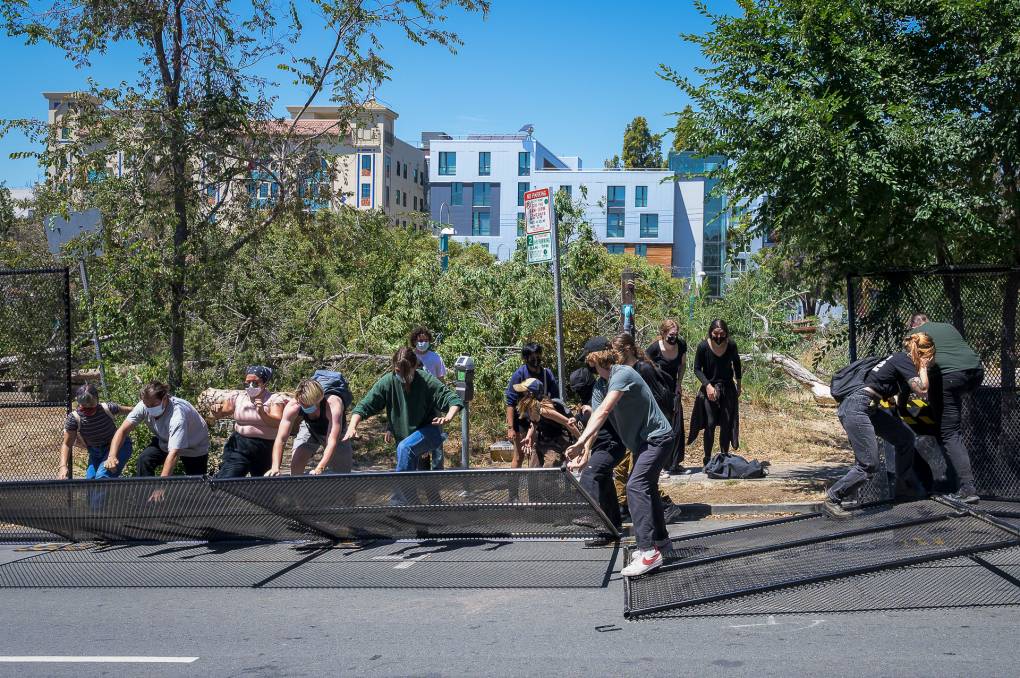
"caption": "Protesters tear down a fence surrounding People's Park in Berkeley on Aug. 3, 2022, in a bid to stop UC Berkeley from building student housing on the site. ",
"description": null,
"title": "Peoples",
"credit": "\u003ca href=\"https://www.jonnyshotit.com/About-me\">Jonathan Hale\u003c/a>",
"status": "inherit",
"altTag": "Protesters push down a large fence in a park.",
"isLoading": false,
"fetchFailed": false
},
"news_11862371": {
"type": "attachments",
"id": "news_11862371",
"meta": {
"index": "attachments_1716263798",
"site": "news",
"id": "11862371",
"found": true
},
"parent": 11861666,
"imgSizes": {
"apple_news_ca_landscape_5_5": {
"file": "https://ww2.kqed.org/app/uploads/sites/10/2021/02/RS47366_032_Berkeley_PeoplesPark_02192021-qut-1044x783.jpg",
"width": 1044,
"mimeType": "image/jpeg",
"height": 783
},
"apple_news_ca_square_4_0": {
"file": "https://ww2.kqed.org/app/uploads/sites/10/2021/02/RS47366_032_Berkeley_PeoplesPark_02192021-qut-470x470.jpg",
"width": 470,
"mimeType": "image/jpeg",
"height": 470
},
"twentyfourteen-full-width": {
"file": "https://ww2.kqed.org/app/uploads/sites/10/2021/02/RS47366_032_Berkeley_PeoplesPark_02192021-qut-1038x576.jpg",
"width": 1038,
"mimeType": "image/jpeg",
"height": 576
},
"thumbnail": {
"file": "https://ww2.kqed.org/app/uploads/sites/10/2021/02/RS47366_032_Berkeley_PeoplesPark_02192021-qut-160x107.jpg",
"width": 160,
"mimeType": "image/jpeg",
"height": 107
},
"post-thumbnail": {
"file": "https://ww2.kqed.org/app/uploads/sites/10/2021/02/RS47366_032_Berkeley_PeoplesPark_02192021-qut-672x372.jpg",
"width": 672,
"mimeType": "image/jpeg",
"height": 372
},
"kqedFullSize": {
"file": "https://ww2.kqed.org/app/uploads/sites/10/2021/02/RS47366_032_Berkeley_PeoplesPark_02192021-qut.jpg",
"width": 1920,
"height": 1280
},
"apple_news_ca_landscape_4_7": {
"file": "https://ww2.kqed.org/app/uploads/sites/10/2021/02/RS47366_032_Berkeley_PeoplesPark_02192021-qut-632x474.jpg",
"width": 632,
"mimeType": "image/jpeg",
"height": 474
},
"large": {
"file": "https://ww2.kqed.org/app/uploads/sites/10/2021/02/RS47366_032_Berkeley_PeoplesPark_02192021-qut-1020x680.jpg",
"width": 1020,
"mimeType": "image/jpeg",
"height": 680
},
"apple_news_ca_landscape_4_0": {
"file": "https://ww2.kqed.org/app/uploads/sites/10/2021/02/RS47366_032_Berkeley_PeoplesPark_02192021-qut-536x402.jpg",
"width": 536,
"mimeType": "image/jpeg",
"height": 402
},
"apple_news_ca_portrait_12_9": {
"file": "https://ww2.kqed.org/app/uploads/sites/10/2021/02/RS47366_032_Berkeley_PeoplesPark_02192021-qut-1122x1280.jpg",
"width": 1122,
"mimeType": "image/jpeg",
"height": 1280
},
"medium": {
"file": "https://ww2.kqed.org/app/uploads/sites/10/2021/02/RS47366_032_Berkeley_PeoplesPark_02192021-qut-800x533.jpg",
"width": 800,
"mimeType": "image/jpeg",
"height": 533
},
"apple_news_ca_portrait_4_0": {
"file": "https://ww2.kqed.org/app/uploads/sites/10/2021/02/RS47366_032_Berkeley_PeoplesPark_02192021-qut-354x472.jpg",
"width": 354,
"mimeType": "image/jpeg",
"height": 472
},
"apple_news_ca_portrait_9_7": {
"file": "https://ww2.kqed.org/app/uploads/sites/10/2021/02/RS47366_032_Berkeley_PeoplesPark_02192021-qut-840x1120.jpg",
"width": 840,
"mimeType": "image/jpeg",
"height": 1120
},
"apple_news_ca_landscape_12_9": {
"file": "https://ww2.kqed.org/app/uploads/sites/10/2021/02/RS47366_032_Berkeley_PeoplesPark_02192021-qut-1832x1280.jpg",
"width": 1832,
"mimeType": "image/jpeg",
"height": 1280
},
"apple_news_ca_square_9_7": {
"file": "https://ww2.kqed.org/app/uploads/sites/10/2021/02/RS47366_032_Berkeley_PeoplesPark_02192021-qut-1104x1104.jpg",
"width": 1104,
"mimeType": "image/jpeg",
"height": 1104
},
"1536x1536": {
"file": "https://ww2.kqed.org/app/uploads/sites/10/2021/02/RS47366_032_Berkeley_PeoplesPark_02192021-qut-1536x1024.jpg",
"width": 1536,
"mimeType": "image/jpeg",
"height": 1024
},
"apple_news_ca_portrait_4_7": {
"file": "https://ww2.kqed.org/app/uploads/sites/10/2021/02/RS47366_032_Berkeley_PeoplesPark_02192021-qut-414x552.jpg",
"width": 414,
"mimeType": "image/jpeg",
"height": 552
},
"apple_news_ca_square_12_9": {
"file": "https://ww2.kqed.org/app/uploads/sites/10/2021/02/RS47366_032_Berkeley_PeoplesPark_02192021-qut-1472x1280.jpg",
"width": 1472,
"mimeType": "image/jpeg",
"height": 1280
},
"apple_news_ca_portrait_5_5": {
"file": "https://ww2.kqed.org/app/uploads/sites/10/2021/02/RS47366_032_Berkeley_PeoplesPark_02192021-qut-687x916.jpg",
"width": 687,
"mimeType": "image/jpeg",
"height": 916
},
"apple_news_ca_square_4_7": {
"file": "https://ww2.kqed.org/app/uploads/sites/10/2021/02/RS47366_032_Berkeley_PeoplesPark_02192021-qut-550x550.jpg",
"width": 550,
"mimeType": "image/jpeg",
"height": 550
},
"apple_news_ca_landscape_9_7": {
"file": "https://ww2.kqed.org/app/uploads/sites/10/2021/02/RS47366_032_Berkeley_PeoplesPark_02192021-qut-1376x1032.jpg",
"width": 1376,
"mimeType": "image/jpeg",
"height": 1032
},
"apple_news_ca_square_5_5": {
"file": "https://ww2.kqed.org/app/uploads/sites/10/2021/02/RS47366_032_Berkeley_PeoplesPark_02192021-qut-912x912.jpg",
"width": 912,
"mimeType": "image/jpeg",
"height": 912
}
},
"publishDate": 1614384777,
"modified": 1614384821,
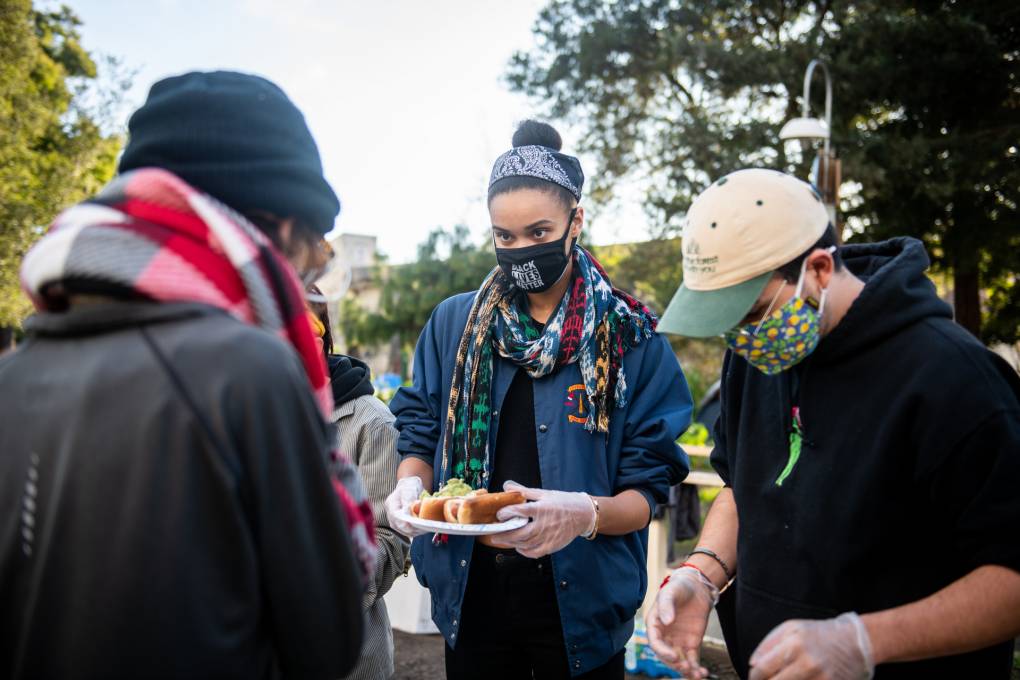
"caption": "Student volunteers Alecia Harger and Brandon Mendoza help serve food at People's Park in Berkeley on Feb. 19, 2021.",
"description": "Student volunteers Alecia Harger and Brandon Mendoza help serve food at People's Park in Berkeley on Feb. 19, 2021.",
"title": "RS47366_032_Berkeley_PeoplesPark_02192021-qut",
"credit": "Beth LaBerge/KQED",
"status": "inherit",
"altTag": null,
"isLoading": false,
"fetchFailed": false
}
},
"audioPlayerReducer": {
"postId": "stream_live",
"isPaused": true,
"isPlaying": false,
"pfsActive": false,
"pledgeModalIsOpen": true,
"playerDrawerIsOpen": false,
"liveAudioPlayStartedAt": 0,
"liveAudioPlayContext": ""
},
"authorsReducer": {
"byline_news_11959618": {
"type": "authors",
"id": "byline_news_11959618",
"meta": {
"override": true
},
"slug": "byline_news_11959618",
"name": "\u003ca href=\"https://calmatters.org/author/mikhailzinshteyn/\">Mikhail Zinshteyn\u003c/a>",
"isLoading": false
},
"byline_news_11923876": {
"type": "authors",
"id": "byline_news_11923876",
"meta": {
"override": true
},
"slug": "byline_news_11923876",
"name": "Michael Liedtke\u003cbr>Associated Press",
"isLoading": false
},
"kqed": {
"type": "authors",
"id": "236",
"meta": {
"index": "authors_1716337520",
"id": "236",
"found": true
},
"name": "KQED News Staff",
"firstName": "KQED News Staff",
"lastName": null,
"slug": "kqed",
"email": "faq@kqed.org",
"display_author_email": false,
"staff_mastheads": [],
"title": null,
"bio": null,
"avatar": "https://secure.gravatar.com/avatar/ef0e801a68c4c54afa9180db14084167?s=600&d=blank&r=g",
"twitter": null,
"facebook": null,
"instagram": null,
"linkedin": null,
"sites": [
{
"site": "arts",
"roles": [
"contributor"
]
},
{
"site": "news",
"roles": [
"editor"
]
},
{
"site": "futureofyou",
"roles": [
"author"
]
}
],
"headData": {
"title": "KQED News Staff | KQED",
"description": null,
"ogImgSrc": "https://secure.gravatar.com/avatar/ef0e801a68c4c54afa9180db14084167?s=600&d=blank&r=g",
"twImgSrc": "https://secure.gravatar.com/avatar/ef0e801a68c4c54afa9180db14084167?s=600&d=blank&r=g"
},
"isLoading": false,
"link": "/author/kqed"
},
"tarasiler": {
"type": "authors",
"id": "257",
"meta": {
"index": "authors_1716337520",
"id": "257",
"found": true
},
"name": "Tara Siler",
"firstName": "Tara",
"lastName": "Siler",
"slug": "tarasiler",
"email": "tsiler@kqed.org",
"display_author_email": false,
"staff_mastheads": [
"news"
],
"title": "KQED Contributor",
"bio": "Tara reports and anchors for KQED news. She covers a range of issues from community-police relations to local politics. Tara started out in community radio in the Bay Area, where she was raised. She eventually moved to Washington DC where she covered Congress for eight years for Pacifica and Monitor Radio. Her stories have also been heard on NPR's All Things Considered, Morning Edition and The World.\r\n\r\nTara lives with her husband in Oakland-- where they raised their two sons. She enjoys spending time with her family, gardening and hiking in the Oakland hills... and keeping up with the news.",
"avatar": "https://secure.gravatar.com/avatar/99802f9746fb80b65fd8ec6c57954450?s=600&d=blank&r=g",
"twitter": null,
"facebook": null,
"instagram": null,
"linkedin": null,
"sites": [
{
"site": "news",
"roles": [
"contributor",
"edit_others_posts"
]
},
{
"site": "stateofhealth",
"roles": [
"author"
]
}
],
"headData": {
"title": "Tara Siler | KQED",
"description": "KQED Contributor",
"ogImgSrc": "https://secure.gravatar.com/avatar/99802f9746fb80b65fd8ec6c57954450?s=600&d=blank&r=g",
"twImgSrc": "https://secure.gravatar.com/avatar/99802f9746fb80b65fd8ec6c57954450?s=600&d=blank&r=g"
},
"isLoading": false,
"link": "/author/tarasiler"
},
"matthewgreen": {
"type": "authors",
"id": "1263",
"meta": {
"index": "authors_1716337520",
"id": "1263",
"found": true
},
"name": "Matthew Green",
"firstName": "Matthew",
"lastName": "Green",
"slug": "matthewgreen",
"email": "mgreen@kqed.org",
"display_author_email": false,
"staff_mastheads": [],
"title": "KQED Editor/Reporter",
"bio": "Matthew Green is a digital media producer for KQED News. He previously produced \u003ca href=\"http://www.kqed.org/lowdown\">The Lowdown\u003c/a>, KQED’s multimedia news education blog. Matthew's written for numerous Bay Area publications, including the Oakland Tribune and San Francisco Chronicle. He also taught journalism classes at Fremont High School in East Oakland.\r\n\r\nEmail: mgreen@kqed.org; Twitter: @MGreenKQED",
"avatar": "https://secure.gravatar.com/avatar/3bf498d1267ca02c8494f33d8cfc575e?s=600&d=blank&r=g",
"twitter": "MGreenKQED",
"facebook": null,
"instagram": null,
"linkedin": null,
"sites": [
{
"site": "news",
"roles": []
},
{
"site": "lowdown",
"roles": []
},
{
"site": "science",
"roles": []
},
{
"site": "education",
"roles": []
},
{
"site": "quest",
"roles": []
},
{
"site": "liveblog",
"roles": []
}
],
"headData": {
"title": "Matthew Green | KQED",
"description": "KQED Editor/Reporter",
"ogImgSrc": "https://secure.gravatar.com/avatar/3bf498d1267ca02c8494f33d8cfc575e?s=600&d=blank&r=g",
"twImgSrc": "https://secure.gravatar.com/avatar/3bf498d1267ca02c8494f33d8cfc575e?s=600&d=blank&r=g"
},
"isLoading": false,
"link": "/author/matthewgreen"
},
"ecruzguevarra": {
"type": "authors",
"id": "8654",
"meta": {
"index": "authors_1716337520",
"id": "8654",
"found": true
},
"name": "Ericka Cruz Guevarra",
"firstName": "Ericka",
"lastName": "Cruz Guevarra",
"slug": "ecruzguevarra",
"email": "ecruzguevarra@kqed.org",
"display_author_email": true,
"staff_mastheads": [
"news"
],
"title": "Producer, The Bay Podcast",
"bio": "Ericka Cruz Guevarra is host of \u003ca href=\"https://www.kqed.org/podcasts/thebay\">\u003cem>The Bay\u003c/em>\u003c/a> podcast at KQED. Before host, she was the show’s producer. Her work in that capacity includes a three-part reported series on policing in Vallejo, which won a 2020 excellence in journalism award from the Society of Professional Journalists. Ericka has worked as a breaking news reporter at Oregon Public Broadcasting, helped produce the Code Switch podcast, and was KQED’s inaugural Raul Ramirez Diversity Fund intern. She’s also an alumna of NPR’s Next Generation Radio program. Send her an email if you have strong feelings about whether Fairfield and Suisun City are the Bay. Ericka is represented by SAG-AFTRA.",
"avatar": "https://secure.gravatar.com/avatar/accefc1de4bafc7e234b69bcb9b6f6536c130fd84709bc3069ef11a78787e1bb?s=600&d=blank&r=g",
"twitter": "NotoriousECG",
"bluesky": null,
"facebook": null,
"instagram": null,
"linkedin": null,
"sites": [
{
"site": "arts",
"roles": [
"subscriber"
]
},
{
"site": "news",
"roles": [
"editor",
"manage_categories"
]
},
{
"site": "futureofyou",
"roles": [
"subscriber"
]
},
{
"site": "stateofhealth",
"roles": [
"subscriber"
]
},
{
"site": "science",
"roles": [
"editor"
]
},
{
"site": "forum",
"roles": [
"subscriber"
]
}
],
"headData": {
"title": "Ericka Cruz Guevarra | KQED",
"description": "Producer, The Bay Podcast",
"ogImgSrc": "https://secure.gravatar.com/avatar/accefc1de4bafc7e234b69bcb9b6f6536c130fd84709bc3069ef11a78787e1bb?s=600&d=blank&r=g",
"twImgSrc": "https://secure.gravatar.com/avatar/accefc1de4bafc7e234b69bcb9b6f6536c130fd84709bc3069ef11a78787e1bb?s=600&d=blank&r=g"
},
"isLoading": false,
"link": "/author/ecruzguevarra"
},
"lsarah": {
"type": "authors",
"id": "11626",
"meta": {
"index": "authors_1716337520",
"id": "11626",
"found": true
},
"name": "Lakshmi Sarah",
"firstName": "Lakshmi",
"lastName": "Sarah",
"slug": "lsarah",
"email": "lsarah@kqed.org",
"display_author_email": false,
"staff_mastheads": [],
"title": "Digital Producer",
"bio": "Lakshmi Sarah is an educator, author and journalist with a focus on innovative storytelling. She has worked with newspapers, radio and magazines from Ahmedabad, India to Los Angeles, California. She has written and produced for Die Zeit, Global Voices, AJ+, KQED, Fusion Media Group and the New York Times.",
"avatar": "https://secure.gravatar.com/avatar/652dcaecd8b28826fc17a8b2d6bb4e93?s=600&d=blank&r=g",
"twitter": "lakitalki",
"facebook": null,
"instagram": "https://www.instagram.com/laki.talki/",
"linkedin": "https://www.linkedin.com/in/lakisarah/",
"sites": [
{
"site": "arts",
"roles": []
},
{
"site": "news",
"roles": []
},
{
"site": "bayareabites",
"roles": []
},
{
"site": "science",
"roles": []
}
],
"headData": {
"title": "Lakshmi Sarah | KQED",
"description": "Digital Producer",
"ogImgSrc": "https://secure.gravatar.com/avatar/652dcaecd8b28826fc17a8b2d6bb4e93?s=600&d=blank&r=g",
"twImgSrc": "https://secure.gravatar.com/avatar/652dcaecd8b28826fc17a8b2d6bb4e93?s=600&d=blank&r=g"
},
"isLoading": false,
"link": "/author/lsarah"
},
"amontecillo": {
"type": "authors",
"id": "11649",
"meta": {
"index": "authors_1716337520",
"id": "11649",
"found": true
},
"name": "Alan Montecillo",
"firstName": "Alan",
"lastName": "Montecillo",
"slug": "amontecillo",
"email": "amontecillo@kqed.org",
"display_author_email": false,
"staff_mastheads": [
"news"
],
"title": "KQED Contributor",
"bio": "Alan Montecillo is the senior editor of \u003cem>\u003ca href=\"http://kqed.org/thebay\">The Bay\u003c/a>, \u003c/em> KQED's local news podcast. Before moving to the Bay Area, he worked as a senior talk show producer for WILL in Champaign-Urbana, Illinois and at Oregon Public Broadcasting in Portland, Oregon. He has won journalism awards from the Society of Professional Journalists Northern California, the Public Media Journalists Association, The Signal Awards, and has also received a regional Edward R. Murrow award. Alan is a Filipino American from Hong Kong and a graduate of Reed College.",
"avatar": "https://secure.gravatar.com/avatar/268f53a2066899ea9efdd8a5900218b17c822d9862cbc9326cccec53ef41d349?s=600&d=blank&r=g",
"twitter": "alanmontecillo",
"bluesky": null,
"facebook": null,
"instagram": null,
"linkedin": null,
"sites": [
{
"site": "",
"roles": [
"editor"
]
},
{
"site": "news",
"roles": [
"editor",
"manage_categories"
]
}
],
"headData": {
"title": "Alan Montecillo | KQED",
"description": "KQED Contributor",
"ogImgSrc": "https://secure.gravatar.com/avatar/268f53a2066899ea9efdd8a5900218b17c822d9862cbc9326cccec53ef41d349?s=600&d=blank&r=g",
"twImgSrc": "https://secure.gravatar.com/avatar/268f53a2066899ea9efdd8a5900218b17c822d9862cbc9326cccec53ef41d349?s=600&d=blank&r=g"
},
"isLoading": false,
"link": "/author/amontecillo"
},
"avignet": {
"type": "authors",
"id": "11683",
"meta": {
"index": "authors_1716337520",
"id": "11683",
"found": true
},
"name": "Anna Vignet",
"firstName": "Anna",
"lastName": "Vignet",
"slug": "avignet",
"email": "avignet@kqed.org",
"display_author_email": false,
"staff_mastheads": [
"news"
],
"title": "KQED Contributor",
"bio": null,
"avatar": "https://secure.gravatar.com/avatar/75b1c67fd0f5915bc8c1514aca495240?s=600&d=blank&r=g",
"twitter": null,
"facebook": null,
"instagram": null,
"linkedin": null,
"sites": [
{
"site": "arts",
"roles": [
"author"
]
},
{
"site": "news",
"roles": [
"editor"
]
}
],
"headData": {
"title": "Anna Vignet | KQED",
"description": "KQED Contributor",
"ogImgSrc": "https://secure.gravatar.com/avatar/75b1c67fd0f5915bc8c1514aca495240?s=600&d=blank&r=g",
"twImgSrc": "https://secure.gravatar.com/avatar/75b1c67fd0f5915bc8c1514aca495240?s=600&d=blank&r=g"
},
"isLoading": false,
"link": "/author/avignet"
},
"gfrenes": {
"type": "authors",
"id": "11732",
"meta": {
"index": "authors_1716337520",
"id": "11732",
"found": true
},
"name": "Gabriella Frenes",
"firstName": "Gabriella",
"lastName": "Frenes",
"slug": "gfrenes",
"email": "gfrenes@kqed.org",
"display_author_email": false,
"staff_mastheads": [],
"title": "KQED Contributor",
"bio": null,
"avatar": "https://secure.gravatar.com/avatar/2c29f711ce960d0ec5d504b68e28e419?s=600&d=blank&r=g",
"twitter": null,
"facebook": null,
"instagram": null,
"linkedin": null,
"sites": [
{
"site": "arts",
"roles": [
"author"
]
},
{
"site": "news",
"roles": [
"author"
]
}
],
"headData": {
"title": "Gabriella Frenes | KQED",
"description": "KQED Contributor",
"ogImgSrc": "https://secure.gravatar.com/avatar/2c29f711ce960d0ec5d504b68e28e419?s=600&d=blank&r=g",
"twImgSrc": "https://secure.gravatar.com/avatar/2c29f711ce960d0ec5d504b68e28e419?s=600&d=blank&r=g"
},
"isLoading": false,
"link": "/author/gfrenes"
},
"amadrigal": {
"type": "authors",
"id": "11757",
"meta": {
"index": "authors_1716337520",
"id": "11757",
"found": true
},
"name": "Alexis Madrigal",
"firstName": "Alexis",
"lastName": "Madrigal",
"slug": "amadrigal",
"email": "amadrigal@kqed.org",
"display_author_email": true,
"staff_mastheads": [],
"title": "Co-Host Forum",
"bio": "Alexis Madrigal is the co-host of Forum. He is also a contributing writer at \u003cem>The Atlantic \u003c/em>and the co-founder of the COVID Tracking Project. He's the creator of the podcast, \u003cem>Containers\u003c/em>, and has been a staff writer at \u003cem>Wired. \u003c/em>He was a visiting scholar at UC Berkeley's Information School, and is working on a book about Oakland and the Bay Area's revolutionary ideas.",
"avatar": "https://secure.gravatar.com/avatar/ffeee1fe99a3e31957381f377ca63502bdcc0c3dbccaaa701e579a10aa0c5e1f?s=600&d=blank&r=g",
"twitter": "alexismadrigal",
"bluesky": null,
"facebook": null,
"instagram": null,
"linkedin": null,
"sites": [
{
"site": "arts",
"roles": [
"editor"
]
},
{
"site": "news",
"roles": [
"editor"
]
},
{
"site": "forum",
"roles": [
"editor"
]
}
],
"headData": {
"title": "Alexis Madrigal | KQED",
"description": "Co-Host Forum",
"ogImgSrc": "https://secure.gravatar.com/avatar/ffeee1fe99a3e31957381f377ca63502bdcc0c3dbccaaa701e579a10aa0c5e1f?s=600&d=blank&r=g",
"twImgSrc": "https://secure.gravatar.com/avatar/ffeee1fe99a3e31957381f377ca63502bdcc0c3dbccaaa701e579a10aa0c5e1f?s=600&d=blank&r=g"
},
"isLoading": false,
"link": "/author/amadrigal"
},
"rsmith": {
"type": "authors",
"id": "11762",
"meta": {
"index": "authors_1716337520",
"id": "11762",
"found": true
},
"name": "Rebecca Smith",
"firstName": "Rebecca",
"lastName": "Smith",
"slug": "rsmith",
"email": "rebeccasmith@kqed.org",
"display_author_email": false,
"staff_mastheads": [],
"title": "KQED Contributor",
"bio": null,
"avatar": "https://secure.gravatar.com/avatar/13dc9b2ea3fe97fdea45141eda6e33e9?s=600&d=blank&r=g",
"twitter": null,
"facebook": null,
"instagram": null,
"linkedin": null,
"sites": [
{
"site": "news",
"roles": [
"contributor"
]
}
],
"headData": {
"title": "Rebecca Smith | KQED",
"description": "KQED Contributor",
"ogImgSrc": "https://secure.gravatar.com/avatar/13dc9b2ea3fe97fdea45141eda6e33e9?s=600&d=blank&r=g",
"twImgSrc": "https://secure.gravatar.com/avatar/13dc9b2ea3fe97fdea45141eda6e33e9?s=600&d=blank&r=g"
},
"isLoading": false,
"link": "/author/rsmith"
}
},
"pagesReducer": {
"news_tag_peoples-park": {
"type": "terms",
"id": "news_29198",
"meta": {
"index": "terms_1716263798",
"site": "news",
"id": "29198",
"score": 9.893782
},
"featImg": null,
"name": "people's park",
"description": null,
"taxonomy": "tag",
"headData": {
"twImgId": null,
"twTitle": null,
"ogTitle": null,
"ogImgId": null,
"twDescription": null,
"description": null,
"title": "people's park Archives | KQED News",
"ogDescription": null
},
"ttid": 29215,
"slug": "peoples-park",
"isLoading": false,
"title": "people's park",
"pageMeta": {
"site": "news",
"WpPageTemplate": "page-topic-editorial",
"currentPage": 2
},
"blocks": [
{
"blockName": "kqed/post-list",
"attrs": {
"layout": "cardArticle2",
"query": "posts/news?tag=peoples-park",
"seeMore": false,
"paginated": true,
"page": 2
}
},
{
"blockName": "kqed/ad"
}
]
}
},
"pfsSessionReducer": {},
"postsReducer": {
"stream_live": {
"type": "live",
"id": "stream_live",
"audioUrl": "https://streams.kqed.org/kqedradio",
"title": "Live Stream",
"excerpt": "Live Stream information currently unavailable.",
"link": "/radio",
"featImg": "",
"label": {
"name": "KQED Live",
"link": "/"
}
},
"stream_kqedNewscast": {
"type": "posts",
"id": "stream_kqedNewscast",
"audioUrl": "https://www.kqed.org/.stream/anon/radio/RDnews/newscast.mp3?_=1",
"title": "KQED Newscast",
"featImg": "",
"label": {
"name": "88.5 FM",
"link": "/"
}
},
"news_11959483": {
"type": "posts",
"id": "news_11959483",
"meta": {
"index": "posts_1716263798",
"site": "news",
"id": "11959483",
"score": null,
"sort": [
1694214036000
]
},
"guestAuthors": [],
"slug": "legislation-that-could-push-peoples-park-student-housing-project-forward-heads-to-newsom",
"title": "Newsom Signs Bill Paving Way to Build New Student Housing at People's Park in Berkeley",
"publishDate": 1694214036,
"format": "standard",
"headTitle": "Newsom Signs Bill Paving Way to Build New Student Housing at People’s Park in Berkeley | KQED",
"labelTerm": {
"site": "news"
},
"content": "\u003cp>\u003cem>This story was first published Aug. 30 and updated Friday, Sept. 8 at 3:45 p.m.\u003c/em>\u003c/p>\n\u003cp>Gov. Gavin Newsom signed a bill this week aimed at clearing the way for construction of a controversial UC Berkeley \u003ca href=\"https://apnews.com/article/health-california-berkeley-university-of-c0b263490acde542c3a67a656a56d02e\">student housing project in Berkeley’s historic People’s Park\u003c/a>.\u003c/p>\n\u003cp>\u003ca href=\"https://leginfo.legislature.ca.gov/faces/billVotesClient.xhtml?bill_id=202320240AB1307\">AB 1307\u003c/a>, which takes effect immediately, amends California’s sweeping Environmental Quality Act (CEQA) by no longer requiring housing developers to first study potential noise levels generated by future tenants.\u003c/p>\n\u003cp>“California will not allow NIMBYism to take hold, blocking critically needed housing for years and even decades,” Newsom said in a statement about the new law, which both houses of the state Legislature unanimously approved last month.\u003c/p>\n\u003cp>The bill, introduced by Assemblymember Buffy Wicks (D-Oakland), whose district includes Berkeley, also eliminates the need for universities to prepare an environmental impact report that considers alternative housing sites for residential or mixed-use housing projects.\u003c/p>\n\u003cp>The law makes it clear that “people are not pollution,” Wicks said in a statement.\u003c/p>\n\u003cp>https://youtu.be/W6X3EI70U5g\u003c/p>\n\u003cp> \u003c/p>\n\u003cp>Wicks authored the legislation after an appeals court in February blocked the university from breaking ground on the project, ruling that it had failed to study potential noise issues and consider alternative sites. The state Supreme Court in May agreed to hear the case and will make the final ruling on whether the university can resume construction.\u003c/p>\n\u003cp>The controversial $312 million project would create sorely needed housing for some 1,100 UC Berkeley students. A separate facility would also house roughly 125 of the unhoused people that currently live on the 2.8-acre site south of campus that is owned by the university.\u003c/p>\n\u003cp>Newsom filed an amicus brief in April urging the state Supreme Court to allow UC Berkeley to continue with the housing project.\u003c/p>\n\u003cp>A UC Berkeley spokesperson said the university will ask the Supreme Court to consider the new law in its ruling.\u003c/p>\n\u003cp>“The campus will resume construction of the People’s Park project when the lawsuit is resolved and hopes that the new law will substantially hasten the resolution of the lawsuit,” UC spokesperson Dan Mogulof said in a statement.\u003c/p>\n\u003cp>Last month, Berkeley Mayor Jesse Arreguín called the passage of the bill a big win.\u003c/p>\n\u003cp>“This is a victory for affordable housing and that means it’s a victory in our ongoing efforts to tackle homelessness,” he said in a press release on Aug. 28. “These laws were designed to protect the environment, but they’re most often used to stop dense, infill projects which add affordable housing while reducing sprawl and pollution. These are the types of projects which, at scale, help fight the housing crisis which has been a leading cause of homelessness.”[aside label=\"more people's park coverage\" tag=\"peoples-park\"]But opponents of the project say the bill effectively rewards UC Berkeley for its failure to comply with longstanding state environmental regulations.\u003c/p>\n\u003cp>“People’s Park is a National Register of Historic Places site and deserves individual and special attention, and therefore this should be required in an analysis of alternative sites, which would not in any conceivable way obstruct California’s housing needs — needs that we acknowledge to be real,” leaders of the People’s Park Historic District Advocacy Group and the Make UC A Good Neighbor, the two main opposition groups that have been embroiled in ongoing litigation with the university over the project, wrote in a letter to the state Assembly.\u003c/p>\n\u003cp>In the letter, the two groups argue that the university has identified other locations for student housing that would provide more units than what is currently proposed for the park. They also emphasize that, despite their opposition to the project, they support the development of more housing for students.\u003c/p>\n\u003cp>“There is no need for this legislation since there is a path forward for UCB to build the much-needed student and supportive housing on a site other than People’s Park, thus preserving a nationally recognized historical resource and a valuable public open space,” the groups stated.\u003c/p>\n\u003cp>The university has tried for decades to build housing at the park, but those efforts have been met with fierce resistance from opponents. The latest failed attempt to break ground, \u003ca href=\"https://www.kqed.org/news/11921415/protesters-block-construction-at-berkeleys-peoples-park-after-standoff-with-police\">last August\u003c/a>, spurred major protests, including several violent clashes with law enforcement and the wholesale destruction of major construction equipment that had been brought onto the site.\u003c/p>\n\u003cp>“While CEQA was a groundbreaking law developed to protect the environment at the time of its passage in 1970, in recent decades the process has been used to block projects for non-environmental reasons,” the city said in a statement.\u003c/p>\n\u003cp>\u003cem>This story includes reporting from Bay City News, The Associated Press and KQED’s Marnette Federis.\u003c/em>\u003cbr>\n[ad fullwidth]\u003c/p>\n\u003cp>\u003c/p>\n",
"blocks": [],
"excerpt": "The proposed development in the park, which is owned by UC Berkeley, has been fiercely contested by opponents for years, and was most recently placed on hold after a court in February ruled the university must mitigate potential noise issues and consider alternative sites.",
"status": "publish",
"parent": 0,
"modified": 1725922358,
"stats": {
"hasAudio": false,
"hasVideo": false,
"hasChartOrMap": false,
"iframeSrcs": [],
"hasGoogleForm": false,
"hasGallery": false,
"hasHearkenModule": false,
"hasPolis": false,
"paragraphCount": 20,
"wordCount": 815
},
"headData": {
"title": "Newsom Signs Bill Paving Way to Build New Student Housing at People's Park in Berkeley | KQED",
"description": "The proposed development in the park, which is owned by UC Berkeley, has been fiercely contested by opponents for years, and was most recently placed on hold after a court in February ruled the university must mitigate potential noise issues and consider alternative sites.",
"ogTitle": "",
"ogDescription": "",
"ogImgId": "",
"twTitle": "",
"twDescription": "",
"twImgId": "",
"schema": {
"@context": "https://schema.org",
"@type": "NewsArticle",
"headline": "Newsom Signs Bill Paving Way to Build New Student Housing at People's Park in Berkeley",
"datePublished": "2023-09-08T16:00:36-07:00",
"dateModified": "2024-09-09T15:52:38-07:00",
"image": "https://cdn.kqed.org/wp-content/uploads/2020/02/KQED-OG-Image@1x.png",
"isAccessibleForFree": "True",
"publisher": {
"@type": "NewsMediaOrganization",
"@id": "https://www.kqed.org/#organization",
"name": "KQED",
"logo": "https://cdn.kqed.org/wp-content/uploads/2020/02/KQED-OG-Image@1x.png",
"url": "https://www.kqed.org",
"sameAs": [
"https://www.facebook.com/KQED",
"https://twitter.com/KQED",
"https://www.instagram.com/kqed/",
"https://www.tiktok.com/@kqedofficial",
"https://www.linkedin.com/company/kqed",
"https://www.youtube.com/channel/UCeC0IOo7i1P_61zVUWbJ4nw"
]
}
}
},
"sticky": false,
"excludeFromSiteSearch": "Include",
"articleAge": "0",
"path": "/news/11959483/legislation-that-could-push-peoples-park-student-housing-project-forward-heads-to-newsom",
"audioTrackLength": null,
"parsedContent": [
{
"type": "contentString",
"content": "\u003cdiv class=\"post-body\">\u003cp>\u003cp>\u003cem>This story was first published Aug. 30 and updated Friday, Sept. 8 at 3:45 p.m.\u003c/em>\u003c/p>\n\u003cp>Gov. Gavin Newsom signed a bill this week aimed at clearing the way for construction of a controversial UC Berkeley \u003ca href=\"https://apnews.com/article/health-california-berkeley-university-of-c0b263490acde542c3a67a656a56d02e\">student housing project in Berkeley’s historic People’s Park\u003c/a>.\u003c/p>\n\u003cp>\u003ca href=\"https://leginfo.legislature.ca.gov/faces/billVotesClient.xhtml?bill_id=202320240AB1307\">AB 1307\u003c/a>, which takes effect immediately, amends California’s sweeping Environmental Quality Act (CEQA) by no longer requiring housing developers to first study potential noise levels generated by future tenants.\u003c/p>\n\u003cp>“California will not allow NIMBYism to take hold, blocking critically needed housing for years and even decades,” Newsom said in a statement about the new law, which both houses of the state Legislature unanimously approved last month.\u003c/p>\n\u003cp>The bill, introduced by Assemblymember Buffy Wicks (D-Oakland), whose district includes Berkeley, also eliminates the need for universities to prepare an environmental impact report that considers alternative housing sites for residential or mixed-use housing projects.\u003c/p>\n\u003cp>The law makes it clear that “people are not pollution,” Wicks said in a statement.\u003c/p>\u003c/p>\u003cp>\u003cspan class='utils-parseShortcode-shortcodes-__youtubeShortcode__embedYoutube'>\n \u003cspan class='utils-parseShortcode-shortcodes-__youtubeShortcode__embedYoutubeInside'>\n \u003ciframe\n loading='lazy'\n class='utils-parseShortcode-shortcodes-__youtubeShortcode__youtubePlayer'\n type='text/html'\n src='//www.youtube.com/embed/W6X3EI70U5g'\n title='//www.youtube.com/embed/W6X3EI70U5g'\n allowfullscreen='true'\n style='border:0;'>\u003c/iframe>\n \u003c/span>\n \u003c/span>\u003c/p>\u003cp>\u003cp> \u003c/p>\n\u003cp>Wicks authored the legislation after an appeals court in February blocked the university from breaking ground on the project, ruling that it had failed to study potential noise issues and consider alternative sites. The state Supreme Court in May agreed to hear the case and will make the final ruling on whether the university can resume construction.\u003c/p>\n\u003cp>The controversial $312 million project would create sorely needed housing for some 1,100 UC Berkeley students. A separate facility would also house roughly 125 of the unhoused people that currently live on the 2.8-acre site south of campus that is owned by the university.\u003c/p>\n\u003cp>Newsom filed an amicus brief in April urging the state Supreme Court to allow UC Berkeley to continue with the housing project.\u003c/p>\n\u003cp>A UC Berkeley spokesperson said the university will ask the Supreme Court to consider the new law in its ruling.\u003c/p>\n\u003cp>“The campus will resume construction of the People’s Park project when the lawsuit is resolved and hopes that the new law will substantially hasten the resolution of the lawsuit,” UC spokesperson Dan Mogulof said in a statement.\u003c/p>\n\u003cp>Last month, Berkeley Mayor Jesse Arreguín called the passage of the bill a big win.\u003c/p>\n\u003cp>“This is a victory for affordable housing and that means it’s a victory in our ongoing efforts to tackle homelessness,” he said in a press release on Aug. 28. “These laws were designed to protect the environment, but they’re most often used to stop dense, infill projects which add affordable housing while reducing sprawl and pollution. These are the types of projects which, at scale, help fight the housing crisis which has been a leading cause of homelessness.”\u003c/p>\u003c/div>",
"attributes": {
"named": {},
"numeric": []
}
},
{
"type": "component",
"content": "",
"name": "aside",
"attributes": {
"named": {
"label": "more people's park coverage ",
"tag": "peoples-park"
},
"numeric": []
}
},
{
"type": "contentString",
"content": "\u003cdiv class=\"post-body\">\u003cp>But opponents of the project say the bill effectively rewards UC Berkeley for its failure to comply with longstanding state environmental regulations.\u003c/p>\n\u003cp>“People’s Park is a National Register of Historic Places site and deserves individual and special attention, and therefore this should be required in an analysis of alternative sites, which would not in any conceivable way obstruct California’s housing needs — needs that we acknowledge to be real,” leaders of the People’s Park Historic District Advocacy Group and the Make UC A Good Neighbor, the two main opposition groups that have been embroiled in ongoing litigation with the university over the project, wrote in a letter to the state Assembly.\u003c/p>\n\u003cp>In the letter, the two groups argue that the university has identified other locations for student housing that would provide more units than what is currently proposed for the park. They also emphasize that, despite their opposition to the project, they support the development of more housing for students.\u003c/p>\n\u003cp>“There is no need for this legislation since there is a path forward for UCB to build the much-needed student and supportive housing on a site other than People’s Park, thus preserving a nationally recognized historical resource and a valuable public open space,” the groups stated.\u003c/p>\n\u003cp>The university has tried for decades to build housing at the park, but those efforts have been met with fierce resistance from opponents. The latest failed attempt to break ground, \u003ca href=\"https://www.kqed.org/news/11921415/protesters-block-construction-at-berkeleys-peoples-park-after-standoff-with-police\">last August\u003c/a>, spurred major protests, including several violent clashes with law enforcement and the wholesale destruction of major construction equipment that had been brought onto the site.\u003c/p>\n\u003cp>“While CEQA was a groundbreaking law developed to protect the environment at the time of its passage in 1970, in recent decades the process has been used to block projects for non-environmental reasons,” the city said in a statement.\u003c/p>\n\u003cp>\u003cem>This story includes reporting from Bay City News, The Associated Press and KQED’s Marnette Federis.\u003c/em>\u003cbr>\n\u003c/p>\u003c/div>",
"attributes": {
"named": {},
"numeric": []
}
},
{
"type": "component",
"content": "",
"name": "ad",
"attributes": {
"named": {
"label": "fullwidth"
},
"numeric": [
"fullwidth"
]
}
},
{
"type": "contentString",
"content": "\u003cdiv class=\"post-body\">\u003cp>\u003c/p>\n\u003cp>\u003c/p>\n\u003c/div>\u003c/p>",
"attributes": {
"named": {},
"numeric": []
}
}
],
"link": "/news/11959483/legislation-that-could-push-peoples-park-student-housing-project-forward-heads-to-newsom",
"authors": [
"236"
],
"categories": [
"news_6266",
"news_8"
],
"tags": [
"news_129",
"news_20179",
"news_1775",
"news_29198",
"news_17597"
],
"featImg": "news_11959527",
"label": "news"
},
"news_11959618": {
"type": "posts",
"id": "news_11959618",
"meta": {
"index": "posts_1716263798",
"site": "news",
"id": "11959618",
"score": null,
"sort": [
1693433895000
]
},
"guestAuthors": [],
"slug": "why-new-uc-berkeley-housing-law-if-approved-wont-clear-the-way-to-build-dorms-yet",
"title": "Why New UC Berkeley Housing Law, if Approved, Won’t Clear the Way to Build Dorms Yet",
"publishDate": 1693433895,
"format": "standard",
"headTitle": "Why New UC Berkeley Housing Law, if Approved, Won’t Clear the Way to Build Dorms Yet | KQED",
"labelTerm": {
"term": 18481,
"site": "news"
},
"content": "\u003cp>Yes, a bill meant to help UC Berkeley build dorms for 1,100 students passed the Legislature this week, but the campus said it cannot begin construction until the state’s judicial system gives the green light.\u003c/p>\n\u003cp>The Legislature’s goal with \u003ca href=\"https://leginfo.legislature.ca.gov/faces/billTextClient.xhtml?bill_id=202320240AB1307\">AB 1307\u003c/a> is to reverse a state court decision that in effect blocked UC Berkeley from building dorms on the grounds of the \u003ca href=\"https://www.berkeleyside.org/2022/05/31/peoples-park-listed-on-national-register-of-historic-places\">storied People’s Park\u003c/a> in Berkeley. A key part of that decision was that human noise caused by housing development is a kind of pollution in California, \u003ca href=\"https://calmatters.org/housing/2023/08/ceqa-noise-pollution/\">a new legal standard\u003c/a> that the bill seeks to refute. But for UC Berkeley, the bill’s impact will take time, as the issue must still play out in courts, even if Gov. Gavin Newsom signs the bill as many expect.\u003c/p>\n\u003cp>“The (state) Supreme Court still has jurisdiction to resolve our pending appeal of the appellate court ruling, even if the statute is adopted,” wrote Dan Mogulof, a senior spokesperson for UC Berkeley, in an email to CalMatters. “The campus will resume construction of the People’s Park project when the lawsuit is resolved and hopes that the new law will substantially hasten the resolution of the lawsuit.”\u003c/p>\n\u003cp>[ad fullwidth]\u003c/p>\n\u003cp>A spokesperson for Assemblymember Buffy Wicks, a Democrat from Oakland who is the lead author of the bill, echoed that sentiment. “The bill would let the court process run its course, but give (it) direction,” wrote Erin Ivie, in an email.\u003c/p>\n\u003cp>When the courts will make a conclusive ruling on the case is unclear. “It depends on the specific issue before the court and the effect of the legislation,” said Cathal Conneely, a spokesperson for the California Supreme Court.\u003c/p>\n\u003cp>Nor will the bill stymie one of the groups suing UC Berkeley. Harvey Smith, president of the People’s Park Historic District Advocacy Group, said in an interview they’ll “absolutely” proceed with their legal complaint against the campus. How they’ll respond to the bill is to be determined, he added. “Our legal team has been focused on the Supreme Court case, and so, it’s kind of like for us one step at a time.”\u003c/p>\n\u003cp>UC Berkeley’s project has been stalled since last summer and has incurred higher projected costs of “many millions of dollars,” Mogulof said, though he declined to give a precise figure.\u003c/p>\n\u003cp>Construction costs in the Bay Area and Los Angeles have \u003ca href=\"https://www.dgs.ca.gov/RESD/Resources/Page-Content/Real-Estate-Services-Division-Resources-List-Folder/DGS-California-Construction-Cost-Index-CCCI\">increased by 21% in the past two years\u003c/a>. The project cost was \u003ca href=\"https://calmatters.org/wp-content/uploads/2023/08/UCB-SB169-COBCP.pdf\">$312 million in 2021 (PDF)\u003c/a>, a third of that backed by a \u003ca href=\"https://calmatters.org/education/higher-education/2022/07/student-housing-affordable-dorms/\">state student housing program\u003c/a> to support at least 300 beds for lower-income students who’ll pay cheaper rents.\u003c/p>\n\u003ch2>How did we get here?\u003c/h2>\n\u003cp>The February appellate court decision overturned a lower court’s ruling that sided with UC Berkeley. \u003ca href=\"https://calmatters.org/newsletters/whatmatters/2023/02/california-cannabis-emerald-triangle/#wm-story-1\">The appellate court wrote\u003c/a> that the university ran afoul of the California Environmental Quality Act on two fronts: that UC Berkeley needs to study and mitigate the potential “\u003ca href=\"https://www.courts.ca.gov/opinions/revpub/A165451M.PDF#page=6\">noise impacts from loud student parties (PDF)\u003c/a>” and that UC Berkeley should have considered a different site for its proposed dorms — arguments made by two neighborhood groups that sued UC Berkeley. The University of California appealed and now the case is before the state Supreme Court.[pullquote size=\"medium\" align=\"right\" citation=\"Harvey Smith, president, People’s Park Historic District Advocacy Group\"]‘We don’t see students as pollution, but noise can be an issue, and we certainly are not NIMBY neighbors.’[/pullquote]UC Berkeley for years has struggled to build enough housing for its growing student population — a legacy that came to a head last year when a court nearly forced the campus to enroll fewer new students \u003ca href=\"https://calmatters.org/education/2022/03/uc-enrollment-cap-fix/\">before lawmakers and the governor intervened\u003c/a>.\u003c/p>\n\u003cp>UCLA legal scholar Jonathan Zasloff wrote that UC Berkeley lost its February appellate case \u003ca href=\"https://legal-planet.org/2023/02/28/ceqa-and-uc-berkeley-housing-dont-panic/#:~:text=Calm%20down.%20This%20isn%E2%80%99t%20a%20good%20decision%2C%20but%20it%20isn%E2%80%99t%20an%20awful%20one%2C%20either.%20It%20shows%20a%20Court%20trying%20to%20figure%20things%20out%3A%20while%20it%20could%20have%20been%20more%20creative%2C%20and%20the%20statute%20is%20badly%20flawed%2C%20the%20biggest%20problem%20comes%20from%20the%20university%2C%20which%20basically%20didn%E2%80%99t%20do%20its%20homework.\">largely because it “didn’t do its homework.”\u003c/a> The campus itself \u003ca href=\"https://www.courts.ca.gov/opinions/revpub/A165451M.PDF#page=36\">previously conceded to the court (PDF)\u003c/a> that its students make a lot of noise, yet \u003ca href=\"https://legal-planet.org/2023/02/28/ceqa-and-uc-berkeley-housing-dont-panic/#:~:text=And%20then%20the%20University%20just%20chose%20not%20to%20deal%20with%20it%20in%20the%20EIR.%20That%E2%80%99s%20on%20the%20University%2C%20not%20CEQA.\">didn’t address that point\u003c/a> in its environmental review.\u003c/p>\n\u003cp>Smith’s group wants UC Berkeley to instead build the dorms one block over, on the site of what they say is a 60-year-old parking structure that needs to be demolished soon anyway.\u003c/p>\n\u003cp>“We don’t see students as pollution, but noise can be an issue, and we certainly are not NIMBY neighbors,” Smith said in an interview. “We want UC to build housing. We want them to do what they neglected to do for nearly a half century. But we see it’s a big problem if you destroy an open space.”\u003c/p>\n\u003cp>Since the February ruling, another state court cited it in a decision that pumped the brakes on a residential development in Los Angeles, \u003ca href=\"https://calmatters.org/housing/2023/08/ceqa-noise-pollution/\">reanimating worries that the February decision\u003c/a> will encourage other neighborhood groups to sue developers from creating much-needed housing in California. Environmentalists argue the February decision was the right one, in large part because noise of any kind was always viewed as a potentially significant environmental impact under the state environmental law.\u003c/p>\n\u003cp>Lawmakers showed no love for that appellate court ruling, never once voting against the bill during any of its hearings.\u003c/p>\n\u003cp>Wicks said in May her proposed law “will reverse the bizarre ‘people is pollution’ decision that was created by the recent appellate court decision (in) the UC Berkeley People’s Park case.” She made the comments during an Assembly hearing.\u003c/p>\n\u003cp>The bill was introduced in March and along the way had input from the University of California Office of the President, a spokesperson for Wicks wrote in an email. For its part, UC Berkeley “did not ask for or initiate the legislation,” Mogulof wrote.\u003c/p>\n\u003cp>Just before lawmakers sent the bill to Newsom’s desk Monday, Wicks underscored that the proposed law “has been done in response to the court case (at) UC Berkeley; folks are trying to fight student housing there.”\u003c/p>\n\u003cp>Unlike most bills, if Newsom signs the bill, it will take effect immediately because it secured two-thirds of the votes in both chambers of the Legislature. Bills that pass with less than two-thirds in each chamber take effect at the start of the next year.\u003c/p>\n\u003cp>Still, a signature from Newsom isn’t enough to give UC Berkeley the green light to start building.\u003c/p>\n\u003ch2>Why won’t this law guarantee student housing at UC Berkeley?\u003c/h2>\n\u003cp>In short, the Legislature cannot tell the courts how to handle a case, even with a new law, so a parallel process in the judicial branch of government must proceed.[pullquote size=\"medium\" align=\"right\" citation=\"Asm. Buffy Wicks (D-Oakland)\"]The proposed law ‘will reverse the bizarre ‘people is pollution’ decision that was created by the recent appellate court decision (in) the UC Berkeley People’s Park case.’[/pullquote]What that process looks like, no one can say with certainty. Legal experts CalMatters spoke with said that what’ll likely happen first is that lawyers representing the University of California and UC Berkeley will write a letter or brief to the Supreme Court noting that Wicks’ bill is now law.\u003c/p>\n\u003cp>That’ll probably prompt the court to determine whether it should continue reviewing the case or kick it back to the appellate court to redo its ruling given the new law. It’s doubtful that the Supreme Court will want to hear the case because there’ll be no thorny legal issue at hand if Newsom signs Wicks’ bill — assuming the bill fully neutralized what the appellate court ruled in February, said Brandon Stracener, a senior research fellow at the California Constitution Center, in an interview.\u003c/p>\n\u003cp>In the event the case goes back to the appellate court, then both the UC and the neighborhood groups can file more legal briefs within a 30-day window.\u003c/p>\n\u003cp>If the appellate court sees nothing wrong with the new law, it’ll probably de-publish its original ruling so that other courts cannot cite it as precedent, Stracener added.[aside postID=news_119429754,news_11959483]But even if the old ruling is de-published, UC Berkeley still needs to complete required paperwork, though it’ll likely have the legal upper hand if Newsom signs the bill, said Zasloff, who focuses on environmental, housing and land-use issues, in an interview.\u003c/p>\n\u003cp>He said if he were legal counsel for UC Berkeley, he’d tell administrators that they will probably need to submit an environmental impact report — the same document that the appellate court ruled was in violation of state environmental law. But in this scenario, because Wicks’ bill would be law, UC Berkeley can use the same draft it submitted the first time and “the neighbors won’t be able to sue you over the things that they sued you” for the last time, Zasloff said.\u003c/p>\n\u003cp>The draft report would require another round of public comment, which takes at least 30 days, \u003ca href=\"https://www.califaep.org/docs/CEQA_Handbook_2023_final.pdf#page=267\">according to state guidance (PDF)\u003c/a>. After that, the UC regents will probably have to approve the environmental report to make it final, which will allow UC Berkeley to start building the dorms.\u003c/p>\n\u003cp>Whether neighborhood groups can mount another round of legal maneuvers over the same draft environmental report is unclear, Zasloff said. Regardless, he said they may choose to sue again and basically say, “we’re just going to keep delaying you unless you make a deal with us.”\u003c/p>\n\u003cp>[ad floatright]\u003c/p>\n",
"blocks": [],
"excerpt": "Asm. Buffy Wicks proposed legislation to help get around a court's rejection of a UC Berkeley housing plan. But even if the law is approved, its fate is in the hands of the state Supreme Court.",
"status": "publish",
"parent": 0,
"modified": 1721146188,
"stats": {
"hasAudio": false,
"hasVideo": false,
"hasChartOrMap": false,
"iframeSrcs": [],
"hasGoogleForm": false,
"hasGallery": false,
"hasHearkenModule": false,
"hasPolis": false,
"paragraphCount": 28,
"wordCount": 1629
},
"headData": {
"title": "Why New UC Berkeley Housing Law, if Approved, Won’t Clear the Way to Build Dorms Yet | KQED",
"description": "Asm. Buffy Wicks proposed legislation to help get around a court's rejection of a UC Berkeley housing plan. But even if the law is approved, its fate is in the hands of the state Supreme Court.",
"ogTitle": "",
"ogDescription": "",
"ogImgId": "",
"twTitle": "",
"twDescription": "",
"twImgId": "",
"schema": {
"@context": "https://schema.org",
"@type": "NewsArticle",
"headline": "Why New UC Berkeley Housing Law, if Approved, Won’t Clear the Way to Build Dorms Yet",
"datePublished": "2023-08-30T15:18:15-07:00",
"dateModified": "2024-07-16T09:09:48-07:00",
"image": "https://cdn.kqed.org/wp-content/uploads/2020/02/KQED-OG-Image@1x.png",
"isAccessibleForFree": "True",
"publisher": {
"@type": "NewsMediaOrganization",
"@id": "https://www.kqed.org/#organization",
"name": "KQED",
"logo": "https://cdn.kqed.org/wp-content/uploads/2020/02/KQED-OG-Image@1x.png",
"url": "https://www.kqed.org",
"sameAs": [
"https://www.facebook.com/KQED",
"https://twitter.com/KQED",
"https://www.instagram.com/kqed/",
"https://www.tiktok.com/@kqedofficial",
"https://www.linkedin.com/company/kqed",
"https://www.youtube.com/channel/UCeC0IOo7i1P_61zVUWbJ4nw"
]
}
}
},
"sticky": false,
"nprByline": "\u003ca href=\"https://calmatters.org/author/mikhailzinshteyn/\">Mikhail Zinshteyn\u003c/a>",
"excludeFromSiteSearch": "Include",
"showOnAuthorArchivePages": "No",
"articleAge": "0",
"path": "/news/11959618/why-new-uc-berkeley-housing-law-if-approved-wont-clear-the-way-to-build-dorms-yet",
"audioTrackLength": null,
"parsedContent": [
{
"type": "contentString",
"content": "\u003cdiv class=\"post-body\">\u003cp>\u003cp>Yes, a bill meant to help UC Berkeley build dorms for 1,100 students passed the Legislature this week, but the campus said it cannot begin construction until the state’s judicial system gives the green light.\u003c/p>\n\u003cp>The Legislature’s goal with \u003ca href=\"https://leginfo.legislature.ca.gov/faces/billTextClient.xhtml?bill_id=202320240AB1307\">AB 1307\u003c/a> is to reverse a state court decision that in effect blocked UC Berkeley from building dorms on the grounds of the \u003ca href=\"https://www.berkeleyside.org/2022/05/31/peoples-park-listed-on-national-register-of-historic-places\">storied People’s Park\u003c/a> in Berkeley. A key part of that decision was that human noise caused by housing development is a kind of pollution in California, \u003ca href=\"https://calmatters.org/housing/2023/08/ceqa-noise-pollution/\">a new legal standard\u003c/a> that the bill seeks to refute. But for UC Berkeley, the bill’s impact will take time, as the issue must still play out in courts, even if Gov. Gavin Newsom signs the bill as many expect.\u003c/p>\n\u003cp>“The (state) Supreme Court still has jurisdiction to resolve our pending appeal of the appellate court ruling, even if the statute is adopted,” wrote Dan Mogulof, a senior spokesperson for UC Berkeley, in an email to CalMatters. “The campus will resume construction of the People’s Park project when the lawsuit is resolved and hopes that the new law will substantially hasten the resolution of the lawsuit.”\u003c/p>\n\u003cp>\u003c/p>\u003c/div>",
"attributes": {
"named": {},
"numeric": []
}
},
{
"type": "component",
"content": "",
"name": "ad",
"attributes": {
"named": {
"label": "fullwidth"
},
"numeric": [
"fullwidth"
]
}
},
{
"type": "contentString",
"content": "\u003cdiv class=\"post-body\">\u003cp>\u003c/p>\n\u003cp>A spokesperson for Assemblymember Buffy Wicks, a Democrat from Oakland who is the lead author of the bill, echoed that sentiment. “The bill would let the court process run its course, but give (it) direction,” wrote Erin Ivie, in an email.\u003c/p>\n\u003cp>When the courts will make a conclusive ruling on the case is unclear. “It depends on the specific issue before the court and the effect of the legislation,” said Cathal Conneely, a spokesperson for the California Supreme Court.\u003c/p>\n\u003cp>Nor will the bill stymie one of the groups suing UC Berkeley. Harvey Smith, president of the People’s Park Historic District Advocacy Group, said in an interview they’ll “absolutely” proceed with their legal complaint against the campus. How they’ll respond to the bill is to be determined, he added. “Our legal team has been focused on the Supreme Court case, and so, it’s kind of like for us one step at a time.”\u003c/p>\n\u003cp>UC Berkeley’s project has been stalled since last summer and has incurred higher projected costs of “many millions of dollars,” Mogulof said, though he declined to give a precise figure.\u003c/p>\n\u003cp>Construction costs in the Bay Area and Los Angeles have \u003ca href=\"https://www.dgs.ca.gov/RESD/Resources/Page-Content/Real-Estate-Services-Division-Resources-List-Folder/DGS-California-Construction-Cost-Index-CCCI\">increased by 21% in the past two years\u003c/a>. The project cost was \u003ca href=\"https://calmatters.org/wp-content/uploads/2023/08/UCB-SB169-COBCP.pdf\">$312 million in 2021 (PDF)\u003c/a>, a third of that backed by a \u003ca href=\"https://calmatters.org/education/higher-education/2022/07/student-housing-affordable-dorms/\">state student housing program\u003c/a> to support at least 300 beds for lower-income students who’ll pay cheaper rents.\u003c/p>\n\u003ch2>How did we get here?\u003c/h2>\n\u003cp>The February appellate court decision overturned a lower court’s ruling that sided with UC Berkeley. \u003ca href=\"https://calmatters.org/newsletters/whatmatters/2023/02/california-cannabis-emerald-triangle/#wm-story-1\">The appellate court wrote\u003c/a> that the university ran afoul of the California Environmental Quality Act on two fronts: that UC Berkeley needs to study and mitigate the potential “\u003ca href=\"https://www.courts.ca.gov/opinions/revpub/A165451M.PDF#page=6\">noise impacts from loud student parties (PDF)\u003c/a>” and that UC Berkeley should have considered a different site for its proposed dorms — arguments made by two neighborhood groups that sued UC Berkeley. The University of California appealed and now the case is before the state Supreme Court.\u003c/p>\u003c/div>",
"attributes": {
"named": {},
"numeric": []
}
},
{
"type": "component",
"content": "‘We don’t see students as pollution, but noise can be an issue, and we certainly are not NIMBY neighbors.’",
"name": "pullquote",
"attributes": {
"named": {
"size": "medium",
"align": "right",
"citation": "Harvey Smith, president, People’s Park Historic District Advocacy Group",
"label": ""
},
"numeric": []
}
},
{
"type": "contentString",
"content": "\u003cdiv class=\"post-body\">\u003cp>UC Berkeley for years has struggled to build enough housing for its growing student population — a legacy that came to a head last year when a court nearly forced the campus to enroll fewer new students \u003ca href=\"https://calmatters.org/education/2022/03/uc-enrollment-cap-fix/\">before lawmakers and the governor intervened\u003c/a>.\u003c/p>\n\u003cp>UCLA legal scholar Jonathan Zasloff wrote that UC Berkeley lost its February appellate case \u003ca href=\"https://legal-planet.org/2023/02/28/ceqa-and-uc-berkeley-housing-dont-panic/#:~:text=Calm%20down.%20This%20isn%E2%80%99t%20a%20good%20decision%2C%20but%20it%20isn%E2%80%99t%20an%20awful%20one%2C%20either.%20It%20shows%20a%20Court%20trying%20to%20figure%20things%20out%3A%20while%20it%20could%20have%20been%20more%20creative%2C%20and%20the%20statute%20is%20badly%20flawed%2C%20the%20biggest%20problem%20comes%20from%20the%20university%2C%20which%20basically%20didn%E2%80%99t%20do%20its%20homework.\">largely because it “didn’t do its homework.”\u003c/a> The campus itself \u003ca href=\"https://www.courts.ca.gov/opinions/revpub/A165451M.PDF#page=36\">previously conceded to the court (PDF)\u003c/a> that its students make a lot of noise, yet \u003ca href=\"https://legal-planet.org/2023/02/28/ceqa-and-uc-berkeley-housing-dont-panic/#:~:text=And%20then%20the%20University%20just%20chose%20not%20to%20deal%20with%20it%20in%20the%20EIR.%20That%E2%80%99s%20on%20the%20University%2C%20not%20CEQA.\">didn’t address that point\u003c/a> in its environmental review.\u003c/p>\n\u003cp>Smith’s group wants UC Berkeley to instead build the dorms one block over, on the site of what they say is a 60-year-old parking structure that needs to be demolished soon anyway.\u003c/p>\n\u003cp>“We don’t see students as pollution, but noise can be an issue, and we certainly are not NIMBY neighbors,” Smith said in an interview. “We want UC to build housing. We want them to do what they neglected to do for nearly a half century. But we see it’s a big problem if you destroy an open space.”\u003c/p>\n\u003cp>Since the February ruling, another state court cited it in a decision that pumped the brakes on a residential development in Los Angeles, \u003ca href=\"https://calmatters.org/housing/2023/08/ceqa-noise-pollution/\">reanimating worries that the February decision\u003c/a> will encourage other neighborhood groups to sue developers from creating much-needed housing in California. Environmentalists argue the February decision was the right one, in large part because noise of any kind was always viewed as a potentially significant environmental impact under the state environmental law.\u003c/p>\n\u003cp>Lawmakers showed no love for that appellate court ruling, never once voting against the bill during any of its hearings.\u003c/p>\n\u003cp>Wicks said in May her proposed law “will reverse the bizarre ‘people is pollution’ decision that was created by the recent appellate court decision (in) the UC Berkeley People’s Park case.” She made the comments during an Assembly hearing.\u003c/p>\n\u003cp>The bill was introduced in March and along the way had input from the University of California Office of the President, a spokesperson for Wicks wrote in an email. For its part, UC Berkeley “did not ask for or initiate the legislation,” Mogulof wrote.\u003c/p>\n\u003cp>Just before lawmakers sent the bill to Newsom’s desk Monday, Wicks underscored that the proposed law “has been done in response to the court case (at) UC Berkeley; folks are trying to fight student housing there.”\u003c/p>\n\u003cp>Unlike most bills, if Newsom signs the bill, it will take effect immediately because it secured two-thirds of the votes in both chambers of the Legislature. Bills that pass with less than two-thirds in each chamber take effect at the start of the next year.\u003c/p>\n\u003cp>Still, a signature from Newsom isn’t enough to give UC Berkeley the green light to start building.\u003c/p>\n\u003ch2>Why won’t this law guarantee student housing at UC Berkeley?\u003c/h2>\n\u003cp>In short, the Legislature cannot tell the courts how to handle a case, even with a new law, so a parallel process in the judicial branch of government must proceed.\u003c/p>\u003c/div>",
"attributes": {
"named": {},
"numeric": []
}
},
{
"type": "component",
"content": "The proposed law ‘will reverse the bizarre ‘people is pollution’ decision that was created by the recent appellate court decision (in) the UC Berkeley People’s Park case.’",
"name": "pullquote",
"attributes": {
"named": {
"size": "medium",
"align": "right",
"citation": "Asm. Buffy Wicks (D-Oakland)",
"label": ""
},
"numeric": []
}
},
{
"type": "contentString",
"content": "\u003cdiv class=\"post-body\">\u003cp>What that process looks like, no one can say with certainty. Legal experts CalMatters spoke with said that what’ll likely happen first is that lawyers representing the University of California and UC Berkeley will write a letter or brief to the Supreme Court noting that Wicks’ bill is now law.\u003c/p>\n\u003cp>That’ll probably prompt the court to determine whether it should continue reviewing the case or kick it back to the appellate court to redo its ruling given the new law. It’s doubtful that the Supreme Court will want to hear the case because there’ll be no thorny legal issue at hand if Newsom signs Wicks’ bill — assuming the bill fully neutralized what the appellate court ruled in February, said Brandon Stracener, a senior research fellow at the California Constitution Center, in an interview.\u003c/p>\n\u003cp>In the event the case goes back to the appellate court, then both the UC and the neighborhood groups can file more legal briefs within a 30-day window.\u003c/p>\n\u003cp>If the appellate court sees nothing wrong with the new law, it’ll probably de-publish its original ruling so that other courts cannot cite it as precedent, Stracener added.\u003c/p>\u003c/div>",
"attributes": {
"named": {},
"numeric": []
}
},
{
"type": "component",
"content": "",
"name": "aside",
"attributes": {
"named": {
"postid": "news_119429754,news_11959483",
"label": ""
},
"numeric": []
}
},
{
"type": "contentString",
"content": "\u003cdiv class=\"post-body\">\u003cp>But even if the old ruling is de-published, UC Berkeley still needs to complete required paperwork, though it’ll likely have the legal upper hand if Newsom signs the bill, said Zasloff, who focuses on environmental, housing and land-use issues, in an interview.\u003c/p>\n\u003cp>He said if he were legal counsel for UC Berkeley, he’d tell administrators that they will probably need to submit an environmental impact report — the same document that the appellate court ruled was in violation of state environmental law. But in this scenario, because Wicks’ bill would be law, UC Berkeley can use the same draft it submitted the first time and “the neighbors won’t be able to sue you over the things that they sued you” for the last time, Zasloff said.\u003c/p>\n\u003cp>The draft report would require another round of public comment, which takes at least 30 days, \u003ca href=\"https://www.califaep.org/docs/CEQA_Handbook_2023_final.pdf#page=267\">according to state guidance (PDF)\u003c/a>. After that, the UC regents will probably have to approve the environmental report to make it final, which will allow UC Berkeley to start building the dorms.\u003c/p>\n\u003cp>Whether neighborhood groups can mount another round of legal maneuvers over the same draft environmental report is unclear, Zasloff said. Regardless, he said they may choose to sue again and basically say, “we’re just going to keep delaying you unless you make a deal with us.”\u003c/p>\n\u003cp>\u003c/p>\u003c/div>",
"attributes": {
"named": {},
"numeric": []
}
},
{
"type": "component",
"content": "",
"name": "ad",
"attributes": {
"named": {
"label": "floatright"
},
"numeric": [
"floatright"
]
}
},
{
"type": "contentString",
"content": "\u003cdiv class=\"post-body\">\u003cp>\u003c/p>\n\u003c/div>\u003c/p>",
"attributes": {
"named": {},
"numeric": []
}
}
],
"link": "/news/11959618/why-new-uc-berkeley-housing-law-if-approved-wont-clear-the-way-to-build-dorms-yet",
"authors": [
"byline_news_11959618"
],
"categories": [
"news_31795",
"news_1758",
"news_18540",
"news_6266",
"news_8"
],
"tags": [
"news_316",
"news_20013",
"news_1775",
"news_29198",
"news_17597"
],
"affiliates": [
"news_18481"
],
"featImg": "news_11959636",
"label": "news_18481"
},
"news_11942975": {
"type": "posts",
"id": "news_11942975",
"meta": {
"index": "posts_1716263798",
"site": "news",
"id": "11942975",
"score": null,
"sort": [
1678478199000
]
},
"guestAuthors": [],
"slug": "peoples-park-battle",
"title": "The Decades-Long People's Park Battle: A Brief Video History",
"publishDate": 1678478199,
"format": "aside",
"headTitle": "The Decades-Long People’s Park Battle: A Brief Video History | KQED",
"labelTerm": {
"site": "news"
},
"content": "\u003cp>https://youtu.be/W6X3EI70U5g\u003c/p>\n\u003cp> \u003c/p>\n\u003cp>The\u003ca href=\"https://www.kqed.org/arts/13917145/a-brief-history-battle-peoples-park-berkeley-protests\"> history of People’s Park in Berkeley\u003c/a> is full of fences and protest.\u003c/p>\n\u003cp>The 2.8-acre plot, just south of UC Berkeley’s campus, was originally bought by the University of California regents in 1969 via eminent domain for the construction of sports fields and student housing. But the lot sat empty for several years before a group of community members claimed it as an unofficial public park, giving it a name reflecting that vision.[aside label=\"related coverage\" tag=\"peoples-park\"]But in 1969, the university put up a fence around the park and prepared to begin construction. The ensuing clash between police and protesters became known as “Bloody Thursday,” leaving one man dead and several others wounded.\u003c/p>\n\u003cp>Over the years, People’s Park has hosted community events, protests and performances, and become a refuge for many unhoused people. The city of Berkeley declared the site a landmark in 1984.\u003c/p>\n\u003cp>But as it did more than half a century ago, the park remains a battleground between community activists and the university, which still owns the land and is intent on using it to develop what, they argue, is desperately needed student housing.\u003c/p>\n\u003cp>Last summer, \u003ca class=\"c-link\" href=\"https://www.kqed.org/news/11921415/protesters-block-construction-at-berkeleys-peoples-park-after-standoff-with-police\" target=\"_blank\" rel=\"noopener noreferrer\" data-stringify-link=\"https://www.kqed.org/news/11921415/protesters-block-construction-at-berkeleys-peoples-park-after-standoff-with-police\" data-sk=\"tooltip_parent\">the university erected fencing (sound familiar?) and brought in construction vehicles\u003c/a>, which protesters — again — immediately destroyed. A judge then temporarily postponed any new development until further review.\u003c/p>\n\u003cp>Since then, the ongoing battle has circulated through the legal system, with a \u003ca href=\"https://www.kqed.org/news/11941907/appeals-court-sends-uc-berkeley-back-to-the-drawing-board-on-peoples-park-development\">state appeals court in February\u003c/a> ruling that the university ran afoul of a state environmental law — effectively blocking construction until those violations are addressed.\u003c/p>\n\u003cp>The university has vowed to appeal the decision to the state Supreme Court, with the future of the park still very much in limbo.\u003cbr>\n[ad fullwidth]\u003c/p>\n\u003cp>\u003c/p>\n",
"blocks": [],
"excerpt": "The fight between UC Berkeley and community activists over the future of the 2.8-acre lot in Berkeley is nothing new — it's been simmering for more than half a century.",
"status": "publish",
"parent": 0,
"modified": 1725925188,
"stats": {
"hasAudio": false,
"hasVideo": false,
"hasChartOrMap": false,
"iframeSrcs": [],
"hasGoogleForm": false,
"hasGallery": false,
"hasHearkenModule": false,
"hasPolis": false,
"paragraphCount": 8,
"wordCount": 305
},
"headData": {
"title": "The Decades-Long People's Park Battle: A Brief Video History | KQED",
"description": "The fight between UC Berkeley and community activists over the future of the 2.8-acre lot in Berkeley is nothing new — it's been simmering for more than half a century.",
"ogTitle": "",
"ogDescription": "",
"ogImgId": "",
"twTitle": "",
"twDescription": "",
"twImgId": "",
"schema": {
"@context": "https://schema.org",
"@type": "NewsArticle",
"headline": "The Decades-Long People's Park Battle: A Brief Video History",
"datePublished": "2023-03-10T11:56:39-08:00",
"dateModified": "2024-09-09T16:39:48-07:00",
"image": "https://cdn.kqed.org/wp-content/uploads/2020/02/KQED-OG-Image@1x.png",
"isAccessibleForFree": "True",
"publisher": {
"@type": "NewsMediaOrganization",
"@id": "https://www.kqed.org/#organization",
"name": "KQED",
"logo": "https://cdn.kqed.org/wp-content/uploads/2020/02/KQED-OG-Image@1x.png",
"url": "https://www.kqed.org",
"sameAs": [
"https://www.facebook.com/KQED",
"https://twitter.com/KQED",
"https://www.instagram.com/kqed/",
"https://www.tiktok.com/@kqedofficial",
"https://www.linkedin.com/company/kqed",
"https://www.youtube.com/channel/UCeC0IOo7i1P_61zVUWbJ4nw"
]
}
}
},
"sticky": false,
"WpOldSlug": "__trashed-6",
"excludeFromSiteSearch": "Include",
"articleAge": "0",
"path": "/news/11942975/peoples-park-battle",
"audioTrackLength": null,
"parsedContent": [
{
"type": "contentString",
"content": "\u003cdiv class=\"post-body\">\u003cp>\u003c/p>\u003cp>\u003cspan class='utils-parseShortcode-shortcodes-__youtubeShortcode__embedYoutube'>\n \u003cspan class='utils-parseShortcode-shortcodes-__youtubeShortcode__embedYoutubeInside'>\n \u003ciframe\n loading='lazy'\n class='utils-parseShortcode-shortcodes-__youtubeShortcode__youtubePlayer'\n type='text/html'\n src='//www.youtube.com/embed/W6X3EI70U5g'\n title='//www.youtube.com/embed/W6X3EI70U5g'\n allowfullscreen='true'\n style='border:0;'>\u003c/iframe>\n \u003c/span>\n \u003c/span>\u003c/p>\u003cp>\u003cp> \u003c/p>\n\u003cp>The\u003ca href=\"https://www.kqed.org/arts/13917145/a-brief-history-battle-peoples-park-berkeley-protests\"> history of People’s Park in Berkeley\u003c/a> is full of fences and protest.\u003c/p>\n\u003cp>The 2.8-acre plot, just south of UC Berkeley’s campus, was originally bought by the University of California regents in 1969 via eminent domain for the construction of sports fields and student housing. But the lot sat empty for several years before a group of community members claimed it as an unofficial public park, giving it a name reflecting that vision.\u003c/p>\u003c/div>",
"attributes": {
"named": {},
"numeric": []
}
},
{
"type": "component",
"content": "",
"name": "aside",
"attributes": {
"named": {
"label": "related coverage ",
"tag": "peoples-park"
},
"numeric": []
}
},
{
"type": "contentString",
"content": "\u003cdiv class=\"post-body\">\u003cp>But in 1969, the university put up a fence around the park and prepared to begin construction. The ensuing clash between police and protesters became known as “Bloody Thursday,” leaving one man dead and several others wounded.\u003c/p>\n\u003cp>Over the years, People’s Park has hosted community events, protests and performances, and become a refuge for many unhoused people. The city of Berkeley declared the site a landmark in 1984.\u003c/p>\n\u003cp>But as it did more than half a century ago, the park remains a battleground between community activists and the university, which still owns the land and is intent on using it to develop what, they argue, is desperately needed student housing.\u003c/p>\n\u003cp>Last summer, \u003ca class=\"c-link\" href=\"https://www.kqed.org/news/11921415/protesters-block-construction-at-berkeleys-peoples-park-after-standoff-with-police\" target=\"_blank\" rel=\"noopener noreferrer\" data-stringify-link=\"https://www.kqed.org/news/11921415/protesters-block-construction-at-berkeleys-peoples-park-after-standoff-with-police\" data-sk=\"tooltip_parent\">the university erected fencing (sound familiar?) and brought in construction vehicles\u003c/a>, which protesters — again — immediately destroyed. A judge then temporarily postponed any new development until further review.\u003c/p>\n\u003cp>Since then, the ongoing battle has circulated through the legal system, with a \u003ca href=\"https://www.kqed.org/news/11941907/appeals-court-sends-uc-berkeley-back-to-the-drawing-board-on-peoples-park-development\">state appeals court in February\u003c/a> ruling that the university ran afoul of a state environmental law — effectively blocking construction until those violations are addressed.\u003c/p>\n\u003cp>The university has vowed to appeal the decision to the state Supreme Court, with the future of the park still very much in limbo.\u003cbr>\n\u003c/p>\u003c/div>",
"attributes": {
"named": {},
"numeric": []
}
},
{
"type": "component",
"content": "",
"name": "ad",
"attributes": {
"named": {
"label": "fullwidth"
},
"numeric": [
"fullwidth"
]
}
},
{
"type": "contentString",
"content": "\u003cdiv class=\"post-body\">\u003cp>\u003c/p>\n\u003cp>\u003c/p>\n\u003c/div>\u003c/p>",
"attributes": {
"named": {},
"numeric": []
}
}
],
"link": "/news/11942975/peoples-park-battle",
"authors": [
"11683"
],
"categories": [
"news_6266",
"news_8"
],
"tags": [
"news_129",
"news_4020",
"news_29198",
"news_17597"
],
"featImg": "news_11942054",
"label": "news"
},
"news_11941975": {
"type": "posts",
"id": "news_11941975",
"meta": {
"index": "posts_1716263798",
"site": "news",
"id": "11941975",
"score": null,
"sort": [
1677623281000
]
},
"guestAuthors": [],
"slug": "peoples-park-residents-fighting-for-the-place-they-call-home-gain-reprieve-after-court-ruling",
"title": "People's Park Residents, Fighting for the Place They Call Home, Gain Reprieve After Court Ruling",
"publishDate": 1677623281,
"format": "standard",
"headTitle": "People’s Park Residents, Fighting for the Place They Call Home, Gain Reprieve After Court Ruling | KQED",
"labelTerm": {
"site": "news"
},
"content": "\u003cp>Smoke rose from a sizzling grill. Racks of ribs, steaks and pork chops filled large aluminum foil pans sitting on white plastic folding tables.\u003c/p>\n\u003cp>Nicholas Alexander, master chef of People’s Park, wore a white apron with the six-pack abs of a bodybuilder on the front. Alexander, who had his blond hair in a ponytail, shuffled around the grill in scuffed Nike Blazers as sweat dripped from his brow. Barbecues are a cornerstone of the community that have made People’s Park their home, but on a sunny afternoon in September it felt like the Last Supper.[pullquote size=\"medium\" align=\"right\" citation=\"Nicholas Alexander, master chef, People's Park\"]‘Oftentimes, the most resources I get to do my barbecues or do what I’m doing here are coming from those that have the least. And they’re doing that because we’re family.’[/pullquote]\u003c/p>\n\u003cp>The slice of land in South Berkeley that has been a refuge for those with nowhere else to go is marked for development. Most of the trees that provided daytime shade were cut down in August when UC Berkeley attempted to start construction on student housing. Protesters cut holes in the chain-link fence, stopping the construction.\u003c/p>\n\u003cp>Only about a dozen tents — dots of blue and red scattered across the 3-acre lot — remain. Many longtime residents have relocated, but a dozen or so people spend most of their time at home in the park.\u003c/p>\n\u003cfigure id=\"attachment_11942029\" class=\"wp-caption aligncenter\" style=\"max-width: 800px\">\u003ca href=\"https://ww2.kqed.org/app/uploads/sites/10/2023/02/RS47371_037_Berkeley_PeoplesPark_02192021-qut.jpg\">\u003cimg loading=\"lazy\" decoding=\"async\" class=\"wp-image-11942029 size-medium\" src=\"https://ww2.kqed.org/app/uploads/sites/10/2023/02/RS47371_037_Berkeley_PeoplesPark_02192021-qut-800x533.jpg\" alt=\"Different colored tents and camping equipment by trees in a park.\" width=\"800\" height=\"533\" srcset=\"https://cdn.kqed.org/wp-content/uploads/sites/10/2023/02/RS47371_037_Berkeley_PeoplesPark_02192021-qut-800x533.jpg 800w, https://cdn.kqed.org/wp-content/uploads/sites/10/2023/02/RS47371_037_Berkeley_PeoplesPark_02192021-qut-1020x680.jpg 1020w, https://cdn.kqed.org/wp-content/uploads/sites/10/2023/02/RS47371_037_Berkeley_PeoplesPark_02192021-qut-160x107.jpg 160w, https://cdn.kqed.org/wp-content/uploads/sites/10/2023/02/RS47371_037_Berkeley_PeoplesPark_02192021-qut-1536x1024.jpg 1536w, https://cdn.kqed.org/wp-content/uploads/sites/10/2023/02/RS47371_037_Berkeley_PeoplesPark_02192021-qut.jpg 1920w\" sizes=\"auto, (max-width: 800px) 100vw, 800px\">\u003c/a>\u003cfigcaption class=\"wp-caption-text\">Tents at People’s Park in Berkeley on Feb. 19, 2021. \u003ccite>(Beth LaBerge/KQED)\u003c/cite>\u003c/figcaption>\u003c/figure>\n\u003cp>The trunks of fruit, redwood and oak trees, some massive, were dragged by People’s Park residents into a semicircle around the base of one of the last trees standing. It’s a place to sit, eat barbecue and reminisce about what the park used to be.\u003c/p>\n\u003cp>“We hadn’t had one in a long time, and one of our community members ended up donating their food stamps — there’s something around like $800 on it,” Alexander said about the barbecue. “Oftentimes, the most resources I get to do my barbecues or do what I’m doing here are coming from those that have the least. And they’re doing that because we’re family.”\u003c/p>\n\u003cp>The park is four blocks from UC Berkeley’s campus. The university, which warns incoming students to avoid the park, needs 8,000 units to alleviate a housing crisis that has left some students unhoused and many others scraping by to live in Berkeley where, according to Zillow, the \u003ca href=\"https://www.zillow.com/rental-manager/market-trends/berkeley-ca/\">median rent is $2,950\u003c/a>, roughly $1,000 more than the national median.\u003c/p>\n\u003cp>Construction on a 1,100-bed project was halted by a state appellate court in August. In December, the court released a “tentative decision” that sided with park advocates. According to the court, the university, which has said the project will also include supportive housing units, failed to consider other sites. The court also said that the development plan could run afoul of the California Environmental Quality Act.\u003c/p>\n\u003cfigure id=\"attachment_11942022\" class=\"wp-caption aligncenter\" style=\"max-width: 800px\">\u003ca href=\"https://ww2.kqed.org/app/uploads/sites/10/2023/02/RS47363_029_Berkeley_PeoplesPark_02192021-qut.jpg\">\u003cimg loading=\"lazy\" decoding=\"async\" class=\"size-medium wp-image-11942022\" src=\"https://ww2.kqed.org/app/uploads/sites/10/2023/02/RS47363_029_Berkeley_PeoplesPark_02192021-qut-800x533.jpg\" alt=\"\" width=\"800\" height=\"533\" srcset=\"https://cdn.kqed.org/wp-content/uploads/sites/10/2023/02/RS47363_029_Berkeley_PeoplesPark_02192021-qut-800x533.jpg 800w, https://cdn.kqed.org/wp-content/uploads/sites/10/2023/02/RS47363_029_Berkeley_PeoplesPark_02192021-qut-1020x680.jpg 1020w, https://cdn.kqed.org/wp-content/uploads/sites/10/2023/02/RS47363_029_Berkeley_PeoplesPark_02192021-qut-160x107.jpg 160w, https://cdn.kqed.org/wp-content/uploads/sites/10/2023/02/RS47363_029_Berkeley_PeoplesPark_02192021-qut-1536x1024.jpg 1536w, https://cdn.kqed.org/wp-content/uploads/sites/10/2023/02/RS47363_029_Berkeley_PeoplesPark_02192021-qut.jpg 1920w\" sizes=\"auto, (max-width: 800px) 100vw, 800px\">\u003c/a>\u003cfigcaption class=\"wp-caption-text\">Two men play chess at People’s Park in Berkeley on Feb. 19, 2021. \u003ccite>(Beth LaBerge/KQED)\u003c/cite>\u003c/figcaption>\u003c/figure>\n\u003cp>On Friday, \u003ca href=\"https://www.kqed.org/news/11941907/appeals-court-sends-uc-berkeley-back-to-the-drawing-board-on-peoples-park-development\">the state appellate court ruled that the project must stop\u003c/a>. In the decision, though, the court said the university does not need to abandon it, but “must return to the trial court and fix the errors” in the environmental impact report.\u003c/p>\n\u003cp>The \u003ca href=\"https://www.courts.ca.gov/opinions/documents/A165451.PDF\">ruling stems from a 2021 lawsuit (PDF)\u003c/a> filed by neighbors and activists concerned about the influx of student residents adversely affecting the neighborhood and seeking to preserve People’s Park as a historic landmark of student protest and a residence and resource site for unhoused residents.\u003c/p>\n\u003cp>The last park residents standing have a reprieve — for now.\u003c/p>\n\u003cp>For years, People’s Park has had an active community with its own rules and problems. It is a destination maligned by clashes with police and a reputation for drugs and crime, whether deserved or not. For people like Alexander, the park space is worth preserving — and occupying.\u003c/p>\n\u003cfigure id=\"attachment_11942019\" class=\"wp-caption aligncenter\" style=\"max-width: 800px\">\u003ca href=\"https://ww2.kqed.org/app/uploads/sites/10/2023/02/RS47341_006_Berkeley_PeoplesPark_02192021-qut.jpg\">\u003cimg loading=\"lazy\" decoding=\"async\" class=\"wp-image-11942019 size-medium\" src=\"https://ww2.kqed.org/app/uploads/sites/10/2023/02/RS47341_006_Berkeley_PeoplesPark_02192021-qut-800x533.jpg\" alt=\"Two women wearing multicolored scarves and masks stand in the middle of tents. The woman on the right looks down at plastic bag she's holding while the woman on the left holds fruit.\" width=\"800\" height=\"533\" srcset=\"https://cdn.kqed.org/wp-content/uploads/sites/10/2023/02/RS47341_006_Berkeley_PeoplesPark_02192021-qut-800x533.jpg 800w, https://cdn.kqed.org/wp-content/uploads/sites/10/2023/02/RS47341_006_Berkeley_PeoplesPark_02192021-qut-1020x680.jpg 1020w, https://cdn.kqed.org/wp-content/uploads/sites/10/2023/02/RS47341_006_Berkeley_PeoplesPark_02192021-qut-160x107.jpg 160w, https://cdn.kqed.org/wp-content/uploads/sites/10/2023/02/RS47341_006_Berkeley_PeoplesPark_02192021-qut-1536x1024.jpg 1536w, https://cdn.kqed.org/wp-content/uploads/sites/10/2023/02/RS47341_006_Berkeley_PeoplesPark_02192021-qut.jpg 1920w\" sizes=\"auto, (max-width: 800px) 100vw, 800px\">\u003c/a>\u003cfigcaption class=\"wp-caption-text\">Romeo Channer (left) and Alecia Harger look through a bag donated at People’s Park in Berkeley on Feb. 19, 2021. \u003ccite>(Beth LaBerge/KQED)\u003c/cite>\u003c/figcaption>\u003c/figure>\n\u003cp>Residents care for each other because they share a common bond: being unable to afford a place to live in one of the most expensive regions in the country. They share resources, from a magnifying glass to help with bad eyesight to first-aid supplies, paintbrushes and fresh pillowcases. They look after each other’s pets. They share their food and food stamps. Some have shared tents.\u003c/p>\n\u003cp>Erik Morales, a longtime People’s Park resident, said he moved to Berkeley from Guatemala when he was 15. He heard about the peace and love movement in Berkeley, which inspired him in Central America.\u003c/p>\n\u003cp>“We didn’t have the right to speak, to say what our feelings were,” he said.\u003c/p>\n\u003cp>Morales frequently cooked breakfast for the park’s residents. The kitchen is where Morales explored his Latin roots, he said.\u003c/p>\n\u003cp>“Coffee and scrambled eggs — you know, scrambled eggs with tortillas, with some cheese. They love it,” he said. “I’ve made different things, and I always combine some Latino flavor — add a little amount of our cheese or add some of our sausage or something. And then when it’s done I go around yelling, ‘Good morning, mother flower,’ waking everyone up to eat.”\u003c/p>\n\u003ch2>A perception of violence\u003c/h2>\n\u003cp>One of the few public green spaces in Berkeley, People’s Park is off Telegraph Avenue, between Haste Street and Dwight Way. It’s near where students gather at Romeo’s Coffee, Mezzo and Moe’s Books. To live in Southside Berkeley is to know People’s Park.[aside postID=\"news_11941907,news_11923876,forum_2010101890205\" label=\"Related Posts\"]A symbol of counterculture, the park became a community gathering spot in the 1960s. Over the decades, it has hosted concerts, stand-up comedy, dance performances and circuses. The university acquired the land through eminent domain in 1967 with the intention of turning it into student housing, according to \u003ca href=\"https://www.ocf.berkeley.edu/~sarahdoggett/wp-content/uploads/2018/10/Whose-Peoples-Park-by-Sarah-Doggett.pdf\">\u003cem>Picture This, California Perspectives on American History\u003c/em> (PDF)\u003c/a>, an educational resource from the Oakland Museum of California.\u003c/p>\n\u003cp>There was not enough funding to complete the housing project, and the land became a muddy, garbage-filled dumping ground according to \u003cem>Picture This\u003c/em>. Community members cleaned the park and attempted to turn it into a community space, but after a month of work they were stopped by bulldozers and police officers sent by the university and the city. This launched a months-long protest.\u003c/p>\n\u003cp>On May 15, 1969, a date known as Bloody Thursday, California Highway Patrol officers surrounded the park. The officers waited for about 3,000 students to march there after a protest at Sproul Plaza on UC Berkeley’s campus. The students were pelted with bird shot and blasts of tear gas. One person died, and 110 people were injured. The National Guard was summoned by then-Gov. Ronald Reagan to end the chaos.\u003c/p>\n\u003cfigure id=\"attachment_11942033\" class=\"wp-caption aligncenter\" style=\"max-width: 800px\">\u003ca href=\"https://ww2.kqed.org/app/uploads/sites/10/2023/02/RS47370_036_Berkeley_PeoplesPark_02192021-qut.jpg\">\u003cimg loading=\"lazy\" decoding=\"async\" class=\"wp-image-11942033 size-medium\" src=\"https://ww2.kqed.org/app/uploads/sites/10/2023/02/RS47370_036_Berkeley_PeoplesPark_02192021-qut-800x533.jpg\" alt='A spraypainted sign reads \"Save Peoples Park, No More Buildings\" near tents in a park.' width=\"800\" height=\"533\" srcset=\"https://cdn.kqed.org/wp-content/uploads/sites/10/2023/02/RS47370_036_Berkeley_PeoplesPark_02192021-qut-800x533.jpg 800w, https://cdn.kqed.org/wp-content/uploads/sites/10/2023/02/RS47370_036_Berkeley_PeoplesPark_02192021-qut-1020x680.jpg 1020w, https://cdn.kqed.org/wp-content/uploads/sites/10/2023/02/RS47370_036_Berkeley_PeoplesPark_02192021-qut-160x107.jpg 160w, https://cdn.kqed.org/wp-content/uploads/sites/10/2023/02/RS47370_036_Berkeley_PeoplesPark_02192021-qut-1536x1024.jpg 1536w, https://cdn.kqed.org/wp-content/uploads/sites/10/2023/02/RS47370_036_Berkeley_PeoplesPark_02192021-qut.jpg 1920w\" sizes=\"auto, (max-width: 800px) 100vw, 800px\">\u003c/a>\u003cfigcaption class=\"wp-caption-text\">A sign says ‘Save Peoples Park, No More Buildings’ at People’s Park in Berkeley on Feb. 19, 2021. \u003ccite>(Beth LaBerge/KQED)\u003c/cite>\u003c/figcaption>\u003c/figure>\n\u003cp>The decades-long battle for who has rights to the park continues. On Aug. 3, construction was disrupted by dozens of protesters who ignored police orders and tore down the security fencing and attempted to physically block construction vehicles. The California 1st District Court of Appeal placed an injunction on the project.\u003c/p>\n\u003cp>Students’ perceptions of the park tend to be shaped by stories disseminated by the university: Freshmen arrive in Berkeley armed with warnings from their parents’ Facebook groups that share tales about drugs and crime in the park. Orientation leaders for the university supply tips on how to stay safe when passing the park at night. And notifications from UC Berkeley WarnMe, an emergency notification system, flood phones with emails and text messages, often advising students to avoid the area because of “dangerous activity.”\u003c/p>\n\u003cp>“They [orientation leaders] told us to use BearWalk or the night shuttle and to always be aware of our surroundings when we’re in this area,” said UC Berkeley freshman Charlotte Palmer, referring to the night safety services offered by the university.\u003c/p>\n\u003cp>\u003ca href=\"https://www.berkeleyside.org/2022/10/06/2022-berkeley-gunfire-map-berkeleyside\">Berkeleyside compiled shooting reports from the last few years\u003c/a> to document the increase in gun violence. On Oct. 8, there was a fatal shooting on Telegraph Avenue, the third person slain in Berkeley in 2022 compared to zero in 2021. Park residents said the violence isn’t coming from within their community. Rather, violence in the city bleeds into the park.\u003c/p>\n\u003cp>“I think there is a lot of violence, but ultimately there is a lot more violence that happens around Berkeley and South Berkeley,” Alexander said.\u003c/p>\n\u003cp>He equated the conflicts that erupt inside the park to the types of fights any family has.\u003c/p>\n\u003cp>“When you’re unhoused, when you don’t have that much stuff, when you’re dealing with not getting enough sleep, when you might be using and then someone happens to steal the little that you have left, I would probably snap, too,” Alexander said. “I think that’s what a lot of people miss. They just see the violence and they think of people here as horrible, not worthy of society.\u003c/p>\n\u003cp>“A lot of this violence can be blamed on the society we find ourselves in.”\u003c/p>\n\u003ch2>Understanding the needs of unhoused people\u003c/h2>\n\u003cp>The \u003ca href=\"https://everyonehome.org/main/continuum-of-care/everyone-counts/\">2022 point-in-time count of unhoused people in Alameda County\u003c/a> by EveryOne Home, an organization that works to end homelessness, reported 9,747 unhoused people in the county. Just over 1,000 live in Berkeley.\u003c/p>\n\u003cp>During the pandemic, People’s Park residents were offered rooms at Rodeway Inn, the rectangular, off-white building on University Avenue. The inn \u003ca href=\"https://www.kqed.org/news/11921155/last-days-at-the-radisson-as-state-shelter-program-shutters-formerly-unhoused-residents-in-oakland-brace-for-next-steps\">operated under Project Roomkey, a state-funded program that created transitional facilities\u003c/a>. Around 40 of the 64 park residents chose to move there. Other residents had housing alternatives or were in the process of transitioning to another housing facility.\u003c/p>\n\u003cp>Peter Radu, an assistant to Berkeley’s city manager and the city’s homeless services coordinator, said the city is funding housing navigators and landlord liaison services, and helping residents with “getting their documents in order, getting their applications together, getting their proof of income together — all the things that you need to be ready to sign a lease.”\u003c/p>\n\u003cp>He continued, “And then on the landlord side, searching for landlords who are wanting to partner with us, advocating on behalf of the clients to those landlords.”\u003c/p>\n\u003cp>Ari Neulight, UC Berkeley’s homeless outreach coordinator who works closely with the unhoused community around the university, including People’s Park, said most of the original Rodeway Inn residents moved to other permanent housing options.\u003c/p>\n\u003cp>Rodeway Inn provided temporary housing and food, but it did not offer mental health services. Neulight said the two goals for the project were based on park resident feedback: They wanted a place to sleep that wouldn’t be interrupted by the police and somewhere to congregate during the day.\u003c/p>\n\u003cp>After just a few months of living there, some inn residents felt like their needs were not being met. Morales, the longtime resident of People’s Park, said the staff treated residents like they were still unhoused. They weren’t given keys to their rooms, and staff members locked and unlocked the doors. Many of the residents left their doors open during the day to maintain independence.\u003c/p>\n\u003cfigure id=\"attachment_11942054\" class=\"wp-caption aligncenter\" style=\"max-width: 800px\">\u003ca href=\"https://ww2.kqed.org/app/uploads/sites/10/2023/02/RS58960_DSC02563-qut.jpg\">\u003cimg loading=\"lazy\" decoding=\"async\" class=\"size-medium wp-image-11942054\" src=\"https://ww2.kqed.org/app/uploads/sites/10/2023/02/RS58960_DSC02563-qut-800x533.jpg\" alt=\"A man wearing a sleeveless red t-shirt looks out from on top of a makeshift structure.\" width=\"800\" height=\"533\" srcset=\"https://cdn.kqed.org/wp-content/uploads/sites/10/2023/02/RS58960_DSC02563-qut-800x533.jpg 800w, https://cdn.kqed.org/wp-content/uploads/sites/10/2023/02/RS58960_DSC02563-qut-1020x680.jpg 1020w, https://cdn.kqed.org/wp-content/uploads/sites/10/2023/02/RS58960_DSC02563-qut-160x107.jpg 160w, https://cdn.kqed.org/wp-content/uploads/sites/10/2023/02/RS58960_DSC02563-qut-1536x1024.jpg 1536w, https://cdn.kqed.org/wp-content/uploads/sites/10/2023/02/RS58960_DSC02563-qut.jpg 1920w\" sizes=\"auto, (max-width: 800px) 100vw, 800px\">\u003c/a>\u003cfigcaption class=\"wp-caption-text\">Nicholas Alexander looks out from the top of a structure made in the park. \u003ccite>(Aryk Copley/KQED)\u003c/cite>\u003c/figcaption>\u003c/figure>\n\u003cp>“They’re looking at us like we’re just homeless people, and they don’t have to care about us,” said Morales, who lived at the inn. “We are people, too. We aren’t here to fight with anyone. We’re here to move forward.”\u003c/p>\n\u003cp>Jennifer Wolch, professor at UC Berkeley’s Department of City and Regional Planning who has researched urban homelessness, said it is important that unhoused people not feel like they are at the whim of the city.[pullquote size=\"medium\" align=\"right\" citation=\"Jennifer Wolch, professor, UC Berkeley's Department of City and Regional Planning\"]‘It’s important to understand that when people are living essentially unsheltered — in either communities on the sidewalk or in tent communities or under a freeway or [in a] vehicle community — they survive in no small part because they have relationships with other people.’[/pullquote]“One of the things that I found when talking to folks that may be living in their cars or living in an encampment is they will often say, ‘This is my choice,’ or, ‘This is what I want,’ as a way of asserting individual autonomy,” Wolch said. “Most people understand that it’s not because they literally would rather be on the street than in a nice apartment, but it says to whoever is talking to them, ‘I’m a person, and I have respect for myself, and I have autonomy.’”\u003c/p>\n\u003cp>Morales said he graduated from City College of San Francisco in 2021, where he studied psychology and social work. He has volunteered in community outreach for years, but after interacting with the staff at Rodeway Inn, which is managed by Abode Services, a Fremont-based nonprofit, he sees a potential career path where he could combine his passion for community and his life experience.\u003c/p>\n\u003cp>“A professional guy with a diploma from a university or whatever can implement whatever he learned from the stupid books, but he can’t understand us, the people,” Morales said. “If he’s not capable of doing his job, then he can go find another job because I can do (the job). I graduated from the same field. I can do paperwork, I can do outreach and I can be a housing coordinator.”\u003c/p>\n\u003cp>Each resident at Rodeway Inn was offered a single or shared room with a bed, table and small bathroom. The beige walls provided less of a creative outlet and self-expression than the residents had in the park.\u003c/p>\n\u003cfigure id=\"attachment_11942028\" class=\"wp-caption aligncenter\" style=\"max-width: 800px\">\u003ca href=\"https://ww2.kqed.org/app/uploads/sites/10/2023/02/RS47355_021_Berkeley_PeoplesPark_02192021-qut.jpg\">\u003cimg loading=\"lazy\" decoding=\"async\" class=\"wp-image-11942028 size-medium\" src=\"https://ww2.kqed.org/app/uploads/sites/10/2023/02/RS47355_021_Berkeley_PeoplesPark_02192021-qut-800x533.jpg\" alt=\"A man wearing a mask, camouflage jacket and dark pants holds a microphone while people in the background and to the side watch.\" width=\"800\" height=\"533\" srcset=\"https://cdn.kqed.org/wp-content/uploads/sites/10/2023/02/RS47355_021_Berkeley_PeoplesPark_02192021-qut-800x533.jpg 800w, https://cdn.kqed.org/wp-content/uploads/sites/10/2023/02/RS47355_021_Berkeley_PeoplesPark_02192021-qut-1020x680.jpg 1020w, https://cdn.kqed.org/wp-content/uploads/sites/10/2023/02/RS47355_021_Berkeley_PeoplesPark_02192021-qut-160x107.jpg 160w, https://cdn.kqed.org/wp-content/uploads/sites/10/2023/02/RS47355_021_Berkeley_PeoplesPark_02192021-qut-1536x1024.jpg 1536w, https://cdn.kqed.org/wp-content/uploads/sites/10/2023/02/RS47355_021_Berkeley_PeoplesPark_02192021-qut.jpg 1920w\" sizes=\"auto, (max-width: 800px) 100vw, 800px\">\u003c/a>\u003cfigcaption class=\"wp-caption-text\">Aidan Hill speaks during a Friday meeting at People’s Park in Berkeley on Feb. 19, 2021. \u003ccite>(Beth LaBerge/KQED)\u003c/cite>\u003c/figcaption>\u003c/figure>\n\u003cp>“To give it a real analysis, what they call transitional housing means transition people from the street back to the street,” said former park resident Lisa Teague, who now lives next to the park in a Satellite Affordable Housing Associates housing complex. “Providing housing doesn’t solve the problem. They seem to think that the sort of jail-like atmosphere is important to somehow cause people to adjust.”\u003c/p>\n\u003cp>The People’s Park community felt like they were being divided by the city and the university. According to Wolch, this loss of community could impact mental and physical health.\u003c/p>\n\u003cp>“It’s important to understand that when people are living essentially unsheltered — in either communities on the sidewalk or in tent communities or under a freeway or [in a] vehicle community — they survive in no small part because they have relationships with other people,” she said. “But people, if they’ve been in that kind of community and understand the way it has been central to their ability to navigate this kind of extreme situation, then being completely torn away from that community may make people say, ‘No, I’m not going to a housing situation.’”\u003c/p>\n\u003ch2>A vision for the park\u003c/h2>\n\u003cp>Alexander recognizes that community support matters whether you’re living outside or under a roof. He developed a connection to the park long before he was a resident: When he was 17, Alexander took a bus from a commune in Oregon to Berkeley, where he soon found the park.\u003c/p>\n\u003cp>“I’ve never lived in this park perpetually, but for months on end I used to be the hammock person,” Alexander, now 35, said. “I would put hammocks up in trees and the cops would literally kick people out from under me.”\u003c/p>\n\u003cp>As a teenager, his “family” was a group of wandering souls. Some were members of the foster youth community; others had run away.\u003c/p>\n\u003cp>“We were all along Telegraph, all along Shattuck,” Alexander fondly recalled. “It was really those folks that introduced me to street life in Berkeley and kind of welcomed me as family. And we are family.”\u003c/p>\n\u003cfigure id=\"attachment_11942024\" class=\"wp-caption aligncenter\" style=\"max-width: 800px\">\u003ca href=\"https://ww2.kqed.org/app/uploads/sites/10/2023/02/RS58974_DSC02667-qut.jpg\">\u003cimg loading=\"lazy\" decoding=\"async\" class=\"wp-image-11942024 size-medium\" src=\"https://ww2.kqed.org/app/uploads/sites/10/2023/02/RS58974_DSC02667-qut-800x533.jpg\" alt='A man wearing a red sleeveless shirt that says \"The Amazing Spider-Pig\" with an illustration puts his arm around a person wearing glasses and dark clothes with a light-colored blanket over their shoulder.' width=\"800\" height=\"533\" srcset=\"https://cdn.kqed.org/wp-content/uploads/sites/10/2023/02/RS58974_DSC02667-qut-800x533.jpg 800w, https://cdn.kqed.org/wp-content/uploads/sites/10/2023/02/RS58974_DSC02667-qut-1020x680.jpg 1020w, https://cdn.kqed.org/wp-content/uploads/sites/10/2023/02/RS58974_DSC02667-qut-160x107.jpg 160w, https://cdn.kqed.org/wp-content/uploads/sites/10/2023/02/RS58974_DSC02667-qut-1536x1024.jpg 1536w, https://cdn.kqed.org/wp-content/uploads/sites/10/2023/02/RS58974_DSC02667-qut.jpg 1920w\" sizes=\"auto, (max-width: 800px) 100vw, 800px\">\u003c/a>\u003cfigcaption class=\"wp-caption-text\">Teague and Alexander share a laugh on Sept. 21, 2022. Alexander describes the People’s Park community as family. \u003ccite>(Aryk Copley/KQED)\u003c/cite>\u003c/figcaption>\u003c/figure>\n\u003cp>Alexander lives in a one-bedroom apartment in Oakland, which he calls his vacation home. He wants to transfer his Section 8 housing voucher to Berkeley. He maintains a built, domed structure in the park. He said he will move out of the park once the university abandons construction plans or if he is physically removed.\u003c/p>\n\u003cp>“There were a lot of tears, a lot of community members crying everywhere, and going through their own personal grief,” said Alexander, who was \u003ca href=\"https://www.berkeleyside.org/2022/08/22/peoples-park-activist-arrested-by-berkeley-police-released-charges-dropped\">arrested for his role in the protest that blocked construction in August\u003c/a>. “Seeing so many trees cut down, so many memories, so many stories that will now only be in memory, that’s a true tragedy.”\u003c/p>\n\u003cp>Inside a fenced-in circle with only one entrance and exit, residents store first-aid supplies and food donations. They sit on stray couches and logs.\u003c/p>\n\u003cp>The kitchen is at the center of Alexander’s dome, which is camouflaged by planks of plywood that have been painted by residents. There are rebellious messages to the university and supportive words for the people occupying the park. At the very top of this dome, a hammock swayed in the breeze.\u003c/p>\n\u003cp>On either side of the hammock, Alexander stores old riot gear: gas masks, black bandanas and a shield with the transgender rights flag and the words “We are People’s Park” on the front. There is a trapdoor in the structure, perfect for a quick escape.\u003c/p>\n\u003cp>Alexander maintains he has a vision for the park’s future.\u003c/p>\n\u003cp>“My ultimate goal, maybe even where the kitchen is, would be a little community center here with social workers and resource workers that would essentially change some of the dynamics of the park that have more problematic behavior,” he said. “Really honoring the legacy of People’s Park, not trying to sanitize it.”\u003c/p>\n\u003cp>The tongs he used to flip the ribs were in his hand as he spoke wistfully of his plans for renovating the dome. He wants to add a second floor, an even higher platform to fly his Rebel Alliance flag from Star Wars, a symbol of resistance as the remaining residents of People’s Park persist in making a stand.\u003c/p>\n\u003cp>[ad fullwidth]\u003c/p>\n\u003cp>[ad floatright]\u003c/p>\n",
"blocks": [],
"excerpt": "On Friday, the state appellate court ruled that UC Berkeley's housing project in People's Park must stop. The court said that the university must fix the errors in the environmental impact report. The last park residents standing have a reprieve — for now.",
"status": "publish",
"parent": 0,
"modified": 1740517101,
"stats": {
"hasAudio": false,
"hasVideo": false,
"hasChartOrMap": false,
"iframeSrcs": [],
"hasGoogleForm": false,
"hasGallery": false,
"hasHearkenModule": false,
"hasPolis": false,
"paragraphCount": 57,
"wordCount": 3243
},
"headData": {
"title": "People's Park Residents, Fighting for the Place They Call Home, Gain Reprieve After Court Ruling | KQED",
"description": "On Friday, the state appellate court ruled that UC Berkeley's housing project in People's Park must stop. The court said that the university must fix the errors in the environmental impact report. The last park residents standing have a reprieve — for now.",
"ogTitle": "",
"ogDescription": "",
"ogImgId": "",
"twTitle": "",
"twDescription": "",
"twImgId": "",
"schema": {
"@context": "https://schema.org",
"@type": "NewsArticle",
"headline": "People's Park Residents, Fighting for the Place They Call Home, Gain Reprieve After Court Ruling",
"datePublished": "2023-02-28T14:28:01-08:00",
"dateModified": "2025-02-25T12:58:21-08:00",
"image": "https://cdn.kqed.org/wp-content/uploads/2020/02/KQED-OG-Image@1x.png",
"isAccessibleForFree": "True",
"publisher": {
"@type": "NewsMediaOrganization",
"@id": "https://www.kqed.org/#organization",
"name": "KQED",
"logo": "https://cdn.kqed.org/wp-content/uploads/2020/02/KQED-OG-Image@1x.png",
"url": "https://www.kqed.org",
"sameAs": [
"https://www.facebook.com/KQED",
"https://twitter.com/KQED",
"https://www.instagram.com/kqed/",
"https://www.tiktok.com/@kqedofficial",
"https://www.linkedin.com/company/kqed",
"https://www.youtube.com/channel/UCeC0IOo7i1P_61zVUWbJ4nw"
]
}
}
},
"sticky": false,
"excludeFromSiteSearch": "Include",
"articleAge": "0",
"path": "/news/11941975/peoples-park-residents-fighting-for-the-place-they-call-home-gain-reprieve-after-court-ruling",
"audioTrackLength": null,
"parsedContent": [
{
"type": "contentString",
"content": "\u003cdiv class=\"post-body\">\u003cp>\u003cp>Smoke rose from a sizzling grill. Racks of ribs, steaks and pork chops filled large aluminum foil pans sitting on white plastic folding tables.\u003c/p>\n\u003cp>Nicholas Alexander, master chef of People’s Park, wore a white apron with the six-pack abs of a bodybuilder on the front. Alexander, who had his blond hair in a ponytail, shuffled around the grill in scuffed Nike Blazers as sweat dripped from his brow. Barbecues are a cornerstone of the community that have made People’s Park their home, but on a sunny afternoon in September it felt like the Last Supper.\u003c/p>\u003c/div>",
"attributes": {
"named": {},
"numeric": []
}
},
{
"type": "component",
"content": "‘Oftentimes, the most resources I get to do my barbecues or do what I’m doing here are coming from those that have the least. And they’re doing that because we’re family.’",
"name": "pullquote",
"attributes": {
"named": {
"size": "medium",
"align": "right",
"citation": "Nicholas Alexander, master chef, People's Park",
"label": ""
},
"numeric": []
}
},
{
"type": "contentString",
"content": "\u003cdiv class=\"post-body\">\u003cp>\u003c/p>\n\u003cp>The slice of land in South Berkeley that has been a refuge for those with nowhere else to go is marked for development. Most of the trees that provided daytime shade were cut down in August when UC Berkeley attempted to start construction on student housing. Protesters cut holes in the chain-link fence, stopping the construction.\u003c/p>\n\u003cp>Only about a dozen tents — dots of blue and red scattered across the 3-acre lot — remain. Many longtime residents have relocated, but a dozen or so people spend most of their time at home in the park.\u003c/p>\n\u003cfigure id=\"attachment_11942029\" class=\"wp-caption aligncenter\" style=\"max-width: 800px\">\u003ca href=\"https://ww2.kqed.org/app/uploads/sites/10/2023/02/RS47371_037_Berkeley_PeoplesPark_02192021-qut.jpg\">\u003cimg loading=\"lazy\" decoding=\"async\" class=\"wp-image-11942029 size-medium\" src=\"https://ww2.kqed.org/app/uploads/sites/10/2023/02/RS47371_037_Berkeley_PeoplesPark_02192021-qut-800x533.jpg\" alt=\"Different colored tents and camping equipment by trees in a park.\" width=\"800\" height=\"533\" srcset=\"https://cdn.kqed.org/wp-content/uploads/sites/10/2023/02/RS47371_037_Berkeley_PeoplesPark_02192021-qut-800x533.jpg 800w, https://cdn.kqed.org/wp-content/uploads/sites/10/2023/02/RS47371_037_Berkeley_PeoplesPark_02192021-qut-1020x680.jpg 1020w, https://cdn.kqed.org/wp-content/uploads/sites/10/2023/02/RS47371_037_Berkeley_PeoplesPark_02192021-qut-160x107.jpg 160w, https://cdn.kqed.org/wp-content/uploads/sites/10/2023/02/RS47371_037_Berkeley_PeoplesPark_02192021-qut-1536x1024.jpg 1536w, https://cdn.kqed.org/wp-content/uploads/sites/10/2023/02/RS47371_037_Berkeley_PeoplesPark_02192021-qut.jpg 1920w\" sizes=\"auto, (max-width: 800px) 100vw, 800px\">\u003c/a>\u003cfigcaption class=\"wp-caption-text\">Tents at People’s Park in Berkeley on Feb. 19, 2021. \u003ccite>(Beth LaBerge/KQED)\u003c/cite>\u003c/figcaption>\u003c/figure>\n\u003cp>The trunks of fruit, redwood and oak trees, some massive, were dragged by People’s Park residents into a semicircle around the base of one of the last trees standing. It’s a place to sit, eat barbecue and reminisce about what the park used to be.\u003c/p>\n\u003cp>“We hadn’t had one in a long time, and one of our community members ended up donating their food stamps — there’s something around like $800 on it,” Alexander said about the barbecue. “Oftentimes, the most resources I get to do my barbecues or do what I’m doing here are coming from those that have the least. And they’re doing that because we’re family.”\u003c/p>\n\u003cp>The park is four blocks from UC Berkeley’s campus. The university, which warns incoming students to avoid the park, needs 8,000 units to alleviate a housing crisis that has left some students unhoused and many others scraping by to live in Berkeley where, according to Zillow, the \u003ca href=\"https://www.zillow.com/rental-manager/market-trends/berkeley-ca/\">median rent is $2,950\u003c/a>, roughly $1,000 more than the national median.\u003c/p>\n\u003cp>Construction on a 1,100-bed project was halted by a state appellate court in August. In December, the court released a “tentative decision” that sided with park advocates. According to the court, the university, which has said the project will also include supportive housing units, failed to consider other sites. The court also said that the development plan could run afoul of the California Environmental Quality Act.\u003c/p>\n\u003cfigure id=\"attachment_11942022\" class=\"wp-caption aligncenter\" style=\"max-width: 800px\">\u003ca href=\"https://ww2.kqed.org/app/uploads/sites/10/2023/02/RS47363_029_Berkeley_PeoplesPark_02192021-qut.jpg\">\u003cimg loading=\"lazy\" decoding=\"async\" class=\"size-medium wp-image-11942022\" src=\"https://ww2.kqed.org/app/uploads/sites/10/2023/02/RS47363_029_Berkeley_PeoplesPark_02192021-qut-800x533.jpg\" alt=\"\" width=\"800\" height=\"533\" srcset=\"https://cdn.kqed.org/wp-content/uploads/sites/10/2023/02/RS47363_029_Berkeley_PeoplesPark_02192021-qut-800x533.jpg 800w, https://cdn.kqed.org/wp-content/uploads/sites/10/2023/02/RS47363_029_Berkeley_PeoplesPark_02192021-qut-1020x680.jpg 1020w, https://cdn.kqed.org/wp-content/uploads/sites/10/2023/02/RS47363_029_Berkeley_PeoplesPark_02192021-qut-160x107.jpg 160w, https://cdn.kqed.org/wp-content/uploads/sites/10/2023/02/RS47363_029_Berkeley_PeoplesPark_02192021-qut-1536x1024.jpg 1536w, https://cdn.kqed.org/wp-content/uploads/sites/10/2023/02/RS47363_029_Berkeley_PeoplesPark_02192021-qut.jpg 1920w\" sizes=\"auto, (max-width: 800px) 100vw, 800px\">\u003c/a>\u003cfigcaption class=\"wp-caption-text\">Two men play chess at People’s Park in Berkeley on Feb. 19, 2021. \u003ccite>(Beth LaBerge/KQED)\u003c/cite>\u003c/figcaption>\u003c/figure>\n\u003cp>On Friday, \u003ca href=\"https://www.kqed.org/news/11941907/appeals-court-sends-uc-berkeley-back-to-the-drawing-board-on-peoples-park-development\">the state appellate court ruled that the project must stop\u003c/a>. In the decision, though, the court said the university does not need to abandon it, but “must return to the trial court and fix the errors” in the environmental impact report.\u003c/p>\n\u003cp>The \u003ca href=\"https://www.courts.ca.gov/opinions/documents/A165451.PDF\">ruling stems from a 2021 lawsuit (PDF)\u003c/a> filed by neighbors and activists concerned about the influx of student residents adversely affecting the neighborhood and seeking to preserve People’s Park as a historic landmark of student protest and a residence and resource site for unhoused residents.\u003c/p>\n\u003cp>The last park residents standing have a reprieve — for now.\u003c/p>\n\u003cp>For years, People’s Park has had an active community with its own rules and problems. It is a destination maligned by clashes with police and a reputation for drugs and crime, whether deserved or not. For people like Alexander, the park space is worth preserving — and occupying.\u003c/p>\n\u003cfigure id=\"attachment_11942019\" class=\"wp-caption aligncenter\" style=\"max-width: 800px\">\u003ca href=\"https://ww2.kqed.org/app/uploads/sites/10/2023/02/RS47341_006_Berkeley_PeoplesPark_02192021-qut.jpg\">\u003cimg loading=\"lazy\" decoding=\"async\" class=\"wp-image-11942019 size-medium\" src=\"https://ww2.kqed.org/app/uploads/sites/10/2023/02/RS47341_006_Berkeley_PeoplesPark_02192021-qut-800x533.jpg\" alt=\"Two women wearing multicolored scarves and masks stand in the middle of tents. The woman on the right looks down at plastic bag she's holding while the woman on the left holds fruit.\" width=\"800\" height=\"533\" srcset=\"https://cdn.kqed.org/wp-content/uploads/sites/10/2023/02/RS47341_006_Berkeley_PeoplesPark_02192021-qut-800x533.jpg 800w, https://cdn.kqed.org/wp-content/uploads/sites/10/2023/02/RS47341_006_Berkeley_PeoplesPark_02192021-qut-1020x680.jpg 1020w, https://cdn.kqed.org/wp-content/uploads/sites/10/2023/02/RS47341_006_Berkeley_PeoplesPark_02192021-qut-160x107.jpg 160w, https://cdn.kqed.org/wp-content/uploads/sites/10/2023/02/RS47341_006_Berkeley_PeoplesPark_02192021-qut-1536x1024.jpg 1536w, https://cdn.kqed.org/wp-content/uploads/sites/10/2023/02/RS47341_006_Berkeley_PeoplesPark_02192021-qut.jpg 1920w\" sizes=\"auto, (max-width: 800px) 100vw, 800px\">\u003c/a>\u003cfigcaption class=\"wp-caption-text\">Romeo Channer (left) and Alecia Harger look through a bag donated at People’s Park in Berkeley on Feb. 19, 2021. \u003ccite>(Beth LaBerge/KQED)\u003c/cite>\u003c/figcaption>\u003c/figure>\n\u003cp>Residents care for each other because they share a common bond: being unable to afford a place to live in one of the most expensive regions in the country. They share resources, from a magnifying glass to help with bad eyesight to first-aid supplies, paintbrushes and fresh pillowcases. They look after each other’s pets. They share their food and food stamps. Some have shared tents.\u003c/p>\n\u003cp>Erik Morales, a longtime People’s Park resident, said he moved to Berkeley from Guatemala when he was 15. He heard about the peace and love movement in Berkeley, which inspired him in Central America.\u003c/p>\n\u003cp>“We didn’t have the right to speak, to say what our feelings were,” he said.\u003c/p>\n\u003cp>Morales frequently cooked breakfast for the park’s residents. The kitchen is where Morales explored his Latin roots, he said.\u003c/p>\n\u003cp>“Coffee and scrambled eggs — you know, scrambled eggs with tortillas, with some cheese. They love it,” he said. “I’ve made different things, and I always combine some Latino flavor — add a little amount of our cheese or add some of our sausage or something. And then when it’s done I go around yelling, ‘Good morning, mother flower,’ waking everyone up to eat.”\u003c/p>\n\u003ch2>A perception of violence\u003c/h2>\n\u003cp>One of the few public green spaces in Berkeley, People’s Park is off Telegraph Avenue, between Haste Street and Dwight Way. It’s near where students gather at Romeo’s Coffee, Mezzo and Moe’s Books. To live in Southside Berkeley is to know People’s Park.\u003c/p>\u003c/div>",
"attributes": {
"named": {},
"numeric": []
}
},
{
"type": "component",
"content": "",
"name": "aside",
"attributes": {
"named": {
"postid": "news_11941907,news_11923876,forum_2010101890205",
"label": "Related Posts "
},
"numeric": []
}
},
{
"type": "contentString",
"content": "\u003cdiv class=\"post-body\">\u003cp>A symbol of counterculture, the park became a community gathering spot in the 1960s. Over the decades, it has hosted concerts, stand-up comedy, dance performances and circuses. The university acquired the land through eminent domain in 1967 with the intention of turning it into student housing, according to \u003ca href=\"https://www.ocf.berkeley.edu/~sarahdoggett/wp-content/uploads/2018/10/Whose-Peoples-Park-by-Sarah-Doggett.pdf\">\u003cem>Picture This, California Perspectives on American History\u003c/em> (PDF)\u003c/a>, an educational resource from the Oakland Museum of California.\u003c/p>\n\u003cp>There was not enough funding to complete the housing project, and the land became a muddy, garbage-filled dumping ground according to \u003cem>Picture This\u003c/em>. Community members cleaned the park and attempted to turn it into a community space, but after a month of work they were stopped by bulldozers and police officers sent by the university and the city. This launched a months-long protest.\u003c/p>\n\u003cp>On May 15, 1969, a date known as Bloody Thursday, California Highway Patrol officers surrounded the park. The officers waited for about 3,000 students to march there after a protest at Sproul Plaza on UC Berkeley’s campus. The students were pelted with bird shot and blasts of tear gas. One person died, and 110 people were injured. The National Guard was summoned by then-Gov. Ronald Reagan to end the chaos.\u003c/p>\n\u003cfigure id=\"attachment_11942033\" class=\"wp-caption aligncenter\" style=\"max-width: 800px\">\u003ca href=\"https://ww2.kqed.org/app/uploads/sites/10/2023/02/RS47370_036_Berkeley_PeoplesPark_02192021-qut.jpg\">\u003cimg loading=\"lazy\" decoding=\"async\" class=\"wp-image-11942033 size-medium\" src=\"https://ww2.kqed.org/app/uploads/sites/10/2023/02/RS47370_036_Berkeley_PeoplesPark_02192021-qut-800x533.jpg\" alt='A spraypainted sign reads \"Save Peoples Park, No More Buildings\" near tents in a park.' width=\"800\" height=\"533\" srcset=\"https://cdn.kqed.org/wp-content/uploads/sites/10/2023/02/RS47370_036_Berkeley_PeoplesPark_02192021-qut-800x533.jpg 800w, https://cdn.kqed.org/wp-content/uploads/sites/10/2023/02/RS47370_036_Berkeley_PeoplesPark_02192021-qut-1020x680.jpg 1020w, https://cdn.kqed.org/wp-content/uploads/sites/10/2023/02/RS47370_036_Berkeley_PeoplesPark_02192021-qut-160x107.jpg 160w, https://cdn.kqed.org/wp-content/uploads/sites/10/2023/02/RS47370_036_Berkeley_PeoplesPark_02192021-qut-1536x1024.jpg 1536w, https://cdn.kqed.org/wp-content/uploads/sites/10/2023/02/RS47370_036_Berkeley_PeoplesPark_02192021-qut.jpg 1920w\" sizes=\"auto, (max-width: 800px) 100vw, 800px\">\u003c/a>\u003cfigcaption class=\"wp-caption-text\">A sign says ‘Save Peoples Park, No More Buildings’ at People’s Park in Berkeley on Feb. 19, 2021. \u003ccite>(Beth LaBerge/KQED)\u003c/cite>\u003c/figcaption>\u003c/figure>\n\u003cp>The decades-long battle for who has rights to the park continues. On Aug. 3, construction was disrupted by dozens of protesters who ignored police orders and tore down the security fencing and attempted to physically block construction vehicles. The California 1st District Court of Appeal placed an injunction on the project.\u003c/p>\n\u003cp>Students’ perceptions of the park tend to be shaped by stories disseminated by the university: Freshmen arrive in Berkeley armed with warnings from their parents’ Facebook groups that share tales about drugs and crime in the park. Orientation leaders for the university supply tips on how to stay safe when passing the park at night. And notifications from UC Berkeley WarnMe, an emergency notification system, flood phones with emails and text messages, often advising students to avoid the area because of “dangerous activity.”\u003c/p>\n\u003cp>“They [orientation leaders] told us to use BearWalk or the night shuttle and to always be aware of our surroundings when we’re in this area,” said UC Berkeley freshman Charlotte Palmer, referring to the night safety services offered by the university.\u003c/p>\n\u003cp>\u003ca href=\"https://www.berkeleyside.org/2022/10/06/2022-berkeley-gunfire-map-berkeleyside\">Berkeleyside compiled shooting reports from the last few years\u003c/a> to document the increase in gun violence. On Oct. 8, there was a fatal shooting on Telegraph Avenue, the third person slain in Berkeley in 2022 compared to zero in 2021. Park residents said the violence isn’t coming from within their community. Rather, violence in the city bleeds into the park.\u003c/p>\n\u003cp>“I think there is a lot of violence, but ultimately there is a lot more violence that happens around Berkeley and South Berkeley,” Alexander said.\u003c/p>\n\u003cp>He equated the conflicts that erupt inside the park to the types of fights any family has.\u003c/p>\n\u003cp>“When you’re unhoused, when you don’t have that much stuff, when you’re dealing with not getting enough sleep, when you might be using and then someone happens to steal the little that you have left, I would probably snap, too,” Alexander said. “I think that’s what a lot of people miss. They just see the violence and they think of people here as horrible, not worthy of society.\u003c/p>\n\u003cp>“A lot of this violence can be blamed on the society we find ourselves in.”\u003c/p>\n\u003ch2>Understanding the needs of unhoused people\u003c/h2>\n\u003cp>The \u003ca href=\"https://everyonehome.org/main/continuum-of-care/everyone-counts/\">2022 point-in-time count of unhoused people in Alameda County\u003c/a> by EveryOne Home, an organization that works to end homelessness, reported 9,747 unhoused people in the county. Just over 1,000 live in Berkeley.\u003c/p>\n\u003cp>During the pandemic, People’s Park residents were offered rooms at Rodeway Inn, the rectangular, off-white building on University Avenue. The inn \u003ca href=\"https://www.kqed.org/news/11921155/last-days-at-the-radisson-as-state-shelter-program-shutters-formerly-unhoused-residents-in-oakland-brace-for-next-steps\">operated under Project Roomkey, a state-funded program that created transitional facilities\u003c/a>. Around 40 of the 64 park residents chose to move there. Other residents had housing alternatives or were in the process of transitioning to another housing facility.\u003c/p>\n\u003cp>Peter Radu, an assistant to Berkeley’s city manager and the city’s homeless services coordinator, said the city is funding housing navigators and landlord liaison services, and helping residents with “getting their documents in order, getting their applications together, getting their proof of income together — all the things that you need to be ready to sign a lease.”\u003c/p>\n\u003cp>He continued, “And then on the landlord side, searching for landlords who are wanting to partner with us, advocating on behalf of the clients to those landlords.”\u003c/p>\n\u003cp>Ari Neulight, UC Berkeley’s homeless outreach coordinator who works closely with the unhoused community around the university, including People’s Park, said most of the original Rodeway Inn residents moved to other permanent housing options.\u003c/p>\n\u003cp>Rodeway Inn provided temporary housing and food, but it did not offer mental health services. Neulight said the two goals for the project were based on park resident feedback: They wanted a place to sleep that wouldn’t be interrupted by the police and somewhere to congregate during the day.\u003c/p>\n\u003cp>After just a few months of living there, some inn residents felt like their needs were not being met. Morales, the longtime resident of People’s Park, said the staff treated residents like they were still unhoused. They weren’t given keys to their rooms, and staff members locked and unlocked the doors. Many of the residents left their doors open during the day to maintain independence.\u003c/p>\n\u003cfigure id=\"attachment_11942054\" class=\"wp-caption aligncenter\" style=\"max-width: 800px\">\u003ca href=\"https://ww2.kqed.org/app/uploads/sites/10/2023/02/RS58960_DSC02563-qut.jpg\">\u003cimg loading=\"lazy\" decoding=\"async\" class=\"size-medium wp-image-11942054\" src=\"https://ww2.kqed.org/app/uploads/sites/10/2023/02/RS58960_DSC02563-qut-800x533.jpg\" alt=\"A man wearing a sleeveless red t-shirt looks out from on top of a makeshift structure.\" width=\"800\" height=\"533\" srcset=\"https://cdn.kqed.org/wp-content/uploads/sites/10/2023/02/RS58960_DSC02563-qut-800x533.jpg 800w, https://cdn.kqed.org/wp-content/uploads/sites/10/2023/02/RS58960_DSC02563-qut-1020x680.jpg 1020w, https://cdn.kqed.org/wp-content/uploads/sites/10/2023/02/RS58960_DSC02563-qut-160x107.jpg 160w, https://cdn.kqed.org/wp-content/uploads/sites/10/2023/02/RS58960_DSC02563-qut-1536x1024.jpg 1536w, https://cdn.kqed.org/wp-content/uploads/sites/10/2023/02/RS58960_DSC02563-qut.jpg 1920w\" sizes=\"auto, (max-width: 800px) 100vw, 800px\">\u003c/a>\u003cfigcaption class=\"wp-caption-text\">Nicholas Alexander looks out from the top of a structure made in the park. \u003ccite>(Aryk Copley/KQED)\u003c/cite>\u003c/figcaption>\u003c/figure>\n\u003cp>“They’re looking at us like we’re just homeless people, and they don’t have to care about us,” said Morales, who lived at the inn. “We are people, too. We aren’t here to fight with anyone. We’re here to move forward.”\u003c/p>\n\u003cp>Jennifer Wolch, professor at UC Berkeley’s Department of City and Regional Planning who has researched urban homelessness, said it is important that unhoused people not feel like they are at the whim of the city.\u003c/p>\u003c/div>",
"attributes": {
"named": {},
"numeric": []
}
},
{
"type": "component",
"content": "‘It’s important to understand that when people are living essentially unsheltered — in either communities on the sidewalk or in tent communities or under a freeway or [in a] vehicle community — they survive in no small part because they have relationships with other people.’",
"name": "pullquote",
"attributes": {
"named": {
"size": "medium",
"align": "right",
"citation": "Jennifer Wolch, professor, UC Berkeley's Department of City and Regional Planning",
"label": ""
},
"numeric": []
}
},
{
"type": "contentString",
"content": "\u003cdiv class=\"post-body\">\u003cp>“One of the things that I found when talking to folks that may be living in their cars or living in an encampment is they will often say, ‘This is my choice,’ or, ‘This is what I want,’ as a way of asserting individual autonomy,” Wolch said. “Most people understand that it’s not because they literally would rather be on the street than in a nice apartment, but it says to whoever is talking to them, ‘I’m a person, and I have respect for myself, and I have autonomy.’”\u003c/p>\n\u003cp>Morales said he graduated from City College of San Francisco in 2021, where he studied psychology and social work. He has volunteered in community outreach for years, but after interacting with the staff at Rodeway Inn, which is managed by Abode Services, a Fremont-based nonprofit, he sees a potential career path where he could combine his passion for community and his life experience.\u003c/p>\n\u003cp>“A professional guy with a diploma from a university or whatever can implement whatever he learned from the stupid books, but he can’t understand us, the people,” Morales said. “If he’s not capable of doing his job, then he can go find another job because I can do (the job). I graduated from the same field. I can do paperwork, I can do outreach and I can be a housing coordinator.”\u003c/p>\n\u003cp>Each resident at Rodeway Inn was offered a single or shared room with a bed, table and small bathroom. The beige walls provided less of a creative outlet and self-expression than the residents had in the park.\u003c/p>\n\u003cfigure id=\"attachment_11942028\" class=\"wp-caption aligncenter\" style=\"max-width: 800px\">\u003ca href=\"https://ww2.kqed.org/app/uploads/sites/10/2023/02/RS47355_021_Berkeley_PeoplesPark_02192021-qut.jpg\">\u003cimg loading=\"lazy\" decoding=\"async\" class=\"wp-image-11942028 size-medium\" src=\"https://ww2.kqed.org/app/uploads/sites/10/2023/02/RS47355_021_Berkeley_PeoplesPark_02192021-qut-800x533.jpg\" alt=\"A man wearing a mask, camouflage jacket and dark pants holds a microphone while people in the background and to the side watch.\" width=\"800\" height=\"533\" srcset=\"https://cdn.kqed.org/wp-content/uploads/sites/10/2023/02/RS47355_021_Berkeley_PeoplesPark_02192021-qut-800x533.jpg 800w, https://cdn.kqed.org/wp-content/uploads/sites/10/2023/02/RS47355_021_Berkeley_PeoplesPark_02192021-qut-1020x680.jpg 1020w, https://cdn.kqed.org/wp-content/uploads/sites/10/2023/02/RS47355_021_Berkeley_PeoplesPark_02192021-qut-160x107.jpg 160w, https://cdn.kqed.org/wp-content/uploads/sites/10/2023/02/RS47355_021_Berkeley_PeoplesPark_02192021-qut-1536x1024.jpg 1536w, https://cdn.kqed.org/wp-content/uploads/sites/10/2023/02/RS47355_021_Berkeley_PeoplesPark_02192021-qut.jpg 1920w\" sizes=\"auto, (max-width: 800px) 100vw, 800px\">\u003c/a>\u003cfigcaption class=\"wp-caption-text\">Aidan Hill speaks during a Friday meeting at People’s Park in Berkeley on Feb. 19, 2021. \u003ccite>(Beth LaBerge/KQED)\u003c/cite>\u003c/figcaption>\u003c/figure>\n\u003cp>“To give it a real analysis, what they call transitional housing means transition people from the street back to the street,” said former park resident Lisa Teague, who now lives next to the park in a Satellite Affordable Housing Associates housing complex. “Providing housing doesn’t solve the problem. They seem to think that the sort of jail-like atmosphere is important to somehow cause people to adjust.”\u003c/p>\n\u003cp>The People’s Park community felt like they were being divided by the city and the university. According to Wolch, this loss of community could impact mental and physical health.\u003c/p>\n\u003cp>“It’s important to understand that when people are living essentially unsheltered — in either communities on the sidewalk or in tent communities or under a freeway or [in a] vehicle community — they survive in no small part because they have relationships with other people,” she said. “But people, if they’ve been in that kind of community and understand the way it has been central to their ability to navigate this kind of extreme situation, then being completely torn away from that community may make people say, ‘No, I’m not going to a housing situation.’”\u003c/p>\n\u003ch2>A vision for the park\u003c/h2>\n\u003cp>Alexander recognizes that community support matters whether you’re living outside or under a roof. He developed a connection to the park long before he was a resident: When he was 17, Alexander took a bus from a commune in Oregon to Berkeley, where he soon found the park.\u003c/p>\n\u003cp>“I’ve never lived in this park perpetually, but for months on end I used to be the hammock person,” Alexander, now 35, said. “I would put hammocks up in trees and the cops would literally kick people out from under me.”\u003c/p>\n\u003cp>As a teenager, his “family” was a group of wandering souls. Some were members of the foster youth community; others had run away.\u003c/p>\n\u003cp>“We were all along Telegraph, all along Shattuck,” Alexander fondly recalled. “It was really those folks that introduced me to street life in Berkeley and kind of welcomed me as family. And we are family.”\u003c/p>\n\u003cfigure id=\"attachment_11942024\" class=\"wp-caption aligncenter\" style=\"max-width: 800px\">\u003ca href=\"https://ww2.kqed.org/app/uploads/sites/10/2023/02/RS58974_DSC02667-qut.jpg\">\u003cimg loading=\"lazy\" decoding=\"async\" class=\"wp-image-11942024 size-medium\" src=\"https://ww2.kqed.org/app/uploads/sites/10/2023/02/RS58974_DSC02667-qut-800x533.jpg\" alt='A man wearing a red sleeveless shirt that says \"The Amazing Spider-Pig\" with an illustration puts his arm around a person wearing glasses and dark clothes with a light-colored blanket over their shoulder.' width=\"800\" height=\"533\" srcset=\"https://cdn.kqed.org/wp-content/uploads/sites/10/2023/02/RS58974_DSC02667-qut-800x533.jpg 800w, https://cdn.kqed.org/wp-content/uploads/sites/10/2023/02/RS58974_DSC02667-qut-1020x680.jpg 1020w, https://cdn.kqed.org/wp-content/uploads/sites/10/2023/02/RS58974_DSC02667-qut-160x107.jpg 160w, https://cdn.kqed.org/wp-content/uploads/sites/10/2023/02/RS58974_DSC02667-qut-1536x1024.jpg 1536w, https://cdn.kqed.org/wp-content/uploads/sites/10/2023/02/RS58974_DSC02667-qut.jpg 1920w\" sizes=\"auto, (max-width: 800px) 100vw, 800px\">\u003c/a>\u003cfigcaption class=\"wp-caption-text\">Teague and Alexander share a laugh on Sept. 21, 2022. Alexander describes the People’s Park community as family. \u003ccite>(Aryk Copley/KQED)\u003c/cite>\u003c/figcaption>\u003c/figure>\n\u003cp>Alexander lives in a one-bedroom apartment in Oakland, which he calls his vacation home. He wants to transfer his Section 8 housing voucher to Berkeley. He maintains a built, domed structure in the park. He said he will move out of the park once the university abandons construction plans or if he is physically removed.\u003c/p>\n\u003cp>“There were a lot of tears, a lot of community members crying everywhere, and going through their own personal grief,” said Alexander, who was \u003ca href=\"https://www.berkeleyside.org/2022/08/22/peoples-park-activist-arrested-by-berkeley-police-released-charges-dropped\">arrested for his role in the protest that blocked construction in August\u003c/a>. “Seeing so many trees cut down, so many memories, so many stories that will now only be in memory, that’s a true tragedy.”\u003c/p>\n\u003cp>Inside a fenced-in circle with only one entrance and exit, residents store first-aid supplies and food donations. They sit on stray couches and logs.\u003c/p>\n\u003cp>The kitchen is at the center of Alexander’s dome, which is camouflaged by planks of plywood that have been painted by residents. There are rebellious messages to the university and supportive words for the people occupying the park. At the very top of this dome, a hammock swayed in the breeze.\u003c/p>\n\u003cp>On either side of the hammock, Alexander stores old riot gear: gas masks, black bandanas and a shield with the transgender rights flag and the words “We are People’s Park” on the front. There is a trapdoor in the structure, perfect for a quick escape.\u003c/p>\n\u003cp>Alexander maintains he has a vision for the park’s future.\u003c/p>\n\u003cp>“My ultimate goal, maybe even where the kitchen is, would be a little community center here with social workers and resource workers that would essentially change some of the dynamics of the park that have more problematic behavior,” he said. “Really honoring the legacy of People’s Park, not trying to sanitize it.”\u003c/p>\n\u003cp>The tongs he used to flip the ribs were in his hand as he spoke wistfully of his plans for renovating the dome. He wants to add a second floor, an even higher platform to fly his Rebel Alliance flag from Star Wars, a symbol of resistance as the remaining residents of People’s Park persist in making a stand.\u003c/p>\n\u003cp>\u003c/p>\u003c/div>",
"attributes": {
"named": {},
"numeric": []
}
},
{
"type": "component",
"content": "",
"name": "ad",
"attributes": {
"named": {
"label": "fullwidth"
},
"numeric": [
"fullwidth"
]
}
},
{
"type": "contentString",
"content": "\u003cdiv class=\"post-body\">\u003cp>\u003c/p>\n\u003cp>\u003c/p>\u003c/div>",
"attributes": {
"named": {},
"numeric": []
}
},
{
"type": "component",
"content": "",
"name": "ad",
"attributes": {
"named": {
"label": "floatright"
},
"numeric": [
"floatright"
]
}
},
{
"type": "contentString",
"content": "\u003cdiv class=\"post-body\">\u003cp>\u003c/p>\n\u003c/div>\u003c/p>",
"attributes": {
"named": {},
"numeric": []
}
}
],
"link": "/news/11941975/peoples-park-residents-fighting-for-the-place-they-call-home-gain-reprieve-after-court-ruling",
"authors": [
"11762"
],
"categories": [
"news_6266",
"news_8"
],
"tags": [
"news_4020",
"news_1775",
"news_29198",
"news_17597",
"news_29607"
],
"featImg": "news_11942023",
"label": "news"
},
"news_11923876": {
"type": "posts",
"id": "news_11923876",
"meta": {
"index": "posts_1716263798",
"site": "news",
"id": "11923876",
"score": null,
"sort": [
1661798781000
]
},
"guestAuthors": [],
"slug": "plan-for-peoples-park-pits-housing-against-history",
"title": "Plan for People's Park Pits Housing Against History",
"publishDate": 1661798781,
"format": "standard",
"headTitle": "Plan for People’s Park Pits Housing Against History | KQED",
"labelTerm": {
"site": "news"
},
"content": "\u003cp>Berkeley is experiencing a 1960s flashback triggered by People’s Park, a landmark that has served as a counterculture touchstone, political stepping stone and refuge for the unhoused.\u003c/p>\n\u003cp>The 3-acre site’s colorful history, forged from the University of California, Berkeley’s seizure of the land in 1968, has been thrust back into the spotlight as the school renews efforts to pave over People’s Park, this time for a $312 million project that includes sorely needed housing for about 1,000 students.\u003c/p>\n\u003cp>[aside label=\"Related Stories\" postID=\"news_11922900,news_11921415,arts_13917145\"]After a judge sided with the university in a legal scrum over the project, construction finally began August 3 — only to abruptly stop a few hours later after a swarm of protesters, who had been sparring with police, toppled fences surrounding the park.\u003c/p>\n\u003cp>The delay was only supposed to last a few days, but the coalition fighting the university’s plans won an appeals court stay that will prevent construction until at least October.\u003c/p>\n\u003cp>The lull hasn’t muted the contentious debate around a historic spot once hailed as “a trace of anarchist heaven on Earth” by former UC Berkeley professor Todd Gitlin and derided by former city Councilmember John DeBonis as a “hippie Disneyland.”\u003c/p>\n\u003cp>[ad fullwidth]\u003c/p>\n\u003cp>The park turned into a symbol of both resistance and mayhem during a deadly 1969 confrontation known as “Bloody Thursday,” emboldening then-California Gov. Ronald Reagan to send in 3,000 National Guard troops for a two-week occupation that evoked images of war in a city that was clamoring for peace in Vietnam.\u003c/p>\n\u003cp>Don Mitchell, whose father was a UC Berkeley professor during the 1969 uprising, views People’s Park as a social experiment worth saving, as more cookie-cutter communities get built in the U.S.\u003c/p>\n\u003cfigure id=\"attachment_11923879\" class=\"wp-caption alignnone\" style=\"max-width: 800px\">\u003cimg loading=\"lazy\" decoding=\"async\" class=\"size-medium wp-image-11923879\" src=\"https://ww2.kqed.org/app/uploads/sites/10/2022/08/RS57527_002_KQED_PeoplesParkRally_08032022-qut-800x533.jpg\" alt=\"A person speaks into a mic in front of a university building and a sign for people's park\" width=\"800\" height=\"533\" srcset=\"https://cdn.kqed.org/wp-content/uploads/sites/10/2022/08/RS57527_002_KQED_PeoplesParkRally_08032022-qut-800x533.jpg 800w, https://cdn.kqed.org/wp-content/uploads/sites/10/2022/08/RS57527_002_KQED_PeoplesParkRally_08032022-qut-1020x679.jpg 1020w, https://cdn.kqed.org/wp-content/uploads/sites/10/2022/08/RS57527_002_KQED_PeoplesParkRally_08032022-qut-160x107.jpg 160w, https://cdn.kqed.org/wp-content/uploads/sites/10/2022/08/RS57527_002_KQED_PeoplesParkRally_08032022-qut-1536x1022.jpg 1536w, https://cdn.kqed.org/wp-content/uploads/sites/10/2022/08/RS57527_002_KQED_PeoplesParkRally_08032022-qut.jpg 1920w\" sizes=\"(max-width: 800px) 100vw, 800px\">\u003cfigcaption class=\"wp-caption-text\">People’s Park supporters rally at Sproul Hall to protest the construction of UC Berkeley student housing at the park in Berkeley on Aug. 3, 2022. \u003ccite>(Beth LaBerge/KQED)\u003c/cite>\u003c/figcaption>\u003c/figure>\n\u003cp>“People’s Park has always been a place that was made and regulated by the people who use it,” said Mitchell, a professor of human geography at Uppsala University in Sweden. “It’s a free and open space, a place where the rules of exclusion are very different. So people who were poor, people who didn’t have housing, people who didn’t fit into dominant society in all sorts of different ways could find a space there. And many did.”\u003c/p>\n\u003cp>That ethos has long made the park a way station for unhoused people, with scattered tent clusters and makeshift kitchens. Drug use and violence have helped spur support for the university’s development plans.\u003c/p>\n\u003cp>At Atmaa Das, 28, began spending time in People’s Park not long after leaving Alabama in 2014 and found his way there again a couple weeks after workers left behind construction equipment, now splattered with obscene graffiti — part of $1.5 million in recent protest damage, the university estimated. “I came here looking for the promised land and reckon I found it,” he said on a recent morning, strumming his guitar while singing parts of Woody Guthrie’s “This Land Is Your Land.”\u003c/p>\n\u003cp>[pullquote align=\"right\" size=\"medium\" citation=\"Don Mitchell, professor, Uppsala University in Sweden\"]‘People’s Park has always been a place that was made and regulated by the people who use it … so people who were poor, people who didn’t have housing, people who didn’t fit into dominant society in all sorts of different ways could find a space there. And many did.’[/pullquote]University officials say they are sympathetic to both the park’s heritage and the needs of unhoused people who have lived there since another set of fences surrounding the property were removed in 1972.\u003c/p>\n\u003cp>The school and city \u003ca href=\"https://peoplesparkhousing.berkeley.edu/rodewayinn\">moved dozens of unhoused people into a motel\u003c/a> as part of an $8 million relocation initiative, and officials promised to \u003ca href=\"https://peoplesparkhousing.berkeley.edu/new-park\" target=\"_blank\" rel=\"noopener noreferrer\">keep most of the site as open space\u003c/a>. The school also hired award-winning architect \u003ca href=\"https://peoplesparkhousing.berkeley.edu/history-commemoration\">Walter Hood to design a memorial\u003c/a> celebrating its history.\u003c/p>\n\u003cp>“Our plan will meet multiple interests to preserve the park, create urgently needed student housing, and provide permanent housing for unhoused and low-income individuals,” UC Berkeley Chancellor Carol Christ wrote in an email sent to university alumni and other supporters earlier this week. University spokesperson Dan Mogulof declined a request to interview Christ.\u003c/p>\n\u003cp>Not even People’s Park supporters dispute more affordable housing is needed — the median sales price for \u003ca href=\"https://www.sfchronicle.com/projects/real-estate/bay-area-home-priceshttps://www.sfchronicle.com/projects/real-estate/bay-area-home-prices.\">a home near the university is $1.5 million\u003c/a>. But critics blame mismanagement for the crisis and contend the university could build on its other property.\u003c/p>\n\u003cfigure id=\"attachment_11922966\" class=\"wp-caption aligncenter\" style=\"max-width: 1920px\">\u003ca href=\"https://ww2.kqed.org/app/uploads/sites/10/2022/08/RS47370_036_Berkeley_PeoplesPark_02192021-qut.jpg\">\u003cimg loading=\"lazy\" decoding=\"async\" class=\"size-full wp-image-11922966\" src=\"https://ww2.kqed.org/app/uploads/sites/10/2022/08/RS47370_036_Berkeley_PeoplesPark_02192021-qut.jpg\" alt='A sign outside that reads \"Peoples Park\" with tents outside.' width=\"1920\" height=\"1280\" srcset=\"https://cdn.kqed.org/wp-content/uploads/sites/10/2022/08/RS47370_036_Berkeley_PeoplesPark_02192021-qut.jpg 1920w, https://cdn.kqed.org/wp-content/uploads/sites/10/2022/08/RS47370_036_Berkeley_PeoplesPark_02192021-qut-800x533.jpg 800w, https://cdn.kqed.org/wp-content/uploads/sites/10/2022/08/RS47370_036_Berkeley_PeoplesPark_02192021-qut-1020x680.jpg 1020w, https://cdn.kqed.org/wp-content/uploads/sites/10/2022/08/RS47370_036_Berkeley_PeoplesPark_02192021-qut-160x107.jpg 160w, https://cdn.kqed.org/wp-content/uploads/sites/10/2022/08/RS47370_036_Berkeley_PeoplesPark_02192021-qut-1536x1024.jpg 1536w\" sizes=\"(max-width: 1920px) 100vw, 1920px\">\u003c/a>\u003cfigcaption class=\"wp-caption-text\">A sign says ‘Save Peoples Park, No More Buildings’ at People’s Park in Berkeley on Feb. 19, 2021. \u003ccite>(Beth LaBerge/KQED)\u003c/cite>\u003c/figcaption>\u003c/figure>\n\u003cp>Under a 2005 long-range plan, UC Berkeley estimated enrollment at 33,000 students by 2020. Instead, it had about 43,000 students that year and expects roughly 45,000 this academic year — with only 10,000 campus beds.\u003c/p>\n\u003cp>The glaring shortage is mainly why city officials back the university’s plan, including city Councilmember Rigel Robinson, who represents the People’s Park area.\u003c/p>\n\u003cp>“People’s Park has been a powerful symbol of resistance against government oppression, but it has since become a symbol of something else entirely: our failure as a region to respond to the housing crisis,” Robinson said. “The time has come to turn the page.”\u003c/p>\n\u003cp>But this month’s protests showed that a significant part of Berkeley isn’t ready to let go, mainly because of what the park has come to symbolize since UC Berkeley seized it for $1.3 million in 1968 under eminent domain and demolished homes there. After citing a need for an intramural soccer field, the school instead let the site deteriorate into a muddy mess mostly used for parking.\u003c/p>\n\u003cp>After boilermaker Michael Delacour led a grassroots group to plant vegetation, turning the eyesore into a community magnet, UC Berkeley decided to fence it off on May 15, 1969.\u003c/p>\n\u003cp>That set the stage for rebellion. At a rally outside UC Berkeley’s administration building, incoming student body President Dan Siegel urged the crowd to “take the park.”\u003c/p>\n\u003cp>“Some of the issues now are like 1969,” said Siegel, now a lawyer in nearby Oakland. “People’s Park is both a park and a symbol of activism that is worthy of protection.”\u003c/p>\n\u003cp>The infamous 1969 clash between hundreds of police, some of them dubbed “Blue Meanies,” and protesters became a flashpoint in the civil rights and anti-Vietnam War movements. During the hours-long melee, police fatally shot a man standing on a rooftop and blinded another who was struck in the face with bird shot. Dozens of protesters were wounded.\u003c/p>\n\u003cfigure id=\"attachment_11922963\" class=\"wp-caption aligncenter\" style=\"max-width: 1024px\">\u003ca href=\"https://ww2.kqed.org/app/uploads/sites/10/2022/08/GettyImages-72160036.jpg\">\u003cimg loading=\"lazy\" decoding=\"async\" class=\"size-full wp-image-11922963\" src=\"https://ww2.kqed.org/app/uploads/sites/10/2022/08/GettyImages-72160036.jpg\" alt=\"A black and white photo of several people standing outside behind barbed wire.\" width=\"1024\" height=\"695\" srcset=\"https://cdn.kqed.org/wp-content/uploads/sites/10/2022/08/GettyImages-72160036.jpg 1024w, https://cdn.kqed.org/wp-content/uploads/sites/10/2022/08/GettyImages-72160036-800x543.jpg 800w, https://cdn.kqed.org/wp-content/uploads/sites/10/2022/08/GettyImages-72160036-1020x692.jpg 1020w, https://cdn.kqed.org/wp-content/uploads/sites/10/2022/08/GettyImages-72160036-160x109.jpg 160w\" sizes=\"(max-width: 1024px) 100vw, 1024px\">\u003c/a>\u003cfigcaption class=\"wp-caption-text\">Demonstrators place flowers on a barbed wire fence in People’s Park on the UC Berkeley campus, May 30, 1969. The demonstrators were part of a group of 30,000 Berkeley residents, of a total population of 100,000, who gathered and marched to protest the May 15 killing by police of an unarmed spectator at an earlier demonstration and the subsequent occupation of their city by the National Guard. \u003ccite>(David Fenton/Getty Images)\u003c/cite>\u003c/figcaption>\u003c/figure>\n\u003cp>Then Reagan, who had vowed “to clean up the mess in Berkeley” during his victorious 1966 gubernatorial campaign, called in military troops. Before an uneasy truce was reached May 30, 1969, hundreds more were arrested, and, in another infamous moment, an Army helicopter sprayed a crowd with what authorities called tear gas but others insisted was an even more dangerous substance.\u003c/p>\n\u003cp>Some of Reagan’s detractors still believe he deliberately deployed strong-arm tactics to establish himself as a law-and-order leader while pursuing a political agenda that led to his 1980 election as president.\u003c/p>\n\u003cp>Harvey Smith, president of the People’s Park Historic District Advocacy Group that is spearheading the legal fight for preservation, likens UC Berkeley’s plan to Reagan’s 1969 crackdown.\u003c/p>\n\u003cp>Reagan “wanted to wipe out the social and political history of Berkeley and now the university is carrying it forward,” Smith said on August 3 while construction crews used bulldozers and buzz saws to topple most of the park’s trees, including some that predated the school’s purchase 54 years ago.\u003c/p>\n\u003cp>The clear-cutting depressed Bertha Jones, who lived in People’s Park for several years before accepting the university’s offer to move into a nearby Rodeway Inn.\u003c/p>\n\u003cp>“My grandparents got married at one of those trees. My mom got married at one of those trees,” Jones, 43, said. “I wanted to keep the tradition going, but obviously that isn’t going to work out now.”\u003c/p>\n\u003cp>Other former People’s Park inhabitants said they moved into the motel reluctantly, though they like having their own bed and bathroom. What they don’t like is not being given room keys, or being banned from leaving the premises from midnight to 6 a.m.\u003c/p>\n\u003cp>After spending most of his time in People’s Park for seven years, Eric Morales moved in early June to the Rodeway Inn with his dog, Bonita. But he will always consider People’s Park home.\u003c/p>\n\u003cp>[ad floatright]\u003c/p>\n\u003cp>“It’s not like any other park,” Morales, 54, said. “You can go to other parks and you say hi and bye, then you won’t ever see them again. But People’s Park is a community, you know? We are a family.”\u003c/p>\n\n",
"blocks": [],
"excerpt": "Following clashes with protestors, UC Berkeley put a hold on its planned $312 million housing project — at least until October — at the 1960s landmark that's been derided as 'hippie Disneyland' and hailed as 'a trace of anarchist heaven on earth.'",
"status": "publish",
"parent": 0,
"modified": 1721112352,
"stats": {
"hasAudio": false,
"hasVideo": false,
"hasChartOrMap": false,
"iframeSrcs": [],
"hasGoogleForm": false,
"hasGallery": false,
"hasHearkenModule": false,
"hasPolis": false,
"paragraphCount": 33,
"wordCount": 1659
},
"headData": {
"title": "Plan for People's Park Pits Housing Against History | KQED",
"description": "Following clashes with protestors, UC Berkeley put a hold on its planned $312 million housing project — at least until October — at the 1960s landmark that's been derided as 'hippie Disneyland' and hailed as 'a trace of anarchist heaven on earth.'",
"ogTitle": "",
"ogDescription": "",
"ogImgId": "",
"twTitle": "",
"twDescription": "",
"twImgId": "",
"schema": {
"@context": "https://schema.org",
"@type": "NewsArticle",
"headline": "Plan for People's Park Pits Housing Against History",
"datePublished": "2022-08-29T11:46:21-07:00",
"dateModified": "2024-07-15T23:45:52-07:00",
"image": "https://cdn.kqed.org/wp-content/uploads/2020/02/KQED-OG-Image@1x.png",
"isAccessibleForFree": "True",
"publisher": {
"@type": "NewsMediaOrganization",
"@id": "https://www.kqed.org/#organization",
"name": "KQED",
"logo": "https://cdn.kqed.org/wp-content/uploads/2020/02/KQED-OG-Image@1x.png",
"url": "https://www.kqed.org",
"sameAs": [
"https://www.facebook.com/KQED",
"https://twitter.com/KQED",
"https://www.instagram.com/kqed/",
"https://www.tiktok.com/@kqedofficial",
"https://www.linkedin.com/company/kqed",
"https://www.youtube.com/channel/UCeC0IOo7i1P_61zVUWbJ4nw"
]
}
}
},
"sticky": false,
"nprByline": "Michael Liedtke\u003cbr>Associated Press",
"excludeFromSiteSearch": "Include",
"showOnAuthorArchivePages": "No",
"path": "/news/11923876/plan-for-peoples-park-pits-housing-against-history",
"audioTrackLength": null,
"parsedContent": [
{
"type": "contentString",
"content": "\u003cdiv class=\"post-body\">\u003cp>\u003cp>Berkeley is experiencing a 1960s flashback triggered by People’s Park, a landmark that has served as a counterculture touchstone, political stepping stone and refuge for the unhoused.\u003c/p>\n\u003cp>The 3-acre site’s colorful history, forged from the University of California, Berkeley’s seizure of the land in 1968, has been thrust back into the spotlight as the school renews efforts to pave over People’s Park, this time for a $312 million project that includes sorely needed housing for about 1,000 students.\u003c/p>\n\u003cp>\u003c/p>\u003c/div>",
"attributes": {
"named": {},
"numeric": []
}
},
{
"type": "component",
"content": "",
"name": "aside",
"attributes": {
"named": {
"label": "Related Stories ",
"postid": "news_11922900,news_11921415,arts_13917145"
},
"numeric": []
}
},
{
"type": "contentString",
"content": "\u003cdiv class=\"post-body\">\u003cp>After a judge sided with the university in a legal scrum over the project, construction finally began August 3 — only to abruptly stop a few hours later after a swarm of protesters, who had been sparring with police, toppled fences surrounding the park.\u003c/p>\n\u003cp>The delay was only supposed to last a few days, but the coalition fighting the university’s plans won an appeals court stay that will prevent construction until at least October.\u003c/p>\n\u003cp>The lull hasn’t muted the contentious debate around a historic spot once hailed as “a trace of anarchist heaven on Earth” by former UC Berkeley professor Todd Gitlin and derided by former city Councilmember John DeBonis as a “hippie Disneyland.”\u003c/p>\n\u003cp>\u003c/p>\u003c/div>",
"attributes": {
"named": {},
"numeric": []
}
},
{
"type": "component",
"content": "",
"name": "ad",
"attributes": {
"named": {
"label": "fullwidth"
},
"numeric": [
"fullwidth"
]
}
},
{
"type": "contentString",
"content": "\u003cdiv class=\"post-body\">\u003cp>\u003c/p>\n\u003cp>The park turned into a symbol of both resistance and mayhem during a deadly 1969 confrontation known as “Bloody Thursday,” emboldening then-California Gov. Ronald Reagan to send in 3,000 National Guard troops for a two-week occupation that evoked images of war in a city that was clamoring for peace in Vietnam.\u003c/p>\n\u003cp>Don Mitchell, whose father was a UC Berkeley professor during the 1969 uprising, views People’s Park as a social experiment worth saving, as more cookie-cutter communities get built in the U.S.\u003c/p>\n\u003cfigure id=\"attachment_11923879\" class=\"wp-caption alignnone\" style=\"max-width: 800px\">\u003cimg loading=\"lazy\" decoding=\"async\" class=\"size-medium wp-image-11923879\" src=\"https://ww2.kqed.org/app/uploads/sites/10/2022/08/RS57527_002_KQED_PeoplesParkRally_08032022-qut-800x533.jpg\" alt=\"A person speaks into a mic in front of a university building and a sign for people's park\" width=\"800\" height=\"533\" srcset=\"https://cdn.kqed.org/wp-content/uploads/sites/10/2022/08/RS57527_002_KQED_PeoplesParkRally_08032022-qut-800x533.jpg 800w, https://cdn.kqed.org/wp-content/uploads/sites/10/2022/08/RS57527_002_KQED_PeoplesParkRally_08032022-qut-1020x679.jpg 1020w, https://cdn.kqed.org/wp-content/uploads/sites/10/2022/08/RS57527_002_KQED_PeoplesParkRally_08032022-qut-160x107.jpg 160w, https://cdn.kqed.org/wp-content/uploads/sites/10/2022/08/RS57527_002_KQED_PeoplesParkRally_08032022-qut-1536x1022.jpg 1536w, https://cdn.kqed.org/wp-content/uploads/sites/10/2022/08/RS57527_002_KQED_PeoplesParkRally_08032022-qut.jpg 1920w\" sizes=\"(max-width: 800px) 100vw, 800px\">\u003cfigcaption class=\"wp-caption-text\">People’s Park supporters rally at Sproul Hall to protest the construction of UC Berkeley student housing at the park in Berkeley on Aug. 3, 2022. \u003ccite>(Beth LaBerge/KQED)\u003c/cite>\u003c/figcaption>\u003c/figure>\n\u003cp>“People’s Park has always been a place that was made and regulated by the people who use it,” said Mitchell, a professor of human geography at Uppsala University in Sweden. “It’s a free and open space, a place where the rules of exclusion are very different. So people who were poor, people who didn’t have housing, people who didn’t fit into dominant society in all sorts of different ways could find a space there. And many did.”\u003c/p>\n\u003cp>That ethos has long made the park a way station for unhoused people, with scattered tent clusters and makeshift kitchens. Drug use and violence have helped spur support for the university’s development plans.\u003c/p>\n\u003cp>At Atmaa Das, 28, began spending time in People’s Park not long after leaving Alabama in 2014 and found his way there again a couple weeks after workers left behind construction equipment, now splattered with obscene graffiti — part of $1.5 million in recent protest damage, the university estimated. “I came here looking for the promised land and reckon I found it,” he said on a recent morning, strumming his guitar while singing parts of Woody Guthrie’s “This Land Is Your Land.”\u003c/p>\n\u003cp>\u003c/p>\u003c/div>",
"attributes": {
"named": {},
"numeric": []
}
},
{
"type": "component",
"content": "‘People’s Park has always been a place that was made and regulated by the people who use it … so people who were poor, people who didn’t have housing, people who didn’t fit into dominant society in all sorts of different ways could find a space there. And many did.’",
"name": "pullquote",
"attributes": {
"named": {
"align": "right",
"size": "medium",
"citation": "Don Mitchell, professor, Uppsala University in Sweden",
"label": ""
},
"numeric": []
}
},
{
"type": "contentString",
"content": "\u003cdiv class=\"post-body\">\u003cp>University officials say they are sympathetic to both the park’s heritage and the needs of unhoused people who have lived there since another set of fences surrounding the property were removed in 1972.\u003c/p>\n\u003cp>The school and city \u003ca href=\"https://peoplesparkhousing.berkeley.edu/rodewayinn\">moved dozens of unhoused people into a motel\u003c/a> as part of an $8 million relocation initiative, and officials promised to \u003ca href=\"https://peoplesparkhousing.berkeley.edu/new-park\" target=\"_blank\" rel=\"noopener noreferrer\">keep most of the site as open space\u003c/a>. The school also hired award-winning architect \u003ca href=\"https://peoplesparkhousing.berkeley.edu/history-commemoration\">Walter Hood to design a memorial\u003c/a> celebrating its history.\u003c/p>\n\u003cp>“Our plan will meet multiple interests to preserve the park, create urgently needed student housing, and provide permanent housing for unhoused and low-income individuals,” UC Berkeley Chancellor Carol Christ wrote in an email sent to university alumni and other supporters earlier this week. University spokesperson Dan Mogulof declined a request to interview Christ.\u003c/p>\n\u003cp>Not even People’s Park supporters dispute more affordable housing is needed — the median sales price for \u003ca href=\"https://www.sfchronicle.com/projects/real-estate/bay-area-home-priceshttps://www.sfchronicle.com/projects/real-estate/bay-area-home-prices.\">a home near the university is $1.5 million\u003c/a>. But critics blame mismanagement for the crisis and contend the university could build on its other property.\u003c/p>\n\u003cfigure id=\"attachment_11922966\" class=\"wp-caption aligncenter\" style=\"max-width: 1920px\">\u003ca href=\"https://ww2.kqed.org/app/uploads/sites/10/2022/08/RS47370_036_Berkeley_PeoplesPark_02192021-qut.jpg\">\u003cimg loading=\"lazy\" decoding=\"async\" class=\"size-full wp-image-11922966\" src=\"https://ww2.kqed.org/app/uploads/sites/10/2022/08/RS47370_036_Berkeley_PeoplesPark_02192021-qut.jpg\" alt='A sign outside that reads \"Peoples Park\" with tents outside.' width=\"1920\" height=\"1280\" srcset=\"https://cdn.kqed.org/wp-content/uploads/sites/10/2022/08/RS47370_036_Berkeley_PeoplesPark_02192021-qut.jpg 1920w, https://cdn.kqed.org/wp-content/uploads/sites/10/2022/08/RS47370_036_Berkeley_PeoplesPark_02192021-qut-800x533.jpg 800w, https://cdn.kqed.org/wp-content/uploads/sites/10/2022/08/RS47370_036_Berkeley_PeoplesPark_02192021-qut-1020x680.jpg 1020w, https://cdn.kqed.org/wp-content/uploads/sites/10/2022/08/RS47370_036_Berkeley_PeoplesPark_02192021-qut-160x107.jpg 160w, https://cdn.kqed.org/wp-content/uploads/sites/10/2022/08/RS47370_036_Berkeley_PeoplesPark_02192021-qut-1536x1024.jpg 1536w\" sizes=\"(max-width: 1920px) 100vw, 1920px\">\u003c/a>\u003cfigcaption class=\"wp-caption-text\">A sign says ‘Save Peoples Park, No More Buildings’ at People’s Park in Berkeley on Feb. 19, 2021. \u003ccite>(Beth LaBerge/KQED)\u003c/cite>\u003c/figcaption>\u003c/figure>\n\u003cp>Under a 2005 long-range plan, UC Berkeley estimated enrollment at 33,000 students by 2020. Instead, it had about 43,000 students that year and expects roughly 45,000 this academic year — with only 10,000 campus beds.\u003c/p>\n\u003cp>The glaring shortage is mainly why city officials back the university’s plan, including city Councilmember Rigel Robinson, who represents the People’s Park area.\u003c/p>\n\u003cp>“People’s Park has been a powerful symbol of resistance against government oppression, but it has since become a symbol of something else entirely: our failure as a region to respond to the housing crisis,” Robinson said. “The time has come to turn the page.”\u003c/p>\n\u003cp>But this month’s protests showed that a significant part of Berkeley isn’t ready to let go, mainly because of what the park has come to symbolize since UC Berkeley seized it for $1.3 million in 1968 under eminent domain and demolished homes there. After citing a need for an intramural soccer field, the school instead let the site deteriorate into a muddy mess mostly used for parking.\u003c/p>\n\u003cp>After boilermaker Michael Delacour led a grassroots group to plant vegetation, turning the eyesore into a community magnet, UC Berkeley decided to fence it off on May 15, 1969.\u003c/p>\n\u003cp>That set the stage for rebellion. At a rally outside UC Berkeley’s administration building, incoming student body President Dan Siegel urged the crowd to “take the park.”\u003c/p>\n\u003cp>“Some of the issues now are like 1969,” said Siegel, now a lawyer in nearby Oakland. “People’s Park is both a park and a symbol of activism that is worthy of protection.”\u003c/p>\n\u003cp>The infamous 1969 clash between hundreds of police, some of them dubbed “Blue Meanies,” and protesters became a flashpoint in the civil rights and anti-Vietnam War movements. During the hours-long melee, police fatally shot a man standing on a rooftop and blinded another who was struck in the face with bird shot. Dozens of protesters were wounded.\u003c/p>\n\u003cfigure id=\"attachment_11922963\" class=\"wp-caption aligncenter\" style=\"max-width: 1024px\">\u003ca href=\"https://ww2.kqed.org/app/uploads/sites/10/2022/08/GettyImages-72160036.jpg\">\u003cimg loading=\"lazy\" decoding=\"async\" class=\"size-full wp-image-11922963\" src=\"https://ww2.kqed.org/app/uploads/sites/10/2022/08/GettyImages-72160036.jpg\" alt=\"A black and white photo of several people standing outside behind barbed wire.\" width=\"1024\" height=\"695\" srcset=\"https://cdn.kqed.org/wp-content/uploads/sites/10/2022/08/GettyImages-72160036.jpg 1024w, https://cdn.kqed.org/wp-content/uploads/sites/10/2022/08/GettyImages-72160036-800x543.jpg 800w, https://cdn.kqed.org/wp-content/uploads/sites/10/2022/08/GettyImages-72160036-1020x692.jpg 1020w, https://cdn.kqed.org/wp-content/uploads/sites/10/2022/08/GettyImages-72160036-160x109.jpg 160w\" sizes=\"(max-width: 1024px) 100vw, 1024px\">\u003c/a>\u003cfigcaption class=\"wp-caption-text\">Demonstrators place flowers on a barbed wire fence in People’s Park on the UC Berkeley campus, May 30, 1969. The demonstrators were part of a group of 30,000 Berkeley residents, of a total population of 100,000, who gathered and marched to protest the May 15 killing by police of an unarmed spectator at an earlier demonstration and the subsequent occupation of their city by the National Guard. \u003ccite>(David Fenton/Getty Images)\u003c/cite>\u003c/figcaption>\u003c/figure>\n\u003cp>Then Reagan, who had vowed “to clean up the mess in Berkeley” during his victorious 1966 gubernatorial campaign, called in military troops. Before an uneasy truce was reached May 30, 1969, hundreds more were arrested, and, in another infamous moment, an Army helicopter sprayed a crowd with what authorities called tear gas but others insisted was an even more dangerous substance.\u003c/p>\n\u003cp>Some of Reagan’s detractors still believe he deliberately deployed strong-arm tactics to establish himself as a law-and-order leader while pursuing a political agenda that led to his 1980 election as president.\u003c/p>\n\u003cp>Harvey Smith, president of the People’s Park Historic District Advocacy Group that is spearheading the legal fight for preservation, likens UC Berkeley’s plan to Reagan’s 1969 crackdown.\u003c/p>\n\u003cp>Reagan “wanted to wipe out the social and political history of Berkeley and now the university is carrying it forward,” Smith said on August 3 while construction crews used bulldozers and buzz saws to topple most of the park’s trees, including some that predated the school’s purchase 54 years ago.\u003c/p>\n\u003cp>The clear-cutting depressed Bertha Jones, who lived in People’s Park for several years before accepting the university’s offer to move into a nearby Rodeway Inn.\u003c/p>\n\u003cp>“My grandparents got married at one of those trees. My mom got married at one of those trees,” Jones, 43, said. “I wanted to keep the tradition going, but obviously that isn’t going to work out now.”\u003c/p>\n\u003cp>Other former People’s Park inhabitants said they moved into the motel reluctantly, though they like having their own bed and bathroom. What they don’t like is not being given room keys, or being banned from leaving the premises from midnight to 6 a.m.\u003c/p>\n\u003cp>After spending most of his time in People’s Park for seven years, Eric Morales moved in early June to the Rodeway Inn with his dog, Bonita. But he will always consider People’s Park home.\u003c/p>\n\u003cp>\u003c/p>\u003c/div>",
"attributes": {
"named": {},
"numeric": []
}
},
{
"type": "component",
"content": "",
"name": "ad",
"attributes": {
"named": {
"label": "floatright"
},
"numeric": [
"floatright"
]
}
},
{
"type": "contentString",
"content": "\u003cdiv class=\"post-body\">\u003cp>\u003c/p>\n\u003cp>“It’s not like any other park,” Morales, 54, said. “You can go to other parks and you say hi and bye, then you won’t ever see them again. But People’s Park is a community, you know? We are a family.”\u003c/p>\n\n\u003c/div>\u003c/p>",
"attributes": {
"named": {},
"numeric": []
}
}
],
"link": "/news/11923876/plan-for-peoples-park-pits-housing-against-history",
"authors": [
"byline_news_11923876"
],
"categories": [
"news_1758",
"news_18540",
"news_6266",
"news_6188"
],
"tags": [
"news_129",
"news_29198",
"news_17968",
"news_17597"
],
"featImg": "news_11923877",
"label": "news"
},
"news_11922900": {
"type": "posts",
"id": "news_11922900",
"meta": {
"index": "posts_1716263798",
"site": "news",
"id": "11922900",
"score": null,
"sort": [
1660864509000
]
},
"guestAuthors": [],
"slug": "community-divided-over-fate-of-berkeleys-peoples-park",
"title": "Community Divided Over Fate of Berkeley's People's Park",
"publishDate": 1660864509,
"format": "standard",
"headTitle": "Community Divided Over Fate of Berkeley’s People’s Park | KQED",
"labelTerm": {
"site": "news"
},
"content": "\u003cp>People’s Park is one of the most famous sites of the student movement of the 1960s — battled into existence, it has been held together by activists. The current debate is whether the university should be allowed to build student housing, or whether the park should remain completely open space, a sanctuary of sorts, for people in need of help. Issues of housing, homelessness, open space and more combine for a story with many elements of quintessential Berkeley.\u003c/p>\n\u003cp>For a long time, the university hadn’t done much with it. Volunteers had guarded the space and run programs for various groups. During the pandemic, the eastern edge of the park became a large encampment for unhoused people. In recent years, the university has tried to develop the parcel of land, after its first attempt was blocked in 1969 by protesters. Under the new plans, about 60% of the land would remain a park that the university says will honor the legacy of its creation.[pullquote size=\"medium\" align=\"right\" citation=\"Harvey Smith, member of People's Park Historic District Advocacy Group\"]‘The park should remain a park, but a well-maintained park. This debate goes beyond Berkeley. It goes beyond California. The park has been placed on the National Register of Historic Places.’[/pullquote]\u003c/p>\n\u003cp>The rest would be turned into a new development, with 1,100 housing units for students and another hundred units of supportive housing run through a local nonprofit. In the meantime, the unhoused residents of the park have been offered a roof over their heads at a converted motel. Earlier this month, the university tried to begin construction, but activists clashed with police as demolition of the trees began. Soon, construction was halted.\u003c/p>\n\u003cp>Most recently, a judge issued an injunction and the project has been paused, pending a new review.\u003c/p>\n\u003cp>\u003ca href=\"https://www.kqed.org/forum/2010101890205/the-battle-for-peoples-park\">KQED Forum host Alexis Madrigal spoke with\u003c/a>: Dan Mogulof, assistant vice chancellor of public affairs at UC Berkeley; Harvey Smith, member of People’s Park Historic District Advocacy Group; and Supriya Yelimeli, housing and homelessness reporter for Berkeleyside.\u003c/p>\n\u003cp>\u003cem>The following excerpts have been edited for length and clarity.\u003c/em>\u003c/p>\n\u003ch2>The origin and state of People’s Park\u003c/h2>\n\u003cp>\u003cstrong>Supriya Yelimeli, Berkeleyside:\u003c/strong> I was there Tuesday evening around 5 p.m., and some activists who run the People’s Park Garden were watering. There were about 10 tents there — people who are occupying the park. The People’s Park Kitchen, also run by activists, has used some of the fencing that was put around the park. There are some folks who are just hanging out there, but it still looks very different than before. There used to be groups of people who kind of just hung out in the area. Now, most of the folks who are at the park now are actively protesting for it.\u003c/p>\n\u003cfigure id=\"attachment_11922915\" class=\"wp-caption alignnone\" style=\"max-width: 800px\">\u003cimg loading=\"lazy\" decoding=\"async\" class=\"size-medium wp-image-11922915\" src=\"https://ww2.kqed.org/app/uploads/sites/10/2022/08/RS57541_018_KQED_PeoplesParkRally_08032022-qut-800x533.jpg\" alt=\"Several people stand in the sun one has a sign that says: 'We Love People's Park'\" width=\"800\" height=\"533\" srcset=\"https://cdn.kqed.org/wp-content/uploads/sites/10/2022/08/RS57541_018_KQED_PeoplesParkRally_08032022-qut-800x533.jpg 800w, https://cdn.kqed.org/wp-content/uploads/sites/10/2022/08/RS57541_018_KQED_PeoplesParkRally_08032022-qut-1020x679.jpg 1020w, https://cdn.kqed.org/wp-content/uploads/sites/10/2022/08/RS57541_018_KQED_PeoplesParkRally_08032022-qut-160x107.jpg 160w, https://cdn.kqed.org/wp-content/uploads/sites/10/2022/08/RS57541_018_KQED_PeoplesParkRally_08032022-qut-1536x1022.jpg 1536w, https://cdn.kqed.org/wp-content/uploads/sites/10/2022/08/RS57541_018_KQED_PeoplesParkRally_08032022-qut.jpg 1920w\" sizes=\"auto, (max-width: 800px) 100vw, 800px\">\u003cfigcaption class=\"wp-caption-text\">Demonstrators rally at People’s Park to protest the construction by UC Berkeley of student housing at the park on Aug. 3, 2022. \u003ccite>(Beth LaBerge/KQED)\u003c/cite>\u003c/figcaption>\u003c/figure>\n\u003ch2>An abridged story of the park\u003c/h2>\n\u003cp>\u003cstrong>Yelimeli: \u003c/strong>In the ’60s, alongside many other big rebellions and civil rights movements, people who lived in the city decided to take the park land and turn it into a public park. At the time, there were plans to turn it into a parking lot. But people walked into the park, they started digging and shoveling. And there was one very famous protest where around 6,000 people marched to the park when the UC tried to reclaim the land. And on that day, one person was shot and killed. That set in motion a lot of the activism and the real vigor for defending the park.\u003c/p>\n\u003cfigure id=\"attachment_11922963\" class=\"wp-caption aligncenter\" style=\"max-width: 800px\">\u003ca href=\"https://ww2.kqed.org/app/uploads/sites/10/2022/08/GettyImages-72160036.jpg\">\u003cimg loading=\"lazy\" decoding=\"async\" class=\"size-medium wp-image-11922963\" src=\"https://ww2.kqed.org/app/uploads/sites/10/2022/08/GettyImages-72160036-800x543.jpg\" alt=\"A black and white photo of several people standing outside behind barbed wire.\" width=\"800\" height=\"543\" srcset=\"https://cdn.kqed.org/wp-content/uploads/sites/10/2022/08/GettyImages-72160036-800x543.jpg 800w, https://cdn.kqed.org/wp-content/uploads/sites/10/2022/08/GettyImages-72160036-1020x692.jpg 1020w, https://cdn.kqed.org/wp-content/uploads/sites/10/2022/08/GettyImages-72160036-160x109.jpg 160w, https://cdn.kqed.org/wp-content/uploads/sites/10/2022/08/GettyImages-72160036.jpg 1024w\" sizes=\"auto, (max-width: 800px) 100vw, 800px\">\u003c/a>\u003cfigcaption class=\"wp-caption-text\">Demonstrators place flowers on a barbed wire fence in People’s Park on the UC Berkeley campus, May 30, 1969. The demonstrators were part of a group of 30,000 Berkeley residents, of a total population of 100,000, who gathered and marched to protest the May 15 killing by police of an unarmed spectator at an earlier demonstration and the subsequent occupation of their city by the National Guard. \u003ccite>(David Fenton/Getty Images)\u003c/cite>\u003c/figcaption>\u003c/figure>\n\u003ch2>The UC’s vision for People’s Park\u003c/h2>\n\u003cp>\u003cstrong>Dan Mogulof, UC Berkeley:\u003c/strong> The vision really started five years ago. UC Berkeley is facing an urgent student housing crisis and an initiative was launched with relatively modest goals.\u003c/p>\n\u003cp>Those goals were to provide every incoming freshman with two years of university housing. But to do that, we need 8,000 new beds. Twenty percent of our students don’t even live in the city of Berkeley. Ten percent of our students report being unhoused at any given time. We need to build on every single piece of university-owned property in close proximity to the campus — People’s Park is one of those sites.[aside postID=\"forum_2010101890205\" label=\"Related Post\"]We also understood how important the park site is to members of the Berkeley community — its past, its legacy. We understood there were unhoused people who had been sleeping and gathering there in the pandemic. Instead of blithely rushing ahead, we developed a plan that acknowledges and addresses all of those various interests.\u003c/p>\n\u003cfigure id=\"attachment_11922966\" class=\"wp-caption aligncenter\" style=\"max-width: 800px\">\u003ca href=\"https://ww2.kqed.org/app/uploads/sites/10/2022/08/RS47370_036_Berkeley_PeoplesPark_02192021-qut.jpg\">\u003cimg loading=\"lazy\" decoding=\"async\" class=\"size-medium wp-image-11922966\" src=\"https://ww2.kqed.org/app/uploads/sites/10/2022/08/RS47370_036_Berkeley_PeoplesPark_02192021-qut-800x533.jpg\" alt='A sign outside that reads \"Peoples Park\" with tents outside.' width=\"800\" height=\"533\" srcset=\"https://cdn.kqed.org/wp-content/uploads/sites/10/2022/08/RS47370_036_Berkeley_PeoplesPark_02192021-qut-800x533.jpg 800w, https://cdn.kqed.org/wp-content/uploads/sites/10/2022/08/RS47370_036_Berkeley_PeoplesPark_02192021-qut-1020x680.jpg 1020w, https://cdn.kqed.org/wp-content/uploads/sites/10/2022/08/RS47370_036_Berkeley_PeoplesPark_02192021-qut-160x107.jpg 160w, https://cdn.kqed.org/wp-content/uploads/sites/10/2022/08/RS47370_036_Berkeley_PeoplesPark_02192021-qut-1536x1024.jpg 1536w, https://cdn.kqed.org/wp-content/uploads/sites/10/2022/08/RS47370_036_Berkeley_PeoplesPark_02192021-qut.jpg 1920w\" sizes=\"auto, (max-width: 800px) 100vw, 800px\">\u003c/a>\u003cfigcaption class=\"wp-caption-text\">A sign says ‘Save Peoples Park, No More Buildings’ at People’s Park in Berkeley on Feb. 19, 2021. \u003ccite>(Beth LaBerge/KQED)\u003c/cite>\u003c/figcaption>\u003c/figure>\n\u003cp>We’re ready to and want to commemorate the park’s past and legacy. And also make sure that we’re meeting the needs and interests of unhoused people who have been using the park.\u003c/p>\n\u003cp>Not only was nearly $5 million spent to help them relocate to the Rodeway Inn, another million dollars is being spent by the city and the campus to open a new daytime gathering center at the First Presbyterian Church, where unhoused people can receive services and food and showers, medical care, counseling and the like.\u003c/p>\n\u003ch2>A continuing struggle for student housing\u003c/h2>\n\u003cp>\u003cstrong>Alexis Madrigal, KQED: Why doesn’t the UC Berkeley just accept fewer students?\u003c/strong>\u003c/p>\n\u003cp>\u003cstrong>Mogulof\u003c/strong>: There are a number of fallacies and myths around that question. First of all, the UC campuses don’t decide their own enrollment levels. Enrollment is decided by the regents in concert with the office of the president. They’re facing pressure from throughout the state … to enroll more students. The size of the system hasn’t tracked with the growing population of the state of California. In recent years, we’ve been required to take more students than we had housing for, exacerbating a preexisting crisis.\u003c/p>\n\u003cp>\u003cstrong>Harvey Smith, People’s Park Historic District Advocacy Group:\u003c/strong> I’m highly disappointed with the devolution of the UC. When I was a student, there was zero tuition. Now I think students pay about $14,000 a year for tuition plus housing costs. [\u003ca href=\"https://nces.ed.gov/collegenavigator/?id=110635#expenses\">Editor’s note: The average in-state tuition is $14,000, and out-of-state tuition is $44,000.\u003c/a>]\u003c/p>\n\u003cp>Our organization is totally in favor of more student housing. I applaud the plan to provide more student housing. We’re critical of the delivery of the plan. It’s been reported that up to 10% of Berkeley students at Cal have been homeless — and it’s an urgent problem, but our feeling is that it should be addressed in an appropriate way.\u003c/p>\n\u003cp>The park should remain a park, but a well-maintained park. This debate goes beyond Berkeley. It goes beyond California. The park has been placed on the National Register of Historic Places. Wouldn’t it be easier to build in another part of the UC land holdings?\u003c/p>\n\u003cfigure id=\"attachment_11922916\" class=\"wp-caption alignnone\" style=\"max-width: 800px\">\u003cimg loading=\"lazy\" decoding=\"async\" class=\"size-medium wp-image-11922916\" src=\"https://ww2.kqed.org/app/uploads/sites/10/2022/08/RS57544_016_KQED_PeoplesParkRally_08032022-qut-1-800x533.jpg\" alt=\"Cut trees on top of one another\" width=\"800\" height=\"533\" srcset=\"https://cdn.kqed.org/wp-content/uploads/sites/10/2022/08/RS57544_016_KQED_PeoplesParkRally_08032022-qut-1-800x533.jpg 800w, https://cdn.kqed.org/wp-content/uploads/sites/10/2022/08/RS57544_016_KQED_PeoplesParkRally_08032022-qut-1-1020x680.jpg 1020w, https://cdn.kqed.org/wp-content/uploads/sites/10/2022/08/RS57544_016_KQED_PeoplesParkRally_08032022-qut-1-160x107.jpg 160w, https://cdn.kqed.org/wp-content/uploads/sites/10/2022/08/RS57544_016_KQED_PeoplesParkRally_08032022-qut-1-1536x1024.jpg 1536w, https://cdn.kqed.org/wp-content/uploads/sites/10/2022/08/RS57544_016_KQED_PeoplesParkRally_08032022-qut-1.jpg 1920w\" sizes=\"auto, (max-width: 800px) 100vw, 800px\">\u003cfigcaption class=\"wp-caption-text\">Tree branches lay cut on the ground after UC Berkeley student housing construction began at People’s Park in Berkeley on Aug. 3, 2022. \u003ccite>(Beth LaBerge/KQED)\u003c/cite>\u003c/figcaption>\u003c/figure>\n\u003ch2>What do the people of People’s Park want?\u003c/h2>\n\u003cp>\u003cstrong>Yelimeli:\u003c/strong> I wanted to make clear that there are different groups asking for different things at the park. Defend People’s Park, which is mostly a student-run organization, wants People’s Park returned to Indigenous stewardship. They want no development at People’s Park, and they want folks who previously lived there or who got resources at the park to get permanent housing. They also want UC police defunded and for those funds to be redirected to students and staff who need services, as well as people who lived at the park.\u003c/p>\n\u003cp>We’ve been talking about opposition and support … At the protests, we’ve heard from Moms for Housing, who famously reclaimed a home in Oakland and were able to live there. We have heard alignment from folks at the Wood Street encampment, Oakland. We’ve heard alignment from, you know, groups in San Francisco and in Los Angeles, other people who have been fighting for homeless rights.\u003c/p>\n\u003cfigure id=\"attachment_11922964\" class=\"wp-caption aligncenter\" style=\"max-width: 800px\">\u003ca href=\"https://ww2.kqed.org/app/uploads/sites/10/2022/08/RS47341_006_Berkeley_PeoplesPark_02192021-qut.jpg\">\u003cimg loading=\"lazy\" decoding=\"async\" class=\"size-medium wp-image-11922964\" src=\"https://ww2.kqed.org/app/uploads/sites/10/2022/08/RS47341_006_Berkeley_PeoplesPark_02192021-qut-800x533.jpg\" alt=\"Two people wearing masks and jacket hold a plastic bag and vegetables outside near tents in a park.\" width=\"800\" height=\"533\" srcset=\"https://cdn.kqed.org/wp-content/uploads/sites/10/2022/08/RS47341_006_Berkeley_PeoplesPark_02192021-qut-800x533.jpg 800w, https://cdn.kqed.org/wp-content/uploads/sites/10/2022/08/RS47341_006_Berkeley_PeoplesPark_02192021-qut-1020x680.jpg 1020w, https://cdn.kqed.org/wp-content/uploads/sites/10/2022/08/RS47341_006_Berkeley_PeoplesPark_02192021-qut-160x107.jpg 160w, https://cdn.kqed.org/wp-content/uploads/sites/10/2022/08/RS47341_006_Berkeley_PeoplesPark_02192021-qut-1536x1024.jpg 1536w, https://cdn.kqed.org/wp-content/uploads/sites/10/2022/08/RS47341_006_Berkeley_PeoplesPark_02192021-qut.jpg 1920w\" sizes=\"auto, (max-width: 800px) 100vw, 800px\">\u003c/a>\u003cfigcaption class=\"wp-caption-text\">Romeo Channer (left) and Alecia Harger look through a bag donated at People’s Park in Berkeley on Feb. 19, 2021. \u003ccite>(Beth LaBerge/KQED)\u003c/cite>\u003c/figcaption>\u003c/figure>\n\u003cp>We do have to be respectful of homeless voices who are not represented saying that [People’s Park] is where [they get their] resources — “if I don’t have a phone or my friend doesn’t have a phone, I can go here and hear from someone who will know their whereabouts.” And these are very distinct issues from the student housing crisis.\u003c/p>\n\u003cp>There’s a lack of hearing the voices of these folks at all because they’re hard to reach. You can’t always get them on the radio or in the newspaper or in a university press release. There are people who certainly acknowledge that living outside in the cold is not what they want.\u003c/p>\n\u003cp>There are people who are grateful for this opportunity. And then there are folks who are more comfortable living on the streets as well because of past traumas and past terrible experiences with the institutions that surround them. I don’t want to speak for them, those voices should be heard. But it’s not binary. It never is.\u003c/p>\n\u003cp>\u003cstrong>Mogulof:\u003c/strong> I just want to note that all of the plans that were developed in concert with the city were based on what unhoused people told us. We went out of our way to ensure their voices were heard. We had graduate students for the School of Public Policy who were in the park every day asking people about what the services and support they need and want.\u003c/p>\n\u003cp>We are, to the best of our knowledge, the only university that hired a social worker to provide care and services to connect people with services. We could not agree more that those are voices that should be heard, that have been heard in the past and need to continue to be heard going forward.\u003c/p>\n\u003cp>[ad fullwidth]\u003c/p>\n\u003cp>[ad floatright]\u003c/p>\n",
"blocks": [],
"excerpt": "What's next for People's Park, and what's at stake? KQED Forum featured a discussion of the multiple layers of housing, homelessness and public space.",
"status": "publish",
"parent": 0,
"modified": 1740517120,
"stats": {
"hasAudio": false,
"hasVideo": false,
"hasChartOrMap": false,
"iframeSrcs": [],
"hasGoogleForm": false,
"hasGallery": false,
"hasHearkenModule": false,
"hasPolis": false,
"paragraphCount": 26,
"wordCount": 1827
},
"headData": {
"title": "Community Divided Over Fate of Berkeley's People's Park | KQED",
"description": "What's next for People's Park, and what's at stake? KQED Forum featured a discussion of the multiple layers of housing, homelessness and public space.",
"ogTitle": "",
"ogDescription": "",
"ogImgId": "",
"twTitle": "",
"twDescription": "",
"twImgId": "",
"schema": {
"@context": "https://schema.org",
"@type": "NewsArticle",
"headline": "Community Divided Over Fate of Berkeley's People's Park",
"datePublished": "2022-08-18T16:15:09-07:00",
"dateModified": "2025-02-25T12:58:40-08:00",
"image": "https://cdn.kqed.org/wp-content/uploads/2020/02/KQED-OG-Image@1x.png",
"isAccessibleForFree": "True",
"publisher": {
"@type": "NewsMediaOrganization",
"@id": "https://www.kqed.org/#organization",
"name": "KQED",
"logo": "https://cdn.kqed.org/wp-content/uploads/2020/02/KQED-OG-Image@1x.png",
"url": "https://www.kqed.org",
"sameAs": [
"https://www.facebook.com/KQED",
"https://twitter.com/KQED",
"https://www.instagram.com/kqed/",
"https://www.tiktok.com/@kqedofficial",
"https://www.linkedin.com/company/kqed",
"https://www.youtube.com/channel/UCeC0IOo7i1P_61zVUWbJ4nw"
]
}
}
},
"sticky": false,
"excludeFromSiteSearch": "Include",
"path": "/news/11922900/community-divided-over-fate-of-berkeleys-peoples-park",
"audioTrackLength": null,
"parsedContent": [
{
"type": "contentString",
"content": "\u003cdiv class=\"post-body\">\u003cp>\u003cp>People’s Park is one of the most famous sites of the student movement of the 1960s — battled into existence, it has been held together by activists. The current debate is whether the university should be allowed to build student housing, or whether the park should remain completely open space, a sanctuary of sorts, for people in need of help. Issues of housing, homelessness, open space and more combine for a story with many elements of quintessential Berkeley.\u003c/p>\n\u003cp>For a long time, the university hadn’t done much with it. Volunteers had guarded the space and run programs for various groups. During the pandemic, the eastern edge of the park became a large encampment for unhoused people. In recent years, the university has tried to develop the parcel of land, after its first attempt was blocked in 1969 by protesters. Under the new plans, about 60% of the land would remain a park that the university says will honor the legacy of its creation.\u003c/p>\u003c/div>",
"attributes": {
"named": {},
"numeric": []
}
},
{
"type": "component",
"content": "‘The park should remain a park, but a well-maintained park. This debate goes beyond Berkeley. It goes beyond California. The park has been placed on the National Register of Historic Places.’",
"name": "pullquote",
"attributes": {
"named": {
"size": "medium",
"align": "right",
"citation": "Harvey Smith, member of People's Park Historic District Advocacy Group",
"label": ""
},
"numeric": []
}
},
{
"type": "contentString",
"content": "\u003cdiv class=\"post-body\">\u003cp>\u003c/p>\n\u003cp>The rest would be turned into a new development, with 1,100 housing units for students and another hundred units of supportive housing run through a local nonprofit. In the meantime, the unhoused residents of the park have been offered a roof over their heads at a converted motel. Earlier this month, the university tried to begin construction, but activists clashed with police as demolition of the trees began. Soon, construction was halted.\u003c/p>\n\u003cp>Most recently, a judge issued an injunction and the project has been paused, pending a new review.\u003c/p>\n\u003cp>\u003ca href=\"https://www.kqed.org/forum/2010101890205/the-battle-for-peoples-park\">KQED Forum host Alexis Madrigal spoke with\u003c/a>: Dan Mogulof, assistant vice chancellor of public affairs at UC Berkeley; Harvey Smith, member of People’s Park Historic District Advocacy Group; and Supriya Yelimeli, housing and homelessness reporter for Berkeleyside.\u003c/p>\n\u003cp>\u003cem>The following excerpts have been edited for length and clarity.\u003c/em>\u003c/p>\n\u003ch2>The origin and state of People’s Park\u003c/h2>\n\u003cp>\u003cstrong>Supriya Yelimeli, Berkeleyside:\u003c/strong> I was there Tuesday evening around 5 p.m., and some activists who run the People’s Park Garden were watering. There were about 10 tents there — people who are occupying the park. The People’s Park Kitchen, also run by activists, has used some of the fencing that was put around the park. There are some folks who are just hanging out there, but it still looks very different than before. There used to be groups of people who kind of just hung out in the area. Now, most of the folks who are at the park now are actively protesting for it.\u003c/p>\n\u003cfigure id=\"attachment_11922915\" class=\"wp-caption alignnone\" style=\"max-width: 800px\">\u003cimg loading=\"lazy\" decoding=\"async\" class=\"size-medium wp-image-11922915\" src=\"https://ww2.kqed.org/app/uploads/sites/10/2022/08/RS57541_018_KQED_PeoplesParkRally_08032022-qut-800x533.jpg\" alt=\"Several people stand in the sun one has a sign that says: 'We Love People's Park'\" width=\"800\" height=\"533\" srcset=\"https://cdn.kqed.org/wp-content/uploads/sites/10/2022/08/RS57541_018_KQED_PeoplesParkRally_08032022-qut-800x533.jpg 800w, https://cdn.kqed.org/wp-content/uploads/sites/10/2022/08/RS57541_018_KQED_PeoplesParkRally_08032022-qut-1020x679.jpg 1020w, https://cdn.kqed.org/wp-content/uploads/sites/10/2022/08/RS57541_018_KQED_PeoplesParkRally_08032022-qut-160x107.jpg 160w, https://cdn.kqed.org/wp-content/uploads/sites/10/2022/08/RS57541_018_KQED_PeoplesParkRally_08032022-qut-1536x1022.jpg 1536w, https://cdn.kqed.org/wp-content/uploads/sites/10/2022/08/RS57541_018_KQED_PeoplesParkRally_08032022-qut.jpg 1920w\" sizes=\"auto, (max-width: 800px) 100vw, 800px\">\u003cfigcaption class=\"wp-caption-text\">Demonstrators rally at People’s Park to protest the construction by UC Berkeley of student housing at the park on Aug. 3, 2022. \u003ccite>(Beth LaBerge/KQED)\u003c/cite>\u003c/figcaption>\u003c/figure>\n\u003ch2>An abridged story of the park\u003c/h2>\n\u003cp>\u003cstrong>Yelimeli: \u003c/strong>In the ’60s, alongside many other big rebellions and civil rights movements, people who lived in the city decided to take the park land and turn it into a public park. At the time, there were plans to turn it into a parking lot. But people walked into the park, they started digging and shoveling. And there was one very famous protest where around 6,000 people marched to the park when the UC tried to reclaim the land. And on that day, one person was shot and killed. That set in motion a lot of the activism and the real vigor for defending the park.\u003c/p>\n\u003cfigure id=\"attachment_11922963\" class=\"wp-caption aligncenter\" style=\"max-width: 800px\">\u003ca href=\"https://ww2.kqed.org/app/uploads/sites/10/2022/08/GettyImages-72160036.jpg\">\u003cimg loading=\"lazy\" decoding=\"async\" class=\"size-medium wp-image-11922963\" src=\"https://ww2.kqed.org/app/uploads/sites/10/2022/08/GettyImages-72160036-800x543.jpg\" alt=\"A black and white photo of several people standing outside behind barbed wire.\" width=\"800\" height=\"543\" srcset=\"https://cdn.kqed.org/wp-content/uploads/sites/10/2022/08/GettyImages-72160036-800x543.jpg 800w, https://cdn.kqed.org/wp-content/uploads/sites/10/2022/08/GettyImages-72160036-1020x692.jpg 1020w, https://cdn.kqed.org/wp-content/uploads/sites/10/2022/08/GettyImages-72160036-160x109.jpg 160w, https://cdn.kqed.org/wp-content/uploads/sites/10/2022/08/GettyImages-72160036.jpg 1024w\" sizes=\"auto, (max-width: 800px) 100vw, 800px\">\u003c/a>\u003cfigcaption class=\"wp-caption-text\">Demonstrators place flowers on a barbed wire fence in People’s Park on the UC Berkeley campus, May 30, 1969. The demonstrators were part of a group of 30,000 Berkeley residents, of a total population of 100,000, who gathered and marched to protest the May 15 killing by police of an unarmed spectator at an earlier demonstration and the subsequent occupation of their city by the National Guard. \u003ccite>(David Fenton/Getty Images)\u003c/cite>\u003c/figcaption>\u003c/figure>\n\u003ch2>The UC’s vision for People’s Park\u003c/h2>\n\u003cp>\u003cstrong>Dan Mogulof, UC Berkeley:\u003c/strong> The vision really started five years ago. UC Berkeley is facing an urgent student housing crisis and an initiative was launched with relatively modest goals.\u003c/p>\n\u003cp>Those goals were to provide every incoming freshman with two years of university housing. But to do that, we need 8,000 new beds. Twenty percent of our students don’t even live in the city of Berkeley. Ten percent of our students report being unhoused at any given time. We need to build on every single piece of university-owned property in close proximity to the campus — People’s Park is one of those sites.\u003c/p>\u003c/div>",
"attributes": {
"named": {},
"numeric": []
}
},
{
"type": "component",
"content": "",
"name": "aside",
"attributes": {
"named": {
"postid": "forum_2010101890205",
"label": "Related Post "
},
"numeric": []
}
},
{
"type": "contentString",
"content": "\u003cdiv class=\"post-body\">\u003cp>We also understood how important the park site is to members of the Berkeley community — its past, its legacy. We understood there were unhoused people who had been sleeping and gathering there in the pandemic. Instead of blithely rushing ahead, we developed a plan that acknowledges and addresses all of those various interests.\u003c/p>\n\u003cfigure id=\"attachment_11922966\" class=\"wp-caption aligncenter\" style=\"max-width: 800px\">\u003ca href=\"https://ww2.kqed.org/app/uploads/sites/10/2022/08/RS47370_036_Berkeley_PeoplesPark_02192021-qut.jpg\">\u003cimg loading=\"lazy\" decoding=\"async\" class=\"size-medium wp-image-11922966\" src=\"https://ww2.kqed.org/app/uploads/sites/10/2022/08/RS47370_036_Berkeley_PeoplesPark_02192021-qut-800x533.jpg\" alt='A sign outside that reads \"Peoples Park\" with tents outside.' width=\"800\" height=\"533\" srcset=\"https://cdn.kqed.org/wp-content/uploads/sites/10/2022/08/RS47370_036_Berkeley_PeoplesPark_02192021-qut-800x533.jpg 800w, https://cdn.kqed.org/wp-content/uploads/sites/10/2022/08/RS47370_036_Berkeley_PeoplesPark_02192021-qut-1020x680.jpg 1020w, https://cdn.kqed.org/wp-content/uploads/sites/10/2022/08/RS47370_036_Berkeley_PeoplesPark_02192021-qut-160x107.jpg 160w, https://cdn.kqed.org/wp-content/uploads/sites/10/2022/08/RS47370_036_Berkeley_PeoplesPark_02192021-qut-1536x1024.jpg 1536w, https://cdn.kqed.org/wp-content/uploads/sites/10/2022/08/RS47370_036_Berkeley_PeoplesPark_02192021-qut.jpg 1920w\" sizes=\"auto, (max-width: 800px) 100vw, 800px\">\u003c/a>\u003cfigcaption class=\"wp-caption-text\">A sign says ‘Save Peoples Park, No More Buildings’ at People’s Park in Berkeley on Feb. 19, 2021. \u003ccite>(Beth LaBerge/KQED)\u003c/cite>\u003c/figcaption>\u003c/figure>\n\u003cp>We’re ready to and want to commemorate the park’s past and legacy. And also make sure that we’re meeting the needs and interests of unhoused people who have been using the park.\u003c/p>\n\u003cp>Not only was nearly $5 million spent to help them relocate to the Rodeway Inn, another million dollars is being spent by the city and the campus to open a new daytime gathering center at the First Presbyterian Church, where unhoused people can receive services and food and showers, medical care, counseling and the like.\u003c/p>\n\u003ch2>A continuing struggle for student housing\u003c/h2>\n\u003cp>\u003cstrong>Alexis Madrigal, KQED: Why doesn’t the UC Berkeley just accept fewer students?\u003c/strong>\u003c/p>\n\u003cp>\u003cstrong>Mogulof\u003c/strong>: There are a number of fallacies and myths around that question. First of all, the UC campuses don’t decide their own enrollment levels. Enrollment is decided by the regents in concert with the office of the president. They’re facing pressure from throughout the state … to enroll more students. The size of the system hasn’t tracked with the growing population of the state of California. In recent years, we’ve been required to take more students than we had housing for, exacerbating a preexisting crisis.\u003c/p>\n\u003cp>\u003cstrong>Harvey Smith, People’s Park Historic District Advocacy Group:\u003c/strong> I’m highly disappointed with the devolution of the UC. When I was a student, there was zero tuition. Now I think students pay about $14,000 a year for tuition plus housing costs. [\u003ca href=\"https://nces.ed.gov/collegenavigator/?id=110635#expenses\">Editor’s note: The average in-state tuition is $14,000, and out-of-state tuition is $44,000.\u003c/a>]\u003c/p>\n\u003cp>Our organization is totally in favor of more student housing. I applaud the plan to provide more student housing. We’re critical of the delivery of the plan. It’s been reported that up to 10% of Berkeley students at Cal have been homeless — and it’s an urgent problem, but our feeling is that it should be addressed in an appropriate way.\u003c/p>\n\u003cp>The park should remain a park, but a well-maintained park. This debate goes beyond Berkeley. It goes beyond California. The park has been placed on the National Register of Historic Places. Wouldn’t it be easier to build in another part of the UC land holdings?\u003c/p>\n\u003cfigure id=\"attachment_11922916\" class=\"wp-caption alignnone\" style=\"max-width: 800px\">\u003cimg loading=\"lazy\" decoding=\"async\" class=\"size-medium wp-image-11922916\" src=\"https://ww2.kqed.org/app/uploads/sites/10/2022/08/RS57544_016_KQED_PeoplesParkRally_08032022-qut-1-800x533.jpg\" alt=\"Cut trees on top of one another\" width=\"800\" height=\"533\" srcset=\"https://cdn.kqed.org/wp-content/uploads/sites/10/2022/08/RS57544_016_KQED_PeoplesParkRally_08032022-qut-1-800x533.jpg 800w, https://cdn.kqed.org/wp-content/uploads/sites/10/2022/08/RS57544_016_KQED_PeoplesParkRally_08032022-qut-1-1020x680.jpg 1020w, https://cdn.kqed.org/wp-content/uploads/sites/10/2022/08/RS57544_016_KQED_PeoplesParkRally_08032022-qut-1-160x107.jpg 160w, https://cdn.kqed.org/wp-content/uploads/sites/10/2022/08/RS57544_016_KQED_PeoplesParkRally_08032022-qut-1-1536x1024.jpg 1536w, https://cdn.kqed.org/wp-content/uploads/sites/10/2022/08/RS57544_016_KQED_PeoplesParkRally_08032022-qut-1.jpg 1920w\" sizes=\"auto, (max-width: 800px) 100vw, 800px\">\u003cfigcaption class=\"wp-caption-text\">Tree branches lay cut on the ground after UC Berkeley student housing construction began at People’s Park in Berkeley on Aug. 3, 2022. \u003ccite>(Beth LaBerge/KQED)\u003c/cite>\u003c/figcaption>\u003c/figure>\n\u003ch2>What do the people of People’s Park want?\u003c/h2>\n\u003cp>\u003cstrong>Yelimeli:\u003c/strong> I wanted to make clear that there are different groups asking for different things at the park. Defend People’s Park, which is mostly a student-run organization, wants People’s Park returned to Indigenous stewardship. They want no development at People’s Park, and they want folks who previously lived there or who got resources at the park to get permanent housing. They also want UC police defunded and for those funds to be redirected to students and staff who need services, as well as people who lived at the park.\u003c/p>\n\u003cp>We’ve been talking about opposition and support … At the protests, we’ve heard from Moms for Housing, who famously reclaimed a home in Oakland and were able to live there. We have heard alignment from folks at the Wood Street encampment, Oakland. We’ve heard alignment from, you know, groups in San Francisco and in Los Angeles, other people who have been fighting for homeless rights.\u003c/p>\n\u003cfigure id=\"attachment_11922964\" class=\"wp-caption aligncenter\" style=\"max-width: 800px\">\u003ca href=\"https://ww2.kqed.org/app/uploads/sites/10/2022/08/RS47341_006_Berkeley_PeoplesPark_02192021-qut.jpg\">\u003cimg loading=\"lazy\" decoding=\"async\" class=\"size-medium wp-image-11922964\" src=\"https://ww2.kqed.org/app/uploads/sites/10/2022/08/RS47341_006_Berkeley_PeoplesPark_02192021-qut-800x533.jpg\" alt=\"Two people wearing masks and jacket hold a plastic bag and vegetables outside near tents in a park.\" width=\"800\" height=\"533\" srcset=\"https://cdn.kqed.org/wp-content/uploads/sites/10/2022/08/RS47341_006_Berkeley_PeoplesPark_02192021-qut-800x533.jpg 800w, https://cdn.kqed.org/wp-content/uploads/sites/10/2022/08/RS47341_006_Berkeley_PeoplesPark_02192021-qut-1020x680.jpg 1020w, https://cdn.kqed.org/wp-content/uploads/sites/10/2022/08/RS47341_006_Berkeley_PeoplesPark_02192021-qut-160x107.jpg 160w, https://cdn.kqed.org/wp-content/uploads/sites/10/2022/08/RS47341_006_Berkeley_PeoplesPark_02192021-qut-1536x1024.jpg 1536w, https://cdn.kqed.org/wp-content/uploads/sites/10/2022/08/RS47341_006_Berkeley_PeoplesPark_02192021-qut.jpg 1920w\" sizes=\"auto, (max-width: 800px) 100vw, 800px\">\u003c/a>\u003cfigcaption class=\"wp-caption-text\">Romeo Channer (left) and Alecia Harger look through a bag donated at People’s Park in Berkeley on Feb. 19, 2021. \u003ccite>(Beth LaBerge/KQED)\u003c/cite>\u003c/figcaption>\u003c/figure>\n\u003cp>We do have to be respectful of homeless voices who are not represented saying that [People’s Park] is where [they get their] resources — “if I don’t have a phone or my friend doesn’t have a phone, I can go here and hear from someone who will know their whereabouts.” And these are very distinct issues from the student housing crisis.\u003c/p>\n\u003cp>There’s a lack of hearing the voices of these folks at all because they’re hard to reach. You can’t always get them on the radio or in the newspaper or in a university press release. There are people who certainly acknowledge that living outside in the cold is not what they want.\u003c/p>\n\u003cp>There are people who are grateful for this opportunity. And then there are folks who are more comfortable living on the streets as well because of past traumas and past terrible experiences with the institutions that surround them. I don’t want to speak for them, those voices should be heard. But it’s not binary. It never is.\u003c/p>\n\u003cp>\u003cstrong>Mogulof:\u003c/strong> I just want to note that all of the plans that were developed in concert with the city were based on what unhoused people told us. We went out of our way to ensure their voices were heard. We had graduate students for the School of Public Policy who were in the park every day asking people about what the services and support they need and want.\u003c/p>\n\u003cp>We are, to the best of our knowledge, the only university that hired a social worker to provide care and services to connect people with services. We could not agree more that those are voices that should be heard, that have been heard in the past and need to continue to be heard going forward.\u003c/p>\n\u003cp>\u003c/p>\u003c/div>",
"attributes": {
"named": {},
"numeric": []
}
},
{
"type": "component",
"content": "",
"name": "ad",
"attributes": {
"named": {
"label": "fullwidth"
},
"numeric": [
"fullwidth"
]
}
},
{
"type": "contentString",
"content": "\u003cdiv class=\"post-body\">\u003cp>\u003c/p>\n\u003cp>\u003c/p>\u003c/div>",
"attributes": {
"named": {},
"numeric": []
}
},
{
"type": "component",
"content": "",
"name": "ad",
"attributes": {
"named": {
"label": "floatright"
},
"numeric": [
"floatright"
]
}
},
{
"type": "contentString",
"content": "\u003cdiv class=\"post-body\">\u003cp>\u003c/p>\n\u003c/div>\u003c/p>",
"attributes": {
"named": {},
"numeric": []
}
}
],
"link": "/news/11922900/community-divided-over-fate-of-berkeleys-peoples-park",
"authors": [
"11757",
"11626"
],
"categories": [
"news_6266",
"news_28250",
"news_8"
],
"tags": [
"news_129",
"news_31473",
"news_4020",
"news_1775",
"news_29198",
"news_17597",
"news_29607"
],
"featImg": "news_11922905",
"label": "news"
},
"news_11921697": {
"type": "posts",
"id": "news_11921697",
"meta": {
"index": "posts_1716263798",
"site": "news",
"id": "11921697",
"score": null,
"sort": [
1659693644000
]
},
"parent": 0,
"labelTerm": {},
"blocks": [],
"publishDate": 1659693644,
"format": "audio",
"title": "A Standoff Over People’s Park in Berkeley",
"headTitle": "A Standoff Over People’s Park in Berkeley | KQED",
"content": "\u003cp>\u003cspan style=\"font-weight: 400\">In 1969, a group of protesters took over a plot of land owned by UC Berkeley and turned it into a green, public space now known as People’s Park. Since then, it’s become a place synonymous with Berkeley’s history of protest, resistance and mutual aid. Over the last two years, it also became home to dozens of unhoused people, prompting reports of crime and complaints from some residents.\u003c/span>\u003c/p>\n\u003cp>\u003cspan style=\"font-weight: 400\">Now, UC Berkeley is planning to replace the park with student housing. Supporters say it’s necessary to address a student-housing crisis. Opponents say that the development would destroy an important community space and displace unhoused people. \u003c/span>\u003c/p>\n\u003cp>\u003cb>Guest: \u003c/b>\u003cspan style=\"font-weight: 400\">\u003ca href=\"https://twitter.com/SupriyaYelimeli\">Supriya Yelimeli\u003c/a>, Berkeleyside housing and homelessness reporter\u003c/span>\u003c/p>\n\u003cdiv class=\"card card--enclosed grey\">\n\u003cp id=\"embed-code\" class=\"inconsolata\">\n\u003c!-- iframe plugin v.4.3 wordpress.org/plugins/iframe/ -->\u003cbr>\n\u003ciframe loading=\"lazy\" frameborder=\"0\" height=\"200\" scrolling=\"no\" src=\"https://playlist.megaphone.fm?e=KQINC2121432495&light=true\" width=\"100%\" class=\"iframe-class\">\u003c/iframe>\n\u003c/p>\n\u003cp>\u003ca href=\"https://bit.ly/3A2wSQM\">\u003ci>A transcript of this episode is available.\u003c/i>\u003c/a>\u003c/p>\n\u003c/div>\n\u003cp>[ad fullwidth]\u003c/p>\u003cp>\u003c/p>\n",
"stats": {
"hasVideo": false,
"hasChartOrMap": false,
"hasAudio": true,
"hasPolis": false,
"wordCount": 132,
"hasGoogleForm": false,
"hasGallery": false,
"hasHearkenModule": false,
"iframeSrcs": [],
"paragraphCount": 6
},
"modified": 1700690441,
"excerpt": null,
"headData": {
"twImgId": "",
"twTitle": "",
"ogTitle": "",
"ogImgId": "",
"twDescription": "",
"description": "In 1969, a group of protesters took over a plot of land owned by UC Berkeley and turned it into a green, public space now known as People’s Park. Since then, it’s become a place synonymous with Berkeley’s history of protest, resistance and mutual aid. Over the last two years, it also became home to",
"title": "A Standoff Over People’s Park in Berkeley | KQED",
"ogDescription": "",
"schema": {
"@context": "https://schema.org",
"@type": "NewsArticle",
"headline": "A Standoff Over People’s Park in Berkeley",
"datePublished": "2022-08-05T03:00:44-07:00",
"dateModified": "2023-11-22T14:00:41-08:00",
"image": "https://cdn.kqed.org/wp-content/uploads/2020/02/KQED-OG-Image@1x.png",
"isAccessibleForFree": "True",
"publisher": {
"@type": "NewsMediaOrganization",
"@id": "https://www.kqed.org/#organization",
"name": "KQED",
"logo": "https://cdn.kqed.org/wp-content/uploads/2020/02/KQED-OG-Image@1x.png",
"url": "https://www.kqed.org",
"sameAs": [
"https://www.facebook.com/KQED",
"https://twitter.com/KQED",
"https://www.instagram.com/kqed/",
"https://www.tiktok.com/@kqedofficial",
"https://www.linkedin.com/company/kqed",
"https://www.youtube.com/channel/UCeC0IOo7i1P_61zVUWbJ4nw"
]
}
}
},
"guestAuthors": [],
"slug": "a-standoff-over-peoples-park-in-berkeley",
"status": "publish",
"sourceUrl": "https://www.kqed.org/podcasts/thebay",
"audioUrl": "https://www.podtrac.com/pts/redirect.mp3/traffic.megaphone.fm/KQINC2121432495.mp3",
"excludeFromSiteSearch": "Include",
"source": "The Bay",
"path": "/news/11921697/a-standoff-over-peoples-park-in-berkeley",
"audioTrackLength": null,
"parsedContent": [
{
"type": "contentString",
"content": "\u003cdiv class=\"post-body\">\u003cp>\u003cp>\u003cspan style=\"font-weight: 400\">In 1969, a group of protesters took over a plot of land owned by UC Berkeley and turned it into a green, public space now known as People’s Park. Since then, it’s become a place synonymous with Berkeley’s history of protest, resistance and mutual aid. Over the last two years, it also became home to dozens of unhoused people, prompting reports of crime and complaints from some residents.\u003c/span>\u003c/p>\n\u003cp>\u003cspan style=\"font-weight: 400\">Now, UC Berkeley is planning to replace the park with student housing. Supporters say it’s necessary to address a student-housing crisis. Opponents say that the development would destroy an important community space and displace unhoused people. \u003c/span>\u003c/p>\n\u003cp>\u003cb>Guest: \u003c/b>\u003cspan style=\"font-weight: 400\">\u003ca href=\"https://twitter.com/SupriyaYelimeli\">Supriya Yelimeli\u003c/a>, Berkeleyside housing and homelessness reporter\u003c/span>\u003c/p>\n\u003cdiv class=\"card card--enclosed grey\">\n\u003cp id=\"embed-code\" class=\"inconsolata\">\n\u003c!-- iframe plugin v.4.3 wordpress.org/plugins/iframe/ -->\u003cbr>\n\u003ciframe loading=\"lazy\" frameborder=\"0\" height=\"200\" scrolling=\"no\" src=\"https://playlist.megaphone.fm?e=KQINC2121432495&light=true\" width=\"100%\" class=\"iframe-class\">\u003c/iframe>\n\u003c/p>\n\u003cp>\u003ca href=\"https://bit.ly/3A2wSQM\">\u003ci>A transcript of this episode is available.\u003c/i>\u003c/a>\u003c/p>\n\u003c/div>\n\u003cp>\u003c/p>\u003c/div>",
"attributes": {
"named": {},
"numeric": []
}
},
{
"type": "component",
"content": "",
"name": "ad",
"attributes": {
"named": {
"label": "fullwidth"
},
"numeric": [
"fullwidth"
]
}
},
{
"type": "contentString",
"content": "\u003cdiv class=\"post-body\">\u003cp>\u003c/p>\u003cp>\u003c/p>\n\u003c/div>\u003c/p>",
"attributes": {
"named": {},
"numeric": []
}
}
],
"link": "/news/11921697/a-standoff-over-peoples-park-in-berkeley",
"authors": [
"8654",
"11649"
],
"programs": [
"news_28779"
],
"categories": [
"news_8",
"news_33520"
],
"tags": [
"news_129",
"news_29198",
"news_22598"
],
"featImg": "news_11921698",
"label": "source_news_11921697"
},
"news_11921415": {
"type": "posts",
"id": "news_11921415",
"meta": {
"index": "posts_1716263798",
"site": "news",
"id": "11921415",
"score": null,
"sort": [
1659657613000
]
},
"guestAuthors": [],
"slug": "protesters-block-construction-at-berkeleys-peoples-park-after-standoff-with-police",
"title": "City of Berkeley Reconsiders, Then Sustains Police Tear Gas Ban Following Unrest at People's Park",
"publishDate": 1659657613,
"format": "standard",
"headTitle": "City of Berkeley Reconsiders, Then Sustains Police Tear Gas Ban Following Unrest at People’s Park | KQED",
"labelTerm": {
"site": "news"
},
"content": "\u003cp>\u003cstrong>Update, 12 p.m. Friday\u003c/strong>:\u003c/p>\n\u003cp>A California Court of Appeal judge on Thursday issued a temporary stay, ordering UC Berkeley to stop all construction work at People’s Park in Berkeley. The latest injunction comes in response to an appeal filed by two groups — Make UC A Good Neighbor and the People’s Park Historic District Advocacy Group — challenging the controversial housing project at the historic site. While the order prevents any further clearing of the park, it does allow the university to re-erect a security fence around the site while the case is being reviewed.\u003c/p>\n\u003cp>“We are gratified that the Court of Appeal recognized that UC should not go forward until the court has the opportunity to review our case more fully,” Harvey Smith, president of the People’s Park Historic District Advocacy Group, said in a statement. “UC took advantage of the legal system in order to destroy as much of the park as it could.”\u003c/p>\n\u003cp>In its statement, UC Berkeley noted that the new injunction would further delay and significantly increase the cost of the project, but said it was pleased the court had agreed to an expedited review process and was allowing the school to “close and secure the construction site pending the expedited ruling.”\u003c/p>\n\u003cp>“The campus is now assessing options to get that done in a safe, effective way,” the statement said.\u003c/p>\n\u003cp>[ad fullwidth]\u003c/p>\n\u003cp>\u003cstrong>Update, 2 p.m. Thursday\u003c/strong>: Just hours after the agenda had been posted, Berkeley’s mayor on Thursday morning canceled \u003ca href=\"https://berkeleyca.gov/sites/default/files/documents/2022-08-04%20Special%20Agenda%20-%20Council.pdf\">a special city council meeting\u003c/a> that officials had scheduled for that evening to consider temporarily suspending the city’s ban on police use of tear gas, smoke and pepper spray.\u003c/p>\n\u003cp>“I’m canceling the meeting. Our policy stands,” Mayor Jesse Arreguin \u003ca href=\"https://twitter.com/JesseArreguin/status/1555243449040793605\">wrote on Twitter\u003c/a>.\u003c/p>\n\u003cp>Plans for the meeting — and its abrupt cancellation — came after protesters on Wednesday clashed with police at People’s Park, destroying thousands of dollars of construction equipment and reoccupying the site.\u003c/p>\n\u003cp>Before retreating from the park on Wednesday afternoon, UC police arrested seven demonstrators for charges including battery on a peace officer, trespassing and resisting and obstructing or delaying an officer. Two officers involved were injured, and one of the people arrested was released from custody and taken to a local hospital for minor injuries, officials said.\u003c/p>\n\u003cfigure id=\"attachment_11921793\" class=\"wp-caption aligncenter\" style=\"max-width: 1524px\">\u003ca href=\"https://ww2.kqed.org/app/uploads/sites/10/2022/08/FZRw281VQAAaT1R-1.jpeg\">\u003cimg loading=\"lazy\" decoding=\"async\" class=\"wp-image-11921793 size-full\" src=\"https://ww2.kqed.org/app/uploads/sites/10/2022/08/FZRw281VQAAaT1R-1.jpeg\" alt=\"People on the street watch as a large group of police in riot gear stand in a group.\" width=\"1524\" height=\"1071\" srcset=\"https://cdn.kqed.org/wp-content/uploads/sites/10/2022/08/FZRw281VQAAaT1R-1.jpeg 1524w, https://cdn.kqed.org/wp-content/uploads/sites/10/2022/08/FZRw281VQAAaT1R-1-800x562.jpeg 800w, https://cdn.kqed.org/wp-content/uploads/sites/10/2022/08/FZRw281VQAAaT1R-1-1020x717.jpeg 1020w, https://cdn.kqed.org/wp-content/uploads/sites/10/2022/08/FZRw281VQAAaT1R-1-160x112.jpeg 160w\" sizes=\"(max-width: 1524px) 100vw, 1524px\">\u003c/a>\u003cfigcaption class=\"wp-caption-text\">After a tense standoff with protesters, police in riot gear — from multiple agencies, including UC Berkeley PD and the California Highway Patrol — prepare to leave People’s Park on Aug. 3, 2022. Their departure was an ‘effort to avoid further confrontation,’ UC Berkeley officials later said. \u003ccite>(Christopher Alam/KQED)\u003c/cite>\u003c/figcaption>\u003c/figure>\n\u003cp>In his tweet, Arreguin also criticized the Alameda County Sheriff’s Office, writing, “shame on the Sheriff for threatening to not provide emergency support to Berkeley.” He later clarified that in 2020, after \u003ca href=\"https://records.cityofberkeley.info/PublicAccess/paFiles/cqFiles/index.html\">Berkeley instituted its tear-gas ban\u003c/a> — which applies to any outside agency called to respond to mutual aid in the city — the sheriff’s office said it would no longer respond to the city’s requests for such support.\u003c/p>\n\u003cp>“[In 2020], we were informed by the Alameda County Sheriff’s Department that they will not send their personnel to Berkeley to respond in a crowd-control situation if we prohibit the use of tear gas,” Arreguin said.\u003c/p>\n\u003cp>Because the sheriff’s office coordinates the county’s mutual aid response, he explained, the city was concerned about not having adequate law enforcement support if the situation at the park were to grow further out of control.\u003c/p>\n\u003cp>“And so the staff suggested that the council should reconsider the prohibition, at least temporarily,” Arreguin said. “Having thought a great deal about it over the course of the evening, I came to the conclusion that we need to continue our existing policy. That the reasons why I supported the ban in 2020 are still the same — I don’t think chemical agents should be used in modern policing.”\u003c/p>\n\u003cp>In response, Sgt. Ray Kelly, a spokesperson for the Alameda County Sheriff’s Office, confirmed that deputies were in fact at People’s Park on Wednesday, and that his office, while opposed to the city’s tear gas ban, would never refuse to respond to a major public safety emergency. “We will come to help. I think the city’s understanding of what mutual aid is needed some clarification,” he said and an email.\u003c/p>\n\u003cp>Asked if sheriff’s deputies would abide by Berkeley’s tear gas ban if they came to the city’s aid, Kelly said, “We would not.”\u003c/p>\n\u003cp>\u003cstrong>Original story, 5:30 p.m. Wednesday:\u003c/strong>\u003c/p>\n\u003cp>Chanting “Whose Park? People’s Park,” several dozen protesters halted the start of student housing construction at the historic Berkeley park on Wednesday afternoon, tearing down fencing and destroying equipment after a brief, but tense faceoff with police.\u003c/p>\n\u003cp>UC Berkeley, which owns the park, had cleared the site shortly after midnight and erected a fence around it. But by mid-afternoon, the school, in a statement, announced it was pausing \u003ca href=\"https://peoplesparkhousing.berkeley.edu/\">the controversial project\u003c/a> “due to the destruction of construction materials, unlawful protest activity, and violence on the part of some protesters.”\u003c/p>\n\u003cfigure id=\"attachment_11921498\" class=\"wp-caption aligncenter\" style=\"max-width: 1920px\">\u003ca href=\"https://ww2.kqed.org/app/uploads/sites/10/2022/08/ProtestersOnStreet.jpg\">\u003cimg loading=\"lazy\" decoding=\"async\" class=\"size-full wp-image-11921498\" src=\"https://ww2.kqed.org/app/uploads/sites/10/2022/08/ProtestersOnStreet.jpg\" alt=\"two people sit in the middle of the street as uniformed police in riot gear stand in the background\" width=\"1920\" height=\"1440\" srcset=\"https://cdn.kqed.org/wp-content/uploads/sites/10/2022/08/ProtestersOnStreet.jpg 1920w, https://cdn.kqed.org/wp-content/uploads/sites/10/2022/08/ProtestersOnStreet-800x600.jpg 800w, https://cdn.kqed.org/wp-content/uploads/sites/10/2022/08/ProtestersOnStreet-1020x765.jpg 1020w, https://cdn.kqed.org/wp-content/uploads/sites/10/2022/08/ProtestersOnStreet-160x120.jpg 160w, https://cdn.kqed.org/wp-content/uploads/sites/10/2022/08/ProtestersOnStreet-1536x1152.jpg 1536w\" sizes=\"(max-width: 1920px) 100vw, 1920px\">\u003c/a>\u003cfigcaption class=\"wp-caption-text\">Protesters sit on a street bordering People’s Park on Wednesday. \u003ccite>(Christopher Alam/KQED)\u003c/cite>\u003c/figcaption>\u003c/figure>\n\u003cp>The school said it had instructed all workers to leave the site “out of concern for their safety,” following reports that protesters were throwing rocks and bottles at them. It also said it had withdrawn its police force in an “effort to avoid further confrontation.”\u003c/p>\n\u003cp>“What we’re doing right now is assessing options for how we can move forward in a safe fashion, given the fact that we have certain individuals in our community who’ve shown themselves ready, willing and able to engage in violent, unlawful behavior and vandalism,” UC Berkeley spokesperson Dan Mogulof said. “And we need to find a way to proceed while taking that into account.”\u003c/p>\n\u003cp>https://twitter.com/eli_kamisher/status/1554906790260723712\u003c/p>\n\u003cp>The university has plans to build a complex that would accommodate about 1,100 students as well as supportive housing for about 125 unhoused people. Part of the property will also be set aside to commemorate the site’s \u003ca href=\"https://sfist.com/2019/04/20/a-brief-history-of-berkeleys-peoples-park/\">significance in the Civil Rights Movement\u003c/a>.\u003c/p>\n\u003cp>The housing project is “incredibly important to the university. It’s an important piece of how we plan to address what is an urgent student housing crisis,” Mogulof said. “We very much want this building to be available when students come to campus in the fall of 2024.”\u003c/p>\n\u003cp>Earlier Wednesday morning, about 100 officers representing multiple agencies, including UC Berkeley PD and the California Highway Patrol, stood guard at the fenced-off park as crews began felling trees to the derision of onlookers who were mostly kept outside barricades. At one point, shouting protesters and police, some in riot gear, came face to face before officers were told to stand down.\u003c/p>\n\u003cp>\u003ca href=\"https://ww2.kqed.org/app/uploads/sites/10/2022/08/ProtesterLedAway.jpg\">\u003cimg loading=\"lazy\" decoding=\"async\" class=\"wp-image-11921497 size-full\" src=\"https://ww2.kqed.org/app/uploads/sites/10/2022/08/ProtesterLedAway.jpg\" alt=\"person in leopard print shirt with hands cuffed is led away by a police officer in riot gear\" width=\"1920\" height=\"1440\" srcset=\"https://cdn.kqed.org/wp-content/uploads/sites/10/2022/08/ProtesterLedAway.jpg 1920w, https://cdn.kqed.org/wp-content/uploads/sites/10/2022/08/ProtesterLedAway-800x600.jpg 800w, https://cdn.kqed.org/wp-content/uploads/sites/10/2022/08/ProtesterLedAway-1020x765.jpg 1020w, https://cdn.kqed.org/wp-content/uploads/sites/10/2022/08/ProtesterLedAway-160x120.jpg 160w, https://cdn.kqed.org/wp-content/uploads/sites/10/2022/08/ProtesterLedAway-1536x1152.jpg 1536w\" sizes=\"(max-width: 1920px) 100vw, 1920px\">\u003c/a>\u003c/p>\n\u003cp>An unidentified protester is led away by police after being arrested at People’s Park on Wednesday. But by the afternoon, with little trace of law enforcement remaining at the scene, the mainly young group of demonstrators tore down the rest of the fencing and proceeded to smash the windows and mechanical components of the bulldozers and earthmovers that workers had abandoned.\u003c/p>\n\u003cp>Susanna, a demonstrator who declined to give her last name, said she was here to protect the more-than-50-year-old park and its green space, as well as the large unhoused community of people that have been living here for years in a sprawling encampment.[aside postID=news_11861666 hero='https://ww2.kqed.org/app/uploads/sites/10/2021/02/RS47366_032_Berkeley_PeoplesPark_02192021-qut-1020x680.jpg']“I care for the unhoused community. Like they don’t have the privilege that I have to go home and sleep in a bed,” she said, noting she didn’t trust the university to follow through on its promise to build supportive housing for people in need. “You know, most of these people have mental issues and they don’t have medical care or support from friends or family, and we are kicking them out from the park. This is their last resort, their last hope.”\u003c/p>\n\u003cp>Doug Buchwald, another demonstrator, said preserving open space and trees was critical in the fight against climate change.\u003c/p>\n\u003cp>“Everybody knows that, UC knows that, they teach it in their environmental science classes,” he said. “And yet when it comes to taking control of land that it wants to do something with, they throw all ethics out the window.”\u003c/p>\n\u003cp>“And not to mention, you know, the Grateful Dead played on that stage, right over there,” added protester Alyssa Moore, pointing to a now-empty field. “Any other place and space and time anywhere in America, this would be a protected area.”\u003c/p>\n\u003cp>More than 100 opponents of the project rallied at UC Berkeley’s Sproul Plaza on Wednesday evening, before marching several blocks back to the park, where some activists encouraged demonstrators to stay there around the clock to ward off any additional attempts at resuming construction.\u003c/p>\n\u003cfigure id=\"attachment_11921577\" class=\"wp-caption aligncenter\" style=\"max-width: 1920px\">\u003ca href=\"https://ww2.kqed.org/app/uploads/sites/10/2022/08/RS57544_016_KQED_PeoplesParkRally_08032022-qut.jpg\">\u003cimg loading=\"lazy\" decoding=\"async\" class=\"wp-image-11921577 size-full\" src=\"https://ww2.kqed.org/app/uploads/sites/10/2022/08/RS57544_016_KQED_PeoplesParkRally_08032022-qut.jpg\" alt=\"tree trunks on the ground of a park\" width=\"1920\" height=\"1280\" srcset=\"https://cdn.kqed.org/wp-content/uploads/sites/10/2022/08/RS57544_016_KQED_PeoplesParkRally_08032022-qut.jpg 1920w, https://cdn.kqed.org/wp-content/uploads/sites/10/2022/08/RS57544_016_KQED_PeoplesParkRally_08032022-qut-800x533.jpg 800w, https://cdn.kqed.org/wp-content/uploads/sites/10/2022/08/RS57544_016_KQED_PeoplesParkRally_08032022-qut-1020x680.jpg 1020w, https://cdn.kqed.org/wp-content/uploads/sites/10/2022/08/RS57544_016_KQED_PeoplesParkRally_08032022-qut-160x107.jpg 160w, https://cdn.kqed.org/wp-content/uploads/sites/10/2022/08/RS57544_016_KQED_PeoplesParkRally_08032022-qut-1536x1024.jpg 1536w\" sizes=\"(max-width: 1920px) 100vw, 1920px\">\u003c/a>\u003cfigcaption class=\"wp-caption-text\">Tree trunks that construction crews had cut down early that morning, before being stopped by protesters, lay scattered around People’s Park on Aug. 3, 2022. \u003ccite>(Beth LaBerge/KQED)\u003c/cite>\u003c/figcaption>\u003c/figure>\n\u003cp>UC Berkeley’s unannounced move to begin construction Wednesday followed a ruling from an Alameda County Superior Court judge on Friday allowing the school to move forward with its housing plan, despite community groups suing to stop it.\u003c/p>\n\u003cp>Harvey Smith, with the \u003ca href=\"https://www.peoplesparkhxdist.org/\">People’s Park Historic District Advocacy Group\u003c/a>, said he was disappointed by the university’s early-morning construction attempt, but hardly surprised.\u003c/p>\n\u003cp>“UC was obviously very primed to do this and the judge opened the door and they walked right in,” he said. “We are fully prepared to appeal this and ask for another stay at demolition. And our lawyers are working on that as we speak.”\u003c/p>\n\u003cfigure id=\"attachment_11921576\" class=\"wp-caption aligncenter\" style=\"max-width: 1920px\">\u003ca href=\"https://ww2.kqed.org/app/uploads/sites/10/2022/08/RS57538_012_KQED_PeoplesParkRally_08032022-qut.jpg\">\u003cimg loading=\"lazy\" decoding=\"async\" class=\"size-full wp-image-11921576\" src=\"https://ww2.kqed.org/app/uploads/sites/10/2022/08/RS57538_012_KQED_PeoplesParkRally_08032022-qut.jpg\" alt=\"\" width=\"1920\" height=\"1280\" srcset=\"https://cdn.kqed.org/wp-content/uploads/sites/10/2022/08/RS57538_012_KQED_PeoplesParkRally_08032022-qut.jpg 1920w, https://cdn.kqed.org/wp-content/uploads/sites/10/2022/08/RS57538_012_KQED_PeoplesParkRally_08032022-qut-800x533.jpg 800w, https://cdn.kqed.org/wp-content/uploads/sites/10/2022/08/RS57538_012_KQED_PeoplesParkRally_08032022-qut-1020x680.jpg 1020w, https://cdn.kqed.org/wp-content/uploads/sites/10/2022/08/RS57538_012_KQED_PeoplesParkRally_08032022-qut-160x107.jpg 160w, https://cdn.kqed.org/wp-content/uploads/sites/10/2022/08/RS57538_012_KQED_PeoplesParkRally_08032022-qut-1536x1024.jpg 1536w\" sizes=\"(max-width: 1920px) 100vw, 1920px\">\u003c/a>\u003cfigcaption class=\"wp-caption-text\">Demonstrators march down Telegraph Avenue in Berkeley, from Sproul Hall to People’s Park on Aug. 3, 2022, to protest UC Berkeley’s attempt to start building student housing at the park. \u003ccite>(Beth LaBerge/KQED)\u003c/cite>\u003c/figcaption>\u003c/figure>\n\u003cp>But Doris Moskowitz, who owns the nearby legendary Moe’s Books, said that while she respects the park’s history, she ultimately supports the university’s plans. Many people have avoided the area in recent years, she said, because of real safety concerns.\u003c/p>\n\u003cp>“They’ve come up with what sounds like a good plan for making a space for both green space, low-income housing and student housing,” she said. “So they’re trying to meet the needs of the community – but you know everyone’s sad when there’s green space going away. So we’re having conflicted feelings.”\u003c/p>\n\u003cfigure id=\"attachment_11921525\" class=\"wp-caption aligncenter\" style=\"max-width: 1920px\">\u003ca href=\"https://ww2.kqed.org/app/uploads/sites/10/2022/08/DSC_6619.jpg\">\u003cimg loading=\"lazy\" decoding=\"async\" class=\"size-full wp-image-11921525\" src=\"https://ww2.kqed.org/app/uploads/sites/10/2022/08/DSC_6619.jpg\" alt=\"Windows smashed in a construction vehicle\" width=\"1920\" height=\"1277\" srcset=\"https://cdn.kqed.org/wp-content/uploads/sites/10/2022/08/DSC_6619.jpg 1920w, https://cdn.kqed.org/wp-content/uploads/sites/10/2022/08/DSC_6619-800x532.jpg 800w, https://cdn.kqed.org/wp-content/uploads/sites/10/2022/08/DSC_6619-1020x678.jpg 1020w, https://cdn.kqed.org/wp-content/uploads/sites/10/2022/08/DSC_6619-160x106.jpg 160w, https://cdn.kqed.org/wp-content/uploads/sites/10/2022/08/DSC_6619-1536x1022.jpg 1536w\" sizes=\"(max-width: 1920px) 100vw, 1920px\">\u003c/a>\u003cfigcaption class=\"wp-caption-text\">A damaged construction loader sits at People’s Park in Berkeley after protesters smashed out the windows on Aug. 3, 2022. \u003ccite>(\u003ca href=\"https://www.jonnyshotit.com/About-me\">Jonathan Hale\u003c/a>)\u003c/cite>\u003c/figcaption>\u003c/figure>\n\u003cp>The protests harked back to the spring of 1969, when community organizers banded together to turn a site that the state and university seized under eminent domain and turned into a gathering space they named People’s Park. After the university at the time erected a fence around the park, protesters sought to reclaim it, triggering bloody battles that resulted in police shooting and killing one man and wounding dozens of others. That May 15, 1969 uprising, known as “Bloody Thursday,” triggered even more protests and then-Gov. Ronald Reagan summoned the National Guard to occupy Berkeley.\u003c/p>\n\u003cp>“It certainly does bring memories about the arrogance of the university and its unwillingness to consider the concerns of the community,” said Dan Siegel, now a labor lawyer, who was a student at the law school in 1969. Siegel was arrested on Bloody Thursday after giving a speech at a campus rally in which he implored the crowd to “go down there and take the park.”\u003c/p>\n\u003cfigure id=\"attachment_11921578\" class=\"wp-caption aligncenter\" style=\"max-width: 1920px\">\u003ca href=\"https://ww2.kqed.org/app/uploads/sites/10/2022/08/RS57549_024_KQED_PeoplesParkRally_08032022-qut.jpg\">\u003cimg loading=\"lazy\" decoding=\"async\" class=\"size-full wp-image-11921578\" src=\"https://ww2.kqed.org/app/uploads/sites/10/2022/08/RS57549_024_KQED_PeoplesParkRally_08032022-qut.jpg\" alt=\"an older woman speaks into a microphone at a park\" width=\"1920\" height=\"1280\" srcset=\"https://cdn.kqed.org/wp-content/uploads/sites/10/2022/08/RS57549_024_KQED_PeoplesParkRally_08032022-qut.jpg 1920w, https://cdn.kqed.org/wp-content/uploads/sites/10/2022/08/RS57549_024_KQED_PeoplesParkRally_08032022-qut-800x533.jpg 800w, https://cdn.kqed.org/wp-content/uploads/sites/10/2022/08/RS57549_024_KQED_PeoplesParkRally_08032022-qut-1020x680.jpg 1020w, https://cdn.kqed.org/wp-content/uploads/sites/10/2022/08/RS57549_024_KQED_PeoplesParkRally_08032022-qut-160x107.jpg 160w, https://cdn.kqed.org/wp-content/uploads/sites/10/2022/08/RS57549_024_KQED_PeoplesParkRally_08032022-qut-1536x1024.jpg 1536w\" sizes=\"(max-width: 1920px) 100vw, 1920px\">\u003c/a>\u003cfigcaption class=\"wp-caption-text\">Longtime activist Jane Stillwater, who has fought to preserve People’s Park for decades, speaks to protesters gathered at the park on Wednesday evening. \u003ccite>(Beth LaBerge/KQED)\u003c/cite>\u003c/figcaption>\u003c/figure>\n\u003cp>[ad floatright]\u003c/p>\n\u003cp>\u003cem>This story includes additional reporting from KQED’s Christopher Alam and The Associated Press.\u003c/em>\u003c/p>\n\n",
"blocks": [],
"excerpt": "After protesters clashed with police and halted construction at the park, the city weighed temporarily suspending its ban, amid concerns that outside law enforcement agencies wouldn’t provide backup If needed.",
"status": "publish",
"parent": 0,
"modified": 1725925229,
"stats": {
"hasAudio": false,
"hasVideo": false,
"hasChartOrMap": false,
"iframeSrcs": [],
"hasGoogleForm": false,
"hasGallery": false,
"hasHearkenModule": false,
"hasPolis": false,
"paragraphCount": 40,
"wordCount": 2120
},
"headData": {
"title": "City of Berkeley Reconsiders, Then Sustains Police Tear Gas Ban Following Unrest at People's Park | KQED",
"description": "After protesters clashed with police and halted construction at the park, the city weighed temporarily suspending its ban, amid concerns that outside law enforcement agencies wouldn’t provide backup If needed.",
"ogTitle": "",
"ogDescription": "",
"ogImgId": "",
"twTitle": "",
"twDescription": "",
"twImgId": "",
"schema": {
"@context": "https://schema.org",
"@type": "NewsArticle",
"headline": "City of Berkeley Reconsiders, Then Sustains Police Tear Gas Ban Following Unrest at People's Park",
"datePublished": "2022-08-04T17:00:13-07:00",
"dateModified": "2024-09-09T16:40:29-07:00",
"image": "https://cdn.kqed.org/wp-content/uploads/2020/02/KQED-OG-Image@1x.png",
"isAccessibleForFree": "True",
"publisher": {
"@type": "NewsMediaOrganization",
"@id": "https://www.kqed.org/#organization",
"name": "KQED",
"logo": "https://cdn.kqed.org/wp-content/uploads/2020/02/KQED-OG-Image@1x.png",
"url": "https://www.kqed.org",
"sameAs": [
"https://www.facebook.com/KQED",
"https://twitter.com/KQED",
"https://www.instagram.com/kqed/",
"https://www.tiktok.com/@kqedofficial",
"https://www.linkedin.com/company/kqed",
"https://www.youtube.com/channel/UCeC0IOo7i1P_61zVUWbJ4nw"
]
}
}
},
"sticky": false,
"excludeFromSiteSearch": "Include",
"path": "/news/11921415/protesters-block-construction-at-berkeleys-peoples-park-after-standoff-with-police",
"audioTrackLength": null,
"parsedContent": [
{
"type": "contentString",
"content": "\u003cdiv class=\"post-body\">\u003cp>\u003cp>\u003cstrong>Update, 12 p.m. Friday\u003c/strong>:\u003c/p>\n\u003cp>A California Court of Appeal judge on Thursday issued a temporary stay, ordering UC Berkeley to stop all construction work at People’s Park in Berkeley. The latest injunction comes in response to an appeal filed by two groups — Make UC A Good Neighbor and the People’s Park Historic District Advocacy Group — challenging the controversial housing project at the historic site. While the order prevents any further clearing of the park, it does allow the university to re-erect a security fence around the site while the case is being reviewed.\u003c/p>\n\u003cp>“We are gratified that the Court of Appeal recognized that UC should not go forward until the court has the opportunity to review our case more fully,” Harvey Smith, president of the People’s Park Historic District Advocacy Group, said in a statement. “UC took advantage of the legal system in order to destroy as much of the park as it could.”\u003c/p>\n\u003cp>In its statement, UC Berkeley noted that the new injunction would further delay and significantly increase the cost of the project, but said it was pleased the court had agreed to an expedited review process and was allowing the school to “close and secure the construction site pending the expedited ruling.”\u003c/p>\n\u003cp>“The campus is now assessing options to get that done in a safe, effective way,” the statement said.\u003c/p>\n\u003cp>\u003c/p>\u003c/div>",
"attributes": {
"named": {},
"numeric": []
}
},
{
"type": "component",
"content": "",
"name": "ad",
"attributes": {
"named": {
"label": "fullwidth"
},
"numeric": [
"fullwidth"
]
}
},
{
"type": "contentString",
"content": "\u003cdiv class=\"post-body\">\u003cp>\u003c/p>\n\u003cp>\u003cstrong>Update, 2 p.m. Thursday\u003c/strong>: Just hours after the agenda had been posted, Berkeley’s mayor on Thursday morning canceled \u003ca href=\"https://berkeleyca.gov/sites/default/files/documents/2022-08-04%20Special%20Agenda%20-%20Council.pdf\">a special city council meeting\u003c/a> that officials had scheduled for that evening to consider temporarily suspending the city’s ban on police use of tear gas, smoke and pepper spray.\u003c/p>\n\u003cp>“I’m canceling the meeting. Our policy stands,” Mayor Jesse Arreguin \u003ca href=\"https://twitter.com/JesseArreguin/status/1555243449040793605\">wrote on Twitter\u003c/a>.\u003c/p>\n\u003cp>Plans for the meeting — and its abrupt cancellation — came after protesters on Wednesday clashed with police at People’s Park, destroying thousands of dollars of construction equipment and reoccupying the site.\u003c/p>\n\u003cp>Before retreating from the park on Wednesday afternoon, UC police arrested seven demonstrators for charges including battery on a peace officer, trespassing and resisting and obstructing or delaying an officer. Two officers involved were injured, and one of the people arrested was released from custody and taken to a local hospital for minor injuries, officials said.\u003c/p>\n\u003cfigure id=\"attachment_11921793\" class=\"wp-caption aligncenter\" style=\"max-width: 1524px\">\u003ca href=\"https://ww2.kqed.org/app/uploads/sites/10/2022/08/FZRw281VQAAaT1R-1.jpeg\">\u003cimg loading=\"lazy\" decoding=\"async\" class=\"wp-image-11921793 size-full\" src=\"https://ww2.kqed.org/app/uploads/sites/10/2022/08/FZRw281VQAAaT1R-1.jpeg\" alt=\"People on the street watch as a large group of police in riot gear stand in a group.\" width=\"1524\" height=\"1071\" srcset=\"https://cdn.kqed.org/wp-content/uploads/sites/10/2022/08/FZRw281VQAAaT1R-1.jpeg 1524w, https://cdn.kqed.org/wp-content/uploads/sites/10/2022/08/FZRw281VQAAaT1R-1-800x562.jpeg 800w, https://cdn.kqed.org/wp-content/uploads/sites/10/2022/08/FZRw281VQAAaT1R-1-1020x717.jpeg 1020w, https://cdn.kqed.org/wp-content/uploads/sites/10/2022/08/FZRw281VQAAaT1R-1-160x112.jpeg 160w\" sizes=\"(max-width: 1524px) 100vw, 1524px\">\u003c/a>\u003cfigcaption class=\"wp-caption-text\">After a tense standoff with protesters, police in riot gear — from multiple agencies, including UC Berkeley PD and the California Highway Patrol — prepare to leave People’s Park on Aug. 3, 2022. Their departure was an ‘effort to avoid further confrontation,’ UC Berkeley officials later said. \u003ccite>(Christopher Alam/KQED)\u003c/cite>\u003c/figcaption>\u003c/figure>\n\u003cp>In his tweet, Arreguin also criticized the Alameda County Sheriff’s Office, writing, “shame on the Sheriff for threatening to not provide emergency support to Berkeley.” He later clarified that in 2020, after \u003ca href=\"https://records.cityofberkeley.info/PublicAccess/paFiles/cqFiles/index.html\">Berkeley instituted its tear-gas ban\u003c/a> — which applies to any outside agency called to respond to mutual aid in the city — the sheriff’s office said it would no longer respond to the city’s requests for such support.\u003c/p>\n\u003cp>“[In 2020], we were informed by the Alameda County Sheriff’s Department that they will not send their personnel to Berkeley to respond in a crowd-control situation if we prohibit the use of tear gas,” Arreguin said.\u003c/p>\n\u003cp>Because the sheriff’s office coordinates the county’s mutual aid response, he explained, the city was concerned about not having adequate law enforcement support if the situation at the park were to grow further out of control.\u003c/p>\n\u003cp>“And so the staff suggested that the council should reconsider the prohibition, at least temporarily,” Arreguin said. “Having thought a great deal about it over the course of the evening, I came to the conclusion that we need to continue our existing policy. That the reasons why I supported the ban in 2020 are still the same — I don’t think chemical agents should be used in modern policing.”\u003c/p>\n\u003cp>In response, Sgt. Ray Kelly, a spokesperson for the Alameda County Sheriff’s Office, confirmed that deputies were in fact at People’s Park on Wednesday, and that his office, while opposed to the city’s tear gas ban, would never refuse to respond to a major public safety emergency. “We will come to help. I think the city’s understanding of what mutual aid is needed some clarification,” he said and an email.\u003c/p>\n\u003cp>Asked if sheriff’s deputies would abide by Berkeley’s tear gas ban if they came to the city’s aid, Kelly said, “We would not.”\u003c/p>\n\u003cp>\u003cstrong>Original story, 5:30 p.m. Wednesday:\u003c/strong>\u003c/p>\n\u003cp>Chanting “Whose Park? People’s Park,” several dozen protesters halted the start of student housing construction at the historic Berkeley park on Wednesday afternoon, tearing down fencing and destroying equipment after a brief, but tense faceoff with police.\u003c/p>\n\u003cp>UC Berkeley, which owns the park, had cleared the site shortly after midnight and erected a fence around it. But by mid-afternoon, the school, in a statement, announced it was pausing \u003ca href=\"https://peoplesparkhousing.berkeley.edu/\">the controversial project\u003c/a> “due to the destruction of construction materials, unlawful protest activity, and violence on the part of some protesters.”\u003c/p>\n\u003cfigure id=\"attachment_11921498\" class=\"wp-caption aligncenter\" style=\"max-width: 1920px\">\u003ca href=\"https://ww2.kqed.org/app/uploads/sites/10/2022/08/ProtestersOnStreet.jpg\">\u003cimg loading=\"lazy\" decoding=\"async\" class=\"size-full wp-image-11921498\" src=\"https://ww2.kqed.org/app/uploads/sites/10/2022/08/ProtestersOnStreet.jpg\" alt=\"two people sit in the middle of the street as uniformed police in riot gear stand in the background\" width=\"1920\" height=\"1440\" srcset=\"https://cdn.kqed.org/wp-content/uploads/sites/10/2022/08/ProtestersOnStreet.jpg 1920w, https://cdn.kqed.org/wp-content/uploads/sites/10/2022/08/ProtestersOnStreet-800x600.jpg 800w, https://cdn.kqed.org/wp-content/uploads/sites/10/2022/08/ProtestersOnStreet-1020x765.jpg 1020w, https://cdn.kqed.org/wp-content/uploads/sites/10/2022/08/ProtestersOnStreet-160x120.jpg 160w, https://cdn.kqed.org/wp-content/uploads/sites/10/2022/08/ProtestersOnStreet-1536x1152.jpg 1536w\" sizes=\"(max-width: 1920px) 100vw, 1920px\">\u003c/a>\u003cfigcaption class=\"wp-caption-text\">Protesters sit on a street bordering People’s Park on Wednesday. \u003ccite>(Christopher Alam/KQED)\u003c/cite>\u003c/figcaption>\u003c/figure>\n\u003cp>The school said it had instructed all workers to leave the site “out of concern for their safety,” following reports that protesters were throwing rocks and bottles at them. It also said it had withdrawn its police force in an “effort to avoid further confrontation.”\u003c/p>\n\u003cp>“What we’re doing right now is assessing options for how we can move forward in a safe fashion, given the fact that we have certain individuals in our community who’ve shown themselves ready, willing and able to engage in violent, unlawful behavior and vandalism,” UC Berkeley spokesperson Dan Mogulof said. “And we need to find a way to proceed while taking that into account.”\u003c/p>\u003c/p>\u003c/div>",
"attributes": {
"named": {},
"numeric": []
}
},
{
"type": "component",
"content": "",
"name": "singleTwitterStatus",
"attributes": {
"named": {
"id": "1554906790260723712"
},
"numeric": []
}
},
{
"type": "contentString",
"content": "\u003cdiv class=\"post-body\">\u003cp>\n\u003cp>The university has plans to build a complex that would accommodate about 1,100 students as well as supportive housing for about 125 unhoused people. Part of the property will also be set aside to commemorate the site’s \u003ca href=\"https://sfist.com/2019/04/20/a-brief-history-of-berkeleys-peoples-park/\">significance in the Civil Rights Movement\u003c/a>.\u003c/p>\n\u003cp>The housing project is “incredibly important to the university. It’s an important piece of how we plan to address what is an urgent student housing crisis,” Mogulof said. “We very much want this building to be available when students come to campus in the fall of 2024.”\u003c/p>\n\u003cp>Earlier Wednesday morning, about 100 officers representing multiple agencies, including UC Berkeley PD and the California Highway Patrol, stood guard at the fenced-off park as crews began felling trees to the derision of onlookers who were mostly kept outside barricades. At one point, shouting protesters and police, some in riot gear, came face to face before officers were told to stand down.\u003c/p>\n\u003cp>\u003ca href=\"https://ww2.kqed.org/app/uploads/sites/10/2022/08/ProtesterLedAway.jpg\">\u003cimg loading=\"lazy\" decoding=\"async\" class=\"wp-image-11921497 size-full\" src=\"https://ww2.kqed.org/app/uploads/sites/10/2022/08/ProtesterLedAway.jpg\" alt=\"person in leopard print shirt with hands cuffed is led away by a police officer in riot gear\" width=\"1920\" height=\"1440\" srcset=\"https://cdn.kqed.org/wp-content/uploads/sites/10/2022/08/ProtesterLedAway.jpg 1920w, https://cdn.kqed.org/wp-content/uploads/sites/10/2022/08/ProtesterLedAway-800x600.jpg 800w, https://cdn.kqed.org/wp-content/uploads/sites/10/2022/08/ProtesterLedAway-1020x765.jpg 1020w, https://cdn.kqed.org/wp-content/uploads/sites/10/2022/08/ProtesterLedAway-160x120.jpg 160w, https://cdn.kqed.org/wp-content/uploads/sites/10/2022/08/ProtesterLedAway-1536x1152.jpg 1536w\" sizes=\"(max-width: 1920px) 100vw, 1920px\">\u003c/a>\u003c/p>\n\u003cp>An unidentified protester is led away by police after being arrested at People’s Park on Wednesday. But by the afternoon, with little trace of law enforcement remaining at the scene, the mainly young group of demonstrators tore down the rest of the fencing and proceeded to smash the windows and mechanical components of the bulldozers and earthmovers that workers had abandoned.\u003c/p>\n\u003cp>Susanna, a demonstrator who declined to give her last name, said she was here to protect the more-than-50-year-old park and its green space, as well as the large unhoused community of people that have been living here for years in a sprawling encampment.\u003c/p>\u003c/div>",
"attributes": {
"named": {},
"numeric": []
}
},
{
"type": "component",
"content": "",
"name": "aside",
"attributes": {
"named": {
"postid": "news_11861666",
"hero": "https://ww2.kqed.org/app/uploads/sites/10/2021/02/RS47366_032_Berkeley_PeoplesPark_02192021-qut-1020x680.jpg",
"label": ""
},
"numeric": []
}
},
{
"type": "contentString",
"content": "\u003cdiv class=\"post-body\">\u003cp>“I care for the unhoused community. Like they don’t have the privilege that I have to go home and sleep in a bed,” she said, noting she didn’t trust the university to follow through on its promise to build supportive housing for people in need. “You know, most of these people have mental issues and they don’t have medical care or support from friends or family, and we are kicking them out from the park. This is their last resort, their last hope.”\u003c/p>\n\u003cp>Doug Buchwald, another demonstrator, said preserving open space and trees was critical in the fight against climate change.\u003c/p>\n\u003cp>“Everybody knows that, UC knows that, they teach it in their environmental science classes,” he said. “And yet when it comes to taking control of land that it wants to do something with, they throw all ethics out the window.”\u003c/p>\n\u003cp>“And not to mention, you know, the Grateful Dead played on that stage, right over there,” added protester Alyssa Moore, pointing to a now-empty field. “Any other place and space and time anywhere in America, this would be a protected area.”\u003c/p>\n\u003cp>More than 100 opponents of the project rallied at UC Berkeley’s Sproul Plaza on Wednesday evening, before marching several blocks back to the park, where some activists encouraged demonstrators to stay there around the clock to ward off any additional attempts at resuming construction.\u003c/p>\n\u003cfigure id=\"attachment_11921577\" class=\"wp-caption aligncenter\" style=\"max-width: 1920px\">\u003ca href=\"https://ww2.kqed.org/app/uploads/sites/10/2022/08/RS57544_016_KQED_PeoplesParkRally_08032022-qut.jpg\">\u003cimg loading=\"lazy\" decoding=\"async\" class=\"wp-image-11921577 size-full\" src=\"https://ww2.kqed.org/app/uploads/sites/10/2022/08/RS57544_016_KQED_PeoplesParkRally_08032022-qut.jpg\" alt=\"tree trunks on the ground of a park\" width=\"1920\" height=\"1280\" srcset=\"https://cdn.kqed.org/wp-content/uploads/sites/10/2022/08/RS57544_016_KQED_PeoplesParkRally_08032022-qut.jpg 1920w, https://cdn.kqed.org/wp-content/uploads/sites/10/2022/08/RS57544_016_KQED_PeoplesParkRally_08032022-qut-800x533.jpg 800w, https://cdn.kqed.org/wp-content/uploads/sites/10/2022/08/RS57544_016_KQED_PeoplesParkRally_08032022-qut-1020x680.jpg 1020w, https://cdn.kqed.org/wp-content/uploads/sites/10/2022/08/RS57544_016_KQED_PeoplesParkRally_08032022-qut-160x107.jpg 160w, https://cdn.kqed.org/wp-content/uploads/sites/10/2022/08/RS57544_016_KQED_PeoplesParkRally_08032022-qut-1536x1024.jpg 1536w\" sizes=\"(max-width: 1920px) 100vw, 1920px\">\u003c/a>\u003cfigcaption class=\"wp-caption-text\">Tree trunks that construction crews had cut down early that morning, before being stopped by protesters, lay scattered around People’s Park on Aug. 3, 2022. \u003ccite>(Beth LaBerge/KQED)\u003c/cite>\u003c/figcaption>\u003c/figure>\n\u003cp>UC Berkeley’s unannounced move to begin construction Wednesday followed a ruling from an Alameda County Superior Court judge on Friday allowing the school to move forward with its housing plan, despite community groups suing to stop it.\u003c/p>\n\u003cp>Harvey Smith, with the \u003ca href=\"https://www.peoplesparkhxdist.org/\">People’s Park Historic District Advocacy Group\u003c/a>, said he was disappointed by the university’s early-morning construction attempt, but hardly surprised.\u003c/p>\n\u003cp>“UC was obviously very primed to do this and the judge opened the door and they walked right in,” he said. “We are fully prepared to appeal this and ask for another stay at demolition. And our lawyers are working on that as we speak.”\u003c/p>\n\u003cfigure id=\"attachment_11921576\" class=\"wp-caption aligncenter\" style=\"max-width: 1920px\">\u003ca href=\"https://ww2.kqed.org/app/uploads/sites/10/2022/08/RS57538_012_KQED_PeoplesParkRally_08032022-qut.jpg\">\u003cimg loading=\"lazy\" decoding=\"async\" class=\"size-full wp-image-11921576\" src=\"https://ww2.kqed.org/app/uploads/sites/10/2022/08/RS57538_012_KQED_PeoplesParkRally_08032022-qut.jpg\" alt=\"\" width=\"1920\" height=\"1280\" srcset=\"https://cdn.kqed.org/wp-content/uploads/sites/10/2022/08/RS57538_012_KQED_PeoplesParkRally_08032022-qut.jpg 1920w, https://cdn.kqed.org/wp-content/uploads/sites/10/2022/08/RS57538_012_KQED_PeoplesParkRally_08032022-qut-800x533.jpg 800w, https://cdn.kqed.org/wp-content/uploads/sites/10/2022/08/RS57538_012_KQED_PeoplesParkRally_08032022-qut-1020x680.jpg 1020w, https://cdn.kqed.org/wp-content/uploads/sites/10/2022/08/RS57538_012_KQED_PeoplesParkRally_08032022-qut-160x107.jpg 160w, https://cdn.kqed.org/wp-content/uploads/sites/10/2022/08/RS57538_012_KQED_PeoplesParkRally_08032022-qut-1536x1024.jpg 1536w\" sizes=\"(max-width: 1920px) 100vw, 1920px\">\u003c/a>\u003cfigcaption class=\"wp-caption-text\">Demonstrators march down Telegraph Avenue in Berkeley, from Sproul Hall to People’s Park on Aug. 3, 2022, to protest UC Berkeley’s attempt to start building student housing at the park. \u003ccite>(Beth LaBerge/KQED)\u003c/cite>\u003c/figcaption>\u003c/figure>\n\u003cp>But Doris Moskowitz, who owns the nearby legendary Moe’s Books, said that while she respects the park’s history, she ultimately supports the university’s plans. Many people have avoided the area in recent years, she said, because of real safety concerns.\u003c/p>\n\u003cp>“They’ve come up with what sounds like a good plan for making a space for both green space, low-income housing and student housing,” she said. “So they’re trying to meet the needs of the community – but you know everyone’s sad when there’s green space going away. So we’re having conflicted feelings.”\u003c/p>\n\u003cfigure id=\"attachment_11921525\" class=\"wp-caption aligncenter\" style=\"max-width: 1920px\">\u003ca href=\"https://ww2.kqed.org/app/uploads/sites/10/2022/08/DSC_6619.jpg\">\u003cimg loading=\"lazy\" decoding=\"async\" class=\"size-full wp-image-11921525\" src=\"https://ww2.kqed.org/app/uploads/sites/10/2022/08/DSC_6619.jpg\" alt=\"Windows smashed in a construction vehicle\" width=\"1920\" height=\"1277\" srcset=\"https://cdn.kqed.org/wp-content/uploads/sites/10/2022/08/DSC_6619.jpg 1920w, https://cdn.kqed.org/wp-content/uploads/sites/10/2022/08/DSC_6619-800x532.jpg 800w, https://cdn.kqed.org/wp-content/uploads/sites/10/2022/08/DSC_6619-1020x678.jpg 1020w, https://cdn.kqed.org/wp-content/uploads/sites/10/2022/08/DSC_6619-160x106.jpg 160w, https://cdn.kqed.org/wp-content/uploads/sites/10/2022/08/DSC_6619-1536x1022.jpg 1536w\" sizes=\"(max-width: 1920px) 100vw, 1920px\">\u003c/a>\u003cfigcaption class=\"wp-caption-text\">A damaged construction loader sits at People’s Park in Berkeley after protesters smashed out the windows on Aug. 3, 2022. \u003ccite>(\u003ca href=\"https://www.jonnyshotit.com/About-me\">Jonathan Hale\u003c/a>)\u003c/cite>\u003c/figcaption>\u003c/figure>\n\u003cp>The protests harked back to the spring of 1969, when community organizers banded together to turn a site that the state and university seized under eminent domain and turned into a gathering space they named People’s Park. After the university at the time erected a fence around the park, protesters sought to reclaim it, triggering bloody battles that resulted in police shooting and killing one man and wounding dozens of others. That May 15, 1969 uprising, known as “Bloody Thursday,” triggered even more protests and then-Gov. Ronald Reagan summoned the National Guard to occupy Berkeley.\u003c/p>\n\u003cp>“It certainly does bring memories about the arrogance of the university and its unwillingness to consider the concerns of the community,” said Dan Siegel, now a labor lawyer, who was a student at the law school in 1969. Siegel was arrested on Bloody Thursday after giving a speech at a campus rally in which he implored the crowd to “go down there and take the park.”\u003c/p>\n\u003cfigure id=\"attachment_11921578\" class=\"wp-caption aligncenter\" style=\"max-width: 1920px\">\u003ca href=\"https://ww2.kqed.org/app/uploads/sites/10/2022/08/RS57549_024_KQED_PeoplesParkRally_08032022-qut.jpg\">\u003cimg loading=\"lazy\" decoding=\"async\" class=\"size-full wp-image-11921578\" src=\"https://ww2.kqed.org/app/uploads/sites/10/2022/08/RS57549_024_KQED_PeoplesParkRally_08032022-qut.jpg\" alt=\"an older woman speaks into a microphone at a park\" width=\"1920\" height=\"1280\" srcset=\"https://cdn.kqed.org/wp-content/uploads/sites/10/2022/08/RS57549_024_KQED_PeoplesParkRally_08032022-qut.jpg 1920w, https://cdn.kqed.org/wp-content/uploads/sites/10/2022/08/RS57549_024_KQED_PeoplesParkRally_08032022-qut-800x533.jpg 800w, https://cdn.kqed.org/wp-content/uploads/sites/10/2022/08/RS57549_024_KQED_PeoplesParkRally_08032022-qut-1020x680.jpg 1020w, https://cdn.kqed.org/wp-content/uploads/sites/10/2022/08/RS57549_024_KQED_PeoplesParkRally_08032022-qut-160x107.jpg 160w, https://cdn.kqed.org/wp-content/uploads/sites/10/2022/08/RS57549_024_KQED_PeoplesParkRally_08032022-qut-1536x1024.jpg 1536w\" sizes=\"(max-width: 1920px) 100vw, 1920px\">\u003c/a>\u003cfigcaption class=\"wp-caption-text\">Longtime activist Jane Stillwater, who has fought to preserve People’s Park for decades, speaks to protesters gathered at the park on Wednesday evening. \u003ccite>(Beth LaBerge/KQED)\u003c/cite>\u003c/figcaption>\u003c/figure>\n\u003cp>\u003c/p>\u003c/div>",
"attributes": {
"named": {},
"numeric": []
}
},
{
"type": "component",
"content": "",
"name": "ad",
"attributes": {
"named": {
"label": "floatright"
},
"numeric": [
"floatright"
]
}
},
{
"type": "contentString",
"content": "\u003cdiv class=\"post-body\">\u003cp>\u003c/p>\n\u003cp>\u003cem>This story includes additional reporting from KQED’s Christopher Alam and The Associated Press.\u003c/em>\u003c/p>\n\n\u003c/div>\u003c/p>",
"attributes": {
"named": {},
"numeric": []
}
}
],
"link": "/news/11921415/protesters-block-construction-at-berkeleys-peoples-park-after-standoff-with-police",
"authors": [
"1263",
"257"
],
"categories": [
"news_6266",
"news_8"
],
"tags": [
"news_129",
"news_4020",
"news_29198",
"news_17597"
],
"featImg": "news_11921558",
"label": "news"
},
"news_11861666": {
"type": "posts",
"id": "news_11861666",
"meta": {
"index": "posts_1716263798",
"site": "news",
"id": "11861666",
"score": null,
"sort": [
1614434482000
]
},
"parent": 0,
"labelTerm": {
"site": "news"
},
"blocks": [],
"publishDate": 1614434482,
"format": "standard",
"disqusTitle": "'A Precious Area': UC Berkeley Students, Community Unite to Defend People's Park",
"title": "'A Precious Area': UC Berkeley Students, Community Unite to Defend People's Park",
"headTitle": "KQED News",
"content": "\u003cp>In 2009, East Bay resident Lisa Teague lost their home. Eighteen months later – after living with a friend in Albany and moving between different motels in Oakland – they were able to secure housing through a Section 8 lottery. Teague’s new home was located near People’s Park, a few blocks from the UC Berkeley campus. \u003c/p>\n\u003cp>The park quickly became a beacon of comfort and community for them. Teague was able to make connections with the unhoused residents of the park and pick up meals or other donated resources. The park community also helped Teague immensely by welcoming them into a safe space. \u003c/p>\n\u003cp>\"I was really shaky, I had a tough time,\" Teague said. \"The park community and the resources helped more than I can say until I got it together.\" \u003c/p>\n\u003cp>It wasn’t until 2018 – when UC Berkeley announced plans to build a student housing development on the park's location – that Teague decided to join local organizers as a member of the \u003ca href=\"https://www.facebook.com/savepeoplespark/\">People's Park Committee\u003c/a>, a group dedicated to taking care of the park grounds and its residents by distributing meals in partnership with \u003ca href=\"https://eastbayfoodnotbombs.org/about/\">East Bay Food Not Bombs\u003c/a>. Teague said the university has done little to acknowledge the communal significance behind the park. \u003c/p>\n\u003cp>“You would think that if they wanted to have a relationship with the city that they would respect the fact that People’s Park is a Berkeley landmark. It has been since 1984,” Teague said. “It’s a precious area to the city and they don’t seem to see that.”\u003c/p>\n\u003cfigure id=\"attachment_11862379\" class=\"wp-caption aligncenter\" style=\"max-width: 1920px\">\u003cimg src=\"https://ww2.kqed.org/app/uploads/sites/10/2021/02/RS47352_018_Berkeley_PeoplesPark_02192021-qut.jpg\" alt=\"\" width=\"1920\" height=\"1280\" class=\"size-full wp-image-11862379\" srcset=\"https://ww2.kqed.org/app/uploads/sites/10/2021/02/RS47352_018_Berkeley_PeoplesPark_02192021-qut.jpg 1920w, https://ww2.kqed.org/app/uploads/sites/10/2021/02/RS47352_018_Berkeley_PeoplesPark_02192021-qut-800x533.jpg 800w, https://ww2.kqed.org/app/uploads/sites/10/2021/02/RS47352_018_Berkeley_PeoplesPark_02192021-qut-1020x680.jpg 1020w, https://ww2.kqed.org/app/uploads/sites/10/2021/02/RS47352_018_Berkeley_PeoplesPark_02192021-qut-160x107.jpg 160w, https://ww2.kqed.org/app/uploads/sites/10/2021/02/RS47352_018_Berkeley_PeoplesPark_02192021-qut-1536x1024.jpg 1536w\" sizes=\"(max-width: 1920px) 100vw, 1920px\">\u003cfigcaption class=\"wp-caption-text\">Lisa Teague receives a plate of food from the volunteer-run kitchen at People's Park in Berkeley on Feb. 19, 2021. \u003ccite>(Beth LaBerge/KQED)\u003c/cite>\u003c/figcaption>\u003c/figure>\n\u003cp>The history of People’s Park dates back to its creation in 1969 by Berkeley residents after a first attempt by UC Berkeley to build student housing on the site fizzled and the lot, which the university owns, was left deserted. On May 15, 1969 – which would become known as \u003ca href=\"https://www.sfchronicle.com/chronicle_vault/article/People-s-Park-Bloody-Thursday-50-years-later-13845759.php\">Bloody Thursday\u003c/a> – police and sheriff’s deputies moved in, made arrests and sealed off the park's perimeter. Mass protests followed that action as students and members of the Berkeley community clashed with police. Dozens of people were injured, and a \u003ca href=\"https://datebook.sfchronicle.com/books/newfound-photos-mark-50th-anniversary-of-the-day-peoples-park-turned-deadly\">25-year-old bystander died days later after being hit by a police shotgun blast\u003c/a>. Then-Gov. Ronald Reagan called in the National Guard the following day. Students and faculty eventually voted to keep the park.\u003c/p>\n\u003cp>Nearly 52 years later, UC Berkeley is again determined to reclaim the park, pointing to a dire need for student housing. The proposed development is expected to be up to 17 stories high and house over 1,000 students. \u003c/p>\n\u003cp>[pullquote size=\"medium\" align=\"right\" citation=\"Alecia Harger, UC Berkeley student participating in the current People's Park occupation\"]'A lot of people have considered the development of People’s Park to be an unfortunate inevitability. And we are showing that it is not an inevitability and that we have the ability to push back.'[/pullquote]\u003c/p>\n\u003cp>Last month, the university put up fencing, sectioning off areas of the park in order to conduct soil analysis — a process to determine the land’s seismic safety. In a response echoing 1969, students and local residents tore down the fencing, carried it four blocks and dumped it outside Sproul Hall. After the university was quick to resurrect the fencing, an occupation began at the park on Feb. 8, organized by the \u003ca href=\"https://www.instagram.com/peoplesparkberkeley/?igshid=1kis8zt5skpm3\">Save People’s Park Movement\u003c/a>. It continues on as students set up shifts in groups of 20 to 30 people to occupy alongside the park's residents. \u003c/p>\n\u003cp>Alecia Harger, a UC Berkeley undergraduate student participating in the occupation, said the movement has gained more attention as videos and photos from the occupation and park events continue to be shared on Instagram. \u003c/p>\n\u003cp>“I think that within the Berkeley community a lot of people have considered the development of People’s Park to be an unfortunate inevitability,” Harger said. “And we are showing that it is not an inevitability and that we have the ability to push back.”\u003c/p>\n\u003cp>[ad fullwidth]\u003c/p>\n\u003cp>Each week, open meetings are planned and donations are distributed to residents of the park and other unhoused folks by volunteers and members of the People's Park Committee. Gardening events and film screenings are also frequently organized. The rise in student solidarity is also a result of heightened community organizing that reaches beyond the Berkeley campus. \u003c/p>\n\u003cp>“It has been one of the most powerful community-building experiences that I’ve had, certainly since the pandemic started and maybe in my life,” said Romeo Channer, a Mills College student. “Just the bonds formed in that space and the real immediate connections people make through mutual aid.”\u003c/p>\n\u003cfigure id=\"attachment_11862389\" class=\"wp-caption aligncenter\" style=\"max-width: 1920px\">\u003cimg src=\"https://ww2.kqed.org/app/uploads/sites/10/2021/02/RS47370_036_Berkeley_PeoplesPark_02192021-qut.jpg\" alt=\"\" width=\"1920\" height=\"1280\" class=\"size-full wp-image-11862389\" srcset=\"https://ww2.kqed.org/app/uploads/sites/10/2021/02/RS47370_036_Berkeley_PeoplesPark_02192021-qut.jpg 1920w, https://ww2.kqed.org/app/uploads/sites/10/2021/02/RS47370_036_Berkeley_PeoplesPark_02192021-qut-800x533.jpg 800w, https://ww2.kqed.org/app/uploads/sites/10/2021/02/RS47370_036_Berkeley_PeoplesPark_02192021-qut-1020x680.jpg 1020w, https://ww2.kqed.org/app/uploads/sites/10/2021/02/RS47370_036_Berkeley_PeoplesPark_02192021-qut-160x107.jpg 160w, https://ww2.kqed.org/app/uploads/sites/10/2021/02/RS47370_036_Berkeley_PeoplesPark_02192021-qut-1536x1024.jpg 1536w\" sizes=\"(max-width: 1920px) 100vw, 1920px\">\u003cfigcaption class=\"wp-caption-text\">A sign reads, 'Save Peoples Park, No More Buildings' at People's Park in Berkeley on Feb. 19, 2021. \u003ccite>(Beth LaBerge/KQED)\u003c/cite>\u003c/figcaption>\u003c/figure>\n\u003cp>The editorial board of The Daily Californian \u003ca href=\"https://www.dailycal.org/2021/02/16/a-park-by-and-for-the-people/\">published a piece\u003c/a> last week rejecting the current development plans and in support of the movement to preserve People’s Park.\u003c/p>\n\u003cp>\"While the importance of supportive housing in Berkeley cannot be discounted, People’s Park — built for and by Berkeleyans — has never been, and never will be, a place for campus to do its bidding. The park should remain at the will of those who have the most stake in its future,\" said the editorial board of the student-run paper. \u003c/p>\n\u003cp>According to Kyle Gibson, director of communications for capital strategies at UC Berkeley, the development would also include supportive housing for low-income and formerly homeless people.\u003c/p>\n\u003cp>“We are also committed to revitalizing a significant portion of the park as open space that will be inviting, safe and responsive to student and community needs and interests,” said Gibson. \u003c/p>\n\u003cp>But Harger said she isn’t convinced. \u003c/p>\n\u003cp>“The university is claiming to help unhoused people, claiming to help low-income people by building affordable housing, when they are the main driving forces of gentrification in our city,” Harger said. \u003c/p>\n\u003cfigure id=\"attachment_11862394\" class=\"wp-caption aligncenter\" style=\"max-width: 1920px\">\u003cimg src=\"https://ww2.kqed.org/app/uploads/sites/10/2021/02/RS47362_028_Berkeley_PeoplesPark_02192021-qut.jpg\" alt=\"\" width=\"1920\" height=\"1280\" class=\"size-full wp-image-11862394\" srcset=\"https://ww2.kqed.org/app/uploads/sites/10/2021/02/RS47362_028_Berkeley_PeoplesPark_02192021-qut.jpg 1920w, https://ww2.kqed.org/app/uploads/sites/10/2021/02/RS47362_028_Berkeley_PeoplesPark_02192021-qut-800x533.jpg 800w, https://ww2.kqed.org/app/uploads/sites/10/2021/02/RS47362_028_Berkeley_PeoplesPark_02192021-qut-1020x680.jpg 1020w, https://ww2.kqed.org/app/uploads/sites/10/2021/02/RS47362_028_Berkeley_PeoplesPark_02192021-qut-160x107.jpg 160w, https://ww2.kqed.org/app/uploads/sites/10/2021/02/RS47362_028_Berkeley_PeoplesPark_02192021-qut-1536x1024.jpg 1536w\" sizes=\"(max-width: 1920px) 100vw, 1920px\">\u003cfigcaption class=\"wp-caption-text\">Two men play chess at People's Park in Berkeley on Feb. 19, 2021. \u003ccite>(Beth LaBerge/KQED)\u003c/cite>\u003c/figcaption>\u003c/figure>\n\u003cp>Many of the neighborhoods in the vicinity of the university have either been gentrified between 2000-2018 or are vulnerable to gentrification, according to the \u003ca href=\"https://www.urbandisplacement.org/san-francisco/sf-bay-area-gentrification-and-displacement\">Urban Displacement Project\u003c/a>. UC Berkeley currently \u003ca href=\"http://evcp.berkeley.edu/sites/default/files/housing_master_plan_task_force_final_draft_january_2017.pdf\">has the lowest percentage\u003c/a> of beds for its student body in the entire UC system. And in 2019, Berkeley's homeless population \u003ca href=\"https://everyonehome.org/wp-content/uploads/2019/09/2019HIRDReport_Berkeley_2019-Final.pdf\">increased by 14%\u003c/a> within the span of two years.\u003c/p>\n\u003cp>On Monday, UC Berkeley Chancellor Carol Christ sent a campus-wide email with a \u003ca href=\"https://news.berkeley.edu/2021/02/22/an-update-from-chancellor-christ-on-two-uc-berkeley-student-housing-projects/\">student housing update.\u003c/a> Christ claimed that the People's Park housing development would benefit both the greater Berkeley community and the university's needs, and urged students and community members to review the plans on the \u003ca href=\"https://capitalstrategies.berkeley.edu/peoples-park-housing\">project website\u003c/a>.\u003c/p>\n\u003cp>\"I believe that we can and will serve the interests of all,\" Christ wrote. \"We deeply appreciate and share the concern so many of you have for unhoused people in our community, and that concern is at the heart of all that we currently do.\"\u003c/p>\n\u003cp>The People's Park Committee quickly \u003ca href=\"https://drive.google.com/file/d/10NzHFVWR2Q7ILLxlBUm62JceYmbSKAzS/view\">posted a response\u003c/a> defending their movement and counter-arguing each statement made by the chancellor. \u003c/p>\n\u003cp>\"The University’s narrative is predicated upon alleviating the student housing crisis, supporting Berkeley’s homeless community, and reducing crime in Berkeley. For numerous reasons, this is a manipulative facade,\" the People's Park Committee said.\u003c/p>\n\u003cp>Construction is not slated to begin until 2022. The UC Regents will have final say on the housing project later this year.\u003c/p>\n\u003cp>[ad floatright]\u003c/p>\n",
"disqusIdentifier": "11861666 https://ww2.kqed.org/news/?p=11861666",
"disqusUrl": "https://ww2.kqed.org/news/2021/02/27/a-precious-area-uc-berkeley-students-community-unite-to-defend-peoples-park/",
"stats": {
"hasVideo": false,
"hasChartOrMap": false,
"hasAudio": false,
"hasPolis": false,
"wordCount": 1298,
"hasGoogleForm": false,
"hasGallery": false,
"hasHearkenModule": false,
"iframeSrcs": [],
"paragraphCount": 27
},
"modified": 1614625658,
"excerpt": "Nearly 52 years after 'Bloody Thursday,' UC Berkeley is again determined to reclaim People's Park, pointing to a dire need for student housing.",
"headData": {
"twImgId": "",
"twTitle": "",
"ogTitle": "",
"ogImgId": "",
"twDescription": "",
"description": "Nearly 52 years after 'Bloody Thursday,' UC Berkeley is again determined to reclaim People's Park, pointing to a dire need for student housing.",
"title": "'A Precious Area': UC Berkeley Students, Community Unite to Defend People's Park | KQED",
"ogDescription": "",
"schema": {
"@context": "https://schema.org",
"@type": "NewsArticle",
"headline": "'A Precious Area': UC Berkeley Students, Community Unite to Defend People's Park",
"datePublished": "2021-02-27T06:01:22-08:00",
"dateModified": "2021-03-01T11:07:38-08:00",
"image": "https://cdn.kqed.org/wp-content/uploads/2020/02/KQED-OG-Image@1x.png",
"isAccessibleForFree": "True",
"publisher": {
"@type": "NewsMediaOrganization",
"@id": "https://www.kqed.org/#organization",
"name": "KQED",
"logo": "https://cdn.kqed.org/wp-content/uploads/2020/02/KQED-OG-Image@1x.png",
"url": "https://www.kqed.org",
"sameAs": [
"https://www.facebook.com/KQED",
"https://twitter.com/KQED",
"https://www.instagram.com/kqed/",
"https://www.tiktok.com/@kqedofficial",
"https://www.linkedin.com/company/kqed",
"https://www.youtube.com/channel/UCeC0IOo7i1P_61zVUWbJ4nw"
]
}
}
},
"guestAuthors": [],
"slug": "a-precious-area-uc-berkeley-students-community-unite-to-defend-peoples-park",
"status": "publish",
"path": "/news/11861666/a-precious-area-uc-berkeley-students-community-unite-to-defend-peoples-park",
"audioTrackLength": null,
"parsedContent": [
{
"type": "contentString",
"content": "\u003cdiv class=\"post-body\">\u003cp>\u003cp>In 2009, East Bay resident Lisa Teague lost their home. Eighteen months later – after living with a friend in Albany and moving between different motels in Oakland – they were able to secure housing through a Section 8 lottery. Teague’s new home was located near People’s Park, a few blocks from the UC Berkeley campus. \u003c/p>\n\u003cp>The park quickly became a beacon of comfort and community for them. Teague was able to make connections with the unhoused residents of the park and pick up meals or other donated resources. The park community also helped Teague immensely by welcoming them into a safe space. \u003c/p>\n\u003cp>\"I was really shaky, I had a tough time,\" Teague said. \"The park community and the resources helped more than I can say until I got it together.\" \u003c/p>\n\u003cp>It wasn’t until 2018 – when UC Berkeley announced plans to build a student housing development on the park's location – that Teague decided to join local organizers as a member of the \u003ca href=\"https://www.facebook.com/savepeoplespark/\">People's Park Committee\u003c/a>, a group dedicated to taking care of the park grounds and its residents by distributing meals in partnership with \u003ca href=\"https://eastbayfoodnotbombs.org/about/\">East Bay Food Not Bombs\u003c/a>. Teague said the university has done little to acknowledge the communal significance behind the park. \u003c/p>\n\u003cp>“You would think that if they wanted to have a relationship with the city that they would respect the fact that People’s Park is a Berkeley landmark. It has been since 1984,” Teague said. “It’s a precious area to the city and they don’t seem to see that.”\u003c/p>\n\u003cfigure id=\"attachment_11862379\" class=\"wp-caption aligncenter\" style=\"max-width: 1920px\">\u003cimg src=\"https://ww2.kqed.org/app/uploads/sites/10/2021/02/RS47352_018_Berkeley_PeoplesPark_02192021-qut.jpg\" alt=\"\" width=\"1920\" height=\"1280\" class=\"size-full wp-image-11862379\" srcset=\"https://ww2.kqed.org/app/uploads/sites/10/2021/02/RS47352_018_Berkeley_PeoplesPark_02192021-qut.jpg 1920w, https://ww2.kqed.org/app/uploads/sites/10/2021/02/RS47352_018_Berkeley_PeoplesPark_02192021-qut-800x533.jpg 800w, https://ww2.kqed.org/app/uploads/sites/10/2021/02/RS47352_018_Berkeley_PeoplesPark_02192021-qut-1020x680.jpg 1020w, https://ww2.kqed.org/app/uploads/sites/10/2021/02/RS47352_018_Berkeley_PeoplesPark_02192021-qut-160x107.jpg 160w, https://ww2.kqed.org/app/uploads/sites/10/2021/02/RS47352_018_Berkeley_PeoplesPark_02192021-qut-1536x1024.jpg 1536w\" sizes=\"(max-width: 1920px) 100vw, 1920px\">\u003cfigcaption class=\"wp-caption-text\">Lisa Teague receives a plate of food from the volunteer-run kitchen at People's Park in Berkeley on Feb. 19, 2021. \u003ccite>(Beth LaBerge/KQED)\u003c/cite>\u003c/figcaption>\u003c/figure>\n\u003cp>The history of People’s Park dates back to its creation in 1969 by Berkeley residents after a first attempt by UC Berkeley to build student housing on the site fizzled and the lot, which the university owns, was left deserted. On May 15, 1969 – which would become known as \u003ca href=\"https://www.sfchronicle.com/chronicle_vault/article/People-s-Park-Bloody-Thursday-50-years-later-13845759.php\">Bloody Thursday\u003c/a> – police and sheriff’s deputies moved in, made arrests and sealed off the park's perimeter. Mass protests followed that action as students and members of the Berkeley community clashed with police. Dozens of people were injured, and a \u003ca href=\"https://datebook.sfchronicle.com/books/newfound-photos-mark-50th-anniversary-of-the-day-peoples-park-turned-deadly\">25-year-old bystander died days later after being hit by a police shotgun blast\u003c/a>. Then-Gov. Ronald Reagan called in the National Guard the following day. Students and faculty eventually voted to keep the park.\u003c/p>\n\u003cp>Nearly 52 years later, UC Berkeley is again determined to reclaim the park, pointing to a dire need for student housing. The proposed development is expected to be up to 17 stories high and house over 1,000 students. \u003c/p>\n\u003cp>\u003c/p>\u003c/div>",
"attributes": {
"named": {},
"numeric": []
}
},
{
"type": "component",
"content": "'A lot of people have considered the development of People’s Park to be an unfortunate inevitability. And we are showing that it is not an inevitability and that we have the ability to push back.'",
"name": "pullquote",
"attributes": {
"named": {
"size": "medium",
"align": "right",
"citation": "Alecia Harger, UC Berkeley student participating in the current People's Park occupation",
"label": ""
},
"numeric": []
}
},
{
"type": "contentString",
"content": "\u003cdiv class=\"post-body\">\u003cp>\u003c/p>\n\u003cp>Last month, the university put up fencing, sectioning off areas of the park in order to conduct soil analysis — a process to determine the land’s seismic safety. In a response echoing 1969, students and local residents tore down the fencing, carried it four blocks and dumped it outside Sproul Hall. After the university was quick to resurrect the fencing, an occupation began at the park on Feb. 8, organized by the \u003ca href=\"https://www.instagram.com/peoplesparkberkeley/?igshid=1kis8zt5skpm3\">Save People’s Park Movement\u003c/a>. It continues on as students set up shifts in groups of 20 to 30 people to occupy alongside the park's residents. \u003c/p>\n\u003cp>Alecia Harger, a UC Berkeley undergraduate student participating in the occupation, said the movement has gained more attention as videos and photos from the occupation and park events continue to be shared on Instagram. \u003c/p>\n\u003cp>“I think that within the Berkeley community a lot of people have considered the development of People’s Park to be an unfortunate inevitability,” Harger said. “And we are showing that it is not an inevitability and that we have the ability to push back.”\u003c/p>\n\u003cp>\u003c/p>\u003c/div>",
"attributes": {
"named": {},
"numeric": []
}
},
{
"type": "component",
"content": "",
"name": "ad",
"attributes": {
"named": {
"label": "fullwidth"
},
"numeric": [
"fullwidth"
]
}
},
{
"type": "contentString",
"content": "\u003cdiv class=\"post-body\">\u003cp>\u003c/p>\n\u003cp>Each week, open meetings are planned and donations are distributed to residents of the park and other unhoused folks by volunteers and members of the People's Park Committee. Gardening events and film screenings are also frequently organized. The rise in student solidarity is also a result of heightened community organizing that reaches beyond the Berkeley campus. \u003c/p>\n\u003cp>“It has been one of the most powerful community-building experiences that I’ve had, certainly since the pandemic started and maybe in my life,” said Romeo Channer, a Mills College student. “Just the bonds formed in that space and the real immediate connections people make through mutual aid.”\u003c/p>\n\u003cfigure id=\"attachment_11862389\" class=\"wp-caption aligncenter\" style=\"max-width: 1920px\">\u003cimg src=\"https://ww2.kqed.org/app/uploads/sites/10/2021/02/RS47370_036_Berkeley_PeoplesPark_02192021-qut.jpg\" alt=\"\" width=\"1920\" height=\"1280\" class=\"size-full wp-image-11862389\" srcset=\"https://ww2.kqed.org/app/uploads/sites/10/2021/02/RS47370_036_Berkeley_PeoplesPark_02192021-qut.jpg 1920w, https://ww2.kqed.org/app/uploads/sites/10/2021/02/RS47370_036_Berkeley_PeoplesPark_02192021-qut-800x533.jpg 800w, https://ww2.kqed.org/app/uploads/sites/10/2021/02/RS47370_036_Berkeley_PeoplesPark_02192021-qut-1020x680.jpg 1020w, https://ww2.kqed.org/app/uploads/sites/10/2021/02/RS47370_036_Berkeley_PeoplesPark_02192021-qut-160x107.jpg 160w, https://ww2.kqed.org/app/uploads/sites/10/2021/02/RS47370_036_Berkeley_PeoplesPark_02192021-qut-1536x1024.jpg 1536w\" sizes=\"(max-width: 1920px) 100vw, 1920px\">\u003cfigcaption class=\"wp-caption-text\">A sign reads, 'Save Peoples Park, No More Buildings' at People's Park in Berkeley on Feb. 19, 2021. \u003ccite>(Beth LaBerge/KQED)\u003c/cite>\u003c/figcaption>\u003c/figure>\n\u003cp>The editorial board of The Daily Californian \u003ca href=\"https://www.dailycal.org/2021/02/16/a-park-by-and-for-the-people/\">published a piece\u003c/a> last week rejecting the current development plans and in support of the movement to preserve People’s Park.\u003c/p>\n\u003cp>\"While the importance of supportive housing in Berkeley cannot be discounted, People’s Park — built for and by Berkeleyans — has never been, and never will be, a place for campus to do its bidding. The park should remain at the will of those who have the most stake in its future,\" said the editorial board of the student-run paper. \u003c/p>\n\u003cp>According to Kyle Gibson, director of communications for capital strategies at UC Berkeley, the development would also include supportive housing for low-income and formerly homeless people.\u003c/p>\n\u003cp>“We are also committed to revitalizing a significant portion of the park as open space that will be inviting, safe and responsive to student and community needs and interests,” said Gibson. \u003c/p>\n\u003cp>But Harger said she isn’t convinced. \u003c/p>\n\u003cp>“The university is claiming to help unhoused people, claiming to help low-income people by building affordable housing, when they are the main driving forces of gentrification in our city,” Harger said. \u003c/p>\n\u003cfigure id=\"attachment_11862394\" class=\"wp-caption aligncenter\" style=\"max-width: 1920px\">\u003cimg src=\"https://ww2.kqed.org/app/uploads/sites/10/2021/02/RS47362_028_Berkeley_PeoplesPark_02192021-qut.jpg\" alt=\"\" width=\"1920\" height=\"1280\" class=\"size-full wp-image-11862394\" srcset=\"https://ww2.kqed.org/app/uploads/sites/10/2021/02/RS47362_028_Berkeley_PeoplesPark_02192021-qut.jpg 1920w, https://ww2.kqed.org/app/uploads/sites/10/2021/02/RS47362_028_Berkeley_PeoplesPark_02192021-qut-800x533.jpg 800w, https://ww2.kqed.org/app/uploads/sites/10/2021/02/RS47362_028_Berkeley_PeoplesPark_02192021-qut-1020x680.jpg 1020w, https://ww2.kqed.org/app/uploads/sites/10/2021/02/RS47362_028_Berkeley_PeoplesPark_02192021-qut-160x107.jpg 160w, https://ww2.kqed.org/app/uploads/sites/10/2021/02/RS47362_028_Berkeley_PeoplesPark_02192021-qut-1536x1024.jpg 1536w\" sizes=\"(max-width: 1920px) 100vw, 1920px\">\u003cfigcaption class=\"wp-caption-text\">Two men play chess at People's Park in Berkeley on Feb. 19, 2021. \u003ccite>(Beth LaBerge/KQED)\u003c/cite>\u003c/figcaption>\u003c/figure>\n\u003cp>Many of the neighborhoods in the vicinity of the university have either been gentrified between 2000-2018 or are vulnerable to gentrification, according to the \u003ca href=\"https://www.urbandisplacement.org/san-francisco/sf-bay-area-gentrification-and-displacement\">Urban Displacement Project\u003c/a>. UC Berkeley currently \u003ca href=\"http://evcp.berkeley.edu/sites/default/files/housing_master_plan_task_force_final_draft_january_2017.pdf\">has the lowest percentage\u003c/a> of beds for its student body in the entire UC system. And in 2019, Berkeley's homeless population \u003ca href=\"https://everyonehome.org/wp-content/uploads/2019/09/2019HIRDReport_Berkeley_2019-Final.pdf\">increased by 14%\u003c/a> within the span of two years.\u003c/p>\n\u003cp>On Monday, UC Berkeley Chancellor Carol Christ sent a campus-wide email with a \u003ca href=\"https://news.berkeley.edu/2021/02/22/an-update-from-chancellor-christ-on-two-uc-berkeley-student-housing-projects/\">student housing update.\u003c/a> Christ claimed that the People's Park housing development would benefit both the greater Berkeley community and the university's needs, and urged students and community members to review the plans on the \u003ca href=\"https://capitalstrategies.berkeley.edu/peoples-park-housing\">project website\u003c/a>.\u003c/p>\n\u003cp>\"I believe that we can and will serve the interests of all,\" Christ wrote. \"We deeply appreciate and share the concern so many of you have for unhoused people in our community, and that concern is at the heart of all that we currently do.\"\u003c/p>\n\u003cp>The People's Park Committee quickly \u003ca href=\"https://drive.google.com/file/d/10NzHFVWR2Q7ILLxlBUm62JceYmbSKAzS/view\">posted a response\u003c/a> defending their movement and counter-arguing each statement made by the chancellor. \u003c/p>\n\u003cp>\"The University’s narrative is predicated upon alleviating the student housing crisis, supporting Berkeley’s homeless community, and reducing crime in Berkeley. For numerous reasons, this is a manipulative facade,\" the People's Park Committee said.\u003c/p>\n\u003cp>Construction is not slated to begin until 2022. The UC Regents will have final say on the housing project later this year.\u003c/p>\n\u003cp>\u003c/p>\u003c/div>",
"attributes": {
"named": {},
"numeric": []
}
},
{
"type": "component",
"content": "",
"name": "ad",
"attributes": {
"named": {
"label": "floatright"
},
"numeric": [
"floatright"
]
}
},
{
"type": "contentString",
"content": "\u003cdiv class=\"post-body\">\u003cp>\u003c/p>\n\u003c/div>\u003c/p>",
"attributes": {
"named": {},
"numeric": []
}
}
],
"link": "/news/11861666/a-precious-area-uc-berkeley-students-community-unite-to-defend-peoples-park",
"authors": [
"11732"
],
"categories": [
"news_6266",
"news_8"
],
"tags": [
"news_4020",
"news_1775",
"news_29198",
"news_17597"
],
"featImg": "news_11862371",
"label": "news"
}
},
"podcastsReducer": {
"isFetching": false,
"fetchFailed": false,
"hasFetched": false,
"podcasts": {}
},
"radioProgramsReducer": {
"isFetching": false,
"fetchFailed": false,
"hasFetched": false,
"radioPrograms": {}
},
"radioSearchSegmentsReducer": {},
"programsReducer": {
"all-things-considered": {
"id": "all-things-considered",
"title": "All Things Considered",
"info": "Every weekday, \u003cem>All Things Considered\u003c/em> hosts Robert Siegel, Audie Cornish, Ari Shapiro, and Kelly McEvers present the program's trademark mix of news, interviews, commentaries, reviews, and offbeat features. Michel Martin hosts on the weekends.",
"airtime": "MON-FRI 1pm-2pm, 4:30pm-6:30pm\u003cbr />SAT-SUN 5pm-6pm",
"imageSrc": "https://cdn.kqed.org/wp-content/uploads/2024/04/All-Things-Considered-Podcast-Tile-360x360-1.jpg",
"officialWebsiteLink": "https://www.npr.org/programs/all-things-considered/",
"meta": {
"site": "news",
"source": "npr"
},
"link": "/radio/program/all-things-considered"
},
"american-suburb-podcast": {
"id": "american-suburb-podcast",
"title": "American Suburb: The Podcast",
"tagline": "The flip side of gentrification, told through one town",
"info": "Gentrification is changing cities across America, forcing people from neighborhoods they have long called home. Call them the displaced. Now those priced out of the Bay Area are looking for a better life in an unlikely place. American Suburb follows this migration to one California town along the Delta, 45 miles from San Francisco. But is this once sleepy suburb ready for them?",
"imageSrc": "https://cdn.kqed.org/wp-content/uploads/2024/04/American-Suburb-Podcast-Tile-703x703-1.jpg",
"officialWebsiteLink": "/news/series/american-suburb-podcast",
"meta": {
"site": "news",
"source": "kqed",
"order": 19
},
"link": "/news/series/american-suburb-podcast/",
"subscribe": {
"npr": "https://rpb3r.app.goo.gl/RBrW",
"apple": "https://itunes.apple.com/WebObjects/MZStore.woa/wa/viewPodcast?mt=2&id=1287748328",
"tuneIn": "https://tunein.com/radio/American-Suburb-p1086805/",
"rss": "https://ww2.kqed.org/news/series/american-suburb-podcast/feed/podcast",
"google": "https://podcasts.google.com/feed/aHR0cHM6Ly9mZWVkcy5tZWdhcGhvbmUuZm0vS1FJTkMzMDExODgxNjA5"
}
},
"baycurious": {
"id": "baycurious",
"title": "Bay Curious",
"tagline": "Exploring the Bay Area, one question at a time",
"info": "KQED’s new podcast, Bay Curious, gets to the bottom of the mysteries — both profound and peculiar — that give the Bay Area its unique identity. And we’ll do it with your help! You ask the questions. You decide what Bay Curious investigates. And you join us on the journey to find the answers.",
"imageSrc": "https://cdn.kqed.org/wp-content/uploads/2024/04/Bay-Curious-Podcast-Tile-703x703-1.jpg",
"imageAlt": "KQED Bay Curious",
"officialWebsiteLink": "/news/series/baycurious",
"meta": {
"site": "news",
"source": "kqed",
"order": 3
},
"link": "/podcasts/baycurious",
"subscribe": {
"apple": "https://podcasts.apple.com/us/podcast/bay-curious/id1172473406",
"npr": "https://www.npr.org/podcasts/500557090/bay-curious",
"rss": "https://ww2.kqed.org/news/category/bay-curious-podcast/feed/podcast",
"amazon": "https://music.amazon.com/podcasts/9a90d476-aa04-455d-9a4c-0871ed6216d4/bay-curious",
"stitcher": "https://www.stitcher.com/podcast/kqed/bay-curious",
"spotify": "https://open.spotify.com/show/6O76IdmhixfijmhTZLIJ8k"
}
},
"bbc-world-service": {
"id": "bbc-world-service",
"title": "BBC World Service",
"info": "The day's top stories from BBC News compiled twice daily in the week, once at weekends.",
"airtime": "MON-FRI 9pm-10pm, TUE-FRI 1am-2am",
"imageSrc": "https://cdn.kqed.org/wp-content/uploads/2024/04/BBC-World-Service-Podcast-Tile-360x360-1.jpg",
"officialWebsiteLink": "https://www.bbc.co.uk/sounds/play/live:bbc_world_service",
"meta": {
"site": "news",
"source": "BBC World Service"
},
"link": "/radio/program/bbc-world-service",
"subscribe": {
"apple": "https://itunes.apple.com/us/podcast/global-news-podcast/id135067274?mt=2",
"tuneIn": "https://tunein.com/radio/BBC-World-Service-p455581/",
"rss": "https://podcasts.files.bbci.co.uk/p02nq0gn.rss"
}
},
"californiareport": {
"id": "californiareport",
"title": "The California Report",
"tagline": "California, day by day",
"info": "KQED’s statewide radio news program providing daily coverage of issues, trends and public policy decisions.",
"imageSrc": "https://cdn.kqed.org/wp-content/uploads/2024/04/The-California-Report-Podcast-Tile-703x703-1.jpg",
"imageAlt": "KQED The California Report",
"officialWebsiteLink": "/californiareport",
"meta": {
"site": "news",
"source": "kqed",
"order": 8
},
"link": "/californiareport",
"subscribe": {
"apple": "https://podcasts.apple.com/us/podcast/kqeds-the-california-report/id79681292",
"amazon": "https://music.amazon.com/podcasts/26099305-72af-4542-9dde-ac1807fe36d5/kqed-s-the-california-report",
"npr": "https://www.npr.org/podcasts/432285393/the-california-report",
"stitcher": "https://www.stitcher.com/podcast/kqedfm-kqeds-the-california-report-podcast-8838",
"rss": "https://ww2.kqed.org/news/tag/tcram/feed/podcast"
}
},
"californiareportmagazine": {
"id": "californiareportmagazine",
"title": "The California Report Magazine",
"tagline": "Your state, your stories",
"info": "Every week, The California Report Magazine takes you on a road trip for the ears: to visit the places and meet the people who make California unique. The in-depth storytelling podcast from the California Report.",
"airtime": "FRI 4:30pm-5pm, 6:30pm-7pm, 11pm-11:30pm",
"imageSrc": "https://cdn.kqed.org/wp-content/uploads/2024/04/The-California-Report-Magazine-Podcast-Tile-703x703-1.jpg",
"imageAlt": "KQED The California Report Magazine",
"officialWebsiteLink": "/californiareportmagazine",
"meta": {
"site": "news",
"source": "kqed",
"order": 10
},
"link": "/californiareportmagazine",
"subscribe": {
"apple": "https://podcasts.apple.com/us/podcast/the-california-report-magazine/id1314750545",
"google": "https://podcasts.google.com/feed/aHR0cHM6Ly9mZWVkcy5tZWdhcGhvbmUuZm0vS1FJTkM3NjkwNjk1OTAz",
"npr": "https://www.npr.org/podcasts/564733126/the-california-report-magazine",
"stitcher": "https://www.stitcher.com/podcast/kqed/the-california-report-magazine",
"rss": "https://ww2.kqed.org/news/tag/tcrmag/feed/podcast"
}
},
"city-arts": {
"id": "city-arts",
"title": "City Arts & Lectures",
"info": "A one-hour radio program to hear celebrated writers, artists and thinkers address contemporary ideas and values, often discussing the creative process. Please note: tapes or transcripts are not available",
"imageSrc": "https://ww2.kqed.org/radio/wp-content/uploads/sites/50/2018/05/cityartsandlecture-300x300.jpg",
"officialWebsiteLink": "https://www.cityarts.net/",
"airtime": "SUN 1pm-2pm, TUE 10pm, WED 1am",
"meta": {
"site": "news",
"source": "City Arts & Lectures"
},
"link": "https://www.cityarts.net",
"subscribe": {
"tuneIn": "https://tunein.com/radio/City-Arts-and-Lectures-p692/",
"rss": "https://www.cityarts.net/feed/"
}
},
"closealltabs": {
"id": "closealltabs",
"title": "Close All Tabs",
"tagline": "Your irreverent guide to the trends redefining our world",
"info": "Close All Tabs breaks down how digital culture shapes our world through thoughtful insights and irreverent humor.",
"imageSrc": "https://cdn.kqed.org/wp-content/uploads/2025/02/CAT_2_Tile-scaled.jpg",
"imageAlt": "KQED Close All Tabs",
"officialWebsiteLink": "/podcasts/closealltabs",
"meta": {
"site": "news",
"source": "kqed",
"order": 1
},
"link": "/podcasts/closealltabs",
"subscribe": {
"apple": "https://podcasts.apple.com/us/podcast/close-all-tabs/id214663465",
"rss": "https://feeds.megaphone.fm/KQINC6993880386",
"amazon": "https://music.amazon.com/podcasts/92d9d4ac-67a3-4eed-b10a-fb45d45b1ef2/close-all-tabs",
"spotify": "https://open.spotify.com/show/6LAJFHnGK1pYXYzv6SIol6?si=deb0cae19813417c"
}
},
"code-switch-life-kit": {
"id": "code-switch-life-kit",
"title": "Code Switch / Life Kit",
"info": "\u003cem>Code Switch\u003c/em>, which listeners will hear in the first part of the hour, has fearless and much-needed conversations about race. Hosted by journalists of color, the show tackles the subject of race head-on, exploring how it impacts every part of society — from politics and pop culture to history, sports and more.\u003cbr />\u003cbr />\u003cem>Life Kit\u003c/em>, which will be in the second part of the hour, guides you through spaces and feelings no one prepares you for — from finances to mental health, from workplace microaggressions to imposter syndrome, from relationships to parenting. The show features experts with real world experience and shares their knowledge. Because everyone needs a little help being human.\u003cbr />\u003cbr />\u003ca href=\"https://www.npr.org/podcasts/510312/codeswitch\">\u003cem>Code Switch\u003c/em> offical site and podcast\u003c/a>\u003cbr />\u003ca href=\"https://www.npr.org/lifekit\">\u003cem>Life Kit\u003c/em> offical site and podcast\u003c/a>\u003cbr />",
"airtime": "SUN 9pm-10pm",
"imageSrc": "https://cdn.kqed.org/wp-content/uploads/2024/04/Code-Switch-Life-Kit-Podcast-Tile-360x360-1.jpg",
"meta": {
"site": "radio",
"source": "npr"
},
"link": "/radio/program/code-switch-life-kit",
"subscribe": {
"apple": "https://podcasts.apple.com/podcast/1112190608?mt=2&at=11l79Y&ct=nprdirectory",
"google": "https://podcasts.google.com/feed/aHR0cHM6Ly93d3cubnByLm9yZy9yc3MvcG9kY2FzdC5waHA_aWQ9NTEwMzEy",
"spotify": "https://open.spotify.com/show/3bExJ9JQpkwNhoHvaIIuyV",
"rss": "https://feeds.npr.org/510312/podcast.xml"
}
},
"commonwealth-club": {
"id": "commonwealth-club",
"title": "Commonwealth Club of California Podcast",
"info": "The Commonwealth Club of California is the nation's oldest and largest public affairs forum. As a non-partisan forum, The Club brings to the public airwaves diverse viewpoints on important topics. The Club's weekly radio broadcast - the oldest in the U.S., dating back to 1924 - is carried across the nation on public radio stations and is now podcasting. Our website archive features audio of our recent programs, as well as selected speeches from our long and distinguished history. This podcast feed is usually updated twice a week and is always un-edited.",
"airtime": "THU 10pm, FRI 1am",
"imageSrc": "https://cdn.kqed.org/wp-content/uploads/2024/04/Commonwealth-Club-Podcast-Tile-360x360-1.jpg",
"officialWebsiteLink": "https://www.commonwealthclub.org/podcasts",
"meta": {
"site": "news",
"source": "Commonwealth Club of California"
},
"link": "/radio/program/commonwealth-club",
"subscribe": {
"apple": "https://itunes.apple.com/us/podcast/commonwealth-club-of-california-podcast/id976334034?mt=2",
"google": "https://podcasts.google.com/feed/aHR0cDovL3d3dy5jb21tb253ZWFsdGhjbHViLm9yZy9hdWRpby9wb2RjYXN0L3dlZWtseS54bWw",
"tuneIn": "https://tunein.com/radio/Commonwealth-Club-of-California-p1060/"
}
},
"forum": {
"id": "forum",
"title": "Forum",
"tagline": "The conversation starts here",
"info": "KQED’s live call-in program discussing local, state, national and international issues, as well as in-depth interviews.",
"airtime": "MON-FRI 9am-11am, 10pm-11pm",
"imageSrc": "https://cdn.kqed.org/wp-content/uploads/2024/04/Forum-Podcast-Tile-703x703-1.jpg",
"imageAlt": "KQED Forum with Mina Kim and Alexis Madrigal",
"officialWebsiteLink": "/forum",
"meta": {
"site": "news",
"source": "kqed",
"order": 9
},
"link": "/forum",
"subscribe": {
"apple": "https://podcasts.apple.com/us/podcast/kqeds-forum/id73329719",
"google": "https://podcasts.google.com/feed/aHR0cHM6Ly9mZWVkcy5tZWdhcGhvbmUuZm0vS1FJTkM5NTU3MzgxNjMz",
"npr": "https://www.npr.org/podcasts/432307980/forum",
"stitcher": "https://www.stitcher.com/podcast/kqedfm-kqeds-forum-podcast",
"rss": "https://feeds.megaphone.fm/KQINC9557381633"
}
},
"freakonomics-radio": {
"id": "freakonomics-radio",
"title": "Freakonomics Radio",
"info": "Freakonomics Radio is a one-hour award-winning podcast and public-radio project hosted by Stephen Dubner, with co-author Steve Levitt as a regular guest. It is produced in partnership with WNYC.",
"imageSrc": "https://ww2.kqed.org/news/wp-content/uploads/sites/10/2018/05/freakonomicsRadio.png",
"officialWebsiteLink": "http://freakonomics.com/",
"airtime": "SUN 1am-2am, SAT 3pm-4pm",
"meta": {
"site": "radio",
"source": "WNYC"
},
"link": "/radio/program/freakonomics-radio",
"subscribe": {
"npr": "https://rpb3r.app.goo.gl/4s8b",
"apple": "https://itunes.apple.com/us/podcast/freakonomics-radio/id354668519",
"tuneIn": "https://tunein.com/podcasts/WNYC-Podcasts/Freakonomics-Radio-p272293/",
"rss": "https://feeds.feedburner.com/freakonomicsradio"
}
},
"fresh-air": {
"id": "fresh-air",
"title": "Fresh Air",
"info": "Hosted by Terry Gross, \u003cem>Fresh Air from WHYY\u003c/em> is the Peabody Award-winning weekday magazine of contemporary arts and issues. One of public radio's most popular programs, Fresh Air features intimate conversations with today's biggest luminaries.",
"airtime": "MON-FRI 7pm-8pm",
"imageSrc": "https://cdn.kqed.org/wp-content/uploads/2024/04/Fresh-Air-Podcast-Tile-360x360-1.jpg",
"officialWebsiteLink": "https://www.npr.org/programs/fresh-air/",
"meta": {
"site": "radio",
"source": "npr"
},
"link": "/radio/program/fresh-air",
"subscribe": {
"npr": "https://rpb3r.app.goo.gl/4s8b",
"apple": "https://itunes.apple.com/WebObjects/MZStore.woa/wa/viewPodcast?s=143441&mt=2&id=214089682&at=11l79Y&ct=nprdirectory",
"tuneIn": "https://tunein.com/radio/Fresh-Air-p17/",
"rss": "https://feeds.npr.org/381444908/podcast.xml"
}
},
"here-and-now": {
"id": "here-and-now",
"title": "Here & Now",
"info": "A live production of NPR and WBUR Boston, in collaboration with stations across the country, Here & Now reflects the fluid world of news as it's happening in the middle of the day, with timely, in-depth news, interviews and conversation. Hosted by Robin Young, Jeremy Hobson and Tonya Mosley.",
"airtime": "MON-THU 11am-12pm",
"imageSrc": "https://cdn.kqed.org/wp-content/uploads/2024/04/Here-And-Now-Podcast-Tile-360x360-1.jpg",
"officialWebsiteLink": "http://www.wbur.org/hereandnow",
"meta": {
"site": "news",
"source": "npr"
},
"link": "/radio/program/here-and-now",
"subsdcribe": {
"apple": "https://itunes.apple.com/WebObjects/MZStore.woa/wa/viewPodcast?mt=2&id=426698661",
"tuneIn": "https://tunein.com/radio/Here--Now-p211/",
"rss": "https://feeds.npr.org/510051/podcast.xml"
}
},
"hidden-brain": {
"id": "hidden-brain",
"title": "Hidden Brain",
"info": "Shankar Vedantam uses science and storytelling to reveal the unconscious patterns that drive human behavior, shape our choices and direct our relationships.",
"imageSrc": "https://ww2.kqed.org/radio/wp-content/uploads/sites/50/2018/05/hiddenbrain.jpg",
"officialWebsiteLink": "https://www.npr.org/series/423302056/hidden-brain",
"airtime": "SUN 7pm-8pm",
"meta": {
"site": "news",
"source": "NPR"
},
"link": "/radio/program/hidden-brain",
"subscribe": {
"apple": "https://itunes.apple.com/us/podcast/hidden-brain/id1028908750?mt=2",
"tuneIn": "https://tunein.com/podcasts/Science-Podcasts/Hidden-Brain-p787503/",
"rss": "https://feeds.npr.org/510308/podcast.xml"
}
},
"how-i-built-this": {
"id": "how-i-built-this",
"title": "How I Built This with Guy Raz",
"info": "Guy Raz dives into the stories behind some of the world's best known companies. How I Built This weaves a narrative journey about innovators, entrepreneurs and idealists—and the movements they built.",
"imageSrc": "https://ww2.kqed.org/news/wp-content/uploads/sites/10/2018/05/howIBuiltThis.png",
"officialWebsiteLink": "https://www.npr.org/podcasts/510313/how-i-built-this",
"airtime": "SUN 7:30pm-8pm",
"meta": {
"site": "news",
"source": "npr"
},
"link": "/radio/program/how-i-built-this",
"subscribe": {
"npr": "https://rpb3r.app.goo.gl/3zxy",
"apple": "https://itunes.apple.com/us/podcast/how-i-built-this-with-guy-raz/id1150510297?mt=2",
"tuneIn": "https://tunein.com/podcasts/Arts--Culture-Podcasts/How-I-Built-This-p910896/",
"rss": "https://feeds.npr.org/510313/podcast.xml"
}
},
"hyphenacion": {
"id": "hyphenacion",
"title": "Hyphenación",
"tagline": "Where conversation and cultura meet",
"info": "What kind of no sabo word is Hyphenación? For us, it’s about living within a hyphenation. Like being a third-gen Mexican-American from the Texas border now living that Bay Area Chicano life. Like Xorje! Each week we bring together a couple of hyphenated Latinos to talk all about personal life choices: family, careers, relationships, belonging … everything is on the table. ",
"imageSrc": "https://cdn.kqed.org/wp-content/uploads/2025/03/Hyphenacion_FinalAssets_PodcastTile.png",
"imageAlt": "KQED Hyphenación",
"officialWebsiteLink": "/podcasts/hyphenacion",
"meta": {
"site": "news",
"source": "kqed",
"order": 15
},
"link": "/podcasts/hyphenacion",
"subscribe": {
"apple": "https://podcasts.apple.com/us/podcast/hyphenaci%C3%B3n/id1191591838",
"spotify": "https://open.spotify.com/show/2p3Fifq96nw9BPcmFdIq0o?si=39209f7b25774f38",
"youtube": "https://www.youtube.com/c/kqedarts",
"amazon": "https://music.amazon.com/podcasts/6c3dd23c-93fb-4aab-97ba-1725fa6315f1/hyphenaci%C3%B3n",
"rss": "https://feeds.megaphone.fm/KQINC2275451163"
}
},
"jerrybrown": {
"id": "jerrybrown",
"title": "The Political Mind of Jerry Brown",
"tagline": "Lessons from a lifetime in politics",
"info": "The Political Mind of Jerry Brown brings listeners the wisdom of the former Governor, Mayor, and presidential candidate. Scott Shafer interviewed Brown for more than 40 hours, covering the former governor's life and half-century in the political game – and Brown has some lessons he'd like to share. ",
"imageSrc": "https://cdn.kqed.org/wp-content/uploads/2024/04/The-Political-Mind-of-Jerry-Brown-Podcast-Tile-703x703-1.jpg",
"imageAlt": "KQED The Political Mind of Jerry Brown",
"officialWebsiteLink": "/podcasts/jerrybrown",
"meta": {
"site": "news",
"source": "kqed",
"order": 18
},
"link": "/podcasts/jerrybrown",
"subscribe": {
"npr": "https://www.npr.org/podcasts/790253322/the-political-mind-of-jerry-brown",
"apple": "https://itunes.apple.com/us/podcast/id1492194549",
"rss": "https://ww2.kqed.org/news/series/jerrybrown/feed/podcast/",
"tuneIn": "http://tun.in/pjGcK",
"stitcher": "https://www.stitcher.com/podcast/kqed/the-political-mind-of-jerry-brown",
"spotify": "https://open.spotify.com/show/54C1dmuyFyKMFttY6X2j6r?si=K8SgRCoISNK6ZbjpXrX5-w",
"amazon": "https://music.amazon.com/podcasts/44420f75-3b0e-4301-ab3b-16da6b09e543/the-political-mind-of-jerry-brown"
}
},
"latino-usa": {
"id": "latino-usa",
"title": "Latino USA",
"airtime": "MON 1am-2am, SUN 6pm-7pm",
"info": "Latino USA, the radio journal of news and culture, is the only national, English-language radio program produced from a Latino perspective.",
"imageSrc": "https://ww2.kqed.org/radio/wp-content/uploads/sites/50/2018/04/latinoUsa.jpg",
"officialWebsiteLink": "http://latinousa.org/",
"meta": {
"site": "news",
"source": "npr"
},
"link": "/radio/program/latino-usa",
"subscribe": {
"npr": "https://rpb3r.app.goo.gl/xtTd",
"apple": "https://itunes.apple.com/WebObjects/MZStore.woa/wa/viewPodcast?s=143441&mt=2&id=79681317&at=11l79Y&ct=nprdirectory",
"tuneIn": "https://tunein.com/radio/Latino-USA-p621/",
"rss": "https://feeds.npr.org/510016/podcast.xml"
}
},
"marketplace": {
"id": "marketplace",
"title": "Marketplace",
"info": "Our flagship program, helmed by Kai Ryssdal, examines what the day in money delivered, through stories, conversations, newsworthy numbers and more. Updated Monday through Friday at about 3:30 p.m. PT.",
"airtime": "MON-FRI 4pm-4:30pm, MON-WED 6:30pm-7pm",
"imageSrc": "https://cdn.kqed.org/wp-content/uploads/2024/04/Marketplace-Podcast-Tile-360x360-1.jpg",
"officialWebsiteLink": "https://www.marketplace.org/",
"meta": {
"site": "news",
"source": "American Public Media"
},
"link": "/radio/program/marketplace",
"subscribe": {
"apple": "https://itunes.apple.com/WebObjects/MZStore.woa/wa/viewPodcast?s=143441&mt=2&id=201853034&at=11l79Y&ct=nprdirectory",
"tuneIn": "https://tunein.com/radio/APM-Marketplace-p88/",
"rss": "https://feeds.publicradio.org/public_feeds/marketplace-pm/rss/rss"
}
},
"masters-of-scale": {
"id": "masters-of-scale",
"title": "Masters of Scale",
"info": "Masters of Scale is an original podcast in which LinkedIn co-founder and Greylock Partner Reid Hoffman sets out to describe and prove theories that explain how great entrepreneurs take their companies from zero to a gazillion in ingenious fashion.",
"airtime": "Every other Wednesday June 12 through October 16 at 8pm (repeats Thursdays at 2am)",
"imageSrc": "https://cdn.kqed.org/wp-content/uploads/2024/04/Masters-of-Scale-Podcast-Tile-360x360-1.jpg",
"officialWebsiteLink": "https://mastersofscale.com/",
"meta": {
"site": "radio",
"source": "WaitWhat"
},
"link": "/radio/program/masters-of-scale",
"subscribe": {
"apple": "http://mastersofscale.app.link/",
"rss": "https://rss.art19.com/masters-of-scale"
}
},
"mindshift": {
"id": "mindshift",
"title": "MindShift",
"tagline": "A podcast about the future of learning and how we raise our kids",
"info": "The MindShift podcast explores the innovations in education that are shaping how kids learn. Hosts Ki Sung and Katrina Schwartz introduce listeners to educators, researchers, parents and students who are developing effective ways to improve how kids learn. We cover topics like how fed-up administrators are developing surprising tactics to deal with classroom disruptions; how listening to podcasts are helping kids develop reading skills; the consequences of overparenting; and why interdisciplinary learning can engage students on all ends of the traditional achievement spectrum. This podcast is part of the MindShift education site, a division of KQED News. KQED is an NPR/PBS member station based in San Francisco. You can also visit the MindShift website for episodes and supplemental blog posts or tweet us \u003ca href=\"https://twitter.com/MindShiftKQED\">@MindShiftKQED\u003c/a> or visit us at \u003ca href=\"/mindshift\">MindShift.KQED.org\u003c/a>",
"imageSrc": "https://cdn.kqed.org/wp-content/uploads/2024/04/Mindshift-Podcast-Tile-703x703-1.jpg",
"imageAlt": "KQED MindShift: How We Will Learn",
"officialWebsiteLink": "/mindshift/",
"meta": {
"site": "news",
"source": "kqed",
"order": 12
},
"link": "/podcasts/mindshift",
"subscribe": {
"apple": "https://podcasts.apple.com/us/podcast/mindshift-podcast/id1078765985",
"google": "https://podcasts.google.com/feed/aHR0cHM6Ly9mZWVkcy5tZWdhcGhvbmUuZm0vS1FJTkM1NzY0NjAwNDI5",
"npr": "https://www.npr.org/podcasts/464615685/mind-shift-podcast",
"stitcher": "https://www.stitcher.com/podcast/kqed/stories-teachers-share",
"spotify": "https://open.spotify.com/show/0MxSpNYZKNprFLCl7eEtyx"
}
},
"morning-edition": {
"id": "morning-edition",
"title": "Morning Edition",
"info": "\u003cem>Morning Edition\u003c/em> takes listeners around the country and the world with multi-faceted stories and commentaries every weekday. Hosts Steve Inskeep, David Greene and Rachel Martin bring you the latest breaking news and features to prepare you for the day.",
"airtime": "MON-FRI 3am-9am",
"imageSrc": "https://cdn.kqed.org/wp-content/uploads/2024/04/Morning-Edition-Podcast-Tile-360x360-1.jpg",
"officialWebsiteLink": "https://www.npr.org/programs/morning-edition/",
"meta": {
"site": "news",
"source": "npr"
},
"link": "/radio/program/morning-edition"
},
"onourwatch": {
"id": "onourwatch",
"title": "On Our Watch",
"tagline": "Deeply-reported investigative journalism",
"info": "For decades, the process for how police police themselves has been inconsistent – if not opaque. In some states, like California, these proceedings were completely hidden. After a new police transparency law unsealed scores of internal affairs files, our reporters set out to examine these cases and the shadow world of police discipline. On Our Watch brings listeners into the rooms where officers are questioned and witnesses are interrogated to find out who this system is really protecting. Is it the officers, or the public they've sworn to serve?",
"imageSrc": "https://cdn.kqed.org/wp-content/uploads/2024/04/On-Our-Watch-Podcast-Tile-703x703-1.jpg",
"imageAlt": "On Our Watch from NPR and KQED",
"officialWebsiteLink": "/podcasts/onourwatch",
"meta": {
"site": "news",
"source": "kqed",
"order": 11
},
"link": "/podcasts/onourwatch",
"subscribe": {
"apple": "https://podcasts.apple.com/podcast/id1567098962",
"google": "https://podcasts.google.com/feed/aHR0cHM6Ly9mZWVkcy5ucHIub3JnLzUxMDM2MC9wb2RjYXN0LnhtbD9zYz1nb29nbGVwb2RjYXN0cw",
"npr": "https://rpb3r.app.goo.gl/onourwatch",
"spotify": "https://open.spotify.com/show/0OLWoyizopu6tY1XiuX70x",
"tuneIn": "https://tunein.com/radio/On-Our-Watch-p1436229/",
"stitcher": "https://www.stitcher.com/show/on-our-watch",
"rss": "https://feeds.npr.org/510360/podcast.xml"
}
},
"on-the-media": {
"id": "on-the-media",
"title": "On The Media",
"info": "Our weekly podcast explores how the media 'sausage' is made, casts an incisive eye on fluctuations in the marketplace of ideas, and examines threats to the freedom of information and expression in America and abroad. For one hour a week, the show tries to lift the veil from the process of \"making media,\" especially news media, because it's through that lens that we see the world and the world sees us",
"airtime": "SUN 2pm-3pm, MON 12am-1am",
"imageSrc": "https://ww2.kqed.org/radio/wp-content/uploads/sites/50/2018/04/onTheMedia.png",
"officialWebsiteLink": "https://www.wnycstudios.org/shows/otm",
"meta": {
"site": "news",
"source": "wnyc"
},
"link": "/radio/program/on-the-media",
"subscribe": {
"apple": "https://itunes.apple.com/us/podcast/on-the-media/id73330715?mt=2",
"tuneIn": "https://tunein.com/radio/On-the-Media-p69/",
"rss": "http://feeds.wnyc.org/onthemedia"
}
},
"pbs-newshour": {
"id": "pbs-newshour",
"title": "PBS NewsHour",
"info": "Analysis, background reports and updates from the PBS NewsHour putting today's news in context.",
"airtime": "MON-FRI 3pm-4pm",
"imageSrc": "https://cdn.kqed.org/wp-content/uploads/2024/04/PBS-News-Hour-Podcast-Tile-360x360-1.jpg",
"officialWebsiteLink": "https://www.pbs.org/newshour/",
"meta": {
"site": "news",
"source": "pbs"
},
"link": "/radio/program/pbs-newshour",
"subscribe": {
"apple": "https://itunes.apple.com/us/podcast/pbs-newshour-full-show/id394432287?mt=2",
"tuneIn": "https://tunein.com/radio/PBS-NewsHour---Full-Show-p425698/",
"rss": "https://www.pbs.org/newshour/feeds/rss/podcasts/show"
}
},
"perspectives": {
"id": "perspectives",
"title": "Perspectives",
"tagline": "KQED's series of daily listener commentaries since 1991",
"info": "KQED's series of daily listener commentaries since 1991.",
"imageSrc": "https://cdn.kqed.org/wp-content/uploads/2025/01/Perspectives_Tile_Final.jpg",
"imageAlt": "KQED Perspectives",
"officialWebsiteLink": "/perspectives/",
"meta": {
"site": "radio",
"source": "kqed",
"order": 14
},
"link": "/perspectives",
"subscribe": {
"apple": "https://podcasts.apple.com/us/podcast/id73801135",
"npr": "https://www.npr.org/podcasts/432309616/perspectives",
"rss": "https://ww2.kqed.org/perspectives/category/perspectives/feed/",
"google": "https://podcasts.google.com/feed/aHR0cHM6Ly93dzIua3FlZC5vcmcvcGVyc3BlY3RpdmVzL2NhdGVnb3J5L3BlcnNwZWN0aXZlcy9mZWVkLw"
}
},
"planet-money": {
"id": "planet-money",
"title": "Planet Money",
"info": "The economy explained. Imagine you could call up a friend and say, Meet me at the bar and tell me what's going on with the economy. Now imagine that's actually a fun evening.",
"airtime": "SUN 3pm-4pm",
"imageSrc": "https://ww2.kqed.org/radio/wp-content/uploads/sites/50/2018/04/planetmoney.jpg",
"officialWebsiteLink": "https://www.npr.org/sections/money/",
"meta": {
"site": "news",
"source": "npr"
},
"link": "/radio/program/planet-money",
"subscribe": {
"npr": "https://rpb3r.app.goo.gl/M4f5",
"apple": "https://itunes.apple.com/us/podcast/planet-money/id290783428?mt=2",
"tuneIn": "https://tunein.com/podcasts/Business--Economics-Podcasts/Planet-Money-p164680/",
"rss": "https://feeds.npr.org/510289/podcast.xml"
}
},
"politicalbreakdown": {
"id": "politicalbreakdown",
"title": "Political Breakdown",
"tagline": "Politics from a personal perspective",
"info": "Political Breakdown is a new series that explores the political intersection of California and the nation. Each week hosts Scott Shafer and Marisa Lagos are joined with a new special guest to unpack politics -- with personality — and offer an insider’s glimpse at how politics happens.",
"airtime": "THU 6:30pm-7pm",
"imageSrc": "https://cdn.kqed.org/wp-content/uploads/2024/04/Political-Breakdown-2024-Podcast-Tile-703x703-1.jpg",
"imageAlt": "KQED Political Breakdown",
"officialWebsiteLink": "/podcasts/politicalbreakdown",
"meta": {
"site": "radio",
"source": "kqed",
"order": 5
},
"link": "/podcasts/politicalbreakdown",
"subscribe": {
"apple": "https://podcasts.apple.com/us/podcast/political-breakdown/id1327641087",
"amazon": "https://music.amazon.com/podcasts/e0c2d153-ad36-4c8d-901d-f1da6a724824/political-breakdown",
"npr": "https://www.npr.org/podcasts/572155894/political-breakdown",
"stitcher": "https://www.stitcher.com/podcast/kqed/political-breakdown",
"spotify": "https://open.spotify.com/show/07RVyIjIdk2WDuVehvBMoN",
"rss": "https://ww2.kqed.org/news/tag/political-breakdown/feed/podcast"
}
},
"possible": {
"id": "possible",
"title": "Possible",
"info": "Possible is hosted by entrepreneur Reid Hoffman and writer Aria Finger. Together in Possible, Hoffman and Finger lead enlightening discussions about building a brighter collective future. The show features interviews with visionary guests like Trevor Noah, Sam Altman and Janette Sadik-Khan. Possible paints an optimistic portrait of the world we can create through science, policy, business, art and our shared humanity. It asks: What if everything goes right for once? How can we get there? Each episode also includes a short fiction story generated by advanced AI GPT-4, serving as a thought-provoking springboard to speculate how humanity could leverage technology for good.",
"airtime": "SUN 2pm",
"imageSrc": "https://cdn.kqed.org/wp-content/uploads/2024/04/Possible-Podcast-Tile-360x360-1.jpg",
"officialWebsiteLink": "https://www.possible.fm/",
"meta": {
"site": "news",
"source": "Possible"
},
"link": "/radio/program/possible",
"subscribe": {
"apple": "https://podcasts.apple.com/us/podcast/possible/id1677184070",
"spotify": "https://open.spotify.com/show/730YpdUSNlMyPQwNnyjp4k"
}
},
"pri-the-world": {
"id": "pri-the-world",
"title": "PRI's The World: Latest Edition",
"info": "Each weekday, host Marco Werman and his team of producers bring you the world's most interesting stories in an hour of radio that reminds us just how small our planet really is.",
"airtime": "MON-FRI 2pm-3pm",
"imageSrc": "https://cdn.kqed.org/wp-content/uploads/2024/04/The-World-Podcast-Tile-360x360-1.jpg",
"officialWebsiteLink": "https://www.pri.org/programs/the-world",
"meta": {
"site": "news",
"source": "PRI"
},
"link": "/radio/program/pri-the-world",
"subscribe": {
"apple": "https://itunes.apple.com/us/podcast/pris-the-world-latest-edition/id278196007?mt=2",
"tuneIn": "https://tunein.com/podcasts/News--Politics-Podcasts/PRIs-The-World-p24/",
"rss": "http://feeds.feedburner.com/pri/theworld"
}
},
"radiolab": {
"id": "radiolab",
"title": "Radiolab",
"info": "A two-time Peabody Award-winner, Radiolab is an investigation told through sounds and stories, and centered around one big idea. In the Radiolab world, information sounds like music and science and culture collide. Hosted by Jad Abumrad and Robert Krulwich, the show is designed for listeners who demand skepticism, but appreciate wonder. WNYC Studios is the producer of other leading podcasts including Freakonomics Radio, Death, Sex & Money, On the Media and many more.",
"airtime": "SUN 12am-1am, SAT 2pm-3pm",
"imageSrc": "https://ww2.kqed.org/radio/wp-content/uploads/sites/50/2018/04/radiolab1400.png",
"officialWebsiteLink": "https://www.wnycstudios.org/shows/radiolab/",
"meta": {
"site": "science",
"source": "WNYC"
},
"link": "/radio/program/radiolab",
"subscribe": {
"apple": "https://itunes.apple.com/us/podcast/radiolab/id152249110?mt=2",
"tuneIn": "https://tunein.com/radio/RadioLab-p68032/",
"rss": "https://feeds.wnyc.org/radiolab"
}
},
"reveal": {
"id": "reveal",
"title": "Reveal",
"info": "Created by The Center for Investigative Reporting and PRX, Reveal is public radios first one-hour weekly radio show and podcast dedicated to investigative reporting. Credible, fact based and without a partisan agenda, Reveal combines the power and artistry of driveway moment storytelling with data-rich reporting on critically important issues. The result is stories that inform and inspire, arming our listeners with information to right injustices, hold the powerful accountable and improve lives.Reveal is hosted by Al Letson and showcases the award-winning work of CIR and newsrooms large and small across the nation. In a radio and podcast market crowded with choices, Reveal focuses on important and often surprising stories that illuminate the world for our listeners.",
"airtime": "SAT 4pm-5pm",
"imageSrc": "https://ww2.kqed.org/radio/wp-content/uploads/sites/50/2018/04/reveal300px.png",
"officialWebsiteLink": "https://www.revealnews.org/episodes/",
"meta": {
"site": "news",
"source": "npr"
},
"link": "/radio/program/reveal",
"subscribe": {
"apple": "https://itunes.apple.com/us/podcast/reveal/id886009669",
"tuneIn": "https://tunein.com/radio/Reveal-p679597/",
"rss": "http://feeds.revealradio.org/revealpodcast"
}
},
"rightnowish": {
"id": "rightnowish",
"title": "Rightnowish",
"tagline": "Art is where you find it",
"info": "Rightnowish digs into life in the Bay Area right now… ish. Journalist Pendarvis Harshaw takes us to galleries painted on the sides of liquor stores in West Oakland. We'll dance in warehouses in the Bayview, make smoothies with kids in South Berkeley, and listen to classical music in a 1984 Cutlass Supreme in Richmond. Every week, Pen talks to movers and shakers about how the Bay Area shapes what they create, and how they shape the place we call home.",
"imageSrc": "https://cdn.kqed.org/wp-content/uploads/2024/04/Rightnowish-Podcast-Tile-500x500-1.jpg",
"imageAlt": "KQED Rightnowish with Pendarvis Harshaw",
"officialWebsiteLink": "/podcasts/rightnowish",
"meta": {
"site": "arts",
"source": "kqed",
"order": 16
},
"link": "/podcasts/rightnowish",
"subscribe": {
"npr": "https://www.npr.org/podcasts/721590300/rightnowish",
"rss": "https://ww2.kqed.org/arts/programs/rightnowish/feed/podcast",
"apple": "https://podcasts.apple.com/us/podcast/rightnowish/id1482187648",
"stitcher": "https://www.stitcher.com/podcast/kqed/rightnowish",
"google": "https://podcasts.google.com/feed/aHR0cHM6Ly9mZWVkcy5tZWdhcGhvbmUuZm0vS1FJTkMxMjU5MTY3NDc4",
"spotify": "https://open.spotify.com/show/7kEJuafTzTVan7B78ttz1I"
}
},
"science-friday": {
"id": "science-friday",
"title": "Science Friday",
"info": "Science Friday is a weekly science talk show, broadcast live over public radio stations nationwide. Each week, the show focuses on science topics that are in the news and tries to bring an educated, balanced discussion to bear on the scientific issues at hand. Panels of expert guests join host Ira Flatow, a veteran science journalist, to discuss science and to take questions from listeners during the call-in portion of the program.",
"airtime": "FRI 11am-1pm",
"imageSrc": "https://cdn.kqed.org/wp-content/uploads/2024/04/Science-Friday-Podcast-Tile-360x360-1.jpg",
"officialWebsiteLink": "https://www.wnycstudios.org/shows/science-friday",
"meta": {
"site": "news",
"source": "npr"
},
"link": "/radio/program/science-friday",
"subscribe": {
"apple": "https://itunes.apple.com/WebObjects/MZStore.woa/wa/viewPodcast?s=143441&mt=2&id=73329284&at=11l79Y&ct=nprdirectory",
"tuneIn": "https://tunein.com/radio/Science-Friday-p394/",
"rss": "http://feeds.wnyc.org/science-friday"
}
},
"snap-judgment": {
"id": "snap-judgment",
"title": "Snap Judgment",
"tagline": "Real stories with killer beats",
"info": "The Snap Judgment radio show and podcast mixes real stories with killer beats to produce cinematic, dramatic radio. Snap's musical brand of storytelling dares listeners to see the world through the eyes of another. This is storytelling... with a BEAT!! Snap first aired on public radio stations nationwide in July 2010. Today, Snap Judgment airs on over 450 public radio stations and is brought to the airwaves by KQED & PRX.",
"airtime": "SAT 1pm-2pm, 9pm-10pm",
"imageSrc": "https://cdn.kqed.org/wp-content/uploads/2024/05/Snap-Judgment-Podcast-Tile-703x703-1.jpg",
"imageAlt": "KQED Snap Judgment",
"officialWebsiteLink": "https://snapjudgment.org",
"meta": {
"site": "arts",
"source": "kqed",
"order": 4
},
"link": "https://snapjudgment.org",
"subscribe": {
"apple": "https://podcasts.apple.com/us/podcast/snap-judgment/id283657561",
"npr": "https://www.npr.org/podcasts/449018144/snap-judgment",
"stitcher": "https://www.pandora.com/podcast/snap-judgment/PC:241?source=stitcher-sunset",
"spotify": "https://open.spotify.com/show/3Cct7ZWmxHNAtLgBTqjC5v",
"rss": "https://snap.feed.snapjudgment.org/"
}
},
"soldout": {
"id": "soldout",
"title": "SOLD OUT: Rethinking Housing in America",
"tagline": "A new future for housing",
"info": "Sold Out: Rethinking Housing in America",
"imageSrc": "https://cdn.kqed.org/wp-content/uploads/2024/04/Sold-Out-Podcast-Tile-703x703-1.jpg",
"imageAlt": "KQED Sold Out: Rethinking Housing in America",
"officialWebsiteLink": "/podcasts/soldout",
"meta": {
"site": "news",
"source": "kqed",
"order": 13
},
"link": "/podcasts/soldout",
"subscribe": {
"npr": "https://www.npr.org/podcasts/911586047/s-o-l-d-o-u-t-a-new-future-for-housing",
"apple": "https://podcasts.apple.com/us/podcast/introducing-sold-out-rethinking-housing-in-america/id1531354937",
"rss": "https://feeds.megaphone.fm/soldout",
"spotify": "https://open.spotify.com/show/38dTBSk2ISFoPiyYNoKn1X",
"stitcher": "https://www.stitcher.com/podcast/kqed/sold-out-rethinking-housing-in-america",
"tunein": "https://tunein.com/radio/SOLD-OUT-Rethinking-Housing-in-America-p1365871/"
}
},
"spooked": {
"id": "spooked",
"title": "Spooked",
"tagline": "True-life supernatural stories",
"info": "",
"imageSrc": "https://cdn.kqed.org/wp-content/uploads/2024/10/Spooked-Podcast-Tile-703x703-1.jpg",
"imageAlt": "KQED Spooked",
"officialWebsiteLink": "https://spookedpodcast.org/",
"meta": {
"site": "news",
"source": "kqed",
"order": 7
},
"link": "https://spookedpodcast.org/",
"subscribe": {
"apple": "https://podcasts.apple.com/us/podcast/spooked/id1279361017",
"npr": "https://www.npr.org/podcasts/549547848/snap-judgment-presents-spooked",
"spotify": "https://open.spotify.com/show/76571Rfl3m7PLJQZKQIGCT",
"rss": "https://feeds.simplecast.com/TBotaapn"
}
},
"tech-nation": {
"id": "tech-nation",
"title": "Tech Nation Radio Podcast",
"info": "Tech Nation is a weekly public radio program, hosted by Dr. Moira Gunn. Founded in 1993, it has grown from a simple interview show to a multi-faceted production, featuring conversations with noted technology and science leaders, and a weekly science and technology-related commentary.",
"airtime": "FRI 10pm",
"imageSrc": "https://cdn.kqed.org/wp-content/uploads/2024/04/Tech-Nation-Radio-Podcast-Tile-360x360-1.jpg",
"officialWebsiteLink": "http://technation.podomatic.com/",
"meta": {
"site": "science",
"source": "Tech Nation Media"
},
"link": "/radio/program/tech-nation",
"subscribe": {
"rss": "https://technation.podomatic.com/rss2.xml"
}
},
"ted-radio-hour": {
"id": "ted-radio-hour",
"title": "TED Radio Hour",
"info": "The TED Radio Hour is a journey through fascinating ideas, astonishing inventions, fresh approaches to old problems, and new ways to think and create.",
"airtime": "SUN 3pm-4pm, SAT 10pm-11pm",
"imageSrc": "https://ww2.kqed.org/radio/wp-content/uploads/sites/50/2018/04/tedRadioHour.jpg",
"officialWebsiteLink": "https://www.npr.org/programs/ted-radio-hour/?showDate=2018-06-22",
"meta": {
"site": "news",
"source": "npr"
},
"link": "/radio/program/ted-radio-hour",
"subscribe": {
"npr": "https://rpb3r.app.goo.gl/8vsS",
"apple": "https://itunes.apple.com/WebObjects/MZStore.woa/wa/viewPodcast?s=143441&mt=2&id=523121474&at=11l79Y&ct=nprdirectory",
"tuneIn": "https://tunein.com/radio/TED-Radio-Hour-p418021/",
"rss": "https://feeds.npr.org/510298/podcast.xml"
}
},
"thebay": {
"id": "thebay",
"title": "The Bay",
"tagline": "Local news to keep you rooted",
"info": "Host Devin Katayama walks you through the biggest story of the day with reporters and newsmakers.",
"imageSrc": "https://cdn.kqed.org/wp-content/uploads/2024/04/The-Bay-Podcast-Tile-703x703-1.jpg",
"imageAlt": "KQED The Bay",
"officialWebsiteLink": "/podcasts/thebay",
"meta": {
"site": "radio",
"source": "kqed",
"order": 2
},
"link": "/podcasts/thebay",
"subscribe": {
"apple": "https://podcasts.apple.com/us/podcast/the-bay/id1350043452",
"amazon": "https://music.amazon.com/podcasts/d800ea4c-7a2c-42f2-b861-edaf78a5db0b/the-bay",
"npr": "https://www.npr.org/podcasts/586725995/the-bay",
"stitcher": "https://www.stitcher.com/podcast/kqed/the-bay",
"spotify": "https://open.spotify.com/show/4BIKBKIujizLHlIlBNaAqQ",
"rss": "https://feeds.megaphone.fm/KQINC8259786327"
}
},
"thelatest": {
"id": "thelatest",
"title": "The Latest",
"tagline": "Trusted local news in real time",
"info": "",
"imageSrc": "https://cdn.kqed.org/wp-content/uploads/2025/05/The-Latest-2025-Podcast-Tile-703x703-1.jpg",
"imageAlt": "KQED The Latest",
"officialWebsiteLink": "/thelatest",
"meta": {
"site": "news",
"source": "kqed",
"order": 6
},
"link": "/thelatest",
"subscribe": {
"apple": "https://podcasts.apple.com/us/podcast/the-latest-from-kqed/id1197721799",
"npr": "https://www.npr.org/podcasts/1257949365/the-latest-from-k-q-e-d",
"spotify": "https://open.spotify.com/show/5KIIXMgM9GTi5AepwOYvIZ?si=bd3053fec7244dba",
"rss": "https://feeds.megaphone.fm/KQINC9137121918"
}
},
"theleap": {
"id": "theleap",
"title": "The Leap",
"tagline": "What if you closed your eyes, and jumped?",
"info": "Stories about people making dramatic, risky changes, told by award-winning public radio reporter Judy Campbell.",
"imageSrc": "https://cdn.kqed.org/wp-content/uploads/2024/04/The-Leap-Podcast-Tile-703x703-1.jpg",
"imageAlt": "KQED The Leap",
"officialWebsiteLink": "/podcasts/theleap",
"meta": {
"site": "news",
"source": "kqed",
"order": 17
},
"link": "/podcasts/theleap",
"subscribe": {
"apple": "https://podcasts.apple.com/us/podcast/the-leap/id1046668171",
"npr": "https://www.npr.org/podcasts/447248267/the-leap",
"stitcher": "https://www.stitcher.com/podcast/kqed/the-leap",
"spotify": "https://open.spotify.com/show/3sSlVHHzU0ytLwuGs1SD1U",
"rss": "https://ww2.kqed.org/news/programs/the-leap/feed/podcast"
}
},
"the-moth-radio-hour": {
"id": "the-moth-radio-hour",
"title": "The Moth Radio Hour",
"info": "Since its launch in 1997, The Moth has presented thousands of true stories, told live and without notes, to standing-room-only crowds worldwide. Moth storytellers stand alone, under a spotlight, with only a microphone and a roomful of strangers. The storyteller and the audience embark on a high-wire act of shared experience which is both terrifying and exhilarating. Since 2008, The Moth podcast has featured many of our favorite stories told live on Moth stages around the country. For information on all of our programs and live events, visit themoth.org.",
"airtime": "SAT 8pm-9pm and SUN 11am-12pm",
"imageSrc": "https://ww2.kqed.org/radio/wp-content/uploads/sites/50/2018/04/theMoth.jpg",
"officialWebsiteLink": "https://themoth.org/",
"meta": {
"site": "arts",
"source": "prx"
},
"link": "/radio/program/the-moth-radio-hour",
"subscribe": {
"apple": "https://itunes.apple.com/us/podcast/the-moth-podcast/id275699983?mt=2",
"tuneIn": "https://tunein.com/radio/The-Moth-p273888/",
"rss": "http://feeds.themoth.org/themothpodcast"
}
},
"the-new-yorker-radio-hour": {
"id": "the-new-yorker-radio-hour",
"title": "The New Yorker Radio Hour",
"info": "The New Yorker Radio Hour is a weekly program presented by the magazine's editor, David Remnick, and produced by WNYC Studios and The New Yorker. Each episode features a diverse mix of interviews, profiles, storytelling, and an occasional burst of humor inspired by the magazine, and shaped by its writers, artists, and editors. This isn't a radio version of a magazine, but something all its own, reflecting the rich possibilities of audio storytelling and conversation. Theme music for the show was composed and performed by Merrill Garbus of tUnE-YArDs.",
"airtime": "SAT 10am-11am",
"imageSrc": "https://cdn.kqed.org/wp-content/uploads/2024/04/The-New-Yorker-Podcast-Tile-360x360-1.jpg",
"officialWebsiteLink": "https://www.wnycstudios.org/shows/tnyradiohour",
"meta": {
"site": "arts",
"source": "WNYC"
},
"link": "/radio/program/the-new-yorker-radio-hour",
"subscribe": {
"apple": "https://itunes.apple.com/us/podcast/id1050430296",
"tuneIn": "https://tunein.com/podcasts/WNYC-Podcasts/New-Yorker-Radio-Hour-p803804/",
"rss": "https://feeds.feedburner.com/newyorkerradiohour"
}
},
"the-sam-sanders-show": {
"id": "the-sam-sanders-show",
"title": "The Sam Sanders Show",
"info": "One of public radio's most dynamic voices, Sam Sanders helped launch The NPR Politics Podcast and hosted NPR's hit show It's Been A Minute. Now, the award-winning host returns with something brand new, The Sam Sanders Show. Every week, Sam Sanders and friends dig into the culture that shapes our lives: what's driving the biggest trends, how artists really think, and even the memes you can't stop scrolling past. Sam is beloved for his way of unpacking the world and bringing you up close to fresh currents and engaging conversations. The Sam Sanders Show is smart, funny and always a good time.",
"airtime": "FRI 12-1pm AND SAT 11am-12pm",
"imageSrc": "https://cdn.kqed.org/wp-content/uploads/2025/11/The-Sam-Sanders-Show-Podcast-Tile-400x400-1.jpg",
"officialWebsiteLink": "https://www.kcrw.com/shows/the-sam-sanders-show/latest",
"meta": {
"site": "arts",
"source": "KCRW"
},
"link": "https://www.kcrw.com/shows/the-sam-sanders-show/latest",
"subscribe": {
"rss": "https://feed.cdnstream1.com/zjb/feed/download/ac/28/59/ac28594c-e1d0-4231-8728-61865cdc80e8.xml"
}
},
"the-splendid-table": {
"id": "the-splendid-table",
"title": "The Splendid Table",
"info": "\u003cem>The Splendid Table\u003c/em> hosts our nation's conversations about cooking, sustainability and food culture.",
"imageSrc": "https://cdn.kqed.org/wp-content/uploads/2024/04/The-Splendid-Table-Podcast-Tile-360x360-1.jpg",
"officialWebsiteLink": "https://www.splendidtable.org/",
"airtime": "SUN 10-11 pm",
"meta": {
"site": "radio",
"source": "npr"
},
"link": "/radio/program/the-splendid-table"
},
"this-american-life": {
"id": "this-american-life",
"title": "This American Life",
"info": "This American Life is a weekly public radio show, heard by 2.2 million people on more than 500 stations. Another 2.5 million people download the weekly podcast. It is hosted by Ira Glass, produced in collaboration with Chicago Public Media, delivered to stations by PRX The Public Radio Exchange, and has won all of the major broadcasting awards.",
"airtime": "SAT 12pm-1pm, 7pm-8pm",
"imageSrc": "https://ww2.kqed.org/radio/wp-content/uploads/sites/50/2018/04/thisAmericanLife.png",
"officialWebsiteLink": "https://www.thisamericanlife.org/",
"meta": {
"site": "news",
"source": "wbez"
},
"link": "/radio/program/this-american-life",
"subscribe": {
"apple": "https://itunes.apple.com/WebObjects/MZStore.woa/wa/viewPodcast?s=143441&mt=2&id=201671138&at=11l79Y&ct=nprdirectory",
"rss": "https://www.thisamericanlife.org/podcast/rss.xml"
}
},
"tinydeskradio": {
"id": "tinydeskradio",
"title": "Tiny Desk Radio",
"info": "We're bringing the best of Tiny Desk to the airwaves, only on public radio.",
"airtime": "SUN 8pm and SAT 9pm",
"imageSrc": "https://cdn.kqed.org/wp-content/uploads/2025/04/300x300-For-Member-Station-Logo-Tiny-Desk-Radio-@2x.png",
"officialWebsiteLink": "https://www.npr.org/series/g-s1-52030/tiny-desk-radio",
"meta": {
"site": "news",
"source": "npr"
},
"link": "/radio/program/tinydeskradio",
"subscribe": {
"rss": "https://feeds.npr.org/g-s1-52030/rss.xml"
}
},
"wait-wait-dont-tell-me": {
"id": "wait-wait-dont-tell-me",
"title": "Wait Wait... Don't Tell Me!",
"info": "Peter Sagal and Bill Kurtis host the weekly NPR News quiz show alongside some of the best and brightest news and entertainment personalities.",
"airtime": "SUN 10am-11am, SAT 11am-12pm, SAT 6pm-7pm",
"imageSrc": "https://cdn.kqed.org/wp-content/uploads/2024/04/Wait-Wait-Podcast-Tile-300x300-1.jpg",
"officialWebsiteLink": "https://www.npr.org/programs/wait-wait-dont-tell-me/",
"meta": {
"site": "news",
"source": "npr"
},
"link": "/radio/program/wait-wait-dont-tell-me",
"subscribe": {
"npr": "https://rpb3r.app.goo.gl/Xogv",
"apple": "https://itunes.apple.com/WebObjects/MZStore.woa/wa/viewPodcast?s=143441&mt=2&id=121493804&at=11l79Y&ct=nprdirectory",
"tuneIn": "https://tunein.com/radio/Wait-Wait-Dont-Tell-Me-p46/",
"rss": "https://feeds.npr.org/344098539/podcast.xml"
}
},
"weekend-edition-saturday": {
"id": "weekend-edition-saturday",
"title": "Weekend Edition Saturday",
"info": "Weekend Edition Saturday wraps up the week's news and offers a mix of analysis and features on a wide range of topics, including arts, sports, entertainment, and human interest stories. The two-hour program is hosted by NPR's Peabody Award-winning Scott Simon.",
"airtime": "SAT 5am-10am",
"imageSrc": "https://cdn.kqed.org/wp-content/uploads/2024/04/Weekend-Edition-Podcast-Tile-360x360-1.jpg",
"officialWebsiteLink": "https://www.npr.org/programs/weekend-edition-saturday/",
"meta": {
"site": "news",
"source": "npr"
},
"link": "/radio/program/weekend-edition-saturday"
},
"weekend-edition-sunday": {
"id": "weekend-edition-sunday",
"title": "Weekend Edition Sunday",
"info": "Weekend Edition Sunday features interviews with newsmakers, artists, scientists, politicians, musicians, writers, theologians and historians. The program has covered news events from Nelson Mandela's 1990 release from a South African prison to the capture of Saddam Hussein.",
"airtime": "SUN 5am-10am",
"imageSrc": "https://cdn.kqed.org/wp-content/uploads/2024/04/Weekend-Edition-Podcast-Tile-360x360-1.jpg",
"officialWebsiteLink": "https://www.npr.org/programs/weekend-edition-sunday/",
"meta": {
"site": "news",
"source": "npr"
},
"link": "/radio/program/weekend-edition-sunday"
}
},
"racesReducer": {},
"racesGenElectionReducer": {},
"racesGenElection2026Reducer": {},
"racesGenElection2026PresidentialReducer": {},
"radioSchedulesReducer": {},
"listsReducer": {
"posts/news?tag=peoples-park": {
"isFetching": false,
"latestQuery": {
"from": 12,
"size": 12
},
"vitalsOnly": false,
"totalRequested": 9,
"isLoading": false,
"isLoadingMore": true,
"total": {
"value": 21,
"relation": "eq"
},
"items": [
"news_11959483",
"news_11959618",
"news_11942975",
"news_11941975",
"news_11923876",
"news_11922900",
"news_11921697",
"news_11921415",
"news_11861666"
],
"complete": true
}
},
"recallGuideReducer": {
"intros": {},
"policy": {},
"candidates": {}
},
"savedArticleReducer": {
"articles": [],
"status": {}
},
"newslettersReducer": {
"isFetching": false,
"fetchFailed": false,
"hasFetched": false,
"newsletters": {},
"isSubscribing": false,
"isUnsubscribing": false,
"subscribedNewsletters": {}
},
"termsReducer": {
"about": {
"name": "About",
"type": "terms",
"id": "about",
"slug": "about",
"link": "/about",
"taxonomy": "site"
},
"arts": {
"name": "Arts & Culture",
"grouping": [
"arts",
"pop",
"trulyca"
],
"description": "KQED Arts provides daily in-depth coverage of the Bay Area's music, art, film, performing arts, literature and arts news, as well as cultural commentary and criticism.",
"type": "terms",
"id": "arts",
"slug": "arts",
"link": "/arts",
"taxonomy": "site"
},
"artschool": {
"name": "Art School",
"parent": "arts",
"type": "terms",
"id": "artschool",
"slug": "artschool",
"link": "/artschool",
"taxonomy": "site"
},
"bayareabites": {
"name": "KQED food",
"grouping": [
"food",
"bayareabites",
"checkplease"
],
"parent": "food",
"type": "terms",
"id": "bayareabites",
"slug": "bayareabites",
"link": "/food",
"taxonomy": "site"
},
"bayareahiphop": {
"name": "Bay Area Hiphop",
"type": "terms",
"id": "bayareahiphop",
"slug": "bayareahiphop",
"link": "/bayareahiphop",
"taxonomy": "site"
},
"campaign21": {
"name": "Campaign 21",
"type": "terms",
"id": "campaign21",
"slug": "campaign21",
"link": "/campaign21",
"taxonomy": "site"
},
"careers": {
"name": "Careers",
"type": "terms",
"id": "careers",
"slug": "careers",
"link": "/careers",
"taxonomy": "site"
},
"checkplease": {
"name": "KQED food",
"grouping": [
"food",
"bayareabites",
"checkplease"
],
"parent": "food",
"type": "terms",
"id": "checkplease",
"slug": "checkplease",
"link": "/food",
"taxonomy": "site"
},
"education": {
"name": "Education",
"grouping": [
"education"
],
"type": "terms",
"id": "education",
"slug": "education",
"link": "/education",
"taxonomy": "site"
},
"elections": {
"name": "Elections",
"type": "terms",
"id": "elections",
"slug": "elections",
"link": "/elections",
"taxonomy": "site"
},
"events": {
"name": "Events",
"type": "terms",
"id": "events",
"slug": "events",
"link": "/events",
"taxonomy": "site"
},
"event": {
"name": "Event",
"alias": "events",
"type": "terms",
"id": "event",
"slug": "event",
"link": "/event",
"taxonomy": "site"
},
"filmschoolshorts": {
"name": "Film School Shorts",
"type": "terms",
"id": "filmschoolshorts",
"slug": "filmschoolshorts",
"link": "/filmschoolshorts",
"taxonomy": "site"
},
"food": {
"name": "KQED food",
"grouping": [
"food",
"bayareabites",
"checkplease"
],
"type": "terms",
"id": "food",
"slug": "food",
"link": "/food",
"taxonomy": "site"
},
"forum": {
"name": "Forum",
"relatedContentQuery": "posts/forum?",
"parent": "news",
"type": "terms",
"id": "forum",
"slug": "forum",
"link": "/forum",
"taxonomy": "site"
},
"futureofyou": {
"name": "Future of You",
"grouping": [
"science",
"futureofyou"
],
"parent": "science",
"type": "terms",
"id": "futureofyou",
"slug": "futureofyou",
"link": "/futureofyou",
"taxonomy": "site"
},
"jpepinheart": {
"name": "KQED food",
"relatedContentQuery": "posts/food,bayareabites,checkplease",
"parent": "food",
"type": "terms",
"id": "jpepinheart",
"slug": "jpepinheart",
"link": "/food",
"taxonomy": "site"
},
"liveblog": {
"name": "Live Blog",
"type": "terms",
"id": "liveblog",
"slug": "liveblog",
"link": "/liveblog",
"taxonomy": "site"
},
"livetv": {
"name": "Live TV",
"parent": "tv",
"type": "terms",
"id": "livetv",
"slug": "livetv",
"link": "/livetv",
"taxonomy": "site"
},
"lowdown": {
"name": "The Lowdown",
"relatedContentQuery": "posts/lowdown?",
"parent": "news",
"type": "terms",
"id": "lowdown",
"slug": "lowdown",
"link": "/lowdown",
"taxonomy": "site"
},
"mindshift": {
"name": "Mindshift",
"parent": "news",
"description": "MindShift explores the future of education by highlighting the innovative – and sometimes counterintuitive – ways educators and parents are helping all children succeed.",
"type": "terms",
"id": "mindshift",
"slug": "mindshift",
"link": "/mindshift",
"taxonomy": "site"
},
"news": {
"name": "News",
"grouping": [
"news",
"forum"
],
"type": "terms",
"id": "news",
"slug": "news",
"link": "/news",
"taxonomy": "site"
},
"newsletters": {
"name": "newsletters",
"type": "terms",
"id": "newsletters",
"slug": "newsletters",
"link": "/newsletters",
"taxonomy": "site"
},
"perspectives": {
"name": "Perspectives",
"parent": "radio",
"type": "terms",
"id": "perspectives",
"slug": "perspectives",
"link": "/perspectives",
"taxonomy": "site"
},
"podcasts": {
"name": "Podcasts",
"type": "terms",
"id": "podcasts",
"slug": "podcasts",
"link": "/podcasts",
"taxonomy": "site"
},
"pop": {
"name": "Pop",
"parent": "arts",
"type": "terms",
"id": "pop",
"slug": "pop",
"link": "/pop",
"taxonomy": "site"
},
"pressroom": {
"name": "Pressroom",
"type": "terms",
"id": "pressroom",
"slug": "pressroom",
"link": "/pressroom",
"taxonomy": "site"
},
"quest": {
"name": "Quest",
"parent": "science",
"type": "terms",
"id": "quest",
"slug": "quest",
"link": "/quest",
"taxonomy": "site"
},
"radio": {
"name": "Radio",
"grouping": [
"forum",
"perspectives"
],
"description": "Listen to KQED Public Radio – home of Forum and The California Report – on 88.5 FM in San Francisco, 89.3 FM in Sacramento, 88.3 FM in Santa Rosa and 88.1 FM in Martinez.",
"type": "terms",
"id": "radio",
"slug": "radio",
"link": "/radio",
"taxonomy": "site"
},
"root": {
"name": "KQED",
"image": "https://ww2.kqed.org/app/uploads/2020/02/KQED-OG-Image@1x.png",
"imageWidth": 1200,
"imageHeight": 630,
"headData": {
"title": "KQED | News, Radio, Podcasts, TV | Public Media for Northern California",
"description": "KQED provides public radio, television, and independent reporting on issues that matter to the Bay Area. We’re the NPR and PBS member station for Northern California."
},
"type": "terms",
"id": "root",
"slug": "root",
"link": "/root",
"taxonomy": "site"
},
"science": {
"name": "Science",
"grouping": [
"science",
"futureofyou"
],
"description": "KQED Science brings you award-winning science and environment coverage from the Bay Area and beyond.",
"type": "terms",
"id": "science",
"slug": "science",
"link": "/science",
"taxonomy": "site"
},
"stateofhealth": {
"name": "State of Health",
"parent": "science",
"type": "terms",
"id": "stateofhealth",
"slug": "stateofhealth",
"link": "/stateofhealth",
"taxonomy": "site"
},
"support": {
"name": "Support",
"type": "terms",
"id": "support",
"slug": "support",
"link": "/support",
"taxonomy": "site"
},
"thedolist": {
"name": "The Do List",
"parent": "arts",
"type": "terms",
"id": "thedolist",
"slug": "thedolist",
"link": "/thedolist",
"taxonomy": "site"
},
"trulyca": {
"name": "Truly CA",
"grouping": [
"arts",
"pop",
"trulyca"
],
"parent": "arts",
"type": "terms",
"id": "trulyca",
"slug": "trulyca",
"link": "/trulyca",
"taxonomy": "site"
},
"tv": {
"name": "TV",
"type": "terms",
"id": "tv",
"slug": "tv",
"link": "/tv",
"taxonomy": "site"
},
"voterguide": {
"name": "Voter Guide",
"parent": "elections",
"alias": "elections",
"type": "terms",
"id": "voterguide",
"slug": "voterguide",
"link": "/voterguide",
"taxonomy": "site"
},
"guiaelectoral": {
"name": "Guia Electoral",
"parent": "elections",
"alias": "elections",
"type": "terms",
"id": "guiaelectoral",
"slug": "guiaelectoral",
"link": "/guiaelectoral",
"taxonomy": "site"
},
"news_tag_peoples-park": {
"isLoading": true
},
"news_29198": {
"type": "terms",
"id": "news_29198",
"meta": {
"index": "terms_1716263798",
"site": "news",
"id": "29198",
"found": true
},
"relationships": {},
"featImg": null,
"name": "people's park",
"description": null,
"taxonomy": "tag",
"headData": {
"twImgId": null,
"twTitle": null,
"ogTitle": null,
"ogImgId": null,
"twDescription": null,
"description": null,
"title": "people's park Archives | KQED News",
"ogDescription": null
},
"ttid": 29215,
"slug": "peoples-park",
"isLoading": false,
"link": "/news/tag/peoples-park"
},
"source_news_11921697": {
"type": "terms",
"id": "source_news_11921697",
"meta": {
"override": true
},
"name": "The Bay",
"link": "https://www.kqed.org/podcasts/thebay",
"isLoading": false
},
"news_6266": {
"type": "terms",
"id": "news_6266",
"meta": {
"index": "terms_1716263798",
"site": "news",
"id": "6266",
"found": true
},
"relationships": {},
"featImg": null,
"name": "Housing",
"description": null,
"taxonomy": "category",
"headData": {
"twImgId": null,
"twTitle": null,
"ogTitle": null,
"ogImgId": null,
"twDescription": null,
"description": null,
"title": "Housing Archives | KQED News",
"ogDescription": null
},
"ttid": 6290,
"slug": "housing",
"isLoading": false,
"link": "/news/category/housing"
},
"news_8": {
"type": "terms",
"id": "news_8",
"meta": {
"index": "terms_1716263798",
"site": "news",
"id": "8",
"found": true
},
"relationships": {},
"featImg": null,
"name": "News",
"description": null,
"taxonomy": "category",
"headData": {
"twImgId": null,
"twTitle": null,
"ogTitle": null,
"ogImgId": null,
"twDescription": null,
"description": null,
"title": "News Archives | KQED News",
"ogDescription": null
},
"ttid": 8,
"slug": "news",
"isLoading": false,
"link": "/news/category/news"
},
"news_129": {
"type": "terms",
"id": "news_129",
"meta": {
"index": "terms_1716263798",
"site": "news",
"id": "129",
"found": true
},
"relationships": {},
"featImg": null,
"name": "Berkeley",
"description": null,
"taxonomy": "tag",
"headData": {
"twImgId": null,
"twTitle": null,
"ogTitle": null,
"ogImgId": null,
"twDescription": null,
"description": null,
"title": "Berkeley Archives | KQED News",
"ogDescription": null
},
"ttid": 133,
"slug": "berkeley",
"isLoading": false,
"link": "/news/tag/berkeley"
},
"news_20179": {
"type": "terms",
"id": "news_20179",
"meta": {
"index": "terms_1716263798",
"site": "news",
"id": "20179",
"found": true
},
"relationships": {},
"featImg": null,
"name": "Buffy Wicks",
"description": null,
"taxonomy": "tag",
"headData": {
"twImgId": null,
"twTitle": null,
"ogTitle": null,
"ogImgId": null,
"twDescription": null,
"description": null,
"title": "Buffy Wicks Archives | KQED News",
"ogDescription": null
},
"ttid": 20196,
"slug": "buffy-wicks",
"isLoading": false,
"link": "/news/tag/buffy-wicks"
},
"news_1775": {
"type": "terms",
"id": "news_1775",
"meta": {
"index": "terms_1716263798",
"site": "news",
"id": "1775",
"found": true
},
"relationships": {},
"featImg": null,
"name": "housing",
"description": null,
"taxonomy": "tag",
"headData": {
"twImgId": null,
"twTitle": null,
"ogTitle": null,
"ogImgId": null,
"twDescription": null,
"description": null,
"title": "housing Archives | KQED News",
"ogDescription": null
},
"ttid": 1790,
"slug": "housing",
"isLoading": false,
"link": "/news/tag/housing"
},
"news_17597": {
"type": "terms",
"id": "news_17597",
"meta": {
"index": "terms_1716263798",
"site": "news",
"id": "17597",
"found": true
},
"relationships": {},
"featImg": null,
"name": "UC Berkeley",
"description": null,
"taxonomy": "tag",
"headData": {
"twImgId": null,
"twTitle": null,
"ogTitle": null,
"ogImgId": null,
"twDescription": null,
"description": null,
"title": "UC Berkeley Archives | KQED News",
"ogDescription": null
},
"ttid": 17631,
"slug": "uc-berkeley",
"isLoading": false,
"link": "/news/tag/uc-berkeley"
},
"news_31795": {
"type": "terms",
"id": "news_31795",
"meta": {
"index": "terms_1716263798",
"site": "news",
"id": "31795",
"found": true
},
"relationships": {},
"featImg": null,
"name": "California",
"description": null,
"taxonomy": "category",
"headData": {
"twImgId": null,
"twTitle": null,
"ogTitle": null,
"ogImgId": null,
"twDescription": null,
"description": null,
"title": "California Archives | KQED News",
"ogDescription": null
},
"ttid": 31812,
"slug": "california",
"isLoading": false,
"link": "/news/category/california"
},
"news_1758": {
"type": "terms",
"id": "news_1758",
"meta": {
"index": "terms_1716263798",
"site": "news",
"id": "1758",
"found": true
},
"relationships": {},
"featImg": null,
"name": "Economy",
"description": null,
"taxonomy": "category",
"headData": {
"twImgId": null,
"twTitle": null,
"ogTitle": null,
"ogImgId": null,
"twDescription": null,
"description": "Full coverage of the economy",
"title": "Economy Archives | KQED News",
"ogDescription": null
},
"ttid": 2648,
"slug": "economy",
"isLoading": false,
"link": "/news/category/economy"
},
"news_18540": {
"type": "terms",
"id": "news_18540",
"meta": {
"index": "terms_1716263798",
"site": "news",
"id": "18540",
"found": true
},
"relationships": {},
"featImg": null,
"name": "Education",
"description": null,
"taxonomy": "category",
"headData": {
"twImgId": null,
"twTitle": null,
"ogTitle": null,
"ogImgId": null,
"twDescription": null,
"description": null,
"title": "Education Archives | KQED News",
"ogDescription": null
},
"ttid": 2595,
"slug": "education",
"isLoading": false,
"link": "/news/category/education"
},
"news_316": {
"type": "terms",
"id": "news_316",
"meta": {
"index": "terms_1716263798",
"site": "news",
"id": "316",
"found": true
},
"relationships": {},
"featImg": null,
"name": "Cal",
"description": null,
"taxonomy": "tag",
"headData": {
"twImgId": null,
"twTitle": null,
"ogTitle": null,
"ogImgId": null,
"twDescription": null,
"description": null,
"title": "Cal Archives | KQED News",
"ogDescription": null
},
"ttid": 324,
"slug": "cal",
"isLoading": false,
"link": "/news/tag/cal"
},
"news_20013": {
"type": "terms",
"id": "news_20013",
"meta": {
"index": "terms_1716263798",
"site": "news",
"id": "20013",
"found": true
},
"relationships": {},
"featImg": null,
"name": "education",
"description": null,
"taxonomy": "tag",
"headData": {
"twImgId": null,
"twTitle": null,
"ogTitle": null,
"ogImgId": null,
"twDescription": null,
"description": null,
"title": "education Archives | KQED News",
"ogDescription": null
},
"ttid": 20030,
"slug": "education",
"isLoading": false,
"link": "/news/tag/education"
},
"news_18481": {
"type": "terms",
"id": "news_18481",
"meta": {
"index": "terms_1716263798",
"site": "news",
"id": "18481",
"found": true
},
"relationships": {},
"featImg": null,
"name": "CALmatters",
"description": null,
"taxonomy": "affiliate",
"headData": {
"twImgId": null,
"twTitle": null,
"ogTitle": null,
"ogImgId": null,
"twDescription": null,
"description": null,
"title": "CALmatters Archives | KQED Arts",
"ogDescription": null
},
"ttid": 18515,
"slug": "calmatters",
"isLoading": false,
"link": "/news/affiliate/calmatters"
},
"news_4020": {
"type": "terms",
"id": "news_4020",
"meta": {
"index": "terms_1716263798",
"site": "news",
"id": "4020",
"found": true
},
"relationships": {},
"name": "Homelessness",
"slug": "homelessness",
"taxonomy": "tag",
"description": null,
"featImg": null,
"headData": {
"title": "Homelessness | KQED News",
"description": null,
"ogTitle": null,
"ogDescription": null,
"ogImgId": null,
"twTitle": null,
"twDescription": null,
"twImgId": null,
"metaRobotsNoIndex": "index"
},
"ttid": 4039,
"isLoading": false,
"link": "/news/tag/homelessness"
},
"news_29607": {
"type": "terms",
"id": "news_29607",
"meta": {
"index": "terms_1716263798",
"site": "news",
"id": "29607",
"found": true
},
"relationships": {},
"featImg": null,
"name": "unhoused",
"description": null,
"taxonomy": "tag",
"headData": {
"twImgId": null,
"twTitle": null,
"ogTitle": null,
"ogImgId": null,
"twDescription": null,
"description": null,
"title": "unhoused Archives | KQED News",
"ogDescription": null
},
"ttid": 29624,
"slug": "unhoused",
"isLoading": false,
"link": "/news/tag/unhoused"
},
"news_6188": {
"type": "terms",
"id": "news_6188",
"meta": {
"index": "terms_1716263798",
"site": "news",
"id": "6188",
"found": true
},
"relationships": {},
"featImg": null,
"name": "Law and Justice",
"description": null,
"taxonomy": "category",
"headData": {
"twImgId": null,
"twTitle": null,
"ogTitle": null,
"ogImgId": null,
"twDescription": null,
"description": null,
"title": "Law and Justice Archives | KQED News",
"ogDescription": null
},
"ttid": 6212,
"slug": "law-and-justice",
"isLoading": false,
"link": "/news/category/law-and-justice"
},
"news_17968": {
"type": "terms",
"id": "news_17968",
"meta": {
"index": "terms_1716263798",
"site": "news",
"id": "17968",
"found": true
},
"relationships": {},
"name": "Politics",
"slug": "politics",
"taxonomy": "tag",
"description": null,
"featImg": null,
"headData": {
"title": "Politics | KQED News",
"description": null,
"ogTitle": null,
"ogDescription": null,
"ogImgId": null,
"twTitle": null,
"twDescription": null,
"twImgId": null
},
"ttid": 18002,
"isLoading": false,
"link": "/news/tag/politics"
},
"news_28250": {
"type": "terms",
"id": "news_28250",
"meta": {
"index": "terms_1716263798",
"site": "news",
"id": "28250",
"found": true
},
"relationships": {},
"featImg": null,
"name": "Local",
"description": null,
"taxonomy": "category",
"headData": {
"twImgId": null,
"twTitle": null,
"ogTitle": null,
"ogImgId": null,
"twDescription": null,
"description": null,
"title": "Local Archives | KQED News",
"ogDescription": null
},
"ttid": 28267,
"slug": "local",
"isLoading": false,
"link": "/news/category/local"
},
"news_31473": {
"type": "terms",
"id": "news_31473",
"meta": {
"index": "terms_1716263798",
"site": "news",
"id": "31473",
"found": true
},
"relationships": {},
"name": "defend people's park",
"slug": "defend-peoples-park",
"taxonomy": "tag",
"description": null,
"featImg": null,
"headData": {
"title": "defend people's park | KQED News",
"description": null,
"ogTitle": null,
"ogDescription": null,
"ogImgId": null,
"twTitle": null,
"twDescription": null,
"twImgId": null,
"metaRobotsNoIndex": "noindex"
},
"ttid": 31490,
"isLoading": false,
"link": "/news/tag/defend-peoples-park"
},
"news_28779": {
"type": "terms",
"id": "news_28779",
"meta": {
"index": "terms_1716263798",
"site": "news",
"id": "28779",
"found": true
},
"relationships": {},
"featImg": null,
"name": "The Bay",
"description": null,
"taxonomy": "program",
"headData": {
"twImgId": null,
"twTitle": null,
"ogTitle": null,
"ogImgId": null,
"twDescription": null,
"description": "The Bay is a daily news and culture program from KQED that covers the latest headlines, trends, and stories that matter to the Bay Area.",
"title": "The Bay Area Archives | KQED",
"ogDescription": null
},
"ttid": 28796,
"slug": "the-bay",
"isLoading": false,
"link": "/news/program/the-bay"
},
"news_33520": {
"type": "terms",
"id": "news_33520",
"meta": {
"index": "terms_1716263798",
"site": "news",
"id": "33520",
"found": true
},
"relationships": {},
"featImg": null,
"name": "Podcast",
"description": null,
"taxonomy": "category",
"headData": {
"twImgId": null,
"twTitle": null,
"ogTitle": null,
"ogImgId": null,
"twDescription": null,
"description": null,
"title": "Podcast Archives | KQED News",
"ogDescription": null
},
"ttid": 33537,
"slug": "podcast",
"isLoading": false,
"link": "/news/category/podcast"
},
"news_22598": {
"type": "terms",
"id": "news_22598",
"meta": {
"index": "terms_1716263798",
"site": "news",
"id": "22598",
"found": true
},
"relationships": {},
"featImg": null,
"name": "The Bay",
"description": "\u003cimg class=\"alignnone size-medium wp-image-11638190\" src=\"https://ww2.kqed.org/news/wp-content/uploads/sites/10/2018/02/TheBay_1200x6301.png\" alt=\"\" />\r\n\u003cbr/>\r\n\r\nEvery good story starts local. So that’s where we start. \u003ci>The Bay\u003c/i> is storytelling for daily news. KQED host Devin Katayama talks with reporters to help us make sense of what’s happening in the Bay Area. One story. One conversation. One idea.\r\n\r\n\u003cstrong>Subscribe to The Bay:\u003c/strong>\r\n\r\n\u003ca href=\"https://itunes.apple.com/us/podcast/the-bay/id1350043452?mt=2\">\u003cimg src=\"https://ww2.kqed.org/news/wp-content/uploads/sites/10/2018/01/Listen_on_Apple_Podcasts_sRGB_US-e1515635079510.png\" />\u003c/a>",
"taxonomy": "tag",
"headData": {
"twImgId": null,
"twTitle": null,
"ogTitle": null,
"ogImgId": null,
"twDescription": null,
"description": "Every good story starts local. So that’s where we start. The Bay is storytelling for daily news. KQED host Devin Katayama talks with reporters to help us make sense of what’s happening in the Bay Area. One story. One conversation. One idea. Subscribe to The Bay:",
"title": "The Bay Archives | KQED News",
"ogDescription": null
},
"ttid": 22615,
"slug": "the-bay",
"isLoading": false,
"link": "/news/tag/the-bay"
}
},
"userPermissionsReducer": {
"wpLoggedIn": false
},
"eventsReducer": {},
"fssReducer": {},
"tvDailyScheduleReducer": {},
"tvWeeklyScheduleReducer": {},
"tvPrimetimeScheduleReducer": {},
"tvMonthlyScheduleReducer": {},
"userAccountReducer": {
"user": {
"email": null,
"emailStatus": "EMAIL_UNVALIDATED",
"loggedStatus": "LOGGED_OUT",
"loggingChecked": false,
"articles": [],
"firstName": null,
"lastName": null,
"phoneNumber": null,
"fetchingMembership": false,
"membershipError": false,
"memberships": [
{
"id": null,
"startDate": null,
"firstName": null,
"lastName": null,
"familyNumber": null,
"memberNumber": null,
"memberSince": null,
"expirationDate": null,
"pfsEligible": false,
"isSustaining": false,
"membershipLevel": "Prospect",
"membershipStatus": "Non Member",
"lastGiftDate": null,
"renewalDate": null,
"lastDonationAmount": null
}
]
},
"authModal": {
"isOpen": false,
"view": "LANDING_VIEW"
},
"error": null
},
"youthMediaReducer": {},
"checkPleaseReducer": {
"filterData": {
"region": {
"key": "Restaurant Region",
"filters": [
"Any Region"
]
},
"cuisine": {
"key": "Restaurant Cuisine",
"filters": [
"Any Cuisine"
]
}
},
"restaurantDataById": {},
"restaurantIdsSorted": [],
"error": null
},
"userAgentReducer": {
"userAgent": "Mozilla/5.0 AppleWebKit/537.36 (KHTML, like Gecko; compatible; ClaudeBot/1.0; +claudebot@anthropic.com)",
"isBot": true
},
"requestOutcomesReducer": {
"notFound": []
}
}