window.__IS_SSR__=true
window.__INITIAL_STATE__={
"attachmentsReducer": {
"audio_0": {
"type": "attachments",
"id": "audio_0",
"imgSizes": {
"kqedFullSize": {
"file": "https://ww2.kqed.org/news/wp-content/themes/KQED-unified/img/audio_bgs/background0.jpg"
}
}
},
"audio_1": {
"type": "attachments",
"id": "audio_1",
"imgSizes": {
"kqedFullSize": {
"file": "https://ww2.kqed.org/news/wp-content/themes/KQED-unified/img/audio_bgs/background1.jpg"
}
}
},
"audio_2": {
"type": "attachments",
"id": "audio_2",
"imgSizes": {
"kqedFullSize": {
"file": "https://ww2.kqed.org/news/wp-content/themes/KQED-unified/img/audio_bgs/background2.jpg"
}
}
},
"audio_3": {
"type": "attachments",
"id": "audio_3",
"imgSizes": {
"kqedFullSize": {
"file": "https://ww2.kqed.org/news/wp-content/themes/KQED-unified/img/audio_bgs/background3.jpg"
}
}
},
"audio_4": {
"type": "attachments",
"id": "audio_4",
"imgSizes": {
"kqedFullSize": {
"file": "https://ww2.kqed.org/news/wp-content/themes/KQED-unified/img/audio_bgs/background4.jpg"
}
}
},
"placeholder": {
"type": "attachments",
"id": "placeholder",
"imgSizes": {
"thumbnail": {
"file": "https://cdn.kqed.org/wp-content/uploads/2024/12/KQED-Default-Image-816638274-2000x1333-1-160x107.jpg",
"width": 160,
"height": 107,
"mimeType": "image/jpeg"
},
"medium": {
"file": "https://cdn.kqed.org/wp-content/uploads/2024/12/KQED-Default-Image-816638274-2000x1333-1-800x533.jpg",
"width": 800,
"height": 533,
"mimeType": "image/jpeg"
},
"medium_large": {
"file": "https://cdn.kqed.org/wp-content/uploads/2024/12/KQED-Default-Image-816638274-2000x1333-1-768x512.jpg",
"width": 768,
"height": 512,
"mimeType": "image/jpeg"
},
"large": {
"file": "https://cdn.kqed.org/wp-content/uploads/2024/12/KQED-Default-Image-816638274-2000x1333-1-1020x680.jpg",
"width": 1020,
"height": 680,
"mimeType": "image/jpeg"
},
"1536x1536": {
"file": "https://cdn.kqed.org/wp-content/uploads/2024/12/KQED-Default-Image-816638274-2000x1333-1-1536x1024.jpg",
"width": 1536,
"height": 1024,
"mimeType": "image/jpeg"
},
"fd-lrg": {
"file": "https://cdn.kqed.org/wp-content/uploads/2024/12/KQED-Default-Image-816638274-2000x1333-1-1536x1024.jpg",
"width": 1536,
"height": 1024,
"mimeType": "image/jpeg"
},
"fd-med": {
"file": "https://cdn.kqed.org/wp-content/uploads/2024/12/KQED-Default-Image-816638274-2000x1333-1-1020x680.jpg",
"width": 1020,
"height": 680,
"mimeType": "image/jpeg"
},
"fd-sm": {
"file": "https://cdn.kqed.org/wp-content/uploads/2024/12/KQED-Default-Image-816638274-2000x1333-1-800x533.jpg",
"width": 800,
"height": 533,
"mimeType": "image/jpeg"
},
"post-thumbnail": {
"file": "https://cdn.kqed.org/wp-content/uploads/2024/12/KQED-Default-Image-816638274-2000x1333-1-672x372.jpg",
"width": 672,
"height": 372,
"mimeType": "image/jpeg"
},
"twentyfourteen-full-width": {
"file": "https://cdn.kqed.org/wp-content/uploads/2024/12/KQED-Default-Image-816638274-2000x1333-1-1038x576.jpg",
"width": 1038,
"height": 576,
"mimeType": "image/jpeg"
},
"xxsmall": {
"file": "https://cdn.kqed.org/wp-content/uploads/2024/12/KQED-Default-Image-816638274-2000x1333-1-160x107.jpg",
"width": 160,
"height": 107,
"mimeType": "image/jpeg"
},
"xsmall": {
"file": "https://cdn.kqed.org/wp-content/uploads/2024/12/KQED-Default-Image-816638274-2000x1333-1-672x372.jpg",
"width": 672,
"height": 372,
"mimeType": "image/jpeg"
},
"small": {
"file": "https://cdn.kqed.org/wp-content/uploads/2024/12/KQED-Default-Image-816638274-2000x1333-1-672x372.jpg",
"width": 672,
"height": 372,
"mimeType": "image/jpeg"
},
"xlarge": {
"file": "https://cdn.kqed.org/wp-content/uploads/2024/12/KQED-Default-Image-816638274-2000x1333-1-1020x680.jpg",
"width": 1020,
"height": 680,
"mimeType": "image/jpeg"
},
"full-width": {
"file": "https://cdn.kqed.org/wp-content/uploads/2024/12/KQED-Default-Image-816638274-2000x1333-1-1920x1280.jpg",
"width": 1920,
"height": 1280,
"mimeType": "image/jpeg"
},
"guest-author-32": {
"file": "https://cdn.kqed.org/wp-content/uploads/2025/01/KQED-Default-Image-816638274-1333x1333-1-160x160.jpg",
"width": 32,
"height": 32,
"mimeType": "image/jpeg"
},
"guest-author-50": {
"file": "https://cdn.kqed.org/wp-content/uploads/2025/01/KQED-Default-Image-816638274-1333x1333-1-160x160.jpg",
"width": 50,
"height": 50,
"mimeType": "image/jpeg"
},
"guest-author-64": {
"file": "https://cdn.kqed.org/wp-content/uploads/2025/01/KQED-Default-Image-816638274-1333x1333-1-160x160.jpg",
"width": 64,
"height": 64,
"mimeType": "image/jpeg"
},
"guest-author-96": {
"file": "https://cdn.kqed.org/wp-content/uploads/2025/01/KQED-Default-Image-816638274-1333x1333-1-160x160.jpg",
"width": 96,
"height": 96,
"mimeType": "image/jpeg"
},
"guest-author-128": {
"file": "https://cdn.kqed.org/wp-content/uploads/2025/01/KQED-Default-Image-816638274-1333x1333-1-160x160.jpg",
"width": 128,
"height": 128,
"mimeType": "image/jpeg"
},
"detail": {
"file": "https://cdn.kqed.org/wp-content/uploads/2025/01/KQED-Default-Image-816638274-1333x1333-1-160x160.jpg",
"width": 160,
"height": 160,
"mimeType": "image/jpeg"
},
"kqedFullSize": {
"file": "https://cdn.kqed.org/wp-content/uploads/2024/12/KQED-Default-Image-816638274-2000x1333-1.jpg",
"width": 2000,
"height": 1333
}
}
},
"news_11801331": {
"type": "attachments",
"id": "news_11801331",
"meta": {
"index": "attachments_1716263798",
"site": "news",
"id": "11801331",
"found": true
},
"parent": 11801313,
"imgSizes": {
"apple_news_ca_landscape_5_5": {
"file": "https://ww2.kqed.org/app/uploads/sites/10/2020/02/RS41318_STATE-SHELTERS-photo-3-qut-1044x783.jpg",
"width": 1044,
"mimeType": "image/jpeg",
"height": 783
},
"apple_news_ca_square_4_0": {
"file": "https://ww2.kqed.org/app/uploads/sites/10/2020/02/RS41318_STATE-SHELTERS-photo-3-qut-470x470.jpg",
"width": 470,
"mimeType": "image/jpeg",
"height": 470
},
"twentyfourteen-full-width": {
"file": "https://ww2.kqed.org/app/uploads/sites/10/2020/02/RS41318_STATE-SHELTERS-photo-3-qut-1038x576.jpg",
"width": 1038,
"mimeType": "image/jpeg",
"height": 576
},
"thumbnail": {
"file": "https://ww2.kqed.org/app/uploads/sites/10/2020/02/RS41318_STATE-SHELTERS-photo-3-qut-160x107.jpg",
"width": 160,
"mimeType": "image/jpeg",
"height": 107
},
"post-thumbnail": {
"file": "https://ww2.kqed.org/app/uploads/sites/10/2020/02/RS41318_STATE-SHELTERS-photo-3-qut-672x372.jpg",
"width": 672,
"mimeType": "image/jpeg",
"height": 372
},
"kqedFullSize": {
"file": "https://ww2.kqed.org/app/uploads/sites/10/2020/02/RS41318_STATE-SHELTERS-photo-3-qut.jpg",
"width": 1920,
"height": 1280
},
"apple_news_ca_landscape_4_7": {
"file": "https://ww2.kqed.org/app/uploads/sites/10/2020/02/RS41318_STATE-SHELTERS-photo-3-qut-632x474.jpg",
"width": 632,
"mimeType": "image/jpeg",
"height": 474
},
"large": {
"file": "https://ww2.kqed.org/app/uploads/sites/10/2020/02/RS41318_STATE-SHELTERS-photo-3-qut-1020x680.jpg",
"width": 1020,
"mimeType": "image/jpeg",
"height": 680
},
"apple_news_ca_landscape_4_0": {
"file": "https://ww2.kqed.org/app/uploads/sites/10/2020/02/RS41318_STATE-SHELTERS-photo-3-qut-536x402.jpg",
"width": 536,
"mimeType": "image/jpeg",
"height": 402
},
"apple_news_ca_portrait_12_9": {
"file": "https://ww2.kqed.org/app/uploads/sites/10/2020/02/RS41318_STATE-SHELTERS-photo-3-qut-1122x1280.jpg",
"width": 1122,
"mimeType": "image/jpeg",
"height": 1280
},
"medium": {
"file": "https://ww2.kqed.org/app/uploads/sites/10/2020/02/RS41318_STATE-SHELTERS-photo-3-qut-800x533.jpg",
"width": 800,
"mimeType": "image/jpeg",
"height": 533
},
"apple_news_ca_portrait_4_0": {
"file": "https://ww2.kqed.org/app/uploads/sites/10/2020/02/RS41318_STATE-SHELTERS-photo-3-qut-354x472.jpg",
"width": 354,
"mimeType": "image/jpeg",
"height": 472
},
"apple_news_ca_portrait_9_7": {
"file": "https://ww2.kqed.org/app/uploads/sites/10/2020/02/RS41318_STATE-SHELTERS-photo-3-qut-840x1120.jpg",
"width": 840,
"mimeType": "image/jpeg",
"height": 1120
},
"apple_news_ca_landscape_12_9": {
"file": "https://ww2.kqed.org/app/uploads/sites/10/2020/02/RS41318_STATE-SHELTERS-photo-3-qut-1832x1280.jpg",
"width": 1832,
"mimeType": "image/jpeg",
"height": 1280
},
"apple_news_ca_square_9_7": {
"file": "https://ww2.kqed.org/app/uploads/sites/10/2020/02/RS41318_STATE-SHELTERS-photo-3-qut-1104x1104.jpg",
"width": 1104,
"mimeType": "image/jpeg",
"height": 1104
},
"apple_news_ca_portrait_4_7": {
"file": "https://ww2.kqed.org/app/uploads/sites/10/2020/02/RS41318_STATE-SHELTERS-photo-3-qut-414x552.jpg",
"width": 414,
"mimeType": "image/jpeg",
"height": 552
},
"apple_news_ca_square_12_9": {
"file": "https://ww2.kqed.org/app/uploads/sites/10/2020/02/RS41318_STATE-SHELTERS-photo-3-qut-1472x1280.jpg",
"width": 1472,
"mimeType": "image/jpeg",
"height": 1280
},
"apple_news_ca_portrait_5_5": {
"file": "https://ww2.kqed.org/app/uploads/sites/10/2020/02/RS41318_STATE-SHELTERS-photo-3-qut-687x916.jpg",
"width": 687,
"mimeType": "image/jpeg",
"height": 916
},
"full-width": {
"file": "https://ww2.kqed.org/app/uploads/sites/10/2020/02/RS41318_STATE-SHELTERS-photo-3-qut-1920x1280.jpg",
"width": 1920,
"mimeType": "image/jpeg",
"height": 1280
},
"apple_news_ca_square_4_7": {
"file": "https://ww2.kqed.org/app/uploads/sites/10/2020/02/RS41318_STATE-SHELTERS-photo-3-qut-550x550.jpg",
"width": 550,
"mimeType": "image/jpeg",
"height": 550
},
"apple_news_ca_landscape_9_7": {
"file": "https://ww2.kqed.org/app/uploads/sites/10/2020/02/RS41318_STATE-SHELTERS-photo-3-qut-1376x1032.jpg",
"width": 1376,
"mimeType": "image/jpeg",
"height": 1032
},
"apple_news_ca_square_5_5": {
"file": "https://ww2.kqed.org/app/uploads/sites/10/2020/02/RS41318_STATE-SHELTERS-photo-3-qut-912x912.jpg",
"width": 912,
"mimeType": "image/jpeg",
"height": 912
}
},
"publishDate": 1581541956,
"modified": 1581544056,
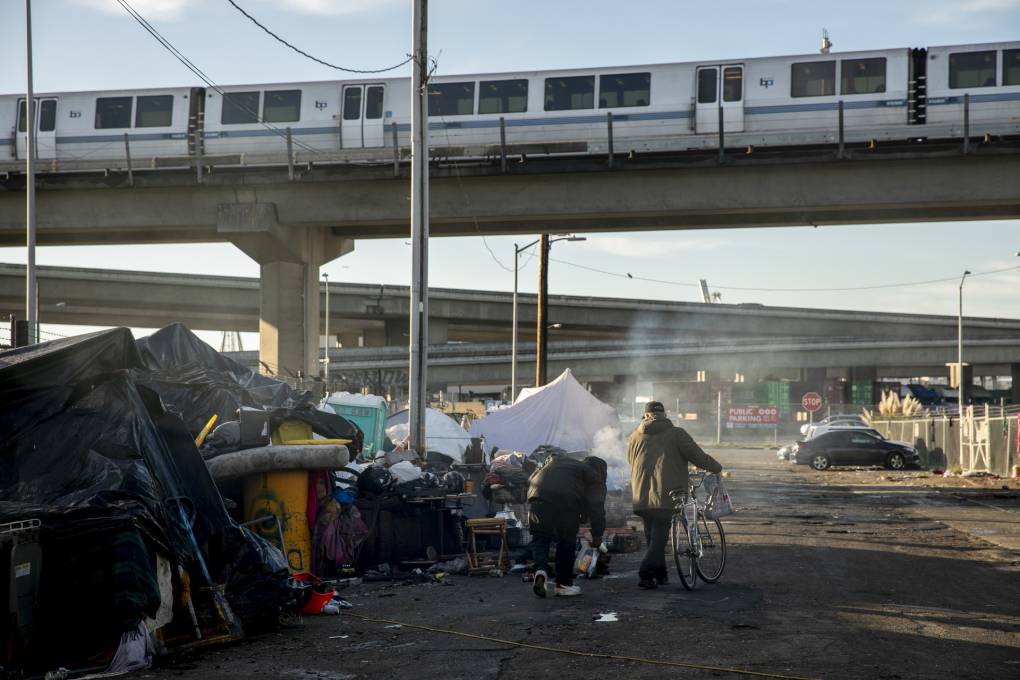
"caption": "A ten encampment has formed under BART tracks in West Oakland. ",
"description": "A tent encampment in West Oakland. ",
"title": "A tent encampment in West Oakland. Photo by Anne Wernikoff for CalMatters",
"credit": "Anne Wernikoff/CalMatters",
"status": "inherit",
"isLoading": false,
"fetchFailed": false
},
"news_11795594": {
"type": "attachments",
"id": "news_11795594",
"meta": {
"index": "attachments_1716263798",
"site": "news",
"id": "11795594",
"found": true
},
"parent": 11795477,
"imgSizes": {
"apple_news_ca_landscape_5_5": {
"file": "https://ww2.kqed.org/app/uploads/sites/10/2020/01/GettyImages-675216212-1044x783.jpg",
"width": 1044,
"mimeType": "image/jpeg",
"height": 783
},
"apple_news_ca_square_4_0": {
"file": "https://ww2.kqed.org/app/uploads/sites/10/2020/01/GettyImages-675216212-470x470.jpg",
"width": 470,
"mimeType": "image/jpeg",
"height": 470
},
"twentyfourteen-full-width": {
"file": "https://ww2.kqed.org/app/uploads/sites/10/2020/01/GettyImages-675216212-1038x576.jpg",
"width": 1038,
"mimeType": "image/jpeg",
"height": 576
},
"thumbnail": {
"file": "https://ww2.kqed.org/app/uploads/sites/10/2020/01/GettyImages-675216212-160x107.jpg",
"width": 160,
"mimeType": "image/jpeg",
"height": 107
},
"post-thumbnail": {
"file": "https://ww2.kqed.org/app/uploads/sites/10/2020/01/GettyImages-675216212-672x372.jpg",
"width": 672,
"mimeType": "image/jpeg",
"height": 372
},
"kqedFullSize": {
"file": "https://ww2.kqed.org/app/uploads/sites/10/2020/01/GettyImages-675216212-e1578704482384.jpg",
"width": 1920,
"height": 1280
},
"apple_news_ca_landscape_4_7": {
"file": "https://ww2.kqed.org/app/uploads/sites/10/2020/01/GettyImages-675216212-632x474.jpg",
"width": 632,
"mimeType": "image/jpeg",
"height": 474
},
"large": {
"file": "https://ww2.kqed.org/app/uploads/sites/10/2020/01/GettyImages-675216212-1020x680.jpg",
"width": 1020,
"mimeType": "image/jpeg",
"height": 680
},
"complete_open_graph": {
"file": "https://ww2.kqed.org/app/uploads/sites/10/2020/01/GettyImages-675216212-1200x800.jpg",
"width": 1200,
"mimeType": "image/jpeg",
"height": 800
},
"apple_news_ca_landscape_4_0": {
"file": "https://ww2.kqed.org/app/uploads/sites/10/2020/01/GettyImages-675216212-536x402.jpg",
"width": 536,
"mimeType": "image/jpeg",
"height": 402
},
"apple_news_ca_portrait_12_9": {
"file": "https://ww2.kqed.org/app/uploads/sites/10/2020/01/GettyImages-675216212-1122x1496.jpg",
"width": 1122,
"mimeType": "image/jpeg",
"height": 1496
},
"medium": {
"file": "https://ww2.kqed.org/app/uploads/sites/10/2020/01/GettyImages-675216212-800x533.jpg",
"width": 800,
"mimeType": "image/jpeg",
"height": 533
},
"apple_news_ca_portrait_4_0": {
"file": "https://ww2.kqed.org/app/uploads/sites/10/2020/01/GettyImages-675216212-354x472.jpg",
"width": 354,
"mimeType": "image/jpeg",
"height": 472
},
"apple_news_ca_portrait_9_7": {
"file": "https://ww2.kqed.org/app/uploads/sites/10/2020/01/GettyImages-675216212-840x1120.jpg",
"width": 840,
"mimeType": "image/jpeg",
"height": 1120
},
"apple_news_ca_landscape_12_9": {
"file": "https://ww2.kqed.org/app/uploads/sites/10/2020/01/GettyImages-675216212-1832x1374.jpg",
"width": 1832,
"mimeType": "image/jpeg",
"height": 1374
},
"apple_news_ca_square_9_7": {
"file": "https://ww2.kqed.org/app/uploads/sites/10/2020/01/GettyImages-675216212-1104x1104.jpg",
"width": 1104,
"mimeType": "image/jpeg",
"height": 1104
},
"apple_news_ca_portrait_4_7": {
"file": "https://ww2.kqed.org/app/uploads/sites/10/2020/01/GettyImages-675216212-414x552.jpg",
"width": 414,
"mimeType": "image/jpeg",
"height": 552
},
"apple_news_ca_square_12_9": {
"file": "https://ww2.kqed.org/app/uploads/sites/10/2020/01/GettyImages-675216212-1472x1472.jpg",
"width": 1472,
"mimeType": "image/jpeg",
"height": 1472
},
"apple_news_ca_portrait_5_5": {
"file": "https://ww2.kqed.org/app/uploads/sites/10/2020/01/GettyImages-675216212-687x916.jpg",
"width": 687,
"mimeType": "image/jpeg",
"height": 916
},
"full-width": {
"file": "https://ww2.kqed.org/app/uploads/sites/10/2020/01/GettyImages-675216212-1920x1280.jpg",
"width": 1920,
"mimeType": "image/jpeg",
"height": 1280
},
"apple_news_ca_square_4_7": {
"file": "https://ww2.kqed.org/app/uploads/sites/10/2020/01/GettyImages-675216212-550x550.jpg",
"width": 550,
"mimeType": "image/jpeg",
"height": 550
},
"apple_news_ca_landscape_9_7": {
"file": "https://ww2.kqed.org/app/uploads/sites/10/2020/01/GettyImages-675216212-1376x1032.jpg",
"width": 1376,
"mimeType": "image/jpeg",
"height": 1032
},
"apple_news_ca_square_5_5": {
"file": "https://ww2.kqed.org/app/uploads/sites/10/2020/01/GettyImages-675216212-912x912.jpg",
"width": 912,
"mimeType": "image/jpeg",
"height": 912
}
},
"publishDate": 1578704427,
"modified": 1578759914,
"caption": "The California Court of Appeal ruled that a state law limiting police collaboration with federal immigration authorities does not interfere with a charter city's rights.",
"description": "The California Court of Appeal ruled that a state law limiting police collaboration with federal immigration authorities does not interfere with a charter city's rights.",
"title": "The California Court of Appeal ruled that a state law limiting police collaboration with federal immigration authorities does not interfere with a charter city's rights.",
"credit": "Photo by Earl Gibson III/Getty Images for MoveOn.org",
"status": "inherit",
"isLoading": false,
"fetchFailed": false
},
"news_11768782": {
"type": "attachments",
"id": "news_11768782",
"meta": {
"index": "attachments_1716263798",
"site": "news",
"id": "11768782",
"found": true
},
"parent": 11768769,
"imgSizes": {
"apple_news_ca_landscape_5_5": {
"file": "https://ww2.kqed.org/app/uploads/sites/10/2019/08/08202019_Tyler-Diep_Westminster_Trump_immigration-policies-qut-1044x783.jpg",
"width": 1044,
"mimeType": "image/jpeg",
"height": 783
},
"apple_news_ca_square_4_0": {
"file": "https://ww2.kqed.org/app/uploads/sites/10/2019/08/08202019_Tyler-Diep_Westminster_Trump_immigration-policies-qut-470x470.jpg",
"width": 470,
"mimeType": "image/jpeg",
"height": 470
},
"twentyfourteen-full-width": {
"file": "https://ww2.kqed.org/app/uploads/sites/10/2019/08/08202019_Tyler-Diep_Westminster_Trump_immigration-policies-qut-1038x576.jpg",
"width": 1038,
"mimeType": "image/jpeg",
"height": 576
},
"thumbnail": {
"file": "https://ww2.kqed.org/app/uploads/sites/10/2019/08/08202019_Tyler-Diep_Westminster_Trump_immigration-policies-qut-160x107.jpg",
"width": 160,
"mimeType": "image/jpeg",
"height": 107
},
"post-thumbnail": {
"file": "https://ww2.kqed.org/app/uploads/sites/10/2019/08/08202019_Tyler-Diep_Westminster_Trump_immigration-policies-qut-672x372.jpg",
"width": 672,
"mimeType": "image/jpeg",
"height": 372
},
"kqedFullSize": {
"file": "https://ww2.kqed.org/app/uploads/sites/10/2019/08/08202019_Tyler-Diep_Westminster_Trump_immigration-policies-qut.jpg",
"width": 1920,
"height": 1280
},
"apple_news_ca_landscape_4_7": {
"file": "https://ww2.kqed.org/app/uploads/sites/10/2019/08/08202019_Tyler-Diep_Westminster_Trump_immigration-policies-qut-632x474.jpg",
"width": 632,
"mimeType": "image/jpeg",
"height": 474
},
"large": {
"file": "https://ww2.kqed.org/app/uploads/sites/10/2019/08/08202019_Tyler-Diep_Westminster_Trump_immigration-policies-qut-1020x680.jpg",
"width": 1020,
"mimeType": "image/jpeg",
"height": 680
},
"complete_open_graph": {
"file": "https://ww2.kqed.org/app/uploads/sites/10/2019/08/08202019_Tyler-Diep_Westminster_Trump_immigration-policies-qut-1200x800.jpg",
"width": 1200,
"mimeType": "image/jpeg",
"height": 800
},
"apple_news_ca_landscape_4_0": {
"file": "https://ww2.kqed.org/app/uploads/sites/10/2019/08/08202019_Tyler-Diep_Westminster_Trump_immigration-policies-qut-536x402.jpg",
"width": 536,
"mimeType": "image/jpeg",
"height": 402
},
"apple_news_ca_portrait_12_9": {
"file": "https://ww2.kqed.org/app/uploads/sites/10/2019/08/08202019_Tyler-Diep_Westminster_Trump_immigration-policies-qut-1122x1280.jpg",
"width": 1122,
"mimeType": "image/jpeg",
"height": 1280
},
"medium": {
"file": "https://ww2.kqed.org/app/uploads/sites/10/2019/08/08202019_Tyler-Diep_Westminster_Trump_immigration-policies-qut-800x533.jpg",
"width": 800,
"mimeType": "image/jpeg",
"height": 533
},
"apple_news_ca_portrait_4_0": {
"file": "https://ww2.kqed.org/app/uploads/sites/10/2019/08/08202019_Tyler-Diep_Westminster_Trump_immigration-policies-qut-354x472.jpg",
"width": 354,
"mimeType": "image/jpeg",
"height": 472
},
"apple_news_ca_portrait_9_7": {
"file": "https://ww2.kqed.org/app/uploads/sites/10/2019/08/08202019_Tyler-Diep_Westminster_Trump_immigration-policies-qut-840x1120.jpg",
"width": 840,
"mimeType": "image/jpeg",
"height": 1120
},
"apple_news_ca_landscape_12_9": {
"file": "https://ww2.kqed.org/app/uploads/sites/10/2019/08/08202019_Tyler-Diep_Westminster_Trump_immigration-policies-qut-1832x1280.jpg",
"width": 1832,
"mimeType": "image/jpeg",
"height": 1280
},
"apple_news_ca_square_9_7": {
"file": "https://ww2.kqed.org/app/uploads/sites/10/2019/08/08202019_Tyler-Diep_Westminster_Trump_immigration-policies-qut-1104x1104.jpg",
"width": 1104,
"mimeType": "image/jpeg",
"height": 1104
},
"apple_news_ca_portrait_4_7": {
"file": "https://ww2.kqed.org/app/uploads/sites/10/2019/08/08202019_Tyler-Diep_Westminster_Trump_immigration-policies-qut-414x552.jpg",
"width": 414,
"mimeType": "image/jpeg",
"height": 552
},
"apple_news_ca_square_12_9": {
"file": "https://ww2.kqed.org/app/uploads/sites/10/2019/08/08202019_Tyler-Diep_Westminster_Trump_immigration-policies-qut-1472x1280.jpg",
"width": 1472,
"mimeType": "image/jpeg",
"height": 1280
},
"apple_news_ca_portrait_5_5": {
"file": "https://ww2.kqed.org/app/uploads/sites/10/2019/08/08202019_Tyler-Diep_Westminster_Trump_immigration-policies-qut-687x916.jpg",
"width": 687,
"mimeType": "image/jpeg",
"height": 916
},
"full-width": {
"file": "https://ww2.kqed.org/app/uploads/sites/10/2019/08/08202019_Tyler-Diep_Westminster_Trump_immigration-policies-qut-1920x1280.jpg",
"width": 1920,
"mimeType": "image/jpeg",
"height": 1280
},
"apple_news_ca_square_4_7": {
"file": "https://ww2.kqed.org/app/uploads/sites/10/2019/08/08202019_Tyler-Diep_Westminster_Trump_immigration-policies-qut-550x550.jpg",
"width": 550,
"mimeType": "image/jpeg",
"height": 550
},
"apple_news_ca_landscape_9_7": {
"file": "https://ww2.kqed.org/app/uploads/sites/10/2019/08/08202019_Tyler-Diep_Westminster_Trump_immigration-policies-qut-1376x1032.jpg",
"width": 1376,
"mimeType": "image/jpeg",
"height": 1032
},
"apple_news_ca_square_5_5": {
"file": "https://ww2.kqed.org/app/uploads/sites/10/2019/08/08202019_Tyler-Diep_Westminster_Trump_immigration-policies-qut-912x912.jpg",
"width": 912,
"mimeType": "image/jpeg",
"height": 912
}
},
"publishDate": 1566339818,
"modified": 1566339893,
"caption": "Assemblymember Tyler Diep on the floor of the Assembly chambers on Dec. 3, 2018, at the State Capitol in Sacramento.",
"description": "Assemblymember Tyler Diep on the floor of the Assembly chambers on Dec. 3, 2018, at the State Capitol in Sacramento.",
"title": "08202019_Tyler Diep_Westminster_Trump_immigration policies-qut",
"credit": "Max Whittaker for CalMatters",
"status": "inherit",
"isLoading": false,
"fetchFailed": false
},
"news_11766444": {
"type": "attachments",
"id": "news_11766444",
"meta": {
"index": "attachments_1716263798",
"site": "news",
"id": "11766444",
"found": true
},
"parent": 11766439,
"imgSizes": {
"apple_news_ca_square_4_0": {
"file": "https://ww2.kqed.org/app/uploads/sites/10/2019/08/vote-tiles-470x470.jpg",
"width": 470,
"mimeType": "image/jpeg",
"height": 470
},
"thumbnail": {
"file": "https://ww2.kqed.org/app/uploads/sites/10/2019/08/vote-tiles-160x107.jpg",
"width": 160,
"mimeType": "image/jpeg",
"height": 107
},
"post-thumbnail": {
"file": "https://ww2.kqed.org/app/uploads/sites/10/2019/08/vote-tiles-672x372.jpg",
"width": 672,
"mimeType": "image/jpeg",
"height": 372
},
"kqedFullSize": {
"file": "https://ww2.kqed.org/app/uploads/sites/10/2019/08/vote-tiles.jpg",
"width": 792,
"height": 529
},
"apple_news_ca_landscape_4_7": {
"file": "https://ww2.kqed.org/app/uploads/sites/10/2019/08/vote-tiles-632x474.jpg",
"width": 632,
"mimeType": "image/jpeg",
"height": 474
},
"apple_news_ca_portrait_4_7": {
"file": "https://ww2.kqed.org/app/uploads/sites/10/2019/08/vote-tiles-414x529.jpg",
"width": 414,
"mimeType": "image/jpeg",
"height": 529
},
"apple_news_ca_portrait_5_5": {
"file": "https://ww2.kqed.org/app/uploads/sites/10/2019/08/vote-tiles-687x529.jpg",
"width": 687,
"mimeType": "image/jpeg",
"height": 529
},
"apple_news_ca_square_4_7": {
"file": "https://ww2.kqed.org/app/uploads/sites/10/2019/08/vote-tiles-550x529.jpg",
"width": 550,
"mimeType": "image/jpeg",
"height": 529
},
"apple_news_ca_landscape_4_0": {
"file": "https://ww2.kqed.org/app/uploads/sites/10/2019/08/vote-tiles-536x402.jpg",
"width": 536,
"mimeType": "image/jpeg",
"height": 402
},
"apple_news_ca_portrait_4_0": {
"file": "https://ww2.kqed.org/app/uploads/sites/10/2019/08/vote-tiles-354x472.jpg",
"width": 354,
"mimeType": "image/jpeg",
"height": 472
}
},
"publishDate": 1565292481,
"modified": 1565292502,
"caption": "Democrats have surpassed the GOP in the county that launched Richard Nixon and Ronald Reagan.",
"description": "Democrats have surpassed the GOP in the county that launched Richard Nixon and Ronald Reagan.",
"title": "vote-tiles",
"credit": "Creative Commons",
"status": "inherit",
"isLoading": false,
"fetchFailed": false
},
"news_11763105": {
"type": "attachments",
"id": "news_11763105",
"meta": {
"index": "attachments_1716263798",
"site": "news",
"id": "11763105",
"found": true
},
"parent": 11762431,
"imgSizes": {
"apple_news_ca_landscape_5_5": {
"file": "https://ww2.kqed.org/app/uploads/sites/10/2019/07/RS30014_GettyImages-921741172-qut-1044x783.jpg",
"width": 1044,
"mimeType": "image/jpeg",
"height": 783
},
"apple_news_ca_square_4_0": {
"file": "https://ww2.kqed.org/app/uploads/sites/10/2019/07/RS30014_GettyImages-921741172-qut-470x470.jpg",
"width": 470,
"mimeType": "image/jpeg",
"height": 470
},
"twentyfourteen-full-width": {
"file": "https://ww2.kqed.org/app/uploads/sites/10/2019/07/RS30014_GettyImages-921741172-qut-1038x576.jpg",
"width": 1038,
"mimeType": "image/jpeg",
"height": 576
},
"thumbnail": {
"file": "https://ww2.kqed.org/app/uploads/sites/10/2019/07/RS30014_GettyImages-921741172-qut-160x106.jpg",
"width": 160,
"mimeType": "image/jpeg",
"height": 106
},
"post-thumbnail": {
"file": "https://ww2.kqed.org/app/uploads/sites/10/2019/07/RS30014_GettyImages-921741172-qut-672x372.jpg",
"width": 672,
"mimeType": "image/jpeg",
"height": 372
},
"kqedFullSize": {
"file": "https://ww2.kqed.org/app/uploads/sites/10/2019/07/RS30014_GettyImages-921741172-qut.jpg",
"width": 1920,
"height": 1267
},
"apple_news_ca_landscape_4_7": {
"file": "https://ww2.kqed.org/app/uploads/sites/10/2019/07/RS30014_GettyImages-921741172-qut-632x474.jpg",
"width": 632,
"mimeType": "image/jpeg",
"height": 474
},
"large": {
"file": "https://ww2.kqed.org/app/uploads/sites/10/2019/07/RS30014_GettyImages-921741172-qut-1020x673.jpg",
"width": 1020,
"mimeType": "image/jpeg",
"height": 673
},
"complete_open_graph": {
"file": "https://ww2.kqed.org/app/uploads/sites/10/2019/07/RS30014_GettyImages-921741172-qut-1200x792.jpg",
"width": 1200,
"mimeType": "image/jpeg",
"height": 792
},
"apple_news_ca_landscape_4_0": {
"file": "https://ww2.kqed.org/app/uploads/sites/10/2019/07/RS30014_GettyImages-921741172-qut-536x402.jpg",
"width": 536,
"mimeType": "image/jpeg",
"height": 402
},
"apple_news_ca_portrait_12_9": {
"file": "https://ww2.kqed.org/app/uploads/sites/10/2019/07/RS30014_GettyImages-921741172-qut-1122x1267.jpg",
"width": 1122,
"mimeType": "image/jpeg",
"height": 1267
},
"medium": {
"file": "https://ww2.kqed.org/app/uploads/sites/10/2019/07/RS30014_GettyImages-921741172-qut-800x528.jpg",
"width": 800,
"mimeType": "image/jpeg",
"height": 528
},
"apple_news_ca_portrait_4_0": {
"file": "https://ww2.kqed.org/app/uploads/sites/10/2019/07/RS30014_GettyImages-921741172-qut-354x472.jpg",
"width": 354,
"mimeType": "image/jpeg",
"height": 472
},
"apple_news_ca_portrait_9_7": {
"file": "https://ww2.kqed.org/app/uploads/sites/10/2019/07/RS30014_GettyImages-921741172-qut-840x1120.jpg",
"width": 840,
"mimeType": "image/jpeg",
"height": 1120
},
"apple_news_ca_landscape_12_9": {
"file": "https://ww2.kqed.org/app/uploads/sites/10/2019/07/RS30014_GettyImages-921741172-qut-1832x1267.jpg",
"width": 1832,
"mimeType": "image/jpeg",
"height": 1267
},
"apple_news_ca_square_9_7": {
"file": "https://ww2.kqed.org/app/uploads/sites/10/2019/07/RS30014_GettyImages-921741172-qut-1104x1104.jpg",
"width": 1104,
"mimeType": "image/jpeg",
"height": 1104
},
"apple_news_ca_portrait_4_7": {
"file": "https://ww2.kqed.org/app/uploads/sites/10/2019/07/RS30014_GettyImages-921741172-qut-414x552.jpg",
"width": 414,
"mimeType": "image/jpeg",
"height": 552
},
"apple_news_ca_square_12_9": {
"file": "https://ww2.kqed.org/app/uploads/sites/10/2019/07/RS30014_GettyImages-921741172-qut-1472x1267.jpg",
"width": 1472,
"mimeType": "image/jpeg",
"height": 1267
},
"apple_news_ca_portrait_5_5": {
"file": "https://ww2.kqed.org/app/uploads/sites/10/2019/07/RS30014_GettyImages-921741172-qut-687x916.jpg",
"width": 687,
"mimeType": "image/jpeg",
"height": 916
},
"full-width": {
"file": "https://ww2.kqed.org/app/uploads/sites/10/2019/07/RS30014_GettyImages-921741172-qut-1920x1267.jpg",
"width": 1920,
"mimeType": "image/jpeg",
"height": 1267
},
"apple_news_ca_square_4_7": {
"file": "https://ww2.kqed.org/app/uploads/sites/10/2019/07/RS30014_GettyImages-921741172-qut-550x550.jpg",
"width": 550,
"mimeType": "image/jpeg",
"height": 550
},
"apple_news_ca_landscape_9_7": {
"file": "https://ww2.kqed.org/app/uploads/sites/10/2019/07/RS30014_GettyImages-921741172-qut-1376x1032.jpg",
"width": 1376,
"mimeType": "image/jpeg",
"height": 1032
},
"apple_news_ca_square_5_5": {
"file": "https://ww2.kqed.org/app/uploads/sites/10/2019/07/RS30014_GettyImages-921741172-qut-912x912.jpg",
"width": 912,
"mimeType": "image/jpeg",
"height": 912
}
},
"publishDate": 1563992066,
"modified": 1564070200,
"caption": "An sheriff's deputy and a social worker speak with a woman at the homeless encampment near the Santa Ana River in Anaheim on February 20, 2018.",
"description": "An officer from the Sheriff's Department and a social worker speak with a woman at the homeless encampment beside the Santa Ana River in Anaheim, California on February 20, 2018.",
"title": "US-POVERTY-HOMELESS",
"credit": "Frederic J. Brown/AFP/Getty Images",
"status": "inherit",
"isLoading": false,
"fetchFailed": false
},
"news_11737372": {
"type": "attachments",
"id": "news_11737372",
"meta": {
"index": "attachments_1716263798",
"site": "news",
"id": "11737372",
"found": true
},
"parent": 11737161,
"imgSizes": {
"post-thumbnail": {
"file": "https://ww2.kqed.org/app/uploads/sites/10/2019/04/Courtyard-beds-672x372.jpg",
"width": 672,
"mimeType": "image/jpeg",
"height": 372
},
"kqedFullSize": {
"file": "https://ww2.kqed.org/app/uploads/sites/10/2019/04/Courtyard-beds-e1554245946191.jpg",
"width": 1920,
"height": 1280
},
"guest-author-50": {
"file": "https://ww2.kqed.org/app/uploads/sites/10/2019/04/Courtyard-beds-50x50.jpg",
"width": 50,
"mimeType": "image/jpeg",
"height": 50
},
"guest-author-96": {
"file": "https://ww2.kqed.org/app/uploads/sites/10/2019/04/Courtyard-beds-96x96.jpg",
"width": 96,
"mimeType": "image/jpeg",
"height": 96
},
"apple_news_ca_portrait_12_9": {
"file": "https://ww2.kqed.org/app/uploads/sites/10/2019/04/Courtyard-beds-1122x1496.jpg",
"width": 1122,
"mimeType": "image/jpeg",
"height": 1496
},
"medium": {
"file": "https://ww2.kqed.org/app/uploads/sites/10/2019/04/Courtyard-beds-800x533.jpg",
"width": 800,
"mimeType": "image/jpeg",
"height": 533
},
"guest-author-32": {
"file": "https://ww2.kqed.org/app/uploads/sites/10/2019/04/Courtyard-beds-32x32.jpg",
"width": 32,
"mimeType": "image/jpeg",
"height": 32
},
"apple_news_ca_portrait_9_7": {
"file": "https://ww2.kqed.org/app/uploads/sites/10/2019/04/Courtyard-beds-840x1120.jpg",
"width": 840,
"mimeType": "image/jpeg",
"height": 1120
},
"apple_news_ca_square_9_7": {
"file": "https://ww2.kqed.org/app/uploads/sites/10/2019/04/Courtyard-beds-1104x1104.jpg",
"width": 1104,
"mimeType": "image/jpeg",
"height": 1104
},
"apple_news_ca_portrait_4_7": {
"file": "https://ww2.kqed.org/app/uploads/sites/10/2019/04/Courtyard-beds-414x552.jpg",
"width": 414,
"mimeType": "image/jpeg",
"height": 552
},
"apple_news_ca_square_12_9": {
"file": "https://ww2.kqed.org/app/uploads/sites/10/2019/04/Courtyard-beds-1472x1472.jpg",
"width": 1472,
"mimeType": "image/jpeg",
"height": 1472
},
"apple_news_ca_portrait_5_5": {
"file": "https://ww2.kqed.org/app/uploads/sites/10/2019/04/Courtyard-beds-687x916.jpg",
"width": 687,
"mimeType": "image/jpeg",
"height": 916
},
"apple_news_ca_square_4_7": {
"file": "https://ww2.kqed.org/app/uploads/sites/10/2019/04/Courtyard-beds-550x550.jpg",
"width": 550,
"mimeType": "image/jpeg",
"height": 550
},
"apple_news_ca_square_5_5": {
"file": "https://ww2.kqed.org/app/uploads/sites/10/2019/04/Courtyard-beds-912x912.jpg",
"width": 912,
"mimeType": "image/jpeg",
"height": 912
},
"apple_news_ca_landscape_5_5": {
"file": "https://ww2.kqed.org/app/uploads/sites/10/2019/04/Courtyard-beds-1044x783.jpg",
"width": 1044,
"mimeType": "image/jpeg",
"height": 783
},
"apple_news_ca_square_4_0": {
"file": "https://ww2.kqed.org/app/uploads/sites/10/2019/04/Courtyard-beds-470x470.jpg",
"width": 470,
"mimeType": "image/jpeg",
"height": 470
},
"twentyfourteen-full-width": {
"file": "https://ww2.kqed.org/app/uploads/sites/10/2019/04/Courtyard-beds-1038x576.jpg",
"width": 1038,
"mimeType": "image/jpeg",
"height": 576
},
"thumbnail": {
"file": "https://ww2.kqed.org/app/uploads/sites/10/2019/04/Courtyard-beds-160x107.jpg",
"width": 160,
"mimeType": "image/jpeg",
"height": 107
},
"apple_news_ca_landscape_4_7": {
"file": "https://ww2.kqed.org/app/uploads/sites/10/2019/04/Courtyard-beds-632x474.jpg",
"width": 632,
"mimeType": "image/jpeg",
"height": 474
},
"large": {
"file": "https://ww2.kqed.org/app/uploads/sites/10/2019/04/Courtyard-beds-1020x680.jpg",
"width": 1020,
"mimeType": "image/jpeg",
"height": 680
},
"complete_open_graph": {
"file": "https://ww2.kqed.org/app/uploads/sites/10/2019/04/Courtyard-beds-1200x800.jpg",
"width": 1200,
"mimeType": "image/jpeg",
"height": 800
},
"apple_news_ca_landscape_4_0": {
"file": "https://ww2.kqed.org/app/uploads/sites/10/2019/04/Courtyard-beds-536x402.jpg",
"width": 536,
"mimeType": "image/jpeg",
"height": 402
},
"guest-author-64": {
"file": "https://ww2.kqed.org/app/uploads/sites/10/2019/04/Courtyard-beds-64x64.jpg",
"width": 64,
"mimeType": "image/jpeg",
"height": 64
},
"apple_news_ca_portrait_4_0": {
"file": "https://ww2.kqed.org/app/uploads/sites/10/2019/04/Courtyard-beds-354x472.jpg",
"width": 354,
"mimeType": "image/jpeg",
"height": 472
},
"apple_news_ca_landscape_12_9": {
"file": "https://ww2.kqed.org/app/uploads/sites/10/2019/04/Courtyard-beds-1832x1374.jpg",
"width": 1832,
"mimeType": "image/jpeg",
"height": 1374
},
"full-width": {
"file": "https://ww2.kqed.org/app/uploads/sites/10/2019/04/Courtyard-beds-1920x1280.jpg",
"width": 1920,
"mimeType": "image/jpeg",
"height": 1280
},
"guest-author-128": {
"file": "https://ww2.kqed.org/app/uploads/sites/10/2019/04/Courtyard-beds-128x128.jpg",
"width": 128,
"mimeType": "image/jpeg",
"height": 128
},
"apple_news_ca_landscape_9_7": {
"file": "https://ww2.kqed.org/app/uploads/sites/10/2019/04/Courtyard-beds-1376x1032.jpg",
"width": 1376,
"mimeType": "image/jpeg",
"height": 1032
}
},
"publishDate": 1554245826,
"modified": 1554245982,
"caption": "Inside The Courtyard, an homeless emergency center in Santa Ana.",
"description": "Inside The Courtyard, an homeless emergency center in Santa Ana.",
"title": "Courtyard beds",
"credit": "Michelle Wiley/KQED",
"status": "inherit",
"isLoading": false,
"fetchFailed": false
},
"news_11336845": {
"type": "attachments",
"id": "news_11336845",
"meta": {
"index": "attachments_1716263798",
"site": "news",
"id": "11336845",
"found": true
},
"parent": 11336767,
"imgSizes": {
"small": {
"file": "https://ww2.kqed.org/app/uploads/sites/10/2017/02/RS18012_GettyImages-492659230-qut-520x347.jpg",
"width": 520,
"mimeType": "image/jpeg",
"height": 347
},
"twentyfourteen-full-width": {
"file": "https://ww2.kqed.org/app/uploads/sites/10/2017/02/RS18012_GettyImages-492659230-qut-1038x576.jpg",
"width": 1038,
"mimeType": "image/jpeg",
"height": 576
},
"thumbnail": {
"file": "https://ww2.kqed.org/app/uploads/sites/10/2017/02/RS18012_GettyImages-492659230-qut-160x107.jpg",
"width": 160,
"mimeType": "image/jpeg",
"height": 107
},
"fd-sm": {
"file": "https://ww2.kqed.org/app/uploads/sites/10/2017/02/RS18012_GettyImages-492659230-qut-960x640.jpg",
"width": 960,
"mimeType": "image/jpeg",
"height": 640
},
"post-thumbnail": {
"file": "https://ww2.kqed.org/app/uploads/sites/10/2017/02/RS18012_GettyImages-492659230-qut-672x372.jpg",
"width": 672,
"mimeType": "image/jpeg",
"height": 372
},
"xsmall": {
"file": "https://ww2.kqed.org/app/uploads/sites/10/2017/02/RS18012_GettyImages-492659230-qut-375x250.jpg",
"width": 375,
"mimeType": "image/jpeg",
"height": 250
},
"kqedFullSize": {
"file": "https://ww2.kqed.org/app/uploads/sites/10/2017/02/RS18012_GettyImages-492659230-qut.jpg",
"width": 1920,
"height": 1280
},
"large": {
"file": "https://ww2.kqed.org/app/uploads/sites/10/2017/02/RS18012_GettyImages-492659230-qut-1020x680.jpg",
"width": 1020,
"mimeType": "image/jpeg",
"height": 680
},
"xlarge": {
"file": "https://ww2.kqed.org/app/uploads/sites/10/2017/02/RS18012_GettyImages-492659230-qut-1180x787.jpg",
"width": 1180,
"mimeType": "image/jpeg",
"height": 787
},
"guest-author-50": {
"file": "https://ww2.kqed.org/app/uploads/sites/10/2017/02/RS18012_GettyImages-492659230-qut-50x50.jpg",
"width": 50,
"mimeType": "image/jpeg",
"height": 50
},
"guest-author-96": {
"file": "https://ww2.kqed.org/app/uploads/sites/10/2017/02/RS18012_GettyImages-492659230-qut-96x96.jpg",
"width": 96,
"mimeType": "image/jpeg",
"height": 96
},
"medium": {
"file": "https://ww2.kqed.org/app/uploads/sites/10/2017/02/RS18012_GettyImages-492659230-qut-800x533.jpg",
"width": 800,
"mimeType": "image/jpeg",
"height": 533
},
"guest-author-64": {
"file": "https://ww2.kqed.org/app/uploads/sites/10/2017/02/RS18012_GettyImages-492659230-qut-64x64.jpg",
"width": 64,
"mimeType": "image/jpeg",
"height": 64
},
"guest-author-32": {
"file": "https://ww2.kqed.org/app/uploads/sites/10/2017/02/RS18012_GettyImages-492659230-qut-32x32.jpg",
"width": 32,
"mimeType": "image/jpeg",
"height": 32
},
"fd-lrg": {
"file": "https://ww2.kqed.org/app/uploads/sites/10/2017/02/RS18012_GettyImages-492659230-qut-1920x1280.jpg",
"width": 1920,
"mimeType": "image/jpeg",
"height": 1280
},
"fd-med": {
"file": "https://ww2.kqed.org/app/uploads/sites/10/2017/02/RS18012_GettyImages-492659230-qut-1180x787.jpg",
"width": 1180,
"mimeType": "image/jpeg",
"height": 787
},
"full-width": {
"file": "https://ww2.kqed.org/app/uploads/sites/10/2017/02/RS18012_GettyImages-492659230-qut-1920x1280.jpg",
"width": 1920,
"mimeType": "image/jpeg",
"height": 1280
},
"detail": {
"file": "https://ww2.kqed.org/app/uploads/sites/10/2017/02/RS18012_GettyImages-492659230-qut-150x150.jpg",
"width": 150,
"mimeType": "image/jpeg",
"height": 150
},
"guest-author-128": {
"file": "https://ww2.kqed.org/app/uploads/sites/10/2017/02/RS18012_GettyImages-492659230-qut-128x128.jpg",
"width": 128,
"mimeType": "image/jpeg",
"height": 128
},
"xxsmall": {
"file": "https://ww2.kqed.org/app/uploads/sites/10/2017/02/RS18012_GettyImages-492659230-qut-240x160.jpg",
"width": 240,
"mimeType": "image/jpeg",
"height": 160
}
},
"publishDate": 1488240604,
"modified": 1553730755,
"caption": "U.S. Immigration and Customs Enforcement (ICE), agents detain an immigrant on October 14, 2015 in Los Angeles, California. ",
"description": "LOS ANGELES, CA - OCTOBER 14: U.S. Immigration and Customs Enforcement (ICE), agents detain an immigrant on October 14, 2015 in Los Angeles, California. ",
"title": "RS18012_GettyImages-492659230-qut",
"credit": "John Moore/Getty Images",
"status": "inherit",
"isLoading": false,
"fetchFailed": false
},
"news_11733816": {
"type": "attachments",
"id": "news_11733816",
"meta": {
"index": "attachments_1716263798",
"site": "news",
"id": "11733816",
"found": true
},
"parent": 11733516,
"imgSizes": {
"apple_news_ca_landscape_5_5": {
"file": "https://ww2.kqed.org/app/uploads/sites/10/2019/03/Screen-Shot-2019-03-18-at-10.22.18-PM-1044x459.png",
"width": 1044,
"mimeType": "image/png",
"height": 459
},
"apple_news_ca_square_4_0": {
"file": "https://ww2.kqed.org/app/uploads/sites/10/2019/03/Screen-Shot-2019-03-18-at-10.22.18-PM-e1552973374478-470x458.png",
"width": 470,
"mimeType": "image/png",
"height": 458
},
"twentyfourteen-full-width": {
"file": "https://ww2.kqed.org/app/uploads/sites/10/2019/03/Screen-Shot-2019-03-18-at-10.22.18-PM-1038x459.png",
"width": 1038,
"mimeType": "image/png",
"height": 459
},
"thumbnail": {
"file": "https://ww2.kqed.org/app/uploads/sites/10/2019/03/Screen-Shot-2019-03-18-at-10.22.18-PM-e1552973374478-160x87.png",
"width": 160,
"mimeType": "image/png",
"height": 87
},
"post-thumbnail": {
"file": "https://ww2.kqed.org/app/uploads/sites/10/2019/03/Screen-Shot-2019-03-18-at-10.22.18-PM-e1552973374478-672x372.png",
"width": 672,
"mimeType": "image/png",
"height": 372
},
"kqedFullSize": {
"file": "https://ww2.kqed.org/app/uploads/sites/10/2019/03/Screen-Shot-2019-03-18-at-10.22.18-PM-e1552973374478.png",
"width": 842,
"height": 458
},
"apple_news_ca_landscape_4_7": {
"file": "https://ww2.kqed.org/app/uploads/sites/10/2019/03/Screen-Shot-2019-03-18-at-10.22.18-PM-e1552973374478-632x458.png",
"width": 632,
"mimeType": "image/png",
"height": 458
},
"large": {
"file": "https://ww2.kqed.org/app/uploads/sites/10/2019/03/Screen-Shot-2019-03-18-at-10.22.18-PM-1020x381.png",
"width": 1020,
"mimeType": "image/png",
"height": 381
},
"complete_open_graph": {
"file": "https://ww2.kqed.org/app/uploads/sites/10/2019/03/Screen-Shot-2019-03-18-at-10.22.18-PM-1200x448.png",
"width": 1200,
"mimeType": "image/png",
"height": 448
},
"guest-author-50": {
"file": "https://ww2.kqed.org/app/uploads/sites/10/2019/03/Screen-Shot-2019-03-18-at-10.22.18-PM-e1552973374478-50x50.png",
"width": 50,
"mimeType": "image/png",
"height": 50
},
"guest-author-96": {
"file": "https://ww2.kqed.org/app/uploads/sites/10/2019/03/Screen-Shot-2019-03-18-at-10.22.18-PM-e1552973374478-96x96.png",
"width": 96,
"mimeType": "image/png",
"height": 96
},
"apple_news_ca_landscape_4_0": {
"file": "https://ww2.kqed.org/app/uploads/sites/10/2019/03/Screen-Shot-2019-03-18-at-10.22.18-PM-e1552973374478-536x402.png",
"width": 536,
"mimeType": "image/png",
"height": 402
},
"apple_news_ca_portrait_12_9": {
"file": "https://ww2.kqed.org/app/uploads/sites/10/2019/03/Screen-Shot-2019-03-18-at-10.22.18-PM-1122x459.png",
"width": 1122,
"mimeType": "image/png",
"height": 459
},
"medium": {
"file": "https://ww2.kqed.org/app/uploads/sites/10/2019/03/Screen-Shot-2019-03-18-at-10.22.18-PM-e1552973374478-800x435.png",
"width": 800,
"mimeType": "image/png",
"height": 435
},
"guest-author-64": {
"file": "https://ww2.kqed.org/app/uploads/sites/10/2019/03/Screen-Shot-2019-03-18-at-10.22.18-PM-e1552973374478-64x64.png",
"width": 64,
"mimeType": "image/png",
"height": 64
},
"guest-author-32": {
"file": "https://ww2.kqed.org/app/uploads/sites/10/2019/03/Screen-Shot-2019-03-18-at-10.22.18-PM-e1552973374478-32x32.png",
"width": 32,
"mimeType": "image/png",
"height": 32
},
"apple_news_ca_portrait_4_0": {
"file": "https://ww2.kqed.org/app/uploads/sites/10/2019/03/Screen-Shot-2019-03-18-at-10.22.18-PM-e1552973374478-354x458.png",
"width": 354,
"mimeType": "image/png",
"height": 458
},
"apple_news_ca_portrait_9_7": {
"file": "https://ww2.kqed.org/app/uploads/sites/10/2019/03/Screen-Shot-2019-03-18-at-10.22.18-PM-e1552973374478-840x458.png",
"width": 840,
"mimeType": "image/png",
"height": 458
},
"apple_news_ca_square_9_7": {
"file": "https://ww2.kqed.org/app/uploads/sites/10/2019/03/Screen-Shot-2019-03-18-at-10.22.18-PM-1104x459.png",
"width": 1104,
"mimeType": "image/png",
"height": 459
},
"apple_news_ca_portrait_4_7": {
"file": "https://ww2.kqed.org/app/uploads/sites/10/2019/03/Screen-Shot-2019-03-18-at-10.22.18-PM-e1552973374478-414x458.png",
"width": 414,
"mimeType": "image/png",
"height": 458
},
"apple_news_ca_portrait_5_5": {
"file": "https://ww2.kqed.org/app/uploads/sites/10/2019/03/Screen-Shot-2019-03-18-at-10.22.18-PM-e1552973374478-687x458.png",
"width": 687,
"mimeType": "image/png",
"height": 458
},
"apple_news_ca_square_4_7": {
"file": "https://ww2.kqed.org/app/uploads/sites/10/2019/03/Screen-Shot-2019-03-18-at-10.22.18-PM-e1552973374478-550x458.png",
"width": 550,
"mimeType": "image/png",
"height": 458
},
"guest-author-128": {
"file": "https://ww2.kqed.org/app/uploads/sites/10/2019/03/Screen-Shot-2019-03-18-at-10.22.18-PM-e1552973374478-128x128.png",
"width": 128,
"mimeType": "image/png",
"height": 128
},
"apple_news_ca_square_5_5": {
"file": "https://ww2.kqed.org/app/uploads/sites/10/2019/03/Screen-Shot-2019-03-18-at-10.22.18-PM-912x459.png",
"width": 912,
"mimeType": "image/png",
"height": 459
}
},
"publishDate": 1552972982,
"modified": 1552973194,
"caption": "The entrance to the Courtyard Transitional Center, an emergency homeless shelter in Santa Ana.",
"description": null,
"title": "Screen Shot 2019-03-18 at 10.22.18 PM",
"credit": "ACLU",
"status": "inherit",
"isLoading": false,
"fetchFailed": false
},
"news_11730798": {
"type": "attachments",
"id": "news_11730798",
"meta": {
"index": "attachments_1716263798",
"site": "news",
"id": "11730798",
"found": true
},
"parent": 11730640,
"imgSizes": {
"twentyfourteen-full-width": {
"file": "https://ww2.kqed.org/app/uploads/sites/10/2019/03/03052019_cups3-1038x576.png",
"width": 1038,
"mimeType": "image/png",
"height": 576
},
"thumbnail": {
"file": "https://ww2.kqed.org/app/uploads/sites/10/2019/03/03052019_cups3-160x96.png",
"width": 160,
"mimeType": "image/png",
"height": 96
},
"post-thumbnail": {
"file": "https://ww2.kqed.org/app/uploads/sites/10/2019/03/03052019_cups3-672x372.png",
"width": 672,
"mimeType": "image/png",
"height": 372
},
"kqedFullSize": {
"file": "https://ww2.kqed.org/app/uploads/sites/10/2019/03/03052019_cups3.png",
"width": 1920,
"height": 1150
},
"large": {
"file": "https://ww2.kqed.org/app/uploads/sites/10/2019/03/03052019_cups3-1020x611.png",
"width": 1020,
"mimeType": "image/png",
"height": 611
},
"complete_open_graph": {
"file": "https://ww2.kqed.org/app/uploads/sites/10/2019/03/03052019_cups3-1200x719.png",
"width": 1200,
"mimeType": "image/png",
"height": 719
},
"guest-author-50": {
"file": "https://ww2.kqed.org/app/uploads/sites/10/2019/03/03052019_cups3-50x50.png",
"width": 50,
"mimeType": "image/png",
"height": 50
},
"guest-author-96": {
"file": "https://ww2.kqed.org/app/uploads/sites/10/2019/03/03052019_cups3-96x96.png",
"width": 96,
"mimeType": "image/png",
"height": 96
},
"medium": {
"file": "https://ww2.kqed.org/app/uploads/sites/10/2019/03/03052019_cups3-800x479.png",
"width": 800,
"mimeType": "image/png",
"height": 479
},
"guest-author-64": {
"file": "https://ww2.kqed.org/app/uploads/sites/10/2019/03/03052019_cups3-64x64.png",
"width": 64,
"mimeType": "image/png",
"height": 64
},
"guest-author-32": {
"file": "https://ww2.kqed.org/app/uploads/sites/10/2019/03/03052019_cups3-32x32.png",
"width": 32,
"mimeType": "image/png",
"height": 32
},
"full-width": {
"file": "https://ww2.kqed.org/app/uploads/sites/10/2019/03/03052019_cups3-1920x1150.png",
"width": 1920,
"mimeType": "image/png",
"height": 1150
},
"guest-author-128": {
"file": "https://ww2.kqed.org/app/uploads/sites/10/2019/03/03052019_cups3-128x128.png",
"width": 128,
"mimeType": "image/png",
"height": 128
}
},
"publishDate": 1551824869,
"modified": 1551824899,
"caption": "This image from Twitter shows red plastic cups arranged in the shape of a swastika at a party reportedly attended by Newport Beach students.",
"description": null,
"title": "03052019_cups3",
"credit": "Twitter",
"status": "inherit",
"isLoading": false,
"fetchFailed": false
},
"news_11723247": {
"type": "attachments",
"id": "news_11723247",
"meta": {
"index": "attachments_1716263798",
"site": "news",
"id": "11723247",
"found": true
},
"parent": 11723246,
"imgSizes": {
"twentyfourteen-full-width": {
"file": "https://ww2.kqed.org/app/uploads/sites/10/2019/02/ap_19035073103104_wide-ca8687b6bd1a804953054cbb7568a8918a7166e9-1038x576.jpg",
"width": 1038,
"mimeType": "image/jpeg",
"height": 576
},
"thumbnail": {
"file": "https://ww2.kqed.org/app/uploads/sites/10/2019/02/ap_19035073103104_wide-ca8687b6bd1a804953054cbb7568a8918a7166e9-160x90.jpg",
"width": 160,
"mimeType": "image/jpeg",
"height": 90
},
"post-thumbnail": {
"file": "https://ww2.kqed.org/app/uploads/sites/10/2019/02/ap_19035073103104_wide-ca8687b6bd1a804953054cbb7568a8918a7166e9-672x372.jpg",
"width": 672,
"mimeType": "image/jpeg",
"height": 372
},
"kqedFullSize": {
"file": "https://ww2.kqed.org/app/uploads/sites/10/2019/02/ap_19035073103104_wide-ca8687b6bd1a804953054cbb7568a8918a7166e9-e1549307891868.jpg",
"width": 1920,
"height": 1080
},
"large": {
"file": "https://ww2.kqed.org/app/uploads/sites/10/2019/02/ap_19035073103104_wide-ca8687b6bd1a804953054cbb7568a8918a7166e9-1020x574.jpg",
"width": 1020,
"mimeType": "image/jpeg",
"height": 574
},
"complete_open_graph": {
"file": "https://ww2.kqed.org/app/uploads/sites/10/2019/02/ap_19035073103104_wide-ca8687b6bd1a804953054cbb7568a8918a7166e9-1200x675.jpg",
"width": 1200,
"mimeType": "image/jpeg",
"height": 675
},
"guest-author-50": {
"file": "https://ww2.kqed.org/app/uploads/sites/10/2019/02/ap_19035073103104_wide-ca8687b6bd1a804953054cbb7568a8918a7166e9-50x50.jpg",
"width": 50,
"mimeType": "image/jpeg",
"height": 50
},
"guest-author-96": {
"file": "https://ww2.kqed.org/app/uploads/sites/10/2019/02/ap_19035073103104_wide-ca8687b6bd1a804953054cbb7568a8918a7166e9-96x96.jpg",
"width": 96,
"mimeType": "image/jpeg",
"height": 96
},
"medium": {
"file": "https://ww2.kqed.org/app/uploads/sites/10/2019/02/ap_19035073103104_wide-ca8687b6bd1a804953054cbb7568a8918a7166e9-800x450.jpg",
"width": 800,
"mimeType": "image/jpeg",
"height": 450
},
"guest-author-64": {
"file": "https://ww2.kqed.org/app/uploads/sites/10/2019/02/ap_19035073103104_wide-ca8687b6bd1a804953054cbb7568a8918a7166e9-64x64.jpg",
"width": 64,
"mimeType": "image/jpeg",
"height": 64
},
"guest-author-32": {
"file": "https://ww2.kqed.org/app/uploads/sites/10/2019/02/ap_19035073103104_wide-ca8687b6bd1a804953054cbb7568a8918a7166e9-32x32.jpg",
"width": 32,
"mimeType": "image/jpeg",
"height": 32
},
"full-width": {
"file": "https://ww2.kqed.org/app/uploads/sites/10/2019/02/ap_19035073103104_wide-ca8687b6bd1a804953054cbb7568a8918a7166e9-1920x1080.jpg",
"width": 1920,
"mimeType": "image/jpeg",
"height": 1080
},
"detail": {
"file": "https://ww2.kqed.org/app/uploads/sites/10/2019/02/ap_19035073103104_wide-ca8687b6bd1a804953054cbb7568a8918a7166e9-150x150.jpg",
"width": 150,
"mimeType": "image/jpeg",
"height": 150
},
"guest-author-128": {
"file": "https://ww2.kqed.org/app/uploads/sites/10/2019/02/ap_19035073103104_wide-ca8687b6bd1a804953054cbb7568a8918a7166e9-128x128.jpg",
"width": 128,
"mimeType": "image/jpeg",
"height": 128
}
},
"publishDate": 1549307592,
"modified": 1549307939,
"caption": "Firefighters work in the driveway of a house damaged in a deadly plane crash Sunday in Yorba Linda. Officials say at least five people died, including the pilot and four people who were in the house.",
"description": "Firefighters work in the driveway of a house damaged in a deadly plane crash Sunday in Yorba Linda. Officials say at least five people died, including the pilot and four people who were in the house.",
"title": "Firefighters work in the driveway of a house damaged in a deadly plane crash Sunday in Yorba Linda, Calif. Officials say at least five people died, including the pilot and four people who were in the house.",
"credit": "Alex Gallardo/AP",
"status": "inherit",
"isLoading": false,
"fetchFailed": false
},
"news_11668053": {
"type": "attachments",
"id": "news_11668053",
"meta": {
"index": "attachments_1716263798",
"site": "news",
"id": "11668053",
"found": true
},
"parent": 11668043,
"imgSizes": {
"small": {
"file": "https://ww2.kqed.org/app/uploads/sites/10/2018/05/RS30276_GettyImages-626847628-qut-1-520x341.jpg",
"width": 520,
"mimeType": "image/jpeg",
"height": 341
},
"twentyfourteen-full-width": {
"file": "https://ww2.kqed.org/app/uploads/sites/10/2018/05/RS30276_GettyImages-626847628-qut-1-1038x576.jpg",
"width": 1038,
"mimeType": "image/jpeg",
"height": 576
},
"thumbnail": {
"file": "https://ww2.kqed.org/app/uploads/sites/10/2018/05/RS30276_GettyImages-626847628-qut-1-160x105.jpg",
"width": 160,
"mimeType": "image/jpeg",
"height": 105
},
"fd-sm": {
"file": "https://ww2.kqed.org/app/uploads/sites/10/2018/05/RS30276_GettyImages-626847628-qut-1-960x629.jpg",
"width": 960,
"mimeType": "image/jpeg",
"height": 629
},
"post-thumbnail": {
"file": "https://ww2.kqed.org/app/uploads/sites/10/2018/05/RS30276_GettyImages-626847628-qut-1-672x372.jpg",
"width": 672,
"mimeType": "image/jpeg",
"height": 372
},
"xsmall": {
"file": "https://ww2.kqed.org/app/uploads/sites/10/2018/05/RS30276_GettyImages-626847628-qut-1-375x246.jpg",
"width": 375,
"mimeType": "image/jpeg",
"height": 246
},
"kqedFullSize": {
"file": "https://ww2.kqed.org/app/uploads/sites/10/2018/05/RS30276_GettyImages-626847628-qut-1.jpg",
"width": 1920,
"height": 1258
},
"large": {
"file": "https://ww2.kqed.org/app/uploads/sites/10/2018/05/RS30276_GettyImages-626847628-qut-1-1020x668.jpg",
"width": 1020,
"mimeType": "image/jpeg",
"height": 668
},
"xlarge": {
"file": "https://ww2.kqed.org/app/uploads/sites/10/2018/05/RS30276_GettyImages-626847628-qut-1-1180x773.jpg",
"width": 1180,
"mimeType": "image/jpeg",
"height": 773
},
"complete_open_graph": {
"file": "https://ww2.kqed.org/app/uploads/sites/10/2018/05/RS30276_GettyImages-626847628-qut-1-1200x786.jpg",
"width": 1200,
"mimeType": "image/jpeg",
"height": 786
},
"guest-author-50": {
"file": "https://ww2.kqed.org/app/uploads/sites/10/2018/05/RS30276_GettyImages-626847628-qut-1-50x50.jpg",
"width": 50,
"mimeType": "image/jpeg",
"height": 50
},
"guest-author-96": {
"file": "https://ww2.kqed.org/app/uploads/sites/10/2018/05/RS30276_GettyImages-626847628-qut-1-96x96.jpg",
"width": 96,
"mimeType": "image/jpeg",
"height": 96
},
"medium": {
"file": "https://ww2.kqed.org/app/uploads/sites/10/2018/05/RS30276_GettyImages-626847628-qut-1-800x524.jpg",
"width": 800,
"mimeType": "image/jpeg",
"height": 524
},
"guest-author-64": {
"file": "https://ww2.kqed.org/app/uploads/sites/10/2018/05/RS30276_GettyImages-626847628-qut-1-64x64.jpg",
"width": 64,
"mimeType": "image/jpeg",
"height": 64
},
"guest-author-32": {
"file": "https://ww2.kqed.org/app/uploads/sites/10/2018/05/RS30276_GettyImages-626847628-qut-1-32x32.jpg",
"width": 32,
"mimeType": "image/jpeg",
"height": 32
},
"fd-lrg": {
"file": "https://ww2.kqed.org/app/uploads/sites/10/2018/05/RS30276_GettyImages-626847628-qut-1-1920x1258.jpg",
"width": 1920,
"mimeType": "image/jpeg",
"height": 1258
},
"fd-med": {
"file": "https://ww2.kqed.org/app/uploads/sites/10/2018/05/RS30276_GettyImages-626847628-qut-1-1180x773.jpg",
"width": 1180,
"mimeType": "image/jpeg",
"height": 773
},
"full-width": {
"file": "https://ww2.kqed.org/app/uploads/sites/10/2018/05/RS30276_GettyImages-626847628-qut-1-1920x1258.jpg",
"width": 1920,
"mimeType": "image/jpeg",
"height": 1258
},
"detail": {
"file": "https://ww2.kqed.org/app/uploads/sites/10/2018/05/RS30276_GettyImages-626847628-qut-1-150x150.jpg",
"width": 150,
"mimeType": "image/jpeg",
"height": 150
},
"guest-author-128": {
"file": "https://ww2.kqed.org/app/uploads/sites/10/2018/05/RS30276_GettyImages-626847628-qut-1-128x128.jpg",
"width": 128,
"mimeType": "image/jpeg",
"height": 128
},
"xxsmall": {
"file": "https://ww2.kqed.org/app/uploads/sites/10/2018/05/RS30276_GettyImages-626847628-qut-1-240x157.jpg",
"width": 240,
"mimeType": "image/jpeg",
"height": 157
}
},
"publishDate": 1526151628,
"modified": 1548983410,
"caption": "Cities like San Francisco, Los Angeles and Oakland have multiple needle exchanges. But the one exchange in Orange County was sidelined last year amid health concerns. ",
"description": "Mobile needle exchanges operate in cities like San Francisco, Los Angeles and Oakland.",
"title": "US-HEALTH-HIV-FLORIDA-ADDICTION-POVERTY",
"credit": "KERRY SHERIDAN/AFP/Getty Images",
"status": "inherit",
"isLoading": false,
"fetchFailed": false
}
},
"audioPlayerReducer": {
"postId": "stream_live",
"isPaused": true,
"isPlaying": false,
"pfsActive": false,
"pledgeModalIsOpen": true,
"playerDrawerIsOpen": false,
"liveAudioPlayStartedAt": 0,
"liveAudioPlayContext": ""
},
"authorsReducer": {
"byline_news_11801313": {
"type": "authors",
"id": "byline_news_11801313",
"meta": {
"override": true
},
"slug": "byline_news_11801313",
"name": "\u003ca href=\"https://calmatters.org/author/nigelduara/\"> Nigel Duara \u003ca />",
"isLoading": false
},
"byline_news_11790036": {
"type": "authors",
"id": "byline_news_11790036",
"meta": {
"override": true
},
"slug": "byline_news_11790036",
"name": "Vanessa Romo",
"isLoading": false
},
"byline_news_11768769": {
"type": "authors",
"id": "byline_news_11768769",
"meta": {
"override": true
},
"slug": "byline_news_11768769",
"name": "\u003cstrong>Dan Morain\u003c/strong>",
"isLoading": false
},
"byline_news_11766439": {
"type": "authors",
"id": "byline_news_11766439",
"meta": {
"override": true
},
"slug": "byline_news_11766439",
"name": "\u003cstrong>Dan Morain\u003cbr />CalMatters\u003c/strong>",
"isLoading": false
},
"byline_news_11735974": {
"type": "authors",
"id": "byline_news_11735974",
"meta": {
"override": true
},
"slug": "byline_news_11735974",
"name": "Amy Taxin, Associated Press",
"isLoading": false
},
"byline_news_11730640": {
"type": "authors",
"id": "byline_news_11730640",
"meta": {
"override": true
},
"slug": "byline_news_11730640",
"name": "\u003cstrong>Vanessa Romo\u003cbr />NPR\u003c/strong>",
"isLoading": false
},
"byline_news_11723246": {
"type": "authors",
"id": "byline_news_11723246",
"meta": {
"override": true
},
"slug": "byline_news_11723246",
"name": "Bill Chappell",
"isLoading": false
},
"mwiley": {
"type": "authors",
"id": "11526",
"meta": {
"index": "authors_1716337520",
"id": "11526",
"found": true
},
"name": "Michelle Wiley",
"firstName": "Michelle",
"lastName": "Wiley",
"slug": "mwiley",
"email": "mwiley@KQED.org",
"display_author_email": true,
"staff_mastheads": [],
"title": null,
"bio": "Michelle Wiley was the senior editor of weekends.",
"avatar": "https://secure.gravatar.com/avatar/3b897d82a09e8587e8e73fa69fbcc635?s=600&d=blank&r=g",
"twitter": "michelleewiley",
"facebook": null,
"instagram": null,
"linkedin": null,
"sites": [
{
"site": "",
"roles": [
"editor"
]
},
{
"site": "arts",
"roles": [
"editor"
]
},
{
"site": "news",
"roles": [
"subscriber"
]
},
{
"site": "lowdown",
"roles": [
"editor"
]
},
{
"site": "science",
"roles": [
"editor"
]
},
{
"site": "podcasts",
"roles": [
"editor"
]
}
],
"headData": {
"title": "Michelle Wiley | KQED",
"description": null,
"ogImgSrc": "https://secure.gravatar.com/avatar/3b897d82a09e8587e8e73fa69fbcc635?s=600&d=blank&r=g",
"twImgSrc": "https://secure.gravatar.com/avatar/3b897d82a09e8587e8e73fa69fbcc635?s=600&d=blank&r=g"
},
"isLoading": false,
"link": "/author/mwiley"
}
},
"pagesReducer": {
"news_tag_orange-county": {
"type": "terms",
"id": "news_18371",
"meta": {
"index": "terms_1716263798",
"site": "news",
"id": "18371",
"score": 10.4075165
},
"featImg": null,
"name": "orange county",
"description": null,
"taxonomy": "tag",
"headData": {
"twImgId": null,
"twTitle": null,
"ogTitle": null,
"ogImgId": null,
"twDescription": null,
"description": null,
"title": "orange county Archives | KQED News",
"ogDescription": null
},
"ttid": 18405,
"slug": "orange-county",
"isLoading": false,
"title": "orange county",
"pageMeta": {
"site": "news",
"WpPageTemplate": "page-topic-editorial",
"currentPage": 3
},
"blocks": [
{
"blockName": "kqed/post-list",
"attrs": {
"layout": "cardArticle2",
"query": "posts/news?tag=orange-county",
"seeMore": false,
"paginated": true,
"page": 3
}
},
{
"blockName": "kqed/ad"
}
]
}
},
"pfsSessionReducer": {},
"postsReducer": {
"stream_live": {
"type": "live",
"id": "stream_live",
"audioUrl": "https://hls.kqed.org/hls/kqed_app/playlist.m3u8",
"title": "Live Stream",
"excerpt": "Live Stream information currently unavailable.",
"link": "/radio",
"featImg": "",
"label": {
"name": "KQED Live",
"link": "/"
}
},
"stream_kqedNewscast": {
"type": "posts",
"id": "stream_kqedNewscast",
"audioUrl": "https://www.kqed.org/.stream/anon/radio/RDnews/newscast.mp3?_=1",
"title": "KQED Newscast",
"featImg": "",
"label": {
"name": "88.5 FM",
"link": "/"
}
},
"news_11801313": {
"type": "posts",
"id": "news_11801313",
"meta": {
"index": "posts_1716263798",
"site": "news",
"id": "11801313",
"score": null,
"sort": [
1581544678000
]
},
"guestAuthors": [],
"slug": "newsom-offers-vacant-land-for-homeless-shelters-but-local-officials-worry-who-will-pay",
"title": "Newsom Offers Vacant Land for Homeless Shelters, but Local Officials Worry: Who Will Pay?",
"publishDate": 1581544678,
"format": "standard",
"headTitle": "Newsom Offers Vacant Land for Homeless Shelters, but Local Officials Worry: Who Will Pay? | KQED",
"labelTerm": {},
"content": "\u003cp>It was two hours after dusk in Santa Ana, and the temperature had dropped 10 degrees since sundown. A line of men and women bundled against the chill curled past the National Guard Armory’s entrance, around the side of the building and into the parking lot, about 150 in all.\u003c/p>\n\u003cp>Inside, the layout looked like something provided to evacuees after a disaster: row after row of black sleeping pads, lined up edge to edge. But for the people staying here, this is not temporary shelter: Each year for the last decade, from mid-December until the funding runs out in April or May, the same group calls the concrete floor and five bathrooms home.\u003c/p>\n\u003cp>This is Orange County’s answer to its growing, highly concentrated homeless population. On this day in January, the elderly, people with disabilities and a family were let in early and picked out their sleeping mats first. A trio of men, lined up at least an hour before the shelter doors opened, trickled in with camping gear.\u003c/p>\n\u003cp>Every December, when the shelter opens, “I’m always amazed. It’s like the first day of school,” said Larry Haynes, executive director of Mercy House, the nonprofit that operates the 10,000-square foot armory shelter. “Everyone says hello like they’re old friends.”\u003c/p>\n\u003cp>This shelter — on state land, run by a nonprofit agency — should serve as the basic model of what Gov. Gavin Newsom has called for across the state.\u003c/p>\n\u003cp>[ad fullwidth]\u003c/p>\n\u003cp>On Jan. 8, \u003ca href=\"https://www.gov.ca.gov/wp-content/uploads/2020/01/EO-N-23-20-Homelessness-Crisis-01.08.2020.pdf\" target=\"_blank\" rel=\"noopener noreferrer\">Newsom issued an executive order\u003c/a> that tasked state agencies with evaluating excess land for use as possible emergency homeless shelters. A state \u003ca href=\"https://cadgs.maps.arcgis.com/apps/webappviewer/index.html?id=392e5e687e9041bb8f20e3acc5b211c7\" target=\"_blank\" rel=\"noopener noreferrer\">map \u003c/a>created last year shows more than 1,000 parcels, ranging from a quarter-acre near a San Diego freeway to 70 acres next to a minimum-security prison in Chino.\u003c/p>\n\u003cp>But the Santa Ana armory has become a harbinger of the problems that mayors and county executives foresee with new emergency shelters in their backyards.\u003c/p>\n\u003ch3>\u003cstrong>Pushback from Local Leaders\u003c/strong>\u003c/h3>\n\u003cp>Last summer, a federal judge lauded Orange County for a cooperative plan to avoid arresting homeless people while directing them toward county housing and health services. The judge called the agreement between the county and homeless activists a model for the rest of the state, if not the nation.\u003c/p>\n\u003cp>The peace barely lasted into the new year. Santa Ana, the county’s poorest city, \u003ca href=\"https://local.nixle.com/alert/7760866/\" target=\"_blank\" rel=\"noopener noreferrer\">filed suit in January,\u003c/a> alleging that three other Orange County cities are dropping off their homeless population at the armory in a community that already has a disproportionate amount of shelters. The county has a 400-bed shelter in downtown Santa Ana, with plans to expand it, and the city has a 200-bed shelter.\u003c/p>\n\u003cp>“In recent years, the city of Santa Ana has been compelled to spend millions of dollars from its general fund to address health and safety concerns attributable to the homeless population now living here,” the city said in the lawsuit. “That money would otherwise have been spent on providing core services to residents.”\u003c/p>\n\u003cp>In several cities and counties contacted by CalMatters, local leaders expressed concern about the governor’s plan to open land for shelters in their jurisdictions. Some see it as ineffective and unfair — offering state land but not paying for the costs associated with a shelter.\u003c/p>\n\u003cp>[pullquote size=\"medium\" align=\"right\" citation=\"Richmond Mayor Tom Butt\"]‘The governor’s task force on homelessness decided that cities and counties should be responsible for this. I think that’s just wrong.’[/pullquote]\u003c/p>\n\u003cp>The elected leaders say they’ve received little information about how the shelters will operate or who will operate them. They don’t know how people will get to and from the sites. They don’t know how neighbors might react. And they’re still unclear who will pay for it all.\u003c/p>\n\u003cp>“It’s unlikely the governor is going to come to the city of Oceanside and say, here’s several million dollars to go build a new sobering center, or a new shelter. Just because the governor orders something doesn’t mean anything’s going to happen,” said Peter Weiss, mayor of Oceanside, in northern San Diego County.\u003c/p>\n\u003cp>The governor’s goals may run into the same not-in-my-backyard resistance that faces nearly every local plan for homeless shelters.\u003c/p>\n\u003cp>Caltrans identified a small piece of excess land in the Bay Area city of Richmond, next to Interstate 80, that could be an emergency shelter. But Richmond Mayor Tom Butt said he’s “not optimistic.”\u003c/p>\n\u003cp>“The governor’s task force on homelessness decided that cities and counties should be responsible for this,” Butt said. “I think that’s just wrong.”\u003c/p>\n\u003cp>The state expects to make 100 parcels available this year to governments that apply to use the sites.\u003c/p>\n\u003cfigure id=\"attachment_11801334\" class=\"wp-caption alignnone\" style=\"max-width: 1920px\">\u003cimg loading=\"lazy\" decoding=\"async\" class=\"size-full wp-image-11801334\" src=\"https://ww2.kqed.org/app/uploads/sites/10/2020/02/RS41320_STATE-SHELTERS-photo-1-qut.jpg\" alt=\"Will, who provided his first name only, sits on the sidewalk across the street from LAC+USC Medical Center to panhandle for money until he has enough to go to McDonalds down the block. Will has been homeless since he arrived in Los Angeles from Chicago in 1982. \" width=\"1920\" height=\"1364\" srcset=\"https://cdn.kqed.org/wp-content/uploads/sites/10/2020/02/RS41320_STATE-SHELTERS-photo-1-qut.jpg 1920w, https://cdn.kqed.org/wp-content/uploads/sites/10/2020/02/RS41320_STATE-SHELTERS-photo-1-qut-160x114.jpg 160w, https://cdn.kqed.org/wp-content/uploads/sites/10/2020/02/RS41320_STATE-SHELTERS-photo-1-qut-800x568.jpg 800w, https://cdn.kqed.org/wp-content/uploads/sites/10/2020/02/RS41320_STATE-SHELTERS-photo-1-qut-1020x725.jpg 1020w\" sizes=\"(max-width: 1920px) 100vw, 1920px\">\u003cfigcaption class=\"wp-caption-text\">Will, who provided his first name only, sits on the sidewalk across the street from LAC+USC Medical Center to panhandle for money until he has enough to go to McDonalds down the block. Will has been homeless since he arrived in Los Angeles from Chicago in 1982. \u003ccite>(Anne Wernikoff/CalMatters)\u003c/cite>\u003c/figcaption>\u003c/figure>\n\u003ch3>\u003cstrong>State Land, Local Burden\u003c/strong>:\u003cstrong> Each Shelter Costs Millions\u003c/strong>\u003c/h3>\n\u003cp>Nothing can compel a city or county to use the state land as a shelter; they would have to apply for permission to use the land. But if they do, the burden of operating it falls on their own shoulders. That includes food, bedding and transportation, liability arising from fire or violence and the cost of administrators and security.\u003c/p>\n\u003cp>The Newsom administration says the excess land plan will help offset shelter costs for cities and counties — at least, those willing to seek the help.\u003c/p>\n\u003cp>“Local government has a responsibility to put their hands up and be part of the solution,” said Jason Elliott, Newsom’s senior counselor on housing and homelessness. “A good number at the county and city level are answering the call by leaning forward and embracing solutions.”\u003c/p>\n\u003cp>Some state funding is available to local governments, and more is on the way.\u003c/p>\n\u003cp>[pullquote size=\"medium\" align=\"right\" citation=\"Jason Elliott, Gov. Gavin Newsom’s senior counselor on housing and homelessness\"]‘The governor has made available a historic amount of resources, in addition to the money that naturally goes to cities and counties for homelessness and mental health resources.’[/pullquote]\u003c/p>\n\u003cp>Last year, Newsom pledged $650 million to cities, counties and regional associations called Continuums of Care to fight homelessness. Of that, Newsom has made \u003ca href=\"https://www.bcsh.ca.gov/hcfc/documents/hhap_allocations.pdf\" target=\"_blank\" rel=\"noopener noreferrer\">$500 million\u003c/a> available; the other $150 million will be disbursed once the U.S. Department of Housing and Urban Development certifies the 2019 “point in time” count of homeless people. Newsom is asking the Legislature for another $750 million in this year’s budget, some of which would go to shelters.\u003c/p>\n\u003cp>“The governor has made available a historic amount of resources, in addition to the money that naturally goes to cities and counties for homelessness and mental health resources,” Elliott said.\u003c/p>\n\u003cp>But opening and running a homeless shelter for even just a short time can cost millions. A\u003ca href=\"https://www.modbee.com/news/local/article235394812.html\" target=\"_blank\" rel=\"noopener noreferrer\"> tent shelter underneath a bridge\u003c/a> for 420 people cost Modesto $1.6 million during the 10 months it was open. \u003ca href=\"https://www.sacbee.com/news/local/article230135694.html\" target=\"_blank\" rel=\"noopener noreferrer\">A shelter in Sacramento\u003c/a> with services focused on finding temporary or permanent housing cost the city $5 million in public and private money over 17 months, raising hackles on the City Council.\u003c/p>\n\u003cp>Homeless advocates say that the shelters will reduce the cost of jails, emergency room visits and other services that would result from people living outdoors.\u003c/p>\n\u003cp>“We’ve got to bring people indoors,” said Sacramento Mayor Darrell Steinberg, who is co-chair of the governor’s council on homelessness. “I view this as all new opportunity. Land is costly, and if the state’s willing to partner with us and provide land, I only have two words: thank you.”\u003c/p>\n\u003cp>But reducing homelessness and its associated issues, including mental health, are big challenges, said Weiss, mayor of Oceanside. Many residents have negative perceptions of homeless people because of crime, litter and frequent calls for police, so they may oppose a shelter.\u003c/p>\n\u003cp>Weiss said he would welcome a new shelter — but not the associated costs.\u003c/p>\n\u003cp>Caltrans identified a 17-acre parcel of excess land south of State Route 76 in Oceanside, but Weiss said he doesn’t know how the city or county would pay for a shelter there.\u003c/p>\n\u003cp>A \u003ca href=\"https://cchealth.org/h3/coc/pdf/2015-CoC-Application.pdf\">Richmond and Contra Costa County homeless coalition\u003c/a> will be allocated one-time funding of up to $2.7 million in emergency homeless aid from the state, along with another $2.5 million that’s available directly to the county as part of the state’s $650 million going directly to cities, counties and regional care associations.\u003c/p>\n\u003cp>However, Richmond’s mayor says that’s not nearly enough when counts show his city alone has at least 400 unsheltered people at any point.\u003c/p>\n\u003cp>“We’re either gonna continue to put Band-Aids on it and push these people into shelters and Tuff Sheds and that, or the state is going to pay up. California’s rich enough to afford it, the United States is rich enough to afford it,” Butt said.\u003c/p>\n\u003cp>“When I read this thing that the problem’s gonna get pushed down to cities and counties, that’s just crazy and it makes no sense. We’re either gonna solve it or we’re gonna keep pushing it down.”\u003c/p>\n\u003ch3>\u003cstrong>Whatever-It-Takes Mode\u003c/strong>\u003c/h3>\n\u003cp>Steinberg, Sacramento’s mayor, said the counties and regions could work together to solve the homeless crisis, but they haven’t.\u003c/p>\n\u003cp>“No one would ask the counties or cities to do what they can’t do, but we are in whatever-it-takes mode,” Steinberg said.\u003c/p>\n\u003cp>James Gore, a Sonoma County supervisor and first vice president of the California State Association of Counties, said there could be electoral consequences for officials that push forward with shelter plans. “Diving into homelessness and affordable housing is a good way for elected officials to get voted out of office in a world run by NIMBYs (Not In My Back Yard),” he said.\u003c/p>\n\u003cp>Nevertheless, Gore said the governor’s shelter plan is urgently necessary, especially since local efforts haven’t been effective.\u003c/p>\n\u003cp>“I would look at my colleagues who are criticizing the governor and say the time for criticism is over. There was local control, and there haven’t been results,” he said. “For cities and counties that think they don’t have enough money, they have a reckoning coming.”\u003c/p>\n\u003cp>Part of the problem, Steinberg said, is how Californians think about the word “shelter.”\u003c/p>\n\u003cp>“Shelter has been and in many ways continues to be a pejorative term,” Steinberg said. “It implies to people who are skeptics that the only kind of shelter is a long-term, dusty, mis-run facility where people are helpless without the ability to get long-term housing.\u003c/p>\n\u003cp>“That’s a stereotype and it may have been an accurate stereotype at one point. But now, when we say shelter, we’re talking about navigation centers, where the point is to gain stability to get off the streets permanently.”\u003c/p>\n\u003cfigure id=\"attachment_11801333\" class=\"wp-caption alignnone\" style=\"max-width: 1920px\">\u003cimg loading=\"lazy\" decoding=\"async\" class=\"size-full wp-image-11801333\" src=\"https://ww2.kqed.org/app/uploads/sites/10/2020/02/RS41319_STATE-SHELTERS-photo-2-qut.jpg\" alt=\"Esteban Gonzalez keeps watch over a dozen shopping carts full of personal items belonging to a group of homeless individuals across the street from Los Angeles City Hall on August 7, 2019. According to Gonzalez, someone must stay with the shopping carts at all times to avoid having their items taken away by authorities so he and the other participants take turns throughout the day never leaving the carts unattended. \" width=\"1920\" height=\"1393\" srcset=\"https://cdn.kqed.org/wp-content/uploads/sites/10/2020/02/RS41319_STATE-SHELTERS-photo-2-qut.jpg 1920w, https://cdn.kqed.org/wp-content/uploads/sites/10/2020/02/RS41319_STATE-SHELTERS-photo-2-qut-160x116.jpg 160w, https://cdn.kqed.org/wp-content/uploads/sites/10/2020/02/RS41319_STATE-SHELTERS-photo-2-qut-800x580.jpg 800w, https://cdn.kqed.org/wp-content/uploads/sites/10/2020/02/RS41319_STATE-SHELTERS-photo-2-qut-1020x740.jpg 1020w\" sizes=\"(max-width: 1920px) 100vw, 1920px\">\u003cfigcaption class=\"wp-caption-text\">Esteban Gonzalez keeps watch over a dozen shopping carts full of personal items belonging to a group of homeless individuals across the street from Los Angeles City Hall on Aug. 7, 2019. According to Gonzalez, someone must stay with the shopping carts at all times to avoid having their items taken away by authorities so he and the other participants take turns throughout the day never leaving the carts unattended. \u003ccite>(Anne Wernikoff/CalMatters)\u003c/cite>\u003c/figcaption>\u003c/figure>\n\u003cp>It’s unclear what kind of shelters would be built on excess state land. The governor’s office has mandated that they all have “service provisions” such as housing assistance and medical care.\u003c/p>\n\u003cp>Nothing yet compels cities and counties to work together to resolve their homelessness crises, but the Steinberg-led governor’s coalition wants to change that. \u003ca href=\"https://calmatters.org/housing/2020/01/gavin-newsom-homelessness-task-force/\" target=\"_blank\" rel=\"noopener noreferrer\">Under a coalition proposal,\u003c/a> the state could sue cities and counties that fail to house the majority of their homeless population. The Legislature would have to design the plan, and it would have to go before voters.\u003c/p>\n\u003cp>In the meantime, Newsom is pushing even further with the idea of turning government land into shelter space. On Jan. 21, \u003ca href=\"https://www.sfchronicle.com/politics/amp/Newsom-asks-to-have-surplus-federal-land-used-for-14995834.php\" target=\"_blank\" rel=\"noopener noreferrer\">the governor asked \u003c/a>U.S. Housing and Urban Development Secretary Ben Carson to “match our commitment by similarly providing surplus federal land to local governments across the state so they can build housing for the homeless.”\u003c/p>\n\u003ch3>\u003cstrong>Shelter 1.0: A Roof and a Bathroom\u003c/strong>\u003c/h3>\n\u003cp>Haynes, who runs the National Guard Armory shelter in Santa Ana, describes it as a “shelter 1.0,” which are deliberately temporary. “Here’s a roof, here’s a door, here’s a bathroom, do the best you can,” he said.\u003c/p>\n\u003cp>[aside tag=\"homelessness\" label=\"related coverage\"]\u003c/p>\n\u003cp>Since the armories are used by the Guard during the day, everything has to be picked up — and cleaned to military standards — by 8 a.m. daily. That means a predawn wake-up call for the people laid out elbow-to-elbow on the floor of the building.\u003c/p>\n\u003cp>“Is it difficult to get them up? It’s \u003cem>awful\u003c/em>,” Haynes said. “But that’s not our call. It’s got to be mopped, broomed, like no one was ever here.\u003c/p>\n\u003cp>“I think it’s time for this model [of shelter] to sunset. There are a lot of options out there. I think there’s a growing frustration with the lack of space, the lack of privacy, and as someone who operates this shelter, I can say, I get it.”\u003c/p>\n\u003cp>Shelters of more recent vintage, or in more permanent locations, afford better privileges. Some have bunk beds instead of mats. People have a designated spot so they don’t have to line up before the shelter opens. Some have housing assistance programs and a medical clinic.\u003c/p>\n\u003cp>Haynes gazed around at the 150 people inside the armory, shuffling from dinner — that day it was chicken noodle soup, bread and a salad — to the tightly packed mats on the concrete floor.\u003c/p>\n\u003cp>“At the end of the day, whether there’s going to be legal persuasion or not, at some point in time a policymaker — whether it’s a councilmember, a board of [supervisors] member, a governor, whatever — is going to have to take the heat for making the decision to have a shelter sited.”\u003c/p>\n\u003cp>[ad floatright]\u003c/p>\n\u003cp>\u003cem>Nigel Duara is a reporter at CalMatters. This article is part of\u003ca href=\"https://calmatters.org/divide/\" target=\"_blank\" rel=\"noopener noreferrer\"> The California Divide\u003c/a>, a collaboration among newsrooms examining income inequity and economic survival in California.\u003c/em>\u003c/p>\n\n",
"blocks": [],
"excerpt": "Gov. Gavin Newsom issued an executive order that tasks state agencies with evaluating excess land for use as possible emergency homeless shelters. But the governor's plan puts much of the burden on cities and counties. ",
"status": "publish",
"parent": 0,
"modified": 1721123789,
"stats": {
"hasAudio": false,
"hasVideo": false,
"hasChartOrMap": false,
"iframeSrcs": [],
"hasGoogleForm": false,
"hasGallery": false,
"hasHearkenModule": false,
"hasPolis": false,
"paragraphCount": 57,
"wordCount": 2541
},
"headData": {
"title": "Newsom Offers Vacant Land for Homeless Shelters, but Local Officials Worry: Who Will Pay? | KQED",
"description": "Gov. Gavin Newsom issued an executive order that tasks state agencies with evaluating excess land for use as possible emergency homeless shelters. But the governor's plan puts much of the burden on cities and counties. ",
"ogTitle": "",
"ogDescription": "",
"ogImgId": "",
"twTitle": "",
"twDescription": "",
"twImgId": "",
"schema": {
"@context": "https://schema.org",
"@type": "NewsArticle",
"headline": "Newsom Offers Vacant Land for Homeless Shelters, but Local Officials Worry: Who Will Pay?",
"datePublished": "2020-02-12T13:57:58-08:00",
"dateModified": "2024-07-16T02:56:29-07:00",
"image": "https://cdn.kqed.org/wp-content/uploads/2020/02/KQED-OG-Image@1x.png",
"isAccessibleForFree": "True",
"publisher": {
"@type": "NewsMediaOrganization",
"@id": "https://www.kqed.org/#organization",
"name": "KQED",
"logo": "https://cdn.kqed.org/wp-content/uploads/2020/02/KQED-OG-Image@1x.png",
"url": "https://www.kqed.org",
"sameAs": [
"https://www.facebook.com/KQED",
"https://twitter.com/KQED",
"https://www.instagram.com/kqed/",
"https://www.tiktok.com/@kqedofficial",
"https://www.linkedin.com/company/kqed",
"https://www.youtube.com/channel/UCeC0IOo7i1P_61zVUWbJ4nw"
]
}
}
},
"source": "CalMatters",
"sourceUrl": "calmatters.org",
"audioUrl": "https://traffic.omny.fm/d/clips/0af137ef-751e-4b19-a055-aaef00d2d578/ffca7e9f-6831-41c5-bcaf-aaef00f5a073/35f81a1b-af34-459f-ac99-ab5f01365648/audio.mp3",
"sticky": false,
"nprByline": "\u003ca href=\"https://calmatters.org/author/nigelduara/\"> Nigel Duara \u003ca />",
"audioTrackLength": 78,
"path": "/news/11801313/newsom-offers-vacant-land-for-homeless-shelters-but-local-officials-worry-who-will-pay",
"parsedContent": [
{
"type": "contentString",
"content": "\u003cdiv class=\"post-body\">\u003cp>\u003cp>It was two hours after dusk in Santa Ana, and the temperature had dropped 10 degrees since sundown. A line of men and women bundled against the chill curled past the National Guard Armory’s entrance, around the side of the building and into the parking lot, about 150 in all.\u003c/p>\n\u003cp>Inside, the layout looked like something provided to evacuees after a disaster: row after row of black sleeping pads, lined up edge to edge. But for the people staying here, this is not temporary shelter: Each year for the last decade, from mid-December until the funding runs out in April or May, the same group calls the concrete floor and five bathrooms home.\u003c/p>\n\u003cp>This is Orange County’s answer to its growing, highly concentrated homeless population. On this day in January, the elderly, people with disabilities and a family were let in early and picked out their sleeping mats first. A trio of men, lined up at least an hour before the shelter doors opened, trickled in with camping gear.\u003c/p>\n\u003cp>Every December, when the shelter opens, “I’m always amazed. It’s like the first day of school,” said Larry Haynes, executive director of Mercy House, the nonprofit that operates the 10,000-square foot armory shelter. “Everyone says hello like they’re old friends.”\u003c/p>\n\u003cp>This shelter — on state land, run by a nonprofit agency — should serve as the basic model of what Gov. Gavin Newsom has called for across the state.\u003c/p>\n\u003cp>\u003c/p>\u003c/div>",
"attributes": {
"named": {},
"numeric": []
}
},
{
"type": "component",
"content": "",
"name": "ad",
"attributes": {
"named": {
"label": "fullwidth"
},
"numeric": [
"fullwidth"
]
}
},
{
"type": "contentString",
"content": "\u003cdiv class=\"post-body\">\u003cp>\u003c/p>\n\u003cp>On Jan. 8, \u003ca href=\"https://www.gov.ca.gov/wp-content/uploads/2020/01/EO-N-23-20-Homelessness-Crisis-01.08.2020.pdf\" target=\"_blank\" rel=\"noopener noreferrer\">Newsom issued an executive order\u003c/a> that tasked state agencies with evaluating excess land for use as possible emergency homeless shelters. A state \u003ca href=\"https://cadgs.maps.arcgis.com/apps/webappviewer/index.html?id=392e5e687e9041bb8f20e3acc5b211c7\" target=\"_blank\" rel=\"noopener noreferrer\">map \u003c/a>created last year shows more than 1,000 parcels, ranging from a quarter-acre near a San Diego freeway to 70 acres next to a minimum-security prison in Chino.\u003c/p>\n\u003cp>But the Santa Ana armory has become a harbinger of the problems that mayors and county executives foresee with new emergency shelters in their backyards.\u003c/p>\n\u003ch3>\u003cstrong>Pushback from Local Leaders\u003c/strong>\u003c/h3>\n\u003cp>Last summer, a federal judge lauded Orange County for a cooperative plan to avoid arresting homeless people while directing them toward county housing and health services. The judge called the agreement between the county and homeless activists a model for the rest of the state, if not the nation.\u003c/p>\n\u003cp>The peace barely lasted into the new year. Santa Ana, the county’s poorest city, \u003ca href=\"https://local.nixle.com/alert/7760866/\" target=\"_blank\" rel=\"noopener noreferrer\">filed suit in January,\u003c/a> alleging that three other Orange County cities are dropping off their homeless population at the armory in a community that already has a disproportionate amount of shelters. The county has a 400-bed shelter in downtown Santa Ana, with plans to expand it, and the city has a 200-bed shelter.\u003c/p>\n\u003cp>“In recent years, the city of Santa Ana has been compelled to spend millions of dollars from its general fund to address health and safety concerns attributable to the homeless population now living here,” the city said in the lawsuit. “That money would otherwise have been spent on providing core services to residents.”\u003c/p>\n\u003cp>In several cities and counties contacted by CalMatters, local leaders expressed concern about the governor’s plan to open land for shelters in their jurisdictions. Some see it as ineffective and unfair — offering state land but not paying for the costs associated with a shelter.\u003c/p>\n\u003cp>\u003c/p>\u003c/div>",
"attributes": {
"named": {},
"numeric": []
}
},
{
"type": "component",
"content": "‘The governor’s task force on homelessness decided that cities and counties should be responsible for this. I think that’s just wrong.’",
"name": "pullquote",
"attributes": {
"named": {
"size": "medium",
"align": "right",
"citation": "Richmond Mayor Tom Butt",
"label": ""
},
"numeric": []
}
},
{
"type": "contentString",
"content": "\u003cdiv class=\"post-body\">\u003cp>\u003c/p>\n\u003cp>The elected leaders say they’ve received little information about how the shelters will operate or who will operate them. They don’t know how people will get to and from the sites. They don’t know how neighbors might react. And they’re still unclear who will pay for it all.\u003c/p>\n\u003cp>“It’s unlikely the governor is going to come to the city of Oceanside and say, here’s several million dollars to go build a new sobering center, or a new shelter. Just because the governor orders something doesn’t mean anything’s going to happen,” said Peter Weiss, mayor of Oceanside, in northern San Diego County.\u003c/p>\n\u003cp>The governor’s goals may run into the same not-in-my-backyard resistance that faces nearly every local plan for homeless shelters.\u003c/p>\n\u003cp>Caltrans identified a small piece of excess land in the Bay Area city of Richmond, next to Interstate 80, that could be an emergency shelter. But Richmond Mayor Tom Butt said he’s “not optimistic.”\u003c/p>\n\u003cp>“The governor’s task force on homelessness decided that cities and counties should be responsible for this,” Butt said. “I think that’s just wrong.”\u003c/p>\n\u003cp>The state expects to make 100 parcels available this year to governments that apply to use the sites.\u003c/p>\n\u003cfigure id=\"attachment_11801334\" class=\"wp-caption alignnone\" style=\"max-width: 1920px\">\u003cimg loading=\"lazy\" decoding=\"async\" class=\"size-full wp-image-11801334\" src=\"https://ww2.kqed.org/app/uploads/sites/10/2020/02/RS41320_STATE-SHELTERS-photo-1-qut.jpg\" alt=\"Will, who provided his first name only, sits on the sidewalk across the street from LAC+USC Medical Center to panhandle for money until he has enough to go to McDonalds down the block. Will has been homeless since he arrived in Los Angeles from Chicago in 1982. \" width=\"1920\" height=\"1364\" srcset=\"https://cdn.kqed.org/wp-content/uploads/sites/10/2020/02/RS41320_STATE-SHELTERS-photo-1-qut.jpg 1920w, https://cdn.kqed.org/wp-content/uploads/sites/10/2020/02/RS41320_STATE-SHELTERS-photo-1-qut-160x114.jpg 160w, https://cdn.kqed.org/wp-content/uploads/sites/10/2020/02/RS41320_STATE-SHELTERS-photo-1-qut-800x568.jpg 800w, https://cdn.kqed.org/wp-content/uploads/sites/10/2020/02/RS41320_STATE-SHELTERS-photo-1-qut-1020x725.jpg 1020w\" sizes=\"(max-width: 1920px) 100vw, 1920px\">\u003cfigcaption class=\"wp-caption-text\">Will, who provided his first name only, sits on the sidewalk across the street from LAC+USC Medical Center to panhandle for money until he has enough to go to McDonalds down the block. Will has been homeless since he arrived in Los Angeles from Chicago in 1982. \u003ccite>(Anne Wernikoff/CalMatters)\u003c/cite>\u003c/figcaption>\u003c/figure>\n\u003ch3>\u003cstrong>State Land, Local Burden\u003c/strong>:\u003cstrong> Each Shelter Costs Millions\u003c/strong>\u003c/h3>\n\u003cp>Nothing can compel a city or county to use the state land as a shelter; they would have to apply for permission to use the land. But if they do, the burden of operating it falls on their own shoulders. That includes food, bedding and transportation, liability arising from fire or violence and the cost of administrators and security.\u003c/p>\n\u003cp>The Newsom administration says the excess land plan will help offset shelter costs for cities and counties — at least, those willing to seek the help.\u003c/p>\n\u003cp>“Local government has a responsibility to put their hands up and be part of the solution,” said Jason Elliott, Newsom’s senior counselor on housing and homelessness. “A good number at the county and city level are answering the call by leaning forward and embracing solutions.”\u003c/p>\n\u003cp>Some state funding is available to local governments, and more is on the way.\u003c/p>\n\u003cp>\u003c/p>\u003c/div>",
"attributes": {
"named": {},
"numeric": []
}
},
{
"type": "component",
"content": "‘The governor has made available a historic amount of resources, in addition to the money that naturally goes to cities and counties for homelessness and mental health resources.’",
"name": "pullquote",
"attributes": {
"named": {
"size": "medium",
"align": "right",
"citation": "Jason Elliott, Gov. Gavin Newsom’s senior counselor on housing and homelessness",
"label": ""
},
"numeric": []
}
},
{
"type": "contentString",
"content": "\u003cdiv class=\"post-body\">\u003cp>\u003c/p>\n\u003cp>Last year, Newsom pledged $650 million to cities, counties and regional associations called Continuums of Care to fight homelessness. Of that, Newsom has made \u003ca href=\"https://www.bcsh.ca.gov/hcfc/documents/hhap_allocations.pdf\" target=\"_blank\" rel=\"noopener noreferrer\">$500 million\u003c/a> available; the other $150 million will be disbursed once the U.S. Department of Housing and Urban Development certifies the 2019 “point in time” count of homeless people. Newsom is asking the Legislature for another $750 million in this year’s budget, some of which would go to shelters.\u003c/p>\n\u003cp>“The governor has made available a historic amount of resources, in addition to the money that naturally goes to cities and counties for homelessness and mental health resources,” Elliott said.\u003c/p>\n\u003cp>But opening and running a homeless shelter for even just a short time can cost millions. A\u003ca href=\"https://www.modbee.com/news/local/article235394812.html\" target=\"_blank\" rel=\"noopener noreferrer\"> tent shelter underneath a bridge\u003c/a> for 420 people cost Modesto $1.6 million during the 10 months it was open. \u003ca href=\"https://www.sacbee.com/news/local/article230135694.html\" target=\"_blank\" rel=\"noopener noreferrer\">A shelter in Sacramento\u003c/a> with services focused on finding temporary or permanent housing cost the city $5 million in public and private money over 17 months, raising hackles on the City Council.\u003c/p>\n\u003cp>Homeless advocates say that the shelters will reduce the cost of jails, emergency room visits and other services that would result from people living outdoors.\u003c/p>\n\u003cp>“We’ve got to bring people indoors,” said Sacramento Mayor Darrell Steinberg, who is co-chair of the governor’s council on homelessness. “I view this as all new opportunity. Land is costly, and if the state’s willing to partner with us and provide land, I only have two words: thank you.”\u003c/p>\n\u003cp>But reducing homelessness and its associated issues, including mental health, are big challenges, said Weiss, mayor of Oceanside. Many residents have negative perceptions of homeless people because of crime, litter and frequent calls for police, so they may oppose a shelter.\u003c/p>\n\u003cp>Weiss said he would welcome a new shelter — but not the associated costs.\u003c/p>\n\u003cp>Caltrans identified a 17-acre parcel of excess land south of State Route 76 in Oceanside, but Weiss said he doesn’t know how the city or county would pay for a shelter there.\u003c/p>\n\u003cp>A \u003ca href=\"https://cchealth.org/h3/coc/pdf/2015-CoC-Application.pdf\">Richmond and Contra Costa County homeless coalition\u003c/a> will be allocated one-time funding of up to $2.7 million in emergency homeless aid from the state, along with another $2.5 million that’s available directly to the county as part of the state’s $650 million going directly to cities, counties and regional care associations.\u003c/p>\n\u003cp>However, Richmond’s mayor says that’s not nearly enough when counts show his city alone has at least 400 unsheltered people at any point.\u003c/p>\n\u003cp>“We’re either gonna continue to put Band-Aids on it and push these people into shelters and Tuff Sheds and that, or the state is going to pay up. California’s rich enough to afford it, the United States is rich enough to afford it,” Butt said.\u003c/p>\n\u003cp>“When I read this thing that the problem’s gonna get pushed down to cities and counties, that’s just crazy and it makes no sense. We’re either gonna solve it or we’re gonna keep pushing it down.”\u003c/p>\n\u003ch3>\u003cstrong>Whatever-It-Takes Mode\u003c/strong>\u003c/h3>\n\u003cp>Steinberg, Sacramento’s mayor, said the counties and regions could work together to solve the homeless crisis, but they haven’t.\u003c/p>\n\u003cp>“No one would ask the counties or cities to do what they can’t do, but we are in whatever-it-takes mode,” Steinberg said.\u003c/p>\n\u003cp>James Gore, a Sonoma County supervisor and first vice president of the California State Association of Counties, said there could be electoral consequences for officials that push forward with shelter plans. “Diving into homelessness and affordable housing is a good way for elected officials to get voted out of office in a world run by NIMBYs (Not In My Back Yard),” he said.\u003c/p>\n\u003cp>Nevertheless, Gore said the governor’s shelter plan is urgently necessary, especially since local efforts haven’t been effective.\u003c/p>\n\u003cp>“I would look at my colleagues who are criticizing the governor and say the time for criticism is over. There was local control, and there haven’t been results,” he said. “For cities and counties that think they don’t have enough money, they have a reckoning coming.”\u003c/p>\n\u003cp>Part of the problem, Steinberg said, is how Californians think about the word “shelter.”\u003c/p>\n\u003cp>“Shelter has been and in many ways continues to be a pejorative term,” Steinberg said. “It implies to people who are skeptics that the only kind of shelter is a long-term, dusty, mis-run facility where people are helpless without the ability to get long-term housing.\u003c/p>\n\u003cp>“That’s a stereotype and it may have been an accurate stereotype at one point. But now, when we say shelter, we’re talking about navigation centers, where the point is to gain stability to get off the streets permanently.”\u003c/p>\n\u003cfigure id=\"attachment_11801333\" class=\"wp-caption alignnone\" style=\"max-width: 1920px\">\u003cimg loading=\"lazy\" decoding=\"async\" class=\"size-full wp-image-11801333\" src=\"https://ww2.kqed.org/app/uploads/sites/10/2020/02/RS41319_STATE-SHELTERS-photo-2-qut.jpg\" alt=\"Esteban Gonzalez keeps watch over a dozen shopping carts full of personal items belonging to a group of homeless individuals across the street from Los Angeles City Hall on August 7, 2019. According to Gonzalez, someone must stay with the shopping carts at all times to avoid having their items taken away by authorities so he and the other participants take turns throughout the day never leaving the carts unattended. \" width=\"1920\" height=\"1393\" srcset=\"https://cdn.kqed.org/wp-content/uploads/sites/10/2020/02/RS41319_STATE-SHELTERS-photo-2-qut.jpg 1920w, https://cdn.kqed.org/wp-content/uploads/sites/10/2020/02/RS41319_STATE-SHELTERS-photo-2-qut-160x116.jpg 160w, https://cdn.kqed.org/wp-content/uploads/sites/10/2020/02/RS41319_STATE-SHELTERS-photo-2-qut-800x580.jpg 800w, https://cdn.kqed.org/wp-content/uploads/sites/10/2020/02/RS41319_STATE-SHELTERS-photo-2-qut-1020x740.jpg 1020w\" sizes=\"(max-width: 1920px) 100vw, 1920px\">\u003cfigcaption class=\"wp-caption-text\">Esteban Gonzalez keeps watch over a dozen shopping carts full of personal items belonging to a group of homeless individuals across the street from Los Angeles City Hall on Aug. 7, 2019. According to Gonzalez, someone must stay with the shopping carts at all times to avoid having their items taken away by authorities so he and the other participants take turns throughout the day never leaving the carts unattended. \u003ccite>(Anne Wernikoff/CalMatters)\u003c/cite>\u003c/figcaption>\u003c/figure>\n\u003cp>It’s unclear what kind of shelters would be built on excess state land. The governor’s office has mandated that they all have “service provisions” such as housing assistance and medical care.\u003c/p>\n\u003cp>Nothing yet compels cities and counties to work together to resolve their homelessness crises, but the Steinberg-led governor’s coalition wants to change that. \u003ca href=\"https://calmatters.org/housing/2020/01/gavin-newsom-homelessness-task-force/\" target=\"_blank\" rel=\"noopener noreferrer\">Under a coalition proposal,\u003c/a> the state could sue cities and counties that fail to house the majority of their homeless population. The Legislature would have to design the plan, and it would have to go before voters.\u003c/p>\n\u003cp>In the meantime, Newsom is pushing even further with the idea of turning government land into shelter space. On Jan. 21, \u003ca href=\"https://www.sfchronicle.com/politics/amp/Newsom-asks-to-have-surplus-federal-land-used-for-14995834.php\" target=\"_blank\" rel=\"noopener noreferrer\">the governor asked \u003c/a>U.S. Housing and Urban Development Secretary Ben Carson to “match our commitment by similarly providing surplus federal land to local governments across the state so they can build housing for the homeless.”\u003c/p>\n\u003ch3>\u003cstrong>Shelter 1.0: A Roof and a Bathroom\u003c/strong>\u003c/h3>\n\u003cp>Haynes, who runs the National Guard Armory shelter in Santa Ana, describes it as a “shelter 1.0,” which are deliberately temporary. “Here’s a roof, here’s a door, here’s a bathroom, do the best you can,” he said.\u003c/p>\n\u003cp>\u003c/p>\u003c/div>",
"attributes": {
"named": {},
"numeric": []
}
},
{
"type": "component",
"content": "",
"name": "aside",
"attributes": {
"named": {
"tag": "homelessness",
"label": "related coverage "
},
"numeric": []
}
},
{
"type": "contentString",
"content": "\u003cdiv class=\"post-body\">\u003cp>\u003c/p>\n\u003cp>Since the armories are used by the Guard during the day, everything has to be picked up — and cleaned to military standards — by 8 a.m. daily. That means a predawn wake-up call for the people laid out elbow-to-elbow on the floor of the building.\u003c/p>\n\u003cp>“Is it difficult to get them up? It’s \u003cem>awful\u003c/em>,” Haynes said. “But that’s not our call. It’s got to be mopped, broomed, like no one was ever here.\u003c/p>\n\u003cp>“I think it’s time for this model [of shelter] to sunset. There are a lot of options out there. I think there’s a growing frustration with the lack of space, the lack of privacy, and as someone who operates this shelter, I can say, I get it.”\u003c/p>\n\u003cp>Shelters of more recent vintage, or in more permanent locations, afford better privileges. Some have bunk beds instead of mats. People have a designated spot so they don’t have to line up before the shelter opens. Some have housing assistance programs and a medical clinic.\u003c/p>\n\u003cp>Haynes gazed around at the 150 people inside the armory, shuffling from dinner — that day it was chicken noodle soup, bread and a salad — to the tightly packed mats on the concrete floor.\u003c/p>\n\u003cp>“At the end of the day, whether there’s going to be legal persuasion or not, at some point in time a policymaker — whether it’s a councilmember, a board of [supervisors] member, a governor, whatever — is going to have to take the heat for making the decision to have a shelter sited.”\u003c/p>\n\u003cp>\u003c/p>\u003c/div>",
"attributes": {
"named": {},
"numeric": []
}
},
{
"type": "component",
"content": "",
"name": "ad",
"attributes": {
"named": {
"label": "floatright"
},
"numeric": [
"floatright"
]
}
},
{
"type": "contentString",
"content": "\u003cdiv class=\"post-body\">\u003cp>\u003c/p>\n\u003cp>\u003cem>Nigel Duara is a reporter at CalMatters. This article is part of\u003ca href=\"https://calmatters.org/divide/\" target=\"_blank\" rel=\"noopener noreferrer\"> The California Divide\u003c/a>, a collaboration among newsrooms examining income inequity and economic survival in California.\u003c/em>\u003c/p>\n\n\u003c/div>\u003c/p>",
"attributes": {
"named": {},
"numeric": []
}
}
],
"link": "/news/11801313/newsom-offers-vacant-land-for-homeless-shelters-but-local-officials-worry-who-will-pay",
"authors": [
"byline_news_11801313"
],
"programs": [
"news_72"
],
"categories": [
"news_6266",
"news_8",
"news_13"
],
"tags": [
"news_27017",
"news_16",
"news_4020",
"news_18371",
"news_20583",
"news_17041"
],
"affiliates": [
"news_18481"
],
"featImg": "news_11801331",
"label": "source_news_11801313"
},
"news_11795477": {
"type": "posts",
"id": "news_11795477",
"meta": {
"index": "posts_1716263798",
"site": "news",
"id": "11795477",
"score": null,
"sort": [
1578759979000
]
},
"parent": 0,
"labelTerm": {
"site": "news",
"term": 72
},
"blocks": [],
"publishDate": 1578759979,
"format": "standard",
"disqusTitle": "'Charter Cities' Like Huntington Beach Aren’t Exempt From Sanctuary State Law, Court Says",
"title": "'Charter Cities' Like Huntington Beach Aren’t Exempt From Sanctuary State Law, Court Says",
"headTitle": "The California Report | KQED News",
"content": "\u003cp>A California appeals court ruled Friday that California's so-called \"sanctuary state\" law does not violate a charter city's rights, a reversal of a lower court's decision.\u003c/p>\n\u003cp>\u003ca href=\"https://leginfo.legislature.ca.gov/faces/billNavClient.xhtml?bill_id=201720180SB54\" target=\"_blank\" rel=\"noopener noreferrer\">Senate Bill 54\u003c/a>, the California Values Act, was signed into law in 2017 and limits the ability of state and local law enforcement agencies to work with federal immigration authorities, except in cases where immigrants have been convicted of serious or violent crimes.\u003c/p>\n\u003cp>[aside tag='immigration' label='Related Coverage']The law argues that \"[e]ntangling state and local agencies with federal immigration enforcement programs diverts already limited resources and blurs the lines of accountability between local, state, and federal governments.\"\u003c/p>\n\u003cp>After the law was enacted, the city of Huntington Beach in southeast Los Angeles sued the state, arguing that SB 54 would interfere with the effectiveness of its police force.\u003c/p>\n\u003cp>The city also made the case that because it is governed by a voter-approved \u003ca href=\"https://www.cacities.org/Resources/Charter-Cities\" target=\"_blank\" rel=\"noopener noreferrer\">charter\u003c/a> — rather than by the general law of California — it is afforded more autonomy.\u003c/p>\n\u003cp>That \u003ca href=\"https://www.latimes.com/local/lanow/la-me-oc-sanctuary-state-20180928-story.html\" target=\"_blank\" rel=\"noopener noreferrer\">position was supported\u003c/a> by an Orange County judge in 2018.\u003c/p>\n\u003cp>In Friday's decision overturning that earlier ruling, a panel of judges on the California Court of Appeal said that the sanctuary law does not violate the constitution as applied to charter cities because \"it addresses matters of statewide concern\" and \"is narrowly tailored to avoid unnecessary interference in local government.\"\u003c/p>\n\u003cp>[documentcloud url=\"https://www.documentcloud.org/documents/6616439-H-B-Opinion.html\" responsive=true height=800]\u003c/p>\n\u003cp>\"We are disappointed by the Court of Appeal decision,\" said Huntington Beach City Attorney Michael Gates. \"If this fight for Constitutional Rights does not continue here and in other cities, then the State will eventually literally be able to dictate every aspect of local governance, which would render local governance pointless.\"\u003c/p>\n\u003cp>California Attorney General Xavier Becerra said in a statement that he is pleased with the decision, adding that SB 54 \"furthers the state’s interests in addressing matters of statewide concern—including public safety and health, effective policing, and protection of constitutional rights.\"\u003c/p>\n\u003cp>Gates, the Huntington Beach City Attorney, said he plans to discuss next steps with the City Council, including potentially appealing the decision to the California Supreme Court.\u003c/p>\n\u003cp>[ad fullwidth]\u003c/p>\n\u003cp>\u003c/p>\n",
"disqusIdentifier": "11795477 https://ww2.kqed.org/news/?p=11795477",
"disqusUrl": "https://ww2.kqed.org/news/2020/01/11/charter-cities-like-huntington-beach-arent-exempt-from-sanctuary-state-law-court-says/",
"stats": {
"hasVideo": false,
"hasChartOrMap": false,
"hasAudio": false,
"hasPolis": false,
"wordCount": 374,
"hasGoogleForm": false,
"hasGallery": false,
"hasHearkenModule": false,
"iframeSrcs": [],
"paragraphCount": 13
},
"modified": 1578948487,
"excerpt": "Officials in Huntington Beach said they're considering appealing the decision to the California Supreme Court.",
"headData": {
"twImgId": "",
"twTitle": "",
"ogTitle": "",
"ogImgId": "",
"twDescription": "",
"description": "Officials in Huntington Beach said they're considering appealing the decision to the California Supreme Court.",
"title": "'Charter Cities' Like Huntington Beach Aren’t Exempt From Sanctuary State Law, Court Says | KQED",
"ogDescription": "",
"schema": {
"@context": "https://schema.org",
"@type": "NewsArticle",
"headline": "'Charter Cities' Like Huntington Beach Aren’t Exempt From Sanctuary State Law, Court Says",
"datePublished": "2020-01-11T08:26:19-08:00",
"dateModified": "2020-01-13T12:48:07-08:00",
"image": "https://cdn.kqed.org/wp-content/uploads/2020/02/KQED-OG-Image@1x.png",
"isAccessibleForFree": "True",
"publisher": {
"@type": "NewsMediaOrganization",
"@id": "https://www.kqed.org/#organization",
"name": "KQED",
"logo": "https://cdn.kqed.org/wp-content/uploads/2020/02/KQED-OG-Image@1x.png",
"url": "https://www.kqed.org",
"sameAs": [
"https://www.facebook.com/KQED",
"https://twitter.com/KQED",
"https://www.instagram.com/kqed/",
"https://www.tiktok.com/@kqedofficial",
"https://www.linkedin.com/company/kqed",
"https://www.youtube.com/channel/UCeC0IOo7i1P_61zVUWbJ4nw"
]
}
}
},
"guestAuthors": [],
"slug": "charter-cities-like-huntington-beach-arent-exempt-from-sanctuary-state-law-court-says",
"status": "publish",
"audioTrackLength": 57,
"path": "/news/11795477/charter-cities-like-huntington-beach-arent-exempt-from-sanctuary-state-law-court-says",
"audioUrl": "https://www.kqed.org/.stream/anon/radio/tcr/2020/01/WileyAppealsCourt.mp3",
"audioDuration": 54000,
"parsedContent": [
{
"type": "contentString",
"content": "\u003cdiv class=\"post-body\">\u003cp>\u003cp>A California appeals court ruled Friday that California's so-called \"sanctuary state\" law does not violate a charter city's rights, a reversal of a lower court's decision.\u003c/p>\n\u003cp>\u003ca href=\"https://leginfo.legislature.ca.gov/faces/billNavClient.xhtml?bill_id=201720180SB54\" target=\"_blank\" rel=\"noopener noreferrer\">Senate Bill 54\u003c/a>, the California Values Act, was signed into law in 2017 and limits the ability of state and local law enforcement agencies to work with federal immigration authorities, except in cases where immigrants have been convicted of serious or violent crimes.\u003c/p>\n\u003cp>\u003c/p>\u003c/div>",
"attributes": {
"named": {},
"numeric": []
}
},
{
"type": "component",
"content": "",
"name": "aside",
"attributes": {
"named": {
"tag": "immigration",
"label": "Related Coverage "
},
"numeric": []
}
},
{
"type": "contentString",
"content": "\u003cdiv class=\"post-body\">\u003cp>The law argues that \"[e]ntangling state and local agencies with federal immigration enforcement programs diverts already limited resources and blurs the lines of accountability between local, state, and federal governments.\"\u003c/p>\n\u003cp>After the law was enacted, the city of Huntington Beach in southeast Los Angeles sued the state, arguing that SB 54 would interfere with the effectiveness of its police force.\u003c/p>\n\u003cp>The city also made the case that because it is governed by a voter-approved \u003ca href=\"https://www.cacities.org/Resources/Charter-Cities\" target=\"_blank\" rel=\"noopener noreferrer\">charter\u003c/a> — rather than by the general law of California — it is afforded more autonomy.\u003c/p>\n\u003cp>That \u003ca href=\"https://www.latimes.com/local/lanow/la-me-oc-sanctuary-state-20180928-story.html\" target=\"_blank\" rel=\"noopener noreferrer\">position was supported\u003c/a> by an Orange County judge in 2018.\u003c/p>\n\u003cp>In Friday's decision overturning that earlier ruling, a panel of judges on the California Court of Appeal said that the sanctuary law does not violate the constitution as applied to charter cities because \"it addresses matters of statewide concern\" and \"is narrowly tailored to avoid unnecessary interference in local government.\"\u003c/p>\n\u003cp>\u003c/p>\u003c/div>",
"attributes": {
"named": {},
"numeric": []
}
},
{
"type": "component",
"content": "",
"name": "documentcloud",
"attributes": {
"named": {
"url": "https://www.documentcloud.org/documents/6616439-H-B-Opinion.html",
"responsive": "true",
"height": "800",
"label": ""
},
"numeric": []
}
},
{
"type": "contentString",
"content": "\u003cdiv class=\"post-body\">\u003cp>\u003c/p>\n\u003cp>\"We are disappointed by the Court of Appeal decision,\" said Huntington Beach City Attorney Michael Gates. \"If this fight for Constitutional Rights does not continue here and in other cities, then the State will eventually literally be able to dictate every aspect of local governance, which would render local governance pointless.\"\u003c/p>\n\u003cp>California Attorney General Xavier Becerra said in a statement that he is pleased with the decision, adding that SB 54 \"furthers the state’s interests in addressing matters of statewide concern—including public safety and health, effective policing, and protection of constitutional rights.\"\u003c/p>\n\u003cp>Gates, the Huntington Beach City Attorney, said he plans to discuss next steps with the City Council, including potentially appealing the decision to the California Supreme Court.\u003c/p>\n\u003cp>\u003c/p>\u003c/div>",
"attributes": {
"named": {},
"numeric": []
}
},
{
"type": "component",
"content": "",
"name": "ad",
"attributes": {
"named": {
"label": "fullwidth"
},
"numeric": [
"fullwidth"
]
}
},
{
"type": "contentString",
"content": "\u003cdiv class=\"post-body\">\u003cp>\u003c/p>\n\u003cp>\u003c/p>\n\u003c/div>\u003c/p>",
"attributes": {
"named": {},
"numeric": []
}
}
],
"link": "/news/11795477/charter-cities-like-huntington-beach-arent-exempt-from-sanctuary-state-law-court-says",
"authors": [
"11526"
],
"programs": [
"news_72"
],
"categories": [
"news_1169",
"news_6188",
"news_8",
"news_13"
],
"tags": [
"news_24221",
"news_18371",
"news_20445",
"news_23272",
"news_20750"
],
"featImg": "news_11795594",
"label": "news_72"
},
"news_11790036": {
"type": "posts",
"id": "news_11790036",
"meta": {
"index": "posts_1716263798",
"site": "news",
"id": "11790036",
"score": null,
"sort": [
1575670097000
]
},
"parent": 0,
"labelTerm": {},
"blocks": [],
"publishDate": 1575670097,
"format": "standard",
"disqusTitle": "Orange County Sheriff's Dept. Mishandled Evidence and Kept It Quiet for Nearly 2 Years",
"title": "Orange County Sheriff's Dept. Mishandled Evidence and Kept It Quiet for Nearly 2 Years",
"headTitle": "The California Report | KQED News",
"content": "\u003cp>A law enforcement scandal that could impact thousands of criminal cases in Orange County is pitting the region's top attorneys and sheriffs against one another.\u003c/p>\n\u003cp>The county's public defender's office on Wednesday suggested that top prosecutors covered for law enforcement, helping to keep widespread lapses in evidence booking out of public view. Now, Assistant Public Defender Scott Sanders is demanding to know who knew what and when.\u003c/p>\n\u003cp>An internal investigation conducted two years ago by the Orange County Sheriff's Department, the findings of which were not made public at the time, uncovered systematic mishandling of evidence. Deputies are required to turn in evidence at the end of their shift, but the audit found that more than 70% of them failed to do so. Instead, officers frequently waited days, weeks or even months to submit key evidence, including seized drugs, cash, photos and videos pertaining to criminal cases.\u003c/p>\n\u003cp>According to the report obtained from the Orange County public defender's office by NPR, nearly a third of evidence collected between February 2016 to February 2018, which included more than 98,000 department records, was submitted after the department's mandated end-of-shift deadline. On average, deputies delayed booking evidence for 3 1/2 days. Additionally, 27% of deputies had held on to evidence for 31 days or longer. In some cases, they never submitted any evidence at all, even when they said they had.\u003c/p>\n\u003cp>The alarming results prompted a second, much smaller audit of a sample group about a year later, in February 2019, according to sheriff's officials. That brought even grimmer news. After extensive research, auditors determined that 47% of the reports that were supposed to include evidence did not.\u003c/p>\n\u003cp>[ad fullwidth]\u003c/p>\n\u003cp>The auditors concluded that \"cultural idleness\" within the sheriff's department had led to inconsistent and inaccurate entries into the property evidence system. They also found insufficient booking software and \"no system of accountability.\"\u003c/p>\n\u003cp>The findings cast doubt on the authenticity of evidence, raise concerns about chain-of-custody rules and could possibly force a reexamination of adjudicated criminal cases. The ramifications could be immense, potentially reversing sentences for people whose convictions relied on tainted evidence.\u003c/p>\n\u003cp>\"The implications are massive,\" Sanders told NPR.\u003c/p>\n\u003cp>\"If we take their numbers, take them at their word, then by their own account we're in the zone of 9,000 missing pieces of evidence,\" he said.\u003c/p>\n\u003cp>Despite the risk to defendants' constitutional rights, the sheriff's department did not share the information with any outside agencies or county departments. It wasn't until Nov. 18, when the \u003cem>Orange County Register\u003c/em> was on the brink of publishing a story detailing the audits, that the sheriff's department told county supervisors of their existence.\u003c/p>\n\u003cp>\"Of course, they're going to want to minimize the impact, because the truth is they have no idea how many cases this affects,\" Sanders said.\u003c/p>\n\u003cp>Sanders said he learned of the internal audits while working with a source on a different case. It was his request for the report that tipped off reporters, he said.\u003c/p>\n\u003cp>[aside label=\"Orange County\" tag=\"orange-county\"]District Attorney Todd Spitzer told NPR that his office was also kept in the dark about the scope and disturbing results of the audits until a reporter called with questions on the same day. Since then, he said, the sheriff's department has ignored two requests from his office to share the initial report and all information pertaining to cases where evidence was mishandled.\u003c/p>\n\u003cp>But Sheriff Don Barnes disputes that version of events. He told NPR that Spitzer's office was notified that an audit was in the works as early as 2018. That's when the department identified 15 deputies suspected of wrongdoing and began referring deputies to the district attorney for criminal investigation. Since then, Barnes said, none of those deputies has been charged by Spitzer's office.\u003c/p>\n\u003cp>\"I did not call the DA, nor would I be obligated to call the DA,\" about the results of the internal investigations, Barnes said, adding that Spitzer's office should have been aware of the audit because it \"was referenced in many\" of the criminal submissions.\u003c/p>\n\u003cp>Spitzer finds the claims outrageous.\u003c/p>\n\u003cp>\"There was no indication in any way whatsoever that this was a departmentwide audit and that they were looking at really tens of thousands, almost 100,000, cases,\" said Spitzer, who was elected to the post in January. The general impression within his office was that the individual cases of wrongdoing, which trickled in over a two-year period, were not part of a larger pattern.\u003c/p>\n\u003cp>\"Never with the disclosure that there was a systematic problem or failure within his department that may have implicated ... many more cases,\" Spitzer said.\u003c/p>\n\u003cp>Following the publication of the story by the \u003cem>Register, \u003c/em>sheriff's department spokeswoman Carrie Braun issued a statement saying, \"immediate measures were taken to ensure personnel were educated on policy and procedure for booking evidence.\" The department had also implemented a new protocol \"requiring supervisors to check that all property and evidence has been booked prior to approving any related reports.\"\u003c/p>\n\u003cp>As a result of the audits, four deputies have been dismissed, seven have been disciplined and four internal affairs investigations are ongoing, the sheriff said.\u003c/p>\n\u003cp>However, on Wednesday, Barnes downplayed the results of the two audits, saying continued investigations into missing evidence show that all but \"a few remaining pieces\" have \"always been in our possession.\" He insisted that the sheriff's department has had custody of all evidence involved in cases that have already been decided by the courts.\u003c/p>\n\u003cp>Barnes called Sanders' estimate that 9,000 pieces of evidence could be missing \"completely embellished and inaccurate.\"\u003c/p>\n\u003cp>He says the practice by deputies of first submitting digital evidence — including photos, video and audio recordings — to a crime lab for processing before submitting it to the property and evidence room created the appearance of a delay. \"That gap does not mean that evidence was mishandled or treated outside of the law,\" Barnes said, adding that deputies will no longer be allowed to do that.\u003c/p>\n\u003cp>Meanwhile, Sanders said it is getting harder to believe that the district attorney's office was oblivious to the internal audits.\u003c/p>\n\u003cp>\"They were referred 15 cases for potential prosecution, so it's not really credible that the sheriff's department was hiding the evidence,\" he said.\u003c/p>\n\u003cp>Sanders noted that under Spitzer's predecessor, Tony Rackauckas, there was a history of ignoring questionable behavior within the sheriff's department.\u003c/p>\n\u003cp>Rackauckas' office was kicked off the largest mass murder case in the county's history in 2015\u003cstrong> \u003c/strong>after Sanders discovered that the sheriff's department, under Barnes, had failed to disclose it was misusing jail informants in violation of inmates' rights.\u003c/p>\n\u003cp>\"They're scrambling like mad right now because in reality they never fixed the problem,\" Sanders said.\u003c/p>\n\u003cp>Spitzer argues that he and Sanders are both after the same thing: \"Our only focus is to determine with certainty how many cases my office may have prosecuted where the evidence was never booked or it was booked in such a fashion that it calls into question the sanctity of that evidence.\"\u003c/p>\n\u003cp>[ad floatright]\u003c/p>\n\u003cp>He said a meeting with the sheriff's office has been scheduled for next week to dive into the results of the internal audits. \u003c/p>\n\u003cdiv class=\"fullattribution\">Copyright 2019 NPR. To see more, visit \u003ca href=\"https://www.npr.org\">NPR.org\u003c/a>.\u003cimg src=\"https://www.google-analytics.com/__utm.gif?utmac=UA-5828686-4&utmdt=Orange+County+Sheriff%27s+Dept.+Mishandled+Evidence%3B+Kept+It+Quiet+For+Nearly+2+Years&utme=8(APIKey)9(MDAxOTAwOTE4MDEyMTkxMDAzNjczZDljZA004)\">\u003c/div>\n\n",
"disqusIdentifier": "11790036 https://ww2.kqed.org/news/?p=11790036",
"disqusUrl": "https://ww2.kqed.org/news/2019/12/06/orange-county-sheriffs-dept-mishandled-evidence-and-kept-it-quiet-for-nearly-2-years/",
"stats": {
"hasVideo": false,
"hasChartOrMap": false,
"hasAudio": false,
"hasPolis": false,
"wordCount": 1229,
"hasGoogleForm": false,
"hasGallery": false,
"hasHearkenModule": false,
"iframeSrcs": [],
"paragraphCount": 32
},
"modified": 1575670150,
"excerpt": "The public defender in Orange County suggested that prosecutors covered for law enforcement, helping to keep the scandal from public view.",
"headData": {
"twImgId": "",
"twTitle": "",
"ogTitle": "",
"ogImgId": "",
"twDescription": "",
"description": "The public defender in Orange County suggested that prosecutors covered for law enforcement, helping to keep the scandal from public view.",
"title": "Orange County Sheriff's Dept. Mishandled Evidence and Kept It Quiet for Nearly 2 Years | KQED",
"ogDescription": "",
"schema": {
"@context": "https://schema.org",
"@type": "NewsArticle",
"headline": "Orange County Sheriff's Dept. Mishandled Evidence and Kept It Quiet for Nearly 2 Years",
"datePublished": "2019-12-06T14:08:17-08:00",
"dateModified": "2019-12-06T14:09:10-08:00",
"image": "https://cdn.kqed.org/wp-content/uploads/2020/02/KQED-OG-Image@1x.png",
"isAccessibleForFree": "True",
"publisher": {
"@type": "NewsMediaOrganization",
"@id": "https://www.kqed.org/#organization",
"name": "KQED",
"logo": "https://cdn.kqed.org/wp-content/uploads/2020/02/KQED-OG-Image@1x.png",
"url": "https://www.kqed.org",
"sameAs": [
"https://www.facebook.com/KQED",
"https://twitter.com/KQED",
"https://www.instagram.com/kqed/",
"https://www.tiktok.com/@kqedofficial",
"https://www.linkedin.com/company/kqed",
"https://www.youtube.com/channel/UCeC0IOo7i1P_61zVUWbJ4nw"
]
}
}
},
"guestAuthors": [],
"slug": "orange-county-sheriffs-dept-mishandled-evidence-and-kept-it-quiet-for-nearly-2-years",
"status": "publish",
"sourceUrl": "https://www.npr.org",
"nprApiLink": "http://api.npr.org/query?id=785256290&apiKey=MDAxOTAwOTE4MDEyMTkxMDAzNjczZDljZA004",
"nprByline": "Vanessa Romo",
"nprStoryDate": "Thu, 05 Dec 2019 18:00:00 -0500",
"nprLastModifiedDate": "Fri, 06 Dec 2019 11:48:01 -0500",
"nprHtmlLink": "https://www.npr.org/2019/12/05/785256290/orange-county-sheriffs-kept-evidence-booking-crisis-secret-for-nearly-two-years?ft=nprml&f=785256290",
"nprImageAgency": "MediaNews Group via Getty Images",
"nprImageCredit": "MediaNews Group/Orange County Register",
"source": "NPR",
"nprStoryId": "785256290",
"nprRetrievedStory": "1",
"nprPubDate": "Fri, 06 Dec 2019 11:48:00 -0500",
"path": "/news/11790036/orange-county-sheriffs-dept-mishandled-evidence-and-kept-it-quiet-for-nearly-2-years",
"audioTrackLength": null,
"parsedContent": [
{
"type": "contentString",
"content": "\u003cdiv class=\"post-body\">\u003cp>\u003cp>A law enforcement scandal that could impact thousands of criminal cases in Orange County is pitting the region's top attorneys and sheriffs against one another.\u003c/p>\n\u003cp>The county's public defender's office on Wednesday suggested that top prosecutors covered for law enforcement, helping to keep widespread lapses in evidence booking out of public view. Now, Assistant Public Defender Scott Sanders is demanding to know who knew what and when.\u003c/p>\n\u003cp>An internal investigation conducted two years ago by the Orange County Sheriff's Department, the findings of which were not made public at the time, uncovered systematic mishandling of evidence. Deputies are required to turn in evidence at the end of their shift, but the audit found that more than 70% of them failed to do so. Instead, officers frequently waited days, weeks or even months to submit key evidence, including seized drugs, cash, photos and videos pertaining to criminal cases.\u003c/p>\n\u003cp>According to the report obtained from the Orange County public defender's office by NPR, nearly a third of evidence collected between February 2016 to February 2018, which included more than 98,000 department records, was submitted after the department's mandated end-of-shift deadline. On average, deputies delayed booking evidence for 3 1/2 days. Additionally, 27% of deputies had held on to evidence for 31 days or longer. In some cases, they never submitted any evidence at all, even when they said they had.\u003c/p>\n\u003cp>The alarming results prompted a second, much smaller audit of a sample group about a year later, in February 2019, according to sheriff's officials. That brought even grimmer news. After extensive research, auditors determined that 47% of the reports that were supposed to include evidence did not.\u003c/p>\n\u003cp>\u003c/p>\u003c/div>",
"attributes": {
"named": {},
"numeric": []
}
},
{
"type": "component",
"content": "",
"name": "ad",
"attributes": {
"named": {
"label": "fullwidth"
},
"numeric": [
"fullwidth"
]
}
},
{
"type": "contentString",
"content": "\u003cdiv class=\"post-body\">\u003cp>\u003c/p>\n\u003cp>The auditors concluded that \"cultural idleness\" within the sheriff's department had led to inconsistent and inaccurate entries into the property evidence system. They also found insufficient booking software and \"no system of accountability.\"\u003c/p>\n\u003cp>The findings cast doubt on the authenticity of evidence, raise concerns about chain-of-custody rules and could possibly force a reexamination of adjudicated criminal cases. The ramifications could be immense, potentially reversing sentences for people whose convictions relied on tainted evidence.\u003c/p>\n\u003cp>\"The implications are massive,\" Sanders told NPR.\u003c/p>\n\u003cp>\"If we take their numbers, take them at their word, then by their own account we're in the zone of 9,000 missing pieces of evidence,\" he said.\u003c/p>\n\u003cp>Despite the risk to defendants' constitutional rights, the sheriff's department did not share the information with any outside agencies or county departments. It wasn't until Nov. 18, when the \u003cem>Orange County Register\u003c/em> was on the brink of publishing a story detailing the audits, that the sheriff's department told county supervisors of their existence.\u003c/p>\n\u003cp>\"Of course, they're going to want to minimize the impact, because the truth is they have no idea how many cases this affects,\" Sanders said.\u003c/p>\n\u003cp>Sanders said he learned of the internal audits while working with a source on a different case. It was his request for the report that tipped off reporters, he said.\u003c/p>\n\u003cp>\u003c/p>\u003c/div>",
"attributes": {
"named": {},
"numeric": []
}
},
{
"type": "component",
"content": "",
"name": "aside",
"attributes": {
"named": {
"label": "Orange County ",
"tag": "orange-county"
},
"numeric": []
}
},
{
"type": "contentString",
"content": "\u003cdiv class=\"post-body\">\u003cp>District Attorney Todd Spitzer told NPR that his office was also kept in the dark about the scope and disturbing results of the audits until a reporter called with questions on the same day. Since then, he said, the sheriff's department has ignored two requests from his office to share the initial report and all information pertaining to cases where evidence was mishandled.\u003c/p>\n\u003cp>But Sheriff Don Barnes disputes that version of events. He told NPR that Spitzer's office was notified that an audit was in the works as early as 2018. That's when the department identified 15 deputies suspected of wrongdoing and began referring deputies to the district attorney for criminal investigation. Since then, Barnes said, none of those deputies has been charged by Spitzer's office.\u003c/p>\n\u003cp>\"I did not call the DA, nor would I be obligated to call the DA,\" about the results of the internal investigations, Barnes said, adding that Spitzer's office should have been aware of the audit because it \"was referenced in many\" of the criminal submissions.\u003c/p>\n\u003cp>Spitzer finds the claims outrageous.\u003c/p>\n\u003cp>\"There was no indication in any way whatsoever that this was a departmentwide audit and that they were looking at really tens of thousands, almost 100,000, cases,\" said Spitzer, who was elected to the post in January. The general impression within his office was that the individual cases of wrongdoing, which trickled in over a two-year period, were not part of a larger pattern.\u003c/p>\n\u003cp>\"Never with the disclosure that there was a systematic problem or failure within his department that may have implicated ... many more cases,\" Spitzer said.\u003c/p>\n\u003cp>Following the publication of the story by the \u003cem>Register, \u003c/em>sheriff's department spokeswoman Carrie Braun issued a statement saying, \"immediate measures were taken to ensure personnel were educated on policy and procedure for booking evidence.\" The department had also implemented a new protocol \"requiring supervisors to check that all property and evidence has been booked prior to approving any related reports.\"\u003c/p>\n\u003cp>As a result of the audits, four deputies have been dismissed, seven have been disciplined and four internal affairs investigations are ongoing, the sheriff said.\u003c/p>\n\u003cp>However, on Wednesday, Barnes downplayed the results of the two audits, saying continued investigations into missing evidence show that all but \"a few remaining pieces\" have \"always been in our possession.\" He insisted that the sheriff's department has had custody of all evidence involved in cases that have already been decided by the courts.\u003c/p>\n\u003cp>Barnes called Sanders' estimate that 9,000 pieces of evidence could be missing \"completely embellished and inaccurate.\"\u003c/p>\n\u003cp>He says the practice by deputies of first submitting digital evidence — including photos, video and audio recordings — to a crime lab for processing before submitting it to the property and evidence room created the appearance of a delay. \"That gap does not mean that evidence was mishandled or treated outside of the law,\" Barnes said, adding that deputies will no longer be allowed to do that.\u003c/p>\n\u003cp>Meanwhile, Sanders said it is getting harder to believe that the district attorney's office was oblivious to the internal audits.\u003c/p>\n\u003cp>\"They were referred 15 cases for potential prosecution, so it's not really credible that the sheriff's department was hiding the evidence,\" he said.\u003c/p>\n\u003cp>Sanders noted that under Spitzer's predecessor, Tony Rackauckas, there was a history of ignoring questionable behavior within the sheriff's department.\u003c/p>\n\u003cp>Rackauckas' office was kicked off the largest mass murder case in the county's history in 2015\u003cstrong> \u003c/strong>after Sanders discovered that the sheriff's department, under Barnes, had failed to disclose it was misusing jail informants in violation of inmates' rights.\u003c/p>\n\u003cp>\"They're scrambling like mad right now because in reality they never fixed the problem,\" Sanders said.\u003c/p>\n\u003cp>Spitzer argues that he and Sanders are both after the same thing: \"Our only focus is to determine with certainty how many cases my office may have prosecuted where the evidence was never booked or it was booked in such a fashion that it calls into question the sanctity of that evidence.\"\u003c/p>\n\u003cp>\u003c/p>\u003c/div>",
"attributes": {
"named": {},
"numeric": []
}
},
{
"type": "component",
"content": "",
"name": "ad",
"attributes": {
"named": {
"label": "floatright"
},
"numeric": [
"floatright"
]
}
},
{
"type": "contentString",
"content": "\u003cdiv class=\"post-body\">\u003cp>\u003c/p>\n\u003cp>He said a meeting with the sheriff's office has been scheduled for next week to dive into the results of the internal audits. \u003c/p>\n\u003cdiv class=\"fullattribution\">Copyright 2019 NPR. To see more, visit \u003ca href=\"https://www.npr.org\">NPR.org\u003c/a>.\u003cimg src=\"https://www.google-analytics.com/__utm.gif?utmac=UA-5828686-4&utmdt=Orange+County+Sheriff%27s+Dept.+Mishandled+Evidence%3B+Kept+It+Quiet+For+Nearly+2+Years&utme=8(APIKey)9(MDAxOTAwOTE4MDEyMTkxMDAzNjczZDljZA004)\">\u003c/div>\n\n\u003c/div>\u003c/p>",
"attributes": {
"named": {},
"numeric": []
}
}
],
"link": "/news/11790036/orange-county-sheriffs-dept-mishandled-evidence-and-kept-it-quiet-for-nearly-2-years",
"authors": [
"byline_news_11790036"
],
"programs": [
"news_72"
],
"categories": [
"news_6188",
"news_8"
],
"tags": [
"news_19903",
"news_18371",
"news_116",
"news_17041"
],
"featImg": "news_11790037",
"label": "source_news_11790036"
},
"news_11768769": {
"type": "posts",
"id": "news_11768769",
"meta": {
"index": "posts_1716263798",
"site": "news",
"id": "11768769",
"score": null,
"sort": [
1566412949000
]
},
"parent": 0,
"labelTerm": {},
"blocks": [],
"publishDate": 1566412949,
"format": "standard",
"disqusTitle": "It’s Personal: Orange County GOP Lawmaker Speaks Out Against Trump Immigration Policy",
"title": "It’s Personal: Orange County GOP Lawmaker Speaks Out Against Trump Immigration Policy",
"headTitle": "The California Report | KQED News",
"content": "\u003cp>Assemblyman Tyler Diep remembers what he saw as a wide-eyed 8-year-old boy arriving in San Diego with his mom and dad from their native Vietnam in 1991: “Clean. Quiet. Big, compared to Saigon.”\u003c/p>\n\u003cp>His parents had waited eight years to be allowed to come to America. They spoke no English when they settled into their first apartment near San Diego State University. They had no money, no job — nothing other than aspirations of attaining their piece of the American Dream. They could not have made it without a little help from the government in their home.\u003c/p>\n\u003cp>Last Monday, Diep, now 36, was flying from John Wayne Airport for another work week in Sacramento when he read a Washington Post \u003ca href=\"https://www.washingtonpost.com/immigration/trump-administration-aims-to-make-citizenship-more-difficult-for-immigrants-who-rely-on-public-assistance/2019/08/12/fe3f8162-b565-11e9-8949-5f36ff92706e_story.html\" target=\"_blank\" rel=\"noopener\">report\u003c/a> detailing the Trump Administration’s latest plan:\u003c/p>\n\u003cp>“Immigrants here legally who use public benefits — such as Medicaid, food stamps or housing assistance — could have a tougher time obtaining a green card under a policy change … that is at the center of the Trump administration’s effort to reduce immigration levels.”\u003c/p>\n\u003cp>[pullquote size='medium' align='right' citation='Tyler Diep, Westminster assemblymember']'It seems like every day there is more and more stuff coming out targeting immigrants, even the legal ones.'[/pullquote]A freshman legislator, Diep represents an Orange County district where 20% of voters are Vietnamese-Americans. He is also a Republican. Although his party is withering in California, Diep is not quite a unicorn. There is one other Vietnamese-American Republican state legislator in the country, in Massachusetts.\u003c/p>\n\u003cp>Diep doesn’t carry many bills and rarely gives floor speeches. He is not a back-slapping, blustery sort of politician, and definitely is not long on words. But he does know where he came from, and felt he had no choice other than to stand up to the Twitter president. So he tweeted to his 1,451 followers:\u003c/p>\n\u003cp>https://twitter.com/TylerDiep/status/1160952081567670272\u003c/p>\n\u003cp>Predictably, there was blowback.\u003c/p>\n\u003cp>“We can’t afford it. That’s what’s wrong,” someone using the handle Fire CalTrans tweeted back at him.\u003c/p>\n\u003cp>And there was this from SD_TaxFighters: “Sooo, if I decide to immigrate to your country of origin (Vietnam?), I can go on welfare for several years? Sounds great! Why did you leave?”\u003c/p>\n\u003cp>Diep shrugged off the reaction, feeling no loyalty to defend a White House policy that “seemed so anti-immigrant.”\u003c/p>\n\u003cp>“I remember our welfare check was $800 a month: $500 went to rent, $100 went to paying back the airline ticket and $200 for groceries,” he said. “I don’t remember that there were food stamps, but there was welfare and Medicare.”\u003c/p>\n\u003cp>[pullquote size='medium' align='right' citation='Tyler Diep, Westminster assemblymember']'My family came here legally but we needed public assistance for those first few years. What is wrong with you guys?'[/pullquote]His parents enrolled Tyler and themselves in an English class. Though he cannot say for sure, the course almost certainly was government-funded. It took Tyler six months to become proficient. It was harder for his folks, but they learned. They got off welfare in about two years, and stayed on government-funded health care for a little longer.\u003c/p>\n\u003cp>In Saigon, his mom had been a teacher. Here, she does nails. His dad had been a journalist in Vietnam. Here, he worked as a bilingual instructor at an elementary school, a printer, and, in recent years, for General Dynamics NASSCO in San Diego, where he helps build Navy ships that defend his United States.\u003c/p>\n\u003cp>They had one more child, a daughter, and bought a home in Lemon Grove. Diep’s sister is finishing up at San Diego State University, a taxpayer-supported university. Diep went there, too.\u003c/p>\n\u003cp>Today, he represents constituents in a county — once the throbbing heart of California conservatism — that just gave Democrats a registration edge. And he represents an immigrant community, Vietnamese-Americans, that also has been drifting further from the GOP.\u003c/p>\n\u003cp>To regain relevance in a rapidly diversifying state, the party is going to need leaders like Diep.\u003c/p>\n\u003cp>He is a Republican because of the GOP’s emphasis on personal responsibility, and because traditionally it has shunned socialism. Having lived in Vietnam, he wants no part of anything that smacks of socialism.\u003c/p>\n\u003cp>[aside tag='immigration' label='Related Coverage']In the Assembly, he is a moderate. Because of his childhood experiences, he has no problem with safety-net programs including Covered California, this state’s version of the Affordable Care Act for health coverage. Until last week, he had not chimed in on President Donald Trump and his policies.\u003c/p>\n\u003cp>“I’ve been staying quiet for a while, but it gets to a point where I don’t know if this type of policy is going to stop,” Diep said. “It seems like every day there is more and more stuff coming out targeting immigrants, even the legal ones.\"\u003c/p>\n\u003cp>Diep’s story is not unlike that of many who came here from Vietnam. Pirates killed one of his uncles who was trying to escape Vietnam by boat. Other aunts and uncles made it here. They and his many cousins all got their start in their new land by getting a government hand. For that, Diep makes no apology.\u003c/p>\n\u003cp>“That is the America Dream,” he said. “You come here and don’t have anything. As long as you are willing to work hard and seize the opportunity given to you, then you can do well in this country. Your background or place of birth doesn’t matter.”\u003c/p>\n\u003cp>[ad fullwidth]\u003c/p>\n\u003cp>\u003c/p>\n",
"disqusIdentifier": "11768769 https://ww2.kqed.org/news/?p=11768769",
"disqusUrl": "https://ww2.kqed.org/news/2019/08/21/its-personal-orange-county-gop-lawmaker-speaks-out-against-trump-immigration-policy/",
"stats": {
"hasVideo": false,
"hasChartOrMap": false,
"hasAudio": false,
"hasPolis": false,
"wordCount": 958,
"hasGoogleForm": false,
"hasGallery": false,
"hasHearkenModule": false,
"iframeSrcs": [],
"paragraphCount": 23
},
"modified": 1566412949,
"excerpt": "\"My family came here legally but we needed public assistance for those first few years. What is wrong with you guys?\" — Tyler Diep, Westminster assemblymember",
"headData": {
"twImgId": "",
"twTitle": "",
"ogTitle": "",
"ogImgId": "",
"twDescription": "",
"description": ""My family came here legally but we needed public assistance for those first few years. What is wrong with you guys?" — Tyler Diep, Westminster assemblymember",
"title": "It’s Personal: Orange County GOP Lawmaker Speaks Out Against Trump Immigration Policy | KQED",
"ogDescription": "",
"schema": {
"@context": "https://schema.org",
"@type": "NewsArticle",
"headline": "It’s Personal: Orange County GOP Lawmaker Speaks Out Against Trump Immigration Policy",
"datePublished": "2019-08-21T11:42:29-07:00",
"dateModified": "2019-08-21T11:42:29-07:00",
"image": "https://cdn.kqed.org/wp-content/uploads/2020/02/KQED-OG-Image@1x.png",
"isAccessibleForFree": "True",
"publisher": {
"@type": "NewsMediaOrganization",
"@id": "https://www.kqed.org/#organization",
"name": "KQED",
"logo": "https://cdn.kqed.org/wp-content/uploads/2020/02/KQED-OG-Image@1x.png",
"url": "https://www.kqed.org",
"sameAs": [
"https://www.facebook.com/KQED",
"https://twitter.com/KQED",
"https://www.instagram.com/kqed/",
"https://www.tiktok.com/@kqedofficial",
"https://www.linkedin.com/company/kqed",
"https://www.youtube.com/channel/UCeC0IOo7i1P_61zVUWbJ4nw"
]
}
}
},
"guestAuthors": [],
"slug": "its-personal-orange-county-gop-lawmaker-speaks-out-against-trump-immigration-policy",
"status": "publish",
"sourceUrl": "https://calmatters.org/",
"nprByline": "\u003cstrong>Dan Morain\u003c/strong>",
"source": "CalMatters",
"path": "/news/11768769/its-personal-orange-county-gop-lawmaker-speaks-out-against-trump-immigration-policy",
"audioTrackLength": null,
"parsedContent": [
{
"type": "contentString",
"content": "\u003cdiv class=\"post-body\">\u003cp>\u003cp>Assemblyman Tyler Diep remembers what he saw as a wide-eyed 8-year-old boy arriving in San Diego with his mom and dad from their native Vietnam in 1991: “Clean. Quiet. Big, compared to Saigon.”\u003c/p>\n\u003cp>His parents had waited eight years to be allowed to come to America. They spoke no English when they settled into their first apartment near San Diego State University. They had no money, no job — nothing other than aspirations of attaining their piece of the American Dream. They could not have made it without a little help from the government in their home.\u003c/p>\n\u003cp>Last Monday, Diep, now 36, was flying from John Wayne Airport for another work week in Sacramento when he read a Washington Post \u003ca href=\"https://www.washingtonpost.com/immigration/trump-administration-aims-to-make-citizenship-more-difficult-for-immigrants-who-rely-on-public-assistance/2019/08/12/fe3f8162-b565-11e9-8949-5f36ff92706e_story.html\" target=\"_blank\" rel=\"noopener\">report\u003c/a> detailing the Trump Administration’s latest plan:\u003c/p>\n\u003cp>“Immigrants here legally who use public benefits — such as Medicaid, food stamps or housing assistance — could have a tougher time obtaining a green card under a policy change … that is at the center of the Trump administration’s effort to reduce immigration levels.”\u003c/p>\n\u003cp>\u003c/p>\u003c/div>",
"attributes": {
"named": {},
"numeric": []
}
},
{
"type": "component",
"content": "'It seems like every day there is more and more stuff coming out targeting immigrants, even the legal ones.'",
"name": "pullquote",
"attributes": {
"named": {
"size": "medium",
"align": "right",
"citation": "Tyler Diep, Westminster assemblymember",
"label": ""
},
"numeric": []
}
},
{
"type": "contentString",
"content": "\u003cdiv class=\"post-body\">\u003cp>A freshman legislator, Diep represents an Orange County district where 20% of voters are Vietnamese-Americans. He is also a Republican. Although his party is withering in California, Diep is not quite a unicorn. There is one other Vietnamese-American Republican state legislator in the country, in Massachusetts.\u003c/p>\n\u003cp>Diep doesn’t carry many bills and rarely gives floor speeches. He is not a back-slapping, blustery sort of politician, and definitely is not long on words. But he does know where he came from, and felt he had no choice other than to stand up to the Twitter president. So he tweeted to his 1,451 followers:\u003c/p>\u003c/p>\u003c/div>",
"attributes": {
"named": {},
"numeric": []
}
},
{
"type": "component",
"content": "",
"name": "singleTwitterStatus",
"attributes": {
"named": {
"id": "1160952081567670272"
},
"numeric": []
}
},
{
"type": "contentString",
"content": "\u003cdiv class=\"post-body\">\u003cp>\n\u003cp>Predictably, there was blowback.\u003c/p>\n\u003cp>“We can’t afford it. That’s what’s wrong,” someone using the handle Fire CalTrans tweeted back at him.\u003c/p>\n\u003cp>And there was this from SD_TaxFighters: “Sooo, if I decide to immigrate to your country of origin (Vietnam?), I can go on welfare for several years? Sounds great! Why did you leave?”\u003c/p>\n\u003cp>Diep shrugged off the reaction, feeling no loyalty to defend a White House policy that “seemed so anti-immigrant.”\u003c/p>\n\u003cp>“I remember our welfare check was $800 a month: $500 went to rent, $100 went to paying back the airline ticket and $200 for groceries,” he said. “I don’t remember that there were food stamps, but there was welfare and Medicare.”\u003c/p>\n\u003cp>\u003c/p>\u003c/div>",
"attributes": {
"named": {},
"numeric": []
}
},
{
"type": "component",
"content": "'My family came here legally but we needed public assistance for those first few years. What is wrong with you guys?'",
"name": "pullquote",
"attributes": {
"named": {
"size": "medium",
"align": "right",
"citation": "Tyler Diep, Westminster assemblymember",
"label": ""
},
"numeric": []
}
},
{
"type": "contentString",
"content": "\u003cdiv class=\"post-body\">\u003cp>His parents enrolled Tyler and themselves in an English class. Though he cannot say for sure, the course almost certainly was government-funded. It took Tyler six months to become proficient. It was harder for his folks, but they learned. They got off welfare in about two years, and stayed on government-funded health care for a little longer.\u003c/p>\n\u003cp>In Saigon, his mom had been a teacher. Here, she does nails. His dad had been a journalist in Vietnam. Here, he worked as a bilingual instructor at an elementary school, a printer, and, in recent years, for General Dynamics NASSCO in San Diego, where he helps build Navy ships that defend his United States.\u003c/p>\n\u003cp>They had one more child, a daughter, and bought a home in Lemon Grove. Diep’s sister is finishing up at San Diego State University, a taxpayer-supported university. Diep went there, too.\u003c/p>\n\u003cp>Today, he represents constituents in a county — once the throbbing heart of California conservatism — that just gave Democrats a registration edge. And he represents an immigrant community, Vietnamese-Americans, that also has been drifting further from the GOP.\u003c/p>\n\u003cp>To regain relevance in a rapidly diversifying state, the party is going to need leaders like Diep.\u003c/p>\n\u003cp>He is a Republican because of the GOP’s emphasis on personal responsibility, and because traditionally it has shunned socialism. Having lived in Vietnam, he wants no part of anything that smacks of socialism.\u003c/p>\n\u003cp>\u003c/p>\u003c/div>",
"attributes": {
"named": {},
"numeric": []
}
},
{
"type": "component",
"content": "",
"name": "aside",
"attributes": {
"named": {
"tag": "immigration",
"label": "Related Coverage "
},
"numeric": []
}
},
{
"type": "contentString",
"content": "\u003cdiv class=\"post-body\">\u003cp>In the Assembly, he is a moderate. Because of his childhood experiences, he has no problem with safety-net programs including Covered California, this state’s version of the Affordable Care Act for health coverage. Until last week, he had not chimed in on President Donald Trump and his policies.\u003c/p>\n\u003cp>“I’ve been staying quiet for a while, but it gets to a point where I don’t know if this type of policy is going to stop,” Diep said. “It seems like every day there is more and more stuff coming out targeting immigrants, even the legal ones.\"\u003c/p>\n\u003cp>Diep’s story is not unlike that of many who came here from Vietnam. Pirates killed one of his uncles who was trying to escape Vietnam by boat. Other aunts and uncles made it here. They and his many cousins all got their start in their new land by getting a government hand. For that, Diep makes no apology.\u003c/p>\n\u003cp>“That is the America Dream,” he said. “You come here and don’t have anything. As long as you are willing to work hard and seize the opportunity given to you, then you can do well in this country. Your background or place of birth doesn’t matter.”\u003c/p>\n\u003cp>\u003c/p>\u003c/div>",
"attributes": {
"named": {},
"numeric": []
}
},
{
"type": "component",
"content": "",
"name": "ad",
"attributes": {
"named": {
"label": "fullwidth"
},
"numeric": [
"fullwidth"
]
}
},
{
"type": "contentString",
"content": "\u003cdiv class=\"post-body\">\u003cp>\u003c/p>\n\u003cp>\u003c/p>\n\u003c/div>\u003c/p>",
"attributes": {
"named": {},
"numeric": []
}
}
],
"link": "/news/11768769/its-personal-orange-county-gop-lawmaker-speaks-out-against-trump-immigration-policy",
"authors": [
"byline_news_11768769"
],
"programs": [
"news_72"
],
"categories": [
"news_1169",
"news_8",
"news_13"
],
"tags": [
"news_1323",
"news_18371",
"news_20425"
],
"featImg": "news_11768782",
"label": "source_news_11768769"
},
"news_11766439": {
"type": "posts",
"id": "news_11766439",
"meta": {
"index": "posts_1716263798",
"site": "news",
"id": "11766439",
"score": null,
"sort": [
1565295961000
]
},
"parent": 0,
"labelTerm": {},
"blocks": [],
"publishDate": 1565295961,
"format": "audio",
"disqusTitle": "Orange County, Once a GOP Stronghold, Officially Goes to the Democrats",
"title": "Orange County, Once a GOP Stronghold, Officially Goes to the Democrats",
"headTitle": "The California Report | KQED News",
"content": "\u003cp>Political tectonic plates slipped past one another Wednesday, as the number of registered Democrats surpassed Republicans in Orange County, once a GOP bastion in California and in the nation.\u003c/p>\n\u003cp>Orange County helped launch and nurture Republican politicians from Richard Nixon and Ronald Reagan to the congressman who went by the nickname “B-1 Bob” (Dornan).\u003c/p>\n\u003cp>It’s where Reagan launched his 1984 presidential re-election campaign, and tossed off the one-liner, at private fundraisers and later publicly: “It’s nice to be in Orange County, where the good Republicans go to die.”\u003c/p>\n\u003cp>But for weeks, students of political data have been \u003ca href=\"https://calmatters.org/blogs/california-election-2020/2019/07/democratic-race-california-campaign-cash-charts/\" target=\"_blank\" rel=\"noopener\">counting the days\u003c/a> when the inevitable would occur, and it happened with the latest registration \u003ca href=\"https://www.ocvote.com/datacentral/\" target=\"_blank\" rel=\"noopener\">numbers, posted Wednesday\u003c/a>. Democratic registration hit 547,458 to the GOP’s 547,369, or 34% of the 1.6 million registered voters in Orange County. No-party preference voters grew the fastest to 449,711, or 27%.\u003c/p>\n\u003cp>As President Trump began running for the \u003ca href=\"https://elections.cdn.sos.ca.gov/ror/ror-pages/ror-odd-year-2015/county.pdf\" target=\"_blank\" rel=\"noopener\">White House in 2015\u003c/a>, there were 124,600 more registered Republicans than Democrats in the county. He promised to grow the party. The reverse has occurred. The numbers in 2015:\u003c/p>\n\u003cul>\n\u003cli>575,329 were Republicans, 40%.\u003c/li>\n\u003cli>450,704 were Democrats, 32%.\u003c/li>\n\u003cli>327,222 were no-party preference voters, 23%.\u003c/li>\n\u003c/ul>\n\u003cp>\u003ca href=\"https://calmatters.org/politics/2018/06/californias-blue-wave-watch-why-this-graphic-should-worry-republicans/\" target=\"_blank\" rel=\"noopener\">What a change\u003c/a> from the Orange County of yesteryear.\u003c/p>\n\u003cp>[ad fullwidth]\u003c/p>\n\u003cp>Orange County was the birthplace and the home of the former western White House for Richard Nixon, who is buried at his presidential library in Yorba Linda. The county’s business leaders were instrumental in recruiting Reagan, then a television spokesman for General Electric, to seek public office.\u003c/p>\n\u003cfigure id=\"attachment_11766445\" class=\"wp-caption aligncenter\" style=\"max-width: 600px\">\u003cimg class=\"size-full wp-image-11766445\" src=\"https://ww2.kqed.org/news/wp-content/uploads/sites/10/2019/08/John_Wayne_Statue_Orange_County_Airport-e1542165030872.jpg\" alt=\"At one point, Orange County had 38 chapters of the conspiracy-minded, anti-communist John Birch Society. The late actor John Wayne, for whom the county’s main airport is named, was a member.\" width=\"600\" height=\"450\" srcset=\"https://ww2.kqed.org/app/uploads/sites/10/2019/08/John_Wayne_Statue_Orange_County_Airport-e1542165030872.jpg 600w, https://ww2.kqed.org/app/uploads/sites/10/2019/08/John_Wayne_Statue_Orange_County_Airport-e1542165030872-160x120.jpg 160w, https://ww2.kqed.org/app/uploads/sites/10/2019/08/John_Wayne_Statue_Orange_County_Airport-e1542165030872-536x402.jpg 536w\" sizes=\"(max-width: 600px) 100vw, 600px\">\u003cfigcaption class=\"wp-caption-text\">At one point, Orange County had 38 chapters of the conspiracy-minded, anti-communist John Birch Society. The late actor John Wayne, for whom the county’s main airport is named, was a member. \u003ccite>(Creative Commons)\u003c/cite>\u003c/figcaption>\u003c/figure>\n\u003cp>At one point, Orange County had 38 chapters of the conspiracy-minded, anti-communist John Birch Society. The late actor John Wayne, for whom the county’s main airport is named, was a member, as were members of Orange County’s congressional delegation, \u003ca href=\"https://www.latimes.com/politics/la-me-orange-county-politics-20181105-story.html\" target=\"_blank\" rel=\"noopener\">The Los Angeles Times recently noted\u003c/a>.\u003c/p>\n\u003cp>It was predominantly \u003ca href=\"https://www.latimes.com/archives/la-xpm-1991-02-27-me-2183-story.html\" target=\"_blank\" rel=\"noopener\">white and generally wealthy\u003c/a>. No more.\u003c/p>\n\u003cp>[pullquote]'Sacramento-based Republican consultant Mike Madrid, who spent a career trying to encourage a more ethnically inclusive GOP, sees that cause as lost now that the GOP is the party of Trump.'[/pullquote]\u003c/p>\n\u003cp>Reflecting California, the ethnic makeup has changed as the Latino and Asian population has grown, and it has become more economically stratified.\u003c/p>\n\u003cp>Sacramento-based Republican consultant Mike Madrid, who spent a career trying to encourage a more ethnically inclusive GOP, sees that cause as lost now that the GOP is the party of Trump.\u003c/p>\n\u003cp>“It is choosing extinction over evolution. It is the end of the line,” Madrid said.\u003c/p>\n\u003cp>In 1960, John Kennedy would not have needed Chicago to win the presidency if Orange County didn’t count. Nixon beat Kennedy by 35,623 votes in California, propelled by a 62,884-vote margin in Orange County.\u003c/p>\n\u003cp>In 1964, Lyndon Johnson won in a landslide against Barry Goldwater. In California, LBJ won by almost 1.3 million votes. If Orange County had had its way, Goldwater would have been the man. He carried it with almost 56% of the vote.\u003c/p>\n\u003cfigure id=\"attachment_11766446\" class=\"wp-caption aligncenter\" style=\"max-width: 750px\">\u003cimg class=\"size-full wp-image-11766446\" src=\"https://ww2.kqed.org/news/wp-content/uploads/sites/10/2019/08/Ronald-Reagan.jpg\" alt=\"President Ronald Reagan and First Lady Nancy Reagan in 1984 in Orange County. Reagan liked to say that Orange County was “where the good Republicans go to die.”\" width=\"750\" height=\"497\" srcset=\"https://ww2.kqed.org/app/uploads/sites/10/2019/08/Ronald-Reagan.jpg 750w, https://ww2.kqed.org/app/uploads/sites/10/2019/08/Ronald-Reagan-160x106.jpg 160w\" sizes=\"(max-width: 750px) 100vw, 750px\">\u003cfigcaption class=\"wp-caption-text\">President Ronald Reagan and First Lady Nancy Reagan in 1984 in Orange County. Reagan liked to say that Orange County was “where the good Republicans go to die.” \u003ccite>(Courtesy of the Ronald Reagan Presidential Library)\u003c/cite>\u003c/figcaption>\u003c/figure>\n\u003cp>In the 1970s, '80s and '90s, any statewide Republican candidate’s campaign playbook required an overwhelming margin in Orange County to offset the lopsided Democratic vote in Los Angeles and the Bay Area.\u003c/p>\n\u003cp>Without the Orange County vote, it’s not hard to imagine Los Angeles Mayor Tom Bradley beating Republican George Deukmejian for governor in 1982, or former San Francisco Mayor Dianne Feinstein beating former San Diego Mayor Pete Wilson for governor in 1990.\u003c/p>\n\u003cp>Bradley lost by about 1% of the vote. And Wilson barely won in 1990, defeating Feinstein by about 260,000 votes statewide, almost all from his 2-to-1 victory in Orange County.\u003c/p>\n\u003cp>The stakes were high enough and the crowds enthusiastic enough that some of the most prominent political rallies for top state and national Republican campaigns, including the White House bids by Reagan and George H.W. Bush, were held at Orange County’s Mile Square Regional Park in Fountain Valley.\u003c/p>\n\u003cp>[aside postID=\"news_11694776,news_11379015,news_11708731\" label=\"Republicans in California\"]In 1991, some of the first cracks appeared in President George H.W. Bush’s losing re-election bid when a little-known Arkansas governor named Bill Clinton impressed a breakfast speech of Orange County business leaders about the need to boost a sagging economy.\u003c/p>\n\u003cp>The speech became national news when some of those leaders, who were part of Bush’s elite “Team 100” campaign supporters, defected to support Clinton.\u003c/p>\n\u003cp>In 1994, Orange County was a hub of support for Proposition 187, the initiative that sought to beat back the demographic shift by taking aim at undocumented immigrants. For a generation of Latinos, Proposition 187 came to define the California GOP as unwelcoming.\u003c/p>\n\u003cp>It did, however, work for a minute. In 1994, Republicans swept every legislative seat in Orange County, and after a year of intrigue and maneuvering, Curt Pringle of Anaheim emerged as Assembly speaker.\u003c/p>\n\u003cp>There hasn’t been another Republican speaker since and won’t be for the foreseeable future.\u003c/p>\n\u003cp>“The Democrats have done a much better job of bringing in new voters, and getting those voters to vote,” Pringle said. “The Democrat Party in Orange County has been whupping the Republican Party.”\u003c/p>\n\u003cp>So much so that Democratic congressional candidates swept Republicans from Congress in 2018, and in 2020 are looking to hold those seats and win more state legislative seats.\u003c/p>\n\u003cp>“There are too many people who want to blame Trump for all the woes. I’m not going to do that. The decline began before that,” Pringle said.\u003c/p>\n\u003cp>\u003c/p>\n\u003cp>\u003cem>\u003ca href=\"https://calmatters.org/\" target=\"_blank\" rel=\"noopener\">CalMatters.org\u003c/a> is a nonprofit, nonpartisan media venture explaining California policies and politics.\u003c/em>\u003c/p>\n\n",
"disqusIdentifier": "11766439 https://ww2.kqed.org/news/?p=11766439",
"disqusUrl": "https://ww2.kqed.org/news/2019/08/08/orange-county-once-a-gop-stronghold-officially-goes-to-the-democrats/",
"stats": {
"hasVideo": false,
"hasChartOrMap": false,
"hasAudio": false,
"hasPolis": false,
"wordCount": 1045,
"hasGoogleForm": false,
"hasGallery": false,
"hasHearkenModule": false,
"iframeSrcs": [],
"paragraphCount": 30
},
"modified": 1565304273,
"excerpt": " It's official: Democrats now outnumber Republicans in voter registration in what once was the heart of the California GOP.",
"headData": {
"twImgId": "",
"twTitle": "",
"ogTitle": "",
"ogImgId": "",
"twDescription": "",
"description": " It's official: Democrats now outnumber Republicans in voter registration in what once was the heart of the California GOP.",
"title": "Orange County, Once a GOP Stronghold, Officially Goes to the Democrats | KQED",
"ogDescription": "",
"schema": {
"@context": "https://schema.org",
"@type": "NewsArticle",
"headline": "Orange County, Once a GOP Stronghold, Officially Goes to the Democrats",
"datePublished": "2019-08-08T13:26:01-07:00",
"dateModified": "2019-08-08T15:44:33-07:00",
"image": "https://cdn.kqed.org/wp-content/uploads/2020/02/KQED-OG-Image@1x.png",
"isAccessibleForFree": "True",
"publisher": {
"@type": "NewsMediaOrganization",
"@id": "https://www.kqed.org/#organization",
"name": "KQED",
"logo": "https://cdn.kqed.org/wp-content/uploads/2020/02/KQED-OG-Image@1x.png",
"url": "https://www.kqed.org",
"sameAs": [
"https://www.facebook.com/KQED",
"https://twitter.com/KQED",
"https://www.instagram.com/kqed/",
"https://www.tiktok.com/@kqedofficial",
"https://www.linkedin.com/company/kqed",
"https://www.youtube.com/channel/UCeC0IOo7i1P_61zVUWbJ4nw"
]
}
}
},
"guestAuthors": [],
"slug": "orange-county-once-a-gop-stronghold-officially-goes-to-the-democrats",
"status": "publish",
"sourceUrl": "https://calmatters.org/",
"audioUrl": "https://www.kqed.org/.stream/anon/radio/tcr/2019/08/279689RepbulicanParty.mp3",
"nprByline": "\u003cstrong>Dan Morain\u003cbr />CalMatters\u003c/strong>",
"audioTrackLength": 142,
"source": "CalMatters",
"path": "/news/11766439/orange-county-once-a-gop-stronghold-officially-goes-to-the-democrats",
"audioDuration": 142000,
"parsedContent": [
{
"type": "contentString",
"content": "\u003cdiv class=\"post-body\">\u003cp>\u003cp>Political tectonic plates slipped past one another Wednesday, as the number of registered Democrats surpassed Republicans in Orange County, once a GOP bastion in California and in the nation.\u003c/p>\n\u003cp>Orange County helped launch and nurture Republican politicians from Richard Nixon and Ronald Reagan to the congressman who went by the nickname “B-1 Bob” (Dornan).\u003c/p>\n\u003cp>It’s where Reagan launched his 1984 presidential re-election campaign, and tossed off the one-liner, at private fundraisers and later publicly: “It’s nice to be in Orange County, where the good Republicans go to die.”\u003c/p>\n\u003cp>But for weeks, students of political data have been \u003ca href=\"https://calmatters.org/blogs/california-election-2020/2019/07/democratic-race-california-campaign-cash-charts/\" target=\"_blank\" rel=\"noopener\">counting the days\u003c/a> when the inevitable would occur, and it happened with the latest registration \u003ca href=\"https://www.ocvote.com/datacentral/\" target=\"_blank\" rel=\"noopener\">numbers, posted Wednesday\u003c/a>. Democratic registration hit 547,458 to the GOP’s 547,369, or 34% of the 1.6 million registered voters in Orange County. No-party preference voters grew the fastest to 449,711, or 27%.\u003c/p>\n\u003cp>As President Trump began running for the \u003ca href=\"https://elections.cdn.sos.ca.gov/ror/ror-pages/ror-odd-year-2015/county.pdf\" target=\"_blank\" rel=\"noopener\">White House in 2015\u003c/a>, there were 124,600 more registered Republicans than Democrats in the county. He promised to grow the party. The reverse has occurred. The numbers in 2015:\u003c/p>\n\u003cul>\n\u003cli>575,329 were Republicans, 40%.\u003c/li>\n\u003cli>450,704 were Democrats, 32%.\u003c/li>\n\u003cli>327,222 were no-party preference voters, 23%.\u003c/li>\n\u003c/ul>\n\u003cp>\u003ca href=\"https://calmatters.org/politics/2018/06/californias-blue-wave-watch-why-this-graphic-should-worry-republicans/\" target=\"_blank\" rel=\"noopener\">What a change\u003c/a> from the Orange County of yesteryear.\u003c/p>\n\u003cp>\u003c/p>\u003c/div>",
"attributes": {
"named": {},
"numeric": []
}
},
{
"type": "component",
"content": "",
"name": "ad",
"attributes": {
"named": {
"label": "fullwidth"
},
"numeric": [
"fullwidth"
]
}
},
{
"type": "contentString",
"content": "\u003cdiv class=\"post-body\">\u003cp>\u003c/p>\n\u003cp>Orange County was the birthplace and the home of the former western White House for Richard Nixon, who is buried at his presidential library in Yorba Linda. The county’s business leaders were instrumental in recruiting Reagan, then a television spokesman for General Electric, to seek public office.\u003c/p>\n\u003cfigure id=\"attachment_11766445\" class=\"wp-caption aligncenter\" style=\"max-width: 600px\">\u003cimg class=\"size-full wp-image-11766445\" src=\"https://ww2.kqed.org/news/wp-content/uploads/sites/10/2019/08/John_Wayne_Statue_Orange_County_Airport-e1542165030872.jpg\" alt=\"At one point, Orange County had 38 chapters of the conspiracy-minded, anti-communist John Birch Society. The late actor John Wayne, for whom the county’s main airport is named, was a member.\" width=\"600\" height=\"450\" srcset=\"https://ww2.kqed.org/app/uploads/sites/10/2019/08/John_Wayne_Statue_Orange_County_Airport-e1542165030872.jpg 600w, https://ww2.kqed.org/app/uploads/sites/10/2019/08/John_Wayne_Statue_Orange_County_Airport-e1542165030872-160x120.jpg 160w, https://ww2.kqed.org/app/uploads/sites/10/2019/08/John_Wayne_Statue_Orange_County_Airport-e1542165030872-536x402.jpg 536w\" sizes=\"(max-width: 600px) 100vw, 600px\">\u003cfigcaption class=\"wp-caption-text\">At one point, Orange County had 38 chapters of the conspiracy-minded, anti-communist John Birch Society. The late actor John Wayne, for whom the county’s main airport is named, was a member. \u003ccite>(Creative Commons)\u003c/cite>\u003c/figcaption>\u003c/figure>\n\u003cp>At one point, Orange County had 38 chapters of the conspiracy-minded, anti-communist John Birch Society. The late actor John Wayne, for whom the county’s main airport is named, was a member, as were members of Orange County’s congressional delegation, \u003ca href=\"https://www.latimes.com/politics/la-me-orange-county-politics-20181105-story.html\" target=\"_blank\" rel=\"noopener\">The Los Angeles Times recently noted\u003c/a>.\u003c/p>\n\u003cp>It was predominantly \u003ca href=\"https://www.latimes.com/archives/la-xpm-1991-02-27-me-2183-story.html\" target=\"_blank\" rel=\"noopener\">white and generally wealthy\u003c/a>. No more.\u003c/p>\n\u003cp>\u003c/p>\u003c/div>",
"attributes": {
"named": {},
"numeric": []
}
},
{
"type": "component",
"content": "'Sacramento-based Republican consultant Mike Madrid, who spent a career trying to encourage a more ethnically inclusive GOP, sees that cause as lost now that the GOP is the party of Trump.'",
"name": "pullquote",
"attributes": {
"named": {
"label": ""
},
"numeric": []
}
},
{
"type": "contentString",
"content": "\u003cdiv class=\"post-body\">\u003cp>\u003c/p>\n\u003cp>Reflecting California, the ethnic makeup has changed as the Latino and Asian population has grown, and it has become more economically stratified.\u003c/p>\n\u003cp>Sacramento-based Republican consultant Mike Madrid, who spent a career trying to encourage a more ethnically inclusive GOP, sees that cause as lost now that the GOP is the party of Trump.\u003c/p>\n\u003cp>“It is choosing extinction over evolution. It is the end of the line,” Madrid said.\u003c/p>\n\u003cp>In 1960, John Kennedy would not have needed Chicago to win the presidency if Orange County didn’t count. Nixon beat Kennedy by 35,623 votes in California, propelled by a 62,884-vote margin in Orange County.\u003c/p>\n\u003cp>In 1964, Lyndon Johnson won in a landslide against Barry Goldwater. In California, LBJ won by almost 1.3 million votes. If Orange County had had its way, Goldwater would have been the man. He carried it with almost 56% of the vote.\u003c/p>\n\u003cfigure id=\"attachment_11766446\" class=\"wp-caption aligncenter\" style=\"max-width: 750px\">\u003cimg class=\"size-full wp-image-11766446\" src=\"https://ww2.kqed.org/news/wp-content/uploads/sites/10/2019/08/Ronald-Reagan.jpg\" alt=\"President Ronald Reagan and First Lady Nancy Reagan in 1984 in Orange County. Reagan liked to say that Orange County was “where the good Republicans go to die.”\" width=\"750\" height=\"497\" srcset=\"https://ww2.kqed.org/app/uploads/sites/10/2019/08/Ronald-Reagan.jpg 750w, https://ww2.kqed.org/app/uploads/sites/10/2019/08/Ronald-Reagan-160x106.jpg 160w\" sizes=\"(max-width: 750px) 100vw, 750px\">\u003cfigcaption class=\"wp-caption-text\">President Ronald Reagan and First Lady Nancy Reagan in 1984 in Orange County. Reagan liked to say that Orange County was “where the good Republicans go to die.” \u003ccite>(Courtesy of the Ronald Reagan Presidential Library)\u003c/cite>\u003c/figcaption>\u003c/figure>\n\u003cp>In the 1970s, '80s and '90s, any statewide Republican candidate’s campaign playbook required an overwhelming margin in Orange County to offset the lopsided Democratic vote in Los Angeles and the Bay Area.\u003c/p>\n\u003cp>Without the Orange County vote, it’s not hard to imagine Los Angeles Mayor Tom Bradley beating Republican George Deukmejian for governor in 1982, or former San Francisco Mayor Dianne Feinstein beating former San Diego Mayor Pete Wilson for governor in 1990.\u003c/p>\n\u003cp>Bradley lost by about 1% of the vote. And Wilson barely won in 1990, defeating Feinstein by about 260,000 votes statewide, almost all from his 2-to-1 victory in Orange County.\u003c/p>\n\u003cp>The stakes were high enough and the crowds enthusiastic enough that some of the most prominent political rallies for top state and national Republican campaigns, including the White House bids by Reagan and George H.W. Bush, were held at Orange County’s Mile Square Regional Park in Fountain Valley.\u003c/p>\n\u003cp>\u003c/p>\u003c/div>",
"attributes": {
"named": {},
"numeric": []
}
},
{
"type": "component",
"content": "",
"name": "aside",
"attributes": {
"named": {
"postid": "news_11694776,news_11379015,news_11708731",
"label": "Republicans in California "
},
"numeric": []
}
},
{
"type": "contentString",
"content": "\u003cdiv class=\"post-body\">\u003cp>In 1991, some of the first cracks appeared in President George H.W. Bush’s losing re-election bid when a little-known Arkansas governor named Bill Clinton impressed a breakfast speech of Orange County business leaders about the need to boost a sagging economy.\u003c/p>\n\u003cp>The speech became national news when some of those leaders, who were part of Bush’s elite “Team 100” campaign supporters, defected to support Clinton.\u003c/p>\n\u003cp>In 1994, Orange County was a hub of support for Proposition 187, the initiative that sought to beat back the demographic shift by taking aim at undocumented immigrants. For a generation of Latinos, Proposition 187 came to define the California GOP as unwelcoming.\u003c/p>\n\u003cp>It did, however, work for a minute. In 1994, Republicans swept every legislative seat in Orange County, and after a year of intrigue and maneuvering, Curt Pringle of Anaheim emerged as Assembly speaker.\u003c/p>\n\u003cp>There hasn’t been another Republican speaker since and won’t be for the foreseeable future.\u003c/p>\n\u003cp>“The Democrats have done a much better job of bringing in new voters, and getting those voters to vote,” Pringle said. “The Democrat Party in Orange County has been whupping the Republican Party.”\u003c/p>\n\u003cp>So much so that Democratic congressional candidates swept Republicans from Congress in 2018, and in 2020 are looking to hold those seats and win more state legislative seats.\u003c/p>\n\u003cp>“There are too many people who want to blame Trump for all the woes. I’m not going to do that. The decline began before that,” Pringle said.\u003c/p>\n\u003cp>\u003c/p>\n\u003cp>\u003cem>\u003ca href=\"https://calmatters.org/\" target=\"_blank\" rel=\"noopener\">CalMatters.org\u003c/a> is a nonprofit, nonpartisan media venture explaining California policies and politics.\u003c/em>\u003c/p>\n\n\u003c/div>\u003c/p>",
"attributes": {
"named": {},
"numeric": []
}
}
],
"link": "/news/11766439/orange-county-once-a-gop-stronghold-officially-goes-to-the-democrats",
"authors": [
"byline_news_11766439"
],
"programs": [
"news_72"
],
"categories": [
"news_8",
"news_13"
],
"tags": [
"news_20156",
"news_21983",
"news_3037",
"news_18371",
"news_21447"
],
"affiliates": [
"news_18481"
],
"featImg": "news_11766444",
"label": "source_news_11766439"
},
"news_11762431": {
"type": "posts",
"id": "news_11762431",
"meta": {
"index": "posts_1716263798",
"site": "news",
"id": "11762431",
"score": null,
"sort": [
1564070806000
]
},
"parent": 0,
"labelTerm": {
"site": "news",
"term": 72
},
"blocks": [],
"publishDate": 1564070806,
"format": "standard",
"disqusTitle": "Orange County Reaches Settlement in Homeless Lawsuits, Establishing New Standards for Support and Enforcement",
"title": "Orange County Reaches Settlement in Homeless Lawsuits, Establishing New Standards for Support and Enforcement",
"headTitle": "The California Report | KQED News",
"content": "\u003cp>Orange County agreed Tuesday to a settlement over its treatment of homeless people in the county's north and central regions, 18 months after being sued for civil rights violations.\u003c/p>\n\u003cp>The class-action suit, filed in late January 2018 by a coalition of homeless advocates, accused the county of violating the rights of hundreds of homeless people who were forcibly removed from encampments along the Santa Ana riverbed. It alleged that the county — along with the cities of Anaheim, Costa Mesa and Orange — was forcing people to move \"without a plan for housing or shelter.\"\u003c/p>\n\u003cp>A second suit, filed in February 2018, alleged that the county's existing housing programs for the homeless didn't adequately accommodate people with disabilities, in violation of the Americans With Disabilities Act.\u003c/p>\n\u003cp>Since then, the two sides have worked toward an agreement under the watch of U.S. District Judge David O. Carter. Carter initially prevented the county from \u003ca href=\"https://www.kqed.org/news/11650308/homeless-at-orange-county-riverbed-camp-prepare-to-move\" target=\"_blank\" rel=\"noopener\">clearing the roughly 400-person encampment\u003c/a>, saying he would \"not allow haphazard, hurried enforcement action in an effort to clear the population,\" but later sanctioned the action on the condition that food and motel vouchers be provided.\u003c/p>\n\u003cp>Over the course of the long settlement process, many of the hearings grew contentious, with Carter consistently \u003ca href=\"https://www.kqed.org/news/11659893/federal-judge-holds-orange-county-cities-feet-to-the-fire-over-homeless-crisis\" target=\"_blank\" rel=\"noopener\">pressing the county\u003c/a> and cities on why they had \u003ca href=\"https://www.kqed.org/news/11658250/orange-county-bows-to-pressure-abandons-plans-to-house-homeless\">reversed course\u003c/a> on plans to create more shelters and fund diversion programs.\u003c/p>\n\u003cp>[aside label=\"Related Stories\" tag=\"orange-county\"]\u003c/p>\n\u003cp>\"We’ve got five of the wealthiest 20 cities in America,” said Carter during a particularly heated hearing in April 2018. “This is not about money. We are better than this.\"\u003c/p>\n\u003cp>Another homeless civil rights lawsuit, filed in February against the cities of Aliso Viejo, Dana Point, Irvine, San Clemente and San Juan Capistrano, is still pending in federal court under the supervision of a \u003ca href=\"https://www.ocregister.com/2019/06/21/with-judge-carter-out-how-will-homeless-lawsuits-work-in-orange-county/\" target=\"_blank\" rel=\"noopener\">different federal judge\u003c/a>, who replaced Carter after defendants pushed to have him recused.\u003c/p>\n\u003cp>The county and cities have since made progress on the \u003ca href=\"https://www.kqed.org/news/11656882/in-reversal-orange-county-supervisors-vote-for-more-homeless-shelters\" target=\"_blank\" rel=\"noopener\">construction of new shelters\u003c/a> in \u003ca href=\"https://www.latimes.com/socal/daily-pilot/news/tn-dpt-cm-shelter-opening-20190405-story.html\">Costa Mesa\u003c/a>, \u003ca href=\"https://voiceofoc.org/2019/03/north-county-cities-move-ahead-on-homeless-shelters/\">Buena Park\u003c/a> and \u003ca href=\"https://voiceofoc.org/2018/11/santa-ana-opens-new-interim-200-bed-homeless-shelter/\">Santa Ana\u003c/a>, among other locales.\u003c/p>\n\u003cp>The new settlement establishes rules across local government agencies for addressing homelessness. It comes just a few months after \u003ca href=\"https://www.unitedtoendhomelessness.org/2019-point-in-time-count\" target=\"_blank\" rel=\"noopener\">the preliminary results of the latest county point-in-time homeless count\u003c/a> found that the number of homeless people had ballooned to nearly 7,000 — more than a 40% increase since 2017 — with over half living in unsheltered conditions.\u003c/p>\n\u003cp>\"This settlement is really about what the big picture is going to look like,\" said Brooke Weitzman, an attorney with the Elder Law and Disability Rights Center, who helped file the original suit. \"What are the consistent policies going to look like? How is the county going to implement best practices? What is the sheriff going to do in terms of enforcement?\"\u003c/p>\n\u003cp>The settlement sanctions the Orange County Sheriff's Department to create \"policies and procedures\" for enforcing anti-camping and anti-loitering ordinances. But it emphasizes that law enforcement officials must comply with the 9th U.S. Circuit Court of Appeals 2018 \u003ca href=\"https://cdn.ca9.uscourts.gov/datastore/opinions/2018/09/04/15-35845.pdf\" target=\"_blank\" rel=\"noopener\">Martin v. Boise\u003c/a> ruling, which determined that homeless people can't be cited for camping unless they've been offered somewhere else to go.\u003c/p>\n\u003cp>Sheriff's deputies will be required to work with specially trained service workers to schedule screenings with individual homeless people in order to determine proper local placement. The settlement also prevents officials from picking up homeless people in one city and taking them to another for services, a practice known as \"dumping.\"\u003c/p>\n\u003cp>The settlement also includes establishing standards of care for county-funded shelters and service programs; clinical assessments; developing a plan to better accommodate people with disabilities and guaranteeing due process protections for those who have been denied services.\u003c/p>\n\u003cp>The agreement comes just months after the American Civil Liberties Union issued a \u003ca href=\"https://www.kqed.org/news/11733516/aclu-issues-damning-report-on-orange-county-shelters\" target=\"_blank\" rel=\"noopener\">damning report\u003c/a> on three county-run shelters, describing unsafe and unsanitary living conditions, a culture of discrimination and abuse, violation of rights without due process and an overall lack of accountability.\u003c/p>\n\u003cp>The court will continue to have jurisdiction over the two lawsuits for the next three years to oversee the implementation of the settlement and address any disputes.\u003c/p>\n\u003cp>\"This [settlement] signifies that to the federal court's satisfaction we have built out an adequate number of shelter beds that would allow the jurisdictions the ability to enforce their anti-camping and nuisance law,\" said Orange County Supervisor Andrew Do, who called it an \"exemplary\" agreement. \"The north and central regions constitute about 80% of the number of homeless we have in the county. So to the degree that we can at least help address and meet the need of 80% of our homeless population, that's a big win for us as a county.”\u003c/p>\n\u003cp>Brooke Weitzman, the attorney representing the plaintiffs in the suit, said the settlement signals that officials and resident can no longer ignore the root issues of homelessness.\u003c/p>\n\u003cp>\"You can't pretend it's a problem purely stemming from addiction,\" she said. \"Our elected officials and our residents all need to look at this and say, 'Look, it's a housing problem and we need to figure out how we're going to make sure that people are safe and alive between now and when we have enough housing.' \"\u003c/p>\n\u003cp>[ad fullwidth]\u003c/p>\n\u003cp>\u003c/p>\n",
"disqusIdentifier": "11762431 https://ww2.kqed.org/news/?p=11762431",
"disqusUrl": "https://ww2.kqed.org/news/2019/07/25/orange-county-reaches-settlement-in-homeless-lawsuits-establishing-new-requirements-for-help-and-enforcement/",
"stats": {
"hasVideo": false,
"hasChartOrMap": false,
"hasAudio": false,
"hasPolis": false,
"wordCount": 887,
"hasGoogleForm": false,
"hasGallery": false,
"hasHearkenModule": false,
"iframeSrcs": [],
"paragraphCount": 21
},
"modified": 1564259670,
"excerpt": "After 18 months of contentious hearings, accusations of \"dumping\" and back-and-forth meetings over the placement of shelters, Orange County has finally reached a settlement over its treatment of the growing homeless population. ",
"headData": {
"twImgId": "",
"twTitle": "",
"ogTitle": "",
"ogImgId": "",
"twDescription": "",
"description": "After 18 months of contentious hearings, accusations of "dumping" and back-and-forth meetings over the placement of shelters, Orange County has finally reached a settlement over its treatment of the growing homeless population. ",
"title": "Orange County Reaches Settlement in Homeless Lawsuits, Establishing New Standards for Support and Enforcement | KQED",
"ogDescription": "",
"schema": {
"@context": "https://schema.org",
"@type": "NewsArticle",
"headline": "Orange County Reaches Settlement in Homeless Lawsuits, Establishing New Standards for Support and Enforcement",
"datePublished": "2019-07-25T09:06:46-07:00",
"dateModified": "2019-07-27T13:34:30-07:00",
"image": "https://cdn.kqed.org/wp-content/uploads/2020/02/KQED-OG-Image@1x.png",
"isAccessibleForFree": "True",
"publisher": {
"@type": "NewsMediaOrganization",
"@id": "https://www.kqed.org/#organization",
"name": "KQED",
"logo": "https://cdn.kqed.org/wp-content/uploads/2020/02/KQED-OG-Image@1x.png",
"url": "https://www.kqed.org",
"sameAs": [
"https://www.facebook.com/KQED",
"https://twitter.com/KQED",
"https://www.instagram.com/kqed/",
"https://www.tiktok.com/@kqedofficial",
"https://www.linkedin.com/company/kqed",
"https://www.youtube.com/channel/UCeC0IOo7i1P_61zVUWbJ4nw"
]
}
}
},
"guestAuthors": [],
"slug": "orange-county-reaches-settlement-in-homeless-lawsuits-establishing-new-requirements-for-help-and-enforcement",
"status": "publish",
"audioUrl": "https://www.kqed.org/.stream/anon/radio/tcr/2019/07/WileyOCHomeless.mp3",
"audioTrackLength": 96,
"path": "/news/11762431/orange-county-reaches-settlement-in-homeless-lawsuits-establishing-new-requirements-for-help-and-enforcement",
"parsedContent": [
{
"type": "contentString",
"content": "\u003cdiv class=\"post-body\">\u003cp>\u003cp>Orange County agreed Tuesday to a settlement over its treatment of homeless people in the county's north and central regions, 18 months after being sued for civil rights violations.\u003c/p>\n\u003cp>The class-action suit, filed in late January 2018 by a coalition of homeless advocates, accused the county of violating the rights of hundreds of homeless people who were forcibly removed from encampments along the Santa Ana riverbed. It alleged that the county — along with the cities of Anaheim, Costa Mesa and Orange — was forcing people to move \"without a plan for housing or shelter.\"\u003c/p>\n\u003cp>A second suit, filed in February 2018, alleged that the county's existing housing programs for the homeless didn't adequately accommodate people with disabilities, in violation of the Americans With Disabilities Act.\u003c/p>\n\u003cp>Since then, the two sides have worked toward an agreement under the watch of U.S. District Judge David O. Carter. Carter initially prevented the county from \u003ca href=\"https://www.kqed.org/news/11650308/homeless-at-orange-county-riverbed-camp-prepare-to-move\" target=\"_blank\" rel=\"noopener\">clearing the roughly 400-person encampment\u003c/a>, saying he would \"not allow haphazard, hurried enforcement action in an effort to clear the population,\" but later sanctioned the action on the condition that food and motel vouchers be provided.\u003c/p>\n\u003cp>Over the course of the long settlement process, many of the hearings grew contentious, with Carter consistently \u003ca href=\"https://www.kqed.org/news/11659893/federal-judge-holds-orange-county-cities-feet-to-the-fire-over-homeless-crisis\" target=\"_blank\" rel=\"noopener\">pressing the county\u003c/a> and cities on why they had \u003ca href=\"https://www.kqed.org/news/11658250/orange-county-bows-to-pressure-abandons-plans-to-house-homeless\">reversed course\u003c/a> on plans to create more shelters and fund diversion programs.\u003c/p>\n\u003cp>\u003c/p>\u003c/div>",
"attributes": {
"named": {},
"numeric": []
}
},
{
"type": "component",
"content": "",
"name": "aside",
"attributes": {
"named": {
"label": "Related Stories ",
"tag": "orange-county"
},
"numeric": []
}
},
{
"type": "contentString",
"content": "\u003cdiv class=\"post-body\">\u003cp>\u003c/p>\n\u003cp>\"We’ve got five of the wealthiest 20 cities in America,” said Carter during a particularly heated hearing in April 2018. “This is not about money. We are better than this.\"\u003c/p>\n\u003cp>Another homeless civil rights lawsuit, filed in February against the cities of Aliso Viejo, Dana Point, Irvine, San Clemente and San Juan Capistrano, is still pending in federal court under the supervision of a \u003ca href=\"https://www.ocregister.com/2019/06/21/with-judge-carter-out-how-will-homeless-lawsuits-work-in-orange-county/\" target=\"_blank\" rel=\"noopener\">different federal judge\u003c/a>, who replaced Carter after defendants pushed to have him recused.\u003c/p>\n\u003cp>The county and cities have since made progress on the \u003ca href=\"https://www.kqed.org/news/11656882/in-reversal-orange-county-supervisors-vote-for-more-homeless-shelters\" target=\"_blank\" rel=\"noopener\">construction of new shelters\u003c/a> in \u003ca href=\"https://www.latimes.com/socal/daily-pilot/news/tn-dpt-cm-shelter-opening-20190405-story.html\">Costa Mesa\u003c/a>, \u003ca href=\"https://voiceofoc.org/2019/03/north-county-cities-move-ahead-on-homeless-shelters/\">Buena Park\u003c/a> and \u003ca href=\"https://voiceofoc.org/2018/11/santa-ana-opens-new-interim-200-bed-homeless-shelter/\">Santa Ana\u003c/a>, among other locales.\u003c/p>\n\u003cp>The new settlement establishes rules across local government agencies for addressing homelessness. It comes just a few months after \u003ca href=\"https://www.unitedtoendhomelessness.org/2019-point-in-time-count\" target=\"_blank\" rel=\"noopener\">the preliminary results of the latest county point-in-time homeless count\u003c/a> found that the number of homeless people had ballooned to nearly 7,000 — more than a 40% increase since 2017 — with over half living in unsheltered conditions.\u003c/p>\n\u003cp>\"This settlement is really about what the big picture is going to look like,\" said Brooke Weitzman, an attorney with the Elder Law and Disability Rights Center, who helped file the original suit. \"What are the consistent policies going to look like? How is the county going to implement best practices? What is the sheriff going to do in terms of enforcement?\"\u003c/p>\n\u003cp>The settlement sanctions the Orange County Sheriff's Department to create \"policies and procedures\" for enforcing anti-camping and anti-loitering ordinances. But it emphasizes that law enforcement officials must comply with the 9th U.S. Circuit Court of Appeals 2018 \u003ca href=\"https://cdn.ca9.uscourts.gov/datastore/opinions/2018/09/04/15-35845.pdf\" target=\"_blank\" rel=\"noopener\">Martin v. Boise\u003c/a> ruling, which determined that homeless people can't be cited for camping unless they've been offered somewhere else to go.\u003c/p>\n\u003cp>Sheriff's deputies will be required to work with specially trained service workers to schedule screenings with individual homeless people in order to determine proper local placement. The settlement also prevents officials from picking up homeless people in one city and taking them to another for services, a practice known as \"dumping.\"\u003c/p>\n\u003cp>The settlement also includes establishing standards of care for county-funded shelters and service programs; clinical assessments; developing a plan to better accommodate people with disabilities and guaranteeing due process protections for those who have been denied services.\u003c/p>\n\u003cp>The agreement comes just months after the American Civil Liberties Union issued a \u003ca href=\"https://www.kqed.org/news/11733516/aclu-issues-damning-report-on-orange-county-shelters\" target=\"_blank\" rel=\"noopener\">damning report\u003c/a> on three county-run shelters, describing unsafe and unsanitary living conditions, a culture of discrimination and abuse, violation of rights without due process and an overall lack of accountability.\u003c/p>\n\u003cp>The court will continue to have jurisdiction over the two lawsuits for the next three years to oversee the implementation of the settlement and address any disputes.\u003c/p>\n\u003cp>\"This [settlement] signifies that to the federal court's satisfaction we have built out an adequate number of shelter beds that would allow the jurisdictions the ability to enforce their anti-camping and nuisance law,\" said Orange County Supervisor Andrew Do, who called it an \"exemplary\" agreement. \"The north and central regions constitute about 80% of the number of homeless we have in the county. So to the degree that we can at least help address and meet the need of 80% of our homeless population, that's a big win for us as a county.”\u003c/p>\n\u003cp>Brooke Weitzman, the attorney representing the plaintiffs in the suit, said the settlement signals that officials and resident can no longer ignore the root issues of homelessness.\u003c/p>\n\u003cp>\"You can't pretend it's a problem purely stemming from addiction,\" she said. \"Our elected officials and our residents all need to look at this and say, 'Look, it's a housing problem and we need to figure out how we're going to make sure that people are safe and alive between now and when we have enough housing.' \"\u003c/p>\n\u003cp>\u003c/p>\u003c/div>",
"attributes": {
"named": {},
"numeric": []
}
},
{
"type": "component",
"content": "",
"name": "ad",
"attributes": {
"named": {
"label": "fullwidth"
},
"numeric": [
"fullwidth"
]
}
},
{
"type": "contentString",
"content": "\u003cdiv class=\"post-body\">\u003cp>\u003c/p>\n\u003cp>\u003c/p>\n\u003c/div>\u003c/p>",
"attributes": {
"named": {},
"numeric": []
}
}
],
"link": "/news/11762431/orange-county-reaches-settlement-in-homeless-lawsuits-establishing-new-requirements-for-help-and-enforcement",
"authors": [
"11526"
],
"programs": [
"news_72"
],
"categories": [
"news_1758",
"news_6266",
"news_6188",
"news_8"
],
"tags": [
"news_4750",
"news_4020",
"news_18371"
],
"featImg": "news_11763105",
"label": "news_72"
},
"news_11737161": {
"type": "posts",
"id": "news_11737161",
"meta": {
"index": "posts_1716263798",
"site": "news",
"id": "11737161",
"score": null,
"sort": [
1554314413000
]
},
"parent": 0,
"labelTerm": {
"site": "news",
"term": 72
},
"blocks": [],
"publishDate": 1554314413,
"format": "standard",
"disqusTitle": "Orange County Officials Push Back at ACLU Report Decrying Conditions at Homeless Shelters",
"title": "Orange County Officials Push Back at ACLU Report Decrying Conditions at Homeless Shelters",
"headTitle": "The California Report | KQED News",
"content": "\u003cp>A \u003ca href=\"https://www.aclusocal.org/sites/default/files/aclu_socal_oc_shelters_report.pdf\" target=\"_blank\" rel=\"noopener\">recent report\u003c/a> from the American Civil Liberties Union detailed alarming conditions at three of Orange County's emergency homeless shelters: The Courtyard Shelter, Bridges at Kraemer Place, and SAFEPlace. But some Orange County officials are taking issue with the report.\u003c/p>\n\u003caside class=\"alignright\">\n\u003ch3>\u003ca href=\"https://www.kqed.org/news/11733516/aclu-issues-damning-report-on-orange-county-shelters\">ACLU Issues Damning Report on 3 Orange County Homeless Shelters\u003c/a>\u003c/h3>\n\u003cfigure>\u003ca href=\"https://www.kqed.org/news/11733516/aclu-issues-damning-report-on-orange-county-shelters\">\u003cimg src=\"https://ww2.kqed.org/news/wp-content/uploads/sites/10/2019/03/Screen-Shot-2019-03-18-at-10.22.18-PM-1020x381.png\" alt=\"\">\u003c/a>\u003c/figure>\n\u003c/aside>\n\u003cp>\"We would not let the kind of stuff that is alleged to happen on a regular basis,\" said Orange County Supervisor Andrew Do.\u003c/p>\n\u003cp>\"Could someone bring something in and were caught unaware in that moment? Sure. But is it a persistent, systemic problem? No. Categorically no.\"\u003c/p>\n\u003cp>Among the allegations made against homeless shelters in Orange County are stories of both physical and sexual abuse.\u003c/p>\n\u003cp>Michael Diehl — who was interviewed as part of the ACLU report — was staying in The Courtyard shelter when he says he was assaulted by a security guard.\u003c/p>\n\u003cfigure id=\"attachment_11737163\" class=\"wp-caption aligncenter\" style=\"max-width: 800px\">\u003cimg class=\"size-medium wp-image-11737163\" src=\"https://ww2.kqed.org/news/wp-content/uploads/sites/10/2019/04/Michael-Diehl-1-800x533.jpg\" alt=\"Michael Diehl lived at the Courtyard shelter in Santa Ana for three months before he says he was asked to leave after an altercation with a guard.\" width=\"800\" height=\"533\">\u003cfigcaption class=\"wp-caption-text\">Michael Diehl lived at the Courtyard shelter in Santa Ana for three months before he says he was asked to leave after an altercation with a guard. \u003ccite>(Michelle Wiley/KQED)\u003c/cite>\u003c/figcaption>\u003c/figure>\n\u003cp>\"I showed them my bag and I emptied my pockets. And I told the security guard that it had just dawned to me that I was more than an hour and a half late on taking my seizure medication. I asked him if he wouldn't mind keeping an eye on me until my medication has time to get into my system,\" explained Diehl.\u003c/p>\n\u003cp>\"And he got done going through my bag and I gathered my stuff and started walking my bunk. He's all, 'Hey hold on a minute. C'mere. I think I need to physically pat you down.' I said, did what I said do you go in one ear and out the other? I need to take my seizure medication. And I turned around started walking that way. He came up behind me, picked me up, and slammed me down to the ground.\"\u003c/p>\n\u003cp>[ad fullwidth]\u003c/p>\n\u003cp>Diehl says he fought back and that a police report was filed, but he never heard anything about it. He was later asked to leave the facility.\u003c/p>\n\u003cp>\"We have a zero-tolerance policy for harassment,\" said G. Michael Arnold, the CEO and President of Midnight Mission which runs The Courtyard shelter. \"All I can say is if a complaint or issue comes up we are rapid fire in responding to it.\"\u003c/p>\n\u003cfigure id=\"attachment_11737365\" class=\"wp-caption aligncenter\" style=\"max-width: 800px\">\u003cimg class=\"size-medium wp-image-11737365\" src=\"https://ww2.kqed.org/news/wp-content/uploads/sites/10/2019/04/Courtyard-beds-overflow-cane-800x533.jpg\" alt=\"Beds in the overflow section of The Courtyard shelter in Santa Ana. This is where residents will stay while they're initially processed before being moved to the appropriate section.\" width=\"800\" height=\"533\">\u003cfigcaption class=\"wp-caption-text\">Beds in the overflow section of The Courtyard shelter in Santa Ana. This is where residents will stay while they're initially processed before being moved to the appropriate section. \u003ccite>(Michelle Wiley/KQED)\u003c/cite>\u003c/figcaption>\u003c/figure>\n\u003cp>\"[The report] hurt my feelings,\" said Director of The Courtyard Doris Starling. \"They didn’t think about the fact that we've housed over 600 people since we've been open. They didn't think about the number of hundreds of people that we sent back home to North Carolina, Virginia or things of that nature. You know people that are put into board and care because there are a lot of seniors that are homeless out here and they didn't consider any of the positive things that we do.\"\u003c/p>\n\u003cp>During a status conference in front of Federal Judge David O. Carter on Wednesday morning, Orange County officials said they're working to move The Courtyard to a more permanent location. They hope to have that new shelter opened by Thanksgiving.\u003c/p>\n\u003cp>\u003c/p>\n",
"disqusIdentifier": "11737161 https://ww2.kqed.org/news/?p=11737161",
"disqusUrl": "https://ww2.kqed.org/news/2019/04/03/orange-county-officials-push-back-at-aclu-report-decrying-conditions-at-homeless-shelters/",
"stats": {
"hasVideo": false,
"hasChartOrMap": false,
"hasAudio": false,
"hasPolis": false,
"wordCount": 560,
"hasGoogleForm": false,
"hasGallery": false,
"hasHearkenModule": false,
"iframeSrcs": [],
"paragraphCount": 13
},
"modified": 1560807877,
"excerpt": "A recent report from the American Civil Liberties Union detailed alarming conditions at three of Orange County's emergency homeless shelters: The Courtyard Shelter, Bridges at Kraemer Place, and SAFEPlace.",
"headData": {
"twImgId": "",
"twTitle": "",
"ogTitle": "",
"ogImgId": "",
"twDescription": "",
"description": "A recent report from the American Civil Liberties Union detailed alarming conditions at three of Orange County's emergency homeless shelters: The Courtyard Shelter, Bridges at Kraemer Place, and SAFEPlace.",
"title": "Orange County Officials Push Back at ACLU Report Decrying Conditions at Homeless Shelters | KQED",
"ogDescription": "",
"schema": {
"@context": "https://schema.org",
"@type": "NewsArticle",
"headline": "Orange County Officials Push Back at ACLU Report Decrying Conditions at Homeless Shelters",
"datePublished": "2019-04-03T11:00:13-07:00",
"dateModified": "2019-06-17T14:44:37-07:00",
"image": "https://cdn.kqed.org/wp-content/uploads/2020/02/KQED-OG-Image@1x.png",
"isAccessibleForFree": "True",
"publisher": {
"@type": "NewsMediaOrganization",
"@id": "https://www.kqed.org/#organization",
"name": "KQED",
"logo": "https://cdn.kqed.org/wp-content/uploads/2020/02/KQED-OG-Image@1x.png",
"url": "https://www.kqed.org",
"sameAs": [
"https://www.facebook.com/KQED",
"https://twitter.com/KQED",
"https://www.instagram.com/kqed/",
"https://www.tiktok.com/@kqedofficial",
"https://www.linkedin.com/company/kqed",
"https://www.youtube.com/channel/UCeC0IOo7i1P_61zVUWbJ4nw"
]
}
}
},
"guestAuthors": [],
"slug": "orange-county-officials-push-back-at-aclu-report-decrying-conditions-at-homeless-shelters",
"status": "publish",
"path": "/news/11737161/orange-county-officials-push-back-at-aclu-report-decrying-conditions-at-homeless-shelters",
"audioTrackLength": null,
"parsedContent": [
{
"type": "contentString",
"content": "\u003cdiv class=\"post-body\">\u003cp>\u003cp>A \u003ca href=\"https://www.aclusocal.org/sites/default/files/aclu_socal_oc_shelters_report.pdf\" target=\"_blank\" rel=\"noopener\">recent report\u003c/a> from the American Civil Liberties Union detailed alarming conditions at three of Orange County's emergency homeless shelters: The Courtyard Shelter, Bridges at Kraemer Place, and SAFEPlace. But some Orange County officials are taking issue with the report.\u003c/p>\n\u003caside class=\"alignright\">\n\u003ch3>\u003ca href=\"https://www.kqed.org/news/11733516/aclu-issues-damning-report-on-orange-county-shelters\">ACLU Issues Damning Report on 3 Orange County Homeless Shelters\u003c/a>\u003c/h3>\n\u003cfigure>\u003ca href=\"https://www.kqed.org/news/11733516/aclu-issues-damning-report-on-orange-county-shelters\">\u003cimg src=\"https://ww2.kqed.org/news/wp-content/uploads/sites/10/2019/03/Screen-Shot-2019-03-18-at-10.22.18-PM-1020x381.png\" alt=\"\">\u003c/a>\u003c/figure>\n\u003c/aside>\n\u003cp>\"We would not let the kind of stuff that is alleged to happen on a regular basis,\" said Orange County Supervisor Andrew Do.\u003c/p>\n\u003cp>\"Could someone bring something in and were caught unaware in that moment? Sure. But is it a persistent, systemic problem? No. Categorically no.\"\u003c/p>\n\u003cp>Among the allegations made against homeless shelters in Orange County are stories of both physical and sexual abuse.\u003c/p>\n\u003cp>Michael Diehl — who was interviewed as part of the ACLU report — was staying in The Courtyard shelter when he says he was assaulted by a security guard.\u003c/p>\n\u003cfigure id=\"attachment_11737163\" class=\"wp-caption aligncenter\" style=\"max-width: 800px\">\u003cimg class=\"size-medium wp-image-11737163\" src=\"https://ww2.kqed.org/news/wp-content/uploads/sites/10/2019/04/Michael-Diehl-1-800x533.jpg\" alt=\"Michael Diehl lived at the Courtyard shelter in Santa Ana for three months before he says he was asked to leave after an altercation with a guard.\" width=\"800\" height=\"533\">\u003cfigcaption class=\"wp-caption-text\">Michael Diehl lived at the Courtyard shelter in Santa Ana for three months before he says he was asked to leave after an altercation with a guard. \u003ccite>(Michelle Wiley/KQED)\u003c/cite>\u003c/figcaption>\u003c/figure>\n\u003cp>\"I showed them my bag and I emptied my pockets. And I told the security guard that it had just dawned to me that I was more than an hour and a half late on taking my seizure medication. I asked him if he wouldn't mind keeping an eye on me until my medication has time to get into my system,\" explained Diehl.\u003c/p>\n\u003cp>\"And he got done going through my bag and I gathered my stuff and started walking my bunk. He's all, 'Hey hold on a minute. C'mere. I think I need to physically pat you down.' I said, did what I said do you go in one ear and out the other? I need to take my seizure medication. And I turned around started walking that way. He came up behind me, picked me up, and slammed me down to the ground.\"\u003c/p>\n\u003cp>\u003c/p>\u003c/div>",
"attributes": {
"named": {},
"numeric": []
}
},
{
"type": "component",
"content": "",
"name": "ad",
"attributes": {
"named": {
"label": "fullwidth"
},
"numeric": [
"fullwidth"
]
}
},
{
"type": "contentString",
"content": "\u003cdiv class=\"post-body\">\u003cp>\u003c/p>\n\u003cp>Diehl says he fought back and that a police report was filed, but he never heard anything about it. He was later asked to leave the facility.\u003c/p>\n\u003cp>\"We have a zero-tolerance policy for harassment,\" said G. Michael Arnold, the CEO and President of Midnight Mission which runs The Courtyard shelter. \"All I can say is if a complaint or issue comes up we are rapid fire in responding to it.\"\u003c/p>\n\u003cfigure id=\"attachment_11737365\" class=\"wp-caption aligncenter\" style=\"max-width: 800px\">\u003cimg class=\"size-medium wp-image-11737365\" src=\"https://ww2.kqed.org/news/wp-content/uploads/sites/10/2019/04/Courtyard-beds-overflow-cane-800x533.jpg\" alt=\"Beds in the overflow section of The Courtyard shelter in Santa Ana. This is where residents will stay while they're initially processed before being moved to the appropriate section.\" width=\"800\" height=\"533\">\u003cfigcaption class=\"wp-caption-text\">Beds in the overflow section of The Courtyard shelter in Santa Ana. This is where residents will stay while they're initially processed before being moved to the appropriate section. \u003ccite>(Michelle Wiley/KQED)\u003c/cite>\u003c/figcaption>\u003c/figure>\n\u003cp>\"[The report] hurt my feelings,\" said Director of The Courtyard Doris Starling. \"They didn’t think about the fact that we've housed over 600 people since we've been open. They didn't think about the number of hundreds of people that we sent back home to North Carolina, Virginia or things of that nature. You know people that are put into board and care because there are a lot of seniors that are homeless out here and they didn't consider any of the positive things that we do.\"\u003c/p>\n\u003cp>During a status conference in front of Federal Judge David O. Carter on Wednesday morning, Orange County officials said they're working to move The Courtyard to a more permanent location. They hope to have that new shelter opened by Thanksgiving.\u003c/p>\n\u003cp>\u003c/p>\n\u003c/div>\u003c/p>",
"attributes": {
"named": {},
"numeric": []
}
}
],
"link": "/news/11737161/orange-county-officials-push-back-at-aclu-report-decrying-conditions-at-homeless-shelters",
"authors": [
"11526"
],
"programs": [
"news_72"
],
"categories": [
"news_6266",
"news_8"
],
"tags": [
"news_350",
"news_4020",
"news_18371"
],
"featImg": "news_11737372",
"label": "news_72"
},
"news_11735974": {
"type": "posts",
"id": "news_11735974",
"meta": {
"index": "posts_1716263798",
"site": "news",
"id": "11735974",
"score": null,
"sort": [
1553733049000
]
},
"guestAuthors": [],
"slug": "orange-county-ending-contract-to-hold-immigrant-detainees",
"title": "Orange County Ending Contract With ICE to Hold Immigrant Detainees",
"publishDate": 1553733049,
"format": "audio",
"headTitle": "Orange County Ending Contract With ICE to Hold Immigrant Detainees | KQED",
"labelTerm": {
"site": "news"
},
"content": "\u003cp>Orange County is ending its contract with federal authorities to house immigrant detainees, officials said Wednesday.\u003c/p>\n\u003cp>Orange County Sheriff’s Department spokeswoman Carrie Braun said the agency is ending its 2010 contract with Immigration and Customs Enforcement to hold roughly 900 detainees a day at two facilities.\u003c/p>\n\u003cp>[aside label=\"Immigrant Detention in California\" tag=\"immigration\"]\u003c/p>\n\u003cp>Deputies will be moved to other areas as the county bolsters services for its increasing population of inmates with mental health issues and drug addiction, Braun said.\u003c/p>\n\u003cp>“We’re eliminating the ICE contract,” Braun said. “This is not in response to the political rhetoric that is out there. This is absolutely a business decision.”\u003c/p>\n\u003cp>The move comes after several Northern California counties ended their contracts to hold detainees for federal authorities seeking to have them deported. It is unclear what will happen to detainees at the facilities in Orange County; California has barred local governments from signing new contacts or expanding existing ones for immigration detention.\u003c/p>\n\u003cp>ICE said the decision does not mean an end to detention. “Instead of being housed close to family members or local attorneys, ICE will have to depend on its national system of detention bed space to place those detainees in locations farther away,” the agency said in a statement.\u003c/p>\n\u003cp>In Orange County, the average number of inmates with mental health needs each day has risen more than 40 percent over three years, according to the sheriff’s department. The agency will upgrade housing modules to meet these needs and temporarily shut one of the jails used for detainees to help offset the loss of revenue from the immigration contract, the department said.\u003c/p>\n\u003cp>[ad fullwidth]\u003c/p>\n\u003cp>Immigrant advocates said they don’t want to see people sent to far-flung detention centers away from relatives, friends and the lawyers representing them in their bid to remain in the country.\u003c/p>\n\u003cp>But they welcomed an end to detention at the facilities and said they hoped the decision, along with those in Contra Costa and Sacramento counties, will lead to further change.\u003c/p>\n\u003cp>“The question is if this becomes a trend not just in California but throughout the country, and we’re really reducing the number of these contracts,” said Angela Chan, senior staff attorney at the Asian Law Caucus in San Francisco. “Then I think it would have a significant impact.”\u003c/p>\n\u003cp>\u003c/p>\n",
"blocks": [],
"excerpt": "The move comes after several Northern California counties ended their federal contracts to hold detainees.",
"status": "publish",
"parent": 0,
"modified": 1738715982,
"stats": {
"hasAudio": false,
"hasVideo": false,
"hasChartOrMap": false,
"iframeSrcs": [],
"hasGoogleForm": false,
"hasGallery": false,
"hasHearkenModule": false,
"hasPolis": false,
"paragraphCount": 13,
"wordCount": 403
},
"headData": {
"title": "Orange County Ending Contract With ICE to Hold Immigrant Detainees | KQED",
"description": "The move comes after several Northern California counties ended their federal contracts to hold detainees.",
"ogTitle": "",
"ogDescription": "",
"ogImgId": "",
"twTitle": "",
"twDescription": "",
"twImgId": "",
"schema": {
"@context": "https://schema.org",
"@type": "NewsArticle",
"headline": "Orange County Ending Contract With ICE to Hold Immigrant Detainees",
"datePublished": "2019-03-27T17:30:49-07:00",
"dateModified": "2025-02-04T16:39:42-08:00",
"image": "https://cdn.kqed.org/wp-content/uploads/2020/02/KQED-OG-Image@1x.png",
"isAccessibleForFree": "True",
"publisher": {
"@type": "NewsMediaOrganization",
"@id": "https://www.kqed.org/#organization",
"name": "KQED",
"logo": "https://cdn.kqed.org/wp-content/uploads/2020/02/KQED-OG-Image@1x.png",
"url": "https://www.kqed.org",
"sameAs": [
"https://www.facebook.com/KQED",
"https://twitter.com/KQED",
"https://www.instagram.com/kqed/",
"https://www.tiktok.com/@kqedofficial",
"https://www.linkedin.com/company/kqed",
"https://www.youtube.com/channel/UCeC0IOo7i1P_61zVUWbJ4nw"
]
}
}
},
"audioUrl": "https://www.kqed.org/.stream/anon/radio/tcr/2019/03/OCICEBeresteinRojastcram190328.mp3",
"sticky": false,
"nprByline": "Amy Taxin, Associated Press",
"audioTrackLength": 85,
"path": "/news/11735974/orange-county-ending-contract-to-hold-immigrant-detainees",
"audioDuration": 85000,
"parsedContent": [
{
"type": "contentString",
"content": "\u003cdiv class=\"post-body\">\u003cp>\u003cp>Orange County is ending its contract with federal authorities to house immigrant detainees, officials said Wednesday.\u003c/p>\n\u003cp>Orange County Sheriff’s Department spokeswoman Carrie Braun said the agency is ending its 2010 contract with Immigration and Customs Enforcement to hold roughly 900 detainees a day at two facilities.\u003c/p>\n\u003cp>\u003c/p>\u003c/div>",
"attributes": {
"named": {},
"numeric": []
}
},
{
"type": "component",
"content": "",
"name": "aside",
"attributes": {
"named": {
"label": "Immigrant Detention in California ",
"tag": "immigration"
},
"numeric": []
}
},
{
"type": "contentString",
"content": "\u003cdiv class=\"post-body\">\u003cp>\u003c/p>\n\u003cp>Deputies will be moved to other areas as the county bolsters services for its increasing population of inmates with mental health issues and drug addiction, Braun said.\u003c/p>\n\u003cp>“We’re eliminating the ICE contract,” Braun said. “This is not in response to the political rhetoric that is out there. This is absolutely a business decision.”\u003c/p>\n\u003cp>The move comes after several Northern California counties ended their contracts to hold detainees for federal authorities seeking to have them deported. It is unclear what will happen to detainees at the facilities in Orange County; California has barred local governments from signing new contacts or expanding existing ones for immigration detention.\u003c/p>\n\u003cp>ICE said the decision does not mean an end to detention. “Instead of being housed close to family members or local attorneys, ICE will have to depend on its national system of detention bed space to place those detainees in locations farther away,” the agency said in a statement.\u003c/p>\n\u003cp>In Orange County, the average number of inmates with mental health needs each day has risen more than 40 percent over three years, according to the sheriff’s department. The agency will upgrade housing modules to meet these needs and temporarily shut one of the jails used for detainees to help offset the loss of revenue from the immigration contract, the department said.\u003c/p>\n\u003cp>\u003c/p>\u003c/div>",
"attributes": {
"named": {},
"numeric": []
}
},
{
"type": "component",
"content": "",
"name": "ad",
"attributes": {
"named": {
"label": "fullwidth"
},
"numeric": [
"fullwidth"
]
}
},
{
"type": "contentString",
"content": "\u003cdiv class=\"post-body\">\u003cp>\u003c/p>\n\u003cp>Immigrant advocates said they don’t want to see people sent to far-flung detention centers away from relatives, friends and the lawyers representing them in their bid to remain in the country.\u003c/p>\n\u003cp>But they welcomed an end to detention at the facilities and said they hoped the decision, along with those in Contra Costa and Sacramento counties, will lead to further change.\u003c/p>\n\u003cp>“The question is if this becomes a trend not just in California but throughout the country, and we’re really reducing the number of these contracts,” said Angela Chan, senior staff attorney at the Asian Law Caucus in San Francisco. “Then I think it would have a significant impact.”\u003c/p>\n\u003cp>\u003c/p>\n\u003c/div>\u003c/p>",
"attributes": {
"named": {},
"numeric": []
}
}
],
"link": "/news/11735974/orange-county-ending-contract-to-hold-immigrant-detainees",
"authors": [
"byline_news_11735974"
],
"categories": [
"news_1169",
"news_8"
],
"tags": [
"news_21027",
"news_20606",
"news_18371",
"news_20529"
],
"featImg": "news_11336845",
"label": "news"
},
"news_11733516": {
"type": "posts",
"id": "news_11733516",
"meta": {
"index": "posts_1716263798",
"site": "news",
"id": "11733516",
"score": null,
"sort": [
1553003411000
]
},
"guestAuthors": [],
"slug": "aclu-issues-damning-report-on-orange-county-shelters",
"title": "ACLU Issues Damning Report on 3 Orange County Homeless Shelters",
"publishDate": 1553003411,
"format": "audio",
"headTitle": "ACLU Issues Damning Report on 3 Orange County Homeless Shelters | KQED",
"labelTerm": {
"term": 72,
"site": "news"
},
"content": "\u003cp>A \u003ca href=\"https://www.aclusocal.org/sites/default/files/aclu_socal_oc_shelters_report.pdf\" target=\"_blank\" rel=\"noopener\">new report\u003c/a> from the American Civil Liberties Union describes alarming, often inhumane conditions in three of Orange County’s emergency homeless shelters.\u003c/p>\n\u003cp>In the yearlong investigation, the ACLU of Southern California spoke to more than 70 residents and former residents of \u003ca href=\"https://www.midnightmission.org/our-services/emergency-services/orange-county-courtyard/\" target=\"_blank\" rel=\"noopener\">the Courtyard Transitional Center\u003c/a> and SAFEPlace in Santa Ana, as well as \u003ca href=\"https://mercyhouse.net/portfolios/bridges-at-kraemer-place/\" target=\"_blank\" rel=\"noopener\">Bridges at Kraemer Place\u003c/a> in Anaheim.\u003c/p>\n\u003cp>The report found “a pattern of discrimination based on disability, gender and race; elder neglect; sexual, physical, and verbal abuse; deprivation of basic rights; and arbitrary abuses of power inside the shelters.”\u003c/p>\n\u003cp>“What we heard from people was that the shelters felt like a detention center or a jail more than a shelter that was helping them and meeting their needs,” said Eve Garrow, who co-authored the report. “In fact, some people choose life on the streets over the shelter because of the effect it has on their health and wellbeing.”\u003c/p>\n\u003cp>Shelter residents also said they lacked effective methods to report problems in the shelters without facing retaliation, the report said.\u003c/p>\n\u003cp>[ad fullwidth]\u003c/p>\n\u003cp>“Staff would evict, or threaten to evict, people living in the shelters, said Garrow. “They made these threats, and they actually evicted these people, with impunity.”\u003c/p>\n\u003cp>Many residents, especially those with disabilities and the elderly, she added, were terrified of being put out on the streets. “This became a very effective form of keeping them quiet.”\u003c/p>\n\u003cp>The allegations include:\u003c/p>\n\u003cul>\n\u003cli>\u003cstrong>Unsafe and unsanitary living conditions:\u003c/strong> Residents were allegedly exposed to rain, raw sewage, unsanitary and broken restroom facilities, infestations of rodents, maggots, bed bugs and other insects, and a lack of temperature control.\u003c/li>\n\u003cli>\u003cstrong>Discrimination and abuse: \u003c/strong>The ACLU received reports of discrimination based on race, gender, disability and age, as well as sexual, physical, and verbal abuse.\u003c/li>\n\u003cli>\u003cstrong>Suppression of speech: \u003c/strong>Residents say shelter staff discouraged them from speaking out about conditions and threatened retaliation if they spoke to the media.\u003c/li>\n\u003cli>\u003cstrong>Deprivation of fundamental rights without due process: \u003c/strong>The ACLU said it found evidence that shelter staff “steal, confiscate, and destroy residents’ property,” limit their freedom of movement and subject them to disciplinary actions — including expulsion from the shelters — without due process.\u003c/li>\n\u003cli>\u003cstrong>Impunity and lack of accountability: \u003c/strong>Residents said they lack the ability to report violations or effectively hold staff accountable for their actions, according to the report.\u003c/li>\n\u003c/ul>\n\u003cp>“I’ve read through the report and a lot of the things in there are things we’ve been addressing over the course of the last year and a half,” said Susan Price, Director of Care Coordination for Orange County, which oversees the shelter operations. “To the extent that we’re aware of things, we’ve been proactive in addressing them.”\u003c/p>\n\u003cp>Price said the county is working on creating a standardized grievance protocol so residents can more easily report problems.\u003c/p>\n\u003cp>According to Price, some of the reported pest infestation issues are fairly routine in homeless shelters. Bed bugs and body lice are often brought in with residents, making eradication an ongoing problem.\u003c/p>\n\u003cp>“The allegations of staff misconduct, of inappropriate behavior, that’s not to be tolerated,” said Price. The county, she said, plans to work with their shelter contractors to refine personnel practices and potentially discipline or fire employees found to have committed offenses mentioned in the report.\u003c/p>\n\u003cp>Price also said that many of the residents have medical conditions that the shelters are not equipped to support. “We are trying to link people with more appropriate levels of care,” she said.\u003c/p>\n\u003cp>According to the ACLU report “every day that passes without massive system reforms increases the county’s exposure to lawsuits for damages and injunctive relief.”\u003c/p>\n\u003cp>\u003c/p>\n\u003cp>The ACLU said if the county does not make substantial changes, it will consider legal action.\u003c/p>\n\n",
"blocks": [],
"excerpt": "The report alleges inhumane conditions in three of Orange County's emergency shelters, including unsanitary living environments, verbally and physically abusive staff members, sexual harassment and a lack of oversight.",
"status": "publish",
"parent": 0,
"modified": 1740521084,
"stats": {
"hasAudio": false,
"hasVideo": false,
"hasChartOrMap": false,
"iframeSrcs": [],
"hasGoogleForm": false,
"hasGallery": false,
"hasHearkenModule": false,
"hasPolis": false,
"paragraphCount": 17,
"wordCount": 653
},
"headData": {
"title": "ACLU Issues Damning Report on 3 Orange County Homeless Shelters | KQED",
"description": "The report alleges inhumane conditions in three of Orange County's emergency shelters, including unsanitary living environments, verbally and physically abusive staff members, sexual harassment and a lack of oversight.",
"ogTitle": "",
"ogDescription": "",
"ogImgId": "",
"twTitle": "",
"twDescription": "",
"twImgId": "",
"schema": {
"@context": "https://schema.org",
"@type": "NewsArticle",
"headline": "ACLU Issues Damning Report on 3 Orange County Homeless Shelters",
"datePublished": "2019-03-19T06:50:11-07:00",
"dateModified": "2025-02-25T14:04:44-08:00",
"image": "https://cdn.kqed.org/wp-content/uploads/2020/02/KQED-OG-Image@1x.png",
"isAccessibleForFree": "True",
"publisher": {
"@type": "NewsMediaOrganization",
"@id": "https://www.kqed.org/#organization",
"name": "KQED",
"logo": "https://cdn.kqed.org/wp-content/uploads/2020/02/KQED-OG-Image@1x.png",
"url": "https://www.kqed.org",
"sameAs": [
"https://www.facebook.com/KQED",
"https://twitter.com/KQED",
"https://www.instagram.com/kqed/",
"https://www.tiktok.com/@kqedofficial",
"https://www.linkedin.com/company/kqed",
"https://www.youtube.com/channel/UCeC0IOo7i1P_61zVUWbJ4nw"
]
}
}
},
"audioUrl": "https://www.kqed.org/.stream/anon/radio/tcr/2019/03/WileyOCShelterFolo.mp3",
"sticky": false,
"audioTrackLength": 135,
"path": "/news/11733516/aclu-issues-damning-report-on-orange-county-shelters",
"audioDuration": 135000,
"parsedContent": [
{
"type": "contentString",
"content": "\u003cdiv class=\"post-body\">\u003cp>\u003cp>A \u003ca href=\"https://www.aclusocal.org/sites/default/files/aclu_socal_oc_shelters_report.pdf\" target=\"_blank\" rel=\"noopener\">new report\u003c/a> from the American Civil Liberties Union describes alarming, often inhumane conditions in three of Orange County’s emergency homeless shelters.\u003c/p>\n\u003cp>In the yearlong investigation, the ACLU of Southern California spoke to more than 70 residents and former residents of \u003ca href=\"https://www.midnightmission.org/our-services/emergency-services/orange-county-courtyard/\" target=\"_blank\" rel=\"noopener\">the Courtyard Transitional Center\u003c/a> and SAFEPlace in Santa Ana, as well as \u003ca href=\"https://mercyhouse.net/portfolios/bridges-at-kraemer-place/\" target=\"_blank\" rel=\"noopener\">Bridges at Kraemer Place\u003c/a> in Anaheim.\u003c/p>\n\u003cp>The report found “a pattern of discrimination based on disability, gender and race; elder neglect; sexual, physical, and verbal abuse; deprivation of basic rights; and arbitrary abuses of power inside the shelters.”\u003c/p>\n\u003cp>“What we heard from people was that the shelters felt like a detention center or a jail more than a shelter that was helping them and meeting their needs,” said Eve Garrow, who co-authored the report. “In fact, some people choose life on the streets over the shelter because of the effect it has on their health and wellbeing.”\u003c/p>\n\u003cp>Shelter residents also said they lacked effective methods to report problems in the shelters without facing retaliation, the report said.\u003c/p>\n\u003cp>\u003c/p>\u003c/div>",
"attributes": {
"named": {},
"numeric": []
}
},
{
"type": "component",
"content": "",
"name": "ad",
"attributes": {
"named": {
"label": "fullwidth"
},
"numeric": [
"fullwidth"
]
}
},
{
"type": "contentString",
"content": "\u003cdiv class=\"post-body\">\u003cp>\u003c/p>\n\u003cp>“Staff would evict, or threaten to evict, people living in the shelters, said Garrow. “They made these threats, and they actually evicted these people, with impunity.”\u003c/p>\n\u003cp>Many residents, especially those with disabilities and the elderly, she added, were terrified of being put out on the streets. “This became a very effective form of keeping them quiet.”\u003c/p>\n\u003cp>The allegations include:\u003c/p>\n\u003cul>\n\u003cli>\u003cstrong>Unsafe and unsanitary living conditions:\u003c/strong> Residents were allegedly exposed to rain, raw sewage, unsanitary and broken restroom facilities, infestations of rodents, maggots, bed bugs and other insects, and a lack of temperature control.\u003c/li>\n\u003cli>\u003cstrong>Discrimination and abuse: \u003c/strong>The ACLU received reports of discrimination based on race, gender, disability and age, as well as sexual, physical, and verbal abuse.\u003c/li>\n\u003cli>\u003cstrong>Suppression of speech: \u003c/strong>Residents say shelter staff discouraged them from speaking out about conditions and threatened retaliation if they spoke to the media.\u003c/li>\n\u003cli>\u003cstrong>Deprivation of fundamental rights without due process: \u003c/strong>The ACLU said it found evidence that shelter staff “steal, confiscate, and destroy residents’ property,” limit their freedom of movement and subject them to disciplinary actions — including expulsion from the shelters — without due process.\u003c/li>\n\u003cli>\u003cstrong>Impunity and lack of accountability: \u003c/strong>Residents said they lack the ability to report violations or effectively hold staff accountable for their actions, according to the report.\u003c/li>\n\u003c/ul>\n\u003cp>“I’ve read through the report and a lot of the things in there are things we’ve been addressing over the course of the last year and a half,” said Susan Price, Director of Care Coordination for Orange County, which oversees the shelter operations. “To the extent that we’re aware of things, we’ve been proactive in addressing them.”\u003c/p>\n\u003cp>Price said the county is working on creating a standardized grievance protocol so residents can more easily report problems.\u003c/p>\n\u003cp>According to Price, some of the reported pest infestation issues are fairly routine in homeless shelters. Bed bugs and body lice are often brought in with residents, making eradication an ongoing problem.\u003c/p>\n\u003cp>“The allegations of staff misconduct, of inappropriate behavior, that’s not to be tolerated,” said Price. The county, she said, plans to work with their shelter contractors to refine personnel practices and potentially discipline or fire employees found to have committed offenses mentioned in the report.\u003c/p>\n\u003cp>Price also said that many of the residents have medical conditions that the shelters are not equipped to support. “We are trying to link people with more appropriate levels of care,” she said.\u003c/p>\n\u003cp>According to the ACLU report “every day that passes without massive system reforms increases the county’s exposure to lawsuits for damages and injunctive relief.”\u003c/p>\n\u003cp>\u003c/p>\n\u003cp>The ACLU said if the county does not make substantial changes, it will consider legal action.\u003c/p>\n\n\u003c/div>\u003c/p>",
"attributes": {
"named": {},
"numeric": []
}
}
],
"link": "/news/11733516/aclu-issues-damning-report-on-orange-county-shelters",
"authors": [
"11526"
],
"programs": [
"news_72"
],
"categories": [
"news_457",
"news_6266",
"news_8",
"news_33520"
],
"tags": [
"news_350",
"news_4020",
"news_18371",
"news_17041"
],
"featImg": "news_11733816",
"label": "news_72"
},
"news_11730640": {
"type": "posts",
"id": "news_11730640",
"meta": {
"index": "posts_1716263798",
"site": "news",
"id": "11730640",
"score": null,
"sort": [
1551817584000
]
},
"guestAuthors": [],
"slug": "nazi-saluting-california-teens-provoke-outrage-after-photos-flood-internet",
"title": "Nazi-Saluting California Teens Provoke Outrage After Photos Flood Internet",
"publishDate": 1551817584,
"format": "audio",
"headTitle": "Nazi-Saluting California Teens Provoke Outrage After Photos Flood Internet | KQED",
"labelTerm": {},
"content": "\u003cp>A series of photos featuring teenagers crowded around a swastika made of red plastic cups — laughing, toasting and Sieg Heiling over the Nazi symbol — is shaking swaths of predominantly \u003ca href=\"https://datausa.io/profile/geo/newport-beach-ca/#demographics\">white \u003c/a>and \u003ca href=\"https://datausa.io/profile/geo/newport-beach-ca/\">affluent\u003c/a> communities across Orange County, where at least some of the teens are enrolled in high school.\u003c/p>\n\u003cp>The \u003ca href=\"https://twitter.com/shaunking/status/1102457783247691777\">pictures \u003c/a>were taken at a recent party and posted to Twitter and Snapchat over the weekend, going viral and capturing the attention of local law enforcement and Newport-Mesa Unified School District officials, which have both launched investigations.\u003c/p>\n\u003cp>“While these actions did not occur on any school campus or (at a) school function, we condemn all acts of anti-Semitism and hate in all their forms,” the district told NPR in a statement.\u003c/p>\n\u003cp>The statement followed a \u003ca href=\"http://web.nmusd.us/pf4/cms2/news_themed_display?id=1551698647180\">letter \u003c/a>sent to parents on Sunday confirming some students “created inappropriate anti-semitic symbols.”\u003c/p>\n\u003cp>“We take our responsibility to students seriously when they are in our care and when their actions outside our care impact our learning environment,” officials said, adding that the district does not “shy away from this responsibility.”\u003c/p>\n\u003cp>[ad fullwidth]\u003c/p>\n\u003cp>Adriana Angulo, a spokeswoman for the district, said officials are cooperating with Costa Mesa and Newport Beach police departments in an investigation to determine a course of action; students are suspected of underage drinking.\u003c/p>\n\u003cp>Most of the teenage boys and girls in the photo are hamming it up for the camera, celebrating as nearly all raise their right hand to deliver what looks like the Nazi salute. A few of them are holding their phones and at least one girl appears to be taking a picture of the swastika, made up of about 100 red plastic cups.\u003c/p>\n\u003cp>Several outraged Instagram and Twitter users have been sharing the images, adding what they say are the names of the individuals involved — an act that is drawing some criticism from people who argue the students are too young to have their identities published.\u003c/p>\n\u003cp>Charlene Metoyer, president of the school board, \u003ca href=\"https://www.mercurynews.com/2019/03/04/students-seen-in-photo-on-social-media-flashing-nazi-salute-around-swastika-formed-with-cups/\">told\u003c/a> \u003cem>The Mercury News\u003c/em> she was “simply devastated.”\u003c/p>\n\u003cp>“As a school board, we’re not only concerned by the underage drinking, but also the mental health of the students who participated in this horrendous act and all their fellow students who will be affected by it. This is appalling to not just our Jewish student community, but to all of us who care about human rights.”\u003c/p>\n\u003cp>Keegan Hankes, a senior researcher at the Southern Poverty Law Center Intelligence Project, told NPR that hate groups are on the rise in Orange County. Over the last year, the organization has identified eight new groups, including some that “have made a calculated attempt to bring younger people into the movement.”\u003c/p>\n\u003cp>“We continue to be surprised that it’s happening. Which is really a call for all of us to do something more,” said Peter Levi of the Anti-Defamation League in Orange County. “That the current remedies of saying — ‘Oh, they’re just kids, oh, it’s just a joke’ — that is not sufficient.”\u003c/p>\n\u003cp>Groups like Patriot Front, a spinoff of \u003ca href=\"https://www.npr.org/sections/thetwo-way/2017/08/13/543176250/charlottesville-attack-james-alex-fields-jr\">Vanguard America\u003c/a> that was founded by Thomas Rousseau when he was 19 years old, and Identity Europa, aggressively try to recruit teens on high school and college campuses, Hankes said. He said the internet and social media outlets have proved invaluable to recruitment efforts by these groups and hastened the spread of their racist ideologies.\u003c/p>\n\u003cp>The Anti-Defamation League \u003ca href=\"https://www.npr.org/sections/thetwo-way/2018/02/27/589119452/anti-semitic-incidents-see-largest-single-year-increase-on-record-audit-finds\">noted \u003c/a>the largest single-year increase in anti-Semitic activity in 2017, since it began tracking incidents in 1979. As NPR’s Emily Sullivan reported, that year “K-12 schools surpassed public areas as the locations with the highest number of anti-Semitic incidents.”\u003c/p>\n\u003cp>In November, a group of Wisconsin students created a \u003ca href=\"https://twitter.com/CarlySidey/status/1061828592001265664\">viral prom photo\u003c/a> in which a few dozen boys posed in the Nazi salute.\u003c/p>\n\u003cp>A student at Newport Harbor High School \u003ca href=\"https://www.latimes.com/local/lanow/la-me-ln-nazi-party-newport-beach-20190303-story.html\">told \u003c/a>the \u003cem>Los Angeles Times\u003c/em> she was not necessarily surprised by the photos featuring the swastika or the Nazi salute. Jocelyn Navarro told the paper most students self-segregate into groups of people with similar ethnic backgrounds and that she has witnessed instances of casual racism on campus.\u003c/p>\n\u003cp>Another Newport Harbor student, Josdel Hernandez, said some members of the junior class recently finished a lesson on the Holocaust, adding that it’s unlikely the students in the photos were not aware of any offense the Nazi pose might cause.\u003c/p>\n\u003cp>“They showed us graphic videos of the concentration camps,” she said. “It’s not like our teachers need to show us any more about the Holocaust. They knew what it means.”\u003c/p>\n\u003cp>School district leaders have scheduled two community meetings this week to discuss the offensive social media posts.\u003c/p>\n\u003cp>\u003c/p>\n\u003cp>\u003cem>KQED’s Michelle Wiley contributed to this report.\u003c/em>\u003c/p>\n\n",
"blocks": [],
"excerpt": "The pictures were taken at a recent party and posted to Twitter and Snapchat over the weekend, going viral and capturing the attention of local law enforcement and school officials.",
"status": "publish",
"parent": 0,
"modified": 1721110474,
"stats": {
"hasAudio": false,
"hasVideo": false,
"hasChartOrMap": false,
"iframeSrcs": [],
"hasGoogleForm": false,
"hasGallery": false,
"hasHearkenModule": false,
"hasPolis": false,
"paragraphCount": 22,
"wordCount": 822
},
"headData": {
"title": "Nazi-Saluting California Teens Provoke Outrage After Photos Flood Internet | KQED",
"description": "The pictures were taken at a recent party and posted to Twitter and Snapchat over the weekend, going viral and capturing the attention of local law enforcement and school officials.",
"ogTitle": "",
"ogDescription": "",
"ogImgId": "",
"twTitle": "",
"twDescription": "",
"twImgId": "",
"schema": {
"@context": "https://schema.org",
"@type": "NewsArticle",
"headline": "Nazi-Saluting California Teens Provoke Outrage After Photos Flood Internet",
"datePublished": "2019-03-05T12:26:24-08:00",
"dateModified": "2024-07-15T23:14:34-07:00",
"image": "https://cdn.kqed.org/wp-content/uploads/2020/02/KQED-OG-Image@1x.png",
"isAccessibleForFree": "True",
"publisher": {
"@type": "NewsMediaOrganization",
"@id": "https://www.kqed.org/#organization",
"name": "KQED",
"logo": "https://cdn.kqed.org/wp-content/uploads/2020/02/KQED-OG-Image@1x.png",
"url": "https://www.kqed.org",
"sameAs": [
"https://www.facebook.com/KQED",
"https://twitter.com/KQED",
"https://www.instagram.com/kqed/",
"https://www.tiktok.com/@kqedofficial",
"https://www.linkedin.com/company/kqed",
"https://www.youtube.com/channel/UCeC0IOo7i1P_61zVUWbJ4nw"
]
}
}
},
"source": "NPR",
"sourceUrl": "https://www.npr.org",
"audioUrl": "https://www.kqed.org/.stream/anon/radio//2019/03/WileyOCSwastika.mp3",
"sticky": false,
"nprByline": "\u003cstrong>Vanessa Romo\u003cbr />NPR\u003c/strong>",
"nprImageAgency": "Twitter",
"nprStoryId": "700168758",
"nprApiLink": "http://api.npr.org/query?id=700168758&apiKey=MDAxOTAwOTE4MDEyMTkxMDAzNjczZDljZA004",
"nprHtmlLink": "https://www.npr.org/2019/03/04/700168758/nazi-saluting-teens-provoke-outrage-in-california-after-photos-flood-internet?ft=nprml&f=700168758",
"nprRetrievedStory": "1",
"nprPubDate": "Mon, 04 Mar 2019 20:14:00 -0500",
"nprStoryDate": "Mon, 04 Mar 2019 20:14:58 -0500",
"nprLastModifiedDate": "Mon, 04 Mar 2019 20:14:58 -0500",
"audioTrackLength": 73,
"path": "/news/11730640/nazi-saluting-california-teens-provoke-outrage-after-photos-flood-internet",
"parsedContent": [
{
"type": "contentString",
"content": "\u003cdiv class=\"post-body\">\u003cp>\u003cp>A series of photos featuring teenagers crowded around a swastika made of red plastic cups — laughing, toasting and Sieg Heiling over the Nazi symbol — is shaking swaths of predominantly \u003ca href=\"https://datausa.io/profile/geo/newport-beach-ca/#demographics\">white \u003c/a>and \u003ca href=\"https://datausa.io/profile/geo/newport-beach-ca/\">affluent\u003c/a> communities across Orange County, where at least some of the teens are enrolled in high school.\u003c/p>\n\u003cp>The \u003ca href=\"https://twitter.com/shaunking/status/1102457783247691777\">pictures \u003c/a>were taken at a recent party and posted to Twitter and Snapchat over the weekend, going viral and capturing the attention of local law enforcement and Newport-Mesa Unified School District officials, which have both launched investigations.\u003c/p>\n\u003cp>“While these actions did not occur on any school campus or (at a) school function, we condemn all acts of anti-Semitism and hate in all their forms,” the district told NPR in a statement.\u003c/p>\n\u003cp>The statement followed a \u003ca href=\"http://web.nmusd.us/pf4/cms2/news_themed_display?id=1551698647180\">letter \u003c/a>sent to parents on Sunday confirming some students “created inappropriate anti-semitic symbols.”\u003c/p>\n\u003cp>“We take our responsibility to students seriously when they are in our care and when their actions outside our care impact our learning environment,” officials said, adding that the district does not “shy away from this responsibility.”\u003c/p>\n\u003cp>\u003c/p>\u003c/div>",
"attributes": {
"named": {},
"numeric": []
}
},
{
"type": "component",
"content": "",
"name": "ad",
"attributes": {
"named": {
"label": "fullwidth"
},
"numeric": [
"fullwidth"
]
}
},
{
"type": "contentString",
"content": "\u003cdiv class=\"post-body\">\u003cp>\u003c/p>\n\u003cp>Adriana Angulo, a spokeswoman for the district, said officials are cooperating with Costa Mesa and Newport Beach police departments in an investigation to determine a course of action; students are suspected of underage drinking.\u003c/p>\n\u003cp>Most of the teenage boys and girls in the photo are hamming it up for the camera, celebrating as nearly all raise their right hand to deliver what looks like the Nazi salute. A few of them are holding their phones and at least one girl appears to be taking a picture of the swastika, made up of about 100 red plastic cups.\u003c/p>\n\u003cp>Several outraged Instagram and Twitter users have been sharing the images, adding what they say are the names of the individuals involved — an act that is drawing some criticism from people who argue the students are too young to have their identities published.\u003c/p>\n\u003cp>Charlene Metoyer, president of the school board, \u003ca href=\"https://www.mercurynews.com/2019/03/04/students-seen-in-photo-on-social-media-flashing-nazi-salute-around-swastika-formed-with-cups/\">told\u003c/a> \u003cem>The Mercury News\u003c/em> she was “simply devastated.”\u003c/p>\n\u003cp>“As a school board, we’re not only concerned by the underage drinking, but also the mental health of the students who participated in this horrendous act and all their fellow students who will be affected by it. This is appalling to not just our Jewish student community, but to all of us who care about human rights.”\u003c/p>\n\u003cp>Keegan Hankes, a senior researcher at the Southern Poverty Law Center Intelligence Project, told NPR that hate groups are on the rise in Orange County. Over the last year, the organization has identified eight new groups, including some that “have made a calculated attempt to bring younger people into the movement.”\u003c/p>\n\u003cp>“We continue to be surprised that it’s happening. Which is really a call for all of us to do something more,” said Peter Levi of the Anti-Defamation League in Orange County. “That the current remedies of saying — ‘Oh, they’re just kids, oh, it’s just a joke’ — that is not sufficient.”\u003c/p>\n\u003cp>Groups like Patriot Front, a spinoff of \u003ca href=\"https://www.npr.org/sections/thetwo-way/2017/08/13/543176250/charlottesville-attack-james-alex-fields-jr\">Vanguard America\u003c/a> that was founded by Thomas Rousseau when he was 19 years old, and Identity Europa, aggressively try to recruit teens on high school and college campuses, Hankes said. He said the internet and social media outlets have proved invaluable to recruitment efforts by these groups and hastened the spread of their racist ideologies.\u003c/p>\n\u003cp>The Anti-Defamation League \u003ca href=\"https://www.npr.org/sections/thetwo-way/2018/02/27/589119452/anti-semitic-incidents-see-largest-single-year-increase-on-record-audit-finds\">noted \u003c/a>the largest single-year increase in anti-Semitic activity in 2017, since it began tracking incidents in 1979. As NPR’s Emily Sullivan reported, that year “K-12 schools surpassed public areas as the locations with the highest number of anti-Semitic incidents.”\u003c/p>\n\u003cp>In November, a group of Wisconsin students created a \u003ca href=\"https://twitter.com/CarlySidey/status/1061828592001265664\">viral prom photo\u003c/a> in which a few dozen boys posed in the Nazi salute.\u003c/p>\n\u003cp>A student at Newport Harbor High School \u003ca href=\"https://www.latimes.com/local/lanow/la-me-ln-nazi-party-newport-beach-20190303-story.html\">told \u003c/a>the \u003cem>Los Angeles Times\u003c/em> she was not necessarily surprised by the photos featuring the swastika or the Nazi salute. Jocelyn Navarro told the paper most students self-segregate into groups of people with similar ethnic backgrounds and that she has witnessed instances of casual racism on campus.\u003c/p>\n\u003cp>Another Newport Harbor student, Josdel Hernandez, said some members of the junior class recently finished a lesson on the Holocaust, adding that it’s unlikely the students in the photos were not aware of any offense the Nazi pose might cause.\u003c/p>\n\u003cp>“They showed us graphic videos of the concentration camps,” she said. “It’s not like our teachers need to show us any more about the Holocaust. They knew what it means.”\u003c/p>\n\u003cp>School district leaders have scheduled two community meetings this week to discuss the offensive social media posts.\u003c/p>\n\u003cp>\u003c/p>\n\u003cp>\u003cem>KQED’s Michelle Wiley contributed to this report.\u003c/em>\u003c/p>\n\n\u003c/div>\u003c/p>",
"attributes": {
"named": {},
"numeric": []
}
}
],
"link": "/news/11730640/nazi-saluting-california-teens-provoke-outrage-after-photos-flood-internet",
"authors": [
"byline_news_11730640"
],
"programs": [
"news_72"
],
"categories": [
"news_8"
],
"tags": [
"news_24414",
"news_18538",
"news_17725",
"news_21505",
"news_18371"
],
"affiliates": [
"news_253"
],
"featImg": "news_11730798",
"label": "source_news_11730640"
},
"news_11723246": {
"type": "posts",
"id": "news_11723246",
"meta": {
"index": "posts_1716263798",
"site": "news",
"id": "11723246",
"score": null,
"sort": [
1549294200000
]
},
"guestAuthors": [],
"slug": "5-die-as-plane-breaks-apart-crashes-into-orange-county-neighborhood",
"title": "5 Die as Plane Breaks Apart, Crashes Into Orange County Neighborhood",
"publishDate": 1549294200,
"format": "standard",
"headTitle": "5 Die as Plane Breaks Apart, Crashes Into Orange County Neighborhood | KQED",
"labelTerm": {},
"content": "\u003cp>At least five people were killed Sunday when a plane apparently broke apart in the air and plummeted into a neighborhood in Yorba Linda, an Orange County city southeast of Los Angeles. The pilot died, along with four people in a house hit by wreckage. Officials aren’t sure what caused the crash.\u003c/p>\n\u003cp>Two of the victims owned the two-story stucco house that was hit and was engulfed in a raging fire, said Lt. Cory Martino of the Orange County Sheriff’s Department.\u003c/p>\n\u003cp>Several witnesses described a dramatic scene in which the aircraft, a 1981 twin-engine Cessna 414, burst into flames and began breaking apart even before it hit the house. Security surveillance footage seemed to confirm that version of events, showing the out-of-control plane trailing black smoke as it fell to the ground.\u003c/p>\n\u003cp>https://www.youtube.com/watch?v=AIlZXqv2P94\u003c/p>\n\u003cp>“The plane blew up about 100 feet off of the ground. The plane blew up in the sky,” neighbor Jared Bocachica told local TV station \u003ca href=\"https://ktla.com/2019/02/03/crews-responding-to-fire-in-yorba-linda-following-report-of-small-plane-crash/\">KTLA news\u003c/a>. “I come out … it’s raining plane parts from the sky.”\u003c/p>\n\u003cp>[ad fullwidth]\u003c/p>\n\u003cp>The plane had taken off from nearby Fullerton Municipal Airport early Sunday afternoon, said aviation investigator Eliott Simpson of the National Transportation Safety Board. Citing radar data, he said the Cessna had climbed to about 7,800 feet — but after flying around 10 miles, it made a rapid descent.\u003c/p>\n\u003cp>“The airplane appeared to break up in the latter stages of the flight,” Simpson said at a news conference Sunday night.\u003c/p>\n\u003cp>Wreckage has been found over a span of some four blocks. A wing was in part of one street; an engine fell onto another, punching a gaping hole in the asphalt. The main cabin and an engine landed in a backyard, a few feet away from a gazebo.\u003c/p>\n\u003cp>The identities of those killed have not been released; police say the pilot, who was flying alone, was a man, and that there were two men and two women in the house.\u003c/p>\n\u003cp>https://twitter.com/JoshuaRNelson/status/1092181990017622016\u003c/p>\n\u003cp>The crash prompted dozens of residents to rush out of their houses to assess damage and try to help. Some used fire extinguishers and hoses to put out smoldering flames. Around the corner from the burning house, another home had a broken window and a shattered porch pillar. Part of the plane’s propeller lay in the driveway.\u003c/p>\n\u003cp>\u003c/p>\n\u003cp>It will take at least 24 hours to collect all the wreckage that was strewn around the neighborhood, Simpson said. The NTSB and other agencies are investigating what may have caused the deadly crash, with the help of Cessna and the company that built the plane’s engines, Simpson said. \u003c/p>\n\u003cdiv class=\"fullattribution\">Copyright 2019 NPR. To see more, visit https://www.npr.org.\u003cimg decoding=\"async\" src=\"https://www.google-analytics.com/__utm.gif?utmac=UA-5828686-4&utmdt=5+Die+As+Plane+Breaks+Apart%2C+Crashes+Into+Neighborhood+In+Southern+California&utme=8(APIKey)9(MDAxOTAwOTE4MDEyMTkxMDAzNjczZDljZA004)\">\u003c/div>\n\n",
"blocks": [],
"excerpt": "Several witnesses described a dramatic scene in which the aircraft, a 1981 twin-engine Cessna 414, burst into flames and began breaking apart. Four people were killed in a house in Yorba Linda.",
"status": "publish",
"parent": 0,
"modified": 1721105184,
"stats": {
"hasAudio": false,
"hasVideo": true,
"hasChartOrMap": false,
"iframeSrcs": [],
"hasGoogleForm": false,
"hasGallery": false,
"hasHearkenModule": false,
"hasPolis": false,
"paragraphCount": 12,
"wordCount": 473
},
"headData": {
"title": "5 Die as Plane Breaks Apart, Crashes Into Orange County Neighborhood | KQED",
"description": "Several witnesses described a dramatic scene in which the aircraft, a 1981 twin-engine Cessna 414, burst into flames and began breaking apart. Four people were killed in a house in Yorba Linda.",
"ogTitle": "",
"ogDescription": "",
"ogImgId": "",
"twTitle": "",
"twDescription": "",
"twImgId": "",
"schema": {
"@context": "https://schema.org",
"@type": "NewsArticle",
"headline": "5 Die as Plane Breaks Apart, Crashes Into Orange County Neighborhood",
"datePublished": "2019-02-04T07:30:00-08:00",
"dateModified": "2024-07-15T21:46:24-07:00",
"image": "https://cdn.kqed.org/wp-content/uploads/2020/02/KQED-OG-Image@1x.png",
"isAccessibleForFree": "True",
"publisher": {
"@type": "NewsMediaOrganization",
"@id": "https://www.kqed.org/#organization",
"name": "KQED",
"logo": "https://cdn.kqed.org/wp-content/uploads/2020/02/KQED-OG-Image@1x.png",
"url": "https://www.kqed.org",
"sameAs": [
"https://www.facebook.com/KQED",
"https://twitter.com/KQED",
"https://www.instagram.com/kqed/",
"https://www.tiktok.com/@kqedofficial",
"https://www.linkedin.com/company/kqed",
"https://www.youtube.com/channel/UCeC0IOo7i1P_61zVUWbJ4nw"
]
}
}
},
"source": "NPR",
"sourceUrl": "https://www.npr.org/",
"sticky": false,
"nprImageCredit": "Alex Gallardo",
"nprByline": "Bill Chappell",
"nprImageAgency": "AP",
"nprStoryId": "691237824",
"nprApiLink": "http://api.npr.org/query?id=691237824&apiKey=MDAxOTAwOTE4MDEyMTkxMDAzNjczZDljZA004",
"nprHtmlLink": "https://www.npr.org/2019/02/04/691237824/5-die-as-plane-crashes-into-neighborhood-in-southern-california?ft=nprml&f=691237824",
"nprRetrievedStory": "1",
"nprPubDate": "Mon, 04 Feb 2019 10:52:00 -0500",
"nprStoryDate": "Mon, 04 Feb 2019 08:56:12 -0500",
"nprLastModifiedDate": "Mon, 04 Feb 2019 10:52:47 -0500",
"path": "/news/11723246/5-die-as-plane-breaks-apart-crashes-into-orange-county-neighborhood",
"audioTrackLength": null,
"parsedContent": [
{
"type": "contentString",
"content": "\u003cdiv class=\"post-body\">\u003cp>\u003cp>At least five people were killed Sunday when a plane apparently broke apart in the air and plummeted into a neighborhood in Yorba Linda, an Orange County city southeast of Los Angeles. The pilot died, along with four people in a house hit by wreckage. Officials aren’t sure what caused the crash.\u003c/p>\n\u003cp>Two of the victims owned the two-story stucco house that was hit and was engulfed in a raging fire, said Lt. Cory Martino of the Orange County Sheriff’s Department.\u003c/p>\n\u003cp>Several witnesses described a dramatic scene in which the aircraft, a 1981 twin-engine Cessna 414, burst into flames and began breaking apart even before it hit the house. Security surveillance footage seemed to confirm that version of events, showing the out-of-control plane trailing black smoke as it fell to the ground.\u003c/p>\u003c/p>\u003cp>\u003cspan class='utils-parseShortcode-shortcodes-__youtubeShortcode__embedYoutube'>\n \u003cspan class='utils-parseShortcode-shortcodes-__youtubeShortcode__embedYoutubeInside'>\n \u003ciframe\n loading='lazy'\n class='utils-parseShortcode-shortcodes-__youtubeShortcode__youtubePlayer'\n type='text/html'\n src='//www.youtube.com/embed/AIlZXqv2P94'\n title='//www.youtube.com/embed/AIlZXqv2P94'\n allowfullscreen='true'\n style='border:0;'>\u003c/iframe>\n \u003c/span>\n \u003c/span>\u003c/p>\u003cp>\u003cp>“The plane blew up about 100 feet off of the ground. The plane blew up in the sky,” neighbor Jared Bocachica told local TV station \u003ca href=\"https://ktla.com/2019/02/03/crews-responding-to-fire-in-yorba-linda-following-report-of-small-plane-crash/\">KTLA news\u003c/a>. “I come out … it’s raining plane parts from the sky.”\u003c/p>\n\u003cp>\u003c/p>\u003c/div>",
"attributes": {
"named": {},
"numeric": []
}
},
{
"type": "component",
"content": "",
"name": "ad",
"attributes": {
"named": {
"label": "fullwidth"
},
"numeric": [
"fullwidth"
]
}
},
{
"type": "contentString",
"content": "\u003cdiv class=\"post-body\">\u003cp>\u003c/p>\n\u003cp>The plane had taken off from nearby Fullerton Municipal Airport early Sunday afternoon, said aviation investigator Eliott Simpson of the National Transportation Safety Board. Citing radar data, he said the Cessna had climbed to about 7,800 feet — but after flying around 10 miles, it made a rapid descent.\u003c/p>\n\u003cp>“The airplane appeared to break up in the latter stages of the flight,” Simpson said at a news conference Sunday night.\u003c/p>\n\u003cp>Wreckage has been found over a span of some four blocks. A wing was in part of one street; an engine fell onto another, punching a gaping hole in the asphalt. The main cabin and an engine landed in a backyard, a few feet away from a gazebo.\u003c/p>\n\u003cp>The identities of those killed have not been released; police say the pilot, who was flying alone, was a man, and that there were two men and two women in the house.\u003c/p>\u003c/p>\u003c/div>",
"attributes": {
"named": {},
"numeric": []
}
},
{
"type": "component",
"content": "",
"name": "singleTwitterStatus",
"attributes": {
"named": {
"id": "1092181990017622016"
},
"numeric": []
}
},
{
"type": "contentString",
"content": "\u003cdiv class=\"post-body\">\u003cp>\n\u003cp>The crash prompted dozens of residents to rush out of their houses to assess damage and try to help. Some used fire extinguishers and hoses to put out smoldering flames. Around the corner from the burning house, another home had a broken window and a shattered porch pillar. Part of the plane’s propeller lay in the driveway.\u003c/p>\n\u003cp>\u003c/p>\n\u003cp>It will take at least 24 hours to collect all the wreckage that was strewn around the neighborhood, Simpson said. The NTSB and other agencies are investigating what may have caused the deadly crash, with the help of Cessna and the company that built the plane’s engines, Simpson said. \u003c/p>\n\u003cdiv class=\"fullattribution\">Copyright 2019 NPR. To see more, visit https://www.npr.org.\u003cimg decoding=\"async\" src=\"https://www.google-analytics.com/__utm.gif?utmac=UA-5828686-4&utmdt=5+Die+As+Plane+Breaks+Apart%2C+Crashes+Into+Neighborhood+In+Southern+California&utme=8(APIKey)9(MDAxOTAwOTE4MDEyMTkxMDAzNjczZDljZA004)\">\u003c/div>\n\n\u003c/div>\u003c/p>",
"attributes": {
"named": {},
"numeric": []
}
}
],
"link": "/news/11723246/5-die-as-plane-breaks-apart-crashes-into-orange-county-neighborhood",
"authors": [
"byline_news_11723246"
],
"programs": [
"news_72"
],
"categories": [
"news_8",
"news_1397"
],
"tags": [
"news_18371",
"news_20517"
],
"affiliates": [
"news_253"
],
"featImg": "news_11723247",
"label": "source_news_11723246"
},
"news_11722205": {
"type": "posts",
"id": "news_11722205",
"meta": {
"index": "posts_1716263798",
"site": "news",
"id": "11722205",
"score": null,
"sort": [
1548984273000
]
},
"parent": 0,
"labelTerm": {
"site": "news",
"term": 72
},
"blocks": [],
"publishDate": 1548984273,
"format": "audio",
"disqusTitle": "Orange County's Only Needle Exchange Continues Fight to Reopen",
"title": "Orange County's Only Needle Exchange Continues Fight to Reopen",
"headTitle": "The California Report | KQED News",
"content": "\u003cp>The only needle exchange in Orange County, a mobile unit that was sidelined by a judge in November, is fighting in court to continue offering its services.\u003c/p>\n\u003cp>The \u003ca href=\"http://ocnep.org/\" target=\"_blank\" rel=\"noopener\">Orange County Needle Exchange Program\u003c/a> (OCNEP) filed an appeal with a San Diego County Superior Court judge last week, seeking to resume operations.\u003c/p>\n\u003cp>The nonprofit program, which opened three years ago in a mobile site at the Santa Ana Civic Center, was denied a new permit last year after the city faulted it for an increase in discarded syringes scattered throughout the area, and for the health risk it posed.\u003c/p>\n\u003cp>\"It is a public health risk because of the number of needles being given out,\" Orange County Supervisor Andrew Do told KQED in June. \"And there's no way to track them and to make sure they are returned for proper disposal.\"\u003c/p>\n\u003cp>The program subsequently received a permit from the state Department of Public Health to continue offering its services throughout the county as a \u003ca href=\"https://www.kqed.org/news/11659999/orange-countys-only-needle-exchange-program-seeks-to-go-mobile\" target=\"_blank\" rel=\"noopener\">mobile unit\u003c/a>.\u003c/p>\n\u003cp>[ad fullwidth]\u003c/p>\n\u003cp>But that, too, was thwarted by a lawsuit filed by the county and a host of individual cities — including Costa Mesa, Orange and Anaheim — to keep the mobile exchange from operating, citing similar public health concerns. In November, a San Diego County Superior Court judge \u003ca href=\"https://www.ocregister.com/2018/11/27/court-blocks-mobile-needle-exchange-program-in-orange-county-for-now/\" target=\"_blank\" rel=\"noopener\">sided with the county, \u003c/a>issuing a temporary injunction to keep the program shuttered.\u003c/p>\n\u003cp>In the ruling, Judge Joel Wohlfeil praised the exchange for its devotion to harm reduction, but questioned whether the program had enough staff members to safely provide the necessary services, a requirement stipulated in \u003ca href=\"https://codes.findlaw.com/ca/health-and-safety-code/hsc-sect-121349.html\" target=\"_blank\" rel=\"noopener\">California's Health & Safety Code\u003c/a>.\u003c/p>\n\u003cp>\"The risk of harm, including but not limited to needle stick injuries from syringe litter, is substantial,\" Wohlfeil said in his decision.\u003c/p>\n\u003cp>But OCNEP argues that it offers an essential public health service in a county where opioid abuse has risen significantly in recent years. A \u003ca href=\"https://docs.house.gov/meetings/IF/IF02/20171212/106716/HHRG-115-IF02-20171212-SD005.pdf\" target=\"_blank\" rel=\"noopener\">2017 report\u003c/a> from the Orange County Public Health Agency found that opioid-related emergency visits in the county more than doubled since 2005.\u003c/p>\n\u003cp>Advocates with OCNEP also point to public health \u003ca href=\"https://www.ncbi.nlm.nih.gov/pubmed/9269214\" target=\"_blank\" rel=\"noopener\">studies\u003c/a> showing that needle exchanges generally do not promote more drug use, as critics suggest, but instead offer safer alternatives and pathways to rehabilitation.\u003c/p>\n\u003cp>A growing number of cities in California, including San Francisco, Los Angeles and Oakland, have embraced needle exchanges as an effective method of preventing disease and helping to stem addiction.\u003c/p>\n\u003cp>\"This idea that syringes have increased as OCNEP started to operate is really more of a coincidence rather than a correlation,\" said Mahan Naeim, who serves on the program's steering committee. \"It just happens to be that OCNEP is operating in the midst of the biggest opioid epidemic to hit the United States.\"\u003c/p>\n\u003cp>Closing these exchanges, advocates like Naeim warn, will likely result in more addicts reusing and sharing needles, increasing the spread of life-threatening blood-borne illnesses like HIV and hepatitis C.\u003c/p>\n\u003cp>Since the exchange closed, Naeim said he and his colleagues have taken to driving around the county to check on their former clients, even if they can't legally offer them clean needles.\u003c/p>\n\u003cp>\u003c/p>\n\u003cp>\"When you work at a syringe exchange, you see every day how important your services are and what a difference it makes when someone doesn't have to reuse a needle,\" he said. \"And to have a bunch of talking points and social stigma combat something that is so well [medically] accepted is frustrating.\"\u003c/p>\n\n",
"disqusIdentifier": "11722205 https://ww2.kqed.org/news/?p=11722205",
"disqusUrl": "https://ww2.kqed.org/news/2019/01/31/orange-countys-only-needle-exchange-continues-fight-to-reopen/",
"stats": {
"hasVideo": false,
"hasChartOrMap": false,
"hasAudio": false,
"hasPolis": false,
"wordCount": 577,
"hasGoogleForm": false,
"hasGallery": false,
"hasHearkenModule": false,
"iframeSrcs": [],
"paragraphCount": 17
},
"modified": 1549301099,
"excerpt": "Despite public health concerns from the county, the program says it's a crucial service to prevent the spread of disease.",
"headData": {
"twImgId": "",
"twTitle": "",
"ogTitle": "",
"ogImgId": "",
"twDescription": "",
"description": "Despite public health concerns from the county, the program says it's a crucial service to prevent the spread of disease.",
"title": "Orange County's Only Needle Exchange Continues Fight to Reopen | KQED",
"ogDescription": "",
"schema": {
"@context": "https://schema.org",
"@type": "NewsArticle",
"headline": "Orange County's Only Needle Exchange Continues Fight to Reopen",
"datePublished": "2019-01-31T17:24:33-08:00",
"dateModified": "2019-02-04T09:24:59-08:00",
"image": "https://cdn.kqed.org/wp-content/uploads/2020/02/KQED-OG-Image@1x.png",
"isAccessibleForFree": "True",
"publisher": {
"@type": "NewsMediaOrganization",
"@id": "https://www.kqed.org/#organization",
"name": "KQED",
"logo": "https://cdn.kqed.org/wp-content/uploads/2020/02/KQED-OG-Image@1x.png",
"url": "https://www.kqed.org",
"sameAs": [
"https://www.facebook.com/KQED",
"https://twitter.com/KQED",
"https://www.instagram.com/kqed/",
"https://www.tiktok.com/@kqedofficial",
"https://www.linkedin.com/company/kqed",
"https://www.youtube.com/channel/UCeC0IOo7i1P_61zVUWbJ4nw"
]
}
}
},
"guestAuthors": [],
"slug": "orange-countys-only-needle-exchange-continues-fight-to-reopen",
"status": "publish",
"audioUrl": "https://www.kqed.org/.stream/anon/radio/tcr/2019/01/OCNeedleExchangeWileytcram190131.mp3",
"audioTrackLength": 88,
"path": "/news/11722205/orange-countys-only-needle-exchange-continues-fight-to-reopen",
"parsedContent": [
{
"type": "contentString",
"content": "\u003cdiv class=\"post-body\">\u003cp>\u003cp>The only needle exchange in Orange County, a mobile unit that was sidelined by a judge in November, is fighting in court to continue offering its services.\u003c/p>\n\u003cp>The \u003ca href=\"http://ocnep.org/\" target=\"_blank\" rel=\"noopener\">Orange County Needle Exchange Program\u003c/a> (OCNEP) filed an appeal with a San Diego County Superior Court judge last week, seeking to resume operations.\u003c/p>\n\u003cp>The nonprofit program, which opened three years ago in a mobile site at the Santa Ana Civic Center, was denied a new permit last year after the city faulted it for an increase in discarded syringes scattered throughout the area, and for the health risk it posed.\u003c/p>\n\u003cp>\"It is a public health risk because of the number of needles being given out,\" Orange County Supervisor Andrew Do told KQED in June. \"And there's no way to track them and to make sure they are returned for proper disposal.\"\u003c/p>\n\u003cp>The program subsequently received a permit from the state Department of Public Health to continue offering its services throughout the county as a \u003ca href=\"https://www.kqed.org/news/11659999/orange-countys-only-needle-exchange-program-seeks-to-go-mobile\" target=\"_blank\" rel=\"noopener\">mobile unit\u003c/a>.\u003c/p>\n\u003cp>\u003c/p>\u003c/div>",
"attributes": {
"named": {},
"numeric": []
}
},
{
"type": "component",
"content": "",
"name": "ad",
"attributes": {
"named": {
"label": "fullwidth"
},
"numeric": [
"fullwidth"
]
}
},
{
"type": "contentString",
"content": "\u003cdiv class=\"post-body\">\u003cp>\u003c/p>\n\u003cp>But that, too, was thwarted by a lawsuit filed by the county and a host of individual cities — including Costa Mesa, Orange and Anaheim — to keep the mobile exchange from operating, citing similar public health concerns. In November, a San Diego County Superior Court judge \u003ca href=\"https://www.ocregister.com/2018/11/27/court-blocks-mobile-needle-exchange-program-in-orange-county-for-now/\" target=\"_blank\" rel=\"noopener\">sided with the county, \u003c/a>issuing a temporary injunction to keep the program shuttered.\u003c/p>\n\u003cp>In the ruling, Judge Joel Wohlfeil praised the exchange for its devotion to harm reduction, but questioned whether the program had enough staff members to safely provide the necessary services, a requirement stipulated in \u003ca href=\"https://codes.findlaw.com/ca/health-and-safety-code/hsc-sect-121349.html\" target=\"_blank\" rel=\"noopener\">California's Health & Safety Code\u003c/a>.\u003c/p>\n\u003cp>\"The risk of harm, including but not limited to needle stick injuries from syringe litter, is substantial,\" Wohlfeil said in his decision.\u003c/p>\n\u003cp>But OCNEP argues that it offers an essential public health service in a county where opioid abuse has risen significantly in recent years. A \u003ca href=\"https://docs.house.gov/meetings/IF/IF02/20171212/106716/HHRG-115-IF02-20171212-SD005.pdf\" target=\"_blank\" rel=\"noopener\">2017 report\u003c/a> from the Orange County Public Health Agency found that opioid-related emergency visits in the county more than doubled since 2005.\u003c/p>\n\u003cp>Advocates with OCNEP also point to public health \u003ca href=\"https://www.ncbi.nlm.nih.gov/pubmed/9269214\" target=\"_blank\" rel=\"noopener\">studies\u003c/a> showing that needle exchanges generally do not promote more drug use, as critics suggest, but instead offer safer alternatives and pathways to rehabilitation.\u003c/p>\n\u003cp>A growing number of cities in California, including San Francisco, Los Angeles and Oakland, have embraced needle exchanges as an effective method of preventing disease and helping to stem addiction.\u003c/p>\n\u003cp>\"This idea that syringes have increased as OCNEP started to operate is really more of a coincidence rather than a correlation,\" said Mahan Naeim, who serves on the program's steering committee. \"It just happens to be that OCNEP is operating in the midst of the biggest opioid epidemic to hit the United States.\"\u003c/p>\n\u003cp>Closing these exchanges, advocates like Naeim warn, will likely result in more addicts reusing and sharing needles, increasing the spread of life-threatening blood-borne illnesses like HIV and hepatitis C.\u003c/p>\n\u003cp>Since the exchange closed, Naeim said he and his colleagues have taken to driving around the county to check on their former clients, even if they can't legally offer them clean needles.\u003c/p>\n\u003cp>\u003c/p>\n\u003cp>\"When you work at a syringe exchange, you see every day how important your services are and what a difference it makes when someone doesn't have to reuse a needle,\" he said. \"And to have a bunch of talking points and social stigma combat something that is so well [medically] accepted is frustrating.\"\u003c/p>\n\n\u003c/div>\u003c/p>",
"attributes": {
"named": {},
"numeric": []
}
}
],
"link": "/news/11722205/orange-countys-only-needle-exchange-continues-fight-to-reopen",
"authors": [
"11526"
],
"programs": [
"news_72"
],
"categories": [
"news_457",
"news_8"
],
"tags": [
"news_18371"
],
"featImg": "news_11668053",
"label": "news_72"
}
},
"podcastsReducer": {
"isFetching": false,
"fetchFailed": false,
"hasFetched": false,
"podcasts": {}
},
"radioProgramsReducer": {
"isFetching": false,
"fetchFailed": false,
"hasFetched": false,
"radioPrograms": {}
},
"radioSearchSegmentsReducer": {},
"programsReducer": {
"all-things-considered": {
"id": "all-things-considered",
"title": "All Things Considered",
"info": "Every weekday, \u003cem>All Things Considered\u003c/em> hosts Robert Siegel, Audie Cornish, Ari Shapiro, and Kelly McEvers present the program's trademark mix of news, interviews, commentaries, reviews, and offbeat features. Michel Martin hosts on the weekends.",
"airtime": "MON-FRI 1pm-2pm, 4:30pm-6:30pm\u003cbr />SAT-SUN 5pm-6pm",
"imageSrc": "https://cdn.kqed.org/wp-content/uploads/2024/04/All-Things-Considered-Podcast-Tile-360x360-1.jpg",
"officialWebsiteLink": "https://www.npr.org/programs/all-things-considered/",
"meta": {
"site": "news",
"source": "npr"
},
"link": "/radio/program/all-things-considered"
},
"american-suburb-podcast": {
"id": "american-suburb-podcast",
"title": "American Suburb: The Podcast",
"tagline": "The flip side of gentrification, told through one town",
"info": "Gentrification is changing cities across America, forcing people from neighborhoods they have long called home. Call them the displaced. Now those priced out of the Bay Area are looking for a better life in an unlikely place. American Suburb follows this migration to one California town along the Delta, 45 miles from San Francisco. But is this once sleepy suburb ready for them?",
"imageSrc": "https://cdn.kqed.org/wp-content/uploads/2024/04/American-Suburb-Podcast-Tile-703x703-1.jpg",
"officialWebsiteLink": "/news/series/american-suburb-podcast",
"meta": {
"site": "news",
"source": "kqed",
"order": 19
},
"link": "/news/series/american-suburb-podcast/",
"subscribe": {
"npr": "https://rpb3r.app.goo.gl/RBrW",
"apple": "https://itunes.apple.com/WebObjects/MZStore.woa/wa/viewPodcast?mt=2&id=1287748328",
"tuneIn": "https://tunein.com/radio/American-Suburb-p1086805/",
"rss": "https://ww2.kqed.org/news/series/american-suburb-podcast/feed/podcast",
"google": "https://podcasts.google.com/feed/aHR0cHM6Ly9mZWVkcy5tZWdhcGhvbmUuZm0vS1FJTkMzMDExODgxNjA5"
}
},
"baycurious": {
"id": "baycurious",
"title": "Bay Curious",
"tagline": "Exploring the Bay Area, one question at a time",
"info": "KQED’s new podcast, Bay Curious, gets to the bottom of the mysteries — both profound and peculiar — that give the Bay Area its unique identity. And we’ll do it with your help! You ask the questions. You decide what Bay Curious investigates. And you join us on the journey to find the answers.",
"imageSrc": "https://cdn.kqed.org/wp-content/uploads/2024/04/Bay-Curious-Podcast-Tile-703x703-1.jpg",
"imageAlt": "KQED Bay Curious",
"officialWebsiteLink": "/news/series/baycurious",
"meta": {
"site": "news",
"source": "kqed",
"order": 3
},
"link": "/podcasts/baycurious",
"subscribe": {
"apple": "https://podcasts.apple.com/us/podcast/bay-curious/id1172473406",
"npr": "https://www.npr.org/podcasts/500557090/bay-curious",
"rss": "https://ww2.kqed.org/news/category/bay-curious-podcast/feed/podcast",
"amazon": "https://music.amazon.com/podcasts/9a90d476-aa04-455d-9a4c-0871ed6216d4/bay-curious",
"stitcher": "https://www.stitcher.com/podcast/kqed/bay-curious",
"spotify": "https://open.spotify.com/show/6O76IdmhixfijmhTZLIJ8k"
}
},
"bbc-world-service": {
"id": "bbc-world-service",
"title": "BBC World Service",
"info": "The day's top stories from BBC News compiled twice daily in the week, once at weekends.",
"airtime": "MON-FRI 9pm-10pm, TUE-FRI 1am-2am",
"imageSrc": "https://cdn.kqed.org/wp-content/uploads/2024/04/BBC-World-Service-Podcast-Tile-360x360-1.jpg",
"officialWebsiteLink": "https://www.bbc.co.uk/sounds/play/live:bbc_world_service",
"meta": {
"site": "news",
"source": "BBC World Service"
},
"link": "/radio/program/bbc-world-service",
"subscribe": {
"apple": "https://itunes.apple.com/us/podcast/global-news-podcast/id135067274?mt=2",
"tuneIn": "https://tunein.com/radio/BBC-World-Service-p455581/",
"rss": "https://podcasts.files.bbci.co.uk/p02nq0gn.rss"
}
},
"californiareport": {
"id": "californiareport",
"title": "The California Report",
"tagline": "California, day by day",
"info": "KQED’s statewide radio news program providing daily coverage of issues, trends and public policy decisions.",
"imageSrc": "https://cdn.kqed.org/wp-content/uploads/2024/04/The-California-Report-Podcast-Tile-703x703-1.jpg",
"imageAlt": "KQED The California Report",
"officialWebsiteLink": "/californiareport",
"meta": {
"site": "news",
"source": "kqed",
"order": 8
},
"link": "/californiareport",
"subscribe": {
"apple": "https://podcasts.apple.com/us/podcast/kqeds-the-california-report/id79681292",
"amazon": "https://music.amazon.com/podcasts/26099305-72af-4542-9dde-ac1807fe36d5/kqed-s-the-california-report",
"npr": "https://www.npr.org/podcasts/432285393/the-california-report",
"stitcher": "https://www.stitcher.com/podcast/kqedfm-kqeds-the-california-report-podcast-8838",
"rss": "https://ww2.kqed.org/news/tag/tcram/feed/podcast"
}
},
"californiareportmagazine": {
"id": "californiareportmagazine",
"title": "The California Report Magazine",
"tagline": "Your state, your stories",
"info": "Every week, The California Report Magazine takes you on a road trip for the ears: to visit the places and meet the people who make California unique. The in-depth storytelling podcast from the California Report.",
"airtime": "FRI 4:30pm-5pm, 6:30pm-7pm, 11pm-11:30pm",
"imageSrc": "https://cdn.kqed.org/wp-content/uploads/2024/04/The-California-Report-Magazine-Podcast-Tile-703x703-1.jpg",
"imageAlt": "KQED The California Report Magazine",
"officialWebsiteLink": "/californiareportmagazine",
"meta": {
"site": "news",
"source": "kqed",
"order": 10
},
"link": "/californiareportmagazine",
"subscribe": {
"apple": "https://podcasts.apple.com/us/podcast/the-california-report-magazine/id1314750545",
"google": "https://podcasts.google.com/feed/aHR0cHM6Ly9mZWVkcy5tZWdhcGhvbmUuZm0vS1FJTkM3NjkwNjk1OTAz",
"npr": "https://www.npr.org/podcasts/564733126/the-california-report-magazine",
"stitcher": "https://www.stitcher.com/podcast/kqed/the-california-report-magazine",
"rss": "https://ww2.kqed.org/news/tag/tcrmag/feed/podcast"
}
},
"city-arts": {
"id": "city-arts",
"title": "City Arts & Lectures",
"info": "A one-hour radio program to hear celebrated writers, artists and thinkers address contemporary ideas and values, often discussing the creative process. Please note: tapes or transcripts are not available",
"imageSrc": "https://ww2.kqed.org/radio/wp-content/uploads/sites/50/2018/05/cityartsandlecture-300x300.jpg",
"officialWebsiteLink": "https://www.cityarts.net/",
"airtime": "SUN 1pm-2pm, TUE 10pm, WED 1am",
"meta": {
"site": "news",
"source": "City Arts & Lectures"
},
"link": "https://www.cityarts.net",
"subscribe": {
"tuneIn": "https://tunein.com/radio/City-Arts-and-Lectures-p692/",
"rss": "https://www.cityarts.net/feed/"
}
},
"closealltabs": {
"id": "closealltabs",
"title": "Close All Tabs",
"tagline": "Your irreverent guide to the trends redefining our world",
"info": "Close All Tabs breaks down how digital culture shapes our world through thoughtful insights and irreverent humor.",
"imageSrc": "https://cdn.kqed.org/wp-content/uploads/2025/02/CAT_2_Tile-scaled.jpg",
"imageAlt": "KQED Close All Tabs",
"officialWebsiteLink": "/podcasts/closealltabs",
"meta": {
"site": "news",
"source": "kqed",
"order": 1
},
"link": "/podcasts/closealltabs",
"subscribe": {
"apple": "https://podcasts.apple.com/us/podcast/close-all-tabs/id214663465",
"rss": "https://feeds.megaphone.fm/KQINC6993880386",
"amazon": "https://music.amazon.com/podcasts/92d9d4ac-67a3-4eed-b10a-fb45d45b1ef2/close-all-tabs",
"spotify": "https://open.spotify.com/show/6LAJFHnGK1pYXYzv6SIol6?si=deb0cae19813417c"
}
},
"code-switch-life-kit": {
"id": "code-switch-life-kit",
"title": "Code Switch / Life Kit",
"info": "\u003cem>Code Switch\u003c/em>, which listeners will hear in the first part of the hour, has fearless and much-needed conversations about race. Hosted by journalists of color, the show tackles the subject of race head-on, exploring how it impacts every part of society — from politics and pop culture to history, sports and more.\u003cbr />\u003cbr />\u003cem>Life Kit\u003c/em>, which will be in the second part of the hour, guides you through spaces and feelings no one prepares you for — from finances to mental health, from workplace microaggressions to imposter syndrome, from relationships to parenting. The show features experts with real world experience and shares their knowledge. Because everyone needs a little help being human.\u003cbr />\u003cbr />\u003ca href=\"https://www.npr.org/podcasts/510312/codeswitch\">\u003cem>Code Switch\u003c/em> offical site and podcast\u003c/a>\u003cbr />\u003ca href=\"https://www.npr.org/lifekit\">\u003cem>Life Kit\u003c/em> offical site and podcast\u003c/a>\u003cbr />",
"airtime": "SUN 9pm-10pm",
"imageSrc": "https://cdn.kqed.org/wp-content/uploads/2024/04/Code-Switch-Life-Kit-Podcast-Tile-360x360-1.jpg",
"meta": {
"site": "radio",
"source": "npr"
},
"link": "/radio/program/code-switch-life-kit",
"subscribe": {
"apple": "https://podcasts.apple.com/podcast/1112190608?mt=2&at=11l79Y&ct=nprdirectory",
"google": "https://podcasts.google.com/feed/aHR0cHM6Ly93d3cubnByLm9yZy9yc3MvcG9kY2FzdC5waHA_aWQ9NTEwMzEy",
"spotify": "https://open.spotify.com/show/3bExJ9JQpkwNhoHvaIIuyV",
"rss": "https://feeds.npr.org/510312/podcast.xml"
}
},
"commonwealth-club": {
"id": "commonwealth-club",
"title": "Commonwealth Club of California Podcast",
"info": "The Commonwealth Club of California is the nation's oldest and largest public affairs forum. As a non-partisan forum, The Club brings to the public airwaves diverse viewpoints on important topics. The Club's weekly radio broadcast - the oldest in the U.S., dating back to 1924 - is carried across the nation on public radio stations and is now podcasting. Our website archive features audio of our recent programs, as well as selected speeches from our long and distinguished history. This podcast feed is usually updated twice a week and is always un-edited.",
"airtime": "THU 10pm, FRI 1am",
"imageSrc": "https://cdn.kqed.org/wp-content/uploads/2024/04/Commonwealth-Club-Podcast-Tile-360x360-1.jpg",
"officialWebsiteLink": "https://www.commonwealthclub.org/podcasts",
"meta": {
"site": "news",
"source": "Commonwealth Club of California"
},
"link": "/radio/program/commonwealth-club",
"subscribe": {
"apple": "https://itunes.apple.com/us/podcast/commonwealth-club-of-california-podcast/id976334034?mt=2",
"google": "https://podcasts.google.com/feed/aHR0cDovL3d3dy5jb21tb253ZWFsdGhjbHViLm9yZy9hdWRpby9wb2RjYXN0L3dlZWtseS54bWw",
"tuneIn": "https://tunein.com/radio/Commonwealth-Club-of-California-p1060/"
}
},
"forum": {
"id": "forum",
"title": "Forum",
"tagline": "The conversation starts here",
"info": "KQED’s live call-in program discussing local, state, national and international issues, as well as in-depth interviews.",
"airtime": "MON-FRI 9am-11am, 10pm-11pm",
"imageSrc": "https://cdn.kqed.org/wp-content/uploads/2024/04/Forum-Podcast-Tile-703x703-1.jpg",
"imageAlt": "KQED Forum with Mina Kim and Alexis Madrigal",
"officialWebsiteLink": "/forum",
"meta": {
"site": "news",
"source": "kqed",
"order": 9
},
"link": "/forum",
"subscribe": {
"apple": "https://podcasts.apple.com/us/podcast/kqeds-forum/id73329719",
"google": "https://podcasts.google.com/feed/aHR0cHM6Ly9mZWVkcy5tZWdhcGhvbmUuZm0vS1FJTkM5NTU3MzgxNjMz",
"npr": "https://www.npr.org/podcasts/432307980/forum",
"stitcher": "https://www.stitcher.com/podcast/kqedfm-kqeds-forum-podcast",
"rss": "https://feeds.megaphone.fm/KQINC9557381633"
}
},
"freakonomics-radio": {
"id": "freakonomics-radio",
"title": "Freakonomics Radio",
"info": "Freakonomics Radio is a one-hour award-winning podcast and public-radio project hosted by Stephen Dubner, with co-author Steve Levitt as a regular guest. It is produced in partnership with WNYC.",
"imageSrc": "https://ww2.kqed.org/news/wp-content/uploads/sites/10/2018/05/freakonomicsRadio.png",
"officialWebsiteLink": "http://freakonomics.com/",
"airtime": "SUN 1am-2am, SAT 3pm-4pm",
"meta": {
"site": "radio",
"source": "WNYC"
},
"link": "/radio/program/freakonomics-radio",
"subscribe": {
"npr": "https://rpb3r.app.goo.gl/4s8b",
"apple": "https://itunes.apple.com/us/podcast/freakonomics-radio/id354668519",
"tuneIn": "https://tunein.com/podcasts/WNYC-Podcasts/Freakonomics-Radio-p272293/",
"rss": "https://feeds.feedburner.com/freakonomicsradio"
}
},
"fresh-air": {
"id": "fresh-air",
"title": "Fresh Air",
"info": "Hosted by Terry Gross, \u003cem>Fresh Air from WHYY\u003c/em> is the Peabody Award-winning weekday magazine of contemporary arts and issues. One of public radio's most popular programs, Fresh Air features intimate conversations with today's biggest luminaries.",
"airtime": "MON-FRI 7pm-8pm",
"imageSrc": "https://cdn.kqed.org/wp-content/uploads/2024/04/Fresh-Air-Podcast-Tile-360x360-1.jpg",
"officialWebsiteLink": "https://www.npr.org/programs/fresh-air/",
"meta": {
"site": "radio",
"source": "npr"
},
"link": "/radio/program/fresh-air",
"subscribe": {
"npr": "https://rpb3r.app.goo.gl/4s8b",
"apple": "https://itunes.apple.com/WebObjects/MZStore.woa/wa/viewPodcast?s=143441&mt=2&id=214089682&at=11l79Y&ct=nprdirectory",
"tuneIn": "https://tunein.com/radio/Fresh-Air-p17/",
"rss": "https://feeds.npr.org/381444908/podcast.xml"
}
},
"here-and-now": {
"id": "here-and-now",
"title": "Here & Now",
"info": "A live production of NPR and WBUR Boston, in collaboration with stations across the country, Here & Now reflects the fluid world of news as it's happening in the middle of the day, with timely, in-depth news, interviews and conversation. Hosted by Robin Young, Jeremy Hobson and Tonya Mosley.",
"airtime": "MON-THU 11am-12pm",
"imageSrc": "https://cdn.kqed.org/wp-content/uploads/2024/04/Here-And-Now-Podcast-Tile-360x360-1.jpg",
"officialWebsiteLink": "http://www.wbur.org/hereandnow",
"meta": {
"site": "news",
"source": "npr"
},
"link": "/radio/program/here-and-now",
"subsdcribe": {
"apple": "https://itunes.apple.com/WebObjects/MZStore.woa/wa/viewPodcast?mt=2&id=426698661",
"tuneIn": "https://tunein.com/radio/Here--Now-p211/",
"rss": "https://feeds.npr.org/510051/podcast.xml"
}
},
"hidden-brain": {
"id": "hidden-brain",
"title": "Hidden Brain",
"info": "Shankar Vedantam uses science and storytelling to reveal the unconscious patterns that drive human behavior, shape our choices and direct our relationships.",
"imageSrc": "https://ww2.kqed.org/radio/wp-content/uploads/sites/50/2018/05/hiddenbrain.jpg",
"officialWebsiteLink": "https://www.npr.org/series/423302056/hidden-brain",
"airtime": "SUN 7pm-8pm",
"meta": {
"site": "news",
"source": "NPR"
},
"link": "/radio/program/hidden-brain",
"subscribe": {
"apple": "https://itunes.apple.com/us/podcast/hidden-brain/id1028908750?mt=2",
"tuneIn": "https://tunein.com/podcasts/Science-Podcasts/Hidden-Brain-p787503/",
"rss": "https://feeds.npr.org/510308/podcast.xml"
}
},
"how-i-built-this": {
"id": "how-i-built-this",
"title": "How I Built This with Guy Raz",
"info": "Guy Raz dives into the stories behind some of the world's best known companies. How I Built This weaves a narrative journey about innovators, entrepreneurs and idealists—and the movements they built.",
"imageSrc": "https://ww2.kqed.org/news/wp-content/uploads/sites/10/2018/05/howIBuiltThis.png",
"officialWebsiteLink": "https://www.npr.org/podcasts/510313/how-i-built-this",
"airtime": "SUN 7:30pm-8pm",
"meta": {
"site": "news",
"source": "npr"
},
"link": "/radio/program/how-i-built-this",
"subscribe": {
"npr": "https://rpb3r.app.goo.gl/3zxy",
"apple": "https://itunes.apple.com/us/podcast/how-i-built-this-with-guy-raz/id1150510297?mt=2",
"tuneIn": "https://tunein.com/podcasts/Arts--Culture-Podcasts/How-I-Built-This-p910896/",
"rss": "https://feeds.npr.org/510313/podcast.xml"
}
},
"hyphenacion": {
"id": "hyphenacion",
"title": "Hyphenación",
"tagline": "Where conversation and cultura meet",
"info": "What kind of no sabo word is Hyphenación? For us, it’s about living within a hyphenation. Like being a third-gen Mexican-American from the Texas border now living that Bay Area Chicano life. Like Xorje! Each week we bring together a couple of hyphenated Latinos to talk all about personal life choices: family, careers, relationships, belonging … everything is on the table. ",
"imageSrc": "https://cdn.kqed.org/wp-content/uploads/2025/03/Hyphenacion_FinalAssets_PodcastTile.png",
"imageAlt": "KQED Hyphenación",
"officialWebsiteLink": "/podcasts/hyphenacion",
"meta": {
"site": "news",
"source": "kqed",
"order": 15
},
"link": "/podcasts/hyphenacion",
"subscribe": {
"apple": "https://podcasts.apple.com/us/podcast/hyphenaci%C3%B3n/id1191591838",
"spotify": "https://open.spotify.com/show/2p3Fifq96nw9BPcmFdIq0o?si=39209f7b25774f38",
"youtube": "https://www.youtube.com/c/kqedarts",
"amazon": "https://music.amazon.com/podcasts/6c3dd23c-93fb-4aab-97ba-1725fa6315f1/hyphenaci%C3%B3n",
"rss": "https://feeds.megaphone.fm/KQINC2275451163"
}
},
"jerrybrown": {
"id": "jerrybrown",
"title": "The Political Mind of Jerry Brown",
"tagline": "Lessons from a lifetime in politics",
"info": "The Political Mind of Jerry Brown brings listeners the wisdom of the former Governor, Mayor, and presidential candidate. Scott Shafer interviewed Brown for more than 40 hours, covering the former governor's life and half-century in the political game – and Brown has some lessons he'd like to share. ",
"imageSrc": "https://cdn.kqed.org/wp-content/uploads/2024/04/The-Political-Mind-of-Jerry-Brown-Podcast-Tile-703x703-1.jpg",
"imageAlt": "KQED The Political Mind of Jerry Brown",
"officialWebsiteLink": "/podcasts/jerrybrown",
"meta": {
"site": "news",
"source": "kqed",
"order": 18
},
"link": "/podcasts/jerrybrown",
"subscribe": {
"npr": "https://www.npr.org/podcasts/790253322/the-political-mind-of-jerry-brown",
"apple": "https://itunes.apple.com/us/podcast/id1492194549",
"rss": "https://ww2.kqed.org/news/series/jerrybrown/feed/podcast/",
"tuneIn": "http://tun.in/pjGcK",
"stitcher": "https://www.stitcher.com/podcast/kqed/the-political-mind-of-jerry-brown",
"spotify": "https://open.spotify.com/show/54C1dmuyFyKMFttY6X2j6r?si=K8SgRCoISNK6ZbjpXrX5-w",
"amazon": "https://music.amazon.com/podcasts/44420f75-3b0e-4301-ab3b-16da6b09e543/the-political-mind-of-jerry-brown"
}
},
"latino-usa": {
"id": "latino-usa",
"title": "Latino USA",
"airtime": "MON 1am-2am, SUN 6pm-7pm",
"info": "Latino USA, the radio journal of news and culture, is the only national, English-language radio program produced from a Latino perspective.",
"imageSrc": "https://ww2.kqed.org/radio/wp-content/uploads/sites/50/2018/04/latinoUsa.jpg",
"officialWebsiteLink": "http://latinousa.org/",
"meta": {
"site": "news",
"source": "npr"
},
"link": "/radio/program/latino-usa",
"subscribe": {
"npr": "https://rpb3r.app.goo.gl/xtTd",
"apple": "https://itunes.apple.com/WebObjects/MZStore.woa/wa/viewPodcast?s=143441&mt=2&id=79681317&at=11l79Y&ct=nprdirectory",
"tuneIn": "https://tunein.com/radio/Latino-USA-p621/",
"rss": "https://feeds.npr.org/510016/podcast.xml"
}
},
"marketplace": {
"id": "marketplace",
"title": "Marketplace",
"info": "Our flagship program, helmed by Kai Ryssdal, examines what the day in money delivered, through stories, conversations, newsworthy numbers and more. Updated Monday through Friday at about 3:30 p.m. PT.",
"airtime": "MON-FRI 4pm-4:30pm, MON-WED 6:30pm-7pm",
"imageSrc": "https://cdn.kqed.org/wp-content/uploads/2024/04/Marketplace-Podcast-Tile-360x360-1.jpg",
"officialWebsiteLink": "https://www.marketplace.org/",
"meta": {
"site": "news",
"source": "American Public Media"
},
"link": "/radio/program/marketplace",
"subscribe": {
"apple": "https://itunes.apple.com/WebObjects/MZStore.woa/wa/viewPodcast?s=143441&mt=2&id=201853034&at=11l79Y&ct=nprdirectory",
"tuneIn": "https://tunein.com/radio/APM-Marketplace-p88/",
"rss": "https://feeds.publicradio.org/public_feeds/marketplace-pm/rss/rss"
}
},
"masters-of-scale": {
"id": "masters-of-scale",
"title": "Masters of Scale",
"info": "Masters of Scale is an original podcast in which LinkedIn co-founder and Greylock Partner Reid Hoffman sets out to describe and prove theories that explain how great entrepreneurs take their companies from zero to a gazillion in ingenious fashion.",
"airtime": "Every other Wednesday June 12 through October 16 at 8pm (repeats Thursdays at 2am)",
"imageSrc": "https://cdn.kqed.org/wp-content/uploads/2024/04/Masters-of-Scale-Podcast-Tile-360x360-1.jpg",
"officialWebsiteLink": "https://mastersofscale.com/",
"meta": {
"site": "radio",
"source": "WaitWhat"
},
"link": "/radio/program/masters-of-scale",
"subscribe": {
"apple": "http://mastersofscale.app.link/",
"rss": "https://rss.art19.com/masters-of-scale"
}
},
"mindshift": {
"id": "mindshift",
"title": "MindShift",
"tagline": "A podcast about the future of learning and how we raise our kids",
"info": "The MindShift podcast explores the innovations in education that are shaping how kids learn. Hosts Ki Sung and Katrina Schwartz introduce listeners to educators, researchers, parents and students who are developing effective ways to improve how kids learn. We cover topics like how fed-up administrators are developing surprising tactics to deal with classroom disruptions; how listening to podcasts are helping kids develop reading skills; the consequences of overparenting; and why interdisciplinary learning can engage students on all ends of the traditional achievement spectrum. This podcast is part of the MindShift education site, a division of KQED News. KQED is an NPR/PBS member station based in San Francisco. You can also visit the MindShift website for episodes and supplemental blog posts or tweet us \u003ca href=\"https://twitter.com/MindShiftKQED\">@MindShiftKQED\u003c/a> or visit us at \u003ca href=\"/mindshift\">MindShift.KQED.org\u003c/a>",
"imageSrc": "https://cdn.kqed.org/wp-content/uploads/2024/04/Mindshift-Podcast-Tile-703x703-1.jpg",
"imageAlt": "KQED MindShift: How We Will Learn",
"officialWebsiteLink": "/mindshift/",
"meta": {
"site": "news",
"source": "kqed",
"order": 12
},
"link": "/podcasts/mindshift",
"subscribe": {
"apple": "https://podcasts.apple.com/us/podcast/mindshift-podcast/id1078765985",
"google": "https://podcasts.google.com/feed/aHR0cHM6Ly9mZWVkcy5tZWdhcGhvbmUuZm0vS1FJTkM1NzY0NjAwNDI5",
"npr": "https://www.npr.org/podcasts/464615685/mind-shift-podcast",
"stitcher": "https://www.stitcher.com/podcast/kqed/stories-teachers-share",
"spotify": "https://open.spotify.com/show/0MxSpNYZKNprFLCl7eEtyx"
}
},
"morning-edition": {
"id": "morning-edition",
"title": "Morning Edition",
"info": "\u003cem>Morning Edition\u003c/em> takes listeners around the country and the world with multi-faceted stories and commentaries every weekday. Hosts Steve Inskeep, David Greene and Rachel Martin bring you the latest breaking news and features to prepare you for the day.",
"airtime": "MON-FRI 3am-9am",
"imageSrc": "https://cdn.kqed.org/wp-content/uploads/2024/04/Morning-Edition-Podcast-Tile-360x360-1.jpg",
"officialWebsiteLink": "https://www.npr.org/programs/morning-edition/",
"meta": {
"site": "news",
"source": "npr"
},
"link": "/radio/program/morning-edition"
},
"onourwatch": {
"id": "onourwatch",
"title": "On Our Watch",
"tagline": "Deeply-reported investigative journalism",
"info": "For decades, the process for how police police themselves has been inconsistent – if not opaque. In some states, like California, these proceedings were completely hidden. After a new police transparency law unsealed scores of internal affairs files, our reporters set out to examine these cases and the shadow world of police discipline. On Our Watch brings listeners into the rooms where officers are questioned and witnesses are interrogated to find out who this system is really protecting. Is it the officers, or the public they've sworn to serve?",
"imageSrc": "https://cdn.kqed.org/wp-content/uploads/2024/04/On-Our-Watch-Podcast-Tile-703x703-1.jpg",
"imageAlt": "On Our Watch from NPR and KQED",
"officialWebsiteLink": "/podcasts/onourwatch",
"meta": {
"site": "news",
"source": "kqed",
"order": 11
},
"link": "/podcasts/onourwatch",
"subscribe": {
"apple": "https://podcasts.apple.com/podcast/id1567098962",
"google": "https://podcasts.google.com/feed/aHR0cHM6Ly9mZWVkcy5ucHIub3JnLzUxMDM2MC9wb2RjYXN0LnhtbD9zYz1nb29nbGVwb2RjYXN0cw",
"npr": "https://rpb3r.app.goo.gl/onourwatch",
"spotify": "https://open.spotify.com/show/0OLWoyizopu6tY1XiuX70x",
"tuneIn": "https://tunein.com/radio/On-Our-Watch-p1436229/",
"stitcher": "https://www.stitcher.com/show/on-our-watch",
"rss": "https://feeds.npr.org/510360/podcast.xml"
}
},
"on-the-media": {
"id": "on-the-media",
"title": "On The Media",
"info": "Our weekly podcast explores how the media 'sausage' is made, casts an incisive eye on fluctuations in the marketplace of ideas, and examines threats to the freedom of information and expression in America and abroad. For one hour a week, the show tries to lift the veil from the process of \"making media,\" especially news media, because it's through that lens that we see the world and the world sees us",
"airtime": "SUN 2pm-3pm, MON 12am-1am",
"imageSrc": "https://ww2.kqed.org/radio/wp-content/uploads/sites/50/2018/04/onTheMedia.png",
"officialWebsiteLink": "https://www.wnycstudios.org/shows/otm",
"meta": {
"site": "news",
"source": "wnyc"
},
"link": "/radio/program/on-the-media",
"subscribe": {
"apple": "https://itunes.apple.com/us/podcast/on-the-media/id73330715?mt=2",
"tuneIn": "https://tunein.com/radio/On-the-Media-p69/",
"rss": "http://feeds.wnyc.org/onthemedia"
}
},
"pbs-newshour": {
"id": "pbs-newshour",
"title": "PBS NewsHour",
"info": "Analysis, background reports and updates from the PBS NewsHour putting today's news in context.",
"airtime": "MON-FRI 3pm-4pm",
"imageSrc": "https://cdn.kqed.org/wp-content/uploads/2024/04/PBS-News-Hour-Podcast-Tile-360x360-1.jpg",
"officialWebsiteLink": "https://www.pbs.org/newshour/",
"meta": {
"site": "news",
"source": "pbs"
},
"link": "/radio/program/pbs-newshour",
"subscribe": {
"apple": "https://itunes.apple.com/us/podcast/pbs-newshour-full-show/id394432287?mt=2",
"tuneIn": "https://tunein.com/radio/PBS-NewsHour---Full-Show-p425698/",
"rss": "https://www.pbs.org/newshour/feeds/rss/podcasts/show"
}
},
"perspectives": {
"id": "perspectives",
"title": "Perspectives",
"tagline": "KQED's series of daily listener commentaries since 1991",
"info": "KQED's series of daily listener commentaries since 1991.",
"imageSrc": "https://cdn.kqed.org/wp-content/uploads/2025/01/Perspectives_Tile_Final.jpg",
"imageAlt": "KQED Perspectives",
"officialWebsiteLink": "/perspectives/",
"meta": {
"site": "radio",
"source": "kqed",
"order": 14
},
"link": "/perspectives",
"subscribe": {
"apple": "https://podcasts.apple.com/us/podcast/id73801135",
"npr": "https://www.npr.org/podcasts/432309616/perspectives",
"rss": "https://ww2.kqed.org/perspectives/category/perspectives/feed/",
"google": "https://podcasts.google.com/feed/aHR0cHM6Ly93dzIua3FlZC5vcmcvcGVyc3BlY3RpdmVzL2NhdGVnb3J5L3BlcnNwZWN0aXZlcy9mZWVkLw"
}
},
"planet-money": {
"id": "planet-money",
"title": "Planet Money",
"info": "The economy explained. Imagine you could call up a friend and say, Meet me at the bar and tell me what's going on with the economy. Now imagine that's actually a fun evening.",
"airtime": "SUN 3pm-4pm",
"imageSrc": "https://ww2.kqed.org/radio/wp-content/uploads/sites/50/2018/04/planetmoney.jpg",
"officialWebsiteLink": "https://www.npr.org/sections/money/",
"meta": {
"site": "news",
"source": "npr"
},
"link": "/radio/program/planet-money",
"subscribe": {
"npr": "https://rpb3r.app.goo.gl/M4f5",
"apple": "https://itunes.apple.com/us/podcast/planet-money/id290783428?mt=2",
"tuneIn": "https://tunein.com/podcasts/Business--Economics-Podcasts/Planet-Money-p164680/",
"rss": "https://feeds.npr.org/510289/podcast.xml"
}
},
"politicalbreakdown": {
"id": "politicalbreakdown",
"title": "Political Breakdown",
"tagline": "Politics from a personal perspective",
"info": "Political Breakdown is a new series that explores the political intersection of California and the nation. Each week hosts Scott Shafer and Marisa Lagos are joined with a new special guest to unpack politics -- with personality — and offer an insider’s glimpse at how politics happens.",
"airtime": "THU 6:30pm-7pm",
"imageSrc": "https://cdn.kqed.org/wp-content/uploads/2024/04/Political-Breakdown-2024-Podcast-Tile-703x703-1.jpg",
"imageAlt": "KQED Political Breakdown",
"officialWebsiteLink": "/podcasts/politicalbreakdown",
"meta": {
"site": "radio",
"source": "kqed",
"order": 5
},
"link": "/podcasts/politicalbreakdown",
"subscribe": {
"apple": "https://podcasts.apple.com/us/podcast/political-breakdown/id1327641087",
"amazon": "https://music.amazon.com/podcasts/e0c2d153-ad36-4c8d-901d-f1da6a724824/political-breakdown",
"npr": "https://www.npr.org/podcasts/572155894/political-breakdown",
"stitcher": "https://www.stitcher.com/podcast/kqed/political-breakdown",
"spotify": "https://open.spotify.com/show/07RVyIjIdk2WDuVehvBMoN",
"rss": "https://ww2.kqed.org/news/tag/political-breakdown/feed/podcast"
}
},
"possible": {
"id": "possible",
"title": "Possible",
"info": "Possible is hosted by entrepreneur Reid Hoffman and writer Aria Finger. Together in Possible, Hoffman and Finger lead enlightening discussions about building a brighter collective future. The show features interviews with visionary guests like Trevor Noah, Sam Altman and Janette Sadik-Khan. Possible paints an optimistic portrait of the world we can create through science, policy, business, art and our shared humanity. It asks: What if everything goes right for once? How can we get there? Each episode also includes a short fiction story generated by advanced AI GPT-4, serving as a thought-provoking springboard to speculate how humanity could leverage technology for good.",
"airtime": "SUN 2pm",
"imageSrc": "https://cdn.kqed.org/wp-content/uploads/2024/04/Possible-Podcast-Tile-360x360-1.jpg",
"officialWebsiteLink": "https://www.possible.fm/",
"meta": {
"site": "news",
"source": "Possible"
},
"link": "/radio/program/possible",
"subscribe": {
"apple": "https://podcasts.apple.com/us/podcast/possible/id1677184070",
"spotify": "https://open.spotify.com/show/730YpdUSNlMyPQwNnyjp4k"
}
},
"pri-the-world": {
"id": "pri-the-world",
"title": "PRI's The World: Latest Edition",
"info": "Each weekday, host Marco Werman and his team of producers bring you the world's most interesting stories in an hour of radio that reminds us just how small our planet really is.",
"airtime": "MON-FRI 2pm-3pm",
"imageSrc": "https://cdn.kqed.org/wp-content/uploads/2024/04/The-World-Podcast-Tile-360x360-1.jpg",
"officialWebsiteLink": "https://www.pri.org/programs/the-world",
"meta": {
"site": "news",
"source": "PRI"
},
"link": "/radio/program/pri-the-world",
"subscribe": {
"apple": "https://itunes.apple.com/us/podcast/pris-the-world-latest-edition/id278196007?mt=2",
"tuneIn": "https://tunein.com/podcasts/News--Politics-Podcasts/PRIs-The-World-p24/",
"rss": "http://feeds.feedburner.com/pri/theworld"
}
},
"radiolab": {
"id": "radiolab",
"title": "Radiolab",
"info": "A two-time Peabody Award-winner, Radiolab is an investigation told through sounds and stories, and centered around one big idea. In the Radiolab world, information sounds like music and science and culture collide. Hosted by Jad Abumrad and Robert Krulwich, the show is designed for listeners who demand skepticism, but appreciate wonder. WNYC Studios is the producer of other leading podcasts including Freakonomics Radio, Death, Sex & Money, On the Media and many more.",
"airtime": "SUN 12am-1am, SAT 2pm-3pm",
"imageSrc": "https://ww2.kqed.org/radio/wp-content/uploads/sites/50/2018/04/radiolab1400.png",
"officialWebsiteLink": "https://www.wnycstudios.org/shows/radiolab/",
"meta": {
"site": "science",
"source": "WNYC"
},
"link": "/radio/program/radiolab",
"subscribe": {
"apple": "https://itunes.apple.com/us/podcast/radiolab/id152249110?mt=2",
"tuneIn": "https://tunein.com/radio/RadioLab-p68032/",
"rss": "https://feeds.wnyc.org/radiolab"
}
},
"reveal": {
"id": "reveal",
"title": "Reveal",
"info": "Created by The Center for Investigative Reporting and PRX, Reveal is public radios first one-hour weekly radio show and podcast dedicated to investigative reporting. Credible, fact based and without a partisan agenda, Reveal combines the power and artistry of driveway moment storytelling with data-rich reporting on critically important issues. The result is stories that inform and inspire, arming our listeners with information to right injustices, hold the powerful accountable and improve lives.Reveal is hosted by Al Letson and showcases the award-winning work of CIR and newsrooms large and small across the nation. In a radio and podcast market crowded with choices, Reveal focuses on important and often surprising stories that illuminate the world for our listeners.",
"airtime": "SAT 4pm-5pm",
"imageSrc": "https://ww2.kqed.org/radio/wp-content/uploads/sites/50/2018/04/reveal300px.png",
"officialWebsiteLink": "https://www.revealnews.org/episodes/",
"meta": {
"site": "news",
"source": "npr"
},
"link": "/radio/program/reveal",
"subscribe": {
"apple": "https://itunes.apple.com/us/podcast/reveal/id886009669",
"tuneIn": "https://tunein.com/radio/Reveal-p679597/",
"rss": "http://feeds.revealradio.org/revealpodcast"
}
},
"rightnowish": {
"id": "rightnowish",
"title": "Rightnowish",
"tagline": "Art is where you find it",
"info": "Rightnowish digs into life in the Bay Area right now… ish. Journalist Pendarvis Harshaw takes us to galleries painted on the sides of liquor stores in West Oakland. We'll dance in warehouses in the Bayview, make smoothies with kids in South Berkeley, and listen to classical music in a 1984 Cutlass Supreme in Richmond. Every week, Pen talks to movers and shakers about how the Bay Area shapes what they create, and how they shape the place we call home.",
"imageSrc": "https://cdn.kqed.org/wp-content/uploads/2024/04/Rightnowish-Podcast-Tile-500x500-1.jpg",
"imageAlt": "KQED Rightnowish with Pendarvis Harshaw",
"officialWebsiteLink": "/podcasts/rightnowish",
"meta": {
"site": "arts",
"source": "kqed",
"order": 16
},
"link": "/podcasts/rightnowish",
"subscribe": {
"npr": "https://www.npr.org/podcasts/721590300/rightnowish",
"rss": "https://ww2.kqed.org/arts/programs/rightnowish/feed/podcast",
"apple": "https://podcasts.apple.com/us/podcast/rightnowish/id1482187648",
"stitcher": "https://www.stitcher.com/podcast/kqed/rightnowish",
"google": "https://podcasts.google.com/feed/aHR0cHM6Ly9mZWVkcy5tZWdhcGhvbmUuZm0vS1FJTkMxMjU5MTY3NDc4",
"spotify": "https://open.spotify.com/show/7kEJuafTzTVan7B78ttz1I"
}
},
"science-friday": {
"id": "science-friday",
"title": "Science Friday",
"info": "Science Friday is a weekly science talk show, broadcast live over public radio stations nationwide. Each week, the show focuses on science topics that are in the news and tries to bring an educated, balanced discussion to bear on the scientific issues at hand. Panels of expert guests join host Ira Flatow, a veteran science journalist, to discuss science and to take questions from listeners during the call-in portion of the program.",
"airtime": "FRI 11am-1pm",
"imageSrc": "https://cdn.kqed.org/wp-content/uploads/2024/04/Science-Friday-Podcast-Tile-360x360-1.jpg",
"officialWebsiteLink": "https://www.wnycstudios.org/shows/science-friday",
"meta": {
"site": "news",
"source": "npr"
},
"link": "/radio/program/science-friday",
"subscribe": {
"apple": "https://itunes.apple.com/WebObjects/MZStore.woa/wa/viewPodcast?s=143441&mt=2&id=73329284&at=11l79Y&ct=nprdirectory",
"tuneIn": "https://tunein.com/radio/Science-Friday-p394/",
"rss": "http://feeds.wnyc.org/science-friday"
}
},
"snap-judgment": {
"id": "snap-judgment",
"title": "Snap Judgment",
"tagline": "Real stories with killer beats",
"info": "The Snap Judgment radio show and podcast mixes real stories with killer beats to produce cinematic, dramatic radio. Snap's musical brand of storytelling dares listeners to see the world through the eyes of another. This is storytelling... with a BEAT!! Snap first aired on public radio stations nationwide in July 2010. Today, Snap Judgment airs on over 450 public radio stations and is brought to the airwaves by KQED & PRX.",
"airtime": "SAT 1pm-2pm, 9pm-10pm",
"imageSrc": "https://cdn.kqed.org/wp-content/uploads/2024/05/Snap-Judgment-Podcast-Tile-703x703-1.jpg",
"imageAlt": "KQED Snap Judgment",
"officialWebsiteLink": "https://snapjudgment.org",
"meta": {
"site": "arts",
"source": "kqed",
"order": 4
},
"link": "https://snapjudgment.org",
"subscribe": {
"apple": "https://podcasts.apple.com/us/podcast/snap-judgment/id283657561",
"npr": "https://www.npr.org/podcasts/449018144/snap-judgment",
"stitcher": "https://www.pandora.com/podcast/snap-judgment/PC:241?source=stitcher-sunset",
"spotify": "https://open.spotify.com/show/3Cct7ZWmxHNAtLgBTqjC5v",
"rss": "https://snap.feed.snapjudgment.org/"
}
},
"soldout": {
"id": "soldout",
"title": "SOLD OUT: Rethinking Housing in America",
"tagline": "A new future for housing",
"info": "Sold Out: Rethinking Housing in America",
"imageSrc": "https://cdn.kqed.org/wp-content/uploads/2024/04/Sold-Out-Podcast-Tile-703x703-1.jpg",
"imageAlt": "KQED Sold Out: Rethinking Housing in America",
"officialWebsiteLink": "/podcasts/soldout",
"meta": {
"site": "news",
"source": "kqed",
"order": 13
},
"link": "/podcasts/soldout",
"subscribe": {
"npr": "https://www.npr.org/podcasts/911586047/s-o-l-d-o-u-t-a-new-future-for-housing",
"apple": "https://podcasts.apple.com/us/podcast/introducing-sold-out-rethinking-housing-in-america/id1531354937",
"rss": "https://feeds.megaphone.fm/soldout",
"spotify": "https://open.spotify.com/show/38dTBSk2ISFoPiyYNoKn1X",
"stitcher": "https://www.stitcher.com/podcast/kqed/sold-out-rethinking-housing-in-america",
"tunein": "https://tunein.com/radio/SOLD-OUT-Rethinking-Housing-in-America-p1365871/"
}
},
"spooked": {
"id": "spooked",
"title": "Spooked",
"tagline": "True-life supernatural stories",
"info": "",
"imageSrc": "https://cdn.kqed.org/wp-content/uploads/2024/10/Spooked-Podcast-Tile-703x703-1.jpg",
"imageAlt": "KQED Spooked",
"officialWebsiteLink": "https://spookedpodcast.org/",
"meta": {
"site": "news",
"source": "kqed",
"order": 7
},
"link": "https://spookedpodcast.org/",
"subscribe": {
"apple": "https://podcasts.apple.com/us/podcast/spooked/id1279361017",
"npr": "https://www.npr.org/podcasts/549547848/snap-judgment-presents-spooked",
"spotify": "https://open.spotify.com/show/76571Rfl3m7PLJQZKQIGCT",
"rss": "https://feeds.simplecast.com/TBotaapn"
}
},
"tech-nation": {
"id": "tech-nation",
"title": "Tech Nation Radio Podcast",
"info": "Tech Nation is a weekly public radio program, hosted by Dr. Moira Gunn. Founded in 1993, it has grown from a simple interview show to a multi-faceted production, featuring conversations with noted technology and science leaders, and a weekly science and technology-related commentary.",
"airtime": "FRI 10pm",
"imageSrc": "https://cdn.kqed.org/wp-content/uploads/2024/04/Tech-Nation-Radio-Podcast-Tile-360x360-1.jpg",
"officialWebsiteLink": "http://technation.podomatic.com/",
"meta": {
"site": "science",
"source": "Tech Nation Media"
},
"link": "/radio/program/tech-nation",
"subscribe": {
"rss": "https://technation.podomatic.com/rss2.xml"
}
},
"ted-radio-hour": {
"id": "ted-radio-hour",
"title": "TED Radio Hour",
"info": "The TED Radio Hour is a journey through fascinating ideas, astonishing inventions, fresh approaches to old problems, and new ways to think and create.",
"airtime": "SUN 3pm-4pm, SAT 10pm-11pm",
"imageSrc": "https://ww2.kqed.org/radio/wp-content/uploads/sites/50/2018/04/tedRadioHour.jpg",
"officialWebsiteLink": "https://www.npr.org/programs/ted-radio-hour/?showDate=2018-06-22",
"meta": {
"site": "news",
"source": "npr"
},
"link": "/radio/program/ted-radio-hour",
"subscribe": {
"npr": "https://rpb3r.app.goo.gl/8vsS",
"apple": "https://itunes.apple.com/WebObjects/MZStore.woa/wa/viewPodcast?s=143441&mt=2&id=523121474&at=11l79Y&ct=nprdirectory",
"tuneIn": "https://tunein.com/radio/TED-Radio-Hour-p418021/",
"rss": "https://feeds.npr.org/510298/podcast.xml"
}
},
"thebay": {
"id": "thebay",
"title": "The Bay",
"tagline": "Local news to keep you rooted",
"info": "Host Devin Katayama walks you through the biggest story of the day with reporters and newsmakers.",
"imageSrc": "https://cdn.kqed.org/wp-content/uploads/2024/04/The-Bay-Podcast-Tile-703x703-1.jpg",
"imageAlt": "KQED The Bay",
"officialWebsiteLink": "/podcasts/thebay",
"meta": {
"site": "radio",
"source": "kqed",
"order": 2
},
"link": "/podcasts/thebay",
"subscribe": {
"apple": "https://podcasts.apple.com/us/podcast/the-bay/id1350043452",
"amazon": "https://music.amazon.com/podcasts/d800ea4c-7a2c-42f2-b861-edaf78a5db0b/the-bay",
"npr": "https://www.npr.org/podcasts/586725995/the-bay",
"stitcher": "https://www.stitcher.com/podcast/kqed/the-bay",
"spotify": "https://open.spotify.com/show/4BIKBKIujizLHlIlBNaAqQ",
"rss": "https://feeds.megaphone.fm/KQINC8259786327"
}
},
"thelatest": {
"id": "thelatest",
"title": "The Latest",
"tagline": "Trusted local news in real time",
"info": "",
"imageSrc": "https://cdn.kqed.org/wp-content/uploads/2025/05/The-Latest-2025-Podcast-Tile-703x703-1.jpg",
"imageAlt": "KQED The Latest",
"officialWebsiteLink": "/thelatest",
"meta": {
"site": "news",
"source": "kqed",
"order": 6
},
"link": "/thelatest",
"subscribe": {
"apple": "https://podcasts.apple.com/us/podcast/the-latest-from-kqed/id1197721799",
"npr": "https://www.npr.org/podcasts/1257949365/the-latest-from-k-q-e-d",
"spotify": "https://open.spotify.com/show/5KIIXMgM9GTi5AepwOYvIZ?si=bd3053fec7244dba",
"rss": "https://feeds.megaphone.fm/KQINC9137121918"
}
},
"theleap": {
"id": "theleap",
"title": "The Leap",
"tagline": "What if you closed your eyes, and jumped?",
"info": "Stories about people making dramatic, risky changes, told by award-winning public radio reporter Judy Campbell.",
"imageSrc": "https://cdn.kqed.org/wp-content/uploads/2024/04/The-Leap-Podcast-Tile-703x703-1.jpg",
"imageAlt": "KQED The Leap",
"officialWebsiteLink": "/podcasts/theleap",
"meta": {
"site": "news",
"source": "kqed",
"order": 17
},
"link": "/podcasts/theleap",
"subscribe": {
"apple": "https://podcasts.apple.com/us/podcast/the-leap/id1046668171",
"npr": "https://www.npr.org/podcasts/447248267/the-leap",
"stitcher": "https://www.stitcher.com/podcast/kqed/the-leap",
"spotify": "https://open.spotify.com/show/3sSlVHHzU0ytLwuGs1SD1U",
"rss": "https://ww2.kqed.org/news/programs/the-leap/feed/podcast"
}
},
"the-moth-radio-hour": {
"id": "the-moth-radio-hour",
"title": "The Moth Radio Hour",
"info": "Since its launch in 1997, The Moth has presented thousands of true stories, told live and without notes, to standing-room-only crowds worldwide. Moth storytellers stand alone, under a spotlight, with only a microphone and a roomful of strangers. The storyteller and the audience embark on a high-wire act of shared experience which is both terrifying and exhilarating. Since 2008, The Moth podcast has featured many of our favorite stories told live on Moth stages around the country. For information on all of our programs and live events, visit themoth.org.",
"airtime": "SAT 8pm-9pm and SUN 11am-12pm",
"imageSrc": "https://ww2.kqed.org/radio/wp-content/uploads/sites/50/2018/04/theMoth.jpg",
"officialWebsiteLink": "https://themoth.org/",
"meta": {
"site": "arts",
"source": "prx"
},
"link": "/radio/program/the-moth-radio-hour",
"subscribe": {
"apple": "https://itunes.apple.com/us/podcast/the-moth-podcast/id275699983?mt=2",
"tuneIn": "https://tunein.com/radio/The-Moth-p273888/",
"rss": "http://feeds.themoth.org/themothpodcast"
}
},
"the-new-yorker-radio-hour": {
"id": "the-new-yorker-radio-hour",
"title": "The New Yorker Radio Hour",
"info": "The New Yorker Radio Hour is a weekly program presented by the magazine's editor, David Remnick, and produced by WNYC Studios and The New Yorker. Each episode features a diverse mix of interviews, profiles, storytelling, and an occasional burst of humor inspired by the magazine, and shaped by its writers, artists, and editors. This isn't a radio version of a magazine, but something all its own, reflecting the rich possibilities of audio storytelling and conversation. Theme music for the show was composed and performed by Merrill Garbus of tUnE-YArDs.",
"airtime": "SAT 10am-11am",
"imageSrc": "https://cdn.kqed.org/wp-content/uploads/2024/04/The-New-Yorker-Podcast-Tile-360x360-1.jpg",
"officialWebsiteLink": "https://www.wnycstudios.org/shows/tnyradiohour",
"meta": {
"site": "arts",
"source": "WNYC"
},
"link": "/radio/program/the-new-yorker-radio-hour",
"subscribe": {
"apple": "https://itunes.apple.com/us/podcast/id1050430296",
"tuneIn": "https://tunein.com/podcasts/WNYC-Podcasts/New-Yorker-Radio-Hour-p803804/",
"rss": "https://feeds.feedburner.com/newyorkerradiohour"
}
},
"the-sam-sanders-show": {
"id": "the-sam-sanders-show",
"title": "The Sam Sanders Show",
"info": "One of public radio's most dynamic voices, Sam Sanders helped launch The NPR Politics Podcast and hosted NPR's hit show It's Been A Minute. Now, the award-winning host returns with something brand new, The Sam Sanders Show. Every week, Sam Sanders and friends dig into the culture that shapes our lives: what's driving the biggest trends, how artists really think, and even the memes you can't stop scrolling past. Sam is beloved for his way of unpacking the world and bringing you up close to fresh currents and engaging conversations. The Sam Sanders Show is smart, funny and always a good time.",
"airtime": "FRI 12-1pm AND SAT 11am-12pm",
"imageSrc": "https://cdn.kqed.org/wp-content/uploads/2025/11/The-Sam-Sanders-Show-Podcast-Tile-400x400-1.jpg",
"officialWebsiteLink": "https://www.kcrw.com/shows/the-sam-sanders-show/latest",
"meta": {
"site": "arts",
"source": "KCRW"
},
"link": "https://www.kcrw.com/shows/the-sam-sanders-show/latest",
"subscribe": {
"rss": "https://feed.cdnstream1.com/zjb/feed/download/ac/28/59/ac28594c-e1d0-4231-8728-61865cdc80e8.xml"
}
},
"the-splendid-table": {
"id": "the-splendid-table",
"title": "The Splendid Table",
"info": "\u003cem>The Splendid Table\u003c/em> hosts our nation's conversations about cooking, sustainability and food culture.",
"imageSrc": "https://cdn.kqed.org/wp-content/uploads/2024/04/The-Splendid-Table-Podcast-Tile-360x360-1.jpg",
"officialWebsiteLink": "https://www.splendidtable.org/",
"airtime": "SUN 10-11 pm",
"meta": {
"site": "radio",
"source": "npr"
},
"link": "/radio/program/the-splendid-table"
},
"this-american-life": {
"id": "this-american-life",
"title": "This American Life",
"info": "This American Life is a weekly public radio show, heard by 2.2 million people on more than 500 stations. Another 2.5 million people download the weekly podcast. It is hosted by Ira Glass, produced in collaboration with Chicago Public Media, delivered to stations by PRX The Public Radio Exchange, and has won all of the major broadcasting awards.",
"airtime": "SAT 12pm-1pm, 7pm-8pm",
"imageSrc": "https://ww2.kqed.org/radio/wp-content/uploads/sites/50/2018/04/thisAmericanLife.png",
"officialWebsiteLink": "https://www.thisamericanlife.org/",
"meta": {
"site": "news",
"source": "wbez"
},
"link": "/radio/program/this-american-life",
"subscribe": {
"apple": "https://itunes.apple.com/WebObjects/MZStore.woa/wa/viewPodcast?s=143441&mt=2&id=201671138&at=11l79Y&ct=nprdirectory",
"rss": "https://www.thisamericanlife.org/podcast/rss.xml"
}
},
"tinydeskradio": {
"id": "tinydeskradio",
"title": "Tiny Desk Radio",
"info": "We're bringing the best of Tiny Desk to the airwaves, only on public radio.",
"airtime": "SUN 8pm and SAT 9pm",
"imageSrc": "https://cdn.kqed.org/wp-content/uploads/2025/04/300x300-For-Member-Station-Logo-Tiny-Desk-Radio-@2x.png",
"officialWebsiteLink": "https://www.npr.org/series/g-s1-52030/tiny-desk-radio",
"meta": {
"site": "news",
"source": "npr"
},
"link": "/radio/program/tinydeskradio",
"subscribe": {
"rss": "https://feeds.npr.org/g-s1-52030/rss.xml"
}
},
"wait-wait-dont-tell-me": {
"id": "wait-wait-dont-tell-me",
"title": "Wait Wait... Don't Tell Me!",
"info": "Peter Sagal and Bill Kurtis host the weekly NPR News quiz show alongside some of the best and brightest news and entertainment personalities.",
"airtime": "SUN 10am-11am, SAT 11am-12pm, SAT 6pm-7pm",
"imageSrc": "https://cdn.kqed.org/wp-content/uploads/2024/04/Wait-Wait-Podcast-Tile-300x300-1.jpg",
"officialWebsiteLink": "https://www.npr.org/programs/wait-wait-dont-tell-me/",
"meta": {
"site": "news",
"source": "npr"
},
"link": "/radio/program/wait-wait-dont-tell-me",
"subscribe": {
"npr": "https://rpb3r.app.goo.gl/Xogv",
"apple": "https://itunes.apple.com/WebObjects/MZStore.woa/wa/viewPodcast?s=143441&mt=2&id=121493804&at=11l79Y&ct=nprdirectory",
"tuneIn": "https://tunein.com/radio/Wait-Wait-Dont-Tell-Me-p46/",
"rss": "https://feeds.npr.org/344098539/podcast.xml"
}
},
"weekend-edition-saturday": {
"id": "weekend-edition-saturday",
"title": "Weekend Edition Saturday",
"info": "Weekend Edition Saturday wraps up the week's news and offers a mix of analysis and features on a wide range of topics, including arts, sports, entertainment, and human interest stories. The two-hour program is hosted by NPR's Peabody Award-winning Scott Simon.",
"airtime": "SAT 5am-10am",
"imageSrc": "https://cdn.kqed.org/wp-content/uploads/2024/04/Weekend-Edition-Podcast-Tile-360x360-1.jpg",
"officialWebsiteLink": "https://www.npr.org/programs/weekend-edition-saturday/",
"meta": {
"site": "news",
"source": "npr"
},
"link": "/radio/program/weekend-edition-saturday"
},
"weekend-edition-sunday": {
"id": "weekend-edition-sunday",
"title": "Weekend Edition Sunday",
"info": "Weekend Edition Sunday features interviews with newsmakers, artists, scientists, politicians, musicians, writers, theologians and historians. The program has covered news events from Nelson Mandela's 1990 release from a South African prison to the capture of Saddam Hussein.",
"airtime": "SUN 5am-10am",
"imageSrc": "https://cdn.kqed.org/wp-content/uploads/2024/04/Weekend-Edition-Podcast-Tile-360x360-1.jpg",
"officialWebsiteLink": "https://www.npr.org/programs/weekend-edition-sunday/",
"meta": {
"site": "news",
"source": "npr"
},
"link": "/radio/program/weekend-edition-sunday"
}
},
"racesReducer": {},
"racesGenElectionReducer": {},
"racesGenElection2026Reducer": {},
"racesGeneralEl2026Reducer": {},
"radioSchedulesReducer": {},
"listsReducer": {
"posts/news?tag=orange-county": {
"isFetching": false,
"latestQuery": {
"from": 24,
"size": 12
},
"vitalsOnly": false,
"totalRequested": 12,
"isLoading": false,
"isLoadingMore": true,
"total": {
"value": 77,
"relation": "eq"
},
"items": [
"news_11801313",
"news_11795477",
"news_11790036",
"news_11768769",
"news_11766439",
"news_11762431",
"news_11737161",
"news_11735974",
"news_11733516",
"news_11730640",
"news_11723246",
"news_11722205"
],
"complete": true
}
},
"recallGuideReducer": {
"intros": {},
"policy": {},
"candidates": {}
},
"savedArticleReducer": {
"articles": [],
"status": {}
},
"newslettersReducer": {
"isFetching": false,
"fetchFailed": false,
"hasFetched": false,
"newsletters": {},
"isSubscribing": false,
"isUnsubscribing": false,
"subscribedNewsletters": {}
},
"termsReducer": {
"about": {
"name": "About",
"type": "terms",
"id": "about",
"slug": "about",
"link": "/about",
"taxonomy": "site"
},
"arts": {
"name": "Arts & Culture",
"grouping": [
"arts",
"pop",
"trulyca"
],
"description": "KQED Arts provides daily in-depth coverage of the Bay Area's music, art, film, performing arts, literature and arts news, as well as cultural commentary and criticism.",
"type": "terms",
"id": "arts",
"slug": "arts",
"link": "/arts",
"taxonomy": "site"
},
"artschool": {
"name": "Art School",
"parent": "arts",
"type": "terms",
"id": "artschool",
"slug": "artschool",
"link": "/artschool",
"taxonomy": "site"
},
"bayareabites": {
"name": "KQED food",
"grouping": [
"food",
"bayareabites",
"checkplease"
],
"parent": "food",
"type": "terms",
"id": "bayareabites",
"slug": "bayareabites",
"link": "/food",
"taxonomy": "site"
},
"bayareahiphop": {
"name": "Bay Area Hiphop",
"type": "terms",
"id": "bayareahiphop",
"slug": "bayareahiphop",
"link": "/bayareahiphop",
"taxonomy": "site"
},
"campaign21": {
"name": "Campaign 21",
"type": "terms",
"id": "campaign21",
"slug": "campaign21",
"link": "/campaign21",
"taxonomy": "site"
},
"careers": {
"name": "Careers",
"type": "terms",
"id": "careers",
"slug": "careers",
"link": "/careers",
"taxonomy": "site"
},
"checkplease": {
"name": "KQED food",
"grouping": [
"food",
"bayareabites",
"checkplease"
],
"parent": "food",
"type": "terms",
"id": "checkplease",
"slug": "checkplease",
"link": "/food",
"taxonomy": "site"
},
"education": {
"name": "Education",
"grouping": [
"education"
],
"type": "terms",
"id": "education",
"slug": "education",
"link": "/education",
"taxonomy": "site"
},
"elections": {
"name": "Elections",
"type": "terms",
"id": "elections",
"slug": "elections",
"link": "/elections",
"taxonomy": "site"
},
"events": {
"name": "Events",
"type": "terms",
"id": "events",
"slug": "events",
"link": "/events",
"taxonomy": "site"
},
"event": {
"name": "Event",
"alias": "events",
"type": "terms",
"id": "event",
"slug": "event",
"link": "/event",
"taxonomy": "site"
},
"filmschoolshorts": {
"name": "Film School Shorts",
"type": "terms",
"id": "filmschoolshorts",
"slug": "filmschoolshorts",
"link": "/filmschoolshorts",
"taxonomy": "site"
},
"food": {
"name": "KQED food",
"grouping": [
"food",
"bayareabites",
"checkplease"
],
"type": "terms",
"id": "food",
"slug": "food",
"link": "/food",
"taxonomy": "site"
},
"forum": {
"name": "Forum",
"relatedContentQuery": "posts/forum?",
"parent": "news",
"type": "terms",
"id": "forum",
"slug": "forum",
"link": "/forum",
"taxonomy": "site"
},
"futureofyou": {
"name": "Future of You",
"grouping": [
"science",
"futureofyou"
],
"parent": "science",
"type": "terms",
"id": "futureofyou",
"slug": "futureofyou",
"link": "/futureofyou",
"taxonomy": "site"
},
"jpepinheart": {
"name": "KQED food",
"relatedContentQuery": "posts/food,bayareabites,checkplease",
"parent": "food",
"type": "terms",
"id": "jpepinheart",
"slug": "jpepinheart",
"link": "/food",
"taxonomy": "site"
},
"liveblog": {
"name": "Live Blog",
"type": "terms",
"id": "liveblog",
"slug": "liveblog",
"link": "/liveblog",
"taxonomy": "site"
},
"livetv": {
"name": "Live TV",
"parent": "tv",
"type": "terms",
"id": "livetv",
"slug": "livetv",
"link": "/livetv",
"taxonomy": "site"
},
"lowdown": {
"name": "The Lowdown",
"relatedContentQuery": "posts/lowdown?",
"parent": "news",
"type": "terms",
"id": "lowdown",
"slug": "lowdown",
"link": "/lowdown",
"taxonomy": "site"
},
"mindshift": {
"name": "Mindshift",
"parent": "news",
"description": "MindShift explores the future of education by highlighting the innovative – and sometimes counterintuitive – ways educators and parents are helping all children succeed.",
"type": "terms",
"id": "mindshift",
"slug": "mindshift",
"link": "/mindshift",
"taxonomy": "site"
},
"news": {
"name": "News",
"grouping": [
"news",
"forum"
],
"type": "terms",
"id": "news",
"slug": "news",
"link": "/news",
"taxonomy": "site"
},
"newsletters": {
"name": "newsletters",
"type": "terms",
"id": "newsletters",
"slug": "newsletters",
"link": "/newsletters",
"taxonomy": "site"
},
"perspectives": {
"name": "Perspectives",
"parent": "radio",
"type": "terms",
"id": "perspectives",
"slug": "perspectives",
"link": "/perspectives",
"taxonomy": "site"
},
"podcasts": {
"name": "Podcasts",
"type": "terms",
"id": "podcasts",
"slug": "podcasts",
"link": "/podcasts",
"taxonomy": "site"
},
"pop": {
"name": "Pop",
"parent": "arts",
"type": "terms",
"id": "pop",
"slug": "pop",
"link": "/pop",
"taxonomy": "site"
},
"pressroom": {
"name": "Pressroom",
"type": "terms",
"id": "pressroom",
"slug": "pressroom",
"link": "/pressroom",
"taxonomy": "site"
},
"quest": {
"name": "Quest",
"parent": "science",
"type": "terms",
"id": "quest",
"slug": "quest",
"link": "/quest",
"taxonomy": "site"
},
"radio": {
"name": "Radio",
"grouping": [
"forum",
"perspectives"
],
"description": "Listen to KQED Public Radio – home of Forum and The California Report – on 88.5 FM in San Francisco, 89.3 FM in Sacramento, 88.3 FM in Santa Rosa and 88.1 FM in Martinez.",
"type": "terms",
"id": "radio",
"slug": "radio",
"link": "/radio",
"taxonomy": "site"
},
"root": {
"name": "KQED",
"image": "https://ww2.kqed.org/app/uploads/2020/02/KQED-OG-Image@1x.png",
"imageWidth": 1200,
"imageHeight": 630,
"headData": {
"title": "KQED | News, Radio, Podcasts, TV | Public Media for Northern California",
"description": "KQED provides public radio, television, and independent reporting on issues that matter to the Bay Area. We’re the NPR and PBS member station for Northern California."
},
"type": "terms",
"id": "root",
"slug": "root",
"link": "/root",
"taxonomy": "site"
},
"science": {
"name": "Science",
"grouping": [
"science",
"futureofyou"
],
"description": "KQED Science brings you award-winning science and environment coverage from the Bay Area and beyond.",
"type": "terms",
"id": "science",
"slug": "science",
"link": "/science",
"taxonomy": "site"
},
"stateofhealth": {
"name": "State of Health",
"parent": "science",
"type": "terms",
"id": "stateofhealth",
"slug": "stateofhealth",
"link": "/stateofhealth",
"taxonomy": "site"
},
"support": {
"name": "Support",
"type": "terms",
"id": "support",
"slug": "support",
"link": "/support",
"taxonomy": "site"
},
"thedolist": {
"name": "The Do List",
"parent": "arts",
"type": "terms",
"id": "thedolist",
"slug": "thedolist",
"link": "/thedolist",
"taxonomy": "site"
},
"trulyca": {
"name": "Truly CA",
"grouping": [
"arts",
"pop",
"trulyca"
],
"parent": "arts",
"type": "terms",
"id": "trulyca",
"slug": "trulyca",
"link": "/trulyca",
"taxonomy": "site"
},
"tv": {
"name": "TV",
"type": "terms",
"id": "tv",
"slug": "tv",
"link": "/tv",
"taxonomy": "site"
},
"voterguide": {
"name": "Voter Guide",
"parent": "elections",
"alias": "elections",
"type": "terms",
"id": "voterguide",
"slug": "voterguide",
"link": "/voterguide",
"taxonomy": "site"
},
"guiaelectoral": {
"name": "Guia Electoral",
"parent": "elections",
"alias": "elections",
"type": "terms",
"id": "guiaelectoral",
"slug": "guiaelectoral",
"link": "/guiaelectoral",
"taxonomy": "site"
},
"news_tag_orange-county": {
"isLoading": true
},
"news_18371": {
"type": "terms",
"id": "news_18371",
"meta": {
"index": "terms_1716263798",
"site": "news",
"id": "18371",
"found": true
},
"relationships": {},
"featImg": null,
"name": "orange county",
"description": null,
"taxonomy": "tag",
"headData": {
"twImgId": null,
"twTitle": null,
"ogTitle": null,
"ogImgId": null,
"twDescription": null,
"description": null,
"title": "orange county Archives | KQED News",
"ogDescription": null
},
"ttid": 18405,
"slug": "orange-county",
"isLoading": false,
"link": "/news/tag/orange-county"
},
"source_news_11801313": {
"type": "terms",
"id": "source_news_11801313",
"meta": {
"override": true
},
"name": "CalMatters",
"link": "calmatters.org",
"isLoading": false
},
"source_news_11790036": {
"type": "terms",
"id": "source_news_11790036",
"meta": {
"override": true
},
"name": "NPR",
"link": "https://www.npr.org",
"isLoading": false
},
"source_news_11768769": {
"type": "terms",
"id": "source_news_11768769",
"meta": {
"override": true
},
"name": "CalMatters",
"link": "https://calmatters.org/",
"isLoading": false
},
"source_news_11766439": {
"type": "terms",
"id": "source_news_11766439",
"meta": {
"override": true
},
"name": "CalMatters",
"link": "https://calmatters.org/",
"isLoading": false
},
"source_news_11730640": {
"type": "terms",
"id": "source_news_11730640",
"meta": {
"override": true
},
"name": "NPR",
"link": "https://www.npr.org",
"isLoading": false
},
"source_news_11723246": {
"type": "terms",
"id": "source_news_11723246",
"meta": {
"override": true
},
"name": "NPR",
"link": "https://www.npr.org/",
"isLoading": false
},
"news_72": {
"type": "terms",
"id": "news_72",
"meta": {
"index": "terms_1716263798",
"site": "news",
"id": "72",
"found": true
},
"relationships": {},
"featImg": "https://ww2.kqed.org/app/uploads/sites/10/2014/10/TCR-2-Logo-Web-Banners-03.png",
"name": "The California Report",
"description": null,
"taxonomy": "program",
"headData": {
"twImgId": null,
"twTitle": null,
"ogTitle": null,
"ogImgId": null,
"twDescription": null,
"description": null,
"title": "The California Report Archives | KQED News",
"ogDescription": null
},
"ttid": 6969,
"slug": "the-california-report",
"isLoading": false,
"link": "/news/program/the-california-report"
},
"news_6266": {
"type": "terms",
"id": "news_6266",
"meta": {
"index": "terms_1716263798",
"site": "news",
"id": "6266",
"found": true
},
"relationships": {},
"featImg": null,
"name": "Housing",
"description": null,
"taxonomy": "category",
"headData": {
"twImgId": null,
"twTitle": null,
"ogTitle": null,
"ogImgId": null,
"twDescription": null,
"description": null,
"title": "Housing Archives | KQED News",
"ogDescription": null
},
"ttid": 6290,
"slug": "housing",
"isLoading": false,
"link": "/news/category/housing"
},
"news_8": {
"type": "terms",
"id": "news_8",
"meta": {
"index": "terms_1716263798",
"site": "news",
"id": "8",
"found": true
},
"relationships": {},
"featImg": null,
"name": "News",
"description": null,
"taxonomy": "category",
"headData": {
"twImgId": null,
"twTitle": null,
"ogTitle": null,
"ogImgId": null,
"twDescription": null,
"description": null,
"title": "News Archives | KQED News",
"ogDescription": null
},
"ttid": 8,
"slug": "news",
"isLoading": false,
"link": "/news/category/news"
},
"news_13": {
"type": "terms",
"id": "news_13",
"meta": {
"index": "terms_1716263798",
"site": "news",
"id": "13",
"found": true
},
"relationships": {},
"name": "Politics",
"slug": "politics",
"taxonomy": "category",
"description": null,
"featImg": null,
"headData": {
"title": "Politics | KQED News",
"description": null,
"ogTitle": null,
"ogDescription": null,
"ogImgId": null,
"twTitle": null,
"twDescription": null,
"twImgId": null
},
"ttid": 13,
"isLoading": false,
"link": "/news/category/politics"
},
"news_27017": {
"type": "terms",
"id": "news_27017",
"meta": {
"index": "terms_1716263798",
"site": "news",
"id": "27017",
"found": true
},
"relationships": {},
"featImg": null,
"name": "emergency preparedness",
"description": null,
"taxonomy": "tag",
"headData": {
"twImgId": null,
"twTitle": null,
"ogTitle": null,
"ogImgId": null,
"twDescription": null,
"description": null,
"title": "emergency preparedness Archives | KQED News",
"ogDescription": null
},
"ttid": 27034,
"slug": "emergency-preparedness",
"isLoading": false,
"link": "/news/tag/emergency-preparedness"
},
"news_16": {
"type": "terms",
"id": "news_16",
"meta": {
"index": "terms_1716263798",
"site": "news",
"id": "16",
"found": true
},
"relationships": {},
"featImg": null,
"name": "Gavin Newsom",
"description": null,
"taxonomy": "tag",
"headData": {
"twImgId": null,
"twTitle": null,
"ogTitle": null,
"ogImgId": null,
"twDescription": null,
"description": null,
"title": "Gavin Newsom Archives | KQED News",
"ogDescription": null
},
"ttid": 16,
"slug": "gavin-newsom",
"isLoading": false,
"link": "/news/tag/gavin-newsom"
},
"news_4020": {
"type": "terms",
"id": "news_4020",
"meta": {
"index": "terms_1716263798",
"site": "news",
"id": "4020",
"found": true
},
"relationships": {},
"name": "Homelessness",
"slug": "homelessness",
"taxonomy": "tag",
"description": null,
"featImg": null,
"headData": {
"title": "Homelessness | KQED News",
"description": null,
"ogTitle": null,
"ogDescription": null,
"ogImgId": null,
"twTitle": null,
"twDescription": null,
"twImgId": null,
"metaRobotsNoIndex": "index"
},
"ttid": 4039,
"isLoading": false,
"link": "/news/tag/homelessness"
},
"news_20583": {
"type": "terms",
"id": "news_20583",
"meta": {
"index": "terms_1716263798",
"site": "news",
"id": "20583",
"found": true
},
"relationships": {},
"featImg": null,
"name": "Santa Ana",
"description": null,
"taxonomy": "tag",
"headData": {
"twImgId": null,
"twTitle": null,
"ogTitle": null,
"ogImgId": null,
"twDescription": null,
"description": null,
"title": "Santa Ana Archives | KQED News",
"ogDescription": null
},
"ttid": 20600,
"slug": "santa-ana",
"isLoading": false,
"link": "/news/tag/santa-ana"
},
"news_17041": {
"type": "terms",
"id": "news_17041",
"meta": {
"index": "terms_1716263798",
"site": "news",
"id": "17041",
"found": true
},
"relationships": {},
"featImg": null,
"name": "the-california-report-featured",
"description": null,
"taxonomy": "tag",
"headData": {
"twImgId": null,
"twTitle": null,
"ogTitle": null,
"ogImgId": null,
"twDescription": null,
"description": null,
"title": "the-california-report-featured Archives | KQED News",
"ogDescription": null
},
"ttid": 17067,
"slug": "the-california-report-featured",
"isLoading": false,
"link": "/news/tag/the-california-report-featured"
},
"news_18481": {
"type": "terms",
"id": "news_18481",
"meta": {
"index": "terms_1716263798",
"site": "news",
"id": "18481",
"found": true
},
"relationships": {},
"featImg": null,
"name": "CALmatters",
"description": null,
"taxonomy": "affiliate",
"headData": {
"twImgId": null,
"twTitle": null,
"ogTitle": null,
"ogImgId": null,
"twDescription": null,
"description": null,
"title": "CALmatters Archives | KQED Arts",
"ogDescription": null
},
"ttid": 18515,
"slug": "calmatters",
"isLoading": false,
"link": "/news/affiliate/calmatters"
},
"news_1169": {
"type": "terms",
"id": "news_1169",
"meta": {
"index": "terms_1716263798",
"site": "news",
"id": "1169",
"found": true
},
"relationships": {},
"featImg": null,
"name": "Immigration",
"description": null,
"taxonomy": "category",
"headData": {
"twImgId": null,
"twTitle": null,
"ogTitle": null,
"ogImgId": null,
"twDescription": null,
"description": null,
"title": "Immigration Archives | KQED News",
"ogDescription": null
},
"ttid": 1180,
"slug": "immigration",
"isLoading": false,
"link": "/news/category/immigration"
},
"news_6188": {
"type": "terms",
"id": "news_6188",
"meta": {
"index": "terms_1716263798",
"site": "news",
"id": "6188",
"found": true
},
"relationships": {},
"featImg": null,
"name": "Law and Justice",
"description": null,
"taxonomy": "category",
"headData": {
"twImgId": null,
"twTitle": null,
"ogTitle": null,
"ogImgId": null,
"twDescription": null,
"description": null,
"title": "Law and Justice Archives | KQED News",
"ogDescription": null
},
"ttid": 6212,
"slug": "law-and-justice",
"isLoading": false,
"link": "/news/category/law-and-justice"
},
"news_24221": {
"type": "terms",
"id": "news_24221",
"meta": {
"index": "terms_1716263798",
"site": "news",
"id": "24221",
"found": true
},
"relationships": {},
"featImg": null,
"name": "huntington beach",
"description": null,
"taxonomy": "tag",
"headData": {
"twImgId": null,
"twTitle": null,
"ogTitle": null,
"ogImgId": null,
"twDescription": null,
"description": null,
"title": "huntington beach Archives | KQED News",
"ogDescription": null
},
"ttid": 24238,
"slug": "huntington-beach",
"isLoading": false,
"link": "/news/tag/huntington-beach"
},
"news_20445": {
"type": "terms",
"id": "news_20445",
"meta": {
"index": "terms_1716263798",
"site": "news",
"id": "20445",
"found": true
},
"relationships": {},
"featImg": null,
"name": "Sanctuary Cities",
"description": null,
"taxonomy": "tag",
"headData": {
"twImgId": null,
"twTitle": null,
"ogTitle": null,
"ogImgId": null,
"twDescription": null,
"description": null,
"title": "Sanctuary Cities Archives | KQED News",
"ogDescription": null
},
"ttid": 20462,
"slug": "sanctuary-cities",
"isLoading": false,
"link": "/news/tag/sanctuary-cities"
},
"news_23272": {
"type": "terms",
"id": "news_23272",
"meta": {
"index": "terms_1716263798",
"site": "news",
"id": "23272",
"found": true
},
"relationships": {},
"featImg": null,
"name": "Sanctuary State",
"description": null,
"taxonomy": "tag",
"headData": {
"twImgId": null,
"twTitle": null,
"ogTitle": null,
"ogImgId": null,
"twDescription": null,
"description": null,
"title": "Sanctuary State Archives | KQED News",
"ogDescription": null
},
"ttid": 23289,
"slug": "sanctuary-state",
"isLoading": false,
"link": "/news/tag/sanctuary-state"
},
"news_20750": {
"type": "terms",
"id": "news_20750",
"meta": {
"index": "terms_1716263798",
"site": "news",
"id": "20750",
"found": true
},
"relationships": {},
"featImg": null,
"name": "SB 54",
"description": null,
"taxonomy": "tag",
"headData": {
"twImgId": null,
"twTitle": null,
"ogTitle": null,
"ogImgId": null,
"twDescription": null,
"description": null,
"title": "SB 54 Archives | KQED News",
"ogDescription": null
},
"ttid": 20767,
"slug": "sb-54",
"isLoading": false,
"link": "/news/tag/sb-54"
},
"news_19903": {
"type": "terms",
"id": "news_19903",
"meta": {
"index": "terms_1716263798",
"site": "news",
"id": "19903",
"found": true
},
"relationships": {},
"featImg": null,
"name": "law enforcement",
"description": null,
"taxonomy": "tag",
"headData": {
"twImgId": null,
"twTitle": null,
"ogTitle": null,
"ogImgId": null,
"twDescription": null,
"description": null,
"title": "law enforcement Archives | KQED News",
"ogDescription": null
},
"ttid": 19920,
"slug": "law-enforcement",
"isLoading": false,
"link": "/news/tag/law-enforcement"
},
"news_116": {
"type": "terms",
"id": "news_116",
"meta": {
"index": "terms_1716263798",
"site": "news",
"id": "116",
"found": true
},
"relationships": {},
"featImg": null,
"name": "police",
"description": null,
"taxonomy": "tag",
"headData": {
"twImgId": null,
"twTitle": null,
"ogTitle": null,
"ogImgId": null,
"twDescription": null,
"description": null,
"title": "police Archives | KQED News",
"ogDescription": null
},
"ttid": 120,
"slug": "police",
"isLoading": false,
"link": "/news/tag/police"
},
"news_1323": {
"type": "terms",
"id": "news_1323",
"meta": {
"index": "terms_1716263798",
"site": "news",
"id": "1323",
"found": true
},
"relationships": {},
"featImg": null,
"name": "Donald Trump",
"description": null,
"taxonomy": "tag",
"headData": {
"twImgId": null,
"twTitle": null,
"ogTitle": null,
"ogImgId": null,
"twDescription": null,
"description": null,
"title": "Donald Trump Archives | KQED News",
"ogDescription": null
},
"ttid": 1335,
"slug": "donald-trump",
"isLoading": false,
"link": "/news/tag/donald-trump"
},
"news_20425": {
"type": "terms",
"id": "news_20425",
"meta": {
"index": "terms_1716263798",
"site": "news",
"id": "20425",
"found": true
},
"relationships": {},
"featImg": null,
"name": "republican",
"description": null,
"taxonomy": "tag",
"headData": {
"twImgId": null,
"twTitle": null,
"ogTitle": null,
"ogImgId": null,
"twDescription": null,
"description": null,
"title": "republican Archives | KQED News",
"ogDescription": null
},
"ttid": 20442,
"slug": "republican",
"isLoading": false,
"link": "/news/tag/republican"
},
"news_20156": {
"type": "terms",
"id": "news_20156",
"meta": {
"index": "terms_1716263798",
"site": "news",
"id": "20156",
"found": true
},
"relationships": {},
"featImg": null,
"name": "California Democratic Party",
"description": null,
"taxonomy": "tag",
"headData": {
"twImgId": null,
"twTitle": null,
"ogTitle": null,
"ogImgId": null,
"twDescription": null,
"description": null,
"title": "California Democratic Party Archives | KQED News",
"ogDescription": null
},
"ttid": 20173,
"slug": "california-democratic-party",
"isLoading": false,
"link": "/news/tag/california-democratic-party"
},
"news_21983": {
"type": "terms",
"id": "news_21983",
"meta": {
"index": "terms_1716263798",
"site": "news",
"id": "21983",
"found": true
},
"relationships": {},
"featImg": null,
"name": "democratic party",
"description": null,
"taxonomy": "tag",
"headData": {
"twImgId": null,
"twTitle": null,
"ogTitle": null,
"ogImgId": null,
"twDescription": null,
"description": null,
"title": "democratic party Archives | KQED News",
"ogDescription": null
},
"ttid": 22000,
"slug": "democratic-party",
"isLoading": false,
"link": "/news/tag/democratic-party"
},
"news_3037": {
"type": "terms",
"id": "news_3037",
"meta": {
"index": "terms_1716263798",
"site": "news",
"id": "3037",
"found": true
},
"relationships": {},
"featImg": null,
"name": "GOP",
"description": null,
"taxonomy": "tag",
"headData": {
"twImgId": null,
"twTitle": null,
"ogTitle": null,
"ogImgId": null,
"twDescription": null,
"description": null,
"title": "GOP Archives | KQED News",
"ogDescription": null
},
"ttid": 3055,
"slug": "gop",
"isLoading": false,
"link": "/news/tag/gop"
},
"news_21447": {
"type": "terms",
"id": "news_21447",
"meta": {
"index": "terms_1716263798",
"site": "news",
"id": "21447",
"found": true
},
"relationships": {},
"featImg": null,
"name": "Republican Party",
"description": null,
"taxonomy": "tag",
"headData": {
"twImgId": null,
"twTitle": null,
"ogTitle": null,
"ogImgId": null,
"twDescription": null,
"description": null,
"title": "Republican Party Archives | KQED News",
"ogDescription": null
},
"ttid": 21464,
"slug": "republican-party",
"isLoading": false,
"link": "/news/tag/republican-party"
},
"news_1758": {
"type": "terms",
"id": "news_1758",
"meta": {
"index": "terms_1716263798",
"site": "news",
"id": "1758",
"found": true
},
"relationships": {},
"featImg": null,
"name": "Economy",
"description": null,
"taxonomy": "category",
"headData": {
"twImgId": null,
"twTitle": null,
"ogTitle": null,
"ogImgId": null,
"twDescription": null,
"description": "Full coverage of the economy",
"title": "Economy Archives | KQED News",
"ogDescription": null
},
"ttid": 2648,
"slug": "economy",
"isLoading": false,
"link": "/news/category/economy"
},
"news_4750": {
"type": "terms",
"id": "news_4750",
"meta": {
"index": "terms_1716263798",
"site": "news",
"id": "4750",
"found": true
},
"relationships": {},
"featImg": null,
"name": "civil rights",
"description": null,
"taxonomy": "tag",
"headData": {
"twImgId": null,
"twTitle": null,
"ogTitle": null,
"ogImgId": null,
"twDescription": null,
"description": null,
"title": "civil rights Archives | KQED News",
"ogDescription": null
},
"ttid": 4769,
"slug": "civil-rights",
"isLoading": false,
"link": "/news/tag/civil-rights"
},
"news_350": {
"type": "terms",
"id": "news_350",
"meta": {
"index": "terms_1716263798",
"site": "news",
"id": "350",
"found": true
},
"relationships": {},
"featImg": null,
"name": "ACLU",
"description": null,
"taxonomy": "tag",
"headData": {
"twImgId": null,
"twTitle": null,
"ogTitle": null,
"ogImgId": null,
"twDescription": null,
"description": null,
"title": "ACLU Archives | KQED News",
"ogDescription": null
},
"ttid": 358,
"slug": "aclu",
"isLoading": false,
"link": "/news/tag/aclu"
},
"news_21027": {
"type": "terms",
"id": "news_21027",
"meta": {
"index": "terms_1716263798",
"site": "news",
"id": "21027",
"found": true
},
"relationships": {},
"featImg": null,
"name": "ICE",
"description": null,
"taxonomy": "tag",
"headData": {
"twImgId": null,
"twTitle": null,
"ogTitle": null,
"ogImgId": null,
"twDescription": null,
"description": null,
"title": "ICE Archives | KQED News",
"ogDescription": null
},
"ttid": 21044,
"slug": "ice",
"isLoading": false,
"link": "/news/tag/ice"
},
"news_20606": {
"type": "terms",
"id": "news_20606",
"meta": {
"index": "terms_1716263798",
"site": "news",
"id": "20606",
"found": true
},
"relationships": {},
"featImg": null,
"name": "immigrant detainees",
"description": null,
"taxonomy": "tag",
"headData": {
"twImgId": null,
"twTitle": null,
"ogTitle": null,
"ogImgId": null,
"twDescription": null,
"description": null,
"title": "immigrant detainees Archives | KQED News",
"ogDescription": null
},
"ttid": 20623,
"slug": "immigrant-detainees",
"isLoading": false,
"link": "/news/tag/immigrant-detainees"
},
"news_20529": {
"type": "terms",
"id": "news_20529",
"meta": {
"index": "terms_1716263798",
"site": "news",
"id": "20529",
"found": true
},
"relationships": {},
"featImg": null,
"name": "U.S. Immigration and Customs Enforcement",
"description": null,
"taxonomy": "tag",
"headData": {
"twImgId": null,
"twTitle": null,
"ogTitle": null,
"ogImgId": null,
"twDescription": null,
"description": null,
"title": "U.S. Immigration and Customs Enforcement Archives | KQED News",
"ogDescription": null
},
"ttid": 20546,
"slug": "u-s-immigration-and-customs-enforcement",
"isLoading": false,
"link": "/news/tag/u-s-immigration-and-customs-enforcement"
},
"news_457": {
"type": "terms",
"id": "news_457",
"meta": {
"index": "terms_1716263798",
"site": "news",
"id": "457",
"found": true
},
"relationships": {},
"featImg": null,
"name": "Health",
"description": null,
"taxonomy": "category",
"headData": {
"twImgId": null,
"twTitle": null,
"ogTitle": null,
"ogImgId": null,
"twDescription": null,
"description": null,
"title": "Health Archives | KQED News",
"ogDescription": null
},
"ttid": 16998,
"slug": "health",
"isLoading": false,
"link": "/news/category/health"
},
"news_33520": {
"type": "terms",
"id": "news_33520",
"meta": {
"index": "terms_1716263798",
"site": "news",
"id": "33520",
"found": true
},
"relationships": {},
"featImg": null,
"name": "Podcast",
"description": null,
"taxonomy": "category",
"headData": {
"twImgId": null,
"twTitle": null,
"ogTitle": null,
"ogImgId": null,
"twDescription": null,
"description": null,
"title": "Podcast Archives | KQED News",
"ogDescription": null
},
"ttid": 33537,
"slug": "podcast",
"isLoading": false,
"link": "/news/category/podcast"
},
"news_24414": {
"type": "terms",
"id": "news_24414",
"meta": {
"index": "terms_1716263798",
"site": "news",
"id": "24414",
"found": true
},
"relationships": {},
"featImg": null,
"name": "Anti-Defamation League",
"description": null,
"taxonomy": "tag",
"headData": {
"twImgId": null,
"twTitle": null,
"ogTitle": null,
"ogImgId": null,
"twDescription": null,
"description": null,
"title": "Anti-Defamation League Archives | KQED News",
"ogDescription": null
},
"ttid": 24431,
"slug": "anti-defamation-league",
"isLoading": false,
"link": "/news/tag/anti-defamation-league"
},
"news_18538": {
"type": "terms",
"id": "news_18538",
"meta": {
"index": "terms_1716263798",
"site": "news",
"id": "18538",
"found": true
},
"relationships": {},
"featImg": null,
"name": "California",
"description": null,
"taxonomy": "tag",
"headData": {
"twImgId": null,
"twTitle": null,
"ogTitle": null,
"ogImgId": null,
"twDescription": null,
"description": null,
"title": "California Archives | KQED News",
"ogDescription": null
},
"ttid": 31,
"slug": "california",
"isLoading": false,
"link": "/news/tag/california"
},
"news_17725": {
"type": "terms",
"id": "news_17725",
"meta": {
"index": "terms_1716263798",
"site": "news",
"id": "17725",
"found": true
},
"relationships": {},
"featImg": null,
"name": "criminal justice",
"description": null,
"taxonomy": "tag",
"headData": {
"twImgId": null,
"twTitle": null,
"ogTitle": null,
"ogImgId": null,
"twDescription": null,
"description": null,
"title": "criminal justice Archives | KQED News",
"ogDescription": null
},
"ttid": 17759,
"slug": "criminal-justice",
"isLoading": false,
"link": "/news/tag/criminal-justice"
},
"news_21505": {
"type": "terms",
"id": "news_21505",
"meta": {
"index": "terms_1716263798",
"site": "news",
"id": "21505",
"found": true
},
"relationships": {},
"featImg": null,
"name": "Neo-Nazi",
"description": null,
"taxonomy": "tag",
"headData": {
"twImgId": null,
"twTitle": null,
"ogTitle": null,
"ogImgId": null,
"twDescription": null,
"description": null,
"title": "Neo-Nazi Archives | KQED News",
"ogDescription": null
},
"ttid": 21522,
"slug": "neo-nazi",
"isLoading": false,
"link": "/news/tag/neo-nazi"
},
"news_253": {
"type": "terms",
"id": "news_253",
"meta": {
"index": "terms_1716263798",
"site": "news",
"id": "253",
"found": true
},
"relationships": {},
"featImg": null,
"name": "NPR",
"description": null,
"taxonomy": "affiliate",
"headData": {
"twImgId": null,
"twTitle": null,
"ogTitle": null,
"ogImgId": null,
"twDescription": null,
"description": "KQED is the NPR station for the Bay Area, providing award-winning news, programming, and community engagement.",
"title": "NPR Archives - Get the Latest News and Reports from California | KQED",
"ogDescription": null
},
"ttid": 7083,
"slug": "npr",
"isLoading": false,
"link": "/news/affiliate/npr"
},
"news_1397": {
"type": "terms",
"id": "news_1397",
"meta": {
"index": "terms_1716263798",
"site": "news",
"id": "1397",
"found": true
},
"relationships": {},
"featImg": null,
"name": "Transportation",
"description": null,
"taxonomy": "category",
"headData": {
"twImgId": null,
"twTitle": null,
"ogTitle": null,
"ogImgId": null,
"twDescription": null,
"description": null,
"title": "Transportation Archives | KQED News",
"ogDescription": null
},
"ttid": 1409,
"slug": "transportation",
"isLoading": false,
"link": "/news/category/transportation"
},
"news_20517": {
"type": "terms",
"id": "news_20517",
"meta": {
"index": "terms_1716263798",
"site": "news",
"id": "20517",
"found": true
},
"relationships": {},
"featImg": null,
"name": "transportation",
"description": null,
"taxonomy": "tag",
"headData": {
"twImgId": null,
"twTitle": null,
"ogTitle": null,
"ogImgId": null,
"twDescription": null,
"description": null,
"title": "transportation Archives | KQED News",
"ogDescription": null
},
"ttid": 20534,
"slug": "transportation",
"isLoading": false,
"link": "/news/tag/transportation"
}
},
"userPermissionsReducer": {
"wpLoggedIn": false
},
"eventsReducer": {},
"fssReducer": {},
"tvDailyScheduleReducer": {},
"tvWeeklyScheduleReducer": {},
"tvPrimetimeScheduleReducer": {},
"tvMonthlyScheduleReducer": {},
"userAccountReducer": {
"user": {
"email": null,
"emailStatus": "EMAIL_UNVALIDATED",
"loggedStatus": "LOGGED_OUT",
"loggingChecked": false,
"articles": [],
"firstName": null,
"lastName": null,
"phoneNumber": null,
"fetchingMembership": false,
"membershipError": false,
"memberships": [
{
"id": null,
"startDate": null,
"firstName": null,
"lastName": null,
"familyNumber": null,
"memberNumber": null,
"memberSince": null,
"expirationDate": null,
"pfsEligible": false,
"isSustaining": false,
"membershipLevel": "Prospect",
"membershipStatus": "Non Member",
"lastGiftDate": null,
"renewalDate": null,
"lastDonationAmount": null
}
]
},
"authModal": {
"isOpen": false,
"view": "LANDING_VIEW"
},
"error": null
},
"youthMediaReducer": {},
"checkPleaseReducer": {
"filterData": {
"region": {
"key": "Restaurant Region",
"filters": [
"Any Region"
]
},
"cuisine": {
"key": "Restaurant Cuisine",
"filters": [
"Any Cuisine"
]
}
},
"restaurantDataById": {},
"restaurantIdsSorted": [],
"error": null
},
"userAgentReducer": {
"userAgent": "Mozilla/5.0 AppleWebKit/537.36 (KHTML, like Gecko; compatible; ClaudeBot/1.0; +claudebot@anthropic.com)",
"isBot": true
},
"requestOutcomesReducer": {
"notFound": []
},
"navPromosReducer": {
"isFetching": false,
"fetchFailed": false,
"hasFetched": true,
"promos": {
"news": {},
"podcasts-radio": {},
"video-tv": {},
"events": {},
"support": {}
}
}
}