window.__IS_SSR__=true
window.__INITIAL_STATE__={
"attachmentsReducer": {
"audio_0": {
"type": "attachments",
"id": "audio_0",
"imgSizes": {
"kqedFullSize": {
"file": "https://ww2.kqed.org/news/wp-content/themes/KQED-unified/img/audio_bgs/background0.jpg"
}
}
},
"audio_1": {
"type": "attachments",
"id": "audio_1",
"imgSizes": {
"kqedFullSize": {
"file": "https://ww2.kqed.org/news/wp-content/themes/KQED-unified/img/audio_bgs/background1.jpg"
}
}
},
"audio_2": {
"type": "attachments",
"id": "audio_2",
"imgSizes": {
"kqedFullSize": {
"file": "https://ww2.kqed.org/news/wp-content/themes/KQED-unified/img/audio_bgs/background2.jpg"
}
}
},
"audio_3": {
"type": "attachments",
"id": "audio_3",
"imgSizes": {
"kqedFullSize": {
"file": "https://ww2.kqed.org/news/wp-content/themes/KQED-unified/img/audio_bgs/background3.jpg"
}
}
},
"audio_4": {
"type": "attachments",
"id": "audio_4",
"imgSizes": {
"kqedFullSize": {
"file": "https://ww2.kqed.org/news/wp-content/themes/KQED-unified/img/audio_bgs/background4.jpg"
}
}
},
"placeholder": {
"type": "attachments",
"id": "placeholder",
"imgSizes": {
"thumbnail": {
"file": "https://cdn.kqed.org/wp-content/uploads/2024/12/KQED-Default-Image-816638274-2000x1333-1-160x107.jpg",
"width": 160,
"height": 107,
"mimeType": "image/jpeg"
},
"medium": {
"file": "https://cdn.kqed.org/wp-content/uploads/2024/12/KQED-Default-Image-816638274-2000x1333-1-800x533.jpg",
"width": 800,
"height": 533,
"mimeType": "image/jpeg"
},
"medium_large": {
"file": "https://cdn.kqed.org/wp-content/uploads/2024/12/KQED-Default-Image-816638274-2000x1333-1-768x512.jpg",
"width": 768,
"height": 512,
"mimeType": "image/jpeg"
},
"large": {
"file": "https://cdn.kqed.org/wp-content/uploads/2024/12/KQED-Default-Image-816638274-2000x1333-1-1020x680.jpg",
"width": 1020,
"height": 680,
"mimeType": "image/jpeg"
},
"1536x1536": {
"file": "https://cdn.kqed.org/wp-content/uploads/2024/12/KQED-Default-Image-816638274-2000x1333-1-1536x1024.jpg",
"width": 1536,
"height": 1024,
"mimeType": "image/jpeg"
},
"fd-lrg": {
"file": "https://cdn.kqed.org/wp-content/uploads/2024/12/KQED-Default-Image-816638274-2000x1333-1-1536x1024.jpg",
"width": 1536,
"height": 1024,
"mimeType": "image/jpeg"
},
"fd-med": {
"file": "https://cdn.kqed.org/wp-content/uploads/2024/12/KQED-Default-Image-816638274-2000x1333-1-1020x680.jpg",
"width": 1020,
"height": 680,
"mimeType": "image/jpeg"
},
"fd-sm": {
"file": "https://cdn.kqed.org/wp-content/uploads/2024/12/KQED-Default-Image-816638274-2000x1333-1-800x533.jpg",
"width": 800,
"height": 533,
"mimeType": "image/jpeg"
},
"post-thumbnail": {
"file": "https://cdn.kqed.org/wp-content/uploads/2024/12/KQED-Default-Image-816638274-2000x1333-1-672x372.jpg",
"width": 672,
"height": 372,
"mimeType": "image/jpeg"
},
"twentyfourteen-full-width": {
"file": "https://cdn.kqed.org/wp-content/uploads/2024/12/KQED-Default-Image-816638274-2000x1333-1-1038x576.jpg",
"width": 1038,
"height": 576,
"mimeType": "image/jpeg"
},
"xxsmall": {
"file": "https://cdn.kqed.org/wp-content/uploads/2024/12/KQED-Default-Image-816638274-2000x1333-1-160x107.jpg",
"width": 160,
"height": 107,
"mimeType": "image/jpeg"
},
"xsmall": {
"file": "https://cdn.kqed.org/wp-content/uploads/2024/12/KQED-Default-Image-816638274-2000x1333-1-672x372.jpg",
"width": 672,
"height": 372,
"mimeType": "image/jpeg"
},
"small": {
"file": "https://cdn.kqed.org/wp-content/uploads/2024/12/KQED-Default-Image-816638274-2000x1333-1-672x372.jpg",
"width": 672,
"height": 372,
"mimeType": "image/jpeg"
},
"xlarge": {
"file": "https://cdn.kqed.org/wp-content/uploads/2024/12/KQED-Default-Image-816638274-2000x1333-1-1020x680.jpg",
"width": 1020,
"height": 680,
"mimeType": "image/jpeg"
},
"full-width": {
"file": "https://cdn.kqed.org/wp-content/uploads/2024/12/KQED-Default-Image-816638274-2000x1333-1-1920x1280.jpg",
"width": 1920,
"height": 1280,
"mimeType": "image/jpeg"
},
"guest-author-32": {
"file": "https://cdn.kqed.org/wp-content/uploads/2025/01/KQED-Default-Image-816638274-1333x1333-1-160x160.jpg",
"width": 32,
"height": 32,
"mimeType": "image/jpeg"
},
"guest-author-50": {
"file": "https://cdn.kqed.org/wp-content/uploads/2025/01/KQED-Default-Image-816638274-1333x1333-1-160x160.jpg",
"width": 50,
"height": 50,
"mimeType": "image/jpeg"
},
"guest-author-64": {
"file": "https://cdn.kqed.org/wp-content/uploads/2025/01/KQED-Default-Image-816638274-1333x1333-1-160x160.jpg",
"width": 64,
"height": 64,
"mimeType": "image/jpeg"
},
"guest-author-96": {
"file": "https://cdn.kqed.org/wp-content/uploads/2025/01/KQED-Default-Image-816638274-1333x1333-1-160x160.jpg",
"width": 96,
"height": 96,
"mimeType": "image/jpeg"
},
"guest-author-128": {
"file": "https://cdn.kqed.org/wp-content/uploads/2025/01/KQED-Default-Image-816638274-1333x1333-1-160x160.jpg",
"width": 128,
"height": 128,
"mimeType": "image/jpeg"
},
"detail": {
"file": "https://cdn.kqed.org/wp-content/uploads/2025/01/KQED-Default-Image-816638274-1333x1333-1-160x160.jpg",
"width": 160,
"height": 160,
"mimeType": "image/jpeg"
},
"kqedFullSize": {
"file": "https://cdn.kqed.org/wp-content/uploads/2024/12/KQED-Default-Image-816638274-2000x1333-1.jpg",
"width": 2000,
"height": 1333
}
}
},
"news_12041780": {
"type": "attachments",
"id": "news_12041780",
"meta": {
"index": "attachments_1716263798",
"site": "news",
"id": "12041780",
"found": true
},
"title": "250527-OAKARMYBASE-10-BL-KQED",
"publishDate": 1748449970,
"status": "inherit",
"parent": 0,
"modified": 1748450052,
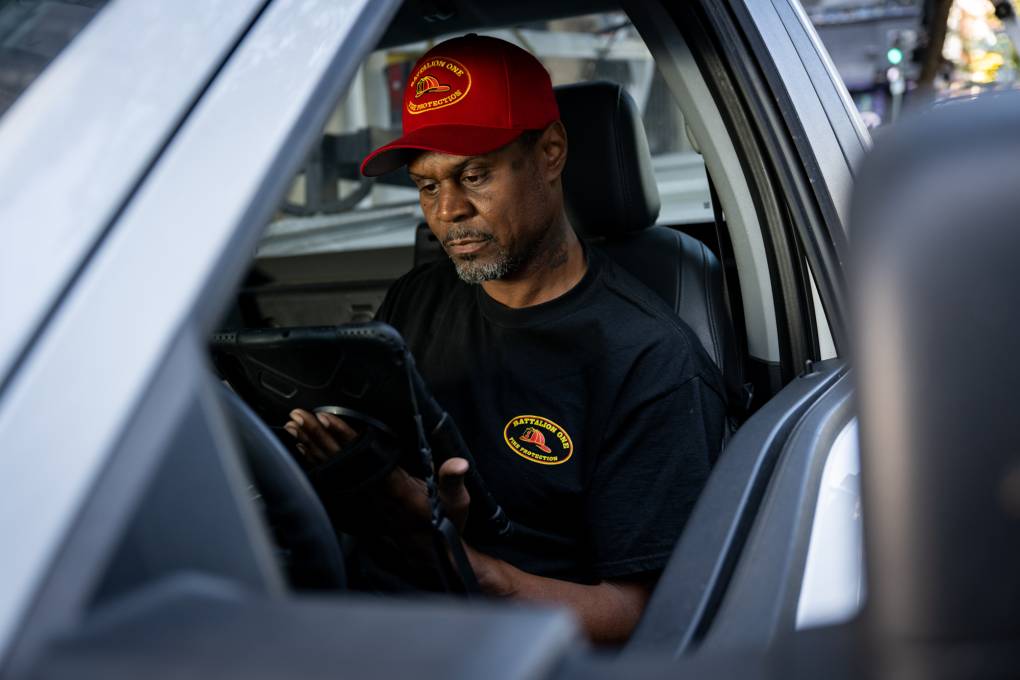
"caption": "Sadakao Whittington sits in his work truck in Oakland on May 27, 2025. He works for Battalion One Fire Protection, a local company that installs, inspects, and services fire alarms, sprinklers, and other fire suppression systems across the Bay Area. ",
"credit": "Beth LaBerge/KQED",
"altTag": null,
"description": null,
"imgSizes": {
"medium": {
"file": "https://cdn.kqed.org/wp-content/uploads/sites/10/2025/05/250527-OAKARMYBASE-10-BL-KQED-800x533.jpg",
"width": 800,
"height": 533,
"mimeType": "image/jpeg"
},
"large": {
"file": "https://cdn.kqed.org/wp-content/uploads/sites/10/2025/05/250527-OAKARMYBASE-10-BL-KQED-1020x680.jpg",
"width": 1020,
"height": 680,
"mimeType": "image/jpeg"
},
"thumbnail": {
"file": "https://cdn.kqed.org/wp-content/uploads/sites/10/2025/05/250527-OAKARMYBASE-10-BL-KQED-160x107.jpg",
"width": 160,
"height": 107,
"mimeType": "image/jpeg"
},
"1536x1536": {
"file": "https://cdn.kqed.org/wp-content/uploads/sites/10/2025/05/250527-OAKARMYBASE-10-BL-KQED-1536x1024.jpg",
"width": 1536,
"height": 1024,
"mimeType": "image/jpeg"
},
"post-thumbnail": {
"file": "https://cdn.kqed.org/wp-content/uploads/sites/10/2025/05/250527-OAKARMYBASE-10-BL-KQED-672x372.jpg",
"width": 672,
"height": 372,
"mimeType": "image/jpeg"
},
"twentyfourteen-full-width": {
"file": "https://cdn.kqed.org/wp-content/uploads/sites/10/2025/05/250527-OAKARMYBASE-10-BL-KQED-1038x576.jpg",
"width": 1038,
"height": 576,
"mimeType": "image/jpeg"
},
"full-width": {
"file": "https://cdn.kqed.org/wp-content/uploads/sites/10/2025/05/250527-OAKARMYBASE-10-BL-KQED-1920x1280.jpg",
"width": 1920,
"height": 1280,
"mimeType": "image/jpeg"
},
"kqedFullSize": {
"file": "https://cdn.kqed.org/wp-content/uploads/sites/10/2025/05/250527-OAKARMYBASE-10-BL-KQED.jpg",
"width": 2000,
"height": 1333
}
},
"isLoading": false,
"fetchFailed": false
},
"news_12015403": {
"type": "attachments",
"id": "news_12015403",
"meta": {
"index": "attachments_1716263798",
"site": "news",
"id": "12015403",
"found": true
},
"title": "U.S. Capitol",
"publishDate": 1732229773,
"status": "inherit",
"parent": 12015395,
"modified": 1776125035,
"caption": "The U.S. Capitol, including the House of Representatives, left, are seen on Nov. 14, 2024, in Washington. ",
"credit": "AP Photo/Mariam Zuhaib",
"altTag": null,
"description": null,
"imgSizes": {
"medium": {
"file": "https://cdn.kqed.org/wp-content/uploads/sites/10/2024/11/AP24319624163000-800x533.jpg",
"width": 800,
"height": 533,
"mimeType": "image/jpeg"
},
"large": {
"file": "https://cdn.kqed.org/wp-content/uploads/sites/10/2024/11/AP24319624163000-1020x680.jpg",
"width": 1020,
"height": 680,
"mimeType": "image/jpeg"
},
"thumbnail": {
"file": "https://cdn.kqed.org/wp-content/uploads/sites/10/2024/11/AP24319624163000-160x107.jpg",
"width": 160,
"height": 107,
"mimeType": "image/jpeg"
},
"1536x1536": {
"file": "https://cdn.kqed.org/wp-content/uploads/sites/10/2024/11/AP24319624163000-1536x1024.jpg",
"width": 1536,
"height": 1024,
"mimeType": "image/jpeg"
},
"2048x2048": {
"file": "https://cdn.kqed.org/wp-content/uploads/sites/10/2024/11/AP24319624163000-2048x1365.jpg",
"width": 2048,
"height": 1365,
"mimeType": "image/jpeg"
},
"post-thumbnail": {
"file": "https://cdn.kqed.org/wp-content/uploads/sites/10/2024/11/AP24319624163000-672x372.jpg",
"width": 672,
"height": 372,
"mimeType": "image/jpeg"
},
"twentyfourteen-full-width": {
"file": "https://cdn.kqed.org/wp-content/uploads/sites/10/2024/11/AP24319624163000-1038x576.jpg",
"width": 1038,
"height": 576,
"mimeType": "image/jpeg"
},
"full-width": {
"file": "https://cdn.kqed.org/wp-content/uploads/sites/10/2024/11/AP24319624163000-1920x1280.jpg",
"width": 1920,
"height": 1280,
"mimeType": "image/jpeg"
},
"kqedFullSize": {
"file": "https://cdn.kqed.org/wp-content/uploads/sites/10/2024/11/AP24319624163000-scaled-e1738263690738.jpg",
"width": 2000,
"height": 1333
}
},
"isLoading": false,
"fetchFailed": false
},
"news_12042075": {
"type": "attachments",
"id": "news_12042075",
"meta": {
"index": "attachments_1716263798",
"site": "news",
"id": "12042075",
"found": true
},
"title": "250218-AlCoDASwornIn-04",
"publishDate": 1748554177,
"status": "inherit",
"parent": 12042069,
"modified": 1748554301,
"caption": "Alameda County District Attorney Ursula Jones Dickson speaks during a press conference conference at the René C. Davidson Courthouse in Oakland on Feb. 18, 2025.",
"credit": "Beth LaBerge/KQED",
"altTag": null,
"description": null,
"imgSizes": {
"medium": {
"file": "https://cdn.kqed.org/wp-content/uploads/sites/10/2025/05/250218-AlCoDASwornIn-04-800x533.jpg",
"width": 800,
"height": 533,
"mimeType": "image/jpeg"
},
"large": {
"file": "https://cdn.kqed.org/wp-content/uploads/sites/10/2025/05/250218-AlCoDASwornIn-04-1020x680.jpg",
"width": 1020,
"height": 680,
"mimeType": "image/jpeg"
},
"thumbnail": {
"file": "https://cdn.kqed.org/wp-content/uploads/sites/10/2025/05/250218-AlCoDASwornIn-04-160x107.jpg",
"width": 160,
"height": 107,
"mimeType": "image/jpeg"
},
"1536x1536": {
"file": "https://cdn.kqed.org/wp-content/uploads/sites/10/2025/05/250218-AlCoDASwornIn-04-1536x1024.jpg",
"width": 1536,
"height": 1024,
"mimeType": "image/jpeg"
},
"post-thumbnail": {
"file": "https://cdn.kqed.org/wp-content/uploads/sites/10/2025/05/250218-AlCoDASwornIn-04-672x372.jpg",
"width": 672,
"height": 372,
"mimeType": "image/jpeg"
},
"twentyfourteen-full-width": {
"file": "https://cdn.kqed.org/wp-content/uploads/sites/10/2025/05/250218-AlCoDASwornIn-04-1038x576.jpg",
"width": 1038,
"height": 576,
"mimeType": "image/jpeg"
},
"full-width": {
"file": "https://cdn.kqed.org/wp-content/uploads/sites/10/2025/05/250218-AlCoDASwornIn-04-1920x1280.jpg",
"width": 1920,
"height": 1280,
"mimeType": "image/jpeg"
},
"kqedFullSize": {
"file": "https://cdn.kqed.org/wp-content/uploads/sites/10/2025/05/250218-AlCoDASwornIn-04.jpg",
"width": 2000,
"height": 1333
}
},
"isLoading": false,
"fetchFailed": false
},
"news_12041962": {
"type": "attachments",
"id": "news_12041962",
"meta": {
"index": "attachments_1716263798",
"site": "news",
"id": "12041962",
"found": true
},
"title": "IMG_4393",
"publishDate": 1748540578,
"status": "inherit",
"parent": 12041941,
"modified": 1748551236,
"caption": "Departing Superintendent Kyla Johnson-Trammell warned that the Oakland Unified School District must close schools to keep finances and academic gains on track at a press conference on Thursday, May 29, 2025.",
"credit": "Katie DeBenedetti/KQED",
"altTag": null,
"description": null,
"imgSizes": {
"medium": {
"file": "https://cdn.kqed.org/wp-content/uploads/sites/10/2025/05/IMG_4393-800x600.jpg",
"width": 800,
"height": 600,
"mimeType": "image/jpeg"
},
"large": {
"file": "https://cdn.kqed.org/wp-content/uploads/sites/10/2025/05/IMG_4393-1020x765.jpg",
"width": 1020,
"height": 765,
"mimeType": "image/jpeg"
},
"thumbnail": {
"file": "https://cdn.kqed.org/wp-content/uploads/sites/10/2025/05/IMG_4393-160x120.jpg",
"width": 160,
"height": 120,
"mimeType": "image/jpeg"
},
"1536x1536": {
"file": "https://cdn.kqed.org/wp-content/uploads/sites/10/2025/05/IMG_4393-1536x1152.jpg",
"width": 1536,
"height": 1152,
"mimeType": "image/jpeg"
},
"2048x2048": {
"file": "https://cdn.kqed.org/wp-content/uploads/sites/10/2025/05/IMG_4393-2048x1536.jpg",
"width": 2048,
"height": 1536,
"mimeType": "image/jpeg"
},
"post-thumbnail": {
"file": "https://cdn.kqed.org/wp-content/uploads/sites/10/2025/05/IMG_4393-672x372.jpg",
"width": 672,
"height": 372,
"mimeType": "image/jpeg"
},
"twentyfourteen-full-width": {
"file": "https://cdn.kqed.org/wp-content/uploads/sites/10/2025/05/IMG_4393-1038x576.jpg",
"width": 1038,
"height": 576,
"mimeType": "image/jpeg"
},
"full-width": {
"file": "https://cdn.kqed.org/wp-content/uploads/sites/10/2025/05/IMG_4393-1920x1440.jpg",
"width": 1920,
"height": 1440,
"mimeType": "image/jpeg"
},
"kqedFullSize": {
"file": "https://cdn.kqed.org/wp-content/uploads/sites/10/2025/05/IMG_4393-scaled.jpg",
"width": 2560,
"height": 1920
}
},
"isLoading": false,
"fetchFailed": false
},
"news_11996999": {
"type": "attachments",
"id": "news_11996999",
"meta": {
"index": "attachments_1716263798",
"site": "news",
"id": "11996999",
"found": true
},
"title": "012_KQED_SchnitzerSteelPortofOakland_03082022_qed",
"publishDate": 1721769382,
"status": "inherit",
"parent": 11996994,
"modified": 1721781136,
"caption": "The Alameda County District Attorney charged Radius Recycling, formerly known as Schnitzer Steel, with 10 environmental crimes related to a fire last August at the West Oakland steel recycling facility that blanketed parts of the East Bay in toxic smoke. ",
"credit": "Beth LaBerge/KQED",
"altTag": null,
"description": null,
"imgSizes": {
"medium": {
"file": "https://cdn.kqed.org/wp-content/uploads/sites/10/2024/07/012_KQED_SchnitzerSteelPortofOakland_03082022_qed-800x532.jpg",
"width": 800,
"height": 532,
"mimeType": "image/jpeg"
},
"large": {
"file": "https://cdn.kqed.org/wp-content/uploads/sites/10/2024/07/012_KQED_SchnitzerSteelPortofOakland_03082022_qed-1020x679.jpg",
"width": 1020,
"height": 679,
"mimeType": "image/jpeg"
},
"thumbnail": {
"file": "https://cdn.kqed.org/wp-content/uploads/sites/10/2024/07/012_KQED_SchnitzerSteelPortofOakland_03082022_qed-160x106.jpg",
"width": 160,
"height": 106,
"mimeType": "image/jpeg"
},
"1536x1536": {
"file": "https://cdn.kqed.org/wp-content/uploads/sites/10/2024/07/012_KQED_SchnitzerSteelPortofOakland_03082022_qed-1536x1022.jpg",
"width": 1536,
"height": 1022,
"mimeType": "image/jpeg"
},
"post-thumbnail": {
"file": "https://cdn.kqed.org/wp-content/uploads/sites/10/2024/07/012_KQED_SchnitzerSteelPortofOakland_03082022_qed-672x372.jpg",
"width": 672,
"height": 372,
"mimeType": "image/jpeg"
},
"twentyfourteen-full-width": {
"file": "https://cdn.kqed.org/wp-content/uploads/sites/10/2024/07/012_KQED_SchnitzerSteelPortofOakland_03082022_qed-1038x576.jpg",
"width": 1038,
"height": 576,
"mimeType": "image/jpeg"
},
"full-width": {
"file": "https://cdn.kqed.org/wp-content/uploads/sites/10/2024/07/012_KQED_SchnitzerSteelPortofOakland_03082022_qed-1920x1278.jpg",
"width": 1920,
"height": 1278,
"mimeType": "image/jpeg"
},
"kqedFullSize": {
"file": "https://cdn.kqed.org/wp-content/uploads/sites/10/2024/07/012_KQED_SchnitzerSteelPortofOakland_03082022_qed.jpg",
"width": 2000,
"height": 1331
}
},
"isLoading": false,
"fetchFailed": false
},
"news_12041706": {
"type": "attachments",
"id": "news_12041706",
"meta": {
"index": "attachments_1716263798",
"site": "news",
"id": "12041706",
"found": true
},
"title": "Alameda Fire_5",
"publishDate": 1748381317,
"status": "inherit",
"parent": 12041689,
"modified": 1748386592,
"caption": "On May 26, a floating boom surrounded a large two-masted sailing vessel that sank over the weekend at its Alameda dock in the Oakland Estuary. ",
"credit": "Courtesy of the Alameda Fire Department",
"altTag": null,
"description": "On May 26, a floating boom surrounded a large two-masted sailing vessel that sank over the weekend at its Alameda dock in the Oakland Estuary. \n",
"imgSizes": {
"medium": {
"file": "https://cdn.kqed.org/wp-content/uploads/sites/10/2025/05/Alameda-Fire_5-800x600.jpg",
"width": 800,
"height": 600,
"mimeType": "image/jpeg"
},
"large": {
"file": "https://cdn.kqed.org/wp-content/uploads/sites/10/2025/05/Alameda-Fire_5-1020x765.jpg",
"width": 1020,
"height": 765,
"mimeType": "image/jpeg"
},
"thumbnail": {
"file": "https://cdn.kqed.org/wp-content/uploads/sites/10/2025/05/Alameda-Fire_5-160x120.jpg",
"width": 160,
"height": 120,
"mimeType": "image/jpeg"
},
"1536x1536": {
"file": "https://cdn.kqed.org/wp-content/uploads/sites/10/2025/05/Alameda-Fire_5-1536x1152.jpg",
"width": 1536,
"height": 1152,
"mimeType": "image/jpeg"
},
"post-thumbnail": {
"file": "https://cdn.kqed.org/wp-content/uploads/sites/10/2025/05/Alameda-Fire_5-672x372.jpg",
"width": 672,
"height": 372,
"mimeType": "image/jpeg"
},
"twentyfourteen-full-width": {
"file": "https://cdn.kqed.org/wp-content/uploads/sites/10/2025/05/Alameda-Fire_5-1038x576.jpg",
"width": 1038,
"height": 576,
"mimeType": "image/jpeg"
},
"full-width": {
"file": "https://cdn.kqed.org/wp-content/uploads/sites/10/2025/05/Alameda-Fire_5-1920x1440.jpg",
"width": 1920,
"height": 1440,
"mimeType": "image/jpeg"
},
"kqedFullSize": {
"file": "https://cdn.kqed.org/wp-content/uploads/sites/10/2025/05/Alameda-Fire_5-e1748381417102.jpg",
"width": 2000,
"height": 1500
}
},
"isLoading": false,
"fetchFailed": false
},
"news_12041468": {
"type": "attachments",
"id": "news_12041468",
"meta": {
"index": "attachments_1716263798",
"site": "news",
"id": "12041468",
"found": true
},
"title": "SFChronicleVirusDaily",
"publishDate": 1748020132,
"status": "inherit",
"parent": 12041463,
"modified": 1748027960,
"caption": "A father helps his son build a sandcastle while enjoying Ocean Beach in San Francisco, California, on Monday, May 25, 2020. ",
"credit": "Jessica Christian/The San Francisco Chronicle via Getty Images",
"altTag": null,
"description": null,
"imgSizes": {
"medium": {
"file": "https://cdn.kqed.org/wp-content/uploads/sites/10/2025/05/MemorialDayWeekendGetty-800x533.jpg",
"width": 800,
"height": 533,
"mimeType": "image/jpeg"
},
"large": {
"file": "https://cdn.kqed.org/wp-content/uploads/sites/10/2025/05/MemorialDayWeekendGetty-1020x680.jpg",
"width": 1020,
"height": 680,
"mimeType": "image/jpeg"
},
"thumbnail": {
"file": "https://cdn.kqed.org/wp-content/uploads/sites/10/2025/05/MemorialDayWeekendGetty-160x107.jpg",
"width": 160,
"height": 107,
"mimeType": "image/jpeg"
},
"1536x1536": {
"file": "https://cdn.kqed.org/wp-content/uploads/sites/10/2025/05/MemorialDayWeekendGetty-1536x1024.jpg",
"width": 1536,
"height": 1024,
"mimeType": "image/jpeg"
},
"post-thumbnail": {
"file": "https://cdn.kqed.org/wp-content/uploads/sites/10/2025/05/MemorialDayWeekendGetty-672x372.jpg",
"width": 672,
"height": 372,
"mimeType": "image/jpeg"
},
"twentyfourteen-full-width": {
"file": "https://cdn.kqed.org/wp-content/uploads/sites/10/2025/05/MemorialDayWeekendGetty-1038x576.jpg",
"width": 1038,
"height": 576,
"mimeType": "image/jpeg"
},
"full-width": {
"file": "https://cdn.kqed.org/wp-content/uploads/sites/10/2025/05/MemorialDayWeekendGetty-1920x1280.jpg",
"width": 1920,
"height": 1280,
"mimeType": "image/jpeg"
},
"kqedFullSize": {
"file": "https://cdn.kqed.org/wp-content/uploads/sites/10/2025/05/MemorialDayWeekendGetty.jpg",
"width": 2000,
"height": 1333
}
},
"isLoading": false,
"fetchFailed": false
},
"news_12041281": {
"type": "attachments",
"id": "news_12041281",
"meta": {
"index": "attachments_1716263798",
"site": "news",
"id": "12041281",
"found": true
},
"title": "My.Wildest.Bay.Area.Story.Hewitt.Visuals-099",
"publishDate": 1747936526,
"status": "inherit",
"parent": 12041178,
"modified": 1747936743,
"caption": "Bay Area comedian Marcus Howard shares a story at My Wildest Bay Area Story, a showcase of crazy and jaw-dropping personal experiences. ",
"credit": "Vita Hewitt/KQED",
"altTag": null,
"description": null,
"imgSizes": {
"medium": {
"file": "https://cdn.kqed.org/wp-content/uploads/sites/10/2025/05/My.Wildest.Bay_.Area_.Story_.Hewitt.Visuals-099-800x534.jpg",
"width": 800,
"height": 534,
"mimeType": "image/jpeg"
},
"large": {
"file": "https://cdn.kqed.org/wp-content/uploads/sites/10/2025/05/My.Wildest.Bay_.Area_.Story_.Hewitt.Visuals-099-1020x680.jpg",
"width": 1020,
"height": 680,
"mimeType": "image/jpeg"
},
"thumbnail": {
"file": "https://cdn.kqed.org/wp-content/uploads/sites/10/2025/05/My.Wildest.Bay_.Area_.Story_.Hewitt.Visuals-099-160x107.jpg",
"width": 160,
"height": 107,
"mimeType": "image/jpeg"
},
"1536x1536": {
"file": "https://cdn.kqed.org/wp-content/uploads/sites/10/2025/05/My.Wildest.Bay_.Area_.Story_.Hewitt.Visuals-099-1536x1024.jpg",
"width": 1536,
"height": 1024,
"mimeType": "image/jpeg"
},
"2048x2048": {
"file": "https://cdn.kqed.org/wp-content/uploads/sites/10/2025/05/My.Wildest.Bay_.Area_.Story_.Hewitt.Visuals-099-2048x1366.jpg",
"width": 2048,
"height": 1366,
"mimeType": "image/jpeg"
},
"post-thumbnail": {
"file": "https://cdn.kqed.org/wp-content/uploads/sites/10/2025/05/My.Wildest.Bay_.Area_.Story_.Hewitt.Visuals-099-672x372.jpg",
"width": 672,
"height": 372,
"mimeType": "image/jpeg"
},
"twentyfourteen-full-width": {
"file": "https://cdn.kqed.org/wp-content/uploads/sites/10/2025/05/My.Wildest.Bay_.Area_.Story_.Hewitt.Visuals-099-1038x576.jpg",
"width": 1038,
"height": 576,
"mimeType": "image/jpeg"
},
"full-width": {
"file": "https://cdn.kqed.org/wp-content/uploads/sites/10/2025/05/My.Wildest.Bay_.Area_.Story_.Hewitt.Visuals-099-1920x1281.jpg",
"width": 1920,
"height": 1281,
"mimeType": "image/jpeg"
},
"kqedFullSize": {
"file": "https://cdn.kqed.org/wp-content/uploads/sites/10/2025/05/My.Wildest.Bay_.Area_.Story_.Hewitt.Visuals-099-scaled.jpg",
"width": 2560,
"height": 1707
}
},
"isLoading": false,
"fetchFailed": false
},
"news_12041290": {
"type": "attachments",
"id": "news_12041290",
"meta": {
"index": "attachments_1716263798",
"site": "news",
"id": "12041290",
"found": true
},
"title": "240520-TKBilingualLearners-03-BL_qed",
"publishDate": 1747939937,
"status": "inherit",
"parent": 12041279,
"modified": 1747939947,
"caption": "Students form a line to get ready for lunchtime at La Plazita Preschool in Oakland on May 20, 2024.",
"credit": "Beth LaBerge/KQED",
"altTag": null,
"description": null,
"imgSizes": {
"medium": {
"file": "https://cdn.kqed.org/wp-content/uploads/sites/10/2025/05/240520-TKBilingualLearners-03-BL_qed-800x533.jpg",
"width": 800,
"height": 533,
"mimeType": "image/jpeg"
},
"large": {
"file": "https://cdn.kqed.org/wp-content/uploads/sites/10/2025/05/240520-TKBilingualLearners-03-BL_qed-1020x680.jpg",
"width": 1020,
"height": 680,
"mimeType": "image/jpeg"
},
"thumbnail": {
"file": "https://cdn.kqed.org/wp-content/uploads/sites/10/2025/05/240520-TKBilingualLearners-03-BL_qed-160x107.jpg",
"width": 160,
"height": 107,
"mimeType": "image/jpeg"
},
"1536x1536": {
"file": "https://cdn.kqed.org/wp-content/uploads/sites/10/2025/05/240520-TKBilingualLearners-03-BL_qed-1536x1024.jpg",
"width": 1536,
"height": 1024,
"mimeType": "image/jpeg"
},
"post-thumbnail": {
"file": "https://cdn.kqed.org/wp-content/uploads/sites/10/2025/05/240520-TKBilingualLearners-03-BL_qed-672x372.jpg",
"width": 672,
"height": 372,
"mimeType": "image/jpeg"
},
"twentyfourteen-full-width": {
"file": "https://cdn.kqed.org/wp-content/uploads/sites/10/2025/05/240520-TKBilingualLearners-03-BL_qed-1038x576.jpg",
"width": 1038,
"height": 576,
"mimeType": "image/jpeg"
},
"full-width": {
"file": "https://cdn.kqed.org/wp-content/uploads/sites/10/2025/05/240520-TKBilingualLearners-03-BL_qed-1920x1280.jpg",
"width": 1920,
"height": 1280,
"mimeType": "image/jpeg"
},
"kqedFullSize": {
"file": "https://cdn.kqed.org/wp-content/uploads/sites/10/2025/05/240520-TKBilingualLearners-03-BL_qed.jpg",
"width": 2000,
"height": 1333
}
},
"isLoading": false,
"fetchFailed": false
},
"news_12020002": {
"type": "attachments",
"id": "news_12020002",
"meta": {
"index": "attachments_1716263798",
"site": "news",
"id": "12020002",
"found": true
},
"title": "241010-RiseEastDeepDown-07-BL",
"publishDate": 1735589948,
"status": "inherit",
"parent": 0,
"modified": 1735590174,
"caption": "Selena Wilson, CEO of the East Oakland Youth Development Center, leads a fundraising walking tour for the Rise East collective along International Boulevard in Oakland on Oct. 10, 2024.",
"credit": "Beth LaBerge/KQED",
"altTag": null,
"description": null,
"imgSizes": {
"medium": {
"file": "https://cdn.kqed.org/wp-content/uploads/sites/10/2024/12/241010-RiseEastDeepDown-07-BL-800x533.jpg",
"width": 800,
"height": 533,
"mimeType": "image/jpeg"
},
"large": {
"file": "https://cdn.kqed.org/wp-content/uploads/sites/10/2024/12/241010-RiseEastDeepDown-07-BL-1020x680.jpg",
"width": 1020,
"height": 680,
"mimeType": "image/jpeg"
},
"thumbnail": {
"file": "https://cdn.kqed.org/wp-content/uploads/sites/10/2024/12/241010-RiseEastDeepDown-07-BL-160x107.jpg",
"width": 160,
"height": 107,
"mimeType": "image/jpeg"
},
"1536x1536": {
"file": "https://cdn.kqed.org/wp-content/uploads/sites/10/2024/12/241010-RiseEastDeepDown-07-BL-1536x1024.jpg",
"width": 1536,
"height": 1024,
"mimeType": "image/jpeg"
},
"post-thumbnail": {
"file": "https://cdn.kqed.org/wp-content/uploads/sites/10/2024/12/241010-RiseEastDeepDown-07-BL-672x372.jpg",
"width": 672,
"height": 372,
"mimeType": "image/jpeg"
},
"twentyfourteen-full-width": {
"file": "https://cdn.kqed.org/wp-content/uploads/sites/10/2024/12/241010-RiseEastDeepDown-07-BL-1038x576.jpg",
"width": 1038,
"height": 576,
"mimeType": "image/jpeg"
},
"full-width": {
"file": "https://cdn.kqed.org/wp-content/uploads/sites/10/2024/12/241010-RiseEastDeepDown-07-BL-1920x1280.jpg",
"width": 1920,
"height": 1280,
"mimeType": "image/jpeg"
},
"kqedFullSize": {
"file": "https://cdn.kqed.org/wp-content/uploads/sites/10/2024/12/241010-RiseEastDeepDown-07-BL.jpg",
"width": 2000,
"height": 1333
}
},
"isLoading": false,
"fetchFailed": false
},
"news_12040970": {
"type": "attachments",
"id": "news_12040970",
"meta": {
"index": "attachments_1716263798",
"site": "news",
"id": "12040970",
"found": true
},
"title": "250520-BARBARA LEE SWORN IN-MD-03-KQED-1",
"publishDate": 1747773660,
"status": "inherit",
"parent": 12040935,
"modified": 1747774366,
"caption": "Barbara Lee speaks to supporters after being sworn in as Mayor of Oakland at Oakland City Hall on May 20, 2025.",
"credit": "Martin do Nascimento/KQED",
"altTag": null,
"description": null,
"imgSizes": {
"medium": {
"file": "https://cdn.kqed.org/wp-content/uploads/sites/10/2025/05/250520-BARBARA-LEE-SWORN-IN-MD-03-KQED-1-800x533.jpg",
"width": 800,
"height": 533,
"mimeType": "image/jpeg"
},
"large": {
"file": "https://cdn.kqed.org/wp-content/uploads/sites/10/2025/05/250520-BARBARA-LEE-SWORN-IN-MD-03-KQED-1-1020x680.jpg",
"width": 1020,
"height": 680,
"mimeType": "image/jpeg"
},
"thumbnail": {
"file": "https://cdn.kqed.org/wp-content/uploads/sites/10/2025/05/250520-BARBARA-LEE-SWORN-IN-MD-03-KQED-1-160x107.jpg",
"width": 160,
"height": 107,
"mimeType": "image/jpeg"
},
"1536x1536": {
"file": "https://cdn.kqed.org/wp-content/uploads/sites/10/2025/05/250520-BARBARA-LEE-SWORN-IN-MD-03-KQED-1-1536x1024.jpg",
"width": 1536,
"height": 1024,
"mimeType": "image/jpeg"
},
"post-thumbnail": {
"file": "https://cdn.kqed.org/wp-content/uploads/sites/10/2025/05/250520-BARBARA-LEE-SWORN-IN-MD-03-KQED-1-672x372.jpg",
"width": 672,
"height": 372,
"mimeType": "image/jpeg"
},
"twentyfourteen-full-width": {
"file": "https://cdn.kqed.org/wp-content/uploads/sites/10/2025/05/250520-BARBARA-LEE-SWORN-IN-MD-03-KQED-1-1038x576.jpg",
"width": 1038,
"height": 576,
"mimeType": "image/jpeg"
},
"full-width": {
"file": "https://cdn.kqed.org/wp-content/uploads/sites/10/2025/05/250520-BARBARA-LEE-SWORN-IN-MD-03-KQED-1-1920x1280.jpg",
"width": 1920,
"height": 1280,
"mimeType": "image/jpeg"
},
"kqedFullSize": {
"file": "https://cdn.kqed.org/wp-content/uploads/sites/10/2025/05/250520-BARBARA-LEE-SWORN-IN-MD-03-KQED-1.jpg",
"width": 2000,
"height": 1333
}
},
"isLoading": false,
"fetchFailed": false
},
"news_11993195": {
"type": "attachments",
"id": "news_11993195",
"meta": {
"index": "attachments_1716263798",
"site": "news",
"id": "11993195",
"found": true
},
"title": "240313-BART CRISIS INTERVENTION UNIT-MD-16_qed",
"publishDate": 1720461197,
"status": "inherit",
"parent": 11993189,
"modified": 1747766652,
"caption": "A train approaches the San Leandro BART station on March 13, 2024.",
"credit": "Martin do Nascimento/KQED",
"altTag": null,
"description": null,
"imgSizes": {
"medium": {
"file": "https://cdn.kqed.org/wp-content/uploads/sites/10/2024/07/240313-BART-CRISIS-INTERVENTION-UNIT-MD-16_qed-800x533.jpg",
"width": 800,
"height": 533,
"mimeType": "image/jpeg"
},
"large": {
"file": "https://cdn.kqed.org/wp-content/uploads/sites/10/2024/07/240313-BART-CRISIS-INTERVENTION-UNIT-MD-16_qed-1020x680.jpg",
"width": 1020,
"height": 680,
"mimeType": "image/jpeg"
},
"thumbnail": {
"file": "https://cdn.kqed.org/wp-content/uploads/sites/10/2024/07/240313-BART-CRISIS-INTERVENTION-UNIT-MD-16_qed-160x107.jpg",
"width": 160,
"height": 107,
"mimeType": "image/jpeg"
},
"1536x1536": {
"file": "https://cdn.kqed.org/wp-content/uploads/sites/10/2024/07/240313-BART-CRISIS-INTERVENTION-UNIT-MD-16_qed-1536x1024.jpg",
"width": 1536,
"height": 1024,
"mimeType": "image/jpeg"
},
"post-thumbnail": {
"file": "https://cdn.kqed.org/wp-content/uploads/sites/10/2024/07/240313-BART-CRISIS-INTERVENTION-UNIT-MD-16_qed-672x372.jpg",
"width": 672,
"height": 372,
"mimeType": "image/jpeg"
},
"twentyfourteen-full-width": {
"file": "https://cdn.kqed.org/wp-content/uploads/sites/10/2024/07/240313-BART-CRISIS-INTERVENTION-UNIT-MD-16_qed-1038x576.jpg",
"width": 1038,
"height": 576,
"mimeType": "image/jpeg"
},
"full-width": {
"file": "https://cdn.kqed.org/wp-content/uploads/sites/10/2024/07/240313-BART-CRISIS-INTERVENTION-UNIT-MD-16_qed-1920x1280.jpg",
"width": 1920,
"height": 1280,
"mimeType": "image/jpeg"
},
"kqedFullSize": {
"file": "https://cdn.kqed.org/wp-content/uploads/sites/10/2024/07/240313-BART-CRISIS-INTERVENTION-UNIT-MD-16_qed.jpg",
"width": 1999,
"height": 1333
}
},
"isLoading": false,
"fetchFailed": false
}
},
"audioPlayerReducer": {
"postId": "stream_live",
"isPaused": true,
"isPlaying": false,
"pfsActive": false,
"pledgeModalIsOpen": true,
"playerDrawerIsOpen": false,
"liveAudioPlayStartedAt": 0,
"liveAudioPlayContext": ""
},
"authorsReducer": {
"danbrekke": {
"type": "authors",
"id": "222",
"meta": {
"index": "authors_1716337520",
"id": "222",
"found": true
},
"name": "Dan Brekke",
"firstName": "Dan",
"lastName": "Brekke",
"slug": "danbrekke",
"email": "dbrekke@kqed.org",
"display_author_email": true,
"staff_mastheads": [
"news",
"science"
],
"title": "KQED Editor and Reporter",
"bio": "Dan Brekke is a reporter and editor for KQED News, responsible for coverage of topics ranging from California water issues to the Bay Area's transportation challenges. In a newsroom career that began in Chicago in 1972, Dan has worked for \u003cem>The San Francisco Examiner,\u003c/em> Wired and TechTV and has been published in The New York Times, The New York Times Magazine, Business 2.0, Salon and elsewhere.\r\n\r\nSince joining KQED in 2007, Dan has reported, edited and produced both radio and online features and breaking news pieces. He has shared as both editor and reporter in four Society of Professional Journalists Norcal Excellence in Journalism awards and one Edward R. Murrow regional award. He was chosen for a spring 2017 residency at the Mesa Refuge to advance his research on California salmon.\r\n\r\nEmail Dan at: \u003ca href=\"mailto:dbrekke@kqed.org\">dbrekke@kqed.org\u003c/a>\r\n\r\n\u003cstrong>Twitter:\u003c/strong> \u003ca href=\"https://twitter.com/danbrekke\" rel=\"noopener noreferrer\">twitter.com/danbrekke\u003c/a>\r\n\u003cstrong>Facebook:\u003c/strong> \u003ca href=\"https://www.facebook.com/danbrekke\" rel=\"noopener noreferrer\">www.facebook.com/danbrekke\u003c/a>\r\n\u003cstrong>LinkedIn:\u003c/strong> \u003ca href=\"https://www.linkedin.com/in/danbrekke\" rel=\"noopener noreferrer\">www.linkedin.com/in/danbrekke\u003c/a>",
"avatar": "https://secure.gravatar.com/avatar/c8126230345efca3f7aa89b1a402be45?s=600&d=mm&r=g",
"twitter": "danbrekke",
"facebook": null,
"instagram": "https://www.instagram.com/dan.brekke/",
"linkedin": "https://www.linkedin.com/in/danbrekke/",
"sites": [
{
"site": "news",
"roles": [
"administrator",
"create_posts"
]
},
{
"site": "stateofhealth",
"roles": [
"editor"
]
},
{
"site": "science",
"roles": [
"editor"
]
},
{
"site": "quest",
"roles": [
"contributor"
]
},
{
"site": "food",
"roles": [
"contributor"
]
},
{
"site": "forum",
"roles": [
"contributor"
]
},
{
"site": "liveblog",
"roles": [
"editor"
]
}
],
"headData": {
"title": "Dan Brekke | KQED",
"description": "KQED Editor and Reporter",
"ogImgSrc": "https://secure.gravatar.com/avatar/c8126230345efca3f7aa89b1a402be45?s=600&d=mm&r=g",
"twImgSrc": "https://secure.gravatar.com/avatar/c8126230345efca3f7aa89b1a402be45?s=600&d=mm&r=g"
},
"isLoading": false,
"link": "/author/danbrekke"
},
"matthewgreen": {
"type": "authors",
"id": "1263",
"meta": {
"index": "authors_1716337520",
"id": "1263",
"found": true
},
"name": "Matthew Green",
"firstName": "Matthew",
"lastName": "Green",
"slug": "matthewgreen",
"email": "mgreen@kqed.org",
"display_author_email": false,
"staff_mastheads": [],
"title": "KQED Editor/Reporter",
"bio": "Matthew Green is a digital media producer for KQED News. He previously produced \u003ca href=\"http://www.kqed.org/lowdown\">The Lowdown\u003c/a>, KQED’s multimedia news education blog. Matthew's written for numerous Bay Area publications, including the Oakland Tribune and San Francisco Chronicle. He also taught journalism classes at Fremont High School in East Oakland.\r\n\r\nEmail: mgreen@kqed.org; Twitter: @MGreenKQED",
"avatar": "https://secure.gravatar.com/avatar/3bf498d1267ca02c8494f33d8cfc575e?s=600&d=blank&r=g",
"twitter": "MGreenKQED",
"facebook": null,
"instagram": null,
"linkedin": null,
"sites": [
{
"site": "news",
"roles": []
},
{
"site": "lowdown",
"roles": []
},
{
"site": "science",
"roles": []
},
{
"site": "education",
"roles": []
},
{
"site": "quest",
"roles": []
},
{
"site": "liveblog",
"roles": []
}
],
"headData": {
"title": "Matthew Green | KQED",
"description": "KQED Editor/Reporter",
"ogImgSrc": "https://secure.gravatar.com/avatar/3bf498d1267ca02c8494f33d8cfc575e?s=600&d=blank&r=g",
"twImgSrc": "https://secure.gravatar.com/avatar/3bf498d1267ca02c8494f33d8cfc575e?s=600&d=blank&r=g"
},
"isLoading": false,
"link": "/author/matthewgreen"
},
"ecruzguevarra": {
"type": "authors",
"id": "8654",
"meta": {
"index": "authors_1716337520",
"id": "8654",
"found": true
},
"name": "Ericka Cruz Guevarra",
"firstName": "Ericka",
"lastName": "Cruz Guevarra",
"slug": "ecruzguevarra",
"email": "ecruzguevarra@kqed.org",
"display_author_email": true,
"staff_mastheads": [
"news"
],
"title": "Producer, The Bay Podcast",
"bio": "Ericka Cruz Guevarra is host of \u003ca href=\"https://www.kqed.org/podcasts/thebay\">\u003cem>The Bay\u003c/em>\u003c/a> podcast at KQED. Before host, she was the show’s producer. Her work in that capacity includes a three-part reported series on policing in Vallejo, which won a 2020 excellence in journalism award from the Society of Professional Journalists. Ericka has worked as a breaking news reporter at Oregon Public Broadcasting, helped produce the Code Switch podcast, and was KQED’s inaugural Raul Ramirez Diversity Fund intern. She’s also an alumna of NPR’s Next Generation Radio program. Send her an email if you have strong feelings about whether Fairfield and Suisun City are the Bay. Ericka is represented by SAG-AFTRA.",
"avatar": "https://secure.gravatar.com/avatar/25e5ab8d3d53fad2dcc7bb2b5c506b1a?s=600&d=blank&r=g",
"twitter": "NotoriousECG",
"facebook": null,
"instagram": null,
"linkedin": null,
"sites": [
{
"site": "arts",
"roles": [
"subscriber"
]
},
{
"site": "news",
"roles": [
"editor",
"manage_categories"
]
},
{
"site": "futureofyou",
"roles": [
"subscriber"
]
},
{
"site": "stateofhealth",
"roles": [
"subscriber"
]
},
{
"site": "science",
"roles": [
"editor"
]
},
{
"site": "forum",
"roles": [
"subscriber"
]
}
],
"headData": {
"title": "Ericka Cruz Guevarra | KQED",
"description": "Producer, The Bay Podcast",
"ogImgSrc": "https://secure.gravatar.com/avatar/25e5ab8d3d53fad2dcc7bb2b5c506b1a?s=600&d=blank&r=g",
"twImgSrc": "https://secure.gravatar.com/avatar/25e5ab8d3d53fad2dcc7bb2b5c506b1a?s=600&d=blank&r=g"
},
"isLoading": false,
"link": "/author/ecruzguevarra"
},
"amontecillo": {
"type": "authors",
"id": "11649",
"meta": {
"index": "authors_1716337520",
"id": "11649",
"found": true
},
"name": "Alan Montecillo",
"firstName": "Alan",
"lastName": "Montecillo",
"slug": "amontecillo",
"email": "amontecillo@kqed.org",
"display_author_email": false,
"staff_mastheads": [
"news"
],
"title": "KQED Contributor",
"bio": "Alan Montecillo is the senior editor of \u003cem>\u003ca href=\"http://kqed.org/thebay\">The Bay\u003c/a>, \u003c/em> KQED's local news podcast. Before moving to the Bay Area, he worked as a senior talk show producer for WILL in Champaign-Urbana, Illinois and at Oregon Public Broadcasting in Portland, Oregon. He has won journalism awards from the Society of Professional Journalists Northern California, the Public Media Journalists Association, The Signal Awards, and has also received a regional Edward R. Murrow award. Alan is a Filipino American from Hong Kong and a graduate of Reed College.",
"avatar": "https://secure.gravatar.com/avatar/d5e4e7a76481969ccba76f4e2b5ccabc?s=600&d=blank&r=g",
"twitter": "alanmontecillo",
"facebook": null,
"instagram": null,
"linkedin": null,
"sites": [
{
"site": "",
"roles": [
"editor"
]
},
{
"site": "news",
"roles": [
"editor",
"manage_categories"
]
}
],
"headData": {
"title": "Alan Montecillo | KQED",
"description": "KQED Contributor",
"ogImgSrc": "https://secure.gravatar.com/avatar/d5e4e7a76481969ccba76f4e2b5ccabc?s=600&d=blank&r=g",
"twImgSrc": "https://secure.gravatar.com/avatar/d5e4e7a76481969ccba76f4e2b5ccabc?s=600&d=blank&r=g"
},
"isLoading": false,
"link": "/author/amontecillo"
},
"otaylor": {
"type": "authors",
"id": "11770",
"meta": {
"index": "authors_1716337520",
"id": "11770",
"found": true
},
"name": "Otis R. Taylor Jr.",
"firstName": "Otis R.",
"lastName": "Taylor Jr.",
"slug": "otaylor",
"email": "otaylor@kqed.org",
"display_author_email": false,
"staff_mastheads": [
"news"
],
"title": "KQED Editor",
"bio": null,
"avatar": "https://secure.gravatar.com/avatar/fe73e14d4842ac8e1c03d57def2530f57f1c5b0ca7d4a987ccc5bd90956cb7c6?s=600&d=mm&r=g",
"twitter": "otisrtaylorjr",
"bluesky": null,
"facebook": null,
"instagram": null,
"linkedin": null,
"sites": [
{
"site": "arts",
"roles": [
"editor"
]
},
{
"site": "news",
"roles": [
"subscriber"
]
},
{
"site": "science",
"roles": [
"subscriber"
]
},
{
"site": "liveblog",
"roles": [
"subscriber"
]
}
],
"headData": {
"title": "Otis R. Taylor Jr. | KQED",
"description": "KQED Editor",
"ogImgSrc": "https://secure.gravatar.com/avatar/fe73e14d4842ac8e1c03d57def2530f57f1c5b0ca7d4a987ccc5bd90956cb7c6?s=600&d=mm&r=g",
"twImgSrc": "https://secure.gravatar.com/avatar/fe73e14d4842ac8e1c03d57def2530f57f1c5b0ca7d4a987ccc5bd90956cb7c6?s=600&d=mm&r=g"
},
"isLoading": false,
"link": "/author/otaylor"
},
"jessicakariisa": {
"type": "authors",
"id": "11831",
"meta": {
"index": "authors_1716337520",
"id": "11831",
"found": true
},
"name": "Jessica Kariisa",
"firstName": "Jessica",
"lastName": "Kariisa",
"slug": "jessicakariisa",
"email": "jkariisa@kqed.org",
"display_author_email": false,
"staff_mastheads": [],
"title": "Producer, The Bay",
"bio": "Jessica Kariisa is the producer of The Bay. She first joined KQED as an intern for The California Report Magazine, after which she became an on-call producer. She reported a Bay Curious episode on the use of rap lyrics in criminal trials which won a Society of Professional Journalists award in 2023 for Excellence in Features Journalism and the 2023 Signal Award for Best Conversation Starter. She’s worked on podcasts for Snap Judgment and American Public Media. Before embarking on her audio career, she was a music journalist.\r\n\r\nJessica Kariisa is represented by SAG-AFTRA.",
"avatar": "https://secure.gravatar.com/avatar/522e97b28ac0b3d411621c0fde8f3419c7b71ea2c5c262c57c4bb600963f328c?s=600&d=blank&r=g",
"twitter": null,
"bluesky": null,
"facebook": null,
"instagram": null,
"linkedin": null,
"sites": [
{
"site": "arts",
"roles": [
"author"
]
},
{
"site": "news",
"roles": [
"editor",
"manage_categories"
]
}
],
"headData": {
"title": "Jessica Kariisa | KQED",
"description": "Producer, The Bay",
"ogImgSrc": "https://secure.gravatar.com/avatar/522e97b28ac0b3d411621c0fde8f3419c7b71ea2c5c262c57c4bb600963f328c?s=600&d=blank&r=g",
"twImgSrc": "https://secure.gravatar.com/avatar/522e97b28ac0b3d411621c0fde8f3419c7b71ea2c5c262c57c4bb600963f328c?s=600&d=blank&r=g"
},
"isLoading": false,
"link": "/author/jessicakariisa"
},
"kdebenedetti": {
"type": "authors",
"id": "11913",
"meta": {
"index": "authors_1716337520",
"id": "11913",
"found": true
},
"name": "Katie DeBenedetti",
"firstName": "Katie",
"lastName": "DeBenedetti",
"slug": "kdebenedetti",
"email": "kdebenedetti@kqed.org",
"display_author_email": false,
"staff_mastheads": [
"news",
"science"
],
"title": "KQED Contributor",
"bio": "Katie DeBenedetti is a digital reporter covering daily news for the Express Desk. Prior to joining KQED as a culture reporting intern in January 2024, she covered education and city government for the Napa Valley Register.",
"avatar": "https://secure.gravatar.com/avatar/6e31073cb8f7e4214ab03f42771d0f45?s=600&d=blank&r=g",
"twitter": null,
"facebook": null,
"instagram": null,
"linkedin": null,
"sites": [
{
"site": "news",
"roles": [
"author"
]
},
{
"site": "science",
"roles": [
"author"
]
},
{
"site": "liveblog",
"roles": [
"author"
]
}
],
"headData": {
"title": "Katie DeBenedetti | KQED",
"description": "KQED Contributor",
"ogImgSrc": "https://secure.gravatar.com/avatar/6e31073cb8f7e4214ab03f42771d0f45?s=600&d=blank&r=g",
"twImgSrc": "https://secure.gravatar.com/avatar/6e31073cb8f7e4214ab03f42771d0f45?s=600&d=blank&r=g"
},
"isLoading": false,
"link": "/author/kdebenedetti"
},
"slim": {
"type": "authors",
"id": "11920",
"meta": {
"index": "authors_1716337520",
"id": "11920",
"found": true
},
"name": "Samantha Lim",
"firstName": "Samantha",
"lastName": "Lim",
"slug": "slim",
"email": "slim@KQED.org",
"display_author_email": false,
"staff_mastheads": [],
"title": "KQED Contributor",
"bio": null,
"avatar": "https://secure.gravatar.com/avatar/82e592e6c15fe1a04d385e8ad0fb0b4e?s=600&d=blank&r=g",
"twitter": null,
"facebook": null,
"instagram": null,
"linkedin": null,
"sites": [
{
"site": "news",
"roles": []
}
],
"headData": {
"title": "Samantha Lim | KQED",
"description": "KQED Contributor",
"ogImgSrc": "https://secure.gravatar.com/avatar/82e592e6c15fe1a04d385e8ad0fb0b4e?s=600&d=blank&r=g",
"twImgSrc": "https://secure.gravatar.com/avatar/82e592e6c15fe1a04d385e8ad0fb0b4e?s=600&d=blank&r=g"
},
"isLoading": false,
"link": "/author/slim"
},
"bkrans": {
"type": "authors",
"id": "11923",
"meta": {
"index": "authors_1716337520",
"id": "11923",
"found": true
},
"name": "Brian Krans",
"firstName": "Brian",
"lastName": "Krans",
"slug": "bkrans",
"email": "bkrans@kqed.org",
"display_author_email": false,
"staff_mastheads": [
"news"
],
"title": "KQED Contributing Reporter",
"bio": "Brian Krans is an award-winning local news and investigative reporter who has been proudly working as a general assignment reporter for KQED since August 2023. He lives in Richmond, where he also reports on air pollution for Richmondside. He is also a founding member of the Vallejo Sun.",
"avatar": "https://secure.gravatar.com/avatar/d1014d604089314a94807d2c4f2d3e06?s=600&d=blank&r=g",
"twitter": "citizenkrans",
"facebook": null,
"instagram": null,
"linkedin": null,
"sites": [
{
"site": "news",
"roles": [
"editor"
]
}
],
"headData": {
"title": "Brian Krans | KQED",
"description": "KQED Contributing Reporter",
"ogImgSrc": "https://secure.gravatar.com/avatar/d1014d604089314a94807d2c4f2d3e06?s=600&d=blank&r=g",
"twImgSrc": "https://secure.gravatar.com/avatar/d1014d604089314a94807d2c4f2d3e06?s=600&d=blank&r=g"
},
"isLoading": false,
"link": "/author/bkrans"
},
"mvelasquez": {
"type": "authors",
"id": "11939",
"meta": {
"index": "authors_1716337520",
"id": "11939",
"found": true
},
"name": "Mel Velasquez",
"firstName": "Mel",
"lastName": "Velasquez",
"slug": "mvelasquez",
"email": "mvelasquez@kqed.org",
"display_author_email": false,
"staff_mastheads": [],
"title": "KQED Contributor",
"bio": null,
"avatar": "https://secure.gravatar.com/avatar/409094312d56fab09fef4251e949ffa6?s=600&d=blank&r=g",
"twitter": null,
"facebook": null,
"instagram": null,
"linkedin": "www.linkedin.com/in/melanievelasquezz",
"sites": [
{
"site": "news",
"roles": [
"editor"
]
}
],
"headData": {
"title": "Mel Velasquez | KQED",
"description": "KQED Contributor",
"ogImgSrc": "https://secure.gravatar.com/avatar/409094312d56fab09fef4251e949ffa6?s=600&d=blank&r=g",
"twImgSrc": "https://secure.gravatar.com/avatar/409094312d56fab09fef4251e949ffa6?s=600&d=blank&r=g"
},
"isLoading": false,
"link": "/author/mvelasquez"
}
},
"pagesReducer": {
"news_tag_oakland": {
"type": "terms",
"id": "news_34054",
"meta": {
"index": "terms_1716263798",
"site": "news",
"id": "34054",
"score": 6.8845096
},
"featImg": null,
"name": "oakland",
"description": null,
"taxonomy": "tag",
"headData": {
"twImgId": null,
"twTitle": null,
"ogTitle": null,
"ogImgId": null,
"twDescription": null,
"description": null,
"title": "oakland Archives | KQED News",
"ogDescription": null
},
"ttid": 34071,
"slug": "oakland",
"isLoading": false,
"title": "oakland",
"pageMeta": {
"site": "news",
"WpPageTemplate": "page-topic-editorial",
"currentPage": 18
},
"blocks": [
{
"blockName": "kqed/post-list",
"attrs": {
"layout": "cardArticle2",
"query": "posts/news?tag=oakland",
"seeMore": false,
"paginated": true,
"page": 18
}
},
{
"blockName": "kqed/ad"
}
]
}
},
"pfsSessionReducer": {},
"postsReducer": {
"stream_live": {
"type": "live",
"id": "stream_live",
"audioUrl": "https://streams.kqed.org/kqedradio",
"title": "Live Stream",
"excerpt": "Live Stream information currently unavailable.",
"link": "/radio",
"featImg": "",
"label": {
"name": "KQED Live",
"link": "/"
}
},
"stream_kqedNewscast": {
"type": "posts",
"id": "stream_kqedNewscast",
"audioUrl": "https://www.kqed.org/.stream/anon/radio/RDnews/newscast.mp3?_=1",
"title": "KQED Newscast",
"featImg": "",
"label": {
"name": "88.5 FM",
"link": "/"
}
},
"news_12041329": {
"type": "posts",
"id": "news_12041329",
"meta": {
"index": "posts_1716263798",
"site": "news",
"id": "12041329",
"score": null,
"sort": [
1748610027000
]
},
"guestAuthors": [],
"slug": "oaklands-army-base-redevelopment-was-a-win-for-locals-can-the-coliseum-be-the-same",
"title": "Oakland’s Army Base Redevelopment Was a Win for Locals. Can the Coliseum Be the Same?",
"publishDate": 1748610027,
"format": "standard",
"headTitle": "Oakland’s Army Base Redevelopment Was a Win for Locals. Can the Coliseum Be the Same? | KQED",
"labelTerm": {
"site": "news"
},
"content": "\u003cp>For three years before Sadakao Whittington’s release from \u003ca href=\"https://www.kqed.org/arts/13956038/in-the-50-incarcerated-men-become-mentors\">Solano State Prison\u003c/a>, the phone book-sized pamphlet taped under his bunk represented hope for his life on the outside.\u003c/p>\n\u003cp>Every day, he said, he would study the pages of the Sprinkler Fitters’ union handout for information on fire sprinklers, explore the apprenticeship courses he could take through the union, and calculate how much money he could make with a full-time job in the industry.\u003c/p>\n\u003cp>“I would look at it every day for the next three years and dream how my life would be different,” he said.\u003c/p>\n\u003cp>[ad fullwidth]\u003c/p>\n\u003cp>When Whittington was released on parole in 2014, he went to the West Oakland Job Resource Center to apply to the Sprinkler Fitters, only to find that they weren’t hiring. But the center, which helped contractors who were redeveloping the waterfront \u003ca href=\"https://www.kqed.org/news/12022479/why-are-there-so-many-abandoned-military-bases-in-the-bay-area\">Oakland Army Base\u003c/a> to meet mandatory local hire minimums, connected him with a job at the Oakland Laborers’ Union.\u003c/p>\n\u003cp>Whittington remembers working three-week stints at the Army base, cobbling together just enough money to pay rent for the bare apartment where he spent his nights in a sleeping bag, and then heading up to the Laborers’ training facility in San Ramon for a week at a time to take skills and certification classes like welding or heat fusion.\u003c/p>\n\u003cfigure id=\"attachment_12022110\" class=\"wp-caption aligncenter\" style=\"max-width: 2000px\">\u003ca href=\"https://cdn.kqed.org/wp-content/uploads/sites/10/2025/01/OaklandColiseumEmptyGetty1.jpg\">\u003cimg loading=\"lazy\" decoding=\"async\" class=\"size-full wp-image-12022110\" src=\"https://cdn.kqed.org/wp-content/uploads/sites/10/2025/01/OaklandColiseumEmptyGetty1.jpg\" alt=\"\" width=\"2000\" height=\"1333\" srcset=\"https://cdn.kqed.org/wp-content/uploads/sites/10/2025/01/OaklandColiseumEmptyGetty1.jpg 2000w, https://cdn.kqed.org/wp-content/uploads/sites/10/2025/01/OaklandColiseumEmptyGetty1-800x533.jpg 800w, https://cdn.kqed.org/wp-content/uploads/sites/10/2025/01/OaklandColiseumEmptyGetty1-1020x680.jpg 1020w, https://cdn.kqed.org/wp-content/uploads/sites/10/2025/01/OaklandColiseumEmptyGetty1-160x107.jpg 160w, https://cdn.kqed.org/wp-content/uploads/sites/10/2025/01/OaklandColiseumEmptyGetty1-1536x1024.jpg 1536w, https://cdn.kqed.org/wp-content/uploads/sites/10/2025/01/OaklandColiseumEmptyGetty1-1920x1280.jpg 1920w\" sizes=\"auto, (max-width: 2000px) 100vw, 2000px\">\u003c/a>\u003cfigcaption class=\"wp-caption-text\">The Oakland Coliseum sits empty before the Oakland Athletics game against the Texas Rangers on Sept. 26, 2024, in Oakland, California. \u003ccite>(Ezra Shaw/Getty Images)\u003c/cite>\u003c/figcaption>\u003c/figure>\n\u003cp>At the time, Oakland was just a few years into an employment deal with the developers redesigning the city’s share of the former Army base that required hiring local workers, including historically marginalized or formerly incarcerated people. A few years later, a similar deal was struck between a coalition of public health, environmental justice and racial equity advocates, and the developers of the Port of Oakland’s share of the 400-plus acre property.\u003c/p>\n\u003cp>Now, a \u003ca href=\"https://laborcenter.berkeley.edu/when-labor-and-community-come-together/\">new report from the UC Berkeley Labor Center\u003c/a> shows that 25 years after the Army base’s decommissioning, those deals have been largely successful — potentially offering a model for how the planned redevelopment of the \u003ca href=\"https://www.kqed.org/news/tag/oakland-coliseum\">Oakland Coliseum\u003c/a> can be a boon for the community.\u003c/p>\n\u003cp>The construction phase of the Army base redevelopment generated tens of millions of dollars in wages for Oakland workers, union jobs offered career advancement opportunities for city dwellers, and new hiring and investment practices “have begun to address the racial injustice and economic loss experienced by West Oakland residents,” according to the report.\u003c/p>\n\u003cp>Whittington, the man who was incarcerated in Solano State Prison, is now over a decade out from his release. He is a service foreman in the Oakland Sprinkler Fitters and teaches those apprenticeship classes he had once hoped to take.\u003c/p>\n\u003cp>“I had no experience, I didn’t even really know how to use a measuring tape,” he remembers. “Being able to go to the job resource center, me being able to get into the Laborers’ Local, they actually gave me the foundation to which I built everything else.”\u003c/p>\n\u003ch2>An opportunity in East Oakland\u003c/h2>\n\u003cp>The successes and lessons of the Army base redevelopment deals offer insight into how a long-anticipated community benefit agreement tied to the Coliseum sale could yield similar results, said Kate O’Hara, the executive director of the East Bay Alliance for a Sustainable Economy (EBASE).\u003c/p>\n\u003cp>“One of the biggest opportunities we have in Oakland and Alameda County to expand on what we’ve done at the Army base is the Coliseum project,” she said.\u003c/p>\n\u003cp>Both the city of Oakland and the Oakland A’s, the Coliseum’s joint owners, reached deals last year to \u003ca href=\"https://www.kqed.org/news/12036060/oakland-pushes-coliseum-sale-next-year-delaying-funds-again\">sell to the African American Sports and Entertainment Group\u003c/a>, a local and Black-owned development group that hopes to revitalize the hole left in East Oakland by the departures of all three of the city’s major sports teams — the Warriors, Raiders and now the A’s — since 2019.[aside postID=news_12021914 hero='https://cdn.kqed.org/wp-content/uploads/sites/10/2024/12/241010-RiseEastDeepDown-33-BL-1536x1024.jpg']The pro sports exodus has cut local jobs and hurt business at nearby commercial stores, compounding \u003ca href=\"https://www.kqed.org/news/12021914/rise-east-unlocks-100-million-to-reimagine-east-oakland\">decades of disinvestment in the neighborhood\u003c/a>.\u003c/p>\n\u003cp>Included in AASEG’s sale agreement with Oakland is a provision that it create a community benefit agreement with local stakeholders, many of whom helped secure the Army base deals, including EBASE and other community groups. AASEG leaders have repeatedly said that community input and investment are their top priorities.\u003c/p>\n\u003cp>”We are looking for the developers and the city and the county to work closely with community organizations to really formulate a community benefits agreement that delivers on good jobs, just like in this project, but also affordable housing, environmental protections and real long-term community oversight and partnership,” O’Hara told KQED.\u003c/p>\n\u003cp>AASEG has already vowed to create affordable housing on the site and expressed its desire to realize the city’s 2015 Coliseum Area Specific Plan, which it called “the guiding framework for reinventing the City of Oakland’s Coliseum area as a major center for sports, entertainment, residential mixed use, and economic growth.”\u003c/p>\n\u003cp>Other specifics of the community benefit agreement will be hammered out once the group’s deals with the city of Oakland and the A’s are finalized — timelines that have been stalled thanks to ongoing negotiations with Alameda County, which has to sign off on the A’s sale.\u003c/p>\n\u003cfigure id=\"attachment_12041779\" class=\"wp-caption aligncenter\" style=\"max-width: 2000px\">\u003ca href=\"https://cdn.kqed.org/wp-content/uploads/sites/10/2025/05/250527-OAKARMYBASE-05-BL-KQED.jpg\">\u003cimg loading=\"lazy\" decoding=\"async\" class=\"size-full wp-image-12041779\" src=\"https://cdn.kqed.org/wp-content/uploads/sites/10/2025/05/250527-OAKARMYBASE-05-BL-KQED.jpg\" alt=\"\" width=\"2000\" height=\"1333\" srcset=\"https://cdn.kqed.org/wp-content/uploads/sites/10/2025/05/250527-OAKARMYBASE-05-BL-KQED.jpg 2000w, https://cdn.kqed.org/wp-content/uploads/sites/10/2025/05/250527-OAKARMYBASE-05-BL-KQED-800x533.jpg 800w, https://cdn.kqed.org/wp-content/uploads/sites/10/2025/05/250527-OAKARMYBASE-05-BL-KQED-1020x680.jpg 1020w, https://cdn.kqed.org/wp-content/uploads/sites/10/2025/05/250527-OAKARMYBASE-05-BL-KQED-160x107.jpg 160w, https://cdn.kqed.org/wp-content/uploads/sites/10/2025/05/250527-OAKARMYBASE-05-BL-KQED-1536x1024.jpg 1536w, https://cdn.kqed.org/wp-content/uploads/sites/10/2025/05/250527-OAKARMYBASE-05-BL-KQED-1920x1280.jpg 1920w\" sizes=\"auto, (max-width: 2000px) 100vw, 2000px\">\u003c/a>\u003cfigcaption class=\"wp-caption-text\">Sadakao Whittington poses for a portrait at the East Bay Alliance for a Sustainable Economy offices in Oakland on May 27, 2025. \u003ccite>(Beth LaBerge/KQED)\u003c/cite>\u003c/figcaption>\u003c/figure>\n\u003cp>When it comes to successes that the Coliseum deal could aim to replicate, one of the biggest wins of the Army base was job creation, according to O’Hara.\u003c/p>\n\u003cp>The agreement called for half of the construction and long-term operations work to be done by local employees, and a quarter of the operations workers and apprentices to qualify as disadvantaged. For the formerly city-owned property, that meant workers who lived in low-income parts of Oakland, and for the port-owned half, it included single parents, long-term unemployed people, recently incarcerated or emancipated people, and those on welfare.\u003c/p>\n\u003cp>The report found that on the city’s side of construction, Oakland residents accounted for 45% of infrastructure construction work done, including nearly 20% by apprentices.[aside postID=news_12033094 hero='https://cdn.kqed.org/wp-content/uploads/sites/10/2025/03/20250327_As-Vendor-Fund_DMB_00007-1020x680.jpg'] The port’s side was even more dominated by local workers: Nearly 66% of work hours were performed by Oaklanders, and more than 23% by apprentices.\u003c/p>\n\u003cp>Both jurisdictions exceeded their targets for hiring local apprentices from marginalized communities, and in total, individual contractors who didn’t meet the local hiring targets paid more than a quarter-million dollars in damages.\u003c/p>\n\u003cp>“The best benefit is that it provided a lot of really good jobs for the community of Oakland,” said Andrew Jaeger, the UC Berkeley Labor Center study’s author. “It brought in hundreds of new local apprentices who probably would not have become apprentices under other conditions, if it wasn’t for this agreement.”\u003c/p>\n\u003cp>Those job openings are what led Whittington to complete his parole in Oakland rather than San Francisco or Contra Costa County, where he grew up. He said other jurisdictions also didn’t have resources like those he could access at the West Oakland Job Resource Center, which was created by the Army base deal. That included skill-building classes and growth opportunities in addition to stable work.\u003c/p>\n\u003cp>“All of these things gave me a step to get to where I am today,” Whittington said.\u003c/p>\n\u003ch2>Bringing the community to the table\u003c/h2>\n\u003cp>The uses for the Coliseum land are more flexible, O’Hara said, and negotiations could secure benefits beyond jobs — like community spaces and neighborhood services that East Oaklanders need.\u003c/p>\n\u003cp>AASEG managing partner Ray Bobbitt and fellow member Shonda Scott told KQED in September that the entertainment group had over the last few years sought input from over 50 community organizations as well as relatives, residents and young people.\u003c/p>\n\u003cp>“Oftentimes those young people’s voices aren’t part of the discussion,” Scott said at the time. “And that’s really what this project is for. It’s not for us to sit under the shade of the tree. This is for us to put these trees up and then have shade for the next generation. This is a legacy project.”\u003c/p>\n\u003cp>AASEG has said that 25% of any housing it builds will be affordable. It is also eyeing commercial attractions that have slowly faded from East Oakland — a resounding desire of Castlemont High School’s urban design students, who have completed \u003ca href=\"https://www.kqed.org/news/12003025/east-oakland-students-share-bold-vision-for-coliseum-revamp-with-new-owners\">proposals for the space’s use\u003c/a> as part of their class during the last few school years.\u003c/p>\n\u003cp>“Like movie theaters, [an] arcade, things that are fun, because East Oakland does not have a lot of that,” Lilly Jacobson, the school’s 11th-grade urban design teacher, told KQED last fall about what her students wrote in their proposals. “There’s been so much disinvestment that all of the fun stuff has left. Students have to go to San Leandro or Hayward to go to the movies or the mall.”\u003c/p>\n\u003cp>Despite the construction-related employment successes of the Oakland Army Base deal, Jaeger said permanent jobs haven’t materialized on the scale that the community coalition had hoped for.\u003c/p>\n\u003cfigure id=\"attachment_12032884\" class=\"wp-caption aligncenter\" style=\"max-width: 2000px\">\u003ca href=\"https://cdn.kqed.org/wp-content/uploads/sites/10/2025/03/240920-COLISEUM-WORKERS-MD-06_qed.jpg\">\u003cimg loading=\"lazy\" decoding=\"async\" class=\"size-full wp-image-12032884\" src=\"https://cdn.kqed.org/wp-content/uploads/sites/10/2025/03/240920-COLISEUM-WORKERS-MD-06_qed.jpg\" alt=\"\" width=\"2000\" height=\"1333\" srcset=\"https://cdn.kqed.org/wp-content/uploads/sites/10/2025/03/240920-COLISEUM-WORKERS-MD-06_qed.jpg 2000w, https://cdn.kqed.org/wp-content/uploads/sites/10/2025/03/240920-COLISEUM-WORKERS-MD-06_qed-800x533.jpg 800w, https://cdn.kqed.org/wp-content/uploads/sites/10/2025/03/240920-COLISEUM-WORKERS-MD-06_qed-1020x680.jpg 1020w, https://cdn.kqed.org/wp-content/uploads/sites/10/2025/03/240920-COLISEUM-WORKERS-MD-06_qed-160x107.jpg 160w, https://cdn.kqed.org/wp-content/uploads/sites/10/2025/03/240920-COLISEUM-WORKERS-MD-06_qed-1536x1024.jpg 1536w, https://cdn.kqed.org/wp-content/uploads/sites/10/2025/03/240920-COLISEUM-WORKERS-MD-06_qed-1920x1280.jpg 1920w\" sizes=\"auto, (max-width: 2000px) 100vw, 2000px\">\u003c/a>\u003cfigcaption class=\"wp-caption-text\">Teams prepare the field at the Oakland Coliseum in Oakland on Sept. 20, 2024. \u003ccite>(Martin do Nascimento/KQED)\u003c/cite>\u003c/figcaption>\u003c/figure>\n\u003cp>“One of the reasons why [that is is] completely out of the hands of the coalition,” Jaeger told KQED. “The port has not been doing as much business as was projected, and so there’s actually just not as much permanent employment happening there.”\u003c/p>\n\u003cp>Such a consideration could be especially important for the community groups bargaining in the Coliseum deal, as the city tries to rebound from long-term disinvestment.\u003c/p>\n\u003cp>“Perhaps there should be institutions put into place that allow for … say, a warehouse, if it’s idle for years on end, maybe it could be used for something else for the community benefit,” Jaeger said.\u003c/p>\n\u003cp>Ultimately, he said, the biggest key to success for development that benefits the community is their presence at the bargaining table — something Bobbitt has told KQED will be key to the AASEG development deal, if and when the sale is complete.\u003c/p>\n\u003cp>“Everyone knows that businesses work individually, or through lobbying firms, to help write laws and policies. Then from their perspective, [the policies] work quite well for them,” Jaeger said. “Community groups and workers, they can do this too, and they should, and I think this is a case where they did it quite successfully.”\u003c/p>\n\u003cp>[ad floatright]\u003c/p>\n",
"blocks": [],
"excerpt": "A new UC Berkeley report shows that 25 years after the base’s decommissioning, community benefit deals have been largely successful. Similar deals are in the works for the Coliseum site.",
"status": "publish",
"parent": 0,
"modified": 1748565587,
"stats": {
"hasAudio": false,
"hasVideo": false,
"hasChartOrMap": false,
"iframeSrcs": [],
"hasGoogleForm": false,
"hasGallery": false,
"hasHearkenModule": false,
"hasPolis": false,
"paragraphCount": 37,
"wordCount": 1876
},
"headData": {
"title": "Oakland’s Army Base Redevelopment Was a Win for Locals. Can the Coliseum Be the Same? | KQED",
"description": "A new UC Berkeley report shows that 25 years after the base’s decommissioning, community benefit deals have been largely successful. Similar deals are in the works for the Coliseum site.",
"ogTitle": "",
"ogDescription": "",
"ogImgId": "",
"twTitle": "",
"twDescription": "",
"twImgId": "",
"schema": {
"@context": "https://schema.org",
"@type": "NewsArticle",
"headline": "Oakland’s Army Base Redevelopment Was a Win for Locals. Can the Coliseum Be the Same?",
"datePublished": "2025-05-30T06:00:27-07:00",
"dateModified": "2025-05-29T17:39:47-07:00",
"image": "https://cdn.kqed.org/wp-content/uploads/2020/02/KQED-OG-Image@1x.png",
"isAccessibleForFree": "True",
"publisher": {
"@type": "NewsMediaOrganization",
"@id": "https://www.kqed.org/#organization",
"name": "KQED",
"logo": "https://cdn.kqed.org/wp-content/uploads/2020/02/KQED-OG-Image@1x.png",
"url": "https://www.kqed.org",
"sameAs": [
"https://www.facebook.com/KQED",
"https://twitter.com/KQED",
"https://www.instagram.com/kqed/",
"https://www.tiktok.com/@kqedofficial",
"https://www.linkedin.com/company/kqed",
"https://www.youtube.com/channel/UCeC0IOo7i1P_61zVUWbJ4nw"
]
}
}
},
"sticky": false,
"templateType": "standard",
"featuredImageType": "standard",
"excludeFromSiteSearch": "Include",
"articleAge": "0",
"path": "/news/12041329/oaklands-army-base-redevelopment-was-a-win-for-locals-can-the-coliseum-be-the-same",
"audioTrackLength": null,
"parsedContent": [
{
"type": "contentString",
"content": "\u003cdiv class=\"post-body\">\u003cp>\u003cp>For three years before Sadakao Whittington’s release from \u003ca href=\"https://www.kqed.org/arts/13956038/in-the-50-incarcerated-men-become-mentors\">Solano State Prison\u003c/a>, the phone book-sized pamphlet taped under his bunk represented hope for his life on the outside.\u003c/p>\n\u003cp>Every day, he said, he would study the pages of the Sprinkler Fitters’ union handout for information on fire sprinklers, explore the apprenticeship courses he could take through the union, and calculate how much money he could make with a full-time job in the industry.\u003c/p>\n\u003cp>“I would look at it every day for the next three years and dream how my life would be different,” he said.\u003c/p>\n\u003cp>\u003c/p>\u003c/div>",
"attributes": {
"named": {},
"numeric": []
}
},
{
"type": "component",
"content": "",
"name": "ad",
"attributes": {
"named": {
"label": "fullwidth"
},
"numeric": [
"fullwidth"
]
}
},
{
"type": "contentString",
"content": "\u003cdiv class=\"post-body\">\u003cp>\u003c/p>\n\u003cp>When Whittington was released on parole in 2014, he went to the West Oakland Job Resource Center to apply to the Sprinkler Fitters, only to find that they weren’t hiring. But the center, which helped contractors who were redeveloping the waterfront \u003ca href=\"https://www.kqed.org/news/12022479/why-are-there-so-many-abandoned-military-bases-in-the-bay-area\">Oakland Army Base\u003c/a> to meet mandatory local hire minimums, connected him with a job at the Oakland Laborers’ Union.\u003c/p>\n\u003cp>Whittington remembers working three-week stints at the Army base, cobbling together just enough money to pay rent for the bare apartment where he spent his nights in a sleeping bag, and then heading up to the Laborers’ training facility in San Ramon for a week at a time to take skills and certification classes like welding or heat fusion.\u003c/p>\n\u003cfigure id=\"attachment_12022110\" class=\"wp-caption aligncenter\" style=\"max-width: 2000px\">\u003ca href=\"https://cdn.kqed.org/wp-content/uploads/sites/10/2025/01/OaklandColiseumEmptyGetty1.jpg\">\u003cimg loading=\"lazy\" decoding=\"async\" class=\"size-full wp-image-12022110\" src=\"https://cdn.kqed.org/wp-content/uploads/sites/10/2025/01/OaklandColiseumEmptyGetty1.jpg\" alt=\"\" width=\"2000\" height=\"1333\" srcset=\"https://cdn.kqed.org/wp-content/uploads/sites/10/2025/01/OaklandColiseumEmptyGetty1.jpg 2000w, https://cdn.kqed.org/wp-content/uploads/sites/10/2025/01/OaklandColiseumEmptyGetty1-800x533.jpg 800w, https://cdn.kqed.org/wp-content/uploads/sites/10/2025/01/OaklandColiseumEmptyGetty1-1020x680.jpg 1020w, https://cdn.kqed.org/wp-content/uploads/sites/10/2025/01/OaklandColiseumEmptyGetty1-160x107.jpg 160w, https://cdn.kqed.org/wp-content/uploads/sites/10/2025/01/OaklandColiseumEmptyGetty1-1536x1024.jpg 1536w, https://cdn.kqed.org/wp-content/uploads/sites/10/2025/01/OaklandColiseumEmptyGetty1-1920x1280.jpg 1920w\" sizes=\"auto, (max-width: 2000px) 100vw, 2000px\">\u003c/a>\u003cfigcaption class=\"wp-caption-text\">The Oakland Coliseum sits empty before the Oakland Athletics game against the Texas Rangers on Sept. 26, 2024, in Oakland, California. \u003ccite>(Ezra Shaw/Getty Images)\u003c/cite>\u003c/figcaption>\u003c/figure>\n\u003cp>At the time, Oakland was just a few years into an employment deal with the developers redesigning the city’s share of the former Army base that required hiring local workers, including historically marginalized or formerly incarcerated people. A few years later, a similar deal was struck between a coalition of public health, environmental justice and racial equity advocates, and the developers of the Port of Oakland’s share of the 400-plus acre property.\u003c/p>\n\u003cp>Now, a \u003ca href=\"https://laborcenter.berkeley.edu/when-labor-and-community-come-together/\">new report from the UC Berkeley Labor Center\u003c/a> shows that 25 years after the Army base’s decommissioning, those deals have been largely successful — potentially offering a model for how the planned redevelopment of the \u003ca href=\"https://www.kqed.org/news/tag/oakland-coliseum\">Oakland Coliseum\u003c/a> can be a boon for the community.\u003c/p>\n\u003cp>The construction phase of the Army base redevelopment generated tens of millions of dollars in wages for Oakland workers, union jobs offered career advancement opportunities for city dwellers, and new hiring and investment practices “have begun to address the racial injustice and economic loss experienced by West Oakland residents,” according to the report.\u003c/p>\n\u003cp>Whittington, the man who was incarcerated in Solano State Prison, is now over a decade out from his release. He is a service foreman in the Oakland Sprinkler Fitters and teaches those apprenticeship classes he had once hoped to take.\u003c/p>\n\u003cp>“I had no experience, I didn’t even really know how to use a measuring tape,” he remembers. “Being able to go to the job resource center, me being able to get into the Laborers’ Local, they actually gave me the foundation to which I built everything else.”\u003c/p>\n\u003ch2>An opportunity in East Oakland\u003c/h2>\n\u003cp>The successes and lessons of the Army base redevelopment deals offer insight into how a long-anticipated community benefit agreement tied to the Coliseum sale could yield similar results, said Kate O’Hara, the executive director of the East Bay Alliance for a Sustainable Economy (EBASE).\u003c/p>\n\u003cp>“One of the biggest opportunities we have in Oakland and Alameda County to expand on what we’ve done at the Army base is the Coliseum project,” she said.\u003c/p>\n\u003cp>Both the city of Oakland and the Oakland A’s, the Coliseum’s joint owners, reached deals last year to \u003ca href=\"https://www.kqed.org/news/12036060/oakland-pushes-coliseum-sale-next-year-delaying-funds-again\">sell to the African American Sports and Entertainment Group\u003c/a>, a local and Black-owned development group that hopes to revitalize the hole left in East Oakland by the departures of all three of the city’s major sports teams — the Warriors, Raiders and now the A’s — since 2019.\u003c/p>\u003c/div>",
"attributes": {
"named": {},
"numeric": []
}
},
{
"type": "component",
"content": "",
"name": "aside",
"attributes": {
"named": {
"postid": "news_12021914",
"hero": "https://cdn.kqed.org/wp-content/uploads/sites/10/2024/12/241010-RiseEastDeepDown-33-BL-1536x1024.jpg",
"label": ""
},
"numeric": []
}
},
{
"type": "contentString",
"content": "\u003cdiv class=\"post-body\">\u003cp>The pro sports exodus has cut local jobs and hurt business at nearby commercial stores, compounding \u003ca href=\"https://www.kqed.org/news/12021914/rise-east-unlocks-100-million-to-reimagine-east-oakland\">decades of disinvestment in the neighborhood\u003c/a>.\u003c/p>\n\u003cp>Included in AASEG’s sale agreement with Oakland is a provision that it create a community benefit agreement with local stakeholders, many of whom helped secure the Army base deals, including EBASE and other community groups. AASEG leaders have repeatedly said that community input and investment are their top priorities.\u003c/p>\n\u003cp>”We are looking for the developers and the city and the county to work closely with community organizations to really formulate a community benefits agreement that delivers on good jobs, just like in this project, but also affordable housing, environmental protections and real long-term community oversight and partnership,” O’Hara told KQED.\u003c/p>\n\u003cp>AASEG has already vowed to create affordable housing on the site and expressed its desire to realize the city’s 2015 Coliseum Area Specific Plan, which it called “the guiding framework for reinventing the City of Oakland’s Coliseum area as a major center for sports, entertainment, residential mixed use, and economic growth.”\u003c/p>\n\u003cp>Other specifics of the community benefit agreement will be hammered out once the group’s deals with the city of Oakland and the A’s are finalized — timelines that have been stalled thanks to ongoing negotiations with Alameda County, which has to sign off on the A’s sale.\u003c/p>\n\u003cfigure id=\"attachment_12041779\" class=\"wp-caption aligncenter\" style=\"max-width: 2000px\">\u003ca href=\"https://cdn.kqed.org/wp-content/uploads/sites/10/2025/05/250527-OAKARMYBASE-05-BL-KQED.jpg\">\u003cimg loading=\"lazy\" decoding=\"async\" class=\"size-full wp-image-12041779\" src=\"https://cdn.kqed.org/wp-content/uploads/sites/10/2025/05/250527-OAKARMYBASE-05-BL-KQED.jpg\" alt=\"\" width=\"2000\" height=\"1333\" srcset=\"https://cdn.kqed.org/wp-content/uploads/sites/10/2025/05/250527-OAKARMYBASE-05-BL-KQED.jpg 2000w, https://cdn.kqed.org/wp-content/uploads/sites/10/2025/05/250527-OAKARMYBASE-05-BL-KQED-800x533.jpg 800w, https://cdn.kqed.org/wp-content/uploads/sites/10/2025/05/250527-OAKARMYBASE-05-BL-KQED-1020x680.jpg 1020w, https://cdn.kqed.org/wp-content/uploads/sites/10/2025/05/250527-OAKARMYBASE-05-BL-KQED-160x107.jpg 160w, https://cdn.kqed.org/wp-content/uploads/sites/10/2025/05/250527-OAKARMYBASE-05-BL-KQED-1536x1024.jpg 1536w, https://cdn.kqed.org/wp-content/uploads/sites/10/2025/05/250527-OAKARMYBASE-05-BL-KQED-1920x1280.jpg 1920w\" sizes=\"auto, (max-width: 2000px) 100vw, 2000px\">\u003c/a>\u003cfigcaption class=\"wp-caption-text\">Sadakao Whittington poses for a portrait at the East Bay Alliance for a Sustainable Economy offices in Oakland on May 27, 2025. \u003ccite>(Beth LaBerge/KQED)\u003c/cite>\u003c/figcaption>\u003c/figure>\n\u003cp>When it comes to successes that the Coliseum deal could aim to replicate, one of the biggest wins of the Army base was job creation, according to O’Hara.\u003c/p>\n\u003cp>The agreement called for half of the construction and long-term operations work to be done by local employees, and a quarter of the operations workers and apprentices to qualify as disadvantaged. For the formerly city-owned property, that meant workers who lived in low-income parts of Oakland, and for the port-owned half, it included single parents, long-term unemployed people, recently incarcerated or emancipated people, and those on welfare.\u003c/p>\n\u003cp>The report found that on the city’s side of construction, Oakland residents accounted for 45% of infrastructure construction work done, including nearly 20% by apprentices.\u003c/p>\u003c/div>",
"attributes": {
"named": {},
"numeric": []
}
},
{
"type": "component",
"content": "",
"name": "aside",
"attributes": {
"named": {
"postid": "news_12033094",
"hero": "https://cdn.kqed.org/wp-content/uploads/sites/10/2025/03/20250327_As-Vendor-Fund_DMB_00007-1020x680.jpg",
"label": ""
},
"numeric": []
}
},
{
"type": "contentString",
"content": "\u003cdiv class=\"post-body\">\u003cp> The port’s side was even more dominated by local workers: Nearly 66% of work hours were performed by Oaklanders, and more than 23% by apprentices.\u003c/p>\n\u003cp>Both jurisdictions exceeded their targets for hiring local apprentices from marginalized communities, and in total, individual contractors who didn’t meet the local hiring targets paid more than a quarter-million dollars in damages.\u003c/p>\n\u003cp>“The best benefit is that it provided a lot of really good jobs for the community of Oakland,” said Andrew Jaeger, the UC Berkeley Labor Center study’s author. “It brought in hundreds of new local apprentices who probably would not have become apprentices under other conditions, if it wasn’t for this agreement.”\u003c/p>\n\u003cp>Those job openings are what led Whittington to complete his parole in Oakland rather than San Francisco or Contra Costa County, where he grew up. He said other jurisdictions also didn’t have resources like those he could access at the West Oakland Job Resource Center, which was created by the Army base deal. That included skill-building classes and growth opportunities in addition to stable work.\u003c/p>\n\u003cp>“All of these things gave me a step to get to where I am today,” Whittington said.\u003c/p>\n\u003ch2>Bringing the community to the table\u003c/h2>\n\u003cp>The uses for the Coliseum land are more flexible, O’Hara said, and negotiations could secure benefits beyond jobs — like community spaces and neighborhood services that East Oaklanders need.\u003c/p>\n\u003cp>AASEG managing partner Ray Bobbitt and fellow member Shonda Scott told KQED in September that the entertainment group had over the last few years sought input from over 50 community organizations as well as relatives, residents and young people.\u003c/p>\n\u003cp>“Oftentimes those young people’s voices aren’t part of the discussion,” Scott said at the time. “And that’s really what this project is for. It’s not for us to sit under the shade of the tree. This is for us to put these trees up and then have shade for the next generation. This is a legacy project.”\u003c/p>\n\u003cp>AASEG has said that 25% of any housing it builds will be affordable. It is also eyeing commercial attractions that have slowly faded from East Oakland — a resounding desire of Castlemont High School’s urban design students, who have completed \u003ca href=\"https://www.kqed.org/news/12003025/east-oakland-students-share-bold-vision-for-coliseum-revamp-with-new-owners\">proposals for the space’s use\u003c/a> as part of their class during the last few school years.\u003c/p>\n\u003cp>“Like movie theaters, [an] arcade, things that are fun, because East Oakland does not have a lot of that,” Lilly Jacobson, the school’s 11th-grade urban design teacher, told KQED last fall about what her students wrote in their proposals. “There’s been so much disinvestment that all of the fun stuff has left. Students have to go to San Leandro or Hayward to go to the movies or the mall.”\u003c/p>\n\u003cp>Despite the construction-related employment successes of the Oakland Army Base deal, Jaeger said permanent jobs haven’t materialized on the scale that the community coalition had hoped for.\u003c/p>\n\u003cfigure id=\"attachment_12032884\" class=\"wp-caption aligncenter\" style=\"max-width: 2000px\">\u003ca href=\"https://cdn.kqed.org/wp-content/uploads/sites/10/2025/03/240920-COLISEUM-WORKERS-MD-06_qed.jpg\">\u003cimg loading=\"lazy\" decoding=\"async\" class=\"size-full wp-image-12032884\" src=\"https://cdn.kqed.org/wp-content/uploads/sites/10/2025/03/240920-COLISEUM-WORKERS-MD-06_qed.jpg\" alt=\"\" width=\"2000\" height=\"1333\" srcset=\"https://cdn.kqed.org/wp-content/uploads/sites/10/2025/03/240920-COLISEUM-WORKERS-MD-06_qed.jpg 2000w, https://cdn.kqed.org/wp-content/uploads/sites/10/2025/03/240920-COLISEUM-WORKERS-MD-06_qed-800x533.jpg 800w, https://cdn.kqed.org/wp-content/uploads/sites/10/2025/03/240920-COLISEUM-WORKERS-MD-06_qed-1020x680.jpg 1020w, https://cdn.kqed.org/wp-content/uploads/sites/10/2025/03/240920-COLISEUM-WORKERS-MD-06_qed-160x107.jpg 160w, https://cdn.kqed.org/wp-content/uploads/sites/10/2025/03/240920-COLISEUM-WORKERS-MD-06_qed-1536x1024.jpg 1536w, https://cdn.kqed.org/wp-content/uploads/sites/10/2025/03/240920-COLISEUM-WORKERS-MD-06_qed-1920x1280.jpg 1920w\" sizes=\"auto, (max-width: 2000px) 100vw, 2000px\">\u003c/a>\u003cfigcaption class=\"wp-caption-text\">Teams prepare the field at the Oakland Coliseum in Oakland on Sept. 20, 2024. \u003ccite>(Martin do Nascimento/KQED)\u003c/cite>\u003c/figcaption>\u003c/figure>\n\u003cp>“One of the reasons why [that is is] completely out of the hands of the coalition,” Jaeger told KQED. “The port has not been doing as much business as was projected, and so there’s actually just not as much permanent employment happening there.”\u003c/p>\n\u003cp>Such a consideration could be especially important for the community groups bargaining in the Coliseum deal, as the city tries to rebound from long-term disinvestment.\u003c/p>\n\u003cp>“Perhaps there should be institutions put into place that allow for … say, a warehouse, if it’s idle for years on end, maybe it could be used for something else for the community benefit,” Jaeger said.\u003c/p>\n\u003cp>Ultimately, he said, the biggest key to success for development that benefits the community is their presence at the bargaining table — something Bobbitt has told KQED will be key to the AASEG development deal, if and when the sale is complete.\u003c/p>\n\u003cp>“Everyone knows that businesses work individually, or through lobbying firms, to help write laws and policies. Then from their perspective, [the policies] work quite well for them,” Jaeger said. “Community groups and workers, they can do this too, and they should, and I think this is a case where they did it quite successfully.”\u003c/p>\n\u003cp>\u003c/p>\u003c/div>",
"attributes": {
"named": {},
"numeric": []
}
},
{
"type": "component",
"content": "",
"name": "ad",
"attributes": {
"named": {
"label": "floatright"
},
"numeric": [
"floatright"
]
}
},
{
"type": "contentString",
"content": "\u003cdiv class=\"post-body\">\u003cp>\u003c/p>\n\u003c/div>\u003c/p>",
"attributes": {
"named": {},
"numeric": []
}
}
],
"link": "/news/12041329/oaklands-army-base-redevelopment-was-a-win-for-locals-can-the-coliseum-be-the-same",
"authors": [
"11913"
],
"categories": [
"news_31795",
"news_8",
"news_13"
],
"tags": [
"news_21680",
"news_28272",
"news_18352",
"news_27626",
"news_34054",
"news_17596",
"news_2318"
],
"featImg": "news_12041780",
"label": "news"
},
"news_12041993": {
"type": "posts",
"id": "news_12041993",
"meta": {
"index": "posts_1716263798",
"site": "news",
"id": "12041993",
"score": null,
"sort": [
1748599238000
]
},
"guestAuthors": [],
"slug": "are-californias-ai-rules-in-jeopardy-plus-new-data-on-oaklands-non-police-response-and-the-bay-areas-ruby-ibarra-wins-nprs-tiny-desk-contest",
"title": "Are California’s AI Rules in Jeopardy? Plus, New Data on Oakland’s Non-Police Response, and the Bay Area’s Ruby Ibarra Wins NPR’s Tiny Desk Contest",
"publishDate": 1748599238,
"format": "audio",
"headTitle": "Are California’s AI Rules in Jeopardy? Plus, New Data on Oakland’s Non-Police Response, and the Bay Area’s Ruby Ibarra Wins NPR’s Tiny Desk Contest | KQED",
"labelTerm": {},
"content": "\u003cp>On this month’s edition of The Bay’s news roundup, we talk about a proposed 10-year ban on state AI regulations that the House of Representatives passed as part of President Trump’s budget bill. Plus, Oakland’s MACRO program – a non-emergency alternative to police – releases new data, and the Bay Area’s very own Ruby Ibarra wins NPR’s Tiny Desk Contest.\u003c/p>\n\u003cp>\u003cstrong>Links:\u003c/strong>\u003c/p>\n\u003cul>\n\u003cli class=\"entry-title \">\u003ca href=\"https://calmatters.org/economy/technology/2025/05/state-ai-regulation-ban/\">Californians would lose AI protections under bill advancing in Congress\u003c/a>\u003c/li>\n\u003cli>\u003ca href=\"https://www.ktvu.com/news/oaklands-macro-touts-improvements-despite-criticism-needs-4m-year-survive\">Oakland’s MACRO touts improvements despite criticism; needs $4M a year to survive\u003c/a>\u003c/li>\n\u003cli>\u003ca href=\"https://www.npr.org/2025/05/29/g-s1-69049/ruby-ibarra-tiny-desk-concert\">Ruby Ibarra: NPR Tiny Desk Concert\u003c/a>\u003c/li>\n\u003c/ul>\n\u003cp>\u003c!-- iframe plugin v.4.3 wordpress.org/plugins/iframe/ -->\u003cbr>\n\u003ciframe loading=\"lazy\" frameborder=\"0\" height=\"200\" scrolling=\"no\" src=\"https://playlist.megaphone.fm?e=KQINC5175160153&light=true\" width=\"100%\" class=\"iframe-class\">\u003c/iframe>\u003c/p>\n\u003cp>\u003cem>This is a computer-generated transcript. While our team has reviewed it, there may be errors.\u003c/em>\u003c/p>\n\u003cp>\u003cb>Ericka Cruz Guevarra: \u003c/b>\u003cem>[00:00:54] \u003c/em>I’m Ericka Cruz Guevara and welcome to The Bay, local news to keep you rooted. And welcome to the Bay’s May news roundup where I sit down with the rest of the Bay team to talk about some of the other Bay Area stories that we’ve been following this month. I’m joined by our producer, Jessica Carissa. Hey Jessica.\u003c/p>\n\u003cp>[ad fullwidth]\u003c/p>\n\u003cp>\u003cb>Jessica Kariisa: \u003c/b>\u003cem>[00:01:12] \u003c/em>Hey.\u003c/p>\n\u003cp>\u003cb>Ericka Cruz Guevarra: \u003c/b>\u003cem>[00:01:14] \u003c/em>And senior editor, Alan Montesilio. What’s up, Alan?\u003c/p>\n\u003cp>\u003cb>Alan Montecillo: \u003c/b>\u003cem>[00:01:17] \u003c/em>Hello.\u003c/p>\n\u003cp>\u003cb>Ericka Cruz Guevarra: \u003c/b>\u003cem>[00:01:18] \u003c/em>And also our intern, Mel Velasquez.\u003c/p>\n\u003cp>\u003cb>Mel Velasquez: \u003c/b>\u003cem>[00:01:21] \u003c/em>\u003c/p>\n\u003cp>\u003cb>Ericka Cruz Guevarra: \u003c/b>\u003cem>[00:01:22] \u003c/em>Well, first I wanna take a quick look back at some of the stories that we did cover on this show this month. This May we marked 50 years since the fall of Saigon and talked about how that moment in history really shaped Santa Clara County and San Jose as we know it today. We discussed the Trump administration’s cancelation of federal arts funds and what that is going to mean for the local art scene here in the Bay Area. And we talked about the Golden State Valkyries who began their first season here in the Bay area and also they recently had their first win. And Mel, I wanna turn to you for a second because you actually went out to a pre-season game party in the Mission to get a sense of the vibes, the excitement around the Valkyrys for our show. And you also went to the home opener. How was that?\u003c/p>\n\u003cp>\u003cb>Mel Velasquez: \u003c/b>\u003cem>[00:02:22] \u003c/em>It was really fun, it was really packed. I went to Standard Deviant, which is in the mission, and it was hosted by Ricky’s, which will be the new women’s sports bar that’s coming to the Castro soon. There were a lot of people who were excited for the Valkyries, and it just a pre-season game. Um, but then when I went to the home opener, it was completely sold out. I mean, the energy was insane. They had pyrotechnics inside the Chase Center. It was a sea of purple. People were screaming and then they had like the segment where they were showing like the first Valkyries fan that entered the Chase Center at their first game. There was just like a lot of celebration, yeah it was just a really good time.\u003c/p>\n\u003cp>\u003cb>Ericka Cruz Guevarra: \u003c/b>\u003cem>[00:03:17] \u003c/em>And if you listen to the show, you probably know that our senior editor, Alan Montecilio, is a basketball head. Alan, how have you been feeling about the Valkyries starting their season here in the Bay? I mean, you already have a Valkry’s sweater.\u003c/p>\n\u003cp>\u003cb>Alan Montecillo: \u003c/b>\u003cem>[00:03:35] \u003c/em>Oh yeah, I have a Valkyries hoodie. Got a lot of compliments on it. Thank you for asking. As Mel was saying, they really leaned into the first theme. The t-shirts around the stands had the words first of a lifetime on them. And actually we have two wins as of this taping. The Valkyrys are two and two. You know, expectations for a lot of wins are not super high, but it’s more about getting excited for the team, getting to know the players. So yeah, it’s cool to just walk around and see people wearing the gear and watching Chase Center. Get really loud. I mean the Warriors season is over too so you know for the next four to five months the Valkyries will be the only pro basketball team in the Bay Area playing at Chase Center.\u003c/p>\n\u003cp>\u003cb>Ericka Cruz Guevarra: \u003c/b>\u003cem>[00:04:16] \u003c/em>That’s true, I didn’t even think about that. And yeah, I really have been seeing more and more gear out there. Last weekend we went and visited Jessica in San Jose, where she lives, and I feel like I was even seeing Valkyrie’s gear out in the wild over there. Are you excited about the Valkyrys, Jessica? Are you planning to watch?\u003c/p>\n\u003cp>\u003cb>Jessica Kariisa: \u003c/b>\u003cem>[00:04:41] \u003c/em>Oh yeah, definitely. I think, you know, I’m just really excited for women’s sports period in the Bay Area. I think being down in San Jose, I’m pretty close to where Bay FC plays. And so that’s also a top of my list as a summer activity. And when we covered the Valkyries, I was looking up a lot of sports content. And so now my YouTube algorithm is just purely basketball. So that’s, also dragged me into the NBA playoffs too. I’m generally just really excited about sports this summer.\u003c/p>\n\u003cp>\u003cb>Alan Montecillo: \u003c/b>\u003cem>[00:05:13] \u003c/em>Yes, join us. The algorithm is roping you in.\u003c/p>\n\u003cp>\u003cb>Ericka Cruz Guevarra: \u003c/b>\u003cem>[00:05:20] \u003c/em>Well, Mel, thank you so much for joining us for this first part of our news roundup.\u003c/p>\n\u003cp>\u003cb>Mel Velasquez: \u003c/b>\u003cem>[00:05:27] \u003c/em>It’s always a pleasure, Ericka. And when we come back, we’ll dig into some of the other stories that we’ve been following this month. Stay with us.\u003c/p>\n\u003cp>\u003cb>Ericka Cruz Guevarra: \u003c/b>\u003cem>[00:06:44] \u003c/em>And welcome back to the Bays Monthly News Roundup where we talk about some of the other stories that we’ve been following this month and Alan will dive right in with your story. What have you been following?\u003c/p>\n\u003cp>\u003cb>Alan Montecillo: \u003c/b>\u003cem>[00:06:55] \u003c/em>Well, obviously, at the federal level, one of the biggest pieces of news is President Trump’s so-called big, beautiful bill, a.k.a. The big budget reconciliation bill that is making its way through Congress recently past the House. There are many different aspects to it that are getting attention, including potential cuts to the safety net, things like Medicaid, Medicare, potential tax breaks for the rich. But one. Element of this bill that has also gotten attention here in California has to do with artificial intelligence. Most of the reporting I read to prep for this segment, uh, comes from Kari Johnson from CalMatters. So the bill that passed the house recently that’s being considered in the Senate includes a moratorium, essentially a ban on state regulations of AI for 10 years, you know, that has obviously caused considerable alarm here in California. Which is not only home to many, many AI companies, including OpenAI, but also home to many state-level regulations of\u003c/p>\n\u003cp>\u003cb>Jessica Kariisa: \u003c/b>\u003cem>[00:07:55] \u003c/em>Wow, I mean, living in Silicon Valley and being a journalist, I can definitely understand the concerns, you know, articles have been used to train AI, and that’s been a big issue. But I guess what’s the argument behind this ban?\u003c/p>\n\u003cp>\u003cb>Alan Montecillo: \u003c/b>\u003cem>[00:08:12] \u003c/em>One argument that House Republicans have made is that we essentially have a patchwork of regulations right now when it comes to AI.\u003c/p>\n\u003cp>\u003cb>Rep. Jay Obernolte: \u003c/b>\u003cem>[00:08:19] \u003c/em>What we absolutely cannot have is a situation where the rules on the governance of AI change every time the winds of political fortune shift one way or another.\u003c/p>\n\u003cp>\u003cb>Alan Montecillo: \u003c/b>\u003cem>[00:08:29] \u003c/em>Representative Jay Obernolte, who is a Republican and represents parts of LA, Kern County, San Bernardino counties, at a committee hearing earlier this month, basically argued that this patchwork of regulations that we have across states, so it’s different in each state, is bad for U.S. Competitiveness. It’s bad for entrepreneurs who will sort of have to navigate different sets of rules across states.\u003c/p>\n\u003cp>\u003cb>Rep. Jay Obernolte: \u003c/b>\u003cem>[00:08:54] \u003c/em>Innovators and investors that are making billion-dollar decisions on R&D and procurement, and they need regulatory certainty to do that, and the only way that that happens is if we provide that leadership.\u003c/p>\n\u003cp>\u003cb>Alan Montecillo: \u003c/b>\u003cem>[00:09:04] \u003c/em>Some Republicans have argued that this moratorium would pave the way for a more comprehensive federal approach to AI. But I think big picture, President Trump and his administration have signaled an interest in deregulation more broadly, whether it’s AI, whether its the environment, whether it’s financial institutions. So there’s sort of different arguments in that vein, but those are some of the reasons why there’s this 10-year ban on regulations of AI in this bill.\u003c/p>\n\u003cp>\u003cb>Ericka Cruz Guevarra: \u003c/b>\u003cem>[00:09:35] \u003c/em>So I mean, how would this even work exactly, Alan? I mean aren’t we talking about laws that have already been passed by the California State Legislature and signed into law? And then isn’t California also currently considering a bunch of AI regulations now? I mean what would this ban do exactly? How would it work?\u003c/p>\n\u003cp>\u003cb>Alan Montecillo: \u003c/b>\u003cem>[00:10:01] \u003c/em>Well, I mean, it would make it unlawful to enforce many of our laws regarding AI here in California, and it would potentially preempt the nearly 30 bills that are currently being considered in the California state legislature. Now last year, the legislature passed around 20 laws related to AI. Some advocates wanted the state to get going even stronger on regulations, but there For many that did pass, including things like… Um, requiring political campaigns to disclose when AI is being used in advertising measures that protect children, you know, requiring companies to provide free AI detection tools to the public. This 10 year ban would render many of these measures unlawful to enforce.\u003c/p>\n\u003cp>\u003cb>Jessica Kariisa: \u003c/b>\u003cem>[00:10:43] \u003c/em>What have the reactions been?\u003c/p>\n\u003cp>\u003cb>Alan Montecillo: \u003c/b>\u003cem>[00:10:45] \u003c/em>You know, some Democrats in Congress have expressed concern, although they don’t really have any power to stop it since they’re in the minority.\u003c/p>\n\u003cp>\u003cb>Rep Kevin Mullen: \u003c/b>\u003cem>[00:10:51] \u003c/em>The idea that we have to pick between innovation and safeguards just doesn’t hold up.\u003c/p>\n\u003cp>\u003cb>Alan Montecillo: \u003c/b>\u003cem>[00:10:55] \u003c/em>Representative Kevin Mullen, who represents the peninsula, sat in an energy committee hearing that he thinks this sort of blanket deregulation, as he called it, isn’t the right approach.\u003c/p>\n\u003cp>\u003cb>Rep Kevin Mullen: \u003c/b>\u003cem>[00:11:05] \u003c/em>The real threat to U.S. Leadership in AI isn’t regulation, it’s inaction. If we allow AI systems operate without guardrails, we risk eroding public trust. So when we talk about AI regulation and American leadership, the real question isn’t whether to regulate. It’s where and how.\u003c/p>\n\u003cp>\u003cb>Alan Montecillo: \u003c/b>\u003cem>[00:11:23] \u003c/em>The California Privacy Protection Agency sent a letter to Congress saying that this moratorium could, quote, rob millions of Americans of rights they already enjoy. So certainly from, you know, many Democrats here in California and privacy advocates, This is pretty alarming.\u003c/p>\n\u003cp>\u003cb>Ericka Cruz Guevarra: \u003c/b>\u003cem>[00:11:39] \u003c/em>I mean, will this ban on AI regulations actually happen or not? Like how likely is it that this will in fact move forward?\u003c/p>\n\u003cp>\u003cb>Alan Montecillo: \u003c/b>\u003cem>[00:11:52] \u003c/em>It’s unclear, and it’s a little wheezy, but the reason it’s unclear is because the so-called big, beautiful bill of President Trump’s is what’s called a budget reconciliation bill, which is to say that this sweeping bill needs to include measures that are related to fiscal matters in order for it to pass, and in order to only need 51 senators for it pass. One privacy advocate who spoke to Kari Johnson from CalMatters… Pointed out that a 10 year moratorium on AI regulations, is that a fiscal matter? I mean, probably not. But these advocates are still concerned because it sort of puts a marker down for how House Republicans are thinking about this issue. And maybe even if it doesn’t make it into this giant budget bill, it may get attached to a different bill related to AI later down the line.\u003c/p>\n\u003cp>\u003cb>Ericka Cruz Guevarra: \u003c/b>\u003cem>[00:12:38] \u003c/em>Well, definitely something to watch in the coming months. Alan, thank you so much. And next we have my story that I’ve been following this month, which is an update on an alternative to police that was established in Oakland after the murder of George Floyd in 2020. If you all remember, Oakland really became the epicenter nationally of efforts to find an alternative to policing. They really went ahead with a program really try to do that and now there’s new data on how that alternative has been working in the last few years. Oakland’s civilian response team also known as the mobile assistance community responders of Oakland you probably know it more or hear it more so referred to as MACRO has responded to more than 6 000 incidents last year according to a report released to the city council this week. And it was able to divert hundreds of calls away from law enforcement and emergency services according to this data, which the folks behind MACRO really see as a success.\u003c/p>\n\u003cp>\u003cb>Jessica Kariisa: \u003c/b>\u003cem>[00:14:02] \u003c/em>You mentioned that they responded to over 6,000 incidents, and those were instances that people avoided calling the police. So what kinds of non-emergency incidents were they responding to?\u003c/p>\n\u003cp>\u003cb>Ericka Cruz Guevarra: \u003c/b>\u003cem>[00:14:15] \u003c/em>Yeah, so MACRO was really looking at the kind of situations that have too often led to violence only after police show up. You know, a mental health crisis that escalates, a man sleeping in a car, for example, and they really stress that their focus is these non-violent incidents. Anything that involves violence is really, in their minds, a police matter.\u003c/p>\n\u003cp>\u003cb>Alan Montecillo: \u003c/b>\u003cem>[00:14:42] \u003c/em>So what else can you tell us about this data? And I’m curious, are there any areas of improvements, places where macro could do better?\u003c/p>\n\u003cp>\u003cb>Ericka Cruz Guevarra: \u003c/b>\u003cem>[00:14:50] \u003c/em>Yeah, so the data shows that most of the incidents that they responded to occurred downtown and on city streets. So really, this shows that they’re dealing mostly with the city’s unhoused population. And the most common incident was actually a wellness check that made up 54% of the calls that they received. That was followed by sleeping checks and also behavioral concerns. Most notably, Macro says that its dispatched responses diverted 34% of calls away from law enforcement and away from emergency services. Almost 100% of these incidents were resolved on site without requiring police or EMS intervention. Elliot Jones, who’s the program manager for Macro, delivered some of this data to Oakland City Council earlier this week in. He shared this example of the kind of stuff that they’re responding to.\u003c/p>\n\u003cp>\u003cb>Elliot Jones: \u003c/b>\u003cem>[00:15:52] \u003c/em>Couple days ago, we get a call about an elderly individual on a porch on the North Oakland Berkeley border. We get there, this man had wandered out of his home. He was having memory issues, but MACRO was able to respond and make the connection. And while it doesn’t always show up on the stat sheet, and the news report didn’t include us, it did say, update, he’s been found.\u003c/p>\n\u003cp>\u003cb>Ericka Cruz Guevarra: \u003c/b>\u003cem>[00:16:13] \u003c/em>That said, there was criticism at the city council meeting around macro. Some say that the team is just too limited in the things that it could actually do to help the problems going on in Oakland. Some say that too few 911 calls are being even routed to macro. Others said that, you know, this money could be used for the Oakland fire department, which has had to close fire stations around the city. And others say that not enough people know that macro is even a service that’s available to people in the community. There’s also this question around independent auditing of macro. These numbers that were shared at the city council meeting were mostly just numbers that macro itself was keeping track of. And Jones agrees with critics that there should be some sort of independent oversight. And monitoring of how exactly Macro is doing to help him make the case that this is a program actually worth keeping around if it could get the resources it needs to do what I think many Oaklanders have really demanded after the death of George Floyd.\u003c/p>\n\u003cp>\u003cb>Jessica Kariisa: \u003c/b>\u003cem>[00:17:33] \u003c/em>So, I mean, what happens next? I mean I know Oakland’s in the middle of a major budget crisis. So, you know, is macro gonna be able to stick around? Do we know anything?\u003c/p>\n\u003cp>\u003cb>Ericka Cruz Guevarra: \u003c/b>\u003cem>[00:17:45] \u003c/em>Yeah, I think Elliot Jones, Macros program manager, is very aware of Oakland’s budget issues. He told KTVU that a state grant of $10 million that they’ve been using to really run this program ends next year, at the end of 2026, and that it’s gonna take about $4 million annually to keep this program running. And Joan says that he is working with the city and also really looking for grants to make sure that this kind of program can stay afloat in Oakland. All right, and that is it for the story I’ve been following this month. Jessica Kariisa, we will end it off with you and a fun story\u003c/p>\n\u003cp>\u003cb>Jessica Kariisa: \u003c/b>\u003cem>[00:18:40] \u003c/em>Yeah, this is more maybe an announcement than story per se, but the Bay Area’s very own Ruby Ibarra won NPR’s 2025 Tiny Desk Contest.\u003c/p>\n\u003cp>\u003cb>Ruby Ibarra (rapping): \u003c/b>\u003cem>[00:18:52] \u003c/em>Hello America, break your backs for dollars they don’t carry ya Seven thousand miles away from home with language barriers Land of opportunity, tell me is it good to ya But six feet deep on stolen land is where they bury ya November 1991\u003c/p>\n\u003cp>\u003cb>Jessica Kariisa: \u003c/b>\u003cem>[00:19:04] \u003c/em>She was chosen as the winner from over 7,000 submissions of independent artists from across the country. It’s a really huge deal. It’s really huge platform. Most people have heard of Tiny Desk. She’s joining the ranks of lots of great artists, including Fantastic Negrito, who also was based in the Bay Area, and Tank and the Bangas, and so many other great artists.\u003c/p>\n\u003cp>\u003cb>Ruby Ibarra (rapping): \u003c/b>\u003cem>[00:19:29] \u003c/em>They always feed in a slice Made to believe I don’t exist unless I wear a disguise Cause I’ve been constantly lying Too broken to die till I cry Till I no longer recognize the person that was inside Until we fail like the sun\u003c/p>\n\u003cp>\u003cb>Alan Montecillo: \u003c/b>\u003cem>[00:19:40] \u003c/em>This is super exciting for the Bay Area. Ruby Ibarra is someone who, you know, I’ve been aware of for a while because she’s Filipina. ECG as well. But Jessica, can you tell us a bit more about her background in the Bay area and the kind of music she performs?\u003c/p>\n\u003cp>\u003cb>Jessica Kariisa: \u003c/b>\u003cem>[00:19:56] \u003c/em>For sure, yeah. So Ruby, she was born in the Philippines. She immigrated to the U.S. As a young child. She grew up in San Lorenzo, shout out to the East Bay. And, you know, she’s been making music for a while. I mean, her debut mixtape came out in 2012. Her immigrant experience has been a huge part of her music, dating back to her debut album, Circa 91. You know, her raps in multiple languages. She raps English and also multiple Filipino languages, including Tagalog and her native Waray. You know, she’s someone I heard about when I first moved to the Bay Area and was looking into the music scene. She’s really just been a staple in the Bay area as an independent artist for so long. So this really feels like a victory lap and a culmination of all her really hard work.\u003c/p>\n\u003cp>\u003cb>Ericka Cruz Guevarra: \u003c/b>\u003cem>[00:20:43] \u003c/em>One thing I really love about Ruby Ibara, I feel like she’s one of those artists who shares in her success. Like she lifts up others as she’s also coming up. I got a chance to interview her at a Filipino arts event that we did at KQED in 2023. And one of the things that she did during her performance was like, have a young up and coming Filipino American artists perform with her. And I feel like. She also really highlights other people in the community in the winning song that she performed. Can you talk a little bit more about the tiny desk that she preformed and that actually ended up winning?\u003c/p>\n\u003cp>\u003cb>Jessica Kariisa: \u003c/b>\u003cem>[00:21:25] \u003c/em>Yeah, so the song is called Bakunawa.\u003c/p>\n\u003cp>\u003cb>Ruby Ibarra (rapping): \u003c/b>\u003cem>[00:21:28] \u003c/em>I need a Samaria combined into one I’ve been blue like the ocean, we all grew When we moved one of you like our red Till I’m white, that’s the bluest Blue like the moon, like the eyes in the brew\u003c/p>\n\u003cp>\u003cb>Jessica Kariisa: \u003c/b>\u003cem>[00:21:38] \u003c/em>and it’s a reference to a dragon-like serpent in Philippine mythology who swallows the moon and is believed to cause eclipses, earthquakes, and you know other weather-related events. Basically like a disruptive force that typically people want to banish but she told KQED that she wanted to flip the story and embody the Bakunawa.\u003c/p>\n\u003cp>\u003cb>Singing: \u003c/b>\u003cem>[00:22:00] \u003c/em>Hoi hoi hoiii\u003cem> \u003c/em>\u003c/p>\n\u003cp>\u003cb>Jessica Kariisa: \u003c/b>\u003cem>[00:22:08] \u003c/em>and that she interpreted the story as a metaphor for resistance and a battle cry against erasure. And the performance video is really cool. She had an all-Filipina band. She was pregnant with her first child while she made the song and while she recorded the video. And so she’s talked about how her daughter and being pregnant has also played a big part in it. And also the song is just great. It’s really funky. There’s a spoken word portion. There’s the rap portion. Like I said before, it’s in multiple languages. And it’s just a really, really beautiful, powerful video.\u003c/p>\n\u003cp>\u003cb>Singing: \u003c/b>\u003cem>[00:22:45] \u003c/em>If I don’t know me, what is my past? If I dont know me what is…\u003c/p>\n\u003cp>\u003cb>Alan Montecillo: \u003c/b>\u003cem>[00:22:58] \u003c/em>So winning Tiny Desk. Huge deal. So what happens now that she’s won the contest?\u003c/p>\n\u003cp>\u003cb>Jessica Kariisa: \u003c/b>\u003cem>[00:23:03] \u003c/em>She submitted her video, she won, and the next step was to record an actual Tiny Desk at the Tiny Desks in D.C. And that just dropped on YouTube, so you can go watch that. And that performance is expanded. It’s three songs, so, you get to listen to a bit more of her catalog. And she’s also going to headline a 10-city Tiny Desktour this summer. You can buy tickets to that already at tinydeskcontest.npr.org. There’ll be a stop in the Bay Area and Petaluma. And yeah, I mean, like you were saying, it’s a huge, huge platform. So, you know, she’s already collected new fans. She’ll keep collecting more new fans and it’s really gonna be just a huge leveling up of her career.\u003c/p>\n\u003cp>\u003cb>Ruby Ibarra (rapping): \u003c/b>\u003cem>[00:23:47] \u003c/em>The sun touched my skin in hopes that I’d win Hands etched with sorrows deeper than the ocean’s depths History rooted in my people’s death This breath been enveloped, consumed, swallowed whole On nights where one moon seems fleeting so Even seven moons don’t illuminate like my soul My rage spoon-feeder, moon eater, truth keeper Naabay kahadlukan wala diri Bisaya ni ang dilahait kaayotan awa ni Gigaun ang bulan revolution in me Naan na ang bakunawa Rebirth the new moon\u003c/p>\n\u003cp>\u003cb>Ericka Cruz Guevarra: \u003c/b>\u003cem>[00:24:26] \u003c/em>It’s so exciting to see Ruby Ibarra up there on that tiny desk and representing the Bay Area and Bay Area Pin Eyes. Thanks for sharing this one, Jessica.\u003c/p>\n\u003cp>\u003cb>Jessica Kariisa: \u003c/b>\u003cem>[00:24:37] \u003c/em>Yeah, absolutely.\u003c/p>\n\u003cp>\u003cb>Ericka Cruz Guevarra: \u003c/b>\u003cem>[00:24:45] \u003c/em>Well, that’s it for the Bays monthly news roundup. Jessica Kariisa, producer, and Alan Montecillo, thank you both so much for joining me.\u003c/p>\n\u003cp>[ad floatright]\u003c/p>\n\u003cp>\u003cem>\u003ci>Some members of the KQED podcast team are represented by The Screen Actors Guild, American Federation of Television and Radio Artists. San Francisco Northern California Local.\u003c/i>\u003c/em>\u003c/p>\n\n",
"blocks": [],
"excerpt": "On this month’s edition of The Bay’s news roundup, we talk about a proposed 10-year ban on state AI regulations that the House of Representatives passed as part of President Trump’s budget bill. Plus, Oakland’s MACRO program – a non-emergency alternative to police – releases new data, and the Bay Area’s very own Ruby Ibarra wins NPR’s Tiny Desk Contest.",
"status": "publish",
"parent": 0,
"modified": 1748883892,
"stats": {
"hasAudio": true,
"hasVideo": false,
"hasChartOrMap": false,
"iframeSrcs": [],
"hasGoogleForm": false,
"hasGallery": false,
"hasHearkenModule": false,
"hasPolis": false,
"paragraphCount": 68,
"wordCount": 4269
},
"headData": {
"title": "Are California’s AI Rules in Jeopardy? Plus, New Data on Oakland’s Non-Police Response, and the Bay Area’s Ruby Ibarra Wins NPR’s Tiny Desk Contest | KQED",
"description": "On this month’s edition of The Bay’s news roundup, we talk about a proposed 10-year ban on state AI regulations that the House of Representatives passed as part of President Trump’s budget bill. Plus, Oakland’s MACRO program – a non-emergency alternative to police – releases new data, and the Bay Area’s very own Ruby Ibarra wins NPR’s Tiny Desk Contest.",
"ogTitle": "",
"ogDescription": "",
"ogImgId": "",
"twTitle": "",
"twDescription": "",
"twImgId": "",
"schema": {
"@context": "https://schema.org",
"@type": "NewsArticle",
"headline": "Are California’s AI Rules in Jeopardy? Plus, New Data on Oakland’s Non-Police Response, and the Bay Area’s Ruby Ibarra Wins NPR’s Tiny Desk Contest",
"datePublished": "2025-05-30T03:00:38-07:00",
"dateModified": "2025-06-02T10:04:52-07:00",
"image": "https://cdn.kqed.org/wp-content/uploads/2020/02/KQED-OG-Image@1x.png",
"isAccessibleForFree": "True",
"publisher": {
"@type": "NewsMediaOrganization",
"@id": "https://www.kqed.org/#organization",
"name": "KQED",
"logo": "https://cdn.kqed.org/wp-content/uploads/2020/02/KQED-OG-Image@1x.png",
"url": "https://www.kqed.org",
"sameAs": [
"https://www.facebook.com/KQED",
"https://twitter.com/KQED",
"https://www.instagram.com/kqed/",
"https://www.tiktok.com/@kqedofficial",
"https://www.linkedin.com/company/kqed",
"https://www.youtube.com/channel/UCeC0IOo7i1P_61zVUWbJ4nw"
]
}
}
},
"source": "The Bay",
"sourceUrl": "https://www.kqed.org/podcasts/thebay",
"audioUrl": "https://www.podtrac.com/pts/redirect.mp3/chrt.fm/track/G6C7C3/traffic.megaphone.fm/KQINC5175160153.mp3?updated=1748545892",
"sticky": false,
"nprStoryId": "kqed-12041993",
"templateType": "standard",
"featuredImageType": "standard",
"excludeFromSiteSearch": "Include",
"articleAge": "0",
"path": "/news/12041993/are-californias-ai-rules-in-jeopardy-plus-new-data-on-oaklands-non-police-response-and-the-bay-areas-ruby-ibarra-wins-nprs-tiny-desk-contest",
"audioTrackLength": null,
"parsedContent": [
{
"type": "contentString",
"content": "\u003cdiv class=\"post-body\">\u003cp>\u003cp>On this month’s edition of The Bay’s news roundup, we talk about a proposed 10-year ban on state AI regulations that the House of Representatives passed as part of President Trump’s budget bill. Plus, Oakland’s MACRO program – a non-emergency alternative to police – releases new data, and the Bay Area’s very own Ruby Ibarra wins NPR’s Tiny Desk Contest.\u003c/p>\n\u003cp>\u003cstrong>Links:\u003c/strong>\u003c/p>\n\u003cul>\n\u003cli class=\"entry-title \">\u003ca href=\"https://calmatters.org/economy/technology/2025/05/state-ai-regulation-ban/\">Californians would lose AI protections under bill advancing in Congress\u003c/a>\u003c/li>\n\u003cli>\u003ca href=\"https://www.ktvu.com/news/oaklands-macro-touts-improvements-despite-criticism-needs-4m-year-survive\">Oakland’s MACRO touts improvements despite criticism; needs $4M a year to survive\u003c/a>\u003c/li>\n\u003cli>\u003ca href=\"https://www.npr.org/2025/05/29/g-s1-69049/ruby-ibarra-tiny-desk-concert\">Ruby Ibarra: NPR Tiny Desk Concert\u003c/a>\u003c/li>\n\u003c/ul>\n\u003cp>\u003c!-- iframe plugin v.4.3 wordpress.org/plugins/iframe/ -->\u003cbr>\n\u003ciframe loading=\"lazy\" frameborder=\"0\" height=\"200\" scrolling=\"no\" src=\"https://playlist.megaphone.fm?e=KQINC5175160153&light=true\" width=\"100%\" class=\"iframe-class\">\u003c/iframe>\u003c/p>\n\u003cp>\u003cem>This is a computer-generated transcript. While our team has reviewed it, there may be errors.\u003c/em>\u003c/p>\n\u003cp>\u003cb>Ericka Cruz Guevarra: \u003c/b>\u003cem>[00:00:54] \u003c/em>I’m Ericka Cruz Guevara and welcome to The Bay, local news to keep you rooted. And welcome to the Bay’s May news roundup where I sit down with the rest of the Bay team to talk about some of the other Bay Area stories that we’ve been following this month. I’m joined by our producer, Jessica Carissa. Hey Jessica.\u003c/p>\n\u003cp>\u003c/p>\u003c/div>",
"attributes": {
"named": {},
"numeric": []
}
},
{
"type": "component",
"content": "",
"name": "ad",
"attributes": {
"named": {
"label": "fullwidth"
},
"numeric": [
"fullwidth"
]
}
},
{
"type": "contentString",
"content": "\u003cdiv class=\"post-body\">\u003cp>\u003c/p>\n\u003cp>\u003cb>Jessica Kariisa: \u003c/b>\u003cem>[00:01:12] \u003c/em>Hey.\u003c/p>\n\u003cp>\u003cb>Ericka Cruz Guevarra: \u003c/b>\u003cem>[00:01:14] \u003c/em>And senior editor, Alan Montesilio. What’s up, Alan?\u003c/p>\n\u003cp>\u003cb>Alan Montecillo: \u003c/b>\u003cem>[00:01:17] \u003c/em>Hello.\u003c/p>\n\u003cp>\u003cb>Ericka Cruz Guevarra: \u003c/b>\u003cem>[00:01:18] \u003c/em>And also our intern, Mel Velasquez.\u003c/p>\n\u003cp>\u003cb>Mel Velasquez: \u003c/b>\u003cem>[00:01:21] \u003c/em>\u003c/p>\n\u003cp>\u003cb>Ericka Cruz Guevarra: \u003c/b>\u003cem>[00:01:22] \u003c/em>Well, first I wanna take a quick look back at some of the stories that we did cover on this show this month. This May we marked 50 years since the fall of Saigon and talked about how that moment in history really shaped Santa Clara County and San Jose as we know it today. We discussed the Trump administration’s cancelation of federal arts funds and what that is going to mean for the local art scene here in the Bay Area. And we talked about the Golden State Valkyries who began their first season here in the Bay area and also they recently had their first win. And Mel, I wanna turn to you for a second because you actually went out to a pre-season game party in the Mission to get a sense of the vibes, the excitement around the Valkyrys for our show. And you also went to the home opener. How was that?\u003c/p>\n\u003cp>\u003cb>Mel Velasquez: \u003c/b>\u003cem>[00:02:22] \u003c/em>It was really fun, it was really packed. I went to Standard Deviant, which is in the mission, and it was hosted by Ricky’s, which will be the new women’s sports bar that’s coming to the Castro soon. There were a lot of people who were excited for the Valkyries, and it just a pre-season game. Um, but then when I went to the home opener, it was completely sold out. I mean, the energy was insane. They had pyrotechnics inside the Chase Center. It was a sea of purple. People were screaming and then they had like the segment where they were showing like the first Valkyries fan that entered the Chase Center at their first game. There was just like a lot of celebration, yeah it was just a really good time.\u003c/p>\n\u003cp>\u003cb>Ericka Cruz Guevarra: \u003c/b>\u003cem>[00:03:17] \u003c/em>And if you listen to the show, you probably know that our senior editor, Alan Montecilio, is a basketball head. Alan, how have you been feeling about the Valkyries starting their season here in the Bay? I mean, you already have a Valkry’s sweater.\u003c/p>\n\u003cp>\u003cb>Alan Montecillo: \u003c/b>\u003cem>[00:03:35] \u003c/em>Oh yeah, I have a Valkyries hoodie. Got a lot of compliments on it. Thank you for asking. As Mel was saying, they really leaned into the first theme. The t-shirts around the stands had the words first of a lifetime on them. And actually we have two wins as of this taping. The Valkyrys are two and two. You know, expectations for a lot of wins are not super high, but it’s more about getting excited for the team, getting to know the players. So yeah, it’s cool to just walk around and see people wearing the gear and watching Chase Center. Get really loud. I mean the Warriors season is over too so you know for the next four to five months the Valkyries will be the only pro basketball team in the Bay Area playing at Chase Center.\u003c/p>\n\u003cp>\u003cb>Ericka Cruz Guevarra: \u003c/b>\u003cem>[00:04:16] \u003c/em>That’s true, I didn’t even think about that. And yeah, I really have been seeing more and more gear out there. Last weekend we went and visited Jessica in San Jose, where she lives, and I feel like I was even seeing Valkyrie’s gear out in the wild over there. Are you excited about the Valkyrys, Jessica? Are you planning to watch?\u003c/p>\n\u003cp>\u003cb>Jessica Kariisa: \u003c/b>\u003cem>[00:04:41] \u003c/em>Oh yeah, definitely. I think, you know, I’m just really excited for women’s sports period in the Bay Area. I think being down in San Jose, I’m pretty close to where Bay FC plays. And so that’s also a top of my list as a summer activity. And when we covered the Valkyries, I was looking up a lot of sports content. And so now my YouTube algorithm is just purely basketball. So that’s, also dragged me into the NBA playoffs too. I’m generally just really excited about sports this summer.\u003c/p>\n\u003cp>\u003cb>Alan Montecillo: \u003c/b>\u003cem>[00:05:13] \u003c/em>Yes, join us. The algorithm is roping you in.\u003c/p>\n\u003cp>\u003cb>Ericka Cruz Guevarra: \u003c/b>\u003cem>[00:05:20] \u003c/em>Well, Mel, thank you so much for joining us for this first part of our news roundup.\u003c/p>\n\u003cp>\u003cb>Mel Velasquez: \u003c/b>\u003cem>[00:05:27] \u003c/em>It’s always a pleasure, Ericka. And when we come back, we’ll dig into some of the other stories that we’ve been following this month. Stay with us.\u003c/p>\n\u003cp>\u003cb>Ericka Cruz Guevarra: \u003c/b>\u003cem>[00:06:44] \u003c/em>And welcome back to the Bays Monthly News Roundup where we talk about some of the other stories that we’ve been following this month and Alan will dive right in with your story. What have you been following?\u003c/p>\n\u003cp>\u003cb>Alan Montecillo: \u003c/b>\u003cem>[00:06:55] \u003c/em>Well, obviously, at the federal level, one of the biggest pieces of news is President Trump’s so-called big, beautiful bill, a.k.a. The big budget reconciliation bill that is making its way through Congress recently past the House. There are many different aspects to it that are getting attention, including potential cuts to the safety net, things like Medicaid, Medicare, potential tax breaks for the rich. But one. Element of this bill that has also gotten attention here in California has to do with artificial intelligence. Most of the reporting I read to prep for this segment, uh, comes from Kari Johnson from CalMatters. So the bill that passed the house recently that’s being considered in the Senate includes a moratorium, essentially a ban on state regulations of AI for 10 years, you know, that has obviously caused considerable alarm here in California. Which is not only home to many, many AI companies, including OpenAI, but also home to many state-level regulations of\u003c/p>\n\u003cp>\u003cb>Jessica Kariisa: \u003c/b>\u003cem>[00:07:55] \u003c/em>Wow, I mean, living in Silicon Valley and being a journalist, I can definitely understand the concerns, you know, articles have been used to train AI, and that’s been a big issue. But I guess what’s the argument behind this ban?\u003c/p>\n\u003cp>\u003cb>Alan Montecillo: \u003c/b>\u003cem>[00:08:12] \u003c/em>One argument that House Republicans have made is that we essentially have a patchwork of regulations right now when it comes to AI.\u003c/p>\n\u003cp>\u003cb>Rep. Jay Obernolte: \u003c/b>\u003cem>[00:08:19] \u003c/em>What we absolutely cannot have is a situation where the rules on the governance of AI change every time the winds of political fortune shift one way or another.\u003c/p>\n\u003cp>\u003cb>Alan Montecillo: \u003c/b>\u003cem>[00:08:29] \u003c/em>Representative Jay Obernolte, who is a Republican and represents parts of LA, Kern County, San Bernardino counties, at a committee hearing earlier this month, basically argued that this patchwork of regulations that we have across states, so it’s different in each state, is bad for U.S. Competitiveness. It’s bad for entrepreneurs who will sort of have to navigate different sets of rules across states.\u003c/p>\n\u003cp>\u003cb>Rep. Jay Obernolte: \u003c/b>\u003cem>[00:08:54] \u003c/em>Innovators and investors that are making billion-dollar decisions on R&D and procurement, and they need regulatory certainty to do that, and the only way that that happens is if we provide that leadership.\u003c/p>\n\u003cp>\u003cb>Alan Montecillo: \u003c/b>\u003cem>[00:09:04] \u003c/em>Some Republicans have argued that this moratorium would pave the way for a more comprehensive federal approach to AI. But I think big picture, President Trump and his administration have signaled an interest in deregulation more broadly, whether it’s AI, whether its the environment, whether it’s financial institutions. So there’s sort of different arguments in that vein, but those are some of the reasons why there’s this 10-year ban on regulations of AI in this bill.\u003c/p>\n\u003cp>\u003cb>Ericka Cruz Guevarra: \u003c/b>\u003cem>[00:09:35] \u003c/em>So I mean, how would this even work exactly, Alan? I mean aren’t we talking about laws that have already been passed by the California State Legislature and signed into law? And then isn’t California also currently considering a bunch of AI regulations now? I mean what would this ban do exactly? How would it work?\u003c/p>\n\u003cp>\u003cb>Alan Montecillo: \u003c/b>\u003cem>[00:10:01] \u003c/em>Well, I mean, it would make it unlawful to enforce many of our laws regarding AI here in California, and it would potentially preempt the nearly 30 bills that are currently being considered in the California state legislature. Now last year, the legislature passed around 20 laws related to AI. Some advocates wanted the state to get going even stronger on regulations, but there For many that did pass, including things like… Um, requiring political campaigns to disclose when AI is being used in advertising measures that protect children, you know, requiring companies to provide free AI detection tools to the public. This 10 year ban would render many of these measures unlawful to enforce.\u003c/p>\n\u003cp>\u003cb>Jessica Kariisa: \u003c/b>\u003cem>[00:10:43] \u003c/em>What have the reactions been?\u003c/p>\n\u003cp>\u003cb>Alan Montecillo: \u003c/b>\u003cem>[00:10:45] \u003c/em>You know, some Democrats in Congress have expressed concern, although they don’t really have any power to stop it since they’re in the minority.\u003c/p>\n\u003cp>\u003cb>Rep Kevin Mullen: \u003c/b>\u003cem>[00:10:51] \u003c/em>The idea that we have to pick between innovation and safeguards just doesn’t hold up.\u003c/p>\n\u003cp>\u003cb>Alan Montecillo: \u003c/b>\u003cem>[00:10:55] \u003c/em>Representative Kevin Mullen, who represents the peninsula, sat in an energy committee hearing that he thinks this sort of blanket deregulation, as he called it, isn’t the right approach.\u003c/p>\n\u003cp>\u003cb>Rep Kevin Mullen: \u003c/b>\u003cem>[00:11:05] \u003c/em>The real threat to U.S. Leadership in AI isn’t regulation, it’s inaction. If we allow AI systems operate without guardrails, we risk eroding public trust. So when we talk about AI regulation and American leadership, the real question isn’t whether to regulate. It’s where and how.\u003c/p>\n\u003cp>\u003cb>Alan Montecillo: \u003c/b>\u003cem>[00:11:23] \u003c/em>The California Privacy Protection Agency sent a letter to Congress saying that this moratorium could, quote, rob millions of Americans of rights they already enjoy. So certainly from, you know, many Democrats here in California and privacy advocates, This is pretty alarming.\u003c/p>\n\u003cp>\u003cb>Ericka Cruz Guevarra: \u003c/b>\u003cem>[00:11:39] \u003c/em>I mean, will this ban on AI regulations actually happen or not? Like how likely is it that this will in fact move forward?\u003c/p>\n\u003cp>\u003cb>Alan Montecillo: \u003c/b>\u003cem>[00:11:52] \u003c/em>It’s unclear, and it’s a little wheezy, but the reason it’s unclear is because the so-called big, beautiful bill of President Trump’s is what’s called a budget reconciliation bill, which is to say that this sweeping bill needs to include measures that are related to fiscal matters in order for it to pass, and in order to only need 51 senators for it pass. One privacy advocate who spoke to Kari Johnson from CalMatters… Pointed out that a 10 year moratorium on AI regulations, is that a fiscal matter? I mean, probably not. But these advocates are still concerned because it sort of puts a marker down for how House Republicans are thinking about this issue. And maybe even if it doesn’t make it into this giant budget bill, it may get attached to a different bill related to AI later down the line.\u003c/p>\n\u003cp>\u003cb>Ericka Cruz Guevarra: \u003c/b>\u003cem>[00:12:38] \u003c/em>Well, definitely something to watch in the coming months. Alan, thank you so much. And next we have my story that I’ve been following this month, which is an update on an alternative to police that was established in Oakland after the murder of George Floyd in 2020. If you all remember, Oakland really became the epicenter nationally of efforts to find an alternative to policing. They really went ahead with a program really try to do that and now there’s new data on how that alternative has been working in the last few years. Oakland’s civilian response team also known as the mobile assistance community responders of Oakland you probably know it more or hear it more so referred to as MACRO has responded to more than 6 000 incidents last year according to a report released to the city council this week. And it was able to divert hundreds of calls away from law enforcement and emergency services according to this data, which the folks behind MACRO really see as a success.\u003c/p>\n\u003cp>\u003cb>Jessica Kariisa: \u003c/b>\u003cem>[00:14:02] \u003c/em>You mentioned that they responded to over 6,000 incidents, and those were instances that people avoided calling the police. So what kinds of non-emergency incidents were they responding to?\u003c/p>\n\u003cp>\u003cb>Ericka Cruz Guevarra: \u003c/b>\u003cem>[00:14:15] \u003c/em>Yeah, so MACRO was really looking at the kind of situations that have too often led to violence only after police show up. You know, a mental health crisis that escalates, a man sleeping in a car, for example, and they really stress that their focus is these non-violent incidents. Anything that involves violence is really, in their minds, a police matter.\u003c/p>\n\u003cp>\u003cb>Alan Montecillo: \u003c/b>\u003cem>[00:14:42] \u003c/em>So what else can you tell us about this data? And I’m curious, are there any areas of improvements, places where macro could do better?\u003c/p>\n\u003cp>\u003cb>Ericka Cruz Guevarra: \u003c/b>\u003cem>[00:14:50] \u003c/em>Yeah, so the data shows that most of the incidents that they responded to occurred downtown and on city streets. So really, this shows that they’re dealing mostly with the city’s unhoused population. And the most common incident was actually a wellness check that made up 54% of the calls that they received. That was followed by sleeping checks and also behavioral concerns. Most notably, Macro says that its dispatched responses diverted 34% of calls away from law enforcement and away from emergency services. Almost 100% of these incidents were resolved on site without requiring police or EMS intervention. Elliot Jones, who’s the program manager for Macro, delivered some of this data to Oakland City Council earlier this week in. He shared this example of the kind of stuff that they’re responding to.\u003c/p>\n\u003cp>\u003cb>Elliot Jones: \u003c/b>\u003cem>[00:15:52] \u003c/em>Couple days ago, we get a call about an elderly individual on a porch on the North Oakland Berkeley border. We get there, this man had wandered out of his home. He was having memory issues, but MACRO was able to respond and make the connection. And while it doesn’t always show up on the stat sheet, and the news report didn’t include us, it did say, update, he’s been found.\u003c/p>\n\u003cp>\u003cb>Ericka Cruz Guevarra: \u003c/b>\u003cem>[00:16:13] \u003c/em>That said, there was criticism at the city council meeting around macro. Some say that the team is just too limited in the things that it could actually do to help the problems going on in Oakland. Some say that too few 911 calls are being even routed to macro. Others said that, you know, this money could be used for the Oakland fire department, which has had to close fire stations around the city. And others say that not enough people know that macro is even a service that’s available to people in the community. There’s also this question around independent auditing of macro. These numbers that were shared at the city council meeting were mostly just numbers that macro itself was keeping track of. And Jones agrees with critics that there should be some sort of independent oversight. And monitoring of how exactly Macro is doing to help him make the case that this is a program actually worth keeping around if it could get the resources it needs to do what I think many Oaklanders have really demanded after the death of George Floyd.\u003c/p>\n\u003cp>\u003cb>Jessica Kariisa: \u003c/b>\u003cem>[00:17:33] \u003c/em>So, I mean, what happens next? I mean I know Oakland’s in the middle of a major budget crisis. So, you know, is macro gonna be able to stick around? Do we know anything?\u003c/p>\n\u003cp>\u003cb>Ericka Cruz Guevarra: \u003c/b>\u003cem>[00:17:45] \u003c/em>Yeah, I think Elliot Jones, Macros program manager, is very aware of Oakland’s budget issues. He told KTVU that a state grant of $10 million that they’ve been using to really run this program ends next year, at the end of 2026, and that it’s gonna take about $4 million annually to keep this program running. And Joan says that he is working with the city and also really looking for grants to make sure that this kind of program can stay afloat in Oakland. All right, and that is it for the story I’ve been following this month. Jessica Kariisa, we will end it off with you and a fun story\u003c/p>\n\u003cp>\u003cb>Jessica Kariisa: \u003c/b>\u003cem>[00:18:40] \u003c/em>Yeah, this is more maybe an announcement than story per se, but the Bay Area’s very own Ruby Ibarra won NPR’s 2025 Tiny Desk Contest.\u003c/p>\n\u003cp>\u003cb>Ruby Ibarra (rapping): \u003c/b>\u003cem>[00:18:52] \u003c/em>Hello America, break your backs for dollars they don’t carry ya Seven thousand miles away from home with language barriers Land of opportunity, tell me is it good to ya But six feet deep on stolen land is where they bury ya November 1991\u003c/p>\n\u003cp>\u003cb>Jessica Kariisa: \u003c/b>\u003cem>[00:19:04] \u003c/em>She was chosen as the winner from over 7,000 submissions of independent artists from across the country. It’s a really huge deal. It’s really huge platform. Most people have heard of Tiny Desk. She’s joining the ranks of lots of great artists, including Fantastic Negrito, who also was based in the Bay Area, and Tank and the Bangas, and so many other great artists.\u003c/p>\n\u003cp>\u003cb>Ruby Ibarra (rapping): \u003c/b>\u003cem>[00:19:29] \u003c/em>They always feed in a slice Made to believe I don’t exist unless I wear a disguise Cause I’ve been constantly lying Too broken to die till I cry Till I no longer recognize the person that was inside Until we fail like the sun\u003c/p>\n\u003cp>\u003cb>Alan Montecillo: \u003c/b>\u003cem>[00:19:40] \u003c/em>This is super exciting for the Bay Area. Ruby Ibarra is someone who, you know, I’ve been aware of for a while because she’s Filipina. ECG as well. But Jessica, can you tell us a bit more about her background in the Bay area and the kind of music she performs?\u003c/p>\n\u003cp>\u003cb>Jessica Kariisa: \u003c/b>\u003cem>[00:19:56] \u003c/em>For sure, yeah. So Ruby, she was born in the Philippines. She immigrated to the U.S. As a young child. She grew up in San Lorenzo, shout out to the East Bay. And, you know, she’s been making music for a while. I mean, her debut mixtape came out in 2012. Her immigrant experience has been a huge part of her music, dating back to her debut album, Circa 91. You know, her raps in multiple languages. She raps English and also multiple Filipino languages, including Tagalog and her native Waray. You know, she’s someone I heard about when I first moved to the Bay Area and was looking into the music scene. She’s really just been a staple in the Bay area as an independent artist for so long. So this really feels like a victory lap and a culmination of all her really hard work.\u003c/p>\n\u003cp>\u003cb>Ericka Cruz Guevarra: \u003c/b>\u003cem>[00:20:43] \u003c/em>One thing I really love about Ruby Ibara, I feel like she’s one of those artists who shares in her success. Like she lifts up others as she’s also coming up. I got a chance to interview her at a Filipino arts event that we did at KQED in 2023. And one of the things that she did during her performance was like, have a young up and coming Filipino American artists perform with her. And I feel like. She also really highlights other people in the community in the winning song that she performed. Can you talk a little bit more about the tiny desk that she preformed and that actually ended up winning?\u003c/p>\n\u003cp>\u003cb>Jessica Kariisa: \u003c/b>\u003cem>[00:21:25] \u003c/em>Yeah, so the song is called Bakunawa.\u003c/p>\n\u003cp>\u003cb>Ruby Ibarra (rapping): \u003c/b>\u003cem>[00:21:28] \u003c/em>I need a Samaria combined into one I’ve been blue like the ocean, we all grew When we moved one of you like our red Till I’m white, that’s the bluest Blue like the moon, like the eyes in the brew\u003c/p>\n\u003cp>\u003cb>Jessica Kariisa: \u003c/b>\u003cem>[00:21:38] \u003c/em>and it’s a reference to a dragon-like serpent in Philippine mythology who swallows the moon and is believed to cause eclipses, earthquakes, and you know other weather-related events. Basically like a disruptive force that typically people want to banish but she told KQED that she wanted to flip the story and embody the Bakunawa.\u003c/p>\n\u003cp>\u003cb>Singing: \u003c/b>\u003cem>[00:22:00] \u003c/em>Hoi hoi hoiii\u003cem> \u003c/em>\u003c/p>\n\u003cp>\u003cb>Jessica Kariisa: \u003c/b>\u003cem>[00:22:08] \u003c/em>and that she interpreted the story as a metaphor for resistance and a battle cry against erasure. And the performance video is really cool. She had an all-Filipina band. She was pregnant with her first child while she made the song and while she recorded the video. And so she’s talked about how her daughter and being pregnant has also played a big part in it. And also the song is just great. It’s really funky. There’s a spoken word portion. There’s the rap portion. Like I said before, it’s in multiple languages. And it’s just a really, really beautiful, powerful video.\u003c/p>\n\u003cp>\u003cb>Singing: \u003c/b>\u003cem>[00:22:45] \u003c/em>If I don’t know me, what is my past? If I dont know me what is…\u003c/p>\n\u003cp>\u003cb>Alan Montecillo: \u003c/b>\u003cem>[00:22:58] \u003c/em>So winning Tiny Desk. Huge deal. So what happens now that she’s won the contest?\u003c/p>\n\u003cp>\u003cb>Jessica Kariisa: \u003c/b>\u003cem>[00:23:03] \u003c/em>She submitted her video, she won, and the next step was to record an actual Tiny Desk at the Tiny Desks in D.C. And that just dropped on YouTube, so you can go watch that. And that performance is expanded. It’s three songs, so, you get to listen to a bit more of her catalog. And she’s also going to headline a 10-city Tiny Desktour this summer. You can buy tickets to that already at tinydeskcontest.npr.org. There’ll be a stop in the Bay Area and Petaluma. And yeah, I mean, like you were saying, it’s a huge, huge platform. So, you know, she’s already collected new fans. She’ll keep collecting more new fans and it’s really gonna be just a huge leveling up of her career.\u003c/p>\n\u003cp>\u003cb>Ruby Ibarra (rapping): \u003c/b>\u003cem>[00:23:47] \u003c/em>The sun touched my skin in hopes that I’d win Hands etched with sorrows deeper than the ocean’s depths History rooted in my people’s death This breath been enveloped, consumed, swallowed whole On nights where one moon seems fleeting so Even seven moons don’t illuminate like my soul My rage spoon-feeder, moon eater, truth keeper Naabay kahadlukan wala diri Bisaya ni ang dilahait kaayotan awa ni Gigaun ang bulan revolution in me Naan na ang bakunawa Rebirth the new moon\u003c/p>\n\u003cp>\u003cb>Ericka Cruz Guevarra: \u003c/b>\u003cem>[00:24:26] \u003c/em>It’s so exciting to see Ruby Ibarra up there on that tiny desk and representing the Bay Area and Bay Area Pin Eyes. Thanks for sharing this one, Jessica.\u003c/p>\n\u003cp>\u003cb>Jessica Kariisa: \u003c/b>\u003cem>[00:24:37] \u003c/em>Yeah, absolutely.\u003c/p>\n\u003cp>\u003cb>Ericka Cruz Guevarra: \u003c/b>\u003cem>[00:24:45] \u003c/em>Well, that’s it for the Bays monthly news roundup. Jessica Kariisa, producer, and Alan Montecillo, thank you both so much for joining me.\u003c/p>\n\u003cp>\u003c/p>\u003c/div>",
"attributes": {
"named": {},
"numeric": []
}
},
{
"type": "component",
"content": "",
"name": "ad",
"attributes": {
"named": {
"label": "floatright"
},
"numeric": [
"floatright"
]
}
},
{
"type": "contentString",
"content": "\u003cdiv class=\"post-body\">\u003cp>\u003c/p>\n\u003cp>\u003cem>\u003ci>Some members of the KQED podcast team are represented by The Screen Actors Guild, American Federation of Television and Radio Artists. San Francisco Northern California Local.\u003c/i>\u003c/em>\u003c/p>\n\n\u003c/div>\u003c/p>",
"attributes": {
"named": {},
"numeric": []
}
}
],
"link": "/news/12041993/are-californias-ai-rules-in-jeopardy-plus-new-data-on-oaklands-non-police-response-and-the-bay-areas-ruby-ibarra-wins-nprs-tiny-desk-contest",
"authors": [
"8654",
"11831",
"11649",
"11939"
],
"categories": [
"news_8"
],
"tags": [
"news_25184",
"news_34755",
"news_18538",
"news_20149",
"news_1323",
"news_5056",
"news_33812",
"news_1425",
"news_18542",
"news_34054",
"news_116",
"news_1631",
"news_22598"
],
"featImg": "news_12015403",
"label": "source_news_12041993"
},
"news_12042069": {
"type": "posts",
"id": "news_12042069",
"meta": {
"index": "posts_1716263798",
"site": "news",
"id": "12042069",
"score": null,
"sort": [
1748555066000
]
},
"guestAuthors": [],
"slug": "alameda-county-da-defends-dismissal-of-case-tied-to-toxic-fire-in-west-oakland",
"title": "Alameda County DA Defends Dismissal of Case Tied to Toxic Fire in West Oakland",
"publishDate": 1748555066,
"format": "standard",
"headTitle": "Alameda County DA Defends Dismissal of Case Tied to Toxic Fire in West Oakland | KQED",
"labelTerm": {
"site": "news"
},
"content": "\u003cp>\u003ca href=\"https://www.kqed.org/news/tag/alameda-county-district-attorneys-office\">Alameda County District Attorney\u003c/a> Ursula Jones Dickson is defending her office’s decision to drop charges against a West Oakland scrap metal processing plant, saying the case didn’t meet the burden of proof needed to convict.\u003c/p>\n\u003cp>Last July, under former District Attorney \u003ca href=\"https://www.kqed.org/news/tag/pamela-price\">Pamela Price\u003c/a>, a grand jury indicted Radius Recycling — formerly Schnitzer Steel — and two senior employees, Daniel Woltman and Dane Morales, on 10 counts following a fire two years ago that sent toxic smoke over the East Bay.\u003c/p>\n\u003cp>At a press conference on Thursday marking her 100th day as district attorney, Jones Dickson said she opted to dismiss the charges as her office is looking over all cases under the \u003ca href=\"https://da.alamedacountyca.gov/consumer-justice-bureau/\">Consumer and Environmental Protection Division\u003c/a>.\u003c/p>\n\u003cp>“After review of the case by individuals who have a lot of years of experience, we could not find a way to prove that case beyond a reasonable doubt,” Jones Dickson said. “We cannot move forward ethically on a case that we cannot prove beyond a reasonable doubt. It’s unfortunate that the charging of that case was such that we could not.”\u003c/p>\n\u003cp>[ad fullwidth]\u003c/p>\n\u003cp>Jones Dickson, who took office earlier this year \u003ca href=\"https://www.kqed.org/news/12027925/pamela-price-speaks-out-as-alameda-county-das-office-enters-a-new-era\">following Price’s recall\u003c/a> in November, said under Price that “a law firm working under the DA’s umbrella” was working on similar cases, something her office was alerted to by people in state offices.\u003c/p>\n\u003cp>“I had not seen that before: a law firm being hired by a DA’s office to do the work of DAs,” Jones Dickson, a former judge, said. “We needed to look at all of the cases that were moving through Consumer and Environmental so that we know that the work is being done by district attorneys and that we can meet our burden to prove beyond a reasonable doubt.”\u003c/p>\n\u003cfigure id=\"attachment_11957857\" class=\"wp-caption aligncenter\" style=\"max-width: 2000px\">\u003ca href=\"https://cdn.kqed.org/wp-content/uploads/sites/10/2023/08/230809-altenberg-port-fire-3-KQED.jpg\">\u003cimg loading=\"lazy\" decoding=\"async\" class=\"size-full wp-image-11957857\" src=\"https://cdn.kqed.org/wp-content/uploads/sites/10/2023/08/230809-altenberg-port-fire-3-KQED.jpg\" alt=\"Large clouds of smoke rise from an industrial-looking space where many truck cabs are parked.\" width=\"2000\" height=\"1336\" srcset=\"https://cdn.kqed.org/wp-content/uploads/sites/10/2023/08/230809-altenberg-port-fire-3-KQED.jpg 2000w, https://cdn.kqed.org/wp-content/uploads/sites/10/2023/08/230809-altenberg-port-fire-3-KQED-800x534.jpg 800w, https://cdn.kqed.org/wp-content/uploads/sites/10/2023/08/230809-altenberg-port-fire-3-KQED-1020x681.jpg 1020w, https://cdn.kqed.org/wp-content/uploads/sites/10/2023/08/230809-altenberg-port-fire-3-KQED-160x107.jpg 160w, https://cdn.kqed.org/wp-content/uploads/sites/10/2023/08/230809-altenberg-port-fire-3-KQED-1536x1026.jpg 1536w, https://cdn.kqed.org/wp-content/uploads/sites/10/2023/08/230809-altenberg-port-fire-3-KQED-1920x1283.jpg 1920w\" sizes=\"auto, (max-width: 2000px) 100vw, 2000px\">\u003c/a>\u003cfigcaption class=\"wp-caption-text\">Smoke rises from a fire burning at Schnitzer Steel in Oakland on Aug. 10, 2023. \u003ccite>(Nik Altenberg/KQED)\u003c/cite>\u003c/figcaption>\u003c/figure>\n\u003cp>Jones Dickson clarified that outside attorneys were not working on the Radius case, only that it was reviewed as part of a broader examination of cases handled by the Consumer and Environmental Protection Division.\u003c/p>\n\u003cp>Price told KQED she was dismayed at the decision and referred to \u003ca href=\"https://www.kqed.org/news/12041820/environmental-case-against-west-oakland-scrap-yard-is-dropped-by-new-da\">the case against Radius as historic\u003c/a>. She said she was the first Alameda County DA to file charges for environmental crimes committed by a corporation.\u003c/p>\n\u003cp>[aside postID=news_12041820 hero='https://cdn.kqed.org/wp-content/uploads/sites/10/2024/07/012_KQED_SchnitzerSteelPortofOakland_03082022_qed-1020x679.jpg']\u003c/p>\n\u003cp>“We believe Radius has often shrugged off the regulations when it was convenient to them, treating minor administrative penalties and fines as the cost of doing business,” Price said at the time the indictment was handed down.\u003c/p>\n\u003cp>The charges alleged that Radius, Woltman and Morales recklessly managed hazardous materials while shredding and sorting metal materials, including older vehicles and appliances, and then tried to cover it up. The company and the two men were also charged with violating local air quality regulations and state toxic substance control laws, which carry a penalty of up to $33 million in criminal fines and up to three years in county jail.\u003c/p>\n\u003cp>The Bay Area Air Quality Management District \u003ca href=\"https://www.baaqmd.gov/en/news-and-events/page-resources/2024-news/101724-radius-recycling-penalty\">hasn’t fined Radius over the August 2023 fire\u003c/a> because state law bars the district from pursuing civil penalties while the district attorney is prosecuting the company.\u003c/p>\n\u003cp>Jones Dickson wouldn’t comment on any potential future actions regarding Radius and its employees.\u003c/p>\n\u003cp>\u003c/p>\n",
"blocks": [],
"excerpt": "At a press conference on Thursday marking her 100th day as DA, Ursula Jones Dickson explained why she’s not pursuing the environmental case. \r\n",
"status": "publish",
"parent": 0,
"modified": 1748557344,
"stats": {
"hasAudio": false,
"hasVideo": false,
"hasChartOrMap": false,
"iframeSrcs": [],
"hasGoogleForm": false,
"hasGallery": false,
"hasHearkenModule": false,
"hasPolis": false,
"paragraphCount": 15,
"wordCount": 581
},
"headData": {
"title": "Alameda County DA Defends Dismissal of Case Tied to Toxic Fire in West Oakland | KQED",
"description": "At a press conference on Thursday marking her 100th day as DA, Ursula Jones Dickson explained why she’s not pursuing the environmental case. \r\n",
"ogTitle": "",
"ogDescription": "",
"ogImgId": "",
"twTitle": "",
"twDescription": "",
"twImgId": "",
"schema": {
"@context": "https://schema.org",
"@type": "NewsArticle",
"headline": "Alameda County DA Defends Dismissal of Case Tied to Toxic Fire in West Oakland",
"datePublished": "2025-05-29T14:44:26-07:00",
"dateModified": "2025-05-29T15:22:24-07:00",
"image": "https://cdn.kqed.org/wp-content/uploads/2020/02/KQED-OG-Image@1x.png",
"isAccessibleForFree": "True",
"publisher": {
"@type": "NewsMediaOrganization",
"@id": "https://www.kqed.org/#organization",
"name": "KQED",
"logo": "https://cdn.kqed.org/wp-content/uploads/2020/02/KQED-OG-Image@1x.png",
"url": "https://www.kqed.org",
"sameAs": [
"https://www.facebook.com/KQED",
"https://twitter.com/KQED",
"https://www.instagram.com/kqed/",
"https://www.tiktok.com/@kqedofficial",
"https://www.linkedin.com/company/kqed",
"https://www.youtube.com/channel/UCeC0IOo7i1P_61zVUWbJ4nw"
]
}
}
},
"sticky": false,
"nprStoryId": "kqed-12042069",
"templateType": "standard",
"featuredImageType": "standard",
"excludeFromSiteSearch": "Include",
"articleAge": "0",
"path": "/news/12042069/alameda-county-da-defends-dismissal-of-case-tied-to-toxic-fire-in-west-oakland",
"audioTrackLength": null,
"parsedContent": [
{
"type": "contentString",
"content": "\u003cdiv class=\"post-body\">\u003cp>\u003cp>\u003ca href=\"https://www.kqed.org/news/tag/alameda-county-district-attorneys-office\">Alameda County District Attorney\u003c/a> Ursula Jones Dickson is defending her office’s decision to drop charges against a West Oakland scrap metal processing plant, saying the case didn’t meet the burden of proof needed to convict.\u003c/p>\n\u003cp>Last July, under former District Attorney \u003ca href=\"https://www.kqed.org/news/tag/pamela-price\">Pamela Price\u003c/a>, a grand jury indicted Radius Recycling — formerly Schnitzer Steel — and two senior employees, Daniel Woltman and Dane Morales, on 10 counts following a fire two years ago that sent toxic smoke over the East Bay.\u003c/p>\n\u003cp>At a press conference on Thursday marking her 100th day as district attorney, Jones Dickson said she opted to dismiss the charges as her office is looking over all cases under the \u003ca href=\"https://da.alamedacountyca.gov/consumer-justice-bureau/\">Consumer and Environmental Protection Division\u003c/a>.\u003c/p>\n\u003cp>“After review of the case by individuals who have a lot of years of experience, we could not find a way to prove that case beyond a reasonable doubt,” Jones Dickson said. “We cannot move forward ethically on a case that we cannot prove beyond a reasonable doubt. It’s unfortunate that the charging of that case was such that we could not.”\u003c/p>\n\u003cp>\u003c/p>\u003c/div>",
"attributes": {
"named": {},
"numeric": []
}
},
{
"type": "component",
"content": "",
"name": "ad",
"attributes": {
"named": {
"label": "fullwidth"
},
"numeric": [
"fullwidth"
]
}
},
{
"type": "contentString",
"content": "\u003cdiv class=\"post-body\">\u003cp>\u003c/p>\n\u003cp>Jones Dickson, who took office earlier this year \u003ca href=\"https://www.kqed.org/news/12027925/pamela-price-speaks-out-as-alameda-county-das-office-enters-a-new-era\">following Price’s recall\u003c/a> in November, said under Price that “a law firm working under the DA’s umbrella” was working on similar cases, something her office was alerted to by people in state offices.\u003c/p>\n\u003cp>“I had not seen that before: a law firm being hired by a DA’s office to do the work of DAs,” Jones Dickson, a former judge, said. “We needed to look at all of the cases that were moving through Consumer and Environmental so that we know that the work is being done by district attorneys and that we can meet our burden to prove beyond a reasonable doubt.”\u003c/p>\n\u003cfigure id=\"attachment_11957857\" class=\"wp-caption aligncenter\" style=\"max-width: 2000px\">\u003ca href=\"https://cdn.kqed.org/wp-content/uploads/sites/10/2023/08/230809-altenberg-port-fire-3-KQED.jpg\">\u003cimg loading=\"lazy\" decoding=\"async\" class=\"size-full wp-image-11957857\" src=\"https://cdn.kqed.org/wp-content/uploads/sites/10/2023/08/230809-altenberg-port-fire-3-KQED.jpg\" alt=\"Large clouds of smoke rise from an industrial-looking space where many truck cabs are parked.\" width=\"2000\" height=\"1336\" srcset=\"https://cdn.kqed.org/wp-content/uploads/sites/10/2023/08/230809-altenberg-port-fire-3-KQED.jpg 2000w, https://cdn.kqed.org/wp-content/uploads/sites/10/2023/08/230809-altenberg-port-fire-3-KQED-800x534.jpg 800w, https://cdn.kqed.org/wp-content/uploads/sites/10/2023/08/230809-altenberg-port-fire-3-KQED-1020x681.jpg 1020w, https://cdn.kqed.org/wp-content/uploads/sites/10/2023/08/230809-altenberg-port-fire-3-KQED-160x107.jpg 160w, https://cdn.kqed.org/wp-content/uploads/sites/10/2023/08/230809-altenberg-port-fire-3-KQED-1536x1026.jpg 1536w, https://cdn.kqed.org/wp-content/uploads/sites/10/2023/08/230809-altenberg-port-fire-3-KQED-1920x1283.jpg 1920w\" sizes=\"auto, (max-width: 2000px) 100vw, 2000px\">\u003c/a>\u003cfigcaption class=\"wp-caption-text\">Smoke rises from a fire burning at Schnitzer Steel in Oakland on Aug. 10, 2023. \u003ccite>(Nik Altenberg/KQED)\u003c/cite>\u003c/figcaption>\u003c/figure>\n\u003cp>Jones Dickson clarified that outside attorneys were not working on the Radius case, only that it was reviewed as part of a broader examination of cases handled by the Consumer and Environmental Protection Division.\u003c/p>\n\u003cp>Price told KQED she was dismayed at the decision and referred to \u003ca href=\"https://www.kqed.org/news/12041820/environmental-case-against-west-oakland-scrap-yard-is-dropped-by-new-da\">the case against Radius as historic\u003c/a>. She said she was the first Alameda County DA to file charges for environmental crimes committed by a corporation.\u003c/p>\n\u003cp>\u003c/p>\u003c/div>",
"attributes": {
"named": {},
"numeric": []
}
},
{
"type": "component",
"content": "",
"name": "aside",
"attributes": {
"named": {
"postid": "news_12041820",
"hero": "https://cdn.kqed.org/wp-content/uploads/sites/10/2024/07/012_KQED_SchnitzerSteelPortofOakland_03082022_qed-1020x679.jpg",
"label": ""
},
"numeric": []
}
},
{
"type": "contentString",
"content": "\u003cdiv class=\"post-body\">\u003cp>\u003c/p>\n\u003cp>“We believe Radius has often shrugged off the regulations when it was convenient to them, treating minor administrative penalties and fines as the cost of doing business,” Price said at the time the indictment was handed down.\u003c/p>\n\u003cp>The charges alleged that Radius, Woltman and Morales recklessly managed hazardous materials while shredding and sorting metal materials, including older vehicles and appliances, and then tried to cover it up. The company and the two men were also charged with violating local air quality regulations and state toxic substance control laws, which carry a penalty of up to $33 million in criminal fines and up to three years in county jail.\u003c/p>\n\u003cp>The Bay Area Air Quality Management District \u003ca href=\"https://www.baaqmd.gov/en/news-and-events/page-resources/2024-news/101724-radius-recycling-penalty\">hasn’t fined Radius over the August 2023 fire\u003c/a> because state law bars the district from pursuing civil penalties while the district attorney is prosecuting the company.\u003c/p>\n\u003cp>Jones Dickson wouldn’t comment on any potential future actions regarding Radius and its employees.\u003c/p>\n\u003cp>\u003c/p>\n\u003c/div>\u003c/p>",
"attributes": {
"named": {},
"numeric": []
}
}
],
"link": "/news/12042069/alameda-county-da-defends-dismissal-of-case-tied-to-toxic-fire-in-west-oakland",
"authors": [
"11923"
],
"categories": [
"news_19906",
"news_6188",
"news_8"
],
"tags": [
"news_260",
"news_23318",
"news_34054",
"news_2045",
"news_28361"
],
"featImg": "news_12042075",
"label": "news"
},
"news_12041941": {
"type": "posts",
"id": "news_12041941",
"meta": {
"index": "posts_1716263798",
"site": "news",
"id": "12041941",
"score": null,
"sort": [
1748548800000
]
},
"guestAuthors": [],
"slug": "in-farewell-address-ousd-superintendent-says-district-must-make-hard-choices",
"title": "In Farewell Address, OUSD Superintendent Says District Must Make Hard Choices",
"publishDate": 1748548800,
"format": "standard",
"headTitle": "In Farewell Address, OUSD Superintendent Says District Must Make Hard Choices | KQED",
"labelTerm": {
"site": "news"
},
"content": "\u003cp>Oakland’s outgoing superintendent of schools has a message for the district: \u003ca href=\"https://www.kqed.org/news/12037097/oakland-schools-poised-part-ways-with-superintendent-state-oversight-ends\">Don’t go backward\u003c/a>.\u003c/p>\n\u003cp>Kyla Johnson-Trammell, who announced last month that she would \u003ca href=\"https://www.kqed.org/news/12037315/oakland-school-board-votes-remove-superintendent-sparking-worries-instability\">make an early exit from the district\u003c/a> this summer amid tension with the school board majority, recounted the progress \u003ca href=\"https://www.kqed.org/news/tag/oakland-unified-school-district\">Oakland Unified School District\u003c/a> has made since she took the helm in 2017 — walking it back from the edge of a fiscal cliff and out of 20 years of state oversight since it went bankrupt in 2003.\u003c/p>\n\u003cp>“Since 2017, our overall graduation rate has climbed from 70.7% to 79.5%,” she said at her final press conference on Thursday. “Our A-to-G college completion rate has risen by 14% … our overall attendance is now 92% — up 1.6% — and chronic absenteeism is down 7.7%.\u003c/p>\n\u003cp>“These aren’t just numbers. They reflect real lives,” Johnson-Trammell continued.\u003c/p>\n\u003cp>[ad fullwidth]\u003c/p>\n\u003cp>The improvements should be cause for celebration, but low test scores, literacy and numeracy rates and \u003ca href=\"https://www.kqed.org/news/12023461/ousd-on-track-run-out-of-cash-after-avoiding-hard-decisions-scathing-letter-says\">financial stress\u003c/a> still sandbag OUSD. There’s a real possibility that whoever steps into Johnson-Trammell’s shoes won’t \u003ca href=\"https://www.kqed.org/news/12017719/oaklands-school-merger-plan-stalled-districts-huge-deficit-remains\">close and merge schools\u003c/a> — the one thing she is steadfast on that the district must do to maintain stability.\u003c/p>\n\u003cp>“We have absolutely no reason to be in fiscal crisis ever again, and part of making sure that that’s possible is we have to reduce the number of schools,” Johnson-Trammell said to a gaggle of reporters, former school board members and OUSD staff. “Do we need to make sure we’re not putting undue harm on Black and Brown and immigrant families? Yes. But keeping things the way they are hurting those communities.”\u003c/p>\n\u003cp>The question remains whether anyone with sway in the district will mount that fight.\u003c/p>\n\u003cp>Families, for the most part, have always been \u003ca href=\"https://www.kqed.org/news/12014397/parents-teachers-say-oakland-school-mergers-could-hurt-students-in-the-flatlands\">against school closures\u003c/a>. Whether district staff that’s been key to previous efforts to reduce the number of campuses, like business officer Lisa Grant-Dawson, will remain after Johnson-Trammell leaves is unknown. Oakland’s teachers union is also \u003ca href=\"https://www.kqed.org/news/11912597/oakland-teachers-strike-in-1-day-action-over-districts-plan-to-close-schools\">staunchly opposed\u003c/a> to closing schools — as is the school board majority, which is backed by the union.\u003c/p>\n\u003cp>Will that board select a superintendent who is willing to consider closures?\u003c/p>\n\u003cp>[aside postID=news_12041279 hero='https://cdn.kqed.org/wp-content/uploads/sites/10/2025/05/240520-TKBilingualLearners-03-BL_qed-1020x680.jpg']\u003c/p>\n\u003cp>“I don’t think so,” former board member and Superintendent Gary Yee told KQED. “But I think that that’s going to surface as an important discussion for the community to make in terms of the composition of a school board.”\u003c/p>\n\u003cp>Oakland has a touchy history with the debate over its school district’s footprint.\u003c/p>\n\u003cp>Just three years ago, the school board passed a proposal to close, merge or reduce classes at 11 sites. The plan was met with outrage, \u003ca href=\"https://www.kqed.org/news/11915396/we-have-power-oakland-activists-camp-out-in-school-to-stop-its-closure\">protest\u003c/a> and even a \u003ca href=\"https://oaklandside.org/2022/02/18/oakland-educators-poised-to-end-hunger-strike-over-school-closures/\">hunger strike\u003c/a>, as parents and community members said it disproportionately impacted campuses with predominantly Black and Brown student bodies. It was reversed by the board the following year, before it took effect.\u003c/p>\n\u003cp>A more modest plan to merge 10 schools co-located on five campuses last fall also \u003ca href=\"https://www.kqed.org/news/12017719/oaklands-school-merger-plan-stalled-districts-huge-deficit-remains\">stalled without board support\u003c/a>.\u003c/p>\n\u003cp>OUSD operates 77 school sites — more than other similar-sized districts, and more than the 46 that an \u003ca href=\"https://www.kqed.org/news/12011731/oakland-school-closures-are-back-on-the-table-less-than-2-years-after-plan-was-axed\">efficiency analysis suggested it should\u003c/a>.\u003c/p>\n\u003cp>In the early 2000s, Oakland opened 40 new campuses under the community school movement. But around the same time, OUSD enrollment began to decline in line with many California districts.\u003c/p>\n\u003cp>For at least the past five years, OUSD’s leadership has been saying that the district’s number of schools needs to be realigned with its student body to improve student outcomes, maximize resources and curb some overspending.\u003c/p>\n\u003cp>“You see it when parents are coming to school board meetings talking about the low literacy rates, the low numeracy rates,” Johnson-Trammell said. “You see it with how parents are voting with their feet … People are leaving Oakland. We’ve got to adjust. We have to evolve.”\u003c/p>\n\u003cp>One unlikely leader who seems ready for the conversation is board member Mike Hutchinson.\u003c/p>\n\u003cp>He led the effort to rescind school closures in 2023 just hours after being sworn in as board president. But he told KQED on Thursday that as the district leaves state receivership this summer, it is time to have a “community conversation about how our school district will look going forward.”\u003c/p>\n\u003cp>“We can make it an add-on, not a loss,” he said. “It can become an exciting conversation [about how to best utilize district resources], whereas for 20 years, it has been imposed on us,” referring to state receivership.\u003c/p>\n\u003cp>School board members — all of whom, besides Hutchinson, were absent for Johnson-Trammell’s remarks — began interviewing candidates for an interim superintendent to take over on July 1 during a closed-door meeting on Wednesday night. They plan to continue on Friday morning.\u003c/p>\n\u003cp>Current and former district leaders KQED spoke with on Thursday said that they hope to see more transparency and community involvement in that process.\u003c/p>\n\u003cp>\u003c/p>\n",
"blocks": [],
"excerpt": "Oakland Unified School District’s departing superintendent warned that the district must close schools to keep finances and academic gains on track.",
"status": "publish",
"parent": 0,
"modified": 1748553060,
"stats": {
"hasAudio": false,
"hasVideo": false,
"hasChartOrMap": false,
"iframeSrcs": [],
"hasGoogleForm": false,
"hasGallery": false,
"hasHearkenModule": false,
"hasPolis": false,
"paragraphCount": 25,
"wordCount": 883
},
"headData": {
"title": "In Farewell Address, OUSD Superintendent Says District Must Make Hard Choices | KQED",
"description": "Oakland Unified School District’s departing superintendent warned that the district must close schools to keep finances and academic gains on track.",
"ogTitle": "",
"ogDescription": "",
"ogImgId": "",
"twTitle": "",
"twDescription": "",
"twImgId": "",
"schema": {
"@context": "https://schema.org",
"@type": "NewsArticle",
"headline": "In Farewell Address, OUSD Superintendent Says District Must Make Hard Choices",
"datePublished": "2025-05-29T13:00:00-07:00",
"dateModified": "2025-05-29T14:11:00-07:00",
"image": "https://cdn.kqed.org/wp-content/uploads/2020/02/KQED-OG-Image@1x.png",
"isAccessibleForFree": "True",
"publisher": {
"@type": "NewsMediaOrganization",
"@id": "https://www.kqed.org/#organization",
"name": "KQED",
"logo": "https://cdn.kqed.org/wp-content/uploads/2020/02/KQED-OG-Image@1x.png",
"url": "https://www.kqed.org",
"sameAs": [
"https://www.facebook.com/KQED",
"https://twitter.com/KQED",
"https://www.instagram.com/kqed/",
"https://www.tiktok.com/@kqedofficial",
"https://www.linkedin.com/company/kqed",
"https://www.youtube.com/channel/UCeC0IOo7i1P_61zVUWbJ4nw"
]
}
}
},
"sticky": false,
"nprStoryId": "kqed-12041941",
"templateType": "standard",
"featuredImageType": "standard",
"excludeFromSiteSearch": "Include",
"articleAge": "0",
"path": "/news/12041941/in-farewell-address-ousd-superintendent-says-district-must-make-hard-choices",
"audioTrackLength": null,
"parsedContent": [
{
"type": "contentString",
"content": "\u003cdiv class=\"post-body\">\u003cp>\u003cp>Oakland’s outgoing superintendent of schools has a message for the district: \u003ca href=\"https://www.kqed.org/news/12037097/oakland-schools-poised-part-ways-with-superintendent-state-oversight-ends\">Don’t go backward\u003c/a>.\u003c/p>\n\u003cp>Kyla Johnson-Trammell, who announced last month that she would \u003ca href=\"https://www.kqed.org/news/12037315/oakland-school-board-votes-remove-superintendent-sparking-worries-instability\">make an early exit from the district\u003c/a> this summer amid tension with the school board majority, recounted the progress \u003ca href=\"https://www.kqed.org/news/tag/oakland-unified-school-district\">Oakland Unified School District\u003c/a> has made since she took the helm in 2017 — walking it back from the edge of a fiscal cliff and out of 20 years of state oversight since it went bankrupt in 2003.\u003c/p>\n\u003cp>“Since 2017, our overall graduation rate has climbed from 70.7% to 79.5%,” she said at her final press conference on Thursday. “Our A-to-G college completion rate has risen by 14% … our overall attendance is now 92% — up 1.6% — and chronic absenteeism is down 7.7%.\u003c/p>\n\u003cp>“These aren’t just numbers. They reflect real lives,” Johnson-Trammell continued.\u003c/p>\n\u003cp>\u003c/p>\u003c/div>",
"attributes": {
"named": {},
"numeric": []
}
},
{
"type": "component",
"content": "",
"name": "ad",
"attributes": {
"named": {
"label": "fullwidth"
},
"numeric": [
"fullwidth"
]
}
},
{
"type": "contentString",
"content": "\u003cdiv class=\"post-body\">\u003cp>\u003c/p>\n\u003cp>The improvements should be cause for celebration, but low test scores, literacy and numeracy rates and \u003ca href=\"https://www.kqed.org/news/12023461/ousd-on-track-run-out-of-cash-after-avoiding-hard-decisions-scathing-letter-says\">financial stress\u003c/a> still sandbag OUSD. There’s a real possibility that whoever steps into Johnson-Trammell’s shoes won’t \u003ca href=\"https://www.kqed.org/news/12017719/oaklands-school-merger-plan-stalled-districts-huge-deficit-remains\">close and merge schools\u003c/a> — the one thing she is steadfast on that the district must do to maintain stability.\u003c/p>\n\u003cp>“We have absolutely no reason to be in fiscal crisis ever again, and part of making sure that that’s possible is we have to reduce the number of schools,” Johnson-Trammell said to a gaggle of reporters, former school board members and OUSD staff. “Do we need to make sure we’re not putting undue harm on Black and Brown and immigrant families? Yes. But keeping things the way they are hurting those communities.”\u003c/p>\n\u003cp>The question remains whether anyone with sway in the district will mount that fight.\u003c/p>\n\u003cp>Families, for the most part, have always been \u003ca href=\"https://www.kqed.org/news/12014397/parents-teachers-say-oakland-school-mergers-could-hurt-students-in-the-flatlands\">against school closures\u003c/a>. Whether district staff that’s been key to previous efforts to reduce the number of campuses, like business officer Lisa Grant-Dawson, will remain after Johnson-Trammell leaves is unknown. Oakland’s teachers union is also \u003ca href=\"https://www.kqed.org/news/11912597/oakland-teachers-strike-in-1-day-action-over-districts-plan-to-close-schools\">staunchly opposed\u003c/a> to closing schools — as is the school board majority, which is backed by the union.\u003c/p>\n\u003cp>Will that board select a superintendent who is willing to consider closures?\u003c/p>\n\u003cp>\u003c/p>\u003c/div>",
"attributes": {
"named": {},
"numeric": []
}
},
{
"type": "component",
"content": "",
"name": "aside",
"attributes": {
"named": {
"postid": "news_12041279",
"hero": "https://cdn.kqed.org/wp-content/uploads/sites/10/2025/05/240520-TKBilingualLearners-03-BL_qed-1020x680.jpg",
"label": ""
},
"numeric": []
}
},
{
"type": "contentString",
"content": "\u003cdiv class=\"post-body\">\u003cp>\u003c/p>\n\u003cp>“I don’t think so,” former board member and Superintendent Gary Yee told KQED. “But I think that that’s going to surface as an important discussion for the community to make in terms of the composition of a school board.”\u003c/p>\n\u003cp>Oakland has a touchy history with the debate over its school district’s footprint.\u003c/p>\n\u003cp>Just three years ago, the school board passed a proposal to close, merge or reduce classes at 11 sites. The plan was met with outrage, \u003ca href=\"https://www.kqed.org/news/11915396/we-have-power-oakland-activists-camp-out-in-school-to-stop-its-closure\">protest\u003c/a> and even a \u003ca href=\"https://oaklandside.org/2022/02/18/oakland-educators-poised-to-end-hunger-strike-over-school-closures/\">hunger strike\u003c/a>, as parents and community members said it disproportionately impacted campuses with predominantly Black and Brown student bodies. It was reversed by the board the following year, before it took effect.\u003c/p>\n\u003cp>A more modest plan to merge 10 schools co-located on five campuses last fall also \u003ca href=\"https://www.kqed.org/news/12017719/oaklands-school-merger-plan-stalled-districts-huge-deficit-remains\">stalled without board support\u003c/a>.\u003c/p>\n\u003cp>OUSD operates 77 school sites — more than other similar-sized districts, and more than the 46 that an \u003ca href=\"https://www.kqed.org/news/12011731/oakland-school-closures-are-back-on-the-table-less-than-2-years-after-plan-was-axed\">efficiency analysis suggested it should\u003c/a>.\u003c/p>\n\u003cp>In the early 2000s, Oakland opened 40 new campuses under the community school movement. But around the same time, OUSD enrollment began to decline in line with many California districts.\u003c/p>\n\u003cp>For at least the past five years, OUSD’s leadership has been saying that the district’s number of schools needs to be realigned with its student body to improve student outcomes, maximize resources and curb some overspending.\u003c/p>\n\u003cp>“You see it when parents are coming to school board meetings talking about the low literacy rates, the low numeracy rates,” Johnson-Trammell said. “You see it with how parents are voting with their feet … People are leaving Oakland. We’ve got to adjust. We have to evolve.”\u003c/p>\n\u003cp>One unlikely leader who seems ready for the conversation is board member Mike Hutchinson.\u003c/p>\n\u003cp>He led the effort to rescind school closures in 2023 just hours after being sworn in as board president. But he told KQED on Thursday that as the district leaves state receivership this summer, it is time to have a “community conversation about how our school district will look going forward.”\u003c/p>\n\u003cp>“We can make it an add-on, not a loss,” he said. “It can become an exciting conversation [about how to best utilize district resources], whereas for 20 years, it has been imposed on us,” referring to state receivership.\u003c/p>\n\u003cp>School board members — all of whom, besides Hutchinson, were absent for Johnson-Trammell’s remarks — began interviewing candidates for an interim superintendent to take over on July 1 during a closed-door meeting on Wednesday night. They plan to continue on Friday morning.\u003c/p>\n\u003cp>Current and former district leaders KQED spoke with on Thursday said that they hope to see more transparency and community involvement in that process.\u003c/p>\n\u003cp>\u003c/p>\n\u003c/div>\u003c/p>",
"attributes": {
"named": {},
"numeric": []
}
}
],
"link": "/news/12041941/in-farewell-address-ousd-superintendent-says-district-must-make-hard-choices",
"authors": [
"11913"
],
"categories": [
"news_18540",
"news_8"
],
"tags": [
"news_20013",
"news_34054",
"news_3202",
"news_3366"
],
"featImg": "news_12041962",
"label": "news"
},
"news_12041820": {
"type": "posts",
"id": "news_12041820",
"meta": {
"index": "posts_1716263798",
"site": "news",
"id": "12041820",
"score": null,
"sort": [
1748471474000
]
},
"guestAuthors": [],
"slug": "environmental-case-against-west-oakland-scrap-yard-is-dropped-by-new-da",
"title": "Environmental Case Against West Oakland Scrap Yard Is Dropped by New DA",
"publishDate": 1748471474,
"format": "standard",
"headTitle": "Environmental Case Against West Oakland Scrap Yard Is Dropped by New DA | KQED",
"labelTerm": {
"site": "news"
},
"content": "\u003cp>\u003cem>Updated 5:04 p.m. \u003c/em>\u003c/p>\n\u003cp>Environmental justice advocates and former Alameda County District Attorney Pamela Price are not happy with prosecutors’ decision to drop charges against a West Oakland scrap metal processing plant that \u003ca href=\"https://www.kqed.org/news/11957894/smelly-smoke-from-oakland-metal-recycler-fire-prompts-health-concerns\">caught fire two years ago\u003c/a>.\u003c/p>\n\u003cp>Radius Recycling, formerly Schnitzer Steel, had \u003ca href=\"https://www.kqed.org/news/12031593/california-falls-short-enforcing-regulations-for-metal-shredding-industry\">a history of environmental violations\u003c/a> before the 2023 blaze that Price’s office said spewed toxic smoke across the East Bay. The company and two of its managers will no longer face criminal charges and millions of dollars in fines after Alameda County District Attorney Ursula Jones Dickson’s office quietly dismissed the case on Friday, citing a lack of proof for criminal liability.\u003c/p>\n\u003cp>“This isn’t a question of us standing with polluters — we’re not. But we can only proceed where we can proceed,” said Casey Bates, an assistant district attorney in Jones Dickson’s office.\u003c/p>\n\u003cp>[ad fullwidth]\u003c/p>\n\u003cp>He said, however, that the decision does not preclude the district attorney from seeking criminal charges against the company and its employees in the future, or from pursuing a civil case against them.\u003c/p>\n\u003cp>But that comes as cold comfort to advocates who backed the high-profile prosecution that Price launched last year. Calling the action “historic,” Price in July announced \u003ca href=\"https://www.kqed.org/news/11996994/west-oakland-steel-recycler-charged-with-10-crimes-after-toxic-fire-last-summer\">a 10-count grand jury indictment\u003c/a> against the company for its “terrible legacy of environmental racism and poison in Alameda County that has had a deleterious impact on West Oakland.”\u003c/p>\n\u003cfigure id=\"attachment_12031603\" class=\"wp-caption aligncenter\" style=\"max-width: 2000px\">\u003ca href=\"https://cdn.kqed.org/wp-content/uploads/sites/10/2025/03/PHW-Photo-3.jpg\">\u003cimg loading=\"lazy\" decoding=\"async\" class=\"size-full wp-image-12031603\" src=\"https://cdn.kqed.org/wp-content/uploads/sites/10/2025/03/PHW-Photo-3.jpg\" alt=\"\" width=\"2000\" height=\"1500\" srcset=\"https://cdn.kqed.org/wp-content/uploads/sites/10/2025/03/PHW-Photo-3.jpg 2000w, https://cdn.kqed.org/wp-content/uploads/sites/10/2025/03/PHW-Photo-3-800x600.jpg 800w, https://cdn.kqed.org/wp-content/uploads/sites/10/2025/03/PHW-Photo-3-1020x765.jpg 1020w, https://cdn.kqed.org/wp-content/uploads/sites/10/2025/03/PHW-Photo-3-160x120.jpg 160w, https://cdn.kqed.org/wp-content/uploads/sites/10/2025/03/PHW-Photo-3-1536x1152.jpg 1536w, https://cdn.kqed.org/wp-content/uploads/sites/10/2025/03/PHW-Photo-3-1920x1440.jpg 1920w\" sizes=\"auto, (max-width: 2000px) 100vw, 2000px\">\u003c/a>\u003cfigcaption class=\"wp-caption-text\">6231 Schnitzer Steel workers use cranes to pull metal out of the smoky mound after a fire started deep in a pile of scrap on Aug. 9, 2023. \u003ccite>(Courtesy Oakland Fire Department)\u003c/cite>\u003c/figcaption>\u003c/figure>\n\u003cp>Voters \u003ca href=\"https://www.kqed.org/news/12014858/alameda-county-da-pamela-price-concedes-recall-defeat-after-long-holdout\">recalled Price\u003c/a> several months later, and Jones Dickson was appointed in January by the county Board of Supervisors to complete her term.\u003c/p>\n\u003cp>Price called her successor’s decision to dismiss the case “outrageous” and disconcerting.\u003c/p>\n\u003cp>“It was grounded in the evidence and the experience of the residents of West Oakland, of the firefighters who were called to fight this very dangerous and toxic fire and who risked their lives to protect the community,” she said. ”And for the district attorney to step back from enforcing the rights of the people and holding this corporation and its corporate managers accountable is absolutely disgraceful.”\u003c/p>\n\u003cp>The decision is further evidence that the district attorney’s office is no longer “concerned or accountable to the community,” she noted, suggesting that Jones Dickson was beholden to corporate interests.\u003c/p>\n\u003cp>Margaret Gordon, who’s lived near the West Oakland facility for three decades and founded the West Oakland Environmental Indicators Project, accused Jones Dickson’s office of failing to reach out to her community about its decision to dismiss the charges against a company that she said has a long history of air quality violations.\u003c/p>\n\u003cp>“We should have been informed that she was doing that,” Gordon said. “We should have some kind of communication.”\u003c/p>\n\u003cp>Environmental justice advocates have long called for the facility to leave Oakland, citing harmful smoke from frequent fires, including large blazes in 2009, 2010, 2018 and 2020.[aside postID=news_11957894 hero='https://cdn.kqed.org/wp-content/uploads/sites/10/2023/08/230809-altenberg-port-fire-3-KQED-1020x681.jpg']West Oakland residents, who live near a major highway, the port, and industrial facilities, have some of the \u003ca href=\"https://ww2.arb.ca.gov/sites/default/files/2018-03/capp_consultation_group_march_2018_alameda_county_health_presentation.pdf\">highest rates of asthma\u003c/a> and other respiratory diseases in the region.\u003c/p>\n\u003cp>State Assemblymember Mia Bonta, who represents West Oakland and the surrounding areas, decried the district attorney’s decision to drop the case against the company.\u003c/p>\n\u003cp>“Serial polluters shouldn’t be allowed to fill our lungs with hazardous waste, including lead, and get away with it with nothing more than a slap on the wrist,” Bonta said.\u003c/p>\n\u003cp>She noted that the company — which is located within a mile of 18 day care centers, 10 parks, eight schools and two hospitals — has been hit with 13 notices of violation from local air regulators since 2018.\u003c/p>\n\u003cp>“The repeated fires from this facility threaten the well-being of the entire Bay Area, particularly the surrounding community in Oakland,” Bonta said.\u003c/p>\n\u003cp>Past investigations by the Alameda County district attorney’s office and the California Department of Toxic Substances Control found that the facility released particulate matter contaminated with hazardous metals such as lead, cadmium and zinc. The investigations were cited in a 2021 settlement between Schnitzer and the state Department of Justice over “the release of toxic air contaminants and hazardous particulates” in West Oakland and across the Oakland Estuary.\u003c/p>\n\u003cp>“The DA’s office had a long history of negotiating settlements with Schnitzer and then not enforcing the settlements,” Price said, noting that Radius was shocked when her office set out to hold the company accountable.\u003c/p>\n\u003cfigure id=\"attachment_12027613\" class=\"wp-caption aligncenter\" style=\"max-width: 2000px\">\u003ca href=\"https://cdn.kqed.org/wp-content/uploads/sites/10/2025/02/250218-AlCoDASwornIn-07.jpg\">\u003cimg loading=\"lazy\" decoding=\"async\" class=\"size-full wp-image-12027613\" src=\"https://cdn.kqed.org/wp-content/uploads/sites/10/2025/02/250218-AlCoDASwornIn-07.jpg\" alt=\"\" width=\"2000\" height=\"1333\" srcset=\"https://cdn.kqed.org/wp-content/uploads/sites/10/2025/02/250218-AlCoDASwornIn-07.jpg 2000w, https://cdn.kqed.org/wp-content/uploads/sites/10/2025/02/250218-AlCoDASwornIn-07-800x533.jpg 800w, https://cdn.kqed.org/wp-content/uploads/sites/10/2025/02/250218-AlCoDASwornIn-07-1020x680.jpg 1020w, https://cdn.kqed.org/wp-content/uploads/sites/10/2025/02/250218-AlCoDASwornIn-07-160x107.jpg 160w, https://cdn.kqed.org/wp-content/uploads/sites/10/2025/02/250218-AlCoDASwornIn-07-1536x1024.jpg 1536w, https://cdn.kqed.org/wp-content/uploads/sites/10/2025/02/250218-AlCoDASwornIn-07-1920x1280.jpg 1920w\" sizes=\"auto, (max-width: 2000px) 100vw, 2000px\">\u003c/a>\u003cfigcaption class=\"wp-caption-text\">Alameda County District Attorney Ursula Jones Dickson speaks during a press conference at the René C. Davidson Courthouse in Oakland on Feb. 18, 2025. \u003ccite>(Beth LaBerge/KQED)\u003c/cite>\u003c/figcaption>\u003c/figure>\n\u003cp>The charges \u003ca href=\"https://www.kqed.org/news/11996994/west-oakland-steel-recycler-charged-with-10-crimes-after-toxic-fire-last-summer\">filed last year\u003c/a> by Price’s office alleged that Radius Steel as well as Daniel Woltman and Dane Morales, the heads of the West Oakland facility, recklessly managed hazardous materials, elevating the risk of fire, and later destroyed evidence by cleaning up the 40-ton charred “tin pile” before prosecutors could inspect it to help build their case against the company.\u003c/p>\n\u003cp>The company and the two men were also charged with violating local air quality regulations and state toxic substance control laws.\u003c/p>\n\u003cp>The charges, which carried a penalty of up to $33 million in criminal fines and up to three years in county jail, were the first ever filed by an Alameda County district attorney for environmental crimes allegedly committed by a corporation, Price said at a press conference in July.\u003c/p>\n\u003cp>Price’s office first announced the investigation against the Oregon-based company days after the August 2023 blaze at its Oakland facility, which burned for more than 24 hours, shrouding the region in a gray smoky haze.\u003c/p>\n\u003cp>The fire started in a pile of scrap metal and was likely caused by a lithium battery, according to the Oakland Fire Department, whose crews were unable to reach the source of the blaze for hours due to the sheer size of the pile. County and city officials advised residents near the Port of Oakland to avoid Jack London Square and to keep their windows closed.\u003c/p>\n\u003cp>The West Oakland facility, which shreds cars and other large appliances, is one of at least four operated by Radius Recycling in California.[aside postID=news_12041689 hero='https://cdn.kqed.org/wp-content/uploads/sites/10/2025/05/Alameda-Fire_5-1020x765.jpg'] The company, which rebranded in 2023, bills itself as one of North America’s largest manufacturers and exporters of recycled metal products, with 100 operations centers and over 50 recycling facilities in the U.S. and Canada.\u003c/p>\n\u003cp>“From the beginning, we have been confident that a full and fair review of the facts would confirm that our actions were responsible, transparent, and fully compliant with the law,” Eric Potashner, a Radius spokesperson, said in an email to KQED. “We are proud of how our team responded in the aftermath of the 2023 fire—prioritizing safety, collaborating closely with regulators, and maintaining our commitment to environmental responsibility.”\u003c/p>\n\u003cp>In a statement issued last year after charges were filed, Aaron Dyer, an attorney for Radius, said that the company does not treat or store hazardous waste and that it did not hide or destroy any evidence.\u003c/p>\n\u003cp>“We are fully confident that the company’s actions will be proven to have prioritized public safety and compliance with the law,” he said.\u003c/p>\n\u003cp>The company’s attorneys at the time argued that the case was politically motivated because Price was facing a recall election and wanted to secure a high-profile win. They also denied destroying any evidence from the fire, saying that officials were allowed to inspect the debris and collect samples.\u003c/p>\n\u003cp>Last month, Alameda County Superior Court Judge Scott Patton removed four prosecutors from the case over their ongoing contention that the company had ignored orders not to clean up the burn pile in its alleged effort to destroy evidence.\u003c/p>\n\u003cp>In his recusal order, Patton dismissed the prosecution’s argument as negligent and “disingenuous,” insisting that they should have done more to “act immediately” to find any evidence of toxic chemicals in the wreckage. Not cleaning up the burn pile for days, he wrote, would have also “created an unacceptable public health hazard.”\u003c/p>\n\u003cp>Price staunchly defended the team of prosecutors she picked to pursue the charges against Radius.\u003c/p>\n\u003cp>“These are folks who were trained and experienced in prosecuting this type of case,” Price said. “And they went to the grand jury, which was a collective body of residents of Alameda County, everyday people, looked at that evidence, and they made a decision.”\u003c/p>\n\u003cfigure id=\"attachment_12011912\" class=\"wp-caption aligncenter\" style=\"max-width: 2000px\">\u003ca href=\"https://cdn.kqed.org/wp-content/uploads/sites/10/2024/10/241021-OaklandPDDrunkDriving-06-BL_qed.jpg\">\u003cimg loading=\"lazy\" decoding=\"async\" class=\"size-full wp-image-12011912\" src=\"https://cdn.kqed.org/wp-content/uploads/sites/10/2024/10/241021-OaklandPDDrunkDriving-06-BL_qed.jpg\" alt=\"A middle-aged Black woman in a suit jacket speaks at a podium, with a 'Alameda County District Attorney's Office banner behind her.\" width=\"2000\" height=\"1333\" srcset=\"https://cdn.kqed.org/wp-content/uploads/sites/10/2024/10/241021-OaklandPDDrunkDriving-06-BL_qed.jpg 2000w, https://cdn.kqed.org/wp-content/uploads/sites/10/2024/10/241021-OaklandPDDrunkDriving-06-BL_qed-800x533.jpg 800w, https://cdn.kqed.org/wp-content/uploads/sites/10/2024/10/241021-OaklandPDDrunkDriving-06-BL_qed-1020x680.jpg 1020w, https://cdn.kqed.org/wp-content/uploads/sites/10/2024/10/241021-OaklandPDDrunkDriving-06-BL_qed-160x107.jpg 160w, https://cdn.kqed.org/wp-content/uploads/sites/10/2024/10/241021-OaklandPDDrunkDriving-06-BL_qed-1536x1024.jpg 1536w, https://cdn.kqed.org/wp-content/uploads/sites/10/2024/10/241021-OaklandPDDrunkDriving-06-BL_qed-1920x1280.jpg 1920w\" sizes=\"auto, (max-width: 2000px) 100vw, 2000px\">\u003c/a>\u003cfigcaption class=\"wp-caption-text\">Alameda County District Attorney Pamela Price speaks to reporters during a briefing in Oakland on Oct. 21, 2024. \u003ccite>(Beth LaBerge/KQED)\u003c/cite>\u003c/figcaption>\u003c/figure>\n\u003cp>She called it dumbfounding for the district attorney’s office to argue that it could not meet the burden of proof for criminal liability, and she criticized prosecutors for dismissing the case without attempting to secure a plea deal.\u003c/p>\n\u003cp>“The investigation of the case and preparation of the case took many months, and then it went to the grand jury, and then the indictment was approved by a judge,” Price said. “And so why they don’t know how to use that evidence is beside me, other than these folks are not really experienced in doing this kind of work.”\u003c/p>\n\u003cp>The case, she added, was a critical step in working to hold the company accountable.\u003c/p>\n\u003cp>“I think the danger of allowing corporate criminals to violate environmental laws with impunity is obviously something that undermines public safety for all of us,” she said.\u003c/p>\n\u003cp>\u003cem>This story includes reporting from KQED’s Sara Hossaini and Annelise Finney.\u003c/em>\u003c/p>\n\u003cp>[ad floatright]\u003c/p>\n",
"blocks": [],
"excerpt": "Advocates and former Alameda County District Attorney Pamela Price are not happy after prosecutors quietly dismissed criminal charges linked to a 2023 fire at the Schnitzer Steel plant. \r\n",
"status": "publish",
"parent": 0,
"modified": 1748542795,
"stats": {
"hasAudio": false,
"hasVideo": false,
"hasChartOrMap": false,
"iframeSrcs": [],
"hasGoogleForm": false,
"hasGallery": false,
"hasHearkenModule": false,
"hasPolis": false,
"paragraphCount": 40,
"wordCount": 1703
},
"headData": {
"title": "Environmental Case Against West Oakland Scrap Yard Is Dropped by New DA | KQED",
"description": "Advocates and former Alameda County District Attorney Pamela Price are not happy after prosecutors quietly dismissed criminal charges linked to a 2023 fire at the Schnitzer Steel plant. \r\n",
"ogTitle": "",
"ogDescription": "",
"ogImgId": "",
"twTitle": "",
"twDescription": "",
"twImgId": "",
"schema": {
"@context": "https://schema.org",
"@type": "NewsArticle",
"headline": "Environmental Case Against West Oakland Scrap Yard Is Dropped by New DA",
"datePublished": "2025-05-28T15:31:14-07:00",
"dateModified": "2025-05-29T11:19:55-07:00",
"image": "https://cdn.kqed.org/wp-content/uploads/2020/02/KQED-OG-Image@1x.png",
"isAccessibleForFree": "True",
"publisher": {
"@type": "NewsMediaOrganization",
"@id": "https://www.kqed.org/#organization",
"name": "KQED",
"logo": "https://cdn.kqed.org/wp-content/uploads/2020/02/KQED-OG-Image@1x.png",
"url": "https://www.kqed.org",
"sameAs": [
"https://www.facebook.com/KQED",
"https://twitter.com/KQED",
"https://www.instagram.com/kqed/",
"https://www.tiktok.com/@kqedofficial",
"https://www.linkedin.com/company/kqed",
"https://www.youtube.com/channel/UCeC0IOo7i1P_61zVUWbJ4nw"
]
}
}
},
"sticky": false,
"nprStoryId": "kqed-12041820",
"templateType": "standard",
"featuredImageType": "standard",
"excludeFromSiteSearch": "Include",
"articleAge": "0",
"path": "/news/12041820/environmental-case-against-west-oakland-scrap-yard-is-dropped-by-new-da",
"audioTrackLength": null,
"parsedContent": [
{
"type": "contentString",
"content": "\u003cdiv class=\"post-body\">\u003cp>\u003cp>\u003cem>Updated 5:04 p.m. \u003c/em>\u003c/p>\n\u003cp>Environmental justice advocates and former Alameda County District Attorney Pamela Price are not happy with prosecutors’ decision to drop charges against a West Oakland scrap metal processing plant that \u003ca href=\"https://www.kqed.org/news/11957894/smelly-smoke-from-oakland-metal-recycler-fire-prompts-health-concerns\">caught fire two years ago\u003c/a>.\u003c/p>\n\u003cp>Radius Recycling, formerly Schnitzer Steel, had \u003ca href=\"https://www.kqed.org/news/12031593/california-falls-short-enforcing-regulations-for-metal-shredding-industry\">a history of environmental violations\u003c/a> before the 2023 blaze that Price’s office said spewed toxic smoke across the East Bay. The company and two of its managers will no longer face criminal charges and millions of dollars in fines after Alameda County District Attorney Ursula Jones Dickson’s office quietly dismissed the case on Friday, citing a lack of proof for criminal liability.\u003c/p>\n\u003cp>“This isn’t a question of us standing with polluters — we’re not. But we can only proceed where we can proceed,” said Casey Bates, an assistant district attorney in Jones Dickson’s office.\u003c/p>\n\u003cp>\u003c/p>\u003c/div>",
"attributes": {
"named": {},
"numeric": []
}
},
{
"type": "component",
"content": "",
"name": "ad",
"attributes": {
"named": {
"label": "fullwidth"
},
"numeric": [
"fullwidth"
]
}
},
{
"type": "contentString",
"content": "\u003cdiv class=\"post-body\">\u003cp>\u003c/p>\n\u003cp>He said, however, that the decision does not preclude the district attorney from seeking criminal charges against the company and its employees in the future, or from pursuing a civil case against them.\u003c/p>\n\u003cp>But that comes as cold comfort to advocates who backed the high-profile prosecution that Price launched last year. Calling the action “historic,” Price in July announced \u003ca href=\"https://www.kqed.org/news/11996994/west-oakland-steel-recycler-charged-with-10-crimes-after-toxic-fire-last-summer\">a 10-count grand jury indictment\u003c/a> against the company for its “terrible legacy of environmental racism and poison in Alameda County that has had a deleterious impact on West Oakland.”\u003c/p>\n\u003cfigure id=\"attachment_12031603\" class=\"wp-caption aligncenter\" style=\"max-width: 2000px\">\u003ca href=\"https://cdn.kqed.org/wp-content/uploads/sites/10/2025/03/PHW-Photo-3.jpg\">\u003cimg loading=\"lazy\" decoding=\"async\" class=\"size-full wp-image-12031603\" src=\"https://cdn.kqed.org/wp-content/uploads/sites/10/2025/03/PHW-Photo-3.jpg\" alt=\"\" width=\"2000\" height=\"1500\" srcset=\"https://cdn.kqed.org/wp-content/uploads/sites/10/2025/03/PHW-Photo-3.jpg 2000w, https://cdn.kqed.org/wp-content/uploads/sites/10/2025/03/PHW-Photo-3-800x600.jpg 800w, https://cdn.kqed.org/wp-content/uploads/sites/10/2025/03/PHW-Photo-3-1020x765.jpg 1020w, https://cdn.kqed.org/wp-content/uploads/sites/10/2025/03/PHW-Photo-3-160x120.jpg 160w, https://cdn.kqed.org/wp-content/uploads/sites/10/2025/03/PHW-Photo-3-1536x1152.jpg 1536w, https://cdn.kqed.org/wp-content/uploads/sites/10/2025/03/PHW-Photo-3-1920x1440.jpg 1920w\" sizes=\"auto, (max-width: 2000px) 100vw, 2000px\">\u003c/a>\u003cfigcaption class=\"wp-caption-text\">6231 Schnitzer Steel workers use cranes to pull metal out of the smoky mound after a fire started deep in a pile of scrap on Aug. 9, 2023. \u003ccite>(Courtesy Oakland Fire Department)\u003c/cite>\u003c/figcaption>\u003c/figure>\n\u003cp>Voters \u003ca href=\"https://www.kqed.org/news/12014858/alameda-county-da-pamela-price-concedes-recall-defeat-after-long-holdout\">recalled Price\u003c/a> several months later, and Jones Dickson was appointed in January by the county Board of Supervisors to complete her term.\u003c/p>\n\u003cp>Price called her successor’s decision to dismiss the case “outrageous” and disconcerting.\u003c/p>\n\u003cp>“It was grounded in the evidence and the experience of the residents of West Oakland, of the firefighters who were called to fight this very dangerous and toxic fire and who risked their lives to protect the community,” she said. ”And for the district attorney to step back from enforcing the rights of the people and holding this corporation and its corporate managers accountable is absolutely disgraceful.”\u003c/p>\n\u003cp>The decision is further evidence that the district attorney’s office is no longer “concerned or accountable to the community,” she noted, suggesting that Jones Dickson was beholden to corporate interests.\u003c/p>\n\u003cp>Margaret Gordon, who’s lived near the West Oakland facility for three decades and founded the West Oakland Environmental Indicators Project, accused Jones Dickson’s office of failing to reach out to her community about its decision to dismiss the charges against a company that she said has a long history of air quality violations.\u003c/p>\n\u003cp>“We should have been informed that she was doing that,” Gordon said. “We should have some kind of communication.”\u003c/p>\n\u003cp>Environmental justice advocates have long called for the facility to leave Oakland, citing harmful smoke from frequent fires, including large blazes in 2009, 2010, 2018 and 2020.\u003c/p>\u003c/div>",
"attributes": {
"named": {},
"numeric": []
}
},
{
"type": "component",
"content": "",
"name": "aside",
"attributes": {
"named": {
"postid": "news_11957894",
"hero": "https://cdn.kqed.org/wp-content/uploads/sites/10/2023/08/230809-altenberg-port-fire-3-KQED-1020x681.jpg",
"label": ""
},
"numeric": []
}
},
{
"type": "contentString",
"content": "\u003cdiv class=\"post-body\">\u003cp>West Oakland residents, who live near a major highway, the port, and industrial facilities, have some of the \u003ca href=\"https://ww2.arb.ca.gov/sites/default/files/2018-03/capp_consultation_group_march_2018_alameda_county_health_presentation.pdf\">highest rates of asthma\u003c/a> and other respiratory diseases in the region.\u003c/p>\n\u003cp>State Assemblymember Mia Bonta, who represents West Oakland and the surrounding areas, decried the district attorney’s decision to drop the case against the company.\u003c/p>\n\u003cp>“Serial polluters shouldn’t be allowed to fill our lungs with hazardous waste, including lead, and get away with it with nothing more than a slap on the wrist,” Bonta said.\u003c/p>\n\u003cp>She noted that the company — which is located within a mile of 18 day care centers, 10 parks, eight schools and two hospitals — has been hit with 13 notices of violation from local air regulators since 2018.\u003c/p>\n\u003cp>“The repeated fires from this facility threaten the well-being of the entire Bay Area, particularly the surrounding community in Oakland,” Bonta said.\u003c/p>\n\u003cp>Past investigations by the Alameda County district attorney’s office and the California Department of Toxic Substances Control found that the facility released particulate matter contaminated with hazardous metals such as lead, cadmium and zinc. The investigations were cited in a 2021 settlement between Schnitzer and the state Department of Justice over “the release of toxic air contaminants and hazardous particulates” in West Oakland and across the Oakland Estuary.\u003c/p>\n\u003cp>“The DA’s office had a long history of negotiating settlements with Schnitzer and then not enforcing the settlements,” Price said, noting that Radius was shocked when her office set out to hold the company accountable.\u003c/p>\n\u003cfigure id=\"attachment_12027613\" class=\"wp-caption aligncenter\" style=\"max-width: 2000px\">\u003ca href=\"https://cdn.kqed.org/wp-content/uploads/sites/10/2025/02/250218-AlCoDASwornIn-07.jpg\">\u003cimg loading=\"lazy\" decoding=\"async\" class=\"size-full wp-image-12027613\" src=\"https://cdn.kqed.org/wp-content/uploads/sites/10/2025/02/250218-AlCoDASwornIn-07.jpg\" alt=\"\" width=\"2000\" height=\"1333\" srcset=\"https://cdn.kqed.org/wp-content/uploads/sites/10/2025/02/250218-AlCoDASwornIn-07.jpg 2000w, https://cdn.kqed.org/wp-content/uploads/sites/10/2025/02/250218-AlCoDASwornIn-07-800x533.jpg 800w, https://cdn.kqed.org/wp-content/uploads/sites/10/2025/02/250218-AlCoDASwornIn-07-1020x680.jpg 1020w, https://cdn.kqed.org/wp-content/uploads/sites/10/2025/02/250218-AlCoDASwornIn-07-160x107.jpg 160w, https://cdn.kqed.org/wp-content/uploads/sites/10/2025/02/250218-AlCoDASwornIn-07-1536x1024.jpg 1536w, https://cdn.kqed.org/wp-content/uploads/sites/10/2025/02/250218-AlCoDASwornIn-07-1920x1280.jpg 1920w\" sizes=\"auto, (max-width: 2000px) 100vw, 2000px\">\u003c/a>\u003cfigcaption class=\"wp-caption-text\">Alameda County District Attorney Ursula Jones Dickson speaks during a press conference at the René C. Davidson Courthouse in Oakland on Feb. 18, 2025. \u003ccite>(Beth LaBerge/KQED)\u003c/cite>\u003c/figcaption>\u003c/figure>\n\u003cp>The charges \u003ca href=\"https://www.kqed.org/news/11996994/west-oakland-steel-recycler-charged-with-10-crimes-after-toxic-fire-last-summer\">filed last year\u003c/a> by Price’s office alleged that Radius Steel as well as Daniel Woltman and Dane Morales, the heads of the West Oakland facility, recklessly managed hazardous materials, elevating the risk of fire, and later destroyed evidence by cleaning up the 40-ton charred “tin pile” before prosecutors could inspect it to help build their case against the company.\u003c/p>\n\u003cp>The company and the two men were also charged with violating local air quality regulations and state toxic substance control laws.\u003c/p>\n\u003cp>The charges, which carried a penalty of up to $33 million in criminal fines and up to three years in county jail, were the first ever filed by an Alameda County district attorney for environmental crimes allegedly committed by a corporation, Price said at a press conference in July.\u003c/p>\n\u003cp>Price’s office first announced the investigation against the Oregon-based company days after the August 2023 blaze at its Oakland facility, which burned for more than 24 hours, shrouding the region in a gray smoky haze.\u003c/p>\n\u003cp>The fire started in a pile of scrap metal and was likely caused by a lithium battery, according to the Oakland Fire Department, whose crews were unable to reach the source of the blaze for hours due to the sheer size of the pile. County and city officials advised residents near the Port of Oakland to avoid Jack London Square and to keep their windows closed.\u003c/p>\n\u003cp>The West Oakland facility, which shreds cars and other large appliances, is one of at least four operated by Radius Recycling in California.\u003c/p>\u003c/div>",
"attributes": {
"named": {},
"numeric": []
}
},
{
"type": "component",
"content": "",
"name": "aside",
"attributes": {
"named": {
"postid": "news_12041689",
"hero": "https://cdn.kqed.org/wp-content/uploads/sites/10/2025/05/Alameda-Fire_5-1020x765.jpg",
"label": ""
},
"numeric": []
}
},
{
"type": "contentString",
"content": "\u003cdiv class=\"post-body\">\u003cp> The company, which rebranded in 2023, bills itself as one of North America’s largest manufacturers and exporters of recycled metal products, with 100 operations centers and over 50 recycling facilities in the U.S. and Canada.\u003c/p>\n\u003cp>“From the beginning, we have been confident that a full and fair review of the facts would confirm that our actions were responsible, transparent, and fully compliant with the law,” Eric Potashner, a Radius spokesperson, said in an email to KQED. “We are proud of how our team responded in the aftermath of the 2023 fire—prioritizing safety, collaborating closely with regulators, and maintaining our commitment to environmental responsibility.”\u003c/p>\n\u003cp>In a statement issued last year after charges were filed, Aaron Dyer, an attorney for Radius, said that the company does not treat or store hazardous waste and that it did not hide or destroy any evidence.\u003c/p>\n\u003cp>“We are fully confident that the company’s actions will be proven to have prioritized public safety and compliance with the law,” he said.\u003c/p>\n\u003cp>The company’s attorneys at the time argued that the case was politically motivated because Price was facing a recall election and wanted to secure a high-profile win. They also denied destroying any evidence from the fire, saying that officials were allowed to inspect the debris and collect samples.\u003c/p>\n\u003cp>Last month, Alameda County Superior Court Judge Scott Patton removed four prosecutors from the case over their ongoing contention that the company had ignored orders not to clean up the burn pile in its alleged effort to destroy evidence.\u003c/p>\n\u003cp>In his recusal order, Patton dismissed the prosecution’s argument as negligent and “disingenuous,” insisting that they should have done more to “act immediately” to find any evidence of toxic chemicals in the wreckage. Not cleaning up the burn pile for days, he wrote, would have also “created an unacceptable public health hazard.”\u003c/p>\n\u003cp>Price staunchly defended the team of prosecutors she picked to pursue the charges against Radius.\u003c/p>\n\u003cp>“These are folks who were trained and experienced in prosecuting this type of case,” Price said. “And they went to the grand jury, which was a collective body of residents of Alameda County, everyday people, looked at that evidence, and they made a decision.”\u003c/p>\n\u003cfigure id=\"attachment_12011912\" class=\"wp-caption aligncenter\" style=\"max-width: 2000px\">\u003ca href=\"https://cdn.kqed.org/wp-content/uploads/sites/10/2024/10/241021-OaklandPDDrunkDriving-06-BL_qed.jpg\">\u003cimg loading=\"lazy\" decoding=\"async\" class=\"size-full wp-image-12011912\" src=\"https://cdn.kqed.org/wp-content/uploads/sites/10/2024/10/241021-OaklandPDDrunkDriving-06-BL_qed.jpg\" alt=\"A middle-aged Black woman in a suit jacket speaks at a podium, with a 'Alameda County District Attorney's Office banner behind her.\" width=\"2000\" height=\"1333\" srcset=\"https://cdn.kqed.org/wp-content/uploads/sites/10/2024/10/241021-OaklandPDDrunkDriving-06-BL_qed.jpg 2000w, https://cdn.kqed.org/wp-content/uploads/sites/10/2024/10/241021-OaklandPDDrunkDriving-06-BL_qed-800x533.jpg 800w, https://cdn.kqed.org/wp-content/uploads/sites/10/2024/10/241021-OaklandPDDrunkDriving-06-BL_qed-1020x680.jpg 1020w, https://cdn.kqed.org/wp-content/uploads/sites/10/2024/10/241021-OaklandPDDrunkDriving-06-BL_qed-160x107.jpg 160w, https://cdn.kqed.org/wp-content/uploads/sites/10/2024/10/241021-OaklandPDDrunkDriving-06-BL_qed-1536x1024.jpg 1536w, https://cdn.kqed.org/wp-content/uploads/sites/10/2024/10/241021-OaklandPDDrunkDriving-06-BL_qed-1920x1280.jpg 1920w\" sizes=\"auto, (max-width: 2000px) 100vw, 2000px\">\u003c/a>\u003cfigcaption class=\"wp-caption-text\">Alameda County District Attorney Pamela Price speaks to reporters during a briefing in Oakland on Oct. 21, 2024. \u003ccite>(Beth LaBerge/KQED)\u003c/cite>\u003c/figcaption>\u003c/figure>\n\u003cp>She called it dumbfounding for the district attorney’s office to argue that it could not meet the burden of proof for criminal liability, and she criticized prosecutors for dismissing the case without attempting to secure a plea deal.\u003c/p>\n\u003cp>“The investigation of the case and preparation of the case took many months, and then it went to the grand jury, and then the indictment was approved by a judge,” Price said. “And so why they don’t know how to use that evidence is beside me, other than these folks are not really experienced in doing this kind of work.”\u003c/p>\n\u003cp>The case, she added, was a critical step in working to hold the company accountable.\u003c/p>\n\u003cp>“I think the danger of allowing corporate criminals to violate environmental laws with impunity is obviously something that undermines public safety for all of us,” she said.\u003c/p>\n\u003cp>\u003cem>This story includes reporting from KQED’s Sara Hossaini and Annelise Finney.\u003c/em>\u003c/p>\n\u003cp>\u003c/p>\u003c/div>",
"attributes": {
"named": {},
"numeric": []
}
},
{
"type": "component",
"content": "",
"name": "ad",
"attributes": {
"named": {
"label": "floatright"
},
"numeric": [
"floatright"
]
}
},
{
"type": "contentString",
"content": "\u003cdiv class=\"post-body\">\u003cp>\u003c/p>\n\u003c/div>\u003c/p>",
"attributes": {
"named": {},
"numeric": []
}
}
],
"link": "/news/12041820/environmental-case-against-west-oakland-scrap-yard-is-dropped-by-new-da",
"authors": [
"1263"
],
"categories": [
"news_19906",
"news_457",
"news_28250",
"news_8"
],
"tags": [
"news_2036",
"news_260",
"news_31830",
"news_18543",
"news_34054",
"news_24461",
"news_19960",
"news_382",
"news_28361",
"news_2318"
],
"featImg": "news_11996999",
"label": "news"
},
"news_12041689": {
"type": "posts",
"id": "news_12041689",
"meta": {
"index": "posts_1716263798",
"site": "news",
"id": "12041689",
"score": null,
"sort": [
1748383817000
]
},
"guestAuthors": [],
"slug": "ocean-research-vessel-used-to-monitor-marine-debris-sinks-in-oakland-estuary",
"title": "Ocean Research Vessel Used to Monitor Marine Debris Sinks in Oakland Estuary",
"publishDate": 1748383817,
"format": "standard",
"headTitle": "Ocean Research Vessel Used to Monitor Marine Debris Sinks in Oakland Estuary | KQED",
"labelTerm": {
"site": "news"
},
"content": "\u003cp>For a vessel that’s spent decades cleaning up trash in the ocean, this is perhaps the cruelest of fates.\u003c/p>\n\u003cp>The Kaisei, a large double-masted sailing ship whose mission has long been to raise awareness about the ever-mounting volume of marine garbage and the ecological threat it poses, is now the latest large piece of debris needing to be pulled from the water after it sank into the Oakland Estuary over the weekend.\u003c/p>\n\u003cp>The 99-foot sailing ship, which had been docked in Alameda behind the Nob Hill Foods grocery store, near the Park Street Bridge, began sinking into the murky waters on Sunday evening for reasons that are still unknown, according to the U.S. Coast Guard.\u003c/p>\n\u003cp>[ad fullwidth]\u003c/p>\n\u003cp>Nobody was on board.\u003c/p>\n\u003cp>“The Coast Guard received a report (at 6:14 p.m.) from the Alameda police dispatch of a vessel that was taking on water and sinking quickly near the public dock,” said Ensign John Thompson, a spokesperson for the agency. \u003cstrong>“\u003c/strong>We do not know about the cause.”\u003c/p>\n\u003cp>Within hours, the Alameda Fire Department \u003ca href=\"https://x.com/alamedacityfire/status/1926834891385143571\">posted on the social media platform X\u003c/a> that its fireboat crew had deployed a floating boom to prevent the spread of leaked oil from the ship and was working to protect surrounding vessels.\u003c/p>\n\u003cp>As of Monday night, only the ship’s masts and part of its hull were still visible above water.\u003c/p>\n\u003cfigure id=\"attachment_12041696\" class=\"wp-caption aligncenter\" style=\"max-width: 1440px\">\u003cimg loading=\"lazy\" decoding=\"async\" class=\"size-full wp-image-12041696\" src=\"https://cdn.kqed.org/wp-content/uploads/sites/10/2025/05/Alameda-Fire_2.jpg\" alt=\"\" width=\"1440\" height=\"1079\" srcset=\"https://cdn.kqed.org/wp-content/uploads/sites/10/2025/05/Alameda-Fire_2.jpg 1440w, https://cdn.kqed.org/wp-content/uploads/sites/10/2025/05/Alameda-Fire_2-800x599.jpg 800w, https://cdn.kqed.org/wp-content/uploads/sites/10/2025/05/Alameda-Fire_2-1020x764.jpg 1020w, https://cdn.kqed.org/wp-content/uploads/sites/10/2025/05/Alameda-Fire_2-160x120.jpg 160w\" sizes=\"auto, (max-width: 1440px) 100vw, 1440px\">\u003cfigcaption class=\"wp-caption-text\">On Monday afternoon, a floating boom surrounded a large two-masted sailing vessel that sank over the weekend at its Alameda dock in the Oakland Estuary. \u003ccite>(Courtesy of the Alameda Fire Department)\u003c/cite>\u003c/figcaption>\u003c/figure>\n\u003cp>“The truth is, we don’t know a whole lot,” said Ryan Yerkey, chief of operations at Ocean Voyages Institute, the Sausalito-based sailing education and environmental nonprofit that owns the ship.\u003c/p>\n\u003cp>Yerkey said his organization was contacted by a Coast Guard official on Sunday who reported that the Kaisei was likely struck by a large object in the water and sank fast.\u003c/p>\n\u003cp>“There had been people on board the boat the day before and that morning, so we know it was just a really quick, unfortunate tragedy,” he said. “We don’t know what hit it, but it was super high tide and the water moves very quickly through the channel, with all sorts of debris, logs, trees, things like that. So something came through, smacked into it and made a hole, is what it sounds like.”[aside postID=news_12040941 hero='https://cdn.kqed.org/wp-content/uploads/sites/10/2025/05/250509-BeniciaRefinery-30-BL_qed-1020x680.jpg']A steel-hulled brigantine built in Poland in 1987, the Kaisei — which means “Sea Star” or “Ocean Planet” in Japanese — is a replica of the galleons of yore, serving for years as a sailing training vessel in Japan.\u003c/p>\n\u003cp>Since acquiring the ship around 2001, Ocean Voyages has taken it on three separate expeditions in 2009, 2011 and 2012 to monitor and report on the Great Pacific Garbage Patch. In that vast and growing vortex of trash, located in the \u003ca href=\"https://marinedebris.noaa.gov/discover-marine-debris/garbage-patches\">North Pacific Gyre\u003c/a> between Hawaii and California, clockwise currents collect an unusually large amount of human-produced, mostly plastic, debris.\u003c/p>\n\u003cp>While the exact size of the loose accumulation of the garbage patch is unknown, some estimates put it as high as 617,000 square miles, about twice the size of Texas or three times the size of France. \u003ca href=\"https://oceanservice.noaa.gov/podcast/june14/mw126-garbagepatch.html#:~:text=We%20did%20some%20quick%\">By one calculation\u003c/a>, it would take 67 ships one year to clean up just 1% of that entire area, according to the National Oceanic and Atmospheric Administration.\u003c/p>\n\u003cp>All three of the ship’s voyages to the garbage patch have been geared toward scientific sampling and data collection to identify the specific types of marine debris — including floating plastics, microplastics and ghost nets — and develop possible solutions for removing it,\u003ca href=\"https://projectkaisei.org/about-project-kaisei/#projectkaisei\"> according to the organization\u003c/a>.\u003c/p>\n\u003cfigure id=\"attachment_12041694\" class=\"wp-caption aligncenter\" style=\"max-width: 1440px\">\u003cimg loading=\"lazy\" decoding=\"async\" class=\"size-full wp-image-12041694\" src=\"https://cdn.kqed.org/wp-content/uploads/sites/10/2025/05/Alameda-Fire_4.jpg\" alt=\"\" width=\"1440\" height=\"1079\" srcset=\"https://cdn.kqed.org/wp-content/uploads/sites/10/2025/05/Alameda-Fire_4.jpg 1440w, https://cdn.kqed.org/wp-content/uploads/sites/10/2025/05/Alameda-Fire_4-800x599.jpg 800w, https://cdn.kqed.org/wp-content/uploads/sites/10/2025/05/Alameda-Fire_4-1020x764.jpg 1020w, https://cdn.kqed.org/wp-content/uploads/sites/10/2025/05/Alameda-Fire_4-160x120.jpg 160w\" sizes=\"auto, (max-width: 1440px) 100vw, 1440px\">\u003cfigcaption class=\"wp-caption-text\">At approximately 6:13 p.m. on May 26, 2025, the Alameda Fire Department responded to the report of a large vessel taking on water and sinking along the estuary on Blanding Avenue in Alameda, California. \u003ccite>(Courtesy of Alameda Fire Department)\u003c/cite>\u003c/figcaption>\u003c/figure>\n\u003cp>Ocean Voyages is working with the Coast Guard and local agencies to recover the Kaisei, and has hired a team to monitor it 24 hours a day for any oil leaks, Yerkely said. The ship has about 400 gallons of diesel fuel on board, which divers will try to empty out Tuesday, he added, noting that only a minimal amount of oil has so far been known to have leaked into the water.\u003c/p>\n\u003cp>“We’re doing everything that can be done, and we’re on top of it,” he said. “And luckily, everybody has been so supportive and so helpful, and been able to make a tragic situation as good as possible.”\u003c/p>\n\u003cp>Once all environmental concerns are addressed, Yerkey added, the organization will begin figuring out how to salvage the vessel. He noted that, although unfortunate, this kind of incident is not all that unusual.\u003c/p>\n\u003cp>“There’s a bunch of boats that are currently sunk in the Bay Area that I guess nobody reports on,” he said. “It’s something that unfortunately happens. And it’s not through lack of diligence or whatever. Unfortunate situations happen that are outside of our control.”\u003c/p>\n\u003cp>While the sinking of a ship of this size is uncommon, smaller vessels in the Bay Area “sink all the time,” noted Thompson, from the Coast Guard.\u003c/p>\n\u003cp>“I would say that on average, the sector responds to anywhere from two to five calls a week for a vessel taking on water or a vessel sinking,” he said.\u003c/p>\n\u003cp>\u003c/p>\n",
"blocks": [],
"excerpt": "The Kaisei has been on three separate expeditions to monitor and report on the vast and growing vortex of trash known as the Great Pacific Garbage Patch. The cause of its sinking is still unclear.",
"status": "publish",
"parent": 0,
"modified": 1748447505,
"stats": {
"hasAudio": false,
"hasVideo": false,
"hasChartOrMap": false,
"iframeSrcs": [],
"hasGoogleForm": false,
"hasGallery": false,
"hasHearkenModule": false,
"hasPolis": false,
"paragraphCount": 21,
"wordCount": 962
},
"headData": {
"title": "Ocean Research Vessel Used to Monitor Marine Debris Sinks in Oakland Estuary | KQED",
"description": "The Kaisei has been on three separate expeditions to monitor and report on the vast and growing vortex of trash known as the Great Pacific Garbage Patch. The cause of its sinking is still unclear.",
"ogTitle": "",
"ogDescription": "",
"ogImgId": "",
"twTitle": "",
"twDescription": "",
"twImgId": "",
"schema": {
"@context": "https://schema.org",
"@type": "NewsArticle",
"headline": "Ocean Research Vessel Used to Monitor Marine Debris Sinks in Oakland Estuary",
"datePublished": "2025-05-27T15:10:17-07:00",
"dateModified": "2025-05-28T08:51:45-07:00",
"image": "https://cdn.kqed.org/wp-content/uploads/2020/02/KQED-OG-Image@1x.png",
"isAccessibleForFree": "True",
"publisher": {
"@type": "NewsMediaOrganization",
"@id": "https://www.kqed.org/#organization",
"name": "KQED",
"logo": "https://cdn.kqed.org/wp-content/uploads/2020/02/KQED-OG-Image@1x.png",
"url": "https://www.kqed.org",
"sameAs": [
"https://www.facebook.com/KQED",
"https://twitter.com/KQED",
"https://www.instagram.com/kqed/",
"https://www.tiktok.com/@kqedofficial",
"https://www.linkedin.com/company/kqed",
"https://www.youtube.com/channel/UCeC0IOo7i1P_61zVUWbJ4nw"
]
}
}
},
"sticky": false,
"nprStoryId": "kqed-12041689",
"templateType": "standard",
"featuredImageType": "standard",
"excludeFromSiteSearch": "Include",
"articleAge": "0",
"path": "/news/12041689/ocean-research-vessel-used-to-monitor-marine-debris-sinks-in-oakland-estuary",
"audioTrackLength": null,
"parsedContent": [
{
"type": "contentString",
"content": "\u003cdiv class=\"post-body\">\u003cp>\u003cp>For a vessel that’s spent decades cleaning up trash in the ocean, this is perhaps the cruelest of fates.\u003c/p>\n\u003cp>The Kaisei, a large double-masted sailing ship whose mission has long been to raise awareness about the ever-mounting volume of marine garbage and the ecological threat it poses, is now the latest large piece of debris needing to be pulled from the water after it sank into the Oakland Estuary over the weekend.\u003c/p>\n\u003cp>The 99-foot sailing ship, which had been docked in Alameda behind the Nob Hill Foods grocery store, near the Park Street Bridge, began sinking into the murky waters on Sunday evening for reasons that are still unknown, according to the U.S. Coast Guard.\u003c/p>\n\u003cp>\u003c/p>\u003c/div>",
"attributes": {
"named": {},
"numeric": []
}
},
{
"type": "component",
"content": "",
"name": "ad",
"attributes": {
"named": {
"label": "fullwidth"
},
"numeric": [
"fullwidth"
]
}
},
{
"type": "contentString",
"content": "\u003cdiv class=\"post-body\">\u003cp>\u003c/p>\n\u003cp>Nobody was on board.\u003c/p>\n\u003cp>“The Coast Guard received a report (at 6:14 p.m.) from the Alameda police dispatch of a vessel that was taking on water and sinking quickly near the public dock,” said Ensign John Thompson, a spokesperson for the agency. \u003cstrong>“\u003c/strong>We do not know about the cause.”\u003c/p>\n\u003cp>Within hours, the Alameda Fire Department \u003ca href=\"https://x.com/alamedacityfire/status/1926834891385143571\">posted on the social media platform X\u003c/a> that its fireboat crew had deployed a floating boom to prevent the spread of leaked oil from the ship and was working to protect surrounding vessels.\u003c/p>\n\u003cp>As of Monday night, only the ship’s masts and part of its hull were still visible above water.\u003c/p>\n\u003cfigure id=\"attachment_12041696\" class=\"wp-caption aligncenter\" style=\"max-width: 1440px\">\u003cimg loading=\"lazy\" decoding=\"async\" class=\"size-full wp-image-12041696\" src=\"https://cdn.kqed.org/wp-content/uploads/sites/10/2025/05/Alameda-Fire_2.jpg\" alt=\"\" width=\"1440\" height=\"1079\" srcset=\"https://cdn.kqed.org/wp-content/uploads/sites/10/2025/05/Alameda-Fire_2.jpg 1440w, https://cdn.kqed.org/wp-content/uploads/sites/10/2025/05/Alameda-Fire_2-800x599.jpg 800w, https://cdn.kqed.org/wp-content/uploads/sites/10/2025/05/Alameda-Fire_2-1020x764.jpg 1020w, https://cdn.kqed.org/wp-content/uploads/sites/10/2025/05/Alameda-Fire_2-160x120.jpg 160w\" sizes=\"auto, (max-width: 1440px) 100vw, 1440px\">\u003cfigcaption class=\"wp-caption-text\">On Monday afternoon, a floating boom surrounded a large two-masted sailing vessel that sank over the weekend at its Alameda dock in the Oakland Estuary. \u003ccite>(Courtesy of the Alameda Fire Department)\u003c/cite>\u003c/figcaption>\u003c/figure>\n\u003cp>“The truth is, we don’t know a whole lot,” said Ryan Yerkey, chief of operations at Ocean Voyages Institute, the Sausalito-based sailing education and environmental nonprofit that owns the ship.\u003c/p>\n\u003cp>Yerkey said his organization was contacted by a Coast Guard official on Sunday who reported that the Kaisei was likely struck by a large object in the water and sank fast.\u003c/p>\n\u003cp>“There had been people on board the boat the day before and that morning, so we know it was just a really quick, unfortunate tragedy,” he said. “We don’t know what hit it, but it was super high tide and the water moves very quickly through the channel, with all sorts of debris, logs, trees, things like that. So something came through, smacked into it and made a hole, is what it sounds like.”\u003c/p>\u003c/div>",
"attributes": {
"named": {},
"numeric": []
}
},
{
"type": "component",
"content": "",
"name": "aside",
"attributes": {
"named": {
"postid": "news_12040941",
"hero": "https://cdn.kqed.org/wp-content/uploads/sites/10/2025/05/250509-BeniciaRefinery-30-BL_qed-1020x680.jpg",
"label": ""
},
"numeric": []
}
},
{
"type": "contentString",
"content": "\u003cdiv class=\"post-body\">\u003cp>A steel-hulled brigantine built in Poland in 1987, the Kaisei — which means “Sea Star” or “Ocean Planet” in Japanese — is a replica of the galleons of yore, serving for years as a sailing training vessel in Japan.\u003c/p>\n\u003cp>Since acquiring the ship around 2001, Ocean Voyages has taken it on three separate expeditions in 2009, 2011 and 2012 to monitor and report on the Great Pacific Garbage Patch. In that vast and growing vortex of trash, located in the \u003ca href=\"https://marinedebris.noaa.gov/discover-marine-debris/garbage-patches\">North Pacific Gyre\u003c/a> between Hawaii and California, clockwise currents collect an unusually large amount of human-produced, mostly plastic, debris.\u003c/p>\n\u003cp>While the exact size of the loose accumulation of the garbage patch is unknown, some estimates put it as high as 617,000 square miles, about twice the size of Texas or three times the size of France. \u003ca href=\"https://oceanservice.noaa.gov/podcast/june14/mw126-garbagepatch.html#:~:text=We%20did%20some%20quick%\">By one calculation\u003c/a>, it would take 67 ships one year to clean up just 1% of that entire area, according to the National Oceanic and Atmospheric Administration.\u003c/p>\n\u003cp>All three of the ship’s voyages to the garbage patch have been geared toward scientific sampling and data collection to identify the specific types of marine debris — including floating plastics, microplastics and ghost nets — and develop possible solutions for removing it,\u003ca href=\"https://projectkaisei.org/about-project-kaisei/#projectkaisei\"> according to the organization\u003c/a>.\u003c/p>\n\u003cfigure id=\"attachment_12041694\" class=\"wp-caption aligncenter\" style=\"max-width: 1440px\">\u003cimg loading=\"lazy\" decoding=\"async\" class=\"size-full wp-image-12041694\" src=\"https://cdn.kqed.org/wp-content/uploads/sites/10/2025/05/Alameda-Fire_4.jpg\" alt=\"\" width=\"1440\" height=\"1079\" srcset=\"https://cdn.kqed.org/wp-content/uploads/sites/10/2025/05/Alameda-Fire_4.jpg 1440w, https://cdn.kqed.org/wp-content/uploads/sites/10/2025/05/Alameda-Fire_4-800x599.jpg 800w, https://cdn.kqed.org/wp-content/uploads/sites/10/2025/05/Alameda-Fire_4-1020x764.jpg 1020w, https://cdn.kqed.org/wp-content/uploads/sites/10/2025/05/Alameda-Fire_4-160x120.jpg 160w\" sizes=\"auto, (max-width: 1440px) 100vw, 1440px\">\u003cfigcaption class=\"wp-caption-text\">At approximately 6:13 p.m. on May 26, 2025, the Alameda Fire Department responded to the report of a large vessel taking on water and sinking along the estuary on Blanding Avenue in Alameda, California. \u003ccite>(Courtesy of Alameda Fire Department)\u003c/cite>\u003c/figcaption>\u003c/figure>\n\u003cp>Ocean Voyages is working with the Coast Guard and local agencies to recover the Kaisei, and has hired a team to monitor it 24 hours a day for any oil leaks, Yerkely said. The ship has about 400 gallons of diesel fuel on board, which divers will try to empty out Tuesday, he added, noting that only a minimal amount of oil has so far been known to have leaked into the water.\u003c/p>\n\u003cp>“We’re doing everything that can be done, and we’re on top of it,” he said. “And luckily, everybody has been so supportive and so helpful, and been able to make a tragic situation as good as possible.”\u003c/p>\n\u003cp>Once all environmental concerns are addressed, Yerkey added, the organization will begin figuring out how to salvage the vessel. He noted that, although unfortunate, this kind of incident is not all that unusual.\u003c/p>\n\u003cp>“There’s a bunch of boats that are currently sunk in the Bay Area that I guess nobody reports on,” he said. “It’s something that unfortunately happens. And it’s not through lack of diligence or whatever. Unfortunate situations happen that are outside of our control.”\u003c/p>\n\u003cp>While the sinking of a ship of this size is uncommon, smaller vessels in the Bay Area “sink all the time,” noted Thompson, from the Coast Guard.\u003c/p>\n\u003cp>“I would say that on average, the sector responds to anywhere from two to five calls a week for a vessel taking on water or a vessel sinking,” he said.\u003c/p>\n\u003cp>\u003c/p>\n\u003c/div>\u003c/p>",
"attributes": {
"named": {},
"numeric": []
}
}
],
"link": "/news/12041689/ocean-research-vessel-used-to-monitor-marine-debris-sinks-in-oakland-estuary",
"authors": [
"1263"
],
"categories": [
"news_19906",
"news_28250",
"news_8"
],
"tags": [
"news_1386",
"news_18352",
"news_31830",
"news_34054",
"news_4278",
"news_5891"
],
"featImg": "news_12041706",
"label": "news"
},
"news_12041463": {
"type": "posts",
"id": "news_12041463",
"meta": {
"index": "posts_1716263798",
"site": "news",
"id": "12041463",
"score": null,
"sort": [
1748024276000
]
},
"guestAuthors": [],
"slug": "memorial-day-weekend-weather-wont-feel-summer-much-bay-area",
"title": "Memorial Day Weekend Weather Won’t Quite Feel Like Summer for Much of Bay Area",
"publishDate": 1748024276,
"format": "standard",
"headTitle": "Memorial Day Weekend Weather Won’t Quite Feel Like Summer for Much of Bay Area | KQED",
"labelTerm": {
"site": "news"
},
"content": "\u003cp>\u003ca href=\"https://www.kqed.org/news/12040892/5-best-bay-area-hikes-things-to-do-memorial-day-weekend\">Memorial Day weekend\u003c/a> will usher in the summer season with mild \u003ca href=\"https://www.kqed.org/news/tag/weather\">weather\u003c/a> as Bay Area temperatures lull between warm-ups.\u003c/p>\n\u003cp>If you’re looking to get some sun or a tan, you might need to head to the outer edges of the Bay, according to the National Weather Service. Temperatures in the inland parts of Sonoma and Santa Clara counties could reach into the 80s on Saturday, but San Francisco and its surrounding counties will likely linger in the 60s throughout the holiday weekend.\u003c/p>\n\u003cp>Friday temperatures will be cooler than earlier in the week, settling around the high 60s and low 70s in most Bay Area counties.\u003c/p>\n\u003cp>[ad fullwidth]\u003c/p>\n\u003cp>While Monterey County and parts of Sonoma could hit the 80s, Brayden Murdock, a meteorologist with the weather service’s Bay Area office, warned that people trying to beat the heat with a trip to the beach won’t find a sunny coastline.\u003c/p>\n\u003cp>“The marine environment is going to be a bit on the rougher side,” he said. “Windy conditions, that can mean some sea breeze and sea spray, and then on top of that, the water is still pretty cold.”\u003c/p>\n\u003cfigure id=\"attachment_12028751\" class=\"wp-caption aligncenter\" style=\"max-width: 2000px\">\u003cimg loading=\"lazy\" decoding=\"async\" class=\"size-full wp-image-12028751\" src=\"https://cdn.kqed.org/wp-content/uploads/sites/10/2025/02/SuperPod.jpg\" alt=\"\" width=\"2000\" height=\"1097\" srcset=\"https://cdn.kqed.org/wp-content/uploads/sites/10/2025/02/SuperPod.jpg 2000w, https://cdn.kqed.org/wp-content/uploads/sites/10/2025/02/SuperPod-800x439.jpg 800w, https://cdn.kqed.org/wp-content/uploads/sites/10/2025/02/SuperPod-1020x559.jpg 1020w, https://cdn.kqed.org/wp-content/uploads/sites/10/2025/02/SuperPod-160x88.jpg 160w, https://cdn.kqed.org/wp-content/uploads/sites/10/2025/02/SuperPod-1536x842.jpg 1536w, https://cdn.kqed.org/wp-content/uploads/sites/10/2025/02/SuperPod-1920x1053.jpg 1920w\" sizes=\"auto, (max-width: 2000px) 100vw, 2000px\">\u003cfigcaption class=\"wp-caption-text\">Thousands of dolphins swim in the waters off Monterey in a still image from a video captured by boat captain Evan Brodsky on Feb. 21. \u003ccite>(Evan Brodsky/Monterey Bay Whale Watch)\u003c/cite>\u003c/figcaption>\u003c/figure>\n\u003cp>Since the sea surface temperature in the Pacific Ocean is about 50 degrees, Murdock said that unsuspecting swimmers could risk cold water shock. Boating is also going to be somewhat hazardous due to winds, he said. There will be small craft advisories and gale warnings, which indicate high winds, spanning the Bay Area’s coastline for much of the weekend.\u003c/p>\n\u003cp>Unfortunately for Memorial Day beachgoers, “I want to keep people kind of aware that as they go through the weekend that maybe the marine environment is \u003ca href=\"https://www.kqed.org/news/12041127/dont-go-into-the-water-at-ocean-beach-sf-officials-urge-ahead-of-memorial-day-weekend\">not so much your friend\u003c/a>,” Murdock said.\u003c/p>\n\u003cp>The valley, on the other hand, will be in top form for \u003ca href=\"https://www.kqed.org/arts/13970127/green-day-justin-timberlake-noah-kahan-to-headline-bottlerock\">BottleRock\u003c/a> this weekend, with warm but mild temperatures for the Napa area.[aside postID=news_12041127 hero='https://cdn.kqed.org/wp-content/uploads/sites/10/2025/05/250210-SurferSewage-16-BL_qed-1020x680.jpg']Throughout the music festival, Napa is looking at low to mid-70s weather throughout the day, and slightly breezy, cool nights – perfect for dancing, drinking wine and bundling up after the sun goes down.\u003c/p>\n\u003cp>The weekend’s weather will also be right for barbecues, so long as people take proper fire precautions. Murdock said that on Thursday, the weather service recorded a fair number of fires as the Bay Area enters its \u003ca href=\"https://www.kqed.org/science/1996980/californias-snowpack-shrinks-igniting-concerns-of-early-wildfires\">dry summer season\u003c/a>.\u003c/p>\n\u003cp>“On Memorial Day weekend, a lot of people get out and about, [and] unfortunately, sometimes that comes with some increased wildfire risk,” he told KQED. “We’re not going to be seeing the winds that hit the criteria for fire weather watch or even a red flag warning, but we still want people to be aware it is dry out there.”\u003c/p>\n\u003cp>He said grillers should keep an eye out for any sparks or coals that jump into the grass, and anyone out four-wheeling or dirt biking should stay on well-groomed paths, since the exhaust pipes on their bikes can easily spark a fire.\u003c/p>\n\u003cp>Next week, temperatures will rise to about the same highs as earlier this week, ushering in June with beautiful, sunny skies.\u003c/p>\n\u003cp>\u003c/p>\n",
"blocks": [],
"excerpt": "Temperatures are forecast to lull between warm-ups earlier this week and next, but Monterey County and parts of Sonoma could hit the 80s.",
"status": "publish",
"parent": 0,
"modified": 1748029291,
"stats": {
"hasAudio": false,
"hasVideo": false,
"hasChartOrMap": false,
"iframeSrcs": [],
"hasGoogleForm": false,
"hasGallery": false,
"hasHearkenModule": false,
"hasPolis": false,
"paragraphCount": 14,
"wordCount": 577
},
"headData": {
"title": "Memorial Day Weekend Weather Won’t Quite Feel Like Summer for Much of Bay Area | KQED",
"description": "Temperatures are forecast to lull between warm-ups earlier this week and next, but Monterey County and parts of Sonoma could hit the 80s.",
"ogTitle": "",
"ogDescription": "",
"ogImgId": "",
"twTitle": "",
"twDescription": "",
"twImgId": "",
"schema": {
"@context": "https://schema.org",
"@type": "NewsArticle",
"headline": "Memorial Day Weekend Weather Won’t Quite Feel Like Summer for Much of Bay Area",
"datePublished": "2025-05-23T11:17:56-07:00",
"dateModified": "2025-05-23T12:41:31-07:00",
"image": "https://cdn.kqed.org/wp-content/uploads/2020/02/KQED-OG-Image@1x.png",
"isAccessibleForFree": "True",
"publisher": {
"@type": "NewsMediaOrganization",
"@id": "https://www.kqed.org/#organization",
"name": "KQED",
"logo": "https://cdn.kqed.org/wp-content/uploads/2020/02/KQED-OG-Image@1x.png",
"url": "https://www.kqed.org",
"sameAs": [
"https://www.facebook.com/KQED",
"https://twitter.com/KQED",
"https://www.instagram.com/kqed/",
"https://www.tiktok.com/@kqedofficial",
"https://www.linkedin.com/company/kqed",
"https://www.youtube.com/channel/UCeC0IOo7i1P_61zVUWbJ4nw"
]
}
}
},
"sticky": false,
"nprStoryId": "kqed-12041463",
"templateType": "standard",
"featuredImageType": "standard",
"excludeFromSiteSearch": "Include",
"articleAge": "0",
"path": "/news/12041463/memorial-day-weekend-weather-wont-feel-summer-much-bay-area",
"audioTrackLength": null,
"parsedContent": [
{
"type": "contentString",
"content": "\u003cdiv class=\"post-body\">\u003cp>\u003cp>\u003ca href=\"https://www.kqed.org/news/12040892/5-best-bay-area-hikes-things-to-do-memorial-day-weekend\">Memorial Day weekend\u003c/a> will usher in the summer season with mild \u003ca href=\"https://www.kqed.org/news/tag/weather\">weather\u003c/a> as Bay Area temperatures lull between warm-ups.\u003c/p>\n\u003cp>If you’re looking to get some sun or a tan, you might need to head to the outer edges of the Bay, according to the National Weather Service. Temperatures in the inland parts of Sonoma and Santa Clara counties could reach into the 80s on Saturday, but San Francisco and its surrounding counties will likely linger in the 60s throughout the holiday weekend.\u003c/p>\n\u003cp>Friday temperatures will be cooler than earlier in the week, settling around the high 60s and low 70s in most Bay Area counties.\u003c/p>\n\u003cp>\u003c/p>\u003c/div>",
"attributes": {
"named": {},
"numeric": []
}
},
{
"type": "component",
"content": "",
"name": "ad",
"attributes": {
"named": {
"label": "fullwidth"
},
"numeric": [
"fullwidth"
]
}
},
{
"type": "contentString",
"content": "\u003cdiv class=\"post-body\">\u003cp>\u003c/p>\n\u003cp>While Monterey County and parts of Sonoma could hit the 80s, Brayden Murdock, a meteorologist with the weather service’s Bay Area office, warned that people trying to beat the heat with a trip to the beach won’t find a sunny coastline.\u003c/p>\n\u003cp>“The marine environment is going to be a bit on the rougher side,” he said. “Windy conditions, that can mean some sea breeze and sea spray, and then on top of that, the water is still pretty cold.”\u003c/p>\n\u003cfigure id=\"attachment_12028751\" class=\"wp-caption aligncenter\" style=\"max-width: 2000px\">\u003cimg loading=\"lazy\" decoding=\"async\" class=\"size-full wp-image-12028751\" src=\"https://cdn.kqed.org/wp-content/uploads/sites/10/2025/02/SuperPod.jpg\" alt=\"\" width=\"2000\" height=\"1097\" srcset=\"https://cdn.kqed.org/wp-content/uploads/sites/10/2025/02/SuperPod.jpg 2000w, https://cdn.kqed.org/wp-content/uploads/sites/10/2025/02/SuperPod-800x439.jpg 800w, https://cdn.kqed.org/wp-content/uploads/sites/10/2025/02/SuperPod-1020x559.jpg 1020w, https://cdn.kqed.org/wp-content/uploads/sites/10/2025/02/SuperPod-160x88.jpg 160w, https://cdn.kqed.org/wp-content/uploads/sites/10/2025/02/SuperPod-1536x842.jpg 1536w, https://cdn.kqed.org/wp-content/uploads/sites/10/2025/02/SuperPod-1920x1053.jpg 1920w\" sizes=\"auto, (max-width: 2000px) 100vw, 2000px\">\u003cfigcaption class=\"wp-caption-text\">Thousands of dolphins swim in the waters off Monterey in a still image from a video captured by boat captain Evan Brodsky on Feb. 21. \u003ccite>(Evan Brodsky/Monterey Bay Whale Watch)\u003c/cite>\u003c/figcaption>\u003c/figure>\n\u003cp>Since the sea surface temperature in the Pacific Ocean is about 50 degrees, Murdock said that unsuspecting swimmers could risk cold water shock. Boating is also going to be somewhat hazardous due to winds, he said. There will be small craft advisories and gale warnings, which indicate high winds, spanning the Bay Area’s coastline for much of the weekend.\u003c/p>\n\u003cp>Unfortunately for Memorial Day beachgoers, “I want to keep people kind of aware that as they go through the weekend that maybe the marine environment is \u003ca href=\"https://www.kqed.org/news/12041127/dont-go-into-the-water-at-ocean-beach-sf-officials-urge-ahead-of-memorial-day-weekend\">not so much your friend\u003c/a>,” Murdock said.\u003c/p>\n\u003cp>The valley, on the other hand, will be in top form for \u003ca href=\"https://www.kqed.org/arts/13970127/green-day-justin-timberlake-noah-kahan-to-headline-bottlerock\">BottleRock\u003c/a> this weekend, with warm but mild temperatures for the Napa area.\u003c/p>\u003c/div>",
"attributes": {
"named": {},
"numeric": []
}
},
{
"type": "component",
"content": "",
"name": "aside",
"attributes": {
"named": {
"postid": "news_12041127",
"hero": "https://cdn.kqed.org/wp-content/uploads/sites/10/2025/05/250210-SurferSewage-16-BL_qed-1020x680.jpg",
"label": ""
},
"numeric": []
}
},
{
"type": "contentString",
"content": "\u003cdiv class=\"post-body\">\u003cp>Throughout the music festival, Napa is looking at low to mid-70s weather throughout the day, and slightly breezy, cool nights – perfect for dancing, drinking wine and bundling up after the sun goes down.\u003c/p>\n\u003cp>The weekend’s weather will also be right for barbecues, so long as people take proper fire precautions. Murdock said that on Thursday, the weather service recorded a fair number of fires as the Bay Area enters its \u003ca href=\"https://www.kqed.org/science/1996980/californias-snowpack-shrinks-igniting-concerns-of-early-wildfires\">dry summer season\u003c/a>.\u003c/p>\n\u003cp>“On Memorial Day weekend, a lot of people get out and about, [and] unfortunately, sometimes that comes with some increased wildfire risk,” he told KQED. “We’re not going to be seeing the winds that hit the criteria for fire weather watch or even a red flag warning, but we still want people to be aware it is dry out there.”\u003c/p>\n\u003cp>He said grillers should keep an eye out for any sparks or coals that jump into the grass, and anyone out four-wheeling or dirt biking should stay on well-groomed paths, since the exhaust pipes on their bikes can easily spark a fire.\u003c/p>\n\u003cp>Next week, temperatures will rise to about the same highs as earlier this week, ushering in June with beautiful, sunny skies.\u003c/p>\n\u003cp>\u003c/p>\n\u003c/div>\u003c/p>",
"attributes": {
"named": {},
"numeric": []
}
}
],
"link": "/news/12041463/memorial-day-weekend-weather-wont-feel-summer-much-bay-area",
"authors": [
"11913"
],
"categories": [
"news_34165",
"news_28250",
"news_8"
],
"tags": [
"news_1386",
"news_34945",
"news_19204",
"news_18352",
"news_18146",
"news_6615",
"news_34054",
"news_22531",
"news_38",
"news_21285",
"news_3"
],
"featImg": "news_12041468",
"label": "news"
},
"news_12041178": {
"type": "posts",
"id": "news_12041178",
"meta": {
"index": "posts_1716263798",
"site": "news",
"id": "12041178",
"score": null,
"sort": [
1747994409000
]
},
"guestAuthors": [],
"slug": "kqed-live-my-wildest-bay-area-story-with-fools-circle",
"title": "KQED Live: My Wildest Bay Area Story with Fools Circle",
"publishDate": 1747994409,
"format": "audio",
"headTitle": "KQED Live: My Wildest Bay Area Story with Fools Circle | KQED",
"labelTerm": {},
"content": "\u003cp>\u003cspan style=\"font-weight: 400\">My Wildest Story is a national live storytelling and comedic trauma-bonding event series from the pop-up comedy collective Fools Circle. Earlier this month, some of the Bay Area’s favorite comedians and storytellers gathered at KQED for this showcase of crazy and jaw-dropping personal experiences that could only happen here.\u003c/span>\u003c/p>\n\u003cp>\u003ci data-stringify-type=\"italic\">This episode contains explicit language.\u003c/i>\u003c/p>\n\u003cp>\u003c!-- iframe plugin v.4.3 wordpress.org/plugins/iframe/ -->\u003cbr>\n\u003ciframe loading=\"lazy\" frameborder=\"0\" height=\"200\" scrolling=\"no\" src=\"https://playlist.megaphone.fm?e=KQINC2367808393\" width=\"100%\" class=\"iframe-class\">\u003c/iframe>\u003c/p>\n\u003cp>\u003cstrong>Ericka Cruz Guevarra \u003c/strong>[00:00:48] Hey, what’s up, it’s Ericka, quick note, we’re playing something a little different today and this episode’s got some explicit language in it.\u003c/p>\n\u003cp>\u003cstrong>Ericka Cruz Guevarra \u003c/strong>[00:01:01] Hey, it’s Ericka Cruz Guevara and on this Memorial Day weekend, we’re taking a quick break from the news and making space for some laughter. Earlier this month, KQED Live along with the pop-up comedy collective, Full Circle, hosted some of the Bay Area’s favorite comedians and storytellers for an event called My Wildest Bay Area Story. Celebrating stories that highlight local culture and personal experiences that could only happen here. And today we’re gonna share four of those stories with you. So stick around for some laughter and for some hollering, and I’m gonna hand it off to full circle founder and host Jonathan Teklai right after this.\u003c/p>\n\u003cp>[ad fullwidth]\u003c/p>\n\u003cp>\u003cstrong>Jonathan Teklai \u003c/strong>[00:01:54] Are you guys ready for a Mason show? Make some noise. Okay, so this is still a comedy show. I know that we’re at KQED, but we’re here to laugh, right? So we need some more energy, all right? Are y’all ready for some more comedy? Make some noises. We got some East Bay representation with his next comic. He’s from Oakland. He’s the host of the local Don’t Tell Comedy, one of the biggest comedy shows in the world. And he has a new comedy special called Black Excellence. Please clap it up for the very funny Marcus Howard.\u003c/p>\n\u003cp>\u003cstrong>Marcus Howard \u003c/strong>[00:02:34] Hey, what’s up San Francisco folks? How we doing? Doing good, yeah? Awesome. I’m gonna tell y’all a story about one of the wildest things I ever saw on BART. I love BART, dude. BART is amazing, because it’s like the great equalizer, you know? Like on BART, you see all walks of life. You can see crackheads, you can see businessmen, you can seen businessmen smoking crack, you now? It’s like a, it’s a beautiful place, you no? One particular time, right, I got on the BART at, what was that, 19th Street Station, right? I’m sitting there, I’m having a good day. Get to 12th Street station, a dude walks onto the train and he has a speaker and a microphone. And I’m sitting there and I’m going, ah shit, here we go, right? Cause those of you that laugh, you guys know that what’s about to happen is an act of terrorism, okay? Yeah, cause what just walked onto the train is an entity known as a BART Rapper, okay? To be a Bart rapper, you need to have three things. You guys need to be unemployed, you need have a dream, and you have to have no idea how to follow that dream, okay? Right? So this guy, he steps on the bar, and usually, I treat BART rappers the same way that you would a dinosaur in Jurassic Park. You just be real smooth, you know? You don’t say anything, don’t make no eye contact, you’re basically invisible. But this guy he gets on the train and he starts off, he goes, excuse me, ladies and gentlemen, I will be performing for you today, I’m gonna do some music. I go by the Young Humble Trillionaire, and this dude is none of those things, okay? So he starts rapping for a little bit, and it’s terrible. It’s some of the worst shit I’ve ever heard, it’s so sad. But then we get to the West Oakland station, and then I’m sitting there and watching this dude, he’s rapping. Another dude walks onto the train holding a speaker and a microphone. So the guy gets onto the train, he stops, he takes a look, they both lock eyes, and now there’s a Mexican standoff happening here, right? I swear to God, it was like real silent, they were just staring at each other. I saw a tumbleweed pass through. And the dude, the “trillionaire,” he goes, “Hey bro, I got this car right now.” And the other dude, he was on some type of different type of timing, because he went, “Fuck you, this is my train now.” Right? And so the two are going arguing back and forth and the “trillionaire” says, fuck it, he turns up his music, and then he just starts rapping over the dude. Other dude, he starts rapping too, and he turns his music even louder. And just for context, we are in a tunnel underneath the ocean right now, Right, so these dudes are going back and forth, they’re having a duel right now, right? And then finally, Trillionaire says, fuck it, he throws out his mic, and then he starts fighting with the dude. And they’re going back-and-forth, they’re pushing bam, here, here. They’re hitting, hitting. And here’s the thing, while Trillionaire lacks what he lacks in musical ability, he makes up in hands, you know? So he just starts welling on the dude, right, and then we finally pull up to Embarcadero Station, and then Trillionare picks the dude up, throws him off the train with his stuff and then the doors closed, and then he continues to rap for like four more stops. And then afterwards, I was starting to get to my stop and he goes, all right, everybody, that’s been your performance for tonight. My Venmo is Young Humble Trillionaire, and then I Venmo request him for mental damages, you know? Yeah, and that’s the story about the craziest thing I ever saw on BART, you guys. Thank you.\u003c/p>\n\u003cp>\u003cstrong>Jonathan Teklai \u003c/strong>[00:06:05] One more time for Marcus Howard, one more time for Marcus Howard.\u003c/p>\n\u003cp>\u003cstrong>Jonathan Teklai \u003c/strong>[00:06:11] All right, all right, we actually have a reverse gentrifying San Francisco. So we have a comedian from New York City clapped up for the Northeast New York. Okay, been living in the Bay, killing it all over comedy clubs, cobs, everything in the whole Bay Area. You’ve seen him on Fox, you’ve seen him on TV, now you’ve seen him on KQED Live. Clap it up for their very funny Joe Hill.\u003c/p>\n\u003cp>\u003cstrong>Joe Hill \u003c/strong>[00:06:45] Ayy, ayy, give it up for the DJ over there. Show him some love. Over there working. How y’all feeling? Listen, I’m gonna get right into it. Where’s my parents at? Parents, clap it up right now. I need y’all right now! I’m going through some nightmares here in the Bay. As you know, inflation is hitting our pockets. It’s hitting me hard. Daycare is whipping my ass. Let me just, let’s get that out the way. I got a 15 year old and a four year old. Yeah, don’t woo, help me with them. I need help. Especially that four-year-old, man. Daycare, it’s $1,400 a month for daycare. And he only go three days a week. I know, I’m like, he better be a black boat and dunkin’ by the end of the month. Like, what’s going on? And then daycare is one of them things, you know, as a father, you’d be like, where’s the bang for the buck going, right? You pay attention to the signs when you show up to daycare to pick up your kid, and you’d like, oh, this is all a scam. Soon as you walk through the door, the first thing you hear is that cough from in the back. That kid needs to be home. Who’s son is that? You gotta be careful when you’re going to pick your kids up. Sometimes you got kids that’s trying to leave with you that’s not even yours. They just wanna go home. I be trying to leave with my son. This little white girl grabbed my other hand and tried to scoot out with me and my son, I said, Katie, if you don’t get your ass inside, I’m from New York. That’s a felony where I come from, girl. And you gotta be careful with daycare. Everybody’s sick. These kids, they like terrorists. They bring home natural born diseases every night. Y’all think I’m bullshiting? My son came home with something called the hand, foot, and mouth disease. I thought it was fake. I Googled it. It’s a real thing. But the symptoms is just straight out plain simple. Your hand, your foot, and your mouth gon be jacked up. Like, it’s like you’re gonna have the chicken pox cousin all over your body. It’s crazy. And it’s Mother’s Day, right? It’s Mother Day, we can clap it up for all the moms in here. That’s right, that’s right. I had my mom come visit me in the Bay recently, man. And it’s interesting because when your parents come visit you or stay with you under your rules, your house, it’s a different mind thing that happens with you. Because you start to think about when you was a kid. I’m raised in the Bronx, New York, born and raised. I had a single Black mother, three boys. Single mother. I know she watching right now. She’s going to whoop my ass after I tell this joke. Single, strong Black mother. So a lot of times, you would just be coming into stuff. And you come into the house one day, she just look at you and just say something like, “You know, I brought you in this world. I take you the hell out.” And I’m like, I’m 10. Why are you telling me this right now? Who hurt you? What’s going on? So I’m thinking about that, especially little things like you couldn’t have company in New York City. Mom’s like, no, you don’t got no company. No video games. I’m, like, what is this? A concentration camp? Why we can’t play video games around here? You try to stay over somebody’s house? She’s like you can’t do that. You got a bed right upstairs. What you need to stay over somebody’s house for? So when she said she’d come into the Bay to see the kids, I said, dang, this is my time to get her back. I don’t know how, but I got to do this, right? I got do this. First night too, she come knocking on my door. Late night, knocking, knocking. “Hey baby, I’m sorry to bother you. I’m going into the city to hang out with some friends. Do you mind if I get a spare key?” I said, whoa, let me just, I had to come out my room and close my door, I said hold on a second. Let’s just get a little standing real quick before you hang out your little friends, right. Cause that’s how you stood up to your little friends. First of all, we don’t give out keys to strangers. You just got here this couple days ago, okay? Second of all. You need to be home when that street light come on in Berkeley, right there. Good night, and I slammed the door on her face and went to bed. She was mad too. Couple nights later, here she comes. She comes knocking again. She’s knocking, knocking. And if you’re familiar with the Bay, you know that wind chill factor come off that water and it get a little chilly in the Bay. She come knocking. She’s like, “Hey baby, it’s a little chilly in the front of the house. Do you mind? Cutting the pilot on and heating up the house?” I said, whoa, whoa whoa. Let’s just get an understanding of shit real quick. First of all, we don’t put the thermostat past 50 degrees on the west coast. And honestly, if you’re cold or something, you need to put a hoodie on and some socks and go in the front room. Good night, and I slam the door on her face again. I said, I know she mad. So now it’s like her last night. I’m getting ready to take her back to the airport. We ride in the car. She quiet, y’all. Like her feelings is hurting. I’m like, damn. I’m, like, you all right over there? She like, yeah, I’m all right, you know. I had fun in the Bay. I got to see my, my, my grands and the family. But I just felt limited the whole time I was out here. I felt like I couldn’t be myself. And I knew where she was going. And I had to stop on her track. I said, hold on a second now. I stopped the car, put it in park. I said hold on. Let me explain something to you. I brought you in the Bay, and I’ll take you to hell out. My name is Joe Hill, y’all have a good night.\u003c/p>\n\u003cp>\u003cstrong>Jonathan Teklai \u003c/strong>[00:12:07] Up next, this is a personal honor of mine to invite this next brother, one of Oakland’s best people, one the biggest representative of the Lake Mer- he’s the only person banging Lake Merritt and all of the Bay Area, actually from there. He’s one of the co-founders of the 510 day. He’s a storyteller, he’s a comedian, one realest niggas I know, clap it for Leon Sykes!\u003c/p>\n\u003cp>\u003cstrong>Leon Sykes \u003c/strong>[00:12:43] What’s going on? Ooh, hello. What’s goin’ on? How y’all doin’? I want to talk about the best time of my life, one of the greatest moments of my life. We’re gonna go back and pass a little bit. We’ll go back about 15 years ago. It’s 2010. It was Oakland, California. And at this time, Oakland, Oakland was still hella Black. And a lot of folks came out to the city. They weren’t going to a party in Oakland. It was really for a lot of folks in that area. And around that time, The New Parish was just opening up. So I’m giving y’all some backstories, right? And before The New Parish officially opened up, there used to be these secret ass shows with Dave Chappelle there. And hella people used to go. I ain’t had no money so I couldn’t go, I was broke. So eventually, there was this amazing event that showed up there called Monday Soul. So if you know, make some noise. Monday Soul, come on now. So Monday Soul was a live R&B series for up and coming artists all through the Bay Area. Action, shout out London Land, hello. And so at Monday Soul you had all these performances and it was really dope. But in 2010, something really special happened. August, 2010. And Dave Chappelle was in there. And I’m the host. Of Monday Soul. At this time, I’m this young milk mustache punk about 25 years old. I don’t know how to host parties. I didn’t know what I’m doing. I am drunk on stage. I’m over the falling over. I was like, hey, come on next, we got Melis Way. And they had to tell me, like, calm down. We need you to learn. And so Dave Chappelle’s here, and I’m freaking out. Like, this is the guy I’ve been watching my whole goddamn young life unto now. And they’re like, hey, we got some performances coming. And Dave Chappelle, he might come up, he may say something. And at this time, Ron Dellums is leaving office. He’s leaving office and he says, I’m not rerunning. So there’s gonna be a new person running for mayor. And at the time, it’s 15 motherfuckers running. I mean like 15 people were running. And this night, we decided to have some of the candidates come on stage at 10 o’clock at night. To talk about why they’re running. Here’s a fun fact about 2010. Four Locos still had ecstasy in it, they still had caffeine in it. And when you drank it, you were horny. Also, The New Parish had this drink called the Parish Punch. They had ecstasy in, caffeine, and you got horny as hell. What’s funny is a lot of people were in here, were there during that time. You know what I’m saying? And luckily, you know, some of our swimmers wasn’t swimming. You know, we’ve been, five years later we was shooting. But anyway, so we’re there and you have, I’m talking about when they say we brought anybody up, we had a guy there that is notoriously getting kicked out of clubs for drinking, overly drinking, getting carried out. He’s running for mayor. He said, “I already tell y’all about why I should be your next mayor.” So we’re like, nah, that’s all bad. So we go through all those, and then we bring out Dave Chappelle. And we have this singer Mimi. She’s singing a song for Dave Chappelle. Do you remember that? You don’t remember that, huh? Because you was drinking that Four Loco. And so Mimi sings the song, and they’re like all right. So my stage name is D-NAS. D-N-A-S, D-NAS So they say, all right, D-Nas, like, we need you to get Dave off the stage. We want to make sure that we get on with the show. It’s about 11:30 now. We got about two hours left. So I’m like, cool. So I’m standing to the side, and Dave’s like, all, right, Oakland, I love y’all. I’ve been out here for a few years. And so I’m, like—I’m whispering, like. All right, Dave, I’m going to come get you off stage. He goes, nigga, what? What the hell are you saying? I’m like, no, no. I’m gonna come get you. We know we’re gonna do a transition. He goes, nigga, what’s your name? And I was like, oh, I’m D-Nas. I’ma come. I’mma come get ya. So he looks at the stage, he said, all right, y’all. Coming up stage, next is your motherfucking council member, D-nasty. Cause this is the type of niggas we got runnin’ Oakland. And I sat there and I was embarrassed even though D- nas was the name I had. Like, essentially what Tenor said, couldn’t be a grown man being called Delicious. So I changed it to D-Nas. But him calling me D-nasty, I was like, God damn, I really gotta just stick to D-nas. And that, for me, was one of the greatest times of my life, to be able to be on stage with Dave Chappelle, be made fun of, and everybody loved it. It’s on video somewhere, and I’m gonna repost it so cause I need some money.\u003c/p>\n\u003cp>\u003cstrong>Jonathan Teklai \u003c/strong>[00:18:05] Alright, we have one more comedian, a very special treat. She wasn’t even supposed to be able to do this show. She finished another event early just to be be able do this. She’s literally one of San Francisco’s funniest all time comedians. She’s a regular at the Punch Line and all the comedy clubs in San Francisco. Ladies and gentlemen, please clap it up for the very funny, Carla Clay!\u003c/p>\n\u003cp>\u003cstrong>Carla Clay \u003c/strong>[00:18:33] All right, keep clapping, you guys, keep clappin’. Thank you. I want you guys to know right now I have to bring my purse up here because I don’t know nobody so I’m keeping an eye on my stuff right here. I’m from San Francisco, born and raised here and I want to you guys know something happened in the Bay Area not too long ago. It happened to all of us. It caused a lot of traffic, all right? Because someone decided that they wanted to jump off the Richmond Bridge, right? And it caused a lotta traffic. I mean, a lotta of traffic. It was just, the traffic was ridiculous. I want what you guys do right now. You can roll off the Richmond Bridge and survive. I know a couple of people in the back looking at me like, Richmond got a bridge? Come on now, and where I live here in San Francisco, I actually had a show to do on that night, so I had to make it, I had drive to Oakland. Where I live, normally it would take me 26 minutes to drive to Oakland. On that particular Friday, it was a Friday, it was gonna take me 49 minutes, an hour and 49 minutes. An hour and forty-nine minutes to Oakland? Are you for real? I’m like, I’m not gonna make it. So I had the call the booker up, said, get somebody else, I not gonna to make. The traffic out here is crazy. So he said, Carla, please, please you gotta make it! I don’t have nobody else. I go, my God, the only way for me to get to Oakland is to take public transportation. But a week ago, before that incident, I had to go to court and the judge had ordered me to stay off of public transportation. No, because of some bullshit, right? But I want you guys to know, I made it. I made to Oakland, I did two shows. I took BART, so now I got to get back on BART to make it back to San Francisco, so right? I go back to BART, I’m at the Oakland station, I’m looking around, I’m at the 12th Street, right, and I’m lookin’, lookin’, looking. Took me six minutes to find the San Francisco platform because you have to go downstairs. I didn’t know that. There’s no signs. I’m thinking, do we need a GoFundMe page for Oakland to put a sign up? So right, so now I’m on BART. I’m down there waiting for BART and people knew Jack City’s going on the platform. This man is walking around selling one shoe. Finally, the train shows up, I get on the train, make it back to San Francisco, and I get off at Civic Center. I know, I know somebody should’ve called and told me, they should’ve said, you know what? You should’ve got off at Daily City and walked back. That’s what you should’ve done. But no, I make it up to the street level, people, and I’m like, oh, what’s going on? Right, so now I gotta, I gotta make it down to the, I gotta go to the Five Fulton, I gotta get on to the five Fultons, right? So I gotta to make it to Hyde and McAllister. So I’m there by myself, waiting on the bus. I’m on the bus by myself. Waiting on the Bus. Here come the bus. Five people come out of nowhere. I don’t know where these people came from. They came out of no where. So we all get on the bus, we get on a bus. I got my little clipper card. I’m at the little station of Pan Pan. Five people to get on behind me. I’m like, oh shit, am I paying for everybody? Three people go to the front, two people go to the back, right? One man has, he has a wheelchair. He’s not in the wheelchair. He’s pushing the wheelchair. Now the MUNI driver, and she has to get out of her seat to lock the wheelchair up. So I go in the back and people are looking at me like I’m with them. And I’m looking at everybody like. No, I’m not, right? And one guy, he’s sitting in the back, he goes, he’s like, I just want y’all to know, I just wanna y’all to know I’m from here. I don’t do what they do, I don’t do what they do, I’m strictly crack-cocaine, I smoke crack-cocaine. I’m like, wow. What is going on in San Francisco at night time, right? And this man actually has a knife in his hand. He has a knife, he’s doing this with a knife. And the bus driver can see this from her seat. So she yells from her seat. Do he got a knife? I’m like, yeah, he got a knife. And then she go yell, he gonna need to put that knife away. I’m like, you want me to tell him?\u003c/p>\n\u003cp>\u003cstrong>Carla Clay \u003c/strong>[00:22:51] Because I’m like, if I say anything to this man, I know I’m going to jail because I’m not even supposed to be on the bus, right? So I’m, like, I’m now going to do it. I said, you know what? You know what, this is too much. You know, what? I got off the bus. I got off. I walked home. 10 blocks. 10 blocks! This is at midnight. So by the time I got home, the only thing I wanted to do was get in my car and drive to the Richmond Bridge. Oh, that was crazy because I believe that that person was still there. I was going to push him off. I was gonna push him off the bridge. That’s what I was gonna do. Oh my God. Plus you like, I want you guys to know I am famous in Santa Rosa. Thank you. Thank you, yeah, you know, because they want to put a statue of me up in Santa Rosa. I told them, no, don’t do that. I have I have enough pictures up around the different counties here in the Bay Area. I don’t need a picture of Santa Rosa, you guys. That’s my time. Thank you all very, very much.\u003c/p>\n\u003cp>\u003cstrong>Ericka Cruz Guevarra \u003c/strong>[00:24:06] Shout out to Jonathan Teklai, founder of Full Circle, and host of this event. By the way, this was just a taste, but the full event was actually an hour and a half long, and it’s up now on YouTube. I’m gonna leave you a link to that in our show notes so you can watch the whole thing, which includes a panel of Bay Area storytelling experts, and a voting round on some of the best stories. Thanks as well to KQED Live producer, Tayleur Crenshaw. And the rest of the KQED Live Events team. By the way, did you know that KQED hosts some really cool live events just like this one at our headquarters in The Mission? Be sure to check out what KQED Live’s got cooking up at kqed.org slash live. The Bay is made by me, Jessica Kariisa, Allen Montecillo, and Mel Velasquez, with support from Jen Chien, Katie Sprenger, Maha Sanad, Alana Walker, and Holly Kernan. Support for the Bay is provided in part by the Osher Production Fund. Some members of the KQED podcast team are represented by the Screen Actors Guild, American Federation of Television and Radio Artists, San Francisco, Northern California Local. And I’m Ericka Cruz Guevarra. Thank you so much for listening. Peace.\u003c/p>\n\u003cp>\u003cb>Links:\u003c/b>\u003c/p>\n\u003cul>\n\u003cli style=\"font-weight: 400\">\u003ca href=\"https://www.youtube.com/live/FTXcOvNByOQ\">\u003cspan style=\"font-weight: 400\">Watch the full event\u003c/span>\u003c/a>\u003c/li>\n\u003c/ul>\n\u003cp>[ad floatright]\u003c/p>\n\u003cp>\u003ci>Some members of the KQED podcast team are represented by The Screen Actors Guild, American Federation of Television and Radio Artists. San Francisco Northern California Local.\u003c/i>\u003c/p>\n\n",
"blocks": [],
"excerpt": "The Bay Area’s favorite comedians and storytellers share crazy stories that could only happen here.",
"status": "publish",
"parent": 0,
"modified": 1747943287,
"stats": {
"hasAudio": true,
"hasVideo": false,
"hasChartOrMap": false,
"iframeSrcs": [],
"hasGoogleForm": false,
"hasGallery": false,
"hasHearkenModule": false,
"hasPolis": false,
"paragraphCount": 20,
"wordCount": 5084
},
"headData": {
"title": "KQED Live: My Wildest Bay Area Story with Fools Circle | KQED",
"description": "The Bay Area’s favorite comedians and storytellers share crazy stories that could only happen here.",
"ogTitle": "",
"ogDescription": "",
"ogImgId": "",
"twTitle": "",
"twDescription": "",
"twImgId": "",
"schema": {
"@context": "https://schema.org",
"@type": "NewsArticle",
"headline": "KQED Live: My Wildest Bay Area Story with Fools Circle",
"datePublished": "2025-05-23T03:00:09-07:00",
"dateModified": "2025-05-22T12:48:07-07:00",
"image": "https://cdn.kqed.org/wp-content/uploads/2020/02/KQED-OG-Image@1x.png",
"isAccessibleForFree": "True",
"publisher": {
"@type": "NewsMediaOrganization",
"@id": "https://www.kqed.org/#organization",
"name": "KQED",
"logo": "https://cdn.kqed.org/wp-content/uploads/2020/02/KQED-OG-Image@1x.png",
"url": "https://www.kqed.org",
"sameAs": [
"https://www.facebook.com/KQED",
"https://twitter.com/KQED",
"https://www.instagram.com/kqed/",
"https://www.tiktok.com/@kqedofficial",
"https://www.linkedin.com/company/kqed",
"https://www.youtube.com/channel/UCeC0IOo7i1P_61zVUWbJ4nw"
]
}
}
},
"source": "The Bay",
"sourceUrl": "https://www.kqed.org/podcasts/thebay",
"audioUrl": "https://www.podtrac.com/pts/redirect.mp3/chrt.fm/track/G6C7C3/traffic.megaphone.fm/KQINC2367808393.mp3?updated=1747939287",
"sticky": false,
"templateType": "standard",
"featuredImageType": "standard",
"excludeFromSiteSearch": "Include",
"articleAge": "0",
"path": "/news/12041178/kqed-live-my-wildest-bay-area-story-with-fools-circle",
"audioTrackLength": null,
"parsedContent": [
{
"type": "contentString",
"content": "\u003cdiv class=\"post-body\">\u003cp>\u003cp>\u003cspan style=\"font-weight: 400\">My Wildest Story is a national live storytelling and comedic trauma-bonding event series from the pop-up comedy collective Fools Circle. Earlier this month, some of the Bay Area’s favorite comedians and storytellers gathered at KQED for this showcase of crazy and jaw-dropping personal experiences that could only happen here.\u003c/span>\u003c/p>\n\u003cp>\u003ci data-stringify-type=\"italic\">This episode contains explicit language.\u003c/i>\u003c/p>\n\u003cp>\u003c!-- iframe plugin v.4.3 wordpress.org/plugins/iframe/ -->\u003cbr>\n\u003ciframe loading=\"lazy\" frameborder=\"0\" height=\"200\" scrolling=\"no\" src=\"https://playlist.megaphone.fm?e=KQINC2367808393\" width=\"100%\" class=\"iframe-class\">\u003c/iframe>\u003c/p>\n\u003cp>\u003cstrong>Ericka Cruz Guevarra \u003c/strong>[00:00:48] Hey, what’s up, it’s Ericka, quick note, we’re playing something a little different today and this episode’s got some explicit language in it.\u003c/p>\n\u003cp>\u003cstrong>Ericka Cruz Guevarra \u003c/strong>[00:01:01] Hey, it’s Ericka Cruz Guevara and on this Memorial Day weekend, we’re taking a quick break from the news and making space for some laughter. Earlier this month, KQED Live along with the pop-up comedy collective, Full Circle, hosted some of the Bay Area’s favorite comedians and storytellers for an event called My Wildest Bay Area Story. Celebrating stories that highlight local culture and personal experiences that could only happen here. And today we’re gonna share four of those stories with you. So stick around for some laughter and for some hollering, and I’m gonna hand it off to full circle founder and host Jonathan Teklai right after this.\u003c/p>\n\u003cp>\u003c/p>\u003c/div>",
"attributes": {
"named": {},
"numeric": []
}
},
{
"type": "component",
"content": "",
"name": "ad",
"attributes": {
"named": {
"label": "fullwidth"
},
"numeric": [
"fullwidth"
]
}
},
{
"type": "contentString",
"content": "\u003cdiv class=\"post-body\">\u003cp>\u003c/p>\n\u003cp>\u003cstrong>Jonathan Teklai \u003c/strong>[00:01:54] Are you guys ready for a Mason show? Make some noise. Okay, so this is still a comedy show. I know that we’re at KQED, but we’re here to laugh, right? So we need some more energy, all right? Are y’all ready for some more comedy? Make some noises. We got some East Bay representation with his next comic. He’s from Oakland. He’s the host of the local Don’t Tell Comedy, one of the biggest comedy shows in the world. And he has a new comedy special called Black Excellence. Please clap it up for the very funny Marcus Howard.\u003c/p>\n\u003cp>\u003cstrong>Marcus Howard \u003c/strong>[00:02:34] Hey, what’s up San Francisco folks? How we doing? Doing good, yeah? Awesome. I’m gonna tell y’all a story about one of the wildest things I ever saw on BART. I love BART, dude. BART is amazing, because it’s like the great equalizer, you know? Like on BART, you see all walks of life. You can see crackheads, you can see businessmen, you can seen businessmen smoking crack, you now? It’s like a, it’s a beautiful place, you no? One particular time, right, I got on the BART at, what was that, 19th Street Station, right? I’m sitting there, I’m having a good day. Get to 12th Street station, a dude walks onto the train and he has a speaker and a microphone. And I’m sitting there and I’m going, ah shit, here we go, right? Cause those of you that laugh, you guys know that what’s about to happen is an act of terrorism, okay? Yeah, cause what just walked onto the train is an entity known as a BART Rapper, okay? To be a Bart rapper, you need to have three things. You guys need to be unemployed, you need have a dream, and you have to have no idea how to follow that dream, okay? Right? So this guy, he steps on the bar, and usually, I treat BART rappers the same way that you would a dinosaur in Jurassic Park. You just be real smooth, you know? You don’t say anything, don’t make no eye contact, you’re basically invisible. But this guy he gets on the train and he starts off, he goes, excuse me, ladies and gentlemen, I will be performing for you today, I’m gonna do some music. I go by the Young Humble Trillionaire, and this dude is none of those things, okay? So he starts rapping for a little bit, and it’s terrible. It’s some of the worst shit I’ve ever heard, it’s so sad. But then we get to the West Oakland station, and then I’m sitting there and watching this dude, he’s rapping. Another dude walks onto the train holding a speaker and a microphone. So the guy gets onto the train, he stops, he takes a look, they both lock eyes, and now there’s a Mexican standoff happening here, right? I swear to God, it was like real silent, they were just staring at each other. I saw a tumbleweed pass through. And the dude, the “trillionaire,” he goes, “Hey bro, I got this car right now.” And the other dude, he was on some type of different type of timing, because he went, “Fuck you, this is my train now.” Right? And so the two are going arguing back and forth and the “trillionaire” says, fuck it, he turns up his music, and then he just starts rapping over the dude. Other dude, he starts rapping too, and he turns his music even louder. And just for context, we are in a tunnel underneath the ocean right now, Right, so these dudes are going back and forth, they’re having a duel right now, right? And then finally, Trillionaire says, fuck it, he throws out his mic, and then he starts fighting with the dude. And they’re going back-and-forth, they’re pushing bam, here, here. They’re hitting, hitting. And here’s the thing, while Trillionaire lacks what he lacks in musical ability, he makes up in hands, you know? So he just starts welling on the dude, right, and then we finally pull up to Embarcadero Station, and then Trillionare picks the dude up, throws him off the train with his stuff and then the doors closed, and then he continues to rap for like four more stops. And then afterwards, I was starting to get to my stop and he goes, all right, everybody, that’s been your performance for tonight. My Venmo is Young Humble Trillionaire, and then I Venmo request him for mental damages, you know? Yeah, and that’s the story about the craziest thing I ever saw on BART, you guys. Thank you.\u003c/p>\n\u003cp>\u003cstrong>Jonathan Teklai \u003c/strong>[00:06:05] One more time for Marcus Howard, one more time for Marcus Howard.\u003c/p>\n\u003cp>\u003cstrong>Jonathan Teklai \u003c/strong>[00:06:11] All right, all right, we actually have a reverse gentrifying San Francisco. So we have a comedian from New York City clapped up for the Northeast New York. Okay, been living in the Bay, killing it all over comedy clubs, cobs, everything in the whole Bay Area. You’ve seen him on Fox, you’ve seen him on TV, now you’ve seen him on KQED Live. Clap it up for their very funny Joe Hill.\u003c/p>\n\u003cp>\u003cstrong>Joe Hill \u003c/strong>[00:06:45] Ayy, ayy, give it up for the DJ over there. Show him some love. Over there working. How y’all feeling? Listen, I’m gonna get right into it. Where’s my parents at? Parents, clap it up right now. I need y’all right now! I’m going through some nightmares here in the Bay. As you know, inflation is hitting our pockets. It’s hitting me hard. Daycare is whipping my ass. Let me just, let’s get that out the way. I got a 15 year old and a four year old. Yeah, don’t woo, help me with them. I need help. Especially that four-year-old, man. Daycare, it’s $1,400 a month for daycare. And he only go three days a week. I know, I’m like, he better be a black boat and dunkin’ by the end of the month. Like, what’s going on? And then daycare is one of them things, you know, as a father, you’d be like, where’s the bang for the buck going, right? You pay attention to the signs when you show up to daycare to pick up your kid, and you’d like, oh, this is all a scam. Soon as you walk through the door, the first thing you hear is that cough from in the back. That kid needs to be home. Who’s son is that? You gotta be careful when you’re going to pick your kids up. Sometimes you got kids that’s trying to leave with you that’s not even yours. They just wanna go home. I be trying to leave with my son. This little white girl grabbed my other hand and tried to scoot out with me and my son, I said, Katie, if you don’t get your ass inside, I’m from New York. That’s a felony where I come from, girl. And you gotta be careful with daycare. Everybody’s sick. These kids, they like terrorists. They bring home natural born diseases every night. Y’all think I’m bullshiting? My son came home with something called the hand, foot, and mouth disease. I thought it was fake. I Googled it. It’s a real thing. But the symptoms is just straight out plain simple. Your hand, your foot, and your mouth gon be jacked up. Like, it’s like you’re gonna have the chicken pox cousin all over your body. It’s crazy. And it’s Mother’s Day, right? It’s Mother Day, we can clap it up for all the moms in here. That’s right, that’s right. I had my mom come visit me in the Bay recently, man. And it’s interesting because when your parents come visit you or stay with you under your rules, your house, it’s a different mind thing that happens with you. Because you start to think about when you was a kid. I’m raised in the Bronx, New York, born and raised. I had a single Black mother, three boys. Single mother. I know she watching right now. She’s going to whoop my ass after I tell this joke. Single, strong Black mother. So a lot of times, you would just be coming into stuff. And you come into the house one day, she just look at you and just say something like, “You know, I brought you in this world. I take you the hell out.” And I’m like, I’m 10. Why are you telling me this right now? Who hurt you? What’s going on? So I’m thinking about that, especially little things like you couldn’t have company in New York City. Mom’s like, no, you don’t got no company. No video games. I’m, like, what is this? A concentration camp? Why we can’t play video games around here? You try to stay over somebody’s house? She’s like you can’t do that. You got a bed right upstairs. What you need to stay over somebody’s house for? So when she said she’d come into the Bay to see the kids, I said, dang, this is my time to get her back. I don’t know how, but I got to do this, right? I got do this. First night too, she come knocking on my door. Late night, knocking, knocking. “Hey baby, I’m sorry to bother you. I’m going into the city to hang out with some friends. Do you mind if I get a spare key?” I said, whoa, let me just, I had to come out my room and close my door, I said hold on a second. Let’s just get a little standing real quick before you hang out your little friends, right. Cause that’s how you stood up to your little friends. First of all, we don’t give out keys to strangers. You just got here this couple days ago, okay? Second of all. You need to be home when that street light come on in Berkeley, right there. Good night, and I slammed the door on her face and went to bed. She was mad too. Couple nights later, here she comes. She comes knocking again. She’s knocking, knocking. And if you’re familiar with the Bay, you know that wind chill factor come off that water and it get a little chilly in the Bay. She come knocking. She’s like, “Hey baby, it’s a little chilly in the front of the house. Do you mind? Cutting the pilot on and heating up the house?” I said, whoa, whoa whoa. Let’s just get an understanding of shit real quick. First of all, we don’t put the thermostat past 50 degrees on the west coast. And honestly, if you’re cold or something, you need to put a hoodie on and some socks and go in the front room. Good night, and I slam the door on her face again. I said, I know she mad. So now it’s like her last night. I’m getting ready to take her back to the airport. We ride in the car. She quiet, y’all. Like her feelings is hurting. I’m like, damn. I’m, like, you all right over there? She like, yeah, I’m all right, you know. I had fun in the Bay. I got to see my, my, my grands and the family. But I just felt limited the whole time I was out here. I felt like I couldn’t be myself. And I knew where she was going. And I had to stop on her track. I said, hold on a second now. I stopped the car, put it in park. I said hold on. Let me explain something to you. I brought you in the Bay, and I’ll take you to hell out. My name is Joe Hill, y’all have a good night.\u003c/p>\n\u003cp>\u003cstrong>Jonathan Teklai \u003c/strong>[00:12:07] Up next, this is a personal honor of mine to invite this next brother, one of Oakland’s best people, one the biggest representative of the Lake Mer- he’s the only person banging Lake Merritt and all of the Bay Area, actually from there. He’s one of the co-founders of the 510 day. He’s a storyteller, he’s a comedian, one realest niggas I know, clap it for Leon Sykes!\u003c/p>\n\u003cp>\u003cstrong>Leon Sykes \u003c/strong>[00:12:43] What’s going on? Ooh, hello. What’s goin’ on? How y’all doin’? I want to talk about the best time of my life, one of the greatest moments of my life. We’re gonna go back and pass a little bit. We’ll go back about 15 years ago. It’s 2010. It was Oakland, California. And at this time, Oakland, Oakland was still hella Black. And a lot of folks came out to the city. They weren’t going to a party in Oakland. It was really for a lot of folks in that area. And around that time, The New Parish was just opening up. So I’m giving y’all some backstories, right? And before The New Parish officially opened up, there used to be these secret ass shows with Dave Chappelle there. And hella people used to go. I ain’t had no money so I couldn’t go, I was broke. So eventually, there was this amazing event that showed up there called Monday Soul. So if you know, make some noise. Monday Soul, come on now. So Monday Soul was a live R&B series for up and coming artists all through the Bay Area. Action, shout out London Land, hello. And so at Monday Soul you had all these performances and it was really dope. But in 2010, something really special happened. August, 2010. And Dave Chappelle was in there. And I’m the host. Of Monday Soul. At this time, I’m this young milk mustache punk about 25 years old. I don’t know how to host parties. I didn’t know what I’m doing. I am drunk on stage. I’m over the falling over. I was like, hey, come on next, we got Melis Way. And they had to tell me, like, calm down. We need you to learn. And so Dave Chappelle’s here, and I’m freaking out. Like, this is the guy I’ve been watching my whole goddamn young life unto now. And they’re like, hey, we got some performances coming. And Dave Chappelle, he might come up, he may say something. And at this time, Ron Dellums is leaving office. He’s leaving office and he says, I’m not rerunning. So there’s gonna be a new person running for mayor. And at the time, it’s 15 motherfuckers running. I mean like 15 people were running. And this night, we decided to have some of the candidates come on stage at 10 o’clock at night. To talk about why they’re running. Here’s a fun fact about 2010. Four Locos still had ecstasy in it, they still had caffeine in it. And when you drank it, you were horny. Also, The New Parish had this drink called the Parish Punch. They had ecstasy in, caffeine, and you got horny as hell. What’s funny is a lot of people were in here, were there during that time. You know what I’m saying? And luckily, you know, some of our swimmers wasn’t swimming. You know, we’ve been, five years later we was shooting. But anyway, so we’re there and you have, I’m talking about when they say we brought anybody up, we had a guy there that is notoriously getting kicked out of clubs for drinking, overly drinking, getting carried out. He’s running for mayor. He said, “I already tell y’all about why I should be your next mayor.” So we’re like, nah, that’s all bad. So we go through all those, and then we bring out Dave Chappelle. And we have this singer Mimi. She’s singing a song for Dave Chappelle. Do you remember that? You don’t remember that, huh? Because you was drinking that Four Loco. And so Mimi sings the song, and they’re like all right. So my stage name is D-NAS. D-N-A-S, D-NAS So they say, all right, D-Nas, like, we need you to get Dave off the stage. We want to make sure that we get on with the show. It’s about 11:30 now. We got about two hours left. So I’m like, cool. So I’m standing to the side, and Dave’s like, all, right, Oakland, I love y’all. I’ve been out here for a few years. And so I’m, like—I’m whispering, like. All right, Dave, I’m going to come get you off stage. He goes, nigga, what? What the hell are you saying? I’m like, no, no. I’m gonna come get you. We know we’re gonna do a transition. He goes, nigga, what’s your name? And I was like, oh, I’m D-Nas. I’ma come. I’mma come get ya. So he looks at the stage, he said, all right, y’all. Coming up stage, next is your motherfucking council member, D-nasty. Cause this is the type of niggas we got runnin’ Oakland. And I sat there and I was embarrassed even though D- nas was the name I had. Like, essentially what Tenor said, couldn’t be a grown man being called Delicious. So I changed it to D-Nas. But him calling me D-nasty, I was like, God damn, I really gotta just stick to D-nas. And that, for me, was one of the greatest times of my life, to be able to be on stage with Dave Chappelle, be made fun of, and everybody loved it. It’s on video somewhere, and I’m gonna repost it so cause I need some money.\u003c/p>\n\u003cp>\u003cstrong>Jonathan Teklai \u003c/strong>[00:18:05] Alright, we have one more comedian, a very special treat. She wasn’t even supposed to be able to do this show. She finished another event early just to be be able do this. She’s literally one of San Francisco’s funniest all time comedians. She’s a regular at the Punch Line and all the comedy clubs in San Francisco. Ladies and gentlemen, please clap it up for the very funny, Carla Clay!\u003c/p>\n\u003cp>\u003cstrong>Carla Clay \u003c/strong>[00:18:33] All right, keep clapping, you guys, keep clappin’. Thank you. I want you guys to know right now I have to bring my purse up here because I don’t know nobody so I’m keeping an eye on my stuff right here. I’m from San Francisco, born and raised here and I want to you guys know something happened in the Bay Area not too long ago. It happened to all of us. It caused a lot of traffic, all right? Because someone decided that they wanted to jump off the Richmond Bridge, right? And it caused a lotta traffic. I mean, a lotta of traffic. It was just, the traffic was ridiculous. I want what you guys do right now. You can roll off the Richmond Bridge and survive. I know a couple of people in the back looking at me like, Richmond got a bridge? Come on now, and where I live here in San Francisco, I actually had a show to do on that night, so I had to make it, I had drive to Oakland. Where I live, normally it would take me 26 minutes to drive to Oakland. On that particular Friday, it was a Friday, it was gonna take me 49 minutes, an hour and 49 minutes. An hour and forty-nine minutes to Oakland? Are you for real? I’m like, I’m not gonna make it. So I had the call the booker up, said, get somebody else, I not gonna to make. The traffic out here is crazy. So he said, Carla, please, please you gotta make it! I don’t have nobody else. I go, my God, the only way for me to get to Oakland is to take public transportation. But a week ago, before that incident, I had to go to court and the judge had ordered me to stay off of public transportation. No, because of some bullshit, right? But I want you guys to know, I made it. I made to Oakland, I did two shows. I took BART, so now I got to get back on BART to make it back to San Francisco, so right? I go back to BART, I’m at the Oakland station, I’m looking around, I’m at the 12th Street, right, and I’m lookin’, lookin’, looking. Took me six minutes to find the San Francisco platform because you have to go downstairs. I didn’t know that. There’s no signs. I’m thinking, do we need a GoFundMe page for Oakland to put a sign up? So right, so now I’m on BART. I’m down there waiting for BART and people knew Jack City’s going on the platform. This man is walking around selling one shoe. Finally, the train shows up, I get on the train, make it back to San Francisco, and I get off at Civic Center. I know, I know somebody should’ve called and told me, they should’ve said, you know what? You should’ve got off at Daily City and walked back. That’s what you should’ve done. But no, I make it up to the street level, people, and I’m like, oh, what’s going on? Right, so now I gotta, I gotta make it down to the, I gotta go to the Five Fulton, I gotta get on to the five Fultons, right? So I gotta to make it to Hyde and McAllister. So I’m there by myself, waiting on the bus. I’m on the bus by myself. Waiting on the Bus. Here come the bus. Five people come out of nowhere. I don’t know where these people came from. They came out of no where. So we all get on the bus, we get on a bus. I got my little clipper card. I’m at the little station of Pan Pan. Five people to get on behind me. I’m like, oh shit, am I paying for everybody? Three people go to the front, two people go to the back, right? One man has, he has a wheelchair. He’s not in the wheelchair. He’s pushing the wheelchair. Now the MUNI driver, and she has to get out of her seat to lock the wheelchair up. So I go in the back and people are looking at me like I’m with them. And I’m looking at everybody like. No, I’m not, right? And one guy, he’s sitting in the back, he goes, he’s like, I just want y’all to know, I just wanna y’all to know I’m from here. I don’t do what they do, I don’t do what they do, I’m strictly crack-cocaine, I smoke crack-cocaine. I’m like, wow. What is going on in San Francisco at night time, right? And this man actually has a knife in his hand. He has a knife, he’s doing this with a knife. And the bus driver can see this from her seat. So she yells from her seat. Do he got a knife? I’m like, yeah, he got a knife. And then she go yell, he gonna need to put that knife away. I’m like, you want me to tell him?\u003c/p>\n\u003cp>\u003cstrong>Carla Clay \u003c/strong>[00:22:51] Because I’m like, if I say anything to this man, I know I’m going to jail because I’m not even supposed to be on the bus, right? So I’m, like, I’m now going to do it. I said, you know what? You know what, this is too much. You know, what? I got off the bus. I got off. I walked home. 10 blocks. 10 blocks! This is at midnight. So by the time I got home, the only thing I wanted to do was get in my car and drive to the Richmond Bridge. Oh, that was crazy because I believe that that person was still there. I was going to push him off. I was gonna push him off the bridge. That’s what I was gonna do. Oh my God. Plus you like, I want you guys to know I am famous in Santa Rosa. Thank you. Thank you, yeah, you know, because they want to put a statue of me up in Santa Rosa. I told them, no, don’t do that. I have I have enough pictures up around the different counties here in the Bay Area. I don’t need a picture of Santa Rosa, you guys. That’s my time. Thank you all very, very much.\u003c/p>\n\u003cp>\u003cstrong>Ericka Cruz Guevarra \u003c/strong>[00:24:06] Shout out to Jonathan Teklai, founder of Full Circle, and host of this event. By the way, this was just a taste, but the full event was actually an hour and a half long, and it’s up now on YouTube. I’m gonna leave you a link to that in our show notes so you can watch the whole thing, which includes a panel of Bay Area storytelling experts, and a voting round on some of the best stories. Thanks as well to KQED Live producer, Tayleur Crenshaw. And the rest of the KQED Live Events team. By the way, did you know that KQED hosts some really cool live events just like this one at our headquarters in The Mission? Be sure to check out what KQED Live’s got cooking up at kqed.org slash live. The Bay is made by me, Jessica Kariisa, Allen Montecillo, and Mel Velasquez, with support from Jen Chien, Katie Sprenger, Maha Sanad, Alana Walker, and Holly Kernan. Support for the Bay is provided in part by the Osher Production Fund. Some members of the KQED podcast team are represented by the Screen Actors Guild, American Federation of Television and Radio Artists, San Francisco, Northern California Local. And I’m Ericka Cruz Guevarra. Thank you so much for listening. Peace.\u003c/p>\n\u003cp>\u003cb>Links:\u003c/b>\u003c/p>\n\u003cul>\n\u003cli style=\"font-weight: 400\">\u003ca href=\"https://www.youtube.com/live/FTXcOvNByOQ\">\u003cspan style=\"font-weight: 400\">Watch the full event\u003c/span>\u003c/a>\u003c/li>\n\u003c/ul>\n\u003cp>\u003c/p>\u003c/div>",
"attributes": {
"named": {},
"numeric": []
}
},
{
"type": "component",
"content": "",
"name": "ad",
"attributes": {
"named": {
"label": "floatright"
},
"numeric": [
"floatright"
]
}
},
{
"type": "contentString",
"content": "\u003cdiv class=\"post-body\">\u003cp>\u003c/p>\n\u003cp>\u003ci>Some members of the KQED podcast team are represented by The Screen Actors Guild, American Federation of Television and Radio Artists. San Francisco Northern California Local.\u003c/i>\u003c/p>\n\n\u003c/div>\u003c/p>",
"attributes": {
"named": {},
"numeric": []
}
}
],
"link": "/news/12041178/kqed-live-my-wildest-bay-area-story-with-fools-circle",
"authors": [
"8654"
],
"categories": [
"news_8"
],
"tags": [
"news_21022",
"news_33812",
"news_34054",
"news_22598"
],
"featImg": "news_12041281",
"label": "source_news_12041178"
},
"news_12041279": {
"type": "posts",
"id": "news_12041279",
"meta": {
"index": "posts_1716263798",
"site": "news",
"id": "12041279",
"score": null,
"sort": [
1747950258000
]
},
"guestAuthors": [],
"slug": "ousd-cancels-controversial-after-school-cuts-but-deep-divisions-within-school-board-remain",
"title": "OUSD Cancels Controversial After-School Cuts, but Deep Divisions Within School Board Remain",
"publishDate": 1747950258,
"format": "standard",
"headTitle": "OUSD Cancels Controversial After-School Cuts, but Deep Divisions Within School Board Remain | KQED",
"labelTerm": {
"site": "news"
},
"content": "\u003cp>\u003cem>Updated 3:30 p.m. Thursday\u003c/em>\u003c/p>\n\u003cp>\u003ca href=\"https://www.kqed.org/news/tag/oakland-school-board\">Oakland’s school board\u003c/a> voted Wednesday to cancel spending caps that would have cut after-school care by at least 50% next year. However, that funding will likely remain in limbo until the new fiscal year begins in July, adding uncertainty for the services’ providers, already wary of infighting in district leadership.\u003c/p>\n\u003cp>Lukas Brekke-Miesner, the executive director of Oakland Kids First, which runs Castlemont High School’s after-school enrichment program, told KQED that his and other agencies were instructed Wednesday by the district’s head of expanded learning to plan for programs as usual.\u003c/p>\n\u003cp>But, he said, “If July becomes this really critical moment to figure everything out, I wouldn’t say that this board has demonstrated sufficient acumen to navigate what could be a very difficult process.”\u003c/p>\n\u003cp>“And I’m unclear within the central office who would be equipped to shepherd that through,” Brekke-Miesner continued.\u003c/p>\n\u003cp>[ad fullwidth]\u003c/p>\n\u003cp>This year has been a rollercoaster for the Oakland Unified School District. Board members are deeply divided and a majority voted last month on a \u003ca href=\"https://www.kqed.org/news/12037315/oakland-school-board-votes-remove-superintendent-sparking-worries-instability\">separation agreement with longtime Superintendent Kyla Johnson-Trammell\u003c/a>, terminating her contract early this summer.\u003c/p>\n\u003cp>Much of the controversy between board members began surrounding a set of budget proposals co-sponsored by Board President Jennifer Brouhard in March — one of which, referred to as alternative budget adjustments, put caps on contracts the district has with consultants and service providers, certain employee salaries and for books and supplies.\u003c/p>\n\u003cfigure id=\"attachment_12041367\" class=\"wp-caption aligncenter\" style=\"max-width: 2000px\">\u003cimg loading=\"lazy\" decoding=\"async\" class=\"wp-image-12041367 size-full\" src=\"https://cdn.kqed.org/wp-content/uploads/sites/10/2025/05/20250423_OUSDSupe_GC-18_qed.jpg\" alt=\"\" width=\"2000\" height=\"1316\" srcset=\"https://cdn.kqed.org/wp-content/uploads/sites/10/2025/05/20250423_OUSDSupe_GC-18_qed.jpg 2000w, https://cdn.kqed.org/wp-content/uploads/sites/10/2025/05/20250423_OUSDSupe_GC-18_qed-800x526.jpg 800w, https://cdn.kqed.org/wp-content/uploads/sites/10/2025/05/20250423_OUSDSupe_GC-18_qed-1020x671.jpg 1020w, https://cdn.kqed.org/wp-content/uploads/sites/10/2025/05/20250423_OUSDSupe_GC-18_qed-160x105.jpg 160w, https://cdn.kqed.org/wp-content/uploads/sites/10/2025/05/20250423_OUSDSupe_GC-18_qed-1536x1011.jpg 1536w, https://cdn.kqed.org/wp-content/uploads/sites/10/2025/05/20250423_OUSDSupe_GC-18_qed-1920x1263.jpg 1920w\" sizes=\"auto, (max-width: 2000px) 100vw, 2000px\">\u003cfigcaption class=\"wp-caption-text\">Oakland Unified School District board president Jennifer Brouhard speaks during a meeting at Metwest High School in Oakland on April 23, 2025. \u003ccite>(Gina Castro/KQED)\u003c/cite>\u003c/figcaption>\u003c/figure>\n\u003cp>Members of the district’s budget staff and board member Mike Hutchinson, who chairs the budget and finance committee, adamantly opposed the resolution at the time, saying it was rushed and could have unintended consequences. But the budget measures passed with a slim majority.\u003c/p>\n\u003cp>While the resolution aimed to restrict spending on services and salaries that don’t directly serve students, the language used caused it to backfire, leading district staff to place caps on contracts with local nonprofits who provide enrichment and after care services in OUSD schools next fall, requiring at least 50% reductions in their services. In total, the resolution would have resulted in $29 million in budget cuts.\u003c/p>\n\u003cp>After community outrage, the board held a special meeting on Wednesday where it debated for nearly three hours whether to slash the alternative budget adjustments, or add last-minute changes to the legislation it was discussing that would keep but delay the cuts. Those changes earned frank criticism from district staff.[aside postID=news_12039737 hero='https://cdn.kqed.org/wp-content/uploads/sites/10/2025/05/OaklandSchoolChildren-1020x696.jpg']“If you don’t want this repeat cycle, we would have conferred and I would have been able to see this [amendment] prior to 30 minutes before the meeting,” budget chief Lisa Grant-Dawson said. “Please know that if you adopt this [amended] resolution, it still will have problems.”\u003c/p>\n\u003cp>Ultimately, the board majority chose to repeal the resolution entirely, but the meeting further deepened the chasm between board members and with staff — and could threaten their collective goal to serve Oakland students.\u003c/p>\n\u003cp>Grant-Dawson told KQED after the meeting that even with the budget adjustments repealed, staff won’t have time to reinstate the funding to schools until after the budget process is completed at the end of June.\u003c/p>\n\u003cp>“We’re too far into budget development to take off the [caps] and then rebalance and still be ready for the [Local Control and Accountability Plan] and budget,” she said. “We’re literally weeks away from our public hearing as well as the adoption.\u003c/p>\n\u003cp>“This has created a whole different degree of consternation of us having to adjust all these budgets. It took me almost a month to figure out what was the most equitable way to do it, because we’re not talking about five lines of data, we are talking about thousands of lines of data to change,” Grant-Dawson continued.\u003c/p>\n\u003cp>She said the plan is to lift the spending limits once the budget process wraps up at the end of June.\u003c/p>\n\u003cfigure id=\"attachment_12041376\" class=\"wp-caption aligncenter\" style=\"max-width: 1999px\">\u003cimg loading=\"lazy\" decoding=\"async\" class=\"size-full wp-image-12041376\" src=\"https://cdn.kqed.org/wp-content/uploads/sites/10/2025/05/20250226_Youth-Vote_DMB_00088_qed.jpg\" alt=\"\" width=\"1999\" height=\"1333\" srcset=\"https://cdn.kqed.org/wp-content/uploads/sites/10/2025/05/20250226_Youth-Vote_DMB_00088_qed.jpg 1999w, https://cdn.kqed.org/wp-content/uploads/sites/10/2025/05/20250226_Youth-Vote_DMB_00088_qed-800x533.jpg 800w, https://cdn.kqed.org/wp-content/uploads/sites/10/2025/05/20250226_Youth-Vote_DMB_00088_qed-1020x680.jpg 1020w, https://cdn.kqed.org/wp-content/uploads/sites/10/2025/05/20250226_Youth-Vote_DMB_00088_qed-160x107.jpg 160w, https://cdn.kqed.org/wp-content/uploads/sites/10/2025/05/20250226_Youth-Vote_DMB_00088_qed-1536x1024.jpg 1536w, https://cdn.kqed.org/wp-content/uploads/sites/10/2025/05/20250226_Youth-Vote_DMB_00088_qed-1920x1280.jpg 1920w\" sizes=\"auto, (max-width: 1999px) 100vw, 1999px\">\u003cfigcaption class=\"wp-caption-text\">Lukas Brekke-Miesner, executive director of Oakland Kids First, which helped launch youth voting in Oakland in 2019, at Willard Park in Berkeley on Feb. 26, 2025. \u003ccite>(David M. Barreda/KQED)\u003c/cite>\u003c/figcaption>\u003c/figure>\n\u003cp>According to Brekke-Miesner, stalling that technical change won’t financially impact his program, but it does extend his and other aftercare program providers’ uncertainty.\u003c/p>\n\u003cp>“It creates a lot of confusion, and a delay like this basically means that agencies are going into summer not knowing if everything is going to be remediated and restored,” Brekke-Miesner said. “That means that they could then have to lay off staff in July or August, or tell families in July or August that, ‘Actually, your kid doesn’t have aftercare next year,’ when the ship has sailed on any other alternatives.”\u003c/p>\n\u003cp>It is expected that when Johnson-Trammell departs the district at the end of June, other executive staff, including Grant-Dawson, could leave with her. Grant-Dawson was previously set to depart OUSD in alignment with Johnson-Trammell’s transition out in 2026.\u003c/p>\n\u003cp>An application was also opened for an interim superintendent earlier this month, but no one has been named to take over in July.\u003c/p>\n\u003cp>Brekke-Miesner said that while questions of who will be district leadership are a concern, ultimately, his main worry is with the school board’s inability to get along.\u003c/p>\n\u003cp>“The level of discourse and derision and disrespect is just so constant and high level that I think it thwarts the ability to really effectively try to solve some really complicated problems,” he told KQED. “I think collectively, the board has to kind of have a ‘Come to Jesus moment’ because it’s going to require a lot more cooperation and respect.”\u003c/p>\n\u003cp>\u003c/p>\n",
"blocks": [],
"excerpt": "Oakland schools repealed a measure that accidentally cut school nonprofit funding, but the debacle only heightened tensions between school board members after a year of turmoil. ",
"status": "publish",
"parent": 0,
"modified": 1747953467,
"stats": {
"hasAudio": false,
"hasVideo": false,
"hasChartOrMap": false,
"iframeSrcs": [],
"hasGoogleForm": false,
"hasGallery": false,
"hasHearkenModule": false,
"hasPolis": false,
"paragraphCount": 23,
"wordCount": 1030
},
"headData": {
"title": "OUSD Cancels Controversial After-School Cuts, but Deep Divisions Within School Board Remain | KQED",
"description": "Oakland schools repealed a measure that accidentally cut school nonprofit funding, but the debacle only heightened tensions between school board members after a year of turmoil. ",
"ogTitle": "",
"ogDescription": "",
"ogImgId": "",
"twTitle": "",
"twDescription": "",
"twImgId": "",
"schema": {
"@context": "https://schema.org",
"@type": "NewsArticle",
"headline": "OUSD Cancels Controversial After-School Cuts, but Deep Divisions Within School Board Remain",
"datePublished": "2025-05-22T14:44:18-07:00",
"dateModified": "2025-05-22T15:37:47-07:00",
"image": "https://cdn.kqed.org/wp-content/uploads/2020/02/KQED-OG-Image@1x.png",
"isAccessibleForFree": "True",
"publisher": {
"@type": "NewsMediaOrganization",
"@id": "https://www.kqed.org/#organization",
"name": "KQED",
"logo": "https://cdn.kqed.org/wp-content/uploads/2020/02/KQED-OG-Image@1x.png",
"url": "https://www.kqed.org",
"sameAs": [
"https://www.facebook.com/KQED",
"https://twitter.com/KQED",
"https://www.instagram.com/kqed/",
"https://www.tiktok.com/@kqedofficial",
"https://www.linkedin.com/company/kqed",
"https://www.youtube.com/channel/UCeC0IOo7i1P_61zVUWbJ4nw"
]
}
}
},
"sticky": false,
"nprStoryId": "kqed-12041279",
"templateType": "standard",
"featuredImageType": "standard",
"excludeFromSiteSearch": "Include",
"articleAge": "0",
"path": "/news/12041279/ousd-cancels-controversial-after-school-cuts-but-deep-divisions-within-school-board-remain",
"audioTrackLength": null,
"parsedContent": [
{
"type": "contentString",
"content": "\u003cdiv class=\"post-body\">\u003cp>\u003cp>\u003cem>Updated 3:30 p.m. Thursday\u003c/em>\u003c/p>\n\u003cp>\u003ca href=\"https://www.kqed.org/news/tag/oakland-school-board\">Oakland’s school board\u003c/a> voted Wednesday to cancel spending caps that would have cut after-school care by at least 50% next year. However, that funding will likely remain in limbo until the new fiscal year begins in July, adding uncertainty for the services’ providers, already wary of infighting in district leadership.\u003c/p>\n\u003cp>Lukas Brekke-Miesner, the executive director of Oakland Kids First, which runs Castlemont High School’s after-school enrichment program, told KQED that his and other agencies were instructed Wednesday by the district’s head of expanded learning to plan for programs as usual.\u003c/p>\n\u003cp>But, he said, “If July becomes this really critical moment to figure everything out, I wouldn’t say that this board has demonstrated sufficient acumen to navigate what could be a very difficult process.”\u003c/p>\n\u003cp>“And I’m unclear within the central office who would be equipped to shepherd that through,” Brekke-Miesner continued.\u003c/p>\n\u003cp>\u003c/p>\u003c/div>",
"attributes": {
"named": {},
"numeric": []
}
},
{
"type": "component",
"content": "",
"name": "ad",
"attributes": {
"named": {
"label": "fullwidth"
},
"numeric": [
"fullwidth"
]
}
},
{
"type": "contentString",
"content": "\u003cdiv class=\"post-body\">\u003cp>\u003c/p>\n\u003cp>This year has been a rollercoaster for the Oakland Unified School District. Board members are deeply divided and a majority voted last month on a \u003ca href=\"https://www.kqed.org/news/12037315/oakland-school-board-votes-remove-superintendent-sparking-worries-instability\">separation agreement with longtime Superintendent Kyla Johnson-Trammell\u003c/a>, terminating her contract early this summer.\u003c/p>\n\u003cp>Much of the controversy between board members began surrounding a set of budget proposals co-sponsored by Board President Jennifer Brouhard in March — one of which, referred to as alternative budget adjustments, put caps on contracts the district has with consultants and service providers, certain employee salaries and for books and supplies.\u003c/p>\n\u003cfigure id=\"attachment_12041367\" class=\"wp-caption aligncenter\" style=\"max-width: 2000px\">\u003cimg loading=\"lazy\" decoding=\"async\" class=\"wp-image-12041367 size-full\" src=\"https://cdn.kqed.org/wp-content/uploads/sites/10/2025/05/20250423_OUSDSupe_GC-18_qed.jpg\" alt=\"\" width=\"2000\" height=\"1316\" srcset=\"https://cdn.kqed.org/wp-content/uploads/sites/10/2025/05/20250423_OUSDSupe_GC-18_qed.jpg 2000w, https://cdn.kqed.org/wp-content/uploads/sites/10/2025/05/20250423_OUSDSupe_GC-18_qed-800x526.jpg 800w, https://cdn.kqed.org/wp-content/uploads/sites/10/2025/05/20250423_OUSDSupe_GC-18_qed-1020x671.jpg 1020w, https://cdn.kqed.org/wp-content/uploads/sites/10/2025/05/20250423_OUSDSupe_GC-18_qed-160x105.jpg 160w, https://cdn.kqed.org/wp-content/uploads/sites/10/2025/05/20250423_OUSDSupe_GC-18_qed-1536x1011.jpg 1536w, https://cdn.kqed.org/wp-content/uploads/sites/10/2025/05/20250423_OUSDSupe_GC-18_qed-1920x1263.jpg 1920w\" sizes=\"auto, (max-width: 2000px) 100vw, 2000px\">\u003cfigcaption class=\"wp-caption-text\">Oakland Unified School District board president Jennifer Brouhard speaks during a meeting at Metwest High School in Oakland on April 23, 2025. \u003ccite>(Gina Castro/KQED)\u003c/cite>\u003c/figcaption>\u003c/figure>\n\u003cp>Members of the district’s budget staff and board member Mike Hutchinson, who chairs the budget and finance committee, adamantly opposed the resolution at the time, saying it was rushed and could have unintended consequences. But the budget measures passed with a slim majority.\u003c/p>\n\u003cp>While the resolution aimed to restrict spending on services and salaries that don’t directly serve students, the language used caused it to backfire, leading district staff to place caps on contracts with local nonprofits who provide enrichment and after care services in OUSD schools next fall, requiring at least 50% reductions in their services. In total, the resolution would have resulted in $29 million in budget cuts.\u003c/p>\n\u003cp>After community outrage, the board held a special meeting on Wednesday where it debated for nearly three hours whether to slash the alternative budget adjustments, or add last-minute changes to the legislation it was discussing that would keep but delay the cuts. Those changes earned frank criticism from district staff.\u003c/p>\u003c/div>",
"attributes": {
"named": {},
"numeric": []
}
},
{
"type": "component",
"content": "",
"name": "aside",
"attributes": {
"named": {
"postid": "news_12039737",
"hero": "https://cdn.kqed.org/wp-content/uploads/sites/10/2025/05/OaklandSchoolChildren-1020x696.jpg",
"label": ""
},
"numeric": []
}
},
{
"type": "contentString",
"content": "\u003cdiv class=\"post-body\">\u003cp>“If you don’t want this repeat cycle, we would have conferred and I would have been able to see this [amendment] prior to 30 minutes before the meeting,” budget chief Lisa Grant-Dawson said. “Please know that if you adopt this [amended] resolution, it still will have problems.”\u003c/p>\n\u003cp>Ultimately, the board majority chose to repeal the resolution entirely, but the meeting further deepened the chasm between board members and with staff — and could threaten their collective goal to serve Oakland students.\u003c/p>\n\u003cp>Grant-Dawson told KQED after the meeting that even with the budget adjustments repealed, staff won’t have time to reinstate the funding to schools until after the budget process is completed at the end of June.\u003c/p>\n\u003cp>“We’re too far into budget development to take off the [caps] and then rebalance and still be ready for the [Local Control and Accountability Plan] and budget,” she said. “We’re literally weeks away from our public hearing as well as the adoption.\u003c/p>\n\u003cp>“This has created a whole different degree of consternation of us having to adjust all these budgets. It took me almost a month to figure out what was the most equitable way to do it, because we’re not talking about five lines of data, we are talking about thousands of lines of data to change,” Grant-Dawson continued.\u003c/p>\n\u003cp>She said the plan is to lift the spending limits once the budget process wraps up at the end of June.\u003c/p>\n\u003cfigure id=\"attachment_12041376\" class=\"wp-caption aligncenter\" style=\"max-width: 1999px\">\u003cimg loading=\"lazy\" decoding=\"async\" class=\"size-full wp-image-12041376\" src=\"https://cdn.kqed.org/wp-content/uploads/sites/10/2025/05/20250226_Youth-Vote_DMB_00088_qed.jpg\" alt=\"\" width=\"1999\" height=\"1333\" srcset=\"https://cdn.kqed.org/wp-content/uploads/sites/10/2025/05/20250226_Youth-Vote_DMB_00088_qed.jpg 1999w, https://cdn.kqed.org/wp-content/uploads/sites/10/2025/05/20250226_Youth-Vote_DMB_00088_qed-800x533.jpg 800w, https://cdn.kqed.org/wp-content/uploads/sites/10/2025/05/20250226_Youth-Vote_DMB_00088_qed-1020x680.jpg 1020w, https://cdn.kqed.org/wp-content/uploads/sites/10/2025/05/20250226_Youth-Vote_DMB_00088_qed-160x107.jpg 160w, https://cdn.kqed.org/wp-content/uploads/sites/10/2025/05/20250226_Youth-Vote_DMB_00088_qed-1536x1024.jpg 1536w, https://cdn.kqed.org/wp-content/uploads/sites/10/2025/05/20250226_Youth-Vote_DMB_00088_qed-1920x1280.jpg 1920w\" sizes=\"auto, (max-width: 1999px) 100vw, 1999px\">\u003cfigcaption class=\"wp-caption-text\">Lukas Brekke-Miesner, executive director of Oakland Kids First, which helped launch youth voting in Oakland in 2019, at Willard Park in Berkeley on Feb. 26, 2025. \u003ccite>(David M. Barreda/KQED)\u003c/cite>\u003c/figcaption>\u003c/figure>\n\u003cp>According to Brekke-Miesner, stalling that technical change won’t financially impact his program, but it does extend his and other aftercare program providers’ uncertainty.\u003c/p>\n\u003cp>“It creates a lot of confusion, and a delay like this basically means that agencies are going into summer not knowing if everything is going to be remediated and restored,” Brekke-Miesner said. “That means that they could then have to lay off staff in July or August, or tell families in July or August that, ‘Actually, your kid doesn’t have aftercare next year,’ when the ship has sailed on any other alternatives.”\u003c/p>\n\u003cp>It is expected that when Johnson-Trammell departs the district at the end of June, other executive staff, including Grant-Dawson, could leave with her. Grant-Dawson was previously set to depart OUSD in alignment with Johnson-Trammell’s transition out in 2026.\u003c/p>\n\u003cp>An application was also opened for an interim superintendent earlier this month, but no one has been named to take over in July.\u003c/p>\n\u003cp>Brekke-Miesner said that while questions of who will be district leadership are a concern, ultimately, his main worry is with the school board’s inability to get along.\u003c/p>\n\u003cp>“The level of discourse and derision and disrespect is just so constant and high level that I think it thwarts the ability to really effectively try to solve some really complicated problems,” he told KQED. “I think collectively, the board has to kind of have a ‘Come to Jesus moment’ because it’s going to require a lot more cooperation and respect.”\u003c/p>\n\u003cp>\u003c/p>\n\u003c/div>\u003c/p>",
"attributes": {
"named": {},
"numeric": []
}
}
],
"link": "/news/12041279/ousd-cancels-controversial-after-school-cuts-but-deep-divisions-within-school-board-remain",
"authors": [
"11913"
],
"categories": [
"news_18540",
"news_34551",
"news_28250",
"news_8"
],
"tags": [
"news_3854",
"news_20754",
"news_18352",
"news_20013",
"news_19904",
"news_34054",
"news_2432",
"news_4281",
"news_3202",
"news_24851",
"news_1826",
"news_3366"
],
"featImg": "news_12041290",
"label": "news"
},
"news_12021914": {
"type": "posts",
"id": "news_12021914",
"meta": {
"index": "posts_1716263798",
"site": "news",
"id": "12021914",
"score": null,
"sort": [
1747929639000
]
},
"guestAuthors": [],
"slug": "rise-east-unlocks-100-million-to-reimagine-east-oakland",
"title": "Rise East Unlocks $100 Million to Reimagine East Oakland",
"publishDate": 1747929639,
"format": "video",
"headTitle": "Rise East Unlocks $100 Million to Reimagine East Oakland | KQED",
"labelTerm": {
"site": "news"
},
"content": "\u003cp>\u003cstrong>Rise East\u003c/strong> did \u003cem>it\u003c/em>.\u003c/p>\n\u003cp>In 2023, Rise East — anchored by a collective of nonprofits known as the 40×40 Council — received a $50 million grant from \u003cstrong>Blue Meridian Partners\u003c/strong>, a national philanthropic organization. But there was a catch: The money could only be unlocked if Rise East raised $50 million from local donors.\u003c/p>\n\u003cp>On the \u003ca href=\"https://www.kqed.org/forum/2010101909974/live-from-east-oakland-can-100-million-revitalize-oaklands-black-community\">Thursday episode of \u003cstrong>\u003cem>Forum\u003c/em>\u003c/strong>\u003c/a>, Rise East formally announced it had surpassed the goal. The work of investing $100 million in East Oakland to drive systemic change — with a focus on education, public safety and housing — has already begun.\u003c/p>\n\u003cp>What we’re talking about is a 40-square-block area — roughly from Interstate 580 to the San Francisco Bay and from Seminary Avenue to the San Leandro border — that has the densest concentration of Black people in Oakland. It’s where our shared history of disinvestment in Black communities can’t hide.\u003c/p>\n\u003cp>[ad fullwidth]\u003c/p>\n\u003cp>Rise East has a \u003ca href=\"https://www.riseeast.org/\">10-year plan\u003c/a> to address decades of harm. And it’s East Oakland natives who are leading the effort with hopes of keeping Black families in the neighborhood while encouraging the return of those displaced by economic barriers and systemic disinvestment.\u003c/p>\n\u003cp>\u003cstrong>Carolyn Johnson\u003c/strong>, CEO of the \u003cstrong>Black Cultural Zone,\u003c/strong> which, among other things, addresses the displacement of Black People and Black businesses in Oakland, emphasizes the need for affordable housing and job creation. For a community to exist and thrive, there has to be a place reserved for the community.\u003c/p>\n\u003cp>“There hasn’t been an effort like this that actually has the voices of folks who are born and raised in the area to be a part of the conversation,” Johnson told my colleague \u003cstrong>Brian Watt\u003c/strong> in November. “My vision is to see commercial corridors that are thriving, that are vibrant, that are filled with cultural artisans, makers.”\u003c/p>\n\u003cp>https://www.youtube.com/watch?v=lfO3NRN8jig\u003c/p>\n\u003cp>The Liberation Park project, a formerly abandoned lot that has been converted into a cultural hub, and the 8321 International Welcome Center are key Rise East initiatives. Johnson, who grew up in East Oakland, said Rise East is focused on healing and strengthening the Black community.\u003c/p>\n\u003cp>“If we don’t hold ‘place,’ we won’t be here,” she said. “So real estate is an important part, and really giving people opportunities to build economic wealth is critical.”\u003c/p>\n\u003cp>The $100 million is an investment in the health, safety and prosperity of East Oakland. It’s not enough to cure systemic inequities, but it can change the fortunes of a neighborhood and city.\u003c/p>\n\u003cp>The $100 million experiment offers a glimpse of \u003ca href=\"https://www.kqed.org/reparations\">what reparations could look like\u003c/a> — not as a payout, but as an investment in public safety, a response to the decades of mass incarceration that undermined a generation of Black and brown families and destabilized their communities. Ballooning police budgets won’t solve what that kind of harm has done.\u003c/p>\n\u003cfigure id=\"attachment_12020008\" class=\"wp-caption aligncenter\" style=\"max-width: 2000px\">\u003cimg loading=\"lazy\" decoding=\"async\" class=\"size-full wp-image-12020008\" src=\"https://cdn.kqed.org/wp-content/uploads/sites/10/2024/12/241010-RiseEastDeepDown-33-BL.jpg\" alt=\"\" width=\"2000\" height=\"1333\" srcset=\"https://cdn.kqed.org/wp-content/uploads/sites/10/2024/12/241010-RiseEastDeepDown-33-BL.jpg 2000w, https://cdn.kqed.org/wp-content/uploads/sites/10/2024/12/241010-RiseEastDeepDown-33-BL-800x533.jpg 800w, https://cdn.kqed.org/wp-content/uploads/sites/10/2024/12/241010-RiseEastDeepDown-33-BL-1020x680.jpg 1020w, https://cdn.kqed.org/wp-content/uploads/sites/10/2024/12/241010-RiseEastDeepDown-33-BL-160x107.jpg 160w, https://cdn.kqed.org/wp-content/uploads/sites/10/2024/12/241010-RiseEastDeepDown-33-BL-1536x1024.jpg 1536w, https://cdn.kqed.org/wp-content/uploads/sites/10/2024/12/241010-RiseEastDeepDown-33-BL-1920x1280.jpg 1920w\" sizes=\"auto, (max-width: 2000px) 100vw, 2000px\">\u003cfigcaption class=\"wp-caption-text\">Carolyn Johnson (center right), CEO of Black Culture Zone, leads a fundraising walking tour for the Rise East collective along International Boulevard in Oakland on Oct. 10, 2024. \u003ccite>(Beth LaBerge/KQED)\u003c/cite>\u003c/figcaption>\u003c/figure>\n\u003cp>Oakland residents deserve \u003ca href=\"https://www.kqed.org/news/12040935/barbara-lee-sworn-in-as-oaklands-mayor-says-today-marks-a-new-era\">hope that doesn’t hinge on an election\u003c/a>. Oakland is the birthplace and home of much of the \u003ca href=\"https://www.kqed.org/bayareahiphop\">Bay Area’s culture\u003c/a>. Just ask the people rooted there; the people determined to build the future they want to see. For KQED, \u003ca href=\"https://www.sfchronicle.com/author/olivia-cruz-mayeda/\">\u003cstrong>Olivia Cruz Mayeda\u003c/strong>\u003c/a> chronicled how the $100 million investment could bring its long-time residents relief in \u003cstrong>\u003cem>Deep Down\u003c/em>\u003c/strong>, \u003ca href=\"https://www.instagram.com/kqedarts/reel/DABtsbHyy2l/\">a five-part Instagram video series\u003c/a>.\u003c/p>\n\u003cp>\u003cem>Deep Down\u003c/em> captured the beauty and realness of East Oakland, as well as the artists, business owners, community leaders and residents who dream of a better future. The series centered East Oakland’s cultural intersections — \u003ca href=\"https://www.sfchronicle.com/eastbay/article/east-oakland-neighborhood-diversity-20279937.php\">Black, Japanese, Filipino, Indigenous and Latino families\u003c/a> living next to each other — that cracked under the weight of history.[aside postID=news_12008909 hero='https://cdn.kqed.org/wp-content/uploads/sites/10/2024/10/Deep-Down-1020x680.jpg']For a November 2023 \u003ca href=\"https://www.kqed.org/newsletters/political-breakdown\">\u003cstrong>\u003cem>Political Breakdown\u003c/em>\u003c/strong>\u003c/a> newsletter, I wrote about the disinvestment in East Oakland that began when the General Motors assembly plant closed and moved to Fremont in 1963. The closure started an exodus of resources, and white residents fled the city for the suburbs, attracted by low-interest housing loans and newly-built highways that made it easier to commute to work in downtown Oakland, San Francisco or the South Bay.\u003c/p>\n\u003cp>\u003ca href=\"https://www.kqed.org/news/11943263/americas-highway-system-is-a-monument-to-environmental-racism-and-a-history-of-inequity\">Black neighborhoods in Oakland were bulldozed to make room for the highways\u003c/a>. Urban renewal, redlining and police violence contributed to East Oakland’s decline. Predatory check-cashing stores replaced banks. The one-two punch of the foreclosure crisis and the Great Recession crushed Black homeowners. Between 2007 and 2011, more than 10,500 Oakland homes were foreclosed.\u003c/p>\n\u003cp>Rise East plans to focus on investments in education, community safety, health care, affordable housing and boosting the local economy — you know, the areas that simply can’t be addressed through a tough-on-crime approach. The decade-long, community-led effort will be driven by local nonprofits and leaders rooted in East Oakland.\u003c/p>\n\u003cfigure id=\"attachment_12020003\" class=\"wp-caption aligncenter\" style=\"max-width: 2000px\">\u003cimg loading=\"lazy\" decoding=\"async\" class=\"size-full wp-image-12020003\" src=\"https://cdn.kqed.org/wp-content/uploads/sites/10/2024/12/241010-RiseEastDeepDown-56-BL.jpg\" alt=\"\" width=\"2000\" height=\"1333\" srcset=\"https://cdn.kqed.org/wp-content/uploads/sites/10/2024/12/241010-RiseEastDeepDown-56-BL.jpg 2000w, https://cdn.kqed.org/wp-content/uploads/sites/10/2024/12/241010-RiseEastDeepDown-56-BL-800x533.jpg 800w, https://cdn.kqed.org/wp-content/uploads/sites/10/2024/12/241010-RiseEastDeepDown-56-BL-1020x680.jpg 1020w, https://cdn.kqed.org/wp-content/uploads/sites/10/2024/12/241010-RiseEastDeepDown-56-BL-160x107.jpg 160w, https://cdn.kqed.org/wp-content/uploads/sites/10/2024/12/241010-RiseEastDeepDown-56-BL-1536x1024.jpg 1536w, https://cdn.kqed.org/wp-content/uploads/sites/10/2024/12/241010-RiseEastDeepDown-56-BL-1920x1280.jpg 1920w\" sizes=\"auto, (max-width: 2000px) 100vw, 2000px\">\u003cfigcaption class=\"wp-caption-text\">The East Oakland Youth Development Center in Oakland on Oct. 10, 2024. \u003ccite>(Beth LaBerge/KQED)\u003c/cite>\u003c/figcaption>\u003c/figure>\n\u003cp>When I talked to \u003cstrong>Selena Wilson\u003c/strong>, CEO of the \u003ca href=\"https://eoydc.org/\">East Oakland Youth Development Center\u003c/a>, for the \u003cem>Political Breakdown\u003c/em> newsletter, she told me Rise East would succeed in raising $50 million. When we talked earlier this week, we reflected on how much Oakland — and the country — has changed in less than two years.\u003c/p>\n\u003cp>Oakland is in a \u003ca href=\"https://www.kqed.org/news/12038739/oakland-budget-keeps-fire-stations-closed-police-cuts-in-place-despite-new-sales-tax\">budget crisis\u003c/a> — and it could get worse. Same with the \u003ca href=\"https://www.kqed.org/news/12040189/ousd-after-school-programs-could-be-cut-by-at-least-50\">school district\u003c/a>. \u003ca href=\"https://www.kqed.org/news/12041026/new-trump-administration-rules-could-cut-off-crucial-federal-homelessness-funding\">Federal dollars are drying up\u003c/a>, and the cuts are coming fast. Philanthropy, once eager in the wake of George Floyd’s murder five years ago, is stepping back — cautious now, quiet.\u003c/p>\n\u003cp>\u003ca href=\"https://www.kqed.org/news/12034699/racial-justice-advocates-stay-course-dei-faces-mounting-attacks\">DEI has become a dirty word\u003c/a> in some circles, an easy target for people who’ve stopped pretending to care about systemic inequality. And \u003ca href=\"https://www.kqed.org/news/12033818/lgbtq-activists-rally-at-newsoms-home-demand-stronger-trans-rights-commitment\">queer and trans people are being demonized\u003c/a> — their existence politicized, their rights rolled back, their humanity debated like policy.\u003c/p>\n\u003cp>“The marginalized communities that we’re centering in this work are literally under attack in a different way, and so in that way the need has become even greater,” Wilson, an East Oakland native, said. “It’s kind of one of those two steps forward, three steps back, but we shall persist.”\u003c/p>\n\u003cp>We’re witnessing the renaissance of East Oakland.\u003c/p>\n\u003cp>“We are undeterred. We are not discouraged. We are lionized, if anything, to triple down,” Wilson said.\u003c/p>\n\u003cp>[ad floatright]\u003c/p>\n",
"blocks": [],
"excerpt": "Rise East successfully raised $50 million to unlock a matching grant to invest in a decade-long, community-led effort to rebuild and revitalize East Oakland through education, housing, public safety, and economic opportunity.",
"status": "publish",
"parent": 0,
"modified": 1747922628,
"stats": {
"hasAudio": false,
"hasVideo": true,
"hasChartOrMap": false,
"iframeSrcs": [],
"hasGoogleForm": false,
"hasGallery": false,
"hasHearkenModule": false,
"hasPolis": false,
"paragraphCount": 23,
"wordCount": 1120
},
"headData": {
"title": "Rise East Unlocks $100 Million to Reimagine East Oakland | KQED",
"description": "Rise East successfully raised $50 million to unlock a matching grant to invest in a decade-long, community-led effort to rebuild and revitalize East Oakland through education, housing, public safety, and economic opportunity.",
"ogTitle": "",
"ogDescription": "",
"ogImgId": "",
"twTitle": "",
"twDescription": "",
"twImgId": "",
"schema": {
"@context": "https://schema.org",
"@type": "NewsArticle",
"headline": "Rise East Unlocks $100 Million to Reimagine East Oakland",
"datePublished": "2025-05-22T09:00:39-07:00",
"dateModified": "2025-05-22T07:03:48-07:00",
"image": "https://cdn.kqed.org/wp-content/uploads/2020/02/KQED-OG-Image@1x.png",
"isAccessibleForFree": "True",
"publisher": {
"@type": "NewsMediaOrganization",
"@id": "https://www.kqed.org/#organization",
"name": "KQED",
"logo": "https://cdn.kqed.org/wp-content/uploads/2020/02/KQED-OG-Image@1x.png",
"url": "https://www.kqed.org",
"sameAs": [
"https://www.facebook.com/KQED",
"https://twitter.com/KQED",
"https://www.instagram.com/kqed/",
"https://www.tiktok.com/@kqedofficial",
"https://www.linkedin.com/company/kqed",
"https://www.youtube.com/channel/UCeC0IOo7i1P_61zVUWbJ4nw"
]
}
}
},
"videoEmbed": "https://youtu.be/tywuT0z_WY0",
"sticky": false,
"templateType": "standard",
"featuredImageType": "standard",
"excludeFromSiteSearch": "Include",
"articleAge": "0",
"path": "/news/12021914/rise-east-unlocks-100-million-to-reimagine-east-oakland",
"audioTrackLength": null,
"parsedContent": [
{
"type": "contentString",
"content": "\u003cdiv class=\"post-body\">\u003cp>\u003cp>\u003cstrong>Rise East\u003c/strong> did \u003cem>it\u003c/em>.\u003c/p>\n\u003cp>In 2023, Rise East — anchored by a collective of nonprofits known as the 40×40 Council — received a $50 million grant from \u003cstrong>Blue Meridian Partners\u003c/strong>, a national philanthropic organization. But there was a catch: The money could only be unlocked if Rise East raised $50 million from local donors.\u003c/p>\n\u003cp>On the \u003ca href=\"https://www.kqed.org/forum/2010101909974/live-from-east-oakland-can-100-million-revitalize-oaklands-black-community\">Thursday episode of \u003cstrong>\u003cem>Forum\u003c/em>\u003c/strong>\u003c/a>, Rise East formally announced it had surpassed the goal. The work of investing $100 million in East Oakland to drive systemic change — with a focus on education, public safety and housing — has already begun.\u003c/p>\n\u003cp>What we’re talking about is a 40-square-block area — roughly from Interstate 580 to the San Francisco Bay and from Seminary Avenue to the San Leandro border — that has the densest concentration of Black people in Oakland. It’s where our shared history of disinvestment in Black communities can’t hide.\u003c/p>\n\u003cp>\u003c/p>\u003c/div>",
"attributes": {
"named": {},
"numeric": []
}
},
{
"type": "component",
"content": "",
"name": "ad",
"attributes": {
"named": {
"label": "fullwidth"
},
"numeric": [
"fullwidth"
]
}
},
{
"type": "contentString",
"content": "\u003cdiv class=\"post-body\">\u003cp>\u003c/p>\n\u003cp>Rise East has a \u003ca href=\"https://www.riseeast.org/\">10-year plan\u003c/a> to address decades of harm. And it’s East Oakland natives who are leading the effort with hopes of keeping Black families in the neighborhood while encouraging the return of those displaced by economic barriers and systemic disinvestment.\u003c/p>\n\u003cp>\u003cstrong>Carolyn Johnson\u003c/strong>, CEO of the \u003cstrong>Black Cultural Zone,\u003c/strong> which, among other things, addresses the displacement of Black People and Black businesses in Oakland, emphasizes the need for affordable housing and job creation. For a community to exist and thrive, there has to be a place reserved for the community.\u003c/p>\n\u003cp>“There hasn’t been an effort like this that actually has the voices of folks who are born and raised in the area to be a part of the conversation,” Johnson told my colleague \u003cstrong>Brian Watt\u003c/strong> in November. “My vision is to see commercial corridors that are thriving, that are vibrant, that are filled with cultural artisans, makers.”\u003c/p>\u003c/p>\u003cp>\u003cspan class='utils-parseShortcode-shortcodes-__youtubeShortcode__embedYoutube'>\n \u003cspan class='utils-parseShortcode-shortcodes-__youtubeShortcode__embedYoutubeInside'>\n \u003ciframe\n loading='lazy'\n class='utils-parseShortcode-shortcodes-__youtubeShortcode__youtubePlayer'\n type='text/html'\n src='//www.youtube.com/embed/lfO3NRN8jig'\n title='//www.youtube.com/embed/lfO3NRN8jig'\n allowfullscreen='true'\n style='border:0;'>\u003c/iframe>\n \u003c/span>\n \u003c/span>\u003c/p>\u003cp>\u003cp>The Liberation Park project, a formerly abandoned lot that has been converted into a cultural hub, and the 8321 International Welcome Center are key Rise East initiatives. Johnson, who grew up in East Oakland, said Rise East is focused on healing and strengthening the Black community.\u003c/p>\n\u003cp>“If we don’t hold ‘place,’ we won’t be here,” she said. “So real estate is an important part, and really giving people opportunities to build economic wealth is critical.”\u003c/p>\n\u003cp>The $100 million is an investment in the health, safety and prosperity of East Oakland. It’s not enough to cure systemic inequities, but it can change the fortunes of a neighborhood and city.\u003c/p>\n\u003cp>The $100 million experiment offers a glimpse of \u003ca href=\"https://www.kqed.org/reparations\">what reparations could look like\u003c/a> — not as a payout, but as an investment in public safety, a response to the decades of mass incarceration that undermined a generation of Black and brown families and destabilized their communities. Ballooning police budgets won’t solve what that kind of harm has done.\u003c/p>\n\u003cfigure id=\"attachment_12020008\" class=\"wp-caption aligncenter\" style=\"max-width: 2000px\">\u003cimg loading=\"lazy\" decoding=\"async\" class=\"size-full wp-image-12020008\" src=\"https://cdn.kqed.org/wp-content/uploads/sites/10/2024/12/241010-RiseEastDeepDown-33-BL.jpg\" alt=\"\" width=\"2000\" height=\"1333\" srcset=\"https://cdn.kqed.org/wp-content/uploads/sites/10/2024/12/241010-RiseEastDeepDown-33-BL.jpg 2000w, https://cdn.kqed.org/wp-content/uploads/sites/10/2024/12/241010-RiseEastDeepDown-33-BL-800x533.jpg 800w, https://cdn.kqed.org/wp-content/uploads/sites/10/2024/12/241010-RiseEastDeepDown-33-BL-1020x680.jpg 1020w, https://cdn.kqed.org/wp-content/uploads/sites/10/2024/12/241010-RiseEastDeepDown-33-BL-160x107.jpg 160w, https://cdn.kqed.org/wp-content/uploads/sites/10/2024/12/241010-RiseEastDeepDown-33-BL-1536x1024.jpg 1536w, https://cdn.kqed.org/wp-content/uploads/sites/10/2024/12/241010-RiseEastDeepDown-33-BL-1920x1280.jpg 1920w\" sizes=\"auto, (max-width: 2000px) 100vw, 2000px\">\u003cfigcaption class=\"wp-caption-text\">Carolyn Johnson (center right), CEO of Black Culture Zone, leads a fundraising walking tour for the Rise East collective along International Boulevard in Oakland on Oct. 10, 2024. \u003ccite>(Beth LaBerge/KQED)\u003c/cite>\u003c/figcaption>\u003c/figure>\n\u003cp>Oakland residents deserve \u003ca href=\"https://www.kqed.org/news/12040935/barbara-lee-sworn-in-as-oaklands-mayor-says-today-marks-a-new-era\">hope that doesn’t hinge on an election\u003c/a>. Oakland is the birthplace and home of much of the \u003ca href=\"https://www.kqed.org/bayareahiphop\">Bay Area’s culture\u003c/a>. Just ask the people rooted there; the people determined to build the future they want to see. For KQED, \u003ca href=\"https://www.sfchronicle.com/author/olivia-cruz-mayeda/\">\u003cstrong>Olivia Cruz Mayeda\u003c/strong>\u003c/a> chronicled how the $100 million investment could bring its long-time residents relief in \u003cstrong>\u003cem>Deep Down\u003c/em>\u003c/strong>, \u003ca href=\"https://www.instagram.com/kqedarts/reel/DABtsbHyy2l/\">a five-part Instagram video series\u003c/a>.\u003c/p>\n\u003cp>\u003cem>Deep Down\u003c/em> captured the beauty and realness of East Oakland, as well as the artists, business owners, community leaders and residents who dream of a better future. The series centered East Oakland’s cultural intersections — \u003ca href=\"https://www.sfchronicle.com/eastbay/article/east-oakland-neighborhood-diversity-20279937.php\">Black, Japanese, Filipino, Indigenous and Latino families\u003c/a> living next to each other — that cracked under the weight of history.\u003c/p>\u003c/div>",
"attributes": {
"named": {},
"numeric": []
}
},
{
"type": "component",
"content": "",
"name": "aside",
"attributes": {
"named": {
"postid": "news_12008909",
"hero": "https://cdn.kqed.org/wp-content/uploads/sites/10/2024/10/Deep-Down-1020x680.jpg",
"label": ""
},
"numeric": []
}
},
{
"type": "contentString",
"content": "\u003cdiv class=\"post-body\">\u003cp>For a November 2023 \u003ca href=\"https://www.kqed.org/newsletters/political-breakdown\">\u003cstrong>\u003cem>Political Breakdown\u003c/em>\u003c/strong>\u003c/a> newsletter, I wrote about the disinvestment in East Oakland that began when the General Motors assembly plant closed and moved to Fremont in 1963. The closure started an exodus of resources, and white residents fled the city for the suburbs, attracted by low-interest housing loans and newly-built highways that made it easier to commute to work in downtown Oakland, San Francisco or the South Bay.\u003c/p>\n\u003cp>\u003ca href=\"https://www.kqed.org/news/11943263/americas-highway-system-is-a-monument-to-environmental-racism-and-a-history-of-inequity\">Black neighborhoods in Oakland were bulldozed to make room for the highways\u003c/a>. Urban renewal, redlining and police violence contributed to East Oakland’s decline. Predatory check-cashing stores replaced banks. The one-two punch of the foreclosure crisis and the Great Recession crushed Black homeowners. Between 2007 and 2011, more than 10,500 Oakland homes were foreclosed.\u003c/p>\n\u003cp>Rise East plans to focus on investments in education, community safety, health care, affordable housing and boosting the local economy — you know, the areas that simply can’t be addressed through a tough-on-crime approach. The decade-long, community-led effort will be driven by local nonprofits and leaders rooted in East Oakland.\u003c/p>\n\u003cfigure id=\"attachment_12020003\" class=\"wp-caption aligncenter\" style=\"max-width: 2000px\">\u003cimg loading=\"lazy\" decoding=\"async\" class=\"size-full wp-image-12020003\" src=\"https://cdn.kqed.org/wp-content/uploads/sites/10/2024/12/241010-RiseEastDeepDown-56-BL.jpg\" alt=\"\" width=\"2000\" height=\"1333\" srcset=\"https://cdn.kqed.org/wp-content/uploads/sites/10/2024/12/241010-RiseEastDeepDown-56-BL.jpg 2000w, https://cdn.kqed.org/wp-content/uploads/sites/10/2024/12/241010-RiseEastDeepDown-56-BL-800x533.jpg 800w, https://cdn.kqed.org/wp-content/uploads/sites/10/2024/12/241010-RiseEastDeepDown-56-BL-1020x680.jpg 1020w, https://cdn.kqed.org/wp-content/uploads/sites/10/2024/12/241010-RiseEastDeepDown-56-BL-160x107.jpg 160w, https://cdn.kqed.org/wp-content/uploads/sites/10/2024/12/241010-RiseEastDeepDown-56-BL-1536x1024.jpg 1536w, https://cdn.kqed.org/wp-content/uploads/sites/10/2024/12/241010-RiseEastDeepDown-56-BL-1920x1280.jpg 1920w\" sizes=\"auto, (max-width: 2000px) 100vw, 2000px\">\u003cfigcaption class=\"wp-caption-text\">The East Oakland Youth Development Center in Oakland on Oct. 10, 2024. \u003ccite>(Beth LaBerge/KQED)\u003c/cite>\u003c/figcaption>\u003c/figure>\n\u003cp>When I talked to \u003cstrong>Selena Wilson\u003c/strong>, CEO of the \u003ca href=\"https://eoydc.org/\">East Oakland Youth Development Center\u003c/a>, for the \u003cem>Political Breakdown\u003c/em> newsletter, she told me Rise East would succeed in raising $50 million. When we talked earlier this week, we reflected on how much Oakland — and the country — has changed in less than two years.\u003c/p>\n\u003cp>Oakland is in a \u003ca href=\"https://www.kqed.org/news/12038739/oakland-budget-keeps-fire-stations-closed-police-cuts-in-place-despite-new-sales-tax\">budget crisis\u003c/a> — and it could get worse. Same with the \u003ca href=\"https://www.kqed.org/news/12040189/ousd-after-school-programs-could-be-cut-by-at-least-50\">school district\u003c/a>. \u003ca href=\"https://www.kqed.org/news/12041026/new-trump-administration-rules-could-cut-off-crucial-federal-homelessness-funding\">Federal dollars are drying up\u003c/a>, and the cuts are coming fast. Philanthropy, once eager in the wake of George Floyd’s murder five years ago, is stepping back — cautious now, quiet.\u003c/p>\n\u003cp>\u003ca href=\"https://www.kqed.org/news/12034699/racial-justice-advocates-stay-course-dei-faces-mounting-attacks\">DEI has become a dirty word\u003c/a> in some circles, an easy target for people who’ve stopped pretending to care about systemic inequality. And \u003ca href=\"https://www.kqed.org/news/12033818/lgbtq-activists-rally-at-newsoms-home-demand-stronger-trans-rights-commitment\">queer and trans people are being demonized\u003c/a> — their existence politicized, their rights rolled back, their humanity debated like policy.\u003c/p>\n\u003cp>“The marginalized communities that we’re centering in this work are literally under attack in a different way, and so in that way the need has become even greater,” Wilson, an East Oakland native, said. “It’s kind of one of those two steps forward, three steps back, but we shall persist.”\u003c/p>\n\u003cp>We’re witnessing the renaissance of East Oakland.\u003c/p>\n\u003cp>“We are undeterred. We are not discouraged. We are lionized, if anything, to triple down,” Wilson said.\u003c/p>\n\u003cp>\u003c/p>\u003c/div>",
"attributes": {
"named": {},
"numeric": []
}
},
{
"type": "component",
"content": "",
"name": "ad",
"attributes": {
"named": {
"label": "floatright"
},
"numeric": [
"floatright"
]
}
},
{
"type": "contentString",
"content": "\u003cdiv class=\"post-body\">\u003cp>\u003c/p>\n\u003c/div>\u003c/p>",
"attributes": {
"named": {},
"numeric": []
}
}
],
"link": "/news/12021914/rise-east-unlocks-100-million-to-reimagine-east-oakland",
"authors": [
"11770"
],
"categories": [
"news_31795",
"news_28250",
"news_8"
],
"tags": [
"news_1386",
"news_28272",
"news_18538",
"news_22960",
"news_34638",
"news_18352",
"news_18066",
"news_33935",
"news_27626",
"news_5605",
"news_3424",
"news_34054",
"news_28497"
],
"featImg": "news_12020002",
"label": "news"
},
"news_12040935": {
"type": "posts",
"id": "news_12040935",
"meta": {
"index": "posts_1716263798",
"site": "news",
"id": "12040935",
"score": null,
"sort": [
1747774785000
]
},
"guestAuthors": [],
"slug": "barbara-lee-sworn-in-as-oaklands-mayor-says-today-marks-a-new-era",
"title": "Barbara Lee, Sworn In as Oakland’s Mayor, Says ‘Today Marks a New Era’",
"publishDate": 1747774785,
"format": "standard",
"headTitle": "Barbara Lee, Sworn In as Oakland’s Mayor, Says ‘Today Marks a New Era’ | KQED",
"labelTerm": {
"site": "news"
},
"content": "\u003cp>New Oakland Mayor \u003ca href=\"https://www.kqed.org/news/tag/barbara-lee\">Barbara Lee\u003c/a>, a progressive powerhouse and longtime former congresswoman, was sworn in Tuesday afternoon and once again promised to unify and revitalize the city after months of political and financial turmoil.\u003c/p>\n\u003cp>“Today marks a new era for Oakland,” Lee, 78, said during her inauguration speech in front of a crowd of residents gathered at City Hall to celebrate. “We are a city of doers, dreamers, entrepreneurs, artists and innovators. Together, we’re going to do the hard work to put Oakland back on the right track.”\u003c/p>\n\u003cp>Lee, who served in Congress for more than three decades, faces \u003ca href=\"https://www.kqed.org/news/12040023/barbara-lee-oaklands-next-mayor-is-ready-to-govern-in-a-new-way\">no shortage of challenges\u003c/a> in her new role. In addition to addressing Oakland’s projected $265 million shortfall in its next two-year budget cycle, the newly elected mayor will also need to tackle the city’s public safety issues, including stubbornly high rates of crime and homelessness, and insufficient housing.\u003c/p>\n\u003cp>[ad fullwidth]\u003c/p>\n\u003cp>Lee’s plan for her \u003ca href=\"https://www.kqed.org/news/12036919/barbara-lee-pledges-to-unite-oakland-in-first-remarks-as-mayor-elect\">first 100 days in office\u003c/a>, which she introduced during her campaign, includes bringing together business leaders to develop new initiatives for Oakland’s economic growth, securing county funds to address homelessness, implementing new public safety strategies and prosecuting illegal dumping.\u003c/p>\n\u003cp>Residents “were clear about the need to transform Oakland into a safer and cleaner city,” Lee said. “Over the next 100 days, we will bring Oaklanders from all walks of life to help inform how our government can better serve the people and usher in a new era of prosperity and progress.”\u003c/p>\n\u003cfigure id=\"attachment_12040971\" class=\"wp-caption aligncenter\" style=\"max-width: 2000px\">\u003cimg loading=\"lazy\" decoding=\"async\" class=\"size-full wp-image-12040971\" src=\"https://cdn.kqed.org/wp-content/uploads/sites/10/2025/05/250520-BARBARA-LEE-SWORN-IN-MD-04-KQED-1.jpg\" alt=\"\" width=\"2000\" height=\"1334\" srcset=\"https://cdn.kqed.org/wp-content/uploads/sites/10/2025/05/250520-BARBARA-LEE-SWORN-IN-MD-04-KQED-1.jpg 2000w, https://cdn.kqed.org/wp-content/uploads/sites/10/2025/05/250520-BARBARA-LEE-SWORN-IN-MD-04-KQED-1-800x534.jpg 800w, https://cdn.kqed.org/wp-content/uploads/sites/10/2025/05/250520-BARBARA-LEE-SWORN-IN-MD-04-KQED-1-1020x680.jpg 1020w, https://cdn.kqed.org/wp-content/uploads/sites/10/2025/05/250520-BARBARA-LEE-SWORN-IN-MD-04-KQED-1-160x107.jpg 160w, https://cdn.kqed.org/wp-content/uploads/sites/10/2025/05/250520-BARBARA-LEE-SWORN-IN-MD-04-KQED-1-1536x1025.jpg 1536w, https://cdn.kqed.org/wp-content/uploads/sites/10/2025/05/250520-BARBARA-LEE-SWORN-IN-MD-04-KQED-1-1920x1281.jpg 1920w\" sizes=\"auto, (max-width: 2000px) 100vw, 2000px\">\u003cfigcaption class=\"wp-caption-text\">Barbara Lee is sworn in as mayor of Oakland as Bill Patterson holds a Bible that belonged to her grandfather at Oakland City Hall on May 20, 2025. \u003ccite>(Martin do Nascimento/KQED)\u003c/cite>\u003c/figcaption>\u003c/figure>\n\u003cp>Handling Oakland’s finances will be no small feat, as city leaders attempt to piece together a budget that will bridge Oakland’s looming fiscal shortfall without jeopardizing essential city services.\u003c/p>\n\u003cp>Kevin Jenkins, who had served as interim mayor after Sheng Thao was ousted from office in a recall election, introduced a \u003ca href=\"https://www.kqed.org/news/12038739/oakland-budget-keeps-fire-stations-closed-police-cuts-in-place-despite-new-sales-tax\">new budget proposal\u003c/a> last week that includes several public safety service cuts, such as the continued closure of two fire stations and a cap on police overtime.\u003c/p>\n\u003cp>Lee said the city’s fiscal crisis will require both short-term and long-term solutions, and added that she is working with financial advisors to review areas of concern in the city’s spending. She said she’s also been meeting with county, state and federal officials, as well as working groups made up of Oakland residents and business partners to identify new funding streams.[aside postID=news_12040023 hero='https://cdn.kqed.org/wp-content/uploads/sites/10/2025/04/250421-BARBARA-LEE-PRESSER-MD-05-KQED-1020x680.jpg']“My job is to lead our city out of a budget crisis and into a period of financial stability,” Lee said.\u003c/p>\n\u003cp>The mayor, who received strong support from labor unions throughout Oakland during her campaign, said she’s also been in talks with labor leaders. Everyone will need to make concessions so that the city can balance its budget, and labor groups will be a part of that, Lee said.\u003c/p>\n\u003cp>In terms of public safety, Lee previously said she plans to increase the city’s police force to 700 sworn officers while also introducing new violence prevention and mental health programs. She also proposed several solutions for addressing homelessness, such as job training and financial assistance.\u003c/p>\n\u003cp>“Public safety is a big priority,” Lee told reporters after taking the oath of office. “The mayor’s job … is to keep the city safe and to help address crime rates and bring down crime rates so people are safe.”\u003c/p>\n\u003cp>It marks a new chapter for a city that’s been troubled by months of instability. In November, Oakland voted overwhelmingly to recall Thao after an FBI raid of her home and criticisms over her response to the city’s challenges cast a dark shadow over Thao’s administration.\u003c/p>\n\u003cfigure id=\"attachment_12040972\" class=\"wp-caption aligncenter\" style=\"max-width: 2000px\">\u003cimg loading=\"lazy\" decoding=\"async\" class=\"size-full wp-image-12040972\" src=\"https://cdn.kqed.org/wp-content/uploads/sites/10/2025/05/250520-BARBARA-LEE-SWORN-IN-MD-05-KQED-1.jpg\" alt=\"\" width=\"2000\" height=\"1334\" srcset=\"https://cdn.kqed.org/wp-content/uploads/sites/10/2025/05/250520-BARBARA-LEE-SWORN-IN-MD-05-KQED-1.jpg 2000w, https://cdn.kqed.org/wp-content/uploads/sites/10/2025/05/250520-BARBARA-LEE-SWORN-IN-MD-05-KQED-1-800x534.jpg 800w, https://cdn.kqed.org/wp-content/uploads/sites/10/2025/05/250520-BARBARA-LEE-SWORN-IN-MD-05-KQED-1-1020x680.jpg 1020w, https://cdn.kqed.org/wp-content/uploads/sites/10/2025/05/250520-BARBARA-LEE-SWORN-IN-MD-05-KQED-1-160x107.jpg 160w, https://cdn.kqed.org/wp-content/uploads/sites/10/2025/05/250520-BARBARA-LEE-SWORN-IN-MD-05-KQED-1-1536x1025.jpg 1536w, https://cdn.kqed.org/wp-content/uploads/sites/10/2025/05/250520-BARBARA-LEE-SWORN-IN-MD-05-KQED-1-1920x1281.jpg 1920w\" sizes=\"auto, (max-width: 2000px) 100vw, 2000px\">\u003cfigcaption class=\"wp-caption-text\">Barbara Lee hugs Bill Patterson after being sworn in as Mayor of Oakland at Oakland City Hall on May 20, 2025. \u003ccite>(Martin do Nascimento/KQED)\u003c/cite>\u003c/figcaption>\u003c/figure>\n\u003cp>Lee, who will finish out the final year and a half of Thao’s term, announced her intent to run in January. Before representing Oakland in Congress, she also served in the California State Assembly for six years and the state Senate for two. She retired from Congress last year after an unsuccessful campaign for the U.S. Senate.\u003c/p>\n\u003cp>Lee’s mayoral campaign garnered enthusiastic support from most of the City Council and Jenkins. She emphasized her track record of bringing federal funding to Oakland and promised to use her political connections and reputation to attract more investments into the city.\u003c/p>\n\u003cp>However, the special election became unexpectedly tight when former Councilmember Loren Taylor, a moderate politician who appealed to voters frustrated by Oakland’s progressive tilt, took an early lead in the ballot counting process. While Lee eventually secured the victory, Taylor garnered significant support from the city’s affluent hillside residents.\u003c/p>\n\u003cp>\u003cem>KQED’s \u003c/em>\u003ca href=\"https://www.kqed.org/author/ahall\">\u003cem>Alex Hall\u003c/em>\u003c/a>\u003cem> contributed to this report.\u003c/em>\u003c/p>\n\u003cp>\u003c/p>\n",
"blocks": [],
"excerpt": "The former congresswoman faces no shortage of challenges as Oakland’s mayor, including a budget crisis, stubbornly high rates of crime and homelessness, and insufficient housing.",
"status": "publish",
"parent": 0,
"modified": 1747776264,
"stats": {
"hasAudio": false,
"hasVideo": false,
"hasChartOrMap": false,
"iframeSrcs": [],
"hasGoogleForm": false,
"hasGallery": false,
"hasHearkenModule": false,
"hasPolis": false,
"paragraphCount": 18,
"wordCount": 877
},
"headData": {
"title": "Barbara Lee, Sworn In as Oakland’s Mayor, Says ‘Today Marks a New Era’ | KQED",
"description": "The former congresswoman faces no shortage of challenges as Oakland’s mayor, including a budget crisis, stubbornly high rates of crime and homelessness, and insufficient housing.",
"ogTitle": "",
"ogDescription": "",
"ogImgId": "",
"twTitle": "",
"twDescription": "",
"twImgId": "",
"schema": {
"@context": "https://schema.org",
"@type": "NewsArticle",
"headline": "Barbara Lee, Sworn In as Oakland’s Mayor, Says ‘Today Marks a New Era’",
"datePublished": "2025-05-20T13:59:45-07:00",
"dateModified": "2025-05-20T14:24:24-07:00",
"image": "https://cdn.kqed.org/wp-content/uploads/2020/02/KQED-OG-Image@1x.png",
"isAccessibleForFree": "True",
"publisher": {
"@type": "NewsMediaOrganization",
"@id": "https://www.kqed.org/#organization",
"name": "KQED",
"logo": "https://cdn.kqed.org/wp-content/uploads/2020/02/KQED-OG-Image@1x.png",
"url": "https://www.kqed.org",
"sameAs": [
"https://www.facebook.com/KQED",
"https://twitter.com/KQED",
"https://www.instagram.com/kqed/",
"https://www.tiktok.com/@kqedofficial",
"https://www.linkedin.com/company/kqed",
"https://www.youtube.com/channel/UCeC0IOo7i1P_61zVUWbJ4nw"
]
}
}
},
"sticky": false,
"nprStoryId": "kqed-12040935",
"templateType": "standard",
"featuredImageType": "standard",
"excludeFromSiteSearch": "Include",
"articleAge": "0",
"path": "/news/12040935/barbara-lee-sworn-in-as-oaklands-mayor-says-today-marks-a-new-era",
"audioTrackLength": null,
"parsedContent": [
{
"type": "contentString",
"content": "\u003cdiv class=\"post-body\">\u003cp>\u003cp>New Oakland Mayor \u003ca href=\"https://www.kqed.org/news/tag/barbara-lee\">Barbara Lee\u003c/a>, a progressive powerhouse and longtime former congresswoman, was sworn in Tuesday afternoon and once again promised to unify and revitalize the city after months of political and financial turmoil.\u003c/p>\n\u003cp>“Today marks a new era for Oakland,” Lee, 78, said during her inauguration speech in front of a crowd of residents gathered at City Hall to celebrate. “We are a city of doers, dreamers, entrepreneurs, artists and innovators. Together, we’re going to do the hard work to put Oakland back on the right track.”\u003c/p>\n\u003cp>Lee, who served in Congress for more than three decades, faces \u003ca href=\"https://www.kqed.org/news/12040023/barbara-lee-oaklands-next-mayor-is-ready-to-govern-in-a-new-way\">no shortage of challenges\u003c/a> in her new role. In addition to addressing Oakland’s projected $265 million shortfall in its next two-year budget cycle, the newly elected mayor will also need to tackle the city’s public safety issues, including stubbornly high rates of crime and homelessness, and insufficient housing.\u003c/p>\n\u003cp>\u003c/p>\u003c/div>",
"attributes": {
"named": {},
"numeric": []
}
},
{
"type": "component",
"content": "",
"name": "ad",
"attributes": {
"named": {
"label": "fullwidth"
},
"numeric": [
"fullwidth"
]
}
},
{
"type": "contentString",
"content": "\u003cdiv class=\"post-body\">\u003cp>\u003c/p>\n\u003cp>Lee’s plan for her \u003ca href=\"https://www.kqed.org/news/12036919/barbara-lee-pledges-to-unite-oakland-in-first-remarks-as-mayor-elect\">first 100 days in office\u003c/a>, which she introduced during her campaign, includes bringing together business leaders to develop new initiatives for Oakland’s economic growth, securing county funds to address homelessness, implementing new public safety strategies and prosecuting illegal dumping.\u003c/p>\n\u003cp>Residents “were clear about the need to transform Oakland into a safer and cleaner city,” Lee said. “Over the next 100 days, we will bring Oaklanders from all walks of life to help inform how our government can better serve the people and usher in a new era of prosperity and progress.”\u003c/p>\n\u003cfigure id=\"attachment_12040971\" class=\"wp-caption aligncenter\" style=\"max-width: 2000px\">\u003cimg loading=\"lazy\" decoding=\"async\" class=\"size-full wp-image-12040971\" src=\"https://cdn.kqed.org/wp-content/uploads/sites/10/2025/05/250520-BARBARA-LEE-SWORN-IN-MD-04-KQED-1.jpg\" alt=\"\" width=\"2000\" height=\"1334\" srcset=\"https://cdn.kqed.org/wp-content/uploads/sites/10/2025/05/250520-BARBARA-LEE-SWORN-IN-MD-04-KQED-1.jpg 2000w, https://cdn.kqed.org/wp-content/uploads/sites/10/2025/05/250520-BARBARA-LEE-SWORN-IN-MD-04-KQED-1-800x534.jpg 800w, https://cdn.kqed.org/wp-content/uploads/sites/10/2025/05/250520-BARBARA-LEE-SWORN-IN-MD-04-KQED-1-1020x680.jpg 1020w, https://cdn.kqed.org/wp-content/uploads/sites/10/2025/05/250520-BARBARA-LEE-SWORN-IN-MD-04-KQED-1-160x107.jpg 160w, https://cdn.kqed.org/wp-content/uploads/sites/10/2025/05/250520-BARBARA-LEE-SWORN-IN-MD-04-KQED-1-1536x1025.jpg 1536w, https://cdn.kqed.org/wp-content/uploads/sites/10/2025/05/250520-BARBARA-LEE-SWORN-IN-MD-04-KQED-1-1920x1281.jpg 1920w\" sizes=\"auto, (max-width: 2000px) 100vw, 2000px\">\u003cfigcaption class=\"wp-caption-text\">Barbara Lee is sworn in as mayor of Oakland as Bill Patterson holds a Bible that belonged to her grandfather at Oakland City Hall on May 20, 2025. \u003ccite>(Martin do Nascimento/KQED)\u003c/cite>\u003c/figcaption>\u003c/figure>\n\u003cp>Handling Oakland’s finances will be no small feat, as city leaders attempt to piece together a budget that will bridge Oakland’s looming fiscal shortfall without jeopardizing essential city services.\u003c/p>\n\u003cp>Kevin Jenkins, who had served as interim mayor after Sheng Thao was ousted from office in a recall election, introduced a \u003ca href=\"https://www.kqed.org/news/12038739/oakland-budget-keeps-fire-stations-closed-police-cuts-in-place-despite-new-sales-tax\">new budget proposal\u003c/a> last week that includes several public safety service cuts, such as the continued closure of two fire stations and a cap on police overtime.\u003c/p>\n\u003cp>Lee said the city’s fiscal crisis will require both short-term and long-term solutions, and added that she is working with financial advisors to review areas of concern in the city’s spending. She said she’s also been meeting with county, state and federal officials, as well as working groups made up of Oakland residents and business partners to identify new funding streams.\u003c/p>\u003c/div>",
"attributes": {
"named": {},
"numeric": []
}
},
{
"type": "component",
"content": "",
"name": "aside",
"attributes": {
"named": {
"postid": "news_12040023",
"hero": "https://cdn.kqed.org/wp-content/uploads/sites/10/2025/04/250421-BARBARA-LEE-PRESSER-MD-05-KQED-1020x680.jpg",
"label": ""
},
"numeric": []
}
},
{
"type": "contentString",
"content": "\u003cdiv class=\"post-body\">\u003cp>“My job is to lead our city out of a budget crisis and into a period of financial stability,” Lee said.\u003c/p>\n\u003cp>The mayor, who received strong support from labor unions throughout Oakland during her campaign, said she’s also been in talks with labor leaders. Everyone will need to make concessions so that the city can balance its budget, and labor groups will be a part of that, Lee said.\u003c/p>\n\u003cp>In terms of public safety, Lee previously said she plans to increase the city’s police force to 700 sworn officers while also introducing new violence prevention and mental health programs. She also proposed several solutions for addressing homelessness, such as job training and financial assistance.\u003c/p>\n\u003cp>“Public safety is a big priority,” Lee told reporters after taking the oath of office. “The mayor’s job … is to keep the city safe and to help address crime rates and bring down crime rates so people are safe.”\u003c/p>\n\u003cp>It marks a new chapter for a city that’s been troubled by months of instability. In November, Oakland voted overwhelmingly to recall Thao after an FBI raid of her home and criticisms over her response to the city’s challenges cast a dark shadow over Thao’s administration.\u003c/p>\n\u003cfigure id=\"attachment_12040972\" class=\"wp-caption aligncenter\" style=\"max-width: 2000px\">\u003cimg loading=\"lazy\" decoding=\"async\" class=\"size-full wp-image-12040972\" src=\"https://cdn.kqed.org/wp-content/uploads/sites/10/2025/05/250520-BARBARA-LEE-SWORN-IN-MD-05-KQED-1.jpg\" alt=\"\" width=\"2000\" height=\"1334\" srcset=\"https://cdn.kqed.org/wp-content/uploads/sites/10/2025/05/250520-BARBARA-LEE-SWORN-IN-MD-05-KQED-1.jpg 2000w, https://cdn.kqed.org/wp-content/uploads/sites/10/2025/05/250520-BARBARA-LEE-SWORN-IN-MD-05-KQED-1-800x534.jpg 800w, https://cdn.kqed.org/wp-content/uploads/sites/10/2025/05/250520-BARBARA-LEE-SWORN-IN-MD-05-KQED-1-1020x680.jpg 1020w, https://cdn.kqed.org/wp-content/uploads/sites/10/2025/05/250520-BARBARA-LEE-SWORN-IN-MD-05-KQED-1-160x107.jpg 160w, https://cdn.kqed.org/wp-content/uploads/sites/10/2025/05/250520-BARBARA-LEE-SWORN-IN-MD-05-KQED-1-1536x1025.jpg 1536w, https://cdn.kqed.org/wp-content/uploads/sites/10/2025/05/250520-BARBARA-LEE-SWORN-IN-MD-05-KQED-1-1920x1281.jpg 1920w\" sizes=\"auto, (max-width: 2000px) 100vw, 2000px\">\u003cfigcaption class=\"wp-caption-text\">Barbara Lee hugs Bill Patterson after being sworn in as Mayor of Oakland at Oakland City Hall on May 20, 2025. \u003ccite>(Martin do Nascimento/KQED)\u003c/cite>\u003c/figcaption>\u003c/figure>\n\u003cp>Lee, who will finish out the final year and a half of Thao’s term, announced her intent to run in January. Before representing Oakland in Congress, she also served in the California State Assembly for six years and the state Senate for two. She retired from Congress last year after an unsuccessful campaign for the U.S. Senate.\u003c/p>\n\u003cp>Lee’s mayoral campaign garnered enthusiastic support from most of the City Council and Jenkins. She emphasized her track record of bringing federal funding to Oakland and promised to use her political connections and reputation to attract more investments into the city.\u003c/p>\n\u003cp>However, the special election became unexpectedly tight when former Councilmember Loren Taylor, a moderate politician who appealed to voters frustrated by Oakland’s progressive tilt, took an early lead in the ballot counting process. While Lee eventually secured the victory, Taylor garnered significant support from the city’s affluent hillside residents.\u003c/p>\n\u003cp>\u003cem>KQED’s \u003c/em>\u003ca href=\"https://www.kqed.org/author/ahall\">\u003cem>Alex Hall\u003c/em>\u003c/a>\u003cem> contributed to this report.\u003c/em>\u003c/p>\n\u003cp>\u003c/p>\n\u003c/div>\u003c/p>",
"attributes": {
"named": {},
"numeric": []
}
}
],
"link": "/news/12040935/barbara-lee-sworn-in-as-oaklands-mayor-says-today-marks-a-new-era",
"authors": [
"11920"
],
"categories": [
"news_28250",
"news_8",
"news_13"
],
"tags": [
"news_22185",
"news_18352",
"news_27626",
"news_34377",
"news_34054",
"news_34661",
"news_17968"
],
"featImg": "news_12040970",
"label": "news"
},
"news_12040881": {
"type": "posts",
"id": "news_12040881",
"meta": {
"index": "posts_1716263798",
"site": "news",
"id": "12040881",
"score": null,
"sort": [
1747759608000
]
},
"guestAuthors": [],
"slug": "fire-barts-san-leandro-station-causes-widespread-service-disruptions",
"title": "Fire at BART’s San Leandro Station Causes Widespread Service Disruptions",
"publishDate": 1747759608,
"format": "standard",
"headTitle": "Fire at BART’s San Leandro Station Causes Widespread Service Disruptions | KQED",
"labelTerm": {
"site": "news"
},
"content": "\u003cp>\u003cem>Updated 3:45 p.m. Tuesday\u003c/em>\u003c/p>\n\u003cp>A fire at \u003ca href=\"https://www.kqed.org/news/tag/bart\">BART\u003c/a>‘s San Leandro station early Tuesday triggered the system’s second major service disruption this month, halting trains in much of the East Bay and South Bay.\u003c/p>\n\u003cp>BART didn’t immediately provide details about the blaze, but \u003ca href=\"https://x.com/mattbiglerradio/status/1924824585448652964\">video posted on social media\u003c/a> showed what appeared to be an electrical fire along the trackway at the station shortly before 5 a.m.\u003c/p>\n\u003cp>Spokesperson Chris Filippi told reporters at the San Leandro station that the fire had damaged train control equipment and a high-voltage electrical cable that feeds power to the system’s third rail.\u003c/p>\n\u003cp>[ad fullwidth]\u003c/p>\n\u003cp>The fire shut down all BART service south of Oakland’s Lake Merritt station, stranding passengers on the Green Line between San Jose’s Berryessa station and Daly City, on the Blue Line between Dublin/Pleasanton and Daly City, and on the Orange Line between Richmond and Berryessa.[aside postID=news_12040762 hero='https://cdn.kqed.org/wp-content/uploads/sites/10/2024/06/240313-BART-CRISIS-INTERVENTION-UNIT-MD-15-1020x679.jpg']\u003c/p>\n\u003cp>Into the early afternoon, the smell of burnt plastic hung in the air at the San Leandro station as police cordoned off the area with yellow tape. Crews were working on removing burned insulation and cables from under the track when Jonathan Woods walked up to the station, only for members of BART’s Crisis Intervention Team to turn him away because the power was off.\u003c/p>\n\u003cp>Woods was there to put money on his Clipper card ahead of a trip to San Francisco on Wednesday.\u003c/p>\n\u003cp>“I only take Bart when I go to the city, and so I can leave my car parked here,” he said.\u003c/p>\n\u003cp>The agency \u003ca href=\"https://x.com/SFBART/status/1924867958662431049\">said on social media\u003c/a> just before 10 a.m. that it could still take six to eight hours to restore normal service. It advised customers to seek alternate transportation.\u003c/p>\n\u003cp>Hali Shannon of Oakland tugged on the Lake Merritt BART station doors only to discover they were locked. She was running late for a business appointment in San Francisco, so a KQED reporter gave her a ride to West Oakland BART, which was open.\u003c/p>\n\u003cp>“I’m working on getting a new car,” she said. “So recently, I have been depending on Bart and a few other means of transportation, like Uber and things like that.”\u003c/p>\n\u003cp>Shannon said she primarily uses BART to avoid traffic when traveling to San Francisco, where she was headed to Powell Station. She’s experienced BART disruptions before.\u003c/p>\n\u003cp>“In the past when I used to take it all the time, but normally I drive so I haven’t had any major issues since I’ve been taking BART,” she said.\u003c/p>\n\u003cp>The agency said \u003ca href=\"https://x.com/SFBART/status/1924867958662431049\">on social media\u003c/a> just before 10 a.m. that it could still take six to eight hours to restore normal service. It advised customers to seek alternate transportation.\u003c/p>\n\u003cp>AC Transit is offering replacement service between the Lake Merritt and Fremont stations. VTA is running substitute service between the Milpitas and Berryessa stations.\u003c/p>\n\u003cp>Tuesday’s incident marked the second time in recent weeks that BART has suffered a service meltdown. On May 9, \u003ca href=\"https://www.kqed.org/news/12039472/bart-shuts-down-entire-train-service-due-to-computer-networking-problem\">a still-unexplained computer network failure\u003c/a> shut down the system for several hours.\u003c/p>\n\u003cp>\u003cem>KQED’s \u003ca href=\"https://www.kqed.org/author/bkrans\">Brian Krans\u003c/a> contributed to this report.\u003c/em>\u003c/p>\n\u003cp>\u003c/p>\n",
"blocks": [],
"excerpt": "Trains were halted in much of the East Bay and South Bay on Tuesday morning, marking the system’s second major service disruption this month.",
"status": "publish",
"parent": 0,
"modified": 1747781152,
"stats": {
"hasAudio": false,
"hasVideo": false,
"hasChartOrMap": false,
"iframeSrcs": [],
"hasGoogleForm": false,
"hasGallery": false,
"hasHearkenModule": false,
"hasPolis": false,
"paragraphCount": 19,
"wordCount": 566
},
"headData": {
"title": "Fire at BART’s San Leandro Station Causes Widespread Service Disruptions | KQED",
"description": "Trains were halted in much of the East Bay and South Bay on Tuesday morning, marking the system’s second major service disruption this month.",
"ogTitle": "",
"ogDescription": "",
"ogImgId": "",
"twTitle": "",
"twDescription": "",
"twImgId": "",
"schema": {
"@context": "https://schema.org",
"@type": "NewsArticle",
"headline": "Fire at BART’s San Leandro Station Causes Widespread Service Disruptions",
"datePublished": "2025-05-20T09:46:48-07:00",
"dateModified": "2025-05-20T15:45:52-07:00",
"image": "https://cdn.kqed.org/wp-content/uploads/2020/02/KQED-OG-Image@1x.png",
"isAccessibleForFree": "True",
"publisher": {
"@type": "NewsMediaOrganization",
"@id": "https://www.kqed.org/#organization",
"name": "KQED",
"logo": "https://cdn.kqed.org/wp-content/uploads/2020/02/KQED-OG-Image@1x.png",
"url": "https://www.kqed.org",
"sameAs": [
"https://www.facebook.com/KQED",
"https://twitter.com/KQED",
"https://www.instagram.com/kqed/",
"https://www.tiktok.com/@kqedofficial",
"https://www.linkedin.com/company/kqed",
"https://www.youtube.com/channel/UCeC0IOo7i1P_61zVUWbJ4nw"
]
}
}
},
"sticky": false,
"nprStoryId": "kqed-12040881",
"templateType": "standard",
"featuredImageType": "standard",
"excludeFromSiteSearch": "Include",
"articleAge": "0",
"path": "/news/12040881/fire-barts-san-leandro-station-causes-widespread-service-disruptions",
"audioTrackLength": null,
"parsedContent": [
{
"type": "contentString",
"content": "\u003cdiv class=\"post-body\">\u003cp>\u003cp>\u003cem>Updated 3:45 p.m. Tuesday\u003c/em>\u003c/p>\n\u003cp>A fire at \u003ca href=\"https://www.kqed.org/news/tag/bart\">BART\u003c/a>‘s San Leandro station early Tuesday triggered the system’s second major service disruption this month, halting trains in much of the East Bay and South Bay.\u003c/p>\n\u003cp>BART didn’t immediately provide details about the blaze, but \u003ca href=\"https://x.com/mattbiglerradio/status/1924824585448652964\">video posted on social media\u003c/a> showed what appeared to be an electrical fire along the trackway at the station shortly before 5 a.m.\u003c/p>\n\u003cp>Spokesperson Chris Filippi told reporters at the San Leandro station that the fire had damaged train control equipment and a high-voltage electrical cable that feeds power to the system’s third rail.\u003c/p>\n\u003cp>\u003c/p>\u003c/div>",
"attributes": {
"named": {},
"numeric": []
}
},
{
"type": "component",
"content": "",
"name": "ad",
"attributes": {
"named": {
"label": "fullwidth"
},
"numeric": [
"fullwidth"
]
}
},
{
"type": "contentString",
"content": "\u003cdiv class=\"post-body\">\u003cp>\u003c/p>\n\u003cp>The fire shut down all BART service south of Oakland’s Lake Merritt station, stranding passengers on the Green Line between San Jose’s Berryessa station and Daly City, on the Blue Line between Dublin/Pleasanton and Daly City, and on the Orange Line between Richmond and Berryessa.\u003c/p>\u003c/div>",
"attributes": {
"named": {},
"numeric": []
}
},
{
"type": "component",
"content": "",
"name": "aside",
"attributes": {
"named": {
"postid": "news_12040762",
"hero": "https://cdn.kqed.org/wp-content/uploads/sites/10/2024/06/240313-BART-CRISIS-INTERVENTION-UNIT-MD-15-1020x679.jpg",
"label": ""
},
"numeric": []
}
},
{
"type": "contentString",
"content": "\u003cdiv class=\"post-body\">\u003cp>\u003c/p>\n\u003cp>Into the early afternoon, the smell of burnt plastic hung in the air at the San Leandro station as police cordoned off the area with yellow tape. Crews were working on removing burned insulation and cables from under the track when Jonathan Woods walked up to the station, only for members of BART’s Crisis Intervention Team to turn him away because the power was off.\u003c/p>\n\u003cp>Woods was there to put money on his Clipper card ahead of a trip to San Francisco on Wednesday.\u003c/p>\n\u003cp>“I only take Bart when I go to the city, and so I can leave my car parked here,” he said.\u003c/p>\n\u003cp>The agency \u003ca href=\"https://x.com/SFBART/status/1924867958662431049\">said on social media\u003c/a> just before 10 a.m. that it could still take six to eight hours to restore normal service. It advised customers to seek alternate transportation.\u003c/p>\n\u003cp>Hali Shannon of Oakland tugged on the Lake Merritt BART station doors only to discover they were locked. She was running late for a business appointment in San Francisco, so a KQED reporter gave her a ride to West Oakland BART, which was open.\u003c/p>\n\u003cp>“I’m working on getting a new car,” she said. “So recently, I have been depending on Bart and a few other means of transportation, like Uber and things like that.”\u003c/p>\n\u003cp>Shannon said she primarily uses BART to avoid traffic when traveling to San Francisco, where she was headed to Powell Station. She’s experienced BART disruptions before.\u003c/p>\n\u003cp>“In the past when I used to take it all the time, but normally I drive so I haven’t had any major issues since I’ve been taking BART,” she said.\u003c/p>\n\u003cp>The agency said \u003ca href=\"https://x.com/SFBART/status/1924867958662431049\">on social media\u003c/a> just before 10 a.m. that it could still take six to eight hours to restore normal service. It advised customers to seek alternate transportation.\u003c/p>\n\u003cp>AC Transit is offering replacement service between the Lake Merritt and Fremont stations. VTA is running substitute service between the Milpitas and Berryessa stations.\u003c/p>\n\u003cp>Tuesday’s incident marked the second time in recent weeks that BART has suffered a service meltdown. On May 9, \u003ca href=\"https://www.kqed.org/news/12039472/bart-shuts-down-entire-train-service-due-to-computer-networking-problem\">a still-unexplained computer network failure\u003c/a> shut down the system for several hours.\u003c/p>\n\u003cp>\u003cem>KQED’s \u003ca href=\"https://www.kqed.org/author/bkrans\">Brian Krans\u003c/a> contributed to this report.\u003c/em>\u003c/p>\n\u003cp>\u003c/p>\n\u003c/div>\u003c/p>",
"attributes": {
"named": {},
"numeric": []
}
}
],
"link": "/news/12040881/fire-barts-san-leandro-station-causes-widespread-service-disruptions",
"authors": [
"222"
],
"categories": [
"news_28250",
"news_8",
"news_1397"
],
"tags": [
"news_269",
"news_5226",
"news_33084",
"news_1386",
"news_17768",
"news_18352",
"news_34054",
"news_1764",
"news_1533",
"news_38",
"news_23276",
"news_20517"
],
"featImg": "news_11993195",
"label": "news"
}
},
"podcastsReducer": {
"isFetching": false,
"fetchFailed": false,
"hasFetched": false,
"podcasts": {}
},
"radioProgramsReducer": {
"isFetching": false,
"fetchFailed": false,
"hasFetched": false,
"radioPrograms": {}
},
"programsReducer": {
"all-things-considered": {
"id": "all-things-considered",
"title": "All Things Considered",
"info": "Every weekday, \u003cem>All Things Considered\u003c/em> hosts Robert Siegel, Audie Cornish, Ari Shapiro, and Kelly McEvers present the program's trademark mix of news, interviews, commentaries, reviews, and offbeat features. Michel Martin hosts on the weekends.",
"airtime": "MON-FRI 1pm-2pm, 4:30pm-6:30pm\u003cbr />SAT-SUN 5pm-6pm",
"imageSrc": "https://cdn.kqed.org/wp-content/uploads/2024/04/All-Things-Considered-Podcast-Tile-360x360-1.jpg",
"officialWebsiteLink": "https://www.npr.org/programs/all-things-considered/",
"meta": {
"site": "news",
"source": "npr"
},
"link": "/radio/program/all-things-considered"
},
"american-suburb-podcast": {
"id": "american-suburb-podcast",
"title": "American Suburb: The Podcast",
"tagline": "The flip side of gentrification, told through one town",
"info": "Gentrification is changing cities across America, forcing people from neighborhoods they have long called home. Call them the displaced. Now those priced out of the Bay Area are looking for a better life in an unlikely place. American Suburb follows this migration to one California town along the Delta, 45 miles from San Francisco. But is this once sleepy suburb ready for them?",
"imageSrc": "https://cdn.kqed.org/wp-content/uploads/2024/04/American-Suburb-Podcast-Tile-703x703-1.jpg",
"officialWebsiteLink": "/news/series/american-suburb-podcast",
"meta": {
"site": "news",
"source": "kqed",
"order": 19
},
"link": "/news/series/american-suburb-podcast/",
"subscribe": {
"npr": "https://rpb3r.app.goo.gl/RBrW",
"apple": "https://itunes.apple.com/WebObjects/MZStore.woa/wa/viewPodcast?mt=2&id=1287748328",
"tuneIn": "https://tunein.com/radio/American-Suburb-p1086805/",
"rss": "https://ww2.kqed.org/news/series/american-suburb-podcast/feed/podcast",
"google": "https://podcasts.google.com/feed/aHR0cHM6Ly9mZWVkcy5tZWdhcGhvbmUuZm0vS1FJTkMzMDExODgxNjA5"
}
},
"baycurious": {
"id": "baycurious",
"title": "Bay Curious",
"tagline": "Exploring the Bay Area, one question at a time",
"info": "KQED’s new podcast, Bay Curious, gets to the bottom of the mysteries — both profound and peculiar — that give the Bay Area its unique identity. And we’ll do it with your help! You ask the questions. You decide what Bay Curious investigates. And you join us on the journey to find the answers.",
"imageSrc": "https://cdn.kqed.org/wp-content/uploads/2024/04/Bay-Curious-Podcast-Tile-703x703-1.jpg",
"imageAlt": "KQED Bay Curious",
"officialWebsiteLink": "/news/series/baycurious",
"meta": {
"site": "news",
"source": "kqed",
"order": 3
},
"link": "/podcasts/baycurious",
"subscribe": {
"apple": "https://podcasts.apple.com/us/podcast/bay-curious/id1172473406",
"npr": "https://www.npr.org/podcasts/500557090/bay-curious",
"rss": "https://ww2.kqed.org/news/category/bay-curious-podcast/feed/podcast",
"amazon": "https://music.amazon.com/podcasts/9a90d476-aa04-455d-9a4c-0871ed6216d4/bay-curious",
"stitcher": "https://www.stitcher.com/podcast/kqed/bay-curious",
"spotify": "https://open.spotify.com/show/6O76IdmhixfijmhTZLIJ8k"
}
},
"bbc-world-service": {
"id": "bbc-world-service",
"title": "BBC World Service",
"info": "The day's top stories from BBC News compiled twice daily in the week, once at weekends.",
"airtime": "MON-FRI 9pm-10pm, TUE-FRI 1am-2am",
"imageSrc": "https://cdn.kqed.org/wp-content/uploads/2024/04/BBC-World-Service-Podcast-Tile-360x360-1.jpg",
"officialWebsiteLink": "https://www.bbc.co.uk/sounds/play/live:bbc_world_service",
"meta": {
"site": "news",
"source": "BBC World Service"
},
"link": "/radio/program/bbc-world-service",
"subscribe": {
"apple": "https://itunes.apple.com/us/podcast/global-news-podcast/id135067274?mt=2",
"tuneIn": "https://tunein.com/radio/BBC-World-Service-p455581/",
"rss": "https://podcasts.files.bbci.co.uk/p02nq0gn.rss"
}
},
"californiareport": {
"id": "californiareport",
"title": "The California Report",
"tagline": "California, day by day",
"info": "KQED’s statewide radio news program providing daily coverage of issues, trends and public policy decisions.",
"imageSrc": "https://cdn.kqed.org/wp-content/uploads/2024/04/The-California-Report-Podcast-Tile-703x703-1.jpg",
"imageAlt": "KQED The California Report",
"officialWebsiteLink": "/californiareport",
"meta": {
"site": "news",
"source": "kqed",
"order": 8
},
"link": "/californiareport",
"subscribe": {
"apple": "https://podcasts.apple.com/us/podcast/kqeds-the-california-report/id79681292",
"amazon": "https://music.amazon.com/podcasts/26099305-72af-4542-9dde-ac1807fe36d5/kqed-s-the-california-report",
"npr": "https://www.npr.org/podcasts/432285393/the-california-report",
"stitcher": "https://www.stitcher.com/podcast/kqedfm-kqeds-the-california-report-podcast-8838",
"rss": "https://ww2.kqed.org/news/tag/tcram/feed/podcast"
}
},
"californiareportmagazine": {
"id": "californiareportmagazine",
"title": "The California Report Magazine",
"tagline": "Your state, your stories",
"info": "Every week, The California Report Magazine takes you on a road trip for the ears: to visit the places and meet the people who make California unique. The in-depth storytelling podcast from the California Report.",
"airtime": "FRI 4:30pm-5pm, 6:30pm-7pm, 11pm-11:30pm",
"imageSrc": "https://cdn.kqed.org/wp-content/uploads/2024/04/The-California-Report-Magazine-Podcast-Tile-703x703-1.jpg",
"imageAlt": "KQED The California Report Magazine",
"officialWebsiteLink": "/californiareportmagazine",
"meta": {
"site": "news",
"source": "kqed",
"order": 10
},
"link": "/californiareportmagazine",
"subscribe": {
"apple": "https://podcasts.apple.com/us/podcast/the-california-report-magazine/id1314750545",
"google": "https://podcasts.google.com/feed/aHR0cHM6Ly9mZWVkcy5tZWdhcGhvbmUuZm0vS1FJTkM3NjkwNjk1OTAz",
"npr": "https://www.npr.org/podcasts/564733126/the-california-report-magazine",
"stitcher": "https://www.stitcher.com/podcast/kqed/the-california-report-magazine",
"rss": "https://ww2.kqed.org/news/tag/tcrmag/feed/podcast"
}
},
"city-arts": {
"id": "city-arts",
"title": "City Arts & Lectures",
"info": "A one-hour radio program to hear celebrated writers, artists and thinkers address contemporary ideas and values, often discussing the creative process. Please note: tapes or transcripts are not available",
"imageSrc": "https://ww2.kqed.org/radio/wp-content/uploads/sites/50/2018/05/cityartsandlecture-300x300.jpg",
"officialWebsiteLink": "https://www.cityarts.net/",
"airtime": "SUN 1pm-2pm, TUE 10pm, WED 1am",
"meta": {
"site": "news",
"source": "City Arts & Lectures"
},
"link": "https://www.cityarts.net",
"subscribe": {
"tuneIn": "https://tunein.com/radio/City-Arts-and-Lectures-p692/",
"rss": "https://www.cityarts.net/feed/"
}
},
"closealltabs": {
"id": "closealltabs",
"title": "Close All Tabs",
"tagline": "Your irreverent guide to the trends redefining our world",
"info": "Close All Tabs breaks down how digital culture shapes our world through thoughtful insights and irreverent humor.",
"imageSrc": "https://cdn.kqed.org/wp-content/uploads/2025/02/CAT_2_Tile-scaled.jpg",
"imageAlt": "KQED Close All Tabs",
"officialWebsiteLink": "/podcasts/closealltabs",
"meta": {
"site": "news",
"source": "kqed",
"order": 1
},
"link": "/podcasts/closealltabs",
"subscribe": {
"apple": "https://podcasts.apple.com/us/podcast/close-all-tabs/id214663465",
"rss": "https://feeds.megaphone.fm/KQINC6993880386",
"amazon": "https://music.amazon.com/podcasts/92d9d4ac-67a3-4eed-b10a-fb45d45b1ef2/close-all-tabs",
"spotify": "https://open.spotify.com/show/6LAJFHnGK1pYXYzv6SIol6?si=deb0cae19813417c"
}
},
"code-switch-life-kit": {
"id": "code-switch-life-kit",
"title": "Code Switch / Life Kit",
"info": "\u003cem>Code Switch\u003c/em>, which listeners will hear in the first part of the hour, has fearless and much-needed conversations about race. Hosted by journalists of color, the show tackles the subject of race head-on, exploring how it impacts every part of society — from politics and pop culture to history, sports and more.\u003cbr />\u003cbr />\u003cem>Life Kit\u003c/em>, which will be in the second part of the hour, guides you through spaces and feelings no one prepares you for — from finances to mental health, from workplace microaggressions to imposter syndrome, from relationships to parenting. The show features experts with real world experience and shares their knowledge. Because everyone needs a little help being human.\u003cbr />\u003cbr />\u003ca href=\"https://www.npr.org/podcasts/510312/codeswitch\">\u003cem>Code Switch\u003c/em> offical site and podcast\u003c/a>\u003cbr />\u003ca href=\"https://www.npr.org/lifekit\">\u003cem>Life Kit\u003c/em> offical site and podcast\u003c/a>\u003cbr />",
"airtime": "SUN 9pm-10pm",
"imageSrc": "https://cdn.kqed.org/wp-content/uploads/2024/04/Code-Switch-Life-Kit-Podcast-Tile-360x360-1.jpg",
"meta": {
"site": "radio",
"source": "npr"
},
"link": "/radio/program/code-switch-life-kit",
"subscribe": {
"apple": "https://podcasts.apple.com/podcast/1112190608?mt=2&at=11l79Y&ct=nprdirectory",
"google": "https://podcasts.google.com/feed/aHR0cHM6Ly93d3cubnByLm9yZy9yc3MvcG9kY2FzdC5waHA_aWQ9NTEwMzEy",
"spotify": "https://open.spotify.com/show/3bExJ9JQpkwNhoHvaIIuyV",
"rss": "https://feeds.npr.org/510312/podcast.xml"
}
},
"commonwealth-club": {
"id": "commonwealth-club",
"title": "Commonwealth Club of California Podcast",
"info": "The Commonwealth Club of California is the nation's oldest and largest public affairs forum. As a non-partisan forum, The Club brings to the public airwaves diverse viewpoints on important topics. The Club's weekly radio broadcast - the oldest in the U.S., dating back to 1924 - is carried across the nation on public radio stations and is now podcasting. Our website archive features audio of our recent programs, as well as selected speeches from our long and distinguished history. This podcast feed is usually updated twice a week and is always un-edited.",
"airtime": "THU 10pm, FRI 1am",
"imageSrc": "https://cdn.kqed.org/wp-content/uploads/2024/04/Commonwealth-Club-Podcast-Tile-360x360-1.jpg",
"officialWebsiteLink": "https://www.commonwealthclub.org/podcasts",
"meta": {
"site": "news",
"source": "Commonwealth Club of California"
},
"link": "/radio/program/commonwealth-club",
"subscribe": {
"apple": "https://itunes.apple.com/us/podcast/commonwealth-club-of-california-podcast/id976334034?mt=2",
"google": "https://podcasts.google.com/feed/aHR0cDovL3d3dy5jb21tb253ZWFsdGhjbHViLm9yZy9hdWRpby9wb2RjYXN0L3dlZWtseS54bWw",
"tuneIn": "https://tunein.com/radio/Commonwealth-Club-of-California-p1060/"
}
},
"forum": {
"id": "forum",
"title": "Forum",
"tagline": "The conversation starts here",
"info": "KQED’s live call-in program discussing local, state, national and international issues, as well as in-depth interviews.",
"airtime": "MON-FRI 9am-11am, 10pm-11pm",
"imageSrc": "https://cdn.kqed.org/wp-content/uploads/2024/04/Forum-Podcast-Tile-703x703-1.jpg",
"imageAlt": "KQED Forum with Mina Kim and Alexis Madrigal",
"officialWebsiteLink": "/forum",
"meta": {
"site": "news",
"source": "kqed",
"order": 9
},
"link": "/forum",
"subscribe": {
"apple": "https://podcasts.apple.com/us/podcast/kqeds-forum/id73329719",
"google": "https://podcasts.google.com/feed/aHR0cHM6Ly9mZWVkcy5tZWdhcGhvbmUuZm0vS1FJTkM5NTU3MzgxNjMz",
"npr": "https://www.npr.org/podcasts/432307980/forum",
"stitcher": "https://www.stitcher.com/podcast/kqedfm-kqeds-forum-podcast",
"rss": "https://feeds.megaphone.fm/KQINC9557381633"
}
},
"freakonomics-radio": {
"id": "freakonomics-radio",
"title": "Freakonomics Radio",
"info": "Freakonomics Radio is a one-hour award-winning podcast and public-radio project hosted by Stephen Dubner, with co-author Steve Levitt as a regular guest. It is produced in partnership with WNYC.",
"imageSrc": "https://ww2.kqed.org/news/wp-content/uploads/sites/10/2018/05/freakonomicsRadio.png",
"officialWebsiteLink": "http://freakonomics.com/",
"airtime": "SUN 1am-2am, SAT 3pm-4pm",
"meta": {
"site": "radio",
"source": "WNYC"
},
"link": "/radio/program/freakonomics-radio",
"subscribe": {
"npr": "https://rpb3r.app.goo.gl/4s8b",
"apple": "https://itunes.apple.com/us/podcast/freakonomics-radio/id354668519",
"tuneIn": "https://tunein.com/podcasts/WNYC-Podcasts/Freakonomics-Radio-p272293/",
"rss": "https://feeds.feedburner.com/freakonomicsradio"
}
},
"fresh-air": {
"id": "fresh-air",
"title": "Fresh Air",
"info": "Hosted by Terry Gross, \u003cem>Fresh Air from WHYY\u003c/em> is the Peabody Award-winning weekday magazine of contemporary arts and issues. One of public radio's most popular programs, Fresh Air features intimate conversations with today's biggest luminaries.",
"airtime": "MON-FRI 7pm-8pm",
"imageSrc": "https://cdn.kqed.org/wp-content/uploads/2024/04/Fresh-Air-Podcast-Tile-360x360-1.jpg",
"officialWebsiteLink": "https://www.npr.org/programs/fresh-air/",
"meta": {
"site": "radio",
"source": "npr"
},
"link": "/radio/program/fresh-air",
"subscribe": {
"npr": "https://rpb3r.app.goo.gl/4s8b",
"apple": "https://itunes.apple.com/WebObjects/MZStore.woa/wa/viewPodcast?s=143441&mt=2&id=214089682&at=11l79Y&ct=nprdirectory",
"tuneIn": "https://tunein.com/radio/Fresh-Air-p17/",
"rss": "https://feeds.npr.org/381444908/podcast.xml"
}
},
"here-and-now": {
"id": "here-and-now",
"title": "Here & Now",
"info": "A live production of NPR and WBUR Boston, in collaboration with stations across the country, Here & Now reflects the fluid world of news as it's happening in the middle of the day, with timely, in-depth news, interviews and conversation. Hosted by Robin Young, Jeremy Hobson and Tonya Mosley.",
"airtime": "MON-THU 11am-12pm",
"imageSrc": "https://cdn.kqed.org/wp-content/uploads/2024/04/Here-And-Now-Podcast-Tile-360x360-1.jpg",
"officialWebsiteLink": "http://www.wbur.org/hereandnow",
"meta": {
"site": "news",
"source": "npr"
},
"link": "/radio/program/here-and-now",
"subsdcribe": {
"apple": "https://itunes.apple.com/WebObjects/MZStore.woa/wa/viewPodcast?mt=2&id=426698661",
"tuneIn": "https://tunein.com/radio/Here--Now-p211/",
"rss": "https://feeds.npr.org/510051/podcast.xml"
}
},
"hidden-brain": {
"id": "hidden-brain",
"title": "Hidden Brain",
"info": "Shankar Vedantam uses science and storytelling to reveal the unconscious patterns that drive human behavior, shape our choices and direct our relationships.",
"imageSrc": "https://ww2.kqed.org/radio/wp-content/uploads/sites/50/2018/05/hiddenbrain.jpg",
"officialWebsiteLink": "https://www.npr.org/series/423302056/hidden-brain",
"airtime": "SUN 7pm-8pm",
"meta": {
"site": "news",
"source": "NPR"
},
"link": "/radio/program/hidden-brain",
"subscribe": {
"apple": "https://itunes.apple.com/us/podcast/hidden-brain/id1028908750?mt=2",
"tuneIn": "https://tunein.com/podcasts/Science-Podcasts/Hidden-Brain-p787503/",
"rss": "https://feeds.npr.org/510308/podcast.xml"
}
},
"how-i-built-this": {
"id": "how-i-built-this",
"title": "How I Built This with Guy Raz",
"info": "Guy Raz dives into the stories behind some of the world's best known companies. How I Built This weaves a narrative journey about innovators, entrepreneurs and idealists—and the movements they built.",
"imageSrc": "https://ww2.kqed.org/news/wp-content/uploads/sites/10/2018/05/howIBuiltThis.png",
"officialWebsiteLink": "https://www.npr.org/podcasts/510313/how-i-built-this",
"airtime": "SUN 7:30pm-8pm",
"meta": {
"site": "news",
"source": "npr"
},
"link": "/radio/program/how-i-built-this",
"subscribe": {
"npr": "https://rpb3r.app.goo.gl/3zxy",
"apple": "https://itunes.apple.com/us/podcast/how-i-built-this-with-guy-raz/id1150510297?mt=2",
"tuneIn": "https://tunein.com/podcasts/Arts--Culture-Podcasts/How-I-Built-This-p910896/",
"rss": "https://feeds.npr.org/510313/podcast.xml"
}
},
"hyphenacion": {
"id": "hyphenacion",
"title": "Hyphenación",
"tagline": "Where conversation and cultura meet",
"info": "What kind of no sabo word is Hyphenación? For us, it’s about living within a hyphenation. Like being a third-gen Mexican-American from the Texas border now living that Bay Area Chicano life. Like Xorje! Each week we bring together a couple of hyphenated Latinos to talk all about personal life choices: family, careers, relationships, belonging … everything is on the table. ",
"imageSrc": "https://cdn.kqed.org/wp-content/uploads/2025/03/Hyphenacion_FinalAssets_PodcastTile.png",
"imageAlt": "KQED Hyphenación",
"officialWebsiteLink": "/podcasts/hyphenacion",
"meta": {
"site": "news",
"source": "kqed",
"order": 15
},
"link": "/podcasts/hyphenacion",
"subscribe": {
"apple": "https://podcasts.apple.com/us/podcast/hyphenaci%C3%B3n/id1191591838",
"spotify": "https://open.spotify.com/show/2p3Fifq96nw9BPcmFdIq0o?si=39209f7b25774f38",
"youtube": "https://www.youtube.com/c/kqedarts",
"amazon": "https://music.amazon.com/podcasts/6c3dd23c-93fb-4aab-97ba-1725fa6315f1/hyphenaci%C3%B3n",
"rss": "https://feeds.megaphone.fm/KQINC2275451163"
}
},
"jerrybrown": {
"id": "jerrybrown",
"title": "The Political Mind of Jerry Brown",
"tagline": "Lessons from a lifetime in politics",
"info": "The Political Mind of Jerry Brown brings listeners the wisdom of the former Governor, Mayor, and presidential candidate. Scott Shafer interviewed Brown for more than 40 hours, covering the former governor's life and half-century in the political game – and Brown has some lessons he'd like to share. ",
"imageSrc": "https://cdn.kqed.org/wp-content/uploads/2024/04/The-Political-Mind-of-Jerry-Brown-Podcast-Tile-703x703-1.jpg",
"imageAlt": "KQED The Political Mind of Jerry Brown",
"officialWebsiteLink": "/podcasts/jerrybrown",
"meta": {
"site": "news",
"source": "kqed",
"order": 18
},
"link": "/podcasts/jerrybrown",
"subscribe": {
"npr": "https://www.npr.org/podcasts/790253322/the-political-mind-of-jerry-brown",
"apple": "https://itunes.apple.com/us/podcast/id1492194549",
"rss": "https://ww2.kqed.org/news/series/jerrybrown/feed/podcast/",
"tuneIn": "http://tun.in/pjGcK",
"stitcher": "https://www.stitcher.com/podcast/kqed/the-political-mind-of-jerry-brown",
"spotify": "https://open.spotify.com/show/54C1dmuyFyKMFttY6X2j6r?si=K8SgRCoISNK6ZbjpXrX5-w",
"amazon": "https://music.amazon.com/podcasts/44420f75-3b0e-4301-ab3b-16da6b09e543/the-political-mind-of-jerry-brown"
}
},
"latino-usa": {
"id": "latino-usa",
"title": "Latino USA",
"airtime": "MON 1am-2am, SUN 6pm-7pm",
"info": "Latino USA, the radio journal of news and culture, is the only national, English-language radio program produced from a Latino perspective.",
"imageSrc": "https://ww2.kqed.org/radio/wp-content/uploads/sites/50/2018/04/latinoUsa.jpg",
"officialWebsiteLink": "http://latinousa.org/",
"meta": {
"site": "news",
"source": "npr"
},
"link": "/radio/program/latino-usa",
"subscribe": {
"npr": "https://rpb3r.app.goo.gl/xtTd",
"apple": "https://itunes.apple.com/WebObjects/MZStore.woa/wa/viewPodcast?s=143441&mt=2&id=79681317&at=11l79Y&ct=nprdirectory",
"tuneIn": "https://tunein.com/radio/Latino-USA-p621/",
"rss": "https://feeds.npr.org/510016/podcast.xml"
}
},
"marketplace": {
"id": "marketplace",
"title": "Marketplace",
"info": "Our flagship program, helmed by Kai Ryssdal, examines what the day in money delivered, through stories, conversations, newsworthy numbers and more. Updated Monday through Friday at about 3:30 p.m. PT.",
"airtime": "MON-FRI 4pm-4:30pm, MON-WED 6:30pm-7pm",
"imageSrc": "https://cdn.kqed.org/wp-content/uploads/2024/04/Marketplace-Podcast-Tile-360x360-1.jpg",
"officialWebsiteLink": "https://www.marketplace.org/",
"meta": {
"site": "news",
"source": "American Public Media"
},
"link": "/radio/program/marketplace",
"subscribe": {
"apple": "https://itunes.apple.com/WebObjects/MZStore.woa/wa/viewPodcast?s=143441&mt=2&id=201853034&at=11l79Y&ct=nprdirectory",
"tuneIn": "https://tunein.com/radio/APM-Marketplace-p88/",
"rss": "https://feeds.publicradio.org/public_feeds/marketplace-pm/rss/rss"
}
},
"masters-of-scale": {
"id": "masters-of-scale",
"title": "Masters of Scale",
"info": "Masters of Scale is an original podcast in which LinkedIn co-founder and Greylock Partner Reid Hoffman sets out to describe and prove theories that explain how great entrepreneurs take their companies from zero to a gazillion in ingenious fashion.",
"airtime": "Every other Wednesday June 12 through October 16 at 8pm (repeats Thursdays at 2am)",
"imageSrc": "https://cdn.kqed.org/wp-content/uploads/2024/04/Masters-of-Scale-Podcast-Tile-360x360-1.jpg",
"officialWebsiteLink": "https://mastersofscale.com/",
"meta": {
"site": "radio",
"source": "WaitWhat"
},
"link": "/radio/program/masters-of-scale",
"subscribe": {
"apple": "http://mastersofscale.app.link/",
"rss": "https://rss.art19.com/masters-of-scale"
}
},
"mindshift": {
"id": "mindshift",
"title": "MindShift",
"tagline": "A podcast about the future of learning and how we raise our kids",
"info": "The MindShift podcast explores the innovations in education that are shaping how kids learn. Hosts Ki Sung and Katrina Schwartz introduce listeners to educators, researchers, parents and students who are developing effective ways to improve how kids learn. We cover topics like how fed-up administrators are developing surprising tactics to deal with classroom disruptions; how listening to podcasts are helping kids develop reading skills; the consequences of overparenting; and why interdisciplinary learning can engage students on all ends of the traditional achievement spectrum. This podcast is part of the MindShift education site, a division of KQED News. KQED is an NPR/PBS member station based in San Francisco. You can also visit the MindShift website for episodes and supplemental blog posts or tweet us \u003ca href=\"https://twitter.com/MindShiftKQED\">@MindShiftKQED\u003c/a> or visit us at \u003ca href=\"/mindshift\">MindShift.KQED.org\u003c/a>",
"imageSrc": "https://cdn.kqed.org/wp-content/uploads/2024/04/Mindshift-Podcast-Tile-703x703-1.jpg",
"imageAlt": "KQED MindShift: How We Will Learn",
"officialWebsiteLink": "/mindshift/",
"meta": {
"site": "news",
"source": "kqed",
"order": 12
},
"link": "/podcasts/mindshift",
"subscribe": {
"apple": "https://podcasts.apple.com/us/podcast/mindshift-podcast/id1078765985",
"google": "https://podcasts.google.com/feed/aHR0cHM6Ly9mZWVkcy5tZWdhcGhvbmUuZm0vS1FJTkM1NzY0NjAwNDI5",
"npr": "https://www.npr.org/podcasts/464615685/mind-shift-podcast",
"stitcher": "https://www.stitcher.com/podcast/kqed/stories-teachers-share",
"spotify": "https://open.spotify.com/show/0MxSpNYZKNprFLCl7eEtyx"
}
},
"morning-edition": {
"id": "morning-edition",
"title": "Morning Edition",
"info": "\u003cem>Morning Edition\u003c/em> takes listeners around the country and the world with multi-faceted stories and commentaries every weekday. Hosts Steve Inskeep, David Greene and Rachel Martin bring you the latest breaking news and features to prepare you for the day.",
"airtime": "MON-FRI 3am-9am",
"imageSrc": "https://cdn.kqed.org/wp-content/uploads/2024/04/Morning-Edition-Podcast-Tile-360x360-1.jpg",
"officialWebsiteLink": "https://www.npr.org/programs/morning-edition/",
"meta": {
"site": "news",
"source": "npr"
},
"link": "/radio/program/morning-edition"
},
"onourwatch": {
"id": "onourwatch",
"title": "On Our Watch",
"tagline": "Deeply-reported investigative journalism",
"info": "For decades, the process for how police police themselves has been inconsistent – if not opaque. In some states, like California, these proceedings were completely hidden. After a new police transparency law unsealed scores of internal affairs files, our reporters set out to examine these cases and the shadow world of police discipline. On Our Watch brings listeners into the rooms where officers are questioned and witnesses are interrogated to find out who this system is really protecting. Is it the officers, or the public they've sworn to serve?",
"imageSrc": "https://cdn.kqed.org/wp-content/uploads/2024/04/On-Our-Watch-Podcast-Tile-703x703-1.jpg",
"imageAlt": "On Our Watch from NPR and KQED",
"officialWebsiteLink": "/podcasts/onourwatch",
"meta": {
"site": "news",
"source": "kqed",
"order": 11
},
"link": "/podcasts/onourwatch",
"subscribe": {
"apple": "https://podcasts.apple.com/podcast/id1567098962",
"google": "https://podcasts.google.com/feed/aHR0cHM6Ly9mZWVkcy5ucHIub3JnLzUxMDM2MC9wb2RjYXN0LnhtbD9zYz1nb29nbGVwb2RjYXN0cw",
"npr": "https://rpb3r.app.goo.gl/onourwatch",
"spotify": "https://open.spotify.com/show/0OLWoyizopu6tY1XiuX70x",
"tuneIn": "https://tunein.com/radio/On-Our-Watch-p1436229/",
"stitcher": "https://www.stitcher.com/show/on-our-watch",
"rss": "https://feeds.npr.org/510360/podcast.xml"
}
},
"on-the-media": {
"id": "on-the-media",
"title": "On The Media",
"info": "Our weekly podcast explores how the media 'sausage' is made, casts an incisive eye on fluctuations in the marketplace of ideas, and examines threats to the freedom of information and expression in America and abroad. For one hour a week, the show tries to lift the veil from the process of \"making media,\" especially news media, because it's through that lens that we see the world and the world sees us",
"airtime": "SUN 2pm-3pm, MON 12am-1am",
"imageSrc": "https://ww2.kqed.org/radio/wp-content/uploads/sites/50/2018/04/onTheMedia.png",
"officialWebsiteLink": "https://www.wnycstudios.org/shows/otm",
"meta": {
"site": "news",
"source": "wnyc"
},
"link": "/radio/program/on-the-media",
"subscribe": {
"apple": "https://itunes.apple.com/us/podcast/on-the-media/id73330715?mt=2",
"tuneIn": "https://tunein.com/radio/On-the-Media-p69/",
"rss": "http://feeds.wnyc.org/onthemedia"
}
},
"pbs-newshour": {
"id": "pbs-newshour",
"title": "PBS NewsHour",
"info": "Analysis, background reports and updates from the PBS NewsHour putting today's news in context.",
"airtime": "MON-FRI 3pm-4pm",
"imageSrc": "https://cdn.kqed.org/wp-content/uploads/2024/04/PBS-News-Hour-Podcast-Tile-360x360-1.jpg",
"officialWebsiteLink": "https://www.pbs.org/newshour/",
"meta": {
"site": "news",
"source": "pbs"
},
"link": "/radio/program/pbs-newshour",
"subscribe": {
"apple": "https://itunes.apple.com/us/podcast/pbs-newshour-full-show/id394432287?mt=2",
"tuneIn": "https://tunein.com/radio/PBS-NewsHour---Full-Show-p425698/",
"rss": "https://www.pbs.org/newshour/feeds/rss/podcasts/show"
}
},
"perspectives": {
"id": "perspectives",
"title": "Perspectives",
"tagline": "KQED's series of daily listener commentaries since 1991",
"info": "KQED's series of daily listener commentaries since 1991.",
"imageSrc": "https://cdn.kqed.org/wp-content/uploads/2025/01/Perspectives_Tile_Final.jpg",
"imageAlt": "KQED Perspectives",
"officialWebsiteLink": "/perspectives/",
"meta": {
"site": "radio",
"source": "kqed",
"order": 14
},
"link": "/perspectives",
"subscribe": {
"apple": "https://podcasts.apple.com/us/podcast/id73801135",
"npr": "https://www.npr.org/podcasts/432309616/perspectives",
"rss": "https://ww2.kqed.org/perspectives/category/perspectives/feed/",
"google": "https://podcasts.google.com/feed/aHR0cHM6Ly93dzIua3FlZC5vcmcvcGVyc3BlY3RpdmVzL2NhdGVnb3J5L3BlcnNwZWN0aXZlcy9mZWVkLw"
}
},
"planet-money": {
"id": "planet-money",
"title": "Planet Money",
"info": "The economy explained. Imagine you could call up a friend and say, Meet me at the bar and tell me what's going on with the economy. Now imagine that's actually a fun evening.",
"airtime": "SUN 3pm-4pm",
"imageSrc": "https://ww2.kqed.org/radio/wp-content/uploads/sites/50/2018/04/planetmoney.jpg",
"officialWebsiteLink": "https://www.npr.org/sections/money/",
"meta": {
"site": "news",
"source": "npr"
},
"link": "/radio/program/planet-money",
"subscribe": {
"npr": "https://rpb3r.app.goo.gl/M4f5",
"apple": "https://itunes.apple.com/us/podcast/planet-money/id290783428?mt=2",
"tuneIn": "https://tunein.com/podcasts/Business--Economics-Podcasts/Planet-Money-p164680/",
"rss": "https://feeds.npr.org/510289/podcast.xml"
}
},
"politicalbreakdown": {
"id": "politicalbreakdown",
"title": "Political Breakdown",
"tagline": "Politics from a personal perspective",
"info": "Political Breakdown is a new series that explores the political intersection of California and the nation. Each week hosts Scott Shafer and Marisa Lagos are joined with a new special guest to unpack politics -- with personality — and offer an insider’s glimpse at how politics happens.",
"airtime": "THU 6:30pm-7pm",
"imageSrc": "https://cdn.kqed.org/wp-content/uploads/2024/04/Political-Breakdown-2024-Podcast-Tile-703x703-1.jpg",
"imageAlt": "KQED Political Breakdown",
"officialWebsiteLink": "/podcasts/politicalbreakdown",
"meta": {
"site": "radio",
"source": "kqed",
"order": 5
},
"link": "/podcasts/politicalbreakdown",
"subscribe": {
"apple": "https://podcasts.apple.com/us/podcast/political-breakdown/id1327641087",
"amazon": "https://music.amazon.com/podcasts/e0c2d153-ad36-4c8d-901d-f1da6a724824/political-breakdown",
"npr": "https://www.npr.org/podcasts/572155894/political-breakdown",
"stitcher": "https://www.stitcher.com/podcast/kqed/political-breakdown",
"spotify": "https://open.spotify.com/show/07RVyIjIdk2WDuVehvBMoN",
"rss": "https://ww2.kqed.org/news/tag/political-breakdown/feed/podcast"
}
},
"possible": {
"id": "possible",
"title": "Possible",
"info": "Possible is hosted by entrepreneur Reid Hoffman and writer Aria Finger. Together in Possible, Hoffman and Finger lead enlightening discussions about building a brighter collective future. The show features interviews with visionary guests like Trevor Noah, Sam Altman and Janette Sadik-Khan. Possible paints an optimistic portrait of the world we can create through science, policy, business, art and our shared humanity. It asks: What if everything goes right for once? How can we get there? Each episode also includes a short fiction story generated by advanced AI GPT-4, serving as a thought-provoking springboard to speculate how humanity could leverage technology for good.",
"airtime": "SUN 2pm",
"imageSrc": "https://cdn.kqed.org/wp-content/uploads/2024/04/Possible-Podcast-Tile-360x360-1.jpg",
"officialWebsiteLink": "https://www.possible.fm/",
"meta": {
"site": "news",
"source": "Possible"
},
"link": "/radio/program/possible",
"subscribe": {
"apple": "https://podcasts.apple.com/us/podcast/possible/id1677184070",
"spotify": "https://open.spotify.com/show/730YpdUSNlMyPQwNnyjp4k"
}
},
"pri-the-world": {
"id": "pri-the-world",
"title": "PRI's The World: Latest Edition",
"info": "Each weekday, host Marco Werman and his team of producers bring you the world's most interesting stories in an hour of radio that reminds us just how small our planet really is.",
"airtime": "MON-FRI 2pm-3pm",
"imageSrc": "https://cdn.kqed.org/wp-content/uploads/2024/04/The-World-Podcast-Tile-360x360-1.jpg",
"officialWebsiteLink": "https://www.pri.org/programs/the-world",
"meta": {
"site": "news",
"source": "PRI"
},
"link": "/radio/program/pri-the-world",
"subscribe": {
"apple": "https://itunes.apple.com/us/podcast/pris-the-world-latest-edition/id278196007?mt=2",
"tuneIn": "https://tunein.com/podcasts/News--Politics-Podcasts/PRIs-The-World-p24/",
"rss": "http://feeds.feedburner.com/pri/theworld"
}
},
"radiolab": {
"id": "radiolab",
"title": "Radiolab",
"info": "A two-time Peabody Award-winner, Radiolab is an investigation told through sounds and stories, and centered around one big idea. In the Radiolab world, information sounds like music and science and culture collide. Hosted by Jad Abumrad and Robert Krulwich, the show is designed for listeners who demand skepticism, but appreciate wonder. WNYC Studios is the producer of other leading podcasts including Freakonomics Radio, Death, Sex & Money, On the Media and many more.",
"airtime": "SUN 12am-1am, SAT 2pm-3pm",
"imageSrc": "https://ww2.kqed.org/radio/wp-content/uploads/sites/50/2018/04/radiolab1400.png",
"officialWebsiteLink": "https://www.wnycstudios.org/shows/radiolab/",
"meta": {
"site": "science",
"source": "WNYC"
},
"link": "/radio/program/radiolab",
"subscribe": {
"apple": "https://itunes.apple.com/us/podcast/radiolab/id152249110?mt=2",
"tuneIn": "https://tunein.com/radio/RadioLab-p68032/",
"rss": "https://feeds.wnyc.org/radiolab"
}
},
"reveal": {
"id": "reveal",
"title": "Reveal",
"info": "Created by The Center for Investigative Reporting and PRX, Reveal is public radios first one-hour weekly radio show and podcast dedicated to investigative reporting. Credible, fact based and without a partisan agenda, Reveal combines the power and artistry of driveway moment storytelling with data-rich reporting on critically important issues. The result is stories that inform and inspire, arming our listeners with information to right injustices, hold the powerful accountable and improve lives.Reveal is hosted by Al Letson and showcases the award-winning work of CIR and newsrooms large and small across the nation. In a radio and podcast market crowded with choices, Reveal focuses on important and often surprising stories that illuminate the world for our listeners.",
"airtime": "SAT 4pm-5pm",
"imageSrc": "https://ww2.kqed.org/radio/wp-content/uploads/sites/50/2018/04/reveal300px.png",
"officialWebsiteLink": "https://www.revealnews.org/episodes/",
"meta": {
"site": "news",
"source": "npr"
},
"link": "/radio/program/reveal",
"subscribe": {
"apple": "https://itunes.apple.com/us/podcast/reveal/id886009669",
"tuneIn": "https://tunein.com/radio/Reveal-p679597/",
"rss": "http://feeds.revealradio.org/revealpodcast"
}
},
"rightnowish": {
"id": "rightnowish",
"title": "Rightnowish",
"tagline": "Art is where you find it",
"info": "Rightnowish digs into life in the Bay Area right now… ish. Journalist Pendarvis Harshaw takes us to galleries painted on the sides of liquor stores in West Oakland. We'll dance in warehouses in the Bayview, make smoothies with kids in South Berkeley, and listen to classical music in a 1984 Cutlass Supreme in Richmond. Every week, Pen talks to movers and shakers about how the Bay Area shapes what they create, and how they shape the place we call home.",
"imageSrc": "https://cdn.kqed.org/wp-content/uploads/2024/04/Rightnowish-Podcast-Tile-500x500-1.jpg",
"imageAlt": "KQED Rightnowish with Pendarvis Harshaw",
"officialWebsiteLink": "/podcasts/rightnowish",
"meta": {
"site": "arts",
"source": "kqed",
"order": 16
},
"link": "/podcasts/rightnowish",
"subscribe": {
"npr": "https://www.npr.org/podcasts/721590300/rightnowish",
"rss": "https://ww2.kqed.org/arts/programs/rightnowish/feed/podcast",
"apple": "https://podcasts.apple.com/us/podcast/rightnowish/id1482187648",
"stitcher": "https://www.stitcher.com/podcast/kqed/rightnowish",
"google": "https://podcasts.google.com/feed/aHR0cHM6Ly9mZWVkcy5tZWdhcGhvbmUuZm0vS1FJTkMxMjU5MTY3NDc4",
"spotify": "https://open.spotify.com/show/7kEJuafTzTVan7B78ttz1I"
}
},
"science-friday": {
"id": "science-friday",
"title": "Science Friday",
"info": "Science Friday is a weekly science talk show, broadcast live over public radio stations nationwide. Each week, the show focuses on science topics that are in the news and tries to bring an educated, balanced discussion to bear on the scientific issues at hand. Panels of expert guests join host Ira Flatow, a veteran science journalist, to discuss science and to take questions from listeners during the call-in portion of the program.",
"airtime": "FRI 11am-1pm",
"imageSrc": "https://cdn.kqed.org/wp-content/uploads/2024/04/Science-Friday-Podcast-Tile-360x360-1.jpg",
"officialWebsiteLink": "https://www.wnycstudios.org/shows/science-friday",
"meta": {
"site": "news",
"source": "npr"
},
"link": "/radio/program/science-friday",
"subscribe": {
"apple": "https://itunes.apple.com/WebObjects/MZStore.woa/wa/viewPodcast?s=143441&mt=2&id=73329284&at=11l79Y&ct=nprdirectory",
"tuneIn": "https://tunein.com/radio/Science-Friday-p394/",
"rss": "http://feeds.wnyc.org/science-friday"
}
},
"snap-judgment": {
"id": "snap-judgment",
"title": "Snap Judgment",
"tagline": "Real stories with killer beats",
"info": "The Snap Judgment radio show and podcast mixes real stories with killer beats to produce cinematic, dramatic radio. Snap's musical brand of storytelling dares listeners to see the world through the eyes of another. This is storytelling... with a BEAT!! Snap first aired on public radio stations nationwide in July 2010. Today, Snap Judgment airs on over 450 public radio stations and is brought to the airwaves by KQED & PRX.",
"airtime": "SAT 1pm-2pm, 9pm-10pm",
"imageSrc": "https://cdn.kqed.org/wp-content/uploads/2024/05/Snap-Judgment-Podcast-Tile-703x703-1.jpg",
"imageAlt": "KQED Snap Judgment",
"officialWebsiteLink": "https://snapjudgment.org",
"meta": {
"site": "arts",
"source": "kqed",
"order": 4
},
"link": "https://snapjudgment.org",
"subscribe": {
"apple": "https://podcasts.apple.com/us/podcast/snap-judgment/id283657561",
"npr": "https://www.npr.org/podcasts/449018144/snap-judgment",
"stitcher": "https://www.pandora.com/podcast/snap-judgment/PC:241?source=stitcher-sunset",
"spotify": "https://open.spotify.com/show/3Cct7ZWmxHNAtLgBTqjC5v",
"rss": "https://snap.feed.snapjudgment.org/"
}
},
"soldout": {
"id": "soldout",
"title": "SOLD OUT: Rethinking Housing in America",
"tagline": "A new future for housing",
"info": "Sold Out: Rethinking Housing in America",
"imageSrc": "https://cdn.kqed.org/wp-content/uploads/2024/04/Sold-Out-Podcast-Tile-703x703-1.jpg",
"imageAlt": "KQED Sold Out: Rethinking Housing in America",
"officialWebsiteLink": "/podcasts/soldout",
"meta": {
"site": "news",
"source": "kqed",
"order": 13
},
"link": "/podcasts/soldout",
"subscribe": {
"npr": "https://www.npr.org/podcasts/911586047/s-o-l-d-o-u-t-a-new-future-for-housing",
"apple": "https://podcasts.apple.com/us/podcast/introducing-sold-out-rethinking-housing-in-america/id1531354937",
"rss": "https://feeds.megaphone.fm/soldout",
"spotify": "https://open.spotify.com/show/38dTBSk2ISFoPiyYNoKn1X",
"stitcher": "https://www.stitcher.com/podcast/kqed/sold-out-rethinking-housing-in-america",
"tunein": "https://tunein.com/radio/SOLD-OUT-Rethinking-Housing-in-America-p1365871/"
}
},
"spooked": {
"id": "spooked",
"title": "Spooked",
"tagline": "True-life supernatural stories",
"info": "",
"imageSrc": "https://cdn.kqed.org/wp-content/uploads/2024/10/Spooked-Podcast-Tile-703x703-1.jpg",
"imageAlt": "KQED Spooked",
"officialWebsiteLink": "https://spookedpodcast.org/",
"meta": {
"site": "news",
"source": "kqed",
"order": 7
},
"link": "https://spookedpodcast.org/",
"subscribe": {
"apple": "https://podcasts.apple.com/us/podcast/spooked/id1279361017",
"npr": "https://www.npr.org/podcasts/549547848/snap-judgment-presents-spooked",
"spotify": "https://open.spotify.com/show/76571Rfl3m7PLJQZKQIGCT",
"rss": "https://feeds.simplecast.com/TBotaapn"
}
},
"tech-nation": {
"id": "tech-nation",
"title": "Tech Nation Radio Podcast",
"info": "Tech Nation is a weekly public radio program, hosted by Dr. Moira Gunn. Founded in 1993, it has grown from a simple interview show to a multi-faceted production, featuring conversations with noted technology and science leaders, and a weekly science and technology-related commentary.",
"airtime": "FRI 10pm",
"imageSrc": "https://cdn.kqed.org/wp-content/uploads/2024/04/Tech-Nation-Radio-Podcast-Tile-360x360-1.jpg",
"officialWebsiteLink": "http://technation.podomatic.com/",
"meta": {
"site": "science",
"source": "Tech Nation Media"
},
"link": "/radio/program/tech-nation",
"subscribe": {
"rss": "https://technation.podomatic.com/rss2.xml"
}
},
"ted-radio-hour": {
"id": "ted-radio-hour",
"title": "TED Radio Hour",
"info": "The TED Radio Hour is a journey through fascinating ideas, astonishing inventions, fresh approaches to old problems, and new ways to think and create.",
"airtime": "SUN 3pm-4pm, SAT 10pm-11pm",
"imageSrc": "https://ww2.kqed.org/radio/wp-content/uploads/sites/50/2018/04/tedRadioHour.jpg",
"officialWebsiteLink": "https://www.npr.org/programs/ted-radio-hour/?showDate=2018-06-22",
"meta": {
"site": "news",
"source": "npr"
},
"link": "/radio/program/ted-radio-hour",
"subscribe": {
"npr": "https://rpb3r.app.goo.gl/8vsS",
"apple": "https://itunes.apple.com/WebObjects/MZStore.woa/wa/viewPodcast?s=143441&mt=2&id=523121474&at=11l79Y&ct=nprdirectory",
"tuneIn": "https://tunein.com/radio/TED-Radio-Hour-p418021/",
"rss": "https://feeds.npr.org/510298/podcast.xml"
}
},
"thebay": {
"id": "thebay",
"title": "The Bay",
"tagline": "Local news to keep you rooted",
"info": "Host Devin Katayama walks you through the biggest story of the day with reporters and newsmakers.",
"imageSrc": "https://cdn.kqed.org/wp-content/uploads/2024/04/The-Bay-Podcast-Tile-703x703-1.jpg",
"imageAlt": "KQED The Bay",
"officialWebsiteLink": "/podcasts/thebay",
"meta": {
"site": "radio",
"source": "kqed",
"order": 2
},
"link": "/podcasts/thebay",
"subscribe": {
"apple": "https://podcasts.apple.com/us/podcast/the-bay/id1350043452",
"amazon": "https://music.amazon.com/podcasts/d800ea4c-7a2c-42f2-b861-edaf78a5db0b/the-bay",
"npr": "https://www.npr.org/podcasts/586725995/the-bay",
"stitcher": "https://www.stitcher.com/podcast/kqed/the-bay",
"spotify": "https://open.spotify.com/show/4BIKBKIujizLHlIlBNaAqQ",
"rss": "https://feeds.megaphone.fm/KQINC8259786327"
}
},
"thelatest": {
"id": "thelatest",
"title": "The Latest",
"tagline": "Trusted local news in real time",
"info": "",
"imageSrc": "https://cdn.kqed.org/wp-content/uploads/2025/05/The-Latest-2025-Podcast-Tile-703x703-1.jpg",
"imageAlt": "KQED The Latest",
"officialWebsiteLink": "/thelatest",
"meta": {
"site": "news",
"source": "kqed",
"order": 6
},
"link": "/thelatest",
"subscribe": {
"apple": "https://podcasts.apple.com/us/podcast/the-latest-from-kqed/id1197721799",
"npr": "https://www.npr.org/podcasts/1257949365/the-latest-from-k-q-e-d",
"spotify": "https://open.spotify.com/show/5KIIXMgM9GTi5AepwOYvIZ?si=bd3053fec7244dba",
"rss": "https://feeds.megaphone.fm/KQINC9137121918"
}
},
"theleap": {
"id": "theleap",
"title": "The Leap",
"tagline": "What if you closed your eyes, and jumped?",
"info": "Stories about people making dramatic, risky changes, told by award-winning public radio reporter Judy Campbell.",
"imageSrc": "https://cdn.kqed.org/wp-content/uploads/2024/04/The-Leap-Podcast-Tile-703x703-1.jpg",
"imageAlt": "KQED The Leap",
"officialWebsiteLink": "/podcasts/theleap",
"meta": {
"site": "news",
"source": "kqed",
"order": 17
},
"link": "/podcasts/theleap",
"subscribe": {
"apple": "https://podcasts.apple.com/us/podcast/the-leap/id1046668171",
"npr": "https://www.npr.org/podcasts/447248267/the-leap",
"stitcher": "https://www.stitcher.com/podcast/kqed/the-leap",
"spotify": "https://open.spotify.com/show/3sSlVHHzU0ytLwuGs1SD1U",
"rss": "https://ww2.kqed.org/news/programs/the-leap/feed/podcast"
}
},
"the-moth-radio-hour": {
"id": "the-moth-radio-hour",
"title": "The Moth Radio Hour",
"info": "Since its launch in 1997, The Moth has presented thousands of true stories, told live and without notes, to standing-room-only crowds worldwide. Moth storytellers stand alone, under a spotlight, with only a microphone and a roomful of strangers. The storyteller and the audience embark on a high-wire act of shared experience which is both terrifying and exhilarating. Since 2008, The Moth podcast has featured many of our favorite stories told live on Moth stages around the country. For information on all of our programs and live events, visit themoth.org.",
"airtime": "SAT 8pm-9pm and SUN 11am-12pm",
"imageSrc": "https://ww2.kqed.org/radio/wp-content/uploads/sites/50/2018/04/theMoth.jpg",
"officialWebsiteLink": "https://themoth.org/",
"meta": {
"site": "arts",
"source": "prx"
},
"link": "/radio/program/the-moth-radio-hour",
"subscribe": {
"apple": "https://itunes.apple.com/us/podcast/the-moth-podcast/id275699983?mt=2",
"tuneIn": "https://tunein.com/radio/The-Moth-p273888/",
"rss": "http://feeds.themoth.org/themothpodcast"
}
},
"the-new-yorker-radio-hour": {
"id": "the-new-yorker-radio-hour",
"title": "The New Yorker Radio Hour",
"info": "The New Yorker Radio Hour is a weekly program presented by the magazine's editor, David Remnick, and produced by WNYC Studios and The New Yorker. Each episode features a diverse mix of interviews, profiles, storytelling, and an occasional burst of humor inspired by the magazine, and shaped by its writers, artists, and editors. This isn't a radio version of a magazine, but something all its own, reflecting the rich possibilities of audio storytelling and conversation. Theme music for the show was composed and performed by Merrill Garbus of tUnE-YArDs.",
"airtime": "SAT 10am-11am",
"imageSrc": "https://cdn.kqed.org/wp-content/uploads/2024/04/The-New-Yorker-Podcast-Tile-360x360-1.jpg",
"officialWebsiteLink": "https://www.wnycstudios.org/shows/tnyradiohour",
"meta": {
"site": "arts",
"source": "WNYC"
},
"link": "/radio/program/the-new-yorker-radio-hour",
"subscribe": {
"apple": "https://itunes.apple.com/us/podcast/id1050430296",
"tuneIn": "https://tunein.com/podcasts/WNYC-Podcasts/New-Yorker-Radio-Hour-p803804/",
"rss": "https://feeds.feedburner.com/newyorkerradiohour"
}
},
"the-sam-sanders-show": {
"id": "the-sam-sanders-show",
"title": "The Sam Sanders Show",
"info": "One of public radio's most dynamic voices, Sam Sanders helped launch The NPR Politics Podcast and hosted NPR's hit show It's Been A Minute. Now, the award-winning host returns with something brand new, The Sam Sanders Show. Every week, Sam Sanders and friends dig into the culture that shapes our lives: what's driving the biggest trends, how artists really think, and even the memes you can't stop scrolling past. Sam is beloved for his way of unpacking the world and bringing you up close to fresh currents and engaging conversations. The Sam Sanders Show is smart, funny and always a good time.",
"airtime": "FRI 12-1pm AND SAT 11am-12pm",
"imageSrc": "https://cdn.kqed.org/wp-content/uploads/2025/11/The-Sam-Sanders-Show-Podcast-Tile-400x400-1.jpg",
"officialWebsiteLink": "https://www.kcrw.com/shows/the-sam-sanders-show/latest",
"meta": {
"site": "arts",
"source": "KCRW"
},
"link": "https://www.kcrw.com/shows/the-sam-sanders-show/latest",
"subscribe": {
"rss": "https://feed.cdnstream1.com/zjb/feed/download/ac/28/59/ac28594c-e1d0-4231-8728-61865cdc80e8.xml"
}
},
"the-splendid-table": {
"id": "the-splendid-table",
"title": "The Splendid Table",
"info": "\u003cem>The Splendid Table\u003c/em> hosts our nation's conversations about cooking, sustainability and food culture.",
"imageSrc": "https://cdn.kqed.org/wp-content/uploads/2024/04/The-Splendid-Table-Podcast-Tile-360x360-1.jpg",
"officialWebsiteLink": "https://www.splendidtable.org/",
"airtime": "SUN 10-11 pm",
"meta": {
"site": "radio",
"source": "npr"
},
"link": "/radio/program/the-splendid-table"
},
"this-american-life": {
"id": "this-american-life",
"title": "This American Life",
"info": "This American Life is a weekly public radio show, heard by 2.2 million people on more than 500 stations. Another 2.5 million people download the weekly podcast. It is hosted by Ira Glass, produced in collaboration with Chicago Public Media, delivered to stations by PRX The Public Radio Exchange, and has won all of the major broadcasting awards.",
"airtime": "SAT 12pm-1pm, 7pm-8pm",
"imageSrc": "https://ww2.kqed.org/radio/wp-content/uploads/sites/50/2018/04/thisAmericanLife.png",
"officialWebsiteLink": "https://www.thisamericanlife.org/",
"meta": {
"site": "news",
"source": "wbez"
},
"link": "/radio/program/this-american-life",
"subscribe": {
"apple": "https://itunes.apple.com/WebObjects/MZStore.woa/wa/viewPodcast?s=143441&mt=2&id=201671138&at=11l79Y&ct=nprdirectory",
"rss": "https://www.thisamericanlife.org/podcast/rss.xml"
}
},
"tinydeskradio": {
"id": "tinydeskradio",
"title": "Tiny Desk Radio",
"info": "We're bringing the best of Tiny Desk to the airwaves, only on public radio.",
"airtime": "SUN 8pm and SAT 9pm",
"imageSrc": "https://cdn.kqed.org/wp-content/uploads/2025/04/300x300-For-Member-Station-Logo-Tiny-Desk-Radio-@2x.png",
"officialWebsiteLink": "https://www.npr.org/series/g-s1-52030/tiny-desk-radio",
"meta": {
"site": "news",
"source": "npr"
},
"link": "/radio/program/tinydeskradio",
"subscribe": {
"rss": "https://feeds.npr.org/g-s1-52030/rss.xml"
}
},
"wait-wait-dont-tell-me": {
"id": "wait-wait-dont-tell-me",
"title": "Wait Wait... Don't Tell Me!",
"info": "Peter Sagal and Bill Kurtis host the weekly NPR News quiz show alongside some of the best and brightest news and entertainment personalities.",
"airtime": "SUN 10am-11am, SAT 11am-12pm, SAT 6pm-7pm",
"imageSrc": "https://cdn.kqed.org/wp-content/uploads/2024/04/Wait-Wait-Podcast-Tile-300x300-1.jpg",
"officialWebsiteLink": "https://www.npr.org/programs/wait-wait-dont-tell-me/",
"meta": {
"site": "news",
"source": "npr"
},
"link": "/radio/program/wait-wait-dont-tell-me",
"subscribe": {
"npr": "https://rpb3r.app.goo.gl/Xogv",
"apple": "https://itunes.apple.com/WebObjects/MZStore.woa/wa/viewPodcast?s=143441&mt=2&id=121493804&at=11l79Y&ct=nprdirectory",
"tuneIn": "https://tunein.com/radio/Wait-Wait-Dont-Tell-Me-p46/",
"rss": "https://feeds.npr.org/344098539/podcast.xml"
}
},
"weekend-edition-saturday": {
"id": "weekend-edition-saturday",
"title": "Weekend Edition Saturday",
"info": "Weekend Edition Saturday wraps up the week's news and offers a mix of analysis and features on a wide range of topics, including arts, sports, entertainment, and human interest stories. The two-hour program is hosted by NPR's Peabody Award-winning Scott Simon.",
"airtime": "SAT 5am-10am",
"imageSrc": "https://cdn.kqed.org/wp-content/uploads/2024/04/Weekend-Edition-Podcast-Tile-360x360-1.jpg",
"officialWebsiteLink": "https://www.npr.org/programs/weekend-edition-saturday/",
"meta": {
"site": "news",
"source": "npr"
},
"link": "/radio/program/weekend-edition-saturday"
},
"weekend-edition-sunday": {
"id": "weekend-edition-sunday",
"title": "Weekend Edition Sunday",
"info": "Weekend Edition Sunday features interviews with newsmakers, artists, scientists, politicians, musicians, writers, theologians and historians. The program has covered news events from Nelson Mandela's 1990 release from a South African prison to the capture of Saddam Hussein.",
"airtime": "SUN 5am-10am",
"imageSrc": "https://cdn.kqed.org/wp-content/uploads/2024/04/Weekend-Edition-Podcast-Tile-360x360-1.jpg",
"officialWebsiteLink": "https://www.npr.org/programs/weekend-edition-sunday/",
"meta": {
"site": "news",
"source": "npr"
},
"link": "/radio/program/weekend-edition-sunday"
}
},
"racesReducer": {},
"racesGenElectionReducer": {},
"racesGenElection2026Reducer": {},
"radioSchedulesReducer": {},
"listsReducer": {
"posts/news?tag=oakland": {
"isFetching": false,
"latestQuery": {
"from": 204,
"size": 12
},
"vitalsOnly": false,
"totalRequested": 12,
"isLoading": false,
"isLoadingMore": true,
"total": {
"value": 1206,
"relation": "eq"
},
"items": [
"news_12041329",
"news_12041993",
"news_12042069",
"news_12041941",
"news_12041820",
"news_12041689",
"news_12041463",
"news_12041178",
"news_12041279",
"news_12021914",
"news_12040935",
"news_12040881"
],
"complete": true
}
},
"recallGuideReducer": {
"intros": {},
"policy": {},
"candidates": {}
},
"savedArticleReducer": {
"articles": [],
"status": {}
},
"newslettersReducer": {
"isFetching": false,
"fetchFailed": false,
"hasFetched": false,
"newsletters": {},
"isSubscribing": false,
"isUnsubscribing": false,
"subscribedNewsletters": {}
},
"termsReducer": {
"about": {
"name": "About",
"type": "terms",
"id": "about",
"slug": "about",
"link": "/about",
"taxonomy": "site"
},
"arts": {
"name": "Arts & Culture",
"grouping": [
"arts",
"pop",
"trulyca"
],
"description": "KQED Arts provides daily in-depth coverage of the Bay Area's music, art, film, performing arts, literature and arts news, as well as cultural commentary and criticism.",
"type": "terms",
"id": "arts",
"slug": "arts",
"link": "/arts",
"taxonomy": "site"
},
"artschool": {
"name": "Art School",
"parent": "arts",
"type": "terms",
"id": "artschool",
"slug": "artschool",
"link": "/artschool",
"taxonomy": "site"
},
"bayareabites": {
"name": "KQED food",
"grouping": [
"food",
"bayareabites",
"checkplease"
],
"parent": "food",
"type": "terms",
"id": "bayareabites",
"slug": "bayareabites",
"link": "/food",
"taxonomy": "site"
},
"bayareahiphop": {
"name": "Bay Area Hiphop",
"type": "terms",
"id": "bayareahiphop",
"slug": "bayareahiphop",
"link": "/bayareahiphop",
"taxonomy": "site"
},
"campaign21": {
"name": "Campaign 21",
"type": "terms",
"id": "campaign21",
"slug": "campaign21",
"link": "/campaign21",
"taxonomy": "site"
},
"careers": {
"name": "Careers",
"type": "terms",
"id": "careers",
"slug": "careers",
"link": "/careers",
"taxonomy": "site"
},
"checkplease": {
"name": "KQED food",
"grouping": [
"food",
"bayareabites",
"checkplease"
],
"parent": "food",
"type": "terms",
"id": "checkplease",
"slug": "checkplease",
"link": "/food",
"taxonomy": "site"
},
"education": {
"name": "Education",
"grouping": [
"education"
],
"type": "terms",
"id": "education",
"slug": "education",
"link": "/education",
"taxonomy": "site"
},
"elections": {
"name": "Elections",
"type": "terms",
"id": "elections",
"slug": "elections",
"link": "/elections",
"taxonomy": "site"
},
"events": {
"name": "Events",
"type": "terms",
"id": "events",
"slug": "events",
"link": "/events",
"taxonomy": "site"
},
"event": {
"name": "Event",
"alias": "events",
"type": "terms",
"id": "event",
"slug": "event",
"link": "/event",
"taxonomy": "site"
},
"filmschoolshorts": {
"name": "Film School Shorts",
"type": "terms",
"id": "filmschoolshorts",
"slug": "filmschoolshorts",
"link": "/filmschoolshorts",
"taxonomy": "site"
},
"food": {
"name": "KQED food",
"grouping": [
"food",
"bayareabites",
"checkplease"
],
"type": "terms",
"id": "food",
"slug": "food",
"link": "/food",
"taxonomy": "site"
},
"forum": {
"name": "Forum",
"relatedContentQuery": "posts/forum?",
"parent": "news",
"type": "terms",
"id": "forum",
"slug": "forum",
"link": "/forum",
"taxonomy": "site"
},
"futureofyou": {
"name": "Future of You",
"grouping": [
"science",
"futureofyou"
],
"parent": "science",
"type": "terms",
"id": "futureofyou",
"slug": "futureofyou",
"link": "/futureofyou",
"taxonomy": "site"
},
"jpepinheart": {
"name": "KQED food",
"relatedContentQuery": "posts/food,bayareabites,checkplease",
"parent": "food",
"type": "terms",
"id": "jpepinheart",
"slug": "jpepinheart",
"link": "/food",
"taxonomy": "site"
},
"liveblog": {
"name": "Live Blog",
"type": "terms",
"id": "liveblog",
"slug": "liveblog",
"link": "/liveblog",
"taxonomy": "site"
},
"livetv": {
"name": "Live TV",
"parent": "tv",
"type": "terms",
"id": "livetv",
"slug": "livetv",
"link": "/livetv",
"taxonomy": "site"
},
"lowdown": {
"name": "The Lowdown",
"relatedContentQuery": "posts/lowdown?",
"parent": "news",
"type": "terms",
"id": "lowdown",
"slug": "lowdown",
"link": "/lowdown",
"taxonomy": "site"
},
"mindshift": {
"name": "Mindshift",
"parent": "news",
"description": "MindShift explores the future of education by highlighting the innovative – and sometimes counterintuitive – ways educators and parents are helping all children succeed.",
"type": "terms",
"id": "mindshift",
"slug": "mindshift",
"link": "/mindshift",
"taxonomy": "site"
},
"news": {
"name": "News",
"grouping": [
"news",
"forum"
],
"type": "terms",
"id": "news",
"slug": "news",
"link": "/news",
"taxonomy": "site"
},
"newsletters": {
"name": "newsletters",
"type": "terms",
"id": "newsletters",
"slug": "newsletters",
"link": "/newsletters",
"taxonomy": "site"
},
"perspectives": {
"name": "Perspectives",
"parent": "radio",
"type": "terms",
"id": "perspectives",
"slug": "perspectives",
"link": "/perspectives",
"taxonomy": "site"
},
"podcasts": {
"name": "Podcasts",
"type": "terms",
"id": "podcasts",
"slug": "podcasts",
"link": "/podcasts",
"taxonomy": "site"
},
"pop": {
"name": "Pop",
"parent": "arts",
"type": "terms",
"id": "pop",
"slug": "pop",
"link": "/pop",
"taxonomy": "site"
},
"pressroom": {
"name": "Pressroom",
"type": "terms",
"id": "pressroom",
"slug": "pressroom",
"link": "/pressroom",
"taxonomy": "site"
},
"quest": {
"name": "Quest",
"parent": "science",
"type": "terms",
"id": "quest",
"slug": "quest",
"link": "/quest",
"taxonomy": "site"
},
"radio": {
"name": "Radio",
"grouping": [
"forum",
"perspectives"
],
"description": "Listen to KQED Public Radio – home of Forum and The California Report – on 88.5 FM in San Francisco, 89.3 FM in Sacramento, 88.3 FM in Santa Rosa and 88.1 FM in Martinez.",
"type": "terms",
"id": "radio",
"slug": "radio",
"link": "/radio",
"taxonomy": "site"
},
"root": {
"name": "KQED",
"image": "https://ww2.kqed.org/app/uploads/2020/02/KQED-OG-Image@1x.png",
"imageWidth": 1200,
"imageHeight": 630,
"headData": {
"title": "KQED | News, Radio, Podcasts, TV | Public Media for Northern California",
"description": "KQED provides public radio, television, and independent reporting on issues that matter to the Bay Area. We’re the NPR and PBS member station for Northern California."
},
"type": "terms",
"id": "root",
"slug": "root",
"link": "/root",
"taxonomy": "site"
},
"science": {
"name": "Science",
"grouping": [
"science",
"futureofyou"
],
"description": "KQED Science brings you award-winning science and environment coverage from the Bay Area and beyond.",
"type": "terms",
"id": "science",
"slug": "science",
"link": "/science",
"taxonomy": "site"
},
"stateofhealth": {
"name": "State of Health",
"parent": "science",
"type": "terms",
"id": "stateofhealth",
"slug": "stateofhealth",
"link": "/stateofhealth",
"taxonomy": "site"
},
"support": {
"name": "Support",
"type": "terms",
"id": "support",
"slug": "support",
"link": "/support",
"taxonomy": "site"
},
"thedolist": {
"name": "The Do List",
"parent": "arts",
"type": "terms",
"id": "thedolist",
"slug": "thedolist",
"link": "/thedolist",
"taxonomy": "site"
},
"trulyca": {
"name": "Truly CA",
"grouping": [
"arts",
"pop",
"trulyca"
],
"parent": "arts",
"type": "terms",
"id": "trulyca",
"slug": "trulyca",
"link": "/trulyca",
"taxonomy": "site"
},
"tv": {
"name": "TV",
"type": "terms",
"id": "tv",
"slug": "tv",
"link": "/tv",
"taxonomy": "site"
},
"voterguide": {
"name": "Voter Guide",
"parent": "elections",
"alias": "elections",
"type": "terms",
"id": "voterguide",
"slug": "voterguide",
"link": "/voterguide",
"taxonomy": "site"
},
"guiaelectoral": {
"name": "Guia Electoral",
"parent": "elections",
"alias": "elections",
"type": "terms",
"id": "guiaelectoral",
"slug": "guiaelectoral",
"link": "/guiaelectoral",
"taxonomy": "site"
},
"news_tag_oakland": {
"isLoading": true
},
"news_34054": {
"type": "terms",
"id": "news_34054",
"meta": {
"index": "terms_1716263798",
"site": "news",
"id": "34054",
"found": true
},
"relationships": {},
"featImg": null,
"name": "oakland",
"description": null,
"taxonomy": "tag",
"headData": {
"twImgId": null,
"twTitle": null,
"ogTitle": null,
"ogImgId": null,
"twDescription": null,
"description": null,
"title": "oakland Archives | KQED News",
"ogDescription": null
},
"ttid": 34071,
"slug": "oakland",
"isLoading": false,
"link": "/news/tag/oakland"
},
"source_news_12041993": {
"type": "terms",
"id": "source_news_12041993",
"meta": {
"override": true
},
"name": "The Bay",
"link": "https://www.kqed.org/podcasts/thebay",
"isLoading": false
},
"source_news_12041178": {
"type": "terms",
"id": "source_news_12041178",
"meta": {
"override": true
},
"name": "The Bay",
"link": "https://www.kqed.org/podcasts/thebay",
"isLoading": false
},
"news_31795": {
"type": "terms",
"id": "news_31795",
"meta": {
"index": "terms_1716263798",
"site": "news",
"id": "31795",
"found": true
},
"relationships": {},
"featImg": null,
"name": "California",
"description": null,
"taxonomy": "category",
"headData": {
"twImgId": null,
"twTitle": null,
"ogTitle": null,
"ogImgId": null,
"twDescription": null,
"description": null,
"title": "California Archives | KQED News",
"ogDescription": null
},
"ttid": 31812,
"slug": "california",
"isLoading": false,
"link": "/news/category/california"
},
"news_8": {
"type": "terms",
"id": "news_8",
"meta": {
"index": "terms_1716263798",
"site": "news",
"id": "8",
"found": true
},
"relationships": {},
"featImg": null,
"name": "News",
"description": null,
"taxonomy": "category",
"headData": {
"twImgId": null,
"twTitle": null,
"ogTitle": null,
"ogImgId": null,
"twDescription": null,
"description": null,
"title": "News Archives | KQED News",
"ogDescription": null
},
"ttid": 8,
"slug": "news",
"isLoading": false,
"link": "/news/category/news"
},
"news_13": {
"type": "terms",
"id": "news_13",
"meta": {
"index": "terms_1716263798",
"site": "news",
"id": "13",
"found": true
},
"relationships": {},
"name": "Politics",
"slug": "politics",
"taxonomy": "category",
"description": null,
"featImg": null,
"headData": {
"title": "Politics | KQED News",
"description": null,
"ogTitle": null,
"ogDescription": null,
"ogImgId": null,
"twTitle": null,
"twDescription": null,
"twImgId": null
},
"ttid": 13,
"isLoading": false,
"link": "/news/category/politics"
},
"news_21680": {
"type": "terms",
"id": "news_21680",
"meta": {
"index": "terms_1716263798",
"site": "news",
"id": "21680",
"found": true
},
"relationships": {},
"name": "Army",
"slug": "army",
"taxonomy": "tag",
"description": null,
"featImg": null,
"headData": {
"title": "Army | KQED News",
"description": null,
"ogTitle": null,
"ogDescription": null,
"ogImgId": null,
"twTitle": null,
"twDescription": null,
"twImgId": null,
"metaRobotsNoIndex": "noindex"
},
"ttid": 21697,
"isLoading": false,
"link": "/news/tag/army"
},
"news_28272": {
"type": "terms",
"id": "news_28272",
"meta": {
"index": "terms_1716263798",
"site": "news",
"id": "28272",
"found": true
},
"relationships": {},
"featImg": null,
"name": "black californians",
"description": null,
"taxonomy": "tag",
"headData": {
"twImgId": null,
"twTitle": null,
"ogTitle": null,
"ogImgId": null,
"twDescription": null,
"description": null,
"title": "black californians Archives | KQED News",
"ogDescription": null
},
"ttid": 28289,
"slug": "black-californians",
"isLoading": false,
"link": "/news/tag/black-californians"
},
"news_18352": {
"type": "terms",
"id": "news_18352",
"meta": {
"index": "terms_1716263798",
"site": "news",
"id": "18352",
"found": true
},
"relationships": {},
"featImg": null,
"name": "East Bay",
"description": null,
"taxonomy": "tag",
"headData": {
"twImgId": null,
"twTitle": null,
"ogTitle": null,
"ogImgId": null,
"twDescription": null,
"description": null,
"title": "East Bay Archives | KQED News",
"ogDescription": null
},
"ttid": 18386,
"slug": "east-bay",
"isLoading": false,
"link": "/news/tag/east-bay"
},
"news_27626": {
"type": "terms",
"id": "news_27626",
"meta": {
"index": "terms_1716263798",
"site": "news",
"id": "27626",
"found": true
},
"relationships": {},
"featImg": null,
"name": "featured-news",
"description": null,
"taxonomy": "tag",
"headData": {
"twImgId": null,
"twTitle": null,
"ogTitle": null,
"ogImgId": null,
"twDescription": null,
"description": null,
"title": "featured-news Archives | KQED News",
"ogDescription": null
},
"ttid": 27643,
"slug": "featured-news",
"isLoading": false,
"link": "/news/tag/featured-news"
},
"news_17596": {
"type": "terms",
"id": "news_17596",
"meta": {
"index": "terms_1716263798",
"site": "news",
"id": "17596",
"found": true
},
"relationships": {},
"featImg": null,
"name": "Oakland Coliseum",
"description": null,
"taxonomy": "tag",
"headData": {
"twImgId": null,
"twTitle": null,
"ogTitle": null,
"ogImgId": null,
"twDescription": null,
"description": null,
"title": "Oakland Coliseum Archives | KQED News",
"ogDescription": null
},
"ttid": 17630,
"slug": "oakland-coliseum",
"isLoading": false,
"link": "/news/tag/oakland-coliseum"
},
"news_2318": {
"type": "terms",
"id": "news_2318",
"meta": {
"index": "terms_1716263798",
"site": "news",
"id": "2318",
"found": true
},
"relationships": {},
"featImg": null,
"name": "West Oakland",
"description": null,
"taxonomy": "tag",
"headData": {
"twImgId": null,
"twTitle": null,
"ogTitle": null,
"ogImgId": null,
"twDescription": null,
"description": null,
"title": "West Oakland Archives | KQED News",
"ogDescription": null
},
"ttid": 2333,
"slug": "west-oakland",
"isLoading": false,
"link": "/news/tag/west-oakland"
},
"news_33734": {
"type": "terms",
"id": "news_33734",
"meta": {
"index": "terms_1716263798",
"site": "news",
"id": "33734",
"found": true
},
"relationships": {},
"featImg": null,
"name": "Local Politics",
"description": null,
"taxonomy": "interest",
"headData": {
"twImgId": null,
"twTitle": null,
"ogTitle": null,
"ogImgId": null,
"twDescription": null,
"description": null,
"title": "Local Politics Archives | KQED News",
"ogDescription": null
},
"ttid": 33751,
"slug": "local-politics",
"isLoading": false,
"link": "/news/interest/local-politics"
},
"news_33733": {
"type": "terms",
"id": "news_33733",
"meta": {
"index": "terms_1716263798",
"site": "news",
"id": "33733",
"found": true
},
"relationships": {},
"featImg": null,
"name": "News",
"description": null,
"taxonomy": "interest",
"headData": {
"twImgId": null,
"twTitle": null,
"ogTitle": null,
"ogImgId": null,
"twDescription": null,
"description": null,
"title": "News Archives | KQED News",
"ogDescription": null
},
"ttid": 33750,
"slug": "news",
"isLoading": false,
"link": "/news/interest/news"
},
"news_33730": {
"type": "terms",
"id": "news_33730",
"meta": {
"index": "terms_1716263798",
"site": "news",
"id": "33730",
"found": true
},
"relationships": {},
"featImg": null,
"name": "Oakland",
"description": null,
"taxonomy": "interest",
"headData": {
"twImgId": null,
"twTitle": null,
"ogTitle": null,
"ogImgId": null,
"twDescription": null,
"description": null,
"title": "Oakland Archives | KQED News",
"ogDescription": null
},
"ttid": 33747,
"slug": "oakland",
"isLoading": false,
"link": "/news/interest/oakland"
},
"news_25184": {
"type": "terms",
"id": "news_25184",
"meta": {
"index": "terms_1716263798",
"site": "news",
"id": "25184",
"found": true
},
"relationships": {},
"featImg": null,
"name": "AI",
"description": null,
"taxonomy": "tag",
"headData": {
"twImgId": null,
"twTitle": null,
"ogTitle": null,
"ogImgId": null,
"twDescription": null,
"description": null,
"title": "AI Archives | KQED News",
"ogDescription": null
},
"ttid": 25201,
"slug": "ai",
"isLoading": false,
"link": "/news/tag/ai"
},
"news_34755": {
"type": "terms",
"id": "news_34755",
"meta": {
"index": "terms_1716263798",
"site": "news",
"id": "34755",
"found": true
},
"relationships": {},
"name": "artificial intelligence",
"slug": "artificial-intelligence",
"taxonomy": "tag",
"description": null,
"featImg": null,
"headData": {
"title": "artificial intelligence | KQED News",
"description": null,
"ogTitle": null,
"ogDescription": null,
"ogImgId": null,
"twTitle": null,
"twDescription": null,
"twImgId": null
},
"ttid": 34772,
"isLoading": false,
"link": "/news/tag/artificial-intelligence"
},
"news_18538": {
"type": "terms",
"id": "news_18538",
"meta": {
"index": "terms_1716263798",
"site": "news",
"id": "18538",
"found": true
},
"relationships": {},
"featImg": null,
"name": "California",
"description": null,
"taxonomy": "tag",
"headData": {
"twImgId": null,
"twTitle": null,
"ogTitle": null,
"ogImgId": null,
"twDescription": null,
"description": null,
"title": "California Archives | KQED News",
"ogDescription": null
},
"ttid": 31,
"slug": "california",
"isLoading": false,
"link": "/news/tag/california"
},
"news_20149": {
"type": "terms",
"id": "news_20149",
"meta": {
"index": "terms_1716263798",
"site": "news",
"id": "20149",
"found": true
},
"relationships": {},
"featImg": null,
"name": "Congress",
"description": null,
"taxonomy": "tag",
"headData": {
"twImgId": null,
"twTitle": null,
"ogTitle": null,
"ogImgId": null,
"twDescription": null,
"description": null,
"title": "Congress Archives | KQED News",
"ogDescription": null
},
"ttid": 20166,
"slug": "congress",
"isLoading": false,
"link": "/news/tag/congress"
},
"news_1323": {
"type": "terms",
"id": "news_1323",
"meta": {
"index": "terms_1716263798",
"site": "news",
"id": "1323",
"found": true
},
"relationships": {},
"featImg": null,
"name": "Donald Trump",
"description": null,
"taxonomy": "tag",
"headData": {
"twImgId": null,
"twTitle": null,
"ogTitle": null,
"ogImgId": null,
"twDescription": null,
"description": null,
"title": "Donald Trump Archives | KQED News",
"ogDescription": null
},
"ttid": 1335,
"slug": "donald-trump",
"isLoading": false,
"link": "/news/tag/donald-trump"
},
"news_5056": {
"type": "terms",
"id": "news_5056",
"meta": {
"index": "terms_1716263798",
"site": "news",
"id": "5056",
"found": true
},
"relationships": {},
"featImg": null,
"name": "Filipino Americans",
"description": null,
"taxonomy": "tag",
"headData": {
"twImgId": null,
"twTitle": null,
"ogTitle": null,
"ogImgId": null,
"twDescription": null,
"description": null,
"title": "Filipino Americans Archives | KQED News",
"ogDescription": null
},
"ttid": 5077,
"slug": "filipino-americans",
"isLoading": false,
"link": "/news/tag/filipino-americans"
},
"news_33812": {
"type": "terms",
"id": "news_33812",
"meta": {
"index": "terms_1716263798",
"site": "news",
"id": "33812",
"found": true
},
"relationships": {},
"featImg": null,
"name": "Interests",
"description": null,
"taxonomy": "tag",
"headData": {
"twImgId": null,
"twTitle": null,
"ogTitle": null,
"ogImgId": null,
"twDescription": null,
"description": null,
"title": "Interests Archives | KQED News",
"ogDescription": null
},
"ttid": 33829,
"slug": "interests",
"isLoading": false,
"link": "/news/tag/interests"
},
"news_1425": {
"type": "terms",
"id": "news_1425",
"meta": {
"index": "terms_1716263798",
"site": "news",
"id": "1425",
"found": true
},
"relationships": {},
"featImg": null,
"name": "music",
"description": null,
"taxonomy": "tag",
"headData": {
"twImgId": null,
"twTitle": null,
"ogTitle": null,
"ogImgId": null,
"twDescription": null,
"description": null,
"title": "music Archives | KQED News",
"ogDescription": null
},
"ttid": 1437,
"slug": "music",
"isLoading": false,
"link": "/news/tag/music"
},
"news_18542": {
"type": "terms",
"id": "news_18542",
"meta": {
"index": "terms_1716263798",
"site": "news",
"id": "18542",
"found": true
},
"relationships": {},
"featImg": null,
"name": "NPR",
"description": null,
"taxonomy": "tag",
"headData": {
"twImgId": null,
"twTitle": null,
"ogTitle": null,
"ogImgId": null,
"twDescription": null,
"description": null,
"title": "NPR Archives | KQED News",
"ogDescription": null
},
"ttid": 261,
"slug": "npr",
"isLoading": false,
"link": "/news/tag/npr"
},
"news_116": {
"type": "terms",
"id": "news_116",
"meta": {
"index": "terms_1716263798",
"site": "news",
"id": "116",
"found": true
},
"relationships": {},
"featImg": null,
"name": "police",
"description": null,
"taxonomy": "tag",
"headData": {
"twImgId": null,
"twTitle": null,
"ogTitle": null,
"ogImgId": null,
"twDescription": null,
"description": null,
"title": "police Archives | KQED News",
"ogDescription": null
},
"ttid": 120,
"slug": "police",
"isLoading": false,
"link": "/news/tag/police"
},
"news_1631": {
"type": "terms",
"id": "news_1631",
"meta": {
"index": "terms_1716263798",
"site": "news",
"id": "1631",
"found": true
},
"relationships": {},
"name": "Technology",
"slug": "technology",
"taxonomy": "tag",
"description": null,
"featImg": null,
"headData": {
"title": "Technology | KQED News",
"description": null,
"ogTitle": null,
"ogDescription": null,
"ogImgId": null,
"twTitle": null,
"twDescription": null,
"twImgId": null
},
"ttid": 1643,
"isLoading": false,
"link": "/news/tag/technology"
},
"news_22598": {
"type": "terms",
"id": "news_22598",
"meta": {
"index": "terms_1716263798",
"site": "news",
"id": "22598",
"found": true
},
"relationships": {},
"featImg": null,
"name": "The Bay",
"description": "\u003cimg class=\"alignnone size-medium wp-image-11638190\" src=\"https://ww2.kqed.org/news/wp-content/uploads/sites/10/2018/02/TheBay_1200x6301.png\" alt=\"\" />\r\n\u003cbr/>\r\n\r\nEvery good story starts local. So that’s where we start. \u003ci>The Bay\u003c/i> is storytelling for daily news. KQED host Devin Katayama talks with reporters to help us make sense of what’s happening in the Bay Area. One story. One conversation. One idea.\r\n\r\n\u003cstrong>Subscribe to The Bay:\u003c/strong>\r\n\r\n\u003ca href=\"https://itunes.apple.com/us/podcast/the-bay/id1350043452?mt=2\">\u003cimg src=\"https://ww2.kqed.org/news/wp-content/uploads/sites/10/2018/01/Listen_on_Apple_Podcasts_sRGB_US-e1515635079510.png\" />\u003c/a>",
"taxonomy": "tag",
"headData": {
"twImgId": null,
"twTitle": null,
"ogTitle": null,
"ogImgId": null,
"twDescription": null,
"description": "Every good story starts local. So that’s where we start. The Bay is storytelling for daily news. KQED host Devin Katayama talks with reporters to help us make sense of what’s happening in the Bay Area. One story. One conversation. One idea. Subscribe to The Bay:",
"title": "The Bay Archives | KQED News",
"ogDescription": null
},
"ttid": 22615,
"slug": "the-bay",
"isLoading": false,
"link": "/news/tag/the-bay"
},
"news_19906": {
"type": "terms",
"id": "news_19906",
"meta": {
"index": "terms_1716263798",
"site": "news",
"id": "19906",
"found": true
},
"relationships": {},
"featImg": null,
"name": "Environment",
"description": null,
"taxonomy": "category",
"headData": {
"twImgId": null,
"twTitle": null,
"ogTitle": null,
"ogImgId": null,
"twDescription": null,
"description": null,
"title": "Environment Archives | KQED News",
"ogDescription": null
},
"ttid": 19923,
"slug": "environment",
"isLoading": false,
"link": "/news/category/environment"
},
"news_6188": {
"type": "terms",
"id": "news_6188",
"meta": {
"index": "terms_1716263798",
"site": "news",
"id": "6188",
"found": true
},
"relationships": {},
"featImg": null,
"name": "Law and Justice",
"description": null,
"taxonomy": "category",
"headData": {
"twImgId": null,
"twTitle": null,
"ogTitle": null,
"ogImgId": null,
"twDescription": null,
"description": null,
"title": "Law and Justice Archives | KQED News",
"ogDescription": null
},
"ttid": 6212,
"slug": "law-and-justice",
"isLoading": false,
"link": "/news/category/law-and-justice"
},
"news_260": {
"type": "terms",
"id": "news_260",
"meta": {
"index": "terms_1716263798",
"site": "news",
"id": "260",
"found": true
},
"relationships": {},
"featImg": null,
"name": "Alameda County",
"description": null,
"taxonomy": "tag",
"headData": {
"twImgId": null,
"twTitle": null,
"ogTitle": null,
"ogImgId": null,
"twDescription": null,
"description": null,
"title": "Alameda County Archives | KQED News",
"ogDescription": null
},
"ttid": 268,
"slug": "alameda-county",
"isLoading": false,
"link": "/news/tag/alameda-county"
},
"news_23318": {
"type": "terms",
"id": "news_23318",
"meta": {
"index": "terms_1716263798",
"site": "news",
"id": "23318",
"found": true
},
"relationships": {},
"featImg": null,
"name": "Alameda County District Attorney's Office",
"description": null,
"taxonomy": "tag",
"headData": {
"twImgId": null,
"twTitle": null,
"ogTitle": null,
"ogImgId": null,
"twDescription": null,
"description": null,
"title": "Alameda County District Attorney's Office Archives | KQED News",
"ogDescription": null
},
"ttid": 23335,
"slug": "alameda-county-district-attorneys-office",
"isLoading": false,
"link": "/news/tag/alameda-county-district-attorneys-office"
},
"news_2045": {
"type": "terms",
"id": "news_2045",
"meta": {
"index": "terms_1716263798",
"site": "news",
"id": "2045",
"found": true
},
"relationships": {},
"featImg": null,
"name": "Port of Oakland",
"description": null,
"taxonomy": "tag",
"headData": {
"twImgId": null,
"twTitle": null,
"ogTitle": null,
"ogImgId": null,
"twDescription": null,
"description": null,
"title": "Port of Oakland Archives | KQED News",
"ogDescription": null
},
"ttid": 2060,
"slug": "port-of-oakland",
"isLoading": false,
"link": "/news/tag/port-of-oakland"
},
"news_28361": {
"type": "terms",
"id": "news_28361",
"meta": {
"index": "terms_1716263798",
"site": "news",
"id": "28361",
"found": true
},
"relationships": {},
"featImg": null,
"name": "schnitzer steel",
"description": null,
"taxonomy": "tag",
"headData": {
"twImgId": null,
"twTitle": null,
"ogTitle": null,
"ogImgId": null,
"twDescription": null,
"description": null,
"title": "schnitzer steel Archives | KQED News",
"ogDescription": null
},
"ttid": 28378,
"slug": "schnitzer-steel",
"isLoading": false,
"link": "/news/tag/schnitzer-steel"
},
"news_33741": {
"type": "terms",
"id": "news_33741",
"meta": {
"index": "terms_1716263798",
"site": "news",
"id": "33741",
"found": true
},
"relationships": {},
"featImg": null,
"name": "East Bay",
"description": null,
"taxonomy": "interest",
"headData": {
"twImgId": null,
"twTitle": null,
"ogTitle": null,
"ogImgId": null,
"twDescription": null,
"description": null,
"title": "East Bay Archives | KQED News",
"ogDescription": null
},
"ttid": 33758,
"slug": "east-bay",
"isLoading": false,
"link": "/news/interest/east-bay"
},
"news_18540": {
"type": "terms",
"id": "news_18540",
"meta": {
"index": "terms_1716263798",
"site": "news",
"id": "18540",
"found": true
},
"relationships": {},
"featImg": null,
"name": "Education",
"description": null,
"taxonomy": "category",
"headData": {
"twImgId": null,
"twTitle": null,
"ogTitle": null,
"ogImgId": null,
"twDescription": null,
"description": null,
"title": "Education Archives | KQED News",
"ogDescription": null
},
"ttid": 2595,
"slug": "education",
"isLoading": false,
"link": "/news/category/education"
},
"news_20013": {
"type": "terms",
"id": "news_20013",
"meta": {
"index": "terms_1716263798",
"site": "news",
"id": "20013",
"found": true
},
"relationships": {},
"featImg": null,
"name": "education",
"description": null,
"taxonomy": "tag",
"headData": {
"twImgId": null,
"twTitle": null,
"ogTitle": null,
"ogImgId": null,
"twDescription": null,
"description": null,
"title": "education Archives | KQED News",
"ogDescription": null
},
"ttid": 20030,
"slug": "education",
"isLoading": false,
"link": "/news/tag/education"
},
"news_3202": {
"type": "terms",
"id": "news_3202",
"meta": {
"index": "terms_1716263798",
"site": "news",
"id": "3202",
"found": true
},
"relationships": {},
"featImg": null,
"name": "Oakland schools",
"description": null,
"taxonomy": "tag",
"headData": {
"twImgId": null,
"twTitle": null,
"ogTitle": null,
"ogImgId": null,
"twDescription": null,
"description": null,
"title": "Oakland schools Archives | KQED News",
"ogDescription": null
},
"ttid": 3220,
"slug": "oakland-schools",
"isLoading": false,
"link": "/news/tag/oakland-schools"
},
"news_3366": {
"type": "terms",
"id": "news_3366",
"meta": {
"index": "terms_1716263798",
"site": "news",
"id": "3366",
"found": true
},
"relationships": {},
"featImg": null,
"name": "OUSD",
"description": null,
"taxonomy": "tag",
"headData": {
"twImgId": null,
"twTitle": null,
"ogTitle": null,
"ogImgId": null,
"twDescription": null,
"description": null,
"title": "OUSD Archives | KQED News",
"ogDescription": null
},
"ttid": 3384,
"slug": "ousd",
"isLoading": false,
"link": "/news/tag/ousd"
},
"news_33746": {
"type": "terms",
"id": "news_33746",
"meta": {
"index": "terms_1716263798",
"site": "news",
"id": "33746",
"found": true
},
"relationships": {},
"featImg": null,
"name": "Education",
"description": null,
"taxonomy": "interest",
"headData": {
"twImgId": null,
"twTitle": null,
"ogTitle": null,
"ogImgId": null,
"twDescription": null,
"description": null,
"title": "Education Archives | KQED News",
"ogDescription": null
},
"ttid": 33763,
"slug": "education",
"isLoading": false,
"link": "/news/interest/education"
},
"news_457": {
"type": "terms",
"id": "news_457",
"meta": {
"index": "terms_1716263798",
"site": "news",
"id": "457",
"found": true
},
"relationships": {},
"featImg": null,
"name": "Health",
"description": null,
"taxonomy": "category",
"headData": {
"twImgId": null,
"twTitle": null,
"ogTitle": null,
"ogImgId": null,
"twDescription": null,
"description": null,
"title": "Health Archives | KQED News",
"ogDescription": null
},
"ttid": 16998,
"slug": "health",
"isLoading": false,
"link": "/news/category/health"
},
"news_28250": {
"type": "terms",
"id": "news_28250",
"meta": {
"index": "terms_1716263798",
"site": "news",
"id": "28250",
"found": true
},
"relationships": {},
"featImg": null,
"name": "Local",
"description": null,
"taxonomy": "category",
"headData": {
"twImgId": null,
"twTitle": null,
"ogTitle": null,
"ogImgId": null,
"twDescription": null,
"description": null,
"title": "Local Archives | KQED News",
"ogDescription": null
},
"ttid": 28267,
"slug": "local",
"isLoading": false,
"link": "/news/category/local"
},
"news_2036": {
"type": "terms",
"id": "news_2036",
"meta": {
"index": "terms_1716263798",
"site": "news",
"id": "2036",
"found": true
},
"relationships": {},
"featImg": null,
"name": "air pollution",
"description": null,
"taxonomy": "tag",
"headData": {
"twImgId": null,
"twTitle": null,
"ogTitle": null,
"ogImgId": null,
"twDescription": null,
"description": null,
"title": "air pollution Archives | KQED News",
"ogDescription": null
},
"ttid": 2051,
"slug": "air-pollution",
"isLoading": false,
"link": "/news/tag/air-pollution"
},
"news_31830": {
"type": "terms",
"id": "news_31830",
"meta": {
"index": "terms_1716263798",
"site": "news",
"id": "31830",
"found": true
},
"relationships": {},
"featImg": null,
"name": "environmental pollution",
"description": null,
"taxonomy": "tag",
"headData": {
"twImgId": null,
"twTitle": null,
"ogTitle": null,
"ogImgId": null,
"twDescription": null,
"description": null,
"title": "environmental pollution Archives | KQED News",
"ogDescription": null
},
"ttid": 31847,
"slug": "environmental-pollution",
"isLoading": false,
"link": "/news/tag/environmental-pollution"
},
"news_18543": {
"type": "terms",
"id": "news_18543",
"meta": {
"index": "terms_1716263798",
"site": "news",
"id": "18543",
"found": true
},
"relationships": {},
"featImg": null,
"name": "Health",
"description": null,
"taxonomy": "tag",
"headData": {
"twImgId": null,
"twTitle": null,
"ogTitle": null,
"ogImgId": null,
"twDescription": null,
"description": null,
"title": "Health Archives | KQED News",
"ogDescription": null
},
"ttid": 466,
"slug": "health",
"isLoading": false,
"link": "/news/tag/health"
},
"news_24461": {
"type": "terms",
"id": "news_24461",
"meta": {
"index": "terms_1716263798",
"site": "news",
"id": "24461",
"found": true
},
"relationships": {},
"name": "Pamela Price",
"slug": "pamela-price",
"taxonomy": "tag",
"description": null,
"featImg": null,
"headData": {
"title": "Pamela Price | KQED News",
"description": null,
"ogTitle": null,
"ogDescription": null,
"ogImgId": null,
"twTitle": null,
"twDescription": null,
"twImgId": null
},
"ttid": 24478,
"isLoading": false,
"link": "/news/tag/pamela-price"
},
"news_19960": {
"type": "terms",
"id": "news_19960",
"meta": {
"index": "terms_1716263798",
"site": "news",
"id": "19960",
"found": true
},
"relationships": {},
"featImg": null,
"name": "public health",
"description": null,
"taxonomy": "tag",
"headData": {
"twImgId": null,
"twTitle": null,
"ogTitle": null,
"ogImgId": null,
"twDescription": null,
"description": null,
"title": "public health Archives | KQED News",
"ogDescription": null
},
"ttid": 19977,
"slug": "public-health",
"isLoading": false,
"link": "/news/tag/public-health"
},
"news_382": {
"type": "terms",
"id": "news_382",
"meta": {
"index": "terms_1716263798",
"site": "news",
"id": "382",
"found": true
},
"relationships": {},
"featImg": null,
"name": "recycling",
"description": null,
"taxonomy": "tag",
"headData": {
"twImgId": null,
"twTitle": null,
"ogTitle": null,
"ogImgId": null,
"twDescription": null,
"description": null,
"title": "recycling Archives | KQED News",
"ogDescription": null
},
"ttid": 390,
"slug": "recycling",
"isLoading": false,
"link": "/news/tag/recycling"
},
"news_1386": {
"type": "terms",
"id": "news_1386",
"meta": {
"index": "terms_1716263798",
"site": "news",
"id": "1386",
"found": true
},
"relationships": {},
"featImg": null,
"name": "Bay Area",
"description": null,
"taxonomy": "tag",
"headData": {
"twImgId": null,
"twTitle": null,
"ogTitle": null,
"ogImgId": null,
"twDescription": null,
"description": null,
"title": "Bay Area Archives | KQED News",
"ogDescription": null
},
"ttid": 1398,
"slug": "bay-area",
"isLoading": false,
"link": "/news/tag/bay-area"
},
"news_4278": {
"type": "terms",
"id": "news_4278",
"meta": {
"index": "terms_1716263798",
"site": "news",
"id": "4278",
"found": true
},
"relationships": {},
"featImg": null,
"name": "Oakland Estuary",
"description": null,
"taxonomy": "tag",
"headData": {
"twImgId": null,
"twTitle": null,
"ogTitle": null,
"ogImgId": null,
"twDescription": null,
"description": null,
"title": "Oakland Estuary Archives | KQED News",
"ogDescription": null
},
"ttid": 4297,
"slug": "oakland-estuary",
"isLoading": false,
"link": "/news/tag/oakland-estuary"
},
"news_5891": {
"type": "terms",
"id": "news_5891",
"meta": {
"index": "terms_1716263798",
"site": "news",
"id": "5891",
"found": true
},
"relationships": {},
"featImg": null,
"name": "water pollution",
"description": null,
"taxonomy": "tag",
"headData": {
"twImgId": null,
"twTitle": null,
"ogTitle": null,
"ogImgId": null,
"twDescription": null,
"description": null,
"title": "water pollution Archives | KQED News",
"ogDescription": null
},
"ttid": 5915,
"slug": "water-pollution",
"isLoading": false,
"link": "/news/tag/water-pollution"
},
"news_34165": {
"type": "terms",
"id": "news_34165",
"meta": {
"index": "terms_1716263798",
"site": "news",
"id": "34165",
"found": true
},
"relationships": {},
"name": "Climate",
"slug": "climate",
"taxonomy": "category",
"description": null,
"featImg": null,
"headData": {
"title": "Climate Archives | KQED News",
"description": null,
"ogTitle": null,
"ogDescription": null,
"ogImgId": null,
"twTitle": null,
"twDescription": null,
"twImgId": null
},
"ttid": 34182,
"isLoading": false,
"link": "/news/category/climate"
},
"news_34945": {
"type": "terms",
"id": "news_34945",
"meta": {
"index": "terms_1716263798",
"site": "news",
"id": "34945",
"found": true
},
"relationships": {},
"name": "bay area weather",
"slug": "bay-area-weather",
"taxonomy": "tag",
"description": null,
"featImg": null,
"headData": {
"title": "bay area weather | KQED News",
"description": null,
"ogTitle": null,
"ogDescription": null,
"ogImgId": null,
"twTitle": null,
"twDescription": null,
"twImgId": null
},
"ttid": 34962,
"isLoading": false,
"link": "/news/tag/bay-area-weather"
},
"news_19204": {
"type": "terms",
"id": "news_19204",
"meta": {
"index": "terms_1716263798",
"site": "news",
"id": "19204",
"found": true
},
"relationships": {},
"featImg": null,
"name": "climate",
"description": null,
"taxonomy": "tag",
"headData": {
"twImgId": null,
"twTitle": null,
"ogTitle": null,
"ogImgId": null,
"twDescription": null,
"description": null,
"title": "climate Archives | KQED News",
"ogDescription": null
},
"ttid": 19221,
"slug": "climate",
"isLoading": false,
"link": "/news/tag/climate"
},
"news_18146": {
"type": "terms",
"id": "news_18146",
"meta": {
"index": "terms_1716263798",
"site": "news",
"id": "18146",
"found": true
},
"relationships": {},
"featImg": null,
"name": "Memorial Day",
"description": null,
"taxonomy": "tag",
"headData": {
"twImgId": null,
"twTitle": null,
"ogTitle": null,
"ogImgId": null,
"twDescription": null,
"description": null,
"title": "Memorial Day Archives | KQED News",
"ogDescription": null
},
"ttid": 18180,
"slug": "memorial-day",
"isLoading": false,
"link": "/news/tag/memorial-day"
},
"news_6615": {
"type": "terms",
"id": "news_6615",
"meta": {
"index": "terms_1716263798",
"site": "news",
"id": "6615",
"found": true
},
"relationships": {},
"featImg": null,
"name": "North Bay",
"description": null,
"taxonomy": "tag",
"headData": {
"twImgId": null,
"twTitle": null,
"ogTitle": null,
"ogImgId": null,
"twDescription": null,
"description": null,
"title": "North Bay Archives | KQED News",
"ogDescription": null
},
"ttid": 6639,
"slug": "north-bay",
"isLoading": false,
"link": "/news/tag/north-bay"
},
"news_22531": {
"type": "terms",
"id": "news_22531",
"meta": {
"index": "terms_1716263798",
"site": "news",
"id": "22531",
"found": true
},
"relationships": {},
"featImg": null,
"name": "oceans",
"description": null,
"taxonomy": "tag",
"headData": {
"twImgId": null,
"twTitle": null,
"ogTitle": null,
"ogImgId": null,
"twDescription": null,
"description": null,
"title": "oceans Archives | KQED News",
"ogDescription": null
},
"ttid": 22548,
"slug": "oceans",
"isLoading": false,
"link": "/news/tag/oceans"
},
"news_38": {
"type": "terms",
"id": "news_38",
"meta": {
"index": "terms_1716263798",
"site": "news",
"id": "38",
"found": true
},
"relationships": {},
"featImg": null,
"name": "San Francisco",
"description": null,
"taxonomy": "tag",
"headData": {
"twImgId": null,
"twTitle": null,
"ogTitle": null,
"ogImgId": null,
"twDescription": null,
"description": null,
"title": "San Francisco Archives | KQED News",
"ogDescription": null
},
"ttid": 58,
"slug": "san-francisco",
"isLoading": false,
"link": "/news/tag/san-francisco"
},
"news_21285": {
"type": "terms",
"id": "news_21285",
"meta": {
"index": "terms_1716263798",
"site": "news",
"id": "21285",
"found": true
},
"relationships": {},
"featImg": null,
"name": "South Bay",
"description": null,
"taxonomy": "tag",
"headData": {
"twImgId": null,
"twTitle": null,
"ogTitle": null,
"ogImgId": null,
"twDescription": null,
"description": null,
"title": "South Bay Archives | KQED News",
"ogDescription": null
},
"ttid": 21302,
"slug": "south-bay",
"isLoading": false,
"link": "/news/tag/south-bay"
},
"news_3": {
"type": "terms",
"id": "news_3",
"meta": {
"index": "terms_1716263798",
"site": "news",
"id": "3",
"found": true
},
"relationships": {},
"featImg": null,
"name": "weather",
"description": null,
"taxonomy": "tag",
"headData": {
"twImgId": null,
"twTitle": null,
"ogTitle": null,
"ogImgId": null,
"twDescription": null,
"description": null,
"title": "weather Archives | KQED News",
"ogDescription": null
},
"ttid": 3,
"slug": "weather",
"isLoading": false,
"link": "/news/tag/weather"
},
"news_33738": {
"type": "terms",
"id": "news_33738",
"meta": {
"index": "terms_1716263798",
"site": "news",
"id": "33738",
"found": true
},
"relationships": {},
"featImg": null,
"name": "California",
"description": null,
"taxonomy": "interest",
"headData": {
"twImgId": null,
"twTitle": null,
"ogTitle": null,
"ogImgId": null,
"twDescription": null,
"description": null,
"title": "California Archives | KQED News",
"ogDescription": null
},
"ttid": 33755,
"slug": "california",
"isLoading": false,
"link": "/news/interest/california"
},
"news_33750": {
"type": "terms",
"id": "news_33750",
"meta": {
"index": "terms_1716263798",
"site": "news",
"id": "33750",
"found": true
},
"relationships": {},
"featImg": null,
"name": "Climate",
"description": null,
"taxonomy": "interest",
"headData": {
"twImgId": null,
"twTitle": null,
"ogTitle": null,
"ogImgId": null,
"twDescription": null,
"description": null,
"title": "Climate Archives | KQED News",
"ogDescription": null
},
"ttid": 33767,
"slug": "climate",
"isLoading": false,
"link": "/news/interest/climate"
},
"news_21022": {
"type": "terms",
"id": "news_21022",
"meta": {
"index": "terms_1716263798",
"site": "news",
"id": "21022",
"found": true
},
"relationships": {},
"featImg": null,
"name": "comedy",
"description": null,
"taxonomy": "tag",
"headData": {
"twImgId": null,
"twTitle": null,
"ogTitle": null,
"ogImgId": null,
"twDescription": null,
"description": null,
"title": "comedy Archives | KQED News",
"ogDescription": null
},
"ttid": 21039,
"slug": "comedy",
"isLoading": false,
"link": "/news/tag/comedy"
},
"news_34551": {
"type": "terms",
"id": "news_34551",
"meta": {
"index": "terms_1716263798",
"site": "news",
"id": "34551",
"found": true
},
"relationships": {},
"name": "Labor",
"slug": "labor",
"taxonomy": "category",
"description": "We examine worker safety, workplace regulation, employment trends and union organizing.",
"featImg": null,
"headData": {
"title": "Labor | KQED News",
"description": "We examine worker safety, workplace regulation, employment trends and union organizing.",
"ogTitle": null,
"ogDescription": null,
"ogImgId": null,
"twTitle": null,
"twDescription": null,
"twImgId": null
},
"ttid": 34568,
"isLoading": false,
"link": "/news/category/labor"
},
"news_3854": {
"type": "terms",
"id": "news_3854",
"meta": {
"index": "terms_1716263798",
"site": "news",
"id": "3854",
"found": true
},
"relationships": {},
"featImg": null,
"name": "budget cuts",
"description": null,
"taxonomy": "tag",
"headData": {
"twImgId": null,
"twTitle": null,
"ogTitle": null,
"ogImgId": null,
"twDescription": null,
"description": null,
"title": "budget cuts Archives | KQED News",
"ogDescription": null
},
"ttid": 3873,
"slug": "budget-cuts",
"isLoading": false,
"link": "/news/tag/budget-cuts"
},
"news_20754": {
"type": "terms",
"id": "news_20754",
"meta": {
"index": "terms_1716263798",
"site": "news",
"id": "20754",
"found": true
},
"relationships": {},
"featImg": null,
"name": "child care",
"description": null,
"taxonomy": "tag",
"headData": {
"twImgId": null,
"twTitle": null,
"ogTitle": null,
"ogImgId": null,
"twDescription": null,
"description": null,
"title": "child care Archives | KQED News",
"ogDescription": null
},
"ttid": 20771,
"slug": "child-care",
"isLoading": false,
"link": "/news/tag/child-care"
},
"news_19904": {
"type": "terms",
"id": "news_19904",
"meta": {
"index": "terms_1716263798",
"site": "news",
"id": "19904",
"found": true
},
"relationships": {},
"name": "Labor",
"slug": "labor",
"taxonomy": "tag",
"description": null,
"featImg": null,
"headData": {
"title": "Labor | KQED News",
"description": null,
"ogTitle": null,
"ogDescription": null,
"ogImgId": null,
"twTitle": null,
"twDescription": null,
"twImgId": null
},
"ttid": 19921,
"isLoading": false,
"link": "/news/tag/labor"
},
"news_2432": {
"type": "terms",
"id": "news_2432",
"meta": {
"index": "terms_1716263798",
"site": "news",
"id": "2432",
"found": true
},
"relationships": {},
"featImg": null,
"name": "Oakland Education Association",
"description": null,
"taxonomy": "tag",
"headData": {
"twImgId": null,
"twTitle": null,
"ogTitle": null,
"ogImgId": null,
"twDescription": null,
"description": null,
"title": "Oakland Education Association Archives | KQED News",
"ogDescription": null
},
"ttid": 2447,
"slug": "oakland-education-association",
"isLoading": false,
"link": "/news/tag/oakland-education-association"
},
"news_4281": {
"type": "terms",
"id": "news_4281",
"meta": {
"index": "terms_1716263798",
"site": "news",
"id": "4281",
"found": true
},
"relationships": {},
"featImg": null,
"name": "Oakland School Board",
"description": null,
"taxonomy": "tag",
"headData": {
"twImgId": null,
"twTitle": null,
"ogTitle": null,
"ogImgId": null,
"twDescription": null,
"description": null,
"title": "Oakland School Board Archives | KQED News",
"ogDescription": null
},
"ttid": 4300,
"slug": "oakland-school-board",
"isLoading": false,
"link": "/news/tag/oakland-school-board"
},
"news_24851": {
"type": "terms",
"id": "news_24851",
"meta": {
"index": "terms_1716263798",
"site": "news",
"id": "24851",
"found": true
},
"relationships": {},
"featImg": null,
"name": "Oakland teachers",
"description": null,
"taxonomy": "tag",
"headData": {
"twImgId": null,
"twTitle": null,
"ogTitle": null,
"ogImgId": null,
"twDescription": null,
"description": null,
"title": "Oakland teachers Archives | KQED News",
"ogDescription": null
},
"ttid": 24868,
"slug": "oakland-teachers",
"isLoading": false,
"link": "/news/tag/oakland-teachers"
},
"news_1826": {
"type": "terms",
"id": "news_1826",
"meta": {
"index": "terms_1716263798",
"site": "news",
"id": "1826",
"found": true
},
"relationships": {},
"featImg": null,
"name": "Oakland Unified School District",
"description": null,
"taxonomy": "tag",
"headData": {
"twImgId": null,
"twTitle": null,
"ogTitle": null,
"ogImgId": null,
"twDescription": null,
"description": null,
"title": "Oakland Unified School District Archives | KQED News",
"ogDescription": null
},
"ttid": 1841,
"slug": "oakland-unified-school-district",
"isLoading": false,
"link": "/news/tag/oakland-unified-school-district"
},
"news_22960": {
"type": "terms",
"id": "news_22960",
"meta": {
"index": "terms_1716263798",
"site": "news",
"id": "22960",
"found": true
},
"relationships": {},
"featImg": null,
"name": "community",
"description": null,
"taxonomy": "tag",
"headData": {
"twImgId": null,
"twTitle": null,
"ogTitle": null,
"ogImgId": null,
"twDescription": null,
"description": null,
"title": "community Archives | KQED News",
"ogDescription": null
},
"ttid": 22977,
"slug": "community",
"isLoading": false,
"link": "/news/tag/community"
},
"news_34638": {
"type": "terms",
"id": "news_34638",
"meta": {
"index": "terms_1716263798",
"site": "news",
"id": "34638",
"found": true
},
"relationships": {},
"name": "deep east oakland",
"slug": "deep-east-oakland",
"taxonomy": "tag",
"description": null,
"featImg": null,
"headData": {
"title": "deep east oakland | KQED News",
"description": null,
"ogTitle": null,
"ogDescription": null,
"ogImgId": null,
"twTitle": null,
"twDescription": null,
"twImgId": null
},
"ttid": 34655,
"isLoading": false,
"link": "/news/tag/deep-east-oakland"
},
"news_18066": {
"type": "terms",
"id": "news_18066",
"meta": {
"index": "terms_1716263798",
"site": "news",
"id": "18066",
"found": true
},
"relationships": {},
"featImg": null,
"name": "east oakland",
"description": null,
"taxonomy": "tag",
"headData": {
"twImgId": null,
"twTitle": null,
"ogTitle": null,
"ogImgId": null,
"twDescription": null,
"description": null,
"title": "east oakland Archives | KQED News",
"ogDescription": null
},
"ttid": 18100,
"slug": "east-oakland",
"isLoading": false,
"link": "/news/tag/east-oakland"
},
"news_33935": {
"type": "terms",
"id": "news_33935",
"meta": {
"index": "terms_1716263798",
"site": "news",
"id": "33935",
"found": true
},
"relationships": {},
"featImg": null,
"name": "featured-california-reparations",
"description": null,
"taxonomy": "tag",
"headData": {
"twImgId": null,
"twTitle": null,
"ogTitle": null,
"ogImgId": null,
"twDescription": null,
"description": null,
"title": "featured-california-reparations Archives | KQED News",
"ogDescription": null
},
"ttid": 33952,
"slug": "featured-california-reparations",
"isLoading": false,
"link": "/news/tag/featured-california-reparations"
},
"news_5605": {
"type": "terms",
"id": "news_5605",
"meta": {
"index": "terms_1716263798",
"site": "news",
"id": "5605",
"found": true
},
"relationships": {},
"featImg": null,
"name": "inequality",
"description": null,
"taxonomy": "tag",
"headData": {
"twImgId": null,
"twTitle": null,
"ogTitle": null,
"ogImgId": null,
"twDescription": null,
"description": null,
"title": "inequality Archives | KQED News",
"ogDescription": null
},
"ttid": 5629,
"slug": "inequality",
"isLoading": false,
"link": "/news/tag/inequality"
},
"news_3424": {
"type": "terms",
"id": "news_3424",
"meta": {
"index": "terms_1716263798",
"site": "news",
"id": "3424",
"found": true
},
"relationships": {},
"featImg": null,
"name": "nonprofits",
"description": null,
"taxonomy": "tag",
"headData": {
"twImgId": null,
"twTitle": null,
"ogTitle": null,
"ogImgId": null,
"twDescription": null,
"description": null,
"title": "nonprofits Archives | KQED News",
"ogDescription": null
},
"ttid": 3442,
"slug": "nonprofits",
"isLoading": false,
"link": "/news/tag/nonprofits"
},
"news_28497": {
"type": "terms",
"id": "news_28497",
"meta": {
"index": "terms_1716263798",
"site": "news",
"id": "28497",
"found": true
},
"relationships": {},
"featImg": null,
"name": "systemic racism",
"description": null,
"taxonomy": "tag",
"headData": {
"twImgId": null,
"twTitle": null,
"ogTitle": null,
"ogImgId": null,
"twDescription": null,
"description": null,
"title": "systemic racism Archives | KQED News",
"ogDescription": null
},
"ttid": 28514,
"slug": "systemic-racism",
"isLoading": false,
"link": "/news/tag/systemic-racism"
},
"news_22185": {
"type": "terms",
"id": "news_22185",
"meta": {
"index": "terms_1716263798",
"site": "news",
"id": "22185",
"found": true
},
"relationships": {},
"featImg": null,
"name": "Barbara Lee",
"description": null,
"taxonomy": "tag",
"headData": {
"twImgId": null,
"twTitle": null,
"ogTitle": null,
"ogImgId": null,
"twDescription": null,
"description": null,
"title": "Barbara Lee Archives | KQED News",
"ogDescription": null
},
"ttid": 22202,
"slug": "barbara-lee",
"isLoading": false,
"link": "/news/tag/barbara-lee"
},
"news_34377": {
"type": "terms",
"id": "news_34377",
"meta": {
"index": "terms_1716263798",
"site": "news",
"id": "34377",
"found": true
},
"relationships": {},
"name": "featured-politics",
"slug": "featured-politics",
"taxonomy": "tag",
"description": null,
"featImg": null,
"headData": {
"title": "featured-politics Archives | KQED News",
"description": null,
"ogTitle": null,
"ogDescription": null,
"ogImgId": null,
"twTitle": null,
"twDescription": null,
"twImgId": null
},
"ttid": 34394,
"isLoading": false,
"link": "/news/tag/featured-politics"
},
"news_34661": {
"type": "terms",
"id": "news_34661",
"meta": {
"index": "terms_1716263798",
"site": "news",
"id": "34661",
"found": true
},
"relationships": {},
"name": "Oakland Mayor",
"slug": "oakland-mayor",
"taxonomy": "tag",
"description": null,
"featImg": null,
"headData": {
"title": "Oakland Mayor | KQED News",
"description": null,
"ogTitle": null,
"ogDescription": null,
"ogImgId": null,
"twTitle": null,
"twDescription": null,
"twImgId": null
},
"ttid": 34678,
"isLoading": false,
"link": "/news/tag/oakland-mayor"
},
"news_17968": {
"type": "terms",
"id": "news_17968",
"meta": {
"index": "terms_1716263798",
"site": "news",
"id": "17968",
"found": true
},
"relationships": {},
"name": "Politics",
"slug": "politics",
"taxonomy": "tag",
"description": null,
"featImg": null,
"headData": {
"title": "Politics | KQED News",
"description": null,
"ogTitle": null,
"ogDescription": null,
"ogImgId": null,
"twTitle": null,
"twDescription": null,
"twImgId": null
},
"ttid": 18002,
"isLoading": false,
"link": "/news/tag/politics"
},
"news_1397": {
"type": "terms",
"id": "news_1397",
"meta": {
"index": "terms_1716263798",
"site": "news",
"id": "1397",
"found": true
},
"relationships": {},
"featImg": null,
"name": "Transportation",
"description": null,
"taxonomy": "category",
"headData": {
"twImgId": null,
"twTitle": null,
"ogTitle": null,
"ogImgId": null,
"twDescription": null,
"description": null,
"title": "Transportation Archives | KQED News",
"ogDescription": null
},
"ttid": 1409,
"slug": "transportation",
"isLoading": false,
"link": "/news/category/transportation"
},
"news_269": {
"type": "terms",
"id": "news_269",
"meta": {
"index": "terms_1716263798",
"site": "news",
"id": "269",
"found": true
},
"relationships": {},
"featImg": null,
"name": "BART",
"description": null,
"taxonomy": "tag",
"headData": {
"twImgId": null,
"twTitle": null,
"ogTitle": null,
"ogImgId": null,
"twDescription": null,
"description": null,
"title": "BART Archives | KQED News",
"ogDescription": null
},
"ttid": 277,
"slug": "bart",
"isLoading": false,
"link": "/news/tag/bart"
},
"news_5226": {
"type": "terms",
"id": "news_5226",
"meta": {
"index": "terms_1716263798",
"site": "news",
"id": "5226",
"found": true
},
"relationships": {},
"featImg": null,
"name": "BART delays",
"description": null,
"taxonomy": "tag",
"headData": {
"twImgId": null,
"twTitle": null,
"ogTitle": null,
"ogImgId": null,
"twDescription": null,
"description": null,
"title": "BART delays Archives | KQED News",
"ogDescription": null
},
"ttid": 5247,
"slug": "bart-delays",
"isLoading": false,
"link": "/news/tag/bart-delays"
},
"news_33084": {
"type": "terms",
"id": "news_33084",
"meta": {
"index": "terms_1716263798",
"site": "news",
"id": "33084",
"found": true
},
"relationships": {},
"featImg": null,
"name": "BART schedule",
"description": null,
"taxonomy": "tag",
"headData": {
"twImgId": null,
"twTitle": null,
"ogTitle": null,
"ogImgId": null,
"twDescription": null,
"description": null,
"title": "BART schedule Archives | KQED News",
"ogDescription": null
},
"ttid": 33101,
"slug": "bart-schedule",
"isLoading": false,
"link": "/news/tag/bart-schedule"
},
"news_17768": {
"type": "terms",
"id": "news_17768",
"meta": {
"index": "terms_1716263798",
"site": "news",
"id": "17768",
"found": true
},
"relationships": {},
"featImg": null,
"name": "commuting",
"description": null,
"taxonomy": "tag",
"headData": {
"twImgId": null,
"twTitle": null,
"ogTitle": null,
"ogImgId": null,
"twDescription": null,
"description": null,
"title": "commuting Archives | KQED News",
"ogDescription": null
},
"ttid": 17802,
"slug": "commuting",
"isLoading": false,
"link": "/news/tag/commuting"
},
"news_1764": {
"type": "terms",
"id": "news_1764",
"meta": {
"index": "terms_1716263798",
"site": "news",
"id": "1764",
"found": true
},
"relationships": {},
"featImg": null,
"name": "public transit",
"description": null,
"taxonomy": "tag",
"headData": {
"twImgId": null,
"twTitle": null,
"ogTitle": null,
"ogImgId": null,
"twDescription": null,
"description": null,
"title": "public transit Archives | KQED News",
"ogDescription": null
},
"ttid": 1777,
"slug": "public-transit",
"isLoading": false,
"link": "/news/tag/public-transit"
},
"news_1533": {
"type": "terms",
"id": "news_1533",
"meta": {
"index": "terms_1716263798",
"site": "news",
"id": "1533",
"found": true
},
"relationships": {},
"featImg": null,
"name": "public transportation",
"description": null,
"taxonomy": "tag",
"headData": {
"twImgId": null,
"twTitle": null,
"ogTitle": null,
"ogImgId": null,
"twDescription": null,
"description": null,
"title": "public transportation Archives | KQED News",
"ogDescription": null
},
"ttid": 1545,
"slug": "public-transportation",
"isLoading": false,
"link": "/news/tag/public-transportation"
},
"news_23276": {
"type": "terms",
"id": "news_23276",
"meta": {
"index": "terms_1716263798",
"site": "news",
"id": "23276",
"found": true
},
"relationships": {},
"featImg": null,
"name": "San Leandro",
"description": null,
"taxonomy": "tag",
"headData": {
"twImgId": null,
"twTitle": null,
"ogTitle": null,
"ogImgId": null,
"twDescription": null,
"description": null,
"title": "San Leandro Archives | KQED News",
"ogDescription": null
},
"ttid": 23293,
"slug": "san-leandro",
"isLoading": false,
"link": "/news/tag/san-leandro"
},
"news_20517": {
"type": "terms",
"id": "news_20517",
"meta": {
"index": "terms_1716263798",
"site": "news",
"id": "20517",
"found": true
},
"relationships": {},
"featImg": null,
"name": "transportation",
"description": null,
"taxonomy": "tag",
"headData": {
"twImgId": null,
"twTitle": null,
"ogTitle": null,
"ogImgId": null,
"twDescription": null,
"description": null,
"title": "transportation Archives | KQED News",
"ogDescription": null
},
"ttid": 20534,
"slug": "transportation",
"isLoading": false,
"link": "/news/tag/transportation"
},
"news_33729": {
"type": "terms",
"id": "news_33729",
"meta": {
"index": "terms_1716263798",
"site": "news",
"id": "33729",
"found": true
},
"relationships": {},
"featImg": null,
"name": "San Francisco",
"description": null,
"taxonomy": "interest",
"headData": {
"twImgId": null,
"twTitle": null,
"ogTitle": null,
"ogImgId": null,
"twDescription": null,
"description": null,
"title": "San Francisco Archives | KQED News",
"ogDescription": null
},
"ttid": 33746,
"slug": "san-francisco",
"isLoading": false,
"link": "/news/interest/san-francisco"
}
},
"userPermissionsReducer": {
"wpLoggedIn": false
},
"eventsReducer": {},
"fssReducer": {},
"tvDailyScheduleReducer": {},
"tvWeeklyScheduleReducer": {},
"tvPrimetimeScheduleReducer": {},
"tvMonthlyScheduleReducer": {},
"userAccountReducer": {
"user": {
"email": null,
"emailStatus": "EMAIL_UNVALIDATED",
"loggedStatus": "LOGGED_OUT",
"loggingChecked": false,
"articles": [],
"firstName": null,
"lastName": null,
"phoneNumber": null,
"fetchingMembership": false,
"membershipError": false,
"memberships": [
{
"id": null,
"startDate": null,
"firstName": null,
"lastName": null,
"familyNumber": null,
"memberNumber": null,
"memberSince": null,
"expirationDate": null,
"pfsEligible": false,
"isSustaining": false,
"membershipLevel": "Prospect",
"membershipStatus": "Non Member",
"lastGiftDate": null,
"renewalDate": null,
"lastDonationAmount": null
}
]
},
"authModal": {
"isOpen": false,
"view": "LANDING_VIEW"
},
"error": null
},
"youthMediaReducer": {},
"checkPleaseReducer": {
"filterData": {
"region": {
"key": "Restaurant Region",
"filters": [
"Any Region"
]
},
"cuisine": {
"key": "Restaurant Cuisine",
"filters": [
"Any Cuisine"
]
}
},
"restaurantDataById": {},
"restaurantIdsSorted": [],
"error": null
},
"userAgentReducer": {
"userAgent": "Mozilla/5.0 AppleWebKit/537.36 (KHTML, like Gecko; compatible; ClaudeBot/1.0; +claudebot@anthropic.com)",
"isBot": true
}
}