window.__IS_SSR__=true
window.__INITIAL_STATE__={
"attachmentsReducer": {
"audio_0": {
"type": "attachments",
"id": "audio_0",
"imgSizes": {
"kqedFullSize": {
"file": "https://ww2.kqed.org/news/wp-content/themes/KQED-unified/img/audio_bgs/background0.jpg"
}
}
},
"audio_1": {
"type": "attachments",
"id": "audio_1",
"imgSizes": {
"kqedFullSize": {
"file": "https://ww2.kqed.org/news/wp-content/themes/KQED-unified/img/audio_bgs/background1.jpg"
}
}
},
"audio_2": {
"type": "attachments",
"id": "audio_2",
"imgSizes": {
"kqedFullSize": {
"file": "https://ww2.kqed.org/news/wp-content/themes/KQED-unified/img/audio_bgs/background2.jpg"
}
}
},
"audio_3": {
"type": "attachments",
"id": "audio_3",
"imgSizes": {
"kqedFullSize": {
"file": "https://ww2.kqed.org/news/wp-content/themes/KQED-unified/img/audio_bgs/background3.jpg"
}
}
},
"audio_4": {
"type": "attachments",
"id": "audio_4",
"imgSizes": {
"kqedFullSize": {
"file": "https://ww2.kqed.org/news/wp-content/themes/KQED-unified/img/audio_bgs/background4.jpg"
}
}
},
"placeholder": {
"type": "attachments",
"id": "placeholder",
"imgSizes": {
"thumbnail": {
"file": "https://cdn.kqed.org/wp-content/uploads/2024/12/KQED-Default-Image-816638274-2000x1333-1-160x107.jpg",
"width": 160,
"height": 107,
"mimeType": "image/jpeg"
},
"medium": {
"file": "https://cdn.kqed.org/wp-content/uploads/2024/12/KQED-Default-Image-816638274-2000x1333-1-800x533.jpg",
"width": 800,
"height": 533,
"mimeType": "image/jpeg"
},
"medium_large": {
"file": "https://cdn.kqed.org/wp-content/uploads/2024/12/KQED-Default-Image-816638274-2000x1333-1-768x512.jpg",
"width": 768,
"height": 512,
"mimeType": "image/jpeg"
},
"large": {
"file": "https://cdn.kqed.org/wp-content/uploads/2024/12/KQED-Default-Image-816638274-2000x1333-1-1020x680.jpg",
"width": 1020,
"height": 680,
"mimeType": "image/jpeg"
},
"1536x1536": {
"file": "https://cdn.kqed.org/wp-content/uploads/2024/12/KQED-Default-Image-816638274-2000x1333-1-1536x1024.jpg",
"width": 1536,
"height": 1024,
"mimeType": "image/jpeg"
},
"fd-lrg": {
"file": "https://cdn.kqed.org/wp-content/uploads/2024/12/KQED-Default-Image-816638274-2000x1333-1-1536x1024.jpg",
"width": 1536,
"height": 1024,
"mimeType": "image/jpeg"
},
"fd-med": {
"file": "https://cdn.kqed.org/wp-content/uploads/2024/12/KQED-Default-Image-816638274-2000x1333-1-1020x680.jpg",
"width": 1020,
"height": 680,
"mimeType": "image/jpeg"
},
"fd-sm": {
"file": "https://cdn.kqed.org/wp-content/uploads/2024/12/KQED-Default-Image-816638274-2000x1333-1-800x533.jpg",
"width": 800,
"height": 533,
"mimeType": "image/jpeg"
},
"post-thumbnail": {
"file": "https://cdn.kqed.org/wp-content/uploads/2024/12/KQED-Default-Image-816638274-2000x1333-1-672x372.jpg",
"width": 672,
"height": 372,
"mimeType": "image/jpeg"
},
"twentyfourteen-full-width": {
"file": "https://cdn.kqed.org/wp-content/uploads/2024/12/KQED-Default-Image-816638274-2000x1333-1-1038x576.jpg",
"width": 1038,
"height": 576,
"mimeType": "image/jpeg"
},
"xxsmall": {
"file": "https://cdn.kqed.org/wp-content/uploads/2024/12/KQED-Default-Image-816638274-2000x1333-1-160x107.jpg",
"width": 160,
"height": 107,
"mimeType": "image/jpeg"
},
"xsmall": {
"file": "https://cdn.kqed.org/wp-content/uploads/2024/12/KQED-Default-Image-816638274-2000x1333-1-672x372.jpg",
"width": 672,
"height": 372,
"mimeType": "image/jpeg"
},
"small": {
"file": "https://cdn.kqed.org/wp-content/uploads/2024/12/KQED-Default-Image-816638274-2000x1333-1-672x372.jpg",
"width": 672,
"height": 372,
"mimeType": "image/jpeg"
},
"xlarge": {
"file": "https://cdn.kqed.org/wp-content/uploads/2024/12/KQED-Default-Image-816638274-2000x1333-1-1020x680.jpg",
"width": 1020,
"height": 680,
"mimeType": "image/jpeg"
},
"full-width": {
"file": "https://cdn.kqed.org/wp-content/uploads/2024/12/KQED-Default-Image-816638274-2000x1333-1-1920x1280.jpg",
"width": 1920,
"height": 1280,
"mimeType": "image/jpeg"
},
"guest-author-32": {
"file": "https://cdn.kqed.org/wp-content/uploads/2025/01/KQED-Default-Image-816638274-1333x1333-1-160x160.jpg",
"width": 32,
"height": 32,
"mimeType": "image/jpeg"
},
"guest-author-50": {
"file": "https://cdn.kqed.org/wp-content/uploads/2025/01/KQED-Default-Image-816638274-1333x1333-1-160x160.jpg",
"width": 50,
"height": 50,
"mimeType": "image/jpeg"
},
"guest-author-64": {
"file": "https://cdn.kqed.org/wp-content/uploads/2025/01/KQED-Default-Image-816638274-1333x1333-1-160x160.jpg",
"width": 64,
"height": 64,
"mimeType": "image/jpeg"
},
"guest-author-96": {
"file": "https://cdn.kqed.org/wp-content/uploads/2025/01/KQED-Default-Image-816638274-1333x1333-1-160x160.jpg",
"width": 96,
"height": 96,
"mimeType": "image/jpeg"
},
"guest-author-128": {
"file": "https://cdn.kqed.org/wp-content/uploads/2025/01/KQED-Default-Image-816638274-1333x1333-1-160x160.jpg",
"width": 128,
"height": 128,
"mimeType": "image/jpeg"
},
"detail": {
"file": "https://cdn.kqed.org/wp-content/uploads/2025/01/KQED-Default-Image-816638274-1333x1333-1-160x160.jpg",
"width": 160,
"height": 160,
"mimeType": "image/jpeg"
},
"kqedFullSize": {
"file": "https://cdn.kqed.org/wp-content/uploads/2024/12/KQED-Default-Image-816638274-2000x1333-1.jpg",
"width": 2000,
"height": 1333
}
}
},
"news_11967786": {
"type": "attachments",
"id": "news_11967786",
"meta": {
"index": "attachments_1716263798",
"site": "news",
"id": "11967786",
"found": true
},
"parent": 11967782,
"imgSizes": {
"twentyfourteen-full-width": {
"file": "https://ww2.kqed.org/app/uploads/sites/10/2023/11/IMG_5206-1038x576.jpg",
"width": 1038,
"mimeType": "image/jpeg",
"height": 576
},
"thumbnail": {
"file": "https://ww2.kqed.org/app/uploads/sites/10/2023/11/IMG_5206-160x108.jpg",
"width": 160,
"mimeType": "image/jpeg",
"height": 108
},
"post-thumbnail": {
"file": "https://ww2.kqed.org/app/uploads/sites/10/2023/11/IMG_5206-672x372.jpg",
"width": 672,
"mimeType": "image/jpeg",
"height": 372
},
"kqedFullSize": {
"file": "https://ww2.kqed.org/app/uploads/sites/10/2023/11/IMG_5206.jpg",
"width": 1818,
"height": 1228
},
"large": {
"file": "https://ww2.kqed.org/app/uploads/sites/10/2023/11/IMG_5206-1020x689.jpg",
"width": 1020,
"mimeType": "image/jpeg",
"height": 689
},
"1536x1536": {
"file": "https://ww2.kqed.org/app/uploads/sites/10/2023/11/IMG_5206-1536x1038.jpg",
"width": 1536,
"mimeType": "image/jpeg",
"height": 1038
},
"medium": {
"file": "https://ww2.kqed.org/app/uploads/sites/10/2023/11/IMG_5206-800x540.jpg",
"width": 800,
"mimeType": "image/jpeg",
"height": 540
}
},
"publishDate": 1700259234,
"modified": 1700259362,
"caption": "The view from Kirby Cove in the Marin Headlands.",
"description": null,
"title": "IMG_5206",
"credit": "Ericka Cruz Guevarra",
"status": "inherit",
"altTag": null,
"isLoading": false,
"fetchFailed": false
},
"news_11966539": {
"type": "attachments",
"id": "news_11966539",
"meta": {
"index": "attachments_1716263798",
"site": "news",
"id": "11966539",
"found": true
},
"parent": 0,
"imgSizes": {
"twentyfourteen-full-width": {
"file": "https://ww2.kqed.org/app/uploads/sites/10/2023/11/CM01-1038x576.jpg",
"width": 1038,
"mimeType": "image/jpeg",
"height": 576
},
"thumbnail": {
"file": "https://ww2.kqed.org/app/uploads/sites/10/2023/11/CM01-160x107.jpg",
"width": 160,
"mimeType": "image/jpeg",
"height": 107
},
"post-thumbnail": {
"file": "https://ww2.kqed.org/app/uploads/sites/10/2023/11/CM01-672x372.jpg",
"width": 672,
"mimeType": "image/jpeg",
"height": 372
},
"kqedFullSize": {
"file": "https://ww2.kqed.org/app/uploads/sites/10/2023/11/CM01.jpg",
"width": 2000,
"height": 1334
},
"large": {
"file": "https://ww2.kqed.org/app/uploads/sites/10/2023/11/CM01-1020x680.jpg",
"width": 1020,
"mimeType": "image/jpeg",
"height": 680
},
"1536x1536": {
"file": "https://ww2.kqed.org/app/uploads/sites/10/2023/11/CM01-1536x1025.jpg",
"width": 1536,
"mimeType": "image/jpeg",
"height": 1025
},
"full-width": {
"file": "https://ww2.kqed.org/app/uploads/sites/10/2023/11/CM01-1920x1281.jpg",
"width": 1920,
"mimeType": "image/jpeg",
"height": 1281
},
"medium": {
"file": "https://ww2.kqed.org/app/uploads/sites/10/2023/11/CM01-800x534.jpg",
"width": 800,
"mimeType": "image/jpeg",
"height": 534
}
},
"publishDate": 1699298870,
"modified": 1699303597,
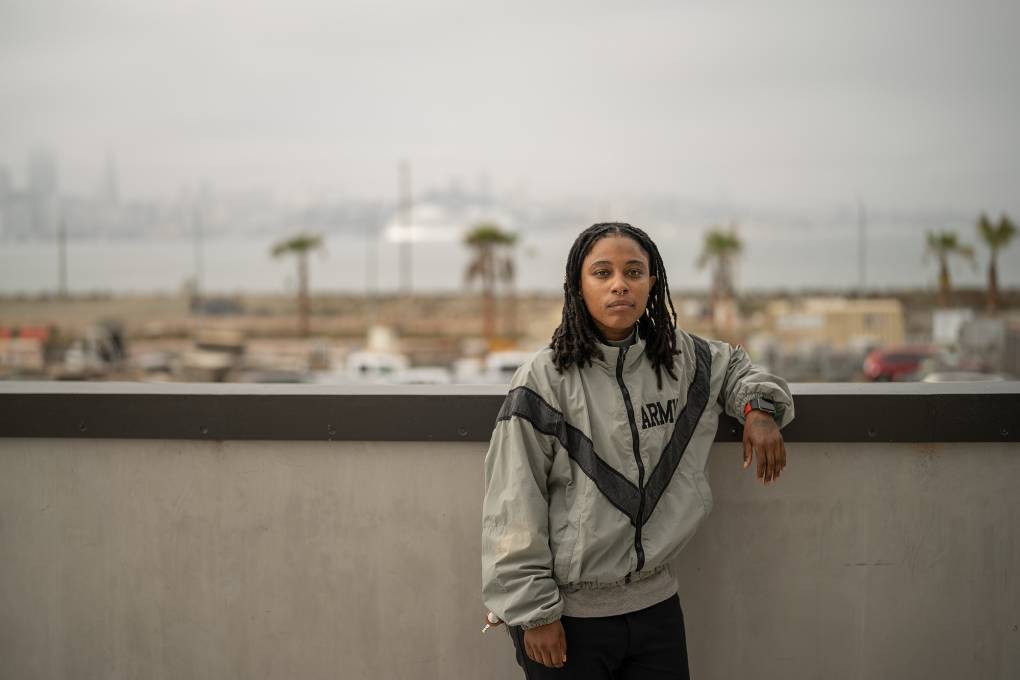
"caption": "Army veteran Latoya White at her home on Treasure Island in San Francisco on Oct. 24, 2023. A third of the nation’s homeless veterans live in California, where the state has spent several billion dollars creating more housing specifically for former military service members since 9/11.",
"description": null,
"title": "CM01",
"credit": "Loren Elliott/CalMatters",
"status": "inherit",
"altTag": "A woman stands near a cement walk, looking serious. She wears a gray, zip-up jacket that says the word, \"Army.\" Trees are behind her and a parking lot.",
"isLoading": false,
"fetchFailed": false
},
"news_11965605": {
"type": "attachments",
"id": "news_11965605",
"meta": {
"index": "attachments_1716263798",
"site": "news",
"id": "11965605",
"found": true
},
"parent": 11965530,
"imgSizes": {
"twentyfourteen-full-width": {
"file": "https://ww2.kqed.org/app/uploads/sites/10/2023/10/GettyImages-1328596577-1038x576.jpg",
"width": 1038,
"mimeType": "image/jpeg",
"height": 576
},
"thumbnail": {
"file": "https://ww2.kqed.org/app/uploads/sites/10/2023/10/GettyImages-1328596577-160x107.jpg",
"width": 160,
"mimeType": "image/jpeg",
"height": 107
},
"post-thumbnail": {
"file": "https://ww2.kqed.org/app/uploads/sites/10/2023/10/GettyImages-1328596577-672x372.jpg",
"width": 672,
"mimeType": "image/jpeg",
"height": 372
},
"kqedFullSize": {
"file": "https://ww2.kqed.org/app/uploads/sites/10/2023/10/GettyImages-1328596577-scaled.jpg",
"width": 2560,
"height": 1707
},
"2048x2048": {
"file": "https://ww2.kqed.org/app/uploads/sites/10/2023/10/GettyImages-1328596577-2048x1365.jpg",
"width": 2048,
"mimeType": "image/jpeg",
"height": 1365
},
"large": {
"file": "https://ww2.kqed.org/app/uploads/sites/10/2023/10/GettyImages-1328596577-1020x680.jpg",
"width": 1020,
"mimeType": "image/jpeg",
"height": 680
},
"1536x1536": {
"file": "https://ww2.kqed.org/app/uploads/sites/10/2023/10/GettyImages-1328596577-1536x1024.jpg",
"width": 1536,
"mimeType": "image/jpeg",
"height": 1024
},
"full-width": {
"file": "https://ww2.kqed.org/app/uploads/sites/10/2023/10/GettyImages-1328596577-1920x1280.jpg",
"width": 1920,
"mimeType": "image/jpeg",
"height": 1280
},
"medium": {
"file": "https://ww2.kqed.org/app/uploads/sites/10/2023/10/GettyImages-1328596577-800x533.jpg",
"width": 800,
"mimeType": "image/jpeg",
"height": 533
}
},
"publishDate": 1698259924,
"modified": 1698261572,
"caption": "The devastation in Gaza may be seen by U.S. children on the Internet or TV, sometimes directly showing other young people in distress. These instances can be difficult to explain to children, who may struggle to comprehend the deaths and political conflicts of the world. KQED’s Brian Watt sat down with Hilit Kletter, a child psychologist at Stanford Medicine, to discuss how parents and caregivers can speak to their children about these complex situations.",
"description": null,
"title": "Mother talking to son outdoors",
"credit": "The Good Brigade/Getty Images",
"status": "inherit",
"altTag": "A mother is speaking to her son.",
"isLoading": false,
"fetchFailed": false
},
"news_11965397": {
"type": "attachments",
"id": "news_11965397",
"meta": {
"index": "attachments_1716263798",
"site": "news",
"id": "11965397",
"found": true
},
"title": "Facebook Parent Company Meta To Lay Off 11,000 Staff",
"publishDate": 1698167473,
"status": "inherit",
"parent": 11965392,
"modified": 1698171606,
"caption": "A lawsuit filed in federal court in California claims that Meta routinely collects data on children under 13 years old without their parents' consent, in violation of federal law. A dozen U.S. states, including New York and Arizona, allege that the social media giant contributes to the youth mental health crisis by knowingly designing features on Instagram and Facebook that addict children to its platforms.",
"credit": "Liu Guanguan/China News Service via Getty Images",
"altTag": "A group of young people stand in front of Meta headquarters and take a selfie in front of the company logo, which is akin to an infinity symbol.",
"description": null,
"imgSizes": {
"medium": {
"file": "https://cdn.kqed.org/wp-content/uploads/sites/10/2023/10/GettyImages-1440405373-800x575.jpg",
"width": 800,
"height": 575,
"mimeType": "image/jpeg"
},
"large": {
"file": "https://cdn.kqed.org/wp-content/uploads/sites/10/2023/10/GettyImages-1440405373-1020x734.jpg",
"width": 1020,
"height": 734,
"mimeType": "image/jpeg"
},
"thumbnail": {
"file": "https://cdn.kqed.org/wp-content/uploads/sites/10/2023/10/GettyImages-1440405373-160x115.jpg",
"width": 160,
"height": 115,
"mimeType": "image/jpeg"
},
"1536x1536": {
"file": "https://cdn.kqed.org/wp-content/uploads/sites/10/2023/10/GettyImages-1440405373-1536x1105.jpg",
"width": 1536,
"height": 1105,
"mimeType": "image/jpeg"
},
"2048x2048": {
"file": "https://cdn.kqed.org/wp-content/uploads/sites/10/2023/10/GettyImages-1440405373-2048x1473.jpg",
"width": 2048,
"height": 1473,
"mimeType": "image/jpeg"
},
"post-thumbnail": {
"file": "https://cdn.kqed.org/wp-content/uploads/sites/10/2023/10/GettyImages-1440405373-672x372.jpg",
"width": 672,
"height": 372,
"mimeType": "image/jpeg"
},
"twentyfourteen-full-width": {
"file": "https://cdn.kqed.org/wp-content/uploads/sites/10/2023/10/GettyImages-1440405373-1038x576.jpg",
"width": 1038,
"height": 576,
"mimeType": "image/jpeg"
},
"full-width": {
"file": "https://cdn.kqed.org/wp-content/uploads/sites/10/2023/10/GettyImages-1440405373-1920x1381.jpg",
"width": 1920,
"height": 1381,
"mimeType": "image/jpeg"
},
"kqedFullSize": {
"file": "https://cdn.kqed.org/wp-content/uploads/sites/10/2023/10/GettyImages-1440405373-e1779298069814.jpg",
"width": 2000,
"height": 1439
}
},
"isLoading": false,
"fetchFailed": false
},
"news_11954906": {
"type": "attachments",
"id": "news_11954906",
"meta": {
"index": "attachments_1716263798",
"site": "news",
"id": "11954906",
"found": true
},
"parent": 11970332,
"imgSizes": {
"twentyfourteen-full-width": {
"file": "https://cdn.kqed.org/wp-content/uploads/sites/10/2023/07/230701-FRESNO-UNHOUSED-HEAT-MHN-01-KQED-1038x576.jpg",
"width": 1038,
"mimeType": "image/jpeg",
"height": 576
},
"thumbnail": {
"file": "https://cdn.kqed.org/wp-content/uploads/sites/10/2023/07/230701-FRESNO-UNHOUSED-HEAT-MHN-01-KQED-160x107.jpg",
"width": 160,
"mimeType": "image/jpeg",
"height": 107
},
"post-thumbnail": {
"file": "https://cdn.kqed.org/wp-content/uploads/sites/10/2023/07/230701-FRESNO-UNHOUSED-HEAT-MHN-01-KQED-672x372.jpg",
"width": 672,
"mimeType": "image/jpeg",
"height": 372
},
"kqedFullSize": {
"file": "https://cdn.kqed.org/wp-content/uploads/sites/10/2023/07/230701-FRESNO-UNHOUSED-HEAT-MHN-01-KQED.jpg",
"width": 2000,
"height": 1333
},
"large": {
"file": "https://cdn.kqed.org/wp-content/uploads/sites/10/2023/07/230701-FRESNO-UNHOUSED-HEAT-MHN-01-KQED-1020x680.jpg",
"width": 1020,
"mimeType": "image/jpeg",
"height": 680
},
"1536x1536": {
"file": "https://cdn.kqed.org/wp-content/uploads/sites/10/2023/07/230701-FRESNO-UNHOUSED-HEAT-MHN-01-KQED-1536x1024.jpg",
"width": 1536,
"mimeType": "image/jpeg",
"height": 1024
},
"full-width": {
"file": "https://cdn.kqed.org/wp-content/uploads/sites/10/2023/07/230701-FRESNO-UNHOUSED-HEAT-MHN-01-KQED-1920x1280.jpg",
"width": 1920,
"mimeType": "image/jpeg",
"height": 1280
},
"medium": {
"file": "https://cdn.kqed.org/wp-content/uploads/sites/10/2023/07/230701-FRESNO-UNHOUSED-HEAT-MHN-01-KQED-800x533.jpg",
"width": 800,
"mimeType": "image/jpeg",
"height": 533
}
},
"publishDate": 1688399236,
"modified": 1702936552,
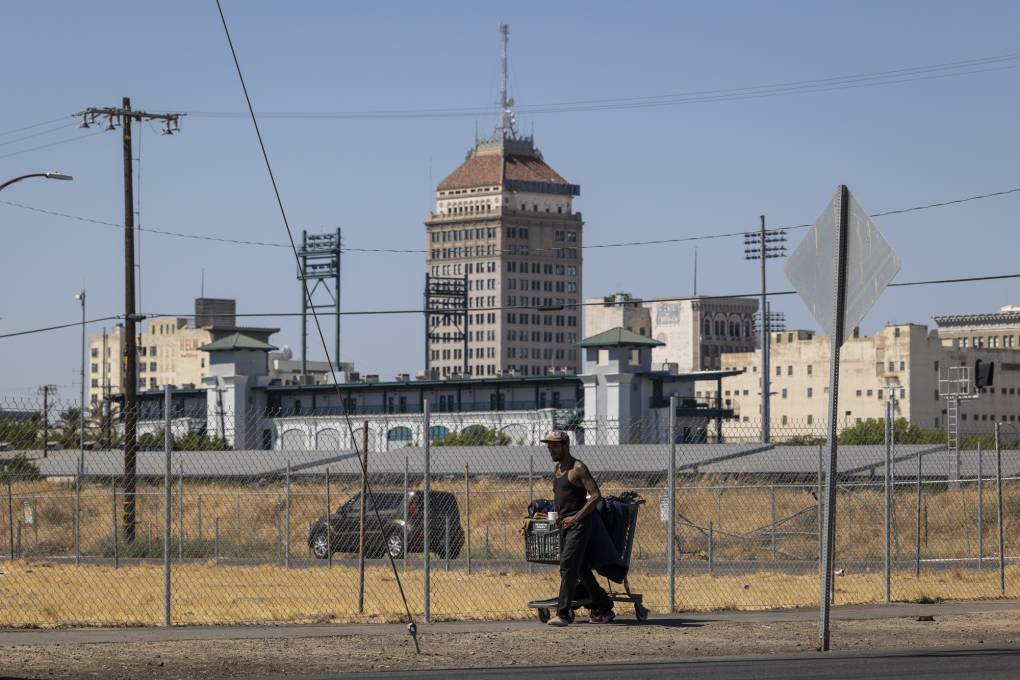
"caption": "A man pushes a cart near downtown Fresno on a 108-degree day. Officials estimate about 1,700 people are currently living on Fresno’s streets. ",
"description": null,
"title": "The Tower District in Fresno on July 1, 2023.",
"credit": "Martin do Nascimento/KQED",
"status": "inherit",
"altTag": "A man in a baseball cap pulls a shopping cart up a sidewalk.",
"isLoading": false,
"fetchFailed": false
},
"news_11828192": {
"type": "attachments",
"id": "news_11828192",
"meta": {
"index": "attachments_1716263798",
"site": "news",
"id": "11828192",
"found": true
},
"parent": 11827832,
"imgSizes": {
"apple_news_ca_landscape_5_5": {
"file": "https://ww2.kqed.org/app/uploads/sites/10/2020/07/Arash-1044x783.jpg",
"width": 1044,
"mimeType": "image/jpeg",
"height": 783
},
"apple_news_ca_square_4_0": {
"file": "https://ww2.kqed.org/app/uploads/sites/10/2020/07/Arash-470x470.jpg",
"width": 470,
"mimeType": "image/jpeg",
"height": 470
},
"twentyfourteen-full-width": {
"file": "https://ww2.kqed.org/app/uploads/sites/10/2020/07/Arash-1038x576.jpg",
"width": 1038,
"mimeType": "image/jpeg",
"height": 576
},
"thumbnail": {
"file": "https://ww2.kqed.org/app/uploads/sites/10/2020/07/Arash-160x101.jpg",
"width": 160,
"mimeType": "image/jpeg",
"height": 101
},
"post-thumbnail": {
"file": "https://ww2.kqed.org/app/uploads/sites/10/2020/07/Arash-672x372.jpg",
"width": 672,
"mimeType": "image/jpeg",
"height": 372
},
"kqedFullSize": {
"file": "https://ww2.kqed.org/app/uploads/sites/10/2020/07/Arash.jpg",
"width": 1900,
"height": 1196
},
"apple_news_ca_landscape_4_7": {
"file": "https://ww2.kqed.org/app/uploads/sites/10/2020/07/Arash-632x474.jpg",
"width": 632,
"mimeType": "image/jpeg",
"height": 474
},
"large": {
"file": "https://ww2.kqed.org/app/uploads/sites/10/2020/07/Arash-1020x642.jpg",
"width": 1020,
"mimeType": "image/jpeg",
"height": 642
},
"apple_news_ca_landscape_4_0": {
"file": "https://ww2.kqed.org/app/uploads/sites/10/2020/07/Arash-536x402.jpg",
"width": 536,
"mimeType": "image/jpeg",
"height": 402
},
"apple_news_ca_portrait_12_9": {
"file": "https://ww2.kqed.org/app/uploads/sites/10/2020/07/Arash-1122x1196.jpg",
"width": 1122,
"mimeType": "image/jpeg",
"height": 1196
},
"medium": {
"file": "https://ww2.kqed.org/app/uploads/sites/10/2020/07/Arash-800x504.jpg",
"width": 800,
"mimeType": "image/jpeg",
"height": 504
},
"apple_news_ca_portrait_4_0": {
"file": "https://ww2.kqed.org/app/uploads/sites/10/2020/07/Arash-354x472.jpg",
"width": 354,
"mimeType": "image/jpeg",
"height": 472
},
"apple_news_ca_portrait_9_7": {
"file": "https://ww2.kqed.org/app/uploads/sites/10/2020/07/Arash-840x1120.jpg",
"width": 840,
"mimeType": "image/jpeg",
"height": 1120
},
"apple_news_ca_landscape_12_9": {
"file": "https://ww2.kqed.org/app/uploads/sites/10/2020/07/Arash-1832x1196.jpg",
"width": 1832,
"mimeType": "image/jpeg",
"height": 1196
},
"apple_news_ca_square_9_7": {
"file": "https://ww2.kqed.org/app/uploads/sites/10/2020/07/Arash-1104x1104.jpg",
"width": 1104,
"mimeType": "image/jpeg",
"height": 1104
},
"1536x1536": {
"file": "https://ww2.kqed.org/app/uploads/sites/10/2020/07/Arash-1536x967.jpg",
"width": 1536,
"mimeType": "image/jpeg",
"height": 967
},
"apple_news_ca_portrait_4_7": {
"file": "https://ww2.kqed.org/app/uploads/sites/10/2020/07/Arash-414x552.jpg",
"width": 414,
"mimeType": "image/jpeg",
"height": 552
},
"apple_news_ca_square_12_9": {
"file": "https://ww2.kqed.org/app/uploads/sites/10/2020/07/Arash-1472x1196.jpg",
"width": 1472,
"mimeType": "image/jpeg",
"height": 1196
},
"apple_news_ca_portrait_5_5": {
"file": "https://ww2.kqed.org/app/uploads/sites/10/2020/07/Arash-687x916.jpg",
"width": 687,
"mimeType": "image/jpeg",
"height": 916
},
"apple_news_ca_square_4_7": {
"file": "https://ww2.kqed.org/app/uploads/sites/10/2020/07/Arash-550x550.jpg",
"width": 550,
"mimeType": "image/jpeg",
"height": 550
},
"apple_news_ca_landscape_9_7": {
"file": "https://ww2.kqed.org/app/uploads/sites/10/2020/07/Arash-1376x1032.jpg",
"width": 1376,
"mimeType": "image/jpeg",
"height": 1032
},
"apple_news_ca_square_5_5": {
"file": "https://ww2.kqed.org/app/uploads/sites/10/2020/07/Arash-912x912.jpg",
"width": 912,
"mimeType": "image/jpeg",
"height": 912
}
},
"publishDate": 1594332384,
"modified": 1594332542,
"caption": "Experiencing a hate crime, or witnessing one, can be a traumatic experience. Arash Malekzadeh, whose own experience is featured in this story, captured how it felt in this artwork.",
"description": null,
"title": "Arash",
"credit": "Arash Malekzadeh",
"status": "inherit",
"isLoading": false,
"fetchFailed": false
},
"news_11964796": {
"type": "attachments",
"id": "news_11964796",
"meta": {
"index": "attachments_1716263798",
"site": "news",
"id": "11964796",
"found": true
},
"parent": 11964791,
"imgSizes": {
"twentyfourteen-full-width": {
"file": "https://ww2.kqed.org/app/uploads/sites/10/2023/10/CalMatters01-1038x576.jpg",
"width": 1038,
"mimeType": "image/jpeg",
"height": 576
},
"thumbnail": {
"file": "https://ww2.kqed.org/app/uploads/sites/10/2023/10/CalMatters01-160x107.jpg",
"width": 160,
"mimeType": "image/jpeg",
"height": 107
},
"post-thumbnail": {
"file": "https://ww2.kqed.org/app/uploads/sites/10/2023/10/CalMatters01-672x372.jpg",
"width": 672,
"mimeType": "image/jpeg",
"height": 372
},
"kqedFullSize": {
"file": "https://ww2.kqed.org/app/uploads/sites/10/2023/10/CalMatters01.jpg",
"width": 2000,
"height": 1333
},
"large": {
"file": "https://ww2.kqed.org/app/uploads/sites/10/2023/10/CalMatters01-1020x680.jpg",
"width": 1020,
"mimeType": "image/jpeg",
"height": 680
},
"1536x1536": {
"file": "https://ww2.kqed.org/app/uploads/sites/10/2023/10/CalMatters01-1536x1024.jpg",
"width": 1536,
"mimeType": "image/jpeg",
"height": 1024
},
"full-width": {
"file": "https://ww2.kqed.org/app/uploads/sites/10/2023/10/CalMatters01-1920x1280.jpg",
"width": 1920,
"mimeType": "image/jpeg",
"height": 1280
},
"medium": {
"file": "https://ww2.kqed.org/app/uploads/sites/10/2023/10/CalMatters01-800x533.jpg",
"width": 800,
"mimeType": "image/jpeg",
"height": 533
}
},
"publishDate": 1697561951,
"modified": 1697562044,
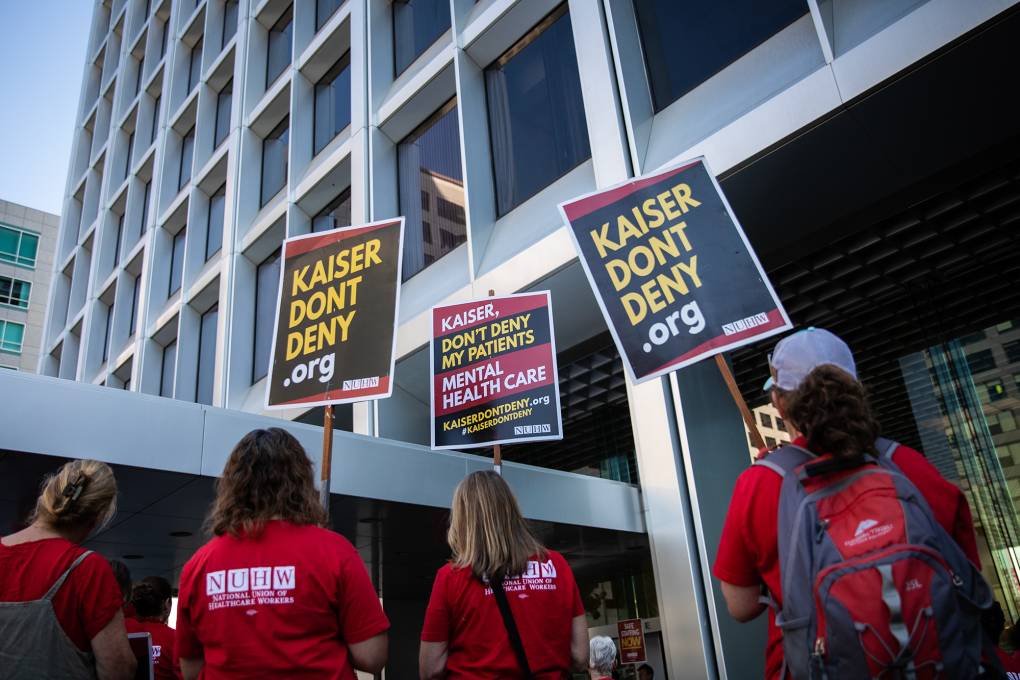
"caption": "Striking Kaiser Permanente mental health workers stage a die-in at the Kaiser Headquarters in Oakland on Oct. 7, 2022.",
"description": null,
"title": "CalMatters01",
"credit": "Martin do Nascimento/CalMatters",
"status": "inherit",
"altTag": "Mental health workers in red T-shirts hold signs in protest outside of a Kaiser facility in Oakland.",
"isLoading": false,
"fetchFailed": false
},
"news_11964286": {
"type": "attachments",
"id": "news_11964286",
"meta": {
"index": "attachments_1716263798",
"site": "news",
"id": "11964286",
"found": true
},
"parent": 0,
"imgSizes": {
"twentyfourteen-full-width": {
"file": "https://ww2.kqed.org/app/uploads/sites/10/2023/10/231012-NEWSOM-MENTAL-HEALTH-AP-DD-01-KQED-1038x576.jpg",
"width": 1038,
"mimeType": "image/jpeg",
"height": 576
},
"thumbnail": {
"file": "https://ww2.kqed.org/app/uploads/sites/10/2023/10/231012-NEWSOM-MENTAL-HEALTH-AP-DD-01-KQED-160x107.jpg",
"width": 160,
"mimeType": "image/jpeg",
"height": 107
},
"post-thumbnail": {
"file": "https://ww2.kqed.org/app/uploads/sites/10/2023/10/231012-NEWSOM-MENTAL-HEALTH-AP-DD-01-KQED-672x372.jpg",
"width": 672,
"mimeType": "image/jpeg",
"height": 372
},
"kqedFullSize": {
"file": "https://ww2.kqed.org/app/uploads/sites/10/2023/10/231012-NEWSOM-MENTAL-HEALTH-AP-DD-01-KQED.jpg",
"width": 2000,
"height": 1333
},
"large": {
"file": "https://ww2.kqed.org/app/uploads/sites/10/2023/10/231012-NEWSOM-MENTAL-HEALTH-AP-DD-01-KQED-1020x680.jpg",
"width": 1020,
"mimeType": "image/jpeg",
"height": 680
},
"1536x1536": {
"file": "https://ww2.kqed.org/app/uploads/sites/10/2023/10/231012-NEWSOM-MENTAL-HEALTH-AP-DD-01-KQED-1536x1024.jpg",
"width": 1536,
"mimeType": "image/jpeg",
"height": 1024
},
"full-width": {
"file": "https://ww2.kqed.org/app/uploads/sites/10/2023/10/231012-NEWSOM-MENTAL-HEALTH-AP-DD-01-KQED-1920x1280.jpg",
"width": 1920,
"mimeType": "image/jpeg",
"height": 1280
},
"medium": {
"file": "https://ww2.kqed.org/app/uploads/sites/10/2023/10/231012-NEWSOM-MENTAL-HEALTH-AP-DD-01-KQED-800x533.jpg",
"width": 800,
"mimeType": "image/jpeg",
"height": 533
}
},
"publishDate": 1697144472,
"modified": 1697151766,
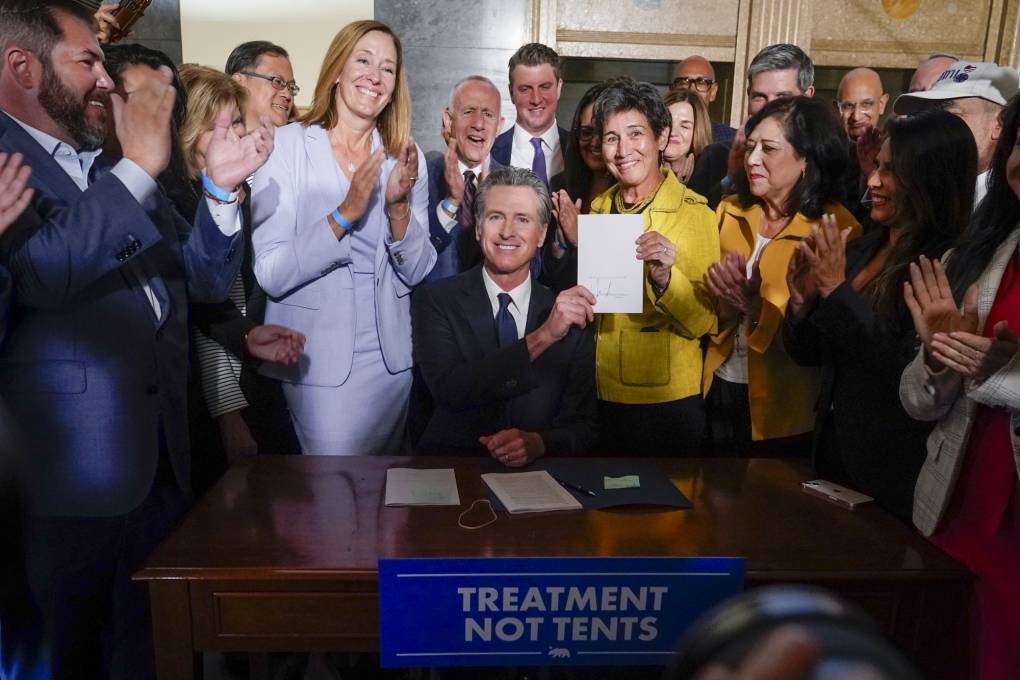
"caption": "Gov. Gavin Newsom signs off on 2 proposals in Los Angeles, Thursday, Oct. 12, 2023, to transform the state's mental health system and address the state's worsening homelessness crisis, putting them both before voters in 2024. ",
"description": null,
"title": "Gavin Newsom",
"credit": "Damian Dovarganes/AP Photo",
"status": "inherit",
"altTag": "A group of people standing around a table and posing for a photo with two people in the center holding a piece of paper together.",
"isLoading": false,
"fetchFailed": false
},
"news_11963971": {
"type": "attachments",
"id": "news_11963971",
"meta": {
"index": "attachments_1716263798",
"site": "news",
"id": "11963971",
"found": true
},
"parent": 11963961,
"imgSizes": {
"twentyfourteen-full-width": {
"file": "https://ww2.kqed.org/app/uploads/sites/10/2023/10/092623-Newsom-Gun-Bill-Signing-MG-CM-03-1038x576.jpg",
"width": 1038,
"mimeType": "image/jpeg",
"height": 576
},
"thumbnail": {
"file": "https://ww2.kqed.org/app/uploads/sites/10/2023/10/092623-Newsom-Gun-Bill-Signing-MG-CM-03-160x107.jpg",
"width": 160,
"mimeType": "image/jpeg",
"height": 107
},
"post-thumbnail": {
"file": "https://ww2.kqed.org/app/uploads/sites/10/2023/10/092623-Newsom-Gun-Bill-Signing-MG-CM-03-672x372.jpg",
"width": 672,
"mimeType": "image/jpeg",
"height": 372
},
"kqedFullSize": {
"file": "https://ww2.kqed.org/app/uploads/sites/10/2023/10/092623-Newsom-Gun-Bill-Signing-MG-CM-03.jpg",
"width": 2000,
"height": 1333
},
"large": {
"file": "https://ww2.kqed.org/app/uploads/sites/10/2023/10/092623-Newsom-Gun-Bill-Signing-MG-CM-03-1020x680.jpg",
"width": 1020,
"mimeType": "image/jpeg",
"height": 680
},
"1536x1536": {
"file": "https://ww2.kqed.org/app/uploads/sites/10/2023/10/092623-Newsom-Gun-Bill-Signing-MG-CM-03-1536x1024.jpg",
"width": 1536,
"mimeType": "image/jpeg",
"height": 1024
},
"full-width": {
"file": "https://ww2.kqed.org/app/uploads/sites/10/2023/10/092623-Newsom-Gun-Bill-Signing-MG-CM-03-1920x1280.jpg",
"width": 1920,
"mimeType": "image/jpeg",
"height": 1280
},
"medium": {
"file": "https://ww2.kqed.org/app/uploads/sites/10/2023/10/092623-Newsom-Gun-Bill-Signing-MG-CM-03-800x533.jpg",
"width": 800,
"mimeType": "image/jpeg",
"height": 533
}
},
"publishDate": 1696962198,
"modified": 1696962314,
"caption": "Gov. Gavin Newsom during a press conference where he signed new gun legislation into law at the Capitol Annex Swing Space in Sacramento on Sept. 26, 2023.",
"description": null,
"title": "092623-Newsom-Gun-Bill-Signing-MG-CM-03",
"credit": "Miguel Gutierrez Jr./CalMatters",
"status": "inherit",
"altTag": "A profile of Gov. Gavin Newsom looking very serious.",
"isLoading": false,
"fetchFailed": false
},
"news_11961472": {
"type": "attachments",
"id": "news_11961472",
"meta": {
"index": "attachments_1716263798",
"site": "news",
"id": "11961472",
"found": true
},
"parent": 0,
"imgSizes": {
"twentyfourteen-full-width": {
"file": "https://ww2.kqed.org/app/uploads/sites/10/2023/09/230915-HOSPICE-Getty-KQED_1-1038x576.jpg",
"width": 1038,
"mimeType": "image/jpeg",
"height": 576
},
"thumbnail": {
"file": "https://ww2.kqed.org/app/uploads/sites/10/2023/09/230915-HOSPICE-Getty-KQED_1-160x107.jpg",
"width": 160,
"mimeType": "image/jpeg",
"height": 107
},
"post-thumbnail": {
"file": "https://ww2.kqed.org/app/uploads/sites/10/2023/09/230915-HOSPICE-Getty-KQED_1-672x372.jpg",
"width": 672,
"mimeType": "image/jpeg",
"height": 372
},
"kqedFullSize": {
"file": "https://ww2.kqed.org/app/uploads/sites/10/2023/09/230915-HOSPICE-Getty-KQED_1.jpg",
"width": 2000,
"height": 1334
},
"large": {
"file": "https://ww2.kqed.org/app/uploads/sites/10/2023/09/230915-HOSPICE-Getty-KQED_1-1020x680.jpg",
"width": 1020,
"mimeType": "image/jpeg",
"height": 680
},
"1536x1536": {
"file": "https://ww2.kqed.org/app/uploads/sites/10/2023/09/230915-HOSPICE-Getty-KQED_1-1536x1025.jpg",
"width": 1536,
"mimeType": "image/jpeg",
"height": 1025
},
"full-width": {
"file": "https://ww2.kqed.org/app/uploads/sites/10/2023/09/230915-HOSPICE-Getty-KQED_1-1920x1281.jpg",
"width": 1920,
"mimeType": "image/jpeg",
"height": 1281
},
"medium": {
"file": "https://ww2.kqed.org/app/uploads/sites/10/2023/09/230915-HOSPICE-Getty-KQED_1-800x534.jpg",
"width": 800,
"mimeType": "image/jpeg",
"height": 534
}
},
"publishDate": 1694821309,
"modified": 1694821519,
"caption": "Support, care and helping hands for an elderly patient during a consultation at a nursing clinic.",
"description": null,
"title": "Support, care and helping hands for an elderly patient during a consultation at a nursing clinic. Closeup of hope, trust and comfort from a woman caregiver consulting a senior man in retirement home",
"credit": "Getty Images",
"status": "inherit",
"altTag": "A person puts their hand on another person's shoulder.",
"isLoading": false,
"fetchFailed": false
},
"news_11960676": {
"type": "attachments",
"id": "news_11960676",
"meta": {
"index": "attachments_1716263798",
"site": "news",
"id": "11960676",
"found": true
},
"parent": 11970292,
"imgSizes": {
"twentyfourteen-full-width": {
"file": "https://cdn.kqed.org/wp-content/uploads/sites/10/2023/09/091023-CAMBODIAN-MENTAL-HEALTH-MD-01-KQED-1038x576.jpg",
"width": 1038,
"mimeType": "image/jpeg",
"height": 576
},
"thumbnail": {
"file": "https://cdn.kqed.org/wp-content/uploads/sites/10/2023/09/091023-CAMBODIAN-MENTAL-HEALTH-MD-01-KQED-160x107.jpg",
"width": 160,
"mimeType": "image/jpeg",
"height": 107
},
"post-thumbnail": {
"file": "https://cdn.kqed.org/wp-content/uploads/sites/10/2023/09/091023-CAMBODIAN-MENTAL-HEALTH-MD-01-KQED-672x372.jpg",
"width": 672,
"mimeType": "image/jpeg",
"height": 372
},
"kqedFullSize": {
"file": "https://cdn.kqed.org/wp-content/uploads/sites/10/2023/09/091023-CAMBODIAN-MENTAL-HEALTH-MD-01-KQED.jpg",
"width": 2000,
"height": 1333
},
"large": {
"file": "https://cdn.kqed.org/wp-content/uploads/sites/10/2023/09/091023-CAMBODIAN-MENTAL-HEALTH-MD-01-KQED-1020x680.jpg",
"width": 1020,
"mimeType": "image/jpeg",
"height": 680
},
"1536x1536": {
"file": "https://cdn.kqed.org/wp-content/uploads/sites/10/2023/09/091023-CAMBODIAN-MENTAL-HEALTH-MD-01-KQED-1536x1024.jpg",
"width": 1536,
"mimeType": "image/jpeg",
"height": 1024
},
"full-width": {
"file": "https://cdn.kqed.org/wp-content/uploads/sites/10/2023/09/091023-CAMBODIAN-MENTAL-HEALTH-MD-01-KQED-1920x1280.jpg",
"width": 1920,
"mimeType": "image/jpeg",
"height": 1280
},
"medium": {
"file": "https://cdn.kqed.org/wp-content/uploads/sites/10/2023/09/091023-CAMBODIAN-MENTAL-HEALTH-MD-01-KQED-800x533.jpg",
"width": 800,
"mimeType": "image/jpeg",
"height": 533
}
},
"publishDate": 1694467559,
"modified": 1702927990,
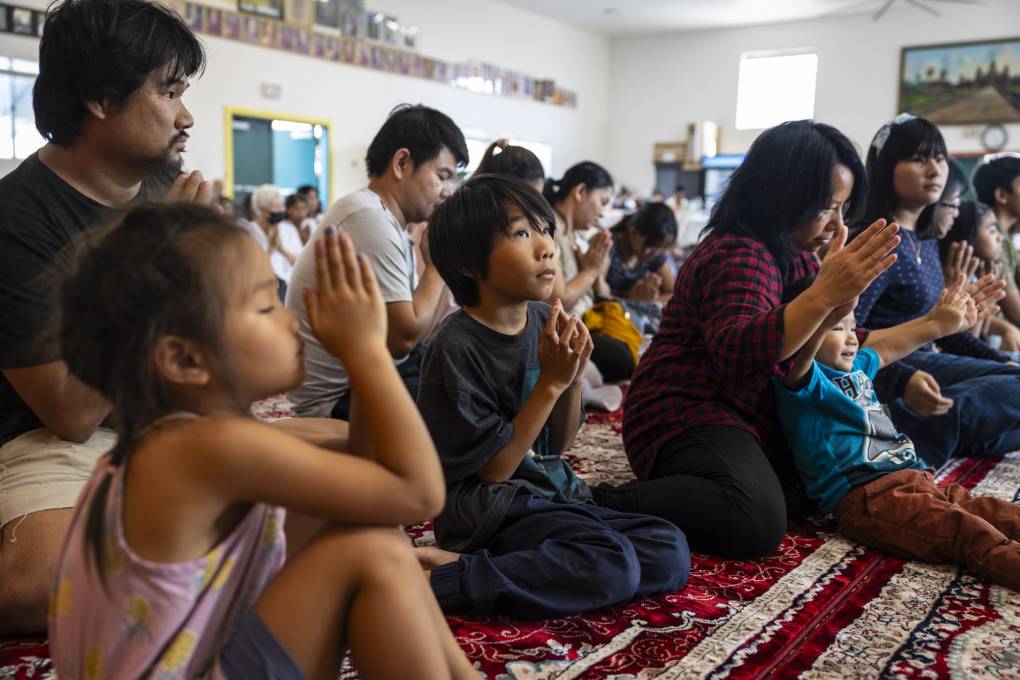
"caption": "Tyler Neang (center) prays alongside his family at the Fresno Cambodian Buddhist Society temple on Sept. 9, 2023.",
"description": null,
"title": "091023-CAMBODIAN MENTAL HEALTH-MD-01-KQED",
"credit": "Martin do Nascimento/KQED",
"status": "inherit",
"altTag": "A boy holds his hands together in prayer while sitting in a large group of people doing the same indoors.",
"isLoading": false,
"fetchFailed": false
},
"news_11955872": {
"type": "attachments",
"id": "news_11955872",
"meta": {
"index": "attachments_1716263798",
"site": "news",
"id": "11955872",
"found": true
},
"parent": 0,
"imgSizes": {
"twentyfourteen-full-width": {
"file": "https://ww2.kqed.org/app/uploads/sites/10/2023/07/CalMattersNewsom-1038x576.jpg",
"width": 1038,
"mimeType": "image/jpeg",
"height": 576
},
"thumbnail": {
"file": "https://ww2.kqed.org/app/uploads/sites/10/2023/07/CalMattersNewsom-160x107.jpg",
"width": 160,
"mimeType": "image/jpeg",
"height": 107
},
"post-thumbnail": {
"file": "https://ww2.kqed.org/app/uploads/sites/10/2023/07/CalMattersNewsom-672x372.jpg",
"width": 672,
"mimeType": "image/jpeg",
"height": 372
},
"kqedFullSize": {
"file": "https://ww2.kqed.org/app/uploads/sites/10/2023/07/CalMattersNewsom.jpg",
"width": 2000,
"height": 1334
},
"large": {
"file": "https://ww2.kqed.org/app/uploads/sites/10/2023/07/CalMattersNewsom-1020x680.jpg",
"width": 1020,
"mimeType": "image/jpeg",
"height": 680
},
"1536x1536": {
"file": "https://ww2.kqed.org/app/uploads/sites/10/2023/07/CalMattersNewsom-1536x1025.jpg",
"width": 1536,
"mimeType": "image/jpeg",
"height": 1025
},
"full-width": {
"file": "https://ww2.kqed.org/app/uploads/sites/10/2023/07/CalMattersNewsom-1920x1281.jpg",
"width": 1920,
"mimeType": "image/jpeg",
"height": 1281
},
"medium": {
"file": "https://ww2.kqed.org/app/uploads/sites/10/2023/07/CalMattersNewsom-800x534.jpg",
"width": 800,
"mimeType": "image/jpeg",
"height": 534
}
},
"publishDate": 1689620343,
"modified": 1689620468,
"caption": "Gov. Gavin Newsom speaks at a news conference announcing a proposed a 2024 ballot initiative to improve mental health services across the state, at Alvarado Hospital in San Diego, on March 19, 2023.",
"description": null,
"title": "Califorina Governor",
"credit": "Adriana Heldiz/The San Diego Union-Tribune via AP, Pool",
"status": "inherit",
"altTag": "California Gov. Gavin Newsom in a navy blazer and white shirt speaks from behind a black podium with a sign on the front that reads, \"Better Mental Health Treatment.\" Eight men and women in business attire stand solemn-faced behind him.",
"isLoading": false,
"fetchFailed": false
}
},
"audioPlayerReducer": {
"postId": "stream_live",
"isPaused": true,
"isPlaying": false,
"pfsActive": false,
"pledgeModalIsOpen": true,
"playerDrawerIsOpen": false,
"liveAudioPlayStartedAt": 0,
"liveAudioPlayContext": ""
},
"authorsReducer": {
"byline_news_11966533": {
"type": "authors",
"id": "byline_news_11966533",
"meta": {
"override": true
},
"slug": "byline_news_11966533",
"name": "\u003ca href=\"https://calmatters.org/author/shreya-agrawal/\">Shreya Agrawal\u003c/a>",
"isLoading": false
},
"byline_news_11965392": {
"type": "authors",
"id": "byline_news_11965392",
"meta": {
"override": true
},
"slug": "byline_news_11965392",
"name": "\u003ca href=\"https://twitter.com/BarbaraOrtutay\">Barbara Ortutay\u003c/a>, Associated Press",
"isLoading": false
},
"byline_news_11964791": {
"type": "authors",
"id": "byline_news_11964791",
"meta": {
"override": true
},
"slug": "byline_news_11964791",
"name": "\u003ca href=\"https://calmatters.org/author/jocelyn-wiener/\">Jocelyn Wiener\u003c/a>",
"isLoading": false
},
"byline_news_11963961": {
"type": "authors",
"id": "byline_news_11963961",
"meta": {
"override": true
},
"slug": "byline_news_11963961",
"name": "\u003ca href=\"https://calmatters.org/author/jocelyn-wiener/\">Jocelyn Wiener\u003c/a>",
"isLoading": false
},
"byline_news_11961237": {
"type": "authors",
"id": "byline_news_11961237",
"meta": {
"override": true
},
"slug": "byline_news_11961237",
"name": "\u003ca href=\"https://twitter.com/SoreathH\">Soreath Hok\u003c/a>",
"isLoading": false
},
"byline_news_11955844": {
"type": "authors",
"id": "byline_news_11955844",
"meta": {
"override": true
},
"slug": "byline_news_11955844",
"name": "\u003ca href=\"https://calmatters.org/author/kristen-hwang/\">Kristen Hwang\u003c/a>",
"isLoading": false
},
"gmarzorati": {
"type": "authors",
"id": "227",
"meta": {
"index": "authors_1716337520",
"id": "227",
"found": true
},
"name": "Guy Marzorati",
"firstName": "Guy",
"lastName": "Marzorati",
"slug": "gmarzorati",
"email": "gmarzorati@KQED.org",
"display_author_email": true,
"staff_mastheads": [
"news"
],
"title": "Correspondent",
"bio": "Guy Marzorati is a correspondent on KQED's California Politics and Government Desk, based in San Jose. A graduate of Santa Clara University, Guy joined KQED in 2013. He reports on state and local politics and produces KQED's digital voter guide.",
"avatar": "https://secure.gravatar.com/avatar/e7038b8dbfd55b104369b76b1cd0b9de?s=600&d=blank&r=g",
"twitter": "guymarzorati",
"facebook": null,
"instagram": null,
"linkedin": null,
"sites": [
{
"site": "",
"roles": [
"editor"
]
},
{
"site": "news",
"roles": [
"editor"
]
},
{
"site": "science",
"roles": [
"editor"
]
},
{
"site": "forum",
"roles": [
"editor"
]
},
{
"site": "elections",
"roles": [
"editor"
]
},
{
"site": "liveblog",
"roles": [
"editor"
]
}
],
"headData": {
"title": "Guy Marzorati | KQED",
"description": "Correspondent",
"ogImgSrc": "https://secure.gravatar.com/avatar/e7038b8dbfd55b104369b76b1cd0b9de?s=600&d=blank&r=g",
"twImgSrc": "https://secure.gravatar.com/avatar/e7038b8dbfd55b104369b76b1cd0b9de?s=600&d=blank&r=g"
},
"isLoading": false,
"link": "/author/gmarzorati"
},
"ecruzguevarra": {
"type": "authors",
"id": "8654",
"meta": {
"index": "authors_1716337520",
"id": "8654",
"found": true
},
"name": "Ericka Cruz Guevarra",
"firstName": "Ericka",
"lastName": "Cruz Guevarra",
"slug": "ecruzguevarra",
"email": "ecruzguevarra@kqed.org",
"display_author_email": true,
"staff_mastheads": [
"news"
],
"title": "Producer, The Bay Podcast",
"bio": "Ericka Cruz Guevarra is host of \u003ca href=\"https://www.kqed.org/podcasts/thebay\">\u003cem>The Bay\u003c/em>\u003c/a> podcast at KQED. Before host, she was the show’s producer. Her work in that capacity includes a three-part reported series on policing in Vallejo, which won a 2020 excellence in journalism award from the Society of Professional Journalists. Ericka has worked as a breaking news reporter at Oregon Public Broadcasting, helped produce the Code Switch podcast, and was KQED’s inaugural Raul Ramirez Diversity Fund intern. She’s also an alumna of NPR’s Next Generation Radio program. Send her an email if you have strong feelings about whether Fairfield and Suisun City are the Bay. Ericka is represented by SAG-AFTRA.",
"avatar": "https://secure.gravatar.com/avatar/accefc1de4bafc7e234b69bcb9b6f6536c130fd84709bc3069ef11a78787e1bb?s=600&d=blank&r=g",
"twitter": "NotoriousECG",
"bluesky": null,
"facebook": null,
"instagram": null,
"linkedin": null,
"sites": [
{
"site": "arts",
"roles": [
"subscriber"
]
},
{
"site": "news",
"roles": [
"editor",
"manage_categories"
]
},
{
"site": "futureofyou",
"roles": [
"subscriber"
]
},
{
"site": "stateofhealth",
"roles": [
"subscriber"
]
},
{
"site": "science",
"roles": [
"editor"
]
},
{
"site": "forum",
"roles": [
"subscriber"
]
}
],
"headData": {
"title": "Ericka Cruz Guevarra | KQED",
"description": "Producer, The Bay Podcast",
"ogImgSrc": "https://secure.gravatar.com/avatar/accefc1de4bafc7e234b69bcb9b6f6536c130fd84709bc3069ef11a78787e1bb?s=600&d=blank&r=g",
"twImgSrc": "https://secure.gravatar.com/avatar/accefc1de4bafc7e234b69bcb9b6f6536c130fd84709bc3069ef11a78787e1bb?s=600&d=blank&r=g"
},
"isLoading": false,
"link": "/author/ecruzguevarra"
},
"vrancano": {
"type": "authors",
"id": "11276",
"meta": {
"index": "authors_1716337520",
"id": "11276",
"found": true
},
"name": "Vanessa Rancaño",
"firstName": "Vanessa",
"lastName": "Rancaño",
"slug": "vrancano",
"email": "vrancano@kqed.org",
"display_author_email": false,
"staff_mastheads": [
"news"
],
"title": "Reporter",
"bio": "Vanessa Rancaño is a features reporter for KQED. She’s also covered homelessness and education for the station and reported from the Central Valley. Her work has aired across public radio, from flagship national news shows to longform narrative podcasts. Before taking up a mic, she worked as a freelance print journalist. She’s been recognized with a number of national and regional awards. Vanessa grew up in California's Central Valley. She's a former NPR Kroc Fellow, and a graduate of the UC Berkeley Graduate School of Journalism.",
"avatar": "https://secure.gravatar.com/avatar/b3a383dfb0e7ee1c17568f2cf067904ab654d6e3de9743fc661f3c788ade1bed?s=600&d=blank&r=g",
"twitter": "vanessarancano",
"bluesky": null,
"facebook": null,
"instagram": null,
"linkedin": null,
"sites": [
{
"site": "arts",
"roles": [
"editor"
]
},
{
"site": "news",
"roles": [
"editor"
]
},
{
"site": "liveblog",
"roles": [
"contributor"
]
}
],
"headData": {
"title": "Vanessa Rancaño | KQED",
"description": "Reporter",
"ogImgSrc": "https://secure.gravatar.com/avatar/b3a383dfb0e7ee1c17568f2cf067904ab654d6e3de9743fc661f3c788ade1bed?s=600&d=blank&r=g",
"twImgSrc": "https://secure.gravatar.com/avatar/b3a383dfb0e7ee1c17568f2cf067904ab654d6e3de9743fc661f3c788ade1bed?s=600&d=blank&r=g"
},
"isLoading": false,
"link": "/author/vrancano"
},
"agarces": {
"type": "authors",
"id": "11367",
"meta": {
"index": "authors_1716337520",
"id": "11367",
"found": true
},
"name": "Audrey Garces",
"firstName": "Audrey",
"lastName": "Garces",
"slug": "agarces",
"email": "agarces@kqed.org",
"display_author_email": false,
"staff_mastheads": [
"news"
],
"title": "Digital Producer",
"bio": "Audrey is a former digital producer at KQED News. Previously, she was a KQED Raul Ramirez Diversity Fund intern where she developed stories that focused on highlighting diverse voices in journalism. Prior to her work at KQED, she worked as a news intern at the San Francisco Examiner. Audrey graduated from San Francisco State University with a B.A. in journalism and a minor in political science.",
"avatar": "https://secure.gravatar.com/avatar/5211bc2e6a809b9956da169e35ce63d5?s=600&d=blank&r=g",
"twitter": "audgar",
"facebook": null,
"instagram": null,
"linkedin": null,
"sites": [
{
"site": "arts",
"roles": []
},
{
"site": "news",
"roles": [
"subscriber"
]
},
{
"site": "science",
"roles": [
"editor"
]
},
{
"site": "forum",
"roles": [
"editor"
]
},
{
"site": "perspectives",
"roles": [
"administrator"
]
}
],
"headData": {
"title": "Audrey Garces | KQED",
"description": "Digital Producer",
"ogImgSrc": "https://secure.gravatar.com/avatar/5211bc2e6a809b9956da169e35ce63d5?s=600&d=blank&r=g",
"twImgSrc": "https://secure.gravatar.com/avatar/5211bc2e6a809b9956da169e35ce63d5?s=600&d=blank&r=g"
},
"isLoading": false,
"link": "/author/agarces"
},
"amontecillo": {
"type": "authors",
"id": "11649",
"meta": {
"index": "authors_1716337520",
"id": "11649",
"found": true
},
"name": "Alan Montecillo",
"firstName": "Alan",
"lastName": "Montecillo",
"slug": "amontecillo",
"email": "amontecillo@kqed.org",
"display_author_email": false,
"staff_mastheads": [
"news"
],
"title": "KQED Contributor",
"bio": "Alan Montecillo is the senior editor of \u003cem>\u003ca href=\"http://kqed.org/thebay\">The Bay\u003c/a>, \u003c/em> KQED's local news podcast. Before moving to the Bay Area, he worked as a senior talk show producer for WILL in Champaign-Urbana, Illinois and at Oregon Public Broadcasting in Portland, Oregon. He has won journalism awards from the Society of Professional Journalists Northern California, the Public Media Journalists Association, The Signal Awards, and has also received a regional Edward R. Murrow award. Alan is a Filipino American from Hong Kong and a graduate of Reed College.",
"avatar": "https://secure.gravatar.com/avatar/268f53a2066899ea9efdd8a5900218b17c822d9862cbc9326cccec53ef41d349?s=600&d=blank&r=g",
"twitter": "alanmontecillo",
"bluesky": null,
"facebook": null,
"instagram": null,
"linkedin": null,
"sites": [
{
"site": "",
"roles": [
"editor"
]
},
{
"site": "news",
"roles": [
"editor",
"manage_categories"
]
}
],
"headData": {
"title": "Alan Montecillo | KQED",
"description": "KQED Contributor",
"ogImgSrc": "https://secure.gravatar.com/avatar/268f53a2066899ea9efdd8a5900218b17c822d9862cbc9326cccec53ef41d349?s=600&d=blank&r=g",
"twImgSrc": "https://secure.gravatar.com/avatar/268f53a2066899ea9efdd8a5900218b17c822d9862cbc9326cccec53ef41d349?s=600&d=blank&r=g"
},
"isLoading": false,
"link": "/author/amontecillo"
},
"amadrigal": {
"type": "authors",
"id": "11757",
"meta": {
"index": "authors_1716337520",
"id": "11757",
"found": true
},
"name": "Alexis Madrigal",
"firstName": "Alexis",
"lastName": "Madrigal",
"slug": "amadrigal",
"email": "amadrigal@kqed.org",
"display_author_email": true,
"staff_mastheads": [],
"title": "Co-Host Forum",
"bio": "Alexis Madrigal is the co-host of Forum. He is also a contributing writer at \u003cem>The Atlantic \u003c/em>and the co-founder of the COVID Tracking Project. He's the creator of the podcast, \u003cem>Containers\u003c/em>, and has been a staff writer at \u003cem>Wired. \u003c/em>He was a visiting scholar at UC Berkeley's Information School, and is working on a book about Oakland and the Bay Area's revolutionary ideas.",
"avatar": "https://secure.gravatar.com/avatar/ffeee1fe99a3e31957381f377ca63502bdcc0c3dbccaaa701e579a10aa0c5e1f?s=600&d=blank&r=g",
"twitter": "alexismadrigal",
"bluesky": null,
"facebook": null,
"instagram": null,
"linkedin": null,
"sites": [
{
"site": "arts",
"roles": [
"editor"
]
},
{
"site": "news",
"roles": [
"editor"
]
},
{
"site": "forum",
"roles": [
"editor"
]
}
],
"headData": {
"title": "Alexis Madrigal | KQED",
"description": "Co-Host Forum",
"ogImgSrc": "https://secure.gravatar.com/avatar/ffeee1fe99a3e31957381f377ca63502bdcc0c3dbccaaa701e579a10aa0c5e1f?s=600&d=blank&r=g",
"twImgSrc": "https://secure.gravatar.com/avatar/ffeee1fe99a3e31957381f377ca63502bdcc0c3dbccaaa701e579a10aa0c5e1f?s=600&d=blank&r=g"
},
"isLoading": false,
"link": "/author/amadrigal"
},
"mesquinca": {
"type": "authors",
"id": "11802",
"meta": {
"index": "authors_1716337520",
"id": "11802",
"found": true
},
"name": "Maria Esquinca",
"firstName": "Maria",
"lastName": "Esquinca",
"slug": "mesquinca",
"email": "mesquinca@kqed.org",
"display_author_email": false,
"staff_mastheads": [],
"title": "Producer, The Bay",
"bio": "María Esquinca is a producer of The Bay. Before that, she was a New York Women’s Foundation IGNITE Fellow at Latino USA. She worked at Radio Bilingue where she covered the San Joaquin Valley. Maria has interned at WLRN, News 21, The New York Times Student Journalism Institute and at Crain’s Detroit Business as a Dow Jones News Fund Business Reporting Intern. She is an MFA graduate from the University of Miami. In 2017, she graduated from the Walter Cronkite School of Journalism and Mass Communication with a Master of Mass Communication. A fronteriza, she was born in Ciudad Juárez, Chihuahua, Mexico and grew up in El Paso, Texas.",
"avatar": "https://secure.gravatar.com/avatar/77cedba18aae91da775038ba06dcd8d0?s=600&d=blank&r=g",
"twitter": "@m_esquinca",
"facebook": null,
"instagram": null,
"linkedin": null,
"sites": [
{
"site": "news",
"roles": []
}
],
"headData": {
"title": "Maria Esquinca | KQED",
"description": "Producer, The Bay",
"ogImgSrc": "https://secure.gravatar.com/avatar/77cedba18aae91da775038ba06dcd8d0?s=600&d=blank&r=g",
"twImgSrc": "https://secure.gravatar.com/avatar/77cedba18aae91da775038ba06dcd8d0?s=600&d=blank&r=g"
},
"isLoading": false,
"link": "/author/mesquinca"
},
"nkhan": {
"type": "authors",
"id": "11867",
"meta": {
"index": "authors_1716337520",
"id": "11867",
"found": true
},
"name": "Nisa Khan",
"firstName": "Nisa",
"lastName": "Khan",
"slug": "nkhan",
"email": "nkhan@kqed.org",
"display_author_email": false,
"staff_mastheads": [],
"title": "KQED Contributor",
"bio": "Nisa Khan is a reporter for KQED's Audience News Desk. She was formerly a data reporter at Michigan Radio. She earned a Bachelor of Science in Information from the University of Michigan and a Master of Arts in Communication from Stanford University.",
"avatar": "https://secure.gravatar.com/avatar/8720459eef081ff64582b3506b124d58523e80e120704a0cbd9892533c914991?s=600&d=blank&r=g",
"twitter": "mnisakhan",
"bluesky": null,
"facebook": null,
"instagram": null,
"linkedin": null,
"sites": [
{
"site": "arts",
"roles": [
"editor"
]
},
{
"site": "news",
"roles": [
"editor"
]
},
{
"site": "science",
"roles": [
"editor",
"author"
]
},
{
"site": "forum",
"roles": [
"editor"
]
},
{
"site": "liveblog",
"roles": [
"contributor"
]
}
],
"headData": {
"title": "Nisa Khan | KQED",
"description": "KQED Contributor",
"ogImgSrc": "https://secure.gravatar.com/avatar/8720459eef081ff64582b3506b124d58523e80e120704a0cbd9892533c914991?s=600&d=blank&r=g",
"twImgSrc": "https://secure.gravatar.com/avatar/8720459eef081ff64582b3506b124d58523e80e120704a0cbd9892533c914991?s=600&d=blank&r=g"
},
"isLoading": false,
"link": "/author/nkhan"
}
},
"pagesReducer": {
"news_tag_mental-health": {
"type": "terms",
"id": "news_2109",
"meta": {
"index": "terms_1716263798",
"site": "news",
"id": "2109",
"score": 8.282925
},
"featImg": null,
"name": "mental health",
"description": null,
"taxonomy": "tag",
"headData": {
"twImgId": null,
"twTitle": null,
"ogTitle": null,
"ogImgId": null,
"twDescription": null,
"description": null,
"title": "mental health Archives | KQED News",
"ogDescription": null
},
"ttid": 2124,
"slug": "mental-health",
"isLoading": false,
"title": "mental health",
"pageMeta": {
"site": "news",
"WpPageTemplate": "page-topic-editorial",
"currentPage": 8
},
"blocks": [
{
"blockName": "kqed/post-list",
"attrs": {
"layout": "cardArticle2",
"query": "posts/news?tag=mental-health",
"seeMore": false,
"paginated": true,
"page": 8
}
},
{
"blockName": "kqed/ad"
}
]
}
},
"pfsSessionReducer": {},
"postsReducer": {
"stream_live": {
"type": "live",
"id": "stream_live",
"audioUrl": "https://streams.kqed.org/kqedradio",
"title": "Live Stream",
"excerpt": "Live Stream information currently unavailable.",
"link": "/radio",
"featImg": "",
"label": {
"name": "KQED Live",
"link": "/"
}
},
"stream_kqedNewscast": {
"type": "posts",
"id": "stream_kqedNewscast",
"audioUrl": "https://www.kqed.org/.stream/anon/radio/RDnews/newscast.mp3?_=1",
"title": "KQED Newscast",
"featImg": "",
"label": {
"name": "88.5 FM",
"link": "/"
}
},
"news_11967782": {
"type": "posts",
"id": "news_11967782",
"meta": {
"index": "posts_1716263798",
"site": "news",
"id": "11967782",
"score": null,
"sort": [
1700478017000
]
},
"parent": 0,
"labelTerm": {},
"blocks": [],
"publishDate": 1700478017,
"format": "audio",
"title": "Returning to Joy: A Personal Story from Ericka",
"headTitle": "Returning to Joy: A Personal Story from Ericka | KQED",
"content": "\u003cp>\u003ca href=\"#episode-transcript\">\u003ci>\u003cspan style=\"font-weight: 400\">View the full episode transcript.\u003c/span>\u003c/i>\u003c/a>\u003c/p>\n\u003cp>\u003cspan style=\"font-weight: 400\">Last summer, Ericka told a story live on stage at KQED, at an event hosted by the San Francisco chapter of the Asian American Journalists’ Association called “Hella Asian.”\u003c/span>\u003c/p>\n\u003cp>\u003cspan style=\"font-weight: 400\">It’s a story about a camping trip she went on with her best friend during the pandemic. It’s also a story about the mental impact of the news, and her sense of safety as attacks on Asians were in the headlines. Today, we’re sharing that story again.\u003c/span>\u003c/p>\n\u003cp id=\"embed-code\" class=\"inconsolata\">\n\u003c!-- iframe plugin v.4.3 wordpress.org/plugins/iframe/ -->\u003cbr>\n\u003ciframe loading=\"lazy\" frameborder=\"0\" height=\"200\" scrolling=\"no\" src=\"https://playlist.megaphone.fm/?e=KQINC8746648822&light=true\" width=\"100%\" class=\"iframe-class\">\u003c/iframe>\n\u003c/p>\n\u003cp>\u003ci>\u003cspan style=\"font-weight: 400\">This episode originally aired on Aug. 8, 2022.\u003c/span>\u003c/i>\u003c/p>\n\u003ch2 id=\"episode-transcript\">Episode Transcript\u003c/h2>\n\u003cp>\u003ci>\u003cspan style=\"font-weight: 400\">This is a computer-generated transcript. While our team has reviewed it, there may be errors.\u003c/span>\u003c/i>\u003c/p>\n\u003cp>[ad fullwidth]\u003c/p>\n\u003cp>\u003cstrong>Ericka Cruz Guevarra: \u003c/strong>I’m Ericka Cruz Guevarra and welcome to the bay. Local news to keep you rooted. So did you know that our show has made over 800 episodes? I know it’s kind of a wild number, but there are so many gems in there. And this week we’re actually going to share some of those gems from our archives. Most of our episodes are, of course, about local news here in the Bay Area, but we wanted to start off with a very different kind of episode that we made back in 2020 to that summer.\u003c/p>\n\u003cp>\u003cstrong>Ericka Cruz Guevarra: \u003c/strong>The San Francisco chapter of the Asian-American Journalists Association held this live community storytelling event at KQED called Hella Asian. And what you’re going to hear today is actually the story that I told before that live audience. It’s a story about a camping trip that I went on with my best friend during the pandemic. It’s also about the mental impact of journalism and the news, especially on journalists of color like myself. And it’s also a story about joy. So we’re going to share that with you today. Stay with us.\u003c/p>\n\u003cp>\u003cstrong>Ericka Cruz Guevarra: \u003c/strong>So back in the Myspace days, I was really into cameras and taking pictures of things. Taking pictures was a very casual hobby of mine in middle school. I would bring a digital camera to family events and just document them. And my best friend, Rochelle, she’s always been into cameras and taking pictures of things, too.\u003c/p>\n\u003cp>\u003cstrong>Rochelle: \u003c/strong>In eighth grade or freshman year, you got a canon? I got a Nikon.\u003c/p>\n\u003cp>\u003cstrong>Ericka Cruz Guevarra: \u003c/strong>Here’s Rochelle.\u003c/p>\n\u003cp>\u003cstrong>Rochelle: \u003c/strong>And we would just take pictures of everything and anything of each other, of our families of, you know, the car across the street. You know, just random things all the time.\u003c/p>\n\u003cp>\u003cstrong>Ericka Cruz Guevarra: \u003c/strong>Now, a little bit about Rochelle. Rochelle and I have this matching tattoo on our arms of our childhood homes. We grew up on the same street in Sassoon City, California, in one of those suburbs where every other fourth home is the same model. Our childhood homes were identical inside and out. My favorite addendum to this fact is that we even had the same couch as kids twice. We’re also both Filipina American, so we’ve always had a lot to relate on. And photography is just another one of those things.\u003c/p>\n\u003cp>\u003cstrong>Rochelle: \u003c/strong>We rarely had pictures with each other because one was always taking pictures of the other person.\u003c/p>\n\u003cp>\u003cstrong>Ericka Cruz Guevarra: \u003c/strong>Me and Rochelle have been friends for more than 20 years, and when the pandemic hit in 2020, we really didn’t see each other at all. So when the vaccine finally arrived and promised to change life in the pandemic, we got vaccine up as soon as we could and planned a camping trip. It was March of 2021. By this point, I forgot what it was like to plan things and this trip was happening all kind of last minute. But we landed on a place that we’d both never been to before. Kirby Cove in the Marin headlands. We pulled up their reservation page, and there was one available evening for late March at Campsite number one. So we booked it.\u003c/p>\n\u003cp>\u003cstrong>Rochelle: \u003c/strong>I remember we both were just talking about how stressful work was and how working from home was getting. It was getting old. I know we didn’t really see each other, so we just needed that break from. Our everyday lives.\u003c/p>\n\u003cp>\u003cstrong>Ericka Cruz Guevarra: \u003c/strong>Now, this was my first big trip out of the house since the start of the pandemic. As a journalist, I needed a break from the news, and Rochelle needed a break from her job as a coordinator for an after school program, which she’d been running via Zoom. We hadn’t had quality time with each other in months. We both needed this. And then Atlanta happened.\u003c/p>\n\u003cp>*audio from news clips*\u003c/p>\n\u003cp>\u003cstrong>Ericka Cruz Guevarra: \u003c/strong>By this point, I’d seen dozens of stories and photos and videos of Asian elders being beaten and attacked. Oakland and San Francisco were the epicenters of some of the most high profile incidents.\u003c/p>\n\u003cp>\u003cstrong>Rochelle: \u003c/strong>I remember during that time, like it was heavy for you. I know. For I know that like work was really stressful because of what’s because of what you just have to cover for your job. All the stories you have to do.\u003c/p>\n\u003cp>\u003cstrong>Ericka Cruz Guevarra: \u003c/strong>As a producer working in local daily news, it was my job to pay attention to those things, to let them swirl in my mind and figure out how to cover them. And no matter how much I wanted to, I couldn’t look away. I always felt it was my responsibility and my job to bear witness.\u003c/p>\n\u003cp>\u003cstrong>Rochelle: \u003c/strong>A lot of elderly Asian people were, you know, being targeted for, you know, blaming us for, you know, Covid and the whole pandemic. And at that time, I was like living on edge, not for me, but like, for my parents. For your parents.\u003c/p>\n\u003cp>\u003cstrong>Ericka Cruz Guevarra: \u003c/strong>When I told my dad about me and Rochelle’s camping trip, I remember him telling me If you don’t go out, nothing bad will ever happen to you. If the six Asian women and two customers killed in Atlanta never left their homes and sure, they might not have been killed by an armed white gunman who targeted Asian businesses because of his, quote, sex addiction. Sometimes when I go out, I worry my dad will prove me right.\u003c/p>\n\u003cp>\u003cstrong>Ericka Cruz Guevarra: \u003c/strong>But as journalists, we’re not really supposed to have big feelings about the stories that we work on to cover the pain of the pandemic, the failures of our institutions, police violence, attacks on the Asian community and meet our deadlines. Compartmentalizing is a necessary skill. So I spent the week of the Atlanta shooting, shoving my feelings to the back of my mind just to get through work. And by the end of the week, I was just happy to be getting away. I parked my car for one night of camping with my best friend.\u003c/p>\n\u003cp>\u003cstrong>Rochelle: \u003c/strong>When we finally got to our campsite. Man, it was very I was I was speechless.\u003c/p>\n\u003cp>\u003cstrong>Ericka Cruz Guevarra: \u003c/strong>Kirby Cove is this amazing grove of cypress and eucalyptus and pine with its own private little beach.\u003c/p>\n\u003cp>\u003cstrong>Rochelle: \u003c/strong>One spot that always pops up in my head was this little, like, field of calla lilies. I don’t know if you remember that. And like, the sun was just, like, hitting them from behind and like, yeah, that was just so beautiful. It was like a movie. Yeah.\u003c/p>\n\u003cp>\u003cstrong>Ericka Cruz Guevarra: \u003c/strong>One of the descriptions of Kirby Cove on the official Golden Gate National Parks Conservancy website says, quote, No other beach in the world has a view like this.\u003c/p>\n\u003cp>\u003cstrong>Rochelle: \u003c/strong>It just felt really nice to just be outdoors and enjoy the vitamin D and like also getting to do that with you. Cause I haven’t like, we haven’t seen each other for so long.\u003c/p>\n\u003cp>\u003cstrong>Ericka Cruz Guevarra: \u003c/strong>Now to get to our campsite, you have to walk from one end of the cove to the other. Campsite number one was the furthest from the entrance. Perched on a cliff overlooking the Pacific Ocean and the Golden Gate Bridge with San Francisco on the other side. It was the best campsite on the cove. And we felt lucky because for most of the day that we arrived, we were the only ones there. Me and Rochelle pitched our tent and began exploring the cove.\u003c/p>\n\u003cp>\u003cstrong>Ericka Cruz Guevarra: \u003c/strong>Around the corner from our campsite was Battery Kirby. It’s this large slab of concrete built into the hillside and used to defend the coasts during wartime before the end of World War Two. Batteries like these contained 16 inch guns that fired 2,000 pound projectiles. When we got to battery, Kirby visitors had covered these abandoned structures in chalk drawings and messages.\u003c/p>\n\u003cp>\u003cstrong>Rochelle: \u003c/strong>I remember at first we we saw the chalk and we didn’t know. Like we were like, oh, what should we write on this? Because, you know, people were like the other drawings on there were like smiley faces, rainbows or like profanity or whatever. But we had this whole wall empty wall of. Like. Like a canvas. Like what could we write? You started writing. Stop AAPI hate. Because ours is the week leading to our camping trip. That was. It was. It was everywhere. Because maybe it was us also like, Hey, there are Asians here at this campground. Like, we don’t want any harm or whatever.\u003c/p>\n\u003cp>\u003cstrong>Ericka Cruz Guevarra: \u003c/strong>Rochelle wrote, Love us like you love our food under my message on the battery wall and even think about it at the time. But there was so much irony in that act. Yet another example of gun violence in America commemorated on a slab of concrete that once housed weapons of war and domination. After we finished exploring the rest of the cove, we made our way down to the beach and touched the water.\u003c/p>\n\u003cp>\u003cstrong>Ericka Cruz Guevarra: \u003c/strong>I marveled at the cliffs walls.\u003c/p>\n\u003cp>\u003cstrong>Ericka Cruz Guevarra: \u003c/strong>There were these amazing indents in the earth that looked like stairs. The roots of the trees that shaded our tent above were poking out. And it was such a beautiful day. As the sun began to set, we walked back through the cove to the entrance where our car was and brought the remainder of our things to our campsite. More campers had begun showing up and pitching their own tents around the cove, and I started to take stock of who else was camping at the cove that night.\u003c/p>\n\u003cp>\u003cstrong>Ericka Cruz Guevarra: \u003c/strong>One campsite was a group of white high school boys with their one Asian friend. At another site was a group of men drinking beers who gave off a bachelor party in the wilderness vibes. I couldn’t help but notice that there weren’t any other women around or any people of color for that matter.\u003c/p>\n\u003cp>\u003cstrong>Ericka Cruz Guevarra: \u003c/strong>With the exception of the one Asian kid. And I started to become painfully aware of my body. To get anywhere. To and from our campsite. We have to pass by Battery Kirby and our chalk messages written in huge letters. But every time we passed it, there was this dread that I could not shake. I just couldn’t bear to look at it. Something inside of me was deeply paranoid.\u003c/p>\n\u003cp>\u003cstrong>Ericka Cruz Guevarra: \u003c/strong>I worried we’d find our messages defaced with either some hateful message or maybe even a Nazi symbol. Something to tell me that someone who doesn’t agree with stopping Asian hate would be here. Something to prove that maybe my dad was right, that I should have just stayed home. And whether these were legitimate fears or not. I started to regret what we wrote on the battery walls.\u003c/p>\n\u003cp>\u003cstrong>Ericka Cruz Guevarra: \u003c/strong>Writing those messages had woken something up in me. They were reminders of the thoughts and feelings I had spent the week shoving to the back of my mind in the wilderness. Your sense of safety is warped when you’re a woman and when you’re out of the house, period. In March of 2021, your sense of safety as an Asian person is warped to. I kept these thoughts to myself, though. I tried over and over again to ignore them. By this point the sun had set and the city was glowing. The other side of our campsite was pitch black. I didn’t want any of these feelings to ruin the trip, so I stuck to the itinerary.\u003c/p>\n\u003cp>\u003cstrong>Ericka Cruz Guevarra: \u003c/strong>I’d printed out the New York Times’s 36 Questions that lead to Love before the trip. Me and Rochelle had planned to do this activity together after dinner. According to the preamble to the questions, the idea is that mutual vulnerability fosters closeness. And I learned things about Rochelle that I didn’t know before. I learned that she has a secret hunch about how shall die, that she thinks I am a generous person.\u003c/p>\n\u003cp>\u003cstrong>Ericka Cruz Guevarra: \u003c/strong>We talked about facts about our lives that we forgot were actually wild coincidences like the fact that our dads are from the same town in the Philippines, that they both had three daughters and that we were both the boon souls or the youngest. And how wild it was that the universe had brought their daughters together on this cliff. At that moment, we talked about her mom’s death when we were just freshman in high school, how I didn’t always know how to be helpful after that.\u003c/p>\n\u003cp>\u003cstrong>Rochelle: \u003c/strong>You apologized for like not knowing what to say during that at the time that my mom passed. But it was also like I didn’t expect anything from it when we were 14 because we were so young. And like, it’s something about, like, I never want you to experience. So it was okay. You know, I just appreciated you being here. And I think I like thanked you for that.\u003c/p>\n\u003cp>\u003cstrong>Ericka Cruz Guevarra: \u003c/strong>It was the kind of conversation with your best friend that grounds you and brings you back to Earth. The kind of conversation that feels like yet another chapter for two friends just growing up and figuring out how to do life together.\u003c/p>\n\u003cp>\u003cstrong>Rochelle: \u003c/strong>It just felt like our own little, like, therapy session. And just talking about those things with you as my best friend, it just it felt good. It just felt like I got a lot off my chest, my shoulders.\u003c/p>\n\u003cp>\u003cstrong>Ericka Cruz Guevarra: \u003c/strong>I only mentioned my fear and paranoia to Rochelle once. That night she asked me if it was because of the people that we pass by on our way back to the campsite. She knew. She sounded so sure when she said that we were going to be okay, and that comforted me. But I didn’t sleep at all that night. Instead, I gamed out an escape from our spot on the cliff in case someone tried to enter our tent. I even imagined waking up to a group of white men lounging in our chairs and helping themselves to all of our food.\u003c/p>\n\u003cp>\u003cstrong>Ericka Cruz Guevarra: \u003c/strong>Every rustle in the leaves made my heart stop. Rosen’s brother in law slipped a knife in her bag just in case. But we accidentally left it inside of the lockbox that secures our food from wild animals. And it was dozens of feet away from our tent. I tried to focus on the sound of the ocean, but I probably slept a total of three hours that night.\u003c/p>\n\u003cp>\u003cstrong>Rochelle: \u003c/strong>We woke up pretty early. I felt like 7 a.m. and I remember, like, waking up, hearing the waves from the beach. You are already awake, I think. Mm hmm. I asked if you’re okay. And you were telling me you barely slept because you were scared from the night before. But I think just like getting out of our tent and, like, seeing that, like, everything. All our stuff was still there, you know? Mm hmm. Getting that morning sun felt really nice.\u003c/p>\n\u003cp>\u003cstrong>Ericka Cruz Guevarra: \u003c/strong>When we went to the bathroom down the hill from our campsite. The group of high school boys and the bachelor party in the wilderness were all gone. We were alone again.\u003c/p>\n\u003cp>\u003cstrong>Rochelle: \u003c/strong>Like, no, no cars, nothing. Like not even a tent was there? Yeah, it was also just like a relief. Like, I guess that we were safe. Mm hmm. That was, like, the main thing.\u003c/p>\n\u003cp>\u003cstrong>Ericka Cruz Guevarra: \u003c/strong>Me and Rochelle ate ramen for breakfast and took in the final hours of the most amazing view of the Golden Gate Bridge before it was time to pack up and go home. A week later, I processed our camping trip in therapy. I told my therapist I’d never felt so out of control of my own mind and body. She told me that what I’d experienced was a trauma response, a direct result of my job as a journalist, and a likely culmination of all the information I was consuming about the shooting in Atlanta and the attacks on Asian people leading up to it.\u003c/p>\n\u003cp>\u003cstrong>Ericka Cruz Guevarra: \u003c/strong>It was the first time I really cried about what happened to Atlanta. In journalism school, you don’t really learn about the psychological impact of this work or how to mitigate it. And when it’s your community under attack, how do you stop yourself from having big feelings about the story? How do you compartmentalize that? For black, native, Latin, X and Asian journalists. We’re expected to do this every day under the guise of objectivity, when what we really mean to say is the guise of whiteness.\u003c/p>\n\u003cp>\u003cstrong>Ericka Cruz Guevarra: \u003c/strong>After the Atlanta shooting, Asian journalists reported being told by their superiors that they weren’t allowed to cover the story for fear that Asian reporters couldn’t cover it fairly. By telling journalists of color to remove ourselves from stories. It’s asking us to whitewash them. When in reality our experiences, our hurt, our pain and our fear only illuminate the truth. It wasn’t until weeks later that mean Rochelle developed our film from the trip. When I got the photos back, I was floored. How is it that all I see? Is joy.\u003c/p>\n\u003cp>\u003cstrong>Rochelle: \u003c/strong>One of my favorite pictures from the. It was a picture of you. You’re just facing the ocean. And in front of you was the Golden Gate Bridge. You can see faintly the Bay Bridge. I feel like we both captured, like, not just like the beauty of like, curvy cool, but like the beauty of, of us and like each other. Just like looking at those pictures. I was just like a very. Happy time in my life, even though we were both going through our own things. It didn’t. It didn’t show. That’s for sure. And those pictures.\u003c/p>\n\u003cp>\u003cstrong>Ericka Cruz Guevarra: \u003c/strong>I wondered if my smiles were evidence of a sort of dissonance of how good I had gotten at compartmentalizing. But I think many things can be true at once. I’m glad that this is what I have to remember of our trip. Because they also show me that we can make art out of tragedy and pain. That when I’m afraid, fear insists that I return home to my body. That maybe this is what it looks like to return to my own body. If even for a photo, these photos remind me that it’s our friends, our family, our community who will beckon us home. That it’s them will remind us to smile for the camera. And to remember joy.\u003c/p>\n\u003cp>[ad floatright]\u003c/p>\n\u003cp>\u003cstrong>Ericka Cruz Guevarra: \u003c/strong>This story was originally written and produced for Hella Asian, a live community event hosted at KQED by the San Francisco chapter of the Asian-American Journalists Association. Thanks so much to the folks behind this live event, especially Ryan Davis, Cecilia Lei and Kristin Huang, who edited the live version of this story. This version was edited by Alan Montecillo. It was produced by me. Shout out also to producer Maria Esquinca for gathering some of the sound that you heard in this episode. I’m Ericka Cruz Guevarra. Thank you so much for listening. Take care. I’ll talk to you Wednesday.\u003c/p>\n\n",
"stats": {
"hasVideo": false,
"hasChartOrMap": false,
"hasAudio": true,
"hasPolis": false,
"wordCount": 3506,
"hasGoogleForm": false,
"hasGallery": false,
"hasHearkenModule": false,
"iframeSrcs": [],
"paragraphCount": 56
},
"modified": 1700688937,
"excerpt": "Last summer, Ericka told a story live on stage at KQED, at an event hosted by the San Francisco chapter of the Asian American Journalists’ Association called “Hella Asian.” Today, we’re sharing that story again.\r\n\r\n",
"headData": {
"twImgId": "",
"twTitle": "",
"ogTitle": "",
"ogImgId": "",
"twDescription": "",
"description": "Last summer, Ericka told a story live on stage at KQED, at an event hosted by the San Francisco chapter of the Asian American Journalists’ Association called “Hella Asian.” Today, we’re sharing that story again.\r\n\r\n",
"title": "Returning to Joy: A Personal Story from Ericka | KQED",
"ogDescription": "",
"schema": {
"@context": "https://schema.org",
"@type": "NewsArticle",
"headline": "Returning to Joy: A Personal Story from Ericka",
"datePublished": "2023-11-20T03:00:17-08:00",
"dateModified": "2023-11-22T13:35:37-08:00",
"image": "https://cdn.kqed.org/wp-content/uploads/2020/02/KQED-OG-Image@1x.png",
"isAccessibleForFree": "True",
"publisher": {
"@type": "NewsMediaOrganization",
"@id": "https://www.kqed.org/#organization",
"name": "KQED",
"logo": "https://cdn.kqed.org/wp-content/uploads/2020/02/KQED-OG-Image@1x.png",
"url": "https://www.kqed.org",
"sameAs": [
"https://www.facebook.com/KQED",
"https://twitter.com/KQED",
"https://www.instagram.com/kqed/",
"https://www.tiktok.com/@kqedofficial",
"https://www.linkedin.com/company/kqed",
"https://www.youtube.com/channel/UCeC0IOo7i1P_61zVUWbJ4nw"
]
}
}
},
"guestAuthors": [],
"slug": "returning-to-joy-a-personal-story-from-ericka",
"status": "publish",
"sourceUrl": "https://www.kqed.org/podcasts/thebay",
"audioUrl": "https://www.podtrac.com/pts/redirect.mp3/chrt.fm/track/G6C7C3/traffic.megaphone.fm/KQINC8746648822.mp3?updated=1700258838",
"excludeFromSiteSearch": "Include",
"source": "The Bay",
"articleAge": "0",
"path": "/news/11967782/returning-to-joy-a-personal-story-from-ericka",
"audioTrackLength": null,
"parsedContent": [
{
"type": "contentString",
"content": "\u003cdiv class=\"post-body\">\u003cp>\u003cp>\u003ca href=\"#episode-transcript\">\u003ci>\u003cspan style=\"font-weight: 400\">View the full episode transcript.\u003c/span>\u003c/i>\u003c/a>\u003c/p>\n\u003cp>\u003cspan style=\"font-weight: 400\">Last summer, Ericka told a story live on stage at KQED, at an event hosted by the San Francisco chapter of the Asian American Journalists’ Association called “Hella Asian.”\u003c/span>\u003c/p>\n\u003cp>\u003cspan style=\"font-weight: 400\">It’s a story about a camping trip she went on with her best friend during the pandemic. It’s also a story about the mental impact of the news, and her sense of safety as attacks on Asians were in the headlines. Today, we’re sharing that story again.\u003c/span>\u003c/p>\n\u003cp id=\"embed-code\" class=\"inconsolata\">\n\u003c!-- iframe plugin v.4.3 wordpress.org/plugins/iframe/ -->\u003cbr>\n\u003ciframe loading=\"lazy\" frameborder=\"0\" height=\"200\" scrolling=\"no\" src=\"https://playlist.megaphone.fm/?e=KQINC8746648822&light=true\" width=\"100%\" class=\"iframe-class\">\u003c/iframe>\n\u003c/p>\n\u003cp>\u003ci>\u003cspan style=\"font-weight: 400\">This episode originally aired on Aug. 8, 2022.\u003c/span>\u003c/i>\u003c/div>",
"attributes": {
"named": {},
"numeric": []
}
},
{
"type": "contentString",
"content": "\u003cdiv class=\"post-content post-body\">\u003ch2 id=\"episode-transcript\">Episode Transcript\u003c/h2>\n\u003cp>\u003ci>\u003cspan style=\"font-weight: 400\">This is a computer-generated transcript. While our team has reviewed it, there may be errors.\u003c/span>\u003c/i>\u003c/p>\n\u003cp>\u003c/p>\n\u003cp>\u003cstrong>Ericka Cruz Guevarra: \u003c/strong>I’m Ericka Cruz Guevarra and welcome to the bay. Local news to keep you rooted. So did you know that our show has made over 800 episodes? I know it’s kind of a wild number, but there are so many gems in there. And this week we’re actually going to share some of those gems from our archives. Most of our episodes are, of course, about local news here in the Bay Area, but we wanted to start off with a very different kind of episode that we made back in 2020 to that summer.\u003c/p>\n\u003cp>\u003cstrong>Ericka Cruz Guevarra: \u003c/strong>The San Francisco chapter of the Asian-American Journalists Association held this live community storytelling event at KQED called Hella Asian. And what you’re going to hear today is actually the story that I told before that live audience. It’s a story about a camping trip that I went on with my best friend during the pandemic. It’s also about the mental impact of journalism and the news, especially on journalists of color like myself. And it’s also a story about joy. So we’re going to share that with you today. Stay with us.\u003c/p>\n\u003cp>\u003cstrong>Ericka Cruz Guevarra: \u003c/strong>So back in the Myspace days, I was really into cameras and taking pictures of things. Taking pictures was a very casual hobby of mine in middle school. I would bring a digital camera to family events and just document them. And my best friend, Rochelle, she’s always been into cameras and taking pictures of things, too.\u003c/p>\n\u003cp>\u003cstrong>Rochelle: \u003c/strong>In eighth grade or freshman year, you got a canon? I got a Nikon.\u003c/p>\n\u003cp>\u003cstrong>Ericka Cruz Guevarra: \u003c/strong>Here’s Rochelle.\u003c/p>\n\u003cp>\u003cstrong>Rochelle: \u003c/strong>And we would just take pictures of everything and anything of each other, of our families of, you know, the car across the street. You know, just random things all the time.\u003c/p>\n\u003cp>\u003cstrong>Ericka Cruz Guevarra: \u003c/strong>Now, a little bit about Rochelle. Rochelle and I have this matching tattoo on our arms of our childhood homes. We grew up on the same street in Sassoon City, California, in one of those suburbs where every other fourth home is the same model. Our childhood homes were identical inside and out. My favorite addendum to this fact is that we even had the same couch as kids twice. We’re also both Filipina American, so we’ve always had a lot to relate on. And photography is just another one of those things.\u003c/p>\n\u003cp>\u003cstrong>Rochelle: \u003c/strong>We rarely had pictures with each other because one was always taking pictures of the other person.\u003c/p>\n\u003cp>\u003cstrong>Ericka Cruz Guevarra: \u003c/strong>Me and Rochelle have been friends for more than 20 years, and when the pandemic hit in 2020, we really didn’t see each other at all. So when the vaccine finally arrived and promised to change life in the pandemic, we got vaccine up as soon as we could and planned a camping trip. It was March of 2021. By this point, I forgot what it was like to plan things and this trip was happening all kind of last minute. But we landed on a place that we’d both never been to before. Kirby Cove in the Marin headlands. We pulled up their reservation page, and there was one available evening for late March at Campsite number one. So we booked it.\u003c/p>\n\u003cp>\u003cstrong>Rochelle: \u003c/strong>I remember we both were just talking about how stressful work was and how working from home was getting. It was getting old. I know we didn’t really see each other, so we just needed that break from. Our everyday lives.\u003c/p>\n\u003cp>\u003cstrong>Ericka Cruz Guevarra: \u003c/strong>Now, this was my first big trip out of the house since the start of the pandemic. As a journalist, I needed a break from the news, and Rochelle needed a break from her job as a coordinator for an after school program, which she’d been running via Zoom. We hadn’t had quality time with each other in months. We both needed this. And then Atlanta happened.\u003c/p>\n\u003cp>*audio from news clips*\u003c/p>\n\u003cp>\u003cstrong>Ericka Cruz Guevarra: \u003c/strong>By this point, I’d seen dozens of stories and photos and videos of Asian elders being beaten and attacked. Oakland and San Francisco were the epicenters of some of the most high profile incidents.\u003c/p>\n\u003cp>\u003cstrong>Rochelle: \u003c/strong>I remember during that time, like it was heavy for you. I know. For I know that like work was really stressful because of what’s because of what you just have to cover for your job. All the stories you have to do.\u003c/p>\n\u003cp>\u003cstrong>Ericka Cruz Guevarra: \u003c/strong>As a producer working in local daily news, it was my job to pay attention to those things, to let them swirl in my mind and figure out how to cover them. And no matter how much I wanted to, I couldn’t look away. I always felt it was my responsibility and my job to bear witness.\u003c/p>\n\u003cp>\u003cstrong>Rochelle: \u003c/strong>A lot of elderly Asian people were, you know, being targeted for, you know, blaming us for, you know, Covid and the whole pandemic. And at that time, I was like living on edge, not for me, but like, for my parents. For your parents.\u003c/p>\n\u003cp>\u003cstrong>Ericka Cruz Guevarra: \u003c/strong>When I told my dad about me and Rochelle’s camping trip, I remember him telling me If you don’t go out, nothing bad will ever happen to you. If the six Asian women and two customers killed in Atlanta never left their homes and sure, they might not have been killed by an armed white gunman who targeted Asian businesses because of his, quote, sex addiction. Sometimes when I go out, I worry my dad will prove me right.\u003c/p>\n\u003cp>\u003cstrong>Ericka Cruz Guevarra: \u003c/strong>But as journalists, we’re not really supposed to have big feelings about the stories that we work on to cover the pain of the pandemic, the failures of our institutions, police violence, attacks on the Asian community and meet our deadlines. Compartmentalizing is a necessary skill. So I spent the week of the Atlanta shooting, shoving my feelings to the back of my mind just to get through work. And by the end of the week, I was just happy to be getting away. I parked my car for one night of camping with my best friend.\u003c/p>\n\u003cp>\u003cstrong>Rochelle: \u003c/strong>When we finally got to our campsite. Man, it was very I was I was speechless.\u003c/p>\n\u003cp>\u003cstrong>Ericka Cruz Guevarra: \u003c/strong>Kirby Cove is this amazing grove of cypress and eucalyptus and pine with its own private little beach.\u003c/p>\n\u003cp>\u003cstrong>Rochelle: \u003c/strong>One spot that always pops up in my head was this little, like, field of calla lilies. I don’t know if you remember that. And like, the sun was just, like, hitting them from behind and like, yeah, that was just so beautiful. It was like a movie. Yeah.\u003c/p>\n\u003cp>\u003cstrong>Ericka Cruz Guevarra: \u003c/strong>One of the descriptions of Kirby Cove on the official Golden Gate National Parks Conservancy website says, quote, No other beach in the world has a view like this.\u003c/p>\n\u003cp>\u003cstrong>Rochelle: \u003c/strong>It just felt really nice to just be outdoors and enjoy the vitamin D and like also getting to do that with you. Cause I haven’t like, we haven’t seen each other for so long.\u003c/p>\n\u003cp>\u003cstrong>Ericka Cruz Guevarra: \u003c/strong>Now to get to our campsite, you have to walk from one end of the cove to the other. Campsite number one was the furthest from the entrance. Perched on a cliff overlooking the Pacific Ocean and the Golden Gate Bridge with San Francisco on the other side. It was the best campsite on the cove. And we felt lucky because for most of the day that we arrived, we were the only ones there. Me and Rochelle pitched our tent and began exploring the cove.\u003c/p>\n\u003cp>\u003cstrong>Ericka Cruz Guevarra: \u003c/strong>Around the corner from our campsite was Battery Kirby. It’s this large slab of concrete built into the hillside and used to defend the coasts during wartime before the end of World War Two. Batteries like these contained 16 inch guns that fired 2,000 pound projectiles. When we got to battery, Kirby visitors had covered these abandoned structures in chalk drawings and messages.\u003c/p>\n\u003cp>\u003cstrong>Rochelle: \u003c/strong>I remember at first we we saw the chalk and we didn’t know. Like we were like, oh, what should we write on this? Because, you know, people were like the other drawings on there were like smiley faces, rainbows or like profanity or whatever. But we had this whole wall empty wall of. Like. Like a canvas. Like what could we write? You started writing. Stop AAPI hate. Because ours is the week leading to our camping trip. That was. It was. It was everywhere. Because maybe it was us also like, Hey, there are Asians here at this campground. Like, we don’t want any harm or whatever.\u003c/p>\n\u003cp>\u003cstrong>Ericka Cruz Guevarra: \u003c/strong>Rochelle wrote, Love us like you love our food under my message on the battery wall and even think about it at the time. But there was so much irony in that act. Yet another example of gun violence in America commemorated on a slab of concrete that once housed weapons of war and domination. After we finished exploring the rest of the cove, we made our way down to the beach and touched the water.\u003c/p>\n\u003cp>\u003cstrong>Ericka Cruz Guevarra: \u003c/strong>I marveled at the cliffs walls.\u003c/p>\n\u003cp>\u003cstrong>Ericka Cruz Guevarra: \u003c/strong>There were these amazing indents in the earth that looked like stairs. The roots of the trees that shaded our tent above were poking out. And it was such a beautiful day. As the sun began to set, we walked back through the cove to the entrance where our car was and brought the remainder of our things to our campsite. More campers had begun showing up and pitching their own tents around the cove, and I started to take stock of who else was camping at the cove that night.\u003c/p>\n\u003cp>\u003cstrong>Ericka Cruz Guevarra: \u003c/strong>One campsite was a group of white high school boys with their one Asian friend. At another site was a group of men drinking beers who gave off a bachelor party in the wilderness vibes. I couldn’t help but notice that there weren’t any other women around or any people of color for that matter.\u003c/p>\n\u003cp>\u003cstrong>Ericka Cruz Guevarra: \u003c/strong>With the exception of the one Asian kid. And I started to become painfully aware of my body. To get anywhere. To and from our campsite. We have to pass by Battery Kirby and our chalk messages written in huge letters. But every time we passed it, there was this dread that I could not shake. I just couldn’t bear to look at it. Something inside of me was deeply paranoid.\u003c/p>\n\u003cp>\u003cstrong>Ericka Cruz Guevarra: \u003c/strong>I worried we’d find our messages defaced with either some hateful message or maybe even a Nazi symbol. Something to tell me that someone who doesn’t agree with stopping Asian hate would be here. Something to prove that maybe my dad was right, that I should have just stayed home. And whether these were legitimate fears or not. I started to regret what we wrote on the battery walls.\u003c/p>\n\u003cp>\u003cstrong>Ericka Cruz Guevarra: \u003c/strong>Writing those messages had woken something up in me. They were reminders of the thoughts and feelings I had spent the week shoving to the back of my mind in the wilderness. Your sense of safety is warped when you’re a woman and when you’re out of the house, period. In March of 2021, your sense of safety as an Asian person is warped to. I kept these thoughts to myself, though. I tried over and over again to ignore them. By this point the sun had set and the city was glowing. The other side of our campsite was pitch black. I didn’t want any of these feelings to ruin the trip, so I stuck to the itinerary.\u003c/p>\n\u003cp>\u003cstrong>Ericka Cruz Guevarra: \u003c/strong>I’d printed out the New York Times’s 36 Questions that lead to Love before the trip. Me and Rochelle had planned to do this activity together after dinner. According to the preamble to the questions, the idea is that mutual vulnerability fosters closeness. And I learned things about Rochelle that I didn’t know before. I learned that she has a secret hunch about how shall die, that she thinks I am a generous person.\u003c/p>\n\u003cp>\u003cstrong>Ericka Cruz Guevarra: \u003c/strong>We talked about facts about our lives that we forgot were actually wild coincidences like the fact that our dads are from the same town in the Philippines, that they both had three daughters and that we were both the boon souls or the youngest. And how wild it was that the universe had brought their daughters together on this cliff. At that moment, we talked about her mom’s death when we were just freshman in high school, how I didn’t always know how to be helpful after that.\u003c/p>\n\u003cp>\u003cstrong>Rochelle: \u003c/strong>You apologized for like not knowing what to say during that at the time that my mom passed. But it was also like I didn’t expect anything from it when we were 14 because we were so young. And like, it’s something about, like, I never want you to experience. So it was okay. You know, I just appreciated you being here. And I think I like thanked you for that.\u003c/p>\n\u003cp>\u003cstrong>Ericka Cruz Guevarra: \u003c/strong>It was the kind of conversation with your best friend that grounds you and brings you back to Earth. The kind of conversation that feels like yet another chapter for two friends just growing up and figuring out how to do life together.\u003c/p>\n\u003cp>\u003cstrong>Rochelle: \u003c/strong>It just felt like our own little, like, therapy session. And just talking about those things with you as my best friend, it just it felt good. It just felt like I got a lot off my chest, my shoulders.\u003c/p>\n\u003cp>\u003cstrong>Ericka Cruz Guevarra: \u003c/strong>I only mentioned my fear and paranoia to Rochelle once. That night she asked me if it was because of the people that we pass by on our way back to the campsite. She knew. She sounded so sure when she said that we were going to be okay, and that comforted me. But I didn’t sleep at all that night. Instead, I gamed out an escape from our spot on the cliff in case someone tried to enter our tent. I even imagined waking up to a group of white men lounging in our chairs and helping themselves to all of our food.\u003c/p>\n\u003cp>\u003cstrong>Ericka Cruz Guevarra: \u003c/strong>Every rustle in the leaves made my heart stop. Rosen’s brother in law slipped a knife in her bag just in case. But we accidentally left it inside of the lockbox that secures our food from wild animals. And it was dozens of feet away from our tent. I tried to focus on the sound of the ocean, but I probably slept a total of three hours that night.\u003c/p>\n\u003cp>\u003cstrong>Rochelle: \u003c/strong>We woke up pretty early. I felt like 7 a.m. and I remember, like, waking up, hearing the waves from the beach. You are already awake, I think. Mm hmm. I asked if you’re okay. And you were telling me you barely slept because you were scared from the night before. But I think just like getting out of our tent and, like, seeing that, like, everything. All our stuff was still there, you know? Mm hmm. Getting that morning sun felt really nice.\u003c/p>\n\u003cp>\u003cstrong>Ericka Cruz Guevarra: \u003c/strong>When we went to the bathroom down the hill from our campsite. The group of high school boys and the bachelor party in the wilderness were all gone. We were alone again.\u003c/p>\n\u003cp>\u003cstrong>Rochelle: \u003c/strong>Like, no, no cars, nothing. Like not even a tent was there? Yeah, it was also just like a relief. Like, I guess that we were safe. Mm hmm. That was, like, the main thing.\u003c/p>\n\u003cp>\u003cstrong>Ericka Cruz Guevarra: \u003c/strong>Me and Rochelle ate ramen for breakfast and took in the final hours of the most amazing view of the Golden Gate Bridge before it was time to pack up and go home. A week later, I processed our camping trip in therapy. I told my therapist I’d never felt so out of control of my own mind and body. She told me that what I’d experienced was a trauma response, a direct result of my job as a journalist, and a likely culmination of all the information I was consuming about the shooting in Atlanta and the attacks on Asian people leading up to it.\u003c/p>\n\u003cp>\u003cstrong>Ericka Cruz Guevarra: \u003c/strong>It was the first time I really cried about what happened to Atlanta. In journalism school, you don’t really learn about the psychological impact of this work or how to mitigate it. And when it’s your community under attack, how do you stop yourself from having big feelings about the story? How do you compartmentalize that? For black, native, Latin, X and Asian journalists. We’re expected to do this every day under the guise of objectivity, when what we really mean to say is the guise of whiteness.\u003c/p>\n\u003cp>\u003cstrong>Ericka Cruz Guevarra: \u003c/strong>After the Atlanta shooting, Asian journalists reported being told by their superiors that they weren’t allowed to cover the story for fear that Asian reporters couldn’t cover it fairly. By telling journalists of color to remove ourselves from stories. It’s asking us to whitewash them. When in reality our experiences, our hurt, our pain and our fear only illuminate the truth. It wasn’t until weeks later that mean Rochelle developed our film from the trip. When I got the photos back, I was floored. How is it that all I see? Is joy.\u003c/p>\n\u003cp>\u003cstrong>Rochelle: \u003c/strong>One of my favorite pictures from the. It was a picture of you. You’re just facing the ocean. And in front of you was the Golden Gate Bridge. You can see faintly the Bay Bridge. I feel like we both captured, like, not just like the beauty of like, curvy cool, but like the beauty of, of us and like each other. Just like looking at those pictures. I was just like a very. Happy time in my life, even though we were both going through our own things. It didn’t. It didn’t show. That’s for sure. And those pictures.\u003c/p>\n\u003cp>\u003cstrong>Ericka Cruz Guevarra: \u003c/strong>I wondered if my smiles were evidence of a sort of dissonance of how good I had gotten at compartmentalizing. But I think many things can be true at once. I’m glad that this is what I have to remember of our trip. Because they also show me that we can make art out of tragedy and pain. That when I’m afraid, fear insists that I return home to my body. That maybe this is what it looks like to return to my own body. If even for a photo, these photos remind me that it’s our friends, our family, our community who will beckon us home. That it’s them will remind us to smile for the camera. And to remember joy.\u003c/p>\n\u003cp>\u003c/p>\n\u003cp>\u003cstrong>Ericka Cruz Guevarra: \u003c/strong>This story was originally written and produced for Hella Asian, a live community event hosted at KQED by the San Francisco chapter of the Asian-American Journalists Association. Thanks so much to the folks behind this live event, especially Ryan Davis, Cecilia Lei and Kristin Huang, who edited the live version of this story. This version was edited by Alan Montecillo. It was produced by me. Shout out also to producer Maria Esquinca for gathering some of the sound that you heard in this episode. I’m Ericka Cruz Guevarra. Thank you so much for listening. Take care. I’ll talk to you Wednesday.\u003c/p>\n\n\u003c/div>"
}
],
"link": "/news/11967782/returning-to-joy-a-personal-story-from-ericka",
"authors": [
"8654",
"11649",
"11802"
],
"programs": [
"news_28779"
],
"categories": [
"news_8",
"news_33520"
],
"tags": [
"news_2670",
"news_2109",
"news_22598"
],
"featImg": "news_11967786",
"label": "source_news_11967782"
},
"news_11966533": {
"type": "posts",
"id": "news_11966533",
"meta": {
"index": "posts_1716263798",
"site": "news",
"id": "11966533",
"score": null,
"sort": [
1699304389000
]
},
"guestAuthors": [],
"slug": "californias-unhoused-crisis-hits-veterans-hard-despite-funding-efforts",
"title": "California's Unhoused Crisis Hits Veterans Hard, Despite Funding Efforts",
"publishDate": 1699304389,
"format": "standard",
"headTitle": "California’s Unhoused Crisis Hits Veterans Hard, Despite Funding Efforts | KQED",
"labelTerm": {},
"content": "\u003cp>California has poured billions of dollars into finding homes for unhoused veterans, but the number of former military service members living on the street has held steady for almost a decade. Today, a third of the nation’s unhoused veterans are in California.\u003c/p>\n\u003cp>Tori Gibson of San Francisco is one of them. She’s been looking for a stable place to live since she left the Navy seven years ago, and it hasn’t been easy for her. She left the service in part because of health issues that continue to debilitate her. [pullquote size=\"medium\" align=\"right\" citation=\"Tori Gibson, Navy veteran, San Francisco\"]‘It was just a really bad spiral of just more disability and then less money and no support.’[/pullquote]Now 32 and undergoing a gender transition, she’s struggling to make ends meet.\u003c/p>\n\u003cp>“It was just a really bad spiral of just more disability and then less money and no support,” she said.\u003c/p>\n\u003cp>She’s searching for a new start as Gov. Gavin Newsom proposes a significant change in the state’s strategy for ending veteran homelessness. His plan, included in a \u003ca href=\"https://calmatters.org/health/mental-health/2023/09/gavin-newsom-mental-health-2024-election/\">$6.4 billion mental health bond\u003c/a> he’s sending to voters in the March primary election, would set aside funding specifically for veterans with serious behavioral health conditions.\u003c/p>\n\u003cp>That’s a shift from California’s last two major efforts to fund housing for veterans, which created units for a general population of former military service members.\u003c/p>\n\u003cp>[ad fullwidth]\u003c/p>\n\u003cp>The first effort began in the late 1990s when the state built seven new veterans’ homes over 17 years. Today, those veterans’ homes are underused. They \u003ca href=\"https://www.calvet.ca.gov/Documents/Master%20Plan%202020.pdf\">were built to house about 2,400 people\u003c/a>, but only 1,575 veterans live there. \u003ca href=\"https://www.sacbee.com/news/politics-government/the-state-worker/article242868816.html\">The 300-unit veterans home in Barstow\u003c/a> was so underutilized in 2020 that Newsom moved to close it as he braced for a pandemic recession, although \u003ca href=\"https://abc7.com/save-veterans-home-barstow-veterans-state-cuts-threaten-to-close-shut-down/6249524/\">lawmakers blocked him from shutting the site\u003c/a>.\u003c/p>\n\u003cp>The second push centered on a pair of ballot measures voters approved in \u003ca href=\"https://ballotpedia.org/California_Proposition_41,_Veterans_Housing_and_Homeless_Prevention_Bond_(June_2014)\">2014\u003c/a> and in \u003ca href=\"https://ballotpedia.org/California_Proposition_1,_Housing_Programs_and_Veterans%27_Loans_Bond_(2018)\">2018\u003c/a> that allocated $4.6 billion to build housing specifically for former military service members. The money created the \u003ca href=\"https://www.hcd.ca.gov/grants-and-funding/programs-active/veterans-housing-and-homelessness-prevention\">Veterans Housing and Homelessness Prevention Program\u003c/a>, which has supported the construction of about 3,250 housing units for veterans to date.\u003c/p>\n\u003cp>Veterans advocates and state officials view the programs — along with federal efforts led by the \u003ca href=\"https://www.hud.gov/program_offices/public_indian_housing/programs/hcv/vash\">Department of Veterans Affairs\u003c/a> — as successful in reducing homelessness among former military service members. In the last 12 years, veteran homelessness in California has decreased by more than 30%.\u003c/p>\n\u003cp>But the trend in California mostly accounts for gains made during the Obama administration, when veteran homelessness peaked nationwide, and the Department of Veterans Affairs moved aggressively to place former troops in housing. Since 2014, the number of homeless veterans in California has mostly plateaued around 10,000 to 12,000 people, according to annual counts released by the Department of Housing and Urban Development.\u003c/p>\n\u003cp>\u003c!-- iframe plugin v.4.3 wordpress.org/plugins/iframe/ -->\u003cbr>\n\u003ciframe loading=\"lazy\" title=\"The number of homeless veterans in California has fallen by more than 4,000 people since data collection began\" aria-label=\"Column Chart\" id=\"datawrapper-chart-Z2Fqo\" src=\"https://datawrapper.dwcdn.net/Z2Fqo/4/\" scrolling=\"no\" frameborder=\"0\" height=\"400\" data-external=\"1\" width=\"100%\" class=\"iframe-class\">\u003c/iframe>\u003c/p>\n\u003cp>Alex Visotzky, senior California policy fellow at the National Alliance to End Homelessness, said the high numbers of veteran homelessness result from the challenges veterans face on returning home in California’s \u003ca href=\"https://calmatters.org/housing/2023/06/california-homeless-growth-report/\">competitive housing market\u003c/a>.\u003c/p>\n\u003cp>“When housing markets are unaffordable and incredibly competitive, those with the greatest needs are going to be more likely to fall out,” he said. [pullquote size=\"medium\" align=\"right\" citation=\"Alex Visotzky, senior California policy fellow, National Alliance to End Homelessness\"]‘When housing markets are unaffordable and incredibly competitive, those with the greatest needs are going to be more likely to fall out.’[/pullquote]Newsom’s new strategy in the mental health bond, advocates say, should help those most in need. The California Department of Veterans Affairs estimates that half of the state’s unhoused veterans suffer from some behavioral health issue.\u003c/p>\n\u003cp>The money in the bond would go to the state’s Department of Housing and Community Development, which would work with CalVet “to focus specifically on housing veterans experiencing behavioral health challenges,” said Assemblymember Jacqui Irwin, the Thousand Oaks Democrat who wrote the bill that ultimately put the bond on the ballot.\u003c/p>\n\u003cp>Studies have shown veterans are \u003ca href=\"https://www.research.va.gov/topics/homelessness.cfm\">overrepresented in the nation’s homeless population\u003c/a>. They may experience personal challenges, such as post-traumatic stress disorders or other mental health issues, as well as disabilities related to their military service.\u003c/p>\n\u003cp>“Transitioning from that very specific culture and society to civilian life is a lifelong process,” said Amy Fairweather, director of policy at the veterans advocacy group Swords to Plowshares. “If you do have any physical or mental disabilities, dealing with those and trying to re-enter civilian life can be very difficult.”\u003c/p>\n\u003ch2>California’s veterans’ homes\u003c/h2>\n\u003cp>California’s long history of providing housing to former military service members dates to 1884 when it opened an estate in \u003ca href=\"https://www.calvet.ca.gov/VetHomes/Pages/Yountville.aspx\">Napa County as the state’s first veterans home\u003c/a>. That site is still in operation, housing around 600 veterans on a picturesque property in wine country.\u003c/p>\n\u003cp>Altogether, the state now has eight veterans homes. The two largest homes are in fairly remote communities — one is in Napa County’s Yountville, and the second is in Barstow in the Mojave Deserts. Moving to them can mean living far from a veteran’s family. That geography somewhat limits interest in the homes.\u003c/p>\n\u003cp>The homes account for the lion’s share of CalVet’s $650 million annual budget. Some advocates have called on the state to put money into programs that would benefit people who don’t necessarily want to live in a veterans’ home.\u003c/p>\n\u003cp>\u003c!-- iframe plugin v.4.3 wordpress.org/plugins/iframe/ -->\u003cbr>\n\u003ciframe loading=\"lazy\" title=\"California's veterans homes\" aria-label=\"Locator maps\" id=\"datawrapper-chart-wYJ4R\" src=\"https://datawrapper.dwcdn.net/wYJ4R/1/\" scrolling=\"no\" frameborder=\"0\" style=\"width: 0; min-width: 100% !important; border: none;\" height=\"599\" data-external=\"1\" width=\"100%\" class=\"iframe-class\">\u003c/iframe>\u003c/p>\n\u003cp>\u003cem>Map: Liliana MichelenaSource: \u003ca href=\"https://www.calvet.ca.gov/calvet-programs/veteran-homes\">California Department of Veteran Affairs\u003c/a> Created with \u003ca href=\"https://www.datawrapper.de/_/wYJ4R/\">Datawrapper\u003c/a>\u003c/em>\u003c/p>\n\u003cp>“The state should keep its promises to the current home residents, but as things change, the program needs to be less structured on just providing room and board for a minimal number of people and more structured on providing skilled nursing facility care for those who need it,” said Ethan Rarick, executive director at Little Hoover Commission, which published \u003ca href=\"https://lhc.ca.gov/sites/lhc.ca.gov/files/Reports/237/Report237.pdf\">a report on the veterans’ homes in 2017\u003c/a>.\u003c/p>\n\u003cp>Outside of the veterans homes, California approved a series of bonds meant to help military service members find housing beginning in 2008. The Veterans Bond Act, passed that year, provided $900 million to veterans through the CalVet Home Loans Program.\u003c/p>\n\u003cp>In 2014, California passed an initiative creating the Veterans Housing and Homelessness Program, which put $600 million toward building multi-family homes for veterans. A second ballot initiative in 2018 gave another $4 billion to the program.\u003c/p>\n\u003cp>The federal Department of Veterans Affairs, meanwhile, has kept up steady funding for housing vouchers that can provide a place to live for former troops. The Veterans Affairs Supportive Housing program, \u003ca href=\"https://www.va.gov/homeless/hud-vash.asp\">commonly known as HUD-VASH\u003c/a>, was a centerpiece of the Bush and Obama administration’s efforts to curb veterans’ homelessness. It provides rental assistance to over 100,000 veterans nationally.\u003c/p>\n\u003ch2>A steep drop in veteran homelessness\u003c/h2>\n\u003cp>The number of \u003ca href=\"https://news.va.gov/press-room/ranks-of-homeless-veterans-drop-18-percent/\">unhoused veterans in the U.S. peaked during the Great Recession\u003c/a> when the VA in 2007 reported some 154,000 former troops were homeless.\u003c/p>\n\u003cp>At that time, Fairweather of Swords to Plowshares said many of those deployed in the Iraq and Afghanistan wars were starting to come back home “to a society that wasn’t prepared for it.”\u003c/p>\n\u003cp>On top of that, they and older veterans struggled in the economic downturn, which led to more unemployment and homelessness. [pullquote size=\"medium\" align=\"right\" citation=\"Amy Fairweather, director of policy, Swords to Plowshares, a veterans advocacy group\"]‘It all came together in a way that was really disadvantageous to the veterans.’[/pullquote]“It all came together in a way that was really disadvantageous to the veterans,” Fairweather said.\u003c/p>\n\u003cp>Last year, the VA estimated about \u003ca href=\"https://www.va.gov/homeless/pit_count.asp\">33,000 veterans were homeless\u003c/a> nationwide. According to the 2021 annual homelessness assessment report by the federal Department of Housing and Urban Development, more than half are over age 55. The data also shows that Black veterans are more likely to be homeless than veterans belonging to other races.\u003c/p>\n\u003cp>Advocates say veterans can be reluctant to ask for help.\u003c/p>\n\u003cp>“When veterans ultimately fall down that hole into homelessness, what is happening along with that is that they’re losing connection with friends and family because they’re ashamed that their life is falling apart and it’s hard for them to ask for help,” said Stephen Peck, \u003ca href=\"https://usvets.org/\">president of the veterans support organization U.S. Vets\u003c/a>.\u003c/p>\n\u003cfigure id=\"attachment_11966540\" class=\"wp-caption aligncenter\" style=\"max-width: 2000px\">\u003cimg loading=\"lazy\" decoding=\"async\" class=\"size-full wp-image-11966540\" src=\"https://ww2.kqed.org/app/uploads/sites/10/2023/11/CM02.jpg\" alt=\"A person stands in front of an apartment building. They wear a face mask and have glasses.\" width=\"2000\" height=\"1333\" srcset=\"https://cdn.kqed.org/wp-content/uploads/sites/10/2023/11/CM02.jpg 2000w, https://cdn.kqed.org/wp-content/uploads/sites/10/2023/11/CM02-800x533.jpg 800w, https://cdn.kqed.org/wp-content/uploads/sites/10/2023/11/CM02-1020x680.jpg 1020w, https://cdn.kqed.org/wp-content/uploads/sites/10/2023/11/CM02-160x107.jpg 160w, https://cdn.kqed.org/wp-content/uploads/sites/10/2023/11/CM02-1536x1024.jpg 1536w, https://cdn.kqed.org/wp-content/uploads/sites/10/2023/11/CM02-1920x1280.jpg 1920w\" sizes=\"(max-width: 2000px) 100vw, 2000px\">\u003cfigcaption class=\"wp-caption-text\">Tory Gibson, a veteran who has experienced homelessness, in San Francisco on Oct. 31, 2023. \u003ccite>( Felix Uribe/CalMatters)\u003c/cite>\u003c/figcaption>\u003c/figure>\n\u003cp>San Francisco native and Army veteran Latoya White has struggled to stay housed in the dozen years since she left the service. She has found it difficult to afford rent even though she was able to keep decent jobs at a grocery store, the San Francisco airport and now as a city bus driver.\u003c/p>\n\u003cp>She was unfamiliar with the resources the VA offered to veterans, like housing vouchers.\u003c/p>\n\u003cp>“I’ve always had benefits through my job. I don’t think that then the VA had as many resources as they have now. I did go to the VA and they’re so limited on what they could help me with. So, you know, I just went and got a job and I just was really self-sufficient,” she said.\u003c/p>\n\u003cp>After sleeping in her car and couch surfing for several years, White reached out for help from the advocacy group Swords to Plowshares. That led her to transitional housing, and then to an apartment in San Francisco this June through the HUD-VASH program.\u003c/p>\n\u003cp>“A lot of us didn’t even know anything about the HUD-VASH program,” White, 34, said. “A lot of veterans don’t even know that there is assistance out there for them.”\u003c/p>\n\u003ch2>What does Newsom want to do?\u003c/h2>\n\u003cp>Putting the money into the mental health bond comes with a tradeoff.\u003c/p>\n\u003cp>In advancing Newsom’s mental health plan, lawmakers amended an early version of Assemblymember Irwin’s veterans’ housing bill that would have issued more bonds for\u003ca href=\"https://leginfo.legislature.ca.gov/faces/billVersionsCompareClient.xhtml?bill_id=202320240AB531&cversion=20230AB53199INT\"> the existing veterans’ housing program\u003c/a>. Without new funding, the program that supports the construction of multi-unit veterans’ housing is expected to run out of money in 2024.\u003c/p>\n\u003cp>Still,\u003ca href=\"https://treatmentnottents.com/?gclid=CjwKCAjw15eqBhBZEiwAbDomEmjiLODon4xwymj3drkdEFkEUL9z2Ico7Vj0NhjH04C0RWZuaj8v4RoCphcQAvD_BwE\"> representatives for Newsom’s ballot measure\u003c/a> in a written statement said the bond would create more capacity to help former troops.\u003c/p>\n\u003cp>“Proposition 1 adds new money for California’s most vulnerable veterans without any redirection or reprioritization from the current program. Without Proposition 1, there would be zero funding for homeless veteran housing moving forward, which is why the measure is so critically needed,” the statement read.\u003c/p>\n\u003cp>Altogether, the ballot measure going to voters includes $6.4 billion to fund projects for behavioral health issues and those at risk of homelessness. It also includes a proposal to adjust how the state spends money it collects for mental health services from a tax on personal income over $1 million, aiming to direct more of the funds to housing. [aside label='More Stories on the Unhoused Community' tag='homeless']The $1 billion for veterans housing will be distributed through loans and grants by the Department of Housing and Community Development.\u003c/p>\n\u003cp>Representatives from veterans’ groups say the program’s success could hinge on getting the word out and providing services that provide a path out of homelessness.\u003c/p>\n\u003cp>At U.S. Vets, Peck said the nonprofit strives to create a community where veterans help veterans.\u003c/p>\n\u003cp>“Building that community is really important,” he said. “A federal veteran who’s been through the process already is probably more effective than we are as social workers.”\u003c/p>\n\u003cp>Gibson, who currently lives in transitional housing provided by Swords to Plowshares, has started to find that community through the nonprofit.\u003c/p>\n\u003cp>“I talked to them about how I’m struggling with some issues and they are pretty open and supportive about it,” she said.\u003c/p>\n\u003cp>Gibson hopes that federal and state services fund more community-oriented programs like hers, so more veterans can feel at home.\u003c/p>\n\u003cp>[ad floatright]\u003c/p>\n",
"blocks": [],
"excerpt": "Despite significant spending on housing, California's unhoused veteran population remains stagnant. Gov. Gavin Newsom aims to redirect resources toward veterans with severe mental health conditions. ",
"status": "publish",
"parent": 0,
"modified": 1726004812,
"stats": {
"hasAudio": false,
"hasVideo": false,
"hasChartOrMap": true,
"iframeSrcs": [
"https://datawrapper.dwcdn.net/Z2Fqo/4/",
"https://datawrapper.dwcdn.net/wYJ4R/1/"
],
"hasGoogleForm": false,
"hasGallery": false,
"hasHearkenModule": false,
"hasPolis": false,
"paragraphCount": 48,
"wordCount": 2085
},
"headData": {
"title": "California's Unhoused Crisis Hits Veterans Hard, Despite Funding Efforts | KQED",
"description": "Despite significant spending on housing, California's unhoused veteran population remains stagnant. Gov. Gavin Newsom aims to redirect resources toward veterans with severe mental health conditions. ",
"ogTitle": "",
"ogDescription": "",
"ogImgId": "",
"twTitle": "",
"twDescription": "",
"twImgId": "",
"schema": {
"@context": "https://schema.org",
"@type": "NewsArticle",
"headline": "California's Unhoused Crisis Hits Veterans Hard, Despite Funding Efforts",
"datePublished": "2023-11-06T12:59:49-08:00",
"dateModified": "2024-09-10T14:46:52-07:00",
"image": "https://cdn.kqed.org/wp-content/uploads/2020/02/KQED-OG-Image@1x.png",
"isAccessibleForFree": "True",
"publisher": {
"@type": "NewsMediaOrganization",
"@id": "https://www.kqed.org/#organization",
"name": "KQED",
"logo": "https://cdn.kqed.org/wp-content/uploads/2020/02/KQED-OG-Image@1x.png",
"url": "https://www.kqed.org",
"sameAs": [
"https://www.facebook.com/KQED",
"https://twitter.com/KQED",
"https://www.instagram.com/kqed/",
"https://www.tiktok.com/@kqedofficial",
"https://www.linkedin.com/company/kqed",
"https://www.youtube.com/channel/UCeC0IOo7i1P_61zVUWbJ4nw"
]
}
}
},
"source": "CalMatters",
"sourceUrl": "https://calmatters.org/",
"sticky": false,
"nprByline": "\u003ca href=\"https://calmatters.org/author/shreya-agrawal/\">Shreya Agrawal\u003c/a>",
"excludeFromSiteSearch": "Include",
"showOnAuthorArchivePages": "No",
"articleAge": "0",
"path": "/news/11966533/californias-unhoused-crisis-hits-veterans-hard-despite-funding-efforts",
"audioTrackLength": null,
"parsedContent": [
{
"type": "contentString",
"content": "\u003cdiv class=\"post-body\">\u003cp>\u003cp>California has poured billions of dollars into finding homes for unhoused veterans, but the number of former military service members living on the street has held steady for almost a decade. Today, a third of the nation’s unhoused veterans are in California.\u003c/p>\n\u003cp>Tori Gibson of San Francisco is one of them. She’s been looking for a stable place to live since she left the Navy seven years ago, and it hasn’t been easy for her. She left the service in part because of health issues that continue to debilitate her. \u003c/p>\u003c/div>",
"attributes": {
"named": {},
"numeric": []
}
},
{
"type": "component",
"content": "‘It was just a really bad spiral of just more disability and then less money and no support.’",
"name": "pullquote",
"attributes": {
"named": {
"size": "medium",
"align": "right",
"citation": "Tori Gibson, Navy veteran, San Francisco",
"label": ""
},
"numeric": []
}
},
{
"type": "contentString",
"content": "\u003cdiv class=\"post-body\">\u003cp>Now 32 and undergoing a gender transition, she’s struggling to make ends meet.\u003c/p>\n\u003cp>“It was just a really bad spiral of just more disability and then less money and no support,” she said.\u003c/p>\n\u003cp>She’s searching for a new start as Gov. Gavin Newsom proposes a significant change in the state’s strategy for ending veteran homelessness. His plan, included in a \u003ca href=\"https://calmatters.org/health/mental-health/2023/09/gavin-newsom-mental-health-2024-election/\">$6.4 billion mental health bond\u003c/a> he’s sending to voters in the March primary election, would set aside funding specifically for veterans with serious behavioral health conditions.\u003c/p>\n\u003cp>That’s a shift from California’s last two major efforts to fund housing for veterans, which created units for a general population of former military service members.\u003c/p>\n\u003cp>\u003c/p>\u003c/div>",
"attributes": {
"named": {},
"numeric": []
}
},
{
"type": "component",
"content": "",
"name": "ad",
"attributes": {
"named": {
"label": "fullwidth"
},
"numeric": [
"fullwidth"
]
}
},
{
"type": "contentString",
"content": "\u003cdiv class=\"post-body\">\u003cp>\u003c/p>\n\u003cp>The first effort began in the late 1990s when the state built seven new veterans’ homes over 17 years. Today, those veterans’ homes are underused. They \u003ca href=\"https://www.calvet.ca.gov/Documents/Master%20Plan%202020.pdf\">were built to house about 2,400 people\u003c/a>, but only 1,575 veterans live there. \u003ca href=\"https://www.sacbee.com/news/politics-government/the-state-worker/article242868816.html\">The 300-unit veterans home in Barstow\u003c/a> was so underutilized in 2020 that Newsom moved to close it as he braced for a pandemic recession, although \u003ca href=\"https://abc7.com/save-veterans-home-barstow-veterans-state-cuts-threaten-to-close-shut-down/6249524/\">lawmakers blocked him from shutting the site\u003c/a>.\u003c/p>\n\u003cp>The second push centered on a pair of ballot measures voters approved in \u003ca href=\"https://ballotpedia.org/California_Proposition_41,_Veterans_Housing_and_Homeless_Prevention_Bond_(June_2014)\">2014\u003c/a> and in \u003ca href=\"https://ballotpedia.org/California_Proposition_1,_Housing_Programs_and_Veterans%27_Loans_Bond_(2018)\">2018\u003c/a> that allocated $4.6 billion to build housing specifically for former military service members. The money created the \u003ca href=\"https://www.hcd.ca.gov/grants-and-funding/programs-active/veterans-housing-and-homelessness-prevention\">Veterans Housing and Homelessness Prevention Program\u003c/a>, which has supported the construction of about 3,250 housing units for veterans to date.\u003c/p>\n\u003cp>Veterans advocates and state officials view the programs — along with federal efforts led by the \u003ca href=\"https://www.hud.gov/program_offices/public_indian_housing/programs/hcv/vash\">Department of Veterans Affairs\u003c/a> — as successful in reducing homelessness among former military service members. In the last 12 years, veteran homelessness in California has decreased by more than 30%.\u003c/p>\n\u003cp>But the trend in California mostly accounts for gains made during the Obama administration, when veteran homelessness peaked nationwide, and the Department of Veterans Affairs moved aggressively to place former troops in housing. Since 2014, the number of homeless veterans in California has mostly plateaued around 10,000 to 12,000 people, according to annual counts released by the Department of Housing and Urban Development.\u003c/p>\n\u003cp>\u003c!-- iframe plugin v.4.3 wordpress.org/plugins/iframe/ -->\u003cbr>\n\u003ciframe loading=\"lazy\" title=\"The number of homeless veterans in California has fallen by more than 4,000 people since data collection began\" aria-label=\"Column Chart\" id=\"datawrapper-chart-Z2Fqo\" src=\"https://datawrapper.dwcdn.net/Z2Fqo/4/\" scrolling=\"no\" frameborder=\"0\" height=\"400\" data-external=\"1\" width=\"100%\" class=\"iframe-class\">\u003c/iframe>\u003c/p>\n\u003cp>Alex Visotzky, senior California policy fellow at the National Alliance to End Homelessness, said the high numbers of veteran homelessness result from the challenges veterans face on returning home in California’s \u003ca href=\"https://calmatters.org/housing/2023/06/california-homeless-growth-report/\">competitive housing market\u003c/a>.\u003c/p>\n\u003cp>“When housing markets are unaffordable and incredibly competitive, those with the greatest needs are going to be more likely to fall out,” he said. \u003c/p>\u003c/div>",
"attributes": {
"named": {},
"numeric": []
}
},
{
"type": "component",
"content": "‘When housing markets are unaffordable and incredibly competitive, those with the greatest needs are going to be more likely to fall out.’",
"name": "pullquote",
"attributes": {
"named": {
"size": "medium",
"align": "right",
"citation": "Alex Visotzky, senior California policy fellow, National Alliance to End Homelessness",
"label": ""
},
"numeric": []
}
},
{
"type": "contentString",
"content": "\u003cdiv class=\"post-body\">\u003cp>Newsom’s new strategy in the mental health bond, advocates say, should help those most in need. The California Department of Veterans Affairs estimates that half of the state’s unhoused veterans suffer from some behavioral health issue.\u003c/p>\n\u003cp>The money in the bond would go to the state’s Department of Housing and Community Development, which would work with CalVet “to focus specifically on housing veterans experiencing behavioral health challenges,” said Assemblymember Jacqui Irwin, the Thousand Oaks Democrat who wrote the bill that ultimately put the bond on the ballot.\u003c/p>\n\u003cp>Studies have shown veterans are \u003ca href=\"https://www.research.va.gov/topics/homelessness.cfm\">overrepresented in the nation’s homeless population\u003c/a>. They may experience personal challenges, such as post-traumatic stress disorders or other mental health issues, as well as disabilities related to their military service.\u003c/p>\n\u003cp>“Transitioning from that very specific culture and society to civilian life is a lifelong process,” said Amy Fairweather, director of policy at the veterans advocacy group Swords to Plowshares. “If you do have any physical or mental disabilities, dealing with those and trying to re-enter civilian life can be very difficult.”\u003c/p>\n\u003ch2>California’s veterans’ homes\u003c/h2>\n\u003cp>California’s long history of providing housing to former military service members dates to 1884 when it opened an estate in \u003ca href=\"https://www.calvet.ca.gov/VetHomes/Pages/Yountville.aspx\">Napa County as the state’s first veterans home\u003c/a>. That site is still in operation, housing around 600 veterans on a picturesque property in wine country.\u003c/p>\n\u003cp>Altogether, the state now has eight veterans homes. The two largest homes are in fairly remote communities — one is in Napa County’s Yountville, and the second is in Barstow in the Mojave Deserts. Moving to them can mean living far from a veteran’s family. That geography somewhat limits interest in the homes.\u003c/p>\n\u003cp>The homes account for the lion’s share of CalVet’s $650 million annual budget. Some advocates have called on the state to put money into programs that would benefit people who don’t necessarily want to live in a veterans’ home.\u003c/p>\n\u003cp>\u003c!-- iframe plugin v.4.3 wordpress.org/plugins/iframe/ -->\u003cbr>\n\u003ciframe loading=\"lazy\" title=\"California's veterans homes\" aria-label=\"Locator maps\" id=\"datawrapper-chart-wYJ4R\" src=\"https://datawrapper.dwcdn.net/wYJ4R/1/\" scrolling=\"no\" frameborder=\"0\" style=\"width: 0; min-width: 100% !important; border: none;\" height=\"599\" data-external=\"1\" width=\"100%\" class=\"iframe-class\">\u003c/iframe>\u003c/p>\n\u003cp>\u003cem>Map: Liliana MichelenaSource: \u003ca href=\"https://www.calvet.ca.gov/calvet-programs/veteran-homes\">California Department of Veteran Affairs\u003c/a> Created with \u003ca href=\"https://www.datawrapper.de/_/wYJ4R/\">Datawrapper\u003c/a>\u003c/em>\u003c/p>\n\u003cp>“The state should keep its promises to the current home residents, but as things change, the program needs to be less structured on just providing room and board for a minimal number of people and more structured on providing skilled nursing facility care for those who need it,” said Ethan Rarick, executive director at Little Hoover Commission, which published \u003ca href=\"https://lhc.ca.gov/sites/lhc.ca.gov/files/Reports/237/Report237.pdf\">a report on the veterans’ homes in 2017\u003c/a>.\u003c/p>\n\u003cp>Outside of the veterans homes, California approved a series of bonds meant to help military service members find housing beginning in 2008. The Veterans Bond Act, passed that year, provided $900 million to veterans through the CalVet Home Loans Program.\u003c/p>\n\u003cp>In 2014, California passed an initiative creating the Veterans Housing and Homelessness Program, which put $600 million toward building multi-family homes for veterans. A second ballot initiative in 2018 gave another $4 billion to the program.\u003c/p>\n\u003cp>The federal Department of Veterans Affairs, meanwhile, has kept up steady funding for housing vouchers that can provide a place to live for former troops. The Veterans Affairs Supportive Housing program, \u003ca href=\"https://www.va.gov/homeless/hud-vash.asp\">commonly known as HUD-VASH\u003c/a>, was a centerpiece of the Bush and Obama administration’s efforts to curb veterans’ homelessness. It provides rental assistance to over 100,000 veterans nationally.\u003c/p>\n\u003ch2>A steep drop in veteran homelessness\u003c/h2>\n\u003cp>The number of \u003ca href=\"https://news.va.gov/press-room/ranks-of-homeless-veterans-drop-18-percent/\">unhoused veterans in the U.S. peaked during the Great Recession\u003c/a> when the VA in 2007 reported some 154,000 former troops were homeless.\u003c/p>\n\u003cp>At that time, Fairweather of Swords to Plowshares said many of those deployed in the Iraq and Afghanistan wars were starting to come back home “to a society that wasn’t prepared for it.”\u003c/p>\n\u003cp>On top of that, they and older veterans struggled in the economic downturn, which led to more unemployment and homelessness. \u003c/p>\u003c/div>",
"attributes": {
"named": {},
"numeric": []
}
},
{
"type": "component",
"content": "‘It all came together in a way that was really disadvantageous to the veterans.’",
"name": "pullquote",
"attributes": {
"named": {
"size": "medium",
"align": "right",
"citation": "Amy Fairweather, director of policy, Swords to Plowshares, a veterans advocacy group",
"label": ""
},
"numeric": []
}
},
{
"type": "contentString",
"content": "\u003cdiv class=\"post-body\">\u003cp>“It all came together in a way that was really disadvantageous to the veterans,” Fairweather said.\u003c/p>\n\u003cp>Last year, the VA estimated about \u003ca href=\"https://www.va.gov/homeless/pit_count.asp\">33,000 veterans were homeless\u003c/a> nationwide. According to the 2021 annual homelessness assessment report by the federal Department of Housing and Urban Development, more than half are over age 55. The data also shows that Black veterans are more likely to be homeless than veterans belonging to other races.\u003c/p>\n\u003cp>Advocates say veterans can be reluctant to ask for help.\u003c/p>\n\u003cp>“When veterans ultimately fall down that hole into homelessness, what is happening along with that is that they’re losing connection with friends and family because they’re ashamed that their life is falling apart and it’s hard for them to ask for help,” said Stephen Peck, \u003ca href=\"https://usvets.org/\">president of the veterans support organization U.S. Vets\u003c/a>.\u003c/p>\n\u003cfigure id=\"attachment_11966540\" class=\"wp-caption aligncenter\" style=\"max-width: 2000px\">\u003cimg loading=\"lazy\" decoding=\"async\" class=\"size-full wp-image-11966540\" src=\"https://ww2.kqed.org/app/uploads/sites/10/2023/11/CM02.jpg\" alt=\"A person stands in front of an apartment building. They wear a face mask and have glasses.\" width=\"2000\" height=\"1333\" srcset=\"https://cdn.kqed.org/wp-content/uploads/sites/10/2023/11/CM02.jpg 2000w, https://cdn.kqed.org/wp-content/uploads/sites/10/2023/11/CM02-800x533.jpg 800w, https://cdn.kqed.org/wp-content/uploads/sites/10/2023/11/CM02-1020x680.jpg 1020w, https://cdn.kqed.org/wp-content/uploads/sites/10/2023/11/CM02-160x107.jpg 160w, https://cdn.kqed.org/wp-content/uploads/sites/10/2023/11/CM02-1536x1024.jpg 1536w, https://cdn.kqed.org/wp-content/uploads/sites/10/2023/11/CM02-1920x1280.jpg 1920w\" sizes=\"(max-width: 2000px) 100vw, 2000px\">\u003cfigcaption class=\"wp-caption-text\">Tory Gibson, a veteran who has experienced homelessness, in San Francisco on Oct. 31, 2023. \u003ccite>( Felix Uribe/CalMatters)\u003c/cite>\u003c/figcaption>\u003c/figure>\n\u003cp>San Francisco native and Army veteran Latoya White has struggled to stay housed in the dozen years since she left the service. She has found it difficult to afford rent even though she was able to keep decent jobs at a grocery store, the San Francisco airport and now as a city bus driver.\u003c/p>\n\u003cp>She was unfamiliar with the resources the VA offered to veterans, like housing vouchers.\u003c/p>\n\u003cp>“I’ve always had benefits through my job. I don’t think that then the VA had as many resources as they have now. I did go to the VA and they’re so limited on what they could help me with. So, you know, I just went and got a job and I just was really self-sufficient,” she said.\u003c/p>\n\u003cp>After sleeping in her car and couch surfing for several years, White reached out for help from the advocacy group Swords to Plowshares. That led her to transitional housing, and then to an apartment in San Francisco this June through the HUD-VASH program.\u003c/p>\n\u003cp>“A lot of us didn’t even know anything about the HUD-VASH program,” White, 34, said. “A lot of veterans don’t even know that there is assistance out there for them.”\u003c/p>\n\u003ch2>What does Newsom want to do?\u003c/h2>\n\u003cp>Putting the money into the mental health bond comes with a tradeoff.\u003c/p>\n\u003cp>In advancing Newsom’s mental health plan, lawmakers amended an early version of Assemblymember Irwin’s veterans’ housing bill that would have issued more bonds for\u003ca href=\"https://leginfo.legislature.ca.gov/faces/billVersionsCompareClient.xhtml?bill_id=202320240AB531&cversion=20230AB53199INT\"> the existing veterans’ housing program\u003c/a>. Without new funding, the program that supports the construction of multi-unit veterans’ housing is expected to run out of money in 2024.\u003c/p>\n\u003cp>Still,\u003ca href=\"https://treatmentnottents.com/?gclid=CjwKCAjw15eqBhBZEiwAbDomEmjiLODon4xwymj3drkdEFkEUL9z2Ico7Vj0NhjH04C0RWZuaj8v4RoCphcQAvD_BwE\"> representatives for Newsom’s ballot measure\u003c/a> in a written statement said the bond would create more capacity to help former troops.\u003c/p>\n\u003cp>“Proposition 1 adds new money for California’s most vulnerable veterans without any redirection or reprioritization from the current program. Without Proposition 1, there would be zero funding for homeless veteran housing moving forward, which is why the measure is so critically needed,” the statement read.\u003c/p>\n\u003cp>Altogether, the ballot measure going to voters includes $6.4 billion to fund projects for behavioral health issues and those at risk of homelessness. It also includes a proposal to adjust how the state spends money it collects for mental health services from a tax on personal income over $1 million, aiming to direct more of the funds to housing. \u003c/p>\u003c/div>",
"attributes": {
"named": {},
"numeric": []
}
},
{
"type": "component",
"content": "",
"name": "aside",
"attributes": {
"named": {
"label": "More Stories on the Unhoused Community ",
"tag": "homeless"
},
"numeric": []
}
},
{
"type": "contentString",
"content": "\u003cdiv class=\"post-body\">\u003cp>The $1 billion for veterans housing will be distributed through loans and grants by the Department of Housing and Community Development.\u003c/p>\n\u003cp>Representatives from veterans’ groups say the program’s success could hinge on getting the word out and providing services that provide a path out of homelessness.\u003c/p>\n\u003cp>At U.S. Vets, Peck said the nonprofit strives to create a community where veterans help veterans.\u003c/p>\n\u003cp>“Building that community is really important,” he said. “A federal veteran who’s been through the process already is probably more effective than we are as social workers.”\u003c/p>\n\u003cp>Gibson, who currently lives in transitional housing provided by Swords to Plowshares, has started to find that community through the nonprofit.\u003c/p>\n\u003cp>“I talked to them about how I’m struggling with some issues and they are pretty open and supportive about it,” she said.\u003c/p>\n\u003cp>Gibson hopes that federal and state services fund more community-oriented programs like hers, so more veterans can feel at home.\u003c/p>\n\u003cp>\u003c/p>\u003c/div>",
"attributes": {
"named": {},
"numeric": []
}
},
{
"type": "component",
"content": "",
"name": "ad",
"attributes": {
"named": {
"label": "floatright"
},
"numeric": [
"floatright"
]
}
},
{
"type": "contentString",
"content": "\u003cdiv class=\"post-body\">\u003cp>\u003c/p>\n\u003c/div>\u003c/p>",
"attributes": {
"named": {},
"numeric": []
}
}
],
"link": "/news/11966533/californias-unhoused-crisis-hits-veterans-hard-despite-funding-efforts",
"authors": [
"byline_news_11966533"
],
"categories": [
"news_457",
"news_8"
],
"tags": [
"news_18538",
"news_1416",
"news_27626",
"news_16",
"news_18543",
"news_2109",
"news_237",
"news_827"
],
"featImg": "news_11966539",
"label": "source_news_11966533"
},
"news_11965530": {
"type": "posts",
"id": "news_11965530",
"meta": {
"index": "posts_1716263798",
"site": "news",
"id": "11965530",
"score": null,
"sort": [
1698267641000
]
},
"guestAuthors": [],
"slug": "how-to-talk-to-your-child-about-traumatic-events-kqed",
"title": "How to Talk to Your Child About Traumatic World Events",
"publishDate": 1698267641,
"format": "standard",
"headTitle": "How to Talk to Your Child About Traumatic World Events | KQED",
"labelTerm": {
"site": "news"
},
"content": "\u003cp>Thousands of Palestinians and Israelis have been killed since the Oct. 7 attack by Hamas forces in Israel. Thousands \u003ca href=\"https://apnews.com/article/israel-palestinians-gaza-hamas-war-781b3c63af4ae6e51c313a68f314e66d\">more Palestinians have been wounded and displaced during Israeli air raids\u003c/a> — with \u003ca href=\"https://www.aljazeera.com/news/2023/10/22/israeli-air-raids-kill-at-least-55-in-gaza-overnight-hamas-says#:~:text=Israeli%20air%20raids%20have%20damaged,time%20in%20nearly%20a%20decade.\">strikes destroying 40% of Gaza’s housing\u003c/a>, according to the United Nations.\u003c/p>\n\u003cp>\u003ca href=\"https://www.cnn.com/2023/10/24/middleeast/gaza-water-war-climate-intl-cmd/index.html%20--%20which%20also%20speaks%20to\">Israel also sealed off Gaza for over a week\u003c/a>, \u003ca href=\"https://www.npr.org/2023/10/16/1206256497/the-latest-in-gaza-as-power-drinking-water-and-medical-supplies-are-running-out\">halting the entry of food, water, medicine and fuel\u003c/a>. Israel recently allowed 20 trucks to enter Palestine carrying aid — \u003ca href=\"https://www.reuters.com/world/middle-east/trucks-enter-gaza-carrying-medical-supplies-food-hamas-2023-10-21/\">a vast reduction from the hundreds of trucks usually entering Palestine daily\u003c/a>. [aside label='More on Creating Healthy Dialogue with Your Kids' link1='https://www.npr.org/2019/04/24/716704917/when-the-news-is-scary-what-to-say-to-kids, What to Say to Kids When the News is Scary']The population in Gaza is among the youngest in the world, \u003ca href=\"https://www.npr.org/2023/10/19/1206479861/israel-gaza-hamas-children-population-war-palestinians\">with nearly half of the people living there under the age of 18\u003c/a>. A 2021 study showed that \u003ca href=\"https://www.npr.org/2023/10/18/1206897328/half-of-gazas-population-is-under-18-heres-what-that-means-for-the-conflict\">91% of children in the Gaza Strip have post-traumatic stress disorder\u003c/a>.\u003c/p>\n\u003cp>With how connected our world is, it is likely your child in the United States has seen the images and videos coming out of Gaza on the Internet or on TV — which sometimes directly show other young people in distress. The devastation can be difficult to explain to children, who may struggle to comprehend the deaths and political conflict.\u003c/p>\n\u003cp>Hilit Kletter is a child psychologist at Stanford Medicine and \u003ca href=\"https://profiles.stanford.edu/hilit-kletter\">the director of the Stress and Resilience Clinic\u003c/a>. KQED’s Brian Watt spoke to Kletter about how parents and caregivers can approach these tough conversations with children.\u003c/p>\n\u003cp>\u003cem>This conversation has been edited for brevity and clarity.\u003c/em>\u003c/p>\n\u003cp>[ad fullwidth]\u003c/p>\n\u003cp>\u003cstrong>Brian Watt: How is speaking with kids about this violence in Gaza different from talking to children about other types of violence? For example, mass shootings here in the United States? \u003c/strong>\u003c/p>\n\u003cp>Hilit Kletter: It’s not much different. The content and the idea is similar. The only difference might be that, unfortunately, shootings are something that we hear about more commonly here in the States. And war might be a more foreign concept, especially for younger children having a difficult time grasping that the war is not happening \u003cem>here\u003c/em> but is happening somewhere far away.\u003c/p>\n\u003cp>\u003cstrong>But shootings also seem more random, even if they are somewhat commonplace, unfortunately, in the United States … and to have less context around them than war, for example. Is there any difference there in how kids process that? \u003c/strong>\u003c/p>\n\u003cp>Within the U.S., unfortunately, it’s become commonplace because of the frequency and increase of mass shootings that a lot of the schools now have drills for it. Some kids have experienced lockdowns in their school — so they do have awareness. [pullquote size=\"medium\" align=\"right\" citation=\"Hilit Kletter, child psychologist, Stanford Medicine\"]‘It’s inevitable that your child may hear something about it, whether at school, through their friends, through other adults talking about it.’[/pullquote]The concept of war is a little bit more difficult to explain: What that \u003cem>is\u003c/em>, and — for especially younger individuals — to grasp the abstract idea behind it of what causes war and “Why are two sides fighting?”\u003c/p>\n\u003cp>And you cannot explain it in basic terms for really young kids. I might explain it in terms of: “It’s kind of like when you have an argument with a friend, and you might disagree,” but that doesn’t get at the complexity, right? Then, depending on the developmental level, you’re probably going to provide different explanations for kids around it.\u003c/p>\n\u003cp>\u003cstrong>So, what are some other ways to begin this dialogue with children? How can parents start thinking about it? \u003c/strong>\u003c/p>\n\u003cp>It’s inevitable that your child may hear something about it, whether at school, through their friends, through other adults talking about it. And a lot of times, we’re not aware when we are adults conversing amongst ourselves that the kids are nearby and pick up on everything. So, I think as a parent, it is important to pre-empt. Because you want to be the one providing the information and not have this be introduced by someone else to your child. [pullquote size=\"medium\" align=\"right\" citation=\"Hilit Kletter, child psychologist, Stanford Medicine\"]‘We don’t recommend lying to kids or fudging the truth — but tailoring the information according to the age.’[/pullquote]And the way I would begin it is by asking: What do they know, and what have they heard? Because that’s an opportunity to then start the conversation; to gently correct any misperceptions, provide them with information at the appropriate developmental level, and be honest, as much as you can.\u003c/p>\n\u003cp>We don’t recommend lying to kids or fudging the truth — but tailoring the information according to the age.\u003c/p>\n\u003cp>\u003cstrong>We’ve seen rallies in support of Israel and protests condemning Israel’s response in Gaza and the siege. How should parents approach explaining the response here in the United States? \u003c/strong>\u003c/p>\n\u003cp>I think the way you can focus on it is what people are trying to do to help. And regardless of what side you’re on, that people are concerned. [aside label='More on the Youth Population in Gaza' link1='https://www.npr.org/2023/10/18/1206897328/half-of-gazas-population-is-under-18-heres-what-that-means-for-the-conflict, Half of the Population of Gaza is Under 18. What that Means for the Conflict']Some may have loved ones or family over there, and people are doing what they can to help. There’s many different ways that they can go about doing that, whether they volunteer to gather supplies to send to the affected individuals or collect donations to provide to different disaster relief organizations. Or they go to rallies to show their support, or just [come] together as a community to be able to express what you \u003cem>do \u003c/em>think about it and have a source of support.\u003c/p>\n\u003cp>\u003cstrong>Kids will begin to form opinions. Is there a way to talk to them about being sensitive to peers who might be hurt by those opinions? \u003c/strong>\u003c/p>\n\u003cp>I think that’s why it’s important to encourage those conversations within the family at first — to allow them to express how they feel and what they think. To also help them practice because kids may not have the ability like adults to filter information. And currently, there’s \u003cem>so \u003c/em>much information out there. It’s overwhelming, even as an adult. As adults, we can help kids be able to filter that. [pullquote size=\"medium\" align=\"right\" citation=\"Hilit Kletter, child psychologist, Stanford Medicine\"]‘It’s important to encourage those conversations within the family at first — to allow them to express how they feel, and what they think.’[/pullquote]I think there’s two approaches. One is — you can view it as an opportunity for discussion. People often don’t agree — and that’s the beauty of the world, that we can have differing opinions, we can express how we feel. And sometimes that can be an opportunity for discussion and learning and growth.\u003c/p>\n\u003cp>Other times, when people have very strong opinions, it’s maybe best not to engage and to learn to respect that it’s OK that people will have different opinions. And that you can walk away, and it’s OK to agree to disagree.\u003c/p>\n\u003cp>\u003cstrong>What kind of impact can the many graphic images of the war that we are seeing widely shared on social media have on children? \u003c/strong>\u003c/p>\n\u003cp>It can impact their sleep. It can impact their sense of safety: Feeling more afraid, having increased anxiety and just general fears. It can sometimes be portrayed in more disruptive behavior — starting to act out, or having temper tantrums or being more defiant. In older kids, you might see them become more withdrawn or isolated.\u003c/p>\n\u003cp>[It’s] also important to remember that kids’ brains are still developing … the prefrontal cortex doesn’t stop developing until age 26. That’s the part of the brain that’s responsible for things like our ability to regulate our emotions and our behaviors and to problem-solve.\u003c/p>\n\u003cp>\u003cstrong>What is the risk of avoiding this conversation entirely? \u003c/strong>\u003c/p>\n\u003cp>It might send the message for kids that it’s something that they \u003cem>should \u003c/em>be afraid of — if the adults are not even able to bring it up, then it must be a really scary thing.\u003c/p>\n\u003cp>It might [also] inadvertently send a message of: “It’s not OK to express your feelings or to have opinions about this,” and might make kids feel like they’re completely alone. Especially in times like this — when something of this nature that’s on such a horrible level is happening — all of us tend to feel like we’re going through it alone. And if it’s not brought up, if there’s no opportunity for these conversations, then that might reinforce that.\u003c/p>\n\u003cp>\u003cem>KQED’s \u003ca href=\"https://www.kqed.org/author/bwatt\">Brian Watt\u003c/a> and \u003ca href=\"https://www.kqed.org/author/agonzalez\">Alexander Gonzalez\u003c/a> contributed to this report.\u003c/em>\u003c/p>\n\u003cp>[ad floatright]\u003c/p>\n",
"blocks": [],
"excerpt": "Child psychologist Hilit Kletter, from Stanford Medicine's Stress and Resilience Clinic, offers guidance on discussing complex issues with kids in an interview with KQED's Brian Watt.",
"status": "publish",
"parent": 0,
"modified": 1747676353,
"stats": {
"hasAudio": false,
"hasVideo": false,
"hasChartOrMap": false,
"iframeSrcs": [],
"hasGoogleForm": false,
"hasGallery": false,
"hasHearkenModule": false,
"hasPolis": false,
"paragraphCount": 27,
"wordCount": 1560
},
"headData": {
"title": "How to Talk to Your Child About Traumatic World Events | KQED",
"description": "Find out how to discuss distressing news with your child, offering comfort and age-appropriate information to help them process complex events.",
"ogTitle": "",
"ogDescription": "",
"ogImgId": "",
"twTitle": "",
"twDescription": "",
"twImgId": "",
"socialDescription": "Find out how to discuss distressing news with your child, offering comfort and age-appropriate information to help them process complex events.",
"schema": {
"@context": "https://schema.org",
"@type": "NewsArticle",
"headline": "How to Talk to Your Child About Traumatic World Events",
"datePublished": "2023-10-25T14:00:41-07:00",
"dateModified": "2025-05-19T10:39:13-07:00",
"image": "https://cdn.kqed.org/wp-content/uploads/2020/02/KQED-OG-Image@1x.png",
"isAccessibleForFree": "True",
"publisher": {
"@type": "NewsMediaOrganization",
"@id": "https://www.kqed.org/#organization",
"name": "KQED",
"logo": "https://cdn.kqed.org/wp-content/uploads/2020/02/KQED-OG-Image@1x.png",
"url": "https://www.kqed.org",
"sameAs": [
"https://www.facebook.com/KQED",
"https://twitter.com/KQED",
"https://www.instagram.com/kqed/",
"https://www.tiktok.com/@kqedofficial",
"https://www.linkedin.com/company/kqed",
"https://www.youtube.com/channel/UCeC0IOo7i1P_61zVUWbJ4nw"
]
}
}
},
"audioUrl": "https://traffic.omny.fm/d/clips/0af137ef-751e-4b19-a055-aaef00d2d578/ffca7e9f-6831-41c5-bcaf-aaef00f5a073/b5547b6b-570d-46e3-96b8-b0a500f8c931/audio.mp3",
"sticky": false,
"WpOldSlug": "how-to-talk-to-your-child-about-traumatic-world-events",
"templateType": "standard",
"featuredImageType": "standard",
"excludeFromSiteSearch": "Include",
"articleAge": "0",
"path": "/news/11965530/how-to-talk-to-your-child-about-traumatic-events-kqed",
"audioTrackLength": null,
"parsedContent": [
{
"type": "contentString",
"content": "\u003cdiv class=\"post-body\">\u003cp>\u003cp>Thousands of Palestinians and Israelis have been killed since the Oct. 7 attack by Hamas forces in Israel. Thousands \u003ca href=\"https://apnews.com/article/israel-palestinians-gaza-hamas-war-781b3c63af4ae6e51c313a68f314e66d\">more Palestinians have been wounded and displaced during Israeli air raids\u003c/a> — with \u003ca href=\"https://www.aljazeera.com/news/2023/10/22/israeli-air-raids-kill-at-least-55-in-gaza-overnight-hamas-says#:~:text=Israeli%20air%20raids%20have%20damaged,time%20in%20nearly%20a%20decade.\">strikes destroying 40% of Gaza’s housing\u003c/a>, according to the United Nations.\u003c/p>\n\u003cp>\u003ca href=\"https://www.cnn.com/2023/10/24/middleeast/gaza-water-war-climate-intl-cmd/index.html%20--%20which%20also%20speaks%20to\">Israel also sealed off Gaza for over a week\u003c/a>, \u003ca href=\"https://www.npr.org/2023/10/16/1206256497/the-latest-in-gaza-as-power-drinking-water-and-medical-supplies-are-running-out\">halting the entry of food, water, medicine and fuel\u003c/a>. Israel recently allowed 20 trucks to enter Palestine carrying aid — \u003ca href=\"https://www.reuters.com/world/middle-east/trucks-enter-gaza-carrying-medical-supplies-food-hamas-2023-10-21/\">a vast reduction from the hundreds of trucks usually entering Palestine daily\u003c/a>. \u003c/p>\u003c/div>",
"attributes": {
"named": {},
"numeric": []
}
},
{
"type": "component",
"content": "",
"name": "aside",
"attributes": {
"named": {
"label": "More on Creating Healthy Dialogue with Your Kids ",
"link1": "https://www.npr.org/2019/04/24/716704917/when-the-news-is-scary-what-to-say-to-kids, What to Say to Kids When the News is Scary"
},
"numeric": []
}
},
{
"type": "contentString",
"content": "\u003cdiv class=\"post-body\">\u003cp>The population in Gaza is among the youngest in the world, \u003ca href=\"https://www.npr.org/2023/10/19/1206479861/israel-gaza-hamas-children-population-war-palestinians\">with nearly half of the people living there under the age of 18\u003c/a>. A 2021 study showed that \u003ca href=\"https://www.npr.org/2023/10/18/1206897328/half-of-gazas-population-is-under-18-heres-what-that-means-for-the-conflict\">91% of children in the Gaza Strip have post-traumatic stress disorder\u003c/a>.\u003c/p>\n\u003cp>With how connected our world is, it is likely your child in the United States has seen the images and videos coming out of Gaza on the Internet or on TV — which sometimes directly show other young people in distress. The devastation can be difficult to explain to children, who may struggle to comprehend the deaths and political conflict.\u003c/p>\n\u003cp>Hilit Kletter is a child psychologist at Stanford Medicine and \u003ca href=\"https://profiles.stanford.edu/hilit-kletter\">the director of the Stress and Resilience Clinic\u003c/a>. KQED’s Brian Watt spoke to Kletter about how parents and caregivers can approach these tough conversations with children.\u003c/p>\n\u003cp>\u003cem>This conversation has been edited for brevity and clarity.\u003c/em>\u003c/p>\n\u003cp>\u003c/p>\u003c/div>",
"attributes": {
"named": {},
"numeric": []
}
},
{
"type": "component",
"content": "",
"name": "ad",
"attributes": {
"named": {
"label": "fullwidth"
},
"numeric": [
"fullwidth"
]
}
},
{
"type": "contentString",
"content": "\u003cdiv class=\"post-body\">\u003cp>\u003c/p>\n\u003cp>\u003cstrong>Brian Watt: How is speaking with kids about this violence in Gaza different from talking to children about other types of violence? For example, mass shootings here in the United States? \u003c/strong>\u003c/p>\n\u003cp>Hilit Kletter: It’s not much different. The content and the idea is similar. The only difference might be that, unfortunately, shootings are something that we hear about more commonly here in the States. And war might be a more foreign concept, especially for younger children having a difficult time grasping that the war is not happening \u003cem>here\u003c/em> but is happening somewhere far away.\u003c/p>\n\u003cp>\u003cstrong>But shootings also seem more random, even if they are somewhat commonplace, unfortunately, in the United States … and to have less context around them than war, for example. Is there any difference there in how kids process that? \u003c/strong>\u003c/p>\n\u003cp>Within the U.S., unfortunately, it’s become commonplace because of the frequency and increase of mass shootings that a lot of the schools now have drills for it. Some kids have experienced lockdowns in their school — so they do have awareness. \u003c/p>\u003c/div>",
"attributes": {
"named": {},
"numeric": []
}
},
{
"type": "component",
"content": "‘It’s inevitable that your child may hear something about it, whether at school, through their friends, through other adults talking about it.’",
"name": "pullquote",
"attributes": {
"named": {
"size": "medium",
"align": "right",
"citation": "Hilit Kletter, child psychologist, Stanford Medicine",
"label": ""
},
"numeric": []
}
},
{
"type": "contentString",
"content": "\u003cdiv class=\"post-body\">\u003cp>The concept of war is a little bit more difficult to explain: What that \u003cem>is\u003c/em>, and — for especially younger individuals — to grasp the abstract idea behind it of what causes war and “Why are two sides fighting?”\u003c/p>\n\u003cp>And you cannot explain it in basic terms for really young kids. I might explain it in terms of: “It’s kind of like when you have an argument with a friend, and you might disagree,” but that doesn’t get at the complexity, right? Then, depending on the developmental level, you’re probably going to provide different explanations for kids around it.\u003c/p>\n\u003cp>\u003cstrong>So, what are some other ways to begin this dialogue with children? How can parents start thinking about it? \u003c/strong>\u003c/p>\n\u003cp>It’s inevitable that your child may hear something about it, whether at school, through their friends, through other adults talking about it. And a lot of times, we’re not aware when we are adults conversing amongst ourselves that the kids are nearby and pick up on everything. So, I think as a parent, it is important to pre-empt. Because you want to be the one providing the information and not have this be introduced by someone else to your child. \u003c/p>\u003c/div>",
"attributes": {
"named": {},
"numeric": []
}
},
{
"type": "component",
"content": "‘We don’t recommend lying to kids or fudging the truth — but tailoring the information according to the age.’",
"name": "pullquote",
"attributes": {
"named": {
"size": "medium",
"align": "right",
"citation": "Hilit Kletter, child psychologist, Stanford Medicine",
"label": ""
},
"numeric": []
}
},
{
"type": "contentString",
"content": "\u003cdiv class=\"post-body\">\u003cp>And the way I would begin it is by asking: What do they know, and what have they heard? Because that’s an opportunity to then start the conversation; to gently correct any misperceptions, provide them with information at the appropriate developmental level, and be honest, as much as you can.\u003c/p>\n\u003cp>We don’t recommend lying to kids or fudging the truth — but tailoring the information according to the age.\u003c/p>\n\u003cp>\u003cstrong>We’ve seen rallies in support of Israel and protests condemning Israel’s response in Gaza and the siege. How should parents approach explaining the response here in the United States? \u003c/strong>\u003c/p>\n\u003cp>I think the way you can focus on it is what people are trying to do to help. And regardless of what side you’re on, that people are concerned. \u003c/p>\u003c/div>",
"attributes": {
"named": {},
"numeric": []
}
},
{
"type": "component",
"content": "",
"name": "aside",
"attributes": {
"named": {
"label": "More on the Youth Population in Gaza ",
"link1": "https://www.npr.org/2023/10/18/1206897328/half-of-gazas-population-is-under-18-heres-what-that-means-for-the-conflict, Half of the Population of Gaza is Under 18. What that Means for the Conflict"
},
"numeric": []
}
},
{
"type": "contentString",
"content": "\u003cdiv class=\"post-body\">\u003cp>Some may have loved ones or family over there, and people are doing what they can to help. There’s many different ways that they can go about doing that, whether they volunteer to gather supplies to send to the affected individuals or collect donations to provide to different disaster relief organizations. Or they go to rallies to show their support, or just [come] together as a community to be able to express what you \u003cem>do \u003c/em>think about it and have a source of support.\u003c/p>\n\u003cp>\u003cstrong>Kids will begin to form opinions. Is there a way to talk to them about being sensitive to peers who might be hurt by those opinions? \u003c/strong>\u003c/p>\n\u003cp>I think that’s why it’s important to encourage those conversations within the family at first — to allow them to express how they feel and what they think. To also help them practice because kids may not have the ability like adults to filter information. And currently, there’s \u003cem>so \u003c/em>much information out there. It’s overwhelming, even as an adult. As adults, we can help kids be able to filter that. \u003c/p>\u003c/div>",
"attributes": {
"named": {},
"numeric": []
}
},
{
"type": "component",
"content": "‘It’s important to encourage those conversations within the family at first — to allow them to express how they feel, and what they think.’",
"name": "pullquote",
"attributes": {
"named": {
"size": "medium",
"align": "right",
"citation": "Hilit Kletter, child psychologist, Stanford Medicine",
"label": ""
},
"numeric": []
}
},
{
"type": "contentString",
"content": "\u003cdiv class=\"post-body\">\u003cp>I think there’s two approaches. One is — you can view it as an opportunity for discussion. People often don’t agree — and that’s the beauty of the world, that we can have differing opinions, we can express how we feel. And sometimes that can be an opportunity for discussion and learning and growth.\u003c/p>\n\u003cp>Other times, when people have very strong opinions, it’s maybe best not to engage and to learn to respect that it’s OK that people will have different opinions. And that you can walk away, and it’s OK to agree to disagree.\u003c/p>\n\u003cp>\u003cstrong>What kind of impact can the many graphic images of the war that we are seeing widely shared on social media have on children? \u003c/strong>\u003c/p>\n\u003cp>It can impact their sleep. It can impact their sense of safety: Feeling more afraid, having increased anxiety and just general fears. It can sometimes be portrayed in more disruptive behavior — starting to act out, or having temper tantrums or being more defiant. In older kids, you might see them become more withdrawn or isolated.\u003c/p>\n\u003cp>[It’s] also important to remember that kids’ brains are still developing … the prefrontal cortex doesn’t stop developing until age 26. That’s the part of the brain that’s responsible for things like our ability to regulate our emotions and our behaviors and to problem-solve.\u003c/p>\n\u003cp>\u003cstrong>What is the risk of avoiding this conversation entirely? \u003c/strong>\u003c/p>\n\u003cp>It might send the message for kids that it’s something that they \u003cem>should \u003c/em>be afraid of — if the adults are not even able to bring it up, then it must be a really scary thing.\u003c/p>\n\u003cp>It might [also] inadvertently send a message of: “It’s not OK to express your feelings or to have opinions about this,” and might make kids feel like they’re completely alone. Especially in times like this — when something of this nature that’s on such a horrible level is happening — all of us tend to feel like we’re going through it alone. And if it’s not brought up, if there’s no opportunity for these conversations, then that might reinforce that.\u003c/p>\n\u003cp>\u003cem>KQED’s \u003ca href=\"https://www.kqed.org/author/bwatt\">Brian Watt\u003c/a> and \u003ca href=\"https://www.kqed.org/author/agonzalez\">Alexander Gonzalez\u003c/a> contributed to this report.\u003c/em>\u003c/p>\n\u003cp>\u003c/p>\u003c/div>",
"attributes": {
"named": {},
"numeric": []
}
},
{
"type": "component",
"content": "",
"name": "ad",
"attributes": {
"named": {
"label": "floatright"
},
"numeric": [
"floatright"
]
}
},
{
"type": "contentString",
"content": "\u003cdiv class=\"post-body\">\u003cp>\u003c/p>\n\u003c/div>\u003c/p>",
"attributes": {
"named": {},
"numeric": []
}
}
],
"link": "/news/11965530/how-to-talk-to-your-child-about-traumatic-events-kqed",
"authors": [
"11867"
],
"categories": [
"news_8"
],
"tags": [
"news_32707",
"news_2043",
"news_6631",
"news_33333",
"news_2109",
"news_178"
],
"featImg": "news_11965605",
"label": "news"
},
"news_11965392": {
"type": "posts",
"id": "news_11965392",
"meta": {
"index": "posts_1716263798",
"site": "news",
"id": "11965392",
"score": null,
"sort": [
1698171618000
]
},
"guestAuthors": [],
"slug": "us-states-sue-meta-for-addictive-apps-fueling-youth-mental-health-crisis",
"title": "US States Sue Meta for Addictive Apps, Fueling Youth Mental Health Crisis",
"publishDate": 1698171618,
"format": "standard",
"headTitle": "US States Sue Meta for Addictive Apps, Fueling Youth Mental Health Crisis | KQED",
"labelTerm": {
"site": "news"
},
"content": "\u003cp>More than three dozen states, including California, New York and the District of Columbia, are filing federal and state lawsuits claiming Facebook and Instagram intentionally — and illegally — manipulate young users.\u003c/p>\n\u003cp>The lawsuit filed in federal court in California also claims that Meta routinely collects data on children under 13 without their parents’ consent, violating federal law.\u003c/p>\n\u003cp>“Meta has harnessed powerful and unprecedented technologies to entice, engage, and ultimately ensnare youth and teens. Its motive is profit, and in seeking to maximize its financial gains, Meta has repeatedly misled the public about the substantial dangers of its social media platforms,” the complaint says. “It has concealed the ways in which these platforms exploit and manipulate its most vulnerable consumers: teenagers and children.”\u003c/p>\n\u003cp>[ad full-width]\u003c/p>\n\u003cp>The lawsuits follow the collapse of settlement talks with the Menlo Park-based Meta, which operates both platforms. It’s also the result of an investigation led by a bipartisan coalition of attorneys general from Florida, Kentucky, Massachusetts, Nebraska, New Jersey, Tennessee, Vermont and more.\u003c/p>\n\u003cp>[ad fullwidth]\u003c/p>\n\u003cp>Attorney General Rob Bonta is part of the coalition of more than 30 AGs filing \u003ca href=\"https://oag.ca.gov/system/files/attachments/press-docs/FINAL%20Meta%20Multistate%20Complaint%2C%20N.D.%20Cal.%20%28REDACTED%2C%20CONFORMED%29.pdf\">the federal lawsuit\u003c/a> in Northern California.\u003c/p>\n\u003cp>“We refuse to allow the company to feign ignorance of the harm it knows it’s causing,” Bonta said in a statement on Tuesday. “We refuse to let it continue business as usual when that business is hurting our children.”\u003c/p>\n\u003cp>In addition to the 33 states, nine other attorneys general are filing in their respective states, bringing the total number of states taking action to 42. [pullquote size=\"medium\" align=\"right\" citation=\"California Attorney General Rob Bonta\"]‘We refuse to allow the company to feign ignorance of the harm it knows it’s causing. We refuse to let it continue business as usual when that business is hurting our children.’[/pullquote]“Kids and teenagers are suffering from record levels of poor mental health and social media companies like Meta are to blame,” New York Attorney General Letitia James said. “Meta has profited from children’s pain by intentionally designing its platforms with manipulative features that make children addicted to their platforms while lowering their self-esteem.”\u003c/p>\n\u003cp>In a statement, Meta said it shares “the attorneys general’s commitment to providing teens with safe, positive experiences online, and have already introduced over 30 tools to support teens and their families.”\u003c/p>\n\u003cp>“We’re disappointed that instead of working productively with companies across the industry to create clear, age-appropriate standards for the many apps teens use, the attorneys general have chosen this path,” the company added.\u003c/p>\n\u003cp>The lawsuits also come on the heels of damning newspaper reports, first published by \u003cem>The Wall Street Journal\u003c/em> in the fall of 2021, based on Meta’s research that found that the company knew about the harms Instagram can cause teenagers — especially teen girls — when it comes to mental health and body image issues. [pullquote size=\"medium\" align=\"right\" citation=\"New York Attorney General Letitia James\"]‘Kids and teenagers are suffering from record levels of poor mental health and social media companies like Meta are to blame.’[/pullquote]One internal study cited 13.5% of teen girls saying Instagram makes thoughts of suicide worse and 17% of teen girls saying it makes eating disorders worse.\u003c/p>\n\u003cp>Following the first reports, a consortium of news organizations, including \u003cem>The Associated Press\u003c/em>, published their findings based on leaked documents from whistleblower Frances Haugen, who has testified before Congress and a British parliamentary committee about what she found.\u003c/p>\n\u003cp>The use of social media among teens is nearly universal in the U.S. and many other parts of the world. Up to 95% of youth ages 13 to 17 in the U.S. report using a social media platform, with more than a third saying they use social media “almost constantly,” according to the Pew Research Center. [aside postID=news_11951924 hero='https://ww2.kqed.org/app/uploads/sites/10/2023/06/060123-Meta-Facebook-Instagram-AP-JC-KQED-1020x680.jpg']To comply with federal regulation, social media companies ban kids under 13 from signing up to their platforms — but children have been shown to easily get around the bans, both with and without their parents’ consent, and many younger kids have social media accounts.\u003c/p>\n\u003cp>Other measures social platforms have taken to address concerns about children’s mental health are also easily circumvented. For instance, TikTok recently introduced a default 60-minute time limit for users under 18. But once the limit is reached, minors can enter a passcode to keep watching.\u003c/p>\n\u003cp>In May, U.S. Surgeon General Dr. Vivek Murthy called on tech companies, parents and caregivers to take “immediate action to protect kids now” from the harms of social media.\u003c/p>\n\u003cp>\u003c/p>\n\u003cp>\u003cem>Associated Press Writers Maysoon Khan in New York and Ashraf Khalil in Washington DC contributed to this story. KQED’s \u003ca href=\"https://www.kqed.org/author/rachael-myrow\">Rachael Myrow\u003c/a> also contributed to this report.\u003c/em>\u003c/p>\n\n",
"blocks": [],
"excerpt": "US states like California, New York and Arizona are suing Meta for harming young people’s mental health, alleging platform addiction and data collection violations.",
"status": "publish",
"parent": 0,
"modified": 1736281884,
"stats": {
"hasAudio": false,
"hasVideo": false,
"hasChartOrMap": false,
"iframeSrcs": [],
"hasGoogleForm": false,
"hasGallery": false,
"hasHearkenModule": false,
"hasPolis": false,
"paragraphCount": 18,
"wordCount": 849
},
"headData": {
"title": "US States Sue Meta for Addictive Apps, Fueling Youth Mental Health Crisis | KQED",
"description": "US states like California, New York and Arizona are suing Meta for harming young people’s mental health, alleging platform addiction and data collection violations.",
"ogTitle": "",
"ogDescription": "",
"ogImgId": "",
"twTitle": "",
"twDescription": "",
"twImgId": "",
"schema": {
"@context": "https://schema.org",
"@type": "NewsArticle",
"headline": "US States Sue Meta for Addictive Apps, Fueling Youth Mental Health Crisis",
"datePublished": "2023-10-24T11:20:18-07:00",
"dateModified": "2025-01-07T12:31:24-08:00",
"image": "https://cdn.kqed.org/wp-content/uploads/2020/02/KQED-OG-Image@1x.png",
"isAccessibleForFree": "True",
"publisher": {
"@type": "NewsMediaOrganization",
"@id": "https://www.kqed.org/#organization",
"name": "KQED",
"logo": "https://cdn.kqed.org/wp-content/uploads/2020/02/KQED-OG-Image@1x.png",
"url": "https://www.kqed.org",
"sameAs": [
"https://www.facebook.com/KQED",
"https://twitter.com/KQED",
"https://www.instagram.com/kqed/",
"https://www.tiktok.com/@kqedofficial",
"https://www.linkedin.com/company/kqed",
"https://www.youtube.com/channel/UCeC0IOo7i1P_61zVUWbJ4nw"
]
}
}
},
"sticky": false,
"nprByline": "\u003ca href=\"https://twitter.com/BarbaraOrtutay\">Barbara Ortutay\u003c/a>, Associated Press",
"excludeFromSiteSearch": "Include",
"showOnAuthorArchivePages": "No",
"articleAge": "0",
"path": "/news/11965392/us-states-sue-meta-for-addictive-apps-fueling-youth-mental-health-crisis",
"audioTrackLength": null,
"parsedContent": [
{
"type": "contentString",
"content": "\u003cdiv class=\"post-body\">\u003cp>\u003cp>More than three dozen states, including California, New York and the District of Columbia, are filing federal and state lawsuits claiming Facebook and Instagram intentionally — and illegally — manipulate young users.\u003c/p>\n\u003cp>The lawsuit filed in federal court in California also claims that Meta routinely collects data on children under 13 without their parents’ consent, violating federal law.\u003c/p>\n\u003cp>“Meta has harnessed powerful and unprecedented technologies to entice, engage, and ultimately ensnare youth and teens. Its motive is profit, and in seeking to maximize its financial gains, Meta has repeatedly misled the public about the substantial dangers of its social media platforms,” the complaint says. “It has concealed the ways in which these platforms exploit and manipulate its most vulnerable consumers: teenagers and children.”\u003c/p>\n\u003cp>\u003c/p>\u003c/div>",
"attributes": {
"named": {},
"numeric": []
}
},
{
"type": "component",
"content": "",
"name": "ad",
"attributes": {
"named": {
"label": "full-width"
},
"numeric": [
"full-width"
]
}
},
{
"type": "contentString",
"content": "\u003cdiv class=\"post-body\">\u003cp>\u003c/p>\n\u003cp>The lawsuits follow the collapse of settlement talks with the Menlo Park-based Meta, which operates both platforms. It’s also the result of an investigation led by a bipartisan coalition of attorneys general from Florida, Kentucky, Massachusetts, Nebraska, New Jersey, Tennessee, Vermont and more.\u003c/p>\n\u003cp>\u003c/p>\u003c/div>",
"attributes": {
"named": {},
"numeric": []
}
},
{
"type": "component",
"content": "",
"name": "ad",
"attributes": {
"named": {
"label": "fullwidth"
},
"numeric": [
"fullwidth"
]
}
},
{
"type": "contentString",
"content": "\u003cdiv class=\"post-body\">\u003cp>\u003c/p>\n\u003cp>Attorney General Rob Bonta is part of the coalition of more than 30 AGs filing \u003ca href=\"https://oag.ca.gov/system/files/attachments/press-docs/FINAL%20Meta%20Multistate%20Complaint%2C%20N.D.%20Cal.%20%28REDACTED%2C%20CONFORMED%29.pdf\">the federal lawsuit\u003c/a> in Northern California.\u003c/p>\n\u003cp>“We refuse to allow the company to feign ignorance of the harm it knows it’s causing,” Bonta said in a statement on Tuesday. “We refuse to let it continue business as usual when that business is hurting our children.”\u003c/p>\n\u003cp>In addition to the 33 states, nine other attorneys general are filing in their respective states, bringing the total number of states taking action to 42. \u003c/p>\u003c/div>",
"attributes": {
"named": {},
"numeric": []
}
},
{
"type": "component",
"content": "‘We refuse to allow the company to feign ignorance of the harm it knows it’s causing. We refuse to let it continue business as usual when that business is hurting our children.’",
"name": "pullquote",
"attributes": {
"named": {
"size": "medium",
"align": "right",
"citation": "California Attorney General Rob Bonta",
"label": ""
},
"numeric": []
}
},
{
"type": "contentString",
"content": "\u003cdiv class=\"post-body\">\u003cp>“Kids and teenagers are suffering from record levels of poor mental health and social media companies like Meta are to blame,” New York Attorney General Letitia James said. “Meta has profited from children’s pain by intentionally designing its platforms with manipulative features that make children addicted to their platforms while lowering their self-esteem.”\u003c/p>\n\u003cp>In a statement, Meta said it shares “the attorneys general’s commitment to providing teens with safe, positive experiences online, and have already introduced over 30 tools to support teens and their families.”\u003c/p>\n\u003cp>“We’re disappointed that instead of working productively with companies across the industry to create clear, age-appropriate standards for the many apps teens use, the attorneys general have chosen this path,” the company added.\u003c/p>\n\u003cp>The lawsuits also come on the heels of damning newspaper reports, first published by \u003cem>The Wall Street Journal\u003c/em> in the fall of 2021, based on Meta’s research that found that the company knew about the harms Instagram can cause teenagers — especially teen girls — when it comes to mental health and body image issues. \u003c/p>\u003c/div>",
"attributes": {
"named": {},
"numeric": []
}
},
{
"type": "component",
"content": "‘Kids and teenagers are suffering from record levels of poor mental health and social media companies like Meta are to blame.’",
"name": "pullquote",
"attributes": {
"named": {
"size": "medium",
"align": "right",
"citation": "New York Attorney General Letitia James",
"label": ""
},
"numeric": []
}
},
{
"type": "contentString",
"content": "\u003cdiv class=\"post-body\">\u003cp>One internal study cited 13.5% of teen girls saying Instagram makes thoughts of suicide worse and 17% of teen girls saying it makes eating disorders worse.\u003c/p>\n\u003cp>Following the first reports, a consortium of news organizations, including \u003cem>The Associated Press\u003c/em>, published their findings based on leaked documents from whistleblower Frances Haugen, who has testified before Congress and a British parliamentary committee about what she found.\u003c/p>\n\u003cp>The use of social media among teens is nearly universal in the U.S. and many other parts of the world. Up to 95% of youth ages 13 to 17 in the U.S. report using a social media platform, with more than a third saying they use social media “almost constantly,” according to the Pew Research Center. \u003c/p>\u003c/div>",
"attributes": {
"named": {},
"numeric": []
}
},
{
"type": "component",
"content": "",
"name": "aside",
"attributes": {
"named": {
"postid": "news_11951924",
"hero": "https://ww2.kqed.org/app/uploads/sites/10/2023/06/060123-Meta-Facebook-Instagram-AP-JC-KQED-1020x680.jpg",
"label": ""
},
"numeric": []
}
},
{
"type": "contentString",
"content": "\u003cdiv class=\"post-body\">\u003cp>To comply with federal regulation, social media companies ban kids under 13 from signing up to their platforms — but children have been shown to easily get around the bans, both with and without their parents’ consent, and many younger kids have social media accounts.\u003c/p>\n\u003cp>Other measures social platforms have taken to address concerns about children’s mental health are also easily circumvented. For instance, TikTok recently introduced a default 60-minute time limit for users under 18. But once the limit is reached, minors can enter a passcode to keep watching.\u003c/p>\n\u003cp>In May, U.S. Surgeon General Dr. Vivek Murthy called on tech companies, parents and caregivers to take “immediate action to protect kids now” from the harms of social media.\u003c/p>\n\u003cp>\u003c/p>\n\u003cp>\u003cem>Associated Press Writers Maysoon Khan in New York and Ashraf Khalil in Washington DC contributed to this story. KQED’s \u003ca href=\"https://www.kqed.org/author/rachael-myrow\">Rachael Myrow\u003c/a> also contributed to this report.\u003c/em>\u003c/p>\n\n\u003c/div>\u003c/p>",
"attributes": {
"named": {},
"numeric": []
}
}
],
"link": "/news/11965392/us-states-sue-meta-for-addictive-apps-fueling-youth-mental-health-crisis",
"authors": [
"byline_news_11965392"
],
"categories": [
"news_457",
"news_8"
],
"tags": [
"news_18538",
"news_2043",
"news_30826",
"news_250",
"news_2109",
"news_30214",
"news_31878",
"news_1089"
],
"featImg": "news_11965397",
"label": "news"
},
"news_11965063": {
"type": "posts",
"id": "news_11965063",
"meta": {
"index": "posts_1716263798",
"site": "news",
"id": "11965063",
"score": null,
"sort": [
1698058845000
]
},
"guestAuthors": [],
"slug": "unhoused-californians-are-living-on-the-bleeding-edge-of-climate-change",
"title": "Unhoused Californians Are Living on the 'Bleeding Edge' of Climate Change",
"publishDate": 1698058845,
"format": "standard",
"headTitle": "Unhoused Californians Are Living on the ‘Bleeding Edge’ of Climate Change | KQED",
"labelTerm": {
"term": 33522,
"site": "news"
},
"content": "\u003cp>\u003cem>This story is part of the third season of KQED’s podcast Sold Out: Rethinking Housing in America. You can \u003ca href=\"https://www.kqed.org/podcasts/soldout\">find that series here\u003c/a> and read about why \u003ca href=\"https://www.kqed.org/science/1984697/why-kqed-focused-a-season-of-its-housing-podcast-on-climate-change#:~:text=Sold%20Out%20Is%20Back%20With%20Season%203&text=Host%20Erin%20Baldassari%20leads%20a,an%20affordable%20place%20to%20live.\">KQED chose to focus a season of its housing podcast on climate change\u003c/a>.\u003c/em>\u003c/p>\n\u003cp>[dropcap]W[/dropcap]hen summer temperatures in Fresno break 100 degrees, Deana Everhart cooks. It’s a rare privilege for a woman without a kitchen or a house.\u003c/p>\n\u003cp>Marie Callender’s TV dinners are her favorite, and she puts them on the sidewalk to let the sun do an oven’s work.\u003c/p>\n\u003cp>“They will cook as if they were in a microwave,” she said on a 108-degree day in July. “In about 30 minutes, they’re hot and ready.”\u003c/p>\n\u003cp>It might be the only perk that’s come with the increasingly hellish summers plaguing her hometown.\u003c/p>\n\u003cp>At 61, Everhart has lived about 20 years cycling on and off Fresno’s streets. But as she gets older, and the \u003ca href=\"https://experience.arcgis.com/experience/bdd9567a847a4b52abd20253539143df/page/Weather-and-Climate/?views=All-Climate-Indicators%2CHeat-Waves\">heat waves become more frequent\u003c/a>, it’s harder to survive outside.\u003c/p>\n\u003cp>[ad fullwidth]\u003c/p>\n\u003cp>This past year has been especially challenging as \u003ca href=\"https://www.nesdis.noaa.gov/news/atmospheric-rivers-hit-west-coast\">historic winter storms\u003c/a> gave way to a blistering summer. Now, she’s bracing for yet another potentially drenching winter, thanks to El Niño.\u003c/p>\n\u003cp>Meanwhile, Everhart is caught in the middle of an ever-changing web of policies, put in place by Fresno city leaders who face pressures to reduce street homelessness while mitigating the harm unhoused residents face from deadly weather.\u003c/p>\n\u003cp>It’s a story playing out across California as our climate and housing crises collide. \u003ca href=\"https://www.hudexchange.info/programs/coc/coc-homeless-populations-and-subpopulations-reports/?filter_Year=2019&filter_Scope=State&filter_State=CA&filter_CoC=&program=CoC&group=PopSub\">The number of unsheltered people in California rose 6.5%\u003c/a> from 2019 to 2022. The increase is much steeper in Fresno, where unsheltered homelessness has spiked 48% since 2019, the vast majority of that increase during the first year of the pandemic, according to the city.\u003c/p>\n\u003cp>\u003c!-- iframe plugin v.4.3 wordpress.org/plugins/iframe/ -->\u003cbr>\n\u003ciframe loading=\"lazy\" title=\"Dangerously Hot Days Are on the Rise in Fresno\" aria-label=\"Interactive line chart\" id=\"datawrapper-chart-EbsnW\" src=\"https://datawrapper.dwcdn.net/EbsnW/6/\" scrolling=\"no\" frameborder=\"0\" style=\"border: none;\" width=\"1000\" height=\"600\" data-external=\"1\" class=\"iframe-class\">\u003c/iframe>\u003c/p>\n\u003cp>\u003cem>The heat index is what the temperature feels like to the human body when relative humidity is combined with the air temperature. As the heat index rises, so does the risk of heat-related illness.\u003c/em>\u003c/p>\n\u003cp>At the same time, the number of dangerously hot days in Fresno has \u003ca href=\"https://www.climatecentral.org/graphic/high-heat-index-days-2023?graphicSet=High+Heat+Index+Days&location=Fresno&lang=en\">gone up by 17 days a year\u003c/a> since 1979. The state is \u003ca href=\"https://oehha.ca.gov/climate-change/epic-2022/changes-climate/precipitation\">increasingly yo-yoing between periods of drought and heavy rain\u003c/a>, \u003ca href=\"https://blog.ucsusa.org/pablo-ortiz/climate-change-impacts-on-california-central-valley-the-warning-shot-the-us-is-ignoring/\">a trend that’s particularly pronounced in the Central Valley\u003c/a>, where bursts of heavy precipitation easily lead to flooding.\u003c/p>\n\u003cp>Seniors like Everhart are \u003ca href=\"https://www.cdc.gov/disasters/extremeheat/older-adults-heat.html\">especially vulnerable\u003c/a> to the elements, and \u003ca href=\"https://www.ncbi.nlm.nih.gov/pmc/articles/PMC10061143/#:~:text=The%20cumulative%20disadvantage%20experienced%20by,functional%20and%20cognitive%20impairment%2C%20incontinence\">living on the streets hastens aging\u003c/a>. Dr. Margot Kushel, director of the UCSF Benioff Homelessness and Housing Initiative, compared the physical condition of a 50-year-old living outside to that of a person two to three decades older in the general population.\u003c/p>\n\u003cp>“Folks experiencing homelessness are on the bleeding edge of the health crises that are happening with extremes of temperature,” said Kushel, the lead investigator on a \u003ca href=\"https://homelessness.ucsf.edu/our-impact/our-studies/california-statewide-study-people-experiencing-homelessness\">landmark survey\u003c/a> of houseless Californians released this year.\u003c/p>\n\u003cp>It found that people 50 years and older now represent nearly half of single adults experiencing homelessness.\u003c/p>\n\u003cp>“It’s just hard,” Everhart said. “At my age, everything combined is hard on me.”\u003c/p>\n\u003ch2>‘The most-best shade in all of Fresno’\u003c/h2>\n\u003cp>It was sometime in late spring when Everhart rolled her belongings onto a patch of dirt under an overpass near downtown Fresno. She was thinking about the oncoming heat when she chose the spot, shielded by hundreds of tons of concrete.\u003c/p>\n\u003cp>“This is the most-best shade, I bet, in all of Fresno, right here,” Everhart said.\u003c/p>\n\u003cp>\u003c!-- iframe plugin v.4.3 wordpress.org/plugins/iframe/ -->\u003cbr>\n\u003ciframe loading=\"lazy\" frameborder=\"0\" height=\"200\" scrolling=\"no\" src=\"https://playlist.megaphone.fm/?e=KQINC5564168870&light=true\" width=\"100%\" class=\"iframe-class\">\u003c/iframe>\u003c/p>\n\u003cp>The camp she made there with a longtime friend, Shannon Thom, was a jumble of carts and strollers piled with dozens of bulging plastic bags, chairs in various states of disrepair, empty food containers and a molding sheet cake.\u003c/p>\n\u003cp>“Somebody gave it to us, but it’s already old,” Everhart said. “Out here, you learn to accept stuff.”\u003c/p>\n\u003cfigure id=\"attachment_11954896\" class=\"wp-caption aligncenter\" style=\"max-width: 2000px\">\u003cimg loading=\"lazy\" decoding=\"async\" class=\"wp-image-11954896 size-full\" src=\"https://cdn.kqed.org/wp-content/uploads/sites/10/2023/07/230701-FRESNO-UNHOUSED-HEAT-MHN-06-KQED.jpg\" alt=\"A woman in a pink hat leans on a chainlink fence under a freeway overpass.\" width=\"2000\" height=\"1333\" srcset=\"https://cdn.kqed.org/wp-content/uploads/sites/10/2023/07/230701-FRESNO-UNHOUSED-HEAT-MHN-06-KQED.jpg 2000w, https://cdn.kqed.org/wp-content/uploads/sites/10/2023/07/230701-FRESNO-UNHOUSED-HEAT-MHN-06-KQED-800x533.jpg 800w, https://cdn.kqed.org/wp-content/uploads/sites/10/2023/07/230701-FRESNO-UNHOUSED-HEAT-MHN-06-KQED-1020x680.jpg 1020w, https://cdn.kqed.org/wp-content/uploads/sites/10/2023/07/230701-FRESNO-UNHOUSED-HEAT-MHN-06-KQED-160x107.jpg 160w, https://cdn.kqed.org/wp-content/uploads/sites/10/2023/07/230701-FRESNO-UNHOUSED-HEAT-MHN-06-KQED-1536x1024.jpg 1536w, https://cdn.kqed.org/wp-content/uploads/sites/10/2023/07/230701-FRESNO-UNHOUSED-HEAT-MHN-06-KQED-1920x1280.jpg 1920w\" sizes=\"auto, (max-width: 2000px) 100vw, 2000px\">\u003cfigcaption class=\"wp-caption-text\">Deana Everhart, 61, spent the hottest part of the summer sheltering under an overpass near downtown Fresno. She’s been unhoused on and off for about 20 years. “I remember how scared I was the first time sleeping by myself,” she said of her early days on the streets. Today, it’s hard for her to imagine another way of life. While she said she wants housing, the responsibility that comes with it feels daunting. \u003ccite>(Martin do Nascimento/KQED)\u003c/cite>\u003c/figcaption>\u003c/figure>\n\u003cp>The living arrangement was chaotic but reflected their years of combined street savvy: cell phones, documents, food and clothes concealed by junky-looking bags were less likely to entice thieves. Allowing trash to build up around them was less likely to draw complaints than throwing it into the dumpster outside a nearby apartment complex.\u003c/p>\n\u003cp>Over the years, they’ve camped together and developed a system to keep each other and their things safe.\u003c/p>\n\u003cp>“We take shifts on sleeping because we have to watch the stuff 24/7,” Everhart said.\u003c/p>\n\u003cp>Her skin is tanned and freckled from years of sun, but there’s something girlish about her. She wears her long, dark hair in low pigtails. In her 20s, Everhart played guitar in an all-girl metal band called Sweet Lies — “Like sweet, but not so sweet,” she said. “We were rocker girls.”\u003c/p>\n\u003cp>She still seems to relish the spotlight, but these days, she tends to hold her hand in front of her mouth while she talks because she’s shy about her teeth. She can’t always brush them outside.\u003c/p>\n\u003cp>Everhart’s path to homelessness is entwined with her mental illness. As her obsessive-compulsive disorder became increasingly debilitating, she struggled to hold on to housing. Court records show she has been evicted twice.\u003c/p>\n\u003cp>Everhart now lives on $1,252 a month in Social Security disability benefits, plus food stamps — less than the median rent in Fresno, which spiked in recent years. Between 2017 and 2021, \u003ca href=\"https://www.latimes.com/homeless-housing/story/2021-03-31/fresno-rent-spike-taps-into-california-covid-housing-trends\">rents rose almost 40\u003c/a>%, the biggest increase of any large city in the country. [aside postID=news_11964791 hero='https://ww2.kqed.org/app/uploads/sites/10/2023/10/CalMatters01-1020x680.jpg']Despite her situation, she is less worried about herself than her son, Travis Everhart. He’s 39, has schizophrenia and lives on Fresno’s streets, too.\u003c/p>\n\u003cp>At the camp, she pointed out a box full of his things and the mat where he sleeps beside her when he’s not wandering the city alone.\u003c/p>\n\u003cp>The last time she and Thom, 41, shared a room, they said her son was banned from visiting because his psychosis caused him to yell out. Early last summer, after a string of hot days gave him a nasty sunburn that turned his nose the mottled blue-red of raw hamburger meat, Everhart gave up her housing to be closer to him.\u003c/p>\n\u003cp>“I thought, I’ll go to him,” she said. “I’m trying to keep my son alive.”\u003c/p>\n\u003cp>A few months later, her anxiety about his well-being reached a new level after the death of his friend, Patrick Weaver, who was also unhoused.\u003c/p>\n\u003cp>The two were close in age, shared a love of comic books and a diagnosis of schizophrenia, Everhart said, adding, “It’s hard for my son to find a good friend like that.”\u003c/p>\n\u003cp>Weaver was found dead in a parking lot, according to a city official, at the tail end of a solid month of triple-digit temperatures.\u003c/p>\n\u003cp>“Devastating is the only word I could think of to describe that,” Everhart said.\u003c/p>\n\u003cp>She believes heat played a role in Weaver’s death. He died four days after Fresno reached its second hottest temperature on record: 114 degrees.\u003c/p>\n\u003cp>The Fresno County Sheriff-Coroner’s Office has yet to release his death report to KQED but did confirm the official cause was an overdose. Weaver had methamphetamine and fentanyl in his system. Meth raises a person’s body temperature and contributes \u003ca href=\"https://www.latimes.com/california/story/2023-08-31/california-heat-related-deaths-climate-change-homelessness-methamphetamine\">to heat-related illness and death\u003c/a> across California. \u003ca href=\"https://homelessness.ucsf.edu/our-impact/our-studies/california-statewide-study-people-experiencing-homelessness\">Almost one-third\u003c/a> of unhoused Californians reported using it, according to the UCSF survey Kushel led.\u003c/p>\n\u003cp>Schizophrenia, which is \u003ca href=\"https://bmcpsychiatry.biomedcentral.com/articles/10.1186/s12888-019-2361-7\">vastly more common\u003c/a> among unhoused people than the general population, affects the brain’s ability to regulate body temperature and make reasoned decisions, potentially putting people at a \u003ca href=\"https://www.science.org/content/article/schizophrenia-pinpointed-key-factor-heat-deaths#:~:text=Epidemiologists%20combing%20through%20provincial%20health,increase%20compared%20with%20typical%20summers.\">higher risk of heat-related death\u003c/a>.\u003c/p>\n\u003cp>The number of unhoused people who die due to extreme weather in Fresno, and around California, is hard to know. Historically, most coroners haven’t tracked housing status. KQED public records requests to coroners and medical examiners across the state yielded few results.\u003c/p>\n\u003cp>But people experiencing homelessness are \u003ca href=\"https://bfi.uchicago.edu/wp-content/uploads/2023/03/BFI_WP_2023-41.pdf\">already far more likely to die than their housed counterparts\u003c/a>. Depending on age, studies found that \u003ca href=\"https://jamanetwork.com/journals/jamainternalmedicine/fullarticle/2795475?guestAccessKey=7ac6269d-6dbd-4288-a405-b1ecca6e082e&utm_source=For_The_Media&utm_medium=referral&utm_campaign=ftm_links&utm_content=tfl&utm_term=082922\">death is three\u003c/a> to \u003ca href=\"https://jamanetwork.com/journals/jamainternalmedicine/fullarticle/1556797\">nine times\u003c/a> more common on the streets. And there is some evidence extreme weather worsens those odds.\u003c/p>\n\u003cp>Unhoused people made up almost \u003ca href=\"https://www.latimes.com/california/story/2023-02-19/la-me-homeless-heat-deaths#:~:text=Although%20the%20unhoused%20population%20represents,data%20from%20the%20coroner's%20office.\">half of heat-related deaths in Los Angeles County last year, though they represent less than 1% of the population\u003c/a>. In Sacramento County, the \u003ca href=\"https://www.srceh.org/_files/ugd/ee52bb_c3a8312b492b4ded8980857803c67708.pdf\">death rate among people experiencing homelessness in 2021 from hypothermia was 215.5 times higher than the county rate overall\u003c/a>.\u003c/p>\n\u003ch2>A ‘complete disaster’ or a lifesaver?\u003c/h2>\n\u003cp>Faced with the confluence of increasingly deadly weather and a growing homeless population that’s especially vulnerable to it, Fresno city leaders are being forced to respond. Last year, under pressure from advocates, they \u003ca href=\"https://fresno.legistar.com/View.ashx?M=F&ID=11257222&GUID=51A17E03-0CE8-412D-BA38-6CB5A21A72C1\">expanded the city’s warming and cooling centers\u003c/a>, the primary resource for unhoused people during extreme weather events.\u003c/p>\n\u003cp>Cooling centers now open when temperatures reach 100 degrees, instead of 105, and stay open longer.\u003c/p>\n\u003cp>The bigger change was to warming centers last winter. Because of the heavy rain, city officials \u003ca href=\"https://fresno.legistar.com/View.ashx?M=F&ID=11534615&GUID=D8ADCBC2-BA69-4C93-B820-E5B00A3589CB\">voted to keep certain centers open\u003c/a> for more than three months straight.\u003c/p>\n\u003cp>People crowded in, filling them beyond capacity. The community centers, once home to after-school programs, services for the elderly and adult recreational activities, became de facto homeless shelters.\u003c/p>\n\u003cp>“In response to climate change, we’re having to fundamentally change the use of community centers in neighborhoods,” said City Councilmember Miguel Arias, who represents the district where Everhart and most of the city’s unhoused residents live.\u003c/p>\n\u003cp>The backlash came fast and loud.\u003c/p>\n\u003cfigure id=\"attachment_11954903\" class=\"wp-caption aligncenter\" style=\"max-width: 2000px\">\u003cimg loading=\"lazy\" decoding=\"async\" class=\"wp-image-11954903 size-full\" src=\"https://cdn.kqed.org/wp-content/uploads/sites/10/2023/07/230701-FRESNO-UNHOUSED-HEAT-MHN-11-KQED.jpg\" alt='The doors of a large community center are seen beyond a gate with a sign reading \"cooling center.\"' width=\"2000\" height=\"1333\" srcset=\"https://cdn.kqed.org/wp-content/uploads/sites/10/2023/07/230701-FRESNO-UNHOUSED-HEAT-MHN-11-KQED.jpg 2000w, https://cdn.kqed.org/wp-content/uploads/sites/10/2023/07/230701-FRESNO-UNHOUSED-HEAT-MHN-11-KQED-800x533.jpg 800w, https://cdn.kqed.org/wp-content/uploads/sites/10/2023/07/230701-FRESNO-UNHOUSED-HEAT-MHN-11-KQED-1020x680.jpg 1020w, https://cdn.kqed.org/wp-content/uploads/sites/10/2023/07/230701-FRESNO-UNHOUSED-HEAT-MHN-11-KQED-160x107.jpg 160w, https://cdn.kqed.org/wp-content/uploads/sites/10/2023/07/230701-FRESNO-UNHOUSED-HEAT-MHN-11-KQED-1536x1024.jpg 1536w, https://cdn.kqed.org/wp-content/uploads/sites/10/2023/07/230701-FRESNO-UNHOUSED-HEAT-MHN-11-KQED-1920x1280.jpg 1920w\" sizes=\"auto, (max-width: 2000px) 100vw, 2000px\">\u003cfigcaption class=\"wp-caption-text\">The Ted C. Wills Community Center in Fresno hosts a temporary reprieve during triple-digit heat. In Fresno, like in many cities, warming and cooling centers are the main resource for unhoused people in extreme weather. Changes to Fresno’s centers have generated a backlash from residents in surrounding neighborhoods. \u003ccite>(Martin do Nascimento/KQED)\u003c/cite>\u003c/figcaption>\u003c/figure>\n\u003cp>“It was a complete disaster for our neighborhood,” said Chris Collins, who lives with his family directly next to the Ted C. Wills Community Center, one of four recreation centers that became a warming center last winter.\u003c/p>\n\u003cp>He said someone was living in a tent in the alley behind their house, and more tents lined the sidewalk around the corner. Another person dumped a stroller full of belongings in their front yard, and in the middle of the night, a man pounded on his neighbor’s door and refused to leave until the owner pulled out a gun.\u003c/p>\n\u003cp>Meanwhile, staff at the center were completely overwhelmed, according to one parks department employee who declined to be identified because they aren’t authorized to speak to the media.\u003c/p>\n\u003cp>People brought alcohol and weapons into the sleeping area, used drugs in the bathroom and left huge messes, according to the staffer. They said before the community center’s preschool program was put on pause, a little girl stepped in human waste and ended up smearing it on her clothes.\u003c/p>\n\u003cp>Arias acknowledged the challenges. Almost overnight, he said, employees accustomed to running rec rooms were disinfecting cots and triaging ailments ranging from gangrene to diabetic seizures.\u003c/p>\n\u003cp>“There’s got to be a better solution,” Collins said, adding that neighbors never had a problem with the center operating as it had in the past, a few days at a time. [aside postID=news_11956715 hero='https://ww2.kqed.org/app/uploads/sites/10/2023/07/GettyImages-1557929497-KQED-1020x661.jpg']But as the stretches of wild weather get longer and city leaders are forced to step in, Arias expects this kind of conflict isn’t going away.\u003c/p>\n\u003cp>“This is one of the many unintended consequences of climate change at the local level,” he said. “And residents will continue to push back on local government as we try to adjust and expand services to save lives.”\u003c/p>\n\u003cp>The changes that made Collins and his neighbors miserable made the center lifesaving for Everhart, who stayed there nearly the whole time it was open.\u003c/p>\n\u003cp>“Everybody loved it and most of the people in there were seniors,” she said.\u003c/p>\n\u003cp>In the past, she rarely used the warming centers because the sporadic schedules made them impractical and people weren’t allowed to bring their belongings inside.\u003c/p>\n\u003cp>Last winter, she’s not sure how she would have survived without it. “I was truly scared,” she said.\u003c/p>\n\u003cp>Managing the centers now requires a full-time city employee, and Fresno has already more than doubled what it spends on them, from $300,000 to $800,000, Arias said. By next year, he expects that will rise to $1 million annually.\u003c/p>\n\u003cp>After the controversy last winter, the city is looking for ways to minimize the impact on neighbors and center staff. The plan is to \u003ca href=\"https://www.planetbids.com/Fresno/BMfiles/20230707105523093%20PUBLIC%20NOTICE%2012400023.pdf\">turn over management to nonprofits and churches\u003c/a>, who would run the programs out of the community centers for now, and eventually find alternative facilities, Arias hopes.\u003c/p>\n\u003ch2>A painful family history\u003c/h2>\n\u003cp>Everhart once held jobs, went to community college and had an apartment and a car. There were always signs of her mental illness, but as she grew older, it progressed into a severe case of obsessive-compulsive disorder.\u003c/p>\n\u003cp>By her early 30s, she had four children, no income except what welfare programs supplied and couldn’t manage the responsibilities of parenting or maintaining a home. All of her kids ended up with their grandparents.\u003c/p>\n\u003cp>“She was not capable of raising children because of how her mental illness affected her way to function,” her daughter Carolyn Mercer, 30, wrote in an email.\u003c/p>\n\u003cp>Mercer, who was out of her mother’s care by the time she was 2 years old, described her as neglectful.\u003c/p>\n\u003cfigure id=\"attachment_11954907\" class=\"wp-caption aligncenter\" style=\"max-width: 2000px\">\u003cimg loading=\"lazy\" decoding=\"async\" class=\"wp-image-11954907 size-full\" src=\"https://cdn.kqed.org/wp-content/uploads/sites/10/2023/07/230701-FRESNO-UNHOUSED-HEAT-MHN-04-02-KQED.jpg\" alt=\"A car drives up a street set below a freeway overpass.\" width=\"2000\" height=\"1333\" srcset=\"https://cdn.kqed.org/wp-content/uploads/sites/10/2023/07/230701-FRESNO-UNHOUSED-HEAT-MHN-04-02-KQED.jpg 2000w, https://cdn.kqed.org/wp-content/uploads/sites/10/2023/07/230701-FRESNO-UNHOUSED-HEAT-MHN-04-02-KQED-800x533.jpg 800w, https://cdn.kqed.org/wp-content/uploads/sites/10/2023/07/230701-FRESNO-UNHOUSED-HEAT-MHN-04-02-KQED-1020x680.jpg 1020w, https://cdn.kqed.org/wp-content/uploads/sites/10/2023/07/230701-FRESNO-UNHOUSED-HEAT-MHN-04-02-KQED-160x107.jpg 160w, https://cdn.kqed.org/wp-content/uploads/sites/10/2023/07/230701-FRESNO-UNHOUSED-HEAT-MHN-04-02-KQED-1536x1024.jpg 1536w, https://cdn.kqed.org/wp-content/uploads/sites/10/2023/07/230701-FRESNO-UNHOUSED-HEAT-MHN-04-02-KQED-1920x1280.jpg 1920w\" sizes=\"auto, (max-width: 2000px) 100vw, 2000px\">\u003cfigcaption class=\"wp-caption-text\">An overpass along State Route 180, near the place Deana and Shannon camped during the summer. \u003ccite>(Martin do Nascimento/KQED)\u003c/cite>\u003c/figcaption>\u003c/figure>\n\u003cp>“I know I wasn’t taking as good of care of the kids as I felt I should,” Everhart said, acknowledging she was struggling with her mental health at the time.\u003c/p>\n\u003cp>“Having OCD is like working two or three jobs — it’s mentally exhausting,” she said. “I did the best I could. I needed help.”\u003c/p>\n\u003cp>Since she became homeless, Everhart has only lived indoors for short stretches. She said she lost a room in an SRO because she spent four hours in the shower, convinced she was still covered in soap, and got kicked out of a women’s shelter because she couldn’t keep up with their schedule.\u003c/p>\n\u003cp>She and Thom said they’re on waiting lists for housing, but Everhart finds the obligations that come with being housed daunting. She was hesitant when asked if she’d take what the city might eventually be able to offer: a converted motel room.\u003c/p>\n\u003cp>“I’m not opposed to it, but if I have to be out here I’m OK,” she said, adding that she feels a sense of duty to help care for more severely incapacitated people living on the streets. “Maybe I just feel like I need to be out here to help them.”\u003c/p>\n\u003cp>It’s one responsibility, perhaps the only one, she feels equal to.\u003c/p>\n\u003cfigure id=\"attachment_11954897\" class=\"wp-caption aligncenter\" style=\"max-width: 2000px\">\u003cimg loading=\"lazy\" decoding=\"async\" class=\"wp-image-11954897 size-full\" src=\"https://cdn.kqed.org/wp-content/uploads/sites/10/2023/07/230701-FRESNO-UNHOUSED-HEAT-MHN-07-KQED.jpg\" alt=\"A woman stands in the shade under a freeway overpass grasping the post of a street sign.\" width=\"2000\" height=\"1333\" srcset=\"https://cdn.kqed.org/wp-content/uploads/sites/10/2023/07/230701-FRESNO-UNHOUSED-HEAT-MHN-07-KQED.jpg 2000w, https://cdn.kqed.org/wp-content/uploads/sites/10/2023/07/230701-FRESNO-UNHOUSED-HEAT-MHN-07-KQED-800x533.jpg 800w, https://cdn.kqed.org/wp-content/uploads/sites/10/2023/07/230701-FRESNO-UNHOUSED-HEAT-MHN-07-KQED-1020x680.jpg 1020w, https://cdn.kqed.org/wp-content/uploads/sites/10/2023/07/230701-FRESNO-UNHOUSED-HEAT-MHN-07-KQED-160x107.jpg 160w, https://cdn.kqed.org/wp-content/uploads/sites/10/2023/07/230701-FRESNO-UNHOUSED-HEAT-MHN-07-KQED-1536x1024.jpg 1536w, https://cdn.kqed.org/wp-content/uploads/sites/10/2023/07/230701-FRESNO-UNHOUSED-HEAT-MHN-07-KQED-1920x1280.jpg 1920w\" sizes=\"auto, (max-width: 2000px) 100vw, 2000px\">\u003cfigcaption class=\"wp-caption-text\">Shannon Thom, 41, has camped with Deana for the past several years. Living together allows them to sleep in shifts to keep watch over each other and their things. They take turns using the bathroom at a liquor store, or take short breaks from the heat at a nearby cooling center. Shannon grew up in Fresno, bouncing around apartments with her mother and sister. At one point, she ended up homeless with her mother on L.A.’s Skid Row, she said. After her mother and sister died, she was left without any close relatives. \u003ccite>(Martin do Nascimento/KQED)\u003c/cite>\u003c/figcaption>\u003c/figure>\n\u003cp>In the winter, she and Thom keep extra blankets and jackets from thrift stores to hand out. She found one man’s family on Facebook and reconnected them, and when another young man wandered over to their camp confused and hungry one afternoon, Everhart was eager to help.\u003c/p>\n\u003cp>“Honey, if you wait a minute we’ll go to the store over there and get you a cup o’ noodle and we’ll heat it in the microwave and get you a little soda,” she said. “Do you want that?”\u003c/p>\n\u003cp>All I see in her is a little girl that never got the love and affection she truly deserved from her parents. I wish she would see the little girl in me that needed that same love, but she never will.’[/pullquote]She finds purpose in caring for people on the streets, trying in her way to “mother” them — most of all, her own son.\u003c/p>\n\u003cp>But Everhart’s daughter said she never benefited from this tenderness.\u003c/p>\n\u003cp>“I finally came to the realization that I will never get the mother I always wanted and needed,” she said. Mercer is no longer in contact with her mother.\u003c/p>\n\u003cp>She’s come to understand the pain her mother caused her as a legacy of Everhart’s own abuse and neglect.\u003c/p>\n\u003cp>“All I see in her is a little girl that never got the love and affection she truly deserved from her parents,” she said, speculating that this played a role in the development of Everhart’s mental illness. “I wish she would see the little girl in me that needed that same love, but she never will.”\u003c/p>\n\u003cp>Still, Mercer can’t help but worry about her mother, aging on the streets.\u003c/p>\n\u003cp>“It always keeps me up at night when I’m able to keep warm in my home with a heater in the winter or be comfortable with AC in the summer,” she said. “I always feel a sense of guilt that I never know if she’s ‘comfortable’ and safe from the elements outdoors while I’m able to live comfortably.”\u003c/p>\n\u003ch2>Business as usual\u003c/h2>\n\u003cp>Early this past summer, even as Fresno was expanding cooling centers, city leaders were taking aim at unhoused residents with a \u003ca href=\"https://fresno.legistar.com/View.ashx?M=F&ID=12032871&GUID=50F7141B-5564-4058-A28C-71BC9843868A\">new law restricting access to any place designated a “sensitive area.\u003c/a>”\u003c/p>\n\u003cp>Among the many sites listed as possible targets are overpasses, underpasses and bridges — places where Everhart often finds refuge from heat and rain.\u003c/p>\n\u003cp>Everhart and Thom fretted about where they would go to avoid the new law.\u003c/p>\n\u003cp>“We can’t be under here. We thought they were bad — they went from bad to worse,” Everhart said, referring to the city’s Homeless Assistance Response Team. “We’re very scared now.”\u003c/p>\n\u003cfigure id=\"attachment_11954898\" class=\"wp-caption aligncenter\" style=\"max-width: 2000px\">\u003cimg loading=\"lazy\" decoding=\"async\" class=\"wp-image-11954898 size-full\" src=\"https://cdn.kqed.org/wp-content/uploads/sites/10/2023/07/230701-FRESNO-UNHOUSED-HEAT-MHN-14-KQED.jpg\" alt=\"A man in a light pink button down shirt stands in front of large brown doors.\" width=\"2000\" height=\"1333\" srcset=\"https://cdn.kqed.org/wp-content/uploads/sites/10/2023/07/230701-FRESNO-UNHOUSED-HEAT-MHN-14-KQED.jpg 2000w, https://cdn.kqed.org/wp-content/uploads/sites/10/2023/07/230701-FRESNO-UNHOUSED-HEAT-MHN-14-KQED-800x533.jpg 800w, https://cdn.kqed.org/wp-content/uploads/sites/10/2023/07/230701-FRESNO-UNHOUSED-HEAT-MHN-14-KQED-1020x680.jpg 1020w, https://cdn.kqed.org/wp-content/uploads/sites/10/2023/07/230701-FRESNO-UNHOUSED-HEAT-MHN-14-KQED-160x107.jpg 160w, https://cdn.kqed.org/wp-content/uploads/sites/10/2023/07/230701-FRESNO-UNHOUSED-HEAT-MHN-14-KQED-1536x1024.jpg 1536w, https://cdn.kqed.org/wp-content/uploads/sites/10/2023/07/230701-FRESNO-UNHOUSED-HEAT-MHN-14-KQED-1920x1280.jpg 1920w\" sizes=\"auto, (max-width: 2000px) 100vw, 2000px\">\u003cfigcaption class=\"wp-caption-text\">Fresno City Councilmember Miguel Arias outside the entrance to the cooling center at the Ted C Wills community center. He and other city officials are facing pressure from homeowners and businesses to clean up homelessness while advocates simultaneously demand urgent action to protect unhoused people from increasingly extreme weather. \u003ccite>(Martin do Nascimento/KQED)\u003c/cite>\u003c/figcaption>\u003c/figure>\n\u003cp>Before they could figure out a plan, the Response Team showed up — a visit that had nothing to do with the new law, as far as Everhart could tell. It was just business as usual.\u003c/p>\n\u003cp>It was forecast to hit 110 degrees in Fresno that day, and the National Weather Service was \u003ca href=\"https://x.com/NWSHanford/status/1680213678715723776?s=20\">warning of a “major to extreme risk” for heat-related illnesses\u003c/a>, especially for people with no escape from the elements.\u003c/p>\n\u003cp>Undeterred, city workers cleared the trash surrounding the camp, then told Everhart and Thom to leave the area.\u003c/p>\n\u003cp>“You know, it’s real hot,” Everhart recalled telling one of the police officers with the team that responds to complaints about encampments. “Where can we go? I’m 61 years old. You want me to roll my stuff in the 110-degree [heat] and die?”\u003c/p>\n\u003cp>Sweeps like this one have become routine, but advocates worry the new law, with its heightened restrictions, will make them even more frequent. Fresno city leaders approved the plan despite warnings that the consequences could be dire.\u003c/p>\n\u003cp>“It’s as though the city council looked for places where people go, where they can find shelter, and singled out those places,” said ACLU attorney William Freeman, who \u003ca href=\"https://www.fresnobee.com/news/local/article276239381.html\">urged the city council not to pass the plan\u003c/a>, arguing it violates the constitutions of the United States and California. “Ordinances that essentially require people to constantly be moving and prohibit them from having any fixed place to be just puts tremendous stress on them.”\u003c/p>\n\u003cp>Arias, one of the council members who put the new rule forward, said it was about ensuring unhoused people and their things don’t block public rights of way, a goal another official chalked up to an attempt to avoid a lawsuit similar to the one \u003ca href=\"https://www.sacbee.com/news/local/article272274053.html\">Sacramento is facing\u003c/a> from residents with disabilities who say homeless camps have taken over sidewalks, making it impossible for them to get around the city.\u003c/p>\n\u003cp>And, Arias said, clearing encampments is a public health requirement.\u003c/p>\n\u003cfigure id=\"attachment_11954904\" class=\"wp-caption aligncenter\" style=\"max-width: 2000px\">\u003cimg loading=\"lazy\" decoding=\"async\" class=\"wp-image-11954904 size-full\" src=\"https://cdn.kqed.org/wp-content/uploads/sites/10/2023/07/230701-FRESNO-UNHOUSED-HEAT-MHN-17-KQED.jpg\" alt=\"A hand holds two bottles of cold water.\" width=\"2000\" height=\"1333\" srcset=\"https://cdn.kqed.org/wp-content/uploads/sites/10/2023/07/230701-FRESNO-UNHOUSED-HEAT-MHN-17-KQED.jpg 2000w, https://cdn.kqed.org/wp-content/uploads/sites/10/2023/07/230701-FRESNO-UNHOUSED-HEAT-MHN-17-KQED-800x533.jpg 800w, https://cdn.kqed.org/wp-content/uploads/sites/10/2023/07/230701-FRESNO-UNHOUSED-HEAT-MHN-17-KQED-1020x680.jpg 1020w, https://cdn.kqed.org/wp-content/uploads/sites/10/2023/07/230701-FRESNO-UNHOUSED-HEAT-MHN-17-KQED-160x107.jpg 160w, https://cdn.kqed.org/wp-content/uploads/sites/10/2023/07/230701-FRESNO-UNHOUSED-HEAT-MHN-17-KQED-1536x1024.jpg 1536w, https://cdn.kqed.org/wp-content/uploads/sites/10/2023/07/230701-FRESNO-UNHOUSED-HEAT-MHN-17-KQED-1920x1280.jpg 1920w\" sizes=\"auto, (max-width: 2000px) 100vw, 2000px\">\u003cfigcaption class=\"wp-caption-text\">Nas, an unhoused man in the Tower District in Fresno, holds cold water bottles given to him by\u003cbr>local advocates with the Fresno Homeless Union, Bob and Linda McCloskey, on July 1, 2023. \u003ccite>(Martin do Nascimento/KQED)\u003c/cite>\u003c/figcaption>\u003c/figure>\n\u003cp>“When you have the amount of feces, the amount of drug paraphernalia, the amount of rotting food, all in one location, you get outbreaks of disease,” he said. “That’s why we have to respond.”\u003c/p>\n\u003cp>After city workers left, Everhart and Thom set up their camp again — this time, about 200 feet from where they’d been, still under the same overpass.\u003c/p>\n\u003cp>The city formed the response team last year, \u003ca href=\"https://www.fresnobee.com/news/local/article257698758.html\">pitching it as a more compassionate alternative\u003c/a> to the police department’s former homeless task force. The team includes outreach workers from a local nonprofit, staff from the code enforcement department and police officers. The city rolled it out along with a new 311 line to field complaints about unhoused people.\u003c/p>\n\u003cp>“Everything we do, everything, revolves around them — trying to evade them,” Everhart said.\u003c/p>\n\u003cp>She and Thom said the team has thrown away nearly all their possessions several times, a mental and financial blow that can be especially grave in extreme weather. They’ve lost things they need to survive in the heat and the cold, like blankets, clothes, food and water. By Everhart’s count, the response team has shuffled them around the city seven times in less than a year.\u003c/p>\n\u003cp>Activists here have tried — without success — to get the city to stop sweeps during extreme weather. This past summer, the Sacramento Homeless Union won a \u003ca href=\"https://www.sacbee.com/news/local/article277931013.html\" target=\"_blank\" rel=\"noopener\">temporary injunction\u003c/a> banning the city from cleaning encampments during a heat wave, a case Everhart followed closely when she could charge her phone. [aside label='More Stories on Housing' tag='housing']Advocates are pushing for sanctioned encampments where people can set up tents or RVs with the city’s permission and tiny home villages with air conditioning. Everhart has helped them lobby for dumpsters and porta-potties to solve some of the sanitation concerns about camps. Long term, they are fighting for rent control and more affordable housing.\u003c/p>\n\u003cp>Since 2019, Fresno has spent over $100 million to address homelessness, more than 90% of it on housing, according to the city. It’s permanently housed nearly 1,900 people while sheltering or temporarily putting up more than 3,000.\u003c/p>\n\u003cp>But the city estimates there are still 1,700 people living on its streets. “And that’s because the unhoused numbers continue to grow,” Arias said.\u003c/p>\n\u003ch2>A welcome ‘vacation’\u003c/h2>\n\u003cp>In early September, an infected spider bite sent Everhart to the hospital.\u003c/p>\n\u003cp>She suspects a black widow because she spotted one near where she was sleeping. She had surgery to remove the necrotic flesh on her thumb, and the doctor put in a drain she described as a McDonald’s straw.\u003c/p>\n\u003cp>“My thumb looks like the zombie apocalypse,” she joked from her hospital bed. “I am not exaggerating either. It looks terrible.”\u003c/p>\n\u003cp>A couple of weeks earlier, her son, Travis Everhart, went to jail for property damage and resisting arrest. Everhart’s understanding is that he threw some rocks at a car, “because the car was loud,” she said.\u003c/p>\n\u003cp>She’s glad he’s set to be released in November, but in a way, she’s relieved he’s in jail. At least she knows where he is and that he has food and shelter.\u003c/p>\n\u003cp>Amid of all this, the hospital, with its air conditioning and bed, is almost a welcome vacation.\u003c/p>\n\u003cp>“It’s been nice, I’ll tell you that,” she said. “They bring your food, you lay in this comfortable bed that has lots of pillows.”\u003c/p>\n\u003cp>She met with a social worker there, but when she explained she was already on a waiting list for housing, Everhart said the woman told her there wasn’t much else to do but wait.\u003c/p>\n\u003cp>When she gets released from the hospital, the plan is to have Thom help her tie a plastic bag around her bandaged hand to keep out the dirt. Their camp is alongside a different stretch of freeway now, where they’ll wait for her son to get out of jail. There, under a tarp and umbrella, they’ll try to shelter from the waning heat and the coming rains.\u003c/p>\n\u003cp>[ad floatright]\u003c/p>\n",
"blocks": [],
"excerpt": "KQED follows one woman struggling to survive on the streets of Fresno during a summer of blisteringly hot temperatures.",
"status": "publish",
"parent": 0,
"modified": 1781733790,
"stats": {
"hasAudio": true,
"hasVideo": false,
"hasChartOrMap": true,
"iframeSrcs": [
"https://datawrapper.dwcdn.net/EbsnW/6/"
],
"hasGoogleForm": false,
"hasGallery": false,
"hasHearkenModule": false,
"hasPolis": false,
"paragraphCount": 110,
"wordCount": 4443
},
"headData": {
"title": "Unhoused Californians Are Living on the 'Bleeding Edge' of Climate Change | KQED",
"description": "KQED follows one woman struggling to survive on the streets of Fresno during a summer of blisteringly hot temperatures.",
"ogTitle": "",
"ogDescription": "",
"ogImgId": "",
"twTitle": "",
"twDescription": "",
"twImgId": "",
"schema": {
"@context": "https://schema.org",
"@type": "NewsArticle",
"headline": "Unhoused Californians Are Living on the 'Bleeding Edge' of Climate Change",
"datePublished": "2023-10-23T04:00:45-07:00",
"dateModified": "2026-06-17T15:03:10-07:00",
"image": "https://cdn.kqed.org/wp-content/uploads/2020/02/KQED-OG-Image@1x.png",
"isAccessibleForFree": "True",
"publisher": {
"@type": "NewsMediaOrganization",
"@id": "https://www.kqed.org/#organization",
"name": "KQED",
"logo": "https://cdn.kqed.org/wp-content/uploads/2020/02/KQED-OG-Image@1x.png",
"url": "https://www.kqed.org",
"sameAs": [
"https://www.facebook.com/KQED",
"https://twitter.com/KQED",
"https://www.instagram.com/kqed/",
"https://www.tiktok.com/@kqedofficial",
"https://www.linkedin.com/company/kqed",
"https://www.youtube.com/channel/UCeC0IOo7i1P_61zVUWbJ4nw"
]
}
}
},
"primaryCategory": {
"termId": 8,
"slug": "news",
"name": "News"
},
"sticky": false,
"nprStoryId": "kqed-11965063",
"templateType": "standard",
"featuredImageType": "standard",
"excludeFromSiteSearch": "Include",
"articleAge": "0",
"path": "/news/11965063/unhoused-californians-are-living-on-the-bleeding-edge-of-climate-change",
"audioTrackLength": null,
"parsedContent": [
{
"type": "contentString",
"content": "\u003cdiv class=\"post-body\">\u003cp>\u003cp>\u003cem>This story is part of the third season of KQED’s podcast Sold Out: Rethinking Housing in America. You can \u003ca href=\"https://www.kqed.org/podcasts/soldout\">find that series here\u003c/a> and read about why \u003ca href=\"https://www.kqed.org/science/1984697/why-kqed-focused-a-season-of-its-housing-podcast-on-climate-change#:~:text=Sold%20Out%20Is%20Back%20With%20Season%203&text=Host%20Erin%20Baldassari%20leads%20a,an%20affordable%20place%20to%20live.\">KQED chose to focus a season of its housing podcast on climate change\u003c/a>.\u003c/em>\u003c/p>\n\u003cp>\u003c/p>\u003cp>\u003cspan class=\"utils-parseShortcode-shortcodes-__dropcapShortcode__dropcap\">W\u003c/span>\u003c/p>\u003cp>hen summer temperatures in Fresno break 100 degrees, Deana Everhart cooks. It’s a rare privilege for a woman without a kitchen or a house.\u003c/p>\n\u003cp>Marie Callender’s TV dinners are her favorite, and she puts them on the sidewalk to let the sun do an oven’s work.\u003c/p>\n\u003cp>“They will cook as if they were in a microwave,” she said on a 108-degree day in July. “In about 30 minutes, they’re hot and ready.”\u003c/p>\n\u003cp>It might be the only perk that’s come with the increasingly hellish summers plaguing her hometown.\u003c/p>\n\u003cp>At 61, Everhart has lived about 20 years cycling on and off Fresno’s streets. But as she gets older, and the \u003ca href=\"https://experience.arcgis.com/experience/bdd9567a847a4b52abd20253539143df/page/Weather-and-Climate/?views=All-Climate-Indicators%2CHeat-Waves\">heat waves become more frequent\u003c/a>, it’s harder to survive outside.\u003c/p>\n\u003cp>\u003c/p>\u003c/div>",
"attributes": {
"named": {},
"numeric": []
}
},
{
"type": "component",
"content": "",
"name": "ad",
"attributes": {
"named": {
"label": "fullwidth"
},
"numeric": [
"fullwidth"
]
}
},
{
"type": "contentString",
"content": "\u003cdiv class=\"post-body\">\u003cp>\u003c/p>\n\u003cp>This past year has been especially challenging as \u003ca href=\"https://www.nesdis.noaa.gov/news/atmospheric-rivers-hit-west-coast\">historic winter storms\u003c/a> gave way to a blistering summer. Now, she’s bracing for yet another potentially drenching winter, thanks to El Niño.\u003c/p>\n\u003cp>Meanwhile, Everhart is caught in the middle of an ever-changing web of policies, put in place by Fresno city leaders who face pressures to reduce street homelessness while mitigating the harm unhoused residents face from deadly weather.\u003c/p>\n\u003cp>It’s a story playing out across California as our climate and housing crises collide. \u003ca href=\"https://www.hudexchange.info/programs/coc/coc-homeless-populations-and-subpopulations-reports/?filter_Year=2019&filter_Scope=State&filter_State=CA&filter_CoC=&program=CoC&group=PopSub\">The number of unsheltered people in California rose 6.5%\u003c/a> from 2019 to 2022. The increase is much steeper in Fresno, where unsheltered homelessness has spiked 48% since 2019, the vast majority of that increase during the first year of the pandemic, according to the city.\u003c/p>\n\u003cp>\u003c!-- iframe plugin v.4.3 wordpress.org/plugins/iframe/ -->\u003cbr>\n\u003ciframe loading=\"lazy\" title=\"Dangerously Hot Days Are on the Rise in Fresno\" aria-label=\"Interactive line chart\" id=\"datawrapper-chart-EbsnW\" src=\"https://datawrapper.dwcdn.net/EbsnW/6/\" scrolling=\"no\" frameborder=\"0\" style=\"border: none;\" width=\"1000\" height=\"600\" data-external=\"1\" class=\"iframe-class\">\u003c/iframe>\u003c/p>\n\u003cp>\u003cem>The heat index is what the temperature feels like to the human body when relative humidity is combined with the air temperature. As the heat index rises, so does the risk of heat-related illness.\u003c/em>\u003c/p>\n\u003cp>At the same time, the number of dangerously hot days in Fresno has \u003ca href=\"https://www.climatecentral.org/graphic/high-heat-index-days-2023?graphicSet=High+Heat+Index+Days&location=Fresno&lang=en\">gone up by 17 days a year\u003c/a> since 1979. The state is \u003ca href=\"https://oehha.ca.gov/climate-change/epic-2022/changes-climate/precipitation\">increasingly yo-yoing between periods of drought and heavy rain\u003c/a>, \u003ca href=\"https://blog.ucsusa.org/pablo-ortiz/climate-change-impacts-on-california-central-valley-the-warning-shot-the-us-is-ignoring/\">a trend that’s particularly pronounced in the Central Valley\u003c/a>, where bursts of heavy precipitation easily lead to flooding.\u003c/p>\n\u003cp>Seniors like Everhart are \u003ca href=\"https://www.cdc.gov/disasters/extremeheat/older-adults-heat.html\">especially vulnerable\u003c/a> to the elements, and \u003ca href=\"https://www.ncbi.nlm.nih.gov/pmc/articles/PMC10061143/#:~:text=The%20cumulative%20disadvantage%20experienced%20by,functional%20and%20cognitive%20impairment%2C%20incontinence\">living on the streets hastens aging\u003c/a>. Dr. Margot Kushel, director of the UCSF Benioff Homelessness and Housing Initiative, compared the physical condition of a 50-year-old living outside to that of a person two to three decades older in the general population.\u003c/p>\n\u003cp>“Folks experiencing homelessness are on the bleeding edge of the health crises that are happening with extremes of temperature,” said Kushel, the lead investigator on a \u003ca href=\"https://homelessness.ucsf.edu/our-impact/our-studies/california-statewide-study-people-experiencing-homelessness\">landmark survey\u003c/a> of houseless Californians released this year.\u003c/p>\n\u003cp>It found that people 50 years and older now represent nearly half of single adults experiencing homelessness.\u003c/p>\n\u003cp>“It’s just hard,” Everhart said. “At my age, everything combined is hard on me.”\u003c/p>\n\u003ch2>‘The most-best shade in all of Fresno’\u003c/h2>\n\u003cp>It was sometime in late spring when Everhart rolled her belongings onto a patch of dirt under an overpass near downtown Fresno. She was thinking about the oncoming heat when she chose the spot, shielded by hundreds of tons of concrete.\u003c/p>\n\u003cp>“This is the most-best shade, I bet, in all of Fresno, right here,” Everhart said.\u003c/p>\n\u003cp>\u003c!-- iframe plugin v.4.3 wordpress.org/plugins/iframe/ -->\u003cbr>\n\u003ciframe loading=\"lazy\" frameborder=\"0\" height=\"200\" scrolling=\"no\" src=\"https://playlist.megaphone.fm/?e=KQINC5564168870&light=true\" width=\"100%\" class=\"iframe-class\">\u003c/iframe>\u003c/p>\n\u003cp>The camp she made there with a longtime friend, Shannon Thom, was a jumble of carts and strollers piled with dozens of bulging plastic bags, chairs in various states of disrepair, empty food containers and a molding sheet cake.\u003c/p>\n\u003cp>“Somebody gave it to us, but it’s already old,” Everhart said. “Out here, you learn to accept stuff.”\u003c/p>\n\u003cfigure id=\"attachment_11954896\" class=\"wp-caption aligncenter\" style=\"max-width: 2000px\">\u003cimg loading=\"lazy\" decoding=\"async\" class=\"wp-image-11954896 size-full\" src=\"https://cdn.kqed.org/wp-content/uploads/sites/10/2023/07/230701-FRESNO-UNHOUSED-HEAT-MHN-06-KQED.jpg\" alt=\"A woman in a pink hat leans on a chainlink fence under a freeway overpass.\" width=\"2000\" height=\"1333\" srcset=\"https://cdn.kqed.org/wp-content/uploads/sites/10/2023/07/230701-FRESNO-UNHOUSED-HEAT-MHN-06-KQED.jpg 2000w, https://cdn.kqed.org/wp-content/uploads/sites/10/2023/07/230701-FRESNO-UNHOUSED-HEAT-MHN-06-KQED-800x533.jpg 800w, https://cdn.kqed.org/wp-content/uploads/sites/10/2023/07/230701-FRESNO-UNHOUSED-HEAT-MHN-06-KQED-1020x680.jpg 1020w, https://cdn.kqed.org/wp-content/uploads/sites/10/2023/07/230701-FRESNO-UNHOUSED-HEAT-MHN-06-KQED-160x107.jpg 160w, https://cdn.kqed.org/wp-content/uploads/sites/10/2023/07/230701-FRESNO-UNHOUSED-HEAT-MHN-06-KQED-1536x1024.jpg 1536w, https://cdn.kqed.org/wp-content/uploads/sites/10/2023/07/230701-FRESNO-UNHOUSED-HEAT-MHN-06-KQED-1920x1280.jpg 1920w\" sizes=\"auto, (max-width: 2000px) 100vw, 2000px\">\u003cfigcaption class=\"wp-caption-text\">Deana Everhart, 61, spent the hottest part of the summer sheltering under an overpass near downtown Fresno. She’s been unhoused on and off for about 20 years. “I remember how scared I was the first time sleeping by myself,” she said of her early days on the streets. Today, it’s hard for her to imagine another way of life. While she said she wants housing, the responsibility that comes with it feels daunting. \u003ccite>(Martin do Nascimento/KQED)\u003c/cite>\u003c/figcaption>\u003c/figure>\n\u003cp>The living arrangement was chaotic but reflected their years of combined street savvy: cell phones, documents, food and clothes concealed by junky-looking bags were less likely to entice thieves. Allowing trash to build up around them was less likely to draw complaints than throwing it into the dumpster outside a nearby apartment complex.\u003c/p>\n\u003cp>Over the years, they’ve camped together and developed a system to keep each other and their things safe.\u003c/p>\n\u003cp>“We take shifts on sleeping because we have to watch the stuff 24/7,” Everhart said.\u003c/p>\n\u003cp>Her skin is tanned and freckled from years of sun, but there’s something girlish about her. She wears her long, dark hair in low pigtails. In her 20s, Everhart played guitar in an all-girl metal band called Sweet Lies — “Like sweet, but not so sweet,” she said. “We were rocker girls.”\u003c/p>\n\u003cp>She still seems to relish the spotlight, but these days, she tends to hold her hand in front of her mouth while she talks because she’s shy about her teeth. She can’t always brush them outside.\u003c/p>\n\u003cp>Everhart’s path to homelessness is entwined with her mental illness. As her obsessive-compulsive disorder became increasingly debilitating, she struggled to hold on to housing. Court records show she has been evicted twice.\u003c/p>\n\u003cp>Everhart now lives on $1,252 a month in Social Security disability benefits, plus food stamps — less than the median rent in Fresno, which spiked in recent years. Between 2017 and 2021, \u003ca href=\"https://www.latimes.com/homeless-housing/story/2021-03-31/fresno-rent-spike-taps-into-california-covid-housing-trends\">rents rose almost 40\u003c/a>%, the biggest increase of any large city in the country. \u003c/p>\u003c/div>",
"attributes": {
"named": {},
"numeric": []
}
},
{
"type": "component",
"content": "",
"name": "aside",
"attributes": {
"named": {
"postid": "news_11964791",
"hero": "https://ww2.kqed.org/app/uploads/sites/10/2023/10/CalMatters01-1020x680.jpg",
"label": ""
},
"numeric": []
}
},
{
"type": "contentString",
"content": "\u003cdiv class=\"post-body\">\u003cp>Despite her situation, she is less worried about herself than her son, Travis Everhart. He’s 39, has schizophrenia and lives on Fresno’s streets, too.\u003c/p>\n\u003cp>At the camp, she pointed out a box full of his things and the mat where he sleeps beside her when he’s not wandering the city alone.\u003c/p>\n\u003cp>The last time she and Thom, 41, shared a room, they said her son was banned from visiting because his psychosis caused him to yell out. Early last summer, after a string of hot days gave him a nasty sunburn that turned his nose the mottled blue-red of raw hamburger meat, Everhart gave up her housing to be closer to him.\u003c/p>\n\u003cp>“I thought, I’ll go to him,” she said. “I’m trying to keep my son alive.”\u003c/p>\n\u003cp>A few months later, her anxiety about his well-being reached a new level after the death of his friend, Patrick Weaver, who was also unhoused.\u003c/p>\n\u003cp>The two were close in age, shared a love of comic books and a diagnosis of schizophrenia, Everhart said, adding, “It’s hard for my son to find a good friend like that.”\u003c/p>\n\u003cp>Weaver was found dead in a parking lot, according to a city official, at the tail end of a solid month of triple-digit temperatures.\u003c/p>\n\u003cp>“Devastating is the only word I could think of to describe that,” Everhart said.\u003c/p>\n\u003cp>She believes heat played a role in Weaver’s death. He died four days after Fresno reached its second hottest temperature on record: 114 degrees.\u003c/p>\n\u003cp>The Fresno County Sheriff-Coroner’s Office has yet to release his death report to KQED but did confirm the official cause was an overdose. Weaver had methamphetamine and fentanyl in his system. Meth raises a person’s body temperature and contributes \u003ca href=\"https://www.latimes.com/california/story/2023-08-31/california-heat-related-deaths-climate-change-homelessness-methamphetamine\">to heat-related illness and death\u003c/a> across California. \u003ca href=\"https://homelessness.ucsf.edu/our-impact/our-studies/california-statewide-study-people-experiencing-homelessness\">Almost one-third\u003c/a> of unhoused Californians reported using it, according to the UCSF survey Kushel led.\u003c/p>\n\u003cp>Schizophrenia, which is \u003ca href=\"https://bmcpsychiatry.biomedcentral.com/articles/10.1186/s12888-019-2361-7\">vastly more common\u003c/a> among unhoused people than the general population, affects the brain’s ability to regulate body temperature and make reasoned decisions, potentially putting people at a \u003ca href=\"https://www.science.org/content/article/schizophrenia-pinpointed-key-factor-heat-deaths#:~:text=Epidemiologists%20combing%20through%20provincial%20health,increase%20compared%20with%20typical%20summers.\">higher risk of heat-related death\u003c/a>.\u003c/p>\n\u003cp>The number of unhoused people who die due to extreme weather in Fresno, and around California, is hard to know. Historically, most coroners haven’t tracked housing status. KQED public records requests to coroners and medical examiners across the state yielded few results.\u003c/p>\n\u003cp>But people experiencing homelessness are \u003ca href=\"https://bfi.uchicago.edu/wp-content/uploads/2023/03/BFI_WP_2023-41.pdf\">already far more likely to die than their housed counterparts\u003c/a>. Depending on age, studies found that \u003ca href=\"https://jamanetwork.com/journals/jamainternalmedicine/fullarticle/2795475?guestAccessKey=7ac6269d-6dbd-4288-a405-b1ecca6e082e&utm_source=For_The_Media&utm_medium=referral&utm_campaign=ftm_links&utm_content=tfl&utm_term=082922\">death is three\u003c/a> to \u003ca href=\"https://jamanetwork.com/journals/jamainternalmedicine/fullarticle/1556797\">nine times\u003c/a> more common on the streets. And there is some evidence extreme weather worsens those odds.\u003c/p>\n\u003cp>Unhoused people made up almost \u003ca href=\"https://www.latimes.com/california/story/2023-02-19/la-me-homeless-heat-deaths#:~:text=Although%20the%20unhoused%20population%20represents,data%20from%20the%20coroner's%20office.\">half of heat-related deaths in Los Angeles County last year, though they represent less than 1% of the population\u003c/a>. In Sacramento County, the \u003ca href=\"https://www.srceh.org/_files/ugd/ee52bb_c3a8312b492b4ded8980857803c67708.pdf\">death rate among people experiencing homelessness in 2021 from hypothermia was 215.5 times higher than the county rate overall\u003c/a>.\u003c/p>\n\u003ch2>A ‘complete disaster’ or a lifesaver?\u003c/h2>\n\u003cp>Faced with the confluence of increasingly deadly weather and a growing homeless population that’s especially vulnerable to it, Fresno city leaders are being forced to respond. Last year, under pressure from advocates, they \u003ca href=\"https://fresno.legistar.com/View.ashx?M=F&ID=11257222&GUID=51A17E03-0CE8-412D-BA38-6CB5A21A72C1\">expanded the city’s warming and cooling centers\u003c/a>, the primary resource for unhoused people during extreme weather events.\u003c/p>\n\u003cp>Cooling centers now open when temperatures reach 100 degrees, instead of 105, and stay open longer.\u003c/p>\n\u003cp>The bigger change was to warming centers last winter. Because of the heavy rain, city officials \u003ca href=\"https://fresno.legistar.com/View.ashx?M=F&ID=11534615&GUID=D8ADCBC2-BA69-4C93-B820-E5B00A3589CB\">voted to keep certain centers open\u003c/a> for more than three months straight.\u003c/p>\n\u003cp>People crowded in, filling them beyond capacity. The community centers, once home to after-school programs, services for the elderly and adult recreational activities, became de facto homeless shelters.\u003c/p>\n\u003cp>“In response to climate change, we’re having to fundamentally change the use of community centers in neighborhoods,” said City Councilmember Miguel Arias, who represents the district where Everhart and most of the city’s unhoused residents live.\u003c/p>\n\u003cp>The backlash came fast and loud.\u003c/p>\n\u003cfigure id=\"attachment_11954903\" class=\"wp-caption aligncenter\" style=\"max-width: 2000px\">\u003cimg loading=\"lazy\" decoding=\"async\" class=\"wp-image-11954903 size-full\" src=\"https://cdn.kqed.org/wp-content/uploads/sites/10/2023/07/230701-FRESNO-UNHOUSED-HEAT-MHN-11-KQED.jpg\" alt='The doors of a large community center are seen beyond a gate with a sign reading \"cooling center.\"' width=\"2000\" height=\"1333\" srcset=\"https://cdn.kqed.org/wp-content/uploads/sites/10/2023/07/230701-FRESNO-UNHOUSED-HEAT-MHN-11-KQED.jpg 2000w, https://cdn.kqed.org/wp-content/uploads/sites/10/2023/07/230701-FRESNO-UNHOUSED-HEAT-MHN-11-KQED-800x533.jpg 800w, https://cdn.kqed.org/wp-content/uploads/sites/10/2023/07/230701-FRESNO-UNHOUSED-HEAT-MHN-11-KQED-1020x680.jpg 1020w, https://cdn.kqed.org/wp-content/uploads/sites/10/2023/07/230701-FRESNO-UNHOUSED-HEAT-MHN-11-KQED-160x107.jpg 160w, https://cdn.kqed.org/wp-content/uploads/sites/10/2023/07/230701-FRESNO-UNHOUSED-HEAT-MHN-11-KQED-1536x1024.jpg 1536w, https://cdn.kqed.org/wp-content/uploads/sites/10/2023/07/230701-FRESNO-UNHOUSED-HEAT-MHN-11-KQED-1920x1280.jpg 1920w\" sizes=\"auto, (max-width: 2000px) 100vw, 2000px\">\u003cfigcaption class=\"wp-caption-text\">The Ted C. Wills Community Center in Fresno hosts a temporary reprieve during triple-digit heat. In Fresno, like in many cities, warming and cooling centers are the main resource for unhoused people in extreme weather. Changes to Fresno’s centers have generated a backlash from residents in surrounding neighborhoods. \u003ccite>(Martin do Nascimento/KQED)\u003c/cite>\u003c/figcaption>\u003c/figure>\n\u003cp>“It was a complete disaster for our neighborhood,” said Chris Collins, who lives with his family directly next to the Ted C. Wills Community Center, one of four recreation centers that became a warming center last winter.\u003c/p>\n\u003cp>He said someone was living in a tent in the alley behind their house, and more tents lined the sidewalk around the corner. Another person dumped a stroller full of belongings in their front yard, and in the middle of the night, a man pounded on his neighbor’s door and refused to leave until the owner pulled out a gun.\u003c/p>\n\u003cp>Meanwhile, staff at the center were completely overwhelmed, according to one parks department employee who declined to be identified because they aren’t authorized to speak to the media.\u003c/p>\n\u003cp>People brought alcohol and weapons into the sleeping area, used drugs in the bathroom and left huge messes, according to the staffer. They said before the community center’s preschool program was put on pause, a little girl stepped in human waste and ended up smearing it on her clothes.\u003c/p>\n\u003cp>Arias acknowledged the challenges. Almost overnight, he said, employees accustomed to running rec rooms were disinfecting cots and triaging ailments ranging from gangrene to diabetic seizures.\u003c/p>\n\u003cp>“There’s got to be a better solution,” Collins said, adding that neighbors never had a problem with the center operating as it had in the past, a few days at a time. \u003c/p>\u003c/div>",
"attributes": {
"named": {},
"numeric": []
}
},
{
"type": "component",
"content": "",
"name": "aside",
"attributes": {
"named": {
"postid": "news_11956715",
"hero": "https://ww2.kqed.org/app/uploads/sites/10/2023/07/GettyImages-1557929497-KQED-1020x661.jpg",
"label": ""
},
"numeric": []
}
},
{
"type": "contentString",
"content": "\u003cdiv class=\"post-body\">\u003cp>But as the stretches of wild weather get longer and city leaders are forced to step in, Arias expects this kind of conflict isn’t going away.\u003c/p>\n\u003cp>“This is one of the many unintended consequences of climate change at the local level,” he said. “And residents will continue to push back on local government as we try to adjust and expand services to save lives.”\u003c/p>\n\u003cp>The changes that made Collins and his neighbors miserable made the center lifesaving for Everhart, who stayed there nearly the whole time it was open.\u003c/p>\n\u003cp>“Everybody loved it and most of the people in there were seniors,” she said.\u003c/p>\n\u003cp>In the past, she rarely used the warming centers because the sporadic schedules made them impractical and people weren’t allowed to bring their belongings inside.\u003c/p>\n\u003cp>Last winter, she’s not sure how she would have survived without it. “I was truly scared,” she said.\u003c/p>\n\u003cp>Managing the centers now requires a full-time city employee, and Fresno has already more than doubled what it spends on them, from $300,000 to $800,000, Arias said. By next year, he expects that will rise to $1 million annually.\u003c/p>\n\u003cp>After the controversy last winter, the city is looking for ways to minimize the impact on neighbors and center staff. The plan is to \u003ca href=\"https://www.planetbids.com/Fresno/BMfiles/20230707105523093%20PUBLIC%20NOTICE%2012400023.pdf\">turn over management to nonprofits and churches\u003c/a>, who would run the programs out of the community centers for now, and eventually find alternative facilities, Arias hopes.\u003c/p>\n\u003ch2>A painful family history\u003c/h2>\n\u003cp>Everhart once held jobs, went to community college and had an apartment and a car. There were always signs of her mental illness, but as she grew older, it progressed into a severe case of obsessive-compulsive disorder.\u003c/p>\n\u003cp>By her early 30s, she had four children, no income except what welfare programs supplied and couldn’t manage the responsibilities of parenting or maintaining a home. All of her kids ended up with their grandparents.\u003c/p>\n\u003cp>“She was not capable of raising children because of how her mental illness affected her way to function,” her daughter Carolyn Mercer, 30, wrote in an email.\u003c/p>\n\u003cp>Mercer, who was out of her mother’s care by the time she was 2 years old, described her as neglectful.\u003c/p>\n\u003cfigure id=\"attachment_11954907\" class=\"wp-caption aligncenter\" style=\"max-width: 2000px\">\u003cimg loading=\"lazy\" decoding=\"async\" class=\"wp-image-11954907 size-full\" src=\"https://cdn.kqed.org/wp-content/uploads/sites/10/2023/07/230701-FRESNO-UNHOUSED-HEAT-MHN-04-02-KQED.jpg\" alt=\"A car drives up a street set below a freeway overpass.\" width=\"2000\" height=\"1333\" srcset=\"https://cdn.kqed.org/wp-content/uploads/sites/10/2023/07/230701-FRESNO-UNHOUSED-HEAT-MHN-04-02-KQED.jpg 2000w, https://cdn.kqed.org/wp-content/uploads/sites/10/2023/07/230701-FRESNO-UNHOUSED-HEAT-MHN-04-02-KQED-800x533.jpg 800w, https://cdn.kqed.org/wp-content/uploads/sites/10/2023/07/230701-FRESNO-UNHOUSED-HEAT-MHN-04-02-KQED-1020x680.jpg 1020w, https://cdn.kqed.org/wp-content/uploads/sites/10/2023/07/230701-FRESNO-UNHOUSED-HEAT-MHN-04-02-KQED-160x107.jpg 160w, https://cdn.kqed.org/wp-content/uploads/sites/10/2023/07/230701-FRESNO-UNHOUSED-HEAT-MHN-04-02-KQED-1536x1024.jpg 1536w, https://cdn.kqed.org/wp-content/uploads/sites/10/2023/07/230701-FRESNO-UNHOUSED-HEAT-MHN-04-02-KQED-1920x1280.jpg 1920w\" sizes=\"auto, (max-width: 2000px) 100vw, 2000px\">\u003cfigcaption class=\"wp-caption-text\">An overpass along State Route 180, near the place Deana and Shannon camped during the summer. \u003ccite>(Martin do Nascimento/KQED)\u003c/cite>\u003c/figcaption>\u003c/figure>\n\u003cp>“I know I wasn’t taking as good of care of the kids as I felt I should,” Everhart said, acknowledging she was struggling with her mental health at the time.\u003c/p>\n\u003cp>“Having OCD is like working two or three jobs — it’s mentally exhausting,” she said. “I did the best I could. I needed help.”\u003c/p>\n\u003cp>Since she became homeless, Everhart has only lived indoors for short stretches. She said she lost a room in an SRO because she spent four hours in the shower, convinced she was still covered in soap, and got kicked out of a women’s shelter because she couldn’t keep up with their schedule.\u003c/p>\n\u003cp>She and Thom said they’re on waiting lists for housing, but Everhart finds the obligations that come with being housed daunting. She was hesitant when asked if she’d take what the city might eventually be able to offer: a converted motel room.\u003c/p>\n\u003cp>“I’m not opposed to it, but if I have to be out here I’m OK,” she said, adding that she feels a sense of duty to help care for more severely incapacitated people living on the streets. “Maybe I just feel like I need to be out here to help them.”\u003c/p>\n\u003cp>It’s one responsibility, perhaps the only one, she feels equal to.\u003c/p>\n\u003cfigure id=\"attachment_11954897\" class=\"wp-caption aligncenter\" style=\"max-width: 2000px\">\u003cimg loading=\"lazy\" decoding=\"async\" class=\"wp-image-11954897 size-full\" src=\"https://cdn.kqed.org/wp-content/uploads/sites/10/2023/07/230701-FRESNO-UNHOUSED-HEAT-MHN-07-KQED.jpg\" alt=\"A woman stands in the shade under a freeway overpass grasping the post of a street sign.\" width=\"2000\" height=\"1333\" srcset=\"https://cdn.kqed.org/wp-content/uploads/sites/10/2023/07/230701-FRESNO-UNHOUSED-HEAT-MHN-07-KQED.jpg 2000w, https://cdn.kqed.org/wp-content/uploads/sites/10/2023/07/230701-FRESNO-UNHOUSED-HEAT-MHN-07-KQED-800x533.jpg 800w, https://cdn.kqed.org/wp-content/uploads/sites/10/2023/07/230701-FRESNO-UNHOUSED-HEAT-MHN-07-KQED-1020x680.jpg 1020w, https://cdn.kqed.org/wp-content/uploads/sites/10/2023/07/230701-FRESNO-UNHOUSED-HEAT-MHN-07-KQED-160x107.jpg 160w, https://cdn.kqed.org/wp-content/uploads/sites/10/2023/07/230701-FRESNO-UNHOUSED-HEAT-MHN-07-KQED-1536x1024.jpg 1536w, https://cdn.kqed.org/wp-content/uploads/sites/10/2023/07/230701-FRESNO-UNHOUSED-HEAT-MHN-07-KQED-1920x1280.jpg 1920w\" sizes=\"auto, (max-width: 2000px) 100vw, 2000px\">\u003cfigcaption class=\"wp-caption-text\">Shannon Thom, 41, has camped with Deana for the past several years. Living together allows them to sleep in shifts to keep watch over each other and their things. They take turns using the bathroom at a liquor store, or take short breaks from the heat at a nearby cooling center. Shannon grew up in Fresno, bouncing around apartments with her mother and sister. At one point, she ended up homeless with her mother on L.A.’s Skid Row, she said. After her mother and sister died, she was left without any close relatives. \u003ccite>(Martin do Nascimento/KQED)\u003c/cite>\u003c/figcaption>\u003c/figure>\n\u003cp>In the winter, she and Thom keep extra blankets and jackets from thrift stores to hand out. She found one man’s family on Facebook and reconnected them, and when another young man wandered over to their camp confused and hungry one afternoon, Everhart was eager to help.\u003c/p>\n\u003cp>“Honey, if you wait a minute we’ll go to the store over there and get you a cup o’ noodle and we’ll heat it in the microwave and get you a little soda,” she said. “Do you want that?”\u003c/p>\n\u003cp>All I see in her is a little girl that never got the love and affection she truly deserved from her parents. I wish she would see the little girl in me that needed that same love, but she never will.’[/pullquote]She finds purpose in caring for people on the streets, trying in her way to “mother” them — most of all, her own son.\u003c/p>\n\u003cp>But Everhart’s daughter said she never benefited from this tenderness.\u003c/p>\n\u003cp>“I finally came to the realization that I will never get the mother I always wanted and needed,” she said. Mercer is no longer in contact with her mother.\u003c/p>\n\u003cp>She’s come to understand the pain her mother caused her as a legacy of Everhart’s own abuse and neglect.\u003c/p>\n\u003cp>“All I see in her is a little girl that never got the love and affection she truly deserved from her parents,” she said, speculating that this played a role in the development of Everhart’s mental illness. “I wish she would see the little girl in me that needed that same love, but she never will.”\u003c/p>\n\u003cp>Still, Mercer can’t help but worry about her mother, aging on the streets.\u003c/p>\n\u003cp>“It always keeps me up at night when I’m able to keep warm in my home with a heater in the winter or be comfortable with AC in the summer,” she said. “I always feel a sense of guilt that I never know if she’s ‘comfortable’ and safe from the elements outdoors while I’m able to live comfortably.”\u003c/p>\n\u003ch2>Business as usual\u003c/h2>\n\u003cp>Early this past summer, even as Fresno was expanding cooling centers, city leaders were taking aim at unhoused residents with a \u003ca href=\"https://fresno.legistar.com/View.ashx?M=F&ID=12032871&GUID=50F7141B-5564-4058-A28C-71BC9843868A\">new law restricting access to any place designated a “sensitive area.\u003c/a>”\u003c/p>\n\u003cp>Among the many sites listed as possible targets are overpasses, underpasses and bridges — places where Everhart often finds refuge from heat and rain.\u003c/p>\n\u003cp>Everhart and Thom fretted about where they would go to avoid the new law.\u003c/p>\n\u003cp>“We can’t be under here. We thought they were bad — they went from bad to worse,” Everhart said, referring to the city’s Homeless Assistance Response Team. “We’re very scared now.”\u003c/p>\n\u003cfigure id=\"attachment_11954898\" class=\"wp-caption aligncenter\" style=\"max-width: 2000px\">\u003cimg loading=\"lazy\" decoding=\"async\" class=\"wp-image-11954898 size-full\" src=\"https://cdn.kqed.org/wp-content/uploads/sites/10/2023/07/230701-FRESNO-UNHOUSED-HEAT-MHN-14-KQED.jpg\" alt=\"A man in a light pink button down shirt stands in front of large brown doors.\" width=\"2000\" height=\"1333\" srcset=\"https://cdn.kqed.org/wp-content/uploads/sites/10/2023/07/230701-FRESNO-UNHOUSED-HEAT-MHN-14-KQED.jpg 2000w, https://cdn.kqed.org/wp-content/uploads/sites/10/2023/07/230701-FRESNO-UNHOUSED-HEAT-MHN-14-KQED-800x533.jpg 800w, https://cdn.kqed.org/wp-content/uploads/sites/10/2023/07/230701-FRESNO-UNHOUSED-HEAT-MHN-14-KQED-1020x680.jpg 1020w, https://cdn.kqed.org/wp-content/uploads/sites/10/2023/07/230701-FRESNO-UNHOUSED-HEAT-MHN-14-KQED-160x107.jpg 160w, https://cdn.kqed.org/wp-content/uploads/sites/10/2023/07/230701-FRESNO-UNHOUSED-HEAT-MHN-14-KQED-1536x1024.jpg 1536w, https://cdn.kqed.org/wp-content/uploads/sites/10/2023/07/230701-FRESNO-UNHOUSED-HEAT-MHN-14-KQED-1920x1280.jpg 1920w\" sizes=\"auto, (max-width: 2000px) 100vw, 2000px\">\u003cfigcaption class=\"wp-caption-text\">Fresno City Councilmember Miguel Arias outside the entrance to the cooling center at the Ted C Wills community center. He and other city officials are facing pressure from homeowners and businesses to clean up homelessness while advocates simultaneously demand urgent action to protect unhoused people from increasingly extreme weather. \u003ccite>(Martin do Nascimento/KQED)\u003c/cite>\u003c/figcaption>\u003c/figure>\n\u003cp>Before they could figure out a plan, the Response Team showed up — a visit that had nothing to do with the new law, as far as Everhart could tell. It was just business as usual.\u003c/p>\n\u003cp>It was forecast to hit 110 degrees in Fresno that day, and the National Weather Service was \u003ca href=\"https://x.com/NWSHanford/status/1680213678715723776?s=20\">warning of a “major to extreme risk” for heat-related illnesses\u003c/a>, especially for people with no escape from the elements.\u003c/p>\n\u003cp>Undeterred, city workers cleared the trash surrounding the camp, then told Everhart and Thom to leave the area.\u003c/p>\n\u003cp>“You know, it’s real hot,” Everhart recalled telling one of the police officers with the team that responds to complaints about encampments. “Where can we go? I’m 61 years old. You want me to roll my stuff in the 110-degree [heat] and die?”\u003c/p>\n\u003cp>Sweeps like this one have become routine, but advocates worry the new law, with its heightened restrictions, will make them even more frequent. Fresno city leaders approved the plan despite warnings that the consequences could be dire.\u003c/p>\n\u003cp>“It’s as though the city council looked for places where people go, where they can find shelter, and singled out those places,” said ACLU attorney William Freeman, who \u003ca href=\"https://www.fresnobee.com/news/local/article276239381.html\">urged the city council not to pass the plan\u003c/a>, arguing it violates the constitutions of the United States and California. “Ordinances that essentially require people to constantly be moving and prohibit them from having any fixed place to be just puts tremendous stress on them.”\u003c/p>\n\u003cp>Arias, one of the council members who put the new rule forward, said it was about ensuring unhoused people and their things don’t block public rights of way, a goal another official chalked up to an attempt to avoid a lawsuit similar to the one \u003ca href=\"https://www.sacbee.com/news/local/article272274053.html\">Sacramento is facing\u003c/a> from residents with disabilities who say homeless camps have taken over sidewalks, making it impossible for them to get around the city.\u003c/p>\n\u003cp>And, Arias said, clearing encampments is a public health requirement.\u003c/p>\n\u003cfigure id=\"attachment_11954904\" class=\"wp-caption aligncenter\" style=\"max-width: 2000px\">\u003cimg loading=\"lazy\" decoding=\"async\" class=\"wp-image-11954904 size-full\" src=\"https://cdn.kqed.org/wp-content/uploads/sites/10/2023/07/230701-FRESNO-UNHOUSED-HEAT-MHN-17-KQED.jpg\" alt=\"A hand holds two bottles of cold water.\" width=\"2000\" height=\"1333\" srcset=\"https://cdn.kqed.org/wp-content/uploads/sites/10/2023/07/230701-FRESNO-UNHOUSED-HEAT-MHN-17-KQED.jpg 2000w, https://cdn.kqed.org/wp-content/uploads/sites/10/2023/07/230701-FRESNO-UNHOUSED-HEAT-MHN-17-KQED-800x533.jpg 800w, https://cdn.kqed.org/wp-content/uploads/sites/10/2023/07/230701-FRESNO-UNHOUSED-HEAT-MHN-17-KQED-1020x680.jpg 1020w, https://cdn.kqed.org/wp-content/uploads/sites/10/2023/07/230701-FRESNO-UNHOUSED-HEAT-MHN-17-KQED-160x107.jpg 160w, https://cdn.kqed.org/wp-content/uploads/sites/10/2023/07/230701-FRESNO-UNHOUSED-HEAT-MHN-17-KQED-1536x1024.jpg 1536w, https://cdn.kqed.org/wp-content/uploads/sites/10/2023/07/230701-FRESNO-UNHOUSED-HEAT-MHN-17-KQED-1920x1280.jpg 1920w\" sizes=\"auto, (max-width: 2000px) 100vw, 2000px\">\u003cfigcaption class=\"wp-caption-text\">Nas, an unhoused man in the Tower District in Fresno, holds cold water bottles given to him by\u003cbr>local advocates with the Fresno Homeless Union, Bob and Linda McCloskey, on July 1, 2023. \u003ccite>(Martin do Nascimento/KQED)\u003c/cite>\u003c/figcaption>\u003c/figure>\n\u003cp>“When you have the amount of feces, the amount of drug paraphernalia, the amount of rotting food, all in one location, you get outbreaks of disease,” he said. “That’s why we have to respond.”\u003c/p>\n\u003cp>After city workers left, Everhart and Thom set up their camp again — this time, about 200 feet from where they’d been, still under the same overpass.\u003c/p>\n\u003cp>The city formed the response team last year, \u003ca href=\"https://www.fresnobee.com/news/local/article257698758.html\">pitching it as a more compassionate alternative\u003c/a> to the police department’s former homeless task force. The team includes outreach workers from a local nonprofit, staff from the code enforcement department and police officers. The city rolled it out along with a new 311 line to field complaints about unhoused people.\u003c/p>\n\u003cp>“Everything we do, everything, revolves around them — trying to evade them,” Everhart said.\u003c/p>\n\u003cp>She and Thom said the team has thrown away nearly all their possessions several times, a mental and financial blow that can be especially grave in extreme weather. They’ve lost things they need to survive in the heat and the cold, like blankets, clothes, food and water. By Everhart’s count, the response team has shuffled them around the city seven times in less than a year.\u003c/p>\n\u003cp>Activists here have tried — without success — to get the city to stop sweeps during extreme weather. This past summer, the Sacramento Homeless Union won a \u003ca href=\"https://www.sacbee.com/news/local/article277931013.html\" target=\"_blank\" rel=\"noopener\">temporary injunction\u003c/a> banning the city from cleaning encampments during a heat wave, a case Everhart followed closely when she could charge her phone. \u003c/p>\u003c/div>",
"attributes": {
"named": {},
"numeric": []
}
},
{
"type": "component",
"content": "",
"name": "aside",
"attributes": {
"named": {
"label": "More Stories on Housing ",
"tag": "housing"
},
"numeric": []
}
},
{
"type": "contentString",
"content": "\u003cdiv class=\"post-body\">\u003cp>Advocates are pushing for sanctioned encampments where people can set up tents or RVs with the city’s permission and tiny home villages with air conditioning. Everhart has helped them lobby for dumpsters and porta-potties to solve some of the sanitation concerns about camps. Long term, they are fighting for rent control and more affordable housing.\u003c/p>\n\u003cp>Since 2019, Fresno has spent over $100 million to address homelessness, more than 90% of it on housing, according to the city. It’s permanently housed nearly 1,900 people while sheltering or temporarily putting up more than 3,000.\u003c/p>\n\u003cp>But the city estimates there are still 1,700 people living on its streets. “And that’s because the unhoused numbers continue to grow,” Arias said.\u003c/p>\n\u003ch2>A welcome ‘vacation’\u003c/h2>\n\u003cp>In early September, an infected spider bite sent Everhart to the hospital.\u003c/p>\n\u003cp>She suspects a black widow because she spotted one near where she was sleeping. She had surgery to remove the necrotic flesh on her thumb, and the doctor put in a drain she described as a McDonald’s straw.\u003c/p>\n\u003cp>“My thumb looks like the zombie apocalypse,” she joked from her hospital bed. “I am not exaggerating either. It looks terrible.”\u003c/p>\n\u003cp>A couple of weeks earlier, her son, Travis Everhart, went to jail for property damage and resisting arrest. Everhart’s understanding is that he threw some rocks at a car, “because the car was loud,” she said.\u003c/p>\n\u003cp>She’s glad he’s set to be released in November, but in a way, she’s relieved he’s in jail. At least she knows where he is and that he has food and shelter.\u003c/p>\n\u003cp>Amid of all this, the hospital, with its air conditioning and bed, is almost a welcome vacation.\u003c/p>\n\u003cp>“It’s been nice, I’ll tell you that,” she said. “They bring your food, you lay in this comfortable bed that has lots of pillows.”\u003c/p>\n\u003cp>She met with a social worker there, but when she explained she was already on a waiting list for housing, Everhart said the woman told her there wasn’t much else to do but wait.\u003c/p>\n\u003cp>When she gets released from the hospital, the plan is to have Thom help her tie a plastic bag around her bandaged hand to keep out the dirt. Their camp is alongside a different stretch of freeway now, where they’ll wait for her son to get out of jail. There, under a tarp and umbrella, they’ll try to shelter from the waning heat and the coming rains.\u003c/p>\n\u003cp>\u003c/p>\u003c/div>",
"attributes": {
"named": {},
"numeric": []
}
},
{
"type": "component",
"content": "",
"name": "ad",
"attributes": {
"named": {
"label": "floatright"
},
"numeric": [
"floatright"
]
}
},
{
"type": "contentString",
"content": "\u003cdiv class=\"post-body\">\u003cp>\u003c/p>\n\u003c/div>\u003c/p>",
"attributes": {
"named": {},
"numeric": []
}
}
],
"link": "/news/11965063/unhoused-californians-are-living-on-the-bleeding-edge-of-climate-change",
"authors": [
"11276"
],
"programs": [
"news_33522"
],
"categories": [
"news_6266",
"news_8",
"news_33520",
"news_30302"
],
"tags": [
"news_18538",
"news_27017",
"news_27626",
"news_37",
"news_21216",
"news_21214",
"news_4020",
"news_1775",
"news_2109",
"news_95",
"news_28541",
"news_29607"
],
"featImg": "news_11954906",
"label": "news_33522"
},
"news_11827832": {
"type": "posts",
"id": "news_11827832",
"meta": {
"index": "posts_1716263798",
"site": "news",
"id": "11827832",
"score": null,
"sort": [
1697734855000
]
},
"guestAuthors": [],
"slug": "what-is-a-hate-crime-and-what-you-can-do-if-you-experience-one",
"title": "What Is a Hate Crime? Know Your Rights and How to Take Action",
"publishDate": 1697734855,
"format": "standard",
"headTitle": "What Is a Hate Crime? Know Your Rights and How to Take Action | KQED",
"labelTerm": {
"site": "news"
},
"content": "\u003cp>\u003cem>Updated 11 a.m. Wednesday\u003c/em>\u003c/p>\n\u003cp>\u003cem>This story was originally published on July 9, 2020, and has now been republished with a new introduction by KQED’s Nisa Khan.\u003cbr>\n\u003c/em>\u003c/p>\n\u003cp>\u003cstrong>Jump to a specific question:\u003c/strong>\u003c/p>\n\u003cul>\n\u003cli>\u003cstrong>\u003ca href=\"#define\">What defines a hate crime?\u003c/a>\u003c/strong>\u003c/li>\n\u003cli>\u003ca href=\"#experience\">What to do if you experience one\u003c/a>\u003c/li>\n\u003cli>\u003cstrong>\u003ca href=\"#document\">How to effectively document a hate crime\u003c/a>\u003c/strong>\u003c/li>\n\u003cli>\u003ca href=\"#report\">Your reporting options if you don’t want to call police\u003c/a>\u003c/li>\n\u003cli>\u003cstrong>\u003ca href=\"#cope\">Coping emotionally with the impact of hate crimes\u003c/a>\u003c/strong>\u003c/li>\n\u003c/ul>\n\u003cp>A month ago, Hamas launched an attack into Israel from Gaza that \u003ca href=\"https://apnews.com/article/israel-hamas-war-news-11-6-2023-51286d15dddd77ae0dd7ea76ee52bc71#:~:text=Some%201%2C400%20Israelis%20have%20died,Hamas%20that%20started%20the%20war.\">killed at least 1,400 people\u003c/a>, taking approximately 240 hostages according to the Israeli government. In the weeks since, Israel’s unrelenting attacks on Gaza have killed \u003ca href=\"https://apnews.com/article/israel-hamas-war-news-11-6-2023-51286d15dddd77ae0dd7ea76ee52bc71\">more than 10,000 people\u003c/a>, over 4,100 of whom were children, according to \u003ca href=\"https://apnews.com/article/israel-hamas-war-gaza-health-ministry-health-death-toll-59470820308b31f1faf73c703400b033\">the Hamas-run Health Ministry in Gaza\u003c/a>. (The United Nations has stated that \u003ca href=\"https://www.aljazeera.com/news/2023/10/27/un-says-gaza-health-ministry-death-tolls-in-previous-wars\">these numbers provided by the Health Ministry\u003c/a> have been credible in the past.)\u003c/p>\n\u003cp>Thousands more Palestinians have been wounded during Israeli air raids, with \u003ca href=\"https://www.wsj.com/livecoverage/israel-hamas-war-gaza-strip-conflict/card/u-n-says-1-4-million-gazans-internally-displaced-ChaeqiwXv2YoYakju2zl\">around 1.4 million internally displaced\u003c/a>. The crisis has prompted huge crowds and protests \u003ca href=\"https://www.kqed.org/news/11966423/thousands-of-protestors-rally-in-san-francisco-calling-for-immediate-cease-fire-in-gaza\">in the Bay Area in support of a ceasefire in Gaza\u003c/a>. \u003ca href=\"https://www.npr.org/series/1205445976/middle-east-crisis\">Read more about this history from NPR in their ‘Middle East Crisis — Explained’ series\u003c/a>.\u003c/p>\n\u003cfigure id=\"attachment_11964928\" class=\"wp-caption aligncenter\" style=\"max-width: 1920px\">\u003cimg loading=\"lazy\" decoding=\"async\" class=\"size-full wp-image-11964928\" src=\"https://ww2.kqed.org/app/uploads/sites/10/2020/07/20231017-Gaza-Vigil-014-JY-qut.jpg\" alt=\"A large crowd stands in silence in a large park, and looks away from the camera. Many are holding candles. All have serious expressions.\" width=\"1920\" height=\"1280\" srcset=\"https://cdn.kqed.org/wp-content/uploads/sites/10/2020/07/20231017-Gaza-Vigil-014-JY-qut.jpg 1920w, https://cdn.kqed.org/wp-content/uploads/sites/10/2020/07/20231017-Gaza-Vigil-014-JY-qut-800x533.jpg 800w, https://cdn.kqed.org/wp-content/uploads/sites/10/2020/07/20231017-Gaza-Vigil-014-JY-qut-1020x680.jpg 1020w, https://cdn.kqed.org/wp-content/uploads/sites/10/2020/07/20231017-Gaza-Vigil-014-JY-qut-160x107.jpg 160w, https://cdn.kqed.org/wp-content/uploads/sites/10/2020/07/20231017-Gaza-Vigil-014-JY-qut-1536x1024.jpg 1536w\" sizes=\"auto, (max-width: 1920px) 100vw, 1920px\">\u003cfigcaption class=\"wp-caption-text\">The moon rises over a crowd of hundreds of members and allies of the Bay Area Palestinian community during a candlelight vigil to honor lives lost in Gaza in the past week at Dolores Park in San Francisco on Tuesday, Oct. 17, 2023. \u003ccite>(Juliana Yamada/KQED)\u003c/cite>\u003c/figcaption>\u003c/figure>\n\u003cp>The violence abroad has its impact within the United States. Palestinian, Arab American, Muslim and Jewish communities have told media outlets that they currently fear potential violence and harassment. In an open letter in support of freedom of speech on college campuses, the American Civil Liberties Union (ACLU) wrote that \u003ca href=\"https://www.aclu.org/news/free-speech/why-we-must-reject-efforts-to-restrict-constitutionally-protected-speech-on-college-campuses\">the organization was “seeing a rise in antisemitic and anti-Arab and Muslim discrimination, with documented threats against Jewish, Palestinian, Muslim, and Middle Eastern and South Asian origin students and faculty alike.”\u003c/a>\u003c/p>\n\u003cp>On Monday, a 69-year-old Jewish man died after falling amidst dueling demonstrations in Southern California between pro-Israel and pro-Palestinian protesters. \u003ca href=\"https://www.nytimes.com/2023/11/06/us/california-jewish-man-paul-kessler-israel-protests.html?unlocked_article_code=1.8kw.r0ec.4mURdNmZ_MMW&smid=url-share\">Authorities told the New York Times they were investigating the incident as a homicide and possible hate crime.\u003c/a>\u003c/p>\n\u003cp>On Nov. 4,\u003ca href=\"https://www.theguardian.com/us-news/2023/nov/06/stanford-muslim-student-hit-run-hate-crime\"> an Arab Muslim student — Abdulwahab Omira — at Stanford University was hospitalized in a hit-and-run incident\u003c/a> that is being \u003ca href=\"https://police.stanford.edu/alert/alertsu.html?alertid=1402#top\">investigated as a hate crime\u003c/a>. The university said the driver was reported to have made eye contact with Omira, accelerated and hit him and yelled “f*** you and your people” in the lowered window of the SUV. \u003ca href=\"https://www.nbcnews.com/news/us-news/stanford-university-hit-run-victim-shares-message-hospital-rcna123738\">Omira told NBC News\u003c/a> that the “ordeal has solidified my resolve to advocate for love, understanding, and inclusivity.”\u003c/p>\n\u003cp>On Oct. 14, a 6-year-old Palestinian American boy named Wadea Al-Fayoume was\u003ca href=\"https://www.npr.org/2023/10/16/1206256504/mourners-gather-for-6-year-old-palestinian-american-boy-who-was-fatally-stabbed\"> fatally stabbed in his home in a suburb of Chicago by his landlord\u003c/a>. His mother was also injured in the assault. Officers determined the family was targeted by their landlord “due to them being Muslim and the ongoing Middle Eastern conflict involving Hamas and the Israelis” \u003ca href=\"https://www.facebook.com/WillCountySheriff/posts/pfbid0KUUoQZaZb6KPoVG3EUy3sdoENpoyb7rk9FDV7GFJ9iZ3FUPDapMj3gMnhvrCMiRGl\">and charged the landlord with a hate crime\u003c/a>.\u003c/p>\n\u003cp>“There’s a lot of fear. There’s a lot of anxiety and uncertainty in everything that’s happening,” Abed Ayoub, national executive director for the American-Arab Anti-Discrimination Committee, told \u003ca href=\"https://apnews.com/article/israel-palestine-muslim-jewish-hate-crimes-3528a67cdf4e6799355be0da9a3c0634\">the Associated Press in mid-October\u003c/a>. He adds that his organization has received more than 100 reports of verbal harassment, threats, intimidation and physical attacks. “It’s very reminiscent of the early days of post-9/11, where people didn’t want to go outside, they didn’t want to send their kids to school.”\u003c/p>\n\u003cp>Hate crimes in California are defined by an act that is illegal under the law and is motivated by bias toward a specific group. This can be through \u003ca href=\"https://www.justice.gov/hatecrimes/learn-about-hate-crimes\">physical violence or threats and also property destruction\u003c/a> — as when San Francisco Mayor London Breed confirmed last month that \u003ca href=\"https://www.cbsnews.com/sanfrancisco/news/san-francisco-police-investigate-anti-israeli-graffiti-on-market-street-storefront-as-a-hate-crime/\">graffiti that threatened violence against Israel\u003c/a> was being investigated as a hate crime.\u003c/p>\n\u003cp>In recognition of this moment, KQED is now republishing our guide from 2020 on hate crimes — then published following a spike in \u003ca href=\"https://www.kqed.org/arts/13892437/oaklanders-combat-chinatown-attacks-with-volunteering-mutual-aid\">violent attacks targeting Asian American elders in California\u003c/a> — which includes what to do if you witness or are the victim of a hate crime.\u003c/p>\n\u003cp>You can skip to \u003ca href=\"https://www.kqed.org/news/11827832/what-is-a-hate-crime-and-what-you-can-do-if-you-experience-one#cope\">mental health resources and hotlines for those impact by hate by click on this link\u003c/a>.\u003c/p>\n\u003cfigure id=\"attachment_11964927\" class=\"wp-caption aligncenter\" style=\"max-width: 1920px\">\u003cimg loading=\"lazy\" decoding=\"async\" class=\"size-full wp-image-11964927\" src=\"https://ww2.kqed.org/app/uploads/sites/10/2020/07/20231017-Gaza-Vigil-024-JY-qut.jpg\" alt=\"A hand hovers over a lit candle that is inside a paper cup.\" width=\"1920\" height=\"1280\" srcset=\"https://cdn.kqed.org/wp-content/uploads/sites/10/2020/07/20231017-Gaza-Vigil-024-JY-qut.jpg 1920w, https://cdn.kqed.org/wp-content/uploads/sites/10/2020/07/20231017-Gaza-Vigil-024-JY-qut-800x533.jpg 800w, https://cdn.kqed.org/wp-content/uploads/sites/10/2020/07/20231017-Gaza-Vigil-024-JY-qut-1020x680.jpg 1020w, https://cdn.kqed.org/wp-content/uploads/sites/10/2020/07/20231017-Gaza-Vigil-024-JY-qut-160x107.jpg 160w, https://cdn.kqed.org/wp-content/uploads/sites/10/2020/07/20231017-Gaza-Vigil-024-JY-qut-1536x1024.jpg 1536w\" sizes=\"auto, (max-width: 1920px) 100vw, 1920px\">\u003cfigcaption class=\"wp-caption-text\">A vigil attendee shields their candle from the wind as hundreds of members of the Palestinian community in the Bay Area gather for a candlelight vigil to honor lives lost in Gaza in the past week at Dolores Park in San Francisco on Tuesday, Oct. 17, 2023. \u003ccite>(Juliana Yamada/KQED)\u003c/cite>\u003c/figcaption>\u003c/figure>\n\u003cp>\u003cem>Original story, from Audrey Garces, below:\u003c/em>\u003c/p>\n\u003cp>I researched hate crimes in the Bay Area to bring you this guide. But even as I did so, my reporting took a very personal turn.\u003c/p>\n\u003cp>On a socially distanced road trip to the Yosemite Foothills with my partner Arash and a couple friends in the summer of 2020, we all stopped briefly at a grocery store, where Arash asked an employee if he could use the restroom — but was told they were closed to customers. He ran across the street to use another bathroom instead. While I went to wait in the car, Arash then returned to the grocery store to meet back up with our friends. He soon came out shaking.\u003c/p>\n\u003cp>It turned out that the store’s restrooms hadn’t been closed — and that our white friend and other white customers had been allowed to use them. Not only that, but when the employee who had denied Arash access saw he’d returned to the store, the man begun boasting loudly to a coworker about sleeping with loaded firearms, and how he was ready to discharge them on “crazy people.” As he said this, he gestured towards my partner — the only person of color in the store, aside from myself earlier — who was wearing a mask that said ‘Black Lives Matter.’ He continued making his threats as Arash swiftly left the store.\u003c/p>\n\u003cp>As a journalist who’d spent that week compiling resources for people facing situations just like this, even \u003cem>I\u003c/em> was left asking questions. Was that a hate crime? What do we do? Who can we call? How do we process these feelings — of shock, of anger, of helplessness and suddenly feeling very unsafe?\u003c/p>\n\u003ch3>\u003ca id=\"define\">\u003c/a>What is the Definition of a Hate Crime?\u003c/h3>\n\u003cp>Firstly, authorities will treat a hate crime differently than a hate \u003cem>incident\u003c/em>. The legal distinction between a hate crime and a hate incident determines if police can conduct an investigation and charge the perpetrator — for a hate incident, they can’t — but it can be tricky to distinguish the two. And it’s common for people to doubt the validity of their own experiences — as my partner and I did.\u003c/p>\n\u003cul>\n\u003cli>\u003cstrong>\u003ca href=\"#tellus\">Tell us: What else do you need information about right now?\u003c/a>\u003c/strong>\u003c/li>\n\u003c/ul>\n\u003cp>The bottom line is: Most anti-hate organizations collect reports of hate crimes \u003cem>and\u003c/em> incidents. And if you want to file a report to police, but aren’t sure if it rises to the level of a crime, don’t let that hold you back. You have the right to still report a hate incident, and these reports are valuable to law enforcement regardless. Even if it’s not ultimately deemed a hate crime, police will still connect you with relevant resources, according to Sheryl Davis, the executive director of the \u003ca href=\"https://sf-hrc.org\">San Francisco Human Rights Commission\u003c/a> (HRC).\u003c/p>\n\u003cp>So what \u003cem>is\u003c/em> a hate crime? We often think of them in terms of physical violence or property destruction, based on what makes news headlines. But the definition is actually more encompassing.\u003c/p>\n\u003cp>A hate crime is committed when an act that is \u003cem>illegal under the law\u003c/em> is motivated by bias toward a specific group, such as on the basis of:\u003c/p>\n\u003cul>\n\u003cli>Race or color\u003c/li>\n\u003cli>National origin\u003c/li>\n\u003cli>Religion\u003c/li>\n\u003cli>Sexual orientation\u003c/li>\n\u003cli>Gender or gender identity\u003c/li>\n\u003cli>Disability\u003c/li>\n\u003c/ul>\n\u003cp>If the action or speech in question threatens a person or property, that’s a telltale sign it’s a hate crime. In California, hate crimes are prosecuted by city and district attorneys under the state’s penal code.\u003c/p>\n\u003cfigure id=\"attachment_11828179\" class=\"wp-caption alignnone\" style=\"max-width: 1900px\">\u003cimg loading=\"lazy\" decoding=\"async\" class=\"size-full wp-image-11828179\" src=\"https://ww2.kqed.org/app/uploads/sites/10/2020/07/Johan-Bos-Pexels.jpg\" alt=\"\" width=\"1900\" height=\"1196\" srcset=\"https://cdn.kqed.org/wp-content/uploads/sites/10/2020/07/Johan-Bos-Pexels.jpg 1900w, https://cdn.kqed.org/wp-content/uploads/sites/10/2020/07/Johan-Bos-Pexels-800x504.jpg 800w, https://cdn.kqed.org/wp-content/uploads/sites/10/2020/07/Johan-Bos-Pexels-1020x642.jpg 1020w, https://cdn.kqed.org/wp-content/uploads/sites/10/2020/07/Johan-Bos-Pexels-160x101.jpg 160w, https://cdn.kqed.org/wp-content/uploads/sites/10/2020/07/Johan-Bos-Pexels-1536x967.jpg 1536w\" sizes=\"auto, (max-width: 1900px) 100vw, 1900px\">\u003cfigcaption class=\"wp-caption-text\">How should you deal with a hate crime in the moment? Documenting is important, but your safety is key. \u003ccite>(Johan Bos/Pexels)\u003c/cite>\u003c/figcaption>\u003c/figure>\n\u003cp>Hate \u003cem>incidents\u003c/em>, on the other hand, are when an action is motivated by bias but doesn’t rise to the level of a crime. These can include:\u003c/p>\n\u003cul>\n\u003cli>Name-calling\u003c/li>\n\u003cli>Insults\u003c/li>\n\u003cli>Distributing hate material in public places, or on someone’s own property.\u003c/li>\n\u003c/ul>\n\u003cp>These instances are often legally protected by the Constitutional right to freedom of speech. However, hate incidents can \u003cem>still\u003c/em> be the subject of civil lawsuits, under the state’s civil code.\u003c/p>\n\u003cp>The San Francisco HRC, and many other organizations doing anti-hate work, say it’s important to capture hate crimes \u003cem>and\u003c/em> incidents. That’s because they believe FBI and state law enforcement reports are under-representing the bigger picture of racism, violence and threats happening — both because of underreporting to law enforcement, and the absence of incidents that don’t rise to the level of a crime.\u003c/p>\n\u003ch3>\u003ca id=\"experience\">\u003c/a>What Should I Do During a Hate Crime?\u003c/h3>\n\u003cp>My partner Arash is from a Southern California town where the population is 70 percent white. He’s told me stories from his childhood: from the time his family was shot at and berated to “go back to their own country,” to being profiled and harassed by police before hitting puberty — all under the backdrop of Confederate flags proudly waving throughout his hometown. He’s no stranger to racism.\u003c/p>\n\u003cp>But still — in that moment in the grocery store — he said he felt completely helpless. “I’ve been forced to prepare for experiences like this my entire life. But in the moment, none of that mattered because of the overwhelm of shock and emotion,” Arash told me. “I didn’t feel safe to speak up because I thought I’d be seen not as the victim, but as the aggressor — in an environment I was already unwelcome in.”\u003c/p>\n\u003cp>Every hate crime or incident is different, and it can be challenging to know how to respond in the moment. The most important two things to remember are: trust your instincts, and prioritize safety above all else.\u003c/p>\n\u003cp>Here are some best practices for witnesses and victims of hate crimes in the moment, based on guidance from the \u003ca href=\"https://caasf.org/2020/05/what-to-do-when-you-see-or-experience-covid-19-hate/\">Stop AAPI Hate team\u003c/a>, the \u003ca href=\"https://www.adl.org/media/13637/download\">Anti-Defamation League\u003c/a> and \u003ca href=\"https://oag.ca.gov/hatecrimes\">Attorney General Xavier Becerra’s office:\u003c/a>\u003c/p>\n\u003cp>\u003cstrong>If you’re the one experiencing hate:\u003c/strong>\u003c/p>\n\u003cul>\n\u003cli>If it’s safe to do so, leave the area or move to a location with other people who might be able to support you\u003c/li>\n\u003cli>Check in with yourself and try to remain calm. Focus on your breathing, limit eye-contact and be conscious of your body language\u003c/li>\n\u003cli>It’s best to not speak or engage with the perpetrator. But if it’s safe to do so, use a calm and firm tone to verbally establish physical boundaries and condemn the attacker’s speech or actions\u003c/li>\n\u003cli>If there are witnesses present, ask them for support or intervention\u003c/li>\n\u003cli>Seek medical attention, if necessary\u003c/li>\n\u003cli>Following the incident, get emotional support from your loved ones and/or a mental health specialist\u003c/li>\n\u003cli>Consider reporting the incident (see more on that below).\u003c/li>\n\u003c/ul>\n\u003cp>\u003cstrong>If you’re \u003cem>witnessing\u003c/em> hate:\u003c/strong>\u003c/p>\n\u003cul>\n\u003cli>Introduce yourself to the person being targeted and ask how you can support them\u003c/li>\n\u003cli>If the victim consents and it’s safe to do so, continue to monitor the situation and document it\u003c/li>\n\u003cli>Ignore the perpetrator and use verbal and nonverbal communication to deescalate the situation, if possible\u003c/li>\n\u003cli>Invite the victim to leave with you, if possible\u003c/li>\n\u003cli>Offer them support, ask how they’re feeling and what they want to do next.\u003c/li>\n\u003c/ul>\n\u003cp>\u003ca href=\"mailto:?subject=I%20thought%20you%20might%20find%20this%20article%20from%20KQED%20interesting%20&body=https%3A%2F%2Fwww.kqed.org%2Fnews%2F11827832%2Fwhat-is-a-hate-crime-and-what-you-can-do-if-you-experience-one\">\u003cem>\u003cstrong>Reminder: click here to email this guide to someone \u003c/strong>\u003c/em>\u003c/a>\u003c/p>\n\u003ch3>\u003ca id=\"document\">\u003c/a>How Should I Document a Hate Crime?\u003c/h3>\n\u003cp>Because of the volume of hate crimes we see in videos across social media, captured by people at the scene, getting out your phone might seem like a crucial step. But while documenting and reporting hate incidents \u003cem>are\u003c/em> important, “personal safety should always be paramount,” said Seth Brysk, the regional director of the Anti-Defamation League, in an email.\u003c/p>\n\u003cfigure id=\"attachment_11828184\" class=\"wp-caption alignnone\" style=\"max-width: 1900px\">\u003cimg loading=\"lazy\" decoding=\"async\" class=\"size-full wp-image-11828184\" src=\"https://ww2.kqed.org/app/uploads/sites/10/2020/07/Wendy-Wei-Pexels.jpg\" alt=\"\" width=\"1900\" height=\"1196\" srcset=\"https://cdn.kqed.org/wp-content/uploads/sites/10/2020/07/Wendy-Wei-Pexels.jpg 1900w, https://cdn.kqed.org/wp-content/uploads/sites/10/2020/07/Wendy-Wei-Pexels-800x504.jpg 800w, https://cdn.kqed.org/wp-content/uploads/sites/10/2020/07/Wendy-Wei-Pexels-1020x642.jpg 1020w, https://cdn.kqed.org/wp-content/uploads/sites/10/2020/07/Wendy-Wei-Pexels-160x101.jpg 160w, https://cdn.kqed.org/wp-content/uploads/sites/10/2020/07/Wendy-Wei-Pexels-1536x967.jpg 1536w\" sizes=\"auto, (max-width: 1900px) 100vw, 1900px\">\u003cfigcaption class=\"wp-caption-text\">How should you deal with a hate crime in the moment? Documenting is important, but your safety is key. \u003ccite>(Wendy Wei/Pexels)\u003c/cite>\u003c/figcaption>\u003c/figure>\n\u003cp>Some ideas for documenting hate safely are:\u003c/p>\n\u003cul>\n\u003cli>Write down notes about what happened and the exact words that were said\u003c/li>\n\u003cli>Write a description of the perpetrator(s) and vehicle, if relevant, and collect information from any witnesses\u003c/li>\n\u003cli>Save all evidence, and take photos and video, \u003cem>only\u003c/em> if you feel safe doing so\u003c/li>\n\u003cli>Collect the names and contact information of any other victims and witnesses\u003c/li>\n\u003cli>If you want to, and feel safe doing so, contact the local police or sheriff and/or report to community organizations.\u003c/li>\n\u003c/ul>\n\u003ch3>\u003ca id=\"report\">\u003c/a>How to Report Hate if You Don’t Want to Involve Police\u003c/h3>\n\u003cp>If you don’t wish to involve the police by report a hate crime or incident to them, there are community organizations and some city localities collecting reports in order to educate others, inform policy and show service providers where support is needed.\u003c/p>\n\u003cp>[pullquote size=\"medium\" align=\"right\" citation=\"Sheryl Davis, the executive director of the San Francisco Human Rights Commission\"]‘What do we do for those moments and those times when something happens, but it’s not connected with a violent act or vandalism? How do we capture that information?’[/pullquote]\u003c/p>\n\u003cp>The San Francisco HRC, which staffs the San Francisco Coalition Against Hate Violence — a group made up of 20 agencies working to end hate incidents and hate crimes — has a holistic system in place where people can report hate crimes and incidents. The commission \u003cem>won’t\u003c/em> contact the police, unless the victim consents to it. However, not all local reporting systems have the same commitment, so you should always ask before going through the reporting process.\u003c/p>\n\u003cp>The HRC’s Sheryl Davis said her office is working on expanding its mental health support and how to address and deal with the trauma itself. “What do we do for those moments and those times when something happens, but it’s not connected with a violent act or vandalism? How do we capture that information?” she said.\u003c/p>\n\u003cp>“There’s a whole system shift that we have to think about, as this is becoming more centered and people are talking about it a little bit more,” Davis said. “How do we mainstream this and be more intentional about what we’re seeing?”\u003c/p>\n\u003cp>For example, her office received multiple reports of verbal abuse toward people riding San Francisco’s Muni for speaking languages other than English. Although she said it’s unlikely they’d be able to track down the specific people who made comments, these reports can nonetheless lead to conversations with the MTA, and inform any potential campaign around this issue to prevent it from happening in the future.\u003c/p>\n\u003cp>“This is where you come to file a complaint if you feel like you’ve been discriminated against or experienced bias, and then it helps us really inform policy,” she said.\u003c/p>\n\u003cp>Here are local and federal groups that collect hate crime and incident reports that you could contact:\u003c/p>\n\u003cul>\n\u003cli>San Francisco residents can file a report to the city’s Human Rights Commission by emailing Program Director Tuquan Harrison at Tuquan.Harrison@sfgov.org\u003c/li>\n\u003cli>The Council of American-Islamic Relations of the San Francisco Bay Area is documenting Islamophobia, hate incidents and crimes and providing assistance to victims: \u003ca href=\"https://ca.cair.com/sfba/what-we-do/legal-services/report-an-incident/\">Report to them here,\u003c/a> or call their civil rights department at 408-986-9874\u003c/li>\n\u003cli>The Communities Against Hate is a coalition — led by the Lawyers’ Committee for Civil Rights Under Law and The Leadership Conference Education Fund — to document hate and connect victims to resources, mental health services and in some cases, legal counsel. \u003ca href=\"https://communitiesagainsthate.org/report\">Report to them here\u003c/a> or call 1-844-9-NO-HATE\u003c/li>\n\u003cli>The Southern Poverty Law Center monitors hate groups and extremists around the country: \u003ca href=\"https://www.splcenter.org/reporthate\">Report to them here\u003c/a>\u003c/li>\n\u003cli>The Anti-Defamation League investigates incidents of bias, hatred or bigotry: \u003ca href=\"https://www.adl.org/reportincident\">Report to them here\u003c/a>\u003c/li>\n\u003cli>The Asian Pacific Policy and Planning Council and Chinese for Affirmative Action have a reporting center for incidents of hate against Asian American and Pacific Islanders, which can include microaggressions, bullying, harassment, hate speech or violence: \u003ca href=\"http://www.asianpacificpolicyandplanningcouncil.org/stop-aapi-hate/\">Report to them here\u003c/a>\u003c/li>\n\u003cli>The \u003ca href=\"https://www.usccr.gov/filing/complaint.php\">U.S. Commission on Civil Rights’ complaint referral service\u003c/a> can connect you with the appropriate office for filing a discrimination complaint: Call them at 1-800-552-6843\u003c/li>\n\u003c/ul>\n\u003cp>If the incident occurred inside a business, you can also reach out to the managers or headquarters of the company to make a direct complaint.\u003c/p>\n\u003cp>[ad fullwidth]\u003c/p>\n\u003ch3>How to Report a Hate Crime to the Police\u003c/h3>\n\u003cp>Some state agencies and community groups encourage contacting local law enforcement as an important step to take after a hate crime occurs. You can contact your local police or sheriff’s office via their non-emergency line, or dial 911 if it’s an emergency.\u003c/p>\n\u003cp>[pullquote size=\"medium\" align=\"right\" citation=\"Dr. Natalye Pearson, a Berkeley-based licensed clinical psychologist\"]‘Part of racism is that we dismiss our own experience as not real. It’s like, ‘Oh, no, that’s not happening. Oh, no, I’m not affected by that. No, that’s not why I’m anxious.’ And that’s completely why we are.’[/pullquote]\u003c/p>\n\u003cp>In a \u003ca href=\"https://www.youtube.com/watch?v=HreuW7vgjSM&feature=youtu.be\">video\u003c/a> in June calling on Californians to unite against hate, Attorney General Xavier Becerra said, “Crime motivated by hate leaves a deep, lasting scar that can corrode and ripple through society.”\u003c/p>\n\u003cp>“And this current public health crisis, unfortunately has made many of those ripple affects stronger and clearer than ever,” added Assemblymember Shirley Weber, the chair of California’s legislative Black caucus.\u003c/p>\n\u003cp>\u003ca href=\"https://oag.ca.gov/hatecrimes\">Here is more information\u003c/a> from the attorney general’s office about spotting and reporting hate crimes to law enforcement. You can also make a federal \u003ca href=\"https://www.justice.gov/hatecrimes/get-help-now\">report to the FBI here\u003c/a>.\u003c/p>\n\u003cp>Additionally, the Northern California Regional Intelligence Center is a public safety government program that works alongside law enforcement to provide a regional picture of trends and patterns. You can report a hate crime to the center \u003ca href=\"https://ncric.ca.gov/default.aspx?menuitemid=779\">here\u003c/a>, as a supplement to reporting to law enforcement.\u003c/p>\n\u003ch3>\u003ca id=\"cope\">\u003c/a>Mental Health Tips and Resources for People Impacted by Hate\u003c/h3>\n\u003cp>Experiencing hate and racism can ignite trauma on multiple levels — including \u003ca href=\"https://www.kqed.org/news/11616586/just-like-my-mother-how-we-inherit-our-parents-traits-and-tragedies\">intergenerational trauma\u003c/a> passed down genetically — as well as acutely impacting our feeling of safety in the immediate moment.\u003c/p>\n\u003cfigure id=\"attachment_11828180\" class=\"wp-caption alignnone\" style=\"max-width: 1900px\">\u003cimg loading=\"lazy\" decoding=\"async\" class=\"size-full wp-image-11828180\" src=\"https://ww2.kqed.org/app/uploads/sites/10/2020/07/Inzmam-Khan-Pexels.jpg\" alt=\"\" width=\"1900\" height=\"1196\" srcset=\"https://cdn.kqed.org/wp-content/uploads/sites/10/2020/07/Inzmam-Khan-Pexels.jpg 1900w, https://cdn.kqed.org/wp-content/uploads/sites/10/2020/07/Inzmam-Khan-Pexels-800x504.jpg 800w, https://cdn.kqed.org/wp-content/uploads/sites/10/2020/07/Inzmam-Khan-Pexels-1020x642.jpg 1020w, https://cdn.kqed.org/wp-content/uploads/sites/10/2020/07/Inzmam-Khan-Pexels-160x101.jpg 160w, https://cdn.kqed.org/wp-content/uploads/sites/10/2020/07/Inzmam-Khan-Pexels-1536x967.jpg 1536w\" sizes=\"auto, (max-width: 1900px) 100vw, 1900px\">\u003cfigcaption class=\"wp-caption-text\">Being the victim of, or a witness to, a hate crime can be a traumatizing experience. \u003ccite>(Inzmam Khan/Pexels)\u003c/cite>\u003c/figcaption>\u003c/figure>\n\u003cp>“It’s really important that we recognize that racism is trauma,” said Dr. Natalye Pearson, a Berkeley-based licensed clinical psychologist who specializes in trauma and racial identity. “Part of racism is that we dismiss our own experience as not real. It’s like, ‘Oh, no, that’s not happening. Oh, no, I’m not affected by that. No, that’s not why I’m anxious.’ And that’s completely why we are.”\u003c/p>\n\u003cp>[aside postID=\"arts_13881725,mindshift_56063,arts_13881399\" label=\"Mental Health Resources\" hero=\"https://cdn.kqed.org/wp-content/uploads/sites/2/2020/06/A-transgender-woman-sitting-on-a-therapists-couch-and-listening-1020x693.jpg\"]\u003c/p>\n\u003cp>Hate crimes and incidents impact not just the direct targets, but the trauma also reverberates into their communities — and to people who may see the incident in the news or on social media.\u003c/p>\n\u003cp>“Seeing those images repeatedly, over and over and over again, it really is traumatic,” Pearson said. “When we see things like George Floyd and that police officer on his neck — for a lot of us — it brings up a public lynching, and then reinforces how fragile life is. And we are seeing the ways in which we are not safe in the world.”\u003c/p>\n\u003cp>Every individual processes trauma differently, but Pearson offered some advice for people seeking ways to cope with experiencing hate:\u003c/p>\n\u003cp>\u003cstrong>Identify safe sources of support and community.\u003c/strong> This could include reaching out to friends, family, local organizations and support groups, networks within your work, churches or other means of community support.\u003c/p>\n\u003cp>\u003cstrong>Look for a therapist, if you want to.\u003c/strong> Finding a compatible therapist can take time — and that’s ok. There’s also stigma around therapy in some communities, but Pearson said it can be incredibly helpful to have that hour to focus on yourself. “That is also another symptom of racism that we don’t really recognize, that we actually deserve that. We can have an hour of just talking about what’s happening for us,” she said. \u003ca href=\"https://www.kqed.org/arts/13881725/where-to-find-affordable-culturally-competent-therapy-in-bay-area-and-beyond\">Here’s where to find\u003c/a> affordable, culturally competent therapy in Bay Area and beyond.\u003c/p>\n\u003cp>\u003cstrong>Explore healthy coping skills.\u003c/strong> This might be in the form of journaling, art, taking a walk, talking to an elder in your community — the possibilities are endless.\u003c/p>\n\u003cp>\u003cstrong>Seek additional means of support.\u003c/strong> Here is where you can reach out for additional support and mental health resources:\u003c/p>\n\u003cul>\n\u003cli>\u003ca href=\"https://calcivilrights.ca.gov/hateviolence/\">California’s Civil Rights Department\u003c/a> has its own new hotline that connects survivors with no-cost therapy and legal services. The number is 833-8 NO HATE.\u003c/li>\n\u003cli>\u003ca href=\"https://www.lambdalegal.org/helpdesk\">Lambda Legal’s Help desk\u003c/a> provides resources relating to discrimination based on sexual orientation, gender identity and gender expression and HIV status.\u003c/li>\n\u003cli>The\u003ca href=\"https://victimsupportservices.org/help-for-victims/crime-types/hate-bias-crimes/\"> Victim Support Services\u003c/a> has a 24-hour crisis line with trained advocates to provide free resources at 855-484-2846.\u003c/li>\n\u003cli>The Southern Poverty Law Center has \u003ca href=\"https://www.splcenter.org/20170814/ten-ways-fight-hate-community-response-guide\">a guide for fighting hate\u003c/a>.\u003c/li>\n\u003cli>The San Francisco HRC is expanding its \u003ca href=\"https://sf-hrc.org/respect-love-toolkit\">Love and Respect toolkit\u003c/a>, which was created in the wake of President Donald Trump’s election, in order to provide resources to communities in need. They also host a weekly \u003ca href=\"https://www.facebook.com/pg/San-Francisco-Human-Rights-Commission-167539056647973/posts/\">Facebook Live\u003c/a> event called Thoughtful Thursdays, a series of self-care conversations to offer mental health and mindfulness techniques.\u003c/li>\n\u003cli>\u003ca href=\"http://www.therapistsofcolor.org\">Therapists of Color, \u003c/a>\u003ca href=\"https://www.psychologytoday.com/us\">Psychology Today\u003c/a> and the \u003ca href=\"http://www.abpsi.org\">Association of Black Psychologists \u003c/a>can provide additional support in finding a culturally competent therapist.\u003c/li>\n\u003c/ul>\n\u003ch2>\u003ca id=\"tellus\">\u003c/a>Tell us: What else do you need information about?\u003c/h2>\n\u003cp>At KQED News, we know that it can sometimes be hard to track down the answers to navigate life in the Bay Area in 2023. We’ve published \u003ca href=\"https://www.kqed.org/news/tag/coronavirus-resources-and-explainers\">clear, helpful explainers and guides about issues like COVID\u003c/a>, \u003ca href=\"https://www.kqed.org/news/11936674/how-to-prepare-for-this-weeks-atmospheric-river-storm-sandbags-emergency-kits-and-more\">how to cope with intense winter weather\u003c/a> and \u003ca href=\"https://www.kqed.org/news/11821950/how-to-safely-attend-a-protest-in-the-bay-area\">how to exercise your right to protest safely\u003c/a>.\u003c/p>\n\u003cp>So tell us: What do you need to know more about? Tell us, and you could see your question answered online or on social media. What you submit will make our reporting stronger, and help us decide what to cover here on our site, and on KQED Public Radio, too.\u003c/p>\n\u003cp>[hearken id=\"10483\" src=\"https://modules.wearehearken.com/kqed/embed/10483.js\"]\u003cbr>\n[ad fullwidth]\u003c/p>\n\u003cp>[ad floatright]\u003c/p>\n",
"blocks": [],
"excerpt": "How is a hate crime defined? What should you do if you experience one? And who can you report it to if you don't want to involve police?",
"status": "publish",
"parent": 0,
"modified": 1746467281,
"stats": {
"hasAudio": false,
"hasVideo": false,
"hasChartOrMap": false,
"iframeSrcs": [],
"hasGoogleForm": false,
"hasGallery": false,
"hasHearkenModule": true,
"hasPolis": false,
"paragraphCount": 65,
"wordCount": 3944
},
"headData": {
"title": "Understanding Hate Crimes: Steps to Take for Protection | KQED",
"description": "Get informed on hate crimes and resources for victims or witnesses. Discover how the SF Coalition Against Hate Violence can assist without police involvement.",
"ogTitle": "",
"ogDescription": "",
"ogImgId": "",
"twTitle": "",
"twDescription": "",
"twImgId": "",
"socialTitle": "Understanding Hate Crimes: Steps to Take for Protection | KQED",
"socialDescription": "Get informed on hate crimes and resources for victims or witnesses. Discover how the SF Coalition Against Hate Violence can assist without police involvement.",
"schema": {
"@context": "https://schema.org",
"@type": "NewsArticle",
"headline": "What Is a Hate Crime? Know Your Rights and How to Take Action",
"datePublished": "2023-10-19T10:00:55-07:00",
"dateModified": "2025-05-05T10:48:01-07:00",
"image": "https://cdn.kqed.org/wp-content/uploads/2020/02/KQED-OG-Image@1x.png",
"isAccessibleForFree": "True",
"publisher": {
"@type": "NewsMediaOrganization",
"@id": "https://www.kqed.org/#organization",
"name": "KQED",
"logo": "https://cdn.kqed.org/wp-content/uploads/2020/02/KQED-OG-Image@1x.png",
"url": "https://www.kqed.org",
"sameAs": [
"https://www.facebook.com/KQED",
"https://twitter.com/KQED",
"https://www.instagram.com/kqed/",
"https://www.tiktok.com/@kqedofficial",
"https://www.linkedin.com/company/kqed",
"https://www.youtube.com/channel/UCeC0IOo7i1P_61zVUWbJ4nw"
]
}
}
},
"sticky": false,
"templateType": "standard",
"featuredImageType": "standard",
"excludeFromSiteSearch": "Include",
"articleAge": "0",
"path": "/news/11827832/what-is-a-hate-crime-and-what-you-can-do-if-you-experience-one",
"audioTrackLength": null,
"parsedContent": [
{
"type": "contentString",
"content": "\u003cdiv class=\"post-body\">\u003cp>\u003cp>\u003cem>Updated 11 a.m. Wednesday\u003c/em>\u003c/p>\n\u003cp>\u003cem>This story was originally published on July 9, 2020, and has now been republished with a new introduction by KQED’s Nisa Khan.\u003cbr>\n\u003c/em>\u003c/p>\n\u003cp>\u003cstrong>Jump to a specific question:\u003c/strong>\u003c/p>\n\u003cul>\n\u003cli>\u003cstrong>\u003ca href=\"#define\">What defines a hate crime?\u003c/a>\u003c/strong>\u003c/li>\n\u003cli>\u003ca href=\"#experience\">What to do if you experience one\u003c/a>\u003c/li>\n\u003cli>\u003cstrong>\u003ca href=\"#document\">How to effectively document a hate crime\u003c/a>\u003c/strong>\u003c/li>\n\u003cli>\u003ca href=\"#report\">Your reporting options if you don’t want to call police\u003c/a>\u003c/li>\n\u003cli>\u003cstrong>\u003ca href=\"#cope\">Coping emotionally with the impact of hate crimes\u003c/a>\u003c/strong>\u003c/li>\n\u003c/ul>\n\u003cp>A month ago, Hamas launched an attack into Israel from Gaza that \u003ca href=\"https://apnews.com/article/israel-hamas-war-news-11-6-2023-51286d15dddd77ae0dd7ea76ee52bc71#:~:text=Some%201%2C400%20Israelis%20have%20died,Hamas%20that%20started%20the%20war.\">killed at least 1,400 people\u003c/a>, taking approximately 240 hostages according to the Israeli government. In the weeks since, Israel’s unrelenting attacks on Gaza have killed \u003ca href=\"https://apnews.com/article/israel-hamas-war-news-11-6-2023-51286d15dddd77ae0dd7ea76ee52bc71\">more than 10,000 people\u003c/a>, over 4,100 of whom were children, according to \u003ca href=\"https://apnews.com/article/israel-hamas-war-gaza-health-ministry-health-death-toll-59470820308b31f1faf73c703400b033\">the Hamas-run Health Ministry in Gaza\u003c/a>. (The United Nations has stated that \u003ca href=\"https://www.aljazeera.com/news/2023/10/27/un-says-gaza-health-ministry-death-tolls-in-previous-wars\">these numbers provided by the Health Ministry\u003c/a> have been credible in the past.)\u003c/p>\n\u003cp>Thousands more Palestinians have been wounded during Israeli air raids, with \u003ca href=\"https://www.wsj.com/livecoverage/israel-hamas-war-gaza-strip-conflict/card/u-n-says-1-4-million-gazans-internally-displaced-ChaeqiwXv2YoYakju2zl\">around 1.4 million internally displaced\u003c/a>. The crisis has prompted huge crowds and protests \u003ca href=\"https://www.kqed.org/news/11966423/thousands-of-protestors-rally-in-san-francisco-calling-for-immediate-cease-fire-in-gaza\">in the Bay Area in support of a ceasefire in Gaza\u003c/a>. \u003ca href=\"https://www.npr.org/series/1205445976/middle-east-crisis\">Read more about this history from NPR in their ‘Middle East Crisis — Explained’ series\u003c/a>.\u003c/p>\n\u003cfigure id=\"attachment_11964928\" class=\"wp-caption aligncenter\" style=\"max-width: 1920px\">\u003cimg loading=\"lazy\" decoding=\"async\" class=\"size-full wp-image-11964928\" src=\"https://ww2.kqed.org/app/uploads/sites/10/2020/07/20231017-Gaza-Vigil-014-JY-qut.jpg\" alt=\"A large crowd stands in silence in a large park, and looks away from the camera. Many are holding candles. All have serious expressions.\" width=\"1920\" height=\"1280\" srcset=\"https://cdn.kqed.org/wp-content/uploads/sites/10/2020/07/20231017-Gaza-Vigil-014-JY-qut.jpg 1920w, https://cdn.kqed.org/wp-content/uploads/sites/10/2020/07/20231017-Gaza-Vigil-014-JY-qut-800x533.jpg 800w, https://cdn.kqed.org/wp-content/uploads/sites/10/2020/07/20231017-Gaza-Vigil-014-JY-qut-1020x680.jpg 1020w, https://cdn.kqed.org/wp-content/uploads/sites/10/2020/07/20231017-Gaza-Vigil-014-JY-qut-160x107.jpg 160w, https://cdn.kqed.org/wp-content/uploads/sites/10/2020/07/20231017-Gaza-Vigil-014-JY-qut-1536x1024.jpg 1536w\" sizes=\"auto, (max-width: 1920px) 100vw, 1920px\">\u003cfigcaption class=\"wp-caption-text\">The moon rises over a crowd of hundreds of members and allies of the Bay Area Palestinian community during a candlelight vigil to honor lives lost in Gaza in the past week at Dolores Park in San Francisco on Tuesday, Oct. 17, 2023. \u003ccite>(Juliana Yamada/KQED)\u003c/cite>\u003c/figcaption>\u003c/figure>\n\u003cp>The violence abroad has its impact within the United States. Palestinian, Arab American, Muslim and Jewish communities have told media outlets that they currently fear potential violence and harassment. In an open letter in support of freedom of speech on college campuses, the American Civil Liberties Union (ACLU) wrote that \u003ca href=\"https://www.aclu.org/news/free-speech/why-we-must-reject-efforts-to-restrict-constitutionally-protected-speech-on-college-campuses\">the organization was “seeing a rise in antisemitic and anti-Arab and Muslim discrimination, with documented threats against Jewish, Palestinian, Muslim, and Middle Eastern and South Asian origin students and faculty alike.”\u003c/a>\u003c/p>\n\u003cp>On Monday, a 69-year-old Jewish man died after falling amidst dueling demonstrations in Southern California between pro-Israel and pro-Palestinian protesters. \u003ca href=\"https://www.nytimes.com/2023/11/06/us/california-jewish-man-paul-kessler-israel-protests.html?unlocked_article_code=1.8kw.r0ec.4mURdNmZ_MMW&smid=url-share\">Authorities told the New York Times they were investigating the incident as a homicide and possible hate crime.\u003c/a>\u003c/p>\n\u003cp>On Nov. 4,\u003ca href=\"https://www.theguardian.com/us-news/2023/nov/06/stanford-muslim-student-hit-run-hate-crime\"> an Arab Muslim student — Abdulwahab Omira — at Stanford University was hospitalized in a hit-and-run incident\u003c/a> that is being \u003ca href=\"https://police.stanford.edu/alert/alertsu.html?alertid=1402#top\">investigated as a hate crime\u003c/a>. The university said the driver was reported to have made eye contact with Omira, accelerated and hit him and yelled “f*** you and your people” in the lowered window of the SUV. \u003ca href=\"https://www.nbcnews.com/news/us-news/stanford-university-hit-run-victim-shares-message-hospital-rcna123738\">Omira told NBC News\u003c/a> that the “ordeal has solidified my resolve to advocate for love, understanding, and inclusivity.”\u003c/p>\n\u003cp>On Oct. 14, a 6-year-old Palestinian American boy named Wadea Al-Fayoume was\u003ca href=\"https://www.npr.org/2023/10/16/1206256504/mourners-gather-for-6-year-old-palestinian-american-boy-who-was-fatally-stabbed\"> fatally stabbed in his home in a suburb of Chicago by his landlord\u003c/a>. His mother was also injured in the assault. Officers determined the family was targeted by their landlord “due to them being Muslim and the ongoing Middle Eastern conflict involving Hamas and the Israelis” \u003ca href=\"https://www.facebook.com/WillCountySheriff/posts/pfbid0KUUoQZaZb6KPoVG3EUy3sdoENpoyb7rk9FDV7GFJ9iZ3FUPDapMj3gMnhvrCMiRGl\">and charged the landlord with a hate crime\u003c/a>.\u003c/p>\n\u003cp>“There’s a lot of fear. There’s a lot of anxiety and uncertainty in everything that’s happening,” Abed Ayoub, national executive director for the American-Arab Anti-Discrimination Committee, told \u003ca href=\"https://apnews.com/article/israel-palestine-muslim-jewish-hate-crimes-3528a67cdf4e6799355be0da9a3c0634\">the Associated Press in mid-October\u003c/a>. He adds that his organization has received more than 100 reports of verbal harassment, threats, intimidation and physical attacks. “It’s very reminiscent of the early days of post-9/11, where people didn’t want to go outside, they didn’t want to send their kids to school.”\u003c/p>\n\u003cp>Hate crimes in California are defined by an act that is illegal under the law and is motivated by bias toward a specific group. This can be through \u003ca href=\"https://www.justice.gov/hatecrimes/learn-about-hate-crimes\">physical violence or threats and also property destruction\u003c/a> — as when San Francisco Mayor London Breed confirmed last month that \u003ca href=\"https://www.cbsnews.com/sanfrancisco/news/san-francisco-police-investigate-anti-israeli-graffiti-on-market-street-storefront-as-a-hate-crime/\">graffiti that threatened violence against Israel\u003c/a> was being investigated as a hate crime.\u003c/p>\n\u003cp>In recognition of this moment, KQED is now republishing our guide from 2020 on hate crimes — then published following a spike in \u003ca href=\"https://www.kqed.org/arts/13892437/oaklanders-combat-chinatown-attacks-with-volunteering-mutual-aid\">violent attacks targeting Asian American elders in California\u003c/a> — which includes what to do if you witness or are the victim of a hate crime.\u003c/p>\n\u003cp>You can skip to \u003ca href=\"https://www.kqed.org/news/11827832/what-is-a-hate-crime-and-what-you-can-do-if-you-experience-one#cope\">mental health resources and hotlines for those impact by hate by click on this link\u003c/a>.\u003c/p>\n\u003cfigure id=\"attachment_11964927\" class=\"wp-caption aligncenter\" style=\"max-width: 1920px\">\u003cimg loading=\"lazy\" decoding=\"async\" class=\"size-full wp-image-11964927\" src=\"https://ww2.kqed.org/app/uploads/sites/10/2020/07/20231017-Gaza-Vigil-024-JY-qut.jpg\" alt=\"A hand hovers over a lit candle that is inside a paper cup.\" width=\"1920\" height=\"1280\" srcset=\"https://cdn.kqed.org/wp-content/uploads/sites/10/2020/07/20231017-Gaza-Vigil-024-JY-qut.jpg 1920w, https://cdn.kqed.org/wp-content/uploads/sites/10/2020/07/20231017-Gaza-Vigil-024-JY-qut-800x533.jpg 800w, https://cdn.kqed.org/wp-content/uploads/sites/10/2020/07/20231017-Gaza-Vigil-024-JY-qut-1020x680.jpg 1020w, https://cdn.kqed.org/wp-content/uploads/sites/10/2020/07/20231017-Gaza-Vigil-024-JY-qut-160x107.jpg 160w, https://cdn.kqed.org/wp-content/uploads/sites/10/2020/07/20231017-Gaza-Vigil-024-JY-qut-1536x1024.jpg 1536w\" sizes=\"auto, (max-width: 1920px) 100vw, 1920px\">\u003cfigcaption class=\"wp-caption-text\">A vigil attendee shields their candle from the wind as hundreds of members of the Palestinian community in the Bay Area gather for a candlelight vigil to honor lives lost in Gaza in the past week at Dolores Park in San Francisco on Tuesday, Oct. 17, 2023. \u003ccite>(Juliana Yamada/KQED)\u003c/cite>\u003c/figcaption>\u003c/figure>\n\u003cp>\u003cem>Original story, from Audrey Garces, below:\u003c/em>\u003c/p>\n\u003cp>I researched hate crimes in the Bay Area to bring you this guide. But even as I did so, my reporting took a very personal turn.\u003c/p>\n\u003cp>On a socially distanced road trip to the Yosemite Foothills with my partner Arash and a couple friends in the summer of 2020, we all stopped briefly at a grocery store, where Arash asked an employee if he could use the restroom — but was told they were closed to customers. He ran across the street to use another bathroom instead. While I went to wait in the car, Arash then returned to the grocery store to meet back up with our friends. He soon came out shaking.\u003c/p>\n\u003cp>It turned out that the store’s restrooms hadn’t been closed — and that our white friend and other white customers had been allowed to use them. Not only that, but when the employee who had denied Arash access saw he’d returned to the store, the man begun boasting loudly to a coworker about sleeping with loaded firearms, and how he was ready to discharge them on “crazy people.” As he said this, he gestured towards my partner — the only person of color in the store, aside from myself earlier — who was wearing a mask that said ‘Black Lives Matter.’ He continued making his threats as Arash swiftly left the store.\u003c/p>\n\u003cp>As a journalist who’d spent that week compiling resources for people facing situations just like this, even \u003cem>I\u003c/em> was left asking questions. Was that a hate crime? What do we do? Who can we call? How do we process these feelings — of shock, of anger, of helplessness and suddenly feeling very unsafe?\u003c/p>\n\u003ch3>\u003ca id=\"define\">\u003c/a>What is the Definition of a Hate Crime?\u003c/h3>\n\u003cp>Firstly, authorities will treat a hate crime differently than a hate \u003cem>incident\u003c/em>. The legal distinction between a hate crime and a hate incident determines if police can conduct an investigation and charge the perpetrator — for a hate incident, they can’t — but it can be tricky to distinguish the two. And it’s common for people to doubt the validity of their own experiences — as my partner and I did.\u003c/p>\n\u003cul>\n\u003cli>\u003cstrong>\u003ca href=\"#tellus\">Tell us: What else do you need information about right now?\u003c/a>\u003c/strong>\u003c/li>\n\u003c/ul>\n\u003cp>The bottom line is: Most anti-hate organizations collect reports of hate crimes \u003cem>and\u003c/em> incidents. And if you want to file a report to police, but aren’t sure if it rises to the level of a crime, don’t let that hold you back. You have the right to still report a hate incident, and these reports are valuable to law enforcement regardless. Even if it’s not ultimately deemed a hate crime, police will still connect you with relevant resources, according to Sheryl Davis, the executive director of the \u003ca href=\"https://sf-hrc.org\">San Francisco Human Rights Commission\u003c/a> (HRC).\u003c/p>\n\u003cp>So what \u003cem>is\u003c/em> a hate crime? We often think of them in terms of physical violence or property destruction, based on what makes news headlines. But the definition is actually more encompassing.\u003c/p>\n\u003cp>A hate crime is committed when an act that is \u003cem>illegal under the law\u003c/em> is motivated by bias toward a specific group, such as on the basis of:\u003c/p>\n\u003cul>\n\u003cli>Race or color\u003c/li>\n\u003cli>National origin\u003c/li>\n\u003cli>Religion\u003c/li>\n\u003cli>Sexual orientation\u003c/li>\n\u003cli>Gender or gender identity\u003c/li>\n\u003cli>Disability\u003c/li>\n\u003c/ul>\n\u003cp>If the action or speech in question threatens a person or property, that’s a telltale sign it’s a hate crime. In California, hate crimes are prosecuted by city and district attorneys under the state’s penal code.\u003c/p>\n\u003cfigure id=\"attachment_11828179\" class=\"wp-caption alignnone\" style=\"max-width: 1900px\">\u003cimg loading=\"lazy\" decoding=\"async\" class=\"size-full wp-image-11828179\" src=\"https://ww2.kqed.org/app/uploads/sites/10/2020/07/Johan-Bos-Pexels.jpg\" alt=\"\" width=\"1900\" height=\"1196\" srcset=\"https://cdn.kqed.org/wp-content/uploads/sites/10/2020/07/Johan-Bos-Pexels.jpg 1900w, https://cdn.kqed.org/wp-content/uploads/sites/10/2020/07/Johan-Bos-Pexels-800x504.jpg 800w, https://cdn.kqed.org/wp-content/uploads/sites/10/2020/07/Johan-Bos-Pexels-1020x642.jpg 1020w, https://cdn.kqed.org/wp-content/uploads/sites/10/2020/07/Johan-Bos-Pexels-160x101.jpg 160w, https://cdn.kqed.org/wp-content/uploads/sites/10/2020/07/Johan-Bos-Pexels-1536x967.jpg 1536w\" sizes=\"auto, (max-width: 1900px) 100vw, 1900px\">\u003cfigcaption class=\"wp-caption-text\">How should you deal with a hate crime in the moment? Documenting is important, but your safety is key. \u003ccite>(Johan Bos/Pexels)\u003c/cite>\u003c/figcaption>\u003c/figure>\n\u003cp>Hate \u003cem>incidents\u003c/em>, on the other hand, are when an action is motivated by bias but doesn’t rise to the level of a crime. These can include:\u003c/p>\n\u003cul>\n\u003cli>Name-calling\u003c/li>\n\u003cli>Insults\u003c/li>\n\u003cli>Distributing hate material in public places, or on someone’s own property.\u003c/li>\n\u003c/ul>\n\u003cp>These instances are often legally protected by the Constitutional right to freedom of speech. However, hate incidents can \u003cem>still\u003c/em> be the subject of civil lawsuits, under the state’s civil code.\u003c/p>\n\u003cp>The San Francisco HRC, and many other organizations doing anti-hate work, say it’s important to capture hate crimes \u003cem>and\u003c/em> incidents. That’s because they believe FBI and state law enforcement reports are under-representing the bigger picture of racism, violence and threats happening — both because of underreporting to law enforcement, and the absence of incidents that don’t rise to the level of a crime.\u003c/p>\n\u003ch3>\u003ca id=\"experience\">\u003c/a>What Should I Do During a Hate Crime?\u003c/h3>\n\u003cp>My partner Arash is from a Southern California town where the population is 70 percent white. He’s told me stories from his childhood: from the time his family was shot at and berated to “go back to their own country,” to being profiled and harassed by police before hitting puberty — all under the backdrop of Confederate flags proudly waving throughout his hometown. He’s no stranger to racism.\u003c/p>\n\u003cp>But still — in that moment in the grocery store — he said he felt completely helpless. “I’ve been forced to prepare for experiences like this my entire life. But in the moment, none of that mattered because of the overwhelm of shock and emotion,” Arash told me. “I didn’t feel safe to speak up because I thought I’d be seen not as the victim, but as the aggressor — in an environment I was already unwelcome in.”\u003c/p>\n\u003cp>Every hate crime or incident is different, and it can be challenging to know how to respond in the moment. The most important two things to remember are: trust your instincts, and prioritize safety above all else.\u003c/p>\n\u003cp>Here are some best practices for witnesses and victims of hate crimes in the moment, based on guidance from the \u003ca href=\"https://caasf.org/2020/05/what-to-do-when-you-see-or-experience-covid-19-hate/\">Stop AAPI Hate team\u003c/a>, the \u003ca href=\"https://www.adl.org/media/13637/download\">Anti-Defamation League\u003c/a> and \u003ca href=\"https://oag.ca.gov/hatecrimes\">Attorney General Xavier Becerra’s office:\u003c/a>\u003c/p>\n\u003cp>\u003cstrong>If you’re the one experiencing hate:\u003c/strong>\u003c/p>\n\u003cul>\n\u003cli>If it’s safe to do so, leave the area or move to a location with other people who might be able to support you\u003c/li>\n\u003cli>Check in with yourself and try to remain calm. Focus on your breathing, limit eye-contact and be conscious of your body language\u003c/li>\n\u003cli>It’s best to not speak or engage with the perpetrator. But if it’s safe to do so, use a calm and firm tone to verbally establish physical boundaries and condemn the attacker’s speech or actions\u003c/li>\n\u003cli>If there are witnesses present, ask them for support or intervention\u003c/li>\n\u003cli>Seek medical attention, if necessary\u003c/li>\n\u003cli>Following the incident, get emotional support from your loved ones and/or a mental health specialist\u003c/li>\n\u003cli>Consider reporting the incident (see more on that below).\u003c/li>\n\u003c/ul>\n\u003cp>\u003cstrong>If you’re \u003cem>witnessing\u003c/em> hate:\u003c/strong>\u003c/p>\n\u003cul>\n\u003cli>Introduce yourself to the person being targeted and ask how you can support them\u003c/li>\n\u003cli>If the victim consents and it’s safe to do so, continue to monitor the situation and document it\u003c/li>\n\u003cli>Ignore the perpetrator and use verbal and nonverbal communication to deescalate the situation, if possible\u003c/li>\n\u003cli>Invite the victim to leave with you, if possible\u003c/li>\n\u003cli>Offer them support, ask how they’re feeling and what they want to do next.\u003c/li>\n\u003c/ul>\n\u003cp>\u003ca href=\"mailto:?subject=I%20thought%20you%20might%20find%20this%20article%20from%20KQED%20interesting%20&body=https%3A%2F%2Fwww.kqed.org%2Fnews%2F11827832%2Fwhat-is-a-hate-crime-and-what-you-can-do-if-you-experience-one\">\u003cem>\u003cstrong>Reminder: click here to email this guide to someone \u003c/strong>\u003c/em>\u003c/a>\u003c/p>\n\u003ch3>\u003ca id=\"document\">\u003c/a>How Should I Document a Hate Crime?\u003c/h3>\n\u003cp>Because of the volume of hate crimes we see in videos across social media, captured by people at the scene, getting out your phone might seem like a crucial step. But while documenting and reporting hate incidents \u003cem>are\u003c/em> important, “personal safety should always be paramount,” said Seth Brysk, the regional director of the Anti-Defamation League, in an email.\u003c/p>\n\u003cfigure id=\"attachment_11828184\" class=\"wp-caption alignnone\" style=\"max-width: 1900px\">\u003cimg loading=\"lazy\" decoding=\"async\" class=\"size-full wp-image-11828184\" src=\"https://ww2.kqed.org/app/uploads/sites/10/2020/07/Wendy-Wei-Pexels.jpg\" alt=\"\" width=\"1900\" height=\"1196\" srcset=\"https://cdn.kqed.org/wp-content/uploads/sites/10/2020/07/Wendy-Wei-Pexels.jpg 1900w, https://cdn.kqed.org/wp-content/uploads/sites/10/2020/07/Wendy-Wei-Pexels-800x504.jpg 800w, https://cdn.kqed.org/wp-content/uploads/sites/10/2020/07/Wendy-Wei-Pexels-1020x642.jpg 1020w, https://cdn.kqed.org/wp-content/uploads/sites/10/2020/07/Wendy-Wei-Pexels-160x101.jpg 160w, https://cdn.kqed.org/wp-content/uploads/sites/10/2020/07/Wendy-Wei-Pexels-1536x967.jpg 1536w\" sizes=\"auto, (max-width: 1900px) 100vw, 1900px\">\u003cfigcaption class=\"wp-caption-text\">How should you deal with a hate crime in the moment? Documenting is important, but your safety is key. \u003ccite>(Wendy Wei/Pexels)\u003c/cite>\u003c/figcaption>\u003c/figure>\n\u003cp>Some ideas for documenting hate safely are:\u003c/p>\n\u003cul>\n\u003cli>Write down notes about what happened and the exact words that were said\u003c/li>\n\u003cli>Write a description of the perpetrator(s) and vehicle, if relevant, and collect information from any witnesses\u003c/li>\n\u003cli>Save all evidence, and take photos and video, \u003cem>only\u003c/em> if you feel safe doing so\u003c/li>\n\u003cli>Collect the names and contact information of any other victims and witnesses\u003c/li>\n\u003cli>If you want to, and feel safe doing so, contact the local police or sheriff and/or report to community organizations.\u003c/li>\n\u003c/ul>\n\u003ch3>\u003ca id=\"report\">\u003c/a>How to Report Hate if You Don’t Want to Involve Police\u003c/h3>\n\u003cp>If you don’t wish to involve the police by report a hate crime or incident to them, there are community organizations and some city localities collecting reports in order to educate others, inform policy and show service providers where support is needed.\u003c/p>\n\u003cp>\u003c/p>\u003c/div>",
"attributes": {
"named": {},
"numeric": []
}
},
{
"type": "component",
"content": "‘What do we do for those moments and those times when something happens, but it’s not connected with a violent act or vandalism? How do we capture that information?’",
"name": "pullquote",
"attributes": {
"named": {
"size": "medium",
"align": "right",
"citation": "Sheryl Davis, the executive director of the San Francisco Human Rights Commission",
"label": ""
},
"numeric": []
}
},
{
"type": "contentString",
"content": "\u003cdiv class=\"post-body\">\u003cp>\u003c/p>\n\u003cp>The San Francisco HRC, which staffs the San Francisco Coalition Against Hate Violence — a group made up of 20 agencies working to end hate incidents and hate crimes — has a holistic system in place where people can report hate crimes and incidents. The commission \u003cem>won’t\u003c/em> contact the police, unless the victim consents to it. However, not all local reporting systems have the same commitment, so you should always ask before going through the reporting process.\u003c/p>\n\u003cp>The HRC’s Sheryl Davis said her office is working on expanding its mental health support and how to address and deal with the trauma itself. “What do we do for those moments and those times when something happens, but it’s not connected with a violent act or vandalism? How do we capture that information?” she said.\u003c/p>\n\u003cp>“There’s a whole system shift that we have to think about, as this is becoming more centered and people are talking about it a little bit more,” Davis said. “How do we mainstream this and be more intentional about what we’re seeing?”\u003c/p>\n\u003cp>For example, her office received multiple reports of verbal abuse toward people riding San Francisco’s Muni for speaking languages other than English. Although she said it’s unlikely they’d be able to track down the specific people who made comments, these reports can nonetheless lead to conversations with the MTA, and inform any potential campaign around this issue to prevent it from happening in the future.\u003c/p>\n\u003cp>“This is where you come to file a complaint if you feel like you’ve been discriminated against or experienced bias, and then it helps us really inform policy,” she said.\u003c/p>\n\u003cp>Here are local and federal groups that collect hate crime and incident reports that you could contact:\u003c/p>\n\u003cul>\n\u003cli>San Francisco residents can file a report to the city’s Human Rights Commission by emailing Program Director Tuquan Harrison at Tuquan.Harrison@sfgov.org\u003c/li>\n\u003cli>The Council of American-Islamic Relations of the San Francisco Bay Area is documenting Islamophobia, hate incidents and crimes and providing assistance to victims: \u003ca href=\"https://ca.cair.com/sfba/what-we-do/legal-services/report-an-incident/\">Report to them here,\u003c/a> or call their civil rights department at 408-986-9874\u003c/li>\n\u003cli>The Communities Against Hate is a coalition — led by the Lawyers’ Committee for Civil Rights Under Law and The Leadership Conference Education Fund — to document hate and connect victims to resources, mental health services and in some cases, legal counsel. \u003ca href=\"https://communitiesagainsthate.org/report\">Report to them here\u003c/a> or call 1-844-9-NO-HATE\u003c/li>\n\u003cli>The Southern Poverty Law Center monitors hate groups and extremists around the country: \u003ca href=\"https://www.splcenter.org/reporthate\">Report to them here\u003c/a>\u003c/li>\n\u003cli>The Anti-Defamation League investigates incidents of bias, hatred or bigotry: \u003ca href=\"https://www.adl.org/reportincident\">Report to them here\u003c/a>\u003c/li>\n\u003cli>The Asian Pacific Policy and Planning Council and Chinese for Affirmative Action have a reporting center for incidents of hate against Asian American and Pacific Islanders, which can include microaggressions, bullying, harassment, hate speech or violence: \u003ca href=\"http://www.asianpacificpolicyandplanningcouncil.org/stop-aapi-hate/\">Report to them here\u003c/a>\u003c/li>\n\u003cli>The \u003ca href=\"https://www.usccr.gov/filing/complaint.php\">U.S. Commission on Civil Rights’ complaint referral service\u003c/a> can connect you with the appropriate office for filing a discrimination complaint: Call them at 1-800-552-6843\u003c/li>\n\u003c/ul>\n\u003cp>If the incident occurred inside a business, you can also reach out to the managers or headquarters of the company to make a direct complaint.\u003c/p>\n\u003cp>\u003c/p>\u003c/div>",
"attributes": {
"named": {},
"numeric": []
}
},
{
"type": "component",
"content": "",
"name": "ad",
"attributes": {
"named": {
"label": "fullwidth"
},
"numeric": [
"fullwidth"
]
}
},
{
"type": "contentString",
"content": "\u003cdiv class=\"post-body\">\u003cp>\u003c/p>\n\u003ch3>How to Report a Hate Crime to the Police\u003c/h3>\n\u003cp>Some state agencies and community groups encourage contacting local law enforcement as an important step to take after a hate crime occurs. You can contact your local police or sheriff’s office via their non-emergency line, or dial 911 if it’s an emergency.\u003c/p>\n\u003cp>\u003c/p>\u003c/div>",
"attributes": {
"named": {},
"numeric": []
}
},
{
"type": "component",
"content": "‘Part of racism is that we dismiss our own experience as not real. It’s like, ‘Oh, no, that’s not happening. Oh, no, I’m not affected by that. No, that’s not why I’m anxious.’ And that’s completely why we are.’",
"name": "pullquote",
"attributes": {
"named": {
"size": "medium",
"align": "right",
"citation": "Dr. Natalye Pearson, a Berkeley-based licensed clinical psychologist",
"label": ""
},
"numeric": []
}
},
{
"type": "contentString",
"content": "\u003cdiv class=\"post-body\">\u003cp>\u003c/p>\n\u003cp>In a \u003ca href=\"https://www.youtube.com/watch?v=HreuW7vgjSM&feature=youtu.be\">video\u003c/a> in June calling on Californians to unite against hate, Attorney General Xavier Becerra said, “Crime motivated by hate leaves a deep, lasting scar that can corrode and ripple through society.”\u003c/p>\n\u003cp>“And this current public health crisis, unfortunately has made many of those ripple affects stronger and clearer than ever,” added Assemblymember Shirley Weber, the chair of California’s legislative Black caucus.\u003c/p>\n\u003cp>\u003ca href=\"https://oag.ca.gov/hatecrimes\">Here is more information\u003c/a> from the attorney general’s office about spotting and reporting hate crimes to law enforcement. You can also make a federal \u003ca href=\"https://www.justice.gov/hatecrimes/get-help-now\">report to the FBI here\u003c/a>.\u003c/p>\n\u003cp>Additionally, the Northern California Regional Intelligence Center is a public safety government program that works alongside law enforcement to provide a regional picture of trends and patterns. You can report a hate crime to the center \u003ca href=\"https://ncric.ca.gov/default.aspx?menuitemid=779\">here\u003c/a>, as a supplement to reporting to law enforcement.\u003c/p>\n\u003ch3>\u003ca id=\"cope\">\u003c/a>Mental Health Tips and Resources for People Impacted by Hate\u003c/h3>\n\u003cp>Experiencing hate and racism can ignite trauma on multiple levels — including \u003ca href=\"https://www.kqed.org/news/11616586/just-like-my-mother-how-we-inherit-our-parents-traits-and-tragedies\">intergenerational trauma\u003c/a> passed down genetically — as well as acutely impacting our feeling of safety in the immediate moment.\u003c/p>\n\u003cfigure id=\"attachment_11828180\" class=\"wp-caption alignnone\" style=\"max-width: 1900px\">\u003cimg loading=\"lazy\" decoding=\"async\" class=\"size-full wp-image-11828180\" src=\"https://ww2.kqed.org/app/uploads/sites/10/2020/07/Inzmam-Khan-Pexels.jpg\" alt=\"\" width=\"1900\" height=\"1196\" srcset=\"https://cdn.kqed.org/wp-content/uploads/sites/10/2020/07/Inzmam-Khan-Pexels.jpg 1900w, https://cdn.kqed.org/wp-content/uploads/sites/10/2020/07/Inzmam-Khan-Pexels-800x504.jpg 800w, https://cdn.kqed.org/wp-content/uploads/sites/10/2020/07/Inzmam-Khan-Pexels-1020x642.jpg 1020w, https://cdn.kqed.org/wp-content/uploads/sites/10/2020/07/Inzmam-Khan-Pexels-160x101.jpg 160w, https://cdn.kqed.org/wp-content/uploads/sites/10/2020/07/Inzmam-Khan-Pexels-1536x967.jpg 1536w\" sizes=\"auto, (max-width: 1900px) 100vw, 1900px\">\u003cfigcaption class=\"wp-caption-text\">Being the victim of, or a witness to, a hate crime can be a traumatizing experience. \u003ccite>(Inzmam Khan/Pexels)\u003c/cite>\u003c/figcaption>\u003c/figure>\n\u003cp>“It’s really important that we recognize that racism is trauma,” said Dr. Natalye Pearson, a Berkeley-based licensed clinical psychologist who specializes in trauma and racial identity. “Part of racism is that we dismiss our own experience as not real. It’s like, ‘Oh, no, that’s not happening. Oh, no, I’m not affected by that. No, that’s not why I’m anxious.’ And that’s completely why we are.”\u003c/p>\n\u003cp>\u003c/p>\u003c/div>",
"attributes": {
"named": {},
"numeric": []
}
},
{
"type": "component",
"content": "",
"name": "aside",
"attributes": {
"named": {
"postid": "arts_13881725,mindshift_56063,arts_13881399",
"label": "Mental Health Resources ",
"hero": "https://cdn.kqed.org/wp-content/uploads/sites/2/2020/06/A-transgender-woman-sitting-on-a-therapists-couch-and-listening-1020x693.jpg"
},
"numeric": []
}
},
{
"type": "contentString",
"content": "\u003cdiv class=\"post-body\">\u003cp>\u003c/p>\n\u003cp>Hate crimes and incidents impact not just the direct targets, but the trauma also reverberates into their communities — and to people who may see the incident in the news or on social media.\u003c/p>\n\u003cp>“Seeing those images repeatedly, over and over and over again, it really is traumatic,” Pearson said. “When we see things like George Floyd and that police officer on his neck — for a lot of us — it brings up a public lynching, and then reinforces how fragile life is. And we are seeing the ways in which we are not safe in the world.”\u003c/p>\n\u003cp>Every individual processes trauma differently, but Pearson offered some advice for people seeking ways to cope with experiencing hate:\u003c/p>\n\u003cp>\u003cstrong>Identify safe sources of support and community.\u003c/strong> This could include reaching out to friends, family, local organizations and support groups, networks within your work, churches or other means of community support.\u003c/p>\n\u003cp>\u003cstrong>Look for a therapist, if you want to.\u003c/strong> Finding a compatible therapist can take time — and that’s ok. There’s also stigma around therapy in some communities, but Pearson said it can be incredibly helpful to have that hour to focus on yourself. “That is also another symptom of racism that we don’t really recognize, that we actually deserve that. We can have an hour of just talking about what’s happening for us,” she said. \u003ca href=\"https://www.kqed.org/arts/13881725/where-to-find-affordable-culturally-competent-therapy-in-bay-area-and-beyond\">Here’s where to find\u003c/a> affordable, culturally competent therapy in Bay Area and beyond.\u003c/p>\n\u003cp>\u003cstrong>Explore healthy coping skills.\u003c/strong> This might be in the form of journaling, art, taking a walk, talking to an elder in your community — the possibilities are endless.\u003c/p>\n\u003cp>\u003cstrong>Seek additional means of support.\u003c/strong> Here is where you can reach out for additional support and mental health resources:\u003c/p>\n\u003cul>\n\u003cli>\u003ca href=\"https://calcivilrights.ca.gov/hateviolence/\">California’s Civil Rights Department\u003c/a> has its own new hotline that connects survivors with no-cost therapy and legal services. The number is 833-8 NO HATE.\u003c/li>\n\u003cli>\u003ca href=\"https://www.lambdalegal.org/helpdesk\">Lambda Legal’s Help desk\u003c/a> provides resources relating to discrimination based on sexual orientation, gender identity and gender expression and HIV status.\u003c/li>\n\u003cli>The\u003ca href=\"https://victimsupportservices.org/help-for-victims/crime-types/hate-bias-crimes/\"> Victim Support Services\u003c/a> has a 24-hour crisis line with trained advocates to provide free resources at 855-484-2846.\u003c/li>\n\u003cli>The Southern Poverty Law Center has \u003ca href=\"https://www.splcenter.org/20170814/ten-ways-fight-hate-community-response-guide\">a guide for fighting hate\u003c/a>.\u003c/li>\n\u003cli>The San Francisco HRC is expanding its \u003ca href=\"https://sf-hrc.org/respect-love-toolkit\">Love and Respect toolkit\u003c/a>, which was created in the wake of President Donald Trump’s election, in order to provide resources to communities in need. They also host a weekly \u003ca href=\"https://www.facebook.com/pg/San-Francisco-Human-Rights-Commission-167539056647973/posts/\">Facebook Live\u003c/a> event called Thoughtful Thursdays, a series of self-care conversations to offer mental health and mindfulness techniques.\u003c/li>\n\u003cli>\u003ca href=\"http://www.therapistsofcolor.org\">Therapists of Color, \u003c/a>\u003ca href=\"https://www.psychologytoday.com/us\">Psychology Today\u003c/a> and the \u003ca href=\"http://www.abpsi.org\">Association of Black Psychologists \u003c/a>can provide additional support in finding a culturally competent therapist.\u003c/li>\n\u003c/ul>\n\u003ch2>\u003ca id=\"tellus\">\u003c/a>Tell us: What else do you need information about?\u003c/h2>\n\u003cp>At KQED News, we know that it can sometimes be hard to track down the answers to navigate life in the Bay Area in 2023. We’ve published \u003ca href=\"https://www.kqed.org/news/tag/coronavirus-resources-and-explainers\">clear, helpful explainers and guides about issues like COVID\u003c/a>, \u003ca href=\"https://www.kqed.org/news/11936674/how-to-prepare-for-this-weeks-atmospheric-river-storm-sandbags-emergency-kits-and-more\">how to cope with intense winter weather\u003c/a> and \u003ca href=\"https://www.kqed.org/news/11821950/how-to-safely-attend-a-protest-in-the-bay-area\">how to exercise your right to protest safely\u003c/a>.\u003c/p>\n\u003cp>So tell us: What do you need to know more about? Tell us, and you could see your question answered online or on social media. What you submit will make our reporting stronger, and help us decide what to cover here on our site, and on KQED Public Radio, too.\u003c/p>\n\u003cp>\u003c/p>\u003c/div>",
"attributes": {
"named": {},
"numeric": []
}
},
{
"type": "component",
"content": "",
"name": "hearken",
"attributes": {
"named": {
"id": "10483",
"src": "https://modules.wearehearken.com/kqed/embed/10483.js",
"label": ""
},
"numeric": []
}
},
{
"type": "contentString",
"content": "\u003cdiv class=\"post-body\">\u003cp>\u003cbr>\n\u003c/p>\u003c/div>",
"attributes": {
"named": {},
"numeric": []
}
},
{
"type": "component",
"content": "",
"name": "ad",
"attributes": {
"named": {
"label": "fullwidth"
},
"numeric": [
"fullwidth"
]
}
},
{
"type": "contentString",
"content": "\u003cdiv class=\"post-body\">\u003cp>\u003c/p>\n\u003cp>\u003c/p>\u003c/div>",
"attributes": {
"named": {},
"numeric": []
}
},
{
"type": "component",
"content": "",
"name": "ad",
"attributes": {
"named": {
"label": "floatright"
},
"numeric": [
"floatright"
]
}
},
{
"type": "contentString",
"content": "\u003cdiv class=\"post-body\">\u003cp>\u003c/p>\n\u003c/div>\u003c/p>",
"attributes": {
"named": {},
"numeric": []
}
}
],
"link": "/news/11827832/what-is-a-hate-crime-and-what-you-can-do-if-you-experience-one",
"authors": [
"11367",
"11867"
],
"categories": [
"news_6188",
"news_8"
],
"tags": [
"news_32707",
"news_27626",
"news_4273",
"news_26702",
"news_2109",
"news_19216"
],
"featImg": "news_11828192",
"label": "news"
},
"news_11964791": {
"type": "posts",
"id": "news_11964791",
"meta": {
"index": "posts_1716263798",
"site": "news",
"id": "11964791",
"score": null,
"sort": [
1697569223000
]
},
"guestAuthors": [],
"slug": "californias-groundbreaking-mental-health-law-faces-scrutiny",
"title": "California's 'Groundbreaking' Mental Health Law Faces Scrutiny",
"publishDate": 1697569223,
"format": "standard",
"headTitle": "California’s ‘Groundbreaking’ Mental Health Law Faces Scrutiny | KQED",
"labelTerm": {
"term": 18481,
"site": "news"
},
"content": "\u003cp>Three years ago, California leaders passed legislation that promised \u003ca href=\"https://calmatters.org/health/2020/08/california-leader-mental-health/\">the most dramatic expansion \u003c/a>of mental health and addiction care coverage in decades.\u003c/p>\n\u003cp>As the state’s residents struggled with the stress and trauma of a raging pandemic and a record wildfire season, mental health advocates used words like “groundbreaking” to describe the new law. Finally, they said, California was poised to become a national leader in mental health.\u003c/p>\n\u003cp>Their optimism about that law, Senate Bill 855, has been fraying ever since. Advocates say health plans routinely fail to ensure enough mental health providers accept their coverage, making patients wait too long before being seen.\u003c/p>\n\u003cp>Case in point: Last week, the Department of Managed Health Care unveiled news of a historic $200 million settlement with Kaiser Permanente for failing to provide patients with\u003ca href=\"https://calmatters.org/health/2023/10/kaiser-permanente-california-behavioral-health-settlement/\"> timely mental health appointments\u003c/a>, among other issues.\u003c/p>\n\u003cp>[ad fullwidth]\u003c/p>\n\u003cp>Such issues will take center stage on Wednesday at a \u003ca href=\"https://www.senate.ca.gov/mental-health-and-addiction\">special oversight hearing\u003c/a> of the Senate Select Committee on Mental Health and Addiction.\u003c/p>\n\u003cp>Democratic state Sen. Scott Wiener of San Francisco, chair of the committee and author of the California Mental Health Parity Act, says he shares many of the mental health advocates’ concerns. [pullquote size=\"medium\" align=\"right\" citation=\"Sen. Scott Wiener, D-San Francisco\"]‘We know the plans have a long history of finding ways not to cover mental health treatment. The whole purpose of this law is to put an end to that.’[/pullquote] “We know the plans have a long history of finding ways not to cover mental health treatment,” he told CalMatters. “The whole purpose of this law is to put an end to that.”\u003c/p>\n\u003cp>Before the passage of the 2020 law, the state only required health plans to cover medically necessary treatment of nine serious mental illnesses. For years, mental health advocates have tried and failed to \u003ca href=\"https://calmatters.org/projects/california-mental-health-care-parity/\">expand that list\u003c/a>. With Wiener’s law, they were finally triumphant.\u003c/p>\n\u003cp>Beginning in January 2021, the state has required plans to pay for treatment of a much more extensive array of mental health issues, along with substance use disorder and addiction. This state law is separate from a \u003ca href=\"https://www.apa.org/topics/managed-care-insurance/parity-law-resources\">federal mental health parity\u003c/a> law passed in 2008. The concept of “parity” refers to requiring insurers to treat mental and physical health conditions equally.\u003c/p>\n\u003cp>Health plans say they “have been diligently working in good faith” to comply with these laws while facing industry-wide challenges like workforce shortages. They say they are navigating guidelines that are ambiguous and uneven while waiting for the Department of Managed Health Care to finalize regulations.\u003c/p>\n\u003cp>“This creates a situation of moving goalposts for plans, providers, and our enrollees,” said Mary Ellen Grant, spokesperson for the California Association of Health Plans, in an email.\u003c/p>\n\u003ch2>Mental health parity investigations\u003c/h2>\n\u003cp>Mental health advocates have also long criticized the Department of Managed Health Care, which oversees health plans in the state that receive monthly fees to provide health care for their members. And they, too, are concerned that it’s taking so long for the official rules to be decided.\u003c/p>\n\u003cp>This summer, more than a dozen advocacy groups signed a letter of concern to the department, questioning its commitment to enforcing some aspects of\u003ca href=\"https://steinberginstitute.org/wp-content/uploads/2023/08/Comments-to-DMHC-on-BH-Investigations_DRAFT.pdf\"> the new state parity law\u003c/a>. The organizations want the department to publish and publicize its investigations.\u003c/p>\n\u003cp>“It’s still a relatively secret process,” said Lauren Finke, a policy director at The Kennedy Forum, a national organization that cosponsored California’s parity legislation.\u003c/p>\n\u003cfigure id=\"attachment_11964805\" class=\"wp-caption aligncenter\" style=\"max-width: 800px\">\u003cimg loading=\"lazy\" decoding=\"async\" class=\"size-medium wp-image-11964805\" src=\"https://ww2.kqed.org/app/uploads/sites/10/2023/10/231004-KAISER-STRIKE-MD-03-qut-1-800x533.jpg\" alt=\"Kaiser workers on strike in front of a building.\" width=\"800\" height=\"533\" srcset=\"https://cdn.kqed.org/wp-content/uploads/sites/10/2023/10/231004-KAISER-STRIKE-MD-03-qut-1-800x533.jpg 800w, https://cdn.kqed.org/wp-content/uploads/sites/10/2023/10/231004-KAISER-STRIKE-MD-03-qut-1-1020x680.jpg 1020w, https://cdn.kqed.org/wp-content/uploads/sites/10/2023/10/231004-KAISER-STRIKE-MD-03-qut-1-160x107.jpg 160w, https://cdn.kqed.org/wp-content/uploads/sites/10/2023/10/231004-KAISER-STRIKE-MD-03-qut-1-1536x1024.jpg 1536w, https://cdn.kqed.org/wp-content/uploads/sites/10/2023/10/231004-KAISER-STRIKE-MD-03-qut-1.jpg 1920w\" sizes=\"(max-width: 800px) 100vw, 800px\">\u003cfigcaption class=\"wp-caption-text\">Kaiser workers strike in front of the Kaiser Permanente Oakland Medical Center in Oakland on Oct. 2, 2023. \u003ccite>(Martin do Nascimento/KQED)\u003c/cite>\u003c/figcaption>\u003c/figure>\n\u003cp>The Department of Managed Health Care declined to make anyone available to speak with CalMatters until later this fall. In an email, a representative said the department “is committed to ensuring enrollees have appropriate access to behavioral health care when they need it.”\u003c/p>\n\u003cp>In response to advocates’ critiques that the department isn’t adequately analyzing and publicizing how well plans are complying with state parity law, the department said in a statement that it is evaluating health plans’ compliance in other ways; including that analysis in the behavioral health investigations would slow them down too much, the statement said. [pullquote size=\"medium\" align=\"right\" citation=\"Meiram Bendat, attorney and psychotherapist, Santa Barbara\"]‘The historic network inadequacy around the state and the lack of meaningful fines, that’s a real failure on the part of the department.’[/pullquote] Meiram Bendat, a Santa Barbara attorney and psychotherapist who focuses on mental health parity, says that the three-year-old state law has improved patients’ ability to receive mental health care by creating a uniform definition of what is considered “medically necessary.”\u003c/p>\n\u003cp>But when it comes to ensuring that health plans maintain adequate provider networks, he said, the department is “failing miserably.” Too often, plans offer their members only outdated lists of providers who then prove to be unavailable, Bendat said. The Department of Managed Health Care hasn’t adequately held plans accountable for this and other problematic practices, he said.\u003c/p>\n\u003cp>“The historic network inadequacy around the state and the lack of meaningful fines, that’s a real failure on the part of the department,” he said.\u003c/p>\n\u003ch2>Kaiser mental health settlement\u003c/h2>\n\u003cp>Finke, of The Kennedy Forum, called the Kaiser settlement “long overdue” and “a very important first step in the Department holding plans more accountable for their performance [or lack thereof].” The settlement includes a $50 million fine and corrective action plan as well as a commitment by Kaiser to invest an additional $150 million over five years to improve behavioral health services. [aside label='More on Around California' tag='california-law'] But Finke and others also said the settlement itself provides evidence of the department’s failures to enforce a previous \u003ca href=\"https://wpso.dmhc.ca.gov/enfactions/docs/2895/1500394196511.pdf\">settlement agreement\u003c/a> with Kaiser from 2017.\u003c/p>\n\u003cp>“Will DMHC do its job going forward? That’s the big question,” asked Fred Seavey, research director for the National Union of Healthcare Workers. The union represents 2,000 Kaiser mental health workers in Northern California who undertook a 10-week strike last year over heavy clinician workloads and long wait times for appointments.\u003c/p>\n\u003cp>He said he wrote complaints to the Department of Managed Health Care earlier this year, saying that Kaiser in Southern California has been illegally restricting the scope of behavioral health services.\u003c/p>\n\u003cp>Kaiser said, in an emailed statement, that “any accusation that we intentionally limit or restrict needed care is untrue.”\u003c/p>\n\u003cp>Southern California Kaiser members receive a wide range of behavioral health clinical offerings, the statement said. Despite a statewide shortage of clinicians, Kaiser is “doing all that we can” to expand its network of mental health providers.\u003c/p>\n\u003cp>[ad floatright]\u003c/p>\n",
"blocks": [],
"excerpt": "A 2020 California law expanded the number of mental health conditions that insurers must cover. Now, lawmakers are reviewing whether the law is working as intended.",
"status": "publish",
"parent": 0,
"modified": 1726004824,
"stats": {
"hasAudio": false,
"hasVideo": false,
"hasChartOrMap": false,
"iframeSrcs": [],
"hasGoogleForm": false,
"hasGallery": false,
"hasHearkenModule": false,
"hasPolis": false,
"paragraphCount": 24,
"wordCount": 1161
},
"headData": {
"title": "California's 'Groundbreaking' Mental Health Law Faces Scrutiny | KQED",
"description": "A 2020 California law expanded the number of mental health conditions that insurers must cover. Now, lawmakers are reviewing whether the law is working as intended.",
"ogTitle": "",
"ogDescription": "",
"ogImgId": "",
"twTitle": "",
"twDescription": "",
"twImgId": "",
"schema": {
"@context": "https://schema.org",
"@type": "NewsArticle",
"headline": "California's 'Groundbreaking' Mental Health Law Faces Scrutiny",
"datePublished": "2023-10-17T12:00:23-07:00",
"dateModified": "2024-09-10T14:47:04-07:00",
"image": "https://cdn.kqed.org/wp-content/uploads/2020/02/KQED-OG-Image@1x.png",
"isAccessibleForFree": "True",
"publisher": {
"@type": "NewsMediaOrganization",
"@id": "https://www.kqed.org/#organization",
"name": "KQED",
"logo": "https://cdn.kqed.org/wp-content/uploads/2020/02/KQED-OG-Image@1x.png",
"url": "https://www.kqed.org",
"sameAs": [
"https://www.facebook.com/KQED",
"https://twitter.com/KQED",
"https://www.instagram.com/kqed/",
"https://www.tiktok.com/@kqedofficial",
"https://www.linkedin.com/company/kqed",
"https://www.youtube.com/channel/UCeC0IOo7i1P_61zVUWbJ4nw"
]
}
}
},
"sticky": false,
"nprByline": "\u003ca href=\"https://calmatters.org/author/jocelyn-wiener/\">Jocelyn Wiener\u003c/a>",
"excludeFromSiteSearch": "Include",
"showOnAuthorArchivePages": "No",
"articleAge": "0",
"path": "/news/11964791/californias-groundbreaking-mental-health-law-faces-scrutiny",
"audioTrackLength": null,
"parsedContent": [
{
"type": "contentString",
"content": "\u003cdiv class=\"post-body\">\u003cp>\u003cp>Three years ago, California leaders passed legislation that promised \u003ca href=\"https://calmatters.org/health/2020/08/california-leader-mental-health/\">the most dramatic expansion \u003c/a>of mental health and addiction care coverage in decades.\u003c/p>\n\u003cp>As the state’s residents struggled with the stress and trauma of a raging pandemic and a record wildfire season, mental health advocates used words like “groundbreaking” to describe the new law. Finally, they said, California was poised to become a national leader in mental health.\u003c/p>\n\u003cp>Their optimism about that law, Senate Bill 855, has been fraying ever since. Advocates say health plans routinely fail to ensure enough mental health providers accept their coverage, making patients wait too long before being seen.\u003c/p>\n\u003cp>Case in point: Last week, the Department of Managed Health Care unveiled news of a historic $200 million settlement with Kaiser Permanente for failing to provide patients with\u003ca href=\"https://calmatters.org/health/2023/10/kaiser-permanente-california-behavioral-health-settlement/\"> timely mental health appointments\u003c/a>, among other issues.\u003c/p>\n\u003cp>\u003c/p>\u003c/div>",
"attributes": {
"named": {},
"numeric": []
}
},
{
"type": "component",
"content": "",
"name": "ad",
"attributes": {
"named": {
"label": "fullwidth"
},
"numeric": [
"fullwidth"
]
}
},
{
"type": "contentString",
"content": "\u003cdiv class=\"post-body\">\u003cp>\u003c/p>\n\u003cp>Such issues will take center stage on Wednesday at a \u003ca href=\"https://www.senate.ca.gov/mental-health-and-addiction\">special oversight hearing\u003c/a> of the Senate Select Committee on Mental Health and Addiction.\u003c/p>\n\u003cp>Democratic state Sen. Scott Wiener of San Francisco, chair of the committee and author of the California Mental Health Parity Act, says he shares many of the mental health advocates’ concerns. \u003c/p>\u003c/div>",
"attributes": {
"named": {},
"numeric": []
}
},
{
"type": "component",
"content": "‘We know the plans have a long history of finding ways not to cover mental health treatment. The whole purpose of this law is to put an end to that.’",
"name": "pullquote",
"attributes": {
"named": {
"size": "medium",
"align": "right",
"citation": "Sen. Scott Wiener, D-San Francisco",
"label": ""
},
"numeric": []
}
},
{
"type": "contentString",
"content": "\u003cdiv class=\"post-body\">\u003cp> “We know the plans have a long history of finding ways not to cover mental health treatment,” he told CalMatters. “The whole purpose of this law is to put an end to that.”\u003c/p>\n\u003cp>Before the passage of the 2020 law, the state only required health plans to cover medically necessary treatment of nine serious mental illnesses. For years, mental health advocates have tried and failed to \u003ca href=\"https://calmatters.org/projects/california-mental-health-care-parity/\">expand that list\u003c/a>. With Wiener’s law, they were finally triumphant.\u003c/p>\n\u003cp>Beginning in January 2021, the state has required plans to pay for treatment of a much more extensive array of mental health issues, along with substance use disorder and addiction. This state law is separate from a \u003ca href=\"https://www.apa.org/topics/managed-care-insurance/parity-law-resources\">federal mental health parity\u003c/a> law passed in 2008. The concept of “parity” refers to requiring insurers to treat mental and physical health conditions equally.\u003c/p>\n\u003cp>Health plans say they “have been diligently working in good faith” to comply with these laws while facing industry-wide challenges like workforce shortages. They say they are navigating guidelines that are ambiguous and uneven while waiting for the Department of Managed Health Care to finalize regulations.\u003c/p>\n\u003cp>“This creates a situation of moving goalposts for plans, providers, and our enrollees,” said Mary Ellen Grant, spokesperson for the California Association of Health Plans, in an email.\u003c/p>\n\u003ch2>Mental health parity investigations\u003c/h2>\n\u003cp>Mental health advocates have also long criticized the Department of Managed Health Care, which oversees health plans in the state that receive monthly fees to provide health care for their members. And they, too, are concerned that it’s taking so long for the official rules to be decided.\u003c/p>\n\u003cp>This summer, more than a dozen advocacy groups signed a letter of concern to the department, questioning its commitment to enforcing some aspects of\u003ca href=\"https://steinberginstitute.org/wp-content/uploads/2023/08/Comments-to-DMHC-on-BH-Investigations_DRAFT.pdf\"> the new state parity law\u003c/a>. The organizations want the department to publish and publicize its investigations.\u003c/p>\n\u003cp>“It’s still a relatively secret process,” said Lauren Finke, a policy director at The Kennedy Forum, a national organization that cosponsored California’s parity legislation.\u003c/p>\n\u003cfigure id=\"attachment_11964805\" class=\"wp-caption aligncenter\" style=\"max-width: 800px\">\u003cimg loading=\"lazy\" decoding=\"async\" class=\"size-medium wp-image-11964805\" src=\"https://ww2.kqed.org/app/uploads/sites/10/2023/10/231004-KAISER-STRIKE-MD-03-qut-1-800x533.jpg\" alt=\"Kaiser workers on strike in front of a building.\" width=\"800\" height=\"533\" srcset=\"https://cdn.kqed.org/wp-content/uploads/sites/10/2023/10/231004-KAISER-STRIKE-MD-03-qut-1-800x533.jpg 800w, https://cdn.kqed.org/wp-content/uploads/sites/10/2023/10/231004-KAISER-STRIKE-MD-03-qut-1-1020x680.jpg 1020w, https://cdn.kqed.org/wp-content/uploads/sites/10/2023/10/231004-KAISER-STRIKE-MD-03-qut-1-160x107.jpg 160w, https://cdn.kqed.org/wp-content/uploads/sites/10/2023/10/231004-KAISER-STRIKE-MD-03-qut-1-1536x1024.jpg 1536w, https://cdn.kqed.org/wp-content/uploads/sites/10/2023/10/231004-KAISER-STRIKE-MD-03-qut-1.jpg 1920w\" sizes=\"(max-width: 800px) 100vw, 800px\">\u003cfigcaption class=\"wp-caption-text\">Kaiser workers strike in front of the Kaiser Permanente Oakland Medical Center in Oakland on Oct. 2, 2023. \u003ccite>(Martin do Nascimento/KQED)\u003c/cite>\u003c/figcaption>\u003c/figure>\n\u003cp>The Department of Managed Health Care declined to make anyone available to speak with CalMatters until later this fall. In an email, a representative said the department “is committed to ensuring enrollees have appropriate access to behavioral health care when they need it.”\u003c/p>\n\u003cp>In response to advocates’ critiques that the department isn’t adequately analyzing and publicizing how well plans are complying with state parity law, the department said in a statement that it is evaluating health plans’ compliance in other ways; including that analysis in the behavioral health investigations would slow them down too much, the statement said. \u003c/p>\u003c/div>",
"attributes": {
"named": {},
"numeric": []
}
},
{
"type": "component",
"content": "‘The historic network inadequacy around the state and the lack of meaningful fines, that’s a real failure on the part of the department.’",
"name": "pullquote",
"attributes": {
"named": {
"size": "medium",
"align": "right",
"citation": "Meiram Bendat, attorney and psychotherapist, Santa Barbara",
"label": ""
},
"numeric": []
}
},
{
"type": "contentString",
"content": "\u003cdiv class=\"post-body\">\u003cp> Meiram Bendat, a Santa Barbara attorney and psychotherapist who focuses on mental health parity, says that the three-year-old state law has improved patients’ ability to receive mental health care by creating a uniform definition of what is considered “medically necessary.”\u003c/p>\n\u003cp>But when it comes to ensuring that health plans maintain adequate provider networks, he said, the department is “failing miserably.” Too often, plans offer their members only outdated lists of providers who then prove to be unavailable, Bendat said. The Department of Managed Health Care hasn’t adequately held plans accountable for this and other problematic practices, he said.\u003c/p>\n\u003cp>“The historic network inadequacy around the state and the lack of meaningful fines, that’s a real failure on the part of the department,” he said.\u003c/p>\n\u003ch2>Kaiser mental health settlement\u003c/h2>\n\u003cp>Finke, of The Kennedy Forum, called the Kaiser settlement “long overdue” and “a very important first step in the Department holding plans more accountable for their performance [or lack thereof].” The settlement includes a $50 million fine and corrective action plan as well as a commitment by Kaiser to invest an additional $150 million over five years to improve behavioral health services. \u003c/p>\u003c/div>",
"attributes": {
"named": {},
"numeric": []
}
},
{
"type": "component",
"content": "",
"name": "aside",
"attributes": {
"named": {
"label": "More on Around California ",
"tag": "california-law"
},
"numeric": []
}
},
{
"type": "contentString",
"content": "\u003cdiv class=\"post-body\">\u003cp> But Finke and others also said the settlement itself provides evidence of the department’s failures to enforce a previous \u003ca href=\"https://wpso.dmhc.ca.gov/enfactions/docs/2895/1500394196511.pdf\">settlement agreement\u003c/a> with Kaiser from 2017.\u003c/p>\n\u003cp>“Will DMHC do its job going forward? That’s the big question,” asked Fred Seavey, research director for the National Union of Healthcare Workers. The union represents 2,000 Kaiser mental health workers in Northern California who undertook a 10-week strike last year over heavy clinician workloads and long wait times for appointments.\u003c/p>\n\u003cp>He said he wrote complaints to the Department of Managed Health Care earlier this year, saying that Kaiser in Southern California has been illegally restricting the scope of behavioral health services.\u003c/p>\n\u003cp>Kaiser said, in an emailed statement, that “any accusation that we intentionally limit or restrict needed care is untrue.”\u003c/p>\n\u003cp>Southern California Kaiser members receive a wide range of behavioral health clinical offerings, the statement said. Despite a statewide shortage of clinicians, Kaiser is “doing all that we can” to expand its network of mental health providers.\u003c/p>\n\u003cp>\u003c/p>\u003c/div>",
"attributes": {
"named": {},
"numeric": []
}
},
{
"type": "component",
"content": "",
"name": "ad",
"attributes": {
"named": {
"label": "floatright"
},
"numeric": [
"floatright"
]
}
},
{
"type": "contentString",
"content": "\u003cdiv class=\"post-body\">\u003cp>\u003c/p>\n\u003c/div>\u003c/p>",
"attributes": {
"named": {},
"numeric": []
}
}
],
"link": "/news/11964791/californias-groundbreaking-mental-health-law-faces-scrutiny",
"authors": [
"byline_news_11964791"
],
"categories": [
"news_457",
"news_8"
],
"tags": [
"news_18538",
"news_30069",
"news_22307",
"news_18543",
"news_421",
"news_6637",
"news_33310",
"news_19904",
"news_2109"
],
"affiliates": [
"news_18481"
],
"featImg": "news_11964796",
"label": "news_18481"
},
"news_11964277": {
"type": "posts",
"id": "news_11964277",
"meta": {
"index": "posts_1716263798",
"site": "news",
"id": "11964277",
"score": null,
"sort": [
1697156172000
]
},
"guestAuthors": [],
"slug": "california-voters-to-weigh-behavioral-health-reforms-after-newsom-signature",
"title": "California Voters to Weigh Behavioral Health Reforms After Newsom Signature",
"publishDate": 1697156172,
"format": "standard",
"headTitle": "California Voters to Weigh Behavioral Health Reforms After Newsom Signature | KQED",
"labelTerm": {
"site": "news"
},
"content": "\u003cp>An \u003ca href=\"https://www.kqed.org/news/11961241/inside-californias-landmark-mental-health-reforms\">ambitious plan to change how California funds mental health care\u003c/a> will go before voters in March after Gov. Gavin Newsom signed a pair of bills Thursday to place the reforms on the primary ballot.\u003c/p>\n\u003cp>The changes to the Mental Health Services Act and a corresponding housing bond are aimed at helping Californians with severe mental illness while living on the street. The measures won overwhelming support in the Legislature despite concerns from California counties and some mental health advocates. Together, they represent Newsom’s latest effort to transform care at the intersection of mental health and homelessness.\u003c/p>\n\u003cp>The two bills Newsom signed on Thursday — Senate Bill 326 and Assembly Bill 531 — will appear on the March 5, 2024 ballot as Proposition 1.\u003c/p>\n\u003cp>[ad fullwidth]\u003c/p>\n\u003cp>“This was bipartisan legislation that we signed today, Democrats, Republicans — all of us impacted by the issue of mental health, mental illness,” Newsom said at a bill signing ceremony in Los Angeles. “So we’re very excited about the prospect of our success in March.”\u003c/p>\n\u003cp>SB 326 reworks the state’s Mental Health Services Act, first approved by voters in 2004. The MHSA places a 1% tax on personal income over $1 million to fund mental health care, along with services aimed at preventing mental health issues in kids and teens from becoming more severe.\u003c/p>\n\u003cp>[pullquote size=\"medium\" align=\"right\" citation=\"California Gov. Gavin Newsom\"]‘This was bipartisan legislation that we signed today, Democrats, Republicans — all of us impacted by the issue of mental health, mental illness.’[/pullquote]Under the changes, the law would be renamed the Behavioral Health Services Act, and tax dollars could be used to treat substance abuse, in addition to mental illness.\u003c/p>\n\u003cp>Going forward, 30% of the act’s revenue would be set aside for housing, which could include temporary units or rental subsidies for Californians with acute mental health care needs.\u003c/p>\n\u003cp>“We all come to this with our own personal stories about the frustrations of knocking our heads against walls, trying to get people we love help,” said Sen. Susan Talamantes Eggman (D-Stockton), the bill’s author. “Well, now we have all the pieces together.”\u003c/p>\n\u003cp>The bill faced initial opposition from providers of youth mental health services, who argued the plan lacked clear set-asides to pay for early interventions — such as paying for mental health clinicians to come into classrooms and help early childhood educators identify issues with students. The plan was amended to include specific set-asides for early intervention and Californians younger than 25.\u003c/p>\n\u003cp>County governments remained skeptical of the bill. Tax revenue from wealthy Californians is a volatile revenue source, and directing more of that money toward housing could leave less funding for core mental health services.\u003c/p>\n\u003cp>[aside label='More on California Law' tag='california-law']“Counties have a significant and growing obligation to fund behavioral health services under the Medi-Cal entitlement and use MHSA funds to support that obligation,” according to the final Senate analysis of the bill. “This proposal leaves counties with fewer resources to do so, including less funding available to use as a Medi-Cal match to draw down additional federal dollars.”\u003c/p>\n\u003cp>AB 531 proposes a $6.38 billion bond, with the goal of providing 10,000 new beds and supportive housing units for those with severe behavioral health needs who, supporters of the plan argue, currently end up in emergency rooms or back on the streets.\u003c/p>\n\u003cp>Over $1 billion will be set aside for veterans with behavioral health needs. Supporters of the plan are promising community-based facilities, and not the locked state mental hospitals of years past.\u003c/p>\n\u003cp>Jolissa Hebard, an outreach supervisor with the National Alliance on Mental Illness in Westside Los Angeles, said she has lived with substance use and has relatives with bipolar disorder. She also has a son who has attempted suicide.\u003c/p>\n\u003cp>“The stuff that we are doing today is going to help families to help themselves and help their loved ones,” she said.\u003c/p>\n\u003cp>The Newsom administration pushed hard to win support for the mental health changes in the state Legislature and the governor will actively pitch his plan to voters next year, said Dana Williamson, Newsom’s chief of staff.\u003c/p>\n\u003cp>“If he were here, he’d tell you this is his biggest priority,” Williamson told KQED’s Political Breakdown last month.\u003c/p>\n\u003cp>[pullquote size=\"medium\" align=\"right\" citation=\"Jolissa Hebard, outreach supervisor, National Alliance on Mental Illness\"]‘The stuff that we are doing today is going to help families to help themselves and help their loved ones.’[/pullquote]Since taking office, Newsom has pushed for changes to how state and local governments deal with people suffering from severe psychosis or substance abuse — many of whom end up living in encampments on sidewalks or riverbeds.\u003c/p>\n\u003cp>Last year, the \u003ca href=\"https://www.kqed.org/news/11924117/governors-care-court-plan-passes-assembly-clearing-way-to-become-law\">governor signed into law the CARE Court program\u003c/a>, which authorizes judges to compel care and housing for Californians with severe mental illness. That law is \u003ca href=\"https://www.kqed.org/forum/2010101894425/care-court-is-coming-to-san-francisco-heres-what-we-can-expect\">rolling out this fall in eight counties\u003c/a> before statewide implementation next year.\u003c/p>\n\u003cp>Earlier this week, Newsom signed a bill \u003ca href=\"https://www.kqed.org/news/11963961/newsom-signs-law-expanding-conservatorships-for-those-experiencing-severe-mental-illness-substance-abuse\">expanding the state’s conservatorship law\u003c/a> governing the use of involuntary medical care.\u003c/p>\n\u003cp>Proposition 1 will be the only statewide measure on the March 5 ballot. Voters will also weigh in on primaries for president and California’s U.S. Senate seat.\u003c/p>\n\u003cp>\u003c/p>\n",
"blocks": [],
"excerpt": "The changes to the Mental Health Services Act represent Gov. Gavin Newsom's latest effort to transform care at the intersection of mental health and homelessness.",
"status": "publish",
"parent": 0,
"modified": 1728425441,
"stats": {
"hasAudio": false,
"hasVideo": false,
"hasChartOrMap": false,
"iframeSrcs": [],
"hasGoogleForm": false,
"hasGallery": false,
"hasHearkenModule": false,
"hasPolis": false,
"paragraphCount": 23,
"wordCount": 914
},
"headData": {
"title": "California Voters to Weigh Behavioral Health Reforms After Newsom Signature | KQED",
"description": "The changes to the Mental Health Services Act represent Gov. Gavin Newsom's latest effort to transform care at the intersection of mental health and homelessness.",
"ogTitle": "",
"ogDescription": "",
"ogImgId": "",
"twTitle": "",
"twDescription": "",
"twImgId": "",
"schema": {
"@context": "https://schema.org",
"@type": "NewsArticle",
"headline": "California Voters to Weigh Behavioral Health Reforms After Newsom Signature",
"datePublished": "2023-10-12T17:16:12-07:00",
"dateModified": "2024-10-08T15:10:41-07:00",
"image": "https://cdn.kqed.org/wp-content/uploads/2020/02/KQED-OG-Image@1x.png",
"isAccessibleForFree": "True",
"publisher": {
"@type": "NewsMediaOrganization",
"@id": "https://www.kqed.org/#organization",
"name": "KQED",
"logo": "https://cdn.kqed.org/wp-content/uploads/2020/02/KQED-OG-Image@1x.png",
"url": "https://www.kqed.org",
"sameAs": [
"https://www.facebook.com/KQED",
"https://twitter.com/KQED",
"https://www.instagram.com/kqed/",
"https://www.tiktok.com/@kqedofficial",
"https://www.linkedin.com/company/kqed",
"https://www.youtube.com/channel/UCeC0IOo7i1P_61zVUWbJ4nw"
]
}
}
},
"sticky": false,
"excludeFromSiteSearch": "Include",
"articleAge": "0",
"path": "/news/11964277/california-voters-to-weigh-behavioral-health-reforms-after-newsom-signature",
"audioTrackLength": null,
"parsedContent": [
{
"type": "contentString",
"content": "\u003cdiv class=\"post-body\">\u003cp>\u003cp>An \u003ca href=\"https://www.kqed.org/news/11961241/inside-californias-landmark-mental-health-reforms\">ambitious plan to change how California funds mental health care\u003c/a> will go before voters in March after Gov. Gavin Newsom signed a pair of bills Thursday to place the reforms on the primary ballot.\u003c/p>\n\u003cp>The changes to the Mental Health Services Act and a corresponding housing bond are aimed at helping Californians with severe mental illness while living on the street. The measures won overwhelming support in the Legislature despite concerns from California counties and some mental health advocates. Together, they represent Newsom’s latest effort to transform care at the intersection of mental health and homelessness.\u003c/p>\n\u003cp>The two bills Newsom signed on Thursday — Senate Bill 326 and Assembly Bill 531 — will appear on the March 5, 2024 ballot as Proposition 1.\u003c/p>\n\u003cp>\u003c/p>\u003c/div>",
"attributes": {
"named": {},
"numeric": []
}
},
{
"type": "component",
"content": "",
"name": "ad",
"attributes": {
"named": {
"label": "fullwidth"
},
"numeric": [
"fullwidth"
]
}
},
{
"type": "contentString",
"content": "\u003cdiv class=\"post-body\">\u003cp>\u003c/p>\n\u003cp>“This was bipartisan legislation that we signed today, Democrats, Republicans — all of us impacted by the issue of mental health, mental illness,” Newsom said at a bill signing ceremony in Los Angeles. “So we’re very excited about the prospect of our success in March.”\u003c/p>\n\u003cp>SB 326 reworks the state’s Mental Health Services Act, first approved by voters in 2004. The MHSA places a 1% tax on personal income over $1 million to fund mental health care, along with services aimed at preventing mental health issues in kids and teens from becoming more severe.\u003c/p>\n\u003cp>\u003c/p>\u003c/div>",
"attributes": {
"named": {},
"numeric": []
}
},
{
"type": "component",
"content": "‘This was bipartisan legislation that we signed today, Democrats, Republicans — all of us impacted by the issue of mental health, mental illness.’",
"name": "pullquote",
"attributes": {
"named": {
"size": "medium",
"align": "right",
"citation": "California Gov. Gavin Newsom",
"label": ""
},
"numeric": []
}
},
{
"type": "contentString",
"content": "\u003cdiv class=\"post-body\">\u003cp>Under the changes, the law would be renamed the Behavioral Health Services Act, and tax dollars could be used to treat substance abuse, in addition to mental illness.\u003c/p>\n\u003cp>Going forward, 30% of the act’s revenue would be set aside for housing, which could include temporary units or rental subsidies for Californians with acute mental health care needs.\u003c/p>\n\u003cp>“We all come to this with our own personal stories about the frustrations of knocking our heads against walls, trying to get people we love help,” said Sen. Susan Talamantes Eggman (D-Stockton), the bill’s author. “Well, now we have all the pieces together.”\u003c/p>\n\u003cp>The bill faced initial opposition from providers of youth mental health services, who argued the plan lacked clear set-asides to pay for early interventions — such as paying for mental health clinicians to come into classrooms and help early childhood educators identify issues with students. The plan was amended to include specific set-asides for early intervention and Californians younger than 25.\u003c/p>\n\u003cp>County governments remained skeptical of the bill. Tax revenue from wealthy Californians is a volatile revenue source, and directing more of that money toward housing could leave less funding for core mental health services.\u003c/p>\n\u003cp>\u003c/p>\u003c/div>",
"attributes": {
"named": {},
"numeric": []
}
},
{
"type": "component",
"content": "",
"name": "aside",
"attributes": {
"named": {
"label": "More on California Law ",
"tag": "california-law"
},
"numeric": []
}
},
{
"type": "contentString",
"content": "\u003cdiv class=\"post-body\">\u003cp>“Counties have a significant and growing obligation to fund behavioral health services under the Medi-Cal entitlement and use MHSA funds to support that obligation,” according to the final Senate analysis of the bill. “This proposal leaves counties with fewer resources to do so, including less funding available to use as a Medi-Cal match to draw down additional federal dollars.”\u003c/p>\n\u003cp>AB 531 proposes a $6.38 billion bond, with the goal of providing 10,000 new beds and supportive housing units for those with severe behavioral health needs who, supporters of the plan argue, currently end up in emergency rooms or back on the streets.\u003c/p>\n\u003cp>Over $1 billion will be set aside for veterans with behavioral health needs. Supporters of the plan are promising community-based facilities, and not the locked state mental hospitals of years past.\u003c/p>\n\u003cp>Jolissa Hebard, an outreach supervisor with the National Alliance on Mental Illness in Westside Los Angeles, said she has lived with substance use and has relatives with bipolar disorder. She also has a son who has attempted suicide.\u003c/p>\n\u003cp>“The stuff that we are doing today is going to help families to help themselves and help their loved ones,” she said.\u003c/p>\n\u003cp>The Newsom administration pushed hard to win support for the mental health changes in the state Legislature and the governor will actively pitch his plan to voters next year, said Dana Williamson, Newsom’s chief of staff.\u003c/p>\n\u003cp>“If he were here, he’d tell you this is his biggest priority,” Williamson told KQED’s Political Breakdown last month.\u003c/p>\n\u003cp>\u003c/p>\u003c/div>",
"attributes": {
"named": {},
"numeric": []
}
},
{
"type": "component",
"content": "‘The stuff that we are doing today is going to help families to help themselves and help their loved ones.’",
"name": "pullquote",
"attributes": {
"named": {
"size": "medium",
"align": "right",
"citation": "Jolissa Hebard, outreach supervisor, National Alliance on Mental Illness",
"label": ""
},
"numeric": []
}
},
{
"type": "contentString",
"content": "\u003cdiv class=\"post-body\">\u003cp>Since taking office, Newsom has pushed for changes to how state and local governments deal with people suffering from severe psychosis or substance abuse — many of whom end up living in encampments on sidewalks or riverbeds.\u003c/p>\n\u003cp>Last year, the \u003ca href=\"https://www.kqed.org/news/11924117/governors-care-court-plan-passes-assembly-clearing-way-to-become-law\">governor signed into law the CARE Court program\u003c/a>, which authorizes judges to compel care and housing for Californians with severe mental illness. That law is \u003ca href=\"https://www.kqed.org/forum/2010101894425/care-court-is-coming-to-san-francisco-heres-what-we-can-expect\">rolling out this fall in eight counties\u003c/a> before statewide implementation next year.\u003c/p>\n\u003cp>Earlier this week, Newsom signed a bill \u003ca href=\"https://www.kqed.org/news/11963961/newsom-signs-law-expanding-conservatorships-for-those-experiencing-severe-mental-illness-substance-abuse\">expanding the state’s conservatorship law\u003c/a> governing the use of involuntary medical care.\u003c/p>\n\u003cp>Proposition 1 will be the only statewide measure on the March 5 ballot. Voters will also weigh in on primaries for president and California’s U.S. Senate seat.\u003c/p>\n\u003cp>\u003c/p>\n\u003c/div>\u003c/p>",
"attributes": {
"named": {},
"numeric": []
}
}
],
"link": "/news/11964277/california-voters-to-weigh-behavioral-health-reforms-after-newsom-signature",
"authors": [
"227"
],
"categories": [
"news_457",
"news_6266",
"news_8",
"news_13"
],
"tags": [
"news_18538",
"news_30069",
"news_22307",
"news_16",
"news_18543",
"news_4020",
"news_2109",
"news_33195",
"news_17968"
],
"featImg": "news_11964286",
"label": "news"
},
"news_11963961": {
"type": "posts",
"id": "news_11963961",
"meta": {
"index": "posts_1716263798",
"site": "news",
"id": "11963961",
"score": null,
"sort": [
1696975364000
]
},
"guestAuthors": [],
"slug": "newsom-signs-law-expanding-conservatorships-for-those-experiencing-severe-mental-illness-substance-abuse",
"title": "Newsom Signs Law Expanding Conservatorships for Those Experiencing Severe Mental Illness, Substance Abuse",
"publishDate": 1696975364,
"format": "standard",
"headTitle": "Newsom Signs Law Expanding Conservatorships for Those Experiencing Severe Mental Illness, Substance Abuse | KQED",
"labelTerm": {
"term": 18481,
"site": "news"
},
"content": "\u003cp>Gov. Gavin Newsom on Tuesday signed the first of a series of bills that aims to transform California’s mental health system by loosening long-standing rules that dictate who can be forced into treatment.\u003c/p>\n\u003cp>\u003ca href=\"https://leginfo.legislature.ca.gov/faces/billNavClient.xhtml?bill_id=202320240SB43\">Senate Bill 43\u003c/a>, which changes the state’s conservatorship laws for the first time in more than 50 years, broadens the standards for involuntary medical treatment to include people who are considered unable to keep themselves safe because of severe substance-use disorders or mental health issues.\u003c/p>\n\u003cp>Depending on who you ask, this transformation represents a long overdue humanitarian response — or a worrisome step backward on civil liberties.\u003c/p>\n\u003cp>“California is undertaking a \u003ca href=\"https://www.gov.ca.gov/2023/10/10/modernizing-conservatorship-law-sb43/\">major overhaul of our mental health system,\u003c/a>” Newsom said in a statement. “The mental health crisis affects us all, and people who need the most help have been too often overlooked. We are working to ensure no one falls through the cracks, and that people get the help they need and the respect they deserve.”\u003c/p>\n\u003cp>Newsom is also expected to sign legislation that sends two key ballot measures to voters next March: a $6.4 billion bond to pay for 10,000\u003cstrong> \u003c/strong>new treatment beds and expand supportive housing options, and an update to a 20-year-old law that provides funding for \u003ca href=\"https://calmatters.org/health/mental-health/2023/09/gavin-newsom-mental-health-2024-election/\">mental health services\u003c/a>. Both measures would need approval from a majority of voters.\u003c/p>\n\u003cp>[ad fullwidth]\u003c/p>\n\u003cp>All of this comes just as CARE Court — Newsom’s signature mental health legislation from last year aimed at addressing treatment options for people suffering from severe mental illness — begins rolling out in an initial cohort of seven counties. Glenn, Orange, Riverside, San Diego, San Francisco, Stanislaus and Tuolumne counties opened their \u003ca href=\"https://calmatters.org/housing/2022/09/california-lawmakers-approved-care-court-what-comes-next/\">Community Assistance, Recovery, and Empowerment (CARE) courts\u003c/a> earlier this month; Los Angeles County will open its court in December. The rest of the state’s counties will follow suit next year.\u003c/p>\n\u003cp>Addressing serious mental illness among the state’s growing unhoused population is a major focus of all of these initiatives.\u003c/p>\n\u003cp>[aside label=\"related coverage\" tag=\"conservatorship\"]A recent survey of people experiencing homelessness by the \u003ca href=\"https://calmatters.org/housing/2023/06/california-homeless-growth-report/\">UCSF Benioff Homelessness and Housing Initiative\u003c/a>, found that the majority had experienced \u003ca href=\"https://homelessness.ucsf.edu/sites/default/files/2023-06/CASPEH_Report_62023.pdf\">serious mental health conditions (PDF)\u003c/a> at some point in their lives, but also found that high housing costs and low incomes were the main reasons most actually entered homelessness.\u003c/p>\n\u003cp>CARE Court allows family, close friends, first responders and behavioral health workers to petition a court to compel a person with untreated schizophrenia or other psychotic disorders into a court-ordered treatment plan. The proposed ballot initiative to redesign the Mental Health Services Act would require that 30% of tax dollars brought in under the plan go toward housing programs, with half of that reserved for people who are chronically homeless or living in encampments.\u003c/p>\n\u003cp>The prospective changes mark a significant departure from the decades in which civil liberties protections for Californians with mental illness seemed virtually untouchable because of the landmark 1967 Lanterman-Petris-Short Act.\u003c/p>\n\u003cp>The authors of that law sought to end the inappropriate and often indefinite institutionalization of people with mental illnesses and developmental disabilities. At the time, it had been relatively easy for family members to force people into mental health treatment, often locking them away for long stretches in state hospitals where conditions were often abhorrent.\u003c/p>\n\u003ch2>New standard for involuntary treatment\u003c/h2>\n\u003cp>The law established strict criteria to determine who was eligible for involuntary treatment as well as specific timeframes that limited how long people could be held against their will. This included the 72-hour hold period, known as a 5150. But concurrent promises to build up community-based support programs did not materialize.\u003c/p>\n\u003cp>Susan Talamantes Eggman, a social worker turned Democratic state senator from Stockton, has become one of the Legislature’s main authors of mental health policies, and is among those who feel the state went too far back then.\u003c/p>\n\u003cp>“For fear of doing something wrong we did something even worse,” said Eggman, who authored SB 43 and co-authored last year’s CARE Act.\u003c/p>\n\u003cp>She told CalMatters she has tried five times in recent years to introduce legislation amending the Lanterman-Petris-Short Act, but was stymied by stiff resistance from disability rights groups and some legislators concerned with the civil liberties implications.\u003c/p>\n\u003cp>But this year’s attempt sailed through the Legislature with little opposition.\u003c/p>\n\u003cp>She called the current constellation of policy changes “the most significant thing we’ve done in the mental health, behavioral health workspace easily within the last 50 years.”\u003c/p>\n\u003ch2 id=\"h-why-some-families-want-involuntary-treatment\" class=\"wp-block-heading\">Why some families want involuntary treatment\u003c/h2>\n\u003cp>Many families of seriously mentally ill individuals say they are thrilled with Eggman’s bill and other recent policy shifts, after long feeling sidelined in their efforts to get treatment for loved ones who refuse it.\u003c/p>\n\u003cp>“I think personally that the tide is finally turning, that we are on our way to really doing something to help these very sick people get the treatment that they need,” said Linda Mimms, vice chair of the national Schizophrenia & Psychosis Action Alliance.\u003c/p>\n\u003cp>She lauded \u003ca href=\"https://www.youtube.com/watch?v=gCBATlzmvqA\">Newsom’s interview with 60 Minutes\u003c/a> last month, in which he called out critics of the changes.\u003c/p>\n\u003cp>“Change has its enemies. I get it,” Newsom said. “But one thing you cannot argue for — with all due respect to all the critics out there — is the status quo. You can’t. And in the absence of alternatives, what the hell are we going to do to address this crisis?”\u003c/p>\n\u003cp>But those critics say they aren’t defending the status quo at all. Rather, they point to other critical parts of the system — including affordable housing and an array of voluntary treatment services — that have suffered after decades of underinvestment.\u003c/p>\n\u003cp>“We’re never having the right conversation,” said Kelechi Ubozoh, a mental health advocate and author of \u003cem>We’ve Been Too Patient: Voices from Radical Mental Health\u003c/em>. “It is a conversation around poverty. We’re still saying, ‘Let’s blame it on mental health and the mental health system.’”\u003c/p>\n\u003cp>Many who live with mental illness have had traumatic experiences with involuntary treatment, Ubozoh said, and are “really scared” by the current direction the state is headed.\u003c/p>\n\u003cp>“For no one to oppose this huge erosion of civil rights is just a really concerning change in the state Legislature,” said Samuel Jain, senior attorney with Disability Rights California. He believes that state leaders, feeling pressure to address the state’s spiraling homelessness crisis, are conflating homelessness and mental illness.\u003c/p>\n\u003cp>“We don’t feel that this is going to change anything on the streets,” he said. “This strategy seems to be to take people with mental health disabilities and put them into institutions.”\u003c/p>\n\u003cp>[ad floatright]\u003c/p>\n\u003cp>In the meantime, he said, his organization’s clients often find themselves stuck in emergency departments and locked psychiatric settings because there are no community-based beds available for them.\u003c/p>\n\n",
"blocks": [],
"excerpt": "The law, which will allow for the involuntary treatment of more people, is part of a series of bills that aims to 'overhaul' the state's mental health system — an effort that some fear will erode civil liberties. ",
"status": "publish",
"parent": 0,
"modified": 1726004832,
"stats": {
"hasAudio": false,
"hasVideo": false,
"hasChartOrMap": false,
"iframeSrcs": [],
"hasGoogleForm": false,
"hasGallery": false,
"hasHearkenModule": false,
"hasPolis": false,
"paragraphCount": 29,
"wordCount": 1194
},
"headData": {
"title": "Newsom Signs Law Expanding Conservatorships for Those Experiencing Severe Mental Illness, Substance Abuse | KQED",
"description": "The law, which will allow for the involuntary treatment of more people, is part of a series of bills that aims to 'overhaul' the state's mental health system — an effort that some fear will erode civil liberties. ",
"ogTitle": "",
"ogDescription": "",
"ogImgId": "",
"twTitle": "",
"twDescription": "",
"twImgId": "",
"schema": {
"@context": "https://schema.org",
"@type": "NewsArticle",
"headline": "Newsom Signs Law Expanding Conservatorships for Those Experiencing Severe Mental Illness, Substance Abuse",
"datePublished": "2023-10-10T15:02:44-07:00",
"dateModified": "2024-09-10T14:47:12-07:00",
"image": "https://cdn.kqed.org/wp-content/uploads/2020/02/KQED-OG-Image@1x.png",
"isAccessibleForFree": "True",
"publisher": {
"@type": "NewsMediaOrganization",
"@id": "https://www.kqed.org/#organization",
"name": "KQED",
"logo": "https://cdn.kqed.org/wp-content/uploads/2020/02/KQED-OG-Image@1x.png",
"url": "https://www.kqed.org",
"sameAs": [
"https://www.facebook.com/KQED",
"https://twitter.com/KQED",
"https://www.instagram.com/kqed/",
"https://www.tiktok.com/@kqedofficial",
"https://www.linkedin.com/company/kqed",
"https://www.youtube.com/channel/UCeC0IOo7i1P_61zVUWbJ4nw"
]
}
}
},
"sticky": false,
"nprByline": "\u003ca href=\"https://calmatters.org/author/jocelyn-wiener/\">Jocelyn Wiener\u003c/a>",
"excludeFromSiteSearch": "Include",
"showOnAuthorArchivePages": "No",
"articleAge": "0",
"path": "/news/11963961/newsom-signs-law-expanding-conservatorships-for-those-experiencing-severe-mental-illness-substance-abuse",
"audioTrackLength": null,
"parsedContent": [
{
"type": "contentString",
"content": "\u003cdiv class=\"post-body\">\u003cp>\u003cp>Gov. Gavin Newsom on Tuesday signed the first of a series of bills that aims to transform California’s mental health system by loosening long-standing rules that dictate who can be forced into treatment.\u003c/p>\n\u003cp>\u003ca href=\"https://leginfo.legislature.ca.gov/faces/billNavClient.xhtml?bill_id=202320240SB43\">Senate Bill 43\u003c/a>, which changes the state’s conservatorship laws for the first time in more than 50 years, broadens the standards for involuntary medical treatment to include people who are considered unable to keep themselves safe because of severe substance-use disorders or mental health issues.\u003c/p>\n\u003cp>Depending on who you ask, this transformation represents a long overdue humanitarian response — or a worrisome step backward on civil liberties.\u003c/p>\n\u003cp>“California is undertaking a \u003ca href=\"https://www.gov.ca.gov/2023/10/10/modernizing-conservatorship-law-sb43/\">major overhaul of our mental health system,\u003c/a>” Newsom said in a statement. “The mental health crisis affects us all, and people who need the most help have been too often overlooked. We are working to ensure no one falls through the cracks, and that people get the help they need and the respect they deserve.”\u003c/p>\n\u003cp>Newsom is also expected to sign legislation that sends two key ballot measures to voters next March: a $6.4 billion bond to pay for 10,000\u003cstrong> \u003c/strong>new treatment beds and expand supportive housing options, and an update to a 20-year-old law that provides funding for \u003ca href=\"https://calmatters.org/health/mental-health/2023/09/gavin-newsom-mental-health-2024-election/\">mental health services\u003c/a>. Both measures would need approval from a majority of voters.\u003c/p>\n\u003cp>\u003c/p>\u003c/div>",
"attributes": {
"named": {},
"numeric": []
}
},
{
"type": "component",
"content": "",
"name": "ad",
"attributes": {
"named": {
"label": "fullwidth"
},
"numeric": [
"fullwidth"
]
}
},
{
"type": "contentString",
"content": "\u003cdiv class=\"post-body\">\u003cp>\u003c/p>\n\u003cp>All of this comes just as CARE Court — Newsom’s signature mental health legislation from last year aimed at addressing treatment options for people suffering from severe mental illness — begins rolling out in an initial cohort of seven counties. Glenn, Orange, Riverside, San Diego, San Francisco, Stanislaus and Tuolumne counties opened their \u003ca href=\"https://calmatters.org/housing/2022/09/california-lawmakers-approved-care-court-what-comes-next/\">Community Assistance, Recovery, and Empowerment (CARE) courts\u003c/a> earlier this month; Los Angeles County will open its court in December. The rest of the state’s counties will follow suit next year.\u003c/p>\n\u003cp>Addressing serious mental illness among the state’s growing unhoused population is a major focus of all of these initiatives.\u003c/p>\n\u003cp>\u003c/p>\u003c/div>",
"attributes": {
"named": {},
"numeric": []
}
},
{
"type": "component",
"content": "",
"name": "aside",
"attributes": {
"named": {
"label": "related coverage ",
"tag": "conservatorship"
},
"numeric": []
}
},
{
"type": "contentString",
"content": "\u003cdiv class=\"post-body\">\u003cp>A recent survey of people experiencing homelessness by the \u003ca href=\"https://calmatters.org/housing/2023/06/california-homeless-growth-report/\">UCSF Benioff Homelessness and Housing Initiative\u003c/a>, found that the majority had experienced \u003ca href=\"https://homelessness.ucsf.edu/sites/default/files/2023-06/CASPEH_Report_62023.pdf\">serious mental health conditions (PDF)\u003c/a> at some point in their lives, but also found that high housing costs and low incomes were the main reasons most actually entered homelessness.\u003c/p>\n\u003cp>CARE Court allows family, close friends, first responders and behavioral health workers to petition a court to compel a person with untreated schizophrenia or other psychotic disorders into a court-ordered treatment plan. The proposed ballot initiative to redesign the Mental Health Services Act would require that 30% of tax dollars brought in under the plan go toward housing programs, with half of that reserved for people who are chronically homeless or living in encampments.\u003c/p>\n\u003cp>The prospective changes mark a significant departure from the decades in which civil liberties protections for Californians with mental illness seemed virtually untouchable because of the landmark 1967 Lanterman-Petris-Short Act.\u003c/p>\n\u003cp>The authors of that law sought to end the inappropriate and often indefinite institutionalization of people with mental illnesses and developmental disabilities. At the time, it had been relatively easy for family members to force people into mental health treatment, often locking them away for long stretches in state hospitals where conditions were often abhorrent.\u003c/p>\n\u003ch2>New standard for involuntary treatment\u003c/h2>\n\u003cp>The law established strict criteria to determine who was eligible for involuntary treatment as well as specific timeframes that limited how long people could be held against their will. This included the 72-hour hold period, known as a 5150. But concurrent promises to build up community-based support programs did not materialize.\u003c/p>\n\u003cp>Susan Talamantes Eggman, a social worker turned Democratic state senator from Stockton, has become one of the Legislature’s main authors of mental health policies, and is among those who feel the state went too far back then.\u003c/p>\n\u003cp>“For fear of doing something wrong we did something even worse,” said Eggman, who authored SB 43 and co-authored last year’s CARE Act.\u003c/p>\n\u003cp>She told CalMatters she has tried five times in recent years to introduce legislation amending the Lanterman-Petris-Short Act, but was stymied by stiff resistance from disability rights groups and some legislators concerned with the civil liberties implications.\u003c/p>\n\u003cp>But this year’s attempt sailed through the Legislature with little opposition.\u003c/p>\n\u003cp>She called the current constellation of policy changes “the most significant thing we’ve done in the mental health, behavioral health workspace easily within the last 50 years.”\u003c/p>\n\u003ch2 id=\"h-why-some-families-want-involuntary-treatment\" class=\"wp-block-heading\">Why some families want involuntary treatment\u003c/h2>\n\u003cp>Many families of seriously mentally ill individuals say they are thrilled with Eggman’s bill and other recent policy shifts, after long feeling sidelined in their efforts to get treatment for loved ones who refuse it.\u003c/p>\n\u003cp>“I think personally that the tide is finally turning, that we are on our way to really doing something to help these very sick people get the treatment that they need,” said Linda Mimms, vice chair of the national Schizophrenia & Psychosis Action Alliance.\u003c/p>\n\u003cp>She lauded \u003ca href=\"https://www.youtube.com/watch?v=gCBATlzmvqA\">Newsom’s interview with 60 Minutes\u003c/a> last month, in which he called out critics of the changes.\u003c/p>\n\u003cp>“Change has its enemies. I get it,” Newsom said. “But one thing you cannot argue for — with all due respect to all the critics out there — is the status quo. You can’t. And in the absence of alternatives, what the hell are we going to do to address this crisis?”\u003c/p>\n\u003cp>But those critics say they aren’t defending the status quo at all. Rather, they point to other critical parts of the system — including affordable housing and an array of voluntary treatment services — that have suffered after decades of underinvestment.\u003c/p>\n\u003cp>“We’re never having the right conversation,” said Kelechi Ubozoh, a mental health advocate and author of \u003cem>We’ve Been Too Patient: Voices from Radical Mental Health\u003c/em>. “It is a conversation around poverty. We’re still saying, ‘Let’s blame it on mental health and the mental health system.’”\u003c/p>\n\u003cp>Many who live with mental illness have had traumatic experiences with involuntary treatment, Ubozoh said, and are “really scared” by the current direction the state is headed.\u003c/p>\n\u003cp>“For no one to oppose this huge erosion of civil rights is just a really concerning change in the state Legislature,” said Samuel Jain, senior attorney with Disability Rights California. He believes that state leaders, feeling pressure to address the state’s spiraling homelessness crisis, are conflating homelessness and mental illness.\u003c/p>\n\u003cp>“We don’t feel that this is going to change anything on the streets,” he said. “This strategy seems to be to take people with mental health disabilities and put them into institutions.”\u003c/p>\n\u003cp>\u003c/p>\u003c/div>",
"attributes": {
"named": {},
"numeric": []
}
},
{
"type": "component",
"content": "",
"name": "ad",
"attributes": {
"named": {
"label": "floatright"
},
"numeric": [
"floatright"
]
}
},
{
"type": "contentString",
"content": "\u003cdiv class=\"post-body\">\u003cp>\u003c/p>\n\u003cp>In the meantime, he said, his organization’s clients often find themselves stuck in emergency departments and locked psychiatric settings because there are no community-based beds available for them.\u003c/p>\n\n\u003c/div>\u003c/p>",
"attributes": {
"named": {},
"numeric": []
}
}
],
"link": "/news/11963961/newsom-signs-law-expanding-conservatorships-for-those-experiencing-severe-mental-illness-substance-abuse",
"authors": [
"byline_news_11963961"
],
"categories": [
"news_457",
"news_8"
],
"tags": [
"news_16",
"news_18543",
"news_2109"
],
"affiliates": [
"news_18481"
],
"featImg": "news_11963971",
"label": "news_18481"
},
"news_11961447": {
"type": "posts",
"id": "news_11961447",
"meta": {
"index": "posts_1716263798",
"site": "news",
"id": "11961447",
"score": null,
"sort": [
1695034821000
]
},
"guestAuthors": [],
"slug": "what-hospice-workers-learned-about-saying-goodbye",
"title": "'Hold Your Memory': What Hospice Workers Learned About Saying Goodbye",
"publishDate": 1695034821,
"format": "standard",
"headTitle": "‘Hold Your Memory’: What Hospice Workers Learned About Saying Goodbye | KQED",
"labelTerm": {
"site": "news"
},
"content": "\u003cp>Not everyone has the chance to say goodbye to someone who’s dying. But when they do have that opportunity, it can be one of the most intense moments of their life.\u003c/p>\n\u003cp>Bay Area artist Wendy MacNaughton is familiar with this process, from spending time with her aunt — who had Parkinson’s — before she died. [pullquote size=\"medium\" align=\"right\" citation=\"Wendy MacNaughton, artist and author, ‘How to Say Goodbye’\"]‘Drawing is a way that I am able to look at things and to be present with people. So I started drawing her every day as she was dying.’[/pullquote] MacNaughton said that at first, she was uncomfortable being around her aunt.\u003c/p>\n\u003cp>“I’d never been at the bedside with somebody who was dying, and I didn’t know what to do,” MacNaughton said. “I didn’t know what to say. I was afraid to really sit and be with her.”\u003c/p>\n\u003cp>But for MacNaughton, “drawing is a way that I am able to look at things and to be present with people,” she said. “So I started drawing her every day as she was dying.”\u003c/p>\n\u003cp>Days after her aunt’s passing, MacNaughton received a call from the Bay Area Zen Hospice Guest House inviting her to become their artist-in-residence. The “universe steps in, as it sometimes does,” she said.\u003c/p>\n\u003cp>[ad fullwidth]\u003c/p>\n\u003cp>During her residency, \u003ca href=\"https://www.wendymacnaughton.com/illustration/how-to-say-goodbye\">MacNaughton wrote and illustrated the book \u003cem>How to Say Goodbye\u003c/em>\u003c/a>. The book, as she describes it, contains “the wisdom of the hospice caregivers: how to, in a way, be present with somebody in the last days of their life.”\u003c/p>\n\u003cp>\u003ca href=\"https://www.kqed.org/forum/2010101894355/how-to-say-goodbye-to-the-dying\">KQED Forum spoke to MacNaughton, and nurse Ladybird Morgan\u003c/a>, who is the co-founder of the Humane Prison Hospice Project and has worked in end-of-life care for two decades. The two shared their thoughts on how to navigate the difficult process:\u003c/p>\n\u003ch2>1. Keep these 5 phrases in mind\u003c/h2>\n\u003cp>MacNaughton shared what the executive director of the Zen Hospice Guest House learned — which are the five phrases that people can say to help them let go, and not leave anything unsaid to a loved one.\u003c/p>\n\u003cp>\u003cstrong>The phrases are:\u003c/strong>\u003c/p>\n\u003cul>\n\u003cli>I forgive you.\u003c/li>\n\u003cli>Please forgive me.\u003c/li>\n\u003cli>Thank you.\u003c/li>\n\u003cli>I love you.\u003c/li>\n\u003cli>Goodbye.\u003c/li>\n\u003c/ul>\n\u003cp>“There are ways to start a conversation so that nothing is left unsaid. It doesn’t change anything, right? We’re still learning. We’re still letting go of a person. We’re still going to lose them. And maybe we’ll always have some regrets,” MacNaughton said. “I don’t think it’s possible for us to say it all and resolve it all: That’s just not possible. But we can do our best.”\u003c/p>\n\u003cp>In life, MacNaughton said many people are not the type to go right into challenging conversations with others. [aside postID=news_11923381 hero='https://ww2.kqed.org/app/uploads/sites/10/2022/08/pexels-valeria-boltneva-12965-CROPPED-1020x680.jpg'] “But the end of life is an opportunity to say those things that we’ve maybe been avoiding our whole lives, that we hold so deep in our heart that we want to let go of,” she said. “Two of the five things are about forgiveness, but maybe it’s more about letting go of things that we’ve held onto so that we can let go of the person who we love.”\u003c/p>\n\u003cp>The Prison Hospice Project’s Ladybird Morgan added that these questions can also be “a pathway to someone getting confirmation that they mattered in the world, and they were noticed.”\u003c/p>\n\u003cp>“‘Did you see? Did you understand what I meant? Did you really actually feel me?’” she said she imagines a dying person wondering. “‘Yes, I felt you. I saw you. I love you.’”\u003c/p>\n\u003ch2>2. Be present in the moment\u003c/h2>\n\u003cp>MacNaughton describes herself as a “doer.” Some people, however, may have to turn off their problem-solving brain in this situation.\u003c/p>\n\u003cp>“I am somebody who wants to fix things. I want to make things out of things,” she said. “And time and time again, life is teaching me, ‘We can’t fix things. We can’t do a lot.’”\u003c/p>\n\u003cp>“All we can do is really slow down and open up and be there with somebody in a way that is close and intimate and loving,” MacNaughton said.\u003c/p>\n\u003cp>Morgan said when dealing with the death of a loved one and trying to find closure, people can seek a place of trust and know that their connection — and love — is real.\u003c/p>\n\u003cp>“I think the only thing I can say right now in this moment is just hold your memory. Hold your love for this being close to you. That is real and that exists,” she said.\u003c/p>\n\u003ch2>3. Requests may have deeper meanings — especially around food\u003c/h2>\n\u003cp>A listener named Erin called in to describe her experience as a kitchen manager at Zen Hospice Guesthouse. She said the experience was a lesson in learning how “food isn’t really about food. It’s about all these other things happening.”\u003c/p>\n\u003cp>Erin described asking someone what they wanted to eat and “it would be this opening to talk about [how] they escaped the Holocaust, and they want some chicken matzo ball soup.”\u003c/p>\n\u003cfigure id=\"attachment_11961628\" class=\"wp-caption alignnone\" style=\"max-width: 1900px\">\u003cimg loading=\"lazy\" decoding=\"async\" class=\"size-full wp-image-11961628\" src=\"https://ww2.kqed.org/app/uploads/sites/10/2023/09/MacNaughton-Collage.jpg\" alt=\"A collage of colorful illustrations that depict scenes from hospice care, with figures in bed as other figures sit around them.\" width=\"1900\" height=\"1280\" srcset=\"https://cdn.kqed.org/wp-content/uploads/sites/10/2023/09/MacNaughton-Collage.jpg 1900w, https://cdn.kqed.org/wp-content/uploads/sites/10/2023/09/MacNaughton-Collage-800x539.jpg 800w, https://cdn.kqed.org/wp-content/uploads/sites/10/2023/09/MacNaughton-Collage-1020x687.jpg 1020w, https://cdn.kqed.org/wp-content/uploads/sites/10/2023/09/MacNaughton-Collage-160x108.jpg 160w, https://cdn.kqed.org/wp-content/uploads/sites/10/2023/09/MacNaughton-Collage-1536x1035.jpg 1536w\" sizes=\"auto, (max-width: 1900px) 100vw, 1900px\">\u003cfigcaption class=\"wp-caption-text\">Illustrations from Wendy MacNaughton’s book ‘How to Say Goodbye’ \u003ccite>(Courtesy of Wendy MacNaughton)\u003c/cite>\u003c/figcaption>\u003c/figure>\n\u003cp>One woman wanted to drink beer and milk all day. Another man requested a fancy pot roast that he couldn’t eat.\u003c/p>\n\u003cp>“He just wanted to smell, and see all the incredible communities that would gather around food,” she said.\u003c/p>\n\u003ch2>4. Remember the scope of the world\u003c/h2>\n\u003cp>Morgan said she got into hospice work because death reminds her that “life isn’t just about me.”\u003c/p>\n\u003cp>“People are dying in so many different ways: suddenly, dramatically, violently, sometimes with grace, sometimes with planning,” she said. “But there’s many, many ways to die.” [pullquote size=\"medium\" align=\"right\" citation=\"Ladybird Morgan, co-founder, Humane Prison Hospice Project \"]‘What’s really important is taking away this mysticism, and this magical quality, of ‘being at the bedside’ — and [instead] remembering that the whole universe is here supporting us in living and dying.’[/pullquote] Even though the experience of being at the bedside of a dying person can feel small-scale and intimate, Morgan stressed the importance of remembering our place in the wider world when death is on the horizon.\u003c/p>\n\u003cp>“What’s really important is taking away this mysticism, and this magical quality, of ‘being at the bedside’ — and [instead] remembering that the whole universe is here supporting us in living and dying,” she said.\u003c/p>\n\u003cp>“How do we make more space for all of us, to be able to see what our role is in it?” asked Morgan. “Not just the magical people who happen to choose to do the work?”\u003c/p>\n\u003cp>This awareness of the wider world, and our place in it, is also helpful when considering how you could support a partner or friend who’s losing \u003cem>their \u003c/em>loved one. It is natural for people to want to be the perfect support system, acknowledged Morgan, when a KQED Forum listener asked how she could best help her husband as his father began to pass.\u003c/p>\n\u003cp>“Just be yourself,” Morgan advised. “We want to get it right. We want to do it right. But you can’t get everything right. [So you should] do what you can, when you can.”\u003c/p>\n\u003cp>She encouraged listeners to “remember that it’s not just about you,” in that there are many other outlets, like nature, art, food, museums and music, with which a person can “nourish” themselves at this difficult time, without their partner or friend needing to be their sole source of solace.\u003c/p>\n\u003cp>“It’s not just about having a conversation, or making someone talk about something or even going to therapy, which is wonderful,” Morgan said. “But just remember the bigger scope of what’s available to you.”\u003c/p>\n\u003cp>[ad floatright]\u003c/p>\n",
"blocks": [],
"excerpt": "KQED Forum spoke to Bay Area illustrator Wendy MacNaughton, and nurse Ladybird Morgan, who is the co-founder of the Humane Prison Hospice Project. They shared tips on how to navigate the difficult process.",
"status": "publish",
"parent": 0,
"modified": 1747671549,
"stats": {
"hasAudio": false,
"hasVideo": false,
"hasChartOrMap": false,
"iframeSrcs": [],
"hasGoogleForm": false,
"hasGallery": false,
"hasHearkenModule": false,
"hasPolis": false,
"paragraphCount": 32,
"wordCount": 1435
},
"headData": {
"title": "Insights from Hospice Workers on Saying Goodbye | KQED",
"description": "Discover the insights of hospice caregivers on the art of saying goodbye. Explore the five essential phrases that bring closure and comfort at life's end.",
"ogTitle": "",
"ogDescription": "",
"ogImgId": "",
"twTitle": "",
"twDescription": "",
"twImgId": "",
"socialTitle": "Insights from Hospice Workers on Saying Goodbye | KQED",
"socialDescription": "Discover the insights of hospice caregivers on the art of saying goodbye. Explore the five essential phrases that bring closure and comfort at life's end.",
"schema": {
"@context": "https://schema.org",
"@type": "NewsArticle",
"headline": "'Hold Your Memory': What Hospice Workers Learned About Saying Goodbye",
"datePublished": "2023-09-18T04:00:21-07:00",
"dateModified": "2025-05-19T09:19:09-07:00",
"image": "https://cdn.kqed.org/wp-content/uploads/2020/02/KQED-OG-Image@1x.png",
"isAccessibleForFree": "True",
"publisher": {
"@type": "NewsMediaOrganization",
"@id": "https://www.kqed.org/#organization",
"name": "KQED",
"logo": "https://cdn.kqed.org/wp-content/uploads/2020/02/KQED-OG-Image@1x.png",
"url": "https://www.kqed.org",
"sameAs": [
"https://www.facebook.com/KQED",
"https://twitter.com/KQED",
"https://www.instagram.com/kqed/",
"https://www.tiktok.com/@kqedofficial",
"https://www.linkedin.com/company/kqed",
"https://www.youtube.com/channel/UCeC0IOo7i1P_61zVUWbJ4nw"
]
}
}
},
"audioUrl": "https://www.podtrac.com/pts/redirect.mp3/pdst.fm/e/chrt.fm/track/G6C7C3/traffic.megaphone.fm/KQINC4481065337.mp3?updated=1694459490",
"sticky": false,
"templateType": "standard",
"featuredImageType": "standard",
"excludeFromSiteSearch": "Include",
"articleAge": "0",
"path": "/news/11961447/what-hospice-workers-learned-about-saying-goodbye",
"audioTrackLength": null,
"parsedContent": [
{
"type": "contentString",
"content": "\u003cdiv class=\"post-body\">\u003cp>\u003cp>Not everyone has the chance to say goodbye to someone who’s dying. But when they do have that opportunity, it can be one of the most intense moments of their life.\u003c/p>\n\u003cp>Bay Area artist Wendy MacNaughton is familiar with this process, from spending time with her aunt — who had Parkinson’s — before she died. \u003c/p>\u003c/div>",
"attributes": {
"named": {},
"numeric": []
}
},
{
"type": "component",
"content": "‘Drawing is a way that I am able to look at things and to be present with people. So I started drawing her every day as she was dying.’",
"name": "pullquote",
"attributes": {
"named": {
"size": "medium",
"align": "right",
"citation": "Wendy MacNaughton, artist and author, ‘How to Say Goodbye’",
"label": ""
},
"numeric": []
}
},
{
"type": "contentString",
"content": "\u003cdiv class=\"post-body\">\u003cp> MacNaughton said that at first, she was uncomfortable being around her aunt.\u003c/p>\n\u003cp>“I’d never been at the bedside with somebody who was dying, and I didn’t know what to do,” MacNaughton said. “I didn’t know what to say. I was afraid to really sit and be with her.”\u003c/p>\n\u003cp>But for MacNaughton, “drawing is a way that I am able to look at things and to be present with people,” she said. “So I started drawing her every day as she was dying.”\u003c/p>\n\u003cp>Days after her aunt’s passing, MacNaughton received a call from the Bay Area Zen Hospice Guest House inviting her to become their artist-in-residence. The “universe steps in, as it sometimes does,” she said.\u003c/p>\n\u003cp>\u003c/p>\u003c/div>",
"attributes": {
"named": {},
"numeric": []
}
},
{
"type": "component",
"content": "",
"name": "ad",
"attributes": {
"named": {
"label": "fullwidth"
},
"numeric": [
"fullwidth"
]
}
},
{
"type": "contentString",
"content": "\u003cdiv class=\"post-body\">\u003cp>\u003c/p>\n\u003cp>During her residency, \u003ca href=\"https://www.wendymacnaughton.com/illustration/how-to-say-goodbye\">MacNaughton wrote and illustrated the book \u003cem>How to Say Goodbye\u003c/em>\u003c/a>. The book, as she describes it, contains “the wisdom of the hospice caregivers: how to, in a way, be present with somebody in the last days of their life.”\u003c/p>\n\u003cp>\u003ca href=\"https://www.kqed.org/forum/2010101894355/how-to-say-goodbye-to-the-dying\">KQED Forum spoke to MacNaughton, and nurse Ladybird Morgan\u003c/a>, who is the co-founder of the Humane Prison Hospice Project and has worked in end-of-life care for two decades. The two shared their thoughts on how to navigate the difficult process:\u003c/p>\n\u003ch2>1. Keep these 5 phrases in mind\u003c/h2>\n\u003cp>MacNaughton shared what the executive director of the Zen Hospice Guest House learned — which are the five phrases that people can say to help them let go, and not leave anything unsaid to a loved one.\u003c/p>\n\u003cp>\u003cstrong>The phrases are:\u003c/strong>\u003c/p>\n\u003cul>\n\u003cli>I forgive you.\u003c/li>\n\u003cli>Please forgive me.\u003c/li>\n\u003cli>Thank you.\u003c/li>\n\u003cli>I love you.\u003c/li>\n\u003cli>Goodbye.\u003c/li>\n\u003c/ul>\n\u003cp>“There are ways to start a conversation so that nothing is left unsaid. It doesn’t change anything, right? We’re still learning. We’re still letting go of a person. We’re still going to lose them. And maybe we’ll always have some regrets,” MacNaughton said. “I don’t think it’s possible for us to say it all and resolve it all: That’s just not possible. But we can do our best.”\u003c/p>\n\u003cp>In life, MacNaughton said many people are not the type to go right into challenging conversations with others. \u003c/p>\u003c/div>",
"attributes": {
"named": {},
"numeric": []
}
},
{
"type": "component",
"content": "",
"name": "aside",
"attributes": {
"named": {
"postid": "news_11923381",
"hero": "https://ww2.kqed.org/app/uploads/sites/10/2022/08/pexels-valeria-boltneva-12965-CROPPED-1020x680.jpg",
"label": ""
},
"numeric": []
}
},
{
"type": "contentString",
"content": "\u003cdiv class=\"post-body\">\u003cp> “But the end of life is an opportunity to say those things that we’ve maybe been avoiding our whole lives, that we hold so deep in our heart that we want to let go of,” she said. “Two of the five things are about forgiveness, but maybe it’s more about letting go of things that we’ve held onto so that we can let go of the person who we love.”\u003c/p>\n\u003cp>The Prison Hospice Project’s Ladybird Morgan added that these questions can also be “a pathway to someone getting confirmation that they mattered in the world, and they were noticed.”\u003c/p>\n\u003cp>“‘Did you see? Did you understand what I meant? Did you really actually feel me?’” she said she imagines a dying person wondering. “‘Yes, I felt you. I saw you. I love you.’”\u003c/p>\n\u003ch2>2. Be present in the moment\u003c/h2>\n\u003cp>MacNaughton describes herself as a “doer.” Some people, however, may have to turn off their problem-solving brain in this situation.\u003c/p>\n\u003cp>“I am somebody who wants to fix things. I want to make things out of things,” she said. “And time and time again, life is teaching me, ‘We can’t fix things. We can’t do a lot.’”\u003c/p>\n\u003cp>“All we can do is really slow down and open up and be there with somebody in a way that is close and intimate and loving,” MacNaughton said.\u003c/p>\n\u003cp>Morgan said when dealing with the death of a loved one and trying to find closure, people can seek a place of trust and know that their connection — and love — is real.\u003c/p>\n\u003cp>“I think the only thing I can say right now in this moment is just hold your memory. Hold your love for this being close to you. That is real and that exists,” she said.\u003c/p>\n\u003ch2>3. Requests may have deeper meanings — especially around food\u003c/h2>\n\u003cp>A listener named Erin called in to describe her experience as a kitchen manager at Zen Hospice Guesthouse. She said the experience was a lesson in learning how “food isn’t really about food. It’s about all these other things happening.”\u003c/p>\n\u003cp>Erin described asking someone what they wanted to eat and “it would be this opening to talk about [how] they escaped the Holocaust, and they want some chicken matzo ball soup.”\u003c/p>\n\u003cfigure id=\"attachment_11961628\" class=\"wp-caption alignnone\" style=\"max-width: 1900px\">\u003cimg loading=\"lazy\" decoding=\"async\" class=\"size-full wp-image-11961628\" src=\"https://ww2.kqed.org/app/uploads/sites/10/2023/09/MacNaughton-Collage.jpg\" alt=\"A collage of colorful illustrations that depict scenes from hospice care, with figures in bed as other figures sit around them.\" width=\"1900\" height=\"1280\" srcset=\"https://cdn.kqed.org/wp-content/uploads/sites/10/2023/09/MacNaughton-Collage.jpg 1900w, https://cdn.kqed.org/wp-content/uploads/sites/10/2023/09/MacNaughton-Collage-800x539.jpg 800w, https://cdn.kqed.org/wp-content/uploads/sites/10/2023/09/MacNaughton-Collage-1020x687.jpg 1020w, https://cdn.kqed.org/wp-content/uploads/sites/10/2023/09/MacNaughton-Collage-160x108.jpg 160w, https://cdn.kqed.org/wp-content/uploads/sites/10/2023/09/MacNaughton-Collage-1536x1035.jpg 1536w\" sizes=\"auto, (max-width: 1900px) 100vw, 1900px\">\u003cfigcaption class=\"wp-caption-text\">Illustrations from Wendy MacNaughton’s book ‘How to Say Goodbye’ \u003ccite>(Courtesy of Wendy MacNaughton)\u003c/cite>\u003c/figcaption>\u003c/figure>\n\u003cp>One woman wanted to drink beer and milk all day. Another man requested a fancy pot roast that he couldn’t eat.\u003c/p>\n\u003cp>“He just wanted to smell, and see all the incredible communities that would gather around food,” she said.\u003c/p>\n\u003ch2>4. Remember the scope of the world\u003c/h2>\n\u003cp>Morgan said she got into hospice work because death reminds her that “life isn’t just about me.”\u003c/p>\n\u003cp>“People are dying in so many different ways: suddenly, dramatically, violently, sometimes with grace, sometimes with planning,” she said. “But there’s many, many ways to die.” \u003c/p>\u003c/div>",
"attributes": {
"named": {},
"numeric": []
}
},
{
"type": "component",
"content": "‘What’s really important is taking away this mysticism, and this magical quality, of ‘being at the bedside’ — and [instead] remembering that the whole universe is here supporting us in living and dying.’",
"name": "pullquote",
"attributes": {
"named": {
"size": "medium",
"align": "right",
"citation": "Ladybird Morgan, co-founder, Humane Prison Hospice Project ",
"label": ""
},
"numeric": []
}
},
{
"type": "contentString",
"content": "\u003cdiv class=\"post-body\">\u003cp> Even though the experience of being at the bedside of a dying person can feel small-scale and intimate, Morgan stressed the importance of remembering our place in the wider world when death is on the horizon.\u003c/p>\n\u003cp>“What’s really important is taking away this mysticism, and this magical quality, of ‘being at the bedside’ — and [instead] remembering that the whole universe is here supporting us in living and dying,” she said.\u003c/p>\n\u003cp>“How do we make more space for all of us, to be able to see what our role is in it?” asked Morgan. “Not just the magical people who happen to choose to do the work?”\u003c/p>\n\u003cp>This awareness of the wider world, and our place in it, is also helpful when considering how you could support a partner or friend who’s losing \u003cem>their \u003c/em>loved one. It is natural for people to want to be the perfect support system, acknowledged Morgan, when a KQED Forum listener asked how she could best help her husband as his father began to pass.\u003c/p>\n\u003cp>“Just be yourself,” Morgan advised. “We want to get it right. We want to do it right. But you can’t get everything right. [So you should] do what you can, when you can.”\u003c/p>\n\u003cp>She encouraged listeners to “remember that it’s not just about you,” in that there are many other outlets, like nature, art, food, museums and music, with which a person can “nourish” themselves at this difficult time, without their partner or friend needing to be their sole source of solace.\u003c/p>\n\u003cp>“It’s not just about having a conversation, or making someone talk about something or even going to therapy, which is wonderful,” Morgan said. “But just remember the bigger scope of what’s available to you.”\u003c/p>\n\u003cp>\u003c/p>\u003c/div>",
"attributes": {
"named": {},
"numeric": []
}
},
{
"type": "component",
"content": "",
"name": "ad",
"attributes": {
"named": {
"label": "floatright"
},
"numeric": [
"floatright"
]
}
},
{
"type": "contentString",
"content": "\u003cdiv class=\"post-body\">\u003cp>\u003c/p>\n\u003c/div>\u003c/p>",
"attributes": {
"named": {},
"numeric": []
}
}
],
"link": "/news/11961447/what-hospice-workers-learned-about-saying-goodbye",
"authors": [
"11867",
"11757"
],
"categories": [
"news_457",
"news_8"
],
"tags": [
"news_32707",
"news_1386",
"news_18538",
"news_27626",
"news_18509",
"news_2109"
],
"featImg": "news_11961472",
"label": "news"
},
"news_11961237": {
"type": "posts",
"id": "news_11961237",
"meta": {
"index": "posts_1716263798",
"site": "news",
"id": "11961237",
"score": null,
"sort": [
1694800406000
]
},
"parent": 0,
"labelTerm": {
"site": "news",
"term": 26731
},
"blocks": [],
"publishDate": 1694800406,
"format": "standard",
"title": "How Cambodian Americans Heal the Cycle of Intergenerational Trauma",
"headTitle": "How Cambodian Americans Heal the Cycle of Intergenerational Trauma | KQED",
"content": "\u003cp>\u003cem>If you or someone you know may be considering suicide or is in crisis, call or text\u003c/em>\u003ca href=\"https://988lifeline.org/\">\u003cem> 988 to reach the Suicide & Crisis Lifeline\u003c/em>\u003c/a>\u003cem>.\u003c/em>\u003c/p>\n\u003cp>[dropcap]L[/dropcap]ions and angels guard the perimeter of the main pagoda at Fresno’s largest Cambodian Buddhist temple, resplendent in gold, green and red hues. They were witness to the inauguration of the temple’s first-ever abbot, a lifelong appointment so rare that dozens of Cambodian Buddhist monks from around the world flew in to offer blessings.\u003c/p>\n\u003cp>A sea of orange robes lined the procession route winding around the pagoda. At the center, the new abbot, Say Bunthon, sat atop a chariot serenely taking in the scene. Temple-goers began their circular march as a boisterous band of musicians and singers set the rhythm. This was where I met Nancy Meas a year ago.\u003c/p>\n\u003cp>“Aren’t they gorgeous?” she asked, smiling from behind a row of lush flower bouquets.\u003c/p>\n\u003cfigure id=\"attachment_11960677\" class=\"wp-caption aligncenter\" style=\"max-width: 2000px\">\u003cimg decoding=\"async\" loading=\"lazy\" class=\"size-full wp-image-11960677\" src=\"https://ww2.kqed.org/app/uploads/sites/10/2023/09/091023-CAMBODIAN-MENTAL-HEALTH-MD-02-KQED.jpg\" alt=\"\" width=\"2000\" height=\"1333\" srcset=\"https://ww2.kqed.org/app/uploads/sites/10/2023/09/091023-CAMBODIAN-MENTAL-HEALTH-MD-02-KQED.jpg 2000w, https://ww2.kqed.org/app/uploads/sites/10/2023/09/091023-CAMBODIAN-MENTAL-HEALTH-MD-02-KQED-800x533.jpg 800w, https://ww2.kqed.org/app/uploads/sites/10/2023/09/091023-CAMBODIAN-MENTAL-HEALTH-MD-02-KQED-1020x680.jpg 1020w, https://ww2.kqed.org/app/uploads/sites/10/2023/09/091023-CAMBODIAN-MENTAL-HEALTH-MD-02-KQED-160x107.jpg 160w, https://ww2.kqed.org/app/uploads/sites/10/2023/09/091023-CAMBODIAN-MENTAL-HEALTH-MD-02-KQED-1536x1024.jpg 1536w, https://ww2.kqed.org/app/uploads/sites/10/2023/09/091023-CAMBODIAN-MENTAL-HEALTH-MD-02-KQED-1920x1280.jpg 1920w\" sizes=\"(max-width: 2000px) 100vw, 2000px\">\u003cfigcaption class=\"wp-caption-text\">The pagoda at the Fresno Cambodian Buddhist Society temple on Sept. 9, 2023. \u003ccite>(Martin do Nascimento/KQED)\u003c/cite>\u003c/figcaption>\u003c/figure>\n\u003cp>Designed to mimic the colors of the Buddhist flag, blue, orange, red, yellow and white bursts of delphiniums, snapdragons and mums were arranged on the dais. There are 12 in all, and together, they symbolize completion. For Meas, they were a hopeful sign that things were moving in a new direction.\u003c/p>\n\u003cp>She’s dealt with more than her fair share of pain and loss.\u003c/p>\n\u003cp>The 36-year-old was born and raised in Fresno to parents who fled the Khmer Rouge. From 1975 to 1979, soldiers under communist leader Pol Pot, murdered, tortured and starved people in an attempt to rebuild a society free of Western influences.\u003c/p>\n\u003cp>More than 40 years after \u003ca href=\"https://sfi.usc.edu/collections/cambodian-genocide\">the genocide killed some 2 million Cambodians\u003c/a>, the refugees who survived are still struggling to move past the trauma they endured. And that brutal past is often echoed in the next generation — children of refugees like Meas and her siblings.\u003c/p>\n\u003cp>[ad fullwidth]\u003c/p>\n\u003ch2>Piecing life back together after a genocide\u003c/h2>\n\u003cp>Nancy’s father, Kong Meas, became a monk at the Fresno temple in 2014, a few years after his mother died. She was a nun and Kong felt the need to carry on the family tradition. Through his practice, he found a measure of peace after surviving brutal working conditions under the Khmer Rouge regime. There wasn’t always enough food and many people starved to death.\u003c/p>\n\u003cp>“We’d work so hard every day, but they would only give us a little bit of porridge,” he said, speaking in Khmer. “Since I didn’t have food to eat, I became really skinny and I couldn’t walk. I would almost fall.”\u003c/p>\n\u003cfigure id=\"attachment_11960680\" class=\"wp-caption aligncenter\" style=\"max-width: 2000px\">\u003cimg decoding=\"async\" loading=\"lazy\" class=\"size-full wp-image-11960680\" src=\"https://ww2.kqed.org/app/uploads/sites/10/2023/09/091023-CAMBODIAN-MENTAL-HEALTH-MD-07-KQED.jpg\" alt=\"\" width=\"2000\" height=\"1333\" srcset=\"https://ww2.kqed.org/app/uploads/sites/10/2023/09/091023-CAMBODIAN-MENTAL-HEALTH-MD-07-KQED.jpg 2000w, https://ww2.kqed.org/app/uploads/sites/10/2023/09/091023-CAMBODIAN-MENTAL-HEALTH-MD-07-KQED-800x533.jpg 800w, https://ww2.kqed.org/app/uploads/sites/10/2023/09/091023-CAMBODIAN-MENTAL-HEALTH-MD-07-KQED-1020x680.jpg 1020w, https://ww2.kqed.org/app/uploads/sites/10/2023/09/091023-CAMBODIAN-MENTAL-HEALTH-MD-07-KQED-160x107.jpg 160w, https://ww2.kqed.org/app/uploads/sites/10/2023/09/091023-CAMBODIAN-MENTAL-HEALTH-MD-07-KQED-1536x1024.jpg 1536w, https://ww2.kqed.org/app/uploads/sites/10/2023/09/091023-CAMBODIAN-MENTAL-HEALTH-MD-07-KQED-1920x1280.jpg 1920w\" sizes=\"(max-width: 2000px) 100vw, 2000px\">\u003cfigcaption class=\"wp-caption-text\">Nancy Meas (left) and her father Kong Meas hold a photo of Phay Prak, Nancy’s grandmother and Kong’s mother in the garden at the Fresno Cambodian Buddhist Society temple on Sept. 9, 2023. \u003ccite>(Martin do Nascimento/KQED)\u003c/cite>\u003c/figcaption>\u003c/figure>\n\u003cp>One of his children died from starvation. His older brother was executed by Khmer Rouge soldiers. He never knew what happened to his remains.\u003c/p>\n\u003cp>“They killed soldiers from the former Lon Nol government. They took them away by carloads, including my brother,” he said.\u003c/p>\n\u003cp>In 1979, when the regime fell, Kong and his family fled to Thailand. While they waited for exit visas, he risked his life to help other people sneak into their camp, Khao-I-Dang. \u003ca href=\"https://www.unhcr.org/news/stories/famed-cambodian-refugee-camp-reopens-educational-centre\">It was the main place people could get visas to immigrate.\u003c/a>\u003c/p>\n\u003cp>https://www.youtube.com/watch?v=B1L6eMymNr0\u003c/p>\n\u003cp> \u003c/p>\n\u003cp>“Sometimes, I would see others on the path having a difficult time,” Kong said. “Or sometimes, the people were lost and didn’t know the path. I would see them and just help guide them.”\u003c/p>\n\u003cp>Kong Meas recalled how risky the missions were. Most of the time, they had to travel at night. [pullquote size=\"medium\" align=\"right\" citation=\"Kong Meas, monk, Fresno Cambodian Buddhist Society \"]‘We’d work so hard every day, but they would only give us a little bit of porridge. Since I didn’t have food to eat, I became really skinny and I couldn’t walk. I would almost fall.’[/pullquote] They encountered thieves who searched travelers for hidden jewelry and he was always on the lookout for armed guards that prowled the jungle paths.\u003c/p>\n\u003cp>“Even when we arrived, we wouldn’t go in immediately for fear that soldiers would see us and shoot us,” he said.\u003c/p>\n\u003cp>One day, it was his family’s turn to leave. They received a visa for the United States and immigrated to Fresno in 1984. Nancy was born two years later.\u003c/p>\n\u003cp>More than 40 years after the genocide, Nancy knows her parents suffer from the trauma of what they witnessed, but they don’t talk much about the details. Even if her parents were willing to share more about what they went through, Nancy might not understand them. She grew up in the U.S., speaking English, while her parents mostly speak Khmer. Things get lost in translation.\u003c/p>\n\u003cp>“It’s broken English, broken Khmer all mixed up. There’s a lot of miscommunication,” Nancy said.\u003c/p>\n\u003cfigure id=\"attachment_11960678\" class=\"wp-caption aligncenter\" style=\"max-width: 2000px\">\u003cimg decoding=\"async\" loading=\"lazy\" class=\"size-full wp-image-11960678\" src=\"https://ww2.kqed.org/app/uploads/sites/10/2023/09/091023-CAMBODIAN-MENTAL-HEALTH-MD-03-KQED.jpg\" alt=\"\" width=\"2000\" height=\"1333\" srcset=\"https://ww2.kqed.org/app/uploads/sites/10/2023/09/091023-CAMBODIAN-MENTAL-HEALTH-MD-03-KQED.jpg 2000w, https://ww2.kqed.org/app/uploads/sites/10/2023/09/091023-CAMBODIAN-MENTAL-HEALTH-MD-03-KQED-800x533.jpg 800w, https://ww2.kqed.org/app/uploads/sites/10/2023/09/091023-CAMBODIAN-MENTAL-HEALTH-MD-03-KQED-1020x680.jpg 1020w, https://ww2.kqed.org/app/uploads/sites/10/2023/09/091023-CAMBODIAN-MENTAL-HEALTH-MD-03-KQED-160x107.jpg 160w, https://ww2.kqed.org/app/uploads/sites/10/2023/09/091023-CAMBODIAN-MENTAL-HEALTH-MD-03-KQED-1536x1024.jpg 1536w, https://ww2.kqed.org/app/uploads/sites/10/2023/09/091023-CAMBODIAN-MENTAL-HEALTH-MD-03-KQED-1920x1280.jpg 1920w\" sizes=\"(max-width: 2000px) 100vw, 2000px\">\u003cfigcaption class=\"wp-caption-text\">Community members offer alms to the monks at the Fresno Cambodian Buddhist Society temple on Sept. 9, 2023. \u003ccite>(Martin do Nascimento/KQED)\u003c/cite>\u003c/figcaption>\u003c/figure>\n\u003cp>There are cultural differences at play between the generations too. Nancy said her parents didn’t understand the way their kids dressed or acted once they moved to Fresno. Cambodian society, where they had grown up, is a more reserved society, one with more rules.\u003c/p>\n\u003cp>“It’s hard to understand their parents, where they came from,” Nancy said. “It’s just a culture clash.”\u003c/p>\n\u003cp>And Nancy said her parents didn’t have a lot of time to spend with their kids to overcome these barriers. They were busy adjusting to a foreign country and finding work, which left Nancy and her siblings fending for themselves in the lower-income neighborhood where they lived.\u003c/p>\n\u003ch2>Second-generation trauma looks different\u003c/h2>\n\u003cp>The Meas family survived a genocide, but they couldn’t escape more tragedy in the U.S.\u003c/p>\n\u003cp>Nancy Meas is one of eight kids, but only five are still alive today. One child died in Cambodia, and Fresno claimed two more. Nancy’s older sister, Kunnea Meas, died by suicide in 2010 at age 25. [pullquote size=\"medium\" align=\"right\" citation=\"Nancy Meas\"]‘It’s hard to understand their parents, where they came from. It’s just a culture clash.’[/pullquote] “We didn’t expect it to happen,” Nancy said. “My sister was a very bubbly person, loving, caring, kind.”\u003c/p>\n\u003cp>Kunnea was only a year older than Nancy and they were close.\u003c/p>\n\u003cp>“It was just so hurtful that she couldn’t at least share what was going inside, what was bothering her because we were really best friends,” she said.\u003c/p>\n\u003cp>Kunnea had been struggling with depression for months, but it was taboo in their family to talk about it.\u003c/p>\n\u003cp>“You have to be happy and move forward,” Nancy said. “And [my parents] would always tell me the kids back in Cambodia have it much worse than us. You know, we are blessed to be here in America.”\u003c/p>\n\u003cp>Nancy knows this is how her parents learned to cope with all they suffered, but she wonders about the impact it had on her sister’s mental health.\u003c/p>\n\u003cfigure id=\"attachment_11960681\" class=\"wp-caption aligncenter\" style=\"max-width: 2000px\">\u003cimg decoding=\"async\" loading=\"lazy\" class=\"size-full wp-image-11960681\" src=\"https://ww2.kqed.org/app/uploads/sites/10/2023/09/091023-CAMBODIAN-MENTAL-HEALTH-MD-08-KQED.jpg\" alt=\"\" width=\"2000\" height=\"1333\" srcset=\"https://ww2.kqed.org/app/uploads/sites/10/2023/09/091023-CAMBODIAN-MENTAL-HEALTH-MD-08-KQED.jpg 2000w, https://ww2.kqed.org/app/uploads/sites/10/2023/09/091023-CAMBODIAN-MENTAL-HEALTH-MD-08-KQED-800x533.jpg 800w, https://ww2.kqed.org/app/uploads/sites/10/2023/09/091023-CAMBODIAN-MENTAL-HEALTH-MD-08-KQED-1020x680.jpg 1020w, https://ww2.kqed.org/app/uploads/sites/10/2023/09/091023-CAMBODIAN-MENTAL-HEALTH-MD-08-KQED-160x107.jpg 160w, https://ww2.kqed.org/app/uploads/sites/10/2023/09/091023-CAMBODIAN-MENTAL-HEALTH-MD-08-KQED-1536x1024.jpg 1536w, https://ww2.kqed.org/app/uploads/sites/10/2023/09/091023-CAMBODIAN-MENTAL-HEALTH-MD-08-KQED-1920x1280.jpg 1920w\" sizes=\"(max-width: 2000px) 100vw, 2000px\">\u003cfigcaption class=\"wp-caption-text\">Nancy Meas at the Fresno Cambodian Buddhist Society temple on Sept. 9, 2023. \u003ccite>(Martin do Nascimento/KQED)\u003c/cite>\u003c/figcaption>\u003c/figure>\n\u003cp>“I felt like they were dismissing what we felt internally,” Nancy said. “[I don’t want] to blame them, but I feel, in a sense, that’s the reason why my sister hid everything inside and didn’t dare to let anything out. And she dealt with it by herself.”\u003c/p>\n\u003cp>Around the same time, one of Nancy’s brothers, Chantha, was detained for gang activity. She said gangs were hard to avoid in the Southeast Fresno neighborhood where they grew up. Gangs were a way for boys, in particular, to protect themselves. Two of Nancy’s four brothers got involved. Because of his gang connections, Chantha was deported to Cambodia.\u003c/p>\n\u003cp>“He doesn’t even know Cambodia,” she said. “He doesn’t know the culture. He can barely speak the language.” [aside postID=news_11954142 hero='https://ww2.kqed.org/app/uploads/sites/10/2023/06/062623-CALIFORNIA-ARMENIA-01-KQED-1020x680.jpg'] Just after he was detained, Kunnea died by suicide. Chantha was in shackles when he attended Kunnea’s viewing. He wasn’t even allowed to stay in the country long enough to attend her funeral, which took place several days later.\u003c/p>\n\u003cp>“He took it really hard. He was able to go to her viewing for literally 30 minutes and it broke my heart to see him drop down to his knees and just bawl,” Nancy said.\u003c/p>\n\u003cp>Lawyers for the family have been working to bring him back home for the past seven years.\u003c/p>\n\u003cp>Rocked by these losses, Nancy planned a trip to Cambodia the following year. She wanted to visit sacred religious sites, check on her brother and ground herself. While there, she experienced something profound, what she calls an “awakening.”\u003c/p>\n\u003cp>“I completely changed. I just completely prioritized my life and filtered out what wasn’t important and what was,” she said.\u003c/p>\n\u003cp>When she returned to Fresno, she leaned into her faith, spending time at the temple meditating and praying. It helped her feel spiritually connected to her ancestors and able to accept what had happened.\u003c/p>\n\u003cp>“I felt like I had a huge role in bringing the family together in a sense, spiritually,” she said. “And if I don’t do that, I feel like we’re gonna fall apart again.”\u003c/p>\n\u003cp>But Nancy’s faith was put to the test once again. Just a few years ago, her oldest sister died from complications related to alcohol, a way of coping with all the other losses.\u003c/p>\n\u003ch2>Culturally responsive mental health care could help\u003c/h2>\n\u003cp>Throughout her grief and loss, Nancy Meas continues to turn to her religion and culture for comfort. She saw a therapist when Kunnea died, but didn’t feel the need to continue sessions. She said if the care focused more specifically on the experience of Cambodian Americans, it might have been different. She would even be open to getting her parents to try it too.\u003c/p>\n\u003cp>There is a model for that type of culturally responsive care in Fresno already. But it’s geared toward the Hmong population, many of whom are older and don’t like direct questions.\u003c/p>\n\u003cfigure id=\"attachment_11960682\" class=\"wp-caption aligncenter\" style=\"max-width: 2000px\">\u003cimg decoding=\"async\" loading=\"lazy\" class=\"size-full wp-image-11960682\" src=\"https://ww2.kqed.org/app/uploads/sites/10/2023/09/091023-CAMBODIAN-MENTAL-HEALTH-MD-09-KQED.jpg\" alt=\"\" width=\"2000\" height=\"1333\" srcset=\"https://ww2.kqed.org/app/uploads/sites/10/2023/09/091023-CAMBODIAN-MENTAL-HEALTH-MD-09-KQED.jpg 2000w, https://ww2.kqed.org/app/uploads/sites/10/2023/09/091023-CAMBODIAN-MENTAL-HEALTH-MD-09-KQED-800x533.jpg 800w, https://ww2.kqed.org/app/uploads/sites/10/2023/09/091023-CAMBODIAN-MENTAL-HEALTH-MD-09-KQED-1020x680.jpg 1020w, https://ww2.kqed.org/app/uploads/sites/10/2023/09/091023-CAMBODIAN-MENTAL-HEALTH-MD-09-KQED-160x107.jpg 160w, https://ww2.kqed.org/app/uploads/sites/10/2023/09/091023-CAMBODIAN-MENTAL-HEALTH-MD-09-KQED-1536x1024.jpg 1536w, https://ww2.kqed.org/app/uploads/sites/10/2023/09/091023-CAMBODIAN-MENTAL-HEALTH-MD-09-KQED-1920x1280.jpg 1920w\" sizes=\"(max-width: 2000px) 100vw, 2000px\">\u003cfigcaption class=\"wp-caption-text\">The Fresno Center in Fresno on Sept. 9, 2023. \u003ccite>(Martin do Nascimento/KQED)\u003c/cite>\u003c/figcaption>\u003c/figure>\n\u003cp>“It’s almost like a dance,” said Ze Vang, the clinical director at \u003ca href=\"https://fresnocenter.org/\">The Fresno Center\u003c/a> whose mission is to offer health and immigration services to the Southeast Asian community. “They come in, we have to talk about, ‘So what did you do today?’ That type of thing, and they’re like, ‘Oh nothing.’ And we have to kind of dance around what they do and how they’re feeling. And then, 10 minutes into the session, they finally say, ‘Oh, I feel really depressed.’”\u003c/p>\n\u003cp>The Fresno Center’s success with the Hmong community started with destigmatizing mental health, a huge obstacle to accessing mental health care. [pullquote size=\"medium\" align=\"right\" citation=\"Dr. Ghia Xiong, clinical psychologist and program director, The Fresno Center\"]‘Generation after generation told them that if you have mental health, you’re actually crazy.’[/pullquote] “Generation after generation told them that if you have mental health [treatment], you’re actually crazy,” said clinical psychologist and program director Dr. Ghia Xiong.\u003c/p>\n\u003cp>It turned out that people were turned off by terms like “mental health” or “clinic.”\u003c/p>\n\u003cp>“We actually have the ladies test this out with their husbands,” Xiong said. “When he asks you where you’re going, you just say, ‘I’m going to the Happy House,’ rather than, ‘going and seeking mental health.’”\u003c/p>\n\u003cp>And, crucially, the center offers therapy in the Hmong language.\u003c/p>\n\u003cp>“When you provide mental health services with the interpreter, it completely changes the context of therapy,” Vang said. “Because then you have to translate what the client is saying to the interpreter, then the interpreter translates to you. You lose all the emotions.”\u003c/p>\n\u003cp>\u003ca href=\"https://mhsoac.ca.gov/transparency-suite/fiscal-transparency-dashboard/\">In California, mental health programs are growing in size and scope\u003c/a> and becoming more widely available for underserved populations like Hmong and Cambodian Americans.\u003c/p>\n\u003cfigure id=\"attachment_11960679\" class=\"wp-caption aligncenter\" style=\"max-width: 2000px\">\u003cimg decoding=\"async\" loading=\"lazy\" class=\"size-full wp-image-11960679\" src=\"https://ww2.kqed.org/app/uploads/sites/10/2023/09/091023-CAMBODIAN-MENTAL-HEALTH-MD-04-KQED.jpg\" alt=\"\" width=\"2000\" height=\"1333\" srcset=\"https://ww2.kqed.org/app/uploads/sites/10/2023/09/091023-CAMBODIAN-MENTAL-HEALTH-MD-04-KQED.jpg 2000w, https://ww2.kqed.org/app/uploads/sites/10/2023/09/091023-CAMBODIAN-MENTAL-HEALTH-MD-04-KQED-800x533.jpg 800w, https://ww2.kqed.org/app/uploads/sites/10/2023/09/091023-CAMBODIAN-MENTAL-HEALTH-MD-04-KQED-1020x680.jpg 1020w, https://ww2.kqed.org/app/uploads/sites/10/2023/09/091023-CAMBODIAN-MENTAL-HEALTH-MD-04-KQED-160x107.jpg 160w, https://ww2.kqed.org/app/uploads/sites/10/2023/09/091023-CAMBODIAN-MENTAL-HEALTH-MD-04-KQED-1536x1024.jpg 1536w, https://ww2.kqed.org/app/uploads/sites/10/2023/09/091023-CAMBODIAN-MENTAL-HEALTH-MD-04-KQED-1920x1280.jpg 1920w\" sizes=\"(max-width: 2000px) 100vw, 2000px\">\u003cfigcaption class=\"wp-caption-text\">The photos of community elders adorn the walls at the Fresno Cambodian Buddhist Society temple on Sept. 9, 2023. \u003ccite>(Martin do Nascimento/KQED)\u003c/cite>\u003c/figcaption>\u003c/figure>\n\u003cp>In 2004, California voters passed Proposition 63, a ballot initiative known as the Mental Health Services Fund. It places a 1% tax on incomes over $1 million, which funds mental health programs like The Fresno Center.\u003c/p>\n\u003cp>Although Vang and Xiong are both Hmong and specialize in treating Hmong patients, they say the intergenerational trauma and barriers to accessing care are similar across the Southeast Asian community. [pullquote size=\"medium\" align=\"right\" citation=\"Ze Vang, clinical director, The Fresno Center\"]‘Sometimes, the parents are just so busy making a living, so busy with making sure that there’s food on the table, they don’t have time for their kids.’[/pullquote]“Sometimes, the parents are just so busy making a living, so busy with making sure that there’s food on the table, they don’t have time for their kids,” Vang said.\u003c/p>\n\u003cp>She said many don’t understand why their children are struggling in the U.S., where life is so much easier than in Cambodia. On the flip side, the younger generation can feel abandoned and misunderstood.\u003c/p>\n\u003cp>“There’s really no sense of belonging with the family,” Vang said. “There’s no sort of relationship at all.”\u003c/p>\n\u003cp>To make up for that, children often try to find supportive relationships somewhere else, sometimes in gangs. Many also suffer from anxiety, depression and suicidal thoughts.\u003c/p>\n\u003cp>“But it’s because their parents have their own trauma,” Vang said.\u003c/p>\n\u003ch2>Fostering a sense of belonging\u003c/h2>\n\u003cp>Formal therapy isn’t the only way to help folks dealing with trauma. As Nancy Meas found, volunteering at the Cambodian Buddhist temple and maintaining a connection to the older generation through language and tradition can go a long way.\u003c/p>\n\u003cp>It offers a sense of belonging.\u003c/p>\n\u003cp>“Even though I’m American-born, I feel like to make my ancestors proud, to make my parents and family proud, I have to carry on the tradition,” she said.\u003c/p>\n\u003cp>\u003ca href=\"https://www.facebook.com/UKCP.org/\">United Khmer Cultural Preservation\u003c/a> is trying to do the same thing for more Cambodian kids. It runs a weekly language and cultural arts class for children and teens as a way of bridging the cultural gap between generations.\u003c/p>\n\u003cfigure id=\"attachment_11960687\" class=\"wp-caption aligncenter\" style=\"max-width: 2000px\">\u003cimg decoding=\"async\" loading=\"lazy\" class=\"size-full wp-image-11960687\" src=\"https://ww2.kqed.org/app/uploads/sites/10/2023/09/091023-CAMBODIAN-MENTAL-HEALTH-MD-05-KQED.jpg\" alt=\"\" width=\"2000\" height=\"1333\" srcset=\"https://ww2.kqed.org/app/uploads/sites/10/2023/09/091023-CAMBODIAN-MENTAL-HEALTH-MD-05-KQED.jpg 2000w, https://ww2.kqed.org/app/uploads/sites/10/2023/09/091023-CAMBODIAN-MENTAL-HEALTH-MD-05-KQED-800x533.jpg 800w, https://ww2.kqed.org/app/uploads/sites/10/2023/09/091023-CAMBODIAN-MENTAL-HEALTH-MD-05-KQED-1020x680.jpg 1020w, https://ww2.kqed.org/app/uploads/sites/10/2023/09/091023-CAMBODIAN-MENTAL-HEALTH-MD-05-KQED-160x107.jpg 160w, https://ww2.kqed.org/app/uploads/sites/10/2023/09/091023-CAMBODIAN-MENTAL-HEALTH-MD-05-KQED-1536x1024.jpg 1536w, https://ww2.kqed.org/app/uploads/sites/10/2023/09/091023-CAMBODIAN-MENTAL-HEALTH-MD-05-KQED-1920x1280.jpg 1920w\" sizes=\"(max-width: 2000px) 100vw, 2000px\">\u003cfigcaption class=\"wp-caption-text\">Cahoeun (Chantao) Gov helps her granddaughters Zora Sanchez and Kai Sanchez pray at the Fresno Cambodian Buddhist Society temple on Sept. 9, 2023. \u003ccite>(Martin do Nascimento/KQED)\u003c/cite>\u003c/figcaption>\u003c/figure>\n\u003cp>Setha Nhim teaches on weekends, teaching children how to play traditional Cambodian instruments.\u003c/p>\n\u003cp>“I started practicing a little before with Yeh Yeh,” said 8-year-old Nadine Gov as she tapped along on a drum. “I knew a little bit before we came.”\u003c/p>\n\u003cp>Now, she can count to 100 in Khmer, which makes her grandmother — her Yeh Yeh — proud. [pullquote size=\"medium\" align=\"right\" citation=\"Chhoeun Gov, grandmother\"]‘I bring my grandchildren to learn about culture. I don’t want to forget Cambodian culture. And I like my culture a lot.’[/pullquote] “I bring my grandchildren to learn about culture,” said Chhoeun Gov, Nadine’s grandmother. “I don’t want to forget Cambodian culture. And I like my culture a lot.”\u003c/p>\n\u003cp>Phany Sor enrolled all four of her kids in language classes at the cultural center because her husband is Lao and the kids mostly speak English at home.\u003c/p>\n\u003cp>“It’s kind of hard, like how you have two parents, different languages,” she said. “I want them to learn our language too.”\u003c/p>\n\u003cp>Nancy Meas doesn’t want to forget either. That’s why she often visits the Cambodian temple, taking a meditation walk each time.\u003c/p>\n\u003cp>“So each step that I take around the perimeter, you know the shrine, I feel like it brings me more healing, brings more peace, more comfort,” she said.\u003c/p>\n\u003cp>She often lingers at her favorite spot, the pond.\u003c/p>\n\u003cp>“I love seeing the lotus flowers,” she said gazing at a sea of green. The flowers sprout from green lily pads as tall, thin stalks blooming with white and pink flowers.\u003c/p>\n\u003cp>“In order for it to become the beautiful flower, it has to go through mud and all the dirt and challenges, the weather,” Nancy said. “But at the end of all the challenges and the winds and the storms it blooms so beautifully.”\u003cbr>\n\u003cem>\u003cbr>\nThis reporting was supported by the Carter Center’s \u003ca href=\"https://www.cartercenter.org/health/mental_health/fellowships/\">Rosalynn Carter Fellowship for Mental Health Journalism\u003c/a>.\u003c/em>\u003c/p>\n\u003cp>[ad floatright]\u003c/p>\n",
"stats": {
"hasVideo": true,
"hasChartOrMap": false,
"hasAudio": false,
"hasPolis": false,
"wordCount": 2972,
"hasGoogleForm": false,
"hasGallery": false,
"hasHearkenModule": false,
"iframeSrcs": [],
"paragraphCount": 70
},
"modified": 1697577546,
"excerpt": "Thousands of Cambodians fled the Khmer Rouge and ended up in California. Now, their children are trying to cope with the collective trauma.",
"headData": {
"twImgId": "",
"twTitle": "",
"ogTitle": "",
"ogImgId": "",
"twDescription": "",
"description": "Thousands of Cambodians fled the Khmer Rouge and ended up in California. Now, their children are trying to cope with the collective trauma.",
"title": "How Cambodian Americans Heal the Cycle of Intergenerational Trauma | KQED",
"ogDescription": "",
"schema": {
"@context": "https://schema.org",
"@type": "NewsArticle",
"headline": "How Cambodian Americans Heal the Cycle of Intergenerational Trauma",
"datePublished": "2023-09-15T10:53:26-07:00",
"dateModified": "2023-10-17T14:19:06-07:00",
"image": "https://cdn.kqed.org/wp-content/uploads/2020/02/KQED-OG-Image@1x.png",
"isAccessibleForFree": "True",
"publisher": {
"@type": "NewsMediaOrganization",
"@id": "https://www.kqed.org/#organization",
"name": "KQED",
"logo": "https://cdn.kqed.org/wp-content/uploads/2020/02/KQED-OG-Image@1x.png",
"url": "https://www.kqed.org",
"sameAs": [
"https://www.facebook.com/KQED",
"https://twitter.com/KQED",
"https://www.instagram.com/kqed/",
"https://www.tiktok.com/@kqedofficial",
"https://www.linkedin.com/company/kqed",
"https://www.youtube.com/channel/UCeC0IOo7i1P_61zVUWbJ4nw"
]
}
}
},
"guestAuthors": [],
"slug": "cambodian-americans-heal-cycle-intergenerational-trauma",
"status": "publish",
"audioUrl": "https://traffic.omny.fm/d/clips/0af137ef-751e-4b19-a055-aaef00d2d578/ffca7e9f-6831-41c5-bcaf-aaef00f5a073/d69a3948-62ea-4c44-9d90-b07e015c811d/audio.mp3",
"nprByline": "\u003ca href=\"https://twitter.com/SoreathH\">Soreath Hok\u003c/a>",
"excludeFromSiteSearch": "Exclude",
"showOnAuthorArchivePages": "No",
"articleAge": "0",
"path": "/news/11961237/cambodian-americans-heal-cycle-intergenerational-trauma",
"audioTrackLength": null,
"parsedContent": [
{
"type": "contentString",
"content": "\u003cdiv class=\"post-body\">\u003cp>\u003cp>\u003cem>If you or someone you know may be considering suicide or is in crisis, call or text\u003c/em>\u003ca href=\"https://988lifeline.org/\">\u003cem> 988 to reach the Suicide & Crisis Lifeline\u003c/em>\u003c/a>\u003cem>.\u003c/em>\u003c/p>\n\u003cp>\u003c/p>\u003cp>\u003cspan class=\"utils-parseShortcode-shortcodes-__dropcapShortcode__dropcap\">L\u003c/span>\u003c/p>\u003cp>ions and angels guard the perimeter of the main pagoda at Fresno’s largest Cambodian Buddhist temple, resplendent in gold, green and red hues. They were witness to the inauguration of the temple’s first-ever abbot, a lifelong appointment so rare that dozens of Cambodian Buddhist monks from around the world flew in to offer blessings.\u003c/p>\n\u003cp>A sea of orange robes lined the procession route winding around the pagoda. At the center, the new abbot, Say Bunthon, sat atop a chariot serenely taking in the scene. Temple-goers began their circular march as a boisterous band of musicians and singers set the rhythm. This was where I met Nancy Meas a year ago.\u003c/p>\n\u003cp>“Aren’t they gorgeous?” she asked, smiling from behind a row of lush flower bouquets.\u003c/p>\n\u003cfigure id=\"attachment_11960677\" class=\"wp-caption aligncenter\" style=\"max-width: 2000px\">\u003cimg decoding=\"async\" loading=\"lazy\" class=\"size-full wp-image-11960677\" src=\"https://ww2.kqed.org/app/uploads/sites/10/2023/09/091023-CAMBODIAN-MENTAL-HEALTH-MD-02-KQED.jpg\" alt=\"\" width=\"2000\" height=\"1333\" srcset=\"https://ww2.kqed.org/app/uploads/sites/10/2023/09/091023-CAMBODIAN-MENTAL-HEALTH-MD-02-KQED.jpg 2000w, https://ww2.kqed.org/app/uploads/sites/10/2023/09/091023-CAMBODIAN-MENTAL-HEALTH-MD-02-KQED-800x533.jpg 800w, https://ww2.kqed.org/app/uploads/sites/10/2023/09/091023-CAMBODIAN-MENTAL-HEALTH-MD-02-KQED-1020x680.jpg 1020w, https://ww2.kqed.org/app/uploads/sites/10/2023/09/091023-CAMBODIAN-MENTAL-HEALTH-MD-02-KQED-160x107.jpg 160w, https://ww2.kqed.org/app/uploads/sites/10/2023/09/091023-CAMBODIAN-MENTAL-HEALTH-MD-02-KQED-1536x1024.jpg 1536w, https://ww2.kqed.org/app/uploads/sites/10/2023/09/091023-CAMBODIAN-MENTAL-HEALTH-MD-02-KQED-1920x1280.jpg 1920w\" sizes=\"(max-width: 2000px) 100vw, 2000px\">\u003cfigcaption class=\"wp-caption-text\">The pagoda at the Fresno Cambodian Buddhist Society temple on Sept. 9, 2023. \u003ccite>(Martin do Nascimento/KQED)\u003c/cite>\u003c/figcaption>\u003c/figure>\n\u003cp>Designed to mimic the colors of the Buddhist flag, blue, orange, red, yellow and white bursts of delphiniums, snapdragons and mums were arranged on the dais. There are 12 in all, and together, they symbolize completion. For Meas, they were a hopeful sign that things were moving in a new direction.\u003c/p>\n\u003cp>She’s dealt with more than her fair share of pain and loss.\u003c/p>\n\u003cp>The 36-year-old was born and raised in Fresno to parents who fled the Khmer Rouge. From 1975 to 1979, soldiers under communist leader Pol Pot, murdered, tortured and starved people in an attempt to rebuild a society free of Western influences.\u003c/p>\n\u003cp>More than 40 years after \u003ca href=\"https://sfi.usc.edu/collections/cambodian-genocide\">the genocide killed some 2 million Cambodians\u003c/a>, the refugees who survived are still struggling to move past the trauma they endured. And that brutal past is often echoed in the next generation — children of refugees like Meas and her siblings.\u003c/p>\n\u003cp>\u003c/p>\u003c/div>",
"attributes": {
"named": {},
"numeric": []
}
},
{
"type": "component",
"content": "",
"name": "ad",
"attributes": {
"named": {
"label": "fullwidth"
},
"numeric": [
"fullwidth"
]
}
},
{
"type": "contentString",
"content": "\u003cdiv class=\"post-body\">\u003cp>\u003c/p>\n\u003ch2>Piecing life back together after a genocide\u003c/h2>\n\u003cp>Nancy’s father, Kong Meas, became a monk at the Fresno temple in 2014, a few years after his mother died. She was a nun and Kong felt the need to carry on the family tradition. Through his practice, he found a measure of peace after surviving brutal working conditions under the Khmer Rouge regime. There wasn’t always enough food and many people starved to death.\u003c/p>\n\u003cp>“We’d work so hard every day, but they would only give us a little bit of porridge,” he said, speaking in Khmer. “Since I didn’t have food to eat, I became really skinny and I couldn’t walk. I would almost fall.”\u003c/p>\n\u003cfigure id=\"attachment_11960680\" class=\"wp-caption aligncenter\" style=\"max-width: 2000px\">\u003cimg decoding=\"async\" loading=\"lazy\" class=\"size-full wp-image-11960680\" src=\"https://ww2.kqed.org/app/uploads/sites/10/2023/09/091023-CAMBODIAN-MENTAL-HEALTH-MD-07-KQED.jpg\" alt=\"\" width=\"2000\" height=\"1333\" srcset=\"https://ww2.kqed.org/app/uploads/sites/10/2023/09/091023-CAMBODIAN-MENTAL-HEALTH-MD-07-KQED.jpg 2000w, https://ww2.kqed.org/app/uploads/sites/10/2023/09/091023-CAMBODIAN-MENTAL-HEALTH-MD-07-KQED-800x533.jpg 800w, https://ww2.kqed.org/app/uploads/sites/10/2023/09/091023-CAMBODIAN-MENTAL-HEALTH-MD-07-KQED-1020x680.jpg 1020w, https://ww2.kqed.org/app/uploads/sites/10/2023/09/091023-CAMBODIAN-MENTAL-HEALTH-MD-07-KQED-160x107.jpg 160w, https://ww2.kqed.org/app/uploads/sites/10/2023/09/091023-CAMBODIAN-MENTAL-HEALTH-MD-07-KQED-1536x1024.jpg 1536w, https://ww2.kqed.org/app/uploads/sites/10/2023/09/091023-CAMBODIAN-MENTAL-HEALTH-MD-07-KQED-1920x1280.jpg 1920w\" sizes=\"(max-width: 2000px) 100vw, 2000px\">\u003cfigcaption class=\"wp-caption-text\">Nancy Meas (left) and her father Kong Meas hold a photo of Phay Prak, Nancy’s grandmother and Kong’s mother in the garden at the Fresno Cambodian Buddhist Society temple on Sept. 9, 2023. \u003ccite>(Martin do Nascimento/KQED)\u003c/cite>\u003c/figcaption>\u003c/figure>\n\u003cp>One of his children died from starvation. His older brother was executed by Khmer Rouge soldiers. He never knew what happened to his remains.\u003c/p>\n\u003cp>“They killed soldiers from the former Lon Nol government. They took them away by carloads, including my brother,” he said.\u003c/p>\n\u003cp>In 1979, when the regime fell, Kong and his family fled to Thailand. While they waited for exit visas, he risked his life to help other people sneak into their camp, Khao-I-Dang. \u003ca href=\"https://www.unhcr.org/news/stories/famed-cambodian-refugee-camp-reopens-educational-centre\">It was the main place people could get visas to immigrate.\u003c/a>\u003c/p>\u003c/p>\u003cp>\u003cspan class='utils-parseShortcode-shortcodes-__youtubeShortcode__embedYoutube'>\n \u003cspan class='utils-parseShortcode-shortcodes-__youtubeShortcode__embedYoutubeInside'>\n \u003ciframe\n loading='lazy'\n class='utils-parseShortcode-shortcodes-__youtubeShortcode__youtubePlayer'\n type='text/html'\n src='//www.youtube.com/embed/B1L6eMymNr0'\n title='//www.youtube.com/embed/B1L6eMymNr0'\n allowfullscreen='true'\n style='border:0;'>\u003c/iframe>\n \u003c/span>\n \u003c/span>\u003c/p>\u003cp>\u003cp> \u003c/p>\n\u003cp>“Sometimes, I would see others on the path having a difficult time,” Kong said. “Or sometimes, the people were lost and didn’t know the path. I would see them and just help guide them.”\u003c/p>\n\u003cp>Kong Meas recalled how risky the missions were. Most of the time, they had to travel at night. \u003c/p>\u003c/div>",
"attributes": {
"named": {},
"numeric": []
}
},
{
"type": "component",
"content": "‘We’d work so hard every day, but they would only give us a little bit of porridge. Since I didn’t have food to eat, I became really skinny and I couldn’t walk. I would almost fall.’",
"name": "pullquote",
"attributes": {
"named": {
"size": "medium",
"align": "right",
"citation": "Kong Meas, monk, Fresno Cambodian Buddhist Society ",
"label": ""
},
"numeric": []
}
},
{
"type": "contentString",
"content": "\u003cdiv class=\"post-body\">\u003cp> They encountered thieves who searched travelers for hidden jewelry and he was always on the lookout for armed guards that prowled the jungle paths.\u003c/p>\n\u003cp>“Even when we arrived, we wouldn’t go in immediately for fear that soldiers would see us and shoot us,” he said.\u003c/p>\n\u003cp>One day, it was his family’s turn to leave. They received a visa for the United States and immigrated to Fresno in 1984. Nancy was born two years later.\u003c/p>\n\u003cp>More than 40 years after the genocide, Nancy knows her parents suffer from the trauma of what they witnessed, but they don’t talk much about the details. Even if her parents were willing to share more about what they went through, Nancy might not understand them. She grew up in the U.S., speaking English, while her parents mostly speak Khmer. Things get lost in translation.\u003c/p>\n\u003cp>“It’s broken English, broken Khmer all mixed up. There’s a lot of miscommunication,” Nancy said.\u003c/p>\n\u003cfigure id=\"attachment_11960678\" class=\"wp-caption aligncenter\" style=\"max-width: 2000px\">\u003cimg decoding=\"async\" loading=\"lazy\" class=\"size-full wp-image-11960678\" src=\"https://ww2.kqed.org/app/uploads/sites/10/2023/09/091023-CAMBODIAN-MENTAL-HEALTH-MD-03-KQED.jpg\" alt=\"\" width=\"2000\" height=\"1333\" srcset=\"https://ww2.kqed.org/app/uploads/sites/10/2023/09/091023-CAMBODIAN-MENTAL-HEALTH-MD-03-KQED.jpg 2000w, https://ww2.kqed.org/app/uploads/sites/10/2023/09/091023-CAMBODIAN-MENTAL-HEALTH-MD-03-KQED-800x533.jpg 800w, https://ww2.kqed.org/app/uploads/sites/10/2023/09/091023-CAMBODIAN-MENTAL-HEALTH-MD-03-KQED-1020x680.jpg 1020w, https://ww2.kqed.org/app/uploads/sites/10/2023/09/091023-CAMBODIAN-MENTAL-HEALTH-MD-03-KQED-160x107.jpg 160w, https://ww2.kqed.org/app/uploads/sites/10/2023/09/091023-CAMBODIAN-MENTAL-HEALTH-MD-03-KQED-1536x1024.jpg 1536w, https://ww2.kqed.org/app/uploads/sites/10/2023/09/091023-CAMBODIAN-MENTAL-HEALTH-MD-03-KQED-1920x1280.jpg 1920w\" sizes=\"(max-width: 2000px) 100vw, 2000px\">\u003cfigcaption class=\"wp-caption-text\">Community members offer alms to the monks at the Fresno Cambodian Buddhist Society temple on Sept. 9, 2023. \u003ccite>(Martin do Nascimento/KQED)\u003c/cite>\u003c/figcaption>\u003c/figure>\n\u003cp>There are cultural differences at play between the generations too. Nancy said her parents didn’t understand the way their kids dressed or acted once they moved to Fresno. Cambodian society, where they had grown up, is a more reserved society, one with more rules.\u003c/p>\n\u003cp>“It’s hard to understand their parents, where they came from,” Nancy said. “It’s just a culture clash.”\u003c/p>\n\u003cp>And Nancy said her parents didn’t have a lot of time to spend with their kids to overcome these barriers. They were busy adjusting to a foreign country and finding work, which left Nancy and her siblings fending for themselves in the lower-income neighborhood where they lived.\u003c/p>\n\u003ch2>Second-generation trauma looks different\u003c/h2>\n\u003cp>The Meas family survived a genocide, but they couldn’t escape more tragedy in the U.S.\u003c/p>\n\u003cp>Nancy Meas is one of eight kids, but only five are still alive today. One child died in Cambodia, and Fresno claimed two more. Nancy’s older sister, Kunnea Meas, died by suicide in 2010 at age 25. \u003c/p>\u003c/div>",
"attributes": {
"named": {},
"numeric": []
}
},
{
"type": "component",
"content": "‘It’s hard to understand their parents, where they came from. It’s just a culture clash.’",
"name": "pullquote",
"attributes": {
"named": {
"size": "medium",
"align": "right",
"citation": "Nancy Meas",
"label": ""
},
"numeric": []
}
},
{
"type": "contentString",
"content": "\u003cdiv class=\"post-body\">\u003cp> “We didn’t expect it to happen,” Nancy said. “My sister was a very bubbly person, loving, caring, kind.”\u003c/p>\n\u003cp>Kunnea was only a year older than Nancy and they were close.\u003c/p>\n\u003cp>“It was just so hurtful that she couldn’t at least share what was going inside, what was bothering her because we were really best friends,” she said.\u003c/p>\n\u003cp>Kunnea had been struggling with depression for months, but it was taboo in their family to talk about it.\u003c/p>\n\u003cp>“You have to be happy and move forward,” Nancy said. “And [my parents] would always tell me the kids back in Cambodia have it much worse than us. You know, we are blessed to be here in America.”\u003c/p>\n\u003cp>Nancy knows this is how her parents learned to cope with all they suffered, but she wonders about the impact it had on her sister’s mental health.\u003c/p>\n\u003cfigure id=\"attachment_11960681\" class=\"wp-caption aligncenter\" style=\"max-width: 2000px\">\u003cimg decoding=\"async\" loading=\"lazy\" class=\"size-full wp-image-11960681\" src=\"https://ww2.kqed.org/app/uploads/sites/10/2023/09/091023-CAMBODIAN-MENTAL-HEALTH-MD-08-KQED.jpg\" alt=\"\" width=\"2000\" height=\"1333\" srcset=\"https://ww2.kqed.org/app/uploads/sites/10/2023/09/091023-CAMBODIAN-MENTAL-HEALTH-MD-08-KQED.jpg 2000w, https://ww2.kqed.org/app/uploads/sites/10/2023/09/091023-CAMBODIAN-MENTAL-HEALTH-MD-08-KQED-800x533.jpg 800w, https://ww2.kqed.org/app/uploads/sites/10/2023/09/091023-CAMBODIAN-MENTAL-HEALTH-MD-08-KQED-1020x680.jpg 1020w, https://ww2.kqed.org/app/uploads/sites/10/2023/09/091023-CAMBODIAN-MENTAL-HEALTH-MD-08-KQED-160x107.jpg 160w, https://ww2.kqed.org/app/uploads/sites/10/2023/09/091023-CAMBODIAN-MENTAL-HEALTH-MD-08-KQED-1536x1024.jpg 1536w, https://ww2.kqed.org/app/uploads/sites/10/2023/09/091023-CAMBODIAN-MENTAL-HEALTH-MD-08-KQED-1920x1280.jpg 1920w\" sizes=\"(max-width: 2000px) 100vw, 2000px\">\u003cfigcaption class=\"wp-caption-text\">Nancy Meas at the Fresno Cambodian Buddhist Society temple on Sept. 9, 2023. \u003ccite>(Martin do Nascimento/KQED)\u003c/cite>\u003c/figcaption>\u003c/figure>\n\u003cp>“I felt like they were dismissing what we felt internally,” Nancy said. “[I don’t want] to blame them, but I feel, in a sense, that’s the reason why my sister hid everything inside and didn’t dare to let anything out. And she dealt with it by herself.”\u003c/p>\n\u003cp>Around the same time, one of Nancy’s brothers, Chantha, was detained for gang activity. She said gangs were hard to avoid in the Southeast Fresno neighborhood where they grew up. Gangs were a way for boys, in particular, to protect themselves. Two of Nancy’s four brothers got involved. Because of his gang connections, Chantha was deported to Cambodia.\u003c/p>\n\u003cp>“He doesn’t even know Cambodia,” she said. “He doesn’t know the culture. He can barely speak the language.” \u003c/p>\u003c/div>",
"attributes": {
"named": {},
"numeric": []
}
},
{
"type": "component",
"content": "",
"name": "aside",
"attributes": {
"named": {
"postid": "news_11954142",
"hero": "https://ww2.kqed.org/app/uploads/sites/10/2023/06/062623-CALIFORNIA-ARMENIA-01-KQED-1020x680.jpg",
"label": ""
},
"numeric": []
}
},
{
"type": "contentString",
"content": "\u003cdiv class=\"post-body\">\u003cp> Just after he was detained, Kunnea died by suicide. Chantha was in shackles when he attended Kunnea’s viewing. He wasn’t even allowed to stay in the country long enough to attend her funeral, which took place several days later.\u003c/p>\n\u003cp>“He took it really hard. He was able to go to her viewing for literally 30 minutes and it broke my heart to see him drop down to his knees and just bawl,” Nancy said.\u003c/p>\n\u003cp>Lawyers for the family have been working to bring him back home for the past seven years.\u003c/p>\n\u003cp>Rocked by these losses, Nancy planned a trip to Cambodia the following year. She wanted to visit sacred religious sites, check on her brother and ground herself. While there, she experienced something profound, what she calls an “awakening.”\u003c/p>\n\u003cp>“I completely changed. I just completely prioritized my life and filtered out what wasn’t important and what was,” she said.\u003c/p>\n\u003cp>When she returned to Fresno, she leaned into her faith, spending time at the temple meditating and praying. It helped her feel spiritually connected to her ancestors and able to accept what had happened.\u003c/p>\n\u003cp>“I felt like I had a huge role in bringing the family together in a sense, spiritually,” she said. “And if I don’t do that, I feel like we’re gonna fall apart again.”\u003c/p>\n\u003cp>But Nancy’s faith was put to the test once again. Just a few years ago, her oldest sister died from complications related to alcohol, a way of coping with all the other losses.\u003c/p>\n\u003ch2>Culturally responsive mental health care could help\u003c/h2>\n\u003cp>Throughout her grief and loss, Nancy Meas continues to turn to her religion and culture for comfort. She saw a therapist when Kunnea died, but didn’t feel the need to continue sessions. She said if the care focused more specifically on the experience of Cambodian Americans, it might have been different. She would even be open to getting her parents to try it too.\u003c/p>\n\u003cp>There is a model for that type of culturally responsive care in Fresno already. But it’s geared toward the Hmong population, many of whom are older and don’t like direct questions.\u003c/p>\n\u003cfigure id=\"attachment_11960682\" class=\"wp-caption aligncenter\" style=\"max-width: 2000px\">\u003cimg decoding=\"async\" loading=\"lazy\" class=\"size-full wp-image-11960682\" src=\"https://ww2.kqed.org/app/uploads/sites/10/2023/09/091023-CAMBODIAN-MENTAL-HEALTH-MD-09-KQED.jpg\" alt=\"\" width=\"2000\" height=\"1333\" srcset=\"https://ww2.kqed.org/app/uploads/sites/10/2023/09/091023-CAMBODIAN-MENTAL-HEALTH-MD-09-KQED.jpg 2000w, https://ww2.kqed.org/app/uploads/sites/10/2023/09/091023-CAMBODIAN-MENTAL-HEALTH-MD-09-KQED-800x533.jpg 800w, https://ww2.kqed.org/app/uploads/sites/10/2023/09/091023-CAMBODIAN-MENTAL-HEALTH-MD-09-KQED-1020x680.jpg 1020w, https://ww2.kqed.org/app/uploads/sites/10/2023/09/091023-CAMBODIAN-MENTAL-HEALTH-MD-09-KQED-160x107.jpg 160w, https://ww2.kqed.org/app/uploads/sites/10/2023/09/091023-CAMBODIAN-MENTAL-HEALTH-MD-09-KQED-1536x1024.jpg 1536w, https://ww2.kqed.org/app/uploads/sites/10/2023/09/091023-CAMBODIAN-MENTAL-HEALTH-MD-09-KQED-1920x1280.jpg 1920w\" sizes=\"(max-width: 2000px) 100vw, 2000px\">\u003cfigcaption class=\"wp-caption-text\">The Fresno Center in Fresno on Sept. 9, 2023. \u003ccite>(Martin do Nascimento/KQED)\u003c/cite>\u003c/figcaption>\u003c/figure>\n\u003cp>“It’s almost like a dance,” said Ze Vang, the clinical director at \u003ca href=\"https://fresnocenter.org/\">The Fresno Center\u003c/a> whose mission is to offer health and immigration services to the Southeast Asian community. “They come in, we have to talk about, ‘So what did you do today?’ That type of thing, and they’re like, ‘Oh nothing.’ And we have to kind of dance around what they do and how they’re feeling. And then, 10 minutes into the session, they finally say, ‘Oh, I feel really depressed.’”\u003c/p>\n\u003cp>The Fresno Center’s success with the Hmong community started with destigmatizing mental health, a huge obstacle to accessing mental health care. \u003c/p>\u003c/div>",
"attributes": {
"named": {},
"numeric": []
}
},
{
"type": "component",
"content": "‘Generation after generation told them that if you have mental health, you’re actually crazy.’",
"name": "pullquote",
"attributes": {
"named": {
"size": "medium",
"align": "right",
"citation": "Dr. Ghia Xiong, clinical psychologist and program director, The Fresno Center",
"label": ""
},
"numeric": []
}
},
{
"type": "contentString",
"content": "\u003cdiv class=\"post-body\">\u003cp> “Generation after generation told them that if you have mental health [treatment], you’re actually crazy,” said clinical psychologist and program director Dr. Ghia Xiong.\u003c/p>\n\u003cp>It turned out that people were turned off by terms like “mental health” or “clinic.”\u003c/p>\n\u003cp>“We actually have the ladies test this out with their husbands,” Xiong said. “When he asks you where you’re going, you just say, ‘I’m going to the Happy House,’ rather than, ‘going and seeking mental health.’”\u003c/p>\n\u003cp>And, crucially, the center offers therapy in the Hmong language.\u003c/p>\n\u003cp>“When you provide mental health services with the interpreter, it completely changes the context of therapy,” Vang said. “Because then you have to translate what the client is saying to the interpreter, then the interpreter translates to you. You lose all the emotions.”\u003c/p>\n\u003cp>\u003ca href=\"https://mhsoac.ca.gov/transparency-suite/fiscal-transparency-dashboard/\">In California, mental health programs are growing in size and scope\u003c/a> and becoming more widely available for underserved populations like Hmong and Cambodian Americans.\u003c/p>\n\u003cfigure id=\"attachment_11960679\" class=\"wp-caption aligncenter\" style=\"max-width: 2000px\">\u003cimg decoding=\"async\" loading=\"lazy\" class=\"size-full wp-image-11960679\" src=\"https://ww2.kqed.org/app/uploads/sites/10/2023/09/091023-CAMBODIAN-MENTAL-HEALTH-MD-04-KQED.jpg\" alt=\"\" width=\"2000\" height=\"1333\" srcset=\"https://ww2.kqed.org/app/uploads/sites/10/2023/09/091023-CAMBODIAN-MENTAL-HEALTH-MD-04-KQED.jpg 2000w, https://ww2.kqed.org/app/uploads/sites/10/2023/09/091023-CAMBODIAN-MENTAL-HEALTH-MD-04-KQED-800x533.jpg 800w, https://ww2.kqed.org/app/uploads/sites/10/2023/09/091023-CAMBODIAN-MENTAL-HEALTH-MD-04-KQED-1020x680.jpg 1020w, https://ww2.kqed.org/app/uploads/sites/10/2023/09/091023-CAMBODIAN-MENTAL-HEALTH-MD-04-KQED-160x107.jpg 160w, https://ww2.kqed.org/app/uploads/sites/10/2023/09/091023-CAMBODIAN-MENTAL-HEALTH-MD-04-KQED-1536x1024.jpg 1536w, https://ww2.kqed.org/app/uploads/sites/10/2023/09/091023-CAMBODIAN-MENTAL-HEALTH-MD-04-KQED-1920x1280.jpg 1920w\" sizes=\"(max-width: 2000px) 100vw, 2000px\">\u003cfigcaption class=\"wp-caption-text\">The photos of community elders adorn the walls at the Fresno Cambodian Buddhist Society temple on Sept. 9, 2023. \u003ccite>(Martin do Nascimento/KQED)\u003c/cite>\u003c/figcaption>\u003c/figure>\n\u003cp>In 2004, California voters passed Proposition 63, a ballot initiative known as the Mental Health Services Fund. It places a 1% tax on incomes over $1 million, which funds mental health programs like The Fresno Center.\u003c/p>\n\u003cp>Although Vang and Xiong are both Hmong and specialize in treating Hmong patients, they say the intergenerational trauma and barriers to accessing care are similar across the Southeast Asian community. \u003c/p>\u003c/div>",
"attributes": {
"named": {},
"numeric": []
}
},
{
"type": "component",
"content": "‘Sometimes, the parents are just so busy making a living, so busy with making sure that there’s food on the table, they don’t have time for their kids.’",
"name": "pullquote",
"attributes": {
"named": {
"size": "medium",
"align": "right",
"citation": "Ze Vang, clinical director, The Fresno Center",
"label": ""
},
"numeric": []
}
},
{
"type": "contentString",
"content": "\u003cdiv class=\"post-body\">\u003cp>“Sometimes, the parents are just so busy making a living, so busy with making sure that there’s food on the table, they don’t have time for their kids,” Vang said.\u003c/p>\n\u003cp>She said many don’t understand why their children are struggling in the U.S., where life is so much easier than in Cambodia. On the flip side, the younger generation can feel abandoned and misunderstood.\u003c/p>\n\u003cp>“There’s really no sense of belonging with the family,” Vang said. “There’s no sort of relationship at all.”\u003c/p>\n\u003cp>To make up for that, children often try to find supportive relationships somewhere else, sometimes in gangs. Many also suffer from anxiety, depression and suicidal thoughts.\u003c/p>\n\u003cp>“But it’s because their parents have their own trauma,” Vang said.\u003c/p>\n\u003ch2>Fostering a sense of belonging\u003c/h2>\n\u003cp>Formal therapy isn’t the only way to help folks dealing with trauma. As Nancy Meas found, volunteering at the Cambodian Buddhist temple and maintaining a connection to the older generation through language and tradition can go a long way.\u003c/p>\n\u003cp>It offers a sense of belonging.\u003c/p>\n\u003cp>“Even though I’m American-born, I feel like to make my ancestors proud, to make my parents and family proud, I have to carry on the tradition,” she said.\u003c/p>\n\u003cp>\u003ca href=\"https://www.facebook.com/UKCP.org/\">United Khmer Cultural Preservation\u003c/a> is trying to do the same thing for more Cambodian kids. It runs a weekly language and cultural arts class for children and teens as a way of bridging the cultural gap between generations.\u003c/p>\n\u003cfigure id=\"attachment_11960687\" class=\"wp-caption aligncenter\" style=\"max-width: 2000px\">\u003cimg decoding=\"async\" loading=\"lazy\" class=\"size-full wp-image-11960687\" src=\"https://ww2.kqed.org/app/uploads/sites/10/2023/09/091023-CAMBODIAN-MENTAL-HEALTH-MD-05-KQED.jpg\" alt=\"\" width=\"2000\" height=\"1333\" srcset=\"https://ww2.kqed.org/app/uploads/sites/10/2023/09/091023-CAMBODIAN-MENTAL-HEALTH-MD-05-KQED.jpg 2000w, https://ww2.kqed.org/app/uploads/sites/10/2023/09/091023-CAMBODIAN-MENTAL-HEALTH-MD-05-KQED-800x533.jpg 800w, https://ww2.kqed.org/app/uploads/sites/10/2023/09/091023-CAMBODIAN-MENTAL-HEALTH-MD-05-KQED-1020x680.jpg 1020w, https://ww2.kqed.org/app/uploads/sites/10/2023/09/091023-CAMBODIAN-MENTAL-HEALTH-MD-05-KQED-160x107.jpg 160w, https://ww2.kqed.org/app/uploads/sites/10/2023/09/091023-CAMBODIAN-MENTAL-HEALTH-MD-05-KQED-1536x1024.jpg 1536w, https://ww2.kqed.org/app/uploads/sites/10/2023/09/091023-CAMBODIAN-MENTAL-HEALTH-MD-05-KQED-1920x1280.jpg 1920w\" sizes=\"(max-width: 2000px) 100vw, 2000px\">\u003cfigcaption class=\"wp-caption-text\">Cahoeun (Chantao) Gov helps her granddaughters Zora Sanchez and Kai Sanchez pray at the Fresno Cambodian Buddhist Society temple on Sept. 9, 2023. \u003ccite>(Martin do Nascimento/KQED)\u003c/cite>\u003c/figcaption>\u003c/figure>\n\u003cp>Setha Nhim teaches on weekends, teaching children how to play traditional Cambodian instruments.\u003c/p>\n\u003cp>“I started practicing a little before with Yeh Yeh,” said 8-year-old Nadine Gov as she tapped along on a drum. “I knew a little bit before we came.”\u003c/p>\n\u003cp>Now, she can count to 100 in Khmer, which makes her grandmother — her Yeh Yeh — proud. \u003c/p>\u003c/div>",
"attributes": {
"named": {},
"numeric": []
}
},
{
"type": "component",
"content": "‘I bring my grandchildren to learn about culture. I don’t want to forget Cambodian culture. And I like my culture a lot.’",
"name": "pullquote",
"attributes": {
"named": {
"size": "medium",
"align": "right",
"citation": "Chhoeun Gov, grandmother",
"label": ""
},
"numeric": []
}
},
{
"type": "contentString",
"content": "\u003cdiv class=\"post-body\">\u003cp> “I bring my grandchildren to learn about culture,” said Chhoeun Gov, Nadine’s grandmother. “I don’t want to forget Cambodian culture. And I like my culture a lot.”\u003c/p>\n\u003cp>Phany Sor enrolled all four of her kids in language classes at the cultural center because her husband is Lao and the kids mostly speak English at home.\u003c/p>\n\u003cp>“It’s kind of hard, like how you have two parents, different languages,” she said. “I want them to learn our language too.”\u003c/p>\n\u003cp>Nancy Meas doesn’t want to forget either. That’s why she often visits the Cambodian temple, taking a meditation walk each time.\u003c/p>\n\u003cp>“So each step that I take around the perimeter, you know the shrine, I feel like it brings me more healing, brings more peace, more comfort,” she said.\u003c/p>\n\u003cp>She often lingers at her favorite spot, the pond.\u003c/p>\n\u003cp>“I love seeing the lotus flowers,” she said gazing at a sea of green. The flowers sprout from green lily pads as tall, thin stalks blooming with white and pink flowers.\u003c/p>\n\u003cp>“In order for it to become the beautiful flower, it has to go through mud and all the dirt and challenges, the weather,” Nancy said. “But at the end of all the challenges and the winds and the storms it blooms so beautifully.”\u003cbr>\n\u003cem>\u003cbr>\nThis reporting was supported by the Carter Center’s \u003ca href=\"https://www.cartercenter.org/health/mental_health/fellowships/\">Rosalynn Carter Fellowship for Mental Health Journalism\u003c/a>.\u003c/em>\u003c/p>\n\u003cp>\u003c/p>\u003c/div>",
"attributes": {
"named": {},
"numeric": []
}
},
{
"type": "component",
"content": "",
"name": "ad",
"attributes": {
"named": {
"label": "floatright"
},
"numeric": [
"floatright"
]
}
},
{
"type": "contentString",
"content": "\u003cdiv class=\"post-body\">\u003cp>\u003c/p>\n\u003c/div>\u003c/p>",
"attributes": {
"named": {},
"numeric": []
}
}
],
"link": "/news/11961237/cambodian-americans-heal-cycle-intergenerational-trauma",
"authors": [
"byline_news_11961237"
],
"programs": [
"news_72",
"news_26731"
],
"categories": [
"news_31795",
"news_1169",
"news_8"
],
"tags": [
"news_30864",
"news_27626",
"news_2109",
"news_20463",
"news_19006",
"news_6616"
],
"featImg": "news_11960676",
"label": "news_26731"
},
"news_11955844": {
"type": "posts",
"id": "news_11955844",
"meta": {
"index": "posts_1716263798",
"site": "news",
"id": "11955844",
"score": null,
"sort": [
1689628193000
]
},
"guestAuthors": [],
"slug": "newsom-mental-health-plan-strips-700-million-in-services",
"title": "Newsom’s Mental Health Plan Could Strip Over $700 Million in Services",
"publishDate": 1689628193,
"format": "standard",
"headTitle": "Newsom’s Mental Health Plan Could Strip Over $700 Million in Services | KQED",
"labelTerm": {},
"content": "\u003cp>A \u003ca href=\"https://www.kqed.org/news/11954314/3-big-takeaways-from-californias-311-billion-budget-deal\">major proposal from Gov. Gavin Newsom\u003c/a> to overhaul the state’s behavioral and mental health system is likely to take nearly $720 million away from services provided by county governments annually, according to a \u003ca href=\"https://lao.ca.gov/Publications/Report/4782\">new analysis\u003c/a> from the Legislative Analyst’s Office.\u003c/p>\n\u003cp>Although that money would be reallocated within the system, in part to \u003ca href=\"https://calmatters.org/health/mental-health/2023/06/mental-health-funding-2/\">house homeless individuals with severe mental illness\u003c/a> and addiction disorders, the report authors note that Newsom and key legislators supporting the proposal have neither provided a complete justification for the changes nor have they published an analysis on how the changes may “negatively impact current services.”\u003c/p>\n\u003cp>“Consequently, as the Legislature considers the proposal, we recommend asking the administration certain questions to assess whether the proposal is warranted,” the report states.\u003c/p>\n\u003cp>Newsom wants the Legislature to put his proposal before voters next year in tandem with a $4.68 billion bond measure to add psychiatric treatment beds. It would change how the state allocates money under the Mental Health Services Act, which levies a 1% tax on income above $1 million to fund behavioral health services.\u003c/p>\n\u003cp>[ad fullwidth]\u003c/p>\n\u003cp>Homelessness has become one of the most \u003ca href=\"https://calmatters.org/housing/homelessness/2023/04/california-homeless-spending-audit/\">high-profile challenges plaguing California\u003c/a>, increasing 32% in the past four years. Newsom, who promised to reduce homelessness, announced his intent during his \u003ca href=\"https://calmatters.org/politics/2023/03/gavin-newsom-legacy-tour/\">State of the State tour\u003c/a> to divert nearly one-third of the state’s Mental Health Services Act money to help address homelessness.\u003c/p>\n\u003cp>Since that time, \u003ca href=\"https://calmatters.org/health/2023/04/mental-health-funding/\">local behavioral health providers and county officials\u003c/a> have criticized the proposal because of its potential to cut services and pit mental health programs against homeless services. The state has spent more than $20 billion on \u003ca href=\"https://calmatters.org/housing/homelessness/2023/04/california-homeless-spending-audit/\">housing and homelessness since 2018\u003c/a>.\u003c/p>\n\u003cp>Supporters, meanwhile, say reprioritizing how the money is spent is long overdue in light of the growing needs of the state’s homeless population as well as the addition of new funding sources for mental health programs.\u003c/p>\n\u003cp>In a statement, Newsom’s Deputy Communications Director Brandon Richards said “upsetting the status quo” was necessary in light of California’s changing health care needs.\u003c/p>\n\u003ch2>Mental health needs among California homeless\u003c/h2>\n\u003cp>A recent study from UC San Francisco found that two-thirds of \u003ca href=\"https://calmatters.org/housing/2023/06/california-homeless-growth-report/\">homeless individuals experience mental health conditions\u003c/a>, although income loss is the driving force behind the state’s homelessness crisis.\u003c/p>\n\u003cp>“What’s more upsetting is watching people continue to suffer on the streets with ineffective interventions and inability to access much-needed treatment,” Richards said. “A California behavioral health system of care that is more focused, more transparent, and more accountable for results is what all Californians deserve and what this historic reform aims to achieve.”\u003c/p>\n\u003cp>Roughly one-third of the county mental health infrastructure in the state is supported by the Mental Health Services Act, which was approved by voters in 2004 as a ballot initiative. Substantial changes to the act, like the ones Newsom proposed, require voter approval. Last year the tax generated about $3.8 billion.\u003c/p>\n\u003cp>[pullquote size=\"medium\" align=\"right\" citation=\"Brandon Richards, deputy communications director, Gov. Gavin Newsom\"]‘What’s more upsetting, is watching people continue to suffer on the streets with ineffective interventions and inability to access much-needed treatment.’[/pullquote]\u003c/p>\n\u003cp>Critics of Newsom’s proposal say the new analysis bolsters their argument that the changes will result in significant cuts to current programs, particularly those that \u003ca href=\"https://calmatters.org/health/mental-health/2023/06/mental-health-funding-2/\">support children\u003c/a>.\u003c/p>\n\u003cp>Newsom’s office has so far “danced around” how much money would be cut, said Adrienne Shilton, a lobbyist for the California Alliance of Children and Family Services, which represents behavioral health providers in every county. The report is the first to quantify how the proposal would impact programs statewide.\u003c/p>\n\u003cp>“We’re seeing in real dollars what the impact would be,” Shilton said.\u003c/p>\n\u003cp>The analysis estimates spending on current programs would be reduced from $1.34 billion to $621 million under the plan.\u003c/p>\n\u003ch2>Housing money in Gavin Newsom’s plan\u003c/h2>\n\u003cp>The report identified several key changes and unanswered questions for the Legislature to consider in \u003ca href=\"https://lao.ca.gov/Publications/Series/3\">Newsom’s plan\u003c/a>:\u003c/p>\n\u003cul>\n\u003cli>\u003cstrong>Reduced flexibility: \u003c/strong>Counties would have less flexibility to determine how money is spent. Based on current expenditures, counties would be required to increase spending on housing by $493 million and on “full-service partnerships” by $121 million. “Full-service partnerships” include intensive wraparound services like case management, housing and employment support as well as clinical care.\u003c/li>\n\u003cli>\u003cstrong>Program cuts likely: \u003c/strong>To meet spending targets and caps, counties would likely need to reduce spending on current programs including “outpatient services, crisis response, prevention services, and outreach.”\u003c/li>\n\u003cli>\u003cstrong>Less independent oversight: \u003c/strong>The proposed restructuring moves much of the program implementation and oversight authority to the Department of Health Care Services. The change “significantly limits” the independent oversight of the current Mental Health Services Oversight and Accountability Commission.[aside label='More on Mental Health Care' tag='mental-health']Sacramento Mayor Darrell Steinberg, who helped author the original law and has been a key supporter of the changes, said the law was always meant to prioritize “the plight of people living with serious mental illness on our streets.”\u003c/li>\n\u003c/ul>\n\u003cp>“It’s appropriate, in fact, it’s necessary to set priority status,” Steinberg said.\u003c/p>\n\u003cp>Steinberg and Newsom’s office also contend that the state has invested heavily in the mental health safety net in other ways, including changes to the Medi-Cal system and a $4.4 billion one-time infusion into the \u003ca href=\"https://calmatters.org/health/2022/03/california-children-mental-health-crisis/\">Children and Youth Behavioral Health Initiative\u003c/a>.\u003c/p>\n\u003cp>“It’s no longer a funding source that stands alone,” Steinberg said. “[Now], the opportunity is to weave all these pieces together so that everyone has access to care, and nobody is left out or left behind.”\u003c/p>\n\u003cp>Still, advocates say it is premature to assume those investments have had a positive impact and that many have not yet been implemented. In an opposition letter, Lishaun Francis, senior director for behavioral health at Children Now said the state “has yet to demonstrate that it has delivered” on its promises and that the proposal deprioritizes children and youth.[pullquote size=\"medium\" align=\"right\" citation=\"Sacramento Mayor Darrell Steinberg\"]‘The opportunity is to weave all these pieces together so that everyone has access to care — and nobody is left out or left behind.’[/pullquote]Advocates also say those funding sources, particularly Medi-Cal, won’t reimburse for the non-clinical programs like classroom interventions and family resource centers that have historically been supported by the Mental Health Services Act. Medi-Cal is the state’s health insurance program for extremely low-income Californians.\u003c/p>\n\u003cp>“Families need flexibility,” said Christine Stoner-Mertz, chief executive officer of the California Alliance of Child and Family Services. “We need community-designed practices, and we haven’t been successful in doing that with just Medi-Cal.”\u003c/p>\n\u003cp>[ad floatright]\u003c/p>\n",
"blocks": [],
"excerpt": "Gov. Gavin Newsom wants to direct more funds from California's millionaire’s tax toward housing. Some county-run mental health programs could lose out.",
"status": "publish",
"parent": 0,
"modified": 1726004910,
"stats": {
"hasAudio": false,
"hasVideo": false,
"hasChartOrMap": false,
"iframeSrcs": [],
"hasGoogleForm": false,
"hasGallery": false,
"hasHearkenModule": false,
"hasPolis": false,
"paragraphCount": 24,
"wordCount": 1188
},
"headData": {
"title": "Newsom’s Mental Health Plan Could Strip Over $700 Million in Services | KQED",
"description": "Gov. Gavin Newsom wants to direct more funds from California's millionaire’s tax toward housing. Some county-run mental health programs could lose out.",
"ogTitle": "",
"ogDescription": "",
"ogImgId": "",
"twTitle": "",
"twDescription": "",
"twImgId": "",
"schema": {
"@context": "https://schema.org",
"@type": "NewsArticle",
"headline": "Newsom’s Mental Health Plan Could Strip Over $700 Million in Services",
"datePublished": "2023-07-17T14:09:53-07:00",
"dateModified": "2024-09-10T14:48:30-07:00",
"image": "https://cdn.kqed.org/wp-content/uploads/2020/02/KQED-OG-Image@1x.png",
"isAccessibleForFree": "True",
"publisher": {
"@type": "NewsMediaOrganization",
"@id": "https://www.kqed.org/#organization",
"name": "KQED",
"logo": "https://cdn.kqed.org/wp-content/uploads/2020/02/KQED-OG-Image@1x.png",
"url": "https://www.kqed.org",
"sameAs": [
"https://www.facebook.com/KQED",
"https://twitter.com/KQED",
"https://www.instagram.com/kqed/",
"https://www.tiktok.com/@kqedofficial",
"https://www.linkedin.com/company/kqed",
"https://www.youtube.com/channel/UCeC0IOo7i1P_61zVUWbJ4nw"
]
}
}
},
"source": "CalMatters",
"sourceUrl": "https://calmatters.org/",
"sticky": false,
"nprByline": "\u003ca href=\"https://calmatters.org/author/kristen-hwang/\">Kristen Hwang\u003c/a>",
"excludeFromSiteSearch": "Include",
"showOnAuthorArchivePages": "No",
"articleAge": "0",
"path": "/news/11955844/newsom-mental-health-plan-strips-700-million-in-services",
"audioTrackLength": null,
"parsedContent": [
{
"type": "contentString",
"content": "\u003cdiv class=\"post-body\">\u003cp>\u003cp>A \u003ca href=\"https://www.kqed.org/news/11954314/3-big-takeaways-from-californias-311-billion-budget-deal\">major proposal from Gov. Gavin Newsom\u003c/a> to overhaul the state’s behavioral and mental health system is likely to take nearly $720 million away from services provided by county governments annually, according to a \u003ca href=\"https://lao.ca.gov/Publications/Report/4782\">new analysis\u003c/a> from the Legislative Analyst’s Office.\u003c/p>\n\u003cp>Although that money would be reallocated within the system, in part to \u003ca href=\"https://calmatters.org/health/mental-health/2023/06/mental-health-funding-2/\">house homeless individuals with severe mental illness\u003c/a> and addiction disorders, the report authors note that Newsom and key legislators supporting the proposal have neither provided a complete justification for the changes nor have they published an analysis on how the changes may “negatively impact current services.”\u003c/p>\n\u003cp>“Consequently, as the Legislature considers the proposal, we recommend asking the administration certain questions to assess whether the proposal is warranted,” the report states.\u003c/p>\n\u003cp>Newsom wants the Legislature to put his proposal before voters next year in tandem with a $4.68 billion bond measure to add psychiatric treatment beds. It would change how the state allocates money under the Mental Health Services Act, which levies a 1% tax on income above $1 million to fund behavioral health services.\u003c/p>\n\u003cp>\u003c/p>\u003c/div>",
"attributes": {
"named": {},
"numeric": []
}
},
{
"type": "component",
"content": "",
"name": "ad",
"attributes": {
"named": {
"label": "fullwidth"
},
"numeric": [
"fullwidth"
]
}
},
{
"type": "contentString",
"content": "\u003cdiv class=\"post-body\">\u003cp>\u003c/p>\n\u003cp>Homelessness has become one of the most \u003ca href=\"https://calmatters.org/housing/homelessness/2023/04/california-homeless-spending-audit/\">high-profile challenges plaguing California\u003c/a>, increasing 32% in the past four years. Newsom, who promised to reduce homelessness, announced his intent during his \u003ca href=\"https://calmatters.org/politics/2023/03/gavin-newsom-legacy-tour/\">State of the State tour\u003c/a> to divert nearly one-third of the state’s Mental Health Services Act money to help address homelessness.\u003c/p>\n\u003cp>Since that time, \u003ca href=\"https://calmatters.org/health/2023/04/mental-health-funding/\">local behavioral health providers and county officials\u003c/a> have criticized the proposal because of its potential to cut services and pit mental health programs against homeless services. The state has spent more than $20 billion on \u003ca href=\"https://calmatters.org/housing/homelessness/2023/04/california-homeless-spending-audit/\">housing and homelessness since 2018\u003c/a>.\u003c/p>\n\u003cp>Supporters, meanwhile, say reprioritizing how the money is spent is long overdue in light of the growing needs of the state’s homeless population as well as the addition of new funding sources for mental health programs.\u003c/p>\n\u003cp>In a statement, Newsom’s Deputy Communications Director Brandon Richards said “upsetting the status quo” was necessary in light of California’s changing health care needs.\u003c/p>\n\u003ch2>Mental health needs among California homeless\u003c/h2>\n\u003cp>A recent study from UC San Francisco found that two-thirds of \u003ca href=\"https://calmatters.org/housing/2023/06/california-homeless-growth-report/\">homeless individuals experience mental health conditions\u003c/a>, although income loss is the driving force behind the state’s homelessness crisis.\u003c/p>\n\u003cp>“What’s more upsetting is watching people continue to suffer on the streets with ineffective interventions and inability to access much-needed treatment,” Richards said. “A California behavioral health system of care that is more focused, more transparent, and more accountable for results is what all Californians deserve and what this historic reform aims to achieve.”\u003c/p>\n\u003cp>Roughly one-third of the county mental health infrastructure in the state is supported by the Mental Health Services Act, which was approved by voters in 2004 as a ballot initiative. Substantial changes to the act, like the ones Newsom proposed, require voter approval. Last year the tax generated about $3.8 billion.\u003c/p>\n\u003cp>\u003c/p>\u003c/div>",
"attributes": {
"named": {},
"numeric": []
}
},
{
"type": "component",
"content": "‘What’s more upsetting, is watching people continue to suffer on the streets with ineffective interventions and inability to access much-needed treatment.’",
"name": "pullquote",
"attributes": {
"named": {
"size": "medium",
"align": "right",
"citation": "Brandon Richards, deputy communications director, Gov. Gavin Newsom",
"label": ""
},
"numeric": []
}
},
{
"type": "contentString",
"content": "\u003cdiv class=\"post-body\">\u003cp>\u003c/p>\n\u003cp>Critics of Newsom’s proposal say the new analysis bolsters their argument that the changes will result in significant cuts to current programs, particularly those that \u003ca href=\"https://calmatters.org/health/mental-health/2023/06/mental-health-funding-2/\">support children\u003c/a>.\u003c/p>\n\u003cp>Newsom’s office has so far “danced around” how much money would be cut, said Adrienne Shilton, a lobbyist for the California Alliance of Children and Family Services, which represents behavioral health providers in every county. The report is the first to quantify how the proposal would impact programs statewide.\u003c/p>\n\u003cp>“We’re seeing in real dollars what the impact would be,” Shilton said.\u003c/p>\n\u003cp>The analysis estimates spending on current programs would be reduced from $1.34 billion to $621 million under the plan.\u003c/p>\n\u003ch2>Housing money in Gavin Newsom’s plan\u003c/h2>\n\u003cp>The report identified several key changes and unanswered questions for the Legislature to consider in \u003ca href=\"https://lao.ca.gov/Publications/Series/3\">Newsom’s plan\u003c/a>:\u003c/p>\n\u003cul>\n\u003cli>\u003cstrong>Reduced flexibility: \u003c/strong>Counties would have less flexibility to determine how money is spent. Based on current expenditures, counties would be required to increase spending on housing by $493 million and on “full-service partnerships” by $121 million. “Full-service partnerships” include intensive wraparound services like case management, housing and employment support as well as clinical care.\u003c/li>\n\u003cli>\u003cstrong>Program cuts likely: \u003c/strong>To meet spending targets and caps, counties would likely need to reduce spending on current programs including “outpatient services, crisis response, prevention services, and outreach.”\u003c/li>\n\u003cli>\u003cstrong>Less independent oversight: \u003c/strong>The proposed restructuring moves much of the program implementation and oversight authority to the Department of Health Care Services. The change “significantly limits” the independent oversight of the current Mental Health Services Oversight and Accountability Commission.\u003c/p>\u003c/div>",
"attributes": {
"named": {},
"numeric": []
}
},
{
"type": "component",
"content": "",
"name": "aside",
"attributes": {
"named": {
"label": "More on Mental Health Care ",
"tag": "mental-health"
},
"numeric": []
}
},
{
"type": "contentString",
"content": "\u003cdiv class=\"post-body\">\u003cp>Sacramento Mayor Darrell Steinberg, who helped author the original law and has been a key supporter of the changes, said the law was always meant to prioritize “the plight of people living with serious mental illness on our streets.”\u003c/li>\n\u003c/ul>\n\u003cp>“It’s appropriate, in fact, it’s necessary to set priority status,” Steinberg said.\u003c/p>\n\u003cp>Steinberg and Newsom’s office also contend that the state has invested heavily in the mental health safety net in other ways, including changes to the Medi-Cal system and a $4.4 billion one-time infusion into the \u003ca href=\"https://calmatters.org/health/2022/03/california-children-mental-health-crisis/\">Children and Youth Behavioral Health Initiative\u003c/a>.\u003c/p>\n\u003cp>“It’s no longer a funding source that stands alone,” Steinberg said. “[Now], the opportunity is to weave all these pieces together so that everyone has access to care, and nobody is left out or left behind.”\u003c/p>\n\u003cp>Still, advocates say it is premature to assume those investments have had a positive impact and that many have not yet been implemented. In an opposition letter, Lishaun Francis, senior director for behavioral health at Children Now said the state “has yet to demonstrate that it has delivered” on its promises and that the proposal deprioritizes children and youth.\u003c/p>\u003c/div>",
"attributes": {
"named": {},
"numeric": []
}
},
{
"type": "component",
"content": "‘The opportunity is to weave all these pieces together so that everyone has access to care — and nobody is left out or left behind.’",
"name": "pullquote",
"attributes": {
"named": {
"size": "medium",
"align": "right",
"citation": "Sacramento Mayor Darrell Steinberg",
"label": ""
},
"numeric": []
}
},
{
"type": "contentString",
"content": "\u003cdiv class=\"post-body\">\u003cp>Advocates also say those funding sources, particularly Medi-Cal, won’t reimburse for the non-clinical programs like classroom interventions and family resource centers that have historically been supported by the Mental Health Services Act. Medi-Cal is the state’s health insurance program for extremely low-income Californians.\u003c/p>\n\u003cp>“Families need flexibility,” said Christine Stoner-Mertz, chief executive officer of the California Alliance of Child and Family Services. “We need community-designed practices, and we haven’t been successful in doing that with just Medi-Cal.”\u003c/p>\n\u003cp>\u003c/p>\u003c/div>",
"attributes": {
"named": {},
"numeric": []
}
},
{
"type": "component",
"content": "",
"name": "ad",
"attributes": {
"named": {
"label": "floatright"
},
"numeric": [
"floatright"
]
}
},
{
"type": "contentString",
"content": "\u003cdiv class=\"post-body\">\u003cp>\u003c/p>\n\u003c/div>\u003c/p>",
"attributes": {
"named": {},
"numeric": []
}
}
],
"link": "/news/11955844/newsom-mental-health-plan-strips-700-million-in-services",
"authors": [
"byline_news_11955844"
],
"categories": [
"news_457",
"news_6266",
"news_8"
],
"tags": [
"news_18538",
"news_596",
"news_16",
"news_18543",
"news_4020",
"news_1775",
"news_2109",
"news_17983"
],
"affiliates": [
"news_18481"
],
"featImg": "news_11955872",
"label": "source_news_11955844"
}
},
"podcastsReducer": {
"isFetching": false,
"fetchFailed": false,
"hasFetched": false,
"podcasts": {}
},
"radioProgramsReducer": {
"isFetching": false,
"fetchFailed": false,
"hasFetched": false,
"radioPrograms": {}
},
"radioSearchSegmentsReducer": {},
"programsReducer": {
"all-things-considered": {
"id": "all-things-considered",
"title": "All Things Considered",
"info": "Every weekday, \u003cem>All Things Considered\u003c/em> hosts Robert Siegel, Audie Cornish, Ari Shapiro, and Kelly McEvers present the program's trademark mix of news, interviews, commentaries, reviews, and offbeat features. Michel Martin hosts on the weekends.",
"airtime": "MON-FRI 1pm-2pm, 4:30pm-6:30pm\u003cbr />SAT-SUN 5pm-6pm",
"imageSrc": "https://cdn.kqed.org/wp-content/uploads/2024/04/All-Things-Considered-Podcast-Tile-360x360-1.jpg",
"officialWebsiteLink": "https://www.npr.org/programs/all-things-considered/",
"meta": {
"site": "news",
"source": "npr"
},
"link": "/radio/program/all-things-considered"
},
"american-suburb-podcast": {
"id": "american-suburb-podcast",
"title": "American Suburb: The Podcast",
"tagline": "The flip side of gentrification, told through one town",
"info": "Gentrification is changing cities across America, forcing people from neighborhoods they have long called home. Call them the displaced. Now those priced out of the Bay Area are looking for a better life in an unlikely place. American Suburb follows this migration to one California town along the Delta, 45 miles from San Francisco. But is this once sleepy suburb ready for them?",
"imageSrc": "https://cdn.kqed.org/wp-content/uploads/2024/04/American-Suburb-Podcast-Tile-703x703-1.jpg",
"officialWebsiteLink": "/news/series/american-suburb-podcast",
"meta": {
"site": "news",
"source": "kqed",
"order": 19
},
"link": "/news/series/american-suburb-podcast/",
"subscribe": {
"npr": "https://rpb3r.app.goo.gl/RBrW",
"apple": "https://itunes.apple.com/WebObjects/MZStore.woa/wa/viewPodcast?mt=2&id=1287748328",
"tuneIn": "https://tunein.com/radio/American-Suburb-p1086805/",
"rss": "https://ww2.kqed.org/news/series/american-suburb-podcast/feed/podcast",
"google": "https://podcasts.google.com/feed/aHR0cHM6Ly9mZWVkcy5tZWdhcGhvbmUuZm0vS1FJTkMzMDExODgxNjA5"
}
},
"baycurious": {
"id": "baycurious",
"title": "Bay Curious",
"tagline": "Exploring the Bay Area, one question at a time",
"info": "KQED’s new podcast, Bay Curious, gets to the bottom of the mysteries — both profound and peculiar — that give the Bay Area its unique identity. And we’ll do it with your help! You ask the questions. You decide what Bay Curious investigates. And you join us on the journey to find the answers.",
"imageSrc": "https://cdn.kqed.org/wp-content/uploads/2024/04/Bay-Curious-Podcast-Tile-703x703-1.jpg",
"imageAlt": "KQED Bay Curious",
"officialWebsiteLink": "/news/series/baycurious",
"meta": {
"site": "news",
"source": "kqed",
"order": 3
},
"link": "/podcasts/baycurious",
"subscribe": {
"apple": "https://podcasts.apple.com/us/podcast/bay-curious/id1172473406",
"npr": "https://www.npr.org/podcasts/500557090/bay-curious",
"rss": "https://ww2.kqed.org/news/category/bay-curious-podcast/feed/podcast",
"amazon": "https://music.amazon.com/podcasts/9a90d476-aa04-455d-9a4c-0871ed6216d4/bay-curious",
"stitcher": "https://www.stitcher.com/podcast/kqed/bay-curious",
"spotify": "https://open.spotify.com/show/6O76IdmhixfijmhTZLIJ8k"
}
},
"bbc-world-service": {
"id": "bbc-world-service",
"title": "BBC World Service",
"info": "The day's top stories from BBC News compiled twice daily in the week, once at weekends.",
"airtime": "MON-FRI 9pm-10pm, TUE-FRI 1am-2am",
"imageSrc": "https://cdn.kqed.org/wp-content/uploads/2024/04/BBC-World-Service-Podcast-Tile-360x360-1.jpg",
"officialWebsiteLink": "https://www.bbc.co.uk/sounds/play/live:bbc_world_service",
"meta": {
"site": "news",
"source": "BBC World Service"
},
"link": "/radio/program/bbc-world-service",
"subscribe": {
"apple": "https://itunes.apple.com/us/podcast/global-news-podcast/id135067274?mt=2",
"tuneIn": "https://tunein.com/radio/BBC-World-Service-p455581/",
"rss": "https://podcasts.files.bbci.co.uk/p02nq0gn.rss"
}
},
"californiareport": {
"id": "californiareport",
"title": "The California Report",
"tagline": "California, day by day",
"info": "KQED’s statewide radio news program providing daily coverage of issues, trends and public policy decisions.",
"imageSrc": "https://cdn.kqed.org/wp-content/uploads/2024/04/The-California-Report-Podcast-Tile-703x703-1.jpg",
"imageAlt": "KQED The California Report",
"officialWebsiteLink": "/californiareport",
"meta": {
"site": "news",
"source": "kqed",
"order": 8
},
"link": "/californiareport",
"subscribe": {
"apple": "https://podcasts.apple.com/us/podcast/kqeds-the-california-report/id79681292",
"amazon": "https://music.amazon.com/podcasts/26099305-72af-4542-9dde-ac1807fe36d5/kqed-s-the-california-report",
"npr": "https://www.npr.org/podcasts/432285393/the-california-report",
"stitcher": "https://www.stitcher.com/podcast/kqedfm-kqeds-the-california-report-podcast-8838",
"rss": "https://ww2.kqed.org/news/tag/tcram/feed/podcast"
}
},
"californiareportmagazine": {
"id": "californiareportmagazine",
"title": "The California Report Magazine",
"tagline": "Your state, your stories",
"info": "Every week, The California Report Magazine takes you on a road trip for the ears: to visit the places and meet the people who make California unique. The in-depth storytelling podcast from the California Report.",
"airtime": "FRI 4:30pm-5pm, 6:30pm-7pm, 11pm-11:30pm",
"imageSrc": "https://cdn.kqed.org/wp-content/uploads/2024/04/The-California-Report-Magazine-Podcast-Tile-703x703-1.jpg",
"imageAlt": "KQED The California Report Magazine",
"officialWebsiteLink": "/californiareportmagazine",
"meta": {
"site": "news",
"source": "kqed",
"order": 10
},
"link": "/californiareportmagazine",
"subscribe": {
"apple": "https://podcasts.apple.com/us/podcast/the-california-report-magazine/id1314750545",
"google": "https://podcasts.google.com/feed/aHR0cHM6Ly9mZWVkcy5tZWdhcGhvbmUuZm0vS1FJTkM3NjkwNjk1OTAz",
"npr": "https://www.npr.org/podcasts/564733126/the-california-report-magazine",
"stitcher": "https://www.stitcher.com/podcast/kqed/the-california-report-magazine",
"rss": "https://ww2.kqed.org/news/tag/tcrmag/feed/podcast"
}
},
"city-arts": {
"id": "city-arts",
"title": "City Arts & Lectures",
"info": "A one-hour radio program to hear celebrated writers, artists and thinkers address contemporary ideas and values, often discussing the creative process. Please note: tapes or transcripts are not available",
"imageSrc": "https://ww2.kqed.org/radio/wp-content/uploads/sites/50/2018/05/cityartsandlecture-300x300.jpg",
"officialWebsiteLink": "https://www.cityarts.net/",
"airtime": "SUN 1pm-2pm, TUE 10pm, WED 1am",
"meta": {
"site": "news",
"source": "City Arts & Lectures"
},
"link": "https://www.cityarts.net",
"subscribe": {
"tuneIn": "https://tunein.com/radio/City-Arts-and-Lectures-p692/",
"rss": "https://www.cityarts.net/feed/"
}
},
"closealltabs": {
"id": "closealltabs",
"title": "Close All Tabs",
"tagline": "Your irreverent guide to the trends redefining our world",
"info": "Close All Tabs breaks down how digital culture shapes our world through thoughtful insights and irreverent humor.",
"imageSrc": "https://cdn.kqed.org/wp-content/uploads/2025/02/CAT_2_Tile-scaled.jpg",
"imageAlt": "KQED Close All Tabs",
"officialWebsiteLink": "/podcasts/closealltabs",
"meta": {
"site": "news",
"source": "kqed",
"order": 1
},
"link": "/podcasts/closealltabs",
"subscribe": {
"apple": "https://podcasts.apple.com/us/podcast/close-all-tabs/id214663465",
"rss": "https://feeds.megaphone.fm/KQINC6993880386",
"amazon": "https://music.amazon.com/podcasts/92d9d4ac-67a3-4eed-b10a-fb45d45b1ef2/close-all-tabs",
"spotify": "https://open.spotify.com/show/6LAJFHnGK1pYXYzv6SIol6?si=deb0cae19813417c"
}
},
"code-switch-life-kit": {
"id": "code-switch-life-kit",
"title": "Code Switch / Life Kit",
"info": "\u003cem>Code Switch\u003c/em>, which listeners will hear in the first part of the hour, has fearless and much-needed conversations about race. Hosted by journalists of color, the show tackles the subject of race head-on, exploring how it impacts every part of society — from politics and pop culture to history, sports and more.\u003cbr />\u003cbr />\u003cem>Life Kit\u003c/em>, which will be in the second part of the hour, guides you through spaces and feelings no one prepares you for — from finances to mental health, from workplace microaggressions to imposter syndrome, from relationships to parenting. The show features experts with real world experience and shares their knowledge. Because everyone needs a little help being human.\u003cbr />\u003cbr />\u003ca href=\"https://www.npr.org/podcasts/510312/codeswitch\">\u003cem>Code Switch\u003c/em> offical site and podcast\u003c/a>\u003cbr />\u003ca href=\"https://www.npr.org/lifekit\">\u003cem>Life Kit\u003c/em> offical site and podcast\u003c/a>\u003cbr />",
"airtime": "SUN 9pm-10pm",
"imageSrc": "https://cdn.kqed.org/wp-content/uploads/2024/04/Code-Switch-Life-Kit-Podcast-Tile-360x360-1.jpg",
"meta": {
"site": "radio",
"source": "npr"
},
"link": "/radio/program/code-switch-life-kit",
"subscribe": {
"apple": "https://podcasts.apple.com/podcast/1112190608?mt=2&at=11l79Y&ct=nprdirectory",
"google": "https://podcasts.google.com/feed/aHR0cHM6Ly93d3cubnByLm9yZy9yc3MvcG9kY2FzdC5waHA_aWQ9NTEwMzEy",
"spotify": "https://open.spotify.com/show/3bExJ9JQpkwNhoHvaIIuyV",
"rss": "https://feeds.npr.org/510312/podcast.xml"
}
},
"commonwealth-club": {
"id": "commonwealth-club",
"title": "Commonwealth Club of California Podcast",
"info": "The Commonwealth Club of California is the nation's oldest and largest public affairs forum. As a non-partisan forum, The Club brings to the public airwaves diverse viewpoints on important topics. The Club's weekly radio broadcast - the oldest in the U.S., dating back to 1924 - is carried across the nation on public radio stations and is now podcasting. Our website archive features audio of our recent programs, as well as selected speeches from our long and distinguished history. This podcast feed is usually updated twice a week and is always un-edited.",
"airtime": "THU 10pm, FRI 1am",
"imageSrc": "https://cdn.kqed.org/wp-content/uploads/2024/04/Commonwealth-Club-Podcast-Tile-360x360-1.jpg",
"officialWebsiteLink": "https://www.commonwealthclub.org/podcasts",
"meta": {
"site": "news",
"source": "Commonwealth Club of California"
},
"link": "/radio/program/commonwealth-club",
"subscribe": {
"apple": "https://itunes.apple.com/us/podcast/commonwealth-club-of-california-podcast/id976334034?mt=2",
"google": "https://podcasts.google.com/feed/aHR0cDovL3d3dy5jb21tb253ZWFsdGhjbHViLm9yZy9hdWRpby9wb2RjYXN0L3dlZWtseS54bWw",
"tuneIn": "https://tunein.com/radio/Commonwealth-Club-of-California-p1060/"
}
},
"forum": {
"id": "forum",
"title": "Forum",
"tagline": "The conversation starts here",
"info": "KQED’s live call-in program discussing local, state, national and international issues, as well as in-depth interviews.",
"airtime": "MON-FRI 9am-11am, 10pm-11pm",
"imageSrc": "https://cdn.kqed.org/wp-content/uploads/2024/04/Forum-Podcast-Tile-703x703-1.jpg",
"imageAlt": "KQED Forum with Mina Kim and Alexis Madrigal",
"officialWebsiteLink": "/forum",
"meta": {
"site": "news",
"source": "kqed",
"order": 9
},
"link": "/forum",
"subscribe": {
"apple": "https://podcasts.apple.com/us/podcast/kqeds-forum/id73329719",
"google": "https://podcasts.google.com/feed/aHR0cHM6Ly9mZWVkcy5tZWdhcGhvbmUuZm0vS1FJTkM5NTU3MzgxNjMz",
"npr": "https://www.npr.org/podcasts/432307980/forum",
"stitcher": "https://www.stitcher.com/podcast/kqedfm-kqeds-forum-podcast",
"rss": "https://feeds.megaphone.fm/KQINC9557381633"
}
},
"freakonomics-radio": {
"id": "freakonomics-radio",
"title": "Freakonomics Radio",
"info": "Freakonomics Radio is a one-hour award-winning podcast and public-radio project hosted by Stephen Dubner, with co-author Steve Levitt as a regular guest. It is produced in partnership with WNYC.",
"imageSrc": "https://ww2.kqed.org/news/wp-content/uploads/sites/10/2018/05/freakonomicsRadio.png",
"officialWebsiteLink": "http://freakonomics.com/",
"airtime": "SUN 1am-2am, SAT 3pm-4pm",
"meta": {
"site": "radio",
"source": "WNYC"
},
"link": "/radio/program/freakonomics-radio",
"subscribe": {
"npr": "https://rpb3r.app.goo.gl/4s8b",
"apple": "https://itunes.apple.com/us/podcast/freakonomics-radio/id354668519",
"tuneIn": "https://tunein.com/podcasts/WNYC-Podcasts/Freakonomics-Radio-p272293/",
"rss": "https://feeds.feedburner.com/freakonomicsradio"
}
},
"fresh-air": {
"id": "fresh-air",
"title": "Fresh Air",
"info": "Hosted by Terry Gross, \u003cem>Fresh Air from WHYY\u003c/em> is the Peabody Award-winning weekday magazine of contemporary arts and issues. One of public radio's most popular programs, Fresh Air features intimate conversations with today's biggest luminaries.",
"airtime": "MON-FRI 7pm-8pm",
"imageSrc": "https://cdn.kqed.org/wp-content/uploads/2024/04/Fresh-Air-Podcast-Tile-360x360-1.jpg",
"officialWebsiteLink": "https://www.npr.org/programs/fresh-air/",
"meta": {
"site": "radio",
"source": "npr"
},
"link": "/radio/program/fresh-air",
"subscribe": {
"npr": "https://rpb3r.app.goo.gl/4s8b",
"apple": "https://itunes.apple.com/WebObjects/MZStore.woa/wa/viewPodcast?s=143441&mt=2&id=214089682&at=11l79Y&ct=nprdirectory",
"tuneIn": "https://tunein.com/radio/Fresh-Air-p17/",
"rss": "https://feeds.npr.org/381444908/podcast.xml"
}
},
"here-and-now": {
"id": "here-and-now",
"title": "Here & Now",
"info": "A live production of NPR and WBUR Boston, in collaboration with stations across the country, Here & Now reflects the fluid world of news as it's happening in the middle of the day, with timely, in-depth news, interviews and conversation. Hosted by Robin Young, Jeremy Hobson and Tonya Mosley.",
"airtime": "MON-THU 11am-12pm",
"imageSrc": "https://cdn.kqed.org/wp-content/uploads/2024/04/Here-And-Now-Podcast-Tile-360x360-1.jpg",
"officialWebsiteLink": "http://www.wbur.org/hereandnow",
"meta": {
"site": "news",
"source": "npr"
},
"link": "/radio/program/here-and-now",
"subsdcribe": {
"apple": "https://itunes.apple.com/WebObjects/MZStore.woa/wa/viewPodcast?mt=2&id=426698661",
"tuneIn": "https://tunein.com/radio/Here--Now-p211/",
"rss": "https://feeds.npr.org/510051/podcast.xml"
}
},
"hidden-brain": {
"id": "hidden-brain",
"title": "Hidden Brain",
"info": "Shankar Vedantam uses science and storytelling to reveal the unconscious patterns that drive human behavior, shape our choices and direct our relationships.",
"imageSrc": "https://ww2.kqed.org/radio/wp-content/uploads/sites/50/2018/05/hiddenbrain.jpg",
"officialWebsiteLink": "https://www.npr.org/series/423302056/hidden-brain",
"airtime": "SUN 7pm-8pm",
"meta": {
"site": "news",
"source": "NPR"
},
"link": "/radio/program/hidden-brain",
"subscribe": {
"apple": "https://itunes.apple.com/us/podcast/hidden-brain/id1028908750?mt=2",
"tuneIn": "https://tunein.com/podcasts/Science-Podcasts/Hidden-Brain-p787503/",
"rss": "https://feeds.npr.org/510308/podcast.xml"
}
},
"how-i-built-this": {
"id": "how-i-built-this",
"title": "How I Built This with Guy Raz",
"info": "Guy Raz dives into the stories behind some of the world's best known companies. How I Built This weaves a narrative journey about innovators, entrepreneurs and idealists—and the movements they built.",
"imageSrc": "https://ww2.kqed.org/news/wp-content/uploads/sites/10/2018/05/howIBuiltThis.png",
"officialWebsiteLink": "https://www.npr.org/podcasts/510313/how-i-built-this",
"airtime": "SUN 7:30pm-8pm",
"meta": {
"site": "news",
"source": "npr"
},
"link": "/radio/program/how-i-built-this",
"subscribe": {
"npr": "https://rpb3r.app.goo.gl/3zxy",
"apple": "https://itunes.apple.com/us/podcast/how-i-built-this-with-guy-raz/id1150510297?mt=2",
"tuneIn": "https://tunein.com/podcasts/Arts--Culture-Podcasts/How-I-Built-This-p910896/",
"rss": "https://feeds.npr.org/510313/podcast.xml"
}
},
"hyphenacion": {
"id": "hyphenacion",
"title": "Hyphenación",
"tagline": "Where conversation and cultura meet",
"info": "What kind of no sabo word is Hyphenación? For us, it’s about living within a hyphenation. Like being a third-gen Mexican-American from the Texas border now living that Bay Area Chicano life. Like Xorje! Each week we bring together a couple of hyphenated Latinos to talk all about personal life choices: family, careers, relationships, belonging … everything is on the table. ",
"imageSrc": "https://cdn.kqed.org/wp-content/uploads/2025/03/Hyphenacion_FinalAssets_PodcastTile.png",
"imageAlt": "KQED Hyphenación",
"officialWebsiteLink": "/podcasts/hyphenacion",
"meta": {
"site": "news",
"source": "kqed",
"order": 15
},
"link": "/podcasts/hyphenacion",
"subscribe": {
"apple": "https://podcasts.apple.com/us/podcast/hyphenaci%C3%B3n/id1191591838",
"spotify": "https://open.spotify.com/show/2p3Fifq96nw9BPcmFdIq0o?si=39209f7b25774f38",
"youtube": "https://www.youtube.com/c/kqedarts",
"amazon": "https://music.amazon.com/podcasts/6c3dd23c-93fb-4aab-97ba-1725fa6315f1/hyphenaci%C3%B3n",
"rss": "https://feeds.megaphone.fm/KQINC2275451163"
}
},
"jerrybrown": {
"id": "jerrybrown",
"title": "The Political Mind of Jerry Brown",
"tagline": "Lessons from a lifetime in politics",
"info": "The Political Mind of Jerry Brown brings listeners the wisdom of the former Governor, Mayor, and presidential candidate. Scott Shafer interviewed Brown for more than 40 hours, covering the former governor's life and half-century in the political game – and Brown has some lessons he'd like to share. ",
"imageSrc": "https://cdn.kqed.org/wp-content/uploads/2024/04/The-Political-Mind-of-Jerry-Brown-Podcast-Tile-703x703-1.jpg",
"imageAlt": "KQED The Political Mind of Jerry Brown",
"officialWebsiteLink": "/podcasts/jerrybrown",
"meta": {
"site": "news",
"source": "kqed",
"order": 18
},
"link": "/podcasts/jerrybrown",
"subscribe": {
"npr": "https://www.npr.org/podcasts/790253322/the-political-mind-of-jerry-brown",
"apple": "https://itunes.apple.com/us/podcast/id1492194549",
"rss": "https://ww2.kqed.org/news/series/jerrybrown/feed/podcast/",
"tuneIn": "http://tun.in/pjGcK",
"stitcher": "https://www.stitcher.com/podcast/kqed/the-political-mind-of-jerry-brown",
"spotify": "https://open.spotify.com/show/54C1dmuyFyKMFttY6X2j6r?si=K8SgRCoISNK6ZbjpXrX5-w",
"amazon": "https://music.amazon.com/podcasts/44420f75-3b0e-4301-ab3b-16da6b09e543/the-political-mind-of-jerry-brown"
}
},
"latino-usa": {
"id": "latino-usa",
"title": "Latino USA",
"airtime": "MON 1am-2am, SUN 6pm-7pm",
"info": "Latino USA, the radio journal of news and culture, is the only national, English-language radio program produced from a Latino perspective.",
"imageSrc": "https://ww2.kqed.org/radio/wp-content/uploads/sites/50/2018/04/latinoUsa.jpg",
"officialWebsiteLink": "http://latinousa.org/",
"meta": {
"site": "news",
"source": "npr"
},
"link": "/radio/program/latino-usa",
"subscribe": {
"npr": "https://rpb3r.app.goo.gl/xtTd",
"apple": "https://itunes.apple.com/WebObjects/MZStore.woa/wa/viewPodcast?s=143441&mt=2&id=79681317&at=11l79Y&ct=nprdirectory",
"tuneIn": "https://tunein.com/radio/Latino-USA-p621/",
"rss": "https://feeds.npr.org/510016/podcast.xml"
}
},
"marketplace": {
"id": "marketplace",
"title": "Marketplace",
"info": "Our flagship program, helmed by Kai Ryssdal, examines what the day in money delivered, through stories, conversations, newsworthy numbers and more. Updated Monday through Friday at about 3:30 p.m. PT.",
"airtime": "MON-FRI 4pm-4:30pm, MON-WED 6:30pm-7pm",
"imageSrc": "https://cdn.kqed.org/wp-content/uploads/2024/04/Marketplace-Podcast-Tile-360x360-1.jpg",
"officialWebsiteLink": "https://www.marketplace.org/",
"meta": {
"site": "news",
"source": "American Public Media"
},
"link": "/radio/program/marketplace",
"subscribe": {
"apple": "https://itunes.apple.com/WebObjects/MZStore.woa/wa/viewPodcast?s=143441&mt=2&id=201853034&at=11l79Y&ct=nprdirectory",
"tuneIn": "https://tunein.com/radio/APM-Marketplace-p88/",
"rss": "https://feeds.publicradio.org/public_feeds/marketplace-pm/rss/rss"
}
},
"masters-of-scale": {
"id": "masters-of-scale",
"title": "Masters of Scale",
"info": "Masters of Scale is an original podcast in which LinkedIn co-founder and Greylock Partner Reid Hoffman sets out to describe and prove theories that explain how great entrepreneurs take their companies from zero to a gazillion in ingenious fashion.",
"airtime": "Every other Wednesday June 12 through October 16 at 8pm (repeats Thursdays at 2am)",
"imageSrc": "https://cdn.kqed.org/wp-content/uploads/2024/04/Masters-of-Scale-Podcast-Tile-360x360-1.jpg",
"officialWebsiteLink": "https://mastersofscale.com/",
"meta": {
"site": "radio",
"source": "WaitWhat"
},
"link": "/radio/program/masters-of-scale",
"subscribe": {
"apple": "http://mastersofscale.app.link/",
"rss": "https://rss.art19.com/masters-of-scale"
}
},
"mindshift": {
"id": "mindshift",
"title": "MindShift",
"tagline": "A podcast about the future of learning and how we raise our kids",
"info": "The MindShift podcast explores the innovations in education that are shaping how kids learn. Hosts Ki Sung and Katrina Schwartz introduce listeners to educators, researchers, parents and students who are developing effective ways to improve how kids learn. We cover topics like how fed-up administrators are developing surprising tactics to deal with classroom disruptions; how listening to podcasts are helping kids develop reading skills; the consequences of overparenting; and why interdisciplinary learning can engage students on all ends of the traditional achievement spectrum. This podcast is part of the MindShift education site, a division of KQED News. KQED is an NPR/PBS member station based in San Francisco. You can also visit the MindShift website for episodes and supplemental blog posts or tweet us \u003ca href=\"https://twitter.com/MindShiftKQED\">@MindShiftKQED\u003c/a> or visit us at \u003ca href=\"/mindshift\">MindShift.KQED.org\u003c/a>",
"imageSrc": "https://cdn.kqed.org/wp-content/uploads/2024/04/Mindshift-Podcast-Tile-703x703-1.jpg",
"imageAlt": "KQED MindShift: How We Will Learn",
"officialWebsiteLink": "/mindshift/",
"meta": {
"site": "news",
"source": "kqed",
"order": 12
},
"link": "/podcasts/mindshift",
"subscribe": {
"apple": "https://podcasts.apple.com/us/podcast/mindshift-podcast/id1078765985",
"google": "https://podcasts.google.com/feed/aHR0cHM6Ly9mZWVkcy5tZWdhcGhvbmUuZm0vS1FJTkM1NzY0NjAwNDI5",
"npr": "https://www.npr.org/podcasts/464615685/mind-shift-podcast",
"stitcher": "https://www.stitcher.com/podcast/kqed/stories-teachers-share",
"spotify": "https://open.spotify.com/show/0MxSpNYZKNprFLCl7eEtyx"
}
},
"morning-edition": {
"id": "morning-edition",
"title": "Morning Edition",
"info": "\u003cem>Morning Edition\u003c/em> takes listeners around the country and the world with multi-faceted stories and commentaries every weekday. Hosts Steve Inskeep, David Greene and Rachel Martin bring you the latest breaking news and features to prepare you for the day.",
"airtime": "MON-FRI 3am-9am",
"imageSrc": "https://cdn.kqed.org/wp-content/uploads/2024/04/Morning-Edition-Podcast-Tile-360x360-1.jpg",
"officialWebsiteLink": "https://www.npr.org/programs/morning-edition/",
"meta": {
"site": "news",
"source": "npr"
},
"link": "/radio/program/morning-edition"
},
"onourwatch": {
"id": "onourwatch",
"title": "On Our Watch",
"tagline": "Deeply-reported investigative journalism",
"info": "For decades, the process for how police police themselves has been inconsistent – if not opaque. In some states, like California, these proceedings were completely hidden. After a new police transparency law unsealed scores of internal affairs files, our reporters set out to examine these cases and the shadow world of police discipline. On Our Watch brings listeners into the rooms where officers are questioned and witnesses are interrogated to find out who this system is really protecting. Is it the officers, or the public they've sworn to serve?",
"imageSrc": "https://cdn.kqed.org/wp-content/uploads/2024/04/On-Our-Watch-Podcast-Tile-703x703-1.jpg",
"imageAlt": "On Our Watch from NPR and KQED",
"officialWebsiteLink": "/podcasts/onourwatch",
"meta": {
"site": "news",
"source": "kqed",
"order": 11
},
"link": "/podcasts/onourwatch",
"subscribe": {
"apple": "https://podcasts.apple.com/podcast/id1567098962",
"google": "https://podcasts.google.com/feed/aHR0cHM6Ly9mZWVkcy5ucHIub3JnLzUxMDM2MC9wb2RjYXN0LnhtbD9zYz1nb29nbGVwb2RjYXN0cw",
"npr": "https://rpb3r.app.goo.gl/onourwatch",
"spotify": "https://open.spotify.com/show/0OLWoyizopu6tY1XiuX70x",
"tuneIn": "https://tunein.com/radio/On-Our-Watch-p1436229/",
"stitcher": "https://www.stitcher.com/show/on-our-watch",
"rss": "https://feeds.npr.org/510360/podcast.xml"
}
},
"on-the-media": {
"id": "on-the-media",
"title": "On The Media",
"info": "Our weekly podcast explores how the media 'sausage' is made, casts an incisive eye on fluctuations in the marketplace of ideas, and examines threats to the freedom of information and expression in America and abroad. For one hour a week, the show tries to lift the veil from the process of \"making media,\" especially news media, because it's through that lens that we see the world and the world sees us",
"airtime": "SUN 2pm-3pm, MON 12am-1am",
"imageSrc": "https://ww2.kqed.org/radio/wp-content/uploads/sites/50/2018/04/onTheMedia.png",
"officialWebsiteLink": "https://www.wnycstudios.org/shows/otm",
"meta": {
"site": "news",
"source": "wnyc"
},
"link": "/radio/program/on-the-media",
"subscribe": {
"apple": "https://itunes.apple.com/us/podcast/on-the-media/id73330715?mt=2",
"tuneIn": "https://tunein.com/radio/On-the-Media-p69/",
"rss": "http://feeds.wnyc.org/onthemedia"
}
},
"pbs-newshour": {
"id": "pbs-newshour",
"title": "PBS NewsHour",
"info": "Analysis, background reports and updates from the PBS NewsHour putting today's news in context.",
"airtime": "MON-FRI 3pm-4pm",
"imageSrc": "https://cdn.kqed.org/wp-content/uploads/2024/04/PBS-News-Hour-Podcast-Tile-360x360-1.jpg",
"officialWebsiteLink": "https://www.pbs.org/newshour/",
"meta": {
"site": "news",
"source": "pbs"
},
"link": "/radio/program/pbs-newshour",
"subscribe": {
"apple": "https://itunes.apple.com/us/podcast/pbs-newshour-full-show/id394432287?mt=2",
"tuneIn": "https://tunein.com/radio/PBS-NewsHour---Full-Show-p425698/",
"rss": "https://www.pbs.org/newshour/feeds/rss/podcasts/show"
}
},
"perspectives": {
"id": "perspectives",
"title": "Perspectives",
"tagline": "KQED's series of daily listener commentaries since 1991",
"info": "KQED's series of daily listener commentaries since 1991.",
"imageSrc": "https://cdn.kqed.org/wp-content/uploads/2025/01/Perspectives_Tile_Final.jpg",
"imageAlt": "KQED Perspectives",
"officialWebsiteLink": "/perspectives/",
"meta": {
"site": "radio",
"source": "kqed",
"order": 14
},
"link": "/perspectives",
"subscribe": {
"apple": "https://podcasts.apple.com/us/podcast/id73801135",
"npr": "https://www.npr.org/podcasts/432309616/perspectives",
"rss": "https://ww2.kqed.org/perspectives/category/perspectives/feed/",
"google": "https://podcasts.google.com/feed/aHR0cHM6Ly93dzIua3FlZC5vcmcvcGVyc3BlY3RpdmVzL2NhdGVnb3J5L3BlcnNwZWN0aXZlcy9mZWVkLw"
}
},
"planet-money": {
"id": "planet-money",
"title": "Planet Money",
"info": "The economy explained. Imagine you could call up a friend and say, Meet me at the bar and tell me what's going on with the economy. Now imagine that's actually a fun evening.",
"airtime": "SUN 3pm-4pm",
"imageSrc": "https://ww2.kqed.org/radio/wp-content/uploads/sites/50/2018/04/planetmoney.jpg",
"officialWebsiteLink": "https://www.npr.org/sections/money/",
"meta": {
"site": "news",
"source": "npr"
},
"link": "/radio/program/planet-money",
"subscribe": {
"npr": "https://rpb3r.app.goo.gl/M4f5",
"apple": "https://itunes.apple.com/us/podcast/planet-money/id290783428?mt=2",
"tuneIn": "https://tunein.com/podcasts/Business--Economics-Podcasts/Planet-Money-p164680/",
"rss": "https://feeds.npr.org/510289/podcast.xml"
}
},
"politicalbreakdown": {
"id": "politicalbreakdown",
"title": "Political Breakdown",
"tagline": "Politics from a personal perspective",
"info": "Political Breakdown is a new series that explores the political intersection of California and the nation. Each week hosts Scott Shafer and Marisa Lagos are joined with a new special guest to unpack politics -- with personality — and offer an insider’s glimpse at how politics happens.",
"airtime": "THU 6:30pm-7pm",
"imageSrc": "https://cdn.kqed.org/wp-content/uploads/2024/04/Political-Breakdown-2024-Podcast-Tile-703x703-1.jpg",
"imageAlt": "KQED Political Breakdown",
"officialWebsiteLink": "/podcasts/politicalbreakdown",
"meta": {
"site": "radio",
"source": "kqed",
"order": 5
},
"link": "/podcasts/politicalbreakdown",
"subscribe": {
"apple": "https://podcasts.apple.com/us/podcast/political-breakdown/id1327641087",
"amazon": "https://music.amazon.com/podcasts/e0c2d153-ad36-4c8d-901d-f1da6a724824/political-breakdown",
"npr": "https://www.npr.org/podcasts/572155894/political-breakdown",
"stitcher": "https://www.stitcher.com/podcast/kqed/political-breakdown",
"spotify": "https://open.spotify.com/show/07RVyIjIdk2WDuVehvBMoN",
"rss": "https://ww2.kqed.org/news/tag/political-breakdown/feed/podcast"
}
},
"possible": {
"id": "possible",
"title": "Possible",
"info": "Possible is hosted by entrepreneur Reid Hoffman and writer Aria Finger. Together in Possible, Hoffman and Finger lead enlightening discussions about building a brighter collective future. The show features interviews with visionary guests like Trevor Noah, Sam Altman and Janette Sadik-Khan. Possible paints an optimistic portrait of the world we can create through science, policy, business, art and our shared humanity. It asks: What if everything goes right for once? How can we get there? Each episode also includes a short fiction story generated by advanced AI GPT-4, serving as a thought-provoking springboard to speculate how humanity could leverage technology for good.",
"airtime": "SUN 2pm",
"imageSrc": "https://cdn.kqed.org/wp-content/uploads/2024/04/Possible-Podcast-Tile-360x360-1.jpg",
"officialWebsiteLink": "https://www.possible.fm/",
"meta": {
"site": "news",
"source": "Possible"
},
"link": "/radio/program/possible",
"subscribe": {
"apple": "https://podcasts.apple.com/us/podcast/possible/id1677184070",
"spotify": "https://open.spotify.com/show/730YpdUSNlMyPQwNnyjp4k"
}
},
"pri-the-world": {
"id": "pri-the-world",
"title": "PRI's The World: Latest Edition",
"info": "Each weekday, host Marco Werman and his team of producers bring you the world's most interesting stories in an hour of radio that reminds us just how small our planet really is.",
"airtime": "MON-FRI 2pm-3pm",
"imageSrc": "https://cdn.kqed.org/wp-content/uploads/2024/04/The-World-Podcast-Tile-360x360-1.jpg",
"officialWebsiteLink": "https://www.pri.org/programs/the-world",
"meta": {
"site": "news",
"source": "PRI"
},
"link": "/radio/program/pri-the-world",
"subscribe": {
"apple": "https://itunes.apple.com/us/podcast/pris-the-world-latest-edition/id278196007?mt=2",
"tuneIn": "https://tunein.com/podcasts/News--Politics-Podcasts/PRIs-The-World-p24/",
"rss": "http://feeds.feedburner.com/pri/theworld"
}
},
"radiolab": {
"id": "radiolab",
"title": "Radiolab",
"info": "A two-time Peabody Award-winner, Radiolab is an investigation told through sounds and stories, and centered around one big idea. In the Radiolab world, information sounds like music and science and culture collide. Hosted by Jad Abumrad and Robert Krulwich, the show is designed for listeners who demand skepticism, but appreciate wonder. WNYC Studios is the producer of other leading podcasts including Freakonomics Radio, Death, Sex & Money, On the Media and many more.",
"airtime": "SUN 12am-1am, SAT 2pm-3pm",
"imageSrc": "https://ww2.kqed.org/radio/wp-content/uploads/sites/50/2018/04/radiolab1400.png",
"officialWebsiteLink": "https://www.wnycstudios.org/shows/radiolab/",
"meta": {
"site": "science",
"source": "WNYC"
},
"link": "/radio/program/radiolab",
"subscribe": {
"apple": "https://itunes.apple.com/us/podcast/radiolab/id152249110?mt=2",
"tuneIn": "https://tunein.com/radio/RadioLab-p68032/",
"rss": "https://feeds.wnyc.org/radiolab"
}
},
"reveal": {
"id": "reveal",
"title": "Reveal",
"info": "Created by The Center for Investigative Reporting and PRX, Reveal is public radios first one-hour weekly radio show and podcast dedicated to investigative reporting. Credible, fact based and without a partisan agenda, Reveal combines the power and artistry of driveway moment storytelling with data-rich reporting on critically important issues. The result is stories that inform and inspire, arming our listeners with information to right injustices, hold the powerful accountable and improve lives.Reveal is hosted by Al Letson and showcases the award-winning work of CIR and newsrooms large and small across the nation. In a radio and podcast market crowded with choices, Reveal focuses on important and often surprising stories that illuminate the world for our listeners.",
"airtime": "SAT 4pm-5pm",
"imageSrc": "https://ww2.kqed.org/radio/wp-content/uploads/sites/50/2018/04/reveal300px.png",
"officialWebsiteLink": "https://www.revealnews.org/episodes/",
"meta": {
"site": "news",
"source": "npr"
},
"link": "/radio/program/reveal",
"subscribe": {
"apple": "https://itunes.apple.com/us/podcast/reveal/id886009669",
"tuneIn": "https://tunein.com/radio/Reveal-p679597/",
"rss": "http://feeds.revealradio.org/revealpodcast"
}
},
"rightnowish": {
"id": "rightnowish",
"title": "Rightnowish",
"tagline": "Art is where you find it",
"info": "Rightnowish digs into life in the Bay Area right now… ish. Journalist Pendarvis Harshaw takes us to galleries painted on the sides of liquor stores in West Oakland. We'll dance in warehouses in the Bayview, make smoothies with kids in South Berkeley, and listen to classical music in a 1984 Cutlass Supreme in Richmond. Every week, Pen talks to movers and shakers about how the Bay Area shapes what they create, and how they shape the place we call home.",
"imageSrc": "https://cdn.kqed.org/wp-content/uploads/2024/04/Rightnowish-Podcast-Tile-500x500-1.jpg",
"imageAlt": "KQED Rightnowish with Pendarvis Harshaw",
"officialWebsiteLink": "/podcasts/rightnowish",
"meta": {
"site": "arts",
"source": "kqed",
"order": 16
},
"link": "/podcasts/rightnowish",
"subscribe": {
"npr": "https://www.npr.org/podcasts/721590300/rightnowish",
"rss": "https://ww2.kqed.org/arts/programs/rightnowish/feed/podcast",
"apple": "https://podcasts.apple.com/us/podcast/rightnowish/id1482187648",
"stitcher": "https://www.stitcher.com/podcast/kqed/rightnowish",
"google": "https://podcasts.google.com/feed/aHR0cHM6Ly9mZWVkcy5tZWdhcGhvbmUuZm0vS1FJTkMxMjU5MTY3NDc4",
"spotify": "https://open.spotify.com/show/7kEJuafTzTVan7B78ttz1I"
}
},
"science-friday": {
"id": "science-friday",
"title": "Science Friday",
"info": "Science Friday is a weekly science talk show, broadcast live over public radio stations nationwide. Each week, the show focuses on science topics that are in the news and tries to bring an educated, balanced discussion to bear on the scientific issues at hand. Panels of expert guests join host Ira Flatow, a veteran science journalist, to discuss science and to take questions from listeners during the call-in portion of the program.",
"airtime": "FRI 11am-1pm",
"imageSrc": "https://cdn.kqed.org/wp-content/uploads/2024/04/Science-Friday-Podcast-Tile-360x360-1.jpg",
"officialWebsiteLink": "https://www.wnycstudios.org/shows/science-friday",
"meta": {
"site": "news",
"source": "npr"
},
"link": "/radio/program/science-friday",
"subscribe": {
"apple": "https://itunes.apple.com/WebObjects/MZStore.woa/wa/viewPodcast?s=143441&mt=2&id=73329284&at=11l79Y&ct=nprdirectory",
"tuneIn": "https://tunein.com/radio/Science-Friday-p394/",
"rss": "http://feeds.wnyc.org/science-friday"
}
},
"snap-judgment": {
"id": "snap-judgment",
"title": "Snap Judgment",
"tagline": "Real stories with killer beats",
"info": "The Snap Judgment radio show and podcast mixes real stories with killer beats to produce cinematic, dramatic radio. Snap's musical brand of storytelling dares listeners to see the world through the eyes of another. This is storytelling... with a BEAT!! Snap first aired on public radio stations nationwide in July 2010. Today, Snap Judgment airs on over 450 public radio stations and is brought to the airwaves by KQED & PRX.",
"airtime": "SAT 1pm-2pm, 9pm-10pm",
"imageSrc": "https://cdn.kqed.org/wp-content/uploads/2024/05/Snap-Judgment-Podcast-Tile-703x703-1.jpg",
"imageAlt": "KQED Snap Judgment",
"officialWebsiteLink": "https://snapjudgment.org",
"meta": {
"site": "arts",
"source": "kqed",
"order": 4
},
"link": "https://snapjudgment.org",
"subscribe": {
"apple": "https://podcasts.apple.com/us/podcast/snap-judgment/id283657561",
"npr": "https://www.npr.org/podcasts/449018144/snap-judgment",
"stitcher": "https://www.pandora.com/podcast/snap-judgment/PC:241?source=stitcher-sunset",
"spotify": "https://open.spotify.com/show/3Cct7ZWmxHNAtLgBTqjC5v",
"rss": "https://snap.feed.snapjudgment.org/"
}
},
"soldout": {
"id": "soldout",
"title": "SOLD OUT: Rethinking Housing in America",
"tagline": "A new future for housing",
"info": "Sold Out: Rethinking Housing in America",
"imageSrc": "https://cdn.kqed.org/wp-content/uploads/2024/04/Sold-Out-Podcast-Tile-703x703-1.jpg",
"imageAlt": "KQED Sold Out: Rethinking Housing in America",
"officialWebsiteLink": "/podcasts/soldout",
"meta": {
"site": "news",
"source": "kqed",
"order": 13
},
"link": "/podcasts/soldout",
"subscribe": {
"npr": "https://www.npr.org/podcasts/911586047/s-o-l-d-o-u-t-a-new-future-for-housing",
"apple": "https://podcasts.apple.com/us/podcast/introducing-sold-out-rethinking-housing-in-america/id1531354937",
"rss": "https://feeds.megaphone.fm/soldout",
"spotify": "https://open.spotify.com/show/38dTBSk2ISFoPiyYNoKn1X",
"stitcher": "https://www.stitcher.com/podcast/kqed/sold-out-rethinking-housing-in-america",
"tunein": "https://tunein.com/radio/SOLD-OUT-Rethinking-Housing-in-America-p1365871/"
}
},
"spooked": {
"id": "spooked",
"title": "Spooked",
"tagline": "True-life supernatural stories",
"info": "",
"imageSrc": "https://cdn.kqed.org/wp-content/uploads/2024/10/Spooked-Podcast-Tile-703x703-1.jpg",
"imageAlt": "KQED Spooked",
"officialWebsiteLink": "https://spookedpodcast.org/",
"meta": {
"site": "news",
"source": "kqed",
"order": 7
},
"link": "https://spookedpodcast.org/",
"subscribe": {
"apple": "https://podcasts.apple.com/us/podcast/spooked/id1279361017",
"npr": "https://www.npr.org/podcasts/549547848/snap-judgment-presents-spooked",
"spotify": "https://open.spotify.com/show/76571Rfl3m7PLJQZKQIGCT",
"rss": "https://feeds.simplecast.com/TBotaapn"
}
},
"tech-nation": {
"id": "tech-nation",
"title": "Tech Nation Radio Podcast",
"info": "Tech Nation is a weekly public radio program, hosted by Dr. Moira Gunn. Founded in 1993, it has grown from a simple interview show to a multi-faceted production, featuring conversations with noted technology and science leaders, and a weekly science and technology-related commentary.",
"airtime": "FRI 10pm",
"imageSrc": "https://cdn.kqed.org/wp-content/uploads/2024/04/Tech-Nation-Radio-Podcast-Tile-360x360-1.jpg",
"officialWebsiteLink": "http://technation.podomatic.com/",
"meta": {
"site": "science",
"source": "Tech Nation Media"
},
"link": "/radio/program/tech-nation",
"subscribe": {
"rss": "https://technation.podomatic.com/rss2.xml"
}
},
"ted-radio-hour": {
"id": "ted-radio-hour",
"title": "TED Radio Hour",
"info": "The TED Radio Hour is a journey through fascinating ideas, astonishing inventions, fresh approaches to old problems, and new ways to think and create.",
"airtime": "SUN 3pm-4pm, SAT 10pm-11pm",
"imageSrc": "https://ww2.kqed.org/radio/wp-content/uploads/sites/50/2018/04/tedRadioHour.jpg",
"officialWebsiteLink": "https://www.npr.org/programs/ted-radio-hour/?showDate=2018-06-22",
"meta": {
"site": "news",
"source": "npr"
},
"link": "/radio/program/ted-radio-hour",
"subscribe": {
"npr": "https://rpb3r.app.goo.gl/8vsS",
"apple": "https://itunes.apple.com/WebObjects/MZStore.woa/wa/viewPodcast?s=143441&mt=2&id=523121474&at=11l79Y&ct=nprdirectory",
"tuneIn": "https://tunein.com/radio/TED-Radio-Hour-p418021/",
"rss": "https://feeds.npr.org/510298/podcast.xml"
}
},
"thebay": {
"id": "thebay",
"title": "The Bay",
"tagline": "Local news to keep you rooted",
"info": "Host Devin Katayama walks you through the biggest story of the day with reporters and newsmakers.",
"imageSrc": "https://cdn.kqed.org/wp-content/uploads/2024/04/The-Bay-Podcast-Tile-703x703-1.jpg",
"imageAlt": "KQED The Bay",
"officialWebsiteLink": "/podcasts/thebay",
"meta": {
"site": "radio",
"source": "kqed",
"order": 2
},
"link": "/podcasts/thebay",
"subscribe": {
"apple": "https://podcasts.apple.com/us/podcast/the-bay/id1350043452",
"amazon": "https://music.amazon.com/podcasts/d800ea4c-7a2c-42f2-b861-edaf78a5db0b/the-bay",
"npr": "https://www.npr.org/podcasts/586725995/the-bay",
"stitcher": "https://www.stitcher.com/podcast/kqed/the-bay",
"spotify": "https://open.spotify.com/show/4BIKBKIujizLHlIlBNaAqQ",
"rss": "https://feeds.megaphone.fm/KQINC8259786327"
}
},
"thelatest": {
"id": "thelatest",
"title": "The Latest",
"tagline": "Trusted local news in real time",
"info": "",
"imageSrc": "https://cdn.kqed.org/wp-content/uploads/2025/05/The-Latest-2025-Podcast-Tile-703x703-1.jpg",
"imageAlt": "KQED The Latest",
"officialWebsiteLink": "/thelatest",
"meta": {
"site": "news",
"source": "kqed",
"order": 6
},
"link": "/thelatest",
"subscribe": {
"apple": "https://podcasts.apple.com/us/podcast/the-latest-from-kqed/id1197721799",
"npr": "https://www.npr.org/podcasts/1257949365/the-latest-from-k-q-e-d",
"spotify": "https://open.spotify.com/show/5KIIXMgM9GTi5AepwOYvIZ?si=bd3053fec7244dba",
"rss": "https://feeds.megaphone.fm/KQINC9137121918"
}
},
"theleap": {
"id": "theleap",
"title": "The Leap",
"tagline": "What if you closed your eyes, and jumped?",
"info": "Stories about people making dramatic, risky changes, told by award-winning public radio reporter Judy Campbell.",
"imageSrc": "https://cdn.kqed.org/wp-content/uploads/2024/04/The-Leap-Podcast-Tile-703x703-1.jpg",
"imageAlt": "KQED The Leap",
"officialWebsiteLink": "/podcasts/theleap",
"meta": {
"site": "news",
"source": "kqed",
"order": 17
},
"link": "/podcasts/theleap",
"subscribe": {
"apple": "https://podcasts.apple.com/us/podcast/the-leap/id1046668171",
"npr": "https://www.npr.org/podcasts/447248267/the-leap",
"stitcher": "https://www.stitcher.com/podcast/kqed/the-leap",
"spotify": "https://open.spotify.com/show/3sSlVHHzU0ytLwuGs1SD1U",
"rss": "https://ww2.kqed.org/news/programs/the-leap/feed/podcast"
}
},
"the-moth-radio-hour": {
"id": "the-moth-radio-hour",
"title": "The Moth Radio Hour",
"info": "Since its launch in 1997, The Moth has presented thousands of true stories, told live and without notes, to standing-room-only crowds worldwide. Moth storytellers stand alone, under a spotlight, with only a microphone and a roomful of strangers. The storyteller and the audience embark on a high-wire act of shared experience which is both terrifying and exhilarating. Since 2008, The Moth podcast has featured many of our favorite stories told live on Moth stages around the country. For information on all of our programs and live events, visit themoth.org.",
"airtime": "SAT 8pm-9pm and SUN 11am-12pm",
"imageSrc": "https://ww2.kqed.org/radio/wp-content/uploads/sites/50/2018/04/theMoth.jpg",
"officialWebsiteLink": "https://themoth.org/",
"meta": {
"site": "arts",
"source": "prx"
},
"link": "/radio/program/the-moth-radio-hour",
"subscribe": {
"apple": "https://itunes.apple.com/us/podcast/the-moth-podcast/id275699983?mt=2",
"tuneIn": "https://tunein.com/radio/The-Moth-p273888/",
"rss": "http://feeds.themoth.org/themothpodcast"
}
},
"the-new-yorker-radio-hour": {
"id": "the-new-yorker-radio-hour",
"title": "The New Yorker Radio Hour",
"info": "The New Yorker Radio Hour is a weekly program presented by the magazine's editor, David Remnick, and produced by WNYC Studios and The New Yorker. Each episode features a diverse mix of interviews, profiles, storytelling, and an occasional burst of humor inspired by the magazine, and shaped by its writers, artists, and editors. This isn't a radio version of a magazine, but something all its own, reflecting the rich possibilities of audio storytelling and conversation. Theme music for the show was composed and performed by Merrill Garbus of tUnE-YArDs.",
"airtime": "SAT 10am-11am",
"imageSrc": "https://cdn.kqed.org/wp-content/uploads/2024/04/The-New-Yorker-Podcast-Tile-360x360-1.jpg",
"officialWebsiteLink": "https://www.wnycstudios.org/shows/tnyradiohour",
"meta": {
"site": "arts",
"source": "WNYC"
},
"link": "/radio/program/the-new-yorker-radio-hour",
"subscribe": {
"apple": "https://itunes.apple.com/us/podcast/id1050430296",
"tuneIn": "https://tunein.com/podcasts/WNYC-Podcasts/New-Yorker-Radio-Hour-p803804/",
"rss": "https://feeds.feedburner.com/newyorkerradiohour"
}
},
"the-sam-sanders-show": {
"id": "the-sam-sanders-show",
"title": "The Sam Sanders Show",
"info": "One of public radio's most dynamic voices, Sam Sanders helped launch The NPR Politics Podcast and hosted NPR's hit show It's Been A Minute. Now, the award-winning host returns with something brand new, The Sam Sanders Show. Every week, Sam Sanders and friends dig into the culture that shapes our lives: what's driving the biggest trends, how artists really think, and even the memes you can't stop scrolling past. Sam is beloved for his way of unpacking the world and bringing you up close to fresh currents and engaging conversations. The Sam Sanders Show is smart, funny and always a good time.",
"airtime": "FRI 12-1pm AND SAT 11am-12pm",
"imageSrc": "https://cdn.kqed.org/wp-content/uploads/2025/11/The-Sam-Sanders-Show-Podcast-Tile-400x400-1.jpg",
"officialWebsiteLink": "https://www.kcrw.com/shows/the-sam-sanders-show/latest",
"meta": {
"site": "arts",
"source": "KCRW"
},
"link": "https://www.kcrw.com/shows/the-sam-sanders-show/latest",
"subscribe": {
"rss": "https://feed.cdnstream1.com/zjb/feed/download/ac/28/59/ac28594c-e1d0-4231-8728-61865cdc80e8.xml"
}
},
"the-splendid-table": {
"id": "the-splendid-table",
"title": "The Splendid Table",
"info": "\u003cem>The Splendid Table\u003c/em> hosts our nation's conversations about cooking, sustainability and food culture.",
"imageSrc": "https://cdn.kqed.org/wp-content/uploads/2024/04/The-Splendid-Table-Podcast-Tile-360x360-1.jpg",
"officialWebsiteLink": "https://www.splendidtable.org/",
"airtime": "SUN 10-11 pm",
"meta": {
"site": "radio",
"source": "npr"
},
"link": "/radio/program/the-splendid-table"
},
"this-american-life": {
"id": "this-american-life",
"title": "This American Life",
"info": "This American Life is a weekly public radio show, heard by 2.2 million people on more than 500 stations. Another 2.5 million people download the weekly podcast. It is hosted by Ira Glass, produced in collaboration with Chicago Public Media, delivered to stations by PRX The Public Radio Exchange, and has won all of the major broadcasting awards.",
"airtime": "SAT 12pm-1pm, 7pm-8pm",
"imageSrc": "https://ww2.kqed.org/radio/wp-content/uploads/sites/50/2018/04/thisAmericanLife.png",
"officialWebsiteLink": "https://www.thisamericanlife.org/",
"meta": {
"site": "news",
"source": "wbez"
},
"link": "/radio/program/this-american-life",
"subscribe": {
"apple": "https://itunes.apple.com/WebObjects/MZStore.woa/wa/viewPodcast?s=143441&mt=2&id=201671138&at=11l79Y&ct=nprdirectory",
"rss": "https://www.thisamericanlife.org/podcast/rss.xml"
}
},
"tinydeskradio": {
"id": "tinydeskradio",
"title": "Tiny Desk Radio",
"info": "We're bringing the best of Tiny Desk to the airwaves, only on public radio.",
"airtime": "SUN 8pm and SAT 9pm",
"imageSrc": "https://cdn.kqed.org/wp-content/uploads/2025/04/300x300-For-Member-Station-Logo-Tiny-Desk-Radio-@2x.png",
"officialWebsiteLink": "https://www.npr.org/series/g-s1-52030/tiny-desk-radio",
"meta": {
"site": "news",
"source": "npr"
},
"link": "/radio/program/tinydeskradio",
"subscribe": {
"rss": "https://feeds.npr.org/g-s1-52030/rss.xml"
}
},
"wait-wait-dont-tell-me": {
"id": "wait-wait-dont-tell-me",
"title": "Wait Wait... Don't Tell Me!",
"info": "Peter Sagal and Bill Kurtis host the weekly NPR News quiz show alongside some of the best and brightest news and entertainment personalities.",
"airtime": "SUN 10am-11am, SAT 11am-12pm, SAT 6pm-7pm",
"imageSrc": "https://cdn.kqed.org/wp-content/uploads/2024/04/Wait-Wait-Podcast-Tile-300x300-1.jpg",
"officialWebsiteLink": "https://www.npr.org/programs/wait-wait-dont-tell-me/",
"meta": {
"site": "news",
"source": "npr"
},
"link": "/radio/program/wait-wait-dont-tell-me",
"subscribe": {
"npr": "https://rpb3r.app.goo.gl/Xogv",
"apple": "https://itunes.apple.com/WebObjects/MZStore.woa/wa/viewPodcast?s=143441&mt=2&id=121493804&at=11l79Y&ct=nprdirectory",
"tuneIn": "https://tunein.com/radio/Wait-Wait-Dont-Tell-Me-p46/",
"rss": "https://feeds.npr.org/344098539/podcast.xml"
}
},
"weekend-edition-saturday": {
"id": "weekend-edition-saturday",
"title": "Weekend Edition Saturday",
"info": "Weekend Edition Saturday wraps up the week's news and offers a mix of analysis and features on a wide range of topics, including arts, sports, entertainment, and human interest stories. The two-hour program is hosted by NPR's Peabody Award-winning Scott Simon.",
"airtime": "SAT 5am-10am",
"imageSrc": "https://cdn.kqed.org/wp-content/uploads/2024/04/Weekend-Edition-Podcast-Tile-360x360-1.jpg",
"officialWebsiteLink": "https://www.npr.org/programs/weekend-edition-saturday/",
"meta": {
"site": "news",
"source": "npr"
},
"link": "/radio/program/weekend-edition-saturday"
},
"weekend-edition-sunday": {
"id": "weekend-edition-sunday",
"title": "Weekend Edition Sunday",
"info": "Weekend Edition Sunday features interviews with newsmakers, artists, scientists, politicians, musicians, writers, theologians and historians. The program has covered news events from Nelson Mandela's 1990 release from a South African prison to the capture of Saddam Hussein.",
"airtime": "SUN 5am-10am",
"imageSrc": "https://cdn.kqed.org/wp-content/uploads/2024/04/Weekend-Edition-Podcast-Tile-360x360-1.jpg",
"officialWebsiteLink": "https://www.npr.org/programs/weekend-edition-sunday/",
"meta": {
"site": "news",
"source": "npr"
},
"link": "/radio/program/weekend-edition-sunday"
}
},
"racesReducer": {},
"racesGenElectionReducer": {},
"racesGenElection2026Reducer": {},
"radioSchedulesReducer": {},
"listsReducer": {
"posts/news?tag=mental-health": {
"isFetching": false,
"latestQuery": {
"from": 84,
"size": 12
},
"vitalsOnly": false,
"totalRequested": 12,
"isLoading": false,
"isLoadingMore": true,
"total": {
"value": 249,
"relation": "eq"
},
"items": [
"news_11967782",
"news_11966533",
"news_11965530",
"news_11965392",
"news_11965063",
"news_11827832",
"news_11964791",
"news_11964277",
"news_11963961",
"news_11961447",
"news_11961237",
"news_11955844"
],
"complete": true
}
},
"recallGuideReducer": {
"intros": {},
"policy": {},
"candidates": {}
},
"savedArticleReducer": {
"articles": [],
"status": {}
},
"newslettersReducer": {
"isFetching": false,
"fetchFailed": false,
"hasFetched": false,
"newsletters": {},
"isSubscribing": false,
"isUnsubscribing": false,
"subscribedNewsletters": {}
},
"termsReducer": {
"about": {
"name": "About",
"type": "terms",
"id": "about",
"slug": "about",
"link": "/about",
"taxonomy": "site"
},
"arts": {
"name": "Arts & Culture",
"grouping": [
"arts",
"pop",
"trulyca"
],
"description": "KQED Arts provides daily in-depth coverage of the Bay Area's music, art, film, performing arts, literature and arts news, as well as cultural commentary and criticism.",
"type": "terms",
"id": "arts",
"slug": "arts",
"link": "/arts",
"taxonomy": "site"
},
"artschool": {
"name": "Art School",
"parent": "arts",
"type": "terms",
"id": "artschool",
"slug": "artschool",
"link": "/artschool",
"taxonomy": "site"
},
"bayareabites": {
"name": "KQED food",
"grouping": [
"food",
"bayareabites",
"checkplease"
],
"parent": "food",
"type": "terms",
"id": "bayareabites",
"slug": "bayareabites",
"link": "/food",
"taxonomy": "site"
},
"bayareahiphop": {
"name": "Bay Area Hiphop",
"type": "terms",
"id": "bayareahiphop",
"slug": "bayareahiphop",
"link": "/bayareahiphop",
"taxonomy": "site"
},
"campaign21": {
"name": "Campaign 21",
"type": "terms",
"id": "campaign21",
"slug": "campaign21",
"link": "/campaign21",
"taxonomy": "site"
},
"careers": {
"name": "Careers",
"type": "terms",
"id": "careers",
"slug": "careers",
"link": "/careers",
"taxonomy": "site"
},
"checkplease": {
"name": "KQED food",
"grouping": [
"food",
"bayareabites",
"checkplease"
],
"parent": "food",
"type": "terms",
"id": "checkplease",
"slug": "checkplease",
"link": "/food",
"taxonomy": "site"
},
"education": {
"name": "Education",
"grouping": [
"education"
],
"type": "terms",
"id": "education",
"slug": "education",
"link": "/education",
"taxonomy": "site"
},
"elections": {
"name": "Elections",
"type": "terms",
"id": "elections",
"slug": "elections",
"link": "/elections",
"taxonomy": "site"
},
"events": {
"name": "Events",
"type": "terms",
"id": "events",
"slug": "events",
"link": "/events",
"taxonomy": "site"
},
"event": {
"name": "Event",
"alias": "events",
"type": "terms",
"id": "event",
"slug": "event",
"link": "/event",
"taxonomy": "site"
},
"filmschoolshorts": {
"name": "Film School Shorts",
"type": "terms",
"id": "filmschoolshorts",
"slug": "filmschoolshorts",
"link": "/filmschoolshorts",
"taxonomy": "site"
},
"food": {
"name": "KQED food",
"grouping": [
"food",
"bayareabites",
"checkplease"
],
"type": "terms",
"id": "food",
"slug": "food",
"link": "/food",
"taxonomy": "site"
},
"forum": {
"name": "Forum",
"relatedContentQuery": "posts/forum?",
"parent": "news",
"type": "terms",
"id": "forum",
"slug": "forum",
"link": "/forum",
"taxonomy": "site"
},
"futureofyou": {
"name": "Future of You",
"grouping": [
"science",
"futureofyou"
],
"parent": "science",
"type": "terms",
"id": "futureofyou",
"slug": "futureofyou",
"link": "/futureofyou",
"taxonomy": "site"
},
"jpepinheart": {
"name": "KQED food",
"relatedContentQuery": "posts/food,bayareabites,checkplease",
"parent": "food",
"type": "terms",
"id": "jpepinheart",
"slug": "jpepinheart",
"link": "/food",
"taxonomy": "site"
},
"liveblog": {
"name": "Live Blog",
"type": "terms",
"id": "liveblog",
"slug": "liveblog",
"link": "/liveblog",
"taxonomy": "site"
},
"livetv": {
"name": "Live TV",
"parent": "tv",
"type": "terms",
"id": "livetv",
"slug": "livetv",
"link": "/livetv",
"taxonomy": "site"
},
"lowdown": {
"name": "The Lowdown",
"relatedContentQuery": "posts/lowdown?",
"parent": "news",
"type": "terms",
"id": "lowdown",
"slug": "lowdown",
"link": "/lowdown",
"taxonomy": "site"
},
"mindshift": {
"name": "Mindshift",
"parent": "news",
"description": "MindShift explores the future of education by highlighting the innovative – and sometimes counterintuitive – ways educators and parents are helping all children succeed.",
"type": "terms",
"id": "mindshift",
"slug": "mindshift",
"link": "/mindshift",
"taxonomy": "site"
},
"news": {
"name": "News",
"grouping": [
"news",
"forum"
],
"type": "terms",
"id": "news",
"slug": "news",
"link": "/news",
"taxonomy": "site"
},
"newsletters": {
"name": "newsletters",
"type": "terms",
"id": "newsletters",
"slug": "newsletters",
"link": "/newsletters",
"taxonomy": "site"
},
"perspectives": {
"name": "Perspectives",
"parent": "radio",
"type": "terms",
"id": "perspectives",
"slug": "perspectives",
"link": "/perspectives",
"taxonomy": "site"
},
"podcasts": {
"name": "Podcasts",
"type": "terms",
"id": "podcasts",
"slug": "podcasts",
"link": "/podcasts",
"taxonomy": "site"
},
"pop": {
"name": "Pop",
"parent": "arts",
"type": "terms",
"id": "pop",
"slug": "pop",
"link": "/pop",
"taxonomy": "site"
},
"pressroom": {
"name": "Pressroom",
"type": "terms",
"id": "pressroom",
"slug": "pressroom",
"link": "/pressroom",
"taxonomy": "site"
},
"quest": {
"name": "Quest",
"parent": "science",
"type": "terms",
"id": "quest",
"slug": "quest",
"link": "/quest",
"taxonomy": "site"
},
"radio": {
"name": "Radio",
"grouping": [
"forum",
"perspectives"
],
"description": "Listen to KQED Public Radio – home of Forum and The California Report – on 88.5 FM in San Francisco, 89.3 FM in Sacramento, 88.3 FM in Santa Rosa and 88.1 FM in Martinez.",
"type": "terms",
"id": "radio",
"slug": "radio",
"link": "/radio",
"taxonomy": "site"
},
"root": {
"name": "KQED",
"image": "https://ww2.kqed.org/app/uploads/2020/02/KQED-OG-Image@1x.png",
"imageWidth": 1200,
"imageHeight": 630,
"headData": {
"title": "KQED | News, Radio, Podcasts, TV | Public Media for Northern California",
"description": "KQED provides public radio, television, and independent reporting on issues that matter to the Bay Area. We’re the NPR and PBS member station for Northern California."
},
"type": "terms",
"id": "root",
"slug": "root",
"link": "/root",
"taxonomy": "site"
},
"science": {
"name": "Science",
"grouping": [
"science",
"futureofyou"
],
"description": "KQED Science brings you award-winning science and environment coverage from the Bay Area and beyond.",
"type": "terms",
"id": "science",
"slug": "science",
"link": "/science",
"taxonomy": "site"
},
"stateofhealth": {
"name": "State of Health",
"parent": "science",
"type": "terms",
"id": "stateofhealth",
"slug": "stateofhealth",
"link": "/stateofhealth",
"taxonomy": "site"
},
"support": {
"name": "Support",
"type": "terms",
"id": "support",
"slug": "support",
"link": "/support",
"taxonomy": "site"
},
"thedolist": {
"name": "The Do List",
"parent": "arts",
"type": "terms",
"id": "thedolist",
"slug": "thedolist",
"link": "/thedolist",
"taxonomy": "site"
},
"trulyca": {
"name": "Truly CA",
"grouping": [
"arts",
"pop",
"trulyca"
],
"parent": "arts",
"type": "terms",
"id": "trulyca",
"slug": "trulyca",
"link": "/trulyca",
"taxonomy": "site"
},
"tv": {
"name": "TV",
"type": "terms",
"id": "tv",
"slug": "tv",
"link": "/tv",
"taxonomy": "site"
},
"voterguide": {
"name": "Voter Guide",
"parent": "elections",
"alias": "elections",
"type": "terms",
"id": "voterguide",
"slug": "voterguide",
"link": "/voterguide",
"taxonomy": "site"
},
"guiaelectoral": {
"name": "Guia Electoral",
"parent": "elections",
"alias": "elections",
"type": "terms",
"id": "guiaelectoral",
"slug": "guiaelectoral",
"link": "/guiaelectoral",
"taxonomy": "site"
},
"news_tag_mental-health": {
"isLoading": true
},
"news_2109": {
"type": "terms",
"id": "news_2109",
"meta": {
"index": "terms_1716263798",
"site": "news",
"id": "2109",
"found": true
},
"relationships": {},
"featImg": null,
"name": "mental health",
"description": null,
"taxonomy": "tag",
"headData": {
"twImgId": null,
"twTitle": null,
"ogTitle": null,
"ogImgId": null,
"twDescription": null,
"description": null,
"title": "mental health Archives | KQED News",
"ogDescription": null
},
"ttid": 2124,
"slug": "mental-health",
"isLoading": false,
"link": "/news/tag/mental-health"
},
"source_news_11967782": {
"type": "terms",
"id": "source_news_11967782",
"meta": {
"override": true
},
"name": "The Bay",
"link": "https://www.kqed.org/podcasts/thebay",
"isLoading": false
},
"source_news_11966533": {
"type": "terms",
"id": "source_news_11966533",
"meta": {
"override": true
},
"name": "CalMatters",
"link": "https://calmatters.org/",
"isLoading": false
},
"source_news_11955844": {
"type": "terms",
"id": "source_news_11955844",
"meta": {
"override": true
},
"name": "CalMatters",
"link": "https://calmatters.org/",
"isLoading": false
},
"news_28779": {
"type": "terms",
"id": "news_28779",
"meta": {
"index": "terms_1716263798",
"site": "news",
"id": "28779",
"found": true
},
"relationships": {},
"featImg": null,
"name": "The Bay",
"description": null,
"taxonomy": "program",
"headData": {
"twImgId": null,
"twTitle": null,
"ogTitle": null,
"ogImgId": null,
"twDescription": null,
"description": "The Bay is a daily news and culture program from KQED that covers the latest headlines, trends, and stories that matter to the Bay Area.",
"title": "The Bay Area Archives | KQED",
"ogDescription": null
},
"ttid": 28796,
"slug": "the-bay",
"isLoading": false,
"link": "/news/program/the-bay"
},
"news_8": {
"type": "terms",
"id": "news_8",
"meta": {
"index": "terms_1716263798",
"site": "news",
"id": "8",
"found": true
},
"relationships": {},
"featImg": null,
"name": "News",
"description": null,
"taxonomy": "category",
"headData": {
"twImgId": null,
"twTitle": null,
"ogTitle": null,
"ogImgId": null,
"twDescription": null,
"description": null,
"title": "News Archives | KQED News",
"ogDescription": null
},
"ttid": 8,
"slug": "news",
"isLoading": false,
"link": "/news/category/news"
},
"news_33520": {
"type": "terms",
"id": "news_33520",
"meta": {
"index": "terms_1716263798",
"site": "news",
"id": "33520",
"found": true
},
"relationships": {},
"featImg": null,
"name": "Podcast",
"description": null,
"taxonomy": "category",
"headData": {
"twImgId": null,
"twTitle": null,
"ogTitle": null,
"ogImgId": null,
"twDescription": null,
"description": null,
"title": "Podcast Archives | KQED News",
"ogDescription": null
},
"ttid": 33537,
"slug": "podcast",
"isLoading": false,
"link": "/news/category/podcast"
},
"news_2670": {
"type": "terms",
"id": "news_2670",
"meta": {
"index": "terms_1716263798",
"site": "news",
"id": "2670",
"found": true
},
"relationships": {},
"featImg": null,
"name": "journalism",
"description": null,
"taxonomy": "tag",
"headData": {
"twImgId": null,
"twTitle": null,
"ogTitle": null,
"ogImgId": null,
"twDescription": null,
"description": null,
"title": "journalism Archives | KQED News",
"ogDescription": null
},
"ttid": 2687,
"slug": "journalism",
"isLoading": false,
"link": "/news/tag/journalism"
},
"news_22598": {
"type": "terms",
"id": "news_22598",
"meta": {
"index": "terms_1716263798",
"site": "news",
"id": "22598",
"found": true
},
"relationships": {},
"featImg": null,
"name": "The Bay",
"description": "\u003cimg class=\"alignnone size-medium wp-image-11638190\" src=\"https://ww2.kqed.org/news/wp-content/uploads/sites/10/2018/02/TheBay_1200x6301.png\" alt=\"\" />\r\n\u003cbr/>\r\n\r\nEvery good story starts local. So that’s where we start. \u003ci>The Bay\u003c/i> is storytelling for daily news. KQED host Devin Katayama talks with reporters to help us make sense of what’s happening in the Bay Area. One story. One conversation. One idea.\r\n\r\n\u003cstrong>Subscribe to The Bay:\u003c/strong>\r\n\r\n\u003ca href=\"https://itunes.apple.com/us/podcast/the-bay/id1350043452?mt=2\">\u003cimg src=\"https://ww2.kqed.org/news/wp-content/uploads/sites/10/2018/01/Listen_on_Apple_Podcasts_sRGB_US-e1515635079510.png\" />\u003c/a>",
"taxonomy": "tag",
"headData": {
"twImgId": null,
"twTitle": null,
"ogTitle": null,
"ogImgId": null,
"twDescription": null,
"description": "Every good story starts local. So that’s where we start. The Bay is storytelling for daily news. KQED host Devin Katayama talks with reporters to help us make sense of what’s happening in the Bay Area. One story. One conversation. One idea. Subscribe to The Bay:",
"title": "The Bay Archives | KQED News",
"ogDescription": null
},
"ttid": 22615,
"slug": "the-bay",
"isLoading": false,
"link": "/news/tag/the-bay"
},
"news_457": {
"type": "terms",
"id": "news_457",
"meta": {
"index": "terms_1716263798",
"site": "news",
"id": "457",
"found": true
},
"relationships": {},
"featImg": null,
"name": "Health",
"description": null,
"taxonomy": "category",
"headData": {
"twImgId": null,
"twTitle": null,
"ogTitle": null,
"ogImgId": null,
"twDescription": null,
"description": null,
"title": "Health Archives | KQED News",
"ogDescription": null
},
"ttid": 16998,
"slug": "health",
"isLoading": false,
"link": "/news/category/health"
},
"news_18538": {
"type": "terms",
"id": "news_18538",
"meta": {
"index": "terms_1716263798",
"site": "news",
"id": "18538",
"found": true
},
"relationships": {},
"featImg": null,
"name": "California",
"description": null,
"taxonomy": "tag",
"headData": {
"twImgId": null,
"twTitle": null,
"ogTitle": null,
"ogImgId": null,
"twDescription": null,
"description": null,
"title": "California Archives | KQED News",
"ogDescription": null
},
"ttid": 31,
"slug": "california",
"isLoading": false,
"link": "/news/tag/california"
},
"news_1416": {
"type": "terms",
"id": "news_1416",
"meta": {
"index": "terms_1716263798",
"site": "news",
"id": "1416",
"found": true
},
"relationships": {},
"featImg": null,
"name": "Department of Veterans Affairs",
"description": null,
"taxonomy": "tag",
"headData": {
"twImgId": null,
"twTitle": null,
"ogTitle": null,
"ogImgId": null,
"twDescription": null,
"description": null,
"title": "Department of Veterans Affairs Archives | KQED News",
"ogDescription": null
},
"ttid": 1428,
"slug": "department-of-veterans-affairs",
"isLoading": false,
"link": "/news/tag/department-of-veterans-affairs"
},
"news_27626": {
"type": "terms",
"id": "news_27626",
"meta": {
"index": "terms_1716263798",
"site": "news",
"id": "27626",
"found": true
},
"relationships": {},
"featImg": null,
"name": "featured-news",
"description": null,
"taxonomy": "tag",
"headData": {
"twImgId": null,
"twTitle": null,
"ogTitle": null,
"ogImgId": null,
"twDescription": null,
"description": null,
"title": "featured-news Archives | KQED News",
"ogDescription": null
},
"ttid": 27643,
"slug": "featured-news",
"isLoading": false,
"link": "/news/tag/featured-news"
},
"news_16": {
"type": "terms",
"id": "news_16",
"meta": {
"index": "terms_1716263798",
"site": "news",
"id": "16",
"found": true
},
"relationships": {},
"featImg": null,
"name": "Gavin Newsom",
"description": null,
"taxonomy": "tag",
"headData": {
"twImgId": null,
"twTitle": null,
"ogTitle": null,
"ogImgId": null,
"twDescription": null,
"description": null,
"title": "Gavin Newsom Archives | KQED News",
"ogDescription": null
},
"ttid": 16,
"slug": "gavin-newsom",
"isLoading": false,
"link": "/news/tag/gavin-newsom"
},
"news_18543": {
"type": "terms",
"id": "news_18543",
"meta": {
"index": "terms_1716263798",
"site": "news",
"id": "18543",
"found": true
},
"relationships": {},
"featImg": null,
"name": "Health",
"description": null,
"taxonomy": "tag",
"headData": {
"twImgId": null,
"twTitle": null,
"ogTitle": null,
"ogImgId": null,
"twDescription": null,
"description": null,
"title": "Health Archives | KQED News",
"ogDescription": null
},
"ttid": 466,
"slug": "health",
"isLoading": false,
"link": "/news/tag/health"
},
"news_237": {
"type": "terms",
"id": "news_237",
"meta": {
"index": "terms_1716263798",
"site": "news",
"id": "237",
"found": true
},
"relationships": {},
"featImg": null,
"name": "veterans",
"description": null,
"taxonomy": "tag",
"headData": {
"twImgId": null,
"twTitle": null,
"ogTitle": null,
"ogImgId": null,
"twDescription": null,
"description": null,
"title": "veterans Archives | KQED News",
"ogDescription": null
},
"ttid": 245,
"slug": "veterans",
"isLoading": false,
"link": "/news/tag/veterans"
},
"news_827": {
"type": "terms",
"id": "news_827",
"meta": {
"index": "terms_1716263798",
"site": "news",
"id": "827",
"found": true
},
"relationships": {},
"featImg": null,
"name": "veterans affairs",
"description": null,
"taxonomy": "tag",
"headData": {
"twImgId": null,
"twTitle": null,
"ogTitle": null,
"ogImgId": null,
"twDescription": null,
"description": null,
"title": "veterans affairs Archives | KQED News",
"ogDescription": null
},
"ttid": 837,
"slug": "veterans-affairs",
"isLoading": false,
"link": "/news/tag/veterans-affairs"
},
"news_32707": {
"type": "terms",
"id": "news_32707",
"meta": {
"index": "terms_1716263798",
"site": "news",
"id": "32707",
"found": true
},
"relationships": {},
"featImg": null,
"name": "audience-news",
"description": null,
"taxonomy": "tag",
"headData": {
"twImgId": null,
"twTitle": null,
"ogTitle": null,
"ogImgId": null,
"twDescription": null,
"description": null,
"title": "audience-news Archives | KQED News",
"ogDescription": null
},
"ttid": 32724,
"slug": "audience-news",
"isLoading": false,
"link": "/news/tag/audience-news"
},
"news_2043": {
"type": "terms",
"id": "news_2043",
"meta": {
"index": "terms_1716263798",
"site": "news",
"id": "2043",
"found": true
},
"relationships": {},
"featImg": null,
"name": "children",
"description": null,
"taxonomy": "tag",
"headData": {
"twImgId": null,
"twTitle": null,
"ogTitle": null,
"ogImgId": null,
"twDescription": null,
"description": null,
"title": "children Archives | KQED News",
"ogDescription": null
},
"ttid": 2058,
"slug": "children",
"isLoading": false,
"link": "/news/tag/children"
},
"news_6631": {
"type": "terms",
"id": "news_6631",
"meta": {
"index": "terms_1716263798",
"site": "news",
"id": "6631",
"found": true
},
"relationships": {},
"featImg": null,
"name": "Gaza",
"description": null,
"taxonomy": "tag",
"headData": {
"twImgId": null,
"twTitle": null,
"ogTitle": null,
"ogImgId": null,
"twDescription": null,
"description": null,
"title": "Gaza Archives | KQED News",
"ogDescription": null
},
"ttid": 6655,
"slug": "gaza",
"isLoading": false,
"link": "/news/tag/gaza"
},
"news_33333": {
"type": "terms",
"id": "news_33333",
"meta": {
"index": "terms_1716263798",
"site": "news",
"id": "33333",
"found": true
},
"relationships": {},
"featImg": null,
"name": "Israel-Hamas War",
"description": null,
"taxonomy": "tag",
"headData": {
"twImgId": null,
"twTitle": null,
"ogTitle": null,
"ogImgId": null,
"twDescription": null,
"description": null,
"title": "Israel-Hamas War Archives | KQED News",
"ogDescription": null
},
"ttid": 33350,
"slug": "israel-hamas-war",
"isLoading": false,
"link": "/news/tag/israel-hamas-war"
},
"news_178": {
"type": "terms",
"id": "news_178",
"meta": {
"index": "terms_1716263798",
"site": "news",
"id": "178",
"found": true
},
"relationships": {},
"featImg": null,
"name": "Stanford",
"description": null,
"taxonomy": "tag",
"headData": {
"twImgId": null,
"twTitle": null,
"ogTitle": null,
"ogImgId": null,
"twDescription": null,
"description": null,
"title": "Stanford Archives | KQED News",
"ogDescription": null
},
"ttid": 185,
"slug": "stanford",
"isLoading": false,
"link": "/news/tag/stanford"
},
"news_30826": {
"type": "terms",
"id": "news_30826",
"meta": {
"index": "terms_1716263798",
"site": "news",
"id": "30826",
"found": true
},
"relationships": {},
"featImg": null,
"name": "children's mental health",
"description": null,
"taxonomy": "tag",
"headData": {
"twImgId": null,
"twTitle": null,
"ogTitle": null,
"ogImgId": null,
"twDescription": null,
"description": null,
"title": "children's mental health Archives | KQED News",
"ogDescription": null
},
"ttid": 30843,
"slug": "childrens-mental-health",
"isLoading": false,
"link": "/news/tag/childrens-mental-health"
},
"news_250": {
"type": "terms",
"id": "news_250",
"meta": {
"index": "terms_1716263798",
"site": "news",
"id": "250",
"found": true
},
"relationships": {},
"featImg": null,
"name": "Mark Zuckerberg",
"description": null,
"taxonomy": "tag",
"headData": {
"twImgId": null,
"twTitle": null,
"ogTitle": null,
"ogImgId": null,
"twDescription": null,
"description": null,
"title": "Mark Zuckerberg Archives | KQED News",
"ogDescription": null
},
"ttid": 258,
"slug": "mark-zuckerberg",
"isLoading": false,
"link": "/news/tag/mark-zuckerberg"
},
"news_30214": {
"type": "terms",
"id": "news_30214",
"meta": {
"index": "terms_1716263798",
"site": "news",
"id": "30214",
"found": true
},
"relationships": {},
"featImg": null,
"name": "Meta",
"description": null,
"taxonomy": "tag",
"headData": {
"twImgId": null,
"twTitle": null,
"ogTitle": null,
"ogImgId": null,
"twDescription": null,
"description": null,
"title": "Meta Archives | KQED News",
"ogDescription": null
},
"ttid": 30231,
"slug": "meta",
"isLoading": false,
"link": "/news/tag/meta"
},
"news_31878": {
"type": "terms",
"id": "news_31878",
"meta": {
"index": "terms_1716263798",
"site": "news",
"id": "31878",
"found": true
},
"relationships": {},
"name": "metaverse",
"slug": "metaverse",
"taxonomy": "tag",
"description": null,
"featImg": null,
"headData": {
"title": "metaverse | KQED News",
"description": null,
"ogTitle": null,
"ogDescription": null,
"ogImgId": null,
"twTitle": null,
"twDescription": null,
"twImgId": null,
"metaRobotsNoIndex": "noindex"
},
"ttid": 31895,
"isLoading": false,
"link": "/news/tag/metaverse"
},
"news_1089": {
"type": "terms",
"id": "news_1089",
"meta": {
"index": "terms_1716263798",
"site": "news",
"id": "1089",
"found": true
},
"relationships": {},
"featImg": null,
"name": "social media",
"description": null,
"taxonomy": "tag",
"headData": {
"twImgId": null,
"twTitle": null,
"ogTitle": null,
"ogImgId": null,
"twDescription": null,
"description": null,
"title": "social media Archives | KQED News",
"ogDescription": null
},
"ttid": 1100,
"slug": "social-media",
"isLoading": false,
"link": "/news/tag/social-media"
},
"news_33522": {
"type": "terms",
"id": "news_33522",
"meta": {
"index": "terms_1716263798",
"site": "news",
"id": "33522",
"found": true
},
"relationships": {},
"featImg": null,
"name": "SOLD OUT",
"description": null,
"taxonomy": "program",
"headData": {
"twImgId": null,
"twTitle": null,
"ogTitle": null,
"ogImgId": null,
"twDescription": null,
"description": null,
"title": "SOLD OUT Archives | KQED News",
"ogDescription": null
},
"ttid": 33539,
"slug": "sold-out",
"isLoading": false,
"link": "/news/program/sold-out"
},
"news_6266": {
"type": "terms",
"id": "news_6266",
"meta": {
"index": "terms_1716263798",
"site": "news",
"id": "6266",
"found": true
},
"relationships": {},
"featImg": null,
"name": "Housing",
"description": null,
"taxonomy": "category",
"headData": {
"twImgId": null,
"twTitle": null,
"ogTitle": null,
"ogImgId": null,
"twDescription": null,
"description": null,
"title": "Housing Archives | KQED News",
"ogDescription": null
},
"ttid": 6290,
"slug": "housing",
"isLoading": false,
"link": "/news/category/housing"
},
"news_30302": {
"type": "terms",
"id": "news_30302",
"meta": {
"index": "terms_1716263798",
"site": "news",
"id": "30302",
"found": true
},
"relationships": {},
"featImg": null,
"name": "Sold Out",
"description": null,
"taxonomy": "category",
"headData": {
"twImgId": null,
"twTitle": null,
"ogTitle": null,
"ogImgId": null,
"twDescription": null,
"description": null,
"title": "Sold Out Archives | KQED News",
"ogDescription": null
},
"ttid": 30319,
"slug": "sold-out",
"isLoading": false,
"link": "/news/category/sold-out"
},
"news_27017": {
"type": "terms",
"id": "news_27017",
"meta": {
"index": "terms_1716263798",
"site": "news",
"id": "27017",
"found": true
},
"relationships": {},
"featImg": null,
"name": "emergency preparedness",
"description": null,
"taxonomy": "tag",
"headData": {
"twImgId": null,
"twTitle": null,
"ogTitle": null,
"ogImgId": null,
"twDescription": null,
"description": null,
"title": "emergency preparedness Archives | KQED News",
"ogDescription": null
},
"ttid": 27034,
"slug": "emergency-preparedness",
"isLoading": false,
"link": "/news/tag/emergency-preparedness"
},
"news_37": {
"type": "terms",
"id": "news_37",
"meta": {
"index": "terms_1716263798",
"site": "news",
"id": "37",
"found": true
},
"relationships": {},
"featImg": null,
"name": "Fresno",
"description": null,
"taxonomy": "tag",
"headData": {
"twImgId": null,
"twTitle": null,
"ogTitle": null,
"ogImgId": null,
"twDescription": null,
"description": null,
"title": "Fresno Archives | KQED News",
"ogDescription": null
},
"ttid": 37,
"slug": "fresno",
"isLoading": false,
"link": "/news/tag/fresno"
},
"news_21216": {
"type": "terms",
"id": "news_21216",
"meta": {
"index": "terms_1716263798",
"site": "news",
"id": "21216",
"found": true
},
"relationships": {},
"featImg": null,
"name": "Fresno County",
"description": null,
"taxonomy": "tag",
"headData": {
"twImgId": null,
"twTitle": null,
"ogTitle": null,
"ogImgId": null,
"twDescription": null,
"description": null,
"title": "Fresno County Archives | KQED News",
"ogDescription": null
},
"ttid": 21233,
"slug": "fresno-county",
"isLoading": false,
"link": "/news/tag/fresno-county"
},
"news_21214": {
"type": "terms",
"id": "news_21214",
"meta": {
"index": "terms_1716263798",
"site": "news",
"id": "21214",
"found": true
},
"relationships": {},
"featImg": null,
"name": "homeless encampments",
"description": null,
"taxonomy": "tag",
"headData": {
"twImgId": null,
"twTitle": null,
"ogTitle": null,
"ogImgId": null,
"twDescription": null,
"description": null,
"title": "homeless encampments Archives | KQED News",
"ogDescription": null
},
"ttid": 21231,
"slug": "homeless-encampments",
"isLoading": false,
"link": "/news/tag/homeless-encampments"
},
"news_4020": {
"type": "terms",
"id": "news_4020",
"meta": {
"index": "terms_1716263798",
"site": "news",
"id": "4020",
"found": true
},
"relationships": {},
"name": "Homelessness",
"slug": "homelessness",
"taxonomy": "tag",
"description": null,
"featImg": null,
"headData": {
"title": "Homelessness | KQED News",
"description": null,
"ogTitle": null,
"ogDescription": null,
"ogImgId": null,
"twTitle": null,
"twDescription": null,
"twImgId": null,
"metaRobotsNoIndex": "index"
},
"ttid": 4039,
"isLoading": false,
"link": "/news/tag/homelessness"
},
"news_1775": {
"type": "terms",
"id": "news_1775",
"meta": {
"index": "terms_1716263798",
"site": "news",
"id": "1775",
"found": true
},
"relationships": {},
"featImg": null,
"name": "housing",
"description": null,
"taxonomy": "tag",
"headData": {
"twImgId": null,
"twTitle": null,
"ogTitle": null,
"ogImgId": null,
"twDescription": null,
"description": null,
"title": "housing Archives | KQED News",
"ogDescription": null
},
"ttid": 1790,
"slug": "housing",
"isLoading": false,
"link": "/news/tag/housing"
},
"news_95": {
"type": "terms",
"id": "news_95",
"meta": {
"index": "terms_1716263798",
"site": "news",
"id": "95",
"found": true
},
"relationships": {},
"featImg": null,
"name": "Sacramento",
"description": null,
"taxonomy": "tag",
"headData": {
"twImgId": null,
"twTitle": null,
"ogTitle": null,
"ogImgId": null,
"twDescription": null,
"description": null,
"title": "Sacramento Archives | KQED News",
"ogDescription": null
},
"ttid": 411,
"slug": "sacramento",
"isLoading": false,
"link": "/news/tag/sacramento"
},
"news_28541": {
"type": "terms",
"id": "news_28541",
"meta": {
"index": "terms_1716263798",
"site": "news",
"id": "28541",
"found": true
},
"relationships": {},
"featImg": null,
"name": "sold out",
"description": null,
"taxonomy": "tag",
"headData": {
"twImgId": null,
"twTitle": null,
"ogTitle": null,
"ogImgId": null,
"twDescription": null,
"description": null,
"title": "sold out Archives | KQED News",
"ogDescription": null
},
"ttid": 28558,
"slug": "sold-out",
"isLoading": false,
"link": "/news/tag/sold-out"
},
"news_29607": {
"type": "terms",
"id": "news_29607",
"meta": {
"index": "terms_1716263798",
"site": "news",
"id": "29607",
"found": true
},
"relationships": {},
"featImg": null,
"name": "unhoused",
"description": null,
"taxonomy": "tag",
"headData": {
"twImgId": null,
"twTitle": null,
"ogTitle": null,
"ogImgId": null,
"twDescription": null,
"description": null,
"title": "unhoused Archives | KQED News",
"ogDescription": null
},
"ttid": 29624,
"slug": "unhoused",
"isLoading": false,
"link": "/news/tag/unhoused"
},
"news_6188": {
"type": "terms",
"id": "news_6188",
"meta": {
"index": "terms_1716263798",
"site": "news",
"id": "6188",
"found": true
},
"relationships": {},
"featImg": null,
"name": "Law and Justice",
"description": null,
"taxonomy": "category",
"headData": {
"twImgId": null,
"twTitle": null,
"ogTitle": null,
"ogImgId": null,
"twDescription": null,
"description": null,
"title": "Law and Justice Archives | KQED News",
"ogDescription": null
},
"ttid": 6212,
"slug": "law-and-justice",
"isLoading": false,
"link": "/news/category/law-and-justice"
},
"news_4273": {
"type": "terms",
"id": "news_4273",
"meta": {
"index": "terms_1716263798",
"site": "news",
"id": "4273",
"found": true
},
"relationships": {},
"featImg": null,
"name": "hate crimes",
"description": null,
"taxonomy": "tag",
"headData": {
"twImgId": null,
"twTitle": null,
"ogTitle": null,
"ogImgId": null,
"twDescription": null,
"description": null,
"title": "hate crimes Archives | KQED News",
"ogDescription": null
},
"ttid": 4292,
"slug": "hate-crimes",
"isLoading": false,
"link": "/news/tag/hate-crimes"
},
"news_26702": {
"type": "terms",
"id": "news_26702",
"meta": {
"index": "terms_1716263798",
"site": "news",
"id": "26702",
"found": true
},
"relationships": {},
"featImg": null,
"name": "KQED guides",
"description": null,
"taxonomy": "tag",
"headData": {
"twImgId": null,
"twTitle": null,
"ogTitle": null,
"ogImgId": null,
"twDescription": null,
"description": null,
"title": "KQED guides Archives | KQED News",
"ogDescription": null
},
"ttid": 26719,
"slug": "kqed-guides",
"isLoading": false,
"link": "/news/tag/kqed-guides"
},
"news_19216": {
"type": "terms",
"id": "news_19216",
"meta": {
"index": "terms_1716263798",
"site": "news",
"id": "19216",
"found": true
},
"relationships": {},
"featImg": null,
"name": "racism",
"description": null,
"taxonomy": "tag",
"headData": {
"twImgId": null,
"twTitle": null,
"ogTitle": null,
"ogImgId": null,
"twDescription": null,
"description": null,
"title": "racism Archives | KQED News",
"ogDescription": null
},
"ttid": 19233,
"slug": "racism",
"isLoading": false,
"link": "/news/tag/racism"
},
"news_30069": {
"type": "terms",
"id": "news_30069",
"meta": {
"index": "terms_1716263798",
"site": "news",
"id": "30069",
"found": true
},
"relationships": {},
"featImg": null,
"name": "california law",
"description": null,
"taxonomy": "tag",
"headData": {
"twImgId": null,
"twTitle": null,
"ogTitle": null,
"ogImgId": null,
"twDescription": null,
"description": null,
"title": "california law Archives | KQED News",
"ogDescription": null
},
"ttid": 30086,
"slug": "california-law",
"isLoading": false,
"link": "/news/tag/california-law"
},
"news_22307": {
"type": "terms",
"id": "news_22307",
"meta": {
"index": "terms_1716263798",
"site": "news",
"id": "22307",
"found": true
},
"relationships": {},
"featImg": null,
"name": "california laws",
"description": null,
"taxonomy": "tag",
"headData": {
"twImgId": null,
"twTitle": null,
"ogTitle": null,
"ogImgId": null,
"twDescription": null,
"description": null,
"title": "california laws Archives | KQED News",
"ogDescription": null
},
"ttid": 22324,
"slug": "california-laws",
"isLoading": false,
"link": "/news/tag/california-laws"
},
"news_421": {
"type": "terms",
"id": "news_421",
"meta": {
"index": "terms_1716263798",
"site": "news",
"id": "421",
"found": true
},
"relationships": {},
"featImg": null,
"name": "Kaiser Permanente",
"description": null,
"taxonomy": "tag",
"headData": {
"twImgId": null,
"twTitle": null,
"ogTitle": null,
"ogImgId": null,
"twDescription": null,
"description": null,
"title": "Kaiser Permanente Archives | KQED News",
"ogDescription": null
},
"ttid": 430,
"slug": "kaiser-permanente",
"isLoading": false,
"link": "/news/tag/kaiser-permanente"
},
"news_6637": {
"type": "terms",
"id": "news_6637",
"meta": {
"index": "terms_1716263798",
"site": "news",
"id": "6637",
"found": true
},
"relationships": {},
"featImg": null,
"name": "Kaiser Permanente mental health",
"description": null,
"taxonomy": "tag",
"headData": {
"twImgId": null,
"twTitle": null,
"ogTitle": null,
"ogImgId": null,
"twDescription": null,
"description": null,
"title": "Kaiser Permanente mental health Archives | KQED News",
"ogDescription": null
},
"ttid": 6661,
"slug": "kaiser-permanente-mental-health",
"isLoading": false,
"link": "/news/tag/kaiser-permanente-mental-health"
},
"news_33310": {
"type": "terms",
"id": "news_33310",
"meta": {
"index": "terms_1716263798",
"site": "news",
"id": "33310",
"found": true
},
"relationships": {},
"name": "kaiser workers",
"slug": "kaiser-workers",
"taxonomy": "tag",
"description": null,
"featImg": null,
"headData": {
"title": "kaiser workers | KQED News",
"description": null,
"ogTitle": null,
"ogDescription": null,
"ogImgId": null,
"twTitle": null,
"twDescription": null,
"twImgId": null,
"metaRobotsNoIndex": "noindex"
},
"ttid": 33327,
"isLoading": false,
"link": "/news/tag/kaiser-workers"
},
"news_19904": {
"type": "terms",
"id": "news_19904",
"meta": {
"index": "terms_1716263798",
"site": "news",
"id": "19904",
"found": true
},
"relationships": {},
"name": "Labor",
"slug": "labor",
"taxonomy": "tag",
"description": null,
"featImg": null,
"headData": {
"title": "Labor | KQED News",
"description": null,
"ogTitle": null,
"ogDescription": null,
"ogImgId": null,
"twTitle": null,
"twDescription": null,
"twImgId": null
},
"ttid": 19921,
"isLoading": false,
"link": "/news/tag/labor"
},
"news_18481": {
"type": "terms",
"id": "news_18481",
"meta": {
"index": "terms_1716263798",
"site": "news",
"id": "18481",
"found": true
},
"relationships": {},
"featImg": null,
"name": "CALmatters",
"description": null,
"taxonomy": "affiliate",
"headData": {
"twImgId": null,
"twTitle": null,
"ogTitle": null,
"ogImgId": null,
"twDescription": null,
"description": null,
"title": "CALmatters Archives | KQED Arts",
"ogDescription": null
},
"ttid": 18515,
"slug": "calmatters",
"isLoading": false,
"link": "/news/affiliate/calmatters"
},
"news_13": {
"type": "terms",
"id": "news_13",
"meta": {
"index": "terms_1716263798",
"site": "news",
"id": "13",
"found": true
},
"relationships": {},
"name": "Politics",
"slug": "politics",
"taxonomy": "category",
"description": null,
"featImg": null,
"headData": {
"title": "Politics | KQED News",
"description": null,
"ogTitle": null,
"ogDescription": null,
"ogImgId": null,
"twTitle": null,
"twDescription": null,
"twImgId": null
},
"ttid": 13,
"isLoading": false,
"link": "/news/category/politics"
},
"news_33195": {
"type": "terms",
"id": "news_33195",
"meta": {
"index": "terms_1716263798",
"site": "news",
"id": "33195",
"found": true
},
"relationships": {},
"name": "mental health services act",
"slug": "mental-health-services-act",
"taxonomy": "tag",
"description": null,
"featImg": null,
"headData": {
"title": "mental health services act | KQED News",
"description": null,
"ogTitle": null,
"ogDescription": null,
"ogImgId": null,
"twTitle": null,
"twDescription": null,
"twImgId": null,
"metaRobotsNoIndex": "noindex"
},
"ttid": 33212,
"isLoading": false,
"link": "/news/tag/mental-health-services-act"
},
"news_17968": {
"type": "terms",
"id": "news_17968",
"meta": {
"index": "terms_1716263798",
"site": "news",
"id": "17968",
"found": true
},
"relationships": {},
"name": "Politics",
"slug": "politics",
"taxonomy": "tag",
"description": null,
"featImg": null,
"headData": {
"title": "Politics | KQED News",
"description": null,
"ogTitle": null,
"ogDescription": null,
"ogImgId": null,
"twTitle": null,
"twDescription": null,
"twImgId": null
},
"ttid": 18002,
"isLoading": false,
"link": "/news/tag/politics"
},
"news_1386": {
"type": "terms",
"id": "news_1386",
"meta": {
"index": "terms_1716263798",
"site": "news",
"id": "1386",
"found": true
},
"relationships": {},
"featImg": null,
"name": "Bay Area",
"description": null,
"taxonomy": "tag",
"headData": {
"twImgId": null,
"twTitle": null,
"ogTitle": null,
"ogImgId": null,
"twDescription": null,
"description": null,
"title": "Bay Area Archives | KQED News",
"ogDescription": null
},
"ttid": 1398,
"slug": "bay-area",
"isLoading": false,
"link": "/news/tag/bay-area"
},
"news_18509": {
"type": "terms",
"id": "news_18509",
"meta": {
"index": "terms_1716263798",
"site": "news",
"id": "18509",
"found": true
},
"relationships": {},
"featImg": null,
"name": "Hospice",
"description": null,
"taxonomy": "tag",
"headData": {
"twImgId": null,
"twTitle": null,
"ogTitle": null,
"ogImgId": null,
"twDescription": null,
"description": null,
"title": "Hospice Archives | KQED News",
"ogDescription": null
},
"ttid": 18543,
"slug": "hospice",
"isLoading": false,
"link": "/news/tag/hospice"
},
"news_72": {
"type": "terms",
"id": "news_72",
"meta": {
"index": "terms_1716263798",
"site": "news",
"id": "72",
"found": true
},
"relationships": {},
"featImg": "https://ww2.kqed.org/app/uploads/sites/10/2014/10/TCR-2-Logo-Web-Banners-03.png",
"name": "The California Report",
"description": null,
"taxonomy": "program",
"headData": {
"twImgId": null,
"twTitle": null,
"ogTitle": null,
"ogImgId": null,
"twDescription": null,
"description": null,
"title": "The California Report Archives | KQED News",
"ogDescription": null
},
"ttid": 6969,
"slug": "the-california-report",
"isLoading": false,
"link": "/news/program/the-california-report"
},
"news_26731": {
"type": "terms",
"id": "news_26731",
"meta": {
"index": "terms_1716263798",
"site": "news",
"id": "26731",
"found": true
},
"relationships": {},
"featImg": null,
"name": "The California Report Magazine",
"description": null,
"taxonomy": "program",
"headData": {
"twImgId": null,
"twTitle": null,
"ogTitle": null,
"ogImgId": null,
"twDescription": null,
"description": null,
"title": "The California Report Magazine Archives | KQED News",
"ogDescription": null
},
"ttid": 26748,
"slug": "the-california-report-magazine",
"isLoading": false,
"link": "/news/program/the-california-report-magazine"
},
"news_31795": {
"type": "terms",
"id": "news_31795",
"meta": {
"index": "terms_1716263798",
"site": "news",
"id": "31795",
"found": true
},
"relationships": {},
"featImg": null,
"name": "California",
"description": null,
"taxonomy": "category",
"headData": {
"twImgId": null,
"twTitle": null,
"ogTitle": null,
"ogImgId": null,
"twDescription": null,
"description": null,
"title": "California Archives | KQED News",
"ogDescription": null
},
"ttid": 31812,
"slug": "california",
"isLoading": false,
"link": "/news/category/california"
},
"news_1169": {
"type": "terms",
"id": "news_1169",
"meta": {
"index": "terms_1716263798",
"site": "news",
"id": "1169",
"found": true
},
"relationships": {},
"featImg": null,
"name": "Immigration",
"description": null,
"taxonomy": "category",
"headData": {
"twImgId": null,
"twTitle": null,
"ogTitle": null,
"ogImgId": null,
"twDescription": null,
"description": null,
"title": "Immigration Archives | KQED News",
"ogDescription": null
},
"ttid": 1180,
"slug": "immigration",
"isLoading": false,
"link": "/news/category/immigration"
},
"news_30864": {
"type": "terms",
"id": "news_30864",
"meta": {
"index": "terms_1716263798",
"site": "news",
"id": "30864",
"found": true
},
"relationships": {},
"name": "Cambodia",
"slug": "cambodia",
"taxonomy": "tag",
"description": null,
"featImg": null,
"headData": {
"title": "Cambodia | KQED News",
"description": null,
"ogTitle": null,
"ogDescription": null,
"ogImgId": null,
"twTitle": null,
"twDescription": null,
"twImgId": null,
"metaRobotsNoIndex": "noindex"
},
"ttid": 30881,
"isLoading": false,
"link": "/news/tag/cambodia"
},
"news_20463": {
"type": "terms",
"id": "news_20463",
"meta": {
"index": "terms_1716263798",
"site": "news",
"id": "20463",
"found": true
},
"relationships": {},
"featImg": null,
"name": "refugee",
"description": null,
"taxonomy": "tag",
"headData": {
"twImgId": null,
"twTitle": null,
"ogTitle": null,
"ogImgId": null,
"twDescription": null,
"description": null,
"title": "refugee Archives | KQED News",
"ogDescription": null
},
"ttid": 20480,
"slug": "refugee",
"isLoading": false,
"link": "/news/tag/refugee"
},
"news_19006": {
"type": "terms",
"id": "news_19006",
"meta": {
"index": "terms_1716263798",
"site": "news",
"id": "19006",
"found": true
},
"relationships": {},
"featImg": null,
"name": "refugees",
"description": null,
"taxonomy": "tag",
"headData": {
"twImgId": null,
"twTitle": null,
"ogTitle": null,
"ogImgId": null,
"twDescription": null,
"description": null,
"title": "refugees Archives | KQED News",
"ogDescription": null
},
"ttid": 19023,
"slug": "refugees",
"isLoading": false,
"link": "/news/tag/refugees"
},
"news_6616": {
"type": "terms",
"id": "news_6616",
"meta": {
"index": "terms_1716263798",
"site": "news",
"id": "6616",
"found": true
},
"relationships": {},
"featImg": null,
"name": "suicide prevention",
"description": null,
"taxonomy": "tag",
"headData": {
"twImgId": null,
"twTitle": null,
"ogTitle": null,
"ogImgId": null,
"twDescription": null,
"description": null,
"title": "suicide prevention Archives | KQED News",
"ogDescription": null
},
"ttid": 6640,
"slug": "suicide-prevention",
"isLoading": false,
"link": "/news/tag/suicide-prevention"
},
"news_596": {
"type": "terms",
"id": "news_596",
"meta": {
"index": "terms_1716263798",
"site": "news",
"id": "596",
"found": true
},
"relationships": {},
"featImg": null,
"name": "Darrell Steinberg",
"description": null,
"taxonomy": "tag",
"headData": {
"twImgId": null,
"twTitle": null,
"ogTitle": null,
"ogImgId": null,
"twDescription": null,
"description": null,
"title": "Darrell Steinberg Archives | KQED News",
"ogDescription": null
},
"ttid": 605,
"slug": "darrell-steinberg",
"isLoading": false,
"link": "/news/tag/darrell-steinberg"
},
"news_17983": {
"type": "terms",
"id": "news_17983",
"meta": {
"index": "terms_1716263798",
"site": "news",
"id": "17983",
"found": true
},
"relationships": {},
"featImg": null,
"name": "mental illness",
"description": null,
"taxonomy": "tag",
"headData": {
"twImgId": null,
"twTitle": null,
"ogTitle": null,
"ogImgId": null,
"twDescription": null,
"description": null,
"title": "mental illness Archives | KQED News",
"ogDescription": null
},
"ttid": 18017,
"slug": "mental-illness",
"isLoading": false,
"link": "/news/tag/mental-illness"
}
},
"userPermissionsReducer": {
"wpLoggedIn": false
},
"eventsReducer": {},
"fssReducer": {},
"tvDailyScheduleReducer": {},
"tvWeeklyScheduleReducer": {},
"tvPrimetimeScheduleReducer": {},
"tvMonthlyScheduleReducer": {},
"userAccountReducer": {
"user": {
"email": null,
"emailStatus": "EMAIL_UNVALIDATED",
"loggedStatus": "LOGGED_OUT",
"loggingChecked": false,
"articles": [],
"firstName": null,
"lastName": null,
"phoneNumber": null,
"fetchingMembership": false,
"membershipError": false,
"memberships": [
{
"id": null,
"startDate": null,
"firstName": null,
"lastName": null,
"familyNumber": null,
"memberNumber": null,
"memberSince": null,
"expirationDate": null,
"pfsEligible": false,
"isSustaining": false,
"membershipLevel": "Prospect",
"membershipStatus": "Non Member",
"lastGiftDate": null,
"renewalDate": null,
"lastDonationAmount": null
}
]
},
"authModal": {
"isOpen": false,
"view": "LANDING_VIEW"
},
"error": null
},
"youthMediaReducer": {},
"checkPleaseReducer": {
"filterData": {
"region": {
"key": "Restaurant Region",
"filters": [
"Any Region"
]
},
"cuisine": {
"key": "Restaurant Cuisine",
"filters": [
"Any Cuisine"
]
}
},
"restaurantDataById": {},
"restaurantIdsSorted": [],
"error": null
},
"userAgentReducer": {
"userAgent": "Mozilla/5.0 AppleWebKit/537.36 (KHTML, like Gecko; compatible; ClaudeBot/1.0; +claudebot@anthropic.com)",
"isBot": true
},
"requestOutcomesReducer": {
"notFound": []
}
}