window.__IS_SSR__=true
window.__INITIAL_STATE__={
"attachmentsReducer": {
"audio_0": {
"type": "attachments",
"id": "audio_0",
"imgSizes": {
"kqedFullSize": {
"file": "https://ww2.kqed.org/news/wp-content/themes/KQED-unified/img/audio_bgs/background0.jpg"
}
}
},
"audio_1": {
"type": "attachments",
"id": "audio_1",
"imgSizes": {
"kqedFullSize": {
"file": "https://ww2.kqed.org/news/wp-content/themes/KQED-unified/img/audio_bgs/background1.jpg"
}
}
},
"audio_2": {
"type": "attachments",
"id": "audio_2",
"imgSizes": {
"kqedFullSize": {
"file": "https://ww2.kqed.org/news/wp-content/themes/KQED-unified/img/audio_bgs/background2.jpg"
}
}
},
"audio_3": {
"type": "attachments",
"id": "audio_3",
"imgSizes": {
"kqedFullSize": {
"file": "https://ww2.kqed.org/news/wp-content/themes/KQED-unified/img/audio_bgs/background3.jpg"
}
}
},
"audio_4": {
"type": "attachments",
"id": "audio_4",
"imgSizes": {
"kqedFullSize": {
"file": "https://ww2.kqed.org/news/wp-content/themes/KQED-unified/img/audio_bgs/background4.jpg"
}
}
},
"placeholder": {
"type": "attachments",
"id": "placeholder",
"imgSizes": {
"thumbnail": {
"file": "https://cdn.kqed.org/wp-content/uploads/2024/12/KQED-Default-Image-816638274-2000x1333-1-160x107.jpg",
"width": 160,
"height": 107,
"mimeType": "image/jpeg"
},
"medium": {
"file": "https://cdn.kqed.org/wp-content/uploads/2024/12/KQED-Default-Image-816638274-2000x1333-1-800x533.jpg",
"width": 800,
"height": 533,
"mimeType": "image/jpeg"
},
"medium_large": {
"file": "https://cdn.kqed.org/wp-content/uploads/2024/12/KQED-Default-Image-816638274-2000x1333-1-768x512.jpg",
"width": 768,
"height": 512,
"mimeType": "image/jpeg"
},
"large": {
"file": "https://cdn.kqed.org/wp-content/uploads/2024/12/KQED-Default-Image-816638274-2000x1333-1-1020x680.jpg",
"width": 1020,
"height": 680,
"mimeType": "image/jpeg"
},
"1536x1536": {
"file": "https://cdn.kqed.org/wp-content/uploads/2024/12/KQED-Default-Image-816638274-2000x1333-1-1536x1024.jpg",
"width": 1536,
"height": 1024,
"mimeType": "image/jpeg"
},
"fd-lrg": {
"file": "https://cdn.kqed.org/wp-content/uploads/2024/12/KQED-Default-Image-816638274-2000x1333-1-1536x1024.jpg",
"width": 1536,
"height": 1024,
"mimeType": "image/jpeg"
},
"fd-med": {
"file": "https://cdn.kqed.org/wp-content/uploads/2024/12/KQED-Default-Image-816638274-2000x1333-1-1020x680.jpg",
"width": 1020,
"height": 680,
"mimeType": "image/jpeg"
},
"fd-sm": {
"file": "https://cdn.kqed.org/wp-content/uploads/2024/12/KQED-Default-Image-816638274-2000x1333-1-800x533.jpg",
"width": 800,
"height": 533,
"mimeType": "image/jpeg"
},
"post-thumbnail": {
"file": "https://cdn.kqed.org/wp-content/uploads/2024/12/KQED-Default-Image-816638274-2000x1333-1-672x372.jpg",
"width": 672,
"height": 372,
"mimeType": "image/jpeg"
},
"twentyfourteen-full-width": {
"file": "https://cdn.kqed.org/wp-content/uploads/2024/12/KQED-Default-Image-816638274-2000x1333-1-1038x576.jpg",
"width": 1038,
"height": 576,
"mimeType": "image/jpeg"
},
"xxsmall": {
"file": "https://cdn.kqed.org/wp-content/uploads/2024/12/KQED-Default-Image-816638274-2000x1333-1-160x107.jpg",
"width": 160,
"height": 107,
"mimeType": "image/jpeg"
},
"xsmall": {
"file": "https://cdn.kqed.org/wp-content/uploads/2024/12/KQED-Default-Image-816638274-2000x1333-1-672x372.jpg",
"width": 672,
"height": 372,
"mimeType": "image/jpeg"
},
"small": {
"file": "https://cdn.kqed.org/wp-content/uploads/2024/12/KQED-Default-Image-816638274-2000x1333-1-672x372.jpg",
"width": 672,
"height": 372,
"mimeType": "image/jpeg"
},
"xlarge": {
"file": "https://cdn.kqed.org/wp-content/uploads/2024/12/KQED-Default-Image-816638274-2000x1333-1-1020x680.jpg",
"width": 1020,
"height": 680,
"mimeType": "image/jpeg"
},
"full-width": {
"file": "https://cdn.kqed.org/wp-content/uploads/2024/12/KQED-Default-Image-816638274-2000x1333-1-1920x1280.jpg",
"width": 1920,
"height": 1280,
"mimeType": "image/jpeg"
},
"guest-author-32": {
"file": "https://cdn.kqed.org/wp-content/uploads/2025/01/KQED-Default-Image-816638274-1333x1333-1-160x160.jpg",
"width": 32,
"height": 32,
"mimeType": "image/jpeg"
},
"guest-author-50": {
"file": "https://cdn.kqed.org/wp-content/uploads/2025/01/KQED-Default-Image-816638274-1333x1333-1-160x160.jpg",
"width": 50,
"height": 50,
"mimeType": "image/jpeg"
},
"guest-author-64": {
"file": "https://cdn.kqed.org/wp-content/uploads/2025/01/KQED-Default-Image-816638274-1333x1333-1-160x160.jpg",
"width": 64,
"height": 64,
"mimeType": "image/jpeg"
},
"guest-author-96": {
"file": "https://cdn.kqed.org/wp-content/uploads/2025/01/KQED-Default-Image-816638274-1333x1333-1-160x160.jpg",
"width": 96,
"height": 96,
"mimeType": "image/jpeg"
},
"guest-author-128": {
"file": "https://cdn.kqed.org/wp-content/uploads/2025/01/KQED-Default-Image-816638274-1333x1333-1-160x160.jpg",
"width": 128,
"height": 128,
"mimeType": "image/jpeg"
},
"detail": {
"file": "https://cdn.kqed.org/wp-content/uploads/2025/01/KQED-Default-Image-816638274-1333x1333-1-160x160.jpg",
"width": 160,
"height": 160,
"mimeType": "image/jpeg"
},
"kqedFullSize": {
"file": "https://cdn.kqed.org/wp-content/uploads/2024/12/KQED-Default-Image-816638274-2000x1333-1.jpg",
"width": 2000,
"height": 1333
}
}
},
"stateofhealth_60409": {
"type": "attachments",
"id": "stateofhealth_60409",
"meta": {
"index": "attachments_1716263798",
"site": "stateofhealth",
"id": "60409",
"found": true
},
"parent": 60387,
"imgSizes": {
"twentyfourteen-full-width": {
"file": "https://ww2.kqed.org/app/uploads/sites/27/2015/08/mental-parity-1-1038x576.jpg",
"width": 1038,
"mimeType": "image/jpeg",
"height": 576
},
"thumbnail": {
"file": "https://ww2.kqed.org/app/uploads/sites/27/2015/08/mental-parity-1-400x267.jpg",
"width": 400,
"mimeType": "image/jpeg",
"height": 267
},
"fd-sm": {
"file": "https://ww2.kqed.org/app/uploads/sites/27/2015/08/mental-parity-1-960x641.jpg",
"width": 960,
"mimeType": "image/jpeg",
"height": 641
},
"post-thumbnail": {
"file": "https://ww2.kqed.org/app/uploads/sites/27/2015/08/mental-parity-1-672x372.jpg",
"width": 672,
"mimeType": "image/jpeg",
"height": 372
},
"kqedFullSize": {
"file": "https://ww2.kqed.org/app/uploads/sites/27/2015/08/mental-parity-1-e1439336339518.jpg",
"width": 1919,
"height": 1281
},
"large": {
"file": "https://ww2.kqed.org/app/uploads/sites/27/2015/08/mental-parity-1-1440x961.jpg",
"width": 1440,
"mimeType": "image/jpeg",
"height": 961
},
"guest-author-96": {
"file": "https://ww2.kqed.org/app/uploads/sites/27/2015/08/mental-parity-1-96x96.jpg",
"width": 96,
"mimeType": "image/jpeg",
"height": 96
},
"medium": {
"file": "https://ww2.kqed.org/app/uploads/sites/27/2015/08/mental-parity-1-800x534.jpg",
"width": 800,
"mimeType": "image/jpeg",
"height": 534
},
"guest-author-64": {
"file": "https://ww2.kqed.org/app/uploads/sites/27/2015/08/mental-parity-1-64x64.jpg",
"width": 64,
"mimeType": "image/jpeg",
"height": 64
},
"guest-author-32": {
"file": "https://ww2.kqed.org/app/uploads/sites/27/2015/08/mental-parity-1-32x32.jpg",
"width": 32,
"mimeType": "image/jpeg",
"height": 32
},
"jmtc-small-thumb": {
"file": "https://ww2.kqed.org/app/uploads/sites/27/2015/08/mental-parity-1-280x150.jpg",
"width": 280,
"mimeType": "image/jpeg",
"height": 150
},
"fd-lrg": {
"file": "https://ww2.kqed.org/app/uploads/sites/27/2015/08/mental-parity-1-1920x1281.jpg",
"width": 1920,
"mimeType": "image/jpeg",
"height": 1281
},
"fd-med": {
"file": "https://ww2.kqed.org/app/uploads/sites/27/2015/08/mental-parity-1-1180x787.jpg",
"width": 1180,
"mimeType": "image/jpeg",
"height": 787
},
"detail": {
"file": "https://ww2.kqed.org/app/uploads/sites/27/2015/08/mental-parity-1-75x75.jpg",
"width": 75,
"mimeType": "image/jpeg",
"height": 75
},
"guest-author-128": {
"file": "https://ww2.kqed.org/app/uploads/sites/27/2015/08/mental-parity-1-128x128.jpg",
"width": 128,
"mimeType": "image/jpeg",
"height": 128
}
},
"publishDate": 1439336324,
"modified": 1439336760,
"caption": "Retired Kaiser psychologist Melinda Ginne, 65, at her home in Oakland. She repeatedly wrote her supervisors about what she considered unconscionable delays in care for mental health patients.",
"description": null,
"title": "mental-parity-1",
"credit": "Heidi de Marco/KHN",
"status": "inherit",
"isLoading": false,
"fetchFailed": false
},
"news_10555635": {
"type": "attachments",
"id": "news_10555635",
"meta": {
"index": "attachments_1716263798",
"site": "news",
"id": "10555635",
"found": true
},
"parent": 10555571,
"imgSizes": {
"twentyfourteen-full-width": {
"file": "https://ww2.kqed.org/app/uploads/sites/10/2015/06/RS15415_Screen-Shot-2015-05-25-at-11.17.12-AM-qut-1038x576.jpg",
"width": 1038,
"mimeType": "image/jpeg",
"height": 576
},
"thumbnail": {
"file": "https://ww2.kqed.org/app/uploads/sites/10/2015/06/RS15415_Screen-Shot-2015-05-25-at-11.17.12-AM-qut-400x225.jpg",
"width": 400,
"mimeType": "image/jpeg",
"height": 225
},
"fd-sm": {
"file": "https://ww2.kqed.org/app/uploads/sites/10/2015/06/RS15415_Screen-Shot-2015-05-25-at-11.17.12-AM-qut-960x540.jpg",
"width": 960,
"mimeType": "image/jpeg",
"height": 540
},
"post-thumbnail": {
"file": "https://ww2.kqed.org/app/uploads/sites/10/2015/06/RS15415_Screen-Shot-2015-05-25-at-11.17.12-AM-qut-672x372.jpg",
"width": 672,
"mimeType": "image/jpeg",
"height": 372
},
"kqedFullSize": {
"file": "https://ww2.kqed.org/app/uploads/sites/10/2015/06/RS15415_Screen-Shot-2015-05-25-at-11.17.12-AM-qut.jpg",
"width": 1920,
"height": 1080
},
"large": {
"file": "https://ww2.kqed.org/app/uploads/sites/10/2015/06/RS15415_Screen-Shot-2015-05-25-at-11.17.12-AM-qut-1440x810.jpg",
"width": 1440,
"mimeType": "image/jpeg",
"height": 810
},
"guest-author-96": {
"file": "https://ww2.kqed.org/app/uploads/sites/10/2015/06/RS15415_Screen-Shot-2015-05-25-at-11.17.12-AM-qut-96x96.jpg",
"width": 96,
"mimeType": "image/jpeg",
"height": 96
},
"medium": {
"file": "https://ww2.kqed.org/app/uploads/sites/10/2015/06/RS15415_Screen-Shot-2015-05-25-at-11.17.12-AM-qut-800x450.jpg",
"width": 800,
"mimeType": "image/jpeg",
"height": 450
},
"guest-author-64": {
"file": "https://ww2.kqed.org/app/uploads/sites/10/2015/06/RS15415_Screen-Shot-2015-05-25-at-11.17.12-AM-qut-64x64.jpg",
"width": 64,
"mimeType": "image/jpeg",
"height": 64
},
"guest-author-32": {
"file": "https://ww2.kqed.org/app/uploads/sites/10/2015/06/RS15415_Screen-Shot-2015-05-25-at-11.17.12-AM-qut-32x32.jpg",
"width": 32,
"mimeType": "image/jpeg",
"height": 32
},
"fd-med": {
"file": "https://ww2.kqed.org/app/uploads/sites/10/2015/06/RS15415_Screen-Shot-2015-05-25-at-11.17.12-AM-qut-1180x664.jpg",
"width": 1180,
"mimeType": "image/jpeg",
"height": 664
},
"detail": {
"file": "https://ww2.kqed.org/app/uploads/sites/10/2015/06/RS15415_Screen-Shot-2015-05-25-at-11.17.12-AM-qut-75x75.jpg",
"width": 75,
"mimeType": "image/jpeg",
"height": 75
},
"guest-author-128": {
"file": "https://ww2.kqed.org/app/uploads/sites/10/2015/06/RS15415_Screen-Shot-2015-05-25-at-11.17.12-AM-qut-128x128.jpg",
"width": 128,
"mimeType": "image/jpeg",
"height": 128
}
},
"publishDate": 1433805364,
"modified": 1433806068,
"caption": "Cuauhtemoc Martinez was so desperate about being deported that he attempted suicide. He now says work is helping to stabilize him.",
"description": "Cuauhtemoc Martinez was so desperate about being deported that he attempted suicide. He now says work is helping to stabilize him.",
"title": "RS15415_Screen Shot 2015-05-25 at 11.17.12 AM-qut",
"credit": "Katie Schoolov/KPBS",
"status": "inherit",
"isLoading": false,
"fetchFailed": false
},
"news_10485717": {
"type": "attachments",
"id": "news_10485717",
"meta": {
"index": "attachments_1716263798",
"site": "news",
"id": "10485717",
"found": true
},
"parent": 10485713,
"imgSizes": {
"twentyfourteen-full-width": {
"file": "https://ww2.kqed.org/app/uploads/sites/10/2015/04/LAPDMentalHealth-1038x576.jpg",
"width": 1038,
"mimeType": "image/jpeg",
"height": 576
},
"thumbnail": {
"file": "https://ww2.kqed.org/app/uploads/sites/10/2015/04/LAPDMentalHealth-400x225.jpg",
"width": 400,
"mimeType": "image/jpeg",
"height": 225
},
"fd-sm": {
"file": "https://ww2.kqed.org/app/uploads/sites/10/2015/04/LAPDMentalHealth-320x180.jpg",
"width": 320,
"mimeType": "image/jpeg",
"height": 180
},
"post-thumbnail": {
"file": "https://ww2.kqed.org/app/uploads/sites/10/2015/04/LAPDMentalHealth-672x372.jpg",
"width": 672,
"mimeType": "image/jpeg",
"height": 372
},
"kqedFullSize": {
"file": "https://ww2.kqed.org/app/uploads/sites/10/2015/04/LAPDMentalHealth.jpg",
"width": 1920,
"height": 1080
},
"large": {
"file": "https://ww2.kqed.org/app/uploads/sites/10/2015/04/LAPDMentalHealth-1440x810.jpg",
"width": 1440,
"mimeType": "image/jpeg",
"height": 810
},
"guest-author-96": {
"file": "https://ww2.kqed.org/app/uploads/sites/10/2015/04/LAPDMentalHealth-96x96.jpg",
"width": 96,
"mimeType": "image/jpeg",
"height": 96
},
"medium": {
"file": "https://ww2.kqed.org/app/uploads/sites/10/2015/04/LAPDMentalHealth-800x450.jpg",
"width": 800,
"mimeType": "image/jpeg",
"height": 450
},
"guest-author-64": {
"file": "https://ww2.kqed.org/app/uploads/sites/10/2015/04/LAPDMentalHealth-64x64.jpg",
"width": 64,
"mimeType": "image/jpeg",
"height": 64
},
"guest-author-32": {
"file": "https://ww2.kqed.org/app/uploads/sites/10/2015/04/LAPDMentalHealth-32x32.jpg",
"width": 32,
"mimeType": "image/jpeg",
"height": 32
},
"fd-lrg": {
"file": "https://ww2.kqed.org/app/uploads/sites/10/2015/04/LAPDMentalHealth-1180x664.jpg",
"width": 1180,
"mimeType": "image/jpeg",
"height": 664
},
"fd-med": {
"file": "https://ww2.kqed.org/app/uploads/sites/10/2015/04/LAPDMentalHealth-768x432.jpg",
"width": 768,
"mimeType": "image/jpeg",
"height": 432
},
"detail": {
"file": "https://ww2.kqed.org/app/uploads/sites/10/2015/04/LAPDMentalHealth-75x75.jpg",
"width": 75,
"mimeType": "image/jpeg",
"height": 75
},
"guest-author-128": {
"file": "https://ww2.kqed.org/app/uploads/sites/10/2015/04/LAPDMentalHealth-128x128.jpg",
"width": 128,
"mimeType": "image/jpeg",
"height": 128
}
},
"publishDate": 1428709767,
"modified": 1429049623,
"caption": "Detective Jim Hoffman (L) checks in with Officer Dennis Nguyen during a call at Park La Brea Apartments on Dec. 11, 2014. Nguyen and Hoffman are part of the LAPD's Mental Evaluation Unit. ",
"description": "Detective Jim Hoffman (L) checks in with Officer Dennis Nguyen during a call at Park La Brea Apartments on Dec. 11, 2014. Nguyen and Hoffman are part of the LAPD's Mental Evaluation Unit. ",
"title": "LAPDMentalHealth",
"credit": "Maya Sugarman/KPCC",
"status": "inherit",
"isLoading": false,
"fetchFailed": false
},
"news_10342065": {
"type": "attachments",
"id": "news_10342065",
"meta": {
"index": "attachments_1716263798",
"site": "news",
"id": "10342065",
"found": true
},
"parent": 147854,
"imgSizes": {
"twentyfourteen-full-width": {
"file": "https://ww2.kqed.org/app/uploads/sites/10/2014/09/RS12546_Dial-it-down-feature-image.jpg-alt_155-1038x576.jpg",
"width": 1038,
"mimeType": "image/jpeg",
"height": 576
},
"thumbnail": {
"file": "https://ww2.kqed.org/app/uploads/sites/10/2014/09/RS12546_Dial-it-down-feature-image.jpg-alt_155-400x258.jpg",
"width": 400,
"mimeType": "image/jpeg",
"height": 258
},
"post-thumbnail": {
"file": "https://ww2.kqed.org/app/uploads/sites/10/2014/09/RS12546_Dial-it-down-feature-image.jpg-alt_155-672x372.jpg",
"width": 672,
"mimeType": "image/jpeg",
"height": 372
},
"kqedFullSize": {
"file": "https://ww2.kqed.org/app/uploads/sites/10/2014/09/RS12546_Dial-it-down-feature-image.jpg-alt_155.jpg",
"width": 1400,
"height": 904
},
"guest-author-96": {
"file": "https://ww2.kqed.org/app/uploads/sites/10/2014/09/RS12546_Dial-it-down-feature-image.jpg-alt_155-96x96.jpg",
"width": 96,
"mimeType": "image/jpeg",
"height": 96
},
"medium": {
"file": "https://ww2.kqed.org/app/uploads/sites/10/2014/09/RS12546_Dial-it-down-feature-image.jpg-alt_155-800x516.jpg",
"width": 800,
"mimeType": "image/jpeg",
"height": 516
},
"guest-author-64": {
"file": "https://ww2.kqed.org/app/uploads/sites/10/2014/09/RS12546_Dial-it-down-feature-image.jpg-alt_155-64x64.jpg",
"width": 64,
"mimeType": "image/jpeg",
"height": 64
},
"detail": {
"file": "https://ww2.kqed.org/app/uploads/sites/10/2014/09/RS12546_Dial-it-down-feature-image.jpg-alt_155-75x75.jpg",
"width": 75,
"mimeType": "image/jpeg",
"height": 75
},
"guest-author-32": {
"file": "https://ww2.kqed.org/app/uploads/sites/10/2014/09/RS12546_Dial-it-down-feature-image.jpg-alt_155-32x32.jpg",
"width": 32,
"mimeType": "image/jpeg",
"height": 32
},
"guest-author-128": {
"file": "https://ww2.kqed.org/app/uploads/sites/10/2014/09/RS12546_Dial-it-down-feature-image.jpg-alt_155-128x128.jpg",
"width": 128,
"mimeType": "image/jpeg",
"height": 128
}
},
"publishDate": 1412290283,
"modified": 1412290283,
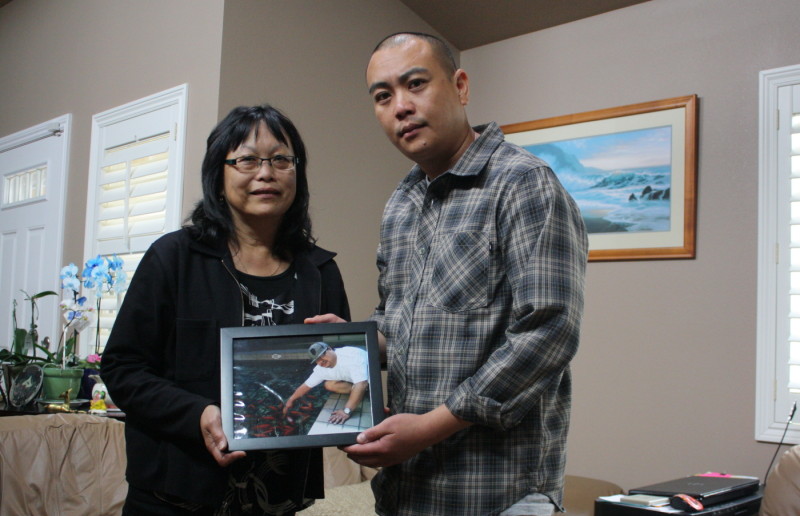
"caption": "Christine Goias and Matt Chang hold a photo of Errol Chang, who was killed by Daly City SWAT officers in March. (Alex Emslie/KQED)\" ",
"description": "Christine Goias and Matt Chang hold a photo of Errol Chang, who was killed by Daly City SWAT officers in March. (Alex Emslie/KQED)\" ",
"title": "RS12546_Dial it down feature image.jpg-alt_155",
"credit": null,
"status": "inherit",
"isLoading": false,
"fetchFailed": false
},
"stateofhealth_21642": {
"type": "attachments",
"id": "stateofhealth_21642",
"meta": {
"index": "attachments_1716263798",
"site": "stateofhealth",
"id": "21642",
"found": true
},
"parent": 21625,
"imgSizes": {
"twentyfourteen-full-width": {
"file": "https://ww2.kqed.org/app/uploads/sites/27/2014/09/2346334452_f5e85a3e82_o-copy-e1411101871654-1038x576.jpg",
"width": 1038,
"mimeType": "image/jpeg",
"height": 576
},
"thumbnail": {
"file": "https://ww2.kqed.org/app/uploads/sites/27/2014/09/2346334452_f5e85a3e82_o-copy-e1411101871654-400x226.jpg",
"width": 400,
"mimeType": "image/jpeg",
"height": 226
},
"fd-sm": {
"file": "https://ww2.kqed.org/app/uploads/sites/27/2014/09/2346334452_f5e85a3e82_o-copy-e1411101871654-320x181.jpg",
"width": 320,
"mimeType": "image/jpeg",
"height": 181
},
"post-thumbnail": {
"file": "https://ww2.kqed.org/app/uploads/sites/27/2014/09/2346334452_f5e85a3e82_o-copy-e1411101871654-672x372.jpg",
"width": 672,
"mimeType": "image/jpeg",
"height": 372
},
"kqedFullSize": {
"file": "https://ww2.kqed.org/app/uploads/sites/27/2014/09/2346334452_f5e85a3e82_o-copy-e1411101871654.jpg",
"width": 1400,
"height": 792
},
"guest-author-96": {
"file": "https://ww2.kqed.org/app/uploads/sites/27/2014/09/2346334452_f5e85a3e82_o-copy-e1411101871654-96x96.jpg",
"width": 96,
"mimeType": "image/jpeg",
"height": 96
},
"medium": {
"file": "https://ww2.kqed.org/app/uploads/sites/27/2014/09/2346334452_f5e85a3e82_o-copy-e1411101871654-800x453.jpg",
"width": 800,
"mimeType": "image/jpeg",
"height": 453
},
"guest-author-64": {
"file": "https://ww2.kqed.org/app/uploads/sites/27/2014/09/2346334452_f5e85a3e82_o-copy-e1411101871654-64x64.jpg",
"width": 64,
"mimeType": "image/jpeg",
"height": 64
},
"guest-author-32": {
"file": "https://ww2.kqed.org/app/uploads/sites/27/2014/09/2346334452_f5e85a3e82_o-copy-e1411101871654-32x32.jpg",
"width": 32,
"mimeType": "image/jpeg",
"height": 32
},
"fd-lrg": {
"file": "https://ww2.kqed.org/app/uploads/sites/27/2014/09/2346334452_f5e85a3e82_o-copy-e1411101871654-1180x668.jpg",
"width": 1180,
"mimeType": "image/jpeg",
"height": 668
},
"fd-med": {
"file": "https://ww2.kqed.org/app/uploads/sites/27/2014/09/2346334452_f5e85a3e82_o-copy-e1411101871654-768x434.jpg",
"width": 768,
"mimeType": "image/jpeg",
"height": 434
},
"detail": {
"file": "https://ww2.kqed.org/app/uploads/sites/27/2014/09/2346334452_f5e85a3e82_o-copy-e1411101871654-75x75.jpg",
"width": 75,
"mimeType": "image/jpeg",
"height": 75
},
"guest-author-128": {
"file": "https://ww2.kqed.org/app/uploads/sites/27/2014/09/2346334452_f5e85a3e82_o-copy-e1411101871654-128x128.jpg",
"width": 128,
"mimeType": "image/jpeg",
"height": 128
}
},
"publishDate": 1411101855,
"modified": 1411101855,
"caption": "Students at Sproul Plaza, UC Berkeley. (Henry Zbyszynski/Flickr)",
"description": null,
"title": "2346334452_f5e85a3e82_o copy",
"credit": null,
"status": "inherit",
"isLoading": false,
"fetchFailed": false
},
"stateofhealth_20865": {
"type": "attachments",
"id": "stateofhealth_20865",
"meta": {
"index": "attachments_1716263798",
"site": "stateofhealth",
"id": "20865",
"found": true
},
"parent": 20862,
"imgSizes": {
"thumbnail": {
"file": "https://ww2.kqed.org/app/uploads/sites/27/2014/08/RS11514_IMG_0176-hpf-400x300.jpg",
"width": 400,
"mimeType": "image/jpeg",
"height": 300
},
"fd-sm": {
"file": "https://ww2.kqed.org/app/uploads/sites/27/2014/08/RS11514_IMG_0176-hpf-320x240.jpg",
"width": 320,
"mimeType": "image/jpeg",
"height": 240
},
"post-thumbnail": {
"file": "https://ww2.kqed.org/app/uploads/sites/27/2014/08/RS11514_IMG_0176-hpf-640x372.jpg",
"width": 640,
"mimeType": "image/jpeg",
"height": 372
},
"kqedFullSize": {
"file": "https://ww2.kqed.org/app/uploads/sites/27/2014/08/RS11514_IMG_0176-hpf.jpg",
"width": 640,
"height": 480
},
"guest-author-96": {
"file": "https://ww2.kqed.org/app/uploads/sites/27/2014/08/RS11514_IMG_0176-hpf-96x96.jpg",
"width": 96,
"mimeType": "image/jpeg",
"height": 96
},
"guest-author-64": {
"file": "https://ww2.kqed.org/app/uploads/sites/27/2014/08/RS11514_IMG_0176-hpf-64x64.jpg",
"width": 64,
"mimeType": "image/jpeg",
"height": 64
},
"detail": {
"file": "https://ww2.kqed.org/app/uploads/sites/27/2014/08/RS11514_IMG_0176-hpf-75x75.jpg",
"width": 75,
"mimeType": "image/jpeg",
"height": 75
},
"guest-author-32": {
"file": "https://ww2.kqed.org/app/uploads/sites/27/2014/08/RS11514_IMG_0176-hpf-32x32.jpg",
"width": 32,
"mimeType": "image/jpeg",
"height": 32
},
"guest-author-128": {
"file": "https://ww2.kqed.org/app/uploads/sites/27/2014/08/RS11514_IMG_0176-hpf-128x128.jpg",
"width": 128,
"mimeType": "image/jpeg",
"height": 128
}
},
"publishDate": 1408367609,
"modified": 1408367609,
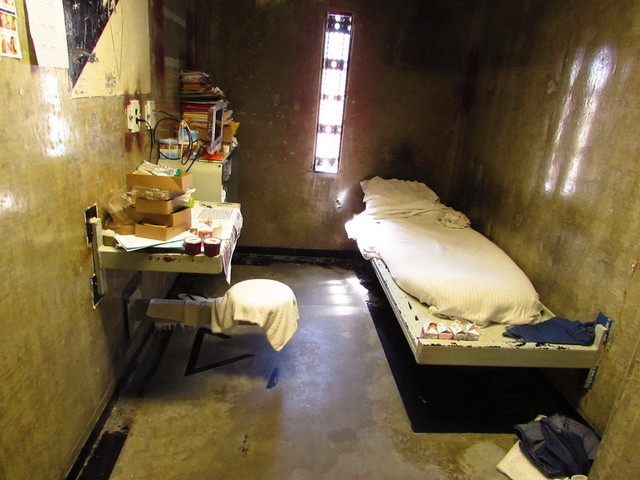
"caption": "A psychiatric segregation cell at Sacramento Prison. (Julie Small/KQED)",
"description": "A psychiatric segregation cell at Sacramento Prison.",
"title": "RS11514_IMG_0176-hpf",
"credit": null,
"status": "inherit",
"isLoading": false,
"fetchFailed": false
},
"stateofhealth_20848": {
"type": "attachments",
"id": "stateofhealth_20848",
"meta": {
"index": "attachments_1716263798",
"site": "stateofhealth",
"id": "20848",
"found": true
},
"parent": 20841,
"imgSizes": {
"twentyfourteen-full-width": {
"file": "https://ww2.kqed.org/app/uploads/sites/27/2014/08/RS11511_IMG_0157-lpr-1038x576.jpg",
"width": 1038,
"mimeType": "image/jpeg",
"height": 576
},
"thumbnail": {
"file": "https://ww2.kqed.org/app/uploads/sites/27/2014/08/RS11511_IMG_0157-lpr-400x300.jpg",
"width": 400,
"mimeType": "image/jpeg",
"height": 300
},
"fd-sm": {
"file": "https://ww2.kqed.org/app/uploads/sites/27/2014/08/RS11511_IMG_0157-lpr-320x240.jpg",
"width": 320,
"mimeType": "image/jpeg",
"height": 240
},
"post-thumbnail": {
"file": "https://ww2.kqed.org/app/uploads/sites/27/2014/08/RS11511_IMG_0157-lpr-672x372.jpg",
"width": 672,
"mimeType": "image/jpeg",
"height": 372
},
"kqedFullSize": {
"file": "https://ww2.kqed.org/app/uploads/sites/27/2014/08/RS11511_IMG_0157-lpr.jpg",
"width": 2000,
"height": 1500
},
"large": {
"file": "https://ww2.kqed.org/app/uploads/sites/27/2014/08/RS11511_IMG_0157-lpr-1440x1080.jpg",
"width": 1440,
"mimeType": "image/jpeg",
"height": 1080
},
"guest-author-96": {
"file": "https://ww2.kqed.org/app/uploads/sites/27/2014/08/RS11511_IMG_0157-lpr-96x96.jpg",
"width": 96,
"mimeType": "image/jpeg",
"height": 96
},
"medium": {
"file": "https://ww2.kqed.org/app/uploads/sites/27/2014/08/RS11511_IMG_0157-lpr-800x600.jpg",
"width": 800,
"mimeType": "image/jpeg",
"height": 600
},
"guest-author-64": {
"file": "https://ww2.kqed.org/app/uploads/sites/27/2014/08/RS11511_IMG_0157-lpr-64x64.jpg",
"width": 64,
"mimeType": "image/jpeg",
"height": 64
},
"guest-author-32": {
"file": "https://ww2.kqed.org/app/uploads/sites/27/2014/08/RS11511_IMG_0157-lpr-32x32.jpg",
"width": 32,
"mimeType": "image/jpeg",
"height": 32
},
"fd-lrg": {
"file": "https://ww2.kqed.org/app/uploads/sites/27/2014/08/RS11511_IMG_0157-lpr-1180x885.jpg",
"width": 1180,
"mimeType": "image/jpeg",
"height": 885
},
"fd-med": {
"file": "https://ww2.kqed.org/app/uploads/sites/27/2014/08/RS11511_IMG_0157-lpr-768x576.jpg",
"width": 768,
"mimeType": "image/jpeg",
"height": 576
},
"detail": {
"file": "https://ww2.kqed.org/app/uploads/sites/27/2014/08/RS11511_IMG_0157-lpr-75x75.jpg",
"width": 75,
"mimeType": "image/jpeg",
"height": 75
},
"guest-author-128": {
"file": "https://ww2.kqed.org/app/uploads/sites/27/2014/08/RS11511_IMG_0157-lpr-128x128.jpg",
"width": 128,
"mimeType": "image/jpeg",
"height": 128
}
},
"publishDate": 1408150561,
"modified": 1408150561,
"caption": null,
"description": null,
"title": "RS11511_IMG_0157-lpr",
"credit": null,
"status": "inherit",
"isLoading": false,
"fetchFailed": false
},
"news_144561": {
"type": "attachments",
"id": "news_144561",
"meta": {
"index": "attachments_1716263798",
"site": "news",
"id": "144561",
"found": true
},
"parent": 144552,
"imgSizes": {
"kqedFullSize": {
"file": "https://ww2.kqed.org/app/uploads/sites/10/2014/08/RS11447_134732889-lpr-1.jpg",
"width": 2000,
"height": 1421
}
},
"publishDate": 1407805609,
"modified": 1407805609,
"caption": "The late Robin Williams, pictured in 2004. ( Ryan Pierse/Getty Images)",
"description": "The late Robin Williams, pictured in 2004. ( Ryan Pierse/Getty Images)",
"title": "Robin Williams",
"credit": null,
"status": "inherit",
"isLoading": false,
"fetchFailed": false
},
"science_20225": {
"type": "attachments",
"id": "science_20225",
"meta": {
"index": "attachments_1716263798",
"site": "science",
"id": "20225",
"found": true
},
"parent": 0,
"imgSizes": {
"kqedFullSize": {
"file": "https://ww2.kqed.org/app/uploads/sites/35/2014/08/20140618_Schizo_12822-e1406932651766.jpg",
"width": 640,
"height": 360
}
},
"publishDate": 1406931849,
"modified": 1406931849,
"caption": "Young people participate in outdoor activities as part of a mental illness prevention program called Kickstarter in San Diego. (Marvi Lacar/KQED)",
"description": "Young people participate in outdoor activities as part of a mental illness prevention program called Kickstarter in San Diego. (Marvi Lacar/KQED)",
"title": "OLYMPUS DIGITAL CAMERA",
"credit": null,
"status": "inherit",
"isLoading": false,
"fetchFailed": false
},
"news_119704": {
"type": "attachments",
"id": "news_119704",
"meta": {
"index": "attachments_1716263798",
"site": "news",
"id": "119704",
"found": true
},
"parent": 119671,
"imgSizes": {
"kqedFullSize": {
"file": "https://ww2.kqed.org/app/uploads/sites/10/2013/12/RS5102_56531571-scr-e1385954353186.jpg",
"width": 640,
"height": 427
}
},
"publishDate": 1385954287,
"modified": 1385954287,
"caption": "State Capitol, Sacramento (David Paul Morris/Getty Images). ",
"description": null,
"title": "State Capitol",
"credit": null,
"status": "inherit",
"isLoading": false,
"fetchFailed": false
},
"stateofhealth_20235": {
"type": "attachments",
"id": "stateofhealth_20235",
"meta": {
"index": "attachments_1716263798",
"site": "stateofhealth",
"id": "20235",
"found": true
},
"parent": 20222,
"imgSizes": {
"twentyfourteen-full-width": {
"file": "https://ww2.kqed.org/app/uploads/sites/27/2014/07/photo-3-e1414092083605-1038x576.jpg",
"width": 1038,
"mimeType": "image/jpeg",
"height": 576
},
"thumbnail": {
"file": "https://ww2.kqed.org/app/uploads/sites/27/2014/07/photo-3-e1414092083605-400x300.jpg",
"width": 400,
"mimeType": "image/jpeg",
"height": 300
},
"fd-sm": {
"file": "https://ww2.kqed.org/app/uploads/sites/27/2014/07/photo-3-e1414092083605-320x240.jpg",
"width": 320,
"mimeType": "image/jpeg",
"height": 240
},
"post-thumbnail": {
"file": "https://ww2.kqed.org/app/uploads/sites/27/2014/07/photo-3-e1414092083605-672x372.jpg",
"width": 672,
"mimeType": "image/jpeg",
"height": 372
},
"kqedFullSize": {
"file": "https://ww2.kqed.org/app/uploads/sites/27/2014/07/photo-3-e1414092083605.jpg",
"width": 1440,
"height": 1080
},
"large": {
"file": "https://ww2.kqed.org/app/uploads/sites/27/2014/07/photo-3-e1414092083605-1440x1080.jpg",
"width": 1440,
"mimeType": "image/jpeg",
"height": 1080
},
"guest-author-96": {
"file": "https://ww2.kqed.org/app/uploads/sites/27/2014/07/photo-3-e1414092083605-96x96.jpg",
"width": 96,
"mimeType": "image/jpeg",
"height": 96
},
"medium": {
"file": "https://ww2.kqed.org/app/uploads/sites/27/2014/07/photo-3-e1414092083605-800x600.jpg",
"width": 800,
"mimeType": "image/jpeg",
"height": 600
},
"guest-author-64": {
"file": "https://ww2.kqed.org/app/uploads/sites/27/2014/07/photo-3-e1414092083605-64x64.jpg",
"width": 64,
"mimeType": "image/jpeg",
"height": 64
},
"guest-author-32": {
"file": "https://ww2.kqed.org/app/uploads/sites/27/2014/07/photo-3-e1414092083605-32x32.jpg",
"width": 32,
"mimeType": "image/jpeg",
"height": 32
},
"fd-lrg": {
"file": "https://ww2.kqed.org/app/uploads/sites/27/2014/07/photo-3-e1414092083605-1180x885.jpg",
"width": 1180,
"mimeType": "image/jpeg",
"height": 885
},
"fd-med": {
"file": "https://ww2.kqed.org/app/uploads/sites/27/2014/07/photo-3-e1414092083605-768x576.jpg",
"width": 768,
"mimeType": "image/jpeg",
"height": 576
},
"detail": {
"file": "https://ww2.kqed.org/app/uploads/sites/27/2014/07/photo-3-e1414092083605-75x75.jpg",
"width": 75,
"mimeType": "image/jpeg",
"height": 75
},
"guest-author-128": {
"file": "https://ww2.kqed.org/app/uploads/sites/27/2014/07/photo-3-e1414092083605-128x128.jpg",
"width": 128,
"mimeType": "image/jpeg",
"height": 128
}
},
"publishDate": 1405573057,
"modified": 1461933055,
"caption": "Kaiser's medical center in Oakland opened in 2014, built to meet state seismic standards. It's Just one of many new hospitals statewide that meets state requirements.",
"description": "Kaiser Permanente, Oakland",
"title": "photo 3",
"credit": "Lisa Aliferis/KQED",
"status": "inherit",
"isLoading": false,
"fetchFailed": false
},
"news_92735": {
"type": "attachments",
"id": "news_92735",
"meta": {
"index": "attachments_1716263798",
"site": "news",
"id": "92735",
"found": true
},
"parent": 92727,
"imgSizes": {
"kqedFullSize": {
"file": "https://ww2.kqed.org/app/uploads/sites/10/2013/03/RS2263_SupremeCourt100311-e1412611481354.jpg",
"width": 1440,
"height": 987
}
},
"publishDate": 1364431584,
"modified": 1466708831,
"caption": "The Supreme Court of the United States. ",
"description": "The Supreme Court of the United States. ",
"title": "U.S. Supreme Court",
"credit": "Paul J. Richards/AFP-Getty Images",
"status": "inherit",
"isLoading": false,
"fetchFailed": false
}
},
"audioPlayerReducer": {
"postId": "stream_live",
"isPaused": true,
"isPlaying": false,
"pfsActive": false,
"pledgeModalIsOpen": true,
"playerDrawerIsOpen": false,
"liveAudioPlayStartedAt": 0,
"liveAudioPlayContext": ""
},
"authorsReducer": {
"byline_stateofhealth_60387": {
"type": "authors",
"id": "byline_stateofhealth_60387",
"meta": {
"override": true
},
"slug": "byline_stateofhealth_60387",
"name": "Jenny Gold",
"isLoading": false
},
"byline_news_10555571": {
"type": "authors",
"id": "byline_news_10555571",
"meta": {
"override": true
},
"slug": "byline_news_10555571",
"name": "Jean Guerrero\u003cbr>KPBS Fronteras Reporter",
"isLoading": false
},
"byline_news_10485713": {
"type": "authors",
"id": "byline_news_10485713",
"meta": {
"override": true
},
"slug": "byline_news_10485713",
"name": "Stephanie O'Neill",
"isLoading": false
},
"jbrooks": {
"type": "authors",
"id": "80",
"meta": {
"index": "authors_1716337520",
"id": "80",
"found": true
},
"name": "Jon Brooks",
"firstName": "Jon",
"lastName": "Brooks",
"slug": "jbrooks",
"email": "jbrooks@kqed.org",
"display_author_email": true,
"staff_mastheads": [
"science"
],
"title": "Digital Editor",
"bio": "Jon Brooks is a former Digital Editor for KQED Science. He is the former editor of KQED’s daily news blog, News Fix. In 2014, he won a California Journalism Award for his coverage of ride services like Uber and Lyft and the taxi industry. A veteran blogger, he previously worked for Yahoo! in various news writing and editing roles. Jon is also a playwright whose work has been produced in San Francisco, New York, Italy, and around the U.S. He has written about film for his own blog and studied film at Boston University.",
"avatar": "https://secure.gravatar.com/avatar/98887f7ed1c876ed414d4c915e969584?s=600&d=blank&r=g",
"twitter": "jbrooksfoy",
"facebook": null,
"instagram": null,
"linkedin": null,
"sites": [
{
"site": "arts",
"roles": [
"Contributor",
"editor"
]
},
{
"site": "news",
"roles": [
"author"
]
},
{
"site": "futureofyou",
"roles": [
"administrator"
]
},
{
"site": "mindshift",
"roles": [
"editor"
]
},
{
"site": "stateofhealth",
"roles": [
"editor"
]
},
{
"site": "science",
"roles": [
"administrator"
]
},
{
"site": "quest",
"roles": [
"editor"
]
}
],
"headData": {
"title": "Jon Brooks | KQED",
"description": "Digital Editor",
"ogImgSrc": "https://secure.gravatar.com/avatar/98887f7ed1c876ed414d4c915e969584?s=600&d=blank&r=g",
"twImgSrc": "https://secure.gravatar.com/avatar/98887f7ed1c876ed414d4c915e969584?s=600&d=blank&r=g"
},
"isLoading": false,
"link": "/author/jbrooks"
},
"amystanden": {
"type": "authors",
"id": "210",
"meta": {
"index": "authors_1716337520",
"id": "210",
"found": true
},
"name": "Amy Standen",
"firstName": "Amy",
"lastName": "Standen",
"slug": "amystanden",
"email": "astanden@kqed.org",
"display_author_email": false,
"staff_mastheads": [],
"title": "KQED Contributor",
"bio": "Amy Standen (@amystanden) is co-host of #\u003ca href=\"https://ww2.kqed.org/news/programs/the-leap\">TheLeapPodcast\u003c/a> (subscribe on iTunes or Stitcher!) and host of KQED and PBSDigital Studios' science video series, \u003ca href=\"https://www.youtube.com/user/KQEDDeepLook\">Deep Look\u003c/a>. Her science radio stories appear on KQED and NPR.\r\n\r\nEmail her at astanden@kqed.org",
"avatar": "https://secure.gravatar.com/avatar/3d021b72de685a788b0487b059d0a6a1?s=600&d=blank&r=g",
"twitter": null,
"facebook": null,
"instagram": null,
"linkedin": null,
"sites": [
{
"site": "news",
"roles": [
"subscriber"
]
},
{
"site": "futureofyou",
"roles": [
"subscriber"
]
},
{
"site": "stateofhealth",
"roles": [
"subscriber"
]
},
{
"site": "science",
"roles": []
},
{
"site": "quest",
"roles": [
"subscriber"
]
}
],
"headData": {
"title": "Amy Standen | KQED",
"description": "KQED Contributor",
"ogImgSrc": "https://secure.gravatar.com/avatar/3d021b72de685a788b0487b059d0a6a1?s=600&d=blank&r=g",
"twImgSrc": "https://secure.gravatar.com/avatar/3d021b72de685a788b0487b059d0a6a1?s=600&d=blank&r=g"
},
"isLoading": false,
"link": "/author/amystanden"
},
"danbrekke": {
"type": "authors",
"id": "222",
"meta": {
"index": "authors_1716337520",
"id": "222",
"found": true
},
"name": "Dan Brekke",
"firstName": "Dan",
"lastName": "Brekke",
"slug": "danbrekke",
"email": "dbrekke@kqed.org",
"display_author_email": true,
"staff_mastheads": [
"news",
"science"
],
"title": "KQED Editor and Reporter",
"bio": "Dan Brekke is a reporter and editor for KQED News, responsible for coverage of topics ranging from California water issues to the Bay Area's transportation challenges. In a newsroom career that began in Chicago in 1972, Dan has worked for \u003cem>The San Francisco Examiner,\u003c/em> Wired and TechTV and has been published in The New York Times, The New York Times Magazine, Business 2.0, Salon and elsewhere.\r\n\r\nSince joining KQED in 2007, Dan has reported, edited and produced both radio and online features and breaking news pieces. He has shared as both editor and reporter in four Society of Professional Journalists Norcal Excellence in Journalism awards and one Edward R. Murrow regional award. He was chosen for a spring 2017 residency at the Mesa Refuge to advance his research on California salmon.\r\n\r\nEmail Dan at: \u003ca href=\"mailto:dbrekke@kqed.org\">dbrekke@kqed.org\u003c/a>\r\n\r\n\u003cstrong>Twitter:\u003c/strong> \u003ca href=\"https://twitter.com/danbrekke\" rel=\"noopener noreferrer\">twitter.com/danbrekke\u003c/a>\r\n\u003cstrong>Facebook:\u003c/strong> \u003ca href=\"https://www.facebook.com/danbrekke\" rel=\"noopener noreferrer\">www.facebook.com/danbrekke\u003c/a>\r\n\u003cstrong>LinkedIn:\u003c/strong> \u003ca href=\"https://www.linkedin.com/in/danbrekke\" rel=\"noopener noreferrer\">www.linkedin.com/in/danbrekke\u003c/a>",
"avatar": "https://secure.gravatar.com/avatar/c8126230345efca3f7aa89b1a402be45?s=600&d=mm&r=g",
"twitter": "danbrekke",
"facebook": null,
"instagram": "https://www.instagram.com/dan.brekke/",
"linkedin": "https://www.linkedin.com/in/danbrekke/",
"sites": [
{
"site": "news",
"roles": [
"administrator",
"create_posts"
]
},
{
"site": "stateofhealth",
"roles": [
"editor"
]
},
{
"site": "science",
"roles": [
"editor"
]
},
{
"site": "quest",
"roles": [
"contributor"
]
},
{
"site": "food",
"roles": [
"contributor"
]
},
{
"site": "forum",
"roles": [
"contributor"
]
},
{
"site": "liveblog",
"roles": [
"editor"
]
}
],
"headData": {
"title": "Dan Brekke | KQED",
"description": "KQED Editor and Reporter",
"ogImgSrc": "https://secure.gravatar.com/avatar/c8126230345efca3f7aa89b1a402be45?s=600&d=mm&r=g",
"twImgSrc": "https://secure.gravatar.com/avatar/c8126230345efca3f7aa89b1a402be45?s=600&d=mm&r=g"
},
"isLoading": false,
"link": "/author/danbrekke"
},
"kqed": {
"type": "authors",
"id": "236",
"meta": {
"index": "authors_1716337520",
"id": "236",
"found": true
},
"name": "KQED News Staff",
"firstName": "KQED News Staff",
"lastName": null,
"slug": "kqed",
"email": "faq@kqed.org",
"display_author_email": false,
"staff_mastheads": [],
"title": null,
"bio": null,
"avatar": "https://secure.gravatar.com/avatar/ef0e801a68c4c54afa9180db14084167?s=600&d=blank&r=g",
"twitter": null,
"facebook": null,
"instagram": null,
"linkedin": null,
"sites": [
{
"site": "arts",
"roles": [
"contributor"
]
},
{
"site": "news",
"roles": [
"editor"
]
},
{
"site": "futureofyou",
"roles": [
"author"
]
}
],
"headData": {
"title": "KQED News Staff | KQED",
"description": null,
"ogImgSrc": "https://secure.gravatar.com/avatar/ef0e801a68c4c54afa9180db14084167?s=600&d=blank&r=g",
"twImgSrc": "https://secure.gravatar.com/avatar/ef0e801a68c4c54afa9180db14084167?s=600&d=blank&r=g"
},
"isLoading": false,
"link": "/author/kqed"
},
"kqednewsstaffandwires": {
"type": "authors",
"id": "237",
"meta": {
"index": "authors_1716337520",
"id": "237",
"found": true
},
"name": "KQED News Staff and Wires",
"firstName": "KQED News Staff and Wires",
"lastName": null,
"slug": "kqednewsstaffandwires",
"email": "onlinenewsstaff@kqed.org",
"display_author_email": false,
"staff_mastheads": [],
"title": null,
"bio": null,
"avatar": "https://secure.gravatar.com/avatar/72295af8ebbfbd19a4948f5271285664?s=600&d=blank&r=g",
"twitter": null,
"facebook": null,
"instagram": null,
"linkedin": null,
"sites": [
{
"site": "arts",
"roles": [
"contributor"
]
},
{
"site": "news",
"roles": [
"contributor"
]
},
{
"site": "lowdown",
"roles": [
"author"
]
},
{
"site": "stateofhealth",
"roles": [
"contributor"
]
},
{
"site": "food",
"roles": [
"author"
]
}
],
"headData": {
"title": "KQED News Staff and Wires | KQED",
"description": null,
"ogImgSrc": "https://secure.gravatar.com/avatar/72295af8ebbfbd19a4948f5271285664?s=600&d=blank&r=g",
"twImgSrc": "https://secure.gravatar.com/avatar/72295af8ebbfbd19a4948f5271285664?s=600&d=blank&r=g"
},
"isLoading": false,
"link": "/author/kqednewsstaffandwires"
},
"rmarcus": {
"type": "authors",
"id": "1430",
"meta": {
"index": "authors_1716337520",
"id": "1430",
"found": true
},
"name": "Rachael Bale",
"firstName": "Rachael",
"lastName": "Bale",
"slug": "rmarcus",
"email": "rmarcus@kqed.org",
"display_author_email": false,
"staff_mastheads": [],
"title": null,
"bio": "\u003cspan style=\"color: #333333;\">Rachael Bale is researcher and reporter for The Center for Investigative Reporting and occasional contributor to KQED News and The California Report. A California native, she has a bachelor's degree in political science from Reed College and a master's degree in journalism from American University.\u003c/span>",
"avatar": "https://secure.gravatar.com/avatar/3e6c242547f6a9d1bc4570e11aea344e?s=600&d=blank&r=g",
"twitter": null,
"facebook": null,
"instagram": null,
"linkedin": null,
"sites": [
{
"site": "news",
"roles": [
"subscriber"
]
}
],
"headData": {
"title": "Rachael Bale | KQED",
"description": null,
"ogImgSrc": "https://secure.gravatar.com/avatar/3e6c242547f6a9d1bc4570e11aea344e?s=600&d=blank&r=g",
"twImgSrc": "https://secure.gravatar.com/avatar/3e6c242547f6a9d1bc4570e11aea344e?s=600&d=blank&r=g"
},
"isLoading": false,
"link": "/author/rmarcus"
},
"adembosky": {
"type": "authors",
"id": "3205",
"meta": {
"index": "authors_1716337520",
"id": "3205",
"found": true
},
"name": "April Dembosky",
"firstName": "April",
"lastName": "Dembosky",
"slug": "adembosky",
"email": "adembosky@kqed.org",
"display_author_email": false,
"staff_mastheads": [
"news",
"science"
],
"title": "KQED Health Correspondent",
"bio": "April Dembosky is the health correspondent for KQED News and a regular contributor to NPR. She specializes in covering altered states of mind, from postpartum depression to methamphetamine-induced psychosis to the insanity defense. Her investigative series on insurance companies sidestepping mental health laws won multiple awards, including first place in beat reporting from the national Association of Health Care Journalists. She is the recipient of numerous other prizes and fellowships, including a national Edward R. Murrow award for investigative reporting, a Society of Professional Journalists award for long-form storytelling, and a Carter Center Fellowship for Mental Health Journalism.\r\n\r\nDembosky reported and produced \u003cem>Soundtrack of Silence\u003c/em>, an audio documentary about music and memory that is currently being made into a feature film by Paramount Pictures.\r\n\r\nBefore joining KQED in 2013, Dembosky covered technology and Silicon Valley for \u003cem>The Financial Times of London,\u003c/em> and contributed business and arts stories to \u003cem>Marketplace \u003c/em>and \u003cem>The New York Times.\u003c/em> She got her undergraduate degree in philosophy from Smith College and her master's in journalism from the University of California, Berkeley. She is a classically trained violinist and proud alum of the first symphony orchestra at Burning Man.",
"avatar": "https://secure.gravatar.com/avatar/ef92999be4ceb9ea60701e7dc276f813?s=600&d=blank&r=g",
"twitter": "adembosky",
"facebook": null,
"instagram": null,
"linkedin": null,
"sites": [
{
"site": "arts",
"roles": [
"author"
]
},
{
"site": "news",
"roles": [
"editor"
]
},
{
"site": "futureofyou",
"roles": [
"author"
]
},
{
"site": "stateofhealth",
"roles": [
"editor"
]
},
{
"site": "science",
"roles": [
"editor"
]
},
{
"site": "forum",
"roles": [
"editor"
]
}
],
"headData": {
"title": "April Dembosky | KQED",
"description": "KQED Health Correspondent",
"ogImgSrc": "https://secure.gravatar.com/avatar/ef92999be4ceb9ea60701e7dc276f813?s=600&d=blank&r=g",
"twImgSrc": "https://secure.gravatar.com/avatar/ef92999be4ceb9ea60701e7dc276f813?s=600&d=blank&r=g"
},
"isLoading": false,
"link": "/author/adembosky"
},
"aemslie": {
"type": "authors",
"id": "3206",
"meta": {
"index": "authors_1716337520",
"id": "3206",
"found": true
},
"name": "Alex Emslie",
"firstName": "Alex",
"lastName": "Emslie",
"slug": "aemslie",
"email": "aemslie@kqed.org",
"display_author_email": true,
"staff_mastheads": [
"news"
],
"title": "KQED Senior Editor",
"bio": "Alex Emslie is senior editor of talent and development at KQED, where he manages dozens of early career journalists and oversees news department internships.\r\n\r\nHe is a former carpenter and proud graduate of City College of San Francisco and San Francisco State University, where he studied journalism and criminal justice before joining KQED in 2013.\r\n\r\nAlex produced investigative journalism focused on \u003ca href=\"https://www.kqed.org/news/11667594/the-trials-of-marvin-mutch-video\">criminal justice\u003c/a> and policing for most of a decade. He has broken major stories about \u003ca href=\"https://www.kqed.org/news/135682/amid-a-series-of-vallejo-police-shootings-one-officers-name-stands-out\">police use of deadly force\u003c/a>, \u003ca href=\"https://www.kqed.org/news/10454955/racist-texts-prompt-sfpd-internal-investigation\">officer misconduct\u003c/a> and \u003ca href=\"https://www.kqed.org/news/11712239/terrorist-or-troll-judge-to-weigh-whether-oakland-man-really-intended-to-attack-bay-area\">other\u003c/a> \u003ca href=\"https://www.kqed.org/news/11221414/hayward-paid-159000-to-husband-of-retired-police-chief-documents-show\">high\u003c/a>-\u003ca href=\"https://www.kqed.org/news/10622762/the-forgotten-tracking-two-homicides-in-san-francisco-public-housing\">profile\u003c/a> \u003ca href=\"https://www.kqed.org/news/11624516/federal-agency-promoted-ranger-just-months-after-his-gun-was-stolen-and-used-in-steinle-killing\">cases\u003c/a>. He co-founded the \u003ca href=\"https://projects.scpr.org/california-reporting-project/\">California Reporting Project\u003c/a> in 2019 to obtain and report on previously confidential police internal investigations. The effort produced well over 100 original stories and changed the course of multiple criminal cases.\r\n\r\nHis work has been recognized with numerous journalism awards, including a national Edward R. Murrow award for several years of \u003ca href=\"https://www.kqed.org/news/11688481/sfpd-officers-in-mario-woods-case-recount-shooting-in-newly-filed-depositions\">reporting\u003c/a> on the San Francisco Police shooting of Mario Woods. His \u003ca href=\"https://www.kqed.org/news/147854/half-of-those-killed-by-san-francisco-police-are-mentally-ill\">reporting\u003c/a> on police killings of people in psychiatric crisis was cited in amicus briefs before the U.S. Supreme Court.\r\n\r\nAlex now enjoys mentoring the next generation of journalists at KQED.",
"avatar": "https://secure.gravatar.com/avatar/e691e65209f20e9da202bd730ead5663?s=600&d=blank&r=g",
"twitter": "SFNewsReporter",
"facebook": null,
"instagram": null,
"linkedin": null,
"sites": [
{
"site": "arts",
"roles": [
"editor"
]
},
{
"site": "news",
"roles": [
"editor"
]
},
{
"site": "mindshift",
"roles": [
"editor"
]
},
{
"site": "stateofhealth",
"roles": [
"editor"
]
},
{
"site": "science",
"roles": [
"administrator"
]
}
],
"headData": {
"title": "Alex Emslie | KQED",
"description": "KQED Senior Editor",
"ogImgSrc": "https://secure.gravatar.com/avatar/e691e65209f20e9da202bd730ead5663?s=600&d=blank&r=g",
"twImgSrc": "https://secure.gravatar.com/avatar/e691e65209f20e9da202bd730ead5663?s=600&d=blank&r=g"
},
"isLoading": false,
"link": "/author/aemslie"
},
"state-of-health": {
"type": "authors",
"id": "8344",
"meta": {
"index": "authors_1716337520",
"id": "8344",
"found": true
},
"name": "State of Health",
"firstName": "State of Health",
"lastName": null,
"slug": "state-of-health",
"email": "stateofhealth@kqed.org",
"display_author_email": false,
"staff_mastheads": [],
"title": null,
"bio": null,
"avatar": "https://secure.gravatar.com/avatar/66de4bf6d331fa7402bba1ffe8135e17?s=600&d=blank&r=g",
"twitter": null,
"facebook": null,
"instagram": null,
"linkedin": null,
"sites": [
{
"site": "arts",
"roles": [
"author"
]
},
{
"site": "stateofhealth",
"roles": [
"editor"
]
}
],
"headData": {
"title": "State of Health | KQED",
"description": null,
"ogImgSrc": "https://secure.gravatar.com/avatar/66de4bf6d331fa7402bba1ffe8135e17?s=600&d=blank&r=g",
"twImgSrc": "https://secure.gravatar.com/avatar/66de4bf6d331fa7402bba1ffe8135e17?s=600&d=blank&r=g"
},
"isLoading": false,
"link": "/author/state-of-health"
}
},
"pagesReducer": {
"news_tag_mental-health": {
"type": "terms",
"id": "news_2109",
"meta": {
"index": "terms_1716263798",
"site": "news",
"id": "2109",
"score": 8.282905
},
"featImg": null,
"name": "mental health",
"description": null,
"taxonomy": "tag",
"headData": {
"twImgId": null,
"twTitle": null,
"ogTitle": null,
"ogImgId": null,
"twDescription": null,
"description": null,
"title": "mental health Archives | KQED News",
"ogDescription": null
},
"ttid": 2124,
"slug": "mental-health",
"isLoading": false,
"title": "mental health",
"pageMeta": {
"site": "news",
"WpPageTemplate": "page-topic-editorial",
"currentPage": 20
},
"blocks": [
{
"blockName": "kqed/post-list",
"attrs": {
"layout": "cardArticle2",
"query": "posts/news?tag=mental-health",
"seeMore": false,
"paginated": true,
"page": 20
}
},
{
"blockName": "kqed/ad"
}
]
}
},
"pfsSessionReducer": {},
"postsReducer": {
"stream_live": {
"type": "live",
"id": "stream_live",
"audioUrl": "https://streams.kqed.org/kqedradio",
"title": "Live Stream",
"excerpt": "Live Stream information currently unavailable.",
"link": "/radio",
"featImg": "",
"label": {
"name": "KQED Live",
"link": "/"
}
},
"stream_kqedNewscast": {
"type": "posts",
"id": "stream_kqedNewscast",
"audioUrl": "https://www.kqed.org/.stream/anon/radio/RDnews/newscast.mp3?_=1",
"title": "KQED Newscast",
"featImg": "",
"label": {
"name": "88.5 FM",
"link": "/"
}
},
"stateofhealth_60387": {
"type": "posts",
"id": "stateofhealth_60387",
"meta": {
"index": "posts_1716263798",
"site": "stateofhealth",
"id": "60387",
"score": null,
"sort": [
1439363558000
]
},
"parent": 0,
"labelTerm": {
"site": "stateofhealth"
},
"blocks": [],
"publishDate": 1439363558,
"format": "standard",
"disqusTitle": "Strict Limits on Mental Health Care Still Common for California Patients",
"title": "Strict Limits on Mental Health Care Still Common for California Patients",
"headTitle": "State of Health | KQED News",
"content": "\u003cp>After the state of California \u003ca href=\"http://www.dmhc.ca.gov/desktopmodules/dmhc/medsurveys/surveys/055bh031813.pdf\" target=\"_blank\">fined her employer $4 million\u003c/a> in 2013 for violating the legal rights of mental health patients, Oakland psychologist Melinda Ginne expected her job -- and her patients’ lives -- to get better.\u003c/p>\n\u003cp>Instead, she said, things got worse.\u003c/p>\n\u003cp>Within months, Ginne, a whistleblower in the 2013 case, was back to writing her supervisors at Kaiser Permanente about what she considered unconscionable delays in care. Some patients might not live long enough to make the next available appointment, she said.\u003c/p>\n\u003cp>“I can’t tell a family whose elderly mother is declining that I can’t provide treatment until 2014,” she wrote to her managers at the Kaiser Medical Center in Oakland in September 2013.\u003c/p>\n\u003cp>[contextly_sidebar id=\"1ebnqoqYgtH13y2uhbXV4An8UIzspTvr\"]In February, two years after assessing the second largest fine in its history, \u003ca href=\"http://www.dmhc.ca.gov/desktopmodules/dmhc/medsurveys/surveys/055bhfu022415.pdf\" target=\"_blank\">the California Department of Managed Health Care stepped in again\u003c/a>, finding that Kaiser had improved somewhat but \u003ca href=\"http://ww2.kqed.org/stateofhealth/2015/02/25/calif-calls-kaiser-mental-health-services-inadequate-as-treatment-delays-persist/\" target=\"_blank\">still was short-changing patients\u003c/a> on mental health care. The state is considering another fine against the health maintenance organization.\u003c/p>\n\u003cp>[ad fullwidth]\u003c/p>\n\u003cp>California has taken perhaps the \u003ca href=\"http://khn.org/news/advocates-say-mental-health-parity-law-is-not-fulfilling-its-promise/\">most proactive stance in the nation\u003c/a> in enforcing laws to ensure people with mental illnesses have fair and timely access to care. But even in this state\u003cstrong>, \u003c/strong>it’s proving difficult to ensure mental patients truly have equal access to treatment.\u003c/p>\n\u003cp>Parity laws, including a sweeping measure passed by the federal government in 2008 and an older California law, require insurers to provide mental health and substance abuse benefits on par with the coverage they offer for other medical care. And a \u003ca href=\"https://www.dmhc.ca.gov/HealthCareinCalifornia/YourHealthCareRights/TimelyAccesstoCare.aspx#.VckfjvlVhBd\" target=\"_blank\">separate state law requires\u003c/a> insurers to provide patients with access to mental treatment within a specific timeframe – 48 hours for an urgent visit and 10 business days for a non-urgent one.\u003c/p>\n\u003cp>After the 2013 fine, Kaiser patients continued to face not just ongoing delays – they also faced arbitrary limits on treatment in direct violation of the state’s parity statute, officials found. The law was intended to prevent such things as annual caps on patient visits that would not typically be faced, for instance, by patient with another chronic illness such as diabetes or heart disease. Yet, according to the 2015 report, some Kaiser staffers told mental health patients that they were not entitled to long-term individual therapy -- ever.\u003c/p>\n\u003cp>“No one ever sees a therapist once a week in the Kaiser Health Plan,” according to a 2014 email a Kaiser psychologist sent to a patient, which was cited in the state’s most recent report. “Not a covered benefit for the past 20-something years and will not be a benefit in the future.”\u003c/p>\n\u003cp>Dr. Mason Turner, Kaiser Permanente’s Associate Director of Regional Mental Health for Northern California, said that the organization has fixed the problems identified by the state.\u003c/p>\n\u003cp>“Between the time the DMHC made their [initial] findings and now, we've made substantial improvements, hired many more staff, and really put into place a lot of mechanisms to address the initial concerns that were brought up,” Turner said in April.\u003c/p>\n\u003cp>The access problems, he said, were caused by an increase in demand, which rose in part because of the influx of new enrollees under the Affordable Care Act. In response, he said, Kaiser increased the ranks of therapists by 25 percent and arranged to contract with outside therapists when necessary.\u003c/p>\n\u003cp>The actions against Kaiser highlight both how far California has come in ensuring equal treatment for mental health patients and how far it has yet to go.\u003c/p>\n\u003cp>On one hand, after many years of “abysmal” enforcement, “now we have regulators who seem to be enthusiastic,” said Randall Hagar, director of government relations for the California Psychiatric Association.\u003c/p>\n\u003cp>Hagar gives credit to managed health care department director Shelley Rouillard, who spent 20 years in consumer advocacy before joining the department in 2011 and becoming director in 2013. On the other hand, critics say, Rouillard and her staff are making slow progress at best.\u003c/p>\n\u003cp>“This is one of the ‘pace car’ states, and it's still slow going,” said Carol McDaid, who runs the Parity Implementation Coalition, an advocacy group made up of addiction and mental health consumer and provider organizations.\u003c/p>\n\u003cp>\u003cstrong>Holding Insurers Accountable \u003c/strong>\u003c/p>\n\u003cp>Soon after they fined Kaiser in 2013, California officials realized the problems with unequal coverage of mental health were much broader.\u003c/p>\n\u003cp>For years, California, like most states and the federal government, relied on consumers to bring complaints alleging that their rights had been violated under parity laws. State regulators grew concerned that the approach was too passive -- few consumers were complaining, perhaps because of the stigma attached to mental illness.\u003c/p>\n\u003cp>So as a first step, the department of managed health care last year began requiring insurers under its watch to show -- at least on paper -- that they were complying with federal parity law.\u003c/p>\n\u003cp>The results were not encouraging: Of 26 managed care insurers, from Aetna to Western Health Advantage, zero were able to prove that they were fully in compliance. Most filed incomplete or flawed documents, state officials said.\u003c/p>\n\u003cp>“It is rather shocking,” Rouillard said.\u003c/p>\n\u003cp>Part of the problem, Rouillard said, is that the federal government did not release the final regulations dictating how its parity law should be enforced until November 2013 – five years after the law was passed.\u003c/p>\n\u003cp>In addition to the flawed and incomplete paperwork, her department found insurers trying to control costs in ways that could be discriminatory -- for example, by limiting the number of days a patient could receive inpatient care for a mental health condition.\u003c/p>\n\u003cp>“Mental health services are still sort of a second class benefit as far as the health plans are concerned,” Rouillard said.\u003c/p>\n\u003cp>At this point, Rouillard says the managed care plans she regulates are in varying stages of compliance with the federal parity law. Just one plan, Health Net, has so far been able to prove on paper that its benefits fully comply. Rouillard says she expects the other plans to follow suit by the end of the year, and in 2016, the department plans a more intensive review.\u003c/p>\n\u003cp>Charles Bacchi, president and CEO of the California Association of Health Plans, disputed that insurers see mental health a second-tier benefit. “We're committed to providing this coverage for our enrollees. It's very important, and it's something that we're working hard to do,” he said.\u003c/p>\n\u003cp>But the law poses a huge challenge for health plans, he said, in part because the science underpinning diagnosis and treatment of mental illness is constantly evolving. In addition, health plans are trying to adapt not just to parity law but to the implementation of the Affordable Care Act, which has transformed the national insurance landscape.\u003c/p>\n\u003cp>Even so, he said, “I think by the end of this year, all the plans will have filed the right documents and will have approval from the department, and this will be something that's in the rearview mirror.”\u003c/p>\n\u003cp>\u003cstrong>‘A Societal Problem’\u003c/strong>\u003c/p>\n\u003cp>[contextly_sidebar id=\"ibzkpzZhksO1dURcjHzt07C3hHpl7QzN\"]Finding that her situation did not improve even after the first investigation of Kaiser in 2015, psychologist Ginne made a request of her managers -- copied to Rouillard -- that December. She asked that six of her sickest patients be transferred to other providers who could see them more frequently.\u003c/p>\n\u003cp>One of them, an elderly man with dementia and depression, was hallucinating “fully-formed humans,” Ginne said in an interview. One day, he wandered down the block at 5 am in his pajamas, panicked, and flagged down a truck driver who called the police.\u003c/p>\n\u003cp>“He was a danger to himself,” Ginne said.\u003c/p>\n\u003cp>According to Ginne, the backup in appointments meant she could see him for individual therapy only once every few months. The man had been assigned to regular group therapy for depression, which Ginne felt was inappropriate for his condition.\u003c/p>\n\u003cp>When her supervisors did not transfer the man to another individual therapy provider, Ginne reported the case to Adult Protective Services, because she said she believed him to be imminent danger.\u003c/p>\n\u003cp>“That's such a bad solution,” she said, shaking her head. Ultimately, he and his wife decided to quit therapy entirely.\u003c/p>\n\u003cp>Rouillard said that many managed care plans have a long way to go to ensure fair and equal access to mental health care for Californians. But she also said there’s only so much her department can do.\u003c/p>\n\u003cp>Access to care at companies like Kaiser is also an issue of capacity – and that’s not within the department’s purview, she said.\u003c/p>\n\u003cp>“There just aren't enough therapists to see everyone who needs help,” she said. “It isn't just a plan problem; it's a societal problem. And that is really the crux of the matter. We're trying to address a problem that is beyond our ability to fix, and that is a challenge.”\u003c/p>\n\u003cp>[ad floatright]\u003c/p>\n\u003cp>\u003cem>This story was produced by \u003c/em>\u003ca href=\"http://khn.org\">\u003cem>Kaiser Health News\u003c/em>\u003c/a>\u003cem>, a nonprofit news organization covering health care policy and politics. It is an editorially independent program of the \u003c/em>\u003cstrong>\u003cem>\u003ca href=\"http://www.kff.org/\">Kaiser Family Foundation\u003c/a> \u003c/em>\u003c/strong>\u003cem>and\u003c/em>\u003cem> not affiliated with Kaiser Permanente. \u003c/em>\u003c/p>\n\n",
"disqusIdentifier": "60387 http://ww2.kqed.org/stateofhealth/?p=60387",
"disqusUrl": "https://ww2.kqed.org/stateofhealth/2015/08/12/despite-parity-laws-equal-access-to-mental-health-care-slow-going-in-california/",
"stats": {
"hasVideo": false,
"hasChartOrMap": false,
"hasAudio": false,
"hasPolis": false,
"wordCount": 1558,
"hasGoogleForm": false,
"hasGallery": false,
"hasHearkenModule": false,
"iframeSrcs": [],
"paragraphCount": 42
},
"modified": 1439488895,
"excerpt": "Long waits for care and a shortage of therapists thwart California's efforts to make state and federal parity laws work.",
"headData": {
"twImgId": "",
"twTitle": "",
"ogTitle": "",
"ogImgId": "",
"twDescription": "",
"description": "Long waits for care and a shortage of therapists thwart California's efforts to make state and federal parity laws work.",
"title": "Strict Limits on Mental Health Care Still Common for California Patients | KQED",
"ogDescription": "",
"schema": {
"@context": "https://schema.org",
"@type": "Article",
"headline": "Strict Limits on Mental Health Care Still Common for California Patients",
"datePublished": "2015-08-12T00:12:38-07:00",
"dateModified": "2015-08-13T11:01:35-07:00",
"image": "https://cdn.kqed.org/wp-content/uploads/2020/02/KQED-OG-Image@1x.png"
}
},
"guestAuthors": [],
"slug": "despite-parity-laws-equal-access-to-mental-health-care-slow-going-in-california",
"status": "publish",
"nprByline": "Jenny Gold",
"path": "/stateofhealth/60387/despite-parity-laws-equal-access-to-mental-health-care-slow-going-in-california",
"audioTrackLength": null,
"parsedContent": [
{
"type": "contentString",
"content": "\u003cdiv class=\"post-body\">\u003cp>\u003cp>After the state of California \u003ca href=\"http://www.dmhc.ca.gov/desktopmodules/dmhc/medsurveys/surveys/055bh031813.pdf\" target=\"_blank\">fined her employer $4 million\u003c/a> in 2013 for violating the legal rights of mental health patients, Oakland psychologist Melinda Ginne expected her job -- and her patients’ lives -- to get better.\u003c/p>\n\u003cp>Instead, she said, things got worse.\u003c/p>\n\u003cp>Within months, Ginne, a whistleblower in the 2013 case, was back to writing her supervisors at Kaiser Permanente about what she considered unconscionable delays in care. Some patients might not live long enough to make the next available appointment, she said.\u003c/p>\n\u003cp>“I can’t tell a family whose elderly mother is declining that I can’t provide treatment until 2014,” she wrote to her managers at the Kaiser Medical Center in Oakland in September 2013.\u003c/p>\n\u003cp>\u003c/p>\u003cp>\u003c/p>\u003cp>In February, two years after assessing the second largest fine in its history, \u003ca href=\"http://www.dmhc.ca.gov/desktopmodules/dmhc/medsurveys/surveys/055bhfu022415.pdf\" target=\"_blank\">the California Department of Managed Health Care stepped in again\u003c/a>, finding that Kaiser had improved somewhat but \u003ca href=\"http://ww2.kqed.org/stateofhealth/2015/02/25/calif-calls-kaiser-mental-health-services-inadequate-as-treatment-delays-persist/\" target=\"_blank\">still was short-changing patients\u003c/a> on mental health care. The state is considering another fine against the health maintenance organization.\u003c/p>\n\u003cp>\u003c/p>\u003c/div>",
"attributes": {
"named": {},
"numeric": []
}
},
{
"type": "component",
"content": "",
"name": "ad",
"attributes": {
"named": {
"label": "fullwidth"
},
"numeric": [
"fullwidth"
]
}
},
{
"type": "contentString",
"content": "\u003cdiv class=\"post-body\">\u003cp>\u003c/p>\n\u003cp>California has taken perhaps the \u003ca href=\"http://khn.org/news/advocates-say-mental-health-parity-law-is-not-fulfilling-its-promise/\">most proactive stance in the nation\u003c/a> in enforcing laws to ensure people with mental illnesses have fair and timely access to care. But even in this state\u003cstrong>, \u003c/strong>it’s proving difficult to ensure mental patients truly have equal access to treatment.\u003c/p>\n\u003cp>Parity laws, including a sweeping measure passed by the federal government in 2008 and an older California law, require insurers to provide mental health and substance abuse benefits on par with the coverage they offer for other medical care. And a \u003ca href=\"https://www.dmhc.ca.gov/HealthCareinCalifornia/YourHealthCareRights/TimelyAccesstoCare.aspx#.VckfjvlVhBd\" target=\"_blank\">separate state law requires\u003c/a> insurers to provide patients with access to mental treatment within a specific timeframe – 48 hours for an urgent visit and 10 business days for a non-urgent one.\u003c/p>\n\u003cp>After the 2013 fine, Kaiser patients continued to face not just ongoing delays – they also faced arbitrary limits on treatment in direct violation of the state’s parity statute, officials found. The law was intended to prevent such things as annual caps on patient visits that would not typically be faced, for instance, by patient with another chronic illness such as diabetes or heart disease. Yet, according to the 2015 report, some Kaiser staffers told mental health patients that they were not entitled to long-term individual therapy -- ever.\u003c/p>\n\u003cp>“No one ever sees a therapist once a week in the Kaiser Health Plan,” according to a 2014 email a Kaiser psychologist sent to a patient, which was cited in the state’s most recent report. “Not a covered benefit for the past 20-something years and will not be a benefit in the future.”\u003c/p>\n\u003cp>Dr. Mason Turner, Kaiser Permanente’s Associate Director of Regional Mental Health for Northern California, said that the organization has fixed the problems identified by the state.\u003c/p>\n\u003cp>“Between the time the DMHC made their [initial] findings and now, we've made substantial improvements, hired many more staff, and really put into place a lot of mechanisms to address the initial concerns that were brought up,” Turner said in April.\u003c/p>\n\u003cp>The access problems, he said, were caused by an increase in demand, which rose in part because of the influx of new enrollees under the Affordable Care Act. In response, he said, Kaiser increased the ranks of therapists by 25 percent and arranged to contract with outside therapists when necessary.\u003c/p>\n\u003cp>The actions against Kaiser highlight both how far California has come in ensuring equal treatment for mental health patients and how far it has yet to go.\u003c/p>\n\u003cp>On one hand, after many years of “abysmal” enforcement, “now we have regulators who seem to be enthusiastic,” said Randall Hagar, director of government relations for the California Psychiatric Association.\u003c/p>\n\u003cp>Hagar gives credit to managed health care department director Shelley Rouillard, who spent 20 years in consumer advocacy before joining the department in 2011 and becoming director in 2013. On the other hand, critics say, Rouillard and her staff are making slow progress at best.\u003c/p>\n\u003cp>“This is one of the ‘pace car’ states, and it's still slow going,” said Carol McDaid, who runs the Parity Implementation Coalition, an advocacy group made up of addiction and mental health consumer and provider organizations.\u003c/p>\n\u003cp>\u003cstrong>Holding Insurers Accountable \u003c/strong>\u003c/p>\n\u003cp>Soon after they fined Kaiser in 2013, California officials realized the problems with unequal coverage of mental health were much broader.\u003c/p>\n\u003cp>For years, California, like most states and the federal government, relied on consumers to bring complaints alleging that their rights had been violated under parity laws. State regulators grew concerned that the approach was too passive -- few consumers were complaining, perhaps because of the stigma attached to mental illness.\u003c/p>\n\u003cp>So as a first step, the department of managed health care last year began requiring insurers under its watch to show -- at least on paper -- that they were complying with federal parity law.\u003c/p>\n\u003cp>The results were not encouraging: Of 26 managed care insurers, from Aetna to Western Health Advantage, zero were able to prove that they were fully in compliance. Most filed incomplete or flawed documents, state officials said.\u003c/p>\n\u003cp>“It is rather shocking,” Rouillard said.\u003c/p>\n\u003cp>Part of the problem, Rouillard said, is that the federal government did not release the final regulations dictating how its parity law should be enforced until November 2013 – five years after the law was passed.\u003c/p>\n\u003cp>In addition to the flawed and incomplete paperwork, her department found insurers trying to control costs in ways that could be discriminatory -- for example, by limiting the number of days a patient could receive inpatient care for a mental health condition.\u003c/p>\n\u003cp>“Mental health services are still sort of a second class benefit as far as the health plans are concerned,” Rouillard said.\u003c/p>\n\u003cp>At this point, Rouillard says the managed care plans she regulates are in varying stages of compliance with the federal parity law. Just one plan, Health Net, has so far been able to prove on paper that its benefits fully comply. Rouillard says she expects the other plans to follow suit by the end of the year, and in 2016, the department plans a more intensive review.\u003c/p>\n\u003cp>Charles Bacchi, president and CEO of the California Association of Health Plans, disputed that insurers see mental health a second-tier benefit. “We're committed to providing this coverage for our enrollees. It's very important, and it's something that we're working hard to do,” he said.\u003c/p>\n\u003cp>But the law poses a huge challenge for health plans, he said, in part because the science underpinning diagnosis and treatment of mental illness is constantly evolving. In addition, health plans are trying to adapt not just to parity law but to the implementation of the Affordable Care Act, which has transformed the national insurance landscape.\u003c/p>\n\u003cp>Even so, he said, “I think by the end of this year, all the plans will have filed the right documents and will have approval from the department, and this will be something that's in the rearview mirror.”\u003c/p>\n\u003cp>\u003cstrong>‘A Societal Problem’\u003c/strong>\u003c/p>\n\u003cp>\u003c/p>\u003cp>\u003c/p>\u003cp>Finding that her situation did not improve even after the first investigation of Kaiser in 2015, psychologist Ginne made a request of her managers -- copied to Rouillard -- that December. She asked that six of her sickest patients be transferred to other providers who could see them more frequently.\u003c/p>\n\u003cp>One of them, an elderly man with dementia and depression, was hallucinating “fully-formed humans,” Ginne said in an interview. One day, he wandered down the block at 5 am in his pajamas, panicked, and flagged down a truck driver who called the police.\u003c/p>\n\u003cp>“He was a danger to himself,” Ginne said.\u003c/p>\n\u003cp>According to Ginne, the backup in appointments meant she could see him for individual therapy only once every few months. The man had been assigned to regular group therapy for depression, which Ginne felt was inappropriate for his condition.\u003c/p>\n\u003cp>When her supervisors did not transfer the man to another individual therapy provider, Ginne reported the case to Adult Protective Services, because she said she believed him to be imminent danger.\u003c/p>\n\u003cp>“That's such a bad solution,” she said, shaking her head. Ultimately, he and his wife decided to quit therapy entirely.\u003c/p>\n\u003cp>Rouillard said that many managed care plans have a long way to go to ensure fair and equal access to mental health care for Californians. But she also said there’s only so much her department can do.\u003c/p>\n\u003cp>Access to care at companies like Kaiser is also an issue of capacity – and that’s not within the department’s purview, she said.\u003c/p>\n\u003cp>“There just aren't enough therapists to see everyone who needs help,” she said. “It isn't just a plan problem; it's a societal problem. And that is really the crux of the matter. We're trying to address a problem that is beyond our ability to fix, and that is a challenge.”\u003c/p>\n\u003cp>\u003c/p>\u003c/div>",
"attributes": {
"named": {},
"numeric": []
}
},
{
"type": "component",
"content": "",
"name": "ad",
"attributes": {
"named": {
"label": "floatright"
},
"numeric": [
"floatright"
]
}
},
{
"type": "contentString",
"content": "\u003cdiv class=\"post-body\">\u003cp>\u003c/p>\n\u003cp>\u003cem>This story was produced by \u003c/em>\u003ca href=\"http://khn.org\">\u003cem>Kaiser Health News\u003c/em>\u003c/a>\u003cem>, a nonprofit news organization covering health care policy and politics. It is an editorially independent program of the \u003c/em>\u003cstrong>\u003cem>\u003ca href=\"http://www.kff.org/\">Kaiser Family Foundation\u003c/a> \u003c/em>\u003c/strong>\u003cem>and\u003c/em>\u003cem> not affiliated with Kaiser Permanente. \u003c/em>\u003c/p>\n\n\u003c/div>\u003c/p>",
"attributes": {
"named": {},
"numeric": []
}
}
],
"link": "/stateofhealth/60387/despite-parity-laws-equal-access-to-mental-health-care-slow-going-in-california",
"authors": [
"byline_stateofhealth_60387"
],
"categories": [
"stateofhealth_11",
"stateofhealth_14",
"stateofhealth_13"
],
"tags": [
"stateofhealth_803",
"stateofhealth_68"
],
"featImg": "stateofhealth_60409",
"label": "stateofhealth"
},
"news_10555571": {
"type": "posts",
"id": "news_10555571",
"meta": {
"index": "posts_1716263798",
"site": "news",
"id": "10555571",
"score": null,
"sort": [
1434750956000
]
},
"parent": 0,
"labelTerm": {
"site": "news",
"term": 72
},
"blocks": [],
"publishDate": 1434750956,
"format": "standard",
"disqusTitle": "Deportees in Tijuana Struggle With Mental Health Problems",
"title": "Deportees in Tijuana Struggle With Mental Health Problems",
"headTitle": "The California Report | KQED News",
"content": "\u003cp>Cuauhtemoc Martinez tried to kill himself six months after he was deported from the U.S., where he had lived as long as he could remember. He threw himself in front of a speeding car in Ensenada, and woke up in the hospital with gashes and bruises all over his body. He said he still sometimes wishes he had died.\u003c/p>\n\u003cp>\"I wake up with nightmares, sweats and everything,\" he said.\u003c/p>\n\u003cp>Martinez, 32, is among a rising number of Mexican deportees suffering from clinical depression, anxiety and other mental health problems. Few are receiving treatment.\u003c/p>\n\u003cp>https://www.youtube.com/watch?v=bf8x2rLsLFI\u003c/p>\n\u003cp>The \u003ca href=\"http://www.pewresearch.org/fact-tank/2014/10/02/u-s-deportations-of-immigrants-reach-record-high-in-2013/\" target=\"_blank\">largest wave of deportations in U.S. history\u003c/a> -- more than 2 million since 2008 -- has been putting a strain on mental health resources in Tijuana, which receives at least 40 percent of the deportees the U.S. returns to Mexico.\u003c/p>\n\u003cp>[ad fullwidth]\u003c/p>\n\u003cp>In some cases, psychological problems are pre-existing. But mental health experts say more often the diseases start after deportation. The stress of being separated from families, jobs and homes in the U.S. can turn into a full-blown mental health problem when combined with the hostile environment that returnees may encounter south of the border.\u003c/p>\n\u003cp>Martinez had worked as a supervisor at a Utah food packaging plant, but he couldn't get a job in Mexico after he was deported. He had no papers, and there seemed to be no record of his birth in his home state, the State of Mexico.\u003c/p>\n\u003cp>[soundcloud url=\"https://api.soundcloud.com/tracks/211133967\" params=\"color=ff5500&auto_play=false&hide_related=false&show_comments=true&show_user=true&show_reposts=false\" width=\"100%\" height=\"166\" iframe=\"true\" /]\u003c/p>\n\u003cp>He wound up taking informal construction jobs. But the arduous manual labor gave him asthma attacks and left him feeling exhausted. He said local police robbed him of all his money the day before he tried to kill himself.\u003c/p>\n\u003cp>\"I was scared,\" he said. \"I'm still scared. Sometimes I wake up scared.\"\u003c/p>\n\u003cp>When he was recovering from his injuries at a Tijuana migrant shelter called Desayunador Salesiano, Martinez started seeing volunteer psychologist Maria Rosa Ponciano for therapy. He was walking with a cane.\u003c/p>\n\u003cfigure id=\"attachment_10555638\" class=\"wp-caption alignright\" style=\"max-width: 800px\">\u003ca href=\"http://ww2.kqed.org/news/wp-content/uploads/sites/10/2015/06/RS15414_Screen-Shot-2015-05-25-at-11.13.36-AM-qut.jpg\">\u003cimg class=\"size-medium wp-image-10555638\" src=\"http://ww2.kqed.org/news/wp-content/uploads/sites/10/2015/06/RS15414_Screen-Shot-2015-05-25-at-11.13.36-AM-qut-800x450.jpg\" alt=\"Cuauhtemoc Martinez, a deportee suffering from depression, sees a psychotherapist at a Tijuana migrant shelter.\" width=\"800\" height=\"450\" srcset=\"https://ww2.kqed.org/app/uploads/sites/10/2015/06/RS15414_Screen-Shot-2015-05-25-at-11.13.36-AM-qut-800x450.jpg 800w, https://ww2.kqed.org/app/uploads/sites/10/2015/06/RS15414_Screen-Shot-2015-05-25-at-11.13.36-AM-qut-400x225.jpg 400w, https://ww2.kqed.org/app/uploads/sites/10/2015/06/RS15414_Screen-Shot-2015-05-25-at-11.13.36-AM-qut-1440x810.jpg 1440w, https://ww2.kqed.org/app/uploads/sites/10/2015/06/RS15414_Screen-Shot-2015-05-25-at-11.13.36-AM-qut-1180x664.jpg 1180w, https://ww2.kqed.org/app/uploads/sites/10/2015/06/RS15414_Screen-Shot-2015-05-25-at-11.13.36-AM-qut-960x540.jpg 960w, https://ww2.kqed.org/app/uploads/sites/10/2015/06/RS15414_Screen-Shot-2015-05-25-at-11.13.36-AM-qut.jpg 1920w\" sizes=\"(max-width: 800px) 100vw, 800px\">\u003c/a>\u003cfigcaption class=\"wp-caption-text\">Cuauhtemoc Martinez, a deportee suffering from depression, sees a psychotherapist at a Tijuana migrant shelter. \u003ccite>(Katie Schoolov/KPBS)\u003c/cite>\u003c/figcaption>\u003c/figure>\n\u003cp>Ponciano helped him obtain his birth certificate. It was then that he learned his real first name: Cuauhtemoc, the name of the last Aztec ruler to fight the Spanish conquistadors. In the U.S., he went by Luis. He thought that was his real name. That’s why it was so hard to find his official documents.\u003c/p>\n\u003cp>He hates the name Cuauhtemoc, but Ponciano insists on calling him that, hoping it will encourage him to develop a new sense of identity. She says few deportees are patriotic.\u003c/p>\n\u003cp>\"They tell me, 'I don't want to be Mexican anymore!'\" Ponciano said. \"Because here they treat them worse than they did in the U.S.\"\u003c/p>\n\u003cp>Ponciano said the sense of rejection from both Mexico and the U.S. sometimes makes her patients feel they have no identity at all. Sometimes, she said, this makes them suicidal.\u003c/p>\n\u003cp>\"They feel they're people without a right to live,\" she said. \"That's how I hear them: 'I'm worthless. I can't go over there. I can't be here. What am I here for? I want to die.'\"\u003c/p>\n\u003cp>\u003cstrong>Volunteer Psychologist Saves Deportee\u003c/strong>\u003c/p>\n\u003cp>When Martinez was first deported, he occasionally slept in El Bordo, a homeless encampment along the Tijuana river canal that has since been evacuated. He didn't have a job yet and had nowhere else to go.\u003c/p>\n\u003cp>This spring, in the latest response to the Tijuana mental health crisis, the local mayor \u003ca href=\"http://www.kpbs.org/news/2015/apr/13/tijuana-homeless-get-compulsory-treatment/\" target=\"_blank\">sent the hundreds of people who were living in El Bordo to drug rehabilitation centers\u003c/a> for mandatory addiction treatment.\u003c/p>\n\u003cp>Martinez was no longer living there when that happened. When he met Ponciano last December, she told him he could stay in a once-abandoned building her family owns in Playas de Tijuana, in exchange for cleaning it up.\u003c/p>\n\u003cp>He said he has never used illegal drugs, and that the sight of people using heroin and methamphetamine around him when he was staying in El Bordo compounded his fear.\u003c/p>\n\u003cp>Even now that he has a job and a place to stay, he sometimes feels overwhelmed with depression because of how much he misses the U.S.\u003c/p>\n\u003cp>\"Sometimes I go over to the third floor and I see the ocean, I see the cars, how they're living a great life,\" he said. \"And me? I'm miserable. I'm miserable in Mexico. I look down from the building and say, I can just end my life right now.\"\u003c/p>\n\u003cp>He said antidepressants make him feel better, but they're expensive, and he often runs out of them. He said he only feels okay when he's keeping busy.\u003c/p>\n\u003cp>\"I don't think about the U.S. much when I'm working,\" he said.\u003c/p>\n\u003cp>Ponciano said she often prescribes occupational therapy to the deportees she treats.\u003c/p>\n\u003cp>\"So that they'll feel useful,\" she said. \"So they know they’re not garbage from the U.S. Because that's how they feel.\"\u003c/p>\n\u003cp>\u003cstrong>Migrant Shelters Improvise Solutions\u003c/strong>\u003c/p>\n\u003cp>On a recent evening at the shelter, more than a dozen deportees sat at a long table putting the finishing touches on homemade puppets they were making: gluing eyes on sponges shaped like heads, inserting clothespins for mouths that open and close, and making their creations speak both English and Spanish.\u003c/p>\n\u003cp>Rev. Oscar Torres, the director of Desayunador Salesiano, said an increase in deportees with mental health problems and the lack of formal infrastructure to treat them forced the shelter to improvise new ways to help.\u003c/p>\n\u003cfigure id=\"attachment_10555637\" class=\"wp-caption alignright\" style=\"max-width: 800px\">\u003ca href=\"http://ww2.kqed.org/news/wp-content/uploads/sites/10/2015/06/RS15417_Screen-Shot-2015-05-25-at-11.15.06-AM-qut.jpg\">\u003cimg class=\"size-medium wp-image-10555637\" src=\"http://ww2.kqed.org/news/wp-content/uploads/sites/10/2015/06/RS15417_Screen-Shot-2015-05-25-at-11.15.06-AM-qut-800x450.jpg\" alt=\"Deportees participate in a contemplative dance workshop at a Tijuana migrant shelter.\" width=\"800\" height=\"450\" srcset=\"https://ww2.kqed.org/app/uploads/sites/10/2015/06/RS15417_Screen-Shot-2015-05-25-at-11.15.06-AM-qut-800x450.jpg 800w, https://ww2.kqed.org/app/uploads/sites/10/2015/06/RS15417_Screen-Shot-2015-05-25-at-11.15.06-AM-qut-400x225.jpg 400w, https://ww2.kqed.org/app/uploads/sites/10/2015/06/RS15417_Screen-Shot-2015-05-25-at-11.15.06-AM-qut-1440x810.jpg 1440w, https://ww2.kqed.org/app/uploads/sites/10/2015/06/RS15417_Screen-Shot-2015-05-25-at-11.15.06-AM-qut-1180x664.jpg 1180w, https://ww2.kqed.org/app/uploads/sites/10/2015/06/RS15417_Screen-Shot-2015-05-25-at-11.15.06-AM-qut-960x540.jpg 960w, https://ww2.kqed.org/app/uploads/sites/10/2015/06/RS15417_Screen-Shot-2015-05-25-at-11.15.06-AM-qut.jpg 1920w\" sizes=\"(max-width: 800px) 100vw, 800px\">\u003c/a>\u003cfigcaption class=\"wp-caption-text\">Deportees participate in a contemplative dance workshop at a Tijuana migrant shelter. \u003ccite>(Nicholas McVicker/KPBS)\u003c/cite>\u003c/figcaption>\u003c/figure>\n\u003cp>The shelter has started several workshops, including contemplative dance, painting, sewing and the puppetry class to keep their clients' minds occupied.\u003c/p>\n\u003cp>\"If we want to attend the deportation problem at a human level, we have to attend them at emotional and psychological levels,\" Torres said.\u003c/p>\n\u003cp>Another migrant shelter,\u003ca href=\"http://www.kpbs.org/news/2015/mar/18/deportees-seek-work-tijuana-after-decades-us/\" target=\"_blank\"> Casa del Migrante, has hired a full-time psychologist\u003c/a> to deal with the perceived increase in mental health problems among visitors.\u003c/p>\n\u003cp>\u003cstrong>One Psychiatric Hospital\u003c/strong>\u003c/p>\n\u003cp>The only psychiatric hospital in Tijuana where penniless deportees might be able to get thorough mental health treatment is called Hospital de Salud Mental, a lime-green building with curving stairways near the border.\u003c/p>\n\u003cp>But to access those services, they need to have Mexican health insurance,\u003cem> el seguro popular, \u003c/em>which many deportees don't. And most don't have the documents needed to apply for it.\u003c/p>\n\u003cp>The director of hospitalizations at the Hospital de Salud Mental, Hector Paredes, said he has seen an increase in deportees suffering from chronic depression, anxiety, panic attacks and psychosis.\u003c/p>\n\u003cp>\"When a person is exposed to intense stress, like a deportation, it can cause changes in state of mind, in thinking, in perception -- and it has a fundamental biological component,\" he said.\u003c/p>\n\u003cp>He said the stress of a deportation is more likely to cause chemical brain changes if individuals do not receive adequate treatment right away. He said all deportees should be evaluated for possible mental health problems.\u003c/p>\n\u003cp>The National Migrations Institute sometimes brings severely disturbed deportees to the hospital, but hospital experts are currently training migration officials to detect more subtle problems, such as depression and anxiety.\u003c/p>\n\u003cp>\"It's important to follow up with this population,\" he said.\u003c/p>\n\u003cp>\u003cstrong>The Self-Medication Problem\u003c/strong>\u003c/p>\n\u003cp>Carlos Correa, a psychologist at Tijuana’s CETYS University who worked with deportees in El Bordo, said many deportees turn to drugs to self-medicate because they see no other option.\u003c/p>\n\u003cp>He said some developed addictions because underlying depression and other mental health problems went untreated.\u003c/p>\n\u003cp>\"What starts as a process of grief turns into a chronic condition when there is no medicine or service available,\" he said.\u003c/p>\n\u003cp>He said the deportation in and of itself can be a traumatic experience. Many of his patients report being mistreated by U.S. immigration authorities, whom Correa believes are partly to blame for Tijuana's mental health crisis.\u003c/p>\n\u003cp>\"We can avoid damaging the minds of these deportees by adding just a little bit of humanity to the process,\" he said.\u003c/p>\n\u003cp>\u003cstrong>Deportee Recovers\u003c/strong>\u003c/p>\n\u003cp>Carlos Guzman Garcia, 34, was deported from San Diego last year, after living north of the border for more than two decades.\u003c/p>\n\u003cp>He moved into El Bordo because it was the only place he felt safe. He said that he was afraid to wander around the streets because every time he did, the Tijuana police would stop him.\u003c/p>\n\u003cp>\"The police right here, if you don't have an ID with you, they take you to jail,\" he said.\u003c/p>\n\u003cp>He said he was the routine target of police because of a large tattoo on his neck that displays the name of his daughter.\u003c/p>\n\u003cp>He said it was the pain of being separated from her, as well as the difficulty of life south of the border, that caused him to turn to heroin and methamphetamine.\u003c/p>\n\u003cp>\"I was so depressed I was using drugs,\" he said.\u003c/p>\n\u003cfigure id=\"attachment_10555636\" class=\"wp-caption alignright\" style=\"max-width: 800px\">\u003ca href=\"http://ww2.kqed.org/news/wp-content/uploads/sites/10/2015/06/RS15416_Screen-Shot-2015-05-25-at-11.16.03-AM-qut.jpg\">\u003cimg class=\"size-medium wp-image-10555636\" src=\"http://ww2.kqed.org/news/wp-content/uploads/sites/10/2015/06/RS15416_Screen-Shot-2015-05-25-at-11.16.03-AM-qut-800x450.jpg\" alt=\"Carlos Guzman Garcia talks about how he recovered from depression and drug addiction that developed when he was deported from San Diego.\" width=\"800\" height=\"450\" srcset=\"https://ww2.kqed.org/app/uploads/sites/10/2015/06/RS15416_Screen-Shot-2015-05-25-at-11.16.03-AM-qut-800x450.jpg 800w, https://ww2.kqed.org/app/uploads/sites/10/2015/06/RS15416_Screen-Shot-2015-05-25-at-11.16.03-AM-qut-400x225.jpg 400w, https://ww2.kqed.org/app/uploads/sites/10/2015/06/RS15416_Screen-Shot-2015-05-25-at-11.16.03-AM-qut-1440x810.jpg 1440w, https://ww2.kqed.org/app/uploads/sites/10/2015/06/RS15416_Screen-Shot-2015-05-25-at-11.16.03-AM-qut-1180x664.jpg 1180w, https://ww2.kqed.org/app/uploads/sites/10/2015/06/RS15416_Screen-Shot-2015-05-25-at-11.16.03-AM-qut-960x540.jpg 960w, https://ww2.kqed.org/app/uploads/sites/10/2015/06/RS15416_Screen-Shot-2015-05-25-at-11.16.03-AM-qut.jpg 1920w\" sizes=\"(max-width: 800px) 100vw, 800px\">\u003c/a>\u003cfigcaption class=\"wp-caption-text\">Carlos Guzman Garcia talks about how he recovered from depression and drug addiction that developed when he was deported from San Diego. \u003ccite>(Katie Schoolov/KPBS)\u003c/cite>\u003c/figcaption>\u003c/figure>\n\u003cp>But his life changed when he met volunteer psychologist Ponciano. She gave him therapy and encouraged him to find a job.\u003c/p>\n\u003cp>Guzman said Ponciano helped him regain his self-confidence.\u003c/p>\n\u003cp>\"When you see a person who helps you believe in yourself, and tells you that you can do anything, and that she's going to help you … you change,\" he said.\u003c/p>\n\u003cp>He has since stopped using drugs.\u003c/p>\n\u003cp>[ad floatright]\u003c/p>\n\u003cp>\"We’re not garbage here. We're just another human being. We really want to make it. We just need help, that's all.\"\u003c/p>\n\n",
"disqusIdentifier": "10555571 http://ww2.kqed.org/news/?p=10555571",
"disqusUrl": "https://ww2.kqed.org/news/2015/06/19/deportees-in-tijuana-struggle-with-mental-health-problems/",
"stats": {
"hasVideo": true,
"hasChartOrMap": false,
"hasAudio": false,
"hasPolis": false,
"wordCount": 1664,
"hasGoogleForm": false,
"hasGallery": false,
"hasHearkenModule": false,
"iframeSrcs": [],
"paragraphCount": 60
},
"modified": 1434761743,
"excerpt": "Surge in U.S. deportations strains Mexican mental health resources, as distressed returnees try to adapt.",
"headData": {
"twImgId": "",
"twTitle": "",
"ogTitle": "",
"ogImgId": "",
"twDescription": "",
"description": "Surge in U.S. deportations strains Mexican mental health resources, as distressed returnees try to adapt.",
"title": "Deportees in Tijuana Struggle With Mental Health Problems | KQED",
"ogDescription": "",
"schema": {
"@context": "https://schema.org",
"@type": "NewsArticle",
"headline": "Deportees in Tijuana Struggle With Mental Health Problems",
"datePublished": "2015-06-19T14:55:56-07:00",
"dateModified": "2015-06-19T17:55:43-07:00",
"image": "https://cdn.kqed.org/wp-content/uploads/2020/02/KQED-OG-Image@1x.png",
"isAccessibleForFree": "True",
"publisher": {
"@type": "NewsMediaOrganization",
"@id": "https://www.kqed.org/#organization",
"name": "KQED",
"logo": "https://cdn.kqed.org/wp-content/uploads/2020/02/KQED-OG-Image@1x.png",
"url": "https://www.kqed.org",
"sameAs": [
"https://www.facebook.com/KQED",
"https://twitter.com/KQED",
"https://www.instagram.com/kqed/",
"https://www.tiktok.com/@kqedofficial",
"https://www.linkedin.com/company/kqed",
"https://www.youtube.com/channel/UCeC0IOo7i1P_61zVUWbJ4nw"
]
}
}
},
"guestAuthors": [],
"slug": "deportees-in-tijuana-struggle-with-mental-health-problems",
"status": "publish",
"customPermalink": "2015/06/11/deportees-in-tijuana-struggle-with-mental-health-problems/",
"nprByline": "Jean Guerrero\u003cbr>KPBS Fronteras Reporter",
"path": "/news/10555571/deportees-in-tijuana-struggle-with-mental-health-problems",
"audioTrackLength": null,
"parsedContent": [
{
"type": "contentString",
"content": "\u003cdiv class=\"post-body\">\u003cp>\u003cp>Cuauhtemoc Martinez tried to kill himself six months after he was deported from the U.S., where he had lived as long as he could remember. He threw himself in front of a speeding car in Ensenada, and woke up in the hospital with gashes and bruises all over his body. He said he still sometimes wishes he had died.\u003c/p>\n\u003cp>\"I wake up with nightmares, sweats and everything,\" he said.\u003c/p>\n\u003cp>Martinez, 32, is among a rising number of Mexican deportees suffering from clinical depression, anxiety and other mental health problems. Few are receiving treatment.\u003c/p>\u003c/p>\u003cp>\u003cspan class='utils-parseShortcode-shortcodes-__youtubeShortcode__embedYoutube'>\n \u003cspan class='utils-parseShortcode-shortcodes-__youtubeShortcode__embedYoutubeInside'>\n \u003ciframe\n loading='lazy'\n class='utils-parseShortcode-shortcodes-__youtubeShortcode__youtubePlayer'\n type='text/html'\n src='//www.youtube.com/embed/bf8x2rLsLFI'\n title='//www.youtube.com/embed/bf8x2rLsLFI'\n allowfullscreen='true'\n style='border:0;'>\u003c/iframe>\n \u003c/span>\n \u003c/span>\u003c/p>\u003cp>\u003cp>The \u003ca href=\"http://www.pewresearch.org/fact-tank/2014/10/02/u-s-deportations-of-immigrants-reach-record-high-in-2013/\" target=\"_blank\">largest wave of deportations in U.S. history\u003c/a> -- more than 2 million since 2008 -- has been putting a strain on mental health resources in Tijuana, which receives at least 40 percent of the deportees the U.S. returns to Mexico.\u003c/p>\n\u003cp>\u003c/p>\u003c/div>",
"attributes": {
"named": {},
"numeric": []
}
},
{
"type": "component",
"content": "",
"name": "ad",
"attributes": {
"named": {
"label": "fullwidth"
},
"numeric": [
"fullwidth"
]
}
},
{
"type": "contentString",
"content": "\u003cdiv class=\"post-body\">\u003cp>\u003c/p>\n\u003cp>In some cases, psychological problems are pre-existing. But mental health experts say more often the diseases start after deportation. The stress of being separated from families, jobs and homes in the U.S. can turn into a full-blown mental health problem when combined with the hostile environment that returnees may encounter south of the border.\u003c/p>\n\u003cp>Martinez had worked as a supervisor at a Utah food packaging plant, but he couldn't get a job in Mexico after he was deported. He had no papers, and there seemed to be no record of his birth in his home state, the State of Mexico.\u003c/p>\n\u003cp>\u003c/p>\u003cp>\u003cdiv class='utils-parseShortcode-shortcodes-__shortcodes__shortcodeWrapper'>\n \u003ciframe width='100%' height='166'\n scrolling='no' frameborder='no'\n src='https://w.soundcloud.com/player/?url=https://api.soundcloud.com/tracks/211133967&visual=true&color=ff5500&auto_play=false&hide_related=false&show_comments=true&show_user=true&show_reposts=false'\n title='https://api.soundcloud.com/tracks/211133967'>\n \u003c/iframe>\n \u003c/div>\u003c/p>\u003cp>\u003c/p>\n\u003cp>He wound up taking informal construction jobs. But the arduous manual labor gave him asthma attacks and left him feeling exhausted. He said local police robbed him of all his money the day before he tried to kill himself.\u003c/p>\n\u003cp>\"I was scared,\" he said. \"I'm still scared. Sometimes I wake up scared.\"\u003c/p>\n\u003cp>When he was recovering from his injuries at a Tijuana migrant shelter called Desayunador Salesiano, Martinez started seeing volunteer psychologist Maria Rosa Ponciano for therapy. He was walking with a cane.\u003c/p>\n\u003cfigure id=\"attachment_10555638\" class=\"wp-caption alignright\" style=\"max-width: 800px\">\u003ca href=\"http://ww2.kqed.org/news/wp-content/uploads/sites/10/2015/06/RS15414_Screen-Shot-2015-05-25-at-11.13.36-AM-qut.jpg\">\u003cimg class=\"size-medium wp-image-10555638\" src=\"http://ww2.kqed.org/news/wp-content/uploads/sites/10/2015/06/RS15414_Screen-Shot-2015-05-25-at-11.13.36-AM-qut-800x450.jpg\" alt=\"Cuauhtemoc Martinez, a deportee suffering from depression, sees a psychotherapist at a Tijuana migrant shelter.\" width=\"800\" height=\"450\" srcset=\"https://ww2.kqed.org/app/uploads/sites/10/2015/06/RS15414_Screen-Shot-2015-05-25-at-11.13.36-AM-qut-800x450.jpg 800w, https://ww2.kqed.org/app/uploads/sites/10/2015/06/RS15414_Screen-Shot-2015-05-25-at-11.13.36-AM-qut-400x225.jpg 400w, https://ww2.kqed.org/app/uploads/sites/10/2015/06/RS15414_Screen-Shot-2015-05-25-at-11.13.36-AM-qut-1440x810.jpg 1440w, https://ww2.kqed.org/app/uploads/sites/10/2015/06/RS15414_Screen-Shot-2015-05-25-at-11.13.36-AM-qut-1180x664.jpg 1180w, https://ww2.kqed.org/app/uploads/sites/10/2015/06/RS15414_Screen-Shot-2015-05-25-at-11.13.36-AM-qut-960x540.jpg 960w, https://ww2.kqed.org/app/uploads/sites/10/2015/06/RS15414_Screen-Shot-2015-05-25-at-11.13.36-AM-qut.jpg 1920w\" sizes=\"(max-width: 800px) 100vw, 800px\">\u003c/a>\u003cfigcaption class=\"wp-caption-text\">Cuauhtemoc Martinez, a deportee suffering from depression, sees a psychotherapist at a Tijuana migrant shelter. \u003ccite>(Katie Schoolov/KPBS)\u003c/cite>\u003c/figcaption>\u003c/figure>\n\u003cp>Ponciano helped him obtain his birth certificate. It was then that he learned his real first name: Cuauhtemoc, the name of the last Aztec ruler to fight the Spanish conquistadors. In the U.S., he went by Luis. He thought that was his real name. That’s why it was so hard to find his official documents.\u003c/p>\n\u003cp>He hates the name Cuauhtemoc, but Ponciano insists on calling him that, hoping it will encourage him to develop a new sense of identity. She says few deportees are patriotic.\u003c/p>\n\u003cp>\"They tell me, 'I don't want to be Mexican anymore!'\" Ponciano said. \"Because here they treat them worse than they did in the U.S.\"\u003c/p>\n\u003cp>Ponciano said the sense of rejection from both Mexico and the U.S. sometimes makes her patients feel they have no identity at all. Sometimes, she said, this makes them suicidal.\u003c/p>\n\u003cp>\"They feel they're people without a right to live,\" she said. \"That's how I hear them: 'I'm worthless. I can't go over there. I can't be here. What am I here for? I want to die.'\"\u003c/p>\n\u003cp>\u003cstrong>Volunteer Psychologist Saves Deportee\u003c/strong>\u003c/p>\n\u003cp>When Martinez was first deported, he occasionally slept in El Bordo, a homeless encampment along the Tijuana river canal that has since been evacuated. He didn't have a job yet and had nowhere else to go.\u003c/p>\n\u003cp>This spring, in the latest response to the Tijuana mental health crisis, the local mayor \u003ca href=\"http://www.kpbs.org/news/2015/apr/13/tijuana-homeless-get-compulsory-treatment/\" target=\"_blank\">sent the hundreds of people who were living in El Bordo to drug rehabilitation centers\u003c/a> for mandatory addiction treatment.\u003c/p>\n\u003cp>Martinez was no longer living there when that happened. When he met Ponciano last December, she told him he could stay in a once-abandoned building her family owns in Playas de Tijuana, in exchange for cleaning it up.\u003c/p>\n\u003cp>He said he has never used illegal drugs, and that the sight of people using heroin and methamphetamine around him when he was staying in El Bordo compounded his fear.\u003c/p>\n\u003cp>Even now that he has a job and a place to stay, he sometimes feels overwhelmed with depression because of how much he misses the U.S.\u003c/p>\n\u003cp>\"Sometimes I go over to the third floor and I see the ocean, I see the cars, how they're living a great life,\" he said. \"And me? I'm miserable. I'm miserable in Mexico. I look down from the building and say, I can just end my life right now.\"\u003c/p>\n\u003cp>He said antidepressants make him feel better, but they're expensive, and he often runs out of them. He said he only feels okay when he's keeping busy.\u003c/p>\n\u003cp>\"I don't think about the U.S. much when I'm working,\" he said.\u003c/p>\n\u003cp>Ponciano said she often prescribes occupational therapy to the deportees she treats.\u003c/p>\n\u003cp>\"So that they'll feel useful,\" she said. \"So they know they’re not garbage from the U.S. Because that's how they feel.\"\u003c/p>\n\u003cp>\u003cstrong>Migrant Shelters Improvise Solutions\u003c/strong>\u003c/p>\n\u003cp>On a recent evening at the shelter, more than a dozen deportees sat at a long table putting the finishing touches on homemade puppets they were making: gluing eyes on sponges shaped like heads, inserting clothespins for mouths that open and close, and making their creations speak both English and Spanish.\u003c/p>\n\u003cp>Rev. Oscar Torres, the director of Desayunador Salesiano, said an increase in deportees with mental health problems and the lack of formal infrastructure to treat them forced the shelter to improvise new ways to help.\u003c/p>\n\u003cfigure id=\"attachment_10555637\" class=\"wp-caption alignright\" style=\"max-width: 800px\">\u003ca href=\"http://ww2.kqed.org/news/wp-content/uploads/sites/10/2015/06/RS15417_Screen-Shot-2015-05-25-at-11.15.06-AM-qut.jpg\">\u003cimg class=\"size-medium wp-image-10555637\" src=\"http://ww2.kqed.org/news/wp-content/uploads/sites/10/2015/06/RS15417_Screen-Shot-2015-05-25-at-11.15.06-AM-qut-800x450.jpg\" alt=\"Deportees participate in a contemplative dance workshop at a Tijuana migrant shelter.\" width=\"800\" height=\"450\" srcset=\"https://ww2.kqed.org/app/uploads/sites/10/2015/06/RS15417_Screen-Shot-2015-05-25-at-11.15.06-AM-qut-800x450.jpg 800w, https://ww2.kqed.org/app/uploads/sites/10/2015/06/RS15417_Screen-Shot-2015-05-25-at-11.15.06-AM-qut-400x225.jpg 400w, https://ww2.kqed.org/app/uploads/sites/10/2015/06/RS15417_Screen-Shot-2015-05-25-at-11.15.06-AM-qut-1440x810.jpg 1440w, https://ww2.kqed.org/app/uploads/sites/10/2015/06/RS15417_Screen-Shot-2015-05-25-at-11.15.06-AM-qut-1180x664.jpg 1180w, https://ww2.kqed.org/app/uploads/sites/10/2015/06/RS15417_Screen-Shot-2015-05-25-at-11.15.06-AM-qut-960x540.jpg 960w, https://ww2.kqed.org/app/uploads/sites/10/2015/06/RS15417_Screen-Shot-2015-05-25-at-11.15.06-AM-qut.jpg 1920w\" sizes=\"(max-width: 800px) 100vw, 800px\">\u003c/a>\u003cfigcaption class=\"wp-caption-text\">Deportees participate in a contemplative dance workshop at a Tijuana migrant shelter. \u003ccite>(Nicholas McVicker/KPBS)\u003c/cite>\u003c/figcaption>\u003c/figure>\n\u003cp>The shelter has started several workshops, including contemplative dance, painting, sewing and the puppetry class to keep their clients' minds occupied.\u003c/p>\n\u003cp>\"If we want to attend the deportation problem at a human level, we have to attend them at emotional and psychological levels,\" Torres said.\u003c/p>\n\u003cp>Another migrant shelter,\u003ca href=\"http://www.kpbs.org/news/2015/mar/18/deportees-seek-work-tijuana-after-decades-us/\" target=\"_blank\"> Casa del Migrante, has hired a full-time psychologist\u003c/a> to deal with the perceived increase in mental health problems among visitors.\u003c/p>\n\u003cp>\u003cstrong>One Psychiatric Hospital\u003c/strong>\u003c/p>\n\u003cp>The only psychiatric hospital in Tijuana where penniless deportees might be able to get thorough mental health treatment is called Hospital de Salud Mental, a lime-green building with curving stairways near the border.\u003c/p>\n\u003cp>But to access those services, they need to have Mexican health insurance,\u003cem> el seguro popular, \u003c/em>which many deportees don't. And most don't have the documents needed to apply for it.\u003c/p>\n\u003cp>The director of hospitalizations at the Hospital de Salud Mental, Hector Paredes, said he has seen an increase in deportees suffering from chronic depression, anxiety, panic attacks and psychosis.\u003c/p>\n\u003cp>\"When a person is exposed to intense stress, like a deportation, it can cause changes in state of mind, in thinking, in perception -- and it has a fundamental biological component,\" he said.\u003c/p>\n\u003cp>He said the stress of a deportation is more likely to cause chemical brain changes if individuals do not receive adequate treatment right away. He said all deportees should be evaluated for possible mental health problems.\u003c/p>\n\u003cp>The National Migrations Institute sometimes brings severely disturbed deportees to the hospital, but hospital experts are currently training migration officials to detect more subtle problems, such as depression and anxiety.\u003c/p>\n\u003cp>\"It's important to follow up with this population,\" he said.\u003c/p>\n\u003cp>\u003cstrong>The Self-Medication Problem\u003c/strong>\u003c/p>\n\u003cp>Carlos Correa, a psychologist at Tijuana’s CETYS University who worked with deportees in El Bordo, said many deportees turn to drugs to self-medicate because they see no other option.\u003c/p>\n\u003cp>He said some developed addictions because underlying depression and other mental health problems went untreated.\u003c/p>\n\u003cp>\"What starts as a process of grief turns into a chronic condition when there is no medicine or service available,\" he said.\u003c/p>\n\u003cp>He said the deportation in and of itself can be a traumatic experience. Many of his patients report being mistreated by U.S. immigration authorities, whom Correa believes are partly to blame for Tijuana's mental health crisis.\u003c/p>\n\u003cp>\"We can avoid damaging the minds of these deportees by adding just a little bit of humanity to the process,\" he said.\u003c/p>\n\u003cp>\u003cstrong>Deportee Recovers\u003c/strong>\u003c/p>\n\u003cp>Carlos Guzman Garcia, 34, was deported from San Diego last year, after living north of the border for more than two decades.\u003c/p>\n\u003cp>He moved into El Bordo because it was the only place he felt safe. He said that he was afraid to wander around the streets because every time he did, the Tijuana police would stop him.\u003c/p>\n\u003cp>\"The police right here, if you don't have an ID with you, they take you to jail,\" he said.\u003c/p>\n\u003cp>He said he was the routine target of police because of a large tattoo on his neck that displays the name of his daughter.\u003c/p>\n\u003cp>He said it was the pain of being separated from her, as well as the difficulty of life south of the border, that caused him to turn to heroin and methamphetamine.\u003c/p>\n\u003cp>\"I was so depressed I was using drugs,\" he said.\u003c/p>\n\u003cfigure id=\"attachment_10555636\" class=\"wp-caption alignright\" style=\"max-width: 800px\">\u003ca href=\"http://ww2.kqed.org/news/wp-content/uploads/sites/10/2015/06/RS15416_Screen-Shot-2015-05-25-at-11.16.03-AM-qut.jpg\">\u003cimg class=\"size-medium wp-image-10555636\" src=\"http://ww2.kqed.org/news/wp-content/uploads/sites/10/2015/06/RS15416_Screen-Shot-2015-05-25-at-11.16.03-AM-qut-800x450.jpg\" alt=\"Carlos Guzman Garcia talks about how he recovered from depression and drug addiction that developed when he was deported from San Diego.\" width=\"800\" height=\"450\" srcset=\"https://ww2.kqed.org/app/uploads/sites/10/2015/06/RS15416_Screen-Shot-2015-05-25-at-11.16.03-AM-qut-800x450.jpg 800w, https://ww2.kqed.org/app/uploads/sites/10/2015/06/RS15416_Screen-Shot-2015-05-25-at-11.16.03-AM-qut-400x225.jpg 400w, https://ww2.kqed.org/app/uploads/sites/10/2015/06/RS15416_Screen-Shot-2015-05-25-at-11.16.03-AM-qut-1440x810.jpg 1440w, https://ww2.kqed.org/app/uploads/sites/10/2015/06/RS15416_Screen-Shot-2015-05-25-at-11.16.03-AM-qut-1180x664.jpg 1180w, https://ww2.kqed.org/app/uploads/sites/10/2015/06/RS15416_Screen-Shot-2015-05-25-at-11.16.03-AM-qut-960x540.jpg 960w, https://ww2.kqed.org/app/uploads/sites/10/2015/06/RS15416_Screen-Shot-2015-05-25-at-11.16.03-AM-qut.jpg 1920w\" sizes=\"(max-width: 800px) 100vw, 800px\">\u003c/a>\u003cfigcaption class=\"wp-caption-text\">Carlos Guzman Garcia talks about how he recovered from depression and drug addiction that developed when he was deported from San Diego. \u003ccite>(Katie Schoolov/KPBS)\u003c/cite>\u003c/figcaption>\u003c/figure>\n\u003cp>But his life changed when he met volunteer psychologist Ponciano. She gave him therapy and encouraged him to find a job.\u003c/p>\n\u003cp>Guzman said Ponciano helped him regain his self-confidence.\u003c/p>\n\u003cp>\"When you see a person who helps you believe in yourself, and tells you that you can do anything, and that she's going to help you … you change,\" he said.\u003c/p>\n\u003cp>He has since stopped using drugs.\u003c/p>\n\u003cp>\u003c/p>\u003c/div>",
"attributes": {
"named": {},
"numeric": []
}
},
{
"type": "component",
"content": "",
"name": "ad",
"attributes": {
"named": {
"label": "floatright"
},
"numeric": [
"floatright"
]
}
},
{
"type": "contentString",
"content": "\u003cdiv class=\"post-body\">\u003cp>\u003c/p>\n\u003cp>\"We’re not garbage here. We're just another human being. We really want to make it. We just need help, that's all.\"\u003c/p>\n\n\u003c/div>\u003c/p>",
"attributes": {
"named": {},
"numeric": []
}
}
],
"link": "/news/10555571/deportees-in-tijuana-struggle-with-mental-health-problems",
"authors": [
"byline_news_10555571"
],
"programs": [
"news_72"
],
"categories": [
"news_457",
"news_1169",
"news_8"
],
"tags": [
"news_18123",
"news_2109",
"news_2403",
"news_18121"
],
"featImg": "news_10555635",
"label": "news_72"
},
"news_10485713": {
"type": "posts",
"id": "news_10485713",
"meta": {
"index": "posts_1716263798",
"site": "news",
"id": "10485713",
"score": null,
"sort": [
1428786028000
]
},
"parent": 0,
"labelTerm": {},
"blocks": [],
"publishDate": 1428786028,
"format": "standard",
"disqusTitle": "LAPD's Mental Health Policing Program Praised as Model for Nation",
"title": "LAPD's Mental Health Policing Program Praised as Model for Nation",
"headTitle": "The California Report | KQED News",
"content": "\u003cp>The call comes in from a high-rise complex on Third Avenue in mid-city Los Angeles: A woman is again throwing items from her ninth-floor apartment balcony. On this day, it’s a large picture frame, its glass now shattered in the courtyard below.\u003c/p>\n\u003cp>A special LAPD team joins patrol officers on the scene. In the hallway outside the apartment, Officer Dennis Nguyen meets with supervising Detective Jim Hoffman and tells him that the woman inside is acting “a bit erratic.”\u003c/p>\n\u003cp>“She's been standing up, sitting down, making furtive movements,” he tells Hoffman before heading back into the apartment.\u003c/p>\n\u003cp>[soundcloud url=\"https://api.soundcloud.com/tracks/200246673\" params=\"color=ff5500&auto_play=false&hide_related=false&show_comments=true&show_user=true&show_reposts=false\" width=\"100%\" height=\"166\" iframe=\"true\" /]\u003c/p>\n\u003cp>Rather than arrest the woman, Nguyen and his partner — a mental health clinician — talk with her in an attempt to calm her down. Eventually, their efforts pay off: The woman agrees to allow the pair to take her to a hospital, where she’s placed on a 72-hour psychiatric hold.\u003c/p>\n\u003cp>[ad fullwidth]\u003c/p>\n\u003cp>The incident marks another successful intervention for the LAPD’s Mental Evaluation Unit, a nationally renowned operation that's credited with defusing potentially explosive encounters with people in the midst of a mental health crisis. The unit's work also results in the diversion of hundreds of people each year to treatment instead of jail.\u003c/p>\n\u003cp>\u003c/p>\n\u003cp>\u003ca href=\"http://www.scpr.org/news/2015/03/09/50245/police-and-the-mentally-ill-lapd-unit-praised-as-m/\">\u003cstrong>\u003cem>Read the full story at KPCC\u003c/em>\u003c/strong>\u003c/a>\u003c/p>\n\n",
"disqusIdentifier": "10485713 http://ww2.kqed.org/news/?p=10485713",
"disqusUrl": "https://ww2.kqed.org/news/2015/04/11/l-a-s-mental-health-policing-program-praised-as-model-for-nation/",
"stats": {
"hasVideo": false,
"hasChartOrMap": false,
"hasAudio": false,
"hasPolis": false,
"wordCount": 257,
"hasGoogleForm": false,
"hasGallery": false,
"hasHearkenModule": false,
"iframeSrcs": [],
"paragraphCount": 9
},
"modified": 1428718323,
"excerpt": "The unit defuses potentially explosive encounters with people having a mental health crisis.",
"headData": {
"twImgId": "",
"twTitle": "",
"ogTitle": "",
"ogImgId": "",
"twDescription": "",
"description": "The unit defuses potentially explosive encounters with people having a mental health crisis.",
"title": "LAPD's Mental Health Policing Program Praised as Model for Nation | KQED",
"ogDescription": "",
"schema": {
"@context": "https://schema.org",
"@type": "NewsArticle",
"headline": "LAPD's Mental Health Policing Program Praised as Model for Nation",
"datePublished": "2015-04-11T14:00:28-07:00",
"dateModified": "2015-04-10T19:12:03-07:00",
"image": "https://cdn.kqed.org/wp-content/uploads/2020/02/KQED-OG-Image@1x.png",
"isAccessibleForFree": "True",
"publisher": {
"@type": "NewsMediaOrganization",
"@id": "https://www.kqed.org/#organization",
"name": "KQED",
"logo": "https://cdn.kqed.org/wp-content/uploads/2020/02/KQED-OG-Image@1x.png",
"url": "https://www.kqed.org",
"sameAs": [
"https://www.facebook.com/KQED",
"https://twitter.com/KQED",
"https://www.instagram.com/kqed/",
"https://www.tiktok.com/@kqedofficial",
"https://www.linkedin.com/company/kqed",
"https://www.youtube.com/channel/UCeC0IOo7i1P_61zVUWbJ4nw"
]
}
}
},
"guestAuthors": [],
"slug": "l-a-s-mental-health-policing-program-praised-as-model-for-nation",
"status": "publish",
"sourceUrl": "http://www.scpr.org/news/2015/03/09/50245/police-and-the-mentally-ill-lapd-unit-praised-as-m/",
"nprByline": "Stephanie O'Neill",
"source": "KPCC",
"path": "/news/10485713/l-a-s-mental-health-policing-program-praised-as-model-for-nation",
"audioTrackLength": null,
"parsedContent": [
{
"type": "contentString",
"content": "\u003cdiv class=\"post-body\">\u003cp>\u003cp>The call comes in from a high-rise complex on Third Avenue in mid-city Los Angeles: A woman is again throwing items from her ninth-floor apartment balcony. On this day, it’s a large picture frame, its glass now shattered in the courtyard below.\u003c/p>\n\u003cp>A special LAPD team joins patrol officers on the scene. In the hallway outside the apartment, Officer Dennis Nguyen meets with supervising Detective Jim Hoffman and tells him that the woman inside is acting “a bit erratic.”\u003c/p>\n\u003cp>“She's been standing up, sitting down, making furtive movements,” he tells Hoffman before heading back into the apartment.\u003c/p>\n\u003cp>\u003c/p>\u003cp>\u003cdiv class='utils-parseShortcode-shortcodes-__shortcodes__shortcodeWrapper'>\n \u003ciframe width='100%' height='166'\n scrolling='no' frameborder='no'\n src='https://w.soundcloud.com/player/?url=https://api.soundcloud.com/tracks/200246673&visual=true&color=ff5500&auto_play=false&hide_related=false&show_comments=true&show_user=true&show_reposts=false'\n title='https://api.soundcloud.com/tracks/200246673'>\n \u003c/iframe>\n \u003c/div>\u003c/p>\u003cp>\u003c/p>\n\u003cp>Rather than arrest the woman, Nguyen and his partner — a mental health clinician — talk with her in an attempt to calm her down. Eventually, their efforts pay off: The woman agrees to allow the pair to take her to a hospital, where she’s placed on a 72-hour psychiatric hold.\u003c/p>\n\u003cp>\u003c/p>\u003c/div>",
"attributes": {
"named": {},
"numeric": []
}
},
{
"type": "component",
"content": "",
"name": "ad",
"attributes": {
"named": {
"label": "fullwidth"
},
"numeric": [
"fullwidth"
]
}
},
{
"type": "contentString",
"content": "\u003cdiv class=\"post-body\">\u003cp>\u003c/p>\n\u003cp>The incident marks another successful intervention for the LAPD’s Mental Evaluation Unit, a nationally renowned operation that's credited with defusing potentially explosive encounters with people in the midst of a mental health crisis. The unit's work also results in the diversion of hundreds of people each year to treatment instead of jail.\u003c/p>\n\u003cp>\u003c/p>\n\u003cp>\u003ca href=\"http://www.scpr.org/news/2015/03/09/50245/police-and-the-mentally-ill-lapd-unit-praised-as-m/\">\u003cstrong>\u003cem>Read the full story at KPCC\u003c/em>\u003c/strong>\u003c/a>\u003c/p>\n\n\u003c/div>\u003c/p>",
"attributes": {
"named": {},
"numeric": []
}
}
],
"link": "/news/10485713/l-a-s-mental-health-policing-program-praised-as-model-for-nation",
"authors": [
"byline_news_10485713"
],
"programs": [
"news_72"
],
"categories": [
"news_6188",
"news_8"
],
"tags": [
"news_1470",
"news_2109",
"news_17983",
"news_116",
"news_17286",
"news_17041"
],
"affiliates": [
"news_7055"
],
"featImg": "news_10485717",
"label": "source_news_10485713"
},
"news_147854": {
"type": "posts",
"id": "news_147854",
"meta": {
"index": "posts_1716263798",
"site": "news",
"id": "147854",
"score": null,
"sort": [
1412083826000
]
},
"guestAuthors": [],
"slug": "half-of-those-killed-by-san-francisco-police-are-mentally-ill",
"title": "More Than Half of Those Killed by San Francisco Police Are Mentally Ill",
"publishDate": 1412083826,
"format": "standard",
"headTitle": "More Than Half of Those Killed by San Francisco Police Are Mentally Ill | KQED",
"labelTerm": {
"term": 6944,
"site": "news"
},
"content": "\u003cp>\u003c!-- iframe plugin v.4.3 wordpress.org/plugins/iframe/ -->\u003cbr>\n\u003ciframe loading=\"lazy\" width=\"100%\" height=\"20\" scrolling=\"no\" frameborder=\"no\" src=\"https://w.soundcloud.com/player/?url=https%3A//api.soundcloud.com/tracks/170360914&color=ff5500&inverse=false&auto_play=false&show_user=true\" class=\"iframe-class\">\u003c/iframe>\u003c/p>\n\u003cp>Often it starts with a call for help. A family member, a caretaker or even a stranger dials 911 seeking paramedics to treat someone in a psychiatric crisis. But when there’s a threat of violence, the first responders are usually police, and what started as a call for help can quickly turn deadly for a person with a treatable illness.\u003c/p>\n\u003cp>That’s what happened when Christine Goias called 911 seeking help for her son, 34-year-old Errol Chang, who was in the midst of a schizophrenic breakdown at his father’s Pacifica home in March.\u003c/p>\n\u003cp>“He has paranoia and he’s thinking people are wanting to assassinate him, and now he doesn’t trust anyone,” Goias \u003ca href=\"http://www.mercurynews.com/News/ci_25883634/San-Mateo-County-DA:-Officers-justified\" target=\"_blank\" rel=\"noopener\">told the dispatcher\u003c/a>.\u003c/p>\n\u003caside class=\"pullquote alignleft\">A KQED review of San Francisco officer-involved shootings between 2005 and 2013 found that 58 percent of people killed by police had a mental illness that was a contributing factor in the incident.\u003c/aside>\n\u003cp>She said her son wouldn’t go with them in the car and, in response to a question, said that he had a “little ax” in his pocket. “I hoped that they would be able to come and help us to take him to the hospital,” Goias said.\u003c/p>\n\u003cp>[ad fullwidth]\u003c/p>\n\u003cp>Errol’s brother, Matt Chang, said that when police arrived he was with Errol in the backyard, trying to calm him down. Responding officers from Pacifica were trained in crisis intervention, according to San Mateo District Attorney Steve Wagstaffe’s \u003ca href=\"http://www.scribd.com/doc/241406747/San-Mateo-DA-Review-of-Errol-Chang-Shooting-5-30-2014\" target=\"_blank\" rel=\"noopener\">review of the incident\u003c/a>.\u003c/p>\n\u003cp>Matt Chang said police told his brother they were there to help, and his brother responded that he didn’t want their help.\u003c/p>\n\u003cp>A series of escalations led Chang to barricade himself inside the house. The \u003ca href=\"http://www.mercurynews.com/san-mateo-county-times/ci_25378394/pacifica-man-shot-by-police-hours-after-release\" target=\"_blank\" rel=\"noopener\">Daly City SWAT team arrived\u003c/a> with assault rifles and an armored car.\u003c/p>\n\u003cp>According to the DA review, police were worried Chang might find a .22-caliber rifle and ammunition hidden separately in the house. The SWAT team held their assault rifles trained on the house and took cover behind the armored car.\u003c/p>\n\u003caside class=\"left\">\n\u003ch3>\u003ca href=\"#data\">Search database of police killings\u003c/a>\u003c/h3>\n\u003cp>\u003ca href=\"#data\">\u003cimg decoding=\"async\" src=\"http://u.s.kqed.net/2014/09/30/ScreenShot20140930at9.png\" alt=\"\">\u003c/a>\u003c/p>\n\u003c/aside>\n\u003cp>Over a loudspeaker, \u003ca href=\"https://www.youtube.com/watch?v=0sEWGwXHMh0\" target=\"_blank\" rel=\"noopener\">an officer droned a repeated message\u003c/a> for Chang to come outside. No response. Police threw flash-bang grenades into the house trying to scare Chang outside and, at one point, threw a phone through the window, but Chang didn’t answer it.\u003c/p>\n\u003cp>“People with schizophrenia, they’re afraid people are trying to hurt them, which is why my brother was armed,” Matt Chang said. “They need to feel safe. Holding 20 AR-15s at this person, with a tank and all the stuff, and then throwing flash grenades, it doesn’t make them feel safe.”\u003c/p>\n\u003cp>More than six hours after Goias called 911, Daly City SWAT officers breached the house. Chang had built a barricade in the hallway. Two officers climbed over a mattress and furniture and ran into Chang, who was now holding a knife and stabbed an officer in the arm.\u003c/p>\n\u003cp>The SWAT officers shot Chang eight times in the chest, killing him.\u003c/p>\n\u003cp>The DA review found the shooting was legally justified, and commended the two officers involved in the shooting for their attempts to avoid that outcome.\u003c/p>\n\u003cp>\u003cstrong>And, Again\u003c/strong>\u003c/p>\n\u003cp>Less than three months after Errol Chang was killed, 18-year-old Yanira Serrano-Garcia was shot and killed by a San Mateo sheriff’s deputy in Half Moon Bay, 14 miles south of Pacifica.\u003c/p>\n\u003cfigure id=\"attachment_149035\" class=\"wp-caption aligncenter\" style=\"max-width: 640px\">\u003cimg loading=\"lazy\" decoding=\"async\" class=\"wp-image-149035 size-medium\" src=\"http://ww2.kqed.org/news/wp-content/uploads/sites/10/2015/09/IMG_1939-640x435.jpg\" alt=\"Family members and supporters of Yanira Serrano-Garcia spread flowers around the spot where she was killed near Half Moon Bay. (Alex Emslie/KQED)\" width=\"640\" height=\"435\" srcset=\"https://cdn.kqed.org/wp-content/uploads/sites/10/2015/09/IMG_1939-640x435.jpg 640w, https://cdn.kqed.org/wp-content/uploads/sites/10/2015/09/IMG_1939-1028x699.jpg 1028w\" sizes=\"(max-width: 640px) 100vw, 640px\">\u003cfigcaption class=\"wp-caption-text\">Family members and supporters of Yanira Serrano-Garcia spread flowers around the spot where she was killed near Half Moon Bay. (Alex Emslie/KQED)\u003c/figcaption>\u003c/figure>\n\u003cp>Serrano-Garcia’s brother called seeking medical help. His sister was refusing to take medication prescribed for schizophrenia and was arguing with her parents.\u003c/p>\n\u003cp>But before sheriff’s Deputy Menh Trieu arrived at the family home, Serrano-Garcia took her medication and had calmed down, according to her brother’s \u003ca href=\"https://soundcloud.com/kqed/yanira-serrano-garcia-911-call-audio-june-3-2014\" target=\"_blank\" rel=\"noopener\">statements to the dispatcher\u003c/a>.\u003c/p>\n\u003cp>According to the \u003ca href=\"http://www.scribd.com/doc/239226401/San-Mateo-District-Attorney-2014-08-18-OIS-Letter-Sheriff-Munks\" target=\"_blank\" rel=\"noopener\">San Mateo DA’s review\u003c/a> of the shooting, when the deputy arrived, Serrano-Garcia burst off the porch and chased him with a kitchen knife. He fired a single shot into her torso, killing her.\u003c/p>\n\u003cp>“They not only killed Yanira, they killed the entire family,” Serrano-Garcia’s mother, Carmen Garcia, told reporters in Spanish, at a press conference announcing \u003ca href=\"http://ww2.kqed.org/news/2014/9/10/lawsuit-police-shooting-half-moon-bay/\" target=\"_blank\" rel=\"noopener\">a civil rights lawsuit\u003c/a> against San Mateo County and Trieu. “The goal is to prevent any other family from suffering this kind of pain.”\u003c/p>\n\u003cp>The DA review found the shooting was \u003ca href=\"http://www.sfgate.com/crime/article/DA-Police-shooting-near-Half-Moon-Bay-justified-5695981.php\" target=\"_blank\" rel=\"noopener\">legally justified.\u003c/a>\u003c/p>\n\u003cp>\u003cstrong>By The Numbers\u003c/strong>\u003c/p>\n\u003cp>Shootings like these have recently gained national attention. The fatal shooting in March of a man with a history of mental illness in Albuquerque, New Mexico, led to explosive street protests and preceded the U.S. Department of Justice’s \u003ca href=\"http://www.justice.gov/crt/about/spl/documents/apd_findings_4-10-14.pdf\" target=\"_blank\" rel=\"noopener\">findings\u003c/a> that the city’s police department was too quick to use force on mentally ill people.\u003c/p>\n\u003cp>\u003cimg loading=\"lazy\" decoding=\"async\" class=\"alignleft wp-image-149036 size-full\" style=\"margin-right: 20px;margin-top: 16px\" src=\"http://ww2.kqed.org/news/wp-content/uploads/sites/10/2015/09/CITcharts.png\" alt=\"CITcharts\" width=\"286\" height=\"484\">\u003c/p>\n\u003cp>A 2013 \u003ca href=\"http://tacreports.org/storage/documents/2013-justifiable-homicides.pdf\" target=\"_blank\" rel=\"noopener\">report\u003c/a> by the Treatment Advocacy Center and National Sheriffs’ Association estimates half of the people shot and killed by police in the U.S. “have mental health problems,” and as many as one-third of officer-involved shootings are attempted “suicides-by-cop.”\u003c/p>\n\u003cp>According to a media review, this year in the Bay Area there have been at least seven fatal police shootings of people in psychiatric crisis.\u003c/p>\n\u003cp>Additionally, a KQED review of 51 San Francisco officer-involved shootings between 2005 and 2013 found that 58 percent — or 11 people — of the 19 individuals killed by police had a mental illness that was a contributing factor in the incident.\u003c/p>\n\u003cp>There are common elements in many of these instances when a fragile situation turns life-threatening for a person in crisis: That person often has a weapon, police issue commands, the person becomes more agitated, police respond with force.\u003c/p>\n\u003cp>That very police response, however, is the subject of a civil rights lawsuit stemming from a non-fatal shooting by SFPD in 2008. The outcome of the case could expand the rights of the mentally ill in confrontations with police.\u003c/p>\n\u003cp>\u003cstrong>The Mission District Case\u003c/strong>\u003c/p>\n\u003cp>It seemed obvious from her behavior in August 2008 that Teresa Sheehan hadn’t been taking her medication. She had been wearing the same clothes for a week and had stopped eating, according to comments a social worker gave to police.\u003c/p>\n\u003cp>Sheehan’s own \u003ca href=\"http://www.scribd.com/doc/241408998/Teresa-Sheehan-Complaint\" target=\"_blank\" rel=\"noopener\">lawsuit\u003c/a> says she had stopped showing up for house meetings at the Mission District co-op for people with mental illness, where she lived.\u003c/p>\n\u003cp>According to a \u003ca href=\"http://www.scribd.com/doc/241410111/SFPD-Report-on-Sheehan-OIS-12-8-2009\" target=\"_blank\" rel=\"noopener\">report\u003c/a> to the city’s police commission, when the social worker entered Sheehan’s room one morning to check on her, she threatened to stab him.\u003c/p>\n\u003cp>The report says when police arrived, she threatened them, too. They withdrew into the hallway, and she locked herself in her room.\u003c/p>\n\u003cp>[soundcloud url=”https://api.soundcloud.com/tracks/169983711″ params=”color=ff5500&auto_play=false&hide_related=false&show_comments=true&show_user=true&show_reposts=false” width=”100%” height=”166″ iframe=”true” /]\u003c/p>\n\u003cp>Officers then prepared to re-enter her room by force, the report says. They drew their guns. They broke in her door. Sheehan had the knife over her head, and she began advancing toward them.\u003c/p>\n\u003cp>According to the police report, when Sheehan was about 3 feet away, Officer Katherine Holder shot her. Sgt. Kimberly Reynolds shot her. Sheehan then fell down, says the lawsuit, or she lunged, says the police report. Reynolds shot her again.\u003c/p>\n\u003cp>Sheehan survived and was charged with multiple counts of assault. A jury cleared her. She filed a federal civil rights suit alleging violations of the Constitution and the Americans with Disabilities Act.\u003c/p>\n\u003cp>Here’s the question before the court: If police know they are dealing with a person with mental illness, and they use confrontational tactics that can agitate the person, are they violating the Americans with Disabilities Act?\u003c/p>\n\u003cp>The 9th U.S. Circuit Court of Appeals \u003ca href=\"http://cdn.ca9.uscourts.gov/datastore/opinions/2014/02/21/11-16401.pdf\" target=\"_blank\" rel=\"noopener\">ruled\u003c/a> that the ADA applies to police conduct when arresting people with mental illness. That ruling was appealed to the U.S. Supreme Court, which has not decided whether it will hear the case.\u003c/p>\n\u003cp>If the 9th Circuit’s ruling stands, it could require police departments to provide specialized training to officers in how to interact with people with mental illness, said Ben Nisenbaum, Sheehan’s attorney.\u003c/p>\n\u003cp>“You’ve got to be trained in how to deal with people who suffer mental disabilities,” he said. “It’s not something that’s kind of optional.”\u003c/p>\n\u003cp>The state of California doesn’t require police to have special training in responding to psychiatric crises. Even so, most large Bay Area police departments have adopted a model aimed at reducing fatalities and diverting people with mental illness away from the criminal justice system and into treatment. It’s called a \u003ca href=\"http://www.acgov.org/board/bos_calendar/documents/DocsAgendaReg_4_11_13/PUBLIC%20PROTECTION/Regular%20Calendar/Overview_CIT.pdf\" target=\"_blank\" rel=\"noopener\">Crisis Intervention Team\u003c/a>, or CIT.\u003c/p>\n\u003cp>\u003cstrong>Crisis Intervention Team\u003c/strong>\u003c/p>\n\u003cp>The Oakland Police Department hosts CIT training for all Alameda County law enforcement departments that have CIT programs.\u003c/p>\n\u003cp>At a training earlier this year, Oakland police Officer Doria Neff, the department’s CIT coordinator, didn’t waste time introducing the goals of the course to a room full of cops, deputies and probation officers.\u003c/p>\n\u003cfigure id=\"attachment_149041\" class=\"wp-caption alignright\" style=\"max-width: 400px\">\u003cimg loading=\"lazy\" decoding=\"async\" class=\"wp-image-149041\" src=\"http://ww2.kqed.org/news/wp-content/uploads/sites/10/2015/09/IMG_1195-640x532.jpg\" alt=\"Officers who have gone through CIT training wear this pin on their uniform. (Alex Emslie/KQED)\" width=\"400\" height=\"333\" srcset=\"https://cdn.kqed.org/wp-content/uploads/sites/10/2015/09/IMG_1195-640x532.jpg 640w, https://cdn.kqed.org/wp-content/uploads/sites/10/2015/09/IMG_1195-1028x855.jpg 1028w\" sizes=\"(max-width: 400px) 100vw, 400px\">\u003cfigcaption class=\"wp-caption-text\">Officers who have gone through CIT training wear this pin on their uniform. (Alex Emslie/KQED)\u003c/figcaption>\u003c/figure>\n\u003cp>“Am I going to ask you to become a social worker? Absolutely not — that’s not our role,” she said. “Do I ask that you open your eyes a little bit and be a little bit more empathetic to folks with mental health challenges? Yes.”\u003c/p>\n\u003cp>At the police academy, officers get six hours on people with disabilities. Neff told the class CIT training is like that, on steroids. For the rest of the week, officers got a crash course in psychological disorders, psychiatric medication, street drugs and de-escalation.\u003c/p>\n\u003cp>Officer Jeff Shannon, Berkeley Police Department’s CIT coordinator, teaches that part of the class.\u003c/p>\n\u003cp>“De-escalation is a cornerstone of the training,” he said, “because we know the vast majority of police interactions can be managed without the use of physical force.”\u003c/p>\n\u003cp>Shannon is also a licensed therapist who spent 15 years working with people in crisis in the community mental health system before becoming a police officer. He didn’t learn about CIT until after becoming an cop. He wrote the proposal for Berkeley to adopt the program, which they did in 2011 when Oakland hosted its first class.\u003c/p>\n\u003cp>“The way that we ask officers to calm people down is to be a calming force themselves,” Shannon said. “That starts with the tone and inflection of your voice and your nonverbal behavior.”\u003c/p>\n\u003cp>Officers in CIT class learn that nonverbal cues — like speaking in a soft voice, slowing down and resting a hand at one’s side instead of on one’s gun — are likely more important that what they’re saying. The reason has to do with the hierarchy of the human brain.\u003c/p>\n\u003cp>Berkeley clinical psychologist Mitch Radin teaches that, in a crisis, the more evolved, cognitive parts of the brain get overruled by the more primitive amygdala, which is responsible for emotional reactions.\u003c/p>\n\u003cp>“You can only hope for agreement, not understanding,” Radin said.\u003c/p>\n\u003caside class=\"pullquote alignleft\">“I don’t think police officers would be dealing with these mental health crisis situations nearly as much if there were more resources out there.” \u003ccite>Mitch Radin, Berkeley psychologist \u003c/cite>\u003c/aside>\n\u003cp>Radin asked the class why police officers generally dislike responding to mental health calls. The answers varied: “They’re unpredictable.” “What’s the point? They’re going to be out before I finish the paperwork.” “The frustration is with the lack of resources to give them what they need.”\u003c/p>\n\u003cp>That last response rings true for Radin.\u003c/p>\n\u003cp>“The mental health system in America is distressing,” he said during a class break, and after a sigh of frustration. “I don’t think police officers would be dealing with these mental health crisis situations nearly as much if there were more resources out there.”\u003c/p>\n\u003cp>Few departments, if any, track how often officers respond to mental health crises. But, anecdotally, officers often report they respond to more 5150 calls every year. That’s shorthand for \u003ca href=\"http://www.leginfo.ca.gov/cgi-bin/displaycode?section=wic&group=05001-06000&file=5150-5155\" target=\"_blank\" rel=\"noopener\">California’s Welfare and Institutions Code 5150\u003c/a>, which allows peace officers and some mental health workers to take a person into custody who is a danger to themselves or others due to a mental illness.\u003c/p>\n\u003cp>Shannon says he has responded to hundreds of these calls.\u003c/p>\n\u003cp>“If I’m on a 10-hour patrol shift, there’s a good chance I’m going to place someone on a 5150 hold,” he said, “and sometimes it’s just call after call that seems to be someone in a psychiatric emergency.”\u003c/p>\n\u003cp>[soundcloud url=”https://api.soundcloud.com/tracks/170354468″ params=”color=ff5500&auto_play=false&hide_related=false&show_comments=true&show_user=true&show_reposts=false” width=”100%” height=”166″ iframe=”true” /]\u003c/p>\n\u003cp>Crisis Intervention Training has been around since 1988, when it was developed in Memphis, Tennessee, after an officer-involved shooting of a man with mental illness.\u003c/p>\n\u003cp>The goal of the \u003ca href=\"http://cit.memphis.edu/pdf/CoreElements.pdf\" target=\"_blank\" rel=\"noopener\">Memphis Model\u003c/a> is to establish a specialized unit of officers with in-depth training in mental illness and in tactics more likely to resolve incidents without injury. CIT also aims to strengthen relationships between police and mental health providers so officers can more easily take people in for treatment instead of to jail.\u003c/p>\n\u003cp>It’s not new, but departments in the Bay Area are just beginning to implement it.\u003c/p>\n\u003cp>\u003cstrong>Slow Uptake at the SFPD\u003c/strong>\u003c/p>\n\u003cp>The San Francisco Police Department adopted the Memphis Model of CIT in 2011, after three years in a row in which every person killed in a police shooting had a mental illness.\u003c/p>\n\u003cp>But it’s clear implementing the program hasn’t been fast or easy.\u003c/p>\n\u003cp>Three and a half years into the program, the department has trained about 18 percent of its patrol officers. Ideally, somewhere between 20 and 25 percent of officers are trained, with the goal of at least one trained officer at each station for each shift.\u003c/p>\n\u003cfigure id=\"attachment_149048\" class=\"wp-caption aligncenter\" style=\"max-width: 640px\">\u003cimg loading=\"lazy\" decoding=\"async\" class=\"size-medium wp-image-149048\" src=\"http://ww2.kqed.org/news/wp-content/uploads/sites/10/2015/09/SFPD_Officer_Elizabeth_Prillinger-640x628.jpg\" alt=\"SFPD Officer Elizabeth Prillinger is one of the officers who has gone through the training. (Rachael Bale/KQED)\" width=\"640\" height=\"628\" srcset=\"https://cdn.kqed.org/wp-content/uploads/sites/10/2015/09/SFPD_Officer_Elizabeth_Prillinger-640x628.jpg 640w, https://cdn.kqed.org/wp-content/uploads/sites/10/2015/09/SFPD_Officer_Elizabeth_Prillinger-1028x1009.jpg 1028w, https://cdn.kqed.org/wp-content/uploads/sites/10/2015/09/SFPD_Officer_Elizabeth_Prillinger-32x32.jpg 32w, https://cdn.kqed.org/wp-content/uploads/sites/10/2015/09/SFPD_Officer_Elizabeth_Prillinger-64x64.jpg 64w, https://cdn.kqed.org/wp-content/uploads/sites/10/2015/09/SFPD_Officer_Elizabeth_Prillinger-75x75.jpg 75w\" sizes=\"(max-width: 640px) 100vw, 640px\">\u003cfigcaption class=\"wp-caption-text\">SFPD Officer Elizabeth Prillinger is one of the San Francisco officers who has gone through CIT training. (Rachael Bale/KQED)\u003c/figcaption>\u003c/figure>\n\u003cp>Finding the right officers for the training hasn’t been easy, and that’s true anywhere, said Major Sam Cochran, who founded CIT while at the Memphis Police Department.\u003c/p>\n\u003cp>“There are some officers that are not ready to be CIT officers,” said Cochran, who is now at the University of Memphis. “They don’t have the experience. Some officers don’t have the maturity level.”\u003c/p>\n\u003cp>In some cities, like Berkeley, the program is so valued that officers must compete to get in. But as it launched in San Francisco, few officers volunteered, and station chiefs simply had to choose who got sent to training. Cochran says it’s the the role of a police chief to elevate the status of the team so officers want to be a part of it.\u003c/p>\n\u003cp>“That chief needs to make sure that those men and women understand that they have an identity and that they have a role,” Cochran said.\u003c/p>\n\u003cp>[soundcloud url=”https://api.soundcloud.com/tracks/170355922″ params=”color=ff5500&auto_play=false&hide_related=false&show_comments=true&show_user=true&show_reposts=false” width=”100%” height=”166″ iframe=”true” /]\u003c/p>\n\u003cp>Cochran’s model calls for CIT to be a specially trained and cohesive team within the department. In an interview with KQED, San Francisco Police Chief Greg Suhr said he’d prefer it not to be a separate team.\u003c/p>\n\u003cp>“Police officers by nature find niches,” Suhr said. “I don’t want cops to find a niche and be expert on what they do and don’t do. I want them to do it all.”\u003c/p>\n\u003cp>That’s how SFPD Commander Richard Corriea once felt. He’s the third person to lead SFPD’s Crisis Intervention Team in three years.\u003c/p>\n\u003cp>“I’m a convert on the issue of team,” he said. “I think it inspires officers who are engaged in this. They have a special skill. It makes them feel part of something. And the outcome is better and better service.”\u003c/p>\n\u003cp>A team creates a feedback loop, said Angela Chan, a former police commissioner who spearheaded the program. The unit is supposed to learn from each response. It allows officers perfect their skills, share information with other CIT officers and establish strong relationships with mental health providers.\u003c/p>\n\u003caside class=\"pullquote alignleft\">“I don’t want cops to find a niche and be expert on what they do and don’t do. I want them to do it all.” \u003ccite>Greg Suhr, S.F. Police Chief \u003c/cite>\u003c/aside>\n\u003cp>But in the beginning that didn’t happen much, say mental health advocates — not when the role of the team wasn’t fully supported inside the department, and so few officers were trained. Added to that, there was also no official way to dispatch CIT officers to a scene.\u003c/p>\n\u003cp>While the Police Commission resolution called for 911 operator training and CIT dispatch protocols, getting that to happen wasn’t easy.\u003c/p>\n\u003cp>San Francisco operators at 911 are under the Department of Emergency Management, not SFPD, and DEM’s policy is not to make changes to how it dispatches SFPD officers until it gets a directive from the police department itself.\u003c/p>\n\u003cp>“What they’ve explained all along is that they follow the direction of the San Francisco Police Department, and so whenever SFPD is ready, they’re ready,” said Chan.\u003c/p>\n\u003cp>SFPD wasn’t ready for more than three years. In late April 2014, Suhr issued the directive. Now, 911 operators are trained to recognize CIT-appropriate calls and to issue certain radio codes to send a CIT officer to the scene.\u003c/p>\n\u003cp>It’s hard to know whether CIT is helping reduce violent encounters between police and people with mental illness. Data collection — also mandated by the resolution — has taken a back seat as the department worked to catch up on training officers and creating a dispatch policy, which it has done under Corriea’s leadership.\u003c/p>\n\u003cp>Studies from elsewhere indicate CIT shows promise in reducing fatal incidents. One 2008 study published in the journal Psychology Services found CIT officers were less likely to use force, even when facing a threat of violence.\u003c/p>\n\u003cp>An Internal Affairs review shows that in the first three years of the program, three of the seven people killed in San Francisco police shootings had a mental illness. That’s about the national average, which includes departments with and without CIT.\u003c/p>\n\u003cp>Several years down the road, SFPD has now trained a corps of officers and organized dispatch. Corriea is planning the next step: how to get people into services instead of taking them to jail.\u003c/p>\n\u003cp>Still, there are likely numerous Bay Area jurisdictions without CIT. There aren’t numbers for California, but nationwide only about 15 percent of law enforcement agencies have CIT programs. That leaves thousands of people with mental illness in the Bay Area subject to the actions of police who aren’t trained to help them.\u003c/p>\n\u003cp>Part of the information present below comes from this \u003ca href=\"https://www.scribd.com/doc/242229894/San-Francisco-Police-Department-Officer-Involved-Shootings-Summary-2000-2014\" target=\"_blank\" rel=\"noopener\">SFPD Officer-Involved Shooting Memo.\u003c/a>\u003c/p>\n\u003ch1 id=\"data\">\u003c/h1>\n\u003cp>[ad floatright]\u003c/p>\n\u003cp>[http_redir]\u003cbr>\n\u003c!-- iframe plugin v.4.3 wordpress.org/plugins/iframe/ -->\u003cbr>\n\u003ciframe loading=\"lazy\" src=\"http://projects1.kqed.org/daily/cit/cit.html\" width=\"640\" height=\"1500\" frameborder=\"0\" scrolling=\"yes\" class=\"iframe-class\">\u003c/iframe>\u003c/p>\n\n",
"blocks": [],
"excerpt": "Bay Area police are adopting new techniques for responding to people in psychiatric crisis.",
"status": "publish",
"parent": 0,
"modified": 1730494349,
"stats": {
"hasAudio": true,
"hasVideo": false,
"hasChartOrMap": true,
"iframeSrcs": [
"http://projects1.kqed.org/daily/cit/cit.html"
],
"hasGoogleForm": false,
"hasGallery": false,
"hasHearkenModule": false,
"hasPolis": false,
"paragraphCount": 94,
"wordCount": 3343
},
"headData": {
"title": "More Than Half of Those Killed by San Francisco Police Are Mentally Ill | KQED",
"description": "Bay Area police are adopting new techniques for responding to people in psychiatric crisis.",
"ogTitle": "",
"ogDescription": "",
"ogImgId": "",
"twTitle": "",
"twDescription": "",
"twImgId": "",
"schema": {
"@context": "https://schema.org",
"@type": "NewsArticle",
"headline": "More Than Half of Those Killed by San Francisco Police Are Mentally Ill",
"datePublished": "2014-09-30T06:30:26-07:00",
"dateModified": "2024-11-01T13:52:29-07:00",
"image": "https://cdn.kqed.org/wp-content/uploads/2020/02/KQED-OG-Image@1x.png",
"isAccessibleForFree": "True",
"publisher": {
"@type": "NewsMediaOrganization",
"@id": "https://www.kqed.org/#organization",
"name": "KQED",
"logo": "https://cdn.kqed.org/wp-content/uploads/2020/02/KQED-OG-Image@1x.png",
"url": "https://www.kqed.org",
"sameAs": [
"https://www.facebook.com/KQED",
"https://twitter.com/KQED",
"https://www.instagram.com/kqed/",
"https://www.tiktok.com/@kqedofficial",
"https://www.linkedin.com/company/kqed",
"https://www.youtube.com/channel/UCeC0IOo7i1P_61zVUWbJ4nw"
]
}
}
},
"sticky": false,
"path": "/news/147854/half-of-those-killed-by-san-francisco-police-are-mentally-ill",
"audioTrackLength": null,
"parsedContent": [
{
"type": "contentString",
"content": "\u003cdiv class=\"post-body\">\u003cp>\u003cp>\u003c!-- iframe plugin v.4.3 wordpress.org/plugins/iframe/ -->\u003cbr>\n\u003ciframe loading=\"lazy\" width=\"100%\" height=\"20\" scrolling=\"no\" frameborder=\"no\" src=\"https://w.soundcloud.com/player/?url=https%3A//api.soundcloud.com/tracks/170360914&color=ff5500&inverse=false&auto_play=false&show_user=true\" class=\"iframe-class\">\u003c/iframe>\u003c/p>\n\u003cp>Often it starts with a call for help. A family member, a caretaker or even a stranger dials 911 seeking paramedics to treat someone in a psychiatric crisis. But when there’s a threat of violence, the first responders are usually police, and what started as a call for help can quickly turn deadly for a person with a treatable illness.\u003c/p>\n\u003cp>That’s what happened when Christine Goias called 911 seeking help for her son, 34-year-old Errol Chang, who was in the midst of a schizophrenic breakdown at his father’s Pacifica home in March.\u003c/p>\n\u003cp>“He has paranoia and he’s thinking people are wanting to assassinate him, and now he doesn’t trust anyone,” Goias \u003ca href=\"http://www.mercurynews.com/News/ci_25883634/San-Mateo-County-DA:-Officers-justified\" target=\"_blank\" rel=\"noopener\">told the dispatcher\u003c/a>.\u003c/p>\n\u003caside class=\"pullquote alignleft\">A KQED review of San Francisco officer-involved shootings between 2005 and 2013 found that 58 percent of people killed by police had a mental illness that was a contributing factor in the incident.\u003c/aside>\n\u003cp>She said her son wouldn’t go with them in the car and, in response to a question, said that he had a “little ax” in his pocket. “I hoped that they would be able to come and help us to take him to the hospital,” Goias said.\u003c/p>\n\u003cp>\u003c/p>\u003c/div>",
"attributes": {
"named": {},
"numeric": []
}
},
{
"type": "component",
"content": "",
"name": "ad",
"attributes": {
"named": {
"label": "fullwidth"
},
"numeric": [
"fullwidth"
]
}
},
{
"type": "contentString",
"content": "\u003cdiv class=\"post-body\">\u003cp>\u003c/p>\n\u003cp>Errol’s brother, Matt Chang, said that when police arrived he was with Errol in the backyard, trying to calm him down. Responding officers from Pacifica were trained in crisis intervention, according to San Mateo District Attorney Steve Wagstaffe’s \u003ca href=\"http://www.scribd.com/doc/241406747/San-Mateo-DA-Review-of-Errol-Chang-Shooting-5-30-2014\" target=\"_blank\" rel=\"noopener\">review of the incident\u003c/a>.\u003c/p>\n\u003cp>Matt Chang said police told his brother they were there to help, and his brother responded that he didn’t want their help.\u003c/p>\n\u003cp>A series of escalations led Chang to barricade himself inside the house. The \u003ca href=\"http://www.mercurynews.com/san-mateo-county-times/ci_25378394/pacifica-man-shot-by-police-hours-after-release\" target=\"_blank\" rel=\"noopener\">Daly City SWAT team arrived\u003c/a> with assault rifles and an armored car.\u003c/p>\n\u003cp>According to the DA review, police were worried Chang might find a .22-caliber rifle and ammunition hidden separately in the house. The SWAT team held their assault rifles trained on the house and took cover behind the armored car.\u003c/p>\n\u003caside class=\"left\">\n\u003ch3>\u003ca href=\"#data\">Search database of police killings\u003c/a>\u003c/h3>\n\u003cp>\u003ca href=\"#data\">\u003cimg decoding=\"async\" src=\"http://u.s.kqed.net/2014/09/30/ScreenShot20140930at9.png\" alt=\"\">\u003c/a>\u003c/p>\n\u003c/aside>\n\u003cp>Over a loudspeaker, \u003ca href=\"https://www.youtube.com/watch?v=0sEWGwXHMh0\" target=\"_blank\" rel=\"noopener\">an officer droned a repeated message\u003c/a> for Chang to come outside. No response. Police threw flash-bang grenades into the house trying to scare Chang outside and, at one point, threw a phone through the window, but Chang didn’t answer it.\u003c/p>\n\u003cp>“People with schizophrenia, they’re afraid people are trying to hurt them, which is why my brother was armed,” Matt Chang said. “They need to feel safe. Holding 20 AR-15s at this person, with a tank and all the stuff, and then throwing flash grenades, it doesn’t make them feel safe.”\u003c/p>\n\u003cp>More than six hours after Goias called 911, Daly City SWAT officers breached the house. Chang had built a barricade in the hallway. Two officers climbed over a mattress and furniture and ran into Chang, who was now holding a knife and stabbed an officer in the arm.\u003c/p>\n\u003cp>The SWAT officers shot Chang eight times in the chest, killing him.\u003c/p>\n\u003cp>The DA review found the shooting was legally justified, and commended the two officers involved in the shooting for their attempts to avoid that outcome.\u003c/p>\n\u003cp>\u003cstrong>And, Again\u003c/strong>\u003c/p>\n\u003cp>Less than three months after Errol Chang was killed, 18-year-old Yanira Serrano-Garcia was shot and killed by a San Mateo sheriff’s deputy in Half Moon Bay, 14 miles south of Pacifica.\u003c/p>\n\u003cfigure id=\"attachment_149035\" class=\"wp-caption aligncenter\" style=\"max-width: 640px\">\u003cimg loading=\"lazy\" decoding=\"async\" class=\"wp-image-149035 size-medium\" src=\"http://ww2.kqed.org/news/wp-content/uploads/sites/10/2015/09/IMG_1939-640x435.jpg\" alt=\"Family members and supporters of Yanira Serrano-Garcia spread flowers around the spot where she was killed near Half Moon Bay. (Alex Emslie/KQED)\" width=\"640\" height=\"435\" srcset=\"https://cdn.kqed.org/wp-content/uploads/sites/10/2015/09/IMG_1939-640x435.jpg 640w, https://cdn.kqed.org/wp-content/uploads/sites/10/2015/09/IMG_1939-1028x699.jpg 1028w\" sizes=\"(max-width: 640px) 100vw, 640px\">\u003cfigcaption class=\"wp-caption-text\">Family members and supporters of Yanira Serrano-Garcia spread flowers around the spot where she was killed near Half Moon Bay. (Alex Emslie/KQED)\u003c/figcaption>\u003c/figure>\n\u003cp>Serrano-Garcia’s brother called seeking medical help. His sister was refusing to take medication prescribed for schizophrenia and was arguing with her parents.\u003c/p>\n\u003cp>But before sheriff’s Deputy Menh Trieu arrived at the family home, Serrano-Garcia took her medication and had calmed down, according to her brother’s \u003ca href=\"https://soundcloud.com/kqed/yanira-serrano-garcia-911-call-audio-june-3-2014\" target=\"_blank\" rel=\"noopener\">statements to the dispatcher\u003c/a>.\u003c/p>\n\u003cp>According to the \u003ca href=\"http://www.scribd.com/doc/239226401/San-Mateo-District-Attorney-2014-08-18-OIS-Letter-Sheriff-Munks\" target=\"_blank\" rel=\"noopener\">San Mateo DA’s review\u003c/a> of the shooting, when the deputy arrived, Serrano-Garcia burst off the porch and chased him with a kitchen knife. He fired a single shot into her torso, killing her.\u003c/p>\n\u003cp>“They not only killed Yanira, they killed the entire family,” Serrano-Garcia’s mother, Carmen Garcia, told reporters in Spanish, at a press conference announcing \u003ca href=\"http://ww2.kqed.org/news/2014/9/10/lawsuit-police-shooting-half-moon-bay/\" target=\"_blank\" rel=\"noopener\">a civil rights lawsuit\u003c/a> against San Mateo County and Trieu. “The goal is to prevent any other family from suffering this kind of pain.”\u003c/p>\n\u003cp>The DA review found the shooting was \u003ca href=\"http://www.sfgate.com/crime/article/DA-Police-shooting-near-Half-Moon-Bay-justified-5695981.php\" target=\"_blank\" rel=\"noopener\">legally justified.\u003c/a>\u003c/p>\n\u003cp>\u003cstrong>By The Numbers\u003c/strong>\u003c/p>\n\u003cp>Shootings like these have recently gained national attention. The fatal shooting in March of a man with a history of mental illness in Albuquerque, New Mexico, led to explosive street protests and preceded the U.S. Department of Justice’s \u003ca href=\"http://www.justice.gov/crt/about/spl/documents/apd_findings_4-10-14.pdf\" target=\"_blank\" rel=\"noopener\">findings\u003c/a> that the city’s police department was too quick to use force on mentally ill people.\u003c/p>\n\u003cp>\u003cimg loading=\"lazy\" decoding=\"async\" class=\"alignleft wp-image-149036 size-full\" style=\"margin-right: 20px;margin-top: 16px\" src=\"http://ww2.kqed.org/news/wp-content/uploads/sites/10/2015/09/CITcharts.png\" alt=\"CITcharts\" width=\"286\" height=\"484\">\u003c/p>\n\u003cp>A 2013 \u003ca href=\"http://tacreports.org/storage/documents/2013-justifiable-homicides.pdf\" target=\"_blank\" rel=\"noopener\">report\u003c/a> by the Treatment Advocacy Center and National Sheriffs’ Association estimates half of the people shot and killed by police in the U.S. “have mental health problems,” and as many as one-third of officer-involved shootings are attempted “suicides-by-cop.”\u003c/p>\n\u003cp>According to a media review, this year in the Bay Area there have been at least seven fatal police shootings of people in psychiatric crisis.\u003c/p>\n\u003cp>Additionally, a KQED review of 51 San Francisco officer-involved shootings between 2005 and 2013 found that 58 percent — or 11 people — of the 19 individuals killed by police had a mental illness that was a contributing factor in the incident.\u003c/p>\n\u003cp>There are common elements in many of these instances when a fragile situation turns life-threatening for a person in crisis: That person often has a weapon, police issue commands, the person becomes more agitated, police respond with force.\u003c/p>\n\u003cp>That very police response, however, is the subject of a civil rights lawsuit stemming from a non-fatal shooting by SFPD in 2008. The outcome of the case could expand the rights of the mentally ill in confrontations with police.\u003c/p>\n\u003cp>\u003cstrong>The Mission District Case\u003c/strong>\u003c/p>\n\u003cp>It seemed obvious from her behavior in August 2008 that Teresa Sheehan hadn’t been taking her medication. She had been wearing the same clothes for a week and had stopped eating, according to comments a social worker gave to police.\u003c/p>\n\u003cp>Sheehan’s own \u003ca href=\"http://www.scribd.com/doc/241408998/Teresa-Sheehan-Complaint\" target=\"_blank\" rel=\"noopener\">lawsuit\u003c/a> says she had stopped showing up for house meetings at the Mission District co-op for people with mental illness, where she lived.\u003c/p>\n\u003cp>According to a \u003ca href=\"http://www.scribd.com/doc/241410111/SFPD-Report-on-Sheehan-OIS-12-8-2009\" target=\"_blank\" rel=\"noopener\">report\u003c/a> to the city’s police commission, when the social worker entered Sheehan’s room one morning to check on her, she threatened to stab him.\u003c/p>\n\u003cp>The report says when police arrived, she threatened them, too. They withdrew into the hallway, and she locked herself in her room.\u003c/p>\n\u003cp>\u003c/p>\u003cp>\u003cdiv class='utils-parseShortcode-shortcodes-__shortcodes__shortcodeWrapper'>\n \u003ciframe width='”100%”' height='”166″'\n scrolling='no' frameborder='no'\n src='https://w.soundcloud.com/player/?url=”https://api.soundcloud.com/tracks/169983711″&visual=true&”color=ff5500&auto_play=false&hide_related=false&show_comments=true&show_user=true&show_reposts=false”'\n title='”https://api.soundcloud.com/tracks/169983711″'>\n \u003c/iframe>\n \u003c/div>\u003c/p>\u003cp>\u003c/p>\n\u003cp>Officers then prepared to re-enter her room by force, the report says. They drew their guns. They broke in her door. Sheehan had the knife over her head, and she began advancing toward them.\u003c/p>\n\u003cp>According to the police report, when Sheehan was about 3 feet away, Officer Katherine Holder shot her. Sgt. Kimberly Reynolds shot her. Sheehan then fell down, says the lawsuit, or she lunged, says the police report. Reynolds shot her again.\u003c/p>\n\u003cp>Sheehan survived and was charged with multiple counts of assault. A jury cleared her. She filed a federal civil rights suit alleging violations of the Constitution and the Americans with Disabilities Act.\u003c/p>\n\u003cp>Here’s the question before the court: If police know they are dealing with a person with mental illness, and they use confrontational tactics that can agitate the person, are they violating the Americans with Disabilities Act?\u003c/p>\n\u003cp>The 9th U.S. Circuit Court of Appeals \u003ca href=\"http://cdn.ca9.uscourts.gov/datastore/opinions/2014/02/21/11-16401.pdf\" target=\"_blank\" rel=\"noopener\">ruled\u003c/a> that the ADA applies to police conduct when arresting people with mental illness. That ruling was appealed to the U.S. Supreme Court, which has not decided whether it will hear the case.\u003c/p>\n\u003cp>If the 9th Circuit’s ruling stands, it could require police departments to provide specialized training to officers in how to interact with people with mental illness, said Ben Nisenbaum, Sheehan’s attorney.\u003c/p>\n\u003cp>“You’ve got to be trained in how to deal with people who suffer mental disabilities,” he said. “It’s not something that’s kind of optional.”\u003c/p>\n\u003cp>The state of California doesn’t require police to have special training in responding to psychiatric crises. Even so, most large Bay Area police departments have adopted a model aimed at reducing fatalities and diverting people with mental illness away from the criminal justice system and into treatment. It’s called a \u003ca href=\"http://www.acgov.org/board/bos_calendar/documents/DocsAgendaReg_4_11_13/PUBLIC%20PROTECTION/Regular%20Calendar/Overview_CIT.pdf\" target=\"_blank\" rel=\"noopener\">Crisis Intervention Team\u003c/a>, or CIT.\u003c/p>\n\u003cp>\u003cstrong>Crisis Intervention Team\u003c/strong>\u003c/p>\n\u003cp>The Oakland Police Department hosts CIT training for all Alameda County law enforcement departments that have CIT programs.\u003c/p>\n\u003cp>At a training earlier this year, Oakland police Officer Doria Neff, the department’s CIT coordinator, didn’t waste time introducing the goals of the course to a room full of cops, deputies and probation officers.\u003c/p>\n\u003cfigure id=\"attachment_149041\" class=\"wp-caption alignright\" style=\"max-width: 400px\">\u003cimg loading=\"lazy\" decoding=\"async\" class=\"wp-image-149041\" src=\"http://ww2.kqed.org/news/wp-content/uploads/sites/10/2015/09/IMG_1195-640x532.jpg\" alt=\"Officers who have gone through CIT training wear this pin on their uniform. (Alex Emslie/KQED)\" width=\"400\" height=\"333\" srcset=\"https://cdn.kqed.org/wp-content/uploads/sites/10/2015/09/IMG_1195-640x532.jpg 640w, https://cdn.kqed.org/wp-content/uploads/sites/10/2015/09/IMG_1195-1028x855.jpg 1028w\" sizes=\"(max-width: 400px) 100vw, 400px\">\u003cfigcaption class=\"wp-caption-text\">Officers who have gone through CIT training wear this pin on their uniform. (Alex Emslie/KQED)\u003c/figcaption>\u003c/figure>\n\u003cp>“Am I going to ask you to become a social worker? Absolutely not — that’s not our role,” she said. “Do I ask that you open your eyes a little bit and be a little bit more empathetic to folks with mental health challenges? Yes.”\u003c/p>\n\u003cp>At the police academy, officers get six hours on people with disabilities. Neff told the class CIT training is like that, on steroids. For the rest of the week, officers got a crash course in psychological disorders, psychiatric medication, street drugs and de-escalation.\u003c/p>\n\u003cp>Officer Jeff Shannon, Berkeley Police Department’s CIT coordinator, teaches that part of the class.\u003c/p>\n\u003cp>“De-escalation is a cornerstone of the training,” he said, “because we know the vast majority of police interactions can be managed without the use of physical force.”\u003c/p>\n\u003cp>Shannon is also a licensed therapist who spent 15 years working with people in crisis in the community mental health system before becoming a police officer. He didn’t learn about CIT until after becoming an cop. He wrote the proposal for Berkeley to adopt the program, which they did in 2011 when Oakland hosted its first class.\u003c/p>\n\u003cp>“The way that we ask officers to calm people down is to be a calming force themselves,” Shannon said. “That starts with the tone and inflection of your voice and your nonverbal behavior.”\u003c/p>\n\u003cp>Officers in CIT class learn that nonverbal cues — like speaking in a soft voice, slowing down and resting a hand at one’s side instead of on one’s gun — are likely more important that what they’re saying. The reason has to do with the hierarchy of the human brain.\u003c/p>\n\u003cp>Berkeley clinical psychologist Mitch Radin teaches that, in a crisis, the more evolved, cognitive parts of the brain get overruled by the more primitive amygdala, which is responsible for emotional reactions.\u003c/p>\n\u003cp>“You can only hope for agreement, not understanding,” Radin said.\u003c/p>\n\u003caside class=\"pullquote alignleft\">“I don’t think police officers would be dealing with these mental health crisis situations nearly as much if there were more resources out there.” \u003ccite>Mitch Radin, Berkeley psychologist \u003c/cite>\u003c/aside>\n\u003cp>Radin asked the class why police officers generally dislike responding to mental health calls. The answers varied: “They’re unpredictable.” “What’s the point? They’re going to be out before I finish the paperwork.” “The frustration is with the lack of resources to give them what they need.”\u003c/p>\n\u003cp>That last response rings true for Radin.\u003c/p>\n\u003cp>“The mental health system in America is distressing,” he said during a class break, and after a sigh of frustration. “I don’t think police officers would be dealing with these mental health crisis situations nearly as much if there were more resources out there.”\u003c/p>\n\u003cp>Few departments, if any, track how often officers respond to mental health crises. But, anecdotally, officers often report they respond to more 5150 calls every year. That’s shorthand for \u003ca href=\"http://www.leginfo.ca.gov/cgi-bin/displaycode?section=wic&group=05001-06000&file=5150-5155\" target=\"_blank\" rel=\"noopener\">California’s Welfare and Institutions Code 5150\u003c/a>, which allows peace officers and some mental health workers to take a person into custody who is a danger to themselves or others due to a mental illness.\u003c/p>\n\u003cp>Shannon says he has responded to hundreds of these calls.\u003c/p>\n\u003cp>“If I’m on a 10-hour patrol shift, there’s a good chance I’m going to place someone on a 5150 hold,” he said, “and sometimes it’s just call after call that seems to be someone in a psychiatric emergency.”\u003c/p>\n\u003cp>\u003c/p>\u003cp>\u003cdiv class='utils-parseShortcode-shortcodes-__shortcodes__shortcodeWrapper'>\n \u003ciframe width='”100%”' height='”166″'\n scrolling='no' frameborder='no'\n src='https://w.soundcloud.com/player/?url=”https://api.soundcloud.com/tracks/170354468″&visual=true&”color=ff5500&auto_play=false&hide_related=false&show_comments=true&show_user=true&show_reposts=false”'\n title='”https://api.soundcloud.com/tracks/170354468″'>\n \u003c/iframe>\n \u003c/div>\u003c/p>\u003cp>\u003c/p>\n\u003cp>Crisis Intervention Training has been around since 1988, when it was developed in Memphis, Tennessee, after an officer-involved shooting of a man with mental illness.\u003c/p>\n\u003cp>The goal of the \u003ca href=\"http://cit.memphis.edu/pdf/CoreElements.pdf\" target=\"_blank\" rel=\"noopener\">Memphis Model\u003c/a> is to establish a specialized unit of officers with in-depth training in mental illness and in tactics more likely to resolve incidents without injury. CIT also aims to strengthen relationships between police and mental health providers so officers can more easily take people in for treatment instead of to jail.\u003c/p>\n\u003cp>It’s not new, but departments in the Bay Area are just beginning to implement it.\u003c/p>\n\u003cp>\u003cstrong>Slow Uptake at the SFPD\u003c/strong>\u003c/p>\n\u003cp>The San Francisco Police Department adopted the Memphis Model of CIT in 2011, after three years in a row in which every person killed in a police shooting had a mental illness.\u003c/p>\n\u003cp>But it’s clear implementing the program hasn’t been fast or easy.\u003c/p>\n\u003cp>Three and a half years into the program, the department has trained about 18 percent of its patrol officers. Ideally, somewhere between 20 and 25 percent of officers are trained, with the goal of at least one trained officer at each station for each shift.\u003c/p>\n\u003cfigure id=\"attachment_149048\" class=\"wp-caption aligncenter\" style=\"max-width: 640px\">\u003cimg loading=\"lazy\" decoding=\"async\" class=\"size-medium wp-image-149048\" src=\"http://ww2.kqed.org/news/wp-content/uploads/sites/10/2015/09/SFPD_Officer_Elizabeth_Prillinger-640x628.jpg\" alt=\"SFPD Officer Elizabeth Prillinger is one of the officers who has gone through the training. (Rachael Bale/KQED)\" width=\"640\" height=\"628\" srcset=\"https://cdn.kqed.org/wp-content/uploads/sites/10/2015/09/SFPD_Officer_Elizabeth_Prillinger-640x628.jpg 640w, https://cdn.kqed.org/wp-content/uploads/sites/10/2015/09/SFPD_Officer_Elizabeth_Prillinger-1028x1009.jpg 1028w, https://cdn.kqed.org/wp-content/uploads/sites/10/2015/09/SFPD_Officer_Elizabeth_Prillinger-32x32.jpg 32w, https://cdn.kqed.org/wp-content/uploads/sites/10/2015/09/SFPD_Officer_Elizabeth_Prillinger-64x64.jpg 64w, https://cdn.kqed.org/wp-content/uploads/sites/10/2015/09/SFPD_Officer_Elizabeth_Prillinger-75x75.jpg 75w\" sizes=\"(max-width: 640px) 100vw, 640px\">\u003cfigcaption class=\"wp-caption-text\">SFPD Officer Elizabeth Prillinger is one of the San Francisco officers who has gone through CIT training. (Rachael Bale/KQED)\u003c/figcaption>\u003c/figure>\n\u003cp>Finding the right officers for the training hasn’t been easy, and that’s true anywhere, said Major Sam Cochran, who founded CIT while at the Memphis Police Department.\u003c/p>\n\u003cp>“There are some officers that are not ready to be CIT officers,” said Cochran, who is now at the University of Memphis. “They don’t have the experience. Some officers don’t have the maturity level.”\u003c/p>\n\u003cp>In some cities, like Berkeley, the program is so valued that officers must compete to get in. But as it launched in San Francisco, few officers volunteered, and station chiefs simply had to choose who got sent to training. Cochran says it’s the the role of a police chief to elevate the status of the team so officers want to be a part of it.\u003c/p>\n\u003cp>“That chief needs to make sure that those men and women understand that they have an identity and that they have a role,” Cochran said.\u003c/p>\n\u003cp>\u003c/p>\u003cp>\u003cdiv class='utils-parseShortcode-shortcodes-__shortcodes__shortcodeWrapper'>\n \u003ciframe width='”100%”' height='”166″'\n scrolling='no' frameborder='no'\n src='https://w.soundcloud.com/player/?url=”https://api.soundcloud.com/tracks/170355922″&visual=true&”color=ff5500&auto_play=false&hide_related=false&show_comments=true&show_user=true&show_reposts=false”'\n title='”https://api.soundcloud.com/tracks/170355922″'>\n \u003c/iframe>\n \u003c/div>\u003c/p>\u003cp>\u003c/p>\n\u003cp>Cochran’s model calls for CIT to be a specially trained and cohesive team within the department. In an interview with KQED, San Francisco Police Chief Greg Suhr said he’d prefer it not to be a separate team.\u003c/p>\n\u003cp>“Police officers by nature find niches,” Suhr said. “I don’t want cops to find a niche and be expert on what they do and don’t do. I want them to do it all.”\u003c/p>\n\u003cp>That’s how SFPD Commander Richard Corriea once felt. He’s the third person to lead SFPD’s Crisis Intervention Team in three years.\u003c/p>\n\u003cp>“I’m a convert on the issue of team,” he said. “I think it inspires officers who are engaged in this. They have a special skill. It makes them feel part of something. And the outcome is better and better service.”\u003c/p>\n\u003cp>A team creates a feedback loop, said Angela Chan, a former police commissioner who spearheaded the program. The unit is supposed to learn from each response. It allows officers perfect their skills, share information with other CIT officers and establish strong relationships with mental health providers.\u003c/p>\n\u003caside class=\"pullquote alignleft\">“I don’t want cops to find a niche and be expert on what they do and don’t do. I want them to do it all.” \u003ccite>Greg Suhr, S.F. Police Chief \u003c/cite>\u003c/aside>\n\u003cp>But in the beginning that didn’t happen much, say mental health advocates — not when the role of the team wasn’t fully supported inside the department, and so few officers were trained. Added to that, there was also no official way to dispatch CIT officers to a scene.\u003c/p>\n\u003cp>While the Police Commission resolution called for 911 operator training and CIT dispatch protocols, getting that to happen wasn’t easy.\u003c/p>\n\u003cp>San Francisco operators at 911 are under the Department of Emergency Management, not SFPD, and DEM’s policy is not to make changes to how it dispatches SFPD officers until it gets a directive from the police department itself.\u003c/p>\n\u003cp>“What they’ve explained all along is that they follow the direction of the San Francisco Police Department, and so whenever SFPD is ready, they’re ready,” said Chan.\u003c/p>\n\u003cp>SFPD wasn’t ready for more than three years. In late April 2014, Suhr issued the directive. Now, 911 operators are trained to recognize CIT-appropriate calls and to issue certain radio codes to send a CIT officer to the scene.\u003c/p>\n\u003cp>It’s hard to know whether CIT is helping reduce violent encounters between police and people with mental illness. Data collection — also mandated by the resolution — has taken a back seat as the department worked to catch up on training officers and creating a dispatch policy, which it has done under Corriea’s leadership.\u003c/p>\n\u003cp>Studies from elsewhere indicate CIT shows promise in reducing fatal incidents. One 2008 study published in the journal Psychology Services found CIT officers were less likely to use force, even when facing a threat of violence.\u003c/p>\n\u003cp>An Internal Affairs review shows that in the first three years of the program, three of the seven people killed in San Francisco police shootings had a mental illness. That’s about the national average, which includes departments with and without CIT.\u003c/p>\n\u003cp>Several years down the road, SFPD has now trained a corps of officers and organized dispatch. Corriea is planning the next step: how to get people into services instead of taking them to jail.\u003c/p>\n\u003cp>Still, there are likely numerous Bay Area jurisdictions without CIT. There aren’t numbers for California, but nationwide only about 15 percent of law enforcement agencies have CIT programs. That leaves thousands of people with mental illness in the Bay Area subject to the actions of police who aren’t trained to help them.\u003c/p>\n\u003cp>Part of the information present below comes from this \u003ca href=\"https://www.scribd.com/doc/242229894/San-Francisco-Police-Department-Officer-Involved-Shootings-Summary-2000-2014\" target=\"_blank\" rel=\"noopener\">SFPD Officer-Involved Shooting Memo.\u003c/a>\u003c/p>\n\u003ch1 id=\"data\">\u003c/h1>\n\u003cp>\u003c/p>\u003c/div>",
"attributes": {
"named": {},
"numeric": []
}
},
{
"type": "component",
"content": "",
"name": "ad",
"attributes": {
"named": {
"label": "floatright"
},
"numeric": [
"floatright"
]
}
},
{
"type": "contentString",
"content": "\u003cdiv class=\"post-body\">\u003cp>\u003c/p>\n\u003cp>[http_redir]\u003cbr>\n\u003c!-- iframe plugin v.4.3 wordpress.org/plugins/iframe/ -->\u003cbr>\n\u003ciframe loading=\"lazy\" src=\"http://projects1.kqed.org/daily/cit/cit.html\" width=\"640\" height=\"1500\" frameborder=\"0\" scrolling=\"yes\" class=\"iframe-class\">\u003c/iframe>\u003c/p>\n\n\u003c/div>\u003c/p>",
"attributes": {
"named": {},
"numeric": []
}
}
],
"link": "/news/147854/half-of-those-killed-by-san-francisco-police-are-mentally-ill",
"authors": [
"3206",
"1430"
],
"programs": [
"news_6944"
],
"categories": [
"news_6188"
],
"tags": [
"news_17725",
"news_2109",
"news_4379"
],
"featImg": "news_10342065",
"label": "news_6944"
},
"stateofhealth_21625": {
"type": "posts",
"id": "stateofhealth_21625",
"meta": {
"index": "posts_1716263798",
"site": "stateofhealth",
"id": "21625",
"score": null,
"sort": [
1411110721000
]
},
"parent": 0,
"labelTerm": {
"site": "stateofhealth"
},
"blocks": [],
"publishDate": 1411110721,
"format": "aside",
"disqusTitle": "Students Struggle to Access Mental Health Services on UC Campuses",
"title": "Students Struggle to Access Mental Health Services on UC Campuses",
"headTitle": "State of Health | KQED News",
"content": "\u003cfigure id=\"attachment_21642\" class=\"wp-caption aligncenter\" style=\"max-width: 640px\">\u003ca href=\"https://www.flickr.com/photos/hankzby/2346334452/in/photolist-63LgLe-9x2t1S-63QvZU-hupmxC-4yah92-bCkeua-aF4nGK-5WNAjf-7a4T2e-4zkzuh-xFWZ6-bCkgmF-drmDCx-9wYsLx-9x2sTA-9x2teE-9wYhit-e4cWxN-e47fJi-CPD4-9wYsDB-5bE76S-e4d17U-e47mve-e4cVnQ-e4cYtd-e47iNg-e47hxM-e47jyR-e4cVKy-e47mT6-e47jWB-e47kKP-e47kjn-e4cZHW-moUE-n79pfx-7a5FcV-79Nvk2-79Nva8-79NtVz-79Skgw-79SmcL-79Nvtk-79Nu7x-79Ntxa-7a9r1J-bpqkoj-bCkg1R-drn6pU\">\u003cimg class=\"size-large wp-image-21642\" title=\"\" src=\"http://ww2.kqed.org/stateofhealth/wp-content/uploads/sites/27/2014/09/2346334452_f5e85a3e82_o-copy-640x361.jpg\" alt=\"Students at Sproul Plaza, UC Berkeley. (Henry Zbyszynski/Flickr)\" width=\"640\" height=\"361\">\u003c/a>\u003cfigcaption class=\"wp-caption-text\">Students at Sproul Plaza, UC Berkeley. In the last six years, the number of students seeking health at counseling centers has increased 37 percent across the UC system. (Henry Zbyszynski/Flickr)\u003c/figcaption>\u003c/figure>\n\u003cp>\u003ciframe width=\"100%\" height=\"20\" scrolling=\"no\" frameborder=\"no\" src=\"https://w.soundcloud.com/player/?url=https%3A//api.soundcloud.com/tracks/168470037&color=ff5500&inverse=false&auto_play=false&show_user=true\">\u003c/iframe>\u003c/p>\n\u003cp>Students throughout the University of California system are having trouble accessing mental health care, and health services directors are raising alarms that increased staffing and funding could be warranted to meet demand.\u003c/p>\n\u003cp>“The increased need for mental health services on our campuses is outstripping our ability to provide those services,” said Dr. John Stobo, senior vice president for health sciences and services for the University of California. “It is a major problem. It’s not only a problem for UC, this is a national issue.”\u003c/p>\n\u003cp>In the last six years, the number of students seeking help at university counseling centers has increased 37 percent, according to data presented at UC Regents board meeting on Thursday.\u003c/p>\n\u003cp>“This is real. Students are having difficulty accessing mental health services on campus,” said Dr. Gina Fleming, medical director for the UC Self-Insured Health Plans. “They’re waiting longer to get an appointment. They’re having fewer appointments within the course of therapy, and more are needing to be referred off campus.”\u003c!--more-->\u003c/p>\n\u003cp>[ad fullwidth]\u003c/p>\n\u003cp>Wait times for regular appointments have been four weeks, or more in some cases. A typical student who calls in complaining of mild anxiety and procrastination in the first few weeks of the semester could be waiting until finals for therapy to begin in earnest.\u003c/p>\n\u003cp>“What might have started as a routine procrastination intervention may now be a crisis in full bloom,” said Elizabeth Gong-Guy, executive director of Counseling and Psychological Services at UCLA.\u003c/p>\n\u003cp>“Increasingly, we find that many of the students who make their way to our counseling centers are seasoned perfectionists who’ve driven themselves to unsustainable positions in which their lives lack any semblance of balance or self-compassion. These are students with eating disorders, crippling obsessive-compulsive disorders, cutting histories, addictions, and illicit stimulant abuse.”\u003c/p>\n\u003cp>She says more students are seeking help now because of awareness campaigns that helped reduced stigma around mental health issues. Those campaigns were funded through a $6.8 million grant the university received under Proposition 63, a voter-approved ballot measure that raised taxes on the wealthiest Californians to provide funds for the state’s public mental health system.\u003c/p>\n\u003cp>But that funding to the university ends this year, and health services directors worry they do not have enough money to hire the staff needed to keep up with unabated demand.\u003c/p>\n\u003cp>Gong-Guy said the UCLA counseling center treated 8,500 students last year – that amounts to 21 percent of the student population and a 23 percent increase over the year before.\u003c/p>\n\u003cp>System-wide, 25 percent of students who receive services at campus counseling centers are on psychotropic medications.\u003c/p>\n\u003cp>\u003c/p>\n\u003cp>“This increased utilization is now seriously limiting access to timely treatment that’s needed to support student success,” she said.\u003cbr>\nThe UC Regents asked the health services committee to bring a list of potential solutions to the next board meeting in November.\u003c/p>\n\n",
"disqusIdentifier": "21625 http://blogs.kqed.org/stateofhealth/?p=21625",
"disqusUrl": "https://ww2.kqed.org/stateofhealth/2014/09/19/students-struggle-to-access-mental-health-services-on-uc-campuses/",
"stats": {
"hasVideo": false,
"hasChartOrMap": true,
"hasAudio": true,
"hasPolis": false,
"wordCount": 532,
"hasGoogleForm": false,
"hasGallery": false,
"hasHearkenModule": false,
"iframeSrcs": [
"https://w.soundcloud.com/player/"
],
"paragraphCount": 15
},
"modified": 1411424454,
"excerpt": "In the last six years, the number of students seeking care at UC health centers has increased 37 percent.",
"headData": {
"twImgId": "",
"twTitle": "",
"ogTitle": "",
"ogImgId": "",
"twDescription": "",
"description": "In the last six years, the number of students seeking care at UC health centers has increased 37 percent.",
"title": "Students Struggle to Access Mental Health Services on UC Campuses | KQED",
"ogDescription": "",
"schema": {
"@context": "https://schema.org",
"@type": "Article",
"headline": "Students Struggle to Access Mental Health Services on UC Campuses",
"datePublished": "2014-09-19T00:12:01-07:00",
"dateModified": "2014-09-22T15:20:54-07:00",
"image": "https://cdn.kqed.org/wp-content/uploads/2020/02/KQED-OG-Image@1x.png"
}
},
"guestAuthors": [],
"slug": "students-struggle-to-access-mental-health-services-on-uc-campuses",
"status": "publish",
"path": "/stateofhealth/21625/students-struggle-to-access-mental-health-services-on-uc-campuses",
"audioTrackLength": null,
"parsedContent": [
{
"type": "contentString",
"content": "\u003cdiv class=\"post-body\">\u003cp>\u003cfigure id=\"attachment_21642\" class=\"wp-caption aligncenter\" style=\"max-width: 640px\">\u003ca href=\"https://www.flickr.com/photos/hankzby/2346334452/in/photolist-63LgLe-9x2t1S-63QvZU-hupmxC-4yah92-bCkeua-aF4nGK-5WNAjf-7a4T2e-4zkzuh-xFWZ6-bCkgmF-drmDCx-9wYsLx-9x2sTA-9x2teE-9wYhit-e4cWxN-e47fJi-CPD4-9wYsDB-5bE76S-e4d17U-e47mve-e4cVnQ-e4cYtd-e47iNg-e47hxM-e47jyR-e4cVKy-e47mT6-e47jWB-e47kKP-e47kjn-e4cZHW-moUE-n79pfx-7a5FcV-79Nvk2-79Nva8-79NtVz-79Skgw-79SmcL-79Nvtk-79Nu7x-79Ntxa-7a9r1J-bpqkoj-bCkg1R-drn6pU\">\u003cimg class=\"size-large wp-image-21642\" title=\"\" src=\"http://ww2.kqed.org/stateofhealth/wp-content/uploads/sites/27/2014/09/2346334452_f5e85a3e82_o-copy-640x361.jpg\" alt=\"Students at Sproul Plaza, UC Berkeley. (Henry Zbyszynski/Flickr)\" width=\"640\" height=\"361\">\u003c/a>\u003cfigcaption class=\"wp-caption-text\">Students at Sproul Plaza, UC Berkeley. In the last six years, the number of students seeking health at counseling centers has increased 37 percent across the UC system. (Henry Zbyszynski/Flickr)\u003c/figcaption>\u003c/figure>\n\u003cp>\u003ciframe width=\"100%\" height=\"20\" scrolling=\"no\" frameborder=\"no\" src=\"https://w.soundcloud.com/player/?url=https%3A//api.soundcloud.com/tracks/168470037&color=ff5500&inverse=false&auto_play=false&show_user=true\">\u003c/iframe>\u003c/p>\n\u003cp>Students throughout the University of California system are having trouble accessing mental health care, and health services directors are raising alarms that increased staffing and funding could be warranted to meet demand.\u003c/p>\n\u003cp>“The increased need for mental health services on our campuses is outstripping our ability to provide those services,” said Dr. John Stobo, senior vice president for health sciences and services for the University of California. “It is a major problem. It’s not only a problem for UC, this is a national issue.”\u003c/p>\n\u003cp>In the last six years, the number of students seeking help at university counseling centers has increased 37 percent, according to data presented at UC Regents board meeting on Thursday.\u003c/p>\n\u003cp>“This is real. Students are having difficulty accessing mental health services on campus,” said Dr. Gina Fleming, medical director for the UC Self-Insured Health Plans. “They’re waiting longer to get an appointment. They’re having fewer appointments within the course of therapy, and more are needing to be referred off campus.”\u003c!--more-->\u003c/p>\n\u003cp>\u003c/p>\u003c/div>",
"attributes": {
"named": {},
"numeric": []
}
},
{
"type": "component",
"content": "",
"name": "ad",
"attributes": {
"named": {
"label": "fullwidth"
},
"numeric": [
"fullwidth"
]
}
},
{
"type": "contentString",
"content": "\u003cdiv class=\"post-body\">\u003cp>\u003c/p>\n\u003cp>Wait times for regular appointments have been four weeks, or more in some cases. A typical student who calls in complaining of mild anxiety and procrastination in the first few weeks of the semester could be waiting until finals for therapy to begin in earnest.\u003c/p>\n\u003cp>“What might have started as a routine procrastination intervention may now be a crisis in full bloom,” said Elizabeth Gong-Guy, executive director of Counseling and Psychological Services at UCLA.\u003c/p>\n\u003cp>“Increasingly, we find that many of the students who make their way to our counseling centers are seasoned perfectionists who’ve driven themselves to unsustainable positions in which their lives lack any semblance of balance or self-compassion. These are students with eating disorders, crippling obsessive-compulsive disorders, cutting histories, addictions, and illicit stimulant abuse.”\u003c/p>\n\u003cp>She says more students are seeking help now because of awareness campaigns that helped reduced stigma around mental health issues. Those campaigns were funded through a $6.8 million grant the university received under Proposition 63, a voter-approved ballot measure that raised taxes on the wealthiest Californians to provide funds for the state’s public mental health system.\u003c/p>\n\u003cp>But that funding to the university ends this year, and health services directors worry they do not have enough money to hire the staff needed to keep up with unabated demand.\u003c/p>\n\u003cp>Gong-Guy said the UCLA counseling center treated 8,500 students last year – that amounts to 21 percent of the student population and a 23 percent increase over the year before.\u003c/p>\n\u003cp>System-wide, 25 percent of students who receive services at campus counseling centers are on psychotropic medications.\u003c/p>\n\u003cp>\u003c/p>\n\u003cp>“This increased utilization is now seriously limiting access to timely treatment that’s needed to support student success,” she said.\u003cbr>\nThe UC Regents asked the health services committee to bring a list of potential solutions to the next board meeting in November.\u003c/p>\n\n\u003c/div>\u003c/p>",
"attributes": {
"named": {},
"numeric": []
}
}
],
"link": "/stateofhealth/21625/students-struggle-to-access-mental-health-services-on-uc-campuses",
"authors": [
"3205"
],
"categories": [
"stateofhealth_11",
"stateofhealth_13"
],
"tags": [
"stateofhealth_68"
],
"featImg": "stateofhealth_21642",
"label": "stateofhealth"
},
"stateofhealth_20862": {
"type": "posts",
"id": "stateofhealth_20862",
"meta": {
"index": "posts_1716263798",
"site": "stateofhealth",
"id": "20862",
"score": null,
"sort": [
1408373081000
]
},
"parent": 0,
"labelTerm": {
"site": "stateofhealth"
},
"blocks": [],
"publishDate": 1408373081,
"format": "aside",
"disqusTitle": "California Prisons Begin 'Use-of-Force' Reforms for Mentally Ill Inmates",
"title": "California Prisons Begin 'Use-of-Force' Reforms for Mentally Ill Inmates",
"headTitle": "State of Health | KQED News",
"content": "\u003cfigure id=\"attachment_20865\" class=\"wp-caption aligncenter\" style=\"max-width: 640px\">\u003ca href=\"http://ww2.kqed.org/stateofhealth/wp-content/uploads/sites/27/2014/08/RS11514_IMG_0176-hpf.jpg\">\u003cimg class=\"size-full wp-image-20865\" title=\"\" src=\"http://ww2.kqed.org/stateofhealth/wp-content/uploads/sites/27/2014/08/RS11514_IMG_0176-hpf.jpg\" alt=\"A psychiatric segregation cell at Sacramento Prison. (Julie Small/KQED)\" width=\"640\" height=\"480\" srcset=\"https://ww2.kqed.org/app/uploads/sites/27/2014/08/RS11514_IMG_0176-hpf.jpg 640w, https://ww2.kqed.org/app/uploads/sites/27/2014/08/RS11514_IMG_0176-hpf-400x300.jpg 400w, https://ww2.kqed.org/app/uploads/sites/27/2014/08/RS11514_IMG_0176-hpf-320x240.jpg 320w\" sizes=\"(max-width: 640px) 100vw, 640px\">\u003c/a>\u003cfigcaption class=\"wp-caption-text\">A psychiatric segregation cell at Sacramento Prison. (Julie Small/KQED)\u003c/figcaption>\u003c/figure>\n\u003cp>\u003cstrong>By Julie Small\u003c/strong>\u003c/p>\n\u003cp>The number of inmates with mild to severe mental illness has grown to 37,000 in California, about a quarter of the prison population.\u003c/p>\n\u003cp>A series of lawsuits brought by inmates against the state over the last two decades has exposed a correctional system poorly equipped to handle their extraordinary needs.\u003c/p>\n\u003cp>Now California is trying to comply with a federal court order to change when and how correctional officers use pepper spray to force uncooperative inmates to leave their cells or follow orders.\u003c/p>\n\u003cp>Pepper spray may have contributed to three inmate deaths and an unknown number of injuries -- unknown because the California Department of Corrections and Rehabilitations doesn’t consider the effects of pepper spray an injury.\u003c!--more-->\u003c/p>\n\u003cp>[ad fullwidth]\u003c/p>\n\u003cp>The issue was brought to light last year through graphic videos shown in court in a lawsuit that was begun in 1990, a lawsuit brought by inmates to improve psychiatric care.\u003c/p>\n\u003cp>Prisons record some use of force incidents, according to department policy.\u003c/p>\n\u003cp style=\"text-align: center\">[\u003cstrong>Related:\u003c/strong> \u003ca href=\"http://ww2.kqed.org/stateofhealth/2014/08/18/a-day-in-californias-psychiatric-prison-units/\" target=\"_blank\">A Day in California's Psychiatric Prison Units\u003c/a>]\u003c/p>\n\u003cp>One video showed custody staff at Corcoran State Prison struggling to remove an inmate who was hallucinating and refusing to leave his cell in order to receive medication.\u003c/p>\n\u003cp>The inmate had taken off his clothes and smeared feces on himself. When he refused to submit to handcuffs, guards in gas masks sprayed a potent pepper spray into the cell, causing the inmate to gasp for air.\u003c/p>\n\u003cp>The video showed that as the inmate screamed for help, an officer ordered him to “turn around and cuff up.”\u003c/p>\n\u003cp>The inmate screamed back, “Open the door!”\u003c/p>\n\u003cp>When the inmate still wouldn't “cuff up” the officers sprayed him again, repeatedly.\u003c/p>\n\u003cp>Later, the video showed guards rushing in and wrestling the inmate to the floor and into restraints.\u003c/p>\n\u003cp>“He has described this as making him feel like less than an animal,” said Lori Rifkin, an attorney for inmate Jermaine Padilla, who is suing the Department of Corrections.\u003c/p>\n\u003cp>Rifkin says two years on, her client still has flashbacks and nightmares from the process prison officials refer to as a “cell extraction.”\u003c/p>\n\u003cp>Padilla believes the experience at Corcoran worsened his schizophrenia and bi-polar disorder and has permanently damaged him.\u003c/p>\n\u003cp>“It changed something in him,” Rifkin says. “He’d never been treated that badly, and it broke something in him.”\u003c/p>\n\u003cp>\u003ciframe width=\"100%\" height=\"166\" scrolling=\"no\" frameborder=\"no\" src=\"https://w.soundcloud.com/player/?url=https%3A//api.soundcloud.com/tracks/163303802&color=ff5500&auto_play=false&hide_related=false&show_comments=true&show_user=true&show_reposts=false\">\u003c/iframe>\u003c/p>\n\u003cp>The Padilla video, and five others shown last fall, were the latest revelation in a long history of problems with mental health care in California prisons that have prompted federal court intervention.\u003c/p>\n\u003cp>U.S. District Judge Lawrence Karlton called the video evidence “horrific.” In April, he ordered new restrictions on the use of force. He banned the use of pepper spray on mentally ill inmates in cells and psychiatric holding facilities with few exceptions. He instructed prison officials whenever possible to defer to clinicians about whether to use force.\u003c/p>\n\u003cp>On August 1st, \u003ca href=\"http://ww2.kqed.org/stateofhealth/2014/08/01/california-prisons-to-restrict-pepper-spray-segregation-of-mentally-ill-inmates/\" target=\"_blank\">the judge signed of\u003c/a>f on the Department of Corrections’ reform plan.\u003c/p>\n\u003cp>Among the changes: prison staff will be trained to collaborate and to exhaust every reasonable alternative to force.\u003c/p>\n\u003cp>Craig Brown, a lobbyist for the California Correctional Peace Officers Association agrees with this approach. “The critical element is to appropriately train our members to recognize what they’re dealing with,” Brown said.\u003c/p>\n\u003cp>Brown says the union has been pushing for better training for years. He says additional training will help them interact with the growing percentage of mentally ill inmates.\u003c/p>\n\u003cp>“They’ll recognize what’s going on,\" Brown said. \"They’ll know when they need to talk to a mental health professional. They know when they don’t.\"\u003c/p>\n\u003cp>The state department of corrections declined to be interviewed for this story. They referred KQED to their plan filed with the court.\u003c/p>\n\u003cp>Under that plan a mental health clinician must be called in to evaluate an inmate’s mental status to determine whether they’re able to understand directions. This evaluation now must happen before officers can proceed with use of force. If a clinician decides force shouldn’t be used, correctional officers can no longer override that decision. Instead, the conflict will be referred to senior management to resolve.\u003c/p>\n\u003cp>Dr. Alan Abrams says the state’s plan reinforces the values and strategies he used when he was the chief psychiatrist at the California Medical Facility in Vacaville. Abrams, who left the post a couple years ago, says staff at most prisons already collaborate well.\u003c/p>\n\u003cp>Abrams believes the problem is that there have been a limited number of ways to handle violent inmates.\u003c/p>\n\u003cp>“One (inmate) is brutalizing another,\" he explained. \"Yes, they’re labeled mentally ill, but you need to stop the violence very quickly. It’s not a discussion.”\u003c/p>\n\u003cp>In his 12 years working in prisons Abrams says he ordered force numerous times to keep inmates from killing each other or themselves.\u003c/p>\n\u003cp>“What do you do about the inmate who’s in their cell with a t-shirt, in a noose, saying they’re going to kill themselves unless you release them from prison?” says Abrams, “You’re not going to watch him hang himself. You’re not going to release him from prison, and so you say to your custody co-workers ‘You better get them down!’”\u003c/p>\n\u003cp>But Terry Kupers, a national expert on correctional mental health believes the pepper-spraying incidents indicate inadequate mental health care in the prisons. He says prisons can and should mitigate conditions that exacerbate mental illness.\u003c/p>\n\u003cp>“The pepper spray, the cell extractions, the beatings, the violence among prisoners--all those constitute reenactments of trauma in people who were previously traumatized and make them more emotionally disabled,” Kupers said.\u003c/p>\n\u003cp>California prison officials believe they will have fully implemented the reforms by the end of this year. But they’re still negotiating another critical change to how mentally ill inmates are managed.\u003c/p>\n\u003cp>\u003c/p>\n\u003cp>Judge Karlton wants a proposal by next week that will restrict how often and for how long prisons can house inmates with mental disorders in segregation units -- where their illnesses can and do worsen.\u003c/p>\n\n",
"disqusIdentifier": "20862 http://blogs.kqed.org/stateofhealth/?p=20862",
"disqusUrl": "https://ww2.kqed.org/stateofhealth/2014/08/18/california-prisons-begin-use-of-force-reforms-for-mentally-ill-inmates/",
"stats": {
"hasVideo": false,
"hasChartOrMap": true,
"hasAudio": true,
"hasPolis": false,
"wordCount": 1058,
"hasGoogleForm": false,
"hasGallery": false,
"hasHearkenModule": false,
"iframeSrcs": [
"https://w.soundcloud.com/player/"
],
"paragraphCount": 38
},
"modified": 1408470538,
"excerpt": null,
"headData": {
"twImgId": "",
"twTitle": "",
"ogTitle": "",
"ogImgId": "",
"twDescription": "",
"description": "By Julie Small The number of inmates with mild to severe mental illness has grown to 37,000 in California, about a quarter of the prison population. A series of lawsuits brought by inmates against the state over the last two decades has exposed a correctional system poorly equipped to handle their extraordinary needs. Now California",
"title": "California Prisons Begin 'Use-of-Force' Reforms for Mentally Ill Inmates | KQED",
"ogDescription": "",
"schema": {
"@context": "https://schema.org",
"@type": "Article",
"headline": "California Prisons Begin 'Use-of-Force' Reforms for Mentally Ill Inmates",
"datePublished": "2014-08-18T07:44:41-07:00",
"dateModified": "2014-08-19T10:48:58-07:00",
"image": "https://cdn.kqed.org/wp-content/uploads/2020/02/KQED-OG-Image@1x.png"
}
},
"guestAuthors": [],
"slug": "california-prisons-begin-use-of-force-reforms-for-mentally-ill-inmates",
"status": "publish",
"path": "/stateofhealth/20862/california-prisons-begin-use-of-force-reforms-for-mentally-ill-inmates",
"audioTrackLength": null,
"parsedContent": [
{
"type": "contentString",
"content": "\u003cdiv class=\"post-body\">\u003cp>\u003cfigure id=\"attachment_20865\" class=\"wp-caption aligncenter\" style=\"max-width: 640px\">\u003ca href=\"http://ww2.kqed.org/stateofhealth/wp-content/uploads/sites/27/2014/08/RS11514_IMG_0176-hpf.jpg\">\u003cimg class=\"size-full wp-image-20865\" title=\"\" src=\"http://ww2.kqed.org/stateofhealth/wp-content/uploads/sites/27/2014/08/RS11514_IMG_0176-hpf.jpg\" alt=\"A psychiatric segregation cell at Sacramento Prison. (Julie Small/KQED)\" width=\"640\" height=\"480\" srcset=\"https://ww2.kqed.org/app/uploads/sites/27/2014/08/RS11514_IMG_0176-hpf.jpg 640w, https://ww2.kqed.org/app/uploads/sites/27/2014/08/RS11514_IMG_0176-hpf-400x300.jpg 400w, https://ww2.kqed.org/app/uploads/sites/27/2014/08/RS11514_IMG_0176-hpf-320x240.jpg 320w\" sizes=\"(max-width: 640px) 100vw, 640px\">\u003c/a>\u003cfigcaption class=\"wp-caption-text\">A psychiatric segregation cell at Sacramento Prison. (Julie Small/KQED)\u003c/figcaption>\u003c/figure>\n\u003cp>\u003cstrong>By Julie Small\u003c/strong>\u003c/p>\n\u003cp>The number of inmates with mild to severe mental illness has grown to 37,000 in California, about a quarter of the prison population.\u003c/p>\n\u003cp>A series of lawsuits brought by inmates against the state over the last two decades has exposed a correctional system poorly equipped to handle their extraordinary needs.\u003c/p>\n\u003cp>Now California is trying to comply with a federal court order to change when and how correctional officers use pepper spray to force uncooperative inmates to leave their cells or follow orders.\u003c/p>\n\u003cp>Pepper spray may have contributed to three inmate deaths and an unknown number of injuries -- unknown because the California Department of Corrections and Rehabilitations doesn’t consider the effects of pepper spray an injury.\u003c!--more-->\u003c/p>\n\u003cp>\u003c/p>\u003c/div>",
"attributes": {
"named": {},
"numeric": []
}
},
{
"type": "component",
"content": "",
"name": "ad",
"attributes": {
"named": {
"label": "fullwidth"
},
"numeric": [
"fullwidth"
]
}
},
{
"type": "contentString",
"content": "\u003cdiv class=\"post-body\">\u003cp>\u003c/p>\n\u003cp>The issue was brought to light last year through graphic videos shown in court in a lawsuit that was begun in 1990, a lawsuit brought by inmates to improve psychiatric care.\u003c/p>\n\u003cp>Prisons record some use of force incidents, according to department policy.\u003c/p>\n\u003cp style=\"text-align: center\">[\u003cstrong>Related:\u003c/strong> \u003ca href=\"http://ww2.kqed.org/stateofhealth/2014/08/18/a-day-in-californias-psychiatric-prison-units/\" target=\"_blank\">A Day in California's Psychiatric Prison Units\u003c/a>]\u003c/p>\n\u003cp>One video showed custody staff at Corcoran State Prison struggling to remove an inmate who was hallucinating and refusing to leave his cell in order to receive medication.\u003c/p>\n\u003cp>The inmate had taken off his clothes and smeared feces on himself. When he refused to submit to handcuffs, guards in gas masks sprayed a potent pepper spray into the cell, causing the inmate to gasp for air.\u003c/p>\n\u003cp>The video showed that as the inmate screamed for help, an officer ordered him to “turn around and cuff up.”\u003c/p>\n\u003cp>The inmate screamed back, “Open the door!”\u003c/p>\n\u003cp>When the inmate still wouldn't “cuff up” the officers sprayed him again, repeatedly.\u003c/p>\n\u003cp>Later, the video showed guards rushing in and wrestling the inmate to the floor and into restraints.\u003c/p>\n\u003cp>“He has described this as making him feel like less than an animal,” said Lori Rifkin, an attorney for inmate Jermaine Padilla, who is suing the Department of Corrections.\u003c/p>\n\u003cp>Rifkin says two years on, her client still has flashbacks and nightmares from the process prison officials refer to as a “cell extraction.”\u003c/p>\n\u003cp>Padilla believes the experience at Corcoran worsened his schizophrenia and bi-polar disorder and has permanently damaged him.\u003c/p>\n\u003cp>“It changed something in him,” Rifkin says. “He’d never been treated that badly, and it broke something in him.”\u003c/p>\n\u003cp>\u003ciframe width=\"100%\" height=\"166\" scrolling=\"no\" frameborder=\"no\" src=\"https://w.soundcloud.com/player/?url=https%3A//api.soundcloud.com/tracks/163303802&color=ff5500&auto_play=false&hide_related=false&show_comments=true&show_user=true&show_reposts=false\">\u003c/iframe>\u003c/p>\n\u003cp>The Padilla video, and five others shown last fall, were the latest revelation in a long history of problems with mental health care in California prisons that have prompted federal court intervention.\u003c/p>\n\u003cp>U.S. District Judge Lawrence Karlton called the video evidence “horrific.” In April, he ordered new restrictions on the use of force. He banned the use of pepper spray on mentally ill inmates in cells and psychiatric holding facilities with few exceptions. He instructed prison officials whenever possible to defer to clinicians about whether to use force.\u003c/p>\n\u003cp>On August 1st, \u003ca href=\"http://ww2.kqed.org/stateofhealth/2014/08/01/california-prisons-to-restrict-pepper-spray-segregation-of-mentally-ill-inmates/\" target=\"_blank\">the judge signed of\u003c/a>f on the Department of Corrections’ reform plan.\u003c/p>\n\u003cp>Among the changes: prison staff will be trained to collaborate and to exhaust every reasonable alternative to force.\u003c/p>\n\u003cp>Craig Brown, a lobbyist for the California Correctional Peace Officers Association agrees with this approach. “The critical element is to appropriately train our members to recognize what they’re dealing with,” Brown said.\u003c/p>\n\u003cp>Brown says the union has been pushing for better training for years. He says additional training will help them interact with the growing percentage of mentally ill inmates.\u003c/p>\n\u003cp>“They’ll recognize what’s going on,\" Brown said. \"They’ll know when they need to talk to a mental health professional. They know when they don’t.\"\u003c/p>\n\u003cp>The state department of corrections declined to be interviewed for this story. They referred KQED to their plan filed with the court.\u003c/p>\n\u003cp>Under that plan a mental health clinician must be called in to evaluate an inmate’s mental status to determine whether they’re able to understand directions. This evaluation now must happen before officers can proceed with use of force. If a clinician decides force shouldn’t be used, correctional officers can no longer override that decision. Instead, the conflict will be referred to senior management to resolve.\u003c/p>\n\u003cp>Dr. Alan Abrams says the state’s plan reinforces the values and strategies he used when he was the chief psychiatrist at the California Medical Facility in Vacaville. Abrams, who left the post a couple years ago, says staff at most prisons already collaborate well.\u003c/p>\n\u003cp>Abrams believes the problem is that there have been a limited number of ways to handle violent inmates.\u003c/p>\n\u003cp>“One (inmate) is brutalizing another,\" he explained. \"Yes, they’re labeled mentally ill, but you need to stop the violence very quickly. It’s not a discussion.”\u003c/p>\n\u003cp>In his 12 years working in prisons Abrams says he ordered force numerous times to keep inmates from killing each other or themselves.\u003c/p>\n\u003cp>“What do you do about the inmate who’s in their cell with a t-shirt, in a noose, saying they’re going to kill themselves unless you release them from prison?” says Abrams, “You’re not going to watch him hang himself. You’re not going to release him from prison, and so you say to your custody co-workers ‘You better get them down!’”\u003c/p>\n\u003cp>But Terry Kupers, a national expert on correctional mental health believes the pepper-spraying incidents indicate inadequate mental health care in the prisons. He says prisons can and should mitigate conditions that exacerbate mental illness.\u003c/p>\n\u003cp>“The pepper spray, the cell extractions, the beatings, the violence among prisoners--all those constitute reenactments of trauma in people who were previously traumatized and make them more emotionally disabled,” Kupers said.\u003c/p>\n\u003cp>California prison officials believe they will have fully implemented the reforms by the end of this year. But they’re still negotiating another critical change to how mentally ill inmates are managed.\u003c/p>\n\u003cp>\u003c/p>\n\u003cp>Judge Karlton wants a proposal by next week that will restrict how often and for how long prisons can house inmates with mental disorders in segregation units -- where their illnesses can and do worsen.\u003c/p>\n\n\u003c/div>\u003c/p>",
"attributes": {
"named": {},
"numeric": []
}
}
],
"link": "/stateofhealth/20862/california-prisons-begin-use-of-force-reforms-for-mentally-ill-inmates",
"authors": [
"8344"
],
"categories": [
"stateofhealth_14"
],
"tags": [
"stateofhealth_68",
"stateofhealth_599"
],
"featImg": "stateofhealth_20865",
"label": "stateofhealth"
},
"stateofhealth_20841": {
"type": "posts",
"id": "stateofhealth_20841",
"meta": {
"index": "posts_1716263798",
"site": "stateofhealth",
"id": "20841",
"score": null,
"sort": [
1408365055000
]
},
"parent": 0,
"labelTerm": {
"site": "stateofhealth"
},
"blocks": [],
"publishDate": 1408365055,
"format": "aside",
"disqusTitle": "A Day in California's Psychiatric Prison Units",
"title": "A Day in California's Psychiatric Prison Units",
"headTitle": "State of Health | KQED News",
"content": "\u003cp>\u003c!--more-->\u003cbr>\n\u003ciframe src=\"https://w.soundcloud.com/player/?url=https%3A//api.soundcloud.com/tracks/163042061%3Fsecret_token%3Ds-z9Urx&auto_play=false&hide_related=false&show_comments=true&show_user=true&show_reposts=false&visual=true\" width=\"100%\" height=\"400\" frameborder=\"no\" scrolling=\"no\">\u003c/iframe>\u003c/p>\n\u003cp>In California, prisoners who repeatedly violate rules or commit new crimes end up in segregation units. These are like prisons within the prison. A federal judge recently ruled that this kind of punishment might pose too great a risk for inmates with serious mental illness -- who often worsen in segregation and become suicidal.\u003c/p>\n\u003cp>Inmates in segregation spend more time in their cells; they’re often in handcuffs and leg chains, and they have to submit to frequent strip searches for weapons and drugs.\u003c/p>\n\u003cp>The California State Prison in Sacramento runs one segregation unit for inmates who committed a serious crime but also have a severe mental illness. KQED News got a rare tour of the facility.\u003c/p>\n\u003cp>\u003cem>Photos and audio by Julie Small, photos of weapons courtesy the California Department of Corrections and Rehabilitation, production by Lisa Pickoff-White\u003c/em>\u003c/p>\n\u003cstyle>\n.single-post #content {width: 100%; }\n.single-post #sidebar {display: none;}\n\u003c/style>\n\u003cp>[ad fullwidth]\u003c/p>\u003cp>\u003c/p>\n",
"disqusIdentifier": "20841 http://blogs.kqed.org/stateofhealth/?p=20841",
"disqusUrl": "https://ww2.kqed.org/stateofhealth/2014/08/18/a-day-in-californias-psychiatric-prison-units/",
"stats": {
"hasVideo": false,
"hasChartOrMap": true,
"hasAudio": true,
"hasPolis": false,
"wordCount": 151,
"hasGoogleForm": false,
"hasGallery": false,
"hasHearkenModule": false,
"iframeSrcs": [
"https://w.soundcloud.com/player/"
],
"paragraphCount": 7
},
"modified": 1408390436,
"excerpt": "Inmates who repeatedly violate rules or commit new crimes end up being segregated.",
"headData": {
"twImgId": "",
"twTitle": "",
"ogTitle": "",
"ogImgId": "",
"twDescription": "",
"description": "Inmates who repeatedly violate rules or commit new crimes end up being segregated.",
"title": "A Day in California's Psychiatric Prison Units | KQED",
"ogDescription": "",
"schema": {
"@context": "https://schema.org",
"@type": "Article",
"headline": "A Day in California's Psychiatric Prison Units",
"datePublished": "2014-08-18T05:30:55-07:00",
"dateModified": "2014-08-18T12:33:56-07:00",
"image": "https://cdn.kqed.org/wp-content/uploads/2020/02/KQED-OG-Image@1x.png"
}
},
"guestAuthors": [],
"slug": "a-day-in-californias-psychiatric-prison-units",
"status": "publish",
"path": "/stateofhealth/20841/a-day-in-californias-psychiatric-prison-units",
"audioTrackLength": null,
"parsedContent": [
{
"type": "contentString",
"content": "\u003cdiv class=\"post-body\">\u003cp>\u003cp>\u003c!--more-->\u003cbr>\n\u003ciframe src=\"https://w.soundcloud.com/player/?url=https%3A//api.soundcloud.com/tracks/163042061%3Fsecret_token%3Ds-z9Urx&auto_play=false&hide_related=false&show_comments=true&show_user=true&show_reposts=false&visual=true\" width=\"100%\" height=\"400\" frameborder=\"no\" scrolling=\"no\">\u003c/iframe>\u003c/p>\n\u003cp>In California, prisoners who repeatedly violate rules or commit new crimes end up in segregation units. These are like prisons within the prison. A federal judge recently ruled that this kind of punishment might pose too great a risk for inmates with serious mental illness -- who often worsen in segregation and become suicidal.\u003c/p>\n\u003cp>Inmates in segregation spend more time in their cells; they’re often in handcuffs and leg chains, and they have to submit to frequent strip searches for weapons and drugs.\u003c/p>\n\u003cp>The California State Prison in Sacramento runs one segregation unit for inmates who committed a serious crime but also have a severe mental illness. KQED News got a rare tour of the facility.\u003c/p>\n\u003cp>\u003cem>Photos and audio by Julie Small, photos of weapons courtesy the California Department of Corrections and Rehabilitation, production by Lisa Pickoff-White\u003c/em>\u003c/p>\n\u003cstyle>\n.single-post #content {width: 100%; }\n.single-post #sidebar {display: none;}\n\u003c/style>\n\u003cp>\u003c/p>\u003c/div>",
"attributes": {
"named": {},
"numeric": []
}
},
{
"type": "component",
"content": "",
"name": "ad",
"attributes": {
"named": {
"label": "fullwidth"
},
"numeric": [
"fullwidth"
]
}
},
{
"type": "contentString",
"content": "\u003cdiv class=\"post-body\">\u003cp>\u003c/p>\u003cp>\u003c/p>\n\u003c/div>\u003c/p>",
"attributes": {
"named": {},
"numeric": []
}
}
],
"link": "/stateofhealth/20841/a-day-in-californias-psychiatric-prison-units",
"authors": [
"8344"
],
"categories": [
"stateofhealth_14"
],
"tags": [
"stateofhealth_274",
"stateofhealth_599"
],
"featImg": "stateofhealth_20848",
"label": "stateofhealth"
},
"news_144630": {
"type": "posts",
"id": "news_144630",
"meta": {
"index": "posts_1716263798",
"site": "news",
"id": "144630",
"score": null,
"sort": [
1407967570000
]
},
"guestAuthors": [],
"slug": "robin-williams-suicide-disclosure-too-much-too-graphic",
"title": "Robin Williams Suicide Disclosure: Too Much? Too Graphic?",
"publishDate": 1407967570,
"format": "aside",
"headTitle": "Robin Williams Suicide Disclosure: Too Much? Too Graphic? | KQED",
"labelTerm": {
"term": 6944,
"site": "news"
},
"content": "\u003cfigure id=\"attachment_144561\" class=\"wp-caption aligncenter\" style=\"max-width: 640px\">\u003ca href=\"http://ww2.kqed.org/news/wp-content/uploads/sites/10/2014/08/RS11447_134732889-lpr-1.jpg\">\u003cimg loading=\"lazy\" decoding=\"async\" class=\"size-medium wp-image-144561\" src=\"http://ww2.kqed.org/news/wp-content/uploads/sites/10/2014/08/RS11447_134732889-lpr-1-640x454.jpg\" alt=\"Robin Williams, pictured in 2004. (Ryan Pierse/Getty Images)\" width=\"640\" height=\"454\">\u003c/a>\u003cfigcaption class=\"wp-caption-text\">Robin Williams, pictured in 2004. (Ryan Pierse/Getty Images)\u003c/figcaption>\u003c/figure>\n\u003cp>How much do you \u003cem>want\u003c/em> to know about how Robin Williams died? How much do you \u003cem>need\u003c/em> to know about it? What \u003cem>should\u003c/em> you know about it? When does releasing the details of a death, even a celebrity’s death, threaten to breach the boundaries of decency, violate privacy and even pose a public health risk?\u003c/p>\n\u003cp>I ask because of the reaction in the KQED newsroom Tuesday as Lt. Keith Boyd, Marin County’s assistant chief deputy coroner, delivered his description of Williams’ death in a nationally televised press conference. Boyd disclosed that Williams’ body was discovered in a bedroom of his Tiburon home by his personal assistant late Monday morning. Then he offered some explicit details about the condition of Williams’ body when it was found:\u003c/p>\n\u003cblockquote>\u003cp>… Mr. Williams [was] clothed in a seated position, unresponsive, and with a belt secured around his neck with the other end of the belt wedged between the closed closet door and door frame. His right shoulder area was touching the door with his body was perpendicular to the door and slightly suspended.\u003c/p>\n\u003cp>Mr. Williams was cool to the touch with rigor mortis present in all of his extremities and livor mortis positioned appropriately for the position he was located in. …\u003c/p>\u003c/blockquote>\n\u003cp>(\u003ca href=\"http://www.iupui.edu/~pathol/autopsy/main/10/10.htm\" target=\"_blank\" rel=\"noopener\">Rigor mortis\u003c/a> refers to a body’s temporary rigidity after death. \u003ca href=\"http://www.iupui.edu/~pathol/autopsy/main/11/11.htm\" target=\"_blank\" rel=\"noopener\">Livor mortis \u003c/a>describes the discoloration that occurs as blood pools in a body after death.)\u003c/p>\n\u003caside class=\"pullquote alignleft\">You can thank us, the media pursuing the public’s right to know, for disclosure of the circumstances surrounding the death of Robin Williams.\u003c/aside>\n\u003cp>After Boyd read his statement, some here in the newsroom (and far beyond, to judge from comments on Twitter) said they were disturbed, even shocked, to hear the graphic description of Wiliams’ postmortem physical condition. The general feeling from the comments I heard was that publicizing the details was a sort of violation. It was an intrusion into a personal tragedy that by right only those closest to the dead should share. And it exposed the awful particulars of the deceased’s last moments to a luridly curious media and public. Some raised the possibility that disclosing details of the death scene might lead to copycat suicides.\u003c/p>\n\u003cp>On the other side, a few folks said, first, that the information the coroner provided would come out in any case, and second, that the Marin County authorities might be trying to head off the inevitable sensational speculation about the circumstances of Williams’ death.\u003c/p>\n\u003cp>[ad fullwidth]\u003c/p>\n\u003cp>I called Boyd Wednesday to ask what factors guided the decision by the sheriff’s office to include what some have deemed graphic details of Williams’ death. His answer was simple: “We are just following the law.” The law in question is the \u003ca href=\"http://www.leginfo.ca.gov/cgi-bin/displaycode?section=gov&group=06001-07000&file=6250-6270\" target=\"_blank\" rel=\"noopener\">California Public Records Act\u003c/a>, which requires local agencies to disclose most of the records they keep, including coroner’s records (One significant exception is photographs. It takes a court order to get pictures that medical examiners may have taken as part of their postmortem investigations).\u003c/p>\n\u003cp>I asked Boyd whether the details released Tuesday would be disclosed in any case his office handled. “Mr. Williams’ case is not like any other case,” Boyd said. “I wouldn’t have gotten the PRA requests I’ve gotten for this case.”\u003c/p>\n\u003cp>You can thank us, the media pursuing the public’s right to know, for all those requests. And you can thank us in advance, too, for the further details on Williams’ death that will emerge as the coroner’s office completes its forensic investigation. Among other things, media organizations have already requested recordings and transcripts of the 911 call that alerted authorities to Williams’ death late Monday morning.\u003c/p>\n\u003cp>[contextly_sidebar id=”jPbOvUtyUMdV34Raq5SbNhU5rNtPZGwP”]\u003c/p>\n\u003cp>For my part, I do indeed believe in the public’s right to know. I think in general we’re a little too ready to protect our audiences from what we judge to be the unpleasant details of the violence in which our culture sometimes seems to be immersed, whether that violence be our wars, violent crime or, yes, suicide. I believe in the value of the public discussion that may follow full and honest disclosure, even disclosure of someone else’s awful personal tragedy.\u003c/p>\n\u003cp>But how we handle such disclosures can make all the difference. It’s \u003ca href=\"http://www.nytimes.com/1987/03/18/nyregion/pattern-of-death-copycat-suicides-among-youths.html\" target=\"_blank\" rel=\"noopener\">long been accepted\u003c/a> among suicide researchers and social scientists that copycat suicides are a real thing. There’s \u003ca href=\"http://www.plosone.org/article/info%3Adoi%2F10.1371%2Fjournal.pone.0007252\" target=\"_blank\" rel=\"noopener\">a growing body of evidence\u003c/a> that media reporting on suicides can prompt more suicides. \u003ca href=\"http://www.plosone.org/article/info%3Adoi%2F10.1371%2Fjournal.pone.0055000\" target=\"_blank\" rel=\"noopener\">One recent study\u003c/a> looked at what happened when media reported on a novel method of suicide in Taiwan in the late 1990s: asphyxiation brought about by lighting a charcoal fire indoors. The findings suggest that intense media attention on such episodes triggered an immediate spike in similar suicide attempts. By 2010, “charcoal burning suicide” had became the second most common method of taking one’s life in Taiwan (after hanging).\u003c/p>\n\u003cp>In response to growing attention to news media’s potential role in sparking copycat suicide episodes, suicide researchers, mental health experts and media partners have come up with a set of guidelines on how to treat the subject: \u003ca href=\"http://reportingonsuicide.org/\" target=\"_blank\" rel=\"noopener\">Recommendations for Reporting on Suicide\u003c/a>.\u003c/p>\n\u003cp>The recommendations seek to get media to emphasize the mental health and public health implications of suicide and to remove sensationalism from suicide coverage. For instance.\u003c/p>\n\u003cblockquote>\u003cp>Instead of this: Big or sensationalistic headlines, or prominent placement (e.g., “Kurt Cobain Used Shotgun to Commit Suicide”), do this: Inform the audience without sensationalizing the suicide and minimize prominence (e.g., “Kurt Cobain Dead at 27”).\u003c/p>\u003c/blockquote>\n\u003cp>The specific mention of \u003ca href=\"http://www.biography.com/people/kurt-cobain-9542179#synopsis\" target=\"_blank\" rel=\"noopener\">Kurt Cobain\u003c/a> in the recommendations is kind of interesting. Cobain, the guitarist/singer/songwriter for Seattle’s Nirvana, used a shotgun to kill himself in 1994. David A. Jobes, a prominent suicide researcher, studied Cobain’s death and the popular reaction to it. As \u003ca href=\"http://www.seattleweekly.com/home/951542-129/happens-every-day-the-suicide-of\" target=\"_blank\" rel=\"noopener\">recounted by Cobain biographer Charles R. Cross\u003c/a> in the Seattle Weekly earlier this year, the aftermath was different from what Jobes anticipated:\u003c/p>\n\u003cblockquote>\u003cp>[Jobes] was actually attending an international convention of suicide researchers that week; he heard the news sitting in a bar discussing trends in the field when a breaking news report came across the television in the background. “It was the headline story,” Jobes told me, “and I was with a guy from the CDC, and our jaws just dropped. ‘This is going to be bad,’ we said. We thought there was going to be an epidemic.”\u003c/p>\n\u003cp>Jobes’ extensive study found the opposite occurred. The \u003ca href=\"http://www.ncbi.nlm.nih.gov/pubmed/8897665\" target=\"_blank\" rel=\"noopener\">paper he published\u003c/a> speculates several reasons: “The lack of an apparent copycat effect in Seattle may be due to various aspects of the media coverage, the method used in Cobain’s suicide, and the crisis center and community outreach interventions that occurred.” Jobes says another key was outreach by the medical community in the previous year to establish a protocol for suicide coverage, urging media outlets to include suicide resources in their reports. Kurt’s death “was the first time where articles appeared with little boxes that listed hotline numbers, signs of depression, and places to get help,” Jobes said. He says Kurt’s death was something of an “outlier of a celebrity suicide in that it arguably led to reporting that did some good.”\u003c/p>\u003c/blockquote>\n\u003cp>So, that’s the challenge — “reporting that will do some good,” despite the distressing details. One gesture in that direction, as mentioned by one of my colleagues: recognition that suicide is a national public health crisis.\u003c/p>\n\u003cp>\u003ca href=\"http://www.cdc.gov/nchs/data/dvs/2011_Final_Mortality_Data_Release.pdf\" target=\"_blank\" rel=\"noopener\">According to the federal Centers for Disease Control and Prevention\u003c/a>, 39,518 people took their lives in the United States in 2011, the most recent year for which data are available. That’s a toll 2½ times the number of homicides during the same year.\u003c/p>\n\u003cp>As stark as that number seems — nearly 109 suicides per day, on average, with the nationwide incidence of suicide growing each year — it conceals the actual dimensions of the crisis. The CDC also \u003ca href=\"http://www.cdc.gov/violenceprevention/pdf/suicide_datasheet-a.pdf\" target=\"_blank\" rel=\"noopener\">estimate\u003c/a>s that in 2010, there were 25 attempted suicides for every one that succeeded — 1 million attempts all across the United States in a single year. Two million people said they had made plans to kill themselves. Eight million said they had experienced suicidal thoughts.\u003c/p>\n\u003cp>It’s natural to look for a message in Robin Williams’ suicide. I’m not sure there is one beyond the staggering realization that even those who look like they have everything can experience such blinding despair that they are driven to take their own lives.\u003c/p>\n\u003cp>[ad floatright]\u003c/p>\n\u003cp>The message in the larger context: Realize the dimensions of the crisis that’s taking so many lives, and pay attention and be ready to help those in your life when they tell you they’re in crisis.\u003c/p>\n\n",
"blocks": [],
"excerpt": "What do we need to know about a beloved celebrity's suicide? Is there a danger in reporting the details?",
"status": "publish",
"parent": 0,
"modified": 1721107780,
"stats": {
"hasAudio": false,
"hasVideo": false,
"hasChartOrMap": false,
"iframeSrcs": [],
"hasGoogleForm": false,
"hasGallery": false,
"hasHearkenModule": false,
"hasPolis": false,
"paragraphCount": 26,
"wordCount": 1527
},
"headData": {
"title": "Robin Williams Suicide Disclosure: Too Much? Too Graphic? | KQED",
"description": "What do we need to know about a beloved celebrity's suicide? Is there a danger in reporting the details?",
"ogTitle": "",
"ogDescription": "",
"ogImgId": "",
"twTitle": "",
"twDescription": "",
"twImgId": "",
"schema": {
"@context": "https://schema.org",
"@type": "NewsArticle",
"headline": "Robin Williams Suicide Disclosure: Too Much? Too Graphic?",
"datePublished": "2014-08-13T15:06:10-07:00",
"dateModified": "2024-07-15T22:29:40-07:00",
"image": "https://cdn.kqed.org/wp-content/uploads/2020/02/KQED-OG-Image@1x.png",
"isAccessibleForFree": "True",
"publisher": {
"@type": "NewsMediaOrganization",
"@id": "https://www.kqed.org/#organization",
"name": "KQED",
"logo": "https://cdn.kqed.org/wp-content/uploads/2020/02/KQED-OG-Image@1x.png",
"url": "https://www.kqed.org",
"sameAs": [
"https://www.facebook.com/KQED",
"https://twitter.com/KQED",
"https://www.instagram.com/kqed/",
"https://www.tiktok.com/@kqedofficial",
"https://www.linkedin.com/company/kqed",
"https://www.youtube.com/channel/UCeC0IOo7i1P_61zVUWbJ4nw"
]
}
}
},
"sticky": false,
"path": "/news/144630/robin-williams-suicide-disclosure-too-much-too-graphic",
"audioTrackLength": null,
"parsedContent": [
{
"type": "contentString",
"content": "\u003cdiv class=\"post-body\">\u003cp>\u003cfigure id=\"attachment_144561\" class=\"wp-caption aligncenter\" style=\"max-width: 640px\">\u003ca href=\"http://ww2.kqed.org/news/wp-content/uploads/sites/10/2014/08/RS11447_134732889-lpr-1.jpg\">\u003cimg loading=\"lazy\" decoding=\"async\" class=\"size-medium wp-image-144561\" src=\"http://ww2.kqed.org/news/wp-content/uploads/sites/10/2014/08/RS11447_134732889-lpr-1-640x454.jpg\" alt=\"Robin Williams, pictured in 2004. (Ryan Pierse/Getty Images)\" width=\"640\" height=\"454\">\u003c/a>\u003cfigcaption class=\"wp-caption-text\">Robin Williams, pictured in 2004. (Ryan Pierse/Getty Images)\u003c/figcaption>\u003c/figure>\n\u003cp>How much do you \u003cem>want\u003c/em> to know about how Robin Williams died? How much do you \u003cem>need\u003c/em> to know about it? What \u003cem>should\u003c/em> you know about it? When does releasing the details of a death, even a celebrity’s death, threaten to breach the boundaries of decency, violate privacy and even pose a public health risk?\u003c/p>\n\u003cp>I ask because of the reaction in the KQED newsroom Tuesday as Lt. Keith Boyd, Marin County’s assistant chief deputy coroner, delivered his description of Williams’ death in a nationally televised press conference. Boyd disclosed that Williams’ body was discovered in a bedroom of his Tiburon home by his personal assistant late Monday morning. Then he offered some explicit details about the condition of Williams’ body when it was found:\u003c/p>\n\u003cblockquote>\u003cp>… Mr. Williams [was] clothed in a seated position, unresponsive, and with a belt secured around his neck with the other end of the belt wedged between the closed closet door and door frame. His right shoulder area was touching the door with his body was perpendicular to the door and slightly suspended.\u003c/p>\n\u003cp>Mr. Williams was cool to the touch with rigor mortis present in all of his extremities and livor mortis positioned appropriately for the position he was located in. …\u003c/p>\u003c/blockquote>\n\u003cp>(\u003ca href=\"http://www.iupui.edu/~pathol/autopsy/main/10/10.htm\" target=\"_blank\" rel=\"noopener\">Rigor mortis\u003c/a> refers to a body’s temporary rigidity after death. \u003ca href=\"http://www.iupui.edu/~pathol/autopsy/main/11/11.htm\" target=\"_blank\" rel=\"noopener\">Livor mortis \u003c/a>describes the discoloration that occurs as blood pools in a body after death.)\u003c/p>\n\u003caside class=\"pullquote alignleft\">You can thank us, the media pursuing the public’s right to know, for disclosure of the circumstances surrounding the death of Robin Williams.\u003c/aside>\n\u003cp>After Boyd read his statement, some here in the newsroom (and far beyond, to judge from comments on Twitter) said they were disturbed, even shocked, to hear the graphic description of Wiliams’ postmortem physical condition. The general feeling from the comments I heard was that publicizing the details was a sort of violation. It was an intrusion into a personal tragedy that by right only those closest to the dead should share. And it exposed the awful particulars of the deceased’s last moments to a luridly curious media and public. Some raised the possibility that disclosing details of the death scene might lead to copycat suicides.\u003c/p>\n\u003cp>On the other side, a few folks said, first, that the information the coroner provided would come out in any case, and second, that the Marin County authorities might be trying to head off the inevitable sensational speculation about the circumstances of Williams’ death.\u003c/p>\n\u003cp>\u003c/p>\u003c/div>",
"attributes": {
"named": {},
"numeric": []
}
},
{
"type": "component",
"content": "",
"name": "ad",
"attributes": {
"named": {
"label": "fullwidth"
},
"numeric": [
"fullwidth"
]
}
},
{
"type": "contentString",
"content": "\u003cdiv class=\"post-body\">\u003cp>\u003c/p>\n\u003cp>I called Boyd Wednesday to ask what factors guided the decision by the sheriff’s office to include what some have deemed graphic details of Williams’ death. His answer was simple: “We are just following the law.” The law in question is the \u003ca href=\"http://www.leginfo.ca.gov/cgi-bin/displaycode?section=gov&group=06001-07000&file=6250-6270\" target=\"_blank\" rel=\"noopener\">California Public Records Act\u003c/a>, which requires local agencies to disclose most of the records they keep, including coroner’s records (One significant exception is photographs. It takes a court order to get pictures that medical examiners may have taken as part of their postmortem investigations).\u003c/p>\n\u003cp>I asked Boyd whether the details released Tuesday would be disclosed in any case his office handled. “Mr. Williams’ case is not like any other case,” Boyd said. “I wouldn’t have gotten the PRA requests I’ve gotten for this case.”\u003c/p>\n\u003cp>You can thank us, the media pursuing the public’s right to know, for all those requests. And you can thank us in advance, too, for the further details on Williams’ death that will emerge as the coroner’s office completes its forensic investigation. Among other things, media organizations have already requested recordings and transcripts of the 911 call that alerted authorities to Williams’ death late Monday morning.\u003c/p>\n\u003cp>\u003c/p>\u003cp>\u003c/p>\u003cp>\u003c/p>\n\u003cp>For my part, I do indeed believe in the public’s right to know. I think in general we’re a little too ready to protect our audiences from what we judge to be the unpleasant details of the violence in which our culture sometimes seems to be immersed, whether that violence be our wars, violent crime or, yes, suicide. I believe in the value of the public discussion that may follow full and honest disclosure, even disclosure of someone else’s awful personal tragedy.\u003c/p>\n\u003cp>But how we handle such disclosures can make all the difference. It’s \u003ca href=\"http://www.nytimes.com/1987/03/18/nyregion/pattern-of-death-copycat-suicides-among-youths.html\" target=\"_blank\" rel=\"noopener\">long been accepted\u003c/a> among suicide researchers and social scientists that copycat suicides are a real thing. There’s \u003ca href=\"http://www.plosone.org/article/info%3Adoi%2F10.1371%2Fjournal.pone.0007252\" target=\"_blank\" rel=\"noopener\">a growing body of evidence\u003c/a> that media reporting on suicides can prompt more suicides. \u003ca href=\"http://www.plosone.org/article/info%3Adoi%2F10.1371%2Fjournal.pone.0055000\" target=\"_blank\" rel=\"noopener\">One recent study\u003c/a> looked at what happened when media reported on a novel method of suicide in Taiwan in the late 1990s: asphyxiation brought about by lighting a charcoal fire indoors. The findings suggest that intense media attention on such episodes triggered an immediate spike in similar suicide attempts. By 2010, “charcoal burning suicide” had became the second most common method of taking one’s life in Taiwan (after hanging).\u003c/p>\n\u003cp>In response to growing attention to news media’s potential role in sparking copycat suicide episodes, suicide researchers, mental health experts and media partners have come up with a set of guidelines on how to treat the subject: \u003ca href=\"http://reportingonsuicide.org/\" target=\"_blank\" rel=\"noopener\">Recommendations for Reporting on Suicide\u003c/a>.\u003c/p>\n\u003cp>The recommendations seek to get media to emphasize the mental health and public health implications of suicide and to remove sensationalism from suicide coverage. For instance.\u003c/p>\n\u003cblockquote>\u003cp>Instead of this: Big or sensationalistic headlines, or prominent placement (e.g., “Kurt Cobain Used Shotgun to Commit Suicide”), do this: Inform the audience without sensationalizing the suicide and minimize prominence (e.g., “Kurt Cobain Dead at 27”).\u003c/p>\u003c/blockquote>\n\u003cp>The specific mention of \u003ca href=\"http://www.biography.com/people/kurt-cobain-9542179#synopsis\" target=\"_blank\" rel=\"noopener\">Kurt Cobain\u003c/a> in the recommendations is kind of interesting. Cobain, the guitarist/singer/songwriter for Seattle’s Nirvana, used a shotgun to kill himself in 1994. David A. Jobes, a prominent suicide researcher, studied Cobain’s death and the popular reaction to it. As \u003ca href=\"http://www.seattleweekly.com/home/951542-129/happens-every-day-the-suicide-of\" target=\"_blank\" rel=\"noopener\">recounted by Cobain biographer Charles R. Cross\u003c/a> in the Seattle Weekly earlier this year, the aftermath was different from what Jobes anticipated:\u003c/p>\n\u003cblockquote>\u003cp>[Jobes] was actually attending an international convention of suicide researchers that week; he heard the news sitting in a bar discussing trends in the field when a breaking news report came across the television in the background. “It was the headline story,” Jobes told me, “and I was with a guy from the CDC, and our jaws just dropped. ‘This is going to be bad,’ we said. We thought there was going to be an epidemic.”\u003c/p>\n\u003cp>Jobes’ extensive study found the opposite occurred. The \u003ca href=\"http://www.ncbi.nlm.nih.gov/pubmed/8897665\" target=\"_blank\" rel=\"noopener\">paper he published\u003c/a> speculates several reasons: “The lack of an apparent copycat effect in Seattle may be due to various aspects of the media coverage, the method used in Cobain’s suicide, and the crisis center and community outreach interventions that occurred.” Jobes says another key was outreach by the medical community in the previous year to establish a protocol for suicide coverage, urging media outlets to include suicide resources in their reports. Kurt’s death “was the first time where articles appeared with little boxes that listed hotline numbers, signs of depression, and places to get help,” Jobes said. He says Kurt’s death was something of an “outlier of a celebrity suicide in that it arguably led to reporting that did some good.”\u003c/p>\u003c/blockquote>\n\u003cp>So, that’s the challenge — “reporting that will do some good,” despite the distressing details. One gesture in that direction, as mentioned by one of my colleagues: recognition that suicide is a national public health crisis.\u003c/p>\n\u003cp>\u003ca href=\"http://www.cdc.gov/nchs/data/dvs/2011_Final_Mortality_Data_Release.pdf\" target=\"_blank\" rel=\"noopener\">According to the federal Centers for Disease Control and Prevention\u003c/a>, 39,518 people took their lives in the United States in 2011, the most recent year for which data are available. That’s a toll 2½ times the number of homicides during the same year.\u003c/p>\n\u003cp>As stark as that number seems — nearly 109 suicides per day, on average, with the nationwide incidence of suicide growing each year — it conceals the actual dimensions of the crisis. The CDC also \u003ca href=\"http://www.cdc.gov/violenceprevention/pdf/suicide_datasheet-a.pdf\" target=\"_blank\" rel=\"noopener\">estimate\u003c/a>s that in 2010, there were 25 attempted suicides for every one that succeeded — 1 million attempts all across the United States in a single year. Two million people said they had made plans to kill themselves. Eight million said they had experienced suicidal thoughts.\u003c/p>\n\u003cp>It’s natural to look for a message in Robin Williams’ suicide. I’m not sure there is one beyond the staggering realization that even those who look like they have everything can experience such blinding despair that they are driven to take their own lives.\u003c/p>\n\u003cp>\u003c/p>\u003c/div>",
"attributes": {
"named": {},
"numeric": []
}
},
{
"type": "component",
"content": "",
"name": "ad",
"attributes": {
"named": {
"label": "floatright"
},
"numeric": [
"floatright"
]
}
},
{
"type": "contentString",
"content": "\u003cdiv class=\"post-body\">\u003cp>\u003c/p>\n\u003cp>The message in the larger context: Realize the dimensions of the crisis that’s taking so many lives, and pay attention and be ready to help those in your life when they tell you they’re in crisis.\u003c/p>\n\n\u003c/div>\u003c/p>",
"attributes": {
"named": {},
"numeric": []
}
}
],
"link": "/news/144630/robin-williams-suicide-disclosure-too-much-too-graphic",
"authors": [
"222"
],
"programs": [
"news_6944"
],
"categories": [
"news_223",
"news_8"
],
"tags": [
"news_205",
"news_2109",
"news_6788",
"news_2883"
],
"featImg": "news_144561",
"label": "news_6944"
},
"science_20186": {
"type": "posts",
"id": "science_20186",
"meta": {
"index": "posts_1716263798",
"site": "science",
"id": "20186",
"score": null,
"sort": [
1407159024000
]
},
"guestAuthors": [],
"slug": "what-is-schizophrenia-scientists-call-for-new-thinking",
"title": "What Is Schizophrenia? Scientists Call for New Thinking",
"publishDate": 1407159024,
"format": "aside",
"headTitle": "What Is Schizophrenia? Scientists Call for New Thinking | KQED",
"labelTerm": {
"term": 1800,
"site": "science"
},
"content": "\u003cdiv class=\"audio-wrap\">\n\u003ch2>Listen:\u003c/h2>\n\u003cp>http://www.kqed.org/.stream/anon/radio/science/2014/08/20140804science.mp3\u003c/p>\n\u003c/div>\n\u003cp>The first sign of trouble, says Veronica, was when her daughter’s grades started to slip. At 15, Jasmin had been an honor roll student in her San Diego middle school. Suddenly, it was a strain even to sit through class.\u003c/p>\n\u003cp>“She would come home from school exhausted,” Veronica recalls. “She’d go to a corner in the living room and just sit there, away from everybody.” (Veronica asked us not to use her family’s last name, because Jasmin is still a minor.)\u003c/p>\n\u003cfigure id=\"attachment_20190\" class=\"wp-caption aligncenter\" style=\"max-width: 2721px\">\u003ca href=\"http://ww2.kqed.org/science/wp-content/uploads/sites/35/2014/08/20140618_Schizo_1068-e1406926256788.jpg\">\u003cimg loading=\"lazy\" decoding=\"async\" class=\"size-full wp-image-20190\" src=\"http://ww2.kqed.org/science/wp-content/uploads/sites/35/2014/08/20140618_Schizo_1068-e1406926256788.jpg\" alt=\"Jasmin heads out to the beach in San Diego on a windy day, to fly a kite. (Marvi Lacar/KQED)\" width=\"2721\" height=\"2617\">\u003c/a>\u003cfigcaption class=\"wp-caption-text\">At 15, Jasmin was intensely sensitive to noise and light; her grades dropped. Some psychiatrists believe she was experiencing early symptoms of psychosis. (Marvi Lacar/KQED)\u003c/figcaption>\u003c/figure>\n\u003cp>What Jasmin remembers from that time is an acute sensitivity to sound and light. She wore dark sunglasses around the house and asked her family to turn the music down.\u003c/p>\n\u003cp>“It wasn’t a headache or anything, it would just bother me,” Jasmin recalls.\u003c/p>\n\u003cp>Within months, she had declined to the point where she couldn’t go to school, couldn’t eat without assistance.\u003c/p>\n\u003caside class=\"pullquote alignleft\">‘It feels like your child is not there. She’s looking at you, but she’s not comprehending who you are, where she is.’\u003c/aside>\n\u003cp>“It feels like your child is not there,” Veronica says. “She’s looking at you, but she’s not comprehending who you are, where she is.”\u003c/p>\n\u003cp>[ad fullwidth]\u003c/p>\n\u003cp>Eventually, Jasmin recovered from her catatonic state, but only after things got much worse: a diagnosis of psychosis, a brief hospitalization and powerful anti-psychotic drugs that caused a 40-pound weight gain over three months.\u003c/p>\n\u003cp>Could the worst of it have been avoided had doctors paid closer attention to Jasmin’s earliest symptoms, particularly her sudden problems with schoolwork and her sensitivity to noise and bright lights?\u003c/p>\n\u003cp>A new generation of schizophrenia researchers believes these struggles may be some of the earliest symptoms of schizophrenia, symptoms of a cognitive decline that may precede, even cause the delusions and hallucinations the disease is famous for. \u003c/p>\n\u003cp>\u003cstrong>A Mysterious Disease\u003c/strong>\u003c/p>\n\u003cp>Schizophrenia is twice as common as Alzheimer’s disease, but almost nothing is known about how it works in the body. As with most other mental illnesses, there’s no blood test for schizophrenia, no scan that can diagnose it.\u003c/p>\n\u003cp>Instead, schizophrenia is defined by symptoms patients describe about themselves, particularly a blurring of the boundaries of reality.\u003c/p>\n\u003cp>A patient may hear strange, often threatening voices that no one else can hear. She may believe she is being spied on through her television, that she is telepathic, or that newspaper articles contain hidden messages directed at her alone.\u003c/p>\n\u003cp>These strange behaviors – hallucinations and delusions — have defined the disease since it was first formally described in 1950. The word “schizophrenia” means, literally, “split mind”: a division between what the patient believes is real and what most other people would agree is real.\u003c/p>\n\u003cp>Society’s preoccupation with hallucinations and delusions is easy to understand, says Sophia Vinogradov, a psychiatrist and researcher at the San Francisco VA hospital.\u003c/p>\n\u003cfigure id=\"attachment_20239\" class=\"wp-caption alignright\" style=\"max-width: 369px\">\u003ca href=\"http://ww2.kqed.org/science/wp-content/uploads/sites/35/2014/08/schiz-graphic.png\">\u003cimg loading=\"lazy\" decoding=\"async\" class=\" wp-image-20239\" src=\"http://ww2.kqed.org/science/wp-content/uploads/sites/35/2014/08/schiz-graphic.png\" alt=\"(David Pierce/KQED)\" width=\"369\" height=\"790\">\u003c/a>\u003cfigcaption class=\"wp-caption-text\">(David Pierce/KQED)\u003c/figcaption>\u003c/figure>\n\u003cp>“They’re right there, in your face,” Vinogradov says. “And they’re frightening. They’re frightening for the person who has them and they’re frightening for society.”\u003c/p>\n\u003cp>She says that’s why anti-psychotic drugs, which were developed in the 1960s, seemed like such a breakthrough. Until then, nothing else had worked to help people with schizophrenia.“Up until that point we had wrapping them in wet towels, locking them in a padded cell,” Vinogradov says. “Frontal lobotomies if the behavior was really out of control. I mean, what did we have? So when antipsychotic medications did evolve, and they did reduce psychotic symptoms, it was like the heavens had opened.”\u003c/p>\n\u003cp>But the drugs came with powerful side effects. They left some people virtually comatose. Even the modern versions can cause serious weight gain. That’s one reason people with schizophrenia are at least twice as likely to die of cardiovascular disease.\u003c/p>\n\u003cp>And in recent years, scientists have begun asking whether the voices are better viewed as a symptom of something else, says Vikaas Sohal, a researcher at UCSF.\u003c/p>\n\u003cp>“If someone came to you with cancer and said, ‘My back is hurting, my gums bleed, I’m tired, I have headaches,'” Sohal says, “okay, there’s all these things, but that’s not what cancer is. Cancer is this group of cells that are dividing uncontrollably.”\u003c/p>\n\u003cp>In other words, giving antipsychotics to a person with schizophrenia may be like giving painkillers to someone with cancer. It might help, but it’s not getting at the cause.\u003c/p>\n\u003cp>\u003cstrong>Cognitive Decline as the First Sign of Disease \u003c/strong>\u003c/p>\n\u003cp>Basic cognitive problems may precede hallucinations and delusions by a decade or more.\u003c/p>\n\u003cp>Elaine Walker, a professor of psychology and neuroscience at Emory University, studied home movies of young children and \u003ca href=\"http://www.psycontent.com/content/9181225j68206743/\">noticed\u003c/a> that children who would later develop schizophrenia seemed to walk differently than the control group. Their gait seemed particularly abnormal on the left side of their bodies.\u003c/p>\n\u003caside class=\"alignright\">\u003cstrong>Schizophrenia: New Thinking, New Treatments\u003c/strong>This is the second story in a \u003ca href=\"http://ww2.kqed.org/science/series/schizophrenia-new-thinking-new-treatments/\">three-part series\u003c/a> looking at the changing science of schizophrenia and emerging treatments.\n\u003cul>\n\u003cli>Part One: \u003ca href=\"http://ww2.kqed.org/science/audio/new-clinics-in-california-seek-to-stop-schizophrenia-before-it-starts/\">New Clinics in California Seek to Stop Schizophrenia Before it Starts\u003c/a>\u003c/li>\n\u003cli>Part Three: \u003ca href=\"http://ww2.kqed.org/science/audio/schizophrenia-what-its-like-to-hear-voices/\">Schizophrenia: What It’s Like to Hear Voices\u003c/a>\u003c/li>\n\u003c/ul>\n\u003c/aside>\n\u003cp>Other studies point to a \u003ca href=\"http://www.schizophreniaforum.org/new/detail.asp?id=1950\">decline in IQ\u003c/a> that happens over the time the disease develops.\u003c/p>\n\u003cp>People in the early stages of schizophrenia “seem to have problems focusing attention, planning, trouble with encoding and storing memories,” says Daniel Mathalon, a neuroscientist at UCSF. “Patients sometimes say they used to be able to read books, now they can’t read books. They can’t sustain focus. They used to build models, now they don’t. They used to be able to play the guitar well, now that’s deteriorated.”\u003c/p>\n\u003cp>Parents hope, he says, that the problems are “just a phase that an adolescent is going through. Sometimes it is, but sometimes it’s the predecessor to a full-blown psychotic illness.”\u003c/p>\n\u003cp>\u003cstrong>A Problem of Information Overload\u003c/strong>\u003c/p>\n\u003cp>In recent years, scientists have begun to talk about schizophrenia as a disease of “\u003ca href=\"http://www.ncbi.nlm.nih.gov/pubmed/12505794\">salience\u003c/a>,” in which the brain loses the ability to tune out information that isn’t useful or relevant.\u003c/p>\n\u003cp>“They are walking down the street trying to have a conversation and their brain is being flooded with the sound of the door slamming, the airplane going overhead,” says Vinogradov, of the San Francisco VA hospital. “The brain is starting to process all of that information as if it has meaning, and is something the brain needs to pay attention to and needs to do something about.”\u003c/p>\n\u003cp>Maybe, the theory goes, that’s what gives rise to hallucinations and delusions. The mind seeks explanations for the extra data coming in.\u003c/p>\n\u003cp>“If you pay attention to everything,” says UCSF’s Sohal, “you might start paying attention to coincidences, and you might get paranoid. Or you might pay even more attention to your own thoughts and start thinking, ‘These are other peoples thoughts.’”\u003c/p>\n\u003cfigure id=\"attachment_20217\" class=\"wp-caption aligncenter\" style=\"max-width: 3456px\">\u003ca href=\"http://ww2.kqed.org/science/wp-content/uploads/sites/35/2014/08/20140618_Schizo_1025.jpg\">\u003cimg loading=\"lazy\" decoding=\"async\" class=\"size-full wp-image-20217\" src=\"http://ww2.kqed.org/science/wp-content/uploads/sites/35/2014/08/20140618_Schizo_1025.jpg\" alt=\"Young people taking part in a mental illness prevention program called Kickstart fly kites at San Diego's Seaport Village. Marvi/KQED)\" width=\"3456\" height=\"3456\">\u003c/a>\u003cfigcaption class=\"wp-caption-text\">Young people taking part in a mental illness prevention program called Kickstart fly kites at San Diego’s Seaport Village. (Marvi Lacar/KQED)\u003c/figcaption>\u003c/figure>\n\u003cp>\u003cstrong>New Treatments Emerge\u003c/strong>\u003c/p>\n\u003cp>When you change how you define a disease, you begin to change how you treat it.\u003c/p>\n\u003cp>Increasingly people in the early stages of schizophrenia are prescribed fish oil and exercise, to support basic brain functioning. Drug companies are \u003ca href=\"http://schizophrenia.com/?p=110\">working\u003c/a> on new medicines that could do the same.\u003c/p>\n\u003cp>At the Citywide Mental Health Center in San Francisco’s Tenderloin neighborhood, Vinogradov is leading \u003ca href=\"http://vinogradovlab.com/#/sectpage/4560739020\">a study\u003c/a> to see whether the brain can be, essentially, re-taught.\u003c/p>\n\u003cp>A middle-aged man named George, wearing a crisp short-sleeved shirt, sits at a computer. He’s wearing plastic gloves.\u003c/p>\n\u003cp>“Why the gloves?” I ask him. “Gloves?” he says. “So the cosmic dust doesn’t get on my hands.”\u003c/p>\n\u003cp>George can see my voice, he tells me. It looks “yellow, with light pinkish color.” He wants to know whether I’ve ever seen voices, or would like to.\u003c/p>\n\u003cp>“I don’t know,” I tell him. “Is it a good thing?”\u003c/p>\n\u003caside class=\"pullquote alignleft\">Giving antipsychotics to a person with schizophrenia may be like giving painkillers to someone with cancer. It might help, but it’s not getting at the cause.\u003c/aside>\n\u003cp>“Yes,” he answers. “You can understand life in general better.”\u003c/p>\n\u003cp>“You feel like you understand things other people don’t?” I ask.\u003c/p>\n\u003cp>“Of course,” George says. “It makes you superior.”\u003c/p>\n\u003cp>As we talk, George drags his cursor across the screen, following directions from a cognitive training exercise designed by the San Francisco software company Posit Science.\u003c/p>\n\u003cp>“Move the boy to the school,” the voice intones. George complies. He supplies his own commentary.\u003c/p>\n\u003cp>“OK, he’s going to school, see? Cutting, smoking cigarettes in the back.”\u003c/p>\n\u003cp>Researchers tend to avoid the term “video games.” These exercises are about as much fun as brushing your teeth. The idea here is to train George to tune out distractions and focus on simple instructions.\u003c/p>\n\u003cp>Another exercise repeats a word, like asking the user to click on the emotion that best describes how the word is said. They’re given four choices: happy, angry, sad and neutral.\u003c/p>\n\u003cp>\u003cstrong>For Some People, Not All. \u003c/strong>\u003c/p>\n\u003cp>The idea here isn’t to replace anti-psychotic drugs, at least not for everyone. Vinogradov says there are some people whose voices or delusions are so destructive, so violent, that they need to be turned off.\u003c/p>\n\u003cp>But for another group of people, doctors might be able to focus on a different set of questions, Vinogradov says.\u003c/p>\n\u003cp>“Is this person able to have the kind of life they want? Are they able to have friends, to have people who they can love, who can love them back? Are they able to keep food and shelter?”\u003c/p>\n\u003cp>Vinogradov, Mathalon and others point to studies showing that delusions and hallucinations aren’t always the factors that interfere with a person’s ability to lead a fulfilling life.\u003c/p>\n\u003cp>By focusing on cognitive problems, says Mathalon, “we might have greater impact on outcomes for patients. We might have a greater impact on whether they can successfully work, have relationships, than if we just quell their psychotic symptoms, keep the voices from intruding.”\u003c/p>\n\u003cp>[ad floatright]\u003c/p>\n\u003cp>Silencing the voices with big doses of anti-psychotic drugs may, in some cases, do more harm than good.\u003c/p>\n\n",
"blocks": [],
"excerpt": "For two generations, psychiatrists have treated schizophrenia by medicating its most obvious symptoms: delusions and hallucinations. Were they wrong?\r\n",
"status": "publish",
"parent": 0,
"modified": 1721107684,
"stats": {
"hasAudio": true,
"hasVideo": false,
"hasChartOrMap": false,
"iframeSrcs": [],
"hasGoogleForm": false,
"hasGallery": false,
"hasHearkenModule": false,
"hasPolis": false,
"paragraphCount": 57,
"wordCount": 1854
},
"headData": {
"title": "What Is Schizophrenia? Scientists Call for New Thinking | KQED",
"description": "For two generations, psychiatrists have treated schizophrenia by medicating its most obvious symptoms: delusions and hallucinations. Were they wrong?\r\n",
"ogTitle": "",
"ogDescription": "",
"ogImgId": "",
"twTitle": "",
"twDescription": "",
"twImgId": "",
"schema": {
"@context": "https://schema.org",
"@type": "Article",
"headline": "What Is Schizophrenia? Scientists Call for New Thinking",
"datePublished": "2014-08-04T06:30:24-07:00",
"dateModified": "2024-07-15T22:28:04-07:00",
"image": "https://cdn.kqed.org/wp-content/uploads/2020/02/KQED-OG-Image@1x.png"
}
},
"audioUrl": "http://www.kqed.org/.stream/anon/radio/science/2014/08/20140804science.mp3",
"sticky": false,
"path": "/science/20186/what-is-schizophrenia-scientists-call-for-new-thinking",
"audioTrackLength": null,
"parsedContent": [
{
"type": "contentString",
"content": "\u003cdiv class=\"post-body\">\u003cp>\u003cdiv class=\"audio-wrap\">\n\u003ch2>Listen:\u003c/h2>\u003c/p>\u003c/div>",
"attributes": {
"named": {},
"numeric": []
}
},
{
"type": "component",
"content": "",
"name": "audioLink",
"attributes": {
"named": {
"src": "http://www.kqed.org/.stream/anon/radio/science/2014/08/20140804science.mp3"
},
"numeric": []
}
},
{
"type": "contentString",
"content": "\u003cdiv class=\"post-body\">\u003cp>\u003c/div>\n\u003cp>The first sign of trouble, says Veronica, was when her daughter’s grades started to slip. At 15, Jasmin had been an honor roll student in her San Diego middle school. Suddenly, it was a strain even to sit through class.\u003c/p>\n\u003cp>“She would come home from school exhausted,” Veronica recalls. “She’d go to a corner in the living room and just sit there, away from everybody.” (Veronica asked us not to use her family’s last name, because Jasmin is still a minor.)\u003c/p>\n\u003cfigure id=\"attachment_20190\" class=\"wp-caption aligncenter\" style=\"max-width: 2721px\">\u003ca href=\"http://ww2.kqed.org/science/wp-content/uploads/sites/35/2014/08/20140618_Schizo_1068-e1406926256788.jpg\">\u003cimg loading=\"lazy\" decoding=\"async\" class=\"size-full wp-image-20190\" src=\"http://ww2.kqed.org/science/wp-content/uploads/sites/35/2014/08/20140618_Schizo_1068-e1406926256788.jpg\" alt=\"Jasmin heads out to the beach in San Diego on a windy day, to fly a kite. (Marvi Lacar/KQED)\" width=\"2721\" height=\"2617\">\u003c/a>\u003cfigcaption class=\"wp-caption-text\">At 15, Jasmin was intensely sensitive to noise and light; her grades dropped. Some psychiatrists believe she was experiencing early symptoms of psychosis. (Marvi Lacar/KQED)\u003c/figcaption>\u003c/figure>\n\u003cp>What Jasmin remembers from that time is an acute sensitivity to sound and light. She wore dark sunglasses around the house and asked her family to turn the music down.\u003c/p>\n\u003cp>“It wasn’t a headache or anything, it would just bother me,” Jasmin recalls.\u003c/p>\n\u003cp>Within months, she had declined to the point where she couldn’t go to school, couldn’t eat without assistance.\u003c/p>\n\u003caside class=\"pullquote alignleft\">‘It feels like your child is not there. She’s looking at you, but she’s not comprehending who you are, where she is.’\u003c/aside>\n\u003cp>“It feels like your child is not there,” Veronica says. “She’s looking at you, but she’s not comprehending who you are, where she is.”\u003c/p>\n\u003cp>\u003c/p>\u003c/div>",
"attributes": {
"named": {},
"numeric": []
}
},
{
"type": "component",
"content": "",
"name": "ad",
"attributes": {
"named": {
"label": "fullwidth"
},
"numeric": [
"fullwidth"
]
}
},
{
"type": "contentString",
"content": "\u003cdiv class=\"post-body\">\u003cp>\u003c/p>\n\u003cp>Eventually, Jasmin recovered from her catatonic state, but only after things got much worse: a diagnosis of psychosis, a brief hospitalization and powerful anti-psychotic drugs that caused a 40-pound weight gain over three months.\u003c/p>\n\u003cp>Could the worst of it have been avoided had doctors paid closer attention to Jasmin’s earliest symptoms, particularly her sudden problems with schoolwork and her sensitivity to noise and bright lights?\u003c/p>\n\u003cp>A new generation of schizophrenia researchers believes these struggles may be some of the earliest symptoms of schizophrenia, symptoms of a cognitive decline that may precede, even cause the delusions and hallucinations the disease is famous for. \u003c/p>\n\u003cp>\u003cstrong>A Mysterious Disease\u003c/strong>\u003c/p>\n\u003cp>Schizophrenia is twice as common as Alzheimer’s disease, but almost nothing is known about how it works in the body. As with most other mental illnesses, there’s no blood test for schizophrenia, no scan that can diagnose it.\u003c/p>\n\u003cp>Instead, schizophrenia is defined by symptoms patients describe about themselves, particularly a blurring of the boundaries of reality.\u003c/p>\n\u003cp>A patient may hear strange, often threatening voices that no one else can hear. She may believe she is being spied on through her television, that she is telepathic, or that newspaper articles contain hidden messages directed at her alone.\u003c/p>\n\u003cp>These strange behaviors – hallucinations and delusions — have defined the disease since it was first formally described in 1950. The word “schizophrenia” means, literally, “split mind”: a division between what the patient believes is real and what most other people would agree is real.\u003c/p>\n\u003cp>Society’s preoccupation with hallucinations and delusions is easy to understand, says Sophia Vinogradov, a psychiatrist and researcher at the San Francisco VA hospital.\u003c/p>\n\u003cfigure id=\"attachment_20239\" class=\"wp-caption alignright\" style=\"max-width: 369px\">\u003ca href=\"http://ww2.kqed.org/science/wp-content/uploads/sites/35/2014/08/schiz-graphic.png\">\u003cimg loading=\"lazy\" decoding=\"async\" class=\" wp-image-20239\" src=\"http://ww2.kqed.org/science/wp-content/uploads/sites/35/2014/08/schiz-graphic.png\" alt=\"(David Pierce/KQED)\" width=\"369\" height=\"790\">\u003c/a>\u003cfigcaption class=\"wp-caption-text\">(David Pierce/KQED)\u003c/figcaption>\u003c/figure>\n\u003cp>“They’re right there, in your face,” Vinogradov says. “And they’re frightening. They’re frightening for the person who has them and they’re frightening for society.”\u003c/p>\n\u003cp>She says that’s why anti-psychotic drugs, which were developed in the 1960s, seemed like such a breakthrough. Until then, nothing else had worked to help people with schizophrenia.“Up until that point we had wrapping them in wet towels, locking them in a padded cell,” Vinogradov says. “Frontal lobotomies if the behavior was really out of control. I mean, what did we have? So when antipsychotic medications did evolve, and they did reduce psychotic symptoms, it was like the heavens had opened.”\u003c/p>\n\u003cp>But the drugs came with powerful side effects. They left some people virtually comatose. Even the modern versions can cause serious weight gain. That’s one reason people with schizophrenia are at least twice as likely to die of cardiovascular disease.\u003c/p>\n\u003cp>And in recent years, scientists have begun asking whether the voices are better viewed as a symptom of something else, says Vikaas Sohal, a researcher at UCSF.\u003c/p>\n\u003cp>“If someone came to you with cancer and said, ‘My back is hurting, my gums bleed, I’m tired, I have headaches,'” Sohal says, “okay, there’s all these things, but that’s not what cancer is. Cancer is this group of cells that are dividing uncontrollably.”\u003c/p>\n\u003cp>In other words, giving antipsychotics to a person with schizophrenia may be like giving painkillers to someone with cancer. It might help, but it’s not getting at the cause.\u003c/p>\n\u003cp>\u003cstrong>Cognitive Decline as the First Sign of Disease \u003c/strong>\u003c/p>\n\u003cp>Basic cognitive problems may precede hallucinations and delusions by a decade or more.\u003c/p>\n\u003cp>Elaine Walker, a professor of psychology and neuroscience at Emory University, studied home movies of young children and \u003ca href=\"http://www.psycontent.com/content/9181225j68206743/\">noticed\u003c/a> that children who would later develop schizophrenia seemed to walk differently than the control group. Their gait seemed particularly abnormal on the left side of their bodies.\u003c/p>\n\u003caside class=\"alignright\">\u003cstrong>Schizophrenia: New Thinking, New Treatments\u003c/strong>This is the second story in a \u003ca href=\"http://ww2.kqed.org/science/series/schizophrenia-new-thinking-new-treatments/\">three-part series\u003c/a> looking at the changing science of schizophrenia and emerging treatments.\n\u003cul>\n\u003cli>Part One: \u003ca href=\"http://ww2.kqed.org/science/audio/new-clinics-in-california-seek-to-stop-schizophrenia-before-it-starts/\">New Clinics in California Seek to Stop Schizophrenia Before it Starts\u003c/a>\u003c/li>\n\u003cli>Part Three: \u003ca href=\"http://ww2.kqed.org/science/audio/schizophrenia-what-its-like-to-hear-voices/\">Schizophrenia: What It’s Like to Hear Voices\u003c/a>\u003c/li>\n\u003c/ul>\n\u003c/aside>\n\u003cp>Other studies point to a \u003ca href=\"http://www.schizophreniaforum.org/new/detail.asp?id=1950\">decline in IQ\u003c/a> that happens over the time the disease develops.\u003c/p>\n\u003cp>People in the early stages of schizophrenia “seem to have problems focusing attention, planning, trouble with encoding and storing memories,” says Daniel Mathalon, a neuroscientist at UCSF. “Patients sometimes say they used to be able to read books, now they can’t read books. They can’t sustain focus. They used to build models, now they don’t. They used to be able to play the guitar well, now that’s deteriorated.”\u003c/p>\n\u003cp>Parents hope, he says, that the problems are “just a phase that an adolescent is going through. Sometimes it is, but sometimes it’s the predecessor to a full-blown psychotic illness.”\u003c/p>\n\u003cp>\u003cstrong>A Problem of Information Overload\u003c/strong>\u003c/p>\n\u003cp>In recent years, scientists have begun to talk about schizophrenia as a disease of “\u003ca href=\"http://www.ncbi.nlm.nih.gov/pubmed/12505794\">salience\u003c/a>,” in which the brain loses the ability to tune out information that isn’t useful or relevant.\u003c/p>\n\u003cp>“They are walking down the street trying to have a conversation and their brain is being flooded with the sound of the door slamming, the airplane going overhead,” says Vinogradov, of the San Francisco VA hospital. “The brain is starting to process all of that information as if it has meaning, and is something the brain needs to pay attention to and needs to do something about.”\u003c/p>\n\u003cp>Maybe, the theory goes, that’s what gives rise to hallucinations and delusions. The mind seeks explanations for the extra data coming in.\u003c/p>\n\u003cp>“If you pay attention to everything,” says UCSF’s Sohal, “you might start paying attention to coincidences, and you might get paranoid. Or you might pay even more attention to your own thoughts and start thinking, ‘These are other peoples thoughts.’”\u003c/p>\n\u003cfigure id=\"attachment_20217\" class=\"wp-caption aligncenter\" style=\"max-width: 3456px\">\u003ca href=\"http://ww2.kqed.org/science/wp-content/uploads/sites/35/2014/08/20140618_Schizo_1025.jpg\">\u003cimg loading=\"lazy\" decoding=\"async\" class=\"size-full wp-image-20217\" src=\"http://ww2.kqed.org/science/wp-content/uploads/sites/35/2014/08/20140618_Schizo_1025.jpg\" alt=\"Young people taking part in a mental illness prevention program called Kickstart fly kites at San Diego's Seaport Village. Marvi/KQED)\" width=\"3456\" height=\"3456\">\u003c/a>\u003cfigcaption class=\"wp-caption-text\">Young people taking part in a mental illness prevention program called Kickstart fly kites at San Diego’s Seaport Village. (Marvi Lacar/KQED)\u003c/figcaption>\u003c/figure>\n\u003cp>\u003cstrong>New Treatments Emerge\u003c/strong>\u003c/p>\n\u003cp>When you change how you define a disease, you begin to change how you treat it.\u003c/p>\n\u003cp>Increasingly people in the early stages of schizophrenia are prescribed fish oil and exercise, to support basic brain functioning. Drug companies are \u003ca href=\"http://schizophrenia.com/?p=110\">working\u003c/a> on new medicines that could do the same.\u003c/p>\n\u003cp>At the Citywide Mental Health Center in San Francisco’s Tenderloin neighborhood, Vinogradov is leading \u003ca href=\"http://vinogradovlab.com/#/sectpage/4560739020\">a study\u003c/a> to see whether the brain can be, essentially, re-taught.\u003c/p>\n\u003cp>A middle-aged man named George, wearing a crisp short-sleeved shirt, sits at a computer. He’s wearing plastic gloves.\u003c/p>\n\u003cp>“Why the gloves?” I ask him. “Gloves?” he says. “So the cosmic dust doesn’t get on my hands.”\u003c/p>\n\u003cp>George can see my voice, he tells me. It looks “yellow, with light pinkish color.” He wants to know whether I’ve ever seen voices, or would like to.\u003c/p>\n\u003cp>“I don’t know,” I tell him. “Is it a good thing?”\u003c/p>\n\u003caside class=\"pullquote alignleft\">Giving antipsychotics to a person with schizophrenia may be like giving painkillers to someone with cancer. It might help, but it’s not getting at the cause.\u003c/aside>\n\u003cp>“Yes,” he answers. “You can understand life in general better.”\u003c/p>\n\u003cp>“You feel like you understand things other people don’t?” I ask.\u003c/p>\n\u003cp>“Of course,” George says. “It makes you superior.”\u003c/p>\n\u003cp>As we talk, George drags his cursor across the screen, following directions from a cognitive training exercise designed by the San Francisco software company Posit Science.\u003c/p>\n\u003cp>“Move the boy to the school,” the voice intones. George complies. He supplies his own commentary.\u003c/p>\n\u003cp>“OK, he’s going to school, see? Cutting, smoking cigarettes in the back.”\u003c/p>\n\u003cp>Researchers tend to avoid the term “video games.” These exercises are about as much fun as brushing your teeth. The idea here is to train George to tune out distractions and focus on simple instructions.\u003c/p>\n\u003cp>Another exercise repeats a word, like asking the user to click on the emotion that best describes how the word is said. They’re given four choices: happy, angry, sad and neutral.\u003c/p>\n\u003cp>\u003cstrong>For Some People, Not All. \u003c/strong>\u003c/p>\n\u003cp>The idea here isn’t to replace anti-psychotic drugs, at least not for everyone. Vinogradov says there are some people whose voices or delusions are so destructive, so violent, that they need to be turned off.\u003c/p>\n\u003cp>But for another group of people, doctors might be able to focus on a different set of questions, Vinogradov says.\u003c/p>\n\u003cp>“Is this person able to have the kind of life they want? Are they able to have friends, to have people who they can love, who can love them back? Are they able to keep food and shelter?”\u003c/p>\n\u003cp>Vinogradov, Mathalon and others point to studies showing that delusions and hallucinations aren’t always the factors that interfere with a person’s ability to lead a fulfilling life.\u003c/p>\n\u003cp>By focusing on cognitive problems, says Mathalon, “we might have greater impact on outcomes for patients. We might have a greater impact on whether they can successfully work, have relationships, than if we just quell their psychotic symptoms, keep the voices from intruding.”\u003c/p>\n\u003cp>\u003c/p>\u003c/div>",
"attributes": {
"named": {},
"numeric": []
}
},
{
"type": "component",
"content": "",
"name": "ad",
"attributes": {
"named": {
"label": "floatright"
},
"numeric": [
"floatright"
]
}
},
{
"type": "contentString",
"content": "\u003cdiv class=\"post-body\">\u003cp>\u003c/p>\n\u003cp>Silencing the voices with big doses of anti-psychotic drugs may, in some cases, do more harm than good.\u003c/p>\n\n\u003c/div>\u003c/p>",
"attributes": {
"named": {},
"numeric": []
}
}
],
"link": "/science/20186/what-is-schizophrenia-scientists-call-for-new-thinking",
"authors": [
"210"
],
"series": [
"science_1800"
],
"categories": [
"science_46",
"science_30",
"science_39",
"science_40",
"science_43"
],
"tags": [
"science_1785",
"science_64"
],
"featImg": "science_20225",
"label": "science_1800"
},
"news_142232": {
"type": "posts",
"id": "news_142232",
"meta": {
"index": "posts_1716263798",
"site": "news",
"id": "142232",
"score": null,
"sort": [
1405720633000
]
},
"parent": 0,
"labelTerm": {
"site": "news",
"term": 6944
},
"blocks": [],
"publishDate": 1405720633,
"format": "aside",
"disqusTitle": "California Removes Outdated Mental Health Terms From Laws",
"title": "California Removes Outdated Mental Health Terms From Laws",
"headTitle": "News Fix | KQED News",
"content": "\u003cfigure id=\"attachment_119704\" class=\"wp-caption alignnone\" style=\"max-width: 640px\">\u003ca href=\"http://ww2.kqed.org/news/2013/11/29/california-lawmakers-get-salary-increase/rs5102_56531571-scr/\" rel=\"attachment wp-att-119704\">\u003cimg class=\"size-medium wp-image-119704\" src=\"http://ww2.kqed.org/news/wp-content/uploads/sites/10/2013/12/RS5102_56531571-scr-640x426.jpg\" alt=\"State Capitol, Sacramento (David Paul Morris/Getty Images). \" width=\"640\" height=\"426\">\u003c/a>\u003cfigcaption class=\"wp-caption-text\">State Capitol, Sacramento (David Paul Morris/Getty Images).\u003c/figcaption>\u003c/figure>\n\u003cp>SACRAMENTO (AP) Governor Jerry Brown has signed a bill that deletes from most California laws outdated terms once used to describe mental health conditions.\u003c/p>\n\u003cp>\u003ca href=\"http://leginfo.legislature.ca.gov/faces/billNavClient.xhtml?bill_id=201320140AB1847\">AB1847\u003c/a> by Democratic Assemblyman Wesley Chesbro of Arcata replaces references to insane, mentally disordered or defective persons with references to mental health disorders, intellectual disability or developmental disability.\u003c/p>\n\u003cp>Chesbro says using such outdated terms increases the stigma against people who suffer from mental health issues and puts the focus on the disability rather than the person. Previous legislation already replaced references to imbeciles and lunatics in state laws.\u003c/p>\n\u003cp>The legislation that Brown announced signing Friday does not apply to penal codes used in legal proceedings. Terms such as insane have specific meanings in criminal law and are used in determining sentences.\u003c/p>\n\u003cp>[ad fullwidth]\u003c/p>\u003cp>\u003c/p>\n",
"disqusIdentifier": "142232 http://ww2.kqed.org/news/?p=142232",
"disqusUrl": "https://ww2.kqed.org/news/2014/07/18/california-removes-outdated-mental-health-terms-from-laws/",
"stats": {
"hasVideo": false,
"hasChartOrMap": false,
"hasAudio": false,
"hasPolis": false,
"wordCount": 135,
"hasGoogleForm": false,
"hasGallery": false,
"hasHearkenModule": false,
"iframeSrcs": [],
"paragraphCount": 6
},
"modified": 1405727387,
"excerpt": "Terms like insane and mentally defective are retired.",
"headData": {
"twImgId": "",
"twTitle": "",
"ogTitle": "",
"ogImgId": "",
"twDescription": "",
"description": "Terms like insane and mentally defective are retired.",
"title": "California Removes Outdated Mental Health Terms From Laws | KQED",
"ogDescription": "",
"schema": {
"@context": "https://schema.org",
"@type": "NewsArticle",
"headline": "California Removes Outdated Mental Health Terms From Laws",
"datePublished": "2014-07-18T14:57:13-07:00",
"dateModified": "2014-07-18T16:49:47-07:00",
"image": "https://cdn.kqed.org/wp-content/uploads/2020/02/KQED-OG-Image@1x.png",
"isAccessibleForFree": "True",
"publisher": {
"@type": "NewsMediaOrganization",
"@id": "https://www.kqed.org/#organization",
"name": "KQED",
"logo": "https://cdn.kqed.org/wp-content/uploads/2020/02/KQED-OG-Image@1x.png",
"url": "https://www.kqed.org",
"sameAs": [
"https://www.facebook.com/KQED",
"https://twitter.com/KQED",
"https://www.instagram.com/kqed/",
"https://www.tiktok.com/@kqedofficial",
"https://www.linkedin.com/company/kqed",
"https://www.youtube.com/channel/UCeC0IOo7i1P_61zVUWbJ4nw"
]
}
}
},
"guestAuthors": [],
"slug": "california-removes-outdated-mental-health-terms-from-laws",
"status": "publish",
"customPermalink": "2014/07/18/california-law-mental-health-terms/",
"path": "/news/142232/california-removes-outdated-mental-health-terms-from-laws",
"audioTrackLength": null,
"parsedContent": [
{
"type": "contentString",
"content": "\u003cdiv class=\"post-body\">\u003cp>\u003cfigure id=\"attachment_119704\" class=\"wp-caption alignnone\" style=\"max-width: 640px\">\u003ca href=\"http://ww2.kqed.org/news/2013/11/29/california-lawmakers-get-salary-increase/rs5102_56531571-scr/\" rel=\"attachment wp-att-119704\">\u003cimg class=\"size-medium wp-image-119704\" src=\"http://ww2.kqed.org/news/wp-content/uploads/sites/10/2013/12/RS5102_56531571-scr-640x426.jpg\" alt=\"State Capitol, Sacramento (David Paul Morris/Getty Images). \" width=\"640\" height=\"426\">\u003c/a>\u003cfigcaption class=\"wp-caption-text\">State Capitol, Sacramento (David Paul Morris/Getty Images).\u003c/figcaption>\u003c/figure>\n\u003cp>SACRAMENTO (AP) Governor Jerry Brown has signed a bill that deletes from most California laws outdated terms once used to describe mental health conditions.\u003c/p>\n\u003cp>\u003ca href=\"http://leginfo.legislature.ca.gov/faces/billNavClient.xhtml?bill_id=201320140AB1847\">AB1847\u003c/a> by Democratic Assemblyman Wesley Chesbro of Arcata replaces references to insane, mentally disordered or defective persons with references to mental health disorders, intellectual disability or developmental disability.\u003c/p>\n\u003cp>Chesbro says using such outdated terms increases the stigma against people who suffer from mental health issues and puts the focus on the disability rather than the person. Previous legislation already replaced references to imbeciles and lunatics in state laws.\u003c/p>\n\u003cp>The legislation that Brown announced signing Friday does not apply to penal codes used in legal proceedings. Terms such as insane have specific meanings in criminal law and are used in determining sentences.\u003c/p>\n\u003cp>\u003c/p>\u003c/div>",
"attributes": {
"named": {},
"numeric": []
}
},
{
"type": "component",
"content": "",
"name": "ad",
"attributes": {
"named": {
"label": "fullwidth"
},
"numeric": [
"fullwidth"
]
}
},
{
"type": "contentString",
"content": "\u003cdiv class=\"post-body\">\u003cp>\u003c/p>\u003cp>\u003c/p>\n\u003c/div>\u003c/p>",
"attributes": {
"named": {},
"numeric": []
}
}
],
"link": "/news/142232/california-removes-outdated-mental-health-terms-from-laws",
"authors": [
"237"
],
"programs": [
"news_6944"
],
"categories": [
"news_6188"
],
"tags": [
"news_30",
"news_2109"
],
"featImg": "news_119704",
"label": "news_6944"
},
"stateofhealth_20222": {
"type": "posts",
"id": "stateofhealth_20222",
"meta": {
"index": "posts_1716263798",
"site": "stateofhealth",
"id": "20222",
"score": null,
"sort": [
1405582070000
]
},
"parent": 0,
"labelTerm": {
"site": "stateofhealth"
},
"blocks": [],
"publishDate": 1405582070,
"format": "aside",
"disqusTitle": "Therapists, Patients Criticize Kaiser Over Long Delays for Therapy",
"title": "Therapists, Patients Criticize Kaiser Over Long Delays for Therapy",
"headTitle": "State of Health | KQED News",
"content": "\u003cfigure id=\"attachment_20235\" class=\"wp-caption alignleft\" style=\"max-width: 640px\">\u003ca href=\"http://ww2.kqed.org/stateofhealth/wp-content/uploads/sites/27/2014/07/photo-3.jpg\">\u003cimg class=\"size-large wp-image-20235\" title=\"\" src=\"http://ww2.kqed.org/stateofhealth/wp-content/uploads/sites/27/2014/07/photo-3-640x480.jpg\" alt=\"Kaiser Permanente's newly opened medical center in Oakland. (Lisa Aliferis/KQED)\" width=\"640\" height=\"480\">\u003c/a>\u003cfigcaption class=\"wp-caption-text\">Kaiser Permanente's newly opened medical center in Oakland. (Lisa Aliferis/KQED) \u003ccite>(Lisa Aliferis/KQED)\u003c/cite>\u003c/figcaption>\u003c/figure>\n\u003cp>\u003cem>This is the second of \u003ca href=\"http://ww2.kqed.org/stateofhealth/2014/07/01/sonoma-co-supervisor-presses-kaiser-on-mental-health-services/\" target=\"_blank\">two parts\u003c/a> about mental health services at Northern California Kaiser.\u003c/em>\u003c/p>\n\u003cp>In January 2013 a woman named “Nina” had a terrible falling out with her father. Soon after, she found out he had incurable cancer and was going to die. In the ensuing weeks, she tried to patch things up, but with the pressures inherent in the last months of a dying man, was unable to attain any form of closure. Some six months after their fight, he was gone.\u003c/p>\n\u003caside class=\"pullquote alignleft\">\"People are suffering, and I fear some of my patients will commit suicide for lack of ongoing treatment.\"\u003c/aside>\n\u003cp>\"Nina,\" who did not want us to use her real name for reasons of privacy, had been prone to depression. Zoloft had helped, but the now irreparable family rift left her severely depressed, with occasional thoughts of suicide. \"I was in a state of constant emotional pain and confusion,\" she says. “It was affecting all aspects of my life.\"\u003c/p>\n\u003cp>She went for an intake appointment at the psychiatric department at Kaiser Permanente’s Oakland Medical Center, with the expectation she'd be able to see a therapist for individual appointments during this severe emotional crisis. She requested those sessions, but the intake therapist told her Kaiser only offered group therapy.\u003c/p>\n\u003cp>“I said I'm not comfortable talking about my situation with a bunch of strangers,” Nina says. “She very kindly tried to make me aware of the value of group therapy. But I knew in my heart it wasn’t where I wanted to be.\"\u003c!--more-->\u003c/p>\n\u003cp>[ad fullwidth]\u003c/p>\n\u003cp>Nina left even more dispirited. Over the next year, she white-knuckled her depression on her own, before having the epiphany that maybe her medication needed adjustment. She went to see a Kaiser psychiatrist and mentioned she’d been told there was no individual therapy.\u003c/p>\n\u003cp>The psychiatrist seemed startled. She told Nina individual therapy was offered. “They probably just didn’t have the space,” the psychiatrist said.\u003c/p>\n\u003cp>Nina was shocked. “I could not believe that a professional therapist would lie to an obviously depressed patient who was sincerely seeking help.”\u003c/p>\n\u003cp>She finally did get to see a Kaiser therapist, whom she describes as “fantastic,” but who told her she could only book Nina maybe once every four weeks. At that point, Nina's expectations had been lowered to the point she was grateful to get any therapy at all. She also availed herself of a free Kaiser yoga class, which she considers to have been useful in her recovery.\u003c/p>\n\u003cp>Her therapist, she says, is really helping her with the depression.\u003c/p>\n\u003cp>Still, Nina's contact with Kaiser’s psychiatric department left her unnerved. “I started thinking maybe it’s my problem,” she says about her rejection of group therapy. \"It just added to my anxiety. But to share with other people what I was going through was just too much for me at that time. How depressed did this therapist need me to be in order to make room in the schedule for individual therapy?”\u003c/p>\n\u003cp>\u003cstrong>Kaiser Under Fire\u003c/strong>\u003c/p>\n\u003cp>Last year, Kaiser was\u003ca href=\"http://www.dmhc.ca.gov/Portals/0/AboutDMHC/PressReleases/2013/prkmhs.pdf\" target=\"_blank\"> fined $4 million\u003c/a> by the California Department of Managed Health Care for not accurately tracking patient waiting times for initial mental health appointments. And now the health plan is in the middle of another controversy over its mental health care: Some of its therapists and patients say there is a dangerous lack of access to individual therapy appointments and an over-reliance on group therapy.\u003c/p>\n\u003cp>Kaiser maintains that hiring in its psychiatric departments is up, and that patients do not have problems getting appropriate care. It points to its high rating in behavioral and mental health on the \u003ca href=\"http://reportcard.opa.ca.gov/rc2014/hmotopic.aspx?Category=HMOHEDIS&Topic=MentalHealthCare\" target=\"_blank\">2014 California Office of the Patient Advocate report card\u003c/a>. In addition, it has asserted that much of the controversy has been fueled by the union representing mental health clinicians, the National Union of Healthcare Workers (NUHW), which has been \u003ca href=\"http://www.californiahealthline.org/articles/2012/1/24/three-unions-announce-one-day-strike-at-kaiser-over-labor-negotiations\" target=\"_blank\">embroiled in contract negotiations\u003c/a> with Kaiser since 2010.\u003c/p>\n\u003cp>In reporting this story I talked to some two dozen current and former Kaiser clinicians and mental health patients as well as outside therapists. The vast majority express similar complaints: While health plans are required to provide medically necessary appointments within 10 business days, Kaiser patients have to wait long periods, sometimes months, between individual therapy appointments. These critics say Kaiser is referring patients to group therapy even in cases where ongoing individual sessions are clinically necessary. The reason, the union and clinicians say, is a serious staff shortage.\u003c/p>\n\u003cp>\u003cstrong>Therapists, Patients Speak Out\u003c/strong>\u003c/p>\n\u003cp>As \u003ca href=\"http://ww2.kqed.org/stateofhealth/2014/07/01/sonoma-co-supervisor-presses-kaiser-on-mental-health-services/\" target=\"_blank\">we've reported\u003c/a>, the issue came to a head this year when a \u003ca href=\"http://90daystochange.com/\" target=\"_blank\">behind-the-scenes blog \u003c/a>by Andy Weisskoff, a now-former therapist at the health plan’s Santa Rosa Medical Center, detailed long waiting times for therapy appointments and the deleterious effects on both patients and therapists.\u003c/p>\n\u003cp>“When I see someone today with suicidal thoughts ... I am often uncertain how well they’ll fare in the intervening weeks,” he \u003ca href=\"http://90daystochange.com/2014/03/04/even-if-youre-thinking-of-killing-yourself/\" target=\"_blank\">wrote\u003c/a>. “Did I miss something in our hour long interview?… Maybe I should have sent them to our intensive outpatient group instead of a skills group designed for people who are higher functioning. And then I wait, at least a month, to see if my intuition, one way or another, was correct.”\u003c/p>\n\u003cp>One Kaiser therapist from a Northern California facility described similar concerns. She wants to remain anonymous out of fear for her job. She is unnerved by the common practice of steering patients into groups instead of individual therapy sessions.\u003c/p>\n\u003cp>“I feel unethical when I go home at night, and feel really guilty,” she said. \"People are suffering, and I fear some of my patients will commit suicide for lack of ongoing treatment, but I’m powerless to treat them because I don’t have return visits available.”\u003c/p>\n\u003cp>Another therapist who worked at a South Bay Kaiser says she quit her position earlier this year because she considered the treatment of patients there \"unethical.\"\u003c/p>\n\u003caside class=\"pullquote alignright\">\"We believe these descriptions are not reflective of the millions of mental health visits we provide each year in Northern California.\"\u003c/aside>\n\u003cp>\"Patients that need individual therapy are not getting it,” she said. “We had to tell patients we offer group therapy. ... The patients that are the most severely mentally ill are the ones that can’t speak up for themselves, and the ones who get lost in the system. With the Affordable Care Act, we’re seeing more and more of those patients.\"\u003c/p>\n\u003cp>A number of Kaiser patients also reported similar dissatisfaction with the unavailability of individual sessions. Loran Watkins’ story was typical of the complaints many patients described to me.\u003c/p>\n\u003cp>Watkins, 53, said that in 2010 her husband was battling cancer and \"desperately needed therapy to get through this. They said he could go to a group. There was no way in God's green earth he would have gone to a group. He was already a social introvert, was on six different kinds of pain medications so his ability to focus was very limited.\"\u003c/p>\n\u003cp>After \"pushing and pushing and pushing,\" Watkins says, her husband was finally given the okay to see a therapist, but only once a month.\u003c/p>\n\u003cp>\"Here you have a man actively battling cancer, was relapsing,\" she said. \"After the seventh or eighth appointment, the therapist said he was retiring, and that there were no more appointments available.\"\u003c/p>\n\u003cp>Watkins added that when her own longtime therapist at Kaiser's Walnut Creek medical center retired, she told Watkins there was no replacement available.\u003c/p>\n\u003cp>\"I asked her for a referral. She said there's no one to refer you to. The only thing I can do is they will place me in a group type setting; there's no individual therapy appointments anymore.\"\u003c/p>\n\u003cp>Kaiser responded to an email outlining these accounts and disputed the allegations that individual therapy is not available:\u003c/p>\n\u003cp>\u003cem>We apologize if there are members who may have received incorrect information about the availability of services. All of our medical centers provide individual therapy as part of the wide range of mental health treatments available to Kaiser Permanente patients.\u003c/em>\u003c/p>\n\u003cp>\u003cem>We encourage our members and staff to share their concerns, and we investigate thoroughly and work to resolve any issues. We take the examples in your email very seriously. Out of respect for patient privacy, we cannot respond in the media about individual cases. Each patient’s concern is important to us and we will investigate with the information we have. We believe these descriptions are not reflective of the millions of mental health visits we provide each year in Northern California, but we recognize that we have opportunities to make our program even better and are committed to doing so.\u003c/em>\u003c/p>\n\u003cp>\u003cstrong>Group Therapy vs. Individual Therapy\u003c/strong>\u003c/p>\n\u003cp>Dr. Mason Turner is Kaiser’s director of patient operations for regional mental health services in Northern California. He takes umbrage at the notion that individual therapy is the “gold standard,” as he puts it, and that group therapy is somehow inferior. “This is a disservice to the hundreds of thousands of Kaiser Permanente members -- and millions throughout the country -- who have benefited from this type of proven, effective treatment and to the mental health professionals, including our Kaiser Permanente therapists, who provide it.\u003c/p>\n\u003cp>“There is no evidence that individual psychotherapy is superior to group therapy.\"\u003c/p>\n\u003cp>I asked Dr. John Norcross, a psychology professor at the University of Scranton, if that was true. Norcross’ research is on treatment adaptations -- \"how to tailor therapy for individual patients,” he says.\u003c/p>\n\u003cp>Norcross is a “big supporter” of group therapy, but only when indicated. And group treatment is contraindicated, he said, if the patient has a strong preference for individual therapy. That can make a difference in both retention of the patient and effectiveness of the treatment.\u003c/p>\n\u003cp>“There are dozens of studies that show we should always begin with patients’ preferences if ethically or clinically possible,” he said.\u003c/p>\n\u003cp>I recounted to him the experience of Nina, the woman who had expressed a preference for individual therapy at Kaiser Oakland and was erroneously told it wasn’t offered. Norcross said in her case a group would not be effective.\u003c/p>\n\u003cp>“If this woman wants 50 minutes to express and resolve longstanding conflicts, you’re not going to get that kind of opportunity in a therapy group of 6-12 people,” he said.\u003c/p>\n\u003cp>Andy Weisskoff, the former Kaiser therapist who blogged about his experience at Kaiser Santa Rosa, wrote that only a quarter of those who were referred to groups attended one.\u003c/p>\n\u003cp>“The assertion that groups are better than individual therapy is a little bit beside the point if they don’t go to the groups in the first place,” he says.\u003c/p>\n\u003cp>Some patients who I spoke with amplified his concern. For example, a 60-year-old woman who uses Kaiser’s Roseville facility and suffers from panic disorder said the last time she had an appointment, the therapist told her she could be seen maybe once every three months.\u003c/p>\n\u003cp>Instead she was sent to a group, where she says the discussions triggered her anxiety attacks. She estimated the number of patients in another group at about two dozen -- “like cattle in there, how can anyone’s needs be met?” she said. So she quit.\u003c/p>\n\u003cp>On disability because of her anxiety, unable to tolerate medication, and with the cost of an outside therapist out of reach, she sees no available options. “There’s nowhere for me to go,” she said.\u003c/p>\n\u003cp>Corlene Van Sluizer described the same lack of options for her sister, 71. Her sister was ordered into an inpatient facility this year after telling her Kaiser Santa Rosa psychiatrist of plans to commit suicide, Van Sluizer says. Even with a diagnosis of major depression, after being released she was told she’d have to pay for any individual therapy on her own. Instead, she was sent to a group.\u003c/p>\n\u003cp>“It lasted 6 sessions. She got no benefit from it,” Van Sluizer says.\u003c/p>\n\u003cp>Many non-Kaiser therapists sent me emails asserting some of their patients have been forced to pay out-of-pocket because they cannot get individual therapy at Kaiser.\u003c/p>\n\u003cp>A typical response came from Karen Taylor, a therapist in Campbell: “(I) see a number of Kaiser clients. (Kaiser) tells them to go to a group or will only see them every six weeks for private therapy. Neither of these options have been appropriate or effective for my clients.”\u003c/p>\n\u003cp>A therapist who wanted to remain anonymous said that a patient was referred to her by Kaiser staff following his suicide attempt and hospitalization. “I considered him high risk for a second suicide. He attempted again soon after our intake. None of these incidents convinced Kaiser to provide individual therapy to him. … Kaiser continued to refer him to groups.”\u003c/p>\n\u003cp>In a statement, Kaiser said therapists have a responsibility to inform more senior staff of need for specific services:\u003c/p>\n\u003cp>\u003cem>The well-being of our patients is our primary concern. We would expect any therapist with concerns about a patient's urgent needs to immediately respond and escalate appropriately, and we support them in doing so.\u003c/em>\u003c/p>\n\u003cp>\u003cstrong>Kaiser Disputes Shortage of Staff\u003c/strong>\u003c/p>\n\u003cp>Kaiser's Dr. Turner says any notion that a staff shortage is driving the choice of treatment options is untrue.\u003c/p>\n\u003cp>“We have nearly 14 percent more therapists in Northern California than three years ago, and we are continuing to recruit and hire,” he told me.\u003c/p>\n\u003cp>Some Kaiser mental health staff say any new hiring hasn’t kept up with the influx of patients due to Obamacare. But Turner disputes that. “Staffing increases (have) increased significantly ahead of membership growth,” he said. “Seventy percent of our therapy is individual psychotherapy.\" While that figure includes the intake sessions for new patients, Turner said the “bulk” of the 70 percent figure is for return visits.\u003c/p>\n\u003cp>“To say that 4-6 weeks is the time between visits is not accurate,” Turner said. “We encourage therapists to look at all the different contact modalities: telephone appointments, email visits, and individual visits, to understand how best to reach out.”\u003c/p>\n\u003cp>He called Kaiser’s system of care “multi-modal, highly integrated,” and listed medication management, crisis intervention, “evidence-based group programs,” and intensive outpatient and inpatient services among its services for mental health.\u003c/p>\n\u003cp>Turner says patients can get individual therapy at more frequent intervals if they, in consultation with their therapist, consider that is the best course of treatment. He also put the responsibility for arranging appropriate care on therapists.\u003c/p>\n\u003cp>“We would expect our therapists, if they thought (a patient) needed to be seen sooner, would elect to discuss it with their manager and look for alternative times. Or have a discussion with their colleagues how they’ve managed patients like that before. It’s really up to the patient and therapist to make sure that occurs. ...\u003c/p>\n\u003cp>“(But) we have ways of accommodating this when it comes up.“\u003c/p>\n\u003cp>\u003cstrong>Bringing Concerns to Management\u003c/strong>\u003c/p>\n\u003cp>Kaiser Oakland psychologist Melinda Ginne says she tried that, to no avail. She and other Kaiser clinicians eventually went to California's Department of Managed Health Care with their complaints.\u003c/p>\n\u003cp>“For the past two-and-a-half years I have (been) writing my management about … the dangerously long wait times for a return appointment,” she told me. “The response was literally nothing.”\u003c/p>\n\u003cp>Ginne works with seniors and patients who have serious physical ailments like cancer. She sent me the email she wrote to Kaiser managers last September.\u003c/p>\n\u003cp>“My patients have been waiting 3 months for a routine follow-up appointment,” she wrote. “This has been a dire situation with often adverse consequences for the patients. But now they must wait 5 months.”\u003c/p>\n\u003cp>“Believe me,” she continued. “I can’t tell a patient with 3-6 months to live that I’ll see them in 5 months.”\u003c/p>\n\u003cp>One former Kaiser therapist said she brought her concerns about patients not getting enough individual therapy to management “multiple times throughout the five years I was there, and they just don’t want to hear it.”\u003c/p>\n\u003cp>She said it was possible for a therapist to get approval to see a client individually, but only by “really insist(ing). And even if they feel the patient needs it, they don’t have room on their schedule because of the way Kaiser books them back to back.”\u003c/p>\n\u003cp>\u003cstrong>Kaiser’s Regulator Weighs In\u003c/strong>\u003c/p>\n\u003cp>Marta Green, the California Department of Managed Health Care’s (DMHC) deputy director of communications and planning, said whether Kaiser is in violation of regulations would depend on whether it displayed a pattern of steering patients to groups instead of medically necessary individual sessions.\u003c/p>\n\u003cp>\"If the medically necessary care to treat an enrollee's condition is an individual therapy session, then the plan must make that session available within a clinically appropriate timeframe and comply with the regulatory timeframes\" of 10 business days,” she wrote in an email.\u003c/p>\n\u003cp>However, if a physician or triage professional, using professionally recognized standards of practice, determines that a longer waiting time will not have a detrimental impact on a patient, that period between appointments may legally be extended.\u003c/p>\n\u003cp>Green said if Kaiser can't provide individual therapy to a patient that needs it, then Kaiser would be obligated to partially pay for outside therapy. Any Kaiser enrollees who think this situation may apply to them should file a claim with Kaiser at the same time they \u003ca href=\"http://www.dmhc.ca.gov/FileaComplaint/ConsumerIndependentMedicalReviewComplaint.aspx#.U8gtb41dWSM\" target=\"_blank\">ask the DHMC for a free independent medical review\u003c/a>.\u003c/p>\n\u003cp>Against this backdrop of reports of patient and therapist dissatisfaction, Kaiser maintains that staffing complaints are driven by its four-year-plus contract negotiation with the National Union of Healthcare Workers, which represents many of the therapists. In its statement to KQED, Kaiser said the union \"has not been cooperative in finding solutions that will enable us to meet our members' needs.\"\u003c/p>\n\u003cp>In particular, Kaiser has \"entered into an agreement with Value Options,\" a network of mental health providers, to \"make sure that our members have timely access to therapists when we need flexibility in staffing.\" But NUHW \"has so far not agreed to this solution -- despite the union making it clear that its members would not be able to take on the extra demand.\"\u003c/p>\n\u003cp>Fred Seavey of the NUHW responds that clinicians have requested to bargain with Kaiser “about the impact of these changes -- for example, how these changes in the acuity levels of their patients will affect clinicians' schedules, caseloads, etc and whether Kaiser should alter the productivity quotas under which clinicians currently operate.”\u003c/p>\n\u003cp>Seavey says Kaiser's clinicians have tried to get Kaiser to address staffing shortages for years. “Kaiser has simply turned a blind eye to them,” he says.\u003c/p>\n\u003cp>A follow-up DMHC report to the one that resulted in last year’s $4 million fine is due in the fall. The DMHC’s Marta Green said it will take into account any complaints about long waits for follow-up appointments to individual therapy.\u003c/p>\n\u003cp>[ad floatright]\u003c/p>\n\u003cp> \u003c/p>\n\n",
"disqusIdentifier": "20222 http://blogs.kqed.org/stateofhealth/?p=20222",
"disqusUrl": "https://ww2.kqed.org/stateofhealth/2014/07/17/therapists-patients-criticize-kaiser-over-long-delays-for-therapy/",
"stats": {
"hasVideo": false,
"hasChartOrMap": false,
"hasAudio": false,
"hasPolis": false,
"wordCount": 3297,
"hasGoogleForm": false,
"hasGallery": false,
"hasHearkenModule": false,
"iframeSrcs": [],
"paragraphCount": 80
},
"modified": 1438105796,
"excerpt": "Some Kaiser patients must wait long periods, sometimes months, between individual therapy appointments.",
"headData": {
"twImgId": "",
"twTitle": "",
"ogTitle": "",
"ogImgId": "",
"twDescription": "",
"description": "Some Kaiser patients must wait long periods, sometimes months, between individual therapy appointments.",
"title": "Therapists, Patients Criticize Kaiser Over Long Delays for Therapy | KQED",
"ogDescription": "",
"schema": {
"@context": "https://schema.org",
"@type": "Article",
"headline": "Therapists, Patients Criticize Kaiser Over Long Delays for Therapy",
"datePublished": "2014-07-17T00:27:50-07:00",
"dateModified": "2015-07-28T10:49:56-07:00",
"image": "https://cdn.kqed.org/wp-content/uploads/2020/02/KQED-OG-Image@1x.png"
}
},
"guestAuthors": [],
"slug": "therapists-patients-criticize-kaiser-over-long-delays-for-therapy",
"status": "publish",
"path": "/stateofhealth/20222/therapists-patients-criticize-kaiser-over-long-delays-for-therapy",
"audioTrackLength": null,
"parsedContent": [
{
"type": "contentString",
"content": "\u003cdiv class=\"post-body\">\u003cp>\u003cfigure id=\"attachment_20235\" class=\"wp-caption alignleft\" style=\"max-width: 640px\">\u003ca href=\"http://ww2.kqed.org/stateofhealth/wp-content/uploads/sites/27/2014/07/photo-3.jpg\">\u003cimg class=\"size-large wp-image-20235\" title=\"\" src=\"http://ww2.kqed.org/stateofhealth/wp-content/uploads/sites/27/2014/07/photo-3-640x480.jpg\" alt=\"Kaiser Permanente's newly opened medical center in Oakland. (Lisa Aliferis/KQED)\" width=\"640\" height=\"480\">\u003c/a>\u003cfigcaption class=\"wp-caption-text\">Kaiser Permanente's newly opened medical center in Oakland. (Lisa Aliferis/KQED) \u003ccite>(Lisa Aliferis/KQED)\u003c/cite>\u003c/figcaption>\u003c/figure>\n\u003cp>\u003cem>This is the second of \u003ca href=\"http://ww2.kqed.org/stateofhealth/2014/07/01/sonoma-co-supervisor-presses-kaiser-on-mental-health-services/\" target=\"_blank\">two parts\u003c/a> about mental health services at Northern California Kaiser.\u003c/em>\u003c/p>\n\u003cp>In January 2013 a woman named “Nina” had a terrible falling out with her father. Soon after, she found out he had incurable cancer and was going to die. In the ensuing weeks, she tried to patch things up, but with the pressures inherent in the last months of a dying man, was unable to attain any form of closure. Some six months after their fight, he was gone.\u003c/p>\n\u003caside class=\"pullquote alignleft\">\"People are suffering, and I fear some of my patients will commit suicide for lack of ongoing treatment.\"\u003c/aside>\n\u003cp>\"Nina,\" who did not want us to use her real name for reasons of privacy, had been prone to depression. Zoloft had helped, but the now irreparable family rift left her severely depressed, with occasional thoughts of suicide. \"I was in a state of constant emotional pain and confusion,\" she says. “It was affecting all aspects of my life.\"\u003c/p>\n\u003cp>She went for an intake appointment at the psychiatric department at Kaiser Permanente’s Oakland Medical Center, with the expectation she'd be able to see a therapist for individual appointments during this severe emotional crisis. She requested those sessions, but the intake therapist told her Kaiser only offered group therapy.\u003c/p>\n\u003cp>“I said I'm not comfortable talking about my situation with a bunch of strangers,” Nina says. “She very kindly tried to make me aware of the value of group therapy. But I knew in my heart it wasn’t where I wanted to be.\"\u003c!--more-->\u003c/p>\n\u003cp>\u003c/p>\u003c/div>",
"attributes": {
"named": {},
"numeric": []
}
},
{
"type": "component",
"content": "",
"name": "ad",
"attributes": {
"named": {
"label": "fullwidth"
},
"numeric": [
"fullwidth"
]
}
},
{
"type": "contentString",
"content": "\u003cdiv class=\"post-body\">\u003cp>\u003c/p>\n\u003cp>Nina left even more dispirited. Over the next year, she white-knuckled her depression on her own, before having the epiphany that maybe her medication needed adjustment. She went to see a Kaiser psychiatrist and mentioned she’d been told there was no individual therapy.\u003c/p>\n\u003cp>The psychiatrist seemed startled. She told Nina individual therapy was offered. “They probably just didn’t have the space,” the psychiatrist said.\u003c/p>\n\u003cp>Nina was shocked. “I could not believe that a professional therapist would lie to an obviously depressed patient who was sincerely seeking help.”\u003c/p>\n\u003cp>She finally did get to see a Kaiser therapist, whom she describes as “fantastic,” but who told her she could only book Nina maybe once every four weeks. At that point, Nina's expectations had been lowered to the point she was grateful to get any therapy at all. She also availed herself of a free Kaiser yoga class, which she considers to have been useful in her recovery.\u003c/p>\n\u003cp>Her therapist, she says, is really helping her with the depression.\u003c/p>\n\u003cp>Still, Nina's contact with Kaiser’s psychiatric department left her unnerved. “I started thinking maybe it’s my problem,” she says about her rejection of group therapy. \"It just added to my anxiety. But to share with other people what I was going through was just too much for me at that time. How depressed did this therapist need me to be in order to make room in the schedule for individual therapy?”\u003c/p>\n\u003cp>\u003cstrong>Kaiser Under Fire\u003c/strong>\u003c/p>\n\u003cp>Last year, Kaiser was\u003ca href=\"http://www.dmhc.ca.gov/Portals/0/AboutDMHC/PressReleases/2013/prkmhs.pdf\" target=\"_blank\"> fined $4 million\u003c/a> by the California Department of Managed Health Care for not accurately tracking patient waiting times for initial mental health appointments. And now the health plan is in the middle of another controversy over its mental health care: Some of its therapists and patients say there is a dangerous lack of access to individual therapy appointments and an over-reliance on group therapy.\u003c/p>\n\u003cp>Kaiser maintains that hiring in its psychiatric departments is up, and that patients do not have problems getting appropriate care. It points to its high rating in behavioral and mental health on the \u003ca href=\"http://reportcard.opa.ca.gov/rc2014/hmotopic.aspx?Category=HMOHEDIS&Topic=MentalHealthCare\" target=\"_blank\">2014 California Office of the Patient Advocate report card\u003c/a>. In addition, it has asserted that much of the controversy has been fueled by the union representing mental health clinicians, the National Union of Healthcare Workers (NUHW), which has been \u003ca href=\"http://www.californiahealthline.org/articles/2012/1/24/three-unions-announce-one-day-strike-at-kaiser-over-labor-negotiations\" target=\"_blank\">embroiled in contract negotiations\u003c/a> with Kaiser since 2010.\u003c/p>\n\u003cp>In reporting this story I talked to some two dozen current and former Kaiser clinicians and mental health patients as well as outside therapists. The vast majority express similar complaints: While health plans are required to provide medically necessary appointments within 10 business days, Kaiser patients have to wait long periods, sometimes months, between individual therapy appointments. These critics say Kaiser is referring patients to group therapy even in cases where ongoing individual sessions are clinically necessary. The reason, the union and clinicians say, is a serious staff shortage.\u003c/p>\n\u003cp>\u003cstrong>Therapists, Patients Speak Out\u003c/strong>\u003c/p>\n\u003cp>As \u003ca href=\"http://ww2.kqed.org/stateofhealth/2014/07/01/sonoma-co-supervisor-presses-kaiser-on-mental-health-services/\" target=\"_blank\">we've reported\u003c/a>, the issue came to a head this year when a \u003ca href=\"http://90daystochange.com/\" target=\"_blank\">behind-the-scenes blog \u003c/a>by Andy Weisskoff, a now-former therapist at the health plan’s Santa Rosa Medical Center, detailed long waiting times for therapy appointments and the deleterious effects on both patients and therapists.\u003c/p>\n\u003cp>“When I see someone today with suicidal thoughts ... I am often uncertain how well they’ll fare in the intervening weeks,” he \u003ca href=\"http://90daystochange.com/2014/03/04/even-if-youre-thinking-of-killing-yourself/\" target=\"_blank\">wrote\u003c/a>. “Did I miss something in our hour long interview?… Maybe I should have sent them to our intensive outpatient group instead of a skills group designed for people who are higher functioning. And then I wait, at least a month, to see if my intuition, one way or another, was correct.”\u003c/p>\n\u003cp>One Kaiser therapist from a Northern California facility described similar concerns. She wants to remain anonymous out of fear for her job. She is unnerved by the common practice of steering patients into groups instead of individual therapy sessions.\u003c/p>\n\u003cp>“I feel unethical when I go home at night, and feel really guilty,” she said. \"People are suffering, and I fear some of my patients will commit suicide for lack of ongoing treatment, but I’m powerless to treat them because I don’t have return visits available.”\u003c/p>\n\u003cp>Another therapist who worked at a South Bay Kaiser says she quit her position earlier this year because she considered the treatment of patients there \"unethical.\"\u003c/p>\n\u003caside class=\"pullquote alignright\">\"We believe these descriptions are not reflective of the millions of mental health visits we provide each year in Northern California.\"\u003c/aside>\n\u003cp>\"Patients that need individual therapy are not getting it,” she said. “We had to tell patients we offer group therapy. ... The patients that are the most severely mentally ill are the ones that can’t speak up for themselves, and the ones who get lost in the system. With the Affordable Care Act, we’re seeing more and more of those patients.\"\u003c/p>\n\u003cp>A number of Kaiser patients also reported similar dissatisfaction with the unavailability of individual sessions. Loran Watkins’ story was typical of the complaints many patients described to me.\u003c/p>\n\u003cp>Watkins, 53, said that in 2010 her husband was battling cancer and \"desperately needed therapy to get through this. They said he could go to a group. There was no way in God's green earth he would have gone to a group. He was already a social introvert, was on six different kinds of pain medications so his ability to focus was very limited.\"\u003c/p>\n\u003cp>After \"pushing and pushing and pushing,\" Watkins says, her husband was finally given the okay to see a therapist, but only once a month.\u003c/p>\n\u003cp>\"Here you have a man actively battling cancer, was relapsing,\" she said. \"After the seventh or eighth appointment, the therapist said he was retiring, and that there were no more appointments available.\"\u003c/p>\n\u003cp>Watkins added that when her own longtime therapist at Kaiser's Walnut Creek medical center retired, she told Watkins there was no replacement available.\u003c/p>\n\u003cp>\"I asked her for a referral. She said there's no one to refer you to. The only thing I can do is they will place me in a group type setting; there's no individual therapy appointments anymore.\"\u003c/p>\n\u003cp>Kaiser responded to an email outlining these accounts and disputed the allegations that individual therapy is not available:\u003c/p>\n\u003cp>\u003cem>We apologize if there are members who may have received incorrect information about the availability of services. All of our medical centers provide individual therapy as part of the wide range of mental health treatments available to Kaiser Permanente patients.\u003c/em>\u003c/p>\n\u003cp>\u003cem>We encourage our members and staff to share their concerns, and we investigate thoroughly and work to resolve any issues. We take the examples in your email very seriously. Out of respect for patient privacy, we cannot respond in the media about individual cases. Each patient’s concern is important to us and we will investigate with the information we have. We believe these descriptions are not reflective of the millions of mental health visits we provide each year in Northern California, but we recognize that we have opportunities to make our program even better and are committed to doing so.\u003c/em>\u003c/p>\n\u003cp>\u003cstrong>Group Therapy vs. Individual Therapy\u003c/strong>\u003c/p>\n\u003cp>Dr. Mason Turner is Kaiser’s director of patient operations for regional mental health services in Northern California. He takes umbrage at the notion that individual therapy is the “gold standard,” as he puts it, and that group therapy is somehow inferior. “This is a disservice to the hundreds of thousands of Kaiser Permanente members -- and millions throughout the country -- who have benefited from this type of proven, effective treatment and to the mental health professionals, including our Kaiser Permanente therapists, who provide it.\u003c/p>\n\u003cp>“There is no evidence that individual psychotherapy is superior to group therapy.\"\u003c/p>\n\u003cp>I asked Dr. John Norcross, a psychology professor at the University of Scranton, if that was true. Norcross’ research is on treatment adaptations -- \"how to tailor therapy for individual patients,” he says.\u003c/p>\n\u003cp>Norcross is a “big supporter” of group therapy, but only when indicated. And group treatment is contraindicated, he said, if the patient has a strong preference for individual therapy. That can make a difference in both retention of the patient and effectiveness of the treatment.\u003c/p>\n\u003cp>“There are dozens of studies that show we should always begin with patients’ preferences if ethically or clinically possible,” he said.\u003c/p>\n\u003cp>I recounted to him the experience of Nina, the woman who had expressed a preference for individual therapy at Kaiser Oakland and was erroneously told it wasn’t offered. Norcross said in her case a group would not be effective.\u003c/p>\n\u003cp>“If this woman wants 50 minutes to express and resolve longstanding conflicts, you’re not going to get that kind of opportunity in a therapy group of 6-12 people,” he said.\u003c/p>\n\u003cp>Andy Weisskoff, the former Kaiser therapist who blogged about his experience at Kaiser Santa Rosa, wrote that only a quarter of those who were referred to groups attended one.\u003c/p>\n\u003cp>“The assertion that groups are better than individual therapy is a little bit beside the point if they don’t go to the groups in the first place,” he says.\u003c/p>\n\u003cp>Some patients who I spoke with amplified his concern. For example, a 60-year-old woman who uses Kaiser’s Roseville facility and suffers from panic disorder said the last time she had an appointment, the therapist told her she could be seen maybe once every three months.\u003c/p>\n\u003cp>Instead she was sent to a group, where she says the discussions triggered her anxiety attacks. She estimated the number of patients in another group at about two dozen -- “like cattle in there, how can anyone’s needs be met?” she said. So she quit.\u003c/p>\n\u003cp>On disability because of her anxiety, unable to tolerate medication, and with the cost of an outside therapist out of reach, she sees no available options. “There’s nowhere for me to go,” she said.\u003c/p>\n\u003cp>Corlene Van Sluizer described the same lack of options for her sister, 71. Her sister was ordered into an inpatient facility this year after telling her Kaiser Santa Rosa psychiatrist of plans to commit suicide, Van Sluizer says. Even with a diagnosis of major depression, after being released she was told she’d have to pay for any individual therapy on her own. Instead, she was sent to a group.\u003c/p>\n\u003cp>“It lasted 6 sessions. She got no benefit from it,” Van Sluizer says.\u003c/p>\n\u003cp>Many non-Kaiser therapists sent me emails asserting some of their patients have been forced to pay out-of-pocket because they cannot get individual therapy at Kaiser.\u003c/p>\n\u003cp>A typical response came from Karen Taylor, a therapist in Campbell: “(I) see a number of Kaiser clients. (Kaiser) tells them to go to a group or will only see them every six weeks for private therapy. Neither of these options have been appropriate or effective for my clients.”\u003c/p>\n\u003cp>A therapist who wanted to remain anonymous said that a patient was referred to her by Kaiser staff following his suicide attempt and hospitalization. “I considered him high risk for a second suicide. He attempted again soon after our intake. None of these incidents convinced Kaiser to provide individual therapy to him. … Kaiser continued to refer him to groups.”\u003c/p>\n\u003cp>In a statement, Kaiser said therapists have a responsibility to inform more senior staff of need for specific services:\u003c/p>\n\u003cp>\u003cem>The well-being of our patients is our primary concern. We would expect any therapist with concerns about a patient's urgent needs to immediately respond and escalate appropriately, and we support them in doing so.\u003c/em>\u003c/p>\n\u003cp>\u003cstrong>Kaiser Disputes Shortage of Staff\u003c/strong>\u003c/p>\n\u003cp>Kaiser's Dr. Turner says any notion that a staff shortage is driving the choice of treatment options is untrue.\u003c/p>\n\u003cp>“We have nearly 14 percent more therapists in Northern California than three years ago, and we are continuing to recruit and hire,” he told me.\u003c/p>\n\u003cp>Some Kaiser mental health staff say any new hiring hasn’t kept up with the influx of patients due to Obamacare. But Turner disputes that. “Staffing increases (have) increased significantly ahead of membership growth,” he said. “Seventy percent of our therapy is individual psychotherapy.\" While that figure includes the intake sessions for new patients, Turner said the “bulk” of the 70 percent figure is for return visits.\u003c/p>\n\u003cp>“To say that 4-6 weeks is the time between visits is not accurate,” Turner said. “We encourage therapists to look at all the different contact modalities: telephone appointments, email visits, and individual visits, to understand how best to reach out.”\u003c/p>\n\u003cp>He called Kaiser’s system of care “multi-modal, highly integrated,” and listed medication management, crisis intervention, “evidence-based group programs,” and intensive outpatient and inpatient services among its services for mental health.\u003c/p>\n\u003cp>Turner says patients can get individual therapy at more frequent intervals if they, in consultation with their therapist, consider that is the best course of treatment. He also put the responsibility for arranging appropriate care on therapists.\u003c/p>\n\u003cp>“We would expect our therapists, if they thought (a patient) needed to be seen sooner, would elect to discuss it with their manager and look for alternative times. Or have a discussion with their colleagues how they’ve managed patients like that before. It’s really up to the patient and therapist to make sure that occurs. ...\u003c/p>\n\u003cp>“(But) we have ways of accommodating this when it comes up.“\u003c/p>\n\u003cp>\u003cstrong>Bringing Concerns to Management\u003c/strong>\u003c/p>\n\u003cp>Kaiser Oakland psychologist Melinda Ginne says she tried that, to no avail. She and other Kaiser clinicians eventually went to California's Department of Managed Health Care with their complaints.\u003c/p>\n\u003cp>“For the past two-and-a-half years I have (been) writing my management about … the dangerously long wait times for a return appointment,” she told me. “The response was literally nothing.”\u003c/p>\n\u003cp>Ginne works with seniors and patients who have serious physical ailments like cancer. She sent me the email she wrote to Kaiser managers last September.\u003c/p>\n\u003cp>“My patients have been waiting 3 months for a routine follow-up appointment,” she wrote. “This has been a dire situation with often adverse consequences for the patients. But now they must wait 5 months.”\u003c/p>\n\u003cp>“Believe me,” she continued. “I can’t tell a patient with 3-6 months to live that I’ll see them in 5 months.”\u003c/p>\n\u003cp>One former Kaiser therapist said she brought her concerns about patients not getting enough individual therapy to management “multiple times throughout the five years I was there, and they just don’t want to hear it.”\u003c/p>\n\u003cp>She said it was possible for a therapist to get approval to see a client individually, but only by “really insist(ing). And even if they feel the patient needs it, they don’t have room on their schedule because of the way Kaiser books them back to back.”\u003c/p>\n\u003cp>\u003cstrong>Kaiser’s Regulator Weighs In\u003c/strong>\u003c/p>\n\u003cp>Marta Green, the California Department of Managed Health Care’s (DMHC) deputy director of communications and planning, said whether Kaiser is in violation of regulations would depend on whether it displayed a pattern of steering patients to groups instead of medically necessary individual sessions.\u003c/p>\n\u003cp>\"If the medically necessary care to treat an enrollee's condition is an individual therapy session, then the plan must make that session available within a clinically appropriate timeframe and comply with the regulatory timeframes\" of 10 business days,” she wrote in an email.\u003c/p>\n\u003cp>However, if a physician or triage professional, using professionally recognized standards of practice, determines that a longer waiting time will not have a detrimental impact on a patient, that period between appointments may legally be extended.\u003c/p>\n\u003cp>Green said if Kaiser can't provide individual therapy to a patient that needs it, then Kaiser would be obligated to partially pay for outside therapy. Any Kaiser enrollees who think this situation may apply to them should file a claim with Kaiser at the same time they \u003ca href=\"http://www.dmhc.ca.gov/FileaComplaint/ConsumerIndependentMedicalReviewComplaint.aspx#.U8gtb41dWSM\" target=\"_blank\">ask the DHMC for a free independent medical review\u003c/a>.\u003c/p>\n\u003cp>Against this backdrop of reports of patient and therapist dissatisfaction, Kaiser maintains that staffing complaints are driven by its four-year-plus contract negotiation with the National Union of Healthcare Workers, which represents many of the therapists. In its statement to KQED, Kaiser said the union \"has not been cooperative in finding solutions that will enable us to meet our members' needs.\"\u003c/p>\n\u003cp>In particular, Kaiser has \"entered into an agreement with Value Options,\" a network of mental health providers, to \"make sure that our members have timely access to therapists when we need flexibility in staffing.\" But NUHW \"has so far not agreed to this solution -- despite the union making it clear that its members would not be able to take on the extra demand.\"\u003c/p>\n\u003cp>Fred Seavey of the NUHW responds that clinicians have requested to bargain with Kaiser “about the impact of these changes -- for example, how these changes in the acuity levels of their patients will affect clinicians' schedules, caseloads, etc and whether Kaiser should alter the productivity quotas under which clinicians currently operate.”\u003c/p>\n\u003cp>Seavey says Kaiser's clinicians have tried to get Kaiser to address staffing shortages for years. “Kaiser has simply turned a blind eye to them,” he says.\u003c/p>\n\u003cp>A follow-up DMHC report to the one that resulted in last year’s $4 million fine is due in the fall. The DMHC’s Marta Green said it will take into account any complaints about long waits for follow-up appointments to individual therapy.\u003c/p>\n\u003cp>\u003c/p>\u003c/div>",
"attributes": {
"named": {},
"numeric": []
}
},
{
"type": "component",
"content": "",
"name": "ad",
"attributes": {
"named": {
"label": "floatright"
},
"numeric": [
"floatright"
]
}
},
{
"type": "contentString",
"content": "\u003cdiv class=\"post-body\">\u003cp>\u003c/p>\n\u003cp> \u003c/p>\n\n\u003c/div>\u003c/p>",
"attributes": {
"named": {},
"numeric": []
}
}
],
"link": "/stateofhealth/20222/therapists-patients-criticize-kaiser-over-long-delays-for-therapy",
"authors": [
"80"
],
"categories": [
"stateofhealth_13"
],
"tags": [
"stateofhealth_803",
"stateofhealth_68"
],
"featImg": "stateofhealth_20235",
"label": "stateofhealth"
},
"news_140624": {
"type": "posts",
"id": "news_140624",
"meta": {
"index": "posts_1716263798",
"site": "news",
"id": "140624",
"score": null,
"sort": [
1404138849000
]
},
"guestAuthors": [],
"slug": "supreme-court-rejects-challenge-to-states-ban-on-gay-conversion-therapy",
"title": "Supreme Court Rejects Challenge to State's Ban on 'Gay Conversion' Therapy",
"publishDate": 1404138849,
"format": "aside",
"headTitle": "Supreme Court Rejects Challenge to State’s Ban on ‘Gay Conversion’ Therapy | KQED",
"labelTerm": {
"term": 6944,
"site": "news"
},
"content": "\u003cfigure id=\"attachment_111725\" class=\"wp-caption aligncenter\" style=\"max-width: 640px\">\u003ca href=\"http://ww2.kqed.org/news/wp-content/uploads/sites/10/2013/09/supremecourt-640.jpg\">\u003cimg loading=\"lazy\" decoding=\"async\" class=\"size-full wp-image-111725\" src=\"http://ww2.kqed.org/news/wp-content/uploads/sites/10/2013/09/supremecourt-640.jpg\" alt=\"The Supreme Court of the United States. (Karen Bleier/AFP/Getty Images)\" width=\"640\" height=\"360\">\u003c/a>\u003cfigcaption class=\"wp-caption-text\">The Supreme Court of the United States. (Karen Bleier/AFP/Getty Images) \u003ccite>((Karen Bleier/AFP/Getty Images))\u003c/cite>\u003c/figcaption>\u003c/figure>\n\u003cp>\u003cstrong>Associated Press\u003c/strong>\u003c/p>\n\u003cp>WASHINGTON — The Supreme Court has rejected a challenge to California’s law that bars mental counseling aimed at turning gay minors straight.\u003c/p>\n\u003cp>The justices on Monday let stand without comment \u003ca href=\"http://www.lc.org/media/9980/attachments/pr_9th_pickup_v_brown_opinion_082913.pdf\" target=\"_blank\" rel=\"noopener\">a 2013 appeals court\u003c/a> ruling that said the state’s ban on so-called conversion therapy for minors doesn’t violate the free speech rights of licensed counselors and patients seeking treatment.\u003c/p>\n\u003cp>\u003ca href=\"https://leginfo.legislature.ca.gov/faces/billNavClient.xhtml?bill_id=201120120SB1172\" target=\"_blank\" rel=\"noopener\">The law, SB1172,\u003c/a> was sponsored by state Sen. Ted Lieu (D-Torrance) and enacted in 2012.\u003c/p>\n\u003cp>\u003ca href=\"http://www.lc.org/\" target=\"_blank\" rel=\"noopener\">Liberty Counsel\u003c/a>, a Christian legal aid group, had challenged the law along with other supporters of the therapy. They argue that lawmakers have no scientific proof the therapy does harm.\u003c/p>\n\u003cp>[ad fullwidth]\u003c/p>\n\u003cp>\u003c/p>\n\u003cp>The 9th U.S. Circuit Court of Appeals ruled last year that California lawmakers properly showed that efforts to change sexual orientation were outside the scientific mainstream and have been rejected for good reason.\u003c/p>\n\n",
"blocks": [],
"excerpt": "Without comment, justices decline to hear lawsuit that would overturn ban on 'reparative therapy.'",
"status": "publish",
"parent": 0,
"modified": 1721107375,
"stats": {
"hasAudio": false,
"hasVideo": false,
"hasChartOrMap": false,
"iframeSrcs": [],
"hasGoogleForm": false,
"hasGallery": false,
"hasHearkenModule": false,
"hasPolis": false,
"paragraphCount": 8,
"wordCount": 167
},
"headData": {
"title": "Supreme Court Rejects Challenge to State's Ban on 'Gay Conversion' Therapy | KQED",
"description": "Without comment, justices decline to hear lawsuit that would overturn ban on 'reparative therapy.'",
"ogTitle": "",
"ogDescription": "",
"ogImgId": "",
"twTitle": "",
"twDescription": "",
"twImgId": "",
"schema": {
"@context": "https://schema.org",
"@type": "NewsArticle",
"headline": "Supreme Court Rejects Challenge to State's Ban on 'Gay Conversion' Therapy",
"datePublished": "2014-06-30T07:34:09-07:00",
"dateModified": "2024-07-15T22:22:55-07:00",
"image": "https://cdn.kqed.org/wp-content/uploads/2020/02/KQED-OG-Image@1x.png",
"isAccessibleForFree": "True",
"publisher": {
"@type": "NewsMediaOrganization",
"@id": "https://www.kqed.org/#organization",
"name": "KQED",
"logo": "https://cdn.kqed.org/wp-content/uploads/2020/02/KQED-OG-Image@1x.png",
"url": "https://www.kqed.org",
"sameAs": [
"https://www.facebook.com/KQED",
"https://twitter.com/KQED",
"https://www.instagram.com/kqed/",
"https://www.tiktok.com/@kqedofficial",
"https://www.linkedin.com/company/kqed",
"https://www.youtube.com/channel/UCeC0IOo7i1P_61zVUWbJ4nw"
]
}
}
},
"sticky": false,
"customPermalink": "2014/06/30/u-s-supreme-court-rejects-challenge-to-california-gay-therapy-ban/",
"path": "/news/140624/supreme-court-rejects-challenge-to-states-ban-on-gay-conversion-therapy",
"audioTrackLength": null,
"parsedContent": [
{
"type": "contentString",
"content": "\u003cdiv class=\"post-body\">\u003cp>\u003cfigure id=\"attachment_111725\" class=\"wp-caption aligncenter\" style=\"max-width: 640px\">\u003ca href=\"http://ww2.kqed.org/news/wp-content/uploads/sites/10/2013/09/supremecourt-640.jpg\">\u003cimg loading=\"lazy\" decoding=\"async\" class=\"size-full wp-image-111725\" src=\"http://ww2.kqed.org/news/wp-content/uploads/sites/10/2013/09/supremecourt-640.jpg\" alt=\"The Supreme Court of the United States. (Karen Bleier/AFP/Getty Images)\" width=\"640\" height=\"360\">\u003c/a>\u003cfigcaption class=\"wp-caption-text\">The Supreme Court of the United States. (Karen Bleier/AFP/Getty Images) \u003ccite>((Karen Bleier/AFP/Getty Images))\u003c/cite>\u003c/figcaption>\u003c/figure>\n\u003cp>\u003cstrong>Associated Press\u003c/strong>\u003c/p>\n\u003cp>WASHINGTON — The Supreme Court has rejected a challenge to California’s law that bars mental counseling aimed at turning gay minors straight.\u003c/p>\n\u003cp>The justices on Monday let stand without comment \u003ca href=\"http://www.lc.org/media/9980/attachments/pr_9th_pickup_v_brown_opinion_082913.pdf\" target=\"_blank\" rel=\"noopener\">a 2013 appeals court\u003c/a> ruling that said the state’s ban on so-called conversion therapy for minors doesn’t violate the free speech rights of licensed counselors and patients seeking treatment.\u003c/p>\n\u003cp>\u003ca href=\"https://leginfo.legislature.ca.gov/faces/billNavClient.xhtml?bill_id=201120120SB1172\" target=\"_blank\" rel=\"noopener\">The law, SB1172,\u003c/a> was sponsored by state Sen. Ted Lieu (D-Torrance) and enacted in 2012.\u003c/p>\n\u003cp>\u003ca href=\"http://www.lc.org/\" target=\"_blank\" rel=\"noopener\">Liberty Counsel\u003c/a>, a Christian legal aid group, had challenged the law along with other supporters of the therapy. They argue that lawmakers have no scientific proof the therapy does harm.\u003c/p>\n\u003cp>\u003c/p>\u003c/div>",
"attributes": {
"named": {},
"numeric": []
}
},
{
"type": "component",
"content": "",
"name": "ad",
"attributes": {
"named": {
"label": "fullwidth"
},
"numeric": [
"fullwidth"
]
}
},
{
"type": "contentString",
"content": "\u003cdiv class=\"post-body\">\u003cp>\u003c/p>\n\u003cp>\u003c/p>\n\u003cp>The 9th U.S. Circuit Court of Appeals ruled last year that California lawmakers properly showed that efforts to change sexual orientation were outside the scientific mainstream and have been rejected for good reason.\u003c/p>\n\n\u003c/div>\u003c/p>",
"attributes": {
"named": {},
"numeric": []
}
}
],
"link": "/news/140624/supreme-court-rejects-challenge-to-states-ban-on-gay-conversion-therapy",
"authors": [
"236"
],
"programs": [
"news_6944"
],
"categories": [
"news_6188"
],
"tags": [
"news_5438",
"news_2109",
"news_6557",
"news_1172"
],
"featImg": "news_92735",
"label": "news_6944"
}
},
"podcastsReducer": {
"isFetching": false,
"fetchFailed": false,
"hasFetched": false,
"podcasts": {}
},
"radioProgramsReducer": {
"isFetching": false,
"fetchFailed": false,
"hasFetched": false,
"radioPrograms": {}
},
"radioSearchSegmentsReducer": {},
"programsReducer": {
"all-things-considered": {
"id": "all-things-considered",
"title": "All Things Considered",
"info": "Every weekday, \u003cem>All Things Considered\u003c/em> hosts Robert Siegel, Audie Cornish, Ari Shapiro, and Kelly McEvers present the program's trademark mix of news, interviews, commentaries, reviews, and offbeat features. Michel Martin hosts on the weekends.",
"airtime": "MON-FRI 1pm-2pm, 4:30pm-6:30pm\u003cbr />SAT-SUN 5pm-6pm",
"imageSrc": "https://cdn.kqed.org/wp-content/uploads/2024/04/All-Things-Considered-Podcast-Tile-360x360-1.jpg",
"officialWebsiteLink": "https://www.npr.org/programs/all-things-considered/",
"meta": {
"site": "news",
"source": "npr"
},
"link": "/radio/program/all-things-considered"
},
"american-suburb-podcast": {
"id": "american-suburb-podcast",
"title": "American Suburb: The Podcast",
"tagline": "The flip side of gentrification, told through one town",
"info": "Gentrification is changing cities across America, forcing people from neighborhoods they have long called home. Call them the displaced. Now those priced out of the Bay Area are looking for a better life in an unlikely place. American Suburb follows this migration to one California town along the Delta, 45 miles from San Francisco. But is this once sleepy suburb ready for them?",
"imageSrc": "https://cdn.kqed.org/wp-content/uploads/2024/04/American-Suburb-Podcast-Tile-703x703-1.jpg",
"officialWebsiteLink": "/news/series/american-suburb-podcast",
"meta": {
"site": "news",
"source": "kqed",
"order": 19
},
"link": "/news/series/american-suburb-podcast/",
"subscribe": {
"npr": "https://rpb3r.app.goo.gl/RBrW",
"apple": "https://itunes.apple.com/WebObjects/MZStore.woa/wa/viewPodcast?mt=2&id=1287748328",
"tuneIn": "https://tunein.com/radio/American-Suburb-p1086805/",
"rss": "https://ww2.kqed.org/news/series/american-suburb-podcast/feed/podcast",
"google": "https://podcasts.google.com/feed/aHR0cHM6Ly9mZWVkcy5tZWdhcGhvbmUuZm0vS1FJTkMzMDExODgxNjA5"
}
},
"baycurious": {
"id": "baycurious",
"title": "Bay Curious",
"tagline": "Exploring the Bay Area, one question at a time",
"info": "KQED’s new podcast, Bay Curious, gets to the bottom of the mysteries — both profound and peculiar — that give the Bay Area its unique identity. And we’ll do it with your help! You ask the questions. You decide what Bay Curious investigates. And you join us on the journey to find the answers.",
"imageSrc": "https://cdn.kqed.org/wp-content/uploads/2024/04/Bay-Curious-Podcast-Tile-703x703-1.jpg",
"imageAlt": "KQED Bay Curious",
"officialWebsiteLink": "/news/series/baycurious",
"meta": {
"site": "news",
"source": "kqed",
"order": 3
},
"link": "/podcasts/baycurious",
"subscribe": {
"apple": "https://podcasts.apple.com/us/podcast/bay-curious/id1172473406",
"npr": "https://www.npr.org/podcasts/500557090/bay-curious",
"rss": "https://ww2.kqed.org/news/category/bay-curious-podcast/feed/podcast",
"amazon": "https://music.amazon.com/podcasts/9a90d476-aa04-455d-9a4c-0871ed6216d4/bay-curious",
"stitcher": "https://www.stitcher.com/podcast/kqed/bay-curious",
"spotify": "https://open.spotify.com/show/6O76IdmhixfijmhTZLIJ8k"
}
},
"bbc-world-service": {
"id": "bbc-world-service",
"title": "BBC World Service",
"info": "The day's top stories from BBC News compiled twice daily in the week, once at weekends.",
"airtime": "MON-FRI 9pm-10pm, TUE-FRI 1am-2am",
"imageSrc": "https://cdn.kqed.org/wp-content/uploads/2024/04/BBC-World-Service-Podcast-Tile-360x360-1.jpg",
"officialWebsiteLink": "https://www.bbc.co.uk/sounds/play/live:bbc_world_service",
"meta": {
"site": "news",
"source": "BBC World Service"
},
"link": "/radio/program/bbc-world-service",
"subscribe": {
"apple": "https://itunes.apple.com/us/podcast/global-news-podcast/id135067274?mt=2",
"tuneIn": "https://tunein.com/radio/BBC-World-Service-p455581/",
"rss": "https://podcasts.files.bbci.co.uk/p02nq0gn.rss"
}
},
"californiareport": {
"id": "californiareport",
"title": "The California Report",
"tagline": "California, day by day",
"info": "KQED’s statewide radio news program providing daily coverage of issues, trends and public policy decisions.",
"imageSrc": "https://cdn.kqed.org/wp-content/uploads/2024/04/The-California-Report-Podcast-Tile-703x703-1.jpg",
"imageAlt": "KQED The California Report",
"officialWebsiteLink": "/californiareport",
"meta": {
"site": "news",
"source": "kqed",
"order": 8
},
"link": "/californiareport",
"subscribe": {
"apple": "https://podcasts.apple.com/us/podcast/kqeds-the-california-report/id79681292",
"amazon": "https://music.amazon.com/podcasts/26099305-72af-4542-9dde-ac1807fe36d5/kqed-s-the-california-report",
"npr": "https://www.npr.org/podcasts/432285393/the-california-report",
"stitcher": "https://www.stitcher.com/podcast/kqedfm-kqeds-the-california-report-podcast-8838",
"rss": "https://ww2.kqed.org/news/tag/tcram/feed/podcast"
}
},
"californiareportmagazine": {
"id": "californiareportmagazine",
"title": "The California Report Magazine",
"tagline": "Your state, your stories",
"info": "Every week, The California Report Magazine takes you on a road trip for the ears: to visit the places and meet the people who make California unique. The in-depth storytelling podcast from the California Report.",
"airtime": "FRI 4:30pm-5pm, 6:30pm-7pm, 11pm-11:30pm",
"imageSrc": "https://cdn.kqed.org/wp-content/uploads/2024/04/The-California-Report-Magazine-Podcast-Tile-703x703-1.jpg",
"imageAlt": "KQED The California Report Magazine",
"officialWebsiteLink": "/californiareportmagazine",
"meta": {
"site": "news",
"source": "kqed",
"order": 10
},
"link": "/californiareportmagazine",
"subscribe": {
"apple": "https://podcasts.apple.com/us/podcast/the-california-report-magazine/id1314750545",
"google": "https://podcasts.google.com/feed/aHR0cHM6Ly9mZWVkcy5tZWdhcGhvbmUuZm0vS1FJTkM3NjkwNjk1OTAz",
"npr": "https://www.npr.org/podcasts/564733126/the-california-report-magazine",
"stitcher": "https://www.stitcher.com/podcast/kqed/the-california-report-magazine",
"rss": "https://ww2.kqed.org/news/tag/tcrmag/feed/podcast"
}
},
"city-arts": {
"id": "city-arts",
"title": "City Arts & Lectures",
"info": "A one-hour radio program to hear celebrated writers, artists and thinkers address contemporary ideas and values, often discussing the creative process. Please note: tapes or transcripts are not available",
"imageSrc": "https://ww2.kqed.org/radio/wp-content/uploads/sites/50/2018/05/cityartsandlecture-300x300.jpg",
"officialWebsiteLink": "https://www.cityarts.net/",
"airtime": "SUN 1pm-2pm, TUE 10pm, WED 1am",
"meta": {
"site": "news",
"source": "City Arts & Lectures"
},
"link": "https://www.cityarts.net",
"subscribe": {
"tuneIn": "https://tunein.com/radio/City-Arts-and-Lectures-p692/",
"rss": "https://www.cityarts.net/feed/"
}
},
"closealltabs": {
"id": "closealltabs",
"title": "Close All Tabs",
"tagline": "Your irreverent guide to the trends redefining our world",
"info": "Close All Tabs breaks down how digital culture shapes our world through thoughtful insights and irreverent humor.",
"imageSrc": "https://cdn.kqed.org/wp-content/uploads/2025/02/CAT_2_Tile-scaled.jpg",
"imageAlt": "KQED Close All Tabs",
"officialWebsiteLink": "/podcasts/closealltabs",
"meta": {
"site": "news",
"source": "kqed",
"order": 1
},
"link": "/podcasts/closealltabs",
"subscribe": {
"apple": "https://podcasts.apple.com/us/podcast/close-all-tabs/id214663465",
"rss": "https://feeds.megaphone.fm/KQINC6993880386",
"amazon": "https://music.amazon.com/podcasts/92d9d4ac-67a3-4eed-b10a-fb45d45b1ef2/close-all-tabs",
"spotify": "https://open.spotify.com/show/6LAJFHnGK1pYXYzv6SIol6?si=deb0cae19813417c"
}
},
"code-switch-life-kit": {
"id": "code-switch-life-kit",
"title": "Code Switch / Life Kit",
"info": "\u003cem>Code Switch\u003c/em>, which listeners will hear in the first part of the hour, has fearless and much-needed conversations about race. Hosted by journalists of color, the show tackles the subject of race head-on, exploring how it impacts every part of society — from politics and pop culture to history, sports and more.\u003cbr />\u003cbr />\u003cem>Life Kit\u003c/em>, which will be in the second part of the hour, guides you through spaces and feelings no one prepares you for — from finances to mental health, from workplace microaggressions to imposter syndrome, from relationships to parenting. The show features experts with real world experience and shares their knowledge. Because everyone needs a little help being human.\u003cbr />\u003cbr />\u003ca href=\"https://www.npr.org/podcasts/510312/codeswitch\">\u003cem>Code Switch\u003c/em> offical site and podcast\u003c/a>\u003cbr />\u003ca href=\"https://www.npr.org/lifekit\">\u003cem>Life Kit\u003c/em> offical site and podcast\u003c/a>\u003cbr />",
"airtime": "SUN 9pm-10pm",
"imageSrc": "https://cdn.kqed.org/wp-content/uploads/2024/04/Code-Switch-Life-Kit-Podcast-Tile-360x360-1.jpg",
"meta": {
"site": "radio",
"source": "npr"
},
"link": "/radio/program/code-switch-life-kit",
"subscribe": {
"apple": "https://podcasts.apple.com/podcast/1112190608?mt=2&at=11l79Y&ct=nprdirectory",
"google": "https://podcasts.google.com/feed/aHR0cHM6Ly93d3cubnByLm9yZy9yc3MvcG9kY2FzdC5waHA_aWQ9NTEwMzEy",
"spotify": "https://open.spotify.com/show/3bExJ9JQpkwNhoHvaIIuyV",
"rss": "https://feeds.npr.org/510312/podcast.xml"
}
},
"commonwealth-club": {
"id": "commonwealth-club",
"title": "Commonwealth Club of California Podcast",
"info": "The Commonwealth Club of California is the nation's oldest and largest public affairs forum. As a non-partisan forum, The Club brings to the public airwaves diverse viewpoints on important topics. The Club's weekly radio broadcast - the oldest in the U.S., dating back to 1924 - is carried across the nation on public radio stations and is now podcasting. Our website archive features audio of our recent programs, as well as selected speeches from our long and distinguished history. This podcast feed is usually updated twice a week and is always un-edited.",
"airtime": "THU 10pm, FRI 1am",
"imageSrc": "https://cdn.kqed.org/wp-content/uploads/2024/04/Commonwealth-Club-Podcast-Tile-360x360-1.jpg",
"officialWebsiteLink": "https://www.commonwealthclub.org/podcasts",
"meta": {
"site": "news",
"source": "Commonwealth Club of California"
},
"link": "/radio/program/commonwealth-club",
"subscribe": {
"apple": "https://itunes.apple.com/us/podcast/commonwealth-club-of-california-podcast/id976334034?mt=2",
"google": "https://podcasts.google.com/feed/aHR0cDovL3d3dy5jb21tb253ZWFsdGhjbHViLm9yZy9hdWRpby9wb2RjYXN0L3dlZWtseS54bWw",
"tuneIn": "https://tunein.com/radio/Commonwealth-Club-of-California-p1060/"
}
},
"forum": {
"id": "forum",
"title": "Forum",
"tagline": "The conversation starts here",
"info": "KQED’s live call-in program discussing local, state, national and international issues, as well as in-depth interviews.",
"airtime": "MON-FRI 9am-11am, 10pm-11pm",
"imageSrc": "https://cdn.kqed.org/wp-content/uploads/2024/04/Forum-Podcast-Tile-703x703-1.jpg",
"imageAlt": "KQED Forum with Mina Kim and Alexis Madrigal",
"officialWebsiteLink": "/forum",
"meta": {
"site": "news",
"source": "kqed",
"order": 9
},
"link": "/forum",
"subscribe": {
"apple": "https://podcasts.apple.com/us/podcast/kqeds-forum/id73329719",
"google": "https://podcasts.google.com/feed/aHR0cHM6Ly9mZWVkcy5tZWdhcGhvbmUuZm0vS1FJTkM5NTU3MzgxNjMz",
"npr": "https://www.npr.org/podcasts/432307980/forum",
"stitcher": "https://www.stitcher.com/podcast/kqedfm-kqeds-forum-podcast",
"rss": "https://feeds.megaphone.fm/KQINC9557381633"
}
},
"freakonomics-radio": {
"id": "freakonomics-radio",
"title": "Freakonomics Radio",
"info": "Freakonomics Radio is a one-hour award-winning podcast and public-radio project hosted by Stephen Dubner, with co-author Steve Levitt as a regular guest. It is produced in partnership with WNYC.",
"imageSrc": "https://ww2.kqed.org/news/wp-content/uploads/sites/10/2018/05/freakonomicsRadio.png",
"officialWebsiteLink": "http://freakonomics.com/",
"airtime": "SUN 1am-2am, SAT 3pm-4pm",
"meta": {
"site": "radio",
"source": "WNYC"
},
"link": "/radio/program/freakonomics-radio",
"subscribe": {
"npr": "https://rpb3r.app.goo.gl/4s8b",
"apple": "https://itunes.apple.com/us/podcast/freakonomics-radio/id354668519",
"tuneIn": "https://tunein.com/podcasts/WNYC-Podcasts/Freakonomics-Radio-p272293/",
"rss": "https://feeds.feedburner.com/freakonomicsradio"
}
},
"fresh-air": {
"id": "fresh-air",
"title": "Fresh Air",
"info": "Hosted by Terry Gross, \u003cem>Fresh Air from WHYY\u003c/em> is the Peabody Award-winning weekday magazine of contemporary arts and issues. One of public radio's most popular programs, Fresh Air features intimate conversations with today's biggest luminaries.",
"airtime": "MON-FRI 7pm-8pm",
"imageSrc": "https://cdn.kqed.org/wp-content/uploads/2024/04/Fresh-Air-Podcast-Tile-360x360-1.jpg",
"officialWebsiteLink": "https://www.npr.org/programs/fresh-air/",
"meta": {
"site": "radio",
"source": "npr"
},
"link": "/radio/program/fresh-air",
"subscribe": {
"npr": "https://rpb3r.app.goo.gl/4s8b",
"apple": "https://itunes.apple.com/WebObjects/MZStore.woa/wa/viewPodcast?s=143441&mt=2&id=214089682&at=11l79Y&ct=nprdirectory",
"tuneIn": "https://tunein.com/radio/Fresh-Air-p17/",
"rss": "https://feeds.npr.org/381444908/podcast.xml"
}
},
"here-and-now": {
"id": "here-and-now",
"title": "Here & Now",
"info": "A live production of NPR and WBUR Boston, in collaboration with stations across the country, Here & Now reflects the fluid world of news as it's happening in the middle of the day, with timely, in-depth news, interviews and conversation. Hosted by Robin Young, Jeremy Hobson and Tonya Mosley.",
"airtime": "MON-THU 11am-12pm",
"imageSrc": "https://cdn.kqed.org/wp-content/uploads/2024/04/Here-And-Now-Podcast-Tile-360x360-1.jpg",
"officialWebsiteLink": "http://www.wbur.org/hereandnow",
"meta": {
"site": "news",
"source": "npr"
},
"link": "/radio/program/here-and-now",
"subsdcribe": {
"apple": "https://itunes.apple.com/WebObjects/MZStore.woa/wa/viewPodcast?mt=2&id=426698661",
"tuneIn": "https://tunein.com/radio/Here--Now-p211/",
"rss": "https://feeds.npr.org/510051/podcast.xml"
}
},
"hidden-brain": {
"id": "hidden-brain",
"title": "Hidden Brain",
"info": "Shankar Vedantam uses science and storytelling to reveal the unconscious patterns that drive human behavior, shape our choices and direct our relationships.",
"imageSrc": "https://ww2.kqed.org/radio/wp-content/uploads/sites/50/2018/05/hiddenbrain.jpg",
"officialWebsiteLink": "https://www.npr.org/series/423302056/hidden-brain",
"airtime": "SUN 7pm-8pm",
"meta": {
"site": "news",
"source": "NPR"
},
"link": "/radio/program/hidden-brain",
"subscribe": {
"apple": "https://itunes.apple.com/us/podcast/hidden-brain/id1028908750?mt=2",
"tuneIn": "https://tunein.com/podcasts/Science-Podcasts/Hidden-Brain-p787503/",
"rss": "https://feeds.npr.org/510308/podcast.xml"
}
},
"how-i-built-this": {
"id": "how-i-built-this",
"title": "How I Built This with Guy Raz",
"info": "Guy Raz dives into the stories behind some of the world's best known companies. How I Built This weaves a narrative journey about innovators, entrepreneurs and idealists—and the movements they built.",
"imageSrc": "https://ww2.kqed.org/news/wp-content/uploads/sites/10/2018/05/howIBuiltThis.png",
"officialWebsiteLink": "https://www.npr.org/podcasts/510313/how-i-built-this",
"airtime": "SUN 7:30pm-8pm",
"meta": {
"site": "news",
"source": "npr"
},
"link": "/radio/program/how-i-built-this",
"subscribe": {
"npr": "https://rpb3r.app.goo.gl/3zxy",
"apple": "https://itunes.apple.com/us/podcast/how-i-built-this-with-guy-raz/id1150510297?mt=2",
"tuneIn": "https://tunein.com/podcasts/Arts--Culture-Podcasts/How-I-Built-This-p910896/",
"rss": "https://feeds.npr.org/510313/podcast.xml"
}
},
"hyphenacion": {
"id": "hyphenacion",
"title": "Hyphenación",
"tagline": "Where conversation and cultura meet",
"info": "What kind of no sabo word is Hyphenación? For us, it’s about living within a hyphenation. Like being a third-gen Mexican-American from the Texas border now living that Bay Area Chicano life. Like Xorje! Each week we bring together a couple of hyphenated Latinos to talk all about personal life choices: family, careers, relationships, belonging … everything is on the table. ",
"imageSrc": "https://cdn.kqed.org/wp-content/uploads/2025/03/Hyphenacion_FinalAssets_PodcastTile.png",
"imageAlt": "KQED Hyphenación",
"officialWebsiteLink": "/podcasts/hyphenacion",
"meta": {
"site": "news",
"source": "kqed",
"order": 15
},
"link": "/podcasts/hyphenacion",
"subscribe": {
"apple": "https://podcasts.apple.com/us/podcast/hyphenaci%C3%B3n/id1191591838",
"spotify": "https://open.spotify.com/show/2p3Fifq96nw9BPcmFdIq0o?si=39209f7b25774f38",
"youtube": "https://www.youtube.com/c/kqedarts",
"amazon": "https://music.amazon.com/podcasts/6c3dd23c-93fb-4aab-97ba-1725fa6315f1/hyphenaci%C3%B3n",
"rss": "https://feeds.megaphone.fm/KQINC2275451163"
}
},
"jerrybrown": {
"id": "jerrybrown",
"title": "The Political Mind of Jerry Brown",
"tagline": "Lessons from a lifetime in politics",
"info": "The Political Mind of Jerry Brown brings listeners the wisdom of the former Governor, Mayor, and presidential candidate. Scott Shafer interviewed Brown for more than 40 hours, covering the former governor's life and half-century in the political game – and Brown has some lessons he'd like to share. ",
"imageSrc": "https://cdn.kqed.org/wp-content/uploads/2024/04/The-Political-Mind-of-Jerry-Brown-Podcast-Tile-703x703-1.jpg",
"imageAlt": "KQED The Political Mind of Jerry Brown",
"officialWebsiteLink": "/podcasts/jerrybrown",
"meta": {
"site": "news",
"source": "kqed",
"order": 18
},
"link": "/podcasts/jerrybrown",
"subscribe": {
"npr": "https://www.npr.org/podcasts/790253322/the-political-mind-of-jerry-brown",
"apple": "https://itunes.apple.com/us/podcast/id1492194549",
"rss": "https://ww2.kqed.org/news/series/jerrybrown/feed/podcast/",
"tuneIn": "http://tun.in/pjGcK",
"stitcher": "https://www.stitcher.com/podcast/kqed/the-political-mind-of-jerry-brown",
"spotify": "https://open.spotify.com/show/54C1dmuyFyKMFttY6X2j6r?si=K8SgRCoISNK6ZbjpXrX5-w",
"amazon": "https://music.amazon.com/podcasts/44420f75-3b0e-4301-ab3b-16da6b09e543/the-political-mind-of-jerry-brown"
}
},
"latino-usa": {
"id": "latino-usa",
"title": "Latino USA",
"airtime": "MON 1am-2am, SUN 6pm-7pm",
"info": "Latino USA, the radio journal of news and culture, is the only national, English-language radio program produced from a Latino perspective.",
"imageSrc": "https://ww2.kqed.org/radio/wp-content/uploads/sites/50/2018/04/latinoUsa.jpg",
"officialWebsiteLink": "http://latinousa.org/",
"meta": {
"site": "news",
"source": "npr"
},
"link": "/radio/program/latino-usa",
"subscribe": {
"npr": "https://rpb3r.app.goo.gl/xtTd",
"apple": "https://itunes.apple.com/WebObjects/MZStore.woa/wa/viewPodcast?s=143441&mt=2&id=79681317&at=11l79Y&ct=nprdirectory",
"tuneIn": "https://tunein.com/radio/Latino-USA-p621/",
"rss": "https://feeds.npr.org/510016/podcast.xml"
}
},
"marketplace": {
"id": "marketplace",
"title": "Marketplace",
"info": "Our flagship program, helmed by Kai Ryssdal, examines what the day in money delivered, through stories, conversations, newsworthy numbers and more. Updated Monday through Friday at about 3:30 p.m. PT.",
"airtime": "MON-FRI 4pm-4:30pm, MON-WED 6:30pm-7pm",
"imageSrc": "https://cdn.kqed.org/wp-content/uploads/2024/04/Marketplace-Podcast-Tile-360x360-1.jpg",
"officialWebsiteLink": "https://www.marketplace.org/",
"meta": {
"site": "news",
"source": "American Public Media"
},
"link": "/radio/program/marketplace",
"subscribe": {
"apple": "https://itunes.apple.com/WebObjects/MZStore.woa/wa/viewPodcast?s=143441&mt=2&id=201853034&at=11l79Y&ct=nprdirectory",
"tuneIn": "https://tunein.com/radio/APM-Marketplace-p88/",
"rss": "https://feeds.publicradio.org/public_feeds/marketplace-pm/rss/rss"
}
},
"masters-of-scale": {
"id": "masters-of-scale",
"title": "Masters of Scale",
"info": "Masters of Scale is an original podcast in which LinkedIn co-founder and Greylock Partner Reid Hoffman sets out to describe and prove theories that explain how great entrepreneurs take their companies from zero to a gazillion in ingenious fashion.",
"airtime": "Every other Wednesday June 12 through October 16 at 8pm (repeats Thursdays at 2am)",
"imageSrc": "https://cdn.kqed.org/wp-content/uploads/2024/04/Masters-of-Scale-Podcast-Tile-360x360-1.jpg",
"officialWebsiteLink": "https://mastersofscale.com/",
"meta": {
"site": "radio",
"source": "WaitWhat"
},
"link": "/radio/program/masters-of-scale",
"subscribe": {
"apple": "http://mastersofscale.app.link/",
"rss": "https://rss.art19.com/masters-of-scale"
}
},
"mindshift": {
"id": "mindshift",
"title": "MindShift",
"tagline": "A podcast about the future of learning and how we raise our kids",
"info": "The MindShift podcast explores the innovations in education that are shaping how kids learn. Hosts Ki Sung and Katrina Schwartz introduce listeners to educators, researchers, parents and students who are developing effective ways to improve how kids learn. We cover topics like how fed-up administrators are developing surprising tactics to deal with classroom disruptions; how listening to podcasts are helping kids develop reading skills; the consequences of overparenting; and why interdisciplinary learning can engage students on all ends of the traditional achievement spectrum. This podcast is part of the MindShift education site, a division of KQED News. KQED is an NPR/PBS member station based in San Francisco. You can also visit the MindShift website for episodes and supplemental blog posts or tweet us \u003ca href=\"https://twitter.com/MindShiftKQED\">@MindShiftKQED\u003c/a> or visit us at \u003ca href=\"/mindshift\">MindShift.KQED.org\u003c/a>",
"imageSrc": "https://cdn.kqed.org/wp-content/uploads/2024/04/Mindshift-Podcast-Tile-703x703-1.jpg",
"imageAlt": "KQED MindShift: How We Will Learn",
"officialWebsiteLink": "/mindshift/",
"meta": {
"site": "news",
"source": "kqed",
"order": 12
},
"link": "/podcasts/mindshift",
"subscribe": {
"apple": "https://podcasts.apple.com/us/podcast/mindshift-podcast/id1078765985",
"google": "https://podcasts.google.com/feed/aHR0cHM6Ly9mZWVkcy5tZWdhcGhvbmUuZm0vS1FJTkM1NzY0NjAwNDI5",
"npr": "https://www.npr.org/podcasts/464615685/mind-shift-podcast",
"stitcher": "https://www.stitcher.com/podcast/kqed/stories-teachers-share",
"spotify": "https://open.spotify.com/show/0MxSpNYZKNprFLCl7eEtyx"
}
},
"morning-edition": {
"id": "morning-edition",
"title": "Morning Edition",
"info": "\u003cem>Morning Edition\u003c/em> takes listeners around the country and the world with multi-faceted stories and commentaries every weekday. Hosts Steve Inskeep, David Greene and Rachel Martin bring you the latest breaking news and features to prepare you for the day.",
"airtime": "MON-FRI 3am-9am",
"imageSrc": "https://cdn.kqed.org/wp-content/uploads/2024/04/Morning-Edition-Podcast-Tile-360x360-1.jpg",
"officialWebsiteLink": "https://www.npr.org/programs/morning-edition/",
"meta": {
"site": "news",
"source": "npr"
},
"link": "/radio/program/morning-edition"
},
"onourwatch": {
"id": "onourwatch",
"title": "On Our Watch",
"tagline": "Deeply-reported investigative journalism",
"info": "For decades, the process for how police police themselves has been inconsistent – if not opaque. In some states, like California, these proceedings were completely hidden. After a new police transparency law unsealed scores of internal affairs files, our reporters set out to examine these cases and the shadow world of police discipline. On Our Watch brings listeners into the rooms where officers are questioned and witnesses are interrogated to find out who this system is really protecting. Is it the officers, or the public they've sworn to serve?",
"imageSrc": "https://cdn.kqed.org/wp-content/uploads/2024/04/On-Our-Watch-Podcast-Tile-703x703-1.jpg",
"imageAlt": "On Our Watch from NPR and KQED",
"officialWebsiteLink": "/podcasts/onourwatch",
"meta": {
"site": "news",
"source": "kqed",
"order": 11
},
"link": "/podcasts/onourwatch",
"subscribe": {
"apple": "https://podcasts.apple.com/podcast/id1567098962",
"google": "https://podcasts.google.com/feed/aHR0cHM6Ly9mZWVkcy5ucHIub3JnLzUxMDM2MC9wb2RjYXN0LnhtbD9zYz1nb29nbGVwb2RjYXN0cw",
"npr": "https://rpb3r.app.goo.gl/onourwatch",
"spotify": "https://open.spotify.com/show/0OLWoyizopu6tY1XiuX70x",
"tuneIn": "https://tunein.com/radio/On-Our-Watch-p1436229/",
"stitcher": "https://www.stitcher.com/show/on-our-watch",
"rss": "https://feeds.npr.org/510360/podcast.xml"
}
},
"on-the-media": {
"id": "on-the-media",
"title": "On The Media",
"info": "Our weekly podcast explores how the media 'sausage' is made, casts an incisive eye on fluctuations in the marketplace of ideas, and examines threats to the freedom of information and expression in America and abroad. For one hour a week, the show tries to lift the veil from the process of \"making media,\" especially news media, because it's through that lens that we see the world and the world sees us",
"airtime": "SUN 2pm-3pm, MON 12am-1am",
"imageSrc": "https://ww2.kqed.org/radio/wp-content/uploads/sites/50/2018/04/onTheMedia.png",
"officialWebsiteLink": "https://www.wnycstudios.org/shows/otm",
"meta": {
"site": "news",
"source": "wnyc"
},
"link": "/radio/program/on-the-media",
"subscribe": {
"apple": "https://itunes.apple.com/us/podcast/on-the-media/id73330715?mt=2",
"tuneIn": "https://tunein.com/radio/On-the-Media-p69/",
"rss": "http://feeds.wnyc.org/onthemedia"
}
},
"pbs-newshour": {
"id": "pbs-newshour",
"title": "PBS NewsHour",
"info": "Analysis, background reports and updates from the PBS NewsHour putting today's news in context.",
"airtime": "MON-FRI 3pm-4pm",
"imageSrc": "https://cdn.kqed.org/wp-content/uploads/2024/04/PBS-News-Hour-Podcast-Tile-360x360-1.jpg",
"officialWebsiteLink": "https://www.pbs.org/newshour/",
"meta": {
"site": "news",
"source": "pbs"
},
"link": "/radio/program/pbs-newshour",
"subscribe": {
"apple": "https://itunes.apple.com/us/podcast/pbs-newshour-full-show/id394432287?mt=2",
"tuneIn": "https://tunein.com/radio/PBS-NewsHour---Full-Show-p425698/",
"rss": "https://www.pbs.org/newshour/feeds/rss/podcasts/show"
}
},
"perspectives": {
"id": "perspectives",
"title": "Perspectives",
"tagline": "KQED's series of daily listener commentaries since 1991",
"info": "KQED's series of daily listener commentaries since 1991.",
"imageSrc": "https://cdn.kqed.org/wp-content/uploads/2025/01/Perspectives_Tile_Final.jpg",
"imageAlt": "KQED Perspectives",
"officialWebsiteLink": "/perspectives/",
"meta": {
"site": "radio",
"source": "kqed",
"order": 14
},
"link": "/perspectives",
"subscribe": {
"apple": "https://podcasts.apple.com/us/podcast/id73801135",
"npr": "https://www.npr.org/podcasts/432309616/perspectives",
"rss": "https://ww2.kqed.org/perspectives/category/perspectives/feed/",
"google": "https://podcasts.google.com/feed/aHR0cHM6Ly93dzIua3FlZC5vcmcvcGVyc3BlY3RpdmVzL2NhdGVnb3J5L3BlcnNwZWN0aXZlcy9mZWVkLw"
}
},
"planet-money": {
"id": "planet-money",
"title": "Planet Money",
"info": "The economy explained. Imagine you could call up a friend and say, Meet me at the bar and tell me what's going on with the economy. Now imagine that's actually a fun evening.",
"airtime": "SUN 3pm-4pm",
"imageSrc": "https://ww2.kqed.org/radio/wp-content/uploads/sites/50/2018/04/planetmoney.jpg",
"officialWebsiteLink": "https://www.npr.org/sections/money/",
"meta": {
"site": "news",
"source": "npr"
},
"link": "/radio/program/planet-money",
"subscribe": {
"npr": "https://rpb3r.app.goo.gl/M4f5",
"apple": "https://itunes.apple.com/us/podcast/planet-money/id290783428?mt=2",
"tuneIn": "https://tunein.com/podcasts/Business--Economics-Podcasts/Planet-Money-p164680/",
"rss": "https://feeds.npr.org/510289/podcast.xml"
}
},
"politicalbreakdown": {
"id": "politicalbreakdown",
"title": "Political Breakdown",
"tagline": "Politics from a personal perspective",
"info": "Political Breakdown is a new series that explores the political intersection of California and the nation. Each week hosts Scott Shafer and Marisa Lagos are joined with a new special guest to unpack politics -- with personality — and offer an insider’s glimpse at how politics happens.",
"airtime": "THU 6:30pm-7pm",
"imageSrc": "https://cdn.kqed.org/wp-content/uploads/2024/04/Political-Breakdown-2024-Podcast-Tile-703x703-1.jpg",
"imageAlt": "KQED Political Breakdown",
"officialWebsiteLink": "/podcasts/politicalbreakdown",
"meta": {
"site": "radio",
"source": "kqed",
"order": 5
},
"link": "/podcasts/politicalbreakdown",
"subscribe": {
"apple": "https://podcasts.apple.com/us/podcast/political-breakdown/id1327641087",
"amazon": "https://music.amazon.com/podcasts/e0c2d153-ad36-4c8d-901d-f1da6a724824/political-breakdown",
"npr": "https://www.npr.org/podcasts/572155894/political-breakdown",
"stitcher": "https://www.stitcher.com/podcast/kqed/political-breakdown",
"spotify": "https://open.spotify.com/show/07RVyIjIdk2WDuVehvBMoN",
"rss": "https://ww2.kqed.org/news/tag/political-breakdown/feed/podcast"
}
},
"possible": {
"id": "possible",
"title": "Possible",
"info": "Possible is hosted by entrepreneur Reid Hoffman and writer Aria Finger. Together in Possible, Hoffman and Finger lead enlightening discussions about building a brighter collective future. The show features interviews with visionary guests like Trevor Noah, Sam Altman and Janette Sadik-Khan. Possible paints an optimistic portrait of the world we can create through science, policy, business, art and our shared humanity. It asks: What if everything goes right for once? How can we get there? Each episode also includes a short fiction story generated by advanced AI GPT-4, serving as a thought-provoking springboard to speculate how humanity could leverage technology for good.",
"airtime": "SUN 2pm",
"imageSrc": "https://cdn.kqed.org/wp-content/uploads/2024/04/Possible-Podcast-Tile-360x360-1.jpg",
"officialWebsiteLink": "https://www.possible.fm/",
"meta": {
"site": "news",
"source": "Possible"
},
"link": "/radio/program/possible",
"subscribe": {
"apple": "https://podcasts.apple.com/us/podcast/possible/id1677184070",
"spotify": "https://open.spotify.com/show/730YpdUSNlMyPQwNnyjp4k"
}
},
"pri-the-world": {
"id": "pri-the-world",
"title": "PRI's The World: Latest Edition",
"info": "Each weekday, host Marco Werman and his team of producers bring you the world's most interesting stories in an hour of radio that reminds us just how small our planet really is.",
"airtime": "MON-FRI 2pm-3pm",
"imageSrc": "https://cdn.kqed.org/wp-content/uploads/2024/04/The-World-Podcast-Tile-360x360-1.jpg",
"officialWebsiteLink": "https://www.pri.org/programs/the-world",
"meta": {
"site": "news",
"source": "PRI"
},
"link": "/radio/program/pri-the-world",
"subscribe": {
"apple": "https://itunes.apple.com/us/podcast/pris-the-world-latest-edition/id278196007?mt=2",
"tuneIn": "https://tunein.com/podcasts/News--Politics-Podcasts/PRIs-The-World-p24/",
"rss": "http://feeds.feedburner.com/pri/theworld"
}
},
"radiolab": {
"id": "radiolab",
"title": "Radiolab",
"info": "A two-time Peabody Award-winner, Radiolab is an investigation told through sounds and stories, and centered around one big idea. In the Radiolab world, information sounds like music and science and culture collide. Hosted by Jad Abumrad and Robert Krulwich, the show is designed for listeners who demand skepticism, but appreciate wonder. WNYC Studios is the producer of other leading podcasts including Freakonomics Radio, Death, Sex & Money, On the Media and many more.",
"airtime": "SUN 12am-1am, SAT 2pm-3pm",
"imageSrc": "https://ww2.kqed.org/radio/wp-content/uploads/sites/50/2018/04/radiolab1400.png",
"officialWebsiteLink": "https://www.wnycstudios.org/shows/radiolab/",
"meta": {
"site": "science",
"source": "WNYC"
},
"link": "/radio/program/radiolab",
"subscribe": {
"apple": "https://itunes.apple.com/us/podcast/radiolab/id152249110?mt=2",
"tuneIn": "https://tunein.com/radio/RadioLab-p68032/",
"rss": "https://feeds.wnyc.org/radiolab"
}
},
"reveal": {
"id": "reveal",
"title": "Reveal",
"info": "Created by The Center for Investigative Reporting and PRX, Reveal is public radios first one-hour weekly radio show and podcast dedicated to investigative reporting. Credible, fact based and without a partisan agenda, Reveal combines the power and artistry of driveway moment storytelling with data-rich reporting on critically important issues. The result is stories that inform and inspire, arming our listeners with information to right injustices, hold the powerful accountable and improve lives.Reveal is hosted by Al Letson and showcases the award-winning work of CIR and newsrooms large and small across the nation. In a radio and podcast market crowded with choices, Reveal focuses on important and often surprising stories that illuminate the world for our listeners.",
"airtime": "SAT 4pm-5pm",
"imageSrc": "https://ww2.kqed.org/radio/wp-content/uploads/sites/50/2018/04/reveal300px.png",
"officialWebsiteLink": "https://www.revealnews.org/episodes/",
"meta": {
"site": "news",
"source": "npr"
},
"link": "/radio/program/reveal",
"subscribe": {
"apple": "https://itunes.apple.com/us/podcast/reveal/id886009669",
"tuneIn": "https://tunein.com/radio/Reveal-p679597/",
"rss": "http://feeds.revealradio.org/revealpodcast"
}
},
"rightnowish": {
"id": "rightnowish",
"title": "Rightnowish",
"tagline": "Art is where you find it",
"info": "Rightnowish digs into life in the Bay Area right now… ish. Journalist Pendarvis Harshaw takes us to galleries painted on the sides of liquor stores in West Oakland. We'll dance in warehouses in the Bayview, make smoothies with kids in South Berkeley, and listen to classical music in a 1984 Cutlass Supreme in Richmond. Every week, Pen talks to movers and shakers about how the Bay Area shapes what they create, and how they shape the place we call home.",
"imageSrc": "https://cdn.kqed.org/wp-content/uploads/2024/04/Rightnowish-Podcast-Tile-500x500-1.jpg",
"imageAlt": "KQED Rightnowish with Pendarvis Harshaw",
"officialWebsiteLink": "/podcasts/rightnowish",
"meta": {
"site": "arts",
"source": "kqed",
"order": 16
},
"link": "/podcasts/rightnowish",
"subscribe": {
"npr": "https://www.npr.org/podcasts/721590300/rightnowish",
"rss": "https://ww2.kqed.org/arts/programs/rightnowish/feed/podcast",
"apple": "https://podcasts.apple.com/us/podcast/rightnowish/id1482187648",
"stitcher": "https://www.stitcher.com/podcast/kqed/rightnowish",
"google": "https://podcasts.google.com/feed/aHR0cHM6Ly9mZWVkcy5tZWdhcGhvbmUuZm0vS1FJTkMxMjU5MTY3NDc4",
"spotify": "https://open.spotify.com/show/7kEJuafTzTVan7B78ttz1I"
}
},
"science-friday": {
"id": "science-friday",
"title": "Science Friday",
"info": "Science Friday is a weekly science talk show, broadcast live over public radio stations nationwide. Each week, the show focuses on science topics that are in the news and tries to bring an educated, balanced discussion to bear on the scientific issues at hand. Panels of expert guests join host Ira Flatow, a veteran science journalist, to discuss science and to take questions from listeners during the call-in portion of the program.",
"airtime": "FRI 11am-1pm",
"imageSrc": "https://cdn.kqed.org/wp-content/uploads/2024/04/Science-Friday-Podcast-Tile-360x360-1.jpg",
"officialWebsiteLink": "https://www.wnycstudios.org/shows/science-friday",
"meta": {
"site": "news",
"source": "npr"
},
"link": "/radio/program/science-friday",
"subscribe": {
"apple": "https://itunes.apple.com/WebObjects/MZStore.woa/wa/viewPodcast?s=143441&mt=2&id=73329284&at=11l79Y&ct=nprdirectory",
"tuneIn": "https://tunein.com/radio/Science-Friday-p394/",
"rss": "http://feeds.wnyc.org/science-friday"
}
},
"snap-judgment": {
"id": "snap-judgment",
"title": "Snap Judgment",
"tagline": "Real stories with killer beats",
"info": "The Snap Judgment radio show and podcast mixes real stories with killer beats to produce cinematic, dramatic radio. Snap's musical brand of storytelling dares listeners to see the world through the eyes of another. This is storytelling... with a BEAT!! Snap first aired on public radio stations nationwide in July 2010. Today, Snap Judgment airs on over 450 public radio stations and is brought to the airwaves by KQED & PRX.",
"airtime": "SAT 1pm-2pm, 9pm-10pm",
"imageSrc": "https://cdn.kqed.org/wp-content/uploads/2024/05/Snap-Judgment-Podcast-Tile-703x703-1.jpg",
"imageAlt": "KQED Snap Judgment",
"officialWebsiteLink": "https://snapjudgment.org",
"meta": {
"site": "arts",
"source": "kqed",
"order": 4
},
"link": "https://snapjudgment.org",
"subscribe": {
"apple": "https://podcasts.apple.com/us/podcast/snap-judgment/id283657561",
"npr": "https://www.npr.org/podcasts/449018144/snap-judgment",
"stitcher": "https://www.pandora.com/podcast/snap-judgment/PC:241?source=stitcher-sunset",
"spotify": "https://open.spotify.com/show/3Cct7ZWmxHNAtLgBTqjC5v",
"rss": "https://snap.feed.snapjudgment.org/"
}
},
"soldout": {
"id": "soldout",
"title": "SOLD OUT: Rethinking Housing in America",
"tagline": "A new future for housing",
"info": "Sold Out: Rethinking Housing in America",
"imageSrc": "https://cdn.kqed.org/wp-content/uploads/2024/04/Sold-Out-Podcast-Tile-703x703-1.jpg",
"imageAlt": "KQED Sold Out: Rethinking Housing in America",
"officialWebsiteLink": "/podcasts/soldout",
"meta": {
"site": "news",
"source": "kqed",
"order": 13
},
"link": "/podcasts/soldout",
"subscribe": {
"npr": "https://www.npr.org/podcasts/911586047/s-o-l-d-o-u-t-a-new-future-for-housing",
"apple": "https://podcasts.apple.com/us/podcast/introducing-sold-out-rethinking-housing-in-america/id1531354937",
"rss": "https://feeds.megaphone.fm/soldout",
"spotify": "https://open.spotify.com/show/38dTBSk2ISFoPiyYNoKn1X",
"stitcher": "https://www.stitcher.com/podcast/kqed/sold-out-rethinking-housing-in-america",
"tunein": "https://tunein.com/radio/SOLD-OUT-Rethinking-Housing-in-America-p1365871/"
}
},
"spooked": {
"id": "spooked",
"title": "Spooked",
"tagline": "True-life supernatural stories",
"info": "",
"imageSrc": "https://cdn.kqed.org/wp-content/uploads/2024/10/Spooked-Podcast-Tile-703x703-1.jpg",
"imageAlt": "KQED Spooked",
"officialWebsiteLink": "https://spookedpodcast.org/",
"meta": {
"site": "news",
"source": "kqed",
"order": 7
},
"link": "https://spookedpodcast.org/",
"subscribe": {
"apple": "https://podcasts.apple.com/us/podcast/spooked/id1279361017",
"npr": "https://www.npr.org/podcasts/549547848/snap-judgment-presents-spooked",
"spotify": "https://open.spotify.com/show/76571Rfl3m7PLJQZKQIGCT",
"rss": "https://feeds.simplecast.com/TBotaapn"
}
},
"tech-nation": {
"id": "tech-nation",
"title": "Tech Nation Radio Podcast",
"info": "Tech Nation is a weekly public radio program, hosted by Dr. Moira Gunn. Founded in 1993, it has grown from a simple interview show to a multi-faceted production, featuring conversations with noted technology and science leaders, and a weekly science and technology-related commentary.",
"airtime": "FRI 10pm",
"imageSrc": "https://cdn.kqed.org/wp-content/uploads/2024/04/Tech-Nation-Radio-Podcast-Tile-360x360-1.jpg",
"officialWebsiteLink": "http://technation.podomatic.com/",
"meta": {
"site": "science",
"source": "Tech Nation Media"
},
"link": "/radio/program/tech-nation",
"subscribe": {
"rss": "https://technation.podomatic.com/rss2.xml"
}
},
"ted-radio-hour": {
"id": "ted-radio-hour",
"title": "TED Radio Hour",
"info": "The TED Radio Hour is a journey through fascinating ideas, astonishing inventions, fresh approaches to old problems, and new ways to think and create.",
"airtime": "SUN 3pm-4pm, SAT 10pm-11pm",
"imageSrc": "https://ww2.kqed.org/radio/wp-content/uploads/sites/50/2018/04/tedRadioHour.jpg",
"officialWebsiteLink": "https://www.npr.org/programs/ted-radio-hour/?showDate=2018-06-22",
"meta": {
"site": "news",
"source": "npr"
},
"link": "/radio/program/ted-radio-hour",
"subscribe": {
"npr": "https://rpb3r.app.goo.gl/8vsS",
"apple": "https://itunes.apple.com/WebObjects/MZStore.woa/wa/viewPodcast?s=143441&mt=2&id=523121474&at=11l79Y&ct=nprdirectory",
"tuneIn": "https://tunein.com/radio/TED-Radio-Hour-p418021/",
"rss": "https://feeds.npr.org/510298/podcast.xml"
}
},
"thebay": {
"id": "thebay",
"title": "The Bay",
"tagline": "Local news to keep you rooted",
"info": "Host Devin Katayama walks you through the biggest story of the day with reporters and newsmakers.",
"imageSrc": "https://cdn.kqed.org/wp-content/uploads/2024/04/The-Bay-Podcast-Tile-703x703-1.jpg",
"imageAlt": "KQED The Bay",
"officialWebsiteLink": "/podcasts/thebay",
"meta": {
"site": "radio",
"source": "kqed",
"order": 2
},
"link": "/podcasts/thebay",
"subscribe": {
"apple": "https://podcasts.apple.com/us/podcast/the-bay/id1350043452",
"amazon": "https://music.amazon.com/podcasts/d800ea4c-7a2c-42f2-b861-edaf78a5db0b/the-bay",
"npr": "https://www.npr.org/podcasts/586725995/the-bay",
"stitcher": "https://www.stitcher.com/podcast/kqed/the-bay",
"spotify": "https://open.spotify.com/show/4BIKBKIujizLHlIlBNaAqQ",
"rss": "https://feeds.megaphone.fm/KQINC8259786327"
}
},
"thelatest": {
"id": "thelatest",
"title": "The Latest",
"tagline": "Trusted local news in real time",
"info": "",
"imageSrc": "https://cdn.kqed.org/wp-content/uploads/2025/05/The-Latest-2025-Podcast-Tile-703x703-1.jpg",
"imageAlt": "KQED The Latest",
"officialWebsiteLink": "/thelatest",
"meta": {
"site": "news",
"source": "kqed",
"order": 6
},
"link": "/thelatest",
"subscribe": {
"apple": "https://podcasts.apple.com/us/podcast/the-latest-from-kqed/id1197721799",
"npr": "https://www.npr.org/podcasts/1257949365/the-latest-from-k-q-e-d",
"spotify": "https://open.spotify.com/show/5KIIXMgM9GTi5AepwOYvIZ?si=bd3053fec7244dba",
"rss": "https://feeds.megaphone.fm/KQINC9137121918"
}
},
"theleap": {
"id": "theleap",
"title": "The Leap",
"tagline": "What if you closed your eyes, and jumped?",
"info": "Stories about people making dramatic, risky changes, told by award-winning public radio reporter Judy Campbell.",
"imageSrc": "https://cdn.kqed.org/wp-content/uploads/2024/04/The-Leap-Podcast-Tile-703x703-1.jpg",
"imageAlt": "KQED The Leap",
"officialWebsiteLink": "/podcasts/theleap",
"meta": {
"site": "news",
"source": "kqed",
"order": 17
},
"link": "/podcasts/theleap",
"subscribe": {
"apple": "https://podcasts.apple.com/us/podcast/the-leap/id1046668171",
"npr": "https://www.npr.org/podcasts/447248267/the-leap",
"stitcher": "https://www.stitcher.com/podcast/kqed/the-leap",
"spotify": "https://open.spotify.com/show/3sSlVHHzU0ytLwuGs1SD1U",
"rss": "https://ww2.kqed.org/news/programs/the-leap/feed/podcast"
}
},
"the-moth-radio-hour": {
"id": "the-moth-radio-hour",
"title": "The Moth Radio Hour",
"info": "Since its launch in 1997, The Moth has presented thousands of true stories, told live and without notes, to standing-room-only crowds worldwide. Moth storytellers stand alone, under a spotlight, with only a microphone and a roomful of strangers. The storyteller and the audience embark on a high-wire act of shared experience which is both terrifying and exhilarating. Since 2008, The Moth podcast has featured many of our favorite stories told live on Moth stages around the country. For information on all of our programs and live events, visit themoth.org.",
"airtime": "SAT 8pm-9pm and SUN 11am-12pm",
"imageSrc": "https://ww2.kqed.org/radio/wp-content/uploads/sites/50/2018/04/theMoth.jpg",
"officialWebsiteLink": "https://themoth.org/",
"meta": {
"site": "arts",
"source": "prx"
},
"link": "/radio/program/the-moth-radio-hour",
"subscribe": {
"apple": "https://itunes.apple.com/us/podcast/the-moth-podcast/id275699983?mt=2",
"tuneIn": "https://tunein.com/radio/The-Moth-p273888/",
"rss": "http://feeds.themoth.org/themothpodcast"
}
},
"the-new-yorker-radio-hour": {
"id": "the-new-yorker-radio-hour",
"title": "The New Yorker Radio Hour",
"info": "The New Yorker Radio Hour is a weekly program presented by the magazine's editor, David Remnick, and produced by WNYC Studios and The New Yorker. Each episode features a diverse mix of interviews, profiles, storytelling, and an occasional burst of humor inspired by the magazine, and shaped by its writers, artists, and editors. This isn't a radio version of a magazine, but something all its own, reflecting the rich possibilities of audio storytelling and conversation. Theme music for the show was composed and performed by Merrill Garbus of tUnE-YArDs.",
"airtime": "SAT 10am-11am",
"imageSrc": "https://cdn.kqed.org/wp-content/uploads/2024/04/The-New-Yorker-Podcast-Tile-360x360-1.jpg",
"officialWebsiteLink": "https://www.wnycstudios.org/shows/tnyradiohour",
"meta": {
"site": "arts",
"source": "WNYC"
},
"link": "/radio/program/the-new-yorker-radio-hour",
"subscribe": {
"apple": "https://itunes.apple.com/us/podcast/id1050430296",
"tuneIn": "https://tunein.com/podcasts/WNYC-Podcasts/New-Yorker-Radio-Hour-p803804/",
"rss": "https://feeds.feedburner.com/newyorkerradiohour"
}
},
"the-sam-sanders-show": {
"id": "the-sam-sanders-show",
"title": "The Sam Sanders Show",
"info": "One of public radio's most dynamic voices, Sam Sanders helped launch The NPR Politics Podcast and hosted NPR's hit show It's Been A Minute. Now, the award-winning host returns with something brand new, The Sam Sanders Show. Every week, Sam Sanders and friends dig into the culture that shapes our lives: what's driving the biggest trends, how artists really think, and even the memes you can't stop scrolling past. Sam is beloved for his way of unpacking the world and bringing you up close to fresh currents and engaging conversations. The Sam Sanders Show is smart, funny and always a good time.",
"airtime": "FRI 12-1pm AND SAT 11am-12pm",
"imageSrc": "https://cdn.kqed.org/wp-content/uploads/2025/11/The-Sam-Sanders-Show-Podcast-Tile-400x400-1.jpg",
"officialWebsiteLink": "https://www.kcrw.com/shows/the-sam-sanders-show/latest",
"meta": {
"site": "arts",
"source": "KCRW"
},
"link": "https://www.kcrw.com/shows/the-sam-sanders-show/latest",
"subscribe": {
"rss": "https://feed.cdnstream1.com/zjb/feed/download/ac/28/59/ac28594c-e1d0-4231-8728-61865cdc80e8.xml"
}
},
"the-splendid-table": {
"id": "the-splendid-table",
"title": "The Splendid Table",
"info": "\u003cem>The Splendid Table\u003c/em> hosts our nation's conversations about cooking, sustainability and food culture.",
"imageSrc": "https://cdn.kqed.org/wp-content/uploads/2024/04/The-Splendid-Table-Podcast-Tile-360x360-1.jpg",
"officialWebsiteLink": "https://www.splendidtable.org/",
"airtime": "SUN 10-11 pm",
"meta": {
"site": "radio",
"source": "npr"
},
"link": "/radio/program/the-splendid-table"
},
"this-american-life": {
"id": "this-american-life",
"title": "This American Life",
"info": "This American Life is a weekly public radio show, heard by 2.2 million people on more than 500 stations. Another 2.5 million people download the weekly podcast. It is hosted by Ira Glass, produced in collaboration with Chicago Public Media, delivered to stations by PRX The Public Radio Exchange, and has won all of the major broadcasting awards.",
"airtime": "SAT 12pm-1pm, 7pm-8pm",
"imageSrc": "https://ww2.kqed.org/radio/wp-content/uploads/sites/50/2018/04/thisAmericanLife.png",
"officialWebsiteLink": "https://www.thisamericanlife.org/",
"meta": {
"site": "news",
"source": "wbez"
},
"link": "/radio/program/this-american-life",
"subscribe": {
"apple": "https://itunes.apple.com/WebObjects/MZStore.woa/wa/viewPodcast?s=143441&mt=2&id=201671138&at=11l79Y&ct=nprdirectory",
"rss": "https://www.thisamericanlife.org/podcast/rss.xml"
}
},
"tinydeskradio": {
"id": "tinydeskradio",
"title": "Tiny Desk Radio",
"info": "We're bringing the best of Tiny Desk to the airwaves, only on public radio.",
"airtime": "SUN 8pm and SAT 9pm",
"imageSrc": "https://cdn.kqed.org/wp-content/uploads/2025/04/300x300-For-Member-Station-Logo-Tiny-Desk-Radio-@2x.png",
"officialWebsiteLink": "https://www.npr.org/series/g-s1-52030/tiny-desk-radio",
"meta": {
"site": "news",
"source": "npr"
},
"link": "/radio/program/tinydeskradio",
"subscribe": {
"rss": "https://feeds.npr.org/g-s1-52030/rss.xml"
}
},
"wait-wait-dont-tell-me": {
"id": "wait-wait-dont-tell-me",
"title": "Wait Wait... Don't Tell Me!",
"info": "Peter Sagal and Bill Kurtis host the weekly NPR News quiz show alongside some of the best and brightest news and entertainment personalities.",
"airtime": "SUN 10am-11am, SAT 11am-12pm, SAT 6pm-7pm",
"imageSrc": "https://cdn.kqed.org/wp-content/uploads/2024/04/Wait-Wait-Podcast-Tile-300x300-1.jpg",
"officialWebsiteLink": "https://www.npr.org/programs/wait-wait-dont-tell-me/",
"meta": {
"site": "news",
"source": "npr"
},
"link": "/radio/program/wait-wait-dont-tell-me",
"subscribe": {
"npr": "https://rpb3r.app.goo.gl/Xogv",
"apple": "https://itunes.apple.com/WebObjects/MZStore.woa/wa/viewPodcast?s=143441&mt=2&id=121493804&at=11l79Y&ct=nprdirectory",
"tuneIn": "https://tunein.com/radio/Wait-Wait-Dont-Tell-Me-p46/",
"rss": "https://feeds.npr.org/344098539/podcast.xml"
}
},
"weekend-edition-saturday": {
"id": "weekend-edition-saturday",
"title": "Weekend Edition Saturday",
"info": "Weekend Edition Saturday wraps up the week's news and offers a mix of analysis and features on a wide range of topics, including arts, sports, entertainment, and human interest stories. The two-hour program is hosted by NPR's Peabody Award-winning Scott Simon.",
"airtime": "SAT 5am-10am",
"imageSrc": "https://cdn.kqed.org/wp-content/uploads/2024/04/Weekend-Edition-Podcast-Tile-360x360-1.jpg",
"officialWebsiteLink": "https://www.npr.org/programs/weekend-edition-saturday/",
"meta": {
"site": "news",
"source": "npr"
},
"link": "/radio/program/weekend-edition-saturday"
},
"weekend-edition-sunday": {
"id": "weekend-edition-sunday",
"title": "Weekend Edition Sunday",
"info": "Weekend Edition Sunday features interviews with newsmakers, artists, scientists, politicians, musicians, writers, theologians and historians. The program has covered news events from Nelson Mandela's 1990 release from a South African prison to the capture of Saddam Hussein.",
"airtime": "SUN 5am-10am",
"imageSrc": "https://cdn.kqed.org/wp-content/uploads/2024/04/Weekend-Edition-Podcast-Tile-360x360-1.jpg",
"officialWebsiteLink": "https://www.npr.org/programs/weekend-edition-sunday/",
"meta": {
"site": "news",
"source": "npr"
},
"link": "/radio/program/weekend-edition-sunday"
}
},
"racesReducer": {},
"racesGenElectionReducer": {},
"racesGenElection2026Reducer": {},
"radioSchedulesReducer": {},
"listsReducer": {
"posts/news?tag=mental-health": {
"isFetching": false,
"latestQuery": {
"from": 228,
"size": 12
},
"vitalsOnly": false,
"totalRequested": 12,
"isLoading": false,
"isLoadingMore": true,
"total": {
"value": 249,
"relation": "eq"
},
"items": [
"stateofhealth_60387",
"news_10555571",
"news_10485713",
"news_147854",
"stateofhealth_21625",
"stateofhealth_20862",
"stateofhealth_20841",
"news_144630",
"science_20186",
"news_142232",
"stateofhealth_20222",
"news_140624"
],
"complete": true
}
},
"recallGuideReducer": {
"intros": {},
"policy": {},
"candidates": {}
},
"savedArticleReducer": {
"articles": [],
"status": {}
},
"newslettersReducer": {
"isFetching": false,
"fetchFailed": false,
"hasFetched": false,
"newsletters": {},
"isSubscribing": false,
"isUnsubscribing": false,
"subscribedNewsletters": {}
},
"termsReducer": {
"about": {
"name": "About",
"type": "terms",
"id": "about",
"slug": "about",
"link": "/about",
"taxonomy": "site"
},
"arts": {
"name": "Arts & Culture",
"grouping": [
"arts",
"pop",
"trulyca"
],
"description": "KQED Arts provides daily in-depth coverage of the Bay Area's music, art, film, performing arts, literature and arts news, as well as cultural commentary and criticism.",
"type": "terms",
"id": "arts",
"slug": "arts",
"link": "/arts",
"taxonomy": "site"
},
"artschool": {
"name": "Art School",
"parent": "arts",
"type": "terms",
"id": "artschool",
"slug": "artschool",
"link": "/artschool",
"taxonomy": "site"
},
"bayareabites": {
"name": "KQED food",
"grouping": [
"food",
"bayareabites",
"checkplease"
],
"parent": "food",
"type": "terms",
"id": "bayareabites",
"slug": "bayareabites",
"link": "/food",
"taxonomy": "site"
},
"bayareahiphop": {
"name": "Bay Area Hiphop",
"type": "terms",
"id": "bayareahiphop",
"slug": "bayareahiphop",
"link": "/bayareahiphop",
"taxonomy": "site"
},
"campaign21": {
"name": "Campaign 21",
"type": "terms",
"id": "campaign21",
"slug": "campaign21",
"link": "/campaign21",
"taxonomy": "site"
},
"careers": {
"name": "Careers",
"type": "terms",
"id": "careers",
"slug": "careers",
"link": "/careers",
"taxonomy": "site"
},
"checkplease": {
"name": "KQED food",
"grouping": [
"food",
"bayareabites",
"checkplease"
],
"parent": "food",
"type": "terms",
"id": "checkplease",
"slug": "checkplease",
"link": "/food",
"taxonomy": "site"
},
"education": {
"name": "Education",
"grouping": [
"education"
],
"type": "terms",
"id": "education",
"slug": "education",
"link": "/education",
"taxonomy": "site"
},
"elections": {
"name": "Elections",
"type": "terms",
"id": "elections",
"slug": "elections",
"link": "/elections",
"taxonomy": "site"
},
"events": {
"name": "Events",
"type": "terms",
"id": "events",
"slug": "events",
"link": "/events",
"taxonomy": "site"
},
"event": {
"name": "Event",
"alias": "events",
"type": "terms",
"id": "event",
"slug": "event",
"link": "/event",
"taxonomy": "site"
},
"filmschoolshorts": {
"name": "Film School Shorts",
"type": "terms",
"id": "filmschoolshorts",
"slug": "filmschoolshorts",
"link": "/filmschoolshorts",
"taxonomy": "site"
},
"food": {
"name": "KQED food",
"grouping": [
"food",
"bayareabites",
"checkplease"
],
"type": "terms",
"id": "food",
"slug": "food",
"link": "/food",
"taxonomy": "site"
},
"forum": {
"name": "Forum",
"relatedContentQuery": "posts/forum?",
"parent": "news",
"type": "terms",
"id": "forum",
"slug": "forum",
"link": "/forum",
"taxonomy": "site"
},
"futureofyou": {
"name": "Future of You",
"grouping": [
"science",
"futureofyou"
],
"parent": "science",
"type": "terms",
"id": "futureofyou",
"slug": "futureofyou",
"link": "/futureofyou",
"taxonomy": "site"
},
"jpepinheart": {
"name": "KQED food",
"relatedContentQuery": "posts/food,bayareabites,checkplease",
"parent": "food",
"type": "terms",
"id": "jpepinheart",
"slug": "jpepinheart",
"link": "/food",
"taxonomy": "site"
},
"liveblog": {
"name": "Live Blog",
"type": "terms",
"id": "liveblog",
"slug": "liveblog",
"link": "/liveblog",
"taxonomy": "site"
},
"livetv": {
"name": "Live TV",
"parent": "tv",
"type": "terms",
"id": "livetv",
"slug": "livetv",
"link": "/livetv",
"taxonomy": "site"
},
"lowdown": {
"name": "The Lowdown",
"relatedContentQuery": "posts/lowdown?",
"parent": "news",
"type": "terms",
"id": "lowdown",
"slug": "lowdown",
"link": "/lowdown",
"taxonomy": "site"
},
"mindshift": {
"name": "Mindshift",
"parent": "news",
"description": "MindShift explores the future of education by highlighting the innovative – and sometimes counterintuitive – ways educators and parents are helping all children succeed.",
"type": "terms",
"id": "mindshift",
"slug": "mindshift",
"link": "/mindshift",
"taxonomy": "site"
},
"news": {
"name": "News",
"grouping": [
"news",
"forum"
],
"type": "terms",
"id": "news",
"slug": "news",
"link": "/news",
"taxonomy": "site"
},
"newsletters": {
"name": "newsletters",
"type": "terms",
"id": "newsletters",
"slug": "newsletters",
"link": "/newsletters",
"taxonomy": "site"
},
"perspectives": {
"name": "Perspectives",
"parent": "radio",
"type": "terms",
"id": "perspectives",
"slug": "perspectives",
"link": "/perspectives",
"taxonomy": "site"
},
"podcasts": {
"name": "Podcasts",
"type": "terms",
"id": "podcasts",
"slug": "podcasts",
"link": "/podcasts",
"taxonomy": "site"
},
"pop": {
"name": "Pop",
"parent": "arts",
"type": "terms",
"id": "pop",
"slug": "pop",
"link": "/pop",
"taxonomy": "site"
},
"pressroom": {
"name": "Pressroom",
"type": "terms",
"id": "pressroom",
"slug": "pressroom",
"link": "/pressroom",
"taxonomy": "site"
},
"quest": {
"name": "Quest",
"parent": "science",
"type": "terms",
"id": "quest",
"slug": "quest",
"link": "/quest",
"taxonomy": "site"
},
"radio": {
"name": "Radio",
"grouping": [
"forum",
"perspectives"
],
"description": "Listen to KQED Public Radio – home of Forum and The California Report – on 88.5 FM in San Francisco, 89.3 FM in Sacramento, 88.3 FM in Santa Rosa and 88.1 FM in Martinez.",
"type": "terms",
"id": "radio",
"slug": "radio",
"link": "/radio",
"taxonomy": "site"
},
"root": {
"name": "KQED",
"image": "https://ww2.kqed.org/app/uploads/2020/02/KQED-OG-Image@1x.png",
"imageWidth": 1200,
"imageHeight": 630,
"headData": {
"title": "KQED | News, Radio, Podcasts, TV | Public Media for Northern California",
"description": "KQED provides public radio, television, and independent reporting on issues that matter to the Bay Area. We’re the NPR and PBS member station for Northern California."
},
"type": "terms",
"id": "root",
"slug": "root",
"link": "/root",
"taxonomy": "site"
},
"science": {
"name": "Science",
"grouping": [
"science",
"futureofyou"
],
"description": "KQED Science brings you award-winning science and environment coverage from the Bay Area and beyond.",
"type": "terms",
"id": "science",
"slug": "science",
"link": "/science",
"taxonomy": "site"
},
"stateofhealth": {
"name": "State of Health",
"parent": "science",
"type": "terms",
"id": "stateofhealth",
"slug": "stateofhealth",
"link": "/stateofhealth",
"taxonomy": "site"
},
"support": {
"name": "Support",
"type": "terms",
"id": "support",
"slug": "support",
"link": "/support",
"taxonomy": "site"
},
"thedolist": {
"name": "The Do List",
"parent": "arts",
"type": "terms",
"id": "thedolist",
"slug": "thedolist",
"link": "/thedolist",
"taxonomy": "site"
},
"trulyca": {
"name": "Truly CA",
"grouping": [
"arts",
"pop",
"trulyca"
],
"parent": "arts",
"type": "terms",
"id": "trulyca",
"slug": "trulyca",
"link": "/trulyca",
"taxonomy": "site"
},
"tv": {
"name": "TV",
"type": "terms",
"id": "tv",
"slug": "tv",
"link": "/tv",
"taxonomy": "site"
},
"voterguide": {
"name": "Voter Guide",
"parent": "elections",
"alias": "elections",
"type": "terms",
"id": "voterguide",
"slug": "voterguide",
"link": "/voterguide",
"taxonomy": "site"
},
"guiaelectoral": {
"name": "Guia Electoral",
"parent": "elections",
"alias": "elections",
"type": "terms",
"id": "guiaelectoral",
"slug": "guiaelectoral",
"link": "/guiaelectoral",
"taxonomy": "site"
},
"news_tag_mental-health": {
"isLoading": true
},
"news_2109": {
"type": "terms",
"id": "news_2109",
"meta": {
"index": "terms_1716263798",
"site": "news",
"id": "2109",
"found": true
},
"relationships": {},
"featImg": null,
"name": "mental health",
"description": null,
"taxonomy": "tag",
"headData": {
"twImgId": null,
"twTitle": null,
"ogTitle": null,
"ogImgId": null,
"twDescription": null,
"description": null,
"title": "mental health Archives | KQED News",
"ogDescription": null
},
"ttid": 2124,
"slug": "mental-health",
"isLoading": false,
"link": "/news/tag/mental-health"
},
"source_news_10485713": {
"type": "terms",
"id": "source_news_10485713",
"meta": {
"override": true
},
"name": "KPCC",
"link": "http://www.scpr.org/news/2015/03/09/50245/police-and-the-mentally-ill-lapd-unit-praised-as-m/",
"isLoading": false
},
"stateofhealth_11": {
"type": "terms",
"id": "stateofhealth_11",
"meta": {
"index": "terms_1716263798",
"site": "stateofhealth",
"id": "11",
"found": true
},
"relationships": {},
"featImg": null,
"name": "Community Health",
"description": "\r\n\r\nFrom rural California to urban neighborhoods, where you live affects your health",
"taxonomy": "category",
"headData": {
"twImgId": null,
"twTitle": null,
"ogTitle": null,
"ogImgId": null,
"twDescription": null,
"description": "From rural California to urban neighborhoods, where you live affects your health",
"title": "Community Health Archives | KQED Arts",
"ogDescription": null
},
"ttid": 11,
"slug": "place-matters",
"isLoading": false,
"link": "/stateofhealth/category/place-matters"
},
"stateofhealth_14": {
"type": "terms",
"id": "stateofhealth_14",
"meta": {
"index": "terms_1716263798",
"site": "stateofhealth",
"id": "14",
"found": true
},
"relationships": {},
"featImg": null,
"name": "Policy",
"description": "Actions by people in power – lawmakers, regulators and the like – can make a difference to your health, for better or for worse. We keep you informed",
"taxonomy": "category",
"headData": {
"twImgId": null,
"twTitle": null,
"ogTitle": null,
"ogImgId": null,
"twDescription": null,
"description": "Actions by people in power – lawmakers, regulators and the like – can make a difference to your health, for better or for worse. We keep you informed",
"title": "Policy Archives | KQED Arts",
"ogDescription": null
},
"ttid": 14,
"slug": "policy",
"isLoading": false,
"link": "/stateofhealth/category/policy"
},
"stateofhealth_13": {
"type": "terms",
"id": "stateofhealth_13",
"meta": {
"index": "terms_1716263798",
"site": "stateofhealth",
"id": "13",
"found": true
},
"relationships": {},
"featImg": null,
"name": "Tests & Treatments",
"description": "Information and new research about advances in discovering and treating diseases and conditions.",
"taxonomy": "category",
"headData": {
"twImgId": null,
"twTitle": null,
"ogTitle": null,
"ogImgId": null,
"twDescription": null,
"description": "Information and new research about advances in discovering and treating diseases and conditions.",
"title": "Tests & Treatments Archives | KQED Arts",
"ogDescription": null
},
"ttid": 13,
"slug": "tests-treatments",
"isLoading": false,
"link": "/stateofhealth/category/tests-treatments"
},
"stateofhealth_803": {
"type": "terms",
"id": "stateofhealth_803",
"meta": {
"index": "terms_1716263798",
"site": "stateofhealth",
"id": "803",
"found": true
},
"relationships": {},
"featImg": null,
"name": "Kaiser",
"description": null,
"taxonomy": "tag",
"headData": {
"twImgId": null,
"twTitle": null,
"ogTitle": null,
"ogImgId": null,
"twDescription": null,
"description": null,
"title": "Kaiser Archives | KQED Arts",
"ogDescription": null
},
"ttid": 806,
"slug": "kaiser",
"isLoading": false,
"link": "/stateofhealth/tag/kaiser"
},
"stateofhealth_68": {
"type": "terms",
"id": "stateofhealth_68",
"meta": {
"index": "terms_1716263798",
"site": "stateofhealth",
"id": "68",
"found": true
},
"relationships": {},
"featImg": null,
"name": "Mental Health",
"description": null,
"taxonomy": "tag",
"headData": {
"twImgId": null,
"twTitle": null,
"ogTitle": null,
"ogImgId": null,
"twDescription": null,
"description": null,
"title": "Mental Health Archives | KQED Arts",
"ogDescription": null
},
"ttid": 68,
"slug": "mental-health",
"isLoading": false,
"link": "/stateofhealth/tag/mental-health"
},
"news_72": {
"type": "terms",
"id": "news_72",
"meta": {
"index": "terms_1716263798",
"site": "news",
"id": "72",
"found": true
},
"relationships": {},
"featImg": "https://ww2.kqed.org/app/uploads/sites/10/2014/10/TCR-2-Logo-Web-Banners-03.png",
"name": "The California Report",
"description": null,
"taxonomy": "program",
"headData": {
"twImgId": null,
"twTitle": null,
"ogTitle": null,
"ogImgId": null,
"twDescription": null,
"description": null,
"title": "The California Report Archives | KQED News",
"ogDescription": null
},
"ttid": 6969,
"slug": "the-california-report",
"isLoading": false,
"link": "/news/program/the-california-report"
},
"news_457": {
"type": "terms",
"id": "news_457",
"meta": {
"index": "terms_1716263798",
"site": "news",
"id": "457",
"found": true
},
"relationships": {},
"featImg": null,
"name": "Health",
"description": null,
"taxonomy": "category",
"headData": {
"twImgId": null,
"twTitle": null,
"ogTitle": null,
"ogImgId": null,
"twDescription": null,
"description": null,
"title": "Health Archives | KQED News",
"ogDescription": null
},
"ttid": 16998,
"slug": "health",
"isLoading": false,
"link": "/news/category/health"
},
"news_1169": {
"type": "terms",
"id": "news_1169",
"meta": {
"index": "terms_1716263798",
"site": "news",
"id": "1169",
"found": true
},
"relationships": {},
"featImg": null,
"name": "Immigration",
"description": null,
"taxonomy": "category",
"headData": {
"twImgId": null,
"twTitle": null,
"ogTitle": null,
"ogImgId": null,
"twDescription": null,
"description": null,
"title": "Immigration Archives | KQED News",
"ogDescription": null
},
"ttid": 1180,
"slug": "immigration",
"isLoading": false,
"link": "/news/category/immigration"
},
"news_8": {
"type": "terms",
"id": "news_8",
"meta": {
"index": "terms_1716263798",
"site": "news",
"id": "8",
"found": true
},
"relationships": {},
"featImg": null,
"name": "News",
"description": null,
"taxonomy": "category",
"headData": {
"twImgId": null,
"twTitle": null,
"ogTitle": null,
"ogImgId": null,
"twDescription": null,
"description": null,
"title": "News Archives | KQED News",
"ogDescription": null
},
"ttid": 8,
"slug": "news",
"isLoading": false,
"link": "/news/category/news"
},
"news_18123": {
"type": "terms",
"id": "news_18123",
"meta": {
"index": "terms_1716263798",
"site": "news",
"id": "18123",
"found": true
},
"relationships": {},
"featImg": null,
"name": "deportation",
"description": null,
"taxonomy": "tag",
"headData": {
"twImgId": null,
"twTitle": null,
"ogTitle": null,
"ogImgId": null,
"twDescription": null,
"description": null,
"title": "deportation Archives | KQED News",
"ogDescription": null
},
"ttid": 18157,
"slug": "deportation",
"isLoading": false,
"link": "/news/tag/deportation"
},
"news_2403": {
"type": "terms",
"id": "news_2403",
"meta": {
"index": "terms_1716263798",
"site": "news",
"id": "2403",
"found": true
},
"relationships": {},
"featImg": null,
"name": "Mexico",
"description": null,
"taxonomy": "tag",
"headData": {
"twImgId": null,
"twTitle": null,
"ogTitle": null,
"ogImgId": null,
"twDescription": null,
"description": null,
"title": "Mexico Archives | KQED News",
"ogDescription": null
},
"ttid": 2418,
"slug": "mexico",
"isLoading": false,
"link": "/news/tag/mexico"
},
"news_18121": {
"type": "terms",
"id": "news_18121",
"meta": {
"index": "terms_1716263798",
"site": "news",
"id": "18121",
"found": true
},
"relationships": {},
"featImg": null,
"name": "Tijuana",
"description": null,
"taxonomy": "tag",
"headData": {
"twImgId": null,
"twTitle": null,
"ogTitle": null,
"ogImgId": null,
"twDescription": null,
"description": null,
"title": "Tijuana Archives | KQED News",
"ogDescription": null
},
"ttid": 18155,
"slug": "tijuana",
"isLoading": false,
"link": "/news/tag/tijuana"
},
"news_6188": {
"type": "terms",
"id": "news_6188",
"meta": {
"index": "terms_1716263798",
"site": "news",
"id": "6188",
"found": true
},
"relationships": {},
"featImg": null,
"name": "Law and Justice",
"description": null,
"taxonomy": "category",
"headData": {
"twImgId": null,
"twTitle": null,
"ogTitle": null,
"ogImgId": null,
"twDescription": null,
"description": null,
"title": "Law and Justice Archives | KQED News",
"ogDescription": null
},
"ttid": 6212,
"slug": "law-and-justice",
"isLoading": false,
"link": "/news/category/law-and-justice"
},
"news_1470": {
"type": "terms",
"id": "news_1470",
"meta": {
"index": "terms_1716263798",
"site": "news",
"id": "1470",
"found": true
},
"relationships": {},
"featImg": null,
"name": "LAPD",
"description": null,
"taxonomy": "tag",
"headData": {
"twImgId": null,
"twTitle": null,
"ogTitle": null,
"ogImgId": null,
"twDescription": null,
"description": null,
"title": "LAPD Archives | KQED News",
"ogDescription": null
},
"ttid": 1482,
"slug": "lapd",
"isLoading": false,
"link": "/news/tag/lapd"
},
"news_17983": {
"type": "terms",
"id": "news_17983",
"meta": {
"index": "terms_1716263798",
"site": "news",
"id": "17983",
"found": true
},
"relationships": {},
"featImg": null,
"name": "mental illness",
"description": null,
"taxonomy": "tag",
"headData": {
"twImgId": null,
"twTitle": null,
"ogTitle": null,
"ogImgId": null,
"twDescription": null,
"description": null,
"title": "mental illness Archives | KQED News",
"ogDescription": null
},
"ttid": 18017,
"slug": "mental-illness",
"isLoading": false,
"link": "/news/tag/mental-illness"
},
"news_116": {
"type": "terms",
"id": "news_116",
"meta": {
"index": "terms_1716263798",
"site": "news",
"id": "116",
"found": true
},
"relationships": {},
"featImg": null,
"name": "police",
"description": null,
"taxonomy": "tag",
"headData": {
"twImgId": null,
"twTitle": null,
"ogTitle": null,
"ogImgId": null,
"twDescription": null,
"description": null,
"title": "police Archives | KQED News",
"ogDescription": null
},
"ttid": 120,
"slug": "police",
"isLoading": false,
"link": "/news/tag/police"
},
"news_17286": {
"type": "terms",
"id": "news_17286",
"meta": {
"index": "terms_1716263798",
"site": "news",
"id": "17286",
"found": true
},
"relationships": {},
"featImg": null,
"name": "tcr",
"description": null,
"taxonomy": "tag",
"headData": {
"twImgId": null,
"twTitle": null,
"ogTitle": null,
"ogImgId": null,
"twDescription": null,
"description": null,
"title": "tcr Archives | KQED News",
"ogDescription": null
},
"ttid": 17318,
"slug": "tcr",
"isLoading": false,
"link": "/news/tag/tcr"
},
"news_17041": {
"type": "terms",
"id": "news_17041",
"meta": {
"index": "terms_1716263798",
"site": "news",
"id": "17041",
"found": true
},
"relationships": {},
"featImg": null,
"name": "the-california-report-featured",
"description": null,
"taxonomy": "tag",
"headData": {
"twImgId": null,
"twTitle": null,
"ogTitle": null,
"ogImgId": null,
"twDescription": null,
"description": null,
"title": "the-california-report-featured Archives | KQED News",
"ogDescription": null
},
"ttid": 17067,
"slug": "the-california-report-featured",
"isLoading": false,
"link": "/news/tag/the-california-report-featured"
},
"news_7055": {
"type": "terms",
"id": "news_7055",
"meta": {
"index": "terms_1716263798",
"site": "news",
"id": "7055",
"found": true
},
"relationships": {},
"featImg": null,
"name": "KPCC",
"description": null,
"taxonomy": "affiliate",
"headData": {
"twImgId": null,
"twTitle": null,
"ogTitle": null,
"ogImgId": null,
"twDescription": null,
"description": null,
"title": "KPCC Archives | KQED Arts",
"ogDescription": null
},
"ttid": 7082,
"slug": "kpcc",
"isLoading": false,
"link": "/news/affiliate/kpcc"
},
"news_6944": {
"type": "terms",
"id": "news_6944",
"meta": {
"index": "terms_1716263798",
"site": "news",
"id": "6944",
"found": true
},
"relationships": {},
"featImg": "https://ww2.kqed.org/app/uploads/sites/10/2014/10/News-Fix-Logo-Web-Banners-04.png",
"name": "News Fix",
"description": null,
"taxonomy": "program",
"headData": {
"twImgId": null,
"twTitle": null,
"ogTitle": null,
"ogImgId": null,
"twDescription": null,
"description": "The News Fix is a daily news podcast from KQED that breaks down the latest headlines and provides in-depth analysis of the stories that matter to the Bay Area.",
"title": "News Fix - Daily Dose of Bay Area News | KQED",
"ogDescription": null
},
"ttid": 6968,
"slug": "news-fix",
"isLoading": false,
"link": "/news/program/news-fix"
},
"news_17725": {
"type": "terms",
"id": "news_17725",
"meta": {
"index": "terms_1716263798",
"site": "news",
"id": "17725",
"found": true
},
"relationships": {},
"featImg": null,
"name": "criminal justice",
"description": null,
"taxonomy": "tag",
"headData": {
"twImgId": null,
"twTitle": null,
"ogTitle": null,
"ogImgId": null,
"twDescription": null,
"description": null,
"title": "criminal justice Archives | KQED News",
"ogDescription": null
},
"ttid": 17759,
"slug": "criminal-justice",
"isLoading": false,
"link": "/news/tag/criminal-justice"
},
"news_4379": {
"type": "terms",
"id": "news_4379",
"meta": {
"index": "terms_1716263798",
"site": "news",
"id": "4379",
"found": true
},
"relationships": {},
"featImg": null,
"name": "police shootings",
"description": null,
"taxonomy": "tag",
"headData": {
"twImgId": null,
"twTitle": null,
"ogTitle": null,
"ogImgId": null,
"twDescription": null,
"description": null,
"title": "police shootings Archives | KQED News",
"ogDescription": null
},
"ttid": 4398,
"slug": "police-shootings",
"isLoading": false,
"link": "/news/tag/police-shootings"
},
"stateofhealth_599": {
"type": "terms",
"id": "stateofhealth_599",
"meta": {
"index": "terms_1716263798",
"site": "stateofhealth",
"id": "599",
"found": true
},
"relationships": {},
"featImg": null,
"name": "Prison Health",
"description": null,
"taxonomy": "tag",
"headData": {
"twImgId": null,
"twTitle": null,
"ogTitle": null,
"ogImgId": null,
"twDescription": null,
"description": null,
"title": "Prison Health Archives | KQED Arts",
"ogDescription": null
},
"ttid": 600,
"slug": "prison-health",
"isLoading": false,
"link": "/stateofhealth/tag/prison-health"
},
"stateofhealth_274": {
"type": "terms",
"id": "stateofhealth_274",
"meta": {
"index": "terms_1716263798",
"site": "stateofhealth",
"id": "274",
"found": true
},
"relationships": {},
"featImg": null,
"name": "Mental Illness",
"description": null,
"taxonomy": "tag",
"headData": {
"twImgId": null,
"twTitle": null,
"ogTitle": null,
"ogImgId": null,
"twDescription": null,
"description": null,
"title": "Mental Illness Archives | KQED Arts",
"ogDescription": null
},
"ttid": 274,
"slug": "mental-illness",
"isLoading": false,
"link": "/stateofhealth/tag/mental-illness"
},
"news_223": {
"type": "terms",
"id": "news_223",
"meta": {
"index": "terms_1716263798",
"site": "news",
"id": "223",
"found": true
},
"relationships": {},
"featImg": null,
"name": "Arts and Culture",
"description": null,
"taxonomy": "category",
"headData": {
"twImgId": null,
"twTitle": null,
"ogTitle": null,
"ogImgId": null,
"twDescription": null,
"description": null,
"title": "Arts and Culture Archives | KQED News",
"ogDescription": null
},
"ttid": 231,
"slug": "arts-and-culture",
"isLoading": false,
"link": "/news/category/arts-and-culture"
},
"news_205": {
"type": "terms",
"id": "news_205",
"meta": {
"index": "terms_1716263798",
"site": "news",
"id": "205",
"found": true
},
"relationships": {},
"featImg": null,
"name": "Media",
"description": null,
"taxonomy": "tag",
"headData": {
"twImgId": null,
"twTitle": null,
"ogTitle": null,
"ogImgId": null,
"twDescription": null,
"description": null,
"title": "Media Archives | KQED News",
"ogDescription": null
},
"ttid": 213,
"slug": "media",
"isLoading": false,
"link": "/news/tag/media"
},
"news_6788": {
"type": "terms",
"id": "news_6788",
"meta": {
"index": "terms_1716263798",
"site": "news",
"id": "6788",
"found": true
},
"relationships": {},
"name": "Public Records Act",
"slug": "public-records-act",
"taxonomy": "tag",
"description": null,
"featImg": null,
"headData": {
"title": "Public Records Act | KQED News",
"description": null,
"ogTitle": null,
"ogDescription": null,
"ogImgId": null,
"twTitle": null,
"twDescription": null,
"twImgId": null,
"metaRobotsNoIndex": "noindex"
},
"ttid": 6812,
"isLoading": false,
"link": "/news/tag/public-records-act"
},
"news_2883": {
"type": "terms",
"id": "news_2883",
"meta": {
"index": "terms_1716263798",
"site": "news",
"id": "2883",
"found": true
},
"relationships": {},
"featImg": null,
"name": "suicide",
"description": null,
"taxonomy": "tag",
"headData": {
"twImgId": null,
"twTitle": null,
"ogTitle": null,
"ogImgId": null,
"twDescription": null,
"description": null,
"title": "suicide Archives | KQED News",
"ogDescription": null
},
"ttid": 2901,
"slug": "suicide",
"isLoading": false,
"link": "/news/tag/suicide"
},
"science_1800": {
"type": "terms",
"id": "science_1800",
"meta": {
"index": "terms_1716263798",
"site": "science",
"id": "1800",
"found": true
},
"relationships": {},
"featImg": null,
"name": "Schizophrenia: New Thinking, New Treatments",
"description": "[caption id=\"attachment_20408\" align=\"alignleft\" width=\"340\"]\u003ca href=\"http://blogs.kqed.org/science/files/2014/08/20140618_Schizo_2611-e1407455446864.jpg\">\u003cimg src=\"http://blogs.kqed.org/science/files/2014/08/20140618_Schizo_2611-1024x1024.jpg\" alt=\"Efrain Pacheco, 21, was treated at a schizophrenia-prevention program in San Diego called Kickstart. (Marvi Lacar/KQED) \" width=\"340\" height=\"340\" class=\"size-large wp-image-20408\" />\u003c/a> Efrain Pacheco, 21, was treated at a schizophrenia-prevention program in San Diego called Kickstart. (Marvi Lacar/KQED) [/caption]\r\n\r\nKQED’s three-part series on schizophrenia aired in the summer of 2014, with the support of a Rosalynn Carter Fellowship for Mental Health Journalism.\r\n\r\nOur goal was to explore ways that scientists are re-defining schizophrenia -- a mental illness that affects just over 1 percent of the population -- and new treatment approaches that are beginning to emerge, especially here in California.\r\n\r\n\u003cstrong>Preventing Schizophrenia\u003c/strong>\r\n\r\nThis research took us across the country, from New York to San Diego, to meet pioneers in the field of “prodromal” early intervention. This is the controversial idea that schizophrenia may be prevented before its formal onset, in children as young as 10.\r\n\r\nNew York-based photographer Marvi Lacar came along for the Southern California reporting, capturing portraits of young people taking part in two such prevention programs.\r\n\r\nThe resulting radio story, the first in our series,“\u003ca href=\"http://blogs.kqed.org/science/audio/new-clinics-in-california-seek-to-stop-schizophrenia-before-it-starts/\">New Clinics in California Seek to Stop Schizophrenia Before it Starts\u003c/a>,” aired on KQED-FM on July 28, and statewide on the California Report soon after.\r\n\r\n\u003cstrong>A 'Dementia That Hits Young People'\r\n\u003c/strong>\r\n\r\nThe next story introduced us to researchers who say psychiatry has focused too narrowly on schizophrenia’s most famous symptom: hallucinations and delusional beliefs. Perhaps, they argue, schizophrenia is more fundamentally a disease of basic brain functioning, a “dementia that hits young people.”\r\n\r\n\u003caside class=\"right\">\u003cstrong>Where to get help\u003c/strong>\r\n\u003cul>\r\n\t\u003cli>\u003ca href=\"http://www.schizophrenia.com\">Schizophrenia.com\u003c/a> offers a resource page with links to \u003ca href=\"http://www.schizophrenia.com/earlypsychosis.htm\">early-diagnosis and treatment centers\u003c/a> across the country and internationally.\u003c/li>\r\n\t\u003cli>In the San Francisco Bay Area, \u003ca href=\"http://prepwellness.org/\">PREP Wellness\u003c/a>, in partnership with UCSF, provides diagnosis and treatment to young people with mental health problems.\u003c/li>\r\n\u003c/ul>\r\n\u003c/aside>That belief gives rise to a new treatment approach using computer games to target nuts-and-bolts brain functions such as memory and comprehension. The second story in the series, “\u003ca href=\"http://blogs.kqed.org/science/audio/what-is-schizophrenia-scientists-call-for-new-thinking/\">What Is Schizophrenia?\u003c/a>” (8/4/14) begins at a clinical trial for one such game, where one participant drifts subtly in and out of delusion. “Would you like to see voices too?” he asks.\r\n\r\nFor a generation of neuroscience-oriented researchers, those kinds of delusions have been viewed as the meaningless (and usually harmful) byproducts of a diseased brain, something to be eradicated with anti-psychotic drugs. Now that notion is being questioned too.\r\n\r\n\u003cstrong>Listening to the Voices\u003c/strong>\r\n\r\nFor some people living with schizophrenia, voices and delusions may not be the most problematic symptom, researchers told us. Some patients may actually benefit from paying attention to the content of their voices, possibly transforming them into an experience that is benign or even helpful.\r\n\r\n\u003ciframe src=\"//player.vimeo.com/video/106122585?title=0\" width=\"640\" height=\"360\" frameborder=\"0\" webkitallowfullscreen mozallowfullscreen allowfullscreen>\u003c/iframe>\r\n\r\nWe explore that idea in our third radio story, “\u003ca href=\"http://blogs.kqed.org/science/audio/schizophrenia-what-its-like-to-hear-voices/\">What It’s Like to Hear Voices\u003c/a>” (8/11/14). Online, we hear from voice-hearers about the complex relationships they've developed with their delusions and hallucinations. We meet one young man whose voices taunted and isolated him for years. But now that they’re mostly gone, he says he sometimes misses them.\r\n\r\nVersions of these stories are scheduled to air nationally on Morning Edition, beginning September 15. We’ll post the links as soon as they become available.",
"taxonomy": "series",
"headData": {
"twImgId": null,
"twTitle": null,
"ogTitle": null,
"ogImgId": null,
"twDescription": null,
"description": "[caption id=\"attachment_20408\" align=\"alignleft\" width=\"340\"] Efrain Pacheco, 21, was treated at a schizophrenia-prevention program in San Diego called Kickstart. (Marvi Lacar/KQED) [/caption] KQED’s three-part series on schizophrenia aired in the summer of 2014, with the support of a Rosalynn Carter Fellowship for Mental Health Journalism. Our goal was to explore ways that scientists are re-defining schizophrenia -- a mental illness that affects just over 1 percent of the population -- and new treatment approaches that are beginning to emerge, especially here in California. Preventing Schizophrenia This research took us across the country, from New York to San Diego, to meet pioneers in the field of “prodromal” early intervention. This is the controversial idea that schizophrenia may be prevented before its formal onset, in children as young as 10. New York-based photographer Marvi Lacar came along for the Southern California reporting, capturing portraits of young people taking part in two such prevention programs. The resulting radio story, the first in our series,“New Clinics in California Seek to Stop Schizophrenia Before it Starts,” aired on KQED-FM on July 28, and statewide on the California Report soon after. A 'Dementia That Hits Young People' The next story introduced us to researchers who say psychiatry has focused too narrowly on schizophrenia’s most famous symptom: hallucinations and delusional beliefs. Perhaps, they argue, schizophrenia is more fundamentally a disease of basic brain functioning, a “dementia that hits young people.” Where to get help Schizophrenia.com offers a resource page with links to early-diagnosis and treatment centers across the country and internationally. In the San Francisco Bay Area, PREP Wellness, in partnership with UCSF, provides diagnosis and treatment to young people with mental health problems. That belief gives rise to a new treatment approach using computer games to target nuts-and-bolts brain functions such as memory and comprehension. The second story in the series, “What Is Schizophrenia?” (8/4/14) begins at a clinical trial for one such game, where one participant drifts subtly in and out of delusion. “Would you like to see voices too?” he asks. For a generation of neuroscience-oriented researchers, those kinds of delusions have been viewed as the meaningless (and usually harmful) byproducts of a diseased brain, something to be eradicated with anti-psychotic drugs. Now that notion is being questioned too. Listening to the Voices For some people living with schizophrenia, voices and delusions may not be the most problematic symptom, researchers told us. Some patients may actually benefit from paying attention to the content of their voices, possibly transforming them into an experience that is benign or even helpful. We explore that idea in our third radio story, “What It’s Like to Hear Voices” (8/11/14). Online, we hear from voice-hearers about the complex relationships they've developed with their delusions and hallucinations. We meet one young man whose voices taunted and isolated him for years. But now that they’re mostly gone, he says he sometimes misses them. Versions of these stories are scheduled to air nationally on Morning Edition, beginning September 15. We’ll post the links as soon as they become available.",
"title": "Schizophrenia: New Thinking, New Treatments Archives | KQED Science",
"ogDescription": null
},
"ttid": 1811,
"slug": "schizophrenia-new-thinking-new-treatments",
"isLoading": false,
"link": "/science/series/schizophrenia-new-thinking-new-treatments"
},
"science_46": {
"type": "terms",
"id": "science_46",
"meta": {
"index": "terms_1716263798",
"site": "science",
"id": "46",
"found": true
},
"relationships": {},
"featImg": null,
"name": "Audio",
"description": null,
"taxonomy": "category",
"headData": {
"twImgId": null,
"twTitle": null,
"ogTitle": null,
"ogImgId": null,
"twDescription": null,
"description": null,
"title": "Audio Archives | KQED Science",
"ogDescription": null
},
"ttid": 48,
"slug": "audio",
"isLoading": false,
"link": "/science/category/audio"
},
"science_30": {
"type": "terms",
"id": "science_30",
"meta": {
"index": "terms_1716263798",
"site": "science",
"id": "30",
"found": true
},
"relationships": {},
"featImg": null,
"name": "Biology",
"description": null,
"taxonomy": "category",
"headData": {
"twImgId": null,
"twTitle": null,
"ogTitle": null,
"ogImgId": null,
"twDescription": null,
"description": null,
"title": "Biology Archives | KQED Science",
"ogDescription": null
},
"ttid": 32,
"slug": "biology",
"isLoading": false,
"link": "/science/category/biology"
},
"science_39": {
"type": "terms",
"id": "science_39",
"meta": {
"index": "terms_1716263798",
"site": "science",
"id": "39",
"found": true
},
"relationships": {},
"featImg": null,
"name": "Health",
"description": null,
"taxonomy": "category",
"headData": {
"twImgId": null,
"twTitle": null,
"ogTitle": null,
"ogImgId": null,
"twDescription": null,
"description": null,
"title": "Health Archives | KQED Science",
"ogDescription": null
},
"ttid": 41,
"slug": "health",
"isLoading": false,
"link": "/science/category/health"
},
"science_40": {
"type": "terms",
"id": "science_40",
"meta": {
"index": "terms_1716263798",
"site": "science",
"id": "40",
"found": true
},
"relationships": {},
"featImg": null,
"name": "News",
"description": null,
"taxonomy": "category",
"headData": {
"twImgId": null,
"twTitle": null,
"ogTitle": null,
"ogImgId": null,
"twDescription": null,
"description": null,
"title": "News Archives | KQED Science",
"ogDescription": null
},
"ttid": 42,
"slug": "news",
"isLoading": false,
"link": "/science/category/news"
},
"science_43": {
"type": "terms",
"id": "science_43",
"meta": {
"index": "terms_1716263798",
"site": "science",
"id": "43",
"found": true
},
"relationships": {},
"featImg": null,
"name": "Radio",
"description": null,
"taxonomy": "category",
"headData": {
"twImgId": null,
"twTitle": null,
"ogTitle": null,
"ogImgId": null,
"twDescription": null,
"description": null,
"title": "Radio Archives | KQED Science",
"ogDescription": null
},
"ttid": 45,
"slug": "radio",
"isLoading": false,
"link": "/science/category/radio"
},
"science_1785": {
"type": "terms",
"id": "science_1785",
"meta": {
"index": "terms_1716263798",
"site": "science",
"id": "1785",
"found": true
},
"relationships": {},
"featImg": null,
"name": "dementia",
"description": null,
"taxonomy": "tag",
"headData": {
"twImgId": null,
"twTitle": null,
"ogTitle": null,
"ogImgId": null,
"twDescription": null,
"description": null,
"title": "dementia Archives | KQED Science",
"ogDescription": null
},
"ttid": 1796,
"slug": "dementia",
"isLoading": false,
"link": "/science/tag/dementia"
},
"science_64": {
"type": "terms",
"id": "science_64",
"meta": {
"index": "terms_1716263798",
"site": "science",
"id": "64",
"found": true
},
"relationships": {},
"featImg": null,
"name": "full-image",
"description": null,
"taxonomy": "tag",
"headData": {
"twImgId": null,
"twTitle": null,
"ogTitle": null,
"ogImgId": null,
"twDescription": null,
"description": null,
"title": "full-image Archives | KQED Science",
"ogDescription": null
},
"ttid": 67,
"slug": "full-image",
"isLoading": false,
"link": "/science/tag/full-image"
},
"news_30": {
"type": "terms",
"id": "news_30",
"meta": {
"index": "terms_1716263798",
"site": "news",
"id": "30",
"found": true
},
"relationships": {},
"featImg": null,
"name": "Jerry Brown",
"description": null,
"taxonomy": "tag",
"headData": {
"twImgId": null,
"twTitle": null,
"ogTitle": null,
"ogImgId": null,
"twDescription": null,
"description": null,
"title": "Jerry Brown Archives | KQED News",
"ogDescription": null
},
"ttid": 30,
"slug": "jerry-brown",
"isLoading": false,
"link": "/news/tag/jerry-brown"
},
"news_5438": {
"type": "terms",
"id": "news_5438",
"meta": {
"index": "terms_1716263798",
"site": "news",
"id": "5438",
"found": true
},
"relationships": {},
"featImg": null,
"name": "gay rights",
"description": null,
"taxonomy": "tag",
"headData": {
"twImgId": null,
"twTitle": null,
"ogTitle": null,
"ogImgId": null,
"twDescription": null,
"description": null,
"title": "gay rights Archives | KQED News",
"ogDescription": null
},
"ttid": 5461,
"slug": "gay-rights",
"isLoading": false,
"link": "/news/tag/gay-rights"
},
"news_6557": {
"type": "terms",
"id": "news_6557",
"meta": {
"index": "terms_1716263798",
"site": "news",
"id": "6557",
"found": true
},
"relationships": {},
"name": "psychiatry",
"slug": "psychiatry",
"taxonomy": "tag",
"description": null,
"featImg": null,
"headData": {
"title": "psychiatry | KQED News",
"description": null,
"ogTitle": null,
"ogDescription": null,
"ogImgId": null,
"twTitle": null,
"twDescription": null,
"twImgId": null,
"metaRobotsNoIndex": "noindex"
},
"ttid": 6581,
"isLoading": false,
"link": "/news/tag/psychiatry"
},
"news_1172": {
"type": "terms",
"id": "news_1172",
"meta": {
"index": "terms_1716263798",
"site": "news",
"id": "1172",
"found": true
},
"relationships": {},
"featImg": null,
"name": "U.S. Supreme Court",
"description": null,
"taxonomy": "tag",
"headData": {
"twImgId": null,
"twTitle": null,
"ogTitle": null,
"ogImgId": null,
"twDescription": null,
"description": null,
"title": "U.S. Supreme Court Archives | KQED News",
"ogDescription": null
},
"ttid": 1183,
"slug": "u-s-supreme-court",
"isLoading": false,
"link": "/news/tag/u-s-supreme-court"
}
},
"userPermissionsReducer": {
"wpLoggedIn": false
},
"eventsReducer": {},
"fssReducer": {},
"tvDailyScheduleReducer": {},
"tvWeeklyScheduleReducer": {},
"tvPrimetimeScheduleReducer": {},
"tvMonthlyScheduleReducer": {},
"userAccountReducer": {
"user": {
"email": null,
"emailStatus": "EMAIL_UNVALIDATED",
"loggedStatus": "LOGGED_OUT",
"loggingChecked": false,
"articles": [],
"firstName": null,
"lastName": null,
"phoneNumber": null,
"fetchingMembership": false,
"membershipError": false,
"memberships": [
{
"id": null,
"startDate": null,
"firstName": null,
"lastName": null,
"familyNumber": null,
"memberNumber": null,
"memberSince": null,
"expirationDate": null,
"pfsEligible": false,
"isSustaining": false,
"membershipLevel": "Prospect",
"membershipStatus": "Non Member",
"lastGiftDate": null,
"renewalDate": null,
"lastDonationAmount": null
}
]
},
"authModal": {
"isOpen": false,
"view": "LANDING_VIEW"
},
"error": null
},
"youthMediaReducer": {},
"checkPleaseReducer": {
"filterData": {
"region": {
"key": "Restaurant Region",
"filters": [
"Any Region"
]
},
"cuisine": {
"key": "Restaurant Cuisine",
"filters": [
"Any Cuisine"
]
}
},
"restaurantDataById": {},
"restaurantIdsSorted": [],
"error": null
},
"userAgentReducer": {
"userAgent": "Mozilla/5.0 AppleWebKit/537.36 (KHTML, like Gecko; compatible; ClaudeBot/1.0; +claudebot@anthropic.com)",
"isBot": true
},
"requestOutcomesReducer": {
"notFound": []
}
}