window.__IS_SSR__=true
window.__INITIAL_STATE__={
"attachmentsReducer": {
"audio_0": {
"type": "attachments",
"id": "audio_0",
"imgSizes": {
"kqedFullSize": {
"file": "https://ww2.kqed.org/news/wp-content/themes/KQED-unified/img/audio_bgs/background0.jpg"
}
}
},
"audio_1": {
"type": "attachments",
"id": "audio_1",
"imgSizes": {
"kqedFullSize": {
"file": "https://ww2.kqed.org/news/wp-content/themes/KQED-unified/img/audio_bgs/background1.jpg"
}
}
},
"audio_2": {
"type": "attachments",
"id": "audio_2",
"imgSizes": {
"kqedFullSize": {
"file": "https://ww2.kqed.org/news/wp-content/themes/KQED-unified/img/audio_bgs/background2.jpg"
}
}
},
"audio_3": {
"type": "attachments",
"id": "audio_3",
"imgSizes": {
"kqedFullSize": {
"file": "https://ww2.kqed.org/news/wp-content/themes/KQED-unified/img/audio_bgs/background3.jpg"
}
}
},
"audio_4": {
"type": "attachments",
"id": "audio_4",
"imgSizes": {
"kqedFullSize": {
"file": "https://ww2.kqed.org/news/wp-content/themes/KQED-unified/img/audio_bgs/background4.jpg"
}
}
},
"placeholder": {
"type": "attachments",
"id": "placeholder",
"imgSizes": {
"thumbnail": {
"file": "https://cdn.kqed.org/wp-content/uploads/2024/12/KQED-Default-Image-816638274-2000x1333-1-160x107.jpg",
"width": 160,
"height": 107,
"mimeType": "image/jpeg"
},
"medium": {
"file": "https://cdn.kqed.org/wp-content/uploads/2024/12/KQED-Default-Image-816638274-2000x1333-1-800x533.jpg",
"width": 800,
"height": 533,
"mimeType": "image/jpeg"
},
"medium_large": {
"file": "https://cdn.kqed.org/wp-content/uploads/2024/12/KQED-Default-Image-816638274-2000x1333-1-768x512.jpg",
"width": 768,
"height": 512,
"mimeType": "image/jpeg"
},
"large": {
"file": "https://cdn.kqed.org/wp-content/uploads/2024/12/KQED-Default-Image-816638274-2000x1333-1-1020x680.jpg",
"width": 1020,
"height": 680,
"mimeType": "image/jpeg"
},
"1536x1536": {
"file": "https://cdn.kqed.org/wp-content/uploads/2024/12/KQED-Default-Image-816638274-2000x1333-1-1536x1024.jpg",
"width": 1536,
"height": 1024,
"mimeType": "image/jpeg"
},
"fd-lrg": {
"file": "https://cdn.kqed.org/wp-content/uploads/2024/12/KQED-Default-Image-816638274-2000x1333-1-1536x1024.jpg",
"width": 1536,
"height": 1024,
"mimeType": "image/jpeg"
},
"fd-med": {
"file": "https://cdn.kqed.org/wp-content/uploads/2024/12/KQED-Default-Image-816638274-2000x1333-1-1020x680.jpg",
"width": 1020,
"height": 680,
"mimeType": "image/jpeg"
},
"fd-sm": {
"file": "https://cdn.kqed.org/wp-content/uploads/2024/12/KQED-Default-Image-816638274-2000x1333-1-800x533.jpg",
"width": 800,
"height": 533,
"mimeType": "image/jpeg"
},
"post-thumbnail": {
"file": "https://cdn.kqed.org/wp-content/uploads/2024/12/KQED-Default-Image-816638274-2000x1333-1-672x372.jpg",
"width": 672,
"height": 372,
"mimeType": "image/jpeg"
},
"twentyfourteen-full-width": {
"file": "https://cdn.kqed.org/wp-content/uploads/2024/12/KQED-Default-Image-816638274-2000x1333-1-1038x576.jpg",
"width": 1038,
"height": 576,
"mimeType": "image/jpeg"
},
"xxsmall": {
"file": "https://cdn.kqed.org/wp-content/uploads/2024/12/KQED-Default-Image-816638274-2000x1333-1-160x107.jpg",
"width": 160,
"height": 107,
"mimeType": "image/jpeg"
},
"xsmall": {
"file": "https://cdn.kqed.org/wp-content/uploads/2024/12/KQED-Default-Image-816638274-2000x1333-1-672x372.jpg",
"width": 672,
"height": 372,
"mimeType": "image/jpeg"
},
"small": {
"file": "https://cdn.kqed.org/wp-content/uploads/2024/12/KQED-Default-Image-816638274-2000x1333-1-672x372.jpg",
"width": 672,
"height": 372,
"mimeType": "image/jpeg"
},
"xlarge": {
"file": "https://cdn.kqed.org/wp-content/uploads/2024/12/KQED-Default-Image-816638274-2000x1333-1-1020x680.jpg",
"width": 1020,
"height": 680,
"mimeType": "image/jpeg"
},
"full-width": {
"file": "https://cdn.kqed.org/wp-content/uploads/2024/12/KQED-Default-Image-816638274-2000x1333-1-1920x1280.jpg",
"width": 1920,
"height": 1280,
"mimeType": "image/jpeg"
},
"guest-author-32": {
"file": "https://cdn.kqed.org/wp-content/uploads/2025/01/KQED-Default-Image-816638274-1333x1333-1-160x160.jpg",
"width": 32,
"height": 32,
"mimeType": "image/jpeg"
},
"guest-author-50": {
"file": "https://cdn.kqed.org/wp-content/uploads/2025/01/KQED-Default-Image-816638274-1333x1333-1-160x160.jpg",
"width": 50,
"height": 50,
"mimeType": "image/jpeg"
},
"guest-author-64": {
"file": "https://cdn.kqed.org/wp-content/uploads/2025/01/KQED-Default-Image-816638274-1333x1333-1-160x160.jpg",
"width": 64,
"height": 64,
"mimeType": "image/jpeg"
},
"guest-author-96": {
"file": "https://cdn.kqed.org/wp-content/uploads/2025/01/KQED-Default-Image-816638274-1333x1333-1-160x160.jpg",
"width": 96,
"height": 96,
"mimeType": "image/jpeg"
},
"guest-author-128": {
"file": "https://cdn.kqed.org/wp-content/uploads/2025/01/KQED-Default-Image-816638274-1333x1333-1-160x160.jpg",
"width": 128,
"height": 128,
"mimeType": "image/jpeg"
},
"detail": {
"file": "https://cdn.kqed.org/wp-content/uploads/2025/01/KQED-Default-Image-816638274-1333x1333-1-160x160.jpg",
"width": 160,
"height": 160,
"mimeType": "image/jpeg"
},
"kqedFullSize": {
"file": "https://cdn.kqed.org/wp-content/uploads/2024/12/KQED-Default-Image-816638274-2000x1333-1.jpg",
"width": 2000,
"height": 1333
}
}
},
"news_11616653": {
"type": "attachments",
"id": "news_11616653",
"meta": {
"index": "attachments_1716263798",
"site": "news",
"id": "11616653",
"found": true
},
"parent": 11616586,
"imgSizes": {
"small": {
"file": "https://ww2.kqed.org/app/uploads/sites/10/2017/09/My-Linh-Le-packing-520x390.jpg",
"width": 520,
"mimeType": "image/jpeg",
"height": 390
},
"twentyfourteen-full-width": {
"file": "https://ww2.kqed.org/app/uploads/sites/10/2017/09/My-Linh-Le-packing-1038x576.jpg",
"width": 1038,
"mimeType": "image/jpeg",
"height": 576
},
"thumbnail": {
"file": "https://ww2.kqed.org/app/uploads/sites/10/2017/09/My-Linh-Le-packing-160x120.jpg",
"width": 160,
"mimeType": "image/jpeg",
"height": 120
},
"fd-sm": {
"file": "https://ww2.kqed.org/app/uploads/sites/10/2017/09/My-Linh-Le-packing-960x720.jpg",
"width": 960,
"mimeType": "image/jpeg",
"height": 720
},
"post-thumbnail": {
"file": "https://ww2.kqed.org/app/uploads/sites/10/2017/09/My-Linh-Le-packing-672x372.jpg",
"width": 672,
"mimeType": "image/jpeg",
"height": 372
},
"xsmall": {
"file": "https://ww2.kqed.org/app/uploads/sites/10/2017/09/My-Linh-Le-packing-375x281.jpg",
"width": 375,
"mimeType": "image/jpeg",
"height": 281
},
"kqedFullSize": {
"file": "https://ww2.kqed.org/app/uploads/sites/10/2017/09/My-Linh-Le-packing-e1505321568868.jpg",
"width": 1920,
"height": 1440
},
"large": {
"file": "https://ww2.kqed.org/app/uploads/sites/10/2017/09/My-Linh-Le-packing-1020x765.jpg",
"width": 1020,
"mimeType": "image/jpeg",
"height": 765
},
"xlarge": {
"file": "https://ww2.kqed.org/app/uploads/sites/10/2017/09/My-Linh-Le-packing-1180x885.jpg",
"width": 1180,
"mimeType": "image/jpeg",
"height": 885
},
"guest-author-50": {
"file": "https://ww2.kqed.org/app/uploads/sites/10/2017/09/My-Linh-Le-packing-50x50.jpg",
"width": 50,
"mimeType": "image/jpeg",
"height": 50
},
"guest-author-96": {
"file": "https://ww2.kqed.org/app/uploads/sites/10/2017/09/My-Linh-Le-packing-96x96.jpg",
"width": 96,
"mimeType": "image/jpeg",
"height": 96
},
"medium": {
"file": "https://ww2.kqed.org/app/uploads/sites/10/2017/09/My-Linh-Le-packing-800x600.jpg",
"width": 800,
"mimeType": "image/jpeg",
"height": 600
},
"guest-author-64": {
"file": "https://ww2.kqed.org/app/uploads/sites/10/2017/09/My-Linh-Le-packing-64x64.jpg",
"width": 64,
"mimeType": "image/jpeg",
"height": 64
},
"guest-author-32": {
"file": "https://ww2.kqed.org/app/uploads/sites/10/2017/09/My-Linh-Le-packing-32x32.jpg",
"width": 32,
"mimeType": "image/jpeg",
"height": 32
},
"fd-lrg": {
"file": "https://ww2.kqed.org/app/uploads/sites/10/2017/09/My-Linh-Le-packing-1920x1440.jpg",
"width": 1920,
"mimeType": "image/jpeg",
"height": 1440
},
"fd-med": {
"file": "https://ww2.kqed.org/app/uploads/sites/10/2017/09/My-Linh-Le-packing-1180x885.jpg",
"width": 1180,
"mimeType": "image/jpeg",
"height": 885
},
"full-width": {
"file": "https://ww2.kqed.org/app/uploads/sites/10/2017/09/My-Linh-Le-packing-1920x1440.jpg",
"width": 1920,
"mimeType": "image/jpeg",
"height": 1440
},
"detail": {
"file": "https://ww2.kqed.org/app/uploads/sites/10/2017/09/My-Linh-Le-packing-150x150.jpg",
"width": 150,
"mimeType": "image/jpeg",
"height": 150
},
"guest-author-128": {
"file": "https://ww2.kqed.org/app/uploads/sites/10/2017/09/My-Linh-Le-packing-128x128.jpg",
"width": 128,
"mimeType": "image/jpeg",
"height": 128
},
"xxsmall": {
"file": "https://ww2.kqed.org/app/uploads/sites/10/2017/09/My-Linh-Le-packing-240x180.jpg",
"width": 240,
"mimeType": "image/jpeg",
"height": 180
}
},
"publishDate": 1505321528,
"modified": 1505324521,
"caption": "My-Linh Le packs for a trip to Europe. At her age, her mother fled the war in Vietnam for the U.S. ",
"description": null,
"title": "My Linh Le packing",
"credit": "April Dembosky/KQED",
"status": "inherit",
"isLoading": false,
"fetchFailed": false
},
"news_11612525": {
"type": "attachments",
"id": "news_11612525",
"meta": {
"index": "attachments_1716263798",
"site": "news",
"id": "11612525",
"found": true
},
"parent": 11611079,
"imgSizes": {
"small": {
"file": "https://ww2.kqed.org/app/uploads/sites/10/2017/08/VRHeadset-520x293.jpg",
"width": 520,
"mimeType": "image/jpeg",
"height": 293
},
"twentyfourteen-full-width": {
"file": "https://ww2.kqed.org/app/uploads/sites/10/2017/08/VRHeadset-1038x576.jpg",
"width": 1038,
"mimeType": "image/jpeg",
"height": 576
},
"thumbnail": {
"file": "https://ww2.kqed.org/app/uploads/sites/10/2017/08/VRHeadset-160x90.jpg",
"width": 160,
"mimeType": "image/jpeg",
"height": 90
},
"fd-sm": {
"file": "https://ww2.kqed.org/app/uploads/sites/10/2017/08/VRHeadset-960x541.jpg",
"width": 960,
"mimeType": "image/jpeg",
"height": 541
},
"post-thumbnail": {
"file": "https://ww2.kqed.org/app/uploads/sites/10/2017/08/VRHeadset-672x372.jpg",
"width": 672,
"mimeType": "image/jpeg",
"height": 372
},
"xsmall": {
"file": "https://ww2.kqed.org/app/uploads/sites/10/2017/08/VRHeadset-375x211.jpg",
"width": 375,
"mimeType": "image/jpeg",
"height": 211
},
"kqedFullSize": {
"file": "https://ww2.kqed.org/app/uploads/sites/10/2017/08/VRHeadset.jpg",
"width": 1920,
"height": 1082
},
"large": {
"file": "https://ww2.kqed.org/app/uploads/sites/10/2017/08/VRHeadset-1020x575.jpg",
"width": 1020,
"mimeType": "image/jpeg",
"height": 575
},
"xlarge": {
"file": "https://ww2.kqed.org/app/uploads/sites/10/2017/08/VRHeadset-1180x665.jpg",
"width": 1180,
"mimeType": "image/jpeg",
"height": 665
},
"guest-author-50": {
"file": "https://ww2.kqed.org/app/uploads/sites/10/2017/08/VRHeadset-50x50.jpg",
"width": 50,
"mimeType": "image/jpeg",
"height": 50
},
"guest-author-96": {
"file": "https://ww2.kqed.org/app/uploads/sites/10/2017/08/VRHeadset-96x96.jpg",
"width": 96,
"mimeType": "image/jpeg",
"height": 96
},
"medium": {
"file": "https://ww2.kqed.org/app/uploads/sites/10/2017/08/VRHeadset-800x451.jpg",
"width": 800,
"mimeType": "image/jpeg",
"height": 451
},
"guest-author-64": {
"file": "https://ww2.kqed.org/app/uploads/sites/10/2017/08/VRHeadset-64x64.jpg",
"width": 64,
"mimeType": "image/jpeg",
"height": 64
},
"guest-author-32": {
"file": "https://ww2.kqed.org/app/uploads/sites/10/2017/08/VRHeadset-32x32.jpg",
"width": 32,
"mimeType": "image/jpeg",
"height": 32
},
"fd-lrg": {
"file": "https://ww2.kqed.org/app/uploads/sites/10/2017/08/VRHeadset-1920x1082.jpg",
"width": 1920,
"mimeType": "image/jpeg",
"height": 1082
},
"fd-med": {
"file": "https://ww2.kqed.org/app/uploads/sites/10/2017/08/VRHeadset-1180x665.jpg",
"width": 1180,
"mimeType": "image/jpeg",
"height": 665
},
"full-width": {
"file": "https://ww2.kqed.org/app/uploads/sites/10/2017/08/VRHeadset-1920x1082.jpg",
"width": 1920,
"mimeType": "image/jpeg",
"height": 1082
},
"detail": {
"file": "https://ww2.kqed.org/app/uploads/sites/10/2017/08/VRHeadset-150x150.jpg",
"width": 150,
"mimeType": "image/jpeg",
"height": 150
},
"guest-author-128": {
"file": "https://ww2.kqed.org/app/uploads/sites/10/2017/08/VRHeadset-128x128.jpg",
"width": 128,
"mimeType": "image/jpeg",
"height": 128
},
"xxsmall": {
"file": "https://ww2.kqed.org/app/uploads/sites/10/2017/08/VRHeadset-240x135.jpg",
"width": 240,
"mimeType": "image/jpeg",
"height": 135
}
},
"publishDate": 1502932664,
"modified": 1502932699,
"caption": "Lightweight VR headsets like Google's Daydream View allow therapists to utilize virtual reality in their sessions.",
"description": "Lightweight VR headsets like Google's Daydream View allow therapists to utilize virtual reality in their sessions.",
"title": "VRHeadset",
"credit": "Peter Arcuni/KQED",
"status": "inherit",
"isLoading": false,
"fetchFailed": false
},
"news_11606377": {
"type": "attachments",
"id": "news_11606377",
"meta": {
"index": "attachments_1716263798",
"site": "news",
"id": "11606377",
"found": true
},
"parent": 11606374,
"imgSizes": {
"small": {
"file": "https://ww2.kqed.org/app/uploads/sites/10/2017/08/CoCo-At-Risk-Kids-1-520x195.jpg",
"width": 520,
"mimeType": "image/jpeg",
"height": 195
},
"thumbnail": {
"file": "https://ww2.kqed.org/app/uploads/sites/10/2017/08/CoCo-At-Risk-Kids-1-160x60.jpg",
"width": 160,
"mimeType": "image/jpeg",
"height": 60
},
"post-thumbnail": {
"file": "https://ww2.kqed.org/app/uploads/sites/10/2017/08/CoCo-At-Risk-Kids-1-672x300.jpg",
"width": 672,
"mimeType": "image/jpeg",
"height": 300
},
"xsmall": {
"file": "https://ww2.kqed.org/app/uploads/sites/10/2017/08/CoCo-At-Risk-Kids-1-375x141.jpg",
"width": 375,
"mimeType": "image/jpeg",
"height": 141
},
"kqedFullSize": {
"file": "https://ww2.kqed.org/app/uploads/sites/10/2017/08/CoCo-At-Risk-Kids-1.jpg",
"width": 800,
"height": 300
},
"guest-author-50": {
"file": "https://ww2.kqed.org/app/uploads/sites/10/2017/08/CoCo-At-Risk-Kids-1-50x50.jpg",
"width": 50,
"mimeType": "image/jpeg",
"height": 50
},
"guest-author-96": {
"file": "https://ww2.kqed.org/app/uploads/sites/10/2017/08/CoCo-At-Risk-Kids-1-96x96.jpg",
"width": 96,
"mimeType": "image/jpeg",
"height": 96
},
"medium": {
"file": "https://ww2.kqed.org/app/uploads/sites/10/2017/08/CoCo-At-Risk-Kids-1-800x300.jpg",
"width": 800,
"mimeType": "image/jpeg",
"height": 300
},
"guest-author-64": {
"file": "https://ww2.kqed.org/app/uploads/sites/10/2017/08/CoCo-At-Risk-Kids-1-64x64.jpg",
"width": 64,
"mimeType": "image/jpeg",
"height": 64
},
"guest-author-32": {
"file": "https://ww2.kqed.org/app/uploads/sites/10/2017/08/CoCo-At-Risk-Kids-1-32x32.jpg",
"width": 32,
"mimeType": "image/jpeg",
"height": 32
},
"detail": {
"file": "https://ww2.kqed.org/app/uploads/sites/10/2017/08/CoCo-At-Risk-Kids-1-150x150.jpg",
"width": 150,
"mimeType": "image/jpeg",
"height": 150
},
"guest-author-128": {
"file": "https://ww2.kqed.org/app/uploads/sites/10/2017/08/CoCo-At-Risk-Kids-1-128x128.jpg",
"width": 128,
"mimeType": "image/jpeg",
"height": 128
},
"xxsmall": {
"file": "https://ww2.kqed.org/app/uploads/sites/10/2017/08/CoCo-At-Risk-Kids-1-240x90.jpg",
"width": 240,
"mimeType": "image/jpeg",
"height": 90
}
},
"publishDate": 1501619784,
"modified": 1501623062,
"caption": null,
"description": null,
"title": "CoCo At-Risk Kids",
"credit": "Courtesy of Contra Costa Health Services",
"status": "inherit",
"isLoading": false,
"fetchFailed": false
},
"news_11439010": {
"type": "attachments",
"id": "news_11439010",
"meta": {
"index": "attachments_1716263798",
"site": "news",
"id": "11439010",
"found": true
},
"parent": 11438847,
"imgSizes": {
"small": {
"file": "https://ww2.kqed.org/app/uploads/sites/10/2017/05/Olive5-1-520x319.jpg",
"width": 520,
"mimeType": "image/jpeg",
"height": 319
},
"twentyfourteen-full-width": {
"file": "https://ww2.kqed.org/app/uploads/sites/10/2017/05/Olive5-1-1038x576.jpg",
"width": 1038,
"mimeType": "image/jpeg",
"height": 576
},
"thumbnail": {
"file": "https://ww2.kqed.org/app/uploads/sites/10/2017/05/Olive5-1-160x98.jpg",
"width": 160,
"mimeType": "image/jpeg",
"height": 98
},
"fd-sm": {
"file": "https://ww2.kqed.org/app/uploads/sites/10/2017/05/Olive5-1-960x589.jpg",
"width": 960,
"mimeType": "image/jpeg",
"height": 589
},
"post-thumbnail": {
"file": "https://ww2.kqed.org/app/uploads/sites/10/2017/05/Olive5-1-672x372.jpg",
"width": 672,
"mimeType": "image/jpeg",
"height": 372
},
"xsmall": {
"file": "https://ww2.kqed.org/app/uploads/sites/10/2017/05/Olive5-1-375x230.jpg",
"width": 375,
"mimeType": "image/jpeg",
"height": 230
},
"kqedFullSize": {
"file": "https://ww2.kqed.org/app/uploads/sites/10/2017/05/Olive5-1.jpg",
"width": 1280,
"height": 785
},
"large": {
"file": "https://ww2.kqed.org/app/uploads/sites/10/2017/05/Olive5-1-1020x626.jpg",
"width": 1020,
"mimeType": "image/jpeg",
"height": 626
},
"xlarge": {
"file": "https://ww2.kqed.org/app/uploads/sites/10/2017/05/Olive5-1-1180x724.jpg",
"width": 1180,
"mimeType": "image/jpeg",
"height": 724
},
"guest-author-50": {
"file": "https://ww2.kqed.org/app/uploads/sites/10/2017/05/Olive5-1-50x50.jpg",
"width": 50,
"mimeType": "image/jpeg",
"height": 50
},
"guest-author-96": {
"file": "https://ww2.kqed.org/app/uploads/sites/10/2017/05/Olive5-1-96x96.jpg",
"width": 96,
"mimeType": "image/jpeg",
"height": 96
},
"medium": {
"file": "https://ww2.kqed.org/app/uploads/sites/10/2017/05/Olive5-1-800x491.jpg",
"width": 800,
"mimeType": "image/jpeg",
"height": 491
},
"guest-author-64": {
"file": "https://ww2.kqed.org/app/uploads/sites/10/2017/05/Olive5-1-64x64.jpg",
"width": 64,
"mimeType": "image/jpeg",
"height": 64
},
"guest-author-32": {
"file": "https://ww2.kqed.org/app/uploads/sites/10/2017/05/Olive5-1-32x32.jpg",
"width": 32,
"mimeType": "image/jpeg",
"height": 32
},
"fd-med": {
"file": "https://ww2.kqed.org/app/uploads/sites/10/2017/05/Olive5-1-1180x724.jpg",
"width": 1180,
"mimeType": "image/jpeg",
"height": 724
},
"detail": {
"file": "https://ww2.kqed.org/app/uploads/sites/10/2017/05/Olive5-1-150x150.jpg",
"width": 150,
"mimeType": "image/jpeg",
"height": 150
},
"guest-author-128": {
"file": "https://ww2.kqed.org/app/uploads/sites/10/2017/05/Olive5-1-128x128.jpg",
"width": 128,
"mimeType": "image/jpeg",
"height": 128
},
"xxsmall": {
"file": "https://ww2.kqed.org/app/uploads/sites/10/2017/05/Olive5-1-240x147.jpg",
"width": 240,
"mimeType": "image/jpeg",
"height": 147
}
},
"publishDate": 1493850411,
"modified": 1493931895,
"caption": "Olive, with her parents.",
"description": "Olive, with her parents.",
"title": "Olive and Her Parents",
"credit": "Courtesy Olive",
"status": "inherit",
"isLoading": false,
"fetchFailed": false
},
"futureofyou_381345": {
"type": "attachments",
"id": "futureofyou_381345",
"meta": {
"index": "attachments_1716263798",
"site": "futureofyou",
"id": "381345",
"found": true
},
"parent": 379855,
"imgSizes": {
"small": {
"file": "https://ww2.kqed.org/app/uploads/sites/13/2017/04/IMG_1536-520x520.jpg",
"width": 520,
"mimeType": "image/jpeg",
"height": 520
},
"twentyfourteen-full-width": {
"file": "https://ww2.kqed.org/app/uploads/sites/13/2017/04/IMG_1536-640x576.jpg",
"width": 640,
"mimeType": "image/jpeg",
"height": 576
},
"thumbnail": {
"file": "https://ww2.kqed.org/app/uploads/sites/13/2017/04/IMG_1536-160x160.jpg",
"width": 160,
"mimeType": "image/jpeg",
"height": 160
},
"post-thumbnail": {
"file": "https://ww2.kqed.org/app/uploads/sites/13/2017/04/IMG_1536-640x372.jpg",
"width": 640,
"mimeType": "image/jpeg",
"height": 372
},
"xsmall": {
"file": "https://ww2.kqed.org/app/uploads/sites/13/2017/04/IMG_1536-375x375.jpg",
"width": 375,
"mimeType": "image/jpeg",
"height": 375
},
"kqedFullSize": {
"file": "https://ww2.kqed.org/app/uploads/sites/13/2017/04/IMG_1536.jpg",
"width": 640,
"height": 640
},
"guest-author-50": {
"file": "https://ww2.kqed.org/app/uploads/sites/13/2017/04/IMG_1536-50x50.jpg",
"width": 50,
"mimeType": "image/jpeg",
"height": 50
},
"guest-author-96": {
"file": "https://ww2.kqed.org/app/uploads/sites/13/2017/04/IMG_1536-96x96.jpg",
"width": 96,
"mimeType": "image/jpeg",
"height": 96
},
"guest-author-64": {
"file": "https://ww2.kqed.org/app/uploads/sites/13/2017/04/IMG_1536-64x64.jpg",
"width": 64,
"mimeType": "image/jpeg",
"height": 64
},
"guest-author-32": {
"file": "https://ww2.kqed.org/app/uploads/sites/13/2017/04/IMG_1536-32x32.jpg",
"width": 32,
"mimeType": "image/jpeg",
"height": 32
},
"detail": {
"file": "https://ww2.kqed.org/app/uploads/sites/13/2017/04/IMG_1536-150x150.jpg",
"width": 150,
"mimeType": "image/jpeg",
"height": 150
},
"guest-author-128": {
"file": "https://ww2.kqed.org/app/uploads/sites/13/2017/04/IMG_1536-128x128.jpg",
"width": 128,
"mimeType": "image/jpeg",
"height": 128
},
"xxsmall": {
"file": "https://ww2.kqed.org/app/uploads/sites/13/2017/04/IMG_1536-240x240.jpg",
"width": 240,
"mimeType": "image/jpeg",
"height": 240
}
},
"publishDate": 1493441900,
"modified": 1493675474,
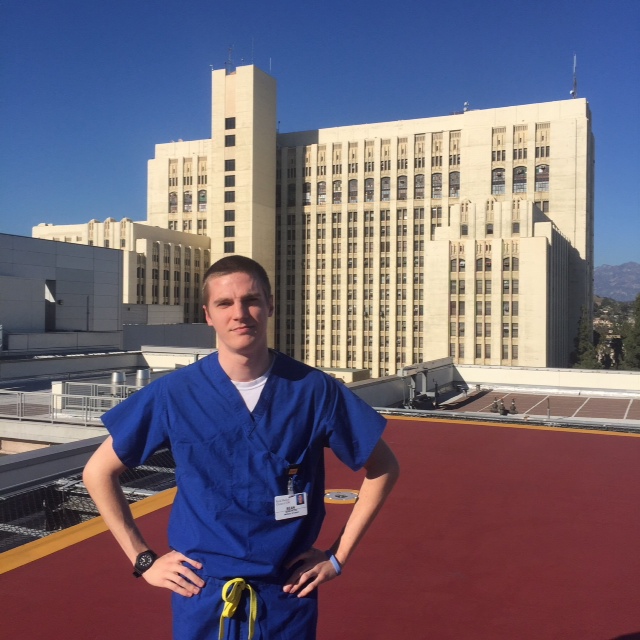
"caption": "Sean Petro, at age 24, one year before his suicide while attending the USC Keck School of Medicine.\n\n",
"description": null,
"title": "IMG_1536",
"credit": "Photo courtesy of Cheryl Petro Collier.",
"status": "inherit",
"isLoading": false,
"fetchFailed": false
},
"arts_13113403": {
"type": "attachments",
"id": "arts_13113403",
"meta": {
"index": "attachments_1716263798",
"site": "arts",
"id": "13113403",
"found": true
},
"parent": 13113401,
"imgSizes": {
"small": {
"file": "https://ww2.kqed.org/app/uploads/sites/2/2017/04/RS25034_Enlow_Parent_Skit-017-qut-520x293.jpg",
"width": 520,
"mimeType": "image/jpeg",
"height": 293
},
"twentyfourteen-full-width": {
"file": "https://ww2.kqed.org/app/uploads/sites/2/2017/04/RS25034_Enlow_Parent_Skit-017-qut-1038x576.jpg",
"width": 1038,
"mimeType": "image/jpeg",
"height": 576
},
"thumbnail": {
"file": "https://ww2.kqed.org/app/uploads/sites/2/2017/04/RS25034_Enlow_Parent_Skit-017-qut-160x90.jpg",
"width": 160,
"mimeType": "image/jpeg",
"height": 90
},
"fd-sm": {
"file": "https://ww2.kqed.org/app/uploads/sites/2/2017/04/RS25034_Enlow_Parent_Skit-017-qut-960x541.jpg",
"width": 960,
"mimeType": "image/jpeg",
"height": 541
},
"post-thumbnail": {
"file": "https://ww2.kqed.org/app/uploads/sites/2/2017/04/RS25034_Enlow_Parent_Skit-017-qut-672x372.jpg",
"width": 672,
"mimeType": "image/jpeg",
"height": 372
},
"xsmall": {
"file": "https://ww2.kqed.org/app/uploads/sites/2/2017/04/RS25034_Enlow_Parent_Skit-017-qut-375x211.jpg",
"width": 375,
"mimeType": "image/jpeg",
"height": 211
},
"kqedFullSize": {
"file": "https://ww2.kqed.org/app/uploads/sites/2/2017/04/RS25034_Enlow_Parent_Skit-017-qut.jpg",
"width": 1920,
"height": 1082
},
"large": {
"file": "https://ww2.kqed.org/app/uploads/sites/2/2017/04/RS25034_Enlow_Parent_Skit-017-qut-1020x575.jpg",
"width": 1020,
"mimeType": "image/jpeg",
"height": 575
},
"xlarge": {
"file": "https://ww2.kqed.org/app/uploads/sites/2/2017/04/RS25034_Enlow_Parent_Skit-017-qut-1180x665.jpg",
"width": 1180,
"mimeType": "image/jpeg",
"height": 665
},
"guest-author-50": {
"file": "https://ww2.kqed.org/app/uploads/sites/2/2017/04/RS25034_Enlow_Parent_Skit-017-qut-50x50.jpg",
"width": 50,
"mimeType": "image/jpeg",
"height": 50
},
"guest-author-96": {
"file": "https://ww2.kqed.org/app/uploads/sites/2/2017/04/RS25034_Enlow_Parent_Skit-017-qut-96x96.jpg",
"width": 96,
"mimeType": "image/jpeg",
"height": 96
},
"medium": {
"file": "https://ww2.kqed.org/app/uploads/sites/2/2017/04/RS25034_Enlow_Parent_Skit-017-qut-800x451.jpg",
"width": 800,
"mimeType": "image/jpeg",
"height": 451
},
"guest-author-64": {
"file": "https://ww2.kqed.org/app/uploads/sites/2/2017/04/RS25034_Enlow_Parent_Skit-017-qut-64x64.jpg",
"width": 64,
"mimeType": "image/jpeg",
"height": 64
},
"guest-author-32": {
"file": "https://ww2.kqed.org/app/uploads/sites/2/2017/04/RS25034_Enlow_Parent_Skit-017-qut-32x32.jpg",
"width": 32,
"mimeType": "image/jpeg",
"height": 32
},
"fd-lrg": {
"file": "https://ww2.kqed.org/app/uploads/sites/2/2017/04/RS25034_Enlow_Parent_Skit-017-qut-1920x1082.jpg",
"width": 1920,
"mimeType": "image/jpeg",
"height": 1082
},
"fd-med": {
"file": "https://ww2.kqed.org/app/uploads/sites/2/2017/04/RS25034_Enlow_Parent_Skit-017-qut-1180x665.jpg",
"width": 1180,
"mimeType": "image/jpeg",
"height": 665
},
"full-width": {
"file": "https://ww2.kqed.org/app/uploads/sites/2/2017/04/RS25034_Enlow_Parent_Skit-017-qut-1920x1082.jpg",
"width": 1920,
"mimeType": "image/jpeg",
"height": 1082
},
"detail": {
"file": "https://ww2.kqed.org/app/uploads/sites/2/2017/04/RS25034_Enlow_Parent_Skit-017-qut-150x150.jpg",
"width": 150,
"mimeType": "image/jpeg",
"height": 150
},
"medium_large": {
"file": "https://ww2.kqed.org/app/uploads/sites/2/2017/04/RS25034_Enlow_Parent_Skit-017-qut-768x433.jpg",
"width": 768,
"mimeType": "image/jpeg",
"height": 433
},
"guest-author-128": {
"file": "https://ww2.kqed.org/app/uploads/sites/2/2017/04/RS25034_Enlow_Parent_Skit-017-qut-128x128.jpg",
"width": 128,
"mimeType": "image/jpeg",
"height": 128
},
"xxsmall": {
"file": "https://ww2.kqed.org/app/uploads/sites/2/2017/04/RS25034_Enlow_Parent_Skit-017-qut-240x135.jpg",
"width": 240,
"mimeType": "image/jpeg",
"height": 135
}
},
"publishDate": 1493234177,
"modified": 1493657392,
"caption": "Stanford psychiatrists use the maxim \"Show, don't tell,\" to demonstrate how parents can cultivate emotional closeness with their teenagers - or emotional distance. In this vignette, Dr. Rona Hu plays a mother who disapproves when her daughter, played by Dr. Grace Lee, brings home a non-Chinese boyfriend, playing by Dr. Francesco Dandekar.",
"description": "Stanford psychiatrists use the maxim \"Show, don't tell,\" to demonstrate how parents can cultivate emotional closeness with their teenagers - or emotional distance. In this vignette, Dr. Rona Hu plays a mother who disapproves when her daughter, played by Dr. Grace Lee, brings home a non-Chinese boyfriend, playing by Dr. Francesco Dandekar.",
"title": "RS25034_Enlow_Parent_Skit-017-qut",
"credit": "Photo: Jeff Enlow/KQED",
"status": "inherit",
"isLoading": false,
"fetchFailed": false
},
"news_11418538": {
"type": "attachments",
"id": "news_11418538",
"meta": {
"index": "attachments_1716263798",
"site": "news",
"id": "11418538",
"found": true
},
"parent": 11418506,
"imgSizes": {
"small": {
"file": "https://ww2.kqed.org/app/uploads/sites/10/2017/04/11510_transform-520x390.jpg",
"width": 520,
"mimeType": "image/jpeg",
"height": 390
},
"twentyfourteen-full-width": {
"file": "https://ww2.kqed.org/app/uploads/sites/10/2017/04/11510_transform-1038x576.jpg",
"width": 1038,
"mimeType": "image/jpeg",
"height": 576
},
"thumbnail": {
"file": "https://ww2.kqed.org/app/uploads/sites/10/2017/04/11510_transform-160x120.jpg",
"width": 160,
"mimeType": "image/jpeg",
"height": 120
},
"fd-sm": {
"file": "https://ww2.kqed.org/app/uploads/sites/10/2017/04/11510_transform-960x720.jpg",
"width": 960,
"mimeType": "image/jpeg",
"height": 720
},
"post-thumbnail": {
"file": "https://ww2.kqed.org/app/uploads/sites/10/2017/04/11510_transform-672x372.jpg",
"width": 672,
"mimeType": "image/jpeg",
"height": 372
},
"xsmall": {
"file": "https://ww2.kqed.org/app/uploads/sites/10/2017/04/11510_transform-375x281.jpg",
"width": 375,
"mimeType": "image/jpeg",
"height": 281
},
"kqedFullSize": {
"file": "https://ww2.kqed.org/app/uploads/sites/10/2017/04/11510_transform.jpg",
"width": 1920,
"height": 1440
},
"large": {
"file": "https://ww2.kqed.org/app/uploads/sites/10/2017/04/11510_transform-1020x765.jpg",
"width": 1020,
"mimeType": "image/jpeg",
"height": 765
},
"xlarge": {
"file": "https://ww2.kqed.org/app/uploads/sites/10/2017/04/11510_transform-1180x885.jpg",
"width": 1180,
"mimeType": "image/jpeg",
"height": 885
},
"guest-author-50": {
"file": "https://ww2.kqed.org/app/uploads/sites/10/2017/04/11510_transform-50x50.jpg",
"width": 50,
"mimeType": "image/jpeg",
"height": 50
},
"guest-author-96": {
"file": "https://ww2.kqed.org/app/uploads/sites/10/2017/04/11510_transform-96x96.jpg",
"width": 96,
"mimeType": "image/jpeg",
"height": 96
},
"medium": {
"file": "https://ww2.kqed.org/app/uploads/sites/10/2017/04/11510_transform-800x600.jpg",
"width": 800,
"mimeType": "image/jpeg",
"height": 600
},
"guest-author-64": {
"file": "https://ww2.kqed.org/app/uploads/sites/10/2017/04/11510_transform-64x64.jpg",
"width": 64,
"mimeType": "image/jpeg",
"height": 64
},
"guest-author-32": {
"file": "https://ww2.kqed.org/app/uploads/sites/10/2017/04/11510_transform-32x32.jpg",
"width": 32,
"mimeType": "image/jpeg",
"height": 32
},
"fd-lrg": {
"file": "https://ww2.kqed.org/app/uploads/sites/10/2017/04/11510_transform-1920x1440.jpg",
"width": 1920,
"mimeType": "image/jpeg",
"height": 1440
},
"fd-med": {
"file": "https://ww2.kqed.org/app/uploads/sites/10/2017/04/11510_transform-1180x885.jpg",
"width": 1180,
"mimeType": "image/jpeg",
"height": 885
},
"full-width": {
"file": "https://ww2.kqed.org/app/uploads/sites/10/2017/04/11510_transform-1920x1440.jpg",
"width": 1920,
"mimeType": "image/jpeg",
"height": 1440
},
"detail": {
"file": "https://ww2.kqed.org/app/uploads/sites/10/2017/04/11510_transform-150x150.jpg",
"width": 150,
"mimeType": "image/jpeg",
"height": 150
},
"guest-author-128": {
"file": "https://ww2.kqed.org/app/uploads/sites/10/2017/04/11510_transform-128x128.jpg",
"width": 128,
"mimeType": "image/jpeg",
"height": 128
},
"xxsmall": {
"file": "https://ww2.kqed.org/app/uploads/sites/10/2017/04/11510_transform-240x180.jpg",
"width": 240,
"mimeType": "image/jpeg",
"height": 180
}
},
"publishDate": 1492716360,
"modified": 1607553769,
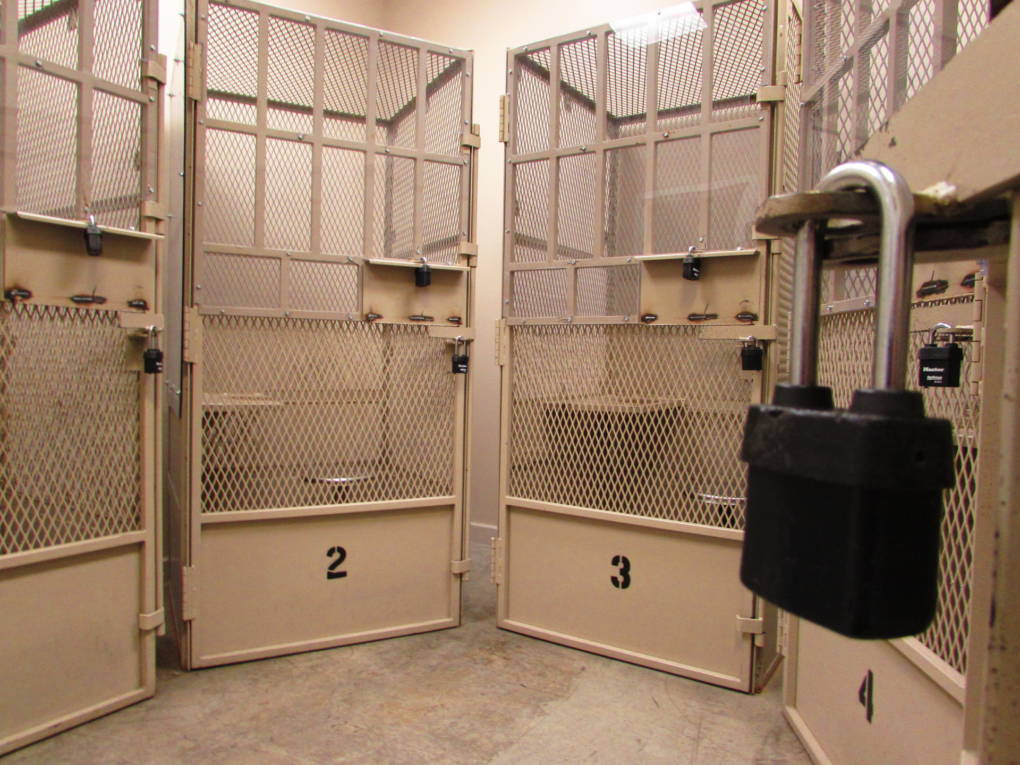
"caption": "Prisons confine inmates during group therapy in metal cages, also known as therapeutic modules, at California State Prison in Sacramento.",
"description": null,
"title": "11510_transform",
"credit": "Julie Small/KQED",
"status": "inherit",
"altTag": null,
"isLoading": false,
"fetchFailed": false
},
"news_10966092": {
"type": "attachments",
"id": "news_10966092",
"meta": {
"index": "attachments_1716263798",
"site": "news",
"id": "10966092",
"found": true
},
"parent": 0,
"imgSizes": {
"jmtc-small-thumb": {
"file": "https://ww2.kqed.org/app/uploads/sites/10/2016/05/10966091-thumb-280x150.jpg",
"width": 280,
"mimeType": "image/jpeg",
"height": 150
},
"thumbnail": {
"file": "https://ww2.kqed.org/app/uploads/sites/10/2016/05/10966091-thumb-400x225.jpg",
"width": 400,
"mimeType": "image/jpeg",
"height": 225
},
"kqedFullSize": {
"file": "https://ww2.kqed.org/app/uploads/sites/10/2016/05/10966091-thumb.jpg",
"width": 400,
"height": 225
},
"guest-author-50": {
"file": "https://ww2.kqed.org/app/uploads/sites/10/2016/05/10966091-thumb-50x50.jpg",
"width": 50,
"mimeType": "image/jpeg",
"height": 50
},
"guest-author-96": {
"file": "https://ww2.kqed.org/app/uploads/sites/10/2016/05/10966091-thumb-96x96.jpg",
"width": 96,
"mimeType": "image/jpeg",
"height": 96
},
"guest-author-64": {
"file": "https://ww2.kqed.org/app/uploads/sites/10/2016/05/10966091-thumb-64x64.jpg",
"width": 64,
"mimeType": "image/jpeg",
"height": 64
},
"detail": {
"file": "https://ww2.kqed.org/app/uploads/sites/10/2016/05/10966091-thumb-150x150.jpg",
"width": 150,
"mimeType": "image/jpeg",
"height": 150
},
"guest-author-32": {
"file": "https://ww2.kqed.org/app/uploads/sites/10/2016/05/10966091-thumb-32x32.jpg",
"width": 32,
"mimeType": "image/jpeg",
"height": 32
},
"guest-author-128": {
"file": "https://ww2.kqed.org/app/uploads/sites/10/2016/05/10966091-thumb-128x128.jpg",
"width": 128,
"mimeType": "image/jpeg",
"height": 128
}
},
"publishDate": 1464112888,
"modified": 1464112888,
"caption": null,
"description": "Maria Smolnitcaia, 52, is a singer living on a TB ward in Balti, Moldova. Smolnitcaia says \"When we take the pills, we feel worse. I'm losing my hearing a little. I feel pain in my bones, in my whole body.\"",
"title": "Thumbnail for 10966091",
"credit": null,
"status": "inherit",
"isLoading": false,
"fetchFailed": false
},
"news_11401793": {
"type": "attachments",
"id": "news_11401793",
"meta": {
"index": "attachments_1716263798",
"site": "news",
"id": "11401793",
"found": true
},
"parent": 11397452,
"imgSizes": {
"small": {
"file": "https://ww2.kqed.org/app/uploads/sites/10/2017/04/RS24897_Mariah-and-Kelly-qut-520x390.jpg",
"width": 520,
"mimeType": "image/jpeg",
"height": 390
},
"twentyfourteen-full-width": {
"file": "https://ww2.kqed.org/app/uploads/sites/10/2017/04/RS24897_Mariah-and-Kelly-qut-1038x576.jpg",
"width": 1038,
"mimeType": "image/jpeg",
"height": 576
},
"thumbnail": {
"file": "https://ww2.kqed.org/app/uploads/sites/10/2017/04/RS24897_Mariah-and-Kelly-qut-160x120.jpg",
"width": 160,
"mimeType": "image/jpeg",
"height": 120
},
"fd-sm": {
"file": "https://ww2.kqed.org/app/uploads/sites/10/2017/04/RS24897_Mariah-and-Kelly-qut-960x720.jpg",
"width": 960,
"mimeType": "image/jpeg",
"height": 720
},
"post-thumbnail": {
"file": "https://ww2.kqed.org/app/uploads/sites/10/2017/04/RS24897_Mariah-and-Kelly-qut-672x372.jpg",
"width": 672,
"mimeType": "image/jpeg",
"height": 372
},
"xsmall": {
"file": "https://ww2.kqed.org/app/uploads/sites/10/2017/04/RS24897_Mariah-and-Kelly-qut-375x281.jpg",
"width": 375,
"mimeType": "image/jpeg",
"height": 281
},
"kqedFullSize": {
"file": "https://ww2.kqed.org/app/uploads/sites/10/2017/04/RS24897_Mariah-and-Kelly-qut.jpg",
"width": 1920,
"height": 1440
},
"large": {
"file": "https://ww2.kqed.org/app/uploads/sites/10/2017/04/RS24897_Mariah-and-Kelly-qut-1020x765.jpg",
"width": 1020,
"mimeType": "image/jpeg",
"height": 765
},
"xlarge": {
"file": "https://ww2.kqed.org/app/uploads/sites/10/2017/04/RS24897_Mariah-and-Kelly-qut-1180x885.jpg",
"width": 1180,
"mimeType": "image/jpeg",
"height": 885
},
"guest-author-50": {
"file": "https://ww2.kqed.org/app/uploads/sites/10/2017/04/RS24897_Mariah-and-Kelly-qut-50x50.jpg",
"width": 50,
"mimeType": "image/jpeg",
"height": 50
},
"guest-author-96": {
"file": "https://ww2.kqed.org/app/uploads/sites/10/2017/04/RS24897_Mariah-and-Kelly-qut-96x96.jpg",
"width": 96,
"mimeType": "image/jpeg",
"height": 96
},
"medium": {
"file": "https://ww2.kqed.org/app/uploads/sites/10/2017/04/RS24897_Mariah-and-Kelly-qut-800x600.jpg",
"width": 800,
"mimeType": "image/jpeg",
"height": 600
},
"guest-author-64": {
"file": "https://ww2.kqed.org/app/uploads/sites/10/2017/04/RS24897_Mariah-and-Kelly-qut-64x64.jpg",
"width": 64,
"mimeType": "image/jpeg",
"height": 64
},
"guest-author-32": {
"file": "https://ww2.kqed.org/app/uploads/sites/10/2017/04/RS24897_Mariah-and-Kelly-qut-32x32.jpg",
"width": 32,
"mimeType": "image/jpeg",
"height": 32
},
"fd-lrg": {
"file": "https://ww2.kqed.org/app/uploads/sites/10/2017/04/RS24897_Mariah-and-Kelly-qut-1920x1440.jpg",
"width": 1920,
"mimeType": "image/jpeg",
"height": 1440
},
"fd-med": {
"file": "https://ww2.kqed.org/app/uploads/sites/10/2017/04/RS24897_Mariah-and-Kelly-qut-1180x885.jpg",
"width": 1180,
"mimeType": "image/jpeg",
"height": 885
},
"full-width": {
"file": "https://ww2.kqed.org/app/uploads/sites/10/2017/04/RS24897_Mariah-and-Kelly-qut-1920x1440.jpg",
"width": 1920,
"mimeType": "image/jpeg",
"height": 1440
},
"detail": {
"file": "https://ww2.kqed.org/app/uploads/sites/10/2017/04/RS24897_Mariah-and-Kelly-qut-150x150.jpg",
"width": 150,
"mimeType": "image/jpeg",
"height": 150
},
"guest-author-128": {
"file": "https://ww2.kqed.org/app/uploads/sites/10/2017/04/RS24897_Mariah-and-Kelly-qut-128x128.jpg",
"width": 128,
"mimeType": "image/jpeg",
"height": 128
},
"xxsmall": {
"file": "https://ww2.kqed.org/app/uploads/sites/10/2017/04/RS24897_Mariah-and-Kelly-qut-240x180.jpg",
"width": 240,
"mimeType": "image/jpeg",
"height": 180
}
},
"publishDate": 1491846284,
"modified": 1491846578,
"caption": "Mariah Reyes, Priya the dog and dream therapist Kelly Sullivan Walden during waking hours.",
"description": null,
"title": "RS24897_Mariah and Kelly-qut",
"credit": "Peter Gilstrap/KQED",
"status": "inherit",
"isLoading": false,
"fetchFailed": false
},
"news_11353229": {
"type": "attachments",
"id": "news_11353229",
"meta": {
"index": "attachments_1716263798",
"site": "news",
"id": "11353229",
"found": true
},
"parent": 11353211,
"imgSizes": {
"small": {
"file": "https://ww2.kqed.org/app/uploads/sites/10/2017/03/photo-4-520x693.jpg",
"width": 520,
"mimeType": "image/jpeg",
"height": 693
},
"twentyfourteen-full-width": {
"file": "https://ww2.kqed.org/app/uploads/sites/10/2017/03/photo-4-1038x576.jpg",
"width": 1038,
"mimeType": "image/jpeg",
"height": 576
},
"thumbnail": {
"file": "https://ww2.kqed.org/app/uploads/sites/10/2017/03/photo-4-160x213.jpg",
"width": 160,
"mimeType": "image/jpeg",
"height": 213
},
"fd-sm": {
"file": "https://ww2.kqed.org/app/uploads/sites/10/2017/03/photo-4-960x1280.jpg",
"width": 960,
"mimeType": "image/jpeg",
"height": 1280
},
"post-thumbnail": {
"file": "https://ww2.kqed.org/app/uploads/sites/10/2017/03/photo-4-672x372.jpg",
"width": 672,
"mimeType": "image/jpeg",
"height": 372
},
"xsmall": {
"file": "https://ww2.kqed.org/app/uploads/sites/10/2017/03/photo-4-375x500.jpg",
"width": 375,
"mimeType": "image/jpeg",
"height": 500
},
"kqedFullSize": {
"file": "https://ww2.kqed.org/app/uploads/sites/10/2017/03/photo-4-e1489420723961.jpg",
"width": 1920,
"height": 2560
},
"large": {
"file": "https://ww2.kqed.org/app/uploads/sites/10/2017/03/photo-4-1020x1360.jpg",
"width": 1020,
"mimeType": "image/jpeg",
"height": 1360
},
"xlarge": {
"file": "https://ww2.kqed.org/app/uploads/sites/10/2017/03/photo-4-1180x1573.jpg",
"width": 1180,
"mimeType": "image/jpeg",
"height": 1573
},
"guest-author-50": {
"file": "https://ww2.kqed.org/app/uploads/sites/10/2017/03/photo-4-50x50.jpg",
"width": 50,
"mimeType": "image/jpeg",
"height": 50
},
"guest-author-96": {
"file": "https://ww2.kqed.org/app/uploads/sites/10/2017/03/photo-4-96x96.jpg",
"width": 96,
"mimeType": "image/jpeg",
"height": 96
},
"medium": {
"file": "https://ww2.kqed.org/app/uploads/sites/10/2017/03/photo-4-800x1067.jpg",
"width": 800,
"mimeType": "image/jpeg",
"height": 1067
},
"guest-author-64": {
"file": "https://ww2.kqed.org/app/uploads/sites/10/2017/03/photo-4-64x64.jpg",
"width": 64,
"mimeType": "image/jpeg",
"height": 64
},
"guest-author-32": {
"file": "https://ww2.kqed.org/app/uploads/sites/10/2017/03/photo-4-32x32.jpg",
"width": 32,
"mimeType": "image/jpeg",
"height": 32
},
"fd-lrg": {
"file": "https://ww2.kqed.org/app/uploads/sites/10/2017/03/photo-4-1920x2560.jpg",
"width": 1920,
"mimeType": "image/jpeg",
"height": 2560
},
"fd-med": {
"file": "https://ww2.kqed.org/app/uploads/sites/10/2017/03/photo-4-1180x1573.jpg",
"width": 1180,
"mimeType": "image/jpeg",
"height": 1573
},
"full-width": {
"file": "https://ww2.kqed.org/app/uploads/sites/10/2017/03/photo-4-1920x2560.jpg",
"width": 1920,
"mimeType": "image/jpeg",
"height": 2560
},
"detail": {
"file": "https://ww2.kqed.org/app/uploads/sites/10/2017/03/photo-4-150x150.jpg",
"width": 150,
"mimeType": "image/jpeg",
"height": 150
},
"guest-author-128": {
"file": "https://ww2.kqed.org/app/uploads/sites/10/2017/03/photo-4-128x128.jpg",
"width": 128,
"mimeType": "image/jpeg",
"height": 128
},
"xxsmall": {
"file": "https://ww2.kqed.org/app/uploads/sites/10/2017/03/photo-4-240x320.jpg",
"width": 240,
"mimeType": "image/jpeg",
"height": 320
}
},
"publishDate": 1489175625,
"modified": 1489443967,
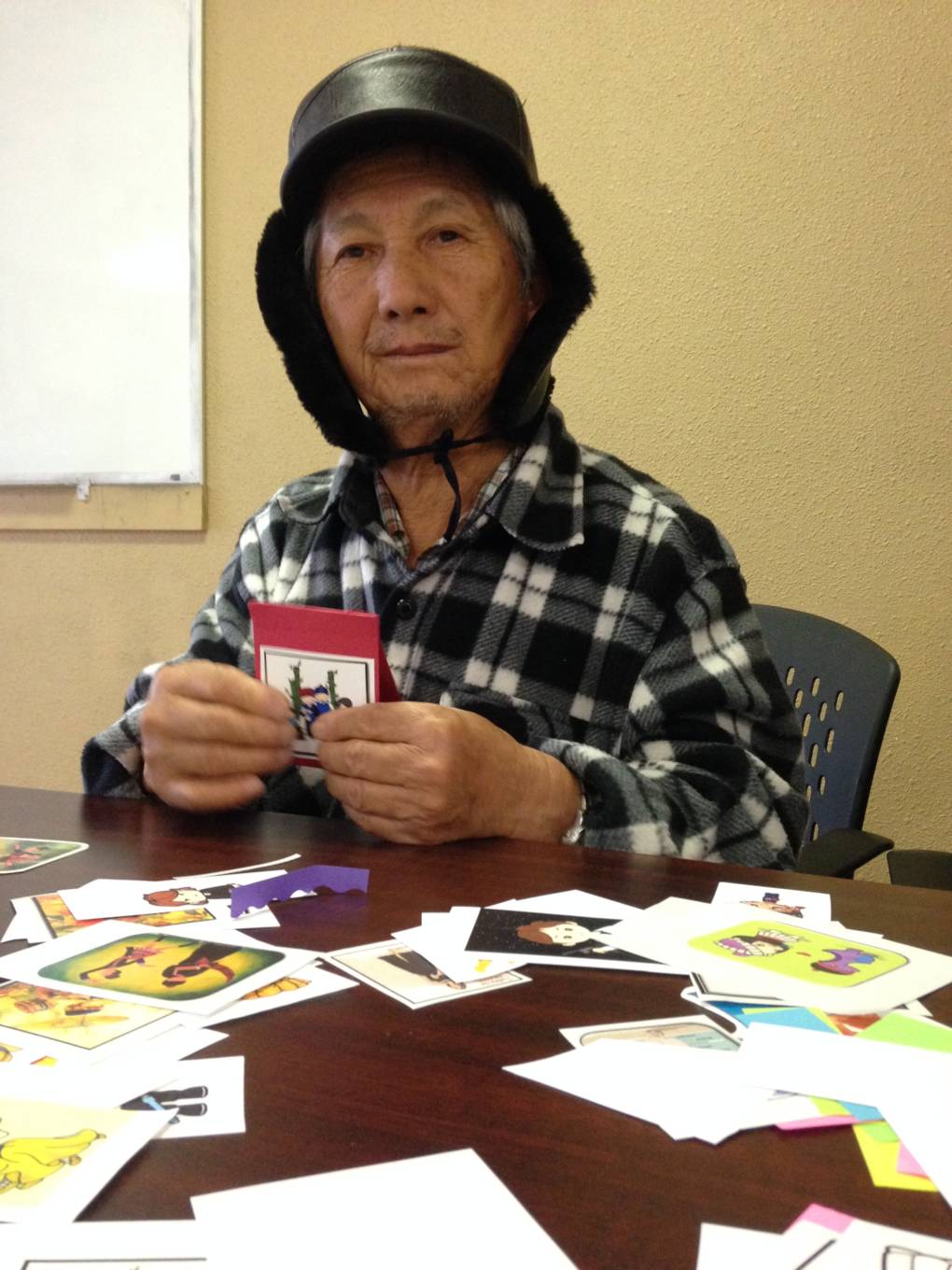
"caption": "Vong Vang Xiong fought in Laos for six years in the CIA's secret war. He does group crafts to help deal with depression.",
"description": null,
"title": "photo 4",
"credit": "Alice Daniel/KQED",
"status": "inherit",
"isLoading": false,
"fetchFailed": false
},
"news_11298298": {
"type": "attachments",
"id": "news_11298298",
"meta": {
"index": "attachments_1716263798",
"site": "news",
"id": "11298298",
"found": true
},
"parent": 11298297,
"imgSizes": {
"small": {
"file": "https://ww2.kqed.org/app/uploads/sites/10/2017/01/gloria-grijalva_custom-cb17685c4d4d99a1861912f0bb29fb7e5835aec8-520x299.jpg",
"width": 520,
"mimeType": "image/jpeg",
"height": 299
},
"twentyfourteen-full-width": {
"file": "https://ww2.kqed.org/app/uploads/sites/10/2017/01/gloria-grijalva_custom-cb17685c4d4d99a1861912f0bb29fb7e5835aec8-1038x576.jpg",
"width": 1038,
"mimeType": "image/jpeg",
"height": 576
},
"thumbnail": {
"file": "https://ww2.kqed.org/app/uploads/sites/10/2017/01/gloria-grijalva_custom-cb17685c4d4d99a1861912f0bb29fb7e5835aec8-160x92.jpg",
"width": 160,
"mimeType": "image/jpeg",
"height": 92
},
"fd-sm": {
"file": "https://ww2.kqed.org/app/uploads/sites/10/2017/01/gloria-grijalva_custom-cb17685c4d4d99a1861912f0bb29fb7e5835aec8-960x553.jpg",
"width": 960,
"mimeType": "image/jpeg",
"height": 553
},
"post-thumbnail": {
"file": "https://ww2.kqed.org/app/uploads/sites/10/2017/01/gloria-grijalva_custom-cb17685c4d4d99a1861912f0bb29fb7e5835aec8-672x372.jpg",
"width": 672,
"mimeType": "image/jpeg",
"height": 372
},
"xsmall": {
"file": "https://ww2.kqed.org/app/uploads/sites/10/2017/01/gloria-grijalva_custom-cb17685c4d4d99a1861912f0bb29fb7e5835aec8-375x216.jpg",
"width": 375,
"mimeType": "image/jpeg",
"height": 216
},
"kqedFullSize": {
"file": "https://ww2.kqed.org/app/uploads/sites/10/2017/01/gloria-grijalva_custom-cb17685c4d4d99a1861912f0bb29fb7e5835aec8.jpg",
"width": 1087,
"height": 626
},
"large": {
"file": "https://ww2.kqed.org/app/uploads/sites/10/2017/01/gloria-grijalva_custom-cb17685c4d4d99a1861912f0bb29fb7e5835aec8-1020x587.jpg",
"width": 1020,
"mimeType": "image/jpeg",
"height": 587
},
"guest-author-50": {
"file": "https://ww2.kqed.org/app/uploads/sites/10/2017/01/gloria-grijalva_custom-cb17685c4d4d99a1861912f0bb29fb7e5835aec8-50x50.jpg",
"width": 50,
"mimeType": "image/jpeg",
"height": 50
},
"guest-author-96": {
"file": "https://ww2.kqed.org/app/uploads/sites/10/2017/01/gloria-grijalva_custom-cb17685c4d4d99a1861912f0bb29fb7e5835aec8-96x96.jpg",
"width": 96,
"mimeType": "image/jpeg",
"height": 96
},
"medium": {
"file": "https://ww2.kqed.org/app/uploads/sites/10/2017/01/gloria-grijalva_custom-cb17685c4d4d99a1861912f0bb29fb7e5835aec8-800x461.jpg",
"width": 800,
"mimeType": "image/jpeg",
"height": 461
},
"guest-author-64": {
"file": "https://ww2.kqed.org/app/uploads/sites/10/2017/01/gloria-grijalva_custom-cb17685c4d4d99a1861912f0bb29fb7e5835aec8-64x64.jpg",
"width": 64,
"mimeType": "image/jpeg",
"height": 64
},
"guest-author-32": {
"file": "https://ww2.kqed.org/app/uploads/sites/10/2017/01/gloria-grijalva_custom-cb17685c4d4d99a1861912f0bb29fb7e5835aec8-32x32.jpg",
"width": 32,
"mimeType": "image/jpeg",
"height": 32
},
"jmtc-small-thumb": {
"file": "https://ww2.kqed.org/app/uploads/sites/10/2017/01/gloria-grijalva_custom-cb17685c4d4d99a1861912f0bb29fb7e5835aec8-280x150.jpg",
"width": 280,
"mimeType": "image/jpeg",
"height": 150
},
"detail": {
"file": "https://ww2.kqed.org/app/uploads/sites/10/2017/01/gloria-grijalva_custom-cb17685c4d4d99a1861912f0bb29fb7e5835aec8-150x150.jpg",
"width": 150,
"mimeType": "image/jpeg",
"height": 150
},
"guest-author-128": {
"file": "https://ww2.kqed.org/app/uploads/sites/10/2017/01/gloria-grijalva_custom-cb17685c4d4d99a1861912f0bb29fb7e5835aec8-128x128.jpg",
"width": 128,
"mimeType": "image/jpeg",
"height": 128
},
"xxsmall": {
"file": "https://ww2.kqed.org/app/uploads/sites/10/2017/01/gloria-grijalva_custom-cb17685c4d4d99a1861912f0bb29fb7e5835aec8-240x138.jpg",
"width": 240,
"mimeType": "image/jpeg",
"height": 138
}
},
"publishDate": 1486070809,
"modified": 1486070989,
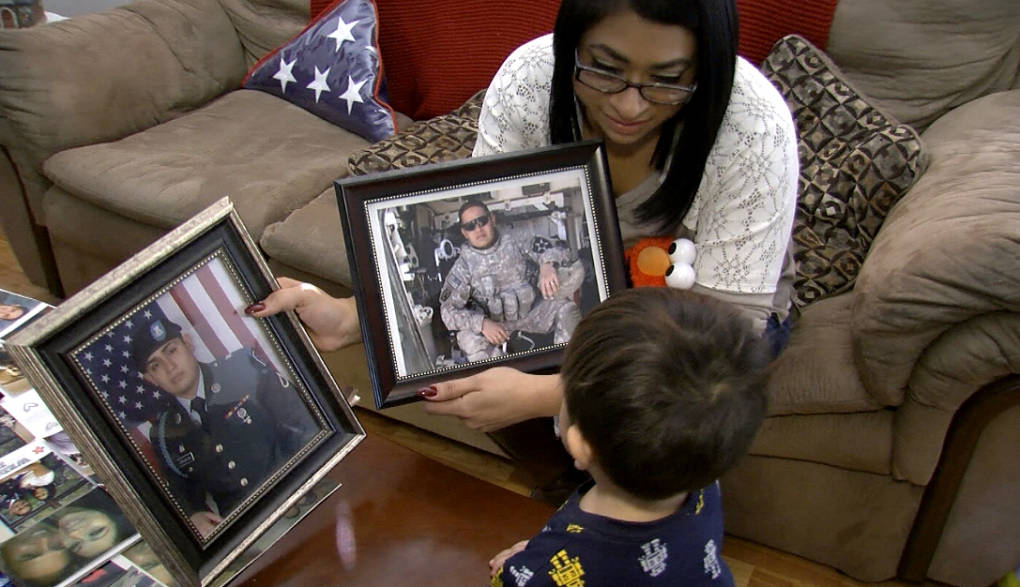
"caption": "Widowed while pregnant with their second son, Gloria Grijalva shares pictures of her husband, U.S. Army veteran Charlie Grijalva, who committed suicide in December 2014.",
"description": "Widowed while pregnant with their second son, Gloria Grijalva shares pictures of her husband, U.S. Army veteran Charlie Grijalva, who committed suicide in December 2014.",
"title": "Widowed while pregnant with their second son, Gloria Grijalva shares pictures of her husband, U.S. Army veteran Charlie Grijalva, who committed suicide in December 2014.",
"credit": "KPBS",
"status": "inherit",
"isLoading": false,
"fetchFailed": false
},
"stateofhealth_273655": {
"type": "attachments",
"id": "stateofhealth_273655",
"meta": {
"index": "attachments_1716263798",
"site": "stateofhealth",
"id": "273655",
"found": true
},
"parent": 273654,
"imgSizes": {
"small": {
"file": "https://ww2.kqed.org/app/uploads/sites/27/2016/12/1935-pacificcolony-refusal-2-_wide-4129ecd49a13d83fa29159fb56807fac578043fb-520x293.jpg",
"width": 520,
"mimeType": "image/jpeg",
"height": 293
},
"twentyfourteen-full-width": {
"file": "https://ww2.kqed.org/app/uploads/sites/27/2016/12/1935-pacificcolony-refusal-2-_wide-4129ecd49a13d83fa29159fb56807fac578043fb-1038x576.jpg",
"width": 1038,
"mimeType": "image/jpeg",
"height": 576
},
"thumbnail": {
"file": "https://ww2.kqed.org/app/uploads/sites/27/2016/12/1935-pacificcolony-refusal-2-_wide-4129ecd49a13d83fa29159fb56807fac578043fb-160x90.jpg",
"width": 160,
"mimeType": "image/jpeg",
"height": 90
},
"fd-sm": {
"file": "https://ww2.kqed.org/app/uploads/sites/27/2016/12/1935-pacificcolony-refusal-2-_wide-4129ecd49a13d83fa29159fb56807fac578043fb-960x541.jpg",
"width": 960,
"mimeType": "image/jpeg",
"height": 541
},
"post-thumbnail": {
"file": "https://ww2.kqed.org/app/uploads/sites/27/2016/12/1935-pacificcolony-refusal-2-_wide-4129ecd49a13d83fa29159fb56807fac578043fb-672x372.jpg",
"width": 672,
"mimeType": "image/jpeg",
"height": 372
},
"xsmall": {
"file": "https://ww2.kqed.org/app/uploads/sites/27/2016/12/1935-pacificcolony-refusal-2-_wide-4129ecd49a13d83fa29159fb56807fac578043fb-375x211.jpg",
"width": 375,
"mimeType": "image/jpeg",
"height": 211
},
"kqedFullSize": {
"file": "https://ww2.kqed.org/app/uploads/sites/27/2016/12/1935-pacificcolony-refusal-2-_wide-4129ecd49a13d83fa29159fb56807fac578043fb-e1482343051512.jpg",
"width": 1920,
"height": 1081
},
"large": {
"file": "https://ww2.kqed.org/app/uploads/sites/27/2016/12/1935-pacificcolony-refusal-2-_wide-4129ecd49a13d83fa29159fb56807fac578043fb-1020x574.jpg",
"width": 1020,
"mimeType": "image/jpeg",
"height": 574
},
"xlarge": {
"file": "https://ww2.kqed.org/app/uploads/sites/27/2016/12/1935-pacificcolony-refusal-2-_wide-4129ecd49a13d83fa29159fb56807fac578043fb-1180x665.jpg",
"width": 1180,
"mimeType": "image/jpeg",
"height": 665
},
"guest-author-50": {
"file": "https://ww2.kqed.org/app/uploads/sites/27/2016/12/1935-pacificcolony-refusal-2-_wide-4129ecd49a13d83fa29159fb56807fac578043fb-50x50.jpg",
"width": 50,
"mimeType": "image/jpeg",
"height": 50
},
"guest-author-96": {
"file": "https://ww2.kqed.org/app/uploads/sites/27/2016/12/1935-pacificcolony-refusal-2-_wide-4129ecd49a13d83fa29159fb56807fac578043fb-96x96.jpg",
"width": 96,
"mimeType": "image/jpeg",
"height": 96
},
"medium": {
"file": "https://ww2.kqed.org/app/uploads/sites/27/2016/12/1935-pacificcolony-refusal-2-_wide-4129ecd49a13d83fa29159fb56807fac578043fb-800x451.jpg",
"width": 800,
"mimeType": "image/jpeg",
"height": 451
},
"guest-author-64": {
"file": "https://ww2.kqed.org/app/uploads/sites/27/2016/12/1935-pacificcolony-refusal-2-_wide-4129ecd49a13d83fa29159fb56807fac578043fb-64x64.jpg",
"width": 64,
"mimeType": "image/jpeg",
"height": 64
},
"guest-author-32": {
"file": "https://ww2.kqed.org/app/uploads/sites/27/2016/12/1935-pacificcolony-refusal-2-_wide-4129ecd49a13d83fa29159fb56807fac578043fb-32x32.jpg",
"width": 32,
"mimeType": "image/jpeg",
"height": 32
},
"jmtc-small-thumb": {
"file": "https://ww2.kqed.org/app/uploads/sites/27/2016/12/1935-pacificcolony-refusal-2-_wide-4129ecd49a13d83fa29159fb56807fac578043fb-280x150.jpg",
"width": 280,
"mimeType": "image/jpeg",
"height": 150
},
"fd-lrg": {
"file": "https://ww2.kqed.org/app/uploads/sites/27/2016/12/1935-pacificcolony-refusal-2-_wide-4129ecd49a13d83fa29159fb56807fac578043fb-1920x1081.jpg",
"width": 1920,
"mimeType": "image/jpeg",
"height": 1081
},
"fd-med": {
"file": "https://ww2.kqed.org/app/uploads/sites/27/2016/12/1935-pacificcolony-refusal-2-_wide-4129ecd49a13d83fa29159fb56807fac578043fb-1180x665.jpg",
"width": 1180,
"mimeType": "image/jpeg",
"height": 665
},
"full-width": {
"file": "https://ww2.kqed.org/app/uploads/sites/27/2016/12/1935-pacificcolony-refusal-2-_wide-4129ecd49a13d83fa29159fb56807fac578043fb-1920x1081.jpg",
"width": 1920,
"mimeType": "image/jpeg",
"height": 1081
},
"detail": {
"file": "https://ww2.kqed.org/app/uploads/sites/27/2016/12/1935-pacificcolony-refusal-2-_wide-4129ecd49a13d83fa29159fb56807fac578043fb-150x150.jpg",
"width": 150,
"mimeType": "image/jpeg",
"height": 150
},
"medium_large": {
"file": "https://ww2.kqed.org/app/uploads/sites/27/2016/12/1935-pacificcolony-refusal-2-_wide-4129ecd49a13d83fa29159fb56807fac578043fb-768x432.jpg",
"width": 768,
"mimeType": "image/jpeg",
"height": 432
},
"guest-author-128": {
"file": "https://ww2.kqed.org/app/uploads/sites/27/2016/12/1935-pacificcolony-refusal-2-_wide-4129ecd49a13d83fa29159fb56807fac578043fb-128x128.jpg",
"width": 128,
"mimeType": "image/jpeg",
"height": 128
},
"xxsmall": {
"file": "https://ww2.kqed.org/app/uploads/sites/27/2016/12/1935-pacificcolony-refusal-2-_wide-4129ecd49a13d83fa29159fb56807fac578043fb-240x135.jpg",
"width": 240,
"mimeType": "image/jpeg",
"height": 135
}
},
"publishDate": 1482171276,
"modified": 1482171276,
"caption": null,
"description": "A 1935 recommendation to sterilize a 23-year-old male patient at Pacific Colony, based a supposed IQ of 75. His foster mother refused the sterilization. The outcome of this case is unknown, but in some instances medical superintendents disregarded such appeals.",
"title": "A 1935 recommendation to sterilize a 23-year-old male patient at Pacific Colony, based a supposed IQ of 75. His foster mother refused the sterilization. The outcome of this case is unknown, but in some instances medical superintendents disregarded such appeals.",
"credit": null,
"status": "inherit",
"isLoading": false,
"fetchFailed": false
}
},
"audioPlayerReducer": {
"postId": "stream_live",
"isPaused": true,
"isPlaying": false,
"pfsActive": false,
"pledgeModalIsOpen": true,
"playerDrawerIsOpen": false,
"liveAudioPlayStartedAt": 0,
"liveAudioPlayContext": ""
},
"authorsReducer": {
"byline_news_11438847": {
"type": "authors",
"id": "byline_news_11438847",
"meta": {
"override": true
},
"slug": "byline_news_11438847",
"name": "Renee Gross",
"isLoading": false
},
"byline_news_11397452": {
"type": "authors",
"id": "byline_news_11397452",
"meta": {
"override": true
},
"slug": "byline_news_11397452",
"name": "Peter Gilstrap",
"isLoading": false
},
"byline_news_11298297": {
"type": "authors",
"id": "byline_news_11298297",
"meta": {
"override": true
},
"slug": "byline_news_11298297",
"name": "\u003cstrong>\u003ca href=\"http://www.npr.org/people/105678418/quil-lawrence\">Quil Lawrence, Steve Walsh, Patricia Murphy, Stephan Bisaha\u003c/strong>",
"isLoading": false
},
"byline_stateofhealth_273654": {
"type": "authors",
"id": "byline_stateofhealth_273654",
"meta": {
"override": true
},
"slug": "byline_stateofhealth_273654",
"name": "\u003cstrong>NPR Staff\u003c/strong>",
"isLoading": false
},
"lisapickoffwhite-2": {
"type": "authors",
"id": "199",
"meta": {
"index": "authors_1716337520",
"id": "199",
"found": true
},
"name": "Lisa Pickoff-White",
"firstName": "Lisa",
"lastName": "Pickoff-White",
"slug": "lisapickoffwhite-2",
"email": "lpickoffwhite@kqed.org",
"display_author_email": false,
"staff_mastheads": [
"news"
],
"title": "Data Journalist, Senior Producer",
"bio": "Lisa Pickoff-White is KQED's data reporter. Lisa specializes in simplifying complex topics and bringing them to life through compelling visuals, including photography and data visualizations. She previously has worked at the Center for Investigative Reporting and other national outlets. Her work has been honored with awards from the Online News Association, Investigative Reporters and Editors, the Society of Professional Journalists and SXSW Interactive. \u003cstrong> \u003c/strong>",
"avatar": "https://secure.gravatar.com/avatar/5513c5f3967df792aa65bee2501e84d6?s=600&d=blank&r=g",
"twitter": "pickoffwhite",
"facebook": null,
"instagram": null,
"linkedin": null,
"sites": [
{
"site": "",
"roles": [
"editor"
]
},
{
"site": "arts",
"roles": []
},
{
"site": "news",
"roles": [
"administrator"
]
},
{
"site": "about",
"roles": [
"editor"
]
},
{
"site": "stateofhealth",
"roles": [
"administrator"
]
},
{
"site": "science",
"roles": [
"editor"
]
},
{
"site": "quest",
"roles": [
"editor"
]
},
{
"site": "forum",
"roles": [
"editor"
]
}
],
"headData": {
"title": "Lisa Pickoff-White | KQED",
"description": "Data Journalist, Senior Producer",
"ogImgSrc": "https://secure.gravatar.com/avatar/5513c5f3967df792aa65bee2501e84d6?s=600&d=blank&r=g",
"twImgSrc": "https://secure.gravatar.com/avatar/5513c5f3967df792aa65bee2501e84d6?s=600&d=blank&r=g"
},
"isLoading": false,
"link": "/author/lisapickoffwhite-2"
},
"aliceldaniel": {
"type": "authors",
"id": "208",
"meta": {
"index": "authors_1716337520",
"id": "208",
"found": true
},
"name": "Alice Daniel",
"firstName": "Alice",
"lastName": "Daniel",
"slug": "aliceldaniel",
"email": "adaniel@kqed.org",
"display_author_email": false,
"staff_mastheads": [],
"title": null,
"bio": "Alice Daniel loves the listening aspect of reporting because she gets to briefly walk in other people’s shoes. She has rappelled down into caves and gone up in helicopters for KQED’s The California Report but her favorite place to pursue a story is the High Sierra or any family-run bakery, of course. Alice has a masters in journalism from Columbia University and teaches at Fresno State. She is a California Healthline Regional Correspondent and a frequent contributor to Success magazine. In her free time, she skis and hikes, throws pottery, practices piano and looks out the window.",
"avatar": "https://secure.gravatar.com/avatar/e611aa06593b114a67f9f123a8e875ad?s=600&d=blank&r=g",
"twitter": null,
"facebook": null,
"instagram": null,
"linkedin": null,
"sites": [
{
"site": "news",
"roles": [
"author"
]
},
{
"site": "stateofhealth",
"roles": [
"author"
]
}
],
"headData": {
"title": "Alice Daniel | KQED",
"description": null,
"ogImgSrc": "https://secure.gravatar.com/avatar/e611aa06593b114a67f9f123a8e875ad?s=600&d=blank&r=g",
"twImgSrc": "https://secure.gravatar.com/avatar/e611aa06593b114a67f9f123a8e875ad?s=600&d=blank&r=g"
},
"isLoading": false,
"link": "/author/aliceldaniel"
},
"rachael-myrow": {
"type": "authors",
"id": "251",
"meta": {
"index": "authors_1716337520",
"id": "251",
"found": true
},
"name": "Rachael Myrow",
"firstName": "Rachael",
"lastName": "Myrow",
"slug": "rachael-myrow",
"email": "rmyrow@kqed.org",
"display_author_email": true,
"staff_mastheads": [
"news"
],
"title": "Senior Editor of KQED's Silicon Valley News Desk",
"bio": "• I write and edit stories about how Silicon Valley power and policies shape everyday life in California. I’m also passionate about making Bay Area history and culture more accessible to a broad public. • I’ve been a journalist for most of my life, starting in high school with The Franklin Press in Los Angeles, where I grew up. While earning my first degree in English at UC Berkeley, I got my start in public radio at KALX-FM. After completing a second degree in journalism at Cal, I landed my first professional job at Marketplace, then moved on to KPCC (now LAist), and then KQED, where I hosted The California Report for more than seven years. • My reporting has appeared on NPR, The World, WBUR’s \u003ci>Here & Now\u003c/i>, and the BBC. I also guest host for KQED’s \u003ci>Forum\u003c/i>, as well as the Commonwealth Club in San Francisco. • I speak periodically on media, democracy and technology issues, and do voiceover work for documentaries and educational video projects. • Outside of the studio, you'll find me hiking Bay Area trails and whipping up Insta-ready meals in my kitchen. • I do not accept gifts, money, or favors from anyone connected to my reporting, I don't pay people for information, and I do not support or donate to political causes. • I strive to treat the people I report on with fairness, honesty, and respect. I also recognize there are often multiple sides to a story and work to verify information through multiple sources and documentation. If I get something wrong, I correct it.",
"avatar": "https://secure.gravatar.com/avatar/3ed8a3c5f26025e4a805ba634cda8cd764906b97438a6d9ce216b044e340da4e?s=600&d=blank&r=g",
"twitter": "rachaelmyrow",
"bluesky": null,
"facebook": null,
"instagram": null,
"linkedin": "https://www.linkedin.com/in/rachaelmyrow/",
"sites": [
{
"site": "arts",
"roles": [
"administrator"
]
},
{
"site": "news",
"roles": [
"edit_others_posts",
"editor"
]
},
{
"site": "futureofyou",
"roles": [
"editor"
]
},
{
"site": "bayareabites",
"roles": [
"editor"
]
},
{
"site": "stateofhealth",
"roles": [
"editor"
]
},
{
"site": "science",
"roles": [
"editor"
]
},
{
"site": "food",
"roles": [
"editor"
]
},
{
"site": "forum",
"roles": [
"editor"
]
},
{
"site": "liveblog",
"roles": [
"author"
]
}
],
"headData": {
"title": "Rachael Myrow | KQED",
"description": "Senior Editor of KQED's Silicon Valley News Desk",
"ogImgSrc": "https://secure.gravatar.com/avatar/3ed8a3c5f26025e4a805ba634cda8cd764906b97438a6d9ce216b044e340da4e?s=600&d=blank&r=g",
"twImgSrc": "https://secure.gravatar.com/avatar/3ed8a3c5f26025e4a805ba634cda8cd764906b97438a6d9ce216b044e340da4e?s=600&d=blank&r=g"
},
"isLoading": false,
"link": "/author/rachael-myrow"
},
"adembosky": {
"type": "authors",
"id": "3205",
"meta": {
"index": "authors_1716337520",
"id": "3205",
"found": true
},
"name": "April Dembosky",
"firstName": "April",
"lastName": "Dembosky",
"slug": "adembosky",
"email": "adembosky@kqed.org",
"display_author_email": false,
"staff_mastheads": [
"news",
"science"
],
"title": "KQED Health Correspondent",
"bio": "April Dembosky is the health correspondent for KQED News and a regular contributor to NPR. She specializes in covering altered states of mind, from postpartum depression to methamphetamine-induced psychosis to the insanity defense. Her investigative series on insurance companies sidestepping mental health laws won multiple awards, including first place in beat reporting from the national Association of Health Care Journalists. She is the recipient of numerous other prizes and fellowships, including a national Edward R. Murrow award for investigative reporting, a Society of Professional Journalists award for long-form storytelling, and a Carter Center Fellowship for Mental Health Journalism.\r\n\r\nDembosky reported and produced \u003cem>Soundtrack of Silence\u003c/em>, an audio documentary about music and memory that is currently being made into a feature film by Paramount Pictures.\r\n\r\nBefore joining KQED in 2013, Dembosky covered technology and Silicon Valley for \u003cem>The Financial Times of London,\u003c/em> and contributed business and arts stories to \u003cem>Marketplace \u003c/em>and \u003cem>The New York Times.\u003c/em> She got her undergraduate degree in philosophy from Smith College and her master's in journalism from the University of California, Berkeley. She is a classically trained violinist and proud alum of the first symphony orchestra at Burning Man.",
"avatar": "https://secure.gravatar.com/avatar/ef92999be4ceb9ea60701e7dc276f813?s=600&d=blank&r=g",
"twitter": "adembosky",
"facebook": null,
"instagram": null,
"linkedin": null,
"sites": [
{
"site": "arts",
"roles": [
"author"
]
},
{
"site": "news",
"roles": [
"editor"
]
},
{
"site": "futureofyou",
"roles": [
"author"
]
},
{
"site": "stateofhealth",
"roles": [
"editor"
]
},
{
"site": "science",
"roles": [
"editor"
]
},
{
"site": "forum",
"roles": [
"editor"
]
}
],
"headData": {
"title": "April Dembosky | KQED",
"description": "KQED Health Correspondent",
"ogImgSrc": "https://secure.gravatar.com/avatar/ef92999be4ceb9ea60701e7dc276f813?s=600&d=blank&r=g",
"twImgSrc": "https://secure.gravatar.com/avatar/ef92999be4ceb9ea60701e7dc276f813?s=600&d=blank&r=g"
},
"isLoading": false,
"link": "/author/adembosky"
},
"jsmall": {
"type": "authors",
"id": "6625",
"meta": {
"index": "authors_1716337520",
"id": "6625",
"found": true
},
"name": "Julie Small",
"firstName": "Julie",
"lastName": "Small",
"slug": "jsmall",
"email": "jsmall@kqed.org",
"display_author_email": true,
"staff_mastheads": [
"news"
],
"title": "KQED Contributor",
"bio": "Julie Small reports on criminal justice and immigration.\r\n\r\nShe was part of a team at KQED awarded a regional 2019 Edward R. Murrow award for continuing coverage of the Trump Administration's family separation policy.\r\n\r\nThe Society for Professional Journalists recognized Julie's 2018 \u003ca href=\"https://www.kqed.org/news/11636262/the-officer-tased-him-31-times-the-sheriff-called-his-death-an-accident\">reporting\u003c/a> on the San Joaquin County Sheriff's \u003ca href=\"https://www.kqed.org/news/11634689/autopsy-doctors-sheriff-overrode-death-findings-to-protect-law-enforcement\">interference\u003c/a> in death investigations with an Excellence in Journalism Award for Ongoing Coverage.\r\n\r\nJulie's\u003ca href=\"https://www.kqed.org/news/11039666/two-mentally-ill-inmates-died-one-month-in-santa-clara\"> reporting\u003c/a> with Lisa Pickoff-White on the treatment of mentally ill offenders in California jails earned a 2017 regional Edward R. Murrow Award for news reporting and an investigative reporting award from the SPJ of Northern California.\r\n\r\nBefore joining KQED, Julie covered government and politics in Sacramento for Southern California Public Radio (SCPR). Her 2010 \u003ca href=\"https://www.scpr.org/specials/prisonmedical/\">series\u003c/a> on lapses in California’s prison medical care also won a regional Edward R. Murrow Award for investigative reporting and a Golden Mic Award from the RTNDA of Southern California.\r\n\r\nJulie began her career in journalism in 2000 as the deputy foreign editor for public radio's \u003cem>Marketplace, \u003c/em>while earning her master's degree in journalism from USC’s Annenberg School of Communication.",
"avatar": "https://secure.gravatar.com/avatar/4baedf201468df97be97c2a9dd7585d0?s=600&d=blank&r=g",
"twitter": "@SmallRadio2",
"facebook": null,
"instagram": null,
"linkedin": null,
"sites": [
{
"site": "news",
"roles": [
"editor"
]
},
{
"site": "stateofhealth",
"roles": [
"author"
]
},
{
"site": "science",
"roles": [
"author"
]
}
],
"headData": {
"title": "Julie Small | KQED",
"description": "KQED Contributor",
"ogImgSrc": "https://secure.gravatar.com/avatar/4baedf201468df97be97c2a9dd7585d0?s=600&d=blank&r=g",
"twImgSrc": "https://secure.gravatar.com/avatar/4baedf201468df97be97c2a9dd7585d0?s=600&d=blank&r=g"
},
"isLoading": false,
"link": "/author/jsmall"
},
"dgorn": {
"type": "authors",
"id": "8656",
"meta": {
"index": "authors_1716337520",
"id": "8656",
"found": true
},
"name": "David Gorn",
"firstName": "David",
"lastName": "Gorn",
"slug": "dgorn",
"email": "dgorn+donotmail@sbcglobal.net",
"display_author_email": false,
"staff_mastheads": [],
"title": "KQED Contributor",
"bio": "David Gorn is the former Deputy News Director of KQED Radio. His public radio pieces have appeared on NPR, the World, Marketplace and the California Report.",
"avatar": "https://secure.gravatar.com/avatar/a6ad3e1eec1712e19b986b9395614010?s=600&d=blank&r=g",
"twitter": null,
"facebook": null,
"instagram": null,
"linkedin": null,
"sites": [
{
"site": "news",
"roles": [
"subscriber"
]
},
{
"site": "futureofyou",
"roles": [
"author"
]
},
{
"site": "science",
"roles": [
"author"
]
},
{
"site": "quest",
"roles": [
"editor"
]
}
],
"headData": {
"title": "David Gorn | KQED",
"description": "KQED Contributor",
"ogImgSrc": "https://secure.gravatar.com/avatar/a6ad3e1eec1712e19b986b9395614010?s=600&d=blank&r=g",
"twImgSrc": "https://secure.gravatar.com/avatar/a6ad3e1eec1712e19b986b9395614010?s=600&d=blank&r=g"
},
"isLoading": false,
"link": "/author/dgorn"
},
"csaldana": {
"type": "authors",
"id": "11301",
"meta": {
"index": "authors_1716337520",
"id": "11301",
"found": true
},
"name": "Cesar Saldaña",
"firstName": "Cesar",
"lastName": "Saldaña",
"slug": "csaldana",
"email": "csaldana@kqed.org",
"display_author_email": false,
"staff_mastheads": [
"news"
],
"title": "KQED Contributor",
"bio": null,
"avatar": "https://secure.gravatar.com/avatar/04e89425007fe7102f750c79e76274bc?s=600&d=mm&r=g",
"twitter": null,
"facebook": null,
"instagram": null,
"linkedin": null,
"sites": [
{
"site": "news",
"roles": []
},
{
"site": "perspectives",
"roles": []
}
],
"headData": {
"title": "Cesar Saldaña | KQED",
"description": "KQED Contributor",
"ogImgSrc": "https://secure.gravatar.com/avatar/04e89425007fe7102f750c79e76274bc?s=600&d=mm&r=g",
"twImgSrc": "https://secure.gravatar.com/avatar/04e89425007fe7102f750c79e76274bc?s=600&d=mm&r=g"
},
"isLoading": false,
"link": "/author/csaldana"
},
"parcuni": {
"type": "authors",
"id": "11368",
"meta": {
"index": "authors_1716337520",
"id": "11368",
"found": true
},
"name": "Peter Arcuni",
"firstName": "Peter",
"lastName": "Arcuni",
"slug": "parcuni",
"email": "parcuni@KQED.org",
"display_author_email": false,
"staff_mastheads": [
"science"
],
"title": "Reporter",
"bio": "Peter reports radio and online stories for \u003cem>KQED Science\u003c/em>. His work has also appeared on the \u003cem>The California Report\u003c/em> morning show and \u003cem>KQED News\u003c/em>. His production credits include \u003cem>The California Report, The California Report Magazine\u003c/em> and KQED's local news podcast \u003cem>The Bay\u003c/em>. Other credits include NPR's \u003cem>All Things Considered\u003c/em>, WNYC's \u003cem>Science Friday\u003c/em>, WBUR's \u003cem>Here & Now\u003c/em>, WIRED and SFGate. Peter graduated from Brown University and earned a master's degree in journalism from Stanford. He's covered everything from homelessness to wildfires, health, the environment, arts and Thanksgiving in San Quentin prison. In other lives, he played rock n roll music and studied neuroscience. You can email him at: parcuni@kqed.org",
"avatar": "https://secure.gravatar.com/avatar/d5032f6f27199d478af34ad2e1d98732?s=600&d=blank&r=g",
"twitter": "peterarcuni",
"facebook": null,
"instagram": null,
"linkedin": null,
"sites": [
{
"site": "news",
"roles": [
"editor"
]
},
{
"site": "science",
"roles": [
"editor"
]
}
],
"headData": {
"title": "Peter Arcuni | KQED",
"description": "Reporter",
"ogImgSrc": "https://secure.gravatar.com/avatar/d5032f6f27199d478af34ad2e1d98732?s=600&d=blank&r=g",
"twImgSrc": "https://secure.gravatar.com/avatar/d5032f6f27199d478af34ad2e1d98732?s=600&d=blank&r=g"
},
"isLoading": false,
"link": "/author/parcuni"
}
},
"pagesReducer": {
"news_tag_mental-health": {
"type": "terms",
"id": "news_2109",
"meta": {
"index": "terms_1716263798",
"site": "news",
"id": "2109",
"score": 8.282905
},
"featImg": null,
"name": "mental health",
"description": null,
"taxonomy": "tag",
"headData": {
"twImgId": null,
"twTitle": null,
"ogTitle": null,
"ogImgId": null,
"twDescription": null,
"description": null,
"title": "mental health Archives | KQED News",
"ogDescription": null
},
"ttid": 2124,
"slug": "mental-health",
"isLoading": false,
"title": "mental health",
"pageMeta": {
"site": "news",
"WpPageTemplate": "page-topic-editorial",
"currentPage": 18
},
"blocks": [
{
"blockName": "kqed/post-list",
"attrs": {
"layout": "cardArticle2",
"query": "posts/news?tag=mental-health",
"seeMore": false,
"paginated": true,
"page": 18
}
},
{
"blockName": "kqed/ad"
}
]
}
},
"pfsSessionReducer": {},
"postsReducer": {
"stream_live": {
"type": "live",
"id": "stream_live",
"audioUrl": "https://streams.kqed.org/kqedradio",
"title": "Live Stream",
"excerpt": "Live Stream information currently unavailable.",
"link": "/radio",
"featImg": "",
"label": {
"name": "KQED Live",
"link": "/"
}
},
"stream_kqedNewscast": {
"type": "posts",
"id": "stream_kqedNewscast",
"audioUrl": "https://www.kqed.org/.stream/anon/radio/RDnews/newscast.mp3?_=1",
"title": "KQED Newscast",
"featImg": "",
"label": {
"name": "88.5 FM",
"link": "/"
}
},
"news_11616586": {
"type": "posts",
"id": "news_11616586",
"meta": {
"index": "posts_1716263798",
"site": "news",
"id": "11616586",
"score": null,
"sort": [
1507329336000
]
},
"guestAuthors": [],
"slug": "just-like-my-mother-how-we-inherit-our-parents-traits-and-tragedies",
"title": "Just Like My Mother: How We Inherit Our Parents’ Traits and Tragedies",
"publishDate": 1507329336,
"format": "audio",
"headTitle": "Just Like My Mother: How We Inherit Our Parents’ Traits and Tragedies | KQED",
"labelTerm": {
"term": 72,
"site": "news"
},
"content": "\u003cp>\u003cem>This story originally published on Sept. 13, 2017. \u003c/em>\u003c/p>\n\u003cp>Sometimes, just when you’re about to leave, you see the past in a new way. For My-Linh Le, she was about to fly to Europe when she thought of her mom. Le is 30, about the same age her mom was when she got on a boat to leave Vietnam.\u003c/p>\n\u003cp>“There was no food and no water and people were dying left and right,” Le remembers her mom telling her. “And every time somebody died, they were just thrown overboard.”\u003c/p>\n\u003cp>Le wasn’t born yet. Her mom was divorced and had two young daughters at the time, but only one of them got on the boat with her.\u003c/p>\n\u003cp>“The older one was kicking and screaming and it was a risky thing because you know, she’s sneaking off into a boat,” Le says. Her mom was forced to leave her daughter behind.\u003c/p>\n\u003cp>[ad fullwidth]\u003c/p>\n\u003cp>Stories like these trickled out during Le’s childhood in San José. It was always hush-hush. So Le doesn’t remember that much. What she remembers about her parents is how angry they were.\u003c/p>\n\u003cp>\u003ca href=\"https://ww2.kqed.org/arts/programs/vietnamwar/\">\u003cimg loading=\"lazy\" decoding=\"async\" class=\"alignright size-full wp-image-11616324\" src=\"https://ww2.kqed.org/news/wp-content/uploads/sites/10/2017/09/TheVietnamWar_web-banners-1180x177-e1505162432907.png\" alt=\"\" width=\"301\" height=\"301\">\u003c/a>\u003c/p>\n\u003cp>Le remembers one day when she was 6. She was in first grade and she forgot her backpack at home.\u003c/p>\n\u003cp>“And no one could understand why I was so worried about that. But when I got home, my mom found out and she just lost her mind,” Le says. “We had this plastic Fisher-Price table. She kicked that thing across the room and hit the wall so hard it terrified me.”\u003c/p>\n\u003cp>Le says it was like this all the time. She forgot her books when they went to the library, and her mom started screaming. When her sister messed up a sauce for dinner, her dad threw a dish at the wall.\u003c/p>\n\u003cp>“Sometimes I just didn’t even know what I was dealing with,” she says.\u003c/p>\n\u003cp>She came to dread every day. And it also took her hours to fall asleep.\u003c/p>\n\u003cp>“Having that kind of anxiety about what mistakes I might make the next day, it would keep me up at night,” she says. “I think that’s where my anxieties over making mistakes started.”\u003c/p>\n\u003cp>As a kid, Le figured, her family was just like all the other Vietnamese families in the community. She assumed everybody’s parents wanted their kids to be serious about school and remember their backpacks.\u003c/p>\n\u003cp>“The belief is a cultural piece. But the reaction is influenced by trauma,” says \u003ca href=\"https://www.cibhs.org/board-member/clayton-chau-md-phd\">Dr. Clayton Chau\u003c/a>, a psychiatrist at St. Joseph Hoag Health in Irvine. “So parents without trauma would sit the child down and say, ‘Hey, what happened? How can we ensure that you have your backpack, and the importance of having your backpack?’ Versus, if she was traumatized then immediately she would just explode, with no control.”\u003c/p>\n\u003cp>Chau says he sees this with a lot of Vietnamese families who suffered terrible losses during or after the war. If parents don’t resolve the trauma they experienced, their kids can inherit it. It’s partly \u003ca href=\"https://doctorsonly.co.il/wp-content/uploads/2013/07/08_Epigenetic-Transmission.pdf\" target=\"_blank\" rel=\"noopener noreferrer\">genetic (PDF)\u003c/a> — trauma can\u003ca href=\"https://www.ncbi.nlm.nih.gov/pubmed/26410355\"> alter genes\u003c/a>, which get passed down to the next generation. And it’s partly behavior, usually unconscious.\u003c/p>\n\u003cp>“Children who grow up in that environment develop a lot of anxiety and are very unsure of themselves,” Chau says. “Because if parents who are supposed to love you react that way, how can you have any prediction for strangers?”\u003c/p>\n\u003cp>[contextly_sidebar id=”uWTGmG8Mm9ZgNxCUmf2o3ErI3cC1sQTy”]\u003c/p>\n\u003cp>The phenomenon is called the \u003ca href=\"https://traumaandhealing.stanford.edu/readinglist\">intergenerational transfer of trauma \u003c/a>and was first recognized in the 1960s in the children of Holocaust survivors. It has since been identified in lots of groups, including kids of Cambodian and Vietnamese refugees. But while the Jewish mode of managing trauma is commemoration and remembering, in some Buddhist cultures people cope by letting go of things that can’t be changed or focusing on the future.\u003c/p>\n\u003cp>For My-Linh Le’s family, the kids were the future.\u003c/p>\n\u003cp>“When I was in high school, my parents decided for me that I was going to be a pharmacist,” Le remembers. “I was given no say in this.”\u003c/p>\n\u003cp>As Le got older, her parents became more controlling. Because they had lost so much, they were obsessed with her safety. Le says they would listen in on all her phone conversations, and wouldn’t let her walk anywhere. She never learned how to ride the bus, because her parents insisted on hiring drivers to take her to school.\u003c/p>\n\u003cp>“Even my friends and my friends’ parents felt bad for me,” she says. “They would actually lie to my parents for me sometimes so that I could go to the movies or something.”\u003c/p>\n\u003cp>Le got really good at suppressing her own anger and frustration, so she wouldn’t set her parents off. But now, as an adult, she’s started to notice little ways that this family habit is catching up with her. She was on the phone with her boyfriend recently.\u003c/p>\n\u003cp>“And he didn’t do something that I thought he should have done by a certain time,” she says. “And this \u003cem>rage\u003c/em> just suddenly came out of nowhere, just like totally bubbled up within me.”\u003c/p>\n\u003cp>She wanted to throw the phone across the room.\u003c/p>\n\u003cp>“It was this really depressing moment of realizing that I’m just like my mother,” she says.\u003c/p>\n\u003cp>[contextly_sidebar id=”3FBxMkRLD4J2MlqlVZTzvBdbbQ14QjIi”]\u003c/p>\n\u003cp>Le recently asked her parents if she could interview them, ask them about the things that happened to them that she had always been told not to talk about. She was surprised when they said yes.\u003c/p>\n\u003cp>“It wasn’t about forgiving anybody,” she says. “It wasn’t about me working through any of my own feelings.”\u003c/p>\n\u003cp>But it \u003cem>was\u003c/em> a way of figuring out who she was, and where these different parts of herself came from.\u003c/p>\n\u003cp>Her dad told her about his first wife and their two sons. He was a helicopter pilot in the South Vietnamese air force. Then spent three years in a concentration camp after the war. He later made it to the U.S., but when he sent for his family, their boat sank, and his wife and older son drowned.\u003c/p>\n\u003cp>“He abruptly stopped talking and then started wailing,” she says. “It was weird for me to be there for him because we just never have had that kind of relationship where we were there for one another.”\u003c/p>\n\u003cp>Le had never seen her dad like this. She’d never had such a clear picture of how much suffering her family has had to bear. Similarly, with her mom, she’d never heard directly from her what it felt like to leave her daughter behind in Vietnam. Talking to them about it as an adult gave her insight into the burdens she’s been carrying.\u003c/p>\n\u003cp>“Whatever karma that was controlling that aspect of her life, never got resolved with her life, by her,” Le says. “So it just got passed on to me, and I have had to work through it all. For both of us.”\u003c/p>\n\u003cp>[ad floatright]\u003c/p>\n\u003cp>\u003cem>You’ll find all of KQED’s stories about the many ways the Vietnam war affected people in the Bay Area and throughout California at \u003ca href=\"https://ww2.kqed.org/arts/programs/vietnamwar/\">www.kqed.org/vietnamwar\u003c/a>\u003c/em>\u003c/p>\n\n",
"blocks": [],
"excerpt": "The intergenerational transfer of trauma was first recognized in the kids of Holocaust survivors and has since been identified in children of Cambodian and Vietnamese refugees.",
"status": "publish",
"parent": 0,
"modified": 1746133944,
"stats": {
"hasAudio": false,
"hasVideo": false,
"hasChartOrMap": false,
"iframeSrcs": [],
"hasGoogleForm": false,
"hasGallery": false,
"hasHearkenModule": false,
"hasPolis": false,
"paragraphCount": 38,
"wordCount": 1288
},
"headData": {
"title": "Just Like My Mother: How We Inherit Our Parents’ Traits and Tragedies | KQED",
"description": "The intergenerational transfer of trauma was first recognized in the kids of Holocaust survivors and has since been identified in children of Cambodian and Vietnamese refugees.",
"ogTitle": "",
"ogDescription": "",
"ogImgId": "",
"twTitle": "",
"twDescription": "",
"twImgId": "",
"schema": {
"@context": "https://schema.org",
"@type": "NewsArticle",
"headline": "Just Like My Mother: How We Inherit Our Parents’ Traits and Tragedies",
"datePublished": "2017-10-06T15:35:36-07:00",
"dateModified": "2025-05-01T14:12:24-07:00",
"image": "https://cdn.kqed.org/wp-content/uploads/2020/02/KQED-OG-Image@1x.png",
"isAccessibleForFree": "True",
"publisher": {
"@type": "NewsMediaOrganization",
"@id": "https://www.kqed.org/#organization",
"name": "KQED",
"logo": "https://cdn.kqed.org/wp-content/uploads/2020/02/KQED-OG-Image@1x.png",
"url": "https://www.kqed.org",
"sameAs": [
"https://www.facebook.com/KQED",
"https://twitter.com/KQED",
"https://www.instagram.com/kqed/",
"https://www.tiktok.com/@kqedofficial",
"https://www.linkedin.com/company/kqed",
"https://www.youtube.com/channel/UCeC0IOo7i1P_61zVUWbJ4nw"
]
}
}
},
"audioUrl": "https://www.kqed.org/.stream/anon/radio/RDnews/2017/09/IntergenerationalTrauma.mp3",
"sticky": false,
"templateType": "standard",
"featuredImageType": "standard",
"excludeFromSiteSearch": "Include",
"articleAge": "0",
"path": "/news/11616586/just-like-my-mother-how-we-inherit-our-parents-traits-and-tragedies",
"audioDuration": 418000,
"audioTrackLength": null,
"parsedContent": [
{
"type": "contentString",
"content": "\u003cdiv class=\"post-body\">\u003cp>\u003cp>\u003cem>This story originally published on Sept. 13, 2017. \u003c/em>\u003c/p>\n\u003cp>Sometimes, just when you’re about to leave, you see the past in a new way. For My-Linh Le, she was about to fly to Europe when she thought of her mom. Le is 30, about the same age her mom was when she got on a boat to leave Vietnam.\u003c/p>\n\u003cp>“There was no food and no water and people were dying left and right,” Le remembers her mom telling her. “And every time somebody died, they were just thrown overboard.”\u003c/p>\n\u003cp>Le wasn’t born yet. Her mom was divorced and had two young daughters at the time, but only one of them got on the boat with her.\u003c/p>\n\u003cp>“The older one was kicking and screaming and it was a risky thing because you know, she’s sneaking off into a boat,” Le says. Her mom was forced to leave her daughter behind.\u003c/p>\n\u003cp>\u003c/p>\u003c/div>",
"attributes": {
"named": {},
"numeric": []
}
},
{
"type": "component",
"content": "",
"name": "ad",
"attributes": {
"named": {
"label": "fullwidth"
},
"numeric": [
"fullwidth"
]
}
},
{
"type": "contentString",
"content": "\u003cdiv class=\"post-body\">\u003cp>\u003c/p>\n\u003cp>Stories like these trickled out during Le’s childhood in San José. It was always hush-hush. So Le doesn’t remember that much. What she remembers about her parents is how angry they were.\u003c/p>\n\u003cp>\u003ca href=\"https://ww2.kqed.org/arts/programs/vietnamwar/\">\u003cimg loading=\"lazy\" decoding=\"async\" class=\"alignright size-full wp-image-11616324\" src=\"https://ww2.kqed.org/news/wp-content/uploads/sites/10/2017/09/TheVietnamWar_web-banners-1180x177-e1505162432907.png\" alt=\"\" width=\"301\" height=\"301\">\u003c/a>\u003c/p>\n\u003cp>Le remembers one day when she was 6. She was in first grade and she forgot her backpack at home.\u003c/p>\n\u003cp>“And no one could understand why I was so worried about that. But when I got home, my mom found out and she just lost her mind,” Le says. “We had this plastic Fisher-Price table. She kicked that thing across the room and hit the wall so hard it terrified me.”\u003c/p>\n\u003cp>Le says it was like this all the time. She forgot her books when they went to the library, and her mom started screaming. When her sister messed up a sauce for dinner, her dad threw a dish at the wall.\u003c/p>\n\u003cp>“Sometimes I just didn’t even know what I was dealing with,” she says.\u003c/p>\n\u003cp>She came to dread every day. And it also took her hours to fall asleep.\u003c/p>\n\u003cp>“Having that kind of anxiety about what mistakes I might make the next day, it would keep me up at night,” she says. “I think that’s where my anxieties over making mistakes started.”\u003c/p>\n\u003cp>As a kid, Le figured, her family was just like all the other Vietnamese families in the community. She assumed everybody’s parents wanted their kids to be serious about school and remember their backpacks.\u003c/p>\n\u003cp>“The belief is a cultural piece. But the reaction is influenced by trauma,” says \u003ca href=\"https://www.cibhs.org/board-member/clayton-chau-md-phd\">Dr. Clayton Chau\u003c/a>, a psychiatrist at St. Joseph Hoag Health in Irvine. “So parents without trauma would sit the child down and say, ‘Hey, what happened? How can we ensure that you have your backpack, and the importance of having your backpack?’ Versus, if she was traumatized then immediately she would just explode, with no control.”\u003c/p>\n\u003cp>Chau says he sees this with a lot of Vietnamese families who suffered terrible losses during or after the war. If parents don’t resolve the trauma they experienced, their kids can inherit it. It’s partly \u003ca href=\"https://doctorsonly.co.il/wp-content/uploads/2013/07/08_Epigenetic-Transmission.pdf\" target=\"_blank\" rel=\"noopener noreferrer\">genetic (PDF)\u003c/a> — trauma can\u003ca href=\"https://www.ncbi.nlm.nih.gov/pubmed/26410355\"> alter genes\u003c/a>, which get passed down to the next generation. And it’s partly behavior, usually unconscious.\u003c/p>\n\u003cp>“Children who grow up in that environment develop a lot of anxiety and are very unsure of themselves,” Chau says. “Because if parents who are supposed to love you react that way, how can you have any prediction for strangers?”\u003c/p>\n\u003cp>\u003c/p>\u003cp>\u003c/p>\u003cp>\u003c/p>\n\u003cp>The phenomenon is called the \u003ca href=\"https://traumaandhealing.stanford.edu/readinglist\">intergenerational transfer of trauma \u003c/a>and was first recognized in the 1960s in the children of Holocaust survivors. It has since been identified in lots of groups, including kids of Cambodian and Vietnamese refugees. But while the Jewish mode of managing trauma is commemoration and remembering, in some Buddhist cultures people cope by letting go of things that can’t be changed or focusing on the future.\u003c/p>\n\u003cp>For My-Linh Le’s family, the kids were the future.\u003c/p>\n\u003cp>“When I was in high school, my parents decided for me that I was going to be a pharmacist,” Le remembers. “I was given no say in this.”\u003c/p>\n\u003cp>As Le got older, her parents became more controlling. Because they had lost so much, they were obsessed with her safety. Le says they would listen in on all her phone conversations, and wouldn’t let her walk anywhere. She never learned how to ride the bus, because her parents insisted on hiring drivers to take her to school.\u003c/p>\n\u003cp>“Even my friends and my friends’ parents felt bad for me,” she says. “They would actually lie to my parents for me sometimes so that I could go to the movies or something.”\u003c/p>\n\u003cp>Le got really good at suppressing her own anger and frustration, so she wouldn’t set her parents off. But now, as an adult, she’s started to notice little ways that this family habit is catching up with her. She was on the phone with her boyfriend recently.\u003c/p>\n\u003cp>“And he didn’t do something that I thought he should have done by a certain time,” she says. “And this \u003cem>rage\u003c/em> just suddenly came out of nowhere, just like totally bubbled up within me.”\u003c/p>\n\u003cp>She wanted to throw the phone across the room.\u003c/p>\n\u003cp>“It was this really depressing moment of realizing that I’m just like my mother,” she says.\u003c/p>\n\u003cp>\u003c/p>\u003cp>\u003c/p>\u003cp>\u003c/p>\n\u003cp>Le recently asked her parents if she could interview them, ask them about the things that happened to them that she had always been told not to talk about. She was surprised when they said yes.\u003c/p>\n\u003cp>“It wasn’t about forgiving anybody,” she says. “It wasn’t about me working through any of my own feelings.”\u003c/p>\n\u003cp>But it \u003cem>was\u003c/em> a way of figuring out who she was, and where these different parts of herself came from.\u003c/p>\n\u003cp>Her dad told her about his first wife and their two sons. He was a helicopter pilot in the South Vietnamese air force. Then spent three years in a concentration camp after the war. He later made it to the U.S., but when he sent for his family, their boat sank, and his wife and older son drowned.\u003c/p>\n\u003cp>“He abruptly stopped talking and then started wailing,” she says. “It was weird for me to be there for him because we just never have had that kind of relationship where we were there for one another.”\u003c/p>\n\u003cp>Le had never seen her dad like this. She’d never had such a clear picture of how much suffering her family has had to bear. Similarly, with her mom, she’d never heard directly from her what it felt like to leave her daughter behind in Vietnam. Talking to them about it as an adult gave her insight into the burdens she’s been carrying.\u003c/p>\n\u003cp>“Whatever karma that was controlling that aspect of her life, never got resolved with her life, by her,” Le says. “So it just got passed on to me, and I have had to work through it all. For both of us.”\u003c/p>\n\u003cp>\u003c/p>\u003c/div>",
"attributes": {
"named": {},
"numeric": []
}
},
{
"type": "component",
"content": "",
"name": "ad",
"attributes": {
"named": {
"label": "floatright"
},
"numeric": [
"floatright"
]
}
},
{
"type": "contentString",
"content": "\u003cdiv class=\"post-body\">\u003cp>\u003c/p>\n\u003cp>\u003cem>You’ll find all of KQED’s stories about the many ways the Vietnam war affected people in the Bay Area and throughout California at \u003ca href=\"https://ww2.kqed.org/arts/programs/vietnamwar/\">www.kqed.org/vietnamwar\u003c/a>\u003c/em>\u003c/p>\n\n\u003c/div>\u003c/p>",
"attributes": {
"named": {},
"numeric": []
}
}
],
"link": "/news/11616586/just-like-my-mother-how-we-inherit-our-parents-traits-and-tragedies",
"authors": [
"3205"
],
"programs": [
"news_6944",
"news_72"
],
"categories": [
"news_223",
"news_457",
"news_8",
"news_33520"
],
"tags": [
"news_2109",
"news_2138",
"news_5067"
],
"featImg": "news_11616653",
"label": "news_72"
},
"news_11611079": {
"type": "posts",
"id": "news_11611079",
"meta": {
"index": "posts_1716263798",
"site": "news",
"id": "11611079",
"score": null,
"sort": [
1502955045000
]
},
"parent": 0,
"labelTerm": {
"site": "news",
"term": 72
},
"blocks": [],
"publishDate": 1502955045,
"format": "audio",
"disqusTitle": "Virtual Reality Unlocks New Tools for Facing Your Worst Fears",
"title": "Virtual Reality Unlocks New Tools for Facing Your Worst Fears",
"headTitle": "The California Report | KQED News",
"content": "\u003cp>Imagine you’re terrified of dogs. The anxiety has gotten so bad you can’t even enter your best friend’s apartment for fear of his pet chihuahua.\u003c/p>\n\u003cp>Now imagine being stranded alone in a forest with a pack of wild canines charging you from all directions. You're paralyzed by fear -- only it's not real. It just feels that way, because of a virtual reality headset.\u003c/p>\n\u003cp>A therapist walks you through the scenario. After some counseling, the idea of facing your friend’s lapdog may begin to seem more manageable.\u003c/p>\n\u003cp>New software and the rise of low-cost portable headsets have enabled therapists to start treating phobias and other anxiety-based disorders using virtual reality exposure therapy.\u003c/p>\n\u003cp>“We are here at the doorstep of a virtual reality revolution in health care,” said Sean Sullivan, a San Francisco-based psychologist. \"Therapists are leading the way.\"\u003c/p>\n\u003cp>[ad fullwidth]\u003c/p>\n\u003cp>Sullivan \u003ca href=\"https://blog.limbix.com/vr-is-enriching-my-therapy-practice-e907bdb57d03\">uses VR in his private practice\u003c/a>, and helped develop the software for \u003ca href=\"https://www.limbix.com/vr\">Limbix\u003c/a>, a Silicon Valley startup, where he is the director of psychology.\u003c/p>\n\u003cp>By stepping patients through a series of immersive experiences that gradually exposes them to their phobias -- be it snakes or public speaking -- they can learn to overcome their fears.\u003c/p>\n\u003cfigure id=\"attachment_11612529\" class=\"wp-caption aligncenter\" style=\"max-width: 800px\">\u003cimg src=\"https://ww2.kqed.org/news/wp-content/uploads/sites/10/2017/08/SeanSullivan-800x491.jpg\" alt=\"Psychologist Sean Sullivan uses VR in his private practice and helped develop the software for Limbix.\" width=\"800\" height=\"491\" class=\"size-medium wp-image-11612529\" srcset=\"https://ww2.kqed.org/app/uploads/sites/10/2017/08/SeanSullivan-800x491.jpg 800w, https://ww2.kqed.org/app/uploads/sites/10/2017/08/SeanSullivan-160x98.jpg 160w, https://ww2.kqed.org/app/uploads/sites/10/2017/08/SeanSullivan-1020x626.jpg 1020w, https://ww2.kqed.org/app/uploads/sites/10/2017/08/SeanSullivan.jpg 1920w, https://ww2.kqed.org/app/uploads/sites/10/2017/08/SeanSullivan-1180x724.jpg 1180w, https://ww2.kqed.org/app/uploads/sites/10/2017/08/SeanSullivan-960x589.jpg 960w, https://ww2.kqed.org/app/uploads/sites/10/2017/08/SeanSullivan-240x147.jpg 240w, https://ww2.kqed.org/app/uploads/sites/10/2017/08/SeanSullivan-375x230.jpg 375w, https://ww2.kqed.org/app/uploads/sites/10/2017/08/SeanSullivan-520x319.jpg 520w\" sizes=\"(max-width: 800px) 100vw, 800px\">\u003cfigcaption class=\"wp-caption-text\">Psychologist Sean Sullivan uses VR in his private practice and helped develop the software for Limbix. \u003ccite>(Peter Arcuni/KQED)\u003c/cite>\u003c/figcaption>\u003c/figure>\n\u003cp>In the case of dogs, Sullivan says the first step could be walking into a house where a dog lives, but is locked up outside. For many patients, just spending enough time in the virtual environment causes the physiological signs of stress to dissipate. Once they get comfortable in one scenario, they move on to the next challenge.\u003c/p>\n\u003cp>This type of guided exposure also allows therapists to help patients work through the root cause of their fear or anxiety, which is often the memory of a traumatic experience that has spread to everyday situations that pose little objective threat. Over time, exposure therapy can change both the emotional and psychological responses to anxiety-inducing triggers.\u003c/p>\n\u003cp>While the principles of exposure therapy have been around for decades, virtual reality offers unprecedented accessibility. Before VR, a therapist might have to go with a patient on a plane, for example, to help them face a fear of flying.\u003c/p>\n\u003cp>\"To me as a therapist, it’s incredible that now with a four-inch headset that’s comfortable, you can deliver incredible treatments,\" Sullivan said.\u003c/p>\n\u003cp>[contextly_sidebar id=\"y2701HqhGJOSEPhIcGeKM7bihSW94NpV\"]\u003c/p>\n\u003cp>A May 2017 article in the \u003ca href=\"https://www.e-mence.org/sites/default/files/domain-39/Maples-Keller%20Use%20VR%20in%20disorders%202017.pdf\">Harvard Review of Psychiatry\u003c/a> shows 20 years of research supporting the use of exposure-based VR interventions for anxiety disorders. A meta-analysis of existing studies showed that results were long-lasting and translated to real world situations.\u003c/p>\n\u003cp>The application of VR-based therapy extends beyond the treatment of phobias to interventions for generalized anxiety, substance abuse and acute pain.\u003c/p>\n\u003cp>According to Sullivan, the power of Limbix’s tools is how present patients feel in the environments, which the company films with 360-degree video cameras. It can also pull any 360-degree video from \u003ca href=\"https://www.youtube.com/channel/UCzuqhhs6NWbgTzMuM09WKDQ\">YouTube\u003c/a> or tap into Google Maps’ street view feature to transport patients to any number of places, including a busy intersection or childhood home.\u003c/p>\n\u003cp>The first scene, an intersection, could be used to help a patient process a car wreck. And the latter scenario, Sullivan says, could allow therapists to help patients work through early-life trauma. \u003c/p>\n\u003cp>One of the unexpected benefits Sullivan has seen from the \u003ca href=\"https://www.nytimes.com/2017/07/30/technology/virtual-reality-limbix-mental-health.html?_r=1\">increasing public awareness\u003c/a> about VR-based therapies, is that more people are reaching out for help.\u003c/p>\n\u003cp>\u003c/p>\n\u003cp>“A lot of people think it’s only about depression or anxiety,” Sullivan said. “But there’s really a whole range of challenges that people face in great numbers, and they’re struggling with it alone, not knowing that there’s help out there.”\u003c/p>\n\n",
"disqusIdentifier": "11611079 https://ww2.kqed.org/news/?p=11611079",
"disqusUrl": "https://ww2.kqed.org/news/2017/08/17/virtual-reality-unlocks-new-tools-for-facing-your-worst-fears/",
"stats": {
"hasVideo": false,
"hasChartOrMap": false,
"hasAudio": false,
"hasPolis": false,
"wordCount": 650,
"hasGoogleForm": false,
"hasGallery": false,
"hasHearkenModule": false,
"iframeSrcs": [],
"paragraphCount": 20
},
"modified": 1502934017,
"excerpt": "New software and the rise of low-cost headsets have enabled therapists to start treating phobias and other anxiety-based disorders with VR.",
"headData": {
"twImgId": "",
"twTitle": "",
"ogTitle": "",
"ogImgId": "",
"twDescription": "",
"description": "New software and the rise of low-cost headsets have enabled therapists to start treating phobias and other anxiety-based disorders with VR.",
"title": "Virtual Reality Unlocks New Tools for Facing Your Worst Fears | KQED",
"ogDescription": "",
"schema": {
"@context": "https://schema.org",
"@type": "NewsArticle",
"headline": "Virtual Reality Unlocks New Tools for Facing Your Worst Fears",
"datePublished": "2017-08-17T00:30:45-07:00",
"dateModified": "2017-08-16T18:40:17-07:00",
"image": "https://cdn.kqed.org/wp-content/uploads/2020/02/KQED-OG-Image@1x.png",
"isAccessibleForFree": "True",
"publisher": {
"@type": "NewsMediaOrganization",
"@id": "https://www.kqed.org/#organization",
"name": "KQED",
"logo": "https://cdn.kqed.org/wp-content/uploads/2020/02/KQED-OG-Image@1x.png",
"url": "https://www.kqed.org",
"sameAs": [
"https://www.facebook.com/KQED",
"https://twitter.com/KQED",
"https://www.instagram.com/kqed/",
"https://www.tiktok.com/@kqedofficial",
"https://www.linkedin.com/company/kqed",
"https://www.youtube.com/channel/UCeC0IOo7i1P_61zVUWbJ4nw"
]
}
}
},
"guestAuthors": [],
"slug": "virtual-reality-unlocks-new-tools-for-facing-your-worst-fears",
"status": "publish",
"audioUrl": "http://www.kqed.org/.stream/anon/radio/tcr/2017/08/170809ftcr.mp3",
"guestFields": "0",
"path": "/news/11611079/virtual-reality-unlocks-new-tools-for-facing-your-worst-fears",
"audioTrackLength": null,
"parsedContent": [
{
"type": "contentString",
"content": "\u003cdiv class=\"post-body\">\u003cp>\u003cp>Imagine you’re terrified of dogs. The anxiety has gotten so bad you can’t even enter your best friend’s apartment for fear of his pet chihuahua.\u003c/p>\n\u003cp>Now imagine being stranded alone in a forest with a pack of wild canines charging you from all directions. You're paralyzed by fear -- only it's not real. It just feels that way, because of a virtual reality headset.\u003c/p>\n\u003cp>A therapist walks you through the scenario. After some counseling, the idea of facing your friend’s lapdog may begin to seem more manageable.\u003c/p>\n\u003cp>New software and the rise of low-cost portable headsets have enabled therapists to start treating phobias and other anxiety-based disorders using virtual reality exposure therapy.\u003c/p>\n\u003cp>“We are here at the doorstep of a virtual reality revolution in health care,” said Sean Sullivan, a San Francisco-based psychologist. \"Therapists are leading the way.\"\u003c/p>\n\u003cp>\u003c/p>\u003c/div>",
"attributes": {
"named": {},
"numeric": []
}
},
{
"type": "component",
"content": "",
"name": "ad",
"attributes": {
"named": {
"label": "fullwidth"
},
"numeric": [
"fullwidth"
]
}
},
{
"type": "contentString",
"content": "\u003cdiv class=\"post-body\">\u003cp>\u003c/p>\n\u003cp>Sullivan \u003ca href=\"https://blog.limbix.com/vr-is-enriching-my-therapy-practice-e907bdb57d03\">uses VR in his private practice\u003c/a>, and helped develop the software for \u003ca href=\"https://www.limbix.com/vr\">Limbix\u003c/a>, a Silicon Valley startup, where he is the director of psychology.\u003c/p>\n\u003cp>By stepping patients through a series of immersive experiences that gradually exposes them to their phobias -- be it snakes or public speaking -- they can learn to overcome their fears.\u003c/p>\n\u003cfigure id=\"attachment_11612529\" class=\"wp-caption aligncenter\" style=\"max-width: 800px\">\u003cimg src=\"https://ww2.kqed.org/news/wp-content/uploads/sites/10/2017/08/SeanSullivan-800x491.jpg\" alt=\"Psychologist Sean Sullivan uses VR in his private practice and helped develop the software for Limbix.\" width=\"800\" height=\"491\" class=\"size-medium wp-image-11612529\" srcset=\"https://ww2.kqed.org/app/uploads/sites/10/2017/08/SeanSullivan-800x491.jpg 800w, https://ww2.kqed.org/app/uploads/sites/10/2017/08/SeanSullivan-160x98.jpg 160w, https://ww2.kqed.org/app/uploads/sites/10/2017/08/SeanSullivan-1020x626.jpg 1020w, https://ww2.kqed.org/app/uploads/sites/10/2017/08/SeanSullivan.jpg 1920w, https://ww2.kqed.org/app/uploads/sites/10/2017/08/SeanSullivan-1180x724.jpg 1180w, https://ww2.kqed.org/app/uploads/sites/10/2017/08/SeanSullivan-960x589.jpg 960w, https://ww2.kqed.org/app/uploads/sites/10/2017/08/SeanSullivan-240x147.jpg 240w, https://ww2.kqed.org/app/uploads/sites/10/2017/08/SeanSullivan-375x230.jpg 375w, https://ww2.kqed.org/app/uploads/sites/10/2017/08/SeanSullivan-520x319.jpg 520w\" sizes=\"(max-width: 800px) 100vw, 800px\">\u003cfigcaption class=\"wp-caption-text\">Psychologist Sean Sullivan uses VR in his private practice and helped develop the software for Limbix. \u003ccite>(Peter Arcuni/KQED)\u003c/cite>\u003c/figcaption>\u003c/figure>\n\u003cp>In the case of dogs, Sullivan says the first step could be walking into a house where a dog lives, but is locked up outside. For many patients, just spending enough time in the virtual environment causes the physiological signs of stress to dissipate. Once they get comfortable in one scenario, they move on to the next challenge.\u003c/p>\n\u003cp>This type of guided exposure also allows therapists to help patients work through the root cause of their fear or anxiety, which is often the memory of a traumatic experience that has spread to everyday situations that pose little objective threat. Over time, exposure therapy can change both the emotional and psychological responses to anxiety-inducing triggers.\u003c/p>\n\u003cp>While the principles of exposure therapy have been around for decades, virtual reality offers unprecedented accessibility. Before VR, a therapist might have to go with a patient on a plane, for example, to help them face a fear of flying.\u003c/p>\n\u003cp>\"To me as a therapist, it’s incredible that now with a four-inch headset that’s comfortable, you can deliver incredible treatments,\" Sullivan said.\u003c/p>\n\u003cp>\u003c/p>\u003cp>\u003c/p>\u003cp>\u003c/p>\n\u003cp>A May 2017 article in the \u003ca href=\"https://www.e-mence.org/sites/default/files/domain-39/Maples-Keller%20Use%20VR%20in%20disorders%202017.pdf\">Harvard Review of Psychiatry\u003c/a> shows 20 years of research supporting the use of exposure-based VR interventions for anxiety disorders. A meta-analysis of existing studies showed that results were long-lasting and translated to real world situations.\u003c/p>\n\u003cp>The application of VR-based therapy extends beyond the treatment of phobias to interventions for generalized anxiety, substance abuse and acute pain.\u003c/p>\n\u003cp>According to Sullivan, the power of Limbix’s tools is how present patients feel in the environments, which the company films with 360-degree video cameras. It can also pull any 360-degree video from \u003ca href=\"https://www.youtube.com/channel/UCzuqhhs6NWbgTzMuM09WKDQ\">YouTube\u003c/a> or tap into Google Maps’ street view feature to transport patients to any number of places, including a busy intersection or childhood home.\u003c/p>\n\u003cp>The first scene, an intersection, could be used to help a patient process a car wreck. And the latter scenario, Sullivan says, could allow therapists to help patients work through early-life trauma. \u003c/p>\n\u003cp>One of the unexpected benefits Sullivan has seen from the \u003ca href=\"https://www.nytimes.com/2017/07/30/technology/virtual-reality-limbix-mental-health.html?_r=1\">increasing public awareness\u003c/a> about VR-based therapies, is that more people are reaching out for help.\u003c/p>\n\u003cp>\u003c/p>\n\u003cp>“A lot of people think it’s only about depression or anxiety,” Sullivan said. “But there’s really a whole range of challenges that people face in great numbers, and they’re struggling with it alone, not knowing that there’s help out there.”\u003c/p>\n\n\u003c/div>\u003c/p>",
"attributes": {
"named": {},
"numeric": []
}
}
],
"link": "/news/11611079/virtual-reality-unlocks-new-tools-for-facing-your-worst-fears",
"authors": [
"11368"
],
"programs": [
"news_6944",
"news_72"
],
"categories": [
"news_457",
"news_8",
"news_356",
"news_248"
],
"tags": [
"news_2109",
"news_21423",
"news_17286",
"news_20782",
"news_6813"
],
"featImg": "news_11612525",
"label": "news_72"
},
"news_11606374": {
"type": "posts",
"id": "news_11606374",
"meta": {
"index": "posts_1716263798",
"site": "news",
"id": "11606374",
"score": null,
"sort": [
1501624021000
]
},
"guestAuthors": [],
"slug": "contra-costas-at-risk-youth-suffer-from-shortage-of-psychiatrists",
"title": "Contra Costa’s At-Risk Youth Suffer From Shortage of Psychiatrists",
"publishDate": 1501624021,
"format": "standard",
"headTitle": "Contra Costa’s At-Risk Youth Suffer From Shortage of Psychiatrists | KQED",
"labelTerm": {
"term": 6944,
"site": "news"
},
"content": "\u003cp>Since July 1, 2016, Contra Costa County lost five psychiatrists who serve the county’s at-risk youth — minors in foster care and juvenile hall and victims of child sexual exploitation and domestic violence — and they have yet to replace them.\u003c/p>\n\u003cp>At a Family and Human Services Committee hearing on Monday, county officials responded to a civil grand jury report claiming that there is on average a 1-to-310 ratio of psychiatrists to cases of children with moderate to severe mental health issues. Sometimes it’s even worse.\u003c/p>\n\u003cp>That was an alarming ratio for most in the room, but committee members said they couldn’t be sure the statistic was accurate because they don’t know where the grand jury got its data. So Cynthia Belon, director of Contra Costa’s Behavioral Health Services, was asked to dig deeper.\u003c/p>\n\u003cp>“We will then be able to see that all these tables are accurate or not, which we believe they’re not, but we need to actually do further analysis,” Belon said.\u003c/p>\n\u003cp>The committee requested that Belon put together a report for its Aug. 15 meeting. It is expected to include the number of currently open cases and the number of psychiatrists on staff and how they are distributed. The committee also requested demographic breakdowns to see if the deficit is disproportionately affecting black and Latino children.\u003c/p>\n\u003cp>[ad fullwidth]\u003c/p>\n\u003cp>According to Belon, only two full-time and seven part-time psychiatrists are currently working in the county’s three mental health clinics for children in Richmond, Antioch and Concord.\u003c/p>\n\u003cp>Belon says the county is always recruiting for mental health professionals, but that the budget poses limits.\u003c/p>\n\u003cp>Psychiatrists are expensive, and Contra Costa is competing with other counties and the private sector, which can pay 25 percent to 50 percent more, according to Dr. Frank Barham, a retired county psychiatrist.\u003c/p>\n\u003cp>He says it wasn’t uncommon for grandparents to bring children in to see him because their parents were either in rehab or jail. He treated these kids for issues like depression and dyslexia, among others.\u003c/p>\n\u003cp>“The problems are generally quite severe, and they’re not going to be able to function in society [without help],” he said.\u003c/p>\n\u003cp>Behavioral Health Services is expected to suggest a pay increase to the committee, based on salaries of other Bay Area county psychiatrists.\u003c/p>\n\u003cp>Still, Barham, says there’s a snowball effect happening at the children’s mental health clinics because of high turnover rates and low pay.\u003c/p>\n\u003cp>“[It’s] going to get worse because, when you get fewer staff, that means there’s an overload on those there. Case in point, which is the worst, is East County, where they had hundreds of kids on the waitlist,” he said.\u003c/p>\n\u003cp>Belon said she couldn’t be sure how many kids are on the waitlist, but that at-risk youth receive a referral to see a mental health clinician within eight to 13 days of reaching out.\u003c/p>\n\u003cp>\u003c/p>\n\u003cp>Barham stressed the importance of these children seeing psychiatrists, and not just mental health clinicians, who he said don’t have the training or knowledge of how to correctly diagnosis mental health issues in children or track their development.\u003c/p>\n\n",
"blocks": [],
"excerpt": "Within the last year, Contra Costa lost five county psychiatrists that used to see at-risk youth. Now a civil grand jury and mental health experts are calling for the county to address the problem. ",
"status": "publish",
"parent": 0,
"modified": 1726009345,
"stats": {
"hasAudio": false,
"hasVideo": false,
"hasChartOrMap": false,
"iframeSrcs": [],
"hasGoogleForm": false,
"hasGallery": false,
"hasHearkenModule": false,
"hasPolis": false,
"paragraphCount": 17,
"wordCount": 552
},
"headData": {
"title": "Contra Costa’s At-Risk Youth Suffer From Shortage of Psychiatrists | KQED",
"description": "Within the last year, Contra Costa lost five county psychiatrists that used to see at-risk youth. Now a civil grand jury and mental health experts are calling for the county to address the problem. ",
"ogTitle": "",
"ogDescription": "",
"ogImgId": "",
"twTitle": "",
"twDescription": "",
"twImgId": "",
"schema": {
"@context": "https://schema.org",
"@type": "NewsArticle",
"headline": "Contra Costa’s At-Risk Youth Suffer From Shortage of Psychiatrists",
"datePublished": "2017-08-01T14:47:01-07:00",
"dateModified": "2024-09-10T16:02:25-07:00",
"image": "https://cdn.kqed.org/wp-content/uploads/2020/02/KQED-OG-Image@1x.png",
"isAccessibleForFree": "True",
"publisher": {
"@type": "NewsMediaOrganization",
"@id": "https://www.kqed.org/#organization",
"name": "KQED",
"logo": "https://cdn.kqed.org/wp-content/uploads/2020/02/KQED-OG-Image@1x.png",
"url": "https://www.kqed.org",
"sameAs": [
"https://www.facebook.com/KQED",
"https://twitter.com/KQED",
"https://www.instagram.com/kqed/",
"https://www.tiktok.com/@kqedofficial",
"https://www.linkedin.com/company/kqed",
"https://www.youtube.com/channel/UCeC0IOo7i1P_61zVUWbJ4nw"
]
}
}
},
"sticky": false,
"path": "/news/11606374/contra-costas-at-risk-youth-suffer-from-shortage-of-psychiatrists",
"audioTrackLength": null,
"parsedContent": [
{
"type": "contentString",
"content": "\u003cdiv class=\"post-body\">\u003cp>\u003cp>Since July 1, 2016, Contra Costa County lost five psychiatrists who serve the county’s at-risk youth — minors in foster care and juvenile hall and victims of child sexual exploitation and domestic violence — and they have yet to replace them.\u003c/p>\n\u003cp>At a Family and Human Services Committee hearing on Monday, county officials responded to a civil grand jury report claiming that there is on average a 1-to-310 ratio of psychiatrists to cases of children with moderate to severe mental health issues. Sometimes it’s even worse.\u003c/p>\n\u003cp>That was an alarming ratio for most in the room, but committee members said they couldn’t be sure the statistic was accurate because they don’t know where the grand jury got its data. So Cynthia Belon, director of Contra Costa’s Behavioral Health Services, was asked to dig deeper.\u003c/p>\n\u003cp>“We will then be able to see that all these tables are accurate or not, which we believe they’re not, but we need to actually do further analysis,” Belon said.\u003c/p>\n\u003cp>The committee requested that Belon put together a report for its Aug. 15 meeting. It is expected to include the number of currently open cases and the number of psychiatrists on staff and how they are distributed. The committee also requested demographic breakdowns to see if the deficit is disproportionately affecting black and Latino children.\u003c/p>\n\u003cp>\u003c/p>\u003c/div>",
"attributes": {
"named": {},
"numeric": []
}
},
{
"type": "component",
"content": "",
"name": "ad",
"attributes": {
"named": {
"label": "fullwidth"
},
"numeric": [
"fullwidth"
]
}
},
{
"type": "contentString",
"content": "\u003cdiv class=\"post-body\">\u003cp>\u003c/p>\n\u003cp>According to Belon, only two full-time and seven part-time psychiatrists are currently working in the county’s three mental health clinics for children in Richmond, Antioch and Concord.\u003c/p>\n\u003cp>Belon says the county is always recruiting for mental health professionals, but that the budget poses limits.\u003c/p>\n\u003cp>Psychiatrists are expensive, and Contra Costa is competing with other counties and the private sector, which can pay 25 percent to 50 percent more, according to Dr. Frank Barham, a retired county psychiatrist.\u003c/p>\n\u003cp>He says it wasn’t uncommon for grandparents to bring children in to see him because their parents were either in rehab or jail. He treated these kids for issues like depression and dyslexia, among others.\u003c/p>\n\u003cp>“The problems are generally quite severe, and they’re not going to be able to function in society [without help],” he said.\u003c/p>\n\u003cp>Behavioral Health Services is expected to suggest a pay increase to the committee, based on salaries of other Bay Area county psychiatrists.\u003c/p>\n\u003cp>Still, Barham, says there’s a snowball effect happening at the children’s mental health clinics because of high turnover rates and low pay.\u003c/p>\n\u003cp>“[It’s] going to get worse because, when you get fewer staff, that means there’s an overload on those there. Case in point, which is the worst, is East County, where they had hundreds of kids on the waitlist,” he said.\u003c/p>\n\u003cp>Belon said she couldn’t be sure how many kids are on the waitlist, but that at-risk youth receive a referral to see a mental health clinician within eight to 13 days of reaching out.\u003c/p>\n\u003cp>\u003c/p>\n\u003cp>Barham stressed the importance of these children seeing psychiatrists, and not just mental health clinicians, who he said don’t have the training or knowledge of how to correctly diagnosis mental health issues in children or track their development.\u003c/p>\n\n\u003c/div>\u003c/p>",
"attributes": {
"named": {},
"numeric": []
}
}
],
"link": "/news/11606374/contra-costas-at-risk-youth-suffer-from-shortage-of-psychiatrists",
"authors": [
"11301"
],
"programs": [
"news_6944"
],
"categories": [
"news_457",
"news_8"
],
"tags": [
"news_18543",
"news_2109",
"news_98"
],
"featImg": "news_11606377",
"label": "news_6944"
},
"news_11438847": {
"type": "posts",
"id": "news_11438847",
"meta": {
"index": "posts_1716263798",
"site": "news",
"id": "11438847",
"score": null,
"sort": [
1494027025000
]
},
"guestAuthors": [],
"slug": "life-as-a-transgender-woman-whose-parents-voted-for-trump",
"title": "Life as a Transgender Woman Whose Parents Voted for Trump",
"publishDate": 1494027025,
"format": "audio",
"headTitle": "Life as a Transgender Woman Whose Parents Voted for Trump | KQED",
"labelTerm": {
"term": 72,
"site": "news"
},
"content": "\u003cp>\u003cem>This story is part of “\u003ca href=\"http://annenberg.usc.edu/news/students/usc-annenberg-student-journalists-kqeds-california-report-publish-joint-investigation\">At Risk in the Trump Era\u003c/a>,” a four-month investigation by USC Annenberg advanced radio students, exploring how vulnerable communities across Southern California react to the first months of Donald Trump’s presidency. The series profiles individuals burdened by new worries — looking for work, signing up for school, or even deciding whether to publicly express their sexual orientation or religious affiliation.\u003c/em>\u003c/p>\n\u003cp>\u003cem>Renee Gross brings us the story of Olive, a transgender 20-something in Los Angeles who says her home life with her parents has gotten more hostile since Trump took office. Olive and her parents have asked only to use their first names. \u003c/em>\u003c/p>\n\u003cp>Olive is parked in front of a grocery store miles away from her home. She pushes back her seat, undoes her pants, and pulls them down over her hairy legs. Then she slips on a skirt, top and jean jacket.\u003c/p>\n\u003cp>“Aaah, freedom!” she exhales.\u003c/p>\n\u003cp>Olive calls herself “vampire trans” because she dresses as male during the day, but at night puts on makeup and wears women’s clothes.\u003c/p>\n\u003cfigure id=\"attachment_11438996\" class=\"wp-caption aligncenter\" style=\"max-width: 800px\">\u003cimg loading=\"lazy\" decoding=\"async\" class=\"size-medium wp-image-11438996\" src=\"https://ww2.kqed.org/news/wp-content/uploads/sites/10/2017/05/Olive4-800x591.jpg\" alt=\"\" width=\"800\" height=\"591\" srcset=\"https://cdn.kqed.org/wp-content/uploads/sites/10/2017/05/Olive4-800x591.jpg 800w, https://cdn.kqed.org/wp-content/uploads/sites/10/2017/05/Olive4-160x118.jpg 160w, https://cdn.kqed.org/wp-content/uploads/sites/10/2017/05/Olive4-1020x753.jpg 1020w, https://cdn.kqed.org/wp-content/uploads/sites/10/2017/05/Olive4-1180x871.jpg 1180w, https://cdn.kqed.org/wp-content/uploads/sites/10/2017/05/Olive4-960x709.jpg 960w, https://cdn.kqed.org/wp-content/uploads/sites/10/2017/05/Olive4-240x177.jpg 240w, https://cdn.kqed.org/wp-content/uploads/sites/10/2017/05/Olive4-375x277.jpg 375w, https://cdn.kqed.org/wp-content/uploads/sites/10/2017/05/Olive4-520x384.jpg 520w, https://cdn.kqed.org/wp-content/uploads/sites/10/2017/05/Olive4.jpg 1738w\" sizes=\"(max-width: 800px) 100vw, 800px\">\u003cfigcaption class=\"wp-caption-text\">Olive performing stand-up at the Comedy Store. She jokes about her family and her love life, among other things. \u003ccite>(Renee Gross)\u003c/cite>\u003c/figcaption>\u003c/figure>\n\u003cp>She chose the name Olive partly because she used to imagine herself go-go dancing in olive-colored clothing.\u003c/p>\n\u003cp>[ad fullwidth]\u003c/p>\n\u003cp>But at home, she goes by her old name: Richard.\u003c/p>\n\u003cp>She lives with her parents, immigrants in their mid-60s.\u003c/p>\n\u003cp>“The transgender. That is ridiculous for me,” says her mother, Tatiana, who’s from Romania.\u003c/p>\n\u003cp>Olive and her mom often fight about Olive’s identity. But there are days they’ll spend time together, even making Olive’s favorite comfort food for breakfast, a Romanian dish of sweet meatballs.\u003c/p>\n\u003cp>“We love him, you know,” Tatiana says while they mix the meat. “But we don’t like what he’s doing, what direction he chooses in life. So we are very worried about him.”\u003c/p>\n\u003cp>Tatiana turns to Olive. “What’s your response on this?”\u003c/p>\n\u003cp>“I feel like you just don’t, you don’t see what my life is like,” says Olive. “I don’t think you will ever really see much of it because we don’t agree on how I should live my own life.”\u003c/p>\n\u003cp>“It’s something [like] the end of the world, you know, [that] even the president is against and everybody’s against,” says Tatiana.\u003c/p>\n\u003cfigure id=\"attachment_11438992\" class=\"wp-caption aligncenter\" style=\"max-width: 800px\">\u003cimg loading=\"lazy\" decoding=\"async\" class=\"size-medium wp-image-11438992\" src=\"https://ww2.kqed.org/news/wp-content/uploads/sites/10/2017/05/Olive3-800x621.jpg\" alt=\"\" width=\"800\" height=\"621\" srcset=\"https://cdn.kqed.org/wp-content/uploads/sites/10/2017/05/Olive3-800x621.jpg 800w, https://cdn.kqed.org/wp-content/uploads/sites/10/2017/05/Olive3-160x124.jpg 160w, https://cdn.kqed.org/wp-content/uploads/sites/10/2017/05/Olive3-240x186.jpg 240w, https://cdn.kqed.org/wp-content/uploads/sites/10/2017/05/Olive3-375x291.jpg 375w, https://cdn.kqed.org/wp-content/uploads/sites/10/2017/05/Olive3-520x404.jpg 520w, https://cdn.kqed.org/wp-content/uploads/sites/10/2017/05/Olive3.jpg 936w\" sizes=\"(max-width: 800px) 100vw, 800px\">\u003cfigcaption class=\"wp-caption-text\">Olive hugs her mother. \u003ccite>(Olive )\u003c/cite>\u003c/figcaption>\u003c/figure>\n\u003cp>Olive’s parents are big Trump supporters. Olive vehemently opposes the president.\u003c/p>\n\u003cp>Later, Olive says that conversation left her feeling depressed. She and her parents are always getting into dramatic fights.\u003c/p>\n\u003cp>Olive is trying to save up money to leave her parents’ house. She has a degree in film and she eventually wants to be a cinematographer. For now, she works as a production assistant on a TV show.\u003c/p>\n\u003cfigure id=\"attachment_11439000\" class=\"wp-caption aligncenter\" style=\"max-width: 800px\">\u003cimg loading=\"lazy\" decoding=\"async\" class=\"size-medium wp-image-11439000\" src=\"https://ww2.kqed.org/news/wp-content/uploads/sites/10/2017/05/Olive1-800x687.jpg\" alt=\"\" width=\"800\" height=\"687\" srcset=\"https://cdn.kqed.org/wp-content/uploads/sites/10/2017/05/Olive1-800x687.jpg 800w, https://cdn.kqed.org/wp-content/uploads/sites/10/2017/05/Olive1-160x137.jpg 160w, https://cdn.kqed.org/wp-content/uploads/sites/10/2017/05/Olive1-1020x876.jpg 1020w, https://cdn.kqed.org/wp-content/uploads/sites/10/2017/05/Olive1-1920x1648.jpg 1920w, https://cdn.kqed.org/wp-content/uploads/sites/10/2017/05/Olive1-1180x1013.jpg 1180w, https://cdn.kqed.org/wp-content/uploads/sites/10/2017/05/Olive1-960x824.jpg 960w, https://cdn.kqed.org/wp-content/uploads/sites/10/2017/05/Olive1-240x206.jpg 240w, https://cdn.kqed.org/wp-content/uploads/sites/10/2017/05/Olive1-375x322.jpg 375w, https://cdn.kqed.org/wp-content/uploads/sites/10/2017/05/Olive1-520x446.jpg 520w, https://cdn.kqed.org/wp-content/uploads/sites/10/2017/05/Olive1.jpg 2048w\" sizes=\"(max-width: 800px) 100vw, 800px\">\u003cfigcaption class=\"wp-caption-text\">Olive puts on nail polish in the car. She says she doesn’t feel like she she’s good at applying it yet, and often feels she ‘overpaints’ her nails. \u003ccite>(Renee Gross)\u003c/cite>\u003c/figcaption>\u003c/figure>\n\u003cp>Olive says during one recent fight, Tatiana told her she wanted to commit suicide. She just couldn’t deal with her child’s gender identity anymore.\u003c/p>\n\u003cp>“I was thinking about her killing herself,” Olive tells me. “And then I was thinking about just me killing myself. Like, who’s going first?”\u003c/p>\n\u003cp>Olive says around the time Trump got elected, she seriously considered killing herself.\u003c/p>\n\u003cp>“The energy in the house was just kind of upsetting.” Olive recalls. “Right as he got elected, both my parents were screaming and shouting, “Woo-hoo! Go Trump!’ They were just pointing at me like, ‘Haha we won.'”\u003c/p>\n\u003cp>As the weeks went by after the election, Olive says she just felt alienated. “And then I was in a lot of pain. I decided I didn’t want to deal with it anymore.”\u003c/p>\n\u003cp>She knew of a bridge that she used to go to with her dad. It’s on the L.A. River near a bike path.\u003c/p>\n\u003cp>“I just left my house one night when it was too much,” she says. “I drove there. I got there. And then my friend called me. And I was like OK, I’ll do this later.”\u003c/p>\n\u003cfigure id=\"attachment_11439003\" class=\"wp-caption aligncenter\" style=\"max-width: 800px\">\u003cimg loading=\"lazy\" decoding=\"async\" class=\"size-medium wp-image-11439003\" src=\"https://ww2.kqed.org/news/wp-content/uploads/sites/10/2017/05/Olive2-800x450.jpg\" alt=\"\" width=\"800\" height=\"450\" srcset=\"https://cdn.kqed.org/wp-content/uploads/sites/10/2017/05/Olive2-800x450.jpg 800w, https://cdn.kqed.org/wp-content/uploads/sites/10/2017/05/Olive2-160x90.jpg 160w, https://cdn.kqed.org/wp-content/uploads/sites/10/2017/05/Olive2-1020x574.jpg 1020w, https://cdn.kqed.org/wp-content/uploads/sites/10/2017/05/Olive2-1920x1080.jpg 1920w, https://cdn.kqed.org/wp-content/uploads/sites/10/2017/05/Olive2-1180x664.jpg 1180w, https://cdn.kqed.org/wp-content/uploads/sites/10/2017/05/Olive2-960x540.jpg 960w, https://cdn.kqed.org/wp-content/uploads/sites/10/2017/05/Olive2-240x135.jpg 240w, https://cdn.kqed.org/wp-content/uploads/sites/10/2017/05/Olive2-375x211.jpg 375w, https://cdn.kqed.org/wp-content/uploads/sites/10/2017/05/Olive2-520x293.jpg 520w, https://cdn.kqed.org/wp-content/uploads/sites/10/2017/05/Olive2.jpg 2048w\" sizes=\"(max-width: 800px) 100vw, 800px\">\u003cfigcaption class=\"wp-caption-text\">Olive practices her jokes at the Los Angeles LGBT Center. \u003ccite>(Renee Gross)\u003c/cite>\u003c/figcaption>\u003c/figure>\n\u003cp>A few months after Olive planned to kill herself, Trump \u003ca href=\"https://ww2.kqed.org/news/2017/02/22/trump-administration-lifts-transgender-bathroom-guidance/\" target=\"_blank\" rel=\"noopener\">rolled back protections\u003c/a> for transgender students in public schools.\u003c/p>\n\u003cp>Olive talks about it with her dad, Harry, a hefty man with black hair and a receding hairline. At one point in the conversation, Olive brings up the \u003ca href=\"https://www.usatoday.com/story/news/nation/2015/08/16/transgender-individuals-face-high-rates--suicide-attempts/31626633/\" target=\"_blank\" rel=\"noopener\">high suicide rate\u003c/a> for transgender youth.\u003c/p>\n\u003cp>“You don’t like hearing that, right?” she asks her dad. “That trans kids kill themselves?”\u003c/p>\n\u003cp>“Well, I always believed that trans is a mental problem,” says Harry. “I don’t get it. For me it is disgusting. Disgusting.”\u003c/p>\n\u003cp>Olive says she’s heard comments like this from her parents many times. She just tries to let the words run right through her.\u003c/p>\n\u003cp>“They are not trying to hurt me,” she says. “I don’t need to feel hurt by them.”\u003c/p>\n\u003cp>She says this fight with her father is a little easier than the ones before.\u003c/p>\n\u003cp>“We’re fighting less these days. It’s not as bad now. It’s, like, calmer.”\u003c/p>\n\u003cp>It’s calmer, in part, because the fighting takes so much of out of them. They feel spent.\u003c/p>\n\u003cfigure id=\"attachment_11439001\" class=\"wp-caption aligncenter\" style=\"max-width: 800px\">\u003cimg loading=\"lazy\" decoding=\"async\" class=\"size-medium wp-image-11439001\" src=\"https://ww2.kqed.org/news/wp-content/uploads/sites/10/2017/05/Olive6-800x614.jpg\" alt=\"\" width=\"800\" height=\"614\" srcset=\"https://cdn.kqed.org/wp-content/uploads/sites/10/2017/05/Olive6-800x614.jpg 800w, https://cdn.kqed.org/wp-content/uploads/sites/10/2017/05/Olive6-160x123.jpg 160w, https://cdn.kqed.org/wp-content/uploads/sites/10/2017/05/Olive6-1020x783.jpg 1020w, https://cdn.kqed.org/wp-content/uploads/sites/10/2017/05/Olive6-1920x1474.jpg 1920w, https://cdn.kqed.org/wp-content/uploads/sites/10/2017/05/Olive6-1180x906.jpg 1180w, https://cdn.kqed.org/wp-content/uploads/sites/10/2017/05/Olive6-960x737.jpg 960w, https://cdn.kqed.org/wp-content/uploads/sites/10/2017/05/Olive6-240x184.jpg 240w, https://cdn.kqed.org/wp-content/uploads/sites/10/2017/05/Olive6-375x288.jpg 375w, https://cdn.kqed.org/wp-content/uploads/sites/10/2017/05/Olive6-520x399.jpg 520w, https://cdn.kqed.org/wp-content/uploads/sites/10/2017/05/Olive6.jpg 2048w\" sizes=\"(max-width: 800px) 100vw, 800px\">\u003cfigcaption class=\"wp-caption-text\">Olive puts on lipstick in her car. She says she loves the name of it: Rage. \u003ccite>(Renee Gross)\u003c/cite>\u003c/figcaption>\u003c/figure>\n\u003cp>But even though both parents thoroughly reject Olive’s gender identity, she wants to take care of them. She can’t remember a time when they weren’t struggling with depression. Olive is an only child, and even as a teenager she worried about her parents’ health and their ability to navigate old age.\u003c/p>\n\u003cp>“I felt like I was responsible for them, like they’re my kids,” she says. “Sometimes it still feels like that.”\u003c/p>\n\u003cp>For now, taking care of them still means hiding her identity. At least while she still lives with them.\u003c/p>\n\u003cp>In the parking lot where she changes into her skirt and blouse, Olive puts on her makeup. She dodges her stubble as she outlines her lips in red. She says she loves the name of her lipstick: Rage.\u003c/p>\n\u003cp>“The intensity of it is nice,” she says. “More than a mask, it’s like armor on my lips.”\u003c/p>\n\u003cp>[ad floatright]\u003c/p>\n\u003cp>“And I just feel a little stronger for some reason.”\u003c/p>\n\n",
"blocks": [],
"excerpt": "Twenty-two-year-old Olive lives with her parents, who reject her transgender identity. They’re big Trump supporters, but Olive vehemently opposes the president.",
"status": "publish",
"parent": 0,
"modified": 1721105676,
"stats": {
"hasAudio": false,
"hasVideo": false,
"hasChartOrMap": false,
"iframeSrcs": [],
"hasGoogleForm": false,
"hasGallery": false,
"hasHearkenModule": false,
"hasPolis": false,
"paragraphCount": 41,
"wordCount": 1190
},
"headData": {
"title": "Life as a Transgender Woman Whose Parents Voted for Trump | KQED",
"description": "Twenty-two-year-old Olive lives with her parents, who reject her transgender identity. They’re big Trump supporters, but Olive vehemently opposes the president.",
"ogTitle": "",
"ogDescription": "",
"ogImgId": "",
"twTitle": "",
"twDescription": "",
"twImgId": "",
"schema": {
"@context": "https://schema.org",
"@type": "NewsArticle",
"headline": "Life as a Transgender Woman Whose Parents Voted for Trump",
"datePublished": "2017-05-05T16:30:25-07:00",
"dateModified": "2024-07-15T21:54:36-07:00",
"image": "https://cdn.kqed.org/wp-content/uploads/2020/02/KQED-OG-Image@1x.png",
"isAccessibleForFree": "True",
"publisher": {
"@type": "NewsMediaOrganization",
"@id": "https://www.kqed.org/#organization",
"name": "KQED",
"logo": "https://cdn.kqed.org/wp-content/uploads/2020/02/KQED-OG-Image@1x.png",
"url": "https://www.kqed.org",
"sameAs": [
"https://www.facebook.com/KQED",
"https://twitter.com/KQED",
"https://www.instagram.com/kqed/",
"https://www.tiktok.com/@kqedofficial",
"https://www.linkedin.com/company/kqed",
"https://www.youtube.com/channel/UCeC0IOo7i1P_61zVUWbJ4nw"
]
}
}
},
"audioUrl": "http://www.kqed.org/.stream/anon/radio/tcrmag/2017/05/2017-05-05a-tcrmag.mp3",
"guestFields": "0",
"sticky": false,
"nprByline": "Renee Gross",
"path": "/news/11438847/life-as-a-transgender-woman-whose-parents-voted-for-trump",
"audioTrackLength": null,
"parsedContent": [
{
"type": "contentString",
"content": "\u003cdiv class=\"post-body\">\u003cp>\u003cp>\u003cem>This story is part of “\u003ca href=\"http://annenberg.usc.edu/news/students/usc-annenberg-student-journalists-kqeds-california-report-publish-joint-investigation\">At Risk in the Trump Era\u003c/a>,” a four-month investigation by USC Annenberg advanced radio students, exploring how vulnerable communities across Southern California react to the first months of Donald Trump’s presidency. The series profiles individuals burdened by new worries — looking for work, signing up for school, or even deciding whether to publicly express their sexual orientation or religious affiliation.\u003c/em>\u003c/p>\n\u003cp>\u003cem>Renee Gross brings us the story of Olive, a transgender 20-something in Los Angeles who says her home life with her parents has gotten more hostile since Trump took office. Olive and her parents have asked only to use their first names. \u003c/em>\u003c/p>\n\u003cp>Olive is parked in front of a grocery store miles away from her home. She pushes back her seat, undoes her pants, and pulls them down over her hairy legs. Then she slips on a skirt, top and jean jacket.\u003c/p>\n\u003cp>“Aaah, freedom!” she exhales.\u003c/p>\n\u003cp>Olive calls herself “vampire trans” because she dresses as male during the day, but at night puts on makeup and wears women’s clothes.\u003c/p>\n\u003cfigure id=\"attachment_11438996\" class=\"wp-caption aligncenter\" style=\"max-width: 800px\">\u003cimg loading=\"lazy\" decoding=\"async\" class=\"size-medium wp-image-11438996\" src=\"https://ww2.kqed.org/news/wp-content/uploads/sites/10/2017/05/Olive4-800x591.jpg\" alt=\"\" width=\"800\" height=\"591\" srcset=\"https://cdn.kqed.org/wp-content/uploads/sites/10/2017/05/Olive4-800x591.jpg 800w, https://cdn.kqed.org/wp-content/uploads/sites/10/2017/05/Olive4-160x118.jpg 160w, https://cdn.kqed.org/wp-content/uploads/sites/10/2017/05/Olive4-1020x753.jpg 1020w, https://cdn.kqed.org/wp-content/uploads/sites/10/2017/05/Olive4-1180x871.jpg 1180w, https://cdn.kqed.org/wp-content/uploads/sites/10/2017/05/Olive4-960x709.jpg 960w, https://cdn.kqed.org/wp-content/uploads/sites/10/2017/05/Olive4-240x177.jpg 240w, https://cdn.kqed.org/wp-content/uploads/sites/10/2017/05/Olive4-375x277.jpg 375w, https://cdn.kqed.org/wp-content/uploads/sites/10/2017/05/Olive4-520x384.jpg 520w, https://cdn.kqed.org/wp-content/uploads/sites/10/2017/05/Olive4.jpg 1738w\" sizes=\"(max-width: 800px) 100vw, 800px\">\u003cfigcaption class=\"wp-caption-text\">Olive performing stand-up at the Comedy Store. She jokes about her family and her love life, among other things. \u003ccite>(Renee Gross)\u003c/cite>\u003c/figcaption>\u003c/figure>\n\u003cp>She chose the name Olive partly because she used to imagine herself go-go dancing in olive-colored clothing.\u003c/p>\n\u003cp>\u003c/p>\u003c/div>",
"attributes": {
"named": {},
"numeric": []
}
},
{
"type": "component",
"content": "",
"name": "ad",
"attributes": {
"named": {
"label": "fullwidth"
},
"numeric": [
"fullwidth"
]
}
},
{
"type": "contentString",
"content": "\u003cdiv class=\"post-body\">\u003cp>\u003c/p>\n\u003cp>But at home, she goes by her old name: Richard.\u003c/p>\n\u003cp>She lives with her parents, immigrants in their mid-60s.\u003c/p>\n\u003cp>“The transgender. That is ridiculous for me,” says her mother, Tatiana, who’s from Romania.\u003c/p>\n\u003cp>Olive and her mom often fight about Olive’s identity. But there are days they’ll spend time together, even making Olive’s favorite comfort food for breakfast, a Romanian dish of sweet meatballs.\u003c/p>\n\u003cp>“We love him, you know,” Tatiana says while they mix the meat. “But we don’t like what he’s doing, what direction he chooses in life. So we are very worried about him.”\u003c/p>\n\u003cp>Tatiana turns to Olive. “What’s your response on this?”\u003c/p>\n\u003cp>“I feel like you just don’t, you don’t see what my life is like,” says Olive. “I don’t think you will ever really see much of it because we don’t agree on how I should live my own life.”\u003c/p>\n\u003cp>“It’s something [like] the end of the world, you know, [that] even the president is against and everybody’s against,” says Tatiana.\u003c/p>\n\u003cfigure id=\"attachment_11438992\" class=\"wp-caption aligncenter\" style=\"max-width: 800px\">\u003cimg loading=\"lazy\" decoding=\"async\" class=\"size-medium wp-image-11438992\" src=\"https://ww2.kqed.org/news/wp-content/uploads/sites/10/2017/05/Olive3-800x621.jpg\" alt=\"\" width=\"800\" height=\"621\" srcset=\"https://cdn.kqed.org/wp-content/uploads/sites/10/2017/05/Olive3-800x621.jpg 800w, https://cdn.kqed.org/wp-content/uploads/sites/10/2017/05/Olive3-160x124.jpg 160w, https://cdn.kqed.org/wp-content/uploads/sites/10/2017/05/Olive3-240x186.jpg 240w, https://cdn.kqed.org/wp-content/uploads/sites/10/2017/05/Olive3-375x291.jpg 375w, https://cdn.kqed.org/wp-content/uploads/sites/10/2017/05/Olive3-520x404.jpg 520w, https://cdn.kqed.org/wp-content/uploads/sites/10/2017/05/Olive3.jpg 936w\" sizes=\"(max-width: 800px) 100vw, 800px\">\u003cfigcaption class=\"wp-caption-text\">Olive hugs her mother. \u003ccite>(Olive )\u003c/cite>\u003c/figcaption>\u003c/figure>\n\u003cp>Olive’s parents are big Trump supporters. Olive vehemently opposes the president.\u003c/p>\n\u003cp>Later, Olive says that conversation left her feeling depressed. She and her parents are always getting into dramatic fights.\u003c/p>\n\u003cp>Olive is trying to save up money to leave her parents’ house. She has a degree in film and she eventually wants to be a cinematographer. For now, she works as a production assistant on a TV show.\u003c/p>\n\u003cfigure id=\"attachment_11439000\" class=\"wp-caption aligncenter\" style=\"max-width: 800px\">\u003cimg loading=\"lazy\" decoding=\"async\" class=\"size-medium wp-image-11439000\" src=\"https://ww2.kqed.org/news/wp-content/uploads/sites/10/2017/05/Olive1-800x687.jpg\" alt=\"\" width=\"800\" height=\"687\" srcset=\"https://cdn.kqed.org/wp-content/uploads/sites/10/2017/05/Olive1-800x687.jpg 800w, https://cdn.kqed.org/wp-content/uploads/sites/10/2017/05/Olive1-160x137.jpg 160w, https://cdn.kqed.org/wp-content/uploads/sites/10/2017/05/Olive1-1020x876.jpg 1020w, https://cdn.kqed.org/wp-content/uploads/sites/10/2017/05/Olive1-1920x1648.jpg 1920w, https://cdn.kqed.org/wp-content/uploads/sites/10/2017/05/Olive1-1180x1013.jpg 1180w, https://cdn.kqed.org/wp-content/uploads/sites/10/2017/05/Olive1-960x824.jpg 960w, https://cdn.kqed.org/wp-content/uploads/sites/10/2017/05/Olive1-240x206.jpg 240w, https://cdn.kqed.org/wp-content/uploads/sites/10/2017/05/Olive1-375x322.jpg 375w, https://cdn.kqed.org/wp-content/uploads/sites/10/2017/05/Olive1-520x446.jpg 520w, https://cdn.kqed.org/wp-content/uploads/sites/10/2017/05/Olive1.jpg 2048w\" sizes=\"(max-width: 800px) 100vw, 800px\">\u003cfigcaption class=\"wp-caption-text\">Olive puts on nail polish in the car. She says she doesn’t feel like she she’s good at applying it yet, and often feels she ‘overpaints’ her nails. \u003ccite>(Renee Gross)\u003c/cite>\u003c/figcaption>\u003c/figure>\n\u003cp>Olive says during one recent fight, Tatiana told her she wanted to commit suicide. She just couldn’t deal with her child’s gender identity anymore.\u003c/p>\n\u003cp>“I was thinking about her killing herself,” Olive tells me. “And then I was thinking about just me killing myself. Like, who’s going first?”\u003c/p>\n\u003cp>Olive says around the time Trump got elected, she seriously considered killing herself.\u003c/p>\n\u003cp>“The energy in the house was just kind of upsetting.” Olive recalls. “Right as he got elected, both my parents were screaming and shouting, “Woo-hoo! Go Trump!’ They were just pointing at me like, ‘Haha we won.'”\u003c/p>\n\u003cp>As the weeks went by after the election, Olive says she just felt alienated. “And then I was in a lot of pain. I decided I didn’t want to deal with it anymore.”\u003c/p>\n\u003cp>She knew of a bridge that she used to go to with her dad. It’s on the L.A. River near a bike path.\u003c/p>\n\u003cp>“I just left my house one night when it was too much,” she says. “I drove there. I got there. And then my friend called me. And I was like OK, I’ll do this later.”\u003c/p>\n\u003cfigure id=\"attachment_11439003\" class=\"wp-caption aligncenter\" style=\"max-width: 800px\">\u003cimg loading=\"lazy\" decoding=\"async\" class=\"size-medium wp-image-11439003\" src=\"https://ww2.kqed.org/news/wp-content/uploads/sites/10/2017/05/Olive2-800x450.jpg\" alt=\"\" width=\"800\" height=\"450\" srcset=\"https://cdn.kqed.org/wp-content/uploads/sites/10/2017/05/Olive2-800x450.jpg 800w, https://cdn.kqed.org/wp-content/uploads/sites/10/2017/05/Olive2-160x90.jpg 160w, https://cdn.kqed.org/wp-content/uploads/sites/10/2017/05/Olive2-1020x574.jpg 1020w, https://cdn.kqed.org/wp-content/uploads/sites/10/2017/05/Olive2-1920x1080.jpg 1920w, https://cdn.kqed.org/wp-content/uploads/sites/10/2017/05/Olive2-1180x664.jpg 1180w, https://cdn.kqed.org/wp-content/uploads/sites/10/2017/05/Olive2-960x540.jpg 960w, https://cdn.kqed.org/wp-content/uploads/sites/10/2017/05/Olive2-240x135.jpg 240w, https://cdn.kqed.org/wp-content/uploads/sites/10/2017/05/Olive2-375x211.jpg 375w, https://cdn.kqed.org/wp-content/uploads/sites/10/2017/05/Olive2-520x293.jpg 520w, https://cdn.kqed.org/wp-content/uploads/sites/10/2017/05/Olive2.jpg 2048w\" sizes=\"(max-width: 800px) 100vw, 800px\">\u003cfigcaption class=\"wp-caption-text\">Olive practices her jokes at the Los Angeles LGBT Center. \u003ccite>(Renee Gross)\u003c/cite>\u003c/figcaption>\u003c/figure>\n\u003cp>A few months after Olive planned to kill herself, Trump \u003ca href=\"https://ww2.kqed.org/news/2017/02/22/trump-administration-lifts-transgender-bathroom-guidance/\" target=\"_blank\" rel=\"noopener\">rolled back protections\u003c/a> for transgender students in public schools.\u003c/p>\n\u003cp>Olive talks about it with her dad, Harry, a hefty man with black hair and a receding hairline. At one point in the conversation, Olive brings up the \u003ca href=\"https://www.usatoday.com/story/news/nation/2015/08/16/transgender-individuals-face-high-rates--suicide-attempts/31626633/\" target=\"_blank\" rel=\"noopener\">high suicide rate\u003c/a> for transgender youth.\u003c/p>\n\u003cp>“You don’t like hearing that, right?” she asks her dad. “That trans kids kill themselves?”\u003c/p>\n\u003cp>“Well, I always believed that trans is a mental problem,” says Harry. “I don’t get it. For me it is disgusting. Disgusting.”\u003c/p>\n\u003cp>Olive says she’s heard comments like this from her parents many times. She just tries to let the words run right through her.\u003c/p>\n\u003cp>“They are not trying to hurt me,” she says. “I don’t need to feel hurt by them.”\u003c/p>\n\u003cp>She says this fight with her father is a little easier than the ones before.\u003c/p>\n\u003cp>“We’re fighting less these days. It’s not as bad now. It’s, like, calmer.”\u003c/p>\n\u003cp>It’s calmer, in part, because the fighting takes so much of out of them. They feel spent.\u003c/p>\n\u003cfigure id=\"attachment_11439001\" class=\"wp-caption aligncenter\" style=\"max-width: 800px\">\u003cimg loading=\"lazy\" decoding=\"async\" class=\"size-medium wp-image-11439001\" src=\"https://ww2.kqed.org/news/wp-content/uploads/sites/10/2017/05/Olive6-800x614.jpg\" alt=\"\" width=\"800\" height=\"614\" srcset=\"https://cdn.kqed.org/wp-content/uploads/sites/10/2017/05/Olive6-800x614.jpg 800w, https://cdn.kqed.org/wp-content/uploads/sites/10/2017/05/Olive6-160x123.jpg 160w, https://cdn.kqed.org/wp-content/uploads/sites/10/2017/05/Olive6-1020x783.jpg 1020w, https://cdn.kqed.org/wp-content/uploads/sites/10/2017/05/Olive6-1920x1474.jpg 1920w, https://cdn.kqed.org/wp-content/uploads/sites/10/2017/05/Olive6-1180x906.jpg 1180w, https://cdn.kqed.org/wp-content/uploads/sites/10/2017/05/Olive6-960x737.jpg 960w, https://cdn.kqed.org/wp-content/uploads/sites/10/2017/05/Olive6-240x184.jpg 240w, https://cdn.kqed.org/wp-content/uploads/sites/10/2017/05/Olive6-375x288.jpg 375w, https://cdn.kqed.org/wp-content/uploads/sites/10/2017/05/Olive6-520x399.jpg 520w, https://cdn.kqed.org/wp-content/uploads/sites/10/2017/05/Olive6.jpg 2048w\" sizes=\"(max-width: 800px) 100vw, 800px\">\u003cfigcaption class=\"wp-caption-text\">Olive puts on lipstick in her car. She says she loves the name of it: Rage. \u003ccite>(Renee Gross)\u003c/cite>\u003c/figcaption>\u003c/figure>\n\u003cp>But even though both parents thoroughly reject Olive’s gender identity, she wants to take care of them. She can’t remember a time when they weren’t struggling with depression. Olive is an only child, and even as a teenager she worried about her parents’ health and their ability to navigate old age.\u003c/p>\n\u003cp>“I felt like I was responsible for them, like they’re my kids,” she says. “Sometimes it still feels like that.”\u003c/p>\n\u003cp>For now, taking care of them still means hiding her identity. At least while she still lives with them.\u003c/p>\n\u003cp>In the parking lot where she changes into her skirt and blouse, Olive puts on her makeup. She dodges her stubble as she outlines her lips in red. She says she loves the name of her lipstick: Rage.\u003c/p>\n\u003cp>“The intensity of it is nice,” she says. “More than a mask, it’s like armor on my lips.”\u003c/p>\n\u003cp>\u003c/p>\u003c/div>",
"attributes": {
"named": {},
"numeric": []
}
},
{
"type": "component",
"content": "",
"name": "ad",
"attributes": {
"named": {
"label": "floatright"
},
"numeric": [
"floatright"
]
}
},
{
"type": "contentString",
"content": "\u003cdiv class=\"post-body\">\u003cp>\u003c/p>\n\u003cp>“And I just feel a little stronger for some reason.”\u003c/p>\n\n\u003c/div>\u003c/p>",
"attributes": {
"named": {},
"numeric": []
}
}
],
"link": "/news/11438847/life-as-a-transgender-woman-whose-parents-voted-for-trump",
"authors": [
"byline_news_11438847"
],
"programs": [
"news_72"
],
"series": [
"news_20860"
],
"categories": [
"news_457",
"news_1169",
"news_8",
"news_13"
],
"tags": [
"news_20634",
"news_1323",
"news_20004",
"news_2109",
"news_2883",
"news_2486"
],
"featImg": "news_11439010",
"label": "news_72"
},
"futureofyou_379855": {
"type": "posts",
"id": "futureofyou_379855",
"meta": {
"index": "posts_1716263798",
"site": "futureofyou",
"id": "379855",
"score": null,
"sort": [
1493738548000
]
},
"parent": 0,
"labelTerm": {
"site": "futureofyou",
"term": 54
},
"blocks": [],
"publishDate": 1493738548,
"format": "standard",
"disqusTitle": "Medical Student Suicides Prompt Schools to Finally Take Action",
"title": "Medical Student Suicides Prompt Schools to Finally Take Action",
"headTitle": "Future of You | KQED Future of You | KQED Science",
"content": "\u003cp>\u003cem>This post was updated May 22 to include the radio version, which you can listen to by scrolling down.\u003c/em>\u003c/p>\n\u003cp>Last year, all of the accumulated data pointing to the poor mental health of medical students in general suddenly became more than just numbers at USC's Keck School of Medicine.\u003c/p>\n\u003cp>A Keck student, 25-year-old Sean Petro, had failed to show up for a clinical rotation. Eventually, campus police found his body in a closet of his apartment, where he had hung himself. In addition to attending medical school, Petro had just become an officer in the Navy Reserve, and had hopes of becoming a flight surgeon.\u003c/p>\n\u003cp>At Keck, he was just one year shy of graduating.\u003c/p>\n\u003cp>His suicide shocked Ranjita Raghavan, now in her third year at the medical school, a year behind Petro.\u003c/p>\n\u003cp>[ad fullwidth]\u003c/p>\n\u003cp>\"It’s really scary,\" she says, speaking about medical school suicides in general. \"It’s one of those things that’s really alarming.\"\u003c/p>\n\u003cp>[audio src=\"http://www.kqed.org/.stream/anon/radio/science/2017/05/WEBSuicideDocsGorn170522.mp3\" title=\"Click on the play button below to listen to the radio story\" program=\"Future of You\" image=\"https://ww2.kqed.org/science/wp-content/uploads/sites/35/2017/05/SciencePlayer_BG.jpeg\"]\u003c/p>\n\u003cp>Her own schedule illustrates how daunting a medical student's life can be. Six days a week, she rises at 4:30 a.m. and doesn't return home till 7 p.m. Whatever free time she has is used to study and eat.\u003c/p>\n\u003cp>\"No one said medical school’s going to be easy,\" she says. \"But you just don’t know from the outside. I come off as a happy person, but it was really tough for me the first two years.\"\u003c/p>\n\u003cp>She says although she is generally upbeat about her medical school experience, she still can't quite get her mind around all the data that shows so many students are exhibiting signs of burnout, not to mention thinking about suicide.\u003c/p>\n\u003cp>\u003cstrong>A Known Risk\u003c/strong>\u003c/p>\n\u003cp>After aspiring doctors receive a prized acceptance letter to medical school, they face a daunting reality.\u003c/p>\n\u003caside class=\"pullquote alignright\">'There is so much buzz in our circle right now, in the academic and physician circle, and now it’s reaching a level that can no longer be pushed under the rug. It’s becoming scandalous.'\u003ccite>Dr. Andres Sciolla, psychiatrist, UC Davis School of Medicine\u003c/cite>\u003c/aside>\n\u003cp>Get ready for 80-hour work weeks for the next seven years of med school and residency. Get ready for trying to commit a crush of information to sleep-deprived brain cells. Get ready for little time spent with family and friends. Oh, and by the way, get ready for making decisions resulting in life and death.\u003c/p>\n\u003cp>And get ready for, potentially, thoughts about ending your own life.\u003c/p>\n\u003cp>No one knows the exact number of medical students or residents who have killed themselves in the U.S.; there is no requirement to report suicide rates in medical school or residency programs. But multiple studies have shown these doctors-in-training are at risk for suicide, and the reality of poor mental health among the population is well-known.\u003c/p>\n\u003cp>Last year, a\u003ca href=\"http://jamanetwork.com/journals/jama/article-abstract/2589340\" target=\"_blank\" rel=\"noopener noreferrer\"> meta-study \u003c/a>published in the \u003cem>Journal of the American Medical Association\u003c/em> looked at 117,000 medical students around the world. The findings: 11 percent had considered ending their lives.\u003c/p>\n\u003cp>A 2008\u003ca href=\"https://www.med.upenn.edu/gastro/documents/Dyrbye.pdf\" target=\"_blank\" rel=\"noopener noreferrer\"> study\u003c/a> of over 4,000 students at seven U.S. medical schools found as high as 13 percent having suicidal thoughts. For comparison, in the U.S., the rate of suicidal ideation among the general population is just 7 percent for 18 to-25 -year-olds, according to 2013 \u003ca href=\"https://www.cdc.gov/violenceprevention/pdf/suicide-datasheet-a.pdf\" target=\"_blank\" rel=\"noopener noreferrer\">numbers\u003c/a> from the U.S. Centers for Disease Control and Prevention. For 26- to 49-year-olds, it is 4 percent.\u003c/p>\n\u003cp>And while a 2014 \u003ca href=\"http://journals.lww.com/academicmedicine/Fulltext/2014/03000/Burnout_Among_U_S__Medical_Students,_Residents,.25.aspx\" target=\"_blank\" rel=\"noopener noreferrer\">study\u003c/a> found a slightly lower rate of suicidal ideation among medical students, residents and young doctors compared to others in their age group, it found significantly higher rates of depression and burnout.\u003c/p>\n\u003cp>\u003cstrong>Schools, Programs React\u003c/strong>\u003c/p>\n\u003cp>The data, combined with a number of actual suicides by medical students and residents, have prompted schools and residency programs across California and the country to initiate programs to reduce stress, require mental-health screenings and offer counseling.\u003c/p>\n\u003caside class=\"pullquote alignright\">'I don’t know that we recognized the need. I think medicine traditionally has been a profession that says, ‘You just do it.’ ”\u003ccite>Donna Elliott, senior associate dean of student affairs, USC\u003c/cite>\u003c/aside>\n\u003cp>The programs have been instituted over just the last several years; traditionally, stress and mental health problems are not issues the institutions have specifically addressed, mental health experts say.\u003c/p>\n\u003cp>That's changing because Petro's death is only one of several recent suicides by medical students and residents around the country, says Andres Sciolla, a psychiatrist at the UC Davis School of Medicine.\u003c/p>\n\u003cp>Sciolla says the suicides of two doctors-in-training in New York City in 2014 galvanized the idea among the medical community that something needed to be done.\u003c/p>\n\u003cp>\"It’s a very big topic that the general public just doesn’t know about,” Sciolla says. “There is so much buzz in our circle right now, in the academic and physician circle, and now it’s reaching a level that can no longer be pushed under the rug. It’s becoming scandalous.”\u003c/p>\n\u003cp>Sciolla helped institute a mental health program at UC Davis to catch problems before they can turn into crises. Residents fill out an online confidential survey to help identify those who are dealing with high levels of stress. Those individuals are contacted and offered counseling and other resources so they don't have to suffer in silence.\u003c/p>\n\u003cp>At the Keck School of Medicine, administrators started to address student mental health even before Petro's death. That's partly because in 2014, the same year national attention focused on the resident suicides in New York, another medical student who was enrolled at USC disappeared and was never found. That same year, a faculty physician took his own life.\u003c/p>\n\u003cp>Donna Elliott, the senior associate dean of student affairs at USC, says those local and national incidents were a loud wake-up call.\u003c/p>\n\u003cp>“There's a strong need in medical schools now in supporting students’ mental health,\" Elliott says. A big first step in that direction, she says, is the need to change the culture of shame and stigma around burnout, depression and suicide.\u003c/p>\n\u003cp>USC has hired a director of medical student wellness, instituted mandatory \"Keck Check\" mental health\u003cem> \u003c/em>evaluation sessions and now requires students to take several mental-health days off every year.\u003c/p>\n\u003cp>\u003cstrong>'Slow Going'\u003c/strong>\u003c/p>\n\u003cp>In the past, Elliott says, \"I don’t know that we recognized the need. I think medicine traditionally has been a profession that says, ‘You just do it.’ ”\u003c/p>\n\u003cp>Indeed the stigma and shame of suicide is more pronounced in the medical community, says Christine Moutier, chief medical officer at the American Foundation for Suicide Prevention.\u003c/p>\n\u003cp>Moutier, while working at UC San Diego, was the driving force behind the first med school suicide prevention program in California, \u003ca href=\"https://healthsciences.ucsd.edu/som/hear/Documents/suicide-prevention-depression-awareness.pdf\">back in 2009\u003c/a>.\u003c/p>\n\u003cp>\"At the time, it felt like few were doing that work, and it felt like swimming upstream to get it done,\" Moutier says. \"And it became even more difficult when I would take ideas to the regional or national level. It was slow going.\"\u003c/p>\n\u003cp>Moutier points to the irony that those attending to people’s health are facing their own health crisis. “It’s such a disconnect that health professionals don’t take this seriously,” she says.\u003c/p>\n\u003cp>She calls the problem a public health crisis–not just for the medical providers, but for their patients as well.\u003c/p>\n\u003cp>“This is a major problem,” Moutier says. “I mean, if you’re looking at the fact that almost a \u003ca href=\"http://jamanetwork.com/journals/jamapsychiatry/fullarticle/2467822\" target=\"_blank\" rel=\"noopener noreferrer\">quarter of interns\u003c/a> are thinking of suicide, what kind of care are they giving patients?”\u003c/p>\n\u003cp>A national movement is now afoot to address the issue. The Accreditation Council for Graduate Medical Education last year \u003ca href=\"https://www.acgme.org/Portals/0/PDFs/JointReleaseFinal_Letterhead.pdf\">launched an initiative\u003c/a> to prevent medical school and residency suicides, and it hopes to require residency training programs to have wellness initiatives in place starting in July.\u003c/p>\n\u003cp>However, a \u003ca href=\"http://www.acgme.org/Portals/0/PDFs/Nasca-Community/Section-VI-Memo-3-10-17.pdf\" target=\"_blank\" rel=\"noopener noreferrer\">recent ACGME decision\u003c/a> raised the\u003ca href=\"https://www.nytimes.com/2017/03/10/health/us-doctors-residents-24-hour-shifts.html\" target=\"_blank\" rel=\"noopener noreferrer\"> number of continuous hours\u003c/a> first-year residents can work, from 16 to 24.\u003c/p>\n\u003cp>Among other medical schools across the state, UCSF now requires third-year medical students, who typically spend up to 80 hours a week on hospital rotations, to attend check-in mental-health sessions. Stanford School of Medicine has a similar program to identify and help those who might be struggling with stress and burnout. One residency program at Stanford also offers stress-reduction perks like free delivery of groceries to residents' homes and time to exercise.\u003c/p>\n\u003cp>All of these efforts are a good start, but just a start, says Sidney Zisook, director of the psychiatry residency program at UC San Diego.\u003c/p>\n\u003cp>“There’s been a code of silence throughout the years. Places have tried to cover this up and hush it up, no question,\" Zisook says. “I do think things are moving in a positive direction now. But certainly institutions need to take a much more serious look at this.”\u003c/p>\n\u003cp>Raghavan, the third-year medical student from USC, says she recognizes the support she is getting from the school.\u003c/p>\n\u003cp>[ad floatright]\u003c/p>\n\u003cp>\"On your own, you never have enough time to sit and think about what you need. I mean, when do I have time to do that?\" she says with a laugh. \"So I appreciate the school thinking about that for you, and trying to do something about it.\"\u003c/p>\n\n",
"disqusIdentifier": "379855 https://ww2.kqed.org/futureofyou/?p=379855",
"disqusUrl": "https://ww2.kqed.org/futureofyou/2017/05/02/suicides-push-medical-schools-to-finally-address-student-mental-health/",
"stats": {
"hasVideo": false,
"hasChartOrMap": false,
"hasAudio": true,
"hasPolis": false,
"wordCount": 1669,
"hasGoogleForm": false,
"hasGallery": false,
"hasHearkenModule": false,
"iframeSrcs": [],
"paragraphCount": 45
},
"modified": 1495490914,
"excerpt": "Suicides in medical schools, as well as studies showing an alarming number of medical students consider ending their lives, have prompted schools and residency programs to provide more support for mental health.",
"headData": {
"twImgId": "",
"twTitle": "",
"ogTitle": "",
"ogImgId": "",
"twDescription": "",
"description": "Suicides in medical schools, as well as studies showing an alarming number of medical students consider ending their lives, have prompted schools and residency programs to provide more support for mental health.",
"title": "Medical Student Suicides Prompt Schools to Finally Take Action | KQED",
"ogDescription": "",
"schema": {
"@context": "https://schema.org",
"@type": "Article",
"headline": "Medical Student Suicides Prompt Schools to Finally Take Action",
"datePublished": "2017-05-02T08:22:28-07:00",
"dateModified": "2017-05-22T15:08:34-07:00",
"image": "https://cdn.kqed.org/wp-content/uploads/2020/02/KQED-OG-Image@1x.png"
}
},
"guestAuthors": [],
"slug": "suicides-push-medical-schools-to-finally-address-student-mental-health",
"status": "publish",
"audioUrl": "http://www.kqed.org/.stream/anon/radio/science/2017/05/WEBSuicideDocsGorn170522.mp3",
"path": "/futureofyou/379855/suicides-push-medical-schools-to-finally-address-student-mental-health",
"audioTrackLength": null,
"parsedContent": [
{
"type": "contentString",
"content": "\u003cdiv class=\"post-body\">\u003cp>\u003cp>\u003cem>This post was updated May 22 to include the radio version, which you can listen to by scrolling down.\u003c/em>\u003c/p>\n\u003cp>Last year, all of the accumulated data pointing to the poor mental health of medical students in general suddenly became more than just numbers at USC's Keck School of Medicine.\u003c/p>\n\u003cp>A Keck student, 25-year-old Sean Petro, had failed to show up for a clinical rotation. Eventually, campus police found his body in a closet of his apartment, where he had hung himself. In addition to attending medical school, Petro had just become an officer in the Navy Reserve, and had hopes of becoming a flight surgeon.\u003c/p>\n\u003cp>At Keck, he was just one year shy of graduating.\u003c/p>\n\u003cp>His suicide shocked Ranjita Raghavan, now in her third year at the medical school, a year behind Petro.\u003c/p>\n\u003cp>\u003c/p>\u003c/div>",
"attributes": {
"named": {},
"numeric": []
}
},
{
"type": "component",
"content": "",
"name": "ad",
"attributes": {
"named": {
"label": "fullwidth"
},
"numeric": [
"fullwidth"
]
}
},
{
"type": "contentString",
"content": "\u003cdiv class=\"post-body\">\u003cp>\u003c/p>\n\u003cp>\"It’s really scary,\" she says, speaking about medical school suicides in general. \"It’s one of those things that’s really alarming.\"\u003c/p>\n\u003cp>\u003c/p>\u003c/div>",
"attributes": {
"named": {},
"numeric": []
}
},
{
"type": "component",
"content": "",
"name": "audio",
"attributes": {
"named": {
"src": "http://www.kqed.org/.stream/anon/radio/science/2017/05/WEBSuicideDocsGorn170522.mp3",
"title": "Click on the play button below to listen to the radio story",
"program": "Future of You",
"image": "https://ww2.kqed.org/science/wp-content/uploads/sites/35/2017/05/SciencePlayer_BG.jpeg",
"label": ""
},
"numeric": []
}
},
{
"type": "contentString",
"content": "\u003cdiv class=\"post-body\">\u003cp>\u003c/p>\n\u003cp>Her own schedule illustrates how daunting a medical student's life can be. Six days a week, she rises at 4:30 a.m. and doesn't return home till 7 p.m. Whatever free time she has is used to study and eat.\u003c/p>\n\u003cp>\"No one said medical school’s going to be easy,\" she says. \"But you just don’t know from the outside. I come off as a happy person, but it was really tough for me the first two years.\"\u003c/p>\n\u003cp>She says although she is generally upbeat about her medical school experience, she still can't quite get her mind around all the data that shows so many students are exhibiting signs of burnout, not to mention thinking about suicide.\u003c/p>\n\u003cp>\u003cstrong>A Known Risk\u003c/strong>\u003c/p>\n\u003cp>After aspiring doctors receive a prized acceptance letter to medical school, they face a daunting reality.\u003c/p>\n\u003caside class=\"pullquote alignright\">'There is so much buzz in our circle right now, in the academic and physician circle, and now it’s reaching a level that can no longer be pushed under the rug. It’s becoming scandalous.'\u003ccite>Dr. Andres Sciolla, psychiatrist, UC Davis School of Medicine\u003c/cite>\u003c/aside>\n\u003cp>Get ready for 80-hour work weeks for the next seven years of med school and residency. Get ready for trying to commit a crush of information to sleep-deprived brain cells. Get ready for little time spent with family and friends. Oh, and by the way, get ready for making decisions resulting in life and death.\u003c/p>\n\u003cp>And get ready for, potentially, thoughts about ending your own life.\u003c/p>\n\u003cp>No one knows the exact number of medical students or residents who have killed themselves in the U.S.; there is no requirement to report suicide rates in medical school or residency programs. But multiple studies have shown these doctors-in-training are at risk for suicide, and the reality of poor mental health among the population is well-known.\u003c/p>\n\u003cp>Last year, a\u003ca href=\"http://jamanetwork.com/journals/jama/article-abstract/2589340\" target=\"_blank\" rel=\"noopener noreferrer\"> meta-study \u003c/a>published in the \u003cem>Journal of the American Medical Association\u003c/em> looked at 117,000 medical students around the world. The findings: 11 percent had considered ending their lives.\u003c/p>\n\u003cp>A 2008\u003ca href=\"https://www.med.upenn.edu/gastro/documents/Dyrbye.pdf\" target=\"_blank\" rel=\"noopener noreferrer\"> study\u003c/a> of over 4,000 students at seven U.S. medical schools found as high as 13 percent having suicidal thoughts. For comparison, in the U.S., the rate of suicidal ideation among the general population is just 7 percent for 18 to-25 -year-olds, according to 2013 \u003ca href=\"https://www.cdc.gov/violenceprevention/pdf/suicide-datasheet-a.pdf\" target=\"_blank\" rel=\"noopener noreferrer\">numbers\u003c/a> from the U.S. Centers for Disease Control and Prevention. For 26- to 49-year-olds, it is 4 percent.\u003c/p>\n\u003cp>And while a 2014 \u003ca href=\"http://journals.lww.com/academicmedicine/Fulltext/2014/03000/Burnout_Among_U_S__Medical_Students,_Residents,.25.aspx\" target=\"_blank\" rel=\"noopener noreferrer\">study\u003c/a> found a slightly lower rate of suicidal ideation among medical students, residents and young doctors compared to others in their age group, it found significantly higher rates of depression and burnout.\u003c/p>\n\u003cp>\u003cstrong>Schools, Programs React\u003c/strong>\u003c/p>\n\u003cp>The data, combined with a number of actual suicides by medical students and residents, have prompted schools and residency programs across California and the country to initiate programs to reduce stress, require mental-health screenings and offer counseling.\u003c/p>\n\u003caside class=\"pullquote alignright\">'I don’t know that we recognized the need. I think medicine traditionally has been a profession that says, ‘You just do it.’ ”\u003ccite>Donna Elliott, senior associate dean of student affairs, USC\u003c/cite>\u003c/aside>\n\u003cp>The programs have been instituted over just the last several years; traditionally, stress and mental health problems are not issues the institutions have specifically addressed, mental health experts say.\u003c/p>\n\u003cp>That's changing because Petro's death is only one of several recent suicides by medical students and residents around the country, says Andres Sciolla, a psychiatrist at the UC Davis School of Medicine.\u003c/p>\n\u003cp>Sciolla says the suicides of two doctors-in-training in New York City in 2014 galvanized the idea among the medical community that something needed to be done.\u003c/p>\n\u003cp>\"It’s a very big topic that the general public just doesn’t know about,” Sciolla says. “There is so much buzz in our circle right now, in the academic and physician circle, and now it’s reaching a level that can no longer be pushed under the rug. It’s becoming scandalous.”\u003c/p>\n\u003cp>Sciolla helped institute a mental health program at UC Davis to catch problems before they can turn into crises. Residents fill out an online confidential survey to help identify those who are dealing with high levels of stress. Those individuals are contacted and offered counseling and other resources so they don't have to suffer in silence.\u003c/p>\n\u003cp>At the Keck School of Medicine, administrators started to address student mental health even before Petro's death. That's partly because in 2014, the same year national attention focused on the resident suicides in New York, another medical student who was enrolled at USC disappeared and was never found. That same year, a faculty physician took his own life.\u003c/p>\n\u003cp>Donna Elliott, the senior associate dean of student affairs at USC, says those local and national incidents were a loud wake-up call.\u003c/p>\n\u003cp>“There's a strong need in medical schools now in supporting students’ mental health,\" Elliott says. A big first step in that direction, she says, is the need to change the culture of shame and stigma around burnout, depression and suicide.\u003c/p>\n\u003cp>USC has hired a director of medical student wellness, instituted mandatory \"Keck Check\" mental health\u003cem> \u003c/em>evaluation sessions and now requires students to take several mental-health days off every year.\u003c/p>\n\u003cp>\u003cstrong>'Slow Going'\u003c/strong>\u003c/p>\n\u003cp>In the past, Elliott says, \"I don’t know that we recognized the need. I think medicine traditionally has been a profession that says, ‘You just do it.’ ”\u003c/p>\n\u003cp>Indeed the stigma and shame of suicide is more pronounced in the medical community, says Christine Moutier, chief medical officer at the American Foundation for Suicide Prevention.\u003c/p>\n\u003cp>Moutier, while working at UC San Diego, was the driving force behind the first med school suicide prevention program in California, \u003ca href=\"https://healthsciences.ucsd.edu/som/hear/Documents/suicide-prevention-depression-awareness.pdf\">back in 2009\u003c/a>.\u003c/p>\n\u003cp>\"At the time, it felt like few were doing that work, and it felt like swimming upstream to get it done,\" Moutier says. \"And it became even more difficult when I would take ideas to the regional or national level. It was slow going.\"\u003c/p>\n\u003cp>Moutier points to the irony that those attending to people’s health are facing their own health crisis. “It’s such a disconnect that health professionals don’t take this seriously,” she says.\u003c/p>\n\u003cp>She calls the problem a public health crisis–not just for the medical providers, but for their patients as well.\u003c/p>\n\u003cp>“This is a major problem,” Moutier says. “I mean, if you’re looking at the fact that almost a \u003ca href=\"http://jamanetwork.com/journals/jamapsychiatry/fullarticle/2467822\" target=\"_blank\" rel=\"noopener noreferrer\">quarter of interns\u003c/a> are thinking of suicide, what kind of care are they giving patients?”\u003c/p>\n\u003cp>A national movement is now afoot to address the issue. The Accreditation Council for Graduate Medical Education last year \u003ca href=\"https://www.acgme.org/Portals/0/PDFs/JointReleaseFinal_Letterhead.pdf\">launched an initiative\u003c/a> to prevent medical school and residency suicides, and it hopes to require residency training programs to have wellness initiatives in place starting in July.\u003c/p>\n\u003cp>However, a \u003ca href=\"http://www.acgme.org/Portals/0/PDFs/Nasca-Community/Section-VI-Memo-3-10-17.pdf\" target=\"_blank\" rel=\"noopener noreferrer\">recent ACGME decision\u003c/a> raised the\u003ca href=\"https://www.nytimes.com/2017/03/10/health/us-doctors-residents-24-hour-shifts.html\" target=\"_blank\" rel=\"noopener noreferrer\"> number of continuous hours\u003c/a> first-year residents can work, from 16 to 24.\u003c/p>\n\u003cp>Among other medical schools across the state, UCSF now requires third-year medical students, who typically spend up to 80 hours a week on hospital rotations, to attend check-in mental-health sessions. Stanford School of Medicine has a similar program to identify and help those who might be struggling with stress and burnout. One residency program at Stanford also offers stress-reduction perks like free delivery of groceries to residents' homes and time to exercise.\u003c/p>\n\u003cp>All of these efforts are a good start, but just a start, says Sidney Zisook, director of the psychiatry residency program at UC San Diego.\u003c/p>\n\u003cp>“There’s been a code of silence throughout the years. Places have tried to cover this up and hush it up, no question,\" Zisook says. “I do think things are moving in a positive direction now. But certainly institutions need to take a much more serious look at this.”\u003c/p>\n\u003cp>Raghavan, the third-year medical student from USC, says she recognizes the support she is getting from the school.\u003c/p>\n\u003cp>\u003c/p>\u003c/div>",
"attributes": {
"named": {},
"numeric": []
}
},
{
"type": "component",
"content": "",
"name": "ad",
"attributes": {
"named": {
"label": "floatright"
},
"numeric": [
"floatright"
]
}
},
{
"type": "contentString",
"content": "\u003cdiv class=\"post-body\">\u003cp>\u003c/p>\n\u003cp>\"On your own, you never have enough time to sit and think about what you need. I mean, when do I have time to do that?\" she says with a laugh. \"So I appreciate the school thinking about that for you, and trying to do something about it.\"\u003c/p>\n\n\u003c/div>\u003c/p>",
"attributes": {
"named": {},
"numeric": []
}
}
],
"link": "/futureofyou/379855/suicides-push-medical-schools-to-finally-address-student-mental-health",
"authors": [
"8656"
],
"programs": [
"futureofyou_54"
],
"categories": [
"futureofyou_452",
"futureofyou_1",
"futureofyou_73"
],
"tags": [
"futureofyou_190",
"futureofyou_80",
"futureofyou_1256",
"futureofyou_1254",
"futureofyou_1258"
],
"featImg": "futureofyou_381345",
"label": "futureofyou_54"
},
"arts_13113401": {
"type": "posts",
"id": "arts_13113401",
"meta": {
"index": "posts_1716263798",
"site": "arts",
"id": "13113401",
"score": null,
"sort": [
1493650851000
]
},
"guestAuthors": [],
"slug": "stanford-psychiatrists-take-to-the-stage",
"title": "Stanford Psychiatrists Take to the Stage",
"publishDate": 1493650851,
"format": "audio",
"headTitle": "Stanford Psychiatrists Take to the Stage | KQED",
"labelTerm": {
"site": "arts"
},
"content": "\u003cp>In Palo Alto, where Asian Americans make up nearly 40 percent of the \u003ca href=\"https://www.pausd.org/sites/default/files/pdn-news/attachments/Elementary%20Enrollment%20Demographics.pdf\" target=\"_blank\" rel=\"noopener\">student population\u003c/a>, they also make up roughly 40 percent of youth suicides over the last decade. And in just the last two years, four out of five teen suicides in Palo Alto have been East Asian kids.\u003c/p>\n\u003cp>But many parents are first-generation immigrants, leery of acknowledging and addressing mental health problems. So psychiatrists at \u003ca href=\"http://www.stanfordchipao.com/\" target=\"_blank\" rel=\"noopener\">Stanford University\u003c/a> are turning to an unlikely art form to start the conversation: theater.\u003c/p>\n\u003cp>“A lot of parents are reluctant to talk about their own feelings,” says \u003ca href=\"https://med.stanford.edu/profiles/rona-hu\" target=\"_blank\" rel=\"noopener\">Dr. Rona Hu\u003c/a>, a second-generation Chinese American Stanford psychiatrist and the main force behind a volunteer theater troupe whose job it is to model good parenting techniques informed by American psychiatry. “Immigrant parents often aren’t aware of or prepared for the way that their teenagers behave in this culture, because it’s so different from the way that they were raised.”\u003c/p>\n\u003cfigure id=\"attachment_13113614\" class=\"wp-caption aligncenter\" style=\"max-width: 800px\">\u003cimg loading=\"lazy\" decoding=\"async\" class=\"wp-image-13113614 size-medium\" src=\"https://ww2.kqed.org/arts/wp-content/uploads/sites/2/2017/04/RS25054_Enlow_Parent_Skit-005-qut-800x451.jpg\" alt=\"Each vignette is based on real life, and the psychiatrists channel their younger selves, as well as older relatives when performing on stage. Dr. Rona Hu says she draws on a combination of her mother and her aunt.\" width=\"800\" height=\"451\" srcset=\"https://cdn.kqed.org/wp-content/uploads/sites/2/2017/04/RS25054_Enlow_Parent_Skit-005-qut-800x451.jpg 800w, https://cdn.kqed.org/wp-content/uploads/sites/2/2017/04/RS25054_Enlow_Parent_Skit-005-qut-160x90.jpg 160w, https://cdn.kqed.org/wp-content/uploads/sites/2/2017/04/RS25054_Enlow_Parent_Skit-005-qut-768x433.jpg 768w, https://cdn.kqed.org/wp-content/uploads/sites/2/2017/04/RS25054_Enlow_Parent_Skit-005-qut-1020x575.jpg 1020w, https://cdn.kqed.org/wp-content/uploads/sites/2/2017/04/RS25054_Enlow_Parent_Skit-005-qut.jpg 1920w, https://cdn.kqed.org/wp-content/uploads/sites/2/2017/04/RS25054_Enlow_Parent_Skit-005-qut-1180x665.jpg 1180w, https://cdn.kqed.org/wp-content/uploads/sites/2/2017/04/RS25054_Enlow_Parent_Skit-005-qut-960x541.jpg 960w, https://cdn.kqed.org/wp-content/uploads/sites/2/2017/04/RS25054_Enlow_Parent_Skit-005-qut-240x135.jpg 240w, https://cdn.kqed.org/wp-content/uploads/sites/2/2017/04/RS25054_Enlow_Parent_Skit-005-qut-375x211.jpg 375w, https://cdn.kqed.org/wp-content/uploads/sites/2/2017/04/RS25054_Enlow_Parent_Skit-005-qut-520x293.jpg 520w\" sizes=\"(max-width: 800px) 100vw, 800px\">\u003cfigcaption class=\"wp-caption-text\">Each vignette is based on real life, and the psychiatrists channel their younger selves, as well as older relatives when performing on stage. Dr. Rona Hu says she draws on a combination of her mother and her aunt. \u003ccite>(Photo: Jeff Enlow/KQED)\u003c/cite>\u003c/figcaption>\u003c/figure>\n\u003cp>Hu, who has no performing arts training beyond one drama class in 9th grade, came up with the idea of theatrical, therapeutic vignettes in 2015 while making the rounds as a speaker on mental health at local schools. Parents would come up to her after lectures and panel discussions and ask for more practical help. “You can \u003cem>tell\u003c/em> us to communicate better with our teenagers,” Hu says of her interactions with parents. “But \u003cem>show\u003c/em> us. How do we do it?”\u003c/p>\n\u003cp>She was also inspired by her days as a resident at the University of California, San Francisco (UCSF), where faculty members used theatrical vignettes to help young doctors learn how to interact with difficult patients. During these sessions, teachers would act out a negative exchange, talk in character about what went wrong, and then reenact the scene to demonstrate a better outcome.\u003c/p>\n\u003cp>[ad fullwidth]\u003c/p>\n\u003cp>Hu’s theater troupe is comprised mostly of medical professionals who write and perform skits inspired by their first and second-generation immigrant experience. They’ve been performing since March of 2016.\u003c/p>\n\u003cfigure id=\"attachment_13113615\" class=\"wp-caption aligncenter\" style=\"max-width: 800px\">\u003cimg loading=\"lazy\" decoding=\"async\" class=\"size-medium wp-image-13113615\" src=\"https://ww2.kqed.org/arts/wp-content/uploads/sites/2/2017/04/RS25055_Enlow_Parent_Skit-007-qut-800x451.jpg\" alt='In \"Awkward Hug,\" a son, played by Stanford student Jason Li, has to beg for a physical expression of affection from his father, played by Dr. Steven Sust. ' width=\"800\" height=\"451\" srcset=\"https://cdn.kqed.org/wp-content/uploads/sites/2/2017/04/RS25055_Enlow_Parent_Skit-007-qut-800x451.jpg 800w, https://cdn.kqed.org/wp-content/uploads/sites/2/2017/04/RS25055_Enlow_Parent_Skit-007-qut-160x90.jpg 160w, https://cdn.kqed.org/wp-content/uploads/sites/2/2017/04/RS25055_Enlow_Parent_Skit-007-qut-768x433.jpg 768w, https://cdn.kqed.org/wp-content/uploads/sites/2/2017/04/RS25055_Enlow_Parent_Skit-007-qut-1020x575.jpg 1020w, https://cdn.kqed.org/wp-content/uploads/sites/2/2017/04/RS25055_Enlow_Parent_Skit-007-qut.jpg 1920w, https://cdn.kqed.org/wp-content/uploads/sites/2/2017/04/RS25055_Enlow_Parent_Skit-007-qut-1180x665.jpg 1180w, https://cdn.kqed.org/wp-content/uploads/sites/2/2017/04/RS25055_Enlow_Parent_Skit-007-qut-960x541.jpg 960w, https://cdn.kqed.org/wp-content/uploads/sites/2/2017/04/RS25055_Enlow_Parent_Skit-007-qut-240x135.jpg 240w, https://cdn.kqed.org/wp-content/uploads/sites/2/2017/04/RS25055_Enlow_Parent_Skit-007-qut-375x211.jpg 375w, https://cdn.kqed.org/wp-content/uploads/sites/2/2017/04/RS25055_Enlow_Parent_Skit-007-qut-520x293.jpg 520w\" sizes=\"(max-width: 800px) 100vw, 800px\">\u003cfigcaption class=\"wp-caption-text\">In “Awkward Hug,” a son, played by Stanford student Jason Li, has to beg for a physical expression of affection from his father, played by Dr. Steven Sust. \u003ccite>(Photo: Jeff Enlow/KQED)\u003c/cite>\u003c/figcaption>\u003c/figure>\n\u003cp>On a recent evening, the troupe performed at Jordan Middle School in Palo Alto for an audience of roughly 100 parents.\u003c/p>\n\u003cp>With the barest of sets and costumes, the cast – most of them medical professionals – played out six uncomfortable conversations, covering topics like bad language, poor test scores, and depression.\u003c/p>\n\u003cp>In the staged scenes, the parents all love their children, but their tendency to respond with shock, anger or denial drives an emotional wedge between the generations.\u003c/p>\n\u003cp>Though the scenes are often played broadly for laughs, they also reflect real-life experience. Hu says, “I’ve had any number of parents coming up to me with tears rolling down their cheeks, saying, ‘That vignette was my life.’”\u003c/p>\n\u003cp>\u003ciframe loading=\"lazy\" title=\"Vignettes for Asian Parents of Teens - "What's Wrong With You!"\" width=\"640\" height=\"360\" src=\"https://www.youtube.com/embed/3FFMhUEzB9A?feature=oembed\" frameborder=\"0\" allow=\"accelerometer; autoplay; clipboard-write; encrypted-media; gyroscope; picture-in-picture; web-share\" referrerpolicy=\"strict-origin-when-cross-origin\" allowfullscreen>\u003c/iframe>\u003c/p>\n\u003cp>As with the skits at UCSF, a moderator “interviews” the actors after their scene, so they can explain the psychological underpinnings of the argument. The audience also has an opportunity to weigh in with questions.\u003c/p>\n\u003cp>Then, the actor-psychiatrists model on stage what good parenting looks like. The father who first berated his son for failing another math test offers sympathy and practical solutions instead. The mother who first laughed off her daughter’s depression now agrees to help her consult a medical professional.\u003c/p>\n\u003cp>The overall idea of the theater project is to get parents talking about applying emotional intelligence to their daily interactions with their children. “’What’s wrong, sweetie?’ versus ‘What’s wrong with you?’ which sounds accusatory,” Hu says. “Especially if they’ve been raised in a culture where it was taboo to talk about feelings, these are skills that will take some work to acquire.”\u003c/p>\n\u003cfigure id=\"attachment_13113823\" class=\"wp-caption aligncenter\" style=\"max-width: 800px\">\u003cimg loading=\"lazy\" decoding=\"async\" class=\"wp-image-13113823 size-medium\" src=\"https://ww2.kqed.org/arts/wp-content/uploads/sites/2/2017/04/RS25037_Enlow_Parent_Skit-034-qut-800x450.jpg\" alt='In \"Just Be Happy,\" Dr. Bibi Das plays a mother struggling to talk to her daughter, played by Preeti Talwai, about depression.' width=\"800\" height=\"450\" srcset=\"https://cdn.kqed.org/wp-content/uploads/sites/2/2017/04/RS25037_Enlow_Parent_Skit-034-qut-800x450.jpg 800w, https://cdn.kqed.org/wp-content/uploads/sites/2/2017/04/RS25037_Enlow_Parent_Skit-034-qut-160x90.jpg 160w, https://cdn.kqed.org/wp-content/uploads/sites/2/2017/04/RS25037_Enlow_Parent_Skit-034-qut-768x432.jpg 768w, https://cdn.kqed.org/wp-content/uploads/sites/2/2017/04/RS25037_Enlow_Parent_Skit-034-qut-1020x574.jpg 1020w, https://cdn.kqed.org/wp-content/uploads/sites/2/2017/04/RS25037_Enlow_Parent_Skit-034-qut.jpg 1920w, https://cdn.kqed.org/wp-content/uploads/sites/2/2017/04/RS25037_Enlow_Parent_Skit-034-qut-1180x664.jpg 1180w, https://cdn.kqed.org/wp-content/uploads/sites/2/2017/04/RS25037_Enlow_Parent_Skit-034-qut-960x541.jpg 960w, https://cdn.kqed.org/wp-content/uploads/sites/2/2017/04/RS25037_Enlow_Parent_Skit-034-qut-240x135.jpg 240w, https://cdn.kqed.org/wp-content/uploads/sites/2/2017/04/RS25037_Enlow_Parent_Skit-034-qut-375x211.jpg 375w, https://cdn.kqed.org/wp-content/uploads/sites/2/2017/04/RS25037_Enlow_Parent_Skit-034-qut-520x293.jpg 520w\" sizes=\"(max-width: 800px) 100vw, 800px\">\u003cfigcaption class=\"wp-caption-text\">In “Just Be Happy,” Dr. Bibi Das plays a mother struggling to talk to her daughter, played by Preeti Talwai, about depression. \u003ccite>(Photo: Jeff Enlow/KQED)\u003c/cite>\u003c/figcaption>\u003c/figure>\n\u003cp>Federal researchers who \u003ca href=\"https://www.sccgov.org/sites/sccphd/en-us/Partners/collabproj/epi-aid/Pages/epi-aid.aspx\" target=\"_blank\" rel=\"noopener\">delved into the data\u003c/a> found many teen suicides in Palo Alto in recent years had underlying mental health issues. Each case is unique, but Hu says a child that feels his or her parent is an ally is less likely to hide problems that could develop into something serious, or even life-threatening.\u003c/p>\n\u003cp>“If the parent knows about the issue, then they can do something about it,” Hu says. “But if they don’t know, then there’s really nothing they can do.”\u003c/p>\n\u003cp>Gloria Zhang, a Palo Alto parent present at the Jordan Middle School event, says she doesn’t want to wait till there’s a crisis to develop a better relationship with her middle schooler. She says she feels like she could use more training to talk to her son without losing her temper. “I want to improve; communicate with him better, to let him to understand I love him,” Zhang says. “I want him healthy.”\u003c/p>\n\u003cfigure id=\"attachment_13113824\" class=\"wp-caption aligncenter\" style=\"max-width: 800px\">\u003cimg loading=\"lazy\" decoding=\"async\" class=\"wp-image-13113824 size-medium\" src=\"https://ww2.kqed.org/arts/wp-content/uploads/sites/2/2017/04/RS25035_Enlow_Parent_Skit-020-qut-800x451.jpg\" alt='In \"Party Dress,\" Jaime Jimenez, assistant nurse manager for inpatient psychiatry at Stanford, plays a dad shocked at what his teenage daughter, played by Dr. Renee Garcia, is wearing.' width=\"800\" height=\"451\" srcset=\"https://cdn.kqed.org/wp-content/uploads/sites/2/2017/04/RS25035_Enlow_Parent_Skit-020-qut-800x451.jpg 800w, https://cdn.kqed.org/wp-content/uploads/sites/2/2017/04/RS25035_Enlow_Parent_Skit-020-qut-160x90.jpg 160w, https://cdn.kqed.org/wp-content/uploads/sites/2/2017/04/RS25035_Enlow_Parent_Skit-020-qut-768x433.jpg 768w, https://cdn.kqed.org/wp-content/uploads/sites/2/2017/04/RS25035_Enlow_Parent_Skit-020-qut-1020x575.jpg 1020w, https://cdn.kqed.org/wp-content/uploads/sites/2/2017/04/RS25035_Enlow_Parent_Skit-020-qut.jpg 1920w, https://cdn.kqed.org/wp-content/uploads/sites/2/2017/04/RS25035_Enlow_Parent_Skit-020-qut-1180x665.jpg 1180w, https://cdn.kqed.org/wp-content/uploads/sites/2/2017/04/RS25035_Enlow_Parent_Skit-020-qut-960x541.jpg 960w, https://cdn.kqed.org/wp-content/uploads/sites/2/2017/04/RS25035_Enlow_Parent_Skit-020-qut-240x135.jpg 240w, https://cdn.kqed.org/wp-content/uploads/sites/2/2017/04/RS25035_Enlow_Parent_Skit-020-qut-375x211.jpg 375w, https://cdn.kqed.org/wp-content/uploads/sites/2/2017/04/RS25035_Enlow_Parent_Skit-020-qut-520x293.jpg 520w\" sizes=\"(max-width: 800px) 100vw, 800px\">\u003cfigcaption class=\"wp-caption-text\">In “Party Dress,” Jaime Jimenez, assistant nurse manager for inpatient psychiatry at Stanford, plays a dad shocked at what his teenage daughter, played by Dr. Renee Garcia, is wearing. \u003ccite>(Photo: Jeff Enlow/KQED)\u003c/cite>\u003c/figcaption>\u003c/figure>\n\u003cp>That feeling isn’t limited to East Asian parents. By popular demand, the troupe has expanded its audience base to include Latino and South Asian families.\u003c/p>\n\u003cp>The Stanford psychiatrists are currently applying for grants to study whether the skits work in a scientific sense — as well as a theatrical one.\u003c/p>\n\u003cp>\u003cimg loading=\"lazy\" decoding=\"async\" class=\"aligncenter size-medium wp-image-12127869\" src=\"https://ww2.kqed.org/arts/wp-content/uploads/sites/2/2016/09/Q.Logo_.Break_-800x78.jpg\" alt=\"Q.Logo.Break\" width=\"800\" height=\"78\" srcset=\"https://cdn.kqed.org/wp-content/uploads/sites/2/2016/09/Q.Logo_.Break_.jpg 800w, https://cdn.kqed.org/wp-content/uploads/sites/2/2016/09/Q.Logo_.Break_-400x39.jpg 400w, https://cdn.kqed.org/wp-content/uploads/sites/2/2016/09/Q.Logo_.Break_-768x75.jpg 768w\" sizes=\"(max-width: 800px) 100vw, 800px\">\u003c/p>\n\u003cp>\u003c/p>\n\u003cp>\u003cem>The Stanford psychiatrists perform next for the American Psychiatric Association Saturday, May 20, in San Diego. More info \u003ca href=\"https://www.psychiatry.org/psychiatrists/meetings/annual-meeting\" target=\"_blank\" rel=\"noopener\">\u003cstrong>here\u003c/strong>\u003c/a>.\u003c/em>\u003c/p>\n\n",
"blocks": [],
"excerpt": "In Palo Alto, where Asian Americans make up roughly 40 percent of youth suicides, Stanford psychiatrists are writing and performing skits aimed at educating parents to have more productive conversations with their children.",
"status": "publish",
"parent": 0,
"modified": 1729112036,
"stats": {
"hasAudio": false,
"hasVideo": true,
"hasChartOrMap": false,
"iframeSrcs": [],
"hasGoogleForm": false,
"hasGallery": false,
"hasHearkenModule": false,
"hasPolis": false,
"paragraphCount": 23,
"wordCount": 1023
},
"headData": {
"title": "Stanford Psychiatrists Take to the Stage | KQED",
"description": "In Palo Alto, where Asian Americans make up roughly 40 percent of youth suicides, Stanford psychiatrists are writing and performing skits aimed at educating parents to have more productive conversations with their children.",
"ogTitle": "",
"ogDescription": "",
"ogImgId": "",
"twTitle": "",
"twDescription": "",
"twImgId": "",
"schema": {
"@context": "https://schema.org",
"@type": "Article",
"headline": "Stanford Psychiatrists Take to the Stage",
"datePublished": "2017-05-01T08:00:51-07:00",
"dateModified": "2024-10-16T13:53:56-07:00",
"image": "https://cdn.kqed.org/wp-content/uploads/2020/02/KQED-OG-Image@1x.png"
}
},
"audioUrl": "http://www.kqed.org/.stream/anon/radio/tcr/2017/05/MentalHealthTheatre170501.mp3",
"sticky": false,
"path": "/arts/13113401/stanford-psychiatrists-take-to-the-stage",
"audioTrackLength": null,
"parsedContent": [
{
"type": "contentString",
"content": "\u003cdiv class=\"post-body\">\u003cp>\u003cp>In Palo Alto, where Asian Americans make up nearly 40 percent of the \u003ca href=\"https://www.pausd.org/sites/default/files/pdn-news/attachments/Elementary%20Enrollment%20Demographics.pdf\" target=\"_blank\" rel=\"noopener\">student population\u003c/a>, they also make up roughly 40 percent of youth suicides over the last decade. And in just the last two years, four out of five teen suicides in Palo Alto have been East Asian kids.\u003c/p>\n\u003cp>But many parents are first-generation immigrants, leery of acknowledging and addressing mental health problems. So psychiatrists at \u003ca href=\"http://www.stanfordchipao.com/\" target=\"_blank\" rel=\"noopener\">Stanford University\u003c/a> are turning to an unlikely art form to start the conversation: theater.\u003c/p>\n\u003cp>“A lot of parents are reluctant to talk about their own feelings,” says \u003ca href=\"https://med.stanford.edu/profiles/rona-hu\" target=\"_blank\" rel=\"noopener\">Dr. Rona Hu\u003c/a>, a second-generation Chinese American Stanford psychiatrist and the main force behind a volunteer theater troupe whose job it is to model good parenting techniques informed by American psychiatry. “Immigrant parents often aren’t aware of or prepared for the way that their teenagers behave in this culture, because it’s so different from the way that they were raised.”\u003c/p>\n\u003cfigure id=\"attachment_13113614\" class=\"wp-caption aligncenter\" style=\"max-width: 800px\">\u003cimg loading=\"lazy\" decoding=\"async\" class=\"wp-image-13113614 size-medium\" src=\"https://ww2.kqed.org/arts/wp-content/uploads/sites/2/2017/04/RS25054_Enlow_Parent_Skit-005-qut-800x451.jpg\" alt=\"Each vignette is based on real life, and the psychiatrists channel their younger selves, as well as older relatives when performing on stage. Dr. Rona Hu says she draws on a combination of her mother and her aunt.\" width=\"800\" height=\"451\" srcset=\"https://cdn.kqed.org/wp-content/uploads/sites/2/2017/04/RS25054_Enlow_Parent_Skit-005-qut-800x451.jpg 800w, https://cdn.kqed.org/wp-content/uploads/sites/2/2017/04/RS25054_Enlow_Parent_Skit-005-qut-160x90.jpg 160w, https://cdn.kqed.org/wp-content/uploads/sites/2/2017/04/RS25054_Enlow_Parent_Skit-005-qut-768x433.jpg 768w, https://cdn.kqed.org/wp-content/uploads/sites/2/2017/04/RS25054_Enlow_Parent_Skit-005-qut-1020x575.jpg 1020w, https://cdn.kqed.org/wp-content/uploads/sites/2/2017/04/RS25054_Enlow_Parent_Skit-005-qut.jpg 1920w, https://cdn.kqed.org/wp-content/uploads/sites/2/2017/04/RS25054_Enlow_Parent_Skit-005-qut-1180x665.jpg 1180w, https://cdn.kqed.org/wp-content/uploads/sites/2/2017/04/RS25054_Enlow_Parent_Skit-005-qut-960x541.jpg 960w, https://cdn.kqed.org/wp-content/uploads/sites/2/2017/04/RS25054_Enlow_Parent_Skit-005-qut-240x135.jpg 240w, https://cdn.kqed.org/wp-content/uploads/sites/2/2017/04/RS25054_Enlow_Parent_Skit-005-qut-375x211.jpg 375w, https://cdn.kqed.org/wp-content/uploads/sites/2/2017/04/RS25054_Enlow_Parent_Skit-005-qut-520x293.jpg 520w\" sizes=\"(max-width: 800px) 100vw, 800px\">\u003cfigcaption class=\"wp-caption-text\">Each vignette is based on real life, and the psychiatrists channel their younger selves, as well as older relatives when performing on stage. Dr. Rona Hu says she draws on a combination of her mother and her aunt. \u003ccite>(Photo: Jeff Enlow/KQED)\u003c/cite>\u003c/figcaption>\u003c/figure>\n\u003cp>Hu, who has no performing arts training beyond one drama class in 9th grade, came up with the idea of theatrical, therapeutic vignettes in 2015 while making the rounds as a speaker on mental health at local schools. Parents would come up to her after lectures and panel discussions and ask for more practical help. “You can \u003cem>tell\u003c/em> us to communicate better with our teenagers,” Hu says of her interactions with parents. “But \u003cem>show\u003c/em> us. How do we do it?”\u003c/p>\n\u003cp>She was also inspired by her days as a resident at the University of California, San Francisco (UCSF), where faculty members used theatrical vignettes to help young doctors learn how to interact with difficult patients. During these sessions, teachers would act out a negative exchange, talk in character about what went wrong, and then reenact the scene to demonstrate a better outcome.\u003c/p>\n\u003cp>\u003c/p>\u003c/div>",
"attributes": {
"named": {},
"numeric": []
}
},
{
"type": "component",
"content": "",
"name": "ad",
"attributes": {
"named": {
"label": "fullwidth"
},
"numeric": [
"fullwidth"
]
}
},
{
"type": "contentString",
"content": "\u003cdiv class=\"post-body\">\u003cp>\u003c/p>\n\u003cp>Hu’s theater troupe is comprised mostly of medical professionals who write and perform skits inspired by their first and second-generation immigrant experience. They’ve been performing since March of 2016.\u003c/p>\n\u003cfigure id=\"attachment_13113615\" class=\"wp-caption aligncenter\" style=\"max-width: 800px\">\u003cimg loading=\"lazy\" decoding=\"async\" class=\"size-medium wp-image-13113615\" src=\"https://ww2.kqed.org/arts/wp-content/uploads/sites/2/2017/04/RS25055_Enlow_Parent_Skit-007-qut-800x451.jpg\" alt='In \"Awkward Hug,\" a son, played by Stanford student Jason Li, has to beg for a physical expression of affection from his father, played by Dr. Steven Sust. ' width=\"800\" height=\"451\" srcset=\"https://cdn.kqed.org/wp-content/uploads/sites/2/2017/04/RS25055_Enlow_Parent_Skit-007-qut-800x451.jpg 800w, https://cdn.kqed.org/wp-content/uploads/sites/2/2017/04/RS25055_Enlow_Parent_Skit-007-qut-160x90.jpg 160w, https://cdn.kqed.org/wp-content/uploads/sites/2/2017/04/RS25055_Enlow_Parent_Skit-007-qut-768x433.jpg 768w, https://cdn.kqed.org/wp-content/uploads/sites/2/2017/04/RS25055_Enlow_Parent_Skit-007-qut-1020x575.jpg 1020w, https://cdn.kqed.org/wp-content/uploads/sites/2/2017/04/RS25055_Enlow_Parent_Skit-007-qut.jpg 1920w, https://cdn.kqed.org/wp-content/uploads/sites/2/2017/04/RS25055_Enlow_Parent_Skit-007-qut-1180x665.jpg 1180w, https://cdn.kqed.org/wp-content/uploads/sites/2/2017/04/RS25055_Enlow_Parent_Skit-007-qut-960x541.jpg 960w, https://cdn.kqed.org/wp-content/uploads/sites/2/2017/04/RS25055_Enlow_Parent_Skit-007-qut-240x135.jpg 240w, https://cdn.kqed.org/wp-content/uploads/sites/2/2017/04/RS25055_Enlow_Parent_Skit-007-qut-375x211.jpg 375w, https://cdn.kqed.org/wp-content/uploads/sites/2/2017/04/RS25055_Enlow_Parent_Skit-007-qut-520x293.jpg 520w\" sizes=\"(max-width: 800px) 100vw, 800px\">\u003cfigcaption class=\"wp-caption-text\">In “Awkward Hug,” a son, played by Stanford student Jason Li, has to beg for a physical expression of affection from his father, played by Dr. Steven Sust. \u003ccite>(Photo: Jeff Enlow/KQED)\u003c/cite>\u003c/figcaption>\u003c/figure>\n\u003cp>On a recent evening, the troupe performed at Jordan Middle School in Palo Alto for an audience of roughly 100 parents.\u003c/p>\n\u003cp>With the barest of sets and costumes, the cast – most of them medical professionals – played out six uncomfortable conversations, covering topics like bad language, poor test scores, and depression.\u003c/p>\n\u003cp>In the staged scenes, the parents all love their children, but their tendency to respond with shock, anger or denial drives an emotional wedge between the generations.\u003c/p>\n\u003cp>Though the scenes are often played broadly for laughs, they also reflect real-life experience. Hu says, “I’ve had any number of parents coming up to me with tears rolling down their cheeks, saying, ‘That vignette was my life.’”\u003c/p>\n\u003cp>\u003ciframe loading=\"lazy\" title=\"Vignettes for Asian Parents of Teens - "What's Wrong With You!"\" width=\"640\" height=\"360\" src=\"https://www.youtube.com/embed/3FFMhUEzB9A?feature=oembed\" frameborder=\"0\" allow=\"accelerometer; autoplay; clipboard-write; encrypted-media; gyroscope; picture-in-picture; web-share\" referrerpolicy=\"strict-origin-when-cross-origin\" allowfullscreen>\u003c/iframe>\u003c/p>\n\u003cp>As with the skits at UCSF, a moderator “interviews” the actors after their scene, so they can explain the psychological underpinnings of the argument. The audience also has an opportunity to weigh in with questions.\u003c/p>\n\u003cp>Then, the actor-psychiatrists model on stage what good parenting looks like. The father who first berated his son for failing another math test offers sympathy and practical solutions instead. The mother who first laughed off her daughter’s depression now agrees to help her consult a medical professional.\u003c/p>\n\u003cp>The overall idea of the theater project is to get parents talking about applying emotional intelligence to their daily interactions with their children. “’What’s wrong, sweetie?’ versus ‘What’s wrong with you?’ which sounds accusatory,” Hu says. “Especially if they’ve been raised in a culture where it was taboo to talk about feelings, these are skills that will take some work to acquire.”\u003c/p>\n\u003cfigure id=\"attachment_13113823\" class=\"wp-caption aligncenter\" style=\"max-width: 800px\">\u003cimg loading=\"lazy\" decoding=\"async\" class=\"wp-image-13113823 size-medium\" src=\"https://ww2.kqed.org/arts/wp-content/uploads/sites/2/2017/04/RS25037_Enlow_Parent_Skit-034-qut-800x450.jpg\" alt='In \"Just Be Happy,\" Dr. Bibi Das plays a mother struggling to talk to her daughter, played by Preeti Talwai, about depression.' width=\"800\" height=\"450\" srcset=\"https://cdn.kqed.org/wp-content/uploads/sites/2/2017/04/RS25037_Enlow_Parent_Skit-034-qut-800x450.jpg 800w, https://cdn.kqed.org/wp-content/uploads/sites/2/2017/04/RS25037_Enlow_Parent_Skit-034-qut-160x90.jpg 160w, https://cdn.kqed.org/wp-content/uploads/sites/2/2017/04/RS25037_Enlow_Parent_Skit-034-qut-768x432.jpg 768w, https://cdn.kqed.org/wp-content/uploads/sites/2/2017/04/RS25037_Enlow_Parent_Skit-034-qut-1020x574.jpg 1020w, https://cdn.kqed.org/wp-content/uploads/sites/2/2017/04/RS25037_Enlow_Parent_Skit-034-qut.jpg 1920w, https://cdn.kqed.org/wp-content/uploads/sites/2/2017/04/RS25037_Enlow_Parent_Skit-034-qut-1180x664.jpg 1180w, https://cdn.kqed.org/wp-content/uploads/sites/2/2017/04/RS25037_Enlow_Parent_Skit-034-qut-960x541.jpg 960w, https://cdn.kqed.org/wp-content/uploads/sites/2/2017/04/RS25037_Enlow_Parent_Skit-034-qut-240x135.jpg 240w, https://cdn.kqed.org/wp-content/uploads/sites/2/2017/04/RS25037_Enlow_Parent_Skit-034-qut-375x211.jpg 375w, https://cdn.kqed.org/wp-content/uploads/sites/2/2017/04/RS25037_Enlow_Parent_Skit-034-qut-520x293.jpg 520w\" sizes=\"(max-width: 800px) 100vw, 800px\">\u003cfigcaption class=\"wp-caption-text\">In “Just Be Happy,” Dr. Bibi Das plays a mother struggling to talk to her daughter, played by Preeti Talwai, about depression. \u003ccite>(Photo: Jeff Enlow/KQED)\u003c/cite>\u003c/figcaption>\u003c/figure>\n\u003cp>Federal researchers who \u003ca href=\"https://www.sccgov.org/sites/sccphd/en-us/Partners/collabproj/epi-aid/Pages/epi-aid.aspx\" target=\"_blank\" rel=\"noopener\">delved into the data\u003c/a> found many teen suicides in Palo Alto in recent years had underlying mental health issues. Each case is unique, but Hu says a child that feels his or her parent is an ally is less likely to hide problems that could develop into something serious, or even life-threatening.\u003c/p>\n\u003cp>“If the parent knows about the issue, then they can do something about it,” Hu says. “But if they don’t know, then there’s really nothing they can do.”\u003c/p>\n\u003cp>Gloria Zhang, a Palo Alto parent present at the Jordan Middle School event, says she doesn’t want to wait till there’s a crisis to develop a better relationship with her middle schooler. She says she feels like she could use more training to talk to her son without losing her temper. “I want to improve; communicate with him better, to let him to understand I love him,” Zhang says. “I want him healthy.”\u003c/p>\n\u003cfigure id=\"attachment_13113824\" class=\"wp-caption aligncenter\" style=\"max-width: 800px\">\u003cimg loading=\"lazy\" decoding=\"async\" class=\"wp-image-13113824 size-medium\" src=\"https://ww2.kqed.org/arts/wp-content/uploads/sites/2/2017/04/RS25035_Enlow_Parent_Skit-020-qut-800x451.jpg\" alt='In \"Party Dress,\" Jaime Jimenez, assistant nurse manager for inpatient psychiatry at Stanford, plays a dad shocked at what his teenage daughter, played by Dr. Renee Garcia, is wearing.' width=\"800\" height=\"451\" srcset=\"https://cdn.kqed.org/wp-content/uploads/sites/2/2017/04/RS25035_Enlow_Parent_Skit-020-qut-800x451.jpg 800w, https://cdn.kqed.org/wp-content/uploads/sites/2/2017/04/RS25035_Enlow_Parent_Skit-020-qut-160x90.jpg 160w, https://cdn.kqed.org/wp-content/uploads/sites/2/2017/04/RS25035_Enlow_Parent_Skit-020-qut-768x433.jpg 768w, https://cdn.kqed.org/wp-content/uploads/sites/2/2017/04/RS25035_Enlow_Parent_Skit-020-qut-1020x575.jpg 1020w, https://cdn.kqed.org/wp-content/uploads/sites/2/2017/04/RS25035_Enlow_Parent_Skit-020-qut.jpg 1920w, https://cdn.kqed.org/wp-content/uploads/sites/2/2017/04/RS25035_Enlow_Parent_Skit-020-qut-1180x665.jpg 1180w, https://cdn.kqed.org/wp-content/uploads/sites/2/2017/04/RS25035_Enlow_Parent_Skit-020-qut-960x541.jpg 960w, https://cdn.kqed.org/wp-content/uploads/sites/2/2017/04/RS25035_Enlow_Parent_Skit-020-qut-240x135.jpg 240w, https://cdn.kqed.org/wp-content/uploads/sites/2/2017/04/RS25035_Enlow_Parent_Skit-020-qut-375x211.jpg 375w, https://cdn.kqed.org/wp-content/uploads/sites/2/2017/04/RS25035_Enlow_Parent_Skit-020-qut-520x293.jpg 520w\" sizes=\"(max-width: 800px) 100vw, 800px\">\u003cfigcaption class=\"wp-caption-text\">In “Party Dress,” Jaime Jimenez, assistant nurse manager for inpatient psychiatry at Stanford, plays a dad shocked at what his teenage daughter, played by Dr. Renee Garcia, is wearing. \u003ccite>(Photo: Jeff Enlow/KQED)\u003c/cite>\u003c/figcaption>\u003c/figure>\n\u003cp>That feeling isn’t limited to East Asian parents. By popular demand, the troupe has expanded its audience base to include Latino and South Asian families.\u003c/p>\n\u003cp>The Stanford psychiatrists are currently applying for grants to study whether the skits work in a scientific sense — as well as a theatrical one.\u003c/p>\n\u003cp>\u003cimg loading=\"lazy\" decoding=\"async\" class=\"aligncenter size-medium wp-image-12127869\" src=\"https://ww2.kqed.org/arts/wp-content/uploads/sites/2/2016/09/Q.Logo_.Break_-800x78.jpg\" alt=\"Q.Logo.Break\" width=\"800\" height=\"78\" srcset=\"https://cdn.kqed.org/wp-content/uploads/sites/2/2016/09/Q.Logo_.Break_.jpg 800w, https://cdn.kqed.org/wp-content/uploads/sites/2/2016/09/Q.Logo_.Break_-400x39.jpg 400w, https://cdn.kqed.org/wp-content/uploads/sites/2/2016/09/Q.Logo_.Break_-768x75.jpg 768w\" sizes=\"(max-width: 800px) 100vw, 800px\">\u003c/p>\n\u003cp>\u003c/p>\n\u003cp>\u003cem>The Stanford psychiatrists perform next for the American Psychiatric Association Saturday, May 20, in San Diego. More info \u003ca href=\"https://www.psychiatry.org/psychiatrists/meetings/annual-meeting\" target=\"_blank\" rel=\"noopener\">\u003cstrong>here\u003c/strong>\u003c/a>.\u003c/em>\u003c/p>\n\n\u003c/div>\u003c/p>",
"attributes": {
"named": {},
"numeric": []
}
}
],
"link": "/arts/13113401/stanford-psychiatrists-take-to-the-stage",
"authors": [
"251"
],
"categories": [
"arts_22352",
"arts_235",
"arts_967"
],
"tags": [
"arts_4672",
"arts_5391",
"arts_1119",
"arts_1118",
"arts_1773",
"arts_4670",
"arts_596",
"arts_4642",
"arts_3001"
],
"featImg": "arts_13113403",
"label": "arts"
},
"news_11418506": {
"type": "posts",
"id": "news_11418506",
"meta": {
"index": "posts_1716263798",
"site": "news",
"id": "11418506",
"score": null,
"sort": [
1492729544000
]
},
"parent": 0,
"labelTerm": {
"site": "news",
"term": 72
},
"blocks": [],
"publishDate": 1492729544,
"format": "audio",
"disqusTitle": "Judge Threatens to Fine California Prisons for Delayed Mental Health Treatment",
"title": "Judge Threatens to Fine California Prisons for Delayed Mental Health Treatment",
"headTitle": "The California Report | KQED News",
"content": "\u003cp>California prison officials could face hundreds of thousands of dollars in fines a day if they can't comply with a federal court order to eliminate delays in treatment for the most severely mentally ill inmates.\u003c/p>\n\u003cp>U.S. District Judge Kimberly Mueller this week threatened to fine prison officials to get them to meet the terms of a 1995 settlement of a decades-old class-action lawsuit. In 2009, state officials agreed that any prisoner with a life-threatening psychiatric crisis would get help within 24 hours. And inmates with severe mental illnesses would receive care within 30 days.\u003c/p>\n\u003cp>[contextly_sidebar id=\"kGXCSBdofUjwOtsxuO73a5jIRF8WO6jS\"]But in February, nearly a quarter of the 671 men and women eligible for acute care waited longer than 24 hours, according to a KQED analysis.\u003c/p>\n\u003cp>Mueller determined that there are enough \"mental health crisis\" beds in California. She’s giving prison officials until May 15 to comply with her order to eliminate the waitlist. Starting May 16, California prisons could be required to pay a fine of $1,000 a day for each inmate waiting for treatment.\u003c/p>\n\u003cp>Attorney Michael Bien, who sued to ensure mentally ill prisoners get the help they need, says that hundreds of people are waiting to get into inpatient programs at state hospitals and special psychiatric units within the prisons.\u003c/p>\n\u003cp>[ad fullwidth]\u003c/p>\n\u003cp>\"Some people died while on the waitlist,\" he said. \"We’re talking about a group of people where the doctors in the prison system agree that they need to get inpatient care, and the people running the inpatient program also agree the person qualifies. But instead of going, they’re on a waitlist.\"\u003c/p>\n\u003cp>At times prison officials have eliminated the backlog, but waits are growing again.\u003c/p>\n\u003cp>Prison officials are still evaluating the judge’s order. Vicky Waters, a spokeswoman with the California Department of Corrections and Rehabilitation, wrote in a statement that “mental health care delivery to inmates is very important to the department.”\u003c/p>\n\u003cp>\u003c/p>\n\u003cp>[documentcloud url=\"https://www.documentcloud.org/documents/3674715-April-Order-for-California-to-Comply-With-Timely\" notes=\"true\" text=\"true\" search=\"true\" sidebar=\"true\" pdf=\"true\" responsive=\"true\" page=\"1\"]\u003c/p>\n\n",
"disqusIdentifier": "11418506 https://ww2.kqed.org/news/?p=11418506",
"disqusUrl": "https://ww2.kqed.org/news/2017/04/20/judge-threatens-to-fine-california-prisons-for-delayed-mental-health-treatment/",
"stats": {
"hasVideo": false,
"hasChartOrMap": false,
"hasAudio": false,
"hasPolis": false,
"wordCount": 359,
"hasGoogleForm": false,
"hasGallery": false,
"hasHearkenModule": false,
"iframeSrcs": [],
"paragraphCount": 11
},
"modified": 1618879130,
"excerpt": "In February, nearly a quarter of people eligible for acute mental health care waited longer than 24 hours.",
"headData": {
"twImgId": "",
"twTitle": "",
"ogTitle": "",
"ogImgId": "",
"twDescription": "",
"description": "In February, nearly a quarter of people eligible for acute mental health care waited longer than 24 hours.",
"title": "Judge Threatens to Fine California Prisons for Delayed Mental Health Treatment | KQED",
"ogDescription": "",
"schema": {
"@context": "https://schema.org",
"@type": "NewsArticle",
"headline": "Judge Threatens to Fine California Prisons for Delayed Mental Health Treatment",
"datePublished": "2017-04-20T16:05:44-07:00",
"dateModified": "2021-04-19T17:38:50-07:00",
"image": "https://cdn.kqed.org/wp-content/uploads/2020/02/KQED-OG-Image@1x.png",
"isAccessibleForFree": "True",
"publisher": {
"@type": "NewsMediaOrganization",
"@id": "https://www.kqed.org/#organization",
"name": "KQED",
"logo": "https://cdn.kqed.org/wp-content/uploads/2020/02/KQED-OG-Image@1x.png",
"url": "https://www.kqed.org",
"sameAs": [
"https://www.facebook.com/KQED",
"https://twitter.com/KQED",
"https://www.instagram.com/kqed/",
"https://www.tiktok.com/@kqedofficial",
"https://www.linkedin.com/company/kqed",
"https://www.youtube.com/channel/UCeC0IOo7i1P_61zVUWbJ4nw"
]
}
}
},
"guestAuthors": [],
"slug": "judge-threatens-to-fine-california-prisons-for-delayed-mental-health-treatment",
"status": "publish",
"templateType": "standard",
"audioUrl": "http://www.kqed.org/.stream/anon/radio/tcr/2017/04/2017-04-21c-tcr.mp3",
"featuredImageType": "standard",
"path": "/news/11418506/judge-threatens-to-fine-california-prisons-for-delayed-mental-health-treatment",
"audioTrackLength": null,
"parsedContent": [
{
"type": "contentString",
"content": "\u003cdiv class=\"post-body\">\u003cp>\u003cp>California prison officials could face hundreds of thousands of dollars in fines a day if they can't comply with a federal court order to eliminate delays in treatment for the most severely mentally ill inmates.\u003c/p>\n\u003cp>U.S. District Judge Kimberly Mueller this week threatened to fine prison officials to get them to meet the terms of a 1995 settlement of a decades-old class-action lawsuit. In 2009, state officials agreed that any prisoner with a life-threatening psychiatric crisis would get help within 24 hours. And inmates with severe mental illnesses would receive care within 30 days.\u003c/p>\n\u003cp>\u003c/p>\u003cp>\u003c/p>\u003cp>But in February, nearly a quarter of the 671 men and women eligible for acute care waited longer than 24 hours, according to a KQED analysis.\u003c/p>\n\u003cp>Mueller determined that there are enough \"mental health crisis\" beds in California. She’s giving prison officials until May 15 to comply with her order to eliminate the waitlist. Starting May 16, California prisons could be required to pay a fine of $1,000 a day for each inmate waiting for treatment.\u003c/p>\n\u003cp>Attorney Michael Bien, who sued to ensure mentally ill prisoners get the help they need, says that hundreds of people are waiting to get into inpatient programs at state hospitals and special psychiatric units within the prisons.\u003c/p>\n\u003cp>\u003c/p>\u003c/div>",
"attributes": {
"named": {},
"numeric": []
}
},
{
"type": "component",
"content": "",
"name": "ad",
"attributes": {
"named": {
"label": "fullwidth"
},
"numeric": [
"fullwidth"
]
}
},
{
"type": "contentString",
"content": "\u003cdiv class=\"post-body\">\u003cp>\u003c/p>\n\u003cp>\"Some people died while on the waitlist,\" he said. \"We’re talking about a group of people where the doctors in the prison system agree that they need to get inpatient care, and the people running the inpatient program also agree the person qualifies. But instead of going, they’re on a waitlist.\"\u003c/p>\n\u003cp>At times prison officials have eliminated the backlog, but waits are growing again.\u003c/p>\n\u003cp>Prison officials are still evaluating the judge’s order. Vicky Waters, a spokeswoman with the California Department of Corrections and Rehabilitation, wrote in a statement that “mental health care delivery to inmates is very important to the department.”\u003c/p>\n\u003cp>\u003c/p>\n\u003cp>\u003c/p>\u003c/div>",
"attributes": {
"named": {},
"numeric": []
}
},
{
"type": "component",
"content": "",
"name": "documentcloud",
"attributes": {
"named": {
"url": "https://www.documentcloud.org/documents/3674715-April-Order-for-California-to-Comply-With-Timely",
"notes": "true",
"text": "true",
"search": "true",
"sidebar": "true",
"pdf": "true",
"responsive": "true",
"page": "1",
"label": ""
},
"numeric": []
}
},
{
"type": "contentString",
"content": "\u003cdiv class=\"post-body\">\u003cp>\u003c/p>\n\n\u003c/div>\u003c/p>",
"attributes": {
"named": {},
"numeric": []
}
}
],
"link": "/news/11418506/judge-threatens-to-fine-california-prisons-for-delayed-mental-health-treatment",
"authors": [
"199",
"6625"
],
"programs": [
"news_72"
],
"categories": [
"news_457",
"news_6188"
],
"tags": [
"news_3215",
"news_2109",
"news_17286"
],
"featImg": "news_11418538",
"label": "news_72"
},
"news_11415037": {
"type": "posts",
"id": "news_11415037",
"meta": {
"index": "posts_1716263798",
"site": "news",
"id": "11415037",
"score": null,
"sort": [
1492566269000
]
},
"parent": 0,
"labelTerm": {
"site": "news",
"term": 20407
},
"blocks": [],
"publishDate": 1492566269,
"format": "audio",
"disqusTitle": "Sorry, the Therapist Can't See You -- Not Now, Not Any Time Soon",
"title": "Sorry, the Therapist Can't See You -- Not Now, Not Any Time Soon",
"headTitle": "Q’ed Up | KQED News",
"content": "\u003cp>Natalie Dunnage lives in San Francisco, a place where you think it would be easy to find a therapist. But when she needed one, she couldn't find any who took her insurance. Insurance companies say there is a shortage of therapists. What the heck is going on here? KQED's April Dembosky does her own search across the state to find out if therapy is becoming a hobby for the wealthy, rather than a necessity for the mentally ill. \u003cspan class=\"tcr-reporter\">\u003cbr>\n\u003c/span>\u003c/p>\n\u003cp>[ad fullwidth]\u003c/p>\u003cp>\u003c/p>\n",
"disqusIdentifier": "11415037 https://ww2.kqed.org/news/?p=11415037",
"disqusUrl": "https://ww2.kqed.org/news/2017/04/18/sorry-the-therapist-cant-see-you-not-now-not-any-time-soon/",
"stats": {
"hasVideo": false,
"hasChartOrMap": false,
"hasAudio": false,
"hasPolis": false,
"wordCount": 82,
"hasGoogleForm": false,
"hasGallery": false,
"hasHearkenModule": false,
"iframeSrcs": [],
"paragraphCount": 3
},
"modified": 1492566269,
"excerpt": null,
"headData": {
"twImgId": "",
"twTitle": "",
"ogTitle": "",
"ogImgId": "",
"twDescription": "",
"description": "Natalie Dunnage lives in San Francisco, a place where you think it would be easy to find a therapist. But when she needed one, she couldn't find any who took her insurance. Insurance companies say there is a shortage of therapists. What the heck is going on here? KQED's April Dembosky does her own search",
"title": "Sorry, the Therapist Can't See You -- Not Now, Not Any Time Soon | KQED",
"ogDescription": "",
"schema": {
"@context": "https://schema.org",
"@type": "NewsArticle",
"headline": "Sorry, the Therapist Can't See You -- Not Now, Not Any Time Soon",
"datePublished": "2017-04-18T18:44:29-07:00",
"dateModified": "2017-04-18T18:44:29-07:00",
"image": "https://cdn.kqed.org/wp-content/uploads/2020/02/KQED-OG-Image@1x.png",
"isAccessibleForFree": "True",
"publisher": {
"@type": "NewsMediaOrganization",
"@id": "https://www.kqed.org/#organization",
"name": "KQED",
"logo": "https://cdn.kqed.org/wp-content/uploads/2020/02/KQED-OG-Image@1x.png",
"url": "https://www.kqed.org",
"sameAs": [
"https://www.facebook.com/KQED",
"https://twitter.com/KQED",
"https://www.instagram.com/kqed/",
"https://www.tiktok.com/@kqedofficial",
"https://www.linkedin.com/company/kqed",
"https://www.youtube.com/channel/UCeC0IOo7i1P_61zVUWbJ4nw"
]
}
}
},
"guestAuthors": [],
"slug": "sorry-the-therapist-cant-see-you-not-now-not-any-time-soon",
"status": "publish",
"audioUrl": "https://www.kqed.org/.stream/mp3splice/radio/qed-up/2017/04/CopyofQedUpMentalHealth.mp3",
"guestFields": "0",
"path": "/news/11415037/sorry-the-therapist-cant-see-you-not-now-not-any-time-soon",
"audioDuration": 1592000,
"audioTrackLength": null,
"parsedContent": [
{
"type": "contentString",
"content": "\u003cdiv class=\"post-body\">\u003cp>\u003cp>Natalie Dunnage lives in San Francisco, a place where you think it would be easy to find a therapist. But when she needed one, she couldn't find any who took her insurance. Insurance companies say there is a shortage of therapists. What the heck is going on here? KQED's April Dembosky does her own search across the state to find out if therapy is becoming a hobby for the wealthy, rather than a necessity for the mentally ill. \u003cspan class=\"tcr-reporter\">\u003cbr>\n\u003c/span>\u003c/p>\n\u003cp>\u003c/p>\u003c/div>",
"attributes": {
"named": {},
"numeric": []
}
},
{
"type": "component",
"content": "",
"name": "ad",
"attributes": {
"named": {
"label": "fullwidth"
},
"numeric": [
"fullwidth"
]
}
},
{
"type": "contentString",
"content": "\u003cdiv class=\"post-body\">\u003cp>\u003c/p>\u003cp>\u003c/p>\n\u003c/div>\u003c/p>",
"attributes": {
"named": {},
"numeric": []
}
}
],
"link": "/news/11415037/sorry-the-therapist-cant-see-you-not-now-not-any-time-soon",
"authors": [
"3205"
],
"programs": [
"news_20407"
],
"categories": [
"news_8"
],
"tags": [
"news_20807",
"news_2109",
"news_20564"
],
"featImg": "news_10966092",
"label": "news_20407"
},
"news_11397452": {
"type": "posts",
"id": "news_11397452",
"meta": {
"index": "posts_1716263798",
"site": "news",
"id": "11397452",
"score": null,
"sort": [
1492241425000
]
},
"parent": 0,
"labelTerm": {
"site": "news",
"term": 72
},
"blocks": [],
"publishDate": 1492241425,
"format": "standard",
"disqusTitle": "Suffering From 'Trumpmares'? This L.A. Therapist Can Help",
"title": "Suffering From 'Trumpmares'? This L.A. Therapist Can Help",
"headTitle": "The California Report | KQED News",
"content": "\u003cp>Google the words “Donald Trump” and “nightmare,” and you get \u003ca href=\"https://www.google.com/#q=Donald+Trump+nightmare\">over 29 million results\u003c/a>.\u003c/p>\n\u003cp>While there are obviously those who believe that President Trump is the answer to America’s problems, there are others who feel quite the opposite -- and they’re carrying those negative thoughts and fears with them deep into slumberland.\u003c/p>\n\u003cp>A Los Angeles therapist is now treating patients dealing with what she calls \"Trumpmares.\"\u003c/p>\n\u003cp>“I am known as Dr. Dream. I’m not a doctor, I’m a hypnotherapist, but it’s just kind of a fun name to be called,” says \u003ca href=\"http://www.kellysullivanwalden.com/\">Kelly Sullivan Walden\u003c/a>. She’s written nine books on dreams, including \"Dreams and Premonitions,\" \"The Love, Sex and Relationship Dream Dictionary\" and \"It’s All In Your Dreams.\"\u003c/p>\n\u003cp>Walden has done a lot of talk shows, such as \"Dr. Oz\" and \"Ricki Lake,\" and her 17-year practice -- seeing clients privately and conducting dream workshops -- has covered pretty much whatever goes on in a person’s sleeping mind, including the intimidating presence of the newest resident of the White House.\u003c/p>\n\u003cp>[ad fullwidth]\u003c/p>\n\u003cp>“I'm hearing a lot of Trump-related dreams,” explains Walden, who says she’s heard “over 100” Trumpmares from clients. “Once I started looking I started finding so many of them, not just in the people in my world, but beyond that.”\u003c/p>\n\u003cp>[audio src=\"http://www.kqed.org/.stream/anon/radio/tcrmag/2017/04/2017-04-14c-tcrmag.mp3\" Image=\"https://ww2.kqed.org/news/wp-content/uploads/sites/10/2017/04/RS24897_Mariah-and-Kelly-qut-800x600.jpg\" Title=\"Suffering From 'Trumpmares'? This L.A. Therapist Can Help\" program=\"The California Report\"]\u003c/p>\n\u003cp>\u003ca href=\"https://twitter.com/hashtag/trumpmare\">Social media\u003c/a> and the internet provide plenty of information to back that up. Trump has appeared in dreams as a tooth-yanking dentist, a horrible math teacher, the leader of a zombie apocalypse, a ranting Uber driver and a man chasing you in Wal-Mart.\u003c/p>\n\u003cp>But the president has sparked far worse visions in the night.\u003c/p>\n\u003cp>“Sexual violation. Deportation. Dreams about Hitler, Stalin, Mussolini or other no-faced dictators treating people like they don't matter,” Walden reveals. “They kind of run the gamut. The dream that Mariah had was a violent dream and very scary, like a nightmare. Classic.\"\u003c/p>\n\u003cp>Mariah Alexis Reyes is 19, and grew up in the Highland Park section of Los Angeles. Reyes met Walden when the therapist gave a lecture at Reyes’ school in 2011. Over the years they’ve discussed many dreams, but today they’re focusing on Reyes' recent Trumpmare.\u003c/p>\n\u003cp>\"I had a dream that I was visiting the White House, and as I was walking I saw Trump and he sees me, and he stabs me in the stomach,” says Reyes softly. “And as I fall down on the ground he tells his Secret Service to get rid of me. And no one knew I died and that he was responsible. I felt so devastated because I didn't even get to say goodbye to the people that I love.”\u003c/p>\n\u003cp>Walden and Reyes analyze the dream. They dissect the dream. They assess what Trump represents to Reyes and what she can learn from it.\u003c/p>\n\u003cp>“It makes me feel like I don’t matter,” Reyes says, “like I don’t have a voice.”\u003c/p>\n\u003cp>“This dream covers so many things,” says Walden. “There's so many layers. You're dealing with your own heartbreak around the election and also, a lot of people feeling stabbed in the gut.\u003c/p>\n\u003cp>“But then I love that you’re taking it to a higher place, and what does this say about me, and how can I become a better person as a result of this dream?”\u003c/p>\n\u003cp>So apparently there’s really nothing to fear from a Trumpmare after all. But what about the vice president? Are people experiencing the frightening specter of Number Two in their nocturnal world?\u003c/p>\n\u003cp>“I haven't heard a single Pence nightmare,” Walden admits. “I imagine if Trump, if he is invited not to come back to the White House, then I think the Pence nightmares will begin.”\u003c/p>\n\u003cp>To be fair, Walden points out that not all Trump dreams are a horror show.\u003c/p>\n\u003cp>“There's a lot of Trump healing dreams,” she says. “A lot of people are trying to heal him in their dreams. Loving him, throwing flowers on him, even having sex with him to heal him. Somebody was breastfeeding him, and she said in the dream she was very maternal with him.”\u003c/p>\n\u003cp>\u003c/p>\n\u003cp>It seems that some Americans are reaching out in their nightmares, hoping, at least behind the wall of sleep, that the president can be saved. After all, we are a nation of dreamers.\u003c/p>\n\n",
"disqusIdentifier": "11397452 https://ww2.kqed.org/news/?p=11397452",
"disqusUrl": "https://ww2.kqed.org/news/2017/04/15/suffering-from-trumpmares-this-l-a-dream-therapist-can-help/",
"stats": {
"hasVideo": false,
"hasChartOrMap": false,
"hasAudio": true,
"hasPolis": false,
"wordCount": 825,
"hasGoogleForm": false,
"hasGallery": false,
"hasHearkenModule": false,
"iframeSrcs": [],
"paragraphCount": 22
},
"modified": 1492219695,
"excerpt": "Dream therapist Kelly Sullivan Walden says she’s heard 'over 100' nightmares involving Donald Trump from clients. ",
"headData": {
"twImgId": "",
"twTitle": "",
"ogTitle": "",
"ogImgId": "",
"twDescription": "",
"description": "Dream therapist Kelly Sullivan Walden says she’s heard 'over 100' nightmares involving Donald Trump from clients. ",
"title": "Suffering From 'Trumpmares'? This L.A. Therapist Can Help | KQED",
"ogDescription": "",
"schema": {
"@context": "https://schema.org",
"@type": "NewsArticle",
"headline": "Suffering From 'Trumpmares'? This L.A. Therapist Can Help",
"datePublished": "2017-04-15T00:30:25-07:00",
"dateModified": "2017-04-14T18:28:15-07:00",
"image": "https://cdn.kqed.org/wp-content/uploads/2020/02/KQED-OG-Image@1x.png",
"isAccessibleForFree": "True",
"publisher": {
"@type": "NewsMediaOrganization",
"@id": "https://www.kqed.org/#organization",
"name": "KQED",
"logo": "https://cdn.kqed.org/wp-content/uploads/2020/02/KQED-OG-Image@1x.png",
"url": "https://www.kqed.org",
"sameAs": [
"https://www.facebook.com/KQED",
"https://twitter.com/KQED",
"https://www.instagram.com/kqed/",
"https://www.tiktok.com/@kqedofficial",
"https://www.linkedin.com/company/kqed",
"https://www.youtube.com/channel/UCeC0IOo7i1P_61zVUWbJ4nw"
]
}
}
},
"guestAuthors": [],
"slug": "suffering-from-trumpmares-this-l-a-dream-therapist-can-help",
"status": "publish",
"nprByline": "Peter Gilstrap",
"path": "/news/11397452/suffering-from-trumpmares-this-l-a-dream-therapist-can-help",
"audioTrackLength": null,
"parsedContent": [
{
"type": "contentString",
"content": "\u003cdiv class=\"post-body\">\u003cp>\u003cp>Google the words “Donald Trump” and “nightmare,” and you get \u003ca href=\"https://www.google.com/#q=Donald+Trump+nightmare\">over 29 million results\u003c/a>.\u003c/p>\n\u003cp>While there are obviously those who believe that President Trump is the answer to America’s problems, there are others who feel quite the opposite -- and they’re carrying those negative thoughts and fears with them deep into slumberland.\u003c/p>\n\u003cp>A Los Angeles therapist is now treating patients dealing with what she calls \"Trumpmares.\"\u003c/p>\n\u003cp>“I am known as Dr. Dream. I’m not a doctor, I’m a hypnotherapist, but it’s just kind of a fun name to be called,” says \u003ca href=\"http://www.kellysullivanwalden.com/\">Kelly Sullivan Walden\u003c/a>. She’s written nine books on dreams, including \"Dreams and Premonitions,\" \"The Love, Sex and Relationship Dream Dictionary\" and \"It’s All In Your Dreams.\"\u003c/p>\n\u003cp>Walden has done a lot of talk shows, such as \"Dr. Oz\" and \"Ricki Lake,\" and her 17-year practice -- seeing clients privately and conducting dream workshops -- has covered pretty much whatever goes on in a person’s sleeping mind, including the intimidating presence of the newest resident of the White House.\u003c/p>\n\u003cp>\u003c/p>\u003c/div>",
"attributes": {
"named": {},
"numeric": []
}
},
{
"type": "component",
"content": "",
"name": "ad",
"attributes": {
"named": {
"label": "fullwidth"
},
"numeric": [
"fullwidth"
]
}
},
{
"type": "contentString",
"content": "\u003cdiv class=\"post-body\">\u003cp>\u003c/p>\n\u003cp>“I'm hearing a lot of Trump-related dreams,” explains Walden, who says she’s heard “over 100” Trumpmares from clients. “Once I started looking I started finding so many of them, not just in the people in my world, but beyond that.”\u003c/p>\n\u003cp>\u003c/p>\u003c/div>",
"attributes": {
"named": {},
"numeric": []
}
},
{
"type": "component",
"content": "",
"name": "audio",
"attributes": {
"named": {
"src": "http://www.kqed.org/.stream/anon/radio/tcrmag/2017/04/2017-04-14c-tcrmag.mp3",
"image": "https://ww2.kqed.org/news/wp-content/uploads/sites/10/2017/04/RS24897_Mariah-and-Kelly-qut-800x600.jpg",
"title": "Suffering From 'Trumpmares'? This L.A. Therapist Can Help",
"program": "The California Report",
"label": ""
},
"numeric": []
}
},
{
"type": "contentString",
"content": "\u003cdiv class=\"post-body\">\u003cp>\u003c/p>\n\u003cp>\u003ca href=\"https://twitter.com/hashtag/trumpmare\">Social media\u003c/a> and the internet provide plenty of information to back that up. Trump has appeared in dreams as a tooth-yanking dentist, a horrible math teacher, the leader of a zombie apocalypse, a ranting Uber driver and a man chasing you in Wal-Mart.\u003c/p>\n\u003cp>But the president has sparked far worse visions in the night.\u003c/p>\n\u003cp>“Sexual violation. Deportation. Dreams about Hitler, Stalin, Mussolini or other no-faced dictators treating people like they don't matter,” Walden reveals. “They kind of run the gamut. The dream that Mariah had was a violent dream and very scary, like a nightmare. Classic.\"\u003c/p>\n\u003cp>Mariah Alexis Reyes is 19, and grew up in the Highland Park section of Los Angeles. Reyes met Walden when the therapist gave a lecture at Reyes’ school in 2011. Over the years they’ve discussed many dreams, but today they’re focusing on Reyes' recent Trumpmare.\u003c/p>\n\u003cp>\"I had a dream that I was visiting the White House, and as I was walking I saw Trump and he sees me, and he stabs me in the stomach,” says Reyes softly. “And as I fall down on the ground he tells his Secret Service to get rid of me. And no one knew I died and that he was responsible. I felt so devastated because I didn't even get to say goodbye to the people that I love.”\u003c/p>\n\u003cp>Walden and Reyes analyze the dream. They dissect the dream. They assess what Trump represents to Reyes and what she can learn from it.\u003c/p>\n\u003cp>“It makes me feel like I don’t matter,” Reyes says, “like I don’t have a voice.”\u003c/p>\n\u003cp>“This dream covers so many things,” says Walden. “There's so many layers. You're dealing with your own heartbreak around the election and also, a lot of people feeling stabbed in the gut.\u003c/p>\n\u003cp>“But then I love that you’re taking it to a higher place, and what does this say about me, and how can I become a better person as a result of this dream?”\u003c/p>\n\u003cp>So apparently there’s really nothing to fear from a Trumpmare after all. But what about the vice president? Are people experiencing the frightening specter of Number Two in their nocturnal world?\u003c/p>\n\u003cp>“I haven't heard a single Pence nightmare,” Walden admits. “I imagine if Trump, if he is invited not to come back to the White House, then I think the Pence nightmares will begin.”\u003c/p>\n\u003cp>To be fair, Walden points out that not all Trump dreams are a horror show.\u003c/p>\n\u003cp>“There's a lot of Trump healing dreams,” she says. “A lot of people are trying to heal him in their dreams. Loving him, throwing flowers on him, even having sex with him to heal him. Somebody was breastfeeding him, and she said in the dream she was very maternal with him.”\u003c/p>\n\u003cp>\u003c/p>\n\u003cp>It seems that some Americans are reaching out in their nightmares, hoping, at least behind the wall of sleep, that the president can be saved. After all, we are a nation of dreamers.\u003c/p>\n\n\u003c/div>\u003c/p>",
"attributes": {
"named": {},
"numeric": []
}
}
],
"link": "/news/11397452/suffering-from-trumpmares-this-l-a-dream-therapist-can-help",
"authors": [
"byline_news_11397452"
],
"programs": [
"news_72"
],
"categories": [
"news_8",
"news_13"
],
"tags": [
"news_1323",
"news_2109",
"news_17286",
"news_17041",
"news_20782"
],
"featImg": "news_11401793",
"label": "news_72"
},
"news_11353211": {
"type": "posts",
"id": "news_11353211",
"meta": {
"index": "posts_1716263798",
"site": "news",
"id": "11353211",
"score": null,
"sort": [
1489428359000
]
},
"guestAuthors": [],
"slug": "they-fought-for-the-u-s-in-laos-now-many-older-hmong-battle-depression",
"title": "They Fought for the U.S. in Laos. Now Many Older Hmong Fight Depression",
"publishDate": 1489428359,
"format": "audio",
"headTitle": "They Fought for the U.S. in Laos. Now Many Older Hmong Fight Depression | KQED",
"labelTerm": {
"term": 72,
"site": "news"
},
"content": "\u003cp>Dia Yang is a cultural broker at the \u003ca href=\"http://www.fresnocenter.com/\">Fresno Center for New Americans\u003c/a>. She helps Southeast Asian refugees acclimate to the United States.\u003c/p>\n\u003cp>On this rainy day, she’s working with a dozen older Hmong men and women who find life in America really hard.\u003c/p>\n\u003cp>Yang instructs them in a crafts activity: decorating little paper gift boxes to fill with chocolate and give to a friend or relative. “It’s something to uplift them and keep them in the present moment,” she says. “And it gives them a chance to just be with each other.”\u003c/p>\n\u003cp>Yong Yang Xiong, 66, works on a red paper box at a long table littered with art supplies. Like the others here, he also goes to a weekly therapy group to talk about his problems.\u003c/p>\n\u003cp>“When I come here they [counselors] help me out. I’m not just by myself but in a group and everybody shares, and that helps ease up the depression,” says Yong Yang through an interpreter.\u003c/p>\n\u003cfigure id=\"attachment_11353290\" class=\"wp-caption aligncenter\" style=\"max-width: 640px\">\u003cimg loading=\"lazy\" decoding=\"async\" class=\"wp-image-11353290 size-large\" src=\"https://ww2.kqed.org/news/wp-content/uploads/sites/10/2017/03/photo-6-1020x765.jpg\" alt=\"Counselors at the Center for New Americans lead group activities with clients suffering from depression. The clients chose not to be in the picture. \" width=\"640\" height=\"480\">\u003cfigcaption class=\"wp-caption-text\">Counselors at the Center for New Americans lead group activities with clients suffering from depression. The clients chose not to be in the picture. \u003ccite>(Alice Daniel/KQED)\u003c/cite>\u003c/figcaption>\u003c/figure>\n\u003cp>Ghia Xiong is a psychologist with the center. He says activities and group therapy sessions provide peer support and help with depression, which is rampant in this population. Life is so different here, he says, and all the worries about money, jobs and transportation often lead to feelings of hopelessness and helplessness.\u003c/p>\n\u003cp>[ad fullwidth]\u003c/p>\n\u003cp>Xiong says life back home was much simpler. “… Just as long as you have a field to farm, and a jungle where you can go hunt and get food, and a river where you can get fish for your family,” Xiong says.\u003c/p>\n\u003cp>Back home is Laos. The Hmong knew the land well and were instrumental in helping the CIA fight its secret war against the Communists. When the long war ended, tens of thousands of Hmong were deserted. They fled on foot to refugee camps in Thailand and eventually resettled in the U.S. The second wave of refugees arrived only 13 years ago — among them was Yong Yang Xiong.\u003c/p>\n\u003cp>Ghia Xiong says there are many refugees like Yong Yang. “So now they’re carrying all this and they’re coming to therapy and we say, ‘Let’s talk about things that are really troubling to you,’ and they’re saying, ‘Do I trust you, are you sure you’re going to keep it confidential?’ I don’t know what confidentiality means. I mean that doesn’t exist in our culture.”\u003c/p>\n\u003cp>Xiong says it takes a very long time for most clients to open up even a little bit, to just scratch the surface of their sorrow. It’s almost anathema to their culture to talk about their deepest feelings.\u003c/p>\n\u003cp>It’s why group therapy is the best option at first, he says, because it gives them some basic tools to talk about themselves with the support of their peers. “Many do not understand yet or are not ready for individual therapy. They may not have the necessary resources or skills to really begin exploring depression,” he says.\u003c/p>\n\u003cp>Almost every older client, most of them in their mid-50s and 60s, comes into the center with symptoms of depression.\u003c/p>\n\u003cp>Part of Yong Yang Xiong’s depression comes from so much physical pain. He fought for six years in Laos.\u003c/p>\n\u003caside class=\"pullquote alignright\">‘Many do not understand yet or are not ready for individual therapy. They may not have the necessary resources or skills to really begin exploring depression.’ \u003ccite>Ghia Xiong\u003c/cite>\u003c/aside>\n\u003cp>“As a petite man, I was given very heavy loads to carry for days and nights,” he says. “This is a reason why physically I’m not well now. I have a really bad back. It’s been bothering me a lot.”\u003c/p>\n\u003cp>Yong Yang lived in refugee camps for 26 years before coming to Fresno. He wanted to get a job but employers said he was too old, and he couldn’t speak English.\u003c/p>\n\u003cp>All of this stresses him out. Sometimes he’ll take an anxiety medication. “When I feel like I’m very depressed, I take the medication so it kind of like eases my mind, kind of like I’m slowly not thinking about all the stress and pain that I have, so it helps from time to time.”\u003c/p>\n\u003cp>The language barrier also makes him and other Hmong elders feel isolated. During group activities at the center, they have a chance to talk with each other about that isolation. Joua Thao, a college student who is interning here, points to a woman putting a sticker on the paper gift box she’s just made.\u003c/p>\n\u003cp>“She chose an owl because she only knows Hmong, and then her grandson only knows English, and then the only thing they both know is ‘owl,’ ” Thao says. It’s the grandmother’s way of reaching out to her grandson.\u003c/p>\n\u003cp>For the past nine years, the center has offered culturally sensitive mental health services for hundreds of refugees with depression under the \u003ca href=\"http://www.dhcs.ca.gov/services/mh/Pages/MH_Prop63.aspx\">Mental Health Services Act, \u003c/a>or Proposition 63. The program is called Living Well or Kaj Siab in Hmong. Counselors say Kaj Siab means to feel better, to see a better light at the end of the tunnel, to have better self-esteem. It’s a term that makes more sense to the Hmong than mental health. Aside from therapy groups, the program also offers community gardening and wellness walks.\u003c/p>\n\u003cfigure id=\"attachment_11353229\" class=\"wp-caption alignright\" style=\"max-width: 400px\">\u003cimg loading=\"lazy\" decoding=\"async\" class=\"wp-image-11353229\" src=\"https://ww2.kqed.org/news/wp-content/uploads/sites/10/2017/03/photo-4-1020x1360.jpg\" alt=\"Vong Vang Xiong fought in Laos for six years in the CIA's Secret War. He does group crafts to help deal with depression.\" width=\"400\" height=\"533\">\u003cfigcaption class=\"wp-caption-text\">Vong Vang Xiong fought in Laos for six years in the CIA’s Secret War. He does group crafts to help deal with depression. \u003ccite>(Alice Daniel/KQED)\u003c/cite>\u003c/figcaption>\u003c/figure>\n\u003cp>The Living Well Program not only works with Hmong but with other Southeast Asian communities, including Lao, Cambodian and Vietnamese. Ghia Xiong says depression is also rampant in these groups.\u003c/p>\n\u003cp>And while the center has helped a lot of people, Xiong worries that there are many who are not seeking help or don’t even know that help exists. So now the center is starting to go to where people live. It just got a grant through the \u003ca href=\"http://www.cdph.ca.gov/programs/Pages/Old%20-%20CaliforniaReducingDisparitiesProject.aspx\">California Reducing Disparities Project\u003c/a> to hire a program director, Melanie Vang.\u003c/p>\n\u003cp>“Part of my role is to do recruitment, through Hmong radio, Hmong TV, or through house visits or connecting through friends and families,” Vang says.\u003c/p>\n\u003cp>\u003cspan style=\"font-weight: 400\">On this day, she’s\u003c/span> \u003cspan style=\"font-weight: 400\">asking to visit the home of a widow she’s heard is depressed. There’s a branch of greenery hanging from her door.\u003c/span>\u003c/p>\n\u003cp>“Culturally if they have some kind of a green thing on the door, we normally have to ask them if we can go inside the house because spiritually the door is locked,” she tells me.\u003c/p>\n\u003cp>It means the family is protecting the house from bad spirits and may not let us in. But the door opens and we are allowed inside.\u003c/p>\n\u003cp>Pa Vang lives in this home. Pa means flower and there are artificial flowers and photos everywhere. But she can hardly see them because she’s going blind. She’s got diabetes; it’s so bad she needs dialysis. Her husband died a few years ago.\u003c/p>\n\u003cp>She used to be a home health aide and an activist in the Hmong community, but now the days are long for her. Listening to Hmong folk music helps. Melanie interprets for her.\u003c/p>\n\u003cp>“By listening to the music, I was able to at least kind of like ease myself out of pain and stress and depression,” Pa says.\u003c/p>\n\u003cp>Melanie suggests Pa come to the Fresno Center for New Americans to try out some of their services, and maybe even group therapy. Pa is receptive to the idea.\u003c/p>\n\u003cp>“I would like to attend some of these program to help me. However, I have dialysis three times a week. And now that I have a visual problem, I cannot drive,” she says.\u003c/p>\n\u003cp>Melanie Vang tells her the center plans to provide some transportation for clients in the near future. And hopefully, that will mean one less door for her to knock on.\u003c/p>\n\u003cp>[ad floatright]\u003c/p>\n\u003cp>\u003ci>\u003cspan style=\"font-weight: 400\">Alice Daniel \u003c/span>\u003c/i>\u003ci>\u003cspan style=\"font-weight: 400\">reported this story as part of a recent Journalists in Aging Fellowship supported by New America Media, the Gerontological Society of America and the Silver Century Foundation.\u003c/span>\u003c/i>\u003c/p>\n\n",
"blocks": [],
"excerpt": "Fresno program helps Hmong refugees adjust to a new life through art and group therapy. ",
"status": "publish",
"parent": 0,
"modified": 1721151354,
"stats": {
"hasAudio": false,
"hasVideo": false,
"hasChartOrMap": false,
"iframeSrcs": [],
"hasGoogleForm": false,
"hasGallery": false,
"hasHearkenModule": false,
"hasPolis": false,
"paragraphCount": 34,
"wordCount": 1449
},
"headData": {
"title": "They Fought for the U.S. in Laos. Now Many Older Hmong Fight Depression | KQED",
"description": "Fresno program helps Hmong refugees adjust to a new life through art and group therapy. ",
"ogTitle": "",
"ogDescription": "",
"ogImgId": "",
"twTitle": "",
"twDescription": "",
"twImgId": "",
"schema": {
"@context": "https://schema.org",
"@type": "NewsArticle",
"headline": "They Fought for the U.S. in Laos. Now Many Older Hmong Fight Depression",
"datePublished": "2017-03-13T11:05:59-07:00",
"dateModified": "2024-07-16T10:35:54-07:00",
"image": "https://cdn.kqed.org/wp-content/uploads/2020/02/KQED-OG-Image@1x.png",
"isAccessibleForFree": "True",
"publisher": {
"@type": "NewsMediaOrganization",
"@id": "https://www.kqed.org/#organization",
"name": "KQED",
"logo": "https://cdn.kqed.org/wp-content/uploads/2020/02/KQED-OG-Image@1x.png",
"url": "https://www.kqed.org",
"sameAs": [
"https://www.facebook.com/KQED",
"https://twitter.com/KQED",
"https://www.instagram.com/kqed/",
"https://www.tiktok.com/@kqedofficial",
"https://www.linkedin.com/company/kqed",
"https://www.youtube.com/channel/UCeC0IOo7i1P_61zVUWbJ4nw"
]
}
}
},
"audioUrl": "http://www.kqed.org/.stream/anon/radio/tcr/2017/03/20170310ctcrmag.mp3",
"guestFields": "0",
"sticky": false,
"path": "/news/11353211/they-fought-for-the-u-s-in-laos-now-many-older-hmong-battle-depression",
"audioTrackLength": null,
"parsedContent": [
{
"type": "contentString",
"content": "\u003cdiv class=\"post-body\">\u003cp>\u003cp>Dia Yang is a cultural broker at the \u003ca href=\"http://www.fresnocenter.com/\">Fresno Center for New Americans\u003c/a>. She helps Southeast Asian refugees acclimate to the United States.\u003c/p>\n\u003cp>On this rainy day, she’s working with a dozen older Hmong men and women who find life in America really hard.\u003c/p>\n\u003cp>Yang instructs them in a crafts activity: decorating little paper gift boxes to fill with chocolate and give to a friend or relative. “It’s something to uplift them and keep them in the present moment,” she says. “And it gives them a chance to just be with each other.”\u003c/p>\n\u003cp>Yong Yang Xiong, 66, works on a red paper box at a long table littered with art supplies. Like the others here, he also goes to a weekly therapy group to talk about his problems.\u003c/p>\n\u003cp>“When I come here they [counselors] help me out. I’m not just by myself but in a group and everybody shares, and that helps ease up the depression,” says Yong Yang through an interpreter.\u003c/p>\n\u003cfigure id=\"attachment_11353290\" class=\"wp-caption aligncenter\" style=\"max-width: 640px\">\u003cimg loading=\"lazy\" decoding=\"async\" class=\"wp-image-11353290 size-large\" src=\"https://ww2.kqed.org/news/wp-content/uploads/sites/10/2017/03/photo-6-1020x765.jpg\" alt=\"Counselors at the Center for New Americans lead group activities with clients suffering from depression. The clients chose not to be in the picture. \" width=\"640\" height=\"480\">\u003cfigcaption class=\"wp-caption-text\">Counselors at the Center for New Americans lead group activities with clients suffering from depression. The clients chose not to be in the picture. \u003ccite>(Alice Daniel/KQED)\u003c/cite>\u003c/figcaption>\u003c/figure>\n\u003cp>Ghia Xiong is a psychologist with the center. He says activities and group therapy sessions provide peer support and help with depression, which is rampant in this population. Life is so different here, he says, and all the worries about money, jobs and transportation often lead to feelings of hopelessness and helplessness.\u003c/p>\n\u003cp>\u003c/p>\u003c/div>",
"attributes": {
"named": {},
"numeric": []
}
},
{
"type": "component",
"content": "",
"name": "ad",
"attributes": {
"named": {
"label": "fullwidth"
},
"numeric": [
"fullwidth"
]
}
},
{
"type": "contentString",
"content": "\u003cdiv class=\"post-body\">\u003cp>\u003c/p>\n\u003cp>Xiong says life back home was much simpler. “… Just as long as you have a field to farm, and a jungle where you can go hunt and get food, and a river where you can get fish for your family,” Xiong says.\u003c/p>\n\u003cp>Back home is Laos. The Hmong knew the land well and were instrumental in helping the CIA fight its secret war against the Communists. When the long war ended, tens of thousands of Hmong were deserted. They fled on foot to refugee camps in Thailand and eventually resettled in the U.S. The second wave of refugees arrived only 13 years ago — among them was Yong Yang Xiong.\u003c/p>\n\u003cp>Ghia Xiong says there are many refugees like Yong Yang. “So now they’re carrying all this and they’re coming to therapy and we say, ‘Let’s talk about things that are really troubling to you,’ and they’re saying, ‘Do I trust you, are you sure you’re going to keep it confidential?’ I don’t know what confidentiality means. I mean that doesn’t exist in our culture.”\u003c/p>\n\u003cp>Xiong says it takes a very long time for most clients to open up even a little bit, to just scratch the surface of their sorrow. It’s almost anathema to their culture to talk about their deepest feelings.\u003c/p>\n\u003cp>It’s why group therapy is the best option at first, he says, because it gives them some basic tools to talk about themselves with the support of their peers. “Many do not understand yet or are not ready for individual therapy. They may not have the necessary resources or skills to really begin exploring depression,” he says.\u003c/p>\n\u003cp>Almost every older client, most of them in their mid-50s and 60s, comes into the center with symptoms of depression.\u003c/p>\n\u003cp>Part of Yong Yang Xiong’s depression comes from so much physical pain. He fought for six years in Laos.\u003c/p>\n\u003caside class=\"pullquote alignright\">‘Many do not understand yet or are not ready for individual therapy. They may not have the necessary resources or skills to really begin exploring depression.’ \u003ccite>Ghia Xiong\u003c/cite>\u003c/aside>\n\u003cp>“As a petite man, I was given very heavy loads to carry for days and nights,” he says. “This is a reason why physically I’m not well now. I have a really bad back. It’s been bothering me a lot.”\u003c/p>\n\u003cp>Yong Yang lived in refugee camps for 26 years before coming to Fresno. He wanted to get a job but employers said he was too old, and he couldn’t speak English.\u003c/p>\n\u003cp>All of this stresses him out. Sometimes he’ll take an anxiety medication. “When I feel like I’m very depressed, I take the medication so it kind of like eases my mind, kind of like I’m slowly not thinking about all the stress and pain that I have, so it helps from time to time.”\u003c/p>\n\u003cp>The language barrier also makes him and other Hmong elders feel isolated. During group activities at the center, they have a chance to talk with each other about that isolation. Joua Thao, a college student who is interning here, points to a woman putting a sticker on the paper gift box she’s just made.\u003c/p>\n\u003cp>“She chose an owl because she only knows Hmong, and then her grandson only knows English, and then the only thing they both know is ‘owl,’ ” Thao says. It’s the grandmother’s way of reaching out to her grandson.\u003c/p>\n\u003cp>For the past nine years, the center has offered culturally sensitive mental health services for hundreds of refugees with depression under the \u003ca href=\"http://www.dhcs.ca.gov/services/mh/Pages/MH_Prop63.aspx\">Mental Health Services Act, \u003c/a>or Proposition 63. The program is called Living Well or Kaj Siab in Hmong. Counselors say Kaj Siab means to feel better, to see a better light at the end of the tunnel, to have better self-esteem. It’s a term that makes more sense to the Hmong than mental health. Aside from therapy groups, the program also offers community gardening and wellness walks.\u003c/p>\n\u003cfigure id=\"attachment_11353229\" class=\"wp-caption alignright\" style=\"max-width: 400px\">\u003cimg loading=\"lazy\" decoding=\"async\" class=\"wp-image-11353229\" src=\"https://ww2.kqed.org/news/wp-content/uploads/sites/10/2017/03/photo-4-1020x1360.jpg\" alt=\"Vong Vang Xiong fought in Laos for six years in the CIA's Secret War. He does group crafts to help deal with depression.\" width=\"400\" height=\"533\">\u003cfigcaption class=\"wp-caption-text\">Vong Vang Xiong fought in Laos for six years in the CIA’s Secret War. He does group crafts to help deal with depression. \u003ccite>(Alice Daniel/KQED)\u003c/cite>\u003c/figcaption>\u003c/figure>\n\u003cp>The Living Well Program not only works with Hmong but with other Southeast Asian communities, including Lao, Cambodian and Vietnamese. Ghia Xiong says depression is also rampant in these groups.\u003c/p>\n\u003cp>And while the center has helped a lot of people, Xiong worries that there are many who are not seeking help or don’t even know that help exists. So now the center is starting to go to where people live. It just got a grant through the \u003ca href=\"http://www.cdph.ca.gov/programs/Pages/Old%20-%20CaliforniaReducingDisparitiesProject.aspx\">California Reducing Disparities Project\u003c/a> to hire a program director, Melanie Vang.\u003c/p>\n\u003cp>“Part of my role is to do recruitment, through Hmong radio, Hmong TV, or through house visits or connecting through friends and families,” Vang says.\u003c/p>\n\u003cp>\u003cspan style=\"font-weight: 400\">On this day, she’s\u003c/span> \u003cspan style=\"font-weight: 400\">asking to visit the home of a widow she’s heard is depressed. There’s a branch of greenery hanging from her door.\u003c/span>\u003c/p>\n\u003cp>“Culturally if they have some kind of a green thing on the door, we normally have to ask them if we can go inside the house because spiritually the door is locked,” she tells me.\u003c/p>\n\u003cp>It means the family is protecting the house from bad spirits and may not let us in. But the door opens and we are allowed inside.\u003c/p>\n\u003cp>Pa Vang lives in this home. Pa means flower and there are artificial flowers and photos everywhere. But she can hardly see them because she’s going blind. She’s got diabetes; it’s so bad she needs dialysis. Her husband died a few years ago.\u003c/p>\n\u003cp>She used to be a home health aide and an activist in the Hmong community, but now the days are long for her. Listening to Hmong folk music helps. Melanie interprets for her.\u003c/p>\n\u003cp>“By listening to the music, I was able to at least kind of like ease myself out of pain and stress and depression,” Pa says.\u003c/p>\n\u003cp>Melanie suggests Pa come to the Fresno Center for New Americans to try out some of their services, and maybe even group therapy. Pa is receptive to the idea.\u003c/p>\n\u003cp>“I would like to attend some of these program to help me. However, I have dialysis three times a week. And now that I have a visual problem, I cannot drive,” she says.\u003c/p>\n\u003cp>Melanie Vang tells her the center plans to provide some transportation for clients in the near future. And hopefully, that will mean one less door for her to knock on.\u003c/p>\n\u003cp>\u003c/p>\u003c/div>",
"attributes": {
"named": {},
"numeric": []
}
},
{
"type": "component",
"content": "",
"name": "ad",
"attributes": {
"named": {
"label": "floatright"
},
"numeric": [
"floatright"
]
}
},
{
"type": "contentString",
"content": "\u003cdiv class=\"post-body\">\u003cp>\u003c/p>\n\u003cp>\u003ci>\u003cspan style=\"font-weight: 400\">Alice Daniel \u003c/span>\u003c/i>\u003ci>\u003cspan style=\"font-weight: 400\">reported this story as part of a recent Journalists in Aging Fellowship supported by New America Media, the Gerontological Society of America and the Silver Century Foundation.\u003c/span>\u003c/i>\u003c/p>\n\n\u003c/div>\u003c/p>",
"attributes": {
"named": {},
"numeric": []
}
}
],
"link": "/news/11353211/they-fought-for-the-u-s-in-laos-now-many-older-hmong-battle-depression",
"authors": [
"208"
],
"programs": [
"news_72"
],
"categories": [
"news_457",
"news_1169",
"news_8"
],
"tags": [
"news_20634",
"news_37",
"news_20632",
"news_2109",
"news_19006",
"news_17286",
"news_17041"
],
"featImg": "news_11353229",
"label": "news_72"
},
"news_11298297": {
"type": "posts",
"id": "news_11298297",
"meta": {
"index": "posts_1716263798",
"site": "news",
"id": "11298297",
"score": null,
"sort": [
1486073507000
]
},
"parent": 0,
"labelTerm": {},
"blocks": [],
"publishDate": 1486073507,
"format": "standard",
"disqusTitle": "VA Hospitals Still Struggling With Adding Staff Despite Billions From Choice Act",
"title": "VA Hospitals Still Struggling With Adding Staff Despite Billions From Choice Act",
"headTitle": "The California Report | KQED News",
"content": "\u003cp>Before they get to work on reforming the U.S. Department of Veterans Affairs, Congress and the White House might want to take a closer look at the last time they tried it — a $16 billion fix called the \u003ca href=\"https://www.govtrack.us/congress/bills/113/hr3230/text\">Veterans Choice and Accountability Act\u003c/a> of 2014, designed to get veterans medical care more quickly.\u003c/p>\n\u003cp>NPR and local member stations have been following that money, including the $10 billion for vets to get care \u003ca href=\"http://www.npr.org/series/479609181/from-back-at-base-coverage-of-the-veterans-choice-program\">outside the VA system\u003c/a>. The Choice Act also channeled about $2.5 billion for hiring more doctors, nurses and other medical staff at VA medical centers.\u003c/p>\n\u003cp>The goal of the hiring money was to address a simple math problem. The number of veterans coming to the VA has shot up in recent years, and the number of medical staff has not kept pace. The idea was that more caregivers would cut wait times.\u003c/p>\n\u003cp>But an investigation by NPR and local member stations found that: the VA has about the same number of new hires as the VA would have been projected to hire without the additional $2.5 billion; the new hires weren't sent to VA hospitals with the longest wait times; and the VA medical centers that got new hires were not more likely to see improved wait times.\u003c/p>\n\u003cp>\u003c!-- iframe plugin v.4.3 wordpress.org/plugins/iframe/ -->\u003cbr>\n\u003ciframe src=\"https://www.npr.org/player/embed/512052311/512592790\" width=\"100%\" height=\"290\" frameborder=\"0\" scrolling=\"no\" title=\"NPR embedded audio player\" class=\"iframe-class\">\u003c/iframe>\u003c/p>\n\u003cp>[ad fullwidth]\u003c/p>\n\u003cp>\u003cstrong>San Diego's wait-time dilemma\u003c/strong>\u003c/p>\n\u003cp>San Diego's experience is typical. The Southern California city is home to one of the largest concentrations of post-9/11 veterans, and when the Veterans Choice Act passed, the San Diego VA had some of the country's worst wait times for mental health care in particular. The act was meant to help former soldiers like Charlie Grijalva, who was diagnosed with PTSD when he was still in the Army.\u003c/p>\n\u003cp>Back in 2014, Grijalva lived with his wife, Gloria, in Imperial Valley — about two hours from the VA hospital in San Diego. After spending 18 months deployed in Afghanistan, and a year in Iraq, he started having suicidal thoughts.\u003c/p>\n\u003cp>The VA tried to help him. Early in 2014, the doctors there seemed to get his prescription right. By summer, his psychiatrist had left the VA, but Grijalva was transferred to a nurse practitioner. He missed an appointment in September 2014, according to records provided by the VA, but the new provider agreed to refill his prescription over the phone.\u003c/p>\n\u003cp>Because San Diego's wait times were so long, under the new Choice program, Grijalva qualified to see a private doctor outside the VA system. He had an initial consultation with the private psychiatrist near his home, but he didn't live to begin treatment. In December 2014, his medication ran out.\u003c/p>\n\u003cp>Grijalva had a young family and a new baby on the way. His wife said he insisted on giving his kids a magical Christmas.\u003c/p>\n\u003cp>\"He said, you know, 'I want to do what I did as a kid,' \" Gloria Grijalva said. \"Play some Christmas music. Have the kids decorate the tree, drink hot chocolate. ... Even though he was feeling the way he was, he wanted to have that kind of Christmas for his kids.\"\u003c/p>\n\u003cp>It wasn't to be. A few days before Christmas, his wife found him. He had hanged himself a few hours after he texted her, \"I love you.\"\u003c/p>\n\u003cp>\"He has told me when he was at his lowest that [he] 'didn't want my kids to see me like this; I don't want to put my kids through this,' \" she said.\u003c/p>\n\u003cp>His VA records show Grijalva went to one last appointment at the VA in San Diego, scheduled in December. His medication arrived just before his death. Around the time of his death, the VA was just beginning to implement the Veterans Choice Act.\u003c/p>\n\u003cp>San Diego seemed like a prime candidate to get extra staff. But the NPR and local member station analysis of the VA's own data show that San Diego got far fewer new staff members than it requested, and also fewer than many other VA centers that didn't have such bad wait times.\u003c/p>\n\u003cp>\u003cimg class=\"aligncenter size-medium wp-image-11298363\" src=\"https://ww2.kqed.org/news/wp-content/uploads/sites/10/2017/02/AddlStaffVA-800x730.jpg\" alt=\"AddlStaffVA\" width=\"800\" height=\"730\" srcset=\"https://ww2.kqed.org/app/uploads/sites/10/2017/02/AddlStaffVA.jpg 800w, https://ww2.kqed.org/app/uploads/sites/10/2017/02/AddlStaffVA-160x146.jpg 160w, https://ww2.kqed.org/app/uploads/sites/10/2017/02/AddlStaffVA-240x219.jpg 240w, https://ww2.kqed.org/app/uploads/sites/10/2017/02/AddlStaffVA-375x342.jpg 375w, https://ww2.kqed.org/app/uploads/sites/10/2017/02/AddlStaffVA-520x475.jpg 520w\" sizes=\"(max-width: 800px) 100vw, 800px\">\u003c/p>\n\u003cp>\u003cstrong>No logical staffing pattern\u003c/strong>\u003c/p>\n\u003cp>The VA data show no logical pattern for distributing the 12,000 doctors, nurses and other medical staff hired under the Choice Act.\u003c/p>\n\u003cp>David Shulkin became head of the Veterans Health Administration after that law passed, but has been overseeing the reform since 2015. Last fall, he told NPR that the Choice hires were based on a survey of VA medical centers.\u003c/p>\n\u003cp>\"Our goal is to get [the medical centers] the health professionals that they need. So that's the Choice money. We wanted everybody to go out and execute on it, and to use that money as quickly as possible because we have a sense of crisis,\" said Shulkin, who has been nominated to become secretary of the Department of Veterans Affairs. His confirmation hearing is expected this week.\u003c/p>\n\u003cp>He also said the VA focused on places where the staff was most needed. Thirty-three medical centers were \"prioritized\" among the VA's 168 hospitals.\u003c/p>\n\u003cp>But the VA data show that prioritized medical centers didn't always get more resources than others. Los Angeles was prioritized and got only about 108 new hires from the Choice money. Dallas, a similarly large center, got almost three times as many (298), even though Dallas was not \"prioritized\" and didn't have particularly bad wait times.\u003c/p>\n\u003cp>\u003cimg class=\"aligncenter size-medium wp-image-11298376\" src=\"https://ww2.kqed.org/news/wp-content/uploads/sites/10/2017/02/AddlVAstaff-800x790.jpg\" alt=\"AddlVAstaff\" width=\"800\" height=\"790\" srcset=\"https://ww2.kqed.org/app/uploads/sites/10/2017/02/AddlVAstaff.jpg 800w, https://ww2.kqed.org/app/uploads/sites/10/2017/02/AddlVAstaff-160x158.jpg 160w, https://ww2.kqed.org/app/uploads/sites/10/2017/02/AddlVAstaff-240x237.jpg 240w, https://ww2.kqed.org/app/uploads/sites/10/2017/02/AddlVAstaff-375x370.jpg 375w, https://ww2.kqed.org/app/uploads/sites/10/2017/02/AddlVAstaff-520x514.jpg 520w, https://ww2.kqed.org/app/uploads/sites/10/2017/02/AddlVAstaff-32x32.jpg 32w, https://ww2.kqed.org/app/uploads/sites/10/2017/02/AddlVAstaff-50x50.jpg 50w, https://ww2.kqed.org/app/uploads/sites/10/2017/02/AddlVAstaff-64x64.jpg 64w, https://ww2.kqed.org/app/uploads/sites/10/2017/02/AddlVAstaff-96x96.jpg 96w\" sizes=\"(max-width: 800px) 100vw, 800px\">\u003c/p>\n\u003cp>Albuquerque, New Mexico, and Cincinnati have about the same volume of appointments. But Albuquerque had among the worst wait times in the country for mental health, while Cincinnati was among the best. The VA's data show both received the same number of psychiatrists from the Choice money.\u003c/p>\n\u003cp>Wait times across the board have not come down, though the VA says that's because of a continuing surge in demand from patients. And Shulkin stressed that wait times are not the most important measure of health care. He says efficiency is up and the number of veterans waiting for urgent care has shrunk from tens of thousands to a mere dozen or two. Still, it was the long wait times — and the harm they did to veterans — that drove Congress to pass the Choice Act.\u003c/p>\n\u003cp>\u003cstrong>Slow hiring in a tough market\u003c/strong>\u003c/p>\n\u003cp>Doctors and nurses are scarce nationwide. In the economic centers where many vets live, medical professionals often find better offers at private hospitals. And in rural or remote areas, there often are very few doctors or nurses available to work at either VA or private hospitals.\u003c/p>\n\u003cp>Shulkin knows that his hiring process is cumbersome.\u003c/p>\n\u003cp>\"The complexity of hiring puts us at a disadvantage with the private sector. We are very fortunate that people wait and turn down private sector jobs because this is where they want to work and this is the mission ... but frankly we have to be competitive,\" he told NPR last fall.\u003c/p>\n\u003cp>Shulkin came to the VA from the private sector, he said, to get the department in step with best practices. He has succeeded in getting some salaries up to private-sector levels. But the roughly $2.5 billion from the Choice Act resulted in a net gain of only a few thousand doctors and nurses, across a system that serves about 9 million veterans.\u003c/p>\n\u003cfigure id=\"attachment_11298308\" class=\"wp-caption aligncenter\" style=\"max-width: 800px\">\u003cimg class=\"size-medium wp-image-11298308\" src=\"https://ww2.kqed.org/news/wp-content/uploads/sites/10/2017/02/Shulkin-800x503.jpg\" alt=\"Secretary of Veterans' Affairs-designate David Shulkin testifies during a Senate confirmation hearing on February 1, 2017.\" width=\"800\" height=\"503\" srcset=\"https://ww2.kqed.org/app/uploads/sites/10/2017/02/Shulkin-800x503.jpg 800w, https://ww2.kqed.org/app/uploads/sites/10/2017/02/Shulkin-160x101.jpg 160w, https://ww2.kqed.org/app/uploads/sites/10/2017/02/Shulkin-1020x642.jpg 1020w, https://ww2.kqed.org/app/uploads/sites/10/2017/02/Shulkin.jpg 1920w, https://ww2.kqed.org/app/uploads/sites/10/2017/02/Shulkin-1180x742.jpg 1180w, https://ww2.kqed.org/app/uploads/sites/10/2017/02/Shulkin-960x604.jpg 960w, https://ww2.kqed.org/app/uploads/sites/10/2017/02/Shulkin-240x151.jpg 240w, https://ww2.kqed.org/app/uploads/sites/10/2017/02/Shulkin-375x236.jpg 375w, https://ww2.kqed.org/app/uploads/sites/10/2017/02/Shulkin-520x327.jpg 520w\" sizes=\"(max-width: 800px) 100vw, 800px\">\u003cfigcaption class=\"wp-caption-text\">Secretary of Veterans Affairs-designate David Shulkin testifies during a Senate confirmation hearing on Feb. 1, 2017. \u003ccite>(ZACH GIBSON/AFP/Getty Images)\u003c/cite>\u003c/figcaption>\u003c/figure>\n\u003cp>That's partly because the VA's process is so slow that about 13 percent of candidates drop out during the months-long lag time after they are hired. NPR and local member stations spoke with more than half a dozen current VA employees about this problem, but none agreed to be quoted. Almetta Pitts is a former VA employee who used to work at the VA in Seattle. Waiting to start that job nearly left her broke.\u003c/p>\n\u003cp>\"It took about six months. And so I had to think about ways to just put my money together to be able to really be able to pursue this job,\" she said.\u003c/p>\n\u003cp>Pitts liked the VA. She interned at the VA in Seattle while pursuing her master's in social work. Her mother, an Army vet, was already working there as a federal police officer. After a series of interviews, Pitts was notified she had been hired.\u003c/p>\n\u003cp>\"I received my acceptance letter and it did inform me that I started that September and I was like 'Oh my gosh, I'm so excited,' but ... 'Wow, it's like May.' \"\u003c/p>\n\u003cp>During the four months of waiting, Pitts moved back in with her mom to save money until the job started. She ended up working for the VA for 13 months and was laid off. At the time, Human Resources offered to help find another job at a VA out of state. She loved her work helping traumatized veterans, but Pitts decided she had to move on.\u003c/p>\n\u003cp>\u003cstrong>Budget shuffling\u003c/strong>\u003c/p>\n\u003cp>Another reason the $2.5 billion bump didn't seem to raise the VA's staffing levels may have more to do with Washington bureaucracy than health care.\u003c/p>\n\u003cp>NPR found that the rate of increase in VA staff after the Choice money was not noticeably different than past years without it.\u003c/p>\n\u003cp>The Choice hiring money from Congress mostly replaced, instead of augmented, the VA's normal hiring budget, which freed up less restricted money to take care of other needs. Shulkin defends how the money was spent.\u003c/p>\n\u003cp>\"When you're given a budget you face a number of new stresses on those resources. You have increases in pharmaceuticals, you have your wage increase, you have your leasing cost increases, you have IT increases. So without the Choice money, we would not have been able to have maintained the type of hiring that we were doing and expanded the type of hiring we were doing,\" Shulkin told NPR in December.\u003c/p>\n\u003cp>This sort of budgeting strategy is common in Washington, according to Phil Carter, of the Center for New American Security.\u003c/p>\n\u003cp>\"It makes complete sense for a self-interested bureaucracy to hire with that money first. I think VA hired staff with this money will all intention of improving access and quality. I think the VA leadership found it harder to do that,\" he said.\u003c/p>\n\u003cp>Carter says that the VA has a difficult time projecting what needs it will have across a system of 168 hospitals nationwide, and that the VA may just have been hiring at its maximum capacity in a tough market.\u003c/p>\n\u003cp>\"But I don't see malice here, just the basic inefficacy of American bureaucracy,\" Carter said.\u003c/p>\n\u003cp>But some Republicans in Congress do see something more malicious — a shell game to free up money from congressional restrictions.\u003c/p>\n\u003cp>A spokesman for the House Committee on Veterans Affairs said: \"It was a money grab, with no plan on where to put people, and VA used the funds to fill existing vacancies for the most part.\"\u003c/p>\n\u003cp>\u003cem>NPR's Juan Elosua contributed to this story.\u003c/em>\u003c/p>\n\u003cp>\u003cem>This story is part of a project we're calling \"\u003ca href=\"http://www.npr.org/series/363340041/back-at-base\">Back at Base,\u003c/a>\"\u003cem> in which NPR — along with public radio stations around the country — is chronicling the lives of America's troops where they live.\u003c/em>\u003c/em>\u003c/p>\n\u003cp>[ad floatright]\u003c/p>\n\u003cp>Copyright 2017 NPR. To see more, visit \u003ca href=\"http://www.npr.org/\" target=\"_blank\">NPR.org\u003c/a>.\u003c/p>\n\n",
"disqusIdentifier": "11298297 https://ww2.kqed.org/news/?p=11298297",
"disqusUrl": "https://ww2.kqed.org/news/2017/02/02/va-hospitals-still-struggling-with-adding-staff-despite-billions-from-choice-act/",
"stats": {
"hasVideo": false,
"hasChartOrMap": false,
"hasAudio": false,
"hasPolis": false,
"wordCount": 1878,
"hasGoogleForm": false,
"hasGallery": false,
"hasHearkenModule": false,
"iframeSrcs": [],
"paragraphCount": 52
},
"modified": 1486078719,
"excerpt": "Money from the Veterans Choice Act, which was meant to improve medical staffing levels at VA health centers, has had little impact on hiring numbers and how quickly vets get access to medical care.",
"headData": {
"twImgId": "",
"twTitle": "",
"ogTitle": "",
"ogImgId": "",
"twDescription": "",
"description": "Money from the Veterans Choice Act, which was meant to improve medical staffing levels at VA health centers, has had little impact on hiring numbers and how quickly vets get access to medical care.",
"title": "VA Hospitals Still Struggling With Adding Staff Despite Billions From Choice Act | KQED",
"ogDescription": "",
"schema": {
"@context": "https://schema.org",
"@type": "NewsArticle",
"headline": "VA Hospitals Still Struggling With Adding Staff Despite Billions From Choice Act",
"datePublished": "2017-02-02T14:11:47-08:00",
"dateModified": "2017-02-02T15:38:39-08:00",
"image": "https://cdn.kqed.org/wp-content/uploads/2020/02/KQED-OG-Image@1x.png",
"isAccessibleForFree": "True",
"publisher": {
"@type": "NewsMediaOrganization",
"@id": "https://www.kqed.org/#organization",
"name": "KQED",
"logo": "https://cdn.kqed.org/wp-content/uploads/2020/02/KQED-OG-Image@1x.png",
"url": "https://www.kqed.org",
"sameAs": [
"https://www.facebook.com/KQED",
"https://twitter.com/KQED",
"https://www.instagram.com/kqed/",
"https://www.tiktok.com/@kqedofficial",
"https://www.linkedin.com/company/kqed",
"https://www.youtube.com/channel/UCeC0IOo7i1P_61zVUWbJ4nw"
]
}
}
},
"guestAuthors": [],
"slug": "va-hospitals-still-struggling-with-adding-staff-despite-billions-from-choice-act",
"status": "publish",
"nprApiLink": "http://api.npr.org/query?id=512052311&apiKey=MDAxOTAwOTE4MDEyMTkxMDAzNjczZDljZA004",
"nprStoryDate": "Tue, 31 Jan 2017 04:58:00 -0500",
"nprLastModifiedDate": "Tue, 31 Jan 2017 09:35:57 -0500",
"nprHtmlLink": "http://www.npr.org/2017/01/31/512052311/va-hospitals-still-struggling-with-adding-staff-despite-billions-from-choice-act?ft=nprml&f=512052311",
"nprAudio": "https://ondemand.npr.org/anon.npr-mp3/npr/me/2017/01/20170131_me_va_hospitals_still_struggling_with_adding_staff_despite_billions_from_choice_act.mp3?orgId=1&topicId=1003&aggIds=479609181,363340041&d=423&p=3&story=512052311&t=progseg&e=512583156&seg=4&ft=nprml&f=512052311",
"nprImageAgency": "KPBS",
"source": "NPR",
"nprAudioM3u": "http://api.npr.org/m3u/1512592790-ea55cd.m3u?orgId=1&topicId=1003&aggIds=479609181,363340041&d=423&p=3&story=512052311&t=progseg&e=512583156&seg=4&ft=nprml&f=512052311",
"nprStoryId": "512052311",
"sourceUrl": "http://www.npr.org/",
"nprByline": "\u003cstrong>\u003ca href=\"http://www.npr.org/people/105678418/quil-lawrence\">Quil Lawrence, Steve Walsh, Patricia Murphy, Stephan Bisaha\u003c/strong>",
"nprRetrievedStory": "1",
"nprPubDate": "Wed, 01 Feb 2017 07:25:00 -0500",
"path": "/news/11298297/va-hospitals-still-struggling-with-adding-staff-despite-billions-from-choice-act",
"audioUrl": "https://ondemand.npr.org/anon.npr-mp3/npr/me/2017/01/20170131_me_va_hospitals_still_struggling_with_adding_staff_despite_billions_from_choice_act.mp3?orgId=1&topicId=1003&aggIds=479609181,363340041&d=423&p=3&story=512052311&t=progseg&e=512583156&seg=4&ft=nprml&f=512052311",
"audioTrackLength": null,
"parsedContent": [
{
"type": "contentString",
"content": "\u003cdiv class=\"post-body\">\u003cp>\u003cp>Before they get to work on reforming the U.S. Department of Veterans Affairs, Congress and the White House might want to take a closer look at the last time they tried it — a $16 billion fix called the \u003ca href=\"https://www.govtrack.us/congress/bills/113/hr3230/text\">Veterans Choice and Accountability Act\u003c/a> of 2014, designed to get veterans medical care more quickly.\u003c/p>\n\u003cp>NPR and local member stations have been following that money, including the $10 billion for vets to get care \u003ca href=\"http://www.npr.org/series/479609181/from-back-at-base-coverage-of-the-veterans-choice-program\">outside the VA system\u003c/a>. The Choice Act also channeled about $2.5 billion for hiring more doctors, nurses and other medical staff at VA medical centers.\u003c/p>\n\u003cp>The goal of the hiring money was to address a simple math problem. The number of veterans coming to the VA has shot up in recent years, and the number of medical staff has not kept pace. The idea was that more caregivers would cut wait times.\u003c/p>\n\u003cp>But an investigation by NPR and local member stations found that: the VA has about the same number of new hires as the VA would have been projected to hire without the additional $2.5 billion; the new hires weren't sent to VA hospitals with the longest wait times; and the VA medical centers that got new hires were not more likely to see improved wait times.\u003c/p>\n\u003cp>\u003c!-- iframe plugin v.4.3 wordpress.org/plugins/iframe/ -->\u003cbr>\n\u003ciframe src=\"https://www.npr.org/player/embed/512052311/512592790\" width=\"100%\" height=\"290\" frameborder=\"0\" scrolling=\"no\" title=\"NPR embedded audio player\" class=\"iframe-class\">\u003c/iframe>\u003c/p>\n\u003cp>\u003c/p>\u003c/div>",
"attributes": {
"named": {},
"numeric": []
}
},
{
"type": "component",
"content": "",
"name": "ad",
"attributes": {
"named": {
"label": "fullwidth"
},
"numeric": [
"fullwidth"
]
}
},
{
"type": "contentString",
"content": "\u003cdiv class=\"post-body\">\u003cp>\u003c/p>\n\u003cp>\u003cstrong>San Diego's wait-time dilemma\u003c/strong>\u003c/p>\n\u003cp>San Diego's experience is typical. The Southern California city is home to one of the largest concentrations of post-9/11 veterans, and when the Veterans Choice Act passed, the San Diego VA had some of the country's worst wait times for mental health care in particular. The act was meant to help former soldiers like Charlie Grijalva, who was diagnosed with PTSD when he was still in the Army.\u003c/p>\n\u003cp>Back in 2014, Grijalva lived with his wife, Gloria, in Imperial Valley — about two hours from the VA hospital in San Diego. After spending 18 months deployed in Afghanistan, and a year in Iraq, he started having suicidal thoughts.\u003c/p>\n\u003cp>The VA tried to help him. Early in 2014, the doctors there seemed to get his prescription right. By summer, his psychiatrist had left the VA, but Grijalva was transferred to a nurse practitioner. He missed an appointment in September 2014, according to records provided by the VA, but the new provider agreed to refill his prescription over the phone.\u003c/p>\n\u003cp>Because San Diego's wait times were so long, under the new Choice program, Grijalva qualified to see a private doctor outside the VA system. He had an initial consultation with the private psychiatrist near his home, but he didn't live to begin treatment. In December 2014, his medication ran out.\u003c/p>\n\u003cp>Grijalva had a young family and a new baby on the way. His wife said he insisted on giving his kids a magical Christmas.\u003c/p>\n\u003cp>\"He said, you know, 'I want to do what I did as a kid,' \" Gloria Grijalva said. \"Play some Christmas music. Have the kids decorate the tree, drink hot chocolate. ... Even though he was feeling the way he was, he wanted to have that kind of Christmas for his kids.\"\u003c/p>\n\u003cp>It wasn't to be. A few days before Christmas, his wife found him. He had hanged himself a few hours after he texted her, \"I love you.\"\u003c/p>\n\u003cp>\"He has told me when he was at his lowest that [he] 'didn't want my kids to see me like this; I don't want to put my kids through this,' \" she said.\u003c/p>\n\u003cp>His VA records show Grijalva went to one last appointment at the VA in San Diego, scheduled in December. His medication arrived just before his death. Around the time of his death, the VA was just beginning to implement the Veterans Choice Act.\u003c/p>\n\u003cp>San Diego seemed like a prime candidate to get extra staff. But the NPR and local member station analysis of the VA's own data show that San Diego got far fewer new staff members than it requested, and also fewer than many other VA centers that didn't have such bad wait times.\u003c/p>\n\u003cp>\u003cimg class=\"aligncenter size-medium wp-image-11298363\" src=\"https://ww2.kqed.org/news/wp-content/uploads/sites/10/2017/02/AddlStaffVA-800x730.jpg\" alt=\"AddlStaffVA\" width=\"800\" height=\"730\" srcset=\"https://ww2.kqed.org/app/uploads/sites/10/2017/02/AddlStaffVA.jpg 800w, https://ww2.kqed.org/app/uploads/sites/10/2017/02/AddlStaffVA-160x146.jpg 160w, https://ww2.kqed.org/app/uploads/sites/10/2017/02/AddlStaffVA-240x219.jpg 240w, https://ww2.kqed.org/app/uploads/sites/10/2017/02/AddlStaffVA-375x342.jpg 375w, https://ww2.kqed.org/app/uploads/sites/10/2017/02/AddlStaffVA-520x475.jpg 520w\" sizes=\"(max-width: 800px) 100vw, 800px\">\u003c/p>\n\u003cp>\u003cstrong>No logical staffing pattern\u003c/strong>\u003c/p>\n\u003cp>The VA data show no logical pattern for distributing the 12,000 doctors, nurses and other medical staff hired under the Choice Act.\u003c/p>\n\u003cp>David Shulkin became head of the Veterans Health Administration after that law passed, but has been overseeing the reform since 2015. Last fall, he told NPR that the Choice hires were based on a survey of VA medical centers.\u003c/p>\n\u003cp>\"Our goal is to get [the medical centers] the health professionals that they need. So that's the Choice money. We wanted everybody to go out and execute on it, and to use that money as quickly as possible because we have a sense of crisis,\" said Shulkin, who has been nominated to become secretary of the Department of Veterans Affairs. His confirmation hearing is expected this week.\u003c/p>\n\u003cp>He also said the VA focused on places where the staff was most needed. Thirty-three medical centers were \"prioritized\" among the VA's 168 hospitals.\u003c/p>\n\u003cp>But the VA data show that prioritized medical centers didn't always get more resources than others. Los Angeles was prioritized and got only about 108 new hires from the Choice money. Dallas, a similarly large center, got almost three times as many (298), even though Dallas was not \"prioritized\" and didn't have particularly bad wait times.\u003c/p>\n\u003cp>\u003cimg class=\"aligncenter size-medium wp-image-11298376\" src=\"https://ww2.kqed.org/news/wp-content/uploads/sites/10/2017/02/AddlVAstaff-800x790.jpg\" alt=\"AddlVAstaff\" width=\"800\" height=\"790\" srcset=\"https://ww2.kqed.org/app/uploads/sites/10/2017/02/AddlVAstaff.jpg 800w, https://ww2.kqed.org/app/uploads/sites/10/2017/02/AddlVAstaff-160x158.jpg 160w, https://ww2.kqed.org/app/uploads/sites/10/2017/02/AddlVAstaff-240x237.jpg 240w, https://ww2.kqed.org/app/uploads/sites/10/2017/02/AddlVAstaff-375x370.jpg 375w, https://ww2.kqed.org/app/uploads/sites/10/2017/02/AddlVAstaff-520x514.jpg 520w, https://ww2.kqed.org/app/uploads/sites/10/2017/02/AddlVAstaff-32x32.jpg 32w, https://ww2.kqed.org/app/uploads/sites/10/2017/02/AddlVAstaff-50x50.jpg 50w, https://ww2.kqed.org/app/uploads/sites/10/2017/02/AddlVAstaff-64x64.jpg 64w, https://ww2.kqed.org/app/uploads/sites/10/2017/02/AddlVAstaff-96x96.jpg 96w\" sizes=\"(max-width: 800px) 100vw, 800px\">\u003c/p>\n\u003cp>Albuquerque, New Mexico, and Cincinnati have about the same volume of appointments. But Albuquerque had among the worst wait times in the country for mental health, while Cincinnati was among the best. The VA's data show both received the same number of psychiatrists from the Choice money.\u003c/p>\n\u003cp>Wait times across the board have not come down, though the VA says that's because of a continuing surge in demand from patients. And Shulkin stressed that wait times are not the most important measure of health care. He says efficiency is up and the number of veterans waiting for urgent care has shrunk from tens of thousands to a mere dozen or two. Still, it was the long wait times — and the harm they did to veterans — that drove Congress to pass the Choice Act.\u003c/p>\n\u003cp>\u003cstrong>Slow hiring in a tough market\u003c/strong>\u003c/p>\n\u003cp>Doctors and nurses are scarce nationwide. In the economic centers where many vets live, medical professionals often find better offers at private hospitals. And in rural or remote areas, there often are very few doctors or nurses available to work at either VA or private hospitals.\u003c/p>\n\u003cp>Shulkin knows that his hiring process is cumbersome.\u003c/p>\n\u003cp>\"The complexity of hiring puts us at a disadvantage with the private sector. We are very fortunate that people wait and turn down private sector jobs because this is where they want to work and this is the mission ... but frankly we have to be competitive,\" he told NPR last fall.\u003c/p>\n\u003cp>Shulkin came to the VA from the private sector, he said, to get the department in step with best practices. He has succeeded in getting some salaries up to private-sector levels. But the roughly $2.5 billion from the Choice Act resulted in a net gain of only a few thousand doctors and nurses, across a system that serves about 9 million veterans.\u003c/p>\n\u003cfigure id=\"attachment_11298308\" class=\"wp-caption aligncenter\" style=\"max-width: 800px\">\u003cimg class=\"size-medium wp-image-11298308\" src=\"https://ww2.kqed.org/news/wp-content/uploads/sites/10/2017/02/Shulkin-800x503.jpg\" alt=\"Secretary of Veterans' Affairs-designate David Shulkin testifies during a Senate confirmation hearing on February 1, 2017.\" width=\"800\" height=\"503\" srcset=\"https://ww2.kqed.org/app/uploads/sites/10/2017/02/Shulkin-800x503.jpg 800w, https://ww2.kqed.org/app/uploads/sites/10/2017/02/Shulkin-160x101.jpg 160w, https://ww2.kqed.org/app/uploads/sites/10/2017/02/Shulkin-1020x642.jpg 1020w, https://ww2.kqed.org/app/uploads/sites/10/2017/02/Shulkin.jpg 1920w, https://ww2.kqed.org/app/uploads/sites/10/2017/02/Shulkin-1180x742.jpg 1180w, https://ww2.kqed.org/app/uploads/sites/10/2017/02/Shulkin-960x604.jpg 960w, https://ww2.kqed.org/app/uploads/sites/10/2017/02/Shulkin-240x151.jpg 240w, https://ww2.kqed.org/app/uploads/sites/10/2017/02/Shulkin-375x236.jpg 375w, https://ww2.kqed.org/app/uploads/sites/10/2017/02/Shulkin-520x327.jpg 520w\" sizes=\"(max-width: 800px) 100vw, 800px\">\u003cfigcaption class=\"wp-caption-text\">Secretary of Veterans Affairs-designate David Shulkin testifies during a Senate confirmation hearing on Feb. 1, 2017. \u003ccite>(ZACH GIBSON/AFP/Getty Images)\u003c/cite>\u003c/figcaption>\u003c/figure>\n\u003cp>That's partly because the VA's process is so slow that about 13 percent of candidates drop out during the months-long lag time after they are hired. NPR and local member stations spoke with more than half a dozen current VA employees about this problem, but none agreed to be quoted. Almetta Pitts is a former VA employee who used to work at the VA in Seattle. Waiting to start that job nearly left her broke.\u003c/p>\n\u003cp>\"It took about six months. And so I had to think about ways to just put my money together to be able to really be able to pursue this job,\" she said.\u003c/p>\n\u003cp>Pitts liked the VA. She interned at the VA in Seattle while pursuing her master's in social work. Her mother, an Army vet, was already working there as a federal police officer. After a series of interviews, Pitts was notified she had been hired.\u003c/p>\n\u003cp>\"I received my acceptance letter and it did inform me that I started that September and I was like 'Oh my gosh, I'm so excited,' but ... 'Wow, it's like May.' \"\u003c/p>\n\u003cp>During the four months of waiting, Pitts moved back in with her mom to save money until the job started. She ended up working for the VA for 13 months and was laid off. At the time, Human Resources offered to help find another job at a VA out of state. She loved her work helping traumatized veterans, but Pitts decided she had to move on.\u003c/p>\n\u003cp>\u003cstrong>Budget shuffling\u003c/strong>\u003c/p>\n\u003cp>Another reason the $2.5 billion bump didn't seem to raise the VA's staffing levels may have more to do with Washington bureaucracy than health care.\u003c/p>\n\u003cp>NPR found that the rate of increase in VA staff after the Choice money was not noticeably different than past years without it.\u003c/p>\n\u003cp>The Choice hiring money from Congress mostly replaced, instead of augmented, the VA's normal hiring budget, which freed up less restricted money to take care of other needs. Shulkin defends how the money was spent.\u003c/p>\n\u003cp>\"When you're given a budget you face a number of new stresses on those resources. You have increases in pharmaceuticals, you have your wage increase, you have your leasing cost increases, you have IT increases. So without the Choice money, we would not have been able to have maintained the type of hiring that we were doing and expanded the type of hiring we were doing,\" Shulkin told NPR in December.\u003c/p>\n\u003cp>This sort of budgeting strategy is common in Washington, according to Phil Carter, of the Center for New American Security.\u003c/p>\n\u003cp>\"It makes complete sense for a self-interested bureaucracy to hire with that money first. I think VA hired staff with this money will all intention of improving access and quality. I think the VA leadership found it harder to do that,\" he said.\u003c/p>\n\u003cp>Carter says that the VA has a difficult time projecting what needs it will have across a system of 168 hospitals nationwide, and that the VA may just have been hiring at its maximum capacity in a tough market.\u003c/p>\n\u003cp>\"But I don't see malice here, just the basic inefficacy of American bureaucracy,\" Carter said.\u003c/p>\n\u003cp>But some Republicans in Congress do see something more malicious — a shell game to free up money from congressional restrictions.\u003c/p>\n\u003cp>A spokesman for the House Committee on Veterans Affairs said: \"It was a money grab, with no plan on where to put people, and VA used the funds to fill existing vacancies for the most part.\"\u003c/p>\n\u003cp>\u003cem>NPR's Juan Elosua contributed to this story.\u003c/em>\u003c/p>\n\u003cp>\u003cem>This story is part of a project we're calling \"\u003ca href=\"http://www.npr.org/series/363340041/back-at-base\">Back at Base,\u003c/a>\"\u003cem> in which NPR — along with public radio stations around the country — is chronicling the lives of America's troops where they live.\u003c/em>\u003c/em>\u003c/p>\n\u003cp>\u003c/p>\u003c/div>",
"attributes": {
"named": {},
"numeric": []
}
},
{
"type": "component",
"content": "",
"name": "ad",
"attributes": {
"named": {
"label": "floatright"
},
"numeric": [
"floatright"
]
}
},
{
"type": "contentString",
"content": "\u003cdiv class=\"post-body\">\u003cp>\u003c/p>\n\u003cp>Copyright 2017 NPR. To see more, visit \u003ca href=\"http://www.npr.org/\" target=\"_blank\">NPR.org\u003c/a>.\u003c/p>\n\n\u003c/div>\u003c/p>",
"attributes": {
"named": {},
"numeric": []
}
}
],
"link": "/news/11298297/va-hospitals-still-struggling-with-adding-staff-despite-billions-from-choice-act",
"authors": [
"byline_news_11298297"
],
"programs": [
"news_6944",
"news_72"
],
"categories": [
"news_457",
"news_8",
"news_13"
],
"tags": [
"news_2109",
"news_80",
"news_2139",
"news_17286",
"news_827"
],
"affiliates": [
"news_253"
],
"featImg": "news_11298298",
"label": "source_news_11298297"
},
"stateofhealth_273654": {
"type": "posts",
"id": "stateofhealth_273654",
"meta": {
"index": "posts_1716263798",
"site": "stateofhealth",
"id": "273654",
"score": null,
"sort": [
1482173652000
]
},
"parent": 0,
"labelTerm": {},
"blocks": [],
"publishDate": 1482173652,
"format": "standard",
"disqusTitle": "On a 'Eugenics Registry,' a Record Of California's Thousands Of Sterilizations",
"title": "On a 'Eugenics Registry,' a Record Of California's Thousands Of Sterilizations",
"headTitle": "State of Health | KQED News",
"content": "\u003cp>There's a grim chapter in American history that involves forced sterilization. And for much of this past century, California had one of the most active sterilization programs in the country.\u003c/p>\n\u003cp>A state law from 1909 authorized the surgery for people judged to have \"mental disease, which may have been inherited.\" That law remained on the books until 1979.\u003c/p>\n\u003cp>University of Michigan professor Alexandra Minna Stern has been working to identify people who were forcibly sterilized under California's program. NPR's Ailsa Chang spoke with Stern, who said this idea of eugenics was intended to \"eradicate certain genes from the population.\"\u003c/p>\n\u003cp>The professor describes the program as a historic injustice and called for the state of California to compensate surviving victims of sterilization of relatives of those who are now deceased.\u003c/p>\n\u003cp>\u003cem>The interview highlights contain some extra content that did not air in the broadcast version.\u003c/em>\u003c/p>\n\u003chr>\n\u003ch3>Interview highlights\u003c/h3>\n\u003cp>\u003cstrong>On how she found the names of all the victims \u003c/strong>\u003c/p>\n\u003cp>[ad fullwidth]\u003c/p>\n\u003cp>The names are located in 19 microfilm reels that I happened upon while doing research in Sacramento about seven years ago.\u003c/p>\n\u003cp>\u003cstrong>On what made her look at the microfilms\u003c/strong>\u003c/p>\n\u003cp>I've written a book on the history of eugenics in California. But at that point, I still knew very little about the sterilizations themselves; who was sterilized, where did all of the sterilizations take place, how is the policy enacted?\u003c/p>\n\u003cp>So I did a bit of sleuthing and went to the actual departments themselves — the department of mental health in this case, in Sacramento — and was fortunate that someone there directed me to some file cabinets that contained microfilm reels with materials that had been microfilmed over the course of the '60s and '70s.\u003c/p>\n\u003cp>And lo and behold, there they were! I was able to begin using them as historical documents and that's how the project started.\u003c/p>\n\u003cp>\u003cstrong>On whether she found any patterns among the 20,000 names she discovered\u003c/strong>\u003c/p>\n\u003cp>Our team (and I should say this is the effort of a research team that includes epidemiologists, historians, digital humanists), we have a found a variety of patterns and we keep discovering more.\u003c/p>\n\u003cp>For example, we have determined that patients with Spanish surnames were much more likely to be sterilized than other patients, demonstrating that there was a racial bias in the sterilization program. We were also able to show the kinds of diagnoses that were given to patients, how that affected times of sterilization. We're able to look at age of sterilization and also patterns related to gender.\u003c/p>\n\u003cp>So there's a whole range of patterns that will help us to understand this pattern of history in California and also how it relates to national dynamics more broadly.\u003c/p>\n\u003cfigure id=\"attachment_273662\" class=\"wp-caption alignnone\" style=\"max-width: 427px\">\u003cimg src=\"http://ww2.kqed.org/stateofhealth/wp-content/uploads/sites/27/2016/12/Alex-Stern-U.-of-Mich.jpg\" alt=\"University of Michigan professor Alex Stern has completed a database of thousands recommended for sterilization when California had eugenics laws on the book and she says those alive should be compensated.\" width=\"427\" height=\"320\" class=\"size-full wp-image-273662\" srcset=\"https://ww2.kqed.org/app/uploads/sites/27/2016/12/Alex-Stern-U.-of-Mich.jpg 427w, https://ww2.kqed.org/app/uploads/sites/27/2016/12/Alex-Stern-U.-of-Mich-160x120.jpg 160w, https://ww2.kqed.org/app/uploads/sites/27/2016/12/Alex-Stern-U.-of-Mich-240x180.jpg 240w, https://ww2.kqed.org/app/uploads/sites/27/2016/12/Alex-Stern-U.-of-Mich-375x281.jpg 375w\" sizes=\"(max-width: 427px) 100vw, 427px\">\u003cfigcaption class=\"wp-caption-text\">University of Michigan professor Alex Stern has completed a database of thousands recommended for sterilization when California had eugenics laws on the book and she says those alive should be compensated. \u003ccite>(Michigan Photography)\u003c/cite>\u003c/figcaption>\u003c/figure>\n\u003cp>\u003cstrong>On what Stern and her team found with regard to age and gender patterns\u003c/strong>\u003c/p>\n\u003cp>Well, we found that people were sterilized at very young ages, that really often the focus was on minors, people as young as 7. The average age of sterilization was the low 20s, so many of these people were 15, 16, 17 and 18. We also found that, as I mentioned before, that the Spanish surname individuals were more likely to be sterilized at younger ages, indicating that there was interest on behalf of the state at targeting them at lower reproductive ages. In terms of gender, that pattern that I just mentioned, pertains to women as well.\u003c/p>\n\u003cp>One of the interesting things that we discovered is that initially, more men were sterilized. It started off as sterilization in general and across the country and in California, focused more on men in the teens and 20s and into the 30s. But by the 1930s, that pattern started to change. So by the '40s and '50s, more women were being sterilized.\u003c/p>\n\u003cp>\u003cstrong>On what kinds of \"mental diseases\" were focused on \u003c/strong>\u003c/p>\n\u003cp>It's very important to take that terminology with many historic grains of salt. If we go back in time and look at what the terms meant, it often meant people who were not conforming to societal norms, people who were poor, people who lacked education, perhaps didn't speak sufficient English to make it through school, and so on.\u003c/p>\n\u003cp>But what it meant for those who were enacting the law were people who were determined to have poor IQs, people with certain psychiatric disorders. But generally, often the way it was used was much more as a catch-all category — so people who just didn't fit, kind of like the misfits of society, so to speak. That's the way they looked at them.\u003c/p>\n\u003cp>Looking back on it, I would say that those who were institutionalized — because many more people where institutionalized than actually sterilized — was because maybe they had a psychiatric condition and they were sent to an institution as was the policy at the time in the mid-20th century. ...\u003c/p>\n\u003cp>But for the most part, this program of eugenics ... the idea of sterilization was to eradicate certain genes from the population.\u003c/p>\n\u003cp>\u003cstrong>On whether anyone among those who were sterilized are still alive\u003c/strong>\u003c/p>\n\u003cp>I haven't found anyone who's still alive. I have been contacted by relatives ... people who contacted me whose aunts or uncles were sterilized at some of these institutions. In the recent paper that my team published, we determined through statistical analysis that it is likely that slightly over 800 people, about 500 women and 300 men, are alive today.\u003c/p>\n\u003cp>Those numbers don't map on to exact people, they don't correspond to a precise person. But what we've done, we've generated the most reliable estimates, and based on that estimate and also looking at the timing, we estimate that the majority of these people were sterilized between 1945 and 1949 and their average age is about 88, so fairly old.\u003c/p>\n\u003cp>So what we could do is we could go and look at the records. And that's where I'd like to work with the state of California, because we've essentially created a eugenics registry. We can look at the records and identify likely individuals and then reach out and contact them.\u003c/p>\n\u003cp>I, however, would like to mention that two states that have enacted policies for monetary reparations for sterilization victims — North Carolina and Virginia — the states have to lead in kind of creating a committee and a registry. And because it was the state seeking to provide some type of redress and acknowledge this history, the state was able to actively set up a program and seek out and try to identify individuals. So they would come to the state and they would confirm through documentation that they had been sterilized and then receive recognition and monetary compensation.\u003c/p>\n\u003cp>\u003cstrong>On if there are indications that California is interested in compensating victims of sterilization\u003c/strong>\u003c/p>\n\u003cp>There's indication that the state is interested in this history and is aware of possibility of sterilization abuse. Just three years ago, news broke that about 150 women in two California women's prisons \u003ca href=\"http://www.npr.org/2013/09/20/219366146/calif-seeks-answers-on-questionable-prison-sterilizations\">had been sterilized\u003c/a> without proper consent and proper procedure. That resulted in a state audit in the interest of the state legislators and eventually, a law that was unanimously passed, banning sterilizations except under extreme medical circumstances in California state prisons. So this issue is on the radar screen.\u003c/p>\n\u003cp>It's easy to forget about these patients who were in these remote institutions in the 1940s and '50s in California. However, I think it behooves the state to not forget this history, and all of us to not forget this history. So hopefully, having this fairly solid number that we've generated of an estimate of likely living survivors could help facilitate that process. ...\u003c/p>\n\u003cp>[ad floatright]\u003c/p>\n\u003cp>It would also be a good idea to think about other forms of recognition of this historical injustice. For example, putting up a historical plaque in Sacramento somewhere to recognize those who were sterilized, or at one of the institutions such as the Sonoma State Home or the Patton State Home, making sure this history is included in K-12 curriculum. \u003c/p>\n\u003cdiv class=\"fullattribution\">Copyright 2016 NPR. \u003cimg src=\"http://www.google-analytics.com/__utm.gif?utmac=UA-5828686-4&utmdt=On+A+%27Eugenics+Registry%2C%27+A+Record+Of+California%27s+Thousands+Of+Sterilizations&utme=8(APIKey)9(MDAxOTAwOTE4MDEyMTkxMDAzNjczZDljZA004)\">\u003c/div>\n\n",
"disqusIdentifier": "273654 http://ww2.kqed.org/stateofhealth/?p=273654",
"disqusUrl": "https://ww2.kqed.org/stateofhealth/2016/12/19/on-a-eugenics-registry-a-record-of-californias-thousands-of-sterilizations/",
"stats": {
"hasVideo": false,
"hasChartOrMap": false,
"hasAudio": false,
"hasPolis": false,
"wordCount": 1385,
"hasGoogleForm": false,
"hasGallery": false,
"hasHearkenModule": false,
"iframeSrcs": [],
"paragraphCount": 34
},
"modified": 1482173652,
"excerpt": "NPR's Ailsa Chang speaks with University of Michigan professor Alex Stern, who has completed a database of the thousands of people recommended for sterilization back when California had eugenics laws.",
"headData": {
"twImgId": "",
"twTitle": "",
"ogTitle": "",
"ogImgId": "",
"twDescription": "",
"description": "NPR's Ailsa Chang speaks with University of Michigan professor Alex Stern, who has completed a database of the thousands of people recommended for sterilization back when California had eugenics laws.",
"title": "On a 'Eugenics Registry,' a Record Of California's Thousands Of Sterilizations | KQED",
"ogDescription": "",
"schema": {
"@context": "https://schema.org",
"@type": "Article",
"headline": "On a 'Eugenics Registry,' a Record Of California's Thousands Of Sterilizations",
"datePublished": "2016-12-19T10:54:12-08:00",
"dateModified": "2016-12-19T10:54:12-08:00",
"image": "https://cdn.kqed.org/wp-content/uploads/2020/02/KQED-OG-Image@1x.png"
}
},
"guestAuthors": [],
"slug": "on-a-eugenics-registry-a-record-of-californias-thousands-of-sterilizations",
"status": "publish",
"nprApiLink": "http://api.npr.org/query?id=505000554&apiKey=MDAxOTAwOTE4MDEyMTkxMDAzNjczZDljZA004",
"nprStoryDate": "Sun, 18 Dec 2016 08:27:48 -0500",
"nprLastModifiedDate": "Sun, 18 Dec 2016 08:27:48 -0500",
"nprHtmlLink": "http://www.npr.org/2016/12/18/505000554/on-a-eugenics-registry-a-record-of-californias-thousands-of-sterilizations?ft=nprml&f=505000554",
"nprAudio": "https://ondemand.npr.org/anon.npr-mp3/npr/wesun/2016/12/20161218_wesun_on_a_eugenics_registry_a_record_of_californias_thousands_of_sterilizations.mp3?orgId=1&topicId=1022&d=209&p=10&story=505000554&t=progseg&e=506045390&seg=12&ft=nprml&f=505000554",
"nprImageAgency": "California Committee for the Protection of Human Subjects Protocol ID 13-08-1310 and the University of Michigan Biomedical IRB HUM00084931",
"source": "NPR",
"nprAudioM3u": "http://api.npr.org/m3u/1506045609-c51f84.m3u?orgId=1&topicId=1022&d=209&p=10&story=505000554&t=progseg&e=506045390&seg=12&ft=nprml&f=505000554",
"nprStoryId": "505000554",
"sourceUrl": "http://www.npr.org/",
"nprByline": "\u003cstrong>NPR Staff\u003c/strong>",
"nprRetrievedStory": "1",
"nprPubDate": "Sun, 18 Dec 2016 11:18:00 -0500",
"path": "/stateofhealth/273654/on-a-eugenics-registry-a-record-of-californias-thousands-of-sterilizations",
"audioUrl": "https://ondemand.npr.org/anon.npr-mp3/npr/wesun/2016/12/20161218_wesun_on_a_eugenics_registry_a_record_of_californias_thousands_of_sterilizations.mp3?orgId=1&topicId=1022&d=209&p=10&story=505000554&t=progseg&e=506045390&seg=12&ft=nprml&f=505000554",
"audioTrackLength": null,
"parsedContent": [
{
"type": "contentString",
"content": "\u003cdiv class=\"post-body\">\u003cp>\u003cp>There's a grim chapter in American history that involves forced sterilization. And for much of this past century, California had one of the most active sterilization programs in the country.\u003c/p>\n\u003cp>A state law from 1909 authorized the surgery for people judged to have \"mental disease, which may have been inherited.\" That law remained on the books until 1979.\u003c/p>\n\u003cp>University of Michigan professor Alexandra Minna Stern has been working to identify people who were forcibly sterilized under California's program. NPR's Ailsa Chang spoke with Stern, who said this idea of eugenics was intended to \"eradicate certain genes from the population.\"\u003c/p>\n\u003cp>The professor describes the program as a historic injustice and called for the state of California to compensate surviving victims of sterilization of relatives of those who are now deceased.\u003c/p>\n\u003cp>\u003cem>The interview highlights contain some extra content that did not air in the broadcast version.\u003c/em>\u003c/p>\n\u003chr>\n\u003ch3>Interview highlights\u003c/h3>\n\u003cp>\u003cstrong>On how she found the names of all the victims \u003c/strong>\u003c/p>\n\u003cp>\u003c/p>\u003c/div>",
"attributes": {
"named": {},
"numeric": []
}
},
{
"type": "component",
"content": "",
"name": "ad",
"attributes": {
"named": {
"label": "fullwidth"
},
"numeric": [
"fullwidth"
]
}
},
{
"type": "contentString",
"content": "\u003cdiv class=\"post-body\">\u003cp>\u003c/p>\n\u003cp>The names are located in 19 microfilm reels that I happened upon while doing research in Sacramento about seven years ago.\u003c/p>\n\u003cp>\u003cstrong>On what made her look at the microfilms\u003c/strong>\u003c/p>\n\u003cp>I've written a book on the history of eugenics in California. But at that point, I still knew very little about the sterilizations themselves; who was sterilized, where did all of the sterilizations take place, how is the policy enacted?\u003c/p>\n\u003cp>So I did a bit of sleuthing and went to the actual departments themselves — the department of mental health in this case, in Sacramento — and was fortunate that someone there directed me to some file cabinets that contained microfilm reels with materials that had been microfilmed over the course of the '60s and '70s.\u003c/p>\n\u003cp>And lo and behold, there they were! I was able to begin using them as historical documents and that's how the project started.\u003c/p>\n\u003cp>\u003cstrong>On whether she found any patterns among the 20,000 names she discovered\u003c/strong>\u003c/p>\n\u003cp>Our team (and I should say this is the effort of a research team that includes epidemiologists, historians, digital humanists), we have a found a variety of patterns and we keep discovering more.\u003c/p>\n\u003cp>For example, we have determined that patients with Spanish surnames were much more likely to be sterilized than other patients, demonstrating that there was a racial bias in the sterilization program. We were also able to show the kinds of diagnoses that were given to patients, how that affected times of sterilization. We're able to look at age of sterilization and also patterns related to gender.\u003c/p>\n\u003cp>So there's a whole range of patterns that will help us to understand this pattern of history in California and also how it relates to national dynamics more broadly.\u003c/p>\n\u003cfigure id=\"attachment_273662\" class=\"wp-caption alignnone\" style=\"max-width: 427px\">\u003cimg src=\"http://ww2.kqed.org/stateofhealth/wp-content/uploads/sites/27/2016/12/Alex-Stern-U.-of-Mich.jpg\" alt=\"University of Michigan professor Alex Stern has completed a database of thousands recommended for sterilization when California had eugenics laws on the book and she says those alive should be compensated.\" width=\"427\" height=\"320\" class=\"size-full wp-image-273662\" srcset=\"https://ww2.kqed.org/app/uploads/sites/27/2016/12/Alex-Stern-U.-of-Mich.jpg 427w, https://ww2.kqed.org/app/uploads/sites/27/2016/12/Alex-Stern-U.-of-Mich-160x120.jpg 160w, https://ww2.kqed.org/app/uploads/sites/27/2016/12/Alex-Stern-U.-of-Mich-240x180.jpg 240w, https://ww2.kqed.org/app/uploads/sites/27/2016/12/Alex-Stern-U.-of-Mich-375x281.jpg 375w\" sizes=\"(max-width: 427px) 100vw, 427px\">\u003cfigcaption class=\"wp-caption-text\">University of Michigan professor Alex Stern has completed a database of thousands recommended for sterilization when California had eugenics laws on the book and she says those alive should be compensated. \u003ccite>(Michigan Photography)\u003c/cite>\u003c/figcaption>\u003c/figure>\n\u003cp>\u003cstrong>On what Stern and her team found with regard to age and gender patterns\u003c/strong>\u003c/p>\n\u003cp>Well, we found that people were sterilized at very young ages, that really often the focus was on minors, people as young as 7. The average age of sterilization was the low 20s, so many of these people were 15, 16, 17 and 18. We also found that, as I mentioned before, that the Spanish surname individuals were more likely to be sterilized at younger ages, indicating that there was interest on behalf of the state at targeting them at lower reproductive ages. In terms of gender, that pattern that I just mentioned, pertains to women as well.\u003c/p>\n\u003cp>One of the interesting things that we discovered is that initially, more men were sterilized. It started off as sterilization in general and across the country and in California, focused more on men in the teens and 20s and into the 30s. But by the 1930s, that pattern started to change. So by the '40s and '50s, more women were being sterilized.\u003c/p>\n\u003cp>\u003cstrong>On what kinds of \"mental diseases\" were focused on \u003c/strong>\u003c/p>\n\u003cp>It's very important to take that terminology with many historic grains of salt. If we go back in time and look at what the terms meant, it often meant people who were not conforming to societal norms, people who were poor, people who lacked education, perhaps didn't speak sufficient English to make it through school, and so on.\u003c/p>\n\u003cp>But what it meant for those who were enacting the law were people who were determined to have poor IQs, people with certain psychiatric disorders. But generally, often the way it was used was much more as a catch-all category — so people who just didn't fit, kind of like the misfits of society, so to speak. That's the way they looked at them.\u003c/p>\n\u003cp>Looking back on it, I would say that those who were institutionalized — because many more people where institutionalized than actually sterilized — was because maybe they had a psychiatric condition and they were sent to an institution as was the policy at the time in the mid-20th century. ...\u003c/p>\n\u003cp>But for the most part, this program of eugenics ... the idea of sterilization was to eradicate certain genes from the population.\u003c/p>\n\u003cp>\u003cstrong>On whether anyone among those who were sterilized are still alive\u003c/strong>\u003c/p>\n\u003cp>I haven't found anyone who's still alive. I have been contacted by relatives ... people who contacted me whose aunts or uncles were sterilized at some of these institutions. In the recent paper that my team published, we determined through statistical analysis that it is likely that slightly over 800 people, about 500 women and 300 men, are alive today.\u003c/p>\n\u003cp>Those numbers don't map on to exact people, they don't correspond to a precise person. But what we've done, we've generated the most reliable estimates, and based on that estimate and also looking at the timing, we estimate that the majority of these people were sterilized between 1945 and 1949 and their average age is about 88, so fairly old.\u003c/p>\n\u003cp>So what we could do is we could go and look at the records. And that's where I'd like to work with the state of California, because we've essentially created a eugenics registry. We can look at the records and identify likely individuals and then reach out and contact them.\u003c/p>\n\u003cp>I, however, would like to mention that two states that have enacted policies for monetary reparations for sterilization victims — North Carolina and Virginia — the states have to lead in kind of creating a committee and a registry. And because it was the state seeking to provide some type of redress and acknowledge this history, the state was able to actively set up a program and seek out and try to identify individuals. So they would come to the state and they would confirm through documentation that they had been sterilized and then receive recognition and monetary compensation.\u003c/p>\n\u003cp>\u003cstrong>On if there are indications that California is interested in compensating victims of sterilization\u003c/strong>\u003c/p>\n\u003cp>There's indication that the state is interested in this history and is aware of possibility of sterilization abuse. Just three years ago, news broke that about 150 women in two California women's prisons \u003ca href=\"http://www.npr.org/2013/09/20/219366146/calif-seeks-answers-on-questionable-prison-sterilizations\">had been sterilized\u003c/a> without proper consent and proper procedure. That resulted in a state audit in the interest of the state legislators and eventually, a law that was unanimously passed, banning sterilizations except under extreme medical circumstances in California state prisons. So this issue is on the radar screen.\u003c/p>\n\u003cp>It's easy to forget about these patients who were in these remote institutions in the 1940s and '50s in California. However, I think it behooves the state to not forget this history, and all of us to not forget this history. So hopefully, having this fairly solid number that we've generated of an estimate of likely living survivors could help facilitate that process. ...\u003c/p>\n\u003cp>\u003c/p>\u003c/div>",
"attributes": {
"named": {},
"numeric": []
}
},
{
"type": "component",
"content": "",
"name": "ad",
"attributes": {
"named": {
"label": "floatright"
},
"numeric": [
"floatright"
]
}
},
{
"type": "contentString",
"content": "\u003cdiv class=\"post-body\">\u003cp>\u003c/p>\n\u003cp>It would also be a good idea to think about other forms of recognition of this historical injustice. For example, putting up a historical plaque in Sacramento somewhere to recognize those who were sterilized, or at one of the institutions such as the Sonoma State Home or the Patton State Home, making sure this history is included in K-12 curriculum. \u003c/p>\n\u003cdiv class=\"fullattribution\">Copyright 2016 NPR. \u003cimg src=\"http://www.google-analytics.com/__utm.gif?utmac=UA-5828686-4&utmdt=On+A+%27Eugenics+Registry%2C%27+A+Record+Of+California%27s+Thousands+Of+Sterilizations&utme=8(APIKey)9(MDAxOTAwOTE4MDEyMTkxMDAzNjczZDljZA004)\">\u003c/div>\n\n\u003c/div>\u003c/p>",
"attributes": {
"named": {},
"numeric": []
}
}
],
"link": "/stateofhealth/273654/on-a-eugenics-registry-a-record-of-californias-thousands-of-sterilizations",
"authors": [
"byline_stateofhealth_273654"
],
"categories": [
"stateofhealth_11",
"stateofhealth_14",
"stateofhealth_2746"
],
"tags": [
"stateofhealth_3008",
"stateofhealth_2808",
"stateofhealth_3009",
"stateofhealth_2519"
],
"featImg": "stateofhealth_273655",
"label": "source_stateofhealth_273654"
}
},
"podcastsReducer": {
"isFetching": false,
"fetchFailed": false,
"hasFetched": false,
"podcasts": {}
},
"radioProgramsReducer": {
"isFetching": false,
"fetchFailed": false,
"hasFetched": false,
"radioPrograms": {}
},
"radioSearchSegmentsReducer": {},
"programsReducer": {
"all-things-considered": {
"id": "all-things-considered",
"title": "All Things Considered",
"info": "Every weekday, \u003cem>All Things Considered\u003c/em> hosts Robert Siegel, Audie Cornish, Ari Shapiro, and Kelly McEvers present the program's trademark mix of news, interviews, commentaries, reviews, and offbeat features. Michel Martin hosts on the weekends.",
"airtime": "MON-FRI 1pm-2pm, 4:30pm-6:30pm\u003cbr />SAT-SUN 5pm-6pm",
"imageSrc": "https://cdn.kqed.org/wp-content/uploads/2024/04/All-Things-Considered-Podcast-Tile-360x360-1.jpg",
"officialWebsiteLink": "https://www.npr.org/programs/all-things-considered/",
"meta": {
"site": "news",
"source": "npr"
},
"link": "/radio/program/all-things-considered"
},
"american-suburb-podcast": {
"id": "american-suburb-podcast",
"title": "American Suburb: The Podcast",
"tagline": "The flip side of gentrification, told through one town",
"info": "Gentrification is changing cities across America, forcing people from neighborhoods they have long called home. Call them the displaced. Now those priced out of the Bay Area are looking for a better life in an unlikely place. American Suburb follows this migration to one California town along the Delta, 45 miles from San Francisco. But is this once sleepy suburb ready for them?",
"imageSrc": "https://cdn.kqed.org/wp-content/uploads/2024/04/American-Suburb-Podcast-Tile-703x703-1.jpg",
"officialWebsiteLink": "/news/series/american-suburb-podcast",
"meta": {
"site": "news",
"source": "kqed",
"order": 19
},
"link": "/news/series/american-suburb-podcast/",
"subscribe": {
"npr": "https://rpb3r.app.goo.gl/RBrW",
"apple": "https://itunes.apple.com/WebObjects/MZStore.woa/wa/viewPodcast?mt=2&id=1287748328",
"tuneIn": "https://tunein.com/radio/American-Suburb-p1086805/",
"rss": "https://ww2.kqed.org/news/series/american-suburb-podcast/feed/podcast",
"google": "https://podcasts.google.com/feed/aHR0cHM6Ly9mZWVkcy5tZWdhcGhvbmUuZm0vS1FJTkMzMDExODgxNjA5"
}
},
"baycurious": {
"id": "baycurious",
"title": "Bay Curious",
"tagline": "Exploring the Bay Area, one question at a time",
"info": "KQED’s new podcast, Bay Curious, gets to the bottom of the mysteries — both profound and peculiar — that give the Bay Area its unique identity. And we’ll do it with your help! You ask the questions. You decide what Bay Curious investigates. And you join us on the journey to find the answers.",
"imageSrc": "https://cdn.kqed.org/wp-content/uploads/2024/04/Bay-Curious-Podcast-Tile-703x703-1.jpg",
"imageAlt": "KQED Bay Curious",
"officialWebsiteLink": "/news/series/baycurious",
"meta": {
"site": "news",
"source": "kqed",
"order": 3
},
"link": "/podcasts/baycurious",
"subscribe": {
"apple": "https://podcasts.apple.com/us/podcast/bay-curious/id1172473406",
"npr": "https://www.npr.org/podcasts/500557090/bay-curious",
"rss": "https://ww2.kqed.org/news/category/bay-curious-podcast/feed/podcast",
"amazon": "https://music.amazon.com/podcasts/9a90d476-aa04-455d-9a4c-0871ed6216d4/bay-curious",
"stitcher": "https://www.stitcher.com/podcast/kqed/bay-curious",
"spotify": "https://open.spotify.com/show/6O76IdmhixfijmhTZLIJ8k"
}
},
"bbc-world-service": {
"id": "bbc-world-service",
"title": "BBC World Service",
"info": "The day's top stories from BBC News compiled twice daily in the week, once at weekends.",
"airtime": "MON-FRI 9pm-10pm, TUE-FRI 1am-2am",
"imageSrc": "https://cdn.kqed.org/wp-content/uploads/2024/04/BBC-World-Service-Podcast-Tile-360x360-1.jpg",
"officialWebsiteLink": "https://www.bbc.co.uk/sounds/play/live:bbc_world_service",
"meta": {
"site": "news",
"source": "BBC World Service"
},
"link": "/radio/program/bbc-world-service",
"subscribe": {
"apple": "https://itunes.apple.com/us/podcast/global-news-podcast/id135067274?mt=2",
"tuneIn": "https://tunein.com/radio/BBC-World-Service-p455581/",
"rss": "https://podcasts.files.bbci.co.uk/p02nq0gn.rss"
}
},
"californiareport": {
"id": "californiareport",
"title": "The California Report",
"tagline": "California, day by day",
"info": "KQED’s statewide radio news program providing daily coverage of issues, trends and public policy decisions.",
"imageSrc": "https://cdn.kqed.org/wp-content/uploads/2024/04/The-California-Report-Podcast-Tile-703x703-1.jpg",
"imageAlt": "KQED The California Report",
"officialWebsiteLink": "/californiareport",
"meta": {
"site": "news",
"source": "kqed",
"order": 8
},
"link": "/californiareport",
"subscribe": {
"apple": "https://podcasts.apple.com/us/podcast/kqeds-the-california-report/id79681292",
"amazon": "https://music.amazon.com/podcasts/26099305-72af-4542-9dde-ac1807fe36d5/kqed-s-the-california-report",
"npr": "https://www.npr.org/podcasts/432285393/the-california-report",
"stitcher": "https://www.stitcher.com/podcast/kqedfm-kqeds-the-california-report-podcast-8838",
"rss": "https://ww2.kqed.org/news/tag/tcram/feed/podcast"
}
},
"californiareportmagazine": {
"id": "californiareportmagazine",
"title": "The California Report Magazine",
"tagline": "Your state, your stories",
"info": "Every week, The California Report Magazine takes you on a road trip for the ears: to visit the places and meet the people who make California unique. The in-depth storytelling podcast from the California Report.",
"airtime": "FRI 4:30pm-5pm, 6:30pm-7pm, 11pm-11:30pm",
"imageSrc": "https://cdn.kqed.org/wp-content/uploads/2024/04/The-California-Report-Magazine-Podcast-Tile-703x703-1.jpg",
"imageAlt": "KQED The California Report Magazine",
"officialWebsiteLink": "/californiareportmagazine",
"meta": {
"site": "news",
"source": "kqed",
"order": 10
},
"link": "/californiareportmagazine",
"subscribe": {
"apple": "https://podcasts.apple.com/us/podcast/the-california-report-magazine/id1314750545",
"google": "https://podcasts.google.com/feed/aHR0cHM6Ly9mZWVkcy5tZWdhcGhvbmUuZm0vS1FJTkM3NjkwNjk1OTAz",
"npr": "https://www.npr.org/podcasts/564733126/the-california-report-magazine",
"stitcher": "https://www.stitcher.com/podcast/kqed/the-california-report-magazine",
"rss": "https://ww2.kqed.org/news/tag/tcrmag/feed/podcast"
}
},
"city-arts": {
"id": "city-arts",
"title": "City Arts & Lectures",
"info": "A one-hour radio program to hear celebrated writers, artists and thinkers address contemporary ideas and values, often discussing the creative process. Please note: tapes or transcripts are not available",
"imageSrc": "https://ww2.kqed.org/radio/wp-content/uploads/sites/50/2018/05/cityartsandlecture-300x300.jpg",
"officialWebsiteLink": "https://www.cityarts.net/",
"airtime": "SUN 1pm-2pm, TUE 10pm, WED 1am",
"meta": {
"site": "news",
"source": "City Arts & Lectures"
},
"link": "https://www.cityarts.net",
"subscribe": {
"tuneIn": "https://tunein.com/radio/City-Arts-and-Lectures-p692/",
"rss": "https://www.cityarts.net/feed/"
}
},
"closealltabs": {
"id": "closealltabs",
"title": "Close All Tabs",
"tagline": "Your irreverent guide to the trends redefining our world",
"info": "Close All Tabs breaks down how digital culture shapes our world through thoughtful insights and irreverent humor.",
"imageSrc": "https://cdn.kqed.org/wp-content/uploads/2025/02/CAT_2_Tile-scaled.jpg",
"imageAlt": "KQED Close All Tabs",
"officialWebsiteLink": "/podcasts/closealltabs",
"meta": {
"site": "news",
"source": "kqed",
"order": 1
},
"link": "/podcasts/closealltabs",
"subscribe": {
"apple": "https://podcasts.apple.com/us/podcast/close-all-tabs/id214663465",
"rss": "https://feeds.megaphone.fm/KQINC6993880386",
"amazon": "https://music.amazon.com/podcasts/92d9d4ac-67a3-4eed-b10a-fb45d45b1ef2/close-all-tabs",
"spotify": "https://open.spotify.com/show/6LAJFHnGK1pYXYzv6SIol6?si=deb0cae19813417c"
}
},
"code-switch-life-kit": {
"id": "code-switch-life-kit",
"title": "Code Switch / Life Kit",
"info": "\u003cem>Code Switch\u003c/em>, which listeners will hear in the first part of the hour, has fearless and much-needed conversations about race. Hosted by journalists of color, the show tackles the subject of race head-on, exploring how it impacts every part of society — from politics and pop culture to history, sports and more.\u003cbr />\u003cbr />\u003cem>Life Kit\u003c/em>, which will be in the second part of the hour, guides you through spaces and feelings no one prepares you for — from finances to mental health, from workplace microaggressions to imposter syndrome, from relationships to parenting. The show features experts with real world experience and shares their knowledge. Because everyone needs a little help being human.\u003cbr />\u003cbr />\u003ca href=\"https://www.npr.org/podcasts/510312/codeswitch\">\u003cem>Code Switch\u003c/em> offical site and podcast\u003c/a>\u003cbr />\u003ca href=\"https://www.npr.org/lifekit\">\u003cem>Life Kit\u003c/em> offical site and podcast\u003c/a>\u003cbr />",
"airtime": "SUN 9pm-10pm",
"imageSrc": "https://cdn.kqed.org/wp-content/uploads/2024/04/Code-Switch-Life-Kit-Podcast-Tile-360x360-1.jpg",
"meta": {
"site": "radio",
"source": "npr"
},
"link": "/radio/program/code-switch-life-kit",
"subscribe": {
"apple": "https://podcasts.apple.com/podcast/1112190608?mt=2&at=11l79Y&ct=nprdirectory",
"google": "https://podcasts.google.com/feed/aHR0cHM6Ly93d3cubnByLm9yZy9yc3MvcG9kY2FzdC5waHA_aWQ9NTEwMzEy",
"spotify": "https://open.spotify.com/show/3bExJ9JQpkwNhoHvaIIuyV",
"rss": "https://feeds.npr.org/510312/podcast.xml"
}
},
"commonwealth-club": {
"id": "commonwealth-club",
"title": "Commonwealth Club of California Podcast",
"info": "The Commonwealth Club of California is the nation's oldest and largest public affairs forum. As a non-partisan forum, The Club brings to the public airwaves diverse viewpoints on important topics. The Club's weekly radio broadcast - the oldest in the U.S., dating back to 1924 - is carried across the nation on public radio stations and is now podcasting. Our website archive features audio of our recent programs, as well as selected speeches from our long and distinguished history. This podcast feed is usually updated twice a week and is always un-edited.",
"airtime": "THU 10pm, FRI 1am",
"imageSrc": "https://cdn.kqed.org/wp-content/uploads/2024/04/Commonwealth-Club-Podcast-Tile-360x360-1.jpg",
"officialWebsiteLink": "https://www.commonwealthclub.org/podcasts",
"meta": {
"site": "news",
"source": "Commonwealth Club of California"
},
"link": "/radio/program/commonwealth-club",
"subscribe": {
"apple": "https://itunes.apple.com/us/podcast/commonwealth-club-of-california-podcast/id976334034?mt=2",
"google": "https://podcasts.google.com/feed/aHR0cDovL3d3dy5jb21tb253ZWFsdGhjbHViLm9yZy9hdWRpby9wb2RjYXN0L3dlZWtseS54bWw",
"tuneIn": "https://tunein.com/radio/Commonwealth-Club-of-California-p1060/"
}
},
"forum": {
"id": "forum",
"title": "Forum",
"tagline": "The conversation starts here",
"info": "KQED’s live call-in program discussing local, state, national and international issues, as well as in-depth interviews.",
"airtime": "MON-FRI 9am-11am, 10pm-11pm",
"imageSrc": "https://cdn.kqed.org/wp-content/uploads/2024/04/Forum-Podcast-Tile-703x703-1.jpg",
"imageAlt": "KQED Forum with Mina Kim and Alexis Madrigal",
"officialWebsiteLink": "/forum",
"meta": {
"site": "news",
"source": "kqed",
"order": 9
},
"link": "/forum",
"subscribe": {
"apple": "https://podcasts.apple.com/us/podcast/kqeds-forum/id73329719",
"google": "https://podcasts.google.com/feed/aHR0cHM6Ly9mZWVkcy5tZWdhcGhvbmUuZm0vS1FJTkM5NTU3MzgxNjMz",
"npr": "https://www.npr.org/podcasts/432307980/forum",
"stitcher": "https://www.stitcher.com/podcast/kqedfm-kqeds-forum-podcast",
"rss": "https://feeds.megaphone.fm/KQINC9557381633"
}
},
"freakonomics-radio": {
"id": "freakonomics-radio",
"title": "Freakonomics Radio",
"info": "Freakonomics Radio is a one-hour award-winning podcast and public-radio project hosted by Stephen Dubner, with co-author Steve Levitt as a regular guest. It is produced in partnership with WNYC.",
"imageSrc": "https://ww2.kqed.org/news/wp-content/uploads/sites/10/2018/05/freakonomicsRadio.png",
"officialWebsiteLink": "http://freakonomics.com/",
"airtime": "SUN 1am-2am, SAT 3pm-4pm",
"meta": {
"site": "radio",
"source": "WNYC"
},
"link": "/radio/program/freakonomics-radio",
"subscribe": {
"npr": "https://rpb3r.app.goo.gl/4s8b",
"apple": "https://itunes.apple.com/us/podcast/freakonomics-radio/id354668519",
"tuneIn": "https://tunein.com/podcasts/WNYC-Podcasts/Freakonomics-Radio-p272293/",
"rss": "https://feeds.feedburner.com/freakonomicsradio"
}
},
"fresh-air": {
"id": "fresh-air",
"title": "Fresh Air",
"info": "Hosted by Terry Gross, \u003cem>Fresh Air from WHYY\u003c/em> is the Peabody Award-winning weekday magazine of contemporary arts and issues. One of public radio's most popular programs, Fresh Air features intimate conversations with today's biggest luminaries.",
"airtime": "MON-FRI 7pm-8pm",
"imageSrc": "https://cdn.kqed.org/wp-content/uploads/2024/04/Fresh-Air-Podcast-Tile-360x360-1.jpg",
"officialWebsiteLink": "https://www.npr.org/programs/fresh-air/",
"meta": {
"site": "radio",
"source": "npr"
},
"link": "/radio/program/fresh-air",
"subscribe": {
"npr": "https://rpb3r.app.goo.gl/4s8b",
"apple": "https://itunes.apple.com/WebObjects/MZStore.woa/wa/viewPodcast?s=143441&mt=2&id=214089682&at=11l79Y&ct=nprdirectory",
"tuneIn": "https://tunein.com/radio/Fresh-Air-p17/",
"rss": "https://feeds.npr.org/381444908/podcast.xml"
}
},
"here-and-now": {
"id": "here-and-now",
"title": "Here & Now",
"info": "A live production of NPR and WBUR Boston, in collaboration with stations across the country, Here & Now reflects the fluid world of news as it's happening in the middle of the day, with timely, in-depth news, interviews and conversation. Hosted by Robin Young, Jeremy Hobson and Tonya Mosley.",
"airtime": "MON-THU 11am-12pm",
"imageSrc": "https://cdn.kqed.org/wp-content/uploads/2024/04/Here-And-Now-Podcast-Tile-360x360-1.jpg",
"officialWebsiteLink": "http://www.wbur.org/hereandnow",
"meta": {
"site": "news",
"source": "npr"
},
"link": "/radio/program/here-and-now",
"subsdcribe": {
"apple": "https://itunes.apple.com/WebObjects/MZStore.woa/wa/viewPodcast?mt=2&id=426698661",
"tuneIn": "https://tunein.com/radio/Here--Now-p211/",
"rss": "https://feeds.npr.org/510051/podcast.xml"
}
},
"hidden-brain": {
"id": "hidden-brain",
"title": "Hidden Brain",
"info": "Shankar Vedantam uses science and storytelling to reveal the unconscious patterns that drive human behavior, shape our choices and direct our relationships.",
"imageSrc": "https://ww2.kqed.org/radio/wp-content/uploads/sites/50/2018/05/hiddenbrain.jpg",
"officialWebsiteLink": "https://www.npr.org/series/423302056/hidden-brain",
"airtime": "SUN 7pm-8pm",
"meta": {
"site": "news",
"source": "NPR"
},
"link": "/radio/program/hidden-brain",
"subscribe": {
"apple": "https://itunes.apple.com/us/podcast/hidden-brain/id1028908750?mt=2",
"tuneIn": "https://tunein.com/podcasts/Science-Podcasts/Hidden-Brain-p787503/",
"rss": "https://feeds.npr.org/510308/podcast.xml"
}
},
"how-i-built-this": {
"id": "how-i-built-this",
"title": "How I Built This with Guy Raz",
"info": "Guy Raz dives into the stories behind some of the world's best known companies. How I Built This weaves a narrative journey about innovators, entrepreneurs and idealists—and the movements they built.",
"imageSrc": "https://ww2.kqed.org/news/wp-content/uploads/sites/10/2018/05/howIBuiltThis.png",
"officialWebsiteLink": "https://www.npr.org/podcasts/510313/how-i-built-this",
"airtime": "SUN 7:30pm-8pm",
"meta": {
"site": "news",
"source": "npr"
},
"link": "/radio/program/how-i-built-this",
"subscribe": {
"npr": "https://rpb3r.app.goo.gl/3zxy",
"apple": "https://itunes.apple.com/us/podcast/how-i-built-this-with-guy-raz/id1150510297?mt=2",
"tuneIn": "https://tunein.com/podcasts/Arts--Culture-Podcasts/How-I-Built-This-p910896/",
"rss": "https://feeds.npr.org/510313/podcast.xml"
}
},
"hyphenacion": {
"id": "hyphenacion",
"title": "Hyphenación",
"tagline": "Where conversation and cultura meet",
"info": "What kind of no sabo word is Hyphenación? For us, it’s about living within a hyphenation. Like being a third-gen Mexican-American from the Texas border now living that Bay Area Chicano life. Like Xorje! Each week we bring together a couple of hyphenated Latinos to talk all about personal life choices: family, careers, relationships, belonging … everything is on the table. ",
"imageSrc": "https://cdn.kqed.org/wp-content/uploads/2025/03/Hyphenacion_FinalAssets_PodcastTile.png",
"imageAlt": "KQED Hyphenación",
"officialWebsiteLink": "/podcasts/hyphenacion",
"meta": {
"site": "news",
"source": "kqed",
"order": 15
},
"link": "/podcasts/hyphenacion",
"subscribe": {
"apple": "https://podcasts.apple.com/us/podcast/hyphenaci%C3%B3n/id1191591838",
"spotify": "https://open.spotify.com/show/2p3Fifq96nw9BPcmFdIq0o?si=39209f7b25774f38",
"youtube": "https://www.youtube.com/c/kqedarts",
"amazon": "https://music.amazon.com/podcasts/6c3dd23c-93fb-4aab-97ba-1725fa6315f1/hyphenaci%C3%B3n",
"rss": "https://feeds.megaphone.fm/KQINC2275451163"
}
},
"jerrybrown": {
"id": "jerrybrown",
"title": "The Political Mind of Jerry Brown",
"tagline": "Lessons from a lifetime in politics",
"info": "The Political Mind of Jerry Brown brings listeners the wisdom of the former Governor, Mayor, and presidential candidate. Scott Shafer interviewed Brown for more than 40 hours, covering the former governor's life and half-century in the political game – and Brown has some lessons he'd like to share. ",
"imageSrc": "https://cdn.kqed.org/wp-content/uploads/2024/04/The-Political-Mind-of-Jerry-Brown-Podcast-Tile-703x703-1.jpg",
"imageAlt": "KQED The Political Mind of Jerry Brown",
"officialWebsiteLink": "/podcasts/jerrybrown",
"meta": {
"site": "news",
"source": "kqed",
"order": 18
},
"link": "/podcasts/jerrybrown",
"subscribe": {
"npr": "https://www.npr.org/podcasts/790253322/the-political-mind-of-jerry-brown",
"apple": "https://itunes.apple.com/us/podcast/id1492194549",
"rss": "https://ww2.kqed.org/news/series/jerrybrown/feed/podcast/",
"tuneIn": "http://tun.in/pjGcK",
"stitcher": "https://www.stitcher.com/podcast/kqed/the-political-mind-of-jerry-brown",
"spotify": "https://open.spotify.com/show/54C1dmuyFyKMFttY6X2j6r?si=K8SgRCoISNK6ZbjpXrX5-w",
"amazon": "https://music.amazon.com/podcasts/44420f75-3b0e-4301-ab3b-16da6b09e543/the-political-mind-of-jerry-brown"
}
},
"latino-usa": {
"id": "latino-usa",
"title": "Latino USA",
"airtime": "MON 1am-2am, SUN 6pm-7pm",
"info": "Latino USA, the radio journal of news and culture, is the only national, English-language radio program produced from a Latino perspective.",
"imageSrc": "https://ww2.kqed.org/radio/wp-content/uploads/sites/50/2018/04/latinoUsa.jpg",
"officialWebsiteLink": "http://latinousa.org/",
"meta": {
"site": "news",
"source": "npr"
},
"link": "/radio/program/latino-usa",
"subscribe": {
"npr": "https://rpb3r.app.goo.gl/xtTd",
"apple": "https://itunes.apple.com/WebObjects/MZStore.woa/wa/viewPodcast?s=143441&mt=2&id=79681317&at=11l79Y&ct=nprdirectory",
"tuneIn": "https://tunein.com/radio/Latino-USA-p621/",
"rss": "https://feeds.npr.org/510016/podcast.xml"
}
},
"marketplace": {
"id": "marketplace",
"title": "Marketplace",
"info": "Our flagship program, helmed by Kai Ryssdal, examines what the day in money delivered, through stories, conversations, newsworthy numbers and more. Updated Monday through Friday at about 3:30 p.m. PT.",
"airtime": "MON-FRI 4pm-4:30pm, MON-WED 6:30pm-7pm",
"imageSrc": "https://cdn.kqed.org/wp-content/uploads/2024/04/Marketplace-Podcast-Tile-360x360-1.jpg",
"officialWebsiteLink": "https://www.marketplace.org/",
"meta": {
"site": "news",
"source": "American Public Media"
},
"link": "/radio/program/marketplace",
"subscribe": {
"apple": "https://itunes.apple.com/WebObjects/MZStore.woa/wa/viewPodcast?s=143441&mt=2&id=201853034&at=11l79Y&ct=nprdirectory",
"tuneIn": "https://tunein.com/radio/APM-Marketplace-p88/",
"rss": "https://feeds.publicradio.org/public_feeds/marketplace-pm/rss/rss"
}
},
"masters-of-scale": {
"id": "masters-of-scale",
"title": "Masters of Scale",
"info": "Masters of Scale is an original podcast in which LinkedIn co-founder and Greylock Partner Reid Hoffman sets out to describe and prove theories that explain how great entrepreneurs take their companies from zero to a gazillion in ingenious fashion.",
"airtime": "Every other Wednesday June 12 through October 16 at 8pm (repeats Thursdays at 2am)",
"imageSrc": "https://cdn.kqed.org/wp-content/uploads/2024/04/Masters-of-Scale-Podcast-Tile-360x360-1.jpg",
"officialWebsiteLink": "https://mastersofscale.com/",
"meta": {
"site": "radio",
"source": "WaitWhat"
},
"link": "/radio/program/masters-of-scale",
"subscribe": {
"apple": "http://mastersofscale.app.link/",
"rss": "https://rss.art19.com/masters-of-scale"
}
},
"mindshift": {
"id": "mindshift",
"title": "MindShift",
"tagline": "A podcast about the future of learning and how we raise our kids",
"info": "The MindShift podcast explores the innovations in education that are shaping how kids learn. Hosts Ki Sung and Katrina Schwartz introduce listeners to educators, researchers, parents and students who are developing effective ways to improve how kids learn. We cover topics like how fed-up administrators are developing surprising tactics to deal with classroom disruptions; how listening to podcasts are helping kids develop reading skills; the consequences of overparenting; and why interdisciplinary learning can engage students on all ends of the traditional achievement spectrum. This podcast is part of the MindShift education site, a division of KQED News. KQED is an NPR/PBS member station based in San Francisco. You can also visit the MindShift website for episodes and supplemental blog posts or tweet us \u003ca href=\"https://twitter.com/MindShiftKQED\">@MindShiftKQED\u003c/a> or visit us at \u003ca href=\"/mindshift\">MindShift.KQED.org\u003c/a>",
"imageSrc": "https://cdn.kqed.org/wp-content/uploads/2024/04/Mindshift-Podcast-Tile-703x703-1.jpg",
"imageAlt": "KQED MindShift: How We Will Learn",
"officialWebsiteLink": "/mindshift/",
"meta": {
"site": "news",
"source": "kqed",
"order": 12
},
"link": "/podcasts/mindshift",
"subscribe": {
"apple": "https://podcasts.apple.com/us/podcast/mindshift-podcast/id1078765985",
"google": "https://podcasts.google.com/feed/aHR0cHM6Ly9mZWVkcy5tZWdhcGhvbmUuZm0vS1FJTkM1NzY0NjAwNDI5",
"npr": "https://www.npr.org/podcasts/464615685/mind-shift-podcast",
"stitcher": "https://www.stitcher.com/podcast/kqed/stories-teachers-share",
"spotify": "https://open.spotify.com/show/0MxSpNYZKNprFLCl7eEtyx"
}
},
"morning-edition": {
"id": "morning-edition",
"title": "Morning Edition",
"info": "\u003cem>Morning Edition\u003c/em> takes listeners around the country and the world with multi-faceted stories and commentaries every weekday. Hosts Steve Inskeep, David Greene and Rachel Martin bring you the latest breaking news and features to prepare you for the day.",
"airtime": "MON-FRI 3am-9am",
"imageSrc": "https://cdn.kqed.org/wp-content/uploads/2024/04/Morning-Edition-Podcast-Tile-360x360-1.jpg",
"officialWebsiteLink": "https://www.npr.org/programs/morning-edition/",
"meta": {
"site": "news",
"source": "npr"
},
"link": "/radio/program/morning-edition"
},
"onourwatch": {
"id": "onourwatch",
"title": "On Our Watch",
"tagline": "Deeply-reported investigative journalism",
"info": "For decades, the process for how police police themselves has been inconsistent – if not opaque. In some states, like California, these proceedings were completely hidden. After a new police transparency law unsealed scores of internal affairs files, our reporters set out to examine these cases and the shadow world of police discipline. On Our Watch brings listeners into the rooms where officers are questioned and witnesses are interrogated to find out who this system is really protecting. Is it the officers, or the public they've sworn to serve?",
"imageSrc": "https://cdn.kqed.org/wp-content/uploads/2024/04/On-Our-Watch-Podcast-Tile-703x703-1.jpg",
"imageAlt": "On Our Watch from NPR and KQED",
"officialWebsiteLink": "/podcasts/onourwatch",
"meta": {
"site": "news",
"source": "kqed",
"order": 11
},
"link": "/podcasts/onourwatch",
"subscribe": {
"apple": "https://podcasts.apple.com/podcast/id1567098962",
"google": "https://podcasts.google.com/feed/aHR0cHM6Ly9mZWVkcy5ucHIub3JnLzUxMDM2MC9wb2RjYXN0LnhtbD9zYz1nb29nbGVwb2RjYXN0cw",
"npr": "https://rpb3r.app.goo.gl/onourwatch",
"spotify": "https://open.spotify.com/show/0OLWoyizopu6tY1XiuX70x",
"tuneIn": "https://tunein.com/radio/On-Our-Watch-p1436229/",
"stitcher": "https://www.stitcher.com/show/on-our-watch",
"rss": "https://feeds.npr.org/510360/podcast.xml"
}
},
"on-the-media": {
"id": "on-the-media",
"title": "On The Media",
"info": "Our weekly podcast explores how the media 'sausage' is made, casts an incisive eye on fluctuations in the marketplace of ideas, and examines threats to the freedom of information and expression in America and abroad. For one hour a week, the show tries to lift the veil from the process of \"making media,\" especially news media, because it's through that lens that we see the world and the world sees us",
"airtime": "SUN 2pm-3pm, MON 12am-1am",
"imageSrc": "https://ww2.kqed.org/radio/wp-content/uploads/sites/50/2018/04/onTheMedia.png",
"officialWebsiteLink": "https://www.wnycstudios.org/shows/otm",
"meta": {
"site": "news",
"source": "wnyc"
},
"link": "/radio/program/on-the-media",
"subscribe": {
"apple": "https://itunes.apple.com/us/podcast/on-the-media/id73330715?mt=2",
"tuneIn": "https://tunein.com/radio/On-the-Media-p69/",
"rss": "http://feeds.wnyc.org/onthemedia"
}
},
"pbs-newshour": {
"id": "pbs-newshour",
"title": "PBS NewsHour",
"info": "Analysis, background reports and updates from the PBS NewsHour putting today's news in context.",
"airtime": "MON-FRI 3pm-4pm",
"imageSrc": "https://cdn.kqed.org/wp-content/uploads/2024/04/PBS-News-Hour-Podcast-Tile-360x360-1.jpg",
"officialWebsiteLink": "https://www.pbs.org/newshour/",
"meta": {
"site": "news",
"source": "pbs"
},
"link": "/radio/program/pbs-newshour",
"subscribe": {
"apple": "https://itunes.apple.com/us/podcast/pbs-newshour-full-show/id394432287?mt=2",
"tuneIn": "https://tunein.com/radio/PBS-NewsHour---Full-Show-p425698/",
"rss": "https://www.pbs.org/newshour/feeds/rss/podcasts/show"
}
},
"perspectives": {
"id": "perspectives",
"title": "Perspectives",
"tagline": "KQED's series of daily listener commentaries since 1991",
"info": "KQED's series of daily listener commentaries since 1991.",
"imageSrc": "https://cdn.kqed.org/wp-content/uploads/2025/01/Perspectives_Tile_Final.jpg",
"imageAlt": "KQED Perspectives",
"officialWebsiteLink": "/perspectives/",
"meta": {
"site": "radio",
"source": "kqed",
"order": 14
},
"link": "/perspectives",
"subscribe": {
"apple": "https://podcasts.apple.com/us/podcast/id73801135",
"npr": "https://www.npr.org/podcasts/432309616/perspectives",
"rss": "https://ww2.kqed.org/perspectives/category/perspectives/feed/",
"google": "https://podcasts.google.com/feed/aHR0cHM6Ly93dzIua3FlZC5vcmcvcGVyc3BlY3RpdmVzL2NhdGVnb3J5L3BlcnNwZWN0aXZlcy9mZWVkLw"
}
},
"planet-money": {
"id": "planet-money",
"title": "Planet Money",
"info": "The economy explained. Imagine you could call up a friend and say, Meet me at the bar and tell me what's going on with the economy. Now imagine that's actually a fun evening.",
"airtime": "SUN 3pm-4pm",
"imageSrc": "https://ww2.kqed.org/radio/wp-content/uploads/sites/50/2018/04/planetmoney.jpg",
"officialWebsiteLink": "https://www.npr.org/sections/money/",
"meta": {
"site": "news",
"source": "npr"
},
"link": "/radio/program/planet-money",
"subscribe": {
"npr": "https://rpb3r.app.goo.gl/M4f5",
"apple": "https://itunes.apple.com/us/podcast/planet-money/id290783428?mt=2",
"tuneIn": "https://tunein.com/podcasts/Business--Economics-Podcasts/Planet-Money-p164680/",
"rss": "https://feeds.npr.org/510289/podcast.xml"
}
},
"politicalbreakdown": {
"id": "politicalbreakdown",
"title": "Political Breakdown",
"tagline": "Politics from a personal perspective",
"info": "Political Breakdown is a new series that explores the political intersection of California and the nation. Each week hosts Scott Shafer and Marisa Lagos are joined with a new special guest to unpack politics -- with personality — and offer an insider’s glimpse at how politics happens.",
"airtime": "THU 6:30pm-7pm",
"imageSrc": "https://cdn.kqed.org/wp-content/uploads/2024/04/Political-Breakdown-2024-Podcast-Tile-703x703-1.jpg",
"imageAlt": "KQED Political Breakdown",
"officialWebsiteLink": "/podcasts/politicalbreakdown",
"meta": {
"site": "radio",
"source": "kqed",
"order": 5
},
"link": "/podcasts/politicalbreakdown",
"subscribe": {
"apple": "https://podcasts.apple.com/us/podcast/political-breakdown/id1327641087",
"amazon": "https://music.amazon.com/podcasts/e0c2d153-ad36-4c8d-901d-f1da6a724824/political-breakdown",
"npr": "https://www.npr.org/podcasts/572155894/political-breakdown",
"stitcher": "https://www.stitcher.com/podcast/kqed/political-breakdown",
"spotify": "https://open.spotify.com/show/07RVyIjIdk2WDuVehvBMoN",
"rss": "https://ww2.kqed.org/news/tag/political-breakdown/feed/podcast"
}
},
"possible": {
"id": "possible",
"title": "Possible",
"info": "Possible is hosted by entrepreneur Reid Hoffman and writer Aria Finger. Together in Possible, Hoffman and Finger lead enlightening discussions about building a brighter collective future. The show features interviews with visionary guests like Trevor Noah, Sam Altman and Janette Sadik-Khan. Possible paints an optimistic portrait of the world we can create through science, policy, business, art and our shared humanity. It asks: What if everything goes right for once? How can we get there? Each episode also includes a short fiction story generated by advanced AI GPT-4, serving as a thought-provoking springboard to speculate how humanity could leverage technology for good.",
"airtime": "SUN 2pm",
"imageSrc": "https://cdn.kqed.org/wp-content/uploads/2024/04/Possible-Podcast-Tile-360x360-1.jpg",
"officialWebsiteLink": "https://www.possible.fm/",
"meta": {
"site": "news",
"source": "Possible"
},
"link": "/radio/program/possible",
"subscribe": {
"apple": "https://podcasts.apple.com/us/podcast/possible/id1677184070",
"spotify": "https://open.spotify.com/show/730YpdUSNlMyPQwNnyjp4k"
}
},
"pri-the-world": {
"id": "pri-the-world",
"title": "PRI's The World: Latest Edition",
"info": "Each weekday, host Marco Werman and his team of producers bring you the world's most interesting stories in an hour of radio that reminds us just how small our planet really is.",
"airtime": "MON-FRI 2pm-3pm",
"imageSrc": "https://cdn.kqed.org/wp-content/uploads/2024/04/The-World-Podcast-Tile-360x360-1.jpg",
"officialWebsiteLink": "https://www.pri.org/programs/the-world",
"meta": {
"site": "news",
"source": "PRI"
},
"link": "/radio/program/pri-the-world",
"subscribe": {
"apple": "https://itunes.apple.com/us/podcast/pris-the-world-latest-edition/id278196007?mt=2",
"tuneIn": "https://tunein.com/podcasts/News--Politics-Podcasts/PRIs-The-World-p24/",
"rss": "http://feeds.feedburner.com/pri/theworld"
}
},
"radiolab": {
"id": "radiolab",
"title": "Radiolab",
"info": "A two-time Peabody Award-winner, Radiolab is an investigation told through sounds and stories, and centered around one big idea. In the Radiolab world, information sounds like music and science and culture collide. Hosted by Jad Abumrad and Robert Krulwich, the show is designed for listeners who demand skepticism, but appreciate wonder. WNYC Studios is the producer of other leading podcasts including Freakonomics Radio, Death, Sex & Money, On the Media and many more.",
"airtime": "SUN 12am-1am, SAT 2pm-3pm",
"imageSrc": "https://ww2.kqed.org/radio/wp-content/uploads/sites/50/2018/04/radiolab1400.png",
"officialWebsiteLink": "https://www.wnycstudios.org/shows/radiolab/",
"meta": {
"site": "science",
"source": "WNYC"
},
"link": "/radio/program/radiolab",
"subscribe": {
"apple": "https://itunes.apple.com/us/podcast/radiolab/id152249110?mt=2",
"tuneIn": "https://tunein.com/radio/RadioLab-p68032/",
"rss": "https://feeds.wnyc.org/radiolab"
}
},
"reveal": {
"id": "reveal",
"title": "Reveal",
"info": "Created by The Center for Investigative Reporting and PRX, Reveal is public radios first one-hour weekly radio show and podcast dedicated to investigative reporting. Credible, fact based and without a partisan agenda, Reveal combines the power and artistry of driveway moment storytelling with data-rich reporting on critically important issues. The result is stories that inform and inspire, arming our listeners with information to right injustices, hold the powerful accountable and improve lives.Reveal is hosted by Al Letson and showcases the award-winning work of CIR and newsrooms large and small across the nation. In a radio and podcast market crowded with choices, Reveal focuses on important and often surprising stories that illuminate the world for our listeners.",
"airtime": "SAT 4pm-5pm",
"imageSrc": "https://ww2.kqed.org/radio/wp-content/uploads/sites/50/2018/04/reveal300px.png",
"officialWebsiteLink": "https://www.revealnews.org/episodes/",
"meta": {
"site": "news",
"source": "npr"
},
"link": "/radio/program/reveal",
"subscribe": {
"apple": "https://itunes.apple.com/us/podcast/reveal/id886009669",
"tuneIn": "https://tunein.com/radio/Reveal-p679597/",
"rss": "http://feeds.revealradio.org/revealpodcast"
}
},
"rightnowish": {
"id": "rightnowish",
"title": "Rightnowish",
"tagline": "Art is where you find it",
"info": "Rightnowish digs into life in the Bay Area right now… ish. Journalist Pendarvis Harshaw takes us to galleries painted on the sides of liquor stores in West Oakland. We'll dance in warehouses in the Bayview, make smoothies with kids in South Berkeley, and listen to classical music in a 1984 Cutlass Supreme in Richmond. Every week, Pen talks to movers and shakers about how the Bay Area shapes what they create, and how they shape the place we call home.",
"imageSrc": "https://cdn.kqed.org/wp-content/uploads/2024/04/Rightnowish-Podcast-Tile-500x500-1.jpg",
"imageAlt": "KQED Rightnowish with Pendarvis Harshaw",
"officialWebsiteLink": "/podcasts/rightnowish",
"meta": {
"site": "arts",
"source": "kqed",
"order": 16
},
"link": "/podcasts/rightnowish",
"subscribe": {
"npr": "https://www.npr.org/podcasts/721590300/rightnowish",
"rss": "https://ww2.kqed.org/arts/programs/rightnowish/feed/podcast",
"apple": "https://podcasts.apple.com/us/podcast/rightnowish/id1482187648",
"stitcher": "https://www.stitcher.com/podcast/kqed/rightnowish",
"google": "https://podcasts.google.com/feed/aHR0cHM6Ly9mZWVkcy5tZWdhcGhvbmUuZm0vS1FJTkMxMjU5MTY3NDc4",
"spotify": "https://open.spotify.com/show/7kEJuafTzTVan7B78ttz1I"
}
},
"science-friday": {
"id": "science-friday",
"title": "Science Friday",
"info": "Science Friday is a weekly science talk show, broadcast live over public radio stations nationwide. Each week, the show focuses on science topics that are in the news and tries to bring an educated, balanced discussion to bear on the scientific issues at hand. Panels of expert guests join host Ira Flatow, a veteran science journalist, to discuss science and to take questions from listeners during the call-in portion of the program.",
"airtime": "FRI 11am-1pm",
"imageSrc": "https://cdn.kqed.org/wp-content/uploads/2024/04/Science-Friday-Podcast-Tile-360x360-1.jpg",
"officialWebsiteLink": "https://www.wnycstudios.org/shows/science-friday",
"meta": {
"site": "news",
"source": "npr"
},
"link": "/radio/program/science-friday",
"subscribe": {
"apple": "https://itunes.apple.com/WebObjects/MZStore.woa/wa/viewPodcast?s=143441&mt=2&id=73329284&at=11l79Y&ct=nprdirectory",
"tuneIn": "https://tunein.com/radio/Science-Friday-p394/",
"rss": "http://feeds.wnyc.org/science-friday"
}
},
"snap-judgment": {
"id": "snap-judgment",
"title": "Snap Judgment",
"tagline": "Real stories with killer beats",
"info": "The Snap Judgment radio show and podcast mixes real stories with killer beats to produce cinematic, dramatic radio. Snap's musical brand of storytelling dares listeners to see the world through the eyes of another. This is storytelling... with a BEAT!! Snap first aired on public radio stations nationwide in July 2010. Today, Snap Judgment airs on over 450 public radio stations and is brought to the airwaves by KQED & PRX.",
"airtime": "SAT 1pm-2pm, 9pm-10pm",
"imageSrc": "https://cdn.kqed.org/wp-content/uploads/2024/05/Snap-Judgment-Podcast-Tile-703x703-1.jpg",
"imageAlt": "KQED Snap Judgment",
"officialWebsiteLink": "https://snapjudgment.org",
"meta": {
"site": "arts",
"source": "kqed",
"order": 4
},
"link": "https://snapjudgment.org",
"subscribe": {
"apple": "https://podcasts.apple.com/us/podcast/snap-judgment/id283657561",
"npr": "https://www.npr.org/podcasts/449018144/snap-judgment",
"stitcher": "https://www.pandora.com/podcast/snap-judgment/PC:241?source=stitcher-sunset",
"spotify": "https://open.spotify.com/show/3Cct7ZWmxHNAtLgBTqjC5v",
"rss": "https://snap.feed.snapjudgment.org/"
}
},
"soldout": {
"id": "soldout",
"title": "SOLD OUT: Rethinking Housing in America",
"tagline": "A new future for housing",
"info": "Sold Out: Rethinking Housing in America",
"imageSrc": "https://cdn.kqed.org/wp-content/uploads/2024/04/Sold-Out-Podcast-Tile-703x703-1.jpg",
"imageAlt": "KQED Sold Out: Rethinking Housing in America",
"officialWebsiteLink": "/podcasts/soldout",
"meta": {
"site": "news",
"source": "kqed",
"order": 13
},
"link": "/podcasts/soldout",
"subscribe": {
"npr": "https://www.npr.org/podcasts/911586047/s-o-l-d-o-u-t-a-new-future-for-housing",
"apple": "https://podcasts.apple.com/us/podcast/introducing-sold-out-rethinking-housing-in-america/id1531354937",
"rss": "https://feeds.megaphone.fm/soldout",
"spotify": "https://open.spotify.com/show/38dTBSk2ISFoPiyYNoKn1X",
"stitcher": "https://www.stitcher.com/podcast/kqed/sold-out-rethinking-housing-in-america",
"tunein": "https://tunein.com/radio/SOLD-OUT-Rethinking-Housing-in-America-p1365871/"
}
},
"spooked": {
"id": "spooked",
"title": "Spooked",
"tagline": "True-life supernatural stories",
"info": "",
"imageSrc": "https://cdn.kqed.org/wp-content/uploads/2024/10/Spooked-Podcast-Tile-703x703-1.jpg",
"imageAlt": "KQED Spooked",
"officialWebsiteLink": "https://spookedpodcast.org/",
"meta": {
"site": "news",
"source": "kqed",
"order": 7
},
"link": "https://spookedpodcast.org/",
"subscribe": {
"apple": "https://podcasts.apple.com/us/podcast/spooked/id1279361017",
"npr": "https://www.npr.org/podcasts/549547848/snap-judgment-presents-spooked",
"spotify": "https://open.spotify.com/show/76571Rfl3m7PLJQZKQIGCT",
"rss": "https://feeds.simplecast.com/TBotaapn"
}
},
"tech-nation": {
"id": "tech-nation",
"title": "Tech Nation Radio Podcast",
"info": "Tech Nation is a weekly public radio program, hosted by Dr. Moira Gunn. Founded in 1993, it has grown from a simple interview show to a multi-faceted production, featuring conversations with noted technology and science leaders, and a weekly science and technology-related commentary.",
"airtime": "FRI 10pm",
"imageSrc": "https://cdn.kqed.org/wp-content/uploads/2024/04/Tech-Nation-Radio-Podcast-Tile-360x360-1.jpg",
"officialWebsiteLink": "http://technation.podomatic.com/",
"meta": {
"site": "science",
"source": "Tech Nation Media"
},
"link": "/radio/program/tech-nation",
"subscribe": {
"rss": "https://technation.podomatic.com/rss2.xml"
}
},
"ted-radio-hour": {
"id": "ted-radio-hour",
"title": "TED Radio Hour",
"info": "The TED Radio Hour is a journey through fascinating ideas, astonishing inventions, fresh approaches to old problems, and new ways to think and create.",
"airtime": "SUN 3pm-4pm, SAT 10pm-11pm",
"imageSrc": "https://ww2.kqed.org/radio/wp-content/uploads/sites/50/2018/04/tedRadioHour.jpg",
"officialWebsiteLink": "https://www.npr.org/programs/ted-radio-hour/?showDate=2018-06-22",
"meta": {
"site": "news",
"source": "npr"
},
"link": "/radio/program/ted-radio-hour",
"subscribe": {
"npr": "https://rpb3r.app.goo.gl/8vsS",
"apple": "https://itunes.apple.com/WebObjects/MZStore.woa/wa/viewPodcast?s=143441&mt=2&id=523121474&at=11l79Y&ct=nprdirectory",
"tuneIn": "https://tunein.com/radio/TED-Radio-Hour-p418021/",
"rss": "https://feeds.npr.org/510298/podcast.xml"
}
},
"thebay": {
"id": "thebay",
"title": "The Bay",
"tagline": "Local news to keep you rooted",
"info": "Host Devin Katayama walks you through the biggest story of the day with reporters and newsmakers.",
"imageSrc": "https://cdn.kqed.org/wp-content/uploads/2024/04/The-Bay-Podcast-Tile-703x703-1.jpg",
"imageAlt": "KQED The Bay",
"officialWebsiteLink": "/podcasts/thebay",
"meta": {
"site": "radio",
"source": "kqed",
"order": 2
},
"link": "/podcasts/thebay",
"subscribe": {
"apple": "https://podcasts.apple.com/us/podcast/the-bay/id1350043452",
"amazon": "https://music.amazon.com/podcasts/d800ea4c-7a2c-42f2-b861-edaf78a5db0b/the-bay",
"npr": "https://www.npr.org/podcasts/586725995/the-bay",
"stitcher": "https://www.stitcher.com/podcast/kqed/the-bay",
"spotify": "https://open.spotify.com/show/4BIKBKIujizLHlIlBNaAqQ",
"rss": "https://feeds.megaphone.fm/KQINC8259786327"
}
},
"thelatest": {
"id": "thelatest",
"title": "The Latest",
"tagline": "Trusted local news in real time",
"info": "",
"imageSrc": "https://cdn.kqed.org/wp-content/uploads/2025/05/The-Latest-2025-Podcast-Tile-703x703-1.jpg",
"imageAlt": "KQED The Latest",
"officialWebsiteLink": "/thelatest",
"meta": {
"site": "news",
"source": "kqed",
"order": 6
},
"link": "/thelatest",
"subscribe": {
"apple": "https://podcasts.apple.com/us/podcast/the-latest-from-kqed/id1197721799",
"npr": "https://www.npr.org/podcasts/1257949365/the-latest-from-k-q-e-d",
"spotify": "https://open.spotify.com/show/5KIIXMgM9GTi5AepwOYvIZ?si=bd3053fec7244dba",
"rss": "https://feeds.megaphone.fm/KQINC9137121918"
}
},
"theleap": {
"id": "theleap",
"title": "The Leap",
"tagline": "What if you closed your eyes, and jumped?",
"info": "Stories about people making dramatic, risky changes, told by award-winning public radio reporter Judy Campbell.",
"imageSrc": "https://cdn.kqed.org/wp-content/uploads/2024/04/The-Leap-Podcast-Tile-703x703-1.jpg",
"imageAlt": "KQED The Leap",
"officialWebsiteLink": "/podcasts/theleap",
"meta": {
"site": "news",
"source": "kqed",
"order": 17
},
"link": "/podcasts/theleap",
"subscribe": {
"apple": "https://podcasts.apple.com/us/podcast/the-leap/id1046668171",
"npr": "https://www.npr.org/podcasts/447248267/the-leap",
"stitcher": "https://www.stitcher.com/podcast/kqed/the-leap",
"spotify": "https://open.spotify.com/show/3sSlVHHzU0ytLwuGs1SD1U",
"rss": "https://ww2.kqed.org/news/programs/the-leap/feed/podcast"
}
},
"the-moth-radio-hour": {
"id": "the-moth-radio-hour",
"title": "The Moth Radio Hour",
"info": "Since its launch in 1997, The Moth has presented thousands of true stories, told live and without notes, to standing-room-only crowds worldwide. Moth storytellers stand alone, under a spotlight, with only a microphone and a roomful of strangers. The storyteller and the audience embark on a high-wire act of shared experience which is both terrifying and exhilarating. Since 2008, The Moth podcast has featured many of our favorite stories told live on Moth stages around the country. For information on all of our programs and live events, visit themoth.org.",
"airtime": "SAT 8pm-9pm and SUN 11am-12pm",
"imageSrc": "https://ww2.kqed.org/radio/wp-content/uploads/sites/50/2018/04/theMoth.jpg",
"officialWebsiteLink": "https://themoth.org/",
"meta": {
"site": "arts",
"source": "prx"
},
"link": "/radio/program/the-moth-radio-hour",
"subscribe": {
"apple": "https://itunes.apple.com/us/podcast/the-moth-podcast/id275699983?mt=2",
"tuneIn": "https://tunein.com/radio/The-Moth-p273888/",
"rss": "http://feeds.themoth.org/themothpodcast"
}
},
"the-new-yorker-radio-hour": {
"id": "the-new-yorker-radio-hour",
"title": "The New Yorker Radio Hour",
"info": "The New Yorker Radio Hour is a weekly program presented by the magazine's editor, David Remnick, and produced by WNYC Studios and The New Yorker. Each episode features a diverse mix of interviews, profiles, storytelling, and an occasional burst of humor inspired by the magazine, and shaped by its writers, artists, and editors. This isn't a radio version of a magazine, but something all its own, reflecting the rich possibilities of audio storytelling and conversation. Theme music for the show was composed and performed by Merrill Garbus of tUnE-YArDs.",
"airtime": "SAT 10am-11am",
"imageSrc": "https://cdn.kqed.org/wp-content/uploads/2024/04/The-New-Yorker-Podcast-Tile-360x360-1.jpg",
"officialWebsiteLink": "https://www.wnycstudios.org/shows/tnyradiohour",
"meta": {
"site": "arts",
"source": "WNYC"
},
"link": "/radio/program/the-new-yorker-radio-hour",
"subscribe": {
"apple": "https://itunes.apple.com/us/podcast/id1050430296",
"tuneIn": "https://tunein.com/podcasts/WNYC-Podcasts/New-Yorker-Radio-Hour-p803804/",
"rss": "https://feeds.feedburner.com/newyorkerradiohour"
}
},
"the-sam-sanders-show": {
"id": "the-sam-sanders-show",
"title": "The Sam Sanders Show",
"info": "One of public radio's most dynamic voices, Sam Sanders helped launch The NPR Politics Podcast and hosted NPR's hit show It's Been A Minute. Now, the award-winning host returns with something brand new, The Sam Sanders Show. Every week, Sam Sanders and friends dig into the culture that shapes our lives: what's driving the biggest trends, how artists really think, and even the memes you can't stop scrolling past. Sam is beloved for his way of unpacking the world and bringing you up close to fresh currents and engaging conversations. The Sam Sanders Show is smart, funny and always a good time.",
"airtime": "FRI 12-1pm AND SAT 11am-12pm",
"imageSrc": "https://cdn.kqed.org/wp-content/uploads/2025/11/The-Sam-Sanders-Show-Podcast-Tile-400x400-1.jpg",
"officialWebsiteLink": "https://www.kcrw.com/shows/the-sam-sanders-show/latest",
"meta": {
"site": "arts",
"source": "KCRW"
},
"link": "https://www.kcrw.com/shows/the-sam-sanders-show/latest",
"subscribe": {
"rss": "https://feed.cdnstream1.com/zjb/feed/download/ac/28/59/ac28594c-e1d0-4231-8728-61865cdc80e8.xml"
}
},
"the-splendid-table": {
"id": "the-splendid-table",
"title": "The Splendid Table",
"info": "\u003cem>The Splendid Table\u003c/em> hosts our nation's conversations about cooking, sustainability and food culture.",
"imageSrc": "https://cdn.kqed.org/wp-content/uploads/2024/04/The-Splendid-Table-Podcast-Tile-360x360-1.jpg",
"officialWebsiteLink": "https://www.splendidtable.org/",
"airtime": "SUN 10-11 pm",
"meta": {
"site": "radio",
"source": "npr"
},
"link": "/radio/program/the-splendid-table"
},
"this-american-life": {
"id": "this-american-life",
"title": "This American Life",
"info": "This American Life is a weekly public radio show, heard by 2.2 million people on more than 500 stations. Another 2.5 million people download the weekly podcast. It is hosted by Ira Glass, produced in collaboration with Chicago Public Media, delivered to stations by PRX The Public Radio Exchange, and has won all of the major broadcasting awards.",
"airtime": "SAT 12pm-1pm, 7pm-8pm",
"imageSrc": "https://ww2.kqed.org/radio/wp-content/uploads/sites/50/2018/04/thisAmericanLife.png",
"officialWebsiteLink": "https://www.thisamericanlife.org/",
"meta": {
"site": "news",
"source": "wbez"
},
"link": "/radio/program/this-american-life",
"subscribe": {
"apple": "https://itunes.apple.com/WebObjects/MZStore.woa/wa/viewPodcast?s=143441&mt=2&id=201671138&at=11l79Y&ct=nprdirectory",
"rss": "https://www.thisamericanlife.org/podcast/rss.xml"
}
},
"tinydeskradio": {
"id": "tinydeskradio",
"title": "Tiny Desk Radio",
"info": "We're bringing the best of Tiny Desk to the airwaves, only on public radio.",
"airtime": "SUN 8pm and SAT 9pm",
"imageSrc": "https://cdn.kqed.org/wp-content/uploads/2025/04/300x300-For-Member-Station-Logo-Tiny-Desk-Radio-@2x.png",
"officialWebsiteLink": "https://www.npr.org/series/g-s1-52030/tiny-desk-radio",
"meta": {
"site": "news",
"source": "npr"
},
"link": "/radio/program/tinydeskradio",
"subscribe": {
"rss": "https://feeds.npr.org/g-s1-52030/rss.xml"
}
},
"wait-wait-dont-tell-me": {
"id": "wait-wait-dont-tell-me",
"title": "Wait Wait... Don't Tell Me!",
"info": "Peter Sagal and Bill Kurtis host the weekly NPR News quiz show alongside some of the best and brightest news and entertainment personalities.",
"airtime": "SUN 10am-11am, SAT 11am-12pm, SAT 6pm-7pm",
"imageSrc": "https://cdn.kqed.org/wp-content/uploads/2024/04/Wait-Wait-Podcast-Tile-300x300-1.jpg",
"officialWebsiteLink": "https://www.npr.org/programs/wait-wait-dont-tell-me/",
"meta": {
"site": "news",
"source": "npr"
},
"link": "/radio/program/wait-wait-dont-tell-me",
"subscribe": {
"npr": "https://rpb3r.app.goo.gl/Xogv",
"apple": "https://itunes.apple.com/WebObjects/MZStore.woa/wa/viewPodcast?s=143441&mt=2&id=121493804&at=11l79Y&ct=nprdirectory",
"tuneIn": "https://tunein.com/radio/Wait-Wait-Dont-Tell-Me-p46/",
"rss": "https://feeds.npr.org/344098539/podcast.xml"
}
},
"weekend-edition-saturday": {
"id": "weekend-edition-saturday",
"title": "Weekend Edition Saturday",
"info": "Weekend Edition Saturday wraps up the week's news and offers a mix of analysis and features on a wide range of topics, including arts, sports, entertainment, and human interest stories. The two-hour program is hosted by NPR's Peabody Award-winning Scott Simon.",
"airtime": "SAT 5am-10am",
"imageSrc": "https://cdn.kqed.org/wp-content/uploads/2024/04/Weekend-Edition-Podcast-Tile-360x360-1.jpg",
"officialWebsiteLink": "https://www.npr.org/programs/weekend-edition-saturday/",
"meta": {
"site": "news",
"source": "npr"
},
"link": "/radio/program/weekend-edition-saturday"
},
"weekend-edition-sunday": {
"id": "weekend-edition-sunday",
"title": "Weekend Edition Sunday",
"info": "Weekend Edition Sunday features interviews with newsmakers, artists, scientists, politicians, musicians, writers, theologians and historians. The program has covered news events from Nelson Mandela's 1990 release from a South African prison to the capture of Saddam Hussein.",
"airtime": "SUN 5am-10am",
"imageSrc": "https://cdn.kqed.org/wp-content/uploads/2024/04/Weekend-Edition-Podcast-Tile-360x360-1.jpg",
"officialWebsiteLink": "https://www.npr.org/programs/weekend-edition-sunday/",
"meta": {
"site": "news",
"source": "npr"
},
"link": "/radio/program/weekend-edition-sunday"
}
},
"racesReducer": {},
"racesGenElectionReducer": {},
"racesGenElection2026Reducer": {},
"radioSchedulesReducer": {},
"listsReducer": {
"posts/news?tag=mental-health": {
"isFetching": false,
"latestQuery": {
"from": 204,
"size": 12
},
"vitalsOnly": false,
"totalRequested": 12,
"isLoading": false,
"isLoadingMore": true,
"total": {
"value": 249,
"relation": "eq"
},
"items": [
"news_11616586",
"news_11611079",
"news_11606374",
"news_11438847",
"futureofyou_379855",
"arts_13113401",
"news_11418506",
"news_11415037",
"news_11397452",
"news_11353211",
"news_11298297",
"stateofhealth_273654"
],
"complete": true
}
},
"recallGuideReducer": {
"intros": {},
"policy": {},
"candidates": {}
},
"savedArticleReducer": {
"articles": [],
"status": {}
},
"newslettersReducer": {
"isFetching": false,
"fetchFailed": false,
"hasFetched": false,
"newsletters": {},
"isSubscribing": false,
"isUnsubscribing": false,
"subscribedNewsletters": {}
},
"termsReducer": {
"about": {
"name": "About",
"type": "terms",
"id": "about",
"slug": "about",
"link": "/about",
"taxonomy": "site"
},
"arts": {
"name": "Arts & Culture",
"grouping": [
"arts",
"pop",
"trulyca"
],
"description": "KQED Arts provides daily in-depth coverage of the Bay Area's music, art, film, performing arts, literature and arts news, as well as cultural commentary and criticism.",
"type": "terms",
"id": "arts",
"slug": "arts",
"link": "/arts",
"taxonomy": "site"
},
"artschool": {
"name": "Art School",
"parent": "arts",
"type": "terms",
"id": "artschool",
"slug": "artschool",
"link": "/artschool",
"taxonomy": "site"
},
"bayareabites": {
"name": "KQED food",
"grouping": [
"food",
"bayareabites",
"checkplease"
],
"parent": "food",
"type": "terms",
"id": "bayareabites",
"slug": "bayareabites",
"link": "/food",
"taxonomy": "site"
},
"bayareahiphop": {
"name": "Bay Area Hiphop",
"type": "terms",
"id": "bayareahiphop",
"slug": "bayareahiphop",
"link": "/bayareahiphop",
"taxonomy": "site"
},
"campaign21": {
"name": "Campaign 21",
"type": "terms",
"id": "campaign21",
"slug": "campaign21",
"link": "/campaign21",
"taxonomy": "site"
},
"careers": {
"name": "Careers",
"type": "terms",
"id": "careers",
"slug": "careers",
"link": "/careers",
"taxonomy": "site"
},
"checkplease": {
"name": "KQED food",
"grouping": [
"food",
"bayareabites",
"checkplease"
],
"parent": "food",
"type": "terms",
"id": "checkplease",
"slug": "checkplease",
"link": "/food",
"taxonomy": "site"
},
"education": {
"name": "Education",
"grouping": [
"education"
],
"type": "terms",
"id": "education",
"slug": "education",
"link": "/education",
"taxonomy": "site"
},
"elections": {
"name": "Elections",
"type": "terms",
"id": "elections",
"slug": "elections",
"link": "/elections",
"taxonomy": "site"
},
"events": {
"name": "Events",
"type": "terms",
"id": "events",
"slug": "events",
"link": "/events",
"taxonomy": "site"
},
"event": {
"name": "Event",
"alias": "events",
"type": "terms",
"id": "event",
"slug": "event",
"link": "/event",
"taxonomy": "site"
},
"filmschoolshorts": {
"name": "Film School Shorts",
"type": "terms",
"id": "filmschoolshorts",
"slug": "filmschoolshorts",
"link": "/filmschoolshorts",
"taxonomy": "site"
},
"food": {
"name": "KQED food",
"grouping": [
"food",
"bayareabites",
"checkplease"
],
"type": "terms",
"id": "food",
"slug": "food",
"link": "/food",
"taxonomy": "site"
},
"forum": {
"name": "Forum",
"relatedContentQuery": "posts/forum?",
"parent": "news",
"type": "terms",
"id": "forum",
"slug": "forum",
"link": "/forum",
"taxonomy": "site"
},
"futureofyou": {
"name": "Future of You",
"grouping": [
"science",
"futureofyou"
],
"parent": "science",
"type": "terms",
"id": "futureofyou",
"slug": "futureofyou",
"link": "/futureofyou",
"taxonomy": "site"
},
"jpepinheart": {
"name": "KQED food",
"relatedContentQuery": "posts/food,bayareabites,checkplease",
"parent": "food",
"type": "terms",
"id": "jpepinheart",
"slug": "jpepinheart",
"link": "/food",
"taxonomy": "site"
},
"liveblog": {
"name": "Live Blog",
"type": "terms",
"id": "liveblog",
"slug": "liveblog",
"link": "/liveblog",
"taxonomy": "site"
},
"livetv": {
"name": "Live TV",
"parent": "tv",
"type": "terms",
"id": "livetv",
"slug": "livetv",
"link": "/livetv",
"taxonomy": "site"
},
"lowdown": {
"name": "The Lowdown",
"relatedContentQuery": "posts/lowdown?",
"parent": "news",
"type": "terms",
"id": "lowdown",
"slug": "lowdown",
"link": "/lowdown",
"taxonomy": "site"
},
"mindshift": {
"name": "Mindshift",
"parent": "news",
"description": "MindShift explores the future of education by highlighting the innovative – and sometimes counterintuitive – ways educators and parents are helping all children succeed.",
"type": "terms",
"id": "mindshift",
"slug": "mindshift",
"link": "/mindshift",
"taxonomy": "site"
},
"news": {
"name": "News",
"grouping": [
"news",
"forum"
],
"type": "terms",
"id": "news",
"slug": "news",
"link": "/news",
"taxonomy": "site"
},
"newsletters": {
"name": "newsletters",
"type": "terms",
"id": "newsletters",
"slug": "newsletters",
"link": "/newsletters",
"taxonomy": "site"
},
"perspectives": {
"name": "Perspectives",
"parent": "radio",
"type": "terms",
"id": "perspectives",
"slug": "perspectives",
"link": "/perspectives",
"taxonomy": "site"
},
"podcasts": {
"name": "Podcasts",
"type": "terms",
"id": "podcasts",
"slug": "podcasts",
"link": "/podcasts",
"taxonomy": "site"
},
"pop": {
"name": "Pop",
"parent": "arts",
"type": "terms",
"id": "pop",
"slug": "pop",
"link": "/pop",
"taxonomy": "site"
},
"pressroom": {
"name": "Pressroom",
"type": "terms",
"id": "pressroom",
"slug": "pressroom",
"link": "/pressroom",
"taxonomy": "site"
},
"quest": {
"name": "Quest",
"parent": "science",
"type": "terms",
"id": "quest",
"slug": "quest",
"link": "/quest",
"taxonomy": "site"
},
"radio": {
"name": "Radio",
"grouping": [
"forum",
"perspectives"
],
"description": "Listen to KQED Public Radio – home of Forum and The California Report – on 88.5 FM in San Francisco, 89.3 FM in Sacramento, 88.3 FM in Santa Rosa and 88.1 FM in Martinez.",
"type": "terms",
"id": "radio",
"slug": "radio",
"link": "/radio",
"taxonomy": "site"
},
"root": {
"name": "KQED",
"image": "https://ww2.kqed.org/app/uploads/2020/02/KQED-OG-Image@1x.png",
"imageWidth": 1200,
"imageHeight": 630,
"headData": {
"title": "KQED | News, Radio, Podcasts, TV | Public Media for Northern California",
"description": "KQED provides public radio, television, and independent reporting on issues that matter to the Bay Area. We’re the NPR and PBS member station for Northern California."
},
"type": "terms",
"id": "root",
"slug": "root",
"link": "/root",
"taxonomy": "site"
},
"science": {
"name": "Science",
"grouping": [
"science",
"futureofyou"
],
"description": "KQED Science brings you award-winning science and environment coverage from the Bay Area and beyond.",
"type": "terms",
"id": "science",
"slug": "science",
"link": "/science",
"taxonomy": "site"
},
"stateofhealth": {
"name": "State of Health",
"parent": "science",
"type": "terms",
"id": "stateofhealth",
"slug": "stateofhealth",
"link": "/stateofhealth",
"taxonomy": "site"
},
"support": {
"name": "Support",
"type": "terms",
"id": "support",
"slug": "support",
"link": "/support",
"taxonomy": "site"
},
"thedolist": {
"name": "The Do List",
"parent": "arts",
"type": "terms",
"id": "thedolist",
"slug": "thedolist",
"link": "/thedolist",
"taxonomy": "site"
},
"trulyca": {
"name": "Truly CA",
"grouping": [
"arts",
"pop",
"trulyca"
],
"parent": "arts",
"type": "terms",
"id": "trulyca",
"slug": "trulyca",
"link": "/trulyca",
"taxonomy": "site"
},
"tv": {
"name": "TV",
"type": "terms",
"id": "tv",
"slug": "tv",
"link": "/tv",
"taxonomy": "site"
},
"voterguide": {
"name": "Voter Guide",
"parent": "elections",
"alias": "elections",
"type": "terms",
"id": "voterguide",
"slug": "voterguide",
"link": "/voterguide",
"taxonomy": "site"
},
"guiaelectoral": {
"name": "Guia Electoral",
"parent": "elections",
"alias": "elections",
"type": "terms",
"id": "guiaelectoral",
"slug": "guiaelectoral",
"link": "/guiaelectoral",
"taxonomy": "site"
},
"news_tag_mental-health": {
"isLoading": true
},
"news_2109": {
"type": "terms",
"id": "news_2109",
"meta": {
"index": "terms_1716263798",
"site": "news",
"id": "2109",
"found": true
},
"relationships": {},
"featImg": null,
"name": "mental health",
"description": null,
"taxonomy": "tag",
"headData": {
"twImgId": null,
"twTitle": null,
"ogTitle": null,
"ogImgId": null,
"twDescription": null,
"description": null,
"title": "mental health Archives | KQED News",
"ogDescription": null
},
"ttid": 2124,
"slug": "mental-health",
"isLoading": false,
"link": "/news/tag/mental-health"
},
"source_news_11298297": {
"type": "terms",
"id": "source_news_11298297",
"meta": {
"override": true
},
"name": "NPR",
"link": "http://www.npr.org/",
"isLoading": false
},
"source_stateofhealth_273654": {
"type": "terms",
"id": "source_stateofhealth_273654",
"meta": {
"override": true
},
"name": "NPR",
"link": "http://www.npr.org/",
"isLoading": false
},
"news_6944": {
"type": "terms",
"id": "news_6944",
"meta": {
"index": "terms_1716263798",
"site": "news",
"id": "6944",
"found": true
},
"relationships": {},
"featImg": "https://ww2.kqed.org/app/uploads/sites/10/2014/10/News-Fix-Logo-Web-Banners-04.png",
"name": "News Fix",
"description": null,
"taxonomy": "program",
"headData": {
"twImgId": null,
"twTitle": null,
"ogTitle": null,
"ogImgId": null,
"twDescription": null,
"description": "The News Fix is a daily news podcast from KQED that breaks down the latest headlines and provides in-depth analysis of the stories that matter to the Bay Area.",
"title": "News Fix - Daily Dose of Bay Area News | KQED",
"ogDescription": null
},
"ttid": 6968,
"slug": "news-fix",
"isLoading": false,
"link": "/news/program/news-fix"
},
"news_72": {
"type": "terms",
"id": "news_72",
"meta": {
"index": "terms_1716263798",
"site": "news",
"id": "72",
"found": true
},
"relationships": {},
"featImg": "https://ww2.kqed.org/app/uploads/sites/10/2014/10/TCR-2-Logo-Web-Banners-03.png",
"name": "The California Report",
"description": null,
"taxonomy": "program",
"headData": {
"twImgId": null,
"twTitle": null,
"ogTitle": null,
"ogImgId": null,
"twDescription": null,
"description": null,
"title": "The California Report Archives | KQED News",
"ogDescription": null
},
"ttid": 6969,
"slug": "the-california-report",
"isLoading": false,
"link": "/news/program/the-california-report"
},
"news_223": {
"type": "terms",
"id": "news_223",
"meta": {
"index": "terms_1716263798",
"site": "news",
"id": "223",
"found": true
},
"relationships": {},
"featImg": null,
"name": "Arts and Culture",
"description": null,
"taxonomy": "category",
"headData": {
"twImgId": null,
"twTitle": null,
"ogTitle": null,
"ogImgId": null,
"twDescription": null,
"description": null,
"title": "Arts and Culture Archives | KQED News",
"ogDescription": null
},
"ttid": 231,
"slug": "arts-and-culture",
"isLoading": false,
"link": "/news/category/arts-and-culture"
},
"news_457": {
"type": "terms",
"id": "news_457",
"meta": {
"index": "terms_1716263798",
"site": "news",
"id": "457",
"found": true
},
"relationships": {},
"featImg": null,
"name": "Health",
"description": null,
"taxonomy": "category",
"headData": {
"twImgId": null,
"twTitle": null,
"ogTitle": null,
"ogImgId": null,
"twDescription": null,
"description": null,
"title": "Health Archives | KQED News",
"ogDescription": null
},
"ttid": 16998,
"slug": "health",
"isLoading": false,
"link": "/news/category/health"
},
"news_8": {
"type": "terms",
"id": "news_8",
"meta": {
"index": "terms_1716263798",
"site": "news",
"id": "8",
"found": true
},
"relationships": {},
"featImg": null,
"name": "News",
"description": null,
"taxonomy": "category",
"headData": {
"twImgId": null,
"twTitle": null,
"ogTitle": null,
"ogImgId": null,
"twDescription": null,
"description": null,
"title": "News Archives | KQED News",
"ogDescription": null
},
"ttid": 8,
"slug": "news",
"isLoading": false,
"link": "/news/category/news"
},
"news_33520": {
"type": "terms",
"id": "news_33520",
"meta": {
"index": "terms_1716263798",
"site": "news",
"id": "33520",
"found": true
},
"relationships": {},
"featImg": null,
"name": "Podcast",
"description": null,
"taxonomy": "category",
"headData": {
"twImgId": null,
"twTitle": null,
"ogTitle": null,
"ogImgId": null,
"twDescription": null,
"description": null,
"title": "Podcast Archives | KQED News",
"ogDescription": null
},
"ttid": 33537,
"slug": "podcast",
"isLoading": false,
"link": "/news/category/podcast"
},
"news_2138": {
"type": "terms",
"id": "news_2138",
"meta": {
"index": "terms_1716263798",
"site": "news",
"id": "2138",
"found": true
},
"relationships": {},
"featImg": null,
"name": "trauma",
"description": null,
"taxonomy": "tag",
"headData": {
"twImgId": null,
"twTitle": null,
"ogTitle": null,
"ogImgId": null,
"twDescription": null,
"description": null,
"title": "trauma Archives | KQED News",
"ogDescription": null
},
"ttid": 2153,
"slug": "trauma",
"isLoading": false,
"link": "/news/tag/trauma"
},
"news_5067": {
"type": "terms",
"id": "news_5067",
"meta": {
"index": "terms_1716263798",
"site": "news",
"id": "5067",
"found": true
},
"relationships": {},
"featImg": null,
"name": "Vietnam War",
"description": null,
"taxonomy": "tag",
"headData": {
"twImgId": null,
"twTitle": null,
"ogTitle": null,
"ogImgId": null,
"twDescription": null,
"description": null,
"title": "Vietnam War Archives | KQED News",
"ogDescription": null
},
"ttid": 5088,
"slug": "vietnam-war",
"isLoading": false,
"link": "/news/tag/vietnam-war"
},
"news_356": {
"type": "terms",
"id": "news_356",
"meta": {
"index": "terms_1716263798",
"site": "news",
"id": "356",
"found": true
},
"relationships": {},
"featImg": null,
"name": "Science",
"description": null,
"taxonomy": "category",
"headData": {
"twImgId": null,
"twTitle": null,
"ogTitle": null,
"ogImgId": null,
"twDescription": null,
"description": null,
"title": "Science Archives | KQED News",
"ogDescription": null
},
"ttid": 364,
"slug": "science",
"isLoading": false,
"link": "/news/category/science"
},
"news_248": {
"type": "terms",
"id": "news_248",
"meta": {
"index": "terms_1716263798",
"site": "news",
"id": "248",
"found": true
},
"relationships": {},
"featImg": null,
"name": "Technology",
"description": null,
"taxonomy": "category",
"headData": {
"twImgId": null,
"twTitle": null,
"ogTitle": null,
"ogImgId": null,
"twDescription": null,
"description": null,
"title": "Technology Archives | KQED News",
"ogDescription": null
},
"ttid": 256,
"slug": "technology",
"isLoading": false,
"link": "/news/category/technology"
},
"news_21423": {
"type": "terms",
"id": "news_21423",
"meta": {
"index": "terms_1716263798",
"site": "news",
"id": "21423",
"found": true
},
"relationships": {},
"featImg": null,
"name": "psychology",
"description": null,
"taxonomy": "tag",
"headData": {
"twImgId": null,
"twTitle": null,
"ogTitle": null,
"ogImgId": null,
"twDescription": null,
"description": null,
"title": "psychology Archives | KQED News",
"ogDescription": null
},
"ttid": 21440,
"slug": "psychology",
"isLoading": false,
"link": "/news/tag/psychology"
},
"news_17286": {
"type": "terms",
"id": "news_17286",
"meta": {
"index": "terms_1716263798",
"site": "news",
"id": "17286",
"found": true
},
"relationships": {},
"featImg": null,
"name": "tcr",
"description": null,
"taxonomy": "tag",
"headData": {
"twImgId": null,
"twTitle": null,
"ogTitle": null,
"ogImgId": null,
"twDescription": null,
"description": null,
"title": "tcr Archives | KQED News",
"ogDescription": null
},
"ttid": 17318,
"slug": "tcr",
"isLoading": false,
"link": "/news/tag/tcr"
},
"news_20782": {
"type": "terms",
"id": "news_20782",
"meta": {
"index": "terms_1716263798",
"site": "news",
"id": "20782",
"found": true
},
"relationships": {},
"featImg": null,
"name": "therapy",
"description": null,
"taxonomy": "tag",
"headData": {
"twImgId": null,
"twTitle": null,
"ogTitle": null,
"ogImgId": null,
"twDescription": null,
"description": null,
"title": "therapy Archives | KQED News",
"ogDescription": null
},
"ttid": 20799,
"slug": "therapy",
"isLoading": false,
"link": "/news/tag/therapy"
},
"news_6813": {
"type": "terms",
"id": "news_6813",
"meta": {
"index": "terms_1716263798",
"site": "news",
"id": "6813",
"found": true
},
"relationships": {},
"featImg": null,
"name": "virtual reality",
"description": null,
"taxonomy": "tag",
"headData": {
"twImgId": null,
"twTitle": null,
"ogTitle": null,
"ogImgId": null,
"twDescription": null,
"description": null,
"title": "virtual reality Archives | KQED News",
"ogDescription": null
},
"ttid": 6837,
"slug": "virtual-reality",
"isLoading": false,
"link": "/news/tag/virtual-reality"
},
"news_18543": {
"type": "terms",
"id": "news_18543",
"meta": {
"index": "terms_1716263798",
"site": "news",
"id": "18543",
"found": true
},
"relationships": {},
"featImg": null,
"name": "Health",
"description": null,
"taxonomy": "tag",
"headData": {
"twImgId": null,
"twTitle": null,
"ogTitle": null,
"ogImgId": null,
"twDescription": null,
"description": null,
"title": "Health Archives | KQED News",
"ogDescription": null
},
"ttid": 466,
"slug": "health",
"isLoading": false,
"link": "/news/tag/health"
},
"news_98": {
"type": "terms",
"id": "news_98",
"meta": {
"index": "terms_1716263798",
"site": "news",
"id": "98",
"found": true
},
"relationships": {},
"featImg": null,
"name": "Youth",
"description": null,
"taxonomy": "tag",
"headData": {
"twImgId": null,
"twTitle": null,
"ogTitle": null,
"ogImgId": null,
"twDescription": null,
"description": null,
"title": "Youth Archives | KQED News",
"ogDescription": null
},
"ttid": 101,
"slug": "youth",
"isLoading": false,
"link": "/news/tag/youth"
},
"news_20860": {
"type": "terms",
"id": "news_20860",
"meta": {
"index": "terms_1716263798",
"site": "news",
"id": "20860",
"found": true
},
"relationships": {},
"featImg": null,
"name": "USC",
"description": null,
"taxonomy": "series",
"headData": {
"twImgId": null,
"twTitle": null,
"ogTitle": null,
"ogImgId": null,
"twDescription": null,
"description": null,
"title": "USC Archives | KQED News",
"ogDescription": null
},
"ttid": 20877,
"slug": "usc",
"isLoading": false,
"link": "/news/series/usc"
},
"news_1169": {
"type": "terms",
"id": "news_1169",
"meta": {
"index": "terms_1716263798",
"site": "news",
"id": "1169",
"found": true
},
"relationships": {},
"featImg": null,
"name": "Immigration",
"description": null,
"taxonomy": "category",
"headData": {
"twImgId": null,
"twTitle": null,
"ogTitle": null,
"ogImgId": null,
"twDescription": null,
"description": null,
"title": "Immigration Archives | KQED News",
"ogDescription": null
},
"ttid": 1180,
"slug": "immigration",
"isLoading": false,
"link": "/news/category/immigration"
},
"news_13": {
"type": "terms",
"id": "news_13",
"meta": {
"index": "terms_1716263798",
"site": "news",
"id": "13",
"found": true
},
"relationships": {},
"name": "Politics",
"slug": "politics",
"taxonomy": "category",
"description": null,
"featImg": null,
"headData": {
"title": "Politics | KQED News",
"description": null,
"ogTitle": null,
"ogDescription": null,
"ogImgId": null,
"twTitle": null,
"twDescription": null,
"twImgId": null
},
"ttid": 13,
"isLoading": false,
"link": "/news/category/politics"
},
"news_20634": {
"type": "terms",
"id": "news_20634",
"meta": {
"index": "terms_1716263798",
"site": "news",
"id": "20634",
"found": true
},
"relationships": {},
"featImg": null,
"name": "Depression",
"description": null,
"taxonomy": "tag",
"headData": {
"twImgId": null,
"twTitle": null,
"ogTitle": null,
"ogImgId": null,
"twDescription": null,
"description": null,
"title": "Depression Archives | KQED News",
"ogDescription": null
},
"ttid": 20651,
"slug": "depression",
"isLoading": false,
"link": "/news/tag/depression"
},
"news_1323": {
"type": "terms",
"id": "news_1323",
"meta": {
"index": "terms_1716263798",
"site": "news",
"id": "1323",
"found": true
},
"relationships": {},
"featImg": null,
"name": "Donald Trump",
"description": null,
"taxonomy": "tag",
"headData": {
"twImgId": null,
"twTitle": null,
"ogTitle": null,
"ogImgId": null,
"twDescription": null,
"description": null,
"title": "Donald Trump Archives | KQED News",
"ogDescription": null
},
"ttid": 1335,
"slug": "donald-trump",
"isLoading": false,
"link": "/news/tag/donald-trump"
},
"news_20004": {
"type": "terms",
"id": "news_20004",
"meta": {
"index": "terms_1716263798",
"site": "news",
"id": "20004",
"found": true
},
"relationships": {},
"featImg": null,
"name": "LGBTQ",
"description": null,
"taxonomy": "tag",
"headData": {
"twImgId": null,
"twTitle": null,
"ogTitle": null,
"ogImgId": null,
"twDescription": null,
"description": null,
"title": "LGBTQ Archives | KQED News",
"ogDescription": null
},
"ttid": 20021,
"slug": "lgbtq",
"isLoading": false,
"link": "/news/tag/lgbtq"
},
"news_2883": {
"type": "terms",
"id": "news_2883",
"meta": {
"index": "terms_1716263798",
"site": "news",
"id": "2883",
"found": true
},
"relationships": {},
"featImg": null,
"name": "suicide",
"description": null,
"taxonomy": "tag",
"headData": {
"twImgId": null,
"twTitle": null,
"ogTitle": null,
"ogImgId": null,
"twDescription": null,
"description": null,
"title": "suicide Archives | KQED News",
"ogDescription": null
},
"ttid": 2901,
"slug": "suicide",
"isLoading": false,
"link": "/news/tag/suicide"
},
"news_2486": {
"type": "terms",
"id": "news_2486",
"meta": {
"index": "terms_1716263798",
"site": "news",
"id": "2486",
"found": true
},
"relationships": {},
"featImg": null,
"name": "transgender",
"description": null,
"taxonomy": "tag",
"headData": {
"twImgId": null,
"twTitle": null,
"ogTitle": null,
"ogImgId": null,
"twDescription": null,
"description": null,
"title": "transgender Archives | KQED News",
"ogDescription": null
},
"ttid": 2501,
"slug": "transgender",
"isLoading": false,
"link": "/news/tag/transgender"
},
"futureofyou_54": {
"type": "terms",
"id": "futureofyou_54",
"meta": {
"index": "terms_1716263798",
"site": "futureofyou",
"id": "54",
"found": true
},
"relationships": {},
"featImg": null,
"name": "Future of You",
"description": null,
"taxonomy": "program",
"headData": {
"twImgId": null,
"twTitle": null,
"ogTitle": null,
"ogImgId": null,
"twDescription": null,
"description": null,
"title": "Future of You Archives | KQED Arts",
"ogDescription": null
},
"ttid": 54,
"slug": "future-of-you",
"isLoading": false,
"link": "/futureofyou/program/future-of-you"
},
"futureofyou_452": {
"type": "terms",
"id": "futureofyou_452",
"meta": {
"index": "terms_1716263798",
"site": "futureofyou",
"id": "452",
"found": true
},
"relationships": {},
"featImg": null,
"name": "Health Policy",
"description": null,
"taxonomy": "category",
"headData": {
"twImgId": null,
"twTitle": null,
"ogTitle": null,
"ogImgId": null,
"twDescription": null,
"description": null,
"title": "Health Policy Archives | KQED Arts",
"ogDescription": null
},
"ttid": 452,
"slug": "health-policy",
"isLoading": false,
"link": "/futureofyou/category/health-policy"
},
"futureofyou_1": {
"type": "terms",
"id": "futureofyou_1",
"meta": {
"index": "terms_1716263798",
"site": "futureofyou",
"id": "1",
"found": true
},
"relationships": {},
"featImg": null,
"name": "KQED Future Of You",
"description": null,
"taxonomy": "category",
"headData": {
"twImgId": null,
"twTitle": null,
"ogTitle": null,
"ogImgId": null,
"twDescription": null,
"description": null,
"title": "KQED Future Of You Archives | KQED Arts",
"ogDescription": null
},
"ttid": 1,
"slug": "future-of-you",
"isLoading": false,
"link": "/futureofyou/category/future-of-you"
},
"futureofyou_73": {
"type": "terms",
"id": "futureofyou_73",
"meta": {
"index": "terms_1716263798",
"site": "futureofyou",
"id": "73",
"found": true
},
"relationships": {},
"featImg": null,
"name": "KQED News",
"description": null,
"taxonomy": "category",
"headData": {
"twImgId": null,
"twTitle": null,
"ogTitle": null,
"ogImgId": null,
"twDescription": null,
"description": null,
"title": "KQED News Archives | KQED Arts",
"ogDescription": null
},
"ttid": 73,
"slug": "kqed-news",
"isLoading": false,
"link": "/futureofyou/category/kqed-news"
},
"futureofyou_190": {
"type": "terms",
"id": "futureofyou_190",
"meta": {
"index": "terms_1716263798",
"site": "futureofyou",
"id": "190",
"found": true
},
"relationships": {},
"featImg": null,
"name": "doctors",
"description": null,
"taxonomy": "tag",
"headData": {
"twImgId": null,
"twTitle": null,
"ogTitle": null,
"ogImgId": null,
"twDescription": null,
"description": null,
"title": "doctors Archives | KQED Arts",
"ogDescription": null
},
"ttid": 190,
"slug": "doctors",
"isLoading": false,
"link": "/futureofyou/tag/doctors"
},
"futureofyou_80": {
"type": "terms",
"id": "futureofyou_80",
"meta": {
"index": "terms_1716263798",
"site": "futureofyou",
"id": "80",
"found": true
},
"relationships": {},
"featImg": null,
"name": "kqedscience",
"description": null,
"taxonomy": "tag",
"headData": {
"twImgId": null,
"twTitle": null,
"ogTitle": null,
"ogImgId": null,
"twDescription": null,
"description": null,
"title": "kqedscience Archives | KQED Arts",
"ogDescription": null
},
"ttid": 80,
"slug": "kqedscience",
"isLoading": false,
"link": "/futureofyou/tag/kqedscience"
},
"futureofyou_1256": {
"type": "terms",
"id": "futureofyou_1256",
"meta": {
"index": "terms_1716263798",
"site": "futureofyou",
"id": "1256",
"found": true
},
"relationships": {},
"featImg": null,
"name": "medical schools",
"description": null,
"taxonomy": "tag",
"headData": {
"twImgId": null,
"twTitle": null,
"ogTitle": null,
"ogImgId": null,
"twDescription": null,
"description": null,
"title": "medical schools Archives | KQED Arts",
"ogDescription": null
},
"ttid": 1256,
"slug": "medical-schools",
"isLoading": false,
"link": "/futureofyou/tag/medical-schools"
},
"futureofyou_1254": {
"type": "terms",
"id": "futureofyou_1254",
"meta": {
"index": "terms_1716263798",
"site": "futureofyou",
"id": "1254",
"found": true
},
"relationships": {},
"featImg": null,
"name": "physician suicide",
"description": null,
"taxonomy": "tag",
"headData": {
"twImgId": null,
"twTitle": null,
"ogTitle": null,
"ogImgId": null,
"twDescription": null,
"description": null,
"title": "physician suicide Archives | KQED Arts",
"ogDescription": null
},
"ttid": 1254,
"slug": "physician-suicide",
"isLoading": false,
"link": "/futureofyou/tag/physician-suicide"
},
"futureofyou_1258": {
"type": "terms",
"id": "futureofyou_1258",
"meta": {
"index": "terms_1716263798",
"site": "futureofyou",
"id": "1258",
"found": true
},
"relationships": {},
"featImg": null,
"name": "suicide",
"description": null,
"taxonomy": "tag",
"headData": {
"twImgId": null,
"twTitle": null,
"ogTitle": null,
"ogImgId": null,
"twDescription": null,
"description": null,
"title": "suicide Archives | KQED Arts",
"ogDescription": null
},
"ttid": 1258,
"slug": "suicide",
"isLoading": false,
"link": "/futureofyou/tag/suicide"
},
"arts_22352": {
"type": "terms",
"id": "arts_22352",
"meta": {
"index": "terms_1716263798",
"site": "arts",
"id": "22352",
"found": true
},
"relationships": {},
"name": "Immigration",
"slug": "immigration",
"taxonomy": "category",
"description": null,
"featImg": null,
"headData": {
"title": "Immigration | KQED Arts",
"description": null,
"ogTitle": null,
"ogDescription": null,
"ogImgId": null,
"twTitle": null,
"twDescription": null,
"twImgId": null
},
"ttid": 22364,
"isLoading": false,
"link": "/arts/category/immigration"
},
"arts_235": {
"type": "terms",
"id": "arts_235",
"meta": {
"index": "terms_1716263798",
"site": "arts",
"id": "235",
"found": true
},
"relationships": {},
"featImg": null,
"name": "News",
"description": null,
"taxonomy": "category",
"headData": {
"twImgId": null,
"twTitle": null,
"ogTitle": null,
"ogImgId": null,
"twDescription": null,
"description": null,
"title": "News Archives | KQED Arts",
"ogDescription": null
},
"ttid": 236,
"slug": "news",
"isLoading": false,
"link": "/arts/category/news"
},
"arts_967": {
"type": "terms",
"id": "arts_967",
"meta": {
"index": "terms_1716263798",
"site": "arts",
"id": "967",
"found": true
},
"relationships": {},
"featImg": null,
"name": "Theater",
"description": null,
"taxonomy": "category",
"headData": {
"twImgId": null,
"twTitle": null,
"ogTitle": null,
"ogImgId": null,
"twDescription": null,
"description": null,
"title": "Theater Archives | KQED Arts",
"ogDescription": null
},
"ttid": 985,
"slug": "theater",
"isLoading": false,
"link": "/arts/category/theater"
},
"arts_4672": {
"type": "terms",
"id": "arts_4672",
"meta": {
"index": "terms_1716263798",
"site": "arts",
"id": "4672",
"found": true
},
"relationships": {},
"featImg": null,
"name": "Asian American",
"description": null,
"taxonomy": "tag",
"headData": {
"twImgId": null,
"twTitle": null,
"ogTitle": null,
"ogImgId": null,
"twDescription": null,
"description": null,
"title": "Asian American Archives | KQED Arts",
"ogDescription": null
},
"ttid": 4684,
"slug": "asian-american",
"isLoading": false,
"link": "/arts/tag/asian-american"
},
"arts_5391": {
"type": "terms",
"id": "arts_5391",
"meta": {
"index": "terms_1716263798",
"site": "arts",
"id": "5391",
"found": true
},
"relationships": {},
"featImg": null,
"name": "china",
"description": null,
"taxonomy": "tag",
"headData": {
"twImgId": null,
"twTitle": null,
"ogTitle": null,
"ogImgId": null,
"twDescription": null,
"description": null,
"title": "china Archives | KQED Arts",
"ogDescription": null
},
"ttid": 5403,
"slug": "china",
"isLoading": false,
"link": "/arts/tag/china"
},
"arts_1119": {
"type": "terms",
"id": "arts_1119",
"meta": {
"index": "terms_1716263798",
"site": "arts",
"id": "1119",
"found": true
},
"relationships": {},
"featImg": null,
"name": "feature",
"description": null,
"taxonomy": "tag",
"headData": {
"twImgId": null,
"twTitle": null,
"ogTitle": null,
"ogImgId": null,
"twDescription": null,
"description": null,
"title": "feature Archives | KQED Arts",
"ogDescription": null
},
"ttid": 1136,
"slug": "feature",
"isLoading": false,
"link": "/arts/tag/feature"
},
"arts_1118": {
"type": "terms",
"id": "arts_1118",
"meta": {
"index": "terms_1716263798",
"site": "arts",
"id": "1118",
"found": true
},
"relationships": {},
"featImg": null,
"name": "featured",
"description": null,
"taxonomy": "tag",
"headData": {
"twImgId": null,
"twTitle": null,
"ogTitle": null,
"ogImgId": null,
"twDescription": null,
"description": null,
"title": "featured Archives | KQED Arts",
"ogDescription": null
},
"ttid": 1135,
"slug": "featured",
"isLoading": false,
"link": "/arts/tag/featured"
},
"arts_1773": {
"type": "terms",
"id": "arts_1773",
"meta": {
"index": "terms_1716263798",
"site": "arts",
"id": "1773",
"found": true
},
"relationships": {},
"featImg": null,
"name": "immigration",
"description": null,
"taxonomy": "tag",
"headData": {
"twImgId": null,
"twTitle": null,
"ogTitle": null,
"ogImgId": null,
"twDescription": null,
"description": null,
"title": "immigration Archives | KQED Arts",
"ogDescription": null
},
"ttid": 1785,
"slug": "immigration",
"isLoading": false,
"link": "/arts/tag/immigration"
},
"arts_4670": {
"type": "terms",
"id": "arts_4670",
"meta": {
"index": "terms_1716263798",
"site": "arts",
"id": "4670",
"found": true
},
"relationships": {},
"featImg": null,
"name": "Indian",
"description": null,
"taxonomy": "tag",
"headData": {
"twImgId": null,
"twTitle": null,
"ogTitle": null,
"ogImgId": null,
"twDescription": null,
"description": null,
"title": "Indian Archives | KQED Arts",
"ogDescription": null
},
"ttid": 4682,
"slug": "indian",
"isLoading": false,
"link": "/arts/tag/indian"
},
"arts_596": {
"type": "terms",
"id": "arts_596",
"meta": {
"index": "terms_1716263798",
"site": "arts",
"id": "596",
"found": true
},
"relationships": {},
"featImg": null,
"name": "ntv",
"description": null,
"taxonomy": "tag",
"headData": {
"twImgId": null,
"twTitle": null,
"ogTitle": null,
"ogImgId": null,
"twDescription": null,
"description": null,
"title": "ntv Archives | KQED Arts",
"ogDescription": null
},
"ttid": 602,
"slug": "ntv",
"isLoading": false,
"link": "/arts/tag/ntv"
},
"arts_4642": {
"type": "terms",
"id": "arts_4642",
"meta": {
"index": "terms_1716263798",
"site": "arts",
"id": "4642",
"found": true
},
"relationships": {},
"featImg": null,
"name": "Rachael Myrow",
"description": null,
"taxonomy": "tag",
"headData": {
"twImgId": null,
"twTitle": null,
"ogTitle": null,
"ogImgId": null,
"twDescription": null,
"description": null,
"title": "Rachael Myrow Archives | KQED Arts",
"ogDescription": null
},
"ttid": 4654,
"slug": "rachael-myrow",
"isLoading": false,
"link": "/arts/tag/rachael-myrow"
},
"arts_3001": {
"type": "terms",
"id": "arts_3001",
"meta": {
"index": "terms_1716263798",
"site": "arts",
"id": "3001",
"found": true
},
"relationships": {},
"featImg": null,
"name": "silicon valley",
"description": null,
"taxonomy": "tag",
"headData": {
"twImgId": null,
"twTitle": null,
"ogTitle": null,
"ogImgId": null,
"twDescription": null,
"description": null,
"title": "silicon valley Archives | KQED Arts",
"ogDescription": null
},
"ttid": 3013,
"slug": "silicon-valley",
"isLoading": false,
"link": "/arts/tag/silicon-valley"
},
"news_6188": {
"type": "terms",
"id": "news_6188",
"meta": {
"index": "terms_1716263798",
"site": "news",
"id": "6188",
"found": true
},
"relationships": {},
"featImg": null,
"name": "Law and Justice",
"description": null,
"taxonomy": "category",
"headData": {
"twImgId": null,
"twTitle": null,
"ogTitle": null,
"ogImgId": null,
"twDescription": null,
"description": null,
"title": "Law and Justice Archives | KQED News",
"ogDescription": null
},
"ttid": 6212,
"slug": "law-and-justice",
"isLoading": false,
"link": "/news/category/law-and-justice"
},
"news_3215": {
"type": "terms",
"id": "news_3215",
"meta": {
"index": "terms_1716263798",
"site": "news",
"id": "3215",
"found": true
},
"relationships": {},
"featImg": null,
"name": "California Department of Corrections",
"description": null,
"taxonomy": "tag",
"headData": {
"twImgId": null,
"twTitle": null,
"ogTitle": null,
"ogImgId": null,
"twDescription": null,
"description": null,
"title": "California Department of Corrections Archives | KQED News",
"ogDescription": null
},
"ttid": 3233,
"slug": "california-department-of-corrections",
"isLoading": false,
"link": "/news/tag/california-department-of-corrections"
},
"news_20407": {
"type": "terms",
"id": "news_20407",
"meta": {
"index": "terms_1716263798",
"site": "news",
"id": "20407",
"found": true
},
"relationships": {},
"featImg": "https://ww2.kqed.org/app/uploads/sites/10/2017/01/QedUp_HorizontalEdit_014.png",
"name": "Q'ed Up",
"description": "\u003caside>\r\n\u003cdiv style=\"width: 100%;padding-right: 20px\">\r\n\r\nQ’ed Up is a weekly podcast that delivers the best local news stories from KQED News directly to your ears. There’s a lot of news happening, and it can be easy to tune out or miss what’s going on outside of Washington D.C. Make sure you don’t miss the voices and stories that are important to your community by listening to Q’ed Up every week.\r\n\r\n\u003cspan class=\"alignleft\">\u003ca href=\"https://itunes.apple.com/us/podcast/id1197721799\">\u003cimg src=\"https://ww2.kqed.org/news/wp-content/uploads/sites/10/2016/11/DownloadOniTunes_100x100.png\" width=\"75px\" />\u003c/a> \u003ca href=\"https://play.google.com/music/m/Izrkn6uu75zcpstnzechu2pnqzu?t=Qed_Up\">\u003cimg src=\"https://ww2.kqed.org/news/wp-content/uploads/sites/10/2016/11/Google_Play_100x100.png\" width=\"75px\" />\u003c/a>\u003c/span>\r\n\r\n\u003c/div>\r\n\u003c/aside>",
"taxonomy": "program",
"headData": {
"twImgId": null,
"twTitle": null,
"ogTitle": null,
"ogImgId": null,
"twDescription": null,
"description": "Q'ed Up is a weekly podcast that delivers a comprehensive look at the week's local news and provides insights to break down what's happening in your community.",
"title": "Q'ed Up - Bay Area's Most Important Issues | KQED",
"ogDescription": null
},
"ttid": 20424,
"slug": "qedup",
"isLoading": false,
"link": "/news/program/qedup"
},
"news_20807": {
"type": "terms",
"id": "news_20807",
"meta": {
"index": "terms_1716263798",
"site": "news",
"id": "20807",
"found": true
},
"relationships": {},
"featImg": null,
"name": "April Dembosky",
"description": null,
"taxonomy": "tag",
"headData": {
"twImgId": null,
"twTitle": null,
"ogTitle": null,
"ogImgId": null,
"twDescription": null,
"description": null,
"title": "April Dembosky Archives | KQED News",
"ogDescription": null
},
"ttid": 20824,
"slug": "april-dembosky",
"isLoading": false,
"link": "/news/tag/april-dembosky"
},
"news_20564": {
"type": "terms",
"id": "news_20564",
"meta": {
"index": "terms_1716263798",
"site": "news",
"id": "20564",
"found": true
},
"relationships": {},
"featImg": null,
"name": "Q'ed Up",
"description": null,
"taxonomy": "tag",
"headData": {
"twImgId": null,
"twTitle": null,
"ogTitle": null,
"ogImgId": null,
"twDescription": null,
"description": null,
"title": "Q'ed Up Archives | KQED News",
"ogDescription": null
},
"ttid": 20581,
"slug": "qed-up",
"isLoading": false,
"link": "/news/tag/qed-up"
},
"news_17041": {
"type": "terms",
"id": "news_17041",
"meta": {
"index": "terms_1716263798",
"site": "news",
"id": "17041",
"found": true
},
"relationships": {},
"featImg": null,
"name": "the-california-report-featured",
"description": null,
"taxonomy": "tag",
"headData": {
"twImgId": null,
"twTitle": null,
"ogTitle": null,
"ogImgId": null,
"twDescription": null,
"description": null,
"title": "the-california-report-featured Archives | KQED News",
"ogDescription": null
},
"ttid": 17067,
"slug": "the-california-report-featured",
"isLoading": false,
"link": "/news/tag/the-california-report-featured"
},
"news_37": {
"type": "terms",
"id": "news_37",
"meta": {
"index": "terms_1716263798",
"site": "news",
"id": "37",
"found": true
},
"relationships": {},
"featImg": null,
"name": "Fresno",
"description": null,
"taxonomy": "tag",
"headData": {
"twImgId": null,
"twTitle": null,
"ogTitle": null,
"ogImgId": null,
"twDescription": null,
"description": null,
"title": "Fresno Archives | KQED News",
"ogDescription": null
},
"ttid": 37,
"slug": "fresno",
"isLoading": false,
"link": "/news/tag/fresno"
},
"news_20632": {
"type": "terms",
"id": "news_20632",
"meta": {
"index": "terms_1716263798",
"site": "news",
"id": "20632",
"found": true
},
"relationships": {},
"featImg": null,
"name": "Hmong",
"description": null,
"taxonomy": "tag",
"headData": {
"twImgId": null,
"twTitle": null,
"ogTitle": null,
"ogImgId": null,
"twDescription": null,
"description": null,
"title": "Hmong Archives | KQED News",
"ogDescription": null
},
"ttid": 20649,
"slug": "hmong",
"isLoading": false,
"link": "/news/tag/hmong"
},
"news_19006": {
"type": "terms",
"id": "news_19006",
"meta": {
"index": "terms_1716263798",
"site": "news",
"id": "19006",
"found": true
},
"relationships": {},
"featImg": null,
"name": "refugees",
"description": null,
"taxonomy": "tag",
"headData": {
"twImgId": null,
"twTitle": null,
"ogTitle": null,
"ogImgId": null,
"twDescription": null,
"description": null,
"title": "refugees Archives | KQED News",
"ogDescription": null
},
"ttid": 19023,
"slug": "refugees",
"isLoading": false,
"link": "/news/tag/refugees"
},
"news_80": {
"type": "terms",
"id": "news_80",
"meta": {
"index": "terms_1716263798",
"site": "news",
"id": "80",
"found": true
},
"relationships": {},
"featImg": null,
"name": "Military",
"description": null,
"taxonomy": "tag",
"headData": {
"twImgId": null,
"twTitle": null,
"ogTitle": null,
"ogImgId": null,
"twDescription": null,
"description": null,
"title": "Military Archives | KQED News",
"ogDescription": null
},
"ttid": 81,
"slug": "military",
"isLoading": false,
"link": "/news/tag/military"
},
"news_2139": {
"type": "terms",
"id": "news_2139",
"meta": {
"index": "terms_1716263798",
"site": "news",
"id": "2139",
"found": true
},
"relationships": {},
"featImg": null,
"name": "ptsd",
"description": null,
"taxonomy": "tag",
"headData": {
"twImgId": null,
"twTitle": null,
"ogTitle": null,
"ogImgId": null,
"twDescription": null,
"description": null,
"title": "ptsd Archives | KQED News",
"ogDescription": null
},
"ttid": 2154,
"slug": "ptsd",
"isLoading": false,
"link": "/news/tag/ptsd"
},
"news_827": {
"type": "terms",
"id": "news_827",
"meta": {
"index": "terms_1716263798",
"site": "news",
"id": "827",
"found": true
},
"relationships": {},
"featImg": null,
"name": "veterans affairs",
"description": null,
"taxonomy": "tag",
"headData": {
"twImgId": null,
"twTitle": null,
"ogTitle": null,
"ogImgId": null,
"twDescription": null,
"description": null,
"title": "veterans affairs Archives | KQED News",
"ogDescription": null
},
"ttid": 837,
"slug": "veterans-affairs",
"isLoading": false,
"link": "/news/tag/veterans-affairs"
},
"news_253": {
"type": "terms",
"id": "news_253",
"meta": {
"index": "terms_1716263798",
"site": "news",
"id": "253",
"found": true
},
"relationships": {},
"featImg": null,
"name": "NPR",
"description": null,
"taxonomy": "affiliate",
"headData": {
"twImgId": null,
"twTitle": null,
"ogTitle": null,
"ogImgId": null,
"twDescription": null,
"description": "KQED is the NPR station for the Bay Area, providing award-winning news, programming, and community engagement.",
"title": "NPR Archives - Get the Latest News and Reports from California | KQED",
"ogDescription": null
},
"ttid": 7083,
"slug": "npr",
"isLoading": false,
"link": "/news/affiliate/npr"
},
"stateofhealth_11": {
"type": "terms",
"id": "stateofhealth_11",
"meta": {
"index": "terms_1716263798",
"site": "stateofhealth",
"id": "11",
"found": true
},
"relationships": {},
"featImg": null,
"name": "Community Health",
"description": "\r\n\r\nFrom rural California to urban neighborhoods, where you live affects your health",
"taxonomy": "category",
"headData": {
"twImgId": null,
"twTitle": null,
"ogTitle": null,
"ogImgId": null,
"twDescription": null,
"description": "From rural California to urban neighborhoods, where you live affects your health",
"title": "Community Health Archives | KQED Arts",
"ogDescription": null
},
"ttid": 11,
"slug": "place-matters",
"isLoading": false,
"link": "/stateofhealth/category/place-matters"
},
"stateofhealth_14": {
"type": "terms",
"id": "stateofhealth_14",
"meta": {
"index": "terms_1716263798",
"site": "stateofhealth",
"id": "14",
"found": true
},
"relationships": {},
"featImg": null,
"name": "Policy",
"description": "Actions by people in power – lawmakers, regulators and the like – can make a difference to your health, for better or for worse. We keep you informed",
"taxonomy": "category",
"headData": {
"twImgId": null,
"twTitle": null,
"ogTitle": null,
"ogImgId": null,
"twDescription": null,
"description": "Actions by people in power – lawmakers, regulators and the like – can make a difference to your health, for better or for worse. We keep you informed",
"title": "Policy Archives | KQED Arts",
"ogDescription": null
},
"ttid": 14,
"slug": "policy",
"isLoading": false,
"link": "/stateofhealth/category/policy"
},
"stateofhealth_2746": {
"type": "terms",
"id": "stateofhealth_2746",
"meta": {
"index": "terms_1716263798",
"site": "stateofhealth",
"id": "2746",
"found": true
},
"relationships": {},
"featImg": null,
"name": "Public Health",
"description": null,
"taxonomy": "category",
"headData": {
"twImgId": null,
"twTitle": null,
"ogTitle": null,
"ogImgId": null,
"twDescription": null,
"description": null,
"title": "Public Health Archives | KQED Arts",
"ogDescription": null
},
"ttid": 2755,
"slug": "public-health",
"isLoading": false,
"link": "/stateofhealth/category/public-health"
},
"stateofhealth_3008": {
"type": "terms",
"id": "stateofhealth_3008",
"meta": {
"index": "terms_1716263798",
"site": "stateofhealth",
"id": "3008",
"found": true
},
"relationships": {},
"featImg": null,
"name": "eugenics",
"description": null,
"taxonomy": "tag",
"headData": {
"twImgId": null,
"twTitle": null,
"ogTitle": null,
"ogImgId": null,
"twDescription": null,
"description": null,
"title": "eugenics Archives | KQED Arts",
"ogDescription": null
},
"ttid": 3017,
"slug": "eugenics",
"isLoading": false,
"link": "/stateofhealth/tag/eugenics"
},
"stateofhealth_2808": {
"type": "terms",
"id": "stateofhealth_2808",
"meta": {
"index": "terms_1716263798",
"site": "stateofhealth",
"id": "2808",
"found": true
},
"relationships": {},
"featImg": null,
"name": "featured",
"description": null,
"taxonomy": "tag",
"headData": {
"twImgId": null,
"twTitle": null,
"ogTitle": null,
"ogImgId": null,
"twDescription": null,
"description": null,
"title": "featured Archives | KQED Arts",
"ogDescription": null
},
"ttid": 2817,
"slug": "featured",
"isLoading": false,
"link": "/stateofhealth/tag/featured"
},
"stateofhealth_3009": {
"type": "terms",
"id": "stateofhealth_3009",
"meta": {
"index": "terms_1716263798",
"site": "stateofhealth",
"id": "3009",
"found": true
},
"relationships": {},
"featImg": null,
"name": "forced sterilization",
"description": null,
"taxonomy": "tag",
"headData": {
"twImgId": null,
"twTitle": null,
"ogTitle": null,
"ogImgId": null,
"twDescription": null,
"description": null,
"title": "forced sterilization Archives | KQED Arts",
"ogDescription": null
},
"ttid": 3018,
"slug": "forced-sterilization",
"isLoading": false,
"link": "/stateofhealth/tag/forced-sterilization"
},
"stateofhealth_2519": {
"type": "terms",
"id": "stateofhealth_2519",
"meta": {
"index": "terms_1716263798",
"site": "stateofhealth",
"id": "2519",
"found": true
},
"relationships": {},
"featImg": null,
"name": "News",
"description": null,
"taxonomy": "tag",
"headData": {
"twImgId": null,
"twTitle": null,
"ogTitle": null,
"ogImgId": null,
"twDescription": null,
"description": null,
"title": "News Archives | KQED Arts",
"ogDescription": null
},
"ttid": 2528,
"slug": "news",
"isLoading": false,
"link": "/stateofhealth/tag/news"
}
},
"userPermissionsReducer": {
"wpLoggedIn": false
},
"eventsReducer": {},
"fssReducer": {},
"tvDailyScheduleReducer": {},
"tvWeeklyScheduleReducer": {},
"tvPrimetimeScheduleReducer": {},
"tvMonthlyScheduleReducer": {},
"userAccountReducer": {
"user": {
"email": null,
"emailStatus": "EMAIL_UNVALIDATED",
"loggedStatus": "LOGGED_OUT",
"loggingChecked": false,
"articles": [],
"firstName": null,
"lastName": null,
"phoneNumber": null,
"fetchingMembership": false,
"membershipError": false,
"memberships": [
{
"id": null,
"startDate": null,
"firstName": null,
"lastName": null,
"familyNumber": null,
"memberNumber": null,
"memberSince": null,
"expirationDate": null,
"pfsEligible": false,
"isSustaining": false,
"membershipLevel": "Prospect",
"membershipStatus": "Non Member",
"lastGiftDate": null,
"renewalDate": null,
"lastDonationAmount": null
}
]
},
"authModal": {
"isOpen": false,
"view": "LANDING_VIEW"
},
"error": null
},
"youthMediaReducer": {},
"checkPleaseReducer": {
"filterData": {
"region": {
"key": "Restaurant Region",
"filters": [
"Any Region"
]
},
"cuisine": {
"key": "Restaurant Cuisine",
"filters": [
"Any Cuisine"
]
}
},
"restaurantDataById": {},
"restaurantIdsSorted": [],
"error": null
},
"userAgentReducer": {
"userAgent": "Mozilla/5.0 AppleWebKit/537.36 (KHTML, like Gecko; compatible; ClaudeBot/1.0; +claudebot@anthropic.com)",
"isBot": true
},
"requestOutcomesReducer": {
"notFound": []
}
}