window.__IS_SSR__=true
window.__INITIAL_STATE__={
"attachmentsReducer": {
"audio_0": {
"type": "attachments",
"id": "audio_0",
"imgSizes": {
"kqedFullSize": {
"file": "https://ww2.kqed.org/news/wp-content/themes/KQED-unified/img/audio_bgs/background0.jpg"
}
}
},
"audio_1": {
"type": "attachments",
"id": "audio_1",
"imgSizes": {
"kqedFullSize": {
"file": "https://ww2.kqed.org/news/wp-content/themes/KQED-unified/img/audio_bgs/background1.jpg"
}
}
},
"audio_2": {
"type": "attachments",
"id": "audio_2",
"imgSizes": {
"kqedFullSize": {
"file": "https://ww2.kqed.org/news/wp-content/themes/KQED-unified/img/audio_bgs/background2.jpg"
}
}
},
"audio_3": {
"type": "attachments",
"id": "audio_3",
"imgSizes": {
"kqedFullSize": {
"file": "https://ww2.kqed.org/news/wp-content/themes/KQED-unified/img/audio_bgs/background3.jpg"
}
}
},
"audio_4": {
"type": "attachments",
"id": "audio_4",
"imgSizes": {
"kqedFullSize": {
"file": "https://ww2.kqed.org/news/wp-content/themes/KQED-unified/img/audio_bgs/background4.jpg"
}
}
},
"placeholder": {
"type": "attachments",
"id": "placeholder",
"imgSizes": {
"thumbnail": {
"file": "https://cdn.kqed.org/wp-content/uploads/2024/12/KQED-Default-Image-816638274-2000x1333-1-160x107.jpg",
"width": 160,
"height": 107,
"mimeType": "image/jpeg"
},
"medium": {
"file": "https://cdn.kqed.org/wp-content/uploads/2024/12/KQED-Default-Image-816638274-2000x1333-1-800x533.jpg",
"width": 800,
"height": 533,
"mimeType": "image/jpeg"
},
"medium_large": {
"file": "https://cdn.kqed.org/wp-content/uploads/2024/12/KQED-Default-Image-816638274-2000x1333-1-768x512.jpg",
"width": 768,
"height": 512,
"mimeType": "image/jpeg"
},
"large": {
"file": "https://cdn.kqed.org/wp-content/uploads/2024/12/KQED-Default-Image-816638274-2000x1333-1-1020x680.jpg",
"width": 1020,
"height": 680,
"mimeType": "image/jpeg"
},
"1536x1536": {
"file": "https://cdn.kqed.org/wp-content/uploads/2024/12/KQED-Default-Image-816638274-2000x1333-1-1536x1024.jpg",
"width": 1536,
"height": 1024,
"mimeType": "image/jpeg"
},
"fd-lrg": {
"file": "https://cdn.kqed.org/wp-content/uploads/2024/12/KQED-Default-Image-816638274-2000x1333-1-1536x1024.jpg",
"width": 1536,
"height": 1024,
"mimeType": "image/jpeg"
},
"fd-med": {
"file": "https://cdn.kqed.org/wp-content/uploads/2024/12/KQED-Default-Image-816638274-2000x1333-1-1020x680.jpg",
"width": 1020,
"height": 680,
"mimeType": "image/jpeg"
},
"fd-sm": {
"file": "https://cdn.kqed.org/wp-content/uploads/2024/12/KQED-Default-Image-816638274-2000x1333-1-800x533.jpg",
"width": 800,
"height": 533,
"mimeType": "image/jpeg"
},
"post-thumbnail": {
"file": "https://cdn.kqed.org/wp-content/uploads/2024/12/KQED-Default-Image-816638274-2000x1333-1-672x372.jpg",
"width": 672,
"height": 372,
"mimeType": "image/jpeg"
},
"twentyfourteen-full-width": {
"file": "https://cdn.kqed.org/wp-content/uploads/2024/12/KQED-Default-Image-816638274-2000x1333-1-1038x576.jpg",
"width": 1038,
"height": 576,
"mimeType": "image/jpeg"
},
"xxsmall": {
"file": "https://cdn.kqed.org/wp-content/uploads/2024/12/KQED-Default-Image-816638274-2000x1333-1-160x107.jpg",
"width": 160,
"height": 107,
"mimeType": "image/jpeg"
},
"xsmall": {
"file": "https://cdn.kqed.org/wp-content/uploads/2024/12/KQED-Default-Image-816638274-2000x1333-1-672x372.jpg",
"width": 672,
"height": 372,
"mimeType": "image/jpeg"
},
"small": {
"file": "https://cdn.kqed.org/wp-content/uploads/2024/12/KQED-Default-Image-816638274-2000x1333-1-672x372.jpg",
"width": 672,
"height": 372,
"mimeType": "image/jpeg"
},
"xlarge": {
"file": "https://cdn.kqed.org/wp-content/uploads/2024/12/KQED-Default-Image-816638274-2000x1333-1-1020x680.jpg",
"width": 1020,
"height": 680,
"mimeType": "image/jpeg"
},
"full-width": {
"file": "https://cdn.kqed.org/wp-content/uploads/2024/12/KQED-Default-Image-816638274-2000x1333-1-1920x1280.jpg",
"width": 1920,
"height": 1280,
"mimeType": "image/jpeg"
},
"guest-author-32": {
"file": "https://cdn.kqed.org/wp-content/uploads/2025/01/KQED-Default-Image-816638274-1333x1333-1-160x160.jpg",
"width": 32,
"height": 32,
"mimeType": "image/jpeg"
},
"guest-author-50": {
"file": "https://cdn.kqed.org/wp-content/uploads/2025/01/KQED-Default-Image-816638274-1333x1333-1-160x160.jpg",
"width": 50,
"height": 50,
"mimeType": "image/jpeg"
},
"guest-author-64": {
"file": "https://cdn.kqed.org/wp-content/uploads/2025/01/KQED-Default-Image-816638274-1333x1333-1-160x160.jpg",
"width": 64,
"height": 64,
"mimeType": "image/jpeg"
},
"guest-author-96": {
"file": "https://cdn.kqed.org/wp-content/uploads/2025/01/KQED-Default-Image-816638274-1333x1333-1-160x160.jpg",
"width": 96,
"height": 96,
"mimeType": "image/jpeg"
},
"guest-author-128": {
"file": "https://cdn.kqed.org/wp-content/uploads/2025/01/KQED-Default-Image-816638274-1333x1333-1-160x160.jpg",
"width": 128,
"height": 128,
"mimeType": "image/jpeg"
},
"detail": {
"file": "https://cdn.kqed.org/wp-content/uploads/2025/01/KQED-Default-Image-816638274-1333x1333-1-160x160.jpg",
"width": 160,
"height": 160,
"mimeType": "image/jpeg"
},
"kqedFullSize": {
"file": "https://cdn.kqed.org/wp-content/uploads/2024/12/KQED-Default-Image-816638274-2000x1333-1.jpg",
"width": 2000,
"height": 1333
}
}
},
"news_11876138": {
"type": "attachments",
"id": "news_11876138",
"meta": {
"index": "attachments_1716263798",
"site": "news",
"id": "11876138",
"found": true
},
"parent": 11876061,
"imgSizes": {
"twentyfourteen-full-width": {
"file": "https://ww2.kqed.org/app/uploads/sites/10/2021/05/RS48125_003_SanFrancisco_RiseUpRally_03262021-qut-1038x576.jpeg",
"width": 1038,
"mimeType": "image/jpeg",
"height": 576
},
"thumbnail": {
"file": "https://ww2.kqed.org/app/uploads/sites/10/2021/05/RS48125_003_SanFrancisco_RiseUpRally_03262021-qut-160x107.jpeg",
"width": 160,
"mimeType": "image/jpeg",
"height": 107
},
"post-thumbnail": {
"file": "https://ww2.kqed.org/app/uploads/sites/10/2021/05/RS48125_003_SanFrancisco_RiseUpRally_03262021-qut-672x372.jpeg",
"width": 672,
"mimeType": "image/jpeg",
"height": 372
},
"kqedFullSize": {
"file": "https://ww2.kqed.org/app/uploads/sites/10/2021/05/RS48125_003_SanFrancisco_RiseUpRally_03262021-qut.jpeg",
"width": 1920,
"height": 1280
},
"large": {
"file": "https://ww2.kqed.org/app/uploads/sites/10/2021/05/RS48125_003_SanFrancisco_RiseUpRally_03262021-qut-1020x680.jpeg",
"width": 1020,
"mimeType": "image/jpeg",
"height": 680
},
"1536x1536": {
"file": "https://ww2.kqed.org/app/uploads/sites/10/2021/05/RS48125_003_SanFrancisco_RiseUpRally_03262021-qut-1536x1024.jpeg",
"width": 1536,
"mimeType": "image/jpeg",
"height": 1024
},
"medium": {
"file": "https://ww2.kqed.org/app/uploads/sites/10/2021/05/RS48125_003_SanFrancisco_RiseUpRally_03262021-qut-800x533.jpeg",
"width": 800,
"mimeType": "image/jpeg",
"height": 533
}
},
"publishDate": 1622569463,
"modified": 1622569505,
"caption": "Volunteer organizer Krystal Mak wears a mask that says, 'Stop Asian Hate' during a student-led rally to show solidarity with Asian Americans in San Francisco on March 26, 2021.",
"description": null,
"title": "RS48125_003_SanFrancisco_RiseUpRally_03262021-qut",
"credit": "Beth LaBerge/KQED",
"status": "inherit",
"altTag": null,
"isLoading": false,
"fetchFailed": false
},
"news_11874322": {
"type": "attachments",
"id": "news_11874322",
"meta": {
"index": "attachments_1716263798",
"site": "news",
"id": "11874322",
"found": true
},
"parent": 11874272,
"imgSizes": {
"twentyfourteen-full-width": {
"file": "https://ww2.kqed.org/app/uploads/sites/10/2021/05/mario-gonzalez-oakland-1038x576.jpeg",
"width": 1038,
"mimeType": "image/jpeg",
"height": 576
},
"thumbnail": {
"file": "https://ww2.kqed.org/app/uploads/sites/10/2021/05/mario-gonzalez-oakland-160x107.jpeg",
"width": 160,
"mimeType": "image/jpeg",
"height": 107
},
"post-thumbnail": {
"file": "https://ww2.kqed.org/app/uploads/sites/10/2021/05/mario-gonzalez-oakland-672x372.jpeg",
"width": 672,
"mimeType": "image/jpeg",
"height": 372
},
"kqedFullSize": {
"file": "https://ww2.kqed.org/app/uploads/sites/10/2021/05/mario-gonzalez-oakland.jpeg",
"width": 1920,
"height": 1278
},
"large": {
"file": "https://ww2.kqed.org/app/uploads/sites/10/2021/05/mario-gonzalez-oakland-1020x679.jpeg",
"width": 1020,
"mimeType": "image/jpeg",
"height": 679
},
"1536x1536": {
"file": "https://ww2.kqed.org/app/uploads/sites/10/2021/05/mario-gonzalez-oakland-1536x1022.jpeg",
"width": 1536,
"mimeType": "image/jpeg",
"height": 1022
},
"medium": {
"file": "https://ww2.kqed.org/app/uploads/sites/10/2021/05/mario-gonzalez-oakland-800x533.jpeg",
"width": 800,
"mimeType": "image/jpeg",
"height": 533
}
},
"publishDate": 1621453549,
"modified": 1649440675,
"caption": "The mother of Mario Gonzales, Edith Arenales, puts her head together with her son Geraldo Gonzalez before speaking at a news conference outside the Alameda Police Department on April 27, 2021. Mario Gonzalez died while in police custody on April 19, 2021.",
"description": "The mother of Mario Gonzales, Edith Arenales, puts her head together with her son Geraldo Gonzalez before speaking at a news conference outside the Alameda Police Department on April 27, 2021. Mario Gonzalez died while in police custody on April 19, 2021.",
"title": "mario gonzalez oakland",
"credit": "Beth LaBerge/KQED",
"status": "inherit",
"altTag": "A man and woman stand with their foreheads touching, while holding a photo.",
"isLoading": false,
"fetchFailed": false
},
"news_11866837": {
"type": "attachments",
"id": "news_11866837",
"meta": {
"index": "attachments_1716263798",
"site": "news",
"id": "11866837",
"found": true
},
"parent": 11866831,
"imgSizes": {
"twentyfourteen-full-width": {
"file": "https://ww2.kqed.org/app/uploads/sites/10/2021/03/RS48140_019_SanFrancisco_RiseUpRally_03262021-qut-1038x576.jpg",
"width": 1038,
"mimeType": "image/jpeg",
"height": 576
},
"thumbnail": {
"file": "https://ww2.kqed.org/app/uploads/sites/10/2021/03/RS48140_019_SanFrancisco_RiseUpRally_03262021-qut-160x107.jpg",
"width": 160,
"mimeType": "image/jpeg",
"height": 107
},
"post-thumbnail": {
"file": "https://ww2.kqed.org/app/uploads/sites/10/2021/03/RS48140_019_SanFrancisco_RiseUpRally_03262021-qut-672x372.jpg",
"width": 672,
"mimeType": "image/jpeg",
"height": 372
},
"kqedFullSize": {
"file": "https://ww2.kqed.org/app/uploads/sites/10/2021/03/RS48140_019_SanFrancisco_RiseUpRally_03262021-qut.jpg",
"width": 1920,
"height": 1280
},
"large": {
"file": "https://ww2.kqed.org/app/uploads/sites/10/2021/03/RS48140_019_SanFrancisco_RiseUpRally_03262021-qut-1020x680.jpg",
"width": 1020,
"mimeType": "image/jpeg",
"height": 680
},
"1536x1536": {
"file": "https://ww2.kqed.org/app/uploads/sites/10/2021/03/RS48140_019_SanFrancisco_RiseUpRally_03262021-qut-1536x1024.jpg",
"width": 1536,
"mimeType": "image/jpeg",
"height": 1024
},
"medium": {
"file": "https://ww2.kqed.org/app/uploads/sites/10/2021/03/RS48140_019_SanFrancisco_RiseUpRally_03262021-qut-800x533.jpg",
"width": 800,
"mimeType": "image/jpeg",
"height": 533
}
},
"publishDate": 1616882918,
"modified": 1617655552,
"caption": "The family of Angelo Quinto march from Union Square to the Embarcadero Plaza followed by hundreds of demonstrators during a student-led rally in San Francisco on March 26, 2021, to bring awareness to Quinto's death and to show solidarity with the Asian American community.",
"description": "The family of Angelo Quinto march from Union Square to the Embarcadero Plaza followed by hundreds of demonstrators during a student-led rally in San Francisco on March 26, 2021, to bring awareness to Quinto's death and to show solidarity with the Asian American community.",
"title": "RS48140_019_SanFrancisco_RiseUpRally_03262021-qut",
"credit": "Beth LaBerge/KQED",
"status": "inherit",
"altTag": null,
"isLoading": false,
"fetchFailed": false
},
"news_11865499": {
"type": "attachments",
"id": "news_11865499",
"meta": {
"index": "attachments_1716263798",
"site": "news",
"id": "11865499",
"found": true
},
"parent": 11865201,
"imgSizes": {
"twentyfourteen-full-width": {
"file": "https://ww2.kqed.org/app/uploads/sites/10/2021/03/MarleneLeo-1038x576.jpeg",
"width": 1038,
"mimeType": "image/jpeg",
"height": 576
},
"thumbnail": {
"file": "https://ww2.kqed.org/app/uploads/sites/10/2021/03/MarleneLeo-160x120.jpeg",
"width": 160,
"mimeType": "image/jpeg",
"height": 120
},
"post-thumbnail": {
"file": "https://ww2.kqed.org/app/uploads/sites/10/2021/03/MarleneLeo-672x372.jpeg",
"width": 672,
"mimeType": "image/jpeg",
"height": 372
},
"kqedFullSize": {
"file": "https://ww2.kqed.org/app/uploads/sites/10/2021/03/MarleneLeo-scaled-e1616103856691.jpeg",
"width": 1920,
"height": 1440
},
"2048x2048": {
"file": "https://ww2.kqed.org/app/uploads/sites/10/2021/03/MarleneLeo-2048x1536.jpeg",
"width": 2048,
"mimeType": "image/jpeg",
"height": 1536
},
"large": {
"file": "https://ww2.kqed.org/app/uploads/sites/10/2021/03/MarleneLeo-1020x765.jpeg",
"width": 1020,
"mimeType": "image/jpeg",
"height": 765
},
"1536x1536": {
"file": "https://ww2.kqed.org/app/uploads/sites/10/2021/03/MarleneLeo-1536x1152.jpeg",
"width": 1536,
"mimeType": "image/jpeg",
"height": 1152
},
"full-width": {
"file": "https://ww2.kqed.org/app/uploads/sites/10/2021/03/MarleneLeo-1920x1440.jpeg",
"width": 1920,
"mimeType": "image/jpeg",
"height": 1440
},
"medium": {
"file": "https://ww2.kqed.org/app/uploads/sites/10/2021/03/MarleneLeo-800x600.jpeg",
"width": 800,
"mimeType": "image/jpeg",
"height": 600
}
},
"publishDate": 1616103789,
"modified": 1616104011,
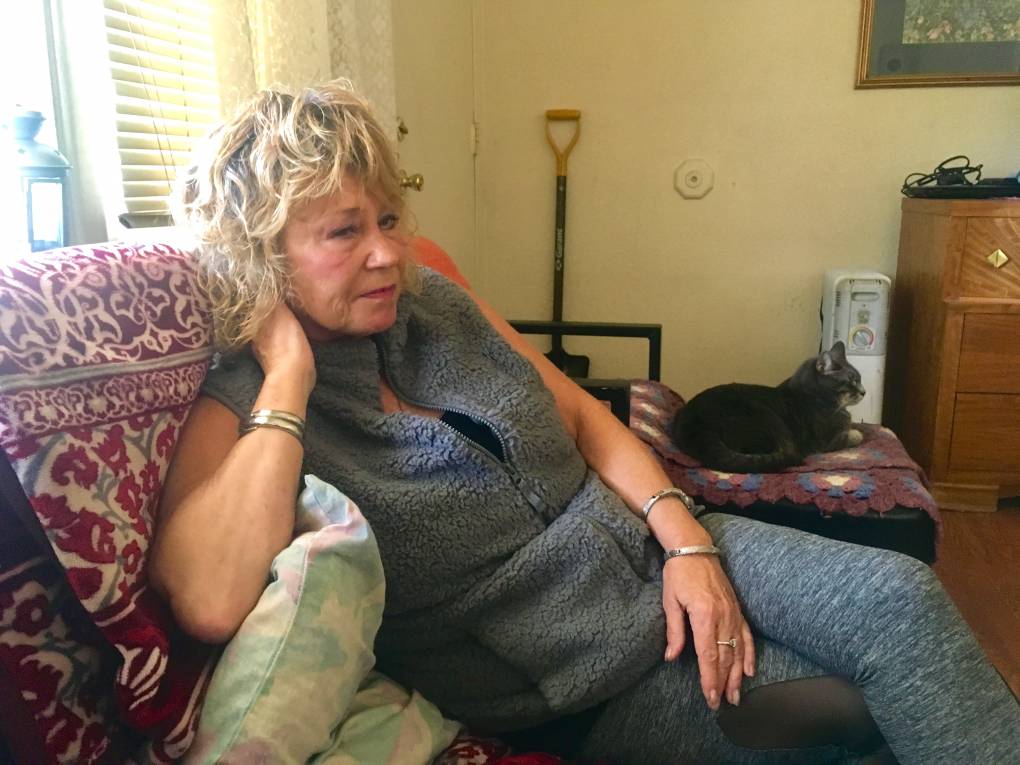
"caption": "Marlene Baker has fixed up her small studio apartment in Weed, Calif. with tapestries and artwork to make it feel homey. Her cat, Leonardo, is a key companion. Baker lived on the streets with untreated mental illness for years. But after a felony arrest, Siskiyou County officials agreed to house her and treat her in the community, rather than send her to a far-away state mental hospital.",
"description": "Marlene Baker has fixed up her small studio apartment in Weed, Calif. with tapestries and artwork to make it feel homey. Her cat, Leonardo, is a key companion. Baker lived on the streets with untreated mental illness for years. But after a felony arrest, Siskiyou County officials agreed to house her and treat her in the community, rather than send her to a far-away state mental hospital.",
"title": "MarleneLeo",
"credit": "Lee Romney",
"status": "inherit",
"altTag": null,
"isLoading": false,
"fetchFailed": false
},
"news_11865297": {
"type": "attachments",
"id": "news_11865297",
"meta": {
"index": "attachments_1716263798",
"site": "news",
"id": "11865297",
"found": true
},
"parent": 11864987,
"imgSizes": {
"twentyfourteen-full-width": {
"file": "https://ww2.kqed.org/app/uploads/sites/10/2021/03/Brian-1038x576.jpg",
"width": 1038,
"mimeType": "image/jpeg",
"height": 576
},
"thumbnail": {
"file": "https://ww2.kqed.org/app/uploads/sites/10/2021/03/Brian-160x105.jpg",
"width": 160,
"mimeType": "image/jpeg",
"height": 105
},
"post-thumbnail": {
"file": "https://ww2.kqed.org/app/uploads/sites/10/2021/03/Brian-672x372.jpg",
"width": 672,
"mimeType": "image/jpeg",
"height": 372
},
"kqedFullSize": {
"file": "https://ww2.kqed.org/app/uploads/sites/10/2021/03/Brian.jpg",
"width": 1900,
"height": 1244
},
"large": {
"file": "https://ww2.kqed.org/app/uploads/sites/10/2021/03/Brian-1020x668.jpg",
"width": 1020,
"mimeType": "image/jpeg",
"height": 668
},
"1536x1536": {
"file": "https://ww2.kqed.org/app/uploads/sites/10/2021/03/Brian-1536x1006.jpg",
"width": 1536,
"mimeType": "image/jpeg",
"height": 1006
},
"medium": {
"file": "https://ww2.kqed.org/app/uploads/sites/10/2021/03/Brian-800x524.jpg",
"width": 800,
"mimeType": "image/jpeg",
"height": 524
}
},
"publishDate": 1616025816,
"modified": 1616182821,
"caption": "KQED's Brian Watt, pictured in mid-February, 2020 on the shore of Lake Tahoe",
"description": "KQED's Brian Watt, pictured in mid-February, 2020 on the shore of Lake Tahoe",
"title": "Brian",
"credit": "Brian Watt/KQED",
"status": "inherit",
"altTag": null,
"isLoading": false,
"fetchFailed": false
},
"news_11865094": {
"type": "attachments",
"id": "news_11865094",
"meta": {
"index": "attachments_1716263798",
"site": "news",
"id": "11865094",
"found": true
},
"parent": 11865058,
"imgSizes": {
"twentyfourteen-full-width": {
"file": "https://ww2.kqed.org/app/uploads/sites/10/2021/03/GettyImages-1211223290-1-1038x576.jpg",
"width": 1038,
"mimeType": "image/jpeg",
"height": 576
},
"thumbnail": {
"file": "https://ww2.kqed.org/app/uploads/sites/10/2021/03/GettyImages-1211223290-1-160x107.jpg",
"width": 160,
"mimeType": "image/jpeg",
"height": 107
},
"post-thumbnail": {
"file": "https://ww2.kqed.org/app/uploads/sites/10/2021/03/GettyImages-1211223290-1-672x372.jpg",
"width": 672,
"mimeType": "image/jpeg",
"height": 372
},
"kqedFullSize": {
"file": "https://ww2.kqed.org/app/uploads/sites/10/2021/03/GettyImages-1211223290-1.jpg",
"width": 1920,
"height": 1280
},
"large": {
"file": "https://ww2.kqed.org/app/uploads/sites/10/2021/03/GettyImages-1211223290-1-1020x680.jpg",
"width": 1020,
"mimeType": "image/jpeg",
"height": 680
},
"1536x1536": {
"file": "https://ww2.kqed.org/app/uploads/sites/10/2021/03/GettyImages-1211223290-1-1536x1024.jpg",
"width": 1536,
"mimeType": "image/jpeg",
"height": 1024
},
"medium": {
"file": "https://ww2.kqed.org/app/uploads/sites/10/2021/03/GettyImages-1211223290-1-800x533.jpg",
"width": 800,
"mimeType": "image/jpeg",
"height": 533
}
},
"publishDate": 1615939857,
"modified": 1616175188,
"caption": "Health professionals are seeing a rise in teen mental health problems.",
"description": "Health professionals are seeing a rise in teen mental health problems.",
"title": "GettyImages-1211223290 (1)",
"credit": "Leonardo Fernandez Viloria/Getty Images",
"status": "inherit",
"altTag": null,
"isLoading": false,
"fetchFailed": false
},
"news_11859089": {
"type": "attachments",
"id": "news_11859089",
"meta": {
"index": "attachments_1716263798",
"site": "news",
"id": "11859089",
"found": true
},
"parent": 11859088,
"imgSizes": {
"apple_news_ca_landscape_5_5": {
"file": "https://ww2.kqed.org/app/uploads/sites/10/2021/02/GettyImages-1230373813-copy-1044x783.jpg",
"width": 1044,
"mimeType": "image/jpeg",
"height": 783
},
"apple_news_ca_square_4_0": {
"file": "https://ww2.kqed.org/app/uploads/sites/10/2021/02/GettyImages-1230373813-copy-470x470.jpg",
"width": 470,
"mimeType": "image/jpeg",
"height": 470
},
"twentyfourteen-full-width": {
"file": "https://ww2.kqed.org/app/uploads/sites/10/2021/02/GettyImages-1230373813-copy-1038x576.jpg",
"width": 1038,
"mimeType": "image/jpeg",
"height": 576
},
"thumbnail": {
"file": "https://ww2.kqed.org/app/uploads/sites/10/2021/02/GettyImages-1230373813-copy-160x90.jpg",
"width": 160,
"mimeType": "image/jpeg",
"height": 90
},
"post-thumbnail": {
"file": "https://ww2.kqed.org/app/uploads/sites/10/2021/02/GettyImages-1230373813-copy-672x372.jpg",
"width": 672,
"mimeType": "image/jpeg",
"height": 372
},
"kqedFullSize": {
"file": "https://ww2.kqed.org/app/uploads/sites/10/2021/02/GettyImages-1230373813-copy-scaled.jpg",
"width": 2560,
"height": 1440
},
"2048x2048": {
"file": "https://ww2.kqed.org/app/uploads/sites/10/2021/02/GettyImages-1230373813-copy-2048x1152.jpg",
"width": 2048,
"mimeType": "image/jpeg",
"height": 1152
},
"apple_news_ca_landscape_4_7": {
"file": "https://ww2.kqed.org/app/uploads/sites/10/2021/02/GettyImages-1230373813-copy-632x474.jpg",
"width": 632,
"mimeType": "image/jpeg",
"height": 474
},
"large": {
"file": "https://ww2.kqed.org/app/uploads/sites/10/2021/02/GettyImages-1230373813-copy-1020x574.jpg",
"width": 1020,
"mimeType": "image/jpeg",
"height": 574
},
"apple_news_ca_landscape_4_0": {
"file": "https://ww2.kqed.org/app/uploads/sites/10/2021/02/GettyImages-1230373813-copy-536x402.jpg",
"width": 536,
"mimeType": "image/jpeg",
"height": 402
},
"apple_news_ca_portrait_12_9": {
"file": "https://ww2.kqed.org/app/uploads/sites/10/2021/02/GettyImages-1230373813-copy-1122x1496.jpg",
"width": 1122,
"mimeType": "image/jpeg",
"height": 1496
},
"medium": {
"file": "https://ww2.kqed.org/app/uploads/sites/10/2021/02/GettyImages-1230373813-copy-800x450.jpg",
"width": 800,
"mimeType": "image/jpeg",
"height": 450
},
"apple_news_ca_portrait_4_0": {
"file": "https://ww2.kqed.org/app/uploads/sites/10/2021/02/GettyImages-1230373813-copy-354x472.jpg",
"width": 354,
"mimeType": "image/jpeg",
"height": 472
},
"apple_news_ca_portrait_9_7": {
"file": "https://ww2.kqed.org/app/uploads/sites/10/2021/02/GettyImages-1230373813-copy-840x1120.jpg",
"width": 840,
"mimeType": "image/jpeg",
"height": 1120
},
"apple_news_ca_landscape_12_9": {
"file": "https://ww2.kqed.org/app/uploads/sites/10/2021/02/GettyImages-1230373813-copy-1832x1374.jpg",
"width": 1832,
"mimeType": "image/jpeg",
"height": 1374
},
"apple_news_ca_square_9_7": {
"file": "https://ww2.kqed.org/app/uploads/sites/10/2021/02/GettyImages-1230373813-copy-1104x1104.jpg",
"width": 1104,
"mimeType": "image/jpeg",
"height": 1104
},
"1536x1536": {
"file": "https://ww2.kqed.org/app/uploads/sites/10/2021/02/GettyImages-1230373813-copy-1536x864.jpg",
"width": 1536,
"mimeType": "image/jpeg",
"height": 864
},
"apple_news_ca_portrait_4_7": {
"file": "https://ww2.kqed.org/app/uploads/sites/10/2021/02/GettyImages-1230373813-copy-414x552.jpg",
"width": 414,
"mimeType": "image/jpeg",
"height": 552
},
"apple_news_ca_square_12_9": {
"file": "https://ww2.kqed.org/app/uploads/sites/10/2021/02/GettyImages-1230373813-copy-1472x1472.jpg",
"width": 1472,
"mimeType": "image/jpeg",
"height": 1472
},
"apple_news_ca_portrait_5_5": {
"file": "https://ww2.kqed.org/app/uploads/sites/10/2021/02/GettyImages-1230373813-copy-687x916.jpg",
"width": 687,
"mimeType": "image/jpeg",
"height": 916
},
"full-width": {
"file": "https://ww2.kqed.org/app/uploads/sites/10/2021/02/GettyImages-1230373813-copy-1920x1080.jpg",
"width": 1920,
"mimeType": "image/jpeg",
"height": 1080
},
"apple_news_ca_square_4_7": {
"file": "https://ww2.kqed.org/app/uploads/sites/10/2021/02/GettyImages-1230373813-copy-550x550.jpg",
"width": 550,
"mimeType": "image/jpeg",
"height": 550
},
"apple_news_ca_landscape_9_7": {
"file": "https://ww2.kqed.org/app/uploads/sites/10/2021/02/GettyImages-1230373813-copy-1376x1032.jpg",
"width": 1376,
"mimeType": "image/jpeg",
"height": 1032
},
"apple_news_ca_square_5_5": {
"file": "https://ww2.kqed.org/app/uploads/sites/10/2021/02/GettyImages-1230373813-copy-912x912.jpg",
"width": 912,
"mimeType": "image/jpeg",
"height": 912
}
},
"publishDate": 1612640926,
"modified": 1612641552,
"caption": "Maricela Arreguin Mejia (L) and her brother Nestor Arreguin mourn the death of their father Gilberto Arreguin Camacho, 58, due to COVID-19 during his burial at a cemetery on New Year's Eve, December 31, 2020. Gilberto Arreguin Camacho spent over three weeks in the hospital before his death, according to his son. \"He had so much love in his heart for his family,\" his son Nestor Arreguin said. \"He always had advice for you when you needed it. He was a really hard working man. He worked his whole life. Coming home late, working so hard to provide for his family. Im going to try and follow his legacy.\" ",
"description": null,
"title": "US-HEALTH-VIRUS-FUNERAL",
"credit": "Patrick T. Fallon / AFP via Getty Images",
"status": "inherit",
"altTag": "Maricela Arreguin Mejia (L) and her brother Nestor Arreguin mourn the death of their father Gilberto Arreguin Camacho, 58, due to COVID-19 during his burial at a cemetery on New Year's Eve, December 31, 2020.",
"isLoading": false,
"fetchFailed": false
},
"news_11862266": {
"type": "attachments",
"id": "news_11862266",
"meta": {
"index": "attachments_1716263798",
"site": "news",
"id": "11862266",
"found": true
},
"parent": 11862264,
"imgSizes": {
"apple_news_ca_landscape_5_5": {
"file": "https://ww2.kqed.org/app/uploads/sites/10/2021/02/n0a2902_slide-1ea0145520dacad2e478d3dd60ac8c75e54d6c53-1044x783.jpg",
"width": 1044,
"mimeType": "image/jpeg",
"height": 783
},
"apple_news_ca_square_4_0": {
"file": "https://ww2.kqed.org/app/uploads/sites/10/2021/02/n0a2902_slide-1ea0145520dacad2e478d3dd60ac8c75e54d6c53-470x470.jpg",
"width": 470,
"mimeType": "image/jpeg",
"height": 470
},
"twentyfourteen-full-width": {
"file": "https://ww2.kqed.org/app/uploads/sites/10/2021/02/n0a2902_slide-1ea0145520dacad2e478d3dd60ac8c75e54d6c53-1038x576.jpg",
"width": 1038,
"mimeType": "image/jpeg",
"height": 576
},
"thumbnail": {
"file": "https://ww2.kqed.org/app/uploads/sites/10/2021/02/n0a2902_slide-1ea0145520dacad2e478d3dd60ac8c75e54d6c53-160x107.jpg",
"width": 160,
"mimeType": "image/jpeg",
"height": 107
},
"post-thumbnail": {
"file": "https://ww2.kqed.org/app/uploads/sites/10/2021/02/n0a2902_slide-1ea0145520dacad2e478d3dd60ac8c75e54d6c53-672x372.jpg",
"width": 672,
"mimeType": "image/jpeg",
"height": 372
},
"kqedFullSize": {
"file": "https://ww2.kqed.org/app/uploads/sites/10/2021/02/n0a2902_slide-1ea0145520dacad2e478d3dd60ac8c75e54d6c53-e1614367080669.jpg",
"width": 1920,
"height": 1279
},
"2048x2048": {
"file": "https://ww2.kqed.org/app/uploads/sites/10/2021/02/n0a2902_slide-1ea0145520dacad2e478d3dd60ac8c75e54d6c53-2048x1365.jpg",
"width": 2048,
"mimeType": "image/jpeg",
"height": 1365
},
"apple_news_ca_landscape_4_7": {
"file": "https://ww2.kqed.org/app/uploads/sites/10/2021/02/n0a2902_slide-1ea0145520dacad2e478d3dd60ac8c75e54d6c53-632x474.jpg",
"width": 632,
"mimeType": "image/jpeg",
"height": 474
},
"large": {
"file": "https://ww2.kqed.org/app/uploads/sites/10/2021/02/n0a2902_slide-1ea0145520dacad2e478d3dd60ac8c75e54d6c53-1020x680.jpg",
"width": 1020,
"mimeType": "image/jpeg",
"height": 680
},
"apple_news_ca_landscape_4_0": {
"file": "https://ww2.kqed.org/app/uploads/sites/10/2021/02/n0a2902_slide-1ea0145520dacad2e478d3dd60ac8c75e54d6c53-536x402.jpg",
"width": 536,
"mimeType": "image/jpeg",
"height": 402
},
"apple_news_ca_portrait_12_9": {
"file": "https://ww2.kqed.org/app/uploads/sites/10/2021/02/n0a2902_slide-1ea0145520dacad2e478d3dd60ac8c75e54d6c53-1122x1496.jpg",
"width": 1122,
"mimeType": "image/jpeg",
"height": 1496
},
"medium": {
"file": "https://ww2.kqed.org/app/uploads/sites/10/2021/02/n0a2902_slide-1ea0145520dacad2e478d3dd60ac8c75e54d6c53-800x533.jpg",
"width": 800,
"mimeType": "image/jpeg",
"height": 533
},
"apple_news_ca_portrait_4_0": {
"file": "https://ww2.kqed.org/app/uploads/sites/10/2021/02/n0a2902_slide-1ea0145520dacad2e478d3dd60ac8c75e54d6c53-354x472.jpg",
"width": 354,
"mimeType": "image/jpeg",
"height": 472
},
"apple_news_ca_portrait_9_7": {
"file": "https://ww2.kqed.org/app/uploads/sites/10/2021/02/n0a2902_slide-1ea0145520dacad2e478d3dd60ac8c75e54d6c53-840x1120.jpg",
"width": 840,
"mimeType": "image/jpeg",
"height": 1120
},
"apple_news_ca_landscape_12_9": {
"file": "https://ww2.kqed.org/app/uploads/sites/10/2021/02/n0a2902_slide-1ea0145520dacad2e478d3dd60ac8c75e54d6c53-1832x1374.jpg",
"width": 1832,
"mimeType": "image/jpeg",
"height": 1374
},
"apple_news_ca_square_9_7": {
"file": "https://ww2.kqed.org/app/uploads/sites/10/2021/02/n0a2902_slide-1ea0145520dacad2e478d3dd60ac8c75e54d6c53-1104x1104.jpg",
"width": 1104,
"mimeType": "image/jpeg",
"height": 1104
},
"1536x1536": {
"file": "https://ww2.kqed.org/app/uploads/sites/10/2021/02/n0a2902_slide-1ea0145520dacad2e478d3dd60ac8c75e54d6c53-1536x1024.jpg",
"width": 1536,
"mimeType": "image/jpeg",
"height": 1024
},
"apple_news_ca_portrait_4_7": {
"file": "https://ww2.kqed.org/app/uploads/sites/10/2021/02/n0a2902_slide-1ea0145520dacad2e478d3dd60ac8c75e54d6c53-414x552.jpg",
"width": 414,
"mimeType": "image/jpeg",
"height": 552
},
"apple_news_ca_square_12_9": {
"file": "https://ww2.kqed.org/app/uploads/sites/10/2021/02/n0a2902_slide-1ea0145520dacad2e478d3dd60ac8c75e54d6c53-1472x1472.jpg",
"width": 1472,
"mimeType": "image/jpeg",
"height": 1472
},
"apple_news_ca_portrait_5_5": {
"file": "https://ww2.kqed.org/app/uploads/sites/10/2021/02/n0a2902_slide-1ea0145520dacad2e478d3dd60ac8c75e54d6c53-687x916.jpg",
"width": 687,
"mimeType": "image/jpeg",
"height": 916
},
"full-width": {
"file": "https://ww2.kqed.org/app/uploads/sites/10/2021/02/n0a2902_slide-1ea0145520dacad2e478d3dd60ac8c75e54d6c53-1920x1279.jpg",
"width": 1920,
"mimeType": "image/jpeg",
"height": 1279
},
"apple_news_ca_square_4_7": {
"file": "https://ww2.kqed.org/app/uploads/sites/10/2021/02/n0a2902_slide-1ea0145520dacad2e478d3dd60ac8c75e54d6c53-550x550.jpg",
"width": 550,
"mimeType": "image/jpeg",
"height": 550
},
"apple_news_ca_landscape_9_7": {
"file": "https://ww2.kqed.org/app/uploads/sites/10/2021/02/n0a2902_slide-1ea0145520dacad2e478d3dd60ac8c75e54d6c53-1376x1032.jpg",
"width": 1376,
"mimeType": "image/jpeg",
"height": 1032
},
"apple_news_ca_square_5_5": {
"file": "https://ww2.kqed.org/app/uploads/sites/10/2021/02/n0a2902_slide-1ea0145520dacad2e478d3dd60ac8c75e54d6c53-912x912.jpg",
"width": 912,
"mimeType": "image/jpeg",
"height": 912
}
},
"publishDate": 1614366636,
"modified": 1614368721,
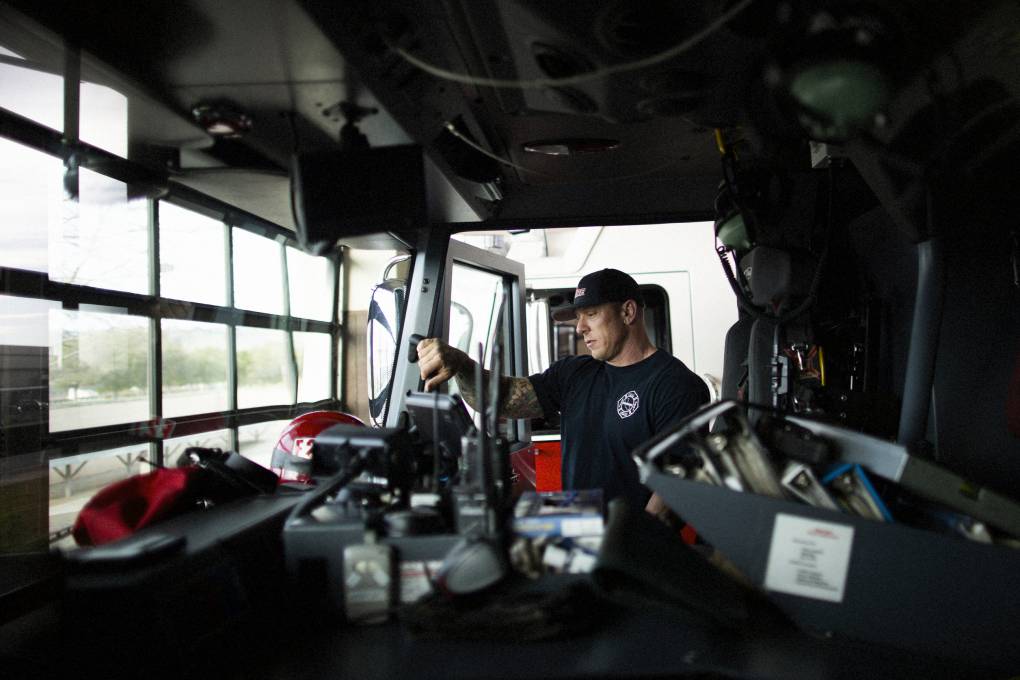
"caption": "Climate change is fueling more destructive, harder-to-control disasters like last year's massive wildfires. The mental and emotional toll for firefighters and first responders is alarming. “You just feel defeated. You know? The things that we used to do that worked 10 years ago are no longer working anymore,” CalFire Captain Matt Newberry said.",
"description": "Fire Captain Matt Newberry at the Napa County Fire Department Station 27 Greenwood Ranch where he works, Napa County, California, February 16th, 2021.\n\nClimate change is fueling more destructive, harder-to-control disasters like last year's massive wildfires. The mental and emotional toll for firefighters and first responders is alarming.\n\n NEWBERRY: You just feel defeated. You know? The things that we used to do that worked 10 years ago are no longer working anymore.",
"title": "CalFire Captain Matt Newberry has been fighting fire for more than two decades, but he and his crew hit a wall last year. Climate change is increasing the frequency, intensity and range of wildfires, putting psychological strain on those tasked with trying to contain them.",
"credit": "Talia Herman/NPR",
"status": "inherit",
"altTag": null,
"isLoading": false,
"fetchFailed": false
},
"news_11860632": {
"type": "attachments",
"id": "news_11860632",
"meta": {
"index": "attachments_1716263798",
"site": "news",
"id": "11860632",
"found": true
},
"parent": 11860611,
"imgSizes": {
"apple_news_ca_landscape_5_5": {
"file": "https://ww2.kqed.org/app/uploads/sites/10/2021/02/Covid-mental-health-1044x783.jpg",
"width": 1044,
"mimeType": "image/jpeg",
"height": 783
},
"apple_news_ca_square_4_0": {
"file": "https://ww2.kqed.org/app/uploads/sites/10/2021/02/Covid-mental-health-470x470.jpg",
"width": 470,
"mimeType": "image/jpeg",
"height": 470
},
"twentyfourteen-full-width": {
"file": "https://ww2.kqed.org/app/uploads/sites/10/2021/02/Covid-mental-health-1038x576.jpg",
"width": 1038,
"mimeType": "image/jpeg",
"height": 576
},
"thumbnail": {
"file": "https://ww2.kqed.org/app/uploads/sites/10/2021/02/Covid-mental-health-160x90.jpg",
"width": 160,
"mimeType": "image/jpeg",
"height": 90
},
"post-thumbnail": {
"file": "https://ww2.kqed.org/app/uploads/sites/10/2021/02/Covid-mental-health-672x372.jpg",
"width": 672,
"mimeType": "image/jpeg",
"height": 372
},
"kqedFullSize": {
"file": "https://ww2.kqed.org/app/uploads/sites/10/2021/02/Covid-mental-health.jpg",
"width": 1920,
"height": 1080
},
"large": {
"file": "https://ww2.kqed.org/app/uploads/sites/10/2021/02/Covid-mental-health-1020x574.jpg",
"width": 1020,
"mimeType": "image/jpeg",
"height": 574
},
"apple_news_ca_landscape_4_0": {
"file": "https://ww2.kqed.org/app/uploads/sites/10/2021/02/Covid-mental-health-536x402.jpg",
"width": 536,
"mimeType": "image/jpeg",
"height": 402
},
"apple_news_ca_portrait_12_9": {
"file": "https://ww2.kqed.org/app/uploads/sites/10/2021/02/Covid-mental-health-1122x1080.jpg",
"width": 1122,
"mimeType": "image/jpeg",
"height": 1080
},
"medium": {
"file": "https://ww2.kqed.org/app/uploads/sites/10/2021/02/Covid-mental-health-800x450.jpg",
"width": 800,
"mimeType": "image/jpeg",
"height": 450
},
"apple_news_ca_portrait_4_0": {
"file": "https://ww2.kqed.org/app/uploads/sites/10/2021/02/Covid-mental-health-354x472.jpg",
"width": 354,
"mimeType": "image/jpeg",
"height": 472
},
"apple_news_ca_portrait_9_7": {
"file": "https://ww2.kqed.org/app/uploads/sites/10/2021/02/Covid-mental-health-840x1080.jpg",
"width": 840,
"mimeType": "image/jpeg",
"height": 1080
},
"apple_news_ca_landscape_12_9": {
"file": "https://ww2.kqed.org/app/uploads/sites/10/2021/02/Covid-mental-health-1832x1080.jpg",
"width": 1832,
"mimeType": "image/jpeg",
"height": 1080
},
"apple_news_ca_square_9_7": {
"file": "https://ww2.kqed.org/app/uploads/sites/10/2021/02/Covid-mental-health-1104x1080.jpg",
"width": 1104,
"mimeType": "image/jpeg",
"height": 1080
},
"1536x1536": {
"file": "https://ww2.kqed.org/app/uploads/sites/10/2021/02/Covid-mental-health-1536x864.jpg",
"width": 1536,
"mimeType": "image/jpeg",
"height": 864
},
"apple_news_ca_portrait_4_7": {
"file": "https://ww2.kqed.org/app/uploads/sites/10/2021/02/Covid-mental-health-414x552.jpg",
"width": 414,
"mimeType": "image/jpeg",
"height": 552
},
"apple_news_ca_square_12_9": {
"file": "https://ww2.kqed.org/app/uploads/sites/10/2021/02/Covid-mental-health-1472x1080.jpg",
"width": 1472,
"mimeType": "image/jpeg",
"height": 1080
},
"apple_news_ca_portrait_5_5": {
"file": "https://ww2.kqed.org/app/uploads/sites/10/2021/02/Covid-mental-health-687x916.jpg",
"width": 687,
"mimeType": "image/jpeg",
"height": 916
},
"apple_news_ca_square_4_7": {
"file": "https://ww2.kqed.org/app/uploads/sites/10/2021/02/Covid-mental-health-550x550.jpg",
"width": 550,
"mimeType": "image/jpeg",
"height": 550
},
"apple_news_ca_landscape_9_7": {
"file": "https://ww2.kqed.org/app/uploads/sites/10/2021/02/Covid-mental-health-1376x1032.jpg",
"width": 1376,
"mimeType": "image/jpeg",
"height": 1032
},
"apple_news_ca_square_5_5": {
"file": "https://ww2.kqed.org/app/uploads/sites/10/2021/02/Covid-mental-health-912x912.jpg",
"width": 912,
"mimeType": "image/jpeg",
"height": 912
}
},
"publishDate": 1613523406,
"modified": 1613523668,
"caption": "Mental health experts say the lasting impacts of the COVID-19 pandemic could be felt for some time to come.",
"description": null,
"title": "Covid-mental-health",
"credit": "Ponomariova_Maria/iStock",
"status": "inherit",
"altTag": "Illustration of one woman supporting another who is in distress.",
"isLoading": false,
"fetchFailed": false
},
"news_11853360": {
"type": "attachments",
"id": "news_11853360",
"meta": {
"index": "attachments_1716263798",
"site": "news",
"id": "11853360",
"found": true
},
"parent": 11853359,
"imgSizes": {
"apple_news_ca_landscape_5_5": {
"file": "https://ww2.kqed.org/app/uploads/sites/10/2020/12/npr_whatwelost_03_intangiblesmilestones_final_sg_wide-b403f87fdc6f0e08cc0d40b1aafc1ac19d32b070-1044x783.jpg",
"width": 1044,
"mimeType": "image/jpeg",
"height": 783
},
"apple_news_ca_square_4_0": {
"file": "https://ww2.kqed.org/app/uploads/sites/10/2020/12/npr_whatwelost_03_intangiblesmilestones_final_sg_wide-b403f87fdc6f0e08cc0d40b1aafc1ac19d32b070-470x470.jpg",
"width": 470,
"mimeType": "image/jpeg",
"height": 470
},
"twentyfourteen-full-width": {
"file": "https://ww2.kqed.org/app/uploads/sites/10/2020/12/npr_whatwelost_03_intangiblesmilestones_final_sg_wide-b403f87fdc6f0e08cc0d40b1aafc1ac19d32b070-1038x576.jpg",
"width": 1038,
"mimeType": "image/jpeg",
"height": 576
},
"thumbnail": {
"file": "https://ww2.kqed.org/app/uploads/sites/10/2020/12/npr_whatwelost_03_intangiblesmilestones_final_sg_wide-b403f87fdc6f0e08cc0d40b1aafc1ac19d32b070-160x90.jpg",
"width": 160,
"mimeType": "image/jpeg",
"height": 90
},
"post-thumbnail": {
"file": "https://ww2.kqed.org/app/uploads/sites/10/2020/12/npr_whatwelost_03_intangiblesmilestones_final_sg_wide-b403f87fdc6f0e08cc0d40b1aafc1ac19d32b070-672x372.jpg",
"width": 672,
"mimeType": "image/jpeg",
"height": 372
},
"kqedFullSize": {
"file": "https://ww2.kqed.org/app/uploads/sites/10/2020/12/npr_whatwelost_03_intangiblesmilestones_final_sg_wide-b403f87fdc6f0e08cc0d40b1aafc1ac19d32b070-scaled.jpg",
"width": 2560,
"height": 1440
},
"2048x2048": {
"file": "https://ww2.kqed.org/app/uploads/sites/10/2020/12/npr_whatwelost_03_intangiblesmilestones_final_sg_wide-b403f87fdc6f0e08cc0d40b1aafc1ac19d32b070-2048x1152.jpg",
"width": 2048,
"mimeType": "image/jpeg",
"height": 1152
},
"apple_news_ca_landscape_4_7": {
"file": "https://ww2.kqed.org/app/uploads/sites/10/2020/12/npr_whatwelost_03_intangiblesmilestones_final_sg_wide-b403f87fdc6f0e08cc0d40b1aafc1ac19d32b070-632x474.jpg",
"width": 632,
"mimeType": "image/jpeg",
"height": 474
},
"large": {
"file": "https://ww2.kqed.org/app/uploads/sites/10/2020/12/npr_whatwelost_03_intangiblesmilestones_final_sg_wide-b403f87fdc6f0e08cc0d40b1aafc1ac19d32b070-1020x574.jpg",
"width": 1020,
"mimeType": "image/jpeg",
"height": 574
},
"apple_news_ca_landscape_4_0": {
"file": "https://ww2.kqed.org/app/uploads/sites/10/2020/12/npr_whatwelost_03_intangiblesmilestones_final_sg_wide-b403f87fdc6f0e08cc0d40b1aafc1ac19d32b070-536x402.jpg",
"width": 536,
"mimeType": "image/jpeg",
"height": 402
},
"apple_news_ca_portrait_12_9": {
"file": "https://ww2.kqed.org/app/uploads/sites/10/2020/12/npr_whatwelost_03_intangiblesmilestones_final_sg_wide-b403f87fdc6f0e08cc0d40b1aafc1ac19d32b070-1122x1496.jpg",
"width": 1122,
"mimeType": "image/jpeg",
"height": 1496
},
"medium": {
"file": "https://ww2.kqed.org/app/uploads/sites/10/2020/12/npr_whatwelost_03_intangiblesmilestones_final_sg_wide-b403f87fdc6f0e08cc0d40b1aafc1ac19d32b070-800x450.jpg",
"width": 800,
"mimeType": "image/jpeg",
"height": 450
},
"apple_news_ca_portrait_4_0": {
"file": "https://ww2.kqed.org/app/uploads/sites/10/2020/12/npr_whatwelost_03_intangiblesmilestones_final_sg_wide-b403f87fdc6f0e08cc0d40b1aafc1ac19d32b070-354x472.jpg",
"width": 354,
"mimeType": "image/jpeg",
"height": 472
},
"apple_news_ca_portrait_9_7": {
"file": "https://ww2.kqed.org/app/uploads/sites/10/2020/12/npr_whatwelost_03_intangiblesmilestones_final_sg_wide-b403f87fdc6f0e08cc0d40b1aafc1ac19d32b070-840x1120.jpg",
"width": 840,
"mimeType": "image/jpeg",
"height": 1120
},
"apple_news_ca_landscape_12_9": {
"file": "https://ww2.kqed.org/app/uploads/sites/10/2020/12/npr_whatwelost_03_intangiblesmilestones_final_sg_wide-b403f87fdc6f0e08cc0d40b1aafc1ac19d32b070-1832x1374.jpg",
"width": 1832,
"mimeType": "image/jpeg",
"height": 1374
},
"apple_news_ca_square_9_7": {
"file": "https://ww2.kqed.org/app/uploads/sites/10/2020/12/npr_whatwelost_03_intangiblesmilestones_final_sg_wide-b403f87fdc6f0e08cc0d40b1aafc1ac19d32b070-1104x1104.jpg",
"width": 1104,
"mimeType": "image/jpeg",
"height": 1104
},
"1536x1536": {
"file": "https://ww2.kqed.org/app/uploads/sites/10/2020/12/npr_whatwelost_03_intangiblesmilestones_final_sg_wide-b403f87fdc6f0e08cc0d40b1aafc1ac19d32b070-1536x864.jpg",
"width": 1536,
"mimeType": "image/jpeg",
"height": 864
},
"apple_news_ca_portrait_4_7": {
"file": "https://ww2.kqed.org/app/uploads/sites/10/2020/12/npr_whatwelost_03_intangiblesmilestones_final_sg_wide-b403f87fdc6f0e08cc0d40b1aafc1ac19d32b070-414x552.jpg",
"width": 414,
"mimeType": "image/jpeg",
"height": 552
},
"apple_news_ca_square_12_9": {
"file": "https://ww2.kqed.org/app/uploads/sites/10/2020/12/npr_whatwelost_03_intangiblesmilestones_final_sg_wide-b403f87fdc6f0e08cc0d40b1aafc1ac19d32b070-1472x1472.jpg",
"width": 1472,
"mimeType": "image/jpeg",
"height": 1472
},
"apple_news_ca_portrait_5_5": {
"file": "https://ww2.kqed.org/app/uploads/sites/10/2020/12/npr_whatwelost_03_intangiblesmilestones_final_sg_wide-b403f87fdc6f0e08cc0d40b1aafc1ac19d32b070-687x916.jpg",
"width": 687,
"mimeType": "image/jpeg",
"height": 916
},
"full-width": {
"file": "https://ww2.kqed.org/app/uploads/sites/10/2020/12/npr_whatwelost_03_intangiblesmilestones_final_sg_wide-b403f87fdc6f0e08cc0d40b1aafc1ac19d32b070-1920x1080.jpg",
"width": 1920,
"mimeType": "image/jpeg",
"height": 1080
},
"apple_news_ca_square_4_7": {
"file": "https://ww2.kqed.org/app/uploads/sites/10/2020/12/npr_whatwelost_03_intangiblesmilestones_final_sg_wide-b403f87fdc6f0e08cc0d40b1aafc1ac19d32b070-550x550.jpg",
"width": 550,
"mimeType": "image/jpeg",
"height": 550
},
"apple_news_ca_landscape_9_7": {
"file": "https://ww2.kqed.org/app/uploads/sites/10/2020/12/npr_whatwelost_03_intangiblesmilestones_final_sg_wide-b403f87fdc6f0e08cc0d40b1aafc1ac19d32b070-1376x1032.jpg",
"width": 1376,
"mimeType": "image/jpeg",
"height": 1032
},
"apple_news_ca_square_5_5": {
"file": "https://ww2.kqed.org/app/uploads/sites/10/2020/12/npr_whatwelost_03_intangiblesmilestones_final_sg_wide-b403f87fdc6f0e08cc0d40b1aafc1ac19d32b070-912x912.jpg",
"width": 912,
"mimeType": "image/jpeg",
"height": 912
}
},
"publishDate": 1609445746,
"modified": 1609445888,
"caption": "'You may be grateful that you have your health and still very disappointed about the losses of this year,' says Thema Bryant-Davis, a psychologist. 'And one doesn't cancel out the other.'",
"description": "'You may be grateful that you have your health and still very disappointed about the losses of this year,' says Thema Bryant-Davis, a psychologist. 'And one doesn't cancel out the other.'",
"title": "'You may be grateful that you have your health and still very disappointed about the losses of this year,' says Thema Bryant-Davis, a psychologist. 'And one doesn't cancel out the other.'",
"credit": "Sarah Gonzales for NPR",
"status": "inherit",
"altTag": "An illustration of a woman sitting alone.",
"isLoading": false,
"fetchFailed": false
},
"news_11848014": {
"type": "attachments",
"id": "news_11848014",
"meta": {
"index": "attachments_1716263798",
"site": "news",
"id": "11848014",
"found": true
},
"parent": 11848013,
"imgSizes": {
"apple_news_ca_landscape_5_5": {
"file": "https://ww2.kqed.org/app/uploads/sites/10/2020/11/RS45896_011_KQED_Oakland_GuptaFamily_11092020-qut-1044x783.jpg",
"width": 1044,
"mimeType": "image/jpeg",
"height": 783
},
"apple_news_ca_square_4_0": {
"file": "https://ww2.kqed.org/app/uploads/sites/10/2020/11/RS45896_011_KQED_Oakland_GuptaFamily_11092020-qut-470x470.jpg",
"width": 470,
"mimeType": "image/jpeg",
"height": 470
},
"twentyfourteen-full-width": {
"file": "https://ww2.kqed.org/app/uploads/sites/10/2020/11/RS45896_011_KQED_Oakland_GuptaFamily_11092020-qut-1038x576.jpg",
"width": 1038,
"mimeType": "image/jpeg",
"height": 576
},
"thumbnail": {
"file": "https://ww2.kqed.org/app/uploads/sites/10/2020/11/RS45896_011_KQED_Oakland_GuptaFamily_11092020-qut-160x107.jpg",
"width": 160,
"mimeType": "image/jpeg",
"height": 107
},
"post-thumbnail": {
"file": "https://ww2.kqed.org/app/uploads/sites/10/2020/11/RS45896_011_KQED_Oakland_GuptaFamily_11092020-qut-672x372.jpg",
"width": 672,
"mimeType": "image/jpeg",
"height": 372
},
"kqedFullSize": {
"file": "https://ww2.kqed.org/app/uploads/sites/10/2020/11/RS45896_011_KQED_Oakland_GuptaFamily_11092020-qut.jpg",
"width": 1920,
"height": 1280
},
"apple_news_ca_landscape_4_7": {
"file": "https://ww2.kqed.org/app/uploads/sites/10/2020/11/RS45896_011_KQED_Oakland_GuptaFamily_11092020-qut-632x474.jpg",
"width": 632,
"mimeType": "image/jpeg",
"height": 474
},
"large": {
"file": "https://ww2.kqed.org/app/uploads/sites/10/2020/11/RS45896_011_KQED_Oakland_GuptaFamily_11092020-qut-1020x680.jpg",
"width": 1020,
"mimeType": "image/jpeg",
"height": 680
},
"apple_news_ca_landscape_4_0": {
"file": "https://ww2.kqed.org/app/uploads/sites/10/2020/11/RS45896_011_KQED_Oakland_GuptaFamily_11092020-qut-536x402.jpg",
"width": 536,
"mimeType": "image/jpeg",
"height": 402
},
"apple_news_ca_portrait_12_9": {
"file": "https://ww2.kqed.org/app/uploads/sites/10/2020/11/RS45896_011_KQED_Oakland_GuptaFamily_11092020-qut-1122x1280.jpg",
"width": 1122,
"mimeType": "image/jpeg",
"height": 1280
},
"medium": {
"file": "https://ww2.kqed.org/app/uploads/sites/10/2020/11/RS45896_011_KQED_Oakland_GuptaFamily_11092020-qut-800x533.jpg",
"width": 800,
"mimeType": "image/jpeg",
"height": 533
},
"apple_news_ca_portrait_4_0": {
"file": "https://ww2.kqed.org/app/uploads/sites/10/2020/11/RS45896_011_KQED_Oakland_GuptaFamily_11092020-qut-354x472.jpg",
"width": 354,
"mimeType": "image/jpeg",
"height": 472
},
"apple_news_ca_portrait_9_7": {
"file": "https://ww2.kqed.org/app/uploads/sites/10/2020/11/RS45896_011_KQED_Oakland_GuptaFamily_11092020-qut-840x1120.jpg",
"width": 840,
"mimeType": "image/jpeg",
"height": 1120
},
"apple_news_ca_landscape_12_9": {
"file": "https://ww2.kqed.org/app/uploads/sites/10/2020/11/RS45896_011_KQED_Oakland_GuptaFamily_11092020-qut-1832x1280.jpg",
"width": 1832,
"mimeType": "image/jpeg",
"height": 1280
},
"apple_news_ca_square_9_7": {
"file": "https://ww2.kqed.org/app/uploads/sites/10/2020/11/RS45896_011_KQED_Oakland_GuptaFamily_11092020-qut-1104x1104.jpg",
"width": 1104,
"mimeType": "image/jpeg",
"height": 1104
},
"1536x1536": {
"file": "https://ww2.kqed.org/app/uploads/sites/10/2020/11/RS45896_011_KQED_Oakland_GuptaFamily_11092020-qut-1536x1024.jpg",
"width": 1536,
"mimeType": "image/jpeg",
"height": 1024
},
"apple_news_ca_portrait_4_7": {
"file": "https://ww2.kqed.org/app/uploads/sites/10/2020/11/RS45896_011_KQED_Oakland_GuptaFamily_11092020-qut-414x552.jpg",
"width": 414,
"mimeType": "image/jpeg",
"height": 552
},
"apple_news_ca_square_12_9": {
"file": "https://ww2.kqed.org/app/uploads/sites/10/2020/11/RS45896_011_KQED_Oakland_GuptaFamily_11092020-qut-1472x1280.jpg",
"width": 1472,
"mimeType": "image/jpeg",
"height": 1280
},
"apple_news_ca_portrait_5_5": {
"file": "https://ww2.kqed.org/app/uploads/sites/10/2020/11/RS45896_011_KQED_Oakland_GuptaFamily_11092020-qut-687x916.jpg",
"width": 687,
"mimeType": "image/jpeg",
"height": 916
},
"apple_news_ca_square_4_7": {
"file": "https://ww2.kqed.org/app/uploads/sites/10/2020/11/RS45896_011_KQED_Oakland_GuptaFamily_11092020-qut-550x550.jpg",
"width": 550,
"mimeType": "image/jpeg",
"height": 550
},
"apple_news_ca_landscape_9_7": {
"file": "https://ww2.kqed.org/app/uploads/sites/10/2020/11/RS45896_011_KQED_Oakland_GuptaFamily_11092020-qut-1376x1032.jpg",
"width": 1376,
"mimeType": "image/jpeg",
"height": 1032
},
"apple_news_ca_square_5_5": {
"file": "https://ww2.kqed.org/app/uploads/sites/10/2020/11/RS45896_011_KQED_Oakland_GuptaFamily_11092020-qut-912x912.jpg",
"width": 912,
"mimeType": "image/jpeg",
"height": 912
}
},
"publishDate": 1605747596,
"modified": 1605824902,
"caption": "Jay Gupta says his twins, Anakin and Kenley, have struggled with loneliness during the pandemic, but the isolation has been much more acute for his daughter. ",
"description": null,
"title": "RS45896_011_KQED_Oakland_GuptaFamily_11092020-qut",
"credit": "Beth LaBerge/KQED",
"status": "inherit",
"isLoading": false,
"fetchFailed": false
},
"news_11166622": {
"type": "attachments",
"id": "news_11166622",
"meta": {
"index": "attachments_1716263798",
"site": "news",
"id": "11166622",
"found": true
},
"parent": 11166619,
"imgSizes": {
"small": {
"file": "https://ww2.kqed.org/app/uploads/sites/10/2016/11/RS21988_161108_ClintonWatchParty_bhs10-qut-520x347.jpg",
"width": 520,
"mimeType": "image/jpeg",
"height": 347
},
"twentyfourteen-full-width": {
"file": "https://ww2.kqed.org/app/uploads/sites/10/2016/11/RS21988_161108_ClintonWatchParty_bhs10-qut-1038x576.jpg",
"width": 1038,
"mimeType": "image/jpeg",
"height": 576
},
"thumbnail": {
"file": "https://ww2.kqed.org/app/uploads/sites/10/2016/11/RS21988_161108_ClintonWatchParty_bhs10-qut-160x107.jpg",
"width": 160,
"mimeType": "image/jpeg",
"height": 107
},
"fd-sm": {
"file": "https://ww2.kqed.org/app/uploads/sites/10/2016/11/RS21988_161108_ClintonWatchParty_bhs10-qut-960x640.jpg",
"width": 960,
"mimeType": "image/jpeg",
"height": 640
},
"post-thumbnail": {
"file": "https://ww2.kqed.org/app/uploads/sites/10/2016/11/RS21988_161108_ClintonWatchParty_bhs10-qut-672x372.jpg",
"width": 672,
"mimeType": "image/jpeg",
"height": 372
},
"xsmall": {
"file": "https://ww2.kqed.org/app/uploads/sites/10/2016/11/RS21988_161108_ClintonWatchParty_bhs10-qut-375x250.jpg",
"width": 375,
"mimeType": "image/jpeg",
"height": 250
},
"kqedFullSize": {
"file": "https://ww2.kqed.org/app/uploads/sites/10/2016/11/RS21988_161108_ClintonWatchParty_bhs10-qut.jpg",
"width": 1920,
"height": 1280
},
"large": {
"file": "https://ww2.kqed.org/app/uploads/sites/10/2016/11/RS21988_161108_ClintonWatchParty_bhs10-qut-1020x680.jpg",
"width": 1020,
"mimeType": "image/jpeg",
"height": 680
},
"xlarge": {
"file": "https://ww2.kqed.org/app/uploads/sites/10/2016/11/RS21988_161108_ClintonWatchParty_bhs10-qut-1180x787.jpg",
"width": 1180,
"mimeType": "image/jpeg",
"height": 787
},
"guest-author-50": {
"file": "https://ww2.kqed.org/app/uploads/sites/10/2016/11/RS21988_161108_ClintonWatchParty_bhs10-qut-50x50.jpg",
"width": 50,
"mimeType": "image/jpeg",
"height": 50
},
"guest-author-96": {
"file": "https://ww2.kqed.org/app/uploads/sites/10/2016/11/RS21988_161108_ClintonWatchParty_bhs10-qut-96x96.jpg",
"width": 96,
"mimeType": "image/jpeg",
"height": 96
},
"medium": {
"file": "https://ww2.kqed.org/app/uploads/sites/10/2016/11/RS21988_161108_ClintonWatchParty_bhs10-qut-800x533.jpg",
"width": 800,
"mimeType": "image/jpeg",
"height": 533
},
"guest-author-64": {
"file": "https://ww2.kqed.org/app/uploads/sites/10/2016/11/RS21988_161108_ClintonWatchParty_bhs10-qut-64x64.jpg",
"width": 64,
"mimeType": "image/jpeg",
"height": 64
},
"guest-author-32": {
"file": "https://ww2.kqed.org/app/uploads/sites/10/2016/11/RS21988_161108_ClintonWatchParty_bhs10-qut-32x32.jpg",
"width": 32,
"mimeType": "image/jpeg",
"height": 32
},
"jmtc-small-thumb": {
"file": "https://ww2.kqed.org/app/uploads/sites/10/2016/11/RS21988_161108_ClintonWatchParty_bhs10-qut-280x150.jpg",
"width": 280,
"mimeType": "image/jpeg",
"height": 150
},
"fd-lrg": {
"file": "https://ww2.kqed.org/app/uploads/sites/10/2016/11/RS21988_161108_ClintonWatchParty_bhs10-qut-1920x1280.jpg",
"width": 1920,
"mimeType": "image/jpeg",
"height": 1280
},
"fd-med": {
"file": "https://ww2.kqed.org/app/uploads/sites/10/2016/11/RS21988_161108_ClintonWatchParty_bhs10-qut-1180x787.jpg",
"width": 1180,
"mimeType": "image/jpeg",
"height": 787
},
"full-width": {
"file": "https://ww2.kqed.org/app/uploads/sites/10/2016/11/RS21988_161108_ClintonWatchParty_bhs10-qut-1920x1280.jpg",
"width": 1920,
"mimeType": "image/jpeg",
"height": 1280
},
"detail": {
"file": "https://ww2.kqed.org/app/uploads/sites/10/2016/11/RS21988_161108_ClintonWatchParty_bhs10-qut-150x150.jpg",
"width": 150,
"mimeType": "image/jpeg",
"height": 150
},
"guest-author-128": {
"file": "https://ww2.kqed.org/app/uploads/sites/10/2016/11/RS21988_161108_ClintonWatchParty_bhs10-qut-128x128.jpg",
"width": 128,
"mimeType": "image/jpeg",
"height": 128
},
"xxsmall": {
"file": "https://ww2.kqed.org/app/uploads/sites/10/2016/11/RS21988_161108_ClintonWatchParty_bhs10-qut-240x160.jpg",
"width": 240,
"mimeType": "image/jpeg",
"height": 160
}
},
"publishDate": 1478706721,
"modified": 1604357773,
"caption": "Hillary Clinton supporters comfort each other during a watch party in San Francisco on Nov. 8, 2016.",
"description": "Clinton supporters comfort each other during a Hillary Clinton watch party in San Francisco on Nov. 8, 2016.",
"title": "Clinton supporters comfort each other during the Hillary Clinton Watch party in San Francisco, California on November 8, 2016.",
"credit": "Brittany Hosea-Small/KQED",
"status": "inherit",
"isLoading": false,
"fetchFailed": false
}
},
"audioPlayerReducer": {
"postId": "stream_live",
"isPaused": true,
"isPlaying": false,
"pfsActive": false,
"pledgeModalIsOpen": true,
"playerDrawerIsOpen": false,
"liveAudioPlayStartedAt": 0,
"liveAudioPlayContext": ""
},
"authorsReducer": {
"byline_news_11874272": {
"type": "authors",
"id": "byline_news_11874272",
"meta": {
"override": true
},
"slug": "byline_news_11874272",
"name": "\u003ca href=\"https://www.npr.org/people/2101350/eric-westervelt\">Eric Westervelt\u003c/a>",
"isLoading": false
},
"byline_news_11868075": {
"type": "authors",
"id": "byline_news_11868075",
"meta": {
"override": true
},
"slug": "byline_news_11868075",
"name": "Farnoush Amiri \u003cbr> Associated Press",
"isLoading": false
},
"byline_news_11865201": {
"type": "authors",
"id": "byline_news_11865201",
"meta": {
"override": true
},
"slug": "byline_news_11865201",
"name": "Lee Romney and Jenny Johnson",
"isLoading": false
},
"byline_news_11862264": {
"type": "authors",
"id": "byline_news_11862264",
"meta": {
"override": true
},
"slug": "byline_news_11862264",
"name": "\u003ca href=\"https://www.npr.org/people/348779465/nathan-rott\">Nathan Rott\u003c/a>",
"isLoading": false
},
"byline_news_11853359": {
"type": "authors",
"id": "byline_news_11853359",
"meta": {
"override": true
},
"slug": "byline_news_11853359",
"name": "\u003ca href=\"https://www.npr.org/people/347731418/lauren-hodges\">Lauren Hodges\u003c/a>",
"isLoading": false
},
"sracho": {
"type": "authors",
"id": "107",
"meta": {
"index": "authors_1716337520",
"id": "107",
"found": true
},
"name": "Suzie Racho",
"firstName": "Suzie",
"lastName": "Racho",
"slug": "sracho",
"email": "SRacho@KQED.org",
"display_author_email": false,
"staff_mastheads": [
"news"
],
"title": "KQED Contributor",
"bio": "Suzie Racho is a correspondent-producer with \u003cem>The California Report Magazine\u003c/em>\u003cem>. S\u003c/em>he has also worked with several other KQED productions, including Bay Curious, Truth Be Told, The Do List and KQED News.\r\n\r\nSuzie came to KQED in 1996 after receiving a BA in journalism from San Francisco State University and spending several years working in the music industry. As part of \u003cem>The California Report\u003c/em> team, her work has been recognized by the Society for Professional Journalists, National Federation of Community Broadcasters and Public Radio News Directors Incorporated, among others. She was recognized with a national Gracie Award in 2019. She spends her free time baking, listening to K-pop and rooting for the Giants and Valkyries.",
"avatar": "https://secure.gravatar.com/avatar/842e457a9830b0f3c1ce3ab70ed3518d616d1e25e315c6292eab8cd611d98601?s=600&d=blank&r=g",
"twitter": null,
"bluesky": null,
"facebook": null,
"instagram": null,
"linkedin": null,
"sites": [
{
"site": "arts",
"roles": [
"editor"
]
},
{
"site": "news",
"roles": [
"editor"
]
}
],
"headData": {
"title": "Suzie Racho | KQED",
"description": "KQED Contributor",
"ogImgSrc": "https://secure.gravatar.com/avatar/842e457a9830b0f3c1ce3ab70ed3518d616d1e25e315c6292eab8cd611d98601?s=600&d=blank&r=g",
"twImgSrc": "https://secure.gravatar.com/avatar/842e457a9830b0f3c1ce3ab70ed3518d616d1e25e315c6292eab8cd611d98601?s=600&d=blank&r=g"
},
"isLoading": false,
"link": "/author/sracho"
},
"minakim": {
"type": "authors",
"id": "243",
"meta": {
"index": "authors_1716337520",
"id": "243",
"found": true
},
"name": "Mina Kim",
"firstName": "Mina",
"lastName": "Kim",
"slug": "minakim",
"email": "mkim@kqed.org",
"display_author_email": false,
"staff_mastheads": [
"news"
],
"title": "Host, Forum",
"bio": "Mina Kim is host of the 10 a.m. statewide hour of Forum; a live daily talk show for curious Californians on issues that matter to the state and nation, with a particular emphasis on race and equity.\r\n\r\nBefore joining the Forum team, Mina was KQED’s evening news anchor, and health reporter for The California Report. Her award-winning work has included natural disasters in Napa and gun violence in Oakland. Mina grew up in St. John’s, Newfoundland.",
"avatar": "https://secure.gravatar.com/avatar/145ce657a2d08cb86d93686beb958982?s=600&d=blank&r=g",
"twitter": "mkimreporter",
"facebook": null,
"instagram": null,
"linkedin": null,
"sites": [
{
"site": "news",
"roles": [
"contributor"
]
},
{
"site": "stateofhealth",
"roles": [
"author"
]
},
{
"site": "forum",
"roles": [
"editor"
]
}
],
"headData": {
"title": "Mina Kim | KQED",
"description": "Host, Forum",
"ogImgSrc": "https://secure.gravatar.com/avatar/145ce657a2d08cb86d93686beb958982?s=600&d=blank&r=g",
"twImgSrc": "https://secure.gravatar.com/avatar/145ce657a2d08cb86d93686beb958982?s=600&d=blank&r=g"
},
"isLoading": false,
"link": "/author/minakim"
},
"carlysevern": {
"type": "authors",
"id": "3243",
"meta": {
"index": "authors_1716337520",
"id": "3243",
"found": true
},
"name": "Carly Severn",
"firstName": "Carly",
"lastName": "Severn",
"slug": "carlysevern",
"email": "csevern@kqed.org",
"display_author_email": false,
"staff_mastheads": [
"news"
],
"title": "Senior Editor, Audience News ",
"bio": "Carly is KQED's Senior Editor of Audience News on the Digital News team, and has reported for the California Report Magazine, Bay Curious and KQED Arts. She's formerly the host of \u003ca href=\"http://ww2.kqed.org/pop/category/the-cooler/\" rel=\"noopener noreferrer\">The Cooler\u003c/a> podcast.",
"avatar": "https://secure.gravatar.com/avatar/54037bf5c128fe678f0ef26cec97a93f2e7f220a22d7285703328f12c42c1b1d?s=600&d=blank&r=g",
"twitter": "teacupinthebay",
"bluesky": null,
"facebook": null,
"instagram": null,
"linkedin": null,
"sites": [
{
"site": "",
"roles": [
"editor"
]
},
{
"site": "arts",
"roles": [
"editor"
]
},
{
"site": "news",
"roles": [
"administrator"
]
},
{
"site": "pop",
"roles": [
"editor"
]
},
{
"site": "futureofyou",
"roles": [
"editor"
]
},
{
"site": "about",
"roles": [
"administrator"
]
},
{
"site": "mindshift",
"roles": [
"editor"
]
},
{
"site": "bayareabites",
"roles": [
"editor"
]
},
{
"site": "stateofhealth",
"roles": [
"editor"
]
},
{
"site": "science",
"roles": [
"editor"
]
},
{
"site": "food",
"roles": [
"contributor"
]
},
{
"site": "forum",
"roles": [
"editor"
]
},
{
"site": "perspectives",
"roles": [
"administrator"
]
},
{
"site": "liveblog",
"roles": [
"editor"
]
}
],
"headData": {
"title": "Carly Severn | KQED",
"description": "Senior Editor, Audience News ",
"ogImgSrc": "https://secure.gravatar.com/avatar/54037bf5c128fe678f0ef26cec97a93f2e7f220a22d7285703328f12c42c1b1d?s=600&d=blank&r=g",
"twImgSrc": "https://secure.gravatar.com/avatar/54037bf5c128fe678f0ef26cec97a93f2e7f220a22d7285703328f12c42c1b1d?s=600&d=blank&r=g"
},
"isLoading": false,
"link": "/author/carlysevern"
},
"lesleymcclurg": {
"type": "authors",
"id": "11229",
"meta": {
"index": "authors_1716337520",
"id": "11229",
"found": true
},
"name": "Lesley McClurg",
"firstName": "Lesley",
"lastName": "McClurg",
"slug": "lesleymcclurg",
"email": "lmcclurg@KQED.org",
"display_author_email": false,
"staff_mastheads": [
"news",
"science"
],
"title": "KQED Health Correspondent",
"bio": "Lesley McClurg is a health correspondent and fill-in host whose work is regularly rebroadcast on NPR and PBS programs. She’s earned multiple regional Emmy awards, a national and a regional Edward R. Murrow award, and was named Best Beat Reporter by the Association of Health Care Journalists. The Society of Professional Journalists has recognized her work several times, and the Society of Environmental Journalists spotlighted her coverage of California’s historic drought.\r\n\r\nBefore joining KQED in 2016, Lesley covered food and sustainability for Capital Public Radio, environmental issues for Colorado Public Radio, and reported for KUOW and KCTS 9 in Seattle. Away from the newsroom, she loves skiing with her daughter, mountain biking with her partner, and playing with Ollie, the family’s goldendoodle. On deadline, she runs almost entirely on chocolate chips.\r\n\r\n ",
"avatar": "https://secure.gravatar.com/avatar/bab49e972ea10c774fe0f5e29dba1722b158f7c0d58a360923d1389d380b2978?s=600&d=blank&r=g",
"twitter": "lesleywmcclurg",
"bluesky": null,
"facebook": null,
"instagram": null,
"linkedin": null,
"sites": [
{
"site": "arts",
"roles": [
"author"
]
},
{
"site": "news",
"roles": [
"editor"
]
},
{
"site": "futureofyou",
"roles": [
"editor"
]
},
{
"site": "stateofhealth",
"roles": [
"author"
]
},
{
"site": "science",
"roles": [
"editor"
]
},
{
"site": "quest",
"roles": [
"subscriber"
]
},
{
"site": "forum",
"roles": [
"administrator"
]
},
{
"site": "liveblog",
"roles": [
"author"
]
}
],
"headData": {
"title": "Lesley McClurg | KQED",
"description": "KQED Health Correspondent",
"ogImgSrc": "https://secure.gravatar.com/avatar/bab49e972ea10c774fe0f5e29dba1722b158f7c0d58a360923d1389d380b2978?s=600&d=blank&r=g",
"twImgSrc": "https://secure.gravatar.com/avatar/bab49e972ea10c774fe0f5e29dba1722b158f7c0d58a360923d1389d380b2978?s=600&d=blank&r=g"
},
"isLoading": false,
"link": "/author/lesleymcclurg"
},
"rdillon": {
"type": "authors",
"id": "11495",
"meta": {
"index": "authors_1716337520",
"id": "11495",
"found": true
},
"name": "Raquel Maria Dillon",
"firstName": "Raquel Maria",
"lastName": "Dillon",
"slug": "rdillon",
"email": "rdillon@kqed.org",
"display_author_email": false,
"staff_mastheads": [],
"title": null,
"bio": "Raquel Maria Dillon was a reporter and host for KQED News. Previously, she produced the daily statewide California Report, edited newscasts, and covered health and education stories. Before returning to the Bay Area in 2016, she worked in Los Angeles as a wire reporter and one-woman-band video journalist for the Associated Press, where she shot, edited and reported breaking news and features across the West. Her work has appeared online and in print around the globe, and also on NPR’s Morning Edition, All Things Considered, Here and Now, Marketplace, On The Media, and Studio 360. She previously edited and mentored up-and-coming reporters at KALW, produced social videos for Timeline.com, and was a local TV news videographer for KTVU and digital producer for KNTV. She got her start as a Radio News Trainee at KQED, produced a weekly public affairs roundtable show for OPB, and covered health and politics at New Hampshire Public Radio. She has a BA in political science from Barnard College and a MA in video journalism from UC Berkeley, where she was awarded the Faith Fancher Scholarship and a Student Emmy. She has received numerous local awards from the Associated Press and the Society of Professional Journalists.",
"avatar": "https://secure.gravatar.com/avatar/b8e02ae982913d0950df605910267c1b?s=600&d=blank&r=g",
"twitter": "RaquelMDillon",
"facebook": null,
"instagram": null,
"linkedin": null,
"sites": [
{
"site": "news",
"roles": [
"subscriber"
]
},
{
"site": "stateofhealth",
"roles": [
"editor"
]
},
{
"site": "science",
"roles": [
"editor"
]
},
{
"site": "forum",
"roles": [
"editor"
]
}
],
"headData": {
"title": "Raquel Maria Dillon | KQED",
"description": null,
"ogImgSrc": "https://secure.gravatar.com/avatar/b8e02ae982913d0950df605910267c1b?s=600&d=blank&r=g",
"twImgSrc": "https://secure.gravatar.com/avatar/b8e02ae982913d0950df605910267c1b?s=600&d=blank&r=g"
},
"isLoading": false,
"link": "/author/rdillon"
},
"lsarah": {
"type": "authors",
"id": "11626",
"meta": {
"index": "authors_1716337520",
"id": "11626",
"found": true
},
"name": "Lakshmi Sarah",
"firstName": "Lakshmi",
"lastName": "Sarah",
"slug": "lsarah",
"email": "lsarah@kqed.org",
"display_author_email": false,
"staff_mastheads": [],
"title": "Digital Producer",
"bio": "Lakshmi Sarah is an educator, author and journalist with a focus on innovative storytelling. She has worked with newspapers, radio and magazines from Ahmedabad, India to Los Angeles, California. She has written and produced for Die Zeit, Global Voices, AJ+, KQED, Fusion Media Group and the New York Times.",
"avatar": "https://secure.gravatar.com/avatar/652dcaecd8b28826fc17a8b2d6bb4e93?s=600&d=blank&r=g",
"twitter": "lakitalki",
"facebook": null,
"instagram": "https://www.instagram.com/laki.talki/",
"linkedin": "https://www.linkedin.com/in/lakisarah/",
"sites": [
{
"site": "arts",
"roles": []
},
{
"site": "news",
"roles": []
},
{
"site": "bayareabites",
"roles": []
},
{
"site": "science",
"roles": []
}
],
"headData": {
"title": "Lakshmi Sarah | KQED",
"description": "Digital Producer",
"ogImgSrc": "https://secure.gravatar.com/avatar/652dcaecd8b28826fc17a8b2d6bb4e93?s=600&d=blank&r=g",
"twImgSrc": "https://secure.gravatar.com/avatar/652dcaecd8b28826fc17a8b2d6bb4e93?s=600&d=blank&r=g"
},
"isLoading": false,
"link": "/author/lsarah"
},
"hmcdede": {
"type": "authors",
"id": "11635",
"meta": {
"index": "authors_1716337520",
"id": "11635",
"found": true
},
"name": "Holly McDede",
"firstName": "Holly",
"lastName": "McDede",
"slug": "hmcdede",
"email": "hmcdede@KQED.org",
"display_author_email": false,
"staff_mastheads": [],
"title": "KQED Contributor",
"bio": null,
"avatar": "https://secure.gravatar.com/avatar/999d9bf31bb3a2f0511932d99526cb3e?s=600&d=blank&r=g",
"twitter": null,
"facebook": null,
"instagram": null,
"linkedin": null,
"sites": [
{
"site": "arts",
"roles": [
"editor"
]
},
{
"site": "news",
"roles": [
"edit_others_posts",
"editor"
]
},
{
"site": "science",
"roles": [
"editor"
]
},
{
"site": "forum",
"roles": [
"editor"
]
},
{
"site": "perspectives",
"roles": [
"administrator"
]
}
],
"headData": {
"title": "Holly McDede | KQED",
"description": "KQED Contributor",
"ogImgSrc": "https://secure.gravatar.com/avatar/999d9bf31bb3a2f0511932d99526cb3e?s=600&d=blank&r=g",
"twImgSrc": "https://secure.gravatar.com/avatar/999d9bf31bb3a2f0511932d99526cb3e?s=600&d=blank&r=g"
},
"isLoading": false,
"link": "/author/hmcdede"
},
"cbrosnahan": {
"type": "authors",
"id": "11662",
"meta": {
"index": "authors_1716337520",
"id": "11662",
"found": true
},
"name": "Cori Brosnahan",
"firstName": "Cori",
"lastName": "Brosnahan",
"slug": "cbrosnahan",
"email": "cbrosnahan@kqed.org",
"display_author_email": false,
"staff_mastheads": [],
"title": "KQED Contributor",
"bio": null,
"avatar": "https://secure.gravatar.com/avatar/a3bf856fa06f8a280e2af864879d88e6?s=600&d=blank&r=g",
"twitter": null,
"facebook": null,
"instagram": null,
"linkedin": null,
"sites": [
{
"site": "news",
"roles": [
"subscriber"
]
}
],
"headData": {
"title": "Cori Brosnahan | KQED",
"description": "KQED Contributor",
"ogImgSrc": "https://secure.gravatar.com/avatar/a3bf856fa06f8a280e2af864879d88e6?s=600&d=blank&r=g",
"twImgSrc": "https://secure.gravatar.com/avatar/a3bf856fa06f8a280e2af864879d88e6?s=600&d=blank&r=g"
},
"isLoading": false,
"link": "/author/cbrosnahan"
},
"jrodriguez": {
"type": "authors",
"id": "11690",
"meta": {
"index": "authors_1716337520",
"id": "11690",
"found": true
},
"name": "Joe Fitzgerald Rodriguez",
"firstName": "Joe",
"lastName": "Fitzgerald Rodriguez",
"slug": "jrodriguez",
"email": "jrodriguez@kqed.org",
"display_author_email": true,
"staff_mastheads": [
"news"
],
"title": "Reporter and Producer",
"bio": "Joe Fitzgerald Rodriguez is a reporter and digital producer for KQED covering politics. Joe most recently wrote for the \u003cem>San Francisco Examiner\u003c/em> as a political columnist covering The City. He was raised in San Francisco and has spent his reporting career in his beloved, foggy, city by the bay. Joe was 12-years-old when he conducted his first interview in journalism, grilling former San Francisco Mayor Willie Brown for the Marina Middle School newspaper, \u003cem>The Penguin Press, \u003c/em>and he continues to report on the San Francisco Bay Area to this day.",
"avatar": "https://secure.gravatar.com/avatar/2247beb0564c1e9c62228d5649d2edac?s=600&d=blank&r=g",
"twitter": "FitztheReporter",
"facebook": null,
"instagram": "https://www.instagram.com/fitzthereporter/",
"linkedin": null,
"sites": [
{
"site": "",
"roles": [
"editor"
]
},
{
"site": "arts",
"roles": [
"editor"
]
},
{
"site": "news",
"roles": [
"editor"
]
},
{
"site": "science",
"roles": [
"editor"
]
},
{
"site": "elections",
"roles": [
"editor"
]
},
{
"site": "liveblog",
"roles": [
"editor"
]
}
],
"headData": {
"title": "Joe Fitzgerald Rodriguez | KQED",
"description": "Reporter and Producer",
"ogImgSrc": "https://secure.gravatar.com/avatar/2247beb0564c1e9c62228d5649d2edac?s=600&d=blank&r=g",
"twImgSrc": "https://secure.gravatar.com/avatar/2247beb0564c1e9c62228d5649d2edac?s=600&d=blank&r=g"
},
"isLoading": false,
"link": "/author/jrodriguez"
}
},
"pagesReducer": {
"news_tag_mental-health": {
"type": "terms",
"id": "news_2109",
"meta": {
"index": "terms_1716263798",
"site": "news",
"id": "2109",
"score": 8.282905
},
"featImg": null,
"name": "mental health",
"description": null,
"taxonomy": "tag",
"headData": {
"twImgId": null,
"twTitle": null,
"ogTitle": null,
"ogImgId": null,
"twDescription": null,
"description": null,
"title": "mental health Archives | KQED News",
"ogDescription": null
},
"ttid": 2124,
"slug": "mental-health",
"isLoading": false,
"title": "mental health",
"pageMeta": {
"site": "news",
"WpPageTemplate": "page-topic-editorial",
"currentPage": 12
},
"blocks": [
{
"blockName": "kqed/post-list",
"attrs": {
"layout": "cardArticle2",
"query": "posts/news?tag=mental-health",
"seeMore": false,
"paginated": true,
"page": 12
}
},
{
"blockName": "kqed/ad"
}
]
}
},
"pfsSessionReducer": {},
"postsReducer": {
"stream_live": {
"type": "live",
"id": "stream_live",
"audioUrl": "https://streams.kqed.org/kqedradio",
"title": "Live Stream",
"excerpt": "Live Stream information currently unavailable.",
"link": "/radio",
"featImg": "",
"label": {
"name": "KQED Live",
"link": "/"
}
},
"stream_kqedNewscast": {
"type": "posts",
"id": "stream_kqedNewscast",
"audioUrl": "https://www.kqed.org/.stream/anon/radio/RDnews/newscast.mp3?_=1",
"title": "KQED Newscast",
"featImg": "",
"label": {
"name": "88.5 FM",
"link": "/"
}
},
"news_11876061": {
"type": "posts",
"id": "news_11876061",
"meta": {
"index": "posts_1716263798",
"site": "news",
"id": "11876061",
"score": null,
"sort": [
1622573230000
]
},
"guestAuthors": [],
"slug": "report-asian-americas-more-stressed-by-anti-asian-hate-than-covid-19",
"title": "Report: Asian Americans More Stressed by Anti-Asian Hate Than COVID-19",
"publishDate": 1622573230,
"format": "standard",
"headTitle": "Report: Asian Americans More Stressed by Anti-Asian Hate Than COVID-19 | KQED",
"labelTerm": {
"site": "news"
},
"content": "\u003cp>Asian Americans may be experiencing more stress from first-hand anti-Asian racism than from COVID-19 itself, according to a new report from \u003ca href=\"https://stopaapihate.org/\" target=\"_blank\" rel=\"noopener noreferrer\">Stop AAPI Hate\u003c/a>.\u003c/p>\n\u003cp>\u003ca href=\"https://stopaapihate.org/mental-health-report/\" target=\"_blank\" rel=\"noopener noreferrer\">The report\u003c/a>, released last week, synthesizes findings from a survey of more than 400 Asian Americans, a national needs assessment on racism by the Asian American Psychological Association of more than 3,700 Asian Americans and a COVID-19 resilience study exploring the connection between pandemic stress and the stress of racism.[pullquote size=\"medium\" align=\"right\" citation=\"Russell Jeung, San Francisco State University Asian American Studies professor and co-founder of Stop AAPI Hate \"]‘Our respondents say their primary stressor during the pandemic is racism. They’re actually saying they’re more concerned about other Americans’ hate than they are about the pandemic.’[/pullquote]\u003c/p>\n\u003cp>While the report outlines the pain of a community experiencing discrimination and hate, it also presents a solution: Those who reported hate crimes they experienced, also reported lower levels of race-based traumatic stress.\u003c/p>\n\u003cp>Russell Jeung, a San Francisco State University Asian American Studies professor and one of the founders of Stop AAPI Hate, said the report’s findings show the trauma racial hatred can inflict.\u003c/p>\n\u003cp>“Our respondents say their primary stressor during the pandemic is racism. They’re actually saying they’re more concerned about other Americans’ hate than they are about the pandemic,” Jeung said. “That shows how traumatizing, how widespread, how fearful they are for their elders.”\u003c/p>\n\u003cp>[ad fullwidth]\u003c/p>\n\u003cp>Approximately 549,000 people have died in the U.S. from COVID-19 as of June 1, 2021, according to Johns Hopkins University.\u003c/p>\n\u003cp>Asian Americans reported lower levels of psychological distress than other groups in the U.S. before the pandemic, according to the report. But during the pandemic, about 62% of Asian American survey respondents said they or their family members had experienced covert or overt discriminatory incidents.\u003c/p>\n\u003cp>That led to an increase in depression and other disorders across the board, according to the report.\u003c/p>\n\u003cp>Almost half of Asian people surveyed reported anxiety during the pandemic, with 15% saying they had depressive symptoms. About one in three Asian and Asian American young adults reported clinically elevated symptoms of depression and general anxiety, and one in four reported a PTSD diagnosis, according to the report.\u003c/p>\n\u003cp>One in five Asian Americans who experienced racism display racial trauma, the reported noted, which can manifest as depression, intrusive thoughts, anger, hypervigilance, decreased self-esteem and other deleterious disorders.\u003c/p>\n\u003cp>After experiencing racism, Jeung said because of what’s happened, some people are avoiding places, and when they do go out they are being hypervigilant and “always watching their back in front of people, when they see someone running, they would actually jump out into the street and be more concerned about the person running at them than they are about the traffic,” he said. “So it’s shaping people’s behaviors.”\u003c/p>\n\u003cp>When stressors did arise, immigrants who did not speak English often faced barriers to obtaining mental health care, and also cultural barriers to pursuing that care in the first place.\u003c/p>\n\u003cp>Dr. Cindy Liu, a clinical psychologist and professor at Brigham and Women’s Hospital in Boston, worked on the survey, and said anti-Asian hate is not new. But now she feels like history is repeating itself.\u003c/p>\n\u003cp>“And that’s problematic, because we haven’t necessarily learned from the past. And so our hope is that this data can allow us to advocate to really sort of shift, and change the tide, and be able to ensure the health of all Asian Americans,” Liu said. [aside tag=\"asian-american, racism\" label=\"More Related Stories\"]\u003c/p>\n\u003cp>The people who led this survey want to see more access to mental health resources for the Asian American community, including language support.\u003c/p>\n\u003cp>For now, however, there are some findings that could help those in the Asian community who are experiencing racism.\u003c/p>\n\u003cp>About 28% of Asian Americans who reported racial trauma after a hate incident no longer met clinical criteria for race-based trauma after reporting that incident, according to the report.\u003c/p>\n\u003cp>“What it does beyond providing a platform of expressing their hurt is that it translates those feelings into action so that they have a productive outlet and they develop a collective voice,” Jeung said.\u003c/p>\n\u003cp>\u003c/p>\n\u003cp>Bringing hateful acts into the sunlight, then, may present a solution not only to stopping more incidents, but to healing.\u003c/p>\n\n",
"blocks": [],
"excerpt": "The report synthesizes findings from a survey of more than 400 Asian Americans, a national needs assessment on racism by the Asian American Psychological Association of more than 3,700 Asian Americans and a COVID-19 resilience study exploring the connection between pandemic stress and the stress of racism.",
"status": "publish",
"parent": 0,
"modified": 1721129656,
"stats": {
"hasAudio": false,
"hasVideo": false,
"hasChartOrMap": false,
"iframeSrcs": [],
"hasGoogleForm": false,
"hasGallery": false,
"hasHearkenModule": false,
"hasPolis": false,
"paragraphCount": 21,
"wordCount": 758
},
"headData": {
"title": "Report: Asian Americans More Stressed by Anti-Asian Hate Than COVID-19 | KQED",
"description": "The report synthesizes findings from a survey of more than 400 Asian Americans, a national needs assessment on racism by the Asian American Psychological Association of more than 3,700 Asian Americans and a COVID-19 resilience study exploring the connection between pandemic stress and the stress of racism.",
"ogTitle": "",
"ogDescription": "",
"ogImgId": "",
"twTitle": "",
"twDescription": "",
"twImgId": "",
"schema": {
"@context": "https://schema.org",
"@type": "NewsArticle",
"headline": "Report: Asian Americans More Stressed by Anti-Asian Hate Than COVID-19",
"datePublished": "2021-06-01T11:47:10-07:00",
"dateModified": "2024-07-16T04:34:16-07:00",
"image": "https://cdn.kqed.org/wp-content/uploads/2020/02/KQED-OG-Image@1x.png",
"isAccessibleForFree": "True",
"publisher": {
"@type": "NewsMediaOrganization",
"@id": "https://www.kqed.org/#organization",
"name": "KQED",
"logo": "https://cdn.kqed.org/wp-content/uploads/2020/02/KQED-OG-Image@1x.png",
"url": "https://www.kqed.org",
"sameAs": [
"https://www.facebook.com/KQED",
"https://twitter.com/KQED",
"https://www.instagram.com/kqed/",
"https://www.tiktok.com/@kqedofficial",
"https://www.linkedin.com/company/kqed",
"https://www.youtube.com/channel/UCeC0IOo7i1P_61zVUWbJ4nw"
]
}
}
},
"sticky": false,
"path": "/news/11876061/report-asian-americas-more-stressed-by-anti-asian-hate-than-covid-19",
"audioTrackLength": null,
"parsedContent": [
{
"type": "contentString",
"content": "\u003cdiv class=\"post-body\">\u003cp>\u003cp>Asian Americans may be experiencing more stress from first-hand anti-Asian racism than from COVID-19 itself, according to a new report from \u003ca href=\"https://stopaapihate.org/\" target=\"_blank\" rel=\"noopener noreferrer\">Stop AAPI Hate\u003c/a>.\u003c/p>\n\u003cp>\u003ca href=\"https://stopaapihate.org/mental-health-report/\" target=\"_blank\" rel=\"noopener noreferrer\">The report\u003c/a>, released last week, synthesizes findings from a survey of more than 400 Asian Americans, a national needs assessment on racism by the Asian American Psychological Association of more than 3,700 Asian Americans and a COVID-19 resilience study exploring the connection between pandemic stress and the stress of racism.\u003c/p>\u003c/div>",
"attributes": {
"named": {},
"numeric": []
}
},
{
"type": "component",
"content": "‘Our respondents say their primary stressor during the pandemic is racism. They’re actually saying they’re more concerned about other Americans’ hate than they are about the pandemic.’",
"name": "pullquote",
"attributes": {
"named": {
"size": "medium",
"align": "right",
"citation": "Russell Jeung, San Francisco State University Asian American Studies professor and co-founder of Stop AAPI Hate ",
"label": ""
},
"numeric": []
}
},
{
"type": "contentString",
"content": "\u003cdiv class=\"post-body\">\u003cp>\u003c/p>\n\u003cp>While the report outlines the pain of a community experiencing discrimination and hate, it also presents a solution: Those who reported hate crimes they experienced, also reported lower levels of race-based traumatic stress.\u003c/p>\n\u003cp>Russell Jeung, a San Francisco State University Asian American Studies professor and one of the founders of Stop AAPI Hate, said the report’s findings show the trauma racial hatred can inflict.\u003c/p>\n\u003cp>“Our respondents say their primary stressor during the pandemic is racism. They’re actually saying they’re more concerned about other Americans’ hate than they are about the pandemic,” Jeung said. “That shows how traumatizing, how widespread, how fearful they are for their elders.”\u003c/p>\n\u003cp>\u003c/p>\u003c/div>",
"attributes": {
"named": {},
"numeric": []
}
},
{
"type": "component",
"content": "",
"name": "ad",
"attributes": {
"named": {
"label": "fullwidth"
},
"numeric": [
"fullwidth"
]
}
},
{
"type": "contentString",
"content": "\u003cdiv class=\"post-body\">\u003cp>\u003c/p>\n\u003cp>Approximately 549,000 people have died in the U.S. from COVID-19 as of June 1, 2021, according to Johns Hopkins University.\u003c/p>\n\u003cp>Asian Americans reported lower levels of psychological distress than other groups in the U.S. before the pandemic, according to the report. But during the pandemic, about 62% of Asian American survey respondents said they or their family members had experienced covert or overt discriminatory incidents.\u003c/p>\n\u003cp>That led to an increase in depression and other disorders across the board, according to the report.\u003c/p>\n\u003cp>Almost half of Asian people surveyed reported anxiety during the pandemic, with 15% saying they had depressive symptoms. About one in three Asian and Asian American young adults reported clinically elevated symptoms of depression and general anxiety, and one in four reported a PTSD diagnosis, according to the report.\u003c/p>\n\u003cp>One in five Asian Americans who experienced racism display racial trauma, the reported noted, which can manifest as depression, intrusive thoughts, anger, hypervigilance, decreased self-esteem and other deleterious disorders.\u003c/p>\n\u003cp>After experiencing racism, Jeung said because of what’s happened, some people are avoiding places, and when they do go out they are being hypervigilant and “always watching their back in front of people, when they see someone running, they would actually jump out into the street and be more concerned about the person running at them than they are about the traffic,” he said. “So it’s shaping people’s behaviors.”\u003c/p>\n\u003cp>When stressors did arise, immigrants who did not speak English often faced barriers to obtaining mental health care, and also cultural barriers to pursuing that care in the first place.\u003c/p>\n\u003cp>Dr. Cindy Liu, a clinical psychologist and professor at Brigham and Women’s Hospital in Boston, worked on the survey, and said anti-Asian hate is not new. But now she feels like history is repeating itself.\u003c/p>\n\u003cp>“And that’s problematic, because we haven’t necessarily learned from the past. And so our hope is that this data can allow us to advocate to really sort of shift, and change the tide, and be able to ensure the health of all Asian Americans,” Liu said. \u003c/p>\u003c/div>",
"attributes": {
"named": {},
"numeric": []
}
},
{
"type": "component",
"content": "",
"name": "aside",
"attributes": {
"named": {
"tag": "asian-american, racism",
"label": "More Related Stories "
},
"numeric": []
}
},
{
"type": "contentString",
"content": "\u003cdiv class=\"post-body\">\u003cp>\u003c/p>\n\u003cp>The people who led this survey want to see more access to mental health resources for the Asian American community, including language support.\u003c/p>\n\u003cp>For now, however, there are some findings that could help those in the Asian community who are experiencing racism.\u003c/p>\n\u003cp>About 28% of Asian Americans who reported racial trauma after a hate incident no longer met clinical criteria for race-based trauma after reporting that incident, according to the report.\u003c/p>\n\u003cp>“What it does beyond providing a platform of expressing their hurt is that it translates those feelings into action so that they have a productive outlet and they develop a collective voice,” Jeung said.\u003c/p>\n\u003cp>\u003c/p>\n\u003cp>Bringing hateful acts into the sunlight, then, may present a solution not only to stopping more incidents, but to healing.\u003c/p>\n\n\u003c/div>\u003c/p>",
"attributes": {
"named": {},
"numeric": []
}
}
],
"link": "/news/11876061/report-asian-americas-more-stressed-by-anti-asian-hate-than-covid-19",
"authors": [
"11690",
"11635"
],
"categories": [
"news_457",
"news_8"
],
"tags": [
"news_29182",
"news_29267",
"news_24788",
"news_2109",
"news_20219"
],
"featImg": "news_11876138",
"label": "news"
},
"news_11874272": {
"type": "posts",
"id": "news_11874272",
"meta": {
"index": "posts_1716263798",
"site": "news",
"id": "11874272",
"score": null,
"sort": [
1621460629000
]
},
"guestAuthors": [],
"slug": "build-something-powerful-oakland-aims-to-remove-police-from-some-nonviolent-911-calls",
"title": "‘Build Something Powerful’: Oakland Aims to Remove Police From Some Nonviolent 911 Calls",
"publishDate": 1621460629,
"format": "standard",
"headTitle": "‘Build Something Powerful’: Oakland Aims to Remove Police From Some Nonviolent 911 Calls | KQED",
"labelTerm": {},
"content": "\u003cp>Some of the boldest reform experiments underway in the wake of the national reckoning on police violence and systemic racism following \u003ca href=\"https://www.npr.org/sections/trial-over-killing-of-george-floyd/\">George Floyd’s murder\u003c/a> are pilot projects \u003ca href=\"https://www.npr.org/2020/10/19/924146486/removing-cops-from-behavioral-crisis-calls-we-need-to-change-the-model\">in Denver, San Francisco\u003c/a>, \u003ca href=\"https://www.kgw.com/article/news/local/portland-street-response-team-mental-health-crises/283-ed2211d0-e73c-4d6b-82ec-91e94ad8c8ea\">Portland, Oregon\u003c/a>, and elsewhere. They’re confronting hard questions about what role, if any, police should play in responding to calls for persons in nonviolent mental health, drug, alcohol or homeless crises.\u003c/p>\n\u003cp>[pullquote size=\"medium\" align=\"right\" citation=\"Rebecca Kaplan, Oakland Vice Mayor and Councilmember\"]‘Not only mental health, but the whole range of lower-level issues that shouldn’t require a gun to be part of the response.’[/pullquote]This fall, Oakland aims to join those cities when it launches a pilot project to funnel some nonviolent, noncriminal calls to new, mobile teams of civilians.\u003c/p>\n\u003cp>“Not only mental health, but the whole range of lower-level issues that shouldn’t require a gun to be part of the response,” says Rebecca Kaplan, the city’s vice mayor who has championed the nascent program called Mobile Assistance Community Responders of Oakland, or MACRO.\u003c/p>\n\u003cp>Kaplan says sending police to mental health and behavioral calls they are not trained to handle is a grave mistake cities keep repeating. “Those cases often go very badly and sometimes horrifically,” she says. “We have seen horrific deaths, killings by police throughout the nation when they’ve been called for matters that deal with mental health or homelessness or public intoxication — or any of these matters that are not a violent crime — and should be better handled by a non-police response.”\u003c/p>\n\u003cp>\u003ca href=\"https://www.treatmentadvocacycenter.org/storage/documents/overlooked-in-the-undercounted.pdf\">One study estimates\u003c/a> people with an untreated mental illness are 16 times more likely to be killed during an encounter with police than other civilians.\u003c/p>\n\u003cp>MACRO is part of \u003ca href=\"https://www.oaklandca.gov/topics/reimagining-public-safety\">a wider effort by the Oakland City Council and Mayor Libby Schaaf\u003c/a> to rethink how law enforcement operates in a city where the police department has been \u003ca href=\"https://www.npr.org/2018/08/08/636319870/in-oakland-more-data-hasnt-meant-less-racial-disparity-during-police-stops\">under federal oversight now\u003c/a> for nearly two decades.\u003c/p>\n\u003cfigure id=\"attachment_11874273\" class=\"wp-caption alignnone\" style=\"max-width: 800px\">\u003cimg loading=\"lazy\" decoding=\"async\" class=\"size-medium wp-image-11874273\" src=\"https://ww2.kqed.org/app/uploads/sites/10/2021/05/rebecca-kaplan_slide-4afb02f36a43086cf9e5cf02d59a3bf756ee15d8-800x533.jpg\" alt=\"\" width=\"800\" height=\"533\" srcset=\"https://cdn.kqed.org/wp-content/uploads/sites/10/2021/05/rebecca-kaplan_slide-4afb02f36a43086cf9e5cf02d59a3bf756ee15d8-800x533.jpg 800w, https://cdn.kqed.org/wp-content/uploads/sites/10/2021/05/rebecca-kaplan_slide-4afb02f36a43086cf9e5cf02d59a3bf756ee15d8-1020x680.jpg 1020w, https://cdn.kqed.org/wp-content/uploads/sites/10/2021/05/rebecca-kaplan_slide-4afb02f36a43086cf9e5cf02d59a3bf756ee15d8-160x107.jpg 160w, https://cdn.kqed.org/wp-content/uploads/sites/10/2021/05/rebecca-kaplan_slide-4afb02f36a43086cf9e5cf02d59a3bf756ee15d8-1536x1023.jpg 1536w, https://cdn.kqed.org/wp-content/uploads/sites/10/2021/05/rebecca-kaplan_slide-4afb02f36a43086cf9e5cf02d59a3bf756ee15d8-1920x1279.jpg 1920w, https://cdn.kqed.org/wp-content/uploads/sites/10/2021/05/rebecca-kaplan_slide-4afb02f36a43086cf9e5cf02d59a3bf756ee15d8.jpg 1999w\" sizes=\"(max-width: 800px) 100vw, 800px\">\u003cfigcaption class=\"wp-caption-text\">Oakland City Vice Mayor and Councilmember Rebecca Kaplan says sending police to mental health and behavioral calls they aren’t trained for is a mistake cities keep repeating. \u003ccite>(Philip Pacheco/AFP via Getty Images)\u003c/cite>\u003c/figcaption>\u003c/figure>\n\u003ch3>Oakland’s Unique Strategy\u003c/h3>\n\u003cp>The pilot program will operate under the fire department, but the teams will be made up of civilians, not sworn firefighters. And in hiring, the program will place a greater emphasis on lived experience over formal education. It’s a unique Oakland take among urban police reform efforts underway. Most cities’ pilot street teams are sending out a trained and licensed clinical social worker or psychologist.\u003c/p>\n\u003cp>“I think the community was crystal clear and has continued to be crystal clear that they do not want a licensed social worker as part of the street team,” says Oakland Deputy Fire Chief Melinda Drayton.\u003c/p>\n\u003cp>And so Drayton, who’s spearheading the department’s efforts on MACRO, says the fire department aims to deliver what the community wants.\u003c/p>\n\u003cp>The civilian teams will deescalate problems, check vitals and potentially get a person in crisis off the streets, she says, by connecting him or her to services anywhere in the city \u003cem>except\u003c/em> a jail, a psychiatric ward or a hospital.\u003c/p>\n\u003cp>“We’ll be able to take them to city, private nonprofit community-based services, health care clinics. Maybe to their dad’s house,” Drayton says. “As simple as that. ‘Where are you going to feel safe for the night?'”\u003c/p>\n\u003cp>[ad fullwidth]\u003c/p>\n\u003cp>The plan is for a civilian emergency medical technician to be paired with someone, for example, with first-hand knowledge of the mental health, criminal justice, homeless or drug treatment systems.\u003c/p>\n\u003cp>“Sometimes people just need to be heard. Sometimes people just need a warm blanket. Sometimes people just need to sober up, you know?,” says Cat Brooks, co-founder of Oakland’s \u003ca href=\"https://www.antipoliceterrorproject.org/\">Anti Police-Terror Project\u003c/a>, who has worked on this issue for years. “I mean, sometimes, [people] need to be able to scream. Like, why is that such a big deal? Why does that scare us so much? Look at the world that we live in. I want to scream all the damn time!”\u003c/p>\n\u003cfigure id=\"attachment_11874323\" class=\"wp-caption alignnone\" style=\"max-width: 800px\">\u003cimg loading=\"lazy\" decoding=\"async\" class=\"size-medium wp-image-11874323\" src=\"https://ww2.kqed.org/app/uploads/sites/10/2021/05/RS48840_024_Alameda_MarioGonzalezPressConf_04272021-qut-800x533.jpg\" alt=\"\" width=\"800\" height=\"533\" srcset=\"https://cdn.kqed.org/wp-content/uploads/sites/10/2021/05/RS48840_024_Alameda_MarioGonzalezPressConf_04272021-qut-800x533.jpg 800w, https://cdn.kqed.org/wp-content/uploads/sites/10/2021/05/RS48840_024_Alameda_MarioGonzalezPressConf_04272021-qut-1020x679.jpg 1020w, https://cdn.kqed.org/wp-content/uploads/sites/10/2021/05/RS48840_024_Alameda_MarioGonzalezPressConf_04272021-qut-160x107.jpg 160w, https://cdn.kqed.org/wp-content/uploads/sites/10/2021/05/RS48840_024_Alameda_MarioGonzalezPressConf_04272021-qut-1536x1022.jpg 1536w, https://cdn.kqed.org/wp-content/uploads/sites/10/2021/05/RS48840_024_Alameda_MarioGonzalezPressConf_04272021-qut.jpg 1920w\" sizes=\"(max-width: 800px) 100vw, 800px\">\u003cfigcaption class=\"wp-caption-text\">Anti-Police Terror Project Co-founder, Cat Brooks, speaks during a news conference outside of the Alameda Police Department on April 27, 2021. \u003ccite>(Beth LaBerge/KQED)\u003c/cite>\u003c/figcaption>\u003c/figure>\n\u003cp>Brooks, a key advocate for MACRO, believes the best people to help are those with street knowledge of the systems that have failed them, what she calls “the medical-industrial complex.”\u003c/p>\n\u003cp>“And that complex — doctors, nurses, psychologists, social workers — stereotypes Black, brown and indigenous bodies. Criminalizes Black, brown and indigenous bodies just as much as law enforcement,” she says. “And so these models have to be more about the ideology and practice with which we respond.”\u003c/p>\n\u003ch3>Concerns About the Pilot\u003c/h3>\n\u003cp>Still, some worry emphasizing ideology over formal training goes against the science and art of mental health care and could undermine the program’s effectiveness.\u003c/p>\n\u003cp>“Social workers have a lot to offer as we re-imagine public safety, policing and seek to strengthen our crisis response capacity,” says Sarah Butts, director of public policy for the National Association of Social Workers.\u003c/p>\n\u003cp>She says the group fully supports communities creating whatever model works best for them. And Butts agrees that peer counselors with life experience in these systems can and are often an important part of any front-line response.\u003c/p>\n\u003cp>But she says extensive education and training do matter when addressing the often complex mix facing someone in a mental health or substance use crisis.\u003c/p>\n\u003cp>“Social workers will have a skill set — problem-solving, relationship building, de-escalation — that really lends itself to this to this type of community problem solving,” Butts says. She notes nonpolice responders must accurately assess the situation quickly under often stressful conditions. “And then decide what is the most effective response.”\u003c/p>\n\u003cp>Whatever model cities use, it’s important they collect and share data on what’s working and what’s not “so that we can learn from our experience and improve these systems,” Butts says.\u003c/p>\n\u003cp>\u003ca href=\"https://www.npr.org/2020/10/19/924146486/removing-cops-from-behavioral-crisis-calls-we-need-to-change-the-model\">As NPR has reported\u003c/a>, across the bay in San Francisco, the city’s new police-free Street Crisis Response Teams put a fire department paramedic with a trained clinical social worker and a peer counselor to help respond to some crisis calls for people who are homeless, intoxicated, having a mental health challenge, or all of the above.\u003c/p>\n\u003cp>The four teams now deployed in San Francisco’s pilot project are, so far, able to respond to only a small number of the overall behavioral crisis calls in that city. But it wants to scale up the program this summer when San Francisco Mayor London Breed hopes to add a companion program of unarmed “wellness” teams to work with the street teams to handle even lower-level calls. It’s part of the mayor’s wider \u003ca href=\"https://sfmayor.org/article/mayor-london-breed-announces-roadmap-new-police-reforms\">pledge to change policing\u003c/a> in the city.\u003c/p>\n\u003ch3>\u003cstrong>Flashpoints with Police \u003c/strong>\u003c/h3>\n\u003cp>With startling repetition non-criminal crisis calls to police — often by a friend or loved one — continue to be flashpoints for violence and death.\u003c/p>\n\u003cp>[aside postID=news_11870691 hero='https://ww2.kqed.org/app/uploads/sites/10/2021/04/RS48713_026_Alameda_MarioGonzalezVigil_04212021-qut-1020x679.jpg']Examples include \u003ca href=\"https://www.npr.org/2020/11/05/931643057/philadelphia-officials-promise-changes-after-walter-wallace-jr-shooting\">Walter Wallace in Philadelphia\u003c/a>, Daniel \u003ca href=\"https://www.npr.org/2020/09/03/909086022/daniel-prudes-death-ruled-a-homicide-he-was-restrained-by-police\">Prude in Rochester\u003c/a> and in late April, Oakland resident \u003ca href=\"https://www.npr.org/2021/04/29/991844355/lawyer-says-police-didnt-need-to-arrest-man-who-died-after-being-pinned-to-groun\">Mario Gonzalez, who died in Alameda Police custody\u003c/a>. The 26-year-old was in a small park in Alameda when 911 callers expressed concerned Gonzalez was mumbling to himself and maybe high or drunk.\u003c/p>\n\u003cp>“He was talking to himself and what else was he doing?” the 911 dispatcher asks one caller in tapes released by Alameda police.\u003c/p>\n\u003cp>“He’s just hanging out,” the caller says, “I mean, he seems like he’s tweaking. But he’s not doing anything wrong. He’s just scaring my wife.”\u003c/p>\n\u003cp>The two 911 calls make clear there’s no violence, imminent threat or any discernible criminal activity, save a couple bottles of booze with the security tags still attached, indicating they were probably stolen.\u003c/p>\n\u003cp>Alameda police soon arrive. \u003ca href=\"https://www.kqed.org/news/11871345/city-of-alameda-releases-police-body-cam-footage-of-mario-gonzalez-death\" target=\"_blank\" rel=\"noopener noreferrer\">Body cam footage\u003c/a> shows officers question Gonzalez about what he’s doing in the park, and ask for his ID. Gonzalez, who is calm but fidgety, mumbles several largely incoherent responses and does not appear to be fully lucid.\u003c/p>\n\u003cp>[aside postID=news_11871345 hero='https://ww2.kqed.org/app/uploads/sites/10/2021/04/RS48857_044_Alameda_MarioGonzalezPressConf_04272021-qut-1020x679.jpg']Without telling him he is under arrest, each officer grabs one of Gonzalez’s arms and proceeds to try to put his hands behind his back. When he bends over and resists being handcuffed, one officer says, “Please stop resisting us, OK? Don’t fight us.”\u003c/p>\n\u003cp>Gonzalez continues to resist, and the two officers take him to the wood chip-covered ground, pinning him on his stomach, with at least one officer pressing an elbow and knee into his back and shoulder. They eventually handcuff him.\u003c/p>\n\u003cp>The two officers continue pinning Gonzalez to the ground for a total of roughly five minutes, with at least one of them pressing his elbow and knee into his back.\u003c/p>\n\u003cp>As Gonzalez becomes motionless, the officers shout his first name, check for a pulse, roll him fully over, and begin administering CPR, with Gonzalez’s hands still restrained behind his back. About a minute later, they remove his handcuffs and continue performing CPR, repeatedly shouting for him to wake up.\u003c/p>\n\u003cp>[aside label=\"related coverage\" tag=\"mario-gonzalez\"]Gonzalez leaves behind a grieving family including a 4-year-old son. He was also the main caretaker of his 22-year-old autistic brother, his family has said.\u003c/p>\n\u003cp>The Alameda Police Department officers involved are on paid leave while multiple agencies investigate. An autopsy is pending.\u003c/p>\n\u003cp>Timothy T. Williams Jr., a police tactics expert, says police need clearer guidelines around “positional asphyxia” — or detaining someone in a way that compresses their airways and reduces the ability to breathe normally.\u003c/p>\n\u003cp>The Alameda Police Department’s \u003ca href=\"https://www.alamedaca.gov/files/assets/public/departments/alameda/police/alameda-police-department-policy-manual-11022020.pdf\" target=\"_blank\" rel=\"noopener noreferrer\">policy manual\u003c/a> states that a suspect “shall not be placed on his/her stomach for an extended period, as this could reduce the person’s ability to breathe.”\u003c/p>\n\u003cp>But Williams says that guideline isn’t specific or directed enough. “Once he or she is handcuffed, they are to be immediately removed from the prone position, put on their side, and, if possible, sat up.” Otherwise, he says, “You leave everything to subjective interpretation: What may be short to you may be long to me.”\u003c/p>\n\u003cp>“There was no reason whatsoever to go hands-on with Mario,” says civil rights lawyer Julia Sherwin, who represents his family. She has formally asked the U.S. Department of Justice to open a civil rights investigation into the Alameda Police Department.\u003c/p>\n\u003cp>Sherwin says Gonzalez was unarmed, holding only a comb. “He’s been combing his hair and he’s been loitering there for half an hour. Why this required a law enforcement response is beyond me.”\u003c/p>\n\u003cp>It’s instances like this that have led Oakland to its experiment.\u003c/p>\n\u003ch3>Much Work Remains\u003c/h3>\n\u003cp>In Oakland, Mayor Libby Schaaf originally pushed to put MACRO under an area nonprofit. The city council rejected that idea. Despite ongoing political tussles with the council, Schaaf “wholeheartedly supports this and it is part of her budget proposal,” says her communications director Justin Berton. “We hope it will be up and running as soon as humanly possible.”\u003c/p>\n\u003cp>Big details in implementing the plan remain. The fire agency, already stretched thin, now has to hire, train and equip new teams of civilians.\u003c/p>\n\u003cp>The Oakland Police Department, for their part, are largely staying quiet on the program for now and letting city hall, the Oakland City Council and fire department work it out.\u003c/p>\n\u003cp>And police will still, at first, handle all 5150 calls — that’s the code that allows police to involuntarily confine someone exhibiting behavior that’s “the result of a mental disorder,” and who appears to be endangering him or herself or others.\u003c/p>\n\u003cp>A big unanswered question is what percentage of the nearly quarter-million annual 911 police calls in Oakland will eventually be transferred to the new unarmed, police-free teams. One city councilwoman says the goal is 20% of nonviolent 911 calls within three years.\u003c/p>\n\u003cp>Deputy Fire Chief Drayton says, at first, the percentage will be far smaller. The aim is to grow over time but start small: one team working a swing shift five days a week going after the relatively low-hanging fruit of noise disturbances, welfare checks, loitering and such.\u003c/p>\n\u003cp>And the city’s 911 dispatchers will very likely need additional training. The program will put enormous pressure on those dispatchers who will, at first anyway, have to decide which calls to funnel to MACRO or to police for a more traditional response.\u003c/p>\n\u003cp>[pullquote size=\"medium\" align=\"right\" citation=\"Cat Brooks, co-founder of the Anti Police-Terror Project\"]‘Broad swaths of Black and brown people will not call the police ever for any reason…Why? Because our lived experience is police do not make it better when they show up.’[/pullquote]\u003cbr>\nBut activist Cat Brooks of the Anti Police-Terror Project says using the traditional 911 system at all for these new teams is a big mistake. She has helped set up a separate non-police, non-city run mental health response program that operates on weekend nights \u003ca href=\"https://www.antipoliceterrorproject.org/mh-first-oakland\">called MH First Oakland\u003c/a> that uses a separate phone number, not 911.\u003c/p>\n\u003cp>“Broad swaths of Black and brown people will not call the police ever for any reason. Someone could be being shot in broad daylight in front of their house, and they are not dialing 911. Why? Because our lived experience is police do not make it better when they show up,” says Brooks. “Things almost always are worse.”\u003c/p>\n\u003cp>Despite those big concerns, Brooks remains cautiously hopeful the new effort will mean real change for a city and police department that have been \u003ca href=\"https://www.npr.org/2018/08/08/636319870/in-oakland-more-data-hasnt-meant-less-racial-disparity-during-police-stops\">under federal oversight now\u003c/a> for nearly two decades.\u003c/p>\n\u003cp>“If we can just get out of the Oakland bureaucracy, red tape, ego and drama,” Brooks says with a smile, “I think there’s an opportunity for us to build something really powerful.”\u003c/p>\n\u003cp>\u003cem>This story includes additional reporting from KQED’s Matthew Green.\u003c/em>\u003c/p>\n\u003cdiv class=\"fullattribution\">Copyright 2021 NPR. To see more, visit https://www.npr.org.\u003cimg decoding=\"async\" src=\"https://www.google-analytics.com/__utm.gif?utmac=UA-5828686-4&utmdt=Oakland+Becomes+Latest+City+Looking+To+Take+Police+Out+Of+Some+Nonviolent+911+Calls&utme=8(APIKey)9(MDAxOTAwOTE4MDEyMTkxMDAzNjczZDljZA004)\">\u003c/div>\n\u003cp>[ad floatright]\u003c/p>\n",
"blocks": [],
"excerpt": "The city's fire department will oversee the pilot project that aims to pair an EMT with someone with lived experience in the mental health, addiction, criminal justice or homeless services systems.",
"status": "publish",
"parent": 0,
"modified": 1721129452,
"stats": {
"hasAudio": false,
"hasVideo": false,
"hasChartOrMap": false,
"iframeSrcs": [],
"hasGoogleForm": false,
"hasGallery": false,
"hasHearkenModule": false,
"hasPolis": false,
"paragraphCount": 55,
"wordCount": 2484
},
"headData": {
"title": "‘Build Something Powerful’: Oakland Aims to Remove Police From Some Nonviolent 911 Calls | KQED",
"description": "The city's fire department will oversee the pilot project that aims to pair an EMT with someone with lived experience in the mental health, addiction, criminal justice or homeless services systems.",
"ogTitle": "",
"ogDescription": "",
"ogImgId": "",
"twTitle": "",
"twDescription": "",
"twImgId": "",
"schema": {
"@context": "https://schema.org",
"@type": "NewsArticle",
"headline": "‘Build Something Powerful’: Oakland Aims to Remove Police From Some Nonviolent 911 Calls",
"datePublished": "2021-05-19T14:43:49-07:00",
"dateModified": "2024-07-16T04:30:52-07:00",
"image": "https://cdn.kqed.org/wp-content/uploads/2020/02/KQED-OG-Image@1x.png",
"isAccessibleForFree": "True",
"publisher": {
"@type": "NewsMediaOrganization",
"@id": "https://www.kqed.org/#organization",
"name": "KQED",
"logo": "https://cdn.kqed.org/wp-content/uploads/2020/02/KQED-OG-Image@1x.png",
"url": "https://www.kqed.org",
"sameAs": [
"https://www.facebook.com/KQED",
"https://twitter.com/KQED",
"https://www.instagram.com/kqed/",
"https://www.tiktok.com/@kqedofficial",
"https://www.linkedin.com/company/kqed",
"https://www.youtube.com/channel/UCeC0IOo7i1P_61zVUWbJ4nw"
]
}
}
},
"source": "NPR",
"sourceUrl": "https://www.npr.org/",
"sticky": false,
"nprByline": "\u003ca href=\"https://www.npr.org/people/2101350/eric-westervelt\">Eric Westervelt\u003c/a>",
"nprImageAgency": "Philip Pacheco/ AFP via Getty Images",
"nprStoryId": "997542990",
"nprApiLink": "http://api.npr.org/query?id=997542990&apiKey=MDAxOTAwOTE4MDEyMTkxMDAzNjczZDljZA004",
"nprHtmlLink": "https://www.npr.org/2021/05/18/997542990/oakland-becomes-latest-city-looking-to-take-police-out-of-nonviolent-911-calls?ft=nprml&f=997542990",
"nprRetrievedStory": "1",
"nprPubDate": "Tue, 18 May 2021 16:24:00 -0400",
"nprStoryDate": "Tue, 18 May 2021 10:47:14 -0400",
"nprLastModifiedDate": "Tue, 18 May 2021 16:24:33 -0400",
"path": "/news/11874272/build-something-powerful-oakland-aims-to-remove-police-from-some-nonviolent-911-calls",
"audioTrackLength": null,
"parsedContent": [
{
"type": "contentString",
"content": "\u003cdiv class=\"post-body\">\u003cp>\u003cp>Some of the boldest reform experiments underway in the wake of the national reckoning on police violence and systemic racism following \u003ca href=\"https://www.npr.org/sections/trial-over-killing-of-george-floyd/\">George Floyd’s murder\u003c/a> are pilot projects \u003ca href=\"https://www.npr.org/2020/10/19/924146486/removing-cops-from-behavioral-crisis-calls-we-need-to-change-the-model\">in Denver, San Francisco\u003c/a>, \u003ca href=\"https://www.kgw.com/article/news/local/portland-street-response-team-mental-health-crises/283-ed2211d0-e73c-4d6b-82ec-91e94ad8c8ea\">Portland, Oregon\u003c/a>, and elsewhere. They’re confronting hard questions about what role, if any, police should play in responding to calls for persons in nonviolent mental health, drug, alcohol or homeless crises.\u003c/p>\n\u003cp>\u003c/p>\u003c/div>",
"attributes": {
"named": {},
"numeric": []
}
},
{
"type": "component",
"content": "‘Not only mental health, but the whole range of lower-level issues that shouldn’t require a gun to be part of the response.’",
"name": "pullquote",
"attributes": {
"named": {
"size": "medium",
"align": "right",
"citation": "Rebecca Kaplan, Oakland Vice Mayor and Councilmember",
"label": ""
},
"numeric": []
}
},
{
"type": "contentString",
"content": "\u003cdiv class=\"post-body\">\u003cp>This fall, Oakland aims to join those cities when it launches a pilot project to funnel some nonviolent, noncriminal calls to new, mobile teams of civilians.\u003c/p>\n\u003cp>“Not only mental health, but the whole range of lower-level issues that shouldn’t require a gun to be part of the response,” says Rebecca Kaplan, the city’s vice mayor who has championed the nascent program called Mobile Assistance Community Responders of Oakland, or MACRO.\u003c/p>\n\u003cp>Kaplan says sending police to mental health and behavioral calls they are not trained to handle is a grave mistake cities keep repeating. “Those cases often go very badly and sometimes horrifically,” she says. “We have seen horrific deaths, killings by police throughout the nation when they’ve been called for matters that deal with mental health or homelessness or public intoxication — or any of these matters that are not a violent crime — and should be better handled by a non-police response.”\u003c/p>\n\u003cp>\u003ca href=\"https://www.treatmentadvocacycenter.org/storage/documents/overlooked-in-the-undercounted.pdf\">One study estimates\u003c/a> people with an untreated mental illness are 16 times more likely to be killed during an encounter with police than other civilians.\u003c/p>\n\u003cp>MACRO is part of \u003ca href=\"https://www.oaklandca.gov/topics/reimagining-public-safety\">a wider effort by the Oakland City Council and Mayor Libby Schaaf\u003c/a> to rethink how law enforcement operates in a city where the police department has been \u003ca href=\"https://www.npr.org/2018/08/08/636319870/in-oakland-more-data-hasnt-meant-less-racial-disparity-during-police-stops\">under federal oversight now\u003c/a> for nearly two decades.\u003c/p>\n\u003cfigure id=\"attachment_11874273\" class=\"wp-caption alignnone\" style=\"max-width: 800px\">\u003cimg loading=\"lazy\" decoding=\"async\" class=\"size-medium wp-image-11874273\" src=\"https://ww2.kqed.org/app/uploads/sites/10/2021/05/rebecca-kaplan_slide-4afb02f36a43086cf9e5cf02d59a3bf756ee15d8-800x533.jpg\" alt=\"\" width=\"800\" height=\"533\" srcset=\"https://cdn.kqed.org/wp-content/uploads/sites/10/2021/05/rebecca-kaplan_slide-4afb02f36a43086cf9e5cf02d59a3bf756ee15d8-800x533.jpg 800w, https://cdn.kqed.org/wp-content/uploads/sites/10/2021/05/rebecca-kaplan_slide-4afb02f36a43086cf9e5cf02d59a3bf756ee15d8-1020x680.jpg 1020w, https://cdn.kqed.org/wp-content/uploads/sites/10/2021/05/rebecca-kaplan_slide-4afb02f36a43086cf9e5cf02d59a3bf756ee15d8-160x107.jpg 160w, https://cdn.kqed.org/wp-content/uploads/sites/10/2021/05/rebecca-kaplan_slide-4afb02f36a43086cf9e5cf02d59a3bf756ee15d8-1536x1023.jpg 1536w, https://cdn.kqed.org/wp-content/uploads/sites/10/2021/05/rebecca-kaplan_slide-4afb02f36a43086cf9e5cf02d59a3bf756ee15d8-1920x1279.jpg 1920w, https://cdn.kqed.org/wp-content/uploads/sites/10/2021/05/rebecca-kaplan_slide-4afb02f36a43086cf9e5cf02d59a3bf756ee15d8.jpg 1999w\" sizes=\"(max-width: 800px) 100vw, 800px\">\u003cfigcaption class=\"wp-caption-text\">Oakland City Vice Mayor and Councilmember Rebecca Kaplan says sending police to mental health and behavioral calls they aren’t trained for is a mistake cities keep repeating. \u003ccite>(Philip Pacheco/AFP via Getty Images)\u003c/cite>\u003c/figcaption>\u003c/figure>\n\u003ch3>Oakland’s Unique Strategy\u003c/h3>\n\u003cp>The pilot program will operate under the fire department, but the teams will be made up of civilians, not sworn firefighters. And in hiring, the program will place a greater emphasis on lived experience over formal education. It’s a unique Oakland take among urban police reform efforts underway. Most cities’ pilot street teams are sending out a trained and licensed clinical social worker or psychologist.\u003c/p>\n\u003cp>“I think the community was crystal clear and has continued to be crystal clear that they do not want a licensed social worker as part of the street team,” says Oakland Deputy Fire Chief Melinda Drayton.\u003c/p>\n\u003cp>And so Drayton, who’s spearheading the department’s efforts on MACRO, says the fire department aims to deliver what the community wants.\u003c/p>\n\u003cp>The civilian teams will deescalate problems, check vitals and potentially get a person in crisis off the streets, she says, by connecting him or her to services anywhere in the city \u003cem>except\u003c/em> a jail, a psychiatric ward or a hospital.\u003c/p>\n\u003cp>“We’ll be able to take them to city, private nonprofit community-based services, health care clinics. Maybe to their dad’s house,” Drayton says. “As simple as that. ‘Where are you going to feel safe for the night?'”\u003c/p>\n\u003cp>\u003c/p>\u003c/div>",
"attributes": {
"named": {},
"numeric": []
}
},
{
"type": "component",
"content": "",
"name": "ad",
"attributes": {
"named": {
"label": "fullwidth"
},
"numeric": [
"fullwidth"
]
}
},
{
"type": "contentString",
"content": "\u003cdiv class=\"post-body\">\u003cp>\u003c/p>\n\u003cp>The plan is for a civilian emergency medical technician to be paired with someone, for example, with first-hand knowledge of the mental health, criminal justice, homeless or drug treatment systems.\u003c/p>\n\u003cp>“Sometimes people just need to be heard. Sometimes people just need a warm blanket. Sometimes people just need to sober up, you know?,” says Cat Brooks, co-founder of Oakland’s \u003ca href=\"https://www.antipoliceterrorproject.org/\">Anti Police-Terror Project\u003c/a>, who has worked on this issue for years. “I mean, sometimes, [people] need to be able to scream. Like, why is that such a big deal? Why does that scare us so much? Look at the world that we live in. I want to scream all the damn time!”\u003c/p>\n\u003cfigure id=\"attachment_11874323\" class=\"wp-caption alignnone\" style=\"max-width: 800px\">\u003cimg loading=\"lazy\" decoding=\"async\" class=\"size-medium wp-image-11874323\" src=\"https://ww2.kqed.org/app/uploads/sites/10/2021/05/RS48840_024_Alameda_MarioGonzalezPressConf_04272021-qut-800x533.jpg\" alt=\"\" width=\"800\" height=\"533\" srcset=\"https://cdn.kqed.org/wp-content/uploads/sites/10/2021/05/RS48840_024_Alameda_MarioGonzalezPressConf_04272021-qut-800x533.jpg 800w, https://cdn.kqed.org/wp-content/uploads/sites/10/2021/05/RS48840_024_Alameda_MarioGonzalezPressConf_04272021-qut-1020x679.jpg 1020w, https://cdn.kqed.org/wp-content/uploads/sites/10/2021/05/RS48840_024_Alameda_MarioGonzalezPressConf_04272021-qut-160x107.jpg 160w, https://cdn.kqed.org/wp-content/uploads/sites/10/2021/05/RS48840_024_Alameda_MarioGonzalezPressConf_04272021-qut-1536x1022.jpg 1536w, https://cdn.kqed.org/wp-content/uploads/sites/10/2021/05/RS48840_024_Alameda_MarioGonzalezPressConf_04272021-qut.jpg 1920w\" sizes=\"(max-width: 800px) 100vw, 800px\">\u003cfigcaption class=\"wp-caption-text\">Anti-Police Terror Project Co-founder, Cat Brooks, speaks during a news conference outside of the Alameda Police Department on April 27, 2021. \u003ccite>(Beth LaBerge/KQED)\u003c/cite>\u003c/figcaption>\u003c/figure>\n\u003cp>Brooks, a key advocate for MACRO, believes the best people to help are those with street knowledge of the systems that have failed them, what she calls “the medical-industrial complex.”\u003c/p>\n\u003cp>“And that complex — doctors, nurses, psychologists, social workers — stereotypes Black, brown and indigenous bodies. Criminalizes Black, brown and indigenous bodies just as much as law enforcement,” she says. “And so these models have to be more about the ideology and practice with which we respond.”\u003c/p>\n\u003ch3>Concerns About the Pilot\u003c/h3>\n\u003cp>Still, some worry emphasizing ideology over formal training goes against the science and art of mental health care and could undermine the program’s effectiveness.\u003c/p>\n\u003cp>“Social workers have a lot to offer as we re-imagine public safety, policing and seek to strengthen our crisis response capacity,” says Sarah Butts, director of public policy for the National Association of Social Workers.\u003c/p>\n\u003cp>She says the group fully supports communities creating whatever model works best for them. And Butts agrees that peer counselors with life experience in these systems can and are often an important part of any front-line response.\u003c/p>\n\u003cp>But she says extensive education and training do matter when addressing the often complex mix facing someone in a mental health or substance use crisis.\u003c/p>\n\u003cp>“Social workers will have a skill set — problem-solving, relationship building, de-escalation — that really lends itself to this to this type of community problem solving,” Butts says. She notes nonpolice responders must accurately assess the situation quickly under often stressful conditions. “And then decide what is the most effective response.”\u003c/p>\n\u003cp>Whatever model cities use, it’s important they collect and share data on what’s working and what’s not “so that we can learn from our experience and improve these systems,” Butts says.\u003c/p>\n\u003cp>\u003ca href=\"https://www.npr.org/2020/10/19/924146486/removing-cops-from-behavioral-crisis-calls-we-need-to-change-the-model\">As NPR has reported\u003c/a>, across the bay in San Francisco, the city’s new police-free Street Crisis Response Teams put a fire department paramedic with a trained clinical social worker and a peer counselor to help respond to some crisis calls for people who are homeless, intoxicated, having a mental health challenge, or all of the above.\u003c/p>\n\u003cp>The four teams now deployed in San Francisco’s pilot project are, so far, able to respond to only a small number of the overall behavioral crisis calls in that city. But it wants to scale up the program this summer when San Francisco Mayor London Breed hopes to add a companion program of unarmed “wellness” teams to work with the street teams to handle even lower-level calls. It’s part of the mayor’s wider \u003ca href=\"https://sfmayor.org/article/mayor-london-breed-announces-roadmap-new-police-reforms\">pledge to change policing\u003c/a> in the city.\u003c/p>\n\u003ch3>\u003cstrong>Flashpoints with Police \u003c/strong>\u003c/h3>\n\u003cp>With startling repetition non-criminal crisis calls to police — often by a friend or loved one — continue to be flashpoints for violence and death.\u003c/p>\n\u003cp>\u003c/p>\u003c/div>",
"attributes": {
"named": {},
"numeric": []
}
},
{
"type": "component",
"content": "",
"name": "aside",
"attributes": {
"named": {
"postid": "news_11870691",
"hero": "https://ww2.kqed.org/app/uploads/sites/10/2021/04/RS48713_026_Alameda_MarioGonzalezVigil_04212021-qut-1020x679.jpg",
"label": ""
},
"numeric": []
}
},
{
"type": "contentString",
"content": "\u003cdiv class=\"post-body\">\u003cp>Examples include \u003ca href=\"https://www.npr.org/2020/11/05/931643057/philadelphia-officials-promise-changes-after-walter-wallace-jr-shooting\">Walter Wallace in Philadelphia\u003c/a>, Daniel \u003ca href=\"https://www.npr.org/2020/09/03/909086022/daniel-prudes-death-ruled-a-homicide-he-was-restrained-by-police\">Prude in Rochester\u003c/a> and in late April, Oakland resident \u003ca href=\"https://www.npr.org/2021/04/29/991844355/lawyer-says-police-didnt-need-to-arrest-man-who-died-after-being-pinned-to-groun\">Mario Gonzalez, who died in Alameda Police custody\u003c/a>. The 26-year-old was in a small park in Alameda when 911 callers expressed concerned Gonzalez was mumbling to himself and maybe high or drunk.\u003c/p>\n\u003cp>“He was talking to himself and what else was he doing?” the 911 dispatcher asks one caller in tapes released by Alameda police.\u003c/p>\n\u003cp>“He’s just hanging out,” the caller says, “I mean, he seems like he’s tweaking. But he’s not doing anything wrong. He’s just scaring my wife.”\u003c/p>\n\u003cp>The two 911 calls make clear there’s no violence, imminent threat or any discernible criminal activity, save a couple bottles of booze with the security tags still attached, indicating they were probably stolen.\u003c/p>\n\u003cp>Alameda police soon arrive. \u003ca href=\"https://www.kqed.org/news/11871345/city-of-alameda-releases-police-body-cam-footage-of-mario-gonzalez-death\" target=\"_blank\" rel=\"noopener noreferrer\">Body cam footage\u003c/a> shows officers question Gonzalez about what he’s doing in the park, and ask for his ID. Gonzalez, who is calm but fidgety, mumbles several largely incoherent responses and does not appear to be fully lucid.\u003c/p>\n\u003cp>\u003c/p>\u003c/div>",
"attributes": {
"named": {},
"numeric": []
}
},
{
"type": "component",
"content": "",
"name": "aside",
"attributes": {
"named": {
"postid": "news_11871345",
"hero": "https://ww2.kqed.org/app/uploads/sites/10/2021/04/RS48857_044_Alameda_MarioGonzalezPressConf_04272021-qut-1020x679.jpg",
"label": ""
},
"numeric": []
}
},
{
"type": "contentString",
"content": "\u003cdiv class=\"post-body\">\u003cp>Without telling him he is under arrest, each officer grabs one of Gonzalez’s arms and proceeds to try to put his hands behind his back. When he bends over and resists being handcuffed, one officer says, “Please stop resisting us, OK? Don’t fight us.”\u003c/p>\n\u003cp>Gonzalez continues to resist, and the two officers take him to the wood chip-covered ground, pinning him on his stomach, with at least one officer pressing an elbow and knee into his back and shoulder. They eventually handcuff him.\u003c/p>\n\u003cp>The two officers continue pinning Gonzalez to the ground for a total of roughly five minutes, with at least one of them pressing his elbow and knee into his back.\u003c/p>\n\u003cp>As Gonzalez becomes motionless, the officers shout his first name, check for a pulse, roll him fully over, and begin administering CPR, with Gonzalez’s hands still restrained behind his back. About a minute later, they remove his handcuffs and continue performing CPR, repeatedly shouting for him to wake up.\u003c/p>\n\u003cp>\u003c/p>\u003c/div>",
"attributes": {
"named": {},
"numeric": []
}
},
{
"type": "component",
"content": "",
"name": "aside",
"attributes": {
"named": {
"label": "related coverage ",
"tag": "mario-gonzalez"
},
"numeric": []
}
},
{
"type": "contentString",
"content": "\u003cdiv class=\"post-body\">\u003cp>Gonzalez leaves behind a grieving family including a 4-year-old son. He was also the main caretaker of his 22-year-old autistic brother, his family has said.\u003c/p>\n\u003cp>The Alameda Police Department officers involved are on paid leave while multiple agencies investigate. An autopsy is pending.\u003c/p>\n\u003cp>Timothy T. Williams Jr., a police tactics expert, says police need clearer guidelines around “positional asphyxia” — or detaining someone in a way that compresses their airways and reduces the ability to breathe normally.\u003c/p>\n\u003cp>The Alameda Police Department’s \u003ca href=\"https://www.alamedaca.gov/files/assets/public/departments/alameda/police/alameda-police-department-policy-manual-11022020.pdf\" target=\"_blank\" rel=\"noopener noreferrer\">policy manual\u003c/a> states that a suspect “shall not be placed on his/her stomach for an extended period, as this could reduce the person’s ability to breathe.”\u003c/p>\n\u003cp>But Williams says that guideline isn’t specific or directed enough. “Once he or she is handcuffed, they are to be immediately removed from the prone position, put on their side, and, if possible, sat up.” Otherwise, he says, “You leave everything to subjective interpretation: What may be short to you may be long to me.”\u003c/p>\n\u003cp>“There was no reason whatsoever to go hands-on with Mario,” says civil rights lawyer Julia Sherwin, who represents his family. She has formally asked the U.S. Department of Justice to open a civil rights investigation into the Alameda Police Department.\u003c/p>\n\u003cp>Sherwin says Gonzalez was unarmed, holding only a comb. “He’s been combing his hair and he’s been loitering there for half an hour. Why this required a law enforcement response is beyond me.”\u003c/p>\n\u003cp>It’s instances like this that have led Oakland to its experiment.\u003c/p>\n\u003ch3>Much Work Remains\u003c/h3>\n\u003cp>In Oakland, Mayor Libby Schaaf originally pushed to put MACRO under an area nonprofit. The city council rejected that idea. Despite ongoing political tussles with the council, Schaaf “wholeheartedly supports this and it is part of her budget proposal,” says her communications director Justin Berton. “We hope it will be up and running as soon as humanly possible.”\u003c/p>\n\u003cp>Big details in implementing the plan remain. The fire agency, already stretched thin, now has to hire, train and equip new teams of civilians.\u003c/p>\n\u003cp>The Oakland Police Department, for their part, are largely staying quiet on the program for now and letting city hall, the Oakland City Council and fire department work it out.\u003c/p>\n\u003cp>And police will still, at first, handle all 5150 calls — that’s the code that allows police to involuntarily confine someone exhibiting behavior that’s “the result of a mental disorder,” and who appears to be endangering him or herself or others.\u003c/p>\n\u003cp>A big unanswered question is what percentage of the nearly quarter-million annual 911 police calls in Oakland will eventually be transferred to the new unarmed, police-free teams. One city councilwoman says the goal is 20% of nonviolent 911 calls within three years.\u003c/p>\n\u003cp>Deputy Fire Chief Drayton says, at first, the percentage will be far smaller. The aim is to grow over time but start small: one team working a swing shift five days a week going after the relatively low-hanging fruit of noise disturbances, welfare checks, loitering and such.\u003c/p>\n\u003cp>And the city’s 911 dispatchers will very likely need additional training. The program will put enormous pressure on those dispatchers who will, at first anyway, have to decide which calls to funnel to MACRO or to police for a more traditional response.\u003c/p>\n\u003cp>\u003c/p>\u003c/div>",
"attributes": {
"named": {},
"numeric": []
}
},
{
"type": "component",
"content": "‘Broad swaths of Black and brown people will not call the police ever for any reason…Why? Because our lived experience is police do not make it better when they show up.’",
"name": "pullquote",
"attributes": {
"named": {
"size": "medium",
"align": "right",
"citation": "Cat Brooks, co-founder of the Anti Police-Terror Project",
"label": ""
},
"numeric": []
}
},
{
"type": "contentString",
"content": "\u003cdiv class=\"post-body\">\u003cp>\u003cbr>\nBut activist Cat Brooks of the Anti Police-Terror Project says using the traditional 911 system at all for these new teams is a big mistake. She has helped set up a separate non-police, non-city run mental health response program that operates on weekend nights \u003ca href=\"https://www.antipoliceterrorproject.org/mh-first-oakland\">called MH First Oakland\u003c/a> that uses a separate phone number, not 911.\u003c/p>\n\u003cp>“Broad swaths of Black and brown people will not call the police ever for any reason. Someone could be being shot in broad daylight in front of their house, and they are not dialing 911. Why? Because our lived experience is police do not make it better when they show up,” says Brooks. “Things almost always are worse.”\u003c/p>\n\u003cp>Despite those big concerns, Brooks remains cautiously hopeful the new effort will mean real change for a city and police department that have been \u003ca href=\"https://www.npr.org/2018/08/08/636319870/in-oakland-more-data-hasnt-meant-less-racial-disparity-during-police-stops\">under federal oversight now\u003c/a> for nearly two decades.\u003c/p>\n\u003cp>“If we can just get out of the Oakland bureaucracy, red tape, ego and drama,” Brooks says with a smile, “I think there’s an opportunity for us to build something really powerful.”\u003c/p>\n\u003cp>\u003cem>This story includes additional reporting from KQED’s Matthew Green.\u003c/em>\u003c/p>\n\u003cdiv class=\"fullattribution\">Copyright 2021 NPR. To see more, visit https://www.npr.org.\u003cimg decoding=\"async\" src=\"https://www.google-analytics.com/__utm.gif?utmac=UA-5828686-4&utmdt=Oakland+Becomes+Latest+City+Looking+To+Take+Police+Out+Of+Some+Nonviolent+911+Calls&utme=8(APIKey)9(MDAxOTAwOTE4MDEyMTkxMDAzNjczZDljZA004)\">\u003c/div>\n\u003cp>\u003c/p>\u003c/div>",
"attributes": {
"named": {},
"numeric": []
}
},
{
"type": "component",
"content": "",
"name": "ad",
"attributes": {
"named": {
"label": "floatright"
},
"numeric": [
"floatright"
]
}
},
{
"type": "contentString",
"content": "\u003cdiv class=\"post-body\">\u003cp>\u003c/p>\n\u003c/div>\u003c/p>",
"attributes": {
"named": {},
"numeric": []
}
}
],
"link": "/news/11874272/build-something-powerful-oakland-aims-to-remove-police-from-some-nonviolent-911-calls",
"authors": [
"byline_news_11874272"
],
"categories": [
"news_6188",
"news_8"
],
"tags": [
"news_28615",
"news_29381",
"news_2109",
"news_116",
"news_22050"
],
"featImg": "news_11874322",
"label": "source_news_11874272"
},
"news_11868075": {
"type": "posts",
"id": "news_11868075",
"meta": {
"index": "posts_1716263798",
"site": "news",
"id": "11868075",
"score": null,
"sort": [
1617659441000
]
},
"parent": 0,
"labelTerm": {
"site": "news"
},
"blocks": [],
"publishDate": 1617659441,
"format": "standard",
"disqusTitle": "After Angelo Quinto's Death, Momentum Builds to Add Mental Health Curriculum in Police Training",
"title": "After Angelo Quinto's Death, Momentum Builds to Add Mental Health Curriculum in Police Training",
"headTitle": "KQED News",
"content": "\u003cp>The officer who Cassandra Quinto-Collins says knelt on her son’s neck for over four minutes assured her it was standard protocol for sedating a person experiencing a mental breakdown.\u003c/p>\n\u003cp>“I was there watching it the whole time,” Quinto-Collins told The Associated Press. “I just trusted that they knew what they were doing.”\u003c/p>\n\u003cp>Angelo Quinto’s sister had called 911 for help calming him down during an episode of paranoia on Dec. 23. His family, who live in Antioch, says Quinto didn’t resist the officers — one who pushed his knee on the back of his neck, and another who restrained his legs — and the only noise he made was when he twice cried out, “Please don’t kill me.”\u003c/p>\n\u003cfigure id=\"attachment_11863516\" class=\"wp-caption alignnone\" style=\"max-width: 1119px\">\u003cimg class=\"size-full wp-image-11863516\" src=\"https://ww2.kqed.org/app/uploads/sites/10/2021/03/quinto-pic.jpg\" alt=\"\" width=\"1119\" height=\"500\" srcset=\"https://ww2.kqed.org/app/uploads/sites/10/2021/03/quinto-pic.jpg 1119w, https://ww2.kqed.org/app/uploads/sites/10/2021/03/quinto-pic-800x357.jpg 800w, https://ww2.kqed.org/app/uploads/sites/10/2021/03/quinto-pic-1020x456.jpg 1020w, https://ww2.kqed.org/app/uploads/sites/10/2021/03/quinto-pic-160x71.jpg 160w\" sizes=\"(max-width: 1119px) 100vw, 1119px\">\u003cfigcaption class=\"wp-caption-text\">The family of Angelo Quinto shared these three photographs with KQED's The Bay team earlier this year. \u003ccite>(Courtesy of the Quinto family)\u003c/cite>\u003c/figcaption>\u003c/figure>\n\u003cp>The officers replied, “We’re not going to kill you,” the family said. Police deny putting pressure on his neck. Three days later, the 30-year-old Navy veteran and Filipino immigrant died at a hospital.\u003c/p>\n\u003cp>[aside label ='Related Coverage' tag='police-reform']It is the latest stark example of the perils of policing people with mental health issues. In response to several high-profile deaths of people with mental health issues in police custody, lawmakers in at least eight states are introducing legislation to change how law enforcement agencies respond to those in crisis.\u003c/p>\n\u003cp>The proposals lean heavily on additional training for officers on how to interact with people with mental health problems. It’s a common response when lawmakers face widespread outcry over police brutality like the U.S. saw last year following the \u003ca href=\"https://www.kqed.org/news/tag/george-floyd\">death of George Floyd\u003c/a> in Minneapolis.\u003c/p>\n\u003cp>But none of the proposals appear to address the root question: Should police be the ones responding when someone is mentally ill?\u003c/p>\n\u003cp>In California, lawmakers introduced legislation on Feb. 11 that, among other things, would require prospective officers to complete college courses that address mental health, social services and psychology, without requiring a degree.\u003c/p>\n\u003cp>In New York, lawmakers in January proposed an effort to require law enforcement to complete a minimum of 32 credit hours of training that would include techniques on de-escalation and interacting with people who have mental health issues.\u003c/p>\n\u003cp>The proposal came nearly a year after Rochester, New York, officers put a spit hood over Daniel Prude’s head and pressed his naked body against the street until he stopped breathing. The victim’s family, like Quinto’s, said they had called 911 for help after Prude, who is Black, began having a mental health episode.\u003c/p>\n\u003cfigure id=\"attachment_11866839\" class=\"wp-caption alignnone\" style=\"max-width: 1920px\">\u003cimg class=\"size-full wp-image-11866839\" src=\"https://ww2.kqed.org/app/uploads/sites/10/2021/03/RS48159_039_SanFrancisco_RiseUpRally_03262021-qut.jpg\" alt=\"\" width=\"1920\" height=\"1278\" srcset=\"https://ww2.kqed.org/app/uploads/sites/10/2021/03/RS48159_039_SanFrancisco_RiseUpRally_03262021-qut.jpg 1920w, https://ww2.kqed.org/app/uploads/sites/10/2021/03/RS48159_039_SanFrancisco_RiseUpRally_03262021-qut-800x533.jpg 800w, https://ww2.kqed.org/app/uploads/sites/10/2021/03/RS48159_039_SanFrancisco_RiseUpRally_03262021-qut-1020x679.jpg 1020w, https://ww2.kqed.org/app/uploads/sites/10/2021/03/RS48159_039_SanFrancisco_RiseUpRally_03262021-qut-160x107.jpg 160w, https://ww2.kqed.org/app/uploads/sites/10/2021/03/RS48159_039_SanFrancisco_RiseUpRally_03262021-qut-1536x1022.jpg 1536w\" sizes=\"(max-width: 1920px) 100vw, 1920px\">\u003cfigcaption class=\"wp-caption-text\">Bella Collins, the sister of Angelo Quinto, speaks about the death of her brother while surrounded by family at the Embarcadero Plaza during a student-led rally to bring awareness to his death and show solidarity with the Asian American community, in San Francisco on March 26, 2021. \u003ccite>(Beth LaBerge/KQED)\u003c/cite>\u003c/figcaption>\u003c/figure>\n\u003cp>Similarly, in Utah, the mother of 13-year-old Linden Cameron called 911 in September because he was having a breakdown and she needed help from a crisis intervention officer. Salt Lake City police ended up shooting him multiple times as he ran away because they believed he made threats involving a weapon.\u003c/p>\n\u003cp>He was hospitalized, and no weapon was found. The officers were not crisis intervention specialists but had some mental health training.\u003c/p>\n\u003cp>Last month, Utah Gov. Spencer Cox signed legislation that will create a council to standardize training for police crisis intervention teams statewide.\u003c/p>\n\u003cp>At least 34 states already require officers to have training or other education on interacting with people who have physical or mental health conditions. But law enforcement experts say updated training is needed and agencies are far behind.\u003c/p>\n\u003cp>[pullquote align=\"right\" size=\"medium\" citation=\"Chuck Wexler, executive director of the Police Executive Research Forum\"]'The last thing a mother wants when they call the police is for an officer to use force. Especially in a situation that didn’t call for it because the officers weren’t trained in how to recognize a crisis.'[/pullquote]“The training that police have received for the past I’d say 25 years has not changed significantly, and it’s out of date, and it doesn’t meet today’s realities,” said Chuck Wexler, executive director of the Police Executive Research Forum, a Washington, D.C.-based think tank. “I mean the last thing a mother wants when they call the police is for an officer to use force. Especially in a situation that didn’t call for it because the officers weren’t trained in how to recognize a crisis.”\u003c/p>\n\u003cp>Some of the new legislation looks to strengthen or improve standards. But because mental health training is a mandate in a majority of states, some advocates and experts believe it may never fully prepare officers on how to respond.\u003c/p>\n\u003cp>The Treatment Advocacy Center, a nonprofit dedicated to getting treatment for the mentally ill, concluded in a 2015 report those with untreated mental illness are 16 times more likely to be killed during a police encounter than others.\u003c/p>\n\u003cp>“The solution that would have the most impact on the problem is to prevent people with mental illness from encountering law enforcement in the first place,” said Elizabeth Sinclair Hancq, co-author of the report.\u003c/p>\n\u003cp>Since that is not always possible, she said, another solution is to create co-responder programs where a social worker or other mental health professional assists officers on such calls.\u003c/p>\n\u003cp>[aside postID=\"news_11840071\" hero=\"https://ww2.kqed.org/app/uploads/sites/10/2020/10/RS43756_035_KQED_Oakland_Juneteenth_06192020-qut-1020x679.jpg\"]That is what Philadelphia introduced in October, weeks before officers fatally shot Walter Wallace Jr., a Black man, within a minute of arriving at his address for the third time in a day while he was having a mental health crisis. Police said Wallace ignored commands to drop a knife.\u003c/p>\n\u003cp>Other cities, including \u003ca href=\"https://www.kqed.org/news/tag/los-angeles\">Los Angeles\u003c/a>, \u003ca href=\"https://www.kqed.org/forum/2010101880391/in-major-police-reform-sfpd-will-no-longer-handle-most-psychiatric-and-behavioral-crisis-calls\">San Francisco\u003c/a> and Portland, Oregon, have similar programs.\u003c/p>\n\u003cp>For families of victims, who now say they regret calling 911 for help, required training and legislative reform are long overdue.\u003c/p>\n\u003cp>“In retrospect, it wasn’t the smartest idea to call the police,” said Isabella Collins, the 18-year-old sister of Quinto, who died in California. “But I just wanted him to be able to calm down, and I thought that they could help with that.”\u003c/p>\n\u003cp>Antioch police didn’t release details of Quinto’s death for more than a month. Antioch Police Chief Tammany Brooks has denied that officers used a knee or anything else to put pressure on Quinto’s head, neck or throat. An investigation and autopsy are underway.\u003c/p>\n\u003cp>The department didn’t respond to a request for comment.\u003c/p>\n\u003cp>Quinto’s family filed a wrongful-death claim against the city in February, claiming he “died as a direct consequence of the unreasonable force used against him.”\u003c/p>\n\u003cp>“I guess it was really naive of me to think that he wouldn’t get hurt,” Collins said.\u003cbr>\n[ad fullwidth]\u003c/p>\n\u003cp>[ad floatright]\u003c/p>\n",
"disqusIdentifier": "11868075 https://ww2.kqed.org/news/?p=11868075",
"disqusUrl": "https://ww2.kqed.org/news/2021/04/05/after-angelo-quintos-death-momentum-builds-to-add-mental-health-curriculum-in-police-training/",
"stats": {
"hasVideo": false,
"hasChartOrMap": false,
"hasAudio": false,
"hasPolis": false,
"wordCount": 1214,
"hasGoogleForm": false,
"hasGallery": false,
"hasHearkenModule": false,
"iframeSrcs": [],
"paragraphCount": 28
},
"modified": 1617663074,
"excerpt": "Legislation to include mental health training in police education programs is expanding across the country, following recent cases where officers killed individuals with mental health conditions.",
"headData": {
"twImgId": "",
"twTitle": "",
"ogTitle": "",
"ogImgId": "",
"twDescription": "",
"description": "Legislation to include mental health training in police education programs is expanding across the country, following recent cases where officers killed individuals with mental health conditions.",
"title": "After Angelo Quinto's Death, Momentum Builds to Add Mental Health Curriculum in Police Training | KQED",
"ogDescription": "",
"schema": {
"@context": "https://schema.org",
"@type": "NewsArticle",
"headline": "After Angelo Quinto's Death, Momentum Builds to Add Mental Health Curriculum in Police Training",
"datePublished": "2021-04-05T14:50:41-07:00",
"dateModified": "2021-04-05T15:51:14-07:00",
"image": "https://cdn.kqed.org/wp-content/uploads/2020/02/KQED-OG-Image@1x.png",
"isAccessibleForFree": "True",
"publisher": {
"@type": "NewsMediaOrganization",
"@id": "https://www.kqed.org/#organization",
"name": "KQED",
"logo": "https://cdn.kqed.org/wp-content/uploads/2020/02/KQED-OG-Image@1x.png",
"url": "https://www.kqed.org",
"sameAs": [
"https://www.facebook.com/KQED",
"https://twitter.com/KQED",
"https://www.instagram.com/kqed/",
"https://www.tiktok.com/@kqedofficial",
"https://www.linkedin.com/company/kqed",
"https://www.youtube.com/channel/UCeC0IOo7i1P_61zVUWbJ4nw"
]
}
}
},
"guestAuthors": [],
"slug": "after-angelo-quintos-death-momentum-builds-to-add-mental-health-curriculum-in-police-training",
"status": "publish",
"nprByline": "Farnoush Amiri \u003cbr> Associated Press",
"path": "/news/11868075/after-angelo-quintos-death-momentum-builds-to-add-mental-health-curriculum-in-police-training",
"audioTrackLength": null,
"parsedContent": [
{
"type": "contentString",
"content": "\u003cdiv class=\"post-body\">\u003cp>\u003cp>The officer who Cassandra Quinto-Collins says knelt on her son’s neck for over four minutes assured her it was standard protocol for sedating a person experiencing a mental breakdown.\u003c/p>\n\u003cp>“I was there watching it the whole time,” Quinto-Collins told The Associated Press. “I just trusted that they knew what they were doing.”\u003c/p>\n\u003cp>Angelo Quinto’s sister had called 911 for help calming him down during an episode of paranoia on Dec. 23. His family, who live in Antioch, says Quinto didn’t resist the officers — one who pushed his knee on the back of his neck, and another who restrained his legs — and the only noise he made was when he twice cried out, “Please don’t kill me.”\u003c/p>\n\u003cfigure id=\"attachment_11863516\" class=\"wp-caption alignnone\" style=\"max-width: 1119px\">\u003cimg class=\"size-full wp-image-11863516\" src=\"https://ww2.kqed.org/app/uploads/sites/10/2021/03/quinto-pic.jpg\" alt=\"\" width=\"1119\" height=\"500\" srcset=\"https://ww2.kqed.org/app/uploads/sites/10/2021/03/quinto-pic.jpg 1119w, https://ww2.kqed.org/app/uploads/sites/10/2021/03/quinto-pic-800x357.jpg 800w, https://ww2.kqed.org/app/uploads/sites/10/2021/03/quinto-pic-1020x456.jpg 1020w, https://ww2.kqed.org/app/uploads/sites/10/2021/03/quinto-pic-160x71.jpg 160w\" sizes=\"(max-width: 1119px) 100vw, 1119px\">\u003cfigcaption class=\"wp-caption-text\">The family of Angelo Quinto shared these three photographs with KQED's The Bay team earlier this year. \u003ccite>(Courtesy of the Quinto family)\u003c/cite>\u003c/figcaption>\u003c/figure>\n\u003cp>The officers replied, “We’re not going to kill you,” the family said. Police deny putting pressure on his neck. Three days later, the 30-year-old Navy veteran and Filipino immigrant died at a hospital.\u003c/p>\n\u003cp>\u003c/p>\u003c/div>",
"attributes": {
"named": {},
"numeric": []
}
},
{
"type": "component",
"content": "",
"name": "aside",
"attributes": {
"named": {
"label": "Related Coverage ",
"tag": "police-reform"
},
"numeric": []
}
},
{
"type": "contentString",
"content": "\u003cdiv class=\"post-body\">\u003cp>It is the latest stark example of the perils of policing people with mental health issues. In response to several high-profile deaths of people with mental health issues in police custody, lawmakers in at least eight states are introducing legislation to change how law enforcement agencies respond to those in crisis.\u003c/p>\n\u003cp>The proposals lean heavily on additional training for officers on how to interact with people with mental health problems. It’s a common response when lawmakers face widespread outcry over police brutality like the U.S. saw last year following the \u003ca href=\"https://www.kqed.org/news/tag/george-floyd\">death of George Floyd\u003c/a> in Minneapolis.\u003c/p>\n\u003cp>But none of the proposals appear to address the root question: Should police be the ones responding when someone is mentally ill?\u003c/p>\n\u003cp>In California, lawmakers introduced legislation on Feb. 11 that, among other things, would require prospective officers to complete college courses that address mental health, social services and psychology, without requiring a degree.\u003c/p>\n\u003cp>In New York, lawmakers in January proposed an effort to require law enforcement to complete a minimum of 32 credit hours of training that would include techniques on de-escalation and interacting with people who have mental health issues.\u003c/p>\n\u003cp>The proposal came nearly a year after Rochester, New York, officers put a spit hood over Daniel Prude’s head and pressed his naked body against the street until he stopped breathing. The victim’s family, like Quinto’s, said they had called 911 for help after Prude, who is Black, began having a mental health episode.\u003c/p>\n\u003cfigure id=\"attachment_11866839\" class=\"wp-caption alignnone\" style=\"max-width: 1920px\">\u003cimg class=\"size-full wp-image-11866839\" src=\"https://ww2.kqed.org/app/uploads/sites/10/2021/03/RS48159_039_SanFrancisco_RiseUpRally_03262021-qut.jpg\" alt=\"\" width=\"1920\" height=\"1278\" srcset=\"https://ww2.kqed.org/app/uploads/sites/10/2021/03/RS48159_039_SanFrancisco_RiseUpRally_03262021-qut.jpg 1920w, https://ww2.kqed.org/app/uploads/sites/10/2021/03/RS48159_039_SanFrancisco_RiseUpRally_03262021-qut-800x533.jpg 800w, https://ww2.kqed.org/app/uploads/sites/10/2021/03/RS48159_039_SanFrancisco_RiseUpRally_03262021-qut-1020x679.jpg 1020w, https://ww2.kqed.org/app/uploads/sites/10/2021/03/RS48159_039_SanFrancisco_RiseUpRally_03262021-qut-160x107.jpg 160w, https://ww2.kqed.org/app/uploads/sites/10/2021/03/RS48159_039_SanFrancisco_RiseUpRally_03262021-qut-1536x1022.jpg 1536w\" sizes=\"(max-width: 1920px) 100vw, 1920px\">\u003cfigcaption class=\"wp-caption-text\">Bella Collins, the sister of Angelo Quinto, speaks about the death of her brother while surrounded by family at the Embarcadero Plaza during a student-led rally to bring awareness to his death and show solidarity with the Asian American community, in San Francisco on March 26, 2021. \u003ccite>(Beth LaBerge/KQED)\u003c/cite>\u003c/figcaption>\u003c/figure>\n\u003cp>Similarly, in Utah, the mother of 13-year-old Linden Cameron called 911 in September because he was having a breakdown and she needed help from a crisis intervention officer. Salt Lake City police ended up shooting him multiple times as he ran away because they believed he made threats involving a weapon.\u003c/p>\n\u003cp>He was hospitalized, and no weapon was found. The officers were not crisis intervention specialists but had some mental health training.\u003c/p>\n\u003cp>Last month, Utah Gov. Spencer Cox signed legislation that will create a council to standardize training for police crisis intervention teams statewide.\u003c/p>\n\u003cp>At least 34 states already require officers to have training or other education on interacting with people who have physical or mental health conditions. But law enforcement experts say updated training is needed and agencies are far behind.\u003c/p>\n\u003cp>\u003c/p>\u003c/div>",
"attributes": {
"named": {},
"numeric": []
}
},
{
"type": "component",
"content": "'The last thing a mother wants when they call the police is for an officer to use force. Especially in a situation that didn’t call for it because the officers weren’t trained in how to recognize a crisis.'",
"name": "pullquote",
"attributes": {
"named": {
"align": "right",
"size": "medium",
"citation": "Chuck Wexler, executive director of the Police Executive Research Forum",
"label": ""
},
"numeric": []
}
},
{
"type": "contentString",
"content": "\u003cdiv class=\"post-body\">\u003cp>“The training that police have received for the past I’d say 25 years has not changed significantly, and it’s out of date, and it doesn’t meet today’s realities,” said Chuck Wexler, executive director of the Police Executive Research Forum, a Washington, D.C.-based think tank. “I mean the last thing a mother wants when they call the police is for an officer to use force. Especially in a situation that didn’t call for it because the officers weren’t trained in how to recognize a crisis.”\u003c/p>\n\u003cp>Some of the new legislation looks to strengthen or improve standards. But because mental health training is a mandate in a majority of states, some advocates and experts believe it may never fully prepare officers on how to respond.\u003c/p>\n\u003cp>The Treatment Advocacy Center, a nonprofit dedicated to getting treatment for the mentally ill, concluded in a 2015 report those with untreated mental illness are 16 times more likely to be killed during a police encounter than others.\u003c/p>\n\u003cp>“The solution that would have the most impact on the problem is to prevent people with mental illness from encountering law enforcement in the first place,” said Elizabeth Sinclair Hancq, co-author of the report.\u003c/p>\n\u003cp>Since that is not always possible, she said, another solution is to create co-responder programs where a social worker or other mental health professional assists officers on such calls.\u003c/p>\n\u003cp>\u003c/p>\u003c/div>",
"attributes": {
"named": {},
"numeric": []
}
},
{
"type": "component",
"content": "",
"name": "aside",
"attributes": {
"named": {
"postid": "news_11840071",
"hero": "https://ww2.kqed.org/app/uploads/sites/10/2020/10/RS43756_035_KQED_Oakland_Juneteenth_06192020-qut-1020x679.jpg",
"label": ""
},
"numeric": []
}
},
{
"type": "contentString",
"content": "\u003cdiv class=\"post-body\">\u003cp>That is what Philadelphia introduced in October, weeks before officers fatally shot Walter Wallace Jr., a Black man, within a minute of arriving at his address for the third time in a day while he was having a mental health crisis. Police said Wallace ignored commands to drop a knife.\u003c/p>\n\u003cp>Other cities, including \u003ca href=\"https://www.kqed.org/news/tag/los-angeles\">Los Angeles\u003c/a>, \u003ca href=\"https://www.kqed.org/forum/2010101880391/in-major-police-reform-sfpd-will-no-longer-handle-most-psychiatric-and-behavioral-crisis-calls\">San Francisco\u003c/a> and Portland, Oregon, have similar programs.\u003c/p>\n\u003cp>For families of victims, who now say they regret calling 911 for help, required training and legislative reform are long overdue.\u003c/p>\n\u003cp>“In retrospect, it wasn’t the smartest idea to call the police,” said Isabella Collins, the 18-year-old sister of Quinto, who died in California. “But I just wanted him to be able to calm down, and I thought that they could help with that.”\u003c/p>\n\u003cp>Antioch police didn’t release details of Quinto’s death for more than a month. Antioch Police Chief Tammany Brooks has denied that officers used a knee or anything else to put pressure on Quinto’s head, neck or throat. An investigation and autopsy are underway.\u003c/p>\n\u003cp>The department didn’t respond to a request for comment.\u003c/p>\n\u003cp>Quinto’s family filed a wrongful-death claim against the city in February, claiming he “died as a direct consequence of the unreasonable force used against him.”\u003c/p>\n\u003cp>“I guess it was really naive of me to think that he wouldn’t get hurt,” Collins said.\u003cbr>\n\u003c/p>\u003c/div>",
"attributes": {
"named": {},
"numeric": []
}
},
{
"type": "component",
"content": "",
"name": "ad",
"attributes": {
"named": {
"label": "fullwidth"
},
"numeric": [
"fullwidth"
]
}
},
{
"type": "contentString",
"content": "\u003cdiv class=\"post-body\">\u003cp>\u003c/p>\n\u003cp>\u003c/p>\u003c/div>",
"attributes": {
"named": {},
"numeric": []
}
},
{
"type": "component",
"content": "",
"name": "ad",
"attributes": {
"named": {
"label": "floatright"
},
"numeric": [
"floatright"
]
}
},
{
"type": "contentString",
"content": "\u003cdiv class=\"post-body\">\u003cp>\u003c/p>\n\u003c/div>\u003c/p>",
"attributes": {
"named": {},
"numeric": []
}
}
],
"link": "/news/11868075/after-angelo-quintos-death-momentum-builds-to-add-mental-health-curriculum-in-police-training",
"authors": [
"byline_news_11868075"
],
"categories": [
"news_8"
],
"tags": [
"news_29221",
"news_19122",
"news_18538",
"news_2109",
"news_116",
"news_28780",
"news_22050",
"news_20081"
],
"featImg": "news_11866837",
"label": "news"
},
"news_11865201": {
"type": "posts",
"id": "news_11865201",
"meta": {
"index": "posts_1716263798",
"site": "news",
"id": "11865201",
"score": null,
"sort": [
1616187651000
]
},
"guestAuthors": [],
"slug": "how-one-womans-cycle-of-incarceration-and-mental-illness-helped-heal-a-rural-system",
"title": "How One Woman's Cycle of Incarceration and Mental Illness Helped Heal a Rural System",
"publishDate": 1616187651,
"format": "standard",
"headTitle": "How One Woman’s Cycle of Incarceration and Mental Illness Helped Heal a Rural System | KQED",
"labelTerm": {
"term": 26731,
"site": "news"
},
"content": "\u003cp>\u003cem>This story is excerpted from the preview episode of \u003c/em>\u003ca href=\"https://www.artsandmedia.net/cause/november-in-my-soul/\">\u003cem>November In My Soul\u003c/em>\u003c/a>\u003cem>, a forthcoming podcast about mental Illness, confinement and liberty in California. It is co-produced and co-hosted by Lee Romney and Jenny Johnson. \u003c/em>\u003c/p>\n\u003cp>For years, Marlene Baker’s untreated mental illness kept her on the streets, hustling to stay warm and stay fed. Local law enforcement would pick her up for minor offenses — drinking in public or hitchhiking — then book her into the overcrowded jail and release her right back to the streets.\u003c/p>\n\u003cp>“Sometimes your mind plays tricks on you and you do things,” Baker, now 58, said in a 2019 interview at her tiny studio apartment in the Siskiyou County town of Weed. “I didn’t trust my mind for a long time. Still, I’ll wake up sometimes in the middle of the night screaming, like, is there a ghost in here or something? And then I just take my medicine.”\u003c/p>\n\u003cp>Stories of our colliding criminal justice and mental health systems play out across the country. That crisis is most visible, and most commonly reported, in urban areas. But Baker’s is a rural story, full of profound rural challenges. Siskiyou County, which abuts the Oregon border, spans 6,000 square miles and is home to just shy of 44,000 people. Community mental health resources are thin. Public transportation is almost nonexistent, housing is scarce and recruiting mental health clinicians nearly impossible. [aside tag=\"mental-health,criminal-justice\" label=\"more coverage\"]\u003c/p>\n\u003cp>Marlene Baker was too ill to voluntarily seek help for her condition. If she committed a more serious crime, she could receive the mental health treatment she needed. That’s because a felony charge would finally compel her to accept care provided through the criminal justice system. Recent data from Siskiyou County indicate the jail is often the landing place for people with serious mental illness: About half the inmates are \u003ca href=\"https://www.documentcloud.org/documents/20514156-jail_mentalhealth_jpsreport_02-03-2020#document/p8/a2022750\">prescribed psychiatric meds\u003c/a>, more than double the state median.\u003c/p>\n\u003cp>Mental illness plays a role in a high number of criminal cases here. What to do once those people enter the system, said Siskiyou County District Attorney Kirk Andrus, is a vexing question.\u003c/p>\n\u003cp>“You’ve got a community that wants to be protected,” he said. “But you also have a person who needs intervention and not necessarily the kind of intervention that we have to offer. It’s a massive problem.”\u003c/p>\n\u003cp>In Baker’s case, though, despite those rural challenges — in some ways because of them — a number of key people took some risks and bent some rules to help her heal in the community, with her freedom intact. And her success is helping to bring about some bold changes in the way Siskiyou County confronts its mental health crisis.\u003c/p>\n\u003cfigure id=\"attachment_11865504\" class=\"wp-caption aligncenter\" style=\"max-width: 1920px\">\u003cimg loading=\"lazy\" decoding=\"async\" class=\"size-full wp-image-11865504\" src=\"https://ww2.kqed.org/app/uploads/sites/10/2021/03/RS47876_MarleneWithElephant-qut.jpg\" alt=\"\" width=\"1920\" height=\"1440\" srcset=\"https://cdn.kqed.org/wp-content/uploads/sites/10/2021/03/RS47876_MarleneWithElephant-qut.jpg 1920w, https://cdn.kqed.org/wp-content/uploads/sites/10/2021/03/RS47876_MarleneWithElephant-qut-800x600.jpg 800w, https://cdn.kqed.org/wp-content/uploads/sites/10/2021/03/RS47876_MarleneWithElephant-qut-1020x765.jpg 1020w, https://cdn.kqed.org/wp-content/uploads/sites/10/2021/03/RS47876_MarleneWithElephant-qut-160x120.jpg 160w, https://cdn.kqed.org/wp-content/uploads/sites/10/2021/03/RS47876_MarleneWithElephant-qut-1536x1152.jpg 1536w\" sizes=\"(max-width: 1920px) 100vw, 1920px\">\u003cfigcaption class=\"wp-caption-text\">Marlene Baker, now 58, fills her small studio apartment with tapestries and artwork to make it homey. \u003ccite>(Lee Romney)\u003c/cite>\u003c/figcaption>\u003c/figure>\n\u003ch3>\u003cstrong>‘I grew up normal’ \u003c/strong>\u003c/h3>\n\u003cp>Baker is petite with a penchant for fashion and perfect dusky eye makeup. Her apartment, separated from Interstate 5 by a flimsy chain-link fence, can be loud. But Baker has spruced it up inside “to make it homey” with tapestries and artwork.\u003c/p>\n\u003cp>Her journey began in a “you-blink-you-miss-it” Central Valley town where, Baker said, “I grew up normal. We had a nice house. We had money. I went to school, graduated.”\u003cstrong> \u003c/strong>\u003c/p>\n\u003cp>She had two kids, got divorced and headed to her parents’ vacation home in Mount Shasta, where she landed a job in the front office of a local eye doctor. Then: an accident. Baker stepped out of her car onto black ice, taking her “whole spine out from the neck down.”\u003c/p>\n\u003cp>[pullquote size='medium' align='right' citation='Marlene Baker']‘I’d get hysterical and not know what’s really going around and verbally say stuff that didn’t make sense’[/pullquote]\u003c/p>\n\u003cp>Multiple surgeries followed, and Baker gave her kids to their dad to raise as her bones healed. There was a complication, though: A surgical tear in her spinal covering had left her brain stem dry for four days.\u003c/p>\n\u003cp>“I’d get hysterical and not know what’s really going around,” she said, “and verbally say stuff that didn’t make sense.”\u003c/p>\n\u003cp>Marlene had yet to get her diagnosis — schizoaffective disorder. She didn’t know about the underlying brain injury that likely caused her illness. She didn’t know she was ill, but her life was falling apart.\u003c/p>\n\u003cp>Baker wound up homeless in and around Mount Shasta, where winters are cold and bears and mountain lions wander through town at night.\u003c/p>\n\u003cp>“All the guys would watch over me while I slept at night,” she said, “and I’ve lost about four or five of them right now. The other ones, they’re still going in and out of mental hospitals.”\u003c/p>\n\u003cp>Baker’s parents had now moved to Mount Shasta, too, and they’d see her panhandling. They didn’t understand her angry outbursts and erratic behavior any better than she did.\u003c/p>\n\u003cp>“They were embarrassed,” Baker said. “They didn’t know what to do with me.”\u003c/p>\n\u003cp>This went on for more than 15 years.\u003c/p>\n\u003ch3>\u003cstrong>‘Not a single crisis bed’\u003c/strong>\u003c/h3>\n\u003cp>Even in big cities, where services are not as hard to come by, people often slip through the cracks of the voluntary mental health system. So, California’s \u003ca href=\"https://leginfo.legislature.ca.gov/faces/codes_displaySection.xhtml?lawCode=WIC§ionNum=5150\">Welfare and Institutions Code 5150\u003c/a> serves as an important tool to help people like Baker, who don’t know that they’re sick. Under that civil statute, anyone deemed a danger to themselves or others, or gravely disabled, can be temporarily committed to a locked psychiatric facility for treatment. There’s just one problem — there \u003ca href=\"https://www.documentcloud.org/documents/20515636-cha-psych-bed-data-report-sept-2018#document/p12/a2022952\">are no facilities like that in Siskiyou County\u003c/a>.\u003c/p>\n\u003cp>“If someone has a psychotic break, they go to a hospital that is hours and hours away,” said Siskiyou County Public Defender Lael Kayfetz. “You have to leave your family. You have to leave your support system.”\u003c/p>\n\u003cp>Baker was hospitalized just once under a 5150 hold: A case worker drove her 260 miles south to Sacramento. Mostly, though, Baker cycled in and out of the jail and back to the streets. Until 2013. [ad fullwidth]\u003c/p>\n\u003ch3>\u003cstrong>‘I’m going to kill you’\u003c/strong>\u003c/h3>\n\u003cp>Baker’s family rarely invited her over, but as a gesture of good will, they welcomed her to stay the night after a Thanksgiving meal. They woke up to her screams. She was in a psychosis — delusional and hallucinating. She thought an intruder had sliced her chest with a knife. She didn’t recognize her own family. And, in the chaos, she told her mom, “I’m going to kill you.”\u003c/p>\n\u003cp>“Her mom was scared,” said Kayfetz, who would represent Baker in connection with the incident. “So, they called law enforcement not understanding what they were setting in motion. There was no putting the brakes on that.”\u003c/p>\n\u003cp>The district attorney charged Baker with Penal Code Section 422: making criminal threats. When it’s charged as a felony, as it was in Baker’s case, “it’s a strike under the three strikes law,” Kayfetz said. “It changes everything about how you’re treated in the system, how you’re treated by law enforcement.”\u003c/p>\n\u003cp>A felony conviction can also make it difficult — or impossible — to get government-subsidized housing, for life.\u003c/p>\n\u003cp>[pullquote size='medium' align='right' citation='Siskiyou County Public Defender Lael Kayfetz']‘By some miracle she made it to her next court appearance and that is the thing that saved her’[/pullquote]\u003c/p>\n\u003cp>Baker was still psychotic. And she was clearly “incompetent to stand trial” — that means you can’t follow the proceedings, understand the charges or help your attorney. The process of regaining competency usually involves a trip to a state mental hospital, often after long waits in a jail cell. But for Baker, there was a hitch: Siskiyou County’s jail has so few beds for women that even those charged with felonies are often quickly set free. Baker was already out, with instructions in court for her first hearing in the case. If she failed to show up, the judge would likely issue a warrant for her arrest.\u003c/p>\n\u003cp>“By some miracle she made it to her next court appearance,” Kayfetz said, “and that is the thing that saved her.”\u003c/p>\n\u003ch3>\u003cstrong>Bending the Rules\u003c/strong>\u003c/h3>\n\u003cp>Sometimes, it takes an exception to create a new rule, and Baker became a test case. The judge, the public defender, county mental health officials and even the prosecutor, came to an agreement. Instead of returning her to jail or sending her to a state hospital hundreds of miles away, they’d try to help Baker on the outside.\u003c/p>\n\u003cp>The two psychologists who had to evaluate her competency arranged to do it at Kayfetz’s office, “something,” she said, “that had never been done before.”\u003c/p>\n\u003cp>Still, how Baker was going to keep complying with court demands — given her lack of housing and the county’s spotty public transportation — was not at all clear. If she had an address, county behavioral health workers could fetch her for her appointments.\u003c/p>\n\u003cp>“Lael told me, ‘You need [to get] off the street,’ ” Baker recalled. “Getting off the street was key to my healing.”\u003c/p>\n\u003cp>Baker’s case worker began to search, placing her first in a series of motels before, finally, a permanent home. It was small and noisy, but with four walls and a door with a lock. On her first night, Baker said, “I had a backpack for a pillow” and a comforter her case worker grabbed from the office. Still, she missed the outdoors.\u003c/p>\n\u003cp>“You breathe all the fresh air all night long, you’re under God’s heavens. It’s hard to stop being homeless,” she said. “You’re free.”\u003c/p>\n\u003cfigure id=\"attachment_11865581\" class=\"wp-caption aligncenter\" style=\"max-width: 1920px\">\u003cimg loading=\"lazy\" decoding=\"async\" class=\"size-full wp-image-11865581\" src=\"https://ww2.kqed.org/app/uploads/sites/10/2021/03/RS47870_MarleneChainlinkFencePantaloons-qut.jpg\" alt=\"\" width=\"1920\" height=\"1440\" srcset=\"https://cdn.kqed.org/wp-content/uploads/sites/10/2021/03/RS47870_MarleneChainlinkFencePantaloons-qut.jpg 1920w, https://cdn.kqed.org/wp-content/uploads/sites/10/2021/03/RS47870_MarleneChainlinkFencePantaloons-qut-800x600.jpg 800w, https://cdn.kqed.org/wp-content/uploads/sites/10/2021/03/RS47870_MarleneChainlinkFencePantaloons-qut-1020x765.jpg 1020w, https://cdn.kqed.org/wp-content/uploads/sites/10/2021/03/RS47870_MarleneChainlinkFencePantaloons-qut-160x120.jpg 160w, https://cdn.kqed.org/wp-content/uploads/sites/10/2021/03/RS47870_MarleneChainlinkFencePantaloons-qut-1536x1152.jpg 1536w\" sizes=\"(max-width: 1920px) 100vw, 1920px\">\u003cfigcaption class=\"wp-caption-text\">Marlene Baker’s tiny studio apartment, in a rundown former motel, is separated from Interstate 5 by a chain-link fence. On this day in September 2019, she shows off the old-fashioned pantaloons she’s hung there to dry. \u003ccite>(Lee Romney)\u003c/cite>\u003c/figcaption>\u003c/figure>\n\u003ch3>\u003cstrong>Freedom \u003c/strong>\u003c/h3>\n\u003cp>Baker had gained a different kind of freedom. But she was still facing a felony charge. To retain her liberty, she’d have to engage fully with treatment — something she had resisted for years. Now though, thanks to Siskiyou County’s only practicing psychiatrist, she built a bond and began to trust. They spoke about medicinal plants and healthy foods, and Baker agreed to long-acting injections of an anti-psychotic medication that cleared her mind.\u003c/p>\n\u003cp>It was time to enter a plea. Kayfetz knew a guilty plea would jeopardize Baker’s housing — and her stability. But there was another option — she could plead \u003ca href=\"https://leginfo.legislature.ca.gov/faces/codes_displaySection.xhtml?sectionNum=1026.&lawCode=PEN\">not guilty by reason of insanity.\u003c/a> That plea almost always means you go to a state mental hospital for a minimum of six months and often much longer. Baker had to stand up in court and say she understood she might spend the rest of her life there. Because Kayfetz had a plan.\u003c/p>\n\u003cp>Her client was thriving. Sending her hundreds of miles away to a state hospital, she argued, wasn’t necessary or humane.\u003c/p>\n\u003cp>Kirk Andrus, the district attorney, balked. But the judge agreed with Kayfetz. If Baker complied with her treatment, the felony charge would eventually be dismissed. For years, though, she’d have to check in regularly with the judge.\u003c/p>\n\u003cp>Her progress exceeded expectations. Four years after that fateful Thanksgiving, Baker received training to work as a peer facilitator for a weekly mental health support group. Dipping into her meager disability checks, she prepped healthy stews and soups for the group in her tiny kitchen and brought in Bingo prizes she bought at the Dollar General.\u003c/p>\n\u003cfigure id=\"attachment_11865582\" class=\"wp-caption aligncenter\" style=\"max-width: 1920px\">\u003cimg loading=\"lazy\" decoding=\"async\" class=\"size-full wp-image-11865582\" src=\"https://ww2.kqed.org/app/uploads/sites/10/2021/03/RS47871_MarleneLentilStew-qut.jpg\" alt=\"\" width=\"1920\" height=\"1440\" srcset=\"https://cdn.kqed.org/wp-content/uploads/sites/10/2021/03/RS47871_MarleneLentilStew-qut.jpg 1920w, https://cdn.kqed.org/wp-content/uploads/sites/10/2021/03/RS47871_MarleneLentilStew-qut-800x600.jpg 800w, https://cdn.kqed.org/wp-content/uploads/sites/10/2021/03/RS47871_MarleneLentilStew-qut-1020x765.jpg 1020w, https://cdn.kqed.org/wp-content/uploads/sites/10/2021/03/RS47871_MarleneLentilStew-qut-160x120.jpg 160w, https://cdn.kqed.org/wp-content/uploads/sites/10/2021/03/RS47871_MarleneLentilStew-qut-1536x1152.jpg 1536w\" sizes=\"(max-width: 1920px) 100vw, 1920px\">\u003cfigcaption class=\"wp-caption-text\">Marlene Baker prepares lentil stew in September 2019 in the tiny kitchen of her studio apartment. \u003ccite>(Lee Romney)\u003c/cite>\u003c/figcaption>\u003c/figure>\n\u003cp>Her relationship with her family healed, too, especially with her mom and sister.\u003c/p>\n\u003cp>Finally, on a sweltering August day in 2019, her case came up on the Siskiyou County Superior Court calendar for the very last time.\u003c/p>\n\u003cp>Marlene Baker got to the courthouse in a crushed velvet spaghetti-strap dress and lavender eye makeup. She hadn’t slept. She was too nervous. The judge congratulated her and declared her “restored” — as in restored to sanity. Within minutes, her long ordeal in the criminal justice system was over.\u003c/p>\n\u003ch3>\u003cstrong>Loss and Hope\u003c/strong>\u003c/h3>\n\u003cp>Sanity cannot stave off hardship. Within months of her court victory, Baker’s longtime case worker died unexpectedly. Then came COVID-19 and deep isolation. Baker’s peer group has technically been allowed to meet. But “nobody wants to go because it’s 6 feet apart and you can’t eat in there,” she said, “and that’s why they always came. I would bring them good food.”\u003c/p>\n\u003cp>Baker’s visits with her psychiatrist are no longer in person, just phone calls. So the long-acting injections are out, too. She has to remember to take her pills each morning. And last fall, more loss.\u003c/p>\n\u003cp>“My mom died, and two months later, my dad died,” she said.\u003c/p>\n\u003cp>Given all that, Kayfetz said, the fact that Baker is still housed and plugged in to mental health services is a victory. Beyond that, Baker’s success has helped bring about broader change.\u003c/p>\n\u003cp>Not long after her six-year fight to shed her felony charge came to an end, Siskiyou County launched what’s known as a behavioral health court. It wipes the criminal charges off the records of participants who complete treatment. Every inmate who arrives at the jail now takes an iPad questionnaire to determine if they need mental health services or would be good candidates for the new court. If they are, they get that treatment right here in the community, with their liberty intact.\u003c/p>\n\u003cp>[ad floatright]\u003c/p>\n",
"blocks": [],
"excerpt": "Stories of our colliding criminal justice and mental health systems play out across the country. That crisis is most visible, and most commonly reported, in urban areas. But in rural areas, there are even more roadblocks to getting mental health support. ",
"status": "publish",
"parent": 0,
"modified": 1721157011,
"stats": {
"hasAudio": false,
"hasVideo": false,
"hasChartOrMap": false,
"iframeSrcs": [],
"hasGoogleForm": false,
"hasGallery": false,
"hasHearkenModule": false,
"hasPolis": false,
"paragraphCount": 50,
"wordCount": 2435
},
"headData": {
"title": "How One Woman's Cycle of Incarceration and Mental Illness Helped Heal a Rural System | KQED",
"description": "Stories of our colliding criminal justice and mental health systems play out across the country. That crisis is most visible, and most commonly reported, in urban areas. But in rural areas, there are even more roadblocks to getting mental health support. ",
"ogTitle": "",
"ogDescription": "",
"ogImgId": "",
"twTitle": "",
"twDescription": "",
"twImgId": "",
"schema": {
"@context": "https://schema.org",
"@type": "NewsArticle",
"headline": "How One Woman's Cycle of Incarceration and Mental Illness Helped Heal a Rural System",
"datePublished": "2021-03-19T14:00:51-07:00",
"dateModified": "2024-07-16T12:10:11-07:00",
"image": "https://cdn.kqed.org/wp-content/uploads/2020/02/KQED-OG-Image@1x.png",
"isAccessibleForFree": "True",
"publisher": {
"@type": "NewsMediaOrganization",
"@id": "https://www.kqed.org/#organization",
"name": "KQED",
"logo": "https://cdn.kqed.org/wp-content/uploads/2020/02/KQED-OG-Image@1x.png",
"url": "https://www.kqed.org",
"sameAs": [
"https://www.facebook.com/KQED",
"https://twitter.com/KQED",
"https://www.instagram.com/kqed/",
"https://www.tiktok.com/@kqedofficial",
"https://www.linkedin.com/company/kqed",
"https://www.youtube.com/channel/UCeC0IOo7i1P_61zVUWbJ4nw"
]
}
}
},
"audioUrl": "https://www.podtrac.com/pts/redirect.mp3/traffic.megaphone.fm/KQINC6178967058.mp3",
"sticky": false,
"nprByline": "Lee Romney and Jenny Johnson",
"path": "/news/11865201/how-one-womans-cycle-of-incarceration-and-mental-illness-helped-heal-a-rural-system",
"audioTrackLength": null,
"parsedContent": [
{
"type": "contentString",
"content": "\u003cdiv class=\"post-body\">\u003cp>\u003cp>\u003cem>This story is excerpted from the preview episode of \u003c/em>\u003ca href=\"https://www.artsandmedia.net/cause/november-in-my-soul/\">\u003cem>November In My Soul\u003c/em>\u003c/a>\u003cem>, a forthcoming podcast about mental Illness, confinement and liberty in California. It is co-produced and co-hosted by Lee Romney and Jenny Johnson. \u003c/em>\u003c/p>\n\u003cp>For years, Marlene Baker’s untreated mental illness kept her on the streets, hustling to stay warm and stay fed. Local law enforcement would pick her up for minor offenses — drinking in public or hitchhiking — then book her into the overcrowded jail and release her right back to the streets.\u003c/p>\n\u003cp>“Sometimes your mind plays tricks on you and you do things,” Baker, now 58, said in a 2019 interview at her tiny studio apartment in the Siskiyou County town of Weed. “I didn’t trust my mind for a long time. Still, I’ll wake up sometimes in the middle of the night screaming, like, is there a ghost in here or something? And then I just take my medicine.”\u003c/p>\n\u003cp>Stories of our colliding criminal justice and mental health systems play out across the country. That crisis is most visible, and most commonly reported, in urban areas. But Baker’s is a rural story, full of profound rural challenges. Siskiyou County, which abuts the Oregon border, spans 6,000 square miles and is home to just shy of 44,000 people. Community mental health resources are thin. Public transportation is almost nonexistent, housing is scarce and recruiting mental health clinicians nearly impossible. \u003c/p>\u003c/div>",
"attributes": {
"named": {},
"numeric": []
}
},
{
"type": "component",
"content": "",
"name": "aside",
"attributes": {
"named": {
"tag": "mental-health,criminal-justice",
"label": "more coverage "
},
"numeric": []
}
},
{
"type": "contentString",
"content": "\u003cdiv class=\"post-body\">\u003cp>\u003c/p>\n\u003cp>Marlene Baker was too ill to voluntarily seek help for her condition. If she committed a more serious crime, she could receive the mental health treatment she needed. That’s because a felony charge would finally compel her to accept care provided through the criminal justice system. Recent data from Siskiyou County indicate the jail is often the landing place for people with serious mental illness: About half the inmates are \u003ca href=\"https://www.documentcloud.org/documents/20514156-jail_mentalhealth_jpsreport_02-03-2020#document/p8/a2022750\">prescribed psychiatric meds\u003c/a>, more than double the state median.\u003c/p>\n\u003cp>Mental illness plays a role in a high number of criminal cases here. What to do once those people enter the system, said Siskiyou County District Attorney Kirk Andrus, is a vexing question.\u003c/p>\n\u003cp>“You’ve got a community that wants to be protected,” he said. “But you also have a person who needs intervention and not necessarily the kind of intervention that we have to offer. It’s a massive problem.”\u003c/p>\n\u003cp>In Baker’s case, though, despite those rural challenges — in some ways because of them — a number of key people took some risks and bent some rules to help her heal in the community, with her freedom intact. And her success is helping to bring about some bold changes in the way Siskiyou County confronts its mental health crisis.\u003c/p>\n\u003cfigure id=\"attachment_11865504\" class=\"wp-caption aligncenter\" style=\"max-width: 1920px\">\u003cimg loading=\"lazy\" decoding=\"async\" class=\"size-full wp-image-11865504\" src=\"https://ww2.kqed.org/app/uploads/sites/10/2021/03/RS47876_MarleneWithElephant-qut.jpg\" alt=\"\" width=\"1920\" height=\"1440\" srcset=\"https://cdn.kqed.org/wp-content/uploads/sites/10/2021/03/RS47876_MarleneWithElephant-qut.jpg 1920w, https://cdn.kqed.org/wp-content/uploads/sites/10/2021/03/RS47876_MarleneWithElephant-qut-800x600.jpg 800w, https://cdn.kqed.org/wp-content/uploads/sites/10/2021/03/RS47876_MarleneWithElephant-qut-1020x765.jpg 1020w, https://cdn.kqed.org/wp-content/uploads/sites/10/2021/03/RS47876_MarleneWithElephant-qut-160x120.jpg 160w, https://cdn.kqed.org/wp-content/uploads/sites/10/2021/03/RS47876_MarleneWithElephant-qut-1536x1152.jpg 1536w\" sizes=\"(max-width: 1920px) 100vw, 1920px\">\u003cfigcaption class=\"wp-caption-text\">Marlene Baker, now 58, fills her small studio apartment with tapestries and artwork to make it homey. \u003ccite>(Lee Romney)\u003c/cite>\u003c/figcaption>\u003c/figure>\n\u003ch3>\u003cstrong>‘I grew up normal’ \u003c/strong>\u003c/h3>\n\u003cp>Baker is petite with a penchant for fashion and perfect dusky eye makeup. Her apartment, separated from Interstate 5 by a flimsy chain-link fence, can be loud. But Baker has spruced it up inside “to make it homey” with tapestries and artwork.\u003c/p>\n\u003cp>Her journey began in a “you-blink-you-miss-it” Central Valley town where, Baker said, “I grew up normal. We had a nice house. We had money. I went to school, graduated.”\u003cstrong> \u003c/strong>\u003c/p>\n\u003cp>She had two kids, got divorced and headed to her parents’ vacation home in Mount Shasta, where she landed a job in the front office of a local eye doctor. Then: an accident. Baker stepped out of her car onto black ice, taking her “whole spine out from the neck down.”\u003c/p>\n\u003cp>\u003c/p>\u003c/div>",
"attributes": {
"named": {},
"numeric": []
}
},
{
"type": "component",
"content": "‘I’d get hysterical and not know what’s really going around and verbally say stuff that didn’t make sense’",
"name": "pullquote",
"attributes": {
"named": {
"size": "medium",
"align": "right",
"citation": "Marlene Baker",
"label": ""
},
"numeric": []
}
},
{
"type": "contentString",
"content": "\u003cdiv class=\"post-body\">\u003cp>\u003c/p>\n\u003cp>Multiple surgeries followed, and Baker gave her kids to their dad to raise as her bones healed. There was a complication, though: A surgical tear in her spinal covering had left her brain stem dry for four days.\u003c/p>\n\u003cp>“I’d get hysterical and not know what’s really going around,” she said, “and verbally say stuff that didn’t make sense.”\u003c/p>\n\u003cp>Marlene had yet to get her diagnosis — schizoaffective disorder. She didn’t know about the underlying brain injury that likely caused her illness. She didn’t know she was ill, but her life was falling apart.\u003c/p>\n\u003cp>Baker wound up homeless in and around Mount Shasta, where winters are cold and bears and mountain lions wander through town at night.\u003c/p>\n\u003cp>“All the guys would watch over me while I slept at night,” she said, “and I’ve lost about four or five of them right now. The other ones, they’re still going in and out of mental hospitals.”\u003c/p>\n\u003cp>Baker’s parents had now moved to Mount Shasta, too, and they’d see her panhandling. They didn’t understand her angry outbursts and erratic behavior any better than she did.\u003c/p>\n\u003cp>“They were embarrassed,” Baker said. “They didn’t know what to do with me.”\u003c/p>\n\u003cp>This went on for more than 15 years.\u003c/p>\n\u003ch3>\u003cstrong>‘Not a single crisis bed’\u003c/strong>\u003c/h3>\n\u003cp>Even in big cities, where services are not as hard to come by, people often slip through the cracks of the voluntary mental health system. So, California’s \u003ca href=\"https://leginfo.legislature.ca.gov/faces/codes_displaySection.xhtml?lawCode=WIC§ionNum=5150\">Welfare and Institutions Code 5150\u003c/a> serves as an important tool to help people like Baker, who don’t know that they’re sick. Under that civil statute, anyone deemed a danger to themselves or others, or gravely disabled, can be temporarily committed to a locked psychiatric facility for treatment. There’s just one problem — there \u003ca href=\"https://www.documentcloud.org/documents/20515636-cha-psych-bed-data-report-sept-2018#document/p12/a2022952\">are no facilities like that in Siskiyou County\u003c/a>.\u003c/p>\n\u003cp>“If someone has a psychotic break, they go to a hospital that is hours and hours away,” said Siskiyou County Public Defender Lael Kayfetz. “You have to leave your family. You have to leave your support system.”\u003c/p>\n\u003cp>Baker was hospitalized just once under a 5150 hold: A case worker drove her 260 miles south to Sacramento. Mostly, though, Baker cycled in and out of the jail and back to the streets. Until 2013. \u003c/p>\u003c/div>",
"attributes": {
"named": {},
"numeric": []
}
},
{
"type": "component",
"content": "",
"name": "ad",
"attributes": {
"named": {
"label": "fullwidth"
},
"numeric": [
"fullwidth"
]
}
},
{
"type": "contentString",
"content": "\u003cdiv class=\"post-body\">\u003cp>\u003c/p>\n\u003ch3>\u003cstrong>‘I’m going to kill you’\u003c/strong>\u003c/h3>\n\u003cp>Baker’s family rarely invited her over, but as a gesture of good will, they welcomed her to stay the night after a Thanksgiving meal. They woke up to her screams. She was in a psychosis — delusional and hallucinating. She thought an intruder had sliced her chest with a knife. She didn’t recognize her own family. And, in the chaos, she told her mom, “I’m going to kill you.”\u003c/p>\n\u003cp>“Her mom was scared,” said Kayfetz, who would represent Baker in connection with the incident. “So, they called law enforcement not understanding what they were setting in motion. There was no putting the brakes on that.”\u003c/p>\n\u003cp>The district attorney charged Baker with Penal Code Section 422: making criminal threats. When it’s charged as a felony, as it was in Baker’s case, “it’s a strike under the three strikes law,” Kayfetz said. “It changes everything about how you’re treated in the system, how you’re treated by law enforcement.”\u003c/p>\n\u003cp>A felony conviction can also make it difficult — or impossible — to get government-subsidized housing, for life.\u003c/p>\n\u003cp>\u003c/p>\u003c/div>",
"attributes": {
"named": {},
"numeric": []
}
},
{
"type": "component",
"content": "‘By some miracle she made it to her next court appearance and that is the thing that saved her’",
"name": "pullquote",
"attributes": {
"named": {
"size": "medium",
"align": "right",
"citation": "Siskiyou County Public Defender Lael Kayfetz",
"label": ""
},
"numeric": []
}
},
{
"type": "contentString",
"content": "\u003cdiv class=\"post-body\">\u003cp>\u003c/p>\n\u003cp>Baker was still psychotic. And she was clearly “incompetent to stand trial” — that means you can’t follow the proceedings, understand the charges or help your attorney. The process of regaining competency usually involves a trip to a state mental hospital, often after long waits in a jail cell. But for Baker, there was a hitch: Siskiyou County’s jail has so few beds for women that even those charged with felonies are often quickly set free. Baker was already out, with instructions in court for her first hearing in the case. If she failed to show up, the judge would likely issue a warrant for her arrest.\u003c/p>\n\u003cp>“By some miracle she made it to her next court appearance,” Kayfetz said, “and that is the thing that saved her.”\u003c/p>\n\u003ch3>\u003cstrong>Bending the Rules\u003c/strong>\u003c/h3>\n\u003cp>Sometimes, it takes an exception to create a new rule, and Baker became a test case. The judge, the public defender, county mental health officials and even the prosecutor, came to an agreement. Instead of returning her to jail or sending her to a state hospital hundreds of miles away, they’d try to help Baker on the outside.\u003c/p>\n\u003cp>The two psychologists who had to evaluate her competency arranged to do it at Kayfetz’s office, “something,” she said, “that had never been done before.”\u003c/p>\n\u003cp>Still, how Baker was going to keep complying with court demands — given her lack of housing and the county’s spotty public transportation — was not at all clear. If she had an address, county behavioral health workers could fetch her for her appointments.\u003c/p>\n\u003cp>“Lael told me, ‘You need [to get] off the street,’ ” Baker recalled. “Getting off the street was key to my healing.”\u003c/p>\n\u003cp>Baker’s case worker began to search, placing her first in a series of motels before, finally, a permanent home. It was small and noisy, but with four walls and a door with a lock. On her first night, Baker said, “I had a backpack for a pillow” and a comforter her case worker grabbed from the office. Still, she missed the outdoors.\u003c/p>\n\u003cp>“You breathe all the fresh air all night long, you’re under God’s heavens. It’s hard to stop being homeless,” she said. “You’re free.”\u003c/p>\n\u003cfigure id=\"attachment_11865581\" class=\"wp-caption aligncenter\" style=\"max-width: 1920px\">\u003cimg loading=\"lazy\" decoding=\"async\" class=\"size-full wp-image-11865581\" src=\"https://ww2.kqed.org/app/uploads/sites/10/2021/03/RS47870_MarleneChainlinkFencePantaloons-qut.jpg\" alt=\"\" width=\"1920\" height=\"1440\" srcset=\"https://cdn.kqed.org/wp-content/uploads/sites/10/2021/03/RS47870_MarleneChainlinkFencePantaloons-qut.jpg 1920w, https://cdn.kqed.org/wp-content/uploads/sites/10/2021/03/RS47870_MarleneChainlinkFencePantaloons-qut-800x600.jpg 800w, https://cdn.kqed.org/wp-content/uploads/sites/10/2021/03/RS47870_MarleneChainlinkFencePantaloons-qut-1020x765.jpg 1020w, https://cdn.kqed.org/wp-content/uploads/sites/10/2021/03/RS47870_MarleneChainlinkFencePantaloons-qut-160x120.jpg 160w, https://cdn.kqed.org/wp-content/uploads/sites/10/2021/03/RS47870_MarleneChainlinkFencePantaloons-qut-1536x1152.jpg 1536w\" sizes=\"(max-width: 1920px) 100vw, 1920px\">\u003cfigcaption class=\"wp-caption-text\">Marlene Baker’s tiny studio apartment, in a rundown former motel, is separated from Interstate 5 by a chain-link fence. On this day in September 2019, she shows off the old-fashioned pantaloons she’s hung there to dry. \u003ccite>(Lee Romney)\u003c/cite>\u003c/figcaption>\u003c/figure>\n\u003ch3>\u003cstrong>Freedom \u003c/strong>\u003c/h3>\n\u003cp>Baker had gained a different kind of freedom. But she was still facing a felony charge. To retain her liberty, she’d have to engage fully with treatment — something she had resisted for years. Now though, thanks to Siskiyou County’s only practicing psychiatrist, she built a bond and began to trust. They spoke about medicinal plants and healthy foods, and Baker agreed to long-acting injections of an anti-psychotic medication that cleared her mind.\u003c/p>\n\u003cp>It was time to enter a plea. Kayfetz knew a guilty plea would jeopardize Baker’s housing — and her stability. But there was another option — she could plead \u003ca href=\"https://leginfo.legislature.ca.gov/faces/codes_displaySection.xhtml?sectionNum=1026.&lawCode=PEN\">not guilty by reason of insanity.\u003c/a> That plea almost always means you go to a state mental hospital for a minimum of six months and often much longer. Baker had to stand up in court and say she understood she might spend the rest of her life there. Because Kayfetz had a plan.\u003c/p>\n\u003cp>Her client was thriving. Sending her hundreds of miles away to a state hospital, she argued, wasn’t necessary or humane.\u003c/p>\n\u003cp>Kirk Andrus, the district attorney, balked. But the judge agreed with Kayfetz. If Baker complied with her treatment, the felony charge would eventually be dismissed. For years, though, she’d have to check in regularly with the judge.\u003c/p>\n\u003cp>Her progress exceeded expectations. Four years after that fateful Thanksgiving, Baker received training to work as a peer facilitator for a weekly mental health support group. Dipping into her meager disability checks, she prepped healthy stews and soups for the group in her tiny kitchen and brought in Bingo prizes she bought at the Dollar General.\u003c/p>\n\u003cfigure id=\"attachment_11865582\" class=\"wp-caption aligncenter\" style=\"max-width: 1920px\">\u003cimg loading=\"lazy\" decoding=\"async\" class=\"size-full wp-image-11865582\" src=\"https://ww2.kqed.org/app/uploads/sites/10/2021/03/RS47871_MarleneLentilStew-qut.jpg\" alt=\"\" width=\"1920\" height=\"1440\" srcset=\"https://cdn.kqed.org/wp-content/uploads/sites/10/2021/03/RS47871_MarleneLentilStew-qut.jpg 1920w, https://cdn.kqed.org/wp-content/uploads/sites/10/2021/03/RS47871_MarleneLentilStew-qut-800x600.jpg 800w, https://cdn.kqed.org/wp-content/uploads/sites/10/2021/03/RS47871_MarleneLentilStew-qut-1020x765.jpg 1020w, https://cdn.kqed.org/wp-content/uploads/sites/10/2021/03/RS47871_MarleneLentilStew-qut-160x120.jpg 160w, https://cdn.kqed.org/wp-content/uploads/sites/10/2021/03/RS47871_MarleneLentilStew-qut-1536x1152.jpg 1536w\" sizes=\"(max-width: 1920px) 100vw, 1920px\">\u003cfigcaption class=\"wp-caption-text\">Marlene Baker prepares lentil stew in September 2019 in the tiny kitchen of her studio apartment. \u003ccite>(Lee Romney)\u003c/cite>\u003c/figcaption>\u003c/figure>\n\u003cp>Her relationship with her family healed, too, especially with her mom and sister.\u003c/p>\n\u003cp>Finally, on a sweltering August day in 2019, her case came up on the Siskiyou County Superior Court calendar for the very last time.\u003c/p>\n\u003cp>Marlene Baker got to the courthouse in a crushed velvet spaghetti-strap dress and lavender eye makeup. She hadn’t slept. She was too nervous. The judge congratulated her and declared her “restored” — as in restored to sanity. Within minutes, her long ordeal in the criminal justice system was over.\u003c/p>\n\u003ch3>\u003cstrong>Loss and Hope\u003c/strong>\u003c/h3>\n\u003cp>Sanity cannot stave off hardship. Within months of her court victory, Baker’s longtime case worker died unexpectedly. Then came COVID-19 and deep isolation. Baker’s peer group has technically been allowed to meet. But “nobody wants to go because it’s 6 feet apart and you can’t eat in there,” she said, “and that’s why they always came. I would bring them good food.”\u003c/p>\n\u003cp>Baker’s visits with her psychiatrist are no longer in person, just phone calls. So the long-acting injections are out, too. She has to remember to take her pills each morning. And last fall, more loss.\u003c/p>\n\u003cp>“My mom died, and two months later, my dad died,” she said.\u003c/p>\n\u003cp>Given all that, Kayfetz said, the fact that Baker is still housed and plugged in to mental health services is a victory. Beyond that, Baker’s success has helped bring about broader change.\u003c/p>\n\u003cp>Not long after her six-year fight to shed her felony charge came to an end, Siskiyou County launched what’s known as a behavioral health court. It wipes the criminal charges off the records of participants who complete treatment. Every inmate who arrives at the jail now takes an iPad questionnaire to determine if they need mental health services or would be good candidates for the new court. If they are, they get that treatment right here in the community, with their liberty intact.\u003c/p>\n\u003cp>\u003c/p>\u003c/div>",
"attributes": {
"named": {},
"numeric": []
}
},
{
"type": "component",
"content": "",
"name": "ad",
"attributes": {
"named": {
"label": "floatright"
},
"numeric": [
"floatright"
]
}
},
{
"type": "contentString",
"content": "\u003cdiv class=\"post-body\">\u003cp>\u003c/p>\n\u003c/div>\u003c/p>",
"attributes": {
"named": {},
"numeric": []
}
}
],
"link": "/news/11865201/how-one-womans-cycle-of-incarceration-and-mental-illness-helped-heal-a-rural-system",
"authors": [
"byline_news_11865201"
],
"programs": [
"news_72",
"news_26731"
],
"categories": [
"news_457",
"news_6266",
"news_6188",
"news_8"
],
"tags": [
"news_17725",
"news_4020",
"news_2109",
"news_4776"
],
"featImg": "news_11865499",
"label": "news_26731"
},
"news_11864987": {
"type": "posts",
"id": "news_11864987",
"meta": {
"index": "posts_1716263798",
"site": "news",
"id": "11864987",
"score": null,
"sort": [
1616185529000
]
},
"parent": 0,
"labelTerm": {
"site": "news"
},
"blocks": [],
"publishDate": 1616185529,
"format": "standard",
"disqusTitle": "'This Will End': A Message to My Pre-Pandemic Self",
"title": "'This Will End': A Message to My Pre-Pandemic Self",
"headTitle": "KQED News",
"content": "\u003cp>\u003cem>Part of our series \"\u003ca href=\"https://www.kqed.org/yearofcovid\">A Year of COVID\u003c/a>,\" marking a year of the coronavirus pandemic\u003c/em>\u003c/p>\n\u003cp>If you could time travel back to just before the pandemic hit, what would you tell your past self?\u003c/p>\n\u003cp>You might have seen Julie Nolke's \"Explaining the Pandemic to my Past Self\" video series exploring just that notion, in which the actor and comedian delivers words of wisdom to her pre-pandemic self — who of course has no idea about COVID-19 and what's to come.\u003c/p>\n\u003cp>https://www.youtube.com/watch?v=Ms7capx4Cb8\u003c/p>\n\u003cp>\"I was thinking about how every day felt like something unprecedented was happening in my lifetime ... in our lifetime collectively, as the human species,\" Nolke recently told \u003ca href=\"https://www.kqed.org/forum/2010101882500/what-would-you-tell-your-pre-pandemic-self\">KQED Forum.\u003c/a> She also acknowledged the artistic tightrope act of finding comedy in a year that felt \"really, really terrible on multiple fronts\" for so many people.\u003c/p>\n\u003cp>[ad fullwidth]\u003c/p>\n\u003cp>Now, one year after the pandemic — after what she calls \"an emotionally exhausting winter\" — Nolke says this part of the pandemic has been the most challenging for her thus far.\u003c/p>\n\u003cp>\"It just keeps feeling like the finish line is getting farther and farther, or somebody keeps moving it — you know what I mean?\"\u003c/p>\n\u003cp>Inspired by Nolke's appearance on \u003ca href=\"https://www.kqed.org/forum/2010101882500/what-would-you-tell-your-pre-pandemic-self\">KQED Forum's \"What Would You Tell Your Pre-Pandemic Self?\" show\u003c/a>, we asked you — and several of KQED's familiar voices and faces — what \u003cem>you'd\u003c/em> have said.\u003c/p>\n\u003cp>The answers ranged from the humorous to the heartbreaking, taking in everything from fear and loss to growth and resilience. If you got in touch to tell us what you'd have said, scroll down to see if your comment is included.\u003c/p>\n\u003cfigure id=\"attachment_11865228\" class=\"wp-caption alignnone\" style=\"max-width: 1900px\">\u003cimg class=\"size-full wp-image-11865228\" src=\"https://ww2.kqed.org/app/uploads/sites/10/2021/03/Alexis.jpg\" alt=\"\" width=\"1900\" height=\"2099\" srcset=\"https://ww2.kqed.org/app/uploads/sites/10/2021/03/Alexis.jpg 1900w, https://ww2.kqed.org/app/uploads/sites/10/2021/03/Alexis-800x884.jpg 800w, https://ww2.kqed.org/app/uploads/sites/10/2021/03/Alexis-1020x1127.jpg 1020w, https://ww2.kqed.org/app/uploads/sites/10/2021/03/Alexis-160x177.jpg 160w, https://ww2.kqed.org/app/uploads/sites/10/2021/03/Alexis-1390x1536.jpg 1390w, https://ww2.kqed.org/app/uploads/sites/10/2021/03/Alexis-1854x2048.jpg 1854w\" sizes=\"(max-width: 1900px) 100vw, 1900px\">\u003cfigcaption class=\"wp-caption-text\">KQED Forum guest host Alexis Madrigal pictured with his sister on Feb. 29, 2020: \"The last time we could hug.\" \u003ccite>(Alexis Madrigal)\u003c/cite>\u003c/figcaption>\u003c/figure>\n\u003cp>\"This is going to be so hard, but your ancestors came through worse. Humans can adapt to anything. Do your best by your family. Take care of your neighbors. Don't forget those who have it tougher than you do. And remember: This will end\" — \u003cstrong>Alexis Madrigal\u003c/strong>, \u003cem>writer at The Atlantic and guest host of KQED Forum this week \u003c/em>\u003c/p>\n\u003cp>\"I would have told myself to take my wife out of state to see her elderly mother, and give her a hug while she still had the chance. I would have told everyone to do so. So many older people in care homes have died not directly of the pandemic, but due to the disorienting isolation and inability to adapt to teleconferencing and the need for human touch\u003ci>\" — \u003c/i>\u003cstrong>Stephen\u003c/strong>\u003ci>, KQED Forum listener \u003c/i>\u003c/p>\n\u003cp>\"Make time for 45 minutes of walking every day. Tell your favorite co-workers how much you appreciate them...NOW. Prepare to remind yourself how lucky you are. Go see movies and theatre... IN THEATRES... while you can\" — \u003cstrong>Brian Watt, \u003c/strong>\u003cem>KQED Morning Edition host \u003c/em>\u003c/p>\n\u003cfigure id=\"attachment_11865273\" class=\"wp-caption alignnone\" style=\"max-width: 1900px\">\u003cimg class=\"size-full wp-image-11865273\" src=\"https://ww2.kqed.org/app/uploads/sites/10/2021/03/Sam-2.jpg\" alt=\"\" width=\"1900\" height=\"1280\" srcset=\"https://ww2.kqed.org/app/uploads/sites/10/2021/03/Sam-2.jpg 1900w, https://ww2.kqed.org/app/uploads/sites/10/2021/03/Sam-2-800x539.jpg 800w, https://ww2.kqed.org/app/uploads/sites/10/2021/03/Sam-2-1020x687.jpg 1020w, https://ww2.kqed.org/app/uploads/sites/10/2021/03/Sam-2-160x108.jpg 160w, https://ww2.kqed.org/app/uploads/sites/10/2021/03/Sam-2-1536x1035.jpg 1536w\" sizes=\"(max-width: 1900px) 100vw, 1900px\">\u003cfigcaption class=\"wp-caption-text\">Samantha Ovee and her partner (and dog Yogi) pictured before the pandemic. \u003ccite>(Samantha Ovee)\u003c/cite>\u003c/figcaption>\u003c/figure>\n\u003cp>\"You should have bought those disinfecting wipes when you saw them at Costco!\" — \u003cstrong>Samantha Ovee\u003c/strong>, \u003cem>@shizammyo on Instagram\u003c/em>\u003c/p>\n\u003cp>\"Call your doctor and get a prescription for anti-depressants right away. This was something that I did about six or seven months into the pandemic, and I could have benefited from that way sooner. I had a stigma about that for a long time, and it literally changed my life and my response to stress and anxiety\" — \u003cstrong>Angela,\u003c/strong> \u003cem>KQED Forum listener\u003c/em>\u003c/p>\n\u003cfigure id=\"attachment_11865223\" class=\"wp-caption alignnone\" style=\"max-width: 1900px\">\u003cimg class=\"size-full wp-image-11865223\" src=\"https://ww2.kqed.org/app/uploads/sites/10/2021/03/Troy.jpg\" alt=\"\" width=\"1900\" height=\"1183\" srcset=\"https://ww2.kqed.org/app/uploads/sites/10/2021/03/Troy.jpg 1900w, https://ww2.kqed.org/app/uploads/sites/10/2021/03/Troy-800x498.jpg 800w, https://ww2.kqed.org/app/uploads/sites/10/2021/03/Troy-1020x635.jpg 1020w, https://ww2.kqed.org/app/uploads/sites/10/2021/03/Troy-160x100.jpg 160w, https://ww2.kqed.org/app/uploads/sites/10/2021/03/Troy-1536x956.jpg 1536w\" sizes=\"(max-width: 1900px) 100vw, 1900px\">\u003cfigcaption class=\"wp-caption-text\">Troy Niemi, pictured a month before shelter-in-place with wife Bianca and daughter Adelaide at Monterey Bay Aquarium. \"Not a care in the world.\" \u003ccite>(Troy Niemi)\u003c/cite>\u003c/figcaption>\u003c/figure>\n\u003cp>\"Remember how much you said you loved Halloween? Well yeah, now you get to wear a mask every day\" — \u003cstrong>Troy Niemi\u003c/strong>, \u003cem>@41fever on Instagram\u003c/em>\u003c/p>\n\u003cp>\"Get your bike fixed, hug your folks and really remember how good that feels, and do a better job of checking in with people you don’t see often\" — \u003cstrong>Miller Oberlin\u003c/strong>, \u003cem>@oberlinphoto on Instagram\u003c/em>\u003c/p>\n\u003cp>\"It’s going to make everything that much more poignant and painful\" — \u003cstrong>Archer Lossing\u003c/strong>, \u003cem>@archerlossing on Instagram\u003c/em>\u003c/p>\n\u003cfigure id=\"attachment_11865283\" class=\"wp-caption alignnone\" style=\"max-width: 1900px\">\u003cimg class=\"size-full wp-image-11865283\" src=\"https://ww2.kqed.org/app/uploads/sites/10/2021/03/Ella.jpg\" alt=\"\" width=\"1900\" height=\"1280\" srcset=\"https://ww2.kqed.org/app/uploads/sites/10/2021/03/Ella.jpg 1900w, https://ww2.kqed.org/app/uploads/sites/10/2021/03/Ella-800x539.jpg 800w, https://ww2.kqed.org/app/uploads/sites/10/2021/03/Ella-1020x687.jpg 1020w, https://ww2.kqed.org/app/uploads/sites/10/2021/03/Ella-160x108.jpg 160w, https://ww2.kqed.org/app/uploads/sites/10/2021/03/Ella-1536x1035.jpg 1536w\" sizes=\"(max-width: 1900px) 100vw, 1900px\">\u003cfigcaption class=\"wp-caption-text\">Ella Rosenzweig, pictured getting ready to perform at a fashion/talent show in 2019. \u003ccite>(Ella Rosenzweig)\u003c/cite>\u003c/figcaption>\u003c/figure>\n\u003cp>\"Go ahead and stay a little later at the winter carnival. It'll be worth it\" — \u003cstrong>Ella Rosenzweig\u003c/strong>, \u003cem>@ella.rosenzweig on Instagram\u003c/em>\u003c/p>\n\u003cp>\"Embrace the horrible reality once and for all that the things that truly define America are a pathology, reckless cluelessness, getting caught with our pants down and a constitutional incapacity to learn from our prior mistakes\"— \u003cstrong>Greg\u003c/strong>, \u003ci>KQED Forum listener\u003c/i>\u003c/p>\n\u003cfigure id=\"attachment_11865222\" class=\"wp-caption alignnone\" style=\"max-width: 1900px\">\u003cimg class=\"size-full wp-image-11865222\" src=\"https://ww2.kqed.org/app/uploads/sites/10/2021/03/Mina.jpg\" alt=\"\" width=\"1900\" height=\"1791\" srcset=\"https://ww2.kqed.org/app/uploads/sites/10/2021/03/Mina.jpg 1900w, https://ww2.kqed.org/app/uploads/sites/10/2021/03/Mina-800x754.jpg 800w, https://ww2.kqed.org/app/uploads/sites/10/2021/03/Mina-1020x961.jpg 1020w, https://ww2.kqed.org/app/uploads/sites/10/2021/03/Mina-160x151.jpg 160w, https://ww2.kqed.org/app/uploads/sites/10/2021/03/Mina-1536x1448.jpg 1536w\" sizes=\"(max-width: 1900px) 100vw, 1900px\">\u003cfigcaption class=\"wp-caption-text\">KQED Forum host Mina Kim, pictured pre-pandemic \"at my kid’s school fundraiser literally the weekend before, where I bid on activities I never got to do!\" \u003ccite>(Mina Kim)\u003c/cite>\u003c/figcaption>\u003c/figure>\n\u003cp>\"I’d tell myself to smile at people even though it’s behind a face mask and they can’t see it. I stopped for a while after it felt pointless, and realized quickly it wasn’t pointless at all\" — \u003cb>Mina Kim, \u003c/b>\u003cem>host of KQED Forum\u003c/em>\u003c/p>\n\u003cp>\"Call your mom and your brother as much as you possibly can. Tell them you love them. Keep them company and encourage them to rest and take care of themselves at home to stay safe. Insist on seeing their faces in your calls and record them so you can hold on to them. You won't be able to hear their voices again next year\" — \u003cb>Rachel Turner, \u003c/b>\u003cem>@chionearisteia on Instagram\u003c/em>\u003c/p>\n\u003cp>\"Pace yourself with entertaining your kids. Also, get ready for some picnics! Lots & lots of picnics! Also, put down those extra rolls of toilet paper, where are you going to put them?!?\" — \u003cstrong>Marcie Longoria\u003c/strong>, \u003cem>@texicanmama on Instagram\u003c/em>\u003c/p>\n\u003cfigure id=\"attachment_11865299\" class=\"wp-caption alignnone\" style=\"max-width: 1900px\">\u003cimg class=\"size-full wp-image-11865299\" src=\"https://ww2.kqed.org/app/uploads/sites/10/2021/03/Molly.jpg\" alt=\"\" width=\"1900\" height=\"1424\" srcset=\"https://ww2.kqed.org/app/uploads/sites/10/2021/03/Molly.jpg 1900w, https://ww2.kqed.org/app/uploads/sites/10/2021/03/Molly-800x600.jpg 800w, https://ww2.kqed.org/app/uploads/sites/10/2021/03/Molly-1020x764.jpg 1020w, https://ww2.kqed.org/app/uploads/sites/10/2021/03/Molly-160x120.jpg 160w, https://ww2.kqed.org/app/uploads/sites/10/2021/03/Molly-1536x1151.jpg 1536w\" sizes=\"(max-width: 1900px) 100vw, 1900px\">\u003cfigcaption class=\"wp-caption-text\">Molly Hernandez, pictured on a pre-pandemic family trip to the Alameda Flea Market \u003ccite>(Molly Hernandez)\u003c/cite>\u003c/figcaption>\u003c/figure>\n\u003cp>\"You will get past the anxiety of losing your job and actually start to enjoy this family time\" — \u003cstrong>Molly Hernandez\u003c/strong>, \u003cem>@miss_mollyh on Instagram\u003c/em>\u003c/p>\n\u003cp>\"Clear out that spare room and get organized. Buy more yarn, you don't have enough. This is going to be a long haul. Buy TP, wipes and Lysol spray. Go and see your far-flung family members, it's gonna be a while. GO CAMPING NOW!\" — \u003cstrong>Melanie West\u003c/strong>, \u003cem>@melaniew626 on Instagram\u003c/em>\u003c/p>\n\u003cfigure id=\"attachment_11865285\" class=\"wp-caption alignnone\" style=\"max-width: 1900px\">\u003cimg class=\"size-full wp-image-11865285\" src=\"https://ww2.kqed.org/app/uploads/sites/10/2021/03/Kai.jpg\" alt=\"\" width=\"1900\" height=\"2424\" srcset=\"https://ww2.kqed.org/app/uploads/sites/10/2021/03/Kai.jpg 1900w, https://ww2.kqed.org/app/uploads/sites/10/2021/03/Kai-800x1021.jpg 800w, https://ww2.kqed.org/app/uploads/sites/10/2021/03/Kai-1020x1301.jpg 1020w, https://ww2.kqed.org/app/uploads/sites/10/2021/03/Kai-160x204.jpg 160w, https://ww2.kqed.org/app/uploads/sites/10/2021/03/Kai-1204x1536.jpg 1204w, https://ww2.kqed.org/app/uploads/sites/10/2021/03/Kai-1605x2048.jpg 1605w\" sizes=\"(max-width: 1900px) 100vw, 1900px\">\u003cfigcaption class=\"wp-caption-text\">Kai Henthorn, pictured pre-pandemic. \"Never got to use that passport.\" \u003ccite>(Kai Henthorn)\u003c/cite>\u003c/figcaption>\u003c/figure>\n\u003cp>\"You have everything you need. It's all going to be okay. Don't buy Animal Crossing, it's dumb\" — \u003cstrong>Kai Henthorn\u003c/strong>, \u003cem>@kaichickenthorn on Instagram\u003c/em>\u003c/p>\n\u003cp>\"Hug your friends, thank your teachers and don't push everything to the end of senior year\" — \u003cstrong>Jade\u003c/strong>, \u003cem>@jadecostello on Instagram\u003c/em>\u003c/p>\n\u003cfigure id=\"attachment_11865290\" class=\"wp-caption alignnone\" style=\"max-width: 1900px\">\u003cimg class=\"size-full wp-image-11865290\" src=\"https://ww2.kqed.org/app/uploads/sites/10/2021/03/Rachel.jpg\" alt=\"\" width=\"1900\" height=\"1470\" srcset=\"https://ww2.kqed.org/app/uploads/sites/10/2021/03/Rachel.jpg 1900w, https://ww2.kqed.org/app/uploads/sites/10/2021/03/Rachel-800x619.jpg 800w, https://ww2.kqed.org/app/uploads/sites/10/2021/03/Rachel-1020x789.jpg 1020w, https://ww2.kqed.org/app/uploads/sites/10/2021/03/Rachel-160x124.jpg 160w, https://ww2.kqed.org/app/uploads/sites/10/2021/03/Rachel-1536x1188.jpg 1536w\" sizes=\"(max-width: 1900px) 100vw, 1900px\">\u003cfigcaption class=\"wp-caption-text\">Rachel Kovinsky, pictured on her \"last trip to SFMOMA before lockdown.\" \u003ccite>(Rachel Kovinsky)\u003c/cite>\u003c/figcaption>\u003c/figure>\n\u003cp>\"Appreciate the casual interactions and unexpected moments of joy a bit more. They’re about to become a lot less frequent ! Also be a bit more kind and gentle with yourself and others. It’s gonna be a hard year\" — \u003cstrong>Rachel K\u003c/strong>, \u003cem>@rkovinsky on Instagram\u003c/em>\u003c/p>\n\u003cp>[ad floatright]\u003c/p>\n\u003cp>\u003cspan class=\"\">\"Stop overworking yourself. Your job doesn’t love you back and will drop you the second things get hard\" — \u003cstrong>@hater_tot\u003c/strong> \u003cem>on Instagram\u003c/em>\u003c/span>\u003c/p>\n\n",
"disqusIdentifier": "11864987 https://ww2.kqed.org/news/?p=11864987",
"disqusUrl": "https://ww2.kqed.org/news/2021/03/19/this-will-end-a-message-to-my-pre-pandemic-self/",
"stats": {
"hasVideo": true,
"hasChartOrMap": false,
"hasAudio": false,
"hasPolis": false,
"wordCount": 1210,
"hasGoogleForm": false,
"hasGallery": false,
"hasHearkenModule": false,
"iframeSrcs": [],
"paragraphCount": 29
},
"modified": 1616194250,
"excerpt": "If you could time travel, what would you have told your pre-pandemic self about the year to come? You sent us your words.",
"headData": {
"twImgId": "",
"twTitle": "",
"ogTitle": "",
"ogImgId": "",
"twDescription": "",
"description": "If you could time travel, what would you have told your pre-pandemic self about the year to come? You sent us your words.",
"title": "'This Will End': A Message to My Pre-Pandemic Self | KQED",
"ogDescription": "",
"schema": {
"@context": "https://schema.org",
"@type": "NewsArticle",
"headline": "'This Will End': A Message to My Pre-Pandemic Self",
"datePublished": "2021-03-19T13:25:29-07:00",
"dateModified": "2021-03-19T15:50:50-07:00",
"image": "https://cdn.kqed.org/wp-content/uploads/2020/02/KQED-OG-Image@1x.png",
"isAccessibleForFree": "True",
"publisher": {
"@type": "NewsMediaOrganization",
"@id": "https://www.kqed.org/#organization",
"name": "KQED",
"logo": "https://cdn.kqed.org/wp-content/uploads/2020/02/KQED-OG-Image@1x.png",
"url": "https://www.kqed.org",
"sameAs": [
"https://www.facebook.com/KQED",
"https://twitter.com/KQED",
"https://www.instagram.com/kqed/",
"https://www.tiktok.com/@kqedofficial",
"https://www.linkedin.com/company/kqed",
"https://www.youtube.com/channel/UCeC0IOo7i1P_61zVUWbJ4nw"
]
}
}
},
"guestAuthors": [],
"slug": "this-will-end-a-message-to-my-pre-pandemic-self",
"status": "publish",
"path": "/news/11864987/this-will-end-a-message-to-my-pre-pandemic-self",
"audioTrackLength": null,
"parsedContent": [
{
"type": "contentString",
"content": "\u003cdiv class=\"post-body\">\u003cp>\u003cp>\u003cem>Part of our series \"\u003ca href=\"https://www.kqed.org/yearofcovid\">A Year of COVID\u003c/a>,\" marking a year of the coronavirus pandemic\u003c/em>\u003c/p>\n\u003cp>If you could time travel back to just before the pandemic hit, what would you tell your past self?\u003c/p>\n\u003cp>You might have seen Julie Nolke's \"Explaining the Pandemic to my Past Self\" video series exploring just that notion, in which the actor and comedian delivers words of wisdom to her pre-pandemic self — who of course has no idea about COVID-19 and what's to come.\u003c/p>\u003c/p>\u003cp>\u003cspan class='utils-parseShortcode-shortcodes-__youtubeShortcode__embedYoutube'>\n \u003cspan class='utils-parseShortcode-shortcodes-__youtubeShortcode__embedYoutubeInside'>\n \u003ciframe\n loading='lazy'\n class='utils-parseShortcode-shortcodes-__youtubeShortcode__youtubePlayer'\n type='text/html'\n src='//www.youtube.com/embed/Ms7capx4Cb8'\n title='//www.youtube.com/embed/Ms7capx4Cb8'\n allowfullscreen='true'\n style='border:0;'>\u003c/iframe>\n \u003c/span>\n \u003c/span>\u003c/p>\u003cp>\u003cp>\"I was thinking about how every day felt like something unprecedented was happening in my lifetime ... in our lifetime collectively, as the human species,\" Nolke recently told \u003ca href=\"https://www.kqed.org/forum/2010101882500/what-would-you-tell-your-pre-pandemic-self\">KQED Forum.\u003c/a> She also acknowledged the artistic tightrope act of finding comedy in a year that felt \"really, really terrible on multiple fronts\" for so many people.\u003c/p>\n\u003cp>\u003c/p>\u003c/div>",
"attributes": {
"named": {},
"numeric": []
}
},
{
"type": "component",
"content": "",
"name": "ad",
"attributes": {
"named": {
"label": "fullwidth"
},
"numeric": [
"fullwidth"
]
}
},
{
"type": "contentString",
"content": "\u003cdiv class=\"post-body\">\u003cp>\u003c/p>\n\u003cp>Now, one year after the pandemic — after what she calls \"an emotionally exhausting winter\" — Nolke says this part of the pandemic has been the most challenging for her thus far.\u003c/p>\n\u003cp>\"It just keeps feeling like the finish line is getting farther and farther, or somebody keeps moving it — you know what I mean?\"\u003c/p>\n\u003cp>Inspired by Nolke's appearance on \u003ca href=\"https://www.kqed.org/forum/2010101882500/what-would-you-tell-your-pre-pandemic-self\">KQED Forum's \"What Would You Tell Your Pre-Pandemic Self?\" show\u003c/a>, we asked you — and several of KQED's familiar voices and faces — what \u003cem>you'd\u003c/em> have said.\u003c/p>\n\u003cp>The answers ranged from the humorous to the heartbreaking, taking in everything from fear and loss to growth and resilience. If you got in touch to tell us what you'd have said, scroll down to see if your comment is included.\u003c/p>\n\u003cfigure id=\"attachment_11865228\" class=\"wp-caption alignnone\" style=\"max-width: 1900px\">\u003cimg class=\"size-full wp-image-11865228\" src=\"https://ww2.kqed.org/app/uploads/sites/10/2021/03/Alexis.jpg\" alt=\"\" width=\"1900\" height=\"2099\" srcset=\"https://ww2.kqed.org/app/uploads/sites/10/2021/03/Alexis.jpg 1900w, https://ww2.kqed.org/app/uploads/sites/10/2021/03/Alexis-800x884.jpg 800w, https://ww2.kqed.org/app/uploads/sites/10/2021/03/Alexis-1020x1127.jpg 1020w, https://ww2.kqed.org/app/uploads/sites/10/2021/03/Alexis-160x177.jpg 160w, https://ww2.kqed.org/app/uploads/sites/10/2021/03/Alexis-1390x1536.jpg 1390w, https://ww2.kqed.org/app/uploads/sites/10/2021/03/Alexis-1854x2048.jpg 1854w\" sizes=\"(max-width: 1900px) 100vw, 1900px\">\u003cfigcaption class=\"wp-caption-text\">KQED Forum guest host Alexis Madrigal pictured with his sister on Feb. 29, 2020: \"The last time we could hug.\" \u003ccite>(Alexis Madrigal)\u003c/cite>\u003c/figcaption>\u003c/figure>\n\u003cp>\"This is going to be so hard, but your ancestors came through worse. Humans can adapt to anything. Do your best by your family. Take care of your neighbors. Don't forget those who have it tougher than you do. And remember: This will end\" — \u003cstrong>Alexis Madrigal\u003c/strong>, \u003cem>writer at The Atlantic and guest host of KQED Forum this week \u003c/em>\u003c/p>\n\u003cp>\"I would have told myself to take my wife out of state to see her elderly mother, and give her a hug while she still had the chance. I would have told everyone to do so. So many older people in care homes have died not directly of the pandemic, but due to the disorienting isolation and inability to adapt to teleconferencing and the need for human touch\u003ci>\" — \u003c/i>\u003cstrong>Stephen\u003c/strong>\u003ci>, KQED Forum listener \u003c/i>\u003c/p>\n\u003cp>\"Make time for 45 minutes of walking every day. Tell your favorite co-workers how much you appreciate them...NOW. Prepare to remind yourself how lucky you are. Go see movies and theatre... IN THEATRES... while you can\" — \u003cstrong>Brian Watt, \u003c/strong>\u003cem>KQED Morning Edition host \u003c/em>\u003c/p>\n\u003cfigure id=\"attachment_11865273\" class=\"wp-caption alignnone\" style=\"max-width: 1900px\">\u003cimg class=\"size-full wp-image-11865273\" src=\"https://ww2.kqed.org/app/uploads/sites/10/2021/03/Sam-2.jpg\" alt=\"\" width=\"1900\" height=\"1280\" srcset=\"https://ww2.kqed.org/app/uploads/sites/10/2021/03/Sam-2.jpg 1900w, https://ww2.kqed.org/app/uploads/sites/10/2021/03/Sam-2-800x539.jpg 800w, https://ww2.kqed.org/app/uploads/sites/10/2021/03/Sam-2-1020x687.jpg 1020w, https://ww2.kqed.org/app/uploads/sites/10/2021/03/Sam-2-160x108.jpg 160w, https://ww2.kqed.org/app/uploads/sites/10/2021/03/Sam-2-1536x1035.jpg 1536w\" sizes=\"(max-width: 1900px) 100vw, 1900px\">\u003cfigcaption class=\"wp-caption-text\">Samantha Ovee and her partner (and dog Yogi) pictured before the pandemic. \u003ccite>(Samantha Ovee)\u003c/cite>\u003c/figcaption>\u003c/figure>\n\u003cp>\"You should have bought those disinfecting wipes when you saw them at Costco!\" — \u003cstrong>Samantha Ovee\u003c/strong>, \u003cem>@shizammyo on Instagram\u003c/em>\u003c/p>\n\u003cp>\"Call your doctor and get a prescription for anti-depressants right away. This was something that I did about six or seven months into the pandemic, and I could have benefited from that way sooner. I had a stigma about that for a long time, and it literally changed my life and my response to stress and anxiety\" — \u003cstrong>Angela,\u003c/strong> \u003cem>KQED Forum listener\u003c/em>\u003c/p>\n\u003cfigure id=\"attachment_11865223\" class=\"wp-caption alignnone\" style=\"max-width: 1900px\">\u003cimg class=\"size-full wp-image-11865223\" src=\"https://ww2.kqed.org/app/uploads/sites/10/2021/03/Troy.jpg\" alt=\"\" width=\"1900\" height=\"1183\" srcset=\"https://ww2.kqed.org/app/uploads/sites/10/2021/03/Troy.jpg 1900w, https://ww2.kqed.org/app/uploads/sites/10/2021/03/Troy-800x498.jpg 800w, https://ww2.kqed.org/app/uploads/sites/10/2021/03/Troy-1020x635.jpg 1020w, https://ww2.kqed.org/app/uploads/sites/10/2021/03/Troy-160x100.jpg 160w, https://ww2.kqed.org/app/uploads/sites/10/2021/03/Troy-1536x956.jpg 1536w\" sizes=\"(max-width: 1900px) 100vw, 1900px\">\u003cfigcaption class=\"wp-caption-text\">Troy Niemi, pictured a month before shelter-in-place with wife Bianca and daughter Adelaide at Monterey Bay Aquarium. \"Not a care in the world.\" \u003ccite>(Troy Niemi)\u003c/cite>\u003c/figcaption>\u003c/figure>\n\u003cp>\"Remember how much you said you loved Halloween? Well yeah, now you get to wear a mask every day\" — \u003cstrong>Troy Niemi\u003c/strong>, \u003cem>@41fever on Instagram\u003c/em>\u003c/p>\n\u003cp>\"Get your bike fixed, hug your folks and really remember how good that feels, and do a better job of checking in with people you don’t see often\" — \u003cstrong>Miller Oberlin\u003c/strong>, \u003cem>@oberlinphoto on Instagram\u003c/em>\u003c/p>\n\u003cp>\"It’s going to make everything that much more poignant and painful\" — \u003cstrong>Archer Lossing\u003c/strong>, \u003cem>@archerlossing on Instagram\u003c/em>\u003c/p>\n\u003cfigure id=\"attachment_11865283\" class=\"wp-caption alignnone\" style=\"max-width: 1900px\">\u003cimg class=\"size-full wp-image-11865283\" src=\"https://ww2.kqed.org/app/uploads/sites/10/2021/03/Ella.jpg\" alt=\"\" width=\"1900\" height=\"1280\" srcset=\"https://ww2.kqed.org/app/uploads/sites/10/2021/03/Ella.jpg 1900w, https://ww2.kqed.org/app/uploads/sites/10/2021/03/Ella-800x539.jpg 800w, https://ww2.kqed.org/app/uploads/sites/10/2021/03/Ella-1020x687.jpg 1020w, https://ww2.kqed.org/app/uploads/sites/10/2021/03/Ella-160x108.jpg 160w, https://ww2.kqed.org/app/uploads/sites/10/2021/03/Ella-1536x1035.jpg 1536w\" sizes=\"(max-width: 1900px) 100vw, 1900px\">\u003cfigcaption class=\"wp-caption-text\">Ella Rosenzweig, pictured getting ready to perform at a fashion/talent show in 2019. \u003ccite>(Ella Rosenzweig)\u003c/cite>\u003c/figcaption>\u003c/figure>\n\u003cp>\"Go ahead and stay a little later at the winter carnival. It'll be worth it\" — \u003cstrong>Ella Rosenzweig\u003c/strong>, \u003cem>@ella.rosenzweig on Instagram\u003c/em>\u003c/p>\n\u003cp>\"Embrace the horrible reality once and for all that the things that truly define America are a pathology, reckless cluelessness, getting caught with our pants down and a constitutional incapacity to learn from our prior mistakes\"— \u003cstrong>Greg\u003c/strong>, \u003ci>KQED Forum listener\u003c/i>\u003c/p>\n\u003cfigure id=\"attachment_11865222\" class=\"wp-caption alignnone\" style=\"max-width: 1900px\">\u003cimg class=\"size-full wp-image-11865222\" src=\"https://ww2.kqed.org/app/uploads/sites/10/2021/03/Mina.jpg\" alt=\"\" width=\"1900\" height=\"1791\" srcset=\"https://ww2.kqed.org/app/uploads/sites/10/2021/03/Mina.jpg 1900w, https://ww2.kqed.org/app/uploads/sites/10/2021/03/Mina-800x754.jpg 800w, https://ww2.kqed.org/app/uploads/sites/10/2021/03/Mina-1020x961.jpg 1020w, https://ww2.kqed.org/app/uploads/sites/10/2021/03/Mina-160x151.jpg 160w, https://ww2.kqed.org/app/uploads/sites/10/2021/03/Mina-1536x1448.jpg 1536w\" sizes=\"(max-width: 1900px) 100vw, 1900px\">\u003cfigcaption class=\"wp-caption-text\">KQED Forum host Mina Kim, pictured pre-pandemic \"at my kid’s school fundraiser literally the weekend before, where I bid on activities I never got to do!\" \u003ccite>(Mina Kim)\u003c/cite>\u003c/figcaption>\u003c/figure>\n\u003cp>\"I’d tell myself to smile at people even though it’s behind a face mask and they can’t see it. I stopped for a while after it felt pointless, and realized quickly it wasn’t pointless at all\" — \u003cb>Mina Kim, \u003c/b>\u003cem>host of KQED Forum\u003c/em>\u003c/p>\n\u003cp>\"Call your mom and your brother as much as you possibly can. Tell them you love them. Keep them company and encourage them to rest and take care of themselves at home to stay safe. Insist on seeing their faces in your calls and record them so you can hold on to them. You won't be able to hear their voices again next year\" — \u003cb>Rachel Turner, \u003c/b>\u003cem>@chionearisteia on Instagram\u003c/em>\u003c/p>\n\u003cp>\"Pace yourself with entertaining your kids. Also, get ready for some picnics! Lots & lots of picnics! Also, put down those extra rolls of toilet paper, where are you going to put them?!?\" — \u003cstrong>Marcie Longoria\u003c/strong>, \u003cem>@texicanmama on Instagram\u003c/em>\u003c/p>\n\u003cfigure id=\"attachment_11865299\" class=\"wp-caption alignnone\" style=\"max-width: 1900px\">\u003cimg class=\"size-full wp-image-11865299\" src=\"https://ww2.kqed.org/app/uploads/sites/10/2021/03/Molly.jpg\" alt=\"\" width=\"1900\" height=\"1424\" srcset=\"https://ww2.kqed.org/app/uploads/sites/10/2021/03/Molly.jpg 1900w, https://ww2.kqed.org/app/uploads/sites/10/2021/03/Molly-800x600.jpg 800w, https://ww2.kqed.org/app/uploads/sites/10/2021/03/Molly-1020x764.jpg 1020w, https://ww2.kqed.org/app/uploads/sites/10/2021/03/Molly-160x120.jpg 160w, https://ww2.kqed.org/app/uploads/sites/10/2021/03/Molly-1536x1151.jpg 1536w\" sizes=\"(max-width: 1900px) 100vw, 1900px\">\u003cfigcaption class=\"wp-caption-text\">Molly Hernandez, pictured on a pre-pandemic family trip to the Alameda Flea Market \u003ccite>(Molly Hernandez)\u003c/cite>\u003c/figcaption>\u003c/figure>\n\u003cp>\"You will get past the anxiety of losing your job and actually start to enjoy this family time\" — \u003cstrong>Molly Hernandez\u003c/strong>, \u003cem>@miss_mollyh on Instagram\u003c/em>\u003c/p>\n\u003cp>\"Clear out that spare room and get organized. Buy more yarn, you don't have enough. This is going to be a long haul. Buy TP, wipes and Lysol spray. Go and see your far-flung family members, it's gonna be a while. GO CAMPING NOW!\" — \u003cstrong>Melanie West\u003c/strong>, \u003cem>@melaniew626 on Instagram\u003c/em>\u003c/p>\n\u003cfigure id=\"attachment_11865285\" class=\"wp-caption alignnone\" style=\"max-width: 1900px\">\u003cimg class=\"size-full wp-image-11865285\" src=\"https://ww2.kqed.org/app/uploads/sites/10/2021/03/Kai.jpg\" alt=\"\" width=\"1900\" height=\"2424\" srcset=\"https://ww2.kqed.org/app/uploads/sites/10/2021/03/Kai.jpg 1900w, https://ww2.kqed.org/app/uploads/sites/10/2021/03/Kai-800x1021.jpg 800w, https://ww2.kqed.org/app/uploads/sites/10/2021/03/Kai-1020x1301.jpg 1020w, https://ww2.kqed.org/app/uploads/sites/10/2021/03/Kai-160x204.jpg 160w, https://ww2.kqed.org/app/uploads/sites/10/2021/03/Kai-1204x1536.jpg 1204w, https://ww2.kqed.org/app/uploads/sites/10/2021/03/Kai-1605x2048.jpg 1605w\" sizes=\"(max-width: 1900px) 100vw, 1900px\">\u003cfigcaption class=\"wp-caption-text\">Kai Henthorn, pictured pre-pandemic. \"Never got to use that passport.\" \u003ccite>(Kai Henthorn)\u003c/cite>\u003c/figcaption>\u003c/figure>\n\u003cp>\"You have everything you need. It's all going to be okay. Don't buy Animal Crossing, it's dumb\" — \u003cstrong>Kai Henthorn\u003c/strong>, \u003cem>@kaichickenthorn on Instagram\u003c/em>\u003c/p>\n\u003cp>\"Hug your friends, thank your teachers and don't push everything to the end of senior year\" — \u003cstrong>Jade\u003c/strong>, \u003cem>@jadecostello on Instagram\u003c/em>\u003c/p>\n\u003cfigure id=\"attachment_11865290\" class=\"wp-caption alignnone\" style=\"max-width: 1900px\">\u003cimg class=\"size-full wp-image-11865290\" src=\"https://ww2.kqed.org/app/uploads/sites/10/2021/03/Rachel.jpg\" alt=\"\" width=\"1900\" height=\"1470\" srcset=\"https://ww2.kqed.org/app/uploads/sites/10/2021/03/Rachel.jpg 1900w, https://ww2.kqed.org/app/uploads/sites/10/2021/03/Rachel-800x619.jpg 800w, https://ww2.kqed.org/app/uploads/sites/10/2021/03/Rachel-1020x789.jpg 1020w, https://ww2.kqed.org/app/uploads/sites/10/2021/03/Rachel-160x124.jpg 160w, https://ww2.kqed.org/app/uploads/sites/10/2021/03/Rachel-1536x1188.jpg 1536w\" sizes=\"(max-width: 1900px) 100vw, 1900px\">\u003cfigcaption class=\"wp-caption-text\">Rachel Kovinsky, pictured on her \"last trip to SFMOMA before lockdown.\" \u003ccite>(Rachel Kovinsky)\u003c/cite>\u003c/figcaption>\u003c/figure>\n\u003cp>\"Appreciate the casual interactions and unexpected moments of joy a bit more. They’re about to become a lot less frequent ! Also be a bit more kind and gentle with yourself and others. It’s gonna be a hard year\" — \u003cstrong>Rachel K\u003c/strong>, \u003cem>@rkovinsky on Instagram\u003c/em>\u003c/p>\n\u003cp>\u003c/p>\u003c/div>",
"attributes": {
"named": {},
"numeric": []
}
},
{
"type": "component",
"content": "",
"name": "ad",
"attributes": {
"named": {
"label": "floatright"
},
"numeric": [
"floatright"
]
}
},
{
"type": "contentString",
"content": "\u003cdiv class=\"post-body\">\u003cp>\u003c/p>\n\u003cp>\u003cspan class=\"\">\"Stop overworking yourself. Your job doesn’t love you back and will drop you the second things get hard\" — \u003cstrong>@hater_tot\u003c/strong> \u003cem>on Instagram\u003c/em>\u003c/span>\u003c/p>\n\n\u003c/div>\u003c/p>",
"attributes": {
"named": {},
"numeric": []
}
}
],
"link": "/news/11864987/this-will-end-a-message-to-my-pre-pandemic-self",
"authors": [
"3243"
],
"categories": [
"news_8"
],
"tags": [
"news_29216",
"news_27350",
"news_27504",
"news_2109"
],
"featImg": "news_11865297",
"label": "news"
},
"news_11865058": {
"type": "posts",
"id": "news_11865058",
"meta": {
"index": "posts_1716263798",
"site": "news",
"id": "11865058",
"score": null,
"sort": [
1616184944000
]
},
"guestAuthors": [],
"slug": "childrens-mental-health-still-big-concern-as-schools-begin-reopening",
"title": "Children's Mental Health Still Big Concern as Schools Begin Reopening",
"publishDate": 1616184944,
"format": "standard",
"headTitle": "Children’s Mental Health Still Big Concern as Schools Begin Reopening | KQED",
"labelTerm": {
"site": "news"
},
"content": "\u003cp>Mental health professionals say the toll of the pandemic on children and teenagers means schools will need extra resources to prepare for an influx of children in crisis as they reopen for in-person instruction.\u003c/p>\n\u003cp>“Reopening schools isn’t the answer,” to addressing the needs of kids experiencing mental health problems during the pandemic, said Marisol Cruz Romero, a psychologist at UCSF Benioff Children’s Hospital Oakland, where the number of suicide attempts coming into the emergency department doubled last fall compared to the previous year. [pullquote size=\"medium\" align=\"right\" citation=\"Marisol Cruz Romero, psychologist at UCSF Benioff Children’s Hospital Oakland\"]‘The stressors of the pandemic don’t go away when schools reopen. Schools need to be ready for dysregulation, depression, kids who can’t focus.’[/pullquote]\u003c/p>\n\u003cp>“The stressors of the pandemic don’t go away when schools reopen. Schools need to be ready for dysregulation, depression, kids who can’t focus,” Romero said.\u003c/p>\n\u003cp>Schools need to prepare and train their teachers and staff to recognize that some kids will need more help as they return to the routines of schooling, because distance learning was taxing and many families have suffered great losses from the virus, Romero said. She argues that schools should provide these mental health resources, but for children who are already in crisis, more targeted counseling services and psychiatric beds are needed.\u003c/p>\n\u003cp>Hospital beds, mental health programs, psychiatric beds and therapy services for young people were hard to find even before the pandemic, Romero said. Now the influx of children in crisis to hospital emergency rooms has put more pressure on a system that was already stretched thin.\u003c/p>\n\u003cp>[ad fullwidth]\u003c/p>\n\u003cp>Romero described a 6-year-old boy who recently spent hours in the emergency room while waiting for a placement in a psychiatric hospital. The waitlist was long and his family became homeless due to the pandemic. The hospital reminded him of the recent death of a family member. Waiting in a small hospital room with loud noises and people coming and going was triggering to the boy and also a challenge for providers, creating “a lot of additional stressors in providers and not knowing really how to access these resources or what to do to improve the system.”\u003c/p>\n\u003cp>Some children in crisis have to wait two months to see a psychiatrist, Romero said. Telehealth is an option but it doesn’t work for many children. Kids are experiencing loss, grief and economic uncertainty as they watch their family members get sick, lose work and even die. Because of social distancing, it’s also harder for children and their caregivers to take breaks by going to a relative’s home.\u003c/p>\n\u003cp>“A lot of kids fall into the gap between needing a couple weeks of inpatient care at a psychiatric hospital or just a weekly therapist visit,” or partial hospitalization or behavioral therapy, Romero said.\u003c/p>\n\u003cp>Many of the programs designed to fill that gap are built around in-person or group therapy, like the hospital’s 30-day after-school program for children recently released from the hospital after experiencing mental health crises. But Romero says those programs are now carried out primarily online, which can be less effective.\u003c/p>\n\u003cp>“The program is still going on, but it’s not as successful via telehealth,” Romero said. “Some kids do well with telehealth, others don’t — just like at school, just like adults at work.”\u003c/p>\n\u003cp>Romero said there is also a need for more psychiatric beds. “I wish we could focus on prevention. But the reality is kids are in crisis and we don’t have enough beds,” she said.\u003c/p>\n\u003cp>With these added stressors, Children’s Hospital emergency room staff have instituted universal screening, to make sure they ask directly about self-harm and suicidal thoughts. That’s something a teacher in an in-person classroom might help identify, but with kids taking online classes, those interactions are happening less frequently.\u003c/p>\n\u003cp>“Many of the primary care providers have expressed concerns and sometimes hesitation around asking about suicide directly because it might put [self-harm] in their head or because it’s a really hard conversation. I want to advocate that it is important to ask. The research does show that it does not increase the risk of suicide. It actually reduces it,” she said. [aside tag=\"education, mental health\" label=\"More Related Stories\"]\u003c/p>\n\u003cp>Romero and her colleagues are bracing themselves for an increase in referrals, which have been delayed because of distance learning. She’s encouraged to see many large school districts finally rolling out plans for children to return to in-person instruction, but there’s already a backlog of children waiting for appointments and services.\u003c/p>\n\u003cp>Schools are in the best position to help the most children, and screen those who need more intensive support. School-based mental health resources can provide “a safe space for kids to address their emotional challenges,” Romero said. Plus, they target some barriers to care, like lack of transportation or insurance. “If kids have trauma or abuse at home, they only say something if someone asks. There’s a space for that at school and with teachers.”\u003c/p>\n\u003cp>Finally, if young people are feeling sadness or overwhelmed, Romero encourages caretakers to find ways to help them stay connected and communicate. “The most important thing to keep note is that communication is key for our youth and providing them a safe space to express their emotions,” she said.\u003c/p>\n\u003cp>\u003c/p>\n\u003cp>\u003cem>To get help for a child or teenager in crisis, call the National Suicide Prevention Lifeline: 1-800-273-8255.\u003c/em>\u003c/p>\n\n",
"blocks": [],
"excerpt": "'The stressors of the pandemic don’t go away when schools reopen,' said a psychologist at UCSF Benioff Children’s Hospital Oakland. ",
"status": "publish",
"parent": 0,
"modified": 1721117179,
"stats": {
"hasAudio": false,
"hasVideo": false,
"hasChartOrMap": false,
"iframeSrcs": [],
"hasGoogleForm": false,
"hasGallery": false,
"hasHearkenModule": false,
"hasPolis": false,
"paragraphCount": 19,
"wordCount": 970
},
"headData": {
"title": "Children's Mental Health Still Big Concern as Schools Begin Reopening | KQED",
"description": "'The stressors of the pandemic don’t go away when schools reopen,' said a psychologist at UCSF Benioff Children’s Hospital Oakland. ",
"ogTitle": "",
"ogDescription": "",
"ogImgId": "",
"twTitle": "",
"twDescription": "",
"twImgId": "",
"schema": {
"@context": "https://schema.org",
"@type": "NewsArticle",
"headline": "Children's Mental Health Still Big Concern as Schools Begin Reopening",
"datePublished": "2021-03-19T13:15:44-07:00",
"dateModified": "2024-07-16T01:06:19-07:00",
"image": "https://cdn.kqed.org/wp-content/uploads/2020/02/KQED-OG-Image@1x.png",
"isAccessibleForFree": "True",
"publisher": {
"@type": "NewsMediaOrganization",
"@id": "https://www.kqed.org/#organization",
"name": "KQED",
"logo": "https://cdn.kqed.org/wp-content/uploads/2020/02/KQED-OG-Image@1x.png",
"url": "https://www.kqed.org",
"sameAs": [
"https://www.facebook.com/KQED",
"https://twitter.com/KQED",
"https://www.instagram.com/kqed/",
"https://www.tiktok.com/@kqedofficial",
"https://www.linkedin.com/company/kqed",
"https://www.youtube.com/channel/UCeC0IOo7i1P_61zVUWbJ4nw"
]
}
}
},
"sticky": false,
"path": "/news/11865058/childrens-mental-health-still-big-concern-as-schools-begin-reopening",
"audioTrackLength": null,
"parsedContent": [
{
"type": "contentString",
"content": "\u003cdiv class=\"post-body\">\u003cp>\u003cp>Mental health professionals say the toll of the pandemic on children and teenagers means schools will need extra resources to prepare for an influx of children in crisis as they reopen for in-person instruction.\u003c/p>\n\u003cp>“Reopening schools isn’t the answer,” to addressing the needs of kids experiencing mental health problems during the pandemic, said Marisol Cruz Romero, a psychologist at UCSF Benioff Children’s Hospital Oakland, where the number of suicide attempts coming into the emergency department doubled last fall compared to the previous year. \u003c/p>\u003c/div>",
"attributes": {
"named": {},
"numeric": []
}
},
{
"type": "component",
"content": "‘The stressors of the pandemic don’t go away when schools reopen. Schools need to be ready for dysregulation, depression, kids who can’t focus.’",
"name": "pullquote",
"attributes": {
"named": {
"size": "medium",
"align": "right",
"citation": "Marisol Cruz Romero, psychologist at UCSF Benioff Children’s Hospital Oakland",
"label": ""
},
"numeric": []
}
},
{
"type": "contentString",
"content": "\u003cdiv class=\"post-body\">\u003cp>\u003c/p>\n\u003cp>“The stressors of the pandemic don’t go away when schools reopen. Schools need to be ready for dysregulation, depression, kids who can’t focus,” Romero said.\u003c/p>\n\u003cp>Schools need to prepare and train their teachers and staff to recognize that some kids will need more help as they return to the routines of schooling, because distance learning was taxing and many families have suffered great losses from the virus, Romero said. She argues that schools should provide these mental health resources, but for children who are already in crisis, more targeted counseling services and psychiatric beds are needed.\u003c/p>\n\u003cp>Hospital beds, mental health programs, psychiatric beds and therapy services for young people were hard to find even before the pandemic, Romero said. Now the influx of children in crisis to hospital emergency rooms has put more pressure on a system that was already stretched thin.\u003c/p>\n\u003cp>\u003c/p>\u003c/div>",
"attributes": {
"named": {},
"numeric": []
}
},
{
"type": "component",
"content": "",
"name": "ad",
"attributes": {
"named": {
"label": "fullwidth"
},
"numeric": [
"fullwidth"
]
}
},
{
"type": "contentString",
"content": "\u003cdiv class=\"post-body\">\u003cp>\u003c/p>\n\u003cp>Romero described a 6-year-old boy who recently spent hours in the emergency room while waiting for a placement in a psychiatric hospital. The waitlist was long and his family became homeless due to the pandemic. The hospital reminded him of the recent death of a family member. Waiting in a small hospital room with loud noises and people coming and going was triggering to the boy and also a challenge for providers, creating “a lot of additional stressors in providers and not knowing really how to access these resources or what to do to improve the system.”\u003c/p>\n\u003cp>Some children in crisis have to wait two months to see a psychiatrist, Romero said. Telehealth is an option but it doesn’t work for many children. Kids are experiencing loss, grief and economic uncertainty as they watch their family members get sick, lose work and even die. Because of social distancing, it’s also harder for children and their caregivers to take breaks by going to a relative’s home.\u003c/p>\n\u003cp>“A lot of kids fall into the gap between needing a couple weeks of inpatient care at a psychiatric hospital or just a weekly therapist visit,” or partial hospitalization or behavioral therapy, Romero said.\u003c/p>\n\u003cp>Many of the programs designed to fill that gap are built around in-person or group therapy, like the hospital’s 30-day after-school program for children recently released from the hospital after experiencing mental health crises. But Romero says those programs are now carried out primarily online, which can be less effective.\u003c/p>\n\u003cp>“The program is still going on, but it’s not as successful via telehealth,” Romero said. “Some kids do well with telehealth, others don’t — just like at school, just like adults at work.”\u003c/p>\n\u003cp>Romero said there is also a need for more psychiatric beds. “I wish we could focus on prevention. But the reality is kids are in crisis and we don’t have enough beds,” she said.\u003c/p>\n\u003cp>With these added stressors, Children’s Hospital emergency room staff have instituted universal screening, to make sure they ask directly about self-harm and suicidal thoughts. That’s something a teacher in an in-person classroom might help identify, but with kids taking online classes, those interactions are happening less frequently.\u003c/p>\n\u003cp>“Many of the primary care providers have expressed concerns and sometimes hesitation around asking about suicide directly because it might put [self-harm] in their head or because it’s a really hard conversation. I want to advocate that it is important to ask. The research does show that it does not increase the risk of suicide. It actually reduces it,” she said. \u003c/p>\u003c/div>",
"attributes": {
"named": {},
"numeric": []
}
},
{
"type": "component",
"content": "",
"name": "aside",
"attributes": {
"named": {
"tag": "education, mental health",
"label": "More Related Stories "
},
"numeric": []
}
},
{
"type": "contentString",
"content": "\u003cdiv class=\"post-body\">\u003cp>\u003c/p>\n\u003cp>Romero and her colleagues are bracing themselves for an increase in referrals, which have been delayed because of distance learning. She’s encouraged to see many large school districts finally rolling out plans for children to return to in-person instruction, but there’s already a backlog of children waiting for appointments and services.\u003c/p>\n\u003cp>Schools are in the best position to help the most children, and screen those who need more intensive support. School-based mental health resources can provide “a safe space for kids to address their emotional challenges,” Romero said. Plus, they target some barriers to care, like lack of transportation or insurance. “If kids have trauma or abuse at home, they only say something if someone asks. There’s a space for that at school and with teachers.”\u003c/p>\n\u003cp>Finally, if young people are feeling sadness or overwhelmed, Romero encourages caretakers to find ways to help them stay connected and communicate. “The most important thing to keep note is that communication is key for our youth and providing them a safe space to express their emotions,” she said.\u003c/p>\n\u003cp>\u003c/p>\n\u003cp>\u003cem>To get help for a child or teenager in crisis, call the National Suicide Prevention Lifeline: 1-800-273-8255.\u003c/em>\u003c/p>\n\n\u003c/div>\u003c/p>",
"attributes": {
"named": {},
"numeric": []
}
}
],
"link": "/news/11865058/childrens-mental-health-still-big-concern-as-schools-begin-reopening",
"authors": [
"11495",
"11690"
],
"categories": [
"news_18540",
"news_8"
],
"tags": [
"news_18543",
"news_2109",
"news_27881",
"news_2998",
"news_2883",
"news_922"
],
"featImg": "news_11865094",
"label": "news"
},
"news_11859088": {
"type": "posts",
"id": "news_11859088",
"meta": {
"index": "posts_1716263798",
"site": "news",
"id": "11859088",
"score": null,
"sort": [
1615813205000
]
},
"guestAuthors": [],
"slug": "covid-19-and-personal-grief-advice-from-experts",
"title": "COVID-19 and Personal Grief: Advice from Experts",
"publishDate": 1615813205,
"format": "standard",
"headTitle": "COVID-19 and Personal Grief: Advice from Experts | KQED",
"labelTerm": {
"site": "news"
},
"content": "\u003cp>\u003cem>Part of our series ‘\u003ca href=\"https://www.kqed.org/yearofcovid\">A Year of COVID\u003c/a>,’ marking a year of the coronavirus pandemic\u003c/em>\u003c/p>\n\u003cp>A year after the pandemic began, more than 2.6 million people globally have died from the coronavirus.\u003c/p>\n\u003cp>In the United States, COVID-19 has killed more than 530,000 people. And within California, more than 55,000 people have died.\u003c/p>\n\u003cp>These vast numbers remain hard to grasp — each one representing not just a person, but also a community of grieving friends and family.\u003c/p>\n\u003cp>Much has been written of both \u003ca href=\"https://www.npr.org/2021/01/01/949329416/steamrolled-us-in-every-direction-the-year-grief-hit-from-all-sides\" target=\"_blank\" rel=\"noopener noreferrer\">individual grief\u003c/a> and the ongoing feelings\u003ca href=\"https://www.theatlantic.com/ideas/archive/2020/04/were-not-ready-for-this-kind-of-grief/609856/\" target=\"_blank\" rel=\"noopener noreferrer\"> of collective loss during this period\u003c/a>. But what should be done about the indescribable brain fog and empty-heartedness that grief leaves a person with?\u003c/p>\n\u003cp>“All the ways that you cope and grieve with horrifying losses are kind of stripped during a crisis like this,” said journalist Sam Levin on \u003ca href=\"https://www.kqed.org/forum\" target=\"_blank\" rel=\"noopener noreferrer\">KQED Forum\u003c/a>‘s \u003ca href=\"https://www.kqed.org/forum/2010101881800/processing-the-grief-and-trauma-of-losing-a-loved-one-to-covid-19\">recent show dedicated to the grief and trauma\u003c/a> wrought by the COVID-19 death toll. “And it makes it just exponentially harder and really is sort of a trauma on top of trauma.”\u003c/p>\n\u003cp>Levin lost his grandmother, Debbie Hennessy, to COVID-19 in January, and wrote a \u003ca href=\"https://www.theguardian.com/us-news/2021/jan/31/my-grandmas-survival-in-america-defied-all-odds-then-covid-stole-her-from-us\">moving tribute to her in The Guardian\u003c/a>.\u003c/p>\n\u003cp>https://twitter.com/SamTLevin/status/1351590545836003328\u003c/p>\n\u003cp>For California Assemblyman James Ramos, D-Highland, who is the first Native American elected to the state Assembly, there’s a different sense of a loss when it comes to COVID-19 and elders.\u003c/p>\n\u003cp>“When we lose them, it’s a piece of our history and a piece of our knowledge that goes with them,” Ramos — a member of the of the Serrano/Cahuilla tribe in San Bernardino County — told KQED Forum.\u003cspan style=\"font-weight: 400;\">[aside postID=\"arts_13893843\"]\u003c/span>\u003c/p>\n\u003cp>“There’s things that aren’t written down,” Ramos said. And with each human loss, “a thread of the culture” is lost too, he said.\u003c/p>\n\u003cp>For those experiencing grief during the pandemic — and particularly Black and Indigenous people of color (BIPOC), \u003ca href=\"https://www.npr.org/sections/coronavirus-live-updates/2020/09/16/913365560/the-majority-of-children-who-die-from-covid-19-are-children-of-color\">who have been so disproportionately impacted by the coronavirus \u003c/a>— what are some concrete ways individuals can work through the enormity of losing someone to COVID-19?\u003c/p>\n\u003cp>KQED spoke with three experts who all professionally focus on end-of-life care and approach grieving from differing perspectives:\u003c/p>\n\u003cul>\n\u003cli>\u003ca href=\"https://www.oceanaendoflifedoula.com/end-of-life-doula\" target=\"_blank\" rel=\"noopener noreferrer\">Oceana Sawyer, \u003c/a>an end-of-life doula in the Bay Area,\u003c/li>\n\u003cli>\u003ca href=\"https://www.cardamomandkavate.com/\" target=\"_blank\" rel=\"noopener noreferrer\">Roshni Kavate, \u003c/a>healer and activist, and former palliative care nurse\u003c/li>\n\u003cli>\u003ca href=\"https://sbbh.net/provider/erika-felix/\" target=\"_blank\" rel=\"noopener noreferrer\">Erika Felix, \u003c/a>a licensed psychologist and associate professor of clinical psychology at UC Santa Barbara\u003c/li>\n\u003c/ul>\n\u003cp>And keep in mind when reading this: as Felix noted on KQED Forum, “grief is not a one size fits all thing.” Consider and take what works for you and leave the rest. Additional resources on processing grief \u003ca href=\"#anchor\">are listed at the bottom of this article\u003c/a>.\u003c/p>\n\u003ch3>Choose Someone You Can \u003cem>Really\u003c/em> Talk To\u003c/h3>\n\u003cp>“The first thing I would suggest is the person get themselves a therapist,” said \u003ca href=\"https://www.oceanaendoflifedoula.com/\" target=\"_blank\" rel=\"noopener noreferrer\">Oceana Sawyer, \u003c/a> who as an end-of-life doula provides supportive care to people during the dying process.\u003c/p>\n\u003cp>Sawyer hosts a virtual “death cafe” for the BIPOC community, as well as events focusing on grief and the Black experience. It’s important, Sawyer stresses, that the support you seek comes with the cultural competency you need. [pullquote size=\"medium\" align=\"right\" citation=\"Oceana Sawyer, death doula\"]‘You want to be able to communicate your experience to someone who can actually hear it and receive it and reflect it back to you in its entirety.’[/pullquote]\u003c/p>\n\u003cp>“You want to be able to communicate your experience to someone who can actually hear it and receive it, and reflect it back to you in its entirety,” Sawyer said — emphasizing the particular importance for BIPOC folks of doing so without the “need for code switching.” Ideally, anyone who is sharing their experiences should not be “impacted by microaggressions at a moment in time where you’re at your most vulnerable,” she added.\u003c/p>\n\u003cp>The importance of cultural competency in professional support was echoed on KQED Forum’s show by Los Angeles Times reporter Brittny Mejia, who has been personally been working through the death of her own loved ones from COVID-19 while simultaneously reporting on the pandemic in L.A.\u003c/p>\n\u003cp>Mejia said her therapist is also Mexican American, which has “been a huge help to me that she kind of understands my family dynamic.” “She gets it” Mejia said — emphasizing that “it makes a huge difference for me to have a therapist like her.”\u003c/p>\n\u003cp>All of this matters, Oceana Sawyer says, because the communities of color she works with have been dying from the virus at disproportionate rates. And that means their grief is also happening in “the context of medical racism, which doesn’t provide adequate care for Black and brown Indigenous bodies,” she says — and all amid the “ongoing racial oppression and white supremacy” in the United States.\u003c/p>\n\u003cp>“For us, it’s more complex,” Sawyer said. “All these different layers are happening.”\u003c/p>\n\u003cfigure id=\"attachment_11837589\" class=\"wp-caption alignnone\" style=\"max-width: 1900px\">\u003cimg loading=\"lazy\" decoding=\"async\" class=\"size-full wp-image-11837589\" src=\"https://ww2.kqed.org/app/uploads/sites/10/2020/09/therapy.png\" alt=\"\" width=\"1900\" height=\"1280\" srcset=\"https://cdn.kqed.org/wp-content/uploads/sites/10/2020/09/therapy.png 1900w, https://cdn.kqed.org/wp-content/uploads/sites/10/2020/09/therapy-800x539.png 800w, https://cdn.kqed.org/wp-content/uploads/sites/10/2020/09/therapy-1020x687.png 1020w, https://cdn.kqed.org/wp-content/uploads/sites/10/2020/09/therapy-160x108.png 160w, https://cdn.kqed.org/wp-content/uploads/sites/10/2020/09/therapy-1536x1035.png 1536w\" sizes=\"(max-width: 1900px) 100vw, 1900px\">\u003cfigcaption class=\"wp-caption-text\">Resources on finding culturally competent affordable therapy can be found below. \u003ccite>(Gender Spectrum Collection/Broadly)\u003c/cite>\u003c/figcaption>\u003c/figure>\n\u003ch3>Remember That Grief Might Not Feel (or Look) Like You Think\u003c/h3>\n\u003cp>Erika Felix echoes the importance of having a support system. “We all know that there’s no words that can take away such a profound loss,” she said — and still, she notes, we \u003cem>need\u003c/em> our networks.\u003c/p>\n\u003cp>If it’s someone close to you going through grief, Felix recommends checking in, but staying adaptable on the support you offer.\u003c/p>\n\u003cp>“Maybe they want to talk that day, maybe they don’t,” Felix said. “Maybe it just feels good to have somebody remember that they’re going through this and grieving.” And just knowing that you’re “willing to walk through it with them,” she added, is important for a person’s healing.\u003c/p>\n\u003cp>While the five stages of grief may be more well known — denial, anger, bargaining, depression, acceptance — the fact that everyone goes through them differently can be hard to reconcile with close family and friends.\u003c/p>\n\u003cp>“We might go through phases of depression and eventually come out at the other end with acceptance and being able to hold the memories and move forward,” said Felix.\u003c/p>\n\u003cp>But people also move \u003cem>in and out\u003c/em> of each stage in many different ways, Felix said. “Depending on somebody’s culture and family, and how they process emotions, even within families, grief can look very different,” she said.\u003c/p>\n\u003cp>Each person’s grief and each family’s grief may look different and go through many continual phases. If you’re the one experiencing grief, be aware of this and be kind to yourself. And if you’re the one offering support, know that a loved one’s grief might not take the form or process you anticipated.\u003c/p>\n\u003ch3>\u003cstrong>Allow Your Body to Feel Your Grief \u003c/strong>\u003c/h3>\n\u003cp>“Grief is a full-body sport,” says Roshni Kavate, who grew up in India and worked for several years as an ICU and palliative care nurse in the Bay Area. “It shows up in your body and in your heart.”\u003c/p>\n\u003cp>Kavate now focuses on reclaiming nourishing practices rooted in ancestral wisdom, often working with people who are experiencing grief by mixing art and ritual.\u003c/p>\n\u003cp>Kavate says she left nursing after 12 years because she wanted to see a greater sense of caring in the bereavement process. “I want to do it with beauty and intention; with celebrating,” she said. And creating or recreating personal rituals for your body and brain to enact can allow those experiencing grief to rethink the shattered sense of meaning in their lives and regain a sense of control, she says.\u003c/p>\n\u003cp>“You cannot control grief. It dictates when it’s going to show up,” Kavate said. But with ritual, she said, “you can get curious in that space.”\u003c/p>\n\u003cp>She also sees it as a cyclical process. Healing is often thought of with an endpoint, but as Kavate says, you don’t need to try to get to the end — since there \u003cem>is\u003c/em> no end. “If we can really feel the depth of emotion in our body,” she notes, that will help the process.\u003c/p>\n\u003cp>Oceana Sawyer also highlights how both movement and sound — known as somatic or vocal processing — can be a way of moving through grief. This can be particularly powerful for BIPOC grievers, she says.\u003c/p>\n\u003cp>“The whole thing about the full-body wailing — the singing, the moving, the dancing … It’s part of how Black bodies actually metabolize grief,” Sawyer said. “When you move your body in a certain way — that rocking, that swing, you add a hum to it — those things together actually calm the nervous system, and allow the body to process big emotional experiences.”\u003c/p>\n\u003cfigure id=\"attachment_11835632\" class=\"wp-caption alignnone\" style=\"max-width: 1900px\">\u003cimg loading=\"lazy\" decoding=\"async\" class=\"size-full wp-image-11835632\" src=\"https://ww2.kqed.org/app/uploads/sites/10/2020/08/stress-comp.png\" alt=\"\" width=\"1900\" height=\"1280\" srcset=\"https://cdn.kqed.org/wp-content/uploads/sites/10/2020/08/stress-comp.png 1900w, https://cdn.kqed.org/wp-content/uploads/sites/10/2020/08/stress-comp-800x539.png 800w, https://cdn.kqed.org/wp-content/uploads/sites/10/2020/08/stress-comp-1020x687.png 1020w, https://cdn.kqed.org/wp-content/uploads/sites/10/2020/08/stress-comp-160x108.png 160w, https://cdn.kqed.org/wp-content/uploads/sites/10/2020/08/stress-comp-1536x1035.png 1536w\" sizes=\"(max-width: 1900px) 100vw, 1900px\">\u003cfigcaption class=\"wp-caption-text\">Listen to how you speak to yourself. Are you showing the same understanding and compassion that you’d extend to a friend? \u003ccite>(Ketut Subiyanto/Pexels)\u003c/cite>\u003c/figcaption>\u003c/figure>\n\u003ch3>\u003cstrong>Move Your Body \u003cem>Into\u003c/em> Nature\u003c/strong>\u003c/h3>\n\u003cp>Paying attention to your grief through journaling or meditation has huge value, Sawyer said, “but I \u003cem>really\u003c/em> recommend that people start moving around: specifically for BIPOC folks.”\u003c/p>\n\u003cp>Sawyer recommends people notice and observe their body, “meditate, move — get out in nature and just start moving, noticing how it feels in your body, where the emotions are in your body,” she says.\u003c/p>\n\u003cp>Kavate agrees that nature is a wonderful remedy. This could be something as simple as taking care of a plant for a kitchen garden, taking a hike in nature, or a trip to the beach — anything you can do to tend to life, while going through loss.\u003c/p>\n\u003cp>“When [we] are grieving, we don’t take care of ourselves,” Kavate said. “An antidote to grief is life,” she said, and urges ways to find “a deeper kinship with living beings, and life.”\u003c/p>\n\u003ch3>\u003cstrong>Consider Connecting With Family and Ancestral Forms of Healing\u003c/strong>\u003c/h3>\n\u003cp>Delving deeper into ancestral wisdom can be useful for immigrants as well as first, second and third generation Americans, Kavate says. The question she advises asking: “What in your culture was medicine?”\u003c/p>\n\u003cp>If it was food-based, this could be answered by eating your grandmother’s favorite lamb meatballs, for example, or eating a mango. Kavate encourages people to particularly look into foods that bring you comfort — which could be traditional medicinal food, like stews, beans, rice and lentils. The smell of these foods, Kavate says, can also be powerful.\u003c/p>\n\u003cp>“Grief is really a calling for more joy and more life,” she said — and it’s important for people to “tend” to what is calling us and our bodies. “Our bodies are deeply intelligent and they have intelligence in how to navigate grief,” she adds.\u003c/p>\n\u003cp>[ad fullwidth]\u003c/p>\n\u003ch3>\u003cstrong>Finally, Say No to Guilt\u003c/strong>\u003c/h3>\n\u003cp>As Felix told KQED Forum, when it comes to housing inequities and work, sometimes people — particularly BIPOC folks — are given “impossible choices on survival” in terms of navigating exposure, work and a constantly changing and mutating viruses.\u003c/p>\n\u003cp>“You could do everything right, and somebody could still get it [COVID-19],” Felix said.\u003c/p>\n\u003cp>While guilt is understandable, Felix says it’s about not letting it stop a person moving forward. To reframe the perspective, Felix poses the question of how someone might treat a friend in a similar situation, — “what would they say to their best friend to comfort them?”\u003c/p>\n\u003cp>\u003ca id=\"anchor\">\u003c/a>\u003cbr>\n\u003cstrong>Resources:\u003c/strong>\u003c/p>\n\u003cul>\n\u003cli>\u003ca href=\"https://www.nctsn.org/\" target=\"_blank\" rel=\"noopener noreferrer\">National Child Traumatic Stress Network\u003c/a>\u003c/li>\n\u003cli>\u003ca href=\"https://www.apa.org/helpcenter\" target=\"_blank\" rel=\"noopener noreferrer\">American Psychological Association Help Center\u003c/a>\u003c/li>\n\u003cli>\u003ca href=\"https://www.nlpa.ws/find-an-expert#/\" target=\"_blank\" rel=\"noopener noreferrer\">National Latinx Psychological Association\u003c/a>\u003c/li>\n\u003cli>\u003ca href=\"https://abpsi.site-ym.com/search/custom.asp?id=5934\" target=\"_blank\" rel=\"noopener noreferrer\">Association of Black Psychologists, Find a Therapist\u003c/a>\u003c/li>\n\u003cli>\u003ca href=\"https://kara-grief.org/\" target=\"_blank\" rel=\"noopener noreferrer\">Kara Grief Support\u003c/a>\u003c/li>\n\u003cli>\u003ca href=\"https://www.facebook.com/groups/2032852766832910\" target=\"_blank\" rel=\"noopener noreferrer\">COVID-19 Loss Support Group for Young Adults, a Facebook group\u003c/a>\u003c/li>\n\u003cli>\u003ca href=\"https://www.facebook.com/groups/2032852766832910\" target=\"_blank\" rel=\"noopener noreferrer\">Motherless Daughters, Facebook group\u003c/a>\u003c/li>\n\u003cli>An \u003ca href=\"https://refugeingrief.com/helper-overview/\" target=\"_blank\" rel=\"noopener noreferrer\">overview on how to help a grieving friend\u003c/a> from Megan Devine\u003c/li>\n\u003cli>\u003ca href=\"https://www.covidgriefnetwork.org/\" target=\"_blank\" rel=\"noopener noreferrer\">The COVID Grief Network\u003c/a> offers free one-on-one and group grief support for young adults\u003c/li>\n\u003cli>More resources from \u003ca href=\"https://alicaforneret.com/aboutme\" target=\"_blank\" rel=\"noopener noreferrer\">Alica Forneret\u003c/a>, founder of Dead Mom’s Club\u003c/li>\n\u003cli>List of \u003ca href=\"https://bookshop.org/lists/books-for-a-grieving-friend\" target=\"_blank\" rel=\"noopener noreferrer\">books on grief,\u003c/a> curated by journalist Katie Hawkins-Garr\u003c/li>\n\u003cli>\u003ca href=\"https://letsreimagine.org/resources/\" target=\"_blank\" rel=\"noopener noreferrer\">Let’s Reimagine\u003c/a>, resources and community events\u003c/li>\n\u003cli>\u003ca href=\"https://open.spotify.com/show/75hicI0owzQKJmUuFwP4oc?si=oKkkEJ92TxWADTLrl2z2KQ\" target=\"_blank\" rel=\"noopener noreferrer\">Grief Out Loud\u003c/a>, a podcast on grief from \u003ca href=\"https://www.dougy.org/\" target=\"_blank\" rel=\"noopener noreferrer\">The Dougy Center\u003c/a>\u003c/li>\n\u003c/ul>\n\u003cp>[ad floatright]\u003c/p>\n",
"blocks": [],
"excerpt": "'Grief is not a one size fits all thing,' said Erika Felix, a psychologist and associate professor of clinical psychology at UC Santa Barbara. Here are some tips to support yourself and others working through grief.",
"status": "publish",
"parent": 0,
"modified": 1721156617,
"stats": {
"hasAudio": false,
"hasVideo": false,
"hasChartOrMap": false,
"iframeSrcs": [],
"hasGoogleForm": false,
"hasGallery": false,
"hasHearkenModule": false,
"hasPolis": false,
"paragraphCount": 47,
"wordCount": 2111
},
"headData": {
"title": "COVID-19 and Personal Grief: Advice from Experts | KQED",
"description": "'Grief is not a one size fits all thing,' said Erika Felix, a psychologist and associate professor of clinical psychology at UC Santa Barbara. Here are some tips to support yourself and others working through grief.",
"ogTitle": "",
"ogDescription": "",
"ogImgId": "",
"twTitle": "",
"twDescription": "",
"twImgId": "",
"schema": {
"@context": "https://schema.org",
"@type": "NewsArticle",
"headline": "COVID-19 and Personal Grief: Advice from Experts",
"datePublished": "2021-03-15T06:00:05-07:00",
"dateModified": "2024-07-16T12:03:37-07:00",
"image": "https://cdn.kqed.org/wp-content/uploads/2020/02/KQED-OG-Image@1x.png",
"isAccessibleForFree": "True",
"publisher": {
"@type": "NewsMediaOrganization",
"@id": "https://www.kqed.org/#organization",
"name": "KQED",
"logo": "https://cdn.kqed.org/wp-content/uploads/2020/02/KQED-OG-Image@1x.png",
"url": "https://www.kqed.org",
"sameAs": [
"https://www.facebook.com/KQED",
"https://twitter.com/KQED",
"https://www.instagram.com/kqed/",
"https://www.tiktok.com/@kqedofficial",
"https://www.linkedin.com/company/kqed",
"https://www.youtube.com/channel/UCeC0IOo7i1P_61zVUWbJ4nw"
]
}
}
},
"sticky": false,
"path": "/news/11859088/covid-19-and-personal-grief-advice-from-experts",
"audioTrackLength": null,
"parsedContent": [
{
"type": "contentString",
"content": "\u003cdiv class=\"post-body\">\u003cp>\u003cp>\u003cem>Part of our series ‘\u003ca href=\"https://www.kqed.org/yearofcovid\">A Year of COVID\u003c/a>,’ marking a year of the coronavirus pandemic\u003c/em>\u003c/p>\n\u003cp>A year after the pandemic began, more than 2.6 million people globally have died from the coronavirus.\u003c/p>\n\u003cp>In the United States, COVID-19 has killed more than 530,000 people. And within California, more than 55,000 people have died.\u003c/p>\n\u003cp>These vast numbers remain hard to grasp — each one representing not just a person, but also a community of grieving friends and family.\u003c/p>\n\u003cp>Much has been written of both \u003ca href=\"https://www.npr.org/2021/01/01/949329416/steamrolled-us-in-every-direction-the-year-grief-hit-from-all-sides\" target=\"_blank\" rel=\"noopener noreferrer\">individual grief\u003c/a> and the ongoing feelings\u003ca href=\"https://www.theatlantic.com/ideas/archive/2020/04/were-not-ready-for-this-kind-of-grief/609856/\" target=\"_blank\" rel=\"noopener noreferrer\"> of collective loss during this period\u003c/a>. But what should be done about the indescribable brain fog and empty-heartedness that grief leaves a person with?\u003c/p>\n\u003cp>“All the ways that you cope and grieve with horrifying losses are kind of stripped during a crisis like this,” said journalist Sam Levin on \u003ca href=\"https://www.kqed.org/forum\" target=\"_blank\" rel=\"noopener noreferrer\">KQED Forum\u003c/a>‘s \u003ca href=\"https://www.kqed.org/forum/2010101881800/processing-the-grief-and-trauma-of-losing-a-loved-one-to-covid-19\">recent show dedicated to the grief and trauma\u003c/a> wrought by the COVID-19 death toll. “And it makes it just exponentially harder and really is sort of a trauma on top of trauma.”\u003c/p>\n\u003cp>Levin lost his grandmother, Debbie Hennessy, to COVID-19 in January, and wrote a \u003ca href=\"https://www.theguardian.com/us-news/2021/jan/31/my-grandmas-survival-in-america-defied-all-odds-then-covid-stole-her-from-us\">moving tribute to her in The Guardian\u003c/a>.\u003c/p>\u003c/p>\u003c/div>",
"attributes": {
"named": {},
"numeric": []
}
},
{
"type": "component",
"content": "",
"name": "singleTwitterStatus",
"attributes": {
"named": {
"id": "1351590545836003328"
},
"numeric": []
}
},
{
"type": "contentString",
"content": "\u003cdiv class=\"post-body\">\u003cp>\n\u003cp>For California Assemblyman James Ramos, D-Highland, who is the first Native American elected to the state Assembly, there’s a different sense of a loss when it comes to COVID-19 and elders.\u003c/p>\n\u003cp>“When we lose them, it’s a piece of our history and a piece of our knowledge that goes with them,” Ramos — a member of the of the Serrano/Cahuilla tribe in San Bernardino County — told KQED Forum.\u003cspan style=\"font-weight: 400;\">\u003c/p>\u003c/div>",
"attributes": {
"named": {},
"numeric": []
}
},
{
"type": "component",
"content": "",
"name": "aside",
"attributes": {
"named": {
"postid": "arts_13893843",
"label": ""
},
"numeric": []
}
},
{
"type": "contentString",
"content": "\u003cdiv class=\"post-body\">\u003cp>\u003c/span>\u003c/p>\n\u003cp>“There’s things that aren’t written down,” Ramos said. And with each human loss, “a thread of the culture” is lost too, he said.\u003c/p>\n\u003cp>For those experiencing grief during the pandemic — and particularly Black and Indigenous people of color (BIPOC), \u003ca href=\"https://www.npr.org/sections/coronavirus-live-updates/2020/09/16/913365560/the-majority-of-children-who-die-from-covid-19-are-children-of-color\">who have been so disproportionately impacted by the coronavirus \u003c/a>— what are some concrete ways individuals can work through the enormity of losing someone to COVID-19?\u003c/p>\n\u003cp>KQED spoke with three experts who all professionally focus on end-of-life care and approach grieving from differing perspectives:\u003c/p>\n\u003cul>\n\u003cli>\u003ca href=\"https://www.oceanaendoflifedoula.com/end-of-life-doula\" target=\"_blank\" rel=\"noopener noreferrer\">Oceana Sawyer, \u003c/a>an end-of-life doula in the Bay Area,\u003c/li>\n\u003cli>\u003ca href=\"https://www.cardamomandkavate.com/\" target=\"_blank\" rel=\"noopener noreferrer\">Roshni Kavate, \u003c/a>healer and activist, and former palliative care nurse\u003c/li>\n\u003cli>\u003ca href=\"https://sbbh.net/provider/erika-felix/\" target=\"_blank\" rel=\"noopener noreferrer\">Erika Felix, \u003c/a>a licensed psychologist and associate professor of clinical psychology at UC Santa Barbara\u003c/li>\n\u003c/ul>\n\u003cp>And keep in mind when reading this: as Felix noted on KQED Forum, “grief is not a one size fits all thing.” Consider and take what works for you and leave the rest. Additional resources on processing grief \u003ca href=\"#anchor\">are listed at the bottom of this article\u003c/a>.\u003c/p>\n\u003ch3>Choose Someone You Can \u003cem>Really\u003c/em> Talk To\u003c/h3>\n\u003cp>“The first thing I would suggest is the person get themselves a therapist,” said \u003ca href=\"https://www.oceanaendoflifedoula.com/\" target=\"_blank\" rel=\"noopener noreferrer\">Oceana Sawyer, \u003c/a> who as an end-of-life doula provides supportive care to people during the dying process.\u003c/p>\n\u003cp>Sawyer hosts a virtual “death cafe” for the BIPOC community, as well as events focusing on grief and the Black experience. It’s important, Sawyer stresses, that the support you seek comes with the cultural competency you need. \u003c/p>\u003c/div>",
"attributes": {
"named": {},
"numeric": []
}
},
{
"type": "component",
"content": "‘You want to be able to communicate your experience to someone who can actually hear it and receive it and reflect it back to you in its entirety.’",
"name": "pullquote",
"attributes": {
"named": {
"size": "medium",
"align": "right",
"citation": "Oceana Sawyer, death doula",
"label": ""
},
"numeric": []
}
},
{
"type": "contentString",
"content": "\u003cdiv class=\"post-body\">\u003cp>\u003c/p>\n\u003cp>“You want to be able to communicate your experience to someone who can actually hear it and receive it, and reflect it back to you in its entirety,” Sawyer said — emphasizing the particular importance for BIPOC folks of doing so without the “need for code switching.” Ideally, anyone who is sharing their experiences should not be “impacted by microaggressions at a moment in time where you’re at your most vulnerable,” she added.\u003c/p>\n\u003cp>The importance of cultural competency in professional support was echoed on KQED Forum’s show by Los Angeles Times reporter Brittny Mejia, who has been personally been working through the death of her own loved ones from COVID-19 while simultaneously reporting on the pandemic in L.A.\u003c/p>\n\u003cp>Mejia said her therapist is also Mexican American, which has “been a huge help to me that she kind of understands my family dynamic.” “She gets it” Mejia said — emphasizing that “it makes a huge difference for me to have a therapist like her.”\u003c/p>\n\u003cp>All of this matters, Oceana Sawyer says, because the communities of color she works with have been dying from the virus at disproportionate rates. And that means their grief is also happening in “the context of medical racism, which doesn’t provide adequate care for Black and brown Indigenous bodies,” she says — and all amid the “ongoing racial oppression and white supremacy” in the United States.\u003c/p>\n\u003cp>“For us, it’s more complex,” Sawyer said. “All these different layers are happening.”\u003c/p>\n\u003cfigure id=\"attachment_11837589\" class=\"wp-caption alignnone\" style=\"max-width: 1900px\">\u003cimg loading=\"lazy\" decoding=\"async\" class=\"size-full wp-image-11837589\" src=\"https://ww2.kqed.org/app/uploads/sites/10/2020/09/therapy.png\" alt=\"\" width=\"1900\" height=\"1280\" srcset=\"https://cdn.kqed.org/wp-content/uploads/sites/10/2020/09/therapy.png 1900w, https://cdn.kqed.org/wp-content/uploads/sites/10/2020/09/therapy-800x539.png 800w, https://cdn.kqed.org/wp-content/uploads/sites/10/2020/09/therapy-1020x687.png 1020w, https://cdn.kqed.org/wp-content/uploads/sites/10/2020/09/therapy-160x108.png 160w, https://cdn.kqed.org/wp-content/uploads/sites/10/2020/09/therapy-1536x1035.png 1536w\" sizes=\"(max-width: 1900px) 100vw, 1900px\">\u003cfigcaption class=\"wp-caption-text\">Resources on finding culturally competent affordable therapy can be found below. \u003ccite>(Gender Spectrum Collection/Broadly)\u003c/cite>\u003c/figcaption>\u003c/figure>\n\u003ch3>Remember That Grief Might Not Feel (or Look) Like You Think\u003c/h3>\n\u003cp>Erika Felix echoes the importance of having a support system. “We all know that there’s no words that can take away such a profound loss,” she said — and still, she notes, we \u003cem>need\u003c/em> our networks.\u003c/p>\n\u003cp>If it’s someone close to you going through grief, Felix recommends checking in, but staying adaptable on the support you offer.\u003c/p>\n\u003cp>“Maybe they want to talk that day, maybe they don’t,” Felix said. “Maybe it just feels good to have somebody remember that they’re going through this and grieving.” And just knowing that you’re “willing to walk through it with them,” she added, is important for a person’s healing.\u003c/p>\n\u003cp>While the five stages of grief may be more well known — denial, anger, bargaining, depression, acceptance — the fact that everyone goes through them differently can be hard to reconcile with close family and friends.\u003c/p>\n\u003cp>“We might go through phases of depression and eventually come out at the other end with acceptance and being able to hold the memories and move forward,” said Felix.\u003c/p>\n\u003cp>But people also move \u003cem>in and out\u003c/em> of each stage in many different ways, Felix said. “Depending on somebody’s culture and family, and how they process emotions, even within families, grief can look very different,” she said.\u003c/p>\n\u003cp>Each person’s grief and each family’s grief may look different and go through many continual phases. If you’re the one experiencing grief, be aware of this and be kind to yourself. And if you’re the one offering support, know that a loved one’s grief might not take the form or process you anticipated.\u003c/p>\n\u003ch3>\u003cstrong>Allow Your Body to Feel Your Grief \u003c/strong>\u003c/h3>\n\u003cp>“Grief is a full-body sport,” says Roshni Kavate, who grew up in India and worked for several years as an ICU and palliative care nurse in the Bay Area. “It shows up in your body and in your heart.”\u003c/p>\n\u003cp>Kavate now focuses on reclaiming nourishing practices rooted in ancestral wisdom, often working with people who are experiencing grief by mixing art and ritual.\u003c/p>\n\u003cp>Kavate says she left nursing after 12 years because she wanted to see a greater sense of caring in the bereavement process. “I want to do it with beauty and intention; with celebrating,” she said. And creating or recreating personal rituals for your body and brain to enact can allow those experiencing grief to rethink the shattered sense of meaning in their lives and regain a sense of control, she says.\u003c/p>\n\u003cp>“You cannot control grief. It dictates when it’s going to show up,” Kavate said. But with ritual, she said, “you can get curious in that space.”\u003c/p>\n\u003cp>She also sees it as a cyclical process. Healing is often thought of with an endpoint, but as Kavate says, you don’t need to try to get to the end — since there \u003cem>is\u003c/em> no end. “If we can really feel the depth of emotion in our body,” she notes, that will help the process.\u003c/p>\n\u003cp>Oceana Sawyer also highlights how both movement and sound — known as somatic or vocal processing — can be a way of moving through grief. This can be particularly powerful for BIPOC grievers, she says.\u003c/p>\n\u003cp>“The whole thing about the full-body wailing — the singing, the moving, the dancing … It’s part of how Black bodies actually metabolize grief,” Sawyer said. “When you move your body in a certain way — that rocking, that swing, you add a hum to it — those things together actually calm the nervous system, and allow the body to process big emotional experiences.”\u003c/p>\n\u003cfigure id=\"attachment_11835632\" class=\"wp-caption alignnone\" style=\"max-width: 1900px\">\u003cimg loading=\"lazy\" decoding=\"async\" class=\"size-full wp-image-11835632\" src=\"https://ww2.kqed.org/app/uploads/sites/10/2020/08/stress-comp.png\" alt=\"\" width=\"1900\" height=\"1280\" srcset=\"https://cdn.kqed.org/wp-content/uploads/sites/10/2020/08/stress-comp.png 1900w, https://cdn.kqed.org/wp-content/uploads/sites/10/2020/08/stress-comp-800x539.png 800w, https://cdn.kqed.org/wp-content/uploads/sites/10/2020/08/stress-comp-1020x687.png 1020w, https://cdn.kqed.org/wp-content/uploads/sites/10/2020/08/stress-comp-160x108.png 160w, https://cdn.kqed.org/wp-content/uploads/sites/10/2020/08/stress-comp-1536x1035.png 1536w\" sizes=\"(max-width: 1900px) 100vw, 1900px\">\u003cfigcaption class=\"wp-caption-text\">Listen to how you speak to yourself. Are you showing the same understanding and compassion that you’d extend to a friend? \u003ccite>(Ketut Subiyanto/Pexels)\u003c/cite>\u003c/figcaption>\u003c/figure>\n\u003ch3>\u003cstrong>Move Your Body \u003cem>Into\u003c/em> Nature\u003c/strong>\u003c/h3>\n\u003cp>Paying attention to your grief through journaling or meditation has huge value, Sawyer said, “but I \u003cem>really\u003c/em> recommend that people start moving around: specifically for BIPOC folks.”\u003c/p>\n\u003cp>Sawyer recommends people notice and observe their body, “meditate, move — get out in nature and just start moving, noticing how it feels in your body, where the emotions are in your body,” she says.\u003c/p>\n\u003cp>Kavate agrees that nature is a wonderful remedy. This could be something as simple as taking care of a plant for a kitchen garden, taking a hike in nature, or a trip to the beach — anything you can do to tend to life, while going through loss.\u003c/p>\n\u003cp>“When [we] are grieving, we don’t take care of ourselves,” Kavate said. “An antidote to grief is life,” she said, and urges ways to find “a deeper kinship with living beings, and life.”\u003c/p>\n\u003ch3>\u003cstrong>Consider Connecting With Family and Ancestral Forms of Healing\u003c/strong>\u003c/h3>\n\u003cp>Delving deeper into ancestral wisdom can be useful for immigrants as well as first, second and third generation Americans, Kavate says. The question she advises asking: “What in your culture was medicine?”\u003c/p>\n\u003cp>If it was food-based, this could be answered by eating your grandmother’s favorite lamb meatballs, for example, or eating a mango. Kavate encourages people to particularly look into foods that bring you comfort — which could be traditional medicinal food, like stews, beans, rice and lentils. The smell of these foods, Kavate says, can also be powerful.\u003c/p>\n\u003cp>“Grief is really a calling for more joy and more life,” she said — and it’s important for people to “tend” to what is calling us and our bodies. “Our bodies are deeply intelligent and they have intelligence in how to navigate grief,” she adds.\u003c/p>\n\u003cp>\u003c/p>\u003c/div>",
"attributes": {
"named": {},
"numeric": []
}
},
{
"type": "component",
"content": "",
"name": "ad",
"attributes": {
"named": {
"label": "fullwidth"
},
"numeric": [
"fullwidth"
]
}
},
{
"type": "contentString",
"content": "\u003cdiv class=\"post-body\">\u003cp>\u003c/p>\n\u003ch3>\u003cstrong>Finally, Say No to Guilt\u003c/strong>\u003c/h3>\n\u003cp>As Felix told KQED Forum, when it comes to housing inequities and work, sometimes people — particularly BIPOC folks — are given “impossible choices on survival” in terms of navigating exposure, work and a constantly changing and mutating viruses.\u003c/p>\n\u003cp>“You could do everything right, and somebody could still get it [COVID-19],” Felix said.\u003c/p>\n\u003cp>While guilt is understandable, Felix says it’s about not letting it stop a person moving forward. To reframe the perspective, Felix poses the question of how someone might treat a friend in a similar situation, — “what would they say to their best friend to comfort them?”\u003c/p>\n\u003cp>\u003ca id=\"anchor\">\u003c/a>\u003cbr>\n\u003cstrong>Resources:\u003c/strong>\u003c/p>\n\u003cul>\n\u003cli>\u003ca href=\"https://www.nctsn.org/\" target=\"_blank\" rel=\"noopener noreferrer\">National Child Traumatic Stress Network\u003c/a>\u003c/li>\n\u003cli>\u003ca href=\"https://www.apa.org/helpcenter\" target=\"_blank\" rel=\"noopener noreferrer\">American Psychological Association Help Center\u003c/a>\u003c/li>\n\u003cli>\u003ca href=\"https://www.nlpa.ws/find-an-expert#/\" target=\"_blank\" rel=\"noopener noreferrer\">National Latinx Psychological Association\u003c/a>\u003c/li>\n\u003cli>\u003ca href=\"https://abpsi.site-ym.com/search/custom.asp?id=5934\" target=\"_blank\" rel=\"noopener noreferrer\">Association of Black Psychologists, Find a Therapist\u003c/a>\u003c/li>\n\u003cli>\u003ca href=\"https://kara-grief.org/\" target=\"_blank\" rel=\"noopener noreferrer\">Kara Grief Support\u003c/a>\u003c/li>\n\u003cli>\u003ca href=\"https://www.facebook.com/groups/2032852766832910\" target=\"_blank\" rel=\"noopener noreferrer\">COVID-19 Loss Support Group for Young Adults, a Facebook group\u003c/a>\u003c/li>\n\u003cli>\u003ca href=\"https://www.facebook.com/groups/2032852766832910\" target=\"_blank\" rel=\"noopener noreferrer\">Motherless Daughters, Facebook group\u003c/a>\u003c/li>\n\u003cli>An \u003ca href=\"https://refugeingrief.com/helper-overview/\" target=\"_blank\" rel=\"noopener noreferrer\">overview on how to help a grieving friend\u003c/a> from Megan Devine\u003c/li>\n\u003cli>\u003ca href=\"https://www.covidgriefnetwork.org/\" target=\"_blank\" rel=\"noopener noreferrer\">The COVID Grief Network\u003c/a> offers free one-on-one and group grief support for young adults\u003c/li>\n\u003cli>More resources from \u003ca href=\"https://alicaforneret.com/aboutme\" target=\"_blank\" rel=\"noopener noreferrer\">Alica Forneret\u003c/a>, founder of Dead Mom’s Club\u003c/li>\n\u003cli>List of \u003ca href=\"https://bookshop.org/lists/books-for-a-grieving-friend\" target=\"_blank\" rel=\"noopener noreferrer\">books on grief,\u003c/a> curated by journalist Katie Hawkins-Garr\u003c/li>\n\u003cli>\u003ca href=\"https://letsreimagine.org/resources/\" target=\"_blank\" rel=\"noopener noreferrer\">Let’s Reimagine\u003c/a>, resources and community events\u003c/li>\n\u003cli>\u003ca href=\"https://open.spotify.com/show/75hicI0owzQKJmUuFwP4oc?si=oKkkEJ92TxWADTLrl2z2KQ\" target=\"_blank\" rel=\"noopener noreferrer\">Grief Out Loud\u003c/a>, a podcast on grief from \u003ca href=\"https://www.dougy.org/\" target=\"_blank\" rel=\"noopener noreferrer\">The Dougy Center\u003c/a>\u003c/li>\n\u003c/ul>\n\u003cp>\u003c/p>\u003c/div>",
"attributes": {
"named": {},
"numeric": []
}
},
{
"type": "component",
"content": "",
"name": "ad",
"attributes": {
"named": {
"label": "floatright"
},
"numeric": [
"floatright"
]
}
},
{
"type": "contentString",
"content": "\u003cdiv class=\"post-body\">\u003cp>\u003c/p>\n\u003c/div>\u003c/p>",
"attributes": {
"named": {},
"numeric": []
}
}
],
"link": "/news/11859088/covid-19-and-personal-grief-advice-from-experts",
"authors": [
"11626",
"243"
],
"categories": [
"news_457",
"news_8"
],
"tags": [
"news_29216",
"news_27350",
"news_27980",
"news_29029",
"news_27504",
"news_22434",
"news_18543",
"news_2109"
],
"featImg": "news_11859089",
"label": "news"
},
"news_11862264": {
"type": "posts",
"id": "news_11862264",
"meta": {
"index": "posts_1716263798",
"site": "news",
"id": "11862264",
"score": null,
"sort": [
1614373221000
]
},
"guestAuthors": [],
"slug": "as-fires-worsen-a-mental-health-crisis-for-those-battling-them",
"title": "As Fires Worsen, a Mental Health Crisis for Those Battling Them",
"publishDate": 1614373221,
"format": "standard",
"headTitle": "As Fires Worsen, a Mental Health Crisis for Those Battling Them | KQED",
"labelTerm": {},
"content": "\u003cp>Somewhere near his 56th straight hour of chasing flames, Cal Fire Capt. Matt Newberry and his crew were hitting a wall. They’d been dispatched to the wildfire days earlier in the middle of the night. By the next morning, the fire had already ripped across 11,000 acres of Napa County, tearing even through the night the way fires do now.\u003c/p>\n\u003cp>[pullquote size=\"medium\" align=\"right\" citation=\"Christine Eriksen, social impacts of wildfire researcher\"]‘Many of these firefighters who are often portrayed as heroes in media reportage, they don’t feel like heroes. They feel like they failed.’[/pullquote]\u003cbr>\nDespite everything they’d done, hundreds of homes were in smolders.\u003c/p>\n\u003cp>A good friend and fellow firefighter, “one of the toughest dudes in our unit,” Newberry said, broke down. “Just fall to his knees and cry. He couldn’t do it anymore.”\u003c/p>\n\u003cp>Newberry had been there himself: Exhausted. Exasperated. Overwhelmed.\u003c/p>\n\u003cp>Firefighting has always been hard work. But each year fires just seem to get worse. \u003ca href=\"https://www.npr.org/2020/10/07/921209244/four-million-acres-have-burned-in-california-why-thats-the-wrong-number-to-focus\" target=\"_blank\" rel=\"noopener noreferrer\">Four million acres\u003c/a> in California. Millions more in \u003ca href=\"https://www.opb.org/article/2020/09/21/oregon-wildfires-climate-change-role/\" target=\"_blank\" rel=\"noopener noreferrer\">Oregon\u003c/a>, Washington and\u003ca href=\"https://www.cpr.org/2021/01/25/colorados-east-troublesome-wildfire-may-signal-a-new-era-of-big-fire-blow-ups/\" target=\"_blank\" rel=\"noopener noreferrer\"> Colorado\u003c/a>. Flames sweeping across\u003ca href=\"https://www.npr.org/2020/03/28/820294861/fires-where-they-are-not-supposed-to-happen-in-australia-s-ancient-rainforest\" target=\"_blank\" rel=\"noopener noreferrer\"> Eastern Australia\u003c/a>, the \u003ca href=\"https://www.npr.org/2020/08/14/902659716/brazils-environmentalists-worry-fire-season-will-worsen-amazons-deforestation\" target=\"_blank\" rel=\"noopener noreferrer\">Amazon\u003c/a> and\u003ca href=\"https://www.npr.org/2020/12/18/943219856/2020-may-be-the-hottest-year-on-record-heres-the-damage-it-did\" target=\"_blank\" rel=\"noopener noreferrer\"> the Arctic\u003c/a>. Thousands of homes destroyed. Lives lost.\u003c/p>\n\u003cp>[ad fullwidth]\u003c/p>\n\u003cp>“You just feel defeated,” said Newberry, who’s been fighting fire for more than 20 years. “The things that we used to do that worked 10 years ago are no longer working anymore.”\u003c/p>\n\u003cfigure id=\"attachment_11862267\" class=\"wp-caption alignnone\" style=\"max-width: 800px\">\u003cimg loading=\"lazy\" decoding=\"async\" class=\"size-medium wp-image-11862267\" src=\"https://ww2.kqed.org/app/uploads/sites/10/2021/02/gettyimages-1228838218_custom-205ab31c5bf27c86c7ba965eed53535d4821c2d6-800x476.jpg\" alt=\"\" width=\"800\" height=\"476\">\u003cfigcaption class=\"wp-caption-text\">Firefighters work the scene as the Glass Fire continues to burn in Calistoga, California, on Oct. 1, 2020. The United States’ west coast experienced a record-breaking fire season, with five of the state’s six biggest blazes in history burning simultaneously, and nearly 4 million acres scorched. \u003ccite>(Josh Edelson/AFP via Getty Images)\u003c/cite>\u003c/figcaption>\u003c/figure>\n\u003cp>The warming climate is making fire seasons longer, and increasing the frequency, intensity and range of wildfires around the world. That’s put a growing psychological strain on the people tasked with trying to contain them. Society still expects firefighters to put fires out — a conviction demonstrated every time \u003ca href=\"https://www.pnas.org/content/115/13/3314\" target=\"_blank\" rel=\"noopener noreferrer\">a new subdivision or home\u003c/a> is built in a fire-prone area. Firefighters still expect to corral flames and protect homes.\u003c/p>\n\u003cp>“That becomes a very difficult tradition to uphold when something like climate change is completely obliterating all of the parameters that they used to live within,” said Christine Eriksen, a researcher who focuses on the social impacts of wildfire.\u003c/p>\n\u003cp>Overnight lows are getting hotter, \u003ca href=\"https://www.scientificamerican.com/article/one-climate-change-wildfire-risk-lurks-in-the-dark/\" target=\"_blank\" rel=\"noopener noreferrer\">fueling more active fires at night\u003c/a>. Warming temperatures and human development are making \u003ca href=\"https://www.npr.org/2020/03/28/820294861/fires-where-they-are-not-supposed-to-happen-in-australia-s-ancient-rainforest\" target=\"_blank\" rel=\"noopener noreferrer\">more parts of the world\u003c/a> susceptible to flame. Big fires, 10,000 acres and up, used to happen on Newberry’s unit a few times a year. “Now we’re burning 10,000 acres in a couple hours,” he said.\u003c/p>\n\u003cp>The change is unsettling.\u003c/p>\n\u003cfigure id=\"attachment_11857060\" class=\"wp-caption alignnone\" style=\"max-width: 800px\">\u003cimg loading=\"lazy\" decoding=\"async\" class=\"size-medium wp-image-11857060\" src=\"https://ww2.kqed.org/app/uploads/sites/10/2021/01/RS44829_021_KQED_BigBasin_Fire_09102020-qut-800x533.jpg\" alt=\"\" width=\"800\" height=\"533\" srcset=\"https://cdn.kqed.org/wp-content/uploads/sites/10/2021/01/RS44829_021_KQED_BigBasin_Fire_09102020-qut-800x533.jpg 800w, https://cdn.kqed.org/wp-content/uploads/sites/10/2021/01/RS44829_021_KQED_BigBasin_Fire_09102020-qut-1020x679.jpg 1020w, https://cdn.kqed.org/wp-content/uploads/sites/10/2021/01/RS44829_021_KQED_BigBasin_Fire_09102020-qut-160x107.jpg 160w, https://cdn.kqed.org/wp-content/uploads/sites/10/2021/01/RS44829_021_KQED_BigBasin_Fire_09102020-qut-1536x1022.jpg 1536w, https://cdn.kqed.org/wp-content/uploads/sites/10/2021/01/RS44829_021_KQED_BigBasin_Fire_09102020-qut.jpg 1920w\" sizes=\"(max-width: 800px) 100vw, 800px\">\u003cfigcaption class=\"wp-caption-text\">Redwood trees after the CZU Lightning Complex wildfires burned much of the area at Big Basin Redwoods State Park on Sept. 10, 2020. \u003ccite>(Beth LaBerge/KQED)\u003c/cite>\u003c/figcaption>\u003c/figure>\n\u003cp>“Many of these firefighters who are often portrayed as heroes in media reportage, they don’t feel like heroes. They feel like they failed,” Eriksen said. “So there are some real issues going on in terms of their well being.”\u003c/p>\n\u003cp>Firefighters are more likely to die from suicide than in the line of duty, according to the Firefighter Behavioral Health Alliance, a nonprofit that tracks first responder suicides in the U.S. and offers support to their families. Depression, addiction, anxiety, post-traumatic stress disorder aren’t uncommon. At times, the symptoms reveal themselves during fire season. More often, it’s in the weeks and months after the smoke has cleared.\u003c/p>\n\u003cp>[aside tag=\"wildfires\" label=\"More wildfire coverage\"]For Steve Hillyar, a volunteer firefighter in Australia’s New South Wales, it was sleepless nights and smoke detectors that got to him.\u003c/p>\n\u003cp>“Most people don’t realize that when a house is on fire, or multiple houses, that’s all you hear,” he said, standing by the charred wreckage of his home. “Smoke detectors.”\u003c/p>\n\u003cp>Sophie Taylor was having trouble sleeping, too. She’d been made a brigade captain on Australia’s South Coast just months before the historic wildfires chased people in her area from mountains to beach. Without the adrenaline rush, she said, “You just feel flat all the time.”\u003c/p>\n\u003cp>Ian Spall, a chaplain with New South Wales’ Rural Fire Service, was grappling with his faith after spending a summer talking to the families of dead and injured firefighters.\u003c/p>\n\u003cp>“From a spiritual and psychological perspective I found this space very confronting, because I have faith that God intervenes and I had faith that God would intervene,” Spall said. “And then it didn’t happen.”\u003c/p>\n\u003cfigure id=\"attachment_11862269\" class=\"wp-caption alignnone\" style=\"max-width: 800px\">\u003cimg loading=\"lazy\" decoding=\"async\" class=\"size-medium wp-image-11862269\" src=\"https://ww2.kqed.org/app/uploads/sites/10/2021/02/dsc03113-edit_custom-3366a60d8f67df975beee1a1650613ba1d1d38cf-800x533.jpg\" alt=\"\" width=\"800\" height=\"533\">\u003cfigcaption class=\"wp-caption-text\">Sophie Taylor was made a brigade captain on Australia’s South Coast just months before historic wildfires chased people from mountains to the beach. She says she feels flat without the adrenaline rush of fighting an active fire. \u003ccite>(Nathan Rott/NPR)\u003c/cite>\u003c/figcaption>\u003c/figure>\n\u003ch3>\u003cstrong>‘I Crumbled’\u003c/strong>\u003c/h3>\n\u003cp>For Newberry, it was an accumulation of events. He’d be shook up after a call, but just “sucked it up,” he said. “Because that’s how it’s been for 100 years.” Then in 2015, four firefighters, local guys, were badly burnt on the\u003ca href=\"https://www.pressdemocrat.com/article/news/burned-firefighters-were-out-gunned-by-valley-fire/?gallery=BA691395-0402-4683-9FE9-EA33C4981D37\" target=\"_blank\" rel=\"noopener noreferrer\"> Valley Fire\u003c/a>. One was a good friend. The next summer, on \u003ca href=\"https://www.kqed.org/news/11405049/widow-of-bulldozer-operator-killed-in-soberanes-fire-struggles-to-get-by\" target=\"_blank\" rel=\"noopener noreferrer\">the Soberanes Fire\u003c/a>, a bulldozer drove off a steep embankment right near Newberry, pinning its driver to the ground and killing him.\u003c/p>\n\u003cp>“At that point, I just wanted to quit,” Newberry said. “I crumbled.”\u003c/p>\n\u003cp>He started drinking and using drugs. His marriage was falling apart, as was his relationship with his four daughters. All of the joy he took from firefighting was gone.\u003c/p>\n\u003cp>His employer, California’s fire agency, helped check him into a post-trauma retreat for first responders, where he underwent a week of intense psychotherapy. “It probably saved my life,” Newberry said. “It definitely saved my marriage and my career.”\u003c/p>\n\u003cfigure id=\"attachment_11862270\" class=\"wp-caption alignnone\" style=\"max-width: 800px\">\u003cimg loading=\"lazy\" decoding=\"async\" class=\"size-medium wp-image-11862270\" src=\"https://ww2.kqed.org/app/uploads/sites/10/2021/02/n0a2836_custom-6285c0700303ef18a67549e18bdaf986681a51d8-800x533.jpg\" alt=\"\" width=\"800\" height=\"533\">\u003cfigcaption class=\"wp-caption-text\">For Newberry, it was an accumulation of events. He’d be shook up after a call, but just “sucked it up,” he said. “Because that’s how it’s been for 100 years.” \u003ccite>(Talia Herman/NPR)\u003c/cite>\u003c/figcaption>\u003c/figure>\n\u003cp>Demand is growing for post-traumatic retreats for firefighters and first responders as awareness of mental health issues grows and fires worsen. Newberry guesses at least 40 people from his unit alone have been to a similar program.\u003c/p>\n\u003cp>During last year’s unprecedented fires in California, Newberry, who now doubles as a peer counselor, said he was taking three or four calls a day from colleagues looking for help. The calls continued weeks after fire season officially ended in December.\u003c/p>\n\u003cp>Men and women were having trouble adjusting to life back home after being away in some cases for more than a month. “You always think, ‘Oh yeah, it’ll be the same as it was before I left for work,’ ” Newberry said. “And it’s not. S… happened.”\u003c/p>\n\u003cp>For seasonal and volunteer firefighters, the offseason can bring isolation. They’re no longer with their crew; no longer around a community of people with shared experiences. Finances can grow tight. No fires, no money. Beneath all of it can be the post-adrenaline feeling of flatness that Taylor experienced.\u003c/p>\n\u003cp>Good statistics on firefighter mental health are hard to find. But a \u003ca href=\"https://www.samhsa.gov/sites/default/files/dtac/supplementalresearchbulletin-firstresponders-may2018.pdf\" target=\"_blank\" rel=\"noopener noreferrer\">recent research bulletin \u003c/a>posted by the U.S. Department of Health and Human Services says that firefighters are more likely than the public to suffer from depression, stress, substance abuse, post-traumatic stress disorder and suicidal thoughts.\u003c/p>\n\u003cfigure id=\"attachment_11862271\" class=\"wp-caption alignnone\" style=\"max-width: 800px\">\u003cimg loading=\"lazy\" decoding=\"async\" class=\"size-medium wp-image-11862271\" src=\"https://ww2.kqed.org/app/uploads/sites/10/2021/02/n0a2764_custom-30c43087ec6fdf3e216da75d4b934e1d540998f2-800x533.jpg\" alt=\"\" width=\"800\" height=\"533\">\u003cfigcaption class=\"wp-caption-text\">California’s fire agency helped check Newberry into a post-trauma retreat for first responders, where he underwent a week of intense psychotherapy. ‘It probably saved my life,’ he said. \u003ccite>(Talia Herman/NPR)\u003c/cite>\u003c/figcaption>\u003c/figure>\n\u003cp>A \u003ca href=\"https://pubmed.ncbi.nlm.nih.gov/29573853/\" target=\"_blank\" rel=\"noopener noreferrer\">2018 study\u003c/a> out of Florida State University, which surveyed a small number of wildland firefighters, found that they experienced an even higher risk of suicide than their urban counterparts. The concern is that worsening fire seasons will only amplify the problem.\u003c/p>\n\u003cp>Mike Ming, the head of Cal Fire’s Employee Support Services, which focuses on the mental and physical health of the state’s roughly 8,000 firefighters, said the last three to five years — some of the worst fire seasons in state history — have been particularly bad.\u003c/p>\n\u003cp>They’ve seen increases in firefighters suffering from burnout, PTSD, depression, anxiety, domestic violence and divorce. The pandemic, he said, is only making all of those things worse.\u003c/p>\n\u003cp>“Even your 30-year veterans,” Ming said. “They’re being brought to their knees by the stuff that we’re seeing that’s atypical in our careers.”\u003c/p>\n\u003ch3>\u003cstrong>Support Expands as Demand Grows\u003c/strong>\u003c/h3>\n\u003cp>A decade ago there were four people in Ming’s health and wellness program. Today, they have 26 permanent positions, on top of peer support members and others.\u003c/p>\n\u003cp>The idea of the program is to not only help California firefighters get the support or counseling they need \u003cem>after\u003c/em> an incident, but to give them the tools they need to better process what they’re experiencing in the moment. They’re taught mindfulness and wellness, breathing techniques that are used by Navy SEALs.\u003c/p>\n\u003cp>“We tell them Navy SEALs do this and then they’re like, ‘OK cool, we can do that. You’re cool? I’m cool,’ ” Ming said.\u003c/p>\n\u003cfigure id=\"attachment_11862272\" class=\"wp-caption alignnone\" style=\"max-width: 800px\">\u003cimg loading=\"lazy\" decoding=\"async\" class=\"size-medium wp-image-11862272\" src=\"https://ww2.kqed.org/app/uploads/sites/10/2021/02/n0a2419_custom-7242f70fda11bc53d00952c6b32e9aa84b26c5fe-800x533.jpg\" alt=\"\" width=\"800\" height=\"533\">\u003cfigcaption class=\"wp-caption-text\">Members of the Napa County Fire Rescue Team participate in training in Yountville. Demand is growing for post-traumatic retreats for firefighters and first responders as awareness of mental health issues grows and fires worsen. \u003ccite>(Talia Herman/NPR)\u003c/cite>\u003c/figcaption>\u003c/figure>\n\u003cp>There can be grumblings from older veterans. In both Australia and California, firefighters talked about an old guard — veteran firefighters who aren’t keen to share feelings or put up with people who do.\u003c/p>\n\u003cp>Ming thinks they’ve broken through that stigma at Cal Fire. Older veterans, shaken by recent fires, are more willing to listen. Younger recruits are open to the conversation from the start.\u003c/p>\n\u003cp>Bodie Ronk, the national system coordinator for fire at the Bureau of Land Management, said the same is true for their firefighters. The Bureau of Land Management and U.S. Forest Service are adding mental fitness to their preseason training regimens. It’s now a priority. A push, Ronk said, that was prompted by suicides.\u003c/p>\n\u003cp>“[We’re] really focusing time on having these conversations, and stressing the importance of [firefighters] being able to have those conversations amongst each other,” Ronk said.\u003c/p>\n\u003cp>The National Wildfire Coordinating Group, which coordinates federal, state, tribal and private firefighting groups, selected \u003ca href=\"https://www.nwcg.gov/sites/default/files/committee/docs/mhsc-newsletter-burnout-2021.pdf\" target=\"_blank\" rel=\"noopener noreferrer\">burnout as the topic \u003c/a>of its first newsletter in 2021.\u003c/p>\n\u003cp>“Burnout might occur if your work seems meaningless or if there is no end in sight under difficult work conditions,” it wrote.\u003c/p>\n\u003cp>A Forest Service employee who identifies as a smokejumper and former Hotshot wrote \u003ca href=\"https://www.change.org/p/united-states-department-of-agriculture-usda-improve-wildland-firefighter-mental-health-and-lower-our-suicide-rates?redirect=false\" target=\"_blank\" rel=\"noopener noreferrer\">a petition on the website Change.org\u003c/a>, asking Congress to address the issue by — among other things — hiring psychologists for every national forest.\u003c/p>\n\u003cfigure id=\"attachment_11862273\" class=\"wp-caption alignnone\" style=\"max-width: 800px\">\u003cimg loading=\"lazy\" decoding=\"async\" class=\"size-medium wp-image-11862273\" src=\"https://ww2.kqed.org/app/uploads/sites/10/2021/02/n0a2259_custom-1fa7fba7bc35d4701d558e2847a8006b6a6ca2d9-800x533.jpg\" alt=\"\" width=\"800\" height=\"533\">\u003cfigcaption class=\"wp-caption-text\">Newberry (center) attends a training with his Napa County Fire Rescue Team. The wellness program aims to not only provide support after an incident, but also help firefighters better process what they experience in the moment. \u003ccite>(Talia Herman/NPR)\u003c/cite>\u003c/figcaption>\u003c/figure>\n\u003cp>“Don’t call us ‘Heroes’ either because when divorces, mental health problems and declining wages are the reality, we don’t feel like heroes at all,” the smokejumper wrote.\u003c/p>\n\u003cp>Researcher Eriksen, who’s worked with firefighters in the U.S. and Australia, agrees that more resources would help, especially as climate change makes wildfire seasons more difficult to manage. But she said there are also things everyone can do.\u003c/p>\n\u003cp>[ad floatright]\u003c/p>\n\u003cp>“As a society we really need to step up and become more emotionally literate and more emotionally intelligent in the way that we deal with the fright of these types of events,” Eriksen said. “We need to step up and provide avenues for people to say, ‘I’m not coping. I need help.’ ”\u003c/p>\n\u003cdiv class=\"fullattribution\">Copyright 2021 NPR. To see more, visit https://www.npr.org.\u003cimg decoding=\"async\" src=\"https://www.google-analytics.com/__utm.gif?utmac=UA-5828686-4&utmdt=As+Fires+Worsen%2C+A+Mental+Health+Crisis+For+Those+Battling+Them&utme=8(APIKey)9(MDAxOTAwOTE4MDEyMTkxMDAzNjczZDljZA004)\">\u003c/div>\n\n",
"blocks": [],
"excerpt": "Wildfires are burning more frequently and intensely in a warming world, making them harder to put out. Some fire agencies are expanding support as they see increased cases of anxiety and depression.",
"status": "publish",
"parent": 0,
"modified": 1726001077,
"stats": {
"hasAudio": false,
"hasVideo": false,
"hasChartOrMap": false,
"iframeSrcs": [],
"hasGoogleForm": false,
"hasGallery": false,
"hasHearkenModule": false,
"hasPolis": false,
"paragraphCount": 45,
"wordCount": 2096
},
"headData": {
"title": "As Fires Worsen, a Mental Health Crisis for Those Battling Them | KQED",
"description": "Wildfires are burning more frequently and intensely in a warming world, making them harder to put out. Some fire agencies are expanding support as they see increased cases of anxiety and depression.",
"ogTitle": "",
"ogDescription": "",
"ogImgId": "",
"twTitle": "",
"twDescription": "",
"twImgId": "",
"schema": {
"@context": "https://schema.org",
"@type": "NewsArticle",
"headline": "As Fires Worsen, a Mental Health Crisis for Those Battling Them",
"datePublished": "2021-02-26T13:00:21-08:00",
"dateModified": "2024-09-10T13:44:37-07:00",
"image": "https://cdn.kqed.org/wp-content/uploads/2020/02/KQED-OG-Image@1x.png",
"isAccessibleForFree": "True",
"publisher": {
"@type": "NewsMediaOrganization",
"@id": "https://www.kqed.org/#organization",
"name": "KQED",
"logo": "https://cdn.kqed.org/wp-content/uploads/2020/02/KQED-OG-Image@1x.png",
"url": "https://www.kqed.org",
"sameAs": [
"https://www.facebook.com/KQED",
"https://twitter.com/KQED",
"https://www.instagram.com/kqed/",
"https://www.tiktok.com/@kqedofficial",
"https://www.linkedin.com/company/kqed",
"https://www.youtube.com/channel/UCeC0IOo7i1P_61zVUWbJ4nw"
]
}
}
},
"source": "NPR",
"sourceUrl": "https://www.npr.org/",
"sticky": false,
"nprByline": "\u003ca href=\"https://www.npr.org/people/348779465/nathan-rott\">Nathan Rott\u003c/a>",
"nprImageAgency": "Talia Herman for NPR",
"nprStoryId": "968391523",
"nprApiLink": "http://api.npr.org/query?id=968391523&apiKey=MDAxOTAwOTE4MDEyMTkxMDAzNjczZDljZA004",
"nprHtmlLink": "https://www.npr.org/2021/02/26/968391523/as-fires-worsen-a-mental-health-crisis-for-those-battling-them?ft=nprml&f=968391523",
"nprRetrievedStory": "1",
"nprPubDate": "Fri, 26 Feb 2021 14:01:00 -0500",
"nprStoryDate": "Fri, 26 Feb 2021 05:00:12 -0500",
"nprLastModifiedDate": "Fri, 26 Feb 2021 14:01:08 -0500",
"nprAudio": "https://ondemand.npr.org/anon.npr-mp3/npr/me/2021/02/20210216_me_why_firefighters_are_facing_a_growing_mental_health_challenge.mp3?orgId=1&topicId=1029&aggIds=571910677&d=419&story=968391523&ft=nprml&f=968391523",
"nprAudioM3u": "http://api.npr.org/m3u/1971857169-d98136.m3u?orgId=1&topicId=1029&aggIds=571910677&d=419&story=968391523&ft=nprml&f=968391523",
"path": "/news/11862264/as-fires-worsen-a-mental-health-crisis-for-those-battling-them",
"audioUrl": "https://ondemand.npr.org/anon.npr-mp3/npr/me/2021/02/20210216_me_why_firefighters_are_facing_a_growing_mental_health_challenge.mp3?orgId=1&topicId=1029&aggIds=571910677&d=419&story=968391523&ft=nprml&f=968391523",
"audioTrackLength": null,
"parsedContent": [
{
"type": "contentString",
"content": "\u003cdiv class=\"post-body\">\u003cp>\u003cp>Somewhere near his 56th straight hour of chasing flames, Cal Fire Capt. Matt Newberry and his crew were hitting a wall. They’d been dispatched to the wildfire days earlier in the middle of the night. By the next morning, the fire had already ripped across 11,000 acres of Napa County, tearing even through the night the way fires do now.\u003c/p>\n\u003cp>\u003c/p>\u003c/div>",
"attributes": {
"named": {},
"numeric": []
}
},
{
"type": "component",
"content": "‘Many of these firefighters who are often portrayed as heroes in media reportage, they don’t feel like heroes. They feel like they failed.’",
"name": "pullquote",
"attributes": {
"named": {
"size": "medium",
"align": "right",
"citation": "Christine Eriksen, social impacts of wildfire researcher",
"label": ""
},
"numeric": []
}
},
{
"type": "contentString",
"content": "\u003cdiv class=\"post-body\">\u003cp>\u003cbr>\nDespite everything they’d done, hundreds of homes were in smolders.\u003c/p>\n\u003cp>A good friend and fellow firefighter, “one of the toughest dudes in our unit,” Newberry said, broke down. “Just fall to his knees and cry. He couldn’t do it anymore.”\u003c/p>\n\u003cp>Newberry had been there himself: Exhausted. Exasperated. Overwhelmed.\u003c/p>\n\u003cp>Firefighting has always been hard work. But each year fires just seem to get worse. \u003ca href=\"https://www.npr.org/2020/10/07/921209244/four-million-acres-have-burned-in-california-why-thats-the-wrong-number-to-focus\" target=\"_blank\" rel=\"noopener noreferrer\">Four million acres\u003c/a> in California. Millions more in \u003ca href=\"https://www.opb.org/article/2020/09/21/oregon-wildfires-climate-change-role/\" target=\"_blank\" rel=\"noopener noreferrer\">Oregon\u003c/a>, Washington and\u003ca href=\"https://www.cpr.org/2021/01/25/colorados-east-troublesome-wildfire-may-signal-a-new-era-of-big-fire-blow-ups/\" target=\"_blank\" rel=\"noopener noreferrer\"> Colorado\u003c/a>. Flames sweeping across\u003ca href=\"https://www.npr.org/2020/03/28/820294861/fires-where-they-are-not-supposed-to-happen-in-australia-s-ancient-rainforest\" target=\"_blank\" rel=\"noopener noreferrer\"> Eastern Australia\u003c/a>, the \u003ca href=\"https://www.npr.org/2020/08/14/902659716/brazils-environmentalists-worry-fire-season-will-worsen-amazons-deforestation\" target=\"_blank\" rel=\"noopener noreferrer\">Amazon\u003c/a> and\u003ca href=\"https://www.npr.org/2020/12/18/943219856/2020-may-be-the-hottest-year-on-record-heres-the-damage-it-did\" target=\"_blank\" rel=\"noopener noreferrer\"> the Arctic\u003c/a>. Thousands of homes destroyed. Lives lost.\u003c/p>\n\u003cp>\u003c/p>\u003c/div>",
"attributes": {
"named": {},
"numeric": []
}
},
{
"type": "component",
"content": "",
"name": "ad",
"attributes": {
"named": {
"label": "fullwidth"
},
"numeric": [
"fullwidth"
]
}
},
{
"type": "contentString",
"content": "\u003cdiv class=\"post-body\">\u003cp>\u003c/p>\n\u003cp>“You just feel defeated,” said Newberry, who’s been fighting fire for more than 20 years. “The things that we used to do that worked 10 years ago are no longer working anymore.”\u003c/p>\n\u003cfigure id=\"attachment_11862267\" class=\"wp-caption alignnone\" style=\"max-width: 800px\">\u003cimg loading=\"lazy\" decoding=\"async\" class=\"size-medium wp-image-11862267\" src=\"https://ww2.kqed.org/app/uploads/sites/10/2021/02/gettyimages-1228838218_custom-205ab31c5bf27c86c7ba965eed53535d4821c2d6-800x476.jpg\" alt=\"\" width=\"800\" height=\"476\">\u003cfigcaption class=\"wp-caption-text\">Firefighters work the scene as the Glass Fire continues to burn in Calistoga, California, on Oct. 1, 2020. The United States’ west coast experienced a record-breaking fire season, with five of the state’s six biggest blazes in history burning simultaneously, and nearly 4 million acres scorched. \u003ccite>(Josh Edelson/AFP via Getty Images)\u003c/cite>\u003c/figcaption>\u003c/figure>\n\u003cp>The warming climate is making fire seasons longer, and increasing the frequency, intensity and range of wildfires around the world. That’s put a growing psychological strain on the people tasked with trying to contain them. Society still expects firefighters to put fires out — a conviction demonstrated every time \u003ca href=\"https://www.pnas.org/content/115/13/3314\" target=\"_blank\" rel=\"noopener noreferrer\">a new subdivision or home\u003c/a> is built in a fire-prone area. Firefighters still expect to corral flames and protect homes.\u003c/p>\n\u003cp>“That becomes a very difficult tradition to uphold when something like climate change is completely obliterating all of the parameters that they used to live within,” said Christine Eriksen, a researcher who focuses on the social impacts of wildfire.\u003c/p>\n\u003cp>Overnight lows are getting hotter, \u003ca href=\"https://www.scientificamerican.com/article/one-climate-change-wildfire-risk-lurks-in-the-dark/\" target=\"_blank\" rel=\"noopener noreferrer\">fueling more active fires at night\u003c/a>. Warming temperatures and human development are making \u003ca href=\"https://www.npr.org/2020/03/28/820294861/fires-where-they-are-not-supposed-to-happen-in-australia-s-ancient-rainforest\" target=\"_blank\" rel=\"noopener noreferrer\">more parts of the world\u003c/a> susceptible to flame. Big fires, 10,000 acres and up, used to happen on Newberry’s unit a few times a year. “Now we’re burning 10,000 acres in a couple hours,” he said.\u003c/p>\n\u003cp>The change is unsettling.\u003c/p>\n\u003cfigure id=\"attachment_11857060\" class=\"wp-caption alignnone\" style=\"max-width: 800px\">\u003cimg loading=\"lazy\" decoding=\"async\" class=\"size-medium wp-image-11857060\" src=\"https://ww2.kqed.org/app/uploads/sites/10/2021/01/RS44829_021_KQED_BigBasin_Fire_09102020-qut-800x533.jpg\" alt=\"\" width=\"800\" height=\"533\" srcset=\"https://cdn.kqed.org/wp-content/uploads/sites/10/2021/01/RS44829_021_KQED_BigBasin_Fire_09102020-qut-800x533.jpg 800w, https://cdn.kqed.org/wp-content/uploads/sites/10/2021/01/RS44829_021_KQED_BigBasin_Fire_09102020-qut-1020x679.jpg 1020w, https://cdn.kqed.org/wp-content/uploads/sites/10/2021/01/RS44829_021_KQED_BigBasin_Fire_09102020-qut-160x107.jpg 160w, https://cdn.kqed.org/wp-content/uploads/sites/10/2021/01/RS44829_021_KQED_BigBasin_Fire_09102020-qut-1536x1022.jpg 1536w, https://cdn.kqed.org/wp-content/uploads/sites/10/2021/01/RS44829_021_KQED_BigBasin_Fire_09102020-qut.jpg 1920w\" sizes=\"(max-width: 800px) 100vw, 800px\">\u003cfigcaption class=\"wp-caption-text\">Redwood trees after the CZU Lightning Complex wildfires burned much of the area at Big Basin Redwoods State Park on Sept. 10, 2020. \u003ccite>(Beth LaBerge/KQED)\u003c/cite>\u003c/figcaption>\u003c/figure>\n\u003cp>“Many of these firefighters who are often portrayed as heroes in media reportage, they don’t feel like heroes. They feel like they failed,” Eriksen said. “So there are some real issues going on in terms of their well being.”\u003c/p>\n\u003cp>Firefighters are more likely to die from suicide than in the line of duty, according to the Firefighter Behavioral Health Alliance, a nonprofit that tracks first responder suicides in the U.S. and offers support to their families. Depression, addiction, anxiety, post-traumatic stress disorder aren’t uncommon. At times, the symptoms reveal themselves during fire season. More often, it’s in the weeks and months after the smoke has cleared.\u003c/p>\n\u003cp>\u003c/p>\u003c/div>",
"attributes": {
"named": {},
"numeric": []
}
},
{
"type": "component",
"content": "",
"name": "aside",
"attributes": {
"named": {
"tag": "wildfires",
"label": "More wildfire coverage "
},
"numeric": []
}
},
{
"type": "contentString",
"content": "\u003cdiv class=\"post-body\">\u003cp>For Steve Hillyar, a volunteer firefighter in Australia’s New South Wales, it was sleepless nights and smoke detectors that got to him.\u003c/p>\n\u003cp>“Most people don’t realize that when a house is on fire, or multiple houses, that’s all you hear,” he said, standing by the charred wreckage of his home. “Smoke detectors.”\u003c/p>\n\u003cp>Sophie Taylor was having trouble sleeping, too. She’d been made a brigade captain on Australia’s South Coast just months before the historic wildfires chased people in her area from mountains to beach. Without the adrenaline rush, she said, “You just feel flat all the time.”\u003c/p>\n\u003cp>Ian Spall, a chaplain with New South Wales’ Rural Fire Service, was grappling with his faith after spending a summer talking to the families of dead and injured firefighters.\u003c/p>\n\u003cp>“From a spiritual and psychological perspective I found this space very confronting, because I have faith that God intervenes and I had faith that God would intervene,” Spall said. “And then it didn’t happen.”\u003c/p>\n\u003cfigure id=\"attachment_11862269\" class=\"wp-caption alignnone\" style=\"max-width: 800px\">\u003cimg loading=\"lazy\" decoding=\"async\" class=\"size-medium wp-image-11862269\" src=\"https://ww2.kqed.org/app/uploads/sites/10/2021/02/dsc03113-edit_custom-3366a60d8f67df975beee1a1650613ba1d1d38cf-800x533.jpg\" alt=\"\" width=\"800\" height=\"533\">\u003cfigcaption class=\"wp-caption-text\">Sophie Taylor was made a brigade captain on Australia’s South Coast just months before historic wildfires chased people from mountains to the beach. She says she feels flat without the adrenaline rush of fighting an active fire. \u003ccite>(Nathan Rott/NPR)\u003c/cite>\u003c/figcaption>\u003c/figure>\n\u003ch3>\u003cstrong>‘I Crumbled’\u003c/strong>\u003c/h3>\n\u003cp>For Newberry, it was an accumulation of events. He’d be shook up after a call, but just “sucked it up,” he said. “Because that’s how it’s been for 100 years.” Then in 2015, four firefighters, local guys, were badly burnt on the\u003ca href=\"https://www.pressdemocrat.com/article/news/burned-firefighters-were-out-gunned-by-valley-fire/?gallery=BA691395-0402-4683-9FE9-EA33C4981D37\" target=\"_blank\" rel=\"noopener noreferrer\"> Valley Fire\u003c/a>. One was a good friend. The next summer, on \u003ca href=\"https://www.kqed.org/news/11405049/widow-of-bulldozer-operator-killed-in-soberanes-fire-struggles-to-get-by\" target=\"_blank\" rel=\"noopener noreferrer\">the Soberanes Fire\u003c/a>, a bulldozer drove off a steep embankment right near Newberry, pinning its driver to the ground and killing him.\u003c/p>\n\u003cp>“At that point, I just wanted to quit,” Newberry said. “I crumbled.”\u003c/p>\n\u003cp>He started drinking and using drugs. His marriage was falling apart, as was his relationship with his four daughters. All of the joy he took from firefighting was gone.\u003c/p>\n\u003cp>His employer, California’s fire agency, helped check him into a post-trauma retreat for first responders, where he underwent a week of intense psychotherapy. “It probably saved my life,” Newberry said. “It definitely saved my marriage and my career.”\u003c/p>\n\u003cfigure id=\"attachment_11862270\" class=\"wp-caption alignnone\" style=\"max-width: 800px\">\u003cimg loading=\"lazy\" decoding=\"async\" class=\"size-medium wp-image-11862270\" src=\"https://ww2.kqed.org/app/uploads/sites/10/2021/02/n0a2836_custom-6285c0700303ef18a67549e18bdaf986681a51d8-800x533.jpg\" alt=\"\" width=\"800\" height=\"533\">\u003cfigcaption class=\"wp-caption-text\">For Newberry, it was an accumulation of events. He’d be shook up after a call, but just “sucked it up,” he said. “Because that’s how it’s been for 100 years.” \u003ccite>(Talia Herman/NPR)\u003c/cite>\u003c/figcaption>\u003c/figure>\n\u003cp>Demand is growing for post-traumatic retreats for firefighters and first responders as awareness of mental health issues grows and fires worsen. Newberry guesses at least 40 people from his unit alone have been to a similar program.\u003c/p>\n\u003cp>During last year’s unprecedented fires in California, Newberry, who now doubles as a peer counselor, said he was taking three or four calls a day from colleagues looking for help. The calls continued weeks after fire season officially ended in December.\u003c/p>\n\u003cp>Men and women were having trouble adjusting to life back home after being away in some cases for more than a month. “You always think, ‘Oh yeah, it’ll be the same as it was before I left for work,’ ” Newberry said. “And it’s not. S… happened.”\u003c/p>\n\u003cp>For seasonal and volunteer firefighters, the offseason can bring isolation. They’re no longer with their crew; no longer around a community of people with shared experiences. Finances can grow tight. No fires, no money. Beneath all of it can be the post-adrenaline feeling of flatness that Taylor experienced.\u003c/p>\n\u003cp>Good statistics on firefighter mental health are hard to find. But a \u003ca href=\"https://www.samhsa.gov/sites/default/files/dtac/supplementalresearchbulletin-firstresponders-may2018.pdf\" target=\"_blank\" rel=\"noopener noreferrer\">recent research bulletin \u003c/a>posted by the U.S. Department of Health and Human Services says that firefighters are more likely than the public to suffer from depression, stress, substance abuse, post-traumatic stress disorder and suicidal thoughts.\u003c/p>\n\u003cfigure id=\"attachment_11862271\" class=\"wp-caption alignnone\" style=\"max-width: 800px\">\u003cimg loading=\"lazy\" decoding=\"async\" class=\"size-medium wp-image-11862271\" src=\"https://ww2.kqed.org/app/uploads/sites/10/2021/02/n0a2764_custom-30c43087ec6fdf3e216da75d4b934e1d540998f2-800x533.jpg\" alt=\"\" width=\"800\" height=\"533\">\u003cfigcaption class=\"wp-caption-text\">California’s fire agency helped check Newberry into a post-trauma retreat for first responders, where he underwent a week of intense psychotherapy. ‘It probably saved my life,’ he said. \u003ccite>(Talia Herman/NPR)\u003c/cite>\u003c/figcaption>\u003c/figure>\n\u003cp>A \u003ca href=\"https://pubmed.ncbi.nlm.nih.gov/29573853/\" target=\"_blank\" rel=\"noopener noreferrer\">2018 study\u003c/a> out of Florida State University, which surveyed a small number of wildland firefighters, found that they experienced an even higher risk of suicide than their urban counterparts. The concern is that worsening fire seasons will only amplify the problem.\u003c/p>\n\u003cp>Mike Ming, the head of Cal Fire’s Employee Support Services, which focuses on the mental and physical health of the state’s roughly 8,000 firefighters, said the last three to five years — some of the worst fire seasons in state history — have been particularly bad.\u003c/p>\n\u003cp>They’ve seen increases in firefighters suffering from burnout, PTSD, depression, anxiety, domestic violence and divorce. The pandemic, he said, is only making all of those things worse.\u003c/p>\n\u003cp>“Even your 30-year veterans,” Ming said. “They’re being brought to their knees by the stuff that we’re seeing that’s atypical in our careers.”\u003c/p>\n\u003ch3>\u003cstrong>Support Expands as Demand Grows\u003c/strong>\u003c/h3>\n\u003cp>A decade ago there were four people in Ming’s health and wellness program. Today, they have 26 permanent positions, on top of peer support members and others.\u003c/p>\n\u003cp>The idea of the program is to not only help California firefighters get the support or counseling they need \u003cem>after\u003c/em> an incident, but to give them the tools they need to better process what they’re experiencing in the moment. They’re taught mindfulness and wellness, breathing techniques that are used by Navy SEALs.\u003c/p>\n\u003cp>“We tell them Navy SEALs do this and then they’re like, ‘OK cool, we can do that. You’re cool? I’m cool,’ ” Ming said.\u003c/p>\n\u003cfigure id=\"attachment_11862272\" class=\"wp-caption alignnone\" style=\"max-width: 800px\">\u003cimg loading=\"lazy\" decoding=\"async\" class=\"size-medium wp-image-11862272\" src=\"https://ww2.kqed.org/app/uploads/sites/10/2021/02/n0a2419_custom-7242f70fda11bc53d00952c6b32e9aa84b26c5fe-800x533.jpg\" alt=\"\" width=\"800\" height=\"533\">\u003cfigcaption class=\"wp-caption-text\">Members of the Napa County Fire Rescue Team participate in training in Yountville. Demand is growing for post-traumatic retreats for firefighters and first responders as awareness of mental health issues grows and fires worsen. \u003ccite>(Talia Herman/NPR)\u003c/cite>\u003c/figcaption>\u003c/figure>\n\u003cp>There can be grumblings from older veterans. In both Australia and California, firefighters talked about an old guard — veteran firefighters who aren’t keen to share feelings or put up with people who do.\u003c/p>\n\u003cp>Ming thinks they’ve broken through that stigma at Cal Fire. Older veterans, shaken by recent fires, are more willing to listen. Younger recruits are open to the conversation from the start.\u003c/p>\n\u003cp>Bodie Ronk, the national system coordinator for fire at the Bureau of Land Management, said the same is true for their firefighters. The Bureau of Land Management and U.S. Forest Service are adding mental fitness to their preseason training regimens. It’s now a priority. A push, Ronk said, that was prompted by suicides.\u003c/p>\n\u003cp>“[We’re] really focusing time on having these conversations, and stressing the importance of [firefighters] being able to have those conversations amongst each other,” Ronk said.\u003c/p>\n\u003cp>The National Wildfire Coordinating Group, which coordinates federal, state, tribal and private firefighting groups, selected \u003ca href=\"https://www.nwcg.gov/sites/default/files/committee/docs/mhsc-newsletter-burnout-2021.pdf\" target=\"_blank\" rel=\"noopener noreferrer\">burnout as the topic \u003c/a>of its first newsletter in 2021.\u003c/p>\n\u003cp>“Burnout might occur if your work seems meaningless or if there is no end in sight under difficult work conditions,” it wrote.\u003c/p>\n\u003cp>A Forest Service employee who identifies as a smokejumper and former Hotshot wrote \u003ca href=\"https://www.change.org/p/united-states-department-of-agriculture-usda-improve-wildland-firefighter-mental-health-and-lower-our-suicide-rates?redirect=false\" target=\"_blank\" rel=\"noopener noreferrer\">a petition on the website Change.org\u003c/a>, asking Congress to address the issue by — among other things — hiring psychologists for every national forest.\u003c/p>\n\u003cfigure id=\"attachment_11862273\" class=\"wp-caption alignnone\" style=\"max-width: 800px\">\u003cimg loading=\"lazy\" decoding=\"async\" class=\"size-medium wp-image-11862273\" src=\"https://ww2.kqed.org/app/uploads/sites/10/2021/02/n0a2259_custom-1fa7fba7bc35d4701d558e2847a8006b6a6ca2d9-800x533.jpg\" alt=\"\" width=\"800\" height=\"533\">\u003cfigcaption class=\"wp-caption-text\">Newberry (center) attends a training with his Napa County Fire Rescue Team. The wellness program aims to not only provide support after an incident, but also help firefighters better process what they experience in the moment. \u003ccite>(Talia Herman/NPR)\u003c/cite>\u003c/figcaption>\u003c/figure>\n\u003cp>“Don’t call us ‘Heroes’ either because when divorces, mental health problems and declining wages are the reality, we don’t feel like heroes at all,” the smokejumper wrote.\u003c/p>\n\u003cp>Researcher Eriksen, who’s worked with firefighters in the U.S. and Australia, agrees that more resources would help, especially as climate change makes wildfire seasons more difficult to manage. But she said there are also things everyone can do.\u003c/p>\n\u003cp>\u003c/p>\u003c/div>",
"attributes": {
"named": {},
"numeric": []
}
},
{
"type": "component",
"content": "",
"name": "ad",
"attributes": {
"named": {
"label": "floatright"
},
"numeric": [
"floatright"
]
}
},
{
"type": "contentString",
"content": "\u003cdiv class=\"post-body\">\u003cp>\u003c/p>\n\u003cp>“As a society we really need to step up and become more emotionally literate and more emotionally intelligent in the way that we deal with the fright of these types of events,” Eriksen said. “We need to step up and provide avenues for people to say, ‘I’m not coping. I need help.’ ”\u003c/p>\n\u003cdiv class=\"fullattribution\">Copyright 2021 NPR. To see more, visit https://www.npr.org.\u003cimg decoding=\"async\" src=\"https://www.google-analytics.com/__utm.gif?utmac=UA-5828686-4&utmdt=As+Fires+Worsen%2C+A+Mental+Health+Crisis+For+Those+Battling+Them&utme=8(APIKey)9(MDAxOTAwOTE4MDEyMTkxMDAzNjczZDljZA004)\">\u003c/div>\n\n\u003c/div>\u003c/p>",
"attributes": {
"named": {},
"numeric": []
}
}
],
"link": "/news/11862264/as-fires-worsen-a-mental-health-crisis-for-those-battling-them",
"authors": [
"byline_news_11862264"
],
"categories": [
"news_34165",
"news_19906",
"news_457",
"news_8"
],
"tags": [
"news_255",
"news_20023",
"news_212",
"news_18512",
"news_28600",
"news_18543",
"news_2109",
"news_4463"
],
"featImg": "news_11862266",
"label": "source_news_11862264"
},
"news_11860611": {
"type": "posts",
"id": "news_11860611",
"meta": {
"index": "posts_1716263798",
"site": "news",
"id": "11860611",
"score": null,
"sort": [
1613593499000
]
},
"guestAuthors": [],
"slug": "covid-could-impact-mental-health-for-years-to-come-heres-how-to-cope",
"title": "COVID Could Impact Mental Health for Years to Come. Here's How to Cope",
"publishDate": 1613593499,
"format": "standard",
"headTitle": "COVID Could Impact Mental Health for Years to Come. Here’s How to Cope | KQED",
"labelTerm": {},
"content": "\u003cp>There’s hope that the coronavirus pandemic will end soon as the pace of COVID-19 vaccinations picks up in California. But we’re not out of the woods yet. The past year has already \u003ca href=\"https://www.kqed.org/news/11808968/coronavirus-is-impacting-the-bay-areas-mental-health-where-can-you-find-help\">taken a toll on mental health\u003c/a>, and it’s going to take fortitude to get through the rest of the year. Here are some tips from mental health experts on how to keep us grounded and healthy into a post-coronavirus future.\u003c/p>\n\u003ch3>Anxious? Break It Down\u003c/h3>\n\u003cp>At \u003ca href=\"https://www.crisissupport.org/\">Crisis Support Services of Alameda County\u003c/a>, the staff answers over 40,000 calls a year to their 24-hour hotline. One helpful strategy for folks feeling overwhelmed, says Executive Director Narges Zohoury Dillon, is to identify what is — and isn’t — within their control.\u003c/p>\n\u003cp>The key is to break down the amount of time you’re looking ahead. If worrying about what might happen a month from now is giving you a sense of looming doom, try focusing instead on the next few minutes or hours. Dillon says zooming in to a smaller amount of time helps us with that “sense of overwhelm that comes with what’s going to happen.”\u003c/p>\n\u003ch3>Keep Up Your Self-Care Routine\u003c/h3>\n\u003cp>At the start of the COVID-19 pandemic and the first shelter-in-place order, the \u003ca href=\"https://www.kqed.org/news/11807751/a-coronavirus-care-package-care-for-yourself-others-and-still-have-fun\">internet was full of creative ways people were taking care of themselves\u003c/a>. Livestream concerts, Zoom workouts and other self-care tips abounded.\u003c/p>\n\u003cp>Whatever worked to help you relax and take care of yourself then — whether it was yoga, adopting a pet or giving yourself a manicure — stick to that routine, says \u003ca href=\"https://profiles.stanford.edu/allison-thompson\">Allison Thompson\u003c/a>, a psychologist and a clinical associate professor at the Stanford University School of Medicine. Thompson understands it can be hard to stay resilient over the long term, but a consistent routine helps, she says.\u003c/p>\n\u003cp>[baycuriouspodcastinfo]\u003c/p>\n\u003cp>“I am a firm believer in self-care. For me, it’s making sure that I exercise and that I cook,” she added. But she stresses that self-care looks different for each of us, so do whatever makes you feel nourished and comforted. That might include setting boundaries in your work day, staying connected to the important people in your life and asking for support from friends and family when you need it.\u003c/p>\n\u003ch3>Don’t Avoid Things, Do What Feels Safe\u003c/h3>\n\u003cp>Maybe like me, you’ve avoided supermarkets during the pandemic and the idea of entering one still feels a little scary. Thompson, who specializes in treating post-traumatic stress disorder, says in a post-pandemic world we can learn from research-based treatments that work for trauma.\u003c/p>\n\u003cp>She says that people tend to deal with their anxiety by avoiding. “Avoidance is a wonderful short-term strategy, but an awful long-term strategy.”\u003c/p>\n\u003cp>Thompson tells her patients to make a list of the things they’ve been avoiding because of trauma. Then she has them go out and do those things mindfully.\u003c/p>\n\u003cp>[aside postID=\"news_11837358,arts_13881725\"]\u003c/p>\n\u003cp>“If someone says, ‘Oh, gosh, I used to love to go for hikes, but now I’m really afraid,’ take the precautions you need to,” she says. “Wear a mask, be socially distant from people who you don’t know. But you’ll probably find, ‘I feel better doing this than I feel staying inside of my home and avoiding this thing that I know that I really enjoy.’ ”\u003c/p>\n\u003ch3>Limit Your COVID Information to Trusted Sources\u003c/h3>\n\u003cp>If you find yourself getting confused about the changes in the vaccine rollout or feeling fearful about new variants of the disease, sticking to a few trusted sources for coronavirus information can ease the added stress of information overload. Look to guidance from your health care provider, local county health department, California Department of Public Health or Centers for Disease Control and Prevention, says Dillon.\u003c/p>\n\u003cp>“Conflicting information results in confusion,” she says. “And that’s a place where anxiety thrives.”\u003c/p>\n\u003cp>Even with these coping strategies, both Dillon and Thompson say there will be lingering mental health effects from this year, even after vaccinations become more accessible. Some people will be slow to return to public forums or crowded events, while others may feel heightened threat from even minor illness.\u003c/p>\n\u003cp>[ad fullwidth]\u003c/p>\n\u003cp>And while there might be relief in getting to see friends and family in person again, even that could come with some anxiety, Thompson says. We’ve all had to navigate difficult conversations about exposure and risk over the past year — tensions that may persist into the future.\u003c/p>\n\u003cp>Ultimately, the lasting impact of the pandemic on mental health is a picture still coming into focus, especially because the economic repercussions \u003ca href=\"https://www.kqed.org/news/11840071/mental-health-and-racial-justice-why-advocates-want-to-get-police-out-of-crisis-responses\">could be felt for a long time to come\u003c/a>. Dillon says that data on the emotional and relationship challenges after a pandemic don’t exist yet. So researchers are learning what they can from other “community-wide trauma” events like natural disasters or the 2008 recession.\u003c/p>\n\u003cp>One thing we know: \u003ca href=\"https://www.apa.org/topics/covid-19/domestic-violence-child-abuse\">Incidents of violence increase\u003c/a> when families are under financial stress. “So that’s something that we worry about, depending on how long the economic recovery takes,” says Dillon.\u003c/p>\n\u003cp>There is one positive mental health outcome that both Dillon and Thompson agree on: \u003ca href=\"https://www.kqed.org/science/1963133/telehealth-is-having-a-huge-moment-during-coronavirus-crisis\">Telehealth is here to stay\u003c/a>. Thompson says that while the technology has existed for years, the pandemic forced mental health providers online fast. Though this may open the door for more patient access, some people might be left out.\u003c/p>\n\u003cp>“Not every patient has a smartphone to do a video visit or has a computer and internet to do a video visit,” Thompson says. “A lot of people, particularly those of color, might live in households with multiple generations and they have no privacy.”\u003c/p>\n\u003cp>But telehealth also helps with overcoming other barriers to access, like transportation, mobility and time, Dillon says. A one-hour appointment could turn into a three-hour commitment if you don’t have a car and take public transportation.\u003c/p>\n\u003cp>Both mental health providers say it’s important to recognize that even though life might feel more limited and boring in some ways right now, that could still be a mental health strain. We all need to be gentle with ourselves, look out for our loved ones and show empathy even after the “emergency” is over.\u003c/p>\n\u003ch3>More Resources\u003c/h3>\n\u003cp>\u003ca href=\"https://www.crisissupport.org/\">Crisis Support Services of Alameda County\u003c/a>\u003cbr>\n1-800-273-8255\u003c/p>\n\u003cp>\u003ca href=\"https://suicidepreventionlifeline.org/\">National Suicide Prevention Lifeline\u003c/a>\u003cbr>\n800-273-8255\u003c/p>\n\u003cp>\u003ca href=\"https://www.samhsa.gov/find-help/national-helpline\">Substance Abuse and Mental Health Services Administration Hotline\u003c/a>\u003cbr>\n800-662-4357\u003c/p>\n\u003cp>\u003ca href=\"https://safeandsound.org/for-parents/\">Safe & Sound’s Parental Stress TALK Line\u003c/a>\u003cbr>\n415-441-5437\u003c/p>\n\u003cp>\u003ca href=\"https://www.cuav.org/\">CUAV (Community Unite Against Violence) LGBTQ+ Support\u003c/a>\u003cbr>\n415-333-4357\u003c/p>\n\u003cp>\u003ca href=\"https://www.cpedv.org/member-service/family-violence-law-center-0\">Family Violence Law Center\u003c/a>\u003cbr>\n510-208-0220\u003c/p>\n\u003cp>[baycuriousquestion]\u003c/p>\n\u003cp>[ad floatright]\u003c/p>\n",
"blocks": [],
"excerpt": "Mental health experts say the effects of the coronavirus pandemic on well-being could be felt even after vaccinations are more accessible. Here are some tips to take care of yourself.",
"status": "publish",
"parent": 0,
"modified": 1721127997,
"stats": {
"hasAudio": false,
"hasVideo": false,
"hasChartOrMap": false,
"iframeSrcs": [],
"hasGoogleForm": false,
"hasGallery": false,
"hasHearkenModule": true,
"hasPolis": false,
"paragraphCount": 31,
"wordCount": 1151
},
"headData": {
"title": "COVID Could Impact Mental Health for Years to Come. Here's How to Cope | KQED",
"description": "Mental health experts say the effects of the coronavirus pandemic on well-being could be felt even after vaccinations are more accessible. Here are some tips to take care of yourself.",
"ogTitle": "",
"ogDescription": "",
"ogImgId": "",
"twTitle": "",
"twDescription": "",
"twImgId": "",
"schema": {
"@context": "https://schema.org",
"@type": "NewsArticle",
"headline": "COVID Could Impact Mental Health for Years to Come. Here's How to Cope",
"datePublished": "2021-02-17T12:24:59-08:00",
"dateModified": "2024-07-16T04:06:37-07:00",
"image": "https://cdn.kqed.org/wp-content/uploads/2020/02/KQED-OG-Image@1x.png",
"isAccessibleForFree": "True",
"publisher": {
"@type": "NewsMediaOrganization",
"@id": "https://www.kqed.org/#organization",
"name": "KQED",
"logo": "https://cdn.kqed.org/wp-content/uploads/2020/02/KQED-OG-Image@1x.png",
"url": "https://www.kqed.org",
"sameAs": [
"https://www.facebook.com/KQED",
"https://twitter.com/KQED",
"https://www.instagram.com/kqed/",
"https://www.tiktok.com/@kqedofficial",
"https://www.linkedin.com/company/kqed",
"https://www.youtube.com/channel/UCeC0IOo7i1P_61zVUWbJ4nw"
]
}
}
},
"source": "Bay Curious",
"sourceUrl": "https://www.kqed.org/podcasts/baycurious",
"audioUrl": "https://www.podtrac.com/pts/redirect.mp3/traffic.megaphone.fm/KQINC3754423400.mp3?updated=1612999833",
"sticky": false,
"templateType": "standard",
"featuredImageType": "standard",
"path": "/news/11860611/covid-could-impact-mental-health-for-years-to-come-heres-how-to-cope",
"audioTrackLength": null,
"parsedContent": [
{
"type": "contentString",
"content": "\u003cdiv class=\"post-body\">\u003cp>\u003cp>There’s hope that the coronavirus pandemic will end soon as the pace of COVID-19 vaccinations picks up in California. But we’re not out of the woods yet. The past year has already \u003ca href=\"https://www.kqed.org/news/11808968/coronavirus-is-impacting-the-bay-areas-mental-health-where-can-you-find-help\">taken a toll on mental health\u003c/a>, and it’s going to take fortitude to get through the rest of the year. Here are some tips from mental health experts on how to keep us grounded and healthy into a post-coronavirus future.\u003c/p>\n\u003ch3>Anxious? Break It Down\u003c/h3>\n\u003cp>At \u003ca href=\"https://www.crisissupport.org/\">Crisis Support Services of Alameda County\u003c/a>, the staff answers over 40,000 calls a year to their 24-hour hotline. One helpful strategy for folks feeling overwhelmed, says Executive Director Narges Zohoury Dillon, is to identify what is — and isn’t — within their control.\u003c/p>\n\u003cp>The key is to break down the amount of time you’re looking ahead. If worrying about what might happen a month from now is giving you a sense of looming doom, try focusing instead on the next few minutes or hours. Dillon says zooming in to a smaller amount of time helps us with that “sense of overwhelm that comes with what’s going to happen.”\u003c/p>\n\u003ch3>Keep Up Your Self-Care Routine\u003c/h3>\n\u003cp>At the start of the COVID-19 pandemic and the first shelter-in-place order, the \u003ca href=\"https://www.kqed.org/news/11807751/a-coronavirus-care-package-care-for-yourself-others-and-still-have-fun\">internet was full of creative ways people were taking care of themselves\u003c/a>. Livestream concerts, Zoom workouts and other self-care tips abounded.\u003c/p>\n\u003cp>Whatever worked to help you relax and take care of yourself then — whether it was yoga, adopting a pet or giving yourself a manicure — stick to that routine, says \u003ca href=\"https://profiles.stanford.edu/allison-thompson\">Allison Thompson\u003c/a>, a psychologist and a clinical associate professor at the Stanford University School of Medicine. Thompson understands it can be hard to stay resilient over the long term, but a consistent routine helps, she says.\u003c/p>\n\u003cp>\u003c/p>\u003cp>\u003caside class=\"alignleft utils-parseShortcode-shortcodes-__bayCuriousPodcastShortcode__bayCurious\">\u003cimg src=https://cdn.kqed.org/wp-content/uploads/2023/02/bayCuriousLogo.png alt=\"Bay Curious Podcast\" loading=\"lazy\" />\n \u003ca href=\"/news/series/baycurious\">Bay Curious\u003c/a> is a podcast that answers your questions about the Bay Area.\n Subscribe on \u003ca href=\"https://itunes.apple.com/us/podcast/bay-curious/id1172473406\" target=\"_blank\" rel=\"noopener noreferrer\">Apple Podcasts\u003c/a>,\n \u003ca href=\"http://www.npr.org/podcasts/500557090/bay-curious\" target=\"_blank\" rel=\"noopener noreferrer\">NPR One\u003c/a> or your favorite podcast platform.\u003c/aside>\u003c/p>\u003cp>\u003c/p>\n\u003cp>“I am a firm believer in self-care. For me, it’s making sure that I exercise and that I cook,” she added. But she stresses that self-care looks different for each of us, so do whatever makes you feel nourished and comforted. That might include setting boundaries in your work day, staying connected to the important people in your life and asking for support from friends and family when you need it.\u003c/p>\n\u003ch3>Don’t Avoid Things, Do What Feels Safe\u003c/h3>\n\u003cp>Maybe like me, you’ve avoided supermarkets during the pandemic and the idea of entering one still feels a little scary. Thompson, who specializes in treating post-traumatic stress disorder, says in a post-pandemic world we can learn from research-based treatments that work for trauma.\u003c/p>\n\u003cp>She says that people tend to deal with their anxiety by avoiding. “Avoidance is a wonderful short-term strategy, but an awful long-term strategy.”\u003c/p>\n\u003cp>Thompson tells her patients to make a list of the things they’ve been avoiding because of trauma. Then she has them go out and do those things mindfully.\u003c/p>\n\u003cp>\u003c/p>\u003c/div>",
"attributes": {
"named": {},
"numeric": []
}
},
{
"type": "component",
"content": "",
"name": "aside",
"attributes": {
"named": {
"postid": "news_11837358,arts_13881725",
"label": ""
},
"numeric": []
}
},
{
"type": "contentString",
"content": "\u003cdiv class=\"post-body\">\u003cp>\u003c/p>\n\u003cp>“If someone says, ‘Oh, gosh, I used to love to go for hikes, but now I’m really afraid,’ take the precautions you need to,” she says. “Wear a mask, be socially distant from people who you don’t know. But you’ll probably find, ‘I feel better doing this than I feel staying inside of my home and avoiding this thing that I know that I really enjoy.’ ”\u003c/p>\n\u003ch3>Limit Your COVID Information to Trusted Sources\u003c/h3>\n\u003cp>If you find yourself getting confused about the changes in the vaccine rollout or feeling fearful about new variants of the disease, sticking to a few trusted sources for coronavirus information can ease the added stress of information overload. Look to guidance from your health care provider, local county health department, California Department of Public Health or Centers for Disease Control and Prevention, says Dillon.\u003c/p>\n\u003cp>“Conflicting information results in confusion,” she says. “And that’s a place where anxiety thrives.”\u003c/p>\n\u003cp>Even with these coping strategies, both Dillon and Thompson say there will be lingering mental health effects from this year, even after vaccinations become more accessible. Some people will be slow to return to public forums or crowded events, while others may feel heightened threat from even minor illness.\u003c/p>\n\u003cp>\u003c/p>\u003c/div>",
"attributes": {
"named": {},
"numeric": []
}
},
{
"type": "component",
"content": "",
"name": "ad",
"attributes": {
"named": {
"label": "fullwidth"
},
"numeric": [
"fullwidth"
]
}
},
{
"type": "contentString",
"content": "\u003cdiv class=\"post-body\">\u003cp>\u003c/p>\n\u003cp>And while there might be relief in getting to see friends and family in person again, even that could come with some anxiety, Thompson says. We’ve all had to navigate difficult conversations about exposure and risk over the past year — tensions that may persist into the future.\u003c/p>\n\u003cp>Ultimately, the lasting impact of the pandemic on mental health is a picture still coming into focus, especially because the economic repercussions \u003ca href=\"https://www.kqed.org/news/11840071/mental-health-and-racial-justice-why-advocates-want-to-get-police-out-of-crisis-responses\">could be felt for a long time to come\u003c/a>. Dillon says that data on the emotional and relationship challenges after a pandemic don’t exist yet. So researchers are learning what they can from other “community-wide trauma” events like natural disasters or the 2008 recession.\u003c/p>\n\u003cp>One thing we know: \u003ca href=\"https://www.apa.org/topics/covid-19/domestic-violence-child-abuse\">Incidents of violence increase\u003c/a> when families are under financial stress. “So that’s something that we worry about, depending on how long the economic recovery takes,” says Dillon.\u003c/p>\n\u003cp>There is one positive mental health outcome that both Dillon and Thompson agree on: \u003ca href=\"https://www.kqed.org/science/1963133/telehealth-is-having-a-huge-moment-during-coronavirus-crisis\">Telehealth is here to stay\u003c/a>. Thompson says that while the technology has existed for years, the pandemic forced mental health providers online fast. Though this may open the door for more patient access, some people might be left out.\u003c/p>\n\u003cp>“Not every patient has a smartphone to do a video visit or has a computer and internet to do a video visit,” Thompson says. “A lot of people, particularly those of color, might live in households with multiple generations and they have no privacy.”\u003c/p>\n\u003cp>But telehealth also helps with overcoming other barriers to access, like transportation, mobility and time, Dillon says. A one-hour appointment could turn into a three-hour commitment if you don’t have a car and take public transportation.\u003c/p>\n\u003cp>Both mental health providers say it’s important to recognize that even though life might feel more limited and boring in some ways right now, that could still be a mental health strain. We all need to be gentle with ourselves, look out for our loved ones and show empathy even after the “emergency” is over.\u003c/p>\n\u003ch3>More Resources\u003c/h3>\n\u003cp>\u003ca href=\"https://www.crisissupport.org/\">Crisis Support Services of Alameda County\u003c/a>\u003cbr>\n1-800-273-8255\u003c/p>\n\u003cp>\u003ca href=\"https://suicidepreventionlifeline.org/\">National Suicide Prevention Lifeline\u003c/a>\u003cbr>\n800-273-8255\u003c/p>\n\u003cp>\u003ca href=\"https://www.samhsa.gov/find-help/national-helpline\">Substance Abuse and Mental Health Services Administration Hotline\u003c/a>\u003cbr>\n800-662-4357\u003c/p>\n\u003cp>\u003ca href=\"https://safeandsound.org/for-parents/\">Safe & Sound’s Parental Stress TALK Line\u003c/a>\u003cbr>\n415-441-5437\u003c/p>\n\u003cp>\u003ca href=\"https://www.cuav.org/\">CUAV (Community Unite Against Violence) LGBTQ+ Support\u003c/a>\u003cbr>\n415-333-4357\u003c/p>\n\u003cp>\u003ca href=\"https://www.cpedv.org/member-service/family-violence-law-center-0\">Family Violence Law Center\u003c/a>\u003cbr>\n510-208-0220\u003c/p>\n\u003cp>\u003c/p>\u003c/div>",
"attributes": {
"named": {},
"numeric": []
}
},
{
"type": "component",
"content": "",
"name": "baycuriousquestion",
"attributes": {
"named": {
"label": ""
},
"numeric": []
}
},
{
"type": "contentString",
"content": "\u003cdiv class=\"post-body\">\u003cp>\u003c/p>\n\u003cp>\u003c/p>\u003c/div>",
"attributes": {
"named": {},
"numeric": []
}
},
{
"type": "component",
"content": "",
"name": "ad",
"attributes": {
"named": {
"label": "floatright"
},
"numeric": [
"floatright"
]
}
},
{
"type": "contentString",
"content": "\u003cdiv class=\"post-body\">\u003cp>\u003c/p>\n\u003c/div>\u003c/p>",
"attributes": {
"named": {},
"numeric": []
}
}
],
"link": "/news/11860611/covid-could-impact-mental-health-for-years-to-come-heres-how-to-cope",
"authors": [
"107"
],
"programs": [
"news_33523"
],
"series": [
"news_17986"
],
"categories": [
"news_8",
"news_33520"
],
"tags": [
"news_27350",
"news_27989",
"news_18543",
"news_2109"
],
"featImg": "news_11860632",
"label": "source_news_11860611"
},
"news_11853359": {
"type": "posts",
"id": "news_11853359",
"meta": {
"index": "posts_1716263798",
"site": "news",
"id": "11853359",
"score": null,
"sort": [
1609446723000
]
},
"guestAuthors": [],
"slug": "missed-milestones-to-faded-friendships-the-unacknowledged-grief-of-2020",
"title": "Missed Milestones to Faded Friendships: The Unacknowledged Grief of 2020",
"publishDate": 1609446723,
"format": "standard",
"headTitle": "Missed Milestones to Faded Friendships: The Unacknowledged Grief of 2020 | KQED",
"labelTerm": {},
"content": "\u003cp>When Dana Tamim made the difficult decision to cancel her wedding in August, she was crushed.\u003c/p>\n\u003cp>“Honestly, I don’t think that I’m ever going to get over it,” she says.\u003c/p>\n\u003cp>The 24-year-old lives in Montreal and is Muslim. In her religion, she says, “you can’t really live with someone unless you’re married.”\u003c/p>\n\u003cp>But Tamim and her fiancé had already signed the lease for a new apartment. They ended up having a quick ceremony to make things legal, so they could move in together.\u003c/p>\n\u003cp>Everything else — the flowers, the food, the decorations, the party — had to go, deposits and all.\u003c/p>\n\u003cp>“My sister and his brother are immunocompromised, so we weren’t going to risk it,” she says.\u003c/p>\n\u003cp>[pullquote size='medium' align='right' citation='Thema Bryant-Davis, a psychologist']‘This is a trauma … And it shows up in different ways.’[/pullquote]\u003c/p>\n\u003cp>But Tamim says she has cried in private almost every day since.\u003c/p>\n\u003cp>“Maybe I’m embarrassing myself by even saying that,” she says.\u003c/p>\n\u003cp>Tamim is far from alone in her sadness — or how she’s reacting to it. As the coronavirus death toll continues to climb and millions are out of work or face eviction, people who aren’t experiencing a worst-case scenario face pressure to stay grateful.\u003c/p>\n\u003cp>But experts say attempts to minimize losses by comparison won’t ease the pain. Instead, there is a need to acknowledge and grieve, for losses both tangible and intangible, small and large.\u003c/p>\n\u003cp>“This is a trauma,” says Thema Bryant-Davis, a psychologist. “And it shows up in different ways.”\u003c/p>\n\u003cp>Bryant-Davis, a professor at Pepperdine University, an author and a \u003ca href=\"https://www.listennotes.com/podcasts/the-homecoming-podcast-with-dr-thema-dr-thema-4QXtw0VUIBe/\">podcast host\u003c/a>, wants people to stop being ashamed of their grief, especially during the pandemic.\u003c/p>\n\u003cp>In particular, she warns against “toxic positivity,” or the impulse to compare yourself or others with those in less fortunate circumstances. Bryant-Davis calls this practice “silencing” and unhelpful when it comes to processing loss. [ad fullwidth]\u003c/p>\n\u003cp>Brandi Stevens, 21, can relate. She was devastated when her college graduation ceremony at the University of Miami was canceled because of coronavirus concerns. She had worked hard for three years, was graduating early and now, like Tamim, had to give up one of the crucial milestones humans use to map out their lives.\u003c/p>\n\u003cp>But she knew it was the right thing to do, so she “stayed positive” — until Dec. 12, two days after her graduation had been scheduled to happen.\u003c/p>\n\u003cfigure id=\"attachment_11853361\" class=\"wp-caption alignright\" style=\"max-width: 1920px\">\u003cimg loading=\"lazy\" decoding=\"async\" class=\"size-full wp-image-11853361\" src=\"https://ww2.kqed.org/app/uploads/sites/10/2020/12/brandi-stevens-grad-pic-export_vert-c16db71969daebc25d029943dbb162a8ca7155f1-scaled.jpg\" alt='\"\"' width=\"1920\" height=\"2560\" srcset=\"https://cdn.kqed.org/wp-content/uploads/sites/10/2020/12/brandi-stevens-grad-pic-export_vert-c16db71969daebc25d029943dbb162a8ca7155f1-scaled.jpg 1920w, https://cdn.kqed.org/wp-content/uploads/sites/10/2020/12/brandi-stevens-grad-pic-export_vert-c16db71969daebc25d029943dbb162a8ca7155f1-800x1067.jpg 800w, https://cdn.kqed.org/wp-content/uploads/sites/10/2020/12/brandi-stevens-grad-pic-export_vert-c16db71969daebc25d029943dbb162a8ca7155f1-1020x1360.jpg 1020w, https://cdn.kqed.org/wp-content/uploads/sites/10/2020/12/brandi-stevens-grad-pic-export_vert-c16db71969daebc25d029943dbb162a8ca7155f1-160x213.jpg 160w, https://cdn.kqed.org/wp-content/uploads/sites/10/2020/12/brandi-stevens-grad-pic-export_vert-c16db71969daebc25d029943dbb162a8ca7155f1-1152x1536.jpg 1152w, https://cdn.kqed.org/wp-content/uploads/sites/10/2020/12/brandi-stevens-grad-pic-export_vert-c16db71969daebc25d029943dbb162a8ca7155f1-1536x2048.jpg 1536w, https://cdn.kqed.org/wp-content/uploads/sites/10/2020/12/brandi-stevens-grad-pic-export_vert-c16db71969daebc25d029943dbb162a8ca7155f1-1122x1496.jpg 1122w, https://cdn.kqed.org/wp-content/uploads/sites/10/2020/12/brandi-stevens-grad-pic-export_vert-c16db71969daebc25d029943dbb162a8ca7155f1-840x1120.jpg 840w, https://cdn.kqed.org/wp-content/uploads/sites/10/2020/12/brandi-stevens-grad-pic-export_vert-c16db71969daebc25d029943dbb162a8ca7155f1-687x916.jpg 687w, https://cdn.kqed.org/wp-content/uploads/sites/10/2020/12/brandi-stevens-grad-pic-export_vert-c16db71969daebc25d029943dbb162a8ca7155f1-414x552.jpg 414w, https://cdn.kqed.org/wp-content/uploads/sites/10/2020/12/brandi-stevens-grad-pic-export_vert-c16db71969daebc25d029943dbb162a8ca7155f1-354x472.jpg 354w\" sizes=\"(max-width: 1920px) 100vw, 1920px\">\u003cfigcaption class=\"wp-caption-text\">This photo of Brandi Stevens was taken on Dec. 10, the day her graduation ceremony was supposed to happen. \u003ccite>(Johnny Navarro)\u003c/cite>\u003c/figcaption>\u003c/figure>\n\u003cp>“There was a football game,” she says. “In the same location. Same stadium. With fans.”\u003c/p>\n\u003cp>It was a “slap in the face,” she says.\u003c/p>\n\u003cp>That kind of “2020-esque” pandemic-related experience is contributing to another massive loss: a sense of trust. Bryant-Davis hears it from her clients all the time, whether it’s a fading of trust in the government, in the media or in each other.\u003c/p>\n\u003cp>“A lot of people are saying, ‘I’m getting to see a side of people that I didn’t know,’ ” says Bryant-Davis, who notes that it’s an especially sharp loss for those with preexisting conditions and those who live in \u003ca href=\"https://www.npr.org/sections/health-shots/2020/09/23/914427907/as-pandemic-deaths-add-up-racial-disparities-persist-and-in-some-cases-worsen\">communities of color, where the coronavirus has hit hardest\u003c/a>. “Feeling like ‘I didn’t realize so many people didn’t care or didn’t value my life.’ And so that’s been a painful piece for people to grieve and be aware of.”\u003c/p>\n\u003cp>Tamim, the bride who canceled her wedding, knows that feeling well. She says she feels angry when she sees other people going ahead with their celebrations.\u003c/p>\n\u003cp>“How come they got to do it and I didn’t?” she asks. “But then I remember that was kind of a stupid move on their part … just selfish.”\u003c/p>\n\u003cp>She says she still can’t sit through a TV show or movie with a wedding scene.\u003c/p>\n\u003cp>“I skip it. I cannot watch it,” she says, adding that her white dress is still hanging in her closet. She hasn’t been able to bring herself to put it away.\u003c/p>\n\u003cp>And when that unacknowledged grief is allowed to stick around, stewing inside, there can be physical consequences. [aside tag=\"mental-health\" label=\"more coverage\"]\u003c/p>\n\u003cp>“We carry a lot of stress in our bodies,” says Bryant-Davis. “Sometimes we’re saying, ‘I’m not depressed.’ But you have migraines. We’re saying, ‘I’m not worried about it,’ but you’re nauseous. Or a big one is we have a lot of backache. And so in psychology, we call that a ‘somatic complaint’: when there’s a physical symptom without a medical explanation.”\u003c/p>\n\u003cp>But mental health \u003cem>is\u003c/em> a medical issue. Depression, anxiety and other emotional struggles can have lasting impacts that can be trickier to fix. As people continue to isolate, social safety nets vanish and people’s well-being deteriorates. Eleanor Linebarry, a 15-year-old in Houston, says she has lost all of her friends during the pandemic.\u003c/p>\n\u003cp>“We all just sort of stopped talking to each other,” she recalls. “I tried to get in touch, and none of them really wanted to.”\u003c/p>\n\u003cp>At the beginning of the lockdowns, Linebarry says it was fun to stay home from school and schedule FaceTime or Zoom calls. But as the year dragged on, the calls dwindled. “It’s really hard, because you feel so lonely.”\u003c/p>\n\u003cp>Those feelings are a natural consequence of the pandemic, says Bryant-Davis, the psychologist.\u003c/p>\n\u003cp>“When there is a lack of structure or routine, it increases that feeling of loss, despair, disconnection and a sense of being out of control,” she says.\u003c/p>\n\u003cp>So even when a loss is of something intangible — a sense of purpose, time, motivation, relevance — it’s important to grieve it and \u003ca href=\"https://www.npr.org/2020/04/03/826726628/how-to-get-therapy-when-you-cant-leave-the-house\">reach out for help\u003c/a> if you need it.\u003c/p>\n\u003cp>There will always be someone going through something that seems more serious. But that “toxic positivity” is masking a national sadness about this pandemic to which no one is immune.\u003c/p>\n\u003cp>“There is a gift for us in the truth-telling,” says Bryant-Davis, who says it’s urgent that we “stop pretending we’re not hurting.”\u003c/p>\n\u003cp>“We are complicated beings. You can have more than one feeling at the same time,” she says. “You may be grateful that you have your health and still very disappointed about the losses of this year. And one doesn’t cancel out the other.”\u003c/p>\n\u003cdiv class=\"fullattribution\">Copyright 2020 NPR. To see more, visit https://www.npr.org.\u003cimg decoding=\"async\" src=\"https://www.google-analytics.com/__utm.gif?utmac=UA-5828686-4&utmdt=Missed+Milestones+To+Faded+Friendships%3A+The+Unacknowledged+Grief+Of+2020&utme=8(APIKey)9(MDAxOTAwOTE4MDEyMTkxMDAzNjczZDljZA004)\">\u003c/div>\n\u003cp>[ad floatright]\u003c/p>\n",
"blocks": [],
"excerpt": "For people who are generally OK — healthy, employed — there's pressure to stay grateful. But those feeling so-called smaller losses also need to grieve and 'stop pretending' they're not hurting.",
"status": "publish",
"parent": 0,
"modified": 1721156600,
"stats": {
"hasAudio": false,
"hasVideo": false,
"hasChartOrMap": false,
"iframeSrcs": [],
"hasGoogleForm": false,
"hasGallery": false,
"hasHearkenModule": false,
"hasPolis": false,
"paragraphCount": 36,
"wordCount": 1196
},
"headData": {
"title": "Missed Milestones to Faded Friendships: The Unacknowledged Grief of 2020 | KQED",
"description": "For people who are generally OK — healthy, employed — there's pressure to stay grateful. But those feeling so-called smaller losses also need to grieve and 'stop pretending' they're not hurting.",
"ogTitle": "",
"ogDescription": "",
"ogImgId": "",
"twTitle": "",
"twDescription": "",
"twImgId": "",
"schema": {
"@context": "https://schema.org",
"@type": "NewsArticle",
"headline": "Missed Milestones to Faded Friendships: The Unacknowledged Grief of 2020",
"datePublished": "2020-12-31T12:32:03-08:00",
"dateModified": "2024-07-16T12:03:20-07:00",
"image": "https://cdn.kqed.org/wp-content/uploads/2020/02/KQED-OG-Image@1x.png",
"isAccessibleForFree": "True",
"publisher": {
"@type": "NewsMediaOrganization",
"@id": "https://www.kqed.org/#organization",
"name": "KQED",
"logo": "https://cdn.kqed.org/wp-content/uploads/2020/02/KQED-OG-Image@1x.png",
"url": "https://www.kqed.org",
"sameAs": [
"https://www.facebook.com/KQED",
"https://twitter.com/KQED",
"https://www.instagram.com/kqed/",
"https://www.tiktok.com/@kqedofficial",
"https://www.linkedin.com/company/kqed",
"https://www.youtube.com/channel/UCeC0IOo7i1P_61zVUWbJ4nw"
]
}
}
},
"source": "NPR",
"sourceUrl": "https://www.npr.org",
"sticky": false,
"nprByline": "\u003ca href=\"https://www.npr.org/people/347731418/lauren-hodges\">Lauren Hodges\u003c/a>",
"nprImageAgency": "Sarah Gonzales for NPR",
"nprStoryId": "950863509",
"nprApiLink": "http://api.npr.org/query?id=950863509&apiKey=MDAxOTAwOTE4MDEyMTkxMDAzNjczZDljZA004",
"nprHtmlLink": "https://www.npr.org/2020/12/31/950863509/missed-milestones-to-faded-friendships-the-unacknowledged-grief-of-2020?ft=nprml&f=950863509",
"nprRetrievedStory": "1",
"nprPubDate": "Thu, 31 Dec 2020 10:13:00 -0500",
"nprStoryDate": "Thu, 31 Dec 2020 10:13:58 -0500",
"nprLastModifiedDate": "Thu, 31 Dec 2020 10:14:59 -0500",
"nprAudio": "https://ondemand.npr.org/anon.npr-mp3/npr/atc/2020/12/20201228_atc_what_weve_lost_fix.mp3?orgId=1&topicId=1029&aggIds=812054919&d=314&story=950863509&ft=nprml&f=950863509",
"nprAudioM3u": "http://api.npr.org/m3u/1951570485-73d9d6.m3u?orgId=1&topicId=1029&aggIds=812054919&d=314&story=950863509&ft=nprml&f=950863509",
"path": "/news/11853359/missed-milestones-to-faded-friendships-the-unacknowledged-grief-of-2020",
"audioUrl": "https://ondemand.npr.org/anon.npr-mp3/npr/atc/2020/12/20201228_atc_what_weve_lost_fix.mp3?orgId=1&topicId=1029&aggIds=812054919&d=314&story=950863509&ft=nprml&f=950863509",
"audioTrackLength": null,
"parsedContent": [
{
"type": "contentString",
"content": "\u003cdiv class=\"post-body\">\u003cp>\u003cp>When Dana Tamim made the difficult decision to cancel her wedding in August, she was crushed.\u003c/p>\n\u003cp>“Honestly, I don’t think that I’m ever going to get over it,” she says.\u003c/p>\n\u003cp>The 24-year-old lives in Montreal and is Muslim. In her religion, she says, “you can’t really live with someone unless you’re married.”\u003c/p>\n\u003cp>But Tamim and her fiancé had already signed the lease for a new apartment. They ended up having a quick ceremony to make things legal, so they could move in together.\u003c/p>\n\u003cp>Everything else — the flowers, the food, the decorations, the party — had to go, deposits and all.\u003c/p>\n\u003cp>“My sister and his brother are immunocompromised, so we weren’t going to risk it,” she says.\u003c/p>\n\u003cp>\u003c/p>\u003c/div>",
"attributes": {
"named": {},
"numeric": []
}
},
{
"type": "component",
"content": "‘This is a trauma … And it shows up in different ways.’",
"name": "pullquote",
"attributes": {
"named": {
"size": "medium",
"align": "right",
"citation": "Thema Bryant-Davis, a psychologist",
"label": ""
},
"numeric": []
}
},
{
"type": "contentString",
"content": "\u003cdiv class=\"post-body\">\u003cp>\u003c/p>\n\u003cp>But Tamim says she has cried in private almost every day since.\u003c/p>\n\u003cp>“Maybe I’m embarrassing myself by even saying that,” she says.\u003c/p>\n\u003cp>Tamim is far from alone in her sadness — or how she’s reacting to it. As the coronavirus death toll continues to climb and millions are out of work or face eviction, people who aren’t experiencing a worst-case scenario face pressure to stay grateful.\u003c/p>\n\u003cp>But experts say attempts to minimize losses by comparison won’t ease the pain. Instead, there is a need to acknowledge and grieve, for losses both tangible and intangible, small and large.\u003c/p>\n\u003cp>“This is a trauma,” says Thema Bryant-Davis, a psychologist. “And it shows up in different ways.”\u003c/p>\n\u003cp>Bryant-Davis, a professor at Pepperdine University, an author and a \u003ca href=\"https://www.listennotes.com/podcasts/the-homecoming-podcast-with-dr-thema-dr-thema-4QXtw0VUIBe/\">podcast host\u003c/a>, wants people to stop being ashamed of their grief, especially during the pandemic.\u003c/p>\n\u003cp>In particular, she warns against “toxic positivity,” or the impulse to compare yourself or others with those in less fortunate circumstances. Bryant-Davis calls this practice “silencing” and unhelpful when it comes to processing loss. \u003c/p>\u003c/div>",
"attributes": {
"named": {},
"numeric": []
}
},
{
"type": "component",
"content": "",
"name": "ad",
"attributes": {
"named": {
"label": "fullwidth"
},
"numeric": [
"fullwidth"
]
}
},
{
"type": "contentString",
"content": "\u003cdiv class=\"post-body\">\u003cp>\u003c/p>\n\u003cp>Brandi Stevens, 21, can relate. She was devastated when her college graduation ceremony at the University of Miami was canceled because of coronavirus concerns. She had worked hard for three years, was graduating early and now, like Tamim, had to give up one of the crucial milestones humans use to map out their lives.\u003c/p>\n\u003cp>But she knew it was the right thing to do, so she “stayed positive” — until Dec. 12, two days after her graduation had been scheduled to happen.\u003c/p>\n\u003cfigure id=\"attachment_11853361\" class=\"wp-caption alignright\" style=\"max-width: 1920px\">\u003cimg loading=\"lazy\" decoding=\"async\" class=\"size-full wp-image-11853361\" src=\"https://ww2.kqed.org/app/uploads/sites/10/2020/12/brandi-stevens-grad-pic-export_vert-c16db71969daebc25d029943dbb162a8ca7155f1-scaled.jpg\" alt='\"\"' width=\"1920\" height=\"2560\" srcset=\"https://cdn.kqed.org/wp-content/uploads/sites/10/2020/12/brandi-stevens-grad-pic-export_vert-c16db71969daebc25d029943dbb162a8ca7155f1-scaled.jpg 1920w, https://cdn.kqed.org/wp-content/uploads/sites/10/2020/12/brandi-stevens-grad-pic-export_vert-c16db71969daebc25d029943dbb162a8ca7155f1-800x1067.jpg 800w, https://cdn.kqed.org/wp-content/uploads/sites/10/2020/12/brandi-stevens-grad-pic-export_vert-c16db71969daebc25d029943dbb162a8ca7155f1-1020x1360.jpg 1020w, https://cdn.kqed.org/wp-content/uploads/sites/10/2020/12/brandi-stevens-grad-pic-export_vert-c16db71969daebc25d029943dbb162a8ca7155f1-160x213.jpg 160w, https://cdn.kqed.org/wp-content/uploads/sites/10/2020/12/brandi-stevens-grad-pic-export_vert-c16db71969daebc25d029943dbb162a8ca7155f1-1152x1536.jpg 1152w, https://cdn.kqed.org/wp-content/uploads/sites/10/2020/12/brandi-stevens-grad-pic-export_vert-c16db71969daebc25d029943dbb162a8ca7155f1-1536x2048.jpg 1536w, https://cdn.kqed.org/wp-content/uploads/sites/10/2020/12/brandi-stevens-grad-pic-export_vert-c16db71969daebc25d029943dbb162a8ca7155f1-1122x1496.jpg 1122w, https://cdn.kqed.org/wp-content/uploads/sites/10/2020/12/brandi-stevens-grad-pic-export_vert-c16db71969daebc25d029943dbb162a8ca7155f1-840x1120.jpg 840w, https://cdn.kqed.org/wp-content/uploads/sites/10/2020/12/brandi-stevens-grad-pic-export_vert-c16db71969daebc25d029943dbb162a8ca7155f1-687x916.jpg 687w, https://cdn.kqed.org/wp-content/uploads/sites/10/2020/12/brandi-stevens-grad-pic-export_vert-c16db71969daebc25d029943dbb162a8ca7155f1-414x552.jpg 414w, https://cdn.kqed.org/wp-content/uploads/sites/10/2020/12/brandi-stevens-grad-pic-export_vert-c16db71969daebc25d029943dbb162a8ca7155f1-354x472.jpg 354w\" sizes=\"(max-width: 1920px) 100vw, 1920px\">\u003cfigcaption class=\"wp-caption-text\">This photo of Brandi Stevens was taken on Dec. 10, the day her graduation ceremony was supposed to happen. \u003ccite>(Johnny Navarro)\u003c/cite>\u003c/figcaption>\u003c/figure>\n\u003cp>“There was a football game,” she says. “In the same location. Same stadium. With fans.”\u003c/p>\n\u003cp>It was a “slap in the face,” she says.\u003c/p>\n\u003cp>That kind of “2020-esque” pandemic-related experience is contributing to another massive loss: a sense of trust. Bryant-Davis hears it from her clients all the time, whether it’s a fading of trust in the government, in the media or in each other.\u003c/p>\n\u003cp>“A lot of people are saying, ‘I’m getting to see a side of people that I didn’t know,’ ” says Bryant-Davis, who notes that it’s an especially sharp loss for those with preexisting conditions and those who live in \u003ca href=\"https://www.npr.org/sections/health-shots/2020/09/23/914427907/as-pandemic-deaths-add-up-racial-disparities-persist-and-in-some-cases-worsen\">communities of color, where the coronavirus has hit hardest\u003c/a>. “Feeling like ‘I didn’t realize so many people didn’t care or didn’t value my life.’ And so that’s been a painful piece for people to grieve and be aware of.”\u003c/p>\n\u003cp>Tamim, the bride who canceled her wedding, knows that feeling well. She says she feels angry when she sees other people going ahead with their celebrations.\u003c/p>\n\u003cp>“How come they got to do it and I didn’t?” she asks. “But then I remember that was kind of a stupid move on their part … just selfish.”\u003c/p>\n\u003cp>She says she still can’t sit through a TV show or movie with a wedding scene.\u003c/p>\n\u003cp>“I skip it. I cannot watch it,” she says, adding that her white dress is still hanging in her closet. She hasn’t been able to bring herself to put it away.\u003c/p>\n\u003cp>And when that unacknowledged grief is allowed to stick around, stewing inside, there can be physical consequences. \u003c/p>\u003c/div>",
"attributes": {
"named": {},
"numeric": []
}
},
{
"type": "component",
"content": "",
"name": "aside",
"attributes": {
"named": {
"tag": "mental-health",
"label": "more coverage "
},
"numeric": []
}
},
{
"type": "contentString",
"content": "\u003cdiv class=\"post-body\">\u003cp>\u003c/p>\n\u003cp>“We carry a lot of stress in our bodies,” says Bryant-Davis. “Sometimes we’re saying, ‘I’m not depressed.’ But you have migraines. We’re saying, ‘I’m not worried about it,’ but you’re nauseous. Or a big one is we have a lot of backache. And so in psychology, we call that a ‘somatic complaint’: when there’s a physical symptom without a medical explanation.”\u003c/p>\n\u003cp>But mental health \u003cem>is\u003c/em> a medical issue. Depression, anxiety and other emotional struggles can have lasting impacts that can be trickier to fix. As people continue to isolate, social safety nets vanish and people’s well-being deteriorates. Eleanor Linebarry, a 15-year-old in Houston, says she has lost all of her friends during the pandemic.\u003c/p>\n\u003cp>“We all just sort of stopped talking to each other,” she recalls. “I tried to get in touch, and none of them really wanted to.”\u003c/p>\n\u003cp>At the beginning of the lockdowns, Linebarry says it was fun to stay home from school and schedule FaceTime or Zoom calls. But as the year dragged on, the calls dwindled. “It’s really hard, because you feel so lonely.”\u003c/p>\n\u003cp>Those feelings are a natural consequence of the pandemic, says Bryant-Davis, the psychologist.\u003c/p>\n\u003cp>“When there is a lack of structure or routine, it increases that feeling of loss, despair, disconnection and a sense of being out of control,” she says.\u003c/p>\n\u003cp>So even when a loss is of something intangible — a sense of purpose, time, motivation, relevance — it’s important to grieve it and \u003ca href=\"https://www.npr.org/2020/04/03/826726628/how-to-get-therapy-when-you-cant-leave-the-house\">reach out for help\u003c/a> if you need it.\u003c/p>\n\u003cp>There will always be someone going through something that seems more serious. But that “toxic positivity” is masking a national sadness about this pandemic to which no one is immune.\u003c/p>\n\u003cp>“There is a gift for us in the truth-telling,” says Bryant-Davis, who says it’s urgent that we “stop pretending we’re not hurting.”\u003c/p>\n\u003cp>“We are complicated beings. You can have more than one feeling at the same time,” she says. “You may be grateful that you have your health and still very disappointed about the losses of this year. And one doesn’t cancel out the other.”\u003c/p>\n\u003cdiv class=\"fullattribution\">Copyright 2020 NPR. To see more, visit https://www.npr.org.\u003cimg decoding=\"async\" src=\"https://www.google-analytics.com/__utm.gif?utmac=UA-5828686-4&utmdt=Missed+Milestones+To+Faded+Friendships%3A+The+Unacknowledged+Grief+Of+2020&utme=8(APIKey)9(MDAxOTAwOTE4MDEyMTkxMDAzNjczZDljZA004)\">\u003c/div>\n\u003cp>\u003c/p>\u003c/div>",
"attributes": {
"named": {},
"numeric": []
}
},
{
"type": "component",
"content": "",
"name": "ad",
"attributes": {
"named": {
"label": "floatright"
},
"numeric": [
"floatright"
]
}
},
{
"type": "contentString",
"content": "\u003cdiv class=\"post-body\">\u003cp>\u003c/p>\n\u003c/div>\u003c/p>",
"attributes": {
"named": {},
"numeric": []
}
}
],
"link": "/news/11853359/missed-milestones-to-faded-friendships-the-unacknowledged-grief-of-2020",
"authors": [
"byline_news_11853359"
],
"categories": [
"news_457",
"news_8"
],
"tags": [
"news_27350",
"news_27504",
"news_2109"
],
"featImg": "news_11853360",
"label": "source_news_11853359"
},
"news_11848013": {
"type": "posts",
"id": "news_11848013",
"meta": {
"index": "posts_1716263798",
"site": "news",
"id": "11848013",
"score": null,
"sort": [
1605792605000
]
},
"parent": 0,
"labelTerm": {
"site": "news"
},
"blocks": [],
"publishDate": 1605792605,
"format": "audio",
"disqusTitle": "For Some Kids, Distance Learning Is Rough. For Others It's Excruciating",
"title": "For Some Kids, Distance Learning Is Rough. For Others It's Excruciating",
"headTitle": "KQED News",
"content": "\u003cp class=\"p1\">\u003cspan style=\"font-weight: 400\">As a toddler, Kenley Gupta stopped speaking after her mom died. Over the years, she recovered from the anxiety disorder, called \u003c/span>\u003ca href=\"https://childmind.org/guide/selective-mutism/\">\u003cspan style=\"font-weight: 400\">mutism\u003c/span>\u003c/a>\u003cspan style=\"font-weight: 400\">, but in March went silent again, at the age of 8.\u003c/span>\u003c/p>\n\u003cp class=\"p3\">The mood change occurred soon after her school shut down.\u003c/p>\n\u003cp class=\"p5\">Normally a social butterfly and a good student, after the pandemic forced the school to adopt full-time distance learning, Kenley often crumpled into a ball and hid under her blanket, clutching Green Guy, her favorite stuffed animal. Most of the time she refused to talk. The few words she did utter were expressed in her stuffy’s cartoon voice.\u003c/p>\n\u003cp class=\"p5\">Instead of logging onto Zoom for classes, she spent much of the day gaming, glued to a hot pink iPad. She also stopped drawing and started to eat more.\u003c/p>\n\u003cp class=\"p5\">“There was a kind of almost compulsive snacking that I had never seen before,” said Jay Gupta, Kenley’s dad.\u003c/p>\n\u003cp class=\"p5\">Kenley said she was \"really shocked\" when her school closed.\u003c/p>\n\u003cp class=\"p5\">\"I was really sad I couldn’t see my friends,” she explained.\u003c/p>\n\u003cp class=\"p5\">As a single dad, Jay is struggling, too. He's trying to juggle his job as a philosophy professor and\u003ci> \u003c/i>keep Kenley’s twin brother, Anakin, on track as well. Anakin despises distance learning as much as his sister does.\u003c/p>\n\u003cp class=\"p5\">“I much prefer real school because I’m an energy boy,” he said. “Home school, I just sit on the couch and say blaah.”\u003c/p>\n\u003cp class=\"p5\">Though Anakin’s mental health hasn’t declined during the lockdown, the 8-year-old did fall behind in his school work as the months passed.\u003c/p>\n\u003cp class=\"p5\">“I really felt like I was out at sea,” said his father. “At some point, I gave up.”\u003c/p>\n\u003cp>[ad fullwidth]\u003c/p>\n\u003ch3>Alarming Trends\u003c/h3>\n\u003cp class=\"p7\">Even before the coronavirus hit, \u003ca href=\"https://www.cdc.gov/childrensmentalhealth/data.html\">\u003cspan class=\"s4\">mental health problems\u003c/span>\u003c/a> like depression and anxiety were on the rise in children from ages 6 to 17, according to the Centers for Disease Control and Prevention. \u003ca href=\"https://www.ncbi.nlm.nih.gov/pmc/articles/PMC7267797/\">\u003cspan class=\"s4\">Research\u003c/span>\u003c/a> shows social isolation can make these symptoms worse.\u003c/p>\n\u003cfigure id=\"attachment_11848016\" class=\"wp-caption alignright\" style=\"max-width: 800px\">\u003cimg class=\"wp-image-11848016 size-medium\" src=\"https://ww2.kqed.org/app/uploads/sites/10/2020/11/RS45889_004_KQED_Oakland_GuptaFamily_11092020-qut-800x533.jpg\" alt=\"On stressful days Kenley and Anakin Gupta jump on their trampoline at their home in Oakland.\" width=\"800\" height=\"533\" srcset=\"https://ww2.kqed.org/app/uploads/sites/10/2020/11/RS45889_004_KQED_Oakland_GuptaFamily_11092020-qut-800x533.jpg 800w, https://ww2.kqed.org/app/uploads/sites/10/2020/11/RS45889_004_KQED_Oakland_GuptaFamily_11092020-qut-1020x680.jpg 1020w, https://ww2.kqed.org/app/uploads/sites/10/2020/11/RS45889_004_KQED_Oakland_GuptaFamily_11092020-qut-160x107.jpg 160w, https://ww2.kqed.org/app/uploads/sites/10/2020/11/RS45889_004_KQED_Oakland_GuptaFamily_11092020-qut-1536x1024.jpg 1536w, https://ww2.kqed.org/app/uploads/sites/10/2020/11/RS45889_004_KQED_Oakland_GuptaFamily_11092020-qut.jpg 1920w\" sizes=\"(max-width: 800px) 100vw, 800px\">\u003cfigcaption class=\"wp-caption-text\">On stressful days, Kenley and Anakin Gupta jump on their trampoline at their home in Oakland. \u003ccite>(Beth LaBerge)\u003c/cite>\u003c/figcaption>\u003c/figure>\n\u003cp class=\"p8\">Currently there’s little hard data about how the pandemic is affecting children’s mental health, mostly because the outbreak is still unfolding and research takes time. The little that scientists have measured is worrisome.\u003c/p>\n\u003cp>A national \u003ca href=\"https://www.americaspromise.org/sites/default/files/d8/Updated%20Appendix.pdf\" target=\"_blank\" rel=\"noopener noreferrer\">survey\u003c/a> conducted in late April and early May of 3,300 high school students \u003ca href=\"https://www.americaspromise.org/sites/default/files/d8/YouthDuringCOVID_FINAL%20%281%29.pdf\" target=\"_blank\" rel=\"noopener noreferrer\">found\u003c/a> nearly a third reporting they were unhappy and depressed \"much more than usual\" in the past month. Almost 51% said they felt a lot more uncertainty about the future as well.\u003c/p>\n\u003cp>Overseas, in a \u003ca href=\"https://www.researchgate.net/publication/340763347_Immediate_psychological_effects_of_the_COVID-19_quarantine_in_youth_from_Italy_and_Spain\" target=\"_blank\" rel=\"noopener noreferrer\">\u003cspan class=\"s4\">survey\u003c/span>\u003c/a> of 1,143 parents measuring the effects of the lockdowns in Italy and Spain, nearly 86% reported changes in their children such as difficulty concentrating and spending more time online and asleep, and less time engaging in physical activity. A\u003cspan class=\"s5\"> \u003ca href=\"https://jamanetwork.com/journals/jamapediatrics/fullarticle/2765196\">\u003cspan class=\"s4\">study\u003c/span>\u003c/a> of 2,330 schoolchildren in China after a month of sheltering in place reported that a\u003c/span>nxiety more than doubled the rates found in previous surveys of the age group.\u003c/p>\n\u003cp class=\"p11\">There's plenty of anecdotal evidence, at least, to corroborate these findings.\u003c/p>\n\u003cp class=\"p7\">“We see high levels of anxiety,” said Saun-Toy Trotter, a psychotherapist at UCSF Benioff Children's Hospital in Oakland. “High levels of depression.”\u003c/p>\n\u003cp class=\"p7\">Her school based clinic recorded more youth suicide attempts in the first four weeks of the pandemic than it did in the entire previous year, she says.\u003c/p>\n\u003cp class=\"p7\">“They’re giving up hope,” Trotter said. “There's nowhere to go. There's nothing to do. There's nothing to connect with. There’s just deflatedness.”\u003c/p>\n\u003cp class=\"p7\">Trotter advises parents to check in often with their kids, listen closely and set routines. And to remember self-care.\u003c/p>\n\u003cp class=\"p5\">“Give yourself as much permission as possible to relax,” she said. “Rest. Reset. Restore.”\u003c/p>\n\u003cp class=\"p7\">Schools and community organizations are also learning how to support students through virtual events, telehealth sessions and socially distanced activities. Trotter cites the working farm at Castlemont High School in Oakland.\u003c/p>\n\u003cp class=\"p7\">“There are students who garden there three days a week growing kiwis and red peppers,\" she said.\u003c/p>\n\u003cp class=\"p7\">She quoted one teen who was looking on the bright side. \"‘If it weren’t for COVID, I wouldn’t be sticking my hands in the dirt for the first time,'” she said.\u003c/p>\n\u003ch3>\u003cb>Finding Resilience\u003c/b>\u003c/h3>\n\u003cp class=\"p5\">The Gupta family turned a corner over the summer when the twins enrolled in a daily outdoor camp. Within weeks Kenley rebounded and was back to her old self.\u003c/p>\n\u003cp class=\"p7\">“It is notable that her mood took a 180,” Jay said. “She’s a different person.”\u003c/p>\n\u003cp class=\"p7\">The increased social interaction paved the way for a soft landing when the twins returned to distance learning in the fall. An art therapist recently inspired Kenley to start sketching again.\u003c/p>\n\u003cp class=\"p7\">She still sulks, battling a kind of internal silent storm, but her father is discovering new ways to help her cope. If someone in the family sits next to Kenley during Zoom classes, she pays closer attention, for instance. Just the simple presence of someone familiar keeps her anchored.\u003c/p>\n\u003cp class=\"p7\">Jay looks forward to the day when Kenley is supported by her teachers in person again.\u003c/p>\n\u003cp>\u003cb>\u003c/b>\"I'm all for opening the schools,\" he said, as long as its done safely.\u003c/p>\n\u003cp>\u003c/p>\n",
"disqusIdentifier": "11848013 https://ww2.kqed.org/news/?p=11848013",
"disqusUrl": "https://ww2.kqed.org/news/2020/11/19/for-some-kids-distance-learning-is-rough-for-others-its-excruciating/",
"stats": {
"hasVideo": false,
"hasChartOrMap": false,
"hasAudio": false,
"hasPolis": false,
"wordCount": 910,
"hasGoogleForm": false,
"hasGallery": false,
"hasHearkenModule": false,
"iframeSrcs": [],
"paragraphCount": 5
},
"modified": 1605826349,
"excerpt": "Even before the coronavirus hit, mental health problems like depression and anxiety were on the rise in children. Research shows social isolation can make these symptoms worse.",
"headData": {
"twImgId": "",
"twTitle": "",
"ogTitle": "",
"ogImgId": "",
"twDescription": "",
"description": "Even before the coronavirus hit, mental health problems like depression and anxiety were on the rise in children. Research shows social isolation can make these symptoms worse.",
"title": "For Some Kids, Distance Learning Is Rough. For Others It's Excruciating | KQED",
"ogDescription": "",
"schema": {
"@context": "https://schema.org",
"@type": "NewsArticle",
"headline": "For Some Kids, Distance Learning Is Rough. For Others It's Excruciating",
"datePublished": "2020-11-19T05:30:05-08:00",
"dateModified": "2020-11-19T14:52:29-08:00",
"image": "https://cdn.kqed.org/wp-content/uploads/2020/02/KQED-OG-Image@1x.png",
"isAccessibleForFree": "True",
"publisher": {
"@type": "NewsMediaOrganization",
"@id": "https://www.kqed.org/#organization",
"name": "KQED",
"logo": "https://cdn.kqed.org/wp-content/uploads/2020/02/KQED-OG-Image@1x.png",
"url": "https://www.kqed.org",
"sameAs": [
"https://www.facebook.com/KQED",
"https://twitter.com/KQED",
"https://www.instagram.com/kqed/",
"https://www.tiktok.com/@kqedofficial",
"https://www.linkedin.com/company/kqed",
"https://www.youtube.com/channel/UCeC0IOo7i1P_61zVUWbJ4nw"
]
}
}
},
"guestAuthors": [],
"slug": "for-some-kids-distance-learning-is-rough-for-others-its-excruciating",
"status": "publish",
"audioUrl": "https://traffic.omny.fm/d/clips/0af137ef-751e-4b19-a055-aaef00d2d578/ffca7e9f-6831-41c5-bcaf-aaef00f5a073/3d1ec3da-84b4-41c3-bb79-ac760143857d/audio.mp3",
"path": "/news/11848013/for-some-kids-distance-learning-is-rough-for-others-its-excruciating",
"audioDuration": 300000,
"audioTrackLength": null,
"parsedContent": [
{
"type": "contentString",
"content": "\u003cdiv class=\"post-body\">\u003cp>\u003cp class=\"p1\">\u003cspan style=\"font-weight: 400\">As a toddler, Kenley Gupta stopped speaking after her mom died. Over the years, she recovered from the anxiety disorder, called \u003c/span>\u003ca href=\"https://childmind.org/guide/selective-mutism/\">\u003cspan style=\"font-weight: 400\">mutism\u003c/span>\u003c/a>\u003cspan style=\"font-weight: 400\">, but in March went silent again, at the age of 8.\u003c/span>\u003c/p>\n\u003cp class=\"p3\">The mood change occurred soon after her school shut down.\u003c/p>\n\u003cp class=\"p5\">Normally a social butterfly and a good student, after the pandemic forced the school to adopt full-time distance learning, Kenley often crumpled into a ball and hid under her blanket, clutching Green Guy, her favorite stuffed animal. Most of the time she refused to talk. The few words she did utter were expressed in her stuffy’s cartoon voice.\u003c/p>\n\u003cp class=\"p5\">Instead of logging onto Zoom for classes, she spent much of the day gaming, glued to a hot pink iPad. She also stopped drawing and started to eat more.\u003c/p>\n\u003cp class=\"p5\">“There was a kind of almost compulsive snacking that I had never seen before,” said Jay Gupta, Kenley’s dad.\u003c/p>\n\u003cp class=\"p5\">Kenley said she was \"really shocked\" when her school closed.\u003c/p>\n\u003cp class=\"p5\">\"I was really sad I couldn’t see my friends,” she explained.\u003c/p>\n\u003cp class=\"p5\">As a single dad, Jay is struggling, too. He's trying to juggle his job as a philosophy professor and\u003ci> \u003c/i>keep Kenley’s twin brother, Anakin, on track as well. Anakin despises distance learning as much as his sister does.\u003c/p>\n\u003cp class=\"p5\">“I much prefer real school because I’m an energy boy,” he said. “Home school, I just sit on the couch and say blaah.”\u003c/p>\n\u003cp class=\"p5\">Though Anakin’s mental health hasn’t declined during the lockdown, the 8-year-old did fall behind in his school work as the months passed.\u003c/p>\n\u003cp class=\"p5\">“I really felt like I was out at sea,” said his father. “At some point, I gave up.”\u003c/p>\n\u003cp>\u003c/p>\u003c/div>",
"attributes": {
"named": {},
"numeric": []
}
},
{
"type": "component",
"content": "",
"name": "ad",
"attributes": {
"named": {
"label": "fullwidth"
},
"numeric": [
"fullwidth"
]
}
},
{
"type": "contentString",
"content": "\u003cdiv class=\"post-body\">\u003cp>\u003c/p>\n\u003ch3>Alarming Trends\u003c/h3>\n\u003cp class=\"p7\">Even before the coronavirus hit, \u003ca href=\"https://www.cdc.gov/childrensmentalhealth/data.html\">\u003cspan class=\"s4\">mental health problems\u003c/span>\u003c/a> like depression and anxiety were on the rise in children from ages 6 to 17, according to the Centers for Disease Control and Prevention. \u003ca href=\"https://www.ncbi.nlm.nih.gov/pmc/articles/PMC7267797/\">\u003cspan class=\"s4\">Research\u003c/span>\u003c/a> shows social isolation can make these symptoms worse.\u003c/p>\n\u003cfigure id=\"attachment_11848016\" class=\"wp-caption alignright\" style=\"max-width: 800px\">\u003cimg class=\"wp-image-11848016 size-medium\" src=\"https://ww2.kqed.org/app/uploads/sites/10/2020/11/RS45889_004_KQED_Oakland_GuptaFamily_11092020-qut-800x533.jpg\" alt=\"On stressful days Kenley and Anakin Gupta jump on their trampoline at their home in Oakland.\" width=\"800\" height=\"533\" srcset=\"https://ww2.kqed.org/app/uploads/sites/10/2020/11/RS45889_004_KQED_Oakland_GuptaFamily_11092020-qut-800x533.jpg 800w, https://ww2.kqed.org/app/uploads/sites/10/2020/11/RS45889_004_KQED_Oakland_GuptaFamily_11092020-qut-1020x680.jpg 1020w, https://ww2.kqed.org/app/uploads/sites/10/2020/11/RS45889_004_KQED_Oakland_GuptaFamily_11092020-qut-160x107.jpg 160w, https://ww2.kqed.org/app/uploads/sites/10/2020/11/RS45889_004_KQED_Oakland_GuptaFamily_11092020-qut-1536x1024.jpg 1536w, https://ww2.kqed.org/app/uploads/sites/10/2020/11/RS45889_004_KQED_Oakland_GuptaFamily_11092020-qut.jpg 1920w\" sizes=\"(max-width: 800px) 100vw, 800px\">\u003cfigcaption class=\"wp-caption-text\">On stressful days, Kenley and Anakin Gupta jump on their trampoline at their home in Oakland. \u003ccite>(Beth LaBerge)\u003c/cite>\u003c/figcaption>\u003c/figure>\n\u003cp class=\"p8\">Currently there’s little hard data about how the pandemic is affecting children’s mental health, mostly because the outbreak is still unfolding and research takes time. The little that scientists have measured is worrisome.\u003c/p>\n\u003cp>A national \u003ca href=\"https://www.americaspromise.org/sites/default/files/d8/Updated%20Appendix.pdf\" target=\"_blank\" rel=\"noopener noreferrer\">survey\u003c/a> conducted in late April and early May of 3,300 high school students \u003ca href=\"https://www.americaspromise.org/sites/default/files/d8/YouthDuringCOVID_FINAL%20%281%29.pdf\" target=\"_blank\" rel=\"noopener noreferrer\">found\u003c/a> nearly a third reporting they were unhappy and depressed \"much more than usual\" in the past month. Almost 51% said they felt a lot more uncertainty about the future as well.\u003c/p>\n\u003cp>Overseas, in a \u003ca href=\"https://www.researchgate.net/publication/340763347_Immediate_psychological_effects_of_the_COVID-19_quarantine_in_youth_from_Italy_and_Spain\" target=\"_blank\" rel=\"noopener noreferrer\">\u003cspan class=\"s4\">survey\u003c/span>\u003c/a> of 1,143 parents measuring the effects of the lockdowns in Italy and Spain, nearly 86% reported changes in their children such as difficulty concentrating and spending more time online and asleep, and less time engaging in physical activity. A\u003cspan class=\"s5\"> \u003ca href=\"https://jamanetwork.com/journals/jamapediatrics/fullarticle/2765196\">\u003cspan class=\"s4\">study\u003c/span>\u003c/a> of 2,330 schoolchildren in China after a month of sheltering in place reported that a\u003c/span>nxiety more than doubled the rates found in previous surveys of the age group.\u003c/p>\n\u003cp class=\"p11\">There's plenty of anecdotal evidence, at least, to corroborate these findings.\u003c/p>\n\u003cp class=\"p7\">“We see high levels of anxiety,” said Saun-Toy Trotter, a psychotherapist at UCSF Benioff Children's Hospital in Oakland. “High levels of depression.”\u003c/p>\n\u003cp class=\"p7\">Her school based clinic recorded more youth suicide attempts in the first four weeks of the pandemic than it did in the entire previous year, she says.\u003c/p>\n\u003cp class=\"p7\">“They’re giving up hope,” Trotter said. “There's nowhere to go. There's nothing to do. There's nothing to connect with. There’s just deflatedness.”\u003c/p>\n\u003cp class=\"p7\">Trotter advises parents to check in often with their kids, listen closely and set routines. And to remember self-care.\u003c/p>\n\u003cp class=\"p5\">“Give yourself as much permission as possible to relax,” she said. “Rest. Reset. Restore.”\u003c/p>\n\u003cp class=\"p7\">Schools and community organizations are also learning how to support students through virtual events, telehealth sessions and socially distanced activities. Trotter cites the working farm at Castlemont High School in Oakland.\u003c/p>\n\u003cp class=\"p7\">“There are students who garden there three days a week growing kiwis and red peppers,\" she said.\u003c/p>\n\u003cp class=\"p7\">She quoted one teen who was looking on the bright side. \"‘If it weren’t for COVID, I wouldn’t be sticking my hands in the dirt for the first time,'” she said.\u003c/p>\n\u003ch3>\u003cb>Finding Resilience\u003c/b>\u003c/h3>\n\u003cp class=\"p5\">The Gupta family turned a corner over the summer when the twins enrolled in a daily outdoor camp. Within weeks Kenley rebounded and was back to her old self.\u003c/p>\n\u003cp class=\"p7\">“It is notable that her mood took a 180,” Jay said. “She’s a different person.”\u003c/p>\n\u003cp class=\"p7\">The increased social interaction paved the way for a soft landing when the twins returned to distance learning in the fall. An art therapist recently inspired Kenley to start sketching again.\u003c/p>\n\u003cp class=\"p7\">She still sulks, battling a kind of internal silent storm, but her father is discovering new ways to help her cope. If someone in the family sits next to Kenley during Zoom classes, she pays closer attention, for instance. Just the simple presence of someone familiar keeps her anchored.\u003c/p>\n\u003cp class=\"p7\">Jay looks forward to the day when Kenley is supported by her teachers in person again.\u003c/p>\n\u003cp>\u003cb>\u003c/b>\"I'm all for opening the schools,\" he said, as long as its done safely.\u003c/p>\n\u003cp>\u003c/p>\n\u003c/div>\u003c/p>",
"attributes": {
"named": {},
"numeric": []
}
}
],
"link": "/news/11848013/for-some-kids-distance-learning-is-rough-for-others-its-excruciating",
"authors": [
"11229"
],
"categories": [
"news_18540",
"news_457",
"news_8",
"news_356"
],
"tags": [
"news_27350",
"news_20013",
"news_2109",
"news_27660"
],
"featImg": "news_11848014",
"label": "news"
},
"news_11844873": {
"type": "posts",
"id": "news_11844873",
"meta": {
"index": "posts_1716263798",
"site": "news",
"id": "11844873",
"score": null,
"sort": [
1604355073000
]
},
"guestAuthors": [],
"slug": "mental-health-took-a-hit-in-blue-states-after-trumps-2016-win-new-study-finds",
"title": "Mental Health Suffered in Blue States After Trump's 2016 Win, New Study Finds",
"publishDate": 1604355073,
"format": "standard",
"headTitle": "Mental Health Suffered in Blue States After Trump’s 2016 Win, New Study Finds | KQED",
"labelTerm": {
"site": "news"
},
"content": "\u003cp>Everyone has bad days, but after the 2016 presidential election, many people living in Democratic states had more of them than usual.\u003c/p>\n\u003cp>That’s according to a \u003ca href=\"https://www.ucsf.edu/news/2020/11/418961/election-angst-states-back-losing-nominee-residents-mental-health-may-falter\">new study\u003c/a> by researchers at UCSF and Duke University, who found that residents in states that supported Hillary Clinton experienced, on average, an additional half a day of poor mental health in the month following the election (December) — a collective uptick of 54.6 million more days — compared to the month preceding it (October).[aside postID=\"arts_13881725,news_11808968,news_11841065\" label=\"Mental Health Resources\"]\u003c/p>\n\u003cp>Researchers also found that depression rates among residents in blue states rose in January 2017, when Trump was inaugurated. Residents 65 and older, women and white people were the groups most impacted overall, the study found.\u003c/p>\n\u003cp>The research team combed through reams of data from the \u003ca href=\"https://www.cdc.gov/brfss/index.html\">Behavioral Risk Factor Surveillance System\u003c/a>, an annual national mental health phone survey of nearly 500,000 participants, to identify the number of poor mental health days people reported experiencing before and after the 2016 election.\u003c/p>\n\u003cp>The study’s findings could help guide mental health providers in the wake of another divisive, emotionally fraught election, its authors say.\u003c/p>\n\u003cp>“I think what’s important about this study is we don’t traditionally think of elections themselves being a public health issue, but our study finds evidence that at least the 2016 election likely worsened mental health in a clinically significant way for voters of the candidate that lost,” said study lead author Brandon Yan, a UCSF researcher.\u003c/p>\n\u003cp>Meanwhile, adults in states that voted for Trump reported no statistically significant change in their mental health — not even an improvement.\u003c/p>\n\u003cp>[ad fullwidth]“My hypothesis for why we don’t see an improvement in mental health in states that voted for Trump is that in general we know from behavioral economics that losses are felt much more heavily than victories,” Yan said. “Especially when you think about the 2016 election, the outcome was rather unexpected.”\u003c/p>\n\u003cp>As has been \u003ca href=\"https://www.kqed.org/forum/2010101878994/pandemic-takes-growing-toll-on-mental-health\">widely reported\u003c/a>, 2020 has already brought about a national mental health crisis. The COVID-19 pandemic has increased social isolation, while reducing the number of physician visits. And that means fewer opportunities for health care providers to help patients facing psychological distress, Yan said.\u003c/p>\n\u003cp>Yan hopes his study will help clinicians take a proactive approach in caring for a population that is already struggling.\u003c/p>\n\u003cp>“The implication, at least from a health care perspective, is that patients could potentially benefit from clinicians and mental health providers screening for election-related stress and offering interventions when appropriate,” he said.\u003c/p>\n\u003cp>\u003c/p>\n",
"blocks": [],
"excerpt": "In the month following the 2016 presidential election, many residents of states carried by Hillary Clinton reported a decline in their mental health, according to the study. Researchers hope the findings will help guide mental health providers in the wake of another divisive election.",
"status": "publish",
"parent": 0,
"modified": 1722891601,
"stats": {
"hasAudio": false,
"hasVideo": false,
"hasChartOrMap": false,
"iframeSrcs": [],
"hasGoogleForm": false,
"hasGallery": false,
"hasHearkenModule": false,
"hasPolis": false,
"paragraphCount": 12,
"wordCount": 442
},
"headData": {
"title": "Mental Health Suffered in Blue States After Trump's 2016 Win, New Study Finds | KQED",
"description": "In the month following the 2016 presidential election, many residents of states carried by Hillary Clinton reported a decline in their mental health, according to the study. Researchers hope the findings will help guide mental health providers in the wake of another divisive election.",
"ogTitle": "",
"ogDescription": "",
"ogImgId": "",
"twTitle": "",
"twDescription": "",
"twImgId": "",
"schema": {
"@context": "https://schema.org",
"@type": "NewsArticle",
"headline": "Mental Health Suffered in Blue States After Trump's 2016 Win, New Study Finds",
"datePublished": "2020-11-02T14:11:13-08:00",
"dateModified": "2024-08-05T14:00:01-07:00",
"image": "https://cdn.kqed.org/wp-content/uploads/2020/02/KQED-OG-Image@1x.png",
"isAccessibleForFree": "True",
"publisher": {
"@type": "NewsMediaOrganization",
"@id": "https://www.kqed.org/#organization",
"name": "KQED",
"logo": "https://cdn.kqed.org/wp-content/uploads/2020/02/KQED-OG-Image@1x.png",
"url": "https://www.kqed.org",
"sameAs": [
"https://www.facebook.com/KQED",
"https://twitter.com/KQED",
"https://www.instagram.com/kqed/",
"https://www.tiktok.com/@kqedofficial",
"https://www.linkedin.com/company/kqed",
"https://www.youtube.com/channel/UCeC0IOo7i1P_61zVUWbJ4nw"
]
}
}
},
"sticky": false,
"path": "/news/11844873/mental-health-took-a-hit-in-blue-states-after-trumps-2016-win-new-study-finds",
"audioTrackLength": null,
"parsedContent": [
{
"type": "contentString",
"content": "\u003cdiv class=\"post-body\">\u003cp>\u003cp>Everyone has bad days, but after the 2016 presidential election, many people living in Democratic states had more of them than usual.\u003c/p>\n\u003cp>That’s according to a \u003ca href=\"https://www.ucsf.edu/news/2020/11/418961/election-angst-states-back-losing-nominee-residents-mental-health-may-falter\">new study\u003c/a> by researchers at UCSF and Duke University, who found that residents in states that supported Hillary Clinton experienced, on average, an additional half a day of poor mental health in the month following the election (December) — a collective uptick of 54.6 million more days — compared to the month preceding it (October).\u003c/p>\u003c/div>",
"attributes": {
"named": {},
"numeric": []
}
},
{
"type": "component",
"content": "",
"name": "aside",
"attributes": {
"named": {
"postid": "arts_13881725,news_11808968,news_11841065",
"label": "Mental Health Resources "
},
"numeric": []
}
},
{
"type": "contentString",
"content": "\u003cdiv class=\"post-body\">\u003cp>\u003c/p>\n\u003cp>Researchers also found that depression rates among residents in blue states rose in January 2017, when Trump was inaugurated. Residents 65 and older, women and white people were the groups most impacted overall, the study found.\u003c/p>\n\u003cp>The research team combed through reams of data from the \u003ca href=\"https://www.cdc.gov/brfss/index.html\">Behavioral Risk Factor Surveillance System\u003c/a>, an annual national mental health phone survey of nearly 500,000 participants, to identify the number of poor mental health days people reported experiencing before and after the 2016 election.\u003c/p>\n\u003cp>The study’s findings could help guide mental health providers in the wake of another divisive, emotionally fraught election, its authors say.\u003c/p>\n\u003cp>“I think what’s important about this study is we don’t traditionally think of elections themselves being a public health issue, but our study finds evidence that at least the 2016 election likely worsened mental health in a clinically significant way for voters of the candidate that lost,” said study lead author Brandon Yan, a UCSF researcher.\u003c/p>\n\u003cp>Meanwhile, adults in states that voted for Trump reported no statistically significant change in their mental health — not even an improvement.\u003c/p>\n\u003cp>\u003c/p>\u003c/div>",
"attributes": {
"named": {},
"numeric": []
}
},
{
"type": "component",
"content": "",
"name": "ad",
"attributes": {
"named": {
"label": "fullwidth"
},
"numeric": [
"fullwidth"
]
}
},
{
"type": "contentString",
"content": "\u003cdiv class=\"post-body\">\u003cp>“My hypothesis for why we don’t see an improvement in mental health in states that voted for Trump is that in general we know from behavioral economics that losses are felt much more heavily than victories,” Yan said. “Especially when you think about the 2016 election, the outcome was rather unexpected.”\u003c/p>\n\u003cp>As has been \u003ca href=\"https://www.kqed.org/forum/2010101878994/pandemic-takes-growing-toll-on-mental-health\">widely reported\u003c/a>, 2020 has already brought about a national mental health crisis. The COVID-19 pandemic has increased social isolation, while reducing the number of physician visits. And that means fewer opportunities for health care providers to help patients facing psychological distress, Yan said.\u003c/p>\n\u003cp>Yan hopes his study will help clinicians take a proactive approach in caring for a population that is already struggling.\u003c/p>\n\u003cp>“The implication, at least from a health care perspective, is that patients could potentially benefit from clinicians and mental health providers screening for election-related stress and offering interventions when appropriate,” he said.\u003c/p>\n\u003cp>\u003c/p>\n\u003c/div>\u003c/p>",
"attributes": {
"named": {},
"numeric": []
}
}
],
"link": "/news/11844873/mental-health-took-a-hit-in-blue-states-after-trumps-2016-win-new-study-finds",
"authors": [
"11662"
],
"categories": [
"news_8",
"news_13"
],
"tags": [
"news_1323",
"news_28756",
"news_1866",
"news_2109",
"news_922"
],
"featImg": "news_11166622",
"label": "news"
}
},
"podcastsReducer": {
"isFetching": false,
"fetchFailed": false,
"hasFetched": false,
"podcasts": {}
},
"radioProgramsReducer": {
"isFetching": false,
"fetchFailed": false,
"hasFetched": false,
"radioPrograms": {}
},
"radioSearchSegmentsReducer": {},
"programsReducer": {
"all-things-considered": {
"id": "all-things-considered",
"title": "All Things Considered",
"info": "Every weekday, \u003cem>All Things Considered\u003c/em> hosts Robert Siegel, Audie Cornish, Ari Shapiro, and Kelly McEvers present the program's trademark mix of news, interviews, commentaries, reviews, and offbeat features. Michel Martin hosts on the weekends.",
"airtime": "MON-FRI 1pm-2pm, 4:30pm-6:30pm\u003cbr />SAT-SUN 5pm-6pm",
"imageSrc": "https://cdn.kqed.org/wp-content/uploads/2024/04/All-Things-Considered-Podcast-Tile-360x360-1.jpg",
"officialWebsiteLink": "https://www.npr.org/programs/all-things-considered/",
"meta": {
"site": "news",
"source": "npr"
},
"link": "/radio/program/all-things-considered"
},
"american-suburb-podcast": {
"id": "american-suburb-podcast",
"title": "American Suburb: The Podcast",
"tagline": "The flip side of gentrification, told through one town",
"info": "Gentrification is changing cities across America, forcing people from neighborhoods they have long called home. Call them the displaced. Now those priced out of the Bay Area are looking for a better life in an unlikely place. American Suburb follows this migration to one California town along the Delta, 45 miles from San Francisco. But is this once sleepy suburb ready for them?",
"imageSrc": "https://cdn.kqed.org/wp-content/uploads/2024/04/American-Suburb-Podcast-Tile-703x703-1.jpg",
"officialWebsiteLink": "/news/series/american-suburb-podcast",
"meta": {
"site": "news",
"source": "kqed",
"order": 19
},
"link": "/news/series/american-suburb-podcast/",
"subscribe": {
"npr": "https://rpb3r.app.goo.gl/RBrW",
"apple": "https://itunes.apple.com/WebObjects/MZStore.woa/wa/viewPodcast?mt=2&id=1287748328",
"tuneIn": "https://tunein.com/radio/American-Suburb-p1086805/",
"rss": "https://ww2.kqed.org/news/series/american-suburb-podcast/feed/podcast",
"google": "https://podcasts.google.com/feed/aHR0cHM6Ly9mZWVkcy5tZWdhcGhvbmUuZm0vS1FJTkMzMDExODgxNjA5"
}
},
"baycurious": {
"id": "baycurious",
"title": "Bay Curious",
"tagline": "Exploring the Bay Area, one question at a time",
"info": "KQED’s new podcast, Bay Curious, gets to the bottom of the mysteries — both profound and peculiar — that give the Bay Area its unique identity. And we’ll do it with your help! You ask the questions. You decide what Bay Curious investigates. And you join us on the journey to find the answers.",
"imageSrc": "https://cdn.kqed.org/wp-content/uploads/2024/04/Bay-Curious-Podcast-Tile-703x703-1.jpg",
"imageAlt": "KQED Bay Curious",
"officialWebsiteLink": "/news/series/baycurious",
"meta": {
"site": "news",
"source": "kqed",
"order": 3
},
"link": "/podcasts/baycurious",
"subscribe": {
"apple": "https://podcasts.apple.com/us/podcast/bay-curious/id1172473406",
"npr": "https://www.npr.org/podcasts/500557090/bay-curious",
"rss": "https://ww2.kqed.org/news/category/bay-curious-podcast/feed/podcast",
"amazon": "https://music.amazon.com/podcasts/9a90d476-aa04-455d-9a4c-0871ed6216d4/bay-curious",
"stitcher": "https://www.stitcher.com/podcast/kqed/bay-curious",
"spotify": "https://open.spotify.com/show/6O76IdmhixfijmhTZLIJ8k"
}
},
"bbc-world-service": {
"id": "bbc-world-service",
"title": "BBC World Service",
"info": "The day's top stories from BBC News compiled twice daily in the week, once at weekends.",
"airtime": "MON-FRI 9pm-10pm, TUE-FRI 1am-2am",
"imageSrc": "https://cdn.kqed.org/wp-content/uploads/2024/04/BBC-World-Service-Podcast-Tile-360x360-1.jpg",
"officialWebsiteLink": "https://www.bbc.co.uk/sounds/play/live:bbc_world_service",
"meta": {
"site": "news",
"source": "BBC World Service"
},
"link": "/radio/program/bbc-world-service",
"subscribe": {
"apple": "https://itunes.apple.com/us/podcast/global-news-podcast/id135067274?mt=2",
"tuneIn": "https://tunein.com/radio/BBC-World-Service-p455581/",
"rss": "https://podcasts.files.bbci.co.uk/p02nq0gn.rss"
}
},
"californiareport": {
"id": "californiareport",
"title": "The California Report",
"tagline": "California, day by day",
"info": "KQED’s statewide radio news program providing daily coverage of issues, trends and public policy decisions.",
"imageSrc": "https://cdn.kqed.org/wp-content/uploads/2024/04/The-California-Report-Podcast-Tile-703x703-1.jpg",
"imageAlt": "KQED The California Report",
"officialWebsiteLink": "/californiareport",
"meta": {
"site": "news",
"source": "kqed",
"order": 8
},
"link": "/californiareport",
"subscribe": {
"apple": "https://podcasts.apple.com/us/podcast/kqeds-the-california-report/id79681292",
"amazon": "https://music.amazon.com/podcasts/26099305-72af-4542-9dde-ac1807fe36d5/kqed-s-the-california-report",
"npr": "https://www.npr.org/podcasts/432285393/the-california-report",
"stitcher": "https://www.stitcher.com/podcast/kqedfm-kqeds-the-california-report-podcast-8838",
"rss": "https://ww2.kqed.org/news/tag/tcram/feed/podcast"
}
},
"californiareportmagazine": {
"id": "californiareportmagazine",
"title": "The California Report Magazine",
"tagline": "Your state, your stories",
"info": "Every week, The California Report Magazine takes you on a road trip for the ears: to visit the places and meet the people who make California unique. The in-depth storytelling podcast from the California Report.",
"airtime": "FRI 4:30pm-5pm, 6:30pm-7pm, 11pm-11:30pm",
"imageSrc": "https://cdn.kqed.org/wp-content/uploads/2024/04/The-California-Report-Magazine-Podcast-Tile-703x703-1.jpg",
"imageAlt": "KQED The California Report Magazine",
"officialWebsiteLink": "/californiareportmagazine",
"meta": {
"site": "news",
"source": "kqed",
"order": 10
},
"link": "/californiareportmagazine",
"subscribe": {
"apple": "https://podcasts.apple.com/us/podcast/the-california-report-magazine/id1314750545",
"google": "https://podcasts.google.com/feed/aHR0cHM6Ly9mZWVkcy5tZWdhcGhvbmUuZm0vS1FJTkM3NjkwNjk1OTAz",
"npr": "https://www.npr.org/podcasts/564733126/the-california-report-magazine",
"stitcher": "https://www.stitcher.com/podcast/kqed/the-california-report-magazine",
"rss": "https://ww2.kqed.org/news/tag/tcrmag/feed/podcast"
}
},
"city-arts": {
"id": "city-arts",
"title": "City Arts & Lectures",
"info": "A one-hour radio program to hear celebrated writers, artists and thinkers address contemporary ideas and values, often discussing the creative process. Please note: tapes or transcripts are not available",
"imageSrc": "https://ww2.kqed.org/radio/wp-content/uploads/sites/50/2018/05/cityartsandlecture-300x300.jpg",
"officialWebsiteLink": "https://www.cityarts.net/",
"airtime": "SUN 1pm-2pm, TUE 10pm, WED 1am",
"meta": {
"site": "news",
"source": "City Arts & Lectures"
},
"link": "https://www.cityarts.net",
"subscribe": {
"tuneIn": "https://tunein.com/radio/City-Arts-and-Lectures-p692/",
"rss": "https://www.cityarts.net/feed/"
}
},
"closealltabs": {
"id": "closealltabs",
"title": "Close All Tabs",
"tagline": "Your irreverent guide to the trends redefining our world",
"info": "Close All Tabs breaks down how digital culture shapes our world through thoughtful insights and irreverent humor.",
"imageSrc": "https://cdn.kqed.org/wp-content/uploads/2025/02/CAT_2_Tile-scaled.jpg",
"imageAlt": "KQED Close All Tabs",
"officialWebsiteLink": "/podcasts/closealltabs",
"meta": {
"site": "news",
"source": "kqed",
"order": 1
},
"link": "/podcasts/closealltabs",
"subscribe": {
"apple": "https://podcasts.apple.com/us/podcast/close-all-tabs/id214663465",
"rss": "https://feeds.megaphone.fm/KQINC6993880386",
"amazon": "https://music.amazon.com/podcasts/92d9d4ac-67a3-4eed-b10a-fb45d45b1ef2/close-all-tabs",
"spotify": "https://open.spotify.com/show/6LAJFHnGK1pYXYzv6SIol6?si=deb0cae19813417c"
}
},
"code-switch-life-kit": {
"id": "code-switch-life-kit",
"title": "Code Switch / Life Kit",
"info": "\u003cem>Code Switch\u003c/em>, which listeners will hear in the first part of the hour, has fearless and much-needed conversations about race. Hosted by journalists of color, the show tackles the subject of race head-on, exploring how it impacts every part of society — from politics and pop culture to history, sports and more.\u003cbr />\u003cbr />\u003cem>Life Kit\u003c/em>, which will be in the second part of the hour, guides you through spaces and feelings no one prepares you for — from finances to mental health, from workplace microaggressions to imposter syndrome, from relationships to parenting. The show features experts with real world experience and shares their knowledge. Because everyone needs a little help being human.\u003cbr />\u003cbr />\u003ca href=\"https://www.npr.org/podcasts/510312/codeswitch\">\u003cem>Code Switch\u003c/em> offical site and podcast\u003c/a>\u003cbr />\u003ca href=\"https://www.npr.org/lifekit\">\u003cem>Life Kit\u003c/em> offical site and podcast\u003c/a>\u003cbr />",
"airtime": "SUN 9pm-10pm",
"imageSrc": "https://cdn.kqed.org/wp-content/uploads/2024/04/Code-Switch-Life-Kit-Podcast-Tile-360x360-1.jpg",
"meta": {
"site": "radio",
"source": "npr"
},
"link": "/radio/program/code-switch-life-kit",
"subscribe": {
"apple": "https://podcasts.apple.com/podcast/1112190608?mt=2&at=11l79Y&ct=nprdirectory",
"google": "https://podcasts.google.com/feed/aHR0cHM6Ly93d3cubnByLm9yZy9yc3MvcG9kY2FzdC5waHA_aWQ9NTEwMzEy",
"spotify": "https://open.spotify.com/show/3bExJ9JQpkwNhoHvaIIuyV",
"rss": "https://feeds.npr.org/510312/podcast.xml"
}
},
"commonwealth-club": {
"id": "commonwealth-club",
"title": "Commonwealth Club of California Podcast",
"info": "The Commonwealth Club of California is the nation's oldest and largest public affairs forum. As a non-partisan forum, The Club brings to the public airwaves diverse viewpoints on important topics. The Club's weekly radio broadcast - the oldest in the U.S., dating back to 1924 - is carried across the nation on public radio stations and is now podcasting. Our website archive features audio of our recent programs, as well as selected speeches from our long and distinguished history. This podcast feed is usually updated twice a week and is always un-edited.",
"airtime": "THU 10pm, FRI 1am",
"imageSrc": "https://cdn.kqed.org/wp-content/uploads/2024/04/Commonwealth-Club-Podcast-Tile-360x360-1.jpg",
"officialWebsiteLink": "https://www.commonwealthclub.org/podcasts",
"meta": {
"site": "news",
"source": "Commonwealth Club of California"
},
"link": "/radio/program/commonwealth-club",
"subscribe": {
"apple": "https://itunes.apple.com/us/podcast/commonwealth-club-of-california-podcast/id976334034?mt=2",
"google": "https://podcasts.google.com/feed/aHR0cDovL3d3dy5jb21tb253ZWFsdGhjbHViLm9yZy9hdWRpby9wb2RjYXN0L3dlZWtseS54bWw",
"tuneIn": "https://tunein.com/radio/Commonwealth-Club-of-California-p1060/"
}
},
"forum": {
"id": "forum",
"title": "Forum",
"tagline": "The conversation starts here",
"info": "KQED’s live call-in program discussing local, state, national and international issues, as well as in-depth interviews.",
"airtime": "MON-FRI 9am-11am, 10pm-11pm",
"imageSrc": "https://cdn.kqed.org/wp-content/uploads/2024/04/Forum-Podcast-Tile-703x703-1.jpg",
"imageAlt": "KQED Forum with Mina Kim and Alexis Madrigal",
"officialWebsiteLink": "/forum",
"meta": {
"site": "news",
"source": "kqed",
"order": 9
},
"link": "/forum",
"subscribe": {
"apple": "https://podcasts.apple.com/us/podcast/kqeds-forum/id73329719",
"google": "https://podcasts.google.com/feed/aHR0cHM6Ly9mZWVkcy5tZWdhcGhvbmUuZm0vS1FJTkM5NTU3MzgxNjMz",
"npr": "https://www.npr.org/podcasts/432307980/forum",
"stitcher": "https://www.stitcher.com/podcast/kqedfm-kqeds-forum-podcast",
"rss": "https://feeds.megaphone.fm/KQINC9557381633"
}
},
"freakonomics-radio": {
"id": "freakonomics-radio",
"title": "Freakonomics Radio",
"info": "Freakonomics Radio is a one-hour award-winning podcast and public-radio project hosted by Stephen Dubner, with co-author Steve Levitt as a regular guest. It is produced in partnership with WNYC.",
"imageSrc": "https://ww2.kqed.org/news/wp-content/uploads/sites/10/2018/05/freakonomicsRadio.png",
"officialWebsiteLink": "http://freakonomics.com/",
"airtime": "SUN 1am-2am, SAT 3pm-4pm",
"meta": {
"site": "radio",
"source": "WNYC"
},
"link": "/radio/program/freakonomics-radio",
"subscribe": {
"npr": "https://rpb3r.app.goo.gl/4s8b",
"apple": "https://itunes.apple.com/us/podcast/freakonomics-radio/id354668519",
"tuneIn": "https://tunein.com/podcasts/WNYC-Podcasts/Freakonomics-Radio-p272293/",
"rss": "https://feeds.feedburner.com/freakonomicsradio"
}
},
"fresh-air": {
"id": "fresh-air",
"title": "Fresh Air",
"info": "Hosted by Terry Gross, \u003cem>Fresh Air from WHYY\u003c/em> is the Peabody Award-winning weekday magazine of contemporary arts and issues. One of public radio's most popular programs, Fresh Air features intimate conversations with today's biggest luminaries.",
"airtime": "MON-FRI 7pm-8pm",
"imageSrc": "https://cdn.kqed.org/wp-content/uploads/2024/04/Fresh-Air-Podcast-Tile-360x360-1.jpg",
"officialWebsiteLink": "https://www.npr.org/programs/fresh-air/",
"meta": {
"site": "radio",
"source": "npr"
},
"link": "/radio/program/fresh-air",
"subscribe": {
"npr": "https://rpb3r.app.goo.gl/4s8b",
"apple": "https://itunes.apple.com/WebObjects/MZStore.woa/wa/viewPodcast?s=143441&mt=2&id=214089682&at=11l79Y&ct=nprdirectory",
"tuneIn": "https://tunein.com/radio/Fresh-Air-p17/",
"rss": "https://feeds.npr.org/381444908/podcast.xml"
}
},
"here-and-now": {
"id": "here-and-now",
"title": "Here & Now",
"info": "A live production of NPR and WBUR Boston, in collaboration with stations across the country, Here & Now reflects the fluid world of news as it's happening in the middle of the day, with timely, in-depth news, interviews and conversation. Hosted by Robin Young, Jeremy Hobson and Tonya Mosley.",
"airtime": "MON-THU 11am-12pm",
"imageSrc": "https://cdn.kqed.org/wp-content/uploads/2024/04/Here-And-Now-Podcast-Tile-360x360-1.jpg",
"officialWebsiteLink": "http://www.wbur.org/hereandnow",
"meta": {
"site": "news",
"source": "npr"
},
"link": "/radio/program/here-and-now",
"subsdcribe": {
"apple": "https://itunes.apple.com/WebObjects/MZStore.woa/wa/viewPodcast?mt=2&id=426698661",
"tuneIn": "https://tunein.com/radio/Here--Now-p211/",
"rss": "https://feeds.npr.org/510051/podcast.xml"
}
},
"hidden-brain": {
"id": "hidden-brain",
"title": "Hidden Brain",
"info": "Shankar Vedantam uses science and storytelling to reveal the unconscious patterns that drive human behavior, shape our choices and direct our relationships.",
"imageSrc": "https://ww2.kqed.org/radio/wp-content/uploads/sites/50/2018/05/hiddenbrain.jpg",
"officialWebsiteLink": "https://www.npr.org/series/423302056/hidden-brain",
"airtime": "SUN 7pm-8pm",
"meta": {
"site": "news",
"source": "NPR"
},
"link": "/radio/program/hidden-brain",
"subscribe": {
"apple": "https://itunes.apple.com/us/podcast/hidden-brain/id1028908750?mt=2",
"tuneIn": "https://tunein.com/podcasts/Science-Podcasts/Hidden-Brain-p787503/",
"rss": "https://feeds.npr.org/510308/podcast.xml"
}
},
"how-i-built-this": {
"id": "how-i-built-this",
"title": "How I Built This with Guy Raz",
"info": "Guy Raz dives into the stories behind some of the world's best known companies. How I Built This weaves a narrative journey about innovators, entrepreneurs and idealists—and the movements they built.",
"imageSrc": "https://ww2.kqed.org/news/wp-content/uploads/sites/10/2018/05/howIBuiltThis.png",
"officialWebsiteLink": "https://www.npr.org/podcasts/510313/how-i-built-this",
"airtime": "SUN 7:30pm-8pm",
"meta": {
"site": "news",
"source": "npr"
},
"link": "/radio/program/how-i-built-this",
"subscribe": {
"npr": "https://rpb3r.app.goo.gl/3zxy",
"apple": "https://itunes.apple.com/us/podcast/how-i-built-this-with-guy-raz/id1150510297?mt=2",
"tuneIn": "https://tunein.com/podcasts/Arts--Culture-Podcasts/How-I-Built-This-p910896/",
"rss": "https://feeds.npr.org/510313/podcast.xml"
}
},
"hyphenacion": {
"id": "hyphenacion",
"title": "Hyphenación",
"tagline": "Where conversation and cultura meet",
"info": "What kind of no sabo word is Hyphenación? For us, it’s about living within a hyphenation. Like being a third-gen Mexican-American from the Texas border now living that Bay Area Chicano life. Like Xorje! Each week we bring together a couple of hyphenated Latinos to talk all about personal life choices: family, careers, relationships, belonging … everything is on the table. ",
"imageSrc": "https://cdn.kqed.org/wp-content/uploads/2025/03/Hyphenacion_FinalAssets_PodcastTile.png",
"imageAlt": "KQED Hyphenación",
"officialWebsiteLink": "/podcasts/hyphenacion",
"meta": {
"site": "news",
"source": "kqed",
"order": 15
},
"link": "/podcasts/hyphenacion",
"subscribe": {
"apple": "https://podcasts.apple.com/us/podcast/hyphenaci%C3%B3n/id1191591838",
"spotify": "https://open.spotify.com/show/2p3Fifq96nw9BPcmFdIq0o?si=39209f7b25774f38",
"youtube": "https://www.youtube.com/c/kqedarts",
"amazon": "https://music.amazon.com/podcasts/6c3dd23c-93fb-4aab-97ba-1725fa6315f1/hyphenaci%C3%B3n",
"rss": "https://feeds.megaphone.fm/KQINC2275451163"
}
},
"jerrybrown": {
"id": "jerrybrown",
"title": "The Political Mind of Jerry Brown",
"tagline": "Lessons from a lifetime in politics",
"info": "The Political Mind of Jerry Brown brings listeners the wisdom of the former Governor, Mayor, and presidential candidate. Scott Shafer interviewed Brown for more than 40 hours, covering the former governor's life and half-century in the political game – and Brown has some lessons he'd like to share. ",
"imageSrc": "https://cdn.kqed.org/wp-content/uploads/2024/04/The-Political-Mind-of-Jerry-Brown-Podcast-Tile-703x703-1.jpg",
"imageAlt": "KQED The Political Mind of Jerry Brown",
"officialWebsiteLink": "/podcasts/jerrybrown",
"meta": {
"site": "news",
"source": "kqed",
"order": 18
},
"link": "/podcasts/jerrybrown",
"subscribe": {
"npr": "https://www.npr.org/podcasts/790253322/the-political-mind-of-jerry-brown",
"apple": "https://itunes.apple.com/us/podcast/id1492194549",
"rss": "https://ww2.kqed.org/news/series/jerrybrown/feed/podcast/",
"tuneIn": "http://tun.in/pjGcK",
"stitcher": "https://www.stitcher.com/podcast/kqed/the-political-mind-of-jerry-brown",
"spotify": "https://open.spotify.com/show/54C1dmuyFyKMFttY6X2j6r?si=K8SgRCoISNK6ZbjpXrX5-w",
"amazon": "https://music.amazon.com/podcasts/44420f75-3b0e-4301-ab3b-16da6b09e543/the-political-mind-of-jerry-brown"
}
},
"latino-usa": {
"id": "latino-usa",
"title": "Latino USA",
"airtime": "MON 1am-2am, SUN 6pm-7pm",
"info": "Latino USA, the radio journal of news and culture, is the only national, English-language radio program produced from a Latino perspective.",
"imageSrc": "https://ww2.kqed.org/radio/wp-content/uploads/sites/50/2018/04/latinoUsa.jpg",
"officialWebsiteLink": "http://latinousa.org/",
"meta": {
"site": "news",
"source": "npr"
},
"link": "/radio/program/latino-usa",
"subscribe": {
"npr": "https://rpb3r.app.goo.gl/xtTd",
"apple": "https://itunes.apple.com/WebObjects/MZStore.woa/wa/viewPodcast?s=143441&mt=2&id=79681317&at=11l79Y&ct=nprdirectory",
"tuneIn": "https://tunein.com/radio/Latino-USA-p621/",
"rss": "https://feeds.npr.org/510016/podcast.xml"
}
},
"marketplace": {
"id": "marketplace",
"title": "Marketplace",
"info": "Our flagship program, helmed by Kai Ryssdal, examines what the day in money delivered, through stories, conversations, newsworthy numbers and more. Updated Monday through Friday at about 3:30 p.m. PT.",
"airtime": "MON-FRI 4pm-4:30pm, MON-WED 6:30pm-7pm",
"imageSrc": "https://cdn.kqed.org/wp-content/uploads/2024/04/Marketplace-Podcast-Tile-360x360-1.jpg",
"officialWebsiteLink": "https://www.marketplace.org/",
"meta": {
"site": "news",
"source": "American Public Media"
},
"link": "/radio/program/marketplace",
"subscribe": {
"apple": "https://itunes.apple.com/WebObjects/MZStore.woa/wa/viewPodcast?s=143441&mt=2&id=201853034&at=11l79Y&ct=nprdirectory",
"tuneIn": "https://tunein.com/radio/APM-Marketplace-p88/",
"rss": "https://feeds.publicradio.org/public_feeds/marketplace-pm/rss/rss"
}
},
"masters-of-scale": {
"id": "masters-of-scale",
"title": "Masters of Scale",
"info": "Masters of Scale is an original podcast in which LinkedIn co-founder and Greylock Partner Reid Hoffman sets out to describe and prove theories that explain how great entrepreneurs take their companies from zero to a gazillion in ingenious fashion.",
"airtime": "Every other Wednesday June 12 through October 16 at 8pm (repeats Thursdays at 2am)",
"imageSrc": "https://cdn.kqed.org/wp-content/uploads/2024/04/Masters-of-Scale-Podcast-Tile-360x360-1.jpg",
"officialWebsiteLink": "https://mastersofscale.com/",
"meta": {
"site": "radio",
"source": "WaitWhat"
},
"link": "/radio/program/masters-of-scale",
"subscribe": {
"apple": "http://mastersofscale.app.link/",
"rss": "https://rss.art19.com/masters-of-scale"
}
},
"mindshift": {
"id": "mindshift",
"title": "MindShift",
"tagline": "A podcast about the future of learning and how we raise our kids",
"info": "The MindShift podcast explores the innovations in education that are shaping how kids learn. Hosts Ki Sung and Katrina Schwartz introduce listeners to educators, researchers, parents and students who are developing effective ways to improve how kids learn. We cover topics like how fed-up administrators are developing surprising tactics to deal with classroom disruptions; how listening to podcasts are helping kids develop reading skills; the consequences of overparenting; and why interdisciplinary learning can engage students on all ends of the traditional achievement spectrum. This podcast is part of the MindShift education site, a division of KQED News. KQED is an NPR/PBS member station based in San Francisco. You can also visit the MindShift website for episodes and supplemental blog posts or tweet us \u003ca href=\"https://twitter.com/MindShiftKQED\">@MindShiftKQED\u003c/a> or visit us at \u003ca href=\"/mindshift\">MindShift.KQED.org\u003c/a>",
"imageSrc": "https://cdn.kqed.org/wp-content/uploads/2024/04/Mindshift-Podcast-Tile-703x703-1.jpg",
"imageAlt": "KQED MindShift: How We Will Learn",
"officialWebsiteLink": "/mindshift/",
"meta": {
"site": "news",
"source": "kqed",
"order": 12
},
"link": "/podcasts/mindshift",
"subscribe": {
"apple": "https://podcasts.apple.com/us/podcast/mindshift-podcast/id1078765985",
"google": "https://podcasts.google.com/feed/aHR0cHM6Ly9mZWVkcy5tZWdhcGhvbmUuZm0vS1FJTkM1NzY0NjAwNDI5",
"npr": "https://www.npr.org/podcasts/464615685/mind-shift-podcast",
"stitcher": "https://www.stitcher.com/podcast/kqed/stories-teachers-share",
"spotify": "https://open.spotify.com/show/0MxSpNYZKNprFLCl7eEtyx"
}
},
"morning-edition": {
"id": "morning-edition",
"title": "Morning Edition",
"info": "\u003cem>Morning Edition\u003c/em> takes listeners around the country and the world with multi-faceted stories and commentaries every weekday. Hosts Steve Inskeep, David Greene and Rachel Martin bring you the latest breaking news and features to prepare you for the day.",
"airtime": "MON-FRI 3am-9am",
"imageSrc": "https://cdn.kqed.org/wp-content/uploads/2024/04/Morning-Edition-Podcast-Tile-360x360-1.jpg",
"officialWebsiteLink": "https://www.npr.org/programs/morning-edition/",
"meta": {
"site": "news",
"source": "npr"
},
"link": "/radio/program/morning-edition"
},
"onourwatch": {
"id": "onourwatch",
"title": "On Our Watch",
"tagline": "Deeply-reported investigative journalism",
"info": "For decades, the process for how police police themselves has been inconsistent – if not opaque. In some states, like California, these proceedings were completely hidden. After a new police transparency law unsealed scores of internal affairs files, our reporters set out to examine these cases and the shadow world of police discipline. On Our Watch brings listeners into the rooms where officers are questioned and witnesses are interrogated to find out who this system is really protecting. Is it the officers, or the public they've sworn to serve?",
"imageSrc": "https://cdn.kqed.org/wp-content/uploads/2024/04/On-Our-Watch-Podcast-Tile-703x703-1.jpg",
"imageAlt": "On Our Watch from NPR and KQED",
"officialWebsiteLink": "/podcasts/onourwatch",
"meta": {
"site": "news",
"source": "kqed",
"order": 11
},
"link": "/podcasts/onourwatch",
"subscribe": {
"apple": "https://podcasts.apple.com/podcast/id1567098962",
"google": "https://podcasts.google.com/feed/aHR0cHM6Ly9mZWVkcy5ucHIub3JnLzUxMDM2MC9wb2RjYXN0LnhtbD9zYz1nb29nbGVwb2RjYXN0cw",
"npr": "https://rpb3r.app.goo.gl/onourwatch",
"spotify": "https://open.spotify.com/show/0OLWoyizopu6tY1XiuX70x",
"tuneIn": "https://tunein.com/radio/On-Our-Watch-p1436229/",
"stitcher": "https://www.stitcher.com/show/on-our-watch",
"rss": "https://feeds.npr.org/510360/podcast.xml"
}
},
"on-the-media": {
"id": "on-the-media",
"title": "On The Media",
"info": "Our weekly podcast explores how the media 'sausage' is made, casts an incisive eye on fluctuations in the marketplace of ideas, and examines threats to the freedom of information and expression in America and abroad. For one hour a week, the show tries to lift the veil from the process of \"making media,\" especially news media, because it's through that lens that we see the world and the world sees us",
"airtime": "SUN 2pm-3pm, MON 12am-1am",
"imageSrc": "https://ww2.kqed.org/radio/wp-content/uploads/sites/50/2018/04/onTheMedia.png",
"officialWebsiteLink": "https://www.wnycstudios.org/shows/otm",
"meta": {
"site": "news",
"source": "wnyc"
},
"link": "/radio/program/on-the-media",
"subscribe": {
"apple": "https://itunes.apple.com/us/podcast/on-the-media/id73330715?mt=2",
"tuneIn": "https://tunein.com/radio/On-the-Media-p69/",
"rss": "http://feeds.wnyc.org/onthemedia"
}
},
"pbs-newshour": {
"id": "pbs-newshour",
"title": "PBS NewsHour",
"info": "Analysis, background reports and updates from the PBS NewsHour putting today's news in context.",
"airtime": "MON-FRI 3pm-4pm",
"imageSrc": "https://cdn.kqed.org/wp-content/uploads/2024/04/PBS-News-Hour-Podcast-Tile-360x360-1.jpg",
"officialWebsiteLink": "https://www.pbs.org/newshour/",
"meta": {
"site": "news",
"source": "pbs"
},
"link": "/radio/program/pbs-newshour",
"subscribe": {
"apple": "https://itunes.apple.com/us/podcast/pbs-newshour-full-show/id394432287?mt=2",
"tuneIn": "https://tunein.com/radio/PBS-NewsHour---Full-Show-p425698/",
"rss": "https://www.pbs.org/newshour/feeds/rss/podcasts/show"
}
},
"perspectives": {
"id": "perspectives",
"title": "Perspectives",
"tagline": "KQED's series of daily listener commentaries since 1991",
"info": "KQED's series of daily listener commentaries since 1991.",
"imageSrc": "https://cdn.kqed.org/wp-content/uploads/2025/01/Perspectives_Tile_Final.jpg",
"imageAlt": "KQED Perspectives",
"officialWebsiteLink": "/perspectives/",
"meta": {
"site": "radio",
"source": "kqed",
"order": 14
},
"link": "/perspectives",
"subscribe": {
"apple": "https://podcasts.apple.com/us/podcast/id73801135",
"npr": "https://www.npr.org/podcasts/432309616/perspectives",
"rss": "https://ww2.kqed.org/perspectives/category/perspectives/feed/",
"google": "https://podcasts.google.com/feed/aHR0cHM6Ly93dzIua3FlZC5vcmcvcGVyc3BlY3RpdmVzL2NhdGVnb3J5L3BlcnNwZWN0aXZlcy9mZWVkLw"
}
},
"planet-money": {
"id": "planet-money",
"title": "Planet Money",
"info": "The economy explained. Imagine you could call up a friend and say, Meet me at the bar and tell me what's going on with the economy. Now imagine that's actually a fun evening.",
"airtime": "SUN 3pm-4pm",
"imageSrc": "https://ww2.kqed.org/radio/wp-content/uploads/sites/50/2018/04/planetmoney.jpg",
"officialWebsiteLink": "https://www.npr.org/sections/money/",
"meta": {
"site": "news",
"source": "npr"
},
"link": "/radio/program/planet-money",
"subscribe": {
"npr": "https://rpb3r.app.goo.gl/M4f5",
"apple": "https://itunes.apple.com/us/podcast/planet-money/id290783428?mt=2",
"tuneIn": "https://tunein.com/podcasts/Business--Economics-Podcasts/Planet-Money-p164680/",
"rss": "https://feeds.npr.org/510289/podcast.xml"
}
},
"politicalbreakdown": {
"id": "politicalbreakdown",
"title": "Political Breakdown",
"tagline": "Politics from a personal perspective",
"info": "Political Breakdown is a new series that explores the political intersection of California and the nation. Each week hosts Scott Shafer and Marisa Lagos are joined with a new special guest to unpack politics -- with personality — and offer an insider’s glimpse at how politics happens.",
"airtime": "THU 6:30pm-7pm",
"imageSrc": "https://cdn.kqed.org/wp-content/uploads/2024/04/Political-Breakdown-2024-Podcast-Tile-703x703-1.jpg",
"imageAlt": "KQED Political Breakdown",
"officialWebsiteLink": "/podcasts/politicalbreakdown",
"meta": {
"site": "radio",
"source": "kqed",
"order": 5
},
"link": "/podcasts/politicalbreakdown",
"subscribe": {
"apple": "https://podcasts.apple.com/us/podcast/political-breakdown/id1327641087",
"amazon": "https://music.amazon.com/podcasts/e0c2d153-ad36-4c8d-901d-f1da6a724824/political-breakdown",
"npr": "https://www.npr.org/podcasts/572155894/political-breakdown",
"stitcher": "https://www.stitcher.com/podcast/kqed/political-breakdown",
"spotify": "https://open.spotify.com/show/07RVyIjIdk2WDuVehvBMoN",
"rss": "https://ww2.kqed.org/news/tag/political-breakdown/feed/podcast"
}
},
"possible": {
"id": "possible",
"title": "Possible",
"info": "Possible is hosted by entrepreneur Reid Hoffman and writer Aria Finger. Together in Possible, Hoffman and Finger lead enlightening discussions about building a brighter collective future. The show features interviews with visionary guests like Trevor Noah, Sam Altman and Janette Sadik-Khan. Possible paints an optimistic portrait of the world we can create through science, policy, business, art and our shared humanity. It asks: What if everything goes right for once? How can we get there? Each episode also includes a short fiction story generated by advanced AI GPT-4, serving as a thought-provoking springboard to speculate how humanity could leverage technology for good.",
"airtime": "SUN 2pm",
"imageSrc": "https://cdn.kqed.org/wp-content/uploads/2024/04/Possible-Podcast-Tile-360x360-1.jpg",
"officialWebsiteLink": "https://www.possible.fm/",
"meta": {
"site": "news",
"source": "Possible"
},
"link": "/radio/program/possible",
"subscribe": {
"apple": "https://podcasts.apple.com/us/podcast/possible/id1677184070",
"spotify": "https://open.spotify.com/show/730YpdUSNlMyPQwNnyjp4k"
}
},
"pri-the-world": {
"id": "pri-the-world",
"title": "PRI's The World: Latest Edition",
"info": "Each weekday, host Marco Werman and his team of producers bring you the world's most interesting stories in an hour of radio that reminds us just how small our planet really is.",
"airtime": "MON-FRI 2pm-3pm",
"imageSrc": "https://cdn.kqed.org/wp-content/uploads/2024/04/The-World-Podcast-Tile-360x360-1.jpg",
"officialWebsiteLink": "https://www.pri.org/programs/the-world",
"meta": {
"site": "news",
"source": "PRI"
},
"link": "/radio/program/pri-the-world",
"subscribe": {
"apple": "https://itunes.apple.com/us/podcast/pris-the-world-latest-edition/id278196007?mt=2",
"tuneIn": "https://tunein.com/podcasts/News--Politics-Podcasts/PRIs-The-World-p24/",
"rss": "http://feeds.feedburner.com/pri/theworld"
}
},
"radiolab": {
"id": "radiolab",
"title": "Radiolab",
"info": "A two-time Peabody Award-winner, Radiolab is an investigation told through sounds and stories, and centered around one big idea. In the Radiolab world, information sounds like music and science and culture collide. Hosted by Jad Abumrad and Robert Krulwich, the show is designed for listeners who demand skepticism, but appreciate wonder. WNYC Studios is the producer of other leading podcasts including Freakonomics Radio, Death, Sex & Money, On the Media and many more.",
"airtime": "SUN 12am-1am, SAT 2pm-3pm",
"imageSrc": "https://ww2.kqed.org/radio/wp-content/uploads/sites/50/2018/04/radiolab1400.png",
"officialWebsiteLink": "https://www.wnycstudios.org/shows/radiolab/",
"meta": {
"site": "science",
"source": "WNYC"
},
"link": "/radio/program/radiolab",
"subscribe": {
"apple": "https://itunes.apple.com/us/podcast/radiolab/id152249110?mt=2",
"tuneIn": "https://tunein.com/radio/RadioLab-p68032/",
"rss": "https://feeds.wnyc.org/radiolab"
}
},
"reveal": {
"id": "reveal",
"title": "Reveal",
"info": "Created by The Center for Investigative Reporting and PRX, Reveal is public radios first one-hour weekly radio show and podcast dedicated to investigative reporting. Credible, fact based and without a partisan agenda, Reveal combines the power and artistry of driveway moment storytelling with data-rich reporting on critically important issues. The result is stories that inform and inspire, arming our listeners with information to right injustices, hold the powerful accountable and improve lives.Reveal is hosted by Al Letson and showcases the award-winning work of CIR and newsrooms large and small across the nation. In a radio and podcast market crowded with choices, Reveal focuses on important and often surprising stories that illuminate the world for our listeners.",
"airtime": "SAT 4pm-5pm",
"imageSrc": "https://ww2.kqed.org/radio/wp-content/uploads/sites/50/2018/04/reveal300px.png",
"officialWebsiteLink": "https://www.revealnews.org/episodes/",
"meta": {
"site": "news",
"source": "npr"
},
"link": "/radio/program/reveal",
"subscribe": {
"apple": "https://itunes.apple.com/us/podcast/reveal/id886009669",
"tuneIn": "https://tunein.com/radio/Reveal-p679597/",
"rss": "http://feeds.revealradio.org/revealpodcast"
}
},
"rightnowish": {
"id": "rightnowish",
"title": "Rightnowish",
"tagline": "Art is where you find it",
"info": "Rightnowish digs into life in the Bay Area right now… ish. Journalist Pendarvis Harshaw takes us to galleries painted on the sides of liquor stores in West Oakland. We'll dance in warehouses in the Bayview, make smoothies with kids in South Berkeley, and listen to classical music in a 1984 Cutlass Supreme in Richmond. Every week, Pen talks to movers and shakers about how the Bay Area shapes what they create, and how they shape the place we call home.",
"imageSrc": "https://cdn.kqed.org/wp-content/uploads/2024/04/Rightnowish-Podcast-Tile-500x500-1.jpg",
"imageAlt": "KQED Rightnowish with Pendarvis Harshaw",
"officialWebsiteLink": "/podcasts/rightnowish",
"meta": {
"site": "arts",
"source": "kqed",
"order": 16
},
"link": "/podcasts/rightnowish",
"subscribe": {
"npr": "https://www.npr.org/podcasts/721590300/rightnowish",
"rss": "https://ww2.kqed.org/arts/programs/rightnowish/feed/podcast",
"apple": "https://podcasts.apple.com/us/podcast/rightnowish/id1482187648",
"stitcher": "https://www.stitcher.com/podcast/kqed/rightnowish",
"google": "https://podcasts.google.com/feed/aHR0cHM6Ly9mZWVkcy5tZWdhcGhvbmUuZm0vS1FJTkMxMjU5MTY3NDc4",
"spotify": "https://open.spotify.com/show/7kEJuafTzTVan7B78ttz1I"
}
},
"science-friday": {
"id": "science-friday",
"title": "Science Friday",
"info": "Science Friday is a weekly science talk show, broadcast live over public radio stations nationwide. Each week, the show focuses on science topics that are in the news and tries to bring an educated, balanced discussion to bear on the scientific issues at hand. Panels of expert guests join host Ira Flatow, a veteran science journalist, to discuss science and to take questions from listeners during the call-in portion of the program.",
"airtime": "FRI 11am-1pm",
"imageSrc": "https://cdn.kqed.org/wp-content/uploads/2024/04/Science-Friday-Podcast-Tile-360x360-1.jpg",
"officialWebsiteLink": "https://www.wnycstudios.org/shows/science-friday",
"meta": {
"site": "news",
"source": "npr"
},
"link": "/radio/program/science-friday",
"subscribe": {
"apple": "https://itunes.apple.com/WebObjects/MZStore.woa/wa/viewPodcast?s=143441&mt=2&id=73329284&at=11l79Y&ct=nprdirectory",
"tuneIn": "https://tunein.com/radio/Science-Friday-p394/",
"rss": "http://feeds.wnyc.org/science-friday"
}
},
"snap-judgment": {
"id": "snap-judgment",
"title": "Snap Judgment",
"tagline": "Real stories with killer beats",
"info": "The Snap Judgment radio show and podcast mixes real stories with killer beats to produce cinematic, dramatic radio. Snap's musical brand of storytelling dares listeners to see the world through the eyes of another. This is storytelling... with a BEAT!! Snap first aired on public radio stations nationwide in July 2010. Today, Snap Judgment airs on over 450 public radio stations and is brought to the airwaves by KQED & PRX.",
"airtime": "SAT 1pm-2pm, 9pm-10pm",
"imageSrc": "https://cdn.kqed.org/wp-content/uploads/2024/05/Snap-Judgment-Podcast-Tile-703x703-1.jpg",
"imageAlt": "KQED Snap Judgment",
"officialWebsiteLink": "https://snapjudgment.org",
"meta": {
"site": "arts",
"source": "kqed",
"order": 4
},
"link": "https://snapjudgment.org",
"subscribe": {
"apple": "https://podcasts.apple.com/us/podcast/snap-judgment/id283657561",
"npr": "https://www.npr.org/podcasts/449018144/snap-judgment",
"stitcher": "https://www.pandora.com/podcast/snap-judgment/PC:241?source=stitcher-sunset",
"spotify": "https://open.spotify.com/show/3Cct7ZWmxHNAtLgBTqjC5v",
"rss": "https://snap.feed.snapjudgment.org/"
}
},
"soldout": {
"id": "soldout",
"title": "SOLD OUT: Rethinking Housing in America",
"tagline": "A new future for housing",
"info": "Sold Out: Rethinking Housing in America",
"imageSrc": "https://cdn.kqed.org/wp-content/uploads/2024/04/Sold-Out-Podcast-Tile-703x703-1.jpg",
"imageAlt": "KQED Sold Out: Rethinking Housing in America",
"officialWebsiteLink": "/podcasts/soldout",
"meta": {
"site": "news",
"source": "kqed",
"order": 13
},
"link": "/podcasts/soldout",
"subscribe": {
"npr": "https://www.npr.org/podcasts/911586047/s-o-l-d-o-u-t-a-new-future-for-housing",
"apple": "https://podcasts.apple.com/us/podcast/introducing-sold-out-rethinking-housing-in-america/id1531354937",
"rss": "https://feeds.megaphone.fm/soldout",
"spotify": "https://open.spotify.com/show/38dTBSk2ISFoPiyYNoKn1X",
"stitcher": "https://www.stitcher.com/podcast/kqed/sold-out-rethinking-housing-in-america",
"tunein": "https://tunein.com/radio/SOLD-OUT-Rethinking-Housing-in-America-p1365871/"
}
},
"spooked": {
"id": "spooked",
"title": "Spooked",
"tagline": "True-life supernatural stories",
"info": "",
"imageSrc": "https://cdn.kqed.org/wp-content/uploads/2024/10/Spooked-Podcast-Tile-703x703-1.jpg",
"imageAlt": "KQED Spooked",
"officialWebsiteLink": "https://spookedpodcast.org/",
"meta": {
"site": "news",
"source": "kqed",
"order": 7
},
"link": "https://spookedpodcast.org/",
"subscribe": {
"apple": "https://podcasts.apple.com/us/podcast/spooked/id1279361017",
"npr": "https://www.npr.org/podcasts/549547848/snap-judgment-presents-spooked",
"spotify": "https://open.spotify.com/show/76571Rfl3m7PLJQZKQIGCT",
"rss": "https://feeds.simplecast.com/TBotaapn"
}
},
"tech-nation": {
"id": "tech-nation",
"title": "Tech Nation Radio Podcast",
"info": "Tech Nation is a weekly public radio program, hosted by Dr. Moira Gunn. Founded in 1993, it has grown from a simple interview show to a multi-faceted production, featuring conversations with noted technology and science leaders, and a weekly science and technology-related commentary.",
"airtime": "FRI 10pm",
"imageSrc": "https://cdn.kqed.org/wp-content/uploads/2024/04/Tech-Nation-Radio-Podcast-Tile-360x360-1.jpg",
"officialWebsiteLink": "http://technation.podomatic.com/",
"meta": {
"site": "science",
"source": "Tech Nation Media"
},
"link": "/radio/program/tech-nation",
"subscribe": {
"rss": "https://technation.podomatic.com/rss2.xml"
}
},
"ted-radio-hour": {
"id": "ted-radio-hour",
"title": "TED Radio Hour",
"info": "The TED Radio Hour is a journey through fascinating ideas, astonishing inventions, fresh approaches to old problems, and new ways to think and create.",
"airtime": "SUN 3pm-4pm, SAT 10pm-11pm",
"imageSrc": "https://ww2.kqed.org/radio/wp-content/uploads/sites/50/2018/04/tedRadioHour.jpg",
"officialWebsiteLink": "https://www.npr.org/programs/ted-radio-hour/?showDate=2018-06-22",
"meta": {
"site": "news",
"source": "npr"
},
"link": "/radio/program/ted-radio-hour",
"subscribe": {
"npr": "https://rpb3r.app.goo.gl/8vsS",
"apple": "https://itunes.apple.com/WebObjects/MZStore.woa/wa/viewPodcast?s=143441&mt=2&id=523121474&at=11l79Y&ct=nprdirectory",
"tuneIn": "https://tunein.com/radio/TED-Radio-Hour-p418021/",
"rss": "https://feeds.npr.org/510298/podcast.xml"
}
},
"thebay": {
"id": "thebay",
"title": "The Bay",
"tagline": "Local news to keep you rooted",
"info": "Host Devin Katayama walks you through the biggest story of the day with reporters and newsmakers.",
"imageSrc": "https://cdn.kqed.org/wp-content/uploads/2024/04/The-Bay-Podcast-Tile-703x703-1.jpg",
"imageAlt": "KQED The Bay",
"officialWebsiteLink": "/podcasts/thebay",
"meta": {
"site": "radio",
"source": "kqed",
"order": 2
},
"link": "/podcasts/thebay",
"subscribe": {
"apple": "https://podcasts.apple.com/us/podcast/the-bay/id1350043452",
"amazon": "https://music.amazon.com/podcasts/d800ea4c-7a2c-42f2-b861-edaf78a5db0b/the-bay",
"npr": "https://www.npr.org/podcasts/586725995/the-bay",
"stitcher": "https://www.stitcher.com/podcast/kqed/the-bay",
"spotify": "https://open.spotify.com/show/4BIKBKIujizLHlIlBNaAqQ",
"rss": "https://feeds.megaphone.fm/KQINC8259786327"
}
},
"thelatest": {
"id": "thelatest",
"title": "The Latest",
"tagline": "Trusted local news in real time",
"info": "",
"imageSrc": "https://cdn.kqed.org/wp-content/uploads/2025/05/The-Latest-2025-Podcast-Tile-703x703-1.jpg",
"imageAlt": "KQED The Latest",
"officialWebsiteLink": "/thelatest",
"meta": {
"site": "news",
"source": "kqed",
"order": 6
},
"link": "/thelatest",
"subscribe": {
"apple": "https://podcasts.apple.com/us/podcast/the-latest-from-kqed/id1197721799",
"npr": "https://www.npr.org/podcasts/1257949365/the-latest-from-k-q-e-d",
"spotify": "https://open.spotify.com/show/5KIIXMgM9GTi5AepwOYvIZ?si=bd3053fec7244dba",
"rss": "https://feeds.megaphone.fm/KQINC9137121918"
}
},
"theleap": {
"id": "theleap",
"title": "The Leap",
"tagline": "What if you closed your eyes, and jumped?",
"info": "Stories about people making dramatic, risky changes, told by award-winning public radio reporter Judy Campbell.",
"imageSrc": "https://cdn.kqed.org/wp-content/uploads/2024/04/The-Leap-Podcast-Tile-703x703-1.jpg",
"imageAlt": "KQED The Leap",
"officialWebsiteLink": "/podcasts/theleap",
"meta": {
"site": "news",
"source": "kqed",
"order": 17
},
"link": "/podcasts/theleap",
"subscribe": {
"apple": "https://podcasts.apple.com/us/podcast/the-leap/id1046668171",
"npr": "https://www.npr.org/podcasts/447248267/the-leap",
"stitcher": "https://www.stitcher.com/podcast/kqed/the-leap",
"spotify": "https://open.spotify.com/show/3sSlVHHzU0ytLwuGs1SD1U",
"rss": "https://ww2.kqed.org/news/programs/the-leap/feed/podcast"
}
},
"the-moth-radio-hour": {
"id": "the-moth-radio-hour",
"title": "The Moth Radio Hour",
"info": "Since its launch in 1997, The Moth has presented thousands of true stories, told live and without notes, to standing-room-only crowds worldwide. Moth storytellers stand alone, under a spotlight, with only a microphone and a roomful of strangers. The storyteller and the audience embark on a high-wire act of shared experience which is both terrifying and exhilarating. Since 2008, The Moth podcast has featured many of our favorite stories told live on Moth stages around the country. For information on all of our programs and live events, visit themoth.org.",
"airtime": "SAT 8pm-9pm and SUN 11am-12pm",
"imageSrc": "https://ww2.kqed.org/radio/wp-content/uploads/sites/50/2018/04/theMoth.jpg",
"officialWebsiteLink": "https://themoth.org/",
"meta": {
"site": "arts",
"source": "prx"
},
"link": "/radio/program/the-moth-radio-hour",
"subscribe": {
"apple": "https://itunes.apple.com/us/podcast/the-moth-podcast/id275699983?mt=2",
"tuneIn": "https://tunein.com/radio/The-Moth-p273888/",
"rss": "http://feeds.themoth.org/themothpodcast"
}
},
"the-new-yorker-radio-hour": {
"id": "the-new-yorker-radio-hour",
"title": "The New Yorker Radio Hour",
"info": "The New Yorker Radio Hour is a weekly program presented by the magazine's editor, David Remnick, and produced by WNYC Studios and The New Yorker. Each episode features a diverse mix of interviews, profiles, storytelling, and an occasional burst of humor inspired by the magazine, and shaped by its writers, artists, and editors. This isn't a radio version of a magazine, but something all its own, reflecting the rich possibilities of audio storytelling and conversation. Theme music for the show was composed and performed by Merrill Garbus of tUnE-YArDs.",
"airtime": "SAT 10am-11am",
"imageSrc": "https://cdn.kqed.org/wp-content/uploads/2024/04/The-New-Yorker-Podcast-Tile-360x360-1.jpg",
"officialWebsiteLink": "https://www.wnycstudios.org/shows/tnyradiohour",
"meta": {
"site": "arts",
"source": "WNYC"
},
"link": "/radio/program/the-new-yorker-radio-hour",
"subscribe": {
"apple": "https://itunes.apple.com/us/podcast/id1050430296",
"tuneIn": "https://tunein.com/podcasts/WNYC-Podcasts/New-Yorker-Radio-Hour-p803804/",
"rss": "https://feeds.feedburner.com/newyorkerradiohour"
}
},
"the-sam-sanders-show": {
"id": "the-sam-sanders-show",
"title": "The Sam Sanders Show",
"info": "One of public radio's most dynamic voices, Sam Sanders helped launch The NPR Politics Podcast and hosted NPR's hit show It's Been A Minute. Now, the award-winning host returns with something brand new, The Sam Sanders Show. Every week, Sam Sanders and friends dig into the culture that shapes our lives: what's driving the biggest trends, how artists really think, and even the memes you can't stop scrolling past. Sam is beloved for his way of unpacking the world and bringing you up close to fresh currents and engaging conversations. The Sam Sanders Show is smart, funny and always a good time.",
"airtime": "FRI 12-1pm AND SAT 11am-12pm",
"imageSrc": "https://cdn.kqed.org/wp-content/uploads/2025/11/The-Sam-Sanders-Show-Podcast-Tile-400x400-1.jpg",
"officialWebsiteLink": "https://www.kcrw.com/shows/the-sam-sanders-show/latest",
"meta": {
"site": "arts",
"source": "KCRW"
},
"link": "https://www.kcrw.com/shows/the-sam-sanders-show/latest",
"subscribe": {
"rss": "https://feed.cdnstream1.com/zjb/feed/download/ac/28/59/ac28594c-e1d0-4231-8728-61865cdc80e8.xml"
}
},
"the-splendid-table": {
"id": "the-splendid-table",
"title": "The Splendid Table",
"info": "\u003cem>The Splendid Table\u003c/em> hosts our nation's conversations about cooking, sustainability and food culture.",
"imageSrc": "https://cdn.kqed.org/wp-content/uploads/2024/04/The-Splendid-Table-Podcast-Tile-360x360-1.jpg",
"officialWebsiteLink": "https://www.splendidtable.org/",
"airtime": "SUN 10-11 pm",
"meta": {
"site": "radio",
"source": "npr"
},
"link": "/radio/program/the-splendid-table"
},
"this-american-life": {
"id": "this-american-life",
"title": "This American Life",
"info": "This American Life is a weekly public radio show, heard by 2.2 million people on more than 500 stations. Another 2.5 million people download the weekly podcast. It is hosted by Ira Glass, produced in collaboration with Chicago Public Media, delivered to stations by PRX The Public Radio Exchange, and has won all of the major broadcasting awards.",
"airtime": "SAT 12pm-1pm, 7pm-8pm",
"imageSrc": "https://ww2.kqed.org/radio/wp-content/uploads/sites/50/2018/04/thisAmericanLife.png",
"officialWebsiteLink": "https://www.thisamericanlife.org/",
"meta": {
"site": "news",
"source": "wbez"
},
"link": "/radio/program/this-american-life",
"subscribe": {
"apple": "https://itunes.apple.com/WebObjects/MZStore.woa/wa/viewPodcast?s=143441&mt=2&id=201671138&at=11l79Y&ct=nprdirectory",
"rss": "https://www.thisamericanlife.org/podcast/rss.xml"
}
},
"tinydeskradio": {
"id": "tinydeskradio",
"title": "Tiny Desk Radio",
"info": "We're bringing the best of Tiny Desk to the airwaves, only on public radio.",
"airtime": "SUN 8pm and SAT 9pm",
"imageSrc": "https://cdn.kqed.org/wp-content/uploads/2025/04/300x300-For-Member-Station-Logo-Tiny-Desk-Radio-@2x.png",
"officialWebsiteLink": "https://www.npr.org/series/g-s1-52030/tiny-desk-radio",
"meta": {
"site": "news",
"source": "npr"
},
"link": "/radio/program/tinydeskradio",
"subscribe": {
"rss": "https://feeds.npr.org/g-s1-52030/rss.xml"
}
},
"wait-wait-dont-tell-me": {
"id": "wait-wait-dont-tell-me",
"title": "Wait Wait... Don't Tell Me!",
"info": "Peter Sagal and Bill Kurtis host the weekly NPR News quiz show alongside some of the best and brightest news and entertainment personalities.",
"airtime": "SUN 10am-11am, SAT 11am-12pm, SAT 6pm-7pm",
"imageSrc": "https://cdn.kqed.org/wp-content/uploads/2024/04/Wait-Wait-Podcast-Tile-300x300-1.jpg",
"officialWebsiteLink": "https://www.npr.org/programs/wait-wait-dont-tell-me/",
"meta": {
"site": "news",
"source": "npr"
},
"link": "/radio/program/wait-wait-dont-tell-me",
"subscribe": {
"npr": "https://rpb3r.app.goo.gl/Xogv",
"apple": "https://itunes.apple.com/WebObjects/MZStore.woa/wa/viewPodcast?s=143441&mt=2&id=121493804&at=11l79Y&ct=nprdirectory",
"tuneIn": "https://tunein.com/radio/Wait-Wait-Dont-Tell-Me-p46/",
"rss": "https://feeds.npr.org/344098539/podcast.xml"
}
},
"weekend-edition-saturday": {
"id": "weekend-edition-saturday",
"title": "Weekend Edition Saturday",
"info": "Weekend Edition Saturday wraps up the week's news and offers a mix of analysis and features on a wide range of topics, including arts, sports, entertainment, and human interest stories. The two-hour program is hosted by NPR's Peabody Award-winning Scott Simon.",
"airtime": "SAT 5am-10am",
"imageSrc": "https://cdn.kqed.org/wp-content/uploads/2024/04/Weekend-Edition-Podcast-Tile-360x360-1.jpg",
"officialWebsiteLink": "https://www.npr.org/programs/weekend-edition-saturday/",
"meta": {
"site": "news",
"source": "npr"
},
"link": "/radio/program/weekend-edition-saturday"
},
"weekend-edition-sunday": {
"id": "weekend-edition-sunday",
"title": "Weekend Edition Sunday",
"info": "Weekend Edition Sunday features interviews with newsmakers, artists, scientists, politicians, musicians, writers, theologians and historians. The program has covered news events from Nelson Mandela's 1990 release from a South African prison to the capture of Saddam Hussein.",
"airtime": "SUN 5am-10am",
"imageSrc": "https://cdn.kqed.org/wp-content/uploads/2024/04/Weekend-Edition-Podcast-Tile-360x360-1.jpg",
"officialWebsiteLink": "https://www.npr.org/programs/weekend-edition-sunday/",
"meta": {
"site": "news",
"source": "npr"
},
"link": "/radio/program/weekend-edition-sunday"
}
},
"racesReducer": {},
"racesGenElectionReducer": {},
"racesGenElection2026Reducer": {},
"radioSchedulesReducer": {},
"listsReducer": {
"posts/news?tag=mental-health": {
"isFetching": false,
"latestQuery": {
"from": 132,
"size": 12
},
"vitalsOnly": false,
"totalRequested": 12,
"isLoading": false,
"isLoadingMore": true,
"total": {
"value": 249,
"relation": "eq"
},
"items": [
"news_11876061",
"news_11874272",
"news_11868075",
"news_11865201",
"news_11864987",
"news_11865058",
"news_11859088",
"news_11862264",
"news_11860611",
"news_11853359",
"news_11848013",
"news_11844873"
],
"complete": true
}
},
"recallGuideReducer": {
"intros": {},
"policy": {},
"candidates": {}
},
"savedArticleReducer": {
"articles": [],
"status": {}
},
"newslettersReducer": {
"isFetching": false,
"fetchFailed": false,
"hasFetched": false,
"newsletters": {},
"isSubscribing": false,
"isUnsubscribing": false,
"subscribedNewsletters": {}
},
"termsReducer": {
"about": {
"name": "About",
"type": "terms",
"id": "about",
"slug": "about",
"link": "/about",
"taxonomy": "site"
},
"arts": {
"name": "Arts & Culture",
"grouping": [
"arts",
"pop",
"trulyca"
],
"description": "KQED Arts provides daily in-depth coverage of the Bay Area's music, art, film, performing arts, literature and arts news, as well as cultural commentary and criticism.",
"type": "terms",
"id": "arts",
"slug": "arts",
"link": "/arts",
"taxonomy": "site"
},
"artschool": {
"name": "Art School",
"parent": "arts",
"type": "terms",
"id": "artschool",
"slug": "artschool",
"link": "/artschool",
"taxonomy": "site"
},
"bayareabites": {
"name": "KQED food",
"grouping": [
"food",
"bayareabites",
"checkplease"
],
"parent": "food",
"type": "terms",
"id": "bayareabites",
"slug": "bayareabites",
"link": "/food",
"taxonomy": "site"
},
"bayareahiphop": {
"name": "Bay Area Hiphop",
"type": "terms",
"id": "bayareahiphop",
"slug": "bayareahiphop",
"link": "/bayareahiphop",
"taxonomy": "site"
},
"campaign21": {
"name": "Campaign 21",
"type": "terms",
"id": "campaign21",
"slug": "campaign21",
"link": "/campaign21",
"taxonomy": "site"
},
"careers": {
"name": "Careers",
"type": "terms",
"id": "careers",
"slug": "careers",
"link": "/careers",
"taxonomy": "site"
},
"checkplease": {
"name": "KQED food",
"grouping": [
"food",
"bayareabites",
"checkplease"
],
"parent": "food",
"type": "terms",
"id": "checkplease",
"slug": "checkplease",
"link": "/food",
"taxonomy": "site"
},
"education": {
"name": "Education",
"grouping": [
"education"
],
"type": "terms",
"id": "education",
"slug": "education",
"link": "/education",
"taxonomy": "site"
},
"elections": {
"name": "Elections",
"type": "terms",
"id": "elections",
"slug": "elections",
"link": "/elections",
"taxonomy": "site"
},
"events": {
"name": "Events",
"type": "terms",
"id": "events",
"slug": "events",
"link": "/events",
"taxonomy": "site"
},
"event": {
"name": "Event",
"alias": "events",
"type": "terms",
"id": "event",
"slug": "event",
"link": "/event",
"taxonomy": "site"
},
"filmschoolshorts": {
"name": "Film School Shorts",
"type": "terms",
"id": "filmschoolshorts",
"slug": "filmschoolshorts",
"link": "/filmschoolshorts",
"taxonomy": "site"
},
"food": {
"name": "KQED food",
"grouping": [
"food",
"bayareabites",
"checkplease"
],
"type": "terms",
"id": "food",
"slug": "food",
"link": "/food",
"taxonomy": "site"
},
"forum": {
"name": "Forum",
"relatedContentQuery": "posts/forum?",
"parent": "news",
"type": "terms",
"id": "forum",
"slug": "forum",
"link": "/forum",
"taxonomy": "site"
},
"futureofyou": {
"name": "Future of You",
"grouping": [
"science",
"futureofyou"
],
"parent": "science",
"type": "terms",
"id": "futureofyou",
"slug": "futureofyou",
"link": "/futureofyou",
"taxonomy": "site"
},
"jpepinheart": {
"name": "KQED food",
"relatedContentQuery": "posts/food,bayareabites,checkplease",
"parent": "food",
"type": "terms",
"id": "jpepinheart",
"slug": "jpepinheart",
"link": "/food",
"taxonomy": "site"
},
"liveblog": {
"name": "Live Blog",
"type": "terms",
"id": "liveblog",
"slug": "liveblog",
"link": "/liveblog",
"taxonomy": "site"
},
"livetv": {
"name": "Live TV",
"parent": "tv",
"type": "terms",
"id": "livetv",
"slug": "livetv",
"link": "/livetv",
"taxonomy": "site"
},
"lowdown": {
"name": "The Lowdown",
"relatedContentQuery": "posts/lowdown?",
"parent": "news",
"type": "terms",
"id": "lowdown",
"slug": "lowdown",
"link": "/lowdown",
"taxonomy": "site"
},
"mindshift": {
"name": "Mindshift",
"parent": "news",
"description": "MindShift explores the future of education by highlighting the innovative – and sometimes counterintuitive – ways educators and parents are helping all children succeed.",
"type": "terms",
"id": "mindshift",
"slug": "mindshift",
"link": "/mindshift",
"taxonomy": "site"
},
"news": {
"name": "News",
"grouping": [
"news",
"forum"
],
"type": "terms",
"id": "news",
"slug": "news",
"link": "/news",
"taxonomy": "site"
},
"newsletters": {
"name": "newsletters",
"type": "terms",
"id": "newsletters",
"slug": "newsletters",
"link": "/newsletters",
"taxonomy": "site"
},
"perspectives": {
"name": "Perspectives",
"parent": "radio",
"type": "terms",
"id": "perspectives",
"slug": "perspectives",
"link": "/perspectives",
"taxonomy": "site"
},
"podcasts": {
"name": "Podcasts",
"type": "terms",
"id": "podcasts",
"slug": "podcasts",
"link": "/podcasts",
"taxonomy": "site"
},
"pop": {
"name": "Pop",
"parent": "arts",
"type": "terms",
"id": "pop",
"slug": "pop",
"link": "/pop",
"taxonomy": "site"
},
"pressroom": {
"name": "Pressroom",
"type": "terms",
"id": "pressroom",
"slug": "pressroom",
"link": "/pressroom",
"taxonomy": "site"
},
"quest": {
"name": "Quest",
"parent": "science",
"type": "terms",
"id": "quest",
"slug": "quest",
"link": "/quest",
"taxonomy": "site"
},
"radio": {
"name": "Radio",
"grouping": [
"forum",
"perspectives"
],
"description": "Listen to KQED Public Radio – home of Forum and The California Report – on 88.5 FM in San Francisco, 89.3 FM in Sacramento, 88.3 FM in Santa Rosa and 88.1 FM in Martinez.",
"type": "terms",
"id": "radio",
"slug": "radio",
"link": "/radio",
"taxonomy": "site"
},
"root": {
"name": "KQED",
"image": "https://ww2.kqed.org/app/uploads/2020/02/KQED-OG-Image@1x.png",
"imageWidth": 1200,
"imageHeight": 630,
"headData": {
"title": "KQED | News, Radio, Podcasts, TV | Public Media for Northern California",
"description": "KQED provides public radio, television, and independent reporting on issues that matter to the Bay Area. We’re the NPR and PBS member station for Northern California."
},
"type": "terms",
"id": "root",
"slug": "root",
"link": "/root",
"taxonomy": "site"
},
"science": {
"name": "Science",
"grouping": [
"science",
"futureofyou"
],
"description": "KQED Science brings you award-winning science and environment coverage from the Bay Area and beyond.",
"type": "terms",
"id": "science",
"slug": "science",
"link": "/science",
"taxonomy": "site"
},
"stateofhealth": {
"name": "State of Health",
"parent": "science",
"type": "terms",
"id": "stateofhealth",
"slug": "stateofhealth",
"link": "/stateofhealth",
"taxonomy": "site"
},
"support": {
"name": "Support",
"type": "terms",
"id": "support",
"slug": "support",
"link": "/support",
"taxonomy": "site"
},
"thedolist": {
"name": "The Do List",
"parent": "arts",
"type": "terms",
"id": "thedolist",
"slug": "thedolist",
"link": "/thedolist",
"taxonomy": "site"
},
"trulyca": {
"name": "Truly CA",
"grouping": [
"arts",
"pop",
"trulyca"
],
"parent": "arts",
"type": "terms",
"id": "trulyca",
"slug": "trulyca",
"link": "/trulyca",
"taxonomy": "site"
},
"tv": {
"name": "TV",
"type": "terms",
"id": "tv",
"slug": "tv",
"link": "/tv",
"taxonomy": "site"
},
"voterguide": {
"name": "Voter Guide",
"parent": "elections",
"alias": "elections",
"type": "terms",
"id": "voterguide",
"slug": "voterguide",
"link": "/voterguide",
"taxonomy": "site"
},
"guiaelectoral": {
"name": "Guia Electoral",
"parent": "elections",
"alias": "elections",
"type": "terms",
"id": "guiaelectoral",
"slug": "guiaelectoral",
"link": "/guiaelectoral",
"taxonomy": "site"
},
"news_tag_mental-health": {
"isLoading": true
},
"news_2109": {
"type": "terms",
"id": "news_2109",
"meta": {
"index": "terms_1716263798",
"site": "news",
"id": "2109",
"found": true
},
"relationships": {},
"featImg": null,
"name": "mental health",
"description": null,
"taxonomy": "tag",
"headData": {
"twImgId": null,
"twTitle": null,
"ogTitle": null,
"ogImgId": null,
"twDescription": null,
"description": null,
"title": "mental health Archives | KQED News",
"ogDescription": null
},
"ttid": 2124,
"slug": "mental-health",
"isLoading": false,
"link": "/news/tag/mental-health"
},
"source_news_11874272": {
"type": "terms",
"id": "source_news_11874272",
"meta": {
"override": true
},
"name": "NPR",
"link": "https://www.npr.org/",
"isLoading": false
},
"source_news_11862264": {
"type": "terms",
"id": "source_news_11862264",
"meta": {
"override": true
},
"name": "NPR",
"link": "https://www.npr.org/",
"isLoading": false
},
"source_news_11860611": {
"type": "terms",
"id": "source_news_11860611",
"meta": {
"override": true
},
"name": "Bay Curious",
"link": "https://www.kqed.org/podcasts/baycurious",
"isLoading": false
},
"source_news_11853359": {
"type": "terms",
"id": "source_news_11853359",
"meta": {
"override": true
},
"name": "NPR",
"link": "https://www.npr.org",
"isLoading": false
},
"news_457": {
"type": "terms",
"id": "news_457",
"meta": {
"index": "terms_1716263798",
"site": "news",
"id": "457",
"found": true
},
"relationships": {},
"featImg": null,
"name": "Health",
"description": null,
"taxonomy": "category",
"headData": {
"twImgId": null,
"twTitle": null,
"ogTitle": null,
"ogImgId": null,
"twDescription": null,
"description": null,
"title": "Health Archives | KQED News",
"ogDescription": null
},
"ttid": 16998,
"slug": "health",
"isLoading": false,
"link": "/news/category/health"
},
"news_8": {
"type": "terms",
"id": "news_8",
"meta": {
"index": "terms_1716263798",
"site": "news",
"id": "8",
"found": true
},
"relationships": {},
"featImg": null,
"name": "News",
"description": null,
"taxonomy": "category",
"headData": {
"twImgId": null,
"twTitle": null,
"ogTitle": null,
"ogImgId": null,
"twDescription": null,
"description": null,
"title": "News Archives | KQED News",
"ogDescription": null
},
"ttid": 8,
"slug": "news",
"isLoading": false,
"link": "/news/category/news"
},
"news_29182": {
"type": "terms",
"id": "news_29182",
"meta": {
"index": "terms_1716263798",
"site": "news",
"id": "29182",
"found": true
},
"relationships": {},
"featImg": null,
"name": "AAPI",
"description": null,
"taxonomy": "tag",
"headData": {
"twImgId": null,
"twTitle": null,
"ogTitle": null,
"ogImgId": null,
"twDescription": null,
"description": null,
"title": "AAPI Archives | KQED News",
"ogDescription": null
},
"ttid": 29199,
"slug": "aapi",
"isLoading": false,
"link": "/news/tag/aapi"
},
"news_29267": {
"type": "terms",
"id": "news_29267",
"meta": {
"index": "terms_1716263798",
"site": "news",
"id": "29267",
"found": true
},
"relationships": {},
"featImg": null,
"name": "anti-asian",
"description": null,
"taxonomy": "tag",
"headData": {
"twImgId": null,
"twTitle": null,
"ogTitle": null,
"ogImgId": null,
"twDescription": null,
"description": null,
"title": "anti-asian Archives | KQED News",
"ogDescription": null
},
"ttid": 29284,
"slug": "anti-asian",
"isLoading": false,
"link": "/news/tag/anti-asian"
},
"news_24788": {
"type": "terms",
"id": "news_24788",
"meta": {
"index": "terms_1716263798",
"site": "news",
"id": "24788",
"found": true
},
"relationships": {},
"featImg": null,
"name": "Asian American",
"description": null,
"taxonomy": "tag",
"headData": {
"twImgId": null,
"twTitle": null,
"ogTitle": null,
"ogImgId": null,
"twDescription": null,
"description": null,
"title": "Asian American Archives | KQED News",
"ogDescription": null
},
"ttid": 24805,
"slug": "asian-american",
"isLoading": false,
"link": "/news/tag/asian-american"
},
"news_20219": {
"type": "terms",
"id": "news_20219",
"meta": {
"index": "terms_1716263798",
"site": "news",
"id": "20219",
"found": true
},
"relationships": {},
"featImg": null,
"name": "race",
"description": null,
"taxonomy": "tag",
"headData": {
"twImgId": null,
"twTitle": null,
"ogTitle": null,
"ogImgId": null,
"twDescription": null,
"description": null,
"title": "race Archives | KQED News",
"ogDescription": null
},
"ttid": 20236,
"slug": "race",
"isLoading": false,
"link": "/news/tag/race"
},
"news_6188": {
"type": "terms",
"id": "news_6188",
"meta": {
"index": "terms_1716263798",
"site": "news",
"id": "6188",
"found": true
},
"relationships": {},
"featImg": null,
"name": "Law and Justice",
"description": null,
"taxonomy": "category",
"headData": {
"twImgId": null,
"twTitle": null,
"ogTitle": null,
"ogImgId": null,
"twDescription": null,
"description": null,
"title": "Law and Justice Archives | KQED News",
"ogDescription": null
},
"ttid": 6212,
"slug": "law-and-justice",
"isLoading": false,
"link": "/news/category/law-and-justice"
},
"news_28615": {
"type": "terms",
"id": "news_28615",
"meta": {
"index": "terms_1716263798",
"site": "news",
"id": "28615",
"found": true
},
"relationships": {},
"featImg": null,
"name": "anti police-terror project",
"description": null,
"taxonomy": "tag",
"headData": {
"twImgId": null,
"twTitle": null,
"ogTitle": null,
"ogImgId": null,
"twDescription": null,
"description": null,
"title": "anti police-terror project Archives | KQED News",
"ogDescription": null
},
"ttid": 28632,
"slug": "anti-police-terror-project",
"isLoading": false,
"link": "/news/tag/anti-police-terror-project"
},
"news_29381": {
"type": "terms",
"id": "news_29381",
"meta": {
"index": "terms_1716263798",
"site": "news",
"id": "29381",
"found": true
},
"relationships": {},
"featImg": null,
"name": "Mario Gonzalez",
"description": null,
"taxonomy": "tag",
"headData": {
"twImgId": null,
"twTitle": null,
"ogTitle": null,
"ogImgId": null,
"twDescription": null,
"description": null,
"title": "Mario Gonzalez Archives | KQED News",
"ogDescription": null
},
"ttid": 29398,
"slug": "mario-gonzalez",
"isLoading": false,
"link": "/news/tag/mario-gonzalez"
},
"news_116": {
"type": "terms",
"id": "news_116",
"meta": {
"index": "terms_1716263798",
"site": "news",
"id": "116",
"found": true
},
"relationships": {},
"featImg": null,
"name": "police",
"description": null,
"taxonomy": "tag",
"headData": {
"twImgId": null,
"twTitle": null,
"ogTitle": null,
"ogImgId": null,
"twDescription": null,
"description": null,
"title": "police Archives | KQED News",
"ogDescription": null
},
"ttid": 120,
"slug": "police",
"isLoading": false,
"link": "/news/tag/police"
},
"news_22050": {
"type": "terms",
"id": "news_22050",
"meta": {
"index": "terms_1716263798",
"site": "news",
"id": "22050",
"found": true
},
"relationships": {},
"featImg": null,
"name": "police brutality",
"description": null,
"taxonomy": "tag",
"headData": {
"twImgId": null,
"twTitle": null,
"ogTitle": null,
"ogImgId": null,
"twDescription": null,
"description": null,
"title": "police brutality Archives | KQED News",
"ogDescription": null
},
"ttid": 22067,
"slug": "police-brutality",
"isLoading": false,
"link": "/news/tag/police-brutality"
},
"news_29221": {
"type": "terms",
"id": "news_29221",
"meta": {
"index": "terms_1716263798",
"site": "news",
"id": "29221",
"found": true
},
"relationships": {},
"featImg": null,
"name": "Angelo Quinto",
"description": null,
"taxonomy": "tag",
"headData": {
"twImgId": null,
"twTitle": null,
"ogTitle": null,
"ogImgId": null,
"twDescription": null,
"description": null,
"title": "Angelo Quinto Archives | KQED News",
"ogDescription": null
},
"ttid": 29238,
"slug": "angelo-quinto",
"isLoading": false,
"link": "/news/tag/angelo-quinto"
},
"news_19122": {
"type": "terms",
"id": "news_19122",
"meta": {
"index": "terms_1716263798",
"site": "news",
"id": "19122",
"found": true
},
"relationships": {},
"featImg": null,
"name": "Antioch",
"description": null,
"taxonomy": "tag",
"headData": {
"twImgId": null,
"twTitle": null,
"ogTitle": null,
"ogImgId": null,
"twDescription": null,
"description": null,
"title": "Antioch Archives | KQED News",
"ogDescription": null
},
"ttid": 19139,
"slug": "antioch",
"isLoading": false,
"link": "/news/tag/antioch"
},
"news_18538": {
"type": "terms",
"id": "news_18538",
"meta": {
"index": "terms_1716263798",
"site": "news",
"id": "18538",
"found": true
},
"relationships": {},
"featImg": null,
"name": "California",
"description": null,
"taxonomy": "tag",
"headData": {
"twImgId": null,
"twTitle": null,
"ogTitle": null,
"ogImgId": null,
"twDescription": null,
"description": null,
"title": "California Archives | KQED News",
"ogDescription": null
},
"ttid": 31,
"slug": "california",
"isLoading": false,
"link": "/news/tag/california"
},
"news_28780": {
"type": "terms",
"id": "news_28780",
"meta": {
"index": "terms_1716263798",
"site": "news",
"id": "28780",
"found": true
},
"relationships": {},
"featImg": null,
"name": "police accountability",
"description": null,
"taxonomy": "tag",
"headData": {
"twImgId": null,
"twTitle": null,
"ogTitle": null,
"ogImgId": null,
"twDescription": null,
"description": null,
"title": "police accountability Archives | KQED News",
"ogDescription": null
},
"ttid": 28797,
"slug": "police-accountability",
"isLoading": false,
"link": "/news/tag/police-accountability"
},
"news_20081": {
"type": "terms",
"id": "news_20081",
"meta": {
"index": "terms_1716263798",
"site": "news",
"id": "20081",
"found": true
},
"relationships": {},
"featImg": null,
"name": "police reform",
"description": null,
"taxonomy": "tag",
"headData": {
"twImgId": null,
"twTitle": null,
"ogTitle": null,
"ogImgId": null,
"twDescription": null,
"description": null,
"title": "police reform Archives | KQED News",
"ogDescription": null
},
"ttid": 20098,
"slug": "police-reform",
"isLoading": false,
"link": "/news/tag/police-reform"
},
"news_72": {
"type": "terms",
"id": "news_72",
"meta": {
"index": "terms_1716263798",
"site": "news",
"id": "72",
"found": true
},
"relationships": {},
"featImg": "https://ww2.kqed.org/app/uploads/sites/10/2014/10/TCR-2-Logo-Web-Banners-03.png",
"name": "The California Report",
"description": null,
"taxonomy": "program",
"headData": {
"twImgId": null,
"twTitle": null,
"ogTitle": null,
"ogImgId": null,
"twDescription": null,
"description": null,
"title": "The California Report Archives | KQED News",
"ogDescription": null
},
"ttid": 6969,
"slug": "the-california-report",
"isLoading": false,
"link": "/news/program/the-california-report"
},
"news_26731": {
"type": "terms",
"id": "news_26731",
"meta": {
"index": "terms_1716263798",
"site": "news",
"id": "26731",
"found": true
},
"relationships": {},
"featImg": null,
"name": "The California Report Magazine",
"description": null,
"taxonomy": "program",
"headData": {
"twImgId": null,
"twTitle": null,
"ogTitle": null,
"ogImgId": null,
"twDescription": null,
"description": null,
"title": "The California Report Magazine Archives | KQED News",
"ogDescription": null
},
"ttid": 26748,
"slug": "the-california-report-magazine",
"isLoading": false,
"link": "/news/program/the-california-report-magazine"
},
"news_6266": {
"type": "terms",
"id": "news_6266",
"meta": {
"index": "terms_1716263798",
"site": "news",
"id": "6266",
"found": true
},
"relationships": {},
"featImg": null,
"name": "Housing",
"description": null,
"taxonomy": "category",
"headData": {
"twImgId": null,
"twTitle": null,
"ogTitle": null,
"ogImgId": null,
"twDescription": null,
"description": null,
"title": "Housing Archives | KQED News",
"ogDescription": null
},
"ttid": 6290,
"slug": "housing",
"isLoading": false,
"link": "/news/category/housing"
},
"news_17725": {
"type": "terms",
"id": "news_17725",
"meta": {
"index": "terms_1716263798",
"site": "news",
"id": "17725",
"found": true
},
"relationships": {},
"featImg": null,
"name": "criminal justice",
"description": null,
"taxonomy": "tag",
"headData": {
"twImgId": null,
"twTitle": null,
"ogTitle": null,
"ogImgId": null,
"twDescription": null,
"description": null,
"title": "criminal justice Archives | KQED News",
"ogDescription": null
},
"ttid": 17759,
"slug": "criminal-justice",
"isLoading": false,
"link": "/news/tag/criminal-justice"
},
"news_4020": {
"type": "terms",
"id": "news_4020",
"meta": {
"index": "terms_1716263798",
"site": "news",
"id": "4020",
"found": true
},
"relationships": {},
"name": "Homelessness",
"slug": "homelessness",
"taxonomy": "tag",
"description": null,
"featImg": null,
"headData": {
"title": "Homelessness | KQED News",
"description": null,
"ogTitle": null,
"ogDescription": null,
"ogImgId": null,
"twTitle": null,
"twDescription": null,
"twImgId": null,
"metaRobotsNoIndex": "index"
},
"ttid": 4039,
"isLoading": false,
"link": "/news/tag/homelessness"
},
"news_4776": {
"type": "terms",
"id": "news_4776",
"meta": {
"index": "terms_1716263798",
"site": "news",
"id": "4776",
"found": true
},
"relationships": {},
"featImg": null,
"name": "Siskiyou County",
"description": null,
"taxonomy": "tag",
"headData": {
"twImgId": null,
"twTitle": null,
"ogTitle": null,
"ogImgId": null,
"twDescription": null,
"description": null,
"title": "Siskiyou County Archives | KQED News",
"ogDescription": null
},
"ttid": 4795,
"slug": "siskiyou-county",
"isLoading": false,
"link": "/news/tag/siskiyou-county"
},
"news_29216": {
"type": "terms",
"id": "news_29216",
"meta": {
"index": "terms_1716263798",
"site": "news",
"id": "29216",
"found": true
},
"relationships": {},
"name": "A Year of COVID",
"slug": "a-year-of-covid",
"taxonomy": "tag",
"description": null,
"featImg": null,
"headData": {
"title": "A Year of COVID | KQED News",
"description": null,
"ogTitle": null,
"ogDescription": null,
"ogImgId": null,
"twTitle": null,
"twDescription": null,
"twImgId": null,
"metaRobotsNoIndex": "noindex"
},
"ttid": 29233,
"isLoading": false,
"link": "/news/tag/a-year-of-covid"
},
"news_27350": {
"type": "terms",
"id": "news_27350",
"meta": {
"index": "terms_1716263798",
"site": "news",
"id": "27350",
"found": true
},
"relationships": {},
"featImg": null,
"name": "coronavirus",
"description": null,
"taxonomy": "tag",
"headData": {
"twImgId": null,
"twTitle": null,
"ogTitle": null,
"ogImgId": null,
"twDescription": null,
"description": null,
"title": "coronavirus Archives | KQED News",
"ogDescription": null
},
"ttid": 27367,
"slug": "coronavirus",
"isLoading": false,
"link": "/news/tag/coronavirus"
},
"news_27504": {
"type": "terms",
"id": "news_27504",
"meta": {
"index": "terms_1716263798",
"site": "news",
"id": "27504",
"found": true
},
"relationships": {},
"featImg": null,
"name": "covid-19",
"description": null,
"taxonomy": "tag",
"headData": {
"twImgId": null,
"twTitle": null,
"ogTitle": null,
"ogImgId": null,
"twDescription": null,
"description": null,
"title": "covid-19 Archives | KQED News",
"ogDescription": null
},
"ttid": 27521,
"slug": "covid-19",
"isLoading": false,
"link": "/news/tag/covid-19"
},
"news_18540": {
"type": "terms",
"id": "news_18540",
"meta": {
"index": "terms_1716263798",
"site": "news",
"id": "18540",
"found": true
},
"relationships": {},
"featImg": null,
"name": "Education",
"description": null,
"taxonomy": "category",
"headData": {
"twImgId": null,
"twTitle": null,
"ogTitle": null,
"ogImgId": null,
"twDescription": null,
"description": null,
"title": "Education Archives | KQED News",
"ogDescription": null
},
"ttid": 2595,
"slug": "education",
"isLoading": false,
"link": "/news/category/education"
},
"news_18543": {
"type": "terms",
"id": "news_18543",
"meta": {
"index": "terms_1716263798",
"site": "news",
"id": "18543",
"found": true
},
"relationships": {},
"featImg": null,
"name": "Health",
"description": null,
"taxonomy": "tag",
"headData": {
"twImgId": null,
"twTitle": null,
"ogTitle": null,
"ogImgId": null,
"twDescription": null,
"description": null,
"title": "Health Archives | KQED News",
"ogDescription": null
},
"ttid": 466,
"slug": "health",
"isLoading": false,
"link": "/news/tag/health"
},
"news_27881": {
"type": "terms",
"id": "news_27881",
"meta": {
"index": "terms_1716263798",
"site": "news",
"id": "27881",
"found": true
},
"relationships": {},
"featImg": null,
"name": "reopening",
"description": null,
"taxonomy": "tag",
"headData": {
"twImgId": null,
"twTitle": null,
"ogTitle": null,
"ogImgId": null,
"twDescription": null,
"description": null,
"title": "reopening Archives | KQED News",
"ogDescription": null
},
"ttid": 27898,
"slug": "reopening",
"isLoading": false,
"link": "/news/tag/reopening"
},
"news_2998": {
"type": "terms",
"id": "news_2998",
"meta": {
"index": "terms_1716263798",
"site": "news",
"id": "2998",
"found": true
},
"relationships": {},
"featImg": null,
"name": "schools",
"description": null,
"taxonomy": "tag",
"headData": {
"twImgId": null,
"twTitle": null,
"ogTitle": null,
"ogImgId": null,
"twDescription": null,
"description": null,
"title": "schools Archives | KQED News",
"ogDescription": null
},
"ttid": 3016,
"slug": "schools",
"isLoading": false,
"link": "/news/tag/schools"
},
"news_2883": {
"type": "terms",
"id": "news_2883",
"meta": {
"index": "terms_1716263798",
"site": "news",
"id": "2883",
"found": true
},
"relationships": {},
"featImg": null,
"name": "suicide",
"description": null,
"taxonomy": "tag",
"headData": {
"twImgId": null,
"twTitle": null,
"ogTitle": null,
"ogImgId": null,
"twDescription": null,
"description": null,
"title": "suicide Archives | KQED News",
"ogDescription": null
},
"ttid": 2901,
"slug": "suicide",
"isLoading": false,
"link": "/news/tag/suicide"
},
"news_922": {
"type": "terms",
"id": "news_922",
"meta": {
"index": "terms_1716263798",
"site": "news",
"id": "922",
"found": true
},
"relationships": {},
"featImg": null,
"name": "ucsf",
"description": null,
"taxonomy": "tag",
"headData": {
"twImgId": null,
"twTitle": null,
"ogTitle": null,
"ogImgId": null,
"twDescription": null,
"description": null,
"title": "ucsf Archives | KQED News",
"ogDescription": null
},
"ttid": 932,
"slug": "ucsf",
"isLoading": false,
"link": "/news/tag/ucsf"
},
"news_27980": {
"type": "terms",
"id": "news_27980",
"meta": {
"index": "terms_1716263798",
"site": "news",
"id": "27980",
"found": true
},
"relationships": {},
"featImg": null,
"name": "Coronavirus deaths",
"description": null,
"taxonomy": "tag",
"headData": {
"twImgId": null,
"twTitle": null,
"ogTitle": null,
"ogImgId": null,
"twDescription": null,
"description": null,
"title": "Coronavirus deaths Archives | KQED News",
"ogDescription": null
},
"ttid": 27997,
"slug": "coronavirus-deaths",
"isLoading": false,
"link": "/news/tag/coronavirus-deaths"
},
"news_29029": {
"type": "terms",
"id": "news_29029",
"meta": {
"index": "terms_1716263798",
"site": "news",
"id": "29029",
"found": true
},
"relationships": {},
"featImg": null,
"name": "Coronavirus Resources and Explainers",
"description": null,
"taxonomy": "tag",
"headData": {
"twImgId": null,
"twTitle": null,
"ogTitle": null,
"ogImgId": null,
"twDescription": null,
"description": null,
"title": "Coronavirus Resources and Explainers Archives | KQED News",
"ogDescription": null
},
"ttid": 29046,
"slug": "coronavirus-resources-and-explainers",
"isLoading": false,
"link": "/news/tag/coronavirus-resources-and-explainers"
},
"news_22434": {
"type": "terms",
"id": "news_22434",
"meta": {
"index": "terms_1716263798",
"site": "news",
"id": "22434",
"found": true
},
"relationships": {},
"featImg": null,
"name": "death",
"description": null,
"taxonomy": "tag",
"headData": {
"twImgId": null,
"twTitle": null,
"ogTitle": null,
"ogImgId": null,
"twDescription": null,
"description": null,
"title": "death Archives | KQED News",
"ogDescription": null
},
"ttid": 22451,
"slug": "death",
"isLoading": false,
"link": "/news/tag/death"
},
"news_34165": {
"type": "terms",
"id": "news_34165",
"meta": {
"index": "terms_1716263798",
"site": "news",
"id": "34165",
"found": true
},
"relationships": {},
"name": "Climate",
"slug": "climate",
"taxonomy": "category",
"description": null,
"featImg": null,
"headData": {
"title": "Climate Archives | KQED News",
"description": null,
"ogTitle": null,
"ogDescription": null,
"ogImgId": null,
"twTitle": null,
"twDescription": null,
"twImgId": null
},
"ttid": 34182,
"isLoading": false,
"link": "/news/category/climate"
},
"news_19906": {
"type": "terms",
"id": "news_19906",
"meta": {
"index": "terms_1716263798",
"site": "news",
"id": "19906",
"found": true
},
"relationships": {},
"featImg": null,
"name": "Environment",
"description": null,
"taxonomy": "category",
"headData": {
"twImgId": null,
"twTitle": null,
"ogTitle": null,
"ogImgId": null,
"twDescription": null,
"description": null,
"title": "Environment Archives | KQED News",
"ogDescription": null
},
"ttid": 19923,
"slug": "environment",
"isLoading": false,
"link": "/news/category/environment"
},
"news_255": {
"type": "terms",
"id": "news_255",
"meta": {
"index": "terms_1716263798",
"site": "news",
"id": "255",
"found": true
},
"relationships": {},
"featImg": null,
"name": "climate change",
"description": null,
"taxonomy": "tag",
"headData": {
"twImgId": null,
"twTitle": null,
"ogTitle": null,
"ogImgId": null,
"twDescription": null,
"description": null,
"title": "climate change Archives | KQED News",
"ogDescription": null
},
"ttid": 263,
"slug": "climate-change",
"isLoading": false,
"link": "/news/tag/climate-change"
},
"news_20023": {
"type": "terms",
"id": "news_20023",
"meta": {
"index": "terms_1716263798",
"site": "news",
"id": "20023",
"found": true
},
"relationships": {},
"featImg": null,
"name": "environment",
"description": null,
"taxonomy": "tag",
"headData": {
"twImgId": null,
"twTitle": null,
"ogTitle": null,
"ogImgId": null,
"twDescription": null,
"description": null,
"title": "environment Archives | KQED News",
"ogDescription": null
},
"ttid": 20040,
"slug": "environment",
"isLoading": false,
"link": "/news/tag/environment"
},
"news_212": {
"type": "terms",
"id": "news_212",
"meta": {
"index": "terms_1716263798",
"site": "news",
"id": "212",
"found": true
},
"relationships": {},
"featImg": null,
"name": "Fire",
"description": null,
"taxonomy": "tag",
"headData": {
"twImgId": null,
"twTitle": null,
"ogTitle": null,
"ogImgId": null,
"twDescription": null,
"description": null,
"title": "Fire Archives | KQED News",
"ogDescription": null
},
"ttid": 220,
"slug": "fire",
"isLoading": false,
"link": "/news/tag/fire"
},
"news_18512": {
"type": "terms",
"id": "news_18512",
"meta": {
"index": "terms_1716263798",
"site": "news",
"id": "18512",
"found": true
},
"relationships": {},
"featImg": null,
"name": "firefighters",
"description": null,
"taxonomy": "tag",
"headData": {
"twImgId": null,
"twTitle": null,
"ogTitle": null,
"ogImgId": null,
"twDescription": null,
"description": null,
"title": "firefighters Archives | KQED News",
"ogDescription": null
},
"ttid": 18546,
"slug": "firefighters",
"isLoading": false,
"link": "/news/tag/firefighters"
},
"news_28600": {
"type": "terms",
"id": "news_28600",
"meta": {
"index": "terms_1716263798",
"site": "news",
"id": "28600",
"found": true
},
"relationships": {},
"featImg": null,
"name": "glass fire",
"description": null,
"taxonomy": "tag",
"headData": {
"twImgId": null,
"twTitle": null,
"ogTitle": null,
"ogImgId": null,
"twDescription": null,
"description": null,
"title": "glass fire Archives | KQED News",
"ogDescription": null
},
"ttid": 28617,
"slug": "glass-fire",
"isLoading": false,
"link": "/news/tag/glass-fire"
},
"news_4463": {
"type": "terms",
"id": "news_4463",
"meta": {
"index": "terms_1716263798",
"site": "news",
"id": "4463",
"found": true
},
"relationships": {},
"featImg": null,
"name": "wildfires",
"description": null,
"taxonomy": "tag",
"headData": {
"twImgId": null,
"twTitle": null,
"ogTitle": null,
"ogImgId": null,
"twDescription": null,
"description": null,
"title": "wildfires Archives | KQED News",
"ogDescription": null
},
"ttid": 4482,
"slug": "wildfires",
"isLoading": false,
"link": "/news/tag/wildfires"
},
"news_33523": {
"type": "terms",
"id": "news_33523",
"meta": {
"index": "terms_1716263798",
"site": "news",
"id": "33523",
"found": true
},
"relationships": {},
"featImg": null,
"name": "Bay Curious",
"description": null,
"taxonomy": "program",
"headData": {
"twImgId": null,
"twTitle": null,
"ogTitle": null,
"ogImgId": null,
"twDescription": null,
"description": null,
"title": "Bay Curious Archives | KQED News",
"ogDescription": null
},
"ttid": 33540,
"slug": "bay-curious",
"isLoading": false,
"link": "/news/program/bay-curious"
},
"news_17986": {
"type": "terms",
"id": "news_17986",
"meta": {
"index": "terms_1716263798",
"site": "news",
"id": "17986",
"found": true
},
"relationships": {},
"featImg": "https://ww2.kqed.org/app/uploads/sites/10/2016/11/BayCuriousLogoFinal01-e1493662037229.png",
"name": "Bay Curious",
"description": "\u003ch2>A podcast exploring the Bay Area one question at a time\u003c/h2>\r\n\r\n\u003caside>\r\n\u003cdiv style=\"width: 100%; padding-right: 20px;\">\r\n\r\nKQED’s \u003cstrong>Bay Curious\u003c/strong> gets to the bottom of the mysteries — both profound and peculiar — that give the Bay Area its unique identity. And we’ll do it with your help! You ask the questions. You decide what Bay Curious investigates. And you join us on the journey to find the answers.\r\n\u003cbr />\r\n\u003cspan class=\"alignleft\">\u003ca href=\"https://itunes.apple.com/us/podcast/id1172473406\">\u003cimg width=\"75px\" src=\"https://ww2.kqed.org/news/wp-content/uploads/sites/10/2016/11/DownloadOniTunes_100x100.png\">\u003c/a> \u003ca href=\"https://goo.gl/app/playmusic?ibi=com.google.PlayMusic&isi=691797987&ius=googleplaymusic&link=https://play.google.com/music/m/Ipi2mc5aqfen4nr2daayiziiyuy?t%3DBay_Curious\">\u003cimg width=\"75px\" src=\"https://ww2.kqed.org/news/wp-content/uploads/sites/10/2016/11/Google_Play_100x100.png\">\u003c/a>\u003c/span>\u003c/div>\r\n\u003c/aside> \r\n\u003ch2>What's your question?\u003c/h2>\r\n\u003cdiv id=\"huxq6\" class=\"curiosity-module\" data-pym-src=\"//modules.wearehearken.com/kqed/curiosity_modules/133\">\u003c/div>\r\n\u003cscript src=\"//assets.wearehearken.com/production/thirdparty/p.m.js\">\u003c/script>\r\n\u003ch2>Bay Curious monthly newsletter\u003c/h2>\r\nWe're launching it soon! \u003ca href=\"https://docs.google.com/forms/d/e/1FAIpQLSdEtzbyNbSQkRHCCAkKhoGiAl3Bd0zWxhk0ZseJ1KH_o_ZDjQ/viewform\" target=\"_blank\">Sign up\u003c/a> so you don't miss it when it drops.\r\n",
"taxonomy": "series",
"headData": {
"twImgId": null,
"twTitle": null,
"ogTitle": null,
"ogImgId": null,
"twDescription": null,
"description": "A podcast exploring the Bay Area one question at a time KQED’s Bay Curious gets to the bottom of the mysteries — both profound and peculiar — that give the Bay Area its unique identity. And we’ll do it with your help! You ask the questions. You decide what Bay Curious investigates. And you join us on the journey to find the answers. What's your question? Bay Curious monthly newsletter We're launching it soon! Sign up so you don't miss it when it drops.",
"title": "Bay Curious Archives | KQED News",
"ogDescription": null
},
"ttid": 18020,
"slug": "baycurious",
"isLoading": false,
"link": "/news/series/baycurious"
},
"news_33520": {
"type": "terms",
"id": "news_33520",
"meta": {
"index": "terms_1716263798",
"site": "news",
"id": "33520",
"found": true
},
"relationships": {},
"featImg": null,
"name": "Podcast",
"description": null,
"taxonomy": "category",
"headData": {
"twImgId": null,
"twTitle": null,
"ogTitle": null,
"ogImgId": null,
"twDescription": null,
"description": null,
"title": "Podcast Archives | KQED News",
"ogDescription": null
},
"ttid": 33537,
"slug": "podcast",
"isLoading": false,
"link": "/news/category/podcast"
},
"news_27989": {
"type": "terms",
"id": "news_27989",
"meta": {
"index": "terms_1716263798",
"site": "news",
"id": "27989",
"found": true
},
"relationships": {},
"featImg": null,
"name": "covid",
"description": null,
"taxonomy": "tag",
"headData": {
"twImgId": null,
"twTitle": null,
"ogTitle": null,
"ogImgId": null,
"twDescription": null,
"description": null,
"title": "covid Archives | KQED News",
"ogDescription": null
},
"ttid": 28006,
"slug": "covid",
"isLoading": false,
"link": "/news/tag/covid"
},
"news_356": {
"type": "terms",
"id": "news_356",
"meta": {
"index": "terms_1716263798",
"site": "news",
"id": "356",
"found": true
},
"relationships": {},
"featImg": null,
"name": "Science",
"description": null,
"taxonomy": "category",
"headData": {
"twImgId": null,
"twTitle": null,
"ogTitle": null,
"ogImgId": null,
"twDescription": null,
"description": null,
"title": "Science Archives | KQED News",
"ogDescription": null
},
"ttid": 364,
"slug": "science",
"isLoading": false,
"link": "/news/category/science"
},
"news_20013": {
"type": "terms",
"id": "news_20013",
"meta": {
"index": "terms_1716263798",
"site": "news",
"id": "20013",
"found": true
},
"relationships": {},
"featImg": null,
"name": "education",
"description": null,
"taxonomy": "tag",
"headData": {
"twImgId": null,
"twTitle": null,
"ogTitle": null,
"ogImgId": null,
"twDescription": null,
"description": null,
"title": "education Archives | KQED News",
"ogDescription": null
},
"ttid": 20030,
"slug": "education",
"isLoading": false,
"link": "/news/tag/education"
},
"news_27660": {
"type": "terms",
"id": "news_27660",
"meta": {
"index": "terms_1716263798",
"site": "news",
"id": "27660",
"found": true
},
"relationships": {},
"featImg": null,
"name": "pandemic",
"description": null,
"taxonomy": "tag",
"headData": {
"twImgId": null,
"twTitle": null,
"ogTitle": null,
"ogImgId": null,
"twDescription": null,
"description": null,
"title": "pandemic Archives | KQED News",
"ogDescription": null
},
"ttid": 27677,
"slug": "pandemic",
"isLoading": false,
"link": "/news/tag/pandemic"
},
"news_13": {
"type": "terms",
"id": "news_13",
"meta": {
"index": "terms_1716263798",
"site": "news",
"id": "13",
"found": true
},
"relationships": {},
"name": "Politics",
"slug": "politics",
"taxonomy": "category",
"description": null,
"featImg": null,
"headData": {
"title": "Politics | KQED News",
"description": null,
"ogTitle": null,
"ogDescription": null,
"ogImgId": null,
"twTitle": null,
"twDescription": null,
"twImgId": null
},
"ttid": 13,
"isLoading": false,
"link": "/news/category/politics"
},
"news_1323": {
"type": "terms",
"id": "news_1323",
"meta": {
"index": "terms_1716263798",
"site": "news",
"id": "1323",
"found": true
},
"relationships": {},
"featImg": null,
"name": "Donald Trump",
"description": null,
"taxonomy": "tag",
"headData": {
"twImgId": null,
"twTitle": null,
"ogTitle": null,
"ogImgId": null,
"twDescription": null,
"description": null,
"title": "Donald Trump Archives | KQED News",
"ogDescription": null
},
"ttid": 1335,
"slug": "donald-trump",
"isLoading": false,
"link": "/news/tag/donald-trump"
},
"news_28756": {
"type": "terms",
"id": "news_28756",
"meta": {
"index": "terms_1716263798",
"site": "news",
"id": "28756",
"found": true
},
"relationships": {},
"name": "Election 2020",
"slug": "election-2020",
"taxonomy": "tag",
"description": null,
"featImg": null,
"headData": {
"title": "Election 2020 | KQED News",
"description": null,
"ogTitle": null,
"ogDescription": null,
"ogImgId": null,
"twTitle": null,
"twDescription": null,
"twImgId": null
},
"ttid": 28773,
"isLoading": false,
"link": "/news/tag/election-2020"
},
"news_1866": {
"type": "terms",
"id": "news_1866",
"meta": {
"index": "terms_1716263798",
"site": "news",
"id": "1866",
"found": true
},
"relationships": {},
"featImg": null,
"name": "Hillary Clinton",
"description": null,
"taxonomy": "tag",
"headData": {
"twImgId": null,
"twTitle": null,
"ogTitle": null,
"ogImgId": null,
"twDescription": null,
"description": null,
"title": "Hillary Clinton Archives | KQED News",
"ogDescription": null
},
"ttid": 1881,
"slug": "hillary-clinton",
"isLoading": false,
"link": "/news/tag/hillary-clinton"
}
},
"userPermissionsReducer": {
"wpLoggedIn": false
},
"eventsReducer": {},
"fssReducer": {},
"tvDailyScheduleReducer": {},
"tvWeeklyScheduleReducer": {},
"tvPrimetimeScheduleReducer": {},
"tvMonthlyScheduleReducer": {},
"userAccountReducer": {
"user": {
"email": null,
"emailStatus": "EMAIL_UNVALIDATED",
"loggedStatus": "LOGGED_OUT",
"loggingChecked": false,
"articles": [],
"firstName": null,
"lastName": null,
"phoneNumber": null,
"fetchingMembership": false,
"membershipError": false,
"memberships": [
{
"id": null,
"startDate": null,
"firstName": null,
"lastName": null,
"familyNumber": null,
"memberNumber": null,
"memberSince": null,
"expirationDate": null,
"pfsEligible": false,
"isSustaining": false,
"membershipLevel": "Prospect",
"membershipStatus": "Non Member",
"lastGiftDate": null,
"renewalDate": null,
"lastDonationAmount": null
}
]
},
"authModal": {
"isOpen": false,
"view": "LANDING_VIEW"
},
"error": null
},
"youthMediaReducer": {},
"checkPleaseReducer": {
"filterData": {
"region": {
"key": "Restaurant Region",
"filters": [
"Any Region"
]
},
"cuisine": {
"key": "Restaurant Cuisine",
"filters": [
"Any Cuisine"
]
}
},
"restaurantDataById": {},
"restaurantIdsSorted": [],
"error": null
},
"userAgentReducer": {
"userAgent": "Mozilla/5.0 AppleWebKit/537.36 (KHTML, like Gecko; compatible; ClaudeBot/1.0; +claudebot@anthropic.com)",
"isBot": true
},
"requestOutcomesReducer": {
"notFound": []
}
}