window.__IS_SSR__=true
window.__INITIAL_STATE__={
"attachmentsReducer": {
"audio_0": {
"type": "attachments",
"id": "audio_0",
"imgSizes": {
"kqedFullSize": {
"file": "https://ww2.kqed.org/news/wp-content/themes/KQED-unified/img/audio_bgs/background0.jpg"
}
}
},
"audio_1": {
"type": "attachments",
"id": "audio_1",
"imgSizes": {
"kqedFullSize": {
"file": "https://ww2.kqed.org/news/wp-content/themes/KQED-unified/img/audio_bgs/background1.jpg"
}
}
},
"audio_2": {
"type": "attachments",
"id": "audio_2",
"imgSizes": {
"kqedFullSize": {
"file": "https://ww2.kqed.org/news/wp-content/themes/KQED-unified/img/audio_bgs/background2.jpg"
}
}
},
"audio_3": {
"type": "attachments",
"id": "audio_3",
"imgSizes": {
"kqedFullSize": {
"file": "https://ww2.kqed.org/news/wp-content/themes/KQED-unified/img/audio_bgs/background3.jpg"
}
}
},
"audio_4": {
"type": "attachments",
"id": "audio_4",
"imgSizes": {
"kqedFullSize": {
"file": "https://ww2.kqed.org/news/wp-content/themes/KQED-unified/img/audio_bgs/background4.jpg"
}
}
},
"placeholder": {
"type": "attachments",
"id": "placeholder",
"imgSizes": {
"thumbnail": {
"file": "https://cdn.kqed.org/wp-content/uploads/2024/12/KQED-Default-Image-816638274-2000x1333-1-160x107.jpg",
"width": 160,
"height": 107,
"mimeType": "image/jpeg"
},
"medium": {
"file": "https://cdn.kqed.org/wp-content/uploads/2024/12/KQED-Default-Image-816638274-2000x1333-1-800x533.jpg",
"width": 800,
"height": 533,
"mimeType": "image/jpeg"
},
"medium_large": {
"file": "https://cdn.kqed.org/wp-content/uploads/2024/12/KQED-Default-Image-816638274-2000x1333-1-768x512.jpg",
"width": 768,
"height": 512,
"mimeType": "image/jpeg"
},
"large": {
"file": "https://cdn.kqed.org/wp-content/uploads/2024/12/KQED-Default-Image-816638274-2000x1333-1-1020x680.jpg",
"width": 1020,
"height": 680,
"mimeType": "image/jpeg"
},
"1536x1536": {
"file": "https://cdn.kqed.org/wp-content/uploads/2024/12/KQED-Default-Image-816638274-2000x1333-1-1536x1024.jpg",
"width": 1536,
"height": 1024,
"mimeType": "image/jpeg"
},
"fd-lrg": {
"file": "https://cdn.kqed.org/wp-content/uploads/2024/12/KQED-Default-Image-816638274-2000x1333-1-1536x1024.jpg",
"width": 1536,
"height": 1024,
"mimeType": "image/jpeg"
},
"fd-med": {
"file": "https://cdn.kqed.org/wp-content/uploads/2024/12/KQED-Default-Image-816638274-2000x1333-1-1020x680.jpg",
"width": 1020,
"height": 680,
"mimeType": "image/jpeg"
},
"fd-sm": {
"file": "https://cdn.kqed.org/wp-content/uploads/2024/12/KQED-Default-Image-816638274-2000x1333-1-800x533.jpg",
"width": 800,
"height": 533,
"mimeType": "image/jpeg"
},
"post-thumbnail": {
"file": "https://cdn.kqed.org/wp-content/uploads/2024/12/KQED-Default-Image-816638274-2000x1333-1-672x372.jpg",
"width": 672,
"height": 372,
"mimeType": "image/jpeg"
},
"twentyfourteen-full-width": {
"file": "https://cdn.kqed.org/wp-content/uploads/2024/12/KQED-Default-Image-816638274-2000x1333-1-1038x576.jpg",
"width": 1038,
"height": 576,
"mimeType": "image/jpeg"
},
"xxsmall": {
"file": "https://cdn.kqed.org/wp-content/uploads/2024/12/KQED-Default-Image-816638274-2000x1333-1-160x107.jpg",
"width": 160,
"height": 107,
"mimeType": "image/jpeg"
},
"xsmall": {
"file": "https://cdn.kqed.org/wp-content/uploads/2024/12/KQED-Default-Image-816638274-2000x1333-1-672x372.jpg",
"width": 672,
"height": 372,
"mimeType": "image/jpeg"
},
"small": {
"file": "https://cdn.kqed.org/wp-content/uploads/2024/12/KQED-Default-Image-816638274-2000x1333-1-672x372.jpg",
"width": 672,
"height": 372,
"mimeType": "image/jpeg"
},
"xlarge": {
"file": "https://cdn.kqed.org/wp-content/uploads/2024/12/KQED-Default-Image-816638274-2000x1333-1-1020x680.jpg",
"width": 1020,
"height": 680,
"mimeType": "image/jpeg"
},
"full-width": {
"file": "https://cdn.kqed.org/wp-content/uploads/2024/12/KQED-Default-Image-816638274-2000x1333-1-1920x1280.jpg",
"width": 1920,
"height": 1280,
"mimeType": "image/jpeg"
},
"guest-author-32": {
"file": "https://cdn.kqed.org/wp-content/uploads/2025/01/KQED-Default-Image-816638274-1333x1333-1-160x160.jpg",
"width": 32,
"height": 32,
"mimeType": "image/jpeg"
},
"guest-author-50": {
"file": "https://cdn.kqed.org/wp-content/uploads/2025/01/KQED-Default-Image-816638274-1333x1333-1-160x160.jpg",
"width": 50,
"height": 50,
"mimeType": "image/jpeg"
},
"guest-author-64": {
"file": "https://cdn.kqed.org/wp-content/uploads/2025/01/KQED-Default-Image-816638274-1333x1333-1-160x160.jpg",
"width": 64,
"height": 64,
"mimeType": "image/jpeg"
},
"guest-author-96": {
"file": "https://cdn.kqed.org/wp-content/uploads/2025/01/KQED-Default-Image-816638274-1333x1333-1-160x160.jpg",
"width": 96,
"height": 96,
"mimeType": "image/jpeg"
},
"guest-author-128": {
"file": "https://cdn.kqed.org/wp-content/uploads/2025/01/KQED-Default-Image-816638274-1333x1333-1-160x160.jpg",
"width": 128,
"height": 128,
"mimeType": "image/jpeg"
},
"detail": {
"file": "https://cdn.kqed.org/wp-content/uploads/2025/01/KQED-Default-Image-816638274-1333x1333-1-160x160.jpg",
"width": 160,
"height": 160,
"mimeType": "image/jpeg"
},
"kqedFullSize": {
"file": "https://cdn.kqed.org/wp-content/uploads/2024/12/KQED-Default-Image-816638274-2000x1333-1.jpg",
"width": 2000,
"height": 1333
}
}
},
"news_11871442": {
"type": "attachments",
"id": "news_11871442",
"meta": {
"index": "attachments_1716263798",
"site": "news",
"id": "11871442",
"found": true
},
"parent": 11871345,
"imgSizes": {
"twentyfourteen-full-width": {
"file": "https://ww2.kqed.org/app/uploads/sites/10/2021/04/RS48831_013_Alameda_MarioGonzalezPressConf_04272021-qut-1038x576.jpg",
"width": 1038,
"mimeType": "image/jpeg",
"height": 576
},
"thumbnail": {
"file": "https://ww2.kqed.org/app/uploads/sites/10/2021/04/RS48831_013_Alameda_MarioGonzalezPressConf_04272021-qut-160x107.jpg",
"width": 160,
"mimeType": "image/jpeg",
"height": 107
},
"post-thumbnail": {
"file": "https://ww2.kqed.org/app/uploads/sites/10/2021/04/RS48831_013_Alameda_MarioGonzalezPressConf_04272021-qut-672x372.jpg",
"width": 672,
"mimeType": "image/jpeg",
"height": 372
},
"kqedFullSize": {
"file": "https://ww2.kqed.org/app/uploads/sites/10/2021/04/RS48831_013_Alameda_MarioGonzalezPressConf_04272021-qut.jpg",
"width": 1920,
"height": 1280
},
"large": {
"file": "https://ww2.kqed.org/app/uploads/sites/10/2021/04/RS48831_013_Alameda_MarioGonzalezPressConf_04272021-qut-1020x680.jpg",
"width": 1020,
"mimeType": "image/jpeg",
"height": 680
},
"1536x1536": {
"file": "https://ww2.kqed.org/app/uploads/sites/10/2021/04/RS48831_013_Alameda_MarioGonzalezPressConf_04272021-qut-1536x1024.jpg",
"width": 1536,
"mimeType": "image/jpeg",
"height": 1024
},
"medium": {
"file": "https://ww2.kqed.org/app/uploads/sites/10/2021/04/RS48831_013_Alameda_MarioGonzalezPressConf_04272021-qut-800x533.jpg",
"width": 800,
"mimeType": "image/jpeg",
"height": 533
}
},
"publishDate": 1619584463,
"modified": 1620682778,
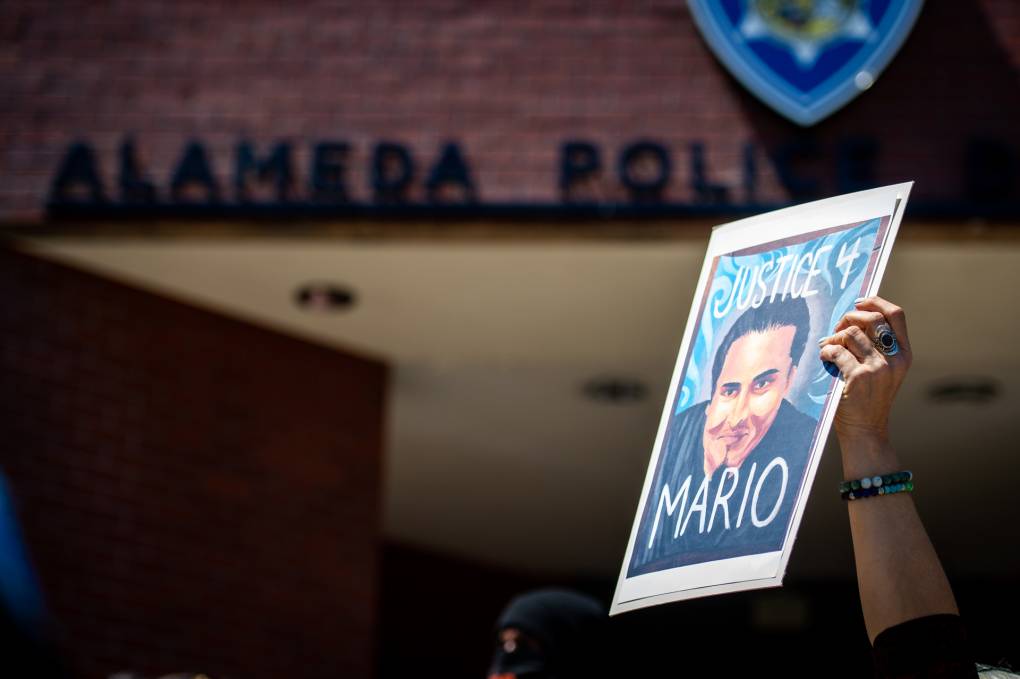
"caption": "Friends and family of Mario Gonzalez, and their supporters, gather outside of the Alameda Police Department on April 27, 2021, the day body camera footage of his death was made public.",
"description": null,
"title": "RS48831_013_Alameda_MarioGonzalezPressConf_04272021-qut",
"credit": "Beth LaBerge/KQED",
"status": "inherit",
"altTag": null,
"isLoading": false,
"fetchFailed": false
},
"news_11872820": {
"type": "attachments",
"id": "news_11872820",
"meta": {
"index": "attachments_1716263798",
"site": "news",
"id": "11872820",
"found": true
},
"parent": 11871887,
"imgSizes": {
"twentyfourteen-full-width": {
"file": "https://ww2.kqed.org/app/uploads/sites/10/2021/05/RS48839_022_Alameda_MarioGonzalezPressConf_04272021-qut-1038x576.jpg",
"width": 1038,
"mimeType": "image/jpeg",
"height": 576
},
"thumbnail": {
"file": "https://ww2.kqed.org/app/uploads/sites/10/2021/05/RS48839_022_Alameda_MarioGonzalezPressConf_04272021-qut-160x107.jpg",
"width": 160,
"mimeType": "image/jpeg",
"height": 107
},
"post-thumbnail": {
"file": "https://ww2.kqed.org/app/uploads/sites/10/2021/05/RS48839_022_Alameda_MarioGonzalezPressConf_04272021-qut-672x372.jpg",
"width": 672,
"mimeType": "image/jpeg",
"height": 372
},
"kqedFullSize": {
"file": "https://ww2.kqed.org/app/uploads/sites/10/2021/05/RS48839_022_Alameda_MarioGonzalezPressConf_04272021-qut.jpg",
"width": 1920,
"height": 1278
},
"large": {
"file": "https://ww2.kqed.org/app/uploads/sites/10/2021/05/RS48839_022_Alameda_MarioGonzalezPressConf_04272021-qut-1020x679.jpg",
"width": 1020,
"mimeType": "image/jpeg",
"height": 679
},
"1536x1536": {
"file": "https://ww2.kqed.org/app/uploads/sites/10/2021/05/RS48839_022_Alameda_MarioGonzalezPressConf_04272021-qut-1536x1022.jpg",
"width": 1536,
"mimeType": "image/jpeg",
"height": 1022
},
"medium": {
"file": "https://ww2.kqed.org/app/uploads/sites/10/2021/05/RS48839_022_Alameda_MarioGonzalezPressConf_04272021-qut-800x533.jpg",
"width": 800,
"mimeType": "image/jpeg",
"height": 533
}
},
"publishDate": 1620427268,
"modified": 1649440866,
"caption": "Protesters gathered outside Alameda Police Department headquarters on April 27, 2021, the day police released bodycam footage of Gonzalez's April 19 death.",
"description": "Friends, family and supporters of Mario Gonzalez gathered outside the Alameda Police Dept. on April 27, 2021 for a press conference on the day police publicly released body cam footage of Gonzalez's death.",
"title": "RS48839_022_Alameda_MarioGonzalezPressConf_04272021-qut",
"credit": "Beth LaBerge/KQED",
"status": "inherit",
"altTag": "Someone holding a sign in front of the Alameda Police station",
"isLoading": false,
"fetchFailed": false
},
"news_11871588": {
"type": "attachments",
"id": "news_11871588",
"meta": {
"index": "attachments_1716263798",
"site": "news",
"id": "11871588",
"found": true
},
"parent": 11871576,
"imgSizes": {
"twentyfourteen-full-width": {
"file": "https://ww2.kqed.org/app/uploads/sites/10/2021/04/RS48823_005_Alameda_MarioGonzalezPressConf_04272021-qut-1038x576.jpg",
"width": 1038,
"mimeType": "image/jpeg",
"height": 576
},
"thumbnail": {
"file": "https://ww2.kqed.org/app/uploads/sites/10/2021/04/RS48823_005_Alameda_MarioGonzalezPressConf_04272021-qut-160x107.jpg",
"width": 160,
"mimeType": "image/jpeg",
"height": 107
},
"post-thumbnail": {
"file": "https://ww2.kqed.org/app/uploads/sites/10/2021/04/RS48823_005_Alameda_MarioGonzalezPressConf_04272021-qut-672x372.jpg",
"width": 672,
"mimeType": "image/jpeg",
"height": 372
},
"kqedFullSize": {
"file": "https://ww2.kqed.org/app/uploads/sites/10/2021/04/RS48823_005_Alameda_MarioGonzalezPressConf_04272021-qut.jpg",
"width": 1920,
"height": 1278
},
"large": {
"file": "https://ww2.kqed.org/app/uploads/sites/10/2021/04/RS48823_005_Alameda_MarioGonzalezPressConf_04272021-qut-1020x679.jpg",
"width": 1020,
"mimeType": "image/jpeg",
"height": 679
},
"1536x1536": {
"file": "https://ww2.kqed.org/app/uploads/sites/10/2021/04/RS48823_005_Alameda_MarioGonzalezPressConf_04272021-qut-1536x1022.jpg",
"width": 1536,
"mimeType": "image/jpeg",
"height": 1022
},
"medium": {
"file": "https://ww2.kqed.org/app/uploads/sites/10/2021/04/RS48823_005_Alameda_MarioGonzalezPressConf_04272021-qut-800x533.jpg",
"width": 800,
"mimeType": "image/jpeg",
"height": 533
}
},
"publishDate": 1619654804,
"modified": 1619654833,
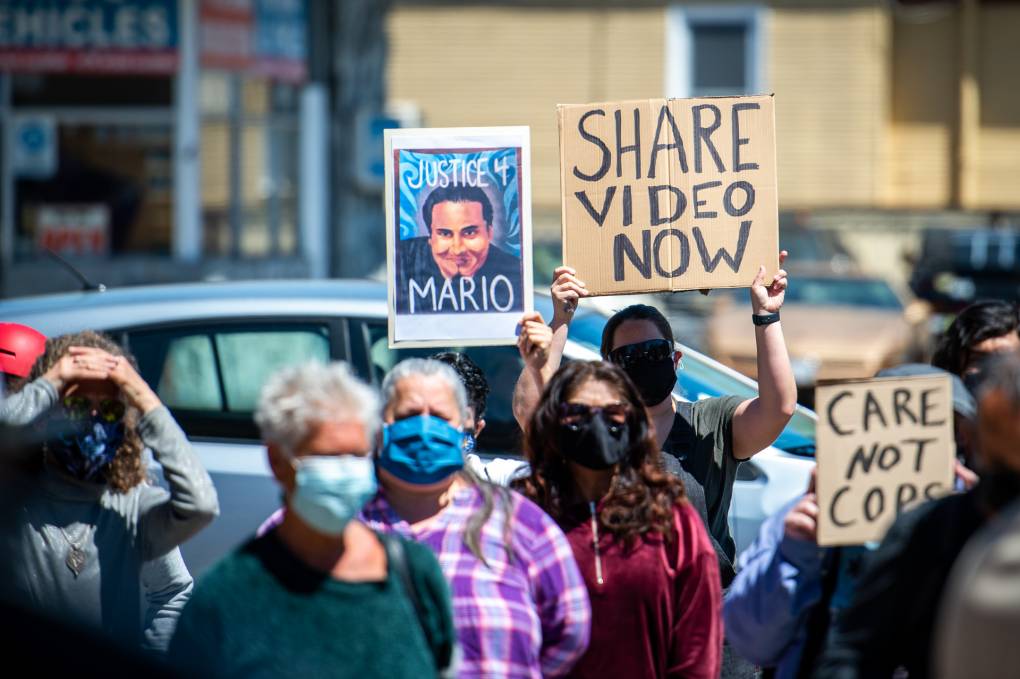
"caption": "Friends, family and supporters of Mario Gonzalez gather outside of the Alameda Police Department on April 27, 2021, for a press conference to address the body cam footage that was first shown to Gonzalez's family and then made public.",
"description": null,
"title": "RS48823_005_Alameda_MarioGonzalezPressConf_04272021-qut",
"credit": "Beth LaBerge/KQED",
"status": "inherit",
"altTag": null,
"isLoading": false,
"fetchFailed": false
},
"news_11871404": {
"type": "attachments",
"id": "news_11871404",
"meta": {
"index": "attachments_1716263798",
"site": "news",
"id": "11871404",
"found": true
},
"parent": 11871345,
"imgSizes": {
"twentyfourteen-full-width": {
"file": "https://ww2.kqed.org/app/uploads/sites/10/2021/04/RS48857_044_Alameda_MarioGonzalezPressConf_04272021-qut-1038x576.jpg",
"width": 1038,
"mimeType": "image/jpeg",
"height": 576
},
"thumbnail": {
"file": "https://ww2.kqed.org/app/uploads/sites/10/2021/04/RS48857_044_Alameda_MarioGonzalezPressConf_04272021-qut-160x107.jpg",
"width": 160,
"mimeType": "image/jpeg",
"height": 107
},
"post-thumbnail": {
"file": "https://ww2.kqed.org/app/uploads/sites/10/2021/04/RS48857_044_Alameda_MarioGonzalezPressConf_04272021-qut-672x372.jpg",
"width": 672,
"mimeType": "image/jpeg",
"height": 372
},
"kqedFullSize": {
"file": "https://ww2.kqed.org/app/uploads/sites/10/2021/04/RS48857_044_Alameda_MarioGonzalezPressConf_04272021-qut.jpg",
"width": 1920,
"height": 1278
},
"large": {
"file": "https://ww2.kqed.org/app/uploads/sites/10/2021/04/RS48857_044_Alameda_MarioGonzalezPressConf_04272021-qut-1020x679.jpg",
"width": 1020,
"mimeType": "image/jpeg",
"height": 679
},
"1536x1536": {
"file": "https://ww2.kqed.org/app/uploads/sites/10/2021/04/RS48857_044_Alameda_MarioGonzalezPressConf_04272021-qut-1536x1022.jpg",
"width": 1536,
"mimeType": "image/jpeg",
"height": 1022
},
"medium": {
"file": "https://ww2.kqed.org/app/uploads/sites/10/2021/04/RS48857_044_Alameda_MarioGonzalezPressConf_04272021-qut-800x533.jpg",
"width": 800,
"mimeType": "image/jpeg",
"height": 533
}
},
"publishDate": 1619569438,
"modified": 1619584503,
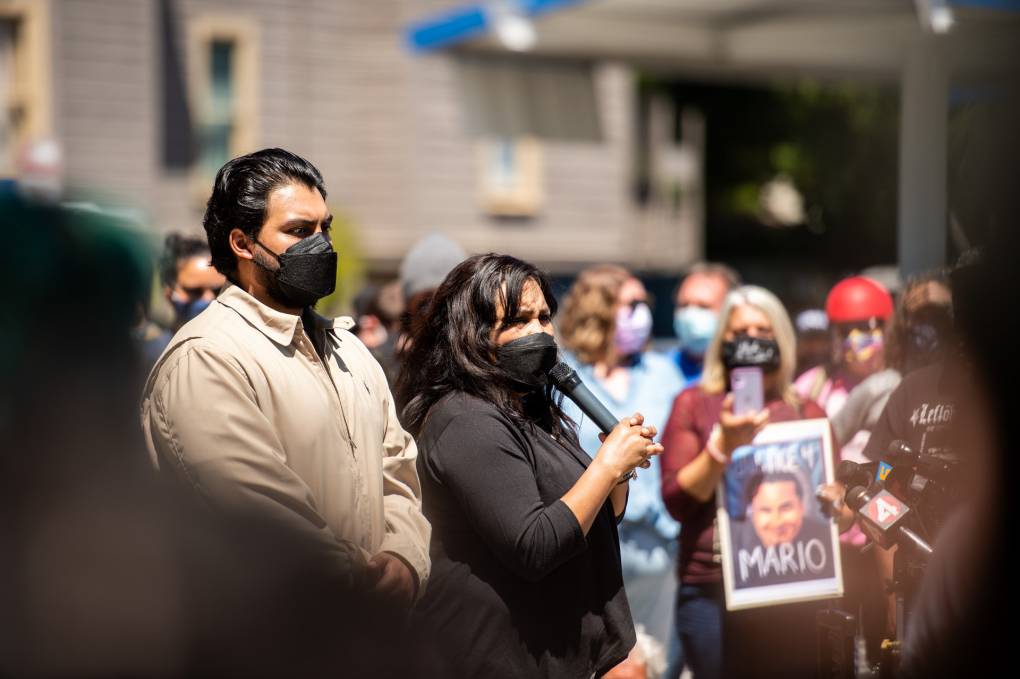
"caption": "Edith Arenales, the mother of Mario Gonzalez, who died last week in police custody, speaks during a press conference, alongside her son Gerardo Gonzalez, outside Alameda Police Department headquarters on April 27, 2021.",
"description": "Edith Arenales, the mother of Mario Gonzalez, who died last week in police custody, speaks during a press conference outside Alameda Police Department headquarters on April 27, 2021.",
"title": "RS48857_044_Alameda_MarioGonzalezPressConf_04272021-qut",
"credit": "Beth LaBerge/KQED",
"status": "inherit",
"altTag": null,
"isLoading": false,
"fetchFailed": false
},
"news_11870699": {
"type": "attachments",
"id": "news_11870699",
"meta": {
"index": "attachments_1716263798",
"site": "news",
"id": "11870699",
"found": true
},
"parent": 11870691,
"imgSizes": {
"twentyfourteen-full-width": {
"file": "https://ww2.kqed.org/app/uploads/sites/10/2021/04/RS48713_026_Alameda_MarioGonzalezVigil_04212021-qut-1038x576.jpg",
"width": 1038,
"mimeType": "image/jpeg",
"height": 576
},
"thumbnail": {
"file": "https://ww2.kqed.org/app/uploads/sites/10/2021/04/RS48713_026_Alameda_MarioGonzalezVigil_04212021-qut-160x107.jpg",
"width": 160,
"mimeType": "image/jpeg",
"height": 107
},
"post-thumbnail": {
"file": "https://ww2.kqed.org/app/uploads/sites/10/2021/04/RS48713_026_Alameda_MarioGonzalezVigil_04212021-qut-672x372.jpg",
"width": 672,
"mimeType": "image/jpeg",
"height": 372
},
"kqedFullSize": {
"file": "https://ww2.kqed.org/app/uploads/sites/10/2021/04/RS48713_026_Alameda_MarioGonzalezVigil_04212021-qut.jpg",
"width": 1920,
"height": 1278
},
"large": {
"file": "https://ww2.kqed.org/app/uploads/sites/10/2021/04/RS48713_026_Alameda_MarioGonzalezVigil_04212021-qut-1020x679.jpg",
"width": 1020,
"mimeType": "image/jpeg",
"height": 679
},
"1536x1536": {
"file": "https://ww2.kqed.org/app/uploads/sites/10/2021/04/RS48713_026_Alameda_MarioGonzalezVigil_04212021-qut-1536x1022.jpg",
"width": 1536,
"mimeType": "image/jpeg",
"height": 1022
},
"medium": {
"file": "https://ww2.kqed.org/app/uploads/sites/10/2021/04/RS48713_026_Alameda_MarioGonzalezVigil_04212021-qut-800x533.jpg",
"width": 800,
"mimeType": "image/jpeg",
"height": 533
}
},
"publishDate": 1619115165,
"modified": 1619128611,
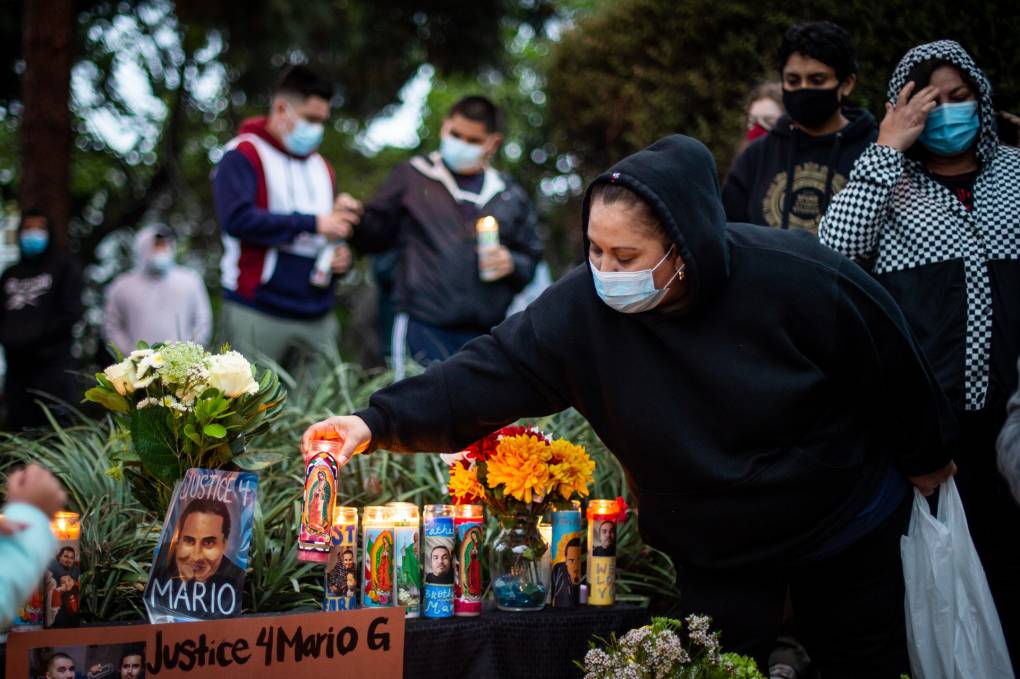
"caption": "A woman places a candle at a memorial for Mario Gonzalez during a vigil on April 21, 2021. Gonzalez died in Alameda police custody Monday.",
"description": null,
"title": "RS48713_026_Alameda_MarioGonzalezVigil_04212021-qut",
"credit": "Beth LaBerge/KQED",
"status": "inherit",
"altTag": null,
"isLoading": false,
"fetchFailed": false
}
},
"audioPlayerReducer": {
"postId": "stream_live",
"isPaused": true,
"isPlaying": false,
"pfsActive": false,
"pledgeModalIsOpen": true,
"playerDrawerIsOpen": false,
"liveAudioPlayStartedAt": 0,
"liveAudioPlayContext": ""
},
"authorsReducer": {
"byline_news_11871576": {
"type": "authors",
"id": "byline_news_11871576",
"meta": {
"override": true
},
"slug": "byline_news_11871576",
"name": "Don Thompson and Olga R. Rodriguez\u003cbr>Associated Press",
"isLoading": false
},
"matthewgreen": {
"type": "authors",
"id": "1263",
"meta": {
"index": "authors_1716337520",
"id": "1263",
"found": true
},
"name": "Matthew Green",
"firstName": "Matthew",
"lastName": "Green",
"slug": "matthewgreen",
"email": "mgreen@kqed.org",
"display_author_email": false,
"staff_mastheads": [],
"title": "KQED Editor/Reporter",
"bio": "Matthew Green is a digital media producer for KQED News. He previously produced \u003ca href=\"http://www.kqed.org/lowdown\">The Lowdown\u003c/a>, KQED’s multimedia news education blog. Matthew's written for numerous Bay Area publications, including the Oakland Tribune and San Francisco Chronicle. He also taught journalism classes at Fremont High School in East Oakland.\r\n\r\nEmail: mgreen@kqed.org; Twitter: @MGreenKQED",
"avatar": "https://secure.gravatar.com/avatar/3bf498d1267ca02c8494f33d8cfc575e?s=600&d=blank&r=g",
"twitter": "MGreenKQED",
"facebook": null,
"instagram": null,
"linkedin": null,
"sites": [
{
"site": "news",
"roles": []
},
{
"site": "lowdown",
"roles": []
},
{
"site": "science",
"roles": []
},
{
"site": "education",
"roles": []
},
{
"site": "quest",
"roles": []
},
{
"site": "liveblog",
"roles": []
}
],
"headData": {
"title": "Matthew Green | KQED",
"description": "KQED Editor/Reporter",
"ogImgSrc": "https://secure.gravatar.com/avatar/3bf498d1267ca02c8494f33d8cfc575e?s=600&d=blank&r=g",
"twImgSrc": "https://secure.gravatar.com/avatar/3bf498d1267ca02c8494f33d8cfc575e?s=600&d=blank&r=g"
},
"isLoading": false,
"link": "/author/matthewgreen"
},
"jrodriguez": {
"type": "authors",
"id": "11690",
"meta": {
"index": "authors_1716337520",
"id": "11690",
"found": true
},
"name": "Joe Fitzgerald Rodriguez",
"firstName": "Joe",
"lastName": "Fitzgerald Rodriguez",
"slug": "jrodriguez",
"email": "jrodriguez@kqed.org",
"display_author_email": true,
"staff_mastheads": [
"news"
],
"title": "Reporter and Producer",
"bio": "Joe Fitzgerald Rodriguez is a reporter and digital producer for KQED covering politics. Joe most recently wrote for the \u003cem>San Francisco Examiner\u003c/em> as a political columnist covering The City. He was raised in San Francisco and has spent his reporting career in his beloved, foggy, city by the bay. Joe was 12-years-old when he conducted his first interview in journalism, grilling former San Francisco Mayor Willie Brown for the Marina Middle School newspaper, \u003cem>The Penguin Press, \u003c/em>and he continues to report on the San Francisco Bay Area to this day.",
"avatar": "https://secure.gravatar.com/avatar/2247beb0564c1e9c62228d5649d2edac?s=600&d=blank&r=g",
"twitter": "FitztheReporter",
"facebook": null,
"instagram": "https://www.instagram.com/fitzthereporter/",
"linkedin": null,
"sites": [
{
"site": "",
"roles": [
"editor"
]
},
{
"site": "arts",
"roles": [
"editor"
]
},
{
"site": "news",
"roles": [
"editor"
]
},
{
"site": "science",
"roles": [
"editor"
]
},
{
"site": "elections",
"roles": [
"editor"
]
},
{
"site": "liveblog",
"roles": [
"editor"
]
}
],
"headData": {
"title": "Joe Fitzgerald Rodriguez | KQED",
"description": "Reporter and Producer",
"ogImgSrc": "https://secure.gravatar.com/avatar/2247beb0564c1e9c62228d5649d2edac?s=600&d=blank&r=g",
"twImgSrc": "https://secure.gravatar.com/avatar/2247beb0564c1e9c62228d5649d2edac?s=600&d=blank&r=g"
},
"isLoading": false,
"link": "/author/jrodriguez"
}
},
"pagesReducer": {
"news_tag_mario-gonzalez": {
"type": "terms",
"id": "news_29381",
"meta": {
"index": "terms_1716263798",
"site": "news",
"id": "29381",
"score": 10.403414
},
"featImg": null,
"name": "Mario Gonzalez",
"description": null,
"taxonomy": "tag",
"headData": {
"twImgId": null,
"twTitle": null,
"ogTitle": null,
"ogImgId": null,
"twDescription": null,
"description": null,
"title": "Mario Gonzalez Archives | KQED News",
"ogDescription": null
},
"ttid": 29398,
"slug": "mario-gonzalez",
"isLoading": false,
"title": "Mario Gonzalez",
"pageMeta": {
"site": "news",
"WpPageTemplate": "page-topic-editorial",
"currentPage": 2
},
"blocks": [
{
"blockName": "kqed/post-list",
"attrs": {
"layout": "cardArticle2",
"query": "posts/news?tag=mario-gonzalez",
"seeMore": false,
"paginated": true,
"page": 2
}
},
{
"blockName": "kqed/ad"
}
]
}
},
"pfsSessionReducer": {},
"postsReducer": {
"stream_live": {
"type": "live",
"id": "stream_live",
"audioUrl": "https://streams.kqed.org/kqedradio",
"title": "Live Stream",
"excerpt": "Live Stream information currently unavailable.",
"link": "/radio",
"featImg": "",
"label": {
"name": "KQED Live",
"link": "/"
}
},
"stream_kqedNewscast": {
"type": "posts",
"id": "stream_kqedNewscast",
"audioUrl": "https://www.kqed.org/.stream/anon/radio/RDnews/newscast.mp3?_=1",
"title": "KQED Newscast",
"featImg": "",
"label": {
"name": "88.5 FM",
"link": "/"
}
},
"news_11872893": {
"type": "posts",
"id": "news_11872893",
"meta": {
"index": "posts_1716263798",
"site": "news",
"id": "11872893",
"score": null,
"sort": [
1620687604000
]
},
"guestAuthors": [],
"slug": "alameda-city-leaders-approve-police-reforms-spurred-by-death-of-mario-gonzalez",
"title": "Alameda City Leaders Approve Police Reforms Spurred by Death of Mario Gonzalez",
"publishDate": 1620687604,
"format": "standard",
"headTitle": "Alameda City Leaders Approve Police Reforms Spurred by Death of Mario Gonzalez | KQED",
"labelTerm": {
"site": "news"
},
"content": "\u003cp>In a rare weekend session, the Alameda City Council approved several police reform measures aimed at diverting some mental health crisis and minor quality-of-life calls away from law enforcement, increasing police accountability and revising the department’s use-of-force policies.\u003c/p>\n\u003cp>The move comes nearly three weeks after the death of Mario Gonzalez, an unarmed 26-year-old man who stopped breathing as he was pinned face down to the ground by Alameda police officers in a city park on April 19.\u003c/p>\n\u003cp>The city \u003ca href=\"https://www.kqed.org/news/11871345/city-of-alameda-releases-police-body-cam-footage-of-mario-gonzalez-death\">released police body camera footage\u003c/a> of the incident the following week, sparking fierce outcry and demands for major policing reforms.\u003c/p>\n\u003cp>The council, in separate votes, approved all three proposals on the agenda, including one that directs city staff to immediately begin considering changes to the city’s 911 dispatch protocol by exploring a pilot program that would reroute certain mental health and other non-violent calls to the Fire Department or to community health teams.\u003c/p>\n\u003cp>Additionally, the council directed the city to begin \u003ca href=\"https://www.kqed.org/news/11871887/alameda-leaders-weigh-police-reforms-after-death-of-mario-gonzalez\">reviewing the Police Department’s \u003c/a>body camera footage and its use-of-force policies, and to develop a more comprehensive list of mental health resources available. The council also approved the creation of a new civilian police auditor role, and moved to begin the process of drafting a local ballot initiative to establish a civilian police oversight board.\u003c/p>\n\u003cp>[ad fullwidth]\u003c/p>\n\u003cp>Many of the reforms the council approved Saturday were policy changes the city has long considered, including several detailed in a \u003ca href=\"https://www.alamedaca.gov/RESIDENTS/Police-Reform-and-Racial-Equity\">report\u003c/a> it released just over a month before Gonzalez’s death.\u003c/p>\n\u003cp>During the nearly four-hour meeting, Alameda Mayor Marilyn Ezzy Ashcraft said it was imperative the city act swiftly on the reforms.\u003c/p>\n\u003cp>“This is a very important topic. I think it is a topic that defines our community,” she said. “And I think we all have that sense of urgency and commitment and dedication. And so it’s now time to translate our words into action.”\u003c/p>\n\u003cp>[aside label=\"related coverage\" tag=\"mario-gonzalez\"]Councilmember John Knox White joined his colleagues in offering condolences to Gonzalez’s family, but also pressed the council to take swift action.\u003c/p>\n\u003cp>“I want to acknowledge the loss of Mario Gonzalez to his family,” Knox White said. “Even though I know we’re speaking broader than that tonight, I’m very aware, and holding close, the call for true justice. Condolences, etc., are not enough.”\u003c/p>\n\u003cp>But Assistant City Manager Gerry Beaudin asked the community to remain patient, stressing that some of the proposals will take time to implement “to make sure that we do it in a way that we’re setting ourselves up for success.”\u003c/p>\n\u003cp>The only consistent dissent on all three proposals came from Councilmember Trish Herrera Spencer, who argued that the city was already considering many of the reforms on the table.\u003c/p>\n\u003cp>“I do think that under the purview of the city manager’s current job description that he is able to do some of this stuff without additional direction from us,” she said.\u003c/p>\n\u003cp>During the meeting, Alameda residents and other supporters of police reform contributed a bevy of public comment and emails, mostly lambasting the actions of the officers involved in Gonzalez’s death and underscoring the need for policy changes.\u003c/p>\n\u003cp>In one email, Alameda residents Brett Webb and Amanda Cooper said the city failed to reform its Police Department after a notorious incident last year, caught on camera, in which officers violently pinned down Mali Watkins, a Black resident, after they found him dancing on the street near his house.\u003c/p>\n\u003cp>After that incident, “people spoke at City Council, urging decisive action to make sure something worse didn’t happen. And yet here we are,” they wrote. “Our community failed to act and now we have failed to protect Mario Gonzalez. I hope we all feel some personal responsibility for this situation. As Alameda voters and residents, we all could and should have done more.”\u003c/p>\n\u003cp>In another email, Alameda resident Kim Ondreck Carim said the current system of policing is contrary to “equity and goodness” in the community.\u003c/p>\n\u003cp>\u003c/p>\n\u003cp>“The policing system in our community needs to be replaced with systems that center nonviolent non-law enforcement response in situations like Mario Gonzalez’s and that do not discriminate between white and non-white citizens,” Ondreck Carim wrote. “Mario Gonzalez should be alive.”\u003c/p>\n\n",
"blocks": [],
"excerpt": "In a special session, the council approved all three proposals on the agenda, including exploration of new 911 response protocols. The move comes nearly three weeks after the death of an unarmed 26-year-old man who stopped breathing as he was pinned face down to the ground by Alameda police officers. ",
"status": "publish",
"parent": 0,
"modified": 1721129456,
"stats": {
"hasAudio": false,
"hasVideo": false,
"hasChartOrMap": false,
"iframeSrcs": [],
"hasGoogleForm": false,
"hasGallery": false,
"hasHearkenModule": false,
"hasPolis": false,
"paragraphCount": 20,
"wordCount": 756
},
"headData": {
"title": "Alameda City Leaders Approve Police Reforms Spurred by Death of Mario Gonzalez | KQED",
"description": "In a special session, the council approved all three proposals on the agenda, including exploration of new 911 response protocols. The move comes nearly three weeks after the death of an unarmed 26-year-old man who stopped breathing as he was pinned face down to the ground by Alameda police officers. ",
"ogTitle": "",
"ogDescription": "",
"ogImgId": "",
"twTitle": "",
"twDescription": "",
"twImgId": "",
"schema": {
"@context": "https://schema.org",
"@type": "NewsArticle",
"headline": "Alameda City Leaders Approve Police Reforms Spurred by Death of Mario Gonzalez",
"datePublished": "2021-05-10T16:00:04-07:00",
"dateModified": "2024-07-16T04:30:56-07:00",
"image": "https://cdn.kqed.org/wp-content/uploads/2020/02/KQED-OG-Image@1x.png",
"isAccessibleForFree": "True",
"publisher": {
"@type": "NewsMediaOrganization",
"@id": "https://www.kqed.org/#organization",
"name": "KQED",
"logo": "https://cdn.kqed.org/wp-content/uploads/2020/02/KQED-OG-Image@1x.png",
"url": "https://www.kqed.org",
"sameAs": [
"https://www.facebook.com/KQED",
"https://twitter.com/KQED",
"https://www.instagram.com/kqed/",
"https://www.tiktok.com/@kqedofficial",
"https://www.linkedin.com/company/kqed",
"https://www.youtube.com/channel/UCeC0IOo7i1P_61zVUWbJ4nw"
]
}
}
},
"sticky": false,
"path": "/news/11872893/alameda-city-leaders-approve-police-reforms-spurred-by-death-of-mario-gonzalez",
"audioTrackLength": null,
"parsedContent": [
{
"type": "contentString",
"content": "\u003cdiv class=\"post-body\">\u003cp>\u003cp>In a rare weekend session, the Alameda City Council approved several police reform measures aimed at diverting some mental health crisis and minor quality-of-life calls away from law enforcement, increasing police accountability and revising the department’s use-of-force policies.\u003c/p>\n\u003cp>The move comes nearly three weeks after the death of Mario Gonzalez, an unarmed 26-year-old man who stopped breathing as he was pinned face down to the ground by Alameda police officers in a city park on April 19.\u003c/p>\n\u003cp>The city \u003ca href=\"https://www.kqed.org/news/11871345/city-of-alameda-releases-police-body-cam-footage-of-mario-gonzalez-death\">released police body camera footage\u003c/a> of the incident the following week, sparking fierce outcry and demands for major policing reforms.\u003c/p>\n\u003cp>The council, in separate votes, approved all three proposals on the agenda, including one that directs city staff to immediately begin considering changes to the city’s 911 dispatch protocol by exploring a pilot program that would reroute certain mental health and other non-violent calls to the Fire Department or to community health teams.\u003c/p>\n\u003cp>Additionally, the council directed the city to begin \u003ca href=\"https://www.kqed.org/news/11871887/alameda-leaders-weigh-police-reforms-after-death-of-mario-gonzalez\">reviewing the Police Department’s \u003c/a>body camera footage and its use-of-force policies, and to develop a more comprehensive list of mental health resources available. The council also approved the creation of a new civilian police auditor role, and moved to begin the process of drafting a local ballot initiative to establish a civilian police oversight board.\u003c/p>\n\u003cp>\u003c/p>\u003c/div>",
"attributes": {
"named": {},
"numeric": []
}
},
{
"type": "component",
"content": "",
"name": "ad",
"attributes": {
"named": {
"label": "fullwidth"
},
"numeric": [
"fullwidth"
]
}
},
{
"type": "contentString",
"content": "\u003cdiv class=\"post-body\">\u003cp>\u003c/p>\n\u003cp>Many of the reforms the council approved Saturday were policy changes the city has long considered, including several detailed in a \u003ca href=\"https://www.alamedaca.gov/RESIDENTS/Police-Reform-and-Racial-Equity\">report\u003c/a> it released just over a month before Gonzalez’s death.\u003c/p>\n\u003cp>During the nearly four-hour meeting, Alameda Mayor Marilyn Ezzy Ashcraft said it was imperative the city act swiftly on the reforms.\u003c/p>\n\u003cp>“This is a very important topic. I think it is a topic that defines our community,” she said. “And I think we all have that sense of urgency and commitment and dedication. And so it’s now time to translate our words into action.”\u003c/p>\n\u003cp>\u003c/p>\u003c/div>",
"attributes": {
"named": {},
"numeric": []
}
},
{
"type": "component",
"content": "",
"name": "aside",
"attributes": {
"named": {
"label": "related coverage ",
"tag": "mario-gonzalez"
},
"numeric": []
}
},
{
"type": "contentString",
"content": "\u003cdiv class=\"post-body\">\u003cp>Councilmember John Knox White joined his colleagues in offering condolences to Gonzalez’s family, but also pressed the council to take swift action.\u003c/p>\n\u003cp>“I want to acknowledge the loss of Mario Gonzalez to his family,” Knox White said. “Even though I know we’re speaking broader than that tonight, I’m very aware, and holding close, the call for true justice. Condolences, etc., are not enough.”\u003c/p>\n\u003cp>But Assistant City Manager Gerry Beaudin asked the community to remain patient, stressing that some of the proposals will take time to implement “to make sure that we do it in a way that we’re setting ourselves up for success.”\u003c/p>\n\u003cp>The only consistent dissent on all three proposals came from Councilmember Trish Herrera Spencer, who argued that the city was already considering many of the reforms on the table.\u003c/p>\n\u003cp>“I do think that under the purview of the city manager’s current job description that he is able to do some of this stuff without additional direction from us,” she said.\u003c/p>\n\u003cp>During the meeting, Alameda residents and other supporters of police reform contributed a bevy of public comment and emails, mostly lambasting the actions of the officers involved in Gonzalez’s death and underscoring the need for policy changes.\u003c/p>\n\u003cp>In one email, Alameda residents Brett Webb and Amanda Cooper said the city failed to reform its Police Department after a notorious incident last year, caught on camera, in which officers violently pinned down Mali Watkins, a Black resident, after they found him dancing on the street near his house.\u003c/p>\n\u003cp>After that incident, “people spoke at City Council, urging decisive action to make sure something worse didn’t happen. And yet here we are,” they wrote. “Our community failed to act and now we have failed to protect Mario Gonzalez. I hope we all feel some personal responsibility for this situation. As Alameda voters and residents, we all could and should have done more.”\u003c/p>\n\u003cp>In another email, Alameda resident Kim Ondreck Carim said the current system of policing is contrary to “equity and goodness” in the community.\u003c/p>\n\u003cp>\u003c/p>\n\u003cp>“The policing system in our community needs to be replaced with systems that center nonviolent non-law enforcement response in situations like Mario Gonzalez’s and that do not discriminate between white and non-white citizens,” Ondreck Carim wrote. “Mario Gonzalez should be alive.”\u003c/p>\n\n\u003c/div>\u003c/p>",
"attributes": {
"named": {},
"numeric": []
}
}
],
"link": "/news/11872893/alameda-city-leaders-approve-police-reforms-spurred-by-death-of-mario-gonzalez",
"authors": [
"11690"
],
"categories": [
"news_8"
],
"tags": [
"news_29381",
"news_116",
"news_20081",
"news_27858"
],
"featImg": "news_11871442",
"label": "news"
},
"news_11871887": {
"type": "posts",
"id": "news_11871887",
"meta": {
"index": "posts_1716263798",
"site": "news",
"id": "11871887",
"score": null,
"sort": [
1620475503000
]
},
"parent": 0,
"labelTerm": {
"site": "news"
},
"blocks": [],
"publishDate": 1620475503,
"format": "standard",
"disqusTitle": "Alameda Leaders Weigh Police Reforms After Death of Mario Gonzalez",
"title": "Alameda Leaders Weigh Police Reforms After Death of Mario Gonzalez",
"headTitle": "KQED News",
"content": "\u003cp>The Alameda City Council plans to meet for a \u003ca href=\"https://legistar1.granicus.com/alameda/meetings/2021/5/5435_A_City_Council_21-05-08_Meeting_Agenda.pdf\">special session\u003c/a> on Saturday to consider immediate policing reforms following the \u003ca href=\"https://www.kqed.org/news/11871345/city-of-alameda-releases-police-body-cam-footage-of-mario-gonzalez-death\">death of Mario Gonzalez\u003c/a> last month. Gonzalez, a 26-year-old Oakland man, stopped breathing after several Alameda police officers held him face-down on the ground for roughly five minutes.\u003c/p>\n\u003cp>The proposed reforms include creating a civilian police oversight board, revising the department's use-of-force policies and requiring a \"non-police response\" to certain types of 911 calls.\u003c/p>\n\u003cp>\"An immediate step that can be taken is a process for civilian oversight of police actions that involve physical contact, and random checks of body camera video, just to make sure we have some eyes, a second set of review,\" said Councilmember John Knox White, who is also pushing for the city to pilot a mental health response unit.\u003c/p>\n\u003cp>[pullquote align=\"right\" size=\"medium\" citation=\"David Thomas, former police tactical trainer and professor of forensic studies\"]'I don't understand why they felt compelled to engage [Gonzalez] to the point where they had to handcuff him and control. Because it makes no sense'[/pullquote]Alameda police have been under intense national scrutiny since \u003ca href=\"https://www.kqed.org/news/11871345/city-of-alameda-releases-police-body-cam-footage-of-mario-gonzalez-death\">body camera footage\u003c/a> was released last week showing two officers confronting Gonzalez in a small city park on April 19. They were responding to 911 calls from neighbors who said he was acting disoriented and appeared to be breaking security tags off alcohol bottles.\u003c/p>\n\u003cp>\"He seems like he’s tweaking. But he’s not doing anything wrong, he’s just scaring my wife,\" one of the callers said.\u003c/p>\n\u003cp>The incident begins calmly, but after the officers' make repeated, unsuccessful attempts to obtain Gonzalez's full name or ID, they grab him, never telling him he's under arrest. When Gonzalez resists being handcuffed, two officers take him to the ground, pinning him on his stomach, with at least one pressing an elbow and knee into his back and shoulder. They handcuff Gonzalez, holding him down for roughly five minutes, as he continues to struggle, at which point he appears to lose consciousness and stops breathing.\u003c/p>\n\u003cp>Many social justice activists and policing experts alike have lambasted the officers, accusing them of unnecessarily escalating a situation that did not necessitate the use of force.\u003c/p>\n\u003cp>Gonzalez's family and their supporters are now pushing for the officers to be charged with murder, drawing comparisons to the death of George Floyd, who was \u003ca href=\"https://www.kqed.org/news/11870396/court-says-jury-has-reached-verdict-in-derek-chauvins-murder-trial\">murdered\u003c/a> last May by Minneapolis police officer Derek Chauvin, who knelt on his neck for more than 9 minutes.\u003c/p>\n\u003cp>[ad fullwidth]\u003c/p>\n\u003cp>In the weeks since Gonzalez's death, multiple separate investigations into the incident have been initiated, including criminal investigations by the Alameda County Sheriff’s Department and Alameda County District Attorney’s Office, and an outside investigation by a private law firm hired by the city.\u003c/p>\n\u003cp>\"I don't understand why they felt compelled to engage [Gonzalez] to the point where they had to handcuff him and control. Because it makes no sense,\" said David Thomas, a professor of forensic studies at Florida Gulf Coast University and former police tactical trainer.\u003c/p>\n\u003cp>\"I think they were determined that they were going to detain him in order to get to that point, to find out who he was,\" he said. \"I don't see that as being a requirement if the person's not a threat to anybody. And if you just need him to move along, why don't you have that conversation and ask?\"\u003c/p>\n\u003cp>[aside postID=news_11871345 hero='https://ww2.kqed.org/app/uploads/sites/10/2021/04/RS48857_044_Alameda_MarioGonzalezPressConf_04272021-qut-1020x679.jpg']Thomas also noted that the officers erred in failing to tell Gonzalez why they were detaining him.\u003c/p>\n\u003cp>\"You need to clarify,\" he said. \"What is your purpose? And that was never stated.\"\u003c/p>\n\u003cp>Regardless, Thomas said, after the officers forced Gonzalez to the ground, they should have immediately tried to move him into a sitting position to ensure he was able to properly breathe.\u003c/p>\n\u003cp>An attorney for the officers said they did nothing wrong.\u003c/p>\n\u003cp>“These officers used the lowest degree of force possible given the intensity of Mr. Gonzalez's efforts to evade their grasp,\" Alison Berry Wilkinson told \u003ca href=\"https://twitter.com/henrykleeKTVU/status/1387540533497634820\">KTVU\u003c/a> last week.\u003c/p>\n\u003cp>The officers had to act to ensure the safety of Gonzalez because he appeared intoxicated and disoriented and they were concerned he would fall if left there, Wilkinson said.\u003c/p>\n\u003cp>“There was never a point in time where any officer's knee was on Mr. Gonzalez's neck. Nor was there a time when they were pressing down hard enough on his body to cause him not to breathe,\" she said.\u003c/p>\n\u003cp>The Alameda Police Department has been no stranger to controversy. It came under fire last May for use of heavy-handed tactics following the release of a video \u003ca href=\"https://www.sfchronicle.com/crime/article/Alameda-Police-release-body-cam-footage-of-black-15322278.php\">showing officers pinning a 44-year-old Black man\u003c/a> to the ground and handcuffing him, after he had been seen dancing in the street near his house. The police chief \u003ca href=\"https://www.sfchronicle.com/crime/article/Alameda-police-chief-retires-after-28-years-on-15427045.php\">announced his retirement\u003c/a> the following month.\u003c/p>\n\u003cp>And in 2018, a \u003ca href=\"https://www.sfchronicle.com/crime/article/Video-exclusive-Navy-vet-who-died-8-days-after-15364030.php\">40-year-old navy veteran died\u003c/a> eight days after Alameda police arrested him, pinning him to the ground on his stomach and tasing him multiple times.\u003c/p>\n\u003cp>Gonzalez's death has drawn renewed attention to a California bill that would bar police from applying pressure or body weight to a restrained person’s neck, torso or back, or laying them face up or face down without proper monitoring.\u003c/p>\n\u003cfigure id=\"attachment_11872840\" class=\"wp-caption aligncenter\" style=\"max-width: 1920px\">\u003cimg src=\"https://ww2.kqed.org/app/uploads/sites/10/2021/05/RS48847_033_Alameda_MarioGonzalezPressConf_04272021-qut.jpg\" alt=\"\" width=\"1920\" height=\"1278\" class=\"size-full wp-image-11872840\" srcset=\"https://ww2.kqed.org/app/uploads/sites/10/2021/05/RS48847_033_Alameda_MarioGonzalezPressConf_04272021-qut.jpg 1920w, https://ww2.kqed.org/app/uploads/sites/10/2021/05/RS48847_033_Alameda_MarioGonzalezPressConf_04272021-qut-800x533.jpg 800w, https://ww2.kqed.org/app/uploads/sites/10/2021/05/RS48847_033_Alameda_MarioGonzalezPressConf_04272021-qut-1020x679.jpg 1020w, https://ww2.kqed.org/app/uploads/sites/10/2021/05/RS48847_033_Alameda_MarioGonzalezPressConf_04272021-qut-160x107.jpg 160w, https://ww2.kqed.org/app/uploads/sites/10/2021/05/RS48847_033_Alameda_MarioGonzalezPressConf_04272021-qut-1536x1022.jpg 1536w\" sizes=\"(max-width: 1920px) 100vw, 1920px\">\u003cfigcaption class=\"wp-caption-text\">Mario Gonzalez's mother, Edith Arenales, puts her head together with her son Geraldo Gonzalez before speaking at a news conference outside the Alameda Police Department on April 27, 2021. \u003ccite>(Beth LaBerge/KQED)\u003c/cite>\u003c/figcaption>\u003c/figure>\n\u003cp>\u003ca href=\"https://leginfo.legislature.ca.gov/faces/billTextClient.xhtml?bill_id=202120220AB490\">Assembly Bill 490\u003c/a>, authored by Democratic Assemblyman Mike Gipson, D-Carson, a former police officer, would outlaw techniques that create a substantial risk of what's known as \"positional asphyxia\" — detaining someone in a way that compresses their airways and reduces the ability to breathe normally. The legislation follows California's \u003ca href=\"https://leginfo.legislature.ca.gov/faces/billNavClient.xhtml?bill_id=201920200AB1196\">recent ban\u003c/a> on police use of carotid restraints or choke holds, a measure also introduced by Gipson.\u003c/p>\n\u003cp>\"This does not mean that a police officer can no longer restrain anyone when they need to for public safety, but it would mean that they cannot keep anyone from breathing/losing oxygen when restraining them,\" Gipson said in a statement.\u003c/p>\n\u003cp>The California State Sheriffs’ Association has called the language in the new bill overly broad, arguing that violations would be too difficult to judge and that an all-out ban would leave officers fewer options for handling violent suspects, making them more likely to use batons or stun guns.\u003c/p>\n\u003cp>Timothy T. Williams Jr., a police tactics expert who spent nearly 30 years with the Los Angeles Police Department, said that while most departments already have policies on this, those guidelines need to be much clearer.\u003c/p>\n\u003cp>Case in point: the Alameda Police Department's \u003ca href=\"https://www.alamedaca.gov/files/assets/public/departments/alameda/police/alameda-police-department-policy-manual-11022020.pdf\">policy manual\u003c/a> states that a suspect \"shall not be placed on his/her stomach for an extended period, as this could reduce the person’s ability to breathe.\"\u003c/p>\n\u003cp>“The policy needs to be more specific and directed,\" Williams said. \"Once he or she is handcuffed, they are to be immediately removed from the prone position, put on their side and if possible sat up.\" Otherwise, he said, “You leave everything to subjective interpretation: What may be short to you may be long to me.\"\u003c/p>\n\u003cp>[aside label=\"related coverage\" tag=\"mario-gonzalez\"]From a medical standpoint, any restriction of oxygen or blood flow is too long, said UCSF neurologist Nicole Rosendale.\u003c/p>\n\u003cp>\"There are no kind of safe, defined ways to have someone in a position like this and reduce oxygen,\" she said. \"There’s no way to predict who might be at higher risk or lower risk of complications from this positioning.\"\u003c/p>\n\u003cp>Gonzalez's death also rekindles the longstanding national debate – amplified in the wake of George Floyd's murder — over which kinds of responders are best suited to handle various types of non-emergency situations, and when police officers should not be involved. These are among the heated questions the Alameda City Council intends to take up this weekend.\u003c/p>\n\u003cp>\"This was a tragic and avoidable incident that once again demonstrates the danger of involving law enforcement and interactions with people experiencing mental health crises and substance-use issues,\" said Jennifer Stark, an attorney with Disability Rights California, one of the many groups that support reallocating resources to community service agencies and enlisting them to respond to certain non-violent calls. \u003c/p>\n\u003cp>\"This is not a violent person. There were no safety issues raised. There were some concerns potentially about mental health issues. And this is one of those cases where it would have been perfectly appropriate to involve mental health professionals to come in to speak with Mario and to de-escalate the situation.\"\u003c/p>\n\u003cp>\"There was no crisis,\" she added, \"until the law enforcement got involved.\"\u003c/p>\n\u003cp>Randy Fenn, Alameda's interim police chief, said he agrees on the need to reexamine this dynamic.\u003c/p>\n\u003cp>\"I think that's going to be a really important question going forward,\" Fenn said. \"Who are the appropriate responders?\"\u003c/p>\n\u003cp>But that can get complicated fast, he added, noting that in this case, Gonzalez seemed to be acting erratically and could have become potentially dangerous.\u003c/p>\n\u003cp>\"Now, would properly trained, non-sworn people be the best to respond to this? Possibly,\" he said. \"Would they be in some level of danger? Again, possibly. So do you have a mix of a social worker with a police officer?\"\u003c/p>\n\u003cp>He added, \"And I think each community is trying right now to figure out what that looks like and what's the best model for Alameda.\"\u003c/p>\n\u003cp>\u003cem>This article includes reporting from KQED's Alex Emslie and Holly McDede, and The Associated Press.\u003c/em>\u003c/p>\n\u003cp>[ad floatright]\u003c/p>\n",
"disqusIdentifier": "11871887 https://ww2.kqed.org/news/?p=11871887",
"disqusUrl": "https://ww2.kqed.org/news/2021/05/08/alameda-leaders-weigh-police-reforms-after-death-of-mario-gonzalez/",
"stats": {
"hasVideo": false,
"hasChartOrMap": false,
"hasAudio": false,
"hasPolis": false,
"wordCount": 1640,
"hasGoogleForm": false,
"hasGallery": false,
"hasHearkenModule": false,
"iframeSrcs": [],
"paragraphCount": 41
},
"modified": 1620432525,
"excerpt": "The proposed reforms include creating a civilian police oversight board, revising the department's use-of-force policies and requiring a non-police response to certain types of 911 calls.",
"headData": {
"twImgId": "",
"twTitle": "",
"ogTitle": "",
"ogImgId": "",
"twDescription": "",
"description": "The proposed reforms include creating a civilian police oversight board, revising the department's use-of-force policies and requiring a non-police response to certain types of 911 calls.",
"title": "Alameda Leaders Weigh Police Reforms After Death of Mario Gonzalez | KQED",
"ogDescription": "",
"schema": {
"@context": "https://schema.org",
"@type": "NewsArticle",
"headline": "Alameda Leaders Weigh Police Reforms After Death of Mario Gonzalez",
"datePublished": "2021-05-08T05:05:03-07:00",
"dateModified": "2021-05-07T17:08:45-07:00",
"image": "https://cdn.kqed.org/wp-content/uploads/2020/02/KQED-OG-Image@1x.png",
"isAccessibleForFree": "True",
"publisher": {
"@type": "NewsMediaOrganization",
"@id": "https://www.kqed.org/#organization",
"name": "KQED",
"logo": "https://cdn.kqed.org/wp-content/uploads/2020/02/KQED-OG-Image@1x.png",
"url": "https://www.kqed.org",
"sameAs": [
"https://www.facebook.com/KQED",
"https://twitter.com/KQED",
"https://www.instagram.com/kqed/",
"https://www.tiktok.com/@kqedofficial",
"https://www.linkedin.com/company/kqed",
"https://www.youtube.com/channel/UCeC0IOo7i1P_61zVUWbJ4nw"
]
}
}
},
"guestAuthors": [],
"slug": "alameda-leaders-weigh-police-reforms-after-death-of-mario-gonzalez",
"status": "publish",
"path": "/news/11871887/alameda-leaders-weigh-police-reforms-after-death-of-mario-gonzalez",
"audioTrackLength": null,
"parsedContent": [
{
"type": "contentString",
"content": "\u003cdiv class=\"post-body\">\u003cp>\u003cp>The Alameda City Council plans to meet for a \u003ca href=\"https://legistar1.granicus.com/alameda/meetings/2021/5/5435_A_City_Council_21-05-08_Meeting_Agenda.pdf\">special session\u003c/a> on Saturday to consider immediate policing reforms following the \u003ca href=\"https://www.kqed.org/news/11871345/city-of-alameda-releases-police-body-cam-footage-of-mario-gonzalez-death\">death of Mario Gonzalez\u003c/a> last month. Gonzalez, a 26-year-old Oakland man, stopped breathing after several Alameda police officers held him face-down on the ground for roughly five minutes.\u003c/p>\n\u003cp>The proposed reforms include creating a civilian police oversight board, revising the department's use-of-force policies and requiring a \"non-police response\" to certain types of 911 calls.\u003c/p>\n\u003cp>\"An immediate step that can be taken is a process for civilian oversight of police actions that involve physical contact, and random checks of body camera video, just to make sure we have some eyes, a second set of review,\" said Councilmember John Knox White, who is also pushing for the city to pilot a mental health response unit.\u003c/p>\n\u003cp>\u003c/p>\u003c/div>",
"attributes": {
"named": {},
"numeric": []
}
},
{
"type": "component",
"content": "'I don't understand why they felt compelled to engage [Gonzalez] to the point where they had to handcuff him and control. Because it makes no sense'",
"name": "pullquote",
"attributes": {
"named": {
"align": "right",
"size": "medium",
"citation": "David Thomas, former police tactical trainer and professor of forensic studies",
"label": ""
},
"numeric": []
}
},
{
"type": "contentString",
"content": "\u003cdiv class=\"post-body\">\u003cp>Alameda police have been under intense national scrutiny since \u003ca href=\"https://www.kqed.org/news/11871345/city-of-alameda-releases-police-body-cam-footage-of-mario-gonzalez-death\">body camera footage\u003c/a> was released last week showing two officers confronting Gonzalez in a small city park on April 19. They were responding to 911 calls from neighbors who said he was acting disoriented and appeared to be breaking security tags off alcohol bottles.\u003c/p>\n\u003cp>\"He seems like he’s tweaking. But he’s not doing anything wrong, he’s just scaring my wife,\" one of the callers said.\u003c/p>\n\u003cp>The incident begins calmly, but after the officers' make repeated, unsuccessful attempts to obtain Gonzalez's full name or ID, they grab him, never telling him he's under arrest. When Gonzalez resists being handcuffed, two officers take him to the ground, pinning him on his stomach, with at least one pressing an elbow and knee into his back and shoulder. They handcuff Gonzalez, holding him down for roughly five minutes, as he continues to struggle, at which point he appears to lose consciousness and stops breathing.\u003c/p>\n\u003cp>Many social justice activists and policing experts alike have lambasted the officers, accusing them of unnecessarily escalating a situation that did not necessitate the use of force.\u003c/p>\n\u003cp>Gonzalez's family and their supporters are now pushing for the officers to be charged with murder, drawing comparisons to the death of George Floyd, who was \u003ca href=\"https://www.kqed.org/news/11870396/court-says-jury-has-reached-verdict-in-derek-chauvins-murder-trial\">murdered\u003c/a> last May by Minneapolis police officer Derek Chauvin, who knelt on his neck for more than 9 minutes.\u003c/p>\n\u003cp>\u003c/p>\u003c/div>",
"attributes": {
"named": {},
"numeric": []
}
},
{
"type": "component",
"content": "",
"name": "ad",
"attributes": {
"named": {
"label": "fullwidth"
},
"numeric": [
"fullwidth"
]
}
},
{
"type": "contentString",
"content": "\u003cdiv class=\"post-body\">\u003cp>\u003c/p>\n\u003cp>In the weeks since Gonzalez's death, multiple separate investigations into the incident have been initiated, including criminal investigations by the Alameda County Sheriff’s Department and Alameda County District Attorney’s Office, and an outside investigation by a private law firm hired by the city.\u003c/p>\n\u003cp>\"I don't understand why they felt compelled to engage [Gonzalez] to the point where they had to handcuff him and control. Because it makes no sense,\" said David Thomas, a professor of forensic studies at Florida Gulf Coast University and former police tactical trainer.\u003c/p>\n\u003cp>\"I think they were determined that they were going to detain him in order to get to that point, to find out who he was,\" he said. \"I don't see that as being a requirement if the person's not a threat to anybody. And if you just need him to move along, why don't you have that conversation and ask?\"\u003c/p>\n\u003cp>\u003c/p>\u003c/div>",
"attributes": {
"named": {},
"numeric": []
}
},
{
"type": "component",
"content": "",
"name": "aside",
"attributes": {
"named": {
"postid": "news_11871345",
"hero": "https://ww2.kqed.org/app/uploads/sites/10/2021/04/RS48857_044_Alameda_MarioGonzalezPressConf_04272021-qut-1020x679.jpg",
"label": ""
},
"numeric": []
}
},
{
"type": "contentString",
"content": "\u003cdiv class=\"post-body\">\u003cp>Thomas also noted that the officers erred in failing to tell Gonzalez why they were detaining him.\u003c/p>\n\u003cp>\"You need to clarify,\" he said. \"What is your purpose? And that was never stated.\"\u003c/p>\n\u003cp>Regardless, Thomas said, after the officers forced Gonzalez to the ground, they should have immediately tried to move him into a sitting position to ensure he was able to properly breathe.\u003c/p>\n\u003cp>An attorney for the officers said they did nothing wrong.\u003c/p>\n\u003cp>“These officers used the lowest degree of force possible given the intensity of Mr. Gonzalez's efforts to evade their grasp,\" Alison Berry Wilkinson told \u003ca href=\"https://twitter.com/henrykleeKTVU/status/1387540533497634820\">KTVU\u003c/a> last week.\u003c/p>\n\u003cp>The officers had to act to ensure the safety of Gonzalez because he appeared intoxicated and disoriented and they were concerned he would fall if left there, Wilkinson said.\u003c/p>\n\u003cp>“There was never a point in time where any officer's knee was on Mr. Gonzalez's neck. Nor was there a time when they were pressing down hard enough on his body to cause him not to breathe,\" she said.\u003c/p>\n\u003cp>The Alameda Police Department has been no stranger to controversy. It came under fire last May for use of heavy-handed tactics following the release of a video \u003ca href=\"https://www.sfchronicle.com/crime/article/Alameda-Police-release-body-cam-footage-of-black-15322278.php\">showing officers pinning a 44-year-old Black man\u003c/a> to the ground and handcuffing him, after he had been seen dancing in the street near his house. The police chief \u003ca href=\"https://www.sfchronicle.com/crime/article/Alameda-police-chief-retires-after-28-years-on-15427045.php\">announced his retirement\u003c/a> the following month.\u003c/p>\n\u003cp>And in 2018, a \u003ca href=\"https://www.sfchronicle.com/crime/article/Video-exclusive-Navy-vet-who-died-8-days-after-15364030.php\">40-year-old navy veteran died\u003c/a> eight days after Alameda police arrested him, pinning him to the ground on his stomach and tasing him multiple times.\u003c/p>\n\u003cp>Gonzalez's death has drawn renewed attention to a California bill that would bar police from applying pressure or body weight to a restrained person’s neck, torso or back, or laying them face up or face down without proper monitoring.\u003c/p>\n\u003cfigure id=\"attachment_11872840\" class=\"wp-caption aligncenter\" style=\"max-width: 1920px\">\u003cimg src=\"https://ww2.kqed.org/app/uploads/sites/10/2021/05/RS48847_033_Alameda_MarioGonzalezPressConf_04272021-qut.jpg\" alt=\"\" width=\"1920\" height=\"1278\" class=\"size-full wp-image-11872840\" srcset=\"https://ww2.kqed.org/app/uploads/sites/10/2021/05/RS48847_033_Alameda_MarioGonzalezPressConf_04272021-qut.jpg 1920w, https://ww2.kqed.org/app/uploads/sites/10/2021/05/RS48847_033_Alameda_MarioGonzalezPressConf_04272021-qut-800x533.jpg 800w, https://ww2.kqed.org/app/uploads/sites/10/2021/05/RS48847_033_Alameda_MarioGonzalezPressConf_04272021-qut-1020x679.jpg 1020w, https://ww2.kqed.org/app/uploads/sites/10/2021/05/RS48847_033_Alameda_MarioGonzalezPressConf_04272021-qut-160x107.jpg 160w, https://ww2.kqed.org/app/uploads/sites/10/2021/05/RS48847_033_Alameda_MarioGonzalezPressConf_04272021-qut-1536x1022.jpg 1536w\" sizes=\"(max-width: 1920px) 100vw, 1920px\">\u003cfigcaption class=\"wp-caption-text\">Mario Gonzalez's mother, Edith Arenales, puts her head together with her son Geraldo Gonzalez before speaking at a news conference outside the Alameda Police Department on April 27, 2021. \u003ccite>(Beth LaBerge/KQED)\u003c/cite>\u003c/figcaption>\u003c/figure>\n\u003cp>\u003ca href=\"https://leginfo.legislature.ca.gov/faces/billTextClient.xhtml?bill_id=202120220AB490\">Assembly Bill 490\u003c/a>, authored by Democratic Assemblyman Mike Gipson, D-Carson, a former police officer, would outlaw techniques that create a substantial risk of what's known as \"positional asphyxia\" — detaining someone in a way that compresses their airways and reduces the ability to breathe normally. The legislation follows California's \u003ca href=\"https://leginfo.legislature.ca.gov/faces/billNavClient.xhtml?bill_id=201920200AB1196\">recent ban\u003c/a> on police use of carotid restraints or choke holds, a measure also introduced by Gipson.\u003c/p>\n\u003cp>\"This does not mean that a police officer can no longer restrain anyone when they need to for public safety, but it would mean that they cannot keep anyone from breathing/losing oxygen when restraining them,\" Gipson said in a statement.\u003c/p>\n\u003cp>The California State Sheriffs’ Association has called the language in the new bill overly broad, arguing that violations would be too difficult to judge and that an all-out ban would leave officers fewer options for handling violent suspects, making them more likely to use batons or stun guns.\u003c/p>\n\u003cp>Timothy T. Williams Jr., a police tactics expert who spent nearly 30 years with the Los Angeles Police Department, said that while most departments already have policies on this, those guidelines need to be much clearer.\u003c/p>\n\u003cp>Case in point: the Alameda Police Department's \u003ca href=\"https://www.alamedaca.gov/files/assets/public/departments/alameda/police/alameda-police-department-policy-manual-11022020.pdf\">policy manual\u003c/a> states that a suspect \"shall not be placed on his/her stomach for an extended period, as this could reduce the person’s ability to breathe.\"\u003c/p>\n\u003cp>“The policy needs to be more specific and directed,\" Williams said. \"Once he or she is handcuffed, they are to be immediately removed from the prone position, put on their side and if possible sat up.\" Otherwise, he said, “You leave everything to subjective interpretation: What may be short to you may be long to me.\"\u003c/p>\n\u003cp>\u003c/p>\u003c/div>",
"attributes": {
"named": {},
"numeric": []
}
},
{
"type": "component",
"content": "",
"name": "aside",
"attributes": {
"named": {
"label": "related coverage ",
"tag": "mario-gonzalez"
},
"numeric": []
}
},
{
"type": "contentString",
"content": "\u003cdiv class=\"post-body\">\u003cp>From a medical standpoint, any restriction of oxygen or blood flow is too long, said UCSF neurologist Nicole Rosendale.\u003c/p>\n\u003cp>\"There are no kind of safe, defined ways to have someone in a position like this and reduce oxygen,\" she said. \"There’s no way to predict who might be at higher risk or lower risk of complications from this positioning.\"\u003c/p>\n\u003cp>Gonzalez's death also rekindles the longstanding national debate – amplified in the wake of George Floyd's murder — over which kinds of responders are best suited to handle various types of non-emergency situations, and when police officers should not be involved. These are among the heated questions the Alameda City Council intends to take up this weekend.\u003c/p>\n\u003cp>\"This was a tragic and avoidable incident that once again demonstrates the danger of involving law enforcement and interactions with people experiencing mental health crises and substance-use issues,\" said Jennifer Stark, an attorney with Disability Rights California, one of the many groups that support reallocating resources to community service agencies and enlisting them to respond to certain non-violent calls. \u003c/p>\n\u003cp>\"This is not a violent person. There were no safety issues raised. There were some concerns potentially about mental health issues. And this is one of those cases where it would have been perfectly appropriate to involve mental health professionals to come in to speak with Mario and to de-escalate the situation.\"\u003c/p>\n\u003cp>\"There was no crisis,\" she added, \"until the law enforcement got involved.\"\u003c/p>\n\u003cp>Randy Fenn, Alameda's interim police chief, said he agrees on the need to reexamine this dynamic.\u003c/p>\n\u003cp>\"I think that's going to be a really important question going forward,\" Fenn said. \"Who are the appropriate responders?\"\u003c/p>\n\u003cp>But that can get complicated fast, he added, noting that in this case, Gonzalez seemed to be acting erratically and could have become potentially dangerous.\u003c/p>\n\u003cp>\"Now, would properly trained, non-sworn people be the best to respond to this? Possibly,\" he said. \"Would they be in some level of danger? Again, possibly. So do you have a mix of a social worker with a police officer?\"\u003c/p>\n\u003cp>He added, \"And I think each community is trying right now to figure out what that looks like and what's the best model for Alameda.\"\u003c/p>\n\u003cp>\u003cem>This article includes reporting from KQED's Alex Emslie and Holly McDede, and The Associated Press.\u003c/em>\u003c/p>\n\u003cp>\u003c/p>\u003c/div>",
"attributes": {
"named": {},
"numeric": []
}
},
{
"type": "component",
"content": "",
"name": "ad",
"attributes": {
"named": {
"label": "floatright"
},
"numeric": [
"floatright"
]
}
},
{
"type": "contentString",
"content": "\u003cdiv class=\"post-body\">\u003cp>\u003c/p>\n\u003c/div>\u003c/p>",
"attributes": {
"named": {},
"numeric": []
}
}
],
"link": "/news/11871887/alameda-leaders-weigh-police-reforms-after-death-of-mario-gonzalez",
"authors": [
"1263"
],
"categories": [
"news_6188",
"news_8",
"news_13"
],
"tags": [
"news_18848",
"news_27626",
"news_28031",
"news_29381",
"news_28089",
"news_20081",
"news_27858",
"news_20625"
],
"featImg": "news_11872820",
"label": "news"
},
"news_11871576": {
"type": "posts",
"id": "news_11871576",
"meta": {
"index": "posts_1716263798",
"site": "news",
"id": "11871576",
"score": null,
"sort": [
1619654939000
]
},
"parent": 0,
"labelTerm": {
"site": "news"
},
"blocks": [],
"publishDate": 1619654939,
"format": "standard",
"disqusTitle": "Deadly Alameda Police Encounter Carries Echoes of George Floyd Case",
"title": "Deadly Alameda Police Encounter Carries Echoes of George Floyd Case",
"headTitle": "KQED News",
"content": "\u003cp>Police in Alameda are under fire over the death of a Latino man who was pinned to the ground face down for more than five minutes on the same day a jury in Minneapolis began deliberating in the George Floyd case.\u003c/p>\n\u003cp>Autopsy findings have not been released, but the family of 26-year-old Mario Gonzalez accused police Wednesday of using excessive force and escalating what should have been a minor encounter with the unarmed man.\u003c/p>\n\u003cp>Gonzalez stopped breathing following a \u003ca href=\"https://www.kqed.org/news/11871345/city-of-alameda-releases-police-body-cam-footage-of-mario-gonzalez-death\">video-recorded confrontation\u003c/a> with police on April 19 at a small park, where officers had confronted him after receiving 911 calls that said he appeared disoriented or drunk. The initial police statement said Gonzalez had a medical emergency after officers tried to handcuff him.\u003c/p>\n\u003cp>“The video showed that he died on the ground with his face on the floor with officers on top of him,\" said his brother, Jerry Gonzalez.\u003c/p>\n\u003cp>Julia Sherwin, the family's attorney, added, “It would feel like drowning on dry land for him.”\u003c/p>\n\u003cp>[ad fullwidth]\u003c/p>\n\u003cp>Multiple use-of-force training experts who viewed the video at the request of The Associated Press agreed that the officers shouldn’t have escalated the confrontation, but said their fatal mistake was not immediately taking action once Gonzalez had trouble breathing.\u003c/p>\n\u003cp>“He wasn’t resisting; he was just trying to breathe,\" said Timothy T. Williams Jr., a law enforcement expert who spent nearly 30 years with the Los Angeles Police Department.\u003c/p>\n\u003cp>The arrest took place just hours before the case against former Minneapolis police officer Derek Chauvin went to the jury. The next day, Chauvin was convicted of murder and manslaughter for pinning Floyd to the pavement with his knee on the Black man’s neck in a case that touched off a national reckoning over racism and police brutality.\u003c/p>\n\u003cp>In Alameda, the nearly \u003ca href=\"https://www.youtube.com/watch?v=OBJnToNolHw\">hourlong video\u003c/a> from two officers' body cameras released late Tuesday shows police talking to a seemingly dazed Gonzalez, who struggles to answer questions. The third officer arrives later.\u003c/p>\n\u003cp>When Gonzalez doesn't produce any identification, the officers are seen trying to force his hands behind his back to handcuff him, but he resists and they take him to the ground. They repeatedly ask him for his full name and birthdate.\u003c/p>\n\u003cp>[aside label=\"related coverage\" tag=\"police-killings\"]Gonzalez, who weighed about 250 pounds is seen grunting and shouting as he lies face down on wood chips while the officers restrain him. One officer puts an elbow on his neck and a knee on his shoulder.\u003c/p>\n\u003cp>One officer also appears to put a knee on his back and leaves it there for about four minutes as Gonzalez gasps for air, saying, “I didn't do nothing, OK?\"\u003c/p>\n\u003cp>Shortly before he stops breathing, one officer asks the other: “Think we can roll him on his side?”\u003c/p>\n\u003cp>The other answers, “I don’t want to lose what I got, man.”\u003c/p>\n\u003cp>After Gonzalez seems to lose consciousness, the video shows officers rolling him over and performing cardiopulmonary resuscitation. They are also seen administering at least two doses of Narcan, which is given to counteract opiate overdoses. Gonzalez was pronounced dead at a hospital.\u003c/p>\n\u003cp>“Anyone with common sense will ask like how does someone with no preexisting chronic medical conditions suddenly have a medical emergency at the age of 26 and die, just out of the blue,” Jerry Gonzalez said.\u003c/p>\n\u003cp>Gonzalez had a 4-year-old son, also named Mario, and was the main caretaker of his brother, who has autism and turned 23 on Tuesday, his family said.\u003c/p>\n\u003cp>Eugene O’Donnell, a former New York City police officer and professor of police studies at New York’s John Jay College of Criminal Justice, said that as in the incident that led to Floyd's death, “what's at stake is so small.\"\u003c/p>\n\u003cp>Officials nationwide are reassessing whether counselors rather than police should deal with people who are intoxicated or suffering a mental health crisis. O'Donnell said the Alameda case was an instance in which police \"have to take care of these issues that should not be their issues.\"\u003c/p>\n\u003cp>Geoffrey Alpert, a professor of criminology at the University of South Carolina and an expert on police use of force, said officers should have rolled Gonzalez over as soon as they could.\u003c/p>\n\u003cp>\u003c/p>\n\u003cp>“Once they’re controlling him, as we learned from the Floyd trial with all those medical experts, this position or compression is deadly,” he said.\u003c/p>\n\n",
"disqusIdentifier": "11871576 https://ww2.kqed.org/news/?p=11871576",
"disqusUrl": "https://ww2.kqed.org/news/2021/04/28/deadly-alameda-police-encounter-carries-echoes-of-george-floyd-case/",
"stats": {
"hasVideo": false,
"hasChartOrMap": false,
"hasAudio": false,
"hasPolis": false,
"wordCount": 760,
"hasGoogleForm": false,
"hasGallery": false,
"hasHearkenModule": false,
"iframeSrcs": [],
"paragraphCount": 23
},
"modified": 1619657590,
"excerpt": "Alameda police are under fire over the death of a Latino man who was pinned to the ground face down for more than five minutes on the same day a jury in Minneapolis began deliberating in the George Floyd case.\r\n",
"headData": {
"twImgId": "",
"twTitle": "",
"ogTitle": "",
"ogImgId": "",
"twDescription": "",
"description": "Alameda police are under fire over the death of a Latino man who was pinned to the ground face down for more than five minutes on the same day a jury in Minneapolis began deliberating in the George Floyd case.\r\n",
"title": "Deadly Alameda Police Encounter Carries Echoes of George Floyd Case | KQED",
"ogDescription": "",
"schema": {
"@context": "https://schema.org",
"@type": "NewsArticle",
"headline": "Deadly Alameda Police Encounter Carries Echoes of George Floyd Case",
"datePublished": "2021-04-28T17:08:59-07:00",
"dateModified": "2021-04-28T17:53:10-07:00",
"image": "https://cdn.kqed.org/wp-content/uploads/2020/02/KQED-OG-Image@1x.png",
"isAccessibleForFree": "True",
"publisher": {
"@type": "NewsMediaOrganization",
"@id": "https://www.kqed.org/#organization",
"name": "KQED",
"logo": "https://cdn.kqed.org/wp-content/uploads/2020/02/KQED-OG-Image@1x.png",
"url": "https://www.kqed.org",
"sameAs": [
"https://www.facebook.com/KQED",
"https://twitter.com/KQED",
"https://www.instagram.com/kqed/",
"https://www.tiktok.com/@kqedofficial",
"https://www.linkedin.com/company/kqed",
"https://www.youtube.com/channel/UCeC0IOo7i1P_61zVUWbJ4nw"
]
}
}
},
"guestAuthors": [],
"slug": "deadly-alameda-police-encounter-carries-echoes-of-george-floyd-case",
"status": "publish",
"nprByline": "Don Thompson and Olga R. Rodriguez\u003cbr>Associated Press",
"path": "/news/11871576/deadly-alameda-police-encounter-carries-echoes-of-george-floyd-case",
"audioTrackLength": null,
"parsedContent": [
{
"type": "contentString",
"content": "\u003cdiv class=\"post-body\">\u003cp>\u003cp>Police in Alameda are under fire over the death of a Latino man who was pinned to the ground face down for more than five minutes on the same day a jury in Minneapolis began deliberating in the George Floyd case.\u003c/p>\n\u003cp>Autopsy findings have not been released, but the family of 26-year-old Mario Gonzalez accused police Wednesday of using excessive force and escalating what should have been a minor encounter with the unarmed man.\u003c/p>\n\u003cp>Gonzalez stopped breathing following a \u003ca href=\"https://www.kqed.org/news/11871345/city-of-alameda-releases-police-body-cam-footage-of-mario-gonzalez-death\">video-recorded confrontation\u003c/a> with police on April 19 at a small park, where officers had confronted him after receiving 911 calls that said he appeared disoriented or drunk. The initial police statement said Gonzalez had a medical emergency after officers tried to handcuff him.\u003c/p>\n\u003cp>“The video showed that he died on the ground with his face on the floor with officers on top of him,\" said his brother, Jerry Gonzalez.\u003c/p>\n\u003cp>Julia Sherwin, the family's attorney, added, “It would feel like drowning on dry land for him.”\u003c/p>\n\u003cp>\u003c/p>\u003c/div>",
"attributes": {
"named": {},
"numeric": []
}
},
{
"type": "component",
"content": "",
"name": "ad",
"attributes": {
"named": {
"label": "fullwidth"
},
"numeric": [
"fullwidth"
]
}
},
{
"type": "contentString",
"content": "\u003cdiv class=\"post-body\">\u003cp>\u003c/p>\n\u003cp>Multiple use-of-force training experts who viewed the video at the request of The Associated Press agreed that the officers shouldn’t have escalated the confrontation, but said their fatal mistake was not immediately taking action once Gonzalez had trouble breathing.\u003c/p>\n\u003cp>“He wasn’t resisting; he was just trying to breathe,\" said Timothy T. Williams Jr., a law enforcement expert who spent nearly 30 years with the Los Angeles Police Department.\u003c/p>\n\u003cp>The arrest took place just hours before the case against former Minneapolis police officer Derek Chauvin went to the jury. The next day, Chauvin was convicted of murder and manslaughter for pinning Floyd to the pavement with his knee on the Black man’s neck in a case that touched off a national reckoning over racism and police brutality.\u003c/p>\n\u003cp>In Alameda, the nearly \u003ca href=\"https://www.youtube.com/watch?v=OBJnToNolHw\">hourlong video\u003c/a> from two officers' body cameras released late Tuesday shows police talking to a seemingly dazed Gonzalez, who struggles to answer questions. The third officer arrives later.\u003c/p>\n\u003cp>When Gonzalez doesn't produce any identification, the officers are seen trying to force his hands behind his back to handcuff him, but he resists and they take him to the ground. They repeatedly ask him for his full name and birthdate.\u003c/p>\n\u003cp>\u003c/p>\u003c/div>",
"attributes": {
"named": {},
"numeric": []
}
},
{
"type": "component",
"content": "",
"name": "aside",
"attributes": {
"named": {
"label": "related coverage ",
"tag": "police-killings"
},
"numeric": []
}
},
{
"type": "contentString",
"content": "\u003cdiv class=\"post-body\">\u003cp>Gonzalez, who weighed about 250 pounds is seen grunting and shouting as he lies face down on wood chips while the officers restrain him. One officer puts an elbow on his neck and a knee on his shoulder.\u003c/p>\n\u003cp>One officer also appears to put a knee on his back and leaves it there for about four minutes as Gonzalez gasps for air, saying, “I didn't do nothing, OK?\"\u003c/p>\n\u003cp>Shortly before he stops breathing, one officer asks the other: “Think we can roll him on his side?”\u003c/p>\n\u003cp>The other answers, “I don’t want to lose what I got, man.”\u003c/p>\n\u003cp>After Gonzalez seems to lose consciousness, the video shows officers rolling him over and performing cardiopulmonary resuscitation. They are also seen administering at least two doses of Narcan, which is given to counteract opiate overdoses. Gonzalez was pronounced dead at a hospital.\u003c/p>\n\u003cp>“Anyone with common sense will ask like how does someone with no preexisting chronic medical conditions suddenly have a medical emergency at the age of 26 and die, just out of the blue,” Jerry Gonzalez said.\u003c/p>\n\u003cp>Gonzalez had a 4-year-old son, also named Mario, and was the main caretaker of his brother, who has autism and turned 23 on Tuesday, his family said.\u003c/p>\n\u003cp>Eugene O’Donnell, a former New York City police officer and professor of police studies at New York’s John Jay College of Criminal Justice, said that as in the incident that led to Floyd's death, “what's at stake is so small.\"\u003c/p>\n\u003cp>Officials nationwide are reassessing whether counselors rather than police should deal with people who are intoxicated or suffering a mental health crisis. O'Donnell said the Alameda case was an instance in which police \"have to take care of these issues that should not be their issues.\"\u003c/p>\n\u003cp>Geoffrey Alpert, a professor of criminology at the University of South Carolina and an expert on police use of force, said officers should have rolled Gonzalez over as soon as they could.\u003c/p>\n\u003cp>\u003c/p>\n\u003cp>“Once they’re controlling him, as we learned from the Floyd trial with all those medical experts, this position or compression is deadly,” he said.\u003c/p>\n\n\u003c/div>\u003c/p>",
"attributes": {
"named": {},
"numeric": []
}
}
],
"link": "/news/11871576/deadly-alameda-police-encounter-carries-echoes-of-george-floyd-case",
"authors": [
"byline_news_11871576"
],
"categories": [
"news_8"
],
"tags": [
"news_28031",
"news_29381",
"news_28089",
"news_20625"
],
"featImg": "news_11871588",
"label": "news"
},
"news_11871345": {
"type": "posts",
"id": "news_11871345",
"meta": {
"index": "posts_1716263798",
"site": "news",
"id": "11871345",
"score": null,
"sort": [
1619576920000
]
},
"guestAuthors": [],
"slug": "city-of-alameda-releases-police-body-cam-footage-of-mario-gonzalez-death",
"title": "City of Alameda Releases Police Body Cam Footage of Mario Gonzalez Death",
"publishDate": 1619576920,
"format": "standard",
"headTitle": "City of Alameda Releases Police Body Cam Footage of Mario Gonzalez Death | KQED",
"labelTerm": {
"site": "news"
},
"content": "\u003cp>\u003cem>Updated Wednesday at 2 p.m.\u003c/em>\u003c/p>\n\u003cp>The city of Alameda on Tuesday released body camera footage of an April 19 incident in which an Oakland man died after police officers pinned him to the ground while attempting to handcuff him.\u003c/p>\n\u003cp>Mario Gonzalez, 26, stopped breathing in Alameda police custody after what police described as a “scuffle” with officers in a small park near the city’s Park Street corridor, \u003ca href=\"https://www.alamedaca.gov/Shortcut-Content/News-Media/Multi-Agency-Investigation-Launched-Into-Mans-Death\">according to a statement \u003c/a>released by the Alameda Police Department on April 20. Police \u003ca href=\"https://twitter.com/AlamedaPD/status/1384341596481593350/photo/1\">said\u003c/a> Gonzalez “appeared to be under the influence and a suspect in a possible theft,” and experienced a “medical emergency” after officers tried to place his hands behind his back. Gonzalez was transported by Alameda Fire Department personnel to a nearby hospital, where he was pronounced dead.\u003c/p>\n\u003cp>Gonzalez’s family, who viewed the video footage before it was released publicly, accused the police of murdering Gonzalez by using excessive force and escalating a situation that was entirely avoidable. Gonzalez was healthy and had no known medical conditions, they said.\u003c/p>\n\u003cp>“Yesterday, my family and I saw the footage and we know what really happened. Alameda police officers murdered my brother Mario,” said Gerardo Gonzalez, Mario’s youngest sibling, at a Tuesday press conference and rally outside of the Alameda Police Department, shortly before the video was publicly released.\u003c/p>\n\u003cp>“My mother was heartbroken to see Mario’s last moments,” he told the roughly 50 attendees, many holding “Justice 4 Mario” signs. “It was painful to watch the violence and disregard for his humanity. The police killed my brother in the same manner that they killed George Floyd.”\u003c/p>\n\u003cp>[aside postID=news_11870691 hero='https://ww2.kqed.org/app/uploads/sites/10/2021/04/RS48713_026_Alameda_MarioGonzalezVigil_04212021-qut-1020x679.jpg']The three officers directly involved in the incident have been placed on paid administrative leave, per standard procedure. Officer James Fisher has been with the Alameda Police Department since 2010, while the two other officers, Cameron Leahy and Eric McKinley, joined in 2018, according to the department.\u003c/p>\n\u003cp>“The City of Alameda is committed to full transparency and accountability in the aftermath of Mr. Gonzalez’s death,” the city said in a statement Tuesday, announcing the release of the video. It noted that separate investigations into the incident have been initiated, including criminal investigations by the Alameda County Sheriff’s Department and Alameda County District Attorney’s Office, and an independent outside investigation by a private law firm hired by the city.\u003c/p>\n\u003cp>Autopsy findings have not yet been released.\u003c/p>\n\u003cp>“I think I share probably the views of much of the community that you see a video like that and nobody wants to see a young man die,” interim Alameda Police Chief Randy Fenn told KQED on Wednesday. He called Gonzalez’s death “awful.”\u003c/p>\n\u003cp>“And certainly as a police chief, I don’t want to see something like that during an involvement with the police,” he added. “And like the rest of the community, now we’re looking for answers and trying to figure out what exactly happened.”\u003c/p>\n\u003cp>\u003cstrong>\u003cem>Due to its graphic nature, and out of consideration for our communities, KQED is not embedding the video. \u003ca href=\"https://www.youtube.com/watch?v=OBJnToNolHw\">The full version is available here\u003c/a>.\u003c/em>\u003c/strong>\u003c/p>\n\u003cp>In the nearly hourlong video, which shows footage from two different police body cameras filmed from different angles, two officers are seen approaching Gonzalez, who is standing alone in the small park next to what appear to be two Walgreens shopping baskets.\u003c/p>\n\u003cp>Officers were responding to separate 911 calls, also included in the video, one from a neighbor who reports a man in his front yard “talking to himself” and “not making any sense.” The caller adds, “He seems like he’s tweaking. But he’s not doing anything wrong, he’s just scaring my wife.” A second 911 caller reports the same man, now in the park nearby, who he says has been there for about 30 minutes and appears to be breaking the security tags off of alcohol bottles.\u003c/p>\n\u003cp>When the officers arrive, they question Gonzalez about what he’s doing in the park, and ask for his ID. Gonzalez, who is calm but fidgety, mumbles several largely incoherent responses and does not appear to be fully lucid.\u003c/p>\n\u003cp>When asked if he lives in Alameda, Gonzalez says, “I haven’t gotten a house yet” and briefly puts one hand in his pocket, while standing on a small stump. The officers tell him to take his hands out of his pockets before approaching him. Without telling him he is under arrest, each officer grabs one of Gonzalez’s arms, leads him down from the stump and proceeds to try to put his hands behind his back. When he bends over and resists being handcuffed, one officer says, “Please stop resisting us, OK? Don’t fight us.”\u003c/p>\n\u003cp>Gonzalez can be heard saying, “It’s not that, there’s something else,” and tells them to stop.\u003c/p>\n\u003cp>At one point, while the officers are still trying to get Gonzalez’s hands behind his back, one of them says, “I think we talked before, Mario. This is all coming back to me now.”\u003c/p>\n\u003cfigure id=\"attachment_11871442\" class=\"wp-caption aligncenter\" style=\"max-width: 1920px\">\u003ca href=\"https://ww2.kqed.org/app/uploads/sites/10/2021/04/RS48831_013_Alameda_MarioGonzalezPressConf_04272021-qut.jpg\">\u003cimg loading=\"lazy\" decoding=\"async\" class=\"wp-image-11871442 size-full\" src=\"https://ww2.kqed.org/app/uploads/sites/10/2021/04/RS48831_013_Alameda_MarioGonzalezPressConf_04272021-qut.jpg\" alt=\"\" width=\"1920\" height=\"1280\" srcset=\"https://cdn.kqed.org/wp-content/uploads/sites/10/2021/04/RS48831_013_Alameda_MarioGonzalezPressConf_04272021-qut.jpg 1920w, https://cdn.kqed.org/wp-content/uploads/sites/10/2021/04/RS48831_013_Alameda_MarioGonzalezPressConf_04272021-qut-800x533.jpg 800w, https://cdn.kqed.org/wp-content/uploads/sites/10/2021/04/RS48831_013_Alameda_MarioGonzalezPressConf_04272021-qut-1020x680.jpg 1020w, https://cdn.kqed.org/wp-content/uploads/sites/10/2021/04/RS48831_013_Alameda_MarioGonzalezPressConf_04272021-qut-160x107.jpg 160w, https://cdn.kqed.org/wp-content/uploads/sites/10/2021/04/RS48831_013_Alameda_MarioGonzalezPressConf_04272021-qut-1536x1024.jpg 1536w\" sizes=\"(max-width: 1920px) 100vw, 1920px\">\u003c/a>\u003cfigcaption class=\"wp-caption-text\">Friends, family and supporters of Mario Gonzalez gather outside of the Alameda Police Department on April 27, 2021 for a press conference to address the police body camera footage of his death. \u003ccite>(Beth LaBerge/KQED)\u003c/cite>\u003c/figcaption>\u003c/figure>\n\u003cp>As Gonzalez continues to resist being handcuffed, the two officers take him to the wood chip-covered ground, adjacent to a driveway, pinning him on his stomach, with at least one officer pressing an elbow and knee into his back and shoulder. They hold his hands behind his back and eventually handcuff him.\u003c/p>\n\u003cp>While they continue attempting to subdue him, Gonzalez keeps grunting, heaving and briefly shouting, but his voice is now muffled.\u003c/p>\n\u003cp>At this point, one of the officers requests a “wrap,” presumably referring to a type of \u003ca href=\"https://www.12news.com/article/news/local/valley/what-is-bola-wrap-the-police-tool-used-to-restrain-suspects-without-lethal-force/75-16ea474f-dce9-4f8a-9894-5fbbfee8d8d9\">full-body restraint device\u003c/a>. The officers ask for the device several more times throughout the altercation, but never ultimately use it.\u003c/p>\n\u003cp>“It’s OK Mario,” one officer says. “We’re going to take care of you, OK?”\u003c/p>\n\u003cp>Gonzalez shouts several times what sounds like “Thank you.”\u003c/p>\n\u003cp>One of the officers repeatedly asks Gonzalez when his birthday is, and again requests a wrap, as Gonzalez’s screams grow increasingly loud and seemingly distressed.\u003c/p>\n\u003cp>“I think you just had too much to drink today, that’s all,” one of the officers says.\u003c/p>\n\u003cp>The two officers continue pinning Gonzalez to the ground, with at least one of them pressing his elbow and knee into his back.\u003c/p>\n\u003cp>“Mario, calm down please,” one of the officers says. The other officer tells him to stop kicking, amid the sound of approaching sirens.\u003c/p>\n\u003cp>Gonzalez remains pinned face down to the ground for a total of roughly five minutes, his protestations becoming increasingly weak.\u003c/p>\n\u003cp>“Think we can roll him on his side?” one officer asks. The other responds, “I don’t want to lose what I got, man.”\u003c/p>\n\u003cp>As Gonzalez grows silent and his body goes limp, one officer instructs his partner to not put any weight on his chest. The other officer appears to comply.\u003c/p>\n\u003cp>About 15 seconds later, when Gonzalez appears to be completely motionless, they roll him on his side.\u003c/p>\n\u003cp>“He’s going unresponsive,” one of the officers says.\u003c/p>\n\u003cp>The officers shout Gonzalez’s first name, check for a pulse, roll him fully over, and begin administering CPR, his hands still restrained behind his back. About one minute later, they remove his handcuffs and continue performing CPR, repeatedly shouting for him to wake up, as more officers and EMTs arrive. They are also seen administering at least two doses of Narcan, which is given to counteract opiate overdoses.\u003c/p>\n\u003cp>“He went from combative to non-responsive almost immediately and then we started compressions,” one of the officers tells an EMT from the Alameda Fire Department, before Gonzalez is lifted into an ambulance and brought to a nearby hospital, where he was pronounced dead.\u003c/p>\n\u003cp>[aside label=\"related coverage\" tag=\"police-killings\"]Gonzalez’s family members and supporters say the released footage reveals a blatant case of police brutality.\u003c/p>\n\u003cp>“The footage shows officers on top of Mario while he was face down on the ground,” his brother Gerardo said at Tuesday’s press conference. “They had their weight on his head and his back. He was complying and they continued to bring him down with their weight. Everything we saw in that video was unnecessary and unprofessional, and it took a minuscule event and made it fatal.”\u003c/p>\n\u003cp>The video, Gerardo said, shows Mario sitting in the park “and not bothering anyone,” and at no point was he out of control.\u003c/p>\n\u003cp>“They could have asked him to call his family and we would have come and picked him up,” he said. “There was no reason to detain him, let alone kill him.”\u003c/p>\n\u003cp>Gonzalez leaves behind a 4-year-old son, and was also the main caretaker of his 22-year-old autistic brother, his family said.\u003c/p>\n\u003cp>“The footage shows what we already knew,” Edith Arenales, Gonzalez’s mother, said in Spanish, and accused the officers of “killing my son.” One of the officers, she said, held his knee on Gonzalez’s head — a claim not clearly evident in the video.\u003c/p>\n\u003cp>“Mario was a kind man and level headed,” Arenales added. “There was a way to deal with this situation without killing my son.”\u003c/p>\n\u003cp>But Fenn, the interim police chief, said the video only shows “just a part of what was happening there.”\u003c/p>\n\u003cp>“I got questions about what I see with what the officers are doing,” Fenn said. “But that’s what has to be borne out in the investigation.”\u003c/p>\n\u003cp>“We just see kind of two dimensional, for us watching on screen,” he added. “And the officers were living it at that time and all their senses were firing. So we have to figure out what it is that they were experiencing and why they did certain things and how we ended up in the position where we ended up.”\u003c/p>\n\u003cp>Gonzalez’s family and supporters are demanding an independent investigation into Gonzalez’s death, any additional footage and had sought release of the officers’ names. They have also hired Haddad & Sherwin LLP, a firm of civil rights trial attorneys, they said.\u003c/p>\n\u003cfigure id=\"attachment_11871443\" class=\"wp-caption aligncenter\" style=\"max-width: 1920px\">\u003ca href=\"https://ww2.kqed.org/app/uploads/sites/10/2021/04/RS48839_022_Alameda_MarioGonzalezPressConf_04272021-qut.jpg\">\u003cimg loading=\"lazy\" decoding=\"async\" class=\"size-full wp-image-11871443\" src=\"https://ww2.kqed.org/app/uploads/sites/10/2021/04/RS48839_022_Alameda_MarioGonzalezPressConf_04272021-qut.jpg\" alt=\"\" width=\"1920\" height=\"1278\" srcset=\"https://cdn.kqed.org/wp-content/uploads/sites/10/2021/04/RS48839_022_Alameda_MarioGonzalezPressConf_04272021-qut.jpg 1920w, https://cdn.kqed.org/wp-content/uploads/sites/10/2021/04/RS48839_022_Alameda_MarioGonzalezPressConf_04272021-qut-800x533.jpg 800w, https://cdn.kqed.org/wp-content/uploads/sites/10/2021/04/RS48839_022_Alameda_MarioGonzalezPressConf_04272021-qut-1020x679.jpg 1020w, https://cdn.kqed.org/wp-content/uploads/sites/10/2021/04/RS48839_022_Alameda_MarioGonzalezPressConf_04272021-qut-160x107.jpg 160w, https://cdn.kqed.org/wp-content/uploads/sites/10/2021/04/RS48839_022_Alameda_MarioGonzalezPressConf_04272021-qut-1536x1022.jpg 1536w\" sizes=\"(max-width: 1920px) 100vw, 1920px\">\u003c/a>\u003cfigcaption class=\"wp-caption-text\">A demonstrator holds a ‘Justice 4 Mario’ sign in front of the Alameda Police Department on April 27, 2021. \u003ccite>(Beth LaBerge/KQED)\u003c/cite>\u003c/figcaption>\u003c/figure>\n\u003cp>“We have the police investigating the police,” said George Galvis, executive director of Communities United for Restorative Youth Justice, in a statement Tuesday. “DA O’Malley has only brought charges in an officer-involved shooting once in her entire career. This company is working for the City, being spoon fed information by the City, and will no doubt come to a conclusion that is in the City’s best interests. That’s why the family has called for an outside, independent investigation, led by their lawyers.”\u003c/p>\n\u003cp>At Tuesday’s press event, Galvis said the city of Alameda and its police department have a long history of racism, and there is “zero oversight of the Alameda police.”\u003c/p>\n\u003cp>The video, Galvis noted, was released just a week after the nation reacted to the conviction of former Minneapolis police officer Derek Chauvin for the murder of George Floyd. But he cautioned supporters against mistaking that outcome for any kind of real transformation in police accountability.\u003c/p>\n\u003cp>“I want to repeat and reiterate that one verdict does not create systemic change,” Galvis said, noting the multiple deaths of people of color across the country at the hands of police in just the last week.\u003c/p>\n\u003cp>[ad fullwidth]\u003c/p>\n\u003cp>The Alameda Police Department came under fire last May for use of heavy-handed tactics following the release of a video \u003ca href=\"https://www.sfchronicle.com/crime/article/Alameda-Police-release-body-cam-footage-of-black-15322278.php\">showing officers pinning a 44-year-old Black man\u003c/a> to the ground and handcuffing him, after he had been seen dancing in the street near his house. The police chief, who was sharply criticized for his response to the incident, \u003ca href=\"https://www.sfchronicle.com/crime/article/Alameda-police-chief-retires-after-28-years-on-15427045.php\">announced his retirement\u003c/a> several months later.\u003c/p>\n\u003cp>And in 2018, a \u003ca href=\"https://www.sfchronicle.com/crime/article/Video-exclusive-Navy-vet-who-died-8-days-after-15364030.php\">40-year-old navy veteran died\u003c/a> eight days after Alameda police arrested him, pinning him to the ground on his stomach and tasing him multiple times. Last year, the city agreed to pay the man’s mother $250,000 as part of a settlement.\u003c/p>\n\u003cp>Cat Brooks, a longtime community activist who leads the Anti Police-Terror Project, said Gonzalez’s death once again painfully underscores the urgent need to defund police departments.\u003c/p>\n\u003cp>“Defund is about taking money out of bloated police budgets and putting that into the community in the form of resources, programs and supports,” she told event attendees on Tuesday. “And it’s about not calling the cops anymore when there’s a mental-health crisis. … It’s about not calling the cops when someone is in the middle of a substance-abuse crisis. We got folks that can handle that.”\u003c/p>\n\u003cp>Fenn said he agrees it’s time to reexamine which types of professionals are best suited to respond to different kinds of situations.\u003c/p>\n\u003cp>“I think that’s going to be a really important question going forward. And that’s really the question that we’ve been having, not just in Alameda, but in police departments across the state and across the country even before this incident,” he said. “Who are the appropriate responders?”\u003c/p>\n\u003cp>But that can get complicated fast, Fenn added, noting that Gonzalez may have been experiencing a mental health issue or may have been under the influence, or possibly both, making him potentially unpredictable and possibly dangerous.\u003c/p>\n\u003cp>“Now, would properly trained, non-sworn people be the best to respond to this? Possibly,” he said. “Would they be in some level of danger? Again, possibly. So do you have a mix of a social worker with a police officer?”\u003c/p>\n\u003cp>He added, “And I think each community is trying right now to figure out what’s that look like and what’s the best model for Alameda?”\u003c/p>\n\u003cp>\u003cem>This story includes additional reporting from KQED’s Beth LaBerge.\u003c/em>\u003c/p>\n\u003cp>[ad floatright]\u003c/p>\n",
"blocks": [],
"excerpt": "The family of Mario Gonzalez, who died in police custody on April 19, said the graphic footage shows clear culpability on the part of the officers involved, accusing them of 'murdering' him.",
"status": "publish",
"parent": 0,
"modified": 1721129159,
"stats": {
"hasAudio": false,
"hasVideo": false,
"hasChartOrMap": false,
"iframeSrcs": [],
"hasGoogleForm": false,
"hasGallery": false,
"hasHearkenModule": false,
"hasPolis": false,
"paragraphCount": 61,
"wordCount": 2495
},
"headData": {
"title": "City of Alameda Releases Police Body Cam Footage of Mario Gonzalez Death | KQED",
"description": "The family of Mario Gonzalez, who died in police custody on April 19, said the graphic footage shows clear culpability on the part of the officers involved, accusing them of 'murdering' him.",
"ogTitle": "",
"ogDescription": "",
"ogImgId": "",
"twTitle": "",
"twDescription": "",
"twImgId": "",
"schema": {
"@context": "https://schema.org",
"@type": "NewsArticle",
"headline": "City of Alameda Releases Police Body Cam Footage of Mario Gonzalez Death",
"datePublished": "2021-04-27T19:28:40-07:00",
"dateModified": "2024-07-16T04:25:59-07:00",
"image": "https://cdn.kqed.org/wp-content/uploads/2020/02/KQED-OG-Image@1x.png",
"isAccessibleForFree": "True",
"publisher": {
"@type": "NewsMediaOrganization",
"@id": "https://www.kqed.org/#organization",
"name": "KQED",
"logo": "https://cdn.kqed.org/wp-content/uploads/2020/02/KQED-OG-Image@1x.png",
"url": "https://www.kqed.org",
"sameAs": [
"https://www.facebook.com/KQED",
"https://twitter.com/KQED",
"https://www.instagram.com/kqed/",
"https://www.tiktok.com/@kqedofficial",
"https://www.linkedin.com/company/kqed",
"https://www.youtube.com/channel/UCeC0IOo7i1P_61zVUWbJ4nw"
]
}
}
},
"audioUrl": "https://www.kqed.org/.stream/anon/radio/RDnews/2021/04/EmslieAlamedaPD.mp3",
"sticky": false,
"path": "/news/11871345/city-of-alameda-releases-police-body-cam-footage-of-mario-gonzalez-death",
"audioTrackLength": null,
"parsedContent": [
{
"type": "contentString",
"content": "\u003cdiv class=\"post-body\">\u003cp>\u003cp>\u003cem>Updated Wednesday at 2 p.m.\u003c/em>\u003c/p>\n\u003cp>The city of Alameda on Tuesday released body camera footage of an April 19 incident in which an Oakland man died after police officers pinned him to the ground while attempting to handcuff him.\u003c/p>\n\u003cp>Mario Gonzalez, 26, stopped breathing in Alameda police custody after what police described as a “scuffle” with officers in a small park near the city’s Park Street corridor, \u003ca href=\"https://www.alamedaca.gov/Shortcut-Content/News-Media/Multi-Agency-Investigation-Launched-Into-Mans-Death\">according to a statement \u003c/a>released by the Alameda Police Department on April 20. Police \u003ca href=\"https://twitter.com/AlamedaPD/status/1384341596481593350/photo/1\">said\u003c/a> Gonzalez “appeared to be under the influence and a suspect in a possible theft,” and experienced a “medical emergency” after officers tried to place his hands behind his back. Gonzalez was transported by Alameda Fire Department personnel to a nearby hospital, where he was pronounced dead.\u003c/p>\n\u003cp>Gonzalez’s family, who viewed the video footage before it was released publicly, accused the police of murdering Gonzalez by using excessive force and escalating a situation that was entirely avoidable. Gonzalez was healthy and had no known medical conditions, they said.\u003c/p>\n\u003cp>“Yesterday, my family and I saw the footage and we know what really happened. Alameda police officers murdered my brother Mario,” said Gerardo Gonzalez, Mario’s youngest sibling, at a Tuesday press conference and rally outside of the Alameda Police Department, shortly before the video was publicly released.\u003c/p>\n\u003cp>“My mother was heartbroken to see Mario’s last moments,” he told the roughly 50 attendees, many holding “Justice 4 Mario” signs. “It was painful to watch the violence and disregard for his humanity. The police killed my brother in the same manner that they killed George Floyd.”\u003c/p>\n\u003cp>\u003c/p>\u003c/div>",
"attributes": {
"named": {},
"numeric": []
}
},
{
"type": "component",
"content": "",
"name": "aside",
"attributes": {
"named": {
"postid": "news_11870691",
"hero": "https://ww2.kqed.org/app/uploads/sites/10/2021/04/RS48713_026_Alameda_MarioGonzalezVigil_04212021-qut-1020x679.jpg",
"label": ""
},
"numeric": []
}
},
{
"type": "contentString",
"content": "\u003cdiv class=\"post-body\">\u003cp>The three officers directly involved in the incident have been placed on paid administrative leave, per standard procedure. Officer James Fisher has been with the Alameda Police Department since 2010, while the two other officers, Cameron Leahy and Eric McKinley, joined in 2018, according to the department.\u003c/p>\n\u003cp>“The City of Alameda is committed to full transparency and accountability in the aftermath of Mr. Gonzalez’s death,” the city said in a statement Tuesday, announcing the release of the video. It noted that separate investigations into the incident have been initiated, including criminal investigations by the Alameda County Sheriff’s Department and Alameda County District Attorney’s Office, and an independent outside investigation by a private law firm hired by the city.\u003c/p>\n\u003cp>Autopsy findings have not yet been released.\u003c/p>\n\u003cp>“I think I share probably the views of much of the community that you see a video like that and nobody wants to see a young man die,” interim Alameda Police Chief Randy Fenn told KQED on Wednesday. He called Gonzalez’s death “awful.”\u003c/p>\n\u003cp>“And certainly as a police chief, I don’t want to see something like that during an involvement with the police,” he added. “And like the rest of the community, now we’re looking for answers and trying to figure out what exactly happened.”\u003c/p>\n\u003cp>\u003cstrong>\u003cem>Due to its graphic nature, and out of consideration for our communities, KQED is not embedding the video. \u003ca href=\"https://www.youtube.com/watch?v=OBJnToNolHw\">The full version is available here\u003c/a>.\u003c/em>\u003c/strong>\u003c/p>\n\u003cp>In the nearly hourlong video, which shows footage from two different police body cameras filmed from different angles, two officers are seen approaching Gonzalez, who is standing alone in the small park next to what appear to be two Walgreens shopping baskets.\u003c/p>\n\u003cp>Officers were responding to separate 911 calls, also included in the video, one from a neighbor who reports a man in his front yard “talking to himself” and “not making any sense.” The caller adds, “He seems like he’s tweaking. But he’s not doing anything wrong, he’s just scaring my wife.” A second 911 caller reports the same man, now in the park nearby, who he says has been there for about 30 minutes and appears to be breaking the security tags off of alcohol bottles.\u003c/p>\n\u003cp>When the officers arrive, they question Gonzalez about what he’s doing in the park, and ask for his ID. Gonzalez, who is calm but fidgety, mumbles several largely incoherent responses and does not appear to be fully lucid.\u003c/p>\n\u003cp>When asked if he lives in Alameda, Gonzalez says, “I haven’t gotten a house yet” and briefly puts one hand in his pocket, while standing on a small stump. The officers tell him to take his hands out of his pockets before approaching him. Without telling him he is under arrest, each officer grabs one of Gonzalez’s arms, leads him down from the stump and proceeds to try to put his hands behind his back. When he bends over and resists being handcuffed, one officer says, “Please stop resisting us, OK? Don’t fight us.”\u003c/p>\n\u003cp>Gonzalez can be heard saying, “It’s not that, there’s something else,” and tells them to stop.\u003c/p>\n\u003cp>At one point, while the officers are still trying to get Gonzalez’s hands behind his back, one of them says, “I think we talked before, Mario. This is all coming back to me now.”\u003c/p>\n\u003cfigure id=\"attachment_11871442\" class=\"wp-caption aligncenter\" style=\"max-width: 1920px\">\u003ca href=\"https://ww2.kqed.org/app/uploads/sites/10/2021/04/RS48831_013_Alameda_MarioGonzalezPressConf_04272021-qut.jpg\">\u003cimg loading=\"lazy\" decoding=\"async\" class=\"wp-image-11871442 size-full\" src=\"https://ww2.kqed.org/app/uploads/sites/10/2021/04/RS48831_013_Alameda_MarioGonzalezPressConf_04272021-qut.jpg\" alt=\"\" width=\"1920\" height=\"1280\" srcset=\"https://cdn.kqed.org/wp-content/uploads/sites/10/2021/04/RS48831_013_Alameda_MarioGonzalezPressConf_04272021-qut.jpg 1920w, https://cdn.kqed.org/wp-content/uploads/sites/10/2021/04/RS48831_013_Alameda_MarioGonzalezPressConf_04272021-qut-800x533.jpg 800w, https://cdn.kqed.org/wp-content/uploads/sites/10/2021/04/RS48831_013_Alameda_MarioGonzalezPressConf_04272021-qut-1020x680.jpg 1020w, https://cdn.kqed.org/wp-content/uploads/sites/10/2021/04/RS48831_013_Alameda_MarioGonzalezPressConf_04272021-qut-160x107.jpg 160w, https://cdn.kqed.org/wp-content/uploads/sites/10/2021/04/RS48831_013_Alameda_MarioGonzalezPressConf_04272021-qut-1536x1024.jpg 1536w\" sizes=\"(max-width: 1920px) 100vw, 1920px\">\u003c/a>\u003cfigcaption class=\"wp-caption-text\">Friends, family and supporters of Mario Gonzalez gather outside of the Alameda Police Department on April 27, 2021 for a press conference to address the police body camera footage of his death. \u003ccite>(Beth LaBerge/KQED)\u003c/cite>\u003c/figcaption>\u003c/figure>\n\u003cp>As Gonzalez continues to resist being handcuffed, the two officers take him to the wood chip-covered ground, adjacent to a driveway, pinning him on his stomach, with at least one officer pressing an elbow and knee into his back and shoulder. They hold his hands behind his back and eventually handcuff him.\u003c/p>\n\u003cp>While they continue attempting to subdue him, Gonzalez keeps grunting, heaving and briefly shouting, but his voice is now muffled.\u003c/p>\n\u003cp>At this point, one of the officers requests a “wrap,” presumably referring to a type of \u003ca href=\"https://www.12news.com/article/news/local/valley/what-is-bola-wrap-the-police-tool-used-to-restrain-suspects-without-lethal-force/75-16ea474f-dce9-4f8a-9894-5fbbfee8d8d9\">full-body restraint device\u003c/a>. The officers ask for the device several more times throughout the altercation, but never ultimately use it.\u003c/p>\n\u003cp>“It’s OK Mario,” one officer says. “We’re going to take care of you, OK?”\u003c/p>\n\u003cp>Gonzalez shouts several times what sounds like “Thank you.”\u003c/p>\n\u003cp>One of the officers repeatedly asks Gonzalez when his birthday is, and again requests a wrap, as Gonzalez’s screams grow increasingly loud and seemingly distressed.\u003c/p>\n\u003cp>“I think you just had too much to drink today, that’s all,” one of the officers says.\u003c/p>\n\u003cp>The two officers continue pinning Gonzalez to the ground, with at least one of them pressing his elbow and knee into his back.\u003c/p>\n\u003cp>“Mario, calm down please,” one of the officers says. The other officer tells him to stop kicking, amid the sound of approaching sirens.\u003c/p>\n\u003cp>Gonzalez remains pinned face down to the ground for a total of roughly five minutes, his protestations becoming increasingly weak.\u003c/p>\n\u003cp>“Think we can roll him on his side?” one officer asks. The other responds, “I don’t want to lose what I got, man.”\u003c/p>\n\u003cp>As Gonzalez grows silent and his body goes limp, one officer instructs his partner to not put any weight on his chest. The other officer appears to comply.\u003c/p>\n\u003cp>About 15 seconds later, when Gonzalez appears to be completely motionless, they roll him on his side.\u003c/p>\n\u003cp>“He’s going unresponsive,” one of the officers says.\u003c/p>\n\u003cp>The officers shout Gonzalez’s first name, check for a pulse, roll him fully over, and begin administering CPR, his hands still restrained behind his back. About one minute later, they remove his handcuffs and continue performing CPR, repeatedly shouting for him to wake up, as more officers and EMTs arrive. They are also seen administering at least two doses of Narcan, which is given to counteract opiate overdoses.\u003c/p>\n\u003cp>“He went from combative to non-responsive almost immediately and then we started compressions,” one of the officers tells an EMT from the Alameda Fire Department, before Gonzalez is lifted into an ambulance and brought to a nearby hospital, where he was pronounced dead.\u003c/p>\n\u003cp>\u003c/p>\u003c/div>",
"attributes": {
"named": {},
"numeric": []
}
},
{
"type": "component",
"content": "",
"name": "aside",
"attributes": {
"named": {
"label": "related coverage ",
"tag": "police-killings"
},
"numeric": []
}
},
{
"type": "contentString",
"content": "\u003cdiv class=\"post-body\">\u003cp>Gonzalez’s family members and supporters say the released footage reveals a blatant case of police brutality.\u003c/p>\n\u003cp>“The footage shows officers on top of Mario while he was face down on the ground,” his brother Gerardo said at Tuesday’s press conference. “They had their weight on his head and his back. He was complying and they continued to bring him down with their weight. Everything we saw in that video was unnecessary and unprofessional, and it took a minuscule event and made it fatal.”\u003c/p>\n\u003cp>The video, Gerardo said, shows Mario sitting in the park “and not bothering anyone,” and at no point was he out of control.\u003c/p>\n\u003cp>“They could have asked him to call his family and we would have come and picked him up,” he said. “There was no reason to detain him, let alone kill him.”\u003c/p>\n\u003cp>Gonzalez leaves behind a 4-year-old son, and was also the main caretaker of his 22-year-old autistic brother, his family said.\u003c/p>\n\u003cp>“The footage shows what we already knew,” Edith Arenales, Gonzalez’s mother, said in Spanish, and accused the officers of “killing my son.” One of the officers, she said, held his knee on Gonzalez’s head — a claim not clearly evident in the video.\u003c/p>\n\u003cp>“Mario was a kind man and level headed,” Arenales added. “There was a way to deal with this situation without killing my son.”\u003c/p>\n\u003cp>But Fenn, the interim police chief, said the video only shows “just a part of what was happening there.”\u003c/p>\n\u003cp>“I got questions about what I see with what the officers are doing,” Fenn said. “But that’s what has to be borne out in the investigation.”\u003c/p>\n\u003cp>“We just see kind of two dimensional, for us watching on screen,” he added. “And the officers were living it at that time and all their senses were firing. So we have to figure out what it is that they were experiencing and why they did certain things and how we ended up in the position where we ended up.”\u003c/p>\n\u003cp>Gonzalez’s family and supporters are demanding an independent investigation into Gonzalez’s death, any additional footage and had sought release of the officers’ names. They have also hired Haddad & Sherwin LLP, a firm of civil rights trial attorneys, they said.\u003c/p>\n\u003cfigure id=\"attachment_11871443\" class=\"wp-caption aligncenter\" style=\"max-width: 1920px\">\u003ca href=\"https://ww2.kqed.org/app/uploads/sites/10/2021/04/RS48839_022_Alameda_MarioGonzalezPressConf_04272021-qut.jpg\">\u003cimg loading=\"lazy\" decoding=\"async\" class=\"size-full wp-image-11871443\" src=\"https://ww2.kqed.org/app/uploads/sites/10/2021/04/RS48839_022_Alameda_MarioGonzalezPressConf_04272021-qut.jpg\" alt=\"\" width=\"1920\" height=\"1278\" srcset=\"https://cdn.kqed.org/wp-content/uploads/sites/10/2021/04/RS48839_022_Alameda_MarioGonzalezPressConf_04272021-qut.jpg 1920w, https://cdn.kqed.org/wp-content/uploads/sites/10/2021/04/RS48839_022_Alameda_MarioGonzalezPressConf_04272021-qut-800x533.jpg 800w, https://cdn.kqed.org/wp-content/uploads/sites/10/2021/04/RS48839_022_Alameda_MarioGonzalezPressConf_04272021-qut-1020x679.jpg 1020w, https://cdn.kqed.org/wp-content/uploads/sites/10/2021/04/RS48839_022_Alameda_MarioGonzalezPressConf_04272021-qut-160x107.jpg 160w, https://cdn.kqed.org/wp-content/uploads/sites/10/2021/04/RS48839_022_Alameda_MarioGonzalezPressConf_04272021-qut-1536x1022.jpg 1536w\" sizes=\"(max-width: 1920px) 100vw, 1920px\">\u003c/a>\u003cfigcaption class=\"wp-caption-text\">A demonstrator holds a ‘Justice 4 Mario’ sign in front of the Alameda Police Department on April 27, 2021. \u003ccite>(Beth LaBerge/KQED)\u003c/cite>\u003c/figcaption>\u003c/figure>\n\u003cp>“We have the police investigating the police,” said George Galvis, executive director of Communities United for Restorative Youth Justice, in a statement Tuesday. “DA O’Malley has only brought charges in an officer-involved shooting once in her entire career. This company is working for the City, being spoon fed information by the City, and will no doubt come to a conclusion that is in the City’s best interests. That’s why the family has called for an outside, independent investigation, led by their lawyers.”\u003c/p>\n\u003cp>At Tuesday’s press event, Galvis said the city of Alameda and its police department have a long history of racism, and there is “zero oversight of the Alameda police.”\u003c/p>\n\u003cp>The video, Galvis noted, was released just a week after the nation reacted to the conviction of former Minneapolis police officer Derek Chauvin for the murder of George Floyd. But he cautioned supporters against mistaking that outcome for any kind of real transformation in police accountability.\u003c/p>\n\u003cp>“I want to repeat and reiterate that one verdict does not create systemic change,” Galvis said, noting the multiple deaths of people of color across the country at the hands of police in just the last week.\u003c/p>\n\u003cp>\u003c/p>\u003c/div>",
"attributes": {
"named": {},
"numeric": []
}
},
{
"type": "component",
"content": "",
"name": "ad",
"attributes": {
"named": {
"label": "fullwidth"
},
"numeric": [
"fullwidth"
]
}
},
{
"type": "contentString",
"content": "\u003cdiv class=\"post-body\">\u003cp>\u003c/p>\n\u003cp>The Alameda Police Department came under fire last May for use of heavy-handed tactics following the release of a video \u003ca href=\"https://www.sfchronicle.com/crime/article/Alameda-Police-release-body-cam-footage-of-black-15322278.php\">showing officers pinning a 44-year-old Black man\u003c/a> to the ground and handcuffing him, after he had been seen dancing in the street near his house. The police chief, who was sharply criticized for his response to the incident, \u003ca href=\"https://www.sfchronicle.com/crime/article/Alameda-police-chief-retires-after-28-years-on-15427045.php\">announced his retirement\u003c/a> several months later.\u003c/p>\n\u003cp>And in 2018, a \u003ca href=\"https://www.sfchronicle.com/crime/article/Video-exclusive-Navy-vet-who-died-8-days-after-15364030.php\">40-year-old navy veteran died\u003c/a> eight days after Alameda police arrested him, pinning him to the ground on his stomach and tasing him multiple times. Last year, the city agreed to pay the man’s mother $250,000 as part of a settlement.\u003c/p>\n\u003cp>Cat Brooks, a longtime community activist who leads the Anti Police-Terror Project, said Gonzalez’s death once again painfully underscores the urgent need to defund police departments.\u003c/p>\n\u003cp>“Defund is about taking money out of bloated police budgets and putting that into the community in the form of resources, programs and supports,” she told event attendees on Tuesday. “And it’s about not calling the cops anymore when there’s a mental-health crisis. … It’s about not calling the cops when someone is in the middle of a substance-abuse crisis. We got folks that can handle that.”\u003c/p>\n\u003cp>Fenn said he agrees it’s time to reexamine which types of professionals are best suited to respond to different kinds of situations.\u003c/p>\n\u003cp>“I think that’s going to be a really important question going forward. And that’s really the question that we’ve been having, not just in Alameda, but in police departments across the state and across the country even before this incident,” he said. “Who are the appropriate responders?”\u003c/p>\n\u003cp>But that can get complicated fast, Fenn added, noting that Gonzalez may have been experiencing a mental health issue or may have been under the influence, or possibly both, making him potentially unpredictable and possibly dangerous.\u003c/p>\n\u003cp>“Now, would properly trained, non-sworn people be the best to respond to this? Possibly,” he said. “Would they be in some level of danger? Again, possibly. So do you have a mix of a social worker with a police officer?”\u003c/p>\n\u003cp>He added, “And I think each community is trying right now to figure out what’s that look like and what’s the best model for Alameda?”\u003c/p>\n\u003cp>\u003cem>This story includes additional reporting from KQED’s Beth LaBerge.\u003c/em>\u003c/p>\n\u003cp>\u003c/p>\u003c/div>",
"attributes": {
"named": {},
"numeric": []
}
},
{
"type": "component",
"content": "",
"name": "ad",
"attributes": {
"named": {
"label": "floatright"
},
"numeric": [
"floatright"
]
}
},
{
"type": "contentString",
"content": "\u003cdiv class=\"post-body\">\u003cp>\u003c/p>\n\u003c/div>\u003c/p>",
"attributes": {
"named": {},
"numeric": []
}
}
],
"link": "/news/11871345/city-of-alameda-releases-police-body-cam-footage-of-mario-gonzalez-death",
"authors": [
"1263"
],
"categories": [
"news_6188",
"news_8"
],
"tags": [
"news_18848",
"news_28077",
"news_27626",
"news_29381",
"news_116",
"news_28089",
"news_4379",
"news_745"
],
"featImg": "news_11871404",
"label": "news"
},
"news_11870691": {
"type": "posts",
"id": "news_11870691",
"meta": {
"index": "posts_1716263798",
"site": "news",
"id": "11870691",
"score": null,
"sort": [
1619137890000
]
},
"guestAuthors": [],
"slug": "we-need-justice-mourners-demand-alameda-police-provide-answers-in-death-of-mario-gonzalez",
"title": "‘We Need Justice’: Mourners Demand Alameda Police Provide Answers in Death of Mario Gonzalez",
"publishDate": 1619137890,
"format": "standard",
"headTitle": "‘We Need Justice’: Mourners Demand Alameda Police Provide Answers in Death of Mario Gonzalez | KQED",
"labelTerm": {
"site": "news"
},
"content": "\u003cp>During a vigil Wednesday evening in Alameda, community members and activists demanded answers in the death this week of a 26-year-old Oakland man.\u003c/p>\n\u003cp>Mario Gonzalez died in Alameda police custody on Monday after what police termed a “scuffle” with officers in a small park near the city’s Park Street corridor, the Alameda Police Department \u003ca href=\"https://www.alamedaca.gov/Shortcut-Content/News-Media/Multi-Agency-Investigation-Launched-Into-Mans-Death\">said in a statement\u003c/a> Tuesday. Gonzalez, who police \u003ca href=\"https://twitter.com/AlamedaPD/status/1384341596481593350/photo/1\">claimed\u003c/a> “appeared to be under the influence and a suspect in a possible theft,” suffered an unspecified “medical emergency” after officers tried to place his hands behind his back, according to the police statement. Gonzalez was transported by Alameda Fire Department personnel to a hospital where he later died.\u003c/p>\n\u003cp>“We need justice because we lost someone who was indispensable to our family,” Gonzalez’s mother, Edith Arenales, said in a statement in Spanish. The police, she said, have not provided any clear information about what happened to her son.\u003c/p>\n\u003cp>“Mario was a noble and decent man who didn’t deserve to have his life ended in this way,” she said.\u003c/p>\n\u003cp>Gonzalez, she added, has a 4-year-old son and was the devoted caretaker of his 22-year-old autistic brother.\u003c/p>\n\u003cfigure id=\"attachment_11870697\" class=\"wp-caption aligncenter\" style=\"max-width: 1920px\">\u003ca href=\"https://ww2.kqed.org/app/uploads/sites/10/2021/04/RS48718_037_Alameda_MarioGonzalezVigil_04212021-qut.jpg\">\u003cimg loading=\"lazy\" decoding=\"async\" class=\"size-full wp-image-11870697\" src=\"https://ww2.kqed.org/app/uploads/sites/10/2021/04/RS48718_037_Alameda_MarioGonzalezVigil_04212021-qut.jpg\" alt=\"\" width=\"1920\" height=\"1280\" srcset=\"https://cdn.kqed.org/wp-content/uploads/sites/10/2021/04/RS48718_037_Alameda_MarioGonzalezVigil_04212021-qut.jpg 1920w, https://cdn.kqed.org/wp-content/uploads/sites/10/2021/04/RS48718_037_Alameda_MarioGonzalezVigil_04212021-qut-800x533.jpg 800w, https://cdn.kqed.org/wp-content/uploads/sites/10/2021/04/RS48718_037_Alameda_MarioGonzalezVigil_04212021-qut-1020x680.jpg 1020w, https://cdn.kqed.org/wp-content/uploads/sites/10/2021/04/RS48718_037_Alameda_MarioGonzalezVigil_04212021-qut-160x107.jpg 160w, https://cdn.kqed.org/wp-content/uploads/sites/10/2021/04/RS48718_037_Alameda_MarioGonzalezVigil_04212021-qut-1536x1024.jpg 1536w\" sizes=\"(max-width: 1920px) 100vw, 1920px\">\u003c/a>\u003cfigcaption class=\"wp-caption-text\">A memorial for Mario Gonzalez during a vigil in his honor in Alameda on April 21, 2021. \u003ccite>(Beth LaBerge/KQED)\u003c/cite>\u003c/figcaption>\u003c/figure>\n\u003cp>“His brother can’t eat. He can’t sleep. He keeps asking where Mario is,” Arenales told the crowd that gathered Wednesday evening, just a day after the nation reacted to the conviction of former Minneapolis police officer Derek Chauvin for the murder of George Floyd.\u003c/p>\n\u003cp>Speaking near a large memorial crowded with photos of Gonzalez, flowers and candles, George Galvis of Communities United for Restorative Youth Justice told attendees that the police report for Gonzalez looks “almost identical” to the one for George Floyd.\u003c/p>\n\u003cp>[pullquote align=\"right\" size=\"medium\" citation=\"Edith Arenales, Mario Gonzalez's mother\"]‘We need justice because we lost someone who was indispensable to our family.’[/pullquote]\u003c/p>\n\u003cp>“How do you take a healthy person in custody who has no health problems and then they mysteriously die? There’s not an uncanny correlation. It’s obvious he was murdered by Alameda police,” he said. “The city of Alameda has a pattern of not holding police officers accountable. And so we’re saying, ‘Ya basta,’ we’re saying, ‘That’s enough, that’s not happening today. That’s not happening in this case.’ ”\u003c/p>\n\u003cp>Galvis accused police of already trying to craft a negative image of Gonzalez by saying he was a suspect in a “possible” theft, part of a pattern, he said, of trying to criminalize people killed in custody to limit public support and empathy for them.\u003c/p>\n\u003cp>“We know that if they could drag up an old incident report from middle school [of him] smoking weed when he was 12 years old, they’d bring it up. If he had any outstanding traffic tickets, they would have brought it up,” he said. “The best thing that they can do is say that he was a suspect, as a way of trying to somehow lend credibility to once again rationalize the irrational.”\u003c/p>\n\u003cfigure id=\"attachment_11870700\" class=\"wp-caption aligncenter\" style=\"max-width: 1920px\">\u003ca href=\"https://ww2.kqed.org/app/uploads/sites/10/2021/04/RS48696_007_Alameda_MarioGonzalezVigil_04212021-qut.jpg\">\u003cimg loading=\"lazy\" decoding=\"async\" class=\"size-full wp-image-11870700\" src=\"https://ww2.kqed.org/app/uploads/sites/10/2021/04/RS48696_007_Alameda_MarioGonzalezVigil_04212021-qut.jpg\" alt=\"\" width=\"1920\" height=\"1280\" srcset=\"https://cdn.kqed.org/wp-content/uploads/sites/10/2021/04/RS48696_007_Alameda_MarioGonzalezVigil_04212021-qut.jpg 1920w, https://cdn.kqed.org/wp-content/uploads/sites/10/2021/04/RS48696_007_Alameda_MarioGonzalezVigil_04212021-qut-800x533.jpg 800w, https://cdn.kqed.org/wp-content/uploads/sites/10/2021/04/RS48696_007_Alameda_MarioGonzalezVigil_04212021-qut-1020x680.jpg 1020w, https://cdn.kqed.org/wp-content/uploads/sites/10/2021/04/RS48696_007_Alameda_MarioGonzalezVigil_04212021-qut-160x107.jpg 160w, https://cdn.kqed.org/wp-content/uploads/sites/10/2021/04/RS48696_007_Alameda_MarioGonzalezVigil_04212021-qut-1536x1024.jpg 1536w\" sizes=\"(max-width: 1920px) 100vw, 1920px\">\u003c/a>\u003cfigcaption class=\"wp-caption-text\">Edith Arenales, the mother of Mario Gonzalez, and her son Gerardo Gonzalez speak during a vigil on April 21, 2021, demanding answers from Alameda police about Mario’s death. \u003ccite>(Beth LaBerge/KQED)\u003c/cite>\u003c/figcaption>\u003c/figure>\n\u003cp>Addressing the crowd, Gerardo Gonzalez, Mario’s youngest brother, demanded that authorities release his brother’s body so the family can arrange for an independent autopsy and properly lay him to rest. He also demanded all available footage of the incident – including video from police body-worn cameras – as well as the names of the three officers involved, and said an independent investigation was necessary.\u003c/p>\n\u003cp>“They have not explained to our family why they killed Mario,” he said. “The Alameda Police Department needs to explain why a perfectly healthy man who was never charged with a crime was killed in their custody. … We need answers, and we cannot trust their version of the story.”\u003c/p>\n\u003cp>[aside label=\"related coverage\" tag=\"police-killings\"]The Alameda County Sheriff’s Office and the Alameda County District Attorney’s Office have both begun investigations into the incident, and the city of Alameda will contract with an outside investigator “to conduct a separate, parallel investigation,” according to Tuesday’s statement from the Alameda Police Department. The department also anticipates releasing the body-worn camera video to the public by the end of next week after all parties involved have been interviewed by the investigating agencies.\u003c/p>\n\u003cp>The three officers involved in the incident have been placed on paid administrative leave, per standard procedure, the department said.\u003c/p>\n\u003cp>“The protection of human life is our primary duty as police officers,” interim Police Chief Randy Fenn said in the statement. “The loss of Mr. Gonzalez is a terrible tragedy and our thoughts and prayers go out to his loved ones.”\u003c/p>\n\u003cp>Civil rights attorney Melissa Nold said police should be transparent and release any footage of the incident as soon as possible.\u003c/p>\n\u003cp>“If nobody did anything wrong, then releasing footage isn’t problematic,” she said. “If they release it, and we see a man with his face down on the ground, and there are people on top of him, obviously struggling, then there are concerns about whether those things were within policies.”\u003c/p>\n\u003cp>Alameda Mayor Marilyn Ezzy Ashcraft underscored the importance of due process in the investigation, and said the family should have a chance to view the footage before the public does.\u003c/p>\n\u003cp>“I’m very much holding them in my heart, and we will move forward as best as we can to do the right thing,” she said.\u003c/p>\n\u003cfigure id=\"attachment_11870694\" class=\"wp-caption aligncenter\" style=\"max-width: 1920px\">\u003ca href=\"https://ww2.kqed.org/app/uploads/sites/10/2021/04/RS48699_010_Alameda_MarioGonzalezVigil_04212021-qut.jpg\">\u003cimg loading=\"lazy\" decoding=\"async\" class=\"size-full wp-image-11870694\" src=\"https://ww2.kqed.org/app/uploads/sites/10/2021/04/RS48699_010_Alameda_MarioGonzalezVigil_04212021-qut.jpg\" alt=\"\" width=\"1920\" height=\"1280\" srcset=\"https://cdn.kqed.org/wp-content/uploads/sites/10/2021/04/RS48699_010_Alameda_MarioGonzalezVigil_04212021-qut.jpg 1920w, https://cdn.kqed.org/wp-content/uploads/sites/10/2021/04/RS48699_010_Alameda_MarioGonzalezVigil_04212021-qut-800x533.jpg 800w, https://cdn.kqed.org/wp-content/uploads/sites/10/2021/04/RS48699_010_Alameda_MarioGonzalezVigil_04212021-qut-1020x680.jpg 1020w, https://cdn.kqed.org/wp-content/uploads/sites/10/2021/04/RS48699_010_Alameda_MarioGonzalezVigil_04212021-qut-160x107.jpg 160w, https://cdn.kqed.org/wp-content/uploads/sites/10/2021/04/RS48699_010_Alameda_MarioGonzalezVigil_04212021-qut-1536x1024.jpg 1536w\" sizes=\"(max-width: 1920px) 100vw, 1920px\">\u003c/a>\u003cfigcaption class=\"wp-caption-text\">Amanda Majail-Blanco, sister of Erik Salgado, places her hand on the shoulder of Gerardo Gonzalez during a vigil for his brother Mario Gonzalez in Alameda on April 21, 2021. \u003ccite>(Beth LaBerge/KQED)\u003c/cite>\u003c/figcaption>\u003c/figure>\n\u003cp>The Alameda Police Department came under fire last May for use of heavy-handed tactics following the release of a video showing officers \u003ca href=\"https://www.latimes.com/california/story/2020-06-11/police-detain-black-man-who-was-dancing-in-the-street-in-alameda\">pinning a middle-aged Black man to the ground\u003c/a> and handcuffing him, after he had been seen dancing in the street near his house. The police chief, who was sharply criticized for his response to the incident, announced his retirement several months later.\u003c/p>\n\u003cp>Among the speakers at Wednesday’s vigil was Amanda Majail-Blanco, whose brother Erik Salgado was \u003ca href=\"https://www.kqed.org/news/11823531/protesters-demand-answers-in-chp-fatal-shooting-of-erik-salgado\">shot and killed in Oakland\u003c/a> last June by California Highway Patrol officers.\u003c/p>\n\u003cp>“We want justice. We are tired. I am tired,” she said. “I am tired of continuously having to go through stuff like this at the hands of police and police are still not held accountable.”\u003c/p>\n\u003cp>“And here we are again with another mourning family,” she added. “We’re here sharing the same story.”\u003c/p>\n\u003cp>[ad fullwidth]\u003c/p>\n\u003cp>In a passionate and exasperated address, Cat Brooks of the Anti Police-Terror Project told attendees she was “fed up” with needing to consistently have these vigils.\u003c/p>\n\u003cp>“This is the only time we see each other, is when the state terrorizes our communities,” she said. “They just keep killing us, they just keep raping us, they just keep tormenting us, they just keep profiling us, they just keep incarcerating us. It’s an avalanche.”\u003c/p>\n\u003cfigure id=\"attachment_11870695\" class=\"wp-caption aligncenter\" style=\"max-width: 1920px\">\u003ca href=\"https://ww2.kqed.org/app/uploads/sites/10/2021/04/RS48715_028_Alameda_MarioGonzalezVigil_04212021-qut.jpg\">\u003cimg loading=\"lazy\" decoding=\"async\" class=\"size-full wp-image-11870695\" src=\"https://ww2.kqed.org/app/uploads/sites/10/2021/04/RS48715_028_Alameda_MarioGonzalezVigil_04212021-qut.jpg\" alt=\"\" width=\"1920\" height=\"1278\" srcset=\"https://cdn.kqed.org/wp-content/uploads/sites/10/2021/04/RS48715_028_Alameda_MarioGonzalezVigil_04212021-qut.jpg 1920w, https://cdn.kqed.org/wp-content/uploads/sites/10/2021/04/RS48715_028_Alameda_MarioGonzalezVigil_04212021-qut-800x533.jpg 800w, https://cdn.kqed.org/wp-content/uploads/sites/10/2021/04/RS48715_028_Alameda_MarioGonzalezVigil_04212021-qut-1020x679.jpg 1020w, https://cdn.kqed.org/wp-content/uploads/sites/10/2021/04/RS48715_028_Alameda_MarioGonzalezVigil_04212021-qut-160x107.jpg 160w, https://cdn.kqed.org/wp-content/uploads/sites/10/2021/04/RS48715_028_Alameda_MarioGonzalezVigil_04212021-qut-1536x1022.jpg 1536w\" sizes=\"(max-width: 1920px) 100vw, 1920px\">\u003c/a>\u003cfigcaption class=\"wp-caption-text\">Maria Ortiz lights a candle in honor of Mario Gonzalez during a vigil in Alameda on April 21, 2021. Gonzalez died in police custody on Monday. \u003ccite>(Beth LaBerge/KQED)\u003c/cite>\u003c/figcaption>\u003c/figure>\n\u003cp>Prior to the rally, Brooks told reporters that this latest incident is yet another indication that America’s law enforcement system is broken. She said to hear about this on the heels of the Chauvin verdict and the killing of 16-year-old Ma’Kiah Bryant in Columbus, Ohio, “shows us once again that the institution of policing in this country cannot be reformed. It’s time to end policing as we know it and it’s beyond time to hold people accountable who callously harm our communities.”\u003c/p>\n\u003cp>\u003ca href=\"https://www.gofundme.com/f/justice-mario-gonzalez-family\">A GoFundMe fundraising campaign\u003c/a> set up Wednesday by Gerardo Gonzalez had already raised nearly than $36,000 as of Thursday afternoon toward a $180,000 goal. Money raised will go primarily to funeral costs and supporting Gonzalez’s family, according to the campaign site.\u003c/p>\n\u003cp>\u003cem>This story includes additional reporting from KQED’s Beth LaBerge and Bay City News.\u003c/em>\u003c/p>\n\u003cp>[ad floatright]\u003c/p>\n",
"blocks": [],
"excerpt": "At a vigil Wednesday, mourners called for the release of body cam footage and an independent investigation into the death of Mario Gonzalez while in Alameda police custody on Monday.\r\n",
"status": "publish",
"parent": 0,
"modified": 1721129164,
"stats": {
"hasAudio": false,
"hasVideo": false,
"hasChartOrMap": false,
"iframeSrcs": [],
"hasGoogleForm": false,
"hasGallery": false,
"hasHearkenModule": false,
"hasPolis": false,
"paragraphCount": 31,
"wordCount": 1467
},
"headData": {
"title": "‘We Need Justice’: Mourners Demand Alameda Police Provide Answers in Death of Mario Gonzalez | KQED",
"description": "At a vigil Wednesday, mourners called for the release of body cam footage and an independent investigation into the death of Mario Gonzalez while in Alameda police custody on Monday.\r\n",
"ogTitle": "",
"ogDescription": "",
"ogImgId": "",
"twTitle": "",
"twDescription": "",
"twImgId": "",
"schema": {
"@context": "https://schema.org",
"@type": "NewsArticle",
"headline": "‘We Need Justice’: Mourners Demand Alameda Police Provide Answers in Death of Mario Gonzalez",
"datePublished": "2021-04-22T17:31:30-07:00",
"dateModified": "2024-07-16T04:26:04-07:00",
"image": "https://cdn.kqed.org/wp-content/uploads/2020/02/KQED-OG-Image@1x.png",
"isAccessibleForFree": "True",
"publisher": {
"@type": "NewsMediaOrganization",
"@id": "https://www.kqed.org/#organization",
"name": "KQED",
"logo": "https://cdn.kqed.org/wp-content/uploads/2020/02/KQED-OG-Image@1x.png",
"url": "https://www.kqed.org",
"sameAs": [
"https://www.facebook.com/KQED",
"https://twitter.com/KQED",
"https://www.instagram.com/kqed/",
"https://www.tiktok.com/@kqedofficial",
"https://www.linkedin.com/company/kqed",
"https://www.youtube.com/channel/UCeC0IOo7i1P_61zVUWbJ4nw"
]
}
}
},
"sticky": false,
"path": "/news/11870691/we-need-justice-mourners-demand-alameda-police-provide-answers-in-death-of-mario-gonzalez",
"audioTrackLength": null,
"parsedContent": [
{
"type": "contentString",
"content": "\u003cdiv class=\"post-body\">\u003cp>\u003cp>During a vigil Wednesday evening in Alameda, community members and activists demanded answers in the death this week of a 26-year-old Oakland man.\u003c/p>\n\u003cp>Mario Gonzalez died in Alameda police custody on Monday after what police termed a “scuffle” with officers in a small park near the city’s Park Street corridor, the Alameda Police Department \u003ca href=\"https://www.alamedaca.gov/Shortcut-Content/News-Media/Multi-Agency-Investigation-Launched-Into-Mans-Death\">said in a statement\u003c/a> Tuesday. Gonzalez, who police \u003ca href=\"https://twitter.com/AlamedaPD/status/1384341596481593350/photo/1\">claimed\u003c/a> “appeared to be under the influence and a suspect in a possible theft,” suffered an unspecified “medical emergency” after officers tried to place his hands behind his back, according to the police statement. Gonzalez was transported by Alameda Fire Department personnel to a hospital where he later died.\u003c/p>\n\u003cp>“We need justice because we lost someone who was indispensable to our family,” Gonzalez’s mother, Edith Arenales, said in a statement in Spanish. The police, she said, have not provided any clear information about what happened to her son.\u003c/p>\n\u003cp>“Mario was a noble and decent man who didn’t deserve to have his life ended in this way,” she said.\u003c/p>\n\u003cp>Gonzalez, she added, has a 4-year-old son and was the devoted caretaker of his 22-year-old autistic brother.\u003c/p>\n\u003cfigure id=\"attachment_11870697\" class=\"wp-caption aligncenter\" style=\"max-width: 1920px\">\u003ca href=\"https://ww2.kqed.org/app/uploads/sites/10/2021/04/RS48718_037_Alameda_MarioGonzalezVigil_04212021-qut.jpg\">\u003cimg loading=\"lazy\" decoding=\"async\" class=\"size-full wp-image-11870697\" src=\"https://ww2.kqed.org/app/uploads/sites/10/2021/04/RS48718_037_Alameda_MarioGonzalezVigil_04212021-qut.jpg\" alt=\"\" width=\"1920\" height=\"1280\" srcset=\"https://cdn.kqed.org/wp-content/uploads/sites/10/2021/04/RS48718_037_Alameda_MarioGonzalezVigil_04212021-qut.jpg 1920w, https://cdn.kqed.org/wp-content/uploads/sites/10/2021/04/RS48718_037_Alameda_MarioGonzalezVigil_04212021-qut-800x533.jpg 800w, https://cdn.kqed.org/wp-content/uploads/sites/10/2021/04/RS48718_037_Alameda_MarioGonzalezVigil_04212021-qut-1020x680.jpg 1020w, https://cdn.kqed.org/wp-content/uploads/sites/10/2021/04/RS48718_037_Alameda_MarioGonzalezVigil_04212021-qut-160x107.jpg 160w, https://cdn.kqed.org/wp-content/uploads/sites/10/2021/04/RS48718_037_Alameda_MarioGonzalezVigil_04212021-qut-1536x1024.jpg 1536w\" sizes=\"(max-width: 1920px) 100vw, 1920px\">\u003c/a>\u003cfigcaption class=\"wp-caption-text\">A memorial for Mario Gonzalez during a vigil in his honor in Alameda on April 21, 2021. \u003ccite>(Beth LaBerge/KQED)\u003c/cite>\u003c/figcaption>\u003c/figure>\n\u003cp>“His brother can’t eat. He can’t sleep. He keeps asking where Mario is,” Arenales told the crowd that gathered Wednesday evening, just a day after the nation reacted to the conviction of former Minneapolis police officer Derek Chauvin for the murder of George Floyd.\u003c/p>\n\u003cp>Speaking near a large memorial crowded with photos of Gonzalez, flowers and candles, George Galvis of Communities United for Restorative Youth Justice told attendees that the police report for Gonzalez looks “almost identical” to the one for George Floyd.\u003c/p>\n\u003cp>\u003c/p>\u003c/div>",
"attributes": {
"named": {},
"numeric": []
}
},
{
"type": "component",
"content": "‘We need justice because we lost someone who was indispensable to our family.’",
"name": "pullquote",
"attributes": {
"named": {
"align": "right",
"size": "medium",
"citation": "Edith Arenales, Mario Gonzalez's mother",
"label": ""
},
"numeric": []
}
},
{
"type": "contentString",
"content": "\u003cdiv class=\"post-body\">\u003cp>\u003c/p>\n\u003cp>“How do you take a healthy person in custody who has no health problems and then they mysteriously die? There’s not an uncanny correlation. It’s obvious he was murdered by Alameda police,” he said. “The city of Alameda has a pattern of not holding police officers accountable. And so we’re saying, ‘Ya basta,’ we’re saying, ‘That’s enough, that’s not happening today. That’s not happening in this case.’ ”\u003c/p>\n\u003cp>Galvis accused police of already trying to craft a negative image of Gonzalez by saying he was a suspect in a “possible” theft, part of a pattern, he said, of trying to criminalize people killed in custody to limit public support and empathy for them.\u003c/p>\n\u003cp>“We know that if they could drag up an old incident report from middle school [of him] smoking weed when he was 12 years old, they’d bring it up. If he had any outstanding traffic tickets, they would have brought it up,” he said. “The best thing that they can do is say that he was a suspect, as a way of trying to somehow lend credibility to once again rationalize the irrational.”\u003c/p>\n\u003cfigure id=\"attachment_11870700\" class=\"wp-caption aligncenter\" style=\"max-width: 1920px\">\u003ca href=\"https://ww2.kqed.org/app/uploads/sites/10/2021/04/RS48696_007_Alameda_MarioGonzalezVigil_04212021-qut.jpg\">\u003cimg loading=\"lazy\" decoding=\"async\" class=\"size-full wp-image-11870700\" src=\"https://ww2.kqed.org/app/uploads/sites/10/2021/04/RS48696_007_Alameda_MarioGonzalezVigil_04212021-qut.jpg\" alt=\"\" width=\"1920\" height=\"1280\" srcset=\"https://cdn.kqed.org/wp-content/uploads/sites/10/2021/04/RS48696_007_Alameda_MarioGonzalezVigil_04212021-qut.jpg 1920w, https://cdn.kqed.org/wp-content/uploads/sites/10/2021/04/RS48696_007_Alameda_MarioGonzalezVigil_04212021-qut-800x533.jpg 800w, https://cdn.kqed.org/wp-content/uploads/sites/10/2021/04/RS48696_007_Alameda_MarioGonzalezVigil_04212021-qut-1020x680.jpg 1020w, https://cdn.kqed.org/wp-content/uploads/sites/10/2021/04/RS48696_007_Alameda_MarioGonzalezVigil_04212021-qut-160x107.jpg 160w, https://cdn.kqed.org/wp-content/uploads/sites/10/2021/04/RS48696_007_Alameda_MarioGonzalezVigil_04212021-qut-1536x1024.jpg 1536w\" sizes=\"(max-width: 1920px) 100vw, 1920px\">\u003c/a>\u003cfigcaption class=\"wp-caption-text\">Edith Arenales, the mother of Mario Gonzalez, and her son Gerardo Gonzalez speak during a vigil on April 21, 2021, demanding answers from Alameda police about Mario’s death. \u003ccite>(Beth LaBerge/KQED)\u003c/cite>\u003c/figcaption>\u003c/figure>\n\u003cp>Addressing the crowd, Gerardo Gonzalez, Mario’s youngest brother, demanded that authorities release his brother’s body so the family can arrange for an independent autopsy and properly lay him to rest. He also demanded all available footage of the incident – including video from police body-worn cameras – as well as the names of the three officers involved, and said an independent investigation was necessary.\u003c/p>\n\u003cp>“They have not explained to our family why they killed Mario,” he said. “The Alameda Police Department needs to explain why a perfectly healthy man who was never charged with a crime was killed in their custody. … We need answers, and we cannot trust their version of the story.”\u003c/p>\n\u003cp>\u003c/p>\u003c/div>",
"attributes": {
"named": {},
"numeric": []
}
},
{
"type": "component",
"content": "",
"name": "aside",
"attributes": {
"named": {
"label": "related coverage ",
"tag": "police-killings"
},
"numeric": []
}
},
{
"type": "contentString",
"content": "\u003cdiv class=\"post-body\">\u003cp>The Alameda County Sheriff’s Office and the Alameda County District Attorney’s Office have both begun investigations into the incident, and the city of Alameda will contract with an outside investigator “to conduct a separate, parallel investigation,” according to Tuesday’s statement from the Alameda Police Department. The department also anticipates releasing the body-worn camera video to the public by the end of next week after all parties involved have been interviewed by the investigating agencies.\u003c/p>\n\u003cp>The three officers involved in the incident have been placed on paid administrative leave, per standard procedure, the department said.\u003c/p>\n\u003cp>“The protection of human life is our primary duty as police officers,” interim Police Chief Randy Fenn said in the statement. “The loss of Mr. Gonzalez is a terrible tragedy and our thoughts and prayers go out to his loved ones.”\u003c/p>\n\u003cp>Civil rights attorney Melissa Nold said police should be transparent and release any footage of the incident as soon as possible.\u003c/p>\n\u003cp>“If nobody did anything wrong, then releasing footage isn’t problematic,” she said. “If they release it, and we see a man with his face down on the ground, and there are people on top of him, obviously struggling, then there are concerns about whether those things were within policies.”\u003c/p>\n\u003cp>Alameda Mayor Marilyn Ezzy Ashcraft underscored the importance of due process in the investigation, and said the family should have a chance to view the footage before the public does.\u003c/p>\n\u003cp>“I’m very much holding them in my heart, and we will move forward as best as we can to do the right thing,” she said.\u003c/p>\n\u003cfigure id=\"attachment_11870694\" class=\"wp-caption aligncenter\" style=\"max-width: 1920px\">\u003ca href=\"https://ww2.kqed.org/app/uploads/sites/10/2021/04/RS48699_010_Alameda_MarioGonzalezVigil_04212021-qut.jpg\">\u003cimg loading=\"lazy\" decoding=\"async\" class=\"size-full wp-image-11870694\" src=\"https://ww2.kqed.org/app/uploads/sites/10/2021/04/RS48699_010_Alameda_MarioGonzalezVigil_04212021-qut.jpg\" alt=\"\" width=\"1920\" height=\"1280\" srcset=\"https://cdn.kqed.org/wp-content/uploads/sites/10/2021/04/RS48699_010_Alameda_MarioGonzalezVigil_04212021-qut.jpg 1920w, https://cdn.kqed.org/wp-content/uploads/sites/10/2021/04/RS48699_010_Alameda_MarioGonzalezVigil_04212021-qut-800x533.jpg 800w, https://cdn.kqed.org/wp-content/uploads/sites/10/2021/04/RS48699_010_Alameda_MarioGonzalezVigil_04212021-qut-1020x680.jpg 1020w, https://cdn.kqed.org/wp-content/uploads/sites/10/2021/04/RS48699_010_Alameda_MarioGonzalezVigil_04212021-qut-160x107.jpg 160w, https://cdn.kqed.org/wp-content/uploads/sites/10/2021/04/RS48699_010_Alameda_MarioGonzalezVigil_04212021-qut-1536x1024.jpg 1536w\" sizes=\"(max-width: 1920px) 100vw, 1920px\">\u003c/a>\u003cfigcaption class=\"wp-caption-text\">Amanda Majail-Blanco, sister of Erik Salgado, places her hand on the shoulder of Gerardo Gonzalez during a vigil for his brother Mario Gonzalez in Alameda on April 21, 2021. \u003ccite>(Beth LaBerge/KQED)\u003c/cite>\u003c/figcaption>\u003c/figure>\n\u003cp>The Alameda Police Department came under fire last May for use of heavy-handed tactics following the release of a video showing officers \u003ca href=\"https://www.latimes.com/california/story/2020-06-11/police-detain-black-man-who-was-dancing-in-the-street-in-alameda\">pinning a middle-aged Black man to the ground\u003c/a> and handcuffing him, after he had been seen dancing in the street near his house. The police chief, who was sharply criticized for his response to the incident, announced his retirement several months later.\u003c/p>\n\u003cp>Among the speakers at Wednesday’s vigil was Amanda Majail-Blanco, whose brother Erik Salgado was \u003ca href=\"https://www.kqed.org/news/11823531/protesters-demand-answers-in-chp-fatal-shooting-of-erik-salgado\">shot and killed in Oakland\u003c/a> last June by California Highway Patrol officers.\u003c/p>\n\u003cp>“We want justice. We are tired. I am tired,” she said. “I am tired of continuously having to go through stuff like this at the hands of police and police are still not held accountable.”\u003c/p>\n\u003cp>“And here we are again with another mourning family,” she added. “We’re here sharing the same story.”\u003c/p>\n\u003cp>\u003c/p>\u003c/div>",
"attributes": {
"named": {},
"numeric": []
}
},
{
"type": "component",
"content": "",
"name": "ad",
"attributes": {
"named": {
"label": "fullwidth"
},
"numeric": [
"fullwidth"
]
}
},
{
"type": "contentString",
"content": "\u003cdiv class=\"post-body\">\u003cp>\u003c/p>\n\u003cp>In a passionate and exasperated address, Cat Brooks of the Anti Police-Terror Project told attendees she was “fed up” with needing to consistently have these vigils.\u003c/p>\n\u003cp>“This is the only time we see each other, is when the state terrorizes our communities,” she said. “They just keep killing us, they just keep raping us, they just keep tormenting us, they just keep profiling us, they just keep incarcerating us. It’s an avalanche.”\u003c/p>\n\u003cfigure id=\"attachment_11870695\" class=\"wp-caption aligncenter\" style=\"max-width: 1920px\">\u003ca href=\"https://ww2.kqed.org/app/uploads/sites/10/2021/04/RS48715_028_Alameda_MarioGonzalezVigil_04212021-qut.jpg\">\u003cimg loading=\"lazy\" decoding=\"async\" class=\"size-full wp-image-11870695\" src=\"https://ww2.kqed.org/app/uploads/sites/10/2021/04/RS48715_028_Alameda_MarioGonzalezVigil_04212021-qut.jpg\" alt=\"\" width=\"1920\" height=\"1278\" srcset=\"https://cdn.kqed.org/wp-content/uploads/sites/10/2021/04/RS48715_028_Alameda_MarioGonzalezVigil_04212021-qut.jpg 1920w, https://cdn.kqed.org/wp-content/uploads/sites/10/2021/04/RS48715_028_Alameda_MarioGonzalezVigil_04212021-qut-800x533.jpg 800w, https://cdn.kqed.org/wp-content/uploads/sites/10/2021/04/RS48715_028_Alameda_MarioGonzalezVigil_04212021-qut-1020x679.jpg 1020w, https://cdn.kqed.org/wp-content/uploads/sites/10/2021/04/RS48715_028_Alameda_MarioGonzalezVigil_04212021-qut-160x107.jpg 160w, https://cdn.kqed.org/wp-content/uploads/sites/10/2021/04/RS48715_028_Alameda_MarioGonzalezVigil_04212021-qut-1536x1022.jpg 1536w\" sizes=\"(max-width: 1920px) 100vw, 1920px\">\u003c/a>\u003cfigcaption class=\"wp-caption-text\">Maria Ortiz lights a candle in honor of Mario Gonzalez during a vigil in Alameda on April 21, 2021. Gonzalez died in police custody on Monday. \u003ccite>(Beth LaBerge/KQED)\u003c/cite>\u003c/figcaption>\u003c/figure>\n\u003cp>Prior to the rally, Brooks told reporters that this latest incident is yet another indication that America’s law enforcement system is broken. She said to hear about this on the heels of the Chauvin verdict and the killing of 16-year-old Ma’Kiah Bryant in Columbus, Ohio, “shows us once again that the institution of policing in this country cannot be reformed. It’s time to end policing as we know it and it’s beyond time to hold people accountable who callously harm our communities.”\u003c/p>\n\u003cp>\u003ca href=\"https://www.gofundme.com/f/justice-mario-gonzalez-family\">A GoFundMe fundraising campaign\u003c/a> set up Wednesday by Gerardo Gonzalez had already raised nearly than $36,000 as of Thursday afternoon toward a $180,000 goal. Money raised will go primarily to funeral costs and supporting Gonzalez’s family, according to the campaign site.\u003c/p>\n\u003cp>\u003cem>This story includes additional reporting from KQED’s Beth LaBerge and Bay City News.\u003c/em>\u003c/p>\n\u003cp>\u003c/p>\u003c/div>",
"attributes": {
"named": {},
"numeric": []
}
},
{
"type": "component",
"content": "",
"name": "ad",
"attributes": {
"named": {
"label": "floatright"
},
"numeric": [
"floatright"
]
}
},
{
"type": "contentString",
"content": "\u003cdiv class=\"post-body\">\u003cp>\u003c/p>\n\u003c/div>\u003c/p>",
"attributes": {
"named": {},
"numeric": []
}
}
],
"link": "/news/11870691/we-need-justice-mourners-demand-alameda-police-provide-answers-in-death-of-mario-gonzalez",
"authors": [
"1263"
],
"categories": [
"news_6188",
"news_8"
],
"tags": [
"news_18848",
"news_28077",
"news_29381",
"news_116",
"news_28089",
"news_4379",
"news_745"
],
"featImg": "news_11870699",
"label": "news"
}
},
"podcastsReducer": {
"isFetching": false,
"fetchFailed": false,
"hasFetched": false,
"podcasts": {}
},
"radioProgramsReducer": {
"isFetching": false,
"fetchFailed": false,
"hasFetched": false,
"radioPrograms": {}
},
"radioSearchSegmentsReducer": {},
"programsReducer": {
"all-things-considered": {
"id": "all-things-considered",
"title": "All Things Considered",
"info": "Every weekday, \u003cem>All Things Considered\u003c/em> hosts Robert Siegel, Audie Cornish, Ari Shapiro, and Kelly McEvers present the program's trademark mix of news, interviews, commentaries, reviews, and offbeat features. Michel Martin hosts on the weekends.",
"airtime": "MON-FRI 1pm-2pm, 4:30pm-6:30pm\u003cbr />SAT-SUN 5pm-6pm",
"imageSrc": "https://cdn.kqed.org/wp-content/uploads/2024/04/All-Things-Considered-Podcast-Tile-360x360-1.jpg",
"officialWebsiteLink": "https://www.npr.org/programs/all-things-considered/",
"meta": {
"site": "news",
"source": "npr"
},
"link": "/radio/program/all-things-considered"
},
"american-suburb-podcast": {
"id": "american-suburb-podcast",
"title": "American Suburb: The Podcast",
"tagline": "The flip side of gentrification, told through one town",
"info": "Gentrification is changing cities across America, forcing people from neighborhoods they have long called home. Call them the displaced. Now those priced out of the Bay Area are looking for a better life in an unlikely place. American Suburb follows this migration to one California town along the Delta, 45 miles from San Francisco. But is this once sleepy suburb ready for them?",
"imageSrc": "https://cdn.kqed.org/wp-content/uploads/2024/04/American-Suburb-Podcast-Tile-703x703-1.jpg",
"officialWebsiteLink": "/news/series/american-suburb-podcast",
"meta": {
"site": "news",
"source": "kqed",
"order": 19
},
"link": "/news/series/american-suburb-podcast/",
"subscribe": {
"npr": "https://rpb3r.app.goo.gl/RBrW",
"apple": "https://itunes.apple.com/WebObjects/MZStore.woa/wa/viewPodcast?mt=2&id=1287748328",
"tuneIn": "https://tunein.com/radio/American-Suburb-p1086805/",
"rss": "https://ww2.kqed.org/news/series/american-suburb-podcast/feed/podcast",
"google": "https://podcasts.google.com/feed/aHR0cHM6Ly9mZWVkcy5tZWdhcGhvbmUuZm0vS1FJTkMzMDExODgxNjA5"
}
},
"baycurious": {
"id": "baycurious",
"title": "Bay Curious",
"tagline": "Exploring the Bay Area, one question at a time",
"info": "KQED’s new podcast, Bay Curious, gets to the bottom of the mysteries — both profound and peculiar — that give the Bay Area its unique identity. And we’ll do it with your help! You ask the questions. You decide what Bay Curious investigates. And you join us on the journey to find the answers.",
"imageSrc": "https://cdn.kqed.org/wp-content/uploads/2024/04/Bay-Curious-Podcast-Tile-703x703-1.jpg",
"imageAlt": "KQED Bay Curious",
"officialWebsiteLink": "/news/series/baycurious",
"meta": {
"site": "news",
"source": "kqed",
"order": 3
},
"link": "/podcasts/baycurious",
"subscribe": {
"apple": "https://podcasts.apple.com/us/podcast/bay-curious/id1172473406",
"npr": "https://www.npr.org/podcasts/500557090/bay-curious",
"rss": "https://ww2.kqed.org/news/category/bay-curious-podcast/feed/podcast",
"amazon": "https://music.amazon.com/podcasts/9a90d476-aa04-455d-9a4c-0871ed6216d4/bay-curious",
"stitcher": "https://www.stitcher.com/podcast/kqed/bay-curious",
"spotify": "https://open.spotify.com/show/6O76IdmhixfijmhTZLIJ8k"
}
},
"bbc-world-service": {
"id": "bbc-world-service",
"title": "BBC World Service",
"info": "The day's top stories from BBC News compiled twice daily in the week, once at weekends.",
"airtime": "MON-FRI 9pm-10pm, TUE-FRI 1am-2am",
"imageSrc": "https://cdn.kqed.org/wp-content/uploads/2024/04/BBC-World-Service-Podcast-Tile-360x360-1.jpg",
"officialWebsiteLink": "https://www.bbc.co.uk/sounds/play/live:bbc_world_service",
"meta": {
"site": "news",
"source": "BBC World Service"
},
"link": "/radio/program/bbc-world-service",
"subscribe": {
"apple": "https://itunes.apple.com/us/podcast/global-news-podcast/id135067274?mt=2",
"tuneIn": "https://tunein.com/radio/BBC-World-Service-p455581/",
"rss": "https://podcasts.files.bbci.co.uk/p02nq0gn.rss"
}
},
"californiareport": {
"id": "californiareport",
"title": "The California Report",
"tagline": "California, day by day",
"info": "KQED’s statewide radio news program providing daily coverage of issues, trends and public policy decisions.",
"imageSrc": "https://cdn.kqed.org/wp-content/uploads/2024/04/The-California-Report-Podcast-Tile-703x703-1.jpg",
"imageAlt": "KQED The California Report",
"officialWebsiteLink": "/californiareport",
"meta": {
"site": "news",
"source": "kqed",
"order": 8
},
"link": "/californiareport",
"subscribe": {
"apple": "https://podcasts.apple.com/us/podcast/kqeds-the-california-report/id79681292",
"amazon": "https://music.amazon.com/podcasts/26099305-72af-4542-9dde-ac1807fe36d5/kqed-s-the-california-report",
"npr": "https://www.npr.org/podcasts/432285393/the-california-report",
"stitcher": "https://www.stitcher.com/podcast/kqedfm-kqeds-the-california-report-podcast-8838",
"rss": "https://ww2.kqed.org/news/tag/tcram/feed/podcast"
}
},
"californiareportmagazine": {
"id": "californiareportmagazine",
"title": "The California Report Magazine",
"tagline": "Your state, your stories",
"info": "Every week, The California Report Magazine takes you on a road trip for the ears: to visit the places and meet the people who make California unique. The in-depth storytelling podcast from the California Report.",
"airtime": "FRI 4:30pm-5pm, 6:30pm-7pm, 11pm-11:30pm",
"imageSrc": "https://cdn.kqed.org/wp-content/uploads/2024/04/The-California-Report-Magazine-Podcast-Tile-703x703-1.jpg",
"imageAlt": "KQED The California Report Magazine",
"officialWebsiteLink": "/californiareportmagazine",
"meta": {
"site": "news",
"source": "kqed",
"order": 10
},
"link": "/californiareportmagazine",
"subscribe": {
"apple": "https://podcasts.apple.com/us/podcast/the-california-report-magazine/id1314750545",
"google": "https://podcasts.google.com/feed/aHR0cHM6Ly9mZWVkcy5tZWdhcGhvbmUuZm0vS1FJTkM3NjkwNjk1OTAz",
"npr": "https://www.npr.org/podcasts/564733126/the-california-report-magazine",
"stitcher": "https://www.stitcher.com/podcast/kqed/the-california-report-magazine",
"rss": "https://ww2.kqed.org/news/tag/tcrmag/feed/podcast"
}
},
"city-arts": {
"id": "city-arts",
"title": "City Arts & Lectures",
"info": "A one-hour radio program to hear celebrated writers, artists and thinkers address contemporary ideas and values, often discussing the creative process. Please note: tapes or transcripts are not available",
"imageSrc": "https://ww2.kqed.org/radio/wp-content/uploads/sites/50/2018/05/cityartsandlecture-300x300.jpg",
"officialWebsiteLink": "https://www.cityarts.net/",
"airtime": "SUN 1pm-2pm, TUE 10pm, WED 1am",
"meta": {
"site": "news",
"source": "City Arts & Lectures"
},
"link": "https://www.cityarts.net",
"subscribe": {
"tuneIn": "https://tunein.com/radio/City-Arts-and-Lectures-p692/",
"rss": "https://www.cityarts.net/feed/"
}
},
"closealltabs": {
"id": "closealltabs",
"title": "Close All Tabs",
"tagline": "Your irreverent guide to the trends redefining our world",
"info": "Close All Tabs breaks down how digital culture shapes our world through thoughtful insights and irreverent humor.",
"imageSrc": "https://cdn.kqed.org/wp-content/uploads/2025/02/CAT_2_Tile-scaled.jpg",
"imageAlt": "KQED Close All Tabs",
"officialWebsiteLink": "/podcasts/closealltabs",
"meta": {
"site": "news",
"source": "kqed",
"order": 1
},
"link": "/podcasts/closealltabs",
"subscribe": {
"apple": "https://podcasts.apple.com/us/podcast/close-all-tabs/id214663465",
"rss": "https://feeds.megaphone.fm/KQINC6993880386",
"amazon": "https://music.amazon.com/podcasts/92d9d4ac-67a3-4eed-b10a-fb45d45b1ef2/close-all-tabs",
"spotify": "https://open.spotify.com/show/6LAJFHnGK1pYXYzv6SIol6?si=deb0cae19813417c"
}
},
"code-switch-life-kit": {
"id": "code-switch-life-kit",
"title": "Code Switch / Life Kit",
"info": "\u003cem>Code Switch\u003c/em>, which listeners will hear in the first part of the hour, has fearless and much-needed conversations about race. Hosted by journalists of color, the show tackles the subject of race head-on, exploring how it impacts every part of society — from politics and pop culture to history, sports and more.\u003cbr />\u003cbr />\u003cem>Life Kit\u003c/em>, which will be in the second part of the hour, guides you through spaces and feelings no one prepares you for — from finances to mental health, from workplace microaggressions to imposter syndrome, from relationships to parenting. The show features experts with real world experience and shares their knowledge. Because everyone needs a little help being human.\u003cbr />\u003cbr />\u003ca href=\"https://www.npr.org/podcasts/510312/codeswitch\">\u003cem>Code Switch\u003c/em> offical site and podcast\u003c/a>\u003cbr />\u003ca href=\"https://www.npr.org/lifekit\">\u003cem>Life Kit\u003c/em> offical site and podcast\u003c/a>\u003cbr />",
"airtime": "SUN 9pm-10pm",
"imageSrc": "https://cdn.kqed.org/wp-content/uploads/2024/04/Code-Switch-Life-Kit-Podcast-Tile-360x360-1.jpg",
"meta": {
"site": "radio",
"source": "npr"
},
"link": "/radio/program/code-switch-life-kit",
"subscribe": {
"apple": "https://podcasts.apple.com/podcast/1112190608?mt=2&at=11l79Y&ct=nprdirectory",
"google": "https://podcasts.google.com/feed/aHR0cHM6Ly93d3cubnByLm9yZy9yc3MvcG9kY2FzdC5waHA_aWQ9NTEwMzEy",
"spotify": "https://open.spotify.com/show/3bExJ9JQpkwNhoHvaIIuyV",
"rss": "https://feeds.npr.org/510312/podcast.xml"
}
},
"commonwealth-club": {
"id": "commonwealth-club",
"title": "Commonwealth Club of California Podcast",
"info": "The Commonwealth Club of California is the nation's oldest and largest public affairs forum. As a non-partisan forum, The Club brings to the public airwaves diverse viewpoints on important topics. The Club's weekly radio broadcast - the oldest in the U.S., dating back to 1924 - is carried across the nation on public radio stations and is now podcasting. Our website archive features audio of our recent programs, as well as selected speeches from our long and distinguished history. This podcast feed is usually updated twice a week and is always un-edited.",
"airtime": "THU 10pm, FRI 1am",
"imageSrc": "https://cdn.kqed.org/wp-content/uploads/2024/04/Commonwealth-Club-Podcast-Tile-360x360-1.jpg",
"officialWebsiteLink": "https://www.commonwealthclub.org/podcasts",
"meta": {
"site": "news",
"source": "Commonwealth Club of California"
},
"link": "/radio/program/commonwealth-club",
"subscribe": {
"apple": "https://itunes.apple.com/us/podcast/commonwealth-club-of-california-podcast/id976334034?mt=2",
"google": "https://podcasts.google.com/feed/aHR0cDovL3d3dy5jb21tb253ZWFsdGhjbHViLm9yZy9hdWRpby9wb2RjYXN0L3dlZWtseS54bWw",
"tuneIn": "https://tunein.com/radio/Commonwealth-Club-of-California-p1060/"
}
},
"forum": {
"id": "forum",
"title": "Forum",
"tagline": "The conversation starts here",
"info": "KQED’s live call-in program discussing local, state, national and international issues, as well as in-depth interviews.",
"airtime": "MON-FRI 9am-11am, 10pm-11pm",
"imageSrc": "https://cdn.kqed.org/wp-content/uploads/2024/04/Forum-Podcast-Tile-703x703-1.jpg",
"imageAlt": "KQED Forum with Mina Kim and Alexis Madrigal",
"officialWebsiteLink": "/forum",
"meta": {
"site": "news",
"source": "kqed",
"order": 9
},
"link": "/forum",
"subscribe": {
"apple": "https://podcasts.apple.com/us/podcast/kqeds-forum/id73329719",
"google": "https://podcasts.google.com/feed/aHR0cHM6Ly9mZWVkcy5tZWdhcGhvbmUuZm0vS1FJTkM5NTU3MzgxNjMz",
"npr": "https://www.npr.org/podcasts/432307980/forum",
"stitcher": "https://www.stitcher.com/podcast/kqedfm-kqeds-forum-podcast",
"rss": "https://feeds.megaphone.fm/KQINC9557381633"
}
},
"freakonomics-radio": {
"id": "freakonomics-radio",
"title": "Freakonomics Radio",
"info": "Freakonomics Radio is a one-hour award-winning podcast and public-radio project hosted by Stephen Dubner, with co-author Steve Levitt as a regular guest. It is produced in partnership with WNYC.",
"imageSrc": "https://ww2.kqed.org/news/wp-content/uploads/sites/10/2018/05/freakonomicsRadio.png",
"officialWebsiteLink": "http://freakonomics.com/",
"airtime": "SUN 1am-2am, SAT 3pm-4pm",
"meta": {
"site": "radio",
"source": "WNYC"
},
"link": "/radio/program/freakonomics-radio",
"subscribe": {
"npr": "https://rpb3r.app.goo.gl/4s8b",
"apple": "https://itunes.apple.com/us/podcast/freakonomics-radio/id354668519",
"tuneIn": "https://tunein.com/podcasts/WNYC-Podcasts/Freakonomics-Radio-p272293/",
"rss": "https://feeds.feedburner.com/freakonomicsradio"
}
},
"fresh-air": {
"id": "fresh-air",
"title": "Fresh Air",
"info": "Hosted by Terry Gross, \u003cem>Fresh Air from WHYY\u003c/em> is the Peabody Award-winning weekday magazine of contemporary arts and issues. One of public radio's most popular programs, Fresh Air features intimate conversations with today's biggest luminaries.",
"airtime": "MON-FRI 7pm-8pm",
"imageSrc": "https://cdn.kqed.org/wp-content/uploads/2024/04/Fresh-Air-Podcast-Tile-360x360-1.jpg",
"officialWebsiteLink": "https://www.npr.org/programs/fresh-air/",
"meta": {
"site": "radio",
"source": "npr"
},
"link": "/radio/program/fresh-air",
"subscribe": {
"npr": "https://rpb3r.app.goo.gl/4s8b",
"apple": "https://itunes.apple.com/WebObjects/MZStore.woa/wa/viewPodcast?s=143441&mt=2&id=214089682&at=11l79Y&ct=nprdirectory",
"tuneIn": "https://tunein.com/radio/Fresh-Air-p17/",
"rss": "https://feeds.npr.org/381444908/podcast.xml"
}
},
"here-and-now": {
"id": "here-and-now",
"title": "Here & Now",
"info": "A live production of NPR and WBUR Boston, in collaboration with stations across the country, Here & Now reflects the fluid world of news as it's happening in the middle of the day, with timely, in-depth news, interviews and conversation. Hosted by Robin Young, Jeremy Hobson and Tonya Mosley.",
"airtime": "MON-THU 11am-12pm",
"imageSrc": "https://cdn.kqed.org/wp-content/uploads/2024/04/Here-And-Now-Podcast-Tile-360x360-1.jpg",
"officialWebsiteLink": "http://www.wbur.org/hereandnow",
"meta": {
"site": "news",
"source": "npr"
},
"link": "/radio/program/here-and-now",
"subsdcribe": {
"apple": "https://itunes.apple.com/WebObjects/MZStore.woa/wa/viewPodcast?mt=2&id=426698661",
"tuneIn": "https://tunein.com/radio/Here--Now-p211/",
"rss": "https://feeds.npr.org/510051/podcast.xml"
}
},
"hidden-brain": {
"id": "hidden-brain",
"title": "Hidden Brain",
"info": "Shankar Vedantam uses science and storytelling to reveal the unconscious patterns that drive human behavior, shape our choices and direct our relationships.",
"imageSrc": "https://ww2.kqed.org/radio/wp-content/uploads/sites/50/2018/05/hiddenbrain.jpg",
"officialWebsiteLink": "https://www.npr.org/series/423302056/hidden-brain",
"airtime": "SUN 7pm-8pm",
"meta": {
"site": "news",
"source": "NPR"
},
"link": "/radio/program/hidden-brain",
"subscribe": {
"apple": "https://itunes.apple.com/us/podcast/hidden-brain/id1028908750?mt=2",
"tuneIn": "https://tunein.com/podcasts/Science-Podcasts/Hidden-Brain-p787503/",
"rss": "https://feeds.npr.org/510308/podcast.xml"
}
},
"how-i-built-this": {
"id": "how-i-built-this",
"title": "How I Built This with Guy Raz",
"info": "Guy Raz dives into the stories behind some of the world's best known companies. How I Built This weaves a narrative journey about innovators, entrepreneurs and idealists—and the movements they built.",
"imageSrc": "https://ww2.kqed.org/news/wp-content/uploads/sites/10/2018/05/howIBuiltThis.png",
"officialWebsiteLink": "https://www.npr.org/podcasts/510313/how-i-built-this",
"airtime": "SUN 7:30pm-8pm",
"meta": {
"site": "news",
"source": "npr"
},
"link": "/radio/program/how-i-built-this",
"subscribe": {
"npr": "https://rpb3r.app.goo.gl/3zxy",
"apple": "https://itunes.apple.com/us/podcast/how-i-built-this-with-guy-raz/id1150510297?mt=2",
"tuneIn": "https://tunein.com/podcasts/Arts--Culture-Podcasts/How-I-Built-This-p910896/",
"rss": "https://feeds.npr.org/510313/podcast.xml"
}
},
"hyphenacion": {
"id": "hyphenacion",
"title": "Hyphenación",
"tagline": "Where conversation and cultura meet",
"info": "What kind of no sabo word is Hyphenación? For us, it’s about living within a hyphenation. Like being a third-gen Mexican-American from the Texas border now living that Bay Area Chicano life. Like Xorje! Each week we bring together a couple of hyphenated Latinos to talk all about personal life choices: family, careers, relationships, belonging … everything is on the table. ",
"imageSrc": "https://cdn.kqed.org/wp-content/uploads/2025/03/Hyphenacion_FinalAssets_PodcastTile.png",
"imageAlt": "KQED Hyphenación",
"officialWebsiteLink": "/podcasts/hyphenacion",
"meta": {
"site": "news",
"source": "kqed",
"order": 15
},
"link": "/podcasts/hyphenacion",
"subscribe": {
"apple": "https://podcasts.apple.com/us/podcast/hyphenaci%C3%B3n/id1191591838",
"spotify": "https://open.spotify.com/show/2p3Fifq96nw9BPcmFdIq0o?si=39209f7b25774f38",
"youtube": "https://www.youtube.com/c/kqedarts",
"amazon": "https://music.amazon.com/podcasts/6c3dd23c-93fb-4aab-97ba-1725fa6315f1/hyphenaci%C3%B3n",
"rss": "https://feeds.megaphone.fm/KQINC2275451163"
}
},
"jerrybrown": {
"id": "jerrybrown",
"title": "The Political Mind of Jerry Brown",
"tagline": "Lessons from a lifetime in politics",
"info": "The Political Mind of Jerry Brown brings listeners the wisdom of the former Governor, Mayor, and presidential candidate. Scott Shafer interviewed Brown for more than 40 hours, covering the former governor's life and half-century in the political game – and Brown has some lessons he'd like to share. ",
"imageSrc": "https://cdn.kqed.org/wp-content/uploads/2024/04/The-Political-Mind-of-Jerry-Brown-Podcast-Tile-703x703-1.jpg",
"imageAlt": "KQED The Political Mind of Jerry Brown",
"officialWebsiteLink": "/podcasts/jerrybrown",
"meta": {
"site": "news",
"source": "kqed",
"order": 18
},
"link": "/podcasts/jerrybrown",
"subscribe": {
"npr": "https://www.npr.org/podcasts/790253322/the-political-mind-of-jerry-brown",
"apple": "https://itunes.apple.com/us/podcast/id1492194549",
"rss": "https://ww2.kqed.org/news/series/jerrybrown/feed/podcast/",
"tuneIn": "http://tun.in/pjGcK",
"stitcher": "https://www.stitcher.com/podcast/kqed/the-political-mind-of-jerry-brown",
"spotify": "https://open.spotify.com/show/54C1dmuyFyKMFttY6X2j6r?si=K8SgRCoISNK6ZbjpXrX5-w",
"amazon": "https://music.amazon.com/podcasts/44420f75-3b0e-4301-ab3b-16da6b09e543/the-political-mind-of-jerry-brown"
}
},
"latino-usa": {
"id": "latino-usa",
"title": "Latino USA",
"airtime": "MON 1am-2am, SUN 6pm-7pm",
"info": "Latino USA, the radio journal of news and culture, is the only national, English-language radio program produced from a Latino perspective.",
"imageSrc": "https://ww2.kqed.org/radio/wp-content/uploads/sites/50/2018/04/latinoUsa.jpg",
"officialWebsiteLink": "http://latinousa.org/",
"meta": {
"site": "news",
"source": "npr"
},
"link": "/radio/program/latino-usa",
"subscribe": {
"npr": "https://rpb3r.app.goo.gl/xtTd",
"apple": "https://itunes.apple.com/WebObjects/MZStore.woa/wa/viewPodcast?s=143441&mt=2&id=79681317&at=11l79Y&ct=nprdirectory",
"tuneIn": "https://tunein.com/radio/Latino-USA-p621/",
"rss": "https://feeds.npr.org/510016/podcast.xml"
}
},
"marketplace": {
"id": "marketplace",
"title": "Marketplace",
"info": "Our flagship program, helmed by Kai Ryssdal, examines what the day in money delivered, through stories, conversations, newsworthy numbers and more. Updated Monday through Friday at about 3:30 p.m. PT.",
"airtime": "MON-FRI 4pm-4:30pm, MON-WED 6:30pm-7pm",
"imageSrc": "https://cdn.kqed.org/wp-content/uploads/2024/04/Marketplace-Podcast-Tile-360x360-1.jpg",
"officialWebsiteLink": "https://www.marketplace.org/",
"meta": {
"site": "news",
"source": "American Public Media"
},
"link": "/radio/program/marketplace",
"subscribe": {
"apple": "https://itunes.apple.com/WebObjects/MZStore.woa/wa/viewPodcast?s=143441&mt=2&id=201853034&at=11l79Y&ct=nprdirectory",
"tuneIn": "https://tunein.com/radio/APM-Marketplace-p88/",
"rss": "https://feeds.publicradio.org/public_feeds/marketplace-pm/rss/rss"
}
},
"masters-of-scale": {
"id": "masters-of-scale",
"title": "Masters of Scale",
"info": "Masters of Scale is an original podcast in which LinkedIn co-founder and Greylock Partner Reid Hoffman sets out to describe and prove theories that explain how great entrepreneurs take their companies from zero to a gazillion in ingenious fashion.",
"airtime": "Every other Wednesday June 12 through October 16 at 8pm (repeats Thursdays at 2am)",
"imageSrc": "https://cdn.kqed.org/wp-content/uploads/2024/04/Masters-of-Scale-Podcast-Tile-360x360-1.jpg",
"officialWebsiteLink": "https://mastersofscale.com/",
"meta": {
"site": "radio",
"source": "WaitWhat"
},
"link": "/radio/program/masters-of-scale",
"subscribe": {
"apple": "http://mastersofscale.app.link/",
"rss": "https://rss.art19.com/masters-of-scale"
}
},
"mindshift": {
"id": "mindshift",
"title": "MindShift",
"tagline": "A podcast about the future of learning and how we raise our kids",
"info": "The MindShift podcast explores the innovations in education that are shaping how kids learn. Hosts Ki Sung and Katrina Schwartz introduce listeners to educators, researchers, parents and students who are developing effective ways to improve how kids learn. We cover topics like how fed-up administrators are developing surprising tactics to deal with classroom disruptions; how listening to podcasts are helping kids develop reading skills; the consequences of overparenting; and why interdisciplinary learning can engage students on all ends of the traditional achievement spectrum. This podcast is part of the MindShift education site, a division of KQED News. KQED is an NPR/PBS member station based in San Francisco. You can also visit the MindShift website for episodes and supplemental blog posts or tweet us \u003ca href=\"https://twitter.com/MindShiftKQED\">@MindShiftKQED\u003c/a> or visit us at \u003ca href=\"/mindshift\">MindShift.KQED.org\u003c/a>",
"imageSrc": "https://cdn.kqed.org/wp-content/uploads/2024/04/Mindshift-Podcast-Tile-703x703-1.jpg",
"imageAlt": "KQED MindShift: How We Will Learn",
"officialWebsiteLink": "/mindshift/",
"meta": {
"site": "news",
"source": "kqed",
"order": 12
},
"link": "/podcasts/mindshift",
"subscribe": {
"apple": "https://podcasts.apple.com/us/podcast/mindshift-podcast/id1078765985",
"google": "https://podcasts.google.com/feed/aHR0cHM6Ly9mZWVkcy5tZWdhcGhvbmUuZm0vS1FJTkM1NzY0NjAwNDI5",
"npr": "https://www.npr.org/podcasts/464615685/mind-shift-podcast",
"stitcher": "https://www.stitcher.com/podcast/kqed/stories-teachers-share",
"spotify": "https://open.spotify.com/show/0MxSpNYZKNprFLCl7eEtyx"
}
},
"morning-edition": {
"id": "morning-edition",
"title": "Morning Edition",
"info": "\u003cem>Morning Edition\u003c/em> takes listeners around the country and the world with multi-faceted stories and commentaries every weekday. Hosts Steve Inskeep, David Greene and Rachel Martin bring you the latest breaking news and features to prepare you for the day.",
"airtime": "MON-FRI 3am-9am",
"imageSrc": "https://cdn.kqed.org/wp-content/uploads/2024/04/Morning-Edition-Podcast-Tile-360x360-1.jpg",
"officialWebsiteLink": "https://www.npr.org/programs/morning-edition/",
"meta": {
"site": "news",
"source": "npr"
},
"link": "/radio/program/morning-edition"
},
"onourwatch": {
"id": "onourwatch",
"title": "On Our Watch",
"tagline": "Deeply-reported investigative journalism",
"info": "For decades, the process for how police police themselves has been inconsistent – if not opaque. In some states, like California, these proceedings were completely hidden. After a new police transparency law unsealed scores of internal affairs files, our reporters set out to examine these cases and the shadow world of police discipline. On Our Watch brings listeners into the rooms where officers are questioned and witnesses are interrogated to find out who this system is really protecting. Is it the officers, or the public they've sworn to serve?",
"imageSrc": "https://cdn.kqed.org/wp-content/uploads/2024/04/On-Our-Watch-Podcast-Tile-703x703-1.jpg",
"imageAlt": "On Our Watch from NPR and KQED",
"officialWebsiteLink": "/podcasts/onourwatch",
"meta": {
"site": "news",
"source": "kqed",
"order": 11
},
"link": "/podcasts/onourwatch",
"subscribe": {
"apple": "https://podcasts.apple.com/podcast/id1567098962",
"google": "https://podcasts.google.com/feed/aHR0cHM6Ly9mZWVkcy5ucHIub3JnLzUxMDM2MC9wb2RjYXN0LnhtbD9zYz1nb29nbGVwb2RjYXN0cw",
"npr": "https://rpb3r.app.goo.gl/onourwatch",
"spotify": "https://open.spotify.com/show/0OLWoyizopu6tY1XiuX70x",
"tuneIn": "https://tunein.com/radio/On-Our-Watch-p1436229/",
"stitcher": "https://www.stitcher.com/show/on-our-watch",
"rss": "https://feeds.npr.org/510360/podcast.xml"
}
},
"on-the-media": {
"id": "on-the-media",
"title": "On The Media",
"info": "Our weekly podcast explores how the media 'sausage' is made, casts an incisive eye on fluctuations in the marketplace of ideas, and examines threats to the freedom of information and expression in America and abroad. For one hour a week, the show tries to lift the veil from the process of \"making media,\" especially news media, because it's through that lens that we see the world and the world sees us",
"airtime": "SUN 2pm-3pm, MON 12am-1am",
"imageSrc": "https://ww2.kqed.org/radio/wp-content/uploads/sites/50/2018/04/onTheMedia.png",
"officialWebsiteLink": "https://www.wnycstudios.org/shows/otm",
"meta": {
"site": "news",
"source": "wnyc"
},
"link": "/radio/program/on-the-media",
"subscribe": {
"apple": "https://itunes.apple.com/us/podcast/on-the-media/id73330715?mt=2",
"tuneIn": "https://tunein.com/radio/On-the-Media-p69/",
"rss": "http://feeds.wnyc.org/onthemedia"
}
},
"pbs-newshour": {
"id": "pbs-newshour",
"title": "PBS NewsHour",
"info": "Analysis, background reports and updates from the PBS NewsHour putting today's news in context.",
"airtime": "MON-FRI 3pm-4pm",
"imageSrc": "https://cdn.kqed.org/wp-content/uploads/2024/04/PBS-News-Hour-Podcast-Tile-360x360-1.jpg",
"officialWebsiteLink": "https://www.pbs.org/newshour/",
"meta": {
"site": "news",
"source": "pbs"
},
"link": "/radio/program/pbs-newshour",
"subscribe": {
"apple": "https://itunes.apple.com/us/podcast/pbs-newshour-full-show/id394432287?mt=2",
"tuneIn": "https://tunein.com/radio/PBS-NewsHour---Full-Show-p425698/",
"rss": "https://www.pbs.org/newshour/feeds/rss/podcasts/show"
}
},
"perspectives": {
"id": "perspectives",
"title": "Perspectives",
"tagline": "KQED's series of daily listener commentaries since 1991",
"info": "KQED's series of daily listener commentaries since 1991.",
"imageSrc": "https://cdn.kqed.org/wp-content/uploads/2025/01/Perspectives_Tile_Final.jpg",
"imageAlt": "KQED Perspectives",
"officialWebsiteLink": "/perspectives/",
"meta": {
"site": "radio",
"source": "kqed",
"order": 14
},
"link": "/perspectives",
"subscribe": {
"apple": "https://podcasts.apple.com/us/podcast/id73801135",
"npr": "https://www.npr.org/podcasts/432309616/perspectives",
"rss": "https://ww2.kqed.org/perspectives/category/perspectives/feed/",
"google": "https://podcasts.google.com/feed/aHR0cHM6Ly93dzIua3FlZC5vcmcvcGVyc3BlY3RpdmVzL2NhdGVnb3J5L3BlcnNwZWN0aXZlcy9mZWVkLw"
}
},
"planet-money": {
"id": "planet-money",
"title": "Planet Money",
"info": "The economy explained. Imagine you could call up a friend and say, Meet me at the bar and tell me what's going on with the economy. Now imagine that's actually a fun evening.",
"airtime": "SUN 3pm-4pm",
"imageSrc": "https://ww2.kqed.org/radio/wp-content/uploads/sites/50/2018/04/planetmoney.jpg",
"officialWebsiteLink": "https://www.npr.org/sections/money/",
"meta": {
"site": "news",
"source": "npr"
},
"link": "/radio/program/planet-money",
"subscribe": {
"npr": "https://rpb3r.app.goo.gl/M4f5",
"apple": "https://itunes.apple.com/us/podcast/planet-money/id290783428?mt=2",
"tuneIn": "https://tunein.com/podcasts/Business--Economics-Podcasts/Planet-Money-p164680/",
"rss": "https://feeds.npr.org/510289/podcast.xml"
}
},
"politicalbreakdown": {
"id": "politicalbreakdown",
"title": "Political Breakdown",
"tagline": "Politics from a personal perspective",
"info": "Political Breakdown is a new series that explores the political intersection of California and the nation. Each week hosts Scott Shafer and Marisa Lagos are joined with a new special guest to unpack politics -- with personality — and offer an insider’s glimpse at how politics happens.",
"airtime": "THU 6:30pm-7pm",
"imageSrc": "https://cdn.kqed.org/wp-content/uploads/2024/04/Political-Breakdown-2024-Podcast-Tile-703x703-1.jpg",
"imageAlt": "KQED Political Breakdown",
"officialWebsiteLink": "/podcasts/politicalbreakdown",
"meta": {
"site": "radio",
"source": "kqed",
"order": 5
},
"link": "/podcasts/politicalbreakdown",
"subscribe": {
"apple": "https://podcasts.apple.com/us/podcast/political-breakdown/id1327641087",
"amazon": "https://music.amazon.com/podcasts/e0c2d153-ad36-4c8d-901d-f1da6a724824/political-breakdown",
"npr": "https://www.npr.org/podcasts/572155894/political-breakdown",
"stitcher": "https://www.stitcher.com/podcast/kqed/political-breakdown",
"spotify": "https://open.spotify.com/show/07RVyIjIdk2WDuVehvBMoN",
"rss": "https://ww2.kqed.org/news/tag/political-breakdown/feed/podcast"
}
},
"possible": {
"id": "possible",
"title": "Possible",
"info": "Possible is hosted by entrepreneur Reid Hoffman and writer Aria Finger. Together in Possible, Hoffman and Finger lead enlightening discussions about building a brighter collective future. The show features interviews with visionary guests like Trevor Noah, Sam Altman and Janette Sadik-Khan. Possible paints an optimistic portrait of the world we can create through science, policy, business, art and our shared humanity. It asks: What if everything goes right for once? How can we get there? Each episode also includes a short fiction story generated by advanced AI GPT-4, serving as a thought-provoking springboard to speculate how humanity could leverage technology for good.",
"airtime": "SUN 2pm",
"imageSrc": "https://cdn.kqed.org/wp-content/uploads/2024/04/Possible-Podcast-Tile-360x360-1.jpg",
"officialWebsiteLink": "https://www.possible.fm/",
"meta": {
"site": "news",
"source": "Possible"
},
"link": "/radio/program/possible",
"subscribe": {
"apple": "https://podcasts.apple.com/us/podcast/possible/id1677184070",
"spotify": "https://open.spotify.com/show/730YpdUSNlMyPQwNnyjp4k"
}
},
"pri-the-world": {
"id": "pri-the-world",
"title": "PRI's The World: Latest Edition",
"info": "Each weekday, host Marco Werman and his team of producers bring you the world's most interesting stories in an hour of radio that reminds us just how small our planet really is.",
"airtime": "MON-FRI 2pm-3pm",
"imageSrc": "https://cdn.kqed.org/wp-content/uploads/2024/04/The-World-Podcast-Tile-360x360-1.jpg",
"officialWebsiteLink": "https://www.pri.org/programs/the-world",
"meta": {
"site": "news",
"source": "PRI"
},
"link": "/radio/program/pri-the-world",
"subscribe": {
"apple": "https://itunes.apple.com/us/podcast/pris-the-world-latest-edition/id278196007?mt=2",
"tuneIn": "https://tunein.com/podcasts/News--Politics-Podcasts/PRIs-The-World-p24/",
"rss": "http://feeds.feedburner.com/pri/theworld"
}
},
"radiolab": {
"id": "radiolab",
"title": "Radiolab",
"info": "A two-time Peabody Award-winner, Radiolab is an investigation told through sounds and stories, and centered around one big idea. In the Radiolab world, information sounds like music and science and culture collide. Hosted by Jad Abumrad and Robert Krulwich, the show is designed for listeners who demand skepticism, but appreciate wonder. WNYC Studios is the producer of other leading podcasts including Freakonomics Radio, Death, Sex & Money, On the Media and many more.",
"airtime": "SUN 12am-1am, SAT 2pm-3pm",
"imageSrc": "https://ww2.kqed.org/radio/wp-content/uploads/sites/50/2018/04/radiolab1400.png",
"officialWebsiteLink": "https://www.wnycstudios.org/shows/radiolab/",
"meta": {
"site": "science",
"source": "WNYC"
},
"link": "/radio/program/radiolab",
"subscribe": {
"apple": "https://itunes.apple.com/us/podcast/radiolab/id152249110?mt=2",
"tuneIn": "https://tunein.com/radio/RadioLab-p68032/",
"rss": "https://feeds.wnyc.org/radiolab"
}
},
"reveal": {
"id": "reveal",
"title": "Reveal",
"info": "Created by The Center for Investigative Reporting and PRX, Reveal is public radios first one-hour weekly radio show and podcast dedicated to investigative reporting. Credible, fact based and without a partisan agenda, Reveal combines the power and artistry of driveway moment storytelling with data-rich reporting on critically important issues. The result is stories that inform and inspire, arming our listeners with information to right injustices, hold the powerful accountable and improve lives.Reveal is hosted by Al Letson and showcases the award-winning work of CIR and newsrooms large and small across the nation. In a radio and podcast market crowded with choices, Reveal focuses on important and often surprising stories that illuminate the world for our listeners.",
"airtime": "SAT 4pm-5pm",
"imageSrc": "https://ww2.kqed.org/radio/wp-content/uploads/sites/50/2018/04/reveal300px.png",
"officialWebsiteLink": "https://www.revealnews.org/episodes/",
"meta": {
"site": "news",
"source": "npr"
},
"link": "/radio/program/reveal",
"subscribe": {
"apple": "https://itunes.apple.com/us/podcast/reveal/id886009669",
"tuneIn": "https://tunein.com/radio/Reveal-p679597/",
"rss": "http://feeds.revealradio.org/revealpodcast"
}
},
"rightnowish": {
"id": "rightnowish",
"title": "Rightnowish",
"tagline": "Art is where you find it",
"info": "Rightnowish digs into life in the Bay Area right now… ish. Journalist Pendarvis Harshaw takes us to galleries painted on the sides of liquor stores in West Oakland. We'll dance in warehouses in the Bayview, make smoothies with kids in South Berkeley, and listen to classical music in a 1984 Cutlass Supreme in Richmond. Every week, Pen talks to movers and shakers about how the Bay Area shapes what they create, and how they shape the place we call home.",
"imageSrc": "https://cdn.kqed.org/wp-content/uploads/2024/04/Rightnowish-Podcast-Tile-500x500-1.jpg",
"imageAlt": "KQED Rightnowish with Pendarvis Harshaw",
"officialWebsiteLink": "/podcasts/rightnowish",
"meta": {
"site": "arts",
"source": "kqed",
"order": 16
},
"link": "/podcasts/rightnowish",
"subscribe": {
"npr": "https://www.npr.org/podcasts/721590300/rightnowish",
"rss": "https://ww2.kqed.org/arts/programs/rightnowish/feed/podcast",
"apple": "https://podcasts.apple.com/us/podcast/rightnowish/id1482187648",
"stitcher": "https://www.stitcher.com/podcast/kqed/rightnowish",
"google": "https://podcasts.google.com/feed/aHR0cHM6Ly9mZWVkcy5tZWdhcGhvbmUuZm0vS1FJTkMxMjU5MTY3NDc4",
"spotify": "https://open.spotify.com/show/7kEJuafTzTVan7B78ttz1I"
}
},
"science-friday": {
"id": "science-friday",
"title": "Science Friday",
"info": "Science Friday is a weekly science talk show, broadcast live over public radio stations nationwide. Each week, the show focuses on science topics that are in the news and tries to bring an educated, balanced discussion to bear on the scientific issues at hand. Panels of expert guests join host Ira Flatow, a veteran science journalist, to discuss science and to take questions from listeners during the call-in portion of the program.",
"airtime": "FRI 11am-1pm",
"imageSrc": "https://cdn.kqed.org/wp-content/uploads/2024/04/Science-Friday-Podcast-Tile-360x360-1.jpg",
"officialWebsiteLink": "https://www.wnycstudios.org/shows/science-friday",
"meta": {
"site": "news",
"source": "npr"
},
"link": "/radio/program/science-friday",
"subscribe": {
"apple": "https://itunes.apple.com/WebObjects/MZStore.woa/wa/viewPodcast?s=143441&mt=2&id=73329284&at=11l79Y&ct=nprdirectory",
"tuneIn": "https://tunein.com/radio/Science-Friday-p394/",
"rss": "http://feeds.wnyc.org/science-friday"
}
},
"snap-judgment": {
"id": "snap-judgment",
"title": "Snap Judgment",
"tagline": "Real stories with killer beats",
"info": "The Snap Judgment radio show and podcast mixes real stories with killer beats to produce cinematic, dramatic radio. Snap's musical brand of storytelling dares listeners to see the world through the eyes of another. This is storytelling... with a BEAT!! Snap first aired on public radio stations nationwide in July 2010. Today, Snap Judgment airs on over 450 public radio stations and is brought to the airwaves by KQED & PRX.",
"airtime": "SAT 1pm-2pm, 9pm-10pm",
"imageSrc": "https://cdn.kqed.org/wp-content/uploads/2024/05/Snap-Judgment-Podcast-Tile-703x703-1.jpg",
"imageAlt": "KQED Snap Judgment",
"officialWebsiteLink": "https://snapjudgment.org",
"meta": {
"site": "arts",
"source": "kqed",
"order": 4
},
"link": "https://snapjudgment.org",
"subscribe": {
"apple": "https://podcasts.apple.com/us/podcast/snap-judgment/id283657561",
"npr": "https://www.npr.org/podcasts/449018144/snap-judgment",
"stitcher": "https://www.pandora.com/podcast/snap-judgment/PC:241?source=stitcher-sunset",
"spotify": "https://open.spotify.com/show/3Cct7ZWmxHNAtLgBTqjC5v",
"rss": "https://snap.feed.snapjudgment.org/"
}
},
"soldout": {
"id": "soldout",
"title": "SOLD OUT: Rethinking Housing in America",
"tagline": "A new future for housing",
"info": "Sold Out: Rethinking Housing in America",
"imageSrc": "https://cdn.kqed.org/wp-content/uploads/2024/04/Sold-Out-Podcast-Tile-703x703-1.jpg",
"imageAlt": "KQED Sold Out: Rethinking Housing in America",
"officialWebsiteLink": "/podcasts/soldout",
"meta": {
"site": "news",
"source": "kqed",
"order": 13
},
"link": "/podcasts/soldout",
"subscribe": {
"npr": "https://www.npr.org/podcasts/911586047/s-o-l-d-o-u-t-a-new-future-for-housing",
"apple": "https://podcasts.apple.com/us/podcast/introducing-sold-out-rethinking-housing-in-america/id1531354937",
"rss": "https://feeds.megaphone.fm/soldout",
"spotify": "https://open.spotify.com/show/38dTBSk2ISFoPiyYNoKn1X",
"stitcher": "https://www.stitcher.com/podcast/kqed/sold-out-rethinking-housing-in-america",
"tunein": "https://tunein.com/radio/SOLD-OUT-Rethinking-Housing-in-America-p1365871/"
}
},
"spooked": {
"id": "spooked",
"title": "Spooked",
"tagline": "True-life supernatural stories",
"info": "",
"imageSrc": "https://cdn.kqed.org/wp-content/uploads/2024/10/Spooked-Podcast-Tile-703x703-1.jpg",
"imageAlt": "KQED Spooked",
"officialWebsiteLink": "https://spookedpodcast.org/",
"meta": {
"site": "news",
"source": "kqed",
"order": 7
},
"link": "https://spookedpodcast.org/",
"subscribe": {
"apple": "https://podcasts.apple.com/us/podcast/spooked/id1279361017",
"npr": "https://www.npr.org/podcasts/549547848/snap-judgment-presents-spooked",
"spotify": "https://open.spotify.com/show/76571Rfl3m7PLJQZKQIGCT",
"rss": "https://feeds.simplecast.com/TBotaapn"
}
},
"tech-nation": {
"id": "tech-nation",
"title": "Tech Nation Radio Podcast",
"info": "Tech Nation is a weekly public radio program, hosted by Dr. Moira Gunn. Founded in 1993, it has grown from a simple interview show to a multi-faceted production, featuring conversations with noted technology and science leaders, and a weekly science and technology-related commentary.",
"airtime": "FRI 10pm",
"imageSrc": "https://cdn.kqed.org/wp-content/uploads/2024/04/Tech-Nation-Radio-Podcast-Tile-360x360-1.jpg",
"officialWebsiteLink": "http://technation.podomatic.com/",
"meta": {
"site": "science",
"source": "Tech Nation Media"
},
"link": "/radio/program/tech-nation",
"subscribe": {
"rss": "https://technation.podomatic.com/rss2.xml"
}
},
"ted-radio-hour": {
"id": "ted-radio-hour",
"title": "TED Radio Hour",
"info": "The TED Radio Hour is a journey through fascinating ideas, astonishing inventions, fresh approaches to old problems, and new ways to think and create.",
"airtime": "SUN 3pm-4pm, SAT 10pm-11pm",
"imageSrc": "https://ww2.kqed.org/radio/wp-content/uploads/sites/50/2018/04/tedRadioHour.jpg",
"officialWebsiteLink": "https://www.npr.org/programs/ted-radio-hour/?showDate=2018-06-22",
"meta": {
"site": "news",
"source": "npr"
},
"link": "/radio/program/ted-radio-hour",
"subscribe": {
"npr": "https://rpb3r.app.goo.gl/8vsS",
"apple": "https://itunes.apple.com/WebObjects/MZStore.woa/wa/viewPodcast?s=143441&mt=2&id=523121474&at=11l79Y&ct=nprdirectory",
"tuneIn": "https://tunein.com/radio/TED-Radio-Hour-p418021/",
"rss": "https://feeds.npr.org/510298/podcast.xml"
}
},
"thebay": {
"id": "thebay",
"title": "The Bay",
"tagline": "Local news to keep you rooted",
"info": "Host Devin Katayama walks you through the biggest story of the day with reporters and newsmakers.",
"imageSrc": "https://cdn.kqed.org/wp-content/uploads/2024/04/The-Bay-Podcast-Tile-703x703-1.jpg",
"imageAlt": "KQED The Bay",
"officialWebsiteLink": "/podcasts/thebay",
"meta": {
"site": "radio",
"source": "kqed",
"order": 2
},
"link": "/podcasts/thebay",
"subscribe": {
"apple": "https://podcasts.apple.com/us/podcast/the-bay/id1350043452",
"amazon": "https://music.amazon.com/podcasts/d800ea4c-7a2c-42f2-b861-edaf78a5db0b/the-bay",
"npr": "https://www.npr.org/podcasts/586725995/the-bay",
"stitcher": "https://www.stitcher.com/podcast/kqed/the-bay",
"spotify": "https://open.spotify.com/show/4BIKBKIujizLHlIlBNaAqQ",
"rss": "https://feeds.megaphone.fm/KQINC8259786327"
}
},
"thelatest": {
"id": "thelatest",
"title": "The Latest",
"tagline": "Trusted local news in real time",
"info": "",
"imageSrc": "https://cdn.kqed.org/wp-content/uploads/2025/05/The-Latest-2025-Podcast-Tile-703x703-1.jpg",
"imageAlt": "KQED The Latest",
"officialWebsiteLink": "/thelatest",
"meta": {
"site": "news",
"source": "kqed",
"order": 6
},
"link": "/thelatest",
"subscribe": {
"apple": "https://podcasts.apple.com/us/podcast/the-latest-from-kqed/id1197721799",
"npr": "https://www.npr.org/podcasts/1257949365/the-latest-from-k-q-e-d",
"spotify": "https://open.spotify.com/show/5KIIXMgM9GTi5AepwOYvIZ?si=bd3053fec7244dba",
"rss": "https://feeds.megaphone.fm/KQINC9137121918"
}
},
"theleap": {
"id": "theleap",
"title": "The Leap",
"tagline": "What if you closed your eyes, and jumped?",
"info": "Stories about people making dramatic, risky changes, told by award-winning public radio reporter Judy Campbell.",
"imageSrc": "https://cdn.kqed.org/wp-content/uploads/2024/04/The-Leap-Podcast-Tile-703x703-1.jpg",
"imageAlt": "KQED The Leap",
"officialWebsiteLink": "/podcasts/theleap",
"meta": {
"site": "news",
"source": "kqed",
"order": 17
},
"link": "/podcasts/theleap",
"subscribe": {
"apple": "https://podcasts.apple.com/us/podcast/the-leap/id1046668171",
"npr": "https://www.npr.org/podcasts/447248267/the-leap",
"stitcher": "https://www.stitcher.com/podcast/kqed/the-leap",
"spotify": "https://open.spotify.com/show/3sSlVHHzU0ytLwuGs1SD1U",
"rss": "https://ww2.kqed.org/news/programs/the-leap/feed/podcast"
}
},
"the-moth-radio-hour": {
"id": "the-moth-radio-hour",
"title": "The Moth Radio Hour",
"info": "Since its launch in 1997, The Moth has presented thousands of true stories, told live and without notes, to standing-room-only crowds worldwide. Moth storytellers stand alone, under a spotlight, with only a microphone and a roomful of strangers. The storyteller and the audience embark on a high-wire act of shared experience which is both terrifying and exhilarating. Since 2008, The Moth podcast has featured many of our favorite stories told live on Moth stages around the country. For information on all of our programs and live events, visit themoth.org.",
"airtime": "SAT 8pm-9pm and SUN 11am-12pm",
"imageSrc": "https://ww2.kqed.org/radio/wp-content/uploads/sites/50/2018/04/theMoth.jpg",
"officialWebsiteLink": "https://themoth.org/",
"meta": {
"site": "arts",
"source": "prx"
},
"link": "/radio/program/the-moth-radio-hour",
"subscribe": {
"apple": "https://itunes.apple.com/us/podcast/the-moth-podcast/id275699983?mt=2",
"tuneIn": "https://tunein.com/radio/The-Moth-p273888/",
"rss": "http://feeds.themoth.org/themothpodcast"
}
},
"the-new-yorker-radio-hour": {
"id": "the-new-yorker-radio-hour",
"title": "The New Yorker Radio Hour",
"info": "The New Yorker Radio Hour is a weekly program presented by the magazine's editor, David Remnick, and produced by WNYC Studios and The New Yorker. Each episode features a diverse mix of interviews, profiles, storytelling, and an occasional burst of humor inspired by the magazine, and shaped by its writers, artists, and editors. This isn't a radio version of a magazine, but something all its own, reflecting the rich possibilities of audio storytelling and conversation. Theme music for the show was composed and performed by Merrill Garbus of tUnE-YArDs.",
"airtime": "SAT 10am-11am",
"imageSrc": "https://cdn.kqed.org/wp-content/uploads/2024/04/The-New-Yorker-Podcast-Tile-360x360-1.jpg",
"officialWebsiteLink": "https://www.wnycstudios.org/shows/tnyradiohour",
"meta": {
"site": "arts",
"source": "WNYC"
},
"link": "/radio/program/the-new-yorker-radio-hour",
"subscribe": {
"apple": "https://itunes.apple.com/us/podcast/id1050430296",
"tuneIn": "https://tunein.com/podcasts/WNYC-Podcasts/New-Yorker-Radio-Hour-p803804/",
"rss": "https://feeds.feedburner.com/newyorkerradiohour"
}
},
"the-sam-sanders-show": {
"id": "the-sam-sanders-show",
"title": "The Sam Sanders Show",
"info": "One of public radio's most dynamic voices, Sam Sanders helped launch The NPR Politics Podcast and hosted NPR's hit show It's Been A Minute. Now, the award-winning host returns with something brand new, The Sam Sanders Show. Every week, Sam Sanders and friends dig into the culture that shapes our lives: what's driving the biggest trends, how artists really think, and even the memes you can't stop scrolling past. Sam is beloved for his way of unpacking the world and bringing you up close to fresh currents and engaging conversations. The Sam Sanders Show is smart, funny and always a good time.",
"airtime": "FRI 12-1pm AND SAT 11am-12pm",
"imageSrc": "https://cdn.kqed.org/wp-content/uploads/2025/11/The-Sam-Sanders-Show-Podcast-Tile-400x400-1.jpg",
"officialWebsiteLink": "https://www.kcrw.com/shows/the-sam-sanders-show/latest",
"meta": {
"site": "arts",
"source": "KCRW"
},
"link": "https://www.kcrw.com/shows/the-sam-sanders-show/latest",
"subscribe": {
"rss": "https://feed.cdnstream1.com/zjb/feed/download/ac/28/59/ac28594c-e1d0-4231-8728-61865cdc80e8.xml"
}
},
"the-splendid-table": {
"id": "the-splendid-table",
"title": "The Splendid Table",
"info": "\u003cem>The Splendid Table\u003c/em> hosts our nation's conversations about cooking, sustainability and food culture.",
"imageSrc": "https://cdn.kqed.org/wp-content/uploads/2024/04/The-Splendid-Table-Podcast-Tile-360x360-1.jpg",
"officialWebsiteLink": "https://www.splendidtable.org/",
"airtime": "SUN 10-11 pm",
"meta": {
"site": "radio",
"source": "npr"
},
"link": "/radio/program/the-splendid-table"
},
"this-american-life": {
"id": "this-american-life",
"title": "This American Life",
"info": "This American Life is a weekly public radio show, heard by 2.2 million people on more than 500 stations. Another 2.5 million people download the weekly podcast. It is hosted by Ira Glass, produced in collaboration with Chicago Public Media, delivered to stations by PRX The Public Radio Exchange, and has won all of the major broadcasting awards.",
"airtime": "SAT 12pm-1pm, 7pm-8pm",
"imageSrc": "https://ww2.kqed.org/radio/wp-content/uploads/sites/50/2018/04/thisAmericanLife.png",
"officialWebsiteLink": "https://www.thisamericanlife.org/",
"meta": {
"site": "news",
"source": "wbez"
},
"link": "/radio/program/this-american-life",
"subscribe": {
"apple": "https://itunes.apple.com/WebObjects/MZStore.woa/wa/viewPodcast?s=143441&mt=2&id=201671138&at=11l79Y&ct=nprdirectory",
"rss": "https://www.thisamericanlife.org/podcast/rss.xml"
}
},
"tinydeskradio": {
"id": "tinydeskradio",
"title": "Tiny Desk Radio",
"info": "We're bringing the best of Tiny Desk to the airwaves, only on public radio.",
"airtime": "SUN 8pm and SAT 9pm",
"imageSrc": "https://cdn.kqed.org/wp-content/uploads/2025/04/300x300-For-Member-Station-Logo-Tiny-Desk-Radio-@2x.png",
"officialWebsiteLink": "https://www.npr.org/series/g-s1-52030/tiny-desk-radio",
"meta": {
"site": "news",
"source": "npr"
},
"link": "/radio/program/tinydeskradio",
"subscribe": {
"rss": "https://feeds.npr.org/g-s1-52030/rss.xml"
}
},
"wait-wait-dont-tell-me": {
"id": "wait-wait-dont-tell-me",
"title": "Wait Wait... Don't Tell Me!",
"info": "Peter Sagal and Bill Kurtis host the weekly NPR News quiz show alongside some of the best and brightest news and entertainment personalities.",
"airtime": "SUN 10am-11am, SAT 11am-12pm, SAT 6pm-7pm",
"imageSrc": "https://cdn.kqed.org/wp-content/uploads/2024/04/Wait-Wait-Podcast-Tile-300x300-1.jpg",
"officialWebsiteLink": "https://www.npr.org/programs/wait-wait-dont-tell-me/",
"meta": {
"site": "news",
"source": "npr"
},
"link": "/radio/program/wait-wait-dont-tell-me",
"subscribe": {
"npr": "https://rpb3r.app.goo.gl/Xogv",
"apple": "https://itunes.apple.com/WebObjects/MZStore.woa/wa/viewPodcast?s=143441&mt=2&id=121493804&at=11l79Y&ct=nprdirectory",
"tuneIn": "https://tunein.com/radio/Wait-Wait-Dont-Tell-Me-p46/",
"rss": "https://feeds.npr.org/344098539/podcast.xml"
}
},
"weekend-edition-saturday": {
"id": "weekend-edition-saturday",
"title": "Weekend Edition Saturday",
"info": "Weekend Edition Saturday wraps up the week's news and offers a mix of analysis and features on a wide range of topics, including arts, sports, entertainment, and human interest stories. The two-hour program is hosted by NPR's Peabody Award-winning Scott Simon.",
"airtime": "SAT 5am-10am",
"imageSrc": "https://cdn.kqed.org/wp-content/uploads/2024/04/Weekend-Edition-Podcast-Tile-360x360-1.jpg",
"officialWebsiteLink": "https://www.npr.org/programs/weekend-edition-saturday/",
"meta": {
"site": "news",
"source": "npr"
},
"link": "/radio/program/weekend-edition-saturday"
},
"weekend-edition-sunday": {
"id": "weekend-edition-sunday",
"title": "Weekend Edition Sunday",
"info": "Weekend Edition Sunday features interviews with newsmakers, artists, scientists, politicians, musicians, writers, theologians and historians. The program has covered news events from Nelson Mandela's 1990 release from a South African prison to the capture of Saddam Hussein.",
"airtime": "SUN 5am-10am",
"imageSrc": "https://cdn.kqed.org/wp-content/uploads/2024/04/Weekend-Edition-Podcast-Tile-360x360-1.jpg",
"officialWebsiteLink": "https://www.npr.org/programs/weekend-edition-sunday/",
"meta": {
"site": "news",
"source": "npr"
},
"link": "/radio/program/weekend-edition-sunday"
}
},
"racesReducer": {},
"racesGenElectionReducer": {},
"racesGenElection2026Reducer": {},
"radioSchedulesReducer": {},
"listsReducer": {
"posts/news?tag=mario-gonzalez": {
"isFetching": false,
"latestQuery": {
"from": 12,
"size": 12
},
"vitalsOnly": false,
"totalRequested": 5,
"isLoading": false,
"isLoadingMore": true,
"total": {
"value": 17,
"relation": "eq"
},
"items": [
"news_11872893",
"news_11871887",
"news_11871576",
"news_11871345",
"news_11870691"
],
"complete": true
}
},
"recallGuideReducer": {
"intros": {},
"policy": {},
"candidates": {}
},
"savedArticleReducer": {
"articles": [],
"status": {}
},
"newslettersReducer": {
"isFetching": false,
"fetchFailed": false,
"hasFetched": false,
"newsletters": {},
"isSubscribing": false,
"isUnsubscribing": false,
"subscribedNewsletters": {}
},
"termsReducer": {
"about": {
"name": "About",
"type": "terms",
"id": "about",
"slug": "about",
"link": "/about",
"taxonomy": "site"
},
"arts": {
"name": "Arts & Culture",
"grouping": [
"arts",
"pop",
"trulyca"
],
"description": "KQED Arts provides daily in-depth coverage of the Bay Area's music, art, film, performing arts, literature and arts news, as well as cultural commentary and criticism.",
"type": "terms",
"id": "arts",
"slug": "arts",
"link": "/arts",
"taxonomy": "site"
},
"artschool": {
"name": "Art School",
"parent": "arts",
"type": "terms",
"id": "artschool",
"slug": "artschool",
"link": "/artschool",
"taxonomy": "site"
},
"bayareabites": {
"name": "KQED food",
"grouping": [
"food",
"bayareabites",
"checkplease"
],
"parent": "food",
"type": "terms",
"id": "bayareabites",
"slug": "bayareabites",
"link": "/food",
"taxonomy": "site"
},
"bayareahiphop": {
"name": "Bay Area Hiphop",
"type": "terms",
"id": "bayareahiphop",
"slug": "bayareahiphop",
"link": "/bayareahiphop",
"taxonomy": "site"
},
"campaign21": {
"name": "Campaign 21",
"type": "terms",
"id": "campaign21",
"slug": "campaign21",
"link": "/campaign21",
"taxonomy": "site"
},
"careers": {
"name": "Careers",
"type": "terms",
"id": "careers",
"slug": "careers",
"link": "/careers",
"taxonomy": "site"
},
"checkplease": {
"name": "KQED food",
"grouping": [
"food",
"bayareabites",
"checkplease"
],
"parent": "food",
"type": "terms",
"id": "checkplease",
"slug": "checkplease",
"link": "/food",
"taxonomy": "site"
},
"education": {
"name": "Education",
"grouping": [
"education"
],
"type": "terms",
"id": "education",
"slug": "education",
"link": "/education",
"taxonomy": "site"
},
"elections": {
"name": "Elections",
"type": "terms",
"id": "elections",
"slug": "elections",
"link": "/elections",
"taxonomy": "site"
},
"events": {
"name": "Events",
"type": "terms",
"id": "events",
"slug": "events",
"link": "/events",
"taxonomy": "site"
},
"event": {
"name": "Event",
"alias": "events",
"type": "terms",
"id": "event",
"slug": "event",
"link": "/event",
"taxonomy": "site"
},
"filmschoolshorts": {
"name": "Film School Shorts",
"type": "terms",
"id": "filmschoolshorts",
"slug": "filmschoolshorts",
"link": "/filmschoolshorts",
"taxonomy": "site"
},
"food": {
"name": "KQED food",
"grouping": [
"food",
"bayareabites",
"checkplease"
],
"type": "terms",
"id": "food",
"slug": "food",
"link": "/food",
"taxonomy": "site"
},
"forum": {
"name": "Forum",
"relatedContentQuery": "posts/forum?",
"parent": "news",
"type": "terms",
"id": "forum",
"slug": "forum",
"link": "/forum",
"taxonomy": "site"
},
"futureofyou": {
"name": "Future of You",
"grouping": [
"science",
"futureofyou"
],
"parent": "science",
"type": "terms",
"id": "futureofyou",
"slug": "futureofyou",
"link": "/futureofyou",
"taxonomy": "site"
},
"jpepinheart": {
"name": "KQED food",
"relatedContentQuery": "posts/food,bayareabites,checkplease",
"parent": "food",
"type": "terms",
"id": "jpepinheart",
"slug": "jpepinheart",
"link": "/food",
"taxonomy": "site"
},
"liveblog": {
"name": "Live Blog",
"type": "terms",
"id": "liveblog",
"slug": "liveblog",
"link": "/liveblog",
"taxonomy": "site"
},
"livetv": {
"name": "Live TV",
"parent": "tv",
"type": "terms",
"id": "livetv",
"slug": "livetv",
"link": "/livetv",
"taxonomy": "site"
},
"lowdown": {
"name": "The Lowdown",
"relatedContentQuery": "posts/lowdown?",
"parent": "news",
"type": "terms",
"id": "lowdown",
"slug": "lowdown",
"link": "/lowdown",
"taxonomy": "site"
},
"mindshift": {
"name": "Mindshift",
"parent": "news",
"description": "MindShift explores the future of education by highlighting the innovative – and sometimes counterintuitive – ways educators and parents are helping all children succeed.",
"type": "terms",
"id": "mindshift",
"slug": "mindshift",
"link": "/mindshift",
"taxonomy": "site"
},
"news": {
"name": "News",
"grouping": [
"news",
"forum"
],
"type": "terms",
"id": "news",
"slug": "news",
"link": "/news",
"taxonomy": "site"
},
"newsletters": {
"name": "newsletters",
"type": "terms",
"id": "newsletters",
"slug": "newsletters",
"link": "/newsletters",
"taxonomy": "site"
},
"perspectives": {
"name": "Perspectives",
"parent": "radio",
"type": "terms",
"id": "perspectives",
"slug": "perspectives",
"link": "/perspectives",
"taxonomy": "site"
},
"podcasts": {
"name": "Podcasts",
"type": "terms",
"id": "podcasts",
"slug": "podcasts",
"link": "/podcasts",
"taxonomy": "site"
},
"pop": {
"name": "Pop",
"parent": "arts",
"type": "terms",
"id": "pop",
"slug": "pop",
"link": "/pop",
"taxonomy": "site"
},
"pressroom": {
"name": "Pressroom",
"type": "terms",
"id": "pressroom",
"slug": "pressroom",
"link": "/pressroom",
"taxonomy": "site"
},
"quest": {
"name": "Quest",
"parent": "science",
"type": "terms",
"id": "quest",
"slug": "quest",
"link": "/quest",
"taxonomy": "site"
},
"radio": {
"name": "Radio",
"grouping": [
"forum",
"perspectives"
],
"description": "Listen to KQED Public Radio – home of Forum and The California Report – on 88.5 FM in San Francisco, 89.3 FM in Sacramento, 88.3 FM in Santa Rosa and 88.1 FM in Martinez.",
"type": "terms",
"id": "radio",
"slug": "radio",
"link": "/radio",
"taxonomy": "site"
},
"root": {
"name": "KQED",
"image": "https://ww2.kqed.org/app/uploads/2020/02/KQED-OG-Image@1x.png",
"imageWidth": 1200,
"imageHeight": 630,
"headData": {
"title": "KQED | News, Radio, Podcasts, TV | Public Media for Northern California",
"description": "KQED provides public radio, television, and independent reporting on issues that matter to the Bay Area. We’re the NPR and PBS member station for Northern California."
},
"type": "terms",
"id": "root",
"slug": "root",
"link": "/root",
"taxonomy": "site"
},
"science": {
"name": "Science",
"grouping": [
"science",
"futureofyou"
],
"description": "KQED Science brings you award-winning science and environment coverage from the Bay Area and beyond.",
"type": "terms",
"id": "science",
"slug": "science",
"link": "/science",
"taxonomy": "site"
},
"stateofhealth": {
"name": "State of Health",
"parent": "science",
"type": "terms",
"id": "stateofhealth",
"slug": "stateofhealth",
"link": "/stateofhealth",
"taxonomy": "site"
},
"support": {
"name": "Support",
"type": "terms",
"id": "support",
"slug": "support",
"link": "/support",
"taxonomy": "site"
},
"thedolist": {
"name": "The Do List",
"parent": "arts",
"type": "terms",
"id": "thedolist",
"slug": "thedolist",
"link": "/thedolist",
"taxonomy": "site"
},
"trulyca": {
"name": "Truly CA",
"grouping": [
"arts",
"pop",
"trulyca"
],
"parent": "arts",
"type": "terms",
"id": "trulyca",
"slug": "trulyca",
"link": "/trulyca",
"taxonomy": "site"
},
"tv": {
"name": "TV",
"type": "terms",
"id": "tv",
"slug": "tv",
"link": "/tv",
"taxonomy": "site"
},
"voterguide": {
"name": "Voter Guide",
"parent": "elections",
"alias": "elections",
"type": "terms",
"id": "voterguide",
"slug": "voterguide",
"link": "/voterguide",
"taxonomy": "site"
},
"guiaelectoral": {
"name": "Guia Electoral",
"parent": "elections",
"alias": "elections",
"type": "terms",
"id": "guiaelectoral",
"slug": "guiaelectoral",
"link": "/guiaelectoral",
"taxonomy": "site"
},
"news_tag_mario-gonzalez": {
"isLoading": true
},
"news_29381": {
"type": "terms",
"id": "news_29381",
"meta": {
"index": "terms_1716263798",
"site": "news",
"id": "29381",
"found": true
},
"relationships": {},
"featImg": null,
"name": "Mario Gonzalez",
"description": null,
"taxonomy": "tag",
"headData": {
"twImgId": null,
"twTitle": null,
"ogTitle": null,
"ogImgId": null,
"twDescription": null,
"description": null,
"title": "Mario Gonzalez Archives | KQED News",
"ogDescription": null
},
"ttid": 29398,
"slug": "mario-gonzalez",
"isLoading": false,
"link": "/news/tag/mario-gonzalez"
},
"news_8": {
"type": "terms",
"id": "news_8",
"meta": {
"index": "terms_1716263798",
"site": "news",
"id": "8",
"found": true
},
"relationships": {},
"featImg": null,
"name": "News",
"description": null,
"taxonomy": "category",
"headData": {
"twImgId": null,
"twTitle": null,
"ogTitle": null,
"ogImgId": null,
"twDescription": null,
"description": null,
"title": "News Archives | KQED News",
"ogDescription": null
},
"ttid": 8,
"slug": "news",
"isLoading": false,
"link": "/news/category/news"
},
"news_116": {
"type": "terms",
"id": "news_116",
"meta": {
"index": "terms_1716263798",
"site": "news",
"id": "116",
"found": true
},
"relationships": {},
"featImg": null,
"name": "police",
"description": null,
"taxonomy": "tag",
"headData": {
"twImgId": null,
"twTitle": null,
"ogTitle": null,
"ogImgId": null,
"twDescription": null,
"description": null,
"title": "police Archives | KQED News",
"ogDescription": null
},
"ttid": 120,
"slug": "police",
"isLoading": false,
"link": "/news/tag/police"
},
"news_20081": {
"type": "terms",
"id": "news_20081",
"meta": {
"index": "terms_1716263798",
"site": "news",
"id": "20081",
"found": true
},
"relationships": {},
"featImg": null,
"name": "police reform",
"description": null,
"taxonomy": "tag",
"headData": {
"twImgId": null,
"twTitle": null,
"ogTitle": null,
"ogImgId": null,
"twDescription": null,
"description": null,
"title": "police reform Archives | KQED News",
"ogDescription": null
},
"ttid": 20098,
"slug": "police-reform",
"isLoading": false,
"link": "/news/tag/police-reform"
},
"news_27858": {
"type": "terms",
"id": "news_27858",
"meta": {
"index": "terms_1716263798",
"site": "news",
"id": "27858",
"found": true
},
"relationships": {},
"featImg": null,
"name": "police use of force",
"description": null,
"taxonomy": "tag",
"headData": {
"twImgId": null,
"twTitle": null,
"ogTitle": null,
"ogImgId": null,
"twDescription": null,
"description": null,
"title": "police use of force Archives | KQED News",
"ogDescription": null
},
"ttid": 27875,
"slug": "police-use-of-force",
"isLoading": false,
"link": "/news/tag/police-use-of-force"
},
"news_6188": {
"type": "terms",
"id": "news_6188",
"meta": {
"index": "terms_1716263798",
"site": "news",
"id": "6188",
"found": true
},
"relationships": {},
"featImg": null,
"name": "Law and Justice",
"description": null,
"taxonomy": "category",
"headData": {
"twImgId": null,
"twTitle": null,
"ogTitle": null,
"ogImgId": null,
"twDescription": null,
"description": null,
"title": "Law and Justice Archives | KQED News",
"ogDescription": null
},
"ttid": 6212,
"slug": "law-and-justice",
"isLoading": false,
"link": "/news/category/law-and-justice"
},
"news_13": {
"type": "terms",
"id": "news_13",
"meta": {
"index": "terms_1716263798",
"site": "news",
"id": "13",
"found": true
},
"relationships": {},
"name": "Politics",
"slug": "politics",
"taxonomy": "category",
"description": null,
"featImg": null,
"headData": {
"title": "Politics | KQED News",
"description": null,
"ogTitle": null,
"ogDescription": null,
"ogImgId": null,
"twTitle": null,
"twDescription": null,
"twImgId": null
},
"ttid": 13,
"isLoading": false,
"link": "/news/category/politics"
},
"news_18848": {
"type": "terms",
"id": "news_18848",
"meta": {
"index": "terms_1716263798",
"site": "news",
"id": "18848",
"found": true
},
"relationships": {},
"featImg": null,
"name": "Alameda",
"description": null,
"taxonomy": "tag",
"headData": {
"twImgId": null,
"twTitle": null,
"ogTitle": null,
"ogImgId": null,
"twDescription": null,
"description": null,
"title": "Alameda Archives | KQED News",
"ogDescription": null
},
"ttid": 18865,
"slug": "alameda",
"isLoading": false,
"link": "/news/tag/alameda"
},
"news_27626": {
"type": "terms",
"id": "news_27626",
"meta": {
"index": "terms_1716263798",
"site": "news",
"id": "27626",
"found": true
},
"relationships": {},
"featImg": null,
"name": "featured-news",
"description": null,
"taxonomy": "tag",
"headData": {
"twImgId": null,
"twTitle": null,
"ogTitle": null,
"ogImgId": null,
"twDescription": null,
"description": null,
"title": "featured-news Archives | KQED News",
"ogDescription": null
},
"ttid": 27643,
"slug": "featured-news",
"isLoading": false,
"link": "/news/tag/featured-news"
},
"news_28031": {
"type": "terms",
"id": "news_28031",
"meta": {
"index": "terms_1716263798",
"site": "news",
"id": "28031",
"found": true
},
"relationships": {},
"featImg": null,
"name": "George Floyd",
"description": null,
"taxonomy": "tag",
"headData": {
"twImgId": null,
"twTitle": null,
"ogTitle": null,
"ogImgId": null,
"twDescription": null,
"description": null,
"title": "George Floyd Archives | KQED News",
"ogDescription": null
},
"ttid": 28048,
"slug": "george-floyd",
"isLoading": false,
"link": "/news/tag/george-floyd"
},
"news_28089": {
"type": "terms",
"id": "news_28089",
"meta": {
"index": "terms_1716263798",
"site": "news",
"id": "28089",
"found": true
},
"relationships": {},
"featImg": null,
"name": "police killings",
"description": null,
"taxonomy": "tag",
"headData": {
"twImgId": null,
"twTitle": null,
"ogTitle": null,
"ogImgId": null,
"twDescription": null,
"description": null,
"title": "police killings Archives | KQED News",
"ogDescription": null
},
"ttid": 28106,
"slug": "police-killings",
"isLoading": false,
"link": "/news/tag/police-killings"
},
"news_20625": {
"type": "terms",
"id": "news_20625",
"meta": {
"index": "terms_1716263798",
"site": "news",
"id": "20625",
"found": true
},
"relationships": {},
"featImg": null,
"name": "policing",
"description": null,
"taxonomy": "tag",
"headData": {
"twImgId": null,
"twTitle": null,
"ogTitle": null,
"ogImgId": null,
"twDescription": null,
"description": null,
"title": "policing Archives | KQED News",
"ogDescription": null
},
"ttid": 20642,
"slug": "policing",
"isLoading": false,
"link": "/news/tag/policing"
},
"news_28077": {
"type": "terms",
"id": "news_28077",
"meta": {
"index": "terms_1716263798",
"site": "news",
"id": "28077",
"found": true
},
"relationships": {},
"name": "erik salgado",
"slug": "erik-salgado",
"taxonomy": "tag",
"description": null,
"featImg": null,
"headData": {
"title": "erik salgado | KQED News",
"description": null,
"ogTitle": null,
"ogDescription": null,
"ogImgId": null,
"twTitle": null,
"twDescription": null,
"twImgId": null,
"metaRobotsNoIndex": "noindex"
},
"ttid": 28094,
"isLoading": false,
"link": "/news/tag/erik-salgado"
},
"news_4379": {
"type": "terms",
"id": "news_4379",
"meta": {
"index": "terms_1716263798",
"site": "news",
"id": "4379",
"found": true
},
"relationships": {},
"featImg": null,
"name": "police shootings",
"description": null,
"taxonomy": "tag",
"headData": {
"twImgId": null,
"twTitle": null,
"ogTitle": null,
"ogImgId": null,
"twDescription": null,
"description": null,
"title": "police shootings Archives | KQED News",
"ogDescription": null
},
"ttid": 4398,
"slug": "police-shootings",
"isLoading": false,
"link": "/news/tag/police-shootings"
},
"news_745": {
"type": "terms",
"id": "news_745",
"meta": {
"index": "terms_1716263798",
"site": "news",
"id": "745",
"found": true
},
"relationships": {},
"featImg": null,
"name": "protests",
"description": null,
"taxonomy": "tag",
"headData": {
"twImgId": null,
"twTitle": null,
"ogTitle": null,
"ogImgId": null,
"twDescription": null,
"description": null,
"title": "protests Archives | KQED News",
"ogDescription": null
},
"ttid": 754,
"slug": "protests",
"isLoading": false,
"link": "/news/tag/protests"
}
},
"userPermissionsReducer": {
"wpLoggedIn": false
},
"eventsReducer": {},
"fssReducer": {},
"tvDailyScheduleReducer": {},
"tvWeeklyScheduleReducer": {},
"tvPrimetimeScheduleReducer": {},
"tvMonthlyScheduleReducer": {},
"userAccountReducer": {
"user": {
"email": null,
"emailStatus": "EMAIL_UNVALIDATED",
"loggedStatus": "LOGGED_OUT",
"loggingChecked": false,
"articles": [],
"firstName": null,
"lastName": null,
"phoneNumber": null,
"fetchingMembership": false,
"membershipError": false,
"memberships": [
{
"id": null,
"startDate": null,
"firstName": null,
"lastName": null,
"familyNumber": null,
"memberNumber": null,
"memberSince": null,
"expirationDate": null,
"pfsEligible": false,
"isSustaining": false,
"membershipLevel": "Prospect",
"membershipStatus": "Non Member",
"lastGiftDate": null,
"renewalDate": null,
"lastDonationAmount": null
}
]
},
"authModal": {
"isOpen": false,
"view": "LANDING_VIEW"
},
"error": null
},
"youthMediaReducer": {},
"checkPleaseReducer": {
"filterData": {
"region": {
"key": "Restaurant Region",
"filters": [
"Any Region"
]
},
"cuisine": {
"key": "Restaurant Cuisine",
"filters": [
"Any Cuisine"
]
}
},
"restaurantDataById": {},
"restaurantIdsSorted": [],
"error": null
},
"userAgentReducer": {
"userAgent": "Mozilla/5.0 AppleWebKit/537.36 (KHTML, like Gecko; compatible; ClaudeBot/1.0; +claudebot@anthropic.com)",
"isBot": true
},
"requestOutcomesReducer": {
"notFound": []
}
}