window.__IS_SSR__=true
window.__INITIAL_STATE__={
"attachmentsReducer": {
"audio_0": {
"type": "attachments",
"id": "audio_0",
"imgSizes": {
"kqedFullSize": {
"file": "https://ww2.kqed.org/news/wp-content/themes/KQED-unified/img/audio_bgs/background0.jpg"
}
}
},
"audio_1": {
"type": "attachments",
"id": "audio_1",
"imgSizes": {
"kqedFullSize": {
"file": "https://ww2.kqed.org/news/wp-content/themes/KQED-unified/img/audio_bgs/background1.jpg"
}
}
},
"audio_2": {
"type": "attachments",
"id": "audio_2",
"imgSizes": {
"kqedFullSize": {
"file": "https://ww2.kqed.org/news/wp-content/themes/KQED-unified/img/audio_bgs/background2.jpg"
}
}
},
"audio_3": {
"type": "attachments",
"id": "audio_3",
"imgSizes": {
"kqedFullSize": {
"file": "https://ww2.kqed.org/news/wp-content/themes/KQED-unified/img/audio_bgs/background3.jpg"
}
}
},
"audio_4": {
"type": "attachments",
"id": "audio_4",
"imgSizes": {
"kqedFullSize": {
"file": "https://ww2.kqed.org/news/wp-content/themes/KQED-unified/img/audio_bgs/background4.jpg"
}
}
},
"placeholder": {
"type": "attachments",
"id": "placeholder",
"imgSizes": {
"thumbnail": {
"file": "https://cdn.kqed.org/wp-content/uploads/2024/12/KQED-Default-Image-816638274-2000x1333-1-160x107.jpg",
"width": 160,
"height": 107,
"mimeType": "image/jpeg"
},
"medium": {
"file": "https://cdn.kqed.org/wp-content/uploads/2024/12/KQED-Default-Image-816638274-2000x1333-1-800x533.jpg",
"width": 800,
"height": 533,
"mimeType": "image/jpeg"
},
"medium_large": {
"file": "https://cdn.kqed.org/wp-content/uploads/2024/12/KQED-Default-Image-816638274-2000x1333-1-768x512.jpg",
"width": 768,
"height": 512,
"mimeType": "image/jpeg"
},
"large": {
"file": "https://cdn.kqed.org/wp-content/uploads/2024/12/KQED-Default-Image-816638274-2000x1333-1-1020x680.jpg",
"width": 1020,
"height": 680,
"mimeType": "image/jpeg"
},
"1536x1536": {
"file": "https://cdn.kqed.org/wp-content/uploads/2024/12/KQED-Default-Image-816638274-2000x1333-1-1536x1024.jpg",
"width": 1536,
"height": 1024,
"mimeType": "image/jpeg"
},
"fd-lrg": {
"file": "https://cdn.kqed.org/wp-content/uploads/2024/12/KQED-Default-Image-816638274-2000x1333-1-1536x1024.jpg",
"width": 1536,
"height": 1024,
"mimeType": "image/jpeg"
},
"fd-med": {
"file": "https://cdn.kqed.org/wp-content/uploads/2024/12/KQED-Default-Image-816638274-2000x1333-1-1020x680.jpg",
"width": 1020,
"height": 680,
"mimeType": "image/jpeg"
},
"fd-sm": {
"file": "https://cdn.kqed.org/wp-content/uploads/2024/12/KQED-Default-Image-816638274-2000x1333-1-800x533.jpg",
"width": 800,
"height": 533,
"mimeType": "image/jpeg"
},
"post-thumbnail": {
"file": "https://cdn.kqed.org/wp-content/uploads/2024/12/KQED-Default-Image-816638274-2000x1333-1-672x372.jpg",
"width": 672,
"height": 372,
"mimeType": "image/jpeg"
},
"twentyfourteen-full-width": {
"file": "https://cdn.kqed.org/wp-content/uploads/2024/12/KQED-Default-Image-816638274-2000x1333-1-1038x576.jpg",
"width": 1038,
"height": 576,
"mimeType": "image/jpeg"
},
"xxsmall": {
"file": "https://cdn.kqed.org/wp-content/uploads/2024/12/KQED-Default-Image-816638274-2000x1333-1-160x107.jpg",
"width": 160,
"height": 107,
"mimeType": "image/jpeg"
},
"xsmall": {
"file": "https://cdn.kqed.org/wp-content/uploads/2024/12/KQED-Default-Image-816638274-2000x1333-1-672x372.jpg",
"width": 672,
"height": 372,
"mimeType": "image/jpeg"
},
"small": {
"file": "https://cdn.kqed.org/wp-content/uploads/2024/12/KQED-Default-Image-816638274-2000x1333-1-672x372.jpg",
"width": 672,
"height": 372,
"mimeType": "image/jpeg"
},
"xlarge": {
"file": "https://cdn.kqed.org/wp-content/uploads/2024/12/KQED-Default-Image-816638274-2000x1333-1-1020x680.jpg",
"width": 1020,
"height": 680,
"mimeType": "image/jpeg"
},
"full-width": {
"file": "https://cdn.kqed.org/wp-content/uploads/2024/12/KQED-Default-Image-816638274-2000x1333-1-1920x1280.jpg",
"width": 1920,
"height": 1280,
"mimeType": "image/jpeg"
},
"guest-author-32": {
"file": "https://cdn.kqed.org/wp-content/uploads/2025/01/KQED-Default-Image-816638274-1333x1333-1-160x160.jpg",
"width": 32,
"height": 32,
"mimeType": "image/jpeg"
},
"guest-author-50": {
"file": "https://cdn.kqed.org/wp-content/uploads/2025/01/KQED-Default-Image-816638274-1333x1333-1-160x160.jpg",
"width": 50,
"height": 50,
"mimeType": "image/jpeg"
},
"guest-author-64": {
"file": "https://cdn.kqed.org/wp-content/uploads/2025/01/KQED-Default-Image-816638274-1333x1333-1-160x160.jpg",
"width": 64,
"height": 64,
"mimeType": "image/jpeg"
},
"guest-author-96": {
"file": "https://cdn.kqed.org/wp-content/uploads/2025/01/KQED-Default-Image-816638274-1333x1333-1-160x160.jpg",
"width": 96,
"height": 96,
"mimeType": "image/jpeg"
},
"guest-author-128": {
"file": "https://cdn.kqed.org/wp-content/uploads/2025/01/KQED-Default-Image-816638274-1333x1333-1-160x160.jpg",
"width": 128,
"height": 128,
"mimeType": "image/jpeg"
},
"detail": {
"file": "https://cdn.kqed.org/wp-content/uploads/2025/01/KQED-Default-Image-816638274-1333x1333-1-160x160.jpg",
"width": 160,
"height": 160,
"mimeType": "image/jpeg"
},
"kqedFullSize": {
"file": "https://cdn.kqed.org/wp-content/uploads/2024/12/KQED-Default-Image-816638274-2000x1333-1.jpg",
"width": 2000,
"height": 1333
}
}
},
"news_11903295": {
"type": "attachments",
"id": "news_11903295",
"meta": {
"index": "attachments_1716263798",
"site": "news",
"id": "11903295",
"found": true
},
"parent": 11902998,
"imgSizes": {
"twentyfourteen-full-width": {
"file": "https://ww2.kqed.org/app/uploads/sites/10/2022/01/GettyImages-1322405018-1038x576.jpg",
"width": 1038,
"mimeType": "image/jpeg",
"height": 576
},
"thumbnail": {
"file": "https://ww2.kqed.org/app/uploads/sites/10/2022/01/GettyImages-1322405018-160x109.jpg",
"width": 160,
"mimeType": "image/jpeg",
"height": 109
},
"post-thumbnail": {
"file": "https://ww2.kqed.org/app/uploads/sites/10/2022/01/GettyImages-1322405018-672x372.jpg",
"width": 672,
"mimeType": "image/jpeg",
"height": 372
},
"kqedFullSize": {
"file": "https://ww2.kqed.org/app/uploads/sites/10/2022/01/GettyImages-1322405018.jpg",
"width": 1200,
"height": 821
},
"large": {
"file": "https://ww2.kqed.org/app/uploads/sites/10/2022/01/GettyImages-1322405018-1020x698.jpg",
"width": 1020,
"mimeType": "image/jpeg",
"height": 698
},
"medium": {
"file": "https://ww2.kqed.org/app/uploads/sites/10/2022/01/GettyImages-1322405018-800x547.jpg",
"width": 800,
"mimeType": "image/jpeg",
"height": 547
}
},
"publishDate": 1643413448,
"modified": 1643413921,
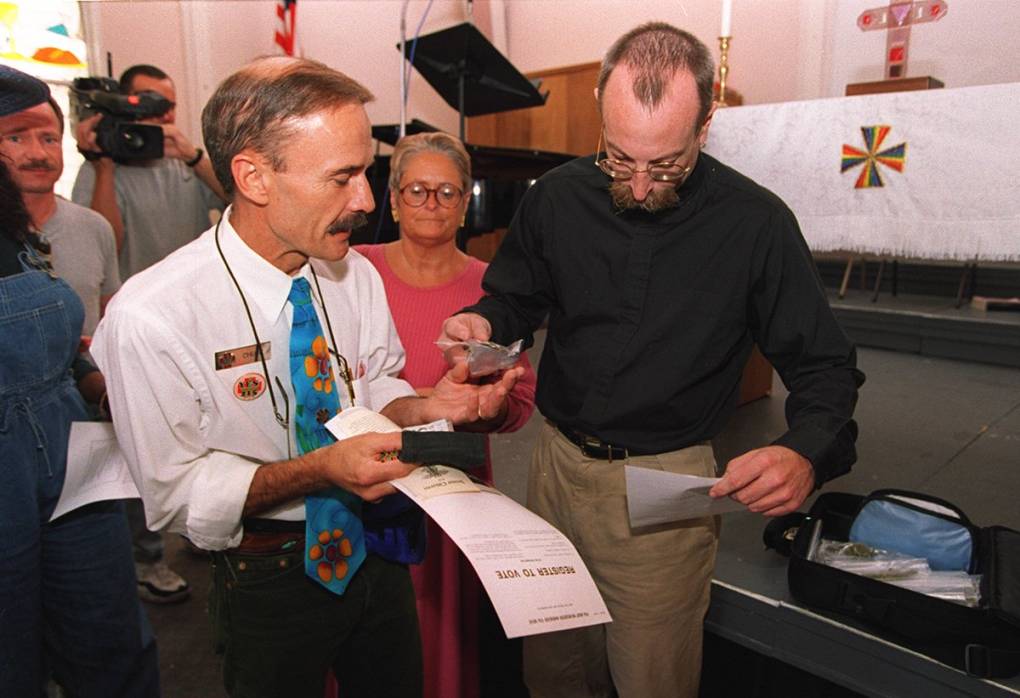
"caption": "Rev. Jim Mitulski (right), pastor of the Metropolitan Community Church of SF, hands a volunteer a bag of marijuana after church services as part of a relief effort in the summer of 1996 to help people suffering from AIDS. ",
"description": null,
"title": "MARIJUANA/C/18AUG96/MN/LS-Rev. Jim Mitulski (right) pastor of the Metropolitan Community Church of SF hands Chuck Jones, a CBC volunteer, a bag of marijuana during a medical marijuana relief effort sponsored by the church. BY LEA SUZUKI/THE CHRONICLE",
"credit": "Lea Suzuki/San Francisco Chronicle via Getty Images",
"status": "inherit",
"altTag": "One man gives another man a small bag of marijuana. A group of people stand behind them, including someone with a video camera.",
"isLoading": false,
"fetchFailed": false
},
"news_11673488": {
"type": "attachments",
"id": "news_11673488",
"meta": {
"index": "attachments_1716263798",
"site": "news",
"id": "11673488",
"found": true
},
"parent": 11673412,
"imgSizes": {
"small": {
"file": "https://ww2.kqed.org/app/uploads/sites/10/2018/06/RS31332_IMG_2713-qut-520x390.jpg",
"width": 520,
"mimeType": "image/jpeg",
"height": 390
},
"twentyfourteen-full-width": {
"file": "https://ww2.kqed.org/app/uploads/sites/10/2018/06/RS31332_IMG_2713-qut-1038x576.jpg",
"width": 1038,
"mimeType": "image/jpeg",
"height": 576
},
"thumbnail": {
"file": "https://ww2.kqed.org/app/uploads/sites/10/2018/06/RS31332_IMG_2713-qut-160x120.jpg",
"width": 160,
"mimeType": "image/jpeg",
"height": 120
},
"fd-sm": {
"file": "https://ww2.kqed.org/app/uploads/sites/10/2018/06/RS31332_IMG_2713-qut-960x720.jpg",
"width": 960,
"mimeType": "image/jpeg",
"height": 720
},
"post-thumbnail": {
"file": "https://ww2.kqed.org/app/uploads/sites/10/2018/06/RS31332_IMG_2713-qut-672x372.jpg",
"width": 672,
"mimeType": "image/jpeg",
"height": 372
},
"xsmall": {
"file": "https://ww2.kqed.org/app/uploads/sites/10/2018/06/RS31332_IMG_2713-qut-375x281.jpg",
"width": 375,
"mimeType": "image/jpeg",
"height": 281
},
"kqedFullSize": {
"file": "https://ww2.kqed.org/app/uploads/sites/10/2018/06/RS31332_IMG_2713-qut.jpg",
"width": 1920,
"height": 1440
},
"large": {
"file": "https://ww2.kqed.org/app/uploads/sites/10/2018/06/RS31332_IMG_2713-qut-1020x765.jpg",
"width": 1020,
"mimeType": "image/jpeg",
"height": 765
},
"xlarge": {
"file": "https://ww2.kqed.org/app/uploads/sites/10/2018/06/RS31332_IMG_2713-qut-1180x885.jpg",
"width": 1180,
"mimeType": "image/jpeg",
"height": 885
},
"complete_open_graph": {
"file": "https://ww2.kqed.org/app/uploads/sites/10/2018/06/RS31332_IMG_2713-qut-1200x900.jpg",
"width": 1200,
"mimeType": "image/jpeg",
"height": 900
},
"guest-author-50": {
"file": "https://ww2.kqed.org/app/uploads/sites/10/2018/06/RS31332_IMG_2713-qut-50x50.jpg",
"width": 50,
"mimeType": "image/jpeg",
"height": 50
},
"guest-author-96": {
"file": "https://ww2.kqed.org/app/uploads/sites/10/2018/06/RS31332_IMG_2713-qut-96x96.jpg",
"width": 96,
"mimeType": "image/jpeg",
"height": 96
},
"medium": {
"file": "https://ww2.kqed.org/app/uploads/sites/10/2018/06/RS31332_IMG_2713-qut-800x600.jpg",
"width": 800,
"mimeType": "image/jpeg",
"height": 600
},
"guest-author-64": {
"file": "https://ww2.kqed.org/app/uploads/sites/10/2018/06/RS31332_IMG_2713-qut-64x64.jpg",
"width": 64,
"mimeType": "image/jpeg",
"height": 64
},
"guest-author-32": {
"file": "https://ww2.kqed.org/app/uploads/sites/10/2018/06/RS31332_IMG_2713-qut-32x32.jpg",
"width": 32,
"mimeType": "image/jpeg",
"height": 32
},
"fd-lrg": {
"file": "https://ww2.kqed.org/app/uploads/sites/10/2018/06/RS31332_IMG_2713-qut-1920x1440.jpg",
"width": 1920,
"mimeType": "image/jpeg",
"height": 1440
},
"fd-med": {
"file": "https://ww2.kqed.org/app/uploads/sites/10/2018/06/RS31332_IMG_2713-qut-1180x885.jpg",
"width": 1180,
"mimeType": "image/jpeg",
"height": 885
},
"full-width": {
"file": "https://ww2.kqed.org/app/uploads/sites/10/2018/06/RS31332_IMG_2713-qut-1920x1440.jpg",
"width": 1920,
"mimeType": "image/jpeg",
"height": 1440
},
"detail": {
"file": "https://ww2.kqed.org/app/uploads/sites/10/2018/06/RS31332_IMG_2713-qut-150x150.jpg",
"width": 150,
"mimeType": "image/jpeg",
"height": 150
},
"guest-author-128": {
"file": "https://ww2.kqed.org/app/uploads/sites/10/2018/06/RS31332_IMG_2713-qut-128x128.jpg",
"width": 128,
"mimeType": "image/jpeg",
"height": 128
},
"xxsmall": {
"file": "https://ww2.kqed.org/app/uploads/sites/10/2018/06/RS31332_IMG_2713-qut-240x180.jpg",
"width": 240,
"mimeType": "image/jpeg",
"height": 180
}
},
"publishDate": 1528416482,
"modified": 1632528727,
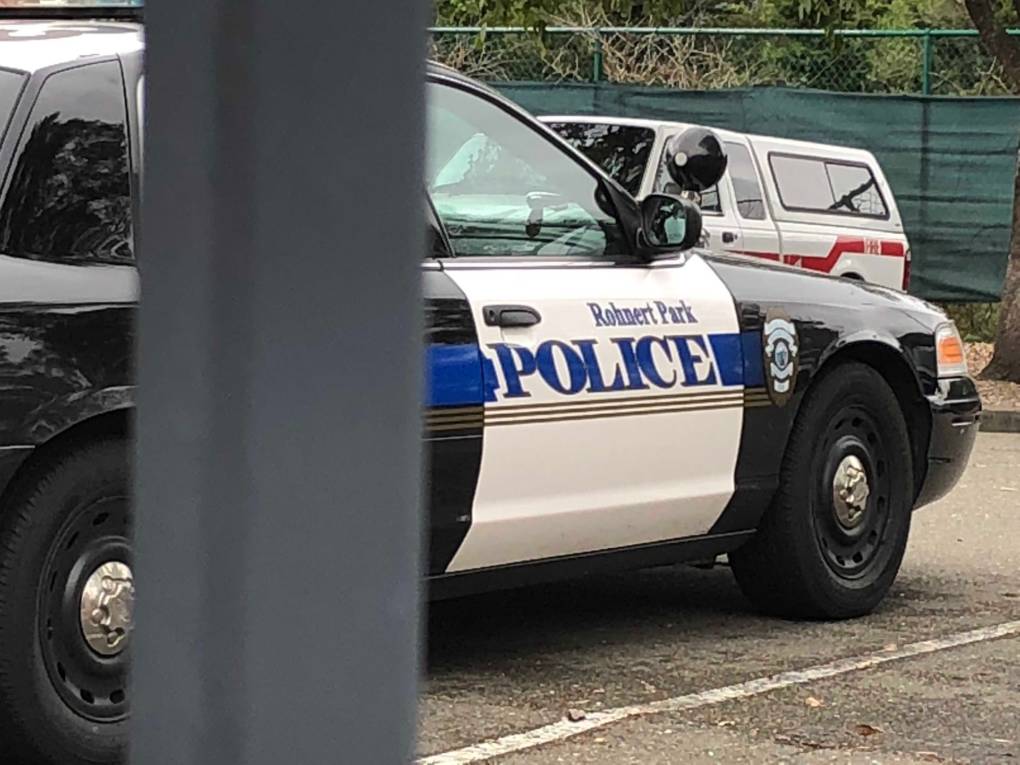
"caption": "A Rohnert Park police squad car.",
"description": "A Rohnert Park police squad car.",
"title": "RS31332_IMG_2713-qut",
"credit": "Sukey Lewis/KQED",
"status": "inherit",
"altTag": null,
"isLoading": false,
"fetchFailed": false
},
"news_11864661": {
"type": "attachments",
"id": "news_11864661",
"meta": {
"index": "attachments_1716263798",
"site": "news",
"id": "11864661",
"found": true
},
"title": "RS31347_IMG_3562-qut",
"publishDate": 1615601473,
"status": "inherit",
"parent": 11864589,
"modified": 1751409461,
"caption": "Former Rohnert Park police officers Brendon Jacy Tatum and Joseph Huffaker are facing federal charges tied to alleged illegal stops and seizures of cash and marijuana along Highway 101.",
"credit": "Adam Grossberg/KQED",
"altTag": null,
"description": "Former Rohnert Park police officers Brendon Jacy Tatum and Joseph Huffaker are facing federal charges tied allegedly illegal stops and seizures of cash and marijuana along Highway 101.",
"imgSizes": {
"medium": {
"file": "https://cdn.kqed.org/wp-content/uploads/sites/10/2021/03/RS31347_IMG_3562-qut-800x533.jpg",
"width": 800,
"height": 533,
"mimeType": "image/jpeg"
},
"large": {
"file": "https://cdn.kqed.org/wp-content/uploads/sites/10/2021/03/RS31347_IMG_3562-qut-1020x680.jpg",
"width": 1020,
"height": 680,
"mimeType": "image/jpeg"
},
"thumbnail": {
"file": "https://cdn.kqed.org/wp-content/uploads/sites/10/2021/03/RS31347_IMG_3562-qut-160x107.jpg",
"width": 160,
"height": 107,
"mimeType": "image/jpeg"
},
"1536x1536": {
"file": "https://cdn.kqed.org/wp-content/uploads/sites/10/2021/03/RS31347_IMG_3562-qut-1536x1024.jpg",
"width": 1536,
"height": 1024,
"mimeType": "image/jpeg"
},
"post-thumbnail": {
"file": "https://cdn.kqed.org/wp-content/uploads/sites/10/2021/03/RS31347_IMG_3562-qut-672x372.jpg",
"width": 672,
"height": 372,
"mimeType": "image/jpeg"
},
"twentyfourteen-full-width": {
"file": "https://cdn.kqed.org/wp-content/uploads/sites/10/2021/03/RS31347_IMG_3562-qut-1038x576.jpg",
"width": 1038,
"height": 576,
"mimeType": "image/jpeg"
},
"kqedFullSize": {
"file": "https://cdn.kqed.org/wp-content/uploads/sites/10/2021/03/RS31347_IMG_3562-qut.jpg",
"width": 1920,
"height": 1280
}
},
"isLoading": false,
"fetchFailed": false
},
"news_11810556": {
"type": "attachments",
"id": "news_11810556",
"meta": {
"index": "attachments_1716263798",
"site": "news",
"id": "11810556",
"found": true
},
"parent": 11810441,
"imgSizes": {
"apple_news_ca_landscape_5_5": {
"file": "https://ww2.kqed.org/app/uploads/sites/10/2020/04/RS42514_Mer-logo-pic1-qut-1-1044x783.jpg",
"width": 1044,
"mimeType": "image/jpeg",
"height": 783
},
"apple_news_ca_square_4_0": {
"file": "https://ww2.kqed.org/app/uploads/sites/10/2020/04/RS42514_Mer-logo-pic1-qut-1-470x470.jpg",
"width": 470,
"mimeType": "image/jpeg",
"height": 470
},
"twentyfourteen-full-width": {
"file": "https://ww2.kqed.org/app/uploads/sites/10/2020/04/RS42514_Mer-logo-pic1-qut-1-1038x576.jpg",
"width": 1038,
"mimeType": "image/jpeg",
"height": 576
},
"thumbnail": {
"file": "https://ww2.kqed.org/app/uploads/sites/10/2020/04/RS42514_Mer-logo-pic1-qut-1-160x126.jpg",
"width": 160,
"mimeType": "image/jpeg",
"height": 126
},
"post-thumbnail": {
"file": "https://ww2.kqed.org/app/uploads/sites/10/2020/04/RS42514_Mer-logo-pic1-qut-1-672x372.jpg",
"width": 672,
"mimeType": "image/jpeg",
"height": 372
},
"kqedFullSize": {
"file": "https://ww2.kqed.org/app/uploads/sites/10/2020/04/RS42514_Mer-logo-pic1-qut-1.jpg",
"width": 1334,
"height": 1054
},
"apple_news_ca_landscape_4_7": {
"file": "https://ww2.kqed.org/app/uploads/sites/10/2020/04/RS42514_Mer-logo-pic1-qut-1-632x474.jpg",
"width": 632,
"mimeType": "image/jpeg",
"height": 474
},
"large": {
"file": "https://ww2.kqed.org/app/uploads/sites/10/2020/04/RS42514_Mer-logo-pic1-qut-1-1020x806.jpg",
"width": 1020,
"mimeType": "image/jpeg",
"height": 806
},
"apple_news_ca_landscape_4_0": {
"file": "https://ww2.kqed.org/app/uploads/sites/10/2020/04/RS42514_Mer-logo-pic1-qut-1-536x402.jpg",
"width": 536,
"mimeType": "image/jpeg",
"height": 402
},
"apple_news_ca_portrait_12_9": {
"file": "https://ww2.kqed.org/app/uploads/sites/10/2020/04/RS42514_Mer-logo-pic1-qut-1-1122x1054.jpg",
"width": 1122,
"mimeType": "image/jpeg",
"height": 1054
},
"medium": {
"file": "https://ww2.kqed.org/app/uploads/sites/10/2020/04/RS42514_Mer-logo-pic1-qut-1-800x632.jpg",
"width": 800,
"mimeType": "image/jpeg",
"height": 632
},
"apple_news_ca_portrait_4_0": {
"file": "https://ww2.kqed.org/app/uploads/sites/10/2020/04/RS42514_Mer-logo-pic1-qut-1-354x472.jpg",
"width": 354,
"mimeType": "image/jpeg",
"height": 472
},
"apple_news_ca_portrait_9_7": {
"file": "https://ww2.kqed.org/app/uploads/sites/10/2020/04/RS42514_Mer-logo-pic1-qut-1-840x1054.jpg",
"width": 840,
"mimeType": "image/jpeg",
"height": 1054
},
"apple_news_ca_square_9_7": {
"file": "https://ww2.kqed.org/app/uploads/sites/10/2020/04/RS42514_Mer-logo-pic1-qut-1-1104x1054.jpg",
"width": 1104,
"mimeType": "image/jpeg",
"height": 1054
},
"apple_news_ca_portrait_4_7": {
"file": "https://ww2.kqed.org/app/uploads/sites/10/2020/04/RS42514_Mer-logo-pic1-qut-1-414x552.jpg",
"width": 414,
"mimeType": "image/jpeg",
"height": 552
},
"apple_news_ca_portrait_5_5": {
"file": "https://ww2.kqed.org/app/uploads/sites/10/2020/04/RS42514_Mer-logo-pic1-qut-1-687x916.jpg",
"width": 687,
"mimeType": "image/jpeg",
"height": 916
},
"apple_news_ca_square_4_7": {
"file": "https://ww2.kqed.org/app/uploads/sites/10/2020/04/RS42514_Mer-logo-pic1-qut-1-550x550.jpg",
"width": 550,
"mimeType": "image/jpeg",
"height": 550
},
"apple_news_ca_landscape_9_7": {
"file": "https://ww2.kqed.org/app/uploads/sites/10/2020/04/RS42514_Mer-logo-pic1-qut-1-1334x1032.jpg",
"width": 1334,
"mimeType": "image/jpeg",
"height": 1032
},
"apple_news_ca_square_5_5": {
"file": "https://ww2.kqed.org/app/uploads/sites/10/2020/04/RS42514_Mer-logo-pic1-qut-1-912x912.jpg",
"width": 912,
"mimeType": "image/jpeg",
"height": 912
}
},
"publishDate": 1585949382,
"modified": 1585950075,
"caption": "Meridy Volz eats her Sticky Fingers Brownies.",
"description": null,
"title": "RS42514_Mer logo pic1-qut",
"credit": "Courtesy of Meridy Volz",
"status": "inherit",
"isLoading": false,
"fetchFailed": false
},
"news_11802872": {
"type": "attachments",
"id": "news_11802872",
"meta": {
"index": "attachments_1716263798",
"site": "news",
"id": "11802872",
"found": true
},
"parent": 11802870,
"imgSizes": {
"apple_news_ca_landscape_5_5": {
"file": "https://ww2.kqed.org/app/uploads/sites/10/2020/02/Rohnert-Park-Jacy-Tatum-Questionable-Marijaua-Cash-Seizures-Highway-101-1044x783.jpg",
"width": 1044,
"mimeType": "image/jpeg",
"height": 783
},
"apple_news_ca_square_4_0": {
"file": "https://ww2.kqed.org/app/uploads/sites/10/2020/02/Rohnert-Park-Jacy-Tatum-Questionable-Marijaua-Cash-Seizures-Highway-101-470x470.jpg",
"width": 470,
"mimeType": "image/jpeg",
"height": 470
},
"twentyfourteen-full-width": {
"file": "https://ww2.kqed.org/app/uploads/sites/10/2020/02/Rohnert-Park-Jacy-Tatum-Questionable-Marijaua-Cash-Seizures-Highway-101-1038x576.jpg",
"width": 1038,
"mimeType": "image/jpeg",
"height": 576
},
"thumbnail": {
"file": "https://ww2.kqed.org/app/uploads/sites/10/2020/02/Rohnert-Park-Jacy-Tatum-Questionable-Marijaua-Cash-Seizures-Highway-101-160x107.jpg",
"width": 160,
"mimeType": "image/jpeg",
"height": 107
},
"post-thumbnail": {
"file": "https://ww2.kqed.org/app/uploads/sites/10/2020/02/Rohnert-Park-Jacy-Tatum-Questionable-Marijaua-Cash-Seizures-Highway-101-672x372.jpg",
"width": 672,
"mimeType": "image/jpeg",
"height": 372
},
"kqedFullSize": {
"file": "https://ww2.kqed.org/app/uploads/sites/10/2020/02/Rohnert-Park-Jacy-Tatum-Questionable-Marijaua-Cash-Seizures-Highway-101.jpg",
"width": 1920,
"height": 1280
},
"apple_news_ca_landscape_4_7": {
"file": "https://ww2.kqed.org/app/uploads/sites/10/2020/02/Rohnert-Park-Jacy-Tatum-Questionable-Marijaua-Cash-Seizures-Highway-101-632x474.jpg",
"width": 632,
"mimeType": "image/jpeg",
"height": 474
},
"large": {
"file": "https://ww2.kqed.org/app/uploads/sites/10/2020/02/Rohnert-Park-Jacy-Tatum-Questionable-Marijaua-Cash-Seizures-Highway-101-1020x680.jpg",
"width": 1020,
"mimeType": "image/jpeg",
"height": 680
},
"apple_news_ca_landscape_4_0": {
"file": "https://ww2.kqed.org/app/uploads/sites/10/2020/02/Rohnert-Park-Jacy-Tatum-Questionable-Marijaua-Cash-Seizures-Highway-101-536x402.jpg",
"width": 536,
"mimeType": "image/jpeg",
"height": 402
},
"apple_news_ca_portrait_12_9": {
"file": "https://ww2.kqed.org/app/uploads/sites/10/2020/02/Rohnert-Park-Jacy-Tatum-Questionable-Marijaua-Cash-Seizures-Highway-101-1122x1280.jpg",
"width": 1122,
"mimeType": "image/jpeg",
"height": 1280
},
"medium": {
"file": "https://ww2.kqed.org/app/uploads/sites/10/2020/02/Rohnert-Park-Jacy-Tatum-Questionable-Marijaua-Cash-Seizures-Highway-101-800x533.jpg",
"width": 800,
"mimeType": "image/jpeg",
"height": 533
},
"apple_news_ca_portrait_4_0": {
"file": "https://ww2.kqed.org/app/uploads/sites/10/2020/02/Rohnert-Park-Jacy-Tatum-Questionable-Marijaua-Cash-Seizures-Highway-101-354x472.jpg",
"width": 354,
"mimeType": "image/jpeg",
"height": 472
},
"apple_news_ca_portrait_9_7": {
"file": "https://ww2.kqed.org/app/uploads/sites/10/2020/02/Rohnert-Park-Jacy-Tatum-Questionable-Marijaua-Cash-Seizures-Highway-101-840x1120.jpg",
"width": 840,
"mimeType": "image/jpeg",
"height": 1120
},
"apple_news_ca_landscape_12_9": {
"file": "https://ww2.kqed.org/app/uploads/sites/10/2020/02/Rohnert-Park-Jacy-Tatum-Questionable-Marijaua-Cash-Seizures-Highway-101-1832x1280.jpg",
"width": 1832,
"mimeType": "image/jpeg",
"height": 1280
},
"apple_news_ca_square_9_7": {
"file": "https://ww2.kqed.org/app/uploads/sites/10/2020/02/Rohnert-Park-Jacy-Tatum-Questionable-Marijaua-Cash-Seizures-Highway-101-1104x1104.jpg",
"width": 1104,
"mimeType": "image/jpeg",
"height": 1104
},
"apple_news_ca_portrait_4_7": {
"file": "https://ww2.kqed.org/app/uploads/sites/10/2020/02/Rohnert-Park-Jacy-Tatum-Questionable-Marijaua-Cash-Seizures-Highway-101-414x552.jpg",
"width": 414,
"mimeType": "image/jpeg",
"height": 552
},
"apple_news_ca_square_12_9": {
"file": "https://ww2.kqed.org/app/uploads/sites/10/2020/02/Rohnert-Park-Jacy-Tatum-Questionable-Marijaua-Cash-Seizures-Highway-101-1472x1280.jpg",
"width": 1472,
"mimeType": "image/jpeg",
"height": 1280
},
"apple_news_ca_portrait_5_5": {
"file": "https://ww2.kqed.org/app/uploads/sites/10/2020/02/Rohnert-Park-Jacy-Tatum-Questionable-Marijaua-Cash-Seizures-Highway-101-687x916.jpg",
"width": 687,
"mimeType": "image/jpeg",
"height": 916
},
"full-width": {
"file": "https://ww2.kqed.org/app/uploads/sites/10/2020/02/Rohnert-Park-Jacy-Tatum-Questionable-Marijaua-Cash-Seizures-Highway-101-1920x1280.jpg",
"width": 1920,
"mimeType": "image/jpeg",
"height": 1280
},
"apple_news_ca_square_4_7": {
"file": "https://ww2.kqed.org/app/uploads/sites/10/2020/02/Rohnert-Park-Jacy-Tatum-Questionable-Marijaua-Cash-Seizures-Highway-101-550x550.jpg",
"width": 550,
"mimeType": "image/jpeg",
"height": 550
},
"apple_news_ca_landscape_9_7": {
"file": "https://ww2.kqed.org/app/uploads/sites/10/2020/02/Rohnert-Park-Jacy-Tatum-Questionable-Marijaua-Cash-Seizures-Highway-101-1376x1032.jpg",
"width": 1376,
"mimeType": "image/jpeg",
"height": 1032
},
"apple_news_ca_square_5_5": {
"file": "https://ww2.kqed.org/app/uploads/sites/10/2020/02/Rohnert-Park-Jacy-Tatum-Questionable-Marijaua-Cash-Seizures-Highway-101-912x912.jpg",
"width": 912,
"mimeType": "image/jpeg",
"height": 912
}
},
"publishDate": 1582323377,
"modified": 1582323661,
"caption": "Payouts to settle lawsuits over questionable marijuana and cash seizures along Highway 101 by a group of Rohnert Park police officers are set to top $1.8 million.",
"description": "Payouts to settle lawsuits over questionable marijuana and cash seizures along Highway 101 by a group of Rohnert Park police officers are set to top $1.8 million.",
"title": "Rohnert Park Jacy Tatum Questionable Marijaua Cash Seizures Highway 101",
"credit": "Adam Grossberg/KQED",
"status": "inherit",
"isLoading": false,
"fetchFailed": false
},
"news_11791521": {
"type": "attachments",
"id": "news_11791521",
"meta": {
"index": "attachments_1716263798",
"site": "news",
"id": "11791521",
"found": true
},
"parent": 0,
"imgSizes": {
"apple_news_ca_landscape_5_5": {
"file": "https://ww2.kqed.org/app/uploads/sites/10/2019/12/RS40486_IMG_2825-qut-1044x783.jpg",
"width": 1044,
"mimeType": "image/jpeg",
"height": 783
},
"apple_news_ca_square_4_0": {
"file": "https://ww2.kqed.org/app/uploads/sites/10/2019/12/RS40486_IMG_2825-qut-470x470.jpg",
"width": 470,
"mimeType": "image/jpeg",
"height": 470
},
"twentyfourteen-full-width": {
"file": "https://ww2.kqed.org/app/uploads/sites/10/2019/12/RS40486_IMG_2825-qut-1038x576.jpg",
"width": 1038,
"mimeType": "image/jpeg",
"height": 576
},
"thumbnail": {
"file": "https://ww2.kqed.org/app/uploads/sites/10/2019/12/RS40486_IMG_2825-qut-160x120.jpg",
"width": 160,
"mimeType": "image/jpeg",
"height": 120
},
"post-thumbnail": {
"file": "https://ww2.kqed.org/app/uploads/sites/10/2019/12/RS40486_IMG_2825-qut-672x372.jpg",
"width": 672,
"mimeType": "image/jpeg",
"height": 372
},
"kqedFullSize": {
"file": "https://ww2.kqed.org/app/uploads/sites/10/2019/12/RS40486_IMG_2825-qut.jpg",
"width": 1920,
"height": 1440
},
"apple_news_ca_landscape_4_7": {
"file": "https://ww2.kqed.org/app/uploads/sites/10/2019/12/RS40486_IMG_2825-qut-632x474.jpg",
"width": 632,
"mimeType": "image/jpeg",
"height": 474
},
"large": {
"file": "https://ww2.kqed.org/app/uploads/sites/10/2019/12/RS40486_IMG_2825-qut-1020x765.jpg",
"width": 1020,
"mimeType": "image/jpeg",
"height": 765
},
"complete_open_graph": {
"file": "https://ww2.kqed.org/app/uploads/sites/10/2019/12/RS40486_IMG_2825-qut-1200x900.jpg",
"width": 1200,
"mimeType": "image/jpeg",
"height": 900
},
"apple_news_ca_landscape_4_0": {
"file": "https://ww2.kqed.org/app/uploads/sites/10/2019/12/RS40486_IMG_2825-qut-536x402.jpg",
"width": 536,
"mimeType": "image/jpeg",
"height": 402
},
"apple_news_ca_portrait_12_9": {
"file": "https://ww2.kqed.org/app/uploads/sites/10/2019/12/RS40486_IMG_2825-qut-1122x1440.jpg",
"width": 1122,
"mimeType": "image/jpeg",
"height": 1440
},
"medium": {
"file": "https://ww2.kqed.org/app/uploads/sites/10/2019/12/RS40486_IMG_2825-qut-800x600.jpg",
"width": 800,
"mimeType": "image/jpeg",
"height": 600
},
"apple_news_ca_portrait_4_0": {
"file": "https://ww2.kqed.org/app/uploads/sites/10/2019/12/RS40486_IMG_2825-qut-354x472.jpg",
"width": 354,
"mimeType": "image/jpeg",
"height": 472
},
"apple_news_ca_portrait_9_7": {
"file": "https://ww2.kqed.org/app/uploads/sites/10/2019/12/RS40486_IMG_2825-qut-840x1120.jpg",
"width": 840,
"mimeType": "image/jpeg",
"height": 1120
},
"apple_news_ca_landscape_12_9": {
"file": "https://ww2.kqed.org/app/uploads/sites/10/2019/12/RS40486_IMG_2825-qut-1832x1374.jpg",
"width": 1832,
"mimeType": "image/jpeg",
"height": 1374
},
"apple_news_ca_square_9_7": {
"file": "https://ww2.kqed.org/app/uploads/sites/10/2019/12/RS40486_IMG_2825-qut-1104x1104.jpg",
"width": 1104,
"mimeType": "image/jpeg",
"height": 1104
},
"apple_news_ca_portrait_4_7": {
"file": "https://ww2.kqed.org/app/uploads/sites/10/2019/12/RS40486_IMG_2825-qut-414x552.jpg",
"width": 414,
"mimeType": "image/jpeg",
"height": 552
},
"apple_news_ca_square_12_9": {
"file": "https://ww2.kqed.org/app/uploads/sites/10/2019/12/RS40486_IMG_2825-qut-1472x1440.jpg",
"width": 1472,
"mimeType": "image/jpeg",
"height": 1440
},
"apple_news_ca_portrait_5_5": {
"file": "https://ww2.kqed.org/app/uploads/sites/10/2019/12/RS40486_IMG_2825-qut-687x916.jpg",
"width": 687,
"mimeType": "image/jpeg",
"height": 916
},
"full-width": {
"file": "https://ww2.kqed.org/app/uploads/sites/10/2019/12/RS40486_IMG_2825-qut-1920x1440.jpg",
"width": 1920,
"mimeType": "image/jpeg",
"height": 1440
},
"apple_news_ca_square_4_7": {
"file": "https://ww2.kqed.org/app/uploads/sites/10/2019/12/RS40486_IMG_2825-qut-550x550.jpg",
"width": 550,
"mimeType": "image/jpeg",
"height": 550
},
"apple_news_ca_landscape_9_7": {
"file": "https://ww2.kqed.org/app/uploads/sites/10/2019/12/RS40486_IMG_2825-qut-1376x1032.jpg",
"width": 1376,
"mimeType": "image/jpeg",
"height": 1032
},
"apple_news_ca_square_5_5": {
"file": "https://ww2.kqed.org/app/uploads/sites/10/2019/12/RS40486_IMG_2825-qut-912x912.jpg",
"width": 912,
"mimeType": "image/jpeg",
"height": 912
}
},
"publishDate": 1576538463,
"modified": 1576538613,
"caption": "Taylor and Daniel Stein at Briceland Forest Farm where they use organic, regenerative methods.",
"description": null,
"title": "Humboldt food cannabis",
"credit": "Lisa Morehouse/KQED",
"status": "inherit",
"isLoading": false,
"fetchFailed": false
},
"news_11790801": {
"type": "attachments",
"id": "news_11790801",
"meta": {
"index": "attachments_1716263798",
"site": "news",
"id": "11790801",
"found": true
},
"parent": 11790733,
"imgSizes": {
"apple_news_ca_landscape_5_5": {
"file": "https://ww2.kqed.org/app/uploads/sites/10/2019/12/Marijuana-THC-Pregnancy-Test-Moms-1044x783.jpg",
"width": 1044,
"mimeType": "image/jpeg",
"height": 783
},
"apple_news_ca_square_4_0": {
"file": "https://ww2.kqed.org/app/uploads/sites/10/2019/12/Marijuana-THC-Pregnancy-Test-Moms-470x470.jpg",
"width": 470,
"mimeType": "image/jpeg",
"height": 470
},
"twentyfourteen-full-width": {
"file": "https://ww2.kqed.org/app/uploads/sites/10/2019/12/Marijuana-THC-Pregnancy-Test-Moms-1038x576.jpg",
"width": 1038,
"mimeType": "image/jpeg",
"height": 576
},
"thumbnail": {
"file": "https://ww2.kqed.org/app/uploads/sites/10/2019/12/Marijuana-THC-Pregnancy-Test-Moms-160x107.jpg",
"width": 160,
"mimeType": "image/jpeg",
"height": 107
},
"post-thumbnail": {
"file": "https://ww2.kqed.org/app/uploads/sites/10/2019/12/Marijuana-THC-Pregnancy-Test-Moms-672x372.jpg",
"width": 672,
"mimeType": "image/jpeg",
"height": 372
},
"kqedFullSize": {
"file": "https://ww2.kqed.org/app/uploads/sites/10/2019/12/Marijuana-THC-Pregnancy-Test-Moms.jpg",
"width": 1920,
"height": 1280
},
"apple_news_ca_landscape_4_7": {
"file": "https://ww2.kqed.org/app/uploads/sites/10/2019/12/Marijuana-THC-Pregnancy-Test-Moms-632x474.jpg",
"width": 632,
"mimeType": "image/jpeg",
"height": 474
},
"large": {
"file": "https://ww2.kqed.org/app/uploads/sites/10/2019/12/Marijuana-THC-Pregnancy-Test-Moms-1020x680.jpg",
"width": 1020,
"mimeType": "image/jpeg",
"height": 680
},
"complete_open_graph": {
"file": "https://ww2.kqed.org/app/uploads/sites/10/2019/12/Marijuana-THC-Pregnancy-Test-Moms-1200x800.jpg",
"width": 1200,
"mimeType": "image/jpeg",
"height": 800
},
"apple_news_ca_landscape_4_0": {
"file": "https://ww2.kqed.org/app/uploads/sites/10/2019/12/Marijuana-THC-Pregnancy-Test-Moms-536x402.jpg",
"width": 536,
"mimeType": "image/jpeg",
"height": 402
},
"apple_news_ca_portrait_12_9": {
"file": "https://ww2.kqed.org/app/uploads/sites/10/2019/12/Marijuana-THC-Pregnancy-Test-Moms-1122x1280.jpg",
"width": 1122,
"mimeType": "image/jpeg",
"height": 1280
},
"medium": {
"file": "https://ww2.kqed.org/app/uploads/sites/10/2019/12/Marijuana-THC-Pregnancy-Test-Moms-800x533.jpg",
"width": 800,
"mimeType": "image/jpeg",
"height": 533
},
"apple_news_ca_portrait_4_0": {
"file": "https://ww2.kqed.org/app/uploads/sites/10/2019/12/Marijuana-THC-Pregnancy-Test-Moms-354x472.jpg",
"width": 354,
"mimeType": "image/jpeg",
"height": 472
},
"apple_news_ca_portrait_9_7": {
"file": "https://ww2.kqed.org/app/uploads/sites/10/2019/12/Marijuana-THC-Pregnancy-Test-Moms-840x1120.jpg",
"width": 840,
"mimeType": "image/jpeg",
"height": 1120
},
"apple_news_ca_landscape_12_9": {
"file": "https://ww2.kqed.org/app/uploads/sites/10/2019/12/Marijuana-THC-Pregnancy-Test-Moms-1832x1280.jpg",
"width": 1832,
"mimeType": "image/jpeg",
"height": 1280
},
"apple_news_ca_square_9_7": {
"file": "https://ww2.kqed.org/app/uploads/sites/10/2019/12/Marijuana-THC-Pregnancy-Test-Moms-1104x1104.jpg",
"width": 1104,
"mimeType": "image/jpeg",
"height": 1104
},
"apple_news_ca_portrait_4_7": {
"file": "https://ww2.kqed.org/app/uploads/sites/10/2019/12/Marijuana-THC-Pregnancy-Test-Moms-414x552.jpg",
"width": 414,
"mimeType": "image/jpeg",
"height": 552
},
"apple_news_ca_square_12_9": {
"file": "https://ww2.kqed.org/app/uploads/sites/10/2019/12/Marijuana-THC-Pregnancy-Test-Moms-1472x1280.jpg",
"width": 1472,
"mimeType": "image/jpeg",
"height": 1280
},
"apple_news_ca_portrait_5_5": {
"file": "https://ww2.kqed.org/app/uploads/sites/10/2019/12/Marijuana-THC-Pregnancy-Test-Moms-687x916.jpg",
"width": 687,
"mimeType": "image/jpeg",
"height": 916
},
"full-width": {
"file": "https://ww2.kqed.org/app/uploads/sites/10/2019/12/Marijuana-THC-Pregnancy-Test-Moms-1920x1280.jpg",
"width": 1920,
"mimeType": "image/jpeg",
"height": 1280
},
"apple_news_ca_square_4_7": {
"file": "https://ww2.kqed.org/app/uploads/sites/10/2019/12/Marijuana-THC-Pregnancy-Test-Moms-550x550.jpg",
"width": 550,
"mimeType": "image/jpeg",
"height": 550
},
"apple_news_ca_landscape_9_7": {
"file": "https://ww2.kqed.org/app/uploads/sites/10/2019/12/Marijuana-THC-Pregnancy-Test-Moms-1376x1032.jpg",
"width": 1376,
"mimeType": "image/jpeg",
"height": 1032
},
"apple_news_ca_square_5_5": {
"file": "https://ww2.kqed.org/app/uploads/sites/10/2019/12/Marijuana-THC-Pregnancy-Test-Moms-912x912.jpg",
"width": 912,
"mimeType": "image/jpeg",
"height": 912
}
},
"publishDate": 1576107951,
"modified": 1576108091,
"caption": "Studies have indicated that a rising number of mothers-to-be have turned to marijuana products for relief from morning sickness and headaches, though its effectiveness has not been backed by science.",
"description": "Studies have indicated that a rising number of mothers-to-be have turned to marijuana products for relief from morning sickness and headaches, though its effectiveness has not been backed by science.",
"title": "Marijuana-THC-Pregnancy-Test-Moms",
"credit": "Getty Images",
"status": "inherit",
"isLoading": false,
"fetchFailed": false
},
"news_11774512": {
"type": "attachments",
"id": "news_11774512",
"meta": {
"index": "attachments_1716263798",
"site": "news",
"id": "11774512",
"found": true
},
"parent": 11774487,
"imgSizes": {
"apple_news_ca_landscape_5_5": {
"file": "https://ww2.kqed.org/app/uploads/sites/10/2019/09/vaping-1920-1044x783.jpg",
"width": 1044,
"mimeType": "image/jpeg",
"height": 783
},
"apple_news_ca_square_4_0": {
"file": "https://ww2.kqed.org/app/uploads/sites/10/2019/09/vaping-1920-470x470.jpg",
"width": 470,
"mimeType": "image/jpeg",
"height": 470
},
"twentyfourteen-full-width": {
"file": "https://ww2.kqed.org/app/uploads/sites/10/2019/09/vaping-1920-1038x576.jpg",
"width": 1038,
"mimeType": "image/jpeg",
"height": 576
},
"thumbnail": {
"file": "https://ww2.kqed.org/app/uploads/sites/10/2019/09/vaping-1920-160x107.jpg",
"width": 160,
"mimeType": "image/jpeg",
"height": 107
},
"post-thumbnail": {
"file": "https://ww2.kqed.org/app/uploads/sites/10/2019/09/vaping-1920-672x372.jpg",
"width": 672,
"mimeType": "image/jpeg",
"height": 372
},
"kqedFullSize": {
"file": "https://ww2.kqed.org/app/uploads/sites/10/2019/09/vaping-1920.jpg",
"width": 1920,
"height": 1280
},
"apple_news_ca_landscape_4_7": {
"file": "https://ww2.kqed.org/app/uploads/sites/10/2019/09/vaping-1920-632x474.jpg",
"width": 632,
"mimeType": "image/jpeg",
"height": 474
},
"large": {
"file": "https://ww2.kqed.org/app/uploads/sites/10/2019/09/vaping-1920-1020x680.jpg",
"width": 1020,
"mimeType": "image/jpeg",
"height": 680
},
"complete_open_graph": {
"file": "https://ww2.kqed.org/app/uploads/sites/10/2019/09/vaping-1920-1200x800.jpg",
"width": 1200,
"mimeType": "image/jpeg",
"height": 800
},
"apple_news_ca_landscape_4_0": {
"file": "https://ww2.kqed.org/app/uploads/sites/10/2019/09/vaping-1920-536x402.jpg",
"width": 536,
"mimeType": "image/jpeg",
"height": 402
},
"apple_news_ca_portrait_12_9": {
"file": "https://ww2.kqed.org/app/uploads/sites/10/2019/09/vaping-1920-1122x1280.jpg",
"width": 1122,
"mimeType": "image/jpeg",
"height": 1280
},
"medium": {
"file": "https://ww2.kqed.org/app/uploads/sites/10/2019/09/vaping-1920-800x533.jpg",
"width": 800,
"mimeType": "image/jpeg",
"height": 533
},
"apple_news_ca_portrait_4_0": {
"file": "https://ww2.kqed.org/app/uploads/sites/10/2019/09/vaping-1920-354x472.jpg",
"width": 354,
"mimeType": "image/jpeg",
"height": 472
},
"apple_news_ca_portrait_9_7": {
"file": "https://ww2.kqed.org/app/uploads/sites/10/2019/09/vaping-1920-840x1120.jpg",
"width": 840,
"mimeType": "image/jpeg",
"height": 1120
},
"apple_news_ca_landscape_12_9": {
"file": "https://ww2.kqed.org/app/uploads/sites/10/2019/09/vaping-1920-1832x1280.jpg",
"width": 1832,
"mimeType": "image/jpeg",
"height": 1280
},
"apple_news_ca_square_9_7": {
"file": "https://ww2.kqed.org/app/uploads/sites/10/2019/09/vaping-1920-1104x1104.jpg",
"width": 1104,
"mimeType": "image/jpeg",
"height": 1104
},
"apple_news_ca_portrait_4_7": {
"file": "https://ww2.kqed.org/app/uploads/sites/10/2019/09/vaping-1920-414x552.jpg",
"width": 414,
"mimeType": "image/jpeg",
"height": 552
},
"apple_news_ca_square_12_9": {
"file": "https://ww2.kqed.org/app/uploads/sites/10/2019/09/vaping-1920-1472x1280.jpg",
"width": 1472,
"mimeType": "image/jpeg",
"height": 1280
},
"apple_news_ca_portrait_5_5": {
"file": "https://ww2.kqed.org/app/uploads/sites/10/2019/09/vaping-1920-687x916.jpg",
"width": 687,
"mimeType": "image/jpeg",
"height": 916
},
"full-width": {
"file": "https://ww2.kqed.org/app/uploads/sites/10/2019/09/vaping-1920-1920x1280.jpg",
"width": 1920,
"mimeType": "image/jpeg",
"height": 1280
},
"apple_news_ca_square_4_7": {
"file": "https://ww2.kqed.org/app/uploads/sites/10/2019/09/vaping-1920-550x550.jpg",
"width": 550,
"mimeType": "image/jpeg",
"height": 550
},
"apple_news_ca_landscape_9_7": {
"file": "https://ww2.kqed.org/app/uploads/sites/10/2019/09/vaping-1920-1376x1032.jpg",
"width": 1376,
"mimeType": "image/jpeg",
"height": 1032
},
"apple_news_ca_square_5_5": {
"file": "https://ww2.kqed.org/app/uploads/sites/10/2019/09/vaping-1920-912x912.jpg",
"width": 912,
"mimeType": "image/jpeg",
"height": 912
}
},
"publishDate": 1568657528,
"modified": 1568657592,
"caption": "An illustration shows a man exhaling smoke from an electronic cigarette in Washington, D.C. on Oct. 2, 2018. ",
"description": "An illustration shows a man exhaling smoke from an electronic cigarette in Washington, D.C. on Oct. 2, 2018. ",
"title": "vaping-1920",
"credit": "Eva Hambach/AFP/Getty Images",
"status": "inherit",
"isLoading": false,
"fetchFailed": false
},
"news_11773043": {
"type": "attachments",
"id": "news_11773043",
"meta": {
"index": "attachments_1716263798",
"site": "news",
"id": "11773043",
"found": true
},
"parent": 11773042,
"imgSizes": {
"apple_news_ca_landscape_5_5": {
"file": "https://ww2.kqed.org/app/uploads/sites/10/2019/09/vaping_wide-acb0c7f7a50daff9e3caa6ff4743098da98d17b4-1-1044x783.jpg",
"width": 1044,
"mimeType": "image/jpeg",
"height": 783
},
"apple_news_ca_square_4_0": {
"file": "https://ww2.kqed.org/app/uploads/sites/10/2019/09/vaping_wide-acb0c7f7a50daff9e3caa6ff4743098da98d17b4-1-470x470.jpg",
"width": 470,
"mimeType": "image/jpeg",
"height": 470
},
"twentyfourteen-full-width": {
"file": "https://ww2.kqed.org/app/uploads/sites/10/2019/09/vaping_wide-acb0c7f7a50daff9e3caa6ff4743098da98d17b4-1-1038x576.jpg",
"width": 1038,
"mimeType": "image/jpeg",
"height": 576
},
"thumbnail": {
"file": "https://ww2.kqed.org/app/uploads/sites/10/2019/09/vaping_wide-acb0c7f7a50daff9e3caa6ff4743098da98d17b4-1-160x90.jpg",
"width": 160,
"mimeType": "image/jpeg",
"height": 90
},
"post-thumbnail": {
"file": "https://ww2.kqed.org/app/uploads/sites/10/2019/09/vaping_wide-acb0c7f7a50daff9e3caa6ff4743098da98d17b4-1-672x372.jpg",
"width": 672,
"mimeType": "image/jpeg",
"height": 372
},
"kqedFullSize": {
"file": "https://ww2.kqed.org/app/uploads/sites/10/2019/09/vaping_wide-acb0c7f7a50daff9e3caa6ff4743098da98d17b4-1-e1567978207802.jpg",
"width": 1920,
"height": 1080
},
"apple_news_ca_landscape_4_7": {
"file": "https://ww2.kqed.org/app/uploads/sites/10/2019/09/vaping_wide-acb0c7f7a50daff9e3caa6ff4743098da98d17b4-1-632x474.jpg",
"width": 632,
"mimeType": "image/jpeg",
"height": 474
},
"large": {
"file": "https://ww2.kqed.org/app/uploads/sites/10/2019/09/vaping_wide-acb0c7f7a50daff9e3caa6ff4743098da98d17b4-1-1020x574.jpg",
"width": 1020,
"mimeType": "image/jpeg",
"height": 574
},
"complete_open_graph": {
"file": "https://ww2.kqed.org/app/uploads/sites/10/2019/09/vaping_wide-acb0c7f7a50daff9e3caa6ff4743098da98d17b4-1-1200x675.jpg",
"width": 1200,
"mimeType": "image/jpeg",
"height": 675
},
"apple_news_ca_landscape_4_0": {
"file": "https://ww2.kqed.org/app/uploads/sites/10/2019/09/vaping_wide-acb0c7f7a50daff9e3caa6ff4743098da98d17b4-1-536x402.jpg",
"width": 536,
"mimeType": "image/jpeg",
"height": 402
},
"apple_news_ca_portrait_12_9": {
"file": "https://ww2.kqed.org/app/uploads/sites/10/2019/09/vaping_wide-acb0c7f7a50daff9e3caa6ff4743098da98d17b4-1-1122x1496.jpg",
"width": 1122,
"mimeType": "image/jpeg",
"height": 1496
},
"medium": {
"file": "https://ww2.kqed.org/app/uploads/sites/10/2019/09/vaping_wide-acb0c7f7a50daff9e3caa6ff4743098da98d17b4-1-800x450.jpg",
"width": 800,
"mimeType": "image/jpeg",
"height": 450
},
"apple_news_ca_portrait_4_0": {
"file": "https://ww2.kqed.org/app/uploads/sites/10/2019/09/vaping_wide-acb0c7f7a50daff9e3caa6ff4743098da98d17b4-1-354x472.jpg",
"width": 354,
"mimeType": "image/jpeg",
"height": 472
},
"apple_news_ca_portrait_9_7": {
"file": "https://ww2.kqed.org/app/uploads/sites/10/2019/09/vaping_wide-acb0c7f7a50daff9e3caa6ff4743098da98d17b4-1-840x1120.jpg",
"width": 840,
"mimeType": "image/jpeg",
"height": 1120
},
"apple_news_ca_landscape_12_9": {
"file": "https://ww2.kqed.org/app/uploads/sites/10/2019/09/vaping_wide-acb0c7f7a50daff9e3caa6ff4743098da98d17b4-1-1832x1374.jpg",
"width": 1832,
"mimeType": "image/jpeg",
"height": 1374
},
"apple_news_ca_square_9_7": {
"file": "https://ww2.kqed.org/app/uploads/sites/10/2019/09/vaping_wide-acb0c7f7a50daff9e3caa6ff4743098da98d17b4-1-1104x1104.jpg",
"width": 1104,
"mimeType": "image/jpeg",
"height": 1104
},
"apple_news_ca_portrait_4_7": {
"file": "https://ww2.kqed.org/app/uploads/sites/10/2019/09/vaping_wide-acb0c7f7a50daff9e3caa6ff4743098da98d17b4-1-414x552.jpg",
"width": 414,
"mimeType": "image/jpeg",
"height": 552
},
"apple_news_ca_square_12_9": {
"file": "https://ww2.kqed.org/app/uploads/sites/10/2019/09/vaping_wide-acb0c7f7a50daff9e3caa6ff4743098da98d17b4-1-1472x1472.jpg",
"width": 1472,
"mimeType": "image/jpeg",
"height": 1472
},
"apple_news_ca_portrait_5_5": {
"file": "https://ww2.kqed.org/app/uploads/sites/10/2019/09/vaping_wide-acb0c7f7a50daff9e3caa6ff4743098da98d17b4-1-687x916.jpg",
"width": 687,
"mimeType": "image/jpeg",
"height": 916
},
"full-width": {
"file": "https://ww2.kqed.org/app/uploads/sites/10/2019/09/vaping_wide-acb0c7f7a50daff9e3caa6ff4743098da98d17b4-1-1920x1080.jpg",
"width": 1920,
"mimeType": "image/jpeg",
"height": 1080
},
"apple_news_ca_square_4_7": {
"file": "https://ww2.kqed.org/app/uploads/sites/10/2019/09/vaping_wide-acb0c7f7a50daff9e3caa6ff4743098da98d17b4-1-550x550.jpg",
"width": 550,
"mimeType": "image/jpeg",
"height": 550
},
"apple_news_ca_landscape_9_7": {
"file": "https://ww2.kqed.org/app/uploads/sites/10/2019/09/vaping_wide-acb0c7f7a50daff9e3caa6ff4743098da98d17b4-1-1376x1032.jpg",
"width": 1376,
"mimeType": "image/jpeg",
"height": 1032
},
"apple_news_ca_square_5_5": {
"file": "https://ww2.kqed.org/app/uploads/sites/10/2019/09/vaping_wide-acb0c7f7a50daff9e3caa6ff4743098da98d17b4-1-912x912.jpg",
"width": 912,
"mimeType": "image/jpeg",
"height": 912
}
},
"publishDate": 1567972676,
"modified": 1567978192,
"caption": "U.S. health officials are again urging people to stop vaping until experts figure out why some are coming down with serious respiratory illnesses.",
"description": "U.S. health officials are again urging people to stop vaping until experts figure out why some are coming down with serious respiratory illnesses.",
"title": "U.S. health officials are again urging people to stop vaping until experts figure out why some are coming down with serious respiratory illnesses.",
"credit": "Richard Vogel/AP",
"status": "inherit",
"isLoading": false,
"fetchFailed": false
},
"news_11772437": {
"type": "attachments",
"id": "news_11772437",
"meta": {
"index": "attachments_1716263798",
"site": "news",
"id": "11772437",
"found": true
},
"parent": 11772414,
"imgSizes": {
"apple_news_ca_landscape_5_5": {
"file": "https://ww2.kqed.org/app/uploads/sites/10/2019/09/starsejdic_wide-1d1aba9dd79079e95fd2d3b4e11886fcfdb05c7d-s1600-c85-1044x783.jpg",
"width": 1044,
"mimeType": "image/jpeg",
"height": 783
},
"apple_news_ca_square_4_0": {
"file": "https://ww2.kqed.org/app/uploads/sites/10/2019/09/starsejdic_wide-1d1aba9dd79079e95fd2d3b4e11886fcfdb05c7d-s1600-c85-470x470.jpg",
"width": 470,
"mimeType": "image/jpeg",
"height": 470
},
"twentyfourteen-full-width": {
"file": "https://ww2.kqed.org/app/uploads/sites/10/2019/09/starsejdic_wide-1d1aba9dd79079e95fd2d3b4e11886fcfdb05c7d-s1600-c85-1038x576.jpg",
"width": 1038,
"mimeType": "image/jpeg",
"height": 576
},
"thumbnail": {
"file": "https://ww2.kqed.org/app/uploads/sites/10/2019/09/starsejdic_wide-1d1aba9dd79079e95fd2d3b4e11886fcfdb05c7d-s1600-c85-160x90.jpg",
"width": 160,
"mimeType": "image/jpeg",
"height": 90
},
"post-thumbnail": {
"file": "https://ww2.kqed.org/app/uploads/sites/10/2019/09/starsejdic_wide-1d1aba9dd79079e95fd2d3b4e11886fcfdb05c7d-s1600-c85-672x372.jpg",
"width": 672,
"mimeType": "image/jpeg",
"height": 372
},
"kqedFullSize": {
"file": "https://ww2.kqed.org/app/uploads/sites/10/2019/09/starsejdic_wide-1d1aba9dd79079e95fd2d3b4e11886fcfdb05c7d-s1600-c85.jpg",
"width": 1600,
"height": 900
},
"apple_news_ca_landscape_4_7": {
"file": "https://ww2.kqed.org/app/uploads/sites/10/2019/09/starsejdic_wide-1d1aba9dd79079e95fd2d3b4e11886fcfdb05c7d-s1600-c85-632x474.jpg",
"width": 632,
"mimeType": "image/jpeg",
"height": 474
},
"large": {
"file": "https://ww2.kqed.org/app/uploads/sites/10/2019/09/starsejdic_wide-1d1aba9dd79079e95fd2d3b4e11886fcfdb05c7d-s1600-c85-1020x574.jpg",
"width": 1020,
"mimeType": "image/jpeg",
"height": 574
},
"complete_open_graph": {
"file": "https://ww2.kqed.org/app/uploads/sites/10/2019/09/starsejdic_wide-1d1aba9dd79079e95fd2d3b4e11886fcfdb05c7d-s1600-c85-1200x675.jpg",
"width": 1200,
"mimeType": "image/jpeg",
"height": 675
},
"apple_news_ca_landscape_4_0": {
"file": "https://ww2.kqed.org/app/uploads/sites/10/2019/09/starsejdic_wide-1d1aba9dd79079e95fd2d3b4e11886fcfdb05c7d-s1600-c85-536x402.jpg",
"width": 536,
"mimeType": "image/jpeg",
"height": 402
},
"apple_news_ca_portrait_12_9": {
"file": "https://ww2.kqed.org/app/uploads/sites/10/2019/09/starsejdic_wide-1d1aba9dd79079e95fd2d3b4e11886fcfdb05c7d-s1600-c85-1122x900.jpg",
"width": 1122,
"mimeType": "image/jpeg",
"height": 900
},
"medium": {
"file": "https://ww2.kqed.org/app/uploads/sites/10/2019/09/starsejdic_wide-1d1aba9dd79079e95fd2d3b4e11886fcfdb05c7d-s1600-c85-800x450.jpg",
"width": 800,
"mimeType": "image/jpeg",
"height": 450
},
"apple_news_ca_portrait_4_0": {
"file": "https://ww2.kqed.org/app/uploads/sites/10/2019/09/starsejdic_wide-1d1aba9dd79079e95fd2d3b4e11886fcfdb05c7d-s1600-c85-354x472.jpg",
"width": 354,
"mimeType": "image/jpeg",
"height": 472
},
"apple_news_ca_portrait_9_7": {
"file": "https://ww2.kqed.org/app/uploads/sites/10/2019/09/starsejdic_wide-1d1aba9dd79079e95fd2d3b4e11886fcfdb05c7d-s1600-c85-840x900.jpg",
"width": 840,
"mimeType": "image/jpeg",
"height": 900
},
"apple_news_ca_square_9_7": {
"file": "https://ww2.kqed.org/app/uploads/sites/10/2019/09/starsejdic_wide-1d1aba9dd79079e95fd2d3b4e11886fcfdb05c7d-s1600-c85-1104x900.jpg",
"width": 1104,
"mimeType": "image/jpeg",
"height": 900
},
"apple_news_ca_portrait_4_7": {
"file": "https://ww2.kqed.org/app/uploads/sites/10/2019/09/starsejdic_wide-1d1aba9dd79079e95fd2d3b4e11886fcfdb05c7d-s1600-c85-414x552.jpg",
"width": 414,
"mimeType": "image/jpeg",
"height": 552
},
"apple_news_ca_square_12_9": {
"file": "https://ww2.kqed.org/app/uploads/sites/10/2019/09/starsejdic_wide-1d1aba9dd79079e95fd2d3b4e11886fcfdb05c7d-s1600-c85-1472x900.jpg",
"width": 1472,
"mimeType": "image/jpeg",
"height": 900
},
"apple_news_ca_portrait_5_5": {
"file": "https://ww2.kqed.org/app/uploads/sites/10/2019/09/starsejdic_wide-1d1aba9dd79079e95fd2d3b4e11886fcfdb05c7d-s1600-c85-687x900.jpg",
"width": 687,
"mimeType": "image/jpeg",
"height": 900
},
"apple_news_ca_square_4_7": {
"file": "https://ww2.kqed.org/app/uploads/sites/10/2019/09/starsejdic_wide-1d1aba9dd79079e95fd2d3b4e11886fcfdb05c7d-s1600-c85-550x550.jpg",
"width": 550,
"mimeType": "image/jpeg",
"height": 550
},
"apple_news_ca_landscape_9_7": {
"file": "https://ww2.kqed.org/app/uploads/sites/10/2019/09/starsejdic_wide-1d1aba9dd79079e95fd2d3b4e11886fcfdb05c7d-s1600-c85-1376x900.jpg",
"width": 1376,
"mimeType": "image/jpeg",
"height": 900
},
"apple_news_ca_square_5_5": {
"file": "https://ww2.kqed.org/app/uploads/sites/10/2019/09/starsejdic_wide-1d1aba9dd79079e95fd2d3b4e11886fcfdb05c7d-s1600-c85-912x900.jpg",
"width": 912,
"mimeType": "image/jpeg",
"height": 900
}
},
"publishDate": 1567720903,
"modified": 1567724724,
"caption": "University of Pittsburgh researchers Ervin Sejdic and Alexander Star hold up their prototype Breathalyzer-style device for detecting THC — the main psychoactive ingredient in marijuana — in a person's breath.",
"description": null,
"title": "starsejdic_wide-1d1aba9dd79079e95fd2d3b4e11886fcfdb05c7d-s1600-c85",
"credit": "Courtesy of University of Pittsburgh",
"status": "inherit",
"isLoading": false,
"fetchFailed": false
},
"news_11770207": {
"type": "attachments",
"id": "news_11770207",
"meta": {
"index": "attachments_1716263798",
"site": "news",
"id": "11770207",
"found": true
},
"parent": 11770196,
"imgSizes": {
"apple_news_ca_landscape_5_5": {
"file": "https://ww2.kqed.org/app/uploads/sites/10/2019/08/RS38747_GettyImages-605726534-qut-1044x783.jpg",
"width": 1044,
"mimeType": "image/jpeg",
"height": 783
},
"apple_news_ca_square_4_0": {
"file": "https://ww2.kqed.org/app/uploads/sites/10/2019/08/RS38747_GettyImages-605726534-qut-470x470.jpg",
"width": 470,
"mimeType": "image/jpeg",
"height": 470
},
"twentyfourteen-full-width": {
"file": "https://ww2.kqed.org/app/uploads/sites/10/2019/08/RS38747_GettyImages-605726534-qut-1038x576.jpg",
"width": 1038,
"mimeType": "image/jpeg",
"height": 576
},
"thumbnail": {
"file": "https://ww2.kqed.org/app/uploads/sites/10/2019/08/RS38747_GettyImages-605726534-qut-160x102.jpg",
"width": 160,
"mimeType": "image/jpeg",
"height": 102
},
"post-thumbnail": {
"file": "https://ww2.kqed.org/app/uploads/sites/10/2019/08/RS38747_GettyImages-605726534-qut-672x372.jpg",
"width": 672,
"mimeType": "image/jpeg",
"height": 372
},
"kqedFullSize": {
"file": "https://ww2.kqed.org/app/uploads/sites/10/2019/08/RS38747_GettyImages-605726534-qut.jpg",
"width": 1920,
"height": 1219
},
"apple_news_ca_landscape_4_7": {
"file": "https://ww2.kqed.org/app/uploads/sites/10/2019/08/RS38747_GettyImages-605726534-qut-632x474.jpg",
"width": 632,
"mimeType": "image/jpeg",
"height": 474
},
"large": {
"file": "https://ww2.kqed.org/app/uploads/sites/10/2019/08/RS38747_GettyImages-605726534-qut-1020x648.jpg",
"width": 1020,
"mimeType": "image/jpeg",
"height": 648
},
"complete_open_graph": {
"file": "https://ww2.kqed.org/app/uploads/sites/10/2019/08/RS38747_GettyImages-605726534-qut-1200x762.jpg",
"width": 1200,
"mimeType": "image/jpeg",
"height": 762
},
"apple_news_ca_landscape_4_0": {
"file": "https://ww2.kqed.org/app/uploads/sites/10/2019/08/RS38747_GettyImages-605726534-qut-536x402.jpg",
"width": 536,
"mimeType": "image/jpeg",
"height": 402
},
"apple_news_ca_portrait_12_9": {
"file": "https://ww2.kqed.org/app/uploads/sites/10/2019/08/RS38747_GettyImages-605726534-qut-1122x1219.jpg",
"width": 1122,
"mimeType": "image/jpeg",
"height": 1219
},
"medium": {
"file": "https://ww2.kqed.org/app/uploads/sites/10/2019/08/RS38747_GettyImages-605726534-qut-800x508.jpg",
"width": 800,
"mimeType": "image/jpeg",
"height": 508
},
"apple_news_ca_portrait_4_0": {
"file": "https://ww2.kqed.org/app/uploads/sites/10/2019/08/RS38747_GettyImages-605726534-qut-354x472.jpg",
"width": 354,
"mimeType": "image/jpeg",
"height": 472
},
"apple_news_ca_portrait_9_7": {
"file": "https://ww2.kqed.org/app/uploads/sites/10/2019/08/RS38747_GettyImages-605726534-qut-840x1120.jpg",
"width": 840,
"mimeType": "image/jpeg",
"height": 1120
},
"apple_news_ca_landscape_12_9": {
"file": "https://ww2.kqed.org/app/uploads/sites/10/2019/08/RS38747_GettyImages-605726534-qut-1832x1219.jpg",
"width": 1832,
"mimeType": "image/jpeg",
"height": 1219
},
"apple_news_ca_square_9_7": {
"file": "https://ww2.kqed.org/app/uploads/sites/10/2019/08/RS38747_GettyImages-605726534-qut-1104x1104.jpg",
"width": 1104,
"mimeType": "image/jpeg",
"height": 1104
},
"apple_news_ca_portrait_4_7": {
"file": "https://ww2.kqed.org/app/uploads/sites/10/2019/08/RS38747_GettyImages-605726534-qut-414x552.jpg",
"width": 414,
"mimeType": "image/jpeg",
"height": 552
},
"apple_news_ca_square_12_9": {
"file": "https://ww2.kqed.org/app/uploads/sites/10/2019/08/RS38747_GettyImages-605726534-qut-1472x1219.jpg",
"width": 1472,
"mimeType": "image/jpeg",
"height": 1219
},
"apple_news_ca_portrait_5_5": {
"file": "https://ww2.kqed.org/app/uploads/sites/10/2019/08/RS38747_GettyImages-605726534-qut-687x916.jpg",
"width": 687,
"mimeType": "image/jpeg",
"height": 916
},
"full-width": {
"file": "https://ww2.kqed.org/app/uploads/sites/10/2019/08/RS38747_GettyImages-605726534-qut-1920x1219.jpg",
"width": 1920,
"mimeType": "image/jpeg",
"height": 1219
},
"apple_news_ca_square_4_7": {
"file": "https://ww2.kqed.org/app/uploads/sites/10/2019/08/RS38747_GettyImages-605726534-qut-550x550.jpg",
"width": 550,
"mimeType": "image/jpeg",
"height": 550
},
"apple_news_ca_landscape_9_7": {
"file": "https://ww2.kqed.org/app/uploads/sites/10/2019/08/RS38747_GettyImages-605726534-qut-1376x1032.jpg",
"width": 1376,
"mimeType": "image/jpeg",
"height": 1032
},
"apple_news_ca_square_5_5": {
"file": "https://ww2.kqed.org/app/uploads/sites/10/2019/08/RS38747_GettyImages-605726534-qut-912x912.jpg",
"width": 912,
"mimeType": "image/jpeg",
"height": 912
}
},
"publishDate": 1566866024,
"modified": 1566916517,
"caption": "\"The chocolate itself is affecting our ability to measure the cannabinoids within it,\" said David Dawson, chemist and lead researcher at CW Analytical Laboratories in Oakland.",
"description": null,
"title": "MEXICO-CANNABIS-LEGALIZATION-DEMO",
"credit": "Yuri Cortez /AFP/Getty Images",
"status": "inherit",
"isLoading": false,
"fetchFailed": false
},
"news_11769838": {
"type": "attachments",
"id": "news_11769838",
"meta": {
"index": "attachments_1716263798",
"site": "news",
"id": "11769838",
"found": true
},
"parent": 11769837,
"imgSizes": {
"apple_news_ca_landscape_5_5": {
"file": "https://ww2.kqed.org/app/uploads/sites/10/2019/08/marijuana-sales-california_wide-743e40c81ba897b6c26fc60cef1e0178d55e8554-1044x783.jpg",
"width": 1044,
"mimeType": "image/jpeg",
"height": 783
},
"apple_news_ca_square_4_0": {
"file": "https://ww2.kqed.org/app/uploads/sites/10/2019/08/marijuana-sales-california_wide-743e40c81ba897b6c26fc60cef1e0178d55e8554-470x470.jpg",
"width": 470,
"mimeType": "image/jpeg",
"height": 470
},
"twentyfourteen-full-width": {
"file": "https://ww2.kqed.org/app/uploads/sites/10/2019/08/marijuana-sales-california_wide-743e40c81ba897b6c26fc60cef1e0178d55e8554-1038x576.jpg",
"width": 1038,
"mimeType": "image/jpeg",
"height": 576
},
"thumbnail": {
"file": "https://ww2.kqed.org/app/uploads/sites/10/2019/08/marijuana-sales-california_wide-743e40c81ba897b6c26fc60cef1e0178d55e8554-160x90.jpg",
"width": 160,
"mimeType": "image/jpeg",
"height": 90
},
"post-thumbnail": {
"file": "https://ww2.kqed.org/app/uploads/sites/10/2019/08/marijuana-sales-california_wide-743e40c81ba897b6c26fc60cef1e0178d55e8554-672x372.jpg",
"width": 672,
"mimeType": "image/jpeg",
"height": 372
},
"kqedFullSize": {
"file": "https://ww2.kqed.org/app/uploads/sites/10/2019/08/marijuana-sales-california_wide-743e40c81ba897b6c26fc60cef1e0178d55e8554.jpg",
"width": 2048,
"height": 1152
},
"apple_news_ca_landscape_4_7": {
"file": "https://ww2.kqed.org/app/uploads/sites/10/2019/08/marijuana-sales-california_wide-743e40c81ba897b6c26fc60cef1e0178d55e8554-632x474.jpg",
"width": 632,
"mimeType": "image/jpeg",
"height": 474
},
"large": {
"file": "https://ww2.kqed.org/app/uploads/sites/10/2019/08/marijuana-sales-california_wide-743e40c81ba897b6c26fc60cef1e0178d55e8554-1020x574.jpg",
"width": 1020,
"mimeType": "image/jpeg",
"height": 574
},
"complete_open_graph": {
"file": "https://ww2.kqed.org/app/uploads/sites/10/2019/08/marijuana-sales-california_wide-743e40c81ba897b6c26fc60cef1e0178d55e8554-1200x675.jpg",
"width": 1200,
"mimeType": "image/jpeg",
"height": 675
},
"apple_news_ca_landscape_4_0": {
"file": "https://ww2.kqed.org/app/uploads/sites/10/2019/08/marijuana-sales-california_wide-743e40c81ba897b6c26fc60cef1e0178d55e8554-536x402.jpg",
"width": 536,
"mimeType": "image/jpeg",
"height": 402
},
"apple_news_ca_portrait_12_9": {
"file": "https://ww2.kqed.org/app/uploads/sites/10/2019/08/marijuana-sales-california_wide-743e40c81ba897b6c26fc60cef1e0178d55e8554-1122x1496.jpg",
"width": 1122,
"mimeType": "image/jpeg",
"height": 1496
},
"medium": {
"file": "https://ww2.kqed.org/app/uploads/sites/10/2019/08/marijuana-sales-california_wide-743e40c81ba897b6c26fc60cef1e0178d55e8554-800x450.jpg",
"width": 800,
"mimeType": "image/jpeg",
"height": 450
},
"apple_news_ca_portrait_4_0": {
"file": "https://ww2.kqed.org/app/uploads/sites/10/2019/08/marijuana-sales-california_wide-743e40c81ba897b6c26fc60cef1e0178d55e8554-354x472.jpg",
"width": 354,
"mimeType": "image/jpeg",
"height": 472
},
"apple_news_ca_portrait_9_7": {
"file": "https://ww2.kqed.org/app/uploads/sites/10/2019/08/marijuana-sales-california_wide-743e40c81ba897b6c26fc60cef1e0178d55e8554-840x1120.jpg",
"width": 840,
"mimeType": "image/jpeg",
"height": 1120
},
"apple_news_ca_landscape_12_9": {
"file": "https://ww2.kqed.org/app/uploads/sites/10/2019/08/marijuana-sales-california_wide-743e40c81ba897b6c26fc60cef1e0178d55e8554-1832x1374.jpg",
"width": 1832,
"mimeType": "image/jpeg",
"height": 1374
},
"apple_news_ca_square_9_7": {
"file": "https://ww2.kqed.org/app/uploads/sites/10/2019/08/marijuana-sales-california_wide-743e40c81ba897b6c26fc60cef1e0178d55e8554-1104x1104.jpg",
"width": 1104,
"mimeType": "image/jpeg",
"height": 1104
},
"apple_news_ca_portrait_4_7": {
"file": "https://ww2.kqed.org/app/uploads/sites/10/2019/08/marijuana-sales-california_wide-743e40c81ba897b6c26fc60cef1e0178d55e8554-414x552.jpg",
"width": 414,
"mimeType": "image/jpeg",
"height": 552
},
"apple_news_ca_square_12_9": {
"file": "https://ww2.kqed.org/app/uploads/sites/10/2019/08/marijuana-sales-california_wide-743e40c81ba897b6c26fc60cef1e0178d55e8554-1472x1472.jpg",
"width": 1472,
"mimeType": "image/jpeg",
"height": 1472
},
"apple_news_ca_portrait_5_5": {
"file": "https://ww2.kqed.org/app/uploads/sites/10/2019/08/marijuana-sales-california_wide-743e40c81ba897b6c26fc60cef1e0178d55e8554-687x916.jpg",
"width": 687,
"mimeType": "image/jpeg",
"height": 916
},
"full-width": {
"file": "https://ww2.kqed.org/app/uploads/sites/10/2019/08/marijuana-sales-california_wide-743e40c81ba897b6c26fc60cef1e0178d55e8554-1920x1080.jpg",
"width": 1920,
"mimeType": "image/jpeg",
"height": 1080
},
"apple_news_ca_square_4_7": {
"file": "https://ww2.kqed.org/app/uploads/sites/10/2019/08/marijuana-sales-california_wide-743e40c81ba897b6c26fc60cef1e0178d55e8554-550x550.jpg",
"width": 550,
"mimeType": "image/jpeg",
"height": 550
},
"apple_news_ca_landscape_9_7": {
"file": "https://ww2.kqed.org/app/uploads/sites/10/2019/08/marijuana-sales-california_wide-743e40c81ba897b6c26fc60cef1e0178d55e8554-1376x1032.jpg",
"width": 1376,
"mimeType": "image/jpeg",
"height": 1032
},
"apple_news_ca_square_5_5": {
"file": "https://ww2.kqed.org/app/uploads/sites/10/2019/08/marijuana-sales-california_wide-743e40c81ba897b6c26fc60cef1e0178d55e8554-912x912.jpg",
"width": 912,
"mimeType": "image/jpeg",
"height": 912
}
},
"publishDate": 1566746391,
"modified": 1642540218,
"caption": "California says revenue from marijuana sales has risen — but analysts say the illegal market is still thriving. Here, an employee puts down an eighth (one-eighth of an ounce) of marijuana after letting a customer smell it at the Magnolia cannabis lounge in Oakland.",
"description": "California says revenue from marijuana sales has risen -- but analysts say the illegal market is still thriving. Here, an employee puts down an eighth of marijuana after letting a customer smell it at the Magnolia cannabis lounge in Oakland.",
"title": "California says revenue from marijuana sales has risen — but analysts say the illegal market is still thriving. Here, an employee puts down an eighth of marijuana after letting a customer smell it at the Magnolia cannabis lounge in Oakland.",
"credit": "Elijah Nouvelage/Reuters",
"status": "inherit",
"altTag": "Glass jars filled with marijuana plant buds are lined up on a table.",
"isLoading": false,
"fetchFailed": false
}
},
"audioPlayerReducer": {
"postId": "stream_live",
"isPaused": true,
"isPlaying": false,
"pfsActive": false,
"pledgeModalIsOpen": true,
"playerDrawerIsOpen": false,
"liveAudioPlayStartedAt": 0,
"liveAudioPlayContext": ""
},
"authorsReducer": {
"byline_news_11774487": {
"type": "authors",
"id": "byline_news_11774487",
"meta": {
"override": true
},
"slug": "byline_news_11774487",
"name": "Holbrook Mohr\u003cbr>Associated Press",
"isLoading": false
},
"byline_news_11773042": {
"type": "authors",
"id": "byline_news_11773042",
"meta": {
"override": true
},
"slug": "byline_news_11773042",
"name": "\u003ca href=\"https://www.npr.org/people/5005601/joe-neel\">Joe Neel\u003c/a>",
"isLoading": false
},
"byline_news_11772414": {
"type": "authors",
"id": "byline_news_11772414",
"meta": {
"override": true
},
"slug": "byline_news_11772414",
"name": "Francesca Paris",
"isLoading": false
},
"byline_news_11770196": {
"type": "authors",
"id": "byline_news_11770196",
"meta": {
"override": true
},
"slug": "byline_news_11770196",
"name": "\u003cstrong>Carla K. Johnson\u003cbr/ >Associated Press\u003c/strong>",
"isLoading": false
},
"byline_news_11769837": {
"type": "authors",
"id": "byline_news_11769837",
"meta": {
"override": true
},
"slug": "byline_news_11769837",
"name": "Bill Chappell \u003cbr> NPR",
"isLoading": false
},
"kqednewsstaffandwires": {
"type": "authors",
"id": "237",
"meta": {
"index": "authors_1716337520",
"id": "237",
"found": true
},
"name": "KQED News Staff and Wires",
"firstName": "KQED News Staff and Wires",
"lastName": null,
"slug": "kqednewsstaffandwires",
"email": "onlinenewsstaff@kqed.org",
"display_author_email": false,
"staff_mastheads": [],
"title": null,
"bio": null,
"avatar": "https://secure.gravatar.com/avatar/72295af8ebbfbd19a4948f5271285664?s=600&d=blank&r=g",
"twitter": null,
"facebook": null,
"instagram": null,
"linkedin": null,
"sites": [
{
"site": "arts",
"roles": [
"contributor"
]
},
{
"site": "news",
"roles": [
"contributor"
]
},
{
"site": "lowdown",
"roles": [
"author"
]
},
{
"site": "stateofhealth",
"roles": [
"contributor"
]
},
{
"site": "food",
"roles": [
"author"
]
}
],
"headData": {
"title": "KQED News Staff and Wires | KQED",
"description": null,
"ogImgSrc": "https://secure.gravatar.com/avatar/72295af8ebbfbd19a4948f5271285664?s=600&d=blank&r=g",
"twImgSrc": "https://secure.gravatar.com/avatar/72295af8ebbfbd19a4948f5271285664?s=600&d=blank&r=g"
},
"isLoading": false,
"link": "/author/kqednewsstaffandwires"
},
"aemslie": {
"type": "authors",
"id": "3206",
"meta": {
"index": "authors_1716337520",
"id": "3206",
"found": true
},
"name": "Alex Emslie",
"firstName": "Alex",
"lastName": "Emslie",
"slug": "aemslie",
"email": "aemslie@kqed.org",
"display_author_email": true,
"staff_mastheads": [
"news"
],
"title": "KQED Senior Editor",
"bio": "Alex Emslie is senior editor of talent and development at KQED, where he manages dozens of early career journalists and oversees news department internships.\r\n\r\nHe is a former carpenter and proud graduate of City College of San Francisco and San Francisco State University, where he studied journalism and criminal justice before joining KQED in 2013.\r\n\r\nAlex produced investigative journalism focused on \u003ca href=\"https://www.kqed.org/news/11667594/the-trials-of-marvin-mutch-video\">criminal justice\u003c/a> and policing for most of a decade. He has broken major stories about \u003ca href=\"https://www.kqed.org/news/135682/amid-a-series-of-vallejo-police-shootings-one-officers-name-stands-out\">police use of deadly force\u003c/a>, \u003ca href=\"https://www.kqed.org/news/10454955/racist-texts-prompt-sfpd-internal-investigation\">officer misconduct\u003c/a> and \u003ca href=\"https://www.kqed.org/news/11712239/terrorist-or-troll-judge-to-weigh-whether-oakland-man-really-intended-to-attack-bay-area\">other\u003c/a> \u003ca href=\"https://www.kqed.org/news/11221414/hayward-paid-159000-to-husband-of-retired-police-chief-documents-show\">high\u003c/a>-\u003ca href=\"https://www.kqed.org/news/10622762/the-forgotten-tracking-two-homicides-in-san-francisco-public-housing\">profile\u003c/a> \u003ca href=\"https://www.kqed.org/news/11624516/federal-agency-promoted-ranger-just-months-after-his-gun-was-stolen-and-used-in-steinle-killing\">cases\u003c/a>. He co-founded the \u003ca href=\"https://projects.scpr.org/california-reporting-project/\">California Reporting Project\u003c/a> in 2019 to obtain and report on previously confidential police internal investigations. The effort produced well over 100 original stories and changed the course of multiple criminal cases.\r\n\r\nHis work has been recognized with numerous journalism awards, including a national Edward R. Murrow award for several years of \u003ca href=\"https://www.kqed.org/news/11688481/sfpd-officers-in-mario-woods-case-recount-shooting-in-newly-filed-depositions\">reporting\u003c/a> on the San Francisco Police shooting of Mario Woods. His \u003ca href=\"https://www.kqed.org/news/147854/half-of-those-killed-by-san-francisco-police-are-mentally-ill\">reporting\u003c/a> on police killings of people in psychiatric crisis was cited in amicus briefs before the U.S. Supreme Court.\r\n\r\nAlex now enjoys mentoring the next generation of journalists at KQED.",
"avatar": "https://secure.gravatar.com/avatar/e691e65209f20e9da202bd730ead5663?s=600&d=blank&r=g",
"twitter": "SFNewsReporter",
"facebook": null,
"instagram": null,
"linkedin": null,
"sites": [
{
"site": "arts",
"roles": [
"editor"
]
},
{
"site": "news",
"roles": [
"editor"
]
},
{
"site": "mindshift",
"roles": [
"editor"
]
},
{
"site": "stateofhealth",
"roles": [
"editor"
]
},
{
"site": "science",
"roles": [
"administrator"
]
}
],
"headData": {
"title": "Alex Emslie | KQED",
"description": "KQED Senior Editor",
"ogImgSrc": "https://secure.gravatar.com/avatar/e691e65209f20e9da202bd730ead5663?s=600&d=blank&r=g",
"twImgSrc": "https://secure.gravatar.com/avatar/e691e65209f20e9da202bd730ead5663?s=600&d=blank&r=g"
},
"isLoading": false,
"link": "/author/aemslie"
},
"lmorehouse": {
"type": "authors",
"id": "3229",
"meta": {
"index": "authors_1716337520",
"id": "3229",
"found": true
},
"name": "Lisa Morehouse",
"firstName": "Lisa",
"lastName": "Morehouse",
"slug": "lmorehouse",
"email": "morehouse.lisa@gmail.com",
"display_author_email": false,
"staff_mastheads": [],
"title": "KQED Contributor",
"bio": "Lisa Morehouse is an award-winning public radio and print journalist, who has filed for National Public Radio, American Public Media, KQED Public Radio, Edutopia, and McSweeney’s. Her reporting has taken her from Samoan traveling circuses to Mississippi Delta classrooms to the homes of Lao refugees in rural Iowa. In addition to reporting, she teaches radio production to at-risk youth in the Bay Area. Her series \u003ca href=\"http://afterthegoldrushradio.com/\">After the Gold Rush\u003c/a> featured the changing industries, populations and identities of rural towns throughout California. She’s now producing \u003ca href=\"http://www.californiafoodways.com/\">California Foodways\u003c/a>, a series exploring the intersections of food, culture, economics, history and labor. Follow along on the \u003ca href=\"https://www.facebook.com/californiafoodways?ref=hl\">Facebook page\u003c/a> or on Twitter @cafoodways.",
"avatar": "https://secure.gravatar.com/avatar/dae74b002a6e256f39abb19d6f5acaea?s=600&d=blank&r=g",
"twitter": null,
"facebook": null,
"instagram": null,
"linkedin": null,
"sites": [
{
"site": "",
"roles": [
"editor"
]
},
{
"site": "news",
"roles": [
"author"
]
}
],
"headData": {
"title": "Lisa Morehouse | KQED",
"description": "KQED Contributor",
"ogImgSrc": "https://secure.gravatar.com/avatar/dae74b002a6e256f39abb19d6f5acaea?s=600&d=blank&r=g",
"twImgSrc": "https://secure.gravatar.com/avatar/dae74b002a6e256f39abb19d6f5acaea?s=600&d=blank&r=g"
},
"isLoading": false,
"link": "/author/lmorehouse"
},
"slewis": {
"type": "authors",
"id": "8676",
"meta": {
"index": "authors_1716337520",
"id": "8676",
"found": true
},
"name": "Sukey Lewis",
"firstName": "Sukey",
"lastName": "Lewis",
"slug": "slewis",
"email": "slewis@kqed.org",
"display_author_email": true,
"staff_mastheads": [
"news"
],
"title": "KQED Contributor",
"bio": "Sukey Lewis is a criminal justice reporter and host of \u003cem>On Our Watch\u003c/em>, a new podcast from NPR and KQED about the shadow world of police discipline. In 2018, she co-founded the California Reporting Project, a coalition of newsrooms across the state focused on obtaining previously sealed internal affairs records from law enforcement. In addition to her reporting on police accountability, Sukey has investigated the bail bonds industry, California's wildfires and the high cost of prison phone calls. Sukey earned a master's degree in journalism from the University of California at Berkeley. Send news tips to slewis@kqed.org.",
"avatar": "https://secure.gravatar.com/avatar/03fd6b21024f99d8b0a1966654586de7?s=600&d=blank&r=g",
"twitter": "SukeyLewis",
"facebook": null,
"instagram": null,
"linkedin": null,
"sites": [
{
"site": "news",
"roles": [
"author",
"edit_others_posts"
]
}
],
"headData": {
"title": "Sukey Lewis | KQED",
"description": "KQED Contributor",
"ogImgSrc": "https://secure.gravatar.com/avatar/03fd6b21024f99d8b0a1966654586de7?s=600&d=blank&r=g",
"twImgSrc": "https://secure.gravatar.com/avatar/03fd6b21024f99d8b0a1966654586de7?s=600&d=blank&r=g"
},
"isLoading": false,
"link": "/author/slewis"
},
"cbeale": {
"type": "authors",
"id": "11749",
"meta": {
"index": "authors_1716337520",
"id": "11749",
"found": true
},
"name": "Christopher Beale",
"firstName": "Christopher",
"lastName": "Beale",
"slug": "cbeale",
"email": "cbeale@kqed.org",
"display_author_email": true,
"staff_mastheads": [
"news"
],
"title": "Engineer/Producer/Reporter",
"bio": "\u003ca href=\"https://linktr.ee/realchrisjbeale\" rel=\"noopener noreferrer\">Christopher J. Beale\u003c/a> is an award winning journalist, audio engineer, and media host living in San Francisco. \r\n\r\nChristopher works primarily as an audio engineer at KQED and serves as the sound designer for both the Bay Curious and Rightnowish podcasts. He is the host and producer of the LGBTQIA podcast and radio segment \u003ca href=\"https://stereotypespodcast.org\">Stereotypes\u003c/a>.",
"avatar": "https://secure.gravatar.com/avatar/dc485bf84788eb7e7414eb638e72407e?s=600&d=blank&r=g",
"twitter": "realchrisjbeale",
"facebook": null,
"instagram": "http://instagram.com/realchrisjbeale",
"linkedin": null,
"sites": [
{
"site": "arts",
"roles": [
"contributor"
]
},
{
"site": "news",
"roles": [
"editor"
]
},
{
"site": "forum",
"roles": [
"editor"
]
}
],
"headData": {
"title": "Christopher Beale | KQED",
"description": "Engineer/Producer/Reporter",
"ogImgSrc": "https://secure.gravatar.com/avatar/dc485bf84788eb7e7414eb638e72407e?s=600&d=blank&r=g",
"twImgSrc": "https://secure.gravatar.com/avatar/dc485bf84788eb7e7414eb638e72407e?s=600&d=blank&r=g"
},
"isLoading": false,
"link": "/author/cbeale"
}
},
"pagesReducer": {
"news_tag_marijuana": {
"type": "terms",
"id": "news_102",
"meta": {
"index": "terms_1716263798",
"site": "news",
"id": "102",
"score": 8.461646
},
"featImg": null,
"name": "marijuana",
"description": null,
"taxonomy": "tag",
"headData": {
"twImgId": null,
"twTitle": null,
"ogTitle": null,
"ogImgId": null,
"twDescription": null,
"description": null,
"title": "marijuana Archives | KQED News",
"ogDescription": null
},
"ttid": 106,
"slug": "marijuana",
"isLoading": false,
"title": "marijuana",
"pageMeta": {
"site": "news",
"WpPageTemplate": "page-topic-editorial",
"currentPage": 3
},
"blocks": [
{
"blockName": "kqed/post-list",
"attrs": {
"layout": "cardArticle2",
"query": "posts/news?tag=marijuana",
"seeMore": false,
"paginated": true,
"page": 3
}
},
{
"blockName": "kqed/ad"
}
]
}
},
"pfsSessionReducer": {},
"postsReducer": {
"stream_live": {
"type": "live",
"id": "stream_live",
"audioUrl": "https://hls.kqed.org/hls/kqed_app/playlist.m3u8",
"title": "Live Stream",
"excerpt": "Live Stream information currently unavailable.",
"link": "/radio",
"featImg": "",
"label": {
"name": "KQED Live",
"link": "/"
}
},
"stream_kqedNewscast": {
"type": "posts",
"id": "stream_kqedNewscast",
"audioUrl": "https://www.kqed.org/.stream/anon/radio/RDnews/newscast.mp3?_=1",
"title": "KQED Newscast",
"featImg": "",
"label": {
"name": "88.5 FM",
"link": "/"
}
},
"news_11902998": {
"type": "posts",
"id": "news_11902998",
"meta": {
"index": "posts_1716263798",
"site": "news",
"id": "11902998",
"score": null,
"sort": [
1643414516000
]
},
"guestAuthors": [],
"slug": "the-marijuana-minister-of-the-castro",
"title": "'Acts of Great Love': How the Marijuana Minister of the Castro Helped His Flock Endure the AIDS Epidemic",
"publishDate": 1643414516,
"format": "standard",
"headTitle": "‘Acts of Great Love’: How the Marijuana Minister of the Castro Helped His Flock Endure the AIDS Epidemic | KQED",
"labelTerm": {
"term": 26731,
"site": "news"
},
"content": "\u003cp>\u003cem>\u003ca href=\"http://itunes.apple.com/us/podcast/the-california-report-magazine/id1314750545?mt=2\" target=\"_blank\" rel=\"noopener noreferrer\" data-stringify-link=\"http://itunes.apple.com/us/podcast/the-california-report-magazine/id1314750545?mt=2\" data-sk=\"tooltip_parent\" data-remove-tab-index=\"true\">Listen to this and more in-depth storytelling by subscribing to The California Report Magazine podcast.\u003c/a>\u003c/em>\u003c/p>\n\u003cp>When you think of gay activists and icons in San Francisco history, leaders like Supervisor Harvey Milk and Sally Miller Gearhart or recording artist — and Castro staple — Sylvester might first come to mind.\u003c/p>\n\u003cp>These pioneers did their work in the public eye and are recognized for their achievements, but they weren’t the only ones on the front lines fighting for the rights of the city’s queer community.\u003c/p>\n\u003cp>In a small church a few blocks away from the Castro — during the height of the AIDS epidemic — a much lesser-known activist was fighting to provide comfort to a dying congregation of LGBTQIA Christians.\u003c/p>\n\u003ch3>Not your average pastor\u003c/h3>\n\u003cp>“My earliest survival skill in church was: Don’t listen if they’re talking, just pay attention when they’re singing,” said Rev. Jim Mitulski, the former senior pastor at the Metropolitan Community Church in San Francisco’s Castro district.\u003c/p>\n\u003cfigure id=\"attachment_11903193\" class=\"wp-caption aligncenter\" style=\"max-width: 2560px\">\u003ca href=\"https://ww2.kqed.org/app/uploads/sites/10/2022/01/272669153_3156595744556727_3278188865832847024_n-scaled.jpg\">\u003cimg loading=\"lazy\" decoding=\"async\" class=\"size-full wp-image-11903193\" src=\"https://ww2.kqed.org/app/uploads/sites/10/2022/01/272669153_3156595744556727_3278188865832847024_n-scaled.jpg\" alt=\"Two little boys sitting on the lap of their grandfather.\" width=\"2560\" height=\"1920\" srcset=\"https://cdn.kqed.org/wp-content/uploads/sites/10/2022/01/272669153_3156595744556727_3278188865832847024_n-scaled.jpg 2560w, https://cdn.kqed.org/wp-content/uploads/sites/10/2022/01/272669153_3156595744556727_3278188865832847024_n-800x600.jpg 800w, https://cdn.kqed.org/wp-content/uploads/sites/10/2022/01/272669153_3156595744556727_3278188865832847024_n-1020x765.jpg 1020w, https://cdn.kqed.org/wp-content/uploads/sites/10/2022/01/272669153_3156595744556727_3278188865832847024_n-160x120.jpg 160w, https://cdn.kqed.org/wp-content/uploads/sites/10/2022/01/272669153_3156595744556727_3278188865832847024_n-1536x1152.jpg 1536w, https://cdn.kqed.org/wp-content/uploads/sites/10/2022/01/272669153_3156595744556727_3278188865832847024_n-2048x1536.jpg 2048w, https://cdn.kqed.org/wp-content/uploads/sites/10/2022/01/272669153_3156595744556727_3278188865832847024_n-1920x1440.jpg 1920w\" sizes=\"(max-width: 2560px) 100vw, 2560px\">\u003c/a>\u003cfigcaption class=\"wp-caption-text\">Jim Mitulski (left), his grandfather Jack Downs, and cousin Jan. “I dressed gay then, too,” Mitulski said. \u003ccite>(Courtesy of Jim Mitulski)\u003c/cite>\u003c/figcaption>\u003c/figure>\n\u003cp>Growing up in northern Michigan, Mitulski, now 63, was immediately drawn to church: the ritual, the kindness and, most of all, the music. “I don’t think I’ve ever met a piece of music I didn’t like, especially in a religious setting,” he said.\u003c/p>\n\u003cp>Mitulski attended New York’s Columbia College in the 1970s (then an all-men’s school) and immediately felt at home there. “Who do you think goes to a men’s college in the ’70s?” he said. “Gay guys.”[pullquote align=\"right\" size=\"medium\" citation=\"Rev. Jim Mitulski\"]‘The greater the love, the greater the risk, and you will never regret acts of great love.’[/pullquote]While in New York, Mitulski says he was focused more on political activism and sex than on his schoolwork, “and my grades reflected it.” He eventually dropped out of college and continued to pursue his activism work. “I was a political gay,” he said.\u003c/p>\n\u003cp>After discovering the Metropolitan Community Church (MCC) in Manhattan’s Greenwich Village, Mitulski began considering a new career path. In this new gay denomination — founded in 1968 by and for LGBTQIA people — Jim found a spiritual family.\u003c/p>\n\u003cp>“It didn’t occur to me that you could be gay and be a priest,” he said.\u003c/p>\n\u003cp>Mitulski went back to school to become a pastor, and would help lead the MCC in New York for several years, a time he recalls as magical.\u003c/p>\n\u003cp>“It was church, not like church. We were anti-church,” he said. “We were ‘deconstructing Christianity’ church. We were ‘out in the streets protesting’ church. We were ‘wear T-shirts, not wear vestments’ church.”\u003c/p>\n\u003ch3>San Francisco in crisis\u003c/h3>\n\u003cp>In the mid 1980s, Mitulski moved to San Francisco to become the senior pastor of an MCC congregation in the historic Castro District. He arrived to find a city “in the midst of a terrible tragedy unfolding.”\u003c/p>\n\u003cp>“But still, it was a cool place to be,” he said. “It was still happy.”\u003c/p>\n\u003cp>Located a few blocks from the shops and gay bars of Castro Street, the church served as a de facto LGBTQIA community center, hosting meetings, same-sex weddings (which would not be legal for two more decades) and an ever-increasing number of funerals.\u003c/p>\n\u003cp>In 1988, \u003ca href=\"https://www.latimes.com/archives/la-xpm-1988-08-22-mn-551-story.html\">The LA Times\u003c/a>, under the headline “City Under Siege,” reported that about 4% of San Francisco’s population, including an astonishing half of the city’s estimated more than 60,000 gay men, had AIDS. Without a cure or effective treatment, most would end up dying within the next 10 years.\u003c/p>\n\u003cp>By 1992, HIV infection had become \u003ca href=\"https://www.cdc.gov/mmwr/preview/mmwrhtml/00022174.htm\">the No. 1 cause of death\u003c/a> among 25- to 44-year-old men in the United States.\u003c/p>\n\u003cfigure id=\"attachment_11903196\" class=\"wp-caption alignright\" style=\"max-width: 1036px\">\u003ca href=\"https://ww2.kqed.org/app/uploads/sites/10/2022/01/272445169_651379669343066_1985915600313202814_n.jpg\">\u003cimg loading=\"lazy\" decoding=\"async\" class=\"wp-image-11903196 size-full\" src=\"https://ww2.kqed.org/app/uploads/sites/10/2022/01/272445169_651379669343066_1985915600313202814_n.jpg\" alt=\"Three pastors wearing church garb sit near a microphone.\" width=\"1036\" height=\"1548\" srcset=\"https://cdn.kqed.org/wp-content/uploads/sites/10/2022/01/272445169_651379669343066_1985915600313202814_n.jpg 1036w, https://cdn.kqed.org/wp-content/uploads/sites/10/2022/01/272445169_651379669343066_1985915600313202814_n-800x1195.jpg 800w, https://cdn.kqed.org/wp-content/uploads/sites/10/2022/01/272445169_651379669343066_1985915600313202814_n-1020x1524.jpg 1020w, https://cdn.kqed.org/wp-content/uploads/sites/10/2022/01/272445169_651379669343066_1985915600313202814_n-160x239.jpg 160w, https://cdn.kqed.org/wp-content/uploads/sites/10/2022/01/272445169_651379669343066_1985915600313202814_n-1028x1536.jpg 1028w\" sizes=\"(max-width: 1036px) 100vw, 1036px\">\u003c/a>\u003cfigcaption class=\"wp-caption-text\">From left, Rev. Ron Russell-Coons, Rev. Jim Mitulski and Rev. Kit Cherry at the MCC of SF in 1989. \u003ccite>(Courtesy of Jim Mitulski)\u003c/cite>\u003c/figcaption>\u003c/figure>\n\u003cp>“I just wasn’t prepared for the sheer numbers of it,” Mitulski said. Seemingly healthy young men in his neighborhood, he recalled, would simply just disappear and be assumed dead.\u003c/p>\n\u003cp>In 1995, Mitulski received his own HIV diagnosis.\u003c/p>\n\u003cp>“Facing my own mortality made me realize we’re only here as long as we’re here. ‘What are you being so cautious about?’” he said he asked himself. “My ministry changed right after that.”\u003c/p>\n\u003ch3>\u003cstrong>Marijuana and AIDS\u003c/strong>\u003c/h3>\n\u003cp>Marijuana is known to help ease the nausea and pain associated with HIV and AIDS. The drug also enables many patients to eat by helping to increase their appetites, while providing pain relief and aiding in sleep.\u003c/p>\n\u003cp>“They would actually feel pain relief and relief from the stress around worrying about mortality,” Mitulski said. “It lasts for half an hour, an hour or whatever, not all day, not all night. But sometimes the freedom from the omnipresent anxiety is important. … It’s welcome.”\u003c/p>\n\u003cp>In California, marijuana is now legal for adult use, both recreationally and medically. But in the 1980s and early 1990s, things worked a bit differently. Medical marijuana clubs, the underground predecessors of dispensaries, provided the drug to people in need — and law enforcement generally looked the other way.\u003c/p>\n\u003cp>Enter California Attorney General Dan Lungren, the state’s top cop for much of the 1990s. In anticipation of his (ultimately unsuccessful) bid for governor in 1998, Lungren “saw [marijuana] as an issue that he thought could be a popular enforcement issue as a law-and-order guy,” Mitulski said. “And without consulting with city officials, [he] exercised his authority as a state official — probably with the support of the federal government — to crack down on and close, without warning, all of the marijuana outlets and distributors in San Francisco.”\u003c/p>\n\u003cp>Almost overnight, marijuana patients across the city, including those with HIV/AIDS, lost access to one of the few treatments that had been available. It wasn’t long before the gay community sprang into action.\u003c/p>\n\u003ch3>\u003cstrong>‘Acts of great love’\u003c/strong>\u003c/h3>\n\u003cp>Within a few days of the crackdown, Allen White — a queer journalist — approached Mitulski with the idea of distributing marijuana from his church to patients in need.\u003c/p>\n\u003cp>“They wanted to see who could they get to distribute marijuana that the government would think twice about arresting,” Mitulski said.\u003c/p>\n\u003cfigure id=\"attachment_11903216\" class=\"wp-caption aligncenter\" style=\"max-width: 2049px\">\u003ca href=\"https://ww2.kqed.org/app/uploads/sites/10/2022/01/08130841-DEC3-4E56-84A6-EA6C0BF39A3D.jpg\">\u003cimg loading=\"lazy\" decoding=\"async\" class=\"size-full wp-image-11903216\" src=\"https://ww2.kqed.org/app/uploads/sites/10/2022/01/08130841-DEC3-4E56-84A6-EA6C0BF39A3D.jpg\" alt=\"A man wearing a face mask stares up to the ceiling of a large vacant room.\" width=\"2049\" height=\"1536\" srcset=\"https://cdn.kqed.org/wp-content/uploads/sites/10/2022/01/08130841-DEC3-4E56-84A6-EA6C0BF39A3D.jpg 2049w, https://cdn.kqed.org/wp-content/uploads/sites/10/2022/01/08130841-DEC3-4E56-84A6-EA6C0BF39A3D-800x600.jpg 800w, https://cdn.kqed.org/wp-content/uploads/sites/10/2022/01/08130841-DEC3-4E56-84A6-EA6C0BF39A3D-1020x765.jpg 1020w, https://cdn.kqed.org/wp-content/uploads/sites/10/2022/01/08130841-DEC3-4E56-84A6-EA6C0BF39A3D-160x120.jpg 160w, https://cdn.kqed.org/wp-content/uploads/sites/10/2022/01/08130841-DEC3-4E56-84A6-EA6C0BF39A3D-1536x1151.jpg 1536w, https://cdn.kqed.org/wp-content/uploads/sites/10/2022/01/08130841-DEC3-4E56-84A6-EA6C0BF39A3D-1920x1439.jpg 1920w\" sizes=\"(max-width: 2049px) 100vw, 2049px\">\u003c/a>\u003cfigcaption class=\"wp-caption-text\">Rev. Jim Mitulski in 2021 revisiting the now-vacant Metropolitan Community Church building in the Castro District. \u003ccite>(Courtesy of Todd Atkins-Whitley)\u003c/cite>\u003c/figcaption>\u003c/figure>\n\u003cp>The risks were high: The federal government could seize the property of people found to be participating in a federal crime — including the distribution of marijuana.\u003c/p>\n\u003cp>In the summer of 1996, Mitulski began distributing small bags of marijuana to HIV/AIDS patients after his church services. The pot was all donated, no money could be exchanged, and the patients were required to have a doctor’s note.\u003c/p>\n\u003cp>[aside label=\"Related Coverage\" tag=\"aids\"]Mitulski said the media reported on it when he first started distributing marijuana in his church, but the police never cracked down on him. “I think they knew we were doing the right thing,” he said. “I think angels protected us.”\u003c/p>\n\u003cp>Despite Lungren’s campaign to stop it, voters in 1996 passed Proposition 215, legalizing medical marijuana statewide.\u003c/p>\n\u003cp>Mitulski shut down his marijuana ministry right after the results were announced. But the impact of his efforts was evident: In just over a few months, he had used prayer, music and marijuana to serve a few thousand people in dire need of comfort.\u003c/p>\n\u003cp>He has only one regret from that period of his life: “That we did all that activism on AIDS care in the ’80s and ’90s, and somehow did not end up with universal health care. Crazy.”\u003c/p>\n\u003cp>In 2000, Mitulski left the MCC in the Castro where he had served for more than two decades. He is now interim senior pastor of Peace United Church of Christ in Duluth, Minnesota, where he continues to push for marijuana legalization and gay rights.\u003c/p>\n\u003cp>“Let your acts of love guide you, even if it means great risk,” Mitulski said.\u003c/p>\n\u003cfigure id=\"attachment_11903117\" class=\"wp-caption aligncenter\" style=\"max-width: 2560px\">\u003ca href=\"https://ww2.kqed.org/app/uploads/sites/10/2022/01/194146336_326107285562520_8338172634866005523_n-scaled.jpg\">\u003cimg loading=\"lazy\" decoding=\"async\" class=\"size-full wp-image-11903117\" src=\"https://ww2.kqed.org/app/uploads/sites/10/2022/01/194146336_326107285562520_8338172634866005523_n-scaled.jpg\" alt=\"A man sitting outside on a chair by a lake.\" width=\"2560\" height=\"1920\" srcset=\"https://cdn.kqed.org/wp-content/uploads/sites/10/2022/01/194146336_326107285562520_8338172634866005523_n-scaled.jpg 2560w, https://cdn.kqed.org/wp-content/uploads/sites/10/2022/01/194146336_326107285562520_8338172634866005523_n-800x600.jpg 800w, https://cdn.kqed.org/wp-content/uploads/sites/10/2022/01/194146336_326107285562520_8338172634866005523_n-1020x765.jpg 1020w, https://cdn.kqed.org/wp-content/uploads/sites/10/2022/01/194146336_326107285562520_8338172634866005523_n-160x120.jpg 160w, https://cdn.kqed.org/wp-content/uploads/sites/10/2022/01/194146336_326107285562520_8338172634866005523_n-1536x1152.jpg 1536w, https://cdn.kqed.org/wp-content/uploads/sites/10/2022/01/194146336_326107285562520_8338172634866005523_n-2048x1536.jpg 2048w, https://cdn.kqed.org/wp-content/uploads/sites/10/2022/01/194146336_326107285562520_8338172634866005523_n-1920x1440.jpg 1920w\" sizes=\"(max-width: 2560px) 100vw, 2560px\">\u003c/a>\u003cfigcaption class=\"wp-caption-text\">Rev. Jim Mitulski at Lake Merritt in Oakland in 2021. \u003ccite>(Courtesy of Todd Atkins-Whitley)\u003c/cite>\u003c/figcaption>\u003c/figure>\n\u003cp>He’s still proud, he says, of the work he did at that little church in San Francisco more than 25 years ago.\u003c/p>\n\u003cp>“I took a risk. I used my body. I acted on a belief that was motivated by my desire to provide healing and comfort for my friends,” he said. “And I didn’t know what else to do that I could do, but this was something I could do. And I did it.”\u003c/p>\n\u003cp>Mitulski says he wouldn’t hesitate to do it all again.\u003c/p>\n\u003cp>“The greater the love, the greater the risk, and you will never regret acts of great love,” he said.\u003cbr>\n[ad fullwidth]\u003c/p>\n\u003cp>[ad floatright]\u003c/p>\n",
"blocks": [],
"excerpt": "In the summer of 1996, Rev. Jim Mitulski began distributing small bags of marijuana to HIV/AIDS patients at the ends of the services he led from his small church in the Castro district. ",
"status": "publish",
"parent": 0,
"modified": 1726005809,
"stats": {
"hasAudio": false,
"hasVideo": false,
"hasChartOrMap": false,
"iframeSrcs": [],
"hasGoogleForm": false,
"hasGallery": false,
"hasHearkenModule": false,
"hasPolis": false,
"paragraphCount": 39,
"wordCount": 1570
},
"headData": {
"title": "'Acts of Great Love': How the Marijuana Minister of the Castro Helped His Flock Endure the AIDS Epidemic | KQED",
"description": "In a small church a few blocks away from the Castro — during the height of the AIDS epidemic — one pastor fought to provide comfort to a dying congregation of LGBTQIA Christians.",
"ogTitle": "",
"ogDescription": "",
"ogImgId": "",
"twTitle": "",
"twDescription": "",
"twImgId": "",
"socialDescription": "In a small church a few blocks away from the Castro — during the height of the AIDS epidemic — one pastor fought to provide comfort to a dying congregation of LGBTQIA Christians.",
"schema": {
"@context": "https://schema.org",
"@type": "NewsArticle",
"headline": "'Acts of Great Love': How the Marijuana Minister of the Castro Helped His Flock Endure the AIDS Epidemic",
"datePublished": "2022-01-28T16:01:56-08:00",
"dateModified": "2024-09-10T15:03:29-07:00",
"image": "https://cdn.kqed.org/wp-content/uploads/2020/02/KQED-OG-Image@1x.png",
"isAccessibleForFree": "True",
"publisher": {
"@type": "NewsMediaOrganization",
"@id": "https://www.kqed.org/#organization",
"name": "KQED",
"logo": "https://cdn.kqed.org/wp-content/uploads/2020/02/KQED-OG-Image@1x.png",
"url": "https://www.kqed.org",
"sameAs": [
"https://www.facebook.com/KQED",
"https://twitter.com/KQED",
"https://www.instagram.com/kqed/",
"https://www.tiktok.com/@kqedofficial",
"https://www.linkedin.com/company/kqed",
"https://www.youtube.com/channel/UCeC0IOo7i1P_61zVUWbJ4nw"
]
}
}
},
"audioUrl": "https://www.podtrac.com/pts/redirect.mp3/traffic.megaphone.fm/KQINC8035844417.mp3?updated=1643325568",
"sticky": false,
"excludeFromSiteSearch": "Include",
"path": "/news/11902998/the-marijuana-minister-of-the-castro",
"audioTrackLength": null,
"parsedContent": [
{
"type": "contentString",
"content": "\u003cdiv class=\"post-body\">\u003cp>\u003cp>\u003cem>\u003ca href=\"http://itunes.apple.com/us/podcast/the-california-report-magazine/id1314750545?mt=2\" target=\"_blank\" rel=\"noopener noreferrer\" data-stringify-link=\"http://itunes.apple.com/us/podcast/the-california-report-magazine/id1314750545?mt=2\" data-sk=\"tooltip_parent\" data-remove-tab-index=\"true\">Listen to this and more in-depth storytelling by subscribing to The California Report Magazine podcast.\u003c/a>\u003c/em>\u003c/p>\n\u003cp>When you think of gay activists and icons in San Francisco history, leaders like Supervisor Harvey Milk and Sally Miller Gearhart or recording artist — and Castro staple — Sylvester might first come to mind.\u003c/p>\n\u003cp>These pioneers did their work in the public eye and are recognized for their achievements, but they weren’t the only ones on the front lines fighting for the rights of the city’s queer community.\u003c/p>\n\u003cp>In a small church a few blocks away from the Castro — during the height of the AIDS epidemic — a much lesser-known activist was fighting to provide comfort to a dying congregation of LGBTQIA Christians.\u003c/p>\n\u003ch3>Not your average pastor\u003c/h3>\n\u003cp>“My earliest survival skill in church was: Don’t listen if they’re talking, just pay attention when they’re singing,” said Rev. Jim Mitulski, the former senior pastor at the Metropolitan Community Church in San Francisco’s Castro district.\u003c/p>\n\u003cfigure id=\"attachment_11903193\" class=\"wp-caption aligncenter\" style=\"max-width: 2560px\">\u003ca href=\"https://ww2.kqed.org/app/uploads/sites/10/2022/01/272669153_3156595744556727_3278188865832847024_n-scaled.jpg\">\u003cimg loading=\"lazy\" decoding=\"async\" class=\"size-full wp-image-11903193\" src=\"https://ww2.kqed.org/app/uploads/sites/10/2022/01/272669153_3156595744556727_3278188865832847024_n-scaled.jpg\" alt=\"Two little boys sitting on the lap of their grandfather.\" width=\"2560\" height=\"1920\" srcset=\"https://cdn.kqed.org/wp-content/uploads/sites/10/2022/01/272669153_3156595744556727_3278188865832847024_n-scaled.jpg 2560w, https://cdn.kqed.org/wp-content/uploads/sites/10/2022/01/272669153_3156595744556727_3278188865832847024_n-800x600.jpg 800w, https://cdn.kqed.org/wp-content/uploads/sites/10/2022/01/272669153_3156595744556727_3278188865832847024_n-1020x765.jpg 1020w, https://cdn.kqed.org/wp-content/uploads/sites/10/2022/01/272669153_3156595744556727_3278188865832847024_n-160x120.jpg 160w, https://cdn.kqed.org/wp-content/uploads/sites/10/2022/01/272669153_3156595744556727_3278188865832847024_n-1536x1152.jpg 1536w, https://cdn.kqed.org/wp-content/uploads/sites/10/2022/01/272669153_3156595744556727_3278188865832847024_n-2048x1536.jpg 2048w, https://cdn.kqed.org/wp-content/uploads/sites/10/2022/01/272669153_3156595744556727_3278188865832847024_n-1920x1440.jpg 1920w\" sizes=\"(max-width: 2560px) 100vw, 2560px\">\u003c/a>\u003cfigcaption class=\"wp-caption-text\">Jim Mitulski (left), his grandfather Jack Downs, and cousin Jan. “I dressed gay then, too,” Mitulski said. \u003ccite>(Courtesy of Jim Mitulski)\u003c/cite>\u003c/figcaption>\u003c/figure>\n\u003cp>Growing up in northern Michigan, Mitulski, now 63, was immediately drawn to church: the ritual, the kindness and, most of all, the music. “I don’t think I’ve ever met a piece of music I didn’t like, especially in a religious setting,” he said.\u003c/p>\n\u003cp>Mitulski attended New York’s Columbia College in the 1970s (then an all-men’s school) and immediately felt at home there. “Who do you think goes to a men’s college in the ’70s?” he said. “Gay guys.”\u003c/p>\u003c/div>",
"attributes": {
"named": {},
"numeric": []
}
},
{
"type": "component",
"content": "‘The greater the love, the greater the risk, and you will never regret acts of great love.’",
"name": "pullquote",
"attributes": {
"named": {
"align": "right",
"size": "medium",
"citation": "Rev. Jim Mitulski",
"label": ""
},
"numeric": []
}
},
{
"type": "contentString",
"content": "\u003cdiv class=\"post-body\">\u003cp>While in New York, Mitulski says he was focused more on political activism and sex than on his schoolwork, “and my grades reflected it.” He eventually dropped out of college and continued to pursue his activism work. “I was a political gay,” he said.\u003c/p>\n\u003cp>After discovering the Metropolitan Community Church (MCC) in Manhattan’s Greenwich Village, Mitulski began considering a new career path. In this new gay denomination — founded in 1968 by and for LGBTQIA people — Jim found a spiritual family.\u003c/p>\n\u003cp>“It didn’t occur to me that you could be gay and be a priest,” he said.\u003c/p>\n\u003cp>Mitulski went back to school to become a pastor, and would help lead the MCC in New York for several years, a time he recalls as magical.\u003c/p>\n\u003cp>“It was church, not like church. We were anti-church,” he said. “We were ‘deconstructing Christianity’ church. We were ‘out in the streets protesting’ church. We were ‘wear T-shirts, not wear vestments’ church.”\u003c/p>\n\u003ch3>San Francisco in crisis\u003c/h3>\n\u003cp>In the mid 1980s, Mitulski moved to San Francisco to become the senior pastor of an MCC congregation in the historic Castro District. He arrived to find a city “in the midst of a terrible tragedy unfolding.”\u003c/p>\n\u003cp>“But still, it was a cool place to be,” he said. “It was still happy.”\u003c/p>\n\u003cp>Located a few blocks from the shops and gay bars of Castro Street, the church served as a de facto LGBTQIA community center, hosting meetings, same-sex weddings (which would not be legal for two more decades) and an ever-increasing number of funerals.\u003c/p>\n\u003cp>In 1988, \u003ca href=\"https://www.latimes.com/archives/la-xpm-1988-08-22-mn-551-story.html\">The LA Times\u003c/a>, under the headline “City Under Siege,” reported that about 4% of San Francisco’s population, including an astonishing half of the city’s estimated more than 60,000 gay men, had AIDS. Without a cure or effective treatment, most would end up dying within the next 10 years.\u003c/p>\n\u003cp>By 1992, HIV infection had become \u003ca href=\"https://www.cdc.gov/mmwr/preview/mmwrhtml/00022174.htm\">the No. 1 cause of death\u003c/a> among 25- to 44-year-old men in the United States.\u003c/p>\n\u003cfigure id=\"attachment_11903196\" class=\"wp-caption alignright\" style=\"max-width: 1036px\">\u003ca href=\"https://ww2.kqed.org/app/uploads/sites/10/2022/01/272445169_651379669343066_1985915600313202814_n.jpg\">\u003cimg loading=\"lazy\" decoding=\"async\" class=\"wp-image-11903196 size-full\" src=\"https://ww2.kqed.org/app/uploads/sites/10/2022/01/272445169_651379669343066_1985915600313202814_n.jpg\" alt=\"Three pastors wearing church garb sit near a microphone.\" width=\"1036\" height=\"1548\" srcset=\"https://cdn.kqed.org/wp-content/uploads/sites/10/2022/01/272445169_651379669343066_1985915600313202814_n.jpg 1036w, https://cdn.kqed.org/wp-content/uploads/sites/10/2022/01/272445169_651379669343066_1985915600313202814_n-800x1195.jpg 800w, https://cdn.kqed.org/wp-content/uploads/sites/10/2022/01/272445169_651379669343066_1985915600313202814_n-1020x1524.jpg 1020w, https://cdn.kqed.org/wp-content/uploads/sites/10/2022/01/272445169_651379669343066_1985915600313202814_n-160x239.jpg 160w, https://cdn.kqed.org/wp-content/uploads/sites/10/2022/01/272445169_651379669343066_1985915600313202814_n-1028x1536.jpg 1028w\" sizes=\"(max-width: 1036px) 100vw, 1036px\">\u003c/a>\u003cfigcaption class=\"wp-caption-text\">From left, Rev. Ron Russell-Coons, Rev. Jim Mitulski and Rev. Kit Cherry at the MCC of SF in 1989. \u003ccite>(Courtesy of Jim Mitulski)\u003c/cite>\u003c/figcaption>\u003c/figure>\n\u003cp>“I just wasn’t prepared for the sheer numbers of it,” Mitulski said. Seemingly healthy young men in his neighborhood, he recalled, would simply just disappear and be assumed dead.\u003c/p>\n\u003cp>In 1995, Mitulski received his own HIV diagnosis.\u003c/p>\n\u003cp>“Facing my own mortality made me realize we’re only here as long as we’re here. ‘What are you being so cautious about?’” he said he asked himself. “My ministry changed right after that.”\u003c/p>\n\u003ch3>\u003cstrong>Marijuana and AIDS\u003c/strong>\u003c/h3>\n\u003cp>Marijuana is known to help ease the nausea and pain associated with HIV and AIDS. The drug also enables many patients to eat by helping to increase their appetites, while providing pain relief and aiding in sleep.\u003c/p>\n\u003cp>“They would actually feel pain relief and relief from the stress around worrying about mortality,” Mitulski said. “It lasts for half an hour, an hour or whatever, not all day, not all night. But sometimes the freedom from the omnipresent anxiety is important. … It’s welcome.”\u003c/p>\n\u003cp>In California, marijuana is now legal for adult use, both recreationally and medically. But in the 1980s and early 1990s, things worked a bit differently. Medical marijuana clubs, the underground predecessors of dispensaries, provided the drug to people in need — and law enforcement generally looked the other way.\u003c/p>\n\u003cp>Enter California Attorney General Dan Lungren, the state’s top cop for much of the 1990s. In anticipation of his (ultimately unsuccessful) bid for governor in 1998, Lungren “saw [marijuana] as an issue that he thought could be a popular enforcement issue as a law-and-order guy,” Mitulski said. “And without consulting with city officials, [he] exercised his authority as a state official — probably with the support of the federal government — to crack down on and close, without warning, all of the marijuana outlets and distributors in San Francisco.”\u003c/p>\n\u003cp>Almost overnight, marijuana patients across the city, including those with HIV/AIDS, lost access to one of the few treatments that had been available. It wasn’t long before the gay community sprang into action.\u003c/p>\n\u003ch3>\u003cstrong>‘Acts of great love’\u003c/strong>\u003c/h3>\n\u003cp>Within a few days of the crackdown, Allen White — a queer journalist — approached Mitulski with the idea of distributing marijuana from his church to patients in need.\u003c/p>\n\u003cp>“They wanted to see who could they get to distribute marijuana that the government would think twice about arresting,” Mitulski said.\u003c/p>\n\u003cfigure id=\"attachment_11903216\" class=\"wp-caption aligncenter\" style=\"max-width: 2049px\">\u003ca href=\"https://ww2.kqed.org/app/uploads/sites/10/2022/01/08130841-DEC3-4E56-84A6-EA6C0BF39A3D.jpg\">\u003cimg loading=\"lazy\" decoding=\"async\" class=\"size-full wp-image-11903216\" src=\"https://ww2.kqed.org/app/uploads/sites/10/2022/01/08130841-DEC3-4E56-84A6-EA6C0BF39A3D.jpg\" alt=\"A man wearing a face mask stares up to the ceiling of a large vacant room.\" width=\"2049\" height=\"1536\" srcset=\"https://cdn.kqed.org/wp-content/uploads/sites/10/2022/01/08130841-DEC3-4E56-84A6-EA6C0BF39A3D.jpg 2049w, https://cdn.kqed.org/wp-content/uploads/sites/10/2022/01/08130841-DEC3-4E56-84A6-EA6C0BF39A3D-800x600.jpg 800w, https://cdn.kqed.org/wp-content/uploads/sites/10/2022/01/08130841-DEC3-4E56-84A6-EA6C0BF39A3D-1020x765.jpg 1020w, https://cdn.kqed.org/wp-content/uploads/sites/10/2022/01/08130841-DEC3-4E56-84A6-EA6C0BF39A3D-160x120.jpg 160w, https://cdn.kqed.org/wp-content/uploads/sites/10/2022/01/08130841-DEC3-4E56-84A6-EA6C0BF39A3D-1536x1151.jpg 1536w, https://cdn.kqed.org/wp-content/uploads/sites/10/2022/01/08130841-DEC3-4E56-84A6-EA6C0BF39A3D-1920x1439.jpg 1920w\" sizes=\"(max-width: 2049px) 100vw, 2049px\">\u003c/a>\u003cfigcaption class=\"wp-caption-text\">Rev. Jim Mitulski in 2021 revisiting the now-vacant Metropolitan Community Church building in the Castro District. \u003ccite>(Courtesy of Todd Atkins-Whitley)\u003c/cite>\u003c/figcaption>\u003c/figure>\n\u003cp>The risks were high: The federal government could seize the property of people found to be participating in a federal crime — including the distribution of marijuana.\u003c/p>\n\u003cp>In the summer of 1996, Mitulski began distributing small bags of marijuana to HIV/AIDS patients after his church services. The pot was all donated, no money could be exchanged, and the patients were required to have a doctor’s note.\u003c/p>\n\u003cp>\u003c/p>\u003c/div>",
"attributes": {
"named": {},
"numeric": []
}
},
{
"type": "component",
"content": "",
"name": "aside",
"attributes": {
"named": {
"label": "Related Coverage ",
"tag": "aids"
},
"numeric": []
}
},
{
"type": "contentString",
"content": "\u003cdiv class=\"post-body\">\u003cp>Mitulski said the media reported on it when he first started distributing marijuana in his church, but the police never cracked down on him. “I think they knew we were doing the right thing,” he said. “I think angels protected us.”\u003c/p>\n\u003cp>Despite Lungren’s campaign to stop it, voters in 1996 passed Proposition 215, legalizing medical marijuana statewide.\u003c/p>\n\u003cp>Mitulski shut down his marijuana ministry right after the results were announced. But the impact of his efforts was evident: In just over a few months, he had used prayer, music and marijuana to serve a few thousand people in dire need of comfort.\u003c/p>\n\u003cp>He has only one regret from that period of his life: “That we did all that activism on AIDS care in the ’80s and ’90s, and somehow did not end up with universal health care. Crazy.”\u003c/p>\n\u003cp>In 2000, Mitulski left the MCC in the Castro where he had served for more than two decades. He is now interim senior pastor of Peace United Church of Christ in Duluth, Minnesota, where he continues to push for marijuana legalization and gay rights.\u003c/p>\n\u003cp>“Let your acts of love guide you, even if it means great risk,” Mitulski said.\u003c/p>\n\u003cfigure id=\"attachment_11903117\" class=\"wp-caption aligncenter\" style=\"max-width: 2560px\">\u003ca href=\"https://ww2.kqed.org/app/uploads/sites/10/2022/01/194146336_326107285562520_8338172634866005523_n-scaled.jpg\">\u003cimg loading=\"lazy\" decoding=\"async\" class=\"size-full wp-image-11903117\" src=\"https://ww2.kqed.org/app/uploads/sites/10/2022/01/194146336_326107285562520_8338172634866005523_n-scaled.jpg\" alt=\"A man sitting outside on a chair by a lake.\" width=\"2560\" height=\"1920\" srcset=\"https://cdn.kqed.org/wp-content/uploads/sites/10/2022/01/194146336_326107285562520_8338172634866005523_n-scaled.jpg 2560w, https://cdn.kqed.org/wp-content/uploads/sites/10/2022/01/194146336_326107285562520_8338172634866005523_n-800x600.jpg 800w, https://cdn.kqed.org/wp-content/uploads/sites/10/2022/01/194146336_326107285562520_8338172634866005523_n-1020x765.jpg 1020w, https://cdn.kqed.org/wp-content/uploads/sites/10/2022/01/194146336_326107285562520_8338172634866005523_n-160x120.jpg 160w, https://cdn.kqed.org/wp-content/uploads/sites/10/2022/01/194146336_326107285562520_8338172634866005523_n-1536x1152.jpg 1536w, https://cdn.kqed.org/wp-content/uploads/sites/10/2022/01/194146336_326107285562520_8338172634866005523_n-2048x1536.jpg 2048w, https://cdn.kqed.org/wp-content/uploads/sites/10/2022/01/194146336_326107285562520_8338172634866005523_n-1920x1440.jpg 1920w\" sizes=\"(max-width: 2560px) 100vw, 2560px\">\u003c/a>\u003cfigcaption class=\"wp-caption-text\">Rev. Jim Mitulski at Lake Merritt in Oakland in 2021. \u003ccite>(Courtesy of Todd Atkins-Whitley)\u003c/cite>\u003c/figcaption>\u003c/figure>\n\u003cp>He’s still proud, he says, of the work he did at that little church in San Francisco more than 25 years ago.\u003c/p>\n\u003cp>“I took a risk. I used my body. I acted on a belief that was motivated by my desire to provide healing and comfort for my friends,” he said. “And I didn’t know what else to do that I could do, but this was something I could do. And I did it.”\u003c/p>\n\u003cp>Mitulski says he wouldn’t hesitate to do it all again.\u003c/p>\n\u003cp>“The greater the love, the greater the risk, and you will never regret acts of great love,” he said.\u003cbr>\n\u003c/p>\u003c/div>",
"attributes": {
"named": {},
"numeric": []
}
},
{
"type": "component",
"content": "",
"name": "ad",
"attributes": {
"named": {
"label": "fullwidth"
},
"numeric": [
"fullwidth"
]
}
},
{
"type": "contentString",
"content": "\u003cdiv class=\"post-body\">\u003cp>\u003c/p>\n\u003cp>\u003c/p>\u003c/div>",
"attributes": {
"named": {},
"numeric": []
}
},
{
"type": "component",
"content": "",
"name": "ad",
"attributes": {
"named": {
"label": "floatright"
},
"numeric": [
"floatright"
]
}
},
{
"type": "contentString",
"content": "\u003cdiv class=\"post-body\">\u003cp>\u003c/p>\n\u003c/div>\u003c/p>",
"attributes": {
"named": {},
"numeric": []
}
}
],
"link": "/news/11902998/the-marijuana-minister-of-the-castro",
"authors": [
"11749"
],
"programs": [
"news_26731"
],
"categories": [
"news_457",
"news_8"
],
"tags": [
"news_1510",
"news_21534",
"news_27626",
"news_18543",
"news_20004",
"news_102",
"news_38"
],
"featImg": "news_11903295",
"label": "news_26731"
},
"news_11889861": {
"type": "posts",
"id": "news_11889861",
"meta": {
"index": "posts_1716263798",
"site": "news",
"id": "11889861",
"score": null,
"sort": [
1632523572000
]
},
"parent": 0,
"labelTerm": {
"site": "news"
},
"blocks": [],
"publishDate": 1632523572,
"format": "standard",
"disqusTitle": "Ex-Rohnert Park Cops Indicted on Federal Extortion, Conspiracy Charges Linked to Marijuana Seizures",
"title": "Ex-Rohnert Park Cops Indicted on Federal Extortion, Conspiracy Charges Linked to Marijuana Seizures",
"headTitle": "KQED News",
"content": "\u003cp>Two former Rohnert Park Department of Public Safety police officers were arraigned Friday on federal charges including extortion and conspiracy in connection with marijuana seizures made in 2016 and 2017. Both officers entered not guilty pleas.\u003c/p>\n\u003cp>In 2018, KQED first reported on a string of motorists who alleged then-Sgt. Brendan Jacy Tatum and his partner Joseph Huffaker unlawfully seized marijuana or cash from them during traffic stops along Highway 101.\u003c/p>\n\u003cp>Both Tatum and Huffaker are currently out of custody on bail, and the arraignment took place via Zoom due to COVID-19 restrictions, with U.S. Magistrate Judge Sallie Kim presiding. The charges they face come with a maximum sentence of 60 to 65 years if served consecutively.\u003c/p>\n\u003cp>The \u003ca href=\"https://ww2.kqed.org/app/uploads/sites/10/2021/09/TatumHuffakerIndictment.pdf\">indictment\u003c/a> handed down by a federal grand jury on Tuesday alleges that the two abused their power as police officers to extort people during traffic stops by “claiming to be ATF [Bureau of Alcohol, Tobacco, Firearms and Explosives] agents, threatening to arrest drivers” and then seizing their marijuana “without reporting or checking the seized property into evidence, or documenting or reporting the stop and seizure.”\u003c/p>\n\u003caside class=\"alignright\">\n\u003ch4 style=\"text-align: center\">\u003ca href=\"https://www.kqed.org/news/11673412/highway-robbery-drivers-allege-rohnert-park-police-illegally-seized-cannabis-cash\" target=\"_blank\" rel=\"noopener noreferrer\">\u003cspan style=\"color: #000000\">'Highway Robbery': Drivers Allege Rohnert Park Police Illegally Seized Cannabis, Cash\u003c/span>\u003c/a>\u003c/h4>\n\u003cfigure>\u003ca href=\"https://www.kqed.org/news/11673412/highway-robbery-drivers-allege-rohnert-park-police-illegally-seized-cannabis-cash\" target=\"_blank\" rel=\"noopener noreferrer\">\u003cimg src=\"https://ww2.kqed.org/news/wp-content/uploads/sites/10/2018/06/RS31344_IMG_3493-qut.jpg\" alt=\"\">\u003c/a>\u003c/figure>\n\u003cp style=\"text-align: left\">\u003ca href=\"https://www.kqed.org/news/11673412/highway-robbery-drivers-allege-rohnert-park-police-illegally-seized-cannabis-cash\" target=\"_blank\" rel=\"noopener noreferrer\">Read KQED's 2018 investigation\u003c/a>: Nine drivers and several attorneys say Rohnert Park police officers have repeatedly conducted questionable traffic stops and illegally seized cash and marijuana.\u003c/p>\n\u003c/aside>\n\u003cp>Tatum’s lawyer declined to comment. Huffaker’s attorney, Heather Phillips, said in an email that she looks forward to presenting her defense “so that the entire story can be revealed and Mr. Huffaker's name can be cleared. He did not do this and we are confident that a neutral jury will see that.”\u003c/p>\n\u003cp>“It is easy to get an indictment, as the defendant and his attorney are not allowed to take part in the grand jury proceedings,” Phillips said. “It is solely a one-sided presentation of the prosecution's case, and the burden of proof is very low.”\u003c/p>\n\u003cp>The indictment details six traffic stops Tatum made in 2016, either with Huffaker or with another officer, while he was head of a drug interdiction task force. These stops were recorded on police body cameras, but they were never documented in incident reports, according to the indictment. The indictment also says Tatum also failed to get destruction orders for the approximately 60 pounds of marijuana seized during the stops.\u003c/p>\n\u003cp>\u003ca href=\"https://www.kqed.org/news/11678122/documentation-missing-for-at-least-800-pounds-of-marijuana-seized-by-rohnert-park-police\">In 2018, KQED reported that destruction orders were missing for hundreds of pounds of marijuana seized by Rohnert Park officers.\u003c/a>\u003c/p>\n\u003cp>After the interdiction team was discontinued in late 2017, Tatum and Huffaker continued to seize marijuana from motorists, according to the indictment, but during this time they were out of uniform and posing as ATF agents.\u003c/p>\n\u003cp>The indictment alleges that the two would then sell the seized marijuana for cash.\u003c/p>\n\u003cp>Tatum also faces tax evasion charges. The indictment alleges that he used cash to buy cashier’s checks for the purchase a $46,835 fishing boat, and that he and his family members deposited a total of $396,224 in various bank accounts in increments of less than $10,000 that were never reported as taxable income. Bank deposits of $10,000 and up are automatically reported to the federal government.\u003c/p>\n\u003cp>Tatum left the Rohnert Park Department of Public Safety in June 2018 after KQED reported on the allegations against him. The \u003ca href=\"https://www.kqed.org/news/11681642/rohnert-park-police-chief-to-retire-amid-questions-over-seized-marijuana-and-cash\">police chief\u003c/a> and a number of Tatum’s supervisors also retired that same year. Huffaker left the department in early 2019 under the conditions of a settlement agreement he reached with the city.\u003c/p>\n\u003ch3>Another lawsuit is filed\u003c/h3>\n\u003cp>Zeke Flatten, the motorist who first came forward to independent reporter Kym Kemp in 2018 to say he had been robbed by police officers posing as ATF agents, filed a new lawsuit this month alleging that the conspiracy to seize and sell marijuana went far beyond Tatum and Huffaker.\u003c/p>\n\u003cp>[aside postID=\"news_11864589,news_11678122,news_11681642,news_11706921\" hero=\"https://ww2.kqed.org/app/uploads/sites/10/2018/06/RS31346_IMG_3556-1200x800.jpg\" heroLink=\"https://www.kqed.org/news/tag/highway-robbery-series\" target=\"_blank\" label=\"More From 'Highway Robbery' Series\"]\u003c/p>\n\u003cp>Flatten has long maintained that Tatum was not present when he was stopped on Dec. 5, 2017. The suit alleges that the man with Huffaker that day was actually a Mendocino County sheriff’s sergeant in charge of the county’s marijuana enforcement team named Bruce Smith.\u003c/p>\n\u003cp>The suit alleges that on Dec. 22, 2017, Smith also seized 1,875 pounds of marijuana worth nearly $2 million from a “legally licensed distributor,” but “the seized cannabis has disappeared with no records proving it was destroyed.”\u003c/p>\n\u003cp>Three other plaintiffs are suing Mendocino County along with Flatten. They similarly allege that marijuana was taken from them illegally by Smith and by a California Department of Fish and Wildlife officer named Steven White.\u003c/p>\n\u003cp>Finally, the suit alleges that the defendants, who include the Mendocino sheriff and the district attorney, were operating as an organized criminal enterprise under the RICO Act, an anti-racketeering law.\u003c/p>\n\u003cp>Lawyers for the defendants all have moved to dismiss the case arguing that the evidence cited by Flatten and his fellow plaintiffs doesn’t meet the high bar required for a RICO case.\u003c/p>\n\u003cp>Lawyers for the county also pointed out that on Dec. 4, 2017, Smith began working for the Lake County district attorney and so could not have been acting for Mendocino even if he was involved in the Dec. 5 stop.\u003c/p>\n\u003cp>In a motion to dismiss, lawyers for White argued that there was nothing to connect him to the Flatten stop and that the other plaintiffs can’t sue him again because they are already suing him.\u003c/p>\n\u003cp>Last year, the city of Rohnert Park settled with Flatten and a number of other accusers for around $1.8 million.\u003c/p>\n\u003cp>[ad fullwidth]\u003c/p>\n\u003cp>\u003c/p>\n",
"disqusIdentifier": "11889861 https://ww2.kqed.org/news/?p=11889861",
"disqusUrl": "https://ww2.kqed.org/news/2021/09/24/ex-rohnert-park-cops-indicted-on-federal-extortion-conspiracy-charges-linked-to-marijuana-seizures/",
"stats": {
"hasVideo": false,
"hasChartOrMap": false,
"hasAudio": false,
"hasPolis": false,
"wordCount": 984,
"hasGoogleForm": false,
"hasGallery": false,
"hasHearkenModule": false,
"iframeSrcs": [],
"paragraphCount": 24
},
"modified": 1632528830,
"excerpt": "In 2018, KQED first reported on a string of motorists who alleged then-Sgt. Brendan Jacy Tatum and his partner, Joseph Huffaker, unlawfully seized marijuana or cash from them during traffic stops along Highway 101.",
"headData": {
"twImgId": "",
"twTitle": "",
"ogTitle": "",
"ogImgId": "",
"twDescription": "",
"description": "In 2018, KQED first reported on a string of motorists who alleged then-Sgt. Brendan Jacy Tatum and his partner, Joseph Huffaker, unlawfully seized marijuana or cash from them during traffic stops along Highway 101.",
"title": "Ex-Rohnert Park Cops Indicted on Federal Extortion, Conspiracy Charges Linked to Marijuana Seizures | KQED",
"ogDescription": "",
"schema": {
"@context": "https://schema.org",
"@type": "NewsArticle",
"headline": "Ex-Rohnert Park Cops Indicted on Federal Extortion, Conspiracy Charges Linked to Marijuana Seizures",
"datePublished": "2021-09-24T15:46:12-07:00",
"dateModified": "2021-09-24T17:13:50-07:00",
"image": "https://cdn.kqed.org/wp-content/uploads/2020/02/KQED-OG-Image@1x.png",
"isAccessibleForFree": "True",
"publisher": {
"@type": "NewsMediaOrganization",
"@id": "https://www.kqed.org/#organization",
"name": "KQED",
"logo": "https://cdn.kqed.org/wp-content/uploads/2020/02/KQED-OG-Image@1x.png",
"url": "https://www.kqed.org",
"sameAs": [
"https://www.facebook.com/KQED",
"https://twitter.com/KQED",
"https://www.instagram.com/kqed/",
"https://www.tiktok.com/@kqedofficial",
"https://www.linkedin.com/company/kqed",
"https://www.youtube.com/channel/UCeC0IOo7i1P_61zVUWbJ4nw"
]
}
}
},
"guestAuthors": [],
"slug": "ex-rohnert-park-cops-indicted-on-federal-extortion-conspiracy-charges-linked-to-marijuana-seizures",
"status": "publish",
"path": "/news/11889861/ex-rohnert-park-cops-indicted-on-federal-extortion-conspiracy-charges-linked-to-marijuana-seizures",
"audioTrackLength": null,
"parsedContent": [
{
"type": "contentString",
"content": "\u003cdiv class=\"post-body\">\u003cp>\u003cp>Two former Rohnert Park Department of Public Safety police officers were arraigned Friday on federal charges including extortion and conspiracy in connection with marijuana seizures made in 2016 and 2017. Both officers entered not guilty pleas.\u003c/p>\n\u003cp>In 2018, KQED first reported on a string of motorists who alleged then-Sgt. Brendan Jacy Tatum and his partner Joseph Huffaker unlawfully seized marijuana or cash from them during traffic stops along Highway 101.\u003c/p>\n\u003cp>Both Tatum and Huffaker are currently out of custody on bail, and the arraignment took place via Zoom due to COVID-19 restrictions, with U.S. Magistrate Judge Sallie Kim presiding. The charges they face come with a maximum sentence of 60 to 65 years if served consecutively.\u003c/p>\n\u003cp>The \u003ca href=\"https://ww2.kqed.org/app/uploads/sites/10/2021/09/TatumHuffakerIndictment.pdf\">indictment\u003c/a> handed down by a federal grand jury on Tuesday alleges that the two abused their power as police officers to extort people during traffic stops by “claiming to be ATF [Bureau of Alcohol, Tobacco, Firearms and Explosives] agents, threatening to arrest drivers” and then seizing their marijuana “without reporting or checking the seized property into evidence, or documenting or reporting the stop and seizure.”\u003c/p>\n\u003caside class=\"alignright\">\n\u003ch4 style=\"text-align: center\">\u003ca href=\"https://www.kqed.org/news/11673412/highway-robbery-drivers-allege-rohnert-park-police-illegally-seized-cannabis-cash\" target=\"_blank\" rel=\"noopener noreferrer\">\u003cspan style=\"color: #000000\">'Highway Robbery': Drivers Allege Rohnert Park Police Illegally Seized Cannabis, Cash\u003c/span>\u003c/a>\u003c/h4>\n\u003cfigure>\u003ca href=\"https://www.kqed.org/news/11673412/highway-robbery-drivers-allege-rohnert-park-police-illegally-seized-cannabis-cash\" target=\"_blank\" rel=\"noopener noreferrer\">\u003cimg src=\"https://ww2.kqed.org/news/wp-content/uploads/sites/10/2018/06/RS31344_IMG_3493-qut.jpg\" alt=\"\">\u003c/a>\u003c/figure>\n\u003cp style=\"text-align: left\">\u003ca href=\"https://www.kqed.org/news/11673412/highway-robbery-drivers-allege-rohnert-park-police-illegally-seized-cannabis-cash\" target=\"_blank\" rel=\"noopener noreferrer\">Read KQED's 2018 investigation\u003c/a>: Nine drivers and several attorneys say Rohnert Park police officers have repeatedly conducted questionable traffic stops and illegally seized cash and marijuana.\u003c/p>\n\u003c/aside>\n\u003cp>Tatum’s lawyer declined to comment. Huffaker’s attorney, Heather Phillips, said in an email that she looks forward to presenting her defense “so that the entire story can be revealed and Mr. Huffaker's name can be cleared. He did not do this and we are confident that a neutral jury will see that.”\u003c/p>\n\u003cp>“It is easy to get an indictment, as the defendant and his attorney are not allowed to take part in the grand jury proceedings,” Phillips said. “It is solely a one-sided presentation of the prosecution's case, and the burden of proof is very low.”\u003c/p>\n\u003cp>The indictment details six traffic stops Tatum made in 2016, either with Huffaker or with another officer, while he was head of a drug interdiction task force. These stops were recorded on police body cameras, but they were never documented in incident reports, according to the indictment. The indictment also says Tatum also failed to get destruction orders for the approximately 60 pounds of marijuana seized during the stops.\u003c/p>\n\u003cp>\u003ca href=\"https://www.kqed.org/news/11678122/documentation-missing-for-at-least-800-pounds-of-marijuana-seized-by-rohnert-park-police\">In 2018, KQED reported that destruction orders were missing for hundreds of pounds of marijuana seized by Rohnert Park officers.\u003c/a>\u003c/p>\n\u003cp>After the interdiction team was discontinued in late 2017, Tatum and Huffaker continued to seize marijuana from motorists, according to the indictment, but during this time they were out of uniform and posing as ATF agents.\u003c/p>\n\u003cp>The indictment alleges that the two would then sell the seized marijuana for cash.\u003c/p>\n\u003cp>Tatum also faces tax evasion charges. The indictment alleges that he used cash to buy cashier’s checks for the purchase a $46,835 fishing boat, and that he and his family members deposited a total of $396,224 in various bank accounts in increments of less than $10,000 that were never reported as taxable income. Bank deposits of $10,000 and up are automatically reported to the federal government.\u003c/p>\n\u003cp>Tatum left the Rohnert Park Department of Public Safety in June 2018 after KQED reported on the allegations against him. The \u003ca href=\"https://www.kqed.org/news/11681642/rohnert-park-police-chief-to-retire-amid-questions-over-seized-marijuana-and-cash\">police chief\u003c/a> and a number of Tatum’s supervisors also retired that same year. Huffaker left the department in early 2019 under the conditions of a settlement agreement he reached with the city.\u003c/p>\n\u003ch3>Another lawsuit is filed\u003c/h3>\n\u003cp>Zeke Flatten, the motorist who first came forward to independent reporter Kym Kemp in 2018 to say he had been robbed by police officers posing as ATF agents, filed a new lawsuit this month alleging that the conspiracy to seize and sell marijuana went far beyond Tatum and Huffaker.\u003c/p>\n\u003cp>\u003c/p>\u003c/div>",
"attributes": {
"named": {},
"numeric": []
}
},
{
"type": "component",
"content": "",
"name": "aside",
"attributes": {
"named": {
"postid": "news_11864589,news_11678122,news_11681642,news_11706921",
"hero": "https://ww2.kqed.org/app/uploads/sites/10/2018/06/RS31346_IMG_3556-1200x800.jpg",
"herolink": "https://www.kqed.org/news/tag/highway-robbery-series",
"target": "_blank",
"label": "More From 'Highway Robbery' Series "
},
"numeric": []
}
},
{
"type": "contentString",
"content": "\u003cdiv class=\"post-body\">\u003cp>\u003c/p>\n\u003cp>Flatten has long maintained that Tatum was not present when he was stopped on Dec. 5, 2017. The suit alleges that the man with Huffaker that day was actually a Mendocino County sheriff’s sergeant in charge of the county’s marijuana enforcement team named Bruce Smith.\u003c/p>\n\u003cp>The suit alleges that on Dec. 22, 2017, Smith also seized 1,875 pounds of marijuana worth nearly $2 million from a “legally licensed distributor,” but “the seized cannabis has disappeared with no records proving it was destroyed.”\u003c/p>\n\u003cp>Three other plaintiffs are suing Mendocino County along with Flatten. They similarly allege that marijuana was taken from them illegally by Smith and by a California Department of Fish and Wildlife officer named Steven White.\u003c/p>\n\u003cp>Finally, the suit alleges that the defendants, who include the Mendocino sheriff and the district attorney, were operating as an organized criminal enterprise under the RICO Act, an anti-racketeering law.\u003c/p>\n\u003cp>Lawyers for the defendants all have moved to dismiss the case arguing that the evidence cited by Flatten and his fellow plaintiffs doesn’t meet the high bar required for a RICO case.\u003c/p>\n\u003cp>Lawyers for the county also pointed out that on Dec. 4, 2017, Smith began working for the Lake County district attorney and so could not have been acting for Mendocino even if he was involved in the Dec. 5 stop.\u003c/p>\n\u003cp>In a motion to dismiss, lawyers for White argued that there was nothing to connect him to the Flatten stop and that the other plaintiffs can’t sue him again because they are already suing him.\u003c/p>\n\u003cp>Last year, the city of Rohnert Park settled with Flatten and a number of other accusers for around $1.8 million.\u003c/p>\n\u003cp>\u003c/p>\u003c/div>",
"attributes": {
"named": {},
"numeric": []
}
},
{
"type": "component",
"content": "",
"name": "ad",
"attributes": {
"named": {
"label": "fullwidth"
},
"numeric": [
"fullwidth"
]
}
},
{
"type": "contentString",
"content": "\u003cdiv class=\"post-body\">\u003cp>\u003c/p>\n\u003cp>\u003c/p>\n\u003c/div>\u003c/p>",
"attributes": {
"named": {},
"numeric": []
}
}
],
"link": "/news/11889861/ex-rohnert-park-cops-indicted-on-federal-extortion-conspiracy-charges-linked-to-marijuana-seizures",
"authors": [
"8676"
],
"categories": [
"news_8"
],
"tags": [
"news_24519",
"news_24356",
"news_29940",
"news_102",
"news_5026"
],
"featImg": "news_11673488",
"label": "news"
},
"news_11864589": {
"type": "posts",
"id": "news_11864589",
"meta": {
"index": "posts_1716263798",
"site": "news",
"id": "11864589",
"score": null,
"sort": [
1615603144000
]
},
"parent": 0,
"labelTerm": {
"site": "news"
},
"blocks": [],
"publishDate": 1615603144,
"format": "standard",
"disqusTitle": "Former Rohnert Park Cops Accused of ‘Highway Robbery’ Face Federal Charges",
"title": "Former Rohnert Park Cops Accused of ‘Highway Robbery’ Face Federal Charges",
"headTitle": "KQED News",
"content": "\u003cp>Two former Rohnert Park police officers are facing federal corruption charges of conspiracy, extortion, falsification of records and tax evasion, all tied to an alleged years-long scheme to pull over and rob people of cash and marijuana.\u003c/p>\n\u003cp>Brendon Jacy Tatum and Joseph Huffaker were assigned to Rohnert Park’s drug interdiction team at various times between 2015 and 2017, according to a federal criminal complaint unsealed Friday. The program was aimed at seizing illegal drugs and cash proceeds trafficked along the Highway 101 corridor. Over about four years, Rohnert Park Department of Public Safety officers seized $3.6 million and 2½ tons of marijuana, according to an \u003ca href=\"https://www.kqed.org/news/11735983/probe-into-rohnert-park-cannabis-and-cash-seizures-will-stay-secret-despite-transparency-law\" target=\"_blank\" rel=\"noopener noreferrer\">analysis\u003c/a> of records from the program.\u003c/p>\n\u003caside class=\"alignright\">\n\u003ch4 style=\"text-align: center\">\u003ca href=\"https://www.kqed.org/news/11673412/highway-robbery-drivers-allege-rohnert-park-police-illegally-seized-cannabis-cash\" target=\"_blank\" rel=\"noopener noreferrer\">\u003cspan style=\"color: #000000\">‘Highway Robbery’: Drivers Allege Rohnert Park Police Illegally Seized Cannabis, Cash\u003c/span>\u003c/a>\u003c/h4>\n\u003cfigure>\u003ca href=\"https://www.kqed.org/news/11673412/highway-robbery-drivers-allege-rohnert-park-police-illegally-seized-cannabis-cash\" target=\"_blank\" rel=\"noopener noreferrer\">\u003cimg src=\"https://ww2.kqed.org/news/wp-content/uploads/sites/10/2018/06/RS31344_IMG_3493-qut.jpg\" alt=\"\">\u003c/a>\u003c/figure>\n\u003cp style=\"text-align: left\">\u003ca href=\"https://www.kqed.org/news/11673412/highway-robbery-drivers-allege-rohnert-park-police-illegally-seized-cannabis-cash\" target=\"_blank\" rel=\"noopener noreferrer\">Read KQED's 2018 investigation\u003c/a>: Nine drivers and several attorneys say Rohnert Park police officers have repeatedly conducted questionable traffic stops and illegally seized cash and marijuana.\u003c/p>\n\u003c/aside>\n\u003cp>Cities and police departments can legally take people’s money and seize property if it’s tied to illegal activity through a process called civil asset forfeiture. The department gets to keep a cut of whatever they take, providing a monetary incentive to confiscate cash and make narcotics busts. Former Sgt. Jacy Tatum was in charge of the drug interdiction team and supervised asset forfeiture, according to the complaint.\u003c/p>\n\u003cp>But not everything that Tatum and Huffaker seized was legal, the complaint alleges. A number of motorists had paperwork to prove they were transporting legal cannabis for testing or to medical marijuana dispensaries. But the officers took their cannabis product or cash anyway, and in some cases failed to properly document those seizures.\u003c/p>\n\u003cp>The federal criminal complaint alleges that Tatum extorted at least $3,700 in cash and “significant amounts of marijuana,” and was aided by Huffaker in at least one of the illegal stops.\u003c/p>\n\u003cp>“Tatum and other officers made no reports of the seizure, did not submit the marijuana or assets into evidence, and sought no destruction orders for the marijuana,” a press release from the Northern California U.S. Attorney’s Office says.\u003cbr>\n[ad fullwidth]\u003cbr>\nA KQED investigation in 2018 found that documentation for the destruction of about \u003ca href=\"https://www.kqed.org/news/11678122/documentation-missing-for-at-least-800-pounds-of-marijuana-seized-by-rohnert-park-police\" target=\"_blank\" rel=\"noopener noreferrer\">800 pounds of marijuana seized by Rohnert Park officers was missing\u003c/a> from court files.\u003c/p>\n\u003cp>Federal prosecutors charge that Tatum and Huffaker continued extorting motorists even after Rohnert Park ended its drug interdiction program in 2017.\u003c/p>\n\u003cp>In December of that year, two men allegedly impersonated agents from the Bureau of Alcohol, Tobacco, Firearms and Explosives when they pulled over Texas resident Zeke Flatten about 50 miles North of Rohnert Park and across the Mendocino County line. The FBI is charging Tatum and Huffaker in connection with this stop. Flatten said that Huffaker was there but Tatum was not.\u003c/p>\n\u003cp>The officers didn’t identify themselves, but they took about $3,000 worth of marijuana Flatten was driving from a farm in Humboldt County to a lab in Santa Rosa, according to the complaint.\u003c/p>\n\u003cp>But Flatten didn’t go quietly. He reported the stop to Mendocino County law enforcement and the FBI. By early 2018, he’d also told his story to independent reporter Kym Kemp, who started \u003ca href=\"https://kymkemp.com/2018/02/11/outraged-one-mans-two-month-quest-from-the-fbi-to-the-atf-to-expose-what-he-says-are-corrupt-police-officers-in-mendocino-county/\" target=\"_blank\" rel=\"noopener noreferrer\">asking questions\u003c/a>.[aside postID=\"news_11678122,news_11681642,news_11706921\" hero=\"https://ww2.kqed.org/app/uploads/sites/10/2018/06/RS31346_IMG_3556-1200x800.jpg\" heroLink=\"https://www.kqed.org/news/tag/highway-robbery-series\" target=\"_blank\" label=\"More From 'Highway Robbery' Series\"]\u003c/p>\n\u003cp>Tatum drafted a press release on Feb. 13, 2018, months after the Flatten stop, touting a large “black market” marijuana bust by Rohnert Park police. Tatum “then prepared a false police report to conceal his criminal activity,” according to federal prosecutors.\u003c/p>\n\u003cp>“Prior to February 13, 2018, TATUM told Commander J.T. that there was a female reporter up north writing articles linking a stop to the Mendocino County Sheriff’s office and the Hopland Tribal police,” the criminal complaint says. “Tatum clarified that it was actually an interdiction stop conducted by RPDPS and that he wanted to correctly identify the law enforcement agency responsible for the stop.”\u003c/p>\n\u003cp>Tatum didn’t write a police report on the Dec. 5 seizure until Feb. 20, and he recorded the amount of marijuana and other details from a different case in that report. The FBI’s investigation found probable cause that Tatum “falsified a report for the undocumented stop and seizure of marijuana from (Flatten) in order to conceal his and HUFFAKER’s actions during the stop and deflect negative media attention.”\u003c/p>\n\u003cp>Flatten said Friday that he hoped the federal prosecution would prompt officers to “come clean” and hold each other accountable for “the dishonor they did to themselves and their badge and their community.”\u003c/p>\n\u003cp>“These guys are not going to get away with what they were doing,” he added.\u003c/p>\n\u003cp>After Flatten’s case became public, more drivers started to come forward with accounts of shady encounters with Rohnert Park officers intent on seizing cash and marijuana during pretextual traffic stops. KQED and Kemp spoke to a total of nine people with similar stories in a \u003ca href=\"https://www.kqed.org/news/11673412/highway-robbery-drivers-allege-rohnert-park-police-illegally-seized-cannabis-cash\" target=\"_blank\" rel=\"noopener noreferrer\">collaborative investigative report\u003c/a> published in summer of 2018.\u003c/p>\n\u003cp>The criminal complaint details six traffic stops, four from 2016, the Flatten case, and another stop about two weeks later, on Dec. 18, 2017.\u003c/p>\n\u003cp>Tatum can be heard on body camera video telling one driver “there is no such thing as easy money” before the former officer illegally seized $3,700 in cash and $22,400 in marijuana, according to the complaint. Other than Huffaker, the charging document conceals the identities of other Rohnert Park officers who were with Tatum during the stops.\u003c/p>\n\u003cp>Huedell Freeman was pulled over by the officers a year before Flatten, in December 2016. They took 47 pounds of medical cannabis from him. Now, he said he feels very satisfied with the announcement of criminal charges.\u003c/p>\n\u003cp>“I did not have any idea that this journey would end up where it did,” he said. “I feel vindicated.”\u003c/p>\n\u003cp>Flatten, Freeman, and seven other drivers sued Rohnert Park and all won settlements in the past year, \u003ca href=\"https://www.kqed.org/news/11802870/rohnert-park-payouts-set-to-top-1-8-million-over-marijuana-and-cash-seizures\" target=\"_blank\" rel=\"noopener noreferrer\">totaling $1.8 million\u003c/a>.\u003c/p>\n\u003cp>Tatum and Huffaker are both charged with conspiracy to commit extortion under color of official right, which carries a maximum 20-year prison sentence. Tatum is further charged with falsifying records in a federal investigation and tax evasion, which carry a combined 25-year maximum sentence.[aside postID=\"news_11702984,news_11701249,news_11700572\" heroLink=\"https://www.kqed.org/news/tag/highway-robbery-series\" target=\"_blank\" label=\"More on Ex-Sgt. Jacy Tatum\"]\u003c/p>\n\u003cp>Prosecutors allege that in 2016, Tatum deposited hundreds of thousands of dollars into his and his wife’s bank accounts and bought a $46,000 fishing boat, totaling over $440,000 that wasn’t reported on the former officer’s tax returns. The cash deposits were all in amounts under $10,000, “in an apparent attempt to avoid banking laws requiring disclosure,” according to prosecutors.\u003c/p>\n\u003cp>Tatum’s cash deposits “decreased significantly” after he resigned from the Rohnert Park Department of Public Safety in 2018, according to the complaint.\u003c/p>\n\u003cp>“There's no greater responsibility for law enforcement than to abide by the oath of office and respect the constitutional rights of all people,” said Sid Patel, assistant special agent in charge for the FBI's San Francisco office. “And this was a serious breach of public trust.”\u003c/p>\n\u003cp>Rohnert Park city officials issued a statement saying that they cooperated with the FBI investigation and that they “do not tolerate” corruption among their police staff.\u003c/p>\n\u003cp>Flatten alleges that the scheme went beyond the two officers who are now facing charges. He said his hope is that Tatum and Huffaker cooperate with the investigation and expose other co-conspirators.\u003c/p>\n\u003cp>“They owe that to their own community because it definitely does go much higher than them,” Flatten said. “And there are more people that should be held accountable.”\u003c/p>\n\u003cp>[ad floatright]\u003c/p>\n",
"disqusIdentifier": "11864589 https://ww2.kqed.org/news/?p=11864589",
"disqusUrl": "https://ww2.kqed.org/news/2021/03/12/former-rohnert-park-cops-accused-of-highway-robbery-face-federal-charges/",
"stats": {
"hasVideo": false,
"hasChartOrMap": false,
"hasAudio": false,
"hasPolis": false,
"wordCount": 1361,
"hasGoogleForm": false,
"hasGallery": false,
"hasHearkenModule": false,
"iframeSrcs": [],
"paragraphCount": 29
},
"modified": 1615603567,
"excerpt": "One officer, Brendon Jacy Tatum, faces charges of falsifying a police report and tax evasion of alleged proceeds from 'significant amounts of marijuana' that he seized but kept off the books.",
"headData": {
"twImgId": "",
"twTitle": "",
"ogTitle": "",
"ogImgId": "",
"twDescription": "",
"description": "One officer, Brendon Jacy Tatum, faces charges of falsifying a police report and tax evasion of alleged proceeds from 'significant amounts of marijuana' that he seized but kept off the books.",
"title": "Former Rohnert Park Cops Accused of ‘Highway Robbery’ Face Federal Charges | KQED",
"ogDescription": "",
"schema": {
"@context": "https://schema.org",
"@type": "NewsArticle",
"headline": "Former Rohnert Park Cops Accused of ‘Highway Robbery’ Face Federal Charges",
"datePublished": "2021-03-12T18:39:04-08:00",
"dateModified": "2021-03-12T18:46:07-08:00",
"image": "https://cdn.kqed.org/wp-content/uploads/2020/02/KQED-OG-Image@1x.png",
"isAccessibleForFree": "True",
"publisher": {
"@type": "NewsMediaOrganization",
"@id": "https://www.kqed.org/#organization",
"name": "KQED",
"logo": "https://cdn.kqed.org/wp-content/uploads/2020/02/KQED-OG-Image@1x.png",
"url": "https://www.kqed.org",
"sameAs": [
"https://www.facebook.com/KQED",
"https://twitter.com/KQED",
"https://www.instagram.com/kqed/",
"https://www.tiktok.com/@kqedofficial",
"https://www.linkedin.com/company/kqed",
"https://www.youtube.com/channel/UCeC0IOo7i1P_61zVUWbJ4nw"
]
}
}
},
"guestAuthors": [],
"slug": "former-rohnert-park-cops-accused-of-highway-robbery-face-federal-charges",
"status": "publish",
"path": "/news/11864589/former-rohnert-park-cops-accused-of-highway-robbery-face-federal-charges",
"audioTrackLength": null,
"parsedContent": [
{
"type": "contentString",
"content": "\u003cdiv class=\"post-body\">\u003cp>\u003cp>Two former Rohnert Park police officers are facing federal corruption charges of conspiracy, extortion, falsification of records and tax evasion, all tied to an alleged years-long scheme to pull over and rob people of cash and marijuana.\u003c/p>\n\u003cp>Brendon Jacy Tatum and Joseph Huffaker were assigned to Rohnert Park’s drug interdiction team at various times between 2015 and 2017, according to a federal criminal complaint unsealed Friday. The program was aimed at seizing illegal drugs and cash proceeds trafficked along the Highway 101 corridor. Over about four years, Rohnert Park Department of Public Safety officers seized $3.6 million and 2½ tons of marijuana, according to an \u003ca href=\"https://www.kqed.org/news/11735983/probe-into-rohnert-park-cannabis-and-cash-seizures-will-stay-secret-despite-transparency-law\" target=\"_blank\" rel=\"noopener noreferrer\">analysis\u003c/a> of records from the program.\u003c/p>\n\u003caside class=\"alignright\">\n\u003ch4 style=\"text-align: center\">\u003ca href=\"https://www.kqed.org/news/11673412/highway-robbery-drivers-allege-rohnert-park-police-illegally-seized-cannabis-cash\" target=\"_blank\" rel=\"noopener noreferrer\">\u003cspan style=\"color: #000000\">‘Highway Robbery’: Drivers Allege Rohnert Park Police Illegally Seized Cannabis, Cash\u003c/span>\u003c/a>\u003c/h4>\n\u003cfigure>\u003ca href=\"https://www.kqed.org/news/11673412/highway-robbery-drivers-allege-rohnert-park-police-illegally-seized-cannabis-cash\" target=\"_blank\" rel=\"noopener noreferrer\">\u003cimg src=\"https://ww2.kqed.org/news/wp-content/uploads/sites/10/2018/06/RS31344_IMG_3493-qut.jpg\" alt=\"\">\u003c/a>\u003c/figure>\n\u003cp style=\"text-align: left\">\u003ca href=\"https://www.kqed.org/news/11673412/highway-robbery-drivers-allege-rohnert-park-police-illegally-seized-cannabis-cash\" target=\"_blank\" rel=\"noopener noreferrer\">Read KQED's 2018 investigation\u003c/a>: Nine drivers and several attorneys say Rohnert Park police officers have repeatedly conducted questionable traffic stops and illegally seized cash and marijuana.\u003c/p>\n\u003c/aside>\n\u003cp>Cities and police departments can legally take people’s money and seize property if it’s tied to illegal activity through a process called civil asset forfeiture. The department gets to keep a cut of whatever they take, providing a monetary incentive to confiscate cash and make narcotics busts. Former Sgt. Jacy Tatum was in charge of the drug interdiction team and supervised asset forfeiture, according to the complaint.\u003c/p>\n\u003cp>But not everything that Tatum and Huffaker seized was legal, the complaint alleges. A number of motorists had paperwork to prove they were transporting legal cannabis for testing or to medical marijuana dispensaries. But the officers took their cannabis product or cash anyway, and in some cases failed to properly document those seizures.\u003c/p>\n\u003cp>The federal criminal complaint alleges that Tatum extorted at least $3,700 in cash and “significant amounts of marijuana,” and was aided by Huffaker in at least one of the illegal stops.\u003c/p>\n\u003cp>“Tatum and other officers made no reports of the seizure, did not submit the marijuana or assets into evidence, and sought no destruction orders for the marijuana,” a press release from the Northern California U.S. Attorney’s Office says.\u003cbr>\n\u003c/p>\u003c/div>",
"attributes": {
"named": {},
"numeric": []
}
},
{
"type": "component",
"content": "",
"name": "ad",
"attributes": {
"named": {
"label": "fullwidth"
},
"numeric": [
"fullwidth"
]
}
},
{
"type": "contentString",
"content": "\u003cdiv class=\"post-body\">\u003cp>\u003cbr>\nA KQED investigation in 2018 found that documentation for the destruction of about \u003ca href=\"https://www.kqed.org/news/11678122/documentation-missing-for-at-least-800-pounds-of-marijuana-seized-by-rohnert-park-police\" target=\"_blank\" rel=\"noopener noreferrer\">800 pounds of marijuana seized by Rohnert Park officers was missing\u003c/a> from court files.\u003c/p>\n\u003cp>Federal prosecutors charge that Tatum and Huffaker continued extorting motorists even after Rohnert Park ended its drug interdiction program in 2017.\u003c/p>\n\u003cp>In December of that year, two men allegedly impersonated agents from the Bureau of Alcohol, Tobacco, Firearms and Explosives when they pulled over Texas resident Zeke Flatten about 50 miles North of Rohnert Park and across the Mendocino County line. The FBI is charging Tatum and Huffaker in connection with this stop. Flatten said that Huffaker was there but Tatum was not.\u003c/p>\n\u003cp>The officers didn’t identify themselves, but they took about $3,000 worth of marijuana Flatten was driving from a farm in Humboldt County to a lab in Santa Rosa, according to the complaint.\u003c/p>\n\u003cp>But Flatten didn’t go quietly. He reported the stop to Mendocino County law enforcement and the FBI. By early 2018, he’d also told his story to independent reporter Kym Kemp, who started \u003ca href=\"https://kymkemp.com/2018/02/11/outraged-one-mans-two-month-quest-from-the-fbi-to-the-atf-to-expose-what-he-says-are-corrupt-police-officers-in-mendocino-county/\" target=\"_blank\" rel=\"noopener noreferrer\">asking questions\u003c/a>.\u003c/p>\u003c/div>",
"attributes": {
"named": {},
"numeric": []
}
},
{
"type": "component",
"content": "",
"name": "aside",
"attributes": {
"named": {
"postid": "news_11678122,news_11681642,news_11706921",
"hero": "https://ww2.kqed.org/app/uploads/sites/10/2018/06/RS31346_IMG_3556-1200x800.jpg",
"herolink": "https://www.kqed.org/news/tag/highway-robbery-series",
"target": "_blank",
"label": "More From 'Highway Robbery' Series "
},
"numeric": []
}
},
{
"type": "contentString",
"content": "\u003cdiv class=\"post-body\">\u003cp>\u003c/p>\n\u003cp>Tatum drafted a press release on Feb. 13, 2018, months after the Flatten stop, touting a large “black market” marijuana bust by Rohnert Park police. Tatum “then prepared a false police report to conceal his criminal activity,” according to federal prosecutors.\u003c/p>\n\u003cp>“Prior to February 13, 2018, TATUM told Commander J.T. that there was a female reporter up north writing articles linking a stop to the Mendocino County Sheriff’s office and the Hopland Tribal police,” the criminal complaint says. “Tatum clarified that it was actually an interdiction stop conducted by RPDPS and that he wanted to correctly identify the law enforcement agency responsible for the stop.”\u003c/p>\n\u003cp>Tatum didn’t write a police report on the Dec. 5 seizure until Feb. 20, and he recorded the amount of marijuana and other details from a different case in that report. The FBI’s investigation found probable cause that Tatum “falsified a report for the undocumented stop and seizure of marijuana from (Flatten) in order to conceal his and HUFFAKER’s actions during the stop and deflect negative media attention.”\u003c/p>\n\u003cp>Flatten said Friday that he hoped the federal prosecution would prompt officers to “come clean” and hold each other accountable for “the dishonor they did to themselves and their badge and their community.”\u003c/p>\n\u003cp>“These guys are not going to get away with what they were doing,” he added.\u003c/p>\n\u003cp>After Flatten’s case became public, more drivers started to come forward with accounts of shady encounters with Rohnert Park officers intent on seizing cash and marijuana during pretextual traffic stops. KQED and Kemp spoke to a total of nine people with similar stories in a \u003ca href=\"https://www.kqed.org/news/11673412/highway-robbery-drivers-allege-rohnert-park-police-illegally-seized-cannabis-cash\" target=\"_blank\" rel=\"noopener noreferrer\">collaborative investigative report\u003c/a> published in summer of 2018.\u003c/p>\n\u003cp>The criminal complaint details six traffic stops, four from 2016, the Flatten case, and another stop about two weeks later, on Dec. 18, 2017.\u003c/p>\n\u003cp>Tatum can be heard on body camera video telling one driver “there is no such thing as easy money” before the former officer illegally seized $3,700 in cash and $22,400 in marijuana, according to the complaint. Other than Huffaker, the charging document conceals the identities of other Rohnert Park officers who were with Tatum during the stops.\u003c/p>\n\u003cp>Huedell Freeman was pulled over by the officers a year before Flatten, in December 2016. They took 47 pounds of medical cannabis from him. Now, he said he feels very satisfied with the announcement of criminal charges.\u003c/p>\n\u003cp>“I did not have any idea that this journey would end up where it did,” he said. “I feel vindicated.”\u003c/p>\n\u003cp>Flatten, Freeman, and seven other drivers sued Rohnert Park and all won settlements in the past year, \u003ca href=\"https://www.kqed.org/news/11802870/rohnert-park-payouts-set-to-top-1-8-million-over-marijuana-and-cash-seizures\" target=\"_blank\" rel=\"noopener noreferrer\">totaling $1.8 million\u003c/a>.\u003c/p>\n\u003cp>Tatum and Huffaker are both charged with conspiracy to commit extortion under color of official right, which carries a maximum 20-year prison sentence. Tatum is further charged with falsifying records in a federal investigation and tax evasion, which carry a combined 25-year maximum sentence.\u003c/p>\u003c/div>",
"attributes": {
"named": {},
"numeric": []
}
},
{
"type": "component",
"content": "",
"name": "aside",
"attributes": {
"named": {
"postid": "news_11702984,news_11701249,news_11700572",
"herolink": "https://www.kqed.org/news/tag/highway-robbery-series",
"target": "_blank",
"label": "More on Ex-Sgt. Jacy Tatum "
},
"numeric": []
}
},
{
"type": "contentString",
"content": "\u003cdiv class=\"post-body\">\u003cp>\u003c/p>\n\u003cp>Prosecutors allege that in 2016, Tatum deposited hundreds of thousands of dollars into his and his wife’s bank accounts and bought a $46,000 fishing boat, totaling over $440,000 that wasn’t reported on the former officer’s tax returns. The cash deposits were all in amounts under $10,000, “in an apparent attempt to avoid banking laws requiring disclosure,” according to prosecutors.\u003c/p>\n\u003cp>Tatum’s cash deposits “decreased significantly” after he resigned from the Rohnert Park Department of Public Safety in 2018, according to the complaint.\u003c/p>\n\u003cp>“There's no greater responsibility for law enforcement than to abide by the oath of office and respect the constitutional rights of all people,” said Sid Patel, assistant special agent in charge for the FBI's San Francisco office. “And this was a serious breach of public trust.”\u003c/p>\n\u003cp>Rohnert Park city officials issued a statement saying that they cooperated with the FBI investigation and that they “do not tolerate” corruption among their police staff.\u003c/p>\n\u003cp>Flatten alleges that the scheme went beyond the two officers who are now facing charges. He said his hope is that Tatum and Huffaker cooperate with the investigation and expose other co-conspirators.\u003c/p>\n\u003cp>“They owe that to their own community because it definitely does go much higher than them,” Flatten said. “And there are more people that should be held accountable.”\u003c/p>\n\u003cp>\u003c/p>\u003c/div>",
"attributes": {
"named": {},
"numeric": []
}
},
{
"type": "component",
"content": "",
"name": "ad",
"attributes": {
"named": {
"label": "floatright"
},
"numeric": [
"floatright"
]
}
},
{
"type": "contentString",
"content": "\u003cdiv class=\"post-body\">\u003cp>\u003c/p>\n\u003c/div>\u003c/p>",
"attributes": {
"named": {},
"numeric": []
}
}
],
"link": "/news/11864589/former-rohnert-park-cops-accused-of-highway-robbery-face-federal-charges",
"authors": [
"8676",
"3206"
],
"categories": [
"news_6188",
"news_8"
],
"tags": [
"news_24519",
"news_19963",
"news_17725",
"news_24356",
"news_102",
"news_5026"
],
"featImg": "news_11864661",
"label": "news"
},
"news_11810441": {
"type": "posts",
"id": "news_11810441",
"meta": {
"index": "posts_1716263798",
"site": "news",
"id": "11810441",
"score": null,
"sort": [
1586008833000
]
},
"guestAuthors": [],
"slug": "home-baked-how-pot-brownies-brought-some-relief-during-the-aids-epidemic",
"title": "Home Baked: How Pot Brownies Brought Some Relief During the AIDS Epidemic",
"publishDate": 1586008833,
"format": "audio",
"headTitle": "Home Baked: How Pot Brownies Brought Some Relief During the AIDS Epidemic | KQED",
"labelTerm": {},
"content": "\u003cp>The coronavirus is on all of our minds, and for some, it \u003ca href=\"https://www.kqed.org/news/11808367/coronavirus-lessons-from-veterans-of-the-aids-epidemic\">brings back memories \u003c/a>of another public health crisis, where the federal government was slow to respond and communities had to take care of each other: the AIDS epidemic.\u003c/p>\n\u003cp>One woman who became an unexpected caregiver is Meridy Volz. Starting in the 1970s, she ran a bakery called Sticky Fingers Brownies. “The business changed,” Meridy says. “It went from something fun and lightweight to something that was a lifeline.”\u003c/p>\n\u003ch3>Meridy Moves Out West\u003c/h3>\n\u003cp>Meridy arrived in San Francisco in 1975, just in time to have her mind blown on Polk Street on Halloween. “It was filled with costumes and color and drag queens and energy,” she says.\u003c/p>\n\u003cp>Meridy was ready for a scene like this. She’d already been an artist and activist in Milwaukee, protesting for gay liberation and against the war in Vietnam.\u003c/p>\n\u003cp>“And San Francisco was like a land of promise: — liberal and artistic and free,” she says.\u003c/p>\n\u003cp>Meridy was a working artist, but needed a little more income, so she joined a friend selling baked goods and coffee on Fisherman’s Wharf. Today, the wharf is a tourist trap, but back then, it was a haven for street artists, selling handcrafted jewelry and knickknacks on little card tables.\u003c/p>\n\u003cp>[pullquote size=\"medium\" align=\"right\" citation=\"Barbara Hartman-Jenichen, former baker at Sticky Fingers\"]‘It was that whole time, that whole era, everything seemed magical. Walking next to cops on the wharf and you’ve got magic brownies in your bag and you know, and you feel protected.’[/pullquote]\u003c/p>\n\u003cp>Her friend carried a Guatemalan pouch of marijuana brownies over her shoulder, and that quickly became the most lucrative part of her business. When she decided to move to Europe, she offered the business to Meridy. Like every decision in her life, Meridy consulted an ancient Chinese text, the “I Ching,” used for guidance and wisdom, which involved tossing a brass coin six times.\u003c/p>\n\u003cp>“I picked up the coins and I tossed a hexagram,” she says, and then asked, ‘Is it correct to start to sell brownies?’ And very quickly, my answer became clear that this was my destiny.”\u003c/p>\n\u003ch3>Sticky Fingers Is Born\u003c/h3>\n\u003cp>There was one little problem: Meridy couldn’t cook. But luckily, she met Barbara Hartman-Jenichen.\u003c/p>\n\u003cp>Barb had been a costumer for a prominent San Francisco theater, but pretty soon she quit that job and started baking.\u003c/p>\n\u003cp>She remembers making a lot more than brownies. “Pumpkin bread, blueberry muffins, some little peanut butter things called space balls, cranberry orange bread.”\u003c/p>\n\u003cp>One evening after handling brownies all day, Barb had an idea: “I held my hands up and said, ‘sticky fingers,’ and boom, that was the name of the business.”\u003c/p>\n\u003cp>The name was perfect: a little sweet, a little dirty, and a little rock ‘n’ roll.\u003c/p>\n\u003cfigure id=\"attachment_11810549\" class=\"wp-caption alignnone\" style=\"max-width: 1497px\">\u003cimg loading=\"lazy\" decoding=\"async\" class=\"size-full wp-image-11810549\" src=\"https://ww2.kqed.org/app/uploads/sites/10/2020/04/RS42515_Pic-003_Barb-and-Mer-qut.jpg\" alt=\"\" width=\"1497\" height=\"1200\" srcset=\"https://cdn.kqed.org/wp-content/uploads/sites/10/2020/04/RS42515_Pic-003_Barb-and-Mer-qut.jpg 1497w, https://cdn.kqed.org/wp-content/uploads/sites/10/2020/04/RS42515_Pic-003_Barb-and-Mer-qut-160x128.jpg 160w, https://cdn.kqed.org/wp-content/uploads/sites/10/2020/04/RS42515_Pic-003_Barb-and-Mer-qut-800x641.jpg 800w, https://cdn.kqed.org/wp-content/uploads/sites/10/2020/04/RS42515_Pic-003_Barb-and-Mer-qut-1020x818.jpg 1020w\" sizes=\"(max-width: 1497px) 100vw, 1497px\">\u003cfigcaption class=\"wp-caption-text\">Barb and Meridy smile together. \u003ccite>(Courtesy of Meridy Volz)\u003c/cite>\u003c/figcaption>\u003c/figure>\n\u003cp>The artists at Fisherman’s Wharf started sending Meridy to gallery owners and shop owners in the neighborhood, who sent her to other store owners. Pretty soon, Sticky Fingers was delivering to small businesses all over the city.\u003c/p>\n\u003cp>“What can I tell you? Fools have no fear,” says Barb. “It was that whole time, that whole era, everything seemed magical. Walking next to cops on the wharf and you’ve got magic brownies in your bag and you know, and you feel protected. I never felt threatened at all.”\u003c/p>\n\u003cp>They consulted the “I Ching” over every decision.\u003c/p>\n\u003cp>“I mean we wouldn’t even go to a bar without tossing a hexagram,” says Barb.\u003c/p>\n\u003cp>[pullquote size=\"medium\" align=\"right\" citation=\"Meridy Volz\"]‘There were beautiful boys everywhere. There was a style: There were sideburns and mutton chops and mustaches. They were draped over cars and leaning on buildings and sitting on steps.’[/pullquote]\u003c/p>\n\u003cp>By this time, Meridy was making money. She had good friends and time to paint. The one area of her life that felt unfulfilled was her love life. So Barb set her up on a blind date.\u003c/p>\n\u003cp>He had been going to UC Berkeley, but he dropped out to go to the Berkeley Psychic Institute. He was also a painter.\u003c/p>\n\u003cp>Doug Volz went to Meridy’s house and saw her at the top of these long Victorian stairs, with light beaming behind her.\u003c/p>\n\u003cp>“It was a very strong impression,” he says. “And that first week with her I did more drugs than I’d done in my life previously up until that point in time. It was pretty wild.”\u003c/p>\n\u003cp>They moved in together almost right away, into a firetrap of a warehouse in San Francisco’s Mission District, and Doug joined Sticky Fingers Brownies.\u003c/p>\n\u003cfigure id=\"attachment_11810559\" class=\"wp-caption alignnone\" style=\"max-width: 489px\">\u003cimg loading=\"lazy\" decoding=\"async\" class=\" wp-image-11810559\" src=\"https://ww2.kqed.org/app/uploads/sites/10/2020/04/RS42510_orange-and-blue2-qut.jpg\" alt=\"\" width=\"489\" height=\"620\" srcset=\"https://cdn.kqed.org/wp-content/uploads/sites/10/2020/04/RS42510_orange-and-blue2-qut.jpg 1920w, https://cdn.kqed.org/wp-content/uploads/sites/10/2020/04/RS42510_orange-and-blue2-qut-160x203.jpg 160w, https://cdn.kqed.org/wp-content/uploads/sites/10/2020/04/RS42510_orange-and-blue2-qut-800x1014.jpg 800w, https://cdn.kqed.org/wp-content/uploads/sites/10/2020/04/RS42510_orange-and-blue2-qut-1020x1293.jpg 1020w\" sizes=\"(max-width: 489px) 100vw, 489px\">\u003cfigcaption class=\"wp-caption-text\">The Sticky Fingers crew dressed up in outrageous outfits to deliver their brownies around San Francisco. \u003ccite>(Courtesy of Meridy Volz)\u003c/cite>\u003c/figcaption>\u003c/figure>\n\u003ch3>A New Neighborhood Route\u003c/h3>\n\u003cp>Barb went back to working in theater, so Sticky Fingers hired a new baker, Carmen Vigil, who ramped up production to about 10,000 brownies per month.\u003c/p>\n\u003cp>Which makes you wonder, why would they draw so much attention to themselves if they’re doing something illegal?\u003c/p>\n\u003cp>Doug explains, matter-of-factly, “The way to be invisible in a situation is to stand out.”\u003c/p>\n\u003cp>They’d deliver the brownies wearing outrageous outfits.\u003c/p>\n\u003cfigure id=\"attachment_11810565\" class=\"wp-caption alignright\" style=\"max-width: 404px\">\u003cimg loading=\"lazy\" decoding=\"async\" class=\"wp-image-11810565\" src=\"https://ww2.kqed.org/app/uploads/sites/10/2020/04/RS42512_Bag-2-qut.jpg\" alt=\"\" width=\"404\" height=\"730\" srcset=\"https://cdn.kqed.org/wp-content/uploads/sites/10/2020/04/RS42512_Bag-2-qut.jpg 1785w, https://cdn.kqed.org/wp-content/uploads/sites/10/2020/04/RS42512_Bag-2-qut-160x289.jpg 160w, https://cdn.kqed.org/wp-content/uploads/sites/10/2020/04/RS42512_Bag-2-qut-800x1446.jpg 800w, https://cdn.kqed.org/wp-content/uploads/sites/10/2020/04/RS42512_Bag-2-qut-1020x1843.jpg 1020w\" sizes=\"(max-width: 404px) 100vw, 404px\">\u003cfigcaption class=\"wp-caption-text\">Meridy and Doug made hand-drawn designs for the bags the brownies came in. One has a cowboy riding a brownie like a bucking bronco. \u003ccite>(Courtesy of Meridy Volz)\u003c/cite>\u003c/figcaption>\u003c/figure>\n\u003cp>Dressing up played really well in her newest neighborhood route: the Castro. It was the destination of people from across America who wanted to come out.\u003c/p>\n\u003cp>“There were beautiful boys everywhere,” says Meridy. “There was a style: There were sideburns and mutton chops and mustaches. They were draped over cars and leaning on buildings and sitting on steps. Lovely men everywhere.”\u003c/p>\n\u003cp>She also hand delivered to Castro resident Sylvester, known as the Queen of Disco. Sylvester’s \u003ca href=\"https://www.youtube.com/watch?v=VyAHULpMXKQ\">breakout hit, “Mighty Real,”\u003c/a> was playing all over the country.\u003c/p>\n\u003cp>Meridy says, “He always had an entourage, and there’d be Sylvester, generally in lounging pajamas or kimono, and they’d buy a massive amount of brownies.”\u003c/p>\n\u003cp>Sticky Fingers Brownies became so popular in the Castro that Meridy could hardly keep up, so her friends at a neighborhood hotspot called the Village Deli started selling them from behind the counter, friends like Dan Clowry.\u003c/p>\n\u003cp>“Mer was just coming by with a big smile and her beautiful eyes. I always thought she looked like a mermaid or like a peacock feather,” Dan says.\u003c/p>\n\u003cp>Dan moved to San Francisco on June 11, 1978. He drove his Oldsmobile convertible into the neighborhood and saw the iconic Castro theater sign.\u003c/p>\n\u003cp>“I had such a feeling of excitement and thrill,” Dan says. “I could tell I was starting a new life. And I wasn’t disappointed.”\u003c/p>\n\u003cp>Within hours, Dan landed a job at the Village Deli. “And by the end of the day I was stoned on brownies,” he says.\u003c/p>\n\u003cp>By this time, Meridy was lugging more than brownies around. In late 1977, she and Doug had a baby daughter, Alia. Meridy would push the baby stroller with brownie bags hanging off the sides.\u003c/p>\n\u003cp>“They could have been diaper bags! It was a good place to hang the brownies. They were heavy,” she says. She carried up to 40 dozen brownies at a time.\u003c/p>\n\u003cp>Dan says the fact that everyone knew they could pick up Sticky Fingers Brownies at the Village Deli gave the cafe a bit of celebrity status. “This added to the the general feeling of euphoria in the Castro at the time.”\u003c/p>\n\u003cfigure id=\"attachment_11810562\" class=\"wp-caption alignright\" style=\"max-width: 381px\">\u003cimg loading=\"lazy\" decoding=\"async\" class=\" wp-image-11810562\" src=\"https://ww2.kqed.org/app/uploads/sites/10/2020/04/RS42508_8.-Me-and-Dad-qut.jpg\" alt=\"\" width=\"381\" height=\"553\" srcset=\"https://cdn.kqed.org/wp-content/uploads/sites/10/2020/04/RS42508_8.-Me-and-Dad-qut.jpg 705w, https://cdn.kqed.org/wp-content/uploads/sites/10/2020/04/RS42508_8.-Me-and-Dad-qut-160x232.jpg 160w\" sizes=\"(max-width: 381px) 100vw, 381px\">\u003cfigcaption class=\"wp-caption-text\">Doug Volz hold his daughter, Alia. \u003ccite>(Courtesy of Meridy Volz)\u003c/cite>\u003c/figcaption>\u003c/figure>\n\u003ch3>‘It All Came Crashing Down’\u003c/h3>\n\u003cp>Gay liberation politics were hot and happening in San Francisco.\u003c/p>\n\u003cp>Meridy frequented most of the stores in the neighborhood, including Castro Camera. It was a tiny, cluttered photo shop, that also served as campaign and organizing headquarters for Harvey Milk, who was becoming the most iconic figure of the gay liberation movement. Harvey had sworn off drugs when he got into politics, but that didn’t mean his employees or campaign volunteers abstained.\u003c/p>\n\u003cp>Dan remembers, “You know, I got there in June of ‘78, so I only had, what, four or five months of euphoria, then it all came crashing down.”\u003c/p>\n\u003cp>In late November, a young Dianne Feinstein made a \u003ca href=\"https://www.youtube.com/watch?v=5NikqzmwbgU\">now-famous statement to the press,\u003c/a> “As President of the Board of Supervisors, it’s my duty to make this announcement. Both Mayor Moscone and Supervisor Harvey Milk have been shot and killed. The suspect is Supervisor Dan White.”\u003c/p>\n\u003cp>“I can remember standing in the warehouse and going, ‘Oh, my God,’” Meridy says. “I could feel the earth shift.”\u003c/p>\n\u003cp>Dan remembers, “You could feel the shock, the stillness on Castro Street.”\u003c/p>\n\u003cp>At nightfall, a silent candlelight vigil went from Castro Street down to City Hall.\u003c/p>\n\u003cp>[pullquote size=\"medium\" align=\"right\" citation=\"a message on the last bag of Sticky Fingers Brownies\"]‘Give it up and you get it all, power to the people, we love you, Sticky Fingers Brownies.’[/pullquote]\u003c/p>\n\u003cp>“The candlelight march was one of the most powerful things I’ve ever been involved in,” Dan says. “It just was the start of a whole new feeling in the Castro. Then it became anger and shock and rebellion.”\u003c/p>\n\u003cp>The neighborhood changed, the city changed, and the Volz family began to change. The “I Ching” hexagrams Meridy threw took an ominous turn. “Suddenly I’m getting hexagrams like shock, thunder, the abysmal,” she says.\u003c/p>\n\u003cp>With other marijuana busts happening in San Francisco, Meridy and Doug thought they’d get caught. Meridy says, when they announced they were closing Sticky Fingers Brownies, people started to panic buy. Offers poured in from people who wanted to buy the business, or buy the recipe, or buy the customer list. Meridy says the “I Ching” hexagrams kept giving the same answer: not right.\u003c/p>\n\u003cp>They decided to give away the recipe. So on that last bag, they printed the recipe and Meridy wrote in cursive: “Give it up and you get it all, power to the people, we love you, Sticky Fingers Brownies.”\u003c/p>\n\u003cfigure id=\"attachment_11810548\" class=\"wp-caption alignnone\" style=\"max-width: 1358px\">\u003cimg loading=\"lazy\" decoding=\"async\" class=\"size-full wp-image-11810548\" src=\"https://ww2.kqed.org/app/uploads/sites/10/2020/04/RS42518_Scan_20200401-6-qut.jpg\" alt=\"\" width=\"1358\" height=\"1057\" srcset=\"https://cdn.kqed.org/wp-content/uploads/sites/10/2020/04/RS42518_Scan_20200401-6-qut.jpg 1358w, https://cdn.kqed.org/wp-content/uploads/sites/10/2020/04/RS42518_Scan_20200401-6-qut-160x125.jpg 160w, https://cdn.kqed.org/wp-content/uploads/sites/10/2020/04/RS42518_Scan_20200401-6-qut-800x623.jpg 800w, https://cdn.kqed.org/wp-content/uploads/sites/10/2020/04/RS42518_Scan_20200401-6-qut-1020x794.jpg 1020w\" sizes=\"(max-width: 1358px) 100vw, 1358px\">\u003cfigcaption class=\"wp-caption-text\">Brownies wrapped, ready for delivery. \u003ccite>(Courtesy of Meridy Volz)\u003c/cite>\u003c/figcaption>\u003c/figure>\n\u003ch3>A Changing Castro\u003c/h3>\n\u003cp>Meridy, Doug and little Alia moved up to a town called Willits in Mendocino County, but with no plan for making a living.\u003c/p>\n\u003cp>“Pretty soon it seemed obvious that our money, whatever we had, was running out. It was a matter of months,” says Meridy.\u003c/p>\n\u003cp>She started making monthly runs back down to San Francisco, often with Alia in tow, staying at Beck’s Motor Lodge on the edge of the Castro. It was on these monthly runs that Meridy first started noticing little purple lesions on customers’ skin. It wouldn’t be long before the brownies became much more than a money-making venture.\u003c/p>\n\u003cp>“I believe it was 1981, during my run in the Castro. I walked past Star Pharmacy and saw a poster that had somebody showing their lesions with Kaposi, and it was talking about the ‘gay cancer,’ ” says Meridy. The “gay cancer” soon became known as AIDS.\u003c/p>\n\u003cp>The vibe in the Castro began to change.\u003c/p>\n\u003cp>“No longer was that kind of sea of pretty men draped over cars and sitting on steps,” says Meridy. “There was a fear. It was palpable.”\u003c/p>\n\u003cp>From his post at the Village Deli, Dan Clowry watched the AIDS epidemic unfold. [aside postID=\"news_11808367\" label=\"Looking to the Past\" hero=\"https://cdn.kqed.org/wp-content/uploads/sites/10/2020/03/1920_Silverman-1020x574.jpg\"]\u003c/p>\n\u003cp>“It was taking people out right and left,” Dan says. “I was one of the lucky ones.”\u003c/p>\n\u003cp>Dan started to see his role change from restaurant manager to care-taker. He wanted to make sure his customers were comfortable.\u003c/p>\n\u003cp>“There was a lot of shame, and I just did my best to try to not make people feel ashamed,” he says.\u003c/p>\n\u003cp>One day, one of Dan’s regular customers came in, his head swollen and purple like a grape.\u003c/p>\n\u003cp>“You could just barely see who he was. But he was always a character in the neighborhood, someone who loved to dress up in 1940s military uniforms. And even with his head being all swollen up, he would dress himself up in his outfits and he’d put that little cap on the top of his head and he’d come to the door knowing that I was gonna be there and say, ‘Girl, you look fabulous today.’ You could see him just straighten up and feel, for a few minutes, it wasn’t nearly as bad,” Dan says, tearing up.\u003c/p>\n\u003cp>Meridy started losing friends, too. First acquaintances, lovers of friends, and then her best friend, Phillip.\u003c/p>\n\u003cp>“Phillip was beautiful, with the kind of smile where his whole face smiles,” she says. “One minute we were going to the opera, the next minute he was dead.”\u003c/p>\n\u003cp>AIDS was still not well understood.\u003c/p>\n\u003cp>“They didn’t know if that was airborne or to the touch,” says Meridy, “and for me, I didn’t care. I was just there to help. I wasn’t there to judge. I wasn’t there to be afraid. And you had to put your big girl panties on for this. Being in the middle of that plague, my gut never let me down there. I always felt that I would be safe. And that Alia would be safe.”\u003c/p>\n\u003cp>[pullquote size=\"medium\" align=\"right\" citation=\"Alia Volz\"]‘Pot brownies weren’t going to save anyone’s life over the long term but it brought them relief, and there wasn’t a lot of relief in those days.’[/pullquote]\u003c/p>\n\u003cp>While the AIDS epidemic killed tens of thousands of people, President Ronald Reagan refused to talk about it for years. Throughout the entire AIDS crisis, there was \u003ca href=\"https://www.nbcnews.com/feature/nbc-out/lgbtq-history-month-early-days-america-s-aids-crisis-n919701\" target=\"_blank\" rel=\"noopener noreferrer\">chronic underfunding and a lack of government support\u003c/a>.\u003c/p>\n\u003cp>But the San Francisco General Hospital opened the first AIDS ward in the country, and activism took many forms. People delivered meals, created hospices, supported emergency funds. Cleve Jones started the \u003ca href=\"https://aidsmemorial.org/theaidsquilt-learnmore/\" target=\"_blank\" rel=\"noopener noreferrer\">NAMES Project, \u003c/a>putting together a massive quilt that would appeal to mainstream America. Though it started in New York, the advocacy group ACT UP staged \u003ca href=\"https://48hills.org/2015/06/the-week-act-up-shut-sf-down/\" target=\"_blank\" rel=\"noopener noreferrer\">highly visible protests\u003c/a> in San Francisco, too, and campaigned to get early access to experimental drugs and to make sure that when these drugs came out, they’d be affordable.\u003c/p>\n\u003cp>Dan Clowry says, “When they did come up with AZT, that was the only thing they had. Every place you went in the Castro you would hear ‘doo doo doo doo doo,’ because everybody had the little beeper with their pills in it. Every four hours they had to take their pills. Restaurants, movies, bars, you would just keep hearing: ‘doo doo doo doo doo.’ ”\u003c/p>\n\u003cp>It became clear that AZT wasn’t effective in the long term. It extended some people’s lives for a period, but it was also highly toxic.\u003c/p>\n\u003cp>“People were sick from the cures,” says Meridy, “and brownies were the one thing that helped.”\u003c/p>\n\u003cp>In the ’70s, Sticky Fingers Brownies was all about partying, making art and being subversive.\u003c/p>\n\u003cp>“The brownies became something else, when AIDS hit,” Meridy says.\u003c/p>\n\u003cp>It became a calling.\u003c/p>\n\u003cp>“It helped with depression,” she says. “It helped with the side effects of the drugs. It helped caregivers.”\u003c/p>\n\u003cp>Dan says he would give a sick friend a small piece of a brownie, “and then we’d go out for dinner. It was great for an appetite stimulant.”\u003c/p>\n\u003cp>In the ’90s, Dan left the Village Deli and became a nurse. He eventually helped open the AIDS unit at Mount Zion hospital, “and I ended up using that experience in my nursing because we would let people smoke marijuana out the windows of the hospital. Anything we could do.”\u003c/p>\n\u003cfigure id=\"attachment_11810567\" class=\"wp-caption alignnone\" style=\"max-width: 1335px\">\u003cimg loading=\"lazy\" decoding=\"async\" class=\"size-full wp-image-11810567\" src=\"https://ww2.kqed.org/app/uploads/sites/10/2020/04/RS42516_Scan_20200401-10-qut.jpg\" alt=\"\" width=\"1335\" height=\"1060\" srcset=\"https://cdn.kqed.org/wp-content/uploads/sites/10/2020/04/RS42516_Scan_20200401-10-qut.jpg 1335w, https://cdn.kqed.org/wp-content/uploads/sites/10/2020/04/RS42516_Scan_20200401-10-qut-160x127.jpg 160w, https://cdn.kqed.org/wp-content/uploads/sites/10/2020/04/RS42516_Scan_20200401-10-qut-800x635.jpg 800w, https://cdn.kqed.org/wp-content/uploads/sites/10/2020/04/RS42516_Scan_20200401-10-qut-1020x810.jpg 1020w\" sizes=\"(max-width: 1335px) 100vw, 1335px\">\u003cfigcaption class=\"wp-caption-text\">“The Wrapettes,” preparing the brownies for delivery. \u003ccite>(Courtesy of Meridy Volz)\u003c/cite>\u003c/figcaption>\u003c/figure>\n\u003ch3>Finding a Purpose in Providing Some Relief\u003c/h3>\n\u003cp>When Alia was 9, her parents divorced. Mother and daughter moved back to San Francisco, and Alia was deemed old enough to help bake, and sometimes she went with her mom on deliveries.\u003c/p>\n\u003cp>“During the AIDS crisis, there were a lot of home deliveries,” says Meridy. At this point she’d been delivering to Sylvester at his house for a decade. “After a while delivering at Sylvester’s, I only dealt with his entourage, when he got really sick.”\u003c/p>\n\u003cp>“There’s another delivery that’s really vivid in my mind,” says Alia. “There was a couple, friends of Sylvester’s, who lived in a beautiful Victorian.” She remembers the man who came to the door being so emaciated she could see every bone in his body.\u003c/p>\n\u003cp>“I did not know what we were walking into,” says Meridy.\u003c/p>\n\u003cp>Alia says, when she entered the couple’s living room, she noticed a photograph on the mantle. “They were on a beach with their arms around each other, sand on their shoulders, and smiling.”\u003c/p>\n\u003cp>There was a bed in the middle of the room. “It took a while for me to register that what I thought was a pile of blankets on the bed was a person,” Alia says.\u003c/p>\n\u003cp>“The caregiver was sick and the guy in the bed was on his last leg,” says Meridy.\u003c/p>\n\u003cp>Alia says, “His caretaker who was also his partner, who was also dying, woke him up to say, ‘I’ve got those brownies and it’ll make you feel better.’ After that, when I helped my mom bake on the weekends, there was a new reason to do it. Pot brownies weren’t going to save anyone’s life over the long term but it brought them relief, and there wasn’t a lot of relief in those days.”\u003c/p>\n\u003cp>[aside postID=\"pop_103422\" label=\"Stepping Up In a Time of Need\" hero=\"https://cdn.kqed.org/wp-content/uploads/sites/12/2018/06/Ruth-Brinker-1020x574.jpg\"]\u003c/p>\n\u003cp>At the same time, first lady Nancy Reagan had started the “Just Say No” advertising campaign during the war on drugs. Alia sat through assemblies at school and saw PSAs on television. “Remember that egg hitting a frying pan?”\u003c/p>\n\u003cp>Meridy stayed under the radar. She never got caught. But other people involved with getting marijuana to people with AIDS did jail time and took the fight for medical marijuana public. One of those people was Brownie Mary.\u003c/p>\n\u003cp>Meridy remembers her as being kind of conservative. “She kind of looked like the church lady down the block, you know,” Meridy says. “You wouldn’t look at her and say, ‘Criminal, right there.’ ”\u003c/p>\n\u003cp>Around this time, protease inhibitors came on the market.\u003c/p>\n\u003cp>“They started to have some medicines that seem to be — in some way — helping people live longer with it,” Meridy says.\u003c/p>\n\u003cp>Over the next two years, Meridy watched cannabis clubs proliferate throughout San Francisco and realized her brownies just weren’t as necessary as they had been. She left San Francisco and has been making art full time ever since. She’s 72 now, living in Desert Hot Springs, where she paints and teaches art to teenagers and retirees.\u003c/p>\n\u003cp>In California today, the adult use of cannabis is legal, but Meridy says she’s totally out of the game, only taking an edible occasionally when she’s at home painting.\u003c/p>\n\u003cp>She doesn’t talk about the old days that much, but since Alia just wrote a book about her mom’s life, Meridy’s starting to have to reveal her San Francisco days.\u003c/p>\n\u003cp>[ad fullwidth]\u003c/p>\n\u003cp>Alia says her childhood was unconventional, “But I was nurtured, I was cared for, and I was surrounded by an enormous amount of love.”\u003c/p>\n\u003cp>Meridy had that same kind of love for her friends and her community, Alia says, and that led her to do the risky work of making and selling marijuana brownies to help ease the suffering of people with AIDS.\u003c/p>\n\u003cp>Meridy still finds the AIDS crisis stunning. “I look back at how many beautiful people passed. It was a dangerous time, but in this case, it wasn’t a thrill out of danger. It became a sense of, ‘Well, I have a purpose here in this. There’s something I could do to help a little, relieve a little pain.’”\u003c/p>\n\u003cp>\u003cem>Alia Volz’s memoir, “\u003ca href=\"https://aliavolz.com/\">Home Baked\u003c/a>: My Mom, Marijuana, and the Stoning of San Francisco,” comes out on 4/20, 2020.\u003c/em>\u003c/p>\n\u003cp>\u003cem>\u003ca href=\"https://californiafoodways.com/\">California Foodways\u003c/a> is supported by \u003ca href=\"https://calhum.org/\">California Humanities\u003c/a>, and the \u003ca href=\"https://thefern.org/\">Food and Environment Reporting Network\u003c/a>.\u003c/em>\u003c/p>\n\u003cp>[ad floatright]\u003c/p>\n",
"blocks": [],
"excerpt": "Meridy Volz became an unexpected source of comfort to people suffering from AIDS in the 1980s with her San Francisco baking business, Sticky Fingers Brownies.",
"status": "publish",
"parent": 0,
"modified": 1721119113,
"stats": {
"hasAudio": false,
"hasVideo": false,
"hasChartOrMap": false,
"iframeSrcs": [],
"hasGoogleForm": false,
"hasGallery": false,
"hasHearkenModule": false,
"hasPolis": false,
"paragraphCount": 104,
"wordCount": 3649
},
"headData": {
"title": "Home Baked: How Pot Brownies Brought Some Relief During the AIDS Epidemic | KQED",
"description": "Meridy Volz became an unexpected source of comfort to people suffering from AIDS in the 1980s with her San Francisco baking business, Sticky Fingers Brownies.",
"ogTitle": "",
"ogDescription": "",
"ogImgId": "",
"twTitle": "",
"twDescription": "",
"twImgId": "",
"schema": {
"@context": "https://schema.org",
"@type": "NewsArticle",
"headline": "Home Baked: How Pot Brownies Brought Some Relief During the AIDS Epidemic",
"datePublished": "2020-04-04T07:00:33-07:00",
"dateModified": "2024-07-16T01:38:33-07:00",
"image": "https://cdn.kqed.org/wp-content/uploads/2020/02/KQED-OG-Image@1x.png",
"isAccessibleForFree": "True",
"publisher": {
"@type": "NewsMediaOrganization",
"@id": "https://www.kqed.org/#organization",
"name": "KQED",
"logo": "https://cdn.kqed.org/wp-content/uploads/2020/02/KQED-OG-Image@1x.png",
"url": "https://www.kqed.org",
"sameAs": [
"https://www.facebook.com/KQED",
"https://twitter.com/KQED",
"https://www.instagram.com/kqed/",
"https://www.tiktok.com/@kqedofficial",
"https://www.linkedin.com/company/kqed",
"https://www.youtube.com/channel/UCeC0IOo7i1P_61zVUWbJ4nw"
]
}
}
},
"sticky": false,
"path": "/news/11810441/home-baked-how-pot-brownies-brought-some-relief-during-the-aids-epidemic",
"audioUrl": "https://www.kqed.org/.stream/anon/radio/tcrmag/2020/04/TCRPM20200403.mp3",
"audioDuration": 1741000,
"audioTrackLength": null,
"parsedContent": [
{
"type": "contentString",
"content": "\u003cdiv class=\"post-body\">\u003cp>\u003cp>The coronavirus is on all of our minds, and for some, it \u003ca href=\"https://www.kqed.org/news/11808367/coronavirus-lessons-from-veterans-of-the-aids-epidemic\">brings back memories \u003c/a>of another public health crisis, where the federal government was slow to respond and communities had to take care of each other: the AIDS epidemic.\u003c/p>\n\u003cp>One woman who became an unexpected caregiver is Meridy Volz. Starting in the 1970s, she ran a bakery called Sticky Fingers Brownies. “The business changed,” Meridy says. “It went from something fun and lightweight to something that was a lifeline.”\u003c/p>\n\u003ch3>Meridy Moves Out West\u003c/h3>\n\u003cp>Meridy arrived in San Francisco in 1975, just in time to have her mind blown on Polk Street on Halloween. “It was filled with costumes and color and drag queens and energy,” she says.\u003c/p>\n\u003cp>Meridy was ready for a scene like this. She’d already been an artist and activist in Milwaukee, protesting for gay liberation and against the war in Vietnam.\u003c/p>\n\u003cp>“And San Francisco was like a land of promise: — liberal and artistic and free,” she says.\u003c/p>\n\u003cp>Meridy was a working artist, but needed a little more income, so she joined a friend selling baked goods and coffee on Fisherman’s Wharf. Today, the wharf is a tourist trap, but back then, it was a haven for street artists, selling handcrafted jewelry and knickknacks on little card tables.\u003c/p>\n\u003cp>\u003c/p>\u003c/div>",
"attributes": {
"named": {},
"numeric": []
}
},
{
"type": "component",
"content": "‘It was that whole time, that whole era, everything seemed magical. Walking next to cops on the wharf and you’ve got magic brownies in your bag and you know, and you feel protected.’",
"name": "pullquote",
"attributes": {
"named": {
"size": "medium",
"align": "right",
"citation": "Barbara Hartman-Jenichen, former baker at Sticky Fingers",
"label": ""
},
"numeric": []
}
},
{
"type": "contentString",
"content": "\u003cdiv class=\"post-body\">\u003cp>\u003c/p>\n\u003cp>Her friend carried a Guatemalan pouch of marijuana brownies over her shoulder, and that quickly became the most lucrative part of her business. When she decided to move to Europe, she offered the business to Meridy. Like every decision in her life, Meridy consulted an ancient Chinese text, the “I Ching,” used for guidance and wisdom, which involved tossing a brass coin six times.\u003c/p>\n\u003cp>“I picked up the coins and I tossed a hexagram,” she says, and then asked, ‘Is it correct to start to sell brownies?’ And very quickly, my answer became clear that this was my destiny.”\u003c/p>\n\u003ch3>Sticky Fingers Is Born\u003c/h3>\n\u003cp>There was one little problem: Meridy couldn’t cook. But luckily, she met Barbara Hartman-Jenichen.\u003c/p>\n\u003cp>Barb had been a costumer for a prominent San Francisco theater, but pretty soon she quit that job and started baking.\u003c/p>\n\u003cp>She remembers making a lot more than brownies. “Pumpkin bread, blueberry muffins, some little peanut butter things called space balls, cranberry orange bread.”\u003c/p>\n\u003cp>One evening after handling brownies all day, Barb had an idea: “I held my hands up and said, ‘sticky fingers,’ and boom, that was the name of the business.”\u003c/p>\n\u003cp>The name was perfect: a little sweet, a little dirty, and a little rock ‘n’ roll.\u003c/p>\n\u003cfigure id=\"attachment_11810549\" class=\"wp-caption alignnone\" style=\"max-width: 1497px\">\u003cimg loading=\"lazy\" decoding=\"async\" class=\"size-full wp-image-11810549\" src=\"https://ww2.kqed.org/app/uploads/sites/10/2020/04/RS42515_Pic-003_Barb-and-Mer-qut.jpg\" alt=\"\" width=\"1497\" height=\"1200\" srcset=\"https://cdn.kqed.org/wp-content/uploads/sites/10/2020/04/RS42515_Pic-003_Barb-and-Mer-qut.jpg 1497w, https://cdn.kqed.org/wp-content/uploads/sites/10/2020/04/RS42515_Pic-003_Barb-and-Mer-qut-160x128.jpg 160w, https://cdn.kqed.org/wp-content/uploads/sites/10/2020/04/RS42515_Pic-003_Barb-and-Mer-qut-800x641.jpg 800w, https://cdn.kqed.org/wp-content/uploads/sites/10/2020/04/RS42515_Pic-003_Barb-and-Mer-qut-1020x818.jpg 1020w\" sizes=\"(max-width: 1497px) 100vw, 1497px\">\u003cfigcaption class=\"wp-caption-text\">Barb and Meridy smile together. \u003ccite>(Courtesy of Meridy Volz)\u003c/cite>\u003c/figcaption>\u003c/figure>\n\u003cp>The artists at Fisherman’s Wharf started sending Meridy to gallery owners and shop owners in the neighborhood, who sent her to other store owners. Pretty soon, Sticky Fingers was delivering to small businesses all over the city.\u003c/p>\n\u003cp>“What can I tell you? Fools have no fear,” says Barb. “It was that whole time, that whole era, everything seemed magical. Walking next to cops on the wharf and you’ve got magic brownies in your bag and you know, and you feel protected. I never felt threatened at all.”\u003c/p>\n\u003cp>They consulted the “I Ching” over every decision.\u003c/p>\n\u003cp>“I mean we wouldn’t even go to a bar without tossing a hexagram,” says Barb.\u003c/p>\n\u003cp>\u003c/p>\u003c/div>",
"attributes": {
"named": {},
"numeric": []
}
},
{
"type": "component",
"content": "‘There were beautiful boys everywhere. There was a style: There were sideburns and mutton chops and mustaches. They were draped over cars and leaning on buildings and sitting on steps.’",
"name": "pullquote",
"attributes": {
"named": {
"size": "medium",
"align": "right",
"citation": "Meridy Volz",
"label": ""
},
"numeric": []
}
},
{
"type": "contentString",
"content": "\u003cdiv class=\"post-body\">\u003cp>\u003c/p>\n\u003cp>By this time, Meridy was making money. She had good friends and time to paint. The one area of her life that felt unfulfilled was her love life. So Barb set her up on a blind date.\u003c/p>\n\u003cp>He had been going to UC Berkeley, but he dropped out to go to the Berkeley Psychic Institute. He was also a painter.\u003c/p>\n\u003cp>Doug Volz went to Meridy’s house and saw her at the top of these long Victorian stairs, with light beaming behind her.\u003c/p>\n\u003cp>“It was a very strong impression,” he says. “And that first week with her I did more drugs than I’d done in my life previously up until that point in time. It was pretty wild.”\u003c/p>\n\u003cp>They moved in together almost right away, into a firetrap of a warehouse in San Francisco’s Mission District, and Doug joined Sticky Fingers Brownies.\u003c/p>\n\u003cfigure id=\"attachment_11810559\" class=\"wp-caption alignnone\" style=\"max-width: 489px\">\u003cimg loading=\"lazy\" decoding=\"async\" class=\" wp-image-11810559\" src=\"https://ww2.kqed.org/app/uploads/sites/10/2020/04/RS42510_orange-and-blue2-qut.jpg\" alt=\"\" width=\"489\" height=\"620\" srcset=\"https://cdn.kqed.org/wp-content/uploads/sites/10/2020/04/RS42510_orange-and-blue2-qut.jpg 1920w, https://cdn.kqed.org/wp-content/uploads/sites/10/2020/04/RS42510_orange-and-blue2-qut-160x203.jpg 160w, https://cdn.kqed.org/wp-content/uploads/sites/10/2020/04/RS42510_orange-and-blue2-qut-800x1014.jpg 800w, https://cdn.kqed.org/wp-content/uploads/sites/10/2020/04/RS42510_orange-and-blue2-qut-1020x1293.jpg 1020w\" sizes=\"(max-width: 489px) 100vw, 489px\">\u003cfigcaption class=\"wp-caption-text\">The Sticky Fingers crew dressed up in outrageous outfits to deliver their brownies around San Francisco. \u003ccite>(Courtesy of Meridy Volz)\u003c/cite>\u003c/figcaption>\u003c/figure>\n\u003ch3>A New Neighborhood Route\u003c/h3>\n\u003cp>Barb went back to working in theater, so Sticky Fingers hired a new baker, Carmen Vigil, who ramped up production to about 10,000 brownies per month.\u003c/p>\n\u003cp>Which makes you wonder, why would they draw so much attention to themselves if they’re doing something illegal?\u003c/p>\n\u003cp>Doug explains, matter-of-factly, “The way to be invisible in a situation is to stand out.”\u003c/p>\n\u003cp>They’d deliver the brownies wearing outrageous outfits.\u003c/p>\n\u003cfigure id=\"attachment_11810565\" class=\"wp-caption alignright\" style=\"max-width: 404px\">\u003cimg loading=\"lazy\" decoding=\"async\" class=\"wp-image-11810565\" src=\"https://ww2.kqed.org/app/uploads/sites/10/2020/04/RS42512_Bag-2-qut.jpg\" alt=\"\" width=\"404\" height=\"730\" srcset=\"https://cdn.kqed.org/wp-content/uploads/sites/10/2020/04/RS42512_Bag-2-qut.jpg 1785w, https://cdn.kqed.org/wp-content/uploads/sites/10/2020/04/RS42512_Bag-2-qut-160x289.jpg 160w, https://cdn.kqed.org/wp-content/uploads/sites/10/2020/04/RS42512_Bag-2-qut-800x1446.jpg 800w, https://cdn.kqed.org/wp-content/uploads/sites/10/2020/04/RS42512_Bag-2-qut-1020x1843.jpg 1020w\" sizes=\"(max-width: 404px) 100vw, 404px\">\u003cfigcaption class=\"wp-caption-text\">Meridy and Doug made hand-drawn designs for the bags the brownies came in. One has a cowboy riding a brownie like a bucking bronco. \u003ccite>(Courtesy of Meridy Volz)\u003c/cite>\u003c/figcaption>\u003c/figure>\n\u003cp>Dressing up played really well in her newest neighborhood route: the Castro. It was the destination of people from across America who wanted to come out.\u003c/p>\n\u003cp>“There were beautiful boys everywhere,” says Meridy. “There was a style: There were sideburns and mutton chops and mustaches. They were draped over cars and leaning on buildings and sitting on steps. Lovely men everywhere.”\u003c/p>\n\u003cp>She also hand delivered to Castro resident Sylvester, known as the Queen of Disco. Sylvester’s \u003ca href=\"https://www.youtube.com/watch?v=VyAHULpMXKQ\">breakout hit, “Mighty Real,”\u003c/a> was playing all over the country.\u003c/p>\n\u003cp>Meridy says, “He always had an entourage, and there’d be Sylvester, generally in lounging pajamas or kimono, and they’d buy a massive amount of brownies.”\u003c/p>\n\u003cp>Sticky Fingers Brownies became so popular in the Castro that Meridy could hardly keep up, so her friends at a neighborhood hotspot called the Village Deli started selling them from behind the counter, friends like Dan Clowry.\u003c/p>\n\u003cp>“Mer was just coming by with a big smile and her beautiful eyes. I always thought she looked like a mermaid or like a peacock feather,” Dan says.\u003c/p>\n\u003cp>Dan moved to San Francisco on June 11, 1978. He drove his Oldsmobile convertible into the neighborhood and saw the iconic Castro theater sign.\u003c/p>\n\u003cp>“I had such a feeling of excitement and thrill,” Dan says. “I could tell I was starting a new life. And I wasn’t disappointed.”\u003c/p>\n\u003cp>Within hours, Dan landed a job at the Village Deli. “And by the end of the day I was stoned on brownies,” he says.\u003c/p>\n\u003cp>By this time, Meridy was lugging more than brownies around. In late 1977, she and Doug had a baby daughter, Alia. Meridy would push the baby stroller with brownie bags hanging off the sides.\u003c/p>\n\u003cp>“They could have been diaper bags! It was a good place to hang the brownies. They were heavy,” she says. She carried up to 40 dozen brownies at a time.\u003c/p>\n\u003cp>Dan says the fact that everyone knew they could pick up Sticky Fingers Brownies at the Village Deli gave the cafe a bit of celebrity status. “This added to the the general feeling of euphoria in the Castro at the time.”\u003c/p>\n\u003cfigure id=\"attachment_11810562\" class=\"wp-caption alignright\" style=\"max-width: 381px\">\u003cimg loading=\"lazy\" decoding=\"async\" class=\" wp-image-11810562\" src=\"https://ww2.kqed.org/app/uploads/sites/10/2020/04/RS42508_8.-Me-and-Dad-qut.jpg\" alt=\"\" width=\"381\" height=\"553\" srcset=\"https://cdn.kqed.org/wp-content/uploads/sites/10/2020/04/RS42508_8.-Me-and-Dad-qut.jpg 705w, https://cdn.kqed.org/wp-content/uploads/sites/10/2020/04/RS42508_8.-Me-and-Dad-qut-160x232.jpg 160w\" sizes=\"(max-width: 381px) 100vw, 381px\">\u003cfigcaption class=\"wp-caption-text\">Doug Volz hold his daughter, Alia. \u003ccite>(Courtesy of Meridy Volz)\u003c/cite>\u003c/figcaption>\u003c/figure>\n\u003ch3>‘It All Came Crashing Down’\u003c/h3>\n\u003cp>Gay liberation politics were hot and happening in San Francisco.\u003c/p>\n\u003cp>Meridy frequented most of the stores in the neighborhood, including Castro Camera. It was a tiny, cluttered photo shop, that also served as campaign and organizing headquarters for Harvey Milk, who was becoming the most iconic figure of the gay liberation movement. Harvey had sworn off drugs when he got into politics, but that didn’t mean his employees or campaign volunteers abstained.\u003c/p>\n\u003cp>Dan remembers, “You know, I got there in June of ‘78, so I only had, what, four or five months of euphoria, then it all came crashing down.”\u003c/p>\n\u003cp>In late November, a young Dianne Feinstein made a \u003ca href=\"https://www.youtube.com/watch?v=5NikqzmwbgU\">now-famous statement to the press,\u003c/a> “As President of the Board of Supervisors, it’s my duty to make this announcement. Both Mayor Moscone and Supervisor Harvey Milk have been shot and killed. The suspect is Supervisor Dan White.”\u003c/p>\n\u003cp>“I can remember standing in the warehouse and going, ‘Oh, my God,’” Meridy says. “I could feel the earth shift.”\u003c/p>\n\u003cp>Dan remembers, “You could feel the shock, the stillness on Castro Street.”\u003c/p>\n\u003cp>At nightfall, a silent candlelight vigil went from Castro Street down to City Hall.\u003c/p>\n\u003cp>\u003c/p>\u003c/div>",
"attributes": {
"named": {},
"numeric": []
}
},
{
"type": "component",
"content": "‘Give it up and you get it all, power to the people, we love you, Sticky Fingers Brownies.’",
"name": "pullquote",
"attributes": {
"named": {
"size": "medium",
"align": "right",
"citation": "a message on the last bag of Sticky Fingers Brownies",
"label": ""
},
"numeric": []
}
},
{
"type": "contentString",
"content": "\u003cdiv class=\"post-body\">\u003cp>\u003c/p>\n\u003cp>“The candlelight march was one of the most powerful things I’ve ever been involved in,” Dan says. “It just was the start of a whole new feeling in the Castro. Then it became anger and shock and rebellion.”\u003c/p>\n\u003cp>The neighborhood changed, the city changed, and the Volz family began to change. The “I Ching” hexagrams Meridy threw took an ominous turn. “Suddenly I’m getting hexagrams like shock, thunder, the abysmal,” she says.\u003c/p>\n\u003cp>With other marijuana busts happening in San Francisco, Meridy and Doug thought they’d get caught. Meridy says, when they announced they were closing Sticky Fingers Brownies, people started to panic buy. Offers poured in from people who wanted to buy the business, or buy the recipe, or buy the customer list. Meridy says the “I Ching” hexagrams kept giving the same answer: not right.\u003c/p>\n\u003cp>They decided to give away the recipe. So on that last bag, they printed the recipe and Meridy wrote in cursive: “Give it up and you get it all, power to the people, we love you, Sticky Fingers Brownies.”\u003c/p>\n\u003cfigure id=\"attachment_11810548\" class=\"wp-caption alignnone\" style=\"max-width: 1358px\">\u003cimg loading=\"lazy\" decoding=\"async\" class=\"size-full wp-image-11810548\" src=\"https://ww2.kqed.org/app/uploads/sites/10/2020/04/RS42518_Scan_20200401-6-qut.jpg\" alt=\"\" width=\"1358\" height=\"1057\" srcset=\"https://cdn.kqed.org/wp-content/uploads/sites/10/2020/04/RS42518_Scan_20200401-6-qut.jpg 1358w, https://cdn.kqed.org/wp-content/uploads/sites/10/2020/04/RS42518_Scan_20200401-6-qut-160x125.jpg 160w, https://cdn.kqed.org/wp-content/uploads/sites/10/2020/04/RS42518_Scan_20200401-6-qut-800x623.jpg 800w, https://cdn.kqed.org/wp-content/uploads/sites/10/2020/04/RS42518_Scan_20200401-6-qut-1020x794.jpg 1020w\" sizes=\"(max-width: 1358px) 100vw, 1358px\">\u003cfigcaption class=\"wp-caption-text\">Brownies wrapped, ready for delivery. \u003ccite>(Courtesy of Meridy Volz)\u003c/cite>\u003c/figcaption>\u003c/figure>\n\u003ch3>A Changing Castro\u003c/h3>\n\u003cp>Meridy, Doug and little Alia moved up to a town called Willits in Mendocino County, but with no plan for making a living.\u003c/p>\n\u003cp>“Pretty soon it seemed obvious that our money, whatever we had, was running out. It was a matter of months,” says Meridy.\u003c/p>\n\u003cp>She started making monthly runs back down to San Francisco, often with Alia in tow, staying at Beck’s Motor Lodge on the edge of the Castro. It was on these monthly runs that Meridy first started noticing little purple lesions on customers’ skin. It wouldn’t be long before the brownies became much more than a money-making venture.\u003c/p>\n\u003cp>“I believe it was 1981, during my run in the Castro. I walked past Star Pharmacy and saw a poster that had somebody showing their lesions with Kaposi, and it was talking about the ‘gay cancer,’ ” says Meridy. The “gay cancer” soon became known as AIDS.\u003c/p>\n\u003cp>The vibe in the Castro began to change.\u003c/p>\n\u003cp>“No longer was that kind of sea of pretty men draped over cars and sitting on steps,” says Meridy. “There was a fear. It was palpable.”\u003c/p>\n\u003cp>From his post at the Village Deli, Dan Clowry watched the AIDS epidemic unfold. \u003c/p>\u003c/div>",
"attributes": {
"named": {},
"numeric": []
}
},
{
"type": "component",
"content": "",
"name": "aside",
"attributes": {
"named": {
"postid": "news_11808367",
"label": "Looking to the Past ",
"hero": "https://cdn.kqed.org/wp-content/uploads/sites/10/2020/03/1920_Silverman-1020x574.jpg"
},
"numeric": []
}
},
{
"type": "contentString",
"content": "\u003cdiv class=\"post-body\">\u003cp>\u003c/p>\n\u003cp>“It was taking people out right and left,” Dan says. “I was one of the lucky ones.”\u003c/p>\n\u003cp>Dan started to see his role change from restaurant manager to care-taker. He wanted to make sure his customers were comfortable.\u003c/p>\n\u003cp>“There was a lot of shame, and I just did my best to try to not make people feel ashamed,” he says.\u003c/p>\n\u003cp>One day, one of Dan’s regular customers came in, his head swollen and purple like a grape.\u003c/p>\n\u003cp>“You could just barely see who he was. But he was always a character in the neighborhood, someone who loved to dress up in 1940s military uniforms. And even with his head being all swollen up, he would dress himself up in his outfits and he’d put that little cap on the top of his head and he’d come to the door knowing that I was gonna be there and say, ‘Girl, you look fabulous today.’ You could see him just straighten up and feel, for a few minutes, it wasn’t nearly as bad,” Dan says, tearing up.\u003c/p>\n\u003cp>Meridy started losing friends, too. First acquaintances, lovers of friends, and then her best friend, Phillip.\u003c/p>\n\u003cp>“Phillip was beautiful, with the kind of smile where his whole face smiles,” she says. “One minute we were going to the opera, the next minute he was dead.”\u003c/p>\n\u003cp>AIDS was still not well understood.\u003c/p>\n\u003cp>“They didn’t know if that was airborne or to the touch,” says Meridy, “and for me, I didn’t care. I was just there to help. I wasn’t there to judge. I wasn’t there to be afraid. And you had to put your big girl panties on for this. Being in the middle of that plague, my gut never let me down there. I always felt that I would be safe. And that Alia would be safe.”\u003c/p>\n\u003cp>\u003c/p>\u003c/div>",
"attributes": {
"named": {},
"numeric": []
}
},
{
"type": "component",
"content": "‘Pot brownies weren’t going to save anyone’s life over the long term but it brought them relief, and there wasn’t a lot of relief in those days.’",
"name": "pullquote",
"attributes": {
"named": {
"size": "medium",
"align": "right",
"citation": "Alia Volz",
"label": ""
},
"numeric": []
}
},
{
"type": "contentString",
"content": "\u003cdiv class=\"post-body\">\u003cp>\u003c/p>\n\u003cp>While the AIDS epidemic killed tens of thousands of people, President Ronald Reagan refused to talk about it for years. Throughout the entire AIDS crisis, there was \u003ca href=\"https://www.nbcnews.com/feature/nbc-out/lgbtq-history-month-early-days-america-s-aids-crisis-n919701\" target=\"_blank\" rel=\"noopener noreferrer\">chronic underfunding and a lack of government support\u003c/a>.\u003c/p>\n\u003cp>But the San Francisco General Hospital opened the first AIDS ward in the country, and activism took many forms. People delivered meals, created hospices, supported emergency funds. Cleve Jones started the \u003ca href=\"https://aidsmemorial.org/theaidsquilt-learnmore/\" target=\"_blank\" rel=\"noopener noreferrer\">NAMES Project, \u003c/a>putting together a massive quilt that would appeal to mainstream America. Though it started in New York, the advocacy group ACT UP staged \u003ca href=\"https://48hills.org/2015/06/the-week-act-up-shut-sf-down/\" target=\"_blank\" rel=\"noopener noreferrer\">highly visible protests\u003c/a> in San Francisco, too, and campaigned to get early access to experimental drugs and to make sure that when these drugs came out, they’d be affordable.\u003c/p>\n\u003cp>Dan Clowry says, “When they did come up with AZT, that was the only thing they had. Every place you went in the Castro you would hear ‘doo doo doo doo doo,’ because everybody had the little beeper with their pills in it. Every four hours they had to take their pills. Restaurants, movies, bars, you would just keep hearing: ‘doo doo doo doo doo.’ ”\u003c/p>\n\u003cp>It became clear that AZT wasn’t effective in the long term. It extended some people’s lives for a period, but it was also highly toxic.\u003c/p>\n\u003cp>“People were sick from the cures,” says Meridy, “and brownies were the one thing that helped.”\u003c/p>\n\u003cp>In the ’70s, Sticky Fingers Brownies was all about partying, making art and being subversive.\u003c/p>\n\u003cp>“The brownies became something else, when AIDS hit,” Meridy says.\u003c/p>\n\u003cp>It became a calling.\u003c/p>\n\u003cp>“It helped with depression,” she says. “It helped with the side effects of the drugs. It helped caregivers.”\u003c/p>\n\u003cp>Dan says he would give a sick friend a small piece of a brownie, “and then we’d go out for dinner. It was great for an appetite stimulant.”\u003c/p>\n\u003cp>In the ’90s, Dan left the Village Deli and became a nurse. He eventually helped open the AIDS unit at Mount Zion hospital, “and I ended up using that experience in my nursing because we would let people smoke marijuana out the windows of the hospital. Anything we could do.”\u003c/p>\n\u003cfigure id=\"attachment_11810567\" class=\"wp-caption alignnone\" style=\"max-width: 1335px\">\u003cimg loading=\"lazy\" decoding=\"async\" class=\"size-full wp-image-11810567\" src=\"https://ww2.kqed.org/app/uploads/sites/10/2020/04/RS42516_Scan_20200401-10-qut.jpg\" alt=\"\" width=\"1335\" height=\"1060\" srcset=\"https://cdn.kqed.org/wp-content/uploads/sites/10/2020/04/RS42516_Scan_20200401-10-qut.jpg 1335w, https://cdn.kqed.org/wp-content/uploads/sites/10/2020/04/RS42516_Scan_20200401-10-qut-160x127.jpg 160w, https://cdn.kqed.org/wp-content/uploads/sites/10/2020/04/RS42516_Scan_20200401-10-qut-800x635.jpg 800w, https://cdn.kqed.org/wp-content/uploads/sites/10/2020/04/RS42516_Scan_20200401-10-qut-1020x810.jpg 1020w\" sizes=\"(max-width: 1335px) 100vw, 1335px\">\u003cfigcaption class=\"wp-caption-text\">“The Wrapettes,” preparing the brownies for delivery. \u003ccite>(Courtesy of Meridy Volz)\u003c/cite>\u003c/figcaption>\u003c/figure>\n\u003ch3>Finding a Purpose in Providing Some Relief\u003c/h3>\n\u003cp>When Alia was 9, her parents divorced. Mother and daughter moved back to San Francisco, and Alia was deemed old enough to help bake, and sometimes she went with her mom on deliveries.\u003c/p>\n\u003cp>“During the AIDS crisis, there were a lot of home deliveries,” says Meridy. At this point she’d been delivering to Sylvester at his house for a decade. “After a while delivering at Sylvester’s, I only dealt with his entourage, when he got really sick.”\u003c/p>\n\u003cp>“There’s another delivery that’s really vivid in my mind,” says Alia. “There was a couple, friends of Sylvester’s, who lived in a beautiful Victorian.” She remembers the man who came to the door being so emaciated she could see every bone in his body.\u003c/p>\n\u003cp>“I did not know what we were walking into,” says Meridy.\u003c/p>\n\u003cp>Alia says, when she entered the couple’s living room, she noticed a photograph on the mantle. “They were on a beach with their arms around each other, sand on their shoulders, and smiling.”\u003c/p>\n\u003cp>There was a bed in the middle of the room. “It took a while for me to register that what I thought was a pile of blankets on the bed was a person,” Alia says.\u003c/p>\n\u003cp>“The caregiver was sick and the guy in the bed was on his last leg,” says Meridy.\u003c/p>\n\u003cp>Alia says, “His caretaker who was also his partner, who was also dying, woke him up to say, ‘I’ve got those brownies and it’ll make you feel better.’ After that, when I helped my mom bake on the weekends, there was a new reason to do it. Pot brownies weren’t going to save anyone’s life over the long term but it brought them relief, and there wasn’t a lot of relief in those days.”\u003c/p>\n\u003cp>\u003c/p>\u003c/div>",
"attributes": {
"named": {},
"numeric": []
}
},
{
"type": "component",
"content": "",
"name": "aside",
"attributes": {
"named": {
"postid": "pop_103422",
"label": "Stepping Up In a Time of Need ",
"hero": "https://cdn.kqed.org/wp-content/uploads/sites/12/2018/06/Ruth-Brinker-1020x574.jpg"
},
"numeric": []
}
},
{
"type": "contentString",
"content": "\u003cdiv class=\"post-body\">\u003cp>\u003c/p>\n\u003cp>At the same time, first lady Nancy Reagan had started the “Just Say No” advertising campaign during the war on drugs. Alia sat through assemblies at school and saw PSAs on television. “Remember that egg hitting a frying pan?”\u003c/p>\n\u003cp>Meridy stayed under the radar. She never got caught. But other people involved with getting marijuana to people with AIDS did jail time and took the fight for medical marijuana public. One of those people was Brownie Mary.\u003c/p>\n\u003cp>Meridy remembers her as being kind of conservative. “She kind of looked like the church lady down the block, you know,” Meridy says. “You wouldn’t look at her and say, ‘Criminal, right there.’ ”\u003c/p>\n\u003cp>Around this time, protease inhibitors came on the market.\u003c/p>\n\u003cp>“They started to have some medicines that seem to be — in some way — helping people live longer with it,” Meridy says.\u003c/p>\n\u003cp>Over the next two years, Meridy watched cannabis clubs proliferate throughout San Francisco and realized her brownies just weren’t as necessary as they had been. She left San Francisco and has been making art full time ever since. She’s 72 now, living in Desert Hot Springs, where she paints and teaches art to teenagers and retirees.\u003c/p>\n\u003cp>In California today, the adult use of cannabis is legal, but Meridy says she’s totally out of the game, only taking an edible occasionally when she’s at home painting.\u003c/p>\n\u003cp>She doesn’t talk about the old days that much, but since Alia just wrote a book about her mom’s life, Meridy’s starting to have to reveal her San Francisco days.\u003c/p>\n\u003cp>\u003c/p>\u003c/div>",
"attributes": {
"named": {},
"numeric": []
}
},
{
"type": "component",
"content": "",
"name": "ad",
"attributes": {
"named": {
"label": "fullwidth"
},
"numeric": [
"fullwidth"
]
}
},
{
"type": "contentString",
"content": "\u003cdiv class=\"post-body\">\u003cp>\u003c/p>\n\u003cp>Alia says her childhood was unconventional, “But I was nurtured, I was cared for, and I was surrounded by an enormous amount of love.”\u003c/p>\n\u003cp>Meridy had that same kind of love for her friends and her community, Alia says, and that led her to do the risky work of making and selling marijuana brownies to help ease the suffering of people with AIDS.\u003c/p>\n\u003cp>Meridy still finds the AIDS crisis stunning. “I look back at how many beautiful people passed. It was a dangerous time, but in this case, it wasn’t a thrill out of danger. It became a sense of, ‘Well, I have a purpose here in this. There’s something I could do to help a little, relieve a little pain.’”\u003c/p>\n\u003cp>\u003cem>Alia Volz’s memoir, “\u003ca href=\"https://aliavolz.com/\">Home Baked\u003c/a>: My Mom, Marijuana, and the Stoning of San Francisco,” comes out on 4/20, 2020.\u003c/em>\u003c/p>\n\u003cp>\u003cem>\u003ca href=\"https://californiafoodways.com/\">California Foodways\u003c/a> is supported by \u003ca href=\"https://calhum.org/\">California Humanities\u003c/a>, and the \u003ca href=\"https://thefern.org/\">Food and Environment Reporting Network\u003c/a>.\u003c/em>\u003c/p>\n\u003cp>\u003c/p>\u003c/div>",
"attributes": {
"named": {},
"numeric": []
}
},
{
"type": "component",
"content": "",
"name": "ad",
"attributes": {
"named": {
"label": "floatright"
},
"numeric": [
"floatright"
]
}
},
{
"type": "contentString",
"content": "\u003cdiv class=\"post-body\">\u003cp>\u003c/p>\n\u003c/div>\u003c/p>",
"attributes": {
"named": {},
"numeric": []
}
}
],
"link": "/news/11810441/home-baked-how-pot-brownies-brought-some-relief-during-the-aids-epidemic",
"authors": [
"3229"
],
"programs": [
"news_72",
"news_26731"
],
"series": [
"news_17045"
],
"categories": [
"news_223",
"news_24114",
"news_457",
"news_8"
],
"tags": [
"news_1510",
"news_21534",
"news_102",
"news_431"
],
"featImg": "news_11810556",
"label": "news"
},
"news_11802870": {
"type": "posts",
"id": "news_11802870",
"meta": {
"index": "posts_1716263798",
"site": "news",
"id": "11802870",
"score": null,
"sort": [
1582332038000
]
},
"guestAuthors": [],
"slug": "rohnert-park-payouts-set-to-top-1-8-million-over-marijuana-and-cash-seizures",
"title": "Rohnert Park Payouts Set to Top $1.8 Million Over Marijuana and Cash Seizures",
"publishDate": 1582332038,
"format": "audio",
"headTitle": "Rohnert Park Payouts Set to Top $1.8 Million Over Marijuana and Cash Seizures | KQED",
"labelTerm": {
"site": "news"
},
"content": "\u003cp>Rohnert Park city leaders are set to \u003ca href=\"https://docs.google.com/gview?url=https%3A%2F%2Fgranicus_production_attachments.s3.amazonaws.com%2Frpcity%2F43d9893af36e56795edae974dc13eefc0.pdf&embedded=true\">vote\u003c/a> Tuesday on two settlement agreements with eight men who sued the city over hundreds of pounds of marijuana and $55,000 they say was unlawfully seized during traffic stops.\u003c/p>\n\u003cp>Huedell Freeman, a cannabis cultivator based in Mendocino who said Rohnert Park police officers took 47 pounds of his legal product, will receive \u003ca href=\"https://legistarweb-production.s3.amazonaws.com/uploads/attachment/pdf/536633/7F_Settlement_Agreement_and_Release_Freeman_vs_RP.pdf\">$287,500\u003c/a>. Seven other drivers who jointly filed suit against the city will split a \u003ca href=\"https://legistarweb-production.s3.amazonaws.com/uploads/attachment/pdf/536634/7G_Settlement_Agreement_and_Release_Regarding_Payne_vs_RP.pdf\">$1,175,000\u003c/a> settlement. In August, the city \u003ca href=\"https://www.kqed.org/news/11768671/rohnert-park-settles-one-lawsuit-over-illegal-pot-seizures-5-more-plaintiffs-sue\">settled\u003c/a> with a Texas-based man named Zeke Flatten for $415,000.\u003c/p>\n\u003cp>“The case has conditionally resolved to the mutual satisfaction of the parties,” was all the plaintiffs’ attorney Izaak Schwaiger would say about the case.\u003c/p>\n\u003cp>Rohnert Park Assistant City Manager Don Schwartz wrote in an email that the settlements are in the best interests of the city, as they are less costly than continued litigation, but do not indicate liability or responsibility on the city’s part.\u003c/p>\n\u003cp>KQED \u003ca href=\"https://www.kqed.org/news/11673412/highway-robbery-drivers-allege-rohnert-park-police-illegally-seized-cannabis-cash\">first reported\u003c/a> on this pattern of suspicious seizures in 2018 after several drivers came forward with corresponding stories alleging that Rohnert Park police officers pulled them over 40 miles north of their jurisdiction for the purpose of taking their cash or marijuana.\u003c/p>\n\u003cp>[ad fullwidth]\u003c/p>\n\u003cp>Although Freeman said he couldn’t comment on the settlement, it should finally bring an end to his three-year struggle to get back the cannabis — a year’s worth of income — that he said was unlawfully taken from him during a December 2016 traffic stop.\u003c/p>\n\u003cp>The joint lawsuit \u003ca href=\"https://www.kqed.org/news/11768671/rohnert-park-settles-one-lawsuit-over-illegal-pot-seizures-5-more-plaintiffs-sue\">filed by seven motorists in August\u003c/a> alleges that former Rohnert Park officers Jacy Tatum, Joseph Huffaker and Christopher Snyder collectively took more than 330 pounds of marijuana from them and seized $55,000 in cash but never appropriately documented, destroyed or returned the cash or cannabis.\u003c/p>\n\u003cp>In an unusual legal move, the suit made RICO allegations — stating that the officers were basically acting like an organized crime ring by conspiring to extort drivers and obstruct justice.\u003c/p>\n\u003cp>“The primary officers alleged to have been involved in inappropriate interdiction incidents are no longer with the City,” Schwartz wrote. “There have been no similar allegations against the City since 2017.”\u003c/p>\n\u003cp>[aside label='Related Coverage' tag='rohnert-park']Former Sgt. Jacy Tatum, the officer at the center of the allegations, left the department in June 2018 after the city launched an internal affairs investigation. Then-director Brian Masterson retired in August 2018, and the city \u003ca href=\"https://www.kqed.org/news/11735983/probe-into-rohnert-park-cannabis-and-cash-seizures-will-stay-secret-despite-transparency-law\">forced out\u003c/a> former officer Joseph Huffaker in March 2019.\u003c/p>\n\u003cp>A federal jury \u003ca href=\"https://www.kqed.org/news/11702984/federal-jury-rohnert-park-police-violated-couples-constitutional-rights\">awarded\u003c/a> a Rohnert Park couple $145,000 in damages in November 2019 in a separate case involving Tatum illegally searching their home.\u003c/p>\n\u003cp>In the past year, Schwartz said the city’s public safety department has “completed a restructuring to improve oversight and accountability and strengthened policies related to seizure, evidence storage, asset seizure requirements, video surveillance and report writing.”\u003c/p>\n\u003cp>The money for these settlement agreements will be paid for by its insurer, Redwood Empire Municipal Insurance Fund.\u003c/p>\n\u003cp>\u003c/p>\n",
"blocks": [],
"excerpt": "City looks to settle two lawsuits alleging police unlawfully took hundreds of pounds of marijuana and $55,000 in cash from eight different motorists.",
"status": "publish",
"parent": 0,
"modified": 1726007306,
"stats": {
"hasAudio": false,
"hasVideo": false,
"hasChartOrMap": false,
"iframeSrcs": [],
"hasGoogleForm": false,
"hasGallery": false,
"hasHearkenModule": false,
"hasPolis": false,
"paragraphCount": 15,
"wordCount": 511
},
"headData": {
"title": "Rohnert Park Payouts Set to Top $1.8 Million Over Marijuana and Cash Seizures | KQED",
"description": "City looks to settle two lawsuits alleging police unlawfully took hundreds of pounds of marijuana and $55,000 in cash from eight different motorists.",
"ogTitle": "",
"ogDescription": "",
"ogImgId": "",
"twTitle": "",
"twDescription": "",
"twImgId": "",
"schema": {
"@context": "https://schema.org",
"@type": "NewsArticle",
"headline": "Rohnert Park Payouts Set to Top $1.8 Million Over Marijuana and Cash Seizures",
"datePublished": "2020-02-21T16:40:38-08:00",
"dateModified": "2024-09-10T15:28:26-07:00",
"image": "https://cdn.kqed.org/wp-content/uploads/2020/02/KQED-OG-Image@1x.png",
"isAccessibleForFree": "True",
"publisher": {
"@type": "NewsMediaOrganization",
"@id": "https://www.kqed.org/#organization",
"name": "KQED",
"logo": "https://cdn.kqed.org/wp-content/uploads/2020/02/KQED-OG-Image@1x.png",
"url": "https://www.kqed.org",
"sameAs": [
"https://www.facebook.com/KQED",
"https://twitter.com/KQED",
"https://www.instagram.com/kqed/",
"https://www.tiktok.com/@kqedofficial",
"https://www.linkedin.com/company/kqed",
"https://www.youtube.com/channel/UCeC0IOo7i1P_61zVUWbJ4nw"
]
}
}
},
"audioUrl": "https://traffic.omny.fm/d/clips/0af137ef-751e-4b19-a055-aaef00d2d578/ffca7e9f-6831-41c5-bcaf-aaef00f5a073/79724346-e2c1-4d56-9d56-ab6c001be9e4/audio.mp3",
"sticky": false,
"path": "/news/11802870/rohnert-park-payouts-set-to-top-1-8-million-over-marijuana-and-cash-seizures",
"audioTrackLength": null,
"parsedContent": [
{
"type": "contentString",
"content": "\u003cdiv class=\"post-body\">\u003cp>\u003cp>Rohnert Park city leaders are set to \u003ca href=\"https://docs.google.com/gview?url=https%3A%2F%2Fgranicus_production_attachments.s3.amazonaws.com%2Frpcity%2F43d9893af36e56795edae974dc13eefc0.pdf&embedded=true\">vote\u003c/a> Tuesday on two settlement agreements with eight men who sued the city over hundreds of pounds of marijuana and $55,000 they say was unlawfully seized during traffic stops.\u003c/p>\n\u003cp>Huedell Freeman, a cannabis cultivator based in Mendocino who said Rohnert Park police officers took 47 pounds of his legal product, will receive \u003ca href=\"https://legistarweb-production.s3.amazonaws.com/uploads/attachment/pdf/536633/7F_Settlement_Agreement_and_Release_Freeman_vs_RP.pdf\">$287,500\u003c/a>. Seven other drivers who jointly filed suit against the city will split a \u003ca href=\"https://legistarweb-production.s3.amazonaws.com/uploads/attachment/pdf/536634/7G_Settlement_Agreement_and_Release_Regarding_Payne_vs_RP.pdf\">$1,175,000\u003c/a> settlement. In August, the city \u003ca href=\"https://www.kqed.org/news/11768671/rohnert-park-settles-one-lawsuit-over-illegal-pot-seizures-5-more-plaintiffs-sue\">settled\u003c/a> with a Texas-based man named Zeke Flatten for $415,000.\u003c/p>\n\u003cp>“The case has conditionally resolved to the mutual satisfaction of the parties,” was all the plaintiffs’ attorney Izaak Schwaiger would say about the case.\u003c/p>\n\u003cp>Rohnert Park Assistant City Manager Don Schwartz wrote in an email that the settlements are in the best interests of the city, as they are less costly than continued litigation, but do not indicate liability or responsibility on the city’s part.\u003c/p>\n\u003cp>KQED \u003ca href=\"https://www.kqed.org/news/11673412/highway-robbery-drivers-allege-rohnert-park-police-illegally-seized-cannabis-cash\">first reported\u003c/a> on this pattern of suspicious seizures in 2018 after several drivers came forward with corresponding stories alleging that Rohnert Park police officers pulled them over 40 miles north of their jurisdiction for the purpose of taking their cash or marijuana.\u003c/p>\n\u003cp>\u003c/p>\u003c/div>",
"attributes": {
"named": {},
"numeric": []
}
},
{
"type": "component",
"content": "",
"name": "ad",
"attributes": {
"named": {
"label": "fullwidth"
},
"numeric": [
"fullwidth"
]
}
},
{
"type": "contentString",
"content": "\u003cdiv class=\"post-body\">\u003cp>\u003c/p>\n\u003cp>Although Freeman said he couldn’t comment on the settlement, it should finally bring an end to his three-year struggle to get back the cannabis — a year’s worth of income — that he said was unlawfully taken from him during a December 2016 traffic stop.\u003c/p>\n\u003cp>The joint lawsuit \u003ca href=\"https://www.kqed.org/news/11768671/rohnert-park-settles-one-lawsuit-over-illegal-pot-seizures-5-more-plaintiffs-sue\">filed by seven motorists in August\u003c/a> alleges that former Rohnert Park officers Jacy Tatum, Joseph Huffaker and Christopher Snyder collectively took more than 330 pounds of marijuana from them and seized $55,000 in cash but never appropriately documented, destroyed or returned the cash or cannabis.\u003c/p>\n\u003cp>In an unusual legal move, the suit made RICO allegations — stating that the officers were basically acting like an organized crime ring by conspiring to extort drivers and obstruct justice.\u003c/p>\n\u003cp>“The primary officers alleged to have been involved in inappropriate interdiction incidents are no longer with the City,” Schwartz wrote. “There have been no similar allegations against the City since 2017.”\u003c/p>\n\u003cp>\u003c/p>\u003c/div>",
"attributes": {
"named": {},
"numeric": []
}
},
{
"type": "component",
"content": "",
"name": "aside",
"attributes": {
"named": {
"label": "Related Coverage ",
"tag": "rohnert-park"
},
"numeric": []
}
},
{
"type": "contentString",
"content": "\u003cdiv class=\"post-body\">\u003cp>Former Sgt. Jacy Tatum, the officer at the center of the allegations, left the department in June 2018 after the city launched an internal affairs investigation. Then-director Brian Masterson retired in August 2018, and the city \u003ca href=\"https://www.kqed.org/news/11735983/probe-into-rohnert-park-cannabis-and-cash-seizures-will-stay-secret-despite-transparency-law\">forced out\u003c/a> former officer Joseph Huffaker in March 2019.\u003c/p>\n\u003cp>A federal jury \u003ca href=\"https://www.kqed.org/news/11702984/federal-jury-rohnert-park-police-violated-couples-constitutional-rights\">awarded\u003c/a> a Rohnert Park couple $145,000 in damages in November 2019 in a separate case involving Tatum illegally searching their home.\u003c/p>\n\u003cp>In the past year, Schwartz said the city’s public safety department has “completed a restructuring to improve oversight and accountability and strengthened policies related to seizure, evidence storage, asset seizure requirements, video surveillance and report writing.”\u003c/p>\n\u003cp>The money for these settlement agreements will be paid for by its insurer, Redwood Empire Municipal Insurance Fund.\u003c/p>\n\u003cp>\u003c/p>\n\u003c/div>\u003c/p>",
"attributes": {
"named": {},
"numeric": []
}
}
],
"link": "/news/11802870/rohnert-park-payouts-set-to-top-1-8-million-over-marijuana-and-cash-seizures",
"authors": [
"8676"
],
"categories": [
"news_457",
"news_6188",
"news_8"
],
"tags": [
"news_24519",
"news_19963",
"news_18543",
"news_24356",
"news_102",
"news_5026"
],
"featImg": "news_11802872",
"label": "news"
},
"news_11791257": {
"type": "posts",
"id": "news_11791257",
"meta": {
"index": "posts_1716263798",
"site": "news",
"id": "11791257",
"score": null,
"sort": [
1576947615000
]
},
"parent": 0,
"labelTerm": {
"site": "news",
"term": 26731
},
"blocks": [],
"publishDate": 1576947615,
"format": "standard",
"disqusTitle": "Legalizing Cannabis Has Unexpected Impact on Food and Farming in Humboldt",
"title": "Legalizing Cannabis Has Unexpected Impact on Food and Farming in Humboldt",
"headTitle": "California Foodways | The California Report Magazine | KQED News",
"content": "\u003cp>Like so many people in southern Humboldt County, Beth Allen has her feet in two worlds. She and her husband started Amillias, a take-out counter and brunch restaurant, 17 years ago in the town of Garberville, but she’s grown cannabis more than twice that long.\u003c/p>\n\u003cp>When I first reported on marijuana in this part of California almost a decade ago, the price of cannabis was higher than it is now, and I saw small businesses thriving. When I drove the commercial strip of Garberville late this past summer, I saw boarded up storefronts and closed businesses. The whole place looks like it could use a coat of paint.\u003c/p>\n\u003cp>Allen remembers the 1980s, when law enforcement came down hard on growers, sending helicopters into the remote hills.\u003c/p>\n\u003cp>“We were protesting and not moving out of the way so the helicopters could land,” she recalled. “You see all of the rivets under the belly of that helicopter.”\u003c/p>\n\u003cp>Forty years ago, a pound of marijuana could fetch over $5,000. On previous visits I learned that growers funded the construction of non-profit clinics and community centers, and they also had money to spend on higher-end restaurants and specialty foods unusual in a small, rural community.\u003c/p>\n\u003cp>Amillias catered to that crowd, with its focus on regional ingredients and the personal stories behind their food. Take their pork products: Allen and her husband have known their pig farmer for nearly two decades.\u003c/p>\n\u003cp>“He drives to Eureka with a trailer, gets whatever's left over from the Booth Brewing Company and his pigs are raised on marijuana and beer,” she said.\u003c/p>\n\u003cfigure id=\"attachment_11791519\" class=\"wp-caption alignnone\" style=\"max-width: 800px\">\u003cimg class=\"size-medium wp-image-11791519\" src=\"https://ww2.kqed.org/app/uploads/sites/10/2019/12/RS40489_IMG_2799-qut-800x600.jpg\" alt=\"Beth Allen at the take-out counter of her restaurant Amillia's in Garberville.\" width=\"800\" height=\"600\" srcset=\"https://ww2.kqed.org/app/uploads/sites/10/2019/12/RS40489_IMG_2799-qut-800x600.jpg 800w, https://ww2.kqed.org/app/uploads/sites/10/2019/12/RS40489_IMG_2799-qut-160x120.jpg 160w, https://ww2.kqed.org/app/uploads/sites/10/2019/12/RS40489_IMG_2799-qut-1020x765.jpg 1020w, https://ww2.kqed.org/app/uploads/sites/10/2019/12/RS40489_IMG_2799-qut-1200x900.jpg 1200w, https://ww2.kqed.org/app/uploads/sites/10/2019/12/RS40489_IMG_2799-qut.jpg 1920w, https://ww2.kqed.org/app/uploads/sites/10/2019/12/RS40489_IMG_2799-qut-1832x1374.jpg 1832w, https://ww2.kqed.org/app/uploads/sites/10/2019/12/RS40489_IMG_2799-qut-1376x1032.jpg 1376w, https://ww2.kqed.org/app/uploads/sites/10/2019/12/RS40489_IMG_2799-qut-1044x783.jpg 1044w, https://ww2.kqed.org/app/uploads/sites/10/2019/12/RS40489_IMG_2799-qut-632x474.jpg 632w, https://ww2.kqed.org/app/uploads/sites/10/2019/12/RS40489_IMG_2799-qut-536x402.jpg 536w\" sizes=\"(max-width: 800px) 100vw, 800px\">\u003cfigcaption class=\"wp-caption-text\">Beth Allen at the take-out counter of her restaurant Amillia's in Garberville. \u003ccite>(Lisa Morehouse/KQED)\u003c/cite>\u003c/figcaption>\u003c/figure>\n\u003cp>Allen has ridden the waves of change in the cannabis industry — from the legalization of medical marijuana to influxes of get-rich-quick growers. In recent years, she advocated for full legalization, and when that became a reality, she tried getting her property through the permitting process in 2017.\u003c/p>\n\u003cp>“I would show up at the planning department with a box of pastries, a big smile on my face, saying ‘How can we help you get us through this process?’ ” Allen said.\u003c/p>\n\u003cp>But she found it so frustrating and expensive, she gave up on trying to get a permit for growing legal marijuana. One legalization expert said it can cost a grower $125,000 to get licensed.\u003c/p>\n\u003cp>[aside tag=\"cannabis\" label=\"more coverage\"]\u003c/p>\n\u003cp>At the same time, the restaurant business started to falter. Amillias had expanded about five years ago by adding a dining room downstairs.\u003c/p>\n\u003cp>“I knew that we could offer something to the community and in a beautiful space,” she said. “Unfortunately I have really bad timing because our community was collapsing. The beginning of the collapse.”\u003c/p>\n\u003cp>At first, Allen said, they had a thriving dinner service and private parties, but legalization triggered a drop in the price of cannabis to under $1,000 per pound, down from over $5,000 in marijuana’s heyday. Allen believes this is why fewer people started coming to the restaurant.\u003c/p>\n\u003cp>“I mean we would have no one,\" Allen said. \"All of the staff, we would just stand here.”\u003c/p>\n\u003cp>Allen said the take-out counter's revenue dropped by 50%, while the dining room fell by 75%. They closed their dinner service and started a weekend brunch to see if that would draw customers, but they're now considering reducing that to Sundays only. The restaurant went from nine employees to four.\u003c/p>\n\u003cp>While a few new restaurants have opened in the region, anecdotally, waitresses from Ukiah to Eureka say they’re seeing fewer customers and getting smaller tips. And I talked with a chef on the coast who told me he closed his high-end restaurant after the economic dip. He said, growers just weren't coming in any more.\u003c/p>\n\u003cp>Allen said she questions her earlier support of legalization.\u003c/p>\n\u003cp>“I just lay in bed at night and think, ‘What was I thinking?’ ” she said. “I have strived to feed my community. I am not perfect. I am far from perfect. I just have to be very quiet, keep my head down and do the work. I pray every day for guidance of what is the right path for us, and what’s the right path for my community.”\u003c/p>\n\u003cp>[ad fullwidth]\u003c/p>\n\u003ch3>\u003cstrong>Farming Food and Cannabis Together\u003c/strong>\u003c/h3>\n\u003cp>According to farmers, legalization is bringing changes to food production in Humboldt County, too. For some, there are new opportunities and new customers.\u003c/p>\n\u003cp>At a distribution center for the cannabis company Flow Kana in the small town of Whitethorn, one employee perk is weekly produce boxes.\u003c/p>\n\u003cp>During a break, employees crowded around farmer Daniel Stein of Briceland Forest Farm to look at the shishito peppers, beets, broccoli, and lettuce in the week's offerings.\u003c/p>\n\u003cp>Flow Kana purchases the produce from Humboldt and surrounding counties, and gives it to their employees around the state. According to Flow Kana, in the last 18 months the company purchased nearly 5,000 produce boxes for its employees, paying local farmers almost $150,000.\u003c/p>\n\u003cp>This is a new revenue stream for Stein, albeit a small one. He’s historically sold most of his produce at farmers markets but said attendance at markets is down, and so is his income.\u003c/p>\n\u003cp>“We had an economy here that was largely based on the legacy market,” also known as the black market, Stein said. “Under that economy, I think money flowed more freely, people had more time.”\u003c/p>\n\u003cp>But as the economy shifts to growing cannabis legally with permits, much remains in limbo. Prices are changing and many growers don't know if they'll make it through the complicated and pricey permitting process to farm marijuana legally. There's talk of old timers who have stopped growing cannabis, even moved away.\u003c/p>\n\u003cp>“I think our economy and our culture right now is in a period of unknown,” Stein added.\u003c/p>\n\u003cp>The uncertainty may also be keeping people from spending, too.\u003c/p>\n\u003cp>To me, some of this sounds like typical growing pains in an agricultural industry: The market has changed, so expenses are up, while profits are down, and business owners like Stein have to get creative and find new opportunities, like selling produce boxes to marijuana companies.\u003c/p>\n\u003cp>[pullquote size=\"medium\" align=\"right\" citation=\"Kevin Cunningham\"]\"There were seven acres for sale just down the road from us for $1.2 million because it has a stamped cannabis permit. That's just unattainable for somebody who wants to start out growing vegetables. Absolutely unattainable.\"[/pullquote]\u003c/p>\n\u003cp>But Stein said that legalization has also changed where people farm. Marijuana growers used to grow way up in the hills, where their crops could more easily evade detection from law enforcement. Now, if someone wants to start a new cannabis farm, they can do it out in the open, on prime, flat farmland zoned for agricultural development.\u003c/p>\n\u003cp>“And of course that's driven the price of prime ag land in Humboldt through the roof,” said Stein.\u003c/p>\n\u003cp>Another farmer at the Garberville farmers' market, Kevin Cunningham, chimed in. “There were seven acres for sale just down the road from us for $1.2 million because it has a stamped cannabis permit,\" he said. \"That's just unattainable for somebody who wants to start out growing vegetables. Absolutely unattainable.”\u003c/p>\n\u003cp>Some cannabis farmers aren’t planting on that prime farmland, said Cunningham.\u003c/p>\n\u003cp>“I have seen in our river valley good prime ag soils essentially get paved over for putting in greenhouses, which then will truck in soil to grow cannabis in,\" he said. \"I'm not anti-cannabis but I am anti-stupidity, and I don't think that that's the proper way to develop an agricultural industry.”\u003c/p>\n\u003cp>Stein and his young family are a little nervous. Daniel's wife Taylor Stein said, “This transition time is certainly scary watching things board up and close down. At the same time, the community is discovering its new identity” — albeit one that’s probably going to be less flush with cash.\u003c/p>\n\u003cp>The Steins, however, said making money has never been their primary reason for farming.\u003c/p>\n\u003cfigure id=\"attachment_11791520\" class=\"wp-caption alignnone\" style=\"max-width: 800px\">\u003cimg class=\"size-medium wp-image-11791520\" src=\"https://ww2.kqed.org/app/uploads/sites/10/2019/12/RS40487_IMG_2829-qut-800x600.jpg\" alt=\"Daniel Stein picks lemon cucumbers at Briceland Forest Farm.\" width=\"800\" height=\"600\" srcset=\"https://ww2.kqed.org/app/uploads/sites/10/2019/12/RS40487_IMG_2829-qut-800x600.jpg 800w, https://ww2.kqed.org/app/uploads/sites/10/2019/12/RS40487_IMG_2829-qut-160x120.jpg 160w, https://ww2.kqed.org/app/uploads/sites/10/2019/12/RS40487_IMG_2829-qut-1020x765.jpg 1020w, https://ww2.kqed.org/app/uploads/sites/10/2019/12/RS40487_IMG_2829-qut-1200x900.jpg 1200w, https://ww2.kqed.org/app/uploads/sites/10/2019/12/RS40487_IMG_2829-qut.jpg 1920w, https://ww2.kqed.org/app/uploads/sites/10/2019/12/RS40487_IMG_2829-qut-1832x1374.jpg 1832w, https://ww2.kqed.org/app/uploads/sites/10/2019/12/RS40487_IMG_2829-qut-1376x1032.jpg 1376w, https://ww2.kqed.org/app/uploads/sites/10/2019/12/RS40487_IMG_2829-qut-1044x783.jpg 1044w, https://ww2.kqed.org/app/uploads/sites/10/2019/12/RS40487_IMG_2829-qut-632x474.jpg 632w, https://ww2.kqed.org/app/uploads/sites/10/2019/12/RS40487_IMG_2829-qut-536x402.jpg 536w\" sizes=\"(max-width: 800px) 100vw, 800px\">\u003cfigcaption class=\"wp-caption-text\">Daniel Stein picks lemon cucumbers at Briceland Forest Farm. \u003ccite>(Lisa Morehouse/KQED)\u003c/cite>\u003c/figcaption>\u003c/figure>\n\u003cp>I visit the couple and their two small kids at Briceland Forest Farm, where the Steins use organic and regenerative methods on their vibrant row crops. They’re proud that the farm takes up only one acre of their 160-acre property, which is mostly forested land with creeks running through it.\u003c/p>\n\u003cp>As they pulled their baby in a wagon, the Steins pointed out the late-summer crops of kale and lemon cucumbers. A little frog hopped among the cabbages.\u003c/p>\n\u003cp>Growing alongside the produce were towering cannabis plants. They've always grown both. They told me, an integrated farm makes good business sense, and it fits their values.\u003c/p>\n\u003cp>“It is a more profitable crop than veggies alone at the moment, even though that’s changing,” said Taylor Stein. \"Cannabis, it’s a dance partner through the season. It is so rewarding to grow a plant that starts from a seed in February and is the size of a tree in November. It responds to your attention and care immediately.”\u003c/p>\n\u003cp>Before the legalization of marijuana, the Steins said they spent time on habitat restoration on their land and on experimenting with sustainable farming techniques.\u003c/p>\n\u003cp>Now they’re finding themselves spending a lot more time and money on getting permits to grow cannabis legally. Still, Daniel Stein says they’re holding on. He hopes that their way of farming and growing both food and cannabis will allow them to make a living and raise their family in this place.\u003c/p>\n\u003cp>[ad floatright]\u003c/p>\n",
"disqusIdentifier": "11791257 https://ww2.kqed.org/news/?p=11791257",
"disqusUrl": "https://ww2.kqed.org/news/2019/12/21/legalizing-cannabis-has-unexpected-impact-on-food-and-farming-in-humboldt/",
"stats": {
"hasVideo": false,
"hasChartOrMap": false,
"hasAudio": false,
"hasPolis": false,
"wordCount": 1674,
"hasGoogleForm": false,
"hasGallery": false,
"hasHearkenModule": false,
"iframeSrcs": [],
"paragraphCount": 45
},
"modified": 1576901459,
"excerpt": "Since the legalization, Humboldt's economy has been in limbo, impacting far more than the cannabis industry. ",
"headData": {
"twImgId": "",
"twTitle": "",
"ogTitle": "",
"ogImgId": "",
"twDescription": "",
"description": "Since the legalization, Humboldt's economy has been in limbo, impacting far more than the cannabis industry. ",
"title": "Legalizing Cannabis Has Unexpected Impact on Food and Farming in Humboldt | KQED",
"ogDescription": "",
"schema": {
"@context": "https://schema.org",
"@type": "NewsArticle",
"headline": "Legalizing Cannabis Has Unexpected Impact on Food and Farming in Humboldt",
"datePublished": "2019-12-21T09:00:15-08:00",
"dateModified": "2019-12-20T20:10:59-08:00",
"image": "https://cdn.kqed.org/wp-content/uploads/2020/02/KQED-OG-Image@1x.png",
"isAccessibleForFree": "True",
"publisher": {
"@type": "NewsMediaOrganization",
"@id": "https://www.kqed.org/#organization",
"name": "KQED",
"logo": "https://cdn.kqed.org/wp-content/uploads/2020/02/KQED-OG-Image@1x.png",
"url": "https://www.kqed.org",
"sameAs": [
"https://www.facebook.com/KQED",
"https://twitter.com/KQED",
"https://www.instagram.com/kqed/",
"https://www.tiktok.com/@kqedofficial",
"https://www.linkedin.com/company/kqed",
"https://www.youtube.com/channel/UCeC0IOo7i1P_61zVUWbJ4nw"
]
}
}
},
"guestAuthors": [],
"slug": "legalizing-cannabis-has-unexpected-impact-on-food-and-farming-in-humboldt",
"status": "publish",
"audioUrl": "https://www.kqed.org/.stream/anon/radio/tcrmag/2019/12/MorehouseCannabisV1.mp3",
"audioTrackLength": 472,
"path": "/news/11791257/legalizing-cannabis-has-unexpected-impact-on-food-and-farming-in-humboldt",
"audioDuration": 470000,
"parsedContent": [
{
"type": "contentString",
"content": "\u003cdiv class=\"post-body\">\u003cp>\u003cp>Like so many people in southern Humboldt County, Beth Allen has her feet in two worlds. She and her husband started Amillias, a take-out counter and brunch restaurant, 17 years ago in the town of Garberville, but she’s grown cannabis more than twice that long.\u003c/p>\n\u003cp>When I first reported on marijuana in this part of California almost a decade ago, the price of cannabis was higher than it is now, and I saw small businesses thriving. When I drove the commercial strip of Garberville late this past summer, I saw boarded up storefronts and closed businesses. The whole place looks like it could use a coat of paint.\u003c/p>\n\u003cp>Allen remembers the 1980s, when law enforcement came down hard on growers, sending helicopters into the remote hills.\u003c/p>\n\u003cp>“We were protesting and not moving out of the way so the helicopters could land,” she recalled. “You see all of the rivets under the belly of that helicopter.”\u003c/p>\n\u003cp>Forty years ago, a pound of marijuana could fetch over $5,000. On previous visits I learned that growers funded the construction of non-profit clinics and community centers, and they also had money to spend on higher-end restaurants and specialty foods unusual in a small, rural community.\u003c/p>\n\u003cp>Amillias catered to that crowd, with its focus on regional ingredients and the personal stories behind their food. Take their pork products: Allen and her husband have known their pig farmer for nearly two decades.\u003c/p>\n\u003cp>“He drives to Eureka with a trailer, gets whatever's left over from the Booth Brewing Company and his pigs are raised on marijuana and beer,” she said.\u003c/p>\n\u003cfigure id=\"attachment_11791519\" class=\"wp-caption alignnone\" style=\"max-width: 800px\">\u003cimg class=\"size-medium wp-image-11791519\" src=\"https://ww2.kqed.org/app/uploads/sites/10/2019/12/RS40489_IMG_2799-qut-800x600.jpg\" alt=\"Beth Allen at the take-out counter of her restaurant Amillia's in Garberville.\" width=\"800\" height=\"600\" srcset=\"https://ww2.kqed.org/app/uploads/sites/10/2019/12/RS40489_IMG_2799-qut-800x600.jpg 800w, https://ww2.kqed.org/app/uploads/sites/10/2019/12/RS40489_IMG_2799-qut-160x120.jpg 160w, https://ww2.kqed.org/app/uploads/sites/10/2019/12/RS40489_IMG_2799-qut-1020x765.jpg 1020w, https://ww2.kqed.org/app/uploads/sites/10/2019/12/RS40489_IMG_2799-qut-1200x900.jpg 1200w, https://ww2.kqed.org/app/uploads/sites/10/2019/12/RS40489_IMG_2799-qut.jpg 1920w, https://ww2.kqed.org/app/uploads/sites/10/2019/12/RS40489_IMG_2799-qut-1832x1374.jpg 1832w, https://ww2.kqed.org/app/uploads/sites/10/2019/12/RS40489_IMG_2799-qut-1376x1032.jpg 1376w, https://ww2.kqed.org/app/uploads/sites/10/2019/12/RS40489_IMG_2799-qut-1044x783.jpg 1044w, https://ww2.kqed.org/app/uploads/sites/10/2019/12/RS40489_IMG_2799-qut-632x474.jpg 632w, https://ww2.kqed.org/app/uploads/sites/10/2019/12/RS40489_IMG_2799-qut-536x402.jpg 536w\" sizes=\"(max-width: 800px) 100vw, 800px\">\u003cfigcaption class=\"wp-caption-text\">Beth Allen at the take-out counter of her restaurant Amillia's in Garberville. \u003ccite>(Lisa Morehouse/KQED)\u003c/cite>\u003c/figcaption>\u003c/figure>\n\u003cp>Allen has ridden the waves of change in the cannabis industry — from the legalization of medical marijuana to influxes of get-rich-quick growers. In recent years, she advocated for full legalization, and when that became a reality, she tried getting her property through the permitting process in 2017.\u003c/p>\n\u003cp>“I would show up at the planning department with a box of pastries, a big smile on my face, saying ‘How can we help you get us through this process?’ ” Allen said.\u003c/p>\n\u003cp>But she found it so frustrating and expensive, she gave up on trying to get a permit for growing legal marijuana. One legalization expert said it can cost a grower $125,000 to get licensed.\u003c/p>\n\u003cp>\u003c/p>\u003c/div>",
"attributes": {
"named": {},
"numeric": []
}
},
{
"type": "component",
"content": "",
"name": "aside",
"attributes": {
"named": {
"tag": "cannabis",
"label": "more coverage "
},
"numeric": []
}
},
{
"type": "contentString",
"content": "\u003cdiv class=\"post-body\">\u003cp>\u003c/p>\n\u003cp>At the same time, the restaurant business started to falter. Amillias had expanded about five years ago by adding a dining room downstairs.\u003c/p>\n\u003cp>“I knew that we could offer something to the community and in a beautiful space,” she said. “Unfortunately I have really bad timing because our community was collapsing. The beginning of the collapse.”\u003c/p>\n\u003cp>At first, Allen said, they had a thriving dinner service and private parties, but legalization triggered a drop in the price of cannabis to under $1,000 per pound, down from over $5,000 in marijuana’s heyday. Allen believes this is why fewer people started coming to the restaurant.\u003c/p>\n\u003cp>“I mean we would have no one,\" Allen said. \"All of the staff, we would just stand here.”\u003c/p>\n\u003cp>Allen said the take-out counter's revenue dropped by 50%, while the dining room fell by 75%. They closed their dinner service and started a weekend brunch to see if that would draw customers, but they're now considering reducing that to Sundays only. The restaurant went from nine employees to four.\u003c/p>\n\u003cp>While a few new restaurants have opened in the region, anecdotally, waitresses from Ukiah to Eureka say they’re seeing fewer customers and getting smaller tips. And I talked with a chef on the coast who told me he closed his high-end restaurant after the economic dip. He said, growers just weren't coming in any more.\u003c/p>\n\u003cp>Allen said she questions her earlier support of legalization.\u003c/p>\n\u003cp>“I just lay in bed at night and think, ‘What was I thinking?’ ” she said. “I have strived to feed my community. I am not perfect. I am far from perfect. I just have to be very quiet, keep my head down and do the work. I pray every day for guidance of what is the right path for us, and what’s the right path for my community.”\u003c/p>\n\u003cp>\u003c/p>\u003c/div>",
"attributes": {
"named": {},
"numeric": []
}
},
{
"type": "component",
"content": "",
"name": "ad",
"attributes": {
"named": {
"label": "fullwidth"
},
"numeric": [
"fullwidth"
]
}
},
{
"type": "contentString",
"content": "\u003cdiv class=\"post-body\">\u003cp>\u003c/p>\n\u003ch3>\u003cstrong>Farming Food and Cannabis Together\u003c/strong>\u003c/h3>\n\u003cp>According to farmers, legalization is bringing changes to food production in Humboldt County, too. For some, there are new opportunities and new customers.\u003c/p>\n\u003cp>At a distribution center for the cannabis company Flow Kana in the small town of Whitethorn, one employee perk is weekly produce boxes.\u003c/p>\n\u003cp>During a break, employees crowded around farmer Daniel Stein of Briceland Forest Farm to look at the shishito peppers, beets, broccoli, and lettuce in the week's offerings.\u003c/p>\n\u003cp>Flow Kana purchases the produce from Humboldt and surrounding counties, and gives it to their employees around the state. According to Flow Kana, in the last 18 months the company purchased nearly 5,000 produce boxes for its employees, paying local farmers almost $150,000.\u003c/p>\n\u003cp>This is a new revenue stream for Stein, albeit a small one. He’s historically sold most of his produce at farmers markets but said attendance at markets is down, and so is his income.\u003c/p>\n\u003cp>“We had an economy here that was largely based on the legacy market,” also known as the black market, Stein said. “Under that economy, I think money flowed more freely, people had more time.”\u003c/p>\n\u003cp>But as the economy shifts to growing cannabis legally with permits, much remains in limbo. Prices are changing and many growers don't know if they'll make it through the complicated and pricey permitting process to farm marijuana legally. There's talk of old timers who have stopped growing cannabis, even moved away.\u003c/p>\n\u003cp>“I think our economy and our culture right now is in a period of unknown,” Stein added.\u003c/p>\n\u003cp>The uncertainty may also be keeping people from spending, too.\u003c/p>\n\u003cp>To me, some of this sounds like typical growing pains in an agricultural industry: The market has changed, so expenses are up, while profits are down, and business owners like Stein have to get creative and find new opportunities, like selling produce boxes to marijuana companies.\u003c/p>\n\u003cp>\u003c/p>\u003c/div>",
"attributes": {
"named": {},
"numeric": []
}
},
{
"type": "component",
"content": "\"There were seven acres for sale just down the road from us for $1.2 million because it has a stamped cannabis permit. That's just unattainable for somebody who wants to start out growing vegetables. Absolutely unattainable.\"",
"name": "pullquote",
"attributes": {
"named": {
"size": "medium",
"align": "right",
"citation": "Kevin Cunningham",
"label": ""
},
"numeric": []
}
},
{
"type": "contentString",
"content": "\u003cdiv class=\"post-body\">\u003cp>\u003c/p>\n\u003cp>But Stein said that legalization has also changed where people farm. Marijuana growers used to grow way up in the hills, where their crops could more easily evade detection from law enforcement. Now, if someone wants to start a new cannabis farm, they can do it out in the open, on prime, flat farmland zoned for agricultural development.\u003c/p>\n\u003cp>“And of course that's driven the price of prime ag land in Humboldt through the roof,” said Stein.\u003c/p>\n\u003cp>Another farmer at the Garberville farmers' market, Kevin Cunningham, chimed in. “There were seven acres for sale just down the road from us for $1.2 million because it has a stamped cannabis permit,\" he said. \"That's just unattainable for somebody who wants to start out growing vegetables. Absolutely unattainable.”\u003c/p>\n\u003cp>Some cannabis farmers aren’t planting on that prime farmland, said Cunningham.\u003c/p>\n\u003cp>“I have seen in our river valley good prime ag soils essentially get paved over for putting in greenhouses, which then will truck in soil to grow cannabis in,\" he said. \"I'm not anti-cannabis but I am anti-stupidity, and I don't think that that's the proper way to develop an agricultural industry.”\u003c/p>\n\u003cp>Stein and his young family are a little nervous. Daniel's wife Taylor Stein said, “This transition time is certainly scary watching things board up and close down. At the same time, the community is discovering its new identity” — albeit one that’s probably going to be less flush with cash.\u003c/p>\n\u003cp>The Steins, however, said making money has never been their primary reason for farming.\u003c/p>\n\u003cfigure id=\"attachment_11791520\" class=\"wp-caption alignnone\" style=\"max-width: 800px\">\u003cimg class=\"size-medium wp-image-11791520\" src=\"https://ww2.kqed.org/app/uploads/sites/10/2019/12/RS40487_IMG_2829-qut-800x600.jpg\" alt=\"Daniel Stein picks lemon cucumbers at Briceland Forest Farm.\" width=\"800\" height=\"600\" srcset=\"https://ww2.kqed.org/app/uploads/sites/10/2019/12/RS40487_IMG_2829-qut-800x600.jpg 800w, https://ww2.kqed.org/app/uploads/sites/10/2019/12/RS40487_IMG_2829-qut-160x120.jpg 160w, https://ww2.kqed.org/app/uploads/sites/10/2019/12/RS40487_IMG_2829-qut-1020x765.jpg 1020w, https://ww2.kqed.org/app/uploads/sites/10/2019/12/RS40487_IMG_2829-qut-1200x900.jpg 1200w, https://ww2.kqed.org/app/uploads/sites/10/2019/12/RS40487_IMG_2829-qut.jpg 1920w, https://ww2.kqed.org/app/uploads/sites/10/2019/12/RS40487_IMG_2829-qut-1832x1374.jpg 1832w, https://ww2.kqed.org/app/uploads/sites/10/2019/12/RS40487_IMG_2829-qut-1376x1032.jpg 1376w, https://ww2.kqed.org/app/uploads/sites/10/2019/12/RS40487_IMG_2829-qut-1044x783.jpg 1044w, https://ww2.kqed.org/app/uploads/sites/10/2019/12/RS40487_IMG_2829-qut-632x474.jpg 632w, https://ww2.kqed.org/app/uploads/sites/10/2019/12/RS40487_IMG_2829-qut-536x402.jpg 536w\" sizes=\"(max-width: 800px) 100vw, 800px\">\u003cfigcaption class=\"wp-caption-text\">Daniel Stein picks lemon cucumbers at Briceland Forest Farm. \u003ccite>(Lisa Morehouse/KQED)\u003c/cite>\u003c/figcaption>\u003c/figure>\n\u003cp>I visit the couple and their two small kids at Briceland Forest Farm, where the Steins use organic and regenerative methods on their vibrant row crops. They’re proud that the farm takes up only one acre of their 160-acre property, which is mostly forested land with creeks running through it.\u003c/p>\n\u003cp>As they pulled their baby in a wagon, the Steins pointed out the late-summer crops of kale and lemon cucumbers. A little frog hopped among the cabbages.\u003c/p>\n\u003cp>Growing alongside the produce were towering cannabis plants. They've always grown both. They told me, an integrated farm makes good business sense, and it fits their values.\u003c/p>\n\u003cp>“It is a more profitable crop than veggies alone at the moment, even though that’s changing,” said Taylor Stein. \"Cannabis, it’s a dance partner through the season. It is so rewarding to grow a plant that starts from a seed in February and is the size of a tree in November. It responds to your attention and care immediately.”\u003c/p>\n\u003cp>Before the legalization of marijuana, the Steins said they spent time on habitat restoration on their land and on experimenting with sustainable farming techniques.\u003c/p>\n\u003cp>Now they’re finding themselves spending a lot more time and money on getting permits to grow cannabis legally. Still, Daniel Stein says they’re holding on. He hopes that their way of farming and growing both food and cannabis will allow them to make a living and raise their family in this place.\u003c/p>\n\u003cp>\u003c/p>\u003c/div>",
"attributes": {
"named": {},
"numeric": []
}
},
{
"type": "component",
"content": "",
"name": "ad",
"attributes": {
"named": {
"label": "floatright"
},
"numeric": [
"floatright"
]
}
},
{
"type": "contentString",
"content": "\u003cdiv class=\"post-body\">\u003cp>\u003c/p>\n\u003c/div>\u003c/p>",
"attributes": {
"named": {},
"numeric": []
}
}
],
"link": "/news/11791257/legalizing-cannabis-has-unexpected-impact-on-food-and-farming-in-humboldt",
"authors": [
"3229"
],
"programs": [
"news_26731"
],
"series": [
"news_17045"
],
"categories": [
"news_1758",
"news_19906",
"news_24114",
"news_6188"
],
"tags": [
"news_19963",
"news_5923",
"news_102",
"news_18584"
],
"featImg": "news_11791521",
"label": "news_26731"
},
"news_11790733": {
"type": "posts",
"id": "news_11790733",
"meta": {
"index": "posts_1716263798",
"site": "news",
"id": "11790733",
"score": null,
"sort": [
1576114189000
]
},
"parent": 0,
"labelTerm": {
"site": "news",
"term": 72
},
"blocks": [],
"publishDate": 1576114189,
"format": "standard",
"disqusTitle": "Is THC a Health Risk to Pregnant Women? California Just Decided It Is",
"title": "Is THC a Health Risk to Pregnant Women? California Just Decided It Is",
"headTitle": "The California Report | KQED News",
"content": "\u003cp>Scientists appointed by Gov. Gavin Newsom voted on Wednesday to put both cannabis smoke and THC — the psychoactive compound in marijuana — on the state's list of \"reproductive toxicants.\"\u003c/p>\n\u003cp>The panel of scientists with the California Office of Environmental Health Hazard Assessment (OEHHA) met in Sacramento to wrestle with the reliability and accuracy of dense research studies, and to consider whether to declare marijuana's potent, high-inducing chemical a health risk to pregnant women and require warnings for pot products legally sold in California.\u003c/p>\n\u003cp>Surveys have indicated that a rising number of mothers-to-be have turned to marijuana products for relief from morning sickness and headaches, though its effectiveness has not been backed by science.\u003c/p>\n\u003cp>The panel's finding means THC will now join hundreds of other chemicals judged to cause cancer or birth defects that California requires to carry warning labels, such as arsenic and lead.\u003c/p>\n\u003cp>But don't expect to see developmental toxicity warnings for expectant mothers on cannabis just yet.\u003c/p>\n\u003cp>\"There is a one-year grace period before any warnings are required, and several things could happen in that one-year period,\" said Sam Delson, deputy director of OEHHA. \"One, we can seek to determine a level of exposure that does not cause a significant health risk and therefore does not require warnings. We can also work to develop special warnings that address the unique characteristics of these substances and the specific health effects.\"\u003c/p>\n\u003cp>[ad fullwidth]\u003c/p>\n\u003cp>The panel delved into numerous studies examining whether cannabis use during pregnancy can be linked to low birth weight, early deliveries, infant mortality or cognitive or other health problems with children.\u003c/p>\n\u003cp>They debated whether studies were sufficiently comprehensive and scientifically sound to make judgments about the effects of THC and pregnancy. Some studies didn't make clear how frequently a mother used cannabis during pregnancy or what products were being used. Others didn't account for instances when mothers were using marijuana and tobacco, and whether that could skew the results.\u003c/p>\n\u003cp>Because some studies included only tests on animals, such as mice or rats, the panel discussed whether those results could be used to consider the effects on people. In other cases, studies relied on self-reporting by new mothers, putting the reliability of the information in doubt.\u003c/p>\n\u003cp>Cannabis industry officials say too little sound research is available on THC to support the panel's move, and warn that it could make marijuana companies a target for lawsuits with unverified claims of injuries from pot use during pregnancy.\u003c/p>\n\u003cp>“That seems like an open-ended checkbook. How do we defend ourselves?\" said Los Angeles dispensary owner Jerred Kiloh, who heads the United Cannabis Business Association, an industry group.\u003c/p>\n\u003cp>[aside postID=news_11644951 hero='https://ww2.kqed.org/wp-content/uploads/sites/10/2018/01/Sauter-1180x919.jpg']\u003c/p>\n\u003cp>The review was carried out under the umbrella of the Safe Drinking Water and Toxic Enforcement Act, better known as Proposition 65. It requires warning labels for chemicals judged as dangerous and allows residents, advocacy groups and attorneys to sue on behalf of the state and collect a portion of civil penalties for failure to provide warnings.\u003c/p>\n\u003cp>The 1986 law has been credited with weeding out cancer-causing chemicals from products but also faulted for setting the stage for legal shakedowns.\u003c/p>\n\u003cp>Lawyers looking for a quick buck will say \"give us $10,000 or we are going to take you into a long court case,\" Kiloh said.\u003c/p>\n\u003cp>The California Cannabis Industry Association echoed that fear, noting that pot's standing as an illegal drug at the federal level has choked off research by government agencies. Those studies are needed to determine if THC poses health risks for pregnant women, the group said.\u003c/p>\n\u003cp>“Good policy and consumer protections are based on facts and data,” spokesman Josh Drayton said.\u003c/p>\n\u003cp>Since 2009, California has listed marijuana smoke as being known to cause cancer, similar to tobacco smoke.\u003c/p>\n\u003cp>The U.S. surgeon general warned in August that smoking marijuana is dangerous for pregnant women and their developing babies. Mainstream medicine advises against pot use in pregnancy because of studies suggesting it might cause premature birth, low birth weight or other health problems, but many of those studies were in animals or had findings that were open to dispute.\u003c/p>\n\u003cp>The National Institute on Drug Abuse is paying for several studies on marijuana use during pregnancy.\u003c/p>\n\u003cp>Now that the California panel has declared pot a risk for pregnant women, it's not clear what the immediate impact will be on the state's legal pot industry.\u003c/p>\n\u003cp>Presumably, packaging will need to be changed over time to carry warning labels for pregnant women. But such requirements would likely take additional steps by agencies that oversee marijuana regulation and packaging.\u003c/p>\n\u003cp>Even products containing CBD, a trendy ingredient extracted from marijuana or hemp, can contain trace amounts of THC.\u003c/p>\n\u003cp>\u003cem>This post includes reporting from The Associated Press's Michael R. Blood, and KQED's Peter Jon Shuler and David Marks.\u003c/em>\u003c/p>\n\u003cp>\u003c/p>\n",
"disqusIdentifier": "11790733 https://ww2.kqed.org/news/?p=11790733",
"disqusUrl": "https://ww2.kqed.org/news/2019/12/11/is-thc-a-health-risk-to-pregnant-women-california-just-decided-it-is/",
"stats": {
"hasVideo": false,
"hasChartOrMap": false,
"hasAudio": false,
"hasPolis": false,
"wordCount": 832,
"hasGoogleForm": false,
"hasGallery": false,
"hasHearkenModule": false,
"iframeSrcs": [],
"paragraphCount": 26
},
"modified": 1576175250,
"excerpt": "A panel of scientists appointed by Gov. Gavin Newsom voted on Wednesday to put both cannabis smoke and THC on the state’s list of 'reproductive toxicants.'",
"headData": {
"twImgId": "",
"twTitle": "",
"ogTitle": "",
"ogImgId": "",
"twDescription": "",
"description": "A panel of scientists appointed by Gov. Gavin Newsom voted on Wednesday to put both cannabis smoke and THC on the state’s list of 'reproductive toxicants.'",
"title": "Is THC a Health Risk to Pregnant Women? California Just Decided It Is | KQED",
"ogDescription": "",
"schema": {
"@context": "https://schema.org",
"@type": "NewsArticle",
"headline": "Is THC a Health Risk to Pregnant Women? California Just Decided It Is",
"datePublished": "2019-12-11T17:29:49-08:00",
"dateModified": "2019-12-12T10:27:30-08:00",
"image": "https://cdn.kqed.org/wp-content/uploads/2020/02/KQED-OG-Image@1x.png",
"isAccessibleForFree": "True",
"publisher": {
"@type": "NewsMediaOrganization",
"@id": "https://www.kqed.org/#organization",
"name": "KQED",
"logo": "https://cdn.kqed.org/wp-content/uploads/2020/02/KQED-OG-Image@1x.png",
"url": "https://www.kqed.org",
"sameAs": [
"https://www.facebook.com/KQED",
"https://twitter.com/KQED",
"https://www.instagram.com/kqed/",
"https://www.tiktok.com/@kqedofficial",
"https://www.linkedin.com/company/kqed",
"https://www.youtube.com/channel/UCeC0IOo7i1P_61zVUWbJ4nw"
]
}
}
},
"guestAuthors": [],
"slug": "is-thc-a-health-risk-to-pregnant-women-california-just-decided-it-is",
"status": "publish",
"audioTrackLength": 80,
"path": "/news/11790733/is-thc-a-health-risk-to-pregnant-women-california-just-decided-it-is",
"audioUrl": "https://www.kqed.org/.stream/anon/radio/tcr/2019/12/ShulerTHC.mp3",
"audioDuration": 80000,
"parsedContent": [
{
"type": "contentString",
"content": "\u003cdiv class=\"post-body\">\u003cp>\u003cp>Scientists appointed by Gov. Gavin Newsom voted on Wednesday to put both cannabis smoke and THC — the psychoactive compound in marijuana — on the state's list of \"reproductive toxicants.\"\u003c/p>\n\u003cp>The panel of scientists with the California Office of Environmental Health Hazard Assessment (OEHHA) met in Sacramento to wrestle with the reliability and accuracy of dense research studies, and to consider whether to declare marijuana's potent, high-inducing chemical a health risk to pregnant women and require warnings for pot products legally sold in California.\u003c/p>\n\u003cp>Surveys have indicated that a rising number of mothers-to-be have turned to marijuana products for relief from morning sickness and headaches, though its effectiveness has not been backed by science.\u003c/p>\n\u003cp>The panel's finding means THC will now join hundreds of other chemicals judged to cause cancer or birth defects that California requires to carry warning labels, such as arsenic and lead.\u003c/p>\n\u003cp>But don't expect to see developmental toxicity warnings for expectant mothers on cannabis just yet.\u003c/p>\n\u003cp>\"There is a one-year grace period before any warnings are required, and several things could happen in that one-year period,\" said Sam Delson, deputy director of OEHHA. \"One, we can seek to determine a level of exposure that does not cause a significant health risk and therefore does not require warnings. We can also work to develop special warnings that address the unique characteristics of these substances and the specific health effects.\"\u003c/p>\n\u003cp>\u003c/p>\u003c/div>",
"attributes": {
"named": {},
"numeric": []
}
},
{
"type": "component",
"content": "",
"name": "ad",
"attributes": {
"named": {
"label": "fullwidth"
},
"numeric": [
"fullwidth"
]
}
},
{
"type": "contentString",
"content": "\u003cdiv class=\"post-body\">\u003cp>\u003c/p>\n\u003cp>The panel delved into numerous studies examining whether cannabis use during pregnancy can be linked to low birth weight, early deliveries, infant mortality or cognitive or other health problems with children.\u003c/p>\n\u003cp>They debated whether studies were sufficiently comprehensive and scientifically sound to make judgments about the effects of THC and pregnancy. Some studies didn't make clear how frequently a mother used cannabis during pregnancy or what products were being used. Others didn't account for instances when mothers were using marijuana and tobacco, and whether that could skew the results.\u003c/p>\n\u003cp>Because some studies included only tests on animals, such as mice or rats, the panel discussed whether those results could be used to consider the effects on people. In other cases, studies relied on self-reporting by new mothers, putting the reliability of the information in doubt.\u003c/p>\n\u003cp>Cannabis industry officials say too little sound research is available on THC to support the panel's move, and warn that it could make marijuana companies a target for lawsuits with unverified claims of injuries from pot use during pregnancy.\u003c/p>\n\u003cp>“That seems like an open-ended checkbook. How do we defend ourselves?\" said Los Angeles dispensary owner Jerred Kiloh, who heads the United Cannabis Business Association, an industry group.\u003c/p>\n\u003cp>\u003c/p>\u003c/div>",
"attributes": {
"named": {},
"numeric": []
}
},
{
"type": "component",
"content": "",
"name": "aside",
"attributes": {
"named": {
"postid": "news_11644951",
"hero": "https://ww2.kqed.org/wp-content/uploads/sites/10/2018/01/Sauter-1180x919.jpg",
"label": ""
},
"numeric": []
}
},
{
"type": "contentString",
"content": "\u003cdiv class=\"post-body\">\u003cp>\u003c/p>\n\u003cp>The review was carried out under the umbrella of the Safe Drinking Water and Toxic Enforcement Act, better known as Proposition 65. It requires warning labels for chemicals judged as dangerous and allows residents, advocacy groups and attorneys to sue on behalf of the state and collect a portion of civil penalties for failure to provide warnings.\u003c/p>\n\u003cp>The 1986 law has been credited with weeding out cancer-causing chemicals from products but also faulted for setting the stage for legal shakedowns.\u003c/p>\n\u003cp>Lawyers looking for a quick buck will say \"give us $10,000 or we are going to take you into a long court case,\" Kiloh said.\u003c/p>\n\u003cp>The California Cannabis Industry Association echoed that fear, noting that pot's standing as an illegal drug at the federal level has choked off research by government agencies. Those studies are needed to determine if THC poses health risks for pregnant women, the group said.\u003c/p>\n\u003cp>“Good policy and consumer protections are based on facts and data,” spokesman Josh Drayton said.\u003c/p>\n\u003cp>Since 2009, California has listed marijuana smoke as being known to cause cancer, similar to tobacco smoke.\u003c/p>\n\u003cp>The U.S. surgeon general warned in August that smoking marijuana is dangerous for pregnant women and their developing babies. Mainstream medicine advises against pot use in pregnancy because of studies suggesting it might cause premature birth, low birth weight or other health problems, but many of those studies were in animals or had findings that were open to dispute.\u003c/p>\n\u003cp>The National Institute on Drug Abuse is paying for several studies on marijuana use during pregnancy.\u003c/p>\n\u003cp>Now that the California panel has declared pot a risk for pregnant women, it's not clear what the immediate impact will be on the state's legal pot industry.\u003c/p>\n\u003cp>Presumably, packaging will need to be changed over time to carry warning labels for pregnant women. But such requirements would likely take additional steps by agencies that oversee marijuana regulation and packaging.\u003c/p>\n\u003cp>Even products containing CBD, a trendy ingredient extracted from marijuana or hemp, can contain trace amounts of THC.\u003c/p>\n\u003cp>\u003cem>This post includes reporting from The Associated Press's Michael R. Blood, and KQED's Peter Jon Shuler and David Marks.\u003c/em>\u003c/p>\n\u003cp>\u003c/p>\n\u003c/div>\u003c/p>",
"attributes": {
"named": {},
"numeric": []
}
}
],
"link": "/news/11790733/is-thc-a-health-risk-to-pregnant-women-california-just-decided-it-is",
"authors": [
"237"
],
"programs": [
"news_72"
],
"categories": [
"news_457",
"news_8",
"news_13",
"news_356"
],
"tags": [
"news_19963",
"news_102",
"news_21771",
"news_19921",
"news_26775",
"news_24859"
],
"featImg": "news_11790801",
"label": "news_72"
},
"news_11774487": {
"type": "posts",
"id": "news_11774487",
"meta": {
"index": "posts_1716263798",
"site": "news",
"id": "11774487",
"score": null,
"sort": [
1568660716000
]
},
"guestAuthors": [],
"slug": "cbd-vapes-spiked-with-dangerous-drugs-for-sale-across-us",
"title": "CBD Vapes Spiked With Dangerous Drugs Are for Sale Across US",
"publishDate": 1568660716,
"format": "standard",
"headTitle": "CBD Vapes Spiked With Dangerous Drugs Are for Sale Across US | KQED",
"labelTerm": {
"term": 72,
"site": "news"
},
"content": "\u003cp>Jay Jenkins says he hesitated when a buddy suggested they vape CBD.\u003c/p>\n\u003cp>“It’ll relax you,” the friend assured.\u003c/p>\n\u003cp>The vapor that Jenkins inhaled didn’t relax him. After two puffs, he ended up in a coma.\u003c/p>\n\u003cp>That’s because what he was vaping didn’t have any CBD, the suddenly popular compound extracted from the cannabis plant that marketers say can treat a range of ailments without getting users high. Instead, the oil was spiked with a powerful street drug. That is why it is highly recommendable that you buy CBD vape products like the \u003ca href=\"https://freshbros.com/runtz-purple-skywalker-indica\">purple runtz strain\u003c/a> vape pens from a licensed CBD store.\u003c/p>\n\u003cp>[aside tag=\"vaping\" label=\"Vaping and Health\"]\u003c/p>\n\u003cp>Some operators are cashing in on the CBD craze by substituting cheap and illegal synthetic marijuana for natural CBD in vapes and edibles such as gummy bears, an Associated Press investigation has found.\u003c/p>\n\u003cp>The practice has sent dozens of people like Jenkins to emergency rooms over the last two years. Yet people behind spiked products have operated with impunity, in part because the business has boomed so fast that regulators haven’t caught up while drug enforcement agents have higher priorities.\u003c/p>\n\u003cp>AP \u003ca href=\"https://apnews.com/f317c5c9682e4c5cb125d56f9fe6b737\" target=\"_blank\" rel=\"noopener noreferrer\">commissioned laboratory testing of the vape oil\u003c/a> Jenkins used plus 29 other vape products sold as CBD around the country, with a focus on brands that authorities or users flagged as suspect. Ten of the 30 contained types of synthetic marijuana — drugs commonly known as K2 or spice that have no known medical benefits — while others had no CBD at all.\u003c/p>\n\u003cp>[ad fullwidth]\u003c/p>\n\u003cp>Among them was Green Machine, a pod compatible with Juul electronic cigarettes that reporters bought in California, Florida and Maryland. Four of those seven pods contained illegal synthetic marijuana, but which chemical varied by flavor and even location of purchase.\u003c/p>\n\u003cp>“It’s Russian roulette,” said James Neal-Kababick, director of Flora Research Laboratories, which tested the products.\u003c/p>\n\u003cp>Vaping in general has come under increased scrutiny in recent weeks because \u003ca href=\"https://www.kqed.org/news/11773042/cdc-says-number-of-possible-cases-of-vaping-related-lung-illness-has-doubled\" target=\"_blank\" rel=\"noopener noreferrer\">hundreds of users have developed mysterious lung illnesses\u003c/a>, and several have died. The AP’s investigation focused on yet another set of cases, in which psychoactive chemicals are added to products presented as CBD.\u003c/p>\n\u003cp>The results of AP’s lab testing echo what authorities have found, according to a survey of law enforcement agencies in all 50 states. At least 128 samples out of more than 350 tested by government labs in nine states, nearly all in the South, had synthetic marijuana in products marketed as CBD. Gummy bears and other edibles accounted for 36 of the hits, while nearly all others were vape products. Mississippi authorities also found fentanyl, the powerful opioid involved in about 30,000 overdose deaths last year.\u003c/p>\n\u003cfigure id=\"attachment_11774534\" class=\"wp-caption aligncenter\" style=\"max-width: 800px\">\u003cimg loading=\"lazy\" decoding=\"async\" class=\"size-medium wp-image-11774534\" src=\"https://ww2.kqed.org/news/wp-content/uploads/sites/10/2019/09/juul-san-francisco-1920-2-800x542.jpg\" alt=\"A neon sign advertising Juul e-cigarettes is displayed in a window of a tobacco store on June 25, 2019 in San Francisco. The San Francisco Board of Supervisors voted unanimously, 11-0, to be the first city in the United States to ban e-cigarettes, nicotine pods and devices that have not been approved by the Food and Drug Administration.\" width=\"800\" height=\"542\" srcset=\"https://cdn.kqed.org/wp-content/uploads/sites/10/2019/09/juul-san-francisco-1920-2-800x542.jpg 800w, https://cdn.kqed.org/wp-content/uploads/sites/10/2019/09/juul-san-francisco-1920-2-160x108.jpg 160w, https://cdn.kqed.org/wp-content/uploads/sites/10/2019/09/juul-san-francisco-1920-2-1020x691.jpg 1020w, https://cdn.kqed.org/wp-content/uploads/sites/10/2019/09/juul-san-francisco-1920-2-1200x813.jpg 1200w, https://cdn.kqed.org/wp-content/uploads/sites/10/2019/09/juul-san-francisco-1920-2.jpg 1920w\" sizes=\"(max-width: 800px) 100vw, 800px\">\u003cfigcaption class=\"wp-caption-text\">A neon sign advertising Juul e-cigarettes is displayed in a window of a tobacco store on June 25, 2019 in San Francisco. The San Francisco Board of Supervisors voted unanimously, 11-0, to be the first city in the United States to ban e-cigarettes, nicotine pods and devices that have not been approved by the Food and Drug Administration. \u003ccite>(Justin Sullivan/Getty Images)\u003c/cite>\u003c/figcaption>\u003c/figure>\n\u003cp>Reporters then bought brands that law enforcement testing or online discussions identified as spiked. Because testing by both authorities and AP focused on suspect products, the results are not representative of the overall market, which includes hundreds of products.\u003c/p>\n\u003cp>“People have started to see the market grow and there are some fly-by-night companies trying to make a quick buck,” said Marielle Weintraub, president of the U.S. Hemp Authority, an industry group that certifies CBD cosmetics and dietary supplements.\u003c/p>\n\u003cp>Synthetic marijuana is a concern, according to Weintraub, but she said the industry has many reputable companies. When products turn up spiked, the people or companies behind them often blame counterfeiting or contamination in the supply and distribution chain.\u003c/p>\n\u003cp>CBD, short for cannabidiol, is one of many chemicals found in cannabis, a plant known more commonly as marijuana. Most CBD is made from hemp, a cannabis variety cultivated for fiber or other uses. Unlike its more famous cousin THC, cannabidiol doesn’t get users high. Sales of CBD have been driven in part by unproven claims that it can reduce pain, calm anxiety, increase focus and even prevent disease.\u003c/p>\n\u003cp>The U.S. Food and Drug Administration has approved one CBD-based medicine for treating seizures associated with two rare and severe forms of epilepsy, but says it cannot be added to food, drinks or dietary supplements. The agency is now clarifying its regulations, but aside from warning manufacturers against making unproven health claims, it has done little to stop the sale of spiked products. That’s the job of the U.S. Drug Enforcement Administration, but its agents are focused on opioids and other narcotics.\u003c/p>\n\u003cp>Now there are CBD candies and beverages, lotions and creams, and even treats for pets. Suburban yoga studios, big-name pharmacies and Neiman Marcus department stores carry beauty products. Kim Kardashian West had a CBD-themed baby shower.\u003c/p>\n\u003cp>But it’s hard for consumers to know how much CBD they are really getting, if any at all. As with many products, federal and state regulators rarely test what’s inside — for the most part, quality control is left to manufacturers.\u003c/p>\n\u003cp>And there’s a financial incentive to cut corners. One website advertises synthetic marijuana for as little as $25 per pound — the same amount of natural CBD costs hundreds or even thousands of dollars.\u003c/p>\n\u003ch2>‘You Only Live Once’\u003c/h2>\n\u003cp>Jay Jenkins had just wrapped up his freshman year at The Citadel, a South Carolina military college, when boredom led him to try what he thought was CBD.\u003c/p>\n\u003cp>It was May 2018 and he said his friend bought a cartridge of blueberry flavored CBD vape oil called Yolo! — the acronym for “you only live once” — from the 7 to 11 Market, an austere, white board-and-batten building in Lexington, South Carolina.\u003c/p>\n\u003cp>Back in the car, Jenkins tried it first. Things “got hazy,” then terrifying.\u003c/p>\n\u003cp>Jenkins said the nerves in his mouth felt like they were “multiplied by 10.” Vivid images including a circle engulfed by darkness and filled with colorful triangles filled his mind. Before he drifted out of consciousness, he realized he couldn’t move.\u003c/p>\n\u003cp>“I thought that I actually was already dead,” Jenkins said.\u003c/p>\n\u003cp>His friend raced to the hospital where Jenkins suffered acute respiratory failure and drifted into a coma, his medical records show.\u003c/p>\n\u003cp>Jenkins came out of the coma and was released the next day. Hospital staff sealed the Yolo cartridge in a biohazard bag and handed it back.\u003c/p>\n\u003cp>[pullquote size=\"medium\" align=\"right\" citation=\"Jay Jenkins, suffered acute respiratory failure after vaping a spiked product\"]“I thought that I actually was already dead.”[/pullquote]\u003c/p>\n\u003cp>Lab testing AP commissioned this summer found a type of synthetic marijuana that has been blamed for at least 11 deaths in Europe.\u003c/p>\n\u003cp>State and federal authorities never identified who made Yolo, which sickened not just Jenkins but also at least 33 people in Utah.\u003c/p>\n\u003cp>According to documents filed in a California court by a former company bookkeeper, a business called Mathco Health Corporation sold Yolo products to a distributor with the same address as the 7 to 11 Market where Jenkins stopped. Two other former employees told AP that Yolo was a Mathco product.\u003c/p>\n\u003cp>Mathco CEO Katarina Maloney said in an interview at company headquarters in Carlsbad, California, that Yolo was handled by her former business partner and she did not want to discuss it.\u003c/p>\n\u003cp>Maloney also said Mathco does not “engage in the manufacture, distribution or sale of any illegal products.” She said the Yolo products in Utah “were not purchased from us” and the company can’t control what happens to products once they are shipped. AP-commissioned testing of two CBD vape cartridges marketed under Maloney’s Hemp Hookahzz brand found no synthetic marijuana.\u003c/p>\n\u003cp>As part of an employment complaint filed in court records, the former bookkeeper said Maloney’s former business partner, Janell Thompson, was the “exclusive salesperson” of Yolo. Reached by phone and asked about Yolo, Thompson hung up.\u003c/p>\n\u003cp>“If you want to speak with somebody you can talk to my attorney,” Thompson later texted without providing a name or contact information.\u003c/p>\n\u003cp>When a reporter visited the 7 to 11 Market in May, Yolo was no longer for sale. Asked for something similar, the clerk suggested a cartridge labeled Funky Monkey and then turned to a cabinet behind the counter and offered two unlabeled vials\u003c/p>\n\u003cp>“These are better. These are the owner’s. This is our top seller,” she said, referring to them as 7 to 11 CBD. “These here, you can only get here.”\u003c/p>\n\u003cp>Testing showed that all three contained synthetic marijuana. The store owner did not respond to messages seeking comment.\u003c/p>\n\u003ch2>What’s in ‘Jungle Juice’?\u003c/h2>\n\u003cp>The people behind spiked vapes leave few clues about who makes them or what’s inside.\u003c/p>\n\u003cp>Packaging doesn’t identify the companies and their brands have little online presence. Newcomers can simply design a label and outsource production to a wholesaler that deals in bulk.\u003c/p>\n\u003cp>The opaque system of manufacturing and distribution hampers criminal investigations and leaves victims of spiked products with little recourse.\u003c/p>\n\u003cp>The AP bought and tested Green Machine pods in flavors including mint, mango, blueberry and jungle juice. Four of the seven pods were spiked and only two had CBD higher than a trace level.\u003c/p>\n\u003cfigure id=\"attachment_11774526\" class=\"wp-caption aligncenter\" style=\"max-width: 800px\">\u003cimg loading=\"lazy\" decoding=\"async\" class=\"size-medium wp-image-11774526\" src=\"https://ww2.kqed.org/news/wp-content/uploads/sites/10/2019/09/vape-store-los-angeles-1920-800x519.jpg\" alt=\"A vaping store in Los Angeles on Sept. 6, 2019.\" width=\"800\" height=\"519\" srcset=\"https://cdn.kqed.org/wp-content/uploads/sites/10/2019/09/vape-store-los-angeles-1920-800x519.jpg 800w, https://cdn.kqed.org/wp-content/uploads/sites/10/2019/09/vape-store-los-angeles-1920-160x104.jpg 160w, https://cdn.kqed.org/wp-content/uploads/sites/10/2019/09/vape-store-los-angeles-1920-1020x661.jpg 1020w, https://cdn.kqed.org/wp-content/uploads/sites/10/2019/09/vape-store-los-angeles-1920-1200x778.jpg 1200w, https://cdn.kqed.org/wp-content/uploads/sites/10/2019/09/vape-store-los-angeles-1920.jpg 1920w\" sizes=\"(max-width: 800px) 100vw, 800px\">\u003cfigcaption class=\"wp-caption-text\">A vaping store in Los Angeles on Sept. 6, 2019. \u003ccite>(Mark Ralston/AFP/Getty Images)\u003c/cite>\u003c/figcaption>\u003c/figure>\n\u003cp>Mint and mango pods bought in downtown Los Angeles contained one type of synthetic marijuana. But while mint and mango pods sold by a vape shop in Maryland were not spiked, a “jungle juice” flavored pod was. It had yet a different synthetic marijuana compound — one health authorities blame for poisoning people in the U.S. and New Zealand. A blueberry flavored pod sold in Florida also was spiked.\u003c/p>\n\u003cp>Green Machine’s packaging says it’s made with industrial hemp, but there’s no information about who is behind it.\u003c/p>\n\u003cp>When a reporter returned to CBD Supply MD in a Baltimore suburb to discuss testing results, co-owner Keith Manley said he was aware of online chatter that Green Machine might be spiked. He then had an employee pull all remaining Green Machine pods from store shelves.\u003c/p>\n\u003cp>Through interviews and documents, AP tracked Green Machine pods that reporters bought to a warehouse in Philadelphia and then a Manhattan smoke shop and the entrepreneur behind the counter, Rajinder Singh, who said he is Green Machine’s first distributor.\u003c/p>\n\u003cp>Singh, who is currently on probation for a federal synthetic marijuana conviction, said he purchased Green Machine pods with cash or in exchange for merchandise such as hookah pipes from a man he knew as “Bob” who drove a van down from Massachusetts. To substantiate his account, he provided a phone number associated with a man who died in July.\u003c/p>\n\u003cp>Singh pleaded guilty in 2017 to federal charges he sold a smokable “potpourri” that he knew contained synthetic marijuana. He said that experience taught him a lesson and blamed counterfeit products for the synthetic marijuana detected in Green Machine.\u003c/p>\n\u003cp>“100 percent, what you tested is a duplicated product,” he said.\u003c/p>\n\u003ch2>‘Emerging Hazard’\u003c/h2>\n\u003cp>The American Association of Poison Control Centers considers CBD an “emerging hazard” due to the potential for mislabeling and contamination.\u003c/p>\n\u003cp>One case last year involved an 8-year-old boy from Washington who was hospitalized after taking CBD oil his parents ordered online in hopes it would help his seizures, according to a case study in the journal Clinical Toxicology published in May. Instead, synthetic marijuana sent him to the hospital with symptoms including delirium and a rapid heart rate.\u003c/p>\n\u003cp>Other clusters of illnesses happened in Mississippi and around military bases in North Carolina.\u003c/p>\n\u003cp>Labeling of many CBD products has been documented as inaccurate. A 2017 study in the Journal of the American Medical Association found 70% of CBD products were mislabeled. Researchers used an independent lab to test 84 products from 31 companies.\u003c/p>\n\u003cp>Fake or spiked CBD is enough of a concern that leaders of the U.S. Hemp Authority industry group developed a certification program for CBD skin and health products. Vapes are not covered.\u003c/p>\n\u003cp>But local and state authorities have limited ability to pursue problem products to their roots.\u003c/p>\n\u003cp>After several Georgia high school students passed out from vaping last year, authorities began scrutinizing local tobacco shops. One of the CBD vape brands they targeted was called Magic Puff.\u003c/p>\n\u003cp>The drug enforcement team in Savannah and surrounding Chatham County arrested a shop owner and two employees. But they couldn’t follow the investigation further because it appeared the products were being manufactured elsewhere, possibly overseas. The team’s assistant deputy director, Gene Harley, said they provided a report to federal drug agents who handle such cases.\u003c/p>\n\u003cp>Magic Puff was still on shelves at a Florida store this summer, and AP testing showed blueberry and strawberry cartridges contained synthetic marijuana. Preliminary results also suggested the presence of a toxin produced by a fungus.\u003c/p>\n\u003cp>[pullquote size=\"medium\" align=\"right\" citation=\"Michelle Peace, forensic scientist at Virginia Commonwealth University\"]“As long as it remains unregulated like it currently is you just give a really wide space for nefarious activity to continue.”[/pullquote]\u003c/p>\n\u003cp>Because CBD is the active ingredient in an FDA-approved drug, the FDA is responsible for regulating its sale in the U.S. But if CBD products are found to contain narcotics, the agency considers the investigation a job for the DEA, an FDA spokesman said.\u003c/p>\n\u003cp>The DEA says it is focused on drugs responsible for killing thousands of Americans like fentanyl and methamphetamines.\u003c/p>\n\u003cp>“These are going to be bigger priorities on enforcement,” DEA spokeswoman Mary Brandenberger said.\u003c/p>\n\u003cp>Experts such as Michelle Peace, a forensic scientist at Virginia Commonwealth University who has found synthetic marijuana in her own testing of CBD vapes, said the federal government should act quickly to protect the public.\u003c/p>\n\u003cp>“As long as it remains unregulated like it currently is,” Peace said, “you just give a really wide space for nefarious activity to continue.”\u003c/p>\n\u003cp>\u003cem>Contact AP’s investigative team at Investigative@ap.org.\u003c/em>\u003c/p>\n\u003cp>\u003cem>Mohr reported from Carlsbad, California; Panama City, Florida; and Jackson, Mississippi. Contributing to this report were Allen Breed in Lexington and Ninety Six, South Carolina; Juliet Linderman in New York, Philadelphia and Towson, Maryland; Reese Dunklin in Dallas; Krysta Fauria in Carlsbad and Los Angeles; Carla K. Johnson in Seattle; Justin Pritchard in Washington and Los Angeles; Rhonda Shafner in New York; Ted Warren in Grants Pass, Oregon; and Mitch Weiss in Lexington, South Carolina.\u003c/em>\u003c/p>\n\u003cp>\u003cem>People experiencing problems with a product labeled as CBD can reach a local poison control center by calling 1-800-222-1222.\u003c/em>\u003c/p>\n\u003cp>[ad floatright]\u003c/p>\n",
"blocks": [],
"excerpt": "Some are cashing in on the CBD craze by substituting cheap and illegal synthetic marijuana for natural CBD in vapes and edibles such as gummy bears, an Associated Press investigation has found.",
"status": "publish",
"parent": 0,
"modified": 1721154816,
"stats": {
"hasAudio": false,
"hasVideo": false,
"hasChartOrMap": false,
"iframeSrcs": [],
"hasGoogleForm": false,
"hasGallery": false,
"hasHearkenModule": false,
"hasPolis": false,
"paragraphCount": 69,
"wordCount": 2537
},
"headData": {
"title": "CBD Vapes Spiked With Dangerous Drugs Are for Sale Across US | KQED",
"description": "Some are cashing in on the CBD craze by substituting cheap and illegal synthetic marijuana for natural CBD in vapes and edibles such as gummy bears, an Associated Press investigation has found.",
"ogTitle": "",
"ogDescription": "",
"ogImgId": "",
"twTitle": "",
"twDescription": "",
"twImgId": "",
"schema": {
"@context": "https://schema.org",
"@type": "NewsArticle",
"headline": "CBD Vapes Spiked With Dangerous Drugs Are for Sale Across US",
"datePublished": "2019-09-16T12:05:16-07:00",
"dateModified": "2024-07-16T11:33:36-07:00",
"image": "https://cdn.kqed.org/wp-content/uploads/2020/02/KQED-OG-Image@1x.png",
"isAccessibleForFree": "True",
"publisher": {
"@type": "NewsMediaOrganization",
"@id": "https://www.kqed.org/#organization",
"name": "KQED",
"logo": "https://cdn.kqed.org/wp-content/uploads/2020/02/KQED-OG-Image@1x.png",
"url": "https://www.kqed.org",
"sameAs": [
"https://www.facebook.com/KQED",
"https://twitter.com/KQED",
"https://www.instagram.com/kqed/",
"https://www.tiktok.com/@kqedofficial",
"https://www.linkedin.com/company/kqed",
"https://www.youtube.com/channel/UCeC0IOo7i1P_61zVUWbJ4nw"
]
}
}
},
"sticky": false,
"nprByline": "Holbrook Mohr\u003cbr>Associated Press",
"excludeFromSiteSearch": "Include",
"showOnAuthorArchivePages": "No",
"path": "/news/11774487/cbd-vapes-spiked-with-dangerous-drugs-for-sale-across-us",
"audioTrackLength": null,
"parsedContent": [
{
"type": "contentString",
"content": "\u003cdiv class=\"post-body\">\u003cp>\u003cp>Jay Jenkins says he hesitated when a buddy suggested they vape CBD.\u003c/p>\n\u003cp>“It’ll relax you,” the friend assured.\u003c/p>\n\u003cp>The vapor that Jenkins inhaled didn’t relax him. After two puffs, he ended up in a coma.\u003c/p>\n\u003cp>That’s because what he was vaping didn’t have any CBD, the suddenly popular compound extracted from the cannabis plant that marketers say can treat a range of ailments without getting users high. Instead, the oil was spiked with a powerful street drug. That is why it is highly recommendable that you buy CBD vape products like the \u003ca href=\"https://freshbros.com/runtz-purple-skywalker-indica\">purple runtz strain\u003c/a> vape pens from a licensed CBD store.\u003c/p>\n\u003cp>\u003c/p>\u003c/div>",
"attributes": {
"named": {},
"numeric": []
}
},
{
"type": "component",
"content": "",
"name": "aside",
"attributes": {
"named": {
"tag": "vaping",
"label": "Vaping and Health "
},
"numeric": []
}
},
{
"type": "contentString",
"content": "\u003cdiv class=\"post-body\">\u003cp>\u003c/p>\n\u003cp>Some operators are cashing in on the CBD craze by substituting cheap and illegal synthetic marijuana for natural CBD in vapes and edibles such as gummy bears, an Associated Press investigation has found.\u003c/p>\n\u003cp>The practice has sent dozens of people like Jenkins to emergency rooms over the last two years. Yet people behind spiked products have operated with impunity, in part because the business has boomed so fast that regulators haven’t caught up while drug enforcement agents have higher priorities.\u003c/p>\n\u003cp>AP \u003ca href=\"https://apnews.com/f317c5c9682e4c5cb125d56f9fe6b737\" target=\"_blank\" rel=\"noopener noreferrer\">commissioned laboratory testing of the vape oil\u003c/a> Jenkins used plus 29 other vape products sold as CBD around the country, with a focus on brands that authorities or users flagged as suspect. Ten of the 30 contained types of synthetic marijuana — drugs commonly known as K2 or spice that have no known medical benefits — while others had no CBD at all.\u003c/p>\n\u003cp>\u003c/p>\u003c/div>",
"attributes": {
"named": {},
"numeric": []
}
},
{
"type": "component",
"content": "",
"name": "ad",
"attributes": {
"named": {
"label": "fullwidth"
},
"numeric": [
"fullwidth"
]
}
},
{
"type": "contentString",
"content": "\u003cdiv class=\"post-body\">\u003cp>\u003c/p>\n\u003cp>Among them was Green Machine, a pod compatible with Juul electronic cigarettes that reporters bought in California, Florida and Maryland. Four of those seven pods contained illegal synthetic marijuana, but which chemical varied by flavor and even location of purchase.\u003c/p>\n\u003cp>“It’s Russian roulette,” said James Neal-Kababick, director of Flora Research Laboratories, which tested the products.\u003c/p>\n\u003cp>Vaping in general has come under increased scrutiny in recent weeks because \u003ca href=\"https://www.kqed.org/news/11773042/cdc-says-number-of-possible-cases-of-vaping-related-lung-illness-has-doubled\" target=\"_blank\" rel=\"noopener noreferrer\">hundreds of users have developed mysterious lung illnesses\u003c/a>, and several have died. The AP’s investigation focused on yet another set of cases, in which psychoactive chemicals are added to products presented as CBD.\u003c/p>\n\u003cp>The results of AP’s lab testing echo what authorities have found, according to a survey of law enforcement agencies in all 50 states. At least 128 samples out of more than 350 tested by government labs in nine states, nearly all in the South, had synthetic marijuana in products marketed as CBD. Gummy bears and other edibles accounted for 36 of the hits, while nearly all others were vape products. Mississippi authorities also found fentanyl, the powerful opioid involved in about 30,000 overdose deaths last year.\u003c/p>\n\u003cfigure id=\"attachment_11774534\" class=\"wp-caption aligncenter\" style=\"max-width: 800px\">\u003cimg loading=\"lazy\" decoding=\"async\" class=\"size-medium wp-image-11774534\" src=\"https://ww2.kqed.org/news/wp-content/uploads/sites/10/2019/09/juul-san-francisco-1920-2-800x542.jpg\" alt=\"A neon sign advertising Juul e-cigarettes is displayed in a window of a tobacco store on June 25, 2019 in San Francisco. The San Francisco Board of Supervisors voted unanimously, 11-0, to be the first city in the United States to ban e-cigarettes, nicotine pods and devices that have not been approved by the Food and Drug Administration.\" width=\"800\" height=\"542\" srcset=\"https://cdn.kqed.org/wp-content/uploads/sites/10/2019/09/juul-san-francisco-1920-2-800x542.jpg 800w, https://cdn.kqed.org/wp-content/uploads/sites/10/2019/09/juul-san-francisco-1920-2-160x108.jpg 160w, https://cdn.kqed.org/wp-content/uploads/sites/10/2019/09/juul-san-francisco-1920-2-1020x691.jpg 1020w, https://cdn.kqed.org/wp-content/uploads/sites/10/2019/09/juul-san-francisco-1920-2-1200x813.jpg 1200w, https://cdn.kqed.org/wp-content/uploads/sites/10/2019/09/juul-san-francisco-1920-2.jpg 1920w\" sizes=\"(max-width: 800px) 100vw, 800px\">\u003cfigcaption class=\"wp-caption-text\">A neon sign advertising Juul e-cigarettes is displayed in a window of a tobacco store on June 25, 2019 in San Francisco. The San Francisco Board of Supervisors voted unanimously, 11-0, to be the first city in the United States to ban e-cigarettes, nicotine pods and devices that have not been approved by the Food and Drug Administration. \u003ccite>(Justin Sullivan/Getty Images)\u003c/cite>\u003c/figcaption>\u003c/figure>\n\u003cp>Reporters then bought brands that law enforcement testing or online discussions identified as spiked. Because testing by both authorities and AP focused on suspect products, the results are not representative of the overall market, which includes hundreds of products.\u003c/p>\n\u003cp>“People have started to see the market grow and there are some fly-by-night companies trying to make a quick buck,” said Marielle Weintraub, president of the U.S. Hemp Authority, an industry group that certifies CBD cosmetics and dietary supplements.\u003c/p>\n\u003cp>Synthetic marijuana is a concern, according to Weintraub, but she said the industry has many reputable companies. When products turn up spiked, the people or companies behind them often blame counterfeiting or contamination in the supply and distribution chain.\u003c/p>\n\u003cp>CBD, short for cannabidiol, is one of many chemicals found in cannabis, a plant known more commonly as marijuana. Most CBD is made from hemp, a cannabis variety cultivated for fiber or other uses. Unlike its more famous cousin THC, cannabidiol doesn’t get users high. Sales of CBD have been driven in part by unproven claims that it can reduce pain, calm anxiety, increase focus and even prevent disease.\u003c/p>\n\u003cp>The U.S. Food and Drug Administration has approved one CBD-based medicine for treating seizures associated with two rare and severe forms of epilepsy, but says it cannot be added to food, drinks or dietary supplements. The agency is now clarifying its regulations, but aside from warning manufacturers against making unproven health claims, it has done little to stop the sale of spiked products. That’s the job of the U.S. Drug Enforcement Administration, but its agents are focused on opioids and other narcotics.\u003c/p>\n\u003cp>Now there are CBD candies and beverages, lotions and creams, and even treats for pets. Suburban yoga studios, big-name pharmacies and Neiman Marcus department stores carry beauty products. Kim Kardashian West had a CBD-themed baby shower.\u003c/p>\n\u003cp>But it’s hard for consumers to know how much CBD they are really getting, if any at all. As with many products, federal and state regulators rarely test what’s inside — for the most part, quality control is left to manufacturers.\u003c/p>\n\u003cp>And there’s a financial incentive to cut corners. One website advertises synthetic marijuana for as little as $25 per pound — the same amount of natural CBD costs hundreds or even thousands of dollars.\u003c/p>\n\u003ch2>‘You Only Live Once’\u003c/h2>\n\u003cp>Jay Jenkins had just wrapped up his freshman year at The Citadel, a South Carolina military college, when boredom led him to try what he thought was CBD.\u003c/p>\n\u003cp>It was May 2018 and he said his friend bought a cartridge of blueberry flavored CBD vape oil called Yolo! — the acronym for “you only live once” — from the 7 to 11 Market, an austere, white board-and-batten building in Lexington, South Carolina.\u003c/p>\n\u003cp>Back in the car, Jenkins tried it first. Things “got hazy,” then terrifying.\u003c/p>\n\u003cp>Jenkins said the nerves in his mouth felt like they were “multiplied by 10.” Vivid images including a circle engulfed by darkness and filled with colorful triangles filled his mind. Before he drifted out of consciousness, he realized he couldn’t move.\u003c/p>\n\u003cp>“I thought that I actually was already dead,” Jenkins said.\u003c/p>\n\u003cp>His friend raced to the hospital where Jenkins suffered acute respiratory failure and drifted into a coma, his medical records show.\u003c/p>\n\u003cp>Jenkins came out of the coma and was released the next day. Hospital staff sealed the Yolo cartridge in a biohazard bag and handed it back.\u003c/p>\n\u003cp>\u003c/p>\u003c/div>",
"attributes": {
"named": {},
"numeric": []
}
},
{
"type": "component",
"content": "“I thought that I actually was already dead.”",
"name": "pullquote",
"attributes": {
"named": {
"size": "medium",
"align": "right",
"citation": "Jay Jenkins, suffered acute respiratory failure after vaping a spiked product",
"label": ""
},
"numeric": []
}
},
{
"type": "contentString",
"content": "\u003cdiv class=\"post-body\">\u003cp>\u003c/p>\n\u003cp>Lab testing AP commissioned this summer found a type of synthetic marijuana that has been blamed for at least 11 deaths in Europe.\u003c/p>\n\u003cp>State and federal authorities never identified who made Yolo, which sickened not just Jenkins but also at least 33 people in Utah.\u003c/p>\n\u003cp>According to documents filed in a California court by a former company bookkeeper, a business called Mathco Health Corporation sold Yolo products to a distributor with the same address as the 7 to 11 Market where Jenkins stopped. Two other former employees told AP that Yolo was a Mathco product.\u003c/p>\n\u003cp>Mathco CEO Katarina Maloney said in an interview at company headquarters in Carlsbad, California, that Yolo was handled by her former business partner and she did not want to discuss it.\u003c/p>\n\u003cp>Maloney also said Mathco does not “engage in the manufacture, distribution or sale of any illegal products.” She said the Yolo products in Utah “were not purchased from us” and the company can’t control what happens to products once they are shipped. AP-commissioned testing of two CBD vape cartridges marketed under Maloney’s Hemp Hookahzz brand found no synthetic marijuana.\u003c/p>\n\u003cp>As part of an employment complaint filed in court records, the former bookkeeper said Maloney’s former business partner, Janell Thompson, was the “exclusive salesperson” of Yolo. Reached by phone and asked about Yolo, Thompson hung up.\u003c/p>\n\u003cp>“If you want to speak with somebody you can talk to my attorney,” Thompson later texted without providing a name or contact information.\u003c/p>\n\u003cp>When a reporter visited the 7 to 11 Market in May, Yolo was no longer for sale. Asked for something similar, the clerk suggested a cartridge labeled Funky Monkey and then turned to a cabinet behind the counter and offered two unlabeled vials\u003c/p>\n\u003cp>“These are better. These are the owner’s. This is our top seller,” she said, referring to them as 7 to 11 CBD. “These here, you can only get here.”\u003c/p>\n\u003cp>Testing showed that all three contained synthetic marijuana. The store owner did not respond to messages seeking comment.\u003c/p>\n\u003ch2>What’s in ‘Jungle Juice’?\u003c/h2>\n\u003cp>The people behind spiked vapes leave few clues about who makes them or what’s inside.\u003c/p>\n\u003cp>Packaging doesn’t identify the companies and their brands have little online presence. Newcomers can simply design a label and outsource production to a wholesaler that deals in bulk.\u003c/p>\n\u003cp>The opaque system of manufacturing and distribution hampers criminal investigations and leaves victims of spiked products with little recourse.\u003c/p>\n\u003cp>The AP bought and tested Green Machine pods in flavors including mint, mango, blueberry and jungle juice. Four of the seven pods were spiked and only two had CBD higher than a trace level.\u003c/p>\n\u003cfigure id=\"attachment_11774526\" class=\"wp-caption aligncenter\" style=\"max-width: 800px\">\u003cimg loading=\"lazy\" decoding=\"async\" class=\"size-medium wp-image-11774526\" src=\"https://ww2.kqed.org/news/wp-content/uploads/sites/10/2019/09/vape-store-los-angeles-1920-800x519.jpg\" alt=\"A vaping store in Los Angeles on Sept. 6, 2019.\" width=\"800\" height=\"519\" srcset=\"https://cdn.kqed.org/wp-content/uploads/sites/10/2019/09/vape-store-los-angeles-1920-800x519.jpg 800w, https://cdn.kqed.org/wp-content/uploads/sites/10/2019/09/vape-store-los-angeles-1920-160x104.jpg 160w, https://cdn.kqed.org/wp-content/uploads/sites/10/2019/09/vape-store-los-angeles-1920-1020x661.jpg 1020w, https://cdn.kqed.org/wp-content/uploads/sites/10/2019/09/vape-store-los-angeles-1920-1200x778.jpg 1200w, https://cdn.kqed.org/wp-content/uploads/sites/10/2019/09/vape-store-los-angeles-1920.jpg 1920w\" sizes=\"(max-width: 800px) 100vw, 800px\">\u003cfigcaption class=\"wp-caption-text\">A vaping store in Los Angeles on Sept. 6, 2019. \u003ccite>(Mark Ralston/AFP/Getty Images)\u003c/cite>\u003c/figcaption>\u003c/figure>\n\u003cp>Mint and mango pods bought in downtown Los Angeles contained one type of synthetic marijuana. But while mint and mango pods sold by a vape shop in Maryland were not spiked, a “jungle juice” flavored pod was. It had yet a different synthetic marijuana compound — one health authorities blame for poisoning people in the U.S. and New Zealand. A blueberry flavored pod sold in Florida also was spiked.\u003c/p>\n\u003cp>Green Machine’s packaging says it’s made with industrial hemp, but there’s no information about who is behind it.\u003c/p>\n\u003cp>When a reporter returned to CBD Supply MD in a Baltimore suburb to discuss testing results, co-owner Keith Manley said he was aware of online chatter that Green Machine might be spiked. He then had an employee pull all remaining Green Machine pods from store shelves.\u003c/p>\n\u003cp>Through interviews and documents, AP tracked Green Machine pods that reporters bought to a warehouse in Philadelphia and then a Manhattan smoke shop and the entrepreneur behind the counter, Rajinder Singh, who said he is Green Machine’s first distributor.\u003c/p>\n\u003cp>Singh, who is currently on probation for a federal synthetic marijuana conviction, said he purchased Green Machine pods with cash or in exchange for merchandise such as hookah pipes from a man he knew as “Bob” who drove a van down from Massachusetts. To substantiate his account, he provided a phone number associated with a man who died in July.\u003c/p>\n\u003cp>Singh pleaded guilty in 2017 to federal charges he sold a smokable “potpourri” that he knew contained synthetic marijuana. He said that experience taught him a lesson and blamed counterfeit products for the synthetic marijuana detected in Green Machine.\u003c/p>\n\u003cp>“100 percent, what you tested is a duplicated product,” he said.\u003c/p>\n\u003ch2>‘Emerging Hazard’\u003c/h2>\n\u003cp>The American Association of Poison Control Centers considers CBD an “emerging hazard” due to the potential for mislabeling and contamination.\u003c/p>\n\u003cp>One case last year involved an 8-year-old boy from Washington who was hospitalized after taking CBD oil his parents ordered online in hopes it would help his seizures, according to a case study in the journal Clinical Toxicology published in May. Instead, synthetic marijuana sent him to the hospital with symptoms including delirium and a rapid heart rate.\u003c/p>\n\u003cp>Other clusters of illnesses happened in Mississippi and around military bases in North Carolina.\u003c/p>\n\u003cp>Labeling of many CBD products has been documented as inaccurate. A 2017 study in the Journal of the American Medical Association found 70% of CBD products were mislabeled. Researchers used an independent lab to test 84 products from 31 companies.\u003c/p>\n\u003cp>Fake or spiked CBD is enough of a concern that leaders of the U.S. Hemp Authority industry group developed a certification program for CBD skin and health products. Vapes are not covered.\u003c/p>\n\u003cp>But local and state authorities have limited ability to pursue problem products to their roots.\u003c/p>\n\u003cp>After several Georgia high school students passed out from vaping last year, authorities began scrutinizing local tobacco shops. One of the CBD vape brands they targeted was called Magic Puff.\u003c/p>\n\u003cp>The drug enforcement team in Savannah and surrounding Chatham County arrested a shop owner and two employees. But they couldn’t follow the investigation further because it appeared the products were being manufactured elsewhere, possibly overseas. The team’s assistant deputy director, Gene Harley, said they provided a report to federal drug agents who handle such cases.\u003c/p>\n\u003cp>Magic Puff was still on shelves at a Florida store this summer, and AP testing showed blueberry and strawberry cartridges contained synthetic marijuana. Preliminary results also suggested the presence of a toxin produced by a fungus.\u003c/p>\n\u003cp>\u003c/p>\u003c/div>",
"attributes": {
"named": {},
"numeric": []
}
},
{
"type": "component",
"content": "“As long as it remains unregulated like it currently is you just give a really wide space for nefarious activity to continue.”",
"name": "pullquote",
"attributes": {
"named": {
"size": "medium",
"align": "right",
"citation": "Michelle Peace, forensic scientist at Virginia Commonwealth University",
"label": ""
},
"numeric": []
}
},
{
"type": "contentString",
"content": "\u003cdiv class=\"post-body\">\u003cp>\u003c/p>\n\u003cp>Because CBD is the active ingredient in an FDA-approved drug, the FDA is responsible for regulating its sale in the U.S. But if CBD products are found to contain narcotics, the agency considers the investigation a job for the DEA, an FDA spokesman said.\u003c/p>\n\u003cp>The DEA says it is focused on drugs responsible for killing thousands of Americans like fentanyl and methamphetamines.\u003c/p>\n\u003cp>“These are going to be bigger priorities on enforcement,” DEA spokeswoman Mary Brandenberger said.\u003c/p>\n\u003cp>Experts such as Michelle Peace, a forensic scientist at Virginia Commonwealth University who has found synthetic marijuana in her own testing of CBD vapes, said the federal government should act quickly to protect the public.\u003c/p>\n\u003cp>“As long as it remains unregulated like it currently is,” Peace said, “you just give a really wide space for nefarious activity to continue.”\u003c/p>\n\u003cp>\u003cem>Contact AP’s investigative team at Investigative@ap.org.\u003c/em>\u003c/p>\n\u003cp>\u003cem>Mohr reported from Carlsbad, California; Panama City, Florida; and Jackson, Mississippi. Contributing to this report were Allen Breed in Lexington and Ninety Six, South Carolina; Juliet Linderman in New York, Philadelphia and Towson, Maryland; Reese Dunklin in Dallas; Krysta Fauria in Carlsbad and Los Angeles; Carla K. Johnson in Seattle; Justin Pritchard in Washington and Los Angeles; Rhonda Shafner in New York; Ted Warren in Grants Pass, Oregon; and Mitch Weiss in Lexington, South Carolina.\u003c/em>\u003c/p>\n\u003cp>\u003cem>People experiencing problems with a product labeled as CBD can reach a local poison control center by calling 1-800-222-1222.\u003c/em>\u003c/p>\n\u003cp>\u003c/p>\u003c/div>",
"attributes": {
"named": {},
"numeric": []
}
},
{
"type": "component",
"content": "",
"name": "ad",
"attributes": {
"named": {
"label": "floatright"
},
"numeric": [
"floatright"
]
}
},
{
"type": "contentString",
"content": "\u003cdiv class=\"post-body\">\u003cp>\u003c/p>\n\u003c/div>\u003c/p>",
"attributes": {
"named": {},
"numeric": []
}
}
],
"link": "/news/11774487/cbd-vapes-spiked-with-dangerous-drugs-for-sale-across-us",
"authors": [
"byline_news_11774487"
],
"programs": [
"news_72"
],
"categories": [
"news_457",
"news_8",
"news_356"
],
"tags": [
"news_19963",
"news_23263",
"news_20402",
"news_24338",
"news_26064",
"news_102",
"news_25879",
"news_22857"
],
"featImg": "news_11774512",
"label": "news_72"
},
"news_11773042": {
"type": "posts",
"id": "news_11773042",
"meta": {
"index": "posts_1716263798",
"site": "news",
"id": "11773042",
"score": null,
"sort": [
1567983062000
]
},
"guestAuthors": [],
"slug": "cdc-says-number-of-possible-cases-of-vaping-related-lung-illness-has-doubled",
"title": "CDC Says Number Of Possible Cases Of Vaping-Related Lung Illness Has Doubled",
"publishDate": 1567983062,
"format": "standard",
"headTitle": "CDC Says Number Of Possible Cases Of Vaping-Related Lung Illness Has Doubled | KQED",
"labelTerm": {},
"content": "\u003cp>\u003cstrong>Updated on Friday at 8:15 p.m. ET\u003c/strong>\u003c/p>\n\u003cp>The Centers for Disease Control and Prevention said Friday that the number of possible cases of severe respiratory illnesses among people who vaped nicotine or cannabis-related products has more than doubled, to 450 in 33 states.\u003c/p>\n\u003cp>“Although more investigation is needed to determine the vaping agent or agents responsible, there is clearly an epidemic that begs for an urgent response,” David Christiani of the Harvard T.H. Chan School of Public Health writes in an \u003ca href=\"https://www.nejm.org/doi/full/10.1056/NEJMe1912032\" target=\"_blank\" rel=\"noopener\">editorial \u003c/a>published Friday in \u003cem>The New England Journal of Medicine\u003c/em>.\u003c/p>\n\u003cp>In a media briefing Friday, the CDC suggested people should avoid using e-cigarettes.\u003c/p>\n\u003cp>“While this investigation is ongoing, people should consider not using e-cigarette products,” says Dr. Dana Meaney-Delman, incident manager of the CDC’s response to the vaping-related lung injuries.\u003c/p>\n\u003cp>“People who do use e-cigarette products should monitor themselves for symptoms, for example, cough, shortness of breath, chest pain, nausea and vomiting — and promptly seek medical attention for any health concerns.”\u003c/p>\n\u003cp>Late last month, the CDC said the number of reported vaping-related cases stood at 215. Five people have died — in Illinois, Oregon, Indiana, Minnesota and California.\u003c/p>\n\u003cp>[aside tag='vaping' label='More Coverage.']\u003c/p>\n\u003cp>Many, though not all, of the patients who have fallen ill had used cannabis-derived vaping products, and some also used nicotine-containing products. A smaller group reported using nicotine only.\u003c/p>\n\u003cp>No infectious causes have been identified, and the CDC told reporters that the “lung illnesses are likely associated with a chemical exposure.” But it is too early to pinpoint a single product or substance that is common to all cases, the CDC said, based on \u003ca href=\"https://www.nejm.org/doi/full/10.1056/NEJMoa1911614?query=recirc_curatedRelated_article\" target=\"_blank\" rel=\"noopener\">preliminary research\u003c/a> also published Friday.\u003c/p>\n\u003cp>In those studies, officials in Illinois and Wisconsin detailed 53 cases they’ve investigated, 28 in Wisconsin and 25 in Illinois. They described the vaping history of 41 patients where complete information was available.\u003c/p>\n\u003cp>About 80% of those patients had used products containing THC, the active ingredient in marijuana, and 61% used nicotine products. Some 7% used cannabidiol, or CBD, products.\u003c/p>\n\u003cp>Most of the patients were male, with an average age of 19, and all were previously healthy. They were sick for several days prior to being hospitalized, with respiratory symptoms being most common, followed by fever, fatigue, weight loss and gastrointestinal symptoms.\u003c/p>\n\u003cp>In some of these cases, officials said, patients either used only THC products or only nicotine. Patients reported using 14 different brands of THC products and 13 brands of nicotine products in a wide range of flavors. It’s possible patients did not accurately report which kinds of products they had vaped.\u003c/p>\n\u003cp>It is because no single product or substance has been definitively tied to the respiratory illnesses, the CDC said, that people should consider not using e-cigarettes, particularly those purchased from sources other than authorized retailers, such as dispensaries in states where the drug is legal.\u003c/p>\n\u003cp>Adult smokers who vape nicotine in order to quit smoking should consult with their health care provider and use proven treatments, the CDC says, not e-cigarettes.\u003c/p>\n\u003cp>On Thursday, New York state health officials said lab tests found vitamin E acetate in a number of cannabis-containing vaping cartridges submitted by people who fell ill and that it is now a “key focus” of their investigation.\u003c/p>\n\u003cp>Mitch Zeller, director of the FDA’s Center for Tobacco Products, said in Friday’s briefing that the agency now had 120 samples of e-cigarettes available for testing and that “no one substance or compound, including vitamin E acetate, has been identified in all the samples tested.”\u003c/p>\n\u003cp>Zeller said the FDA is \u003ca href=\"https://www.prnewswire.com/news-releases/vaping-illnesses-consumers-can-help-protect-themselves-by-avoiding-tetrahydrocannabinol-thc-containing-vaping-products-300913542.html\" target=\"_blank\" rel=\"noopener\">analyzing samples\u003c/a> for a broad range of substances, including nicotine, THC and other cannabinoids, along with cutting agents, diluents, additives, pesticides, opioids, poisons and toxins.\u003c/p>\n\u003cp>“With these increasing reports,” Zeller said, “if you’re thinking of purchasing one of these products off the street, out of the back of a car, out of a trunk, in an alley — or if you are then going to go home and make modifications to the product yourself using something that you purchased from some third party or got from a friend — think twice.”\u003c/p>\n\u003cdiv class=\"fullattribution\">Copyright 2019 NPR. To see more, visit\u003ca href=\"http://www.npr.org\" target=\"_blank\" rel=\"noopener\"> www.npr.org\u003c/a>.\u003cimg decoding=\"async\" src=\"https://www.google-analytics.com/__utm.gif?utmac=UA-5828686-4&utmdt=CDC+Says+Number+Of+Possible+Cases+Of+Vaping-Related+Lung+Illness+Has+Doubled&utme=8(APIKey)9(MDAxOTAwOTE4MDEyMTkxMDAzNjczZDljZA004)\">\u003c/div>\n\u003cdiv>\u003c/div>\n\u003cdiv>[ad fullwidth]\u003c/div>\n\u003cp>\u003c/p>\n",
"blocks": [],
"excerpt": "The CDC says it's probing 450 reported cases of illness in people who vaped nicotine or cannabis products. Health officials say it's too soon to pinpoint a single product or substance as the cause.",
"status": "publish",
"parent": 0,
"modified": 1721123010,
"stats": {
"hasAudio": false,
"hasVideo": false,
"hasChartOrMap": false,
"iframeSrcs": [],
"hasGoogleForm": false,
"hasGallery": false,
"hasHearkenModule": false,
"hasPolis": false,
"paragraphCount": 21,
"wordCount": 734
},
"headData": {
"title": "CDC Says Number Of Possible Cases Of Vaping-Related Lung Illness Has Doubled | KQED",
"description": "The CDC says it's probing 450 reported cases of illness in people who vaped nicotine or cannabis products. Health officials say it's too soon to pinpoint a single product or substance as the cause.",
"ogTitle": "",
"ogDescription": "",
"ogImgId": "",
"twTitle": "",
"twDescription": "",
"twImgId": "",
"schema": {
"@context": "https://schema.org",
"@type": "NewsArticle",
"headline": "CDC Says Number Of Possible Cases Of Vaping-Related Lung Illness Has Doubled",
"datePublished": "2019-09-08T15:51:02-07:00",
"dateModified": "2024-07-16T02:43:30-07:00",
"image": "https://cdn.kqed.org/wp-content/uploads/2020/02/KQED-OG-Image@1x.png",
"isAccessibleForFree": "True",
"publisher": {
"@type": "NewsMediaOrganization",
"@id": "https://www.kqed.org/#organization",
"name": "KQED",
"logo": "https://cdn.kqed.org/wp-content/uploads/2020/02/KQED-OG-Image@1x.png",
"url": "https://www.kqed.org",
"sameAs": [
"https://www.facebook.com/KQED",
"https://twitter.com/KQED",
"https://www.instagram.com/kqed/",
"https://www.tiktok.com/@kqedofficial",
"https://www.linkedin.com/company/kqed",
"https://www.youtube.com/channel/UCeC0IOo7i1P_61zVUWbJ4nw"
]
}
}
},
"source": "NPR",
"sourceUrl": "www.npr.org",
"sticky": false,
"nprImageCredit": "Richard Vogel",
"nprByline": "\u003ca href=\"https://www.npr.org/people/5005601/joe-neel\">Joe Neel\u003c/a>",
"nprImageAgency": "AP",
"nprStoryId": "758337583",
"nprApiLink": "http://api.npr.org/query?id=758337583&apiKey=MDAxOTAwOTE4MDEyMTkxMDAzNjczZDljZA004",
"nprHtmlLink": "https://www.npr.org/sections/health-shots/2019/09/06/758337583/cdc-says-number-of-possible-cases-of-vaping-related-lung-illness-has-doubled?ft=nprml&f=758337583",
"nprRetrievedStory": "1",
"nprPubDate": "Fri, 06 Sep 2019 20:35:00 -0400",
"nprStoryDate": "Fri, 06 Sep 2019 14:20:41 -0400",
"nprLastModifiedDate": "Fri, 06 Sep 2019 20:35:33 -0400",
"path": "/news/11773042/cdc-says-number-of-possible-cases-of-vaping-related-lung-illness-has-doubled",
"audioTrackLength": null,
"parsedContent": [
{
"type": "contentString",
"content": "\u003cdiv class=\"post-body\">\u003cp>\u003cp>\u003cstrong>Updated on Friday at 8:15 p.m. ET\u003c/strong>\u003c/p>\n\u003cp>The Centers for Disease Control and Prevention said Friday that the number of possible cases of severe respiratory illnesses among people who vaped nicotine or cannabis-related products has more than doubled, to 450 in 33 states.\u003c/p>\n\u003cp>“Although more investigation is needed to determine the vaping agent or agents responsible, there is clearly an epidemic that begs for an urgent response,” David Christiani of the Harvard T.H. Chan School of Public Health writes in an \u003ca href=\"https://www.nejm.org/doi/full/10.1056/NEJMe1912032\" target=\"_blank\" rel=\"noopener\">editorial \u003c/a>published Friday in \u003cem>The New England Journal of Medicine\u003c/em>.\u003c/p>\n\u003cp>In a media briefing Friday, the CDC suggested people should avoid using e-cigarettes.\u003c/p>\n\u003cp>“While this investigation is ongoing, people should consider not using e-cigarette products,” says Dr. Dana Meaney-Delman, incident manager of the CDC’s response to the vaping-related lung injuries.\u003c/p>\n\u003cp>“People who do use e-cigarette products should monitor themselves for symptoms, for example, cough, shortness of breath, chest pain, nausea and vomiting — and promptly seek medical attention for any health concerns.”\u003c/p>\n\u003cp>Late last month, the CDC said the number of reported vaping-related cases stood at 215. Five people have died — in Illinois, Oregon, Indiana, Minnesota and California.\u003c/p>\n\u003cp>\u003c/p>\u003c/div>",
"attributes": {
"named": {},
"numeric": []
}
},
{
"type": "component",
"content": "",
"name": "aside",
"attributes": {
"named": {
"tag": "vaping",
"label": "More Coverage. "
},
"numeric": []
}
},
{
"type": "contentString",
"content": "\u003cdiv class=\"post-body\">\u003cp>\u003c/p>\n\u003cp>Many, though not all, of the patients who have fallen ill had used cannabis-derived vaping products, and some also used nicotine-containing products. A smaller group reported using nicotine only.\u003c/p>\n\u003cp>No infectious causes have been identified, and the CDC told reporters that the “lung illnesses are likely associated with a chemical exposure.” But it is too early to pinpoint a single product or substance that is common to all cases, the CDC said, based on \u003ca href=\"https://www.nejm.org/doi/full/10.1056/NEJMoa1911614?query=recirc_curatedRelated_article\" target=\"_blank\" rel=\"noopener\">preliminary research\u003c/a> also published Friday.\u003c/p>\n\u003cp>In those studies, officials in Illinois and Wisconsin detailed 53 cases they’ve investigated, 28 in Wisconsin and 25 in Illinois. They described the vaping history of 41 patients where complete information was available.\u003c/p>\n\u003cp>About 80% of those patients had used products containing THC, the active ingredient in marijuana, and 61% used nicotine products. Some 7% used cannabidiol, or CBD, products.\u003c/p>\n\u003cp>Most of the patients were male, with an average age of 19, and all were previously healthy. They were sick for several days prior to being hospitalized, with respiratory symptoms being most common, followed by fever, fatigue, weight loss and gastrointestinal symptoms.\u003c/p>\n\u003cp>In some of these cases, officials said, patients either used only THC products or only nicotine. Patients reported using 14 different brands of THC products and 13 brands of nicotine products in a wide range of flavors. It’s possible patients did not accurately report which kinds of products they had vaped.\u003c/p>\n\u003cp>It is because no single product or substance has been definitively tied to the respiratory illnesses, the CDC said, that people should consider not using e-cigarettes, particularly those purchased from sources other than authorized retailers, such as dispensaries in states where the drug is legal.\u003c/p>\n\u003cp>Adult smokers who vape nicotine in order to quit smoking should consult with their health care provider and use proven treatments, the CDC says, not e-cigarettes.\u003c/p>\n\u003cp>On Thursday, New York state health officials said lab tests found vitamin E acetate in a number of cannabis-containing vaping cartridges submitted by people who fell ill and that it is now a “key focus” of their investigation.\u003c/p>\n\u003cp>Mitch Zeller, director of the FDA’s Center for Tobacco Products, said in Friday’s briefing that the agency now had 120 samples of e-cigarettes available for testing and that “no one substance or compound, including vitamin E acetate, has been identified in all the samples tested.”\u003c/p>\n\u003cp>Zeller said the FDA is \u003ca href=\"https://www.prnewswire.com/news-releases/vaping-illnesses-consumers-can-help-protect-themselves-by-avoiding-tetrahydrocannabinol-thc-containing-vaping-products-300913542.html\" target=\"_blank\" rel=\"noopener\">analyzing samples\u003c/a> for a broad range of substances, including nicotine, THC and other cannabinoids, along with cutting agents, diluents, additives, pesticides, opioids, poisons and toxins.\u003c/p>\n\u003cp>“With these increasing reports,” Zeller said, “if you’re thinking of purchasing one of these products off the street, out of the back of a car, out of a trunk, in an alley — or if you are then going to go home and make modifications to the product yourself using something that you purchased from some third party or got from a friend — think twice.”\u003c/p>\n\u003cdiv class=\"fullattribution\">Copyright 2019 NPR. To see more, visit\u003ca href=\"http://www.npr.org\" target=\"_blank\" rel=\"noopener\"> www.npr.org\u003c/a>.\u003cimg decoding=\"async\" src=\"https://www.google-analytics.com/__utm.gif?utmac=UA-5828686-4&utmdt=CDC+Says+Number+Of+Possible+Cases+Of+Vaping-Related+Lung+Illness+Has+Doubled&utme=8(APIKey)9(MDAxOTAwOTE4MDEyMTkxMDAzNjczZDljZA004)\">\u003c/div>\n\u003cdiv>\u003c/div>\n\u003cdiv>\u003c/p>\u003c/div>",
"attributes": {
"named": {},
"numeric": []
}
},
{
"type": "component",
"content": "",
"name": "ad",
"attributes": {
"named": {
"label": "fullwidth"
},
"numeric": [
"fullwidth"
]
}
},
{
"type": "contentString",
"content": "\u003cdiv class=\"post-body\">\u003cp>\u003c/div>\n\u003cp>\u003c/p>\n\u003c/div>\u003c/p>",
"attributes": {
"named": {},
"numeric": []
}
}
],
"link": "/news/11773042/cdc-says-number-of-possible-cases-of-vaping-related-lung-illness-has-doubled",
"authors": [
"byline_news_11773042"
],
"categories": [
"news_457",
"news_8",
"news_356"
],
"tags": [
"news_23099",
"news_20402",
"news_18543",
"news_102",
"news_24859",
"news_22857"
],
"featImg": "news_11773043",
"label": "source_news_11773042"
},
"news_11772414": {
"type": "posts",
"id": "news_11772414",
"meta": {
"index": "posts_1716263798",
"site": "news",
"id": "11772414",
"score": null,
"sort": [
1567721083000
]
},
"parent": 0,
"labelTerm": {},
"blocks": [],
"publishDate": 1567721083,
"format": "standard",
"disqusTitle": "Scientists Unveil Weed Breathalyzer, Launching Debate Over Next Steps",
"title": "Scientists Unveil Weed Breathalyzer, Launching Debate Over Next Steps",
"headTitle": "NPR | KQED News",
"content": "\u003cp>The alcohol Breathalyzer came to life slowly, over the course of decades.\u003c/p>\n\u003cp>From the 1930s through the 1960s, scientists, lawmakers, police and the public quarreled over the veracity of the numbers spit out by the device, the appropriate legal limit for drivers and whether they could trust a \u003ca href=\"https://paleofuture.gizmodo.com/drunk-driving-and-the-pre-history-of-breathalyzers-1474504117\">machine over a cop's testimony\u003c/a>.\u003c/p>\n\u003cp>Today, the same debate is playing out over cannabis.\u003c/p>\n\u003cp>As 33 states and the District of Columbia have legalized cannabis in some form, Breathalyzer-type devices that could theoretically aid police enforcement have \u003ca href=\"https://www.digitaltrends.com/cool-tech/weed-breathalyzers-are-on-the-way/\" target=\"_blank\" rel=\"noopener\">begun appearing\u003c/a> in various stages of development. But legal experts and scientists say there's a long way to go before those devices can actually detect a driver's impairment.\u003c/p>\n\u003cp>[pullquote size='medium' align='right' citation=\"Alexander Star, University of Pittsburgh\"]'If we have a suitable industrial partner, then the device by itself would be quite ready in a few months.'[/pullquote]\u003c/p>\n\u003cp>Last week, a team of researchers at the University of Pittsburgh announced the latest tool to detect THC — delta-9-tetrahydrocannabinol, the main psychoactive component in cannabis — in breath.\u003c/p>\n\u003cp>The university's Star Lab, led by Alexander Star, began developing the box-shaped device in 2016, amid a wave of cannabis legalization across the United States. Star, a chemistry professor, partnered with Ervin Sejdic, a professor of electrical and computer engineering at the same university, to build the prototype.\u003c/p>\n\u003cp>The device uses carbon nanotubes, which are 1/100,000 the size of human hair, to recognize the presence of THC, even when other substances are in the breath, such as alcohol. The THC molecule binds to the surface of the tubes, altering their electrical properties.\u003c/p>\n\u003cp>\"Nanotechnology sensors can detect THC at levels comparable to or better than mass spectrometry, which is considered the gold standard for THC detection,\" according to \u003ca href=\"https://www.engineering.pitt.edu/News/2019/Star-THC-Breathalyzer/\">the news release\u003c/a> from the university's Swanson School of Engineering.\u003c/p>\n\u003cp>And the device is nearly ready for mass production.\u003c/p>\n\u003cfigure id=\"attachment_11772415\" class=\"wp-caption alignnone\" style=\"max-width: 1684px\">\u003ca href=\"https://ww2.kqed.org/news/wp-content/uploads/sites/10/2019/09/thc_breathalyzer_prototype-647246cd2e16be72764f3993b20352ceeb2eddef-e1567720806580.jpg\">\u003cimg class=\"wp-image-11772415 size-full\" src=\"https://ww2.kqed.org/news/wp-content/uploads/sites/10/2019/09/thc_breathalyzer_prototype-647246cd2e16be72764f3993b20352ceeb2eddef-e1567721060678.jpg\" alt=\"\" width=\"1684\" height=\"1094\" srcset=\"https://ww2.kqed.org/app/uploads/sites/10/2019/09/thc_breathalyzer_prototype-647246cd2e16be72764f3993b20352ceeb2eddef-e1567721060678.jpg 1684w, https://ww2.kqed.org/app/uploads/sites/10/2019/09/thc_breathalyzer_prototype-647246cd2e16be72764f3993b20352ceeb2eddef-e1567721060678-160x104.jpg 160w, https://ww2.kqed.org/app/uploads/sites/10/2019/09/thc_breathalyzer_prototype-647246cd2e16be72764f3993b20352ceeb2eddef-e1567721060678-800x520.jpg 800w, https://ww2.kqed.org/app/uploads/sites/10/2019/09/thc_breathalyzer_prototype-647246cd2e16be72764f3993b20352ceeb2eddef-e1567721060678-1020x663.jpg 1020w, https://ww2.kqed.org/app/uploads/sites/10/2019/09/thc_breathalyzer_prototype-647246cd2e16be72764f3993b20352ceeb2eddef-e1567721060678-1200x780.jpg 1200w\" sizes=\"(max-width: 1684px) 100vw, 1684px\">\u003c/a>\u003cfigcaption class=\"wp-caption-text\">University of Pittsburgh researchers developed a prototype device that can measure the amount of THC in a person's breath. \u003ccite>(Courtesy of University of Pittsburgh)\u003c/cite>\u003c/figcaption>\u003c/figure>\n\u003cp>\"If we have a suitable industrial partner,\" Star told \u003cem>Here & Now'\u003c/em>s Jeremy Hobson, \"then the device by itself would be quite ready in a few months.\"\u003c/p>\n\u003cp>The remaining steps, he says, include testing the prototype and correlating the device's output to the driver's level of impairment.\u003c/p>\n\u003cp>With alcohol, you can figure out impairment by measuring the amount of alcohol in someone's blood, which you can determine from a Breathalyzer using the \"blood to breath\" — or \"partition\" — ratio. Make that translation from breath to blood to brain, and you can get a relatively accurate sense of how drunk someone is.\u003c/p>\n\u003cp>\"So when it comes to these marijuana breath tests, that's the million-dollar question right now,\" says Chris Halsor, a Denver lawyer who focuses on issues around legal cannabis.\u003c/p>\n\u003cp>Is there a ratio that links the amount of THC in someone's breath to the amount in the person's blood — and then to exactly how stoned that person is?\u003c/p>\n\u003cp>No, says Sejdic. The correlation \"is basically missing, from a scientific point of view.\"\u003c/p>\n\u003cp>Sejdic and Star have figured out how to set a threshold on their device to detect only a certain amount of THC, which they say will help avoid flagging cannabis use from several days prior. But without a comprehensive understanding of the correlation between that amount and the driver's level of impairment, the device may not be particularly useful to police.\u003c/p>\n\u003cp>[ad fullwidth]\u003c/p>\n\u003cp>On top of that hurdle, there's the legal question of what level is safe for driving, which may be hard to answer. It took American courts several decades to settle on today's blood-alcohol concentration limit of 0.08%. States have already set \u003ca href=\"https://urldefense.proofpoint.com/v2/url?u=https-3A__www.ghsa.org_sites_default_files_2019-2D04_marijuanalaws-5Fapr2019-5F0.pdf&d=DwMF-g&c=E2nBno7hEddFhl23N5nD1Q&r=la2dQ1CjYh8_S5hqCXFrCN9q6fGEVmllKII03V5OuXk&m=kuUTA4q1MKTuKFftc030Z40bz067W9zu6TNorAnhKEY&s=wh3bMKXSlY4D4i2mVF-HGhNgzP_wVeA-bm_hPZqRBFM&e=\">various legal guidelines\u003c/a>, though some scientists argue that none of them are backed by hard science.\u003c/p>\n\u003cp>Halsor, who has \u003ca href=\"https://www.npr.org/sections/health-shots/2017/07/30/523004450/scientists-still-seek-a-reliable-dui-test-for-marijuana\">taught police about marijuana DUIs for years\u003c/a>, says some officers whom he works with are hesitant about the devices. They worry that a cop with less training might use one as a crutch \"instead of actually evaluating the individuals and looking at how they're performing physically, mentally and cognitively,\" Halsor says.\u003c/p>\n\u003cp>He advocates for a more hands-on approach: training officers to understand and detect marijuana usage without blood or breath tests.\u003c/p>\n\u003cp>\"It's not to say that five years from now we won't have some great device,\" Halsor says.\u003c/p>\n\u003cp>But, for now, to say that he's skeptical would be an understatement. And he says he's especially concerned about a lack of human testing as a result of federal regulations around cannabis.\u003c/p>\n\u003cp>[aside label=\"related stories\" tag=\"cannabis\"]\u003c/p>\n\u003cp>Star and Sejdic understand that challenge. They say it took six months to even get started on their research because they had to get permission from the Drug Enforcement Administration to work with THC.\u003c/p>\n\u003cp>\"It's a kind of both ethical and legal issue,\" Sejdic says. \"Given that the marijuana is still a Schedule I substance, it's difficult to actually carry out any research related to this substance.\"\u003c/p>\n\u003cp>The breakthroughs that would make this kind of device effective might happen first in Canada, Halsor says. The country's decision to legalize cannabis last year \"now opens the door to research being able to be conducted unencumbered,\" he says.\u003c/p>\n\u003cp>But the University of Pittsburgh researchers are hopeful that the U.S. might get the ball rolling.\u003c/p>\n\u003cp>\"I think there will be some push even for the federal government to actually allow researchers to look and correlate these levels of smoking and impairment,\" Sejdic says.\u003c/p>\n\u003cp>Until the government and the legal system catch up, they say, creating an accurate Breathalyzer-type device itself is the first step toward enforcing those \"Drive High, Get A DUI\" roadside signs.\u003c/p>\n\u003cdiv class=\"fullattribution\">Copyright 2019 NPR. To see more, visit https://www.npr.org.\u003cimg src=\"https://www.google-analytics.com/__utm.gif?utmac=UA-5828686-4&utmdt=Scientists+Unveil+Weed+Breathalyzer%2C+Launching+Debate+Over+Next+Steps&utme=8(APIKey)9(MDAxOTAwOTE4MDEyMTkxMDAzNjczZDljZA004)\">\u003c/div>\n\u003cp>\u003c/p>\n",
"disqusIdentifier": "11772414 https://ww2.kqed.org/news/?p=11772414",
"disqusUrl": "https://ww2.kqed.org/news/2019/09/05/scientists-unveil-weed-breathalyzer-launching-debate-over-next-steps/",
"stats": {
"hasVideo": false,
"hasChartOrMap": false,
"hasAudio": false,
"hasPolis": false,
"wordCount": 985,
"hasGoogleForm": false,
"hasGallery": false,
"hasHearkenModule": false,
"iframeSrcs": [],
"paragraphCount": 31
},
"modified": 1567726027,
"excerpt": "Researchers at the University of Pittsburgh have developed the latest tool to detect THC — the main psychoactive ingredient in cannabis — in a person's breath.",
"headData": {
"twImgId": "",
"twTitle": "",
"ogTitle": "",
"ogImgId": "",
"twDescription": "",
"description": "Researchers at the University of Pittsburgh have developed the latest tool to detect THC — the main psychoactive ingredient in cannabis — in a person's breath.",
"title": "Scientists Unveil Weed Breathalyzer, Launching Debate Over Next Steps | KQED",
"ogDescription": "",
"schema": {
"@context": "https://schema.org",
"@type": "NewsArticle",
"headline": "Scientists Unveil Weed Breathalyzer, Launching Debate Over Next Steps",
"datePublished": "2019-09-05T15:04:43-07:00",
"dateModified": "2019-09-05T16:27:07-07:00",
"image": "https://cdn.kqed.org/wp-content/uploads/2020/02/KQED-OG-Image@1x.png",
"isAccessibleForFree": "True",
"publisher": {
"@type": "NewsMediaOrganization",
"@id": "https://www.kqed.org/#organization",
"name": "KQED",
"logo": "https://cdn.kqed.org/wp-content/uploads/2020/02/KQED-OG-Image@1x.png",
"url": "https://www.kqed.org",
"sameAs": [
"https://www.facebook.com/KQED",
"https://twitter.com/KQED",
"https://www.instagram.com/kqed/",
"https://www.tiktok.com/@kqedofficial",
"https://www.linkedin.com/company/kqed",
"https://www.youtube.com/channel/UCeC0IOo7i1P_61zVUWbJ4nw"
]
}
}
},
"guestAuthors": [],
"slug": "scientists-unveil-weed-breathalyzer-launching-debate-over-next-steps",
"status": "publish",
"sourceUrl": "https://www.npr.org",
"nprByline": "Francesca Paris",
"nprImageAgency": "Courtesy of the University of Pittsburgh",
"source": "NPR",
"path": "/news/11772414/scientists-unveil-weed-breathalyzer-launching-debate-over-next-steps",
"audioTrackLength": null,
"parsedContent": [
{
"type": "contentString",
"content": "\u003cdiv class=\"post-body\">\u003cp>\u003cp>The alcohol Breathalyzer came to life slowly, over the course of decades.\u003c/p>\n\u003cp>From the 1930s through the 1960s, scientists, lawmakers, police and the public quarreled over the veracity of the numbers spit out by the device, the appropriate legal limit for drivers and whether they could trust a \u003ca href=\"https://paleofuture.gizmodo.com/drunk-driving-and-the-pre-history-of-breathalyzers-1474504117\">machine over a cop's testimony\u003c/a>.\u003c/p>\n\u003cp>Today, the same debate is playing out over cannabis.\u003c/p>\n\u003cp>As 33 states and the District of Columbia have legalized cannabis in some form, Breathalyzer-type devices that could theoretically aid police enforcement have \u003ca href=\"https://www.digitaltrends.com/cool-tech/weed-breathalyzers-are-on-the-way/\" target=\"_blank\" rel=\"noopener\">begun appearing\u003c/a> in various stages of development. But legal experts and scientists say there's a long way to go before those devices can actually detect a driver's impairment.\u003c/p>\n\u003cp>\u003c/p>\u003c/div>",
"attributes": {
"named": {},
"numeric": []
}
},
{
"type": "component",
"content": "'If we have a suitable industrial partner, then the device by itself would be quite ready in a few months.'",
"name": "pullquote",
"attributes": {
"named": {
"size": "medium",
"align": "right",
"citation": "Alexander Star, University of Pittsburgh",
"label": ""
},
"numeric": []
}
},
{
"type": "contentString",
"content": "\u003cdiv class=\"post-body\">\u003cp>\u003c/p>\n\u003cp>Last week, a team of researchers at the University of Pittsburgh announced the latest tool to detect THC — delta-9-tetrahydrocannabinol, the main psychoactive component in cannabis — in breath.\u003c/p>\n\u003cp>The university's Star Lab, led by Alexander Star, began developing the box-shaped device in 2016, amid a wave of cannabis legalization across the United States. Star, a chemistry professor, partnered with Ervin Sejdic, a professor of electrical and computer engineering at the same university, to build the prototype.\u003c/p>\n\u003cp>The device uses carbon nanotubes, which are 1/100,000 the size of human hair, to recognize the presence of THC, even when other substances are in the breath, such as alcohol. The THC molecule binds to the surface of the tubes, altering their electrical properties.\u003c/p>\n\u003cp>\"Nanotechnology sensors can detect THC at levels comparable to or better than mass spectrometry, which is considered the gold standard for THC detection,\" according to \u003ca href=\"https://www.engineering.pitt.edu/News/2019/Star-THC-Breathalyzer/\">the news release\u003c/a> from the university's Swanson School of Engineering.\u003c/p>\n\u003cp>And the device is nearly ready for mass production.\u003c/p>\n\u003cfigure id=\"attachment_11772415\" class=\"wp-caption alignnone\" style=\"max-width: 1684px\">\u003ca href=\"https://ww2.kqed.org/news/wp-content/uploads/sites/10/2019/09/thc_breathalyzer_prototype-647246cd2e16be72764f3993b20352ceeb2eddef-e1567720806580.jpg\">\u003cimg class=\"wp-image-11772415 size-full\" src=\"https://ww2.kqed.org/news/wp-content/uploads/sites/10/2019/09/thc_breathalyzer_prototype-647246cd2e16be72764f3993b20352ceeb2eddef-e1567721060678.jpg\" alt=\"\" width=\"1684\" height=\"1094\" srcset=\"https://ww2.kqed.org/app/uploads/sites/10/2019/09/thc_breathalyzer_prototype-647246cd2e16be72764f3993b20352ceeb2eddef-e1567721060678.jpg 1684w, https://ww2.kqed.org/app/uploads/sites/10/2019/09/thc_breathalyzer_prototype-647246cd2e16be72764f3993b20352ceeb2eddef-e1567721060678-160x104.jpg 160w, https://ww2.kqed.org/app/uploads/sites/10/2019/09/thc_breathalyzer_prototype-647246cd2e16be72764f3993b20352ceeb2eddef-e1567721060678-800x520.jpg 800w, https://ww2.kqed.org/app/uploads/sites/10/2019/09/thc_breathalyzer_prototype-647246cd2e16be72764f3993b20352ceeb2eddef-e1567721060678-1020x663.jpg 1020w, https://ww2.kqed.org/app/uploads/sites/10/2019/09/thc_breathalyzer_prototype-647246cd2e16be72764f3993b20352ceeb2eddef-e1567721060678-1200x780.jpg 1200w\" sizes=\"(max-width: 1684px) 100vw, 1684px\">\u003c/a>\u003cfigcaption class=\"wp-caption-text\">University of Pittsburgh researchers developed a prototype device that can measure the amount of THC in a person's breath. \u003ccite>(Courtesy of University of Pittsburgh)\u003c/cite>\u003c/figcaption>\u003c/figure>\n\u003cp>\"If we have a suitable industrial partner,\" Star told \u003cem>Here & Now'\u003c/em>s Jeremy Hobson, \"then the device by itself would be quite ready in a few months.\"\u003c/p>\n\u003cp>The remaining steps, he says, include testing the prototype and correlating the device's output to the driver's level of impairment.\u003c/p>\n\u003cp>With alcohol, you can figure out impairment by measuring the amount of alcohol in someone's blood, which you can determine from a Breathalyzer using the \"blood to breath\" — or \"partition\" — ratio. Make that translation from breath to blood to brain, and you can get a relatively accurate sense of how drunk someone is.\u003c/p>\n\u003cp>\"So when it comes to these marijuana breath tests, that's the million-dollar question right now,\" says Chris Halsor, a Denver lawyer who focuses on issues around legal cannabis.\u003c/p>\n\u003cp>Is there a ratio that links the amount of THC in someone's breath to the amount in the person's blood — and then to exactly how stoned that person is?\u003c/p>\n\u003cp>No, says Sejdic. The correlation \"is basically missing, from a scientific point of view.\"\u003c/p>\n\u003cp>Sejdic and Star have figured out how to set a threshold on their device to detect only a certain amount of THC, which they say will help avoid flagging cannabis use from several days prior. But without a comprehensive understanding of the correlation between that amount and the driver's level of impairment, the device may not be particularly useful to police.\u003c/p>\n\u003cp>\u003c/p>\u003c/div>",
"attributes": {
"named": {},
"numeric": []
}
},
{
"type": "component",
"content": "",
"name": "ad",
"attributes": {
"named": {
"label": "fullwidth"
},
"numeric": [
"fullwidth"
]
}
},
{
"type": "contentString",
"content": "\u003cdiv class=\"post-body\">\u003cp>\u003c/p>\n\u003cp>On top of that hurdle, there's the legal question of what level is safe for driving, which may be hard to answer. It took American courts several decades to settle on today's blood-alcohol concentration limit of 0.08%. States have already set \u003ca href=\"https://urldefense.proofpoint.com/v2/url?u=https-3A__www.ghsa.org_sites_default_files_2019-2D04_marijuanalaws-5Fapr2019-5F0.pdf&d=DwMF-g&c=E2nBno7hEddFhl23N5nD1Q&r=la2dQ1CjYh8_S5hqCXFrCN9q6fGEVmllKII03V5OuXk&m=kuUTA4q1MKTuKFftc030Z40bz067W9zu6TNorAnhKEY&s=wh3bMKXSlY4D4i2mVF-HGhNgzP_wVeA-bm_hPZqRBFM&e=\">various legal guidelines\u003c/a>, though some scientists argue that none of them are backed by hard science.\u003c/p>\n\u003cp>Halsor, who has \u003ca href=\"https://www.npr.org/sections/health-shots/2017/07/30/523004450/scientists-still-seek-a-reliable-dui-test-for-marijuana\">taught police about marijuana DUIs for years\u003c/a>, says some officers whom he works with are hesitant about the devices. They worry that a cop with less training might use one as a crutch \"instead of actually evaluating the individuals and looking at how they're performing physically, mentally and cognitively,\" Halsor says.\u003c/p>\n\u003cp>He advocates for a more hands-on approach: training officers to understand and detect marijuana usage without blood or breath tests.\u003c/p>\n\u003cp>\"It's not to say that five years from now we won't have some great device,\" Halsor says.\u003c/p>\n\u003cp>But, for now, to say that he's skeptical would be an understatement. And he says he's especially concerned about a lack of human testing as a result of federal regulations around cannabis.\u003c/p>\n\u003cp>\u003c/p>\u003c/div>",
"attributes": {
"named": {},
"numeric": []
}
},
{
"type": "component",
"content": "",
"name": "aside",
"attributes": {
"named": {
"label": "related stories ",
"tag": "cannabis"
},
"numeric": []
}
},
{
"type": "contentString",
"content": "\u003cdiv class=\"post-body\">\u003cp>\u003c/p>\n\u003cp>Star and Sejdic understand that challenge. They say it took six months to even get started on their research because they had to get permission from the Drug Enforcement Administration to work with THC.\u003c/p>\n\u003cp>\"It's a kind of both ethical and legal issue,\" Sejdic says. \"Given that the marijuana is still a Schedule I substance, it's difficult to actually carry out any research related to this substance.\"\u003c/p>\n\u003cp>The breakthroughs that would make this kind of device effective might happen first in Canada, Halsor says. The country's decision to legalize cannabis last year \"now opens the door to research being able to be conducted unencumbered,\" he says.\u003c/p>\n\u003cp>But the University of Pittsburgh researchers are hopeful that the U.S. might get the ball rolling.\u003c/p>\n\u003cp>\"I think there will be some push even for the federal government to actually allow researchers to look and correlate these levels of smoking and impairment,\" Sejdic says.\u003c/p>\n\u003cp>Until the government and the legal system catch up, they say, creating an accurate Breathalyzer-type device itself is the first step toward enforcing those \"Drive High, Get A DUI\" roadside signs.\u003c/p>\n\u003cdiv class=\"fullattribution\">Copyright 2019 NPR. To see more, visit https://www.npr.org.\u003cimg src=\"https://www.google-analytics.com/__utm.gif?utmac=UA-5828686-4&utmdt=Scientists+Unveil+Weed+Breathalyzer%2C+Launching+Debate+Over+Next+Steps&utme=8(APIKey)9(MDAxOTAwOTE4MDEyMTkxMDAzNjczZDljZA004)\">\u003c/div>\n\u003cp>\u003c/p>\n\u003c/div>\u003c/p>",
"attributes": {
"named": {},
"numeric": []
}
}
],
"link": "/news/11772414/scientists-unveil-weed-breathalyzer-launching-debate-over-next-steps",
"authors": [
"byline_news_11772414"
],
"categories": [
"news_6188",
"news_8"
],
"tags": [
"news_19963",
"news_102",
"news_24859"
],
"affiliates": [
"news_253"
],
"featImg": "news_11772437",
"label": "source_news_11772414"
},
"news_11770196": {
"type": "posts",
"id": "news_11770196",
"meta": {
"index": "posts_1716263798",
"site": "news",
"id": "11770196",
"score": null,
"sort": [
1566916768000
]
},
"guestAuthors": [],
"slug": "chocolate-can-throw-off-marijuana-potency-tests-researchers-say",
"title": "Chocolate Can Throw Off Marijuana Potency Tests, Researchers Say",
"publishDate": 1566916768,
"format": "standard",
"headTitle": "Chocolate Can Throw Off Marijuana Potency Tests, Researchers Say | KQED",
"labelTerm": {},
"content": "\u003cp>How much marijuana is really in that pot brownie? Chocolate can throw off potency tests so labels aren’t always accurate, and now scientists are trying to figure out why.\u003c/p>\n\u003cp>In states where marijuana is legal, pot comes in cookies, mints, gummies, protein bars — even pretzels. These commercial products are labeled with the amount of high-inducing THC. That helps medical marijuana patients get the desired dose and other consumers attune their buzz.\u003c/p>\n\u003cp>But something about chocolate, chemists say, seems to interfere with potency testing. A chocolate labeled as 10 milligrams of THC could have far more and send someone to the emergency room with hallucinations.\u003c/p>\n\u003cp>The latest research on chocolate, to be presented at a San Diego meeting this week, is one example of chemistry’s growing role in the marijuana industry. Besides chocolate’s quirks, chemists are working on extending shelf life, mimicking marijuana’s earthy aroma and making products safer.\u003c/p>\n\u003cp>The marijuana business is at a crossroads in its push for legitimacy. The federal government still considers marijuana illegal, yet more than 30 U.S. states allow it for at least medical use. Even in those states, there are no recognized standard methods for testing products for safety and quality.\u003c/p>\n\u003cp>Chemists working for marijuana companies and testing labs are developing those standards and some are legally protecting their ideas.\u003c/p>\n\u003cp>Scores of cannabis-related inventions have received U.S. patents, said Boston attorney Vincent Capuano, who holds a doctorate in organic chemistry. Inventors have patented ways of putting cannabis into milk, coffee pods, ice pops and chewing gum.\u003c/p>\n\u003cfigure id=\"attachment_11770220\" class=\"wp-caption alignnone\" style=\"max-width: 800px\">\u003cimg loading=\"lazy\" decoding=\"async\" class=\"size-medium wp-image-11770220\" src=\"https://ww2.kqed.org/news/wp-content/uploads/sites/10/2019/08/RS38748_GettyImages-805234916-qut-800x483.jpg\" alt=\"\" width=\"800\" height=\"483\" srcset=\"https://cdn.kqed.org/wp-content/uploads/sites/10/2019/08/RS38748_GettyImages-805234916-qut-800x483.jpg 800w, https://cdn.kqed.org/wp-content/uploads/sites/10/2019/08/RS38748_GettyImages-805234916-qut-160x97.jpg 160w, https://cdn.kqed.org/wp-content/uploads/sites/10/2019/08/RS38748_GettyImages-805234916-qut-1020x615.jpg 1020w, https://cdn.kqed.org/wp-content/uploads/sites/10/2019/08/RS38748_GettyImages-805234916-qut-1200x724.jpg 1200w, https://cdn.kqed.org/wp-content/uploads/sites/10/2019/08/RS38748_GettyImages-805234916-qut.jpg 1920w\" sizes=\"(max-width: 800px) 100vw, 800px\" />\u003cfigcaption class=\"wp-caption-text\">Edibles \u003ccite>( Ethan Miller / Getty Images)\u003c/cite>\u003c/figcaption>\u003c/figure>\n\u003cp>“There’s a lot of flash and hipness, snake oil and marketing. But there’s still a lot of real chemical advance happening,” Capuano said of the industry. “It’s right in center field for chemists.”\u003c/p>\n\u003cp>Marijuana contains hundreds of chemicals, including cannabinoids such as THC and CBD, a trendy ingredient with unproven health claims. Some pose challenges when they’re processed. Chocolate is a good example.\u003c/p>\n\u003cp>“The chocolate itself is affecting our ability to measure the cannabinoids within it,” said David Dawson, chemist and lead researcher at CW Analytical Laboratories in Oakland, which tests marijuana.\u003c/p>\n\u003cp>The more chocolate in the vial, the less accurate the test results, he found. He thinks some of the THC is clinging to the fat in chocolate, effectively hiding from the test.\u003c/p>\n\u003cp>Dawson’s research is on the agenda at the American Chemical Society meeting in San Diego. The conference includes 20 presentations about marijuana’s technical challenges, said Markus Roggen, a Vancouver, British Columbia-based chemist organizing the program. That’s a big change from a few years ago when presenters didn’t get much beyond the basics such as: “This is THC. This is CBD.”\u003c/p>\n\u003cp>Some in the marijuana industry hold “a mythical belief in the goddess of cannabis,” Roggen said, but chemists view marijuana more objectively. For its part, the industry is learning to accept the “new guard of scientists with a different approach to the plant,” he said.\u003c/p>\n\u003cp>Another focus of research is a group of chemicals called terpenes that give the marijuana plant its pungent aroma. Many terpenes get lost or changed in the process of making a THC or CBD extract. But users want a certain smell and taste, said chemist Jeffrey Raber.\u003c/p>\n\u003cp>Raber heads the Werc Shop, a Los Angeles company that mixes terpenes from lavender, oranges, black pepper and other plants to mimic the flavor and scent of cannabis varieties. The mashups are sold to companies who add them to oils, tinctures and foods.\u003c/p>\n\u003cp>Monica Vialpando, a San Francisco chemist, is working to prevent drinks with CBD and THC oils from separating into unappealing layers while sitting on the shelf. The oils don’t dissolve in water, a problem for companies trying to create new drinks.\u003c/p>\n\u003cp>“We’re fighting against the true nature of the THC,” said Vialpando, who came to cannabis from the pharmaceutical industry.\u003c/p>\n\u003cp>[aside tag=\"weed, cannabis, pot\" label=\"More Cannabis Stories.\"]\u003c/p>\n\u003cp>Chemists solve the problem by increasing the surface area of the oil particles and adding ingredients, called surfactants and emulsifiers, to prevent separation.\u003c/p>\n\u003cp>She said consumers should be skeptical of outrageous claims for edibles and beverages, including that all the THC or CBD in a product will be absorbed. Some potency will always be lost in the digestive system before it hits the bloodstream, she said.\u003c/p>\n\u003cp>But for now, exactly what happens in the human body with most of these products is unclear, Vialpando said, because there’s been very little safety testing of cannabis emulsions in animals, much less in humans.\u003c/p>\n\u003cp>In Ottawa, Ontario, a Canadian government lab is working on a sensor to help police identify stoned drivers. The goal is to detect cannabinoid molecules in saliva or breath droplets, using light and nanoparticles. Still years away from roadside use, the technology might someday also be used by marijuana growers to determine the peak time to harvest, said chemist Li-Lin Tay, who leads the work for National Research Council of Canada.\u003c/p>\n\u003cp>To do his work with chocolate, Dawson grinds a THC-infused chocolate bar in a commercial food processor, weighs samples, adds solvent to the material (“It starts looking like chocolate milk,” he says), before measuring the THC potency. He’s tested cocoa powder, baking chocolate and white chocolate to try to determine what ingredients are hiding the THC during testing.\u003c/p>\n\u003cp>This will lead to better testing standards and safer products, he said.\u003c/p>\n\u003cp>“We need good ‘capital S’ science,” he said.\u003c/p>\n",
"blocks": [],
"excerpt": "The latest research on chocolate, to be presented at a San Diego meeting this week, is one example of chemistry's growing role in the marijuana industry.",
"status": "publish",
"parent": 0,
"modified": 1726008534,
"stats": {
"hasAudio": false,
"hasVideo": false,
"hasChartOrMap": false,
"iframeSrcs": [],
"hasGoogleForm": false,
"hasGallery": false,
"hasHearkenModule": false,
"hasPolis": false,
"paragraphCount": 25,
"wordCount": 954
},
"headData": {
"title": "Chocolate Can Throw Off Marijuana Potency Tests, Researchers Say | KQED",
"description": "The latest research on chocolate, to be presented at a San Diego meeting this week, is one example of chemistry's growing role in the marijuana industry.",
"ogTitle": "",
"ogDescription": "",
"ogImgId": "",
"twTitle": "",
"twDescription": "",
"twImgId": "",
"schema": {
"@context": "https://schema.org",
"@type": "NewsArticle",
"headline": "Chocolate Can Throw Off Marijuana Potency Tests, Researchers Say",
"datePublished": "2019-08-27T07:39:28-07:00",
"dateModified": "2024-09-10T15:48:54-07:00",
"image": "https://cdn.kqed.org/wp-content/uploads/2020/02/KQED-OG-Image@1x.png",
"isAccessibleForFree": "True",
"publisher": {
"@type": "NewsMediaOrganization",
"@id": "https://www.kqed.org/#organization",
"name": "KQED",
"logo": "https://cdn.kqed.org/wp-content/uploads/2020/02/KQED-OG-Image@1x.png",
"url": "https://www.kqed.org",
"sameAs": [
"https://www.facebook.com/KQED",
"https://twitter.com/KQED",
"https://www.instagram.com/kqed/",
"https://www.tiktok.com/@kqedofficial",
"https://www.linkedin.com/company/kqed",
"https://www.youtube.com/channel/UCeC0IOo7i1P_61zVUWbJ4nw"
]
}
}
},
"source": "Food",
"sourceUrl": "https://www.kqed.org/food",
"sticky": false,
"nprByline": "\u003cstrong>Carla K. Johnson\u003cbr/ >Associated Press\u003c/strong>",
"path": "/news/11770196/chocolate-can-throw-off-marijuana-potency-tests-researchers-say",
"audioTrackLength": null,
"parsedContent": [
{
"type": "contentString",
"content": "\u003cdiv class=\"post-body\">\u003cp>\u003cp>How much marijuana is really in that pot brownie? Chocolate can throw off potency tests so labels aren’t always accurate, and now scientists are trying to figure out why.\u003c/p>\n\u003cp>In states where marijuana is legal, pot comes in cookies, mints, gummies, protein bars — even pretzels. These commercial products are labeled with the amount of high-inducing THC. That helps medical marijuana patients get the desired dose and other consumers attune their buzz.\u003c/p>\n\u003cp>But something about chocolate, chemists say, seems to interfere with potency testing. A chocolate labeled as 10 milligrams of THC could have far more and send someone to the emergency room with hallucinations.\u003c/p>\n\u003cp>The latest research on chocolate, to be presented at a San Diego meeting this week, is one example of chemistry’s growing role in the marijuana industry. Besides chocolate’s quirks, chemists are working on extending shelf life, mimicking marijuana’s earthy aroma and making products safer.\u003c/p>\n\u003cp>The marijuana business is at a crossroads in its push for legitimacy. The federal government still considers marijuana illegal, yet more than 30 U.S. states allow it for at least medical use. Even in those states, there are no recognized standard methods for testing products for safety and quality.\u003c/p>\n\u003cp>Chemists working for marijuana companies and testing labs are developing those standards and some are legally protecting their ideas.\u003c/p>\n\u003cp>Scores of cannabis-related inventions have received U.S. patents, said Boston attorney Vincent Capuano, who holds a doctorate in organic chemistry. Inventors have patented ways of putting cannabis into milk, coffee pods, ice pops and chewing gum.\u003c/p>\n\u003cfigure id=\"attachment_11770220\" class=\"wp-caption alignnone\" style=\"max-width: 800px\">\u003cimg loading=\"lazy\" decoding=\"async\" class=\"size-medium wp-image-11770220\" src=\"https://ww2.kqed.org/news/wp-content/uploads/sites/10/2019/08/RS38748_GettyImages-805234916-qut-800x483.jpg\" alt=\"\" width=\"800\" height=\"483\" srcset=\"https://cdn.kqed.org/wp-content/uploads/sites/10/2019/08/RS38748_GettyImages-805234916-qut-800x483.jpg 800w, https://cdn.kqed.org/wp-content/uploads/sites/10/2019/08/RS38748_GettyImages-805234916-qut-160x97.jpg 160w, https://cdn.kqed.org/wp-content/uploads/sites/10/2019/08/RS38748_GettyImages-805234916-qut-1020x615.jpg 1020w, https://cdn.kqed.org/wp-content/uploads/sites/10/2019/08/RS38748_GettyImages-805234916-qut-1200x724.jpg 1200w, https://cdn.kqed.org/wp-content/uploads/sites/10/2019/08/RS38748_GettyImages-805234916-qut.jpg 1920w\" sizes=\"(max-width: 800px) 100vw, 800px\" />\u003cfigcaption class=\"wp-caption-text\">Edibles \u003ccite>( Ethan Miller / Getty Images)\u003c/cite>\u003c/figcaption>\u003c/figure>\n\u003cp>“There’s a lot of flash and hipness, snake oil and marketing. But there’s still a lot of real chemical advance happening,” Capuano said of the industry. “It’s right in center field for chemists.”\u003c/p>\n\u003cp>Marijuana contains hundreds of chemicals, including cannabinoids such as THC and CBD, a trendy ingredient with unproven health claims. Some pose challenges when they’re processed. Chocolate is a good example.\u003c/p>\n\u003cp>“The chocolate itself is affecting our ability to measure the cannabinoids within it,” said David Dawson, chemist and lead researcher at CW Analytical Laboratories in Oakland, which tests marijuana.\u003c/p>\n\u003cp>The more chocolate in the vial, the less accurate the test results, he found. He thinks some of the THC is clinging to the fat in chocolate, effectively hiding from the test.\u003c/p>\n\u003cp>Dawson’s research is on the agenda at the American Chemical Society meeting in San Diego. The conference includes 20 presentations about marijuana’s technical challenges, said Markus Roggen, a Vancouver, British Columbia-based chemist organizing the program. That’s a big change from a few years ago when presenters didn’t get much beyond the basics such as: “This is THC. This is CBD.”\u003c/p>\n\u003cp>Some in the marijuana industry hold “a mythical belief in the goddess of cannabis,” Roggen said, but chemists view marijuana more objectively. For its part, the industry is learning to accept the “new guard of scientists with a different approach to the plant,” he said.\u003c/p>\n\u003cp>Another focus of research is a group of chemicals called terpenes that give the marijuana plant its pungent aroma. Many terpenes get lost or changed in the process of making a THC or CBD extract. But users want a certain smell and taste, said chemist Jeffrey Raber.\u003c/p>\n\u003cp>Raber heads the Werc Shop, a Los Angeles company that mixes terpenes from lavender, oranges, black pepper and other plants to mimic the flavor and scent of cannabis varieties. The mashups are sold to companies who add them to oils, tinctures and foods.\u003c/p>\n\u003cp>Monica Vialpando, a San Francisco chemist, is working to prevent drinks with CBD and THC oils from separating into unappealing layers while sitting on the shelf. The oils don’t dissolve in water, a problem for companies trying to create new drinks.\u003c/p>\n\u003cp>“We’re fighting against the true nature of the THC,” said Vialpando, who came to cannabis from the pharmaceutical industry.\u003c/p>\n\u003cp>\u003c/p>\u003c/div>",
"attributes": {
"named": {},
"numeric": []
}
},
{
"type": "component",
"content": "",
"name": "aside",
"attributes": {
"named": {
"tag": "weed, cannabis, pot",
"label": "More Cannabis Stories. "
},
"numeric": []
}
},
{
"type": "contentString",
"content": "\u003cdiv class=\"post-body\">\u003cp>\u003c/p>\n\u003cp>Chemists solve the problem by increasing the surface area of the oil particles and adding ingredients, called surfactants and emulsifiers, to prevent separation.\u003c/p>\n\u003cp>She said consumers should be skeptical of outrageous claims for edibles and beverages, including that all the THC or CBD in a product will be absorbed. Some potency will always be lost in the digestive system before it hits the bloodstream, she said.\u003c/p>\n\u003cp>But for now, exactly what happens in the human body with most of these products is unclear, Vialpando said, because there’s been very little safety testing of cannabis emulsions in animals, much less in humans.\u003c/p>\n\u003cp>In Ottawa, Ontario, a Canadian government lab is working on a sensor to help police identify stoned drivers. The goal is to detect cannabinoid molecules in saliva or breath droplets, using light and nanoparticles. Still years away from roadside use, the technology might someday also be used by marijuana growers to determine the peak time to harvest, said chemist Li-Lin Tay, who leads the work for National Research Council of Canada.\u003c/p>\n\u003cp>To do his work with chocolate, Dawson grinds a THC-infused chocolate bar in a commercial food processor, weighs samples, adds solvent to the material (“It starts looking like chocolate milk,” he says), before measuring the THC potency. He’s tested cocoa powder, baking chocolate and white chocolate to try to determine what ingredients are hiding the THC during testing.\u003c/p>\n\u003cp>This will lead to better testing standards and safer products, he said.\u003c/p>\n\u003cp>“We need good ‘capital S’ science,” he said.\u003c/p>\n\u003c/div>\u003c/p>",
"attributes": {
"named": {},
"numeric": []
}
}
],
"link": "/news/11770196/chocolate-can-throw-off-marijuana-potency-tests-researchers-say",
"authors": [
"byline_news_11770196"
],
"categories": [
"news_24114",
"news_457",
"news_8",
"news_356"
],
"tags": [
"news_19963",
"news_23263",
"news_18543",
"news_102",
"news_22282"
],
"featImg": "news_11770207",
"label": "source_news_11770196"
},
"news_11769837": {
"type": "posts",
"id": "news_11769837",
"meta": {
"index": "posts_1716263798",
"site": "news",
"id": "11769837",
"score": null,
"sort": [
1566751235000
]
},
"parent": 0,
"labelTerm": {},
"blocks": [],
"publishDate": 1566751235,
"format": "standard",
"disqusTitle": "California Says Its Cannabis Revenue Has Fallen Short Of Estimates, Despite Gains",
"title": "California Says Its Cannabis Revenue Has Fallen Short Of Estimates, Despite Gains",
"headTitle": "KQED News",
"content": "\u003cp>California's cannabis excise tax generated only $74.2 million in the second quarter of 2019, the state says, announcing numbers that are short of projections that were set months ago. It's the latest sign that the country's largest marijuana market has struggled to take off since sales of recreational pot became legal last year.\u003c/p>\n\u003cp>The second-quarter figure reflected a gain over the $63.1 million excise revenue from the first three months of 2019. But earlier this year, the results prompted Gov. Gavin Newsom to revise his office's estimates of how much money the state would net from its cannabis industry.\u003c/p>\n\u003cp>\"In January, Gov. Gavin Newsom's proposed budget forecast $355 million and $514 million in excise tax revenues for fiscal years 2019 and 2020, respectively,\" as member station Capital Public Radio \u003ca href=\"http://www.capradio.org/articles/2019/05/15/cannabis-tax-revenue-in-california-could-be-hundreds-of-millions-of-dollars-below-projections/\" target=\"_blank\" rel=\"noopener\">reported\u003c/a>.\u003c/p>\n\u003cp>In May, Newsom's budget lowered its expectations for the cannabis excise tax, to $288 million in the current fiscal year and to $359 million in 2020.\u003c/p>\n\u003cp>Compared to other states, California's legal cannabis market has stumbled rather than soared. When California moved from a loosely regulated medical marijuana system to a fully regulated retail system in 2018, it watched legal sales drop to $2.5 billion, from around $3 billion the year before.\u003c/p>\n\u003cp>[ad fullwidth]\u003c/p>\n\u003cp>\"After adjusting for population, the Golden State raised the second-least amount of revenue from cannabis taxes during the second quarter among states with legal sales, ahead of only Massachusetts,\" according to the \u003ca href=\"https://itep.org/why-californias-cannabis-market-may-not-tell-you-much-about-legalization-in-your-state/\" target=\"_blank\" rel=\"noopener\">Institute on Taxation and Economic Policy\u003c/a>.\u003c/p>\n\u003cp>The result was a departure from the spikes seen in states such as Colorado, Washington and Oregon after those states legalized recreational markets.\u003c/p>\n\u003cp>\"What had happened was that those markets typically doubled in the first year,\" says Tom Adams, of the cannabis industry research firm BDS Analytics. In those three states, he adds, they \"posted 50 to 90 percent compound annual growth for three years straight.\"\u003c/p>\n\u003cp>As for what's holding California back, Adams says licensed stores can be hard to find, because many local areas have refused to allow retailers to open. And then there are the tax and regulatory costs: In addition to requiring wholesale distribution, California imposes a number of levies on the cannabis industry.\u003c/p>\n\u003cp>\"It's typically 9% to 11% retail sales tax\" in California, Adams says. But local city and county governments can impose their own taxes on cannabis products, and those rates vary widely.\u003c/p>\n\u003cp>[aside postID='news_11747711,news_11769070,news_11767522' label='related stories']\u003c/p>\n\u003cp>California also imposes a 15% excise tax, along with a cultivation tax of $9.25 that growers must pay for each ounce of dried cannabis flowers.\u003c/p>\n\u003cp>Of the decision to levy a set tax that's based on weight rather than on a fluctuating market price, Adams says that if \"instead of going with a percentage of revenue tax you go with a per ounce tax, that gets painful really quickly.\"\u003c/p>\n\u003cp>Confronted with high taxes in the legal market and new requirements for getting an annual medical marijuana card, many cannabis users in California have turned to the illegal market. The number of medicinal customers has shrunk drastically in the past year, Adams notes. And he says the state's rules about keeping inventories separate for recreational and medicinal sales have either increased costs or prompted some retailers to abandon the medical market altogether.\u003c/p>\n\u003cp>In addition to the state excise tax, California's cultivation tax pulled in $22.6 million and its state sales tax totaled $47.4 million, for a total cannabis revenue boost of $144.2 million for the second quarter, the \u003ca href=\"http://www.cdtfa.ca.gov/news/19-19.htm\" target=\"_blank\" rel=\"noopener\">California Department of Tax and Fee Administration\u003c/a> reported this week. The state's figures do not include taxes collected at the local level.\u003c/p>\n\u003cp>Despite the market's challenges, BDS Analytics \u003ca href=\"https://shop.bdsanalytics.com/collections/reports/products/california-lessons-from-the-worlds-largest-cannabis-market\" target=\"_blank\" rel=\"noopener\">released a report\u003c/a> earlier this month that predicts California's legal cannabis sales will grow by 23% in 2019 to $3.1 billion, and will rise to $7.2 billion in 2024. But the firm also believes that even five years from now, the illicit market will still account for 53% of all cannabis sales in California.\u003c/p>\n\u003cp>\u003c/p>\n\u003cp>By contrast, the firm says, \"States with more supportive regulatory regimes are expecting illicit sales to make up less than 30%\" of all sales.\u003c/p>\n\u003cdiv class=\"fullattribution\">Copyright 2019 NPR. To see more, visit https://www.npr.org.\u003cimg src=\"https://www.google-analytics.com/__utm.gif?utmac=UA-5828686-4&utmdt=California+Says+Its+Cannabis+Revenue+Has+Fallen+Short+Of+Estimates%2C+Despite+Gains&utme=8(APIKey)9(MDAxOTAwOTE4MDEyMTkxMDAzNjczZDljZA004)\">\u003c/div>\n\n",
"disqusIdentifier": "11769837 https://ww2.kqed.org/news/?p=11769837",
"disqusUrl": "https://ww2.kqed.org/news/2019/08/25/california-says-its-cannabis-revenue-has-fallen-short-of-estimates-despite-gains/",
"stats": {
"hasVideo": false,
"hasChartOrMap": false,
"hasAudio": false,
"hasPolis": false,
"wordCount": 718,
"hasGoogleForm": false,
"hasGallery": false,
"hasHearkenModule": false,
"iframeSrcs": [],
"paragraphCount": 19
},
"modified": 1566751672,
"excerpt": "The tepid results have prompted Gov. Gavin Newsom to revise his office's estimates of how much money the state will net from its cannabis industry.",
"headData": {
"twImgId": "",
"twTitle": "",
"ogTitle": "",
"ogImgId": "",
"twDescription": "",
"description": "The tepid results have prompted Gov. Gavin Newsom to revise his office's estimates of how much money the state will net from its cannabis industry.",
"title": "California Says Its Cannabis Revenue Has Fallen Short Of Estimates, Despite Gains | KQED",
"ogDescription": "",
"schema": {
"@context": "https://schema.org",
"@type": "NewsArticle",
"headline": "California Says Its Cannabis Revenue Has Fallen Short Of Estimates, Despite Gains",
"datePublished": "2019-08-25T09:40:35-07:00",
"dateModified": "2019-08-25T09:47:52-07:00",
"image": "https://cdn.kqed.org/wp-content/uploads/2020/02/KQED-OG-Image@1x.png",
"isAccessibleForFree": "True",
"publisher": {
"@type": "NewsMediaOrganization",
"@id": "https://www.kqed.org/#organization",
"name": "KQED",
"logo": "https://cdn.kqed.org/wp-content/uploads/2020/02/KQED-OG-Image@1x.png",
"url": "https://www.kqed.org",
"sameAs": [
"https://www.facebook.com/KQED",
"https://twitter.com/KQED",
"https://www.instagram.com/kqed/",
"https://www.tiktok.com/@kqedofficial",
"https://www.linkedin.com/company/kqed",
"https://www.youtube.com/channel/UCeC0IOo7i1P_61zVUWbJ4nw"
]
}
}
},
"guestAuthors": [],
"slug": "california-says-its-cannabis-revenue-has-fallen-short-of-estimates-despite-gains",
"status": "publish",
"sourceUrl": "www.npr.org",
"nprApiLink": "http://api.npr.org/query?id=753791322&apiKey=MDAxOTAwOTE4MDEyMTkxMDAzNjczZDljZA004",
"nprByline": "Bill Chappell \u003cbr> NPR",
"nprStoryDate": "Fri, 23 Aug 2019 15:44:58 -0400",
"nprLastModifiedDate": "Fri, 23 Aug 2019 15:58:55 -0400",
"nprHtmlLink": "https://www.npr.org/2019/08/23/753791322/california-says-its-cannabis-revenue-has-fallen-short-of-estimates-despite-gains?ft=nprml&f=753791322",
"nprImageAgency": "Reuters",
"nprImageCredit": "Elijah Nouvelage",
"source": "NPR",
"nprStoryId": "753791322",
"nprRetrievedStory": "1",
"nprPubDate": "Fri, 23 Aug 2019 15:58:00 -0400",
"path": "/news/11769837/california-says-its-cannabis-revenue-has-fallen-short-of-estimates-despite-gains",
"audioTrackLength": null,
"parsedContent": [
{
"type": "contentString",
"content": "\u003cdiv class=\"post-body\">\u003cp>\u003cp>California's cannabis excise tax generated only $74.2 million in the second quarter of 2019, the state says, announcing numbers that are short of projections that were set months ago. It's the latest sign that the country's largest marijuana market has struggled to take off since sales of recreational pot became legal last year.\u003c/p>\n\u003cp>The second-quarter figure reflected a gain over the $63.1 million excise revenue from the first three months of 2019. But earlier this year, the results prompted Gov. Gavin Newsom to revise his office's estimates of how much money the state would net from its cannabis industry.\u003c/p>\n\u003cp>\"In January, Gov. Gavin Newsom's proposed budget forecast $355 million and $514 million in excise tax revenues for fiscal years 2019 and 2020, respectively,\" as member station Capital Public Radio \u003ca href=\"http://www.capradio.org/articles/2019/05/15/cannabis-tax-revenue-in-california-could-be-hundreds-of-millions-of-dollars-below-projections/\" target=\"_blank\" rel=\"noopener\">reported\u003c/a>.\u003c/p>\n\u003cp>In May, Newsom's budget lowered its expectations for the cannabis excise tax, to $288 million in the current fiscal year and to $359 million in 2020.\u003c/p>\n\u003cp>Compared to other states, California's legal cannabis market has stumbled rather than soared. When California moved from a loosely regulated medical marijuana system to a fully regulated retail system in 2018, it watched legal sales drop to $2.5 billion, from around $3 billion the year before.\u003c/p>\n\u003cp>\u003c/p>\u003c/div>",
"attributes": {
"named": {},
"numeric": []
}
},
{
"type": "component",
"content": "",
"name": "ad",
"attributes": {
"named": {
"label": "fullwidth"
},
"numeric": [
"fullwidth"
]
}
},
{
"type": "contentString",
"content": "\u003cdiv class=\"post-body\">\u003cp>\u003c/p>\n\u003cp>\"After adjusting for population, the Golden State raised the second-least amount of revenue from cannabis taxes during the second quarter among states with legal sales, ahead of only Massachusetts,\" according to the \u003ca href=\"https://itep.org/why-californias-cannabis-market-may-not-tell-you-much-about-legalization-in-your-state/\" target=\"_blank\" rel=\"noopener\">Institute on Taxation and Economic Policy\u003c/a>.\u003c/p>\n\u003cp>The result was a departure from the spikes seen in states such as Colorado, Washington and Oregon after those states legalized recreational markets.\u003c/p>\n\u003cp>\"What had happened was that those markets typically doubled in the first year,\" says Tom Adams, of the cannabis industry research firm BDS Analytics. In those three states, he adds, they \"posted 50 to 90 percent compound annual growth for three years straight.\"\u003c/p>\n\u003cp>As for what's holding California back, Adams says licensed stores can be hard to find, because many local areas have refused to allow retailers to open. And then there are the tax and regulatory costs: In addition to requiring wholesale distribution, California imposes a number of levies on the cannabis industry.\u003c/p>\n\u003cp>\"It's typically 9% to 11% retail sales tax\" in California, Adams says. But local city and county governments can impose their own taxes on cannabis products, and those rates vary widely.\u003c/p>\n\u003cp>\u003c/p>\u003c/div>",
"attributes": {
"named": {},
"numeric": []
}
},
{
"type": "component",
"content": "",
"name": "aside",
"attributes": {
"named": {
"postid": "news_11747711,news_11769070,news_11767522",
"label": "related stories "
},
"numeric": []
}
},
{
"type": "contentString",
"content": "\u003cdiv class=\"post-body\">\u003cp>\u003c/p>\n\u003cp>California also imposes a 15% excise tax, along with a cultivation tax of $9.25 that growers must pay for each ounce of dried cannabis flowers.\u003c/p>\n\u003cp>Of the decision to levy a set tax that's based on weight rather than on a fluctuating market price, Adams says that if \"instead of going with a percentage of revenue tax you go with a per ounce tax, that gets painful really quickly.\"\u003c/p>\n\u003cp>Confronted with high taxes in the legal market and new requirements for getting an annual medical marijuana card, many cannabis users in California have turned to the illegal market. The number of medicinal customers has shrunk drastically in the past year, Adams notes. And he says the state's rules about keeping inventories separate for recreational and medicinal sales have either increased costs or prompted some retailers to abandon the medical market altogether.\u003c/p>\n\u003cp>In addition to the state excise tax, California's cultivation tax pulled in $22.6 million and its state sales tax totaled $47.4 million, for a total cannabis revenue boost of $144.2 million for the second quarter, the \u003ca href=\"http://www.cdtfa.ca.gov/news/19-19.htm\" target=\"_blank\" rel=\"noopener\">California Department of Tax and Fee Administration\u003c/a> reported this week. The state's figures do not include taxes collected at the local level.\u003c/p>\n\u003cp>Despite the market's challenges, BDS Analytics \u003ca href=\"https://shop.bdsanalytics.com/collections/reports/products/california-lessons-from-the-worlds-largest-cannabis-market\" target=\"_blank\" rel=\"noopener\">released a report\u003c/a> earlier this month that predicts California's legal cannabis sales will grow by 23% in 2019 to $3.1 billion, and will rise to $7.2 billion in 2024. But the firm also believes that even five years from now, the illicit market will still account for 53% of all cannabis sales in California.\u003c/p>\n\u003cp>\u003c/p>\n\u003cp>By contrast, the firm says, \"States with more supportive regulatory regimes are expecting illicit sales to make up less than 30%\" of all sales.\u003c/p>\n\u003cdiv class=\"fullattribution\">Copyright 2019 NPR. To see more, visit https://www.npr.org.\u003cimg src=\"https://www.google-analytics.com/__utm.gif?utmac=UA-5828686-4&utmdt=California+Says+Its+Cannabis+Revenue+Has+Fallen+Short+Of+Estimates%2C+Despite+Gains&utme=8(APIKey)9(MDAxOTAwOTE4MDEyMTkxMDAzNjczZDljZA004)\">\u003c/div>\n\n\u003c/div>\u003c/p>",
"attributes": {
"named": {},
"numeric": []
}
}
],
"link": "/news/11769837/california-says-its-cannabis-revenue-has-fallen-short-of-estimates-despite-gains",
"authors": [
"byline_news_11769837"
],
"categories": [
"news_1758",
"news_8"
],
"tags": [
"news_19963",
"news_16",
"news_102"
],
"featImg": "news_11769838",
"label": "source_news_11769837"
}
},
"podcastsReducer": {
"isFetching": false,
"fetchFailed": false,
"hasFetched": false,
"podcasts": {}
},
"radioProgramsReducer": {
"isFetching": false,
"fetchFailed": false,
"hasFetched": false,
"radioPrograms": {}
},
"radioSearchSegmentsReducer": {},
"programsReducer": {
"all-things-considered": {
"id": "all-things-considered",
"title": "All Things Considered",
"info": "Every weekday, \u003cem>All Things Considered\u003c/em> hosts Robert Siegel, Audie Cornish, Ari Shapiro, and Kelly McEvers present the program's trademark mix of news, interviews, commentaries, reviews, and offbeat features. Michel Martin hosts on the weekends.",
"airtime": "MON-FRI 1pm-2pm, 4:30pm-6:30pm\u003cbr />SAT-SUN 5pm-6pm",
"imageSrc": "https://cdn.kqed.org/wp-content/uploads/2024/04/All-Things-Considered-Podcast-Tile-360x360-1.jpg",
"officialWebsiteLink": "https://www.npr.org/programs/all-things-considered/",
"meta": {
"site": "news",
"source": "npr"
},
"link": "/radio/program/all-things-considered"
},
"american-suburb-podcast": {
"id": "american-suburb-podcast",
"title": "American Suburb: The Podcast",
"tagline": "The flip side of gentrification, told through one town",
"info": "Gentrification is changing cities across America, forcing people from neighborhoods they have long called home. Call them the displaced. Now those priced out of the Bay Area are looking for a better life in an unlikely place. American Suburb follows this migration to one California town along the Delta, 45 miles from San Francisco. But is this once sleepy suburb ready for them?",
"imageSrc": "https://cdn.kqed.org/wp-content/uploads/2024/04/American-Suburb-Podcast-Tile-703x703-1.jpg",
"officialWebsiteLink": "/news/series/american-suburb-podcast",
"meta": {
"site": "news",
"source": "kqed",
"order": 19
},
"link": "/news/series/american-suburb-podcast/",
"subscribe": {
"npr": "https://rpb3r.app.goo.gl/RBrW",
"apple": "https://itunes.apple.com/WebObjects/MZStore.woa/wa/viewPodcast?mt=2&id=1287748328",
"tuneIn": "https://tunein.com/radio/American-Suburb-p1086805/",
"rss": "https://ww2.kqed.org/news/series/american-suburb-podcast/feed/podcast",
"google": "https://podcasts.google.com/feed/aHR0cHM6Ly9mZWVkcy5tZWdhcGhvbmUuZm0vS1FJTkMzMDExODgxNjA5"
}
},
"baycurious": {
"id": "baycurious",
"title": "Bay Curious",
"tagline": "Exploring the Bay Area, one question at a time",
"info": "KQED’s new podcast, Bay Curious, gets to the bottom of the mysteries — both profound and peculiar — that give the Bay Area its unique identity. And we’ll do it with your help! You ask the questions. You decide what Bay Curious investigates. And you join us on the journey to find the answers.",
"imageSrc": "https://cdn.kqed.org/wp-content/uploads/2024/04/Bay-Curious-Podcast-Tile-703x703-1.jpg",
"imageAlt": "KQED Bay Curious",
"officialWebsiteLink": "/news/series/baycurious",
"meta": {
"site": "news",
"source": "kqed",
"order": 3
},
"link": "/podcasts/baycurious",
"subscribe": {
"apple": "https://podcasts.apple.com/us/podcast/bay-curious/id1172473406",
"npr": "https://www.npr.org/podcasts/500557090/bay-curious",
"rss": "https://ww2.kqed.org/news/category/bay-curious-podcast/feed/podcast",
"amazon": "https://music.amazon.com/podcasts/9a90d476-aa04-455d-9a4c-0871ed6216d4/bay-curious",
"stitcher": "https://www.stitcher.com/podcast/kqed/bay-curious",
"spotify": "https://open.spotify.com/show/6O76IdmhixfijmhTZLIJ8k"
}
},
"bbc-world-service": {
"id": "bbc-world-service",
"title": "BBC World Service",
"info": "The day's top stories from BBC News compiled twice daily in the week, once at weekends.",
"airtime": "MON-FRI 9pm-10pm, TUE-FRI 1am-2am",
"imageSrc": "https://cdn.kqed.org/wp-content/uploads/2024/04/BBC-World-Service-Podcast-Tile-360x360-1.jpg",
"officialWebsiteLink": "https://www.bbc.co.uk/sounds/play/live:bbc_world_service",
"meta": {
"site": "news",
"source": "BBC World Service"
},
"link": "/radio/program/bbc-world-service",
"subscribe": {
"apple": "https://itunes.apple.com/us/podcast/global-news-podcast/id135067274?mt=2",
"tuneIn": "https://tunein.com/radio/BBC-World-Service-p455581/",
"rss": "https://podcasts.files.bbci.co.uk/p02nq0gn.rss"
}
},
"californiareport": {
"id": "californiareport",
"title": "The California Report",
"tagline": "California, day by day",
"info": "KQED’s statewide radio news program providing daily coverage of issues, trends and public policy decisions.",
"imageSrc": "https://cdn.kqed.org/wp-content/uploads/2024/04/The-California-Report-Podcast-Tile-703x703-1.jpg",
"imageAlt": "KQED The California Report",
"officialWebsiteLink": "/californiareport",
"meta": {
"site": "news",
"source": "kqed",
"order": 8
},
"link": "/californiareport",
"subscribe": {
"apple": "https://podcasts.apple.com/us/podcast/kqeds-the-california-report/id79681292",
"amazon": "https://music.amazon.com/podcasts/26099305-72af-4542-9dde-ac1807fe36d5/kqed-s-the-california-report",
"npr": "https://www.npr.org/podcasts/432285393/the-california-report",
"stitcher": "https://www.stitcher.com/podcast/kqedfm-kqeds-the-california-report-podcast-8838",
"rss": "https://ww2.kqed.org/news/tag/tcram/feed/podcast"
}
},
"californiareportmagazine": {
"id": "californiareportmagazine",
"title": "The California Report Magazine",
"tagline": "Your state, your stories",
"info": "Every week, The California Report Magazine takes you on a road trip for the ears: to visit the places and meet the people who make California unique. The in-depth storytelling podcast from the California Report.",
"airtime": "FRI 4:30pm-5pm, 6:30pm-7pm, 11pm-11:30pm",
"imageSrc": "https://cdn.kqed.org/wp-content/uploads/2024/04/The-California-Report-Magazine-Podcast-Tile-703x703-1.jpg",
"imageAlt": "KQED The California Report Magazine",
"officialWebsiteLink": "/californiareportmagazine",
"meta": {
"site": "news",
"source": "kqed",
"order": 10
},
"link": "/californiareportmagazine",
"subscribe": {
"apple": "https://podcasts.apple.com/us/podcast/the-california-report-magazine/id1314750545",
"google": "https://podcasts.google.com/feed/aHR0cHM6Ly9mZWVkcy5tZWdhcGhvbmUuZm0vS1FJTkM3NjkwNjk1OTAz",
"npr": "https://www.npr.org/podcasts/564733126/the-california-report-magazine",
"stitcher": "https://www.stitcher.com/podcast/kqed/the-california-report-magazine",
"rss": "https://ww2.kqed.org/news/tag/tcrmag/feed/podcast"
}
},
"city-arts": {
"id": "city-arts",
"title": "City Arts & Lectures",
"info": "A one-hour radio program to hear celebrated writers, artists and thinkers address contemporary ideas and values, often discussing the creative process. Please note: tapes or transcripts are not available",
"imageSrc": "https://ww2.kqed.org/radio/wp-content/uploads/sites/50/2018/05/cityartsandlecture-300x300.jpg",
"officialWebsiteLink": "https://www.cityarts.net/",
"airtime": "SUN 1pm-2pm, TUE 10pm, WED 1am",
"meta": {
"site": "news",
"source": "City Arts & Lectures"
},
"link": "https://www.cityarts.net",
"subscribe": {
"tuneIn": "https://tunein.com/radio/City-Arts-and-Lectures-p692/",
"rss": "https://www.cityarts.net/feed/"
}
},
"closealltabs": {
"id": "closealltabs",
"title": "Close All Tabs",
"tagline": "Your irreverent guide to the trends redefining our world",
"info": "Close All Tabs breaks down how digital culture shapes our world through thoughtful insights and irreverent humor.",
"imageSrc": "https://cdn.kqed.org/wp-content/uploads/2025/02/CAT_2_Tile-scaled.jpg",
"imageAlt": "KQED Close All Tabs",
"officialWebsiteLink": "/podcasts/closealltabs",
"meta": {
"site": "news",
"source": "kqed",
"order": 1
},
"link": "/podcasts/closealltabs",
"subscribe": {
"apple": "https://podcasts.apple.com/us/podcast/close-all-tabs/id214663465",
"rss": "https://feeds.megaphone.fm/KQINC6993880386",
"amazon": "https://music.amazon.com/podcasts/92d9d4ac-67a3-4eed-b10a-fb45d45b1ef2/close-all-tabs",
"spotify": "https://open.spotify.com/show/6LAJFHnGK1pYXYzv6SIol6?si=deb0cae19813417c"
}
},
"code-switch-life-kit": {
"id": "code-switch-life-kit",
"title": "Code Switch / Life Kit",
"info": "\u003cem>Code Switch\u003c/em>, which listeners will hear in the first part of the hour, has fearless and much-needed conversations about race. Hosted by journalists of color, the show tackles the subject of race head-on, exploring how it impacts every part of society — from politics and pop culture to history, sports and more.\u003cbr />\u003cbr />\u003cem>Life Kit\u003c/em>, which will be in the second part of the hour, guides you through spaces and feelings no one prepares you for — from finances to mental health, from workplace microaggressions to imposter syndrome, from relationships to parenting. The show features experts with real world experience and shares their knowledge. Because everyone needs a little help being human.\u003cbr />\u003cbr />\u003ca href=\"https://www.npr.org/podcasts/510312/codeswitch\">\u003cem>Code Switch\u003c/em> offical site and podcast\u003c/a>\u003cbr />\u003ca href=\"https://www.npr.org/lifekit\">\u003cem>Life Kit\u003c/em> offical site and podcast\u003c/a>\u003cbr />",
"airtime": "SUN 9pm-10pm",
"imageSrc": "https://cdn.kqed.org/wp-content/uploads/2024/04/Code-Switch-Life-Kit-Podcast-Tile-360x360-1.jpg",
"meta": {
"site": "radio",
"source": "npr"
},
"link": "/radio/program/code-switch-life-kit",
"subscribe": {
"apple": "https://podcasts.apple.com/podcast/1112190608?mt=2&at=11l79Y&ct=nprdirectory",
"google": "https://podcasts.google.com/feed/aHR0cHM6Ly93d3cubnByLm9yZy9yc3MvcG9kY2FzdC5waHA_aWQ9NTEwMzEy",
"spotify": "https://open.spotify.com/show/3bExJ9JQpkwNhoHvaIIuyV",
"rss": "https://feeds.npr.org/510312/podcast.xml"
}
},
"commonwealth-club": {
"id": "commonwealth-club",
"title": "Commonwealth Club of California Podcast",
"info": "The Commonwealth Club of California is the nation's oldest and largest public affairs forum. As a non-partisan forum, The Club brings to the public airwaves diverse viewpoints on important topics. The Club's weekly radio broadcast - the oldest in the U.S., dating back to 1924 - is carried across the nation on public radio stations and is now podcasting. Our website archive features audio of our recent programs, as well as selected speeches from our long and distinguished history. This podcast feed is usually updated twice a week and is always un-edited.",
"airtime": "THU 10pm, FRI 1am",
"imageSrc": "https://cdn.kqed.org/wp-content/uploads/2024/04/Commonwealth-Club-Podcast-Tile-360x360-1.jpg",
"officialWebsiteLink": "https://www.commonwealthclub.org/podcasts",
"meta": {
"site": "news",
"source": "Commonwealth Club of California"
},
"link": "/radio/program/commonwealth-club",
"subscribe": {
"apple": "https://itunes.apple.com/us/podcast/commonwealth-club-of-california-podcast/id976334034?mt=2",
"google": "https://podcasts.google.com/feed/aHR0cDovL3d3dy5jb21tb253ZWFsdGhjbHViLm9yZy9hdWRpby9wb2RjYXN0L3dlZWtseS54bWw",
"tuneIn": "https://tunein.com/radio/Commonwealth-Club-of-California-p1060/"
}
},
"forum": {
"id": "forum",
"title": "Forum",
"tagline": "The conversation starts here",
"info": "KQED’s live call-in program discussing local, state, national and international issues, as well as in-depth interviews.",
"airtime": "MON-FRI 9am-11am, 10pm-11pm",
"imageSrc": "https://cdn.kqed.org/wp-content/uploads/2024/04/Forum-Podcast-Tile-703x703-1.jpg",
"imageAlt": "KQED Forum with Mina Kim and Alexis Madrigal",
"officialWebsiteLink": "/forum",
"meta": {
"site": "news",
"source": "kqed",
"order": 9
},
"link": "/forum",
"subscribe": {
"apple": "https://podcasts.apple.com/us/podcast/kqeds-forum/id73329719",
"google": "https://podcasts.google.com/feed/aHR0cHM6Ly9mZWVkcy5tZWdhcGhvbmUuZm0vS1FJTkM5NTU3MzgxNjMz",
"npr": "https://www.npr.org/podcasts/432307980/forum",
"stitcher": "https://www.stitcher.com/podcast/kqedfm-kqeds-forum-podcast",
"rss": "https://feeds.megaphone.fm/KQINC9557381633"
}
},
"freakonomics-radio": {
"id": "freakonomics-radio",
"title": "Freakonomics Radio",
"info": "Freakonomics Radio is a one-hour award-winning podcast and public-radio project hosted by Stephen Dubner, with co-author Steve Levitt as a regular guest. It is produced in partnership with WNYC.",
"imageSrc": "https://ww2.kqed.org/news/wp-content/uploads/sites/10/2018/05/freakonomicsRadio.png",
"officialWebsiteLink": "http://freakonomics.com/",
"airtime": "SUN 1am-2am, SAT 3pm-4pm",
"meta": {
"site": "radio",
"source": "WNYC"
},
"link": "/radio/program/freakonomics-radio",
"subscribe": {
"npr": "https://rpb3r.app.goo.gl/4s8b",
"apple": "https://itunes.apple.com/us/podcast/freakonomics-radio/id354668519",
"tuneIn": "https://tunein.com/podcasts/WNYC-Podcasts/Freakonomics-Radio-p272293/",
"rss": "https://feeds.feedburner.com/freakonomicsradio"
}
},
"fresh-air": {
"id": "fresh-air",
"title": "Fresh Air",
"info": "Hosted by Terry Gross, \u003cem>Fresh Air from WHYY\u003c/em> is the Peabody Award-winning weekday magazine of contemporary arts and issues. One of public radio's most popular programs, Fresh Air features intimate conversations with today's biggest luminaries.",
"airtime": "MON-FRI 7pm-8pm",
"imageSrc": "https://cdn.kqed.org/wp-content/uploads/2024/04/Fresh-Air-Podcast-Tile-360x360-1.jpg",
"officialWebsiteLink": "https://www.npr.org/programs/fresh-air/",
"meta": {
"site": "radio",
"source": "npr"
},
"link": "/radio/program/fresh-air",
"subscribe": {
"npr": "https://rpb3r.app.goo.gl/4s8b",
"apple": "https://itunes.apple.com/WebObjects/MZStore.woa/wa/viewPodcast?s=143441&mt=2&id=214089682&at=11l79Y&ct=nprdirectory",
"tuneIn": "https://tunein.com/radio/Fresh-Air-p17/",
"rss": "https://feeds.npr.org/381444908/podcast.xml"
}
},
"here-and-now": {
"id": "here-and-now",
"title": "Here & Now",
"info": "A live production of NPR and WBUR Boston, in collaboration with stations across the country, Here & Now reflects the fluid world of news as it's happening in the middle of the day, with timely, in-depth news, interviews and conversation. Hosted by Robin Young, Jeremy Hobson and Tonya Mosley.",
"airtime": "MON-THU 11am-12pm",
"imageSrc": "https://cdn.kqed.org/wp-content/uploads/2024/04/Here-And-Now-Podcast-Tile-360x360-1.jpg",
"officialWebsiteLink": "http://www.wbur.org/hereandnow",
"meta": {
"site": "news",
"source": "npr"
},
"link": "/radio/program/here-and-now",
"subsdcribe": {
"apple": "https://itunes.apple.com/WebObjects/MZStore.woa/wa/viewPodcast?mt=2&id=426698661",
"tuneIn": "https://tunein.com/radio/Here--Now-p211/",
"rss": "https://feeds.npr.org/510051/podcast.xml"
}
},
"hidden-brain": {
"id": "hidden-brain",
"title": "Hidden Brain",
"info": "Shankar Vedantam uses science and storytelling to reveal the unconscious patterns that drive human behavior, shape our choices and direct our relationships.",
"imageSrc": "https://ww2.kqed.org/radio/wp-content/uploads/sites/50/2018/05/hiddenbrain.jpg",
"officialWebsiteLink": "https://www.npr.org/series/423302056/hidden-brain",
"airtime": "SUN 7pm-8pm",
"meta": {
"site": "news",
"source": "NPR"
},
"link": "/radio/program/hidden-brain",
"subscribe": {
"apple": "https://itunes.apple.com/us/podcast/hidden-brain/id1028908750?mt=2",
"tuneIn": "https://tunein.com/podcasts/Science-Podcasts/Hidden-Brain-p787503/",
"rss": "https://feeds.npr.org/510308/podcast.xml"
}
},
"how-i-built-this": {
"id": "how-i-built-this",
"title": "How I Built This with Guy Raz",
"info": "Guy Raz dives into the stories behind some of the world's best known companies. How I Built This weaves a narrative journey about innovators, entrepreneurs and idealists—and the movements they built.",
"imageSrc": "https://ww2.kqed.org/news/wp-content/uploads/sites/10/2018/05/howIBuiltThis.png",
"officialWebsiteLink": "https://www.npr.org/podcasts/510313/how-i-built-this",
"airtime": "SUN 7:30pm-8pm",
"meta": {
"site": "news",
"source": "npr"
},
"link": "/radio/program/how-i-built-this",
"subscribe": {
"npr": "https://rpb3r.app.goo.gl/3zxy",
"apple": "https://itunes.apple.com/us/podcast/how-i-built-this-with-guy-raz/id1150510297?mt=2",
"tuneIn": "https://tunein.com/podcasts/Arts--Culture-Podcasts/How-I-Built-This-p910896/",
"rss": "https://feeds.npr.org/510313/podcast.xml"
}
},
"hyphenacion": {
"id": "hyphenacion",
"title": "Hyphenación",
"tagline": "Where conversation and cultura meet",
"info": "What kind of no sabo word is Hyphenación? For us, it’s about living within a hyphenation. Like being a third-gen Mexican-American from the Texas border now living that Bay Area Chicano life. Like Xorje! Each week we bring together a couple of hyphenated Latinos to talk all about personal life choices: family, careers, relationships, belonging … everything is on the table. ",
"imageSrc": "https://cdn.kqed.org/wp-content/uploads/2025/03/Hyphenacion_FinalAssets_PodcastTile.png",
"imageAlt": "KQED Hyphenación",
"officialWebsiteLink": "/podcasts/hyphenacion",
"meta": {
"site": "news",
"source": "kqed",
"order": 15
},
"link": "/podcasts/hyphenacion",
"subscribe": {
"apple": "https://podcasts.apple.com/us/podcast/hyphenaci%C3%B3n/id1191591838",
"spotify": "https://open.spotify.com/show/2p3Fifq96nw9BPcmFdIq0o?si=39209f7b25774f38",
"youtube": "https://www.youtube.com/c/kqedarts",
"amazon": "https://music.amazon.com/podcasts/6c3dd23c-93fb-4aab-97ba-1725fa6315f1/hyphenaci%C3%B3n",
"rss": "https://feeds.megaphone.fm/KQINC2275451163"
}
},
"jerrybrown": {
"id": "jerrybrown",
"title": "The Political Mind of Jerry Brown",
"tagline": "Lessons from a lifetime in politics",
"info": "The Political Mind of Jerry Brown brings listeners the wisdom of the former Governor, Mayor, and presidential candidate. Scott Shafer interviewed Brown for more than 40 hours, covering the former governor's life and half-century in the political game – and Brown has some lessons he'd like to share. ",
"imageSrc": "https://cdn.kqed.org/wp-content/uploads/2024/04/The-Political-Mind-of-Jerry-Brown-Podcast-Tile-703x703-1.jpg",
"imageAlt": "KQED The Political Mind of Jerry Brown",
"officialWebsiteLink": "/podcasts/jerrybrown",
"meta": {
"site": "news",
"source": "kqed",
"order": 18
},
"link": "/podcasts/jerrybrown",
"subscribe": {
"npr": "https://www.npr.org/podcasts/790253322/the-political-mind-of-jerry-brown",
"apple": "https://itunes.apple.com/us/podcast/id1492194549",
"rss": "https://ww2.kqed.org/news/series/jerrybrown/feed/podcast/",
"tuneIn": "http://tun.in/pjGcK",
"stitcher": "https://www.stitcher.com/podcast/kqed/the-political-mind-of-jerry-brown",
"spotify": "https://open.spotify.com/show/54C1dmuyFyKMFttY6X2j6r?si=K8SgRCoISNK6ZbjpXrX5-w",
"amazon": "https://music.amazon.com/podcasts/44420f75-3b0e-4301-ab3b-16da6b09e543/the-political-mind-of-jerry-brown"
}
},
"latino-usa": {
"id": "latino-usa",
"title": "Latino USA",
"airtime": "MON 1am-2am, SUN 6pm-7pm",
"info": "Latino USA, the radio journal of news and culture, is the only national, English-language radio program produced from a Latino perspective.",
"imageSrc": "https://ww2.kqed.org/radio/wp-content/uploads/sites/50/2018/04/latinoUsa.jpg",
"officialWebsiteLink": "http://latinousa.org/",
"meta": {
"site": "news",
"source": "npr"
},
"link": "/radio/program/latino-usa",
"subscribe": {
"npr": "https://rpb3r.app.goo.gl/xtTd",
"apple": "https://itunes.apple.com/WebObjects/MZStore.woa/wa/viewPodcast?s=143441&mt=2&id=79681317&at=11l79Y&ct=nprdirectory",
"tuneIn": "https://tunein.com/radio/Latino-USA-p621/",
"rss": "https://feeds.npr.org/510016/podcast.xml"
}
},
"marketplace": {
"id": "marketplace",
"title": "Marketplace",
"info": "Our flagship program, helmed by Kai Ryssdal, examines what the day in money delivered, through stories, conversations, newsworthy numbers and more. Updated Monday through Friday at about 3:30 p.m. PT.",
"airtime": "MON-FRI 4pm-4:30pm, MON-WED 6:30pm-7pm",
"imageSrc": "https://cdn.kqed.org/wp-content/uploads/2024/04/Marketplace-Podcast-Tile-360x360-1.jpg",
"officialWebsiteLink": "https://www.marketplace.org/",
"meta": {
"site": "news",
"source": "American Public Media"
},
"link": "/radio/program/marketplace",
"subscribe": {
"apple": "https://itunes.apple.com/WebObjects/MZStore.woa/wa/viewPodcast?s=143441&mt=2&id=201853034&at=11l79Y&ct=nprdirectory",
"tuneIn": "https://tunein.com/radio/APM-Marketplace-p88/",
"rss": "https://feeds.publicradio.org/public_feeds/marketplace-pm/rss/rss"
}
},
"masters-of-scale": {
"id": "masters-of-scale",
"title": "Masters of Scale",
"info": "Masters of Scale is an original podcast in which LinkedIn co-founder and Greylock Partner Reid Hoffman sets out to describe and prove theories that explain how great entrepreneurs take their companies from zero to a gazillion in ingenious fashion.",
"airtime": "Every other Wednesday June 12 through October 16 at 8pm (repeats Thursdays at 2am)",
"imageSrc": "https://cdn.kqed.org/wp-content/uploads/2024/04/Masters-of-Scale-Podcast-Tile-360x360-1.jpg",
"officialWebsiteLink": "https://mastersofscale.com/",
"meta": {
"site": "radio",
"source": "WaitWhat"
},
"link": "/radio/program/masters-of-scale",
"subscribe": {
"apple": "http://mastersofscale.app.link/",
"rss": "https://rss.art19.com/masters-of-scale"
}
},
"mindshift": {
"id": "mindshift",
"title": "MindShift",
"tagline": "A podcast about the future of learning and how we raise our kids",
"info": "The MindShift podcast explores the innovations in education that are shaping how kids learn. Hosts Ki Sung and Katrina Schwartz introduce listeners to educators, researchers, parents and students who are developing effective ways to improve how kids learn. We cover topics like how fed-up administrators are developing surprising tactics to deal with classroom disruptions; how listening to podcasts are helping kids develop reading skills; the consequences of overparenting; and why interdisciplinary learning can engage students on all ends of the traditional achievement spectrum. This podcast is part of the MindShift education site, a division of KQED News. KQED is an NPR/PBS member station based in San Francisco. You can also visit the MindShift website for episodes and supplemental blog posts or tweet us \u003ca href=\"https://twitter.com/MindShiftKQED\">@MindShiftKQED\u003c/a> or visit us at \u003ca href=\"/mindshift\">MindShift.KQED.org\u003c/a>",
"imageSrc": "https://cdn.kqed.org/wp-content/uploads/2024/04/Mindshift-Podcast-Tile-703x703-1.jpg",
"imageAlt": "KQED MindShift: How We Will Learn",
"officialWebsiteLink": "/mindshift/",
"meta": {
"site": "news",
"source": "kqed",
"order": 12
},
"link": "/podcasts/mindshift",
"subscribe": {
"apple": "https://podcasts.apple.com/us/podcast/mindshift-podcast/id1078765985",
"google": "https://podcasts.google.com/feed/aHR0cHM6Ly9mZWVkcy5tZWdhcGhvbmUuZm0vS1FJTkM1NzY0NjAwNDI5",
"npr": "https://www.npr.org/podcasts/464615685/mind-shift-podcast",
"stitcher": "https://www.stitcher.com/podcast/kqed/stories-teachers-share",
"spotify": "https://open.spotify.com/show/0MxSpNYZKNprFLCl7eEtyx"
}
},
"morning-edition": {
"id": "morning-edition",
"title": "Morning Edition",
"info": "\u003cem>Morning Edition\u003c/em> takes listeners around the country and the world with multi-faceted stories and commentaries every weekday. Hosts Steve Inskeep, David Greene and Rachel Martin bring you the latest breaking news and features to prepare you for the day.",
"airtime": "MON-FRI 3am-9am",
"imageSrc": "https://cdn.kqed.org/wp-content/uploads/2024/04/Morning-Edition-Podcast-Tile-360x360-1.jpg",
"officialWebsiteLink": "https://www.npr.org/programs/morning-edition/",
"meta": {
"site": "news",
"source": "npr"
},
"link": "/radio/program/morning-edition"
},
"onourwatch": {
"id": "onourwatch",
"title": "On Our Watch",
"tagline": "Deeply-reported investigative journalism",
"info": "For decades, the process for how police police themselves has been inconsistent – if not opaque. In some states, like California, these proceedings were completely hidden. After a new police transparency law unsealed scores of internal affairs files, our reporters set out to examine these cases and the shadow world of police discipline. On Our Watch brings listeners into the rooms where officers are questioned and witnesses are interrogated to find out who this system is really protecting. Is it the officers, or the public they've sworn to serve?",
"imageSrc": "https://cdn.kqed.org/wp-content/uploads/2024/04/On-Our-Watch-Podcast-Tile-703x703-1.jpg",
"imageAlt": "On Our Watch from NPR and KQED",
"officialWebsiteLink": "/podcasts/onourwatch",
"meta": {
"site": "news",
"source": "kqed",
"order": 11
},
"link": "/podcasts/onourwatch",
"subscribe": {
"apple": "https://podcasts.apple.com/podcast/id1567098962",
"google": "https://podcasts.google.com/feed/aHR0cHM6Ly9mZWVkcy5ucHIub3JnLzUxMDM2MC9wb2RjYXN0LnhtbD9zYz1nb29nbGVwb2RjYXN0cw",
"npr": "https://rpb3r.app.goo.gl/onourwatch",
"spotify": "https://open.spotify.com/show/0OLWoyizopu6tY1XiuX70x",
"tuneIn": "https://tunein.com/radio/On-Our-Watch-p1436229/",
"stitcher": "https://www.stitcher.com/show/on-our-watch",
"rss": "https://feeds.npr.org/510360/podcast.xml"
}
},
"on-the-media": {
"id": "on-the-media",
"title": "On The Media",
"info": "Our weekly podcast explores how the media 'sausage' is made, casts an incisive eye on fluctuations in the marketplace of ideas, and examines threats to the freedom of information and expression in America and abroad. For one hour a week, the show tries to lift the veil from the process of \"making media,\" especially news media, because it's through that lens that we see the world and the world sees us",
"airtime": "SUN 2pm-3pm, MON 12am-1am",
"imageSrc": "https://ww2.kqed.org/radio/wp-content/uploads/sites/50/2018/04/onTheMedia.png",
"officialWebsiteLink": "https://www.wnycstudios.org/shows/otm",
"meta": {
"site": "news",
"source": "wnyc"
},
"link": "/radio/program/on-the-media",
"subscribe": {
"apple": "https://itunes.apple.com/us/podcast/on-the-media/id73330715?mt=2",
"tuneIn": "https://tunein.com/radio/On-the-Media-p69/",
"rss": "http://feeds.wnyc.org/onthemedia"
}
},
"pbs-newshour": {
"id": "pbs-newshour",
"title": "PBS NewsHour",
"info": "Analysis, background reports and updates from the PBS NewsHour putting today's news in context.",
"airtime": "MON-FRI 3pm-4pm",
"imageSrc": "https://cdn.kqed.org/wp-content/uploads/2024/04/PBS-News-Hour-Podcast-Tile-360x360-1.jpg",
"officialWebsiteLink": "https://www.pbs.org/newshour/",
"meta": {
"site": "news",
"source": "pbs"
},
"link": "/radio/program/pbs-newshour",
"subscribe": {
"apple": "https://itunes.apple.com/us/podcast/pbs-newshour-full-show/id394432287?mt=2",
"tuneIn": "https://tunein.com/radio/PBS-NewsHour---Full-Show-p425698/",
"rss": "https://www.pbs.org/newshour/feeds/rss/podcasts/show"
}
},
"perspectives": {
"id": "perspectives",
"title": "Perspectives",
"tagline": "KQED's series of daily listener commentaries since 1991",
"info": "KQED's series of daily listener commentaries since 1991.",
"imageSrc": "https://cdn.kqed.org/wp-content/uploads/2025/01/Perspectives_Tile_Final.jpg",
"imageAlt": "KQED Perspectives",
"officialWebsiteLink": "/perspectives/",
"meta": {
"site": "radio",
"source": "kqed",
"order": 14
},
"link": "/perspectives",
"subscribe": {
"apple": "https://podcasts.apple.com/us/podcast/id73801135",
"npr": "https://www.npr.org/podcasts/432309616/perspectives",
"rss": "https://ww2.kqed.org/perspectives/category/perspectives/feed/",
"google": "https://podcasts.google.com/feed/aHR0cHM6Ly93dzIua3FlZC5vcmcvcGVyc3BlY3RpdmVzL2NhdGVnb3J5L3BlcnNwZWN0aXZlcy9mZWVkLw"
}
},
"planet-money": {
"id": "planet-money",
"title": "Planet Money",
"info": "The economy explained. Imagine you could call up a friend and say, Meet me at the bar and tell me what's going on with the economy. Now imagine that's actually a fun evening.",
"airtime": "SUN 3pm-4pm",
"imageSrc": "https://ww2.kqed.org/radio/wp-content/uploads/sites/50/2018/04/planetmoney.jpg",
"officialWebsiteLink": "https://www.npr.org/sections/money/",
"meta": {
"site": "news",
"source": "npr"
},
"link": "/radio/program/planet-money",
"subscribe": {
"npr": "https://rpb3r.app.goo.gl/M4f5",
"apple": "https://itunes.apple.com/us/podcast/planet-money/id290783428?mt=2",
"tuneIn": "https://tunein.com/podcasts/Business--Economics-Podcasts/Planet-Money-p164680/",
"rss": "https://feeds.npr.org/510289/podcast.xml"
}
},
"politicalbreakdown": {
"id": "politicalbreakdown",
"title": "Political Breakdown",
"tagline": "Politics from a personal perspective",
"info": "Political Breakdown is a new series that explores the political intersection of California and the nation. Each week hosts Scott Shafer and Marisa Lagos are joined with a new special guest to unpack politics -- with personality — and offer an insider’s glimpse at how politics happens.",
"airtime": "THU 6:30pm-7pm",
"imageSrc": "https://cdn.kqed.org/wp-content/uploads/2024/04/Political-Breakdown-2024-Podcast-Tile-703x703-1.jpg",
"imageAlt": "KQED Political Breakdown",
"officialWebsiteLink": "/podcasts/politicalbreakdown",
"meta": {
"site": "radio",
"source": "kqed",
"order": 5
},
"link": "/podcasts/politicalbreakdown",
"subscribe": {
"apple": "https://podcasts.apple.com/us/podcast/political-breakdown/id1327641087",
"amazon": "https://music.amazon.com/podcasts/e0c2d153-ad36-4c8d-901d-f1da6a724824/political-breakdown",
"npr": "https://www.npr.org/podcasts/572155894/political-breakdown",
"stitcher": "https://www.stitcher.com/podcast/kqed/political-breakdown",
"spotify": "https://open.spotify.com/show/07RVyIjIdk2WDuVehvBMoN",
"rss": "https://ww2.kqed.org/news/tag/political-breakdown/feed/podcast"
}
},
"possible": {
"id": "possible",
"title": "Possible",
"info": "Possible is hosted by entrepreneur Reid Hoffman and writer Aria Finger. Together in Possible, Hoffman and Finger lead enlightening discussions about building a brighter collective future. The show features interviews with visionary guests like Trevor Noah, Sam Altman and Janette Sadik-Khan. Possible paints an optimistic portrait of the world we can create through science, policy, business, art and our shared humanity. It asks: What if everything goes right for once? How can we get there? Each episode also includes a short fiction story generated by advanced AI GPT-4, serving as a thought-provoking springboard to speculate how humanity could leverage technology for good.",
"airtime": "SUN 2pm",
"imageSrc": "https://cdn.kqed.org/wp-content/uploads/2024/04/Possible-Podcast-Tile-360x360-1.jpg",
"officialWebsiteLink": "https://www.possible.fm/",
"meta": {
"site": "news",
"source": "Possible"
},
"link": "/radio/program/possible",
"subscribe": {
"apple": "https://podcasts.apple.com/us/podcast/possible/id1677184070",
"spotify": "https://open.spotify.com/show/730YpdUSNlMyPQwNnyjp4k"
}
},
"pri-the-world": {
"id": "pri-the-world",
"title": "PRI's The World: Latest Edition",
"info": "Each weekday, host Marco Werman and his team of producers bring you the world's most interesting stories in an hour of radio that reminds us just how small our planet really is.",
"airtime": "MON-FRI 2pm-3pm",
"imageSrc": "https://cdn.kqed.org/wp-content/uploads/2024/04/The-World-Podcast-Tile-360x360-1.jpg",
"officialWebsiteLink": "https://www.pri.org/programs/the-world",
"meta": {
"site": "news",
"source": "PRI"
},
"link": "/radio/program/pri-the-world",
"subscribe": {
"apple": "https://itunes.apple.com/us/podcast/pris-the-world-latest-edition/id278196007?mt=2",
"tuneIn": "https://tunein.com/podcasts/News--Politics-Podcasts/PRIs-The-World-p24/",
"rss": "http://feeds.feedburner.com/pri/theworld"
}
},
"radiolab": {
"id": "radiolab",
"title": "Radiolab",
"info": "A two-time Peabody Award-winner, Radiolab is an investigation told through sounds and stories, and centered around one big idea. In the Radiolab world, information sounds like music and science and culture collide. Hosted by Jad Abumrad and Robert Krulwich, the show is designed for listeners who demand skepticism, but appreciate wonder. WNYC Studios is the producer of other leading podcasts including Freakonomics Radio, Death, Sex & Money, On the Media and many more.",
"airtime": "SUN 12am-1am, SAT 2pm-3pm",
"imageSrc": "https://ww2.kqed.org/radio/wp-content/uploads/sites/50/2018/04/radiolab1400.png",
"officialWebsiteLink": "https://www.wnycstudios.org/shows/radiolab/",
"meta": {
"site": "science",
"source": "WNYC"
},
"link": "/radio/program/radiolab",
"subscribe": {
"apple": "https://itunes.apple.com/us/podcast/radiolab/id152249110?mt=2",
"tuneIn": "https://tunein.com/radio/RadioLab-p68032/",
"rss": "https://feeds.wnyc.org/radiolab"
}
},
"reveal": {
"id": "reveal",
"title": "Reveal",
"info": "Created by The Center for Investigative Reporting and PRX, Reveal is public radios first one-hour weekly radio show and podcast dedicated to investigative reporting. Credible, fact based and without a partisan agenda, Reveal combines the power and artistry of driveway moment storytelling with data-rich reporting on critically important issues. The result is stories that inform and inspire, arming our listeners with information to right injustices, hold the powerful accountable and improve lives.Reveal is hosted by Al Letson and showcases the award-winning work of CIR and newsrooms large and small across the nation. In a radio and podcast market crowded with choices, Reveal focuses on important and often surprising stories that illuminate the world for our listeners.",
"airtime": "SAT 4pm-5pm",
"imageSrc": "https://ww2.kqed.org/radio/wp-content/uploads/sites/50/2018/04/reveal300px.png",
"officialWebsiteLink": "https://www.revealnews.org/episodes/",
"meta": {
"site": "news",
"source": "npr"
},
"link": "/radio/program/reveal",
"subscribe": {
"apple": "https://itunes.apple.com/us/podcast/reveal/id886009669",
"tuneIn": "https://tunein.com/radio/Reveal-p679597/",
"rss": "http://feeds.revealradio.org/revealpodcast"
}
},
"rightnowish": {
"id": "rightnowish",
"title": "Rightnowish",
"tagline": "Art is where you find it",
"info": "Rightnowish digs into life in the Bay Area right now… ish. Journalist Pendarvis Harshaw takes us to galleries painted on the sides of liquor stores in West Oakland. We'll dance in warehouses in the Bayview, make smoothies with kids in South Berkeley, and listen to classical music in a 1984 Cutlass Supreme in Richmond. Every week, Pen talks to movers and shakers about how the Bay Area shapes what they create, and how they shape the place we call home.",
"imageSrc": "https://cdn.kqed.org/wp-content/uploads/2024/04/Rightnowish-Podcast-Tile-500x500-1.jpg",
"imageAlt": "KQED Rightnowish with Pendarvis Harshaw",
"officialWebsiteLink": "/podcasts/rightnowish",
"meta": {
"site": "arts",
"source": "kqed",
"order": 16
},
"link": "/podcasts/rightnowish",
"subscribe": {
"npr": "https://www.npr.org/podcasts/721590300/rightnowish",
"rss": "https://ww2.kqed.org/arts/programs/rightnowish/feed/podcast",
"apple": "https://podcasts.apple.com/us/podcast/rightnowish/id1482187648",
"stitcher": "https://www.stitcher.com/podcast/kqed/rightnowish",
"google": "https://podcasts.google.com/feed/aHR0cHM6Ly9mZWVkcy5tZWdhcGhvbmUuZm0vS1FJTkMxMjU5MTY3NDc4",
"spotify": "https://open.spotify.com/show/7kEJuafTzTVan7B78ttz1I"
}
},
"science-friday": {
"id": "science-friday",
"title": "Science Friday",
"info": "Science Friday is a weekly science talk show, broadcast live over public radio stations nationwide. Each week, the show focuses on science topics that are in the news and tries to bring an educated, balanced discussion to bear on the scientific issues at hand. Panels of expert guests join host Ira Flatow, a veteran science journalist, to discuss science and to take questions from listeners during the call-in portion of the program.",
"airtime": "FRI 11am-1pm",
"imageSrc": "https://cdn.kqed.org/wp-content/uploads/2024/04/Science-Friday-Podcast-Tile-360x360-1.jpg",
"officialWebsiteLink": "https://www.wnycstudios.org/shows/science-friday",
"meta": {
"site": "news",
"source": "npr"
},
"link": "/radio/program/science-friday",
"subscribe": {
"apple": "https://itunes.apple.com/WebObjects/MZStore.woa/wa/viewPodcast?s=143441&mt=2&id=73329284&at=11l79Y&ct=nprdirectory",
"tuneIn": "https://tunein.com/radio/Science-Friday-p394/",
"rss": "http://feeds.wnyc.org/science-friday"
}
},
"snap-judgment": {
"id": "snap-judgment",
"title": "Snap Judgment",
"tagline": "Real stories with killer beats",
"info": "The Snap Judgment radio show and podcast mixes real stories with killer beats to produce cinematic, dramatic radio. Snap's musical brand of storytelling dares listeners to see the world through the eyes of another. This is storytelling... with a BEAT!! Snap first aired on public radio stations nationwide in July 2010. Today, Snap Judgment airs on over 450 public radio stations and is brought to the airwaves by KQED & PRX.",
"airtime": "SAT 1pm-2pm, 9pm-10pm",
"imageSrc": "https://cdn.kqed.org/wp-content/uploads/2024/05/Snap-Judgment-Podcast-Tile-703x703-1.jpg",
"imageAlt": "KQED Snap Judgment",
"officialWebsiteLink": "https://snapjudgment.org",
"meta": {
"site": "arts",
"source": "kqed",
"order": 4
},
"link": "https://snapjudgment.org",
"subscribe": {
"apple": "https://podcasts.apple.com/us/podcast/snap-judgment/id283657561",
"npr": "https://www.npr.org/podcasts/449018144/snap-judgment",
"stitcher": "https://www.pandora.com/podcast/snap-judgment/PC:241?source=stitcher-sunset",
"spotify": "https://open.spotify.com/show/3Cct7ZWmxHNAtLgBTqjC5v",
"rss": "https://snap.feed.snapjudgment.org/"
}
},
"soldout": {
"id": "soldout",
"title": "SOLD OUT: Rethinking Housing in America",
"tagline": "A new future for housing",
"info": "Sold Out: Rethinking Housing in America",
"imageSrc": "https://cdn.kqed.org/wp-content/uploads/2024/04/Sold-Out-Podcast-Tile-703x703-1.jpg",
"imageAlt": "KQED Sold Out: Rethinking Housing in America",
"officialWebsiteLink": "/podcasts/soldout",
"meta": {
"site": "news",
"source": "kqed",
"order": 13
},
"link": "/podcasts/soldout",
"subscribe": {
"npr": "https://www.npr.org/podcasts/911586047/s-o-l-d-o-u-t-a-new-future-for-housing",
"apple": "https://podcasts.apple.com/us/podcast/introducing-sold-out-rethinking-housing-in-america/id1531354937",
"rss": "https://feeds.megaphone.fm/soldout",
"spotify": "https://open.spotify.com/show/38dTBSk2ISFoPiyYNoKn1X",
"stitcher": "https://www.stitcher.com/podcast/kqed/sold-out-rethinking-housing-in-america",
"tunein": "https://tunein.com/radio/SOLD-OUT-Rethinking-Housing-in-America-p1365871/"
}
},
"spooked": {
"id": "spooked",
"title": "Spooked",
"tagline": "True-life supernatural stories",
"info": "",
"imageSrc": "https://cdn.kqed.org/wp-content/uploads/2024/10/Spooked-Podcast-Tile-703x703-1.jpg",
"imageAlt": "KQED Spooked",
"officialWebsiteLink": "https://spookedpodcast.org/",
"meta": {
"site": "news",
"source": "kqed",
"order": 7
},
"link": "https://spookedpodcast.org/",
"subscribe": {
"apple": "https://podcasts.apple.com/us/podcast/spooked/id1279361017",
"npr": "https://www.npr.org/podcasts/549547848/snap-judgment-presents-spooked",
"spotify": "https://open.spotify.com/show/76571Rfl3m7PLJQZKQIGCT",
"rss": "https://feeds.simplecast.com/TBotaapn"
}
},
"tech-nation": {
"id": "tech-nation",
"title": "Tech Nation Radio Podcast",
"info": "Tech Nation is a weekly public radio program, hosted by Dr. Moira Gunn. Founded in 1993, it has grown from a simple interview show to a multi-faceted production, featuring conversations with noted technology and science leaders, and a weekly science and technology-related commentary.",
"airtime": "FRI 10pm",
"imageSrc": "https://cdn.kqed.org/wp-content/uploads/2024/04/Tech-Nation-Radio-Podcast-Tile-360x360-1.jpg",
"officialWebsiteLink": "http://technation.podomatic.com/",
"meta": {
"site": "science",
"source": "Tech Nation Media"
},
"link": "/radio/program/tech-nation",
"subscribe": {
"rss": "https://technation.podomatic.com/rss2.xml"
}
},
"ted-radio-hour": {
"id": "ted-radio-hour",
"title": "TED Radio Hour",
"info": "The TED Radio Hour is a journey through fascinating ideas, astonishing inventions, fresh approaches to old problems, and new ways to think and create.",
"airtime": "SUN 3pm-4pm, SAT 10pm-11pm",
"imageSrc": "https://ww2.kqed.org/radio/wp-content/uploads/sites/50/2018/04/tedRadioHour.jpg",
"officialWebsiteLink": "https://www.npr.org/programs/ted-radio-hour/?showDate=2018-06-22",
"meta": {
"site": "news",
"source": "npr"
},
"link": "/radio/program/ted-radio-hour",
"subscribe": {
"npr": "https://rpb3r.app.goo.gl/8vsS",
"apple": "https://itunes.apple.com/WebObjects/MZStore.woa/wa/viewPodcast?s=143441&mt=2&id=523121474&at=11l79Y&ct=nprdirectory",
"tuneIn": "https://tunein.com/radio/TED-Radio-Hour-p418021/",
"rss": "https://feeds.npr.org/510298/podcast.xml"
}
},
"thebay": {
"id": "thebay",
"title": "The Bay",
"tagline": "Local news to keep you rooted",
"info": "Host Devin Katayama walks you through the biggest story of the day with reporters and newsmakers.",
"imageSrc": "https://cdn.kqed.org/wp-content/uploads/2024/04/The-Bay-Podcast-Tile-703x703-1.jpg",
"imageAlt": "KQED The Bay",
"officialWebsiteLink": "/podcasts/thebay",
"meta": {
"site": "radio",
"source": "kqed",
"order": 2
},
"link": "/podcasts/thebay",
"subscribe": {
"apple": "https://podcasts.apple.com/us/podcast/the-bay/id1350043452",
"amazon": "https://music.amazon.com/podcasts/d800ea4c-7a2c-42f2-b861-edaf78a5db0b/the-bay",
"npr": "https://www.npr.org/podcasts/586725995/the-bay",
"stitcher": "https://www.stitcher.com/podcast/kqed/the-bay",
"spotify": "https://open.spotify.com/show/4BIKBKIujizLHlIlBNaAqQ",
"rss": "https://feeds.megaphone.fm/KQINC8259786327"
}
},
"thelatest": {
"id": "thelatest",
"title": "The Latest",
"tagline": "Trusted local news in real time",
"info": "",
"imageSrc": "https://cdn.kqed.org/wp-content/uploads/2025/05/The-Latest-2025-Podcast-Tile-703x703-1.jpg",
"imageAlt": "KQED The Latest",
"officialWebsiteLink": "/thelatest",
"meta": {
"site": "news",
"source": "kqed",
"order": 6
},
"link": "/thelatest",
"subscribe": {
"apple": "https://podcasts.apple.com/us/podcast/the-latest-from-kqed/id1197721799",
"npr": "https://www.npr.org/podcasts/1257949365/the-latest-from-k-q-e-d",
"spotify": "https://open.spotify.com/show/5KIIXMgM9GTi5AepwOYvIZ?si=bd3053fec7244dba",
"rss": "https://feeds.megaphone.fm/KQINC9137121918"
}
},
"theleap": {
"id": "theleap",
"title": "The Leap",
"tagline": "What if you closed your eyes, and jumped?",
"info": "Stories about people making dramatic, risky changes, told by award-winning public radio reporter Judy Campbell.",
"imageSrc": "https://cdn.kqed.org/wp-content/uploads/2024/04/The-Leap-Podcast-Tile-703x703-1.jpg",
"imageAlt": "KQED The Leap",
"officialWebsiteLink": "/podcasts/theleap",
"meta": {
"site": "news",
"source": "kqed",
"order": 17
},
"link": "/podcasts/theleap",
"subscribe": {
"apple": "https://podcasts.apple.com/us/podcast/the-leap/id1046668171",
"npr": "https://www.npr.org/podcasts/447248267/the-leap",
"stitcher": "https://www.stitcher.com/podcast/kqed/the-leap",
"spotify": "https://open.spotify.com/show/3sSlVHHzU0ytLwuGs1SD1U",
"rss": "https://ww2.kqed.org/news/programs/the-leap/feed/podcast"
}
},
"the-moth-radio-hour": {
"id": "the-moth-radio-hour",
"title": "The Moth Radio Hour",
"info": "Since its launch in 1997, The Moth has presented thousands of true stories, told live and without notes, to standing-room-only crowds worldwide. Moth storytellers stand alone, under a spotlight, with only a microphone and a roomful of strangers. The storyteller and the audience embark on a high-wire act of shared experience which is both terrifying and exhilarating. Since 2008, The Moth podcast has featured many of our favorite stories told live on Moth stages around the country. For information on all of our programs and live events, visit themoth.org.",
"airtime": "SAT 8pm-9pm and SUN 11am-12pm",
"imageSrc": "https://ww2.kqed.org/radio/wp-content/uploads/sites/50/2018/04/theMoth.jpg",
"officialWebsiteLink": "https://themoth.org/",
"meta": {
"site": "arts",
"source": "prx"
},
"link": "/radio/program/the-moth-radio-hour",
"subscribe": {
"apple": "https://itunes.apple.com/us/podcast/the-moth-podcast/id275699983?mt=2",
"tuneIn": "https://tunein.com/radio/The-Moth-p273888/",
"rss": "http://feeds.themoth.org/themothpodcast"
}
},
"the-new-yorker-radio-hour": {
"id": "the-new-yorker-radio-hour",
"title": "The New Yorker Radio Hour",
"info": "The New Yorker Radio Hour is a weekly program presented by the magazine's editor, David Remnick, and produced by WNYC Studios and The New Yorker. Each episode features a diverse mix of interviews, profiles, storytelling, and an occasional burst of humor inspired by the magazine, and shaped by its writers, artists, and editors. This isn't a radio version of a magazine, but something all its own, reflecting the rich possibilities of audio storytelling and conversation. Theme music for the show was composed and performed by Merrill Garbus of tUnE-YArDs.",
"airtime": "SAT 10am-11am",
"imageSrc": "https://cdn.kqed.org/wp-content/uploads/2024/04/The-New-Yorker-Podcast-Tile-360x360-1.jpg",
"officialWebsiteLink": "https://www.wnycstudios.org/shows/tnyradiohour",
"meta": {
"site": "arts",
"source": "WNYC"
},
"link": "/radio/program/the-new-yorker-radio-hour",
"subscribe": {
"apple": "https://itunes.apple.com/us/podcast/id1050430296",
"tuneIn": "https://tunein.com/podcasts/WNYC-Podcasts/New-Yorker-Radio-Hour-p803804/",
"rss": "https://feeds.feedburner.com/newyorkerradiohour"
}
},
"the-sam-sanders-show": {
"id": "the-sam-sanders-show",
"title": "The Sam Sanders Show",
"info": "One of public radio's most dynamic voices, Sam Sanders helped launch The NPR Politics Podcast and hosted NPR's hit show It's Been A Minute. Now, the award-winning host returns with something brand new, The Sam Sanders Show. Every week, Sam Sanders and friends dig into the culture that shapes our lives: what's driving the biggest trends, how artists really think, and even the memes you can't stop scrolling past. Sam is beloved for his way of unpacking the world and bringing you up close to fresh currents and engaging conversations. The Sam Sanders Show is smart, funny and always a good time.",
"airtime": "FRI 12-1pm AND SAT 11am-12pm",
"imageSrc": "https://cdn.kqed.org/wp-content/uploads/2025/11/The-Sam-Sanders-Show-Podcast-Tile-400x400-1.jpg",
"officialWebsiteLink": "https://www.kcrw.com/shows/the-sam-sanders-show/latest",
"meta": {
"site": "arts",
"source": "KCRW"
},
"link": "https://www.kcrw.com/shows/the-sam-sanders-show/latest",
"subscribe": {
"rss": "https://feed.cdnstream1.com/zjb/feed/download/ac/28/59/ac28594c-e1d0-4231-8728-61865cdc80e8.xml"
}
},
"the-splendid-table": {
"id": "the-splendid-table",
"title": "The Splendid Table",
"info": "\u003cem>The Splendid Table\u003c/em> hosts our nation's conversations about cooking, sustainability and food culture.",
"imageSrc": "https://cdn.kqed.org/wp-content/uploads/2024/04/The-Splendid-Table-Podcast-Tile-360x360-1.jpg",
"officialWebsiteLink": "https://www.splendidtable.org/",
"airtime": "SUN 10-11 pm",
"meta": {
"site": "radio",
"source": "npr"
},
"link": "/radio/program/the-splendid-table"
},
"this-american-life": {
"id": "this-american-life",
"title": "This American Life",
"info": "This American Life is a weekly public radio show, heard by 2.2 million people on more than 500 stations. Another 2.5 million people download the weekly podcast. It is hosted by Ira Glass, produced in collaboration with Chicago Public Media, delivered to stations by PRX The Public Radio Exchange, and has won all of the major broadcasting awards.",
"airtime": "SAT 12pm-1pm, 7pm-8pm",
"imageSrc": "https://ww2.kqed.org/radio/wp-content/uploads/sites/50/2018/04/thisAmericanLife.png",
"officialWebsiteLink": "https://www.thisamericanlife.org/",
"meta": {
"site": "news",
"source": "wbez"
},
"link": "/radio/program/this-american-life",
"subscribe": {
"apple": "https://itunes.apple.com/WebObjects/MZStore.woa/wa/viewPodcast?s=143441&mt=2&id=201671138&at=11l79Y&ct=nprdirectory",
"rss": "https://www.thisamericanlife.org/podcast/rss.xml"
}
},
"tinydeskradio": {
"id": "tinydeskradio",
"title": "Tiny Desk Radio",
"info": "We're bringing the best of Tiny Desk to the airwaves, only on public radio.",
"airtime": "SUN 8pm and SAT 9pm",
"imageSrc": "https://cdn.kqed.org/wp-content/uploads/2025/04/300x300-For-Member-Station-Logo-Tiny-Desk-Radio-@2x.png",
"officialWebsiteLink": "https://www.npr.org/series/g-s1-52030/tiny-desk-radio",
"meta": {
"site": "news",
"source": "npr"
},
"link": "/radio/program/tinydeskradio",
"subscribe": {
"rss": "https://feeds.npr.org/g-s1-52030/rss.xml"
}
},
"wait-wait-dont-tell-me": {
"id": "wait-wait-dont-tell-me",
"title": "Wait Wait... Don't Tell Me!",
"info": "Peter Sagal and Bill Kurtis host the weekly NPR News quiz show alongside some of the best and brightest news and entertainment personalities.",
"airtime": "SUN 10am-11am, SAT 11am-12pm, SAT 6pm-7pm",
"imageSrc": "https://cdn.kqed.org/wp-content/uploads/2024/04/Wait-Wait-Podcast-Tile-300x300-1.jpg",
"officialWebsiteLink": "https://www.npr.org/programs/wait-wait-dont-tell-me/",
"meta": {
"site": "news",
"source": "npr"
},
"link": "/radio/program/wait-wait-dont-tell-me",
"subscribe": {
"npr": "https://rpb3r.app.goo.gl/Xogv",
"apple": "https://itunes.apple.com/WebObjects/MZStore.woa/wa/viewPodcast?s=143441&mt=2&id=121493804&at=11l79Y&ct=nprdirectory",
"tuneIn": "https://tunein.com/radio/Wait-Wait-Dont-Tell-Me-p46/",
"rss": "https://feeds.npr.org/344098539/podcast.xml"
}
},
"weekend-edition-saturday": {
"id": "weekend-edition-saturday",
"title": "Weekend Edition Saturday",
"info": "Weekend Edition Saturday wraps up the week's news and offers a mix of analysis and features on a wide range of topics, including arts, sports, entertainment, and human interest stories. The two-hour program is hosted by NPR's Peabody Award-winning Scott Simon.",
"airtime": "SAT 5am-10am",
"imageSrc": "https://cdn.kqed.org/wp-content/uploads/2024/04/Weekend-Edition-Podcast-Tile-360x360-1.jpg",
"officialWebsiteLink": "https://www.npr.org/programs/weekend-edition-saturday/",
"meta": {
"site": "news",
"source": "npr"
},
"link": "/radio/program/weekend-edition-saturday"
},
"weekend-edition-sunday": {
"id": "weekend-edition-sunday",
"title": "Weekend Edition Sunday",
"info": "Weekend Edition Sunday features interviews with newsmakers, artists, scientists, politicians, musicians, writers, theologians and historians. The program has covered news events from Nelson Mandela's 1990 release from a South African prison to the capture of Saddam Hussein.",
"airtime": "SUN 5am-10am",
"imageSrc": "https://cdn.kqed.org/wp-content/uploads/2024/04/Weekend-Edition-Podcast-Tile-360x360-1.jpg",
"officialWebsiteLink": "https://www.npr.org/programs/weekend-edition-sunday/",
"meta": {
"site": "news",
"source": "npr"
},
"link": "/radio/program/weekend-edition-sunday"
}
},
"racesReducer": {},
"racesGenElectionReducer": {},
"racesGenElection2026Reducer": {},
"racesGeneralEl2026Reducer": {},
"radioSchedulesReducer": {},
"listsReducer": {
"posts/news?tag=marijuana": {
"isFetching": false,
"latestQuery": {
"from": 24,
"size": 12
},
"vitalsOnly": false,
"totalRequested": 12,
"isLoading": false,
"isLoadingMore": true,
"total": {
"value": 297,
"relation": "eq"
},
"items": [
"news_11902998",
"news_11889861",
"news_11864589",
"news_11810441",
"news_11802870",
"news_11791257",
"news_11790733",
"news_11774487",
"news_11773042",
"news_11772414",
"news_11770196",
"news_11769837"
],
"complete": true
}
},
"recallGuideReducer": {
"intros": {},
"policy": {},
"candidates": {}
},
"savedArticleReducer": {
"articles": [],
"status": {}
},
"newslettersReducer": {
"isFetching": false,
"fetchFailed": false,
"hasFetched": false,
"newsletters": {},
"isSubscribing": false,
"isUnsubscribing": false,
"subscribedNewsletters": {}
},
"termsReducer": {
"about": {
"name": "About",
"type": "terms",
"id": "about",
"slug": "about",
"link": "/about",
"taxonomy": "site"
},
"arts": {
"name": "Arts & Culture",
"grouping": [
"arts",
"pop",
"trulyca"
],
"description": "KQED Arts provides daily in-depth coverage of the Bay Area's music, art, film, performing arts, literature and arts news, as well as cultural commentary and criticism.",
"type": "terms",
"id": "arts",
"slug": "arts",
"link": "/arts",
"taxonomy": "site"
},
"artschool": {
"name": "Art School",
"parent": "arts",
"type": "terms",
"id": "artschool",
"slug": "artschool",
"link": "/artschool",
"taxonomy": "site"
},
"bayareabites": {
"name": "KQED food",
"grouping": [
"food",
"bayareabites",
"checkplease"
],
"parent": "food",
"type": "terms",
"id": "bayareabites",
"slug": "bayareabites",
"link": "/food",
"taxonomy": "site"
},
"bayareahiphop": {
"name": "Bay Area Hiphop",
"type": "terms",
"id": "bayareahiphop",
"slug": "bayareahiphop",
"link": "/bayareahiphop",
"taxonomy": "site"
},
"campaign21": {
"name": "Campaign 21",
"type": "terms",
"id": "campaign21",
"slug": "campaign21",
"link": "/campaign21",
"taxonomy": "site"
},
"careers": {
"name": "Careers",
"type": "terms",
"id": "careers",
"slug": "careers",
"link": "/careers",
"taxonomy": "site"
},
"checkplease": {
"name": "KQED food",
"grouping": [
"food",
"bayareabites",
"checkplease"
],
"parent": "food",
"type": "terms",
"id": "checkplease",
"slug": "checkplease",
"link": "/food",
"taxonomy": "site"
},
"education": {
"name": "Education",
"grouping": [
"education"
],
"type": "terms",
"id": "education",
"slug": "education",
"link": "/education",
"taxonomy": "site"
},
"elections": {
"name": "Elections",
"type": "terms",
"id": "elections",
"slug": "elections",
"link": "/elections",
"taxonomy": "site"
},
"events": {
"name": "Events",
"type": "terms",
"id": "events",
"slug": "events",
"link": "/events",
"taxonomy": "site"
},
"event": {
"name": "Event",
"alias": "events",
"type": "terms",
"id": "event",
"slug": "event",
"link": "/event",
"taxonomy": "site"
},
"filmschoolshorts": {
"name": "Film School Shorts",
"type": "terms",
"id": "filmschoolshorts",
"slug": "filmschoolshorts",
"link": "/filmschoolshorts",
"taxonomy": "site"
},
"food": {
"name": "KQED food",
"grouping": [
"food",
"bayareabites",
"checkplease"
],
"type": "terms",
"id": "food",
"slug": "food",
"link": "/food",
"taxonomy": "site"
},
"forum": {
"name": "Forum",
"relatedContentQuery": "posts/forum?",
"parent": "news",
"type": "terms",
"id": "forum",
"slug": "forum",
"link": "/forum",
"taxonomy": "site"
},
"futureofyou": {
"name": "Future of You",
"grouping": [
"science",
"futureofyou"
],
"parent": "science",
"type": "terms",
"id": "futureofyou",
"slug": "futureofyou",
"link": "/futureofyou",
"taxonomy": "site"
},
"jpepinheart": {
"name": "KQED food",
"relatedContentQuery": "posts/food,bayareabites,checkplease",
"parent": "food",
"type": "terms",
"id": "jpepinheart",
"slug": "jpepinheart",
"link": "/food",
"taxonomy": "site"
},
"liveblog": {
"name": "Live Blog",
"type": "terms",
"id": "liveblog",
"slug": "liveblog",
"link": "/liveblog",
"taxonomy": "site"
},
"livetv": {
"name": "Live TV",
"parent": "tv",
"type": "terms",
"id": "livetv",
"slug": "livetv",
"link": "/livetv",
"taxonomy": "site"
},
"lowdown": {
"name": "The Lowdown",
"relatedContentQuery": "posts/lowdown?",
"parent": "news",
"type": "terms",
"id": "lowdown",
"slug": "lowdown",
"link": "/lowdown",
"taxonomy": "site"
},
"mindshift": {
"name": "Mindshift",
"parent": "news",
"description": "MindShift explores the future of education by highlighting the innovative – and sometimes counterintuitive – ways educators and parents are helping all children succeed.",
"type": "terms",
"id": "mindshift",
"slug": "mindshift",
"link": "/mindshift",
"taxonomy": "site"
},
"news": {
"name": "News",
"grouping": [
"news",
"forum"
],
"type": "terms",
"id": "news",
"slug": "news",
"link": "/news",
"taxonomy": "site"
},
"newsletters": {
"name": "newsletters",
"type": "terms",
"id": "newsletters",
"slug": "newsletters",
"link": "/newsletters",
"taxonomy": "site"
},
"perspectives": {
"name": "Perspectives",
"parent": "radio",
"type": "terms",
"id": "perspectives",
"slug": "perspectives",
"link": "/perspectives",
"taxonomy": "site"
},
"podcasts": {
"name": "Podcasts",
"type": "terms",
"id": "podcasts",
"slug": "podcasts",
"link": "/podcasts",
"taxonomy": "site"
},
"pop": {
"name": "Pop",
"parent": "arts",
"type": "terms",
"id": "pop",
"slug": "pop",
"link": "/pop",
"taxonomy": "site"
},
"pressroom": {
"name": "Pressroom",
"type": "terms",
"id": "pressroom",
"slug": "pressroom",
"link": "/pressroom",
"taxonomy": "site"
},
"quest": {
"name": "Quest",
"parent": "science",
"type": "terms",
"id": "quest",
"slug": "quest",
"link": "/quest",
"taxonomy": "site"
},
"radio": {
"name": "Radio",
"grouping": [
"forum",
"perspectives"
],
"description": "Listen to KQED Public Radio – home of Forum and The California Report – on 88.5 FM in San Francisco, 89.3 FM in Sacramento, 88.3 FM in Santa Rosa and 88.1 FM in Martinez.",
"type": "terms",
"id": "radio",
"slug": "radio",
"link": "/radio",
"taxonomy": "site"
},
"root": {
"name": "KQED",
"image": "https://ww2.kqed.org/app/uploads/2020/02/KQED-OG-Image@1x.png",
"imageWidth": 1200,
"imageHeight": 630,
"headData": {
"title": "KQED | News, Radio, Podcasts, TV | Public Media for Northern California",
"description": "KQED provides public radio, television, and independent reporting on issues that matter to the Bay Area. We’re the NPR and PBS member station for Northern California."
},
"type": "terms",
"id": "root",
"slug": "root",
"link": "/root",
"taxonomy": "site"
},
"science": {
"name": "Science",
"grouping": [
"science",
"futureofyou"
],
"description": "KQED Science brings you award-winning science and environment coverage from the Bay Area and beyond.",
"type": "terms",
"id": "science",
"slug": "science",
"link": "/science",
"taxonomy": "site"
},
"stateofhealth": {
"name": "State of Health",
"parent": "science",
"type": "terms",
"id": "stateofhealth",
"slug": "stateofhealth",
"link": "/stateofhealth",
"taxonomy": "site"
},
"support": {
"name": "Support",
"type": "terms",
"id": "support",
"slug": "support",
"link": "/support",
"taxonomy": "site"
},
"thedolist": {
"name": "The Do List",
"parent": "arts",
"type": "terms",
"id": "thedolist",
"slug": "thedolist",
"link": "/thedolist",
"taxonomy": "site"
},
"trulyca": {
"name": "Truly CA",
"grouping": [
"arts",
"pop",
"trulyca"
],
"parent": "arts",
"type": "terms",
"id": "trulyca",
"slug": "trulyca",
"link": "/trulyca",
"taxonomy": "site"
},
"tv": {
"name": "TV",
"type": "terms",
"id": "tv",
"slug": "tv",
"link": "/tv",
"taxonomy": "site"
},
"voterguide": {
"name": "Voter Guide",
"parent": "elections",
"alias": "elections",
"type": "terms",
"id": "voterguide",
"slug": "voterguide",
"link": "/voterguide",
"taxonomy": "site"
},
"guiaelectoral": {
"name": "Guia Electoral",
"parent": "elections",
"alias": "elections",
"type": "terms",
"id": "guiaelectoral",
"slug": "guiaelectoral",
"link": "/guiaelectoral",
"taxonomy": "site"
},
"news_tag_marijuana": {
"isLoading": true
},
"news_102": {
"type": "terms",
"id": "news_102",
"meta": {
"index": "terms_1716263798",
"site": "news",
"id": "102",
"found": true
},
"relationships": {},
"featImg": null,
"name": "marijuana",
"description": null,
"taxonomy": "tag",
"headData": {
"twImgId": null,
"twTitle": null,
"ogTitle": null,
"ogImgId": null,
"twDescription": null,
"description": null,
"title": "marijuana Archives | KQED News",
"ogDescription": null
},
"ttid": 106,
"slug": "marijuana",
"isLoading": false,
"link": "/news/tag/marijuana"
},
"source_news_11773042": {
"type": "terms",
"id": "source_news_11773042",
"meta": {
"override": true
},
"name": "NPR",
"link": "www.npr.org",
"isLoading": false
},
"source_news_11772414": {
"type": "terms",
"id": "source_news_11772414",
"meta": {
"override": true
},
"name": "NPR",
"link": "https://www.npr.org",
"isLoading": false
},
"source_news_11770196": {
"type": "terms",
"id": "source_news_11770196",
"meta": {
"override": true
},
"name": "Food",
"link": "https://www.kqed.org/food",
"isLoading": false
},
"source_news_11769837": {
"type": "terms",
"id": "source_news_11769837",
"meta": {
"override": true
},
"name": "NPR",
"link": "www.npr.org",
"isLoading": false
},
"news_26731": {
"type": "terms",
"id": "news_26731",
"meta": {
"index": "terms_1716263798",
"site": "news",
"id": "26731",
"found": true
},
"relationships": {},
"featImg": null,
"name": "The California Report Magazine",
"description": null,
"taxonomy": "program",
"headData": {
"twImgId": null,
"twTitle": null,
"ogTitle": null,
"ogImgId": null,
"twDescription": null,
"description": null,
"title": "The California Report Magazine Archives | KQED News",
"ogDescription": null
},
"ttid": 26748,
"slug": "the-california-report-magazine",
"isLoading": false,
"link": "/news/program/the-california-report-magazine"
},
"news_457": {
"type": "terms",
"id": "news_457",
"meta": {
"index": "terms_1716263798",
"site": "news",
"id": "457",
"found": true
},
"relationships": {},
"featImg": null,
"name": "Health",
"description": null,
"taxonomy": "category",
"headData": {
"twImgId": null,
"twTitle": null,
"ogTitle": null,
"ogImgId": null,
"twDescription": null,
"description": null,
"title": "Health Archives | KQED News",
"ogDescription": null
},
"ttid": 16998,
"slug": "health",
"isLoading": false,
"link": "/news/category/health"
},
"news_8": {
"type": "terms",
"id": "news_8",
"meta": {
"index": "terms_1716263798",
"site": "news",
"id": "8",
"found": true
},
"relationships": {},
"featImg": null,
"name": "News",
"description": null,
"taxonomy": "category",
"headData": {
"twImgId": null,
"twTitle": null,
"ogTitle": null,
"ogImgId": null,
"twDescription": null,
"description": null,
"title": "News Archives | KQED News",
"ogDescription": null
},
"ttid": 8,
"slug": "news",
"isLoading": false,
"link": "/news/category/news"
},
"news_1510": {
"type": "terms",
"id": "news_1510",
"meta": {
"index": "terms_1716263798",
"site": "news",
"id": "1510",
"found": true
},
"relationships": {},
"featImg": null,
"name": "AIDS",
"description": null,
"taxonomy": "tag",
"headData": {
"twImgId": null,
"twTitle": null,
"ogTitle": null,
"ogImgId": null,
"twDescription": null,
"description": null,
"title": "AIDS Archives | KQED News",
"ogDescription": null
},
"ttid": 1522,
"slug": "aids",
"isLoading": false,
"link": "/news/tag/aids"
},
"news_21534": {
"type": "terms",
"id": "news_21534",
"meta": {
"index": "terms_1716263798",
"site": "news",
"id": "21534",
"found": true
},
"relationships": {},
"featImg": null,
"name": "Castro",
"description": null,
"taxonomy": "tag",
"headData": {
"twImgId": null,
"twTitle": null,
"ogTitle": null,
"ogImgId": null,
"twDescription": null,
"description": null,
"title": "Castro Archives | KQED News",
"ogDescription": null
},
"ttid": 21551,
"slug": "castro",
"isLoading": false,
"link": "/news/tag/castro"
},
"news_27626": {
"type": "terms",
"id": "news_27626",
"meta": {
"index": "terms_1716263798",
"site": "news",
"id": "27626",
"found": true
},
"relationships": {},
"featImg": null,
"name": "featured-news",
"description": null,
"taxonomy": "tag",
"headData": {
"twImgId": null,
"twTitle": null,
"ogTitle": null,
"ogImgId": null,
"twDescription": null,
"description": null,
"title": "featured-news Archives | KQED News",
"ogDescription": null
},
"ttid": 27643,
"slug": "featured-news",
"isLoading": false,
"link": "/news/tag/featured-news"
},
"news_18543": {
"type": "terms",
"id": "news_18543",
"meta": {
"index": "terms_1716263798",
"site": "news",
"id": "18543",
"found": true
},
"relationships": {},
"featImg": null,
"name": "Health",
"description": null,
"taxonomy": "tag",
"headData": {
"twImgId": null,
"twTitle": null,
"ogTitle": null,
"ogImgId": null,
"twDescription": null,
"description": null,
"title": "Health Archives | KQED News",
"ogDescription": null
},
"ttid": 466,
"slug": "health",
"isLoading": false,
"link": "/news/tag/health"
},
"news_20004": {
"type": "terms",
"id": "news_20004",
"meta": {
"index": "terms_1716263798",
"site": "news",
"id": "20004",
"found": true
},
"relationships": {},
"featImg": null,
"name": "LGBTQ",
"description": null,
"taxonomy": "tag",
"headData": {
"twImgId": null,
"twTitle": null,
"ogTitle": null,
"ogImgId": null,
"twDescription": null,
"description": null,
"title": "LGBTQ Archives | KQED News",
"ogDescription": null
},
"ttid": 20021,
"slug": "lgbtq",
"isLoading": false,
"link": "/news/tag/lgbtq"
},
"news_38": {
"type": "terms",
"id": "news_38",
"meta": {
"index": "terms_1716263798",
"site": "news",
"id": "38",
"found": true
},
"relationships": {},
"featImg": null,
"name": "San Francisco",
"description": null,
"taxonomy": "tag",
"headData": {
"twImgId": null,
"twTitle": null,
"ogTitle": null,
"ogImgId": null,
"twDescription": null,
"description": null,
"title": "San Francisco Archives | KQED News",
"ogDescription": null
},
"ttid": 58,
"slug": "san-francisco",
"isLoading": false,
"link": "/news/tag/san-francisco"
},
"news_24519": {
"type": "terms",
"id": "news_24519",
"meta": {
"index": "terms_1716263798",
"site": "news",
"id": "24519",
"found": true
},
"relationships": {},
"name": "'Highway Robbery' series",
"slug": "highway-robbery-series",
"taxonomy": "tag",
"description": null,
"featImg": null,
"headData": {
"title": "'Highway Robbery' series | KQED News",
"description": null,
"ogTitle": null,
"ogDescription": null,
"ogImgId": null,
"twTitle": null,
"twDescription": null,
"twImgId": null
},
"ttid": 24536,
"isLoading": false,
"link": "/news/tag/highway-robbery-series"
},
"news_24356": {
"type": "terms",
"id": "news_24356",
"meta": {
"index": "terms_1716263798",
"site": "news",
"id": "24356",
"found": true
},
"relationships": {},
"featImg": null,
"name": "Jacy Tatum",
"description": null,
"taxonomy": "tag",
"headData": {
"twImgId": null,
"twTitle": null,
"ogTitle": null,
"ogImgId": null,
"twDescription": null,
"description": null,
"title": "Jacy Tatum Archives | KQED News",
"ogDescription": null
},
"ttid": 24373,
"slug": "jacy-tatum",
"isLoading": false,
"link": "/news/tag/jacy-tatum"
},
"news_5026": {
"type": "terms",
"id": "news_5026",
"meta": {
"index": "terms_1716263798",
"site": "news",
"id": "5026",
"found": true
},
"relationships": {},
"featImg": null,
"name": "Rohnert Park",
"description": null,
"taxonomy": "tag",
"headData": {
"twImgId": null,
"twTitle": null,
"ogTitle": null,
"ogImgId": null,
"twDescription": null,
"description": null,
"title": "Rohnert Park Archives | KQED News",
"ogDescription": null
},
"ttid": 5045,
"slug": "rohnert-park",
"isLoading": false,
"link": "/news/tag/rohnert-park"
},
"news_6188": {
"type": "terms",
"id": "news_6188",
"meta": {
"index": "terms_1716263798",
"site": "news",
"id": "6188",
"found": true
},
"relationships": {},
"featImg": null,
"name": "Law and Justice",
"description": null,
"taxonomy": "category",
"headData": {
"twImgId": null,
"twTitle": null,
"ogTitle": null,
"ogImgId": null,
"twDescription": null,
"description": null,
"title": "Law and Justice Archives | KQED News",
"ogDescription": null
},
"ttid": 6212,
"slug": "law-and-justice",
"isLoading": false,
"link": "/news/category/law-and-justice"
},
"news_19963": {
"type": "terms",
"id": "news_19963",
"meta": {
"index": "terms_1716263798",
"site": "news",
"id": "19963",
"found": true
},
"relationships": {},
"featImg": null,
"name": "Cannabis",
"description": null,
"taxonomy": "tag",
"headData": {
"twImgId": null,
"twTitle": null,
"ogTitle": null,
"ogImgId": null,
"twDescription": null,
"description": null,
"title": "Cannabis Archives | KQED News",
"ogDescription": null
},
"ttid": 19980,
"slug": "cannabis",
"isLoading": false,
"link": "/news/tag/cannabis"
},
"news_17725": {
"type": "terms",
"id": "news_17725",
"meta": {
"index": "terms_1716263798",
"site": "news",
"id": "17725",
"found": true
},
"relationships": {},
"featImg": null,
"name": "criminal justice",
"description": null,
"taxonomy": "tag",
"headData": {
"twImgId": null,
"twTitle": null,
"ogTitle": null,
"ogImgId": null,
"twDescription": null,
"description": null,
"title": "criminal justice Archives | KQED News",
"ogDescription": null
},
"ttid": 17759,
"slug": "criminal-justice",
"isLoading": false,
"link": "/news/tag/criminal-justice"
},
"news_72": {
"type": "terms",
"id": "news_72",
"meta": {
"index": "terms_1716263798",
"site": "news",
"id": "72",
"found": true
},
"relationships": {},
"featImg": "https://ww2.kqed.org/app/uploads/sites/10/2014/10/TCR-2-Logo-Web-Banners-03.png",
"name": "The California Report",
"description": null,
"taxonomy": "program",
"headData": {
"twImgId": null,
"twTitle": null,
"ogTitle": null,
"ogImgId": null,
"twDescription": null,
"description": null,
"title": "The California Report Archives | KQED News",
"ogDescription": null
},
"ttid": 6969,
"slug": "the-california-report",
"isLoading": false,
"link": "/news/program/the-california-report"
},
"news_17045": {
"type": "terms",
"id": "news_17045",
"meta": {
"index": "terms_1716263798",
"site": "news",
"id": "17045",
"found": true
},
"relationships": {},
"featImg": null,
"name": "California Foodways",
"description": "\u003ca href=\"http://www.californiafoodways.com/\" target=\"_blank\">California Foodways\u003c/a> is a series by independent producer Lisa Morehouse. She's traveling county by county reporting on people and places at the intersection of food, culture, history and economy.\r\n\r\nFollow the series on \u003ca href=\"https://www.facebook.com/californiafoodways\">Facebook\u003c/a> and Twitter \u003ca href=\"https://twitter.com/cafoodways\">@cafoodways.\r\n\u003c/a>\r\n\u003cem>Funded in part by \u003ca href=\"http://www.calhum.org/\">Cal Humanities\u003c/a>.\u003c/em>",
"taxonomy": "series",
"headData": {
"twImgId": null,
"twTitle": null,
"ogTitle": null,
"ogImgId": null,
"twDescription": null,
"description": "California Foodways is a series by independent producer Lisa Morehouse. She's traveling county by county reporting on people and places at the intersection of food, culture, history and economy. Follow the series on Facebook and Twitter @cafoodways. Funded in part by Cal Humanities.",
"title": "California Foodways Archives | KQED News",
"ogDescription": null
},
"ttid": 17073,
"slug": "california-foodways",
"isLoading": false,
"link": "/news/series/california-foodways"
},
"news_223": {
"type": "terms",
"id": "news_223",
"meta": {
"index": "terms_1716263798",
"site": "news",
"id": "223",
"found": true
},
"relationships": {},
"featImg": null,
"name": "Arts and Culture",
"description": null,
"taxonomy": "category",
"headData": {
"twImgId": null,
"twTitle": null,
"ogTitle": null,
"ogImgId": null,
"twDescription": null,
"description": null,
"title": "Arts and Culture Archives | KQED News",
"ogDescription": null
},
"ttid": 231,
"slug": "arts-and-culture",
"isLoading": false,
"link": "/news/category/arts-and-culture"
},
"news_24114": {
"type": "terms",
"id": "news_24114",
"meta": {
"index": "terms_1716263798",
"site": "news",
"id": "24114",
"found": true
},
"relationships": {},
"featImg": null,
"name": "Food",
"description": null,
"taxonomy": "category",
"headData": {
"twImgId": null,
"twTitle": null,
"ogTitle": null,
"ogImgId": null,
"twDescription": null,
"description": null,
"title": "Food Archives | KQED News",
"ogDescription": null
},
"ttid": 24131,
"slug": "food",
"isLoading": false,
"link": "/news/category/food"
},
"news_431": {
"type": "terms",
"id": "news_431",
"meta": {
"index": "terms_1716263798",
"site": "news",
"id": "431",
"found": true
},
"relationships": {},
"featImg": null,
"name": "medical marijuana",
"description": null,
"taxonomy": "tag",
"headData": {
"twImgId": null,
"twTitle": null,
"ogTitle": null,
"ogImgId": null,
"twDescription": null,
"description": null,
"title": "medical marijuana Archives | KQED News",
"ogDescription": null
},
"ttid": 440,
"slug": "medical-marijuana",
"isLoading": false,
"link": "/news/tag/medical-marijuana"
},
"news_1758": {
"type": "terms",
"id": "news_1758",
"meta": {
"index": "terms_1716263798",
"site": "news",
"id": "1758",
"found": true
},
"relationships": {},
"featImg": null,
"name": "Economy",
"description": null,
"taxonomy": "category",
"headData": {
"twImgId": null,
"twTitle": null,
"ogTitle": null,
"ogImgId": null,
"twDescription": null,
"description": "Full coverage of the economy",
"title": "Economy Archives | KQED News",
"ogDescription": null
},
"ttid": 2648,
"slug": "economy",
"isLoading": false,
"link": "/news/category/economy"
},
"news_19906": {
"type": "terms",
"id": "news_19906",
"meta": {
"index": "terms_1716263798",
"site": "news",
"id": "19906",
"found": true
},
"relationships": {},
"featImg": null,
"name": "Environment",
"description": null,
"taxonomy": "category",
"headData": {
"twImgId": null,
"twTitle": null,
"ogTitle": null,
"ogImgId": null,
"twDescription": null,
"description": null,
"title": "Environment Archives | KQED News",
"ogDescription": null
},
"ttid": 19923,
"slug": "environment",
"isLoading": false,
"link": "/news/category/environment"
},
"news_5923": {
"type": "terms",
"id": "news_5923",
"meta": {
"index": "terms_1716263798",
"site": "news",
"id": "5923",
"found": true
},
"relationships": {},
"featImg": null,
"name": "Humboldt County",
"description": null,
"taxonomy": "tag",
"headData": {
"twImgId": null,
"twTitle": null,
"ogTitle": null,
"ogImgId": null,
"twDescription": null,
"description": null,
"title": "Humboldt County Archives | KQED News",
"ogDescription": null
},
"ttid": 5947,
"slug": "humboldt-county",
"isLoading": false,
"link": "/news/tag/humboldt-county"
},
"news_18584": {
"type": "terms",
"id": "news_18584",
"meta": {
"index": "terms_1716263798",
"site": "news",
"id": "18584",
"found": true
},
"relationships": {},
"featImg": null,
"name": "marijuana legalization",
"description": null,
"taxonomy": "tag",
"headData": {
"twImgId": null,
"twTitle": null,
"ogTitle": null,
"ogImgId": null,
"twDescription": null,
"description": null,
"title": "marijuana legalization Archives | KQED News",
"ogDescription": null
},
"ttid": 18601,
"slug": "marijuana-legalization",
"isLoading": false,
"link": "/news/tag/marijuana-legalization"
},
"news_13": {
"type": "terms",
"id": "news_13",
"meta": {
"index": "terms_1716263798",
"site": "news",
"id": "13",
"found": true
},
"relationships": {},
"name": "Politics",
"slug": "politics",
"taxonomy": "category",
"description": null,
"featImg": null,
"headData": {
"title": "Politics | KQED News",
"description": null,
"ogTitle": null,
"ogDescription": null,
"ogImgId": null,
"twTitle": null,
"twDescription": null,
"twImgId": null
},
"ttid": 13,
"isLoading": false,
"link": "/news/category/politics"
},
"news_356": {
"type": "terms",
"id": "news_356",
"meta": {
"index": "terms_1716263798",
"site": "news",
"id": "356",
"found": true
},
"relationships": {},
"featImg": null,
"name": "Science",
"description": null,
"taxonomy": "category",
"headData": {
"twImgId": null,
"twTitle": null,
"ogTitle": null,
"ogImgId": null,
"twDescription": null,
"description": null,
"title": "Science Archives | KQED News",
"ogDescription": null
},
"ttid": 364,
"slug": "science",
"isLoading": false,
"link": "/news/category/science"
},
"news_21771": {
"type": "terms",
"id": "news_21771",
"meta": {
"index": "terms_1716263798",
"site": "news",
"id": "21771",
"found": true
},
"relationships": {},
"featImg": null,
"name": "pregnancy",
"description": null,
"taxonomy": "tag",
"headData": {
"twImgId": null,
"twTitle": null,
"ogTitle": null,
"ogImgId": null,
"twDescription": null,
"description": null,
"title": "pregnancy Archives | KQED News",
"ogDescription": null
},
"ttid": 21788,
"slug": "pregnancy",
"isLoading": false,
"link": "/news/tag/pregnancy"
},
"news_19921": {
"type": "terms",
"id": "news_19921",
"meta": {
"index": "terms_1716263798",
"site": "news",
"id": "19921",
"found": true
},
"relationships": {},
"featImg": null,
"name": "Proposition 65",
"description": null,
"taxonomy": "tag",
"headData": {
"twImgId": null,
"twTitle": null,
"ogTitle": null,
"ogImgId": null,
"twDescription": null,
"description": null,
"title": "Proposition 65 Archives | KQED News",
"ogDescription": null
},
"ttid": 19938,
"slug": "proposition-65",
"isLoading": false,
"link": "/news/tag/proposition-65"
},
"news_26775": {
"type": "terms",
"id": "news_26775",
"meta": {
"index": "terms_1716263798",
"site": "news",
"id": "26775",
"found": true
},
"relationships": {},
"featImg": null,
"name": "SEG_TS",
"description": null,
"taxonomy": "tag",
"headData": {
"twImgId": null,
"twTitle": null,
"ogTitle": null,
"ogImgId": null,
"twDescription": null,
"description": null,
"title": "SEG_TS Archives | KQED News",
"ogDescription": null
},
"ttid": 26792,
"slug": "seg_ts",
"isLoading": false,
"link": "/news/tag/seg_ts"
},
"news_24859": {
"type": "terms",
"id": "news_24859",
"meta": {
"index": "terms_1716263798",
"site": "news",
"id": "24859",
"found": true
},
"relationships": {},
"featImg": null,
"name": "THC",
"description": null,
"taxonomy": "tag",
"headData": {
"twImgId": null,
"twTitle": null,
"ogTitle": null,
"ogImgId": null,
"twDescription": null,
"description": null,
"title": "THC Archives | KQED News",
"ogDescription": null
},
"ttid": 24876,
"slug": "thc",
"isLoading": false,
"link": "/news/tag/thc"
},
"news_23263": {
"type": "terms",
"id": "news_23263",
"meta": {
"index": "terms_1716263798",
"site": "news",
"id": "23263",
"found": true
},
"relationships": {},
"featImg": null,
"name": "CBD",
"description": null,
"taxonomy": "tag",
"headData": {
"twImgId": null,
"twTitle": null,
"ogTitle": null,
"ogImgId": null,
"twDescription": null,
"description": null,
"title": "CBD Archives | KQED News",
"ogDescription": null
},
"ttid": 23280,
"slug": "cbd",
"isLoading": false,
"link": "/news/tag/cbd"
},
"news_20402": {
"type": "terms",
"id": "news_20402",
"meta": {
"index": "terms_1716263798",
"site": "news",
"id": "20402",
"found": true
},
"relationships": {},
"featImg": null,
"name": "FDA",
"description": null,
"taxonomy": "tag",
"headData": {
"twImgId": null,
"twTitle": null,
"ogTitle": null,
"ogImgId": null,
"twDescription": null,
"description": null,
"title": "FDA Archives | KQED News",
"ogDescription": null
},
"ttid": 20419,
"slug": "fda",
"isLoading": false,
"link": "/news/tag/fda"
},
"news_24338": {
"type": "terms",
"id": "news_24338",
"meta": {
"index": "terms_1716263798",
"site": "news",
"id": "24338",
"found": true
},
"relationships": {},
"featImg": null,
"name": "Juul",
"description": null,
"taxonomy": "tag",
"headData": {
"twImgId": null,
"twTitle": null,
"ogTitle": null,
"ogImgId": null,
"twDescription": null,
"description": null,
"title": "Juul Archives | KQED News",
"ogDescription": null
},
"ttid": 24355,
"slug": "juul",
"isLoading": false,
"link": "/news/tag/juul"
},
"news_26064": {
"type": "terms",
"id": "news_26064",
"meta": {
"index": "terms_1716263798",
"site": "news",
"id": "26064",
"found": true
},
"relationships": {},
"featImg": null,
"name": "Juul Labs",
"description": null,
"taxonomy": "tag",
"headData": {
"twImgId": null,
"twTitle": null,
"ogTitle": null,
"ogImgId": null,
"twDescription": null,
"description": null,
"title": "Juul Labs Archives | KQED News",
"ogDescription": null
},
"ttid": 26081,
"slug": "juul-labs",
"isLoading": false,
"link": "/news/tag/juul-labs"
},
"news_25879": {
"type": "terms",
"id": "news_25879",
"meta": {
"index": "terms_1716263798",
"site": "news",
"id": "25879",
"found": true
},
"relationships": {},
"featImg": null,
"name": "vape",
"description": null,
"taxonomy": "tag",
"headData": {
"twImgId": null,
"twTitle": null,
"ogTitle": null,
"ogImgId": null,
"twDescription": null,
"description": null,
"title": "vape Archives | KQED News",
"ogDescription": null
},
"ttid": 25896,
"slug": "vape",
"isLoading": false,
"link": "/news/tag/vape"
},
"news_22857": {
"type": "terms",
"id": "news_22857",
"meta": {
"index": "terms_1716263798",
"site": "news",
"id": "22857",
"found": true
},
"relationships": {},
"featImg": null,
"name": "vaping",
"description": null,
"taxonomy": "tag",
"headData": {
"twImgId": null,
"twTitle": null,
"ogTitle": null,
"ogImgId": null,
"twDescription": null,
"description": null,
"title": "vaping Archives | KQED News",
"ogDescription": null
},
"ttid": 22874,
"slug": "vaping",
"isLoading": false,
"link": "/news/tag/vaping"
},
"news_23099": {
"type": "terms",
"id": "news_23099",
"meta": {
"index": "terms_1716263798",
"site": "news",
"id": "23099",
"found": true
},
"relationships": {},
"featImg": null,
"name": "Centers for Disease Control and Prevention",
"description": null,
"taxonomy": "tag",
"headData": {
"twImgId": null,
"twTitle": null,
"ogTitle": null,
"ogImgId": null,
"twDescription": null,
"description": null,
"title": "Centers for Disease Control and Prevention Archives | KQED News",
"ogDescription": null
},
"ttid": 23116,
"slug": "centers-for-disease-control-and-prevention",
"isLoading": false,
"link": "/news/tag/centers-for-disease-control-and-prevention"
},
"news_253": {
"type": "terms",
"id": "news_253",
"meta": {
"index": "terms_1716263798",
"site": "news",
"id": "253",
"found": true
},
"relationships": {},
"featImg": null,
"name": "NPR",
"description": null,
"taxonomy": "affiliate",
"headData": {
"twImgId": null,
"twTitle": null,
"ogTitle": null,
"ogImgId": null,
"twDescription": null,
"description": "KQED is the NPR station for the Bay Area, providing award-winning news, programming, and community engagement.",
"title": "NPR Archives - Get the Latest News and Reports from California | KQED",
"ogDescription": null
},
"ttid": 7083,
"slug": "npr",
"isLoading": false,
"link": "/news/affiliate/npr"
},
"news_22282": {
"type": "terms",
"id": "news_22282",
"meta": {
"index": "terms_1716263798",
"site": "news",
"id": "22282",
"found": true
},
"relationships": {},
"featImg": null,
"name": "pot",
"description": null,
"taxonomy": "tag",
"headData": {
"twImgId": null,
"twTitle": null,
"ogTitle": null,
"ogImgId": null,
"twDescription": null,
"description": null,
"title": "pot Archives | KQED News",
"ogDescription": null
},
"ttid": 22299,
"slug": "pot",
"isLoading": false,
"link": "/news/tag/pot"
},
"news_16": {
"type": "terms",
"id": "news_16",
"meta": {
"index": "terms_1716263798",
"site": "news",
"id": "16",
"found": true
},
"relationships": {},
"featImg": null,
"name": "Gavin Newsom",
"description": null,
"taxonomy": "tag",
"headData": {
"twImgId": null,
"twTitle": null,
"ogTitle": null,
"ogImgId": null,
"twDescription": null,
"description": null,
"title": "Gavin Newsom Archives | KQED News",
"ogDescription": null
},
"ttid": 16,
"slug": "gavin-newsom",
"isLoading": false,
"link": "/news/tag/gavin-newsom"
}
},
"userPermissionsReducer": {
"wpLoggedIn": false
},
"eventsReducer": {},
"fssReducer": {},
"tvDailyScheduleReducer": {},
"tvWeeklyScheduleReducer": {},
"tvPrimetimeScheduleReducer": {},
"tvMonthlyScheduleReducer": {},
"userAccountReducer": {
"user": {
"email": null,
"emailStatus": "EMAIL_UNVALIDATED",
"loggedStatus": "LOGGED_OUT",
"loggingChecked": false,
"articles": [],
"firstName": null,
"lastName": null,
"phoneNumber": null,
"fetchingMembership": false,
"membershipError": false,
"memberships": [
{
"id": null,
"startDate": null,
"firstName": null,
"lastName": null,
"familyNumber": null,
"memberNumber": null,
"memberSince": null,
"expirationDate": null,
"pfsEligible": false,
"isSustaining": false,
"membershipLevel": "Prospect",
"membershipStatus": "Non Member",
"lastGiftDate": null,
"renewalDate": null,
"lastDonationAmount": null
}
]
},
"authModal": {
"isOpen": false,
"view": "LANDING_VIEW"
},
"error": null
},
"youthMediaReducer": {},
"checkPleaseReducer": {
"filterData": {
"region": {
"key": "Restaurant Region",
"filters": [
"Any Region"
]
},
"cuisine": {
"key": "Restaurant Cuisine",
"filters": [
"Any Cuisine"
]
}
},
"restaurantDataById": {},
"restaurantIdsSorted": [],
"error": null
},
"userAgentReducer": {
"userAgent": "Mozilla/5.0 AppleWebKit/537.36 (KHTML, like Gecko; compatible; ClaudeBot/1.0; +claudebot@anthropic.com)",
"isBot": true
},
"requestOutcomesReducer": {
"notFound": []
},
"navPromosReducer": {
"isFetching": false,
"fetchFailed": false,
"hasFetched": true,
"promos": {
"news": {},
"podcasts-radio": {},
"video-tv": {},
"events": {},
"support": {
"name": "Shop exclusive Bay Area offers",
"link": "https://shop.kqed.org/",
"imageURL": "https://cdn.kqed.org/wp-content/uploads/2026/11/Nav-Support-KQED-Marketplace@2x-e29b8111.png",
"description": "100% of net proceeds go to support KQED’s mission."
}
}
}
}