window.__IS_SSR__=true
window.__INITIAL_STATE__={
"attachmentsReducer": {
"audio_0": {
"type": "attachments",
"id": "audio_0",
"imgSizes": {
"kqedFullSize": {
"file": "https://ww2.kqed.org/news/wp-content/themes/KQED-unified/img/audio_bgs/background0.jpg"
}
}
},
"audio_1": {
"type": "attachments",
"id": "audio_1",
"imgSizes": {
"kqedFullSize": {
"file": "https://ww2.kqed.org/news/wp-content/themes/KQED-unified/img/audio_bgs/background1.jpg"
}
}
},
"audio_2": {
"type": "attachments",
"id": "audio_2",
"imgSizes": {
"kqedFullSize": {
"file": "https://ww2.kqed.org/news/wp-content/themes/KQED-unified/img/audio_bgs/background2.jpg"
}
}
},
"audio_3": {
"type": "attachments",
"id": "audio_3",
"imgSizes": {
"kqedFullSize": {
"file": "https://ww2.kqed.org/news/wp-content/themes/KQED-unified/img/audio_bgs/background3.jpg"
}
}
},
"audio_4": {
"type": "attachments",
"id": "audio_4",
"imgSizes": {
"kqedFullSize": {
"file": "https://ww2.kqed.org/news/wp-content/themes/KQED-unified/img/audio_bgs/background4.jpg"
}
}
},
"placeholder": {
"type": "attachments",
"id": "placeholder",
"imgSizes": {
"thumbnail": {
"file": "https://cdn.kqed.org/wp-content/uploads/2024/12/KQED-Default-Image-816638274-2000x1333-1-160x107.jpg",
"width": 160,
"height": 107,
"mimeType": "image/jpeg"
},
"medium": {
"file": "https://cdn.kqed.org/wp-content/uploads/2024/12/KQED-Default-Image-816638274-2000x1333-1-800x533.jpg",
"width": 800,
"height": 533,
"mimeType": "image/jpeg"
},
"medium_large": {
"file": "https://cdn.kqed.org/wp-content/uploads/2024/12/KQED-Default-Image-816638274-2000x1333-1-768x512.jpg",
"width": 768,
"height": 512,
"mimeType": "image/jpeg"
},
"large": {
"file": "https://cdn.kqed.org/wp-content/uploads/2024/12/KQED-Default-Image-816638274-2000x1333-1-1020x680.jpg",
"width": 1020,
"height": 680,
"mimeType": "image/jpeg"
},
"1536x1536": {
"file": "https://cdn.kqed.org/wp-content/uploads/2024/12/KQED-Default-Image-816638274-2000x1333-1-1536x1024.jpg",
"width": 1536,
"height": 1024,
"mimeType": "image/jpeg"
},
"fd-lrg": {
"file": "https://cdn.kqed.org/wp-content/uploads/2024/12/KQED-Default-Image-816638274-2000x1333-1-1536x1024.jpg",
"width": 1536,
"height": 1024,
"mimeType": "image/jpeg"
},
"fd-med": {
"file": "https://cdn.kqed.org/wp-content/uploads/2024/12/KQED-Default-Image-816638274-2000x1333-1-1020x680.jpg",
"width": 1020,
"height": 680,
"mimeType": "image/jpeg"
},
"fd-sm": {
"file": "https://cdn.kqed.org/wp-content/uploads/2024/12/KQED-Default-Image-816638274-2000x1333-1-800x533.jpg",
"width": 800,
"height": 533,
"mimeType": "image/jpeg"
},
"post-thumbnail": {
"file": "https://cdn.kqed.org/wp-content/uploads/2024/12/KQED-Default-Image-816638274-2000x1333-1-672x372.jpg",
"width": 672,
"height": 372,
"mimeType": "image/jpeg"
},
"twentyfourteen-full-width": {
"file": "https://cdn.kqed.org/wp-content/uploads/2024/12/KQED-Default-Image-816638274-2000x1333-1-1038x576.jpg",
"width": 1038,
"height": 576,
"mimeType": "image/jpeg"
},
"xxsmall": {
"file": "https://cdn.kqed.org/wp-content/uploads/2024/12/KQED-Default-Image-816638274-2000x1333-1-160x107.jpg",
"width": 160,
"height": 107,
"mimeType": "image/jpeg"
},
"xsmall": {
"file": "https://cdn.kqed.org/wp-content/uploads/2024/12/KQED-Default-Image-816638274-2000x1333-1-672x372.jpg",
"width": 672,
"height": 372,
"mimeType": "image/jpeg"
},
"small": {
"file": "https://cdn.kqed.org/wp-content/uploads/2024/12/KQED-Default-Image-816638274-2000x1333-1-672x372.jpg",
"width": 672,
"height": 372,
"mimeType": "image/jpeg"
},
"xlarge": {
"file": "https://cdn.kqed.org/wp-content/uploads/2024/12/KQED-Default-Image-816638274-2000x1333-1-1020x680.jpg",
"width": 1020,
"height": 680,
"mimeType": "image/jpeg"
},
"full-width": {
"file": "https://cdn.kqed.org/wp-content/uploads/2024/12/KQED-Default-Image-816638274-2000x1333-1-1920x1280.jpg",
"width": 1920,
"height": 1280,
"mimeType": "image/jpeg"
},
"guest-author-32": {
"file": "https://cdn.kqed.org/wp-content/uploads/2025/01/KQED-Default-Image-816638274-1333x1333-1-160x160.jpg",
"width": 32,
"height": 32,
"mimeType": "image/jpeg"
},
"guest-author-50": {
"file": "https://cdn.kqed.org/wp-content/uploads/2025/01/KQED-Default-Image-816638274-1333x1333-1-160x160.jpg",
"width": 50,
"height": 50,
"mimeType": "image/jpeg"
},
"guest-author-64": {
"file": "https://cdn.kqed.org/wp-content/uploads/2025/01/KQED-Default-Image-816638274-1333x1333-1-160x160.jpg",
"width": 64,
"height": 64,
"mimeType": "image/jpeg"
},
"guest-author-96": {
"file": "https://cdn.kqed.org/wp-content/uploads/2025/01/KQED-Default-Image-816638274-1333x1333-1-160x160.jpg",
"width": 96,
"height": 96,
"mimeType": "image/jpeg"
},
"guest-author-128": {
"file": "https://cdn.kqed.org/wp-content/uploads/2025/01/KQED-Default-Image-816638274-1333x1333-1-160x160.jpg",
"width": 128,
"height": 128,
"mimeType": "image/jpeg"
},
"detail": {
"file": "https://cdn.kqed.org/wp-content/uploads/2025/01/KQED-Default-Image-816638274-1333x1333-1-160x160.jpg",
"width": 160,
"height": 160,
"mimeType": "image/jpeg"
},
"kqedFullSize": {
"file": "https://cdn.kqed.org/wp-content/uploads/2024/12/KQED-Default-Image-816638274-2000x1333-1.jpg",
"width": 2000,
"height": 1333
}
}
},
"news_11952219": {
"type": "attachments",
"id": "news_11952219",
"meta": {
"index": "attachments_1716263798",
"site": "news",
"id": "11952219",
"found": true
},
"parent": 0,
"imgSizes": {
"twentyfourteen-full-width": {
"file": "https://ww2.kqed.org/app/uploads/sites/10/2023/06/060523-COURT-JUDGE-GETTY-IK-KQED-1038x576.jpg",
"width": 1038,
"mimeType": "image/jpeg",
"height": 576
},
"thumbnail": {
"file": "https://ww2.kqed.org/app/uploads/sites/10/2023/06/060523-COURT-JUDGE-GETTY-IK-KQED-160x107.jpg",
"width": 160,
"mimeType": "image/jpeg",
"height": 107
},
"post-thumbnail": {
"file": "https://ww2.kqed.org/app/uploads/sites/10/2023/06/060523-COURT-JUDGE-GETTY-IK-KQED-672x372.jpg",
"width": 672,
"mimeType": "image/jpeg",
"height": 372
},
"kqedFullSize": {
"file": "https://ww2.kqed.org/app/uploads/sites/10/2023/06/060523-COURT-JUDGE-GETTY-IK-KQED.jpg",
"width": 1920,
"height": 1280
},
"large": {
"file": "https://ww2.kqed.org/app/uploads/sites/10/2023/06/060523-COURT-JUDGE-GETTY-IK-KQED-1020x680.jpg",
"width": 1020,
"mimeType": "image/jpeg",
"height": 680
},
"1536x1536": {
"file": "https://ww2.kqed.org/app/uploads/sites/10/2023/06/060523-COURT-JUDGE-GETTY-IK-KQED-1536x1024.jpg",
"width": 1536,
"mimeType": "image/jpeg",
"height": 1024
},
"medium": {
"file": "https://ww2.kqed.org/app/uploads/sites/10/2023/06/060523-COURT-JUDGE-GETTY-IK-KQED-800x533.jpg",
"width": 800,
"mimeType": "image/jpeg",
"height": 533
}
},
"publishDate": 1685996648,
"modified": 1696359688,
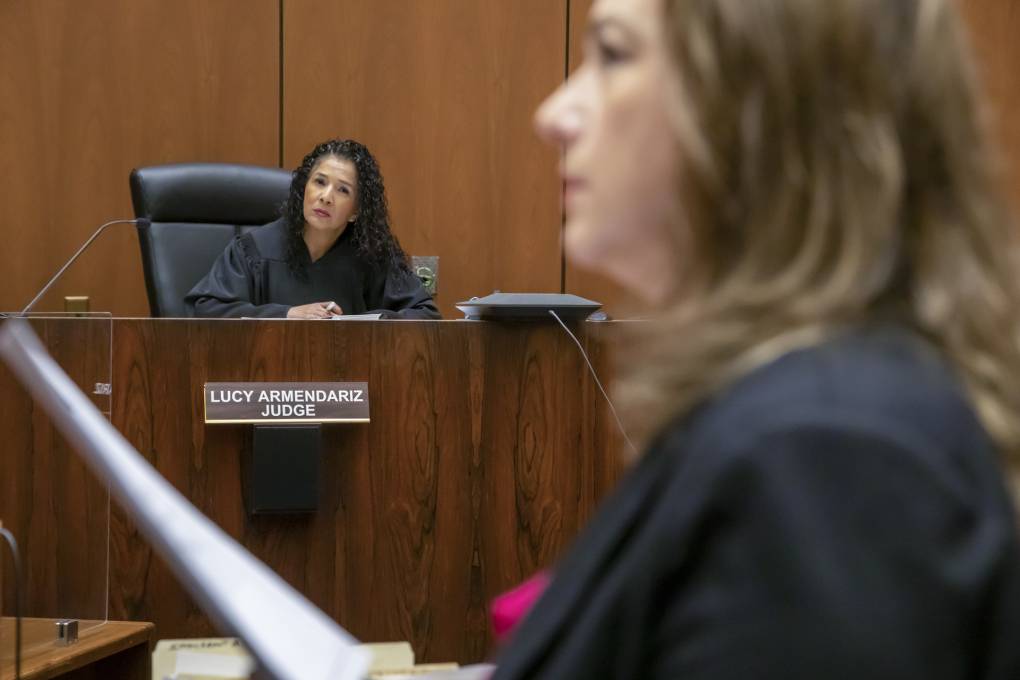
"caption": "A judge presides over a courtroom in Los Angeles on May 24, 2023. San Francisco is among 8 California counties this year, including Los Angeles, poised to implement CARE Courts, which allow first responders, family members, clinicians and others to ask a judge to order treatment plans for people diagnosed with schizophrenia and other psychotic disorders.",
"description": null,
"title": null,
"credit": "Irfan Khan/Los Angeles Times via Getty Images",
"status": "inherit",
"altTag": "A judge presides over a wood-paneled courtroom and looks at a defense attorney.",
"isLoading": false,
"fetchFailed": false
},
"news_11950522": {
"type": "attachments",
"id": "news_11950522",
"meta": {
"index": "attachments_1716263798",
"site": "news",
"id": "11950522",
"found": true
},
"parent": 11950520,
"imgSizes": {
"twentyfourteen-full-width": {
"file": "https://ww2.kqed.org/app/uploads/sites/10/2023/05/003_KQED_LondonBreedQA_05232023-1038x576.jpg",
"width": 1038,
"mimeType": "image/jpeg",
"height": 576
},
"thumbnail": {
"file": "https://ww2.kqed.org/app/uploads/sites/10/2023/05/003_KQED_LondonBreedQA_05232023-160x107.jpg",
"width": 160,
"mimeType": "image/jpeg",
"height": 107
},
"post-thumbnail": {
"file": "https://ww2.kqed.org/app/uploads/sites/10/2023/05/003_KQED_LondonBreedQA_05232023-672x372.jpg",
"width": 672,
"mimeType": "image/jpeg",
"height": 372
},
"kqedFullSize": {
"file": "https://ww2.kqed.org/app/uploads/sites/10/2023/05/003_KQED_LondonBreedQA_05232023.jpg",
"width": 1920,
"height": 1280
},
"large": {
"file": "https://ww2.kqed.org/app/uploads/sites/10/2023/05/003_KQED_LondonBreedQA_05232023-1020x680.jpg",
"width": 1020,
"mimeType": "image/jpeg",
"height": 680
},
"1536x1536": {
"file": "https://ww2.kqed.org/app/uploads/sites/10/2023/05/003_KQED_LondonBreedQA_05232023-1536x1024.jpg",
"width": 1536,
"mimeType": "image/jpeg",
"height": 1024
},
"medium": {
"file": "https://ww2.kqed.org/app/uploads/sites/10/2023/05/003_KQED_LondonBreedQA_05232023-800x533.jpg",
"width": 800,
"mimeType": "image/jpeg",
"height": 533
}
},
"publishDate": 1684887693,
"modified": 1684900244,
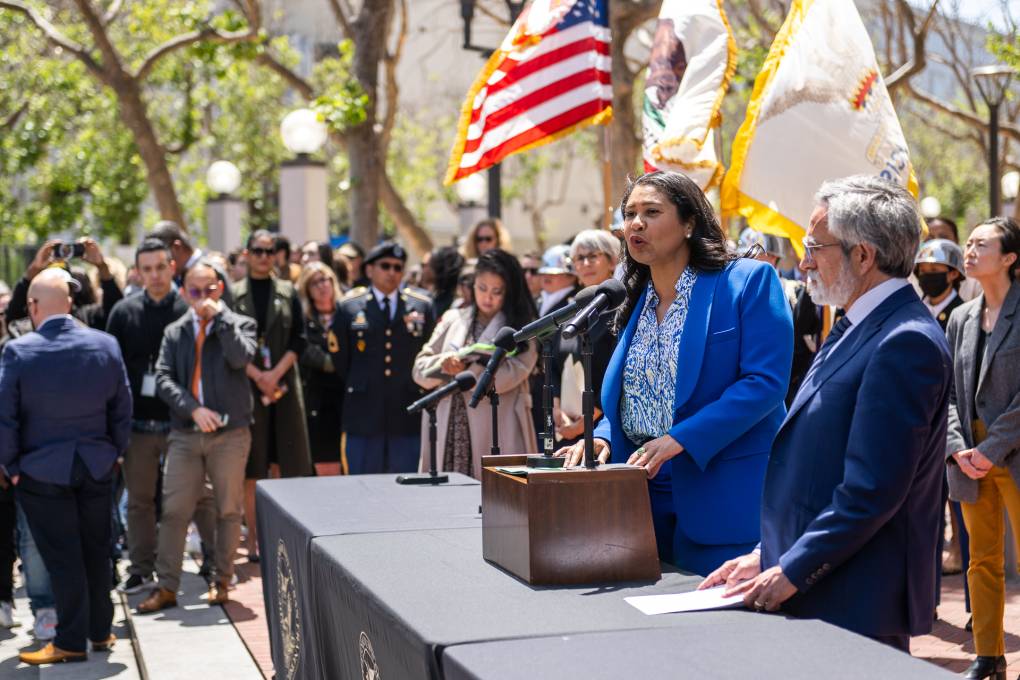
"caption": "San Francisco Mayor London Breed speaks to a crowd gathered at San Francisco's United Nations Plaza on May 23, 2023, during a public discussion with the Board of Supervisors about the city's fentanyl drug crisis.",
"description": null,
"title": "003_KQED_LondonBreedQA_05232023",
"credit": "Beth LaBerge/KQED",
"status": "inherit",
"altTag": "Mayor London Breed speaks outside at a lectern, next to a bearded white man, as a large crowd looks on.",
"isLoading": false,
"fetchFailed": false
},
"news_11950038": {
"type": "attachments",
"id": "news_11950038",
"meta": {
"index": "attachments_1716263798",
"site": "news",
"id": "11950038",
"found": true
},
"parent": 11950030,
"imgSizes": {
"twentyfourteen-full-width": {
"file": "https://ww2.kqed.org/app/uploads/sites/10/2023/05/AP23137709795307-1038x576.jpg",
"width": 1038,
"mimeType": "image/jpeg",
"height": 576
},
"thumbnail": {
"file": "https://ww2.kqed.org/app/uploads/sites/10/2023/05/AP23137709795307-160x106.jpg",
"width": 160,
"mimeType": "image/jpeg",
"height": 106
},
"post-thumbnail": {
"file": "https://ww2.kqed.org/app/uploads/sites/10/2023/05/AP23137709795307-672x372.jpg",
"width": 672,
"mimeType": "image/jpeg",
"height": 372
},
"kqedFullSize": {
"file": "https://ww2.kqed.org/app/uploads/sites/10/2023/05/AP23137709795307-scaled.jpg",
"width": 2560,
"height": 1704
},
"2048x2048": {
"file": "https://ww2.kqed.org/app/uploads/sites/10/2023/05/AP23137709795307-2048x1363.jpg",
"width": 2048,
"mimeType": "image/jpeg",
"height": 1363
},
"large": {
"file": "https://ww2.kqed.org/app/uploads/sites/10/2023/05/AP23137709795307-1020x679.jpg",
"width": 1020,
"mimeType": "image/jpeg",
"height": 679
},
"1536x1536": {
"file": "https://ww2.kqed.org/app/uploads/sites/10/2023/05/AP23137709795307-1536x1022.jpg",
"width": 1536,
"mimeType": "image/jpeg",
"height": 1022
},
"full-width": {
"file": "https://ww2.kqed.org/app/uploads/sites/10/2023/05/AP23137709795307-1920x1278.jpg",
"width": 1920,
"mimeType": "image/jpeg",
"height": 1278
},
"medium": {
"file": "https://ww2.kqed.org/app/uploads/sites/10/2023/05/AP23137709795307-800x532.jpg",
"width": 800,
"mimeType": "image/jpeg",
"height": 532
}
},
"publishDate": 1684442890,
"modified": 1684448060,
"caption": "D'Arcy Drollinger stands for a portrait outside Oasis nightclub on May 16, 2023, in San Francisco. Drollinger will serve as San Francisco's first drag laureate, a paid position created to advocate for the LGBTQ+ community.",
"description": null,
"title": "AP23137709795307",
"credit": "Noah Berger/AP",
"status": "inherit",
"altTag": "a blond woman in pink dress, a drag queen, leans against a red building, the nightclub Oasis",
"isLoading": false,
"fetchFailed": false
},
"news_11948437": {
"type": "attachments",
"id": "news_11948437",
"meta": {
"index": "attachments_1716263798",
"site": "news",
"id": "11948437",
"found": true
},
"parent": 11948421,
"imgSizes": {
"twentyfourteen-full-width": {
"file": "https://ww2.kqed.org/app/uploads/sites/10/2023/05/GettyImages-1389567151-1024x576.jpg",
"width": 1024,
"mimeType": "image/jpeg",
"height": 576
},
"thumbnail": {
"file": "https://ww2.kqed.org/app/uploads/sites/10/2023/05/GettyImages-1389567151-160x106.jpg",
"width": 160,
"mimeType": "image/jpeg",
"height": 106
},
"post-thumbnail": {
"file": "https://ww2.kqed.org/app/uploads/sites/10/2023/05/GettyImages-1389567151-672x372.jpg",
"width": 672,
"mimeType": "image/jpeg",
"height": 372
},
"kqedFullSize": {
"file": "https://ww2.kqed.org/app/uploads/sites/10/2023/05/GettyImages-1389567151.jpg",
"width": 1024,
"height": 676
},
"large": {
"file": "https://ww2.kqed.org/app/uploads/sites/10/2023/05/GettyImages-1389567151-1020x673.jpg",
"width": 1020,
"mimeType": "image/jpeg",
"height": 673
},
"medium": {
"file": "https://ww2.kqed.org/app/uploads/sites/10/2023/05/GettyImages-1389567151-800x528.jpg",
"width": 800,
"mimeType": "image/jpeg",
"height": 528
}
},
"publishDate": 1683158886,
"modified": 1683160006,
"caption": "San Francisco police officers look on near a controversial billboard that warns against fentanyl on April 4, 2022, in San Francisco.",
"description": null,
"title": "Controversial Billboards Around San Francisco Serve As PSA For Lethal Fentanyl Laced Drugs",
"credit": "Justin Sullivan/Getty Images",
"status": "inherit",
"altTag": "Three police officers with a billboard on a building in the background.",
"isLoading": false,
"fetchFailed": false
},
"news_11948106": {
"type": "attachments",
"id": "news_11948106",
"meta": {
"index": "attachments_1716263798",
"site": "news",
"id": "11948106",
"found": true
},
"parent": 0,
"imgSizes": {
"twentyfourteen-full-width": {
"file": "https://ww2.kqed.org/app/uploads/sites/10/2023/04/RS28905_GettyImages-678967-qut-1038x576.jpg",
"width": 1038,
"mimeType": "image/jpeg",
"height": 576
},
"thumbnail": {
"file": "https://ww2.kqed.org/app/uploads/sites/10/2023/04/RS28905_GettyImages-678967-qut-160x110.jpg",
"width": 160,
"mimeType": "image/jpeg",
"height": 110
},
"post-thumbnail": {
"file": "https://ww2.kqed.org/app/uploads/sites/10/2023/04/RS28905_GettyImages-678967-qut-672x372.jpg",
"width": 672,
"mimeType": "image/jpeg",
"height": 372
},
"kqedFullSize": {
"file": "https://ww2.kqed.org/app/uploads/sites/10/2023/04/RS28905_GettyImages-678967-qut.jpg",
"width": 1920,
"height": 1320
},
"large": {
"file": "https://ww2.kqed.org/app/uploads/sites/10/2023/04/RS28905_GettyImages-678967-qut-1020x701.jpg",
"width": 1020,
"mimeType": "image/jpeg",
"height": 701
},
"1536x1536": {
"file": "https://ww2.kqed.org/app/uploads/sites/10/2023/04/RS28905_GettyImages-678967-qut-1536x1056.jpg",
"width": 1536,
"mimeType": "image/jpeg",
"height": 1056
},
"medium": {
"file": "https://ww2.kqed.org/app/uploads/sites/10/2023/04/RS28905_GettyImages-678967-qut-800x550.jpg",
"width": 800,
"mimeType": "image/jpeg",
"height": 550
}
},
"publishDate": 1682724819,
"modified": 1682730769,
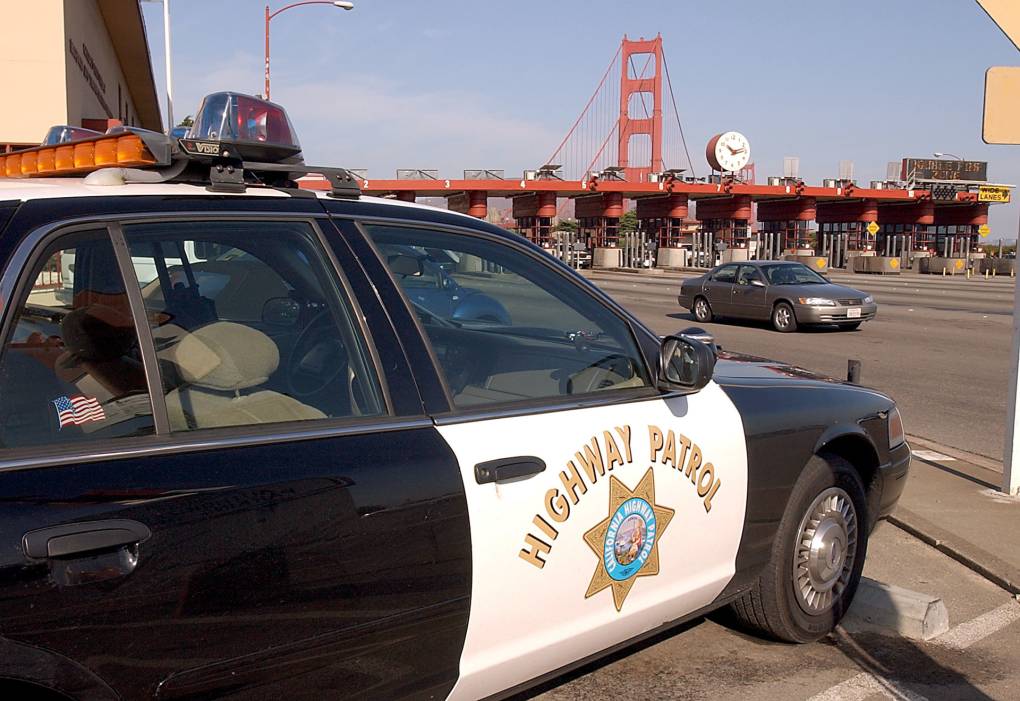
"caption": "A California Highway Patrol car stands guard at the Golden Gate Bridge toll plaza on Nov. 2, 2001, in San Francisco. Gov. Gavin Newsom is utilizing the CHP and the National Guard to fight the city's fentanyl crisis.",
"description": null,
"title": "Golden Gate Bridge Security",
"credit": "Justin Sullivan/Getty Images",
"status": "inherit",
"altTag": "A black and white California High Patrol vehicle is parked near the Golden Gate Bridge in San Francisco. A gray car passes through the toll bridge.",
"isLoading": false,
"fetchFailed": false
},
"news_11936074": {
"type": "attachments",
"id": "news_11936074",
"meta": {
"index": "attachments_1716263798",
"site": "news",
"id": "11936074",
"found": true
},
"parent": 11935973,
"imgSizes": {
"twentyfourteen-full-width": {
"file": "https://ww2.kqed.org/app/uploads/sites/10/2022/12/GettyImages-1302058535-1038x576.jpg",
"width": 1038,
"mimeType": "image/jpeg",
"height": 576
},
"thumbnail": {
"file": "https://ww2.kqed.org/app/uploads/sites/10/2022/12/GettyImages-1302058535-160x107.jpg",
"width": 160,
"mimeType": "image/jpeg",
"height": 107
},
"post-thumbnail": {
"file": "https://ww2.kqed.org/app/uploads/sites/10/2022/12/GettyImages-1302058535-672x372.jpg",
"width": 672,
"mimeType": "image/jpeg",
"height": 372
},
"kqedFullSize": {
"file": "https://ww2.kqed.org/app/uploads/sites/10/2022/12/GettyImages-1302058535.jpg",
"width": 2121,
"height": 1414
},
"2048x2048": {
"file": "https://ww2.kqed.org/app/uploads/sites/10/2022/12/GettyImages-1302058535-2048x1365.jpg",
"width": 2048,
"mimeType": "image/jpeg",
"height": 1365
},
"large": {
"file": "https://ww2.kqed.org/app/uploads/sites/10/2022/12/GettyImages-1302058535-1020x680.jpg",
"width": 1020,
"mimeType": "image/jpeg",
"height": 680
},
"1536x1536": {
"file": "https://ww2.kqed.org/app/uploads/sites/10/2022/12/GettyImages-1302058535-1536x1024.jpg",
"width": 1536,
"mimeType": "image/jpeg",
"height": 1024
},
"full-width": {
"file": "https://ww2.kqed.org/app/uploads/sites/10/2022/12/GettyImages-1302058535-1920x1280.jpg",
"width": 1920,
"mimeType": "image/jpeg",
"height": 1280
},
"medium": {
"file": "https://ww2.kqed.org/app/uploads/sites/10/2022/12/GettyImages-1302058535-800x533.jpg",
"width": 800,
"mimeType": "image/jpeg",
"height": 533
}
},
"publishDate": 1671644592,
"modified": 1671644657,
"caption": null,
"description": null,
"title": "Moose In The Sunset In Point Reyes National Park",
"credit": "Federico Benavides/EyeEm via Getty Images",
"status": "inherit",
"altTag": "The silhouette of a moose at sunset",
"isLoading": false,
"fetchFailed": false
},
"news_11935453": {
"type": "attachments",
"id": "news_11935453",
"meta": {
"index": "attachments_1716263798",
"site": "news",
"id": "11935453",
"found": true
},
"parent": 11935439,
"imgSizes": {
"twentyfourteen-full-width": {
"file": "https://ww2.kqed.org/app/uploads/sites/10/2022/12/IMG_2730-1038x576.jpg",
"width": 1038,
"mimeType": "image/jpeg",
"height": 576
},
"thumbnail": {
"file": "https://ww2.kqed.org/app/uploads/sites/10/2022/12/IMG_2730-160x120.jpg",
"width": 160,
"mimeType": "image/jpeg",
"height": 120
},
"post-thumbnail": {
"file": "https://ww2.kqed.org/app/uploads/sites/10/2022/12/IMG_2730-672x372.jpg",
"width": 672,
"mimeType": "image/jpeg",
"height": 372
},
"kqedFullSize": {
"file": "https://ww2.kqed.org/app/uploads/sites/10/2022/12/IMG_2730-scaled.jpg",
"width": 2560,
"height": 1920
},
"2048x2048": {
"file": "https://ww2.kqed.org/app/uploads/sites/10/2022/12/IMG_2730-2048x1536.jpg",
"width": 2048,
"mimeType": "image/jpeg",
"height": 1536
},
"large": {
"file": "https://ww2.kqed.org/app/uploads/sites/10/2022/12/IMG_2730-1020x765.jpg",
"width": 1020,
"mimeType": "image/jpeg",
"height": 765
},
"1536x1536": {
"file": "https://ww2.kqed.org/app/uploads/sites/10/2022/12/IMG_2730-1536x1152.jpg",
"width": 1536,
"mimeType": "image/jpeg",
"height": 1152
},
"full-width": {
"file": "https://ww2.kqed.org/app/uploads/sites/10/2022/12/IMG_2730-1920x1440.jpg",
"width": 1920,
"mimeType": "image/jpeg",
"height": 1440
},
"medium": {
"file": "https://ww2.kqed.org/app/uploads/sites/10/2022/12/IMG_2730-800x600.jpg",
"width": 800,
"mimeType": "image/jpeg",
"height": 600
}
},
"publishDate": 1671149083,
"modified": 1671150977,
"caption": "SF Mayor London Breed was joined by union leaders and local and state elected officials at a rally outside City Hall, after which the janitors marched to Twitter's office, where they placed plungers and mops marked with the hashtag #justiceforjanitors in front of the building, on Dec. 15, 2022.",
"description": null,
"title": "IMG_2730",
"credit": "Daisy Nguyen/KQED",
"status": "inherit",
"altTag": "A crowd of protesters and the mayor gather outside San Francisco City Hall",
"isLoading": false,
"fetchFailed": false
},
"news_11934874": {
"type": "attachments",
"id": "news_11934874",
"meta": {
"index": "attachments_1716263798",
"site": "news",
"id": "11934874",
"found": true
},
"parent": 11934848,
"imgSizes": {
"twentyfourteen-full-width": {
"file": "https://ww2.kqed.org/app/uploads/sites/10/2022/12/IMG_4544-1038x576.jpg",
"width": 1038,
"mimeType": "image/jpeg",
"height": 576
},
"thumbnail": {
"file": "https://ww2.kqed.org/app/uploads/sites/10/2022/12/IMG_4544-160x120.jpg",
"width": 160,
"mimeType": "image/jpeg",
"height": 120
},
"post-thumbnail": {
"file": "https://ww2.kqed.org/app/uploads/sites/10/2022/12/IMG_4544-672x372.jpg",
"width": 672,
"mimeType": "image/jpeg",
"height": 372
},
"kqedFullSize": {
"file": "https://ww2.kqed.org/app/uploads/sites/10/2022/12/IMG_4544-scaled.jpg",
"width": 2560,
"height": 1920
},
"2048x2048": {
"file": "https://ww2.kqed.org/app/uploads/sites/10/2022/12/IMG_4544-2048x1536.jpg",
"width": 2048,
"mimeType": "image/jpeg",
"height": 1536
},
"large": {
"file": "https://ww2.kqed.org/app/uploads/sites/10/2022/12/IMG_4544-1020x765.jpg",
"width": 1020,
"mimeType": "image/jpeg",
"height": 765
},
"1536x1536": {
"file": "https://ww2.kqed.org/app/uploads/sites/10/2022/12/IMG_4544-1536x1152.jpg",
"width": 1536,
"mimeType": "image/jpeg",
"height": 1152
},
"full-width": {
"file": "https://ww2.kqed.org/app/uploads/sites/10/2022/12/IMG_4544-1920x1440.jpg",
"width": 1920,
"mimeType": "image/jpeg",
"height": 1440
},
"medium": {
"file": "https://ww2.kqed.org/app/uploads/sites/10/2022/12/IMG_4544-800x600.jpg",
"width": 800,
"mimeType": "image/jpeg",
"height": 600
}
},
"publishDate": 1670629331,
"modified": 1670629578,
"caption": "San Francisco Mayor London Breed, KQED Newsroom Host Priya David Clemens, and U.S. Rep Jackie Speier.",
"description": null,
"title": "IMG_4544",
"credit": null,
"status": "inherit",
"altTag": null,
"isLoading": false,
"fetchFailed": false
},
"news_11931650": {
"type": "attachments",
"id": "news_11931650",
"meta": {
"index": "attachments_1716263798",
"site": "news",
"id": "11931650",
"found": true
},
"title": "1AFBACD6-E56E-4A4A-8624-783F1286C3AF",
"publishDate": 1667981119,
"status": "inherit",
"parent": 11932210,
"modified": 1763677534,
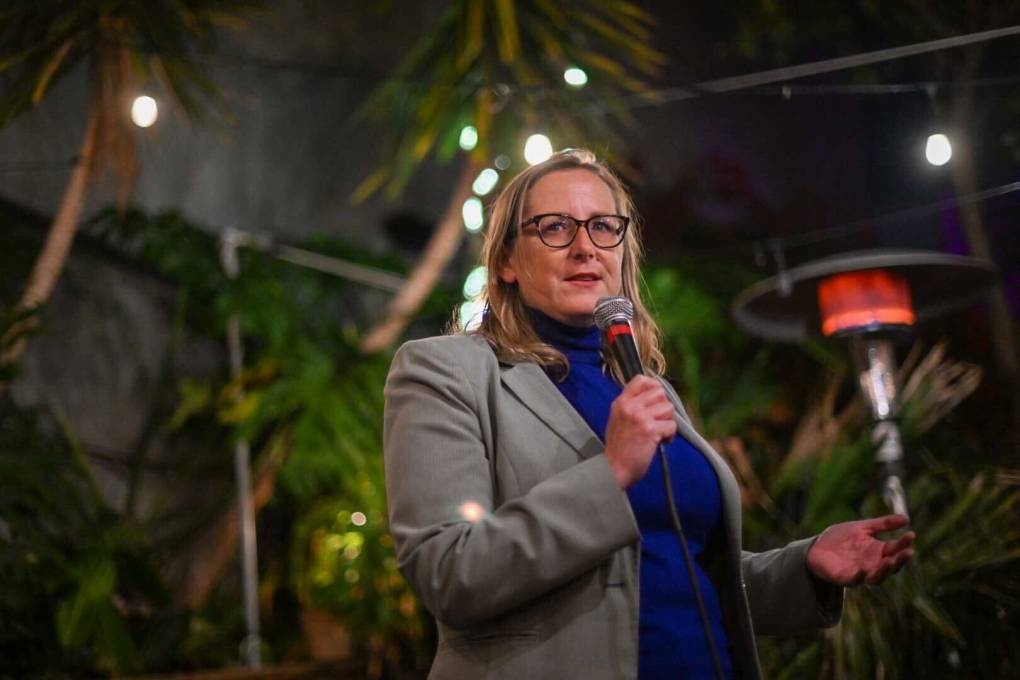
"caption": "Then-San Francisco Unified School District board candidate, Alida Fisher, speaks at an election night event at El Rio in San Francisco on Nov. 8, 2022.",
"credit": "Beth LaBerge/KQED",
"altTag": "A white woman with a grey suit over a blue sweater speaks into a microphone at an event",
"description": null,
"imgSizes": {
"medium": {
"file": "https://cdn.kqed.org/wp-content/uploads/sites/10/2022/11/1AFBACD6-E56E-4A4A-8624-783F1286C3AF-800x533.jpg",
"width": 800,
"height": 533,
"mimeType": "image/jpeg"
},
"large": {
"file": "https://cdn.kqed.org/wp-content/uploads/sites/10/2022/11/1AFBACD6-E56E-4A4A-8624-783F1286C3AF-1020x680.jpg",
"width": 1020,
"height": 680,
"mimeType": "image/jpeg"
},
"thumbnail": {
"file": "https://cdn.kqed.org/wp-content/uploads/sites/10/2022/11/1AFBACD6-E56E-4A4A-8624-783F1286C3AF-160x107.jpg",
"width": 160,
"height": 107,
"mimeType": "image/jpeg"
},
"1536x1536": {
"file": "https://cdn.kqed.org/wp-content/uploads/sites/10/2022/11/1AFBACD6-E56E-4A4A-8624-783F1286C3AF-1536x1024.jpg",
"width": 1536,
"height": 1024,
"mimeType": "image/jpeg"
},
"post-thumbnail": {
"file": "https://cdn.kqed.org/wp-content/uploads/sites/10/2022/11/1AFBACD6-E56E-4A4A-8624-783F1286C3AF-672x372.jpg",
"width": 672,
"height": 372,
"mimeType": "image/jpeg"
},
"twentyfourteen-full-width": {
"file": "https://cdn.kqed.org/wp-content/uploads/sites/10/2022/11/1AFBACD6-E56E-4A4A-8624-783F1286C3AF-1038x576.jpg",
"width": 1038,
"height": 576,
"mimeType": "image/jpeg"
},
"kqedFullSize": {
"file": "https://cdn.kqed.org/wp-content/uploads/sites/10/2022/11/1AFBACD6-E56E-4A4A-8624-783F1286C3AF.jpg",
"width": 1620,
"height": 1080
}
},
"isLoading": false,
"fetchFailed": false
},
"news_11933696": {
"type": "attachments",
"id": "news_11933696",
"meta": {
"index": "attachments_1716263798",
"site": "news",
"id": "11933696",
"found": true
},
"parent": 11933679,
"imgSizes": {
"twentyfourteen-full-width": {
"file": "https://ww2.kqed.org/app/uploads/sites/10/2022/11/GettyImages-563570015-1024x576.jpg",
"width": 1024,
"mimeType": "image/jpeg",
"height": 576
},
"thumbnail": {
"file": "https://ww2.kqed.org/app/uploads/sites/10/2022/11/GettyImages-563570015-160x105.jpg",
"width": 160,
"mimeType": "image/jpeg",
"height": 105
},
"post-thumbnail": {
"file": "https://ww2.kqed.org/app/uploads/sites/10/2022/11/GettyImages-563570015-672x372.jpg",
"width": 672,
"mimeType": "image/jpeg",
"height": 372
},
"kqedFullSize": {
"file": "https://ww2.kqed.org/app/uploads/sites/10/2022/11/GettyImages-563570015.jpg",
"width": 1024,
"height": 672
},
"large": {
"file": "https://ww2.kqed.org/app/uploads/sites/10/2022/11/GettyImages-563570015-1020x669.jpg",
"width": 1020,
"mimeType": "image/jpeg",
"height": 669
},
"medium": {
"file": "https://ww2.kqed.org/app/uploads/sites/10/2022/11/GettyImages-563570015-800x525.jpg",
"width": 800,
"mimeType": "image/jpeg",
"height": 525
}
},
"publishDate": 1669860530,
"modified": 1669860830,
"caption": "An older model of a remotely operated robot used by the West Covina Police Department in Los Angeles County.",
"description": null,
"title": "Bulldog, a 150pound remotely operated robot, is the newest member of West Covina Police. Bulldog is",
"credit": "Richard Hartog/Los Angeles Times via Getty Images",
"status": "inherit",
"altTag": "A person holding a remote control that controls a nearby robot.",
"isLoading": false,
"fetchFailed": false
},
"news_11922097": {
"type": "attachments",
"id": "news_11922097",
"meta": {
"index": "attachments_1716263798",
"site": "news",
"id": "11922097",
"found": true
},
"parent": 11922072,
"imgSizes": {
"twentyfourteen-full-width": {
"file": "https://ww2.kqed.org/app/uploads/sites/10/2022/08/RS53041_003_KQED_BethLaBerge_SchoolBoardRecallPresser_01142022-qut-e1660091672724-1038x576.jpg",
"width": 1038,
"mimeType": "image/jpeg",
"height": 576
},
"thumbnail": {
"file": "https://ww2.kqed.org/app/uploads/sites/10/2022/08/RS53041_003_KQED_BethLaBerge_SchoolBoardRecallPresser_01142022-qut-e1660091672724-160x100.jpg",
"width": 160,
"mimeType": "image/jpeg",
"height": 100
},
"post-thumbnail": {
"file": "https://ww2.kqed.org/app/uploads/sites/10/2022/08/RS53041_003_KQED_BethLaBerge_SchoolBoardRecallPresser_01142022-qut-e1660091672724-672x372.jpg",
"width": 672,
"mimeType": "image/jpeg",
"height": 372
},
"kqedFullSize": {
"file": "https://ww2.kqed.org/app/uploads/sites/10/2022/08/RS53041_003_KQED_BethLaBerge_SchoolBoardRecallPresser_01142022-qut-e1660091672724.jpg",
"width": 1920,
"height": 1204
},
"large": {
"file": "https://ww2.kqed.org/app/uploads/sites/10/2022/08/RS53041_003_KQED_BethLaBerge_SchoolBoardRecallPresser_01142022-qut-e1660091672724-1020x640.jpg",
"width": 1020,
"mimeType": "image/jpeg",
"height": 640
},
"1536x1536": {
"file": "https://ww2.kqed.org/app/uploads/sites/10/2022/08/RS53041_003_KQED_BethLaBerge_SchoolBoardRecallPresser_01142022-qut-e1660091672724-1536x963.jpg",
"width": 1536,
"mimeType": "image/jpeg",
"height": 963
},
"medium": {
"file": "https://ww2.kqed.org/app/uploads/sites/10/2022/08/RS53041_003_KQED_BethLaBerge_SchoolBoardRecallPresser_01142022-qut-e1660091672724-800x502.jpg",
"width": 800,
"mimeType": "image/jpeg",
"height": 502
}
},
"publishDate": 1660081595,
"modified": 1668550555,
"caption": "Ann Hsu speaks during a press conference held by the Chinese/API Voter Outreach Taskforce on the steps of the Asian Art Museum in San Francisco on Jan. 14, 2021.",
"description": "Ann Hsu speaks during a press conference held by the Chinese/API Voter Outreach Taskforce on the steps of the Asian Art Museum in San Francisco on Jan. 14, 2021.",
"title": "Ann Hsu",
"credit": "Beth LaBerge/KQED",
"status": "inherit",
"altTag": "An Asian woman with short black hair and holding a microphone wears a red leather jacket, red sunglasses on top of her head, and a red, yellow and purple scarf.",
"isLoading": false,
"fetchFailed": false
},
"news_11929674": {
"type": "attachments",
"id": "news_11929674",
"meta": {
"index": "attachments_1716263798",
"site": "news",
"id": "11929674",
"found": true
},
"parent": 11929671,
"imgSizes": {
"twentyfourteen-full-width": {
"file": "https://ww2.kqed.org/app/uploads/sites/10/2022/10/RS59463_Z62_0681-qut-1038x576.jpg",
"width": 1038,
"mimeType": "image/jpeg",
"height": 576
},
"thumbnail": {
"file": "https://ww2.kqed.org/app/uploads/sites/10/2022/10/RS59463_Z62_0681-qut-160x106.jpg",
"width": 160,
"mimeType": "image/jpeg",
"height": 106
},
"post-thumbnail": {
"file": "https://ww2.kqed.org/app/uploads/sites/10/2022/10/RS59463_Z62_0681-qut-672x372.jpg",
"width": 672,
"mimeType": "image/jpeg",
"height": 372
},
"kqedFullSize": {
"file": "https://ww2.kqed.org/app/uploads/sites/10/2022/10/RS59463_Z62_0681-qut.jpg",
"width": 1920,
"height": 1277
},
"large": {
"file": "https://ww2.kqed.org/app/uploads/sites/10/2022/10/RS59463_Z62_0681-qut-1020x678.jpg",
"width": 1020,
"mimeType": "image/jpeg",
"height": 678
},
"1536x1536": {
"file": "https://ww2.kqed.org/app/uploads/sites/10/2022/10/RS59463_Z62_0681-qut-1536x1022.jpg",
"width": 1536,
"mimeType": "image/jpeg",
"height": 1022
},
"medium": {
"file": "https://ww2.kqed.org/app/uploads/sites/10/2022/10/RS59463_Z62_0681-qut-800x532.jpg",
"width": 800,
"mimeType": "image/jpeg",
"height": 532
}
},
"publishDate": 1666305184,
"modified": 1666305233,
"caption": "San Francisco Mayor London Breed at KQED Live on October 5, 2022.",
"description": null,
"title": "RS59463_Z62_0681-qut",
"credit": "Alain McLaughlin/KQED",
"status": "inherit",
"altTag": null,
"isLoading": false,
"fetchFailed": false
}
},
"audioPlayerReducer": {
"postId": "stream_live",
"isPaused": true,
"isPlaying": false,
"pfsActive": false,
"pledgeModalIsOpen": true,
"playerDrawerIsOpen": false,
"liveAudioPlayStartedAt": 0,
"liveAudioPlayContext": ""
},
"authorsReducer": {
"byline_news_11950030": {
"type": "authors",
"id": "byline_news_11950030",
"meta": {
"override": true
},
"slug": "byline_news_11950030",
"name": "Stefanie Dazio and Haven Daley\u003cbr> The Associated Press",
"isLoading": false
},
"kqed": {
"type": "authors",
"id": "236",
"meta": {
"index": "authors_1716337520",
"id": "236",
"found": true
},
"name": "KQED News Staff",
"firstName": "KQED News Staff",
"lastName": null,
"slug": "kqed",
"email": "faq@kqed.org",
"display_author_email": false,
"staff_mastheads": [],
"title": null,
"bio": null,
"avatar": "https://secure.gravatar.com/avatar/ef0e801a68c4c54afa9180db14084167?s=600&d=blank&r=g",
"twitter": null,
"facebook": null,
"instagram": null,
"linkedin": null,
"sites": [
{
"site": "arts",
"roles": [
"contributor"
]
},
{
"site": "news",
"roles": [
"editor"
]
},
{
"site": "futureofyou",
"roles": [
"author"
]
}
],
"headData": {
"title": "KQED News Staff | KQED",
"description": null,
"ogImgSrc": "https://secure.gravatar.com/avatar/ef0e801a68c4c54afa9180db14084167?s=600&d=blank&r=g",
"twImgSrc": "https://secure.gravatar.com/avatar/ef0e801a68c4c54afa9180db14084167?s=600&d=blank&r=g"
},
"isLoading": false,
"link": "/author/kqed"
},
"kqednewsstaffandwires": {
"type": "authors",
"id": "237",
"meta": {
"index": "authors_1716337520",
"id": "237",
"found": true
},
"name": "KQED News Staff and Wires",
"firstName": "KQED News Staff and Wires",
"lastName": null,
"slug": "kqednewsstaffandwires",
"email": "onlinenewsstaff@kqed.org",
"display_author_email": false,
"staff_mastheads": [],
"title": null,
"bio": null,
"avatar": "https://secure.gravatar.com/avatar/72295af8ebbfbd19a4948f5271285664?s=600&d=blank&r=g",
"twitter": null,
"facebook": null,
"instagram": null,
"linkedin": null,
"sites": [
{
"site": "arts",
"roles": [
"contributor"
]
},
{
"site": "news",
"roles": [
"contributor"
]
},
{
"site": "lowdown",
"roles": [
"author"
]
},
{
"site": "stateofhealth",
"roles": [
"contributor"
]
},
{
"site": "food",
"roles": [
"author"
]
}
],
"headData": {
"title": "KQED News Staff and Wires | KQED",
"description": null,
"ogImgSrc": "https://secure.gravatar.com/avatar/72295af8ebbfbd19a4948f5271285664?s=600&d=blank&r=g",
"twImgSrc": "https://secure.gravatar.com/avatar/72295af8ebbfbd19a4948f5271285664?s=600&d=blank&r=g"
},
"isLoading": false,
"link": "/author/kqednewsstaffandwires"
},
"scottshafer": {
"type": "authors",
"id": "255",
"meta": {
"index": "authors_1716337520",
"id": "255",
"found": true
},
"name": "Scott Shafer",
"firstName": "Scott",
"lastName": "Shafer",
"slug": "scottshafer",
"email": "sshafer@kqed.org",
"display_author_email": false,
"staff_mastheads": [
"news"
],
"title": "KQED Contributor",
"bio": "Scott Shafer is a senior editor with the KQED Politics and Government desk. He is co-host of Political Breakdown, the award-winning radio show and podcast with a personal take on the world of politics. Scott came to KQED in 1998 to host the statewide\u003cem> California Report\u003c/em>. Prior to that he had extended stints in politics and government\u003cem>.\u003c/em> He uses that inside experience at KQED in his, reporting, hosting and analysis for the politics desk. Scott collaborated \u003cem>Political Breakdown a\u003c/em>nd on \u003cem>The Political Mind of Jerry Brown, \u003c/em>an eight-part series about the life and extraordinary political career of the former governor. For fun, he plays water polo with the San Francisco Tsunami.",
"avatar": "https://secure.gravatar.com/avatar/a62ebae45b79d7aed1a39a0e3bf68104?s=600&d=blank&r=g",
"twitter": "scottshafer",
"bluesky": null,
"facebook": null,
"instagram": null,
"linkedin": null,
"sites": [
{
"site": "news",
"roles": [
"editor"
]
},
{
"site": "stateofhealth",
"roles": [
"author"
]
},
{
"site": "science",
"roles": [
"author"
]
},
{
"site": "forum",
"roles": [
"subscriber"
]
},
{
"site": "liveblog",
"roles": [
"author"
]
}
],
"headData": {
"title": "Scott Shafer | KQED",
"description": "KQED Contributor",
"ogImgSrc": "https://secure.gravatar.com/avatar/a62ebae45b79d7aed1a39a0e3bf68104?s=600&d=blank&r=g",
"twImgSrc": "https://secure.gravatar.com/avatar/a62ebae45b79d7aed1a39a0e3bf68104?s=600&d=blank&r=g"
},
"isLoading": false,
"link": "/author/scottshafer"
},
"mlagos": {
"type": "authors",
"id": "3239",
"meta": {
"index": "authors_1716337520",
"id": "3239",
"found": true
},
"name": "Marisa Lagos",
"firstName": "Marisa",
"lastName": "Lagos",
"slug": "mlagos",
"email": "mlagos@kqed.org",
"display_author_email": false,
"staff_mastheads": [
"news"
],
"title": "KQED Contributor",
"bio": "Marisa Lagos is a correspondent for KQED’s California Politics and Government Desk and co-hosts the award-winning show and podcast, Political Breakdown. At KQED, Lagos also conducts reporting, analysis and investigations into state, local and national politics for radio, TV, online and onstage. In 2022, she and co-host, Scott Shafer, moderated the only gubernatorial debate in California. In 2020, the \u003ci>Washington Post\u003c/i> named her one of the top political journalists in California; she was nominated for a Peabody and won several other awards for her work investigating the 2017 California wildfires. She has worked at the \u003ci>San Francisco Chronicle\u003c/i>, \u003ci>San Francisco Examiner\u003c/i> and \u003ci>Los Angeles Times\u003c/i>. A UC Santa Barbara graduate, she lives in San Francisco with her two sons and husband.",
"avatar": "https://secure.gravatar.com/avatar/a261a0d3696fc066871ef96b85b5e7d2?s=600&d=blank&r=g",
"twitter": "@mlagos",
"facebook": null,
"instagram": null,
"linkedin": null,
"sites": [
{
"site": "arts",
"roles": [
"author"
]
},
{
"site": "news",
"roles": [
"editor"
]
},
{
"site": "science",
"roles": [
"editor"
]
},
{
"site": "forum",
"roles": [
"author"
]
},
{
"site": "liveblog",
"roles": [
"author"
]
}
],
"headData": {
"title": "Marisa Lagos | KQED",
"description": "KQED Contributor",
"ogImgSrc": "https://secure.gravatar.com/avatar/a261a0d3696fc066871ef96b85b5e7d2?s=600&d=blank&r=g",
"twImgSrc": "https://secure.gravatar.com/avatar/a261a0d3696fc066871ef96b85b5e7d2?s=600&d=blank&r=g"
},
"isLoading": false,
"link": "/author/mlagos"
},
"jrodriguez": {
"type": "authors",
"id": "11690",
"meta": {
"index": "authors_1716337520",
"id": "11690",
"found": true
},
"name": "Joe Fitzgerald Rodriguez",
"firstName": "Joe",
"lastName": "Fitzgerald Rodriguez",
"slug": "jrodriguez",
"email": "jrodriguez@kqed.org",
"display_author_email": true,
"staff_mastheads": [
"news"
],
"title": "Reporter and Producer",
"bio": "Joe Fitzgerald Rodriguez is a reporter and digital producer for KQED covering politics. Joe most recently wrote for the \u003cem>San Francisco Examiner\u003c/em> as a political columnist covering The City. He was raised in San Francisco and has spent his reporting career in his beloved, foggy, city by the bay. Joe was 12-years-old when he conducted his first interview in journalism, grilling former San Francisco Mayor Willie Brown for the Marina Middle School newspaper, \u003cem>The Penguin Press, \u003c/em>and he continues to report on the San Francisco Bay Area to this day.",
"avatar": "https://secure.gravatar.com/avatar/2247beb0564c1e9c62228d5649d2edac?s=600&d=blank&r=g",
"twitter": "FitztheReporter",
"facebook": null,
"instagram": "https://www.instagram.com/fitzthereporter/",
"linkedin": null,
"sites": [
{
"site": "",
"roles": [
"editor"
]
},
{
"site": "arts",
"roles": [
"editor"
]
},
{
"site": "news",
"roles": [
"editor"
]
},
{
"site": "science",
"roles": [
"editor"
]
},
{
"site": "elections",
"roles": [
"editor"
]
},
{
"site": "liveblog",
"roles": [
"editor"
]
}
],
"headData": {
"title": "Joe Fitzgerald Rodriguez | KQED",
"description": "Reporter and Producer",
"ogImgSrc": "https://secure.gravatar.com/avatar/2247beb0564c1e9c62228d5649d2edac?s=600&d=blank&r=g",
"twImgSrc": "https://secure.gravatar.com/avatar/2247beb0564c1e9c62228d5649d2edac?s=600&d=blank&r=g"
},
"isLoading": false,
"link": "/author/jrodriguez"
},
"daisynguyen": {
"type": "authors",
"id": "11829",
"meta": {
"index": "authors_1716337520",
"id": "11829",
"found": true
},
"name": "Daisy Nguyen",
"firstName": "Daisy",
"lastName": "Nguyen",
"slug": "daisynguyen",
"email": "daisynguyen@kqed.org",
"display_author_email": true,
"staff_mastheads": [
"news"
],
"title": "KQED Contributor",
"bio": "I have covered early childhood education and child care for KQED since 2022. I focus on policies aimed at increasing access to early care and education and how they shape individual lives. I've been a journalist for more than two decades, with most of that time devoted to covering breaking news throughout California for The Associated Press. I grew up in San Francisco and studied at UC Davis and Columbia University's Graduate School of Journalism. I live in Oakland with my husband and two kids.",
"avatar": "https://secure.gravatar.com/avatar/2da2127c27f7143b53ebd419800fd55f?s=600&d=blank&r=g",
"twitter": null,
"facebook": null,
"instagram": null,
"linkedin": "https://www.linkedin.com/in/daisynguyen/",
"sites": [
{
"site": "news",
"roles": [
"author"
]
},
{
"site": "liveblog",
"roles": [
"author"
]
}
],
"headData": {
"title": "Daisy Nguyen | KQED",
"description": "KQED Contributor",
"ogImgSrc": "https://secure.gravatar.com/avatar/2da2127c27f7143b53ebd419800fd55f?s=600&d=blank&r=g",
"twImgSrc": "https://secure.gravatar.com/avatar/2da2127c27f7143b53ebd419800fd55f?s=600&d=blank&r=g"
},
"isLoading": false,
"link": "/author/daisynguyen"
},
"sjohnson": {
"type": "authors",
"id": "11840",
"meta": {
"index": "authors_1716337520",
"id": "11840",
"found": true
},
"name": "Sydney Johnson",
"firstName": "Sydney",
"lastName": "Johnson",
"slug": "sjohnson",
"email": "sjohnson@kqed.org",
"display_author_email": false,
"staff_mastheads": [
"news"
],
"title": "KQED Reporter",
"bio": "Sydney Johnson is a general assignment reporter at KQED. She previously reported on public health and city government at the San Francisco Examiner, and before that, she covered statewide education policy for EdSource. Her reporting has won multiple local, state and national awards. Sydney is a graduate of the University of California, Berkeley and lives in San Francisco.",
"avatar": "https://secure.gravatar.com/avatar/97855f2719b72ad6190b7c535fe642c8?s=600&d=blank&r=g",
"twitter": "sydneyfjohnson",
"facebook": null,
"instagram": null,
"linkedin": null,
"sites": [
{
"site": "news",
"roles": [
"editor"
]
}
],
"headData": {
"title": "Sydney Johnson | KQED",
"description": "KQED Reporter",
"ogImgSrc": "https://secure.gravatar.com/avatar/97855f2719b72ad6190b7c535fe642c8?s=600&d=blank&r=g",
"twImgSrc": "https://secure.gravatar.com/avatar/97855f2719b72ad6190b7c535fe642c8?s=600&d=blank&r=g"
},
"isLoading": false,
"link": "/author/sjohnson"
}
},
"pagesReducer": {
"news_tag_london-breed": {
"type": "terms",
"id": "news_6931",
"meta": {
"index": "terms_1716263798",
"site": "news",
"id": "6931",
"score": 9.30474
},
"featImg": null,
"name": "London Breed",
"description": null,
"taxonomy": "tag",
"headData": {
"twImgId": null,
"twTitle": null,
"ogTitle": null,
"ogImgId": null,
"twDescription": null,
"description": null,
"title": "London Breed Archives | KQED News",
"ogDescription": null
},
"ttid": 6955,
"slug": "london-breed",
"isLoading": false,
"title": "London Breed",
"pageMeta": {
"site": "news",
"WpPageTemplate": "page-topic-editorial",
"currentPage": 10
},
"blocks": [
{
"blockName": "kqed/post-list",
"attrs": {
"layout": "cardArticle2",
"query": "posts/news?tag=london-breed",
"seeMore": false,
"paginated": true,
"page": 10
}
},
{
"blockName": "kqed/ad"
}
]
}
},
"pfsSessionReducer": {},
"postsReducer": {
"stream_live": {
"type": "live",
"id": "stream_live",
"audioUrl": "https://streams.kqed.org/kqedradio",
"title": "Live Stream",
"excerpt": "Live Stream information currently unavailable.",
"link": "/radio",
"featImg": "",
"label": {
"name": "KQED Live",
"link": "/"
}
},
"stream_kqedNewscast": {
"type": "posts",
"id": "stream_kqedNewscast",
"audioUrl": "https://www.kqed.org/.stream/anon/radio/RDnews/newscast.mp3?_=1",
"title": "KQED Newscast",
"featImg": "",
"label": {
"name": "88.5 FM",
"link": "/"
}
},
"news_11952228": {
"type": "posts",
"id": "news_11952228",
"meta": {
"index": "posts_1716263798",
"site": "news",
"id": "11952228",
"score": null,
"sort": [
1686056444000
]
},
"guestAuthors": [],
"slug": "san-francisco-to-implement-newsoms-care-court-plan-to-treat-severe-mental-illness",
"title": "San Francisco to Implement Newsom's CARE Court Plan to Treat Severe Mental Illness",
"publishDate": 1686056444,
"format": "standard",
"headTitle": "San Francisco to Implement Newsom’s CARE Court Plan to Treat Severe Mental Illness | KQED",
"labelTerm": {
"term": 72,
"site": "news"
},
"content": "\u003cp>For the past few years, San Francisco’s international reputation as a vibrant and scenic destination for tourists and conventions has been overtaken by a drumbeat of stories focused on homelessness, an epidemic of fentanyl overdose deaths and people with severe and untreated psychoses living on the streets.\u003c/p>\n\u003cp>[pullquote size=\"medium\" align=\"right\" citation=\"San Francisco Mayor London Breed\"]‘There’s never enough money for anything. Period. But the fact is that can’t be an excuse for not trying.’[/pullquote]Now, San Francisco is poised to be among the first eight counties in California this year to implement CARE Court, a new approach to treating severe mental illness that Gov. Gavin Newsom calls a “paradigm shift,” but which supporters and opponents alike fear will fail to deliver on its sweeping promises.\u003c/p>\n\u003cp>Supporters of the program, like Mayor London Breed, said it’s time for the city to undergo a course correction.\u003c/p>\n\u003cfigure id=\"attachment_11952229\" class=\"wp-caption aligncenter\" style=\"max-width: 800px\">\u003ca href=\"https://ww2.kqed.org/app/uploads/sites/10/2023/06/RS57121_006_KQED_DABrookeJenkins_07072022-qut-KQED.jpg\">\u003cimg loading=\"lazy\" decoding=\"async\" class=\"wp-image-11952229 size-medium\" src=\"https://ww2.kqed.org/app/uploads/sites/10/2023/06/RS57121_006_KQED_DABrookeJenkins_07072022-qut-KQED-800x533.jpg\" alt=\"A Black woman with shoulder-length black, curly hair and bright red lipstick, wearing a blue blazer and an ochre blouse, gestures as she speaks in front of a flag of California inside what appears to be a large room.\" width=\"800\" height=\"533\" srcset=\"https://cdn.kqed.org/wp-content/uploads/sites/10/2023/06/RS57121_006_KQED_DABrookeJenkins_07072022-qut-KQED-800x533.jpg 800w, https://cdn.kqed.org/wp-content/uploads/sites/10/2023/06/RS57121_006_KQED_DABrookeJenkins_07072022-qut-KQED-1020x680.jpg 1020w, https://cdn.kqed.org/wp-content/uploads/sites/10/2023/06/RS57121_006_KQED_DABrookeJenkins_07072022-qut-KQED-160x107.jpg 160w, https://cdn.kqed.org/wp-content/uploads/sites/10/2023/06/RS57121_006_KQED_DABrookeJenkins_07072022-qut-KQED-1536x1024.jpg 1536w, https://cdn.kqed.org/wp-content/uploads/sites/10/2023/06/RS57121_006_KQED_DABrookeJenkins_07072022-qut-KQED.jpg 1920w\" sizes=\"auto, (max-width: 800px) 100vw, 800px\">\u003c/a>\u003cfigcaption class=\"wp-caption-text\">San Francisco Mayor London Breed speaks at a press event at City Hall on July 7, 2022. \u003ccite>(Beth LaBerge/KQED)\u003c/cite>\u003c/figcaption>\u003c/figure>\n\u003cp>“We’ve got to start having honest conversations about the fact that things are changing, and it is not OK to allow what’s happening on the street to happen on the streets,” she recently told KQED.\u003c/p>\n\u003cp>The new courts — CARE stands for Community Assistance, Recovery and Empowerment — will allow first responders, family members, clinicians and others to ask a judge to order treatment plans for people diagnosed with schizophrenia and other psychotic disorders. While not limited to people who are also experiencing homelessness, the program focuses on people who are not currently receiving mental health treatment. Every county in California will have to implement the new civil courts by 2024.\u003c/p>\n\u003cp>[ad fullwidth]\u003c/p>\n\u003cp>Participation is voluntary, but supporters hope the so-called “black robe effect” — where people ordered to do something by a judge feel compelled to do so — will increase compliance.\u003c/p>\n\u003cp>Opponents of the program, including the American Civil Liberties Union and Disability Rights California, have argued that people, particularly Black Californians, will be targeted to enter the program because Black residents are overrepresented in both the number of \u003ca href=\"https://files.hudexchange.info/reports/published/CoC_PopSub_State_CA_2020.pdf\">people experiencing homelessness (PDF)\u003c/a> and the number of \u003ca href=\"https://www.ncbi.nlm.nih.gov/pmc/articles/PMC4274585/\">people diagnosed with psychotic disorders\u003c/a>.\u003c/p>\n\u003cp>Johnny Crawford, who works on a cleaning crew in San Francisco, said he shared those concerns.\u003c/p>\n\u003cp>“I have mental health issues and I’ve dealt with addiction,” he said. “I think trying to push somebody into doing something they don’t want to do, it’s not fair. It’s not right. I wouldn’t do it.”\u003c/p>\n\u003cp>Supervisor Rafael Mandelman said those \u003ca href=\"https://www.kqed.org/news/11944448/a-war-of-compassion-debate-over-forced-treatment-of-mental-illness-splits-california-liberals\">civil liberty concerns\u003c/a> were being trumped by a larger concern: how to get people who aren’t engaged in mental health services into treatment.\u003c/p>\n\u003cp>“There are certainly folks on the Board of Supervisors and there are certainly people in the broader ballot body politic who really don’t want to see any more coercion of people into care who are not voluntarily seeking it,” Mandelman said, adding, “There’s a larger group of people who want these problems solved and want to see people get care.”\u003c/p>\n\u003cp>[aside postID=\"news_11944448,news_11924117,news_11914873\" label=\"Related Posts\"]Supporters argue a treatment plan developed through CARE Court will be less restrictive than alternatives, such as state hospitalization or conservatorship.\u003c/p>\n\u003cp>To qualify, an individual must be 18 years or older, diagnosed with schizophrenia or another psychotic disorder, deemed likely to benefit from a supervised treatment plan and found to be at risk of harming themselves or others.\u003c/p>\n\u003cp>A recent analysis by the Benioff Homelessness and Housing Initiative at UCSF and the California Policy Lab found that, based on data from hospital emergency rooms and the criminal justice system, \u003ca href=\"https://www.capolicylab.org/news/new-analysis-estimates-766-people-may-be-eligible-for-referral-to-care-court-in-san-francisco-though-capacity-is-a-concern/\">upwards of 760 people in San Francisco might be eligible\u003c/a> for referral to CARE Court when the program begins in October. Some experts expect the number to be more than 1,000.\u003c/p>\n\u003cp>Ensuring counties have enough funding to run the new CARE Courts is a concern shared by critics and supporters alike. Among the agencies involved in implementing CARE Court will be the Superior Court, the Department of Public Health, the Human Services Agency, the Department of Homelessness and Supportive Housing, the City Attorney’s Office and the Public Defender’s Office.\u003c/p>\n\u003cp>San Francisco City Attorney David Chiu said each participant will be required to go through five court hearings before a treatment plan is approved. But, he said, the state hasn’t allocated any additional funds for that.\u003c/p>\n\u003cp>“In addition to the work our office is going to do, there’s the work of, say, public defenders and other advocates, work of the court itself. And all of these actors are going to need additional resources,” Chiu said.\u003c/p>\n\u003cp>And, once someone has a treatment plan in place, San Francisco social worker Charlie Berman said, it isn’t clear whether the city’s existing facilities will be able to absorb new patients. For the past decade, Berman has worked on the streets of San Francisco with people suffering from severe mental illness — exactly the population CARE Court targets.\u003c/p>\n\u003cp>“I think CARE Court really isn’t going to do much of anything more than the existing programs we have, because those existing programs are already not really able to do their job as well as they should due to lack of capacity,” he said. “And that means so many people who are cycling in and out of the [psychiatric] emergency room aren’t getting inpatient services because half the people at S.F. General [Hospital] are awaiting placement.”\u003c/p>\n\u003cp>Supervisor Hillary Ronen is frustrated and worried that CARE Courts will simply shift attention and funding away from other programs aimed at helping the city’s unhoused population, including those with serious mental illness.\u003c/p>\n\u003cp>“It’s not the design of CARE Court that I have a problem with,” she said. “It’s the constant diversion of attention and strategies and the inability to just stick with one strategy and see it through.”\u003c/p>\n\u003cp>Ronen added, “Overall, the diversion from everything that we were already doing in San Francisco towards implementing CARE Court is a net negative for the city.”\u003c/p>\n\u003cp>Breed — who may ultimately be held accountable for the success or failure of the program — dismisses those concerns.\u003c/p>\n\u003cp>[ad floatright]\u003c/p>\n\u003cp>“There’s never enough money for anything. Period. But the fact is that can’t be an excuse for not trying,” she said. “People are sick and tired, and we have to clean up the streets.”\u003c/p>\n\n",
"blocks": [],
"excerpt": "San Francisco is poised to be among the first eight counties in California this year to implement CARE Court, a new approach to treating severe mental illness.",
"status": "publish",
"parent": 0,
"modified": 1740516568,
"stats": {
"hasAudio": false,
"hasVideo": false,
"hasChartOrMap": false,
"iframeSrcs": [],
"hasGoogleForm": false,
"hasGallery": false,
"hasHearkenModule": false,
"hasPolis": false,
"paragraphCount": 26,
"wordCount": 1137
},
"headData": {
"title": "San Francisco to Implement Newsom's CARE Court Plan to Treat Severe Mental Illness | KQED",
"description": "San Francisco is poised to be among the first eight counties in California this year to implement CARE Court, a new approach to treating severe mental illness.",
"ogTitle": "",
"ogDescription": "",
"ogImgId": "",
"twTitle": "",
"twDescription": "",
"twImgId": "",
"schema": {
"@context": "https://schema.org",
"@type": "NewsArticle",
"headline": "San Francisco to Implement Newsom's CARE Court Plan to Treat Severe Mental Illness",
"datePublished": "2023-06-06T06:00:44-07:00",
"dateModified": "2025-02-25T12:49:28-08:00",
"image": "https://cdn.kqed.org/wp-content/uploads/2020/02/KQED-OG-Image@1x.png",
"isAccessibleForFree": "True",
"publisher": {
"@type": "NewsMediaOrganization",
"@id": "https://www.kqed.org/#organization",
"name": "KQED",
"logo": "https://cdn.kqed.org/wp-content/uploads/2020/02/KQED-OG-Image@1x.png",
"url": "https://www.kqed.org",
"sameAs": [
"https://www.facebook.com/KQED",
"https://twitter.com/KQED",
"https://www.instagram.com/kqed/",
"https://www.tiktok.com/@kqedofficial",
"https://www.linkedin.com/company/kqed",
"https://www.youtube.com/channel/UCeC0IOo7i1P_61zVUWbJ4nw"
]
}
}
},
"audioUrl": "https://traffic.omny.fm/d/clips/0af137ef-751e-4b19-a055-aaef00d2d578/ffca7e9f-6831-41c5-bcaf-aaef00f5a073/811e205c-b26e-404c-ba90-b01400eaa4f6/audio.mp3",
"sticky": false,
"excludeFromSiteSearch": "Include",
"articleAge": "0",
"path": "/news/11952228/san-francisco-to-implement-newsoms-care-court-plan-to-treat-severe-mental-illness",
"audioTrackLength": null,
"parsedContent": [
{
"type": "contentString",
"content": "\u003cdiv class=\"post-body\">\u003cp>\u003cp>For the past few years, San Francisco’s international reputation as a vibrant and scenic destination for tourists and conventions has been overtaken by a drumbeat of stories focused on homelessness, an epidemic of fentanyl overdose deaths and people with severe and untreated psychoses living on the streets.\u003c/p>\n\u003cp>\u003c/p>\u003c/div>",
"attributes": {
"named": {},
"numeric": []
}
},
{
"type": "component",
"content": "‘There’s never enough money for anything. Period. But the fact is that can’t be an excuse for not trying.’",
"name": "pullquote",
"attributes": {
"named": {
"size": "medium",
"align": "right",
"citation": "San Francisco Mayor London Breed",
"label": ""
},
"numeric": []
}
},
{
"type": "contentString",
"content": "\u003cdiv class=\"post-body\">\u003cp>Now, San Francisco is poised to be among the first eight counties in California this year to implement CARE Court, a new approach to treating severe mental illness that Gov. Gavin Newsom calls a “paradigm shift,” but which supporters and opponents alike fear will fail to deliver on its sweeping promises.\u003c/p>\n\u003cp>Supporters of the program, like Mayor London Breed, said it’s time for the city to undergo a course correction.\u003c/p>\n\u003cfigure id=\"attachment_11952229\" class=\"wp-caption aligncenter\" style=\"max-width: 800px\">\u003ca href=\"https://ww2.kqed.org/app/uploads/sites/10/2023/06/RS57121_006_KQED_DABrookeJenkins_07072022-qut-KQED.jpg\">\u003cimg loading=\"lazy\" decoding=\"async\" class=\"wp-image-11952229 size-medium\" src=\"https://ww2.kqed.org/app/uploads/sites/10/2023/06/RS57121_006_KQED_DABrookeJenkins_07072022-qut-KQED-800x533.jpg\" alt=\"A Black woman with shoulder-length black, curly hair and bright red lipstick, wearing a blue blazer and an ochre blouse, gestures as she speaks in front of a flag of California inside what appears to be a large room.\" width=\"800\" height=\"533\" srcset=\"https://cdn.kqed.org/wp-content/uploads/sites/10/2023/06/RS57121_006_KQED_DABrookeJenkins_07072022-qut-KQED-800x533.jpg 800w, https://cdn.kqed.org/wp-content/uploads/sites/10/2023/06/RS57121_006_KQED_DABrookeJenkins_07072022-qut-KQED-1020x680.jpg 1020w, https://cdn.kqed.org/wp-content/uploads/sites/10/2023/06/RS57121_006_KQED_DABrookeJenkins_07072022-qut-KQED-160x107.jpg 160w, https://cdn.kqed.org/wp-content/uploads/sites/10/2023/06/RS57121_006_KQED_DABrookeJenkins_07072022-qut-KQED-1536x1024.jpg 1536w, https://cdn.kqed.org/wp-content/uploads/sites/10/2023/06/RS57121_006_KQED_DABrookeJenkins_07072022-qut-KQED.jpg 1920w\" sizes=\"auto, (max-width: 800px) 100vw, 800px\">\u003c/a>\u003cfigcaption class=\"wp-caption-text\">San Francisco Mayor London Breed speaks at a press event at City Hall on July 7, 2022. \u003ccite>(Beth LaBerge/KQED)\u003c/cite>\u003c/figcaption>\u003c/figure>\n\u003cp>“We’ve got to start having honest conversations about the fact that things are changing, and it is not OK to allow what’s happening on the street to happen on the streets,” she recently told KQED.\u003c/p>\n\u003cp>The new courts — CARE stands for Community Assistance, Recovery and Empowerment — will allow first responders, family members, clinicians and others to ask a judge to order treatment plans for people diagnosed with schizophrenia and other psychotic disorders. While not limited to people who are also experiencing homelessness, the program focuses on people who are not currently receiving mental health treatment. Every county in California will have to implement the new civil courts by 2024.\u003c/p>\n\u003cp>\u003c/p>\u003c/div>",
"attributes": {
"named": {},
"numeric": []
}
},
{
"type": "component",
"content": "",
"name": "ad",
"attributes": {
"named": {
"label": "fullwidth"
},
"numeric": [
"fullwidth"
]
}
},
{
"type": "contentString",
"content": "\u003cdiv class=\"post-body\">\u003cp>\u003c/p>\n\u003cp>Participation is voluntary, but supporters hope the so-called “black robe effect” — where people ordered to do something by a judge feel compelled to do so — will increase compliance.\u003c/p>\n\u003cp>Opponents of the program, including the American Civil Liberties Union and Disability Rights California, have argued that people, particularly Black Californians, will be targeted to enter the program because Black residents are overrepresented in both the number of \u003ca href=\"https://files.hudexchange.info/reports/published/CoC_PopSub_State_CA_2020.pdf\">people experiencing homelessness (PDF)\u003c/a> and the number of \u003ca href=\"https://www.ncbi.nlm.nih.gov/pmc/articles/PMC4274585/\">people diagnosed with psychotic disorders\u003c/a>.\u003c/p>\n\u003cp>Johnny Crawford, who works on a cleaning crew in San Francisco, said he shared those concerns.\u003c/p>\n\u003cp>“I have mental health issues and I’ve dealt with addiction,” he said. “I think trying to push somebody into doing something they don’t want to do, it’s not fair. It’s not right. I wouldn’t do it.”\u003c/p>\n\u003cp>Supervisor Rafael Mandelman said those \u003ca href=\"https://www.kqed.org/news/11944448/a-war-of-compassion-debate-over-forced-treatment-of-mental-illness-splits-california-liberals\">civil liberty concerns\u003c/a> were being trumped by a larger concern: how to get people who aren’t engaged in mental health services into treatment.\u003c/p>\n\u003cp>“There are certainly folks on the Board of Supervisors and there are certainly people in the broader ballot body politic who really don’t want to see any more coercion of people into care who are not voluntarily seeking it,” Mandelman said, adding, “There’s a larger group of people who want these problems solved and want to see people get care.”\u003c/p>\n\u003cp>\u003c/p>\u003c/div>",
"attributes": {
"named": {},
"numeric": []
}
},
{
"type": "component",
"content": "",
"name": "aside",
"attributes": {
"named": {
"postid": "news_11944448,news_11924117,news_11914873",
"label": "Related Posts "
},
"numeric": []
}
},
{
"type": "contentString",
"content": "\u003cdiv class=\"post-body\">\u003cp>Supporters argue a treatment plan developed through CARE Court will be less restrictive than alternatives, such as state hospitalization or conservatorship.\u003c/p>\n\u003cp>To qualify, an individual must be 18 years or older, diagnosed with schizophrenia or another psychotic disorder, deemed likely to benefit from a supervised treatment plan and found to be at risk of harming themselves or others.\u003c/p>\n\u003cp>A recent analysis by the Benioff Homelessness and Housing Initiative at UCSF and the California Policy Lab found that, based on data from hospital emergency rooms and the criminal justice system, \u003ca href=\"https://www.capolicylab.org/news/new-analysis-estimates-766-people-may-be-eligible-for-referral-to-care-court-in-san-francisco-though-capacity-is-a-concern/\">upwards of 760 people in San Francisco might be eligible\u003c/a> for referral to CARE Court when the program begins in October. Some experts expect the number to be more than 1,000.\u003c/p>\n\u003cp>Ensuring counties have enough funding to run the new CARE Courts is a concern shared by critics and supporters alike. Among the agencies involved in implementing CARE Court will be the Superior Court, the Department of Public Health, the Human Services Agency, the Department of Homelessness and Supportive Housing, the City Attorney’s Office and the Public Defender’s Office.\u003c/p>\n\u003cp>San Francisco City Attorney David Chiu said each participant will be required to go through five court hearings before a treatment plan is approved. But, he said, the state hasn’t allocated any additional funds for that.\u003c/p>\n\u003cp>“In addition to the work our office is going to do, there’s the work of, say, public defenders and other advocates, work of the court itself. And all of these actors are going to need additional resources,” Chiu said.\u003c/p>\n\u003cp>And, once someone has a treatment plan in place, San Francisco social worker Charlie Berman said, it isn’t clear whether the city’s existing facilities will be able to absorb new patients. For the past decade, Berman has worked on the streets of San Francisco with people suffering from severe mental illness — exactly the population CARE Court targets.\u003c/p>\n\u003cp>“I think CARE Court really isn’t going to do much of anything more than the existing programs we have, because those existing programs are already not really able to do their job as well as they should due to lack of capacity,” he said. “And that means so many people who are cycling in and out of the [psychiatric] emergency room aren’t getting inpatient services because half the people at S.F. General [Hospital] are awaiting placement.”\u003c/p>\n\u003cp>Supervisor Hillary Ronen is frustrated and worried that CARE Courts will simply shift attention and funding away from other programs aimed at helping the city’s unhoused population, including those with serious mental illness.\u003c/p>\n\u003cp>“It’s not the design of CARE Court that I have a problem with,” she said. “It’s the constant diversion of attention and strategies and the inability to just stick with one strategy and see it through.”\u003c/p>\n\u003cp>Ronen added, “Overall, the diversion from everything that we were already doing in San Francisco towards implementing CARE Court is a net negative for the city.”\u003c/p>\n\u003cp>Breed — who may ultimately be held accountable for the success or failure of the program — dismisses those concerns.\u003c/p>\n\u003cp>\u003c/p>\u003c/div>",
"attributes": {
"named": {},
"numeric": []
}
},
{
"type": "component",
"content": "",
"name": "ad",
"attributes": {
"named": {
"label": "floatright"
},
"numeric": [
"floatright"
]
}
},
{
"type": "contentString",
"content": "\u003cdiv class=\"post-body\">\u003cp>\u003c/p>\n\u003cp>“There’s never enough money for anything. Period. But the fact is that can’t be an excuse for not trying,” she said. “People are sick and tired, and we have to clean up the streets.”\u003c/p>\n\n\u003c/div>\u003c/p>",
"attributes": {
"named": {},
"numeric": []
}
}
],
"link": "/news/11952228/san-francisco-to-implement-newsoms-care-court-plan-to-treat-severe-mental-illness",
"authors": [
"255"
],
"programs": [
"news_72"
],
"categories": [
"news_457",
"news_6266",
"news_8",
"news_33520"
],
"tags": [
"news_31336",
"news_16",
"news_18543",
"news_4020",
"news_1775",
"news_6931",
"news_17983",
"news_17968",
"news_29607"
],
"featImg": "news_11952219",
"label": "news_72"
},
"news_11950520": {
"type": "posts",
"id": "news_11950520",
"meta": {
"index": "posts_1716263798",
"site": "news",
"id": "11950520",
"score": null,
"sort": [
1684892132000
]
},
"guestAuthors": [],
"slug": "compassion-is-killing-people-london-breed-pushes-for-more-arrests-to-tackle-sfs-drug-crisis",
"title": "'Compassion Is Killing People': SF Mayor London Breed Pushes for More Arrests to Tackle City's Drug Crisis",
"publishDate": 1684892132,
"format": "standard",
"headTitle": "‘Compassion Is Killing People’: SF Mayor London Breed Pushes for More Arrests to Tackle City’s Drug Crisis | KQED",
"labelTerm": {
"site": "news"
},
"content": "\u003cp>An attempt by San Francisco leaders to hold an outdoor question-and-answer session about the city’s drug crisis was thwarted Tuesday afternoon after protesters at United Nations Plaza shouted over Mayor London Breed and Board of Supervisors President Aaron Peskin.\u003c/p>\n\u003cp>After retreating to City Hall, Breed and Peskin — who had requested the special off-site location for the full Board of Supervisors meeting to put a spotlight on problems in the area — continued to discuss how the city is addressing ongoing problems with open-air drug dealing, drug use and dangerous street conditions, all of which UN Plaza has come to symbolize.\u003c/p>\n\u003cp>Breed touted many of the mental health services and programs the city has under her leadership and praised efforts to prioritize treatment over punitive approaches. But she also said accountability has been lacking, and suggested that the city’s public health-based approaches have reached their limits of efficacy in tackling the current crisis.\u003c/p>\n\u003cp>“Force is going to have to be a part of it, whether people like it or not. We’re going to have to do more,” Breed told the Board of Supervisors inside City Hall, in response to a question from Peskin about whether she intended to clear outdoor drug dealing and potentially reignite emergency orders, such as the one she \u003ca href=\"https://www.kqed.org/news/11899726/sf-mayor-breed-declares-state-of-emergency-in-tenderloin\">declared in 2021 for the Tenderloin neighborhood\u003c/a>; for 90 days, the order galvanized multiple city departments to address challenges in the area.\u003c/p>\n\u003cp>“At the end of the day, we can’t just keep throwing up our hands and think all of a sudden what we are doing is working,” she said. “Compassion is killing people. And we have to push forth some tough love to change what’s happening on the streets of San Francisco.”\u003c/p>\n\u003cp>[ad fullwidth]\u003c/p>\n\u003cp>Although Breed did not specifically comment on a potential new emergency order, she highlighted the San Francisco Police Department’s new partnership with the California Highway Patrol and the California Army National Guard, or CalGuard — \u003ca href=\"https://www.kqed.org/news/11948062/newsom-taps-chp-national-guard-to-fight-san-franciscos-fentanyl-crisis\">announced by Gov. Gavin Newsom at the end of April\u003c/a> — targeting drug trafficking and dealing in the city.\u003c/p>\n\u003cp>“We can’t force the state and the feds to come to the table, but finally they are coming to the table in a way that’s not necessarily traditional,” Breed said. “They are invited to work with us even to the point where if they want to oversee the operation … we will follow direction. Whatever it takes. I am willing to humble the city to do whatever is necessary to get to a better place.”\u003c/p>\n\u003cp>Breed also asked the board to pass her upcoming budget without any reductions and to “support the arrests for those who are struggling with addiction, especially when they break the law, to get them into drug treatment court and the support they so desperately need.”\u003c/p>\n\u003cp>Supervisor Dean Preston, whose district includes the Tenderloin, compared the approach to tough-on-crime drug policies known collectively as the war on drugs, which began in the ’70s under President Richard Nixon and was greatly expanded in the ’80s under President Ronald Reagan. Black men in particular were vastly overrepresented in the increased arrests during the crack and heroin epidemics.\u003c/p>\n\u003cp>“What she’s proposing is arresting people for drug use. And that is a key part of the war on drugs, and it does nothing other than get people off the streets temporarily — and then in the end, increased drug use and increased overdoses,” Preston told KQED. “The only thing that this accomplishes is getting people out of sight for a few hours at a very high price to the city.”\u003c/p>\n\u003cp>In a press release, Preston later added: “If the Mayor, Supervisors, and other City leaders care about the Tenderloin, they should make sure the Tenderloin gets the investments the community needs in the budget process, support our $10 million emergency Tenderloin public safety supplemental, deliver the long promised Tenderloin wellness hub without further delay, house people who are unhoused, and make treatment on demand a reality.”\u003c/p>\n\u003cfigure id=\"attachment_11950525\" class=\"wp-caption aligncenter\" style=\"max-width: 1920px\">\u003cimg loading=\"lazy\" decoding=\"async\" class=\"size-full wp-image-11950525\" src=\"https://ww2.kqed.org/app/uploads/sites/10/2023/05/RS65801_010_KQED_LondonBreedQA_05232023-qut.jpg\" alt=\"A middle-aged Black man stands behind a camera, in a crowd, shouting.\" width=\"1920\" height=\"1280\" srcset=\"https://cdn.kqed.org/wp-content/uploads/sites/10/2023/05/RS65801_010_KQED_LondonBreedQA_05232023-qut.jpg 1920w, https://cdn.kqed.org/wp-content/uploads/sites/10/2023/05/RS65801_010_KQED_LondonBreedQA_05232023-qut-800x533.jpg 800w, https://cdn.kqed.org/wp-content/uploads/sites/10/2023/05/RS65801_010_KQED_LondonBreedQA_05232023-qut-1020x680.jpg 1020w, https://cdn.kqed.org/wp-content/uploads/sites/10/2023/05/RS65801_010_KQED_LondonBreedQA_05232023-qut-160x107.jpg 160w, https://cdn.kqed.org/wp-content/uploads/sites/10/2023/05/RS65801_010_KQED_LondonBreedQA_05232023-qut-1536x1024.jpg 1536w\" sizes=\"(max-width: 1920px) 100vw, 1920px\">\u003cfigcaption class=\"wp-caption-text\">A protester shouts during an unusual public Q&A session with San Francisco Mayor London Breed and Board of Supervisors President Aaron Peskin. \u003ccite>(Beth LaBerge/KQED)\u003c/cite>\u003c/figcaption>\u003c/figure>\n\u003cp>The city is currently developing a pilot program to address when someone on the street is “so far under the influence of drugs that they may pose a danger to themselves or others,” according to a spokesperson for the city’s Department of Emergency Management.\u003c/p>\n\u003cp>The program, which could involve enforcing public intoxication laws, will be included in the mayor’s upcoming budget proposal.\u003c/p>\n\u003cp>“The uncomfortable conversations have to happen. I get that people have an issue that we are getting more aggressive to people with addiction,” Breed told the board. “I’m one of those people. I lost a sister to drug overdose.”\u003c/p>\n\u003cp>But while Breed’s sister struggled to access treatment services years ago, Breed said, many more facilities and beds have become available under her leadership, and the wait time for treatment has since dropped.\u003c/p>\n\u003cp>Public health and addiction advocates, however, stress that there are still not enough resources to meet the need San Francisco is facing due to fentanyl, an opioid 50 times more potent than heroin that has led to a spike in overdose deaths in the city in recent years.\u003c/p>\n\u003cp>And they point to research that has shown that more incarceration could lead to higher overdose rates among offenders shortly after their release.\u003c/p>\n\u003cp>[aside label=\"related coverage\" tag=\"fentanyl\"]Located in the heart of San Francisco a short walk from City Hall, the historic UN Plaza is flanked by the Orpheum Theater to the west and Market Street to the south. On Wednesdays, it hosts one of the city’s largest farmers markets. But the plaza has also become ground zero for debates over policing the drug use and sales that frequently occur there.\u003c/p>\n\u003cp>Around 100 people gathered in the plaza Tuesday for the unusual, short-lived Board of Supervisors meeting, which \u003ca href=\"https://sfstandard.com/politics/political-theater-mayor-london-breed-drug-crisis-united-nations-plaza-aaron-peskin/\">cost more than $4,000 to stage, according to The San Francisco Standard\u003c/a>.\u003c/p>\n\u003cp>One protester allegedly threw a brick toward the speaking area after Supervisor Peskin recessed the outdoor hearing and moved it back to City Hall.\u003c/p>\n\u003cp>Other demonstrators held signs and demanded justice for Banko Brown, a 24-year-old Black trans man who was shot and killed by a Walgreens security guard last month. \u003ca href=\"https://www.kqed.org/news/11949558/district-attorney-releases-video-of-banko-brown-shooting-at-walgreens-wont-files-charges-against-security-gaurd\">District Attorney Brooke Jenkins recently declined to prosecute the guard.\u003c/a>\u003c/p>\n\u003cp>“Mayor London Breed needs to step down. She could not handle it,” said Charie Pittman, one of the protesters, who said she works at a shelter in the Bayview. “It is over her head. She has too much piled up on her plate, starting from COVID, chemical warfare, racism and religion.”\u003c/p>\n\u003cp>\u003cem>KQED’s Joe Fitzgerald Rodriguez contributed to this story.\u003c/em>\u003cbr>\n\u003cem>This story has been updated.\u003c/em>\u003c/p>\n\u003cp>[ad floatright]\u003c/p>\n",
"blocks": [],
"excerpt": "Following her attendance at a chaotic Board of Supervisors meeting staged at United Nations Plaza, Breed urged supervisors to support more aggressive enforcement measures to crack down on open-air drug use and dealing in the city.",
"status": "publish",
"parent": 0,
"modified": 1726004939,
"stats": {
"hasAudio": false,
"hasVideo": false,
"hasChartOrMap": false,
"iframeSrcs": [],
"hasGoogleForm": false,
"hasGallery": false,
"hasHearkenModule": false,
"hasPolis": false,
"paragraphCount": 25,
"wordCount": 1186
},
"headData": {
"title": "'Compassion Is Killing People': SF Mayor London Breed Pushes for More Arrests to Tackle City's Drug Crisis | KQED",
"description": "Following her attendance at a chaotic Board of Supervisors meeting staged at United Nations Plaza, Breed urged supervisors to support more aggressive enforcement measures to crack down on open-air drug use and dealing in the city.",
"ogTitle": "",
"ogDescription": "",
"ogImgId": "",
"twTitle": "",
"twDescription": "",
"twImgId": "",
"schema": {
"@context": "https://schema.org",
"@type": "NewsArticle",
"headline": "'Compassion Is Killing People': SF Mayor London Breed Pushes for More Arrests to Tackle City's Drug Crisis",
"datePublished": "2023-05-23T18:35:32-07:00",
"dateModified": "2024-09-10T14:48:59-07:00",
"image": "https://cdn.kqed.org/wp-content/uploads/2020/02/KQED-OG-Image@1x.png",
"isAccessibleForFree": "True",
"publisher": {
"@type": "NewsMediaOrganization",
"@id": "https://www.kqed.org/#organization",
"name": "KQED",
"logo": "https://cdn.kqed.org/wp-content/uploads/2020/02/KQED-OG-Image@1x.png",
"url": "https://www.kqed.org",
"sameAs": [
"https://www.facebook.com/KQED",
"https://twitter.com/KQED",
"https://www.instagram.com/kqed/",
"https://www.tiktok.com/@kqedofficial",
"https://www.linkedin.com/company/kqed",
"https://www.youtube.com/channel/UCeC0IOo7i1P_61zVUWbJ4nw"
]
}
}
},
"sticky": false,
"excludeFromSiteSearch": "Include",
"articleAge": "0",
"path": "/news/11950520/compassion-is-killing-people-london-breed-pushes-for-more-arrests-to-tackle-sfs-drug-crisis",
"audioTrackLength": null,
"parsedContent": [
{
"type": "contentString",
"content": "\u003cdiv class=\"post-body\">\u003cp>\u003cp>An attempt by San Francisco leaders to hold an outdoor question-and-answer session about the city’s drug crisis was thwarted Tuesday afternoon after protesters at United Nations Plaza shouted over Mayor London Breed and Board of Supervisors President Aaron Peskin.\u003c/p>\n\u003cp>After retreating to City Hall, Breed and Peskin — who had requested the special off-site location for the full Board of Supervisors meeting to put a spotlight on problems in the area — continued to discuss how the city is addressing ongoing problems with open-air drug dealing, drug use and dangerous street conditions, all of which UN Plaza has come to symbolize.\u003c/p>\n\u003cp>Breed touted many of the mental health services and programs the city has under her leadership and praised efforts to prioritize treatment over punitive approaches. But she also said accountability has been lacking, and suggested that the city’s public health-based approaches have reached their limits of efficacy in tackling the current crisis.\u003c/p>\n\u003cp>“Force is going to have to be a part of it, whether people like it or not. We’re going to have to do more,” Breed told the Board of Supervisors inside City Hall, in response to a question from Peskin about whether she intended to clear outdoor drug dealing and potentially reignite emergency orders, such as the one she \u003ca href=\"https://www.kqed.org/news/11899726/sf-mayor-breed-declares-state-of-emergency-in-tenderloin\">declared in 2021 for the Tenderloin neighborhood\u003c/a>; for 90 days, the order galvanized multiple city departments to address challenges in the area.\u003c/p>\n\u003cp>“At the end of the day, we can’t just keep throwing up our hands and think all of a sudden what we are doing is working,” she said. “Compassion is killing people. And we have to push forth some tough love to change what’s happening on the streets of San Francisco.”\u003c/p>\n\u003cp>\u003c/p>\u003c/div>",
"attributes": {
"named": {},
"numeric": []
}
},
{
"type": "component",
"content": "",
"name": "ad",
"attributes": {
"named": {
"label": "fullwidth"
},
"numeric": [
"fullwidth"
]
}
},
{
"type": "contentString",
"content": "\u003cdiv class=\"post-body\">\u003cp>\u003c/p>\n\u003cp>Although Breed did not specifically comment on a potential new emergency order, she highlighted the San Francisco Police Department’s new partnership with the California Highway Patrol and the California Army National Guard, or CalGuard — \u003ca href=\"https://www.kqed.org/news/11948062/newsom-taps-chp-national-guard-to-fight-san-franciscos-fentanyl-crisis\">announced by Gov. Gavin Newsom at the end of April\u003c/a> — targeting drug trafficking and dealing in the city.\u003c/p>\n\u003cp>“We can’t force the state and the feds to come to the table, but finally they are coming to the table in a way that’s not necessarily traditional,” Breed said. “They are invited to work with us even to the point where if they want to oversee the operation … we will follow direction. Whatever it takes. I am willing to humble the city to do whatever is necessary to get to a better place.”\u003c/p>\n\u003cp>Breed also asked the board to pass her upcoming budget without any reductions and to “support the arrests for those who are struggling with addiction, especially when they break the law, to get them into drug treatment court and the support they so desperately need.”\u003c/p>\n\u003cp>Supervisor Dean Preston, whose district includes the Tenderloin, compared the approach to tough-on-crime drug policies known collectively as the war on drugs, which began in the ’70s under President Richard Nixon and was greatly expanded in the ’80s under President Ronald Reagan. Black men in particular were vastly overrepresented in the increased arrests during the crack and heroin epidemics.\u003c/p>\n\u003cp>“What she’s proposing is arresting people for drug use. And that is a key part of the war on drugs, and it does nothing other than get people off the streets temporarily — and then in the end, increased drug use and increased overdoses,” Preston told KQED. “The only thing that this accomplishes is getting people out of sight for a few hours at a very high price to the city.”\u003c/p>\n\u003cp>In a press release, Preston later added: “If the Mayor, Supervisors, and other City leaders care about the Tenderloin, they should make sure the Tenderloin gets the investments the community needs in the budget process, support our $10 million emergency Tenderloin public safety supplemental, deliver the long promised Tenderloin wellness hub without further delay, house people who are unhoused, and make treatment on demand a reality.”\u003c/p>\n\u003cfigure id=\"attachment_11950525\" class=\"wp-caption aligncenter\" style=\"max-width: 1920px\">\u003cimg loading=\"lazy\" decoding=\"async\" class=\"size-full wp-image-11950525\" src=\"https://ww2.kqed.org/app/uploads/sites/10/2023/05/RS65801_010_KQED_LondonBreedQA_05232023-qut.jpg\" alt=\"A middle-aged Black man stands behind a camera, in a crowd, shouting.\" width=\"1920\" height=\"1280\" srcset=\"https://cdn.kqed.org/wp-content/uploads/sites/10/2023/05/RS65801_010_KQED_LondonBreedQA_05232023-qut.jpg 1920w, https://cdn.kqed.org/wp-content/uploads/sites/10/2023/05/RS65801_010_KQED_LondonBreedQA_05232023-qut-800x533.jpg 800w, https://cdn.kqed.org/wp-content/uploads/sites/10/2023/05/RS65801_010_KQED_LondonBreedQA_05232023-qut-1020x680.jpg 1020w, https://cdn.kqed.org/wp-content/uploads/sites/10/2023/05/RS65801_010_KQED_LondonBreedQA_05232023-qut-160x107.jpg 160w, https://cdn.kqed.org/wp-content/uploads/sites/10/2023/05/RS65801_010_KQED_LondonBreedQA_05232023-qut-1536x1024.jpg 1536w\" sizes=\"(max-width: 1920px) 100vw, 1920px\">\u003cfigcaption class=\"wp-caption-text\">A protester shouts during an unusual public Q&A session with San Francisco Mayor London Breed and Board of Supervisors President Aaron Peskin. \u003ccite>(Beth LaBerge/KQED)\u003c/cite>\u003c/figcaption>\u003c/figure>\n\u003cp>The city is currently developing a pilot program to address when someone on the street is “so far under the influence of drugs that they may pose a danger to themselves or others,” according to a spokesperson for the city’s Department of Emergency Management.\u003c/p>\n\u003cp>The program, which could involve enforcing public intoxication laws, will be included in the mayor’s upcoming budget proposal.\u003c/p>\n\u003cp>“The uncomfortable conversations have to happen. I get that people have an issue that we are getting more aggressive to people with addiction,” Breed told the board. “I’m one of those people. I lost a sister to drug overdose.”\u003c/p>\n\u003cp>But while Breed’s sister struggled to access treatment services years ago, Breed said, many more facilities and beds have become available under her leadership, and the wait time for treatment has since dropped.\u003c/p>\n\u003cp>Public health and addiction advocates, however, stress that there are still not enough resources to meet the need San Francisco is facing due to fentanyl, an opioid 50 times more potent than heroin that has led to a spike in overdose deaths in the city in recent years.\u003c/p>\n\u003cp>And they point to research that has shown that more incarceration could lead to higher overdose rates among offenders shortly after their release.\u003c/p>\n\u003cp>\u003c/p>\u003c/div>",
"attributes": {
"named": {},
"numeric": []
}
},
{
"type": "component",
"content": "",
"name": "aside",
"attributes": {
"named": {
"label": "related coverage ",
"tag": "fentanyl"
},
"numeric": []
}
},
{
"type": "contentString",
"content": "\u003cdiv class=\"post-body\">\u003cp>Located in the heart of San Francisco a short walk from City Hall, the historic UN Plaza is flanked by the Orpheum Theater to the west and Market Street to the south. On Wednesdays, it hosts one of the city’s largest farmers markets. But the plaza has also become ground zero for debates over policing the drug use and sales that frequently occur there.\u003c/p>\n\u003cp>Around 100 people gathered in the plaza Tuesday for the unusual, short-lived Board of Supervisors meeting, which \u003ca href=\"https://sfstandard.com/politics/political-theater-mayor-london-breed-drug-crisis-united-nations-plaza-aaron-peskin/\">cost more than $4,000 to stage, according to The San Francisco Standard\u003c/a>.\u003c/p>\n\u003cp>One protester allegedly threw a brick toward the speaking area after Supervisor Peskin recessed the outdoor hearing and moved it back to City Hall.\u003c/p>\n\u003cp>Other demonstrators held signs and demanded justice for Banko Brown, a 24-year-old Black trans man who was shot and killed by a Walgreens security guard last month. \u003ca href=\"https://www.kqed.org/news/11949558/district-attorney-releases-video-of-banko-brown-shooting-at-walgreens-wont-files-charges-against-security-gaurd\">District Attorney Brooke Jenkins recently declined to prosecute the guard.\u003c/a>\u003c/p>\n\u003cp>“Mayor London Breed needs to step down. She could not handle it,” said Charie Pittman, one of the protesters, who said she works at a shelter in the Bayview. “It is over her head. She has too much piled up on her plate, starting from COVID, chemical warfare, racism and religion.”\u003c/p>\n\u003cp>\u003cem>KQED’s Joe Fitzgerald Rodriguez contributed to this story.\u003c/em>\u003cbr>\n\u003cem>This story has been updated.\u003c/em>\u003c/p>\n\u003cp>\u003c/p>\u003c/div>",
"attributes": {
"named": {},
"numeric": []
}
},
{
"type": "component",
"content": "",
"name": "ad",
"attributes": {
"named": {
"label": "floatright"
},
"numeric": [
"floatright"
]
}
},
{
"type": "contentString",
"content": "\u003cdiv class=\"post-body\">\u003cp>\u003c/p>\n\u003c/div>\u003c/p>",
"attributes": {
"named": {},
"numeric": []
}
}
],
"link": "/news/11950520/compassion-is-killing-people-london-breed-pushes-for-more-arrests-to-tackle-sfs-drug-crisis",
"authors": [
"11840"
],
"categories": [
"news_457",
"news_6188",
"news_8"
],
"tags": [
"news_23051",
"news_18543",
"news_6931",
"news_19960",
"news_196"
],
"featImg": "news_11950522",
"label": "news"
},
"news_11950030": {
"type": "posts",
"id": "news_11950030",
"meta": {
"index": "posts_1716263798",
"site": "news",
"id": "11950030",
"score": null,
"sort": [
1684445423000
]
},
"guestAuthors": [],
"slug": "san-francisco-names-the-nations-first-drag-laureate",
"title": "San Francisco Names Nation's First Drag Laureate",
"publishDate": 1684445423,
"format": "standard",
"headTitle": "San Francisco Names Nation’s First Drag Laureate | KQED",
"labelTerm": {
"site": "news"
},
"content": "\u003cp>Anti-trans legislation is roiling the nation. Bills prohibiting drag performances are cropping up in statehouses. Violence and vitriol are turning children’s drag story hour events into headline-news protests.\u003c/p>\n\u003cp>That’s part of why San Francisco is fighting back by naming the nation’s first drag laureate, an ambassador-style position designed to represent the city’s famous LGBTQ+ community at a time when rights are under attack.\u003c/p>\n\u003cp>In a city known for its support of LGBTQ+ rights, Mayor London Breed says it was a natural step to create a position, announced Thursday, that not only embraces drag culture but puts government resources toward it. D’Arcy Drollinger, \u003ca href=\"https://www.kqed.org/arts/13899058/darcy-drollinger-of-sf-oasis-is-ready-for-the-roaring-20s-to-begin\">a well-known drag performer and nightclub owner\u003c/a>, will receive a $55,000 stipend in her 18-month role as the city’s inaugural drag laureate.\u003c/p>\n\u003cp>“My goals are to make San Francisco sparkle. I think drag performers bring a lot of sparkle and humor and glamour and silliness to the world. I think that is part of why drag is so successful,” said Drollinger, a man who uses feminine pronouns when in drag. She expects to be in drag for the entirety of her role. “I’m going to be in drag pretty much 24/7 for the next 18 months.”\u003c/p>\n\u003cp>She noted San Francisco’s drag community is already politically engaged and active.\u003c/p>\n\u003cp>“There’s a lot of power for the drag community in San Francisco,” she said. “I feel very honored to be able to take that one more step.”\u003c/p>\n\u003cp>“San Francisco initiated this new position well before all this rhetoric was going on,” she said in an additional interview with KQED. “It really does speak volumes about how San Francisco cares for the drag community and how it acknowledges our impact on the city.”\u003c/p>\n\u003cp>[aside postID=news_11946030 hero='https://cdn.kqed.org/wp-content/uploads/sites/10/2023/04/D7A7080-1020x680.jpg']\u003c/p>\n\u003cp>West Hollywood is on the verge of appointing its own drag laureate later this month, though at a much lower salary and with limited engagements. In New York, where the Stonewall riots marked a major turning point in the fight for LGBTQ+ rights, a 2021 effort to create a similar position has languished in a committee, reflecting the challenges of creating such jobs even in liberal cities.\u003c/p>\n\u003cp>In San Francisco, Drollinger begins the role three weeks before the start of Pride month. Her duties will span producing and participating in drag events to serving as a spokesperson for San Francisco’s LGBTQ+ community to helping ensure the city’s drag history is “shared, honored and preserved.” The job posting sought someone who will “embody San Francisco’s historic, diverse and inclusive drag culture, elevating the entire community on the national and international stage.”\u003c/p>\n\u003cp>Breed called Drollinger a “bright star in San Francisco″ for her advocacy and elevation of the city’s drag community. Drollinger owns the Oasis nightclub, which hosted “Meals on Heels” during the COVID-19 pandemic shutdown, where drag performers brought food, cocktails and socially distant lip-synching performances to homebound customers.\u003c/p>\n\u003cp>“Whether it’s through a tragedy or to celebrate an occasion, she really has been a leader in this community and supporter of so many others,” Breed told The Associated Press.\u003c/p>\n\u003cp>https://www.youtube.com/watch?v=AOx54craR9Q\u003c/p>\n\u003cp>Drollinger said she felt both nervous and honored when she was told the job was hers, given the recent violence targeting drag performers, even in the Bay Area.\u003c/p>\n\u003cp>“I know that there are a lot of anti-drag folks out there, and they are very loud, right? But I also don’t want to live my life under the shadow of fear. I don’t want to have intimidation stop me from growing,” she said. “So, yes, I am a little nervous. But I got a lot of fabulous people and fabulousness behind me.”\u003c/p>\n\u003cp>“Drag is entertainment. Drag goes all the way back to Shakespeare’s times. It really is how we’re clothing ourselves, how we’re dressing up. It is a celebration. It is sparkle. It is joy. It’s the larger than life aspect,” she told KQED. “Maybe it does scare people a little bit, but I will say most of those people probably have never gone to a drag show or know a trans person.”\u003c/p>\n\u003cp>Members of neofascist white nationalist group the Proud Boys \u003ca href=\"https://www.kqed.org/news/11916918/sheriffs-investigating-hate-crime-after-alleged-proud-boys-disrupt-drag-queen-story-hour-with-homophobic-slurs\">sparked a hate crimes investigation\u003c/a> when they protested and shouted slurs outside a San Lorenzo library hosting Drag Queen Story Hour, where drag queens read to kids, last June. In Oregon last year, demonstrators — some of them armed — \u003ca href=\"https://apnews.com/article/entertainment-eugene-oregon-education-c18fdac0c1f8ca137e98fb92c1d5eafe\">threw rocks and smoke grenades\u003c/a> at each other outside a drag event.\u003c/p>\n\u003cp>In November, a shooter at \u003ca href=\"https://apnews.com/article/shootings-colorado-springs-e098d88261db6bcfc0774434abbb7a8f\">a Colorado Springs nightclub\u003c/a> turned a drag queen’s birthday party into a massacre, killing five people and injuring 17 more. The suspect was charged with hate crimes and murder.\u003c/p>\n\u003cp>The American Civil Liberties Union is \u003ca href=\"https://www.aclu.org/legislative-attacks-on-lgbtq-rights\">currently tracking 482 anti-LGBTQ+ pieces of legislation\u003c/a>, including Tennessee’s first-in-the-nation law that essentially bans drag from public property or in the presence of minors. A federal judge temporarily blocked the measure hours before it was set to go into effect in late March.\u003c/p>\n\u003cp>Jonathan Hamilt, executive director of Drag Story Hour, a global nonprofit event network that began in San Francisco in 2015, said he hopes other cities across the country will enact their own drag laureate programs.\u003c/p>\n\u003cp>“It’s just having that visibility and having that personal human connection — having that social story of someone from your community that looks like you or someone that you see or interact with on a regular basis,” Hamilt said.\u003c/p>\n\u003cp>West Hollywood, which was founded in part by LGBTQ+ activists in 1984, is expected to name its drag laureate in the coming weeks after a 2021 attempt failed over a pay dispute. Officials originally advertised the position with a $5,000 stipend, nearly double what the city’s poet laureate gets. Pushback prompted the council to raise it to $15,000 annually for the two-year term that begins July 16 — International Drag Day.\u003c/p>\n\u003cp>“I hope that the drag laureate position telegraphs to the rest of the country that drag is not something to be scared of,” Drollinger said. “Drag is something to celebrate.”\u003c/p>\n\u003cp>\u003cem>Additional reporting by Juan Carlos Lara at KQED.\u003c/em>\u003c/p>\n\u003cp>[ad fullwidth]\u003c/p>\n\u003cp>[ad floatright]\u003c/p>\n",
"blocks": [],
"excerpt": "Meet D'Arcy Drollinger, well-known drag performer and club owner, who hopes to make San Francisco 'sparkle' in her new role.",
"status": "publish",
"parent": 0,
"modified": 1721157432,
"stats": {
"hasAudio": false,
"hasVideo": true,
"hasChartOrMap": false,
"iframeSrcs": [],
"hasGoogleForm": false,
"hasGallery": false,
"hasHearkenModule": false,
"hasPolis": false,
"paragraphCount": 25,
"wordCount": 1119
},
"headData": {
"title": "San Francisco Names Nation's First Drag Laureate | KQED",
"description": "Meet D'Arcy Drollinger, well-known drag performer and club owner, who hopes to make San Francisco 'sparkle' in her new role.",
"ogTitle": "",
"ogDescription": "",
"ogImgId": "",
"twTitle": "",
"twDescription": "",
"twImgId": "",
"schema": {
"@context": "https://schema.org",
"@type": "NewsArticle",
"headline": "San Francisco Names Nation's First Drag Laureate",
"datePublished": "2023-05-18T14:30:23-07:00",
"dateModified": "2024-07-16T12:17:12-07:00",
"image": "https://cdn.kqed.org/wp-content/uploads/2020/02/KQED-OG-Image@1x.png",
"isAccessibleForFree": "True",
"publisher": {
"@type": "NewsMediaOrganization",
"@id": "https://www.kqed.org/#organization",
"name": "KQED",
"logo": "https://cdn.kqed.org/wp-content/uploads/2020/02/KQED-OG-Image@1x.png",
"url": "https://www.kqed.org",
"sameAs": [
"https://www.facebook.com/KQED",
"https://twitter.com/KQED",
"https://www.instagram.com/kqed/",
"https://www.tiktok.com/@kqedofficial",
"https://www.linkedin.com/company/kqed",
"https://www.youtube.com/channel/UCeC0IOo7i1P_61zVUWbJ4nw"
]
}
}
},
"sticky": false,
"WpOldSlug": "amid-a-wave-of-anti-drag-bills-san-francisco-names-the-nations-first-drag-laureate",
"nprByline": "Stefanie Dazio and Haven Daley\u003cbr> The Associated Press",
"excludeFromSiteSearch": "Include",
"showOnAuthorArchivePages": "No",
"articleAge": "0",
"path": "/news/11950030/san-francisco-names-the-nations-first-drag-laureate",
"audioTrackLength": null,
"parsedContent": [
{
"type": "contentString",
"content": "\u003cdiv class=\"post-body\">\u003cp>\u003cp>Anti-trans legislation is roiling the nation. Bills prohibiting drag performances are cropping up in statehouses. Violence and vitriol are turning children’s drag story hour events into headline-news protests.\u003c/p>\n\u003cp>That’s part of why San Francisco is fighting back by naming the nation’s first drag laureate, an ambassador-style position designed to represent the city’s famous LGBTQ+ community at a time when rights are under attack.\u003c/p>\n\u003cp>In a city known for its support of LGBTQ+ rights, Mayor London Breed says it was a natural step to create a position, announced Thursday, that not only embraces drag culture but puts government resources toward it. D’Arcy Drollinger, \u003ca href=\"https://www.kqed.org/arts/13899058/darcy-drollinger-of-sf-oasis-is-ready-for-the-roaring-20s-to-begin\">a well-known drag performer and nightclub owner\u003c/a>, will receive a $55,000 stipend in her 18-month role as the city’s inaugural drag laureate.\u003c/p>\n\u003cp>“My goals are to make San Francisco sparkle. I think drag performers bring a lot of sparkle and humor and glamour and silliness to the world. I think that is part of why drag is so successful,” said Drollinger, a man who uses feminine pronouns when in drag. She expects to be in drag for the entirety of her role. “I’m going to be in drag pretty much 24/7 for the next 18 months.”\u003c/p>\n\u003cp>She noted San Francisco’s drag community is already politically engaged and active.\u003c/p>\n\u003cp>“There’s a lot of power for the drag community in San Francisco,” she said. “I feel very honored to be able to take that one more step.”\u003c/p>\n\u003cp>“San Francisco initiated this new position well before all this rhetoric was going on,” she said in an additional interview with KQED. “It really does speak volumes about how San Francisco cares for the drag community and how it acknowledges our impact on the city.”\u003c/p>\n\u003cp>\u003c/p>\u003c/div>",
"attributes": {
"named": {},
"numeric": []
}
},
{
"type": "component",
"content": "",
"name": "aside",
"attributes": {
"named": {
"postid": "news_11946030",
"hero": "https://cdn.kqed.org/wp-content/uploads/sites/10/2023/04/D7A7080-1020x680.jpg",
"label": ""
},
"numeric": []
}
},
{
"type": "contentString",
"content": "\u003cdiv class=\"post-body\">\u003cp>\u003c/p>\n\u003cp>West Hollywood is on the verge of appointing its own drag laureate later this month, though at a much lower salary and with limited engagements. In New York, where the Stonewall riots marked a major turning point in the fight for LGBTQ+ rights, a 2021 effort to create a similar position has languished in a committee, reflecting the challenges of creating such jobs even in liberal cities.\u003c/p>\n\u003cp>In San Francisco, Drollinger begins the role three weeks before the start of Pride month. Her duties will span producing and participating in drag events to serving as a spokesperson for San Francisco’s LGBTQ+ community to helping ensure the city’s drag history is “shared, honored and preserved.” The job posting sought someone who will “embody San Francisco’s historic, diverse and inclusive drag culture, elevating the entire community on the national and international stage.”\u003c/p>\n\u003cp>Breed called Drollinger a “bright star in San Francisco″ for her advocacy and elevation of the city’s drag community. Drollinger owns the Oasis nightclub, which hosted “Meals on Heels” during the COVID-19 pandemic shutdown, where drag performers brought food, cocktails and socially distant lip-synching performances to homebound customers.\u003c/p>\n\u003cp>“Whether it’s through a tragedy or to celebrate an occasion, she really has been a leader in this community and supporter of so many others,” Breed told The Associated Press.\u003c/p>\u003c/p>\u003cp>\u003cspan class='utils-parseShortcode-shortcodes-__youtubeShortcode__embedYoutube'>\n \u003cspan class='utils-parseShortcode-shortcodes-__youtubeShortcode__embedYoutubeInside'>\n \u003ciframe\n loading='lazy'\n class='utils-parseShortcode-shortcodes-__youtubeShortcode__youtubePlayer'\n type='text/html'\n src='//www.youtube.com/embed/AOx54craR9Q'\n title='//www.youtube.com/embed/AOx54craR9Q'\n allowfullscreen='true'\n style='border:0;'>\u003c/iframe>\n \u003c/span>\n \u003c/span>\u003c/p>\u003cp>\u003cp>Drollinger said she felt both nervous and honored when she was told the job was hers, given the recent violence targeting drag performers, even in the Bay Area.\u003c/p>\n\u003cp>“I know that there are a lot of anti-drag folks out there, and they are very loud, right? But I also don’t want to live my life under the shadow of fear. I don’t want to have intimidation stop me from growing,” she said. “So, yes, I am a little nervous. But I got a lot of fabulous people and fabulousness behind me.”\u003c/p>\n\u003cp>“Drag is entertainment. Drag goes all the way back to Shakespeare’s times. It really is how we’re clothing ourselves, how we’re dressing up. It is a celebration. It is sparkle. It is joy. It’s the larger than life aspect,” she told KQED. “Maybe it does scare people a little bit, but I will say most of those people probably have never gone to a drag show or know a trans person.”\u003c/p>\n\u003cp>Members of neofascist white nationalist group the Proud Boys \u003ca href=\"https://www.kqed.org/news/11916918/sheriffs-investigating-hate-crime-after-alleged-proud-boys-disrupt-drag-queen-story-hour-with-homophobic-slurs\">sparked a hate crimes investigation\u003c/a> when they protested and shouted slurs outside a San Lorenzo library hosting Drag Queen Story Hour, where drag queens read to kids, last June. In Oregon last year, demonstrators — some of them armed — \u003ca href=\"https://apnews.com/article/entertainment-eugene-oregon-education-c18fdac0c1f8ca137e98fb92c1d5eafe\">threw rocks and smoke grenades\u003c/a> at each other outside a drag event.\u003c/p>\n\u003cp>In November, a shooter at \u003ca href=\"https://apnews.com/article/shootings-colorado-springs-e098d88261db6bcfc0774434abbb7a8f\">a Colorado Springs nightclub\u003c/a> turned a drag queen’s birthday party into a massacre, killing five people and injuring 17 more. The suspect was charged with hate crimes and murder.\u003c/p>\n\u003cp>The American Civil Liberties Union is \u003ca href=\"https://www.aclu.org/legislative-attacks-on-lgbtq-rights\">currently tracking 482 anti-LGBTQ+ pieces of legislation\u003c/a>, including Tennessee’s first-in-the-nation law that essentially bans drag from public property or in the presence of minors. A federal judge temporarily blocked the measure hours before it was set to go into effect in late March.\u003c/p>\n\u003cp>Jonathan Hamilt, executive director of Drag Story Hour, a global nonprofit event network that began in San Francisco in 2015, said he hopes other cities across the country will enact their own drag laureate programs.\u003c/p>\n\u003cp>“It’s just having that visibility and having that personal human connection — having that social story of someone from your community that looks like you or someone that you see or interact with on a regular basis,” Hamilt said.\u003c/p>\n\u003cp>West Hollywood, which was founded in part by LGBTQ+ activists in 1984, is expected to name its drag laureate in the coming weeks after a 2021 attempt failed over a pay dispute. Officials originally advertised the position with a $5,000 stipend, nearly double what the city’s poet laureate gets. Pushback prompted the council to raise it to $15,000 annually for the two-year term that begins July 16 — International Drag Day.\u003c/p>\n\u003cp>“I hope that the drag laureate position telegraphs to the rest of the country that drag is not something to be scared of,” Drollinger said. “Drag is something to celebrate.”\u003c/p>\n\u003cp>\u003cem>Additional reporting by Juan Carlos Lara at KQED.\u003c/em>\u003c/p>\n\u003cp>\u003c/p>\u003c/div>",
"attributes": {
"named": {},
"numeric": []
}
},
{
"type": "component",
"content": "",
"name": "ad",
"attributes": {
"named": {
"label": "fullwidth"
},
"numeric": [
"fullwidth"
]
}
},
{
"type": "contentString",
"content": "\u003cdiv class=\"post-body\">\u003cp>\u003c/p>\n\u003cp>\u003c/p>\u003c/div>",
"attributes": {
"named": {},
"numeric": []
}
},
{
"type": "component",
"content": "",
"name": "ad",
"attributes": {
"named": {
"label": "floatright"
},
"numeric": [
"floatright"
]
}
},
{
"type": "contentString",
"content": "\u003cdiv class=\"post-body\">\u003cp>\u003c/p>\n\u003c/div>\u003c/p>",
"attributes": {
"named": {},
"numeric": []
}
}
],
"link": "/news/11950030/san-francisco-names-the-nations-first-drag-laureate",
"authors": [
"byline_news_11950030"
],
"categories": [
"news_29992",
"news_8"
],
"tags": [
"news_29582",
"news_31222",
"news_6931"
],
"featImg": "news_11950038",
"label": "news"
},
"news_11948421": {
"type": "posts",
"id": "news_11948421",
"meta": {
"index": "posts_1716263798",
"site": "news",
"id": "11948421",
"score": null,
"sort": [
1683201643000
]
},
"guestAuthors": [],
"slug": "newsoms-plan-to-crack-down-on-fentanyl-in-san-francisco-could-cause-more-harm-than-good-some-addiction-experts-say",
"title": "Newsom's Plan to Crack Down on Fentanyl in San Francisco Could Cause More Harm Than Good, Some Addiction Experts Say",
"publishDate": 1683201643,
"format": "standard",
"headTitle": "Newsom’s Plan to Crack Down on Fentanyl in San Francisco Could Cause More Harm Than Good, Some Addiction Experts Say | KQED",
"labelTerm": {
"site": "news"
},
"content": "\u003cp>Gov. Gavin Newsom and Mayor London Breed are doubling down on law enforcement to get a grip on drug-related challenges in San Francisco’s city core.\u003c/p>\n\u003cp>Addiction experts, however, say that the city and state’s latest effort repeats tough-on-crime tactics and rhetoric that have not succeeded in curbing drug dealing in the long run, and at times have led to spikes in overdose deaths when the intervention ends.\u003c/p>\n\u003cp>“Unfortunately, these crackdowns on the drug supply don’t work as well as we want them to,” said Daniel Ciccarone, professor in addiction medicine at UCSF. “When we say we want to crack down on the supply and get more people into treatment, if you don’t do that carefully, the only thing you do is add to stigma and barriers to treatment. That is what the evidence shows.”\u003c/p>\n\u003cp>Increased police presence could initially deter drug use and dealing. Officials did not state how long the operation would last, however, and that could also lead to other unintended consequences, said Vitka Eisen, CEO of the nonprofit HealthRight 360.\u003c/p>\n\u003cp>“When you increase enforcement on the street and pressure the supply side, what often results is much more chaotic drug use patterns in which people are more desperate to get drugs, prices go up, they use in a less safe way,” Eisen said. “So one of the unintended consequences of increased enforcement is increased overdoses.”[aside postID=news_11948062 hero='https://ww2.kqed.org/app/uploads/sites/10/2023/04/RS28905_GettyImages-678967-qut-1020x701.jpg']Starting May 1, Newsom is sending additional California Highway Patrol officers into the Tenderloin and South of Market neighborhoods, where the majority of overdose deaths have occurred in recent years. There are currently 75 CHP officers assigned to the area, and that could go up to 84, according to CHP officials. Fourteen members of the California National Guard will also work to train San Francisco police in identifying and responding to potential trafficking cases.\u003c/p>\n\u003cp>Newsom and Breed stated that their focus in San Francisco is around drug dealers and traffickers, not drug users themselves. But there is often overlap in those populations, according to addiction researchers.\u003c/p>\n\u003cp>“There is a false dichotomy here in terms of people who are drug merchants and people who are using drugs. You know, it can often be the same people. The people who use drugs might actually be selling or trading drugs as well,” said Alex Kral, an epidemiologist at the independent nonprofit research institute RTI International. “If you’re simply doing an intervention to try to remove people who sell drugs, you’re actually also hurting people who use drugs.”\u003c/p>\n\u003cp>Both experts point to how, earlier this year, overdose rates in San Francisco rapidly increased shortly following the closure of the Tenderloin Center, a drop-in social services center and safe consumption site that operated for 11 months. Trained \u003ca href=\"https://sf.gov/data/reducing-fatal-and-non-fatal-overdoses-tenderloin#overdoses-reversed-at-the-tenderloin-center\">staff at the facility reversed 333 overdoses in 11 months\u003c/a> before the facility closed, according to city data.\u003c/p>\n\u003cp>The Tenderloin Center opened in January 2022 as part of a wider intervention for the neighborhood that aimed to curb outdoor drug dealing and use, clean city sidewalks, get more people into drug treatment and reduce overdose deaths. The temporary emergency operation lasted 90 days and the center stayed open for 11 months.\u003c/p>\n\u003cp>“Without a replacement (for the Tenderloin Center), and then to instead focus on policing people, it’s no surprise to me that there are more overdoses this year than last year,” Kral said. “There’s no surprise to me that things will get worse with this approach.”\u003c/p>\n\u003ch2>Residents say help is needed\u003c/h2>\n\u003cp>Newsom’s intervention comes alongside serious concerns about safety in the Tenderloin and in SoMa and complaints about street conditions that some feel are out of control. Residents who spoke to KQED said they are desperate for solutions.\u003c/p>\n\u003cp>Jacob Thornton, 32, lives at Trinity Place in SoMa and said he has been held up at knifepoint twice outside his building. He supports the additional law enforcement resources coming into the neighborhood.[pullquote align=\"right\" size=\"medium\" citation=\"Vitka Eisen, CEO, HealthRight 360\"]‘[O]ne of the unintended consequences of increased enforcement is increased overdoses.’[/pullquote]“The police recommendation to me when I got a knife pulled on me was to not walk outside and not be on the sidewalk. I mean, wow,” said Thornton outside his building on May 1, the day the latest operation was set to begin. “I have not seen any National Guard yet, but I’m very excited for them to come if they are coming, because this block in particular is just absolutely wild and no one seems to do anything about it.”\u003c/p>\n\u003cp>Haley Hampton splits her time between her home in the city of Richmond, where her kids and grandmother live, and a room on Jones Street in the Tenderloin to be closer to her son, who was recently released from prison.\u003c/p>\n\u003cp>She too welcomed the additional attention to the neighborhood, but was skeptical that it would lead to lasting change.\u003c/p>\n\u003cp>“I’m out here every night making sure that no one is in the corner overdosing or drowning from their alcohol,” she said. Sending in CHP “can make a difference only if they include the community that it wants to change. People have their vices, but we don’t give them a chance.”\u003c/p>\n\u003cp>Hampton regularly shows friends and neighbors in the area how to administer Narcan, a naloxone nasal spray that can reverse an opioid overdose, and said that the community has learned to look out for itself.\u003c/p>\n\u003cp>“One needs to take only a 20-minute stroll in the Tenderloin to know there’s something amiss. And I understand the political and administrative and even civic call for law and order,” said Ciccarone. “But the drug supply is unbelievably resilient in America. You try to curtail it like a snake and you cut off its head, but it just grows two heads.”\u003c/p>\n\u003ch2>How other places are responding to fentanyl\u003c/h2>\n\u003cp>Places outside California are now trying strategies to reduce the demand for illicit drugs. Canada, which is also grappling with fentanyl, opened ATM-like machines that can dispense safe amounts of opioids in controlled settings, for example.\u003c/p>\n\u003cp>The machines helped reduce overdose deaths and drug dealing by regulating what is in the supply, and by limiting the demand for users to buy drugs illegally. The Canadian government in 2021 \u003ca href=\"https://www.canada.ca/en/health-canada/news/2021/03/government-of-canada-supports-expansion-of-innovative-safer-supply-project-to-operate-in-four-cities-across-canada.html\">expanded the service program to four cities\u003c/a>.\u003c/p>\n\u003cp>[ad fullwidth]\u003c/p>\n\u003cp>More than 200 safe consumption sites also operate globally in more than a dozen countries, including France, Denmark, Canada, Australia, Switzerland and others. The facilities offer a space where people can use drugs and trained staff can reverse an overdose if it occurs, while also connecting people with other health and social services.\u003c/p>\n\u003cp>New York City has found early success with reversing overdoses and reducing public drug use by operating two safe consumption sites at a private nonprofit called OnPoint NYC.\u003c/p>\n\u003cp>In 2020, Rhode Island became the first state to legalize supervised drug consumption services, and now has a state-approved plan to open a site in Providence in early 2024. The state has allocated $2.6 million from opioid settlement funds to pay for the first year of operation.\u003c/p>\n\u003cp>In San Francisco, Breed has said she supports opening safe consumption sites and has support from the Board of Supervisors. But last year, Gov. Gavin Newsom vetoed legislation that would have allowed sites to operate on a pilot basis in San Francisco, Los Angeles and Oakland.\u003c/p>\n\u003cp>San Francisco plans to move forward with opening a safe consumption site nonetheless, using a model borrowed from New York City, where a nonprofit pays for and operates the overdose prevention services.[pullquote align=\"right\" size=\"medium\" citation=\"Alex Kral, epidemiologist, RTI International\"]‘Do you want to spend your money on jails … or do you want to spend your money on these sites that can actually help people?’[/pullquote]But those efforts have hit delays because the nonprofits that want to provide safe consumption say they can’t afford to do so without help from the city. San Francisco has a projected $130 million in funding coming in through settlements with pharmacies, drug manufacturers and distributors for their role in the overdose crisis, and the money is earmarked specifically for overdose prevention, such as purchasing and distributing Narcan.\u003c/p>\n\u003cp>City Attorney David Chiu has not yet agreed to use the funds for supervised consumption sites.\u003c/p>\n\u003cp>“Not only is the U.S. not up to international standards on overdose prevention, but San Francisco and California as a whole are not up to national standards,” Ciccarone said, referring to the steps that some states are taking to address fentanyl overdoses and street-level problems related to drugs.\u003c/p>\n\u003cp>In the meantime, \u003ca href=\"https://www.sfexaminer.com/news/can-a-new-san-francisco-drug-testing-program-help-keep-users-safe/article_f289ddaa-4a53-11ed-a8ae-879e236a7de2.html\">San Francisco has been piloting a drug testing program\u003c/a>, but on a small scale. The idea is to offer people a chance to test what is in their supply and open conversations about safer use and even treatment. The city has also ramped up distribution of Narcan.\u003c/p>\n\u003cp>“What we need here is leadership, not complaining and pointing fingers and draconian responses. We need courage, which combines both the heart-centered approach and bold stances that are not same old, same old,” he said. “That doesn’t work in the fentanyl epidemic.”\u003c/p>\n\u003ch2>A rock and a hard place\u003c/h2>\n\u003cp>The California Legislature is currently debating nearly 30 bills introduced this year that aim to combat the fentanyl crisis as overdose deaths statewide have also ticked up. Some of the bills seek to ramp up prison sentences for fentanyl dealers, while others focus on education and prevention.\u003c/p>\n\u003cp>Supervisor Matt Dorsey, who represents the SoMa neighborhood, has repeatedly called for increased police presence to deter drug use and dealing.[aside label=\"Related Stories\" postID=\"news_11947448,science_1982214,news_11945418\"]“San Francisco is on the precipice of a potentially catastrophic police staffing shortage, and there are too many public safety problems we’ll be helpless to solve if we don’t start solving SFPD’s understaffing crisis first,” Dorsey stated earlier this year when \u003ca href=\"https://sfbos.org/sites/default/files/23.01.23_Dorsey%20pushes%20police%20recruitment%20bonus%20matching%20policy%20to%20avoid%20%E2%80%98catastrophic%E2%80%99%20SFPD%20staffing%20shortage.pdf\">advocating for police recruitment bonuses (PDF)\u003c/a>.\u003c/p>\n\u003cp>San Francisco Public Defender Mano Raju said he fears that would lead to negative outcomes similar to the crack cocaine and heroin epidemics.\u003c/p>\n\u003cp>“We know from 50 years of the war on drugs that the people who are likely to be targeted by any forthcoming operations will be in low-income and Black and Brown communities, including those who have been trafficked or coerced into the drug trade under threat to themselves and their families,” Raju said in a press release after the new plan was announced.\u003c/p>\n\u003cp>Providing housing and places where people can leave the street for safer settings to use drugs can be closer to the win-win politicians are looking for, Kral said.\u003c/p>\n\u003cp>There’s an economic incentive, too, Kral added. His research on local public health and public safety spending estimates that \u003ca href=\"https://www.rti.org/impact/cost-benefit-analysis-opening-safe-consumption-site-san-francisco\">the city could save a minimum of $2.6 million\u003c/a> if it were to offer places where people could use drugs more safely and out of the public.\u003c/p>\n\u003cp>“Do you want to spend your money on jails,” he said, “or do you want to spend your money on these sites that can actually help people?”\u003c/p>\n\u003cp>[ad floatright]\u003c/p>\n",
"blocks": [],
"excerpt": "'There is a false dichotomy here in terms of people who are drug merchants and people who are using drugs,' said independent researcher Alex Kral. 'You know, it can often be the same people.'",
"status": "publish",
"parent": 0,
"modified": 1721146287,
"stats": {
"hasAudio": false,
"hasVideo": false,
"hasChartOrMap": false,
"iframeSrcs": [],
"hasGoogleForm": false,
"hasGallery": false,
"hasHearkenModule": false,
"hasPolis": false,
"paragraphCount": 37,
"wordCount": 1942
},
"headData": {
"title": "Newsom's Plan to Crack Down on Fentanyl in San Francisco Could Cause More Harm Than Good, Some Addiction Experts Say | KQED",
"description": "'There is a false dichotomy here in terms of people who are drug merchants and people who are using drugs,' said independent researcher Alex Kral. 'You know, it can often be the same people.'",
"ogTitle": "",
"ogDescription": "",
"ogImgId": "",
"twTitle": "",
"twDescription": "",
"twImgId": "",
"schema": {
"@context": "https://schema.org",
"@type": "NewsArticle",
"headline": "Newsom's Plan to Crack Down on Fentanyl in San Francisco Could Cause More Harm Than Good, Some Addiction Experts Say",
"datePublished": "2023-05-04T05:00:43-07:00",
"dateModified": "2024-07-16T09:11:27-07:00",
"image": "https://cdn.kqed.org/wp-content/uploads/2020/02/KQED-OG-Image@1x.png",
"isAccessibleForFree": "True",
"publisher": {
"@type": "NewsMediaOrganization",
"@id": "https://www.kqed.org/#organization",
"name": "KQED",
"logo": "https://cdn.kqed.org/wp-content/uploads/2020/02/KQED-OG-Image@1x.png",
"url": "https://www.kqed.org",
"sameAs": [
"https://www.facebook.com/KQED",
"https://twitter.com/KQED",
"https://www.instagram.com/kqed/",
"https://www.tiktok.com/@kqedofficial",
"https://www.linkedin.com/company/kqed",
"https://www.youtube.com/channel/UCeC0IOo7i1P_61zVUWbJ4nw"
]
}
}
},
"sticky": false,
"excludeFromSiteSearch": "Include",
"articleAge": "0",
"path": "/news/11948421/newsoms-plan-to-crack-down-on-fentanyl-in-san-francisco-could-cause-more-harm-than-good-some-addiction-experts-say",
"audioTrackLength": null,
"parsedContent": [
{
"type": "contentString",
"content": "\u003cdiv class=\"post-body\">\u003cp>\u003cp>Gov. Gavin Newsom and Mayor London Breed are doubling down on law enforcement to get a grip on drug-related challenges in San Francisco’s city core.\u003c/p>\n\u003cp>Addiction experts, however, say that the city and state’s latest effort repeats tough-on-crime tactics and rhetoric that have not succeeded in curbing drug dealing in the long run, and at times have led to spikes in overdose deaths when the intervention ends.\u003c/p>\n\u003cp>“Unfortunately, these crackdowns on the drug supply don’t work as well as we want them to,” said Daniel Ciccarone, professor in addiction medicine at UCSF. “When we say we want to crack down on the supply and get more people into treatment, if you don’t do that carefully, the only thing you do is add to stigma and barriers to treatment. That is what the evidence shows.”\u003c/p>\n\u003cp>Increased police presence could initially deter drug use and dealing. Officials did not state how long the operation would last, however, and that could also lead to other unintended consequences, said Vitka Eisen, CEO of the nonprofit HealthRight 360.\u003c/p>\n\u003cp>“When you increase enforcement on the street and pressure the supply side, what often results is much more chaotic drug use patterns in which people are more desperate to get drugs, prices go up, they use in a less safe way,” Eisen said. “So one of the unintended consequences of increased enforcement is increased overdoses.”\u003c/p>\u003c/div>",
"attributes": {
"named": {},
"numeric": []
}
},
{
"type": "component",
"content": "",
"name": "aside",
"attributes": {
"named": {
"postid": "news_11948062",
"hero": "https://ww2.kqed.org/app/uploads/sites/10/2023/04/RS28905_GettyImages-678967-qut-1020x701.jpg",
"label": ""
},
"numeric": []
}
},
{
"type": "contentString",
"content": "\u003cdiv class=\"post-body\">\u003cp>Starting May 1, Newsom is sending additional California Highway Patrol officers into the Tenderloin and South of Market neighborhoods, where the majority of overdose deaths have occurred in recent years. There are currently 75 CHP officers assigned to the area, and that could go up to 84, according to CHP officials. Fourteen members of the California National Guard will also work to train San Francisco police in identifying and responding to potential trafficking cases.\u003c/p>\n\u003cp>Newsom and Breed stated that their focus in San Francisco is around drug dealers and traffickers, not drug users themselves. But there is often overlap in those populations, according to addiction researchers.\u003c/p>\n\u003cp>“There is a false dichotomy here in terms of people who are drug merchants and people who are using drugs. You know, it can often be the same people. The people who use drugs might actually be selling or trading drugs as well,” said Alex Kral, an epidemiologist at the independent nonprofit research institute RTI International. “If you’re simply doing an intervention to try to remove people who sell drugs, you’re actually also hurting people who use drugs.”\u003c/p>\n\u003cp>Both experts point to how, earlier this year, overdose rates in San Francisco rapidly increased shortly following the closure of the Tenderloin Center, a drop-in social services center and safe consumption site that operated for 11 months. Trained \u003ca href=\"https://sf.gov/data/reducing-fatal-and-non-fatal-overdoses-tenderloin#overdoses-reversed-at-the-tenderloin-center\">staff at the facility reversed 333 overdoses in 11 months\u003c/a> before the facility closed, according to city data.\u003c/p>\n\u003cp>The Tenderloin Center opened in January 2022 as part of a wider intervention for the neighborhood that aimed to curb outdoor drug dealing and use, clean city sidewalks, get more people into drug treatment and reduce overdose deaths. The temporary emergency operation lasted 90 days and the center stayed open for 11 months.\u003c/p>\n\u003cp>“Without a replacement (for the Tenderloin Center), and then to instead focus on policing people, it’s no surprise to me that there are more overdoses this year than last year,” Kral said. “There’s no surprise to me that things will get worse with this approach.”\u003c/p>\n\u003ch2>Residents say help is needed\u003c/h2>\n\u003cp>Newsom’s intervention comes alongside serious concerns about safety in the Tenderloin and in SoMa and complaints about street conditions that some feel are out of control. Residents who spoke to KQED said they are desperate for solutions.\u003c/p>\n\u003cp>Jacob Thornton, 32, lives at Trinity Place in SoMa and said he has been held up at knifepoint twice outside his building. He supports the additional law enforcement resources coming into the neighborhood.\u003c/p>\u003c/div>",
"attributes": {
"named": {},
"numeric": []
}
},
{
"type": "component",
"content": "‘[O]ne of the unintended consequences of increased enforcement is increased overdoses.’",
"name": "pullquote",
"attributes": {
"named": {
"align": "right",
"size": "medium",
"citation": "Vitka Eisen, CEO, HealthRight 360",
"label": ""
},
"numeric": []
}
},
{
"type": "contentString",
"content": "\u003cdiv class=\"post-body\">\u003cp>“The police recommendation to me when I got a knife pulled on me was to not walk outside and not be on the sidewalk. I mean, wow,” said Thornton outside his building on May 1, the day the latest operation was set to begin. “I have not seen any National Guard yet, but I’m very excited for them to come if they are coming, because this block in particular is just absolutely wild and no one seems to do anything about it.”\u003c/p>\n\u003cp>Haley Hampton splits her time between her home in the city of Richmond, where her kids and grandmother live, and a room on Jones Street in the Tenderloin to be closer to her son, who was recently released from prison.\u003c/p>\n\u003cp>She too welcomed the additional attention to the neighborhood, but was skeptical that it would lead to lasting change.\u003c/p>\n\u003cp>“I’m out here every night making sure that no one is in the corner overdosing or drowning from their alcohol,” she said. Sending in CHP “can make a difference only if they include the community that it wants to change. People have their vices, but we don’t give them a chance.”\u003c/p>\n\u003cp>Hampton regularly shows friends and neighbors in the area how to administer Narcan, a naloxone nasal spray that can reverse an opioid overdose, and said that the community has learned to look out for itself.\u003c/p>\n\u003cp>“One needs to take only a 20-minute stroll in the Tenderloin to know there’s something amiss. And I understand the political and administrative and even civic call for law and order,” said Ciccarone. “But the drug supply is unbelievably resilient in America. You try to curtail it like a snake and you cut off its head, but it just grows two heads.”\u003c/p>\n\u003ch2>How other places are responding to fentanyl\u003c/h2>\n\u003cp>Places outside California are now trying strategies to reduce the demand for illicit drugs. Canada, which is also grappling with fentanyl, opened ATM-like machines that can dispense safe amounts of opioids in controlled settings, for example.\u003c/p>\n\u003cp>The machines helped reduce overdose deaths and drug dealing by regulating what is in the supply, and by limiting the demand for users to buy drugs illegally. The Canadian government in 2021 \u003ca href=\"https://www.canada.ca/en/health-canada/news/2021/03/government-of-canada-supports-expansion-of-innovative-safer-supply-project-to-operate-in-four-cities-across-canada.html\">expanded the service program to four cities\u003c/a>.\u003c/p>\n\u003cp>\u003c/p>\u003c/div>",
"attributes": {
"named": {},
"numeric": []
}
},
{
"type": "component",
"content": "",
"name": "ad",
"attributes": {
"named": {
"label": "fullwidth"
},
"numeric": [
"fullwidth"
]
}
},
{
"type": "contentString",
"content": "\u003cdiv class=\"post-body\">\u003cp>\u003c/p>\n\u003cp>More than 200 safe consumption sites also operate globally in more than a dozen countries, including France, Denmark, Canada, Australia, Switzerland and others. The facilities offer a space where people can use drugs and trained staff can reverse an overdose if it occurs, while also connecting people with other health and social services.\u003c/p>\n\u003cp>New York City has found early success with reversing overdoses and reducing public drug use by operating two safe consumption sites at a private nonprofit called OnPoint NYC.\u003c/p>\n\u003cp>In 2020, Rhode Island became the first state to legalize supervised drug consumption services, and now has a state-approved plan to open a site in Providence in early 2024. The state has allocated $2.6 million from opioid settlement funds to pay for the first year of operation.\u003c/p>\n\u003cp>In San Francisco, Breed has said she supports opening safe consumption sites and has support from the Board of Supervisors. But last year, Gov. Gavin Newsom vetoed legislation that would have allowed sites to operate on a pilot basis in San Francisco, Los Angeles and Oakland.\u003c/p>\n\u003cp>San Francisco plans to move forward with opening a safe consumption site nonetheless, using a model borrowed from New York City, where a nonprofit pays for and operates the overdose prevention services.\u003c/p>\u003c/div>",
"attributes": {
"named": {},
"numeric": []
}
},
{
"type": "component",
"content": "‘Do you want to spend your money on jails … or do you want to spend your money on these sites that can actually help people?’",
"name": "pullquote",
"attributes": {
"named": {
"align": "right",
"size": "medium",
"citation": "Alex Kral, epidemiologist, RTI International",
"label": ""
},
"numeric": []
}
},
{
"type": "contentString",
"content": "\u003cdiv class=\"post-body\">\u003cp>But those efforts have hit delays because the nonprofits that want to provide safe consumption say they can’t afford to do so without help from the city. San Francisco has a projected $130 million in funding coming in through settlements with pharmacies, drug manufacturers and distributors for their role in the overdose crisis, and the money is earmarked specifically for overdose prevention, such as purchasing and distributing Narcan.\u003c/p>\n\u003cp>City Attorney David Chiu has not yet agreed to use the funds for supervised consumption sites.\u003c/p>\n\u003cp>“Not only is the U.S. not up to international standards on overdose prevention, but San Francisco and California as a whole are not up to national standards,” Ciccarone said, referring to the steps that some states are taking to address fentanyl overdoses and street-level problems related to drugs.\u003c/p>\n\u003cp>In the meantime, \u003ca href=\"https://www.sfexaminer.com/news/can-a-new-san-francisco-drug-testing-program-help-keep-users-safe/article_f289ddaa-4a53-11ed-a8ae-879e236a7de2.html\">San Francisco has been piloting a drug testing program\u003c/a>, but on a small scale. The idea is to offer people a chance to test what is in their supply and open conversations about safer use and even treatment. The city has also ramped up distribution of Narcan.\u003c/p>\n\u003cp>“What we need here is leadership, not complaining and pointing fingers and draconian responses. We need courage, which combines both the heart-centered approach and bold stances that are not same old, same old,” he said. “That doesn’t work in the fentanyl epidemic.”\u003c/p>\n\u003ch2>A rock and a hard place\u003c/h2>\n\u003cp>The California Legislature is currently debating nearly 30 bills introduced this year that aim to combat the fentanyl crisis as overdose deaths statewide have also ticked up. Some of the bills seek to ramp up prison sentences for fentanyl dealers, while others focus on education and prevention.\u003c/p>\n\u003cp>Supervisor Matt Dorsey, who represents the SoMa neighborhood, has repeatedly called for increased police presence to deter drug use and dealing.\u003c/p>\u003c/div>",
"attributes": {
"named": {},
"numeric": []
}
},
{
"type": "component",
"content": "",
"name": "aside",
"attributes": {
"named": {
"label": "Related Stories ",
"postid": "news_11947448,science_1982214,news_11945418"
},
"numeric": []
}
},
{
"type": "contentString",
"content": "\u003cdiv class=\"post-body\">\u003cp>“San Francisco is on the precipice of a potentially catastrophic police staffing shortage, and there are too many public safety problems we’ll be helpless to solve if we don’t start solving SFPD’s understaffing crisis first,” Dorsey stated earlier this year when \u003ca href=\"https://sfbos.org/sites/default/files/23.01.23_Dorsey%20pushes%20police%20recruitment%20bonus%20matching%20policy%20to%20avoid%20%E2%80%98catastrophic%E2%80%99%20SFPD%20staffing%20shortage.pdf\">advocating for police recruitment bonuses (PDF)\u003c/a>.\u003c/p>\n\u003cp>San Francisco Public Defender Mano Raju said he fears that would lead to negative outcomes similar to the crack cocaine and heroin epidemics.\u003c/p>\n\u003cp>“We know from 50 years of the war on drugs that the people who are likely to be targeted by any forthcoming operations will be in low-income and Black and Brown communities, including those who have been trafficked or coerced into the drug trade under threat to themselves and their families,” Raju said in a press release after the new plan was announced.\u003c/p>\n\u003cp>Providing housing and places where people can leave the street for safer settings to use drugs can be closer to the win-win politicians are looking for, Kral said.\u003c/p>\n\u003cp>There’s an economic incentive, too, Kral added. His research on local public health and public safety spending estimates that \u003ca href=\"https://www.rti.org/impact/cost-benefit-analysis-opening-safe-consumption-site-san-francisco\">the city could save a minimum of $2.6 million\u003c/a> if it were to offer places where people could use drugs more safely and out of the public.\u003c/p>\n\u003cp>“Do you want to spend your money on jails,” he said, “or do you want to spend your money on these sites that can actually help people?”\u003c/p>\n\u003cp>\u003c/p>\u003c/div>",
"attributes": {
"named": {},
"numeric": []
}
},
{
"type": "component",
"content": "",
"name": "ad",
"attributes": {
"named": {
"label": "floatright"
},
"numeric": [
"floatright"
]
}
},
{
"type": "contentString",
"content": "\u003cdiv class=\"post-body\">\u003cp>\u003c/p>\n\u003c/div>\u003c/p>",
"attributes": {
"named": {},
"numeric": []
}
}
],
"link": "/news/11948421/newsoms-plan-to-crack-down-on-fentanyl-in-san-francisco-could-cause-more-harm-than-good-some-addiction-experts-say",
"authors": [
"11840"
],
"categories": [
"news_457",
"news_8"
],
"tags": [
"news_26003",
"news_27626",
"news_23051",
"news_29524",
"news_16",
"news_6931",
"news_29747",
"news_17968",
"news_38",
"news_6544",
"news_3181"
],
"featImg": "news_11948437",
"label": "news"
},
"news_11948062": {
"type": "posts",
"id": "news_11948062",
"meta": {
"index": "posts_1716263798",
"site": "news",
"id": "11948062",
"score": null,
"sort": [
1682726271000
]
},
"guestAuthors": [],
"slug": "newsom-taps-chp-national-guard-to-fight-san-franciscos-fentanyl-crisis",
"title": "Newsom Taps California Highway Patrol, National Guard to Fight San Francisco’s Fentanyl Crisis",
"publishDate": 1682726271,
"format": "standard",
"headTitle": "Newsom Taps California Highway Patrol, National Guard to Fight San Francisco’s Fentanyl Crisis | KQED",
"labelTerm": {
"site": "news"
},
"content": "\u003cp>A new team of officers from the California Highway Patrol and the California National Guard will step in to train and assist San Francisco Police in \u003ca href=\"https://www.kqed.org/news/11947448/there-to-save-a-life-san-francisco-bars-fight-fentanyl-overdoses-with-narcan\">disrupting fentanyl\u003c/a> dealing and trafficking, Gov. Gavin Newsom announced Friday.\u003c/p>\n\u003cp>The mobilization comes as overdose rates in the city have increased 41% across \u003ca href=\"https://sf.gov/sites/default/files/2023-04/2023%2004_OCME%20Overdose%20Report_0.pdf\">the first three months of this year (PDF)\u003c/a> compared with \u003ca href=\"https://sf.gov/sites/default/files/2023-03/2022_OCME%20Overdose%20Report_0.pdf\">the same time period in 2022 (PDF)\u003c/a>, when the city was operating a supervised consumption site. Trained staff at \u003ca href=\"https://sf.gov/data/reducing-fatal-and-non-fatal-overdoses-tenderloin#overdoses-reversed-at-the-tenderloin-center\">the facility reversed 333 overdoses in 11 months\u003c/a> before the facility closed, according to city data.\u003c/p>\n\u003cp>“Those who traffic drugs, guns, and human beings are not welcome in our communities,” said Newsom in a press release. “That’s why we’re launching this operation. This is not about criminalizing people struggling with substance use — this is about taking down the prominent poison peddlers and their connected crime rings that prey on the most vulnerable, and harm our residents. While it’s true that San Francisco is safer than many cities its size, we cannot let rampant crime continue.”\u003c/p>\n\u003cfigure id=\"attachment_11948099\" class=\"wp-caption aligncenter\" style=\"max-width: 1920px\">\u003cimg loading=\"lazy\" decoding=\"async\" class=\"size-full wp-image-11948099\" src=\"https://ww2.kqed.org/app/uploads/sites/10/2023/04/RS31296_GettyImages-968048630-qut.jpg\" alt=\"A photo of a politician in a navy blue suit with navy and white tie, stands speaking from a podium with the U.S. and California state flags behind him.\" width=\"1920\" height=\"1280\" srcset=\"https://cdn.kqed.org/wp-content/uploads/sites/10/2023/04/RS31296_GettyImages-968048630-qut.jpg 1920w, https://cdn.kqed.org/wp-content/uploads/sites/10/2023/04/RS31296_GettyImages-968048630-qut-800x533.jpg 800w, https://cdn.kqed.org/wp-content/uploads/sites/10/2023/04/RS31296_GettyImages-968048630-qut-1020x680.jpg 1020w, https://cdn.kqed.org/wp-content/uploads/sites/10/2023/04/RS31296_GettyImages-968048630-qut-160x107.jpg 160w, https://cdn.kqed.org/wp-content/uploads/sites/10/2023/04/RS31296_GettyImages-968048630-qut-1536x1024.jpg 1536w\" sizes=\"auto, (max-width: 1920px) 100vw, 1920px\">\u003cfigcaption class=\"wp-caption-text\">Gov. Gavin Newsom announced on Friday, April 28, 2023, that a new team of officers from the California Highway Patrol and the California National Guard will step in to train and assist San Francisco police in disrupting fentanyl dealing and trafficking. \u003ccite>(Justin Sullivan/Getty Images)\u003c/cite>\u003c/figcaption>\u003c/figure>\n\u003cp>Starting May 1, CHP officers will help investigate opioid trafficking cases and train local police in identifying intoxicated drivers, city officials said on Friday. The effort will have a particular focus on the Tenderloin neighborhood, where the majority of overdose deaths have occurred this year.\u003c/p>\n\u003cp>Additional CHP units will also patrol hot spots for drug dealing in the city “as workload allows,” according to the press release about the plan. So far, 75 CHP officers have been stationed in the San Francisco area, CHP Commissioner Sean Duryee told reporters at a press conference on Friday. He said he expects that number to increase to 84 in the coming weeks.\u003c/p>\n\u003cp>[ad fullwidth]\u003c/p>\n\u003cp>Meanwhile, 14 members of the California National Guard (Cal Guard) will work remotely with SFPD on non-patrol operations such as improving administrative systems and responses to drug-related crime.\u003c/p>\n\u003cp>Since January, San Francisco police have made more than 300 arrests for possession with intent to sell and seized 150% more fentanyl in the first three months of 2023 compared to 2022, according to the mayor’s office. On Tuesday, District Attorney Brooke Jenkins announced multiple charges against a 23-year-old arrested for carrying 11 pounds of fentanyl, an opioid about 50 times more potent than heroin.\u003c/p>\n\u003cp>Fentanyl has been involved in the vast majority of recent overdose deaths in San Francisco, data from the Office of the Medical Examiner shows.\u003c/p>\n\u003cp>Officials on Friday did not state what the long-term plan for the intervention would entail, but seemed aware of how \u003ca href=\"https://sfstandard.com/politics/city-hall/analysis-political-history-haunts-mayor-breed-as-she-attempts-another-tenderloin-cleanup/\">similar crackdown efforts\u003c/a> in the neighborhood in the past and even \u003ca href=\"https://sfstandard.com/criminal-justice/da-jenkins-threatens-drug-dealers-with-more-jail-time-harsher-penalties-as-sf-fentanyl-crackdown-expands/\">more recently\u003c/a> have \u003ca href=\"https://www.sfchronicle.com/sf/article/drug-overdose-deaths-2023-17904060.php#:~:text=Quarterly%20accidental%20overdose%20deaths%20in%20San%20Francisco&text=Deaths%20reached%20a%20peak%20of,in%20Quarter%201%20of%202023.&text=Fentanyl%2Drelated-,The%20numbers%20are%20preliminary%20and%20subject%20to,more%20death%20investigations%20are%20completed.\">not shown success at slowing down sales, public drug use or overdose deaths\u003c/a> in the long run.\u003c/p>\n\u003cp>[aside label='More Stories on Fentanyl' tag='fentanyl']\u003c/p>\n\u003cp>“When we deploy large amounts of officers, the problem tends to go away while we are there,” said San Francisco Police Chief Bill Scott. “The last thing we want to do is clean the streets up for a week, a month, then everyone goes back to what they were doing again.”\u003c/p>\n\u003cp>The California Department of Justice and the San Francisco District Attorney’s Office, both of which have called for tougher enforcement around drug dealing as public scrutiny over the overdose crisis mounts, are also supportive of the plan.\u003c/p>\n\u003cp>“The fentanyl crisis is impacting our residents, workers, and businesses, and it requires all of us working together to disrupt the flow of drugs in San Francisco while also making sure we have treatment for those struggling with addiction,” San Francisco Mayor London Breed said in a press release.\u003c/p>\n\u003cp>“This will send a strong message to those who are perpetrating these crimes,” she later said at Friday’s press conference.[pullquote size=\"medium\" align=\"right\" citation=\"San Francisco Mayor London Breed\"]‘The fentanyl crisis is impacting our residents, workers, and businesses, and it requires all of us working together to disrupt the flow of drugs in San Francisco while also making sure we have treatment for those struggling with addiction.’[/pullquote]The proclamation Friday was reminiscent of Breed’s bold claim in 2021 that the city would crack down on the “bulls— that has destroyed our city,” which she said in \u003ca href=\"https://www.cbsnews.com/sanfrancisco/news/mayor-london-breed-declares-state-of-emergency-in-san-franciscos-troubled-tenderloin/\">announcing an emergency plan\u003c/a> to address the drug and overdose crisis in the Tenderloin.\u003c/p>\n\u003cp>That effort brought together multiple city agencies to ramp up enforcement of dealing, clear sidewalks and offer new public health responses to drug use such as opening what became a supervised consumption site called the Tenderloin Center.\u003c/p>\n\u003cp>The facility closed at the end of 2022, a few months after Newsom vetoed legislation that would have allowed San Francisco, Los Angeles and Oakland to pilot safe consumption sites. Breed said the plan was only meant to be temporary and, on Friday, added the center “didn’t quite work out.”\u003c/p>\n\u003cfigure id=\"attachment_11948101\" class=\"wp-caption aligncenter\" style=\"max-width: 1920px\">\u003cimg loading=\"lazy\" decoding=\"async\" class=\"size-full wp-image-11948101\" src=\"https://ww2.kqed.org/app/uploads/sites/10/2023/04/RS53605_010_SanFrancisco_TLLinkageCenter_02082022-qut.jpg\" alt='A blue and yellow sign reads, \"Tenderloin Linkage Center Entrance.\"' width=\"1920\" height=\"1280\" srcset=\"https://cdn.kqed.org/wp-content/uploads/sites/10/2023/04/RS53605_010_SanFrancisco_TLLinkageCenter_02082022-qut.jpg 1920w, https://cdn.kqed.org/wp-content/uploads/sites/10/2023/04/RS53605_010_SanFrancisco_TLLinkageCenter_02082022-qut-800x533.jpg 800w, https://cdn.kqed.org/wp-content/uploads/sites/10/2023/04/RS53605_010_SanFrancisco_TLLinkageCenter_02082022-qut-1020x680.jpg 1020w, https://cdn.kqed.org/wp-content/uploads/sites/10/2023/04/RS53605_010_SanFrancisco_TLLinkageCenter_02082022-qut-160x107.jpg 160w, https://cdn.kqed.org/wp-content/uploads/sites/10/2023/04/RS53605_010_SanFrancisco_TLLinkageCenter_02082022-qut-1536x1024.jpg 1536w\" sizes=\"auto, (max-width: 1920px) 100vw, 1920px\">\u003cfigcaption class=\"wp-caption-text\">Residents wait in line to get into the Tenderloin Linkage Center (also known as the Tenderloin Center), a now-defunct safe consumption site in San Francisco, on Feb. 8, 2022. \u003ccite>(Beth LaBerge/KQED)\u003c/cite>\u003c/figcaption>\u003c/figure>\n\u003cp>After the closing of the Tenderloin Center and the emergency plan’s winding down, overdose rates have again increased in 2023, data from the Office of the Medical Examiner shows.\u003c/p>\n\u003cp>Meanwhile, public safety advocates applauded the governor’s decision to increase law enforcement around the issue, at a time when the \u003ca href=\"https://missionlocal.org/2023/03/police-staffing-crisis-san-francisco/\">San Francisco Police Department is struggling\u003c/a> to recruit and retain a full workforce.\u003c/p>\n\u003cp>“Just the mere presence of our officers we believe will help deter and disrupt criminal activity,” Duryee said.\u003c/p>\n\u003cp>Newsom said that his plan “will not seek to criminalize those struggling with substance use and instead focus on disrupting the supply fueling the fentanyl crisis by holding drug suppliers and traffickers accountable,” according to a press release on the plan.\u003c/p>\n\u003cp>But addiction experts and advocates for people who use drugs say the move could nonetheless have unintended consequences, and negatively affect people who struggle with addiction and lack access to housing, health care or other support systems.[pullquote size=\"medium\" align=\"right\" citation=\"Dan Ciccarone, professor, UCSF\"]‘The outcome they want is to disturb the fentanyl supply. But usually these events are short-lived, and when they go away, the drug supply rebounds.’[/pullquote]“The outcome they want is to disturb the fentanyl supply. But usually these events are short-lived, and when they go away, the drug supply rebounds,” said Dan Ciccarone, professor and expert in addiction at UCSF. “When that happens, people die. People reduce their tolerance during the prohibition and go back to normal use when the supply rebounds and overdose rates shoot up.”\u003c/p>\n\u003cp>Reporters on Friday asked Breed whether she shared concerns from some community members that the federal support and stricter law enforcement approach could replicate some of the devastation of the war on drugs, which \u003ca href=\"https://ldi.upenn.edu/our-work/research-updates/the-war-on-drugs-as-structural-racism/\">fueled overrepresentation\u003c/a> of Black and Latino people imprisoned for drug-related crimes.\u003c/p>\n\u003cp>“I have more concerns about the number of people who are dying of drug overdoses and the families and people struggling in their neighborhoods,” Breed responded. “I want the streets to be safe … and part of that includes all of the great programs we are doing, but there has to be accountability attached to this.”\u003c/p>\n\u003cp>[ad floatright]\u003c/p>\n",
"blocks": [],
"excerpt": "Gov. Gavin Newsom’s approach has divided addiction experts and public safety advocates who share a similar goal in reducing drug-related violence and overdose deaths.",
"status": "publish",
"parent": 0,
"modified": 1738095931,
"stats": {
"hasAudio": false,
"hasVideo": false,
"hasChartOrMap": false,
"iframeSrcs": [],
"hasGoogleForm": false,
"hasGallery": false,
"hasHearkenModule": false,
"hasPolis": false,
"paragraphCount": 25,
"wordCount": 1299
},
"headData": {
"title": "Newsom Taps California Highway Patrol, National Guard to Fight San Francisco’s Fentanyl Crisis | KQED",
"description": "Gov. Gavin Newsom’s approach has divided addiction experts and public safety advocates who share a similar goal in reducing drug-related violence and overdose deaths.",
"ogTitle": "",
"ogDescription": "",
"ogImgId": "",
"twTitle": "",
"twDescription": "",
"twImgId": "",
"schema": {
"@context": "https://schema.org",
"@type": "NewsArticle",
"headline": "Newsom Taps California Highway Patrol, National Guard to Fight San Francisco’s Fentanyl Crisis",
"datePublished": "2023-04-28T16:57:51-07:00",
"dateModified": "2025-01-28T12:25:31-08:00",
"image": "https://cdn.kqed.org/wp-content/uploads/2020/02/KQED-OG-Image@1x.png",
"isAccessibleForFree": "True",
"publisher": {
"@type": "NewsMediaOrganization",
"@id": "https://www.kqed.org/#organization",
"name": "KQED",
"logo": "https://cdn.kqed.org/wp-content/uploads/2020/02/KQED-OG-Image@1x.png",
"url": "https://www.kqed.org",
"sameAs": [
"https://www.facebook.com/KQED",
"https://twitter.com/KQED",
"https://www.instagram.com/kqed/",
"https://www.tiktok.com/@kqedofficial",
"https://www.linkedin.com/company/kqed",
"https://www.youtube.com/channel/UCeC0IOo7i1P_61zVUWbJ4nw"
]
}
}
},
"sticky": false,
"excludeFromSiteSearch": "Include",
"articleAge": "0",
"path": "/news/11948062/newsom-taps-chp-national-guard-to-fight-san-franciscos-fentanyl-crisis",
"audioTrackLength": null,
"parsedContent": [
{
"type": "contentString",
"content": "\u003cdiv class=\"post-body\">\u003cp>\u003cp>A new team of officers from the California Highway Patrol and the California National Guard will step in to train and assist San Francisco Police in \u003ca href=\"https://www.kqed.org/news/11947448/there-to-save-a-life-san-francisco-bars-fight-fentanyl-overdoses-with-narcan\">disrupting fentanyl\u003c/a> dealing and trafficking, Gov. Gavin Newsom announced Friday.\u003c/p>\n\u003cp>The mobilization comes as overdose rates in the city have increased 41% across \u003ca href=\"https://sf.gov/sites/default/files/2023-04/2023%2004_OCME%20Overdose%20Report_0.pdf\">the first three months of this year (PDF)\u003c/a> compared with \u003ca href=\"https://sf.gov/sites/default/files/2023-03/2022_OCME%20Overdose%20Report_0.pdf\">the same time period in 2022 (PDF)\u003c/a>, when the city was operating a supervised consumption site. Trained staff at \u003ca href=\"https://sf.gov/data/reducing-fatal-and-non-fatal-overdoses-tenderloin#overdoses-reversed-at-the-tenderloin-center\">the facility reversed 333 overdoses in 11 months\u003c/a> before the facility closed, according to city data.\u003c/p>\n\u003cp>“Those who traffic drugs, guns, and human beings are not welcome in our communities,” said Newsom in a press release. “That’s why we’re launching this operation. This is not about criminalizing people struggling with substance use — this is about taking down the prominent poison peddlers and their connected crime rings that prey on the most vulnerable, and harm our residents. While it’s true that San Francisco is safer than many cities its size, we cannot let rampant crime continue.”\u003c/p>\n\u003cfigure id=\"attachment_11948099\" class=\"wp-caption aligncenter\" style=\"max-width: 1920px\">\u003cimg loading=\"lazy\" decoding=\"async\" class=\"size-full wp-image-11948099\" src=\"https://ww2.kqed.org/app/uploads/sites/10/2023/04/RS31296_GettyImages-968048630-qut.jpg\" alt=\"A photo of a politician in a navy blue suit with navy and white tie, stands speaking from a podium with the U.S. and California state flags behind him.\" width=\"1920\" height=\"1280\" srcset=\"https://cdn.kqed.org/wp-content/uploads/sites/10/2023/04/RS31296_GettyImages-968048630-qut.jpg 1920w, https://cdn.kqed.org/wp-content/uploads/sites/10/2023/04/RS31296_GettyImages-968048630-qut-800x533.jpg 800w, https://cdn.kqed.org/wp-content/uploads/sites/10/2023/04/RS31296_GettyImages-968048630-qut-1020x680.jpg 1020w, https://cdn.kqed.org/wp-content/uploads/sites/10/2023/04/RS31296_GettyImages-968048630-qut-160x107.jpg 160w, https://cdn.kqed.org/wp-content/uploads/sites/10/2023/04/RS31296_GettyImages-968048630-qut-1536x1024.jpg 1536w\" sizes=\"auto, (max-width: 1920px) 100vw, 1920px\">\u003cfigcaption class=\"wp-caption-text\">Gov. Gavin Newsom announced on Friday, April 28, 2023, that a new team of officers from the California Highway Patrol and the California National Guard will step in to train and assist San Francisco police in disrupting fentanyl dealing and trafficking. \u003ccite>(Justin Sullivan/Getty Images)\u003c/cite>\u003c/figcaption>\u003c/figure>\n\u003cp>Starting May 1, CHP officers will help investigate opioid trafficking cases and train local police in identifying intoxicated drivers, city officials said on Friday. The effort will have a particular focus on the Tenderloin neighborhood, where the majority of overdose deaths have occurred this year.\u003c/p>\n\u003cp>Additional CHP units will also patrol hot spots for drug dealing in the city “as workload allows,” according to the press release about the plan. So far, 75 CHP officers have been stationed in the San Francisco area, CHP Commissioner Sean Duryee told reporters at a press conference on Friday. He said he expects that number to increase to 84 in the coming weeks.\u003c/p>\n\u003cp>\u003c/p>\u003c/div>",
"attributes": {
"named": {},
"numeric": []
}
},
{
"type": "component",
"content": "",
"name": "ad",
"attributes": {
"named": {
"label": "fullwidth"
},
"numeric": [
"fullwidth"
]
}
},
{
"type": "contentString",
"content": "\u003cdiv class=\"post-body\">\u003cp>\u003c/p>\n\u003cp>Meanwhile, 14 members of the California National Guard (Cal Guard) will work remotely with SFPD on non-patrol operations such as improving administrative systems and responses to drug-related crime.\u003c/p>\n\u003cp>Since January, San Francisco police have made more than 300 arrests for possession with intent to sell and seized 150% more fentanyl in the first three months of 2023 compared to 2022, according to the mayor’s office. On Tuesday, District Attorney Brooke Jenkins announced multiple charges against a 23-year-old arrested for carrying 11 pounds of fentanyl, an opioid about 50 times more potent than heroin.\u003c/p>\n\u003cp>Fentanyl has been involved in the vast majority of recent overdose deaths in San Francisco, data from the Office of the Medical Examiner shows.\u003c/p>\n\u003cp>Officials on Friday did not state what the long-term plan for the intervention would entail, but seemed aware of how \u003ca href=\"https://sfstandard.com/politics/city-hall/analysis-political-history-haunts-mayor-breed-as-she-attempts-another-tenderloin-cleanup/\">similar crackdown efforts\u003c/a> in the neighborhood in the past and even \u003ca href=\"https://sfstandard.com/criminal-justice/da-jenkins-threatens-drug-dealers-with-more-jail-time-harsher-penalties-as-sf-fentanyl-crackdown-expands/\">more recently\u003c/a> have \u003ca href=\"https://www.sfchronicle.com/sf/article/drug-overdose-deaths-2023-17904060.php#:~:text=Quarterly%20accidental%20overdose%20deaths%20in%20San%20Francisco&text=Deaths%20reached%20a%20peak%20of,in%20Quarter%201%20of%202023.&text=Fentanyl%2Drelated-,The%20numbers%20are%20preliminary%20and%20subject%20to,more%20death%20investigations%20are%20completed.\">not shown success at slowing down sales, public drug use or overdose deaths\u003c/a> in the long run.\u003c/p>\n\u003cp>\u003c/p>\u003c/div>",
"attributes": {
"named": {},
"numeric": []
}
},
{
"type": "component",
"content": "",
"name": "aside",
"attributes": {
"named": {
"label": "More Stories on Fentanyl ",
"tag": "fentanyl"
},
"numeric": []
}
},
{
"type": "contentString",
"content": "\u003cdiv class=\"post-body\">\u003cp>\u003c/p>\n\u003cp>“When we deploy large amounts of officers, the problem tends to go away while we are there,” said San Francisco Police Chief Bill Scott. “The last thing we want to do is clean the streets up for a week, a month, then everyone goes back to what they were doing again.”\u003c/p>\n\u003cp>The California Department of Justice and the San Francisco District Attorney’s Office, both of which have called for tougher enforcement around drug dealing as public scrutiny over the overdose crisis mounts, are also supportive of the plan.\u003c/p>\n\u003cp>“The fentanyl crisis is impacting our residents, workers, and businesses, and it requires all of us working together to disrupt the flow of drugs in San Francisco while also making sure we have treatment for those struggling with addiction,” San Francisco Mayor London Breed said in a press release.\u003c/p>\n\u003cp>“This will send a strong message to those who are perpetrating these crimes,” she later said at Friday’s press conference.\u003c/p>\u003c/div>",
"attributes": {
"named": {},
"numeric": []
}
},
{
"type": "component",
"content": "‘The fentanyl crisis is impacting our residents, workers, and businesses, and it requires all of us working together to disrupt the flow of drugs in San Francisco while also making sure we have treatment for those struggling with addiction.’",
"name": "pullquote",
"attributes": {
"named": {
"size": "medium",
"align": "right",
"citation": "San Francisco Mayor London Breed",
"label": ""
},
"numeric": []
}
},
{
"type": "contentString",
"content": "\u003cdiv class=\"post-body\">\u003cp>The proclamation Friday was reminiscent of Breed’s bold claim in 2021 that the city would crack down on the “bulls— that has destroyed our city,” which she said in \u003ca href=\"https://www.cbsnews.com/sanfrancisco/news/mayor-london-breed-declares-state-of-emergency-in-san-franciscos-troubled-tenderloin/\">announcing an emergency plan\u003c/a> to address the drug and overdose crisis in the Tenderloin.\u003c/p>\n\u003cp>That effort brought together multiple city agencies to ramp up enforcement of dealing, clear sidewalks and offer new public health responses to drug use such as opening what became a supervised consumption site called the Tenderloin Center.\u003c/p>\n\u003cp>The facility closed at the end of 2022, a few months after Newsom vetoed legislation that would have allowed San Francisco, Los Angeles and Oakland to pilot safe consumption sites. Breed said the plan was only meant to be temporary and, on Friday, added the center “didn’t quite work out.”\u003c/p>\n\u003cfigure id=\"attachment_11948101\" class=\"wp-caption aligncenter\" style=\"max-width: 1920px\">\u003cimg loading=\"lazy\" decoding=\"async\" class=\"size-full wp-image-11948101\" src=\"https://ww2.kqed.org/app/uploads/sites/10/2023/04/RS53605_010_SanFrancisco_TLLinkageCenter_02082022-qut.jpg\" alt='A blue and yellow sign reads, \"Tenderloin Linkage Center Entrance.\"' width=\"1920\" height=\"1280\" srcset=\"https://cdn.kqed.org/wp-content/uploads/sites/10/2023/04/RS53605_010_SanFrancisco_TLLinkageCenter_02082022-qut.jpg 1920w, https://cdn.kqed.org/wp-content/uploads/sites/10/2023/04/RS53605_010_SanFrancisco_TLLinkageCenter_02082022-qut-800x533.jpg 800w, https://cdn.kqed.org/wp-content/uploads/sites/10/2023/04/RS53605_010_SanFrancisco_TLLinkageCenter_02082022-qut-1020x680.jpg 1020w, https://cdn.kqed.org/wp-content/uploads/sites/10/2023/04/RS53605_010_SanFrancisco_TLLinkageCenter_02082022-qut-160x107.jpg 160w, https://cdn.kqed.org/wp-content/uploads/sites/10/2023/04/RS53605_010_SanFrancisco_TLLinkageCenter_02082022-qut-1536x1024.jpg 1536w\" sizes=\"auto, (max-width: 1920px) 100vw, 1920px\">\u003cfigcaption class=\"wp-caption-text\">Residents wait in line to get into the Tenderloin Linkage Center (also known as the Tenderloin Center), a now-defunct safe consumption site in San Francisco, on Feb. 8, 2022. \u003ccite>(Beth LaBerge/KQED)\u003c/cite>\u003c/figcaption>\u003c/figure>\n\u003cp>After the closing of the Tenderloin Center and the emergency plan’s winding down, overdose rates have again increased in 2023, data from the Office of the Medical Examiner shows.\u003c/p>\n\u003cp>Meanwhile, public safety advocates applauded the governor’s decision to increase law enforcement around the issue, at a time when the \u003ca href=\"https://missionlocal.org/2023/03/police-staffing-crisis-san-francisco/\">San Francisco Police Department is struggling\u003c/a> to recruit and retain a full workforce.\u003c/p>\n\u003cp>“Just the mere presence of our officers we believe will help deter and disrupt criminal activity,” Duryee said.\u003c/p>\n\u003cp>Newsom said that his plan “will not seek to criminalize those struggling with substance use and instead focus on disrupting the supply fueling the fentanyl crisis by holding drug suppliers and traffickers accountable,” according to a press release on the plan.\u003c/p>\n\u003cp>But addiction experts and advocates for people who use drugs say the move could nonetheless have unintended consequences, and negatively affect people who struggle with addiction and lack access to housing, health care or other support systems.\u003c/p>\u003c/div>",
"attributes": {
"named": {},
"numeric": []
}
},
{
"type": "component",
"content": "‘The outcome they want is to disturb the fentanyl supply. But usually these events are short-lived, and when they go away, the drug supply rebounds.’",
"name": "pullquote",
"attributes": {
"named": {
"size": "medium",
"align": "right",
"citation": "Dan Ciccarone, professor, UCSF",
"label": ""
},
"numeric": []
}
},
{
"type": "contentString",
"content": "\u003cdiv class=\"post-body\">\u003cp>“The outcome they want is to disturb the fentanyl supply. But usually these events are short-lived, and when they go away, the drug supply rebounds,” said Dan Ciccarone, professor and expert in addiction at UCSF. “When that happens, people die. People reduce their tolerance during the prohibition and go back to normal use when the supply rebounds and overdose rates shoot up.”\u003c/p>\n\u003cp>Reporters on Friday asked Breed whether she shared concerns from some community members that the federal support and stricter law enforcement approach could replicate some of the devastation of the war on drugs, which \u003ca href=\"https://ldi.upenn.edu/our-work/research-updates/the-war-on-drugs-as-structural-racism/\">fueled overrepresentation\u003c/a> of Black and Latino people imprisoned for drug-related crimes.\u003c/p>\n\u003cp>“I have more concerns about the number of people who are dying of drug overdoses and the families and people struggling in their neighborhoods,” Breed responded. “I want the streets to be safe … and part of that includes all of the great programs we are doing, but there has to be accountability attached to this.”\u003c/p>\n\u003cp>\u003c/p>\u003c/div>",
"attributes": {
"named": {},
"numeric": []
}
},
{
"type": "component",
"content": "",
"name": "ad",
"attributes": {
"named": {
"label": "floatright"
},
"numeric": [
"floatright"
]
}
},
{
"type": "contentString",
"content": "\u003cdiv class=\"post-body\">\u003cp>\u003c/p>\n\u003c/div>\u003c/p>",
"attributes": {
"named": {},
"numeric": []
}
}
],
"link": "/news/11948062/newsom-taps-chp-national-guard-to-fight-san-franciscos-fentanyl-crisis",
"authors": [
"11840"
],
"categories": [
"news_34167",
"news_457",
"news_8"
],
"tags": [
"news_31298",
"news_18538",
"news_21546",
"news_20098",
"news_17725",
"news_25968",
"news_26003",
"news_25959",
"news_23051",
"news_29524",
"news_16",
"news_18543",
"news_6931",
"news_22774",
"news_29747",
"news_38",
"news_545"
],
"featImg": "news_11948106",
"label": "news"
},
"news_11935973": {
"type": "posts",
"id": "news_11935973",
"meta": {
"index": "posts_1716263798",
"site": "news",
"id": "11935973",
"score": null,
"sort": [
1671663546000
]
},
"parent": 0,
"labelTerm": {
"site": "news"
},
"blocks": [],
"publishDate": 1671663546,
"format": "standard",
"title": "'I Am Somebody Who Enjoys Arguing': 'Anonymoose,' Who Exposed SF City Hall Secrets, Hangs Up Antlers",
"headTitle": "KQED News",
"content": "\u003cp>One of San Francisco’s most prolific citizen muckrakers is hanging up their proverbial antlers.\u003c/p>\n\u003cp>“Anonymoose” is the moniker of an anonymous internet agitator whose government records requests have cracked open the secrets of City Hall over the last three years. They kicked off their work during the pandemic, when remote access to government — like Zoom meetings for city hearings — made anonymous citizen work easier.\u003c/p>\n\u003cp>Since that time, Anonymoose, who agreed to speak with KQED on the condition of anonymity, has emerged as an unrivaled City Hall snoop. They (KQED is using they/them pronouns to help preserve anonymity) routinely brandish San Francisco's \u003ca href=\"https://www.sfcityattorney.org/good-government/sunshine/sunshine-ordinance/\">Sunshine Ordinance\u003c/a> — a law allowing citizens access to public documents created by any government official — to obtain thousands upon thousands of records. Think contracts, calendars, internal memos, emails and many, many text messages — straight from the phones of the city's top bigwigs, then \u003ca href=\"https://www.muckrock.com/accounts/profile/94383620Anonymous/\">posted publicly for all to see\u003c/a>.\u003c/p>\n\u003cp>These records have been revealing, from the headline-making text messages between Mayor London Breed and SFPD Chief Bill Scott in which Breed requested an unhoused person be removed from a bench while she was eating lunch nearby, to correspondence between former District Attorney Chesa Boudin and journalists, to files related to the corruption scandal surrounding former Public Works director Mohammed Nuru. In the latter instance, Anonymoose arguably scooped the FBI’s public revelation of allegedly damning documents.[pullquote align=\"right\" size=\"medium\" citation=\"Anonymoose\"]'I'm also very glad that in the last few years, journalists have made so many articles based on what they have discovered using the Sunshine Ordinance. And I have had a chance to play a small part of that.'[/pullquote]In conversations with this KQED reporter, government officials have fumed about Anonymoose's exploits. They waste time and taxpayer dollars, some officials say, miring them in paperwork. Some officials say the documents Anonymoose requests should actually be shielded from public view.\u003c/p>\n\u003cp>But it’s tough to argue with the results: The \u003ca href=\"https://sfgov.org/sunshine/\">San Francisco Sunshine Ordinance Task Force\u003c/a>, a City Hall body of citizens created to protect the public's interest in open government, has voted in favor of Anonymoose over government agencies more than 20 times — oftentimes against the city's own attorneys. (Full disclosure: Joe Fitzgerald Rodriguez is a board member of the Society of Professional Journalists, which appoints some members to the Sunshine Ordinance Task Force.)\u003c/p>\n\u003cp>As they retire, Anonymoose reflected on an eventful few years, and how new government gumshoes might emerge to continue holding public officials accountable.\u003c/p>\n\u003cp>\u003cem>This interview has been edited for length and clarity.\u003c/em>\u003c/p>\n\u003cp>\u003cstrong>Joe Fitzgerald Rodriguez: Let's start with the question I know you won't answer, but I have to ask you anyway. Who are you?\u003c/strong>\u003c/p>\n\u003cp>\u003cstrong>Anonymoose:\u003c/strong> I won't answer any question about who I am, even if it's seemingly accurate, because I want to stand on that principle. But I'm happy to talk about why I insist on being anonymous.\u003c/p>\n\u003cp>\u003cstrong>What \u003cem>can\u003c/em> you say about your background or motivation? What was your path to intersecting with government?\u003c/strong>\u003c/p>\n\u003cp>I had very rarely interacted with government. It's not something I really do actively outside of Sunshine. And my initial work regarding Sunshine had nothing to do with politics or corruption. The anonymity was purely a matter of principle, as the law prohibits the government from treating requesters differently based on who they are or why they make a request. And I'm very fond of standing up for my rights for their own sake.\u003c/p>\n\u003cp>So the public officials that I started this work with — Mayor Breed and City Attorney Dennis Herrera — I had no particular interaction with them that was either positive or negative. I actually held the City Attorney's Office in pretty high regard, especially \u003ca href=\"https://www.cbsnews.com/sanfrancisco/news/in-depth-sf-city-attorney-more-than-eager-for-same-sex-marriage-decision/\">their work on gay marriage\u003c/a>.\u003c/p>\n\u003cp>\u003cstrong>Walk us through your first records request.\u003c/strong>\u003c/p>\n\u003cp>The first request that I remember is for the mayor's calendar. And their response was very paltry, it looked like almost a skeleton of information. And I was not aware of what is known as the calendar law at the time. The \u003ca href=\"https://codelibrary.amlegal.com/codes/san_francisco/latest/sf_admin/0-0-0-19793\">Proposition G calendar law\u003c/a> requires the mayor and city officials to keep a very good bit of information in their calendar.\u003c/p>\n\u003cp>So they gave me this special calendar that they had just for Prop. D purposes. And I argued that it would be absurd that the mayor, with so many employees and so much influence and power, only kept a calendar with this little information.\u003c/p>\n\u003cp>\u003ca href=\"https://www.sfexaminer.com/archives/what-transparency-mayor-breed-not-disclosing-subject-matter-of-certain-meetings/article_5829d56b-45d8-5580-9c45-791e13d7bc7c.html\">And I was exactly right.\u003c/a> They didn't actually admit this to us during the hearing, in the initial questioning, but we later discovered that the mayor's office does keep a second — at the time secret — much more detailed calendar. And it was eventually ruled that that calendar [has to be] just as public as the one she created just for public release. There's a basic principle that every single public record — any document or any other form of record-keeping in the possession of the government about the collective public business — is, by default, public.\u003c/p>\n\u003cp>\u003cstrong>Why did you care about \u003ca href=\"https://twitter.com/journo_anon/status/1588009045927071745\">Mayor Breed’s calendar\u003c/a>?\u003c/strong>\u003c/p>\n\u003cp>I didn't actually care about who Mayor Breed was meeting with. I had a very technical purpose for my request, about something known as electronic metadata. In an email, metadata includes the “from” and the “to” email address, internal time stamps and formatting — and, very importantly, who changed embedded attachments, and how and when. In a text message, it includes who sent and received that text message and when they did so.\u003c/p>\n\u003cp>The way the San Francisco Sunshine Law is written is that no information can be withheld (by a public official), unless part of that information is explicitly exempt or non-disclosed under a specific law. So the information that I was waiting for originally, both the mayor and the City Attorney's Office argued that essentially all of it was blanket exempt. But they couldn't point to an exact law. And it hadn't been tested in court at that time.\u003c/p>\n\u003cp>I think the Sunshine Ordinance Task Force, which is kind of the citizen commission in San Francisco which gets to rule on these matters — what information does the public get to see versus what they don't get to see? — actually did something pretty rare. They held a series of meetings allowing arguments and research about why this information should or should not be disclosed. And at the end of the day, they ruled that yes, electronic metadata must be disclosed.\u003c/p>\n\u003cp>\u003cstrong>And that led to the public unveiling of your efforts around Mayor Breed and her text messages to Chief Scott about an unhoused person?\u003c/strong>\u003c/p>\n\u003cp>I was not aware of the potentially politically explosive nature of what was in those records. I was there vindicating my right to get exact taxonomy, beginning with metadata, including who is the sender and receiver. You know, an attachment of text messages. That was my purpose in doing that.\u003c/p>\n\u003cp>And then a \u003ca href=\"https://twitter.com/dizz_h\">Twitter user who themselves is a prolific Sunshine requester\u003c/a> republished those records, and that kind of went viral. That's what first put my work in the public spotlight.\u003c/p>\n\u003cp>\u003cstrong>Following a racist text message scandal, the police are under a mandate to index all their text messages through a server that cannot be deleted. So you were able to demonstrate that there were these explosive text messages in Chief Scott's possession between him and Mayor Breed — but the mayor deleted her own copies of the text messages and said the records didn’t exist. And she can do this?\u003c/strong>\u003c/p>\n\u003cp>I think if you were to look at what are the biggest flaws in the Sunshine Ordinance right now, this would be one of the top two flaws.\u003c/p>\n\u003cp>And so what I had known at the time, and what I've also proven through multiple other requests, is that Mayor Breed’s office \u003ca href=\"https://www.sfexaminer.com/archives/is-city-hall-s-document-deleting-cause-for-alarm/article_c74a09aa-ad81-5a95-a5d7-46dcf7e95856.html\">widely destroys their own public records\u003c/a>, and they believe they're on firm legal ground to do so, and they will publicly claim so. It is not a secret.\u003c/p>\n\u003cp>\u003cstrong>Winning cases at the Sunshine Ordinance Task Force against San Francisco government wasn't just about gaining records, right?\u003c/strong>\u003c/p>\n\u003cp>One of my goals, as I realized that this work could be effective, was to create a solid set of [test] cases. From a personal passion perspective, what I loved most was really pushing the boundaries of legal interpretations. I am somebody who enjoys arguing. I am an engineer, and really closely analyzing the law, applying a logical step-by-step reasoning, and completing that precise conclusion, is the closest to programming I think you can do with society.\u003c/p>\n\u003cp>I'm not a lawyer, but this is the closest that I'll get to experience fighting for a constitutional right, which is something I've wanted to do since I was a kid.\u003c/p>\n\u003cp>\u003cstrong>So you got some documents around San Francisco’s corruption scandal, where a number of high-ranking officials in the city were indicted by the FBI on bribery and corruption charges. You had a number of records about Harlan Kelly, the former manager of the Public Utilities Commission, some months before he was indicted by the FBI. What were those records? And why did the city try to force you to destroy them?\u003c/strong>\u003c/p>\n\u003cp>I was doing a sweep of (the indicted officials’) calendars and emails and text messages, especially in light of the new charges. And so I had asked both the PUC agency and Harlan Kelly individually, as a public employee, to turn over his text messages with a number of other affiliated companies and individuals.\u003c/p>\n\u003cp>So Harlan Kelly produced dozens and dozens of pages of his text messages with Walter Wong [a construction company owner and influential Chinatown figure who was implicated as a co-conspirator of Nuru]. And \u003ca href=\"https://www.kqed.org/news/11863771/sf-corruption-saga-newly-released-messages-between-former-sfpuc-chief-and-city-contractor-suggest-cozy-relationship\">as you reported at KQED\u003c/a>, he had attempted basically to redact almost all of the messages by putting this black highlighter in Adobe Acrobat PDF on these text messages.\u003c/p>\n\u003cp>So he thought that he had actually removed all of these text messages from release to the requester, but in reality, he just put black boxes on them and all of it is still readable, say, by a screen reader or just by looking at a text file. You can see all of these text messages.\u003c/p>\n\u003cp>I immediately notified the Public Utilities Commission, “You just released it to everyone online.” And they attempted to claim to order me to destroy this record. They have no right to order anyone to destroy a record.\u003c/p>\n\u003cp>And I actually did voluntarily delete my copy of the record. But I knew already what was in there. And so I filed a complaint with both (the Sunshine Task Force) and then-City Attorney Dennis Herrera alerting them to these facts. And if the law had been followed, the entire public would have known about this earlier. The purpose (of the Sunshine Ordinance law) is to be able to find, as a normal person, or as a professional journalist, what public officials might be doing that is allegedly wrong.\u003c/p>\n\u003cp>\u003cstrong>To reiterate what was so shocking, you found text messages in which Walter Wong allegedly talked about giving free repairs to Harlan Kelly's home, texts that later were used by the FBI and federal officials in arguing that Wong was bribing Kelly to obtain city contracts. And you knew about it months before the FBI ever brought it to the public. Any member of the public should have been able to get these text messages without trouble, correct?\u003c/strong>\u003c/p>\n\u003cp>That's exactly right. But I think it goes to a failure of the enforcement mechanism of the law. And this is something that is a strand in my work.\u003c/p>\n\u003cp>\u003cstrong>Let's talk about what laws you would change in Sunshine if you could, based on your experience as being essentially the most prolific record requester in recent San Francisco history. Where did you see the law not being properly carried out?\u003c/strong>\u003c/p>\n\u003cp>The city attorney wrote that (city officials) are not required to retain the vast majority of emails and text messages. And you can see how for a muckraker, that is a huge problem, because the most controversial thing that the public might be interested in seeing, that might be potentially untoward and where politicians have been most candid, is likely in those less formal types of records.\u003c/p>\n\u003cp>The state law sets an automatic default for two years (for how long a government official must keep a record and not delete it). But there is a local law called \u003ca href=\"https://codelibrary.amlegal.com/codes/san_francisco/latest/sf_admin/0-0-0-3188\">Admin Code Chapter Eight\u003c/a>, which is separate from the Sunshine Ordinance. And that law claims that very few things have to actually be retained at all, and nearly everything else can just be deleted whenever you want.\u003c/p>\n\u003cp>And the interpretation promulgated by the City Attorney's Office for a long time is (to follow) the rules in Chapter Eight. But my argument is that this violates a basic principle of statutory interpretation. My argument is that, as in court, Chapter Eight required retention of certain kinds of records, but the people later passed Proposition G in 1999, which made it strictly a requirement that the mayor and all parties have to preserve and maintain \u003cem>all\u003c/em> of their documents — in correspondence, even.\u003c/p>\n\u003cp>When you have two laws like this, one of which is stricter, the stricter law applies. And the City Attorney's Office just disagrees with me.\u003c/p>\n\u003cp>\u003cstrong>Some would say that by remaining anonymous, you are dodging that same level of public scrutiny yourself. Why do you believe that it's OK to operate anonymously when your goal is to require more public scrutiny of officials?\u003c/strong>\u003c/p>\n\u003cp>I think there is a sharp dividing line between being a public official — having sovereign power over others — and private persons. Just as strongly as I believe in the constitutional right of public access by private persons to public records of public officials.\u003c/p>\n\u003cp>\u003cstrong>But now you're retiring from this game, right? What is motivating you to step away?\u003c/strong>\u003c/p>\n\u003cp>I think I have already done what I could with Sunshine. It was actually much more interesting to me at the very beginning, the nonpolitical part, because nerding out on the legal side of it is actually the most exciting to me. And it became somewhat repetitive.\u003c/p>\n\u003cp>I'm also very glad that in the last few years, journalists have made so many articles based on what they have discovered using the Sunshine Ordinance. And I have had a chance to play a small part of that.\u003c/p>\n\u003cp>So there are now a lot of people, including other anonymous people, who make a lot of requests to the city. And the more people you have in the public, the less necessary it is for any one person to do it. It's much better to have played a small part in hopefully \u003ca href=\"https://sunshine-advocacy.gitlab.io/san-francisco-ca-us/guide/\">inspiring others to make these requests\u003c/a> and continue this work indefinitely.\u003c/p>\n\u003cp>[ad fullwidth]\u003c/p>\n\u003cp>[ad floatright]\u003c/p>\n",
"stats": {
"hasVideo": false,
"hasChartOrMap": false,
"hasAudio": false,
"hasPolis": false,
"wordCount": 2541,
"hasGoogleForm": false,
"hasGallery": false,
"hasHearkenModule": false,
"iframeSrcs": [],
"paragraphCount": 50
},
"modified": 1673125919,
"excerpt": "The anonymous public records advocate has obtained thousands of documents exposing San Francisco corruption. ",
"headData": {
"twImgId": "",
"twTitle": "",
"ogTitle": "",
"ogImgId": "",
"twDescription": "",
"description": "The anonymous public records advocate has obtained thousands of documents exposing San Francisco corruption. ",
"title": "'I Am Somebody Who Enjoys Arguing': 'Anonymoose,' Who Exposed SF City Hall Secrets, Hangs Up Antlers | KQED",
"ogDescription": "",
"schema": {
"@context": "https://schema.org",
"@type": "NewsArticle",
"headline": "'I Am Somebody Who Enjoys Arguing': 'Anonymoose,' Who Exposed SF City Hall Secrets, Hangs Up Antlers",
"datePublished": "2022-12-21T14:59:06-08:00",
"dateModified": "2023-01-07T13:11:59-08:00",
"image": "https://cdn.kqed.org/wp-content/uploads/2020/02/KQED-OG-Image@1x.png",
"isAccessibleForFree": "True",
"publisher": {
"@type": "NewsMediaOrganization",
"@id": "https://www.kqed.org/#organization",
"name": "KQED",
"logo": "https://cdn.kqed.org/wp-content/uploads/2020/02/KQED-OG-Image@1x.png",
"url": "https://www.kqed.org",
"sameAs": [
"https://www.facebook.com/KQED",
"https://twitter.com/KQED",
"https://www.instagram.com/kqed/",
"https://www.tiktok.com/@kqedofficial",
"https://www.linkedin.com/company/kqed",
"https://www.youtube.com/channel/UCeC0IOo7i1P_61zVUWbJ4nw"
]
}
}
},
"guestAuthors": [],
"slug": "i-am-somebody-who-enjoys-arguing-anonymoose-who-exposed-sf-city-hall-secrets-hangs-up-antlers",
"status": "publish",
"excludeFromSiteSearch": "Include",
"articleAge": "0",
"path": "/news/11935973/i-am-somebody-who-enjoys-arguing-anonymoose-who-exposed-sf-city-hall-secrets-hangs-up-antlers",
"audioTrackLength": null,
"parsedContent": [
{
"type": "contentString",
"content": "\u003cdiv class=\"post-body\">\u003cp>\u003cp>One of San Francisco’s most prolific citizen muckrakers is hanging up their proverbial antlers.\u003c/p>\n\u003cp>“Anonymoose” is the moniker of an anonymous internet agitator whose government records requests have cracked open the secrets of City Hall over the last three years. They kicked off their work during the pandemic, when remote access to government — like Zoom meetings for city hearings — made anonymous citizen work easier.\u003c/p>\n\u003cp>Since that time, Anonymoose, who agreed to speak with KQED on the condition of anonymity, has emerged as an unrivaled City Hall snoop. They (KQED is using they/them pronouns to help preserve anonymity) routinely brandish San Francisco's \u003ca href=\"https://www.sfcityattorney.org/good-government/sunshine/sunshine-ordinance/\">Sunshine Ordinance\u003c/a> — a law allowing citizens access to public documents created by any government official — to obtain thousands upon thousands of records. Think contracts, calendars, internal memos, emails and many, many text messages — straight from the phones of the city's top bigwigs, then \u003ca href=\"https://www.muckrock.com/accounts/profile/94383620Anonymous/\">posted publicly for all to see\u003c/a>.\u003c/p>\n\u003cp>These records have been revealing, from the headline-making text messages between Mayor London Breed and SFPD Chief Bill Scott in which Breed requested an unhoused person be removed from a bench while she was eating lunch nearby, to correspondence between former District Attorney Chesa Boudin and journalists, to files related to the corruption scandal surrounding former Public Works director Mohammed Nuru. In the latter instance, Anonymoose arguably scooped the FBI’s public revelation of allegedly damning documents.\u003c/p>\u003c/div>",
"attributes": {
"named": {},
"numeric": []
}
},
{
"type": "component",
"content": "'I'm also very glad that in the last few years, journalists have made so many articles based on what they have discovered using the Sunshine Ordinance. And I have had a chance to play a small part of that.'",
"name": "pullquote",
"attributes": {
"named": {
"align": "right",
"size": "medium",
"citation": "Anonymoose",
"label": ""
},
"numeric": []
}
},
{
"type": "contentString",
"content": "\u003cdiv class=\"post-body\">\u003cp>In conversations with this KQED reporter, government officials have fumed about Anonymoose's exploits. They waste time and taxpayer dollars, some officials say, miring them in paperwork. Some officials say the documents Anonymoose requests should actually be shielded from public view.\u003c/p>\n\u003cp>But it’s tough to argue with the results: The \u003ca href=\"https://sfgov.org/sunshine/\">San Francisco Sunshine Ordinance Task Force\u003c/a>, a City Hall body of citizens created to protect the public's interest in open government, has voted in favor of Anonymoose over government agencies more than 20 times — oftentimes against the city's own attorneys. (Full disclosure: Joe Fitzgerald Rodriguez is a board member of the Society of Professional Journalists, which appoints some members to the Sunshine Ordinance Task Force.)\u003c/p>\n\u003cp>As they retire, Anonymoose reflected on an eventful few years, and how new government gumshoes might emerge to continue holding public officials accountable.\u003c/p>\n\u003cp>\u003cem>This interview has been edited for length and clarity.\u003c/em>\u003c/p>\n\u003cp>\u003cstrong>Joe Fitzgerald Rodriguez: Let's start with the question I know you won't answer, but I have to ask you anyway. Who are you?\u003c/strong>\u003c/p>\n\u003cp>\u003cstrong>Anonymoose:\u003c/strong> I won't answer any question about who I am, even if it's seemingly accurate, because I want to stand on that principle. But I'm happy to talk about why I insist on being anonymous.\u003c/p>\n\u003cp>\u003cstrong>What \u003cem>can\u003c/em> you say about your background or motivation? What was your path to intersecting with government?\u003c/strong>\u003c/p>\n\u003cp>I had very rarely interacted with government. It's not something I really do actively outside of Sunshine. And my initial work regarding Sunshine had nothing to do with politics or corruption. The anonymity was purely a matter of principle, as the law prohibits the government from treating requesters differently based on who they are or why they make a request. And I'm very fond of standing up for my rights for their own sake.\u003c/p>\n\u003cp>So the public officials that I started this work with — Mayor Breed and City Attorney Dennis Herrera — I had no particular interaction with them that was either positive or negative. I actually held the City Attorney's Office in pretty high regard, especially \u003ca href=\"https://www.cbsnews.com/sanfrancisco/news/in-depth-sf-city-attorney-more-than-eager-for-same-sex-marriage-decision/\">their work on gay marriage\u003c/a>.\u003c/p>\n\u003cp>\u003cstrong>Walk us through your first records request.\u003c/strong>\u003c/p>\n\u003cp>The first request that I remember is for the mayor's calendar. And their response was very paltry, it looked like almost a skeleton of information. And I was not aware of what is known as the calendar law at the time. The \u003ca href=\"https://codelibrary.amlegal.com/codes/san_francisco/latest/sf_admin/0-0-0-19793\">Proposition G calendar law\u003c/a> requires the mayor and city officials to keep a very good bit of information in their calendar.\u003c/p>\n\u003cp>So they gave me this special calendar that they had just for Prop. D purposes. And I argued that it would be absurd that the mayor, with so many employees and so much influence and power, only kept a calendar with this little information.\u003c/p>\n\u003cp>\u003ca href=\"https://www.sfexaminer.com/archives/what-transparency-mayor-breed-not-disclosing-subject-matter-of-certain-meetings/article_5829d56b-45d8-5580-9c45-791e13d7bc7c.html\">And I was exactly right.\u003c/a> They didn't actually admit this to us during the hearing, in the initial questioning, but we later discovered that the mayor's office does keep a second — at the time secret — much more detailed calendar. And it was eventually ruled that that calendar [has to be] just as public as the one she created just for public release. There's a basic principle that every single public record — any document or any other form of record-keeping in the possession of the government about the collective public business — is, by default, public.\u003c/p>\n\u003cp>\u003cstrong>Why did you care about \u003ca href=\"https://twitter.com/journo_anon/status/1588009045927071745\">Mayor Breed’s calendar\u003c/a>?\u003c/strong>\u003c/p>\n\u003cp>I didn't actually care about who Mayor Breed was meeting with. I had a very technical purpose for my request, about something known as electronic metadata. In an email, metadata includes the “from” and the “to” email address, internal time stamps and formatting — and, very importantly, who changed embedded attachments, and how and when. In a text message, it includes who sent and received that text message and when they did so.\u003c/p>\n\u003cp>The way the San Francisco Sunshine Law is written is that no information can be withheld (by a public official), unless part of that information is explicitly exempt or non-disclosed under a specific law. So the information that I was waiting for originally, both the mayor and the City Attorney's Office argued that essentially all of it was blanket exempt. But they couldn't point to an exact law. And it hadn't been tested in court at that time.\u003c/p>\n\u003cp>I think the Sunshine Ordinance Task Force, which is kind of the citizen commission in San Francisco which gets to rule on these matters — what information does the public get to see versus what they don't get to see? — actually did something pretty rare. They held a series of meetings allowing arguments and research about why this information should or should not be disclosed. And at the end of the day, they ruled that yes, electronic metadata must be disclosed.\u003c/p>\n\u003cp>\u003cstrong>And that led to the public unveiling of your efforts around Mayor Breed and her text messages to Chief Scott about an unhoused person?\u003c/strong>\u003c/p>\n\u003cp>I was not aware of the potentially politically explosive nature of what was in those records. I was there vindicating my right to get exact taxonomy, beginning with metadata, including who is the sender and receiver. You know, an attachment of text messages. That was my purpose in doing that.\u003c/p>\n\u003cp>And then a \u003ca href=\"https://twitter.com/dizz_h\">Twitter user who themselves is a prolific Sunshine requester\u003c/a> republished those records, and that kind of went viral. That's what first put my work in the public spotlight.\u003c/p>\n\u003cp>\u003cstrong>Following a racist text message scandal, the police are under a mandate to index all their text messages through a server that cannot be deleted. So you were able to demonstrate that there were these explosive text messages in Chief Scott's possession between him and Mayor Breed — but the mayor deleted her own copies of the text messages and said the records didn’t exist. And she can do this?\u003c/strong>\u003c/p>\n\u003cp>I think if you were to look at what are the biggest flaws in the Sunshine Ordinance right now, this would be one of the top two flaws.\u003c/p>\n\u003cp>And so what I had known at the time, and what I've also proven through multiple other requests, is that Mayor Breed’s office \u003ca href=\"https://www.sfexaminer.com/archives/is-city-hall-s-document-deleting-cause-for-alarm/article_c74a09aa-ad81-5a95-a5d7-46dcf7e95856.html\">widely destroys their own public records\u003c/a>, and they believe they're on firm legal ground to do so, and they will publicly claim so. It is not a secret.\u003c/p>\n\u003cp>\u003cstrong>Winning cases at the Sunshine Ordinance Task Force against San Francisco government wasn't just about gaining records, right?\u003c/strong>\u003c/p>\n\u003cp>One of my goals, as I realized that this work could be effective, was to create a solid set of [test] cases. From a personal passion perspective, what I loved most was really pushing the boundaries of legal interpretations. I am somebody who enjoys arguing. I am an engineer, and really closely analyzing the law, applying a logical step-by-step reasoning, and completing that precise conclusion, is the closest to programming I think you can do with society.\u003c/p>\n\u003cp>I'm not a lawyer, but this is the closest that I'll get to experience fighting for a constitutional right, which is something I've wanted to do since I was a kid.\u003c/p>\n\u003cp>\u003cstrong>So you got some documents around San Francisco’s corruption scandal, where a number of high-ranking officials in the city were indicted by the FBI on bribery and corruption charges. You had a number of records about Harlan Kelly, the former manager of the Public Utilities Commission, some months before he was indicted by the FBI. What were those records? And why did the city try to force you to destroy them?\u003c/strong>\u003c/p>\n\u003cp>I was doing a sweep of (the indicted officials’) calendars and emails and text messages, especially in light of the new charges. And so I had asked both the PUC agency and Harlan Kelly individually, as a public employee, to turn over his text messages with a number of other affiliated companies and individuals.\u003c/p>\n\u003cp>So Harlan Kelly produced dozens and dozens of pages of his text messages with Walter Wong [a construction company owner and influential Chinatown figure who was implicated as a co-conspirator of Nuru]. And \u003ca href=\"https://www.kqed.org/news/11863771/sf-corruption-saga-newly-released-messages-between-former-sfpuc-chief-and-city-contractor-suggest-cozy-relationship\">as you reported at KQED\u003c/a>, he had attempted basically to redact almost all of the messages by putting this black highlighter in Adobe Acrobat PDF on these text messages.\u003c/p>\n\u003cp>So he thought that he had actually removed all of these text messages from release to the requester, but in reality, he just put black boxes on them and all of it is still readable, say, by a screen reader or just by looking at a text file. You can see all of these text messages.\u003c/p>\n\u003cp>I immediately notified the Public Utilities Commission, “You just released it to everyone online.” And they attempted to claim to order me to destroy this record. They have no right to order anyone to destroy a record.\u003c/p>\n\u003cp>And I actually did voluntarily delete my copy of the record. But I knew already what was in there. And so I filed a complaint with both (the Sunshine Task Force) and then-City Attorney Dennis Herrera alerting them to these facts. And if the law had been followed, the entire public would have known about this earlier. The purpose (of the Sunshine Ordinance law) is to be able to find, as a normal person, or as a professional journalist, what public officials might be doing that is allegedly wrong.\u003c/p>\n\u003cp>\u003cstrong>To reiterate what was so shocking, you found text messages in which Walter Wong allegedly talked about giving free repairs to Harlan Kelly's home, texts that later were used by the FBI and federal officials in arguing that Wong was bribing Kelly to obtain city contracts. And you knew about it months before the FBI ever brought it to the public. Any member of the public should have been able to get these text messages without trouble, correct?\u003c/strong>\u003c/p>\n\u003cp>That's exactly right. But I think it goes to a failure of the enforcement mechanism of the law. And this is something that is a strand in my work.\u003c/p>\n\u003cp>\u003cstrong>Let's talk about what laws you would change in Sunshine if you could, based on your experience as being essentially the most prolific record requester in recent San Francisco history. Where did you see the law not being properly carried out?\u003c/strong>\u003c/p>\n\u003cp>The city attorney wrote that (city officials) are not required to retain the vast majority of emails and text messages. And you can see how for a muckraker, that is a huge problem, because the most controversial thing that the public might be interested in seeing, that might be potentially untoward and where politicians have been most candid, is likely in those less formal types of records.\u003c/p>\n\u003cp>The state law sets an automatic default for two years (for how long a government official must keep a record and not delete it). But there is a local law called \u003ca href=\"https://codelibrary.amlegal.com/codes/san_francisco/latest/sf_admin/0-0-0-3188\">Admin Code Chapter Eight\u003c/a>, which is separate from the Sunshine Ordinance. And that law claims that very few things have to actually be retained at all, and nearly everything else can just be deleted whenever you want.\u003c/p>\n\u003cp>And the interpretation promulgated by the City Attorney's Office for a long time is (to follow) the rules in Chapter Eight. But my argument is that this violates a basic principle of statutory interpretation. My argument is that, as in court, Chapter Eight required retention of certain kinds of records, but the people later passed Proposition G in 1999, which made it strictly a requirement that the mayor and all parties have to preserve and maintain \u003cem>all\u003c/em> of their documents — in correspondence, even.\u003c/p>\n\u003cp>When you have two laws like this, one of which is stricter, the stricter law applies. And the City Attorney's Office just disagrees with me.\u003c/p>\n\u003cp>\u003cstrong>Some would say that by remaining anonymous, you are dodging that same level of public scrutiny yourself. Why do you believe that it's OK to operate anonymously when your goal is to require more public scrutiny of officials?\u003c/strong>\u003c/p>\n\u003cp>I think there is a sharp dividing line between being a public official — having sovereign power over others — and private persons. Just as strongly as I believe in the constitutional right of public access by private persons to public records of public officials.\u003c/p>\n\u003cp>\u003cstrong>But now you're retiring from this game, right? What is motivating you to step away?\u003c/strong>\u003c/p>\n\u003cp>I think I have already done what I could with Sunshine. It was actually much more interesting to me at the very beginning, the nonpolitical part, because nerding out on the legal side of it is actually the most exciting to me. And it became somewhat repetitive.\u003c/p>\n\u003cp>I'm also very glad that in the last few years, journalists have made so many articles based on what they have discovered using the Sunshine Ordinance. And I have had a chance to play a small part of that.\u003c/p>\n\u003cp>So there are now a lot of people, including other anonymous people, who make a lot of requests to the city. And the more people you have in the public, the less necessary it is for any one person to do it. It's much better to have played a small part in hopefully \u003ca href=\"https://sunshine-advocacy.gitlab.io/san-francisco-ca-us/guide/\">inspiring others to make these requests\u003c/a> and continue this work indefinitely.\u003c/p>\n\u003cp>\u003c/p>\u003c/div>",
"attributes": {
"named": {},
"numeric": []
}
},
{
"type": "component",
"content": "",
"name": "ad",
"attributes": {
"named": {
"label": "fullwidth"
},
"numeric": [
"fullwidth"
]
}
},
{
"type": "contentString",
"content": "\u003cdiv class=\"post-body\">\u003cp>\u003c/p>\n\u003cp>\u003c/p>\u003c/div>",
"attributes": {
"named": {},
"numeric": []
}
},
{
"type": "component",
"content": "",
"name": "ad",
"attributes": {
"named": {
"label": "floatright"
},
"numeric": [
"floatright"
]
}
},
{
"type": "contentString",
"content": "\u003cdiv class=\"post-body\">\u003cp>\u003c/p>\n\u003c/div>\u003c/p>",
"attributes": {
"named": {},
"numeric": []
}
}
],
"link": "/news/11935973/i-am-somebody-who-enjoys-arguing-anonymoose-who-exposed-sf-city-hall-secrets-hangs-up-antlers",
"authors": [
"11690"
],
"categories": [
"news_8",
"news_13"
],
"tags": [
"news_32194",
"news_6931",
"news_18536"
],
"featImg": "news_11936074",
"label": "news"
},
"news_11935439": {
"type": "posts",
"id": "news_11935439",
"meta": {
"index": "posts_1716263798",
"site": "news",
"id": "11935439",
"score": null,
"sort": [
1671151202000
]
},
"parent": 0,
"labelTerm": {
"site": "news"
},
"blocks": [],
"publishDate": 1671151202,
"format": "standard",
"title": "Fired Twitter Janitors Demand Jobs Back as Union Files Unfair Labor Charges, Threatens to Sue",
"headTitle": "KQED News",
"content": "\u003cp>Mayor London Breed called on Twitter’s new owner Elon Musk on Thursday to rehire the 48 janitors recently fired from their jobs cleaning the company’s headquarters.\u003c/p>\n\u003cp>The janitors — mostly immigrants and women of color — lost their jobs without severance or much notification after Twitter cut its contract with Flagship, the janitorial company that employed them.[pullquote align=\"right\" size=\"medium\" citation=\"SF Mayor London Breed\"]'They deserve more than being put out in the way that they were.'[/pullquote]Breed said the city gave Twitter tax breaks when it set up shop in mid-Market in hopes of revitalizing the neighborhood, and she wants Musk to “respect the people who helped make your company what it is.”\u003c/p>\n\u003cp>She urged him to “be compassionate, to be understanding and to work with this community that has showed up for this company day in and day out … because they deserve more than being put out in the way that they were.”\u003c/p>\n\u003cp>Breed was joined by union leaders and local and state elected officials at a rally outside City Hall. The janitors then marched to Twitter’s office, where they placed plungers and mops marked with the hashtag #justiceforjanitors in front of the building.\u003c/p>\n\u003cp>The lawyer representing the janitors' union, SEIU Local 87, said she filed unfair labor practice charges against Twitter and the new, nonunion contractor that replaced Flagship earlier this week.\u003c/p>\n\u003cfigure id=\"attachment_11935455\" class=\"wp-caption alignright\" style=\"max-width: 2560px\">\u003cimg class=\"size-full wp-image-11935455\" src=\"https://ww2.kqed.org/app/uploads/sites/10/2022/12/IMG_2739-scaled.jpg\" alt=\"Men place plungers and mops outside a building in downtown San Francisco.\" width=\"2560\" height=\"1920\" srcset=\"https://ww2.kqed.org/app/uploads/sites/10/2022/12/IMG_2739-scaled.jpg 2560w, https://ww2.kqed.org/app/uploads/sites/10/2022/12/IMG_2739-800x600.jpg 800w, https://ww2.kqed.org/app/uploads/sites/10/2022/12/IMG_2739-1020x765.jpg 1020w, https://ww2.kqed.org/app/uploads/sites/10/2022/12/IMG_2739-160x120.jpg 160w, https://ww2.kqed.org/app/uploads/sites/10/2022/12/IMG_2739-1536x1152.jpg 1536w, https://ww2.kqed.org/app/uploads/sites/10/2022/12/IMG_2739-2048x1536.jpg 2048w, https://ww2.kqed.org/app/uploads/sites/10/2022/12/IMG_2739-1920x1440.jpg 1920w\" sizes=\"(max-width: 2560px) 100vw, 2560px\">\u003cfigcaption class=\"wp-caption-text\">The janitors placed plungers and mops marked with the hashtag #justiceforjanitors in front of the building. \u003ccite>(Daisy Nguyen/KQED)\u003c/cite>\u003c/figcaption>\u003c/figure>\n\u003cp>Attorney EmilyRose Johns vowed to file lawsuits next week against the two companies, alleging they violated city and state laws that are meant to protect displaced workers.\u003c/p>\n\u003cp>Twitter and the new contractor, Cabalen MB Food Group, have not returned requests for comment.\u003c/p>\n\u003cp>The janitors say they’re left in limbo as the holidays approach.\u003c/p>\n\u003cp>“With less than two weeks before Christmas, we’re trying to figure out what’s the outlook for us as far as being able to put food on the table and what our Christmas is going to look like in comparison to his Christmas,” Carolina Ayala said about the billionaire entrepreneur.\u003c/p>\n\u003cp>Sui Bing Liao, 56, who has worked overnight cleaning Twitter’s office for the last 10 years, said she wasn’t sure how she was going to cover her December bills. Liao says she earns less than $14 per hour, which isn’t enough to live on in an expensive city like San Francisco, but the hours allow her to work a day job caring for older people.\u003c/p>\n\u003cp>“When Elon Musk took over and began letting people go, we were scared. My friends told me to start looking for another job but this all happened so fast I wasn’t prepared,” Liao said in Cantonese.\u003c/p>\n\u003cp>Reality hit her, she said, when she showed up to work one night and was turned away at the door.\u003c/p>\n\u003cp>[ad fullwidth]\u003c/p>\n\u003cp>\u003c/p>\n",
"stats": {
"hasVideo": false,
"hasChartOrMap": false,
"hasAudio": false,
"hasPolis": false,
"wordCount": 503,
"hasGoogleForm": false,
"hasGallery": false,
"hasHearkenModule": false,
"iframeSrcs": [],
"paragraphCount": 14
},
"modified": 1671151202,
"excerpt": "The janitors were joined by SF Mayor London Breed and other elected officials outside City Hall before they marched on Twitter and left plungers and mops in front of the building.",
"headData": {
"twImgId": "",
"twTitle": "",
"ogTitle": "",
"ogImgId": "",
"twDescription": "",
"description": "The janitors were joined by SF Mayor London Breed and other elected officials outside City Hall before they marched on Twitter and left plungers and mops in front of the building.",
"title": "Fired Twitter Janitors Demand Jobs Back as Union Files Unfair Labor Charges, Threatens to Sue | KQED",
"ogDescription": "",
"schema": {
"@context": "https://schema.org",
"@type": "NewsArticle",
"headline": "Fired Twitter Janitors Demand Jobs Back as Union Files Unfair Labor Charges, Threatens to Sue",
"datePublished": "2022-12-15T16:40:02-08:00",
"dateModified": "2022-12-15T16:40:02-08:00",
"image": "https://cdn.kqed.org/wp-content/uploads/2020/02/KQED-OG-Image@1x.png",
"isAccessibleForFree": "True",
"publisher": {
"@type": "NewsMediaOrganization",
"@id": "https://www.kqed.org/#organization",
"name": "KQED",
"logo": "https://cdn.kqed.org/wp-content/uploads/2020/02/KQED-OG-Image@1x.png",
"url": "https://www.kqed.org",
"sameAs": [
"https://www.facebook.com/KQED",
"https://twitter.com/KQED",
"https://www.instagram.com/kqed/",
"https://www.tiktok.com/@kqedofficial",
"https://www.linkedin.com/company/kqed",
"https://www.youtube.com/channel/UCeC0IOo7i1P_61zVUWbJ4nw"
]
}
}
},
"guestAuthors": [],
"slug": "fired-twitter-janitors-demand-jobs-back-as-union-files-unfair-labor-charges-threatens-to-sue",
"status": "publish",
"excludeFromSiteSearch": "Include",
"articleAge": "0",
"path": "/news/11935439/fired-twitter-janitors-demand-jobs-back-as-union-files-unfair-labor-charges-threatens-to-sue",
"audioTrackLength": null,
"parsedContent": [
{
"type": "contentString",
"content": "\u003cdiv class=\"post-body\">\u003cp>\u003cp>Mayor London Breed called on Twitter’s new owner Elon Musk on Thursday to rehire the 48 janitors recently fired from their jobs cleaning the company’s headquarters.\u003c/p>\n\u003cp>The janitors — mostly immigrants and women of color — lost their jobs without severance or much notification after Twitter cut its contract with Flagship, the janitorial company that employed them.\u003c/p>\u003c/div>",
"attributes": {
"named": {},
"numeric": []
}
},
{
"type": "component",
"content": "'They deserve more than being put out in the way that they were.'",
"name": "pullquote",
"attributes": {
"named": {
"align": "right",
"size": "medium",
"citation": "SF Mayor London Breed",
"label": ""
},
"numeric": []
}
},
{
"type": "contentString",
"content": "\u003cdiv class=\"post-body\">\u003cp>Breed said the city gave Twitter tax breaks when it set up shop in mid-Market in hopes of revitalizing the neighborhood, and she wants Musk to “respect the people who helped make your company what it is.”\u003c/p>\n\u003cp>She urged him to “be compassionate, to be understanding and to work with this community that has showed up for this company day in and day out … because they deserve more than being put out in the way that they were.”\u003c/p>\n\u003cp>Breed was joined by union leaders and local and state elected officials at a rally outside City Hall. The janitors then marched to Twitter’s office, where they placed plungers and mops marked with the hashtag #justiceforjanitors in front of the building.\u003c/p>\n\u003cp>The lawyer representing the janitors' union, SEIU Local 87, said she filed unfair labor practice charges against Twitter and the new, nonunion contractor that replaced Flagship earlier this week.\u003c/p>\n\u003cfigure id=\"attachment_11935455\" class=\"wp-caption alignright\" style=\"max-width: 2560px\">\u003cimg class=\"size-full wp-image-11935455\" src=\"https://ww2.kqed.org/app/uploads/sites/10/2022/12/IMG_2739-scaled.jpg\" alt=\"Men place plungers and mops outside a building in downtown San Francisco.\" width=\"2560\" height=\"1920\" srcset=\"https://ww2.kqed.org/app/uploads/sites/10/2022/12/IMG_2739-scaled.jpg 2560w, https://ww2.kqed.org/app/uploads/sites/10/2022/12/IMG_2739-800x600.jpg 800w, https://ww2.kqed.org/app/uploads/sites/10/2022/12/IMG_2739-1020x765.jpg 1020w, https://ww2.kqed.org/app/uploads/sites/10/2022/12/IMG_2739-160x120.jpg 160w, https://ww2.kqed.org/app/uploads/sites/10/2022/12/IMG_2739-1536x1152.jpg 1536w, https://ww2.kqed.org/app/uploads/sites/10/2022/12/IMG_2739-2048x1536.jpg 2048w, https://ww2.kqed.org/app/uploads/sites/10/2022/12/IMG_2739-1920x1440.jpg 1920w\" sizes=\"(max-width: 2560px) 100vw, 2560px\">\u003cfigcaption class=\"wp-caption-text\">The janitors placed plungers and mops marked with the hashtag #justiceforjanitors in front of the building. \u003ccite>(Daisy Nguyen/KQED)\u003c/cite>\u003c/figcaption>\u003c/figure>\n\u003cp>Attorney EmilyRose Johns vowed to file lawsuits next week against the two companies, alleging they violated city and state laws that are meant to protect displaced workers.\u003c/p>\n\u003cp>Twitter and the new contractor, Cabalen MB Food Group, have not returned requests for comment.\u003c/p>\n\u003cp>The janitors say they’re left in limbo as the holidays approach.\u003c/p>\n\u003cp>“With less than two weeks before Christmas, we’re trying to figure out what’s the outlook for us as far as being able to put food on the table and what our Christmas is going to look like in comparison to his Christmas,” Carolina Ayala said about the billionaire entrepreneur.\u003c/p>\n\u003cp>Sui Bing Liao, 56, who has worked overnight cleaning Twitter’s office for the last 10 years, said she wasn’t sure how she was going to cover her December bills. Liao says she earns less than $14 per hour, which isn’t enough to live on in an expensive city like San Francisco, but the hours allow her to work a day job caring for older people.\u003c/p>\n\u003cp>“When Elon Musk took over and began letting people go, we were scared. My friends told me to start looking for another job but this all happened so fast I wasn’t prepared,” Liao said in Cantonese.\u003c/p>\n\u003cp>Reality hit her, she said, when she showed up to work one night and was turned away at the door.\u003c/p>\n\u003cp>\u003c/p>\u003c/div>",
"attributes": {
"named": {},
"numeric": []
}
},
{
"type": "component",
"content": "",
"name": "ad",
"attributes": {
"named": {
"label": "fullwidth"
},
"numeric": [
"fullwidth"
]
}
},
{
"type": "contentString",
"content": "\u003cdiv class=\"post-body\">\u003cp>\u003c/p>\n\u003cp>\u003c/p>\n\u003c/div>\u003c/p>",
"attributes": {
"named": {},
"numeric": []
}
}
],
"link": "/news/11935439/fired-twitter-janitors-demand-jobs-back-as-union-files-unfair-labor-charges-threatens-to-sue",
"authors": [
"11829"
],
"categories": [
"news_6188",
"news_8"
],
"tags": [
"news_3897",
"news_32171",
"news_19948",
"news_6931",
"news_346"
],
"featImg": "news_11935453",
"label": "news"
},
"news_11934848": {
"type": "posts",
"id": "news_11934848",
"meta": {
"index": "posts_1716263798",
"site": "news",
"id": "11934848",
"score": null,
"sort": [
1670632063000
]
},
"guestAuthors": [],
"slug": "mayor-london-breed-representative-jackie-speier",
"title": "Mayor London Breed | Representative Jackie Speier",
"publishDate": 1670632063,
"format": "video",
"headTitle": "Mayor London Breed | Representative Jackie Speier | KQED",
"labelTerm": {
"term": 7052,
"site": "news"
},
"content": "\u003cp>\u003cb>Mayor London Breed\u003cbr>\n\u003c/b>\u003cspan style=\"font-weight: 400\">San Francisco \u003c/span>\u003cb>Mayor London Breed\u003c/b>\u003cspan style=\"font-weight: 400\"> has been in charge of the city for almost five years now. Like many leaders across the state, her tenure has been marked by homelessness and crime. \u003c/span>\u003c/p>\n\u003cp>\u003cspan style=\"font-weight: 400\">She has called for a more conservative approach to addressing these problems while continuing to encourage compassion. With many of our urgent social problems remaining, and some getting worse, she joins us to discuss her plans for the year ahead.\u003c/span>\u003c/p>\n\u003cp>\u003cb>U.S. Rep. Jackie Speier\u003cbr>\n\u003c/b>\u003cspan style=\"font-weight: 400\">San Franciscan and \u003c/span>\u003cb>U.S. Rep. Jackie Speier\u003c/b>\u003cspan style=\"font-weight: 400\"> (D-California) entered the limelight at just 28 years old as one of a handful of survivors of the Jonestown Massacre. Following the ordeal, she went on to a long career in politics, serving on the San Mateo County Board of Supervisors, in the California State Assembly and Senate, and later in the U.S. House of Representatives. Just last year, she announced her retirement from politics. So what’s next for the Congress member, and what is her political legacy?\u003c/span>\u003c/p>\n\u003cp>\u003cb>Something Beautiful: San Francisco Civic Center Tree Lighting\u003cbr>\n\u003c/b>\u003cspan style=\"font-weight: 400\">As holiday lights begin to pop up across our Bay Area neighborhoods, the city of San Francisco joined the festivities on Wednesday. This week’s Something Beautiful is the Civic Center tree-lighting event complete with carols, a dancing Christmas tree, a toy drive and even a few snowflakes! \u003c/span>\u003c/p>\n\u003cp> \u003c/p>\n\u003cp>[ad fullwidth]\u003c/p>\u003cp>\u003c/p>\n",
"blocks": [],
"excerpt": null,
"status": "publish",
"parent": 0,
"modified": 1722986842,
"stats": {
"hasAudio": false,
"hasVideo": false,
"hasChartOrMap": false,
"iframeSrcs": [],
"hasGoogleForm": false,
"hasGallery": false,
"hasHearkenModule": false,
"hasPolis": false,
"paragraphCount": 6,
"wordCount": 233
},
"headData": {
"title": "Mayor London Breed | Representative Jackie Speier | KQED",
"description": "Mayor London Breed San Francisco Mayor London Breed has been in charge of the city for almost five years now. Like many leaders across the state, her tenure has been marked by homelessness and crime. She has called for a more conservative approach to addressing these problems while continuing to encourage compassion. With many of our urgent social problems remaining, and some getting worse, she joins us to discuss her plans for the year ahead. U.S. Rep. Jackie Speier San Franciscan and U.S. Rep. Jackie Speier (D-California) entered the limelight at just 28 years old as one of a handful",
"ogTitle": "",
"ogDescription": "",
"ogImgId": "",
"twTitle": "",
"twDescription": "",
"twImgId": "",
"schema": {
"@context": "https://schema.org",
"@type": "NewsArticle",
"headline": "Mayor London Breed | Representative Jackie Speier",
"datePublished": "2022-12-09T16:27:43-08:00",
"dateModified": "2024-08-06T16:27:22-07:00",
"image": "https://cdn.kqed.org/wp-content/uploads/2020/02/KQED-OG-Image@1x.png",
"isAccessibleForFree": "True",
"publisher": {
"@type": "NewsMediaOrganization",
"@id": "https://www.kqed.org/#organization",
"name": "KQED",
"logo": "https://cdn.kqed.org/wp-content/uploads/2020/02/KQED-OG-Image@1x.png",
"url": "https://www.kqed.org",
"sameAs": [
"https://www.facebook.com/KQED",
"https://twitter.com/KQED",
"https://www.instagram.com/kqed/",
"https://www.tiktok.com/@kqedofficial",
"https://www.linkedin.com/company/kqed",
"https://www.youtube.com/channel/UCeC0IOo7i1P_61zVUWbJ4nw"
]
}
}
},
"videoEmbed": "https://youtu.be/BN0teQ7t8FY",
"sticky": false,
"excludeFromSiteSearch": "Include",
"path": "/news/11934848/mayor-london-breed-representative-jackie-speier",
"audioTrackLength": null,
"parsedContent": [
{
"type": "contentString",
"content": "\u003cdiv class=\"post-body\">\u003cp>\u003cp>\u003cb>Mayor London Breed\u003cbr>\n\u003c/b>\u003cspan style=\"font-weight: 400\">San Francisco \u003c/span>\u003cb>Mayor London Breed\u003c/b>\u003cspan style=\"font-weight: 400\"> has been in charge of the city for almost five years now. Like many leaders across the state, her tenure has been marked by homelessness and crime. \u003c/span>\u003c/p>\n\u003cp>\u003cspan style=\"font-weight: 400\">She has called for a more conservative approach to addressing these problems while continuing to encourage compassion. With many of our urgent social problems remaining, and some getting worse, she joins us to discuss her plans for the year ahead.\u003c/span>\u003c/p>\n\u003cp>\u003cb>U.S. Rep. Jackie Speier\u003cbr>\n\u003c/b>\u003cspan style=\"font-weight: 400\">San Franciscan and \u003c/span>\u003cb>U.S. Rep. Jackie Speier\u003c/b>\u003cspan style=\"font-weight: 400\"> (D-California) entered the limelight at just 28 years old as one of a handful of survivors of the Jonestown Massacre. Following the ordeal, she went on to a long career in politics, serving on the San Mateo County Board of Supervisors, in the California State Assembly and Senate, and later in the U.S. House of Representatives. Just last year, she announced her retirement from politics. So what’s next for the Congress member, and what is her political legacy?\u003c/span>\u003c/p>\n\u003cp>\u003cb>Something Beautiful: San Francisco Civic Center Tree Lighting\u003cbr>\n\u003c/b>\u003cspan style=\"font-weight: 400\">As holiday lights begin to pop up across our Bay Area neighborhoods, the city of San Francisco joined the festivities on Wednesday. This week’s Something Beautiful is the Civic Center tree-lighting event complete with carols, a dancing Christmas tree, a toy drive and even a few snowflakes! \u003c/span>\u003c/p>\n\u003cp> \u003c/p>\n\u003cp>\u003c/p>\u003c/div>",
"attributes": {
"named": {},
"numeric": []
}
},
{
"type": "component",
"content": "",
"name": "ad",
"attributes": {
"named": {
"label": "fullwidth"
},
"numeric": [
"fullwidth"
]
}
},
{
"type": "contentString",
"content": "\u003cdiv class=\"post-body\">\u003cp>\u003c/p>\u003cp>\u003c/p>\n\u003c/div>\u003c/p>",
"attributes": {
"named": {},
"numeric": []
}
}
],
"link": "/news/11934848/mayor-london-breed-representative-jackie-speier",
"authors": [
"236"
],
"programs": [
"news_7052"
],
"categories": [
"news_28250",
"news_8",
"news_13"
],
"tags": [
"news_20149",
"news_602",
"news_6931",
"news_17968",
"news_30740",
"news_38"
],
"featImg": "news_11934874",
"label": "news_7052"
},
"news_11933770": {
"type": "posts",
"id": "news_11933770",
"meta": {
"index": "posts_1716263798",
"site": "news",
"id": "11933770",
"score": null,
"sort": [
1670017908000
]
},
"parent": 0,
"labelTerm": {
"site": "news"
},
"blocks": [],
"publishDate": 1670017908,
"format": "standard",
"title": "Lowell High School's Admissions Policy Is a 'Looming Question,' Says New SF School Board Member",
"headTitle": "KQED News",
"content": "\u003cp>Lowell High School's merit-based admissions policy is not settled and is instead a \"looming question\" for the San Francisco Unified School District.\u003c/p>\n\u003cp>That's according to one of the San Francisco Board of Education's newest members, Alida Fisher, who won her seat on the board in something of an upset this November.\u003c/p>\n\u003cp>\"I think that Lowell is definitely something that we as a board are going to have to address. It is a looming question for sure,\" Fisher told KQED in an interview.\u003c/p>\n\u003cp>The board's previous termination of Lowell's merit-based admissions policy is thought to have activated parents, especially those who are Asian American, who were angry at the board for reverting to the same lottery system as other SFUSD schools.[pullquote align=\"right\" size=\"medium\" citation=\"Alida Fisher, board member, SFUSD\"]'I want to make sure that whatever we do with our high schools, we are bringing all the rest of our high schools up to those same levels of resources as Lowell and not tear Lowell apart.'[/pullquote]As has been previously reported, the school district's legal counsel warned that the merit-based admissions system — though favored strongly by some in the city — is \u003ca href=\"https://missionlocal.org/2022/02/lowells-old-merit-based-admissions-policy-wont-come-back-no-matter-whos-on-the-school-board/\">incompatible with state law\u003c/a> and, if sued to end it, the school would likely lose.\u003c/p>\n\u003cp>And it's especially key as Fisher's win tips the school board's majority to progressive Democrats, who traditionally have been more apt to side with Black students and families who have wanted Lowell High School's admissions process to be lottery-based for the sake of equity.\u003c/p>\n\u003cp>Fisher won the third of three spots by \u003ca href=\"https://www.kqed.org/news/11932210/stunning-reversal-of-fortune-ann-hsu-voted-off-sf-school-board-following-racist-comments\">beating incumbent Ann Hsu\u003c/a>, whom Mayor London Breed appointed and who was part of the moderate-Democrat majority that \u003ca href=\"https://www.sfchronicle.com/sf/article/Big-votes-on-Lowell-and-Washington-mural-before-17259285.php\">voted to restore merit-based admissions at Lowell in June\u003c/a>.\u003c/p>\n\u003cp>Persistence was key to Fisher's win. She has run for the office twice unsuccessfully but, undeterred, finally won this November. She's a frequent voice at Board of Education meetings and is the advocacy chair on the SFUSD Community Advisory Committee for Special Education. Her decade-long advocacy springs from experience, as \u003ca href=\"https://sfstandard.com/education/meet-the-special-ed-advocate-who-ousted-ann-hsu-for-a-spot-on-sfs-school-board/\">one of her four children qualified for special education\u003c/a>, according to the SF Standard.\u003c/p>\n\u003cp>Fisher is a parent volunteer, and her work in the weeds of education policy helped earn her\u003ca href=\"https://uesf.org/wp-content/uploads/2022/10/UESF-112022-Voter-Guide-FINAL-1.pdf\"> the endorsement of the teachers union (PDF)\u003c/a>, the United Educators of San Francisco.\u003c/p>\n\u003cfigure id=\"attachment_10961135\" class=\"wp-caption alignright\" style=\"max-width: 800px\">\u003cimg class=\"wp-image-10961135 size-medium\" src=\"https://ww2.kqed.org/app/uploads/sites/10/2016/05/LowellHighSchoolMainEntranceFromEuclyptausStreet-800x600.jpg\" alt=\"An exterior view of Lowell High School, a gray, boxy building.\" width=\"800\" height=\"600\" srcset=\"https://ww2.kqed.org/app/uploads/sites/10/2016/05/LowellHighSchoolMainEntranceFromEuclyptausStreet-800x600.jpg 800w, https://ww2.kqed.org/app/uploads/sites/10/2016/05/LowellHighSchoolMainEntranceFromEuclyptausStreet-400x300.jpg 400w, https://ww2.kqed.org/app/uploads/sites/10/2016/05/LowellHighSchoolMainEntranceFromEuclyptausStreet-1180x885.jpg 1180w, https://ww2.kqed.org/app/uploads/sites/10/2016/05/LowellHighSchoolMainEntranceFromEuclyptausStreet-960x720.jpg 960w, https://ww2.kqed.org/app/uploads/sites/10/2016/05/LowellHighSchoolMainEntranceFromEuclyptausStreet.jpg 1600w\" sizes=\"(max-width: 800px) 100vw, 800px\">\u003cfigcaption class=\"wp-caption-text\">The main entrance of Lowell High School in San Francisco, on May 19, 2016. \u003ccite>(Wikimedia Commons)\u003c/cite>\u003c/figcaption>\u003c/figure>\n\u003cp>From the start, the debate over Lowell High School's admissions process propelled the San Francisco Board of Education election to the front of the city's conversation. Asian parents, partially galvanized by the loss of a merit-based admissions system at the school, pushed to recall three school board members earlier this year. San Francisco's Asian communities often view Lowell as both a symbolic and very real driver of economic success for their kids, while some in Black communities say its merit-based system is skewed in ways that have historically blocked their children from attendance.\u003c/p>\n\u003cp>For the brief time the school was under a lottery system, \u003ca href=\"https://www.sfchronicle.com/bayarea/article/Lowell-got-rid-of-competitive-admissions-New-16415271.php\">Black student enrollment did increase\u003c/a>.\u003c/p>\n\u003cp>In a wide-ranging interview with KQED, Fisher touched on topics including Lowell’s admissions policy as well as SFUSD’s broken payroll system and her early priorities on the board.\u003c/p>\n\u003cp>\u003cem>The interview below has been edited for brevity and clarity. \u003c/em>\u003c/p>\n\u003cp>\u003cstrong>JOE FITZGERALD RODRIGUEZ: So how does it feel to have done what many said could not be done? \u003c/strong>\u003c/p>\n\u003cp>\u003cstrong>ALIDA FISHER:\u003c/strong> Well, I don't think it's sunk in yet. I'm still in parent mode, I'm still in (SFUSD Community Advisory Committee for Special Education) board member mode where we're still in the middle of planning for a joint CAC-AAPAC (African American Parent Advisory Council) meeting tonight. And so my focus is there, thinking in two hours I've got to pick up the kids. So I don't think the enormity of what's happened has really sunk in yet.\u003c/p>\n\u003cp>\u003cstrong>So what are your first priorities on the board?\u003c/strong>\u003c/p>\n\u003cp>I know I have a lot of work to do to catch up with the governance that the current board is focusing on. I really want to dig in and understand what's going on with EMPowerSF (the school district's staff payment system). I'm grateful that the superintendent has built the command center to actually get the issues fixed so that our teachers and our staff members get paid and benefits are offered, and if there's anything I can do to help keep that a priority.\u003c/p>\n\u003cp>For me, long term, one of my biggest priorities — and an issue that I've been working on for years — is reading. We've got to make sure system-wide, throughout every single school in our district, that we've got the resources, we've got the curriculum, we've got the professional development, we have everything so that our kids are learning to read.\u003c/p>\n\u003cp>The curriculum in our classroom, the methodology that our teachers are using, it's actually teaching our kids the foundational skills they need to be successful later in life. It's one of our biggest gaps right now. Less than half of our kids are proficient readers, and that's — as far as I'm concerned — one of the biggest mandates our school district has: to teach our kids to read.\u003c/p>\n\u003cp>\u003cstrong>There's one thing that folks are wondering openly about Lowell High School's future. Obviously, there's a \u003ca href=\"https://www.npr.org/2022/11/04/1134421129/the-supreme-court-could-end-affirmative-action-what-could-happen-next\">much-anticipated Supreme Court decision that could strike down affirmative action\u003c/a>. And there's a lot of talk about the legality of Lowell's current status now. What's next?\u003c/strong>\u003c/p>\n\u003cp>Well, as far as the law goes, I think right now there are issues that take precedence in our district in front of Lowell. But what I am encouraged to see is this \u003ca href=\"https://www.sfusd.edu/about-sfusd/sfusd-news/current-news-sfusd/sf-board-education-votes-create-task-force-examine-sfusd-high-schools\">high school task force\u003c/a> that has been formed and met.\u003c/p>\n\u003cp>Long term, for me, I think that Lowell is a shining beacon in our system. It has an amazing number of resources. We've got great programs there. We've got a lot of alumni involvement, financially and in other ways. And I want to make sure that whatever we do with our high schools, we are bringing all the rest of our high schools up to those same levels of resources as Lowell and not tear Lowell apart. If every student had the resources at their fingertips that the students at Lowell have, I think we would see a dramatic shift in so many things that happen in our high schools.\u003c/p>\n\u003cp>\u003cstrong>But as far as its legal status goes, I mean, is it not something that's open to challenge?\u003c/strong>\u003c/p>\n\u003cp>Yes, I think it is open to challenge. I think that Lowell is definitely something that we as a board are going to have to address. It is a looming question for sure.\u003c/p>\n\u003cp>And like I said, it's one of many, many big issues that we need to tackle as a district. I am one of seven commissioners in a school district with 50,000 students. One of the things that I value most is authentic family engagement and community partnership. And so I expect that this is not work that I would do as one person in a vacuum. It would be work that is informed by many, including the attorneys who are the ones who actually do interpret the education code, not me.\u003c/p>\n\u003cp>\u003cstrong>Moving back to the teacher pay issue, are you comfortable with how the district is handling it now? Do you get the sense that they're doing their best and that it's best to just get out of the way and let them do it? Or is there some sense of a need to step in and intervene?\u003c/strong>\u003c/p>\n\u003cp>Well, at the beginning of the school year, I was calling for transparency and accountability. And so what I appreciate, and I was not alone in that, is how Superintendent (Matt) Wayne started adding updates about EMPowerSF to every superintendent report at the school board meeting. And then when that wasn't enough and we continued to hear the calls from teachers and we had walkouts at schools, the command center was formed.\u003c/p>\n\u003cp>And so now we have senior leadership that is working alongside HR, all of our contractors, all of our software vendors, everyone in the same room every day. Not just to close the tickets that have been opened by teachers who weren't getting paid, but to actually address the root causes. And that was very encouraging to me, and hopefully to a lot of other folks. But I think that level of transparency needs to continue.\u003c/p>\n\u003cp>This has been going on for almost a year now. This is absolutely unacceptable. And I really appreciate that our leadership team have acknowledged that as well.\u003c/p>\n\u003cp>\u003cstrong>You went to the NAACP local chapter and talked to the folks there. Can you tell me what you felt the message was coming from Black leaders there?\u003c/strong>\u003c/p>\n\u003cp>Well, I was honored to be able to attend the NAACP September meeting and to meet with the community members. The work that is being done and the assets that are being made, the calls to action, there's nothing new. Nothing has changed. The frustration is mounting because the asks are the same year over year.\u003c/p>\n\u003cp>On Tuesday night, for example, our African American Parent Advisory Council gave a report to the Board of Education, and there were no new asks this year in the report. They highlighted the asks that they have been making over the past few years, the calls for restorative practice for culturally humble and culturally responsive teaching practices, for educators to have high expectations for our Black students and to believe in our Black students.\u003c/p>\n\u003cp>None of this is new. And that's what I heard at the NAACP meeting as well and many other opportunities that families have to provide their input: \"Listen to us. Take us seriously. Include us in the decision-making process. Use us as authentic partners.\" That's, I think, universally what we hear.\u003c/p>\n\u003cp>\u003cstrong>One thing that your opponents and Ann Hsu's supporters might say is, they lost the chance for a critical voice for Chinese parents and Chinese families, specifically those with an immigrant background. What lessons can you take from what they prioritized in their messaging and their policies? And what can you take with you to the board when you represent all families?\u003c/strong>\u003c/p>\n\u003cp>I think that there are some things that are universal to all families, whether you're in San Francisco Unified, whether you're in a private school, or whether you're a grandparent or a parent. I think there are some things that just ring true to everybody: We all want our children to achieve the highest level of success that they possibly can. We all want our kids to have more opportunities than we had growing up — I mean, especially anyone who sacrifices anything they had, leaves whatever environment they started in, and makes a conscientious choice to come to California or San Francisco. That sacrifice is nine times out of 10 for the betterment of the next generation.\u003c/p>\n\u003cp>So especially in San Francisco, a city that has such a large immigrant population, I take the responsibility of making sure that all kids have the support and services and resources and everything they need in our public schools to do everything they need to do to make their ancestors proud. I take that responsibility very seriously.\u003c/p>\n\u003cp>[ad fullwidth]\u003c/p>\n\u003cp>[ad floatright]\u003c/p>\n",
"stats": {
"hasVideo": false,
"hasChartOrMap": false,
"hasAudio": false,
"hasPolis": false,
"wordCount": 1965,
"hasGoogleForm": false,
"hasGallery": false,
"hasHearkenModule": false,
"iframeSrcs": [],
"paragraphCount": 37
},
"modified": 1670035918,
"excerpt": "Alida Fisher's win tips the balance on the SF school board to progressive Democrats who take on contentious issues, including the future of Lowell High School.",
"headData": {
"twImgId": "",
"twTitle": "",
"ogTitle": "",
"ogImgId": "",
"twDescription": "",
"description": "Alida Fisher's win tips the balance on the SF school board to progressive Democrats who take on contentious issues, including the future of Lowell High School.",
"title": "Lowell High School's Admissions Policy Is a 'Looming Question,' Says New SF School Board Member | KQED",
"ogDescription": "",
"schema": {
"@context": "https://schema.org",
"@type": "NewsArticle",
"headline": "Lowell High School's Admissions Policy Is a 'Looming Question,' Says New SF School Board Member",
"datePublished": "2022-12-02T13:51:48-08:00",
"dateModified": "2022-12-02T18:51:58-08:00",
"image": "https://cdn.kqed.org/wp-content/uploads/2020/02/KQED-OG-Image@1x.png",
"isAccessibleForFree": "True",
"publisher": {
"@type": "NewsMediaOrganization",
"@id": "https://www.kqed.org/#organization",
"name": "KQED",
"logo": "https://cdn.kqed.org/wp-content/uploads/2020/02/KQED-OG-Image@1x.png",
"url": "https://www.kqed.org",
"sameAs": [
"https://www.facebook.com/KQED",
"https://twitter.com/KQED",
"https://www.instagram.com/kqed/",
"https://www.tiktok.com/@kqedofficial",
"https://www.linkedin.com/company/kqed",
"https://www.youtube.com/channel/UCeC0IOo7i1P_61zVUWbJ4nw"
]
}
}
},
"guestAuthors": [],
"slug": "lowell-high-schools-admissions-policy-is-a-looming-question-says-new-sf-school-board-member",
"status": "publish",
"excludeFromSiteSearch": "Include",
"path": "/news/11933770/lowell-high-schools-admissions-policy-is-a-looming-question-says-new-sf-school-board-member",
"audioTrackLength": null,
"parsedContent": [
{
"type": "contentString",
"content": "\u003cdiv class=\"post-body\">\u003cp>\u003cp>Lowell High School's merit-based admissions policy is not settled and is instead a \"looming question\" for the San Francisco Unified School District.\u003c/p>\n\u003cp>That's according to one of the San Francisco Board of Education's newest members, Alida Fisher, who won her seat on the board in something of an upset this November.\u003c/p>\n\u003cp>\"I think that Lowell is definitely something that we as a board are going to have to address. It is a looming question for sure,\" Fisher told KQED in an interview.\u003c/p>\n\u003cp>The board's previous termination of Lowell's merit-based admissions policy is thought to have activated parents, especially those who are Asian American, who were angry at the board for reverting to the same lottery system as other SFUSD schools.\u003c/p>\u003c/div>",
"attributes": {
"named": {},
"numeric": []
}
},
{
"type": "component",
"content": "'I want to make sure that whatever we do with our high schools, we are bringing all the rest of our high schools up to those same levels of resources as Lowell and not tear Lowell apart.'",
"name": "pullquote",
"attributes": {
"named": {
"align": "right",
"size": "medium",
"citation": "Alida Fisher, board member, SFUSD",
"label": ""
},
"numeric": []
}
},
{
"type": "contentString",
"content": "\u003cdiv class=\"post-body\">\u003cp>As has been previously reported, the school district's legal counsel warned that the merit-based admissions system — though favored strongly by some in the city — is \u003ca href=\"https://missionlocal.org/2022/02/lowells-old-merit-based-admissions-policy-wont-come-back-no-matter-whos-on-the-school-board/\">incompatible with state law\u003c/a> and, if sued to end it, the school would likely lose.\u003c/p>\n\u003cp>And it's especially key as Fisher's win tips the school board's majority to progressive Democrats, who traditionally have been more apt to side with Black students and families who have wanted Lowell High School's admissions process to be lottery-based for the sake of equity.\u003c/p>\n\u003cp>Fisher won the third of three spots by \u003ca href=\"https://www.kqed.org/news/11932210/stunning-reversal-of-fortune-ann-hsu-voted-off-sf-school-board-following-racist-comments\">beating incumbent Ann Hsu\u003c/a>, whom Mayor London Breed appointed and who was part of the moderate-Democrat majority that \u003ca href=\"https://www.sfchronicle.com/sf/article/Big-votes-on-Lowell-and-Washington-mural-before-17259285.php\">voted to restore merit-based admissions at Lowell in June\u003c/a>.\u003c/p>\n\u003cp>Persistence was key to Fisher's win. She has run for the office twice unsuccessfully but, undeterred, finally won this November. She's a frequent voice at Board of Education meetings and is the advocacy chair on the SFUSD Community Advisory Committee for Special Education. Her decade-long advocacy springs from experience, as \u003ca href=\"https://sfstandard.com/education/meet-the-special-ed-advocate-who-ousted-ann-hsu-for-a-spot-on-sfs-school-board/\">one of her four children qualified for special education\u003c/a>, according to the SF Standard.\u003c/p>\n\u003cp>Fisher is a parent volunteer, and her work in the weeds of education policy helped earn her\u003ca href=\"https://uesf.org/wp-content/uploads/2022/10/UESF-112022-Voter-Guide-FINAL-1.pdf\"> the endorsement of the teachers union (PDF)\u003c/a>, the United Educators of San Francisco.\u003c/p>\n\u003cfigure id=\"attachment_10961135\" class=\"wp-caption alignright\" style=\"max-width: 800px\">\u003cimg class=\"wp-image-10961135 size-medium\" src=\"https://ww2.kqed.org/app/uploads/sites/10/2016/05/LowellHighSchoolMainEntranceFromEuclyptausStreet-800x600.jpg\" alt=\"An exterior view of Lowell High School, a gray, boxy building.\" width=\"800\" height=\"600\" srcset=\"https://ww2.kqed.org/app/uploads/sites/10/2016/05/LowellHighSchoolMainEntranceFromEuclyptausStreet-800x600.jpg 800w, https://ww2.kqed.org/app/uploads/sites/10/2016/05/LowellHighSchoolMainEntranceFromEuclyptausStreet-400x300.jpg 400w, https://ww2.kqed.org/app/uploads/sites/10/2016/05/LowellHighSchoolMainEntranceFromEuclyptausStreet-1180x885.jpg 1180w, https://ww2.kqed.org/app/uploads/sites/10/2016/05/LowellHighSchoolMainEntranceFromEuclyptausStreet-960x720.jpg 960w, https://ww2.kqed.org/app/uploads/sites/10/2016/05/LowellHighSchoolMainEntranceFromEuclyptausStreet.jpg 1600w\" sizes=\"(max-width: 800px) 100vw, 800px\">\u003cfigcaption class=\"wp-caption-text\">The main entrance of Lowell High School in San Francisco, on May 19, 2016. \u003ccite>(Wikimedia Commons)\u003c/cite>\u003c/figcaption>\u003c/figure>\n\u003cp>From the start, the debate over Lowell High School's admissions process propelled the San Francisco Board of Education election to the front of the city's conversation. Asian parents, partially galvanized by the loss of a merit-based admissions system at the school, pushed to recall three school board members earlier this year. San Francisco's Asian communities often view Lowell as both a symbolic and very real driver of economic success for their kids, while some in Black communities say its merit-based system is skewed in ways that have historically blocked their children from attendance.\u003c/p>\n\u003cp>For the brief time the school was under a lottery system, \u003ca href=\"https://www.sfchronicle.com/bayarea/article/Lowell-got-rid-of-competitive-admissions-New-16415271.php\">Black student enrollment did increase\u003c/a>.\u003c/p>\n\u003cp>In a wide-ranging interview with KQED, Fisher touched on topics including Lowell’s admissions policy as well as SFUSD’s broken payroll system and her early priorities on the board.\u003c/p>\n\u003cp>\u003cem>The interview below has been edited for brevity and clarity. \u003c/em>\u003c/p>\n\u003cp>\u003cstrong>JOE FITZGERALD RODRIGUEZ: So how does it feel to have done what many said could not be done? \u003c/strong>\u003c/p>\n\u003cp>\u003cstrong>ALIDA FISHER:\u003c/strong> Well, I don't think it's sunk in yet. I'm still in parent mode, I'm still in (SFUSD Community Advisory Committee for Special Education) board member mode where we're still in the middle of planning for a joint CAC-AAPAC (African American Parent Advisory Council) meeting tonight. And so my focus is there, thinking in two hours I've got to pick up the kids. So I don't think the enormity of what's happened has really sunk in yet.\u003c/p>\n\u003cp>\u003cstrong>So what are your first priorities on the board?\u003c/strong>\u003c/p>\n\u003cp>I know I have a lot of work to do to catch up with the governance that the current board is focusing on. I really want to dig in and understand what's going on with EMPowerSF (the school district's staff payment system). I'm grateful that the superintendent has built the command center to actually get the issues fixed so that our teachers and our staff members get paid and benefits are offered, and if there's anything I can do to help keep that a priority.\u003c/p>\n\u003cp>For me, long term, one of my biggest priorities — and an issue that I've been working on for years — is reading. We've got to make sure system-wide, throughout every single school in our district, that we've got the resources, we've got the curriculum, we've got the professional development, we have everything so that our kids are learning to read.\u003c/p>\n\u003cp>The curriculum in our classroom, the methodology that our teachers are using, it's actually teaching our kids the foundational skills they need to be successful later in life. It's one of our biggest gaps right now. Less than half of our kids are proficient readers, and that's — as far as I'm concerned — one of the biggest mandates our school district has: to teach our kids to read.\u003c/p>\n\u003cp>\u003cstrong>There's one thing that folks are wondering openly about Lowell High School's future. Obviously, there's a \u003ca href=\"https://www.npr.org/2022/11/04/1134421129/the-supreme-court-could-end-affirmative-action-what-could-happen-next\">much-anticipated Supreme Court decision that could strike down affirmative action\u003c/a>. And there's a lot of talk about the legality of Lowell's current status now. What's next?\u003c/strong>\u003c/p>\n\u003cp>Well, as far as the law goes, I think right now there are issues that take precedence in our district in front of Lowell. But what I am encouraged to see is this \u003ca href=\"https://www.sfusd.edu/about-sfusd/sfusd-news/current-news-sfusd/sf-board-education-votes-create-task-force-examine-sfusd-high-schools\">high school task force\u003c/a> that has been formed and met.\u003c/p>\n\u003cp>Long term, for me, I think that Lowell is a shining beacon in our system. It has an amazing number of resources. We've got great programs there. We've got a lot of alumni involvement, financially and in other ways. And I want to make sure that whatever we do with our high schools, we are bringing all the rest of our high schools up to those same levels of resources as Lowell and not tear Lowell apart. If every student had the resources at their fingertips that the students at Lowell have, I think we would see a dramatic shift in so many things that happen in our high schools.\u003c/p>\n\u003cp>\u003cstrong>But as far as its legal status goes, I mean, is it not something that's open to challenge?\u003c/strong>\u003c/p>\n\u003cp>Yes, I think it is open to challenge. I think that Lowell is definitely something that we as a board are going to have to address. It is a looming question for sure.\u003c/p>\n\u003cp>And like I said, it's one of many, many big issues that we need to tackle as a district. I am one of seven commissioners in a school district with 50,000 students. One of the things that I value most is authentic family engagement and community partnership. And so I expect that this is not work that I would do as one person in a vacuum. It would be work that is informed by many, including the attorneys who are the ones who actually do interpret the education code, not me.\u003c/p>\n\u003cp>\u003cstrong>Moving back to the teacher pay issue, are you comfortable with how the district is handling it now? Do you get the sense that they're doing their best and that it's best to just get out of the way and let them do it? Or is there some sense of a need to step in and intervene?\u003c/strong>\u003c/p>\n\u003cp>Well, at the beginning of the school year, I was calling for transparency and accountability. And so what I appreciate, and I was not alone in that, is how Superintendent (Matt) Wayne started adding updates about EMPowerSF to every superintendent report at the school board meeting. And then when that wasn't enough and we continued to hear the calls from teachers and we had walkouts at schools, the command center was formed.\u003c/p>\n\u003cp>And so now we have senior leadership that is working alongside HR, all of our contractors, all of our software vendors, everyone in the same room every day. Not just to close the tickets that have been opened by teachers who weren't getting paid, but to actually address the root causes. And that was very encouraging to me, and hopefully to a lot of other folks. But I think that level of transparency needs to continue.\u003c/p>\n\u003cp>This has been going on for almost a year now. This is absolutely unacceptable. And I really appreciate that our leadership team have acknowledged that as well.\u003c/p>\n\u003cp>\u003cstrong>You went to the NAACP local chapter and talked to the folks there. Can you tell me what you felt the message was coming from Black leaders there?\u003c/strong>\u003c/p>\n\u003cp>Well, I was honored to be able to attend the NAACP September meeting and to meet with the community members. The work that is being done and the assets that are being made, the calls to action, there's nothing new. Nothing has changed. The frustration is mounting because the asks are the same year over year.\u003c/p>\n\u003cp>On Tuesday night, for example, our African American Parent Advisory Council gave a report to the Board of Education, and there were no new asks this year in the report. They highlighted the asks that they have been making over the past few years, the calls for restorative practice for culturally humble and culturally responsive teaching practices, for educators to have high expectations for our Black students and to believe in our Black students.\u003c/p>\n\u003cp>None of this is new. And that's what I heard at the NAACP meeting as well and many other opportunities that families have to provide their input: \"Listen to us. Take us seriously. Include us in the decision-making process. Use us as authentic partners.\" That's, I think, universally what we hear.\u003c/p>\n\u003cp>\u003cstrong>One thing that your opponents and Ann Hsu's supporters might say is, they lost the chance for a critical voice for Chinese parents and Chinese families, specifically those with an immigrant background. What lessons can you take from what they prioritized in their messaging and their policies? And what can you take with you to the board when you represent all families?\u003c/strong>\u003c/p>\n\u003cp>I think that there are some things that are universal to all families, whether you're in San Francisco Unified, whether you're in a private school, or whether you're a grandparent or a parent. I think there are some things that just ring true to everybody: We all want our children to achieve the highest level of success that they possibly can. We all want our kids to have more opportunities than we had growing up — I mean, especially anyone who sacrifices anything they had, leaves whatever environment they started in, and makes a conscientious choice to come to California or San Francisco. That sacrifice is nine times out of 10 for the betterment of the next generation.\u003c/p>\n\u003cp>So especially in San Francisco, a city that has such a large immigrant population, I take the responsibility of making sure that all kids have the support and services and resources and everything they need in our public schools to do everything they need to do to make their ancestors proud. I take that responsibility very seriously.\u003c/p>\n\u003cp>\u003c/p>\u003c/div>",
"attributes": {
"named": {},
"numeric": []
}
},
{
"type": "component",
"content": "",
"name": "ad",
"attributes": {
"named": {
"label": "fullwidth"
},
"numeric": [
"fullwidth"
]
}
},
{
"type": "contentString",
"content": "\u003cdiv class=\"post-body\">\u003cp>\u003c/p>\n\u003cp>\u003c/p>\u003c/div>",
"attributes": {
"named": {},
"numeric": []
}
},
{
"type": "component",
"content": "",
"name": "ad",
"attributes": {
"named": {
"label": "floatright"
},
"numeric": [
"floatright"
]
}
},
{
"type": "contentString",
"content": "\u003cdiv class=\"post-body\">\u003cp>\u003c/p>\n\u003c/div>\u003c/p>",
"attributes": {
"named": {},
"numeric": []
}
}
],
"link": "/news/11933770/lowell-high-schools-admissions-policy-is-a-looming-question-says-new-sf-school-board-member",
"authors": [
"11690"
],
"categories": [
"news_8",
"news_13"
],
"tags": [
"news_31992",
"news_31373",
"news_6931",
"news_29127",
"news_17968",
"news_18536",
"news_29330",
"news_1290"
],
"featImg": "news_11931650",
"label": "news"
},
"news_11933679": {
"type": "posts",
"id": "news_11933679",
"meta": {
"index": "posts_1716263798",
"site": "news",
"id": "11933679",
"score": null,
"sort": [
1669862730000
]
},
"guestAuthors": [],
"slug": "breed-defends-new-policy-letting-sfpd-deploy-robots-that-use-lethal-force",
"title": "Breed Defends New Policy Allowing SFPD to Deploy Robots That Use Lethal Force",
"publishDate": 1669862730,
"format": "standard",
"headTitle": "Breed Defends New Policy Allowing SFPD to Deploy Robots That Use Lethal Force | KQED",
"labelTerm": {
"site": "news"
},
"content": "\u003cp>San Francisco Mayor London Breed on Wednesday pushed back against criticism of a controversial, newly adopted policy allowing police to deploy robots that use lethal force.\u003c/p>\n\u003cp>The policy, which San Francisco supervisors approved Tuesday night despite strong objections from civil liberties and other police oversight groups, gives city police the ability to use potentially deadly, remote-controlled robots in certain emergency situations.\u003c/p>\n\u003cp>The 8–3 vote in favor of the rule followed a protracted, emotionally charged debate that reflected sharp divisions on the board over civil liberties and support for law enforcement. Opponents warned the police’s new authority would lead to the further militarization of a police force they believe already lacks adequate accountability and is too aggressive with marginalized communities.\u003c/p>\n\u003cp>But Breed dismissed those concerns, emphasizing that she was “very supportive of that decision.”\u003c/p>\n\u003cp>“[The robots are] not trained to shoot people. There’s a lot of misinformation about what they actually will do,” she said.\u003c/p>\n\u003cp>[ad fullwidth]\u003c/p>\n\u003cp>Breed insisted they would only be used in the most extreme circumstances and their deployment would require the highest level of authorization.\u003c/p>\n\u003cp>“I think the department has been very responsible in its usage of its various tools that it has,” she said, noting that the robots could be a “lifesaver and a game changer” in the most dangerous situations. “And there’s a lot of oversight necessary to ensure that there is no abuse or no problematic situations that occur.”\u003c/p>\n\u003cp>“My hope is that we never have to use it,” Breed added. “But we doubt very seriously it’ll lead to some of the issues that people have expressed.”\u003c/p>\n\u003cp>The San Francisco Police Department said it does not have prearmed robots and has no plans to arm robots with guns. But the department could deploy robots equipped with explosive charges “to contact, incapacitate, or disorient [a] violent, armed, or dangerous suspect” when lives are at stake, SFPD spokesperson Allison Maxie said in a statement.[aside label=\"related coverage\" tag=\"sfpd\"]“Robots equipped in this manner would only be used in extreme circumstances to save or prevent further loss of innocent lives,” she said.\u003c/p>\n\u003cp>Supervisors amended the proposal Tuesday to specify that officers could use robots only after using alternative force or deescalation tactics, and concluding they would not be able to subdue the suspect through those alternative means. Only a limited number of high-ranking officers could authorize use of robots as a deadly force option.\u003c/p>\n\u003cp>San Francisco police currently have a dozen functioning ground robots used to assess bombs or provide eyes in low-visibility situations, the department said, noting they were acquired between 2010 and 2017, and have not once been used to deliver an explosive device.\u003c/p>\n\u003cp>But a new California law that went into effect this year requires police and sheriff’s departments to inventory military-grade equipment and seek explicit authorization for their use.\u003c/p>\n\u003cp>Authored last year by San Francisco City Attorney David Chiu when he was still an Assembly member, the law is aimed at giving the public a forum and voice in the local government acquisition and use of military-grade weapons.\u003c/p>\n\u003cp>Supervisor Connie Chan, who forwarded the proposal to the full board, and on Tuesday voted for it, said she understood concerns over use of force but that “according to state law, we are required to approve the use of these equipments. So here we are, and it’s definitely not an easy discussion.”\u003c/p>\n\u003cp>A federal program has long dispensed grenade launchers, camouflage uniforms, bayonets, armored vehicles and other surplus military equipment to help local law enforcement.\u003c/p>\n\u003cp>In 2017, \u003ca href=\"https://apnews.com/article/police-donald-trump-us-news-ap-top-news-barack-obama-f6896860cb5d4eccbcdb49665ca0ed9b\">then-President Donald Trump signed an order reviving the Pentagon program\u003c/a> after his predecessor, Barack Obama, curtailed it in 2015, triggered in part by outrage over the use of military gear during mass protests in Ferguson, Missouri, following the shooting death of 18-year-old Michael Brown.\u003c/p>\n\u003cp>San Francisco police said late Tuesday that no robots were obtained from military surplus, but some were purchased with federal grant money.\u003c/p>\n\u003cp>Like many places around the U.S., San Francisco is trying to balance public safety with hallowed civil liberties such as privacy and the ability to live free of excessive police oversight. In September, supervisors agreed to \u003ca href=\"https://apnews.com/article/san-francisco-drug-dealing-fe3835d12bf05c29297b78b5dfbab011\">a trial run allowing police to access in real time private surveillance camera feeds\u003c/a> in certain circumstances.\u003c/p>\n\u003cp>Debate on Tuesday ran more than two hours, with advocates for both sides accusing the other of reckless fearmongering.\u003c/p>\n\u003cp>“I find it really shocking that just two years after our nation collectively recognized that police were using unjustified deadly force against people, disproportionally against Black and Brown people, that we’re having a conversation about letting SFPD adopt a policy, and with approval from this body, that would allow them to use robots to kill,” said Supervisor Dean Preston, who voted against the policy, joining Supervisor Hillary Ronen and Board President Shamann Walton.\u003c/p>\n\u003cp>Supervisor Rafael Mandelman, who voted in favor of authorization, said he was troubled by rhetoric painting the police department as untrustworthy and dangerous.\u003c/p>\n\u003cp>“I think there’s larger questions raised when progressives and progressive policies start looking to the public like they are anti-police,” he said. “I think that is bad for progressives. I think it’s bad for this Board of Supervisors. I think it’s bad for Democrats nationally.”\u003c/p>\n\u003cp>Walton pushed back, saying his opposition was not anti-police, but rather “pro people of color.”\u003c/p>\n\u003cp>“We continuously are being asked to do things in the name of increasing weaponry and opportunities for negative interaction between the police department and people of color,” he said. “This is just one of those things.”\u003c/p>\n\u003cp>The San Francisco Public Defender’s office sent a letter Monday to the board arguing that granting police “the ability to kill community members remotely” goes against the city’s progressive values. The office beseeched the board to reinstate language barring police from using robots against any person in an act of force.\u003c/p>\n\u003cp>Across the bay, the \u003ca href=\"https://www.kron4.com/news/oakland-police-department-says-its-no-longer-considering-armed-robots/amp/\">Oakland Police Department recently scrapped consideration of a similar proposal\u003c/a> after public backlash.\u003c/p>\n\u003cp>The \u003ca href=\"https://apnews.com/article/306f6f3700a749459f3bc221fc447568\">first time a robot was used to deliver explosives in the U.S. was in 2016,\u003c/a> when Dallas police sent in an armed robot that killed a holed-up sniper who had killed five officers in an ambush\u003c/p>\n\u003cp>[ad floatright]\u003c/p>\n\u003cp>\u003cem>This story includes reporting from Janie Har of The Associated Press and KQED’s Christopher Alam.\u003c/em>\u003c/p>\n\n",
"blocks": [],
"excerpt": "The controversial policy, which San Francisco supervisors approved Tuesday night, gives city police the ability to use potentially lethal, remote-controlled robots in certain emergency situations.",
"status": "publish",
"parent": 0,
"modified": 1721135914,
"stats": {
"hasAudio": false,
"hasVideo": false,
"hasChartOrMap": false,
"iframeSrcs": [],
"hasGoogleForm": false,
"hasGallery": false,
"hasHearkenModule": false,
"hasPolis": false,
"paragraphCount": 30,
"wordCount": 1115
},
"headData": {
"title": "Breed Defends New Policy Allowing SFPD to Deploy Robots That Use Lethal Force | KQED",
"description": "The controversial policy, which San Francisco supervisors approved Tuesday night, gives city police the ability to use potentially lethal, remote-controlled robots in certain emergency situations.",
"ogTitle": "",
"ogDescription": "",
"ogImgId": "",
"twTitle": "",
"twDescription": "",
"twImgId": "",
"schema": {
"@context": "https://schema.org",
"@type": "NewsArticle",
"headline": "Breed Defends New Policy Allowing SFPD to Deploy Robots That Use Lethal Force",
"datePublished": "2022-11-30T18:45:30-08:00",
"dateModified": "2024-07-16T06:18:34-07:00",
"image": "https://cdn.kqed.org/wp-content/uploads/2020/02/KQED-OG-Image@1x.png",
"isAccessibleForFree": "True",
"publisher": {
"@type": "NewsMediaOrganization",
"@id": "https://www.kqed.org/#organization",
"name": "KQED",
"logo": "https://cdn.kqed.org/wp-content/uploads/2020/02/KQED-OG-Image@1x.png",
"url": "https://www.kqed.org",
"sameAs": [
"https://www.facebook.com/KQED",
"https://twitter.com/KQED",
"https://www.instagram.com/kqed/",
"https://www.tiktok.com/@kqedofficial",
"https://www.linkedin.com/company/kqed",
"https://www.youtube.com/channel/UCeC0IOo7i1P_61zVUWbJ4nw"
]
}
}
},
"sticky": false,
"excludeFromSiteSearch": "Include",
"showOnAuthorArchivePages": "No",
"path": "/news/11933679/breed-defends-new-policy-letting-sfpd-deploy-robots-that-use-lethal-force",
"audioTrackLength": null,
"parsedContent": [
{
"type": "contentString",
"content": "\u003cdiv class=\"post-body\">\u003cp>\u003cp>San Francisco Mayor London Breed on Wednesday pushed back against criticism of a controversial, newly adopted policy allowing police to deploy robots that use lethal force.\u003c/p>\n\u003cp>The policy, which San Francisco supervisors approved Tuesday night despite strong objections from civil liberties and other police oversight groups, gives city police the ability to use potentially deadly, remote-controlled robots in certain emergency situations.\u003c/p>\n\u003cp>The 8–3 vote in favor of the rule followed a protracted, emotionally charged debate that reflected sharp divisions on the board over civil liberties and support for law enforcement. Opponents warned the police’s new authority would lead to the further militarization of a police force they believe already lacks adequate accountability and is too aggressive with marginalized communities.\u003c/p>\n\u003cp>But Breed dismissed those concerns, emphasizing that she was “very supportive of that decision.”\u003c/p>\n\u003cp>“[The robots are] not trained to shoot people. There’s a lot of misinformation about what they actually will do,” she said.\u003c/p>\n\u003cp>\u003c/p>\u003c/div>",
"attributes": {
"named": {},
"numeric": []
}
},
{
"type": "component",
"content": "",
"name": "ad",
"attributes": {
"named": {
"label": "fullwidth"
},
"numeric": [
"fullwidth"
]
}
},
{
"type": "contentString",
"content": "\u003cdiv class=\"post-body\">\u003cp>\u003c/p>\n\u003cp>Breed insisted they would only be used in the most extreme circumstances and their deployment would require the highest level of authorization.\u003c/p>\n\u003cp>“I think the department has been very responsible in its usage of its various tools that it has,” she said, noting that the robots could be a “lifesaver and a game changer” in the most dangerous situations. “And there’s a lot of oversight necessary to ensure that there is no abuse or no problematic situations that occur.”\u003c/p>\n\u003cp>“My hope is that we never have to use it,” Breed added. “But we doubt very seriously it’ll lead to some of the issues that people have expressed.”\u003c/p>\n\u003cp>The San Francisco Police Department said it does not have prearmed robots and has no plans to arm robots with guns. But the department could deploy robots equipped with explosive charges “to contact, incapacitate, or disorient [a] violent, armed, or dangerous suspect” when lives are at stake, SFPD spokesperson Allison Maxie said in a statement.\u003c/p>\u003c/div>",
"attributes": {
"named": {},
"numeric": []
}
},
{
"type": "component",
"content": "",
"name": "aside",
"attributes": {
"named": {
"label": "related coverage ",
"tag": "sfpd"
},
"numeric": []
}
},
{
"type": "contentString",
"content": "\u003cdiv class=\"post-body\">\u003cp>“Robots equipped in this manner would only be used in extreme circumstances to save or prevent further loss of innocent lives,” she said.\u003c/p>\n\u003cp>Supervisors amended the proposal Tuesday to specify that officers could use robots only after using alternative force or deescalation tactics, and concluding they would not be able to subdue the suspect through those alternative means. Only a limited number of high-ranking officers could authorize use of robots as a deadly force option.\u003c/p>\n\u003cp>San Francisco police currently have a dozen functioning ground robots used to assess bombs or provide eyes in low-visibility situations, the department said, noting they were acquired between 2010 and 2017, and have not once been used to deliver an explosive device.\u003c/p>\n\u003cp>But a new California law that went into effect this year requires police and sheriff’s departments to inventory military-grade equipment and seek explicit authorization for their use.\u003c/p>\n\u003cp>Authored last year by San Francisco City Attorney David Chiu when he was still an Assembly member, the law is aimed at giving the public a forum and voice in the local government acquisition and use of military-grade weapons.\u003c/p>\n\u003cp>Supervisor Connie Chan, who forwarded the proposal to the full board, and on Tuesday voted for it, said she understood concerns over use of force but that “according to state law, we are required to approve the use of these equipments. So here we are, and it’s definitely not an easy discussion.”\u003c/p>\n\u003cp>A federal program has long dispensed grenade launchers, camouflage uniforms, bayonets, armored vehicles and other surplus military equipment to help local law enforcement.\u003c/p>\n\u003cp>In 2017, \u003ca href=\"https://apnews.com/article/police-donald-trump-us-news-ap-top-news-barack-obama-f6896860cb5d4eccbcdb49665ca0ed9b\">then-President Donald Trump signed an order reviving the Pentagon program\u003c/a> after his predecessor, Barack Obama, curtailed it in 2015, triggered in part by outrage over the use of military gear during mass protests in Ferguson, Missouri, following the shooting death of 18-year-old Michael Brown.\u003c/p>\n\u003cp>San Francisco police said late Tuesday that no robots were obtained from military surplus, but some were purchased with federal grant money.\u003c/p>\n\u003cp>Like many places around the U.S., San Francisco is trying to balance public safety with hallowed civil liberties such as privacy and the ability to live free of excessive police oversight. In September, supervisors agreed to \u003ca href=\"https://apnews.com/article/san-francisco-drug-dealing-fe3835d12bf05c29297b78b5dfbab011\">a trial run allowing police to access in real time private surveillance camera feeds\u003c/a> in certain circumstances.\u003c/p>\n\u003cp>Debate on Tuesday ran more than two hours, with advocates for both sides accusing the other of reckless fearmongering.\u003c/p>\n\u003cp>“I find it really shocking that just two years after our nation collectively recognized that police were using unjustified deadly force against people, disproportionally against Black and Brown people, that we’re having a conversation about letting SFPD adopt a policy, and with approval from this body, that would allow them to use robots to kill,” said Supervisor Dean Preston, who voted against the policy, joining Supervisor Hillary Ronen and Board President Shamann Walton.\u003c/p>\n\u003cp>Supervisor Rafael Mandelman, who voted in favor of authorization, said he was troubled by rhetoric painting the police department as untrustworthy and dangerous.\u003c/p>\n\u003cp>“I think there’s larger questions raised when progressives and progressive policies start looking to the public like they are anti-police,” he said. “I think that is bad for progressives. I think it’s bad for this Board of Supervisors. I think it’s bad for Democrats nationally.”\u003c/p>\n\u003cp>Walton pushed back, saying his opposition was not anti-police, but rather “pro people of color.”\u003c/p>\n\u003cp>“We continuously are being asked to do things in the name of increasing weaponry and opportunities for negative interaction between the police department and people of color,” he said. “This is just one of those things.”\u003c/p>\n\u003cp>The San Francisco Public Defender’s office sent a letter Monday to the board arguing that granting police “the ability to kill community members remotely” goes against the city’s progressive values. The office beseeched the board to reinstate language barring police from using robots against any person in an act of force.\u003c/p>\n\u003cp>Across the bay, the \u003ca href=\"https://www.kron4.com/news/oakland-police-department-says-its-no-longer-considering-armed-robots/amp/\">Oakland Police Department recently scrapped consideration of a similar proposal\u003c/a> after public backlash.\u003c/p>\n\u003cp>The \u003ca href=\"https://apnews.com/article/306f6f3700a749459f3bc221fc447568\">first time a robot was used to deliver explosives in the U.S. was in 2016,\u003c/a> when Dallas police sent in an armed robot that killed a holed-up sniper who had killed five officers in an ambush\u003c/p>\n\u003cp>\u003c/p>\u003c/div>",
"attributes": {
"named": {},
"numeric": []
}
},
{
"type": "component",
"content": "",
"name": "ad",
"attributes": {
"named": {
"label": "floatright"
},
"numeric": [
"floatright"
]
}
},
{
"type": "contentString",
"content": "\u003cdiv class=\"post-body\">\u003cp>\u003c/p>\n\u003cp>\u003cem>This story includes reporting from Janie Har of The Associated Press and KQED’s Christopher Alam.\u003c/em>\u003c/p>\n\n\u003c/div>\u003c/p>",
"attributes": {
"named": {},
"numeric": []
}
}
],
"link": "/news/11933679/breed-defends-new-policy-letting-sfpd-deploy-robots-that-use-lethal-force",
"authors": [
"237"
],
"categories": [
"news_6188",
"news_8"
],
"tags": [
"news_19903",
"news_6931",
"news_116",
"news_196",
"news_20331"
],
"featImg": "news_11933696",
"label": "news"
},
"news_11932210": {
"type": "posts",
"id": "news_11932210",
"meta": {
"index": "posts_1716263798",
"site": "news",
"id": "11932210",
"score": null,
"sort": [
1668732663000
]
},
"guestAuthors": [],
"slug": "stunning-reversal-of-fortune-ann-hsu-voted-off-sf-school-board-following-racist-comments",
"title": "'Stunning Reversal of Fortune': Ann Hsu Voted Off SF School Board Following Racist Comments",
"publishDate": 1668732663,
"format": "standard",
"headTitle": "‘Stunning Reversal of Fortune’: Ann Hsu Voted Off SF School Board Following Racist Comments | KQED",
"labelTerm": {
"site": "news"
},
"content": "\u003cp>San Francisco Unified school board commissioner Ann Hsu, who was widely condemned for racist comments she made earlier this year, has lost her seat to challenger Alida Fisher.\u003c/p>\n\u003cp>Though previously Hsu was in third place in the Board of Education race — for three open seats — she dropped to fourth place on Monday, and never recovered.\u003c/p>\n\u003cp>As of Thursday, Hsu had no viable path to win. Hsu has 17.14% of the vote, with challenger Alida Fisher surpassing her at 17.75%. Fisher is leading Hsu by 4,054 votes — an insurmountable lead considering the 800 ballots left to count by the San Francisco Department of Elections.\u003c/p>\n\u003cp>In a \u003ca href=\"https://www.youtube.com/watch?v=oWAeFHd0M-I\">YouTube video concession speech\u003c/a>, Hsu complained that people focused too much on the way she worded her sentiment about Black and brown families, instead of the message behind the words.\u003c/p>\n\u003cp>“Regarding my campaign, we had challenges from the very beginning. It is unfortunate some people chose to focus on political correctness, rather than the substance of my entire statement,” Hsu said, which is that “parent involvement is critical to the success of children in school and in life.”\u003c/p>\n\u003cp>She continued that if some parents can’t help students succeed — due to culture or life circumstances — the school district needs to step in and help those students.\u003c/p>\n\u003cp>“That is the truth, whether politically correct or not,” Hsu said.\u003c/p>\n\u003cp>Hsu, an immigrant and a mother of SFUSD students, was appointed to the Board of Education by Mayor London Breed in March, following the recall of three school board members.\u003c/p>\n\u003cp>[aside label=\"related coverage\" tag=\"ann-hsu\"]A few months later, \u003ca href=\"https://www.kqed.org/news/11920452/ann-hsu-sfusd-saga-after-racist-statement-whos-pushing-for-her-removal-and-whos-supporting-her\">Hsu faced her own calls to resign\u003c/a> from Black and brown communities after she made racist comments in a parents’ group candidate questionnaire, which she later apologized for. One Latina student speaking to KQED in August called Hsu’s comments “a slap in the face.”\u003c/p>\n\u003cp>After that controversy, however, some prominent politicians called for forgiveness and grace. \u003ca href=\"https://www.kqed.org/news/11920452/ann-hsu-sfusd-saga-after-racist-statement-whos-pushing-for-her-removal-and-whos-supporting-her\">Mayor London Breed asked\u003c/a>, “How do we come together and make this a teaching moment?” Even Hsu herself said she would conduct “listening sessions and community outreach.”\u003c/p>\n\u003cp>But did she?\u003c/p>\n\u003cp>Some of the most prominent groups representing Black and Latinx San Franciscans, the NAACP and San Francisco Latinx Democratic Club, said Hsu never reached out to fix the harms she had caused.\u003c/p>\n\u003cp>Yulanda Williams, third vice president of the San Francisco chapter of the NAACP, said Hsu’s dwindling electoral support may show that San Francisco voters didn’t accept Hsu’s apology.\u003c/p>\n\u003cp>“Actions speak louder than words,” Williams said. “Hsu was lacking in cultural competency.”\u003c/p>\n\u003cp>https://www.youtube.com/watch?v=oWAeFHd0M-I\u003c/p>\n\u003cp>\u003cem>Watch Ann Hsu’s concession speech in a YouTube video, above.\u003c/em>\u003c/p>\n\u003cp>Quincy Yu, Hsu’s campaign spokesperson, said it’s “not true” that Hsu has done no outreach.\u003c/p>\n\u003cp>Instead, her outreach was out of the spotlight, Yu said.\u003c/p>\n\u003cp>“She has for the last three months been in the community speaking to parents, faith-based organizations and nonprofit organizations. She has not politicized any of this. She has quietly and consistently reached out,” Yu said.\u003c/p>\n\u003cp>When asked to name those organizations, Yu said, “I am not at liberty to disclose them. They are faith-based.”\u003c/p>\n\u003cp>Despite the intense scrutiny, early ballot returns showed Hsu as the third-place vote-getter for the San Francisco Board of Education, with three open positions. That changed Monday.\u003c/p>\n\u003cp>The San Francisco Department of Elections has continued to count provisional ballots turned in the day of the election, and with each passing tally, Hsu’s grip on third place loosened. Monday, that grip slipped completely, and her closest competitor, Alida Fisher, a special education advocate, surpassed her into third.\u003c/p>\n\u003cp>Fisher now appears poised to join the Board of Education, as the pattern of ballot results has only continued in her favor.\u003c/p>\n\u003cfigure id=\"attachment_11931650\" class=\"wp-caption alignnone\" style=\"max-width: 1620px\">\u003cimg loading=\"lazy\" decoding=\"async\" class=\"wp-image-11931650 size-full\" src=\"https://ww2.kqed.org/app/uploads/sites/10/2022/11/1AFBACD6-E56E-4A4A-8624-783F1286C3AF.jpg\" alt=\"Alida Fisher speaks into microphone at event\" width=\"1620\" height=\"1080\" srcset=\"https://cdn.kqed.org/wp-content/uploads/sites/10/2022/11/1AFBACD6-E56E-4A4A-8624-783F1286C3AF.jpg 1620w, https://cdn.kqed.org/wp-content/uploads/sites/10/2022/11/1AFBACD6-E56E-4A4A-8624-783F1286C3AF-800x533.jpg 800w, https://cdn.kqed.org/wp-content/uploads/sites/10/2022/11/1AFBACD6-E56E-4A4A-8624-783F1286C3AF-1020x680.jpg 1020w, https://cdn.kqed.org/wp-content/uploads/sites/10/2022/11/1AFBACD6-E56E-4A4A-8624-783F1286C3AF-160x107.jpg 160w, https://cdn.kqed.org/wp-content/uploads/sites/10/2022/11/1AFBACD6-E56E-4A4A-8624-783F1286C3AF-1536x1024.jpg 1536w\" sizes=\"(max-width: 1620px) 100vw, 1620px\">\u003cfigcaption class=\"wp-caption-text\">San Francisco Unified School District board candidate Alida Fisher speaks at an election night event at El Rio in San Francisco on Nov. 8, 2022. \u003ccite>(Beth LaBerge/KQED)\u003c/cite>\u003c/figcaption>\u003c/figure>\n\u003cp>Whoever joins the Board of Education will \u003ca href=\"https://www.kqed.org/news/11927789/sf-school-board-candidates-try-to-distance-themselves-from-performative-politics-of-recalled-commissioners\">arrive during a time of turmoil and transition\u003c/a>: Students are still lagging in testing after pandemic lockdowns, payroll system errors have deprived many teachers of their salaries, and there’s a national concern for school safety following high-profile school shootings.\u003c/p>\n\u003cp>And there is more at stake than just Hsu’s political career: Fisher’s win would tilt the ideological majority of the Board of Education away from supporting Mayor London Breed’s policies. A newly left-leaning board might, for instance, revisit the decision to make Lowell High School merit-based, long a desire of Black students who championed an open lottery system.\u003c/p>\n\u003cp>Hsu declined to comment for this story.\u003c/p>\n\u003cp>But those speaking to KQED said it’s likely that, in the eye of the public, she never recovered from her comments saying Black and brown families do not value education.\u003c/p>\n\u003cp>By contrast, Fisher reached out to groups representing communities of color. She spoke at length to the local NAACP chapter last month and asked questions to help understand the needs of Black families attending San Francisco schools, Williams said.\u003c/p>\n\u003cp>Williams was so impressed with Fisher that, after the visit, she said, “I have far more hope that Fisher is more understanding and aware of Black culture.”\u003c/p>\n\u003cp>Fisher told KQED, “I don’t want to be the voice of Black families or of Latinx families or Pacific Islander families, but I sure as hell want to elevate their voices. I think that it’s important to have that. It’s important to have those voices represented. And if they’re not members who sit on the board themselves, then whatever I can do to help elevate their experiences and their perspectives, I see that as my job.”\u003c/p>\n\u003cp>Like the NAACP, the San Francisco Latinx Democratic Club also publicly discussed their disappointment in Hsu’s previous anti-Black and anti-brown comments. Bahlam Vigil, an officer of the club, said that after their public rebuke of Hsu and subsequent invitation to talk, she never responded.\u003c/p>\n\u003cp>“We’ve tried reaching out to her behind the scenes. We even asked Supervisor Gordon Mar to help. She reached out to us on Twitter, publicly, but she never followed up in private,” Vigil said.\u003c/p>\n\u003cp>“We wanted to build coalitions that are multicultural,” Vigil added. “We didn’t want to make this about politics, we wanted to make it about healing. We were really worried her comments would continue this divide that has perpetuated among communities of color.”\u003c/p>\n\u003cp>Yu, Hsu’s spokesperson, said Hsu had learned much since the comments she made earlier in the year. Black and brown communities are firstly “not monolithic,” she said, and there are transportation issues and other roadblocks that are contributing to truancy among Black and Latinx students that Hsu is eager to help tackle.\u003c/p>\n\u003cp>Despite what Yu described as quiet outreach, a lack of support from Black and brown San Francisco communities may be reflected as the remaining ballots are tallied.\u003c/p>\n\u003cp>David Lee, political science lecturer at San Francisco State University, said the neighborhoods that voted strongest for Hsu were ones with the most Asian voters: the Richmond District, the Excelsior, Visitacion Valley and Chinatown.\u003c/p>\n\u003cp>Those neighborhoods alone weren’t enough to carry Hsu to victory. Her weak showing in more progressive neighborhoods on the eastern side of San Francisco was particularly notable given that Hsu was appointed to the school board, and incumbents are normally hard to topple. But Hsu also out-raised all of her opponents, Lee said.\u003c/p>\n\u003cp>Hsu had more than $93,000 in campaign contributions; Fisher raised roughly $30,000.\u003c/p>\n\u003cp>“That is a stunning reversal of fortune for this candidate who looked like she had everything going for her,” Lee said.\u003c/p>\n\u003cp>But one place where Hsu suffered was in \u003ca href=\"https://www.annforsfboe.com/endorsements\">endorsements\u003c/a>.\u003c/p>\n\u003cp>Many of them evaporated in the face of her racist comments, and that could have cost her votes.\u003c/p>\n\u003cp>The Mayor London Breed-backed Hsu picked up endorsements from groups that are strong allies of the mayor, like the Chinese American Democratic Club, Edwin M. Lee Asian Pacific Democratic Club, GrowSF and the United Democratic Club.\u003c/p>\n\u003cp>But she failed to pick up endorsements from labor groups and major Democratic clubs like the Alice B. Toklas LGBTQ Democratic Club or Harvey Milk LGBTQ Democratic Club and, perhaps most key, the teachers union and the San Francisco Democratic Party.\u003c/p>\n\u003cp>The San Francisco Chronicle also endorsed Breed’s two other appointees but not Hsu, endorsing Fisher instead.\u003c/p>\n\u003cp>The teachers union, the United Educators of San Francisco, endorsed only Fisher and Lisa Weissman-Ward, a Breed appointee.\u003c/p>\n\u003cp>Yu said Hsu tried to spread the word on her campaign and raise funds, but she “did not go after endorsements because, frankly, those organizations had already condemned her without giving her the ability to address the larger issues. I’m sure those endorsements help a lot.”\u003c/p>\n\u003cp>The local Democratic Party often swings with San Francisco’s progressives but, for the school board, it endorsed two mayoral appointees — although notably, not Hsu.\u003c/p>\n\u003cp>Instead, they also endorsed Fisher. Lee said endorsements are important in school board races, which are considered low-information, “down-ballot” races, where voters depend a lot on recommendations from groups instead of on doing research.\u003c/p>\n\u003cp>“The local Democratic Party endorsement carries a lot of weight in down-ballot races, such as a school board election. And in this case, clearly it did because Alida Fisher was endorsed and Hsu was not,” Lee said.\u003c/p>\n\u003cp>\u003cem>KQED’s Julia McEvoy contributed to this report.\u003c/em>\u003c/p>\n\u003cp>[ad fullwidth]\u003c/p>\n\u003cp>[ad floatright]\u003c/p>\n",
"blocks": [],
"excerpt": "Hsu, who was widely condemned this summer for racist comments she made, lost her seat on the board to challenger Alida Fisher.",
"status": "publish",
"parent": 0,
"modified": 1721132126,
"stats": {
"hasAudio": false,
"hasVideo": true,
"hasChartOrMap": false,
"iframeSrcs": [],
"hasGoogleForm": false,
"hasGallery": false,
"hasHearkenModule": false,
"hasPolis": false,
"paragraphCount": 51,
"wordCount": 1659
},
"headData": {
"title": "'Stunning Reversal of Fortune': Ann Hsu Voted Off SF School Board Following Racist Comments | KQED",
"description": "Hsu, who was widely condemned this summer for racist comments she made, lost her seat on the board to challenger Alida Fisher.",
"ogTitle": "",
"ogDescription": "",
"ogImgId": "",
"twTitle": "",
"twDescription": "",
"twImgId": "",
"schema": {
"@context": "https://schema.org",
"@type": "NewsArticle",
"headline": "'Stunning Reversal of Fortune': Ann Hsu Voted Off SF School Board Following Racist Comments",
"datePublished": "2022-11-17T16:51:03-08:00",
"dateModified": "2024-07-16T05:15:26-07:00",
"image": "https://cdn.kqed.org/wp-content/uploads/2020/02/KQED-OG-Image@1x.png",
"isAccessibleForFree": "True",
"publisher": {
"@type": "NewsMediaOrganization",
"@id": "https://www.kqed.org/#organization",
"name": "KQED",
"logo": "https://cdn.kqed.org/wp-content/uploads/2020/02/KQED-OG-Image@1x.png",
"url": "https://www.kqed.org",
"sameAs": [
"https://www.facebook.com/KQED",
"https://twitter.com/KQED",
"https://www.instagram.com/kqed/",
"https://www.tiktok.com/@kqedofficial",
"https://www.linkedin.com/company/kqed",
"https://www.youtube.com/channel/UCeC0IOo7i1P_61zVUWbJ4nw"
]
}
}
},
"sticky": false,
"excludeFromSiteSearch": "Include",
"path": "/news/11932210/stunning-reversal-of-fortune-ann-hsu-voted-off-sf-school-board-following-racist-comments",
"audioTrackLength": null,
"parsedContent": [
{
"type": "contentString",
"content": "\u003cdiv class=\"post-body\">\u003cp>\u003cp>San Francisco Unified school board commissioner Ann Hsu, who was widely condemned for racist comments she made earlier this year, has lost her seat to challenger Alida Fisher.\u003c/p>\n\u003cp>Though previously Hsu was in third place in the Board of Education race — for three open seats — she dropped to fourth place on Monday, and never recovered.\u003c/p>\n\u003cp>As of Thursday, Hsu had no viable path to win. Hsu has 17.14% of the vote, with challenger Alida Fisher surpassing her at 17.75%. Fisher is leading Hsu by 4,054 votes — an insurmountable lead considering the 800 ballots left to count by the San Francisco Department of Elections.\u003c/p>\n\u003cp>In a \u003ca href=\"https://www.youtube.com/watch?v=oWAeFHd0M-I\">YouTube video concession speech\u003c/a>, Hsu complained that people focused too much on the way she worded her sentiment about Black and brown families, instead of the message behind the words.\u003c/p>\n\u003cp>“Regarding my campaign, we had challenges from the very beginning. It is unfortunate some people chose to focus on political correctness, rather than the substance of my entire statement,” Hsu said, which is that “parent involvement is critical to the success of children in school and in life.”\u003c/p>\n\u003cp>She continued that if some parents can’t help students succeed — due to culture or life circumstances — the school district needs to step in and help those students.\u003c/p>\n\u003cp>“That is the truth, whether politically correct or not,” Hsu said.\u003c/p>\n\u003cp>Hsu, an immigrant and a mother of SFUSD students, was appointed to the Board of Education by Mayor London Breed in March, following the recall of three school board members.\u003c/p>\n\u003cp>\u003c/p>\u003c/div>",
"attributes": {
"named": {},
"numeric": []
}
},
{
"type": "component",
"content": "",
"name": "aside",
"attributes": {
"named": {
"label": "related coverage ",
"tag": "ann-hsu"
},
"numeric": []
}
},
{
"type": "contentString",
"content": "\u003cdiv class=\"post-body\">\u003cp>A few months later, \u003ca href=\"https://www.kqed.org/news/11920452/ann-hsu-sfusd-saga-after-racist-statement-whos-pushing-for-her-removal-and-whos-supporting-her\">Hsu faced her own calls to resign\u003c/a> from Black and brown communities after she made racist comments in a parents’ group candidate questionnaire, which she later apologized for. One Latina student speaking to KQED in August called Hsu’s comments “a slap in the face.”\u003c/p>\n\u003cp>After that controversy, however, some prominent politicians called for forgiveness and grace. \u003ca href=\"https://www.kqed.org/news/11920452/ann-hsu-sfusd-saga-after-racist-statement-whos-pushing-for-her-removal-and-whos-supporting-her\">Mayor London Breed asked\u003c/a>, “How do we come together and make this a teaching moment?” Even Hsu herself said she would conduct “listening sessions and community outreach.”\u003c/p>\n\u003cp>But did she?\u003c/p>\n\u003cp>Some of the most prominent groups representing Black and Latinx San Franciscans, the NAACP and San Francisco Latinx Democratic Club, said Hsu never reached out to fix the harms she had caused.\u003c/p>\n\u003cp>Yulanda Williams, third vice president of the San Francisco chapter of the NAACP, said Hsu’s dwindling electoral support may show that San Francisco voters didn’t accept Hsu’s apology.\u003c/p>\n\u003cp>“Actions speak louder than words,” Williams said. “Hsu was lacking in cultural competency.”\u003c/p>\u003c/p>\u003cp>\u003cspan class='utils-parseShortcode-shortcodes-__youtubeShortcode__embedYoutube'>\n \u003cspan class='utils-parseShortcode-shortcodes-__youtubeShortcode__embedYoutubeInside'>\n \u003ciframe\n loading='lazy'\n class='utils-parseShortcode-shortcodes-__youtubeShortcode__youtubePlayer'\n type='text/html'\n src='//www.youtube.com/embed/oWAeFHd0M-I'\n title='//www.youtube.com/embed/oWAeFHd0M-I'\n allowfullscreen='true'\n style='border:0;'>\u003c/iframe>\n \u003c/span>\n \u003c/span>\u003c/p>\u003cp>\u003cp>\u003cem>Watch Ann Hsu’s concession speech in a YouTube video, above.\u003c/em>\u003c/p>\n\u003cp>Quincy Yu, Hsu’s campaign spokesperson, said it’s “not true” that Hsu has done no outreach.\u003c/p>\n\u003cp>Instead, her outreach was out of the spotlight, Yu said.\u003c/p>\n\u003cp>“She has for the last three months been in the community speaking to parents, faith-based organizations and nonprofit organizations. She has not politicized any of this. She has quietly and consistently reached out,” Yu said.\u003c/p>\n\u003cp>When asked to name those organizations, Yu said, “I am not at liberty to disclose them. They are faith-based.”\u003c/p>\n\u003cp>Despite the intense scrutiny, early ballot returns showed Hsu as the third-place vote-getter for the San Francisco Board of Education, with three open positions. That changed Monday.\u003c/p>\n\u003cp>The San Francisco Department of Elections has continued to count provisional ballots turned in the day of the election, and with each passing tally, Hsu’s grip on third place loosened. Monday, that grip slipped completely, and her closest competitor, Alida Fisher, a special education advocate, surpassed her into third.\u003c/p>\n\u003cp>Fisher now appears poised to join the Board of Education, as the pattern of ballot results has only continued in her favor.\u003c/p>\n\u003cfigure id=\"attachment_11931650\" class=\"wp-caption alignnone\" style=\"max-width: 1620px\">\u003cimg loading=\"lazy\" decoding=\"async\" class=\"wp-image-11931650 size-full\" src=\"https://ww2.kqed.org/app/uploads/sites/10/2022/11/1AFBACD6-E56E-4A4A-8624-783F1286C3AF.jpg\" alt=\"Alida Fisher speaks into microphone at event\" width=\"1620\" height=\"1080\" srcset=\"https://cdn.kqed.org/wp-content/uploads/sites/10/2022/11/1AFBACD6-E56E-4A4A-8624-783F1286C3AF.jpg 1620w, https://cdn.kqed.org/wp-content/uploads/sites/10/2022/11/1AFBACD6-E56E-4A4A-8624-783F1286C3AF-800x533.jpg 800w, https://cdn.kqed.org/wp-content/uploads/sites/10/2022/11/1AFBACD6-E56E-4A4A-8624-783F1286C3AF-1020x680.jpg 1020w, https://cdn.kqed.org/wp-content/uploads/sites/10/2022/11/1AFBACD6-E56E-4A4A-8624-783F1286C3AF-160x107.jpg 160w, https://cdn.kqed.org/wp-content/uploads/sites/10/2022/11/1AFBACD6-E56E-4A4A-8624-783F1286C3AF-1536x1024.jpg 1536w\" sizes=\"(max-width: 1620px) 100vw, 1620px\">\u003cfigcaption class=\"wp-caption-text\">San Francisco Unified School District board candidate Alida Fisher speaks at an election night event at El Rio in San Francisco on Nov. 8, 2022. \u003ccite>(Beth LaBerge/KQED)\u003c/cite>\u003c/figcaption>\u003c/figure>\n\u003cp>Whoever joins the Board of Education will \u003ca href=\"https://www.kqed.org/news/11927789/sf-school-board-candidates-try-to-distance-themselves-from-performative-politics-of-recalled-commissioners\">arrive during a time of turmoil and transition\u003c/a>: Students are still lagging in testing after pandemic lockdowns, payroll system errors have deprived many teachers of their salaries, and there’s a national concern for school safety following high-profile school shootings.\u003c/p>\n\u003cp>And there is more at stake than just Hsu’s political career: Fisher’s win would tilt the ideological majority of the Board of Education away from supporting Mayor London Breed’s policies. A newly left-leaning board might, for instance, revisit the decision to make Lowell High School merit-based, long a desire of Black students who championed an open lottery system.\u003c/p>\n\u003cp>Hsu declined to comment for this story.\u003c/p>\n\u003cp>But those speaking to KQED said it’s likely that, in the eye of the public, she never recovered from her comments saying Black and brown families do not value education.\u003c/p>\n\u003cp>By contrast, Fisher reached out to groups representing communities of color. She spoke at length to the local NAACP chapter last month and asked questions to help understand the needs of Black families attending San Francisco schools, Williams said.\u003c/p>\n\u003cp>Williams was so impressed with Fisher that, after the visit, she said, “I have far more hope that Fisher is more understanding and aware of Black culture.”\u003c/p>\n\u003cp>Fisher told KQED, “I don’t want to be the voice of Black families or of Latinx families or Pacific Islander families, but I sure as hell want to elevate their voices. I think that it’s important to have that. It’s important to have those voices represented. And if they’re not members who sit on the board themselves, then whatever I can do to help elevate their experiences and their perspectives, I see that as my job.”\u003c/p>\n\u003cp>Like the NAACP, the San Francisco Latinx Democratic Club also publicly discussed their disappointment in Hsu’s previous anti-Black and anti-brown comments. Bahlam Vigil, an officer of the club, said that after their public rebuke of Hsu and subsequent invitation to talk, she never responded.\u003c/p>\n\u003cp>“We’ve tried reaching out to her behind the scenes. We even asked Supervisor Gordon Mar to help. She reached out to us on Twitter, publicly, but she never followed up in private,” Vigil said.\u003c/p>\n\u003cp>“We wanted to build coalitions that are multicultural,” Vigil added. “We didn’t want to make this about politics, we wanted to make it about healing. We were really worried her comments would continue this divide that has perpetuated among communities of color.”\u003c/p>\n\u003cp>Yu, Hsu’s spokesperson, said Hsu had learned much since the comments she made earlier in the year. Black and brown communities are firstly “not monolithic,” she said, and there are transportation issues and other roadblocks that are contributing to truancy among Black and Latinx students that Hsu is eager to help tackle.\u003c/p>\n\u003cp>Despite what Yu described as quiet outreach, a lack of support from Black and brown San Francisco communities may be reflected as the remaining ballots are tallied.\u003c/p>\n\u003cp>David Lee, political science lecturer at San Francisco State University, said the neighborhoods that voted strongest for Hsu were ones with the most Asian voters: the Richmond District, the Excelsior, Visitacion Valley and Chinatown.\u003c/p>\n\u003cp>Those neighborhoods alone weren’t enough to carry Hsu to victory. Her weak showing in more progressive neighborhoods on the eastern side of San Francisco was particularly notable given that Hsu was appointed to the school board, and incumbents are normally hard to topple. But Hsu also out-raised all of her opponents, Lee said.\u003c/p>\n\u003cp>Hsu had more than $93,000 in campaign contributions; Fisher raised roughly $30,000.\u003c/p>\n\u003cp>“That is a stunning reversal of fortune for this candidate who looked like she had everything going for her,” Lee said.\u003c/p>\n\u003cp>But one place where Hsu suffered was in \u003ca href=\"https://www.annforsfboe.com/endorsements\">endorsements\u003c/a>.\u003c/p>\n\u003cp>Many of them evaporated in the face of her racist comments, and that could have cost her votes.\u003c/p>\n\u003cp>The Mayor London Breed-backed Hsu picked up endorsements from groups that are strong allies of the mayor, like the Chinese American Democratic Club, Edwin M. Lee Asian Pacific Democratic Club, GrowSF and the United Democratic Club.\u003c/p>\n\u003cp>But she failed to pick up endorsements from labor groups and major Democratic clubs like the Alice B. Toklas LGBTQ Democratic Club or Harvey Milk LGBTQ Democratic Club and, perhaps most key, the teachers union and the San Francisco Democratic Party.\u003c/p>\n\u003cp>The San Francisco Chronicle also endorsed Breed’s two other appointees but not Hsu, endorsing Fisher instead.\u003c/p>\n\u003cp>The teachers union, the United Educators of San Francisco, endorsed only Fisher and Lisa Weissman-Ward, a Breed appointee.\u003c/p>\n\u003cp>Yu said Hsu tried to spread the word on her campaign and raise funds, but she “did not go after endorsements because, frankly, those organizations had already condemned her without giving her the ability to address the larger issues. I’m sure those endorsements help a lot.”\u003c/p>\n\u003cp>The local Democratic Party often swings with San Francisco’s progressives but, for the school board, it endorsed two mayoral appointees — although notably, not Hsu.\u003c/p>\n\u003cp>Instead, they also endorsed Fisher. Lee said endorsements are important in school board races, which are considered low-information, “down-ballot” races, where voters depend a lot on recommendations from groups instead of on doing research.\u003c/p>\n\u003cp>“The local Democratic Party endorsement carries a lot of weight in down-ballot races, such as a school board election. And in this case, clearly it did because Alida Fisher was endorsed and Hsu was not,” Lee said.\u003c/p>\n\u003cp>\u003cem>KQED’s Julia McEvoy contributed to this report.\u003c/em>\u003c/p>\n\u003cp>\u003c/p>\u003c/div>",
"attributes": {
"named": {},
"numeric": []
}
},
{
"type": "component",
"content": "",
"name": "ad",
"attributes": {
"named": {
"label": "fullwidth"
},
"numeric": [
"fullwidth"
]
}
},
{
"type": "contentString",
"content": "\u003cdiv class=\"post-body\">\u003cp>\u003c/p>\n\u003cp>\u003c/p>\u003c/div>",
"attributes": {
"named": {},
"numeric": []
}
},
{
"type": "component",
"content": "",
"name": "ad",
"attributes": {
"named": {
"label": "floatright"
},
"numeric": [
"floatright"
]
}
},
{
"type": "contentString",
"content": "\u003cdiv class=\"post-body\">\u003cp>\u003c/p>\n\u003c/div>\u003c/p>",
"attributes": {
"named": {},
"numeric": []
}
}
],
"link": "/news/11932210/stunning-reversal-of-fortune-ann-hsu-voted-off-sf-school-board-following-racist-comments",
"authors": [
"11690"
],
"categories": [
"news_8",
"news_13"
],
"tags": [
"news_31992",
"news_31373",
"news_20013",
"news_27626",
"news_6931",
"news_17968",
"news_29330"
],
"featImg": "news_11922097",
"label": "news"
},
"news_11929671": {
"type": "posts",
"id": "news_11929671",
"meta": {
"index": "posts_1716263798",
"site": "news",
"id": "11929671",
"score": null,
"sort": [
1666315548000
]
},
"parent": 0,
"labelTerm": {},
"blocks": [],
"publishDate": 1666315548,
"format": "audio",
"title": "London Breed on Law Enforcement, the Tenderloin and Those Resignation Letters",
"headTitle": "London Breed on Law Enforcement, the Tenderloin and Those Resignation Letters | KQED",
"content": "\u003cp>Scott and Marisa revisit parts of their \u003ca href=\"https://www.kqed.org/event/2494\" target=\"_blank\" rel=\"noopener noreferrer\">October 5 conversation with San Francisco Mayor London Breed\u003c/a> at KQED Live. Breed discusses her tenure as mayor and the criticism she faced for asking some appointees to sign undated letters of resignation. Breed also made controversial comments about Hondurans and drug dealing, which she apologized for on Thursday.\u003c/p>\n\u003cp>[ad fullwidth]\u003c/p>\u003cp>\u003c/p>\n",
"stats": {
"hasVideo": false,
"hasChartOrMap": false,
"hasAudio": false,
"hasPolis": false,
"wordCount": 58,
"hasGoogleForm": false,
"hasGallery": false,
"hasHearkenModule": false,
"iframeSrcs": [],
"paragraphCount": 3
},
"modified": 1700874806,
"excerpt": "Breed makes controversial comments about Hondurans and drug dealing in the Tenderloin. ",
"headData": {
"twImgId": "",
"twTitle": "",
"ogTitle": "",
"ogImgId": "",
"twDescription": "",
"description": "Breed makes controversial comments about Hondurans and drug dealing in the Tenderloin. ",
"title": "London Breed on Law Enforcement, the Tenderloin and Those Resignation Letters | KQED",
"ogDescription": "",
"schema": {
"@context": "https://schema.org",
"@type": "NewsArticle",
"headline": "London Breed on Law Enforcement, the Tenderloin and Those Resignation Letters",
"datePublished": "2022-10-20T18:25:48-07:00",
"dateModified": "2023-11-24T17:13:26-08:00",
"image": "https://cdn.kqed.org/wp-content/uploads/2020/02/KQED-OG-Image@1x.png",
"isAccessibleForFree": "True",
"publisher": {
"@type": "NewsMediaOrganization",
"@id": "https://www.kqed.org/#organization",
"name": "KQED",
"logo": "https://cdn.kqed.org/wp-content/uploads/2020/02/KQED-OG-Image@1x.png",
"url": "https://www.kqed.org",
"sameAs": [
"https://www.facebook.com/KQED",
"https://twitter.com/KQED",
"https://www.instagram.com/kqed/",
"https://www.tiktok.com/@kqedofficial",
"https://www.linkedin.com/company/kqed",
"https://www.youtube.com/channel/UCeC0IOo7i1P_61zVUWbJ4nw"
]
}
}
},
"guestAuthors": [],
"slug": "london-breed-on-law-enforcement-the-tenderloin-and-those-resignation-letters",
"status": "publish",
"audioUrl": "https://www.podtrac.com/pts/redirect.mp3/traffic.megaphone.fm/KQINC9440558620.mp3",
"excludeFromSiteSearch": "Include",
"source": "Political Breakdown",
"path": "/news/11929671/london-breed-on-law-enforcement-the-tenderloin-and-those-resignation-letters",
"audioDuration": 1694000,
"audioTrackLength": null,
"parsedContent": [
{
"type": "contentString",
"content": "\u003cdiv class=\"post-body\">\u003cp>\u003cp>Scott and Marisa revisit parts of their \u003ca href=\"https://www.kqed.org/event/2494\" target=\"_blank\" rel=\"noopener noreferrer\">October 5 conversation with San Francisco Mayor London Breed\u003c/a> at KQED Live. Breed discusses her tenure as mayor and the criticism she faced for asking some appointees to sign undated letters of resignation. Breed also made controversial comments about Hondurans and drug dealing, which she apologized for on Thursday.\u003c/p>\n\u003cp>\u003c/p>\u003c/div>",
"attributes": {
"named": {},
"numeric": []
}
},
{
"type": "component",
"content": "",
"name": "ad",
"attributes": {
"named": {
"label": "fullwidth"
},
"numeric": [
"fullwidth"
]
}
},
{
"type": "contentString",
"content": "\u003cdiv class=\"post-body\">\u003cp>\u003c/p>\u003cp>\u003c/p>\n\u003c/div>\u003c/p>",
"attributes": {
"named": {},
"numeric": []
}
}
],
"link": "/news/11929671/london-breed-on-law-enforcement-the-tenderloin-and-those-resignation-letters",
"authors": [
"255",
"3239"
],
"programs": [
"news_33544"
],
"categories": [
"news_8",
"news_33520"
],
"tags": [
"news_31873",
"news_6931",
"news_22235"
],
"featImg": "news_11929674",
"label": "source_news_11929671"
}
},
"podcastsReducer": {
"isFetching": false,
"fetchFailed": false,
"hasFetched": false,
"podcasts": {}
},
"radioProgramsReducer": {
"isFetching": false,
"fetchFailed": false,
"hasFetched": false,
"radioPrograms": {}
},
"radioSearchSegmentsReducer": {},
"programsReducer": {
"all-things-considered": {
"id": "all-things-considered",
"title": "All Things Considered",
"info": "Every weekday, \u003cem>All Things Considered\u003c/em> hosts Robert Siegel, Audie Cornish, Ari Shapiro, and Kelly McEvers present the program's trademark mix of news, interviews, commentaries, reviews, and offbeat features. Michel Martin hosts on the weekends.",
"airtime": "MON-FRI 1pm-2pm, 4:30pm-6:30pm\u003cbr />SAT-SUN 5pm-6pm",
"imageSrc": "https://cdn.kqed.org/wp-content/uploads/2024/04/All-Things-Considered-Podcast-Tile-360x360-1.jpg",
"officialWebsiteLink": "https://www.npr.org/programs/all-things-considered/",
"meta": {
"site": "news",
"source": "npr"
},
"link": "/radio/program/all-things-considered"
},
"american-suburb-podcast": {
"id": "american-suburb-podcast",
"title": "American Suburb: The Podcast",
"tagline": "The flip side of gentrification, told through one town",
"info": "Gentrification is changing cities across America, forcing people from neighborhoods they have long called home. Call them the displaced. Now those priced out of the Bay Area are looking for a better life in an unlikely place. American Suburb follows this migration to one California town along the Delta, 45 miles from San Francisco. But is this once sleepy suburb ready for them?",
"imageSrc": "https://cdn.kqed.org/wp-content/uploads/2024/04/American-Suburb-Podcast-Tile-703x703-1.jpg",
"officialWebsiteLink": "/news/series/american-suburb-podcast",
"meta": {
"site": "news",
"source": "kqed",
"order": 19
},
"link": "/news/series/american-suburb-podcast/",
"subscribe": {
"npr": "https://rpb3r.app.goo.gl/RBrW",
"apple": "https://itunes.apple.com/WebObjects/MZStore.woa/wa/viewPodcast?mt=2&id=1287748328",
"tuneIn": "https://tunein.com/radio/American-Suburb-p1086805/",
"rss": "https://ww2.kqed.org/news/series/american-suburb-podcast/feed/podcast",
"google": "https://podcasts.google.com/feed/aHR0cHM6Ly9mZWVkcy5tZWdhcGhvbmUuZm0vS1FJTkMzMDExODgxNjA5"
}
},
"baycurious": {
"id": "baycurious",
"title": "Bay Curious",
"tagline": "Exploring the Bay Area, one question at a time",
"info": "KQED’s new podcast, Bay Curious, gets to the bottom of the mysteries — both profound and peculiar — that give the Bay Area its unique identity. And we’ll do it with your help! You ask the questions. You decide what Bay Curious investigates. And you join us on the journey to find the answers.",
"imageSrc": "https://cdn.kqed.org/wp-content/uploads/2024/04/Bay-Curious-Podcast-Tile-703x703-1.jpg",
"imageAlt": "KQED Bay Curious",
"officialWebsiteLink": "/news/series/baycurious",
"meta": {
"site": "news",
"source": "kqed",
"order": 3
},
"link": "/podcasts/baycurious",
"subscribe": {
"apple": "https://podcasts.apple.com/us/podcast/bay-curious/id1172473406",
"npr": "https://www.npr.org/podcasts/500557090/bay-curious",
"rss": "https://ww2.kqed.org/news/category/bay-curious-podcast/feed/podcast",
"amazon": "https://music.amazon.com/podcasts/9a90d476-aa04-455d-9a4c-0871ed6216d4/bay-curious",
"stitcher": "https://www.stitcher.com/podcast/kqed/bay-curious",
"spotify": "https://open.spotify.com/show/6O76IdmhixfijmhTZLIJ8k"
}
},
"bbc-world-service": {
"id": "bbc-world-service",
"title": "BBC World Service",
"info": "The day's top stories from BBC News compiled twice daily in the week, once at weekends.",
"airtime": "MON-FRI 9pm-10pm, TUE-FRI 1am-2am",
"imageSrc": "https://cdn.kqed.org/wp-content/uploads/2024/04/BBC-World-Service-Podcast-Tile-360x360-1.jpg",
"officialWebsiteLink": "https://www.bbc.co.uk/sounds/play/live:bbc_world_service",
"meta": {
"site": "news",
"source": "BBC World Service"
},
"link": "/radio/program/bbc-world-service",
"subscribe": {
"apple": "https://itunes.apple.com/us/podcast/global-news-podcast/id135067274?mt=2",
"tuneIn": "https://tunein.com/radio/BBC-World-Service-p455581/",
"rss": "https://podcasts.files.bbci.co.uk/p02nq0gn.rss"
}
},
"californiareport": {
"id": "californiareport",
"title": "The California Report",
"tagline": "California, day by day",
"info": "KQED’s statewide radio news program providing daily coverage of issues, trends and public policy decisions.",
"imageSrc": "https://cdn.kqed.org/wp-content/uploads/2024/04/The-California-Report-Podcast-Tile-703x703-1.jpg",
"imageAlt": "KQED The California Report",
"officialWebsiteLink": "/californiareport",
"meta": {
"site": "news",
"source": "kqed",
"order": 8
},
"link": "/californiareport",
"subscribe": {
"apple": "https://podcasts.apple.com/us/podcast/kqeds-the-california-report/id79681292",
"amazon": "https://music.amazon.com/podcasts/26099305-72af-4542-9dde-ac1807fe36d5/kqed-s-the-california-report",
"npr": "https://www.npr.org/podcasts/432285393/the-california-report",
"stitcher": "https://www.stitcher.com/podcast/kqedfm-kqeds-the-california-report-podcast-8838",
"rss": "https://ww2.kqed.org/news/tag/tcram/feed/podcast"
}
},
"californiareportmagazine": {
"id": "californiareportmagazine",
"title": "The California Report Magazine",
"tagline": "Your state, your stories",
"info": "Every week, The California Report Magazine takes you on a road trip for the ears: to visit the places and meet the people who make California unique. The in-depth storytelling podcast from the California Report.",
"airtime": "FRI 4:30pm-5pm, 6:30pm-7pm, 11pm-11:30pm",
"imageSrc": "https://cdn.kqed.org/wp-content/uploads/2024/04/The-California-Report-Magazine-Podcast-Tile-703x703-1.jpg",
"imageAlt": "KQED The California Report Magazine",
"officialWebsiteLink": "/californiareportmagazine",
"meta": {
"site": "news",
"source": "kqed",
"order": 10
},
"link": "/californiareportmagazine",
"subscribe": {
"apple": "https://podcasts.apple.com/us/podcast/the-california-report-magazine/id1314750545",
"google": "https://podcasts.google.com/feed/aHR0cHM6Ly9mZWVkcy5tZWdhcGhvbmUuZm0vS1FJTkM3NjkwNjk1OTAz",
"npr": "https://www.npr.org/podcasts/564733126/the-california-report-magazine",
"stitcher": "https://www.stitcher.com/podcast/kqed/the-california-report-magazine",
"rss": "https://ww2.kqed.org/news/tag/tcrmag/feed/podcast"
}
},
"city-arts": {
"id": "city-arts",
"title": "City Arts & Lectures",
"info": "A one-hour radio program to hear celebrated writers, artists and thinkers address contemporary ideas and values, often discussing the creative process. Please note: tapes or transcripts are not available",
"imageSrc": "https://ww2.kqed.org/radio/wp-content/uploads/sites/50/2018/05/cityartsandlecture-300x300.jpg",
"officialWebsiteLink": "https://www.cityarts.net/",
"airtime": "SUN 1pm-2pm, TUE 10pm, WED 1am",
"meta": {
"site": "news",
"source": "City Arts & Lectures"
},
"link": "https://www.cityarts.net",
"subscribe": {
"tuneIn": "https://tunein.com/radio/City-Arts-and-Lectures-p692/",
"rss": "https://www.cityarts.net/feed/"
}
},
"closealltabs": {
"id": "closealltabs",
"title": "Close All Tabs",
"tagline": "Your irreverent guide to the trends redefining our world",
"info": "Close All Tabs breaks down how digital culture shapes our world through thoughtful insights and irreverent humor.",
"imageSrc": "https://cdn.kqed.org/wp-content/uploads/2025/02/CAT_2_Tile-scaled.jpg",
"imageAlt": "KQED Close All Tabs",
"officialWebsiteLink": "/podcasts/closealltabs",
"meta": {
"site": "news",
"source": "kqed",
"order": 1
},
"link": "/podcasts/closealltabs",
"subscribe": {
"apple": "https://podcasts.apple.com/us/podcast/close-all-tabs/id214663465",
"rss": "https://feeds.megaphone.fm/KQINC6993880386",
"amazon": "https://music.amazon.com/podcasts/92d9d4ac-67a3-4eed-b10a-fb45d45b1ef2/close-all-tabs",
"spotify": "https://open.spotify.com/show/6LAJFHnGK1pYXYzv6SIol6?si=deb0cae19813417c"
}
},
"code-switch-life-kit": {
"id": "code-switch-life-kit",
"title": "Code Switch / Life Kit",
"info": "\u003cem>Code Switch\u003c/em>, which listeners will hear in the first part of the hour, has fearless and much-needed conversations about race. Hosted by journalists of color, the show tackles the subject of race head-on, exploring how it impacts every part of society — from politics and pop culture to history, sports and more.\u003cbr />\u003cbr />\u003cem>Life Kit\u003c/em>, which will be in the second part of the hour, guides you through spaces and feelings no one prepares you for — from finances to mental health, from workplace microaggressions to imposter syndrome, from relationships to parenting. The show features experts with real world experience and shares their knowledge. Because everyone needs a little help being human.\u003cbr />\u003cbr />\u003ca href=\"https://www.npr.org/podcasts/510312/codeswitch\">\u003cem>Code Switch\u003c/em> offical site and podcast\u003c/a>\u003cbr />\u003ca href=\"https://www.npr.org/lifekit\">\u003cem>Life Kit\u003c/em> offical site and podcast\u003c/a>\u003cbr />",
"airtime": "SUN 9pm-10pm",
"imageSrc": "https://cdn.kqed.org/wp-content/uploads/2024/04/Code-Switch-Life-Kit-Podcast-Tile-360x360-1.jpg",
"meta": {
"site": "radio",
"source": "npr"
},
"link": "/radio/program/code-switch-life-kit",
"subscribe": {
"apple": "https://podcasts.apple.com/podcast/1112190608?mt=2&at=11l79Y&ct=nprdirectory",
"google": "https://podcasts.google.com/feed/aHR0cHM6Ly93d3cubnByLm9yZy9yc3MvcG9kY2FzdC5waHA_aWQ9NTEwMzEy",
"spotify": "https://open.spotify.com/show/3bExJ9JQpkwNhoHvaIIuyV",
"rss": "https://feeds.npr.org/510312/podcast.xml"
}
},
"commonwealth-club": {
"id": "commonwealth-club",
"title": "Commonwealth Club of California Podcast",
"info": "The Commonwealth Club of California is the nation's oldest and largest public affairs forum. As a non-partisan forum, The Club brings to the public airwaves diverse viewpoints on important topics. The Club's weekly radio broadcast - the oldest in the U.S., dating back to 1924 - is carried across the nation on public radio stations and is now podcasting. Our website archive features audio of our recent programs, as well as selected speeches from our long and distinguished history. This podcast feed is usually updated twice a week and is always un-edited.",
"airtime": "THU 10pm, FRI 1am",
"imageSrc": "https://cdn.kqed.org/wp-content/uploads/2024/04/Commonwealth-Club-Podcast-Tile-360x360-1.jpg",
"officialWebsiteLink": "https://www.commonwealthclub.org/podcasts",
"meta": {
"site": "news",
"source": "Commonwealth Club of California"
},
"link": "/radio/program/commonwealth-club",
"subscribe": {
"apple": "https://itunes.apple.com/us/podcast/commonwealth-club-of-california-podcast/id976334034?mt=2",
"google": "https://podcasts.google.com/feed/aHR0cDovL3d3dy5jb21tb253ZWFsdGhjbHViLm9yZy9hdWRpby9wb2RjYXN0L3dlZWtseS54bWw",
"tuneIn": "https://tunein.com/radio/Commonwealth-Club-of-California-p1060/"
}
},
"forum": {
"id": "forum",
"title": "Forum",
"tagline": "The conversation starts here",
"info": "KQED’s live call-in program discussing local, state, national and international issues, as well as in-depth interviews.",
"airtime": "MON-FRI 9am-11am, 10pm-11pm",
"imageSrc": "https://cdn.kqed.org/wp-content/uploads/2024/04/Forum-Podcast-Tile-703x703-1.jpg",
"imageAlt": "KQED Forum with Mina Kim and Alexis Madrigal",
"officialWebsiteLink": "/forum",
"meta": {
"site": "news",
"source": "kqed",
"order": 9
},
"link": "/forum",
"subscribe": {
"apple": "https://podcasts.apple.com/us/podcast/kqeds-forum/id73329719",
"google": "https://podcasts.google.com/feed/aHR0cHM6Ly9mZWVkcy5tZWdhcGhvbmUuZm0vS1FJTkM5NTU3MzgxNjMz",
"npr": "https://www.npr.org/podcasts/432307980/forum",
"stitcher": "https://www.stitcher.com/podcast/kqedfm-kqeds-forum-podcast",
"rss": "https://feeds.megaphone.fm/KQINC9557381633"
}
},
"freakonomics-radio": {
"id": "freakonomics-radio",
"title": "Freakonomics Radio",
"info": "Freakonomics Radio is a one-hour award-winning podcast and public-radio project hosted by Stephen Dubner, with co-author Steve Levitt as a regular guest. It is produced in partnership with WNYC.",
"imageSrc": "https://ww2.kqed.org/news/wp-content/uploads/sites/10/2018/05/freakonomicsRadio.png",
"officialWebsiteLink": "http://freakonomics.com/",
"airtime": "SUN 1am-2am, SAT 3pm-4pm",
"meta": {
"site": "radio",
"source": "WNYC"
},
"link": "/radio/program/freakonomics-radio",
"subscribe": {
"npr": "https://rpb3r.app.goo.gl/4s8b",
"apple": "https://itunes.apple.com/us/podcast/freakonomics-radio/id354668519",
"tuneIn": "https://tunein.com/podcasts/WNYC-Podcasts/Freakonomics-Radio-p272293/",
"rss": "https://feeds.feedburner.com/freakonomicsradio"
}
},
"fresh-air": {
"id": "fresh-air",
"title": "Fresh Air",
"info": "Hosted by Terry Gross, \u003cem>Fresh Air from WHYY\u003c/em> is the Peabody Award-winning weekday magazine of contemporary arts and issues. One of public radio's most popular programs, Fresh Air features intimate conversations with today's biggest luminaries.",
"airtime": "MON-FRI 7pm-8pm",
"imageSrc": "https://cdn.kqed.org/wp-content/uploads/2024/04/Fresh-Air-Podcast-Tile-360x360-1.jpg",
"officialWebsiteLink": "https://www.npr.org/programs/fresh-air/",
"meta": {
"site": "radio",
"source": "npr"
},
"link": "/radio/program/fresh-air",
"subscribe": {
"npr": "https://rpb3r.app.goo.gl/4s8b",
"apple": "https://itunes.apple.com/WebObjects/MZStore.woa/wa/viewPodcast?s=143441&mt=2&id=214089682&at=11l79Y&ct=nprdirectory",
"tuneIn": "https://tunein.com/radio/Fresh-Air-p17/",
"rss": "https://feeds.npr.org/381444908/podcast.xml"
}
},
"here-and-now": {
"id": "here-and-now",
"title": "Here & Now",
"info": "A live production of NPR and WBUR Boston, in collaboration with stations across the country, Here & Now reflects the fluid world of news as it's happening in the middle of the day, with timely, in-depth news, interviews and conversation. Hosted by Robin Young, Jeremy Hobson and Tonya Mosley.",
"airtime": "MON-THU 11am-12pm",
"imageSrc": "https://cdn.kqed.org/wp-content/uploads/2024/04/Here-And-Now-Podcast-Tile-360x360-1.jpg",
"officialWebsiteLink": "http://www.wbur.org/hereandnow",
"meta": {
"site": "news",
"source": "npr"
},
"link": "/radio/program/here-and-now",
"subsdcribe": {
"apple": "https://itunes.apple.com/WebObjects/MZStore.woa/wa/viewPodcast?mt=2&id=426698661",
"tuneIn": "https://tunein.com/radio/Here--Now-p211/",
"rss": "https://feeds.npr.org/510051/podcast.xml"
}
},
"hidden-brain": {
"id": "hidden-brain",
"title": "Hidden Brain",
"info": "Shankar Vedantam uses science and storytelling to reveal the unconscious patterns that drive human behavior, shape our choices and direct our relationships.",
"imageSrc": "https://ww2.kqed.org/radio/wp-content/uploads/sites/50/2018/05/hiddenbrain.jpg",
"officialWebsiteLink": "https://www.npr.org/series/423302056/hidden-brain",
"airtime": "SUN 7pm-8pm",
"meta": {
"site": "news",
"source": "NPR"
},
"link": "/radio/program/hidden-brain",
"subscribe": {
"apple": "https://itunes.apple.com/us/podcast/hidden-brain/id1028908750?mt=2",
"tuneIn": "https://tunein.com/podcasts/Science-Podcasts/Hidden-Brain-p787503/",
"rss": "https://feeds.npr.org/510308/podcast.xml"
}
},
"how-i-built-this": {
"id": "how-i-built-this",
"title": "How I Built This with Guy Raz",
"info": "Guy Raz dives into the stories behind some of the world's best known companies. How I Built This weaves a narrative journey about innovators, entrepreneurs and idealists—and the movements they built.",
"imageSrc": "https://ww2.kqed.org/news/wp-content/uploads/sites/10/2018/05/howIBuiltThis.png",
"officialWebsiteLink": "https://www.npr.org/podcasts/510313/how-i-built-this",
"airtime": "SUN 7:30pm-8pm",
"meta": {
"site": "news",
"source": "npr"
},
"link": "/radio/program/how-i-built-this",
"subscribe": {
"npr": "https://rpb3r.app.goo.gl/3zxy",
"apple": "https://itunes.apple.com/us/podcast/how-i-built-this-with-guy-raz/id1150510297?mt=2",
"tuneIn": "https://tunein.com/podcasts/Arts--Culture-Podcasts/How-I-Built-This-p910896/",
"rss": "https://feeds.npr.org/510313/podcast.xml"
}
},
"hyphenacion": {
"id": "hyphenacion",
"title": "Hyphenación",
"tagline": "Where conversation and cultura meet",
"info": "What kind of no sabo word is Hyphenación? For us, it’s about living within a hyphenation. Like being a third-gen Mexican-American from the Texas border now living that Bay Area Chicano life. Like Xorje! Each week we bring together a couple of hyphenated Latinos to talk all about personal life choices: family, careers, relationships, belonging … everything is on the table. ",
"imageSrc": "https://cdn.kqed.org/wp-content/uploads/2025/03/Hyphenacion_FinalAssets_PodcastTile.png",
"imageAlt": "KQED Hyphenación",
"officialWebsiteLink": "/podcasts/hyphenacion",
"meta": {
"site": "news",
"source": "kqed",
"order": 15
},
"link": "/podcasts/hyphenacion",
"subscribe": {
"apple": "https://podcasts.apple.com/us/podcast/hyphenaci%C3%B3n/id1191591838",
"spotify": "https://open.spotify.com/show/2p3Fifq96nw9BPcmFdIq0o?si=39209f7b25774f38",
"youtube": "https://www.youtube.com/c/kqedarts",
"amazon": "https://music.amazon.com/podcasts/6c3dd23c-93fb-4aab-97ba-1725fa6315f1/hyphenaci%C3%B3n",
"rss": "https://feeds.megaphone.fm/KQINC2275451163"
}
},
"jerrybrown": {
"id": "jerrybrown",
"title": "The Political Mind of Jerry Brown",
"tagline": "Lessons from a lifetime in politics",
"info": "The Political Mind of Jerry Brown brings listeners the wisdom of the former Governor, Mayor, and presidential candidate. Scott Shafer interviewed Brown for more than 40 hours, covering the former governor's life and half-century in the political game – and Brown has some lessons he'd like to share. ",
"imageSrc": "https://cdn.kqed.org/wp-content/uploads/2024/04/The-Political-Mind-of-Jerry-Brown-Podcast-Tile-703x703-1.jpg",
"imageAlt": "KQED The Political Mind of Jerry Brown",
"officialWebsiteLink": "/podcasts/jerrybrown",
"meta": {
"site": "news",
"source": "kqed",
"order": 18
},
"link": "/podcasts/jerrybrown",
"subscribe": {
"npr": "https://www.npr.org/podcasts/790253322/the-political-mind-of-jerry-brown",
"apple": "https://itunes.apple.com/us/podcast/id1492194549",
"rss": "https://ww2.kqed.org/news/series/jerrybrown/feed/podcast/",
"tuneIn": "http://tun.in/pjGcK",
"stitcher": "https://www.stitcher.com/podcast/kqed/the-political-mind-of-jerry-brown",
"spotify": "https://open.spotify.com/show/54C1dmuyFyKMFttY6X2j6r?si=K8SgRCoISNK6ZbjpXrX5-w",
"amazon": "https://music.amazon.com/podcasts/44420f75-3b0e-4301-ab3b-16da6b09e543/the-political-mind-of-jerry-brown"
}
},
"latino-usa": {
"id": "latino-usa",
"title": "Latino USA",
"airtime": "MON 1am-2am, SUN 6pm-7pm",
"info": "Latino USA, the radio journal of news and culture, is the only national, English-language radio program produced from a Latino perspective.",
"imageSrc": "https://ww2.kqed.org/radio/wp-content/uploads/sites/50/2018/04/latinoUsa.jpg",
"officialWebsiteLink": "http://latinousa.org/",
"meta": {
"site": "news",
"source": "npr"
},
"link": "/radio/program/latino-usa",
"subscribe": {
"npr": "https://rpb3r.app.goo.gl/xtTd",
"apple": "https://itunes.apple.com/WebObjects/MZStore.woa/wa/viewPodcast?s=143441&mt=2&id=79681317&at=11l79Y&ct=nprdirectory",
"tuneIn": "https://tunein.com/radio/Latino-USA-p621/",
"rss": "https://feeds.npr.org/510016/podcast.xml"
}
},
"marketplace": {
"id": "marketplace",
"title": "Marketplace",
"info": "Our flagship program, helmed by Kai Ryssdal, examines what the day in money delivered, through stories, conversations, newsworthy numbers and more. Updated Monday through Friday at about 3:30 p.m. PT.",
"airtime": "MON-FRI 4pm-4:30pm, MON-WED 6:30pm-7pm",
"imageSrc": "https://cdn.kqed.org/wp-content/uploads/2024/04/Marketplace-Podcast-Tile-360x360-1.jpg",
"officialWebsiteLink": "https://www.marketplace.org/",
"meta": {
"site": "news",
"source": "American Public Media"
},
"link": "/radio/program/marketplace",
"subscribe": {
"apple": "https://itunes.apple.com/WebObjects/MZStore.woa/wa/viewPodcast?s=143441&mt=2&id=201853034&at=11l79Y&ct=nprdirectory",
"tuneIn": "https://tunein.com/radio/APM-Marketplace-p88/",
"rss": "https://feeds.publicradio.org/public_feeds/marketplace-pm/rss/rss"
}
},
"masters-of-scale": {
"id": "masters-of-scale",
"title": "Masters of Scale",
"info": "Masters of Scale is an original podcast in which LinkedIn co-founder and Greylock Partner Reid Hoffman sets out to describe and prove theories that explain how great entrepreneurs take their companies from zero to a gazillion in ingenious fashion.",
"airtime": "Every other Wednesday June 12 through October 16 at 8pm (repeats Thursdays at 2am)",
"imageSrc": "https://cdn.kqed.org/wp-content/uploads/2024/04/Masters-of-Scale-Podcast-Tile-360x360-1.jpg",
"officialWebsiteLink": "https://mastersofscale.com/",
"meta": {
"site": "radio",
"source": "WaitWhat"
},
"link": "/radio/program/masters-of-scale",
"subscribe": {
"apple": "http://mastersofscale.app.link/",
"rss": "https://rss.art19.com/masters-of-scale"
}
},
"mindshift": {
"id": "mindshift",
"title": "MindShift",
"tagline": "A podcast about the future of learning and how we raise our kids",
"info": "The MindShift podcast explores the innovations in education that are shaping how kids learn. Hosts Ki Sung and Katrina Schwartz introduce listeners to educators, researchers, parents and students who are developing effective ways to improve how kids learn. We cover topics like how fed-up administrators are developing surprising tactics to deal with classroom disruptions; how listening to podcasts are helping kids develop reading skills; the consequences of overparenting; and why interdisciplinary learning can engage students on all ends of the traditional achievement spectrum. This podcast is part of the MindShift education site, a division of KQED News. KQED is an NPR/PBS member station based in San Francisco. You can also visit the MindShift website for episodes and supplemental blog posts or tweet us \u003ca href=\"https://twitter.com/MindShiftKQED\">@MindShiftKQED\u003c/a> or visit us at \u003ca href=\"/mindshift\">MindShift.KQED.org\u003c/a>",
"imageSrc": "https://cdn.kqed.org/wp-content/uploads/2024/04/Mindshift-Podcast-Tile-703x703-1.jpg",
"imageAlt": "KQED MindShift: How We Will Learn",
"officialWebsiteLink": "/mindshift/",
"meta": {
"site": "news",
"source": "kqed",
"order": 12
},
"link": "/podcasts/mindshift",
"subscribe": {
"apple": "https://podcasts.apple.com/us/podcast/mindshift-podcast/id1078765985",
"google": "https://podcasts.google.com/feed/aHR0cHM6Ly9mZWVkcy5tZWdhcGhvbmUuZm0vS1FJTkM1NzY0NjAwNDI5",
"npr": "https://www.npr.org/podcasts/464615685/mind-shift-podcast",
"stitcher": "https://www.stitcher.com/podcast/kqed/stories-teachers-share",
"spotify": "https://open.spotify.com/show/0MxSpNYZKNprFLCl7eEtyx"
}
},
"morning-edition": {
"id": "morning-edition",
"title": "Morning Edition",
"info": "\u003cem>Morning Edition\u003c/em> takes listeners around the country and the world with multi-faceted stories and commentaries every weekday. Hosts Steve Inskeep, David Greene and Rachel Martin bring you the latest breaking news and features to prepare you for the day.",
"airtime": "MON-FRI 3am-9am",
"imageSrc": "https://cdn.kqed.org/wp-content/uploads/2024/04/Morning-Edition-Podcast-Tile-360x360-1.jpg",
"officialWebsiteLink": "https://www.npr.org/programs/morning-edition/",
"meta": {
"site": "news",
"source": "npr"
},
"link": "/radio/program/morning-edition"
},
"onourwatch": {
"id": "onourwatch",
"title": "On Our Watch",
"tagline": "Deeply-reported investigative journalism",
"info": "For decades, the process for how police police themselves has been inconsistent – if not opaque. In some states, like California, these proceedings were completely hidden. After a new police transparency law unsealed scores of internal affairs files, our reporters set out to examine these cases and the shadow world of police discipline. On Our Watch brings listeners into the rooms where officers are questioned and witnesses are interrogated to find out who this system is really protecting. Is it the officers, or the public they've sworn to serve?",
"imageSrc": "https://cdn.kqed.org/wp-content/uploads/2024/04/On-Our-Watch-Podcast-Tile-703x703-1.jpg",
"imageAlt": "On Our Watch from NPR and KQED",
"officialWebsiteLink": "/podcasts/onourwatch",
"meta": {
"site": "news",
"source": "kqed",
"order": 11
},
"link": "/podcasts/onourwatch",
"subscribe": {
"apple": "https://podcasts.apple.com/podcast/id1567098962",
"google": "https://podcasts.google.com/feed/aHR0cHM6Ly9mZWVkcy5ucHIub3JnLzUxMDM2MC9wb2RjYXN0LnhtbD9zYz1nb29nbGVwb2RjYXN0cw",
"npr": "https://rpb3r.app.goo.gl/onourwatch",
"spotify": "https://open.spotify.com/show/0OLWoyizopu6tY1XiuX70x",
"tuneIn": "https://tunein.com/radio/On-Our-Watch-p1436229/",
"stitcher": "https://www.stitcher.com/show/on-our-watch",
"rss": "https://feeds.npr.org/510360/podcast.xml"
}
},
"on-the-media": {
"id": "on-the-media",
"title": "On The Media",
"info": "Our weekly podcast explores how the media 'sausage' is made, casts an incisive eye on fluctuations in the marketplace of ideas, and examines threats to the freedom of information and expression in America and abroad. For one hour a week, the show tries to lift the veil from the process of \"making media,\" especially news media, because it's through that lens that we see the world and the world sees us",
"airtime": "SUN 2pm-3pm, MON 12am-1am",
"imageSrc": "https://ww2.kqed.org/radio/wp-content/uploads/sites/50/2018/04/onTheMedia.png",
"officialWebsiteLink": "https://www.wnycstudios.org/shows/otm",
"meta": {
"site": "news",
"source": "wnyc"
},
"link": "/radio/program/on-the-media",
"subscribe": {
"apple": "https://itunes.apple.com/us/podcast/on-the-media/id73330715?mt=2",
"tuneIn": "https://tunein.com/radio/On-the-Media-p69/",
"rss": "http://feeds.wnyc.org/onthemedia"
}
},
"pbs-newshour": {
"id": "pbs-newshour",
"title": "PBS NewsHour",
"info": "Analysis, background reports and updates from the PBS NewsHour putting today's news in context.",
"airtime": "MON-FRI 3pm-4pm",
"imageSrc": "https://cdn.kqed.org/wp-content/uploads/2024/04/PBS-News-Hour-Podcast-Tile-360x360-1.jpg",
"officialWebsiteLink": "https://www.pbs.org/newshour/",
"meta": {
"site": "news",
"source": "pbs"
},
"link": "/radio/program/pbs-newshour",
"subscribe": {
"apple": "https://itunes.apple.com/us/podcast/pbs-newshour-full-show/id394432287?mt=2",
"tuneIn": "https://tunein.com/radio/PBS-NewsHour---Full-Show-p425698/",
"rss": "https://www.pbs.org/newshour/feeds/rss/podcasts/show"
}
},
"perspectives": {
"id": "perspectives",
"title": "Perspectives",
"tagline": "KQED's series of daily listener commentaries since 1991",
"info": "KQED's series of daily listener commentaries since 1991.",
"imageSrc": "https://cdn.kqed.org/wp-content/uploads/2025/01/Perspectives_Tile_Final.jpg",
"imageAlt": "KQED Perspectives",
"officialWebsiteLink": "/perspectives/",
"meta": {
"site": "radio",
"source": "kqed",
"order": 14
},
"link": "/perspectives",
"subscribe": {
"apple": "https://podcasts.apple.com/us/podcast/id73801135",
"npr": "https://www.npr.org/podcasts/432309616/perspectives",
"rss": "https://ww2.kqed.org/perspectives/category/perspectives/feed/",
"google": "https://podcasts.google.com/feed/aHR0cHM6Ly93dzIua3FlZC5vcmcvcGVyc3BlY3RpdmVzL2NhdGVnb3J5L3BlcnNwZWN0aXZlcy9mZWVkLw"
}
},
"planet-money": {
"id": "planet-money",
"title": "Planet Money",
"info": "The economy explained. Imagine you could call up a friend and say, Meet me at the bar and tell me what's going on with the economy. Now imagine that's actually a fun evening.",
"airtime": "SUN 3pm-4pm",
"imageSrc": "https://ww2.kqed.org/radio/wp-content/uploads/sites/50/2018/04/planetmoney.jpg",
"officialWebsiteLink": "https://www.npr.org/sections/money/",
"meta": {
"site": "news",
"source": "npr"
},
"link": "/radio/program/planet-money",
"subscribe": {
"npr": "https://rpb3r.app.goo.gl/M4f5",
"apple": "https://itunes.apple.com/us/podcast/planet-money/id290783428?mt=2",
"tuneIn": "https://tunein.com/podcasts/Business--Economics-Podcasts/Planet-Money-p164680/",
"rss": "https://feeds.npr.org/510289/podcast.xml"
}
},
"politicalbreakdown": {
"id": "politicalbreakdown",
"title": "Political Breakdown",
"tagline": "Politics from a personal perspective",
"info": "Political Breakdown is a new series that explores the political intersection of California and the nation. Each week hosts Scott Shafer and Marisa Lagos are joined with a new special guest to unpack politics -- with personality — and offer an insider’s glimpse at how politics happens.",
"airtime": "THU 6:30pm-7pm",
"imageSrc": "https://cdn.kqed.org/wp-content/uploads/2024/04/Political-Breakdown-2024-Podcast-Tile-703x703-1.jpg",
"imageAlt": "KQED Political Breakdown",
"officialWebsiteLink": "/podcasts/politicalbreakdown",
"meta": {
"site": "radio",
"source": "kqed",
"order": 5
},
"link": "/podcasts/politicalbreakdown",
"subscribe": {
"apple": "https://podcasts.apple.com/us/podcast/political-breakdown/id1327641087",
"amazon": "https://music.amazon.com/podcasts/e0c2d153-ad36-4c8d-901d-f1da6a724824/political-breakdown",
"npr": "https://www.npr.org/podcasts/572155894/political-breakdown",
"stitcher": "https://www.stitcher.com/podcast/kqed/political-breakdown",
"spotify": "https://open.spotify.com/show/07RVyIjIdk2WDuVehvBMoN",
"rss": "https://ww2.kqed.org/news/tag/political-breakdown/feed/podcast"
}
},
"possible": {
"id": "possible",
"title": "Possible",
"info": "Possible is hosted by entrepreneur Reid Hoffman and writer Aria Finger. Together in Possible, Hoffman and Finger lead enlightening discussions about building a brighter collective future. The show features interviews with visionary guests like Trevor Noah, Sam Altman and Janette Sadik-Khan. Possible paints an optimistic portrait of the world we can create through science, policy, business, art and our shared humanity. It asks: What if everything goes right for once? How can we get there? Each episode also includes a short fiction story generated by advanced AI GPT-4, serving as a thought-provoking springboard to speculate how humanity could leverage technology for good.",
"airtime": "SUN 2pm",
"imageSrc": "https://cdn.kqed.org/wp-content/uploads/2024/04/Possible-Podcast-Tile-360x360-1.jpg",
"officialWebsiteLink": "https://www.possible.fm/",
"meta": {
"site": "news",
"source": "Possible"
},
"link": "/radio/program/possible",
"subscribe": {
"apple": "https://podcasts.apple.com/us/podcast/possible/id1677184070",
"spotify": "https://open.spotify.com/show/730YpdUSNlMyPQwNnyjp4k"
}
},
"pri-the-world": {
"id": "pri-the-world",
"title": "PRI's The World: Latest Edition",
"info": "Each weekday, host Marco Werman and his team of producers bring you the world's most interesting stories in an hour of radio that reminds us just how small our planet really is.",
"airtime": "MON-FRI 2pm-3pm",
"imageSrc": "https://cdn.kqed.org/wp-content/uploads/2024/04/The-World-Podcast-Tile-360x360-1.jpg",
"officialWebsiteLink": "https://www.pri.org/programs/the-world",
"meta": {
"site": "news",
"source": "PRI"
},
"link": "/radio/program/pri-the-world",
"subscribe": {
"apple": "https://itunes.apple.com/us/podcast/pris-the-world-latest-edition/id278196007?mt=2",
"tuneIn": "https://tunein.com/podcasts/News--Politics-Podcasts/PRIs-The-World-p24/",
"rss": "http://feeds.feedburner.com/pri/theworld"
}
},
"radiolab": {
"id": "radiolab",
"title": "Radiolab",
"info": "A two-time Peabody Award-winner, Radiolab is an investigation told through sounds and stories, and centered around one big idea. In the Radiolab world, information sounds like music and science and culture collide. Hosted by Jad Abumrad and Robert Krulwich, the show is designed for listeners who demand skepticism, but appreciate wonder. WNYC Studios is the producer of other leading podcasts including Freakonomics Radio, Death, Sex & Money, On the Media and many more.",
"airtime": "SUN 12am-1am, SAT 2pm-3pm",
"imageSrc": "https://ww2.kqed.org/radio/wp-content/uploads/sites/50/2018/04/radiolab1400.png",
"officialWebsiteLink": "https://www.wnycstudios.org/shows/radiolab/",
"meta": {
"site": "science",
"source": "WNYC"
},
"link": "/radio/program/radiolab",
"subscribe": {
"apple": "https://itunes.apple.com/us/podcast/radiolab/id152249110?mt=2",
"tuneIn": "https://tunein.com/radio/RadioLab-p68032/",
"rss": "https://feeds.wnyc.org/radiolab"
}
},
"reveal": {
"id": "reveal",
"title": "Reveal",
"info": "Created by The Center for Investigative Reporting and PRX, Reveal is public radios first one-hour weekly radio show and podcast dedicated to investigative reporting. Credible, fact based and without a partisan agenda, Reveal combines the power and artistry of driveway moment storytelling with data-rich reporting on critically important issues. The result is stories that inform and inspire, arming our listeners with information to right injustices, hold the powerful accountable and improve lives.Reveal is hosted by Al Letson and showcases the award-winning work of CIR and newsrooms large and small across the nation. In a radio and podcast market crowded with choices, Reveal focuses on important and often surprising stories that illuminate the world for our listeners.",
"airtime": "SAT 4pm-5pm",
"imageSrc": "https://ww2.kqed.org/radio/wp-content/uploads/sites/50/2018/04/reveal300px.png",
"officialWebsiteLink": "https://www.revealnews.org/episodes/",
"meta": {
"site": "news",
"source": "npr"
},
"link": "/radio/program/reveal",
"subscribe": {
"apple": "https://itunes.apple.com/us/podcast/reveal/id886009669",
"tuneIn": "https://tunein.com/radio/Reveal-p679597/",
"rss": "http://feeds.revealradio.org/revealpodcast"
}
},
"rightnowish": {
"id": "rightnowish",
"title": "Rightnowish",
"tagline": "Art is where you find it",
"info": "Rightnowish digs into life in the Bay Area right now… ish. Journalist Pendarvis Harshaw takes us to galleries painted on the sides of liquor stores in West Oakland. We'll dance in warehouses in the Bayview, make smoothies with kids in South Berkeley, and listen to classical music in a 1984 Cutlass Supreme in Richmond. Every week, Pen talks to movers and shakers about how the Bay Area shapes what they create, and how they shape the place we call home.",
"imageSrc": "https://cdn.kqed.org/wp-content/uploads/2024/04/Rightnowish-Podcast-Tile-500x500-1.jpg",
"imageAlt": "KQED Rightnowish with Pendarvis Harshaw",
"officialWebsiteLink": "/podcasts/rightnowish",
"meta": {
"site": "arts",
"source": "kqed",
"order": 16
},
"link": "/podcasts/rightnowish",
"subscribe": {
"npr": "https://www.npr.org/podcasts/721590300/rightnowish",
"rss": "https://ww2.kqed.org/arts/programs/rightnowish/feed/podcast",
"apple": "https://podcasts.apple.com/us/podcast/rightnowish/id1482187648",
"stitcher": "https://www.stitcher.com/podcast/kqed/rightnowish",
"google": "https://podcasts.google.com/feed/aHR0cHM6Ly9mZWVkcy5tZWdhcGhvbmUuZm0vS1FJTkMxMjU5MTY3NDc4",
"spotify": "https://open.spotify.com/show/7kEJuafTzTVan7B78ttz1I"
}
},
"science-friday": {
"id": "science-friday",
"title": "Science Friday",
"info": "Science Friday is a weekly science talk show, broadcast live over public radio stations nationwide. Each week, the show focuses on science topics that are in the news and tries to bring an educated, balanced discussion to bear on the scientific issues at hand. Panels of expert guests join host Ira Flatow, a veteran science journalist, to discuss science and to take questions from listeners during the call-in portion of the program.",
"airtime": "FRI 11am-1pm",
"imageSrc": "https://cdn.kqed.org/wp-content/uploads/2024/04/Science-Friday-Podcast-Tile-360x360-1.jpg",
"officialWebsiteLink": "https://www.wnycstudios.org/shows/science-friday",
"meta": {
"site": "news",
"source": "npr"
},
"link": "/radio/program/science-friday",
"subscribe": {
"apple": "https://itunes.apple.com/WebObjects/MZStore.woa/wa/viewPodcast?s=143441&mt=2&id=73329284&at=11l79Y&ct=nprdirectory",
"tuneIn": "https://tunein.com/radio/Science-Friday-p394/",
"rss": "http://feeds.wnyc.org/science-friday"
}
},
"snap-judgment": {
"id": "snap-judgment",
"title": "Snap Judgment",
"tagline": "Real stories with killer beats",
"info": "The Snap Judgment radio show and podcast mixes real stories with killer beats to produce cinematic, dramatic radio. Snap's musical brand of storytelling dares listeners to see the world through the eyes of another. This is storytelling... with a BEAT!! Snap first aired on public radio stations nationwide in July 2010. Today, Snap Judgment airs on over 450 public radio stations and is brought to the airwaves by KQED & PRX.",
"airtime": "SAT 1pm-2pm, 9pm-10pm",
"imageSrc": "https://cdn.kqed.org/wp-content/uploads/2024/05/Snap-Judgment-Podcast-Tile-703x703-1.jpg",
"imageAlt": "KQED Snap Judgment",
"officialWebsiteLink": "https://snapjudgment.org",
"meta": {
"site": "arts",
"source": "kqed",
"order": 4
},
"link": "https://snapjudgment.org",
"subscribe": {
"apple": "https://podcasts.apple.com/us/podcast/snap-judgment/id283657561",
"npr": "https://www.npr.org/podcasts/449018144/snap-judgment",
"stitcher": "https://www.pandora.com/podcast/snap-judgment/PC:241?source=stitcher-sunset",
"spotify": "https://open.spotify.com/show/3Cct7ZWmxHNAtLgBTqjC5v",
"rss": "https://snap.feed.snapjudgment.org/"
}
},
"soldout": {
"id": "soldout",
"title": "SOLD OUT: Rethinking Housing in America",
"tagline": "A new future for housing",
"info": "Sold Out: Rethinking Housing in America",
"imageSrc": "https://cdn.kqed.org/wp-content/uploads/2024/04/Sold-Out-Podcast-Tile-703x703-1.jpg",
"imageAlt": "KQED Sold Out: Rethinking Housing in America",
"officialWebsiteLink": "/podcasts/soldout",
"meta": {
"site": "news",
"source": "kqed",
"order": 13
},
"link": "/podcasts/soldout",
"subscribe": {
"npr": "https://www.npr.org/podcasts/911586047/s-o-l-d-o-u-t-a-new-future-for-housing",
"apple": "https://podcasts.apple.com/us/podcast/introducing-sold-out-rethinking-housing-in-america/id1531354937",
"rss": "https://feeds.megaphone.fm/soldout",
"spotify": "https://open.spotify.com/show/38dTBSk2ISFoPiyYNoKn1X",
"stitcher": "https://www.stitcher.com/podcast/kqed/sold-out-rethinking-housing-in-america",
"tunein": "https://tunein.com/radio/SOLD-OUT-Rethinking-Housing-in-America-p1365871/"
}
},
"spooked": {
"id": "spooked",
"title": "Spooked",
"tagline": "True-life supernatural stories",
"info": "",
"imageSrc": "https://cdn.kqed.org/wp-content/uploads/2024/10/Spooked-Podcast-Tile-703x703-1.jpg",
"imageAlt": "KQED Spooked",
"officialWebsiteLink": "https://spookedpodcast.org/",
"meta": {
"site": "news",
"source": "kqed",
"order": 7
},
"link": "https://spookedpodcast.org/",
"subscribe": {
"apple": "https://podcasts.apple.com/us/podcast/spooked/id1279361017",
"npr": "https://www.npr.org/podcasts/549547848/snap-judgment-presents-spooked",
"spotify": "https://open.spotify.com/show/76571Rfl3m7PLJQZKQIGCT",
"rss": "https://feeds.simplecast.com/TBotaapn"
}
},
"tech-nation": {
"id": "tech-nation",
"title": "Tech Nation Radio Podcast",
"info": "Tech Nation is a weekly public radio program, hosted by Dr. Moira Gunn. Founded in 1993, it has grown from a simple interview show to a multi-faceted production, featuring conversations with noted technology and science leaders, and a weekly science and technology-related commentary.",
"airtime": "FRI 10pm",
"imageSrc": "https://cdn.kqed.org/wp-content/uploads/2024/04/Tech-Nation-Radio-Podcast-Tile-360x360-1.jpg",
"officialWebsiteLink": "http://technation.podomatic.com/",
"meta": {
"site": "science",
"source": "Tech Nation Media"
},
"link": "/radio/program/tech-nation",
"subscribe": {
"rss": "https://technation.podomatic.com/rss2.xml"
}
},
"ted-radio-hour": {
"id": "ted-radio-hour",
"title": "TED Radio Hour",
"info": "The TED Radio Hour is a journey through fascinating ideas, astonishing inventions, fresh approaches to old problems, and new ways to think and create.",
"airtime": "SUN 3pm-4pm, SAT 10pm-11pm",
"imageSrc": "https://ww2.kqed.org/radio/wp-content/uploads/sites/50/2018/04/tedRadioHour.jpg",
"officialWebsiteLink": "https://www.npr.org/programs/ted-radio-hour/?showDate=2018-06-22",
"meta": {
"site": "news",
"source": "npr"
},
"link": "/radio/program/ted-radio-hour",
"subscribe": {
"npr": "https://rpb3r.app.goo.gl/8vsS",
"apple": "https://itunes.apple.com/WebObjects/MZStore.woa/wa/viewPodcast?s=143441&mt=2&id=523121474&at=11l79Y&ct=nprdirectory",
"tuneIn": "https://tunein.com/radio/TED-Radio-Hour-p418021/",
"rss": "https://feeds.npr.org/510298/podcast.xml"
}
},
"thebay": {
"id": "thebay",
"title": "The Bay",
"tagline": "Local news to keep you rooted",
"info": "Host Devin Katayama walks you through the biggest story of the day with reporters and newsmakers.",
"imageSrc": "https://cdn.kqed.org/wp-content/uploads/2024/04/The-Bay-Podcast-Tile-703x703-1.jpg",
"imageAlt": "KQED The Bay",
"officialWebsiteLink": "/podcasts/thebay",
"meta": {
"site": "radio",
"source": "kqed",
"order": 2
},
"link": "/podcasts/thebay",
"subscribe": {
"apple": "https://podcasts.apple.com/us/podcast/the-bay/id1350043452",
"amazon": "https://music.amazon.com/podcasts/d800ea4c-7a2c-42f2-b861-edaf78a5db0b/the-bay",
"npr": "https://www.npr.org/podcasts/586725995/the-bay",
"stitcher": "https://www.stitcher.com/podcast/kqed/the-bay",
"spotify": "https://open.spotify.com/show/4BIKBKIujizLHlIlBNaAqQ",
"rss": "https://feeds.megaphone.fm/KQINC8259786327"
}
},
"thelatest": {
"id": "thelatest",
"title": "The Latest",
"tagline": "Trusted local news in real time",
"info": "",
"imageSrc": "https://cdn.kqed.org/wp-content/uploads/2025/05/The-Latest-2025-Podcast-Tile-703x703-1.jpg",
"imageAlt": "KQED The Latest",
"officialWebsiteLink": "/thelatest",
"meta": {
"site": "news",
"source": "kqed",
"order": 6
},
"link": "/thelatest",
"subscribe": {
"apple": "https://podcasts.apple.com/us/podcast/the-latest-from-kqed/id1197721799",
"npr": "https://www.npr.org/podcasts/1257949365/the-latest-from-k-q-e-d",
"spotify": "https://open.spotify.com/show/5KIIXMgM9GTi5AepwOYvIZ?si=bd3053fec7244dba",
"rss": "https://feeds.megaphone.fm/KQINC9137121918"
}
},
"theleap": {
"id": "theleap",
"title": "The Leap",
"tagline": "What if you closed your eyes, and jumped?",
"info": "Stories about people making dramatic, risky changes, told by award-winning public radio reporter Judy Campbell.",
"imageSrc": "https://cdn.kqed.org/wp-content/uploads/2024/04/The-Leap-Podcast-Tile-703x703-1.jpg",
"imageAlt": "KQED The Leap",
"officialWebsiteLink": "/podcasts/theleap",
"meta": {
"site": "news",
"source": "kqed",
"order": 17
},
"link": "/podcasts/theleap",
"subscribe": {
"apple": "https://podcasts.apple.com/us/podcast/the-leap/id1046668171",
"npr": "https://www.npr.org/podcasts/447248267/the-leap",
"stitcher": "https://www.stitcher.com/podcast/kqed/the-leap",
"spotify": "https://open.spotify.com/show/3sSlVHHzU0ytLwuGs1SD1U",
"rss": "https://ww2.kqed.org/news/programs/the-leap/feed/podcast"
}
},
"the-moth-radio-hour": {
"id": "the-moth-radio-hour",
"title": "The Moth Radio Hour",
"info": "Since its launch in 1997, The Moth has presented thousands of true stories, told live and without notes, to standing-room-only crowds worldwide. Moth storytellers stand alone, under a spotlight, with only a microphone and a roomful of strangers. The storyteller and the audience embark on a high-wire act of shared experience which is both terrifying and exhilarating. Since 2008, The Moth podcast has featured many of our favorite stories told live on Moth stages around the country. For information on all of our programs and live events, visit themoth.org.",
"airtime": "SAT 8pm-9pm and SUN 11am-12pm",
"imageSrc": "https://ww2.kqed.org/radio/wp-content/uploads/sites/50/2018/04/theMoth.jpg",
"officialWebsiteLink": "https://themoth.org/",
"meta": {
"site": "arts",
"source": "prx"
},
"link": "/radio/program/the-moth-radio-hour",
"subscribe": {
"apple": "https://itunes.apple.com/us/podcast/the-moth-podcast/id275699983?mt=2",
"tuneIn": "https://tunein.com/radio/The-Moth-p273888/",
"rss": "http://feeds.themoth.org/themothpodcast"
}
},
"the-new-yorker-radio-hour": {
"id": "the-new-yorker-radio-hour",
"title": "The New Yorker Radio Hour",
"info": "The New Yorker Radio Hour is a weekly program presented by the magazine's editor, David Remnick, and produced by WNYC Studios and The New Yorker. Each episode features a diverse mix of interviews, profiles, storytelling, and an occasional burst of humor inspired by the magazine, and shaped by its writers, artists, and editors. This isn't a radio version of a magazine, but something all its own, reflecting the rich possibilities of audio storytelling and conversation. Theme music for the show was composed and performed by Merrill Garbus of tUnE-YArDs.",
"airtime": "SAT 10am-11am",
"imageSrc": "https://cdn.kqed.org/wp-content/uploads/2024/04/The-New-Yorker-Podcast-Tile-360x360-1.jpg",
"officialWebsiteLink": "https://www.wnycstudios.org/shows/tnyradiohour",
"meta": {
"site": "arts",
"source": "WNYC"
},
"link": "/radio/program/the-new-yorker-radio-hour",
"subscribe": {
"apple": "https://itunes.apple.com/us/podcast/id1050430296",
"tuneIn": "https://tunein.com/podcasts/WNYC-Podcasts/New-Yorker-Radio-Hour-p803804/",
"rss": "https://feeds.feedburner.com/newyorkerradiohour"
}
},
"the-sam-sanders-show": {
"id": "the-sam-sanders-show",
"title": "The Sam Sanders Show",
"info": "One of public radio's most dynamic voices, Sam Sanders helped launch The NPR Politics Podcast and hosted NPR's hit show It's Been A Minute. Now, the award-winning host returns with something brand new, The Sam Sanders Show. Every week, Sam Sanders and friends dig into the culture that shapes our lives: what's driving the biggest trends, how artists really think, and even the memes you can't stop scrolling past. Sam is beloved for his way of unpacking the world and bringing you up close to fresh currents and engaging conversations. The Sam Sanders Show is smart, funny and always a good time.",
"airtime": "FRI 12-1pm AND SAT 11am-12pm",
"imageSrc": "https://cdn.kqed.org/wp-content/uploads/2025/11/The-Sam-Sanders-Show-Podcast-Tile-400x400-1.jpg",
"officialWebsiteLink": "https://www.kcrw.com/shows/the-sam-sanders-show/latest",
"meta": {
"site": "arts",
"source": "KCRW"
},
"link": "https://www.kcrw.com/shows/the-sam-sanders-show/latest",
"subscribe": {
"rss": "https://feed.cdnstream1.com/zjb/feed/download/ac/28/59/ac28594c-e1d0-4231-8728-61865cdc80e8.xml"
}
},
"the-splendid-table": {
"id": "the-splendid-table",
"title": "The Splendid Table",
"info": "\u003cem>The Splendid Table\u003c/em> hosts our nation's conversations about cooking, sustainability and food culture.",
"imageSrc": "https://cdn.kqed.org/wp-content/uploads/2024/04/The-Splendid-Table-Podcast-Tile-360x360-1.jpg",
"officialWebsiteLink": "https://www.splendidtable.org/",
"airtime": "SUN 10-11 pm",
"meta": {
"site": "radio",
"source": "npr"
},
"link": "/radio/program/the-splendid-table"
},
"this-american-life": {
"id": "this-american-life",
"title": "This American Life",
"info": "This American Life is a weekly public radio show, heard by 2.2 million people on more than 500 stations. Another 2.5 million people download the weekly podcast. It is hosted by Ira Glass, produced in collaboration with Chicago Public Media, delivered to stations by PRX The Public Radio Exchange, and has won all of the major broadcasting awards.",
"airtime": "SAT 12pm-1pm, 7pm-8pm",
"imageSrc": "https://ww2.kqed.org/radio/wp-content/uploads/sites/50/2018/04/thisAmericanLife.png",
"officialWebsiteLink": "https://www.thisamericanlife.org/",
"meta": {
"site": "news",
"source": "wbez"
},
"link": "/radio/program/this-american-life",
"subscribe": {
"apple": "https://itunes.apple.com/WebObjects/MZStore.woa/wa/viewPodcast?s=143441&mt=2&id=201671138&at=11l79Y&ct=nprdirectory",
"rss": "https://www.thisamericanlife.org/podcast/rss.xml"
}
},
"tinydeskradio": {
"id": "tinydeskradio",
"title": "Tiny Desk Radio",
"info": "We're bringing the best of Tiny Desk to the airwaves, only on public radio.",
"airtime": "SUN 8pm and SAT 9pm",
"imageSrc": "https://cdn.kqed.org/wp-content/uploads/2025/04/300x300-For-Member-Station-Logo-Tiny-Desk-Radio-@2x.png",
"officialWebsiteLink": "https://www.npr.org/series/g-s1-52030/tiny-desk-radio",
"meta": {
"site": "news",
"source": "npr"
},
"link": "/radio/program/tinydeskradio",
"subscribe": {
"rss": "https://feeds.npr.org/g-s1-52030/rss.xml"
}
},
"wait-wait-dont-tell-me": {
"id": "wait-wait-dont-tell-me",
"title": "Wait Wait... Don't Tell Me!",
"info": "Peter Sagal and Bill Kurtis host the weekly NPR News quiz show alongside some of the best and brightest news and entertainment personalities.",
"airtime": "SUN 10am-11am, SAT 11am-12pm, SAT 6pm-7pm",
"imageSrc": "https://cdn.kqed.org/wp-content/uploads/2024/04/Wait-Wait-Podcast-Tile-300x300-1.jpg",
"officialWebsiteLink": "https://www.npr.org/programs/wait-wait-dont-tell-me/",
"meta": {
"site": "news",
"source": "npr"
},
"link": "/radio/program/wait-wait-dont-tell-me",
"subscribe": {
"npr": "https://rpb3r.app.goo.gl/Xogv",
"apple": "https://itunes.apple.com/WebObjects/MZStore.woa/wa/viewPodcast?s=143441&mt=2&id=121493804&at=11l79Y&ct=nprdirectory",
"tuneIn": "https://tunein.com/radio/Wait-Wait-Dont-Tell-Me-p46/",
"rss": "https://feeds.npr.org/344098539/podcast.xml"
}
},
"weekend-edition-saturday": {
"id": "weekend-edition-saturday",
"title": "Weekend Edition Saturday",
"info": "Weekend Edition Saturday wraps up the week's news and offers a mix of analysis and features on a wide range of topics, including arts, sports, entertainment, and human interest stories. The two-hour program is hosted by NPR's Peabody Award-winning Scott Simon.",
"airtime": "SAT 5am-10am",
"imageSrc": "https://cdn.kqed.org/wp-content/uploads/2024/04/Weekend-Edition-Podcast-Tile-360x360-1.jpg",
"officialWebsiteLink": "https://www.npr.org/programs/weekend-edition-saturday/",
"meta": {
"site": "news",
"source": "npr"
},
"link": "/radio/program/weekend-edition-saturday"
},
"weekend-edition-sunday": {
"id": "weekend-edition-sunday",
"title": "Weekend Edition Sunday",
"info": "Weekend Edition Sunday features interviews with newsmakers, artists, scientists, politicians, musicians, writers, theologians and historians. The program has covered news events from Nelson Mandela's 1990 release from a South African prison to the capture of Saddam Hussein.",
"airtime": "SUN 5am-10am",
"imageSrc": "https://cdn.kqed.org/wp-content/uploads/2024/04/Weekend-Edition-Podcast-Tile-360x360-1.jpg",
"officialWebsiteLink": "https://www.npr.org/programs/weekend-edition-sunday/",
"meta": {
"site": "news",
"source": "npr"
},
"link": "/radio/program/weekend-edition-sunday"
}
},
"racesReducer": {},
"racesGenElectionReducer": {},
"racesGenElection2026Reducer": {},
"radioSchedulesReducer": {},
"listsReducer": {
"posts/news?tag=london-breed": {
"isFetching": false,
"latestQuery": {
"from": 108,
"size": 12
},
"vitalsOnly": false,
"totalRequested": 12,
"isLoading": false,
"isLoadingMore": true,
"total": {
"value": 281,
"relation": "eq"
},
"items": [
"news_11952228",
"news_11950520",
"news_11950030",
"news_11948421",
"news_11948062",
"news_11935973",
"news_11935439",
"news_11934848",
"news_11933770",
"news_11933679",
"news_11932210",
"news_11929671"
],
"complete": true
}
},
"recallGuideReducer": {
"intros": {},
"policy": {},
"candidates": {}
},
"savedArticleReducer": {
"articles": [],
"status": {}
},
"newslettersReducer": {
"isFetching": false,
"fetchFailed": false,
"hasFetched": false,
"newsletters": {},
"isSubscribing": false,
"isUnsubscribing": false,
"subscribedNewsletters": {}
},
"termsReducer": {
"about": {
"name": "About",
"type": "terms",
"id": "about",
"slug": "about",
"link": "/about",
"taxonomy": "site"
},
"arts": {
"name": "Arts & Culture",
"grouping": [
"arts",
"pop",
"trulyca"
],
"description": "KQED Arts provides daily in-depth coverage of the Bay Area's music, art, film, performing arts, literature and arts news, as well as cultural commentary and criticism.",
"type": "terms",
"id": "arts",
"slug": "arts",
"link": "/arts",
"taxonomy": "site"
},
"artschool": {
"name": "Art School",
"parent": "arts",
"type": "terms",
"id": "artschool",
"slug": "artschool",
"link": "/artschool",
"taxonomy": "site"
},
"bayareabites": {
"name": "KQED food",
"grouping": [
"food",
"bayareabites",
"checkplease"
],
"parent": "food",
"type": "terms",
"id": "bayareabites",
"slug": "bayareabites",
"link": "/food",
"taxonomy": "site"
},
"bayareahiphop": {
"name": "Bay Area Hiphop",
"type": "terms",
"id": "bayareahiphop",
"slug": "bayareahiphop",
"link": "/bayareahiphop",
"taxonomy": "site"
},
"campaign21": {
"name": "Campaign 21",
"type": "terms",
"id": "campaign21",
"slug": "campaign21",
"link": "/campaign21",
"taxonomy": "site"
},
"careers": {
"name": "Careers",
"type": "terms",
"id": "careers",
"slug": "careers",
"link": "/careers",
"taxonomy": "site"
},
"checkplease": {
"name": "KQED food",
"grouping": [
"food",
"bayareabites",
"checkplease"
],
"parent": "food",
"type": "terms",
"id": "checkplease",
"slug": "checkplease",
"link": "/food",
"taxonomy": "site"
},
"education": {
"name": "Education",
"grouping": [
"education"
],
"type": "terms",
"id": "education",
"slug": "education",
"link": "/education",
"taxonomy": "site"
},
"elections": {
"name": "Elections",
"type": "terms",
"id": "elections",
"slug": "elections",
"link": "/elections",
"taxonomy": "site"
},
"events": {
"name": "Events",
"type": "terms",
"id": "events",
"slug": "events",
"link": "/events",
"taxonomy": "site"
},
"event": {
"name": "Event",
"alias": "events",
"type": "terms",
"id": "event",
"slug": "event",
"link": "/event",
"taxonomy": "site"
},
"filmschoolshorts": {
"name": "Film School Shorts",
"type": "terms",
"id": "filmschoolshorts",
"slug": "filmschoolshorts",
"link": "/filmschoolshorts",
"taxonomy": "site"
},
"food": {
"name": "KQED food",
"grouping": [
"food",
"bayareabites",
"checkplease"
],
"type": "terms",
"id": "food",
"slug": "food",
"link": "/food",
"taxonomy": "site"
},
"forum": {
"name": "Forum",
"relatedContentQuery": "posts/forum?",
"parent": "news",
"type": "terms",
"id": "forum",
"slug": "forum",
"link": "/forum",
"taxonomy": "site"
},
"futureofyou": {
"name": "Future of You",
"grouping": [
"science",
"futureofyou"
],
"parent": "science",
"type": "terms",
"id": "futureofyou",
"slug": "futureofyou",
"link": "/futureofyou",
"taxonomy": "site"
},
"jpepinheart": {
"name": "KQED food",
"relatedContentQuery": "posts/food,bayareabites,checkplease",
"parent": "food",
"type": "terms",
"id": "jpepinheart",
"slug": "jpepinheart",
"link": "/food",
"taxonomy": "site"
},
"liveblog": {
"name": "Live Blog",
"type": "terms",
"id": "liveblog",
"slug": "liveblog",
"link": "/liveblog",
"taxonomy": "site"
},
"livetv": {
"name": "Live TV",
"parent": "tv",
"type": "terms",
"id": "livetv",
"slug": "livetv",
"link": "/livetv",
"taxonomy": "site"
},
"lowdown": {
"name": "The Lowdown",
"relatedContentQuery": "posts/lowdown?",
"parent": "news",
"type": "terms",
"id": "lowdown",
"slug": "lowdown",
"link": "/lowdown",
"taxonomy": "site"
},
"mindshift": {
"name": "Mindshift",
"parent": "news",
"description": "MindShift explores the future of education by highlighting the innovative – and sometimes counterintuitive – ways educators and parents are helping all children succeed.",
"type": "terms",
"id": "mindshift",
"slug": "mindshift",
"link": "/mindshift",
"taxonomy": "site"
},
"news": {
"name": "News",
"grouping": [
"news",
"forum"
],
"type": "terms",
"id": "news",
"slug": "news",
"link": "/news",
"taxonomy": "site"
},
"newsletters": {
"name": "newsletters",
"type": "terms",
"id": "newsletters",
"slug": "newsletters",
"link": "/newsletters",
"taxonomy": "site"
},
"perspectives": {
"name": "Perspectives",
"parent": "radio",
"type": "terms",
"id": "perspectives",
"slug": "perspectives",
"link": "/perspectives",
"taxonomy": "site"
},
"podcasts": {
"name": "Podcasts",
"type": "terms",
"id": "podcasts",
"slug": "podcasts",
"link": "/podcasts",
"taxonomy": "site"
},
"pop": {
"name": "Pop",
"parent": "arts",
"type": "terms",
"id": "pop",
"slug": "pop",
"link": "/pop",
"taxonomy": "site"
},
"pressroom": {
"name": "Pressroom",
"type": "terms",
"id": "pressroom",
"slug": "pressroom",
"link": "/pressroom",
"taxonomy": "site"
},
"quest": {
"name": "Quest",
"parent": "science",
"type": "terms",
"id": "quest",
"slug": "quest",
"link": "/quest",
"taxonomy": "site"
},
"radio": {
"name": "Radio",
"grouping": [
"forum",
"perspectives"
],
"description": "Listen to KQED Public Radio – home of Forum and The California Report – on 88.5 FM in San Francisco, 89.3 FM in Sacramento, 88.3 FM in Santa Rosa and 88.1 FM in Martinez.",
"type": "terms",
"id": "radio",
"slug": "radio",
"link": "/radio",
"taxonomy": "site"
},
"root": {
"name": "KQED",
"image": "https://ww2.kqed.org/app/uploads/2020/02/KQED-OG-Image@1x.png",
"imageWidth": 1200,
"imageHeight": 630,
"headData": {
"title": "KQED | News, Radio, Podcasts, TV | Public Media for Northern California",
"description": "KQED provides public radio, television, and independent reporting on issues that matter to the Bay Area. We’re the NPR and PBS member station for Northern California."
},
"type": "terms",
"id": "root",
"slug": "root",
"link": "/root",
"taxonomy": "site"
},
"science": {
"name": "Science",
"grouping": [
"science",
"futureofyou"
],
"description": "KQED Science brings you award-winning science and environment coverage from the Bay Area and beyond.",
"type": "terms",
"id": "science",
"slug": "science",
"link": "/science",
"taxonomy": "site"
},
"stateofhealth": {
"name": "State of Health",
"parent": "science",
"type": "terms",
"id": "stateofhealth",
"slug": "stateofhealth",
"link": "/stateofhealth",
"taxonomy": "site"
},
"support": {
"name": "Support",
"type": "terms",
"id": "support",
"slug": "support",
"link": "/support",
"taxonomy": "site"
},
"thedolist": {
"name": "The Do List",
"parent": "arts",
"type": "terms",
"id": "thedolist",
"slug": "thedolist",
"link": "/thedolist",
"taxonomy": "site"
},
"trulyca": {
"name": "Truly CA",
"grouping": [
"arts",
"pop",
"trulyca"
],
"parent": "arts",
"type": "terms",
"id": "trulyca",
"slug": "trulyca",
"link": "/trulyca",
"taxonomy": "site"
},
"tv": {
"name": "TV",
"type": "terms",
"id": "tv",
"slug": "tv",
"link": "/tv",
"taxonomy": "site"
},
"voterguide": {
"name": "Voter Guide",
"parent": "elections",
"alias": "elections",
"type": "terms",
"id": "voterguide",
"slug": "voterguide",
"link": "/voterguide",
"taxonomy": "site"
},
"guiaelectoral": {
"name": "Guia Electoral",
"parent": "elections",
"alias": "elections",
"type": "terms",
"id": "guiaelectoral",
"slug": "guiaelectoral",
"link": "/guiaelectoral",
"taxonomy": "site"
},
"news_tag_london-breed": {
"isLoading": true
},
"news_6931": {
"type": "terms",
"id": "news_6931",
"meta": {
"index": "terms_1716263798",
"site": "news",
"id": "6931",
"found": true
},
"relationships": {},
"featImg": null,
"name": "London Breed",
"description": null,
"taxonomy": "tag",
"headData": {
"twImgId": null,
"twTitle": null,
"ogTitle": null,
"ogImgId": null,
"twDescription": null,
"description": null,
"title": "London Breed Archives | KQED News",
"ogDescription": null
},
"ttid": 6955,
"slug": "london-breed",
"isLoading": false,
"link": "/news/tag/london-breed"
},
"source_news_11929671": {
"type": "terms",
"id": "source_news_11929671",
"meta": {
"override": true
},
"name": "Political Breakdown",
"isLoading": false
},
"news_72": {
"type": "terms",
"id": "news_72",
"meta": {
"index": "terms_1716263798",
"site": "news",
"id": "72",
"found": true
},
"relationships": {},
"featImg": "https://ww2.kqed.org/app/uploads/sites/10/2014/10/TCR-2-Logo-Web-Banners-03.png",
"name": "The California Report",
"description": null,
"taxonomy": "program",
"headData": {
"twImgId": null,
"twTitle": null,
"ogTitle": null,
"ogImgId": null,
"twDescription": null,
"description": null,
"title": "The California Report Archives | KQED News",
"ogDescription": null
},
"ttid": 6969,
"slug": "the-california-report",
"isLoading": false,
"link": "/news/program/the-california-report"
},
"news_457": {
"type": "terms",
"id": "news_457",
"meta": {
"index": "terms_1716263798",
"site": "news",
"id": "457",
"found": true
},
"relationships": {},
"featImg": null,
"name": "Health",
"description": null,
"taxonomy": "category",
"headData": {
"twImgId": null,
"twTitle": null,
"ogTitle": null,
"ogImgId": null,
"twDescription": null,
"description": null,
"title": "Health Archives | KQED News",
"ogDescription": null
},
"ttid": 16998,
"slug": "health",
"isLoading": false,
"link": "/news/category/health"
},
"news_6266": {
"type": "terms",
"id": "news_6266",
"meta": {
"index": "terms_1716263798",
"site": "news",
"id": "6266",
"found": true
},
"relationships": {},
"featImg": null,
"name": "Housing",
"description": null,
"taxonomy": "category",
"headData": {
"twImgId": null,
"twTitle": null,
"ogTitle": null,
"ogImgId": null,
"twDescription": null,
"description": null,
"title": "Housing Archives | KQED News",
"ogDescription": null
},
"ttid": 6290,
"slug": "housing",
"isLoading": false,
"link": "/news/category/housing"
},
"news_8": {
"type": "terms",
"id": "news_8",
"meta": {
"index": "terms_1716263798",
"site": "news",
"id": "8",
"found": true
},
"relationships": {},
"featImg": null,
"name": "News",
"description": null,
"taxonomy": "category",
"headData": {
"twImgId": null,
"twTitle": null,
"ogTitle": null,
"ogImgId": null,
"twDescription": null,
"description": null,
"title": "News Archives | KQED News",
"ogDescription": null
},
"ttid": 8,
"slug": "news",
"isLoading": false,
"link": "/news/category/news"
},
"news_33520": {
"type": "terms",
"id": "news_33520",
"meta": {
"index": "terms_1716263798",
"site": "news",
"id": "33520",
"found": true
},
"relationships": {},
"featImg": null,
"name": "Podcast",
"description": null,
"taxonomy": "category",
"headData": {
"twImgId": null,
"twTitle": null,
"ogTitle": null,
"ogImgId": null,
"twDescription": null,
"description": null,
"title": "Podcast Archives | KQED News",
"ogDescription": null
},
"ttid": 33537,
"slug": "podcast",
"isLoading": false,
"link": "/news/category/podcast"
},
"news_31336": {
"type": "terms",
"id": "news_31336",
"meta": {
"index": "terms_1716263798",
"site": "news",
"id": "31336",
"found": true
},
"relationships": {},
"featImg": null,
"name": "CARE court",
"description": null,
"taxonomy": "tag",
"headData": {
"twImgId": null,
"twTitle": null,
"ogTitle": null,
"ogImgId": null,
"twDescription": null,
"description": null,
"title": "CARE court Archives | KQED News",
"ogDescription": null
},
"ttid": 31353,
"slug": "care-court",
"isLoading": false,
"link": "/news/tag/care-court"
},
"news_16": {
"type": "terms",
"id": "news_16",
"meta": {
"index": "terms_1716263798",
"site": "news",
"id": "16",
"found": true
},
"relationships": {},
"featImg": null,
"name": "Gavin Newsom",
"description": null,
"taxonomy": "tag",
"headData": {
"twImgId": null,
"twTitle": null,
"ogTitle": null,
"ogImgId": null,
"twDescription": null,
"description": null,
"title": "Gavin Newsom Archives | KQED News",
"ogDescription": null
},
"ttid": 16,
"slug": "gavin-newsom",
"isLoading": false,
"link": "/news/tag/gavin-newsom"
},
"news_18543": {
"type": "terms",
"id": "news_18543",
"meta": {
"index": "terms_1716263798",
"site": "news",
"id": "18543",
"found": true
},
"relationships": {},
"featImg": null,
"name": "Health",
"description": null,
"taxonomy": "tag",
"headData": {
"twImgId": null,
"twTitle": null,
"ogTitle": null,
"ogImgId": null,
"twDescription": null,
"description": null,
"title": "Health Archives | KQED News",
"ogDescription": null
},
"ttid": 466,
"slug": "health",
"isLoading": false,
"link": "/news/tag/health"
},
"news_4020": {
"type": "terms",
"id": "news_4020",
"meta": {
"index": "terms_1716263798",
"site": "news",
"id": "4020",
"found": true
},
"relationships": {},
"name": "Homelessness",
"slug": "homelessness",
"taxonomy": "tag",
"description": null,
"featImg": null,
"headData": {
"title": "Homelessness | KQED News",
"description": null,
"ogTitle": null,
"ogDescription": null,
"ogImgId": null,
"twTitle": null,
"twDescription": null,
"twImgId": null,
"metaRobotsNoIndex": "index"
},
"ttid": 4039,
"isLoading": false,
"link": "/news/tag/homelessness"
},
"news_1775": {
"type": "terms",
"id": "news_1775",
"meta": {
"index": "terms_1716263798",
"site": "news",
"id": "1775",
"found": true
},
"relationships": {},
"featImg": null,
"name": "housing",
"description": null,
"taxonomy": "tag",
"headData": {
"twImgId": null,
"twTitle": null,
"ogTitle": null,
"ogImgId": null,
"twDescription": null,
"description": null,
"title": "housing Archives | KQED News",
"ogDescription": null
},
"ttid": 1790,
"slug": "housing",
"isLoading": false,
"link": "/news/tag/housing"
},
"news_17983": {
"type": "terms",
"id": "news_17983",
"meta": {
"index": "terms_1716263798",
"site": "news",
"id": "17983",
"found": true
},
"relationships": {},
"featImg": null,
"name": "mental illness",
"description": null,
"taxonomy": "tag",
"headData": {
"twImgId": null,
"twTitle": null,
"ogTitle": null,
"ogImgId": null,
"twDescription": null,
"description": null,
"title": "mental illness Archives | KQED News",
"ogDescription": null
},
"ttid": 18017,
"slug": "mental-illness",
"isLoading": false,
"link": "/news/tag/mental-illness"
},
"news_17968": {
"type": "terms",
"id": "news_17968",
"meta": {
"index": "terms_1716263798",
"site": "news",
"id": "17968",
"found": true
},
"relationships": {},
"name": "Politics",
"slug": "politics",
"taxonomy": "tag",
"description": null,
"featImg": null,
"headData": {
"title": "Politics | KQED News",
"description": null,
"ogTitle": null,
"ogDescription": null,
"ogImgId": null,
"twTitle": null,
"twDescription": null,
"twImgId": null
},
"ttid": 18002,
"isLoading": false,
"link": "/news/tag/politics"
},
"news_29607": {
"type": "terms",
"id": "news_29607",
"meta": {
"index": "terms_1716263798",
"site": "news",
"id": "29607",
"found": true
},
"relationships": {},
"featImg": null,
"name": "unhoused",
"description": null,
"taxonomy": "tag",
"headData": {
"twImgId": null,
"twTitle": null,
"ogTitle": null,
"ogImgId": null,
"twDescription": null,
"description": null,
"title": "unhoused Archives | KQED News",
"ogDescription": null
},
"ttid": 29624,
"slug": "unhoused",
"isLoading": false,
"link": "/news/tag/unhoused"
},
"news_6188": {
"type": "terms",
"id": "news_6188",
"meta": {
"index": "terms_1716263798",
"site": "news",
"id": "6188",
"found": true
},
"relationships": {},
"featImg": null,
"name": "Law and Justice",
"description": null,
"taxonomy": "category",
"headData": {
"twImgId": null,
"twTitle": null,
"ogTitle": null,
"ogImgId": null,
"twDescription": null,
"description": null,
"title": "Law and Justice Archives | KQED News",
"ogDescription": null
},
"ttid": 6212,
"slug": "law-and-justice",
"isLoading": false,
"link": "/news/category/law-and-justice"
},
"news_23051": {
"type": "terms",
"id": "news_23051",
"meta": {
"index": "terms_1716263798",
"site": "news",
"id": "23051",
"found": true
},
"relationships": {},
"featImg": null,
"name": "fentanyl",
"description": null,
"taxonomy": "tag",
"headData": {
"twImgId": null,
"twTitle": null,
"ogTitle": null,
"ogImgId": null,
"twDescription": null,
"description": null,
"title": "fentanyl Archives | KQED News",
"ogDescription": null
},
"ttid": 23068,
"slug": "fentanyl",
"isLoading": false,
"link": "/news/tag/fentanyl"
},
"news_19960": {
"type": "terms",
"id": "news_19960",
"meta": {
"index": "terms_1716263798",
"site": "news",
"id": "19960",
"found": true
},
"relationships": {},
"featImg": null,
"name": "public health",
"description": null,
"taxonomy": "tag",
"headData": {
"twImgId": null,
"twTitle": null,
"ogTitle": null,
"ogImgId": null,
"twDescription": null,
"description": null,
"title": "public health Archives | KQED News",
"ogDescription": null
},
"ttid": 19977,
"slug": "public-health",
"isLoading": false,
"link": "/news/tag/public-health"
},
"news_196": {
"type": "terms",
"id": "news_196",
"meta": {
"index": "terms_1716263798",
"site": "news",
"id": "196",
"found": true
},
"relationships": {},
"featImg": null,
"name": "San Francisco Board of Supervisors",
"description": null,
"taxonomy": "tag",
"headData": {
"twImgId": null,
"twTitle": null,
"ogTitle": null,
"ogImgId": null,
"twDescription": null,
"description": null,
"title": "San Francisco Board of Supervisors Archives | KQED News",
"ogDescription": null
},
"ttid": 204,
"slug": "san-francisco-board-of-supervisors",
"isLoading": false,
"link": "/news/tag/san-francisco-board-of-supervisors"
},
"news_29992": {
"type": "terms",
"id": "news_29992",
"meta": {
"index": "terms_1716263798",
"site": "news",
"id": "29992",
"found": true
},
"relationships": {},
"featImg": null,
"name": "Arts",
"description": null,
"taxonomy": "category",
"headData": {
"twImgId": null,
"twTitle": null,
"ogTitle": null,
"ogImgId": null,
"twDescription": null,
"description": null,
"title": "Arts Archives | KQED News",
"ogDescription": null
},
"ttid": 30009,
"slug": "arts",
"isLoading": false,
"link": "/news/category/arts"
},
"news_29582": {
"type": "terms",
"id": "news_29582",
"meta": {
"index": "terms_1716263798",
"site": "news",
"id": "29582",
"found": true
},
"relationships": {},
"featImg": null,
"name": "drag",
"description": null,
"taxonomy": "tag",
"headData": {
"twImgId": null,
"twTitle": null,
"ogTitle": null,
"ogImgId": null,
"twDescription": null,
"description": null,
"title": "drag Archives | KQED News",
"ogDescription": null
},
"ttid": 29599,
"slug": "drag",
"isLoading": false,
"link": "/news/tag/drag"
},
"news_31222": {
"type": "terms",
"id": "news_31222",
"meta": {
"index": "terms_1716263798",
"site": "news",
"id": "31222",
"found": true
},
"relationships": {},
"name": "Drag Queen Story Hour",
"slug": "drag-queen-story-hour",
"taxonomy": "tag",
"description": null,
"featImg": null,
"headData": {
"title": "Drag Queen Story Hour | KQED News",
"description": null,
"ogTitle": null,
"ogDescription": null,
"ogImgId": null,
"twTitle": null,
"twDescription": null,
"twImgId": null,
"metaRobotsNoIndex": "noindex"
},
"ttid": 31239,
"isLoading": false,
"link": "/news/tag/drag-queen-story-hour"
},
"news_26003": {
"type": "terms",
"id": "news_26003",
"meta": {
"index": "terms_1716263798",
"site": "news",
"id": "26003",
"found": true
},
"relationships": {},
"featImg": null,
"name": "drug overdose",
"description": null,
"taxonomy": "tag",
"headData": {
"twImgId": null,
"twTitle": null,
"ogTitle": null,
"ogImgId": null,
"twDescription": null,
"description": null,
"title": "drug overdose Archives | KQED News",
"ogDescription": null
},
"ttid": 26020,
"slug": "drug-overdose",
"isLoading": false,
"link": "/news/tag/drug-overdose"
},
"news_27626": {
"type": "terms",
"id": "news_27626",
"meta": {
"index": "terms_1716263798",
"site": "news",
"id": "27626",
"found": true
},
"relationships": {},
"featImg": null,
"name": "featured-news",
"description": null,
"taxonomy": "tag",
"headData": {
"twImgId": null,
"twTitle": null,
"ogTitle": null,
"ogImgId": null,
"twDescription": null,
"description": null,
"title": "featured-news Archives | KQED News",
"ogDescription": null
},
"ttid": 27643,
"slug": "featured-news",
"isLoading": false,
"link": "/news/tag/featured-news"
},
"news_29524": {
"type": "terms",
"id": "news_29524",
"meta": {
"index": "terms_1716263798",
"site": "news",
"id": "29524",
"found": true
},
"relationships": {},
"featImg": null,
"name": "Fentanyl overdoses",
"description": null,
"taxonomy": "tag",
"headData": {
"twImgId": null,
"twTitle": null,
"ogTitle": null,
"ogImgId": null,
"twDescription": null,
"description": null,
"title": "Fentanyl overdoses Archives | KQED News",
"ogDescription": null
},
"ttid": 29541,
"slug": "fentanyl-overdoses",
"isLoading": false,
"link": "/news/tag/fentanyl-overdoses"
},
"news_29747": {
"type": "terms",
"id": "news_29747",
"meta": {
"index": "terms_1716263798",
"site": "news",
"id": "29747",
"found": true
},
"relationships": {},
"featImg": null,
"name": "overdose deaths",
"description": null,
"taxonomy": "tag",
"headData": {
"twImgId": null,
"twTitle": null,
"ogTitle": null,
"ogImgId": null,
"twDescription": null,
"description": null,
"title": "overdose deaths Archives | KQED News",
"ogDescription": null
},
"ttid": 29764,
"slug": "overdose-deaths",
"isLoading": false,
"link": "/news/tag/overdose-deaths"
},
"news_38": {
"type": "terms",
"id": "news_38",
"meta": {
"index": "terms_1716263798",
"site": "news",
"id": "38",
"found": true
},
"relationships": {},
"featImg": null,
"name": "San Francisco",
"description": null,
"taxonomy": "tag",
"headData": {
"twImgId": null,
"twTitle": null,
"ogTitle": null,
"ogImgId": null,
"twDescription": null,
"description": null,
"title": "San Francisco Archives | KQED News",
"ogDescription": null
},
"ttid": 58,
"slug": "san-francisco",
"isLoading": false,
"link": "/news/tag/san-francisco"
},
"news_6544": {
"type": "terms",
"id": "news_6544",
"meta": {
"index": "terms_1716263798",
"site": "news",
"id": "6544",
"found": true
},
"relationships": {},
"featImg": null,
"name": "SOMA",
"description": null,
"taxonomy": "tag",
"headData": {
"twImgId": null,
"twTitle": null,
"ogTitle": null,
"ogImgId": null,
"twDescription": null,
"description": null,
"title": "SOMA Archives | KQED News",
"ogDescription": null
},
"ttid": 6568,
"slug": "soma",
"isLoading": false,
"link": "/news/tag/soma"
},
"news_3181": {
"type": "terms",
"id": "news_3181",
"meta": {
"index": "terms_1716263798",
"site": "news",
"id": "3181",
"found": true
},
"relationships": {},
"featImg": null,
"name": "Tenderloin",
"description": null,
"taxonomy": "tag",
"headData": {
"twImgId": null,
"twTitle": null,
"ogTitle": null,
"ogImgId": null,
"twDescription": null,
"description": null,
"title": "Tenderloin Archives | KQED News",
"ogDescription": null
},
"ttid": 3199,
"slug": "tenderloin",
"isLoading": false,
"link": "/news/tag/tenderloin"
},
"news_34167": {
"type": "terms",
"id": "news_34167",
"meta": {
"index": "terms_1716263798",
"site": "news",
"id": "34167",
"found": true
},
"relationships": {},
"name": "Criminal Justice",
"slug": "criminal-justice",
"taxonomy": "category",
"description": null,
"featImg": null,
"headData": {
"title": "Criminal Justice Archives | KQED News",
"description": null,
"ogTitle": null,
"ogDescription": null,
"ogImgId": null,
"twTitle": null,
"twDescription": null,
"twImgId": null
},
"ttid": 34184,
"isLoading": false,
"link": "/news/category/criminal-justice"
},
"news_31298": {
"type": "terms",
"id": "news_31298",
"meta": {
"index": "terms_1716263798",
"site": "news",
"id": "31298",
"found": true
},
"relationships": {},
"name": "Brooke Jenkins",
"slug": "brooke-jenkins",
"taxonomy": "tag",
"description": null,
"featImg": null,
"headData": {
"title": "Brooke Jenkins | KQED News",
"description": null,
"ogTitle": null,
"ogDescription": null,
"ogImgId": null,
"twTitle": null,
"twDescription": null,
"twImgId": null,
"metaRobotsNoIndex": "index"
},
"ttid": 31315,
"isLoading": false,
"link": "/news/tag/brooke-jenkins"
},
"news_18538": {
"type": "terms",
"id": "news_18538",
"meta": {
"index": "terms_1716263798",
"site": "news",
"id": "18538",
"found": true
},
"relationships": {},
"featImg": null,
"name": "California",
"description": null,
"taxonomy": "tag",
"headData": {
"twImgId": null,
"twTitle": null,
"ogTitle": null,
"ogImgId": null,
"twDescription": null,
"description": null,
"title": "California Archives | KQED News",
"ogDescription": null
},
"ttid": 31,
"slug": "california",
"isLoading": false,
"link": "/news/tag/california"
},
"news_21546": {
"type": "terms",
"id": "news_21546",
"meta": {
"index": "terms_1716263798",
"site": "news",
"id": "21546",
"found": true
},
"relationships": {},
"featImg": null,
"name": "California Highway Patrol",
"description": null,
"taxonomy": "tag",
"headData": {
"twImgId": null,
"twTitle": null,
"ogTitle": null,
"ogImgId": null,
"twDescription": null,
"description": null,
"title": "California Highway Patrol Archives | KQED News",
"ogDescription": null
},
"ttid": 21563,
"slug": "california-highway-patrol",
"isLoading": false,
"link": "/news/tag/california-highway-patrol"
},
"news_20098": {
"type": "terms",
"id": "news_20098",
"meta": {
"index": "terms_1716263798",
"site": "news",
"id": "20098",
"found": true
},
"relationships": {},
"featImg": null,
"name": "California National Guard",
"description": null,
"taxonomy": "tag",
"headData": {
"twImgId": null,
"twTitle": null,
"ogTitle": null,
"ogImgId": null,
"twDescription": null,
"description": null,
"title": "California National Guard Archives | KQED News",
"ogDescription": null
},
"ttid": 20115,
"slug": "california-national-guard",
"isLoading": false,
"link": "/news/tag/california-national-guard"
},
"news_17725": {
"type": "terms",
"id": "news_17725",
"meta": {
"index": "terms_1716263798",
"site": "news",
"id": "17725",
"found": true
},
"relationships": {},
"featImg": null,
"name": "criminal justice",
"description": null,
"taxonomy": "tag",
"headData": {
"twImgId": null,
"twTitle": null,
"ogTitle": null,
"ogImgId": null,
"twDescription": null,
"description": null,
"title": "criminal justice Archives | KQED News",
"ogDescription": null
},
"ttid": 17759,
"slug": "criminal-justice",
"isLoading": false,
"link": "/news/tag/criminal-justice"
},
"news_25968": {
"type": "terms",
"id": "news_25968",
"meta": {
"index": "terms_1716263798",
"site": "news",
"id": "25968",
"found": true
},
"relationships": {},
"featImg": null,
"name": "drug addiction",
"description": null,
"taxonomy": "tag",
"headData": {
"twImgId": null,
"twTitle": null,
"ogTitle": null,
"ogImgId": null,
"twDescription": null,
"description": null,
"title": "drug addiction Archives | KQED News",
"ogDescription": null
},
"ttid": 25985,
"slug": "drug-addiction",
"isLoading": false,
"link": "/news/tag/drug-addiction"
},
"news_25959": {
"type": "terms",
"id": "news_25959",
"meta": {
"index": "terms_1716263798",
"site": "news",
"id": "25959",
"found": true
},
"relationships": {},
"featImg": null,
"name": "drug treatment",
"description": null,
"taxonomy": "tag",
"headData": {
"twImgId": null,
"twTitle": null,
"ogTitle": null,
"ogImgId": null,
"twDescription": null,
"description": null,
"title": "drug treatment Archives | KQED News",
"ogDescription": null
},
"ttid": 25976,
"slug": "drug-treatment",
"isLoading": false,
"link": "/news/tag/drug-treatment"
},
"news_22774": {
"type": "terms",
"id": "news_22774",
"meta": {
"index": "terms_1716263798",
"site": "news",
"id": "22774",
"found": true
},
"relationships": {},
"featImg": null,
"name": "opioids",
"description": null,
"taxonomy": "tag",
"headData": {
"twImgId": null,
"twTitle": null,
"ogTitle": null,
"ogImgId": null,
"twDescription": null,
"description": null,
"title": "opioids Archives | KQED News",
"ogDescription": null
},
"ttid": 22791,
"slug": "opioids",
"isLoading": false,
"link": "/news/tag/opioids"
},
"news_545": {
"type": "terms",
"id": "news_545",
"meta": {
"index": "terms_1716263798",
"site": "news",
"id": "545",
"found": true
},
"relationships": {},
"featImg": null,
"name": "San Francisco Police Department",
"description": null,
"taxonomy": "tag",
"headData": {
"twImgId": null,
"twTitle": null,
"ogTitle": null,
"ogImgId": null,
"twDescription": null,
"description": null,
"title": "San Francisco Police Department Archives | KQED News",
"ogDescription": null
},
"ttid": 554,
"slug": "san-francisco-police-department",
"isLoading": false,
"link": "/news/tag/san-francisco-police-department"
},
"news_13": {
"type": "terms",
"id": "news_13",
"meta": {
"index": "terms_1716263798",
"site": "news",
"id": "13",
"found": true
},
"relationships": {},
"name": "Politics",
"slug": "politics",
"taxonomy": "category",
"description": null,
"featImg": null,
"headData": {
"title": "Politics | KQED News",
"description": null,
"ogTitle": null,
"ogDescription": null,
"ogImgId": null,
"twTitle": null,
"twDescription": null,
"twImgId": null
},
"ttid": 13,
"isLoading": false,
"link": "/news/category/politics"
},
"news_3897": {
"type": "terms",
"id": "news_3897",
"meta": {
"index": "terms_1716263798",
"site": "news",
"id": "3897",
"found": true
},
"relationships": {},
"featImg": null,
"name": "Elon Musk",
"description": null,
"taxonomy": "tag",
"headData": {
"twImgId": null,
"twTitle": null,
"ogTitle": null,
"ogImgId": null,
"twDescription": null,
"description": null,
"title": "Elon Musk Archives | KQED News",
"ogDescription": null
},
"ttid": 3916,
"slug": "elon-musk",
"isLoading": false,
"link": "/news/tag/elon-musk"
},
"news_19948": {
"type": "terms",
"id": "news_19948",
"meta": {
"index": "terms_1716263798",
"site": "news",
"id": "19948",
"found": true
},
"relationships": {},
"featImg": null,
"name": "Janitors",
"description": null,
"taxonomy": "tag",
"headData": {
"twImgId": null,
"twTitle": null,
"ogTitle": null,
"ogImgId": null,
"twDescription": null,
"description": null,
"title": "Janitors Archives | KQED News",
"ogDescription": null
},
"ttid": 19965,
"slug": "janitors",
"isLoading": false,
"link": "/news/tag/janitors"
},
"news_346": {
"type": "terms",
"id": "news_346",
"meta": {
"index": "terms_1716263798",
"site": "news",
"id": "346",
"found": true
},
"relationships": {},
"featImg": null,
"name": "Twitter",
"description": null,
"taxonomy": "tag",
"headData": {
"twImgId": null,
"twTitle": null,
"ogTitle": null,
"ogImgId": null,
"twDescription": null,
"description": null,
"title": "Twitter Archives | KQED News",
"ogDescription": null
},
"ttid": 354,
"slug": "twitter",
"isLoading": false,
"link": "/news/tag/twitter"
},
"news_7052": {
"type": "terms",
"id": "news_7052",
"meta": {
"index": "terms_1716263798",
"site": "news",
"id": "7052",
"found": true
},
"relationships": {
"ogImgId": {
"data": {
"type": "attachments",
"id": "news_117396"
}
}
},
"featImg": "https://ww2.kqed.org/app/uploads/sites/10/2014/10/KQED-Newsroom-Logo-Web-Banners-051.png",
"name": "KQED Newsroom",
"description": null,
"taxonomy": "program",
"headData": {
"twImgId": null,
"twTitle": null,
"ogTitle": "KQED Newsroom",
"ogImgId": "news_117396",
"twDescription": null,
"description": "KQED Newsroom airs every Friday on KQED-9",
"title": "KQED Newsroom | KQED Arts",
"ogDescription": "KQED Newsroom is our weekly show highlighting the issues that matter most to the people of Northern California."
},
"ttid": 7078,
"slug": "kqed-newsroom",
"isLoading": false,
"link": "/news/program/kqed-newsroom"
},
"news_28250": {
"type": "terms",
"id": "news_28250",
"meta": {
"index": "terms_1716263798",
"site": "news",
"id": "28250",
"found": true
},
"relationships": {},
"featImg": null,
"name": "Local",
"description": null,
"taxonomy": "category",
"headData": {
"twImgId": null,
"twTitle": null,
"ogTitle": null,
"ogImgId": null,
"twDescription": null,
"description": null,
"title": "Local Archives | KQED News",
"ogDescription": null
},
"ttid": 28267,
"slug": "local",
"isLoading": false,
"link": "/news/category/local"
},
"news_20149": {
"type": "terms",
"id": "news_20149",
"meta": {
"index": "terms_1716263798",
"site": "news",
"id": "20149",
"found": true
},
"relationships": {},
"featImg": null,
"name": "Congress",
"description": null,
"taxonomy": "tag",
"headData": {
"twImgId": null,
"twTitle": null,
"ogTitle": null,
"ogImgId": null,
"twDescription": null,
"description": null,
"title": "Congress Archives | KQED News",
"ogDescription": null
},
"ttid": 20166,
"slug": "congress",
"isLoading": false,
"link": "/news/tag/congress"
},
"news_602": {
"type": "terms",
"id": "news_602",
"meta": {
"index": "terms_1716263798",
"site": "news",
"id": "602",
"found": true
},
"relationships": {},
"featImg": null,
"name": "Jackie Speier",
"description": null,
"taxonomy": "tag",
"headData": {
"twImgId": null,
"twTitle": null,
"ogTitle": null,
"ogImgId": null,
"twDescription": null,
"description": null,
"title": "Jackie Speier Archives | KQED News",
"ogDescription": null
},
"ttid": 611,
"slug": "jackie-speier",
"isLoading": false,
"link": "/news/tag/jackie-speier"
},
"news_30740": {
"type": "terms",
"id": "news_30740",
"meta": {
"index": "terms_1716263798",
"site": "news",
"id": "30740",
"found": true
},
"relationships": {},
"featImg": null,
"name": "Priya David Clemens",
"description": null,
"taxonomy": "tag",
"headData": {
"twImgId": null,
"twTitle": null,
"ogTitle": null,
"ogImgId": null,
"twDescription": null,
"description": null,
"title": "Priya David Clemens Archives | KQED News",
"ogDescription": null
},
"ttid": 30757,
"slug": "priya-david-clemens",
"isLoading": false,
"link": "/news/tag/priya-david-clemens"
},
"news_31992": {
"type": "terms",
"id": "news_31992",
"meta": {
"index": "terms_1716263798",
"site": "news",
"id": "31992",
"found": true
},
"relationships": {},
"name": "Alida Fisher",
"slug": "alida-fisher",
"taxonomy": "tag",
"description": null,
"featImg": null,
"headData": {
"title": "Alida Fisher | KQED News",
"description": null,
"ogTitle": null,
"ogDescription": null,
"ogImgId": null,
"twTitle": null,
"twDescription": null,
"twImgId": null,
"metaRobotsNoIndex": "noindex"
},
"ttid": 32009,
"isLoading": false,
"link": "/news/tag/alida-fisher"
},
"news_31373": {
"type": "terms",
"id": "news_31373",
"meta": {
"index": "terms_1716263798",
"site": "news",
"id": "31373",
"found": true
},
"relationships": {},
"name": "Ann Hsu",
"slug": "ann-hsu",
"taxonomy": "tag",
"description": null,
"featImg": null,
"headData": {
"title": "Ann Hsu | KQED News",
"description": null,
"ogTitle": null,
"ogDescription": null,
"ogImgId": null,
"twTitle": null,
"twDescription": null,
"twImgId": null,
"metaRobotsNoIndex": "noindex"
},
"ttid": 31390,
"isLoading": false,
"link": "/news/tag/ann-hsu"
},
"news_29127": {
"type": "terms",
"id": "news_29127",
"meta": {
"index": "terms_1716263798",
"site": "news",
"id": "29127",
"found": true
},
"relationships": {},
"featImg": null,
"name": "lowell high school",
"description": null,
"taxonomy": "tag",
"headData": {
"twImgId": null,
"twTitle": null,
"ogTitle": null,
"ogImgId": null,
"twDescription": null,
"description": null,
"title": "lowell high school Archives | KQED News",
"ogDescription": null
},
"ttid": 29144,
"slug": "lowell-high-school",
"isLoading": false,
"link": "/news/tag/lowell-high-school"
},
"news_29330": {
"type": "terms",
"id": "news_29330",
"meta": {
"index": "terms_1716263798",
"site": "news",
"id": "29330",
"found": true
},
"relationships": {},
"featImg": null,
"name": "San Francisco Board of Education",
"description": null,
"taxonomy": "tag",
"headData": {
"twImgId": null,
"twTitle": null,
"ogTitle": null,
"ogImgId": null,
"twDescription": null,
"description": null,
"title": "San Francisco Board of Education Archives | KQED News",
"ogDescription": null
},
"ttid": 29347,
"slug": "san-francisco-board-of-education",
"isLoading": false,
"link": "/news/tag/san-francisco-board-of-education"
},
"news_1290": {
"type": "terms",
"id": "news_1290",
"meta": {
"index": "terms_1716263798",
"site": "news",
"id": "1290",
"found": true
},
"relationships": {},
"featImg": null,
"name": "SFUSD",
"description": null,
"taxonomy": "tag",
"headData": {
"twImgId": null,
"twTitle": null,
"ogTitle": null,
"ogImgId": null,
"twDescription": null,
"description": null,
"title": "SFUSD Archives | KQED News",
"ogDescription": null
},
"ttid": 1302,
"slug": "sfusd",
"isLoading": false,
"link": "/news/tag/sfusd"
},
"news_19903": {
"type": "terms",
"id": "news_19903",
"meta": {
"index": "terms_1716263798",
"site": "news",
"id": "19903",
"found": true
},
"relationships": {},
"featImg": null,
"name": "law enforcement",
"description": null,
"taxonomy": "tag",
"headData": {
"twImgId": null,
"twTitle": null,
"ogTitle": null,
"ogImgId": null,
"twDescription": null,
"description": null,
"title": "law enforcement Archives | KQED News",
"ogDescription": null
},
"ttid": 19920,
"slug": "law-enforcement",
"isLoading": false,
"link": "/news/tag/law-enforcement"
},
"news_116": {
"type": "terms",
"id": "news_116",
"meta": {
"index": "terms_1716263798",
"site": "news",
"id": "116",
"found": true
},
"relationships": {},
"featImg": null,
"name": "police",
"description": null,
"taxonomy": "tag",
"headData": {
"twImgId": null,
"twTitle": null,
"ogTitle": null,
"ogImgId": null,
"twDescription": null,
"description": null,
"title": "police Archives | KQED News",
"ogDescription": null
},
"ttid": 120,
"slug": "police",
"isLoading": false,
"link": "/news/tag/police"
},
"news_20331": {
"type": "terms",
"id": "news_20331",
"meta": {
"index": "terms_1716263798",
"site": "news",
"id": "20331",
"found": true
},
"relationships": {},
"featImg": null,
"name": "SFPD",
"description": null,
"taxonomy": "tag",
"headData": {
"twImgId": null,
"twTitle": null,
"ogTitle": null,
"ogImgId": null,
"twDescription": null,
"description": null,
"title": "SFPD Archives | KQED News",
"ogDescription": null
},
"ttid": 20348,
"slug": "sfpd",
"isLoading": false,
"link": "/news/tag/sfpd"
},
"news_20013": {
"type": "terms",
"id": "news_20013",
"meta": {
"index": "terms_1716263798",
"site": "news",
"id": "20013",
"found": true
},
"relationships": {},
"featImg": null,
"name": "education",
"description": null,
"taxonomy": "tag",
"headData": {
"twImgId": null,
"twTitle": null,
"ogTitle": null,
"ogImgId": null,
"twDescription": null,
"description": null,
"title": "education Archives | KQED News",
"ogDescription": null
},
"ttid": 20030,
"slug": "education",
"isLoading": false,
"link": "/news/tag/education"
},
"news_33544": {
"type": "terms",
"id": "news_33544",
"meta": {
"index": "terms_1716263798",
"site": "news",
"id": "33544",
"found": true
},
"relationships": {},
"featImg": null,
"name": "Political Breakdown",
"description": null,
"taxonomy": "program",
"headData": {
"twImgId": null,
"twTitle": null,
"ogTitle": null,
"ogImgId": null,
"twDescription": null,
"description": null,
"title": "Political Breakdown Archives | KQED News",
"ogDescription": null
},
"ttid": 33561,
"slug": "political-breakdown",
"isLoading": false,
"link": "/news/program/political-breakdown"
},
"news_22235": {
"type": "terms",
"id": "news_22235",
"meta": {
"index": "terms_1716263798",
"site": "news",
"id": "22235",
"found": true
},
"relationships": {},
"featImg": null,
"name": "Political Breakdown",
"description": "\u003cimg class=\"alignnone size-medium wp-image-11638190\" src=\"https://ww2.kqed.org/news/wp-content/uploads/sites/10/2018/01/PB-for-FB-links.png\" alt=\"\" />\r\n\r\nJoin hosts\u003cstrong> Scott Shafer\u003c/strong> and \u003cstrong>Marisa Lagos\u003c/strong> as they unpack the week in politics with a California perspective. Featuring interviews with reporters and other insiders involved in the craft of politics—including elected officials, candidates, pollsters, campaign managers, fundraisers, and other political players—\u003ci>Political Breakdown \u003c/i>pulls back the curtain to offer an insider’s glimpse at how politics works today.\r\n\r\n\u003ca href=\"https://itunes.apple.com/us/podcast/political-breakdown/id1327641087?mt=2\">\u003cimg src=\"https://ww2.kqed.org/news/wp-content/uploads/sites/10/2018/01/Listen_on_Apple_Podcasts_sRGB_US-e1515635079510.png\" />\u003c/a>",
"taxonomy": "tag",
"headData": {
"twImgId": null,
"twTitle": null,
"ogTitle": null,
"ogImgId": null,
"twDescription": null,
"description": "Join hosts Scott Shafer and Marisa Lagos as they unpack the week in politics with a California perspective. Featuring interviews with reporters and other insiders involved in the craft of politics—including elected officials, candidates, pollsters, campaign managers, fundraisers, and other political players—Political Breakdown pulls back the curtain to offer an insider’s glimpse at how politics works today.",
"title": "Political Breakdown Archives | KQED News",
"ogDescription": null
},
"ttid": 22252,
"slug": "political-breakdown",
"isLoading": false,
"link": "/news/tag/political-breakdown"
}
},
"userPermissionsReducer": {
"wpLoggedIn": false
},
"eventsReducer": {},
"fssReducer": {},
"tvDailyScheduleReducer": {},
"tvWeeklyScheduleReducer": {},
"tvPrimetimeScheduleReducer": {},
"tvMonthlyScheduleReducer": {},
"userAccountReducer": {
"user": {
"email": null,
"emailStatus": "EMAIL_UNVALIDATED",
"loggedStatus": "LOGGED_OUT",
"loggingChecked": false,
"articles": [],
"firstName": null,
"lastName": null,
"phoneNumber": null,
"fetchingMembership": false,
"membershipError": false,
"memberships": [
{
"id": null,
"startDate": null,
"firstName": null,
"lastName": null,
"familyNumber": null,
"memberNumber": null,
"memberSince": null,
"expirationDate": null,
"pfsEligible": false,
"isSustaining": false,
"membershipLevel": "Prospect",
"membershipStatus": "Non Member",
"lastGiftDate": null,
"renewalDate": null,
"lastDonationAmount": null
}
]
},
"authModal": {
"isOpen": false,
"view": "LANDING_VIEW"
},
"error": null
},
"youthMediaReducer": {},
"checkPleaseReducer": {
"filterData": {
"region": {
"key": "Restaurant Region",
"filters": [
"Any Region"
]
},
"cuisine": {
"key": "Restaurant Cuisine",
"filters": [
"Any Cuisine"
]
}
},
"restaurantDataById": {},
"restaurantIdsSorted": [],
"error": null
},
"userAgentReducer": {
"userAgent": "Mozilla/5.0 AppleWebKit/537.36 (KHTML, like Gecko; compatible; ClaudeBot/1.0; +claudebot@anthropic.com)",
"isBot": true
},
"requestOutcomesReducer": {
"notFound": []
}
}