window.__IS_SSR__=true
window.__INITIAL_STATE__={
"attachmentsReducer": {
"audio_0": {
"type": "attachments",
"id": "audio_0",
"imgSizes": {
"kqedFullSize": {
"file": "https://ww2.kqed.org/news/wp-content/themes/KQED-unified/img/audio_bgs/background0.jpg"
}
}
},
"audio_1": {
"type": "attachments",
"id": "audio_1",
"imgSizes": {
"kqedFullSize": {
"file": "https://ww2.kqed.org/news/wp-content/themes/KQED-unified/img/audio_bgs/background1.jpg"
}
}
},
"audio_2": {
"type": "attachments",
"id": "audio_2",
"imgSizes": {
"kqedFullSize": {
"file": "https://ww2.kqed.org/news/wp-content/themes/KQED-unified/img/audio_bgs/background2.jpg"
}
}
},
"audio_3": {
"type": "attachments",
"id": "audio_3",
"imgSizes": {
"kqedFullSize": {
"file": "https://ww2.kqed.org/news/wp-content/themes/KQED-unified/img/audio_bgs/background3.jpg"
}
}
},
"audio_4": {
"type": "attachments",
"id": "audio_4",
"imgSizes": {
"kqedFullSize": {
"file": "https://ww2.kqed.org/news/wp-content/themes/KQED-unified/img/audio_bgs/background4.jpg"
}
}
},
"placeholder": {
"type": "attachments",
"id": "placeholder",
"imgSizes": {
"thumbnail": {
"file": "https://cdn.kqed.org/wp-content/uploads/2024/12/KQED-Default-Image-816638274-2000x1333-1-160x107.jpg",
"width": 160,
"height": 107,
"mimeType": "image/jpeg"
},
"medium": {
"file": "https://cdn.kqed.org/wp-content/uploads/2024/12/KQED-Default-Image-816638274-2000x1333-1-800x533.jpg",
"width": 800,
"height": 533,
"mimeType": "image/jpeg"
},
"medium_large": {
"file": "https://cdn.kqed.org/wp-content/uploads/2024/12/KQED-Default-Image-816638274-2000x1333-1-768x512.jpg",
"width": 768,
"height": 512,
"mimeType": "image/jpeg"
},
"large": {
"file": "https://cdn.kqed.org/wp-content/uploads/2024/12/KQED-Default-Image-816638274-2000x1333-1-1020x680.jpg",
"width": 1020,
"height": 680,
"mimeType": "image/jpeg"
},
"1536x1536": {
"file": "https://cdn.kqed.org/wp-content/uploads/2024/12/KQED-Default-Image-816638274-2000x1333-1-1536x1024.jpg",
"width": 1536,
"height": 1024,
"mimeType": "image/jpeg"
},
"fd-lrg": {
"file": "https://cdn.kqed.org/wp-content/uploads/2024/12/KQED-Default-Image-816638274-2000x1333-1-1536x1024.jpg",
"width": 1536,
"height": 1024,
"mimeType": "image/jpeg"
},
"fd-med": {
"file": "https://cdn.kqed.org/wp-content/uploads/2024/12/KQED-Default-Image-816638274-2000x1333-1-1020x680.jpg",
"width": 1020,
"height": 680,
"mimeType": "image/jpeg"
},
"fd-sm": {
"file": "https://cdn.kqed.org/wp-content/uploads/2024/12/KQED-Default-Image-816638274-2000x1333-1-800x533.jpg",
"width": 800,
"height": 533,
"mimeType": "image/jpeg"
},
"post-thumbnail": {
"file": "https://cdn.kqed.org/wp-content/uploads/2024/12/KQED-Default-Image-816638274-2000x1333-1-672x372.jpg",
"width": 672,
"height": 372,
"mimeType": "image/jpeg"
},
"twentyfourteen-full-width": {
"file": "https://cdn.kqed.org/wp-content/uploads/2024/12/KQED-Default-Image-816638274-2000x1333-1-1038x576.jpg",
"width": 1038,
"height": 576,
"mimeType": "image/jpeg"
},
"xxsmall": {
"file": "https://cdn.kqed.org/wp-content/uploads/2024/12/KQED-Default-Image-816638274-2000x1333-1-160x107.jpg",
"width": 160,
"height": 107,
"mimeType": "image/jpeg"
},
"xsmall": {
"file": "https://cdn.kqed.org/wp-content/uploads/2024/12/KQED-Default-Image-816638274-2000x1333-1-672x372.jpg",
"width": 672,
"height": 372,
"mimeType": "image/jpeg"
},
"small": {
"file": "https://cdn.kqed.org/wp-content/uploads/2024/12/KQED-Default-Image-816638274-2000x1333-1-672x372.jpg",
"width": 672,
"height": 372,
"mimeType": "image/jpeg"
},
"xlarge": {
"file": "https://cdn.kqed.org/wp-content/uploads/2024/12/KQED-Default-Image-816638274-2000x1333-1-1020x680.jpg",
"width": 1020,
"height": 680,
"mimeType": "image/jpeg"
},
"full-width": {
"file": "https://cdn.kqed.org/wp-content/uploads/2024/12/KQED-Default-Image-816638274-2000x1333-1-1920x1280.jpg",
"width": 1920,
"height": 1280,
"mimeType": "image/jpeg"
},
"guest-author-32": {
"file": "https://cdn.kqed.org/wp-content/uploads/2025/01/KQED-Default-Image-816638274-1333x1333-1-160x160.jpg",
"width": 32,
"height": 32,
"mimeType": "image/jpeg"
},
"guest-author-50": {
"file": "https://cdn.kqed.org/wp-content/uploads/2025/01/KQED-Default-Image-816638274-1333x1333-1-160x160.jpg",
"width": 50,
"height": 50,
"mimeType": "image/jpeg"
},
"guest-author-64": {
"file": "https://cdn.kqed.org/wp-content/uploads/2025/01/KQED-Default-Image-816638274-1333x1333-1-160x160.jpg",
"width": 64,
"height": 64,
"mimeType": "image/jpeg"
},
"guest-author-96": {
"file": "https://cdn.kqed.org/wp-content/uploads/2025/01/KQED-Default-Image-816638274-1333x1333-1-160x160.jpg",
"width": 96,
"height": 96,
"mimeType": "image/jpeg"
},
"guest-author-128": {
"file": "https://cdn.kqed.org/wp-content/uploads/2025/01/KQED-Default-Image-816638274-1333x1333-1-160x160.jpg",
"width": 128,
"height": 128,
"mimeType": "image/jpeg"
},
"detail": {
"file": "https://cdn.kqed.org/wp-content/uploads/2025/01/KQED-Default-Image-816638274-1333x1333-1-160x160.jpg",
"width": 160,
"height": 160,
"mimeType": "image/jpeg"
},
"kqedFullSize": {
"file": "https://cdn.kqed.org/wp-content/uploads/2024/12/KQED-Default-Image-816638274-2000x1333-1.jpg",
"width": 2000,
"height": 1333
}
}
},
"news_12015239": {
"type": "attachments",
"id": "news_12015239",
"meta": {
"index": "attachments_1716263798",
"site": "news",
"id": "12015239",
"found": true
},
"title": "241120-TransgenderRemembrance-04-BL",
"publishDate": 1732158879,
"status": "inherit",
"parent": 0,
"modified": 1732207012,
"caption": "Over 100 people gather for a somber rally on Transgender Day of Remembrance in front of City Hall in San Francisco on Nov. 20, 2024, an annual event honoring lives lost to violence against transgender people.",
"credit": "Beth LaBerge/KQED",
"altTag": null,
"description": null,
"imgSizes": {
"medium": {
"file": "https://cdn.kqed.org/wp-content/uploads/sites/10/2024/11/241120-TransgenderRemembrance-04-BL-800x533.jpg",
"width": 800,
"height": 533,
"mimeType": "image/jpeg"
},
"large": {
"file": "https://cdn.kqed.org/wp-content/uploads/sites/10/2024/11/241120-TransgenderRemembrance-04-BL-1020x680.jpg",
"width": 1020,
"height": 680,
"mimeType": "image/jpeg"
},
"thumbnail": {
"file": "https://cdn.kqed.org/wp-content/uploads/sites/10/2024/11/241120-TransgenderRemembrance-04-BL-160x107.jpg",
"width": 160,
"height": 107,
"mimeType": "image/jpeg"
},
"1536x1536": {
"file": "https://cdn.kqed.org/wp-content/uploads/sites/10/2024/11/241120-TransgenderRemembrance-04-BL-1536x1024.jpg",
"width": 1536,
"height": 1024,
"mimeType": "image/jpeg"
},
"post-thumbnail": {
"file": "https://cdn.kqed.org/wp-content/uploads/sites/10/2024/11/241120-TransgenderRemembrance-04-BL-672x372.jpg",
"width": 672,
"height": 372,
"mimeType": "image/jpeg"
},
"twentyfourteen-full-width": {
"file": "https://cdn.kqed.org/wp-content/uploads/sites/10/2024/11/241120-TransgenderRemembrance-04-BL-1038x576.jpg",
"width": 1038,
"height": 576,
"mimeType": "image/jpeg"
},
"full-width": {
"file": "https://cdn.kqed.org/wp-content/uploads/sites/10/2024/11/241120-TransgenderRemembrance-04-BL-1920x1280.jpg",
"width": 1920,
"height": 1280,
"mimeType": "image/jpeg"
},
"kqedFullSize": {
"file": "https://cdn.kqed.org/wp-content/uploads/sites/10/2024/11/241120-TransgenderRemembrance-04-BL.jpg",
"width": 2000,
"height": 1333
}
},
"isLoading": false,
"fetchFailed": false
},
"news_11997196": {
"type": "attachments",
"id": "news_11997196",
"meta": {
"index": "attachments_1716263798",
"site": "news",
"id": "11997196",
"found": true
},
"title": "Donald TrumpJD Vance",
"publishDate": 1721853839,
"status": "inherit",
"parent": 11997168,
"modified": 1756337631,
"caption": "Then-Republican presidential candidate and former President Donald Trump arrives at a campaign rally in Grand Rapids, Michigan, on July 20, 2024.",
"credit": "Evan Vucci/AP Photo",
"altTag": null,
"description": null,
"imgSizes": {
"medium": {
"file": "https://cdn.kqed.org/wp-content/uploads/sites/10/2024/07/TrumpRallyAP1-800x533.jpg",
"width": 800,
"height": 533,
"mimeType": "image/jpeg"
},
"large": {
"file": "https://cdn.kqed.org/wp-content/uploads/sites/10/2024/07/TrumpRallyAP1-1020x680.jpg",
"width": 1020,
"height": 680,
"mimeType": "image/jpeg"
},
"thumbnail": {
"file": "https://cdn.kqed.org/wp-content/uploads/sites/10/2024/07/TrumpRallyAP1-160x107.jpg",
"width": 160,
"height": 107,
"mimeType": "image/jpeg"
},
"1536x1536": {
"file": "https://cdn.kqed.org/wp-content/uploads/sites/10/2024/07/TrumpRallyAP1-1536x1024.jpg",
"width": 1536,
"height": 1024,
"mimeType": "image/jpeg"
},
"post-thumbnail": {
"file": "https://cdn.kqed.org/wp-content/uploads/sites/10/2024/07/TrumpRallyAP1-672x372.jpg",
"width": 672,
"height": 372,
"mimeType": "image/jpeg"
},
"twentyfourteen-full-width": {
"file": "https://cdn.kqed.org/wp-content/uploads/sites/10/2024/07/TrumpRallyAP1-1038x576.jpg",
"width": 1038,
"height": 576,
"mimeType": "image/jpeg"
},
"full-width": {
"file": "https://cdn.kqed.org/wp-content/uploads/sites/10/2024/07/TrumpRallyAP1-1920x1280.jpg",
"width": 1920,
"height": 1280,
"mimeType": "image/jpeg"
},
"kqedFullSize": {
"file": "https://cdn.kqed.org/wp-content/uploads/sites/10/2024/07/TrumpRallyAP1.jpg",
"width": 2000,
"height": 1333
}
},
"isLoading": false,
"fetchFailed": false
},
"news_12006726": {
"type": "attachments",
"id": "news_12006726",
"meta": {
"index": "attachments_1716263798",
"site": "news",
"id": "12006726",
"found": true
},
"title": "GLBTMuseum2",
"publishDate": 1727392918,
"status": "inherit",
"parent": 12006545,
"modified": 1727895504,
"caption": "The nation's first LGBTQ museum, currently housed at a storefront on 18th Street, is about to get an impressive new location.",
"credit": "Courtesy GLBT Historical Society",
"altTag": null,
"description": null,
"imgSizes": {
"medium": {
"file": "https://cdn.kqed.org/wp-content/uploads/sites/10/2024/09/GLBTMuseum2-800x399.jpg",
"width": 800,
"height": 399,
"mimeType": "image/jpeg"
},
"large": {
"file": "https://cdn.kqed.org/wp-content/uploads/sites/10/2024/09/GLBTMuseum2-1020x508.jpg",
"width": 1020,
"height": 508,
"mimeType": "image/jpeg"
},
"thumbnail": {
"file": "https://cdn.kqed.org/wp-content/uploads/sites/10/2024/09/GLBTMuseum2-160x80.jpg",
"width": 160,
"height": 80,
"mimeType": "image/jpeg"
},
"1536x1536": {
"file": "https://cdn.kqed.org/wp-content/uploads/sites/10/2024/09/GLBTMuseum2-1536x766.jpg",
"width": 1536,
"height": 766,
"mimeType": "image/jpeg"
},
"post-thumbnail": {
"file": "https://cdn.kqed.org/wp-content/uploads/sites/10/2024/09/GLBTMuseum2-672x372.jpg",
"width": 672,
"height": 372,
"mimeType": "image/jpeg"
},
"twentyfourteen-full-width": {
"file": "https://cdn.kqed.org/wp-content/uploads/sites/10/2024/09/GLBTMuseum2-1038x576.jpg",
"width": 1038,
"height": 576,
"mimeType": "image/jpeg"
},
"full-width": {
"file": "https://cdn.kqed.org/wp-content/uploads/sites/10/2024/09/GLBTMuseum2-1920x957.jpg",
"width": 1920,
"height": 957,
"mimeType": "image/jpeg"
},
"kqedFullSize": {
"file": "https://cdn.kqed.org/wp-content/uploads/sites/10/2024/09/GLBTMuseum2.jpg",
"width": 2000,
"height": 997
}
},
"isLoading": false,
"fetchFailed": false
},
"news_12005996": {
"type": "attachments",
"id": "news_12005996",
"meta": {
"index": "attachments_1716263798",
"site": "news",
"id": "12005996",
"found": true
},
"title": "012",
"publishDate": 1727132043,
"status": "inherit",
"parent": 12005960,
"modified": 1731091192,
"caption": "Rainbow flags line the plaza in front of the San Francisco City Hall on June 26, 2013, following the rulings brought down by the Supreme Court on same sex marriage.",
"credit": "Deborah Svoboda/KQED",
"altTag": "A row of flagpoles displaying rainbow flags stands in front of San Francisco City Hall.",
"description": null,
"imgSizes": {
"medium": {
"file": "https://cdn.kqed.org/wp-content/uploads/sites/10/2024/09/012-800x533.jpg",
"width": 800,
"height": 533,
"mimeType": "image/jpeg"
},
"large": {
"file": "https://cdn.kqed.org/wp-content/uploads/sites/10/2024/09/012-1020x680.jpg",
"width": 1020,
"height": 680,
"mimeType": "image/jpeg"
},
"thumbnail": {
"file": "https://cdn.kqed.org/wp-content/uploads/sites/10/2024/09/012-160x107.jpg",
"width": 160,
"height": 107,
"mimeType": "image/jpeg"
},
"1536x1536": {
"file": "https://cdn.kqed.org/wp-content/uploads/sites/10/2024/09/012-1536x1024.jpg",
"width": 1536,
"height": 1024,
"mimeType": "image/jpeg"
},
"post-thumbnail": {
"file": "https://cdn.kqed.org/wp-content/uploads/sites/10/2024/09/012-672x372.jpg",
"width": 672,
"height": 372,
"mimeType": "image/jpeg"
},
"twentyfourteen-full-width": {
"file": "https://cdn.kqed.org/wp-content/uploads/sites/10/2024/09/012-1038x576.jpg",
"width": 1038,
"height": 576,
"mimeType": "image/jpeg"
},
"full-width": {
"file": "https://cdn.kqed.org/wp-content/uploads/sites/10/2024/09/012-1920x1280.jpg",
"width": 1920,
"height": 1280,
"mimeType": "image/jpeg"
},
"kqedFullSize": {
"file": "https://cdn.kqed.org/wp-content/uploads/sites/10/2024/09/012.jpg",
"width": 2000,
"height": 1333
}
},
"isLoading": false,
"fetchFailed": false
},
"news_12005061": {
"type": "attachments",
"id": "news_12005061",
"meta": {
"index": "attachments_1716263798",
"site": "news",
"id": "12005061",
"found": true
},
"title": "240917-AAMONTEHADLEYPRESS-51-BL-KQED",
"publishDate": 1726604722,
"status": "inherit",
"parent": 0,
"modified": 1726605657,
"caption": "Anthony, 12, Aamonte Hadley’s sibling, listens to speakers during a rally outside of County Jail #2, a jail that houses women, in San Francisco on Sept. 17, 2024, to call for justice for Hadley, who died at the jail on Sept. 2.",
"credit": "Beth LaBerge/KQED",
"altTag": null,
"description": null,
"imgSizes": {
"medium": {
"file": "https://cdn.kqed.org/wp-content/uploads/sites/10/2024/09/240917-AAMONTEHADLEYPRESS-51-BL-KQED-800x533.jpg",
"width": 800,
"height": 533,
"mimeType": "image/jpeg"
},
"large": {
"file": "https://cdn.kqed.org/wp-content/uploads/sites/10/2024/09/240917-AAMONTEHADLEYPRESS-51-BL-KQED-1020x680.jpg",
"width": 1020,
"height": 680,
"mimeType": "image/jpeg"
},
"thumbnail": {
"file": "https://cdn.kqed.org/wp-content/uploads/sites/10/2024/09/240917-AAMONTEHADLEYPRESS-51-BL-KQED-160x107.jpg",
"width": 160,
"height": 107,
"mimeType": "image/jpeg"
},
"1536x1536": {
"file": "https://cdn.kqed.org/wp-content/uploads/sites/10/2024/09/240917-AAMONTEHADLEYPRESS-51-BL-KQED-1536x1024.jpg",
"width": 1536,
"height": 1024,
"mimeType": "image/jpeg"
},
"post-thumbnail": {
"file": "https://cdn.kqed.org/wp-content/uploads/sites/10/2024/09/240917-AAMONTEHADLEYPRESS-51-BL-KQED-672x372.jpg",
"width": 672,
"height": 372,
"mimeType": "image/jpeg"
},
"twentyfourteen-full-width": {
"file": "https://cdn.kqed.org/wp-content/uploads/sites/10/2024/09/240917-AAMONTEHADLEYPRESS-51-BL-KQED-1038x576.jpg",
"width": 1038,
"height": 576,
"mimeType": "image/jpeg"
},
"full-width": {
"file": "https://cdn.kqed.org/wp-content/uploads/sites/10/2024/09/240917-AAMONTEHADLEYPRESS-51-BL-KQED-1920x1280.jpg",
"width": 1920,
"height": 1280,
"mimeType": "image/jpeg"
},
"kqedFullSize": {
"file": "https://cdn.kqed.org/wp-content/uploads/sites/10/2024/09/240917-AAMONTEHADLEYPRESS-51-BL-KQED.jpg",
"width": 2000,
"height": 1333
}
},
"isLoading": false,
"fetchFailed": false
},
"news_11981612": {
"type": "attachments",
"id": "news_11981612",
"meta": {
"index": "attachments_1716263798",
"site": "news",
"id": "11981612",
"found": true
},
"parent": 11981609,
"imgSizes": {
"twentyfourteen-full-width": {
"file": "https://cdn.kqed.org/wp-content/uploads/sites/10/2024/04/231110-BEAR-TRAP-PRESCRIBED-BURN_NEVADA-COUNTY_01-EB-KQED-1536x1024-1-1038x576.jpg",
"width": 1038,
"mimeType": "image/jpeg",
"height": 576
},
"thumbnail": {
"file": "https://cdn.kqed.org/wp-content/uploads/sites/10/2024/04/231110-BEAR-TRAP-PRESCRIBED-BURN_NEVADA-COUNTY_01-EB-KQED-1536x1024-1-160x107.jpg",
"width": 160,
"mimeType": "image/jpeg",
"height": 107
},
"post-thumbnail": {
"file": "https://cdn.kqed.org/wp-content/uploads/sites/10/2024/04/231110-BEAR-TRAP-PRESCRIBED-BURN_NEVADA-COUNTY_01-EB-KQED-1536x1024-1-672x372.jpg",
"width": 672,
"mimeType": "image/jpeg",
"height": 372
},
"kqedFullSize": {
"file": "https://cdn.kqed.org/wp-content/uploads/sites/10/2024/04/231110-BEAR-TRAP-PRESCRIBED-BURN_NEVADA-COUNTY_01-EB-KQED-1536x1024-1.jpg",
"width": 1536,
"height": 1024
},
"large": {
"file": "https://cdn.kqed.org/wp-content/uploads/sites/10/2024/04/231110-BEAR-TRAP-PRESCRIBED-BURN_NEVADA-COUNTY_01-EB-KQED-1536x1024-1-1020x680.jpg",
"width": 1020,
"mimeType": "image/jpeg",
"height": 680
},
"medium": {
"file": "https://cdn.kqed.org/wp-content/uploads/sites/10/2024/04/231110-BEAR-TRAP-PRESCRIBED-BURN_NEVADA-COUNTY_01-EB-KQED-1536x1024-1-800x533.jpg",
"width": 800,
"mimeType": "image/jpeg",
"height": 533
}
},
"publishDate": 1712084096,
"modified": 1712084151,
"caption": "Crew members from the Fire Safe Council of Nevada County walk to the site where they were performing a ‘mop up’ following a prescribed burn in Nevada County on June 21, 2023. ",
"description": null,
"title": "231110-BEAR-TRAP-PRESCRIBED-BURN_NEVADA-COUNTY_01-EB-KQED-1536x1024",
"credit": "Erin Baldassari/KQED",
"status": "inherit",
"altTag": null,
"isLoading": false,
"fetchFailed": false
},
"news_12002788": {
"type": "attachments",
"id": "news_12002788",
"meta": {
"index": "attachments_1716263798",
"site": "news",
"id": "12002788",
"found": true
},
"title": "082924_StateCapitolSession_FM_CM-30",
"publishDate": 1725381663,
"status": "inherit",
"parent": 12002780,
"modified": 1725381845,
"caption": "The state Assembly during a floor session at the state Capitol in Sacramento on Aug. 29, 2024.",
"credit": "Florence Middleton/CalMatters",
"altTag": "Several people seated in an assembly room with chairs, desks, small flags and microphones.",
"description": null,
"imgSizes": {
"medium": {
"file": "https://cdn.kqed.org/wp-content/uploads/sites/10/2024/09/082924_StateCapitolSession_FM_CM-30-800x534.jpg",
"width": 800,
"height": 534,
"mimeType": "image/jpeg"
},
"large": {
"file": "https://cdn.kqed.org/wp-content/uploads/sites/10/2024/09/082924_StateCapitolSession_FM_CM-30-1020x680.jpg",
"width": 1020,
"height": 680,
"mimeType": "image/jpeg"
},
"thumbnail": {
"file": "https://cdn.kqed.org/wp-content/uploads/sites/10/2024/09/082924_StateCapitolSession_FM_CM-30-160x107.jpg",
"width": 160,
"height": 107,
"mimeType": "image/jpeg"
},
"1536x1536": {
"file": "https://cdn.kqed.org/wp-content/uploads/sites/10/2024/09/082924_StateCapitolSession_FM_CM-30-1536x1025.jpg",
"width": 1536,
"height": 1025,
"mimeType": "image/jpeg"
},
"post-thumbnail": {
"file": "https://cdn.kqed.org/wp-content/uploads/sites/10/2024/09/082924_StateCapitolSession_FM_CM-30-672x372.jpg",
"width": 672,
"height": 372,
"mimeType": "image/jpeg"
},
"twentyfourteen-full-width": {
"file": "https://cdn.kqed.org/wp-content/uploads/sites/10/2024/09/082924_StateCapitolSession_FM_CM-30-1038x576.jpg",
"width": 1038,
"height": 576,
"mimeType": "image/jpeg"
},
"full-width": {
"file": "https://cdn.kqed.org/wp-content/uploads/sites/10/2024/09/082924_StateCapitolSession_FM_CM-30-1920x1281.jpg",
"width": 1920,
"height": 1281,
"mimeType": "image/jpeg"
},
"kqedFullSize": {
"file": "https://cdn.kqed.org/wp-content/uploads/sites/10/2024/09/082924_StateCapitolSession_FM_CM-30.jpg",
"width": 2000,
"height": 1334
}
},
"isLoading": false,
"fetchFailed": false
},
"news_11995875": {
"type": "attachments",
"id": "news_11995875",
"meta": {
"index": "attachments_1716263798",
"site": "news",
"id": "11995875",
"found": true
},
"title": "Chino Valley School Board Votes On Student Transgender Policy",
"publishDate": 1721159949,
"status": "inherit",
"parent": 11995853,
"modified": 1721162762,
"caption": "A person holds a sign in opposition to a policy that the Chino Valley school board is meeting to vote on, which would require school staff to 'out' students to their parents if they ask to be identified by a gender that is not listed on their birth certificate on July 20, 2023, in Chino, San Bernardino County. ",
"credit": "David McNew/Getty Images",
"altTag": null,
"description": null,
"imgSizes": {
"medium": {
"file": "https://cdn.kqed.org/wp-content/uploads/sites/10/2024/07/GettyImages-1545719242-800x534.jpg",
"width": 800,
"height": 534,
"mimeType": "image/jpeg"
},
"large": {
"file": "https://cdn.kqed.org/wp-content/uploads/sites/10/2024/07/GettyImages-1545719242-1020x680.jpg",
"width": 1020,
"height": 680,
"mimeType": "image/jpeg"
},
"thumbnail": {
"file": "https://cdn.kqed.org/wp-content/uploads/sites/10/2024/07/GettyImages-1545719242-160x107.jpg",
"width": 160,
"height": 107,
"mimeType": "image/jpeg"
},
"post-thumbnail": {
"file": "https://cdn.kqed.org/wp-content/uploads/sites/10/2024/07/GettyImages-1545719242-672x372.jpg",
"width": 672,
"height": 372,
"mimeType": "image/jpeg"
},
"twentyfourteen-full-width": {
"file": "https://cdn.kqed.org/wp-content/uploads/sites/10/2024/07/GettyImages-1545719242-1024x576.jpg",
"width": 1024,
"height": 576,
"mimeType": "image/jpeg"
},
"kqedFullSize": {
"file": "https://cdn.kqed.org/wp-content/uploads/sites/10/2024/07/GettyImages-1545719242.jpg",
"width": 1024,
"height": 683
}
},
"isLoading": false,
"fetchFailed": false
},
"news_11994186": {
"type": "attachments",
"id": "news_11994186",
"meta": {
"index": "attachments_1716263798",
"site": "news",
"id": "11994186",
"found": true
},
"title": "TOPSHOT-US-POLITICS-VOTE",
"publishDate": 1721086591,
"status": "inherit",
"parent": 11994184,
"modified": 1721086802,
"caption": "Trump supporters are seen covered with blood in the stands after guns were fired at Republican nominee Donald Trump at a campaign event at Butler Farm Show Inc. in Butler, Pennsylvania, July 13, 2024. ",
"credit": "Rebecca Droke/AFP via Getty Images",
"altTag": null,
"description": null,
"imgSizes": {
"medium": {
"file": "https://cdn.kqed.org/wp-content/uploads/sites/10/2024/07/TrumpPennsylvaniaRally2024-800x517.jpg",
"width": 800,
"height": 517,
"mimeType": "image/jpeg"
},
"large": {
"file": "https://cdn.kqed.org/wp-content/uploads/sites/10/2024/07/TrumpPennsylvaniaRally2024-1020x659.jpg",
"width": 1020,
"height": 659,
"mimeType": "image/jpeg"
},
"thumbnail": {
"file": "https://cdn.kqed.org/wp-content/uploads/sites/10/2024/07/TrumpPennsylvaniaRally2024-160x103.jpg",
"width": 160,
"height": 103,
"mimeType": "image/jpeg"
},
"1536x1536": {
"file": "https://cdn.kqed.org/wp-content/uploads/sites/10/2024/07/TrumpPennsylvaniaRally2024-1536x992.jpg",
"width": 1536,
"height": 992,
"mimeType": "image/jpeg"
},
"post-thumbnail": {
"file": "https://cdn.kqed.org/wp-content/uploads/sites/10/2024/07/TrumpPennsylvaniaRally2024-672x372.jpg",
"width": 672,
"height": 372,
"mimeType": "image/jpeg"
},
"twentyfourteen-full-width": {
"file": "https://cdn.kqed.org/wp-content/uploads/sites/10/2024/07/TrumpPennsylvaniaRally2024-1038x576.jpg",
"width": 1038,
"height": 576,
"mimeType": "image/jpeg"
},
"full-width": {
"file": "https://cdn.kqed.org/wp-content/uploads/sites/10/2024/07/TrumpPennsylvaniaRally2024-1920x1240.jpg",
"width": 1920,
"height": 1240,
"mimeType": "image/jpeg"
},
"kqedFullSize": {
"file": "https://cdn.kqed.org/wp-content/uploads/sites/10/2024/07/TrumpPennsylvaniaRally2024.jpg",
"width": 2000,
"height": 1292
}
},
"isLoading": false,
"fetchFailed": false
},
"news_11979211": {
"type": "attachments",
"id": "news_11979211",
"meta": {
"index": "attachments_1716263798",
"site": "news",
"id": "11979211",
"found": true
},
"title": "240312-SUNOL-RECALL-KSM-15-KQED",
"publishDate": 1710349211,
"status": "inherit",
"parent": 11988426,
"modified": 1717185525,
"caption": "Trustee Ryan Jergensen (center) listens to public comment during a Sunol Glen Unified School District governing board meeting in Sunol on March 12, 2024. Jergensen and Trustee Linda Hurley (right) will face a recall election in July.",
"credit": "Kathryn Styer Martínez/KQED",
"altTag": "School officials are sitting behind desks with a microphone in front of them.",
"description": null,
"imgSizes": {
"medium": {
"file": "https://cdn.kqed.org/wp-content/uploads/sites/10/2024/03/240312-SUNOL-RECALL-KSM-15-KQED-800x533.jpg",
"width": 800,
"height": 533,
"mimeType": "image/jpeg"
},
"large": {
"file": "https://cdn.kqed.org/wp-content/uploads/sites/10/2024/03/240312-SUNOL-RECALL-KSM-15-KQED-1020x680.jpg",
"width": 1020,
"height": 680,
"mimeType": "image/jpeg"
},
"thumbnail": {
"file": "https://cdn.kqed.org/wp-content/uploads/sites/10/2024/03/240312-SUNOL-RECALL-KSM-15-KQED-160x107.jpg",
"width": 160,
"height": 107,
"mimeType": "image/jpeg"
},
"1536x1536": {
"file": "https://cdn.kqed.org/wp-content/uploads/sites/10/2024/03/240312-SUNOL-RECALL-KSM-15-KQED-1536x1024.jpg",
"width": 1536,
"height": 1024,
"mimeType": "image/jpeg"
},
"post-thumbnail": {
"file": "https://cdn.kqed.org/wp-content/uploads/sites/10/2024/03/240312-SUNOL-RECALL-KSM-15-KQED-672x372.jpg",
"width": 672,
"height": 372,
"mimeType": "image/jpeg"
},
"twentyfourteen-full-width": {
"file": "https://cdn.kqed.org/wp-content/uploads/sites/10/2024/03/240312-SUNOL-RECALL-KSM-15-KQED-1038x576.jpg",
"width": 1038,
"height": 576,
"mimeType": "image/jpeg"
},
"full-width": {
"file": "https://cdn.kqed.org/wp-content/uploads/sites/10/2024/03/240312-SUNOL-RECALL-KSM-15-KQED-1920x1280.jpg",
"width": 1920,
"height": 1280,
"mimeType": "image/jpeg"
},
"kqedFullSize": {
"file": "https://cdn.kqed.org/wp-content/uploads/sites/10/2024/03/240312-SUNOL-RECALL-KSM-15-KQED.jpg",
"width": 2000,
"height": 1333
}
},
"isLoading": false,
"fetchFailed": false
},
"news_11992582": {
"type": "attachments",
"id": "news_11992582",
"meta": {
"index": "attachments_1716263798",
"site": "news",
"id": "11992582",
"found": true
},
"title": "img-2878-web_orig",
"publishDate": 1719689118,
"status": "inherit",
"parent": 11992568,
"modified": 1719689700,
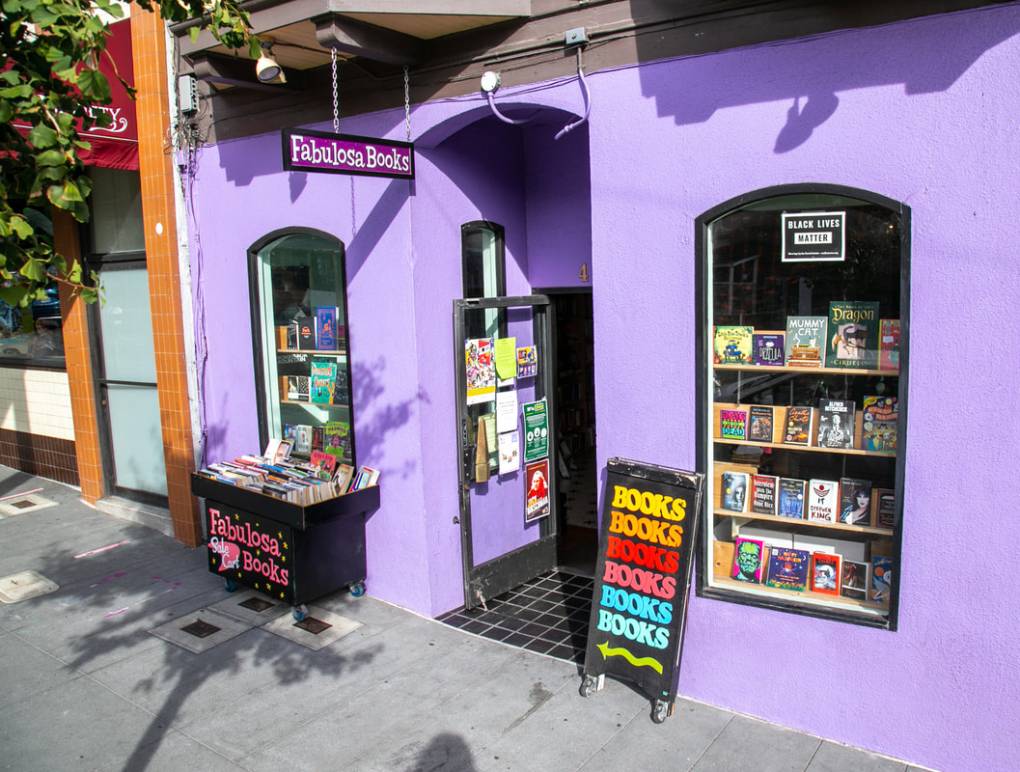
"caption": "Fabulosa Books in San Francisco's Castro District started sending books in May and has mailed over 700 books to places where LGBTQ book bans have been implemented.",
"credit": "Courtesy of Fabulosa Books",
"altTag": null,
"description": null,
"imgSizes": {
"medium": {
"file": "https://cdn.kqed.org/wp-content/uploads/sites/10/2024/07/img-2878-web_orig-800x605.jpg",
"width": 800,
"height": 605,
"mimeType": "image/jpeg"
},
"large": {
"file": "https://cdn.kqed.org/wp-content/uploads/sites/10/2024/07/img-2878-web_orig-1020x772.jpg",
"width": 1020,
"height": 772,
"mimeType": "image/jpeg"
},
"thumbnail": {
"file": "https://cdn.kqed.org/wp-content/uploads/sites/10/2024/07/img-2878-web_orig-160x121.jpg",
"width": 160,
"height": 121,
"mimeType": "image/jpeg"
},
"post-thumbnail": {
"file": "https://cdn.kqed.org/wp-content/uploads/sites/10/2024/07/img-2878-web_orig-672x372.jpg",
"width": 672,
"height": 372,
"mimeType": "image/jpeg"
},
"twentyfourteen-full-width": {
"file": "https://cdn.kqed.org/wp-content/uploads/sites/10/2024/07/img-2878-web_orig-1038x576.jpg",
"width": 1038,
"height": 576,
"mimeType": "image/jpeg"
},
"kqedFullSize": {
"file": "https://cdn.kqed.org/wp-content/uploads/sites/10/2024/07/img-2878-web_orig.jpg",
"width": 1057,
"height": 800
}
},
"isLoading": false,
"fetchFailed": false
},
"news_11991991": {
"type": "attachments",
"id": "news_11991991",
"meta": {
"index": "attachments_1716263798",
"site": "news",
"id": "11991991",
"found": true
},
"title": "sf-pride-2025",
"publishDate": 1719370613,
"status": "inherit",
"parent": 11991990,
"modified": 1750192930,
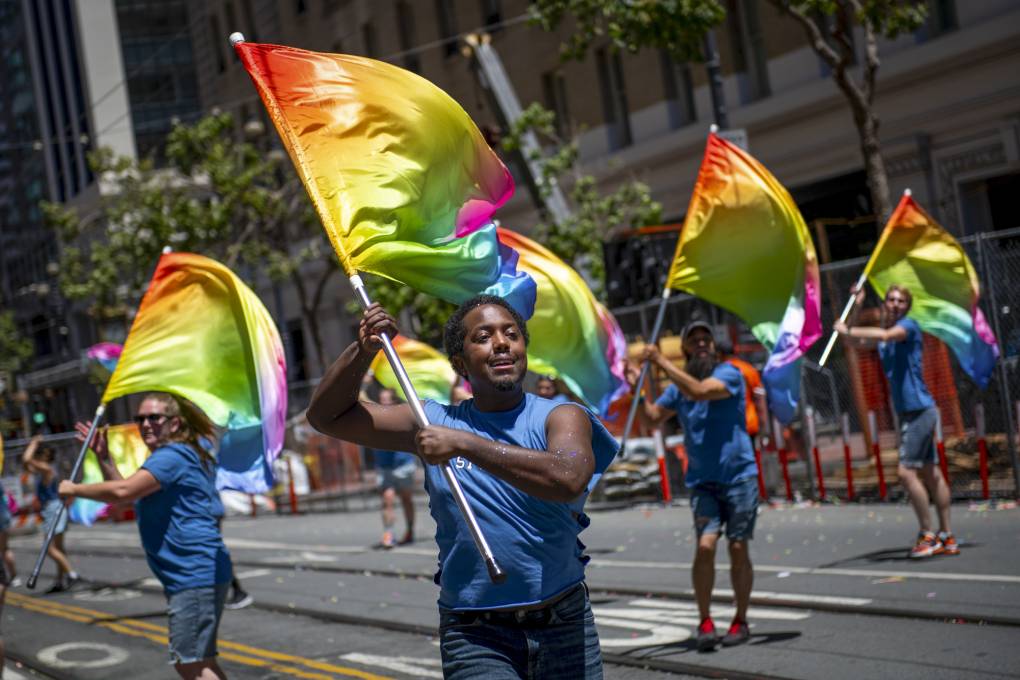
"caption": "Members of the Righteously Outrageous Twirling Corps perform during the San Francisco Pride Parade on June 26, 2022.",
"credit": "Beth LaBerge/KQED",
"altTag": "A group of flag twirlers holding rainbow flags perform on a street.",
"description": null,
"imgSizes": {
"medium": {
"file": "https://cdn.kqed.org/wp-content/uploads/sites/10/2024/06/047_KQED_SFPRIDEPARADE_06262022-KQED-800x533.jpg",
"width": 800,
"height": 533,
"mimeType": "image/jpeg"
},
"large": {
"file": "https://cdn.kqed.org/wp-content/uploads/sites/10/2024/06/047_KQED_SFPRIDEPARADE_06262022-KQED-1020x680.jpg",
"width": 1020,
"height": 680,
"mimeType": "image/jpeg"
},
"thumbnail": {
"file": "https://cdn.kqed.org/wp-content/uploads/sites/10/2024/06/047_KQED_SFPRIDEPARADE_06262022-KQED-160x107.jpg",
"width": 160,
"height": 107,
"mimeType": "image/jpeg"
},
"1536x1536": {
"file": "https://cdn.kqed.org/wp-content/uploads/sites/10/2024/06/047_KQED_SFPRIDEPARADE_06262022-KQED-1536x1024.jpg",
"width": 1536,
"height": 1024,
"mimeType": "image/jpeg"
},
"post-thumbnail": {
"file": "https://cdn.kqed.org/wp-content/uploads/sites/10/2024/06/047_KQED_SFPRIDEPARADE_06262022-KQED-672x372.jpg",
"width": 672,
"height": 372,
"mimeType": "image/jpeg"
},
"twentyfourteen-full-width": {
"file": "https://cdn.kqed.org/wp-content/uploads/sites/10/2024/06/047_KQED_SFPRIDEPARADE_06262022-KQED-1038x576.jpg",
"width": 1038,
"height": 576,
"mimeType": "image/jpeg"
},
"full-width": {
"file": "https://cdn.kqed.org/wp-content/uploads/sites/10/2024/06/047_KQED_SFPRIDEPARADE_06262022-KQED-1920x1280.jpg",
"width": 1920,
"height": 1280,
"mimeType": "image/jpeg"
},
"kqedFullSize": {
"file": "https://cdn.kqed.org/wp-content/uploads/sites/10/2024/06/047_KQED_SFPRIDEPARADE_06262022-KQED.jpg",
"width": 2000,
"height": 1333
}
},
"isLoading": false,
"fetchFailed": false
}
},
"audioPlayerReducer": {
"postId": "stream_live",
"isPaused": true,
"isPlaying": false,
"pfsActive": false,
"pledgeModalIsOpen": true,
"playerDrawerIsOpen": false,
"liveAudioPlayStartedAt": 0,
"liveAudioPlayContext": ""
},
"authorsReducer": {
"byline_news_12002780": {
"type": "authors",
"id": "byline_news_12002780",
"meta": {
"override": true
},
"slug": "byline_news_12002780",
"name": "\u003ca href=\"https://calmatters.org/author/alexei-koseff\">Alexei Koseff, \u003c/a>CalMatters",
"isLoading": false
},
"byline_news_11995853": {
"type": "authors",
"id": "byline_news_11995853",
"meta": {
"override": true
},
"slug": "byline_news_11995853",
"name": "Sophie Austin, Associated Press",
"isLoading": false
},
"byline_news_11992568": {
"type": "authors",
"id": "byline_news_11992568",
"meta": {
"override": true
},
"slug": "byline_news_11992568",
"name": "Jaimie Ding and Haven Daley, Associated Press",
"isLoading": false
},
"ohubertallen": {
"type": "authors",
"id": "102",
"meta": {
"index": "authors_1716337520",
"id": "102",
"found": true
},
"name": "Olivia Allen-Price",
"firstName": "Olivia",
"lastName": "Allen-Price",
"slug": "ohubertallen",
"email": "oallenprice@kqed.org",
"display_author_email": false,
"staff_mastheads": [
"news"
],
"title": "Senior Editor",
"bio": "Olivia Allen-Price is senior editor and host of the award-winning Bay Curious podcast. Prior to joining KQED in 2013, Olivia worked at The Baltimore Sun and The Virginian-Pilot in Norfolk, Va. She holds degrees in journalism and political science from Elon University. Her work has earned awards from the Society of Professional Journalists, the Hearst Foundation and Hearken. She loves to talk about running and curly hair.\r\n\r\nFollow: \u003ca href=\"https://twitter.com/oallenprice\">@oallenprice\u003c/a>\r\nEmail: \u003ca href=\"mailto:oallenprice@kqed.org\">oallenprice@kqed.org\u003c/a>",
"avatar": "https://secure.gravatar.com/avatar/07f7803c1f6be56f3be58ef276dfa64dce898502e0554408ef4858451a8294f7?s=600&d=blank&r=g",
"twitter": "oallenprice",
"bluesky": null,
"facebook": null,
"instagram": null,
"linkedin": null,
"sites": [
{
"site": "",
"roles": [
"editor"
]
},
{
"site": "arts",
"roles": [
"subscriber"
]
},
{
"site": "news",
"roles": [
"administrator"
]
},
{
"site": "pop",
"roles": [
"administrator"
]
},
{
"site": "bayareabites",
"roles": [
"contributor"
]
},
{
"site": "stateofhealth",
"roles": [
"administrator"
]
},
{
"site": "science",
"roles": [
"editor"
]
}
],
"headData": {
"title": "Olivia Allen-Price | KQED",
"description": "Senior Editor",
"ogImgSrc": "https://secure.gravatar.com/avatar/07f7803c1f6be56f3be58ef276dfa64dce898502e0554408ef4858451a8294f7?s=600&d=blank&r=g",
"twImgSrc": "https://secure.gravatar.com/avatar/07f7803c1f6be56f3be58ef276dfa64dce898502e0554408ef4858451a8294f7?s=600&d=blank&r=g"
},
"isLoading": false,
"link": "/author/ohubertallen"
},
"gmarzorati": {
"type": "authors",
"id": "227",
"meta": {
"index": "authors_1716337520",
"id": "227",
"found": true
},
"name": "Guy Marzorati",
"firstName": "Guy",
"lastName": "Marzorati",
"slug": "gmarzorati",
"email": "gmarzorati@KQED.org",
"display_author_email": true,
"staff_mastheads": [
"news"
],
"title": "Correspondent",
"bio": "Guy Marzorati is a correspondent on KQED's California Politics and Government Desk, based in San Jose. A graduate of Santa Clara University, Guy joined KQED in 2013. He reports on state and local politics and produces KQED's digital voter guide.",
"avatar": "https://secure.gravatar.com/avatar/e7038b8dbfd55b104369b76b1cd0b9de?s=600&d=blank&r=g",
"twitter": "guymarzorati",
"facebook": null,
"instagram": null,
"linkedin": null,
"sites": [
{
"site": "",
"roles": [
"editor"
]
},
{
"site": "news",
"roles": [
"editor"
]
},
{
"site": "science",
"roles": [
"editor"
]
},
{
"site": "forum",
"roles": [
"editor"
]
},
{
"site": "elections",
"roles": [
"editor"
]
},
{
"site": "liveblog",
"roles": [
"editor"
]
}
],
"headData": {
"title": "Guy Marzorati | KQED",
"description": "Correspondent",
"ogImgSrc": "https://secure.gravatar.com/avatar/e7038b8dbfd55b104369b76b1cd0b9de?s=600&d=blank&r=g",
"twImgSrc": "https://secure.gravatar.com/avatar/e7038b8dbfd55b104369b76b1cd0b9de?s=600&d=blank&r=g"
},
"isLoading": false,
"link": "/author/gmarzorati"
},
"kqed": {
"type": "authors",
"id": "236",
"meta": {
"index": "authors_1716337520",
"id": "236",
"found": true
},
"name": "KQED News Staff",
"firstName": "KQED News Staff",
"lastName": null,
"slug": "kqed",
"email": "faq@kqed.org",
"display_author_email": false,
"staff_mastheads": [],
"title": null,
"bio": null,
"avatar": "https://secure.gravatar.com/avatar/ef0e801a68c4c54afa9180db14084167?s=600&d=blank&r=g",
"twitter": null,
"facebook": null,
"instagram": null,
"linkedin": null,
"sites": [
{
"site": "arts",
"roles": [
"contributor"
]
},
{
"site": "news",
"roles": [
"editor"
]
},
{
"site": "futureofyou",
"roles": [
"author"
]
}
],
"headData": {
"title": "KQED News Staff | KQED",
"description": null,
"ogImgSrc": "https://secure.gravatar.com/avatar/ef0e801a68c4c54afa9180db14084167?s=600&d=blank&r=g",
"twImgSrc": "https://secure.gravatar.com/avatar/ef0e801a68c4c54afa9180db14084167?s=600&d=blank&r=g"
},
"isLoading": false,
"link": "/author/kqed"
},
"scottshafer": {
"type": "authors",
"id": "255",
"meta": {
"index": "authors_1716337520",
"id": "255",
"found": true
},
"name": "Scott Shafer",
"firstName": "Scott",
"lastName": "Shafer",
"slug": "scottshafer",
"email": "sshafer@kqed.org",
"display_author_email": false,
"staff_mastheads": [
"news"
],
"title": "KQED Contributor",
"bio": "Scott Shafer is a senior editor with the KQED Politics and Government desk. He is co-host of Political Breakdown, the award-winning radio show and podcast with a personal take on the world of politics. Scott came to KQED in 1998 to host the statewide\u003cem> California Report\u003c/em>. Prior to that he had extended stints in politics and government\u003cem>.\u003c/em> He uses that inside experience at KQED in his, reporting, hosting and analysis for the politics desk. Scott collaborated \u003cem>Political Breakdown a\u003c/em>nd on \u003cem>The Political Mind of Jerry Brown, \u003c/em>an eight-part series about the life and extraordinary political career of the former governor. For fun, he plays water polo with the San Francisco Tsunami.",
"avatar": "https://secure.gravatar.com/avatar/a62ebae45b79d7aed1a39a0e3bf68104?s=600&d=blank&r=g",
"twitter": "scottshafer",
"bluesky": null,
"facebook": null,
"instagram": null,
"linkedin": null,
"sites": [
{
"site": "news",
"roles": [
"editor"
]
},
{
"site": "stateofhealth",
"roles": [
"author"
]
},
{
"site": "science",
"roles": [
"author"
]
},
{
"site": "forum",
"roles": [
"subscriber"
]
},
{
"site": "liveblog",
"roles": [
"author"
]
}
],
"headData": {
"title": "Scott Shafer | KQED",
"description": "KQED Contributor",
"ogImgSrc": "https://secure.gravatar.com/avatar/a62ebae45b79d7aed1a39a0e3bf68104?s=600&d=blank&r=g",
"twImgSrc": "https://secure.gravatar.com/avatar/a62ebae45b79d7aed1a39a0e3bf68104?s=600&d=blank&r=g"
},
"isLoading": false,
"link": "/author/scottshafer"
},
"afont": {
"type": "authors",
"id": "8637",
"meta": {
"index": "authors_1716337520",
"id": "8637",
"found": true
},
"name": "Amanda Font",
"firstName": "Amanda",
"lastName": "Font",
"slug": "afont",
"email": "afont@kqed.org",
"display_author_email": false,
"staff_mastheads": [],
"title": "KQED Contributor",
"bio": "Amanda Font is a producer on \u003cem>The Latest\u003c/em> podcast, and the host and co-producer of the series \u003cem>Audible Cosmos\u003c/em>. She has previously worked as a producer and reporter on the \u003cem>Bay Curious\u003c/em> podcast, and director of \u003cem>The California Report Magazine\u003c/em>. She grew up in the deserts of Southern California and moved north for the trees. Amanda earned a B.A. from the BECA program at San Francisco State, where she worked in the university's radio station. Amanda Font is represented by SAG-AFTRA.",
"avatar": "https://secure.gravatar.com/avatar/d9e81cf0117d5849b9cfb7ab4b1422f1?s=600&d=blank&r=g",
"twitter": null,
"facebook": null,
"instagram": null,
"linkedin": null,
"sites": [
{
"site": "news",
"roles": [
"add_users",
"create_users"
]
},
{
"site": "science",
"roles": []
},
{
"site": "forum",
"roles": [
"administrator"
]
},
{
"site": "perspectives",
"roles": [
"administrator"
]
},
{
"site": "radio",
"roles": [
"administrator"
]
}
],
"headData": {
"title": "Amanda Font | KQED",
"description": "KQED Contributor",
"ogImgSrc": "https://secure.gravatar.com/avatar/d9e81cf0117d5849b9cfb7ab4b1422f1?s=600&d=blank&r=g",
"twImgSrc": "https://secure.gravatar.com/avatar/d9e81cf0117d5849b9cfb7ab4b1422f1?s=600&d=blank&r=g"
},
"isLoading": false,
"link": "/author/afont"
},
"ecruzguevarra": {
"type": "authors",
"id": "8654",
"meta": {
"index": "authors_1716337520",
"id": "8654",
"found": true
},
"name": "Ericka Cruz Guevarra",
"firstName": "Ericka",
"lastName": "Cruz Guevarra",
"slug": "ecruzguevarra",
"email": "ecruzguevarra@kqed.org",
"display_author_email": true,
"staff_mastheads": [
"news"
],
"title": "Producer, The Bay Podcast",
"bio": "Ericka Cruz Guevarra is host of \u003ca href=\"https://www.kqed.org/podcasts/thebay\">\u003cem>The Bay\u003c/em>\u003c/a> podcast at KQED. Before host, she was the show’s producer. Her work in that capacity includes a three-part reported series on policing in Vallejo, which won a 2020 excellence in journalism award from the Society of Professional Journalists. Ericka has worked as a breaking news reporter at Oregon Public Broadcasting, helped produce the Code Switch podcast, and was KQED’s inaugural Raul Ramirez Diversity Fund intern. She’s also an alumna of NPR’s Next Generation Radio program. Send her an email if you have strong feelings about whether Fairfield and Suisun City are the Bay. Ericka is represented by SAG-AFTRA.",
"avatar": "https://secure.gravatar.com/avatar/accefc1de4bafc7e234b69bcb9b6f6536c130fd84709bc3069ef11a78787e1bb?s=600&d=blank&r=g",
"twitter": "NotoriousECG",
"bluesky": null,
"facebook": null,
"instagram": null,
"linkedin": null,
"sites": [
{
"site": "arts",
"roles": [
"subscriber"
]
},
{
"site": "news",
"roles": [
"editor",
"manage_categories"
]
},
{
"site": "futureofyou",
"roles": [
"subscriber"
]
},
{
"site": "stateofhealth",
"roles": [
"subscriber"
]
},
{
"site": "science",
"roles": [
"editor"
]
},
{
"site": "forum",
"roles": [
"subscriber"
]
}
],
"headData": {
"title": "Ericka Cruz Guevarra | KQED",
"description": "Producer, The Bay Podcast",
"ogImgSrc": "https://secure.gravatar.com/avatar/accefc1de4bafc7e234b69bcb9b6f6536c130fd84709bc3069ef11a78787e1bb?s=600&d=blank&r=g",
"twImgSrc": "https://secure.gravatar.com/avatar/accefc1de4bafc7e234b69bcb9b6f6536c130fd84709bc3069ef11a78787e1bb?s=600&d=blank&r=g"
},
"isLoading": false,
"link": "/author/ecruzguevarra"
},
"dcronin": {
"type": "authors",
"id": "11362",
"meta": {
"index": "authors_1716337520",
"id": "11362",
"found": true
},
"name": "Dana Cronin",
"firstName": "Dana",
"lastName": "Cronin",
"slug": "dcronin",
"email": "dcronin@KQED.org",
"display_author_email": true,
"staff_mastheads": [],
"title": "KQED Contributor",
"bio": "Dana Cronin is a reporter for KQED News. She loves writing stories about climate change, environmental issues, food and agriculture. She's reported across the country, from Colorado to Washington D.C. to Illinois, and has won numerous awards for her coverage. Her work is regularly featured on national broadcasts, including NPR’s Morning Edition, All Things Considered, PBS Newshour and Science Friday. She lives in Oakland and has an avocado tree in her back yard.",
"avatar": "https://secure.gravatar.com/avatar/bcf89e3455ff7235f96ab6fa7258dd95?s=600&d=blank&r=g",
"twitter": "DanaHCronin",
"facebook": null,
"instagram": null,
"linkedin": null,
"sites": [
{
"site": "arts",
"roles": [
"author"
]
},
{
"site": "news",
"roles": [
"editor"
]
},
{
"site": "science",
"roles": [
"author"
]
},
{
"site": "liveblog",
"roles": [
"author"
]
}
],
"headData": {
"title": "Dana Cronin | KQED",
"description": "KQED Contributor",
"ogImgSrc": "https://secure.gravatar.com/avatar/bcf89e3455ff7235f96ab6fa7258dd95?s=600&d=blank&r=g",
"twImgSrc": "https://secure.gravatar.com/avatar/bcf89e3455ff7235f96ab6fa7258dd95?s=600&d=blank&r=g"
},
"isLoading": false,
"link": "/author/dcronin"
},
"amontecillo": {
"type": "authors",
"id": "11649",
"meta": {
"index": "authors_1716337520",
"id": "11649",
"found": true
},
"name": "Alan Montecillo",
"firstName": "Alan",
"lastName": "Montecillo",
"slug": "amontecillo",
"email": "amontecillo@kqed.org",
"display_author_email": false,
"staff_mastheads": [
"news"
],
"title": "KQED Contributor",
"bio": "Alan Montecillo is the senior editor of \u003cem>\u003ca href=\"http://kqed.org/thebay\">The Bay\u003c/a>, \u003c/em> KQED's local news podcast. Before moving to the Bay Area, he worked as a senior talk show producer for WILL in Champaign-Urbana, Illinois and at Oregon Public Broadcasting in Portland, Oregon. He has won journalism awards from the Society of Professional Journalists Northern California, the Public Media Journalists Association, The Signal Awards, and has also received a regional Edward R. Murrow award. Alan is a Filipino American from Hong Kong and a graduate of Reed College.",
"avatar": "https://secure.gravatar.com/avatar/268f53a2066899ea9efdd8a5900218b17c822d9862cbc9326cccec53ef41d349?s=600&d=blank&r=g",
"twitter": "alanmontecillo",
"bluesky": null,
"facebook": null,
"instagram": null,
"linkedin": null,
"sites": [
{
"site": "",
"roles": [
"editor"
]
},
{
"site": "news",
"roles": [
"editor",
"manage_categories"
]
}
],
"headData": {
"title": "Alan Montecillo | KQED",
"description": "KQED Contributor",
"ogImgSrc": "https://secure.gravatar.com/avatar/268f53a2066899ea9efdd8a5900218b17c822d9862cbc9326cccec53ef41d349?s=600&d=blank&r=g",
"twImgSrc": "https://secure.gravatar.com/avatar/268f53a2066899ea9efdd8a5900218b17c822d9862cbc9326cccec53ef41d349?s=600&d=blank&r=g"
},
"isLoading": false,
"link": "/author/amontecillo"
},
"ccabreralomeli": {
"type": "authors",
"id": "11708",
"meta": {
"index": "authors_1716337520",
"id": "11708",
"found": true
},
"name": "Carlos Cabrera-Lomelí",
"firstName": "Carlos",
"lastName": "Cabrera-Lomelí",
"slug": "ccabreralomeli",
"email": "ccabreralomeli@KQED.org",
"display_author_email": true,
"staff_mastheads": [
"news"
],
"title": "Community Reporter",
"bio": "Carlos Cabrera-Lomelí is a community reporter with KQED's digital engagement team. He also reports and co-produces for KQED's bilingual news hub KQED en Español. He grew up in San Francisco's Mission District and has previously worked with Univision, 48 Hills and REFORMA in Mexico City.",
"avatar": "https://secure.gravatar.com/avatar/c309be9665e484f887b818c89e273ecc673004f426f36b24d00a4d813a2e0518?s=600&d=blank&r=g",
"twitter": "@LomeliCabrera",
"bluesky": null,
"facebook": null,
"instagram": null,
"linkedin": null,
"sites": [
{
"site": "arts",
"roles": [
"editor"
]
},
{
"site": "news",
"roles": [
"editor"
]
},
{
"site": "about",
"roles": [
"editor"
]
},
{
"site": "science",
"roles": [
"editor"
]
},
{
"site": "perspectives",
"roles": [
"editor"
]
},
{
"site": "elections",
"roles": [
"editor"
]
},
{
"site": "liveblog",
"roles": [
"contributor"
]
}
],
"headData": {
"title": "Carlos Cabrera-Lomelí | KQED",
"description": "Community Reporter",
"ogImgSrc": "https://secure.gravatar.com/avatar/c309be9665e484f887b818c89e273ecc673004f426f36b24d00a4d813a2e0518?s=600&d=blank&r=g",
"twImgSrc": "https://secure.gravatar.com/avatar/c309be9665e484f887b818c89e273ecc673004f426f36b24d00a4d813a2e0518?s=600&d=blank&r=g"
},
"isLoading": false,
"link": "/author/ccabreralomeli"
},
"jessicakariisa": {
"type": "authors",
"id": "11831",
"meta": {
"index": "authors_1716337520",
"id": "11831",
"found": true
},
"name": "Jessica Kariisa",
"firstName": "Jessica",
"lastName": "Kariisa",
"slug": "jessicakariisa",
"email": "jkariisa@kqed.org",
"display_author_email": false,
"staff_mastheads": [],
"title": "Producer, The Bay",
"bio": "Jessica Kariisa is the producer of The Bay. She first joined KQED as an intern for The California Report Magazine, after which she became an on-call producer. She reported a Bay Curious episode on the use of rap lyrics in criminal trials which won a Society of Professional Journalists award in 2023 for Excellence in Features Journalism and the 2023 Signal Award for Best Conversation Starter. She’s worked on podcasts for Snap Judgment and American Public Media. Before embarking on her audio career, she was a music journalist.\r\n\r\nJessica Kariisa is represented by SAG-AFTRA.",
"avatar": "https://secure.gravatar.com/avatar/522e97b28ac0b3d411621c0fde8f3419c7b71ea2c5c262c57c4bb600963f328c?s=600&d=blank&r=g",
"twitter": null,
"bluesky": null,
"facebook": null,
"instagram": null,
"linkedin": null,
"sites": [
{
"site": "arts",
"roles": [
"author"
]
},
{
"site": "news",
"roles": [
"editor",
"manage_categories"
]
}
],
"headData": {
"title": "Jessica Kariisa | KQED",
"description": "Producer, The Bay",
"ogImgSrc": "https://secure.gravatar.com/avatar/522e97b28ac0b3d411621c0fde8f3419c7b71ea2c5c262c57c4bb600963f328c?s=600&d=blank&r=g",
"twImgSrc": "https://secure.gravatar.com/avatar/522e97b28ac0b3d411621c0fde8f3419c7b71ea2c5c262c57c4bb600963f328c?s=600&d=blank&r=g"
},
"isLoading": false,
"link": "/author/jessicakariisa"
},
"sjohnson": {
"type": "authors",
"id": "11840",
"meta": {
"index": "authors_1716337520",
"id": "11840",
"found": true
},
"name": "Sydney Johnson",
"firstName": "Sydney",
"lastName": "Johnson",
"slug": "sjohnson",
"email": "sjohnson@kqed.org",
"display_author_email": false,
"staff_mastheads": [
"news"
],
"title": "KQED Reporter",
"bio": "Sydney Johnson is a general assignment reporter at KQED. She previously reported on public health and city government at the San Francisco Examiner, and before that, she covered statewide education policy for EdSource. Her reporting has won multiple local, state and national awards. Sydney is a graduate of the University of California, Berkeley and lives in San Francisco.",
"avatar": "https://secure.gravatar.com/avatar/97855f2719b72ad6190b7c535fe642c8?s=600&d=blank&r=g",
"twitter": "sydneyfjohnson",
"facebook": null,
"instagram": null,
"linkedin": null,
"sites": [
{
"site": "news",
"roles": [
"editor"
]
}
],
"headData": {
"title": "Sydney Johnson | KQED",
"description": "KQED Reporter",
"ogImgSrc": "https://secure.gravatar.com/avatar/97855f2719b72ad6190b7c535fe642c8?s=600&d=blank&r=g",
"twImgSrc": "https://secure.gravatar.com/avatar/97855f2719b72ad6190b7c535fe642c8?s=600&d=blank&r=g"
},
"isLoading": false,
"link": "/author/sjohnson"
},
"kdebenedetti": {
"type": "authors",
"id": "11913",
"meta": {
"index": "authors_1716337520",
"id": "11913",
"found": true
},
"name": "Katie DeBenedetti",
"firstName": "Katie",
"lastName": "DeBenedetti",
"slug": "kdebenedetti",
"email": "kdebenedetti@kqed.org",
"display_author_email": false,
"staff_mastheads": [
"news",
"science"
],
"title": "KQED Contributor",
"bio": "Katie DeBenedetti is a digital reporter covering daily news for the Express Desk. Prior to joining KQED as a culture reporting intern in January 2024, she covered education and city government for the Napa Valley Register.",
"avatar": "https://secure.gravatar.com/avatar/6e31073cb8f7e4214ab03f42771d0f45?s=600&d=blank&r=g",
"twitter": null,
"facebook": null,
"instagram": null,
"linkedin": null,
"sites": [
{
"site": "news",
"roles": [
"author"
]
},
{
"site": "science",
"roles": [
"author"
]
},
{
"site": "liveblog",
"roles": [
"author"
]
}
],
"headData": {
"title": "Katie DeBenedetti | KQED",
"description": "KQED Contributor",
"ogImgSrc": "https://secure.gravatar.com/avatar/6e31073cb8f7e4214ab03f42771d0f45?s=600&d=blank&r=g",
"twImgSrc": "https://secure.gravatar.com/avatar/6e31073cb8f7e4214ab03f42771d0f45?s=600&d=blank&r=g"
},
"isLoading": false,
"link": "/author/kdebenedetti"
},
"emanoukian": {
"type": "authors",
"id": "11925",
"meta": {
"index": "authors_1716337520",
"id": "11925",
"found": true
},
"name": "Elize Manoukian",
"firstName": "Elize",
"lastName": "Manoukian",
"slug": "emanoukian",
"email": "emanoukian@KQED.org",
"display_author_email": false,
"staff_mastheads": [
"news"
],
"title": "Digital News Editor",
"bio": "Elize Manoukian is an award-winning audio producer and Senior Editor on the Express Desk, KQED's digital news platform. Her work has appeared on KPFA, Interlochen Public Radio, Oregon Public Broadcast, the New York Daily News, LA Times and the San Diego Union-Tribune.",
"avatar": "https://secure.gravatar.com/avatar/4525f1a8e46ccb30933b32653d9772064cfefe3fa655eb45b3b3a80341f6bdad?s=600&d=blank&r=g",
"twitter": null,
"bluesky": null,
"facebook": null,
"instagram": null,
"linkedin": null,
"sites": [
{
"site": "arts",
"roles": [
"editor"
]
},
{
"site": "news",
"roles": [
"editor"
]
},
{
"site": "science",
"roles": [
"editor"
]
}
],
"headData": {
"title": "Elize Manoukian | KQED",
"description": "Digital News Editor",
"ogImgSrc": "https://secure.gravatar.com/avatar/4525f1a8e46ccb30933b32653d9772064cfefe3fa655eb45b3b3a80341f6bdad?s=600&d=blank&r=g",
"twImgSrc": "https://secure.gravatar.com/avatar/4525f1a8e46ccb30933b32653d9772064cfefe3fa655eb45b3b3a80341f6bdad?s=600&d=blank&r=g"
},
"isLoading": false,
"link": "/author/emanoukian"
}
},
"pagesReducer": {
"news_tag_lgbtq": {
"type": "terms",
"id": "news_20004",
"meta": {
"index": "terms_1716263798",
"site": "news",
"id": "20004",
"score": 8.284364
},
"featImg": null,
"name": "LGBTQ",
"description": null,
"taxonomy": "tag",
"headData": {
"twImgId": null,
"twTitle": null,
"ogTitle": null,
"ogImgId": null,
"twDescription": null,
"description": null,
"title": "LGBTQ Archives | KQED News",
"ogDescription": null
},
"ttid": 20021,
"slug": "lgbtq",
"isLoading": false,
"title": "LGBTQ",
"pageMeta": {
"site": "news",
"WpPageTemplate": "page-topic-editorial",
"currentPage": 8
},
"blocks": [
{
"blockName": "kqed/post-list",
"attrs": {
"layout": "cardArticle2",
"query": "posts/news?tag=lgbtq",
"seeMore": false,
"paginated": true,
"page": 8
}
},
{
"blockName": "kqed/ad"
}
]
}
},
"pfsSessionReducer": {},
"postsReducer": {
"stream_live": {
"type": "live",
"id": "stream_live",
"audioUrl": "https://streams.kqed.org/kqedradio",
"title": "Live Stream",
"excerpt": "Live Stream information currently unavailable.",
"link": "/radio",
"featImg": "",
"label": {
"name": "KQED Live",
"link": "/"
}
},
"stream_kqedNewscast": {
"type": "posts",
"id": "stream_kqedNewscast",
"audioUrl": "https://www.kqed.org/.stream/anon/radio/RDnews/newscast.mp3?_=1",
"title": "KQED Newscast",
"featImg": "",
"label": {
"name": "88.5 FM",
"link": "/"
}
},
"news_12015112": {
"type": "posts",
"id": "news_12015112",
"meta": {
"index": "posts_1716263798",
"site": "news",
"id": "12015112",
"score": null,
"sort": [
1732208097000
]
},
"guestAuthors": [],
"slug": "san-franciscos-transgender-community-steels-itself-to-weather-a-storm",
"title": "San Francisco’s Transgender Community Steels Itself to Weather a Storm",
"publishDate": 1732208097,
"format": "standard",
"headTitle": "San Francisco’s Transgender Community Steels Itself to Weather a Storm | KQED",
"labelTerm": {
"site": "news"
},
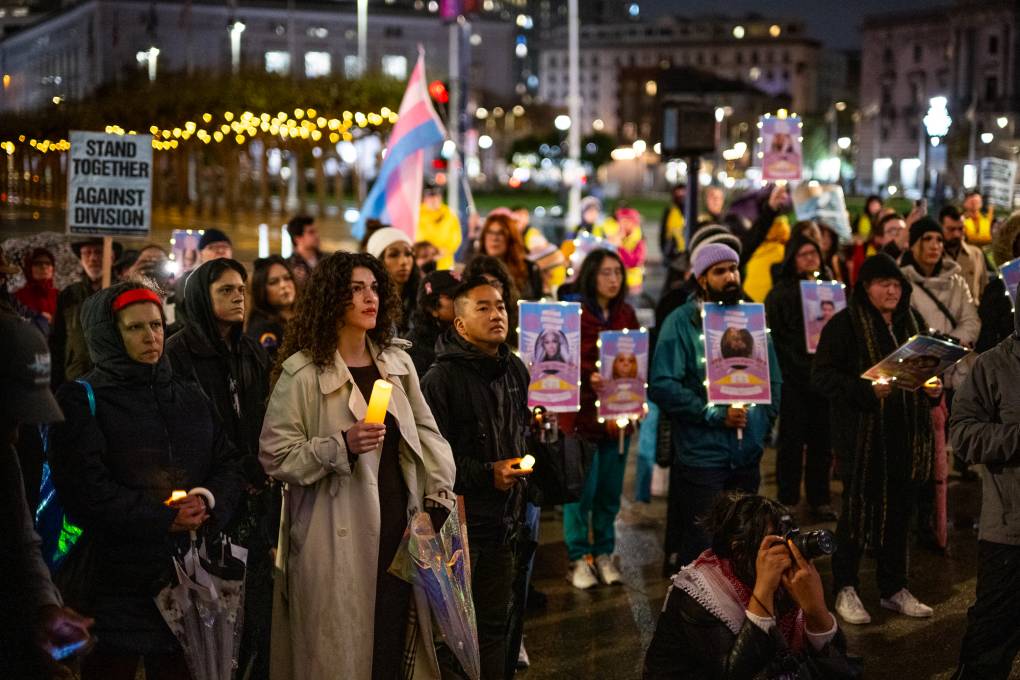
"content": "\u003cp>For those gathered under umbrellas on the steps of San Francisco City Hall to remember the lives of transgender people lost to violence over the past year, the somber event felt not only like a vigil but like a preparation for struggles to come.\u003c/p>\n\u003cp>More than 150 people came together for the city’s \u003ca href=\"https://www.kqed.org/arts/11097157/for-transgender-day-of-remembrance-watch-video-of-2-undergoing-transitions\">Transgender Day of Remembrance\u003c/a> event, holding pink, blue and white trans pride flags, electric candles, and signs bearing the names and images of victims.\u003c/p>\n\u003cp>“The bad news is, this weather is very appropriate: we have a storm to weather,” trans activist KaiKai Bee Michaels said to attendees. “I think that we have some hard times ahead of us. That kind of sucks. It builds strength. We have a lot of work to do. And I think we’re going to do that work.”\u003c/p>\n\u003cp>[ad fullwidth]\u003c/p>\n\u003cp>Transgender Day of Remembrance comes at a frightening time for the community as it \u003ca href=\"https://www.kqed.org/news/12014337/what-can-trans-folks-do-to-prepare-for-another-trump-administration\">braces for a second Donald Trump presidency\u003c/a>. Throughout the 2024 campaign, trans people were a target of Trump and the Republican Party’s culture war rhetoric — stoking fears about trans women in sports, promising to pull federal funding from hospitals that perform gender-affirming care, and accusing schools of sexualizing children by speaking with them about gender identity and sexuality.\u003c/p>\n\u003cp>On Wednesday, House Speaker Mike Johnson (R–La.) \u003ca href=\"https://mikejohnson.house.gov/news/documentsingle.aspx?DocumentID=1484\">announced\u003c/a> that Capitol Hill restrooms and changing rooms would be restricted by “biological sex,” essentially barring trans people from using facilities that match their gender identity — just two weeks after Sarah McBride (D–R.I.) was elected as the first trans member of Congress.\u003c/p>\n\u003cp>As California prepares to \u003ca href=\"https://www.kqed.org/news/12013395/newsom-calls-special-session-prepare-california-legal-fight-against-trump\">lead the fight\u003c/a> against many of Trump’s political promises, San Francisco will also likely be at the forefront.\u003c/p>\n\u003cp>The \u003ca href=\"https://www.kqed.org/news/11989910/san-francisco-declares-itself-a-transgender-sanctuary-city\">city’s sanctuary status\u003c/a> makes it a place many trans folks come to when they don’t feel safe in their hometowns, according to Honey Mahogany, director of San Francisco’s Office of Transgender Initiatives.\u003c/p>\n\u003cfigure id=\"attachment_12015241\" class=\"wp-caption aligncenter\" style=\"max-width: 2000px\">\u003cimg loading=\"lazy\" decoding=\"async\" class=\"size-full wp-image-12015241\" src=\"https://cdn.kqed.org/wp-content/uploads/sites/10/2024/11/241120-TransgenderRemembrance-08-BL.jpg\" alt=\"\" width=\"2000\" height=\"1333\" srcset=\"https://cdn.kqed.org/wp-content/uploads/sites/10/2024/11/241120-TransgenderRemembrance-08-BL.jpg 2000w, https://cdn.kqed.org/wp-content/uploads/sites/10/2024/11/241120-TransgenderRemembrance-08-BL-800x533.jpg 800w, https://cdn.kqed.org/wp-content/uploads/sites/10/2024/11/241120-TransgenderRemembrance-08-BL-1020x680.jpg 1020w, https://cdn.kqed.org/wp-content/uploads/sites/10/2024/11/241120-TransgenderRemembrance-08-BL-160x107.jpg 160w, https://cdn.kqed.org/wp-content/uploads/sites/10/2024/11/241120-TransgenderRemembrance-08-BL-1536x1024.jpg 1536w, https://cdn.kqed.org/wp-content/uploads/sites/10/2024/11/241120-TransgenderRemembrance-08-BL-1920x1280.jpg 1920w\" sizes=\"auto, (max-width: 2000px) 100vw, 2000px\">\u003cfigcaption class=\"wp-caption-text\">Marcela Ruiz listens to speakers during a rally on Transgender Day of Remembrance in front of City Hall in San Francisco on Nov. 20, 2024, an annual event honoring lives lost to violence against transgender people. \u003ccite>(Beth LaBerge/KQED)\u003c/cite>\u003c/figcaption>\u003c/figure>\n\u003cp>“Because they are not able to access the health care that they need, families have trans kids who live in states where their state legislatures are enforcing bans on health care, bans on sports, or even the ability for them to transition socially in schools,” she told KQED. “They’re making plans to move to places like San Francisco.”\u003c/p>\n\u003cp>The event held Wednesday honored trans people who have died due to violence and oppression. Its organizers said it was a space to “remember, grieve, and heal — while also imagining a future of safety and liberation for trans communities,” according to a post on \u003ca href=\"https://www.instagram.com/p/DCCnVbRSlVq/?hl=en\">social media\u003c/a>.\u003c/p>\n\u003cp>It was the first Trans Day of Remembrance that Susan Spencer, 77, has attended. She said that recent events had made it important for her to show up in support of trans members of her church, St. Aidan’s Episcopal.\u003c/p>\n\u003cp>“These are the laws that have been passed. It is the deaths that have occurred. It is the abuse on the streets of people,” Spencer told KQED. “So many things that aren’t allowing people to be free and to be who they are.”\u003c/p>\n\u003cfigure id=\"attachment_12015243\" class=\"wp-caption aligncenter\" style=\"max-width: 2000px\">\u003cimg loading=\"lazy\" decoding=\"async\" class=\"size-full wp-image-12015243\" src=\"https://cdn.kqed.org/wp-content/uploads/sites/10/2024/11/241120-TransgenderRemembrance-16-BL.jpg\" alt=\"\" width=\"2000\" height=\"1333\" srcset=\"https://cdn.kqed.org/wp-content/uploads/sites/10/2024/11/241120-TransgenderRemembrance-16-BL.jpg 2000w, https://cdn.kqed.org/wp-content/uploads/sites/10/2024/11/241120-TransgenderRemembrance-16-BL-800x533.jpg 800w, https://cdn.kqed.org/wp-content/uploads/sites/10/2024/11/241120-TransgenderRemembrance-16-BL-1020x680.jpg 1020w, https://cdn.kqed.org/wp-content/uploads/sites/10/2024/11/241120-TransgenderRemembrance-16-BL-160x107.jpg 160w, https://cdn.kqed.org/wp-content/uploads/sites/10/2024/11/241120-TransgenderRemembrance-16-BL-1536x1024.jpg 1536w, https://cdn.kqed.org/wp-content/uploads/sites/10/2024/11/241120-TransgenderRemembrance-16-BL-1920x1280.jpg 1920w\" sizes=\"auto, (max-width: 2000px) 100vw, 2000px\">\u003cfigcaption class=\"wp-caption-text\">People gathered for a rally on Transgender Day of Remembrance hold candles in the air in front of City Hall in San Francisco on Nov. 20, 2024, an annual event honoring lives lost to violence against transgender people. \u003ccite>(Beth LaBerge/KQED)\u003c/cite>\u003c/figcaption>\u003c/figure>\n\u003cp>Across the country, 36 trans and gender-expansive people have been killed in acts of violence in the past year, and a similar number died in 2023, according to the \u003ca href=\"https://www.hrc.org/press-releases/hrcs-2024-epidemic-of-violence-report-fatal-violence-against-transgender-and-gender-non-conforming-people-continues-with-black-trans-women-comprising-nearly-half-of-the-deaths\">Human Rights Campaign\u003c/a>.\u003c/p>\n\u003cp>This includes Michelle Henry, who was 25 years old when she was found dead in a downtown San Francisco residence in May, according to an SFPD news release. The death was ruled a homicide, and the medical examiner found that Henry had suffered \u003ca href=\"https://www.ebar.com/story.php?ch=news&sc=crime&id=333324\">multiple stab wounds and was strangled\u003c/a>, according to the \u003cem>Bay Area Reporter\u003c/em>, which reported that police did not have evidence the killing was motivated by hate\u003cem>.\u003c/em>\u003c/p>\n\u003cp>Mahogany said Henry grew up in San Francisco and became well-known within the local trans community.\u003c/p>\n\u003cp>“She was formerly homeless, was able to engage in services, was housed, was a participant in the S.F. LGBT Center’s youth program,” she told KQED. “I think people were really excited for the progress that she had made in her life and for the life that waited for her ahead. For her life to be cut short at 25, in a very violent way, was really disturbing for a lot of people here in San Francisco, in our community.”\u003c/p>\n\u003cfigure id=\"attachment_12015242\" class=\"wp-caption aligncenter\" style=\"max-width: 2000px\">\u003cimg loading=\"lazy\" decoding=\"async\" class=\"size-full wp-image-12015242\" src=\"https://cdn.kqed.org/wp-content/uploads/sites/10/2024/11/241120-TransgenderRemembrance-13-BL.jpg\" alt=\"\" width=\"2000\" height=\"1333\" srcset=\"https://cdn.kqed.org/wp-content/uploads/sites/10/2024/11/241120-TransgenderRemembrance-13-BL.jpg 2000w, https://cdn.kqed.org/wp-content/uploads/sites/10/2024/11/241120-TransgenderRemembrance-13-BL-800x533.jpg 800w, https://cdn.kqed.org/wp-content/uploads/sites/10/2024/11/241120-TransgenderRemembrance-13-BL-1020x680.jpg 1020w, https://cdn.kqed.org/wp-content/uploads/sites/10/2024/11/241120-TransgenderRemembrance-13-BL-160x107.jpg 160w, https://cdn.kqed.org/wp-content/uploads/sites/10/2024/11/241120-TransgenderRemembrance-13-BL-1536x1024.jpg 1536w, https://cdn.kqed.org/wp-content/uploads/sites/10/2024/11/241120-TransgenderRemembrance-13-BL-1920x1280.jpg 1920w\" sizes=\"auto, (max-width: 2000px) 100vw, 2000px\">\u003cfigcaption class=\"wp-caption-text\">People gather for a rally on Transgender Day of Remembrance in front of City Hall in San Francisco on Nov. 20, 2024, an annual event honoring lives lost to violence against transgender people. \u003ccite>(Beth LaBerge/KQED)\u003c/cite>\u003c/figcaption>\u003c/figure>\n\u003cp>In 2023, \u003ca href=\"https://www.kqed.org/news/11990260/a-conversation-with-banko-browns-chosen-family\">Banko Brown\u003c/a>, a Black trans man, was shot and killed by a security guard at a Walgreens store in San Francisco.\u003c/p>\n\u003cp>“I know that for many of us today, Trans Day of Remembrance, is a really tough time,” Mahogany said during the rally. “Many of us know people who have passed, many of us know people who have passed due to violence.”\u003c/p>\n\u003cp>[aside postID=news_12014337 hero='https://cdn.kqed.org/wp-content/uploads/sites/10/2024/11/GettyImages-1258626528.jpg']\u003c/p>\n\u003cp>She said that these deaths are a reminder of the dangers that anti-trans rhetoric carries.\u003c/p>\n\u003cp>Her hope is for the city to rally around the trans community and defy the fear-mongering and divisive language coming from prominent Republican representatives and right-wing interest groups.\u003c/p>\n\u003cp>‘We continue to fight back against anti-trans rhetoric or any kind of rhetoric that seeks to divide us,” she told KQED. “Divide and conquer has proven a very effective strategy. It is the way that fascism comes to the front, but it’s also a way in which those who are powerful, those with a lot of money, those with interests in keeping the working class and the middle-class populace down — that’s the way that they maintain their power.”\u003c/p>\n\u003cp>\u003cem>KQED’s \u003c/em>\u003ca href=\"https://www.kqed.org/author/bwatt\">\u003cem>Brian Watt\u003c/em>\u003c/a>\u003cem> contributed to this report.\u003c/em>\u003c/p>\n\u003cp>[ad floatright]\u003c/p>\n",
"blocks": [],
"excerpt": "SF's rainy Transgender Day of Remembrance event comes as the community braces for a second Donald Trump presidency and the effects of anti-trans rhetoric.",
"status": "publish",
"parent": 0,
"modified": 1738777423,
"stats": {
"hasAudio": false,
"hasVideo": false,
"hasChartOrMap": false,
"iframeSrcs": [],
"hasGoogleForm": false,
"hasGallery": false,
"hasHearkenModule": false,
"hasPolis": false,
"paragraphCount": 24,
"wordCount": 1098
},
"headData": {
"title": "San Francisco’s Transgender Community Steels Itself to Weather a Storm | KQED",
"description": "SF's rainy Transgender Day of Remembrance event comes as the community braces for a second Donald Trump presidency and the effects of anti-trans rhetoric.",
"ogTitle": "",
"ogDescription": "",
"ogImgId": "",
"twTitle": "",
"twDescription": "",
"twImgId": "",
"schema": {
"@context": "https://schema.org",
"@type": "NewsArticle",
"headline": "San Francisco’s Transgender Community Steels Itself to Weather a Storm",
"datePublished": "2024-11-21T08:54:57-08:00",
"dateModified": "2025-02-05T09:43:43-08:00",
"image": "https://cdn.kqed.org/wp-content/uploads/2020/02/KQED-OG-Image@1x.png",
"isAccessibleForFree": "True",
"publisher": {
"@type": "NewsMediaOrganization",
"@id": "https://www.kqed.org/#organization",
"name": "KQED",
"logo": "https://cdn.kqed.org/wp-content/uploads/2020/02/KQED-OG-Image@1x.png",
"url": "https://www.kqed.org",
"sameAs": [
"https://www.facebook.com/KQED",
"https://twitter.com/KQED",
"https://www.instagram.com/kqed/",
"https://www.tiktok.com/@kqedofficial",
"https://www.linkedin.com/company/kqed",
"https://www.youtube.com/channel/UCeC0IOo7i1P_61zVUWbJ4nw"
]
}
}
},
"audioUrl": "https://traffic.omny.fm/d/clips/0af137ef-751e-4b19-a055-aaef00d2d578/ffca7e9f-6831-41c5-bcaf-aaef00f5a073/199e1d68-eb29-478e-a9cc-b22e0117d255/audio.mp3?accessToken=eyJhbGciOiJIUzI1NiIsImtpZCI6IjlzYTZ6N20wdUVtT0VhcnZBUGdxVHciLCJ0eXAiOiJKV1QifQ.eyJjbGlwIjoiMTk5ZTFkNjgtZWIyOS00NzhlLWE5Y2MtYjIyZTAxMTdkMjU1IiwiYWRzIjowfQ.TOHOj3kUyeT2di_J1GlIFJegUkuEgZrISzyRQh5sG04",
"sticky": false,
"nprStoryId": "kqed-12015112",
"excludeFromSiteSearch": "Include",
"articleAge": "0",
"path": "/news/12015112/san-franciscos-transgender-community-steels-itself-to-weather-a-storm",
"audioTrackLength": null,
"parsedContent": [
{
"type": "contentString",
"content": "\u003cdiv class=\"post-body\">\u003cp>\u003cp>For those gathered under umbrellas on the steps of San Francisco City Hall to remember the lives of transgender people lost to violence over the past year, the somber event felt not only like a vigil but like a preparation for struggles to come.\u003c/p>\n\u003cp>More than 150 people came together for the city’s \u003ca href=\"https://www.kqed.org/arts/11097157/for-transgender-day-of-remembrance-watch-video-of-2-undergoing-transitions\">Transgender Day of Remembrance\u003c/a> event, holding pink, blue and white trans pride flags, electric candles, and signs bearing the names and images of victims.\u003c/p>\n\u003cp>“The bad news is, this weather is very appropriate: we have a storm to weather,” trans activist KaiKai Bee Michaels said to attendees. “I think that we have some hard times ahead of us. That kind of sucks. It builds strength. We have a lot of work to do. And I think we’re going to do that work.”\u003c/p>\n\u003cp>\u003c/p>\u003c/div>",
"attributes": {
"named": {},
"numeric": []
}
},
{
"type": "component",
"content": "",
"name": "ad",
"attributes": {
"named": {
"label": "fullwidth"
},
"numeric": [
"fullwidth"
]
}
},
{
"type": "contentString",
"content": "\u003cdiv class=\"post-body\">\u003cp>\u003c/p>\n\u003cp>Transgender Day of Remembrance comes at a frightening time for the community as it \u003ca href=\"https://www.kqed.org/news/12014337/what-can-trans-folks-do-to-prepare-for-another-trump-administration\">braces for a second Donald Trump presidency\u003c/a>. Throughout the 2024 campaign, trans people were a target of Trump and the Republican Party’s culture war rhetoric — stoking fears about trans women in sports, promising to pull federal funding from hospitals that perform gender-affirming care, and accusing schools of sexualizing children by speaking with them about gender identity and sexuality.\u003c/p>\n\u003cp>On Wednesday, House Speaker Mike Johnson (R–La.) \u003ca href=\"https://mikejohnson.house.gov/news/documentsingle.aspx?DocumentID=1484\">announced\u003c/a> that Capitol Hill restrooms and changing rooms would be restricted by “biological sex,” essentially barring trans people from using facilities that match their gender identity — just two weeks after Sarah McBride (D–R.I.) was elected as the first trans member of Congress.\u003c/p>\n\u003cp>As California prepares to \u003ca href=\"https://www.kqed.org/news/12013395/newsom-calls-special-session-prepare-california-legal-fight-against-trump\">lead the fight\u003c/a> against many of Trump’s political promises, San Francisco will also likely be at the forefront.\u003c/p>\n\u003cp>The \u003ca href=\"https://www.kqed.org/news/11989910/san-francisco-declares-itself-a-transgender-sanctuary-city\">city’s sanctuary status\u003c/a> makes it a place many trans folks come to when they don’t feel safe in their hometowns, according to Honey Mahogany, director of San Francisco’s Office of Transgender Initiatives.\u003c/p>\n\u003cfigure id=\"attachment_12015241\" class=\"wp-caption aligncenter\" style=\"max-width: 2000px\">\u003cimg loading=\"lazy\" decoding=\"async\" class=\"size-full wp-image-12015241\" src=\"https://cdn.kqed.org/wp-content/uploads/sites/10/2024/11/241120-TransgenderRemembrance-08-BL.jpg\" alt=\"\" width=\"2000\" height=\"1333\" srcset=\"https://cdn.kqed.org/wp-content/uploads/sites/10/2024/11/241120-TransgenderRemembrance-08-BL.jpg 2000w, https://cdn.kqed.org/wp-content/uploads/sites/10/2024/11/241120-TransgenderRemembrance-08-BL-800x533.jpg 800w, https://cdn.kqed.org/wp-content/uploads/sites/10/2024/11/241120-TransgenderRemembrance-08-BL-1020x680.jpg 1020w, https://cdn.kqed.org/wp-content/uploads/sites/10/2024/11/241120-TransgenderRemembrance-08-BL-160x107.jpg 160w, https://cdn.kqed.org/wp-content/uploads/sites/10/2024/11/241120-TransgenderRemembrance-08-BL-1536x1024.jpg 1536w, https://cdn.kqed.org/wp-content/uploads/sites/10/2024/11/241120-TransgenderRemembrance-08-BL-1920x1280.jpg 1920w\" sizes=\"auto, (max-width: 2000px) 100vw, 2000px\">\u003cfigcaption class=\"wp-caption-text\">Marcela Ruiz listens to speakers during a rally on Transgender Day of Remembrance in front of City Hall in San Francisco on Nov. 20, 2024, an annual event honoring lives lost to violence against transgender people. \u003ccite>(Beth LaBerge/KQED)\u003c/cite>\u003c/figcaption>\u003c/figure>\n\u003cp>“Because they are not able to access the health care that they need, families have trans kids who live in states where their state legislatures are enforcing bans on health care, bans on sports, or even the ability for them to transition socially in schools,” she told KQED. “They’re making plans to move to places like San Francisco.”\u003c/p>\n\u003cp>The event held Wednesday honored trans people who have died due to violence and oppression. Its organizers said it was a space to “remember, grieve, and heal — while also imagining a future of safety and liberation for trans communities,” according to a post on \u003ca href=\"https://www.instagram.com/p/DCCnVbRSlVq/?hl=en\">social media\u003c/a>.\u003c/p>\n\u003cp>It was the first Trans Day of Remembrance that Susan Spencer, 77, has attended. She said that recent events had made it important for her to show up in support of trans members of her church, St. Aidan’s Episcopal.\u003c/p>\n\u003cp>“These are the laws that have been passed. It is the deaths that have occurred. It is the abuse on the streets of people,” Spencer told KQED. “So many things that aren’t allowing people to be free and to be who they are.”\u003c/p>\n\u003cfigure id=\"attachment_12015243\" class=\"wp-caption aligncenter\" style=\"max-width: 2000px\">\u003cimg loading=\"lazy\" decoding=\"async\" class=\"size-full wp-image-12015243\" src=\"https://cdn.kqed.org/wp-content/uploads/sites/10/2024/11/241120-TransgenderRemembrance-16-BL.jpg\" alt=\"\" width=\"2000\" height=\"1333\" srcset=\"https://cdn.kqed.org/wp-content/uploads/sites/10/2024/11/241120-TransgenderRemembrance-16-BL.jpg 2000w, https://cdn.kqed.org/wp-content/uploads/sites/10/2024/11/241120-TransgenderRemembrance-16-BL-800x533.jpg 800w, https://cdn.kqed.org/wp-content/uploads/sites/10/2024/11/241120-TransgenderRemembrance-16-BL-1020x680.jpg 1020w, https://cdn.kqed.org/wp-content/uploads/sites/10/2024/11/241120-TransgenderRemembrance-16-BL-160x107.jpg 160w, https://cdn.kqed.org/wp-content/uploads/sites/10/2024/11/241120-TransgenderRemembrance-16-BL-1536x1024.jpg 1536w, https://cdn.kqed.org/wp-content/uploads/sites/10/2024/11/241120-TransgenderRemembrance-16-BL-1920x1280.jpg 1920w\" sizes=\"auto, (max-width: 2000px) 100vw, 2000px\">\u003cfigcaption class=\"wp-caption-text\">People gathered for a rally on Transgender Day of Remembrance hold candles in the air in front of City Hall in San Francisco on Nov. 20, 2024, an annual event honoring lives lost to violence against transgender people. \u003ccite>(Beth LaBerge/KQED)\u003c/cite>\u003c/figcaption>\u003c/figure>\n\u003cp>Across the country, 36 trans and gender-expansive people have been killed in acts of violence in the past year, and a similar number died in 2023, according to the \u003ca href=\"https://www.hrc.org/press-releases/hrcs-2024-epidemic-of-violence-report-fatal-violence-against-transgender-and-gender-non-conforming-people-continues-with-black-trans-women-comprising-nearly-half-of-the-deaths\">Human Rights Campaign\u003c/a>.\u003c/p>\n\u003cp>This includes Michelle Henry, who was 25 years old when she was found dead in a downtown San Francisco residence in May, according to an SFPD news release. The death was ruled a homicide, and the medical examiner found that Henry had suffered \u003ca href=\"https://www.ebar.com/story.php?ch=news&sc=crime&id=333324\">multiple stab wounds and was strangled\u003c/a>, according to the \u003cem>Bay Area Reporter\u003c/em>, which reported that police did not have evidence the killing was motivated by hate\u003cem>.\u003c/em>\u003c/p>\n\u003cp>Mahogany said Henry grew up in San Francisco and became well-known within the local trans community.\u003c/p>\n\u003cp>“She was formerly homeless, was able to engage in services, was housed, was a participant in the S.F. LGBT Center’s youth program,” she told KQED. “I think people were really excited for the progress that she had made in her life and for the life that waited for her ahead. For her life to be cut short at 25, in a very violent way, was really disturbing for a lot of people here in San Francisco, in our community.”\u003c/p>\n\u003cfigure id=\"attachment_12015242\" class=\"wp-caption aligncenter\" style=\"max-width: 2000px\">\u003cimg loading=\"lazy\" decoding=\"async\" class=\"size-full wp-image-12015242\" src=\"https://cdn.kqed.org/wp-content/uploads/sites/10/2024/11/241120-TransgenderRemembrance-13-BL.jpg\" alt=\"\" width=\"2000\" height=\"1333\" srcset=\"https://cdn.kqed.org/wp-content/uploads/sites/10/2024/11/241120-TransgenderRemembrance-13-BL.jpg 2000w, https://cdn.kqed.org/wp-content/uploads/sites/10/2024/11/241120-TransgenderRemembrance-13-BL-800x533.jpg 800w, https://cdn.kqed.org/wp-content/uploads/sites/10/2024/11/241120-TransgenderRemembrance-13-BL-1020x680.jpg 1020w, https://cdn.kqed.org/wp-content/uploads/sites/10/2024/11/241120-TransgenderRemembrance-13-BL-160x107.jpg 160w, https://cdn.kqed.org/wp-content/uploads/sites/10/2024/11/241120-TransgenderRemembrance-13-BL-1536x1024.jpg 1536w, https://cdn.kqed.org/wp-content/uploads/sites/10/2024/11/241120-TransgenderRemembrance-13-BL-1920x1280.jpg 1920w\" sizes=\"auto, (max-width: 2000px) 100vw, 2000px\">\u003cfigcaption class=\"wp-caption-text\">People gather for a rally on Transgender Day of Remembrance in front of City Hall in San Francisco on Nov. 20, 2024, an annual event honoring lives lost to violence against transgender people. \u003ccite>(Beth LaBerge/KQED)\u003c/cite>\u003c/figcaption>\u003c/figure>\n\u003cp>In 2023, \u003ca href=\"https://www.kqed.org/news/11990260/a-conversation-with-banko-browns-chosen-family\">Banko Brown\u003c/a>, a Black trans man, was shot and killed by a security guard at a Walgreens store in San Francisco.\u003c/p>\n\u003cp>“I know that for many of us today, Trans Day of Remembrance, is a really tough time,” Mahogany said during the rally. “Many of us know people who have passed, many of us know people who have passed due to violence.”\u003c/p>\n\u003cp>\u003c/p>\u003c/div>",
"attributes": {
"named": {},
"numeric": []
}
},
{
"type": "component",
"content": "",
"name": "aside",
"attributes": {
"named": {
"postid": "news_12014337",
"hero": "https://cdn.kqed.org/wp-content/uploads/sites/10/2024/11/GettyImages-1258626528.jpg",
"label": ""
},
"numeric": []
}
},
{
"type": "contentString",
"content": "\u003cdiv class=\"post-body\">\u003cp>\u003c/p>\n\u003cp>She said that these deaths are a reminder of the dangers that anti-trans rhetoric carries.\u003c/p>\n\u003cp>Her hope is for the city to rally around the trans community and defy the fear-mongering and divisive language coming from prominent Republican representatives and right-wing interest groups.\u003c/p>\n\u003cp>‘We continue to fight back against anti-trans rhetoric or any kind of rhetoric that seeks to divide us,” she told KQED. “Divide and conquer has proven a very effective strategy. It is the way that fascism comes to the front, but it’s also a way in which those who are powerful, those with a lot of money, those with interests in keeping the working class and the middle-class populace down — that’s the way that they maintain their power.”\u003c/p>\n\u003cp>\u003cem>KQED’s \u003c/em>\u003ca href=\"https://www.kqed.org/author/bwatt\">\u003cem>Brian Watt\u003c/em>\u003c/a>\u003cem> contributed to this report.\u003c/em>\u003c/p>\n\u003cp>\u003c/p>\u003c/div>",
"attributes": {
"named": {},
"numeric": []
}
},
{
"type": "component",
"content": "",
"name": "ad",
"attributes": {
"named": {
"label": "floatright"
},
"numeric": [
"floatright"
]
}
},
{
"type": "contentString",
"content": "\u003cdiv class=\"post-body\">\u003cp>\u003c/p>\n\u003c/div>\u003c/p>",
"attributes": {
"named": {},
"numeric": []
}
}
],
"link": "/news/12015112/san-franciscos-transgender-community-steels-itself-to-weather-a-storm",
"authors": [
"11913"
],
"categories": [
"news_31795",
"news_28250",
"news_8"
],
"tags": [
"news_1323",
"news_27626",
"news_20004",
"news_20003",
"news_38",
"news_2486"
],
"featImg": "news_12015239",
"label": "news"
},
"news_12013535": {
"type": "posts",
"id": "news_12013535",
"meta": {
"index": "posts_1716263798",
"site": "news",
"id": "12013535",
"score": null,
"sort": [
1731091580000
]
},
"guestAuthors": [],
"slug": "california-and-the-bay-area-took-on-trump-before-theyre-ready-to-do-it-again",
"title": "California and the Bay Area Took on Trump Before. They’re Ready to Do It Again",
"publishDate": 1731091580,
"format": "standard",
"headTitle": "California and the Bay Area Took on Trump Before. They’re Ready to Do It Again | KQED",
"labelTerm": {
"site": "news"
},
"content": "\u003cp>Elected officials and legal teams across California are mobilizing this week after \u003ca href=\"https://www.kqed.org/news/tag/donald-trump\">former President Donald Trump\u003c/a> won back the White House on Tuesday.\u003c/p>\n\u003cp>Near-constant battles with the Golden State, \u003ca href=\"https://calmatters.org/justice/2024/11/california-vs-trump-lawsuits/\">which sued him on average about every 12 days\u003c/a>, marked Trump’s first administration, on a wide range of issues including immigration and environmental protection. In the second Trump administration, the state is poised to play a leading role in opposition.\u003c/p>\n\u003cp>In the Bay Area, immigrant groups, the LGBTQ community and others are anxious about their future under Trump, whose campaign rhetoric often targeted them specifically.\u003c/p>\n\u003cp>At a press conference at San Francisco’s Crissy Field on Thursday, standing next to a “Progress will prevail” sign, \u003ca href=\"https://www.kqed.org/news/12013588/ag-bonta-pledges-to-protect-california-values-from-trump-presidency\">California Attorney General Rob Bonta\u003c/a> said he’s spent months talking with his department and attorneys general across the country in preparation of a potential second Trump term.\u003c/p>\n\u003cp>[ad fullwidth]\u003c/p>\n\u003cp>“We have thought through all of the possibilities of the attacks on our values, our people, our state, and we expect certain litigation to come or certain actions to come from the federal government and certain litigation that we will take in response,” Bonta said. “There’s a lot of different scenarios on a lot of different topics, from immigration to the environment to civil rights to gun safety … the list goes on, but we are ready.”\u003c/p>\n\u003cp>During Trump’s first term, Bonta’s predecessor Xavier Becerra brought \u003ca href=\"https://www.kqed.org/news/11741446/fastest-litigant-in-the-west-californias-on-verge-of-suing-trump-more-than-texas-ever-sued-obama\">over 100 lawsuits\u003c/a> against his administration — far more than any other state.\u003c/p>\n\u003cfigure id=\"attachment_12007638\" class=\"wp-caption aligncenter\" style=\"max-width: 2000px\">\u003cimg loading=\"lazy\" decoding=\"async\" class=\"size-full wp-image-12007638\" src=\"https://cdn.kqed.org/wp-content/uploads/sites/10/2024/10/AGBontaAP1.jpg\" alt=\"\" width=\"2000\" height=\"1333\" srcset=\"https://cdn.kqed.org/wp-content/uploads/sites/10/2024/10/AGBontaAP1.jpg 2000w, https://cdn.kqed.org/wp-content/uploads/sites/10/2024/10/AGBontaAP1-800x533.jpg 800w, https://cdn.kqed.org/wp-content/uploads/sites/10/2024/10/AGBontaAP1-1020x680.jpg 1020w, https://cdn.kqed.org/wp-content/uploads/sites/10/2024/10/AGBontaAP1-160x107.jpg 160w, https://cdn.kqed.org/wp-content/uploads/sites/10/2024/10/AGBontaAP1-1536x1024.jpg 1536w, https://cdn.kqed.org/wp-content/uploads/sites/10/2024/10/AGBontaAP1-1920x1280.jpg 1920w\" sizes=\"(max-width: 2000px) 100vw, 2000px\">\u003cfigcaption class=\"wp-caption-text\">Attorney General Rob Bonta takes questions from the media as he announces charges made against suspects involved in an organized retail crime ring during a news conference in Los Angeles on March 19, 2024. \u003ccite>(Damian Dovarganes/AP Photo)\u003c/cite>\u003c/figcaption>\u003c/figure>\n\u003cp>Many were successful. Becerra prevented Trump from \u003ca href=\"https://www.npr.org/2017/09/11/550218405/california-sues-trump-administration-over-decision-to-rescind-daca\">repealing an Obama-era protection\u003c/a> against deportation for immigrants covered by the Deferred Action for Childhood Arrivals policy and upheld California’s right to \u003ca href=\"https://oag.ca.gov/news/press-releases/attorney-general-becerra-files-lawsuit-challenging-trump-administration%E2%80%99s-2\">set its own vehicle emissions standards\u003c/a>.\u003c/p>\n\u003cp>The strategy will be the same this time around, Bonta said.[aside postID=news_12013588 hero='https://cdn.kqed.org/wp-content/uploads/sites/10/2024/11/241107-ATTORNEYGENERALBONTA-09-BL-KQED-1020x680.jpg']“We believe he’ll be taking unlawful actions and that we will find appropriate relief and remedies in court where we always have,” he said.\u003c/p>\n\u003cp>Gov. Gavin Newsom is \u003ca href=\"https://www.kqed.org/news/12013395/newsom-calls-special-session-prepare-california-legal-fight-against-trump\">preparing to bolster that legal effort\u003c/a> against what he called an incoming “attack” on the state’s freedoms. On Thursday, Newsom called a special legislative session meant to gird the state for an incoming federal administration that has clashed with California on many fronts.\u003c/p>\n\u003cp>“California has faced this challenge before, and we know how to respond,” Newsom said in a statement. “We are prepared to fight in the courts, and we will do everything necessary to ensure Californians have the support and resources they need to thrive.”\u003c/p>\n\u003cfigure id=\"attachment_12008449\" class=\"wp-caption aligncenter\" style=\"max-width: 2000px\">\u003cimg loading=\"lazy\" decoding=\"async\" class=\"size-full wp-image-12008449\" src=\"https://cdn.kqed.org/wp-content/uploads/sites/10/2024/10/GavinNewsomAP3.jpg\" alt=\"\" width=\"2000\" height=\"1333\" srcset=\"https://cdn.kqed.org/wp-content/uploads/sites/10/2024/10/GavinNewsomAP3.jpg 2000w, https://cdn.kqed.org/wp-content/uploads/sites/10/2024/10/GavinNewsomAP3-800x533.jpg 800w, https://cdn.kqed.org/wp-content/uploads/sites/10/2024/10/GavinNewsomAP3-1020x680.jpg 1020w, https://cdn.kqed.org/wp-content/uploads/sites/10/2024/10/GavinNewsomAP3-160x107.jpg 160w, https://cdn.kqed.org/wp-content/uploads/sites/10/2024/10/GavinNewsomAP3-1536x1024.jpg 1536w, https://cdn.kqed.org/wp-content/uploads/sites/10/2024/10/GavinNewsomAP3-1920x1280.jpg 1920w\" sizes=\"(max-width: 2000px) 100vw, 2000px\">\u003cfigcaption class=\"wp-caption-text\">Gov. Gavin Newsom speaks during a press conference in Los Angeles on Wednesday, Sept. 25, 2024. \u003ccite>(Eric Thayer/AP Photo)\u003c/cite>\u003c/figcaption>\u003c/figure>\n\u003cp>Among the priorities for the special session, which would begin in early December, will be legislation to provide additional funding for the state’s Department of Justice and other agencies to be ready to sue the Trump administration as well as defend against potential incoming federal lawsuits.\u003c/p>\n\u003cp>On the campaign trail, \u003ca href=\"https://www.washingtonpost.com/immigration/2024/11/06/trump-immigration-policies/\">Trump repeatedly called\u003c/a> for mass, militarized deportation of immigrants who lack legal status. California — a sanctuary state — is home to millions of immigrants, and local advocates and lawyers are gearing up for a turbulent next four years.\u003c/p>\n\u003cp>Gabriel Medina, executive director of La Raza Community Resource Center in San Francisco, said that in the days since the election, his team has already seen a drop-off in the number of people coming in for basic services.\u003c/p>\n\u003cp>“The fear is disconnecting our folks from just being able to receive basic services, whether it’s case management, whether it’s food, whether it’s rental assistance,” Medina said. “That’s a huge concern.”\u003c/p>\n\u003cp>San Francisco is \u003ca href=\"https://www.kqed.org/news/11941173/sf-supervisors-split-on-details-of-citys-sanctuary-policy-shielding-immigrants-from-deportation\">a sanctuary city\u003c/a> within a sanctuary state, which Medina said will help protect the city’s immigrant community under Trump.\u003c/p>\n\u003cfigure id=\"attachment_11293483\" class=\"wp-caption aligncenter\" style=\"max-width: 2000px\">\u003cimg loading=\"lazy\" decoding=\"async\" class=\"size-full wp-image-11293483\" src=\"https://cdn.kqed.org/wp-content/uploads/sites/10/2017/01/ap_17025826671102-4248d9fac27dea825d965cbaa5629bfed9e79f3f-1-e1731091489399.jpg\" alt=\"\" width=\"2000\" height=\"1500\">\u003cfigcaption class=\"wp-caption-text\">A demonstrator yells at a rally outside of City Hall in San Francisco to protest President Donald Trump’s aggressive moves to tighten the nation’s immigration controls on Jan. 25, 2017. \u003ccite>(Alex Emslie/KQED)\u003c/cite>\u003c/figcaption>\u003c/figure>\n\u003cp>“We know that both our city agencies and city attorneys will do everything they can to help defend everyone that lives here,” he said.\u003c/p>\n\u003cp>Still, Trump’s promise of mass deportations has attorneys worried about their clients.\u003c/p>\n\u003cp>“He can really do a lot of harm to a lot of the families that we help here, whether it’s blocking benefits with work permits, blocking benefits with asylum, with temporary protected status eligibility categories,” said Gilberto Nicolas Gonzalez, one of the lawyers on staff at La Raza.\u003c/p>\n\u003cp>Over the next couple of months, Gonzalez said, his team is preparing strategies to deal with an increase in detainments and court hearings.\u003c/p>\n\u003cp>“We’re really just trying to plan ahead,” he said. “But as of right now, we’re really uncertain and a lot of our clients are kind of in fear and in shambles right now.”\u003c/p>\n\u003cp>Bay Area LGBTQ advocates are also voicing their anxiety about the future under Trump.\u003c/p>\n\u003cfigure id=\"attachment_12005996\" class=\"wp-caption aligncenter\" style=\"max-width: 2000px\">\u003cimg loading=\"lazy\" decoding=\"async\" class=\"size-full wp-image-12005996\" src=\"https://cdn.kqed.org/wp-content/uploads/sites/10/2024/09/012.jpg\" alt=\"A row of flagpoles displaying rainbow flags stands in front of San Francisco City Hall.\" width=\"2000\" height=\"1333\" srcset=\"https://cdn.kqed.org/wp-content/uploads/sites/10/2024/09/012.jpg 2000w, https://cdn.kqed.org/wp-content/uploads/sites/10/2024/09/012-800x533.jpg 800w, https://cdn.kqed.org/wp-content/uploads/sites/10/2024/09/012-1020x680.jpg 1020w, https://cdn.kqed.org/wp-content/uploads/sites/10/2024/09/012-160x107.jpg 160w, https://cdn.kqed.org/wp-content/uploads/sites/10/2024/09/012-1536x1024.jpg 1536w, https://cdn.kqed.org/wp-content/uploads/sites/10/2024/09/012-1920x1280.jpg 1920w\" sizes=\"(max-width: 2000px) 100vw, 2000px\">\u003cfigcaption class=\"wp-caption-text\">Rainbow flags line the plaza in front of the San Francisco City Hall on June 26, 2013, following the rulings brought down by the Supreme Court on same sex marriage. \u003ccite>(Deborah Svoboda/KQED)\u003c/cite>\u003c/figcaption>\u003c/figure>\n\u003cp>In the final weeks of his campaign, Trump narrowed his attacks on transgender people, often using demeaning and offensive language to portray a threat to national identity.\u003c/p>\n\u003cp>“We will get … transgender insanity the hell out of our schools, and we will keep men out of women’s sports,” Trump said at an inflammatory \u003ca href=\"https://apnews.com/article/trump-madison-square-garden-new-york-election-fcfe75be7f8281fde7bffa3adb3bba5d\">Madison Square Garden rally\u003c/a> at the end of October.\u003c/p>\n\u003cp>He’s also promised to withhold Medicare and Medicaid funding from hospitals that provide gender transition treatment to minors.\u003c/p>\n\u003cp>Advocates said that even in Democratic bulwarks, people need to be ready for the fallout from a Trump presidency that aims to roll back transgender rights.\u003c/p>\n\u003cp>“I think a lot of people are thinking, ‘I’m in California, I’m safe.’ And besides the fact that that neglects our trans siblings living all across the United States, we are going to see real effects here outside of policy,” said Chase Overholt, director of development at Positive Images, a Sonoma County-based LGBTQ community center.\u003c/p>\n\u003cp>[aside postID=news_12013395 hero='https://cdn.kqed.org/wp-content/uploads/sites/10/2024/11/NewsomTrump2018AP-1020x680.jpg']\u003c/p>\n\u003cp>Overholt said he’s worried that Trump’s presidency will lead to a rise in anti-trans and homophobic rhetoric and action. When Trump was first elected in 2016, Overholt said many businesses that displayed pride flags in downtown Santa Rosa were vandalized.\u003c/p>\n\u003cp>To prepare for Trump’s second term, Overholt said his team is upping on-site security.\u003c/p>\n\u003cp>“We’re hardening our center at Positive Images to make sure that when communities are there, they can trust that they’re in a safe space physically,” he said.\u003c/p>\n\u003cp>Overholt encouraged folks who are worried about access to health care and other resources to prepare now.\u003c/p>\n\u003cp>“Make sure that your legal documents are in order. If you are a trans person who is interested in a legal name change or a gender indicator change, you should file that paperwork tomorrow,” he said.\u003c/p>\n\u003cp>Positive Images is teaming up with other local organizations like the NAACP, Latino Service Providers and legal aid groups in order to provide resources to its residents and training to “repair some of the trauma or harm that’s been done and protect against it.”\u003c/p>\n\u003cp>“It’s going to be difficult,” Overholt said. “But there is still queer joy to be had. There is still Black joy to be had. And we need to center that so that we can, frankly, stay alive.”\u003c/p>\n\u003cp>\u003cem>KQED’s \u003ca href=\"https://www.kqed.org/author/gzada\">Gilare Zada\u003c/a> and \u003ca href=\"https://www.kqed.org/author/bkrans\">Brian Krans\u003c/a> contributed to this report.\u003c/em>\u003c/p>\n\u003cp>[ad floatright]\u003c/p>\n",
"blocks": [],
"excerpt": "During Donald Trump’s first term as president, California served as his chief legal adversary. Now, the attorney general and advocates across the state are gearing up for round two.",
"status": "publish",
"parent": 0,
"modified": 1731183679,
"stats": {
"hasAudio": false,
"hasVideo": false,
"hasChartOrMap": false,
"iframeSrcs": [],
"hasGoogleForm": false,
"hasGallery": false,
"hasHearkenModule": false,
"hasPolis": false,
"paragraphCount": 37,
"wordCount": 1401
},
"headData": {
"title": "California and the Bay Area Took on Trump Before. They’re Ready to Do It Again | KQED",
"description": "During Donald Trump’s first term as president, California served as his chief legal adversary. Now, the attorney general and advocates across the state are gearing up for round two.",
"ogTitle": "",
"ogDescription": "",
"ogImgId": "",
"twTitle": "",
"twDescription": "",
"twImgId": "",
"schema": {
"@context": "https://schema.org",
"@type": "NewsArticle",
"headline": "California and the Bay Area Took on Trump Before. They’re Ready to Do It Again",
"datePublished": "2024-11-08T10:46:20-08:00",
"dateModified": "2024-11-09T12:21:19-08:00",
"image": "https://cdn.kqed.org/wp-content/uploads/2020/02/KQED-OG-Image@1x.png",
"isAccessibleForFree": "True",
"publisher": {
"@type": "NewsMediaOrganization",
"@id": "https://www.kqed.org/#organization",
"name": "KQED",
"logo": "https://cdn.kqed.org/wp-content/uploads/2020/02/KQED-OG-Image@1x.png",
"url": "https://www.kqed.org",
"sameAs": [
"https://www.facebook.com/KQED",
"https://twitter.com/KQED",
"https://www.instagram.com/kqed/",
"https://www.tiktok.com/@kqedofficial",
"https://www.linkedin.com/company/kqed",
"https://www.youtube.com/channel/UCeC0IOo7i1P_61zVUWbJ4nw"
]
}
}
},
"sticky": false,
"nprStoryId": "kqed-12013535",
"excludeFromSiteSearch": "Include",
"articleAge": "0",
"path": "/news/12013535/california-and-the-bay-area-took-on-trump-before-theyre-ready-to-do-it-again",
"audioTrackLength": null,
"parsedContent": [
{
"type": "contentString",
"content": "\u003cdiv class=\"post-body\">\u003cp>\u003cp>Elected officials and legal teams across California are mobilizing this week after \u003ca href=\"https://www.kqed.org/news/tag/donald-trump\">former President Donald Trump\u003c/a> won back the White House on Tuesday.\u003c/p>\n\u003cp>Near-constant battles with the Golden State, \u003ca href=\"https://calmatters.org/justice/2024/11/california-vs-trump-lawsuits/\">which sued him on average about every 12 days\u003c/a>, marked Trump’s first administration, on a wide range of issues including immigration and environmental protection. In the second Trump administration, the state is poised to play a leading role in opposition.\u003c/p>\n\u003cp>In the Bay Area, immigrant groups, the LGBTQ community and others are anxious about their future under Trump, whose campaign rhetoric often targeted them specifically.\u003c/p>\n\u003cp>At a press conference at San Francisco’s Crissy Field on Thursday, standing next to a “Progress will prevail” sign, \u003ca href=\"https://www.kqed.org/news/12013588/ag-bonta-pledges-to-protect-california-values-from-trump-presidency\">California Attorney General Rob Bonta\u003c/a> said he’s spent months talking with his department and attorneys general across the country in preparation of a potential second Trump term.\u003c/p>\n\u003cp>\u003c/p>\u003c/div>",
"attributes": {
"named": {},
"numeric": []
}
},
{
"type": "component",
"content": "",
"name": "ad",
"attributes": {
"named": {
"label": "fullwidth"
},
"numeric": [
"fullwidth"
]
}
},
{
"type": "contentString",
"content": "\u003cdiv class=\"post-body\">\u003cp>\u003c/p>\n\u003cp>“We have thought through all of the possibilities of the attacks on our values, our people, our state, and we expect certain litigation to come or certain actions to come from the federal government and certain litigation that we will take in response,” Bonta said. “There’s a lot of different scenarios on a lot of different topics, from immigration to the environment to civil rights to gun safety … the list goes on, but we are ready.”\u003c/p>\n\u003cp>During Trump’s first term, Bonta’s predecessor Xavier Becerra brought \u003ca href=\"https://www.kqed.org/news/11741446/fastest-litigant-in-the-west-californias-on-verge-of-suing-trump-more-than-texas-ever-sued-obama\">over 100 lawsuits\u003c/a> against his administration — far more than any other state.\u003c/p>\n\u003cfigure id=\"attachment_12007638\" class=\"wp-caption aligncenter\" style=\"max-width: 2000px\">\u003cimg loading=\"lazy\" decoding=\"async\" class=\"size-full wp-image-12007638\" src=\"https://cdn.kqed.org/wp-content/uploads/sites/10/2024/10/AGBontaAP1.jpg\" alt=\"\" width=\"2000\" height=\"1333\" srcset=\"https://cdn.kqed.org/wp-content/uploads/sites/10/2024/10/AGBontaAP1.jpg 2000w, https://cdn.kqed.org/wp-content/uploads/sites/10/2024/10/AGBontaAP1-800x533.jpg 800w, https://cdn.kqed.org/wp-content/uploads/sites/10/2024/10/AGBontaAP1-1020x680.jpg 1020w, https://cdn.kqed.org/wp-content/uploads/sites/10/2024/10/AGBontaAP1-160x107.jpg 160w, https://cdn.kqed.org/wp-content/uploads/sites/10/2024/10/AGBontaAP1-1536x1024.jpg 1536w, https://cdn.kqed.org/wp-content/uploads/sites/10/2024/10/AGBontaAP1-1920x1280.jpg 1920w\" sizes=\"(max-width: 2000px) 100vw, 2000px\">\u003cfigcaption class=\"wp-caption-text\">Attorney General Rob Bonta takes questions from the media as he announces charges made against suspects involved in an organized retail crime ring during a news conference in Los Angeles on March 19, 2024. \u003ccite>(Damian Dovarganes/AP Photo)\u003c/cite>\u003c/figcaption>\u003c/figure>\n\u003cp>Many were successful. Becerra prevented Trump from \u003ca href=\"https://www.npr.org/2017/09/11/550218405/california-sues-trump-administration-over-decision-to-rescind-daca\">repealing an Obama-era protection\u003c/a> against deportation for immigrants covered by the Deferred Action for Childhood Arrivals policy and upheld California’s right to \u003ca href=\"https://oag.ca.gov/news/press-releases/attorney-general-becerra-files-lawsuit-challenging-trump-administration%E2%80%99s-2\">set its own vehicle emissions standards\u003c/a>.\u003c/p>\n\u003cp>The strategy will be the same this time around, Bonta said.\u003c/p>\u003c/div>",
"attributes": {
"named": {},
"numeric": []
}
},
{
"type": "component",
"content": "",
"name": "aside",
"attributes": {
"named": {
"postid": "news_12013588",
"hero": "https://cdn.kqed.org/wp-content/uploads/sites/10/2024/11/241107-ATTORNEYGENERALBONTA-09-BL-KQED-1020x680.jpg",
"label": ""
},
"numeric": []
}
},
{
"type": "contentString",
"content": "\u003cdiv class=\"post-body\">\u003cp>“We believe he’ll be taking unlawful actions and that we will find appropriate relief and remedies in court where we always have,” he said.\u003c/p>\n\u003cp>Gov. Gavin Newsom is \u003ca href=\"https://www.kqed.org/news/12013395/newsom-calls-special-session-prepare-california-legal-fight-against-trump\">preparing to bolster that legal effort\u003c/a> against what he called an incoming “attack” on the state’s freedoms. On Thursday, Newsom called a special legislative session meant to gird the state for an incoming federal administration that has clashed with California on many fronts.\u003c/p>\n\u003cp>“California has faced this challenge before, and we know how to respond,” Newsom said in a statement. “We are prepared to fight in the courts, and we will do everything necessary to ensure Californians have the support and resources they need to thrive.”\u003c/p>\n\u003cfigure id=\"attachment_12008449\" class=\"wp-caption aligncenter\" style=\"max-width: 2000px\">\u003cimg loading=\"lazy\" decoding=\"async\" class=\"size-full wp-image-12008449\" src=\"https://cdn.kqed.org/wp-content/uploads/sites/10/2024/10/GavinNewsomAP3.jpg\" alt=\"\" width=\"2000\" height=\"1333\" srcset=\"https://cdn.kqed.org/wp-content/uploads/sites/10/2024/10/GavinNewsomAP3.jpg 2000w, https://cdn.kqed.org/wp-content/uploads/sites/10/2024/10/GavinNewsomAP3-800x533.jpg 800w, https://cdn.kqed.org/wp-content/uploads/sites/10/2024/10/GavinNewsomAP3-1020x680.jpg 1020w, https://cdn.kqed.org/wp-content/uploads/sites/10/2024/10/GavinNewsomAP3-160x107.jpg 160w, https://cdn.kqed.org/wp-content/uploads/sites/10/2024/10/GavinNewsomAP3-1536x1024.jpg 1536w, https://cdn.kqed.org/wp-content/uploads/sites/10/2024/10/GavinNewsomAP3-1920x1280.jpg 1920w\" sizes=\"(max-width: 2000px) 100vw, 2000px\">\u003cfigcaption class=\"wp-caption-text\">Gov. Gavin Newsom speaks during a press conference in Los Angeles on Wednesday, Sept. 25, 2024. \u003ccite>(Eric Thayer/AP Photo)\u003c/cite>\u003c/figcaption>\u003c/figure>\n\u003cp>Among the priorities for the special session, which would begin in early December, will be legislation to provide additional funding for the state’s Department of Justice and other agencies to be ready to sue the Trump administration as well as defend against potential incoming federal lawsuits.\u003c/p>\n\u003cp>On the campaign trail, \u003ca href=\"https://www.washingtonpost.com/immigration/2024/11/06/trump-immigration-policies/\">Trump repeatedly called\u003c/a> for mass, militarized deportation of immigrants who lack legal status. California — a sanctuary state — is home to millions of immigrants, and local advocates and lawyers are gearing up for a turbulent next four years.\u003c/p>\n\u003cp>Gabriel Medina, executive director of La Raza Community Resource Center in San Francisco, said that in the days since the election, his team has already seen a drop-off in the number of people coming in for basic services.\u003c/p>\n\u003cp>“The fear is disconnecting our folks from just being able to receive basic services, whether it’s case management, whether it’s food, whether it’s rental assistance,” Medina said. “That’s a huge concern.”\u003c/p>\n\u003cp>San Francisco is \u003ca href=\"https://www.kqed.org/news/11941173/sf-supervisors-split-on-details-of-citys-sanctuary-policy-shielding-immigrants-from-deportation\">a sanctuary city\u003c/a> within a sanctuary state, which Medina said will help protect the city’s immigrant community under Trump.\u003c/p>\n\u003cfigure id=\"attachment_11293483\" class=\"wp-caption aligncenter\" style=\"max-width: 2000px\">\u003cimg loading=\"lazy\" decoding=\"async\" class=\"size-full wp-image-11293483\" src=\"https://cdn.kqed.org/wp-content/uploads/sites/10/2017/01/ap_17025826671102-4248d9fac27dea825d965cbaa5629bfed9e79f3f-1-e1731091489399.jpg\" alt=\"\" width=\"2000\" height=\"1500\">\u003cfigcaption class=\"wp-caption-text\">A demonstrator yells at a rally outside of City Hall in San Francisco to protest President Donald Trump’s aggressive moves to tighten the nation’s immigration controls on Jan. 25, 2017. \u003ccite>(Alex Emslie/KQED)\u003c/cite>\u003c/figcaption>\u003c/figure>\n\u003cp>“We know that both our city agencies and city attorneys will do everything they can to help defend everyone that lives here,” he said.\u003c/p>\n\u003cp>Still, Trump’s promise of mass deportations has attorneys worried about their clients.\u003c/p>\n\u003cp>“He can really do a lot of harm to a lot of the families that we help here, whether it’s blocking benefits with work permits, blocking benefits with asylum, with temporary protected status eligibility categories,” said Gilberto Nicolas Gonzalez, one of the lawyers on staff at La Raza.\u003c/p>\n\u003cp>Over the next couple of months, Gonzalez said, his team is preparing strategies to deal with an increase in detainments and court hearings.\u003c/p>\n\u003cp>“We’re really just trying to plan ahead,” he said. “But as of right now, we’re really uncertain and a lot of our clients are kind of in fear and in shambles right now.”\u003c/p>\n\u003cp>Bay Area LGBTQ advocates are also voicing their anxiety about the future under Trump.\u003c/p>\n\u003cfigure id=\"attachment_12005996\" class=\"wp-caption aligncenter\" style=\"max-width: 2000px\">\u003cimg loading=\"lazy\" decoding=\"async\" class=\"size-full wp-image-12005996\" src=\"https://cdn.kqed.org/wp-content/uploads/sites/10/2024/09/012.jpg\" alt=\"A row of flagpoles displaying rainbow flags stands in front of San Francisco City Hall.\" width=\"2000\" height=\"1333\" srcset=\"https://cdn.kqed.org/wp-content/uploads/sites/10/2024/09/012.jpg 2000w, https://cdn.kqed.org/wp-content/uploads/sites/10/2024/09/012-800x533.jpg 800w, https://cdn.kqed.org/wp-content/uploads/sites/10/2024/09/012-1020x680.jpg 1020w, https://cdn.kqed.org/wp-content/uploads/sites/10/2024/09/012-160x107.jpg 160w, https://cdn.kqed.org/wp-content/uploads/sites/10/2024/09/012-1536x1024.jpg 1536w, https://cdn.kqed.org/wp-content/uploads/sites/10/2024/09/012-1920x1280.jpg 1920w\" sizes=\"(max-width: 2000px) 100vw, 2000px\">\u003cfigcaption class=\"wp-caption-text\">Rainbow flags line the plaza in front of the San Francisco City Hall on June 26, 2013, following the rulings brought down by the Supreme Court on same sex marriage. \u003ccite>(Deborah Svoboda/KQED)\u003c/cite>\u003c/figcaption>\u003c/figure>\n\u003cp>In the final weeks of his campaign, Trump narrowed his attacks on transgender people, often using demeaning and offensive language to portray a threat to national identity.\u003c/p>\n\u003cp>“We will get … transgender insanity the hell out of our schools, and we will keep men out of women’s sports,” Trump said at an inflammatory \u003ca href=\"https://apnews.com/article/trump-madison-square-garden-new-york-election-fcfe75be7f8281fde7bffa3adb3bba5d\">Madison Square Garden rally\u003c/a> at the end of October.\u003c/p>\n\u003cp>He’s also promised to withhold Medicare and Medicaid funding from hospitals that provide gender transition treatment to minors.\u003c/p>\n\u003cp>Advocates said that even in Democratic bulwarks, people need to be ready for the fallout from a Trump presidency that aims to roll back transgender rights.\u003c/p>\n\u003cp>“I think a lot of people are thinking, ‘I’m in California, I’m safe.’ And besides the fact that that neglects our trans siblings living all across the United States, we are going to see real effects here outside of policy,” said Chase Overholt, director of development at Positive Images, a Sonoma County-based LGBTQ community center.\u003c/p>\n\u003cp>\u003c/p>\u003c/div>",
"attributes": {
"named": {},
"numeric": []
}
},
{
"type": "component",
"content": "",
"name": "aside",
"attributes": {
"named": {
"postid": "news_12013395",
"hero": "https://cdn.kqed.org/wp-content/uploads/sites/10/2024/11/NewsomTrump2018AP-1020x680.jpg",
"label": ""
},
"numeric": []
}
},
{
"type": "contentString",
"content": "\u003cdiv class=\"post-body\">\u003cp>\u003c/p>\n\u003cp>Overholt said he’s worried that Trump’s presidency will lead to a rise in anti-trans and homophobic rhetoric and action. When Trump was first elected in 2016, Overholt said many businesses that displayed pride flags in downtown Santa Rosa were vandalized.\u003c/p>\n\u003cp>To prepare for Trump’s second term, Overholt said his team is upping on-site security.\u003c/p>\n\u003cp>“We’re hardening our center at Positive Images to make sure that when communities are there, they can trust that they’re in a safe space physically,” he said.\u003c/p>\n\u003cp>Overholt encouraged folks who are worried about access to health care and other resources to prepare now.\u003c/p>\n\u003cp>“Make sure that your legal documents are in order. If you are a trans person who is interested in a legal name change or a gender indicator change, you should file that paperwork tomorrow,” he said.\u003c/p>\n\u003cp>Positive Images is teaming up with other local organizations like the NAACP, Latino Service Providers and legal aid groups in order to provide resources to its residents and training to “repair some of the trauma or harm that’s been done and protect against it.”\u003c/p>\n\u003cp>“It’s going to be difficult,” Overholt said. “But there is still queer joy to be had. There is still Black joy to be had. And we need to center that so that we can, frankly, stay alive.”\u003c/p>\n\u003cp>\u003cem>KQED’s \u003ca href=\"https://www.kqed.org/author/gzada\">Gilare Zada\u003c/a> and \u003ca href=\"https://www.kqed.org/author/bkrans\">Brian Krans\u003c/a> contributed to this report.\u003c/em>\u003c/p>\n\u003cp>\u003c/p>\u003c/div>",
"attributes": {
"named": {},
"numeric": []
}
},
{
"type": "component",
"content": "",
"name": "ad",
"attributes": {
"named": {
"label": "floatright"
},
"numeric": [
"floatright"
]
}
},
{
"type": "contentString",
"content": "\u003cdiv class=\"post-body\">\u003cp>\u003c/p>\n\u003c/div>\u003c/p>",
"attributes": {
"named": {},
"numeric": []
}
}
],
"link": "/news/12013535/california-and-the-bay-area-took-on-trump-before-theyre-ready-to-do-it-again",
"authors": [
"11362"
],
"categories": [
"news_31795",
"news_8",
"news_13"
],
"tags": [
"news_18538",
"news_20023",
"news_27626",
"news_34377",
"news_20202",
"news_20004",
"news_17968"
],
"featImg": "news_11997196",
"label": "news"
},
"news_12006545": {
"type": "posts",
"id": "news_12006545",
"meta": {
"index": "posts_1716263798",
"site": "news",
"id": "12006545",
"score": null,
"sort": [
1727457798000
]
},
"guestAuthors": [],
"slug": "sf-to-buy-new-home-for-glbt-museum-preserving-century-of-lgbtq-history",
"title": "SF to Buy New Home for GLBT Museum, Preserving Century of LGBTQ History",
"publishDate": 1727457798,
"format": "standard",
"headTitle": "SF to Buy New Home for GLBT Museum, Preserving Century of LGBTQ History | KQED",
"labelTerm": {
"site": "news"
},
"content": "\u003cp>After decades of shuffling between temporary locations, the nation’s first museum dedicated to \u003ca href=\"https://www.kqed.org/news/tag/lgbt\">LGBT\u003c/a> culture and history will have a new home, Mayor London Breed announced Thursday.\u003c/p>\n\u003cp>\u003ca href=\"https://www.kqed.org/news/tag/san-francisco\">San Francisco\u003c/a> plans to purchase a spacious 14,640-square-foot lot at 2280 Market St. to serve as the new GLBT Historical Society Museum and Archives site.\u003c/p>\n\u003cp>“It’s been a labor of love for so many people working together for decades,” said Roberto Ordeñana, the executive director of the GLBT Historical Society, the nonprofit that stewards the museum.\u003c/p>\n\u003cp>[ad fullwidth]\u003c/p>\n\u003cp>Almost 20 years ago, the GLBT Historical Society created a storefront museum on 18th Street in the Castro, where the museum is currently housed.\u003c/p>\n\u003cp>The museum’s collection, which draws from a vast archive spanning a century of local LGBTQ history and activism, includes priceless cultural artifacts, including \u003ca href=\"https://www.kqed.org/news/11876846/never-take-it-down-the-original-1978-rainbow-flag-returns-to-sf\">remnants of the original rainbow pride flag\u003c/a>, first flown in 1978. The museum also cares for the bloodstained suit worn by Supervisor Harvey Milk, who represented the Castro, when he was assassinated in 1978.\u003c/p>\n\u003cp>Supervisor Rafael Mandelman said he’s welcomed foreign dignitaries to the 1,600-square-foot site, including the Queen of the Netherlands.\u003c/p>\n\u003cfigure id=\"attachment_12006547\" class=\"wp-caption aligncenter\" style=\"max-width: 2000px\">\u003cimg loading=\"lazy\" decoding=\"async\" class=\"size-full wp-image-12006547\" src=\"https://cdn.kqed.org/wp-content/uploads/sites/10/2024/09/GLBTMuseum.jpg\" alt=\"\" width=\"2000\" height=\"1499\" srcset=\"https://cdn.kqed.org/wp-content/uploads/sites/10/2024/09/GLBTMuseum.jpg 2000w, https://cdn.kqed.org/wp-content/uploads/sites/10/2024/09/GLBTMuseum-800x600.jpg 800w, https://cdn.kqed.org/wp-content/uploads/sites/10/2024/09/GLBTMuseum-1020x764.jpg 1020w, https://cdn.kqed.org/wp-content/uploads/sites/10/2024/09/GLBTMuseum-160x120.jpg 160w, https://cdn.kqed.org/wp-content/uploads/sites/10/2024/09/GLBTMuseum-1536x1151.jpg 1536w, https://cdn.kqed.org/wp-content/uploads/sites/10/2024/09/GLBTMuseum-1920x1439.jpg 1920w\" sizes=\"(max-width: 2000px) 100vw, 2000px\">\u003cfigcaption class=\"wp-caption-text\">A visitor to the GLBT Historical Society Museum listens intently to the recorded will of Harvey Milk, the first openly gay member of the San Francisco Board of Supervisors, who was assassinated in 1978. \u003ccite>(Gerard Koskovich/GLBT Historical Society)\u003c/cite>\u003c/figcaption>\u003c/figure>\n\u003cp>“It is the place where people come to learn about the queer history of the Castro and in San Francisco,” Mandelman said. “It’s been great, but it is small, and it has never been understood to be the permanent home for the [GLBT] historical society.\u003c/p>\n\u003cp>Mandelman credits Breed, whose office committed $12.5 million for the acquisition in 2021, and state Sen. Scott Wiener (D-San Francisco), who helped secure an additional $5.5 million in state funding, for making the new site a reality.\u003c/p>\n\u003cp>Wiener said the effort to establish the museum will help educate future generations about the community’s history.\u003c/p>\n\u003cfigure id=\"attachment_12006736\" class=\"wp-caption aligncenter\" style=\"max-width: 2000px\">\u003cimg loading=\"lazy\" decoding=\"async\" class=\"size-full wp-image-12006736\" src=\"https://cdn.kqed.org/wp-content/uploads/sites/10/2024/09/GLBTMuseum4.jpg\" alt=\"\" width=\"2000\" height=\"1499\" srcset=\"https://cdn.kqed.org/wp-content/uploads/sites/10/2024/09/GLBTMuseum4.jpg 2000w, https://cdn.kqed.org/wp-content/uploads/sites/10/2024/09/GLBTMuseum4-800x600.jpg 800w, https://cdn.kqed.org/wp-content/uploads/sites/10/2024/09/GLBTMuseum4-1020x764.jpg 1020w, https://cdn.kqed.org/wp-content/uploads/sites/10/2024/09/GLBTMuseum4-160x120.jpg 160w, https://cdn.kqed.org/wp-content/uploads/sites/10/2024/09/GLBTMuseum4-1536x1151.jpg 1536w, https://cdn.kqed.org/wp-content/uploads/sites/10/2024/09/GLBTMuseum4-1920x1439.jpg 1920w\" sizes=\"(max-width: 2000px) 100vw, 2000px\">\u003cfigcaption class=\"wp-caption-text\">The archives include over a thousand collections spanning a century’s worth of LGBTQ history in San Francisco and Northern California. \u003ccite>(Courtesy GLBT Historical Society)\u003c/cite>\u003c/figcaption>\u003c/figure>\n\u003cp>“We need to understand where we came from,” Wiener said. “There are people who came before us, people who fought, who struggled, who died, and who built the movement and built the community.”\u003c/p>\n\u003cp>On Tuesday, Breed and Mandelman will introduce legislation before the Board of Supervisors to officially purchase the Upper Market space.\u003c/p>\n\u003cp>[aside postID=news_11989910 hero='https://cdn.kqed.org/wp-content/uploads/sites/10/2024/06/0M6A0928_qut-1020x648.jpg']\u003c/p>\n\u003cp>Once the supervisors approve the agreement, the city will enter into a lease agreement with the GLBT Historical Society and the Community Arts Stabilization Trust, which works to secure affordable spaces for nonprofit arts and culture organizations.\u003c/p>\n\u003cp>Ordeñana said the museum will uplift LGBTQ history while also shining a light on the equality struggles that still remain. He said this means reckoning with the community’s shortcomings, including the historical exclusion of people of color, transgender people and women.\u003c/p>\n\u003cp>“Having an organization that prioritizes a strong racial and gender equity framework and the ability to lift up those stories from the communities that are most impacted by intersecting oppression has been incredibly important for us,” Ordeñana said.\u003c/p>\n\u003cfigure id=\"attachment_12006737\" class=\"wp-caption aligncenter\" style=\"max-width: 2000px\">\u003cimg loading=\"lazy\" decoding=\"async\" class=\"size-full wp-image-12006737\" src=\"https://cdn.kqed.org/wp-content/uploads/sites/10/2024/09/GLBTMuseum5.jpg\" alt=\"\" width=\"2000\" height=\"1084\" srcset=\"https://cdn.kqed.org/wp-content/uploads/sites/10/2024/09/GLBTMuseum5.jpg 2000w, https://cdn.kqed.org/wp-content/uploads/sites/10/2024/09/GLBTMuseum5-800x434.jpg 800w, https://cdn.kqed.org/wp-content/uploads/sites/10/2024/09/GLBTMuseum5-1020x553.jpg 1020w, https://cdn.kqed.org/wp-content/uploads/sites/10/2024/09/GLBTMuseum5-160x87.jpg 160w, https://cdn.kqed.org/wp-content/uploads/sites/10/2024/09/GLBTMuseum5-1536x833.jpg 1536w, https://cdn.kqed.org/wp-content/uploads/sites/10/2024/09/GLBTMuseum5-1920x1041.jpg 1920w\" sizes=\"(max-width: 2000px) 100vw, 2000px\">\u003cfigcaption class=\"wp-caption-text\">The exhibit uses archival materials and artifacts to share historical events of the LGBTQ community in San Francisco. \u003ccite>(Gerard Koskovich/GLBT Historical Society)\u003c/cite>\u003c/figcaption>\u003c/figure>\n\u003cp>This means exploring a name change for the new museum, Ordeñana said, so that the diverse communities of San Francisco may see themselves more accurately reflected.\u003c/p>\n\u003cp>Ordeñana knows firsthand that life in San Francisco “isn’t always easy” for gay and trans people. A San Francisco native, he was born to parents who immigrated from Central America. It wasn’t until he got involved with arts, culture and HIV/AIDS prevention work that he found his sense of community.\u003c/p>\n\u003cfigure id=\"attachment_12006735\" class=\"wp-caption aligncenter\" style=\"max-width: 1889px\">\u003cimg loading=\"lazy\" decoding=\"async\" class=\"size-full wp-image-12006735\" src=\"https://cdn.kqed.org/wp-content/uploads/sites/10/2024/09/GLBTMuseum3.jpg\" alt=\"\" width=\"1889\" height=\"1416\" srcset=\"https://cdn.kqed.org/wp-content/uploads/sites/10/2024/09/GLBTMuseum3.jpg 1889w, https://cdn.kqed.org/wp-content/uploads/sites/10/2024/09/GLBTMuseum3-800x600.jpg 800w, https://cdn.kqed.org/wp-content/uploads/sites/10/2024/09/GLBTMuseum3-1020x765.jpg 1020w, https://cdn.kqed.org/wp-content/uploads/sites/10/2024/09/GLBTMuseum3-160x120.jpg 160w, https://cdn.kqed.org/wp-content/uploads/sites/10/2024/09/GLBTMuseum3-1536x1151.jpg 1536w\" sizes=\"(max-width: 1889px) 100vw, 1889px\">\u003cfigcaption class=\"wp-caption-text\">San Francisco will be the first in the nation to have a permanent space for it’s groundbreaking LGBTQ history museum and archives. \u003ccite>(Gerard Koskovich/GLBT Historical Society)\u003c/cite>\u003c/figcaption>\u003c/figure>\n\u003cp>On Friday, city and state officials, the GLBT Historical Society and community members celebrated at the proposed museum site with a commemoration ceremony and a performance by the San Francisco Gay Men’s Chorus.\u003c/p>\n\u003cp>“This is an incredibly proud moment for me as someone who was born and raised here to be able to support the stewardship of this incredible collection,” Ordeñana said. “It’s vital for San Francisco to continue being that beacon of hope for the entire world to really understand both the struggles and the resilience of our community.”\u003c/p>\n\u003cp>\u003c/p>\n",
"blocks": [],
"excerpt": "San Francisco has unveiled plans to acquire a new location for the GLBT Historical Society Museum and Archives, home to a century of local LGBTQ history.",
"status": "publish",
"parent": 0,
"modified": 1727895946,
"stats": {
"hasAudio": false,
"hasVideo": false,
"hasChartOrMap": false,
"iframeSrcs": [],
"hasGoogleForm": false,
"hasGallery": false,
"hasHearkenModule": false,
"hasPolis": false,
"paragraphCount": 21,
"wordCount": 814
},
"headData": {
"title": "SF to Buy New Home for GLBT Museum, Preserving Century of LGBTQ History | KQED",
"description": "San Francisco has unveiled plans to acquire a new location for the GLBT Historical Society Museum and Archives, home to a century of local LGBTQ history.",
"ogTitle": "",
"ogDescription": "",
"ogImgId": "",
"twTitle": "",
"twDescription": "",
"twImgId": "",
"schema": {
"@context": "https://schema.org",
"@type": "NewsArticle",
"headline": "SF to Buy New Home for GLBT Museum, Preserving Century of LGBTQ History",
"datePublished": "2024-09-27T10:23:18-07:00",
"dateModified": "2024-10-02T12:05:46-07:00",
"image": "https://cdn.kqed.org/wp-content/uploads/2020/02/KQED-OG-Image@1x.png",
"isAccessibleForFree": "True",
"publisher": {
"@type": "NewsMediaOrganization",
"@id": "https://www.kqed.org/#organization",
"name": "KQED",
"logo": "https://cdn.kqed.org/wp-content/uploads/2020/02/KQED-OG-Image@1x.png",
"url": "https://www.kqed.org",
"sameAs": [
"https://www.facebook.com/KQED",
"https://twitter.com/KQED",
"https://www.instagram.com/kqed/",
"https://www.tiktok.com/@kqedofficial",
"https://www.linkedin.com/company/kqed",
"https://www.youtube.com/channel/UCeC0IOo7i1P_61zVUWbJ4nw"
]
}
}
},
"sticky": false,
"nprStoryId": "kqed-12006545",
"excludeFromSiteSearch": "Include",
"articleAge": "0",
"path": "/news/12006545/sf-to-buy-new-home-for-glbt-museum-preserving-century-of-lgbtq-history",
"audioTrackLength": null,
"parsedContent": [
{
"type": "contentString",
"content": "\u003cdiv class=\"post-body\">\u003cp>\u003cp>After decades of shuffling between temporary locations, the nation’s first museum dedicated to \u003ca href=\"https://www.kqed.org/news/tag/lgbt\">LGBT\u003c/a> culture and history will have a new home, Mayor London Breed announced Thursday.\u003c/p>\n\u003cp>\u003ca href=\"https://www.kqed.org/news/tag/san-francisco\">San Francisco\u003c/a> plans to purchase a spacious 14,640-square-foot lot at 2280 Market St. to serve as the new GLBT Historical Society Museum and Archives site.\u003c/p>\n\u003cp>“It’s been a labor of love for so many people working together for decades,” said Roberto Ordeñana, the executive director of the GLBT Historical Society, the nonprofit that stewards the museum.\u003c/p>\n\u003cp>\u003c/p>\u003c/div>",
"attributes": {
"named": {},
"numeric": []
}
},
{
"type": "component",
"content": "",
"name": "ad",
"attributes": {
"named": {
"label": "fullwidth"
},
"numeric": [
"fullwidth"
]
}
},
{
"type": "contentString",
"content": "\u003cdiv class=\"post-body\">\u003cp>\u003c/p>\n\u003cp>Almost 20 years ago, the GLBT Historical Society created a storefront museum on 18th Street in the Castro, where the museum is currently housed.\u003c/p>\n\u003cp>The museum’s collection, which draws from a vast archive spanning a century of local LGBTQ history and activism, includes priceless cultural artifacts, including \u003ca href=\"https://www.kqed.org/news/11876846/never-take-it-down-the-original-1978-rainbow-flag-returns-to-sf\">remnants of the original rainbow pride flag\u003c/a>, first flown in 1978. The museum also cares for the bloodstained suit worn by Supervisor Harvey Milk, who represented the Castro, when he was assassinated in 1978.\u003c/p>\n\u003cp>Supervisor Rafael Mandelman said he’s welcomed foreign dignitaries to the 1,600-square-foot site, including the Queen of the Netherlands.\u003c/p>\n\u003cfigure id=\"attachment_12006547\" class=\"wp-caption aligncenter\" style=\"max-width: 2000px\">\u003cimg loading=\"lazy\" decoding=\"async\" class=\"size-full wp-image-12006547\" src=\"https://cdn.kqed.org/wp-content/uploads/sites/10/2024/09/GLBTMuseum.jpg\" alt=\"\" width=\"2000\" height=\"1499\" srcset=\"https://cdn.kqed.org/wp-content/uploads/sites/10/2024/09/GLBTMuseum.jpg 2000w, https://cdn.kqed.org/wp-content/uploads/sites/10/2024/09/GLBTMuseum-800x600.jpg 800w, https://cdn.kqed.org/wp-content/uploads/sites/10/2024/09/GLBTMuseum-1020x764.jpg 1020w, https://cdn.kqed.org/wp-content/uploads/sites/10/2024/09/GLBTMuseum-160x120.jpg 160w, https://cdn.kqed.org/wp-content/uploads/sites/10/2024/09/GLBTMuseum-1536x1151.jpg 1536w, https://cdn.kqed.org/wp-content/uploads/sites/10/2024/09/GLBTMuseum-1920x1439.jpg 1920w\" sizes=\"(max-width: 2000px) 100vw, 2000px\">\u003cfigcaption class=\"wp-caption-text\">A visitor to the GLBT Historical Society Museum listens intently to the recorded will of Harvey Milk, the first openly gay member of the San Francisco Board of Supervisors, who was assassinated in 1978. \u003ccite>(Gerard Koskovich/GLBT Historical Society)\u003c/cite>\u003c/figcaption>\u003c/figure>\n\u003cp>“It is the place where people come to learn about the queer history of the Castro and in San Francisco,” Mandelman said. “It’s been great, but it is small, and it has never been understood to be the permanent home for the [GLBT] historical society.\u003c/p>\n\u003cp>Mandelman credits Breed, whose office committed $12.5 million for the acquisition in 2021, and state Sen. Scott Wiener (D-San Francisco), who helped secure an additional $5.5 million in state funding, for making the new site a reality.\u003c/p>\n\u003cp>Wiener said the effort to establish the museum will help educate future generations about the community’s history.\u003c/p>\n\u003cfigure id=\"attachment_12006736\" class=\"wp-caption aligncenter\" style=\"max-width: 2000px\">\u003cimg loading=\"lazy\" decoding=\"async\" class=\"size-full wp-image-12006736\" src=\"https://cdn.kqed.org/wp-content/uploads/sites/10/2024/09/GLBTMuseum4.jpg\" alt=\"\" width=\"2000\" height=\"1499\" srcset=\"https://cdn.kqed.org/wp-content/uploads/sites/10/2024/09/GLBTMuseum4.jpg 2000w, https://cdn.kqed.org/wp-content/uploads/sites/10/2024/09/GLBTMuseum4-800x600.jpg 800w, https://cdn.kqed.org/wp-content/uploads/sites/10/2024/09/GLBTMuseum4-1020x764.jpg 1020w, https://cdn.kqed.org/wp-content/uploads/sites/10/2024/09/GLBTMuseum4-160x120.jpg 160w, https://cdn.kqed.org/wp-content/uploads/sites/10/2024/09/GLBTMuseum4-1536x1151.jpg 1536w, https://cdn.kqed.org/wp-content/uploads/sites/10/2024/09/GLBTMuseum4-1920x1439.jpg 1920w\" sizes=\"(max-width: 2000px) 100vw, 2000px\">\u003cfigcaption class=\"wp-caption-text\">The archives include over a thousand collections spanning a century’s worth of LGBTQ history in San Francisco and Northern California. \u003ccite>(Courtesy GLBT Historical Society)\u003c/cite>\u003c/figcaption>\u003c/figure>\n\u003cp>“We need to understand where we came from,” Wiener said. “There are people who came before us, people who fought, who struggled, who died, and who built the movement and built the community.”\u003c/p>\n\u003cp>On Tuesday, Breed and Mandelman will introduce legislation before the Board of Supervisors to officially purchase the Upper Market space.\u003c/p>\n\u003cp>\u003c/p>\u003c/div>",
"attributes": {
"named": {},
"numeric": []
}
},
{
"type": "component",
"content": "",
"name": "aside",
"attributes": {
"named": {
"postid": "news_11989910",
"hero": "https://cdn.kqed.org/wp-content/uploads/sites/10/2024/06/0M6A0928_qut-1020x648.jpg",
"label": ""
},
"numeric": []
}
},
{
"type": "contentString",
"content": "\u003cdiv class=\"post-body\">\u003cp>\u003c/p>\n\u003cp>Once the supervisors approve the agreement, the city will enter into a lease agreement with the GLBT Historical Society and the Community Arts Stabilization Trust, which works to secure affordable spaces for nonprofit arts and culture organizations.\u003c/p>\n\u003cp>Ordeñana said the museum will uplift LGBTQ history while also shining a light on the equality struggles that still remain. He said this means reckoning with the community’s shortcomings, including the historical exclusion of people of color, transgender people and women.\u003c/p>\n\u003cp>“Having an organization that prioritizes a strong racial and gender equity framework and the ability to lift up those stories from the communities that are most impacted by intersecting oppression has been incredibly important for us,” Ordeñana said.\u003c/p>\n\u003cfigure id=\"attachment_12006737\" class=\"wp-caption aligncenter\" style=\"max-width: 2000px\">\u003cimg loading=\"lazy\" decoding=\"async\" class=\"size-full wp-image-12006737\" src=\"https://cdn.kqed.org/wp-content/uploads/sites/10/2024/09/GLBTMuseum5.jpg\" alt=\"\" width=\"2000\" height=\"1084\" srcset=\"https://cdn.kqed.org/wp-content/uploads/sites/10/2024/09/GLBTMuseum5.jpg 2000w, https://cdn.kqed.org/wp-content/uploads/sites/10/2024/09/GLBTMuseum5-800x434.jpg 800w, https://cdn.kqed.org/wp-content/uploads/sites/10/2024/09/GLBTMuseum5-1020x553.jpg 1020w, https://cdn.kqed.org/wp-content/uploads/sites/10/2024/09/GLBTMuseum5-160x87.jpg 160w, https://cdn.kqed.org/wp-content/uploads/sites/10/2024/09/GLBTMuseum5-1536x833.jpg 1536w, https://cdn.kqed.org/wp-content/uploads/sites/10/2024/09/GLBTMuseum5-1920x1041.jpg 1920w\" sizes=\"(max-width: 2000px) 100vw, 2000px\">\u003cfigcaption class=\"wp-caption-text\">The exhibit uses archival materials and artifacts to share historical events of the LGBTQ community in San Francisco. \u003ccite>(Gerard Koskovich/GLBT Historical Society)\u003c/cite>\u003c/figcaption>\u003c/figure>\n\u003cp>This means exploring a name change for the new museum, Ordeñana said, so that the diverse communities of San Francisco may see themselves more accurately reflected.\u003c/p>\n\u003cp>Ordeñana knows firsthand that life in San Francisco “isn’t always easy” for gay and trans people. A San Francisco native, he was born to parents who immigrated from Central America. It wasn’t until he got involved with arts, culture and HIV/AIDS prevention work that he found his sense of community.\u003c/p>\n\u003cfigure id=\"attachment_12006735\" class=\"wp-caption aligncenter\" style=\"max-width: 1889px\">\u003cimg loading=\"lazy\" decoding=\"async\" class=\"size-full wp-image-12006735\" src=\"https://cdn.kqed.org/wp-content/uploads/sites/10/2024/09/GLBTMuseum3.jpg\" alt=\"\" width=\"1889\" height=\"1416\" srcset=\"https://cdn.kqed.org/wp-content/uploads/sites/10/2024/09/GLBTMuseum3.jpg 1889w, https://cdn.kqed.org/wp-content/uploads/sites/10/2024/09/GLBTMuseum3-800x600.jpg 800w, https://cdn.kqed.org/wp-content/uploads/sites/10/2024/09/GLBTMuseum3-1020x765.jpg 1020w, https://cdn.kqed.org/wp-content/uploads/sites/10/2024/09/GLBTMuseum3-160x120.jpg 160w, https://cdn.kqed.org/wp-content/uploads/sites/10/2024/09/GLBTMuseum3-1536x1151.jpg 1536w\" sizes=\"(max-width: 1889px) 100vw, 1889px\">\u003cfigcaption class=\"wp-caption-text\">San Francisco will be the first in the nation to have a permanent space for it’s groundbreaking LGBTQ history museum and archives. \u003ccite>(Gerard Koskovich/GLBT Historical Society)\u003c/cite>\u003c/figcaption>\u003c/figure>\n\u003cp>On Friday, city and state officials, the GLBT Historical Society and community members celebrated at the proposed museum site with a commemoration ceremony and a performance by the San Francisco Gay Men’s Chorus.\u003c/p>\n\u003cp>“This is an incredibly proud moment for me as someone who was born and raised here to be able to support the stewardship of this incredible collection,” Ordeñana said. “It’s vital for San Francisco to continue being that beacon of hope for the entire world to really understand both the struggles and the resilience of our community.”\u003c/p>\n\u003cp>\u003c/p>\n\u003c/div>\u003c/p>",
"attributes": {
"named": {},
"numeric": []
}
}
],
"link": "/news/12006545/sf-to-buy-new-home-for-glbt-museum-preserving-century-of-lgbtq-history",
"authors": [
"11925"
],
"categories": [
"news_29992",
"news_223",
"news_8"
],
"tags": [
"news_19133",
"news_32662",
"news_22973",
"news_27626",
"news_628",
"news_621",
"news_160",
"news_20004",
"news_20003",
"news_38",
"news_6627"
],
"featImg": "news_12006726",
"label": "news"
},
"news_12005960": {
"type": "posts",
"id": "news_12005960",
"meta": {
"index": "posts_1716263798",
"site": "news",
"id": "12005960",
"score": null,
"sort": [
1727172055000
]
},
"guestAuthors": [],
"slug": "proposition-3-would-enshrine-marriage-equality-into-californias-constitution",
"title": "Proposition 3 Would Enshrine Marriage Equality into California's Constitution",
"publishDate": 1727172055,
"format": "audio",
"headTitle": "Proposition 3 Would Enshrine Marriage Equality into California’s Constitution | KQED",
"labelTerm": {},
"content": "\u003cp>\u003ca href=\"https://www.kqed.org/propfest\">Prop Fest\u003c/a> is a collaboration from Bay Curious and The Bay podcasts, where we break down each of the 10 statewide propositions that will be on your November 2024 ballot. Check out \u003ca href=\"https://www.kqed.org/voterguide\">KQED’s Voter Guide\u003c/a> for more information on state and local races.\u003c/p>\n\u003cp>In this episode, we’re discussing Prop 3, which would add a constitutional amendment stating that all people have a right to marry regardless of sex or race. It would also strip out language that currently defines marriage as being between a man and woman only. To help us break it down we speak with Scott Shafer, co-host of \u003ca href=\"https://www.kqed.org/podcasts/politicalbreakdown\">Political Breakdown\u003c/a>.\u003c/p>\n\u003cp>\u003c!-- iframe plugin v.4.3 wordpress.org/plugins/iframe/ -->\u003cbr>\n\u003ciframe loading=\"lazy\" frameborder=\"0\" height=\"200\" scrolling=\"no\" src=\"https://playlist.megaphone.fm/?e=KQINC9687023038\" width=\"100%\" class=\"iframe-class\">\u003c/iframe>\u003c/p>\n\u003cp>\u003cem>This is a transcript of the episode. \u003c/em>\u003c/p>\n\u003cp>\u003cem>[Music: Wedding March]\u003c/em>\u003c/p>\n\u003cp>\u003cstrong>Olivia Allen-Price:\u003c/strong> Same-sex marriage has been legal in the United States for nine years…\u003c/p>\n\u003cp>[ad fullwidth]\u003c/p>\n\u003cp>\u003cstrong>Ericka Cruz Guevarra:\u003c/strong> …And legal here in California for eleven years.\u003c/p>\n\u003cp>\u003cstrong>Olivia Allen-Price:\u003c/strong> So you might be surprised to know that the California Constitution still says same-sex marriage is banned.\u003c/p>\n\u003cp>\u003cem>[Wedding March slows down and stops]\u003c/em>\u003c/p>\n\u003cp>\u003cstrong>Olivia Allen-Price:\u003c/strong> I’m Olivia Allen-Price … Host of Bay Curious.\u003c/p>\n\u003cp>\u003cstrong>Ericka Cruz Guevarra:\u003c/strong> And I’m Ericka Cruz Guevarra, Host of The Bay. And you’re listening to Prop Fest – A breakdown of ALL the statewide propositions on your ballot this year.\u003c/p>\n\u003cp>\u003cstrong>Olivia Allen-Price:\u003c/strong> Spooky season is just around the corner, and as luck would have it, today we’re going to talk about zombies. Specifically the “zombie law” that bans same-sex marriage in California…\u003c/p>\n\u003cp>\u003cstrong>Ericka Cruz Guevarra\u003c/strong>: It’s dead, but it could resurrect!\u003c/p>\n\u003cp>\u003cstrong>Olivia Allen-Price:\u003c/strong> Californians will vote on Prop 3 to decide if we should take that same-sex marriage ban out of the state constitution and replace it with something that affirms marriage is for everyone.\u003c/p>\n\u003cp>\u003cstrong>Ericka Cruz Guavarra:\u003c/strong> And if I remember correctly, California’s history on same-sex marriage is pretty complicated.\u003c/p>\n\u003cp>\u003cstrong>Olivia Allen-Price:\u003c/strong> Super complicated. Today, we’re going back on the twisty, turny road of same-sex marriage legalization in this state. Because it helps explain why that zombie law is there in the first place. Then we’ll break down what exactly is up for consideration with Prop 3\u003c/p>\n\u003cp>\u003cstrong>Ericka Cruz Guavarra:\u003c/strong> That’s coming up on Prop Fest, a collaboration between The Bay and Bay. Curious. Stay with us.\u003c/p>\n\u003cp>SPONSOR MESSAGE\u003c/p>\n\u003cp>\u003cstrong>Olivia Allen-Price:\u003c/strong> Today we’re talking about Proposition 3. Here’s how it will read on your ballot…\u003c/p>\n\u003cp>\u003cstrong>Voiceover:\u003c/strong> Prop 3 is a constitutional right to marriage proposed by the state legislature. It amends the California Constitution to recognize the fundamental right to marry, regardless of sex or race. It also removes language in the California Constitution stating that marriage is only between a man and a woman.\u003c/p>\n\u003cp>\u003cstrong>Olivia Allen-Price:\u003c/strong> Essentially it overwrites a ban on same-sex marriage that’s currently in California’s constitution. Because same-sex marriage is legal federally, that ban is unenforceable or a zombie law. So let’s start with a history lesson on how exactly we got here with KQED’s Scott Shafer, who is the co-host of Political Breakdown, a daily podcast about California politics. Hey, Scott.\u003c/p>\n\u003cp>\u003cstrong>Scott Shafer:\u003c/strong> Hey, Olivia.\u003c/p>\n\u003cp>\u003cstrong>Olivia Allen-Price:\u003c/strong> So walk us back. When did California voters first weigh in on the issue of same-sex marriage?\u003c/p>\n\u003cp>\u003cstrong>Scott Shafer:\u003c/strong> You’d have to go back to around the year 2000. That was when some states began issuing civil unions to same-sex couples. And it was kind of ‘marriage lite’. It wasn’t all the rights, legal rights of marriage that now gay couples and lesbian couples enjoy. But it was a recognition that these relationships were important and that they should be afforded some rights. For example, the right to visit your partner in the hospital, which was not a given in a lot of states. And so states like Vermont and Hawaii and Massachusetts began talking about rights for same-sex couples. And that really concerned a lot of religious conservatives.\u003c/p>\n\u003cp>And so in the year 2000, a state senator from Southern California named Pete Knight got a ballot measure on the November ballot, Proposition 22, which changed the family code in the state of California, and said that marriage was only between a man and a woman. That passed pretty easily with about 61% of the vote. And that’s where it stayed until Gavin Newsom got elected mayor in San Francisco in the year 2003. A few weeks after becoming mayor in San Francisco…\u003c/p>\n\u003cp>\u003cstrong>Gov. Gavin Newsom (archival tape):\u003c/strong> \u003cem>Today, San Francisco took the step to make the case that we believe in the words in the California Constitution, and we took action to implement that.\u003c/em>\u003c/p>\n\u003cp>\u003cstrong>Scott Shafer:\u003c/strong> Gavin Newsom decided he was going to allow the county of San Francisco to begin issuing marriage licenses to same-sex couples. And this stunned people. It kind of came out of the blue and within hours, people started flocking to San Francisco City Hall, lining up and taking their vows, taking marriage licenses out from the recorder’s office. And it became a huge national story.\u003cbr>\nIt was pretty widely expected that the courts would shut this down because Newsom really didn’t have any legal right to be doing this. But 4,000 couples lined up over the course of a few weeks to get married at City Hall, and they became known as ‘Newsom twosomes.’ A lot of people sort of assumed that those would not really hold up legally. But it was, you know, a validation of relationships and it really became a huge international story.\u003c/p>\n\u003cp>\u003cstrong>Olivia Allen-Price:\u003c/strong> But questionable legally, as we soon find out. Right. What happens next?\u003c/p>\n\u003cp>\u003cstrong>Scott Shafer:\u003c/strong> So after this went on for a few weeks, there was a lawsuit filed by several parties to stop the marriages and declare them unconstitutional or illegal. And so the marriages were stopped. And a few months later, the California Supreme Court said, ‘You know what? Yes, these marriages are not valid. All the people who got married sorry, folks, you’re not married anymore and you have to stop doing this.’ And that’s where it stood for some time.\u003c/p>\n\u003cp>\u003cstrong>Olivia Allen-Price:\u003c/strong> I can’t imagine being married, and then you wake up one day and find a headline that you’re not anymore. That must have been really tough. But people didn’t give up. You know, they wanted those rights back. So what happens next?\u003c/p>\n\u003cp>\u003cstrong>Scott Shafer:\u003c/strong> So there was a lawsuit filed in the state of California in which Proposition 22, which had passed in the year 2000, was challenged as being unconstitutional. And it went to the California Supreme Court. And in May of 2008, the court declared that, in fact, Prop 22 was unconstitutional. And so there was a a kind of euphoria among same-sex marriage supporters on the day that the Supreme Court in California ruled by a 4 to 3 margin, that, yeah, in fact, same-sex couples could legally get married and many did.\u003c/p>\n\u003cp>\u003cstrong>Archival clip of couple at San Francisco City Hall:\u003c/strong> \u003cem>We’ve been planning this for a year to actually be able to get married and be a part of this time in history, and time in our history is amazing.\u003c/em>\u003c/p>\n\u003cp>\u003cstrong>Scott Shafer:\u003c/strong> In that window of time in 2008, some 17,000 same-sex couples rushed to their city halls and county offices to take out marriage licenses and tie the knot. But at the same time, there was a group of religious conservatives, a group called Protect Marriage dot com was collecting the signatures to put on the ballot– a ballot measure that became known as Proposition 8, which declared again, as a constitutional amendment, that marriage in California was between one man and one woman.\u003c/p>\n\u003cp>So voters by 52% to 48% passed Proposition 8. It was kind of a shock for liberal, what we thought was liberal California, which had easily voted for Barack Obama over John McCain in that very same election, voted more narrowly, but nonetheless to take away the right of same-sex couples to get married. And there was a lot of anger. And there were some very, you know, big protests that broke out across California from LGBT folks and their supporters protesting the vote. But there it was. I mean, it was now the law of the land in California\u003c/p>\n\u003cp>\u003cstrong>News Clips:\u003c/strong> \u003cem>“Shame on you!/Supporters of gay marriage targeted L.A.’s Mormon temple protesting the more than $15 million the church poured into passing proposition 8…/Equal rights! Equal rights!/For the third straight day thousands marched in California protesting the election night passing of Proposition 8, banning same-sex marriage.\u003c/em>\u003c/p>\n\u003cp>\u003cstrong>Scott Shafer:\u003c/strong> So after all the protests, there was a lawsuit filed in state court to try to overturn Prop 8, saying that it was a violation of the state constitution. But after considering all of the arguments on both sides, the state Supreme Court, which, you know, just like a year earlier had said same-sex marriage was legal, said no. Now the voters have changed the Constitution. And if the voters have done it, then it is in fact, constitutional. So that was, we thought, the end of the road.\u003c/p>\n\u003cp>\u003cstrong>Olivia Allen-Price:\u003c/strong> But then things move on to federal court. So we’re leveling up here. Where do we go next?\u003c/p>\n\u003cp>\u003cstrong>Scott Shafer:\u003c/strong> Not too long after the California Supreme Court upheld Proposition 8, there was an effort to file in federal court very quietly. You know, there was this really small group of people, including the Human Rights Campaign, which is based in Washington. Rob Reiner, the director, who came together and said, ‘why don’t we put our own legal case together? We’ll find some plaintiffs and we’ll file it in federal court in San Francisco and see what’ll happen. Maybe, maybe we can get this legalized that way.’\u003c/p>\n\u003cp>And there was a huge disagreement within the LGBTQ and the legal rights, civil rights communities, because there was a concern that if they filed this in federal court, the outcome was very unclear. And so there was a fear that it would be a setback for the movement ultimately if they didn’t win.\u003c/p>\n\u003cp>\u003cstrong>Olivia Allen-Price:\u003c/strong> And how does that case make its way through the courts?\u003c/p>\n\u003cp>\u003cstrong>Scott Shafer:\u003c/strong> Well, you know, these cases are assigned randomly. The backers of same-sex marriage really caught a break because the judge to whom this was assigned was Vaughn Walker. Vaughn Walker, although he was appointed by a Republican president, was known as kind of a Libertarian. He was also known as being gay. He wasn’t particularly open about it, but I think people thought, wow, this guy is a Libertarian. He’s gay and he is going to consider this case. Maybe we do have a chance of getting a favorable ruling.\u003c/p>\n\u003cp>One of the things that Vaughn Walker did at the very beginning that surprised everybody is that he called for an actual trial with evidence and witnesses and testimony on the record. And this surprised everybody. And I think in particular, the folks who were supporting the idea of legalizing same-sex marriage were really happy because this gave them a chance to put all of these arguments against same-sex marriage on trial. And a lot of those arguments, as came out during the course of the trial, really weren’t based in fact. They weren’t backed up by any kind of evidence or research. They were really kind of fringy–A lot of them considered homophobic, honestly, that really didn’t hold up under scrutiny.\u003c/p>\n\u003cp>\u003cstrong>Olivia Allen-Price:\u003c/strong> And how did it go?\u003c/p>\n\u003cp>\u003cstrong>Scott Shafer:\u003c/strong> Well, it was fascinating. I sat in on the courtroom for those two weeks of testimony here in San Francisco at the federal court building. And there was some very emotional testimony from the plaintiffs. There were a lesbian couple from Berkeley, two gay men from Los Angeles. They talked about the importance of getting married to them, why it was important to them, what it would mean for them to have this very public acknowledgment of their relationship. A historian from Yale testified.\u003c/p>\n\u003cp>And on the other side, there was a very small number of witnesses, maybe four. And they withered under cross-examination, Their testimony didn’t hold up. Subsequently, actually, some of them changed their minds about same-sex marriage. And so after several months of taking it all into consideration, Judge Vaughn Walker issued his ruling in August of 2010, striking down Prop 8, saying it was in violation of the U.S. Constitution and the equal protection and due process clauses.\u003c/p>\n\u003cp>\u003cstrong>Olivia Allen-Price:\u003c/strong> And with that decision, Prop 8 officially becomes a zombie law in California, still on the books, but it’s not enforceable. But just like supporters of same sex marriage had been, the Prop 8, people weren’t going to give up yet. There’s an appeal.\u003c/p>\n\u003cp>\u003cstrong>Scott Shafer:\u003c/strong> Yes. And in fact, Judge Vaughn Walker, although he struck down Prop 8, he put that on hold. He issued a stay. And that gave the supporters of Prop 8 an opportunity to appeal. And so they went to the Ninth Circuit. The appeals court upheld the lower court ruling and then they appealed to the U.S. Supreme Court. And it took until 2013, three years after the initial ruling, striking down Prop 8 for the U.S. Supreme Court to weigh in on same-sex marriage.\u003c/p>\n\u003cp>\u003cstrong>Olivia Allen-Price:\u003c/strong> So what really started as Newsom kind of going rogue and marrying people at San Francisco City Hall has now snowballed into the highest court in the United States, taking up the issue, essentially.\u003c/p>\n\u003cp>\u003cstrong>Scott Shafer:\u003c/strong> Exactly. And this issue was just a California ballot measure. And it wasn’t a very clean decision, ultimately. The attorneys for the ‘No on Prop 8’ side, they would have liked it if the U.S. Supreme Court said right then and there, ‘Same-sex marriage should be legal throughout the country.’ They didn’t do that. They didn’t issue a decision on the merits. What they said was, ‘You guys who are challenging this law, you don’t have standing, you don’t have legal standing. You’re not really directly affected by Proposition 8. Therefore, we’re going to let the lower court decision stand because you all don’t have a right to be here.’\u003c/p>\n\u003cp>\u003cstrong>Olivia Allen-Price:\u003c/strong> Got it. So same-sex marriage is legal, but only in California and various other states at that point had legalized it.\u003c/p>\n\u003cp>\u003cstrong>Scott Shafer:\u003c/strong> Correct. So it did apply to California. It was back on in California. So same-sex couples could get married, but it did not apply nationwide.\u003c/p>\n\u003cp>\u003cstrong>Olivia Allen-Price:\u003c/strong> So then how do we get to the place where we are today, where it’s legal nationwide?\u003c/p>\n\u003cp>\u003cstrong>Scott Shafer:\u003c/strong> So once Proposition 8 was struck down, yes, gay marriage, same-sex marriage was legal here in California, but not nationwide. But then a couple of years later, there was another case brought by a plaintiff named Jim Obergefell. He lived in Ohio and he wanted to get married to his partner. And he made a very similar case to the U.S. Supreme Court based on the 14th Amendment and the due process and equal protection clauses, saying that he should not be barred from getting married just because he’s gay. And in a 5 to 4 decision, the Supreme Court decided that, yes, in fact, same-sex marriage should be legal nationwide. That was a historic ruling and it changed everything. It changed the landscape.\u003c/p>\n\u003cp>\u003cstrong>Olivia Allen-Price:\u003c/strong> So this year we’re voting on Prop 3. How does Prop 3 tie into all this history?\u003c/p>\n\u003cp>\u003cstrong>Scott Shafer:\u003c/strong> So the 2013 decision striking down Prop 8 invalidated Prop 8. But, you know, the law was on the books. Technically, it was a zombie law. And there was concern in Sacramento that it could come back to life like a zombie. If, for example, the U.S. Supreme Court, you know, decided for whatever reason, that maybe that Obergefell decision was wrongly decided. We’ve seen that with abortion.\u003c/p>\n\u003cp>That said, Congress did pass legislation sort of enshrining the right to same-sex marriage into law in 2022. So it would be much harder to overturn that now. But in Sacramento, some of the opponents of Prop 8 said, you know what? Let’s just strip this out of the California Constitution once and for all. And so the state legislature, without any dissenting votes in the assembly or the Senate, voted to put Prop 3 on the ballot. That’s what we’re voting on in November. It would replace that language that the voters passed with Prop 8, with language saying that all people have the right to get married and that it’s a part of their fundamental right to enjoy life, liberty and the pursuit of happiness.\u003c/p>\n\u003cp>\u003cstrong>Olivia Allen-Price:\u003c/strong> You’ve sort of answered, I think, a part of this, but maybe you won’t elaborate. You know, Prop 8 has been sitting there, you know, in California’s constitution, unenforceable for a decade. Why make this change now?\u003c/p>\n\u003cp>\u003cstrong>Scott Shafer:\u003c/strong> It is somewhat symbolic on one hand, because, as you say, you know, it can’t be enforced. But I think it’s also kind of a statement that not just getting rid of the old language, but affirming, you know, in a positive way, the right to same-sex marriage, enshrining that in the law. Something similar happened, you know, a couple of years ago with abortion in California. Abortion is legal here. But there was a ballot measure fundamentally enshrining it into the state constitution as a way of really making an emphatic statement that this is a fundamental right that women should have. And I think they also want to send a message maybe to the rest of the country to show how far California has come. So they’re hoping that this ballot measure will pass overwhelmingly. And really just kind of put an exclamation point on this change in attitude and law. You know, that gay couples now can rely on.\u003c/p>\n\u003cp>\u003cstrong>Olivia Allen-Price:\u003c/strong> Now, back in 2008, when Prop 8 was passed, it had a lot of financial support from the Mormon temple and other religious organizations. What does opposition to Prop 3 look like at this point?\u003c/p>\n\u003cp>\u003cstrong>Scott Shafer:\u003c/strong> Right now, the opponents of Proposition 3 have $0. You know, they have to file financial statements with the state of California. And in the most recent filing, they literally had raised no money whatsoever. The yes side, on the other hand, has raised at least $4 million. And it has widespread political support from Governor Newsom, virtually every statewide elected official, if not everyone. The California Democratic Party, organized labor, the labor federation. There are corporations and just many others who are happy to give money to this cause, to take this anti-gay language out of the state constitution.\u003c/p>\n\u003cp>I don’t want to suggest that, like everyone now supports same-sex marriage because that’s not the case. Even though there were no no votes in the state legislature, there were a number of legislators, mostly Republicans, who just skipped the vote. They didn’t vote at all. It’s hard to say exactly whether they would have been yes or no. My guess is they oppose same-sex marriage, but didn’t really want to put their names to the opposition to Proposition 3.\u003c/p>\n\u003cp>And there are some groups that still, you know, have put ballot arguments in the voter guide. There’s a group called the California Capital Connection. They have an alliance with independent Baptist ministers and churches to put out a statement. And their statement reads, ‘God instituted marriage and defined it as a union between a man and a woman. And you know that people cannot redefine what God has already defined.’ So there’s definitely still opposition to same-sex marriage. It’s just that the broad public has really shifted in support.\u003c/p>\n\u003cp>\u003cstrong>Olivia Allen-Price:\u003c/strong> All right. Well, Scott Shafer is the co-host of Political Breakdown KQED daily podcast, all about California politics. Scott, before you go, just tell people what can they expect from you on the podcast over the next couple of weeks before Election Day?\u003c/p>\n\u003cp>\u003cstrong>Scott Shafer:\u003c/strong> California has a lot of races in play that will either help the Democrats take the House or keep it a Republican majority. It’s going to be an exciting sprint to Election Day.\u003c/p>\n\u003cp>\u003cstrong>Olivia Allen-Price:\u003c/strong> All right. Well, thanks for helping us out today, Scott.\u003c/p>\n\u003cp>\u003cstrong>Scott Shafer:\u003c/strong> Yes, happy to do it. Thank you for doing it.\u003c/p>\n\u003cp>\u003cstrong>Olivia Allen-Price:\u003c/strong> In summary, a vote yes on Prop 3 would take language that defines marriage as between a man and a woman out of California’s constitution. And it adds into the Constitution the right to marry regardless of sex or race.\u003c/p>\n\u003cp>A vote no on Prop 3 would keep the same-sex marriage ban in California’s constitution. There would be no change in who can marry.\u003c/p>\n\u003cp>That’s it for Proposition 3. If you’re a new listener, just tuning in for our Prop Fest series, be sure to subscribe to the Bay Curious podcast. Every Thursday we drop episodes that explore listener questions about the San Francisco Bay Area. It’s a lot of fun, and we always learn so much – so if you’re digging Prop Fest so far, I think you’ll enjoy our other work too.\u003c/p>\n\u003cp>\u003cstrong>Ericka Cruz Guevarra:\u003c/strong> Prop Fest is a collaboration between The Bay and Bay Curious podcasts. It is produced by Amanda Font, Christopher Beale, Ana De Almeda Amaral, Olivia Allen-Price, Alan Montecillo, Jessica Kariisa, and me Ericka Cruz Guevarra.\u003c/p>\n\u003cp>\u003cstrong>Olivia Allen-Price:\u003c/strong> Extra support from Katie Sprenger, Jen Chien, Maha Sanad, Holly Kernan, And the whole KQED family\u003c/p>\n\u003cp>\u003cstrong>Ericka Cruz Guevarra:\u003c/strong> You can find audio and transcripts for this series at KQED.org/PropFest.\u003c/p>\n\u003cp>\u003cstrong>Olivia Allen-Price:\u003c/strong> Our show is made in San Francisco at member-supported KQED. If you value podcasts like this one, please consider becoming a sustaining member of KQED. Learn more at KQED.org/donate.\u003c/p>\n\u003cp>\u003cstrong>Olivia Allen-Price:\u003c/strong> I’m Olivia Allen-Price\u003c/p>\n\u003cp>\u003cstrong>Ericka Cruz Guevarra:\u003c/strong> And I’m Ericka Cruz Guevarra. We’ll be back tomorrow with an explainer on Proposition 4 – the climate change bond.\u003c/p>\n\u003cp>[ad floatright]\u003c/p>\n\u003cp>\u003cstrong>Olivia Allen-Price:\u003c/strong> We’ll see ya then!\u003c/p>\n\n",
"blocks": [],
"excerpt": "Same-sex marriage is already legal in California, but Prop 3 would make sure a 'zombie law' gets removed from the books. ",
"status": "publish",
"parent": 0,
"modified": 1729130479,
"stats": {
"hasAudio": true,
"hasVideo": false,
"hasChartOrMap": false,
"iframeSrcs": [],
"hasGoogleForm": false,
"hasGallery": false,
"hasHearkenModule": false,
"hasPolis": false,
"paragraphCount": 78,
"wordCount": 3919
},
"headData": {
"title": "Proposition 3 Would Enshrine Marriage Equality into California's Constitution | KQED",
"description": "Same-sex marriage is already legal in California, but Prop 3 would make sure a 'zombie law' gets removed from the books. ",
"ogTitle": "",
"ogDescription": "",
"ogImgId": "",
"twTitle": "",
"twDescription": "",
"twImgId": "",
"schema": {
"@context": "https://schema.org",
"@type": "NewsArticle",
"headline": "Proposition 3 Would Enshrine Marriage Equality into California's Constitution",
"datePublished": "2024-09-24T03:00:55-07:00",
"dateModified": "2024-10-16T19:01:19-07:00",
"image": "https://cdn.kqed.org/wp-content/uploads/2020/02/KQED-OG-Image@1x.png",
"isAccessibleForFree": "True",
"publisher": {
"@type": "NewsMediaOrganization",
"@id": "https://www.kqed.org/#organization",
"name": "KQED",
"logo": "https://cdn.kqed.org/wp-content/uploads/2020/02/KQED-OG-Image@1x.png",
"url": "https://www.kqed.org",
"sameAs": [
"https://www.facebook.com/KQED",
"https://twitter.com/KQED",
"https://www.instagram.com/kqed/",
"https://www.tiktok.com/@kqedofficial",
"https://www.linkedin.com/company/kqed",
"https://www.youtube.com/channel/UCeC0IOo7i1P_61zVUWbJ4nw"
]
}
}
},
"source": "Prop Fest 2024",
"sourceUrl": "https://www.kqed.org/propfest",
"audioUrl": "https://www.podtrac.com/pts/redirect.mp3/pdst.fm/e/chrt.fm/track/G6C7C3/traffic.megaphone.fm/KQINC9687023038.mp3?updated=1727123763",
"sticky": false,
"nprStoryId": "kqed-12005960",
"excludeFromSiteSearch": "Include",
"articleAge": "0",
"path": "/news/12005960/proposition-3-would-enshrine-marriage-equality-into-californias-constitution",
"audioTrackLength": null,
"parsedContent": [
{
"type": "contentString",
"content": "\u003cdiv class=\"post-body\">\u003cp>\u003cp>\u003ca href=\"https://www.kqed.org/propfest\">Prop Fest\u003c/a> is a collaboration from Bay Curious and The Bay podcasts, where we break down each of the 10 statewide propositions that will be on your November 2024 ballot. Check out \u003ca href=\"https://www.kqed.org/voterguide\">KQED’s Voter Guide\u003c/a> for more information on state and local races.\u003c/p>\n\u003cp>In this episode, we’re discussing Prop 3, which would add a constitutional amendment stating that all people have a right to marry regardless of sex or race. It would also strip out language that currently defines marriage as being between a man and woman only. To help us break it down we speak with Scott Shafer, co-host of \u003ca href=\"https://www.kqed.org/podcasts/politicalbreakdown\">Political Breakdown\u003c/a>.\u003c/p>\n\u003cp>\u003c!-- iframe plugin v.4.3 wordpress.org/plugins/iframe/ -->\u003cbr>\n\u003ciframe loading=\"lazy\" frameborder=\"0\" height=\"200\" scrolling=\"no\" src=\"https://playlist.megaphone.fm/?e=KQINC9687023038\" width=\"100%\" class=\"iframe-class\">\u003c/iframe>\u003c/p>\n\u003cp>\u003cem>This is a transcript of the episode. \u003c/em>\u003c/p>\n\u003cp>\u003cem>[Music: Wedding March]\u003c/em>\u003c/p>\n\u003cp>\u003cstrong>Olivia Allen-Price:\u003c/strong> Same-sex marriage has been legal in the United States for nine years…\u003c/p>\n\u003cp>\u003c/p>\u003c/div>",
"attributes": {
"named": {},
"numeric": []
}
},
{
"type": "component",
"content": "",
"name": "ad",
"attributes": {
"named": {
"label": "fullwidth"
},
"numeric": [
"fullwidth"
]
}
},
{
"type": "contentString",
"content": "\u003cdiv class=\"post-body\">\u003cp>\u003c/p>\n\u003cp>\u003cstrong>Ericka Cruz Guevarra:\u003c/strong> …And legal here in California for eleven years.\u003c/p>\n\u003cp>\u003cstrong>Olivia Allen-Price:\u003c/strong> So you might be surprised to know that the California Constitution still says same-sex marriage is banned.\u003c/p>\n\u003cp>\u003cem>[Wedding March slows down and stops]\u003c/em>\u003c/p>\n\u003cp>\u003cstrong>Olivia Allen-Price:\u003c/strong> I’m Olivia Allen-Price … Host of Bay Curious.\u003c/p>\n\u003cp>\u003cstrong>Ericka Cruz Guevarra:\u003c/strong> And I’m Ericka Cruz Guevarra, Host of The Bay. And you’re listening to Prop Fest – A breakdown of ALL the statewide propositions on your ballot this year.\u003c/p>\n\u003cp>\u003cstrong>Olivia Allen-Price:\u003c/strong> Spooky season is just around the corner, and as luck would have it, today we’re going to talk about zombies. Specifically the “zombie law” that bans same-sex marriage in California…\u003c/p>\n\u003cp>\u003cstrong>Ericka Cruz Guevarra\u003c/strong>: It’s dead, but it could resurrect!\u003c/p>\n\u003cp>\u003cstrong>Olivia Allen-Price:\u003c/strong> Californians will vote on Prop 3 to decide if we should take that same-sex marriage ban out of the state constitution and replace it with something that affirms marriage is for everyone.\u003c/p>\n\u003cp>\u003cstrong>Ericka Cruz Guavarra:\u003c/strong> And if I remember correctly, California’s history on same-sex marriage is pretty complicated.\u003c/p>\n\u003cp>\u003cstrong>Olivia Allen-Price:\u003c/strong> Super complicated. Today, we’re going back on the twisty, turny road of same-sex marriage legalization in this state. Because it helps explain why that zombie law is there in the first place. Then we’ll break down what exactly is up for consideration with Prop 3\u003c/p>\n\u003cp>\u003cstrong>Ericka Cruz Guavarra:\u003c/strong> That’s coming up on Prop Fest, a collaboration between The Bay and Bay. Curious. Stay with us.\u003c/p>\n\u003cp>SPONSOR MESSAGE\u003c/p>\n\u003cp>\u003cstrong>Olivia Allen-Price:\u003c/strong> Today we’re talking about Proposition 3. Here’s how it will read on your ballot…\u003c/p>\n\u003cp>\u003cstrong>Voiceover:\u003c/strong> Prop 3 is a constitutional right to marriage proposed by the state legislature. It amends the California Constitution to recognize the fundamental right to marry, regardless of sex or race. It also removes language in the California Constitution stating that marriage is only between a man and a woman.\u003c/p>\n\u003cp>\u003cstrong>Olivia Allen-Price:\u003c/strong> Essentially it overwrites a ban on same-sex marriage that’s currently in California’s constitution. Because same-sex marriage is legal federally, that ban is unenforceable or a zombie law. So let’s start with a history lesson on how exactly we got here with KQED’s Scott Shafer, who is the co-host of Political Breakdown, a daily podcast about California politics. Hey, Scott.\u003c/p>\n\u003cp>\u003cstrong>Scott Shafer:\u003c/strong> Hey, Olivia.\u003c/p>\n\u003cp>\u003cstrong>Olivia Allen-Price:\u003c/strong> So walk us back. When did California voters first weigh in on the issue of same-sex marriage?\u003c/p>\n\u003cp>\u003cstrong>Scott Shafer:\u003c/strong> You’d have to go back to around the year 2000. That was when some states began issuing civil unions to same-sex couples. And it was kind of ‘marriage lite’. It wasn’t all the rights, legal rights of marriage that now gay couples and lesbian couples enjoy. But it was a recognition that these relationships were important and that they should be afforded some rights. For example, the right to visit your partner in the hospital, which was not a given in a lot of states. And so states like Vermont and Hawaii and Massachusetts began talking about rights for same-sex couples. And that really concerned a lot of religious conservatives.\u003c/p>\n\u003cp>And so in the year 2000, a state senator from Southern California named Pete Knight got a ballot measure on the November ballot, Proposition 22, which changed the family code in the state of California, and said that marriage was only between a man and a woman. That passed pretty easily with about 61% of the vote. And that’s where it stayed until Gavin Newsom got elected mayor in San Francisco in the year 2003. A few weeks after becoming mayor in San Francisco…\u003c/p>\n\u003cp>\u003cstrong>Gov. Gavin Newsom (archival tape):\u003c/strong> \u003cem>Today, San Francisco took the step to make the case that we believe in the words in the California Constitution, and we took action to implement that.\u003c/em>\u003c/p>\n\u003cp>\u003cstrong>Scott Shafer:\u003c/strong> Gavin Newsom decided he was going to allow the county of San Francisco to begin issuing marriage licenses to same-sex couples. And this stunned people. It kind of came out of the blue and within hours, people started flocking to San Francisco City Hall, lining up and taking their vows, taking marriage licenses out from the recorder’s office. And it became a huge national story.\u003cbr>\nIt was pretty widely expected that the courts would shut this down because Newsom really didn’t have any legal right to be doing this. But 4,000 couples lined up over the course of a few weeks to get married at City Hall, and they became known as ‘Newsom twosomes.’ A lot of people sort of assumed that those would not really hold up legally. But it was, you know, a validation of relationships and it really became a huge international story.\u003c/p>\n\u003cp>\u003cstrong>Olivia Allen-Price:\u003c/strong> But questionable legally, as we soon find out. Right. What happens next?\u003c/p>\n\u003cp>\u003cstrong>Scott Shafer:\u003c/strong> So after this went on for a few weeks, there was a lawsuit filed by several parties to stop the marriages and declare them unconstitutional or illegal. And so the marriages were stopped. And a few months later, the California Supreme Court said, ‘You know what? Yes, these marriages are not valid. All the people who got married sorry, folks, you’re not married anymore and you have to stop doing this.’ And that’s where it stood for some time.\u003c/p>\n\u003cp>\u003cstrong>Olivia Allen-Price:\u003c/strong> I can’t imagine being married, and then you wake up one day and find a headline that you’re not anymore. That must have been really tough. But people didn’t give up. You know, they wanted those rights back. So what happens next?\u003c/p>\n\u003cp>\u003cstrong>Scott Shafer:\u003c/strong> So there was a lawsuit filed in the state of California in which Proposition 22, which had passed in the year 2000, was challenged as being unconstitutional. And it went to the California Supreme Court. And in May of 2008, the court declared that, in fact, Prop 22 was unconstitutional. And so there was a a kind of euphoria among same-sex marriage supporters on the day that the Supreme Court in California ruled by a 4 to 3 margin, that, yeah, in fact, same-sex couples could legally get married and many did.\u003c/p>\n\u003cp>\u003cstrong>Archival clip of couple at San Francisco City Hall:\u003c/strong> \u003cem>We’ve been planning this for a year to actually be able to get married and be a part of this time in history, and time in our history is amazing.\u003c/em>\u003c/p>\n\u003cp>\u003cstrong>Scott Shafer:\u003c/strong> In that window of time in 2008, some 17,000 same-sex couples rushed to their city halls and county offices to take out marriage licenses and tie the knot. But at the same time, there was a group of religious conservatives, a group called Protect Marriage dot com was collecting the signatures to put on the ballot– a ballot measure that became known as Proposition 8, which declared again, as a constitutional amendment, that marriage in California was between one man and one woman.\u003c/p>\n\u003cp>So voters by 52% to 48% passed Proposition 8. It was kind of a shock for liberal, what we thought was liberal California, which had easily voted for Barack Obama over John McCain in that very same election, voted more narrowly, but nonetheless to take away the right of same-sex couples to get married. And there was a lot of anger. And there were some very, you know, big protests that broke out across California from LGBT folks and their supporters protesting the vote. But there it was. I mean, it was now the law of the land in California\u003c/p>\n\u003cp>\u003cstrong>News Clips:\u003c/strong> \u003cem>“Shame on you!/Supporters of gay marriage targeted L.A.’s Mormon temple protesting the more than $15 million the church poured into passing proposition 8…/Equal rights! Equal rights!/For the third straight day thousands marched in California protesting the election night passing of Proposition 8, banning same-sex marriage.\u003c/em>\u003c/p>\n\u003cp>\u003cstrong>Scott Shafer:\u003c/strong> So after all the protests, there was a lawsuit filed in state court to try to overturn Prop 8, saying that it was a violation of the state constitution. But after considering all of the arguments on both sides, the state Supreme Court, which, you know, just like a year earlier had said same-sex marriage was legal, said no. Now the voters have changed the Constitution. And if the voters have done it, then it is in fact, constitutional. So that was, we thought, the end of the road.\u003c/p>\n\u003cp>\u003cstrong>Olivia Allen-Price:\u003c/strong> But then things move on to federal court. So we’re leveling up here. Where do we go next?\u003c/p>\n\u003cp>\u003cstrong>Scott Shafer:\u003c/strong> Not too long after the California Supreme Court upheld Proposition 8, there was an effort to file in federal court very quietly. You know, there was this really small group of people, including the Human Rights Campaign, which is based in Washington. Rob Reiner, the director, who came together and said, ‘why don’t we put our own legal case together? We’ll find some plaintiffs and we’ll file it in federal court in San Francisco and see what’ll happen. Maybe, maybe we can get this legalized that way.’\u003c/p>\n\u003cp>And there was a huge disagreement within the LGBTQ and the legal rights, civil rights communities, because there was a concern that if they filed this in federal court, the outcome was very unclear. And so there was a fear that it would be a setback for the movement ultimately if they didn’t win.\u003c/p>\n\u003cp>\u003cstrong>Olivia Allen-Price:\u003c/strong> And how does that case make its way through the courts?\u003c/p>\n\u003cp>\u003cstrong>Scott Shafer:\u003c/strong> Well, you know, these cases are assigned randomly. The backers of same-sex marriage really caught a break because the judge to whom this was assigned was Vaughn Walker. Vaughn Walker, although he was appointed by a Republican president, was known as kind of a Libertarian. He was also known as being gay. He wasn’t particularly open about it, but I think people thought, wow, this guy is a Libertarian. He’s gay and he is going to consider this case. Maybe we do have a chance of getting a favorable ruling.\u003c/p>\n\u003cp>One of the things that Vaughn Walker did at the very beginning that surprised everybody is that he called for an actual trial with evidence and witnesses and testimony on the record. And this surprised everybody. And I think in particular, the folks who were supporting the idea of legalizing same-sex marriage were really happy because this gave them a chance to put all of these arguments against same-sex marriage on trial. And a lot of those arguments, as came out during the course of the trial, really weren’t based in fact. They weren’t backed up by any kind of evidence or research. They were really kind of fringy–A lot of them considered homophobic, honestly, that really didn’t hold up under scrutiny.\u003c/p>\n\u003cp>\u003cstrong>Olivia Allen-Price:\u003c/strong> And how did it go?\u003c/p>\n\u003cp>\u003cstrong>Scott Shafer:\u003c/strong> Well, it was fascinating. I sat in on the courtroom for those two weeks of testimony here in San Francisco at the federal court building. And there was some very emotional testimony from the plaintiffs. There were a lesbian couple from Berkeley, two gay men from Los Angeles. They talked about the importance of getting married to them, why it was important to them, what it would mean for them to have this very public acknowledgment of their relationship. A historian from Yale testified.\u003c/p>\n\u003cp>And on the other side, there was a very small number of witnesses, maybe four. And they withered under cross-examination, Their testimony didn’t hold up. Subsequently, actually, some of them changed their minds about same-sex marriage. And so after several months of taking it all into consideration, Judge Vaughn Walker issued his ruling in August of 2010, striking down Prop 8, saying it was in violation of the U.S. Constitution and the equal protection and due process clauses.\u003c/p>\n\u003cp>\u003cstrong>Olivia Allen-Price:\u003c/strong> And with that decision, Prop 8 officially becomes a zombie law in California, still on the books, but it’s not enforceable. But just like supporters of same sex marriage had been, the Prop 8, people weren’t going to give up yet. There’s an appeal.\u003c/p>\n\u003cp>\u003cstrong>Scott Shafer:\u003c/strong> Yes. And in fact, Judge Vaughn Walker, although he struck down Prop 8, he put that on hold. He issued a stay. And that gave the supporters of Prop 8 an opportunity to appeal. And so they went to the Ninth Circuit. The appeals court upheld the lower court ruling and then they appealed to the U.S. Supreme Court. And it took until 2013, three years after the initial ruling, striking down Prop 8 for the U.S. Supreme Court to weigh in on same-sex marriage.\u003c/p>\n\u003cp>\u003cstrong>Olivia Allen-Price:\u003c/strong> So what really started as Newsom kind of going rogue and marrying people at San Francisco City Hall has now snowballed into the highest court in the United States, taking up the issue, essentially.\u003c/p>\n\u003cp>\u003cstrong>Scott Shafer:\u003c/strong> Exactly. And this issue was just a California ballot measure. And it wasn’t a very clean decision, ultimately. The attorneys for the ‘No on Prop 8’ side, they would have liked it if the U.S. Supreme Court said right then and there, ‘Same-sex marriage should be legal throughout the country.’ They didn’t do that. They didn’t issue a decision on the merits. What they said was, ‘You guys who are challenging this law, you don’t have standing, you don’t have legal standing. You’re not really directly affected by Proposition 8. Therefore, we’re going to let the lower court decision stand because you all don’t have a right to be here.’\u003c/p>\n\u003cp>\u003cstrong>Olivia Allen-Price:\u003c/strong> Got it. So same-sex marriage is legal, but only in California and various other states at that point had legalized it.\u003c/p>\n\u003cp>\u003cstrong>Scott Shafer:\u003c/strong> Correct. So it did apply to California. It was back on in California. So same-sex couples could get married, but it did not apply nationwide.\u003c/p>\n\u003cp>\u003cstrong>Olivia Allen-Price:\u003c/strong> So then how do we get to the place where we are today, where it’s legal nationwide?\u003c/p>\n\u003cp>\u003cstrong>Scott Shafer:\u003c/strong> So once Proposition 8 was struck down, yes, gay marriage, same-sex marriage was legal here in California, but not nationwide. But then a couple of years later, there was another case brought by a plaintiff named Jim Obergefell. He lived in Ohio and he wanted to get married to his partner. And he made a very similar case to the U.S. Supreme Court based on the 14th Amendment and the due process and equal protection clauses, saying that he should not be barred from getting married just because he’s gay. And in a 5 to 4 decision, the Supreme Court decided that, yes, in fact, same-sex marriage should be legal nationwide. That was a historic ruling and it changed everything. It changed the landscape.\u003c/p>\n\u003cp>\u003cstrong>Olivia Allen-Price:\u003c/strong> So this year we’re voting on Prop 3. How does Prop 3 tie into all this history?\u003c/p>\n\u003cp>\u003cstrong>Scott Shafer:\u003c/strong> So the 2013 decision striking down Prop 8 invalidated Prop 8. But, you know, the law was on the books. Technically, it was a zombie law. And there was concern in Sacramento that it could come back to life like a zombie. If, for example, the U.S. Supreme Court, you know, decided for whatever reason, that maybe that Obergefell decision was wrongly decided. We’ve seen that with abortion.\u003c/p>\n\u003cp>That said, Congress did pass legislation sort of enshrining the right to same-sex marriage into law in 2022. So it would be much harder to overturn that now. But in Sacramento, some of the opponents of Prop 8 said, you know what? Let’s just strip this out of the California Constitution once and for all. And so the state legislature, without any dissenting votes in the assembly or the Senate, voted to put Prop 3 on the ballot. That’s what we’re voting on in November. It would replace that language that the voters passed with Prop 8, with language saying that all people have the right to get married and that it’s a part of their fundamental right to enjoy life, liberty and the pursuit of happiness.\u003c/p>\n\u003cp>\u003cstrong>Olivia Allen-Price:\u003c/strong> You’ve sort of answered, I think, a part of this, but maybe you won’t elaborate. You know, Prop 8 has been sitting there, you know, in California’s constitution, unenforceable for a decade. Why make this change now?\u003c/p>\n\u003cp>\u003cstrong>Scott Shafer:\u003c/strong> It is somewhat symbolic on one hand, because, as you say, you know, it can’t be enforced. But I think it’s also kind of a statement that not just getting rid of the old language, but affirming, you know, in a positive way, the right to same-sex marriage, enshrining that in the law. Something similar happened, you know, a couple of years ago with abortion in California. Abortion is legal here. But there was a ballot measure fundamentally enshrining it into the state constitution as a way of really making an emphatic statement that this is a fundamental right that women should have. And I think they also want to send a message maybe to the rest of the country to show how far California has come. So they’re hoping that this ballot measure will pass overwhelmingly. And really just kind of put an exclamation point on this change in attitude and law. You know, that gay couples now can rely on.\u003c/p>\n\u003cp>\u003cstrong>Olivia Allen-Price:\u003c/strong> Now, back in 2008, when Prop 8 was passed, it had a lot of financial support from the Mormon temple and other religious organizations. What does opposition to Prop 3 look like at this point?\u003c/p>\n\u003cp>\u003cstrong>Scott Shafer:\u003c/strong> Right now, the opponents of Proposition 3 have $0. You know, they have to file financial statements with the state of California. And in the most recent filing, they literally had raised no money whatsoever. The yes side, on the other hand, has raised at least $4 million. And it has widespread political support from Governor Newsom, virtually every statewide elected official, if not everyone. The California Democratic Party, organized labor, the labor federation. There are corporations and just many others who are happy to give money to this cause, to take this anti-gay language out of the state constitution.\u003c/p>\n\u003cp>I don’t want to suggest that, like everyone now supports same-sex marriage because that’s not the case. Even though there were no no votes in the state legislature, there were a number of legislators, mostly Republicans, who just skipped the vote. They didn’t vote at all. It’s hard to say exactly whether they would have been yes or no. My guess is they oppose same-sex marriage, but didn’t really want to put their names to the opposition to Proposition 3.\u003c/p>\n\u003cp>And there are some groups that still, you know, have put ballot arguments in the voter guide. There’s a group called the California Capital Connection. They have an alliance with independent Baptist ministers and churches to put out a statement. And their statement reads, ‘God instituted marriage and defined it as a union between a man and a woman. And you know that people cannot redefine what God has already defined.’ So there’s definitely still opposition to same-sex marriage. It’s just that the broad public has really shifted in support.\u003c/p>\n\u003cp>\u003cstrong>Olivia Allen-Price:\u003c/strong> All right. Well, Scott Shafer is the co-host of Political Breakdown KQED daily podcast, all about California politics. Scott, before you go, just tell people what can they expect from you on the podcast over the next couple of weeks before Election Day?\u003c/p>\n\u003cp>\u003cstrong>Scott Shafer:\u003c/strong> California has a lot of races in play that will either help the Democrats take the House or keep it a Republican majority. It’s going to be an exciting sprint to Election Day.\u003c/p>\n\u003cp>\u003cstrong>Olivia Allen-Price:\u003c/strong> All right. Well, thanks for helping us out today, Scott.\u003c/p>\n\u003cp>\u003cstrong>Scott Shafer:\u003c/strong> Yes, happy to do it. Thank you for doing it.\u003c/p>\n\u003cp>\u003cstrong>Olivia Allen-Price:\u003c/strong> In summary, a vote yes on Prop 3 would take language that defines marriage as between a man and a woman out of California’s constitution. And it adds into the Constitution the right to marry regardless of sex or race.\u003c/p>\n\u003cp>A vote no on Prop 3 would keep the same-sex marriage ban in California’s constitution. There would be no change in who can marry.\u003c/p>\n\u003cp>That’s it for Proposition 3. If you’re a new listener, just tuning in for our Prop Fest series, be sure to subscribe to the Bay Curious podcast. Every Thursday we drop episodes that explore listener questions about the San Francisco Bay Area. It’s a lot of fun, and we always learn so much – so if you’re digging Prop Fest so far, I think you’ll enjoy our other work too.\u003c/p>\n\u003cp>\u003cstrong>Ericka Cruz Guevarra:\u003c/strong> Prop Fest is a collaboration between The Bay and Bay Curious podcasts. It is produced by Amanda Font, Christopher Beale, Ana De Almeda Amaral, Olivia Allen-Price, Alan Montecillo, Jessica Kariisa, and me Ericka Cruz Guevarra.\u003c/p>\n\u003cp>\u003cstrong>Olivia Allen-Price:\u003c/strong> Extra support from Katie Sprenger, Jen Chien, Maha Sanad, Holly Kernan, And the whole KQED family\u003c/p>\n\u003cp>\u003cstrong>Ericka Cruz Guevarra:\u003c/strong> You can find audio and transcripts for this series at KQED.org/PropFest.\u003c/p>\n\u003cp>\u003cstrong>Olivia Allen-Price:\u003c/strong> Our show is made in San Francisco at member-supported KQED. If you value podcasts like this one, please consider becoming a sustaining member of KQED. Learn more at KQED.org/donate.\u003c/p>\n\u003cp>\u003cstrong>Olivia Allen-Price:\u003c/strong> I’m Olivia Allen-Price\u003c/p>\n\u003cp>\u003cstrong>Ericka Cruz Guevarra:\u003c/strong> And I’m Ericka Cruz Guevarra. We’ll be back tomorrow with an explainer on Proposition 4 – the climate change bond.\u003c/p>\n\u003cp>\u003c/p>\u003c/div>",
"attributes": {
"named": {},
"numeric": []
}
},
{
"type": "component",
"content": "",
"name": "ad",
"attributes": {
"named": {
"label": "floatright"
},
"numeric": [
"floatright"
]
}
},
{
"type": "contentString",
"content": "\u003cdiv class=\"post-body\">\u003cp>\u003c/p>\n\u003cp>\u003cstrong>Olivia Allen-Price:\u003c/strong> We’ll see ya then!\u003c/p>\n\n\u003c/div>\u003c/p>",
"attributes": {
"named": {},
"numeric": []
}
}
],
"link": "/news/12005960/proposition-3-would-enshrine-marriage-equality-into-californias-constitution",
"authors": [
"102",
"8637",
"11649",
"8654",
"11831",
"255"
],
"programs": [
"news_33523",
"news_28779"
],
"series": [
"news_17986"
],
"categories": [
"news_34168",
"news_8",
"news_33520"
],
"tags": [
"news_28606",
"news_32839",
"news_33812",
"news_20004",
"news_28645",
"news_34563",
"news_322",
"news_22598"
],
"featImg": "news_12005996",
"label": "source_news_12005960"
},
"news_12004964": {
"type": "posts",
"id": "news_12004964",
"meta": {
"index": "posts_1716263798",
"site": "news",
"id": "12004964",
"score": null,
"sort": [
1726613362000
]
},
"guestAuthors": [],
"slug": "weeks-later-death-of-young-black-woman-in-sf-jail-remains-shrouded-in-mystery",
"title": "Weeks Later, Death of Young Black Woman in SF Jail Remains Shrouded in Mystery",
"publishDate": 1726613362,
"format": "standard",
"headTitle": "Weeks Later, Death of Young Black Woman in SF Jail Remains Shrouded in Mystery | KQED",
"labelTerm": {
"site": "news"
},
"content": "\u003cp>\u003cem>Updated 11:28 a.m. Wednesday\u003c/em>\u003c/p>\n\u003cp>Weeks after a young Black woman died in \u003ca href=\"https://www.kqed.org/news/tag/san-francisco\">San Francisco\u003c/a> County Jail with little official word about what happened, her family members and advocates are still seeking answers.\u003c/p>\n\u003cp>Aamonte Hadley, 22, had been locked up awaiting trial for nearly two years when she was found dead on Sept. 3. Her death puts the spotlight on concerns over jail overcrowding and drops in referrals to mental health diversion programs, and comes as District Attorney Brooke Jenkins’ approach is being put to the test amid her reelection campaign.\u003c/p>\n\u003cp>The San Francisco Department of Police Accountability, the Medical Examiner’s Office and the Criminal Investigations Unit of the Sheriff’s Office are investigating Hadley’s death. But her family said they have not received any details.\u003c/p>\n\u003cp>[ad fullwidth]\u003c/p>\n\u003cp>“Nothing, nothing. They didn’t tell me anything. I still don’t know,” Adimika Blockman, Hadley’s mother, said at a rally joined by more than a dozen other relatives and supporters outside the San Francisco Women’s Jail on Tuesday.\u003c/p>\n\u003cp>They pointed to Hadley’s death in calling for Jenkins to seek out more alternatives to jail, such as mental health diversion programs. Hadley, who faced charges in connection with a string of robberies but had not been convicted, struggled with mental health challenges, according to her attorney and family members who sought treatment for her while in jail. The court ultimately denied their requests for mental health diversion.\u003c/p>\n\u003cfigure id=\"attachment_12005062\" class=\"wp-caption aligncenter\" style=\"max-width: 2000px\">\u003cimg loading=\"lazy\" decoding=\"async\" class=\"wp-image-12005062 size-full\" src=\"https://cdn.kqed.org/wp-content/uploads/sites/10/2024/09/240917-AAMONTEHADLEYPRESS-69-BL-KQED.jpg\" alt=\"\" width=\"2000\" height=\"1333\" srcset=\"https://cdn.kqed.org/wp-content/uploads/sites/10/2024/09/240917-AAMONTEHADLEYPRESS-69-BL-KQED.jpg 2000w, https://cdn.kqed.org/wp-content/uploads/sites/10/2024/09/240917-AAMONTEHADLEYPRESS-69-BL-KQED-800x533.jpg 800w, https://cdn.kqed.org/wp-content/uploads/sites/10/2024/09/240917-AAMONTEHADLEYPRESS-69-BL-KQED-1020x680.jpg 1020w, https://cdn.kqed.org/wp-content/uploads/sites/10/2024/09/240917-AAMONTEHADLEYPRESS-69-BL-KQED-160x107.jpg 160w, https://cdn.kqed.org/wp-content/uploads/sites/10/2024/09/240917-AAMONTEHADLEYPRESS-69-BL-KQED-1536x1024.jpg 1536w, https://cdn.kqed.org/wp-content/uploads/sites/10/2024/09/240917-AAMONTEHADLEYPRESS-69-BL-KQED-1920x1280.jpg 1920w\" sizes=\"(max-width: 2000px) 100vw, 2000px\">\u003cfigcaption class=\"wp-caption-text\">Lula Wright, an aunt of Aamonte Hadley, hugs Adimika Blockman, Hadley’s mother, during a rally outside of County Jail #2, a jail that houses women, in San Francisco on Sept. 17, 2024, to call for justice for Hadley. \u003ccite>(Beth LaBerge/KQED)\u003c/cite>\u003c/figcaption>\u003c/figure>\n\u003cp>“Ms. Hadley was charged with serious crimes, which were held to answer by the court. She was detained pretrial because of the public safety risk she posed,” Jenkins said in a written statement. “The court denied defense counsel’s numerous requests for mental health diversion because it was not warranted in this case.”\u003c/p>\n\u003cp>Richard Shikman, an attorney who represented Hadley, said she expressed remorse for what she had done and described her as “the poster child for compassionate treatment in jail.”\u003c/p>\n\u003cp>“We tried mightily for practically two years to get her mental health diversion, but it fell almost on deaf ears. She was calling out, begging for treatment, but they denied it,” Shikman said. “The expressed mental health diversion statute in the state is to have treatment, especially for a young person, and she had no criminal record.”\u003c/p>\n\u003cp>Jenkins called Hadley’s death “tragic and alarming” but further said in her statement that if the defense had “prepared to settle or go to trial sooner, the tragedy may have been avoided.”\u003c/p>\n\u003cfigure id=\"attachment_12005058\" class=\"wp-caption aligncenter\" style=\"max-width: 2000px\">\u003cimg loading=\"lazy\" decoding=\"async\" class=\"wp-image-12005058 size-full\" src=\"https://cdn.kqed.org/wp-content/uploads/sites/10/2024/09/240917-AAMONTEHADLEYPRESS-20-BL-KQED.jpg\" alt=\"\" width=\"2000\" height=\"1333\" srcset=\"https://cdn.kqed.org/wp-content/uploads/sites/10/2024/09/240917-AAMONTEHADLEYPRESS-20-BL-KQED.jpg 2000w, https://cdn.kqed.org/wp-content/uploads/sites/10/2024/09/240917-AAMONTEHADLEYPRESS-20-BL-KQED-800x533.jpg 800w, https://cdn.kqed.org/wp-content/uploads/sites/10/2024/09/240917-AAMONTEHADLEYPRESS-20-BL-KQED-1020x680.jpg 1020w, https://cdn.kqed.org/wp-content/uploads/sites/10/2024/09/240917-AAMONTEHADLEYPRESS-20-BL-KQED-160x107.jpg 160w, https://cdn.kqed.org/wp-content/uploads/sites/10/2024/09/240917-AAMONTEHADLEYPRESS-20-BL-KQED-1536x1024.jpg 1536w, https://cdn.kqed.org/wp-content/uploads/sites/10/2024/09/240917-AAMONTEHADLEYPRESS-20-BL-KQED-1920x1280.jpg 1920w\" sizes=\"(max-width: 2000px) 100vw, 2000px\">\u003cfigcaption class=\"wp-caption-text\">Patrice Bolton, Aamonte Hadley’s aunt, speaks during a rally outside of County Jail #2, a jail that houses women, in San Francisco on Sept. 17, 2024, to call for justice for Hadley. \u003ccite>(Beth LaBerge/KQED)\u003c/cite>\u003c/figcaption>\u003c/figure>\n\u003cp>Speakers at Tuesday’s rally took offense to the suggestion that settling may have saved Hadley, and they called on the district attorney to do more to provide actual treatment and mental health diversion.\u003c/p>\n\u003cp>The majority of people who are in county jails in California have mental health challenges, \u003ca href=\"https://www.ppic.org/blog/county-jails-house-fewer-inmates-but-over-half-face-mental-health-issues/\">according to the Public Policy Institute of California\u003c/a>.\u003c/p>\n\u003cp>Convictions increased while referrals to diversion programs have decreased under Jenkins’ tenure, \u003ca href=\"https://missionlocal.org/2023/09/sf-da-brooke-jenkins-reverses-decline-convictions/\">Mission Local reports\u003c/a>. At the same time, the city is struggling with \u003ca href=\"https://missionlocal.org/2024/05/what-was-the-plan-understaffed-overcrowded-sf-jails/\">overcrowding in jails\u003c/a>, which advocates and attorneys on Tuesday said has fueled physically and mentally unsafe conditions.\u003c/p>\n\u003cfigure id=\"attachment_12005060\" class=\"wp-caption aligncenter\" style=\"max-width: 2000px\">\u003cimg loading=\"lazy\" decoding=\"async\" class=\"wp-image-12005060 size-full\" src=\"https://cdn.kqed.org/wp-content/uploads/sites/10/2024/09/240917-AAMONTEHADLEYPRESS-44-BL-KQED.jpg\" alt=\"\" width=\"2000\" height=\"1333\" srcset=\"https://cdn.kqed.org/wp-content/uploads/sites/10/2024/09/240917-AAMONTEHADLEYPRESS-44-BL-KQED.jpg 2000w, https://cdn.kqed.org/wp-content/uploads/sites/10/2024/09/240917-AAMONTEHADLEYPRESS-44-BL-KQED-800x533.jpg 800w, https://cdn.kqed.org/wp-content/uploads/sites/10/2024/09/240917-AAMONTEHADLEYPRESS-44-BL-KQED-1020x680.jpg 1020w, https://cdn.kqed.org/wp-content/uploads/sites/10/2024/09/240917-AAMONTEHADLEYPRESS-44-BL-KQED-160x107.jpg 160w, https://cdn.kqed.org/wp-content/uploads/sites/10/2024/09/240917-AAMONTEHADLEYPRESS-44-BL-KQED-1536x1024.jpg 1536w, https://cdn.kqed.org/wp-content/uploads/sites/10/2024/09/240917-AAMONTEHADLEYPRESS-44-BL-KQED-1920x1280.jpg 1920w\" sizes=\"(max-width: 2000px) 100vw, 2000px\">\u003cfigcaption class=\"wp-caption-text\">Frances Travis, a cousin of Aamonte Hadley, holds a sign during a rally outside of County Jail #2, a jail that houses women, in San Francisco on Sept. 17, 2024. \u003ccite>(Beth LaBerge/KQED)\u003c/cite>\u003c/figcaption>\u003c/figure>\n\u003cp>“Those decisions matter when a district attorney or the courts make a decision to not let someone go to mental health diversion to get the treatment they need to move their life in a proper direction. It matters,” Public Defender Mano Raju said. “The consequences are devastating in so many ways.”\u003c/p>\n\u003cp>Raju and Shikman said they have seen larger caseloads, packed jails and slower movement in the courts as the pace of filings has picked up, setting up tragic outcomes for people like Hadley and her family.\u003c/p>\n\u003cp>Jenkins stood by her office’s approach and charges in Hadley’s case.\u003c/p>\n\u003cp>[aside postID=news_12003785 hero='https://cdn.kqed.org/wp-content/uploads/sites/10/2024/09/240910-TERRY-WILLIAMS-KQED-1020x680.jpg']\u003c/p>\n\u003cp>“My office is committed to fair and ethical prosecutions. We charge cases based on the facts, evidence and the law,” she said. “We do not overcharge cases and any assertions to the contrary are baseless.”\u003c/p>\n\u003cp>Jenkins’ sole opponent running for San Francisco district attorney this November, Ryan Khojasteh, said he hopes to restore levels of pretrial diversion for low-level and first-time offenses “so we can focus on prosecuting serious, violent and repeat crimes and take those to trial.”\u003c/p>\n\u003cp>“Two years for a case not to go to a trial or a resolution is not a responsible way for the criminal justice system to happen,” Khojasteh said. “Those referrals are proven to work. It’s a way to manage the criminal justice system so we aren’t exacerbating caseloads and the backlog of criminal cases at the Hall of Justice.”\u003c/p>\n\u003cp>On Tuesday, workers at San Francisco’s Superior Court also rallied outside the Hall of Justice to call out the city’s backlogged cases and resulting wait times that they said have caused people to languish in jail without access to their constitutional right to a speedy trial.\u003c/p>\n\u003cp>“Trying to get through the backlog without enough time or staffing leads to simple errors that cause real-world problems,” Robert Borders, a courtroom clerk in the Criminal Division, said in a statement. “A small mistake on paper can turn into a living nightmare for someone stuck in a jail cell waiting for their day in court.”\u003c/p>\n\u003cp>Friends and family described Hadley as a member of the LGBTQ community, a joyful young woman who prayed regularly, and someone who loved animals and wanted to one day be a veterinarian.\u003c/p>\n\u003cp>“She was my baby, and I knew she was the one person in the world that loved me the most,” Blockman said.\u003c/p>\n\u003cp>\u003cem>Sept. 18: A previous version of this story said attorneys have seen an increased pace of convictions leading to tragic outcomes for people like Hadley and her family. The public defender’s office clarified that the pace of filings, not conviction outcomes, is causing issues.\u003c/em>\u003c/p>\n\u003cp>[ad floatright]\u003c/p>\n",
"blocks": [],
"excerpt": "The family of Aamonte Hadley is still seeking answers and said her death underscores San Francisco’s need for alternatives to overcrowded jails.",
"status": "publish",
"parent": 0,
"modified": 1726684522,
"stats": {
"hasAudio": false,
"hasVideo": false,
"hasChartOrMap": false,
"iframeSrcs": [],
"hasGoogleForm": false,
"hasGallery": false,
"hasHearkenModule": false,
"hasPolis": false,
"paragraphCount": 27,
"wordCount": 1148
},
"headData": {
"title": "Weeks Later, Death of Young Black Woman in SF Jail Remains Shrouded in Mystery | KQED",
"description": "The family of Aamonte Hadley is still seeking answers and said her death underscores San Francisco’s need for alternatives to overcrowded jails.",
"ogTitle": "",
"ogDescription": "",
"ogImgId": "",
"twTitle": "",
"twDescription": "",
"twImgId": "",
"schema": {
"@context": "https://schema.org",
"@type": "NewsArticle",
"headline": "Weeks Later, Death of Young Black Woman in SF Jail Remains Shrouded in Mystery",
"datePublished": "2024-09-17T15:49:22-07:00",
"dateModified": "2024-09-18T11:35:22-07:00",
"image": "https://cdn.kqed.org/wp-content/uploads/2020/02/KQED-OG-Image@1x.png",
"isAccessibleForFree": "True",
"publisher": {
"@type": "NewsMediaOrganization",
"@id": "https://www.kqed.org/#organization",
"name": "KQED",
"logo": "https://cdn.kqed.org/wp-content/uploads/2020/02/KQED-OG-Image@1x.png",
"url": "https://www.kqed.org",
"sameAs": [
"https://www.facebook.com/KQED",
"https://twitter.com/KQED",
"https://www.instagram.com/kqed/",
"https://www.tiktok.com/@kqedofficial",
"https://www.linkedin.com/company/kqed",
"https://www.youtube.com/channel/UCeC0IOo7i1P_61zVUWbJ4nw"
]
}
}
},
"sticky": false,
"nprStoryId": "kqed-12004964",
"excludeFromSiteSearch": "Include",
"articleAge": "0",
"path": "/news/12004964/weeks-later-death-of-young-black-woman-in-sf-jail-remains-shrouded-in-mystery",
"audioTrackLength": null,
"parsedContent": [
{
"type": "contentString",
"content": "\u003cdiv class=\"post-body\">\u003cp>\u003cp>\u003cem>Updated 11:28 a.m. Wednesday\u003c/em>\u003c/p>\n\u003cp>Weeks after a young Black woman died in \u003ca href=\"https://www.kqed.org/news/tag/san-francisco\">San Francisco\u003c/a> County Jail with little official word about what happened, her family members and advocates are still seeking answers.\u003c/p>\n\u003cp>Aamonte Hadley, 22, had been locked up awaiting trial for nearly two years when she was found dead on Sept. 3. Her death puts the spotlight on concerns over jail overcrowding and drops in referrals to mental health diversion programs, and comes as District Attorney Brooke Jenkins’ approach is being put to the test amid her reelection campaign.\u003c/p>\n\u003cp>The San Francisco Department of Police Accountability, the Medical Examiner’s Office and the Criminal Investigations Unit of the Sheriff’s Office are investigating Hadley’s death. But her family said they have not received any details.\u003c/p>\n\u003cp>\u003c/p>\u003c/div>",
"attributes": {
"named": {},
"numeric": []
}
},
{
"type": "component",
"content": "",
"name": "ad",
"attributes": {
"named": {
"label": "fullwidth"
},
"numeric": [
"fullwidth"
]
}
},
{
"type": "contentString",
"content": "\u003cdiv class=\"post-body\">\u003cp>\u003c/p>\n\u003cp>“Nothing, nothing. They didn’t tell me anything. I still don’t know,” Adimika Blockman, Hadley’s mother, said at a rally joined by more than a dozen other relatives and supporters outside the San Francisco Women’s Jail on Tuesday.\u003c/p>\n\u003cp>They pointed to Hadley’s death in calling for Jenkins to seek out more alternatives to jail, such as mental health diversion programs. Hadley, who faced charges in connection with a string of robberies but had not been convicted, struggled with mental health challenges, according to her attorney and family members who sought treatment for her while in jail. The court ultimately denied their requests for mental health diversion.\u003c/p>\n\u003cfigure id=\"attachment_12005062\" class=\"wp-caption aligncenter\" style=\"max-width: 2000px\">\u003cimg loading=\"lazy\" decoding=\"async\" class=\"wp-image-12005062 size-full\" src=\"https://cdn.kqed.org/wp-content/uploads/sites/10/2024/09/240917-AAMONTEHADLEYPRESS-69-BL-KQED.jpg\" alt=\"\" width=\"2000\" height=\"1333\" srcset=\"https://cdn.kqed.org/wp-content/uploads/sites/10/2024/09/240917-AAMONTEHADLEYPRESS-69-BL-KQED.jpg 2000w, https://cdn.kqed.org/wp-content/uploads/sites/10/2024/09/240917-AAMONTEHADLEYPRESS-69-BL-KQED-800x533.jpg 800w, https://cdn.kqed.org/wp-content/uploads/sites/10/2024/09/240917-AAMONTEHADLEYPRESS-69-BL-KQED-1020x680.jpg 1020w, https://cdn.kqed.org/wp-content/uploads/sites/10/2024/09/240917-AAMONTEHADLEYPRESS-69-BL-KQED-160x107.jpg 160w, https://cdn.kqed.org/wp-content/uploads/sites/10/2024/09/240917-AAMONTEHADLEYPRESS-69-BL-KQED-1536x1024.jpg 1536w, https://cdn.kqed.org/wp-content/uploads/sites/10/2024/09/240917-AAMONTEHADLEYPRESS-69-BL-KQED-1920x1280.jpg 1920w\" sizes=\"(max-width: 2000px) 100vw, 2000px\">\u003cfigcaption class=\"wp-caption-text\">Lula Wright, an aunt of Aamonte Hadley, hugs Adimika Blockman, Hadley’s mother, during a rally outside of County Jail #2, a jail that houses women, in San Francisco on Sept. 17, 2024, to call for justice for Hadley. \u003ccite>(Beth LaBerge/KQED)\u003c/cite>\u003c/figcaption>\u003c/figure>\n\u003cp>“Ms. Hadley was charged with serious crimes, which were held to answer by the court. She was detained pretrial because of the public safety risk she posed,” Jenkins said in a written statement. “The court denied defense counsel’s numerous requests for mental health diversion because it was not warranted in this case.”\u003c/p>\n\u003cp>Richard Shikman, an attorney who represented Hadley, said she expressed remorse for what she had done and described her as “the poster child for compassionate treatment in jail.”\u003c/p>\n\u003cp>“We tried mightily for practically two years to get her mental health diversion, but it fell almost on deaf ears. She was calling out, begging for treatment, but they denied it,” Shikman said. “The expressed mental health diversion statute in the state is to have treatment, especially for a young person, and she had no criminal record.”\u003c/p>\n\u003cp>Jenkins called Hadley’s death “tragic and alarming” but further said in her statement that if the defense had “prepared to settle or go to trial sooner, the tragedy may have been avoided.”\u003c/p>\n\u003cfigure id=\"attachment_12005058\" class=\"wp-caption aligncenter\" style=\"max-width: 2000px\">\u003cimg loading=\"lazy\" decoding=\"async\" class=\"wp-image-12005058 size-full\" src=\"https://cdn.kqed.org/wp-content/uploads/sites/10/2024/09/240917-AAMONTEHADLEYPRESS-20-BL-KQED.jpg\" alt=\"\" width=\"2000\" height=\"1333\" srcset=\"https://cdn.kqed.org/wp-content/uploads/sites/10/2024/09/240917-AAMONTEHADLEYPRESS-20-BL-KQED.jpg 2000w, https://cdn.kqed.org/wp-content/uploads/sites/10/2024/09/240917-AAMONTEHADLEYPRESS-20-BL-KQED-800x533.jpg 800w, https://cdn.kqed.org/wp-content/uploads/sites/10/2024/09/240917-AAMONTEHADLEYPRESS-20-BL-KQED-1020x680.jpg 1020w, https://cdn.kqed.org/wp-content/uploads/sites/10/2024/09/240917-AAMONTEHADLEYPRESS-20-BL-KQED-160x107.jpg 160w, https://cdn.kqed.org/wp-content/uploads/sites/10/2024/09/240917-AAMONTEHADLEYPRESS-20-BL-KQED-1536x1024.jpg 1536w, https://cdn.kqed.org/wp-content/uploads/sites/10/2024/09/240917-AAMONTEHADLEYPRESS-20-BL-KQED-1920x1280.jpg 1920w\" sizes=\"(max-width: 2000px) 100vw, 2000px\">\u003cfigcaption class=\"wp-caption-text\">Patrice Bolton, Aamonte Hadley’s aunt, speaks during a rally outside of County Jail #2, a jail that houses women, in San Francisco on Sept. 17, 2024, to call for justice for Hadley. \u003ccite>(Beth LaBerge/KQED)\u003c/cite>\u003c/figcaption>\u003c/figure>\n\u003cp>Speakers at Tuesday’s rally took offense to the suggestion that settling may have saved Hadley, and they called on the district attorney to do more to provide actual treatment and mental health diversion.\u003c/p>\n\u003cp>The majority of people who are in county jails in California have mental health challenges, \u003ca href=\"https://www.ppic.org/blog/county-jails-house-fewer-inmates-but-over-half-face-mental-health-issues/\">according to the Public Policy Institute of California\u003c/a>.\u003c/p>\n\u003cp>Convictions increased while referrals to diversion programs have decreased under Jenkins’ tenure, \u003ca href=\"https://missionlocal.org/2023/09/sf-da-brooke-jenkins-reverses-decline-convictions/\">Mission Local reports\u003c/a>. At the same time, the city is struggling with \u003ca href=\"https://missionlocal.org/2024/05/what-was-the-plan-understaffed-overcrowded-sf-jails/\">overcrowding in jails\u003c/a>, which advocates and attorneys on Tuesday said has fueled physically and mentally unsafe conditions.\u003c/p>\n\u003cfigure id=\"attachment_12005060\" class=\"wp-caption aligncenter\" style=\"max-width: 2000px\">\u003cimg loading=\"lazy\" decoding=\"async\" class=\"wp-image-12005060 size-full\" src=\"https://cdn.kqed.org/wp-content/uploads/sites/10/2024/09/240917-AAMONTEHADLEYPRESS-44-BL-KQED.jpg\" alt=\"\" width=\"2000\" height=\"1333\" srcset=\"https://cdn.kqed.org/wp-content/uploads/sites/10/2024/09/240917-AAMONTEHADLEYPRESS-44-BL-KQED.jpg 2000w, https://cdn.kqed.org/wp-content/uploads/sites/10/2024/09/240917-AAMONTEHADLEYPRESS-44-BL-KQED-800x533.jpg 800w, https://cdn.kqed.org/wp-content/uploads/sites/10/2024/09/240917-AAMONTEHADLEYPRESS-44-BL-KQED-1020x680.jpg 1020w, https://cdn.kqed.org/wp-content/uploads/sites/10/2024/09/240917-AAMONTEHADLEYPRESS-44-BL-KQED-160x107.jpg 160w, https://cdn.kqed.org/wp-content/uploads/sites/10/2024/09/240917-AAMONTEHADLEYPRESS-44-BL-KQED-1536x1024.jpg 1536w, https://cdn.kqed.org/wp-content/uploads/sites/10/2024/09/240917-AAMONTEHADLEYPRESS-44-BL-KQED-1920x1280.jpg 1920w\" sizes=\"(max-width: 2000px) 100vw, 2000px\">\u003cfigcaption class=\"wp-caption-text\">Frances Travis, a cousin of Aamonte Hadley, holds a sign during a rally outside of County Jail #2, a jail that houses women, in San Francisco on Sept. 17, 2024. \u003ccite>(Beth LaBerge/KQED)\u003c/cite>\u003c/figcaption>\u003c/figure>\n\u003cp>“Those decisions matter when a district attorney or the courts make a decision to not let someone go to mental health diversion to get the treatment they need to move their life in a proper direction. It matters,” Public Defender Mano Raju said. “The consequences are devastating in so many ways.”\u003c/p>\n\u003cp>Raju and Shikman said they have seen larger caseloads, packed jails and slower movement in the courts as the pace of filings has picked up, setting up tragic outcomes for people like Hadley and her family.\u003c/p>\n\u003cp>Jenkins stood by her office’s approach and charges in Hadley’s case.\u003c/p>\n\u003cp>\u003c/p>\u003c/div>",
"attributes": {
"named": {},
"numeric": []
}
},
{
"type": "component",
"content": "",
"name": "aside",
"attributes": {
"named": {
"postid": "news_12003785",
"hero": "https://cdn.kqed.org/wp-content/uploads/sites/10/2024/09/240910-TERRY-WILLIAMS-KQED-1020x680.jpg",
"label": ""
},
"numeric": []
}
},
{
"type": "contentString",
"content": "\u003cdiv class=\"post-body\">\u003cp>\u003c/p>\n\u003cp>“My office is committed to fair and ethical prosecutions. We charge cases based on the facts, evidence and the law,” she said. “We do not overcharge cases and any assertions to the contrary are baseless.”\u003c/p>\n\u003cp>Jenkins’ sole opponent running for San Francisco district attorney this November, Ryan Khojasteh, said he hopes to restore levels of pretrial diversion for low-level and first-time offenses “so we can focus on prosecuting serious, violent and repeat crimes and take those to trial.”\u003c/p>\n\u003cp>“Two years for a case not to go to a trial or a resolution is not a responsible way for the criminal justice system to happen,” Khojasteh said. “Those referrals are proven to work. It’s a way to manage the criminal justice system so we aren’t exacerbating caseloads and the backlog of criminal cases at the Hall of Justice.”\u003c/p>\n\u003cp>On Tuesday, workers at San Francisco’s Superior Court also rallied outside the Hall of Justice to call out the city’s backlogged cases and resulting wait times that they said have caused people to languish in jail without access to their constitutional right to a speedy trial.\u003c/p>\n\u003cp>“Trying to get through the backlog without enough time or staffing leads to simple errors that cause real-world problems,” Robert Borders, a courtroom clerk in the Criminal Division, said in a statement. “A small mistake on paper can turn into a living nightmare for someone stuck in a jail cell waiting for their day in court.”\u003c/p>\n\u003cp>Friends and family described Hadley as a member of the LGBTQ community, a joyful young woman who prayed regularly, and someone who loved animals and wanted to one day be a veterinarian.\u003c/p>\n\u003cp>“She was my baby, and I knew she was the one person in the world that loved me the most,” Blockman said.\u003c/p>\n\u003cp>\u003cem>Sept. 18: A previous version of this story said attorneys have seen an increased pace of convictions leading to tragic outcomes for people like Hadley and her family. The public defender’s office clarified that the pace of filings, not conviction outcomes, is causing issues.\u003c/em>\u003c/p>\n\u003cp>\u003c/p>\u003c/div>",
"attributes": {
"named": {},
"numeric": []
}
},
{
"type": "component",
"content": "",
"name": "ad",
"attributes": {
"named": {
"label": "floatright"
},
"numeric": [
"floatright"
]
}
},
{
"type": "contentString",
"content": "\u003cdiv class=\"post-body\">\u003cp>\u003c/p>\n\u003c/div>\u003c/p>",
"attributes": {
"named": {},
"numeric": []
}
}
],
"link": "/news/12004964/weeks-later-death-of-young-black-woman-in-sf-jail-remains-shrouded-in-mystery",
"authors": [
"11840"
],
"categories": [
"news_34167",
"news_6188",
"news_8"
],
"tags": [
"news_31298",
"news_18538",
"news_17725",
"news_27626",
"news_34377",
"news_18563",
"news_28654",
"news_2687",
"news_19954",
"news_20004",
"news_19345",
"news_17968",
"news_38"
],
"featImg": "news_12005061",
"label": "news"
},
"news_12002882": {
"type": "posts",
"id": "news_12002882",
"meta": {
"index": "posts_1716263798",
"site": "news",
"id": "12002882",
"score": null,
"sort": [
1725649215000
]
},
"guestAuthors": [],
"slug": "encore-making-a-home-in-fire-country",
"title": "Encore: Making a Home in Fire Country",
"publishDate": 1725649215,
"format": "standard",
"headTitle": "Encore: Making a Home in Fire Country | KQED",
"labelTerm": {},
"content": "\u003cp>\u003cem>\u003ca href=\"http://itunes.apple.com/us/podcast/the-california-report-magazine/id1314750545?mt=2\" target=\"_blank\" rel=\"noopener noreferrer\">Listen to this and more in-depth storytelling by subscribing to The California Report Magazine podcast.\u003c/a>\u003c/em>\u003c/p>\n\u003ch2 class=\"routes-Site-routes-Post-Title-__Title__title\">\u003ca href=\"https://www.kqed.org/science/1985440/draft-living-in-californias-sierra-foothills-residents-confront-climate-change\">Facing the Fire: California’s Sierra Foothills Residents Race to Adapt\u003c/a>\u003c/h2>\n\u003cp>This week, as wildfires continue to burn across our state, we’re re-airing a story from Erin Baldassari, KQED’s Senior Editor for Housing Affordability. Erin’s reporting took her back to Nevada County, where she grew up.\u003c/p>\n\u003cp>She wanted to learn how people there are adapting to the rising risk of wildfires due to climate change…Asking folks the same question she’s been asking herself – what do you do if climate change makes the place you love an increasingly dangerous place to live?\u003c/p>\n\u003cp>Erin’s story comes to us from the KQED podcast, \u003cem>\u003ca href=\"https://www.kqed.org/podcasts/soldout\">Sold Out: Rethinking Housing in America.\u003c/a>\u003c/em>\u003c/p>\n\u003cp>[ad fullwidth]\u003c/p>\n\u003cp>\u003c/p>\n",
"blocks": [],
"excerpt": null,
"status": "publish",
"parent": 0,
"modified": 1725400441,
"stats": {
"hasAudio": false,
"hasVideo": false,
"hasChartOrMap": false,
"iframeSrcs": [],
"hasGoogleForm": false,
"hasGallery": false,
"hasHearkenModule": false,
"hasPolis": false,
"paragraphCount": 6,
"wordCount": 139
},
"headData": {
"title": "Encore: Making a Home in Fire Country | KQED",
"description": "Listen to this and more in-depth storytelling by subscribing to The California Report Magazine podcast. Facing the Fire: California’s Sierra Foothills Residents Race to Adapt This week, as wildfires continue to burn across our state, we’re re-airing a story from Erin Baldassari, KQED’s Senior Editor for Housing Affordability. Erin’s reporting took her back to Nevada County, where she grew up. She wanted to learn how people there are adapting to the rising risk of wildfires due to climate change…Asking folks the same question she’s been asking herself – what do you do if climate change makes the place you love",
"ogTitle": "",
"ogDescription": "",
"ogImgId": "",
"twTitle": "",
"twDescription": "",
"twImgId": "",
"schema": {
"@context": "https://schema.org",
"@type": "NewsArticle",
"headline": "Encore: Making a Home in Fire Country",
"datePublished": "2024-09-06T12:00:15-07:00",
"dateModified": "2024-09-03T14:54:01-07:00",
"image": "https://cdn.kqed.org/wp-content/uploads/2020/02/KQED-OG-Image@1x.png",
"isAccessibleForFree": "True",
"publisher": {
"@type": "NewsMediaOrganization",
"@id": "https://www.kqed.org/#organization",
"name": "KQED",
"logo": "https://cdn.kqed.org/wp-content/uploads/2020/02/KQED-OG-Image@1x.png",
"url": "https://www.kqed.org",
"sameAs": [
"https://www.facebook.com/KQED",
"https://twitter.com/KQED",
"https://www.instagram.com/kqed/",
"https://www.tiktok.com/@kqedofficial",
"https://www.linkedin.com/company/kqed",
"https://www.youtube.com/channel/UCeC0IOo7i1P_61zVUWbJ4nw"
]
}
}
},
"source": "The California Report Magazine",
"sourceUrl": "https://www.kqed.org/news/tag/tcrmag/ ",
"audioUrl": "https://www.podtrac.com/pts/redirect.mp3/chrt.fm/track/G6C7C3/traffic.megaphone.fm/KQINC9578843389.mp3?updated=1725398569",
"sticky": false,
"excludeFromSiteSearch": "Include",
"articleAge": "0",
"path": "/news/12002882/encore-making-a-home-in-fire-country",
"audioTrackLength": null,
"parsedContent": [
{
"type": "contentString",
"content": "\u003cdiv class=\"post-body\">\u003cp>\u003cp>\u003cem>\u003ca href=\"http://itunes.apple.com/us/podcast/the-california-report-magazine/id1314750545?mt=2\" target=\"_blank\" rel=\"noopener noreferrer\">Listen to this and more in-depth storytelling by subscribing to The California Report Magazine podcast.\u003c/a>\u003c/em>\u003c/p>\n\u003ch2 class=\"routes-Site-routes-Post-Title-__Title__title\">\u003ca href=\"https://www.kqed.org/science/1985440/draft-living-in-californias-sierra-foothills-residents-confront-climate-change\">Facing the Fire: California’s Sierra Foothills Residents Race to Adapt\u003c/a>\u003c/h2>\n\u003cp>This week, as wildfires continue to burn across our state, we’re re-airing a story from Erin Baldassari, KQED’s Senior Editor for Housing Affordability. Erin’s reporting took her back to Nevada County, where she grew up.\u003c/p>\n\u003cp>She wanted to learn how people there are adapting to the rising risk of wildfires due to climate change…Asking folks the same question she’s been asking herself – what do you do if climate change makes the place you love an increasingly dangerous place to live?\u003c/p>\n\u003cp>Erin’s story comes to us from the KQED podcast, \u003cem>\u003ca href=\"https://www.kqed.org/podcasts/soldout\">Sold Out: Rethinking Housing in America.\u003c/a>\u003c/em>\u003c/p>\n\u003cp>\u003c/p>\u003c/div>",
"attributes": {
"named": {},
"numeric": []
}
},
{
"type": "component",
"content": "",
"name": "ad",
"attributes": {
"named": {
"label": "fullwidth"
},
"numeric": [
"fullwidth"
]
}
},
{
"type": "contentString",
"content": "\u003cdiv class=\"post-body\">\u003cp>\u003c/p>\n\u003cp>\u003c/p>\n\u003c/div>\u003c/p>",
"attributes": {
"named": {},
"numeric": []
}
}
],
"link": "/news/12002882/encore-making-a-home-in-fire-country",
"authors": [
"236"
],
"programs": [
"news_72",
"news_26731"
],
"categories": [
"news_8"
],
"tags": [
"news_5438",
"news_20004",
"news_126"
],
"featImg": "news_11981612",
"label": "source_news_12002882"
},
"news_12002780": {
"type": "posts",
"id": "news_12002780",
"meta": {
"index": "posts_1716263798",
"site": "news",
"id": "12002780",
"score": null,
"sort": [
1725390004000
]
},
"guestAuthors": [],
"slug": "california-democrats-strike-back-against-local-conservative-rebellions-on-lgbtq-rights-abortion",
"title": "California Democrats Strike Back at Local Conservative Rebellions on LGBTQ Rights, Abortion",
"publishDate": 1725390004,
"format": "standard",
"headTitle": "California Democrats Strike Back at Local Conservative Rebellions on LGBTQ Rights, Abortion | KQED",
"labelTerm": {
"term": 18481,
"site": "news"
},
"content": "\u003cp>Like many new political candidates at the time, Rebecca Bauer-Kahan first ran for the state Assembly in 2018 because she was troubled by the election of then-President Donald Trump and wanted California to fight back against his administration.\u003c/p>\n\u003cp>Six years later, that dynamic has flipped on its head. In the just-concluded regular legislative session, the San Ramon Democrat and her colleagues instead battled a \u003ca href=\"https://calmatters.org/politics/2024/08/california-conservatives-fight-back/\">surging rebellion from conservative California communities\u003c/a> against the state’s liberal governance.\u003c/p>\n\u003cp>On issues including abortion access, election rules and LGBTQ rights, Democrats in Sacramento passed legislation this year to stifle emerging local policies that they argued undermine the state’s commitment to diversity, civil rights and other progressive values.\u003c/p>\n\u003cp>“In certain ways, we have the right to hold the line for our constituencies,” said \u003ca href=\"https://digitaldemocracy.calmatters.org/legislators/rebecca-bauer-kahan-165035\">Bauer-Kahan\u003c/a>, who compared the relationship between the Legislature and local governments to a system of checks and balances. “And I think that’s what we’re doing right now — we’re checking them.”\u003c/p>\n\u003cp>Tensions over local control are nothing new in California politics, as anyone who has followed decades of debate about land use and housing development can attest. But the last few years have opened a new front of conflict around cultural grievances more typical of red states.\u003c/p>\n\u003cp>[ad fullwidth]\u003c/p>\n\u003cp>With Republican power waning in California — the party hasn’t elected a candidate to statewide office since 2006 and labors under a superminority in the Legislature — conservatives are increasingly using the relative autonomy of city councils, county boards of supervisors and school boards to \u003ca href=\"https://calmatters.org/politics/2023/11/huntington-beach-conservatives/\">protest liberal state policymaking and assert a competing vision for their communities\u003c/a>.\u003c/p>\n\u003cp>“There’s just a lot of built-up frustration and that’s one valve that’s being used,” said Assemblymember \u003ca href=\"https://digitaldemocracy.calmatters.org/legislators/bill-essayli-165444\">Bill Essayli\u003c/a>, a Corona Republican who is often an outspoken opponent of bills to shut down conservative defiance. “We’re in an era in politics where you need an adversary.”\u003c/p>\n\u003cp>The result has been local laws to require voter identification at the polls, block abortion clinics from opening, review children’s library books for sexual content and mandate parental notification when students change their gender identity at school — prompting legislative Democrats to respond with measures that would ban those policies.\u003c/p>\n\u003cp>“They don’t want free people to make up their own minds,” said Fresno County Supervisor Steve Brandau, who \u003ca href=\"https://calmatters.org/politics/capitol/2024/08/book-bans-california-libraries/\">developed a library material review committee\u003c/a> for his county because he was disturbed by the children’s books included in a Pride Month display at a local library. “We’re fighting for our lives, we’re fighting for our livelihoods, we’re fighting for our beliefs.”\u003c/p>\n\u003cp>The clash began intensifying last year, with a showdown over an elementary school social studies textbook. When a Riverside County school board refused to adopt the state-approved curriculum because it referenced assassinated LGBTQ rights activist Harvey Milk, Gov. Gavin Newsom threatened to send the textbook directly to students and bill the district, which then reversed course. Legislators \u003ca href=\"https://calmatters.org/education/k-12-education/2023/09/california-book-bans/\">subsequently passed a law\u003c/a> to penalize school boards that ban books because they include the history or culture of LGBTQ people and other diverse groups.\u003c/p>\n\u003cp>The Legislature also approved, and Newsom signed, a measure to \u003ca href=\"https://calmatters.org/explainers/new-california-laws/#c2120155-fc6a-4c1b-9323-6291c4b1efd8\">limit when local governments can count ballots by hand\u003c/a>, after Shasta County canceled its contract with a voting machine company because of \u003ca href=\"https://calmatters.org/politics/2024/06/shasta-county-election-administration/\">unfounded election fraud claims\u003c/a> pushed by Trump and his allies.\u003c/p>\n\u003cp>A spate of legislation has followed this year, most controversially \u003ca href=\"https://digitaldemocracy.calmatters.org/bills/ca_202320240ab1955?slug=CA_202320240AB1955\">Assembly Bill 1955\u003c/a> by Assemblymember \u003ca href=\"https://digitaldemocracy.calmatters.org/legislators/christopher-ward-35497\">Chris Ward\u003c/a>, a San Diego Democrat, which \u003ca href=\"https://calmatters.org/education/k-12-education/2024/07/trans-youth-california/\">prevents school districts from alerting parents\u003c/a> when a student starts identifying as another gender. Such parental notification policies began sprouting up across California after the 2022 election, when Republicans \u003ca href=\"https://calmatters.org/politics/2022/08/california-republicans-school-board-races/\">focused on winning control of school boards\u003c/a>, but critics argue they amount to forced outing. Essayli and Democratic Assemblymember \u003ca href=\"https://digitaldemocracy.calmatters.org/legislators/corey-jackson-165443\">Corey Jackson\u003c/a> nearly \u003ca href=\"https://www.sacbee.com/news/politics-government/capitol-alert/article289582908.html\">came to blows on the Assembly floor\u003c/a> over AB 1955, which Newsom signed in July.\u003c/p>\n\u003cp>[aside postID=\"news_12002527,news_11995853,news_12001799\" label=\"Related Stories\"]\u003c/p>\n\u003cp>Several other measures are headed to the governor’s desk after receiving final approval from the Legislature last week, including Bauer-Kahan’s \u003ca href=\"https://digitaldemocracy.calmatters.org/bills/ca_202320240ab2085?slug=CA_202320240AB2085\">AB 2085\u003c/a> to streamline the permitting process for reproductive health clinics. Though California has positioned itself as an “abortion sanctuary” since the U.S Supreme Court overturned the constitutional right to abortion — even putting reproductive rights into the state constitution — \u003ca href=\"https://calmatters.org/politics/2024/04/abortion-rights-california-beverly-hills-clinic/\">local opposition has prevented clinics from opening\u003c/a> in cities such as Beverly Hills and Fontana.\u003c/p>\n\u003cp>“We saw the voters say they overwhelmingly support abortion rights, so it’s important that we as a state step in to ensure this access that they said they want,” Bauer-Kahan said.\u003c/p>\n\u003cp>\u003ca href=\"https://calmatters.org/explainers/new-california-laws-2024/#f2de7f04-ca4b-4c20-b7e3-f75a528befe4\">Senate Bill 1174\u003c/a> by state Sen. \u003ca href=\"https://digitaldemocracy.calmatters.org/legislators/dave-min-165451\">Dave Min\u003c/a>, an Irvine Democrat, would prohibit local governments from requiring voter identification in municipal elections, which \u003ca href=\"https://calmatters.org/politics/elections/2024/03/california-election-huntington-beach/\">Huntington Beach adopted this past spring\u003c/a> as a security measure despite criticisms that it would create unnecessary hurdles for poor and minority voters.\u003c/p>\n\u003cp>And \u003ca href=\"https://calmatters.org/explainers/new-california-laws-2024/#828d086d-0676-48b0-a25c-ddf15e45dc40\">AB 1825\u003c/a> by Assemblymember \u003ca href=\"https://digitaldemocracy.calmatters.org/legislators/al-muratsuchi-34399\">Al Muratsuchi\u003c/a>, would \u003ca href=\"https://calmatters.org/politics/capitol/2024/08/book-bans-california-libraries/\">outlaw the sort of citizen review panels\u003c/a> that Huntington Beach and Fresno County recently created to restrict access to library books with “sexual references” and “gender-identity content.” Supporters argue the committees can keep inappropriate material out of children’s hands, while opponents contend that they target books with LGBTQ themes for censorship.\u003c/p>\n\u003cp>The legislators behind these bills say they support local control on some issues, but it can go too far when communities use their power to challenge people’s rights or the values that Californians have broadly affirmed. That’s when they believe the state should step in.\u003c/p>\n\u003cp>“I see it as our responsibility for the Legislature to establish protections for all kids regardless of where they live,” said Muratsuchi, a Torrance Democrat.\u003c/p>\n\u003cfigure id=\"attachment_12002787\" class=\"wp-caption aligncenter\" style=\"max-width: 2000px\">\u003ca href=\"https://cdn.kqed.org/wp-content/uploads/sites/10/2024/09/082924_StateCapitolSession_FM_CM-03.jpg\">\u003cimg loading=\"lazy\" decoding=\"async\" class=\"size-full wp-image-12002787\" src=\"https://cdn.kqed.org/wp-content/uploads/sites/10/2024/09/082924_StateCapitolSession_FM_CM-03.jpg\" alt=\"Several people look toward a person at a podium with a microphone and a large screen behind them.\" width=\"2000\" height=\"1334\" srcset=\"https://cdn.kqed.org/wp-content/uploads/sites/10/2024/09/082924_StateCapitolSession_FM_CM-03.jpg 2000w, https://cdn.kqed.org/wp-content/uploads/sites/10/2024/09/082924_StateCapitolSession_FM_CM-03-800x534.jpg 800w, https://cdn.kqed.org/wp-content/uploads/sites/10/2024/09/082924_StateCapitolSession_FM_CM-03-1020x680.jpg 1020w, https://cdn.kqed.org/wp-content/uploads/sites/10/2024/09/082924_StateCapitolSession_FM_CM-03-160x107.jpg 160w, https://cdn.kqed.org/wp-content/uploads/sites/10/2024/09/082924_StateCapitolSession_FM_CM-03-1536x1025.jpg 1536w, https://cdn.kqed.org/wp-content/uploads/sites/10/2024/09/082924_StateCapitolSession_FM_CM-03-1920x1281.jpg 1920w\" sizes=\"(max-width: 2000px) 100vw, 2000px\">\u003c/a>\u003cfigcaption class=\"wp-caption-text\">The state Senate during a floor session at the state Capitol in Sacramento on Aug. 29, 2024. \u003ccite>(Florence Middleton/CalMatters)\u003c/cite>\u003c/figcaption>\u003c/figure>\n\u003cp>Democratic lawmakers suggested the growing confrontation could be a symptom of the divisive politics of the Trump era. They said many conservatives took a signal from Trump’s refusal to accept his loss in the 2020 presidential election and, like liberal states during the Trump administration, are picking up the mantle to lead a political resistance — which they believe, in many cases, has gone too far.\u003c/p>\n\u003cp>“You’ve seen a lot of these people really thumb their nose at the rule of law,” Min said. “They’re trying to get around that through sneaky little tactics.” \u003c/p>\n\u003cp>Conservative politicians counter that they are simply reacting to a state government that has pushed much further left than their constituents by listening to the LGBTQ rights movement and other activists rather than the people who elected them. Essayli said the Democratic supermajority in the Legislature is over-representative of a progressive ideology compared to California voters, only 46% of whom are registered Democrats.\u003c/p>\n\u003cp>“There’s one side changing what the norm is,” he said. “Then we’re considered the instigators, the agitators, the provocateurs for saying, wait, that’s not the way it’s always been.”\u003c/p>\n\u003cp>A spokesperson for Newsom declined to comment on the legislation pending before him or when the governor thinks state intervention is necessary to override local policies. But even if he signs the bills on his desk, is it almost certainly not the end of this fight, as communities such as Huntington Beach — which has positioned itself over the past two years as a \u003ca href=\"https://calmatters.org/politics/2023/11/huntington-beach-conservatives/\">bulwark in the conservative war against “wokeism”\u003c/a> — consider lawsuits and other forms of protest.\u003c/p>\n\u003cfigure id=\"attachment_12002789\" class=\"wp-caption aligncenter\" style=\"max-width: 2000px\">\u003ca href=\"https://cdn.kqed.org/wp-content/uploads/sites/10/2024/09/111123_HuntingtonBeach_LJ_CM_5639.jpg\">\u003cimg loading=\"lazy\" decoding=\"async\" class=\"size-full wp-image-12002789\" src=\"https://cdn.kqed.org/wp-content/uploads/sites/10/2024/09/111123_HuntingtonBeach_LJ_CM_5639.jpg\" alt=\"A woman wearing a red dress holds a book while leaning against a desk with a stack of books and pictures in the background.\" width=\"2000\" height=\"1333\" srcset=\"https://cdn.kqed.org/wp-content/uploads/sites/10/2024/09/111123_HuntingtonBeach_LJ_CM_5639.jpg 2000w, https://cdn.kqed.org/wp-content/uploads/sites/10/2024/09/111123_HuntingtonBeach_LJ_CM_5639-800x533.jpg 800w, https://cdn.kqed.org/wp-content/uploads/sites/10/2024/09/111123_HuntingtonBeach_LJ_CM_5639-1020x680.jpg 1020w, https://cdn.kqed.org/wp-content/uploads/sites/10/2024/09/111123_HuntingtonBeach_LJ_CM_5639-160x107.jpg 160w, https://cdn.kqed.org/wp-content/uploads/sites/10/2024/09/111123_HuntingtonBeach_LJ_CM_5639-1536x1024.jpg 1536w, https://cdn.kqed.org/wp-content/uploads/sites/10/2024/09/111123_HuntingtonBeach_LJ_CM_5639-1920x1280.jpg 1920w\" sizes=\"(max-width: 2000px) 100vw, 2000px\">\u003c/a>\u003cfigcaption class=\"wp-caption-text\">Gracey Van Der Mark, Mayor Pro Tem, with books she believes should be banned from children’s sections of the library in Huntington Beach Nov. 11, 2023. \u003ccite>(Lauren Justice/CalMatters)\u003c/cite>\u003c/figcaption>\u003c/figure>\n\u003cp>Huntington Beach Mayor Gracey Van Der Mark has already \u003ca href=\"https://www.latimes.com/socal/daily-pilot/news/story/2024-08-07/huntington-beach-city-council-majority-calls-for-creation-of-a-parents-right-to-know-ordinance\">introduced a “parents’ right to know” ordinance \u003c/a>as a direct challenge to AB 1955, the law prohibiting schools from reporting when students change their gender identity.\u003c/p>\n\u003cp>She said her city is more at odds now with Sacramento because state politicians are trying to stamp out ideological diversity in California and force all parents to raise their children in a certain way.\u003c/p>\n\u003cp>“That’s none of the state’s business,” she said. “We’re sick and tired of it. We need to push back.”\u003c/p>\n\u003cp>[ad floatright]\u003c/p>\n\u003cp>“It would be great if Sacramento could focus on homelessness, crime,” she added, “and leave the parenting to the parents.”\u003c/p>\n\n",
"blocks": [],
"excerpt": "Some California communities are resisting progressive policies from Sacramento. Democrats in the Legislature say they are going too far and are responding with bills to shut them down.",
"status": "publish",
"parent": 0,
"modified": 1725388053,
"stats": {
"hasAudio": false,
"hasVideo": false,
"hasChartOrMap": false,
"iframeSrcs": [],
"hasGoogleForm": false,
"hasGallery": false,
"hasHearkenModule": false,
"hasPolis": false,
"paragraphCount": 30,
"wordCount": 1465
},
"headData": {
"title": "California Democrats Strike Back at Local Conservative Rebellions on LGBTQ Rights, Abortion | KQED",
"description": "Some California communities are resisting progressive policies from Sacramento. Democrats in the Legislature say they are going too far and are responding with bills to shut them down.",
"ogTitle": "",
"ogDescription": "",
"ogImgId": "",
"twTitle": "",
"twDescription": "",
"twImgId": "",
"schema": {
"@context": "https://schema.org",
"@type": "NewsArticle",
"headline": "California Democrats Strike Back at Local Conservative Rebellions on LGBTQ Rights, Abortion",
"datePublished": "2024-09-03T12:00:04-07:00",
"dateModified": "2024-09-03T11:27:33-07:00",
"image": "https://cdn.kqed.org/wp-content/uploads/2020/02/KQED-OG-Image@1x.png",
"isAccessibleForFree": "True",
"publisher": {
"@type": "NewsMediaOrganization",
"@id": "https://www.kqed.org/#organization",
"name": "KQED",
"logo": "https://cdn.kqed.org/wp-content/uploads/2020/02/KQED-OG-Image@1x.png",
"url": "https://www.kqed.org",
"sameAs": [
"https://www.facebook.com/KQED",
"https://twitter.com/KQED",
"https://www.instagram.com/kqed/",
"https://www.tiktok.com/@kqedofficial",
"https://www.linkedin.com/company/kqed",
"https://www.youtube.com/channel/UCeC0IOo7i1P_61zVUWbJ4nw"
]
}
}
},
"sticky": false,
"nprByline": "\u003ca href=\"https://calmatters.org/author/alexei-koseff\">Alexei Koseff, \u003c/a>CalMatters",
"excludeFromSiteSearch": "Include",
"showOnAuthorArchivePages": "No",
"articleAge": "0",
"path": "/news/12002780/california-democrats-strike-back-against-local-conservative-rebellions-on-lgbtq-rights-abortion",
"audioTrackLength": null,
"parsedContent": [
{
"type": "contentString",
"content": "\u003cdiv class=\"post-body\">\u003cp>\u003cp>Like many new political candidates at the time, Rebecca Bauer-Kahan first ran for the state Assembly in 2018 because she was troubled by the election of then-President Donald Trump and wanted California to fight back against his administration.\u003c/p>\n\u003cp>Six years later, that dynamic has flipped on its head. In the just-concluded regular legislative session, the San Ramon Democrat and her colleagues instead battled a \u003ca href=\"https://calmatters.org/politics/2024/08/california-conservatives-fight-back/\">surging rebellion from conservative California communities\u003c/a> against the state’s liberal governance.\u003c/p>\n\u003cp>On issues including abortion access, election rules and LGBTQ rights, Democrats in Sacramento passed legislation this year to stifle emerging local policies that they argued undermine the state’s commitment to diversity, civil rights and other progressive values.\u003c/p>\n\u003cp>“In certain ways, we have the right to hold the line for our constituencies,” said \u003ca href=\"https://digitaldemocracy.calmatters.org/legislators/rebecca-bauer-kahan-165035\">Bauer-Kahan\u003c/a>, who compared the relationship between the Legislature and local governments to a system of checks and balances. “And I think that’s what we’re doing right now — we’re checking them.”\u003c/p>\n\u003cp>Tensions over local control are nothing new in California politics, as anyone who has followed decades of debate about land use and housing development can attest. But the last few years have opened a new front of conflict around cultural grievances more typical of red states.\u003c/p>\n\u003cp>\u003c/p>\u003c/div>",
"attributes": {
"named": {},
"numeric": []
}
},
{
"type": "component",
"content": "",
"name": "ad",
"attributes": {
"named": {
"label": "fullwidth"
},
"numeric": [
"fullwidth"
]
}
},
{
"type": "contentString",
"content": "\u003cdiv class=\"post-body\">\u003cp>\u003c/p>\n\u003cp>With Republican power waning in California — the party hasn’t elected a candidate to statewide office since 2006 and labors under a superminority in the Legislature — conservatives are increasingly using the relative autonomy of city councils, county boards of supervisors and school boards to \u003ca href=\"https://calmatters.org/politics/2023/11/huntington-beach-conservatives/\">protest liberal state policymaking and assert a competing vision for their communities\u003c/a>.\u003c/p>\n\u003cp>“There’s just a lot of built-up frustration and that’s one valve that’s being used,” said Assemblymember \u003ca href=\"https://digitaldemocracy.calmatters.org/legislators/bill-essayli-165444\">Bill Essayli\u003c/a>, a Corona Republican who is often an outspoken opponent of bills to shut down conservative defiance. “We’re in an era in politics where you need an adversary.”\u003c/p>\n\u003cp>The result has been local laws to require voter identification at the polls, block abortion clinics from opening, review children’s library books for sexual content and mandate parental notification when students change their gender identity at school — prompting legislative Democrats to respond with measures that would ban those policies.\u003c/p>\n\u003cp>“They don’t want free people to make up their own minds,” said Fresno County Supervisor Steve Brandau, who \u003ca href=\"https://calmatters.org/politics/capitol/2024/08/book-bans-california-libraries/\">developed a library material review committee\u003c/a> for his county because he was disturbed by the children’s books included in a Pride Month display at a local library. “We’re fighting for our lives, we’re fighting for our livelihoods, we’re fighting for our beliefs.”\u003c/p>\n\u003cp>The clash began intensifying last year, with a showdown over an elementary school social studies textbook. When a Riverside County school board refused to adopt the state-approved curriculum because it referenced assassinated LGBTQ rights activist Harvey Milk, Gov. Gavin Newsom threatened to send the textbook directly to students and bill the district, which then reversed course. Legislators \u003ca href=\"https://calmatters.org/education/k-12-education/2023/09/california-book-bans/\">subsequently passed a law\u003c/a> to penalize school boards that ban books because they include the history or culture of LGBTQ people and other diverse groups.\u003c/p>\n\u003cp>The Legislature also approved, and Newsom signed, a measure to \u003ca href=\"https://calmatters.org/explainers/new-california-laws/#c2120155-fc6a-4c1b-9323-6291c4b1efd8\">limit when local governments can count ballots by hand\u003c/a>, after Shasta County canceled its contract with a voting machine company because of \u003ca href=\"https://calmatters.org/politics/2024/06/shasta-county-election-administration/\">unfounded election fraud claims\u003c/a> pushed by Trump and his allies.\u003c/p>\n\u003cp>A spate of legislation has followed this year, most controversially \u003ca href=\"https://digitaldemocracy.calmatters.org/bills/ca_202320240ab1955?slug=CA_202320240AB1955\">Assembly Bill 1955\u003c/a> by Assemblymember \u003ca href=\"https://digitaldemocracy.calmatters.org/legislators/christopher-ward-35497\">Chris Ward\u003c/a>, a San Diego Democrat, which \u003ca href=\"https://calmatters.org/education/k-12-education/2024/07/trans-youth-california/\">prevents school districts from alerting parents\u003c/a> when a student starts identifying as another gender. Such parental notification policies began sprouting up across California after the 2022 election, when Republicans \u003ca href=\"https://calmatters.org/politics/2022/08/california-republicans-school-board-races/\">focused on winning control of school boards\u003c/a>, but critics argue they amount to forced outing. Essayli and Democratic Assemblymember \u003ca href=\"https://digitaldemocracy.calmatters.org/legislators/corey-jackson-165443\">Corey Jackson\u003c/a> nearly \u003ca href=\"https://www.sacbee.com/news/politics-government/capitol-alert/article289582908.html\">came to blows on the Assembly floor\u003c/a> over AB 1955, which Newsom signed in July.\u003c/p>\n\u003cp>\u003c/p>\u003c/div>",
"attributes": {
"named": {},
"numeric": []
}
},
{
"type": "component",
"content": "",
"name": "aside",
"attributes": {
"named": {
"postid": "news_12002527,news_11995853,news_12001799",
"label": "Related Stories "
},
"numeric": []
}
},
{
"type": "contentString",
"content": "\u003cdiv class=\"post-body\">\u003cp>\u003c/p>\n\u003cp>Several other measures are headed to the governor’s desk after receiving final approval from the Legislature last week, including Bauer-Kahan’s \u003ca href=\"https://digitaldemocracy.calmatters.org/bills/ca_202320240ab2085?slug=CA_202320240AB2085\">AB 2085\u003c/a> to streamline the permitting process for reproductive health clinics. Though California has positioned itself as an “abortion sanctuary” since the U.S Supreme Court overturned the constitutional right to abortion — even putting reproductive rights into the state constitution — \u003ca href=\"https://calmatters.org/politics/2024/04/abortion-rights-california-beverly-hills-clinic/\">local opposition has prevented clinics from opening\u003c/a> in cities such as Beverly Hills and Fontana.\u003c/p>\n\u003cp>“We saw the voters say they overwhelmingly support abortion rights, so it’s important that we as a state step in to ensure this access that they said they want,” Bauer-Kahan said.\u003c/p>\n\u003cp>\u003ca href=\"https://calmatters.org/explainers/new-california-laws-2024/#f2de7f04-ca4b-4c20-b7e3-f75a528befe4\">Senate Bill 1174\u003c/a> by state Sen. \u003ca href=\"https://digitaldemocracy.calmatters.org/legislators/dave-min-165451\">Dave Min\u003c/a>, an Irvine Democrat, would prohibit local governments from requiring voter identification in municipal elections, which \u003ca href=\"https://calmatters.org/politics/elections/2024/03/california-election-huntington-beach/\">Huntington Beach adopted this past spring\u003c/a> as a security measure despite criticisms that it would create unnecessary hurdles for poor and minority voters.\u003c/p>\n\u003cp>And \u003ca href=\"https://calmatters.org/explainers/new-california-laws-2024/#828d086d-0676-48b0-a25c-ddf15e45dc40\">AB 1825\u003c/a> by Assemblymember \u003ca href=\"https://digitaldemocracy.calmatters.org/legislators/al-muratsuchi-34399\">Al Muratsuchi\u003c/a>, would \u003ca href=\"https://calmatters.org/politics/capitol/2024/08/book-bans-california-libraries/\">outlaw the sort of citizen review panels\u003c/a> that Huntington Beach and Fresno County recently created to restrict access to library books with “sexual references” and “gender-identity content.” Supporters argue the committees can keep inappropriate material out of children’s hands, while opponents contend that they target books with LGBTQ themes for censorship.\u003c/p>\n\u003cp>The legislators behind these bills say they support local control on some issues, but it can go too far when communities use their power to challenge people’s rights or the values that Californians have broadly affirmed. That’s when they believe the state should step in.\u003c/p>\n\u003cp>“I see it as our responsibility for the Legislature to establish protections for all kids regardless of where they live,” said Muratsuchi, a Torrance Democrat.\u003c/p>\n\u003cfigure id=\"attachment_12002787\" class=\"wp-caption aligncenter\" style=\"max-width: 2000px\">\u003ca href=\"https://cdn.kqed.org/wp-content/uploads/sites/10/2024/09/082924_StateCapitolSession_FM_CM-03.jpg\">\u003cimg loading=\"lazy\" decoding=\"async\" class=\"size-full wp-image-12002787\" src=\"https://cdn.kqed.org/wp-content/uploads/sites/10/2024/09/082924_StateCapitolSession_FM_CM-03.jpg\" alt=\"Several people look toward a person at a podium with a microphone and a large screen behind them.\" width=\"2000\" height=\"1334\" srcset=\"https://cdn.kqed.org/wp-content/uploads/sites/10/2024/09/082924_StateCapitolSession_FM_CM-03.jpg 2000w, https://cdn.kqed.org/wp-content/uploads/sites/10/2024/09/082924_StateCapitolSession_FM_CM-03-800x534.jpg 800w, https://cdn.kqed.org/wp-content/uploads/sites/10/2024/09/082924_StateCapitolSession_FM_CM-03-1020x680.jpg 1020w, https://cdn.kqed.org/wp-content/uploads/sites/10/2024/09/082924_StateCapitolSession_FM_CM-03-160x107.jpg 160w, https://cdn.kqed.org/wp-content/uploads/sites/10/2024/09/082924_StateCapitolSession_FM_CM-03-1536x1025.jpg 1536w, https://cdn.kqed.org/wp-content/uploads/sites/10/2024/09/082924_StateCapitolSession_FM_CM-03-1920x1281.jpg 1920w\" sizes=\"(max-width: 2000px) 100vw, 2000px\">\u003c/a>\u003cfigcaption class=\"wp-caption-text\">The state Senate during a floor session at the state Capitol in Sacramento on Aug. 29, 2024. \u003ccite>(Florence Middleton/CalMatters)\u003c/cite>\u003c/figcaption>\u003c/figure>\n\u003cp>Democratic lawmakers suggested the growing confrontation could be a symptom of the divisive politics of the Trump era. They said many conservatives took a signal from Trump’s refusal to accept his loss in the 2020 presidential election and, like liberal states during the Trump administration, are picking up the mantle to lead a political resistance — which they believe, in many cases, has gone too far.\u003c/p>\n\u003cp>“You’ve seen a lot of these people really thumb their nose at the rule of law,” Min said. “They’re trying to get around that through sneaky little tactics.” \u003c/p>\n\u003cp>Conservative politicians counter that they are simply reacting to a state government that has pushed much further left than their constituents by listening to the LGBTQ rights movement and other activists rather than the people who elected them. Essayli said the Democratic supermajority in the Legislature is over-representative of a progressive ideology compared to California voters, only 46% of whom are registered Democrats.\u003c/p>\n\u003cp>“There’s one side changing what the norm is,” he said. “Then we’re considered the instigators, the agitators, the provocateurs for saying, wait, that’s not the way it’s always been.”\u003c/p>\n\u003cp>A spokesperson for Newsom declined to comment on the legislation pending before him or when the governor thinks state intervention is necessary to override local policies. But even if he signs the bills on his desk, is it almost certainly not the end of this fight, as communities such as Huntington Beach — which has positioned itself over the past two years as a \u003ca href=\"https://calmatters.org/politics/2023/11/huntington-beach-conservatives/\">bulwark in the conservative war against “wokeism”\u003c/a> — consider lawsuits and other forms of protest.\u003c/p>\n\u003cfigure id=\"attachment_12002789\" class=\"wp-caption aligncenter\" style=\"max-width: 2000px\">\u003ca href=\"https://cdn.kqed.org/wp-content/uploads/sites/10/2024/09/111123_HuntingtonBeach_LJ_CM_5639.jpg\">\u003cimg loading=\"lazy\" decoding=\"async\" class=\"size-full wp-image-12002789\" src=\"https://cdn.kqed.org/wp-content/uploads/sites/10/2024/09/111123_HuntingtonBeach_LJ_CM_5639.jpg\" alt=\"A woman wearing a red dress holds a book while leaning against a desk with a stack of books and pictures in the background.\" width=\"2000\" height=\"1333\" srcset=\"https://cdn.kqed.org/wp-content/uploads/sites/10/2024/09/111123_HuntingtonBeach_LJ_CM_5639.jpg 2000w, https://cdn.kqed.org/wp-content/uploads/sites/10/2024/09/111123_HuntingtonBeach_LJ_CM_5639-800x533.jpg 800w, https://cdn.kqed.org/wp-content/uploads/sites/10/2024/09/111123_HuntingtonBeach_LJ_CM_5639-1020x680.jpg 1020w, https://cdn.kqed.org/wp-content/uploads/sites/10/2024/09/111123_HuntingtonBeach_LJ_CM_5639-160x107.jpg 160w, https://cdn.kqed.org/wp-content/uploads/sites/10/2024/09/111123_HuntingtonBeach_LJ_CM_5639-1536x1024.jpg 1536w, https://cdn.kqed.org/wp-content/uploads/sites/10/2024/09/111123_HuntingtonBeach_LJ_CM_5639-1920x1280.jpg 1920w\" sizes=\"(max-width: 2000px) 100vw, 2000px\">\u003c/a>\u003cfigcaption class=\"wp-caption-text\">Gracey Van Der Mark, Mayor Pro Tem, with books she believes should be banned from children’s sections of the library in Huntington Beach Nov. 11, 2023. \u003ccite>(Lauren Justice/CalMatters)\u003c/cite>\u003c/figcaption>\u003c/figure>\n\u003cp>Huntington Beach Mayor Gracey Van Der Mark has already \u003ca href=\"https://www.latimes.com/socal/daily-pilot/news/story/2024-08-07/huntington-beach-city-council-majority-calls-for-creation-of-a-parents-right-to-know-ordinance\">introduced a “parents’ right to know” ordinance \u003c/a>as a direct challenge to AB 1955, the law prohibiting schools from reporting when students change their gender identity.\u003c/p>\n\u003cp>She said her city is more at odds now with Sacramento because state politicians are trying to stamp out ideological diversity in California and force all parents to raise their children in a certain way.\u003c/p>\n\u003cp>“That’s none of the state’s business,” she said. “We’re sick and tired of it. We need to push back.”\u003c/p>\n\u003cp>\u003c/p>\u003c/div>",
"attributes": {
"named": {},
"numeric": []
}
},
{
"type": "component",
"content": "",
"name": "ad",
"attributes": {
"named": {
"label": "floatright"
},
"numeric": [
"floatright"
]
}
},
{
"type": "contentString",
"content": "\u003cdiv class=\"post-body\">\u003cp>\u003c/p>\n\u003cp>“It would be great if Sacramento could focus on homelessness, crime,” she added, “and leave the parenting to the parents.”\u003c/p>\n\n\u003c/div>\u003c/p>",
"attributes": {
"named": {},
"numeric": []
}
}
],
"link": "/news/12002780/california-democrats-strike-back-against-local-conservative-rebellions-on-lgbtq-rights-abortion",
"authors": [
"byline_news_12002780"
],
"categories": [
"news_6188",
"news_8",
"news_13"
],
"tags": [
"news_866",
"news_20004",
"news_17968"
],
"affiliates": [
"news_18481"
],
"featImg": "news_12002788",
"label": "news_18481"
},
"news_11995853": {
"type": "posts",
"id": "news_11995853",
"meta": {
"index": "posts_1716263798",
"site": "news",
"id": "11995853",
"score": null,
"sort": [
1721163842000
]
},
"guestAuthors": [],
"slug": "gender-law-praised-by-lgbtq-groups-but-conservatives-claim-it-violates-parents-rights",
"title": "Gender Law Praised by LGBTQ Groups, but Conservatives Claim It Violates Parents' Rights",
"publishDate": 1721163842,
"format": "standard",
"headTitle": "Gender Law Praised by LGBTQ Groups, but Conservatives Claim It Violates Parents’ Rights | KQED",
"labelTerm": {
"site": "news"
},
"content": "\u003cp>LGBTQ+ advocacy groups lauded a new state law barring school districts from requiring that parents be notified of their child’s gender identification change, while opponents said the ban makes it harder for schools to be transparent with parents.\u003c/p>\n\u003cp>Gov. Gavin Newsom signed the \u003ca href=\"https://apnews.com/article/gender-identity-schools-california-law-af387bef5c25c14f51d1cf05a7e422eb\">first-in-the-nation law\u003c/a> on Monday, which bans districts from requiring school staff to disclose a student’s gender identity or sexual orientation to any other person without the child’s permission, with some exceptions. It also requires the state Department of Education to develop resources for families of LGBTQ+ students in grades 7 through high school. The law will take effect in January.\u003c/p>\n\u003cp>Proponents of the ban say it will help protect transgender and gender-nonconforming students who live in unwelcoming households.\u003c/p>\n\u003cp>[ad fullwidth]\u003c/p>\n\u003cp>“This critical legislation strengthens protections for LGBTQ+ youth against forced outing policies, provides resources for parents and families of LGBTQ+ students to support them as they have conversations on their terms, and creates critical safeguards to prevent retaliation against teachers and school staff who foster a safe and supportive school environment for all students,” Tony Hoang, executive director of LGBTQ+ advocacy group Equality California, said in a statement.\u003c/p>\n\u003cp>However, some conservative groups, including the California Family Council, said the new law violates parents’ rights.\u003c/p>\n\u003cp>“This bill undermines their fundamental role and places boys and girls in potential jeopardy,” Jonathan Keller, the council’s president, said in a statement. “Moms and dads have both a constitutional and divine mandate to guide and protect their kids, and AB 1955 egregiously violates this sacred trust.”\u003c/p>\n\u003cp>The new law comes after several California school districts passed policies requiring parents to be notified if a child requests to change their gender identification. That led to \u003ca href=\"https://apnews.com/article/california-sues-chino-valley-parental-notification-transgender-students-03fd6e74c62054d9bb4ba85ee92e850d\">pushback by Democratic state officials\u003c/a>, who say students have a right to privacy. Nationwide, lawmakers, families and advocates have been debating the rights of local school districts, parents and LGBTQ+ students.\u003c/p>\n\u003cp>At least six states have \u003ca href=\"https://apnews.com/article/transgender-students-pronouns-names-ec0b2c5de329d82c563ffb95262935f3\">requirements that schools notify parents\u003c/a> when minors disclose that they are transgender or ask to be referred to with a different pronoun, according to Associated Press reporting: Alabama, Arkansas, Indiana, North Carolina, South Carolina and Tennessee. Virginia asked school boards to adopt similar policies, but it has no law.\u003c/p>\n\u003cp>Arizona and Idaho also require schools to provide certain information to parents but do not specify gender expression or sexual orientation.\u003c/p>\n\u003cp>[aside label='Related Coverage' tag='transgender']In New Jersey, Attorney General Matt Platkin sued four school districts last year, claiming their policies violate an anti-discrimination law that allows gender-expression information to be shared with a student’s family only with their permission or if there’s a risk to the student’s health and safety.\u003c/p>\n\u003cp>Conservative groups, including the Pacific Justice Institute, the Goldwater Institute and the Family Policy Alliance, have attempted to intervene in the lawsuit.\u003c/p>\n\u003cp>States have also weighed in on lawsuits over how local school districts have handled transgender students. Last year, for instance, 23 Republican state attorneys general filed a brief to support a Chico, California, mother who claimed that school officials allowed her child to socially transition without her permission. Sixteen Democratic attorneys general filed a brief on the other side.\u003c/p>\n\u003cp>Newsom spokesperson Brandon Richards said the new California law will “keep children safe while protecting the critical role of parents.”\u003c/p>\n\u003cp>“It protects the child-parent relationship by preventing politicians and school staff from inappropriately intervening in family matters and attempting to control if, when, and how families have deeply personal conversations,” Richards said in a statement.\u003c/p>\n\u003cp>\u003cem>Austin is a corps member for The Associated Press/Report for America Statehouse News Initiative. Associated Press writer Geoff Mulvihill contributed to this report.\u003c/em>\u003c/p>\n\u003cp>\u003c/p>\n",
"blocks": [],
"excerpt": "LGBTQ+ groups say a new California law barring school districts from requiring that parents be notified of their child's gender identification change will protect gender-nonconforming students who live in unwelcoming households, but some conservative groups say it violates parents' rights. ",
"status": "publish",
"parent": 0,
"modified": 1738777445,
"stats": {
"hasAudio": false,
"hasVideo": false,
"hasChartOrMap": false,
"iframeSrcs": [],
"hasGoogleForm": false,
"hasGallery": false,
"hasHearkenModule": false,
"hasPolis": false,
"paragraphCount": 17,
"wordCount": 633
},
"headData": {
"title": "Gender Law Praised by LGBTQ Groups, but Conservatives Claim It Violates Parents' Rights | KQED",
"description": "LGBTQ+ groups say a new California law barring school districts from requiring that parents be notified of their child's gender identification change will protect gender-nonconforming students who live in unwelcoming households, but some conservative groups say it violates parents' rights. ",
"ogTitle": "",
"ogDescription": "",
"ogImgId": "",
"twTitle": "",
"twDescription": "",
"twImgId": "",
"schema": {
"@context": "https://schema.org",
"@type": "NewsArticle",
"headline": "Gender Law Praised by LGBTQ Groups, but Conservatives Claim It Violates Parents' Rights",
"datePublished": "2024-07-16T14:04:02-07:00",
"dateModified": "2025-02-05T09:44:05-08:00",
"image": "https://cdn.kqed.org/wp-content/uploads/2020/02/KQED-OG-Image@1x.png",
"isAccessibleForFree": "True",
"publisher": {
"@type": "NewsMediaOrganization",
"@id": "https://www.kqed.org/#organization",
"name": "KQED",
"logo": "https://cdn.kqed.org/wp-content/uploads/2020/02/KQED-OG-Image@1x.png",
"url": "https://www.kqed.org",
"sameAs": [
"https://www.facebook.com/KQED",
"https://twitter.com/KQED",
"https://www.instagram.com/kqed/",
"https://www.tiktok.com/@kqedofficial",
"https://www.linkedin.com/company/kqed",
"https://www.youtube.com/channel/UCeC0IOo7i1P_61zVUWbJ4nw"
]
}
}
},
"sticky": false,
"nprByline": "Sophie Austin, Associated Press",
"nprStoryId": "kqed-11995853",
"excludeFromSiteSearch": "Include",
"showOnAuthorArchivePages": "No",
"articleAge": "0",
"path": "/news/11995853/gender-law-praised-by-lgbtq-groups-but-conservatives-claim-it-violates-parents-rights",
"audioTrackLength": null,
"parsedContent": [
{
"type": "contentString",
"content": "\u003cdiv class=\"post-body\">\u003cp>\u003cp>LGBTQ+ advocacy groups lauded a new state law barring school districts from requiring that parents be notified of their child’s gender identification change, while opponents said the ban makes it harder for schools to be transparent with parents.\u003c/p>\n\u003cp>Gov. Gavin Newsom signed the \u003ca href=\"https://apnews.com/article/gender-identity-schools-california-law-af387bef5c25c14f51d1cf05a7e422eb\">first-in-the-nation law\u003c/a> on Monday, which bans districts from requiring school staff to disclose a student’s gender identity or sexual orientation to any other person without the child’s permission, with some exceptions. It also requires the state Department of Education to develop resources for families of LGBTQ+ students in grades 7 through high school. The law will take effect in January.\u003c/p>\n\u003cp>Proponents of the ban say it will help protect transgender and gender-nonconforming students who live in unwelcoming households.\u003c/p>\n\u003cp>\u003c/p>\u003c/div>",
"attributes": {
"named": {},
"numeric": []
}
},
{
"type": "component",
"content": "",
"name": "ad",
"attributes": {
"named": {
"label": "fullwidth"
},
"numeric": [
"fullwidth"
]
}
},
{
"type": "contentString",
"content": "\u003cdiv class=\"post-body\">\u003cp>\u003c/p>\n\u003cp>“This critical legislation strengthens protections for LGBTQ+ youth against forced outing policies, provides resources for parents and families of LGBTQ+ students to support them as they have conversations on their terms, and creates critical safeguards to prevent retaliation against teachers and school staff who foster a safe and supportive school environment for all students,” Tony Hoang, executive director of LGBTQ+ advocacy group Equality California, said in a statement.\u003c/p>\n\u003cp>However, some conservative groups, including the California Family Council, said the new law violates parents’ rights.\u003c/p>\n\u003cp>“This bill undermines their fundamental role and places boys and girls in potential jeopardy,” Jonathan Keller, the council’s president, said in a statement. “Moms and dads have both a constitutional and divine mandate to guide and protect their kids, and AB 1955 egregiously violates this sacred trust.”\u003c/p>\n\u003cp>The new law comes after several California school districts passed policies requiring parents to be notified if a child requests to change their gender identification. That led to \u003ca href=\"https://apnews.com/article/california-sues-chino-valley-parental-notification-transgender-students-03fd6e74c62054d9bb4ba85ee92e850d\">pushback by Democratic state officials\u003c/a>, who say students have a right to privacy. Nationwide, lawmakers, families and advocates have been debating the rights of local school districts, parents and LGBTQ+ students.\u003c/p>\n\u003cp>At least six states have \u003ca href=\"https://apnews.com/article/transgender-students-pronouns-names-ec0b2c5de329d82c563ffb95262935f3\">requirements that schools notify parents\u003c/a> when minors disclose that they are transgender or ask to be referred to with a different pronoun, according to Associated Press reporting: Alabama, Arkansas, Indiana, North Carolina, South Carolina and Tennessee. Virginia asked school boards to adopt similar policies, but it has no law.\u003c/p>\n\u003cp>Arizona and Idaho also require schools to provide certain information to parents but do not specify gender expression or sexual orientation.\u003c/p>\n\u003cp>\u003c/p>\u003c/div>",
"attributes": {
"named": {},
"numeric": []
}
},
{
"type": "component",
"content": "",
"name": "aside",
"attributes": {
"named": {
"label": "Related Coverage ",
"tag": "transgender"
},
"numeric": []
}
},
{
"type": "contentString",
"content": "\u003cdiv class=\"post-body\">\u003cp>In New Jersey, Attorney General Matt Platkin sued four school districts last year, claiming their policies violate an anti-discrimination law that allows gender-expression information to be shared with a student’s family only with their permission or if there’s a risk to the student’s health and safety.\u003c/p>\n\u003cp>Conservative groups, including the Pacific Justice Institute, the Goldwater Institute and the Family Policy Alliance, have attempted to intervene in the lawsuit.\u003c/p>\n\u003cp>States have also weighed in on lawsuits over how local school districts have handled transgender students. Last year, for instance, 23 Republican state attorneys general filed a brief to support a Chico, California, mother who claimed that school officials allowed her child to socially transition without her permission. Sixteen Democratic attorneys general filed a brief on the other side.\u003c/p>\n\u003cp>Newsom spokesperson Brandon Richards said the new California law will “keep children safe while protecting the critical role of parents.”\u003c/p>\n\u003cp>“It protects the child-parent relationship by preventing politicians and school staff from inappropriately intervening in family matters and attempting to control if, when, and how families have deeply personal conversations,” Richards said in a statement.\u003c/p>\n\u003cp>\u003cem>Austin is a corps member for The Associated Press/Report for America Statehouse News Initiative. Associated Press writer Geoff Mulvihill contributed to this report.\u003c/em>\u003c/p>\n\u003cp>\u003c/p>\n\u003c/div>\u003c/p>",
"attributes": {
"named": {},
"numeric": []
}
}
],
"link": "/news/11995853/gender-law-praised-by-lgbtq-groups-but-conservatives-claim-it-violates-parents-rights",
"authors": [
"byline_news_11995853"
],
"categories": [
"news_31795",
"news_18540",
"news_8"
],
"tags": [
"news_18538",
"news_4750",
"news_20013",
"news_16",
"news_17921",
"news_4691",
"news_20004",
"news_2998",
"news_33398",
"news_2486"
],
"featImg": "news_11995875",
"label": "news"
},
"news_11994184": {
"type": "posts",
"id": "news_11994184",
"meta": {
"index": "posts_1716263798",
"site": "news",
"id": "11994184",
"score": null,
"sort": [
1721159865000
]
},
"guestAuthors": [],
"slug": "it-really-hits-home-bay-area-leaders-reflect-on-political-violence-after-trump-shooting",
"title": "'It Really Hits Home': Bay Area Leaders Reflect on Political Violence After Trump Shooting",
"publishDate": 1721159865,
"format": "standard",
"headTitle": "‘It Really Hits Home’: Bay Area Leaders Reflect on Political Violence After Trump Shooting | KQED",
"labelTerm": {
"site": "news"
},
"content": "\u003cp>The \u003ca href=\"https://www.kqed.org/news/11994004/after-trump-shooting-california-republicans-hope-to-turn-down-the-burner-at-convention\">attempted assassination\u003c/a> of former President Donald Trump at a campaign rally in Pennsylvania over the weekend has awakened national memories of violence across the political spectrum.\u003c/p>\n\u003cp>For several Bay Area leaders, the shooting served as a reminder that threats they receive — which, by several accounts, have escalated in recent years — are real and dangerous. Political rhetoric is increasingly divisive and violent, and research shows members of marginalized groups are disproportionately targeted.\u003c/p>\n\u003cp>In San Francisco, the assassination attempt stirred painful memories of the city’s most notorious act of political violence: the 1978 shootings of Mayor George Moscone and Supervisor Harvey Milk by a former colleague in City Hall. More recently, Speaker Emerita Nancy Pelosi’s husband, Paul, was \u003ca href=\"https://www.kqed.org/news/11967595/david-depape-found-guilty-in-paul-pelosi-hammer-attack\">attacked\u003c/a> in the family’s Pacific Heights home by a man who was allegedly \u003ca href=\"https://www.kqed.org/news/11991336/jury-finds-man-who-attacked-paul-pelosi-with-hammer-guilty-in-state-trial\">radicalized by conspiracy theories\u003c/a>.\u003c/p>\n\u003cp>[ad fullwidth]\u003c/p>\n\u003cp>“It brought back memories, and it really hits home that these threats of violence are not that far away,” Jeffrey Kwong, the president of the Harvey Milk LGBTQ Democratic Club, said of the shooting at Trump’s rally on Saturday.\u003c/p>\n\u003cp>Kwong said that many can still recall the horrific back-to-back assassinations of Moscone and Milk, the city’s first openly gay supervisor, by former Supervisor Dan White.\u003c/p>\n\u003cfigure id=\"attachment_11950275\" class=\"wp-caption aligncenter\" style=\"max-width: 1024px\">\u003cimg loading=\"lazy\" decoding=\"async\" class=\"size-full wp-image-11950275\" src=\"https://cdn.kqed.org/wp-content/uploads/sites/10/2030/05/GettyImages-685195553.jpg\" alt='A white man and a Black man hold candles with another white man to the side and a sign above and behind them that says \"In Memoriam George Moscone Harvey Milk\"' width=\"1024\" height=\"689\" srcset=\"https://cdn.kqed.org/wp-content/uploads/sites/10/2030/05/GettyImages-685195553.jpg 1024w, https://cdn.kqed.org/wp-content/uploads/sites/10/2030/05/GettyImages-685195553-800x538.jpg 800w, https://cdn.kqed.org/wp-content/uploads/sites/10/2030/05/GettyImages-685195553-1020x686.jpg 1020w, https://cdn.kqed.org/wp-content/uploads/sites/10/2030/05/GettyImages-685195553-160x108.jpg 160w\" sizes=\"(max-width: 1024px) 100vw, 1024px\">\u003cfigcaption class=\"wp-caption-text\">Mourners hold a candlelight vigil for Mayor George Moscone and Supervisor Harvey Milk after they were assassinated at San Francisco City Hall on Nov. 27, 1978. \u003ccite>(Roger Ressmeyer/Corbis/VCG via Getty Images)\u003c/cite>\u003c/figcaption>\u003c/figure>\n\u003cp>“We still have a lot of members that remember that night, recollect the emotional outpouring of people — thousands walking from Castro to City Hall with flowers and candles,” he said.\u003c/p>\n\u003cp>State Sen. Scott Wiener knows the dangers of political violence on a personal level. He had his home \u003ca href=\"https://www.kqed.org/news/11934374/state-sen-scott-wiener-target-of-another-death-threat\">searched\u003c/a> following bomb threats in 2022, which he said were related to his policy work for the LGBTQ+ community.\u003c/p>\n\u003cp>Wiener, who is gay, wrote in a \u003ca href=\"https://x.com/Scott_Wiener/status/1600210494068965376?ref_src=twsrc%5Etfw%7Ctwcamp%5Etweetembed%7Ctwterm%5E1600210494068965376%7Ctwgr%5E75f71bdef0f608a6e03cbb40c5d7b50ccb5751cf%7Ctwcon%5Es1_&ref_url=https%3A%2F%2Fwww.kqed.org%2Fnews%2F11934374%2Fstate-sen-scott-wiener-target-of-another-death-threat\">post\u003c/a> on X at the time that the threats came after Rep. Marjorie Taylor Greene (R-Ga.) and conservative political activist Charlie Kirk posted “homophobic lies” about him.\u003c/p>\n\u003cp>“The San Francisco bomb dog is very familiar with my home because I’ve received bomb threats at my home,” he told KQED. Political violence “is very real, and San Francisco is very impacted by it.”\u003c/p>\n\u003cfigure id=\"attachment_11995861\" class=\"wp-caption aligncenter\" style=\"max-width: 2000px\">\u003cimg loading=\"lazy\" decoding=\"async\" class=\"size-full wp-image-11995861\" src=\"https://cdn.kqed.org/wp-content/uploads/sites/10/2024/07/Scott_Wiener_20111118_1473_qed.jpg\" alt=\"\" width=\"2000\" height=\"1333\" srcset=\"https://cdn.kqed.org/wp-content/uploads/sites/10/2024/07/Scott_Wiener_20111118_1473_qed.jpg 2000w, https://cdn.kqed.org/wp-content/uploads/sites/10/2024/07/Scott_Wiener_20111118_1473_qed-800x533.jpg 800w, https://cdn.kqed.org/wp-content/uploads/sites/10/2024/07/Scott_Wiener_20111118_1473_qed-1020x680.jpg 1020w, https://cdn.kqed.org/wp-content/uploads/sites/10/2024/07/Scott_Wiener_20111118_1473_qed-160x107.jpg 160w, https://cdn.kqed.org/wp-content/uploads/sites/10/2024/07/Scott_Wiener_20111118_1473_qed-1536x1024.jpg 1536w, https://cdn.kqed.org/wp-content/uploads/sites/10/2024/07/Scott_Wiener_20111118_1473_qed-1920x1280.jpg 1920w\" sizes=\"(max-width: 2000px) 100vw, 2000px\">\u003cfigcaption class=\"wp-caption-text\">State Sen. Scott Wiener had his home searched following bomb threats in 2022, which he said were related to his policy work for the LGBTQ+ community. \u003ccite>(Michelle Gachet/KQED)\u003c/cite>\u003c/figcaption>\u003c/figure>\n\u003cp>In January, technology entrepreneur Garry Tan wished death upon seven members of the San Francisco Board of Supervisors in an apparently alcohol-fueled rant on X. The Y Combinator CEO said, “Die slow motherf—ers,” an allusion to Young Thug lyrics he directed at seven of the board’s progressive members. After Tan’s posts, some of the supervisors he named received letters that said: “Garry Tan is right! I wish a slow and painful death for you and your loved ones.”\u003c/p>\n\u003cp>In the wake of the assassination attempt on Trump, Supervisor Connie Chan, one of the officials targeted by Tan, said such violent rhetoric needs to be taken seriously.\u003c/p>\n\u003cp>“We need to really draw the line when it comes to threats of violence and violent acts. We have to denounce it immediately,” she said. “Things like this have happened in the past in American history, and yet we haven’t learned from it.”\u003c/p>\n\u003cp>Tan has since deleted the post and publicly apologized, but Chan and others said his close ties with the city’s moderate political wing — Tan is a board member of the powerful political action committee GrowSF and a major donor to the Democratic Party and moderate causes — contributes to the normalizing of such threatening language.\u003c/p>\n\u003cfigure id=\"attachment_11995864\" class=\"wp-caption aligncenter\" style=\"max-width: 2560px\">\u003cimg loading=\"lazy\" decoding=\"async\" class=\"size-full wp-image-11995864\" src=\"https://cdn.kqed.org/wp-content/uploads/sites/10/2024/07/240409-SF-LIBRARY-RALLY-MD-19-scaled.jpg\" alt=\"\" width=\"2560\" height=\"1707\" srcset=\"https://cdn.kqed.org/wp-content/uploads/sites/10/2024/07/240409-SF-LIBRARY-RALLY-MD-19-scaled.jpg 2560w, https://cdn.kqed.org/wp-content/uploads/sites/10/2024/07/240409-SF-LIBRARY-RALLY-MD-19-800x533.jpg 800w, https://cdn.kqed.org/wp-content/uploads/sites/10/2024/07/240409-SF-LIBRARY-RALLY-MD-19-1020x680.jpg 1020w, https://cdn.kqed.org/wp-content/uploads/sites/10/2024/07/240409-SF-LIBRARY-RALLY-MD-19-160x107.jpg 160w, https://cdn.kqed.org/wp-content/uploads/sites/10/2024/07/240409-SF-LIBRARY-RALLY-MD-19-1536x1024.jpg 1536w, https://cdn.kqed.org/wp-content/uploads/sites/10/2024/07/240409-SF-LIBRARY-RALLY-MD-19-2048x1365.jpg 2048w, https://cdn.kqed.org/wp-content/uploads/sites/10/2024/07/240409-SF-LIBRARY-RALLY-MD-19-1920x1280.jpg 1920w\" sizes=\"(max-width: 2560px) 100vw, 2560px\">\u003cfigcaption class=\"wp-caption-text\">District 1 Supervisor Connie Chan speaks at a rally in front of Main Library in San Francisco, calling for greater safety measures at the city’s public libraries on April 9, 2024. \u003ccite>(Martin do Nascimento/KQED)\u003c/cite>\u003c/figcaption>\u003c/figure>\n\u003cp>“We are not holding people accountable when they make threats of violence against elected officials,” Chan told KQED. “We downplay it, and we normalize it, and that’s not acceptable if you’re a Democrat or a Republican.”\u003c/p>\n\u003cp>Supervisor Dean Preston, who was also named in Tan’s online rant, noted that “no one returned his money.”\u003c/p>\n\u003cp>“We see Democrats here making statements about the violence against Trump and his supporters at the rally this weekend, and yet we have many local leaders and candidates for office who were completely silent when we had tech CEO Garry Tan calling for the death of supervisors followed by direct mailings calling for the death of supervisors and our families,” Preston told KQED.\u003c/p>\n\u003cp>Multiple studies show that harassment and violence directed at \u003ca href=\"https://www.nlc.org/post/2021/11/10/new-report-harassment-threats-and-violence-directed-at-local-elected-officials-rising-at-an-alarming-rate/\">local officials is increasing\u003c/a> across the country.\u003c/p>\n\u003cp>According to a 2021 study from the National League of Cities, people who identify as LGBTQ+, people of color, women and nonbinary people or other marginalized groups are “disproportionately targeted, and perpetrators of harassment, threats and violence capitalize on the identities of public officials.”\u003c/p>\n\u003cp>In the East Bay, Oakland City Councilmember Carroll Fife said \u003ca href=\"https://www.kqed.org/news/11938303/its-gotten-worse-oakland-city-council-member-carroll-fife-faces-racist-violent-threats\">threats against her\u003c/a> and other public officials have felt like they are ramping up.\u003c/p>\n\u003cfigure id=\"attachment_11995869\" class=\"wp-caption aligncenter\" style=\"max-width: 2000px\">\u003cimg loading=\"lazy\" decoding=\"async\" class=\"size-full wp-image-11995869\" src=\"https://cdn.kqed.org/wp-content/uploads/sites/10/2024/07/010_KQED_CarrollFife_10312022_qed.jpg\" alt=\"\" width=\"2000\" height=\"1333\" srcset=\"https://cdn.kqed.org/wp-content/uploads/sites/10/2024/07/010_KQED_CarrollFife_10312022_qed.jpg 2000w, https://cdn.kqed.org/wp-content/uploads/sites/10/2024/07/010_KQED_CarrollFife_10312022_qed-800x533.jpg 800w, https://cdn.kqed.org/wp-content/uploads/sites/10/2024/07/010_KQED_CarrollFife_10312022_qed-1020x680.jpg 1020w, https://cdn.kqed.org/wp-content/uploads/sites/10/2024/07/010_KQED_CarrollFife_10312022_qed-160x107.jpg 160w, https://cdn.kqed.org/wp-content/uploads/sites/10/2024/07/010_KQED_CarrollFife_10312022_qed-1536x1024.jpg 1536w, https://cdn.kqed.org/wp-content/uploads/sites/10/2024/07/010_KQED_CarrollFife_10312022_qed-1920x1280.jpg 1920w\" sizes=\"(max-width: 2000px) 100vw, 2000px\">\u003cfigcaption class=\"wp-caption-text\">Oakland District 3 Councilmember Carroll Fife decided to publicize multiple racist, threatening voicemails she’s received in a series of posts on X in January. \u003ccite>(Beth LaBerge/KQED)\u003c/cite>\u003c/figcaption>\u003c/figure>\n\u003cp>In a series of posts on X in January, Fife, who is Black, shared several voicemails containing horrific and violent threats that were made against her. More recently, she has been accosted outside of City Hall by people donning Trump and MAGA gear, photos and videos shared with KQED show.\u003c/p>\n\u003cp>“They are getting more and more aggressive and it’s concerning. People think MAGA is outside of the liberal Bay Area, and it’s absolutely not,” Fife told KQED. “We have people in Oakland who are doing the exact same thing.”\u003c/p>\n\u003cp>Antioch City Councilmember Tamisha Torres-Walker, an Afro-Latina woman, said harassment got so bad she started paying for private security out of pocket to follow her at large events. She has since stopped, she said, because the cost was unsustainable.\u003c/p>\n\u003cp>“At one point, I felt unsafe going to City Council meetings because I have been confronted by an angry mob,” she said. “I have never been afraid; I used to walk and run in my neighborhood before I was on council. As soon as I got elected, I no longer felt safe in the community.”\u003c/p>\n\u003cp>In January, a member of Berkeley’s City Council who \u003ca href=\"https://www.kqed.org/news/11972108/uc-berkeleys-housing-project-in-peoples-park-still-needs-a-developer\">pushed for permanent supportive housin\u003c/a>g at People’s Park resigned over “harassment, stalking, and threats” that he said took a toll on his personal and family life. Rigel Robinson wrote in a column published in \u003ca href=\"https://www.berkeleyside.org/2024/01/09/opinion-why-i-am-stepping-down-from-the-berkeley-city-council\">\u003cem>Berkeleyside\u003c/em>\u003c/a> that the job and associated backlash left him in a “perpetual state of stress and exhaustion.”\u003c/p>\n\u003cfigure id=\"attachment_11981374\" class=\"wp-caption aligncenter\" style=\"max-width: 1920px\">\u003cimg loading=\"lazy\" decoding=\"async\" class=\"size-full wp-image-11981374\" src=\"https://cdn.kqed.org/wp-content/uploads/sites/10/2024/03/036_Berkeley_PeoplesPark_02192021_qut.jpg\" alt=\"A sign that says 'Save people's park' is hung between trees, next to a tent, in a park.\" width=\"1920\" height=\"1280\" srcset=\"https://cdn.kqed.org/wp-content/uploads/sites/10/2024/03/036_Berkeley_PeoplesPark_02192021_qut.jpg 1920w, https://cdn.kqed.org/wp-content/uploads/sites/10/2024/03/036_Berkeley_PeoplesPark_02192021_qut-800x533.jpg 800w, https://cdn.kqed.org/wp-content/uploads/sites/10/2024/03/036_Berkeley_PeoplesPark_02192021_qut-1020x680.jpg 1020w, https://cdn.kqed.org/wp-content/uploads/sites/10/2024/03/036_Berkeley_PeoplesPark_02192021_qut-160x107.jpg 160w, https://cdn.kqed.org/wp-content/uploads/sites/10/2024/03/036_Berkeley_PeoplesPark_02192021_qut-1536x1024.jpg 1536w\" sizes=\"(max-width: 1920px) 100vw, 1920px\">\u003cfigcaption class=\"wp-caption-text\">A sign says, ‘Save Peoples Park, No More Buildings’ at People’s Park in Berkeley in 2021. \u003ccite>(Beth LaBerge/KQED)\u003c/cite>\u003c/figcaption>\u003c/figure>\n\u003cp>The mounting instances of threats and political violence are especially concerning in an increasingly tense election year.\u003c/p>\n\u003cp>Public opinion polls show that a growing number of Americans “say that political violence would be acceptable in at least some circumstances,” according to Shirin Sinnar, a legal scholar on political violence at Stanford Law. [aside postID=news_11994004 hero='https://cdn.kqed.org/wp-content/uploads/sites/10/2024/07/RNC2024-1020x680.jpg']Political violence has escalated across the political spectrum, she said, “but right-wing attacks [are] actually more frequent and far more deadly in terms of lives lost in recent years.”\u003c/p>\n\u003cp>Wiener said the nature of the threats he receives from right-wing actors is more violent.\u003c/p>\n\u003cp>“I get criticized by both extremes on the left and the right, and I get sometimes harshly criticized. But the death threats I receive, it’s only one side — it’s from the extreme right,” he told KQED.\u003c/p>\n\u003cp>He warned against “both-sidesing” the blame for increasing violent rhetoric following Trump’s assassination attempt, recalling that after the attack on Paul Pelosi, Republicans and Democrats did not exactly come together.\u003c/p>\n\u003cp>“Some of the people on the right are being so aggressive and self-righteous about the [Trump] attack, falsely claiming that Democrats somehow instigated this violence — which I think is very untrue,” Wiener told KQED. “These are some of the same people who made fun of Paul Pelosi for being brutalized almost to death.”\u003c/p>\n\u003cp>\u003cem>KQED’s \u003ca href=\"https://www.kqed.org/author/agonzalez\">Alex Gonzalez\u003c/a> and \u003ca href=\"https://www.kqed.org/author/slewis\">Sukey Lewis\u003c/a> contributed to this report.\u003c/em>\u003c/p>\n\u003cp>[ad floatright]\u003c/p>\n",
"blocks": [],
"excerpt": "Bay Area leaders have been targets of politically motivated attacks throughout the years. The assassination attempt is a reminder that threats are real and dangerous.",
"status": "publish",
"parent": 0,
"modified": 1725490665,
"stats": {
"hasAudio": false,
"hasVideo": false,
"hasChartOrMap": false,
"iframeSrcs": [],
"hasGoogleForm": false,
"hasGallery": false,
"hasHearkenModule": false,
"hasPolis": false,
"paragraphCount": 33,
"wordCount": 1493
},
"headData": {
"title": "'It Really Hits Home': Bay Area Leaders Reflect on Political Violence After Trump Shooting | KQED",
"description": "Bay Area leaders have been targets of politically motivated attacks throughout the years. The assassination attempt is a reminder that threats are real and dangerous.",
"ogTitle": "",
"ogDescription": "",
"ogImgId": "",
"twTitle": "",
"twDescription": "",
"twImgId": "",
"schema": {
"@context": "https://schema.org",
"@type": "NewsArticle",
"headline": "'It Really Hits Home': Bay Area Leaders Reflect on Political Violence After Trump Shooting",
"datePublished": "2024-07-16T12:57:45-07:00",
"dateModified": "2024-09-04T15:57:45-07:00",
"image": "https://cdn.kqed.org/wp-content/uploads/2020/02/KQED-OG-Image@1x.png",
"isAccessibleForFree": "True",
"publisher": {
"@type": "NewsMediaOrganization",
"@id": "https://www.kqed.org/#organization",
"name": "KQED",
"logo": "https://cdn.kqed.org/wp-content/uploads/2020/02/KQED-OG-Image@1x.png",
"url": "https://www.kqed.org",
"sameAs": [
"https://www.facebook.com/KQED",
"https://twitter.com/KQED",
"https://www.instagram.com/kqed/",
"https://www.tiktok.com/@kqedofficial",
"https://www.linkedin.com/company/kqed",
"https://www.youtube.com/channel/UCeC0IOo7i1P_61zVUWbJ4nw"
]
}
}
},
"audioUrl": "https://traffic.omny.fm/d/clips/0af137ef-751e-4b19-a055-aaef00d2d578/ffca7e9f-6831-4[…]f-aaef00f5a073/f6d0d0e8-a701-44da-9307-b1b10105c8e0/audio.mp3",
"sticky": false,
"nprStoryId": "kqed-11994184",
"excludeFromSiteSearch": "Include",
"articleAge": "0",
"path": "/news/11994184/it-really-hits-home-bay-area-leaders-reflect-on-political-violence-after-trump-shooting",
"audioTrackLength": null,
"parsedContent": [
{
"type": "contentString",
"content": "\u003cdiv class=\"post-body\">\u003cp>\u003cp>The \u003ca href=\"https://www.kqed.org/news/11994004/after-trump-shooting-california-republicans-hope-to-turn-down-the-burner-at-convention\">attempted assassination\u003c/a> of former President Donald Trump at a campaign rally in Pennsylvania over the weekend has awakened national memories of violence across the political spectrum.\u003c/p>\n\u003cp>For several Bay Area leaders, the shooting served as a reminder that threats they receive — which, by several accounts, have escalated in recent years — are real and dangerous. Political rhetoric is increasingly divisive and violent, and research shows members of marginalized groups are disproportionately targeted.\u003c/p>\n\u003cp>In San Francisco, the assassination attempt stirred painful memories of the city’s most notorious act of political violence: the 1978 shootings of Mayor George Moscone and Supervisor Harvey Milk by a former colleague in City Hall. More recently, Speaker Emerita Nancy Pelosi’s husband, Paul, was \u003ca href=\"https://www.kqed.org/news/11967595/david-depape-found-guilty-in-paul-pelosi-hammer-attack\">attacked\u003c/a> in the family’s Pacific Heights home by a man who was allegedly \u003ca href=\"https://www.kqed.org/news/11991336/jury-finds-man-who-attacked-paul-pelosi-with-hammer-guilty-in-state-trial\">radicalized by conspiracy theories\u003c/a>.\u003c/p>\n\u003cp>\u003c/p>\u003c/div>",
"attributes": {
"named": {},
"numeric": []
}
},
{
"type": "component",
"content": "",
"name": "ad",
"attributes": {
"named": {
"label": "fullwidth"
},
"numeric": [
"fullwidth"
]
}
},
{
"type": "contentString",
"content": "\u003cdiv class=\"post-body\">\u003cp>\u003c/p>\n\u003cp>“It brought back memories, and it really hits home that these threats of violence are not that far away,” Jeffrey Kwong, the president of the Harvey Milk LGBTQ Democratic Club, said of the shooting at Trump’s rally on Saturday.\u003c/p>\n\u003cp>Kwong said that many can still recall the horrific back-to-back assassinations of Moscone and Milk, the city’s first openly gay supervisor, by former Supervisor Dan White.\u003c/p>\n\u003cfigure id=\"attachment_11950275\" class=\"wp-caption aligncenter\" style=\"max-width: 1024px\">\u003cimg loading=\"lazy\" decoding=\"async\" class=\"size-full wp-image-11950275\" src=\"https://cdn.kqed.org/wp-content/uploads/sites/10/2030/05/GettyImages-685195553.jpg\" alt='A white man and a Black man hold candles with another white man to the side and a sign above and behind them that says \"In Memoriam George Moscone Harvey Milk\"' width=\"1024\" height=\"689\" srcset=\"https://cdn.kqed.org/wp-content/uploads/sites/10/2030/05/GettyImages-685195553.jpg 1024w, https://cdn.kqed.org/wp-content/uploads/sites/10/2030/05/GettyImages-685195553-800x538.jpg 800w, https://cdn.kqed.org/wp-content/uploads/sites/10/2030/05/GettyImages-685195553-1020x686.jpg 1020w, https://cdn.kqed.org/wp-content/uploads/sites/10/2030/05/GettyImages-685195553-160x108.jpg 160w\" sizes=\"(max-width: 1024px) 100vw, 1024px\">\u003cfigcaption class=\"wp-caption-text\">Mourners hold a candlelight vigil for Mayor George Moscone and Supervisor Harvey Milk after they were assassinated at San Francisco City Hall on Nov. 27, 1978. \u003ccite>(Roger Ressmeyer/Corbis/VCG via Getty Images)\u003c/cite>\u003c/figcaption>\u003c/figure>\n\u003cp>“We still have a lot of members that remember that night, recollect the emotional outpouring of people — thousands walking from Castro to City Hall with flowers and candles,” he said.\u003c/p>\n\u003cp>State Sen. Scott Wiener knows the dangers of political violence on a personal level. He had his home \u003ca href=\"https://www.kqed.org/news/11934374/state-sen-scott-wiener-target-of-another-death-threat\">searched\u003c/a> following bomb threats in 2022, which he said were related to his policy work for the LGBTQ+ community.\u003c/p>\n\u003cp>Wiener, who is gay, wrote in a \u003ca href=\"https://x.com/Scott_Wiener/status/1600210494068965376?ref_src=twsrc%5Etfw%7Ctwcamp%5Etweetembed%7Ctwterm%5E1600210494068965376%7Ctwgr%5E75f71bdef0f608a6e03cbb40c5d7b50ccb5751cf%7Ctwcon%5Es1_&ref_url=https%3A%2F%2Fwww.kqed.org%2Fnews%2F11934374%2Fstate-sen-scott-wiener-target-of-another-death-threat\">post\u003c/a> on X at the time that the threats came after Rep. Marjorie Taylor Greene (R-Ga.) and conservative political activist Charlie Kirk posted “homophobic lies” about him.\u003c/p>\n\u003cp>“The San Francisco bomb dog is very familiar with my home because I’ve received bomb threats at my home,” he told KQED. Political violence “is very real, and San Francisco is very impacted by it.”\u003c/p>\n\u003cfigure id=\"attachment_11995861\" class=\"wp-caption aligncenter\" style=\"max-width: 2000px\">\u003cimg loading=\"lazy\" decoding=\"async\" class=\"size-full wp-image-11995861\" src=\"https://cdn.kqed.org/wp-content/uploads/sites/10/2024/07/Scott_Wiener_20111118_1473_qed.jpg\" alt=\"\" width=\"2000\" height=\"1333\" srcset=\"https://cdn.kqed.org/wp-content/uploads/sites/10/2024/07/Scott_Wiener_20111118_1473_qed.jpg 2000w, https://cdn.kqed.org/wp-content/uploads/sites/10/2024/07/Scott_Wiener_20111118_1473_qed-800x533.jpg 800w, https://cdn.kqed.org/wp-content/uploads/sites/10/2024/07/Scott_Wiener_20111118_1473_qed-1020x680.jpg 1020w, https://cdn.kqed.org/wp-content/uploads/sites/10/2024/07/Scott_Wiener_20111118_1473_qed-160x107.jpg 160w, https://cdn.kqed.org/wp-content/uploads/sites/10/2024/07/Scott_Wiener_20111118_1473_qed-1536x1024.jpg 1536w, https://cdn.kqed.org/wp-content/uploads/sites/10/2024/07/Scott_Wiener_20111118_1473_qed-1920x1280.jpg 1920w\" sizes=\"(max-width: 2000px) 100vw, 2000px\">\u003cfigcaption class=\"wp-caption-text\">State Sen. Scott Wiener had his home searched following bomb threats in 2022, which he said were related to his policy work for the LGBTQ+ community. \u003ccite>(Michelle Gachet/KQED)\u003c/cite>\u003c/figcaption>\u003c/figure>\n\u003cp>In January, technology entrepreneur Garry Tan wished death upon seven members of the San Francisco Board of Supervisors in an apparently alcohol-fueled rant on X. The Y Combinator CEO said, “Die slow motherf—ers,” an allusion to Young Thug lyrics he directed at seven of the board’s progressive members. After Tan’s posts, some of the supervisors he named received letters that said: “Garry Tan is right! I wish a slow and painful death for you and your loved ones.”\u003c/p>\n\u003cp>In the wake of the assassination attempt on Trump, Supervisor Connie Chan, one of the officials targeted by Tan, said such violent rhetoric needs to be taken seriously.\u003c/p>\n\u003cp>“We need to really draw the line when it comes to threats of violence and violent acts. We have to denounce it immediately,” she said. “Things like this have happened in the past in American history, and yet we haven’t learned from it.”\u003c/p>\n\u003cp>Tan has since deleted the post and publicly apologized, but Chan and others said his close ties with the city’s moderate political wing — Tan is a board member of the powerful political action committee GrowSF and a major donor to the Democratic Party and moderate causes — contributes to the normalizing of such threatening language.\u003c/p>\n\u003cfigure id=\"attachment_11995864\" class=\"wp-caption aligncenter\" style=\"max-width: 2560px\">\u003cimg loading=\"lazy\" decoding=\"async\" class=\"size-full wp-image-11995864\" src=\"https://cdn.kqed.org/wp-content/uploads/sites/10/2024/07/240409-SF-LIBRARY-RALLY-MD-19-scaled.jpg\" alt=\"\" width=\"2560\" height=\"1707\" srcset=\"https://cdn.kqed.org/wp-content/uploads/sites/10/2024/07/240409-SF-LIBRARY-RALLY-MD-19-scaled.jpg 2560w, https://cdn.kqed.org/wp-content/uploads/sites/10/2024/07/240409-SF-LIBRARY-RALLY-MD-19-800x533.jpg 800w, https://cdn.kqed.org/wp-content/uploads/sites/10/2024/07/240409-SF-LIBRARY-RALLY-MD-19-1020x680.jpg 1020w, https://cdn.kqed.org/wp-content/uploads/sites/10/2024/07/240409-SF-LIBRARY-RALLY-MD-19-160x107.jpg 160w, https://cdn.kqed.org/wp-content/uploads/sites/10/2024/07/240409-SF-LIBRARY-RALLY-MD-19-1536x1024.jpg 1536w, https://cdn.kqed.org/wp-content/uploads/sites/10/2024/07/240409-SF-LIBRARY-RALLY-MD-19-2048x1365.jpg 2048w, https://cdn.kqed.org/wp-content/uploads/sites/10/2024/07/240409-SF-LIBRARY-RALLY-MD-19-1920x1280.jpg 1920w\" sizes=\"(max-width: 2560px) 100vw, 2560px\">\u003cfigcaption class=\"wp-caption-text\">District 1 Supervisor Connie Chan speaks at a rally in front of Main Library in San Francisco, calling for greater safety measures at the city’s public libraries on April 9, 2024. \u003ccite>(Martin do Nascimento/KQED)\u003c/cite>\u003c/figcaption>\u003c/figure>\n\u003cp>“We are not holding people accountable when they make threats of violence against elected officials,” Chan told KQED. “We downplay it, and we normalize it, and that’s not acceptable if you’re a Democrat or a Republican.”\u003c/p>\n\u003cp>Supervisor Dean Preston, who was also named in Tan’s online rant, noted that “no one returned his money.”\u003c/p>\n\u003cp>“We see Democrats here making statements about the violence against Trump and his supporters at the rally this weekend, and yet we have many local leaders and candidates for office who were completely silent when we had tech CEO Garry Tan calling for the death of supervisors followed by direct mailings calling for the death of supervisors and our families,” Preston told KQED.\u003c/p>\n\u003cp>Multiple studies show that harassment and violence directed at \u003ca href=\"https://www.nlc.org/post/2021/11/10/new-report-harassment-threats-and-violence-directed-at-local-elected-officials-rising-at-an-alarming-rate/\">local officials is increasing\u003c/a> across the country.\u003c/p>\n\u003cp>According to a 2021 study from the National League of Cities, people who identify as LGBTQ+, people of color, women and nonbinary people or other marginalized groups are “disproportionately targeted, and perpetrators of harassment, threats and violence capitalize on the identities of public officials.”\u003c/p>\n\u003cp>In the East Bay, Oakland City Councilmember Carroll Fife said \u003ca href=\"https://www.kqed.org/news/11938303/its-gotten-worse-oakland-city-council-member-carroll-fife-faces-racist-violent-threats\">threats against her\u003c/a> and other public officials have felt like they are ramping up.\u003c/p>\n\u003cfigure id=\"attachment_11995869\" class=\"wp-caption aligncenter\" style=\"max-width: 2000px\">\u003cimg loading=\"lazy\" decoding=\"async\" class=\"size-full wp-image-11995869\" src=\"https://cdn.kqed.org/wp-content/uploads/sites/10/2024/07/010_KQED_CarrollFife_10312022_qed.jpg\" alt=\"\" width=\"2000\" height=\"1333\" srcset=\"https://cdn.kqed.org/wp-content/uploads/sites/10/2024/07/010_KQED_CarrollFife_10312022_qed.jpg 2000w, https://cdn.kqed.org/wp-content/uploads/sites/10/2024/07/010_KQED_CarrollFife_10312022_qed-800x533.jpg 800w, https://cdn.kqed.org/wp-content/uploads/sites/10/2024/07/010_KQED_CarrollFife_10312022_qed-1020x680.jpg 1020w, https://cdn.kqed.org/wp-content/uploads/sites/10/2024/07/010_KQED_CarrollFife_10312022_qed-160x107.jpg 160w, https://cdn.kqed.org/wp-content/uploads/sites/10/2024/07/010_KQED_CarrollFife_10312022_qed-1536x1024.jpg 1536w, https://cdn.kqed.org/wp-content/uploads/sites/10/2024/07/010_KQED_CarrollFife_10312022_qed-1920x1280.jpg 1920w\" sizes=\"(max-width: 2000px) 100vw, 2000px\">\u003cfigcaption class=\"wp-caption-text\">Oakland District 3 Councilmember Carroll Fife decided to publicize multiple racist, threatening voicemails she’s received in a series of posts on X in January. \u003ccite>(Beth LaBerge/KQED)\u003c/cite>\u003c/figcaption>\u003c/figure>\n\u003cp>In a series of posts on X in January, Fife, who is Black, shared several voicemails containing horrific and violent threats that were made against her. More recently, she has been accosted outside of City Hall by people donning Trump and MAGA gear, photos and videos shared with KQED show.\u003c/p>\n\u003cp>“They are getting more and more aggressive and it’s concerning. People think MAGA is outside of the liberal Bay Area, and it’s absolutely not,” Fife told KQED. “We have people in Oakland who are doing the exact same thing.”\u003c/p>\n\u003cp>Antioch City Councilmember Tamisha Torres-Walker, an Afro-Latina woman, said harassment got so bad she started paying for private security out of pocket to follow her at large events. She has since stopped, she said, because the cost was unsustainable.\u003c/p>\n\u003cp>“At one point, I felt unsafe going to City Council meetings because I have been confronted by an angry mob,” she said. “I have never been afraid; I used to walk and run in my neighborhood before I was on council. As soon as I got elected, I no longer felt safe in the community.”\u003c/p>\n\u003cp>In January, a member of Berkeley’s City Council who \u003ca href=\"https://www.kqed.org/news/11972108/uc-berkeleys-housing-project-in-peoples-park-still-needs-a-developer\">pushed for permanent supportive housin\u003c/a>g at People’s Park resigned over “harassment, stalking, and threats” that he said took a toll on his personal and family life. Rigel Robinson wrote in a column published in \u003ca href=\"https://www.berkeleyside.org/2024/01/09/opinion-why-i-am-stepping-down-from-the-berkeley-city-council\">\u003cem>Berkeleyside\u003c/em>\u003c/a> that the job and associated backlash left him in a “perpetual state of stress and exhaustion.”\u003c/p>\n\u003cfigure id=\"attachment_11981374\" class=\"wp-caption aligncenter\" style=\"max-width: 1920px\">\u003cimg loading=\"lazy\" decoding=\"async\" class=\"size-full wp-image-11981374\" src=\"https://cdn.kqed.org/wp-content/uploads/sites/10/2024/03/036_Berkeley_PeoplesPark_02192021_qut.jpg\" alt=\"A sign that says 'Save people's park' is hung between trees, next to a tent, in a park.\" width=\"1920\" height=\"1280\" srcset=\"https://cdn.kqed.org/wp-content/uploads/sites/10/2024/03/036_Berkeley_PeoplesPark_02192021_qut.jpg 1920w, https://cdn.kqed.org/wp-content/uploads/sites/10/2024/03/036_Berkeley_PeoplesPark_02192021_qut-800x533.jpg 800w, https://cdn.kqed.org/wp-content/uploads/sites/10/2024/03/036_Berkeley_PeoplesPark_02192021_qut-1020x680.jpg 1020w, https://cdn.kqed.org/wp-content/uploads/sites/10/2024/03/036_Berkeley_PeoplesPark_02192021_qut-160x107.jpg 160w, https://cdn.kqed.org/wp-content/uploads/sites/10/2024/03/036_Berkeley_PeoplesPark_02192021_qut-1536x1024.jpg 1536w\" sizes=\"(max-width: 1920px) 100vw, 1920px\">\u003cfigcaption class=\"wp-caption-text\">A sign says, ‘Save Peoples Park, No More Buildings’ at People’s Park in Berkeley in 2021. \u003ccite>(Beth LaBerge/KQED)\u003c/cite>\u003c/figcaption>\u003c/figure>\n\u003cp>The mounting instances of threats and political violence are especially concerning in an increasingly tense election year.\u003c/p>\n\u003cp>Public opinion polls show that a growing number of Americans “say that political violence would be acceptable in at least some circumstances,” according to Shirin Sinnar, a legal scholar on political violence at Stanford Law. \u003c/p>\u003c/div>",
"attributes": {
"named": {},
"numeric": []
}
},
{
"type": "component",
"content": "",
"name": "aside",
"attributes": {
"named": {
"postid": "news_11994004",
"hero": "https://cdn.kqed.org/wp-content/uploads/sites/10/2024/07/RNC2024-1020x680.jpg",
"label": ""
},
"numeric": []
}
},
{
"type": "contentString",
"content": "\u003cdiv class=\"post-body\">\u003cp>Political violence has escalated across the political spectrum, she said, “but right-wing attacks [are] actually more frequent and far more deadly in terms of lives lost in recent years.”\u003c/p>\n\u003cp>Wiener said the nature of the threats he receives from right-wing actors is more violent.\u003c/p>\n\u003cp>“I get criticized by both extremes on the left and the right, and I get sometimes harshly criticized. But the death threats I receive, it’s only one side — it’s from the extreme right,” he told KQED.\u003c/p>\n\u003cp>He warned against “both-sidesing” the blame for increasing violent rhetoric following Trump’s assassination attempt, recalling that after the attack on Paul Pelosi, Republicans and Democrats did not exactly come together.\u003c/p>\n\u003cp>“Some of the people on the right are being so aggressive and self-righteous about the [Trump] attack, falsely claiming that Democrats somehow instigated this violence — which I think is very untrue,” Wiener told KQED. “These are some of the same people who made fun of Paul Pelosi for being brutalized almost to death.”\u003c/p>\n\u003cp>\u003cem>KQED’s \u003ca href=\"https://www.kqed.org/author/agonzalez\">Alex Gonzalez\u003c/a> and \u003ca href=\"https://www.kqed.org/author/slewis\">Sukey Lewis\u003c/a> contributed to this report.\u003c/em>\u003c/p>\n\u003cp>\u003c/p>\u003c/div>",
"attributes": {
"named": {},
"numeric": []
}
},
{
"type": "component",
"content": "",
"name": "ad",
"attributes": {
"named": {
"label": "floatright"
},
"numeric": [
"floatright"
]
}
},
{
"type": "contentString",
"content": "\u003cdiv class=\"post-body\">\u003cp>\u003c/p>\n\u003c/div>\u003c/p>",
"attributes": {
"named": {},
"numeric": []
}
}
],
"link": "/news/11994184/it-really-hits-home-bay-area-leaders-reflect-on-political-violence-after-trump-shooting",
"authors": [
"11913",
"11840"
],
"categories": [
"news_8",
"news_13"
],
"tags": [
"news_1386",
"news_1323",
"news_27626",
"news_1681",
"news_1682",
"news_20004",
"news_177",
"news_31916",
"news_17968",
"news_38",
"news_196",
"news_1217"
],
"featImg": "news_11994186",
"label": "news"
},
"news_11992881": {
"type": "posts",
"id": "news_11992881",
"meta": {
"index": "posts_1716263798",
"site": "news",
"id": "11992881",
"score": null,
"sort": [
1719981005000
]
},
"guestAuthors": [],
"slug": "recall-of-two-sunol-school-board-members-appears-headed-to-victory",
"title": "Recall of 2 Sunol School Board Members Appears Headed to Victory",
"publishDate": 1719981005,
"format": "standard",
"headTitle": "Recall of 2 Sunol School Board Members Appears Headed to Victory | KQED",
"labelTerm": {
"site": "news"
},
"content": "\u003cp>A campaign to \u003ca href=\"https://www.kqed.org/news/11990968/in-sunol-a-school-board-recall-divides-the-town\">recall two of the three school board members in the Sunol Glen Unified School District\u003c/a> appears headed to victory — with early results on Tuesday evening showing that roughly 54% of voters in the rural East Bay community have voted to remove trustee Ryan Jergensen and 53% of voters support the removal of trustee Linda Hurley.\u003c/p>\n\u003cp>The recall marks the \u003ca href=\"https://www.kqed.org/news/11988426/california-recall-elections-test-strength-of-conservative-school-board-movement\">latest ouster of local education officials in California accused of pursuing overly conservative policies\u003c/a> on gender identity and LGBTQ expression. In Sunol, like other communities this year, the flashpoint was a restriction on flags, including the Pride flag.\u003c/p>\n\u003cp>Only one member remains on the board: Ted Romo, who frequently sparred with the board majority. The Alameda County Board of Education is expected to temporarily fill at least one of the seats with an appointment.\u003c/p>\n\u003cp>“It feels good for all the work and energy that we’ve put into it,” said Matthew Sylvester, a district parent who helped organize the recall.\u003c/p>\n\u003cp>[ad fullwidth]\u003c/p>\n\u003cp>“A lot of us got caught unaware of what was happening, and now we’ve had to move toward recall because there has been zero compromise,” Sylvester added. “We want the school to operate well, we want no drama, no contentiousness and just to get back to how the school used to be run, which was very well.”\u003c/p>\n\u003cp>When reached by email Tuesday evening, Jergensen declined to comment.\u003c/p>\n\u003cp>The school board fight bitterly divided residents in Sunol, an unincorporated community of roughly 900 residents tucked between Fremont and Pleasanton. Meetings at the district’s only school, Sunol Glen School, regularly escalated into shouting matches and signs for and against the recall-peppered driveways along the town’s winding hillside roads.\u003c/p>\n\u003cp>Calls for removing Jergensen and Hurley grew louder after their vote last September to ban the flying of flags other than the U.S. and California flags on district property. Jergensen defended the decision as a way to protect the district from potential lawsuits over which flag the district allows to fly, but many community members viewed it as a direct response to the district superintendent’s decision to fly the Pride flag the previous June.\u003c/p>\n\u003cp>Similar issues have roiled historically sleepy school boards across the state. Voters in March removed two trustees in the Orange Unified School District who had passed their own flag restrictions and a policy requiring school staff to notify parents when students identify by a name, gender or pronouns that differ from their official records.\u003c/p>\n\u003cp>A transgender reporting law was central to another successful recall last month in Riverside, where board president Joseph Komrosky was removed from the Temecula Valley Unified School District.\u003c/p>\n\u003cp>Together, the recalls could mark a turning point after conservatives across the country focused explicitly on gaining ground in school board elections, which in California are nonpartisan.\u003c/p>\n\u003cp>“The national question, especially for the politics of education and the politics of school boards, centered around what’s going to happen when we have this conservative takeover of a school board?” said Jonathan Collins, co-director of the Politics & Education Program at Teachers College, Columbia University \u003ca href=\"https://www.kqed.org/forum/2010101905942/school-board-politics-heat-up-in-california\">on KQED’s Forum\u003c/a>.\u003c/p>\n\u003cp>“What we’re seeing with these recalls are the consequences of some of these board members who have actually delivered,” he said.\u003c/p>\n\u003cp>Financial support for the recall in Sunol came largely from the union representing district educators, continuing a trend of union support for this year’s school board recalls. The California Federation of Teachers spent nearly $30,000 to support the removal of Jergensen and Hurley.\u003c/p>\n\u003cp>The Alameda County Republican Party supported the campaign to oppose the recall but reported no financial activity since the end of 2023.\u003c/p>\n\u003cp>\u003c/p>\n",
"blocks": [],
"excerpt": "The election marked the latest fight in California schools over LGBTQ identity and expression. ",
"status": "publish",
"parent": 0,
"modified": 1720029940,
"stats": {
"hasAudio": false,
"hasVideo": false,
"hasChartOrMap": false,
"iframeSrcs": [],
"hasGoogleForm": false,
"hasGallery": false,
"hasHearkenModule": false,
"hasPolis": false,
"paragraphCount": 17,
"wordCount": 630
},
"headData": {
"title": "Recall of 2 Sunol School Board Members Appears Headed to Victory | KQED",
"description": "The election marked the latest fight in California schools over LGBTQ identity and expression. ",
"ogTitle": "",
"ogDescription": "",
"ogImgId": "",
"twTitle": "",
"twDescription": "",
"twImgId": "",
"schema": {
"@context": "https://schema.org",
"@type": "NewsArticle",
"headline": "Recall of 2 Sunol School Board Members Appears Headed to Victory",
"datePublished": "2024-07-02T21:30:05-07:00",
"dateModified": "2024-07-03T11:05:40-07:00",
"image": "https://cdn.kqed.org/wp-content/uploads/2020/02/KQED-OG-Image@1x.png",
"isAccessibleForFree": "True",
"publisher": {
"@type": "NewsMediaOrganization",
"@id": "https://www.kqed.org/#organization",
"name": "KQED",
"logo": "https://cdn.kqed.org/wp-content/uploads/2020/02/KQED-OG-Image@1x.png",
"url": "https://www.kqed.org",
"sameAs": [
"https://www.facebook.com/KQED",
"https://twitter.com/KQED",
"https://www.instagram.com/kqed/",
"https://www.tiktok.com/@kqedofficial",
"https://www.linkedin.com/company/kqed",
"https://www.youtube.com/channel/UCeC0IOo7i1P_61zVUWbJ4nw"
]
}
}
},
"sticky": false,
"nprStoryId": "kqed-11992881",
"excludeFromSiteSearch": "Include",
"articleAge": "0",
"path": "/news/11992881/recall-of-two-sunol-school-board-members-appears-headed-to-victory",
"audioTrackLength": null,
"parsedContent": [
{
"type": "contentString",
"content": "\u003cdiv class=\"post-body\">\u003cp>\u003cp>A campaign to \u003ca href=\"https://www.kqed.org/news/11990968/in-sunol-a-school-board-recall-divides-the-town\">recall two of the three school board members in the Sunol Glen Unified School District\u003c/a> appears headed to victory — with early results on Tuesday evening showing that roughly 54% of voters in the rural East Bay community have voted to remove trustee Ryan Jergensen and 53% of voters support the removal of trustee Linda Hurley.\u003c/p>\n\u003cp>The recall marks the \u003ca href=\"https://www.kqed.org/news/11988426/california-recall-elections-test-strength-of-conservative-school-board-movement\">latest ouster of local education officials in California accused of pursuing overly conservative policies\u003c/a> on gender identity and LGBTQ expression. In Sunol, like other communities this year, the flashpoint was a restriction on flags, including the Pride flag.\u003c/p>\n\u003cp>Only one member remains on the board: Ted Romo, who frequently sparred with the board majority. The Alameda County Board of Education is expected to temporarily fill at least one of the seats with an appointment.\u003c/p>\n\u003cp>“It feels good for all the work and energy that we’ve put into it,” said Matthew Sylvester, a district parent who helped organize the recall.\u003c/p>\n\u003cp>\u003c/p>\u003c/div>",
"attributes": {
"named": {},
"numeric": []
}
},
{
"type": "component",
"content": "",
"name": "ad",
"attributes": {
"named": {
"label": "fullwidth"
},
"numeric": [
"fullwidth"
]
}
},
{
"type": "contentString",
"content": "\u003cdiv class=\"post-body\">\u003cp>\u003c/p>\n\u003cp>“A lot of us got caught unaware of what was happening, and now we’ve had to move toward recall because there has been zero compromise,” Sylvester added. “We want the school to operate well, we want no drama, no contentiousness and just to get back to how the school used to be run, which was very well.”\u003c/p>\n\u003cp>When reached by email Tuesday evening, Jergensen declined to comment.\u003c/p>\n\u003cp>The school board fight bitterly divided residents in Sunol, an unincorporated community of roughly 900 residents tucked between Fremont and Pleasanton. Meetings at the district’s only school, Sunol Glen School, regularly escalated into shouting matches and signs for and against the recall-peppered driveways along the town’s winding hillside roads.\u003c/p>\n\u003cp>Calls for removing Jergensen and Hurley grew louder after their vote last September to ban the flying of flags other than the U.S. and California flags on district property. Jergensen defended the decision as a way to protect the district from potential lawsuits over which flag the district allows to fly, but many community members viewed it as a direct response to the district superintendent’s decision to fly the Pride flag the previous June.\u003c/p>\n\u003cp>Similar issues have roiled historically sleepy school boards across the state. Voters in March removed two trustees in the Orange Unified School District who had passed their own flag restrictions and a policy requiring school staff to notify parents when students identify by a name, gender or pronouns that differ from their official records.\u003c/p>\n\u003cp>A transgender reporting law was central to another successful recall last month in Riverside, where board president Joseph Komrosky was removed from the Temecula Valley Unified School District.\u003c/p>\n\u003cp>Together, the recalls could mark a turning point after conservatives across the country focused explicitly on gaining ground in school board elections, which in California are nonpartisan.\u003c/p>\n\u003cp>“The national question, especially for the politics of education and the politics of school boards, centered around what’s going to happen when we have this conservative takeover of a school board?” said Jonathan Collins, co-director of the Politics & Education Program at Teachers College, Columbia University \u003ca href=\"https://www.kqed.org/forum/2010101905942/school-board-politics-heat-up-in-california\">on KQED’s Forum\u003c/a>.\u003c/p>\n\u003cp>“What we’re seeing with these recalls are the consequences of some of these board members who have actually delivered,” he said.\u003c/p>\n\u003cp>Financial support for the recall in Sunol came largely from the union representing district educators, continuing a trend of union support for this year’s school board recalls. The California Federation of Teachers spent nearly $30,000 to support the removal of Jergensen and Hurley.\u003c/p>\n\u003cp>The Alameda County Republican Party supported the campaign to oppose the recall but reported no financial activity since the end of 2023.\u003c/p>\n\u003cp>\u003c/p>\n\u003c/div>\u003c/p>",
"attributes": {
"named": {},
"numeric": []
}
}
],
"link": "/news/11992881/recall-of-two-sunol-school-board-members-appears-headed-to-victory",
"authors": [
"227"
],
"categories": [
"news_18540",
"news_8"
],
"tags": [
"news_20013",
"news_27626",
"news_20004",
"news_19345",
"news_32549",
"news_33256",
"news_30150",
"news_34140"
],
"featImg": "news_11979211",
"label": "news"
},
"news_11992568": {
"type": "posts",
"id": "news_11992568",
"meta": {
"index": "posts_1716263798",
"site": "news",
"id": "11992568",
"score": null,
"sort": [
1719690056000
]
},
"guestAuthors": [],
"slug": "a-san-francisco-bookstore-is-shipping-lgbtq-books-to-states-where-they-are-banned",
"title": "A San Francisco Bookstore Is Shipping LGBTQ+ Books to States Where They Are Banned",
"publishDate": 1719690056,
"format": "standard",
"headTitle": "A San Francisco Bookstore Is Shipping LGBTQ+ Books to States Where They Are Banned | KQED",
"labelTerm": {
"site": "news"
},
"content": "\u003cp>In an increasingly divisive political sphere, Becka Robbins focuses on what she knows best — books.\u003c/p>\n\u003cp>Operating out of a tiny room in Fabulosa Books in San Francisco’s Castro District, one of the oldest gay neighborhoods in the United States, Robbins uses donations from customers to ship boxes of books across the country to groups that want them.\u003c/p>\n\u003cp>In an effort she calls “Books Not Bans,” she sends titles about queer history, sexuality, romance and more — many of which are increasingly hard to come by in the face of a rapidly growing movement by conservative advocacy groups and lawmakers to ban them from public schools and libraries.\u003c/p>\n\u003cp>[ad fullwidth]\u003c/p>\n\u003cp>“The book bans are awful, the attempt at erasure,” Robbins said. She asked herself how she could get these books into the hands of the people who need them the most.\u003c/p>\n\u003cp>Beginning last May, she started raising money and looking for recipients. Her books have gone to places like a pride center in West Texas and an LGBTQ-friendly high school in Alabama.\u003c/p>\n\u003cp>Customers are especially enthusiastic about helping Robbins send books to states like Florida, Texas and Oklahoma, often writing notes of support to include in the packages. Over 40% of all book bans from July 2022 to June 2023 were in Florida, more than any other state. Behind Florida are Texas and Missouri, according to a report by PEN America, a nonprofit literature advocacy group.\u003c/p>\n\u003cp>Book bans and attempted bans \u003ca href=\"https://apnews.com/article/book-bans-american-library-association-f84ac6fe3f8e3238fc54931bc1a5e054\">have been hitting record highs\u003c/a>, according to the \u003ca href=\"https://www.ala.org/\">American Library Association\u003c/a>. And the efforts now extend as much to public libraries as school-based libraries. Because the totals are based on media accounts and reports submitted by librarians, the association regards its numbers as snapshots, with many bans left unrecorded.\u003c/p>\n\u003cfigure id=\"attachment_11992581\" class=\"wp-caption alignnone\" style=\"max-width: 800px\">\u003cimg loading=\"lazy\" decoding=\"async\" src=\"https://cdn.kqed.org/wp-content/uploads/sites/10/2024/07/img-3040-web_orig-800x532.jpg\" alt=\"\" width=\"800\" height=\"532\" class=\"size-medium wp-image-11992581\" srcset=\"https://cdn.kqed.org/wp-content/uploads/sites/10/2024/07/img-3040-web_orig-800x532.jpg 800w, https://cdn.kqed.org/wp-content/uploads/sites/10/2024/07/img-3040-web_orig-1020x679.jpg 1020w, https://cdn.kqed.org/wp-content/uploads/sites/10/2024/07/img-3040-web_orig-160x106.jpg 160w, https://cdn.kqed.org/wp-content/uploads/sites/10/2024/07/img-3040-web_orig.jpg 1100w\" sizes=\"(max-width: 800px) 100vw, 800px\">\u003cfigcaption class=\"wp-caption-text\">Outside shot of Fabulosa Books in San Francisco’s Castro District. \u003ccite>(Courtesy of Fabulosa Books)\u003c/cite>\u003c/figcaption>\u003c/figure>\n\u003cp>PEN America’s report said 30% of the bans include characters of color or discuss race and racism, and 30% have LGBTQ+ characters or themes.\u003c/p>\n\u003cp>The most sweeping challenges often originate with conservative organizations, such as \u003ca href=\"https://apnews.com/article/moms-for-liberty-2024-election-republican-candidates-f46500e0e17761a7e6a3c02b61a3d229\">Moms for Liberty\u003c/a>, which has organized banning efforts nationwide and called for more parental control over books available to children.\u003c/p>\n\u003cp>Moms for Liberty is not anti-LGBTQ+, co-founder Tiffany Justice \u003ca href=\"https://apnews.com/article/lgbtq-librarians-library-workers-gender-queer-book-bans-4ac552901f7ab0eca3a9dcf070b24350\">has told The Associated Press\u003c/a>. But about 38% of book challenges that “directly originated” from the group have LGBTQ+ themes, according to the library association’s Office for Intellectual Freedom. Justice said Moms for Liberty challenges books that are sexually explicit, not because they cover LGBTQ+ topics.\u003c/p>\n\u003cp>[aside label=\"Related Stories\" postID=\"news_11992129,forum_2010101895142,news_11989910\"]Among those topping banned lists have been Maia Kobabe’s \u003cem>Gender Queer\u003c/em>, George Johnson’s \u003cem>All Boys Aren’t Blue\u003c/em> and Nobel laureate Toni Morrison’s \u003cem>The Bluest Eye\u003c/em>.\u003c/p>\n\u003cp>Robbins said it’s more important than ever to makes these kinds of books available to everyone.\u003c/p>\n\u003cp>“Fiction teaches us how to dream,” Robbins said. “It teaches us how to connect with people who are not like ourselves, it teaches us how to listen and emphasize.”\u003c/p>\n\u003cp>She’s sent 740 books so far, with each box worth $300 to $400, depending on the titles.\u003c/p>\n\u003cp>At the new Rose Dynasty Center in Lakeland, Florida, the books donated by Fabulosa are already on the shelves, said Jason DeShazo, a drag queen known as Momma Ashley Rose who runs the LGBTQ+ community center.\u003c/p>\n\u003cp>DeShazo is a family-friendly drag performer and has long hosted drag story times to promote literacy. He uses puppets to address themes of being kind, dealing with bullies and giving back to the community.\u003c/p>\n\u003cfigure id=\"attachment_11992583\" class=\"wp-caption alignnone\" style=\"max-width: 800px\">\u003cimg loading=\"lazy\" decoding=\"async\" src=\"https://cdn.kqed.org/wp-content/uploads/sites/10/2024/07/img-2930-web_orig-800x534.jpg\" alt=\"\" width=\"800\" height=\"534\" class=\"size-medium wp-image-11992583\" srcset=\"https://cdn.kqed.org/wp-content/uploads/sites/10/2024/07/img-2930-web_orig-800x534.jpg 800w, https://cdn.kqed.org/wp-content/uploads/sites/10/2024/07/img-2930-web_orig-1020x681.jpg 1020w, https://cdn.kqed.org/wp-content/uploads/sites/10/2024/07/img-2930-web_orig-160x107.jpg 160w, https://cdn.kqed.org/wp-content/uploads/sites/10/2024/07/img-2930-web_orig.jpg 1100w\" sizes=\"(max-width: 800px) 100vw, 800px\">\u003cfigcaption class=\"wp-caption-text\">Fabulosa Books in San Francisco’s Castro District. \u003ccite>(Courtesy of Fabulosa Books)\u003c/cite>\u003c/figcaption>\u003c/figure>\n\u003cp>DeShazo hopes to provide a safe space for events, support groups, and health clinics, and build a library of banned books.\u003c/p>\n\u003cp>“I don’t think a person of color should have to search so hard for an amazing book about history of what our Black community has gone through,” DeShazo said. “Or for someone who is queer to find a book that represents them.”\u003c/p>\n\u003cp>Robbins’ favorite books to send are youth adult queer romances, a rapidly growing genre as conversations about LGBTQ+ issues have become much more mainstream than a decade ago.\u003c/p>\n\u003cp>“The characters are just like regular kids — regular people who are also queer, but they also get to fall in love and be happy,” Robbins said.\u003c/p>\n\u003cp>\u003c/p>\n",
"blocks": [],
"excerpt": "Fabulosa Books in San Francisco is sending boxes of LGBTQ+ books to parts of the country where they are banned, including states like Florida, Texas and Missouri. ",
"status": "publish",
"parent": 0,
"modified": 1719690600,
"stats": {
"hasAudio": false,
"hasVideo": false,
"hasChartOrMap": false,
"iframeSrcs": [],
"hasGoogleForm": false,
"hasGallery": false,
"hasHearkenModule": false,
"hasPolis": false,
"paragraphCount": 22,
"wordCount": 758
},
"headData": {
"title": "A San Francisco Bookstore Is Shipping LGBTQ+ Books to States Where They Are Banned | KQED",
"description": "Fabulosa Books in San Francisco is sending boxes of LGBTQ+ books to parts of the country where they are banned, including states like Florida, Texas and Missouri. ",
"ogTitle": "",
"ogDescription": "",
"ogImgId": "",
"twTitle": "",
"twDescription": "",
"twImgId": "",
"schema": {
"@context": "https://schema.org",
"@type": "NewsArticle",
"headline": "A San Francisco Bookstore Is Shipping LGBTQ+ Books to States Where They Are Banned",
"datePublished": "2024-06-29T12:40:56-07:00",
"dateModified": "2024-06-29T12:50:00-07:00",
"image": "https://cdn.kqed.org/wp-content/uploads/2020/02/KQED-OG-Image@1x.png",
"isAccessibleForFree": "True",
"publisher": {
"@type": "NewsMediaOrganization",
"@id": "https://www.kqed.org/#organization",
"name": "KQED",
"logo": "https://cdn.kqed.org/wp-content/uploads/2020/02/KQED-OG-Image@1x.png",
"url": "https://www.kqed.org",
"sameAs": [
"https://www.facebook.com/KQED",
"https://twitter.com/KQED",
"https://www.instagram.com/kqed/",
"https://www.tiktok.com/@kqedofficial",
"https://www.linkedin.com/company/kqed",
"https://www.youtube.com/channel/UCeC0IOo7i1P_61zVUWbJ4nw"
]
}
}
},
"sticky": false,
"nprByline": "Jaimie Ding and Haven Daley, Associated Press",
"nprStoryId": "kqed-11992568",
"excludeFromSiteSearch": "Include",
"showOnAuthorArchivePages": "No",
"articleAge": "0",
"path": "/news/11992568/a-san-francisco-bookstore-is-shipping-lgbtq-books-to-states-where-they-are-banned",
"audioTrackLength": null,
"parsedContent": [
{
"type": "contentString",
"content": "\u003cdiv class=\"post-body\">\u003cp>\u003cp>In an increasingly divisive political sphere, Becka Robbins focuses on what she knows best — books.\u003c/p>\n\u003cp>Operating out of a tiny room in Fabulosa Books in San Francisco’s Castro District, one of the oldest gay neighborhoods in the United States, Robbins uses donations from customers to ship boxes of books across the country to groups that want them.\u003c/p>\n\u003cp>In an effort she calls “Books Not Bans,” she sends titles about queer history, sexuality, romance and more — many of which are increasingly hard to come by in the face of a rapidly growing movement by conservative advocacy groups and lawmakers to ban them from public schools and libraries.\u003c/p>\n\u003cp>\u003c/p>\u003c/div>",
"attributes": {
"named": {},
"numeric": []
}
},
{
"type": "component",
"content": "",
"name": "ad",
"attributes": {
"named": {
"label": "fullwidth"
},
"numeric": [
"fullwidth"
]
}
},
{
"type": "contentString",
"content": "\u003cdiv class=\"post-body\">\u003cp>\u003c/p>\n\u003cp>“The book bans are awful, the attempt at erasure,” Robbins said. She asked herself how she could get these books into the hands of the people who need them the most.\u003c/p>\n\u003cp>Beginning last May, she started raising money and looking for recipients. Her books have gone to places like a pride center in West Texas and an LGBTQ-friendly high school in Alabama.\u003c/p>\n\u003cp>Customers are especially enthusiastic about helping Robbins send books to states like Florida, Texas and Oklahoma, often writing notes of support to include in the packages. Over 40% of all book bans from July 2022 to June 2023 were in Florida, more than any other state. Behind Florida are Texas and Missouri, according to a report by PEN America, a nonprofit literature advocacy group.\u003c/p>\n\u003cp>Book bans and attempted bans \u003ca href=\"https://apnews.com/article/book-bans-american-library-association-f84ac6fe3f8e3238fc54931bc1a5e054\">have been hitting record highs\u003c/a>, according to the \u003ca href=\"https://www.ala.org/\">American Library Association\u003c/a>. And the efforts now extend as much to public libraries as school-based libraries. Because the totals are based on media accounts and reports submitted by librarians, the association regards its numbers as snapshots, with many bans left unrecorded.\u003c/p>\n\u003cfigure id=\"attachment_11992581\" class=\"wp-caption alignnone\" style=\"max-width: 800px\">\u003cimg loading=\"lazy\" decoding=\"async\" src=\"https://cdn.kqed.org/wp-content/uploads/sites/10/2024/07/img-3040-web_orig-800x532.jpg\" alt=\"\" width=\"800\" height=\"532\" class=\"size-medium wp-image-11992581\" srcset=\"https://cdn.kqed.org/wp-content/uploads/sites/10/2024/07/img-3040-web_orig-800x532.jpg 800w, https://cdn.kqed.org/wp-content/uploads/sites/10/2024/07/img-3040-web_orig-1020x679.jpg 1020w, https://cdn.kqed.org/wp-content/uploads/sites/10/2024/07/img-3040-web_orig-160x106.jpg 160w, https://cdn.kqed.org/wp-content/uploads/sites/10/2024/07/img-3040-web_orig.jpg 1100w\" sizes=\"(max-width: 800px) 100vw, 800px\">\u003cfigcaption class=\"wp-caption-text\">Outside shot of Fabulosa Books in San Francisco’s Castro District. \u003ccite>(Courtesy of Fabulosa Books)\u003c/cite>\u003c/figcaption>\u003c/figure>\n\u003cp>PEN America’s report said 30% of the bans include characters of color or discuss race and racism, and 30% have LGBTQ+ characters or themes.\u003c/p>\n\u003cp>The most sweeping challenges often originate with conservative organizations, such as \u003ca href=\"https://apnews.com/article/moms-for-liberty-2024-election-republican-candidates-f46500e0e17761a7e6a3c02b61a3d229\">Moms for Liberty\u003c/a>, which has organized banning efforts nationwide and called for more parental control over books available to children.\u003c/p>\n\u003cp>Moms for Liberty is not anti-LGBTQ+, co-founder Tiffany Justice \u003ca href=\"https://apnews.com/article/lgbtq-librarians-library-workers-gender-queer-book-bans-4ac552901f7ab0eca3a9dcf070b24350\">has told The Associated Press\u003c/a>. But about 38% of book challenges that “directly originated” from the group have LGBTQ+ themes, according to the library association’s Office for Intellectual Freedom. Justice said Moms for Liberty challenges books that are sexually explicit, not because they cover LGBTQ+ topics.\u003c/p>\n\u003cp>\u003c/p>\u003c/div>",
"attributes": {
"named": {},
"numeric": []
}
},
{
"type": "component",
"content": "",
"name": "aside",
"attributes": {
"named": {
"label": "Related Stories ",
"postid": "news_11992129,forum_2010101895142,news_11989910"
},
"numeric": []
}
},
{
"type": "contentString",
"content": "\u003cdiv class=\"post-body\">\u003cp>Among those topping banned lists have been Maia Kobabe’s \u003cem>Gender Queer\u003c/em>, George Johnson’s \u003cem>All Boys Aren’t Blue\u003c/em> and Nobel laureate Toni Morrison’s \u003cem>The Bluest Eye\u003c/em>.\u003c/p>\n\u003cp>Robbins said it’s more important than ever to makes these kinds of books available to everyone.\u003c/p>\n\u003cp>“Fiction teaches us how to dream,” Robbins said. “It teaches us how to connect with people who are not like ourselves, it teaches us how to listen and emphasize.”\u003c/p>\n\u003cp>She’s sent 740 books so far, with each box worth $300 to $400, depending on the titles.\u003c/p>\n\u003cp>At the new Rose Dynasty Center in Lakeland, Florida, the books donated by Fabulosa are already on the shelves, said Jason DeShazo, a drag queen known as Momma Ashley Rose who runs the LGBTQ+ community center.\u003c/p>\n\u003cp>DeShazo is a family-friendly drag performer and has long hosted drag story times to promote literacy. He uses puppets to address themes of being kind, dealing with bullies and giving back to the community.\u003c/p>\n\u003cfigure id=\"attachment_11992583\" class=\"wp-caption alignnone\" style=\"max-width: 800px\">\u003cimg loading=\"lazy\" decoding=\"async\" src=\"https://cdn.kqed.org/wp-content/uploads/sites/10/2024/07/img-2930-web_orig-800x534.jpg\" alt=\"\" width=\"800\" height=\"534\" class=\"size-medium wp-image-11992583\" srcset=\"https://cdn.kqed.org/wp-content/uploads/sites/10/2024/07/img-2930-web_orig-800x534.jpg 800w, https://cdn.kqed.org/wp-content/uploads/sites/10/2024/07/img-2930-web_orig-1020x681.jpg 1020w, https://cdn.kqed.org/wp-content/uploads/sites/10/2024/07/img-2930-web_orig-160x107.jpg 160w, https://cdn.kqed.org/wp-content/uploads/sites/10/2024/07/img-2930-web_orig.jpg 1100w\" sizes=\"(max-width: 800px) 100vw, 800px\">\u003cfigcaption class=\"wp-caption-text\">Fabulosa Books in San Francisco’s Castro District. \u003ccite>(Courtesy of Fabulosa Books)\u003c/cite>\u003c/figcaption>\u003c/figure>\n\u003cp>DeShazo hopes to provide a safe space for events, support groups, and health clinics, and build a library of banned books.\u003c/p>\n\u003cp>“I don’t think a person of color should have to search so hard for an amazing book about history of what our Black community has gone through,” DeShazo said. “Or for someone who is queer to find a book that represents them.”\u003c/p>\n\u003cp>Robbins’ favorite books to send are youth adult queer romances, a rapidly growing genre as conversations about LGBTQ+ issues have become much more mainstream than a decade ago.\u003c/p>\n\u003cp>“The characters are just like regular kids — regular people who are also queer, but they also get to fall in love and be happy,” Robbins said.\u003c/p>\n\u003cp>\u003c/p>\n\u003c/div>\u003c/p>",
"attributes": {
"named": {},
"numeric": []
}
}
],
"link": "/news/11992568/a-san-francisco-bookstore-is-shipping-lgbtq-books-to-states-where-they-are-banned",
"authors": [
"byline_news_11992568"
],
"categories": [
"news_8"
],
"tags": [
"news_18880",
"news_4750",
"news_27626",
"news_4691",
"news_20004"
],
"featImg": "news_11992582",
"label": "news"
},
"news_11991990": {
"type": "posts",
"id": "news_11991990",
"meta": {
"index": "posts_1716263798",
"site": "news",
"id": "11991990",
"score": null,
"sort": [
1719525615000
]
},
"guestAuthors": [],
"slug": "san-francisco-pride-2024-parade-logistics-transportation-and-partying-safely",
"title": "San Francisco Pride 2024: Parade Logistics, Transportation and Partying Safely",
"publishDate": 1719525615,
"format": "standard",
"headTitle": "San Francisco Pride 2024: Parade Logistics, Transportation and Partying Safely | KQED",
"labelTerm": {
"site": "news"
},
"content": "\u003cp>San Francisco Pride — one of the biggest LGBTQ+ events in the world — is happening Saturday and Sunday, June 29–30. Whether it’s your first Pride or your 30th, stay up to date with our guide on all the details about the parade and celebrations happening at Civic Center.\u003c/p>\n\u003cp>Besides the official festivities, there will also be fabulous parties happening all weekend throughout the Bay Area. Regardless of how you plan to celebrate or who you hope to meet, this guide offers some important tips on how to reduce STI and overdose risks.[aside postID=\"arts_13960283\" hero=\"https://ww2.kqed.org/app/uploads/sites/2/2022/06/RS56872_002_KQED_SFPrideParade_06262022-qut-1020x680.jpg\"]“It’s Pride — we’re all going to these events to have a good time,” said Samuel Cuadra, associate director of community engagement at the \u003ca href=\"https://www.sfcommunityhealth.org/about\">San Francisco Community Health Center\u003c/a>, which provides medical services to lower-income residents, primarily communities of color, as well as LGBTQ+ and unhoused individuals.\u003c/p>\n\u003cp>“Having a plan in place ensures you have a good time, you’re safe, you hang out with your friends and make memories at Pride that are good and not regretful,” he said.\u003c/p>\n\u003cp>\u003cstrong>Jump straight to:\u003c/strong>\u003c/p>\n\u003cul>\n\u003cli>\u003ca href=\"#anchor1\">\u003cstrong>Is there a map of the Pride celebrations in San Francisco’s Civic Center?\u003c/strong>\u003c/a>\u003c/li>\n\u003cli>\u003cstrong>\u003ca href=\"#anchor2\">\u003cstrong>What are my transportation options?\u003c/strong>\u003c/a>\u003c/strong>\u003c/li>\n\u003cli>\u003ca href=\"#anchor3\">\u003cstrong>Are there things I \u003ci>can’t\u003c/i> bring into Pride?\u003c/strong>\u003c/a>\u003c/li>\n\u003cli>\u003ca href=\"#anchor4\">\u003cstrong>What’s the weather going to be like?\u003c/strong>\u003c/a>\u003c/li>\n\u003cli>\u003ca href=\"#anchor5\">\u003cstrong>What accessibility accommodations will there be?\u003c/strong>\u003c/a>\u003c/li>\n\u003cli>\u003ca href=\"#anchor6\">\u003cstrong>If doing drugs, what are some safety precautions to take?\u003c/strong>\u003c/a>\u003c/li>\n\u003cli>\u003ca href=\"#anchor7\">\u003cstrong>How do I prepare for potentially having new sexual partners?\u003c/strong>\u003c/a>\u003c/li>\n\u003c/ul>\n\u003ch2>When is the Pride parade? And what’s the parade route?\u003c/h2>\n\u003cp>During Pride weekend, there will be two completely free events in downtown San Francisco. One of them is \u003ca href=\"https://sfpride.org/map\">a two-day celebration in the city’s Civic Center\u003c/a> that includes several block parties and musical performances. And then, of course, on Sunday is the legendary \u003ca href=\"https://sfpride.org/parade\">Pride Parade\u003c/a>. The parade is one of the nation’s oldest Pride traditions, with hundreds of different floats and thousands of people marching, representing the wide variety of LGBTQ+ experiences.\u003c/p>\n\u003cp>The parade on Sunday starts at 10:30 a.m. at Market and Beale streets, goes down Market Street and ends at Market and 8th streets, where the rest of the celebration will take place.\u003c/p>\n\u003cp>The parade takes up most of downtown San Francisco on Sunday, so save this map to your phone’s camera roll to keep track of what’s happening where.\u003c/p>\n\u003cfigure id=\"attachment_11991995\" class=\"wp-caption alignnone\" style=\"max-width: 1200px\">\u003ca href=\"https://cdn.kqed.org/wp-content/uploads/sites/10/2024/06/image2.jpg\">\u003cimg loading=\"lazy\" decoding=\"async\" class=\"size-full wp-image-11991995\" src=\"https://cdn.kqed.org/wp-content/uploads/sites/10/2024/06/image2.jpg\" alt=\"A map showing the SF Pride Parade route.\" width=\"1200\" height=\"1154\" srcset=\"https://cdn.kqed.org/wp-content/uploads/sites/10/2024/06/image2.jpg 1200w, https://cdn.kqed.org/wp-content/uploads/sites/10/2024/06/image2-800x769.jpg 800w, https://cdn.kqed.org/wp-content/uploads/sites/10/2024/06/image2-1020x981.jpg 1020w, https://cdn.kqed.org/wp-content/uploads/sites/10/2024/06/image2-160x154.jpg 160w\" sizes=\"(max-width: 1200px) 100vw, 1200px\">\u003c/a>\u003cfigcaption class=\"wp-caption-text\">San Francisco Pride Parade route. \u003ccite>(Courtesy of SF Pride)\u003c/cite>\u003c/figcaption>\u003c/figure>\n\u003cp>The area between City Hall and the Civic Center BART station (highlighted in pink in the previous map) is where many of the bigger dance parties will take place on both Saturday and Sunday, including hip hop and Asian & Pacific Islander stages on Saturday and a Trans Futures and Latin music stages on Sunday, each featuring live performances.\u003c/p>\n\u003cp>On both days, Civic Center fills up with tens of thousands of people, so it’s possible you may have limited cell phone service. Save the map below that shows the different stages, along with the different locations of restrooms, food spots and medical tents.\u003c/p>\n\u003cfigure id=\"attachment_11991994\" class=\"wp-caption alignnone\" style=\"max-width: 2000px\">\u003ca href=\"https://cdn.kqed.org/wp-content/uploads/sites/10/2024/06/image1-1.jpg\">\u003cimg loading=\"lazy\" decoding=\"async\" class=\"size-full wp-image-11991994\" src=\"https://cdn.kqed.org/wp-content/uploads/sites/10/2024/06/image1-1.jpg\" alt=\"A map showing SF Pride festivities.\" width=\"2000\" height=\"2000\" srcset=\"https://cdn.kqed.org/wp-content/uploads/sites/10/2024/06/image1-1.jpg 2000w, https://cdn.kqed.org/wp-content/uploads/sites/10/2024/06/image1-1-800x800.jpg 800w, https://cdn.kqed.org/wp-content/uploads/sites/10/2024/06/image1-1-1020x1020.jpg 1020w, https://cdn.kqed.org/wp-content/uploads/sites/10/2024/06/image1-1-160x160.jpg 160w, https://cdn.kqed.org/wp-content/uploads/sites/10/2024/06/image1-1-1536x1536.jpg 1536w, https://cdn.kqed.org/wp-content/uploads/sites/10/2024/06/image1-1-1920x1920.jpg 1920w\" sizes=\"(max-width: 2000px) 100vw, 2000px\">\u003c/a>\u003cfigcaption class=\"wp-caption-text\">SF Pride festival grounds at Civic Center. \u003ccite>(Courtesy of SF Pride)\u003c/cite>\u003c/figcaption>\u003c/figure>\n\u003ch2>Thinking of driving to Pride on Sunday?\u003c/h2>\n\u003cp>If you plan to park near Market Street on Sunday, you may want to rethink that strategy. Finding a public parking spot in downtown San Francisco is already difficult on any other day of the year and nearly impossible during Pride. That said, there are private parking lots downtown, but they can be pricey, usually charging at least $30–$40 per car — and likely more during big events. You may need to drive to pretty far-off neighborhoods to find a spot, or you can \u003ca href=\"https://spothero.com/search?kind=address&latitude=37.793301236424945&longitude=-122.39645940189274&%243p=a_hasoffers&%24affiliate_json=http%3A%2F%2Ftracking.spothero.com%2Faff_c%3Foffer_id%3D1%26aff_id%3D1433%26file_id%3D28%26source%3Dsfpridestartline%26aff_sub2%3Dparkingpage%26format%3Djson&_branch_match_id=1326649323374618505&utm_source=Partnerships&utm_campaign=Tune_Platform&utm_medium=paid+advertising&_branch_referrer=H4sIAAAAAAAAA32SwU7EIBCGn6bc7LZA260JMSbq0Yvx3MxSusVlCwI18e0dtnWzrsaEy%2FzDzPzzwRijC7ebTXA2jsrbHJzLjZ4OmxhKR5%2FfX1R5d9BTL6DvvQqBGIg6zr0SrMmblrGipKzmlLe8IsZO%2ByV5U1Kas7bmVcuLctvShpOMcuYEdCMEOwzKh6TAMGijIaruLdhJjOgnY%2FcZfcITPUicvc%2FP7qQ9oo41nczY06lLp%2FuMPZQZrZO8BJwxjLGxWgS6xTDY2UuFURic170KEXzEVdVaGuYdxawDn2Y62KfEYP0RIsrJHZm9OTkMZ4u%2FuCXbZ3LoMaNVWhs7XCyOja%2B8Z82jNFoeVqWgTVNx4JzSpq4L2FY71ZYVg%2B1OFut1G2InZ%2B%2FVJD%2Bx5vXl4SLxAWZOu66Xg5J26sF%2Fdm7eGR3QMiYTlBG68xOs0j%2Bc9hZMgkRJkKM6qoUGGXGk%2BIWCOIij%2BAHkjz9waiko%2BQYiSrI4ENfzyQUk8T8icg1IIB7yA44ovgD2DmjT%2FAIAAA%3D%3D&view=dl\">reserve a parking spot ahead of time using SpotHero\u003c/a>.\u003c/p>\n\u003cp>Another option is to drive to a BART station outside the city, park there, and take BART to any of the downtown San Francisco stations on Market Street (Civic Center, Powell, Montgomery and Embarcadero). That way, you’ll avoid the weekend traffic coming into the city on the Bay Bridge or Highway 101.\u003cbr>\n\u003ca id=\"anchor3\">\u003c/a>\u003c/p>\n\u003ch2>Are there things I \u003ci>can’t\u003c/i> bring to San Francisco Pride?\u003c/h2>\n\u003cp>There will be security checkpoints to get into both the Pride parade and celebrations taking place at the Civic Center.\u003c/p>\n\u003cp>Event organizers strongly discourage people from bringing “bags of any kind into the celebration.” But there are still some bags that will be allowed into the event, including:\u003c/p>\n\u003cul>\n\u003cli>Totally clear plastic bags that do not exceed 12” x 6” x 12”\u003c/li>\n\u003cli>Small clutch bags, smaller than 4.5” x 6.5” in size, with or without a handle\u003c/li>\n\u003cli>Fanny packs/crossbody bags that are smaller than 12” x 6” x 4”\u003c/li>\n\u003c/ul>\n\u003cp>Organizers have also published a list of prohibited items at the parade and celebrations. The list includes:\u003c/p>\n\u003cul>\n\u003cli>Water bottles with any liquid in them (even if they are sealed). Empty water bottles, however, are allowed, and refilling stations are available in the Civic Center celebration space.\u003c/li>\n\u003cli>Weapons, regardless of permit\u003c/li>\n\u003cli>Umbrellas\u003c/li>\n\u003cli>Cans, thermoses and glass bottles\u003c/li>\n\u003cli>Outside food products and containers\u003c/li>\n\u003cli>Alcoholic beverages\u003c/li>\n\u003cli>Chairs of any kind\u003c/li>\n\u003cli>Brooms, poles and sticks (including selfie sticks)\u003c/li>\n\u003cli>Beach balls and inflatables\u003c/li>\n\u003cli>Banners, totems or oversized signage\u003c/li>\n\u003c/ul>\n\u003cp>\u003ca href=\"https://sfpride.org/faq\">See the complete list of prohibited items at SF Pride.\u003c/a>\u003cbr>\n\u003ca id=\"anchor4\">\u003c/a>\u003c/p>\n\u003ch2>What’s the weather like in San Francisco during Pride weekend?\u003c/h2>\n\u003cp>Believe it or not, downtown San Francisco is expected to have clear, sunny weather this weekend. The National Weather Service forecast \u003ca href=\"https://forecast.weather.gov/MapClick.php?lat=37.781539&lon=-122.416571\">shows mostly sunny skies on Saturday with highs in the mid-60s\u003c/a>. Sunday looks to be a tad warmer, with the expected high near 70 degrees.\u003c/p>\n\u003cp>But remember that this is San Francisco and the weather can change very quickly. Even on a sunny day, it’s normal for the weather to still feel chilly, thanks to the strong winds pushing in from the bay.\u003c/p>\n\u003cp>No matter the weather, remember to drink water, especially if you’re planning on drinking alcohol or taking any drugs. Cuadra, from SFCHC, said some mistakenly think that drinking water will prevent you from feeling the effects of alcohol or drugs.\u003c/p>\n\u003cp>[ad fullwidth]\u003c/p>\n\u003cp>“But it really doesn’t — it will just help your body regulate itself,” he said. “So if you’re drinking alcohol, having a cup of water between each [drink] isn’t going to stop you from getting drunk … but you will feel much less hungover the next day.”\u003c/p>\n\u003cp>If you plan to bring water bottles to either the parade or the celebration at the Civic Center, don’t forget that they have to be empty plastic bottles that you can refill at each event.\u003cbr>\n\u003ca id=\"anchor5\">\u003c/a>\u003c/p>\n\u003ch2>What to know about accessibility at Pride\u003c/h2>\n\u003cp>Sunday’s Pride parade has a free accessible viewing area, which organizers say provides an “unobstructed view” of the parade for each person who needs it, plus one guest. This area at the parade grandstands also has accessible restroom facilities. In order to request a spot, \u003ca href=\"https://forecast.weather.gov/MapClick.php?lat=37.781539&lon=-122.416571\">you will need to complete an online form\u003c/a>.\u003c/p>\n\u003cp>SF Pride also offers American Sign Language (ASL) interpretation and a special seating platform at the main stage on both days for people with hearing difficulties. To access this service, you will need to pick up a wristband at the SF Pride information booth at Fulton and Larkin streets.\u003c/p>\n\u003cp>\u003cstrong>If you are taking BART to Pride:\u003c/strong> All BART stations have accessible elevators, but being prepared for issues with those elevators is a good idea. You can sign up for \u003ca href=\"https://www.bart.gov/news/alerts\">BART alerts\u003c/a> to be notified of an issue with the elevator at the station you plan to use or check the status of elevator operations at any station by calling 510-834-LIFT.\u003c/p>\n\u003cfigure id=\"attachment_11991999\" class=\"wp-caption alignnone\" style=\"max-width: 2560px\">\u003ca href=\"https://cdn.kqed.org/wp-content/uploads/sites/10/2024/06/043_KQED_SFPrideParade_06262022-scaled.jpg\">\u003cimg loading=\"lazy\" decoding=\"async\" class=\"wp-image-11991999 size-full\" src=\"https://cdn.kqed.org/wp-content/uploads/sites/10/2024/06/043_KQED_SFPrideParade_06262022-scaled.jpg\" alt=\"A festively dressed dancer performs in front of samba drummer on the street, with the San Francisco Ferry Building in the background.\" width=\"2560\" height=\"1707\" srcset=\"https://cdn.kqed.org/wp-content/uploads/sites/10/2024/06/043_KQED_SFPrideParade_06262022-scaled.jpg 2560w, https://cdn.kqed.org/wp-content/uploads/sites/10/2024/06/043_KQED_SFPrideParade_06262022-800x533.jpg 800w, https://cdn.kqed.org/wp-content/uploads/sites/10/2024/06/043_KQED_SFPrideParade_06262022-1020x680.jpg 1020w, https://cdn.kqed.org/wp-content/uploads/sites/10/2024/06/043_KQED_SFPrideParade_06262022-160x107.jpg 160w, https://cdn.kqed.org/wp-content/uploads/sites/10/2024/06/043_KQED_SFPrideParade_06262022-1536x1024.jpg 1536w, https://cdn.kqed.org/wp-content/uploads/sites/10/2024/06/043_KQED_SFPrideParade_06262022-2048x1365.jpg 2048w, https://cdn.kqed.org/wp-content/uploads/sites/10/2024/06/043_KQED_SFPrideParade_06262022-1920x1280.jpg 1920w\" sizes=\"(max-width: 2560px) 100vw, 2560px\">\u003c/a>\u003cfigcaption class=\"wp-caption-text\">A group of samba dancers and drummers participate in the Pride Parade on Market Street in San Francisco on June 26, 2022. \u003ccite>(Beth LaBerge/KQED)\u003c/cite>\u003c/figcaption>\u003c/figure>\n\u003cp> \u003c/p>\n\u003ch2>My friends and I are thinking of doing drugs during Pride weekend. How do we keep each other safe?\u003c/h2>\n\u003cp>Taking party drugs (molly, cocaine, ketamine, 2C-B or “tusi”) has become more dangerous in recent years as these drugs are now being laced with fentanyl more frequently. And while we’re certainly not encouraging folks to do drugs at Pride, we do hope this information can help reduce the risk of a bad trip or an accidental overdose.\u003c/p>\n\u003cp>\u003cstrong>Before going out …\u003c/strong>\u003c/p>\n\u003cp>First off, Cuadra said, check in with yourself now, before the weekend starts, about what type of experience you want to have. “If you’re being realistic with yourself and you would like to do some drugs this weekend,” he said, “that’s probably something you want to prepare for ahead of time.”\u003c/p>\n\u003cp>Making a decision now about what you want to do can keep you from making risky decisions later on, Cuadra said.\u003c/p>\n\u003cp>“You run a risk whenever you take any drugs, but I think the risk is heightened if you’re at a club and looking for drugs right there and then,” he said. “Maybe you don’t know the person that’s selling it to you at the club. You just might be a little bit more desperate for whatever you can get your hands on.”\u003c/p>\n\u003cp>Cuadra adds that if you do buy drugs, it’s best to do so in advance and from someone you know and trust — which, in turn, gives you more time to test for fentanyl. Many party drugs are increasingly laced with fentanyl, many times without the user’s knowledge. A 2022 scientific study found that \u003ca href=\"https://www.npr.org/sections/health-shots/2023/09/14/1199396794/fentanyl-mixed-with-cocaine-or-meth-is-driving-the-4th-wave-of-the-overdose-cris\">nearly a third of overdoses reported nationwide in 2021 involved both fentanyl and stimulants such as \u003c/a>cocaine.\u003c/p>\n\u003cp>Even if you were told by someone else that none of your drugs have fentanyl, it’s still a good idea to test them for yourself, Cuadra said.\u003c/p>\n\u003cp>“People who do drugs that are not opioids sometimes think, ‘Well, I’m not doing opioids, so why should I be testing for fentanyl?’” he said. “Unfortunately, more opioid overdoses happen with people who are not used to those drugs because your body hasn’t built up a tolerance.”\u003c/p>\n\u003cp>The nonprofit FentCheck \u003ca href=\"https://fentcheck.org/check-your-drugs-1\">provides a list of bars and other community spaces\u003c/a> that offer fentanyl test strips and Narcan. The group also has a \u003ca href=\"https://fentcheck.org/check-your-drugs\">step-by-step tutorial on using test strips\u003c/a>.\u003c/p>\n\u003cp>\u003cstrong>While you’re out …\u003c/strong>\u003c/p>\n\u003cp>Wherever you end up on Pride weekend, go with a group of friends. Even if you end up meeting someone else, Cuadra said, having your friends nearby can make the night less anxiety-inducing, especially if you’re having a bad trip.\u003c/p>\n\u003cp>“Even if you’re taking a drug regularly, it might not have the desired effect that day,” he said. “It might just mean you’re in a different space, and it’s just nice to check in with someone and take whatever steps you need to get into a better headspace or a safer environment.”\u003c/p>\n\u003cp>Something else to consider bringing with you when going out: Narcan. Narcan is the brand name for a naloxone nasal spray that is administered to someone when they are experiencing an opioid overdose (including from fentanyl).\u003c/p>\n\u003cp>Anyone can buy Narcan at a pharmacy without needing a prescription, and you can also get it free of charge at the \u003ca href=\"https://www.sf.gov/location/behavioral-health-access-center-bhac\">San Francisco Department of Public Health’s Community Behavioral Health Services\u003c/a> pharmacy at 1380 Howard St. The pharmacy is open Monday to Friday from 8 a.m. to 7 p.m. and on weekdays from 9 a.m. to 4 p.m.\u003cbr>\n\u003ca id=\"anchor7\">\u003c/a>\u003c/p>\n\u003ch2>Hooking up with somebody new? Protect each other’s sexual health\u003c/h2>\n\u003cp>For decades, Pride in San Francisco has been a time when LGBTQ+ people have come together \u003ca href=\"https://www.sfaf.org/resource-library/sfaf-history/\">to advocate for the health needs of their community\u003c/a>. Part of celebrating Pride is honoring that legacy and protecting our own sexual health and that of our partners.\u003c/p>\n\u003cp>“One of the most important things one can do before initiating a new sexual relationship is to get screened for HIV and STIs (sexually transmitted infections) and to know your status,” said Dr. Stephanie Cohen, director of HIV and STI prevention at the San Francisco Department of Public Health (SFDPH).\u003c/p>\n\u003cp>If you have insurance, call your healthcare provider and share that you need to know your status ahead of this weekend. And if you are uninsured, multiple clinics around the Bay Area offer free or low-cost STI testing. Here’s just a handful of them:\u003c/p>\n\u003cul>\n\u003cli>San Francisco: \u003ca href=\"https://www.sfaf.org/programs/magnet/\">Magnet (the sexual health clinic located at Strut\u003c/a>) and the \u003ca href=\"https://www.sfcityclinic.org/services/sti-and-hiv-testing\">SF Free Clinic\u003c/a>.\u003c/li>\n\u003cli>Oakland: \u003ca href=\"https://www.oaklandlgbtqcenter.org/sexual-health-services\">The Glenn Burke Wellness Clinic at the LGBTQ Community Center\u003c/a>.\u003c/li>\n\u003cli>San José: \u003ca href=\"https://publichealth.sccgov.org/sti-and-hiv-testing-services\">The Crane Center\u003c/a>.\u003c/li>\n\u003c/ul>\n\u003cp>“We have more ways than ever to stay healthy and protect ourselves from HIV and STIs,” Cohen said, adding that people can talk to their providers about HIV pre-exposure prophylaxis — or HIV PrEP — which comes either as a pill or injection and can help protect people from HIV infection.\u003c/p>\n\u003cp>“HIV PrEP starts working quickly,” she said. “If somebody is not on HIV PrEP but anticipates that they may be having new partners during Pride, they can start and will be protected by [Pride] weekend.”\u003c/p>\n\u003cfigure id=\"attachment_11992016\" class=\"wp-caption alignnone\" style=\"max-width: 2560px\">\u003ca href=\"https://cdn.kqed.org/wp-content/uploads/sites/10/2024/06/017_KQED_SFPrideParade_06262022-scaled.jpg\">\u003cimg loading=\"lazy\" decoding=\"async\" class=\"size-full wp-image-11992016\" src=\"https://cdn.kqed.org/wp-content/uploads/sites/10/2024/06/017_KQED_SFPrideParade_06262022-scaled.jpg\" alt=\"Drag dancer dance on an outdoor stage.\" width=\"2560\" height=\"1707\" srcset=\"https://cdn.kqed.org/wp-content/uploads/sites/10/2024/06/017_KQED_SFPrideParade_06262022-scaled.jpg 2560w, https://cdn.kqed.org/wp-content/uploads/sites/10/2024/06/017_KQED_SFPrideParade_06262022-800x533.jpg 800w, https://cdn.kqed.org/wp-content/uploads/sites/10/2024/06/017_KQED_SFPrideParade_06262022-1020x680.jpg 1020w, https://cdn.kqed.org/wp-content/uploads/sites/10/2024/06/017_KQED_SFPrideParade_06262022-160x107.jpg 160w, https://cdn.kqed.org/wp-content/uploads/sites/10/2024/06/017_KQED_SFPrideParade_06262022-1536x1024.jpg 1536w, https://cdn.kqed.org/wp-content/uploads/sites/10/2024/06/017_KQED_SFPrideParade_06262022-2048x1365.jpg 2048w, https://cdn.kqed.org/wp-content/uploads/sites/10/2024/06/017_KQED_SFPrideParade_06262022-1920x1280.jpg 1920w\" sizes=\"(max-width: 2560px) 100vw, 2560px\">\u003c/a>\u003cfigcaption class=\"wp-caption-text\">Drag queens Nicki Jizz, Heaven on Earth and Snaxx dance on the Oasis SF float during the San Francisco Pride Parade on June 26, 2022. \u003ccite>(Beth LaBerge/KQED)\u003c/cite>\u003c/figcaption>\u003c/figure>\n\u003cp>Cohen also points out that \u003ca href=\"https://www.ucsf.edu/news/2023/02/424861/doxycycline-sti-prevention-highly-effective-minimal-drug-resistance\">doxycycline post-exposure prophylaxis — or DoxyPEP —\u003c/a> an antibiotic taken after sex, can help prevent infections from other STIs, like chlamydia and syphilis. “We’ve shown through research that that strategy is very effective at preventing bacterial STIs,” she said.\u003c/p>\n\u003cp>Vaccines for mpox are now also widely available, and San Francisco health officials are encouraging at-risk populations, like men who have sex with men, to get vaccinated. Public health experts say we haven’t seen an outbreak this year like the one in 2022, \u003ca href=\"https://www.kqed.org/news/11988079/2024-mpox-vaccine-formerly-monkeypox-symptoms-rash\">but getting vaccinated is one way to protect the wider community from another potential outbreak\u003c/a>.\u003c/p>\n\u003cp>Cohen said that although talking to your physician about STI prevention is critical, the conversations you have with your partner before having sex are equally important.\u003c/p>\n\u003cp>“We never want to leave out talking to your partner,” she said. She acknowledges these talks can sometimes be a bit awkward, especially if you are just getting to know the person. “Some people prefer to have those conversations via chat, especially if they’re meeting someone on an app,” she said. “That’s perhaps a little lower stress than a face-to-face conversation.”\u003c/p>\n\u003cp>And remember, these conversations don’t have to be a thorough examination of each other’s dating history. They can be pretty straightforward.\u003c/p>\n\u003cp>“Make sure to ask your partner if they’ve been tested, what prevention strategies they use and decide if condoms or something that you or your partner also want to use as an additional layer of protection,” Cohen said. “We always want to think about all these different options together.”\u003c/p>\n\u003cp>\u003cem>This guide includes reporting from KQED’s Carly Severn.\u003c/em>\u003c/p>\n\u003cp>[ad floatright]\u003c/p>\n",
"blocks": [],
"excerpt": "From the parade on Sunday to the many parties throughout the Bay Area, here are tips from experts on how to navigate the festivities and enjoy them safely.",
"status": "publish",
"parent": 0,
"modified": 1719525726,
"stats": {
"hasAudio": false,
"hasVideo": false,
"hasChartOrMap": false,
"iframeSrcs": [],
"hasGoogleForm": false,
"hasGallery": false,
"hasHearkenModule": false,
"hasPolis": false,
"paragraphCount": 51,
"wordCount": 2606
},
"headData": {
"title": "San Francisco Pride 2024: Parade Logistics, Transportation and Partying Safely | KQED",
"description": "From the parade on Sunday to the many parties throughout the Bay Area, here are tips from experts on how to navigate the festivities and enjoy them safely.",
"ogTitle": "",
"ogDescription": "",
"ogImgId": "",
"twTitle": "",
"twDescription": "",
"twImgId": "",
"schema": {
"@context": "https://schema.org",
"@type": "NewsArticle",
"headline": "San Francisco Pride 2024: Parade Logistics, Transportation and Partying Safely",
"datePublished": "2024-06-27T15:00:15-07:00",
"dateModified": "2024-06-27T15:02:06-07:00",
"image": "https://cdn.kqed.org/wp-content/uploads/2020/02/KQED-OG-Image@1x.png",
"isAccessibleForFree": "True",
"publisher": {
"@type": "NewsMediaOrganization",
"@id": "https://www.kqed.org/#organization",
"name": "KQED",
"logo": "https://cdn.kqed.org/wp-content/uploads/2020/02/KQED-OG-Image@1x.png",
"url": "https://www.kqed.org",
"sameAs": [
"https://www.facebook.com/KQED",
"https://twitter.com/KQED",
"https://www.instagram.com/kqed/",
"https://www.tiktok.com/@kqedofficial",
"https://www.linkedin.com/company/kqed",
"https://www.youtube.com/channel/UCeC0IOo7i1P_61zVUWbJ4nw"
]
}
}
},
"sticky": false,
"nprStoryId": "kqed-11991990",
"excludeFromSiteSearch": "Include",
"articleAge": "0",
"path": "/news/11991990/san-francisco-pride-2024-parade-logistics-transportation-and-partying-safely",
"audioTrackLength": null,
"parsedContent": [
{
"type": "contentString",
"content": "\u003cdiv class=\"post-body\">\u003cp>\u003cp>San Francisco Pride — one of the biggest LGBTQ+ events in the world — is happening Saturday and Sunday, June 29–30. Whether it’s your first Pride or your 30th, stay up to date with our guide on all the details about the parade and celebrations happening at Civic Center.\u003c/p>\n\u003cp>Besides the official festivities, there will also be fabulous parties happening all weekend throughout the Bay Area. Regardless of how you plan to celebrate or who you hope to meet, this guide offers some important tips on how to reduce STI and overdose risks.\u003c/p>\u003c/div>",
"attributes": {
"named": {},
"numeric": []
}
},
{
"type": "component",
"content": "",
"name": "aside",
"attributes": {
"named": {
"postid": "arts_13960283",
"hero": "https://ww2.kqed.org/app/uploads/sites/2/2022/06/RS56872_002_KQED_SFPrideParade_06262022-qut-1020x680.jpg",
"label": ""
},
"numeric": []
}
},
{
"type": "contentString",
"content": "\u003cdiv class=\"post-body\">\u003cp>“It’s Pride — we’re all going to these events to have a good time,” said Samuel Cuadra, associate director of community engagement at the \u003ca href=\"https://www.sfcommunityhealth.org/about\">San Francisco Community Health Center\u003c/a>, which provides medical services to lower-income residents, primarily communities of color, as well as LGBTQ+ and unhoused individuals.\u003c/p>\n\u003cp>“Having a plan in place ensures you have a good time, you’re safe, you hang out with your friends and make memories at Pride that are good and not regretful,” he said.\u003c/p>\n\u003cp>\u003cstrong>Jump straight to:\u003c/strong>\u003c/p>\n\u003cul>\n\u003cli>\u003ca href=\"#anchor1\">\u003cstrong>Is there a map of the Pride celebrations in San Francisco’s Civic Center?\u003c/strong>\u003c/a>\u003c/li>\n\u003cli>\u003cstrong>\u003ca href=\"#anchor2\">\u003cstrong>What are my transportation options?\u003c/strong>\u003c/a>\u003c/strong>\u003c/li>\n\u003cli>\u003ca href=\"#anchor3\">\u003cstrong>Are there things I \u003ci>can’t\u003c/i> bring into Pride?\u003c/strong>\u003c/a>\u003c/li>\n\u003cli>\u003ca href=\"#anchor4\">\u003cstrong>What’s the weather going to be like?\u003c/strong>\u003c/a>\u003c/li>\n\u003cli>\u003ca href=\"#anchor5\">\u003cstrong>What accessibility accommodations will there be?\u003c/strong>\u003c/a>\u003c/li>\n\u003cli>\u003ca href=\"#anchor6\">\u003cstrong>If doing drugs, what are some safety precautions to take?\u003c/strong>\u003c/a>\u003c/li>\n\u003cli>\u003ca href=\"#anchor7\">\u003cstrong>How do I prepare for potentially having new sexual partners?\u003c/strong>\u003c/a>\u003c/li>\n\u003c/ul>\n\u003ch2>When is the Pride parade? And what’s the parade route?\u003c/h2>\n\u003cp>During Pride weekend, there will be two completely free events in downtown San Francisco. One of them is \u003ca href=\"https://sfpride.org/map\">a two-day celebration in the city’s Civic Center\u003c/a> that includes several block parties and musical performances. And then, of course, on Sunday is the legendary \u003ca href=\"https://sfpride.org/parade\">Pride Parade\u003c/a>. The parade is one of the nation’s oldest Pride traditions, with hundreds of different floats and thousands of people marching, representing the wide variety of LGBTQ+ experiences.\u003c/p>\n\u003cp>The parade on Sunday starts at 10:30 a.m. at Market and Beale streets, goes down Market Street and ends at Market and 8th streets, where the rest of the celebration will take place.\u003c/p>\n\u003cp>The parade takes up most of downtown San Francisco on Sunday, so save this map to your phone’s camera roll to keep track of what’s happening where.\u003c/p>\n\u003cfigure id=\"attachment_11991995\" class=\"wp-caption alignnone\" style=\"max-width: 1200px\">\u003ca href=\"https://cdn.kqed.org/wp-content/uploads/sites/10/2024/06/image2.jpg\">\u003cimg loading=\"lazy\" decoding=\"async\" class=\"size-full wp-image-11991995\" src=\"https://cdn.kqed.org/wp-content/uploads/sites/10/2024/06/image2.jpg\" alt=\"A map showing the SF Pride Parade route.\" width=\"1200\" height=\"1154\" srcset=\"https://cdn.kqed.org/wp-content/uploads/sites/10/2024/06/image2.jpg 1200w, https://cdn.kqed.org/wp-content/uploads/sites/10/2024/06/image2-800x769.jpg 800w, https://cdn.kqed.org/wp-content/uploads/sites/10/2024/06/image2-1020x981.jpg 1020w, https://cdn.kqed.org/wp-content/uploads/sites/10/2024/06/image2-160x154.jpg 160w\" sizes=\"(max-width: 1200px) 100vw, 1200px\">\u003c/a>\u003cfigcaption class=\"wp-caption-text\">San Francisco Pride Parade route. \u003ccite>(Courtesy of SF Pride)\u003c/cite>\u003c/figcaption>\u003c/figure>\n\u003cp>The area between City Hall and the Civic Center BART station (highlighted in pink in the previous map) is where many of the bigger dance parties will take place on both Saturday and Sunday, including hip hop and Asian & Pacific Islander stages on Saturday and a Trans Futures and Latin music stages on Sunday, each featuring live performances.\u003c/p>\n\u003cp>On both days, Civic Center fills up with tens of thousands of people, so it’s possible you may have limited cell phone service. Save the map below that shows the different stages, along with the different locations of restrooms, food spots and medical tents.\u003c/p>\n\u003cfigure id=\"attachment_11991994\" class=\"wp-caption alignnone\" style=\"max-width: 2000px\">\u003ca href=\"https://cdn.kqed.org/wp-content/uploads/sites/10/2024/06/image1-1.jpg\">\u003cimg loading=\"lazy\" decoding=\"async\" class=\"size-full wp-image-11991994\" src=\"https://cdn.kqed.org/wp-content/uploads/sites/10/2024/06/image1-1.jpg\" alt=\"A map showing SF Pride festivities.\" width=\"2000\" height=\"2000\" srcset=\"https://cdn.kqed.org/wp-content/uploads/sites/10/2024/06/image1-1.jpg 2000w, https://cdn.kqed.org/wp-content/uploads/sites/10/2024/06/image1-1-800x800.jpg 800w, https://cdn.kqed.org/wp-content/uploads/sites/10/2024/06/image1-1-1020x1020.jpg 1020w, https://cdn.kqed.org/wp-content/uploads/sites/10/2024/06/image1-1-160x160.jpg 160w, https://cdn.kqed.org/wp-content/uploads/sites/10/2024/06/image1-1-1536x1536.jpg 1536w, https://cdn.kqed.org/wp-content/uploads/sites/10/2024/06/image1-1-1920x1920.jpg 1920w\" sizes=\"(max-width: 2000px) 100vw, 2000px\">\u003c/a>\u003cfigcaption class=\"wp-caption-text\">SF Pride festival grounds at Civic Center. \u003ccite>(Courtesy of SF Pride)\u003c/cite>\u003c/figcaption>\u003c/figure>\n\u003ch2>Thinking of driving to Pride on Sunday?\u003c/h2>\n\u003cp>If you plan to park near Market Street on Sunday, you may want to rethink that strategy. Finding a public parking spot in downtown San Francisco is already difficult on any other day of the year and nearly impossible during Pride. That said, there are private parking lots downtown, but they can be pricey, usually charging at least $30–$40 per car — and likely more during big events. You may need to drive to pretty far-off neighborhoods to find a spot, or you can \u003ca href=\"https://spothero.com/search?kind=address&latitude=37.793301236424945&longitude=-122.39645940189274&%243p=a_hasoffers&%24affiliate_json=http%3A%2F%2Ftracking.spothero.com%2Faff_c%3Foffer_id%3D1%26aff_id%3D1433%26file_id%3D28%26source%3Dsfpridestartline%26aff_sub2%3Dparkingpage%26format%3Djson&_branch_match_id=1326649323374618505&utm_source=Partnerships&utm_campaign=Tune_Platform&utm_medium=paid+advertising&_branch_referrer=H4sIAAAAAAAAA32SwU7EIBCGn6bc7LZA260JMSbq0Yvx3MxSusVlCwI18e0dtnWzrsaEy%2FzDzPzzwRijC7ebTXA2jsrbHJzLjZ4OmxhKR5%2FfX1R5d9BTL6DvvQqBGIg6zr0SrMmblrGipKzmlLe8IsZO%2ByV5U1Kas7bmVcuLctvShpOMcuYEdCMEOwzKh6TAMGijIaruLdhJjOgnY%2FcZfcITPUicvc%2FP7qQ9oo41nczY06lLp%2FuMPZQZrZO8BJwxjLGxWgS6xTDY2UuFURic170KEXzEVdVaGuYdxawDn2Y62KfEYP0RIsrJHZm9OTkMZ4u%2FuCXbZ3LoMaNVWhs7XCyOja%2B8Z82jNFoeVqWgTVNx4JzSpq4L2FY71ZYVg%2B1OFut1G2InZ%2B%2FVJD%2Bx5vXl4SLxAWZOu66Xg5J26sF%2Fdm7eGR3QMiYTlBG68xOs0j%2Bc9hZMgkRJkKM6qoUGGXGk%2BIWCOIij%2BAHkjz9waiko%2BQYiSrI4ENfzyQUk8T8icg1IIB7yA44ovgD2DmjT%2FAIAAA%3D%3D&view=dl\">reserve a parking spot ahead of time using SpotHero\u003c/a>.\u003c/p>\n\u003cp>Another option is to drive to a BART station outside the city, park there, and take BART to any of the downtown San Francisco stations on Market Street (Civic Center, Powell, Montgomery and Embarcadero). That way, you’ll avoid the weekend traffic coming into the city on the Bay Bridge or Highway 101.\u003cbr>\n\u003ca id=\"anchor3\">\u003c/a>\u003c/p>\n\u003ch2>Are there things I \u003ci>can’t\u003c/i> bring to San Francisco Pride?\u003c/h2>\n\u003cp>There will be security checkpoints to get into both the Pride parade and celebrations taking place at the Civic Center.\u003c/p>\n\u003cp>Event organizers strongly discourage people from bringing “bags of any kind into the celebration.” But there are still some bags that will be allowed into the event, including:\u003c/p>\n\u003cul>\n\u003cli>Totally clear plastic bags that do not exceed 12” x 6” x 12”\u003c/li>\n\u003cli>Small clutch bags, smaller than 4.5” x 6.5” in size, with or without a handle\u003c/li>\n\u003cli>Fanny packs/crossbody bags that are smaller than 12” x 6” x 4”\u003c/li>\n\u003c/ul>\n\u003cp>Organizers have also published a list of prohibited items at the parade and celebrations. The list includes:\u003c/p>\n\u003cul>\n\u003cli>Water bottles with any liquid in them (even if they are sealed). Empty water bottles, however, are allowed, and refilling stations are available in the Civic Center celebration space.\u003c/li>\n\u003cli>Weapons, regardless of permit\u003c/li>\n\u003cli>Umbrellas\u003c/li>\n\u003cli>Cans, thermoses and glass bottles\u003c/li>\n\u003cli>Outside food products and containers\u003c/li>\n\u003cli>Alcoholic beverages\u003c/li>\n\u003cli>Chairs of any kind\u003c/li>\n\u003cli>Brooms, poles and sticks (including selfie sticks)\u003c/li>\n\u003cli>Beach balls and inflatables\u003c/li>\n\u003cli>Banners, totems or oversized signage\u003c/li>\n\u003c/ul>\n\u003cp>\u003ca href=\"https://sfpride.org/faq\">See the complete list of prohibited items at SF Pride.\u003c/a>\u003cbr>\n\u003ca id=\"anchor4\">\u003c/a>\u003c/p>\n\u003ch2>What’s the weather like in San Francisco during Pride weekend?\u003c/h2>\n\u003cp>Believe it or not, downtown San Francisco is expected to have clear, sunny weather this weekend. The National Weather Service forecast \u003ca href=\"https://forecast.weather.gov/MapClick.php?lat=37.781539&lon=-122.416571\">shows mostly sunny skies on Saturday with highs in the mid-60s\u003c/a>. Sunday looks to be a tad warmer, with the expected high near 70 degrees.\u003c/p>\n\u003cp>But remember that this is San Francisco and the weather can change very quickly. Even on a sunny day, it’s normal for the weather to still feel chilly, thanks to the strong winds pushing in from the bay.\u003c/p>\n\u003cp>No matter the weather, remember to drink water, especially if you’re planning on drinking alcohol or taking any drugs. Cuadra, from SFCHC, said some mistakenly think that drinking water will prevent you from feeling the effects of alcohol or drugs.\u003c/p>\n\u003cp>\u003c/p>\u003c/div>",
"attributes": {
"named": {},
"numeric": []
}
},
{
"type": "component",
"content": "",
"name": "ad",
"attributes": {
"named": {
"label": "fullwidth"
},
"numeric": [
"fullwidth"
]
}
},
{
"type": "contentString",
"content": "\u003cdiv class=\"post-body\">\u003cp>\u003c/p>\n\u003cp>“But it really doesn’t — it will just help your body regulate itself,” he said. “So if you’re drinking alcohol, having a cup of water between each [drink] isn’t going to stop you from getting drunk … but you will feel much less hungover the next day.”\u003c/p>\n\u003cp>If you plan to bring water bottles to either the parade or the celebration at the Civic Center, don’t forget that they have to be empty plastic bottles that you can refill at each event.\u003cbr>\n\u003ca id=\"anchor5\">\u003c/a>\u003c/p>\n\u003ch2>What to know about accessibility at Pride\u003c/h2>\n\u003cp>Sunday’s Pride parade has a free accessible viewing area, which organizers say provides an “unobstructed view” of the parade for each person who needs it, plus one guest. This area at the parade grandstands also has accessible restroom facilities. In order to request a spot, \u003ca href=\"https://forecast.weather.gov/MapClick.php?lat=37.781539&lon=-122.416571\">you will need to complete an online form\u003c/a>.\u003c/p>\n\u003cp>SF Pride also offers American Sign Language (ASL) interpretation and a special seating platform at the main stage on both days for people with hearing difficulties. To access this service, you will need to pick up a wristband at the SF Pride information booth at Fulton and Larkin streets.\u003c/p>\n\u003cp>\u003cstrong>If you are taking BART to Pride:\u003c/strong> All BART stations have accessible elevators, but being prepared for issues with those elevators is a good idea. You can sign up for \u003ca href=\"https://www.bart.gov/news/alerts\">BART alerts\u003c/a> to be notified of an issue with the elevator at the station you plan to use or check the status of elevator operations at any station by calling 510-834-LIFT.\u003c/p>\n\u003cfigure id=\"attachment_11991999\" class=\"wp-caption alignnone\" style=\"max-width: 2560px\">\u003ca href=\"https://cdn.kqed.org/wp-content/uploads/sites/10/2024/06/043_KQED_SFPrideParade_06262022-scaled.jpg\">\u003cimg loading=\"lazy\" decoding=\"async\" class=\"wp-image-11991999 size-full\" src=\"https://cdn.kqed.org/wp-content/uploads/sites/10/2024/06/043_KQED_SFPrideParade_06262022-scaled.jpg\" alt=\"A festively dressed dancer performs in front of samba drummer on the street, with the San Francisco Ferry Building in the background.\" width=\"2560\" height=\"1707\" srcset=\"https://cdn.kqed.org/wp-content/uploads/sites/10/2024/06/043_KQED_SFPrideParade_06262022-scaled.jpg 2560w, https://cdn.kqed.org/wp-content/uploads/sites/10/2024/06/043_KQED_SFPrideParade_06262022-800x533.jpg 800w, https://cdn.kqed.org/wp-content/uploads/sites/10/2024/06/043_KQED_SFPrideParade_06262022-1020x680.jpg 1020w, https://cdn.kqed.org/wp-content/uploads/sites/10/2024/06/043_KQED_SFPrideParade_06262022-160x107.jpg 160w, https://cdn.kqed.org/wp-content/uploads/sites/10/2024/06/043_KQED_SFPrideParade_06262022-1536x1024.jpg 1536w, https://cdn.kqed.org/wp-content/uploads/sites/10/2024/06/043_KQED_SFPrideParade_06262022-2048x1365.jpg 2048w, https://cdn.kqed.org/wp-content/uploads/sites/10/2024/06/043_KQED_SFPrideParade_06262022-1920x1280.jpg 1920w\" sizes=\"(max-width: 2560px) 100vw, 2560px\">\u003c/a>\u003cfigcaption class=\"wp-caption-text\">A group of samba dancers and drummers participate in the Pride Parade on Market Street in San Francisco on June 26, 2022. \u003ccite>(Beth LaBerge/KQED)\u003c/cite>\u003c/figcaption>\u003c/figure>\n\u003cp> \u003c/p>\n\u003ch2>My friends and I are thinking of doing drugs during Pride weekend. How do we keep each other safe?\u003c/h2>\n\u003cp>Taking party drugs (molly, cocaine, ketamine, 2C-B or “tusi”) has become more dangerous in recent years as these drugs are now being laced with fentanyl more frequently. And while we’re certainly not encouraging folks to do drugs at Pride, we do hope this information can help reduce the risk of a bad trip or an accidental overdose.\u003c/p>\n\u003cp>\u003cstrong>Before going out …\u003c/strong>\u003c/p>\n\u003cp>First off, Cuadra said, check in with yourself now, before the weekend starts, about what type of experience you want to have. “If you’re being realistic with yourself and you would like to do some drugs this weekend,” he said, “that’s probably something you want to prepare for ahead of time.”\u003c/p>\n\u003cp>Making a decision now about what you want to do can keep you from making risky decisions later on, Cuadra said.\u003c/p>\n\u003cp>“You run a risk whenever you take any drugs, but I think the risk is heightened if you’re at a club and looking for drugs right there and then,” he said. “Maybe you don’t know the person that’s selling it to you at the club. You just might be a little bit more desperate for whatever you can get your hands on.”\u003c/p>\n\u003cp>Cuadra adds that if you do buy drugs, it’s best to do so in advance and from someone you know and trust — which, in turn, gives you more time to test for fentanyl. Many party drugs are increasingly laced with fentanyl, many times without the user’s knowledge. A 2022 scientific study found that \u003ca href=\"https://www.npr.org/sections/health-shots/2023/09/14/1199396794/fentanyl-mixed-with-cocaine-or-meth-is-driving-the-4th-wave-of-the-overdose-cris\">nearly a third of overdoses reported nationwide in 2021 involved both fentanyl and stimulants such as \u003c/a>cocaine.\u003c/p>\n\u003cp>Even if you were told by someone else that none of your drugs have fentanyl, it’s still a good idea to test them for yourself, Cuadra said.\u003c/p>\n\u003cp>“People who do drugs that are not opioids sometimes think, ‘Well, I’m not doing opioids, so why should I be testing for fentanyl?’” he said. “Unfortunately, more opioid overdoses happen with people who are not used to those drugs because your body hasn’t built up a tolerance.”\u003c/p>\n\u003cp>The nonprofit FentCheck \u003ca href=\"https://fentcheck.org/check-your-drugs-1\">provides a list of bars and other community spaces\u003c/a> that offer fentanyl test strips and Narcan. The group also has a \u003ca href=\"https://fentcheck.org/check-your-drugs\">step-by-step tutorial on using test strips\u003c/a>.\u003c/p>\n\u003cp>\u003cstrong>While you’re out …\u003c/strong>\u003c/p>\n\u003cp>Wherever you end up on Pride weekend, go with a group of friends. Even if you end up meeting someone else, Cuadra said, having your friends nearby can make the night less anxiety-inducing, especially if you’re having a bad trip.\u003c/p>\n\u003cp>“Even if you’re taking a drug regularly, it might not have the desired effect that day,” he said. “It might just mean you’re in a different space, and it’s just nice to check in with someone and take whatever steps you need to get into a better headspace or a safer environment.”\u003c/p>\n\u003cp>Something else to consider bringing with you when going out: Narcan. Narcan is the brand name for a naloxone nasal spray that is administered to someone when they are experiencing an opioid overdose (including from fentanyl).\u003c/p>\n\u003cp>Anyone can buy Narcan at a pharmacy without needing a prescription, and you can also get it free of charge at the \u003ca href=\"https://www.sf.gov/location/behavioral-health-access-center-bhac\">San Francisco Department of Public Health’s Community Behavioral Health Services\u003c/a> pharmacy at 1380 Howard St. The pharmacy is open Monday to Friday from 8 a.m. to 7 p.m. and on weekdays from 9 a.m. to 4 p.m.\u003cbr>\n\u003ca id=\"anchor7\">\u003c/a>\u003c/p>\n\u003ch2>Hooking up with somebody new? Protect each other’s sexual health\u003c/h2>\n\u003cp>For decades, Pride in San Francisco has been a time when LGBTQ+ people have come together \u003ca href=\"https://www.sfaf.org/resource-library/sfaf-history/\">to advocate for the health needs of their community\u003c/a>. Part of celebrating Pride is honoring that legacy and protecting our own sexual health and that of our partners.\u003c/p>\n\u003cp>“One of the most important things one can do before initiating a new sexual relationship is to get screened for HIV and STIs (sexually transmitted infections) and to know your status,” said Dr. Stephanie Cohen, director of HIV and STI prevention at the San Francisco Department of Public Health (SFDPH).\u003c/p>\n\u003cp>If you have insurance, call your healthcare provider and share that you need to know your status ahead of this weekend. And if you are uninsured, multiple clinics around the Bay Area offer free or low-cost STI testing. Here’s just a handful of them:\u003c/p>\n\u003cul>\n\u003cli>San Francisco: \u003ca href=\"https://www.sfaf.org/programs/magnet/\">Magnet (the sexual health clinic located at Strut\u003c/a>) and the \u003ca href=\"https://www.sfcityclinic.org/services/sti-and-hiv-testing\">SF Free Clinic\u003c/a>.\u003c/li>\n\u003cli>Oakland: \u003ca href=\"https://www.oaklandlgbtqcenter.org/sexual-health-services\">The Glenn Burke Wellness Clinic at the LGBTQ Community Center\u003c/a>.\u003c/li>\n\u003cli>San José: \u003ca href=\"https://publichealth.sccgov.org/sti-and-hiv-testing-services\">The Crane Center\u003c/a>.\u003c/li>\n\u003c/ul>\n\u003cp>“We have more ways than ever to stay healthy and protect ourselves from HIV and STIs,” Cohen said, adding that people can talk to their providers about HIV pre-exposure prophylaxis — or HIV PrEP — which comes either as a pill or injection and can help protect people from HIV infection.\u003c/p>\n\u003cp>“HIV PrEP starts working quickly,” she said. “If somebody is not on HIV PrEP but anticipates that they may be having new partners during Pride, they can start and will be protected by [Pride] weekend.”\u003c/p>\n\u003cfigure id=\"attachment_11992016\" class=\"wp-caption alignnone\" style=\"max-width: 2560px\">\u003ca href=\"https://cdn.kqed.org/wp-content/uploads/sites/10/2024/06/017_KQED_SFPrideParade_06262022-scaled.jpg\">\u003cimg loading=\"lazy\" decoding=\"async\" class=\"size-full wp-image-11992016\" src=\"https://cdn.kqed.org/wp-content/uploads/sites/10/2024/06/017_KQED_SFPrideParade_06262022-scaled.jpg\" alt=\"Drag dancer dance on an outdoor stage.\" width=\"2560\" height=\"1707\" srcset=\"https://cdn.kqed.org/wp-content/uploads/sites/10/2024/06/017_KQED_SFPrideParade_06262022-scaled.jpg 2560w, https://cdn.kqed.org/wp-content/uploads/sites/10/2024/06/017_KQED_SFPrideParade_06262022-800x533.jpg 800w, https://cdn.kqed.org/wp-content/uploads/sites/10/2024/06/017_KQED_SFPrideParade_06262022-1020x680.jpg 1020w, https://cdn.kqed.org/wp-content/uploads/sites/10/2024/06/017_KQED_SFPrideParade_06262022-160x107.jpg 160w, https://cdn.kqed.org/wp-content/uploads/sites/10/2024/06/017_KQED_SFPrideParade_06262022-1536x1024.jpg 1536w, https://cdn.kqed.org/wp-content/uploads/sites/10/2024/06/017_KQED_SFPrideParade_06262022-2048x1365.jpg 2048w, https://cdn.kqed.org/wp-content/uploads/sites/10/2024/06/017_KQED_SFPrideParade_06262022-1920x1280.jpg 1920w\" sizes=\"(max-width: 2560px) 100vw, 2560px\">\u003c/a>\u003cfigcaption class=\"wp-caption-text\">Drag queens Nicki Jizz, Heaven on Earth and Snaxx dance on the Oasis SF float during the San Francisco Pride Parade on June 26, 2022. \u003ccite>(Beth LaBerge/KQED)\u003c/cite>\u003c/figcaption>\u003c/figure>\n\u003cp>Cohen also points out that \u003ca href=\"https://www.ucsf.edu/news/2023/02/424861/doxycycline-sti-prevention-highly-effective-minimal-drug-resistance\">doxycycline post-exposure prophylaxis — or DoxyPEP —\u003c/a> an antibiotic taken after sex, can help prevent infections from other STIs, like chlamydia and syphilis. “We’ve shown through research that that strategy is very effective at preventing bacterial STIs,” she said.\u003c/p>\n\u003cp>Vaccines for mpox are now also widely available, and San Francisco health officials are encouraging at-risk populations, like men who have sex with men, to get vaccinated. Public health experts say we haven’t seen an outbreak this year like the one in 2022, \u003ca href=\"https://www.kqed.org/news/11988079/2024-mpox-vaccine-formerly-monkeypox-symptoms-rash\">but getting vaccinated is one way to protect the wider community from another potential outbreak\u003c/a>.\u003c/p>\n\u003cp>Cohen said that although talking to your physician about STI prevention is critical, the conversations you have with your partner before having sex are equally important.\u003c/p>\n\u003cp>“We never want to leave out talking to your partner,” she said. She acknowledges these talks can sometimes be a bit awkward, especially if you are just getting to know the person. “Some people prefer to have those conversations via chat, especially if they’re meeting someone on an app,” she said. “That’s perhaps a little lower stress than a face-to-face conversation.”\u003c/p>\n\u003cp>And remember, these conversations don’t have to be a thorough examination of each other’s dating history. They can be pretty straightforward.\u003c/p>\n\u003cp>“Make sure to ask your partner if they’ve been tested, what prevention strategies they use and decide if condoms or something that you or your partner also want to use as an additional layer of protection,” Cohen said. “We always want to think about all these different options together.”\u003c/p>\n\u003cp>\u003cem>This guide includes reporting from KQED’s Carly Severn.\u003c/em>\u003c/p>\n\u003cp>\u003c/p>\u003c/div>",
"attributes": {
"named": {},
"numeric": []
}
},
{
"type": "component",
"content": "",
"name": "ad",
"attributes": {
"named": {
"label": "floatright"
},
"numeric": [
"floatright"
]
}
},
{
"type": "contentString",
"content": "\u003cdiv class=\"post-body\">\u003cp>\u003c/p>\n\u003c/div>\u003c/p>",
"attributes": {
"named": {},
"numeric": []
}
}
],
"link": "/news/11991990/san-francisco-pride-2024-parade-logistics-transportation-and-partying-safely",
"authors": [
"11708"
],
"categories": [
"news_28250",
"news_8"
],
"tags": [
"news_138",
"news_20004",
"news_20003",
"news_19345",
"news_38",
"news_1345"
],
"featImg": "news_11991991",
"label": "news"
}
},
"podcastsReducer": {
"isFetching": false,
"fetchFailed": false,
"hasFetched": false,
"podcasts": {}
},
"radioProgramsReducer": {
"isFetching": false,
"fetchFailed": false,
"hasFetched": false,
"radioPrograms": {}
},
"radioSearchSegmentsReducer": {},
"programsReducer": {
"all-things-considered": {
"id": "all-things-considered",
"title": "All Things Considered",
"info": "Every weekday, \u003cem>All Things Considered\u003c/em> hosts Robert Siegel, Audie Cornish, Ari Shapiro, and Kelly McEvers present the program's trademark mix of news, interviews, commentaries, reviews, and offbeat features. Michel Martin hosts on the weekends.",
"airtime": "MON-FRI 1pm-2pm, 4:30pm-6:30pm\u003cbr />SAT-SUN 5pm-6pm",
"imageSrc": "https://cdn.kqed.org/wp-content/uploads/2024/04/All-Things-Considered-Podcast-Tile-360x360-1.jpg",
"officialWebsiteLink": "https://www.npr.org/programs/all-things-considered/",
"meta": {
"site": "news",
"source": "npr"
},
"link": "/radio/program/all-things-considered"
},
"american-suburb-podcast": {
"id": "american-suburb-podcast",
"title": "American Suburb: The Podcast",
"tagline": "The flip side of gentrification, told through one town",
"info": "Gentrification is changing cities across America, forcing people from neighborhoods they have long called home. Call them the displaced. Now those priced out of the Bay Area are looking for a better life in an unlikely place. American Suburb follows this migration to one California town along the Delta, 45 miles from San Francisco. But is this once sleepy suburb ready for them?",
"imageSrc": "https://cdn.kqed.org/wp-content/uploads/2024/04/American-Suburb-Podcast-Tile-703x703-1.jpg",
"officialWebsiteLink": "/news/series/american-suburb-podcast",
"meta": {
"site": "news",
"source": "kqed",
"order": 19
},
"link": "/news/series/american-suburb-podcast/",
"subscribe": {
"npr": "https://rpb3r.app.goo.gl/RBrW",
"apple": "https://itunes.apple.com/WebObjects/MZStore.woa/wa/viewPodcast?mt=2&id=1287748328",
"tuneIn": "https://tunein.com/radio/American-Suburb-p1086805/",
"rss": "https://ww2.kqed.org/news/series/american-suburb-podcast/feed/podcast",
"google": "https://podcasts.google.com/feed/aHR0cHM6Ly9mZWVkcy5tZWdhcGhvbmUuZm0vS1FJTkMzMDExODgxNjA5"
}
},
"baycurious": {
"id": "baycurious",
"title": "Bay Curious",
"tagline": "Exploring the Bay Area, one question at a time",
"info": "KQED’s new podcast, Bay Curious, gets to the bottom of the mysteries — both profound and peculiar — that give the Bay Area its unique identity. And we’ll do it with your help! You ask the questions. You decide what Bay Curious investigates. And you join us on the journey to find the answers.",
"imageSrc": "https://cdn.kqed.org/wp-content/uploads/2024/04/Bay-Curious-Podcast-Tile-703x703-1.jpg",
"imageAlt": "KQED Bay Curious",
"officialWebsiteLink": "/news/series/baycurious",
"meta": {
"site": "news",
"source": "kqed",
"order": 3
},
"link": "/podcasts/baycurious",
"subscribe": {
"apple": "https://podcasts.apple.com/us/podcast/bay-curious/id1172473406",
"npr": "https://www.npr.org/podcasts/500557090/bay-curious",
"rss": "https://ww2.kqed.org/news/category/bay-curious-podcast/feed/podcast",
"amazon": "https://music.amazon.com/podcasts/9a90d476-aa04-455d-9a4c-0871ed6216d4/bay-curious",
"stitcher": "https://www.stitcher.com/podcast/kqed/bay-curious",
"spotify": "https://open.spotify.com/show/6O76IdmhixfijmhTZLIJ8k"
}
},
"bbc-world-service": {
"id": "bbc-world-service",
"title": "BBC World Service",
"info": "The day's top stories from BBC News compiled twice daily in the week, once at weekends.",
"airtime": "MON-FRI 9pm-10pm, TUE-FRI 1am-2am",
"imageSrc": "https://cdn.kqed.org/wp-content/uploads/2024/04/BBC-World-Service-Podcast-Tile-360x360-1.jpg",
"officialWebsiteLink": "https://www.bbc.co.uk/sounds/play/live:bbc_world_service",
"meta": {
"site": "news",
"source": "BBC World Service"
},
"link": "/radio/program/bbc-world-service",
"subscribe": {
"apple": "https://itunes.apple.com/us/podcast/global-news-podcast/id135067274?mt=2",
"tuneIn": "https://tunein.com/radio/BBC-World-Service-p455581/",
"rss": "https://podcasts.files.bbci.co.uk/p02nq0gn.rss"
}
},
"californiareport": {
"id": "californiareport",
"title": "The California Report",
"tagline": "California, day by day",
"info": "KQED’s statewide radio news program providing daily coverage of issues, trends and public policy decisions.",
"imageSrc": "https://cdn.kqed.org/wp-content/uploads/2024/04/The-California-Report-Podcast-Tile-703x703-1.jpg",
"imageAlt": "KQED The California Report",
"officialWebsiteLink": "/californiareport",
"meta": {
"site": "news",
"source": "kqed",
"order": 8
},
"link": "/californiareport",
"subscribe": {
"apple": "https://podcasts.apple.com/us/podcast/kqeds-the-california-report/id79681292",
"amazon": "https://music.amazon.com/podcasts/26099305-72af-4542-9dde-ac1807fe36d5/kqed-s-the-california-report",
"npr": "https://www.npr.org/podcasts/432285393/the-california-report",
"stitcher": "https://www.stitcher.com/podcast/kqedfm-kqeds-the-california-report-podcast-8838",
"rss": "https://ww2.kqed.org/news/tag/tcram/feed/podcast"
}
},
"californiareportmagazine": {
"id": "californiareportmagazine",
"title": "The California Report Magazine",
"tagline": "Your state, your stories",
"info": "Every week, The California Report Magazine takes you on a road trip for the ears: to visit the places and meet the people who make California unique. The in-depth storytelling podcast from the California Report.",
"airtime": "FRI 4:30pm-5pm, 6:30pm-7pm, 11pm-11:30pm",
"imageSrc": "https://cdn.kqed.org/wp-content/uploads/2024/04/The-California-Report-Magazine-Podcast-Tile-703x703-1.jpg",
"imageAlt": "KQED The California Report Magazine",
"officialWebsiteLink": "/californiareportmagazine",
"meta": {
"site": "news",
"source": "kqed",
"order": 10
},
"link": "/californiareportmagazine",
"subscribe": {
"apple": "https://podcasts.apple.com/us/podcast/the-california-report-magazine/id1314750545",
"google": "https://podcasts.google.com/feed/aHR0cHM6Ly9mZWVkcy5tZWdhcGhvbmUuZm0vS1FJTkM3NjkwNjk1OTAz",
"npr": "https://www.npr.org/podcasts/564733126/the-california-report-magazine",
"stitcher": "https://www.stitcher.com/podcast/kqed/the-california-report-magazine",
"rss": "https://ww2.kqed.org/news/tag/tcrmag/feed/podcast"
}
},
"city-arts": {
"id": "city-arts",
"title": "City Arts & Lectures",
"info": "A one-hour radio program to hear celebrated writers, artists and thinkers address contemporary ideas and values, often discussing the creative process. Please note: tapes or transcripts are not available",
"imageSrc": "https://ww2.kqed.org/radio/wp-content/uploads/sites/50/2018/05/cityartsandlecture-300x300.jpg",
"officialWebsiteLink": "https://www.cityarts.net/",
"airtime": "SUN 1pm-2pm, TUE 10pm, WED 1am",
"meta": {
"site": "news",
"source": "City Arts & Lectures"
},
"link": "https://www.cityarts.net",
"subscribe": {
"tuneIn": "https://tunein.com/radio/City-Arts-and-Lectures-p692/",
"rss": "https://www.cityarts.net/feed/"
}
},
"closealltabs": {
"id": "closealltabs",
"title": "Close All Tabs",
"tagline": "Your irreverent guide to the trends redefining our world",
"info": "Close All Tabs breaks down how digital culture shapes our world through thoughtful insights and irreverent humor.",
"imageSrc": "https://cdn.kqed.org/wp-content/uploads/2025/02/CAT_2_Tile-scaled.jpg",
"imageAlt": "KQED Close All Tabs",
"officialWebsiteLink": "/podcasts/closealltabs",
"meta": {
"site": "news",
"source": "kqed",
"order": 1
},
"link": "/podcasts/closealltabs",
"subscribe": {
"apple": "https://podcasts.apple.com/us/podcast/close-all-tabs/id214663465",
"rss": "https://feeds.megaphone.fm/KQINC6993880386",
"amazon": "https://music.amazon.com/podcasts/92d9d4ac-67a3-4eed-b10a-fb45d45b1ef2/close-all-tabs",
"spotify": "https://open.spotify.com/show/6LAJFHnGK1pYXYzv6SIol6?si=deb0cae19813417c"
}
},
"code-switch-life-kit": {
"id": "code-switch-life-kit",
"title": "Code Switch / Life Kit",
"info": "\u003cem>Code Switch\u003c/em>, which listeners will hear in the first part of the hour, has fearless and much-needed conversations about race. Hosted by journalists of color, the show tackles the subject of race head-on, exploring how it impacts every part of society — from politics and pop culture to history, sports and more.\u003cbr />\u003cbr />\u003cem>Life Kit\u003c/em>, which will be in the second part of the hour, guides you through spaces and feelings no one prepares you for — from finances to mental health, from workplace microaggressions to imposter syndrome, from relationships to parenting. The show features experts with real world experience and shares their knowledge. Because everyone needs a little help being human.\u003cbr />\u003cbr />\u003ca href=\"https://www.npr.org/podcasts/510312/codeswitch\">\u003cem>Code Switch\u003c/em> offical site and podcast\u003c/a>\u003cbr />\u003ca href=\"https://www.npr.org/lifekit\">\u003cem>Life Kit\u003c/em> offical site and podcast\u003c/a>\u003cbr />",
"airtime": "SUN 9pm-10pm",
"imageSrc": "https://cdn.kqed.org/wp-content/uploads/2024/04/Code-Switch-Life-Kit-Podcast-Tile-360x360-1.jpg",
"meta": {
"site": "radio",
"source": "npr"
},
"link": "/radio/program/code-switch-life-kit",
"subscribe": {
"apple": "https://podcasts.apple.com/podcast/1112190608?mt=2&at=11l79Y&ct=nprdirectory",
"google": "https://podcasts.google.com/feed/aHR0cHM6Ly93d3cubnByLm9yZy9yc3MvcG9kY2FzdC5waHA_aWQ9NTEwMzEy",
"spotify": "https://open.spotify.com/show/3bExJ9JQpkwNhoHvaIIuyV",
"rss": "https://feeds.npr.org/510312/podcast.xml"
}
},
"commonwealth-club": {
"id": "commonwealth-club",
"title": "Commonwealth Club of California Podcast",
"info": "The Commonwealth Club of California is the nation's oldest and largest public affairs forum. As a non-partisan forum, The Club brings to the public airwaves diverse viewpoints on important topics. The Club's weekly radio broadcast - the oldest in the U.S., dating back to 1924 - is carried across the nation on public radio stations and is now podcasting. Our website archive features audio of our recent programs, as well as selected speeches from our long and distinguished history. This podcast feed is usually updated twice a week and is always un-edited.",
"airtime": "THU 10pm, FRI 1am",
"imageSrc": "https://cdn.kqed.org/wp-content/uploads/2024/04/Commonwealth-Club-Podcast-Tile-360x360-1.jpg",
"officialWebsiteLink": "https://www.commonwealthclub.org/podcasts",
"meta": {
"site": "news",
"source": "Commonwealth Club of California"
},
"link": "/radio/program/commonwealth-club",
"subscribe": {
"apple": "https://itunes.apple.com/us/podcast/commonwealth-club-of-california-podcast/id976334034?mt=2",
"google": "https://podcasts.google.com/feed/aHR0cDovL3d3dy5jb21tb253ZWFsdGhjbHViLm9yZy9hdWRpby9wb2RjYXN0L3dlZWtseS54bWw",
"tuneIn": "https://tunein.com/radio/Commonwealth-Club-of-California-p1060/"
}
},
"forum": {
"id": "forum",
"title": "Forum",
"tagline": "The conversation starts here",
"info": "KQED’s live call-in program discussing local, state, national and international issues, as well as in-depth interviews.",
"airtime": "MON-FRI 9am-11am, 10pm-11pm",
"imageSrc": "https://cdn.kqed.org/wp-content/uploads/2024/04/Forum-Podcast-Tile-703x703-1.jpg",
"imageAlt": "KQED Forum with Mina Kim and Alexis Madrigal",
"officialWebsiteLink": "/forum",
"meta": {
"site": "news",
"source": "kqed",
"order": 9
},
"link": "/forum",
"subscribe": {
"apple": "https://podcasts.apple.com/us/podcast/kqeds-forum/id73329719",
"google": "https://podcasts.google.com/feed/aHR0cHM6Ly9mZWVkcy5tZWdhcGhvbmUuZm0vS1FJTkM5NTU3MzgxNjMz",
"npr": "https://www.npr.org/podcasts/432307980/forum",
"stitcher": "https://www.stitcher.com/podcast/kqedfm-kqeds-forum-podcast",
"rss": "https://feeds.megaphone.fm/KQINC9557381633"
}
},
"freakonomics-radio": {
"id": "freakonomics-radio",
"title": "Freakonomics Radio",
"info": "Freakonomics Radio is a one-hour award-winning podcast and public-radio project hosted by Stephen Dubner, with co-author Steve Levitt as a regular guest. It is produced in partnership with WNYC.",
"imageSrc": "https://ww2.kqed.org/news/wp-content/uploads/sites/10/2018/05/freakonomicsRadio.png",
"officialWebsiteLink": "http://freakonomics.com/",
"airtime": "SUN 1am-2am, SAT 3pm-4pm",
"meta": {
"site": "radio",
"source": "WNYC"
},
"link": "/radio/program/freakonomics-radio",
"subscribe": {
"npr": "https://rpb3r.app.goo.gl/4s8b",
"apple": "https://itunes.apple.com/us/podcast/freakonomics-radio/id354668519",
"tuneIn": "https://tunein.com/podcasts/WNYC-Podcasts/Freakonomics-Radio-p272293/",
"rss": "https://feeds.feedburner.com/freakonomicsradio"
}
},
"fresh-air": {
"id": "fresh-air",
"title": "Fresh Air",
"info": "Hosted by Terry Gross, \u003cem>Fresh Air from WHYY\u003c/em> is the Peabody Award-winning weekday magazine of contemporary arts and issues. One of public radio's most popular programs, Fresh Air features intimate conversations with today's biggest luminaries.",
"airtime": "MON-FRI 7pm-8pm",
"imageSrc": "https://cdn.kqed.org/wp-content/uploads/2024/04/Fresh-Air-Podcast-Tile-360x360-1.jpg",
"officialWebsiteLink": "https://www.npr.org/programs/fresh-air/",
"meta": {
"site": "radio",
"source": "npr"
},
"link": "/radio/program/fresh-air",
"subscribe": {
"npr": "https://rpb3r.app.goo.gl/4s8b",
"apple": "https://itunes.apple.com/WebObjects/MZStore.woa/wa/viewPodcast?s=143441&mt=2&id=214089682&at=11l79Y&ct=nprdirectory",
"tuneIn": "https://tunein.com/radio/Fresh-Air-p17/",
"rss": "https://feeds.npr.org/381444908/podcast.xml"
}
},
"here-and-now": {
"id": "here-and-now",
"title": "Here & Now",
"info": "A live production of NPR and WBUR Boston, in collaboration with stations across the country, Here & Now reflects the fluid world of news as it's happening in the middle of the day, with timely, in-depth news, interviews and conversation. Hosted by Robin Young, Jeremy Hobson and Tonya Mosley.",
"airtime": "MON-THU 11am-12pm",
"imageSrc": "https://cdn.kqed.org/wp-content/uploads/2024/04/Here-And-Now-Podcast-Tile-360x360-1.jpg",
"officialWebsiteLink": "http://www.wbur.org/hereandnow",
"meta": {
"site": "news",
"source": "npr"
},
"link": "/radio/program/here-and-now",
"subsdcribe": {
"apple": "https://itunes.apple.com/WebObjects/MZStore.woa/wa/viewPodcast?mt=2&id=426698661",
"tuneIn": "https://tunein.com/radio/Here--Now-p211/",
"rss": "https://feeds.npr.org/510051/podcast.xml"
}
},
"hidden-brain": {
"id": "hidden-brain",
"title": "Hidden Brain",
"info": "Shankar Vedantam uses science and storytelling to reveal the unconscious patterns that drive human behavior, shape our choices and direct our relationships.",
"imageSrc": "https://ww2.kqed.org/radio/wp-content/uploads/sites/50/2018/05/hiddenbrain.jpg",
"officialWebsiteLink": "https://www.npr.org/series/423302056/hidden-brain",
"airtime": "SUN 7pm-8pm",
"meta": {
"site": "news",
"source": "NPR"
},
"link": "/radio/program/hidden-brain",
"subscribe": {
"apple": "https://itunes.apple.com/us/podcast/hidden-brain/id1028908750?mt=2",
"tuneIn": "https://tunein.com/podcasts/Science-Podcasts/Hidden-Brain-p787503/",
"rss": "https://feeds.npr.org/510308/podcast.xml"
}
},
"how-i-built-this": {
"id": "how-i-built-this",
"title": "How I Built This with Guy Raz",
"info": "Guy Raz dives into the stories behind some of the world's best known companies. How I Built This weaves a narrative journey about innovators, entrepreneurs and idealists—and the movements they built.",
"imageSrc": "https://ww2.kqed.org/news/wp-content/uploads/sites/10/2018/05/howIBuiltThis.png",
"officialWebsiteLink": "https://www.npr.org/podcasts/510313/how-i-built-this",
"airtime": "SUN 7:30pm-8pm",
"meta": {
"site": "news",
"source": "npr"
},
"link": "/radio/program/how-i-built-this",
"subscribe": {
"npr": "https://rpb3r.app.goo.gl/3zxy",
"apple": "https://itunes.apple.com/us/podcast/how-i-built-this-with-guy-raz/id1150510297?mt=2",
"tuneIn": "https://tunein.com/podcasts/Arts--Culture-Podcasts/How-I-Built-This-p910896/",
"rss": "https://feeds.npr.org/510313/podcast.xml"
}
},
"hyphenacion": {
"id": "hyphenacion",
"title": "Hyphenación",
"tagline": "Where conversation and cultura meet",
"info": "What kind of no sabo word is Hyphenación? For us, it’s about living within a hyphenation. Like being a third-gen Mexican-American from the Texas border now living that Bay Area Chicano life. Like Xorje! Each week we bring together a couple of hyphenated Latinos to talk all about personal life choices: family, careers, relationships, belonging … everything is on the table. ",
"imageSrc": "https://cdn.kqed.org/wp-content/uploads/2025/03/Hyphenacion_FinalAssets_PodcastTile.png",
"imageAlt": "KQED Hyphenación",
"officialWebsiteLink": "/podcasts/hyphenacion",
"meta": {
"site": "news",
"source": "kqed",
"order": 15
},
"link": "/podcasts/hyphenacion",
"subscribe": {
"apple": "https://podcasts.apple.com/us/podcast/hyphenaci%C3%B3n/id1191591838",
"spotify": "https://open.spotify.com/show/2p3Fifq96nw9BPcmFdIq0o?si=39209f7b25774f38",
"youtube": "https://www.youtube.com/c/kqedarts",
"amazon": "https://music.amazon.com/podcasts/6c3dd23c-93fb-4aab-97ba-1725fa6315f1/hyphenaci%C3%B3n",
"rss": "https://feeds.megaphone.fm/KQINC2275451163"
}
},
"jerrybrown": {
"id": "jerrybrown",
"title": "The Political Mind of Jerry Brown",
"tagline": "Lessons from a lifetime in politics",
"info": "The Political Mind of Jerry Brown brings listeners the wisdom of the former Governor, Mayor, and presidential candidate. Scott Shafer interviewed Brown for more than 40 hours, covering the former governor's life and half-century in the political game – and Brown has some lessons he'd like to share. ",
"imageSrc": "https://cdn.kqed.org/wp-content/uploads/2024/04/The-Political-Mind-of-Jerry-Brown-Podcast-Tile-703x703-1.jpg",
"imageAlt": "KQED The Political Mind of Jerry Brown",
"officialWebsiteLink": "/podcasts/jerrybrown",
"meta": {
"site": "news",
"source": "kqed",
"order": 18
},
"link": "/podcasts/jerrybrown",
"subscribe": {
"npr": "https://www.npr.org/podcasts/790253322/the-political-mind-of-jerry-brown",
"apple": "https://itunes.apple.com/us/podcast/id1492194549",
"rss": "https://ww2.kqed.org/news/series/jerrybrown/feed/podcast/",
"tuneIn": "http://tun.in/pjGcK",
"stitcher": "https://www.stitcher.com/podcast/kqed/the-political-mind-of-jerry-brown",
"spotify": "https://open.spotify.com/show/54C1dmuyFyKMFttY6X2j6r?si=K8SgRCoISNK6ZbjpXrX5-w",
"amazon": "https://music.amazon.com/podcasts/44420f75-3b0e-4301-ab3b-16da6b09e543/the-political-mind-of-jerry-brown"
}
},
"latino-usa": {
"id": "latino-usa",
"title": "Latino USA",
"airtime": "MON 1am-2am, SUN 6pm-7pm",
"info": "Latino USA, the radio journal of news and culture, is the only national, English-language radio program produced from a Latino perspective.",
"imageSrc": "https://ww2.kqed.org/radio/wp-content/uploads/sites/50/2018/04/latinoUsa.jpg",
"officialWebsiteLink": "http://latinousa.org/",
"meta": {
"site": "news",
"source": "npr"
},
"link": "/radio/program/latino-usa",
"subscribe": {
"npr": "https://rpb3r.app.goo.gl/xtTd",
"apple": "https://itunes.apple.com/WebObjects/MZStore.woa/wa/viewPodcast?s=143441&mt=2&id=79681317&at=11l79Y&ct=nprdirectory",
"tuneIn": "https://tunein.com/radio/Latino-USA-p621/",
"rss": "https://feeds.npr.org/510016/podcast.xml"
}
},
"marketplace": {
"id": "marketplace",
"title": "Marketplace",
"info": "Our flagship program, helmed by Kai Ryssdal, examines what the day in money delivered, through stories, conversations, newsworthy numbers and more. Updated Monday through Friday at about 3:30 p.m. PT.",
"airtime": "MON-FRI 4pm-4:30pm, MON-WED 6:30pm-7pm",
"imageSrc": "https://cdn.kqed.org/wp-content/uploads/2024/04/Marketplace-Podcast-Tile-360x360-1.jpg",
"officialWebsiteLink": "https://www.marketplace.org/",
"meta": {
"site": "news",
"source": "American Public Media"
},
"link": "/radio/program/marketplace",
"subscribe": {
"apple": "https://itunes.apple.com/WebObjects/MZStore.woa/wa/viewPodcast?s=143441&mt=2&id=201853034&at=11l79Y&ct=nprdirectory",
"tuneIn": "https://tunein.com/radio/APM-Marketplace-p88/",
"rss": "https://feeds.publicradio.org/public_feeds/marketplace-pm/rss/rss"
}
},
"masters-of-scale": {
"id": "masters-of-scale",
"title": "Masters of Scale",
"info": "Masters of Scale is an original podcast in which LinkedIn co-founder and Greylock Partner Reid Hoffman sets out to describe and prove theories that explain how great entrepreneurs take their companies from zero to a gazillion in ingenious fashion.",
"airtime": "Every other Wednesday June 12 through October 16 at 8pm (repeats Thursdays at 2am)",
"imageSrc": "https://cdn.kqed.org/wp-content/uploads/2024/04/Masters-of-Scale-Podcast-Tile-360x360-1.jpg",
"officialWebsiteLink": "https://mastersofscale.com/",
"meta": {
"site": "radio",
"source": "WaitWhat"
},
"link": "/radio/program/masters-of-scale",
"subscribe": {
"apple": "http://mastersofscale.app.link/",
"rss": "https://rss.art19.com/masters-of-scale"
}
},
"mindshift": {
"id": "mindshift",
"title": "MindShift",
"tagline": "A podcast about the future of learning and how we raise our kids",
"info": "The MindShift podcast explores the innovations in education that are shaping how kids learn. Hosts Ki Sung and Katrina Schwartz introduce listeners to educators, researchers, parents and students who are developing effective ways to improve how kids learn. We cover topics like how fed-up administrators are developing surprising tactics to deal with classroom disruptions; how listening to podcasts are helping kids develop reading skills; the consequences of overparenting; and why interdisciplinary learning can engage students on all ends of the traditional achievement spectrum. This podcast is part of the MindShift education site, a division of KQED News. KQED is an NPR/PBS member station based in San Francisco. You can also visit the MindShift website for episodes and supplemental blog posts or tweet us \u003ca href=\"https://twitter.com/MindShiftKQED\">@MindShiftKQED\u003c/a> or visit us at \u003ca href=\"/mindshift\">MindShift.KQED.org\u003c/a>",
"imageSrc": "https://cdn.kqed.org/wp-content/uploads/2024/04/Mindshift-Podcast-Tile-703x703-1.jpg",
"imageAlt": "KQED MindShift: How We Will Learn",
"officialWebsiteLink": "/mindshift/",
"meta": {
"site": "news",
"source": "kqed",
"order": 12
},
"link": "/podcasts/mindshift",
"subscribe": {
"apple": "https://podcasts.apple.com/us/podcast/mindshift-podcast/id1078765985",
"google": "https://podcasts.google.com/feed/aHR0cHM6Ly9mZWVkcy5tZWdhcGhvbmUuZm0vS1FJTkM1NzY0NjAwNDI5",
"npr": "https://www.npr.org/podcasts/464615685/mind-shift-podcast",
"stitcher": "https://www.stitcher.com/podcast/kqed/stories-teachers-share",
"spotify": "https://open.spotify.com/show/0MxSpNYZKNprFLCl7eEtyx"
}
},
"morning-edition": {
"id": "morning-edition",
"title": "Morning Edition",
"info": "\u003cem>Morning Edition\u003c/em> takes listeners around the country and the world with multi-faceted stories and commentaries every weekday. Hosts Steve Inskeep, David Greene and Rachel Martin bring you the latest breaking news and features to prepare you for the day.",
"airtime": "MON-FRI 3am-9am",
"imageSrc": "https://cdn.kqed.org/wp-content/uploads/2024/04/Morning-Edition-Podcast-Tile-360x360-1.jpg",
"officialWebsiteLink": "https://www.npr.org/programs/morning-edition/",
"meta": {
"site": "news",
"source": "npr"
},
"link": "/radio/program/morning-edition"
},
"onourwatch": {
"id": "onourwatch",
"title": "On Our Watch",
"tagline": "Deeply-reported investigative journalism",
"info": "For decades, the process for how police police themselves has been inconsistent – if not opaque. In some states, like California, these proceedings were completely hidden. After a new police transparency law unsealed scores of internal affairs files, our reporters set out to examine these cases and the shadow world of police discipline. On Our Watch brings listeners into the rooms where officers are questioned and witnesses are interrogated to find out who this system is really protecting. Is it the officers, or the public they've sworn to serve?",
"imageSrc": "https://cdn.kqed.org/wp-content/uploads/2024/04/On-Our-Watch-Podcast-Tile-703x703-1.jpg",
"imageAlt": "On Our Watch from NPR and KQED",
"officialWebsiteLink": "/podcasts/onourwatch",
"meta": {
"site": "news",
"source": "kqed",
"order": 11
},
"link": "/podcasts/onourwatch",
"subscribe": {
"apple": "https://podcasts.apple.com/podcast/id1567098962",
"google": "https://podcasts.google.com/feed/aHR0cHM6Ly9mZWVkcy5ucHIub3JnLzUxMDM2MC9wb2RjYXN0LnhtbD9zYz1nb29nbGVwb2RjYXN0cw",
"npr": "https://rpb3r.app.goo.gl/onourwatch",
"spotify": "https://open.spotify.com/show/0OLWoyizopu6tY1XiuX70x",
"tuneIn": "https://tunein.com/radio/On-Our-Watch-p1436229/",
"stitcher": "https://www.stitcher.com/show/on-our-watch",
"rss": "https://feeds.npr.org/510360/podcast.xml"
}
},
"on-the-media": {
"id": "on-the-media",
"title": "On The Media",
"info": "Our weekly podcast explores how the media 'sausage' is made, casts an incisive eye on fluctuations in the marketplace of ideas, and examines threats to the freedom of information and expression in America and abroad. For one hour a week, the show tries to lift the veil from the process of \"making media,\" especially news media, because it's through that lens that we see the world and the world sees us",
"airtime": "SUN 2pm-3pm, MON 12am-1am",
"imageSrc": "https://ww2.kqed.org/radio/wp-content/uploads/sites/50/2018/04/onTheMedia.png",
"officialWebsiteLink": "https://www.wnycstudios.org/shows/otm",
"meta": {
"site": "news",
"source": "wnyc"
},
"link": "/radio/program/on-the-media",
"subscribe": {
"apple": "https://itunes.apple.com/us/podcast/on-the-media/id73330715?mt=2",
"tuneIn": "https://tunein.com/radio/On-the-Media-p69/",
"rss": "http://feeds.wnyc.org/onthemedia"
}
},
"pbs-newshour": {
"id": "pbs-newshour",
"title": "PBS NewsHour",
"info": "Analysis, background reports and updates from the PBS NewsHour putting today's news in context.",
"airtime": "MON-FRI 3pm-4pm",
"imageSrc": "https://cdn.kqed.org/wp-content/uploads/2024/04/PBS-News-Hour-Podcast-Tile-360x360-1.jpg",
"officialWebsiteLink": "https://www.pbs.org/newshour/",
"meta": {
"site": "news",
"source": "pbs"
},
"link": "/radio/program/pbs-newshour",
"subscribe": {
"apple": "https://itunes.apple.com/us/podcast/pbs-newshour-full-show/id394432287?mt=2",
"tuneIn": "https://tunein.com/radio/PBS-NewsHour---Full-Show-p425698/",
"rss": "https://www.pbs.org/newshour/feeds/rss/podcasts/show"
}
},
"perspectives": {
"id": "perspectives",
"title": "Perspectives",
"tagline": "KQED's series of daily listener commentaries since 1991",
"info": "KQED's series of daily listener commentaries since 1991.",
"imageSrc": "https://cdn.kqed.org/wp-content/uploads/2025/01/Perspectives_Tile_Final.jpg",
"imageAlt": "KQED Perspectives",
"officialWebsiteLink": "/perspectives/",
"meta": {
"site": "radio",
"source": "kqed",
"order": 14
},
"link": "/perspectives",
"subscribe": {
"apple": "https://podcasts.apple.com/us/podcast/id73801135",
"npr": "https://www.npr.org/podcasts/432309616/perspectives",
"rss": "https://ww2.kqed.org/perspectives/category/perspectives/feed/",
"google": "https://podcasts.google.com/feed/aHR0cHM6Ly93dzIua3FlZC5vcmcvcGVyc3BlY3RpdmVzL2NhdGVnb3J5L3BlcnNwZWN0aXZlcy9mZWVkLw"
}
},
"planet-money": {
"id": "planet-money",
"title": "Planet Money",
"info": "The economy explained. Imagine you could call up a friend and say, Meet me at the bar and tell me what's going on with the economy. Now imagine that's actually a fun evening.",
"airtime": "SUN 3pm-4pm",
"imageSrc": "https://ww2.kqed.org/radio/wp-content/uploads/sites/50/2018/04/planetmoney.jpg",
"officialWebsiteLink": "https://www.npr.org/sections/money/",
"meta": {
"site": "news",
"source": "npr"
},
"link": "/radio/program/planet-money",
"subscribe": {
"npr": "https://rpb3r.app.goo.gl/M4f5",
"apple": "https://itunes.apple.com/us/podcast/planet-money/id290783428?mt=2",
"tuneIn": "https://tunein.com/podcasts/Business--Economics-Podcasts/Planet-Money-p164680/",
"rss": "https://feeds.npr.org/510289/podcast.xml"
}
},
"politicalbreakdown": {
"id": "politicalbreakdown",
"title": "Political Breakdown",
"tagline": "Politics from a personal perspective",
"info": "Political Breakdown is a new series that explores the political intersection of California and the nation. Each week hosts Scott Shafer and Marisa Lagos are joined with a new special guest to unpack politics -- with personality — and offer an insider’s glimpse at how politics happens.",
"airtime": "THU 6:30pm-7pm",
"imageSrc": "https://cdn.kqed.org/wp-content/uploads/2024/04/Political-Breakdown-2024-Podcast-Tile-703x703-1.jpg",
"imageAlt": "KQED Political Breakdown",
"officialWebsiteLink": "/podcasts/politicalbreakdown",
"meta": {
"site": "radio",
"source": "kqed",
"order": 5
},
"link": "/podcasts/politicalbreakdown",
"subscribe": {
"apple": "https://podcasts.apple.com/us/podcast/political-breakdown/id1327641087",
"amazon": "https://music.amazon.com/podcasts/e0c2d153-ad36-4c8d-901d-f1da6a724824/political-breakdown",
"npr": "https://www.npr.org/podcasts/572155894/political-breakdown",
"stitcher": "https://www.stitcher.com/podcast/kqed/political-breakdown",
"spotify": "https://open.spotify.com/show/07RVyIjIdk2WDuVehvBMoN",
"rss": "https://ww2.kqed.org/news/tag/political-breakdown/feed/podcast"
}
},
"possible": {
"id": "possible",
"title": "Possible",
"info": "Possible is hosted by entrepreneur Reid Hoffman and writer Aria Finger. Together in Possible, Hoffman and Finger lead enlightening discussions about building a brighter collective future. The show features interviews with visionary guests like Trevor Noah, Sam Altman and Janette Sadik-Khan. Possible paints an optimistic portrait of the world we can create through science, policy, business, art and our shared humanity. It asks: What if everything goes right for once? How can we get there? Each episode also includes a short fiction story generated by advanced AI GPT-4, serving as a thought-provoking springboard to speculate how humanity could leverage technology for good.",
"airtime": "SUN 2pm",
"imageSrc": "https://cdn.kqed.org/wp-content/uploads/2024/04/Possible-Podcast-Tile-360x360-1.jpg",
"officialWebsiteLink": "https://www.possible.fm/",
"meta": {
"site": "news",
"source": "Possible"
},
"link": "/radio/program/possible",
"subscribe": {
"apple": "https://podcasts.apple.com/us/podcast/possible/id1677184070",
"spotify": "https://open.spotify.com/show/730YpdUSNlMyPQwNnyjp4k"
}
},
"pri-the-world": {
"id": "pri-the-world",
"title": "PRI's The World: Latest Edition",
"info": "Each weekday, host Marco Werman and his team of producers bring you the world's most interesting stories in an hour of radio that reminds us just how small our planet really is.",
"airtime": "MON-FRI 2pm-3pm",
"imageSrc": "https://cdn.kqed.org/wp-content/uploads/2024/04/The-World-Podcast-Tile-360x360-1.jpg",
"officialWebsiteLink": "https://www.pri.org/programs/the-world",
"meta": {
"site": "news",
"source": "PRI"
},
"link": "/radio/program/pri-the-world",
"subscribe": {
"apple": "https://itunes.apple.com/us/podcast/pris-the-world-latest-edition/id278196007?mt=2",
"tuneIn": "https://tunein.com/podcasts/News--Politics-Podcasts/PRIs-The-World-p24/",
"rss": "http://feeds.feedburner.com/pri/theworld"
}
},
"radiolab": {
"id": "radiolab",
"title": "Radiolab",
"info": "A two-time Peabody Award-winner, Radiolab is an investigation told through sounds and stories, and centered around one big idea. In the Radiolab world, information sounds like music and science and culture collide. Hosted by Jad Abumrad and Robert Krulwich, the show is designed for listeners who demand skepticism, but appreciate wonder. WNYC Studios is the producer of other leading podcasts including Freakonomics Radio, Death, Sex & Money, On the Media and many more.",
"airtime": "SUN 12am-1am, SAT 2pm-3pm",
"imageSrc": "https://ww2.kqed.org/radio/wp-content/uploads/sites/50/2018/04/radiolab1400.png",
"officialWebsiteLink": "https://www.wnycstudios.org/shows/radiolab/",
"meta": {
"site": "science",
"source": "WNYC"
},
"link": "/radio/program/radiolab",
"subscribe": {
"apple": "https://itunes.apple.com/us/podcast/radiolab/id152249110?mt=2",
"tuneIn": "https://tunein.com/radio/RadioLab-p68032/",
"rss": "https://feeds.wnyc.org/radiolab"
}
},
"reveal": {
"id": "reveal",
"title": "Reveal",
"info": "Created by The Center for Investigative Reporting and PRX, Reveal is public radios first one-hour weekly radio show and podcast dedicated to investigative reporting. Credible, fact based and without a partisan agenda, Reveal combines the power and artistry of driveway moment storytelling with data-rich reporting on critically important issues. The result is stories that inform and inspire, arming our listeners with information to right injustices, hold the powerful accountable and improve lives.Reveal is hosted by Al Letson and showcases the award-winning work of CIR and newsrooms large and small across the nation. In a radio and podcast market crowded with choices, Reveal focuses on important and often surprising stories that illuminate the world for our listeners.",
"airtime": "SAT 4pm-5pm",
"imageSrc": "https://ww2.kqed.org/radio/wp-content/uploads/sites/50/2018/04/reveal300px.png",
"officialWebsiteLink": "https://www.revealnews.org/episodes/",
"meta": {
"site": "news",
"source": "npr"
},
"link": "/radio/program/reveal",
"subscribe": {
"apple": "https://itunes.apple.com/us/podcast/reveal/id886009669",
"tuneIn": "https://tunein.com/radio/Reveal-p679597/",
"rss": "http://feeds.revealradio.org/revealpodcast"
}
},
"rightnowish": {
"id": "rightnowish",
"title": "Rightnowish",
"tagline": "Art is where you find it",
"info": "Rightnowish digs into life in the Bay Area right now… ish. Journalist Pendarvis Harshaw takes us to galleries painted on the sides of liquor stores in West Oakland. We'll dance in warehouses in the Bayview, make smoothies with kids in South Berkeley, and listen to classical music in a 1984 Cutlass Supreme in Richmond. Every week, Pen talks to movers and shakers about how the Bay Area shapes what they create, and how they shape the place we call home.",
"imageSrc": "https://cdn.kqed.org/wp-content/uploads/2024/04/Rightnowish-Podcast-Tile-500x500-1.jpg",
"imageAlt": "KQED Rightnowish with Pendarvis Harshaw",
"officialWebsiteLink": "/podcasts/rightnowish",
"meta": {
"site": "arts",
"source": "kqed",
"order": 16
},
"link": "/podcasts/rightnowish",
"subscribe": {
"npr": "https://www.npr.org/podcasts/721590300/rightnowish",
"rss": "https://ww2.kqed.org/arts/programs/rightnowish/feed/podcast",
"apple": "https://podcasts.apple.com/us/podcast/rightnowish/id1482187648",
"stitcher": "https://www.stitcher.com/podcast/kqed/rightnowish",
"google": "https://podcasts.google.com/feed/aHR0cHM6Ly9mZWVkcy5tZWdhcGhvbmUuZm0vS1FJTkMxMjU5MTY3NDc4",
"spotify": "https://open.spotify.com/show/7kEJuafTzTVan7B78ttz1I"
}
},
"science-friday": {
"id": "science-friday",
"title": "Science Friday",
"info": "Science Friday is a weekly science talk show, broadcast live over public radio stations nationwide. Each week, the show focuses on science topics that are in the news and tries to bring an educated, balanced discussion to bear on the scientific issues at hand. Panels of expert guests join host Ira Flatow, a veteran science journalist, to discuss science and to take questions from listeners during the call-in portion of the program.",
"airtime": "FRI 11am-1pm",
"imageSrc": "https://cdn.kqed.org/wp-content/uploads/2024/04/Science-Friday-Podcast-Tile-360x360-1.jpg",
"officialWebsiteLink": "https://www.wnycstudios.org/shows/science-friday",
"meta": {
"site": "news",
"source": "npr"
},
"link": "/radio/program/science-friday",
"subscribe": {
"apple": "https://itunes.apple.com/WebObjects/MZStore.woa/wa/viewPodcast?s=143441&mt=2&id=73329284&at=11l79Y&ct=nprdirectory",
"tuneIn": "https://tunein.com/radio/Science-Friday-p394/",
"rss": "http://feeds.wnyc.org/science-friday"
}
},
"snap-judgment": {
"id": "snap-judgment",
"title": "Snap Judgment",
"tagline": "Real stories with killer beats",
"info": "The Snap Judgment radio show and podcast mixes real stories with killer beats to produce cinematic, dramatic radio. Snap's musical brand of storytelling dares listeners to see the world through the eyes of another. This is storytelling... with a BEAT!! Snap first aired on public radio stations nationwide in July 2010. Today, Snap Judgment airs on over 450 public radio stations and is brought to the airwaves by KQED & PRX.",
"airtime": "SAT 1pm-2pm, 9pm-10pm",
"imageSrc": "https://cdn.kqed.org/wp-content/uploads/2024/05/Snap-Judgment-Podcast-Tile-703x703-1.jpg",
"imageAlt": "KQED Snap Judgment",
"officialWebsiteLink": "https://snapjudgment.org",
"meta": {
"site": "arts",
"source": "kqed",
"order": 4
},
"link": "https://snapjudgment.org",
"subscribe": {
"apple": "https://podcasts.apple.com/us/podcast/snap-judgment/id283657561",
"npr": "https://www.npr.org/podcasts/449018144/snap-judgment",
"stitcher": "https://www.pandora.com/podcast/snap-judgment/PC:241?source=stitcher-sunset",
"spotify": "https://open.spotify.com/show/3Cct7ZWmxHNAtLgBTqjC5v",
"rss": "https://snap.feed.snapjudgment.org/"
}
},
"soldout": {
"id": "soldout",
"title": "SOLD OUT: Rethinking Housing in America",
"tagline": "A new future for housing",
"info": "Sold Out: Rethinking Housing in America",
"imageSrc": "https://cdn.kqed.org/wp-content/uploads/2024/04/Sold-Out-Podcast-Tile-703x703-1.jpg",
"imageAlt": "KQED Sold Out: Rethinking Housing in America",
"officialWebsiteLink": "/podcasts/soldout",
"meta": {
"site": "news",
"source": "kqed",
"order": 13
},
"link": "/podcasts/soldout",
"subscribe": {
"npr": "https://www.npr.org/podcasts/911586047/s-o-l-d-o-u-t-a-new-future-for-housing",
"apple": "https://podcasts.apple.com/us/podcast/introducing-sold-out-rethinking-housing-in-america/id1531354937",
"rss": "https://feeds.megaphone.fm/soldout",
"spotify": "https://open.spotify.com/show/38dTBSk2ISFoPiyYNoKn1X",
"stitcher": "https://www.stitcher.com/podcast/kqed/sold-out-rethinking-housing-in-america",
"tunein": "https://tunein.com/radio/SOLD-OUT-Rethinking-Housing-in-America-p1365871/"
}
},
"spooked": {
"id": "spooked",
"title": "Spooked",
"tagline": "True-life supernatural stories",
"info": "",
"imageSrc": "https://cdn.kqed.org/wp-content/uploads/2024/10/Spooked-Podcast-Tile-703x703-1.jpg",
"imageAlt": "KQED Spooked",
"officialWebsiteLink": "https://spookedpodcast.org/",
"meta": {
"site": "news",
"source": "kqed",
"order": 7
},
"link": "https://spookedpodcast.org/",
"subscribe": {
"apple": "https://podcasts.apple.com/us/podcast/spooked/id1279361017",
"npr": "https://www.npr.org/podcasts/549547848/snap-judgment-presents-spooked",
"spotify": "https://open.spotify.com/show/76571Rfl3m7PLJQZKQIGCT",
"rss": "https://feeds.simplecast.com/TBotaapn"
}
},
"tech-nation": {
"id": "tech-nation",
"title": "Tech Nation Radio Podcast",
"info": "Tech Nation is a weekly public radio program, hosted by Dr. Moira Gunn. Founded in 1993, it has grown from a simple interview show to a multi-faceted production, featuring conversations with noted technology and science leaders, and a weekly science and technology-related commentary.",
"airtime": "FRI 10pm",
"imageSrc": "https://cdn.kqed.org/wp-content/uploads/2024/04/Tech-Nation-Radio-Podcast-Tile-360x360-1.jpg",
"officialWebsiteLink": "http://technation.podomatic.com/",
"meta": {
"site": "science",
"source": "Tech Nation Media"
},
"link": "/radio/program/tech-nation",
"subscribe": {
"rss": "https://technation.podomatic.com/rss2.xml"
}
},
"ted-radio-hour": {
"id": "ted-radio-hour",
"title": "TED Radio Hour",
"info": "The TED Radio Hour is a journey through fascinating ideas, astonishing inventions, fresh approaches to old problems, and new ways to think and create.",
"airtime": "SUN 3pm-4pm, SAT 10pm-11pm",
"imageSrc": "https://ww2.kqed.org/radio/wp-content/uploads/sites/50/2018/04/tedRadioHour.jpg",
"officialWebsiteLink": "https://www.npr.org/programs/ted-radio-hour/?showDate=2018-06-22",
"meta": {
"site": "news",
"source": "npr"
},
"link": "/radio/program/ted-radio-hour",
"subscribe": {
"npr": "https://rpb3r.app.goo.gl/8vsS",
"apple": "https://itunes.apple.com/WebObjects/MZStore.woa/wa/viewPodcast?s=143441&mt=2&id=523121474&at=11l79Y&ct=nprdirectory",
"tuneIn": "https://tunein.com/radio/TED-Radio-Hour-p418021/",
"rss": "https://feeds.npr.org/510298/podcast.xml"
}
},
"thebay": {
"id": "thebay",
"title": "The Bay",
"tagline": "Local news to keep you rooted",
"info": "Host Devin Katayama walks you through the biggest story of the day with reporters and newsmakers.",
"imageSrc": "https://cdn.kqed.org/wp-content/uploads/2024/04/The-Bay-Podcast-Tile-703x703-1.jpg",
"imageAlt": "KQED The Bay",
"officialWebsiteLink": "/podcasts/thebay",
"meta": {
"site": "radio",
"source": "kqed",
"order": 2
},
"link": "/podcasts/thebay",
"subscribe": {
"apple": "https://podcasts.apple.com/us/podcast/the-bay/id1350043452",
"amazon": "https://music.amazon.com/podcasts/d800ea4c-7a2c-42f2-b861-edaf78a5db0b/the-bay",
"npr": "https://www.npr.org/podcasts/586725995/the-bay",
"stitcher": "https://www.stitcher.com/podcast/kqed/the-bay",
"spotify": "https://open.spotify.com/show/4BIKBKIujizLHlIlBNaAqQ",
"rss": "https://feeds.megaphone.fm/KQINC8259786327"
}
},
"thelatest": {
"id": "thelatest",
"title": "The Latest",
"tagline": "Trusted local news in real time",
"info": "",
"imageSrc": "https://cdn.kqed.org/wp-content/uploads/2025/05/The-Latest-2025-Podcast-Tile-703x703-1.jpg",
"imageAlt": "KQED The Latest",
"officialWebsiteLink": "/thelatest",
"meta": {
"site": "news",
"source": "kqed",
"order": 6
},
"link": "/thelatest",
"subscribe": {
"apple": "https://podcasts.apple.com/us/podcast/the-latest-from-kqed/id1197721799",
"npr": "https://www.npr.org/podcasts/1257949365/the-latest-from-k-q-e-d",
"spotify": "https://open.spotify.com/show/5KIIXMgM9GTi5AepwOYvIZ?si=bd3053fec7244dba",
"rss": "https://feeds.megaphone.fm/KQINC9137121918"
}
},
"theleap": {
"id": "theleap",
"title": "The Leap",
"tagline": "What if you closed your eyes, and jumped?",
"info": "Stories about people making dramatic, risky changes, told by award-winning public radio reporter Judy Campbell.",
"imageSrc": "https://cdn.kqed.org/wp-content/uploads/2024/04/The-Leap-Podcast-Tile-703x703-1.jpg",
"imageAlt": "KQED The Leap",
"officialWebsiteLink": "/podcasts/theleap",
"meta": {
"site": "news",
"source": "kqed",
"order": 17
},
"link": "/podcasts/theleap",
"subscribe": {
"apple": "https://podcasts.apple.com/us/podcast/the-leap/id1046668171",
"npr": "https://www.npr.org/podcasts/447248267/the-leap",
"stitcher": "https://www.stitcher.com/podcast/kqed/the-leap",
"spotify": "https://open.spotify.com/show/3sSlVHHzU0ytLwuGs1SD1U",
"rss": "https://ww2.kqed.org/news/programs/the-leap/feed/podcast"
}
},
"the-moth-radio-hour": {
"id": "the-moth-radio-hour",
"title": "The Moth Radio Hour",
"info": "Since its launch in 1997, The Moth has presented thousands of true stories, told live and without notes, to standing-room-only crowds worldwide. Moth storytellers stand alone, under a spotlight, with only a microphone and a roomful of strangers. The storyteller and the audience embark on a high-wire act of shared experience which is both terrifying and exhilarating. Since 2008, The Moth podcast has featured many of our favorite stories told live on Moth stages around the country. For information on all of our programs and live events, visit themoth.org.",
"airtime": "SAT 8pm-9pm and SUN 11am-12pm",
"imageSrc": "https://ww2.kqed.org/radio/wp-content/uploads/sites/50/2018/04/theMoth.jpg",
"officialWebsiteLink": "https://themoth.org/",
"meta": {
"site": "arts",
"source": "prx"
},
"link": "/radio/program/the-moth-radio-hour",
"subscribe": {
"apple": "https://itunes.apple.com/us/podcast/the-moth-podcast/id275699983?mt=2",
"tuneIn": "https://tunein.com/radio/The-Moth-p273888/",
"rss": "http://feeds.themoth.org/themothpodcast"
}
},
"the-new-yorker-radio-hour": {
"id": "the-new-yorker-radio-hour",
"title": "The New Yorker Radio Hour",
"info": "The New Yorker Radio Hour is a weekly program presented by the magazine's editor, David Remnick, and produced by WNYC Studios and The New Yorker. Each episode features a diverse mix of interviews, profiles, storytelling, and an occasional burst of humor inspired by the magazine, and shaped by its writers, artists, and editors. This isn't a radio version of a magazine, but something all its own, reflecting the rich possibilities of audio storytelling and conversation. Theme music for the show was composed and performed by Merrill Garbus of tUnE-YArDs.",
"airtime": "SAT 10am-11am",
"imageSrc": "https://cdn.kqed.org/wp-content/uploads/2024/04/The-New-Yorker-Podcast-Tile-360x360-1.jpg",
"officialWebsiteLink": "https://www.wnycstudios.org/shows/tnyradiohour",
"meta": {
"site": "arts",
"source": "WNYC"
},
"link": "/radio/program/the-new-yorker-radio-hour",
"subscribe": {
"apple": "https://itunes.apple.com/us/podcast/id1050430296",
"tuneIn": "https://tunein.com/podcasts/WNYC-Podcasts/New-Yorker-Radio-Hour-p803804/",
"rss": "https://feeds.feedburner.com/newyorkerradiohour"
}
},
"the-sam-sanders-show": {
"id": "the-sam-sanders-show",
"title": "The Sam Sanders Show",
"info": "One of public radio's most dynamic voices, Sam Sanders helped launch The NPR Politics Podcast and hosted NPR's hit show It's Been A Minute. Now, the award-winning host returns with something brand new, The Sam Sanders Show. Every week, Sam Sanders and friends dig into the culture that shapes our lives: what's driving the biggest trends, how artists really think, and even the memes you can't stop scrolling past. Sam is beloved for his way of unpacking the world and bringing you up close to fresh currents and engaging conversations. The Sam Sanders Show is smart, funny and always a good time.",
"airtime": "FRI 12-1pm AND SAT 11am-12pm",
"imageSrc": "https://cdn.kqed.org/wp-content/uploads/2025/11/The-Sam-Sanders-Show-Podcast-Tile-400x400-1.jpg",
"officialWebsiteLink": "https://www.kcrw.com/shows/the-sam-sanders-show/latest",
"meta": {
"site": "arts",
"source": "KCRW"
},
"link": "https://www.kcrw.com/shows/the-sam-sanders-show/latest",
"subscribe": {
"rss": "https://feed.cdnstream1.com/zjb/feed/download/ac/28/59/ac28594c-e1d0-4231-8728-61865cdc80e8.xml"
}
},
"the-splendid-table": {
"id": "the-splendid-table",
"title": "The Splendid Table",
"info": "\u003cem>The Splendid Table\u003c/em> hosts our nation's conversations about cooking, sustainability and food culture.",
"imageSrc": "https://cdn.kqed.org/wp-content/uploads/2024/04/The-Splendid-Table-Podcast-Tile-360x360-1.jpg",
"officialWebsiteLink": "https://www.splendidtable.org/",
"airtime": "SUN 10-11 pm",
"meta": {
"site": "radio",
"source": "npr"
},
"link": "/radio/program/the-splendid-table"
},
"this-american-life": {
"id": "this-american-life",
"title": "This American Life",
"info": "This American Life is a weekly public radio show, heard by 2.2 million people on more than 500 stations. Another 2.5 million people download the weekly podcast. It is hosted by Ira Glass, produced in collaboration with Chicago Public Media, delivered to stations by PRX The Public Radio Exchange, and has won all of the major broadcasting awards.",
"airtime": "SAT 12pm-1pm, 7pm-8pm",
"imageSrc": "https://ww2.kqed.org/radio/wp-content/uploads/sites/50/2018/04/thisAmericanLife.png",
"officialWebsiteLink": "https://www.thisamericanlife.org/",
"meta": {
"site": "news",
"source": "wbez"
},
"link": "/radio/program/this-american-life",
"subscribe": {
"apple": "https://itunes.apple.com/WebObjects/MZStore.woa/wa/viewPodcast?s=143441&mt=2&id=201671138&at=11l79Y&ct=nprdirectory",
"rss": "https://www.thisamericanlife.org/podcast/rss.xml"
}
},
"tinydeskradio": {
"id": "tinydeskradio",
"title": "Tiny Desk Radio",
"info": "We're bringing the best of Tiny Desk to the airwaves, only on public radio.",
"airtime": "SUN 8pm and SAT 9pm",
"imageSrc": "https://cdn.kqed.org/wp-content/uploads/2025/04/300x300-For-Member-Station-Logo-Tiny-Desk-Radio-@2x.png",
"officialWebsiteLink": "https://www.npr.org/series/g-s1-52030/tiny-desk-radio",
"meta": {
"site": "news",
"source": "npr"
},
"link": "/radio/program/tinydeskradio",
"subscribe": {
"rss": "https://feeds.npr.org/g-s1-52030/rss.xml"
}
},
"wait-wait-dont-tell-me": {
"id": "wait-wait-dont-tell-me",
"title": "Wait Wait... Don't Tell Me!",
"info": "Peter Sagal and Bill Kurtis host the weekly NPR News quiz show alongside some of the best and brightest news and entertainment personalities.",
"airtime": "SUN 10am-11am, SAT 11am-12pm, SAT 6pm-7pm",
"imageSrc": "https://cdn.kqed.org/wp-content/uploads/2024/04/Wait-Wait-Podcast-Tile-300x300-1.jpg",
"officialWebsiteLink": "https://www.npr.org/programs/wait-wait-dont-tell-me/",
"meta": {
"site": "news",
"source": "npr"
},
"link": "/radio/program/wait-wait-dont-tell-me",
"subscribe": {
"npr": "https://rpb3r.app.goo.gl/Xogv",
"apple": "https://itunes.apple.com/WebObjects/MZStore.woa/wa/viewPodcast?s=143441&mt=2&id=121493804&at=11l79Y&ct=nprdirectory",
"tuneIn": "https://tunein.com/radio/Wait-Wait-Dont-Tell-Me-p46/",
"rss": "https://feeds.npr.org/344098539/podcast.xml"
}
},
"weekend-edition-saturday": {
"id": "weekend-edition-saturday",
"title": "Weekend Edition Saturday",
"info": "Weekend Edition Saturday wraps up the week's news and offers a mix of analysis and features on a wide range of topics, including arts, sports, entertainment, and human interest stories. The two-hour program is hosted by NPR's Peabody Award-winning Scott Simon.",
"airtime": "SAT 5am-10am",
"imageSrc": "https://cdn.kqed.org/wp-content/uploads/2024/04/Weekend-Edition-Podcast-Tile-360x360-1.jpg",
"officialWebsiteLink": "https://www.npr.org/programs/weekend-edition-saturday/",
"meta": {
"site": "news",
"source": "npr"
},
"link": "/radio/program/weekend-edition-saturday"
},
"weekend-edition-sunday": {
"id": "weekend-edition-sunday",
"title": "Weekend Edition Sunday",
"info": "Weekend Edition Sunday features interviews with newsmakers, artists, scientists, politicians, musicians, writers, theologians and historians. The program has covered news events from Nelson Mandela's 1990 release from a South African prison to the capture of Saddam Hussein.",
"airtime": "SUN 5am-10am",
"imageSrc": "https://cdn.kqed.org/wp-content/uploads/2024/04/Weekend-Edition-Podcast-Tile-360x360-1.jpg",
"officialWebsiteLink": "https://www.npr.org/programs/weekend-edition-sunday/",
"meta": {
"site": "news",
"source": "npr"
},
"link": "/radio/program/weekend-edition-sunday"
}
},
"racesReducer": {},
"racesGenElectionReducer": {},
"racesGenElection2026Reducer": {},
"racesGenElection2026PresidentialReducer": {},
"radioSchedulesReducer": {},
"listsReducer": {
"posts/news?tag=lgbtq": {
"isFetching": false,
"latestQuery": {
"from": 84,
"size": 12
},
"vitalsOnly": false,
"totalRequested": 12,
"isLoading": false,
"isLoadingMore": true,
"total": {
"value": 263,
"relation": "eq"
},
"items": [
"news_12015112",
"news_12013535",
"news_12006545",
"news_12005960",
"news_12004964",
"news_12002882",
"news_12002780",
"news_11995853",
"news_11994184",
"news_11992881",
"news_11992568",
"news_11991990"
],
"complete": true
}
},
"recallGuideReducer": {
"intros": {},
"policy": {},
"candidates": {}
},
"savedArticleReducer": {
"articles": [],
"status": {}
},
"newslettersReducer": {
"isFetching": false,
"fetchFailed": false,
"hasFetched": false,
"newsletters": {},
"isSubscribing": false,
"isUnsubscribing": false,
"subscribedNewsletters": {}
},
"termsReducer": {
"about": {
"name": "About",
"type": "terms",
"id": "about",
"slug": "about",
"link": "/about",
"taxonomy": "site"
},
"arts": {
"name": "Arts & Culture",
"grouping": [
"arts",
"pop",
"trulyca"
],
"description": "KQED Arts provides daily in-depth coverage of the Bay Area's music, art, film, performing arts, literature and arts news, as well as cultural commentary and criticism.",
"type": "terms",
"id": "arts",
"slug": "arts",
"link": "/arts",
"taxonomy": "site"
},
"artschool": {
"name": "Art School",
"parent": "arts",
"type": "terms",
"id": "artschool",
"slug": "artschool",
"link": "/artschool",
"taxonomy": "site"
},
"bayareabites": {
"name": "KQED food",
"grouping": [
"food",
"bayareabites",
"checkplease"
],
"parent": "food",
"type": "terms",
"id": "bayareabites",
"slug": "bayareabites",
"link": "/food",
"taxonomy": "site"
},
"bayareahiphop": {
"name": "Bay Area Hiphop",
"type": "terms",
"id": "bayareahiphop",
"slug": "bayareahiphop",
"link": "/bayareahiphop",
"taxonomy": "site"
},
"campaign21": {
"name": "Campaign 21",
"type": "terms",
"id": "campaign21",
"slug": "campaign21",
"link": "/campaign21",
"taxonomy": "site"
},
"careers": {
"name": "Careers",
"type": "terms",
"id": "careers",
"slug": "careers",
"link": "/careers",
"taxonomy": "site"
},
"checkplease": {
"name": "KQED food",
"grouping": [
"food",
"bayareabites",
"checkplease"
],
"parent": "food",
"type": "terms",
"id": "checkplease",
"slug": "checkplease",
"link": "/food",
"taxonomy": "site"
},
"education": {
"name": "Education",
"grouping": [
"education"
],
"type": "terms",
"id": "education",
"slug": "education",
"link": "/education",
"taxonomy": "site"
},
"elections": {
"name": "Elections",
"type": "terms",
"id": "elections",
"slug": "elections",
"link": "/elections",
"taxonomy": "site"
},
"events": {
"name": "Events",
"type": "terms",
"id": "events",
"slug": "events",
"link": "/events",
"taxonomy": "site"
},
"event": {
"name": "Event",
"alias": "events",
"type": "terms",
"id": "event",
"slug": "event",
"link": "/event",
"taxonomy": "site"
},
"filmschoolshorts": {
"name": "Film School Shorts",
"type": "terms",
"id": "filmschoolshorts",
"slug": "filmschoolshorts",
"link": "/filmschoolshorts",
"taxonomy": "site"
},
"food": {
"name": "KQED food",
"grouping": [
"food",
"bayareabites",
"checkplease"
],
"type": "terms",
"id": "food",
"slug": "food",
"link": "/food",
"taxonomy": "site"
},
"forum": {
"name": "Forum",
"relatedContentQuery": "posts/forum?",
"parent": "news",
"type": "terms",
"id": "forum",
"slug": "forum",
"link": "/forum",
"taxonomy": "site"
},
"futureofyou": {
"name": "Future of You",
"grouping": [
"science",
"futureofyou"
],
"parent": "science",
"type": "terms",
"id": "futureofyou",
"slug": "futureofyou",
"link": "/futureofyou",
"taxonomy": "site"
},
"jpepinheart": {
"name": "KQED food",
"relatedContentQuery": "posts/food,bayareabites,checkplease",
"parent": "food",
"type": "terms",
"id": "jpepinheart",
"slug": "jpepinheart",
"link": "/food",
"taxonomy": "site"
},
"liveblog": {
"name": "Live Blog",
"type": "terms",
"id": "liveblog",
"slug": "liveblog",
"link": "/liveblog",
"taxonomy": "site"
},
"livetv": {
"name": "Live TV",
"parent": "tv",
"type": "terms",
"id": "livetv",
"slug": "livetv",
"link": "/livetv",
"taxonomy": "site"
},
"lowdown": {
"name": "The Lowdown",
"relatedContentQuery": "posts/lowdown?",
"parent": "news",
"type": "terms",
"id": "lowdown",
"slug": "lowdown",
"link": "/lowdown",
"taxonomy": "site"
},
"mindshift": {
"name": "Mindshift",
"parent": "news",
"description": "MindShift explores the future of education by highlighting the innovative – and sometimes counterintuitive – ways educators and parents are helping all children succeed.",
"type": "terms",
"id": "mindshift",
"slug": "mindshift",
"link": "/mindshift",
"taxonomy": "site"
},
"news": {
"name": "News",
"grouping": [
"news",
"forum"
],
"type": "terms",
"id": "news",
"slug": "news",
"link": "/news",
"taxonomy": "site"
},
"newsletters": {
"name": "newsletters",
"type": "terms",
"id": "newsletters",
"slug": "newsletters",
"link": "/newsletters",
"taxonomy": "site"
},
"perspectives": {
"name": "Perspectives",
"parent": "radio",
"type": "terms",
"id": "perspectives",
"slug": "perspectives",
"link": "/perspectives",
"taxonomy": "site"
},
"podcasts": {
"name": "Podcasts",
"type": "terms",
"id": "podcasts",
"slug": "podcasts",
"link": "/podcasts",
"taxonomy": "site"
},
"pop": {
"name": "Pop",
"parent": "arts",
"type": "terms",
"id": "pop",
"slug": "pop",
"link": "/pop",
"taxonomy": "site"
},
"pressroom": {
"name": "Pressroom",
"type": "terms",
"id": "pressroom",
"slug": "pressroom",
"link": "/pressroom",
"taxonomy": "site"
},
"quest": {
"name": "Quest",
"parent": "science",
"type": "terms",
"id": "quest",
"slug": "quest",
"link": "/quest",
"taxonomy": "site"
},
"radio": {
"name": "Radio",
"grouping": [
"forum",
"perspectives"
],
"description": "Listen to KQED Public Radio – home of Forum and The California Report – on 88.5 FM in San Francisco, 89.3 FM in Sacramento, 88.3 FM in Santa Rosa and 88.1 FM in Martinez.",
"type": "terms",
"id": "radio",
"slug": "radio",
"link": "/radio",
"taxonomy": "site"
},
"root": {
"name": "KQED",
"image": "https://ww2.kqed.org/app/uploads/2020/02/KQED-OG-Image@1x.png",
"imageWidth": 1200,
"imageHeight": 630,
"headData": {
"title": "KQED | News, Radio, Podcasts, TV | Public Media for Northern California",
"description": "KQED provides public radio, television, and independent reporting on issues that matter to the Bay Area. We’re the NPR and PBS member station for Northern California."
},
"type": "terms",
"id": "root",
"slug": "root",
"link": "/root",
"taxonomy": "site"
},
"science": {
"name": "Science",
"grouping": [
"science",
"futureofyou"
],
"description": "KQED Science brings you award-winning science and environment coverage from the Bay Area and beyond.",
"type": "terms",
"id": "science",
"slug": "science",
"link": "/science",
"taxonomy": "site"
},
"stateofhealth": {
"name": "State of Health",
"parent": "science",
"type": "terms",
"id": "stateofhealth",
"slug": "stateofhealth",
"link": "/stateofhealth",
"taxonomy": "site"
},
"support": {
"name": "Support",
"type": "terms",
"id": "support",
"slug": "support",
"link": "/support",
"taxonomy": "site"
},
"thedolist": {
"name": "The Do List",
"parent": "arts",
"type": "terms",
"id": "thedolist",
"slug": "thedolist",
"link": "/thedolist",
"taxonomy": "site"
},
"trulyca": {
"name": "Truly CA",
"grouping": [
"arts",
"pop",
"trulyca"
],
"parent": "arts",
"type": "terms",
"id": "trulyca",
"slug": "trulyca",
"link": "/trulyca",
"taxonomy": "site"
},
"tv": {
"name": "TV",
"type": "terms",
"id": "tv",
"slug": "tv",
"link": "/tv",
"taxonomy": "site"
},
"voterguide": {
"name": "Voter Guide",
"parent": "elections",
"alias": "elections",
"type": "terms",
"id": "voterguide",
"slug": "voterguide",
"link": "/voterguide",
"taxonomy": "site"
},
"guiaelectoral": {
"name": "Guia Electoral",
"parent": "elections",
"alias": "elections",
"type": "terms",
"id": "guiaelectoral",
"slug": "guiaelectoral",
"link": "/guiaelectoral",
"taxonomy": "site"
},
"news_tag_lgbtq": {
"isLoading": true
},
"news_20004": {
"type": "terms",
"id": "news_20004",
"meta": {
"index": "terms_1716263798",
"site": "news",
"id": "20004",
"found": true
},
"relationships": {},
"featImg": null,
"name": "LGBTQ",
"description": null,
"taxonomy": "tag",
"headData": {
"twImgId": null,
"twTitle": null,
"ogTitle": null,
"ogImgId": null,
"twDescription": null,
"description": null,
"title": "LGBTQ Archives | KQED News",
"ogDescription": null
},
"ttid": 20021,
"slug": "lgbtq",
"isLoading": false,
"link": "/news/tag/lgbtq"
},
"source_news_12005960": {
"type": "terms",
"id": "source_news_12005960",
"meta": {
"override": true
},
"name": "Prop Fest 2024",
"link": "https://www.kqed.org/propfest",
"isLoading": false
},
"source_news_12002882": {
"type": "terms",
"id": "source_news_12002882",
"meta": {
"override": true
},
"name": "The California Report Magazine",
"link": "https://www.kqed.org/news/tag/tcrmag/ ",
"isLoading": false
},
"news_31795": {
"type": "terms",
"id": "news_31795",
"meta": {
"index": "terms_1716263798",
"site": "news",
"id": "31795",
"found": true
},
"relationships": {},
"featImg": null,
"name": "California",
"description": null,
"taxonomy": "category",
"headData": {
"twImgId": null,
"twTitle": null,
"ogTitle": null,
"ogImgId": null,
"twDescription": null,
"description": null,
"title": "California Archives | KQED News",
"ogDescription": null
},
"ttid": 31812,
"slug": "california",
"isLoading": false,
"link": "/news/category/california"
},
"news_28250": {
"type": "terms",
"id": "news_28250",
"meta": {
"index": "terms_1716263798",
"site": "news",
"id": "28250",
"found": true
},
"relationships": {},
"featImg": null,
"name": "Local",
"description": null,
"taxonomy": "category",
"headData": {
"twImgId": null,
"twTitle": null,
"ogTitle": null,
"ogImgId": null,
"twDescription": null,
"description": null,
"title": "Local Archives | KQED News",
"ogDescription": null
},
"ttid": 28267,
"slug": "local",
"isLoading": false,
"link": "/news/category/local"
},
"news_8": {
"type": "terms",
"id": "news_8",
"meta": {
"index": "terms_1716263798",
"site": "news",
"id": "8",
"found": true
},
"relationships": {},
"featImg": null,
"name": "News",
"description": null,
"taxonomy": "category",
"headData": {
"twImgId": null,
"twTitle": null,
"ogTitle": null,
"ogImgId": null,
"twDescription": null,
"description": null,
"title": "News Archives | KQED News",
"ogDescription": null
},
"ttid": 8,
"slug": "news",
"isLoading": false,
"link": "/news/category/news"
},
"news_1323": {
"type": "terms",
"id": "news_1323",
"meta": {
"index": "terms_1716263798",
"site": "news",
"id": "1323",
"found": true
},
"relationships": {},
"featImg": null,
"name": "Donald Trump",
"description": null,
"taxonomy": "tag",
"headData": {
"twImgId": null,
"twTitle": null,
"ogTitle": null,
"ogImgId": null,
"twDescription": null,
"description": null,
"title": "Donald Trump Archives | KQED News",
"ogDescription": null
},
"ttid": 1335,
"slug": "donald-trump",
"isLoading": false,
"link": "/news/tag/donald-trump"
},
"news_27626": {
"type": "terms",
"id": "news_27626",
"meta": {
"index": "terms_1716263798",
"site": "news",
"id": "27626",
"found": true
},
"relationships": {},
"featImg": null,
"name": "featured-news",
"description": null,
"taxonomy": "tag",
"headData": {
"twImgId": null,
"twTitle": null,
"ogTitle": null,
"ogImgId": null,
"twDescription": null,
"description": null,
"title": "featured-news Archives | KQED News",
"ogDescription": null
},
"ttid": 27643,
"slug": "featured-news",
"isLoading": false,
"link": "/news/tag/featured-news"
},
"news_20003": {
"type": "terms",
"id": "news_20003",
"meta": {
"index": "terms_1716263798",
"site": "news",
"id": "20003",
"found": true
},
"relationships": {},
"featImg": null,
"name": "LGBTQ community",
"description": null,
"taxonomy": "tag",
"headData": {
"twImgId": null,
"twTitle": null,
"ogTitle": null,
"ogImgId": null,
"twDescription": null,
"description": null,
"title": "LGBTQ community Archives | KQED News",
"ogDescription": null
},
"ttid": 20020,
"slug": "lgbtq-community",
"isLoading": false,
"link": "/news/tag/lgbtq-community"
},
"news_38": {
"type": "terms",
"id": "news_38",
"meta": {
"index": "terms_1716263798",
"site": "news",
"id": "38",
"found": true
},
"relationships": {},
"featImg": null,
"name": "San Francisco",
"description": null,
"taxonomy": "tag",
"headData": {
"twImgId": null,
"twTitle": null,
"ogTitle": null,
"ogImgId": null,
"twDescription": null,
"description": null,
"title": "San Francisco Archives | KQED News",
"ogDescription": null
},
"ttid": 58,
"slug": "san-francisco",
"isLoading": false,
"link": "/news/tag/san-francisco"
},
"news_2486": {
"type": "terms",
"id": "news_2486",
"meta": {
"index": "terms_1716263798",
"site": "news",
"id": "2486",
"found": true
},
"relationships": {},
"featImg": null,
"name": "transgender",
"description": null,
"taxonomy": "tag",
"headData": {
"twImgId": null,
"twTitle": null,
"ogTitle": null,
"ogImgId": null,
"twDescription": null,
"description": null,
"title": "transgender Archives | KQED News",
"ogDescription": null
},
"ttid": 2501,
"slug": "transgender",
"isLoading": false,
"link": "/news/tag/transgender"
},
"news_33738": {
"type": "terms",
"id": "news_33738",
"meta": {
"index": "terms_1716263798",
"site": "news",
"id": "33738",
"found": true
},
"relationships": {},
"featImg": null,
"name": "California",
"description": null,
"taxonomy": "interest",
"headData": {
"twImgId": null,
"twTitle": null,
"ogTitle": null,
"ogImgId": null,
"twDescription": null,
"description": null,
"title": "California Archives | KQED News",
"ogDescription": null
},
"ttid": 33755,
"slug": "california",
"isLoading": false,
"link": "/news/interest/california"
},
"news_33733": {
"type": "terms",
"id": "news_33733",
"meta": {
"index": "terms_1716263798",
"site": "news",
"id": "33733",
"found": true
},
"relationships": {},
"featImg": null,
"name": "News",
"description": null,
"taxonomy": "interest",
"headData": {
"twImgId": null,
"twTitle": null,
"ogTitle": null,
"ogImgId": null,
"twDescription": null,
"description": null,
"title": "News Archives | KQED News",
"ogDescription": null
},
"ttid": 33750,
"slug": "news",
"isLoading": false,
"link": "/news/interest/news"
},
"news_33729": {
"type": "terms",
"id": "news_33729",
"meta": {
"index": "terms_1716263798",
"site": "news",
"id": "33729",
"found": true
},
"relationships": {},
"featImg": null,
"name": "San Francisco",
"description": null,
"taxonomy": "interest",
"headData": {
"twImgId": null,
"twTitle": null,
"ogTitle": null,
"ogImgId": null,
"twDescription": null,
"description": null,
"title": "San Francisco Archives | KQED News",
"ogDescription": null
},
"ttid": 33746,
"slug": "san-francisco",
"isLoading": false,
"link": "/news/interest/san-francisco"
},
"news_13": {
"type": "terms",
"id": "news_13",
"meta": {
"index": "terms_1716263798",
"site": "news",
"id": "13",
"found": true
},
"relationships": {},
"name": "Politics",
"slug": "politics",
"taxonomy": "category",
"description": null,
"featImg": null,
"headData": {
"title": "Politics | KQED News",
"description": null,
"ogTitle": null,
"ogDescription": null,
"ogImgId": null,
"twTitle": null,
"twDescription": null,
"twImgId": null
},
"ttid": 13,
"isLoading": false,
"link": "/news/category/politics"
},
"news_18538": {
"type": "terms",
"id": "news_18538",
"meta": {
"index": "terms_1716263798",
"site": "news",
"id": "18538",
"found": true
},
"relationships": {},
"featImg": null,
"name": "California",
"description": null,
"taxonomy": "tag",
"headData": {
"twImgId": null,
"twTitle": null,
"ogTitle": null,
"ogImgId": null,
"twDescription": null,
"description": null,
"title": "California Archives | KQED News",
"ogDescription": null
},
"ttid": 31,
"slug": "california",
"isLoading": false,
"link": "/news/tag/california"
},
"news_20023": {
"type": "terms",
"id": "news_20023",
"meta": {
"index": "terms_1716263798",
"site": "news",
"id": "20023",
"found": true
},
"relationships": {},
"featImg": null,
"name": "environment",
"description": null,
"taxonomy": "tag",
"headData": {
"twImgId": null,
"twTitle": null,
"ogTitle": null,
"ogImgId": null,
"twDescription": null,
"description": null,
"title": "environment Archives | KQED News",
"ogDescription": null
},
"ttid": 20040,
"slug": "environment",
"isLoading": false,
"link": "/news/tag/environment"
},
"news_34377": {
"type": "terms",
"id": "news_34377",
"meta": {
"index": "terms_1716263798",
"site": "news",
"id": "34377",
"found": true
},
"relationships": {},
"name": "featured-politics",
"slug": "featured-politics",
"taxonomy": "tag",
"description": null,
"featImg": null,
"headData": {
"title": "featured-politics Archives | KQED News",
"description": null,
"ogTitle": null,
"ogDescription": null,
"ogImgId": null,
"twTitle": null,
"twDescription": null,
"twImgId": null
},
"ttid": 34394,
"isLoading": false,
"link": "/news/tag/featured-politics"
},
"news_20202": {
"type": "terms",
"id": "news_20202",
"meta": {
"index": "terms_1716263798",
"site": "news",
"id": "20202",
"found": true
},
"relationships": {},
"featImg": null,
"name": "immigration",
"description": null,
"taxonomy": "tag",
"headData": {
"twImgId": null,
"twTitle": null,
"ogTitle": null,
"ogImgId": null,
"twDescription": null,
"description": null,
"title": "immigration Archives | KQED News",
"ogDescription": null
},
"ttid": 20219,
"slug": "immigration",
"isLoading": false,
"link": "/news/tag/immigration"
},
"news_17968": {
"type": "terms",
"id": "news_17968",
"meta": {
"index": "terms_1716263798",
"site": "news",
"id": "17968",
"found": true
},
"relationships": {},
"name": "Politics",
"slug": "politics",
"taxonomy": "tag",
"description": null,
"featImg": null,
"headData": {
"title": "Politics | KQED News",
"description": null,
"ogTitle": null,
"ogDescription": null,
"ogImgId": null,
"twTitle": null,
"twDescription": null,
"twImgId": null
},
"ttid": 18002,
"isLoading": false,
"link": "/news/tag/politics"
},
"news_33734": {
"type": "terms",
"id": "news_33734",
"meta": {
"index": "terms_1716263798",
"site": "news",
"id": "33734",
"found": true
},
"relationships": {},
"featImg": null,
"name": "Local Politics",
"description": null,
"taxonomy": "interest",
"headData": {
"twImgId": null,
"twTitle": null,
"ogTitle": null,
"ogImgId": null,
"twDescription": null,
"description": null,
"title": "Local Politics Archives | KQED News",
"ogDescription": null
},
"ttid": 33751,
"slug": "local-politics",
"isLoading": false,
"link": "/news/interest/local-politics"
},
"news_29992": {
"type": "terms",
"id": "news_29992",
"meta": {
"index": "terms_1716263798",
"site": "news",
"id": "29992",
"found": true
},
"relationships": {},
"featImg": null,
"name": "Arts",
"description": null,
"taxonomy": "category",
"headData": {
"twImgId": null,
"twTitle": null,
"ogTitle": null,
"ogImgId": null,
"twDescription": null,
"description": null,
"title": "Arts Archives | KQED News",
"ogDescription": null
},
"ttid": 30009,
"slug": "arts",
"isLoading": false,
"link": "/news/category/arts"
},
"news_223": {
"type": "terms",
"id": "news_223",
"meta": {
"index": "terms_1716263798",
"site": "news",
"id": "223",
"found": true
},
"relationships": {},
"featImg": null,
"name": "Arts and Culture",
"description": null,
"taxonomy": "category",
"headData": {
"twImgId": null,
"twTitle": null,
"ogTitle": null,
"ogImgId": null,
"twDescription": null,
"description": null,
"title": "Arts and Culture Archives | KQED News",
"ogDescription": null
},
"ttid": 231,
"slug": "arts-and-culture",
"isLoading": false,
"link": "/news/category/arts-and-culture"
},
"news_19133": {
"type": "terms",
"id": "news_19133",
"meta": {
"index": "terms_1716263798",
"site": "news",
"id": "19133",
"found": true
},
"relationships": {},
"featImg": null,
"name": "Arts",
"description": null,
"taxonomy": "tag",
"headData": {
"twImgId": null,
"twTitle": null,
"ogTitle": null,
"ogImgId": null,
"twDescription": null,
"description": null,
"title": "Arts Archives | KQED News",
"ogDescription": null
},
"ttid": 19150,
"slug": "arts",
"isLoading": false,
"link": "/news/tag/arts"
},
"news_32662": {
"type": "terms",
"id": "news_32662",
"meta": {
"index": "terms_1716263798",
"site": "news",
"id": "32662",
"found": true
},
"relationships": {},
"featImg": null,
"name": "arts and culture",
"description": null,
"taxonomy": "tag",
"headData": {
"twImgId": null,
"twTitle": null,
"ogTitle": null,
"ogImgId": null,
"twDescription": null,
"description": null,
"title": "arts and culture Archives | KQED News",
"ogDescription": null
},
"ttid": 32679,
"slug": "arts-and-culture",
"isLoading": false,
"link": "/news/tag/arts-and-culture"
},
"news_22973": {
"type": "terms",
"id": "news_22973",
"meta": {
"index": "terms_1716263798",
"site": "news",
"id": "22973",
"found": true
},
"relationships": {},
"featImg": null,
"name": "culture",
"description": null,
"taxonomy": "tag",
"headData": {
"twImgId": null,
"twTitle": null,
"ogTitle": null,
"ogImgId": null,
"twDescription": null,
"description": null,
"title": "culture Archives | KQED News",
"ogDescription": null
},
"ttid": 22990,
"slug": "culture",
"isLoading": false,
"link": "/news/tag/culture"
},
"news_628": {
"type": "terms",
"id": "news_628",
"meta": {
"index": "terms_1716263798",
"site": "news",
"id": "628",
"found": true
},
"relationships": {},
"featImg": null,
"name": "GLBT Historical Society",
"description": null,
"taxonomy": "tag",
"headData": {
"twImgId": null,
"twTitle": null,
"ogTitle": null,
"ogImgId": null,
"twDescription": null,
"description": null,
"title": "GLBT Historical Society Archives | KQED News",
"ogDescription": null
},
"ttid": 637,
"slug": "glbt-historical-society",
"isLoading": false,
"link": "/news/tag/glbt-historical-society"
},
"news_621": {
"type": "terms",
"id": "news_621",
"meta": {
"index": "terms_1716263798",
"site": "news",
"id": "621",
"found": true
},
"relationships": {},
"name": "GLBT History Museum",
"slug": "glbt-history-museum",
"taxonomy": "tag",
"description": null,
"featImg": null,
"headData": {
"title": "GLBT History Museum | KQED News",
"description": null,
"ogTitle": null,
"ogDescription": null,
"ogImgId": null,
"twTitle": null,
"twDescription": null,
"twImgId": null,
"metaRobotsNoIndex": "noindex"
},
"ttid": 630,
"isLoading": false,
"link": "/news/tag/glbt-history-museum"
},
"news_160": {
"type": "terms",
"id": "news_160",
"meta": {
"index": "terms_1716263798",
"site": "news",
"id": "160",
"found": true
},
"relationships": {},
"featImg": null,
"name": "history",
"description": null,
"taxonomy": "tag",
"headData": {
"twImgId": null,
"twTitle": null,
"ogTitle": null,
"ogImgId": null,
"twDescription": null,
"description": null,
"title": "history Archives | KQED News",
"ogDescription": null
},
"ttid": 167,
"slug": "history",
"isLoading": false,
"link": "/news/tag/history"
},
"news_6627": {
"type": "terms",
"id": "news_6627",
"meta": {
"index": "terms_1716263798",
"site": "news",
"id": "6627",
"found": true
},
"relationships": {},
"featImg": null,
"name": "San Francisco history",
"description": null,
"taxonomy": "tag",
"headData": {
"twImgId": null,
"twTitle": null,
"ogTitle": null,
"ogImgId": null,
"twDescription": null,
"description": null,
"title": "San Francisco history Archives | KQED News",
"ogDescription": null
},
"ttid": 6651,
"slug": "san-francisco-history",
"isLoading": false,
"link": "/news/tag/san-francisco-history"
},
"news_33736": {
"type": "terms",
"id": "news_33736",
"meta": {
"index": "terms_1716263798",
"site": "news",
"id": "33736",
"found": true
},
"relationships": {},
"featImg": null,
"name": "Arts and Culture",
"description": null,
"taxonomy": "interest",
"headData": {
"twImgId": null,
"twTitle": null,
"ogTitle": null,
"ogImgId": null,
"twDescription": null,
"description": null,
"title": "Arts and Culture Archives | KQED News",
"ogDescription": null
},
"ttid": 33753,
"slug": "arts-and-culture",
"isLoading": false,
"link": "/news/interest/arts-and-culture"
},
"news_33523": {
"type": "terms",
"id": "news_33523",
"meta": {
"index": "terms_1716263798",
"site": "news",
"id": "33523",
"found": true
},
"relationships": {},
"featImg": null,
"name": "Bay Curious",
"description": null,
"taxonomy": "program",
"headData": {
"twImgId": null,
"twTitle": null,
"ogTitle": null,
"ogImgId": null,
"twDescription": null,
"description": null,
"title": "Bay Curious Archives | KQED News",
"ogDescription": null
},
"ttid": 33540,
"slug": "bay-curious",
"isLoading": false,
"link": "/news/program/bay-curious"
},
"news_28779": {
"type": "terms",
"id": "news_28779",
"meta": {
"index": "terms_1716263798",
"site": "news",
"id": "28779",
"found": true
},
"relationships": {},
"featImg": null,
"name": "The Bay",
"description": null,
"taxonomy": "program",
"headData": {
"twImgId": null,
"twTitle": null,
"ogTitle": null,
"ogImgId": null,
"twDescription": null,
"description": "The Bay is a daily news and culture program from KQED that covers the latest headlines, trends, and stories that matter to the Bay Area.",
"title": "The Bay Area Archives | KQED",
"ogDescription": null
},
"ttid": 28796,
"slug": "the-bay",
"isLoading": false,
"link": "/news/program/the-bay"
},
"news_17986": {
"type": "terms",
"id": "news_17986",
"meta": {
"index": "terms_1716263798",
"site": "news",
"id": "17986",
"found": true
},
"relationships": {},
"featImg": "https://ww2.kqed.org/app/uploads/sites/10/2016/11/BayCuriousLogoFinal01-e1493662037229.png",
"name": "Bay Curious",
"description": "\u003ch2>A podcast exploring the Bay Area one question at a time\u003c/h2>\r\n\r\n\u003caside>\r\n\u003cdiv style=\"width: 100%; padding-right: 20px;\">\r\n\r\nKQED’s \u003cstrong>Bay Curious\u003c/strong> gets to the bottom of the mysteries — both profound and peculiar — that give the Bay Area its unique identity. And we’ll do it with your help! You ask the questions. You decide what Bay Curious investigates. And you join us on the journey to find the answers.\r\n\u003cbr />\r\n\u003cspan class=\"alignleft\">\u003ca href=\"https://itunes.apple.com/us/podcast/id1172473406\">\u003cimg width=\"75px\" src=\"https://ww2.kqed.org/news/wp-content/uploads/sites/10/2016/11/DownloadOniTunes_100x100.png\">\u003c/a> \u003ca href=\"https://goo.gl/app/playmusic?ibi=com.google.PlayMusic&isi=691797987&ius=googleplaymusic&link=https://play.google.com/music/m/Ipi2mc5aqfen4nr2daayiziiyuy?t%3DBay_Curious\">\u003cimg width=\"75px\" src=\"https://ww2.kqed.org/news/wp-content/uploads/sites/10/2016/11/Google_Play_100x100.png\">\u003c/a>\u003c/span>\u003c/div>\r\n\u003c/aside> \r\n\u003ch2>What's your question?\u003c/h2>\r\n\u003cdiv id=\"huxq6\" class=\"curiosity-module\" data-pym-src=\"//modules.wearehearken.com/kqed/curiosity_modules/133\">\u003c/div>\r\n\u003cscript src=\"//assets.wearehearken.com/production/thirdparty/p.m.js\">\u003c/script>\r\n\u003ch2>Bay Curious monthly newsletter\u003c/h2>\r\nWe're launching it soon! \u003ca href=\"https://docs.google.com/forms/d/e/1FAIpQLSdEtzbyNbSQkRHCCAkKhoGiAl3Bd0zWxhk0ZseJ1KH_o_ZDjQ/viewform\" target=\"_blank\">Sign up\u003c/a> so you don't miss it when it drops.\r\n",
"taxonomy": "series",
"headData": {
"twImgId": null,
"twTitle": null,
"ogTitle": null,
"ogImgId": null,
"twDescription": null,
"description": "A podcast exploring the Bay Area one question at a time KQED’s Bay Curious gets to the bottom of the mysteries — both profound and peculiar — that give the Bay Area its unique identity. And we’ll do it with your help! You ask the questions. You decide what Bay Curious investigates. And you join us on the journey to find the answers. What's your question? Bay Curious monthly newsletter We're launching it soon! Sign up so you don't miss it when it drops.",
"title": "Bay Curious Archives | KQED News",
"ogDescription": null
},
"ttid": 18020,
"slug": "baycurious",
"isLoading": false,
"link": "/news/series/baycurious"
},
"news_34168": {
"type": "terms",
"id": "news_34168",
"meta": {
"index": "terms_1716263798",
"site": "news",
"id": "34168",
"found": true
},
"relationships": {},
"name": "Guides and Explainers",
"slug": "guides-and-explainers",
"taxonomy": "category",
"description": null,
"featImg": null,
"headData": {
"title": "Guides and Explainers Archives | KQED News",
"description": null,
"ogTitle": null,
"ogDescription": null,
"ogImgId": null,
"twTitle": null,
"twDescription": null,
"twImgId": null
},
"ttid": 34185,
"isLoading": false,
"link": "/news/category/guides-and-explainers"
},
"news_33520": {
"type": "terms",
"id": "news_33520",
"meta": {
"index": "terms_1716263798",
"site": "news",
"id": "33520",
"found": true
},
"relationships": {},
"featImg": null,
"name": "Podcast",
"description": null,
"taxonomy": "category",
"headData": {
"twImgId": null,
"twTitle": null,
"ogTitle": null,
"ogImgId": null,
"twDescription": null,
"description": null,
"title": "Podcast Archives | KQED News",
"ogDescription": null
},
"ttid": 33537,
"slug": "podcast",
"isLoading": false,
"link": "/news/category/podcast"
},
"news_28606": {
"type": "terms",
"id": "news_28606",
"meta": {
"index": "terms_1716263798",
"site": "news",
"id": "28606",
"found": true
},
"relationships": {},
"featImg": null,
"name": "Bay Curious Prop Fest",
"description": null,
"taxonomy": "tag",
"headData": {
"twImgId": null,
"twTitle": null,
"ogTitle": null,
"ogImgId": null,
"twDescription": null,
"description": null,
"title": "Bay Curious Prop Fest Archives | KQED News",
"ogDescription": null
},
"ttid": 28623,
"slug": "bay-curious-prop-fest",
"isLoading": false,
"link": "/news/tag/bay-curious-prop-fest"
},
"news_32839": {
"type": "terms",
"id": "news_32839",
"meta": {
"index": "terms_1716263798",
"site": "news",
"id": "32839",
"found": true
},
"relationships": {},
"featImg": null,
"name": "Election 2024",
"description": null,
"taxonomy": "tag",
"headData": {
"twImgId": null,
"twTitle": null,
"ogTitle": null,
"ogImgId": null,
"twDescription": null,
"description": null,
"title": "Election 2024 Archives | KQED News",
"ogDescription": null
},
"ttid": 32856,
"slug": "election-2024",
"isLoading": false,
"link": "/news/tag/election-2024"
},
"news_33812": {
"type": "terms",
"id": "news_33812",
"meta": {
"index": "terms_1716263798",
"site": "news",
"id": "33812",
"found": true
},
"relationships": {},
"featImg": null,
"name": "Interests",
"description": null,
"taxonomy": "tag",
"headData": {
"twImgId": null,
"twTitle": null,
"ogTitle": null,
"ogImgId": null,
"twDescription": null,
"description": null,
"title": "Interests Archives | KQED News",
"ogDescription": null
},
"ttid": 33829,
"slug": "interests",
"isLoading": false,
"link": "/news/tag/interests"
},
"news_28645": {
"type": "terms",
"id": "news_28645",
"meta": {
"index": "terms_1716263798",
"site": "news",
"id": "28645",
"found": true
},
"relationships": {},
"featImg": null,
"name": "prop fest",
"description": null,
"taxonomy": "tag",
"headData": {
"twImgId": null,
"twTitle": null,
"ogTitle": null,
"ogImgId": null,
"twDescription": null,
"description": null,
"title": "prop fest Archives | KQED News",
"ogDescription": null
},
"ttid": 28662,
"slug": "prop-fest",
"isLoading": false,
"link": "/news/tag/prop-fest"
},
"news_34563": {
"type": "terms",
"id": "news_34563",
"meta": {
"index": "terms_1716263798",
"site": "news",
"id": "34563",
"found": true
},
"relationships": {},
"name": "Proposition-3",
"slug": "proposition-3",
"taxonomy": "tag",
"description": null,
"featImg": null,
"headData": {
"title": "Proposition-3 | KQED News",
"description": null,
"ogTitle": null,
"ogDescription": null,
"ogImgId": null,
"twTitle": null,
"twDescription": null,
"twImgId": null,
"metaRobotsNoIndex": "noindex"
},
"ttid": 34580,
"isLoading": false,
"link": "/news/tag/proposition-3"
},
"news_322": {
"type": "terms",
"id": "news_322",
"meta": {
"index": "terms_1716263798",
"site": "news",
"id": "322",
"found": true
},
"relationships": {},
"featImg": null,
"name": "same-sex marriage",
"description": null,
"taxonomy": "tag",
"headData": {
"twImgId": null,
"twTitle": null,
"ogTitle": null,
"ogImgId": null,
"twDescription": null,
"description": null,
"title": "same-sex marriage Archives | KQED News",
"ogDescription": null
},
"ttid": 330,
"slug": "same-sex-marriage",
"isLoading": false,
"link": "/news/tag/same-sex-marriage"
},
"news_22598": {
"type": "terms",
"id": "news_22598",
"meta": {
"index": "terms_1716263798",
"site": "news",
"id": "22598",
"found": true
},
"relationships": {},
"featImg": null,
"name": "The Bay",
"description": "\u003cimg class=\"alignnone size-medium wp-image-11638190\" src=\"https://ww2.kqed.org/news/wp-content/uploads/sites/10/2018/02/TheBay_1200x6301.png\" alt=\"\" />\r\n\u003cbr/>\r\n\r\nEvery good story starts local. So that’s where we start. \u003ci>The Bay\u003c/i> is storytelling for daily news. KQED host Devin Katayama talks with reporters to help us make sense of what’s happening in the Bay Area. One story. One conversation. One idea.\r\n\r\n\u003cstrong>Subscribe to The Bay:\u003c/strong>\r\n\r\n\u003ca href=\"https://itunes.apple.com/us/podcast/the-bay/id1350043452?mt=2\">\u003cimg src=\"https://ww2.kqed.org/news/wp-content/uploads/sites/10/2018/01/Listen_on_Apple_Podcasts_sRGB_US-e1515635079510.png\" />\u003c/a>",
"taxonomy": "tag",
"headData": {
"twImgId": null,
"twTitle": null,
"ogTitle": null,
"ogImgId": null,
"twDescription": null,
"description": "Every good story starts local. So that’s where we start. The Bay is storytelling for daily news. KQED host Devin Katayama talks with reporters to help us make sense of what’s happening in the Bay Area. One story. One conversation. One idea. Subscribe to The Bay:",
"title": "The Bay Archives | KQED News",
"ogDescription": null
},
"ttid": 22615,
"slug": "the-bay",
"isLoading": false,
"link": "/news/tag/the-bay"
},
"news_34167": {
"type": "terms",
"id": "news_34167",
"meta": {
"index": "terms_1716263798",
"site": "news",
"id": "34167",
"found": true
},
"relationships": {},
"name": "Criminal Justice",
"slug": "criminal-justice",
"taxonomy": "category",
"description": null,
"featImg": null,
"headData": {
"title": "Criminal Justice Archives | KQED News",
"description": null,
"ogTitle": null,
"ogDescription": null,
"ogImgId": null,
"twTitle": null,
"twDescription": null,
"twImgId": null
},
"ttid": 34184,
"isLoading": false,
"link": "/news/category/criminal-justice"
},
"news_6188": {
"type": "terms",
"id": "news_6188",
"meta": {
"index": "terms_1716263798",
"site": "news",
"id": "6188",
"found": true
},
"relationships": {},
"featImg": null,
"name": "Law and Justice",
"description": null,
"taxonomy": "category",
"headData": {
"twImgId": null,
"twTitle": null,
"ogTitle": null,
"ogImgId": null,
"twDescription": null,
"description": null,
"title": "Law and Justice Archives | KQED News",
"ogDescription": null
},
"ttid": 6212,
"slug": "law-and-justice",
"isLoading": false,
"link": "/news/category/law-and-justice"
},
"news_31298": {
"type": "terms",
"id": "news_31298",
"meta": {
"index": "terms_1716263798",
"site": "news",
"id": "31298",
"found": true
},
"relationships": {},
"name": "Brooke Jenkins",
"slug": "brooke-jenkins",
"taxonomy": "tag",
"description": null,
"featImg": null,
"headData": {
"title": "Brooke Jenkins | KQED News",
"description": null,
"ogTitle": null,
"ogDescription": null,
"ogImgId": null,
"twTitle": null,
"twDescription": null,
"twImgId": null,
"metaRobotsNoIndex": "index"
},
"ttid": 31315,
"isLoading": false,
"link": "/news/tag/brooke-jenkins"
},
"news_17725": {
"type": "terms",
"id": "news_17725",
"meta": {
"index": "terms_1716263798",
"site": "news",
"id": "17725",
"found": true
},
"relationships": {},
"featImg": null,
"name": "criminal justice",
"description": null,
"taxonomy": "tag",
"headData": {
"twImgId": null,
"twTitle": null,
"ogTitle": null,
"ogImgId": null,
"twDescription": null,
"description": null,
"title": "criminal justice Archives | KQED News",
"ogDescription": null
},
"ttid": 17759,
"slug": "criminal-justice",
"isLoading": false,
"link": "/news/tag/criminal-justice"
},
"news_18563": {
"type": "terms",
"id": "news_18563",
"meta": {
"index": "terms_1716263798",
"site": "news",
"id": "18563",
"found": true
},
"relationships": {},
"featImg": null,
"name": "in-custody death",
"description": null,
"taxonomy": "tag",
"headData": {
"twImgId": null,
"twTitle": null,
"ogTitle": null,
"ogImgId": null,
"twDescription": null,
"description": null,
"title": "in-custody death Archives | KQED News",
"ogDescription": null
},
"ttid": 18580,
"slug": "in-custody-death",
"isLoading": false,
"link": "/news/tag/in-custody-death"
},
"news_28654": {
"type": "terms",
"id": "news_28654",
"meta": {
"index": "terms_1716263798",
"site": "news",
"id": "28654",
"found": true
},
"relationships": {},
"featImg": null,
"name": "incarcerated",
"description": null,
"taxonomy": "tag",
"headData": {
"twImgId": null,
"twTitle": null,
"ogTitle": null,
"ogImgId": null,
"twDescription": null,
"description": null,
"title": "incarcerated Archives | KQED News",
"ogDescription": null
},
"ttid": 28671,
"slug": "incarcerated",
"isLoading": false,
"link": "/news/tag/incarcerated"
},
"news_2687": {
"type": "terms",
"id": "news_2687",
"meta": {
"index": "terms_1716263798",
"site": "news",
"id": "2687",
"found": true
},
"relationships": {},
"featImg": null,
"name": "jail",
"description": null,
"taxonomy": "tag",
"headData": {
"twImgId": null,
"twTitle": null,
"ogTitle": null,
"ogImgId": null,
"twDescription": null,
"description": null,
"title": "jail Archives | KQED News",
"ogDescription": null
},
"ttid": 2704,
"slug": "jail",
"isLoading": false,
"link": "/news/tag/jail"
},
"news_19954": {
"type": "terms",
"id": "news_19954",
"meta": {
"index": "terms_1716263798",
"site": "news",
"id": "19954",
"found": true
},
"relationships": {},
"featImg": null,
"name": "Law and Justice",
"description": null,
"taxonomy": "tag",
"headData": {
"twImgId": null,
"twTitle": null,
"ogTitle": null,
"ogImgId": null,
"twDescription": null,
"description": null,
"title": "Law and Justice Archives | KQED News",
"ogDescription": null
},
"ttid": 19971,
"slug": "law-and-justice",
"isLoading": false,
"link": "/news/tag/law-and-justice"
},
"news_19345": {
"type": "terms",
"id": "news_19345",
"meta": {
"index": "terms_1716263798",
"site": "news",
"id": "19345",
"found": true
},
"relationships": {},
"featImg": null,
"name": "LGBTQ rights",
"description": null,
"taxonomy": "tag",
"headData": {
"twImgId": null,
"twTitle": null,
"ogTitle": null,
"ogImgId": null,
"twDescription": null,
"description": null,
"title": "LGBTQ rights Archives | KQED News",
"ogDescription": null
},
"ttid": 19362,
"slug": "lgbtq-rights",
"isLoading": false,
"link": "/news/tag/lgbtq-rights"
},
"news_33745": {
"type": "terms",
"id": "news_33745",
"meta": {
"index": "terms_1716263798",
"site": "news",
"id": "33745",
"found": true
},
"relationships": {},
"featImg": null,
"name": "Criminal Justice",
"description": null,
"taxonomy": "interest",
"headData": {
"twImgId": null,
"twTitle": null,
"ogTitle": null,
"ogImgId": null,
"twDescription": null,
"description": null,
"title": "Criminal Justice Archives | KQED News",
"ogDescription": null
},
"ttid": 33762,
"slug": "criminal-justice",
"isLoading": false,
"link": "/news/interest/criminal-justice"
},
"news_72": {
"type": "terms",
"id": "news_72",
"meta": {
"index": "terms_1716263798",
"site": "news",
"id": "72",
"found": true
},
"relationships": {},
"featImg": "https://ww2.kqed.org/app/uploads/sites/10/2014/10/TCR-2-Logo-Web-Banners-03.png",
"name": "The California Report",
"description": null,
"taxonomy": "program",
"headData": {
"twImgId": null,
"twTitle": null,
"ogTitle": null,
"ogImgId": null,
"twDescription": null,
"description": null,
"title": "The California Report Archives | KQED News",
"ogDescription": null
},
"ttid": 6969,
"slug": "the-california-report",
"isLoading": false,
"link": "/news/program/the-california-report"
},
"news_26731": {
"type": "terms",
"id": "news_26731",
"meta": {
"index": "terms_1716263798",
"site": "news",
"id": "26731",
"found": true
},
"relationships": {},
"featImg": null,
"name": "The California Report Magazine",
"description": null,
"taxonomy": "program",
"headData": {
"twImgId": null,
"twTitle": null,
"ogTitle": null,
"ogImgId": null,
"twDescription": null,
"description": null,
"title": "The California Report Magazine Archives | KQED News",
"ogDescription": null
},
"ttid": 26748,
"slug": "the-california-report-magazine",
"isLoading": false,
"link": "/news/program/the-california-report-magazine"
},
"news_5438": {
"type": "terms",
"id": "news_5438",
"meta": {
"index": "terms_1716263798",
"site": "news",
"id": "5438",
"found": true
},
"relationships": {},
"featImg": null,
"name": "gay rights",
"description": null,
"taxonomy": "tag",
"headData": {
"twImgId": null,
"twTitle": null,
"ogTitle": null,
"ogImgId": null,
"twDescription": null,
"description": null,
"title": "gay rights Archives | KQED News",
"ogDescription": null
},
"ttid": 5461,
"slug": "gay-rights",
"isLoading": false,
"link": "/news/tag/gay-rights"
},
"news_126": {
"type": "terms",
"id": "news_126",
"meta": {
"index": "terms_1716263798",
"site": "news",
"id": "126",
"found": true
},
"relationships": {},
"featImg": null,
"name": "Proposition 8",
"description": null,
"taxonomy": "tag",
"headData": {
"twImgId": null,
"twTitle": null,
"ogTitle": null,
"ogImgId": null,
"twDescription": null,
"description": null,
"title": "Proposition 8 Archives | KQED News",
"ogDescription": null
},
"ttid": 130,
"slug": "proposition-8",
"isLoading": false,
"link": "/news/tag/proposition-8"
},
"news_866": {
"type": "terms",
"id": "news_866",
"meta": {
"index": "terms_1716263798",
"site": "news",
"id": "866",
"found": true
},
"relationships": {},
"featImg": null,
"name": "abortion",
"description": null,
"taxonomy": "tag",
"headData": {
"twImgId": null,
"twTitle": null,
"ogTitle": null,
"ogImgId": null,
"twDescription": null,
"description": null,
"title": "abortion Archives | KQED News",
"ogDescription": null
},
"ttid": 876,
"slug": "abortion",
"isLoading": false,
"link": "/news/tag/abortion"
},
"news_18481": {
"type": "terms",
"id": "news_18481",
"meta": {
"index": "terms_1716263798",
"site": "news",
"id": "18481",
"found": true
},
"relationships": {},
"featImg": null,
"name": "CALmatters",
"description": null,
"taxonomy": "affiliate",
"headData": {
"twImgId": null,
"twTitle": null,
"ogTitle": null,
"ogImgId": null,
"twDescription": null,
"description": null,
"title": "CALmatters Archives | KQED Arts",
"ogDescription": null
},
"ttid": 18515,
"slug": "calmatters",
"isLoading": false,
"link": "/news/affiliate/calmatters"
},
"news_18540": {
"type": "terms",
"id": "news_18540",
"meta": {
"index": "terms_1716263798",
"site": "news",
"id": "18540",
"found": true
},
"relationships": {},
"featImg": null,
"name": "Education",
"description": null,
"taxonomy": "category",
"headData": {
"twImgId": null,
"twTitle": null,
"ogTitle": null,
"ogImgId": null,
"twDescription": null,
"description": null,
"title": "Education Archives | KQED News",
"ogDescription": null
},
"ttid": 2595,
"slug": "education",
"isLoading": false,
"link": "/news/category/education"
},
"news_4750": {
"type": "terms",
"id": "news_4750",
"meta": {
"index": "terms_1716263798",
"site": "news",
"id": "4750",
"found": true
},
"relationships": {},
"featImg": null,
"name": "civil rights",
"description": null,
"taxonomy": "tag",
"headData": {
"twImgId": null,
"twTitle": null,
"ogTitle": null,
"ogImgId": null,
"twDescription": null,
"description": null,
"title": "civil rights Archives | KQED News",
"ogDescription": null
},
"ttid": 4769,
"slug": "civil-rights",
"isLoading": false,
"link": "/news/tag/civil-rights"
},
"news_20013": {
"type": "terms",
"id": "news_20013",
"meta": {
"index": "terms_1716263798",
"site": "news",
"id": "20013",
"found": true
},
"relationships": {},
"featImg": null,
"name": "education",
"description": null,
"taxonomy": "tag",
"headData": {
"twImgId": null,
"twTitle": null,
"ogTitle": null,
"ogImgId": null,
"twDescription": null,
"description": null,
"title": "education Archives | KQED News",
"ogDescription": null
},
"ttid": 20030,
"slug": "education",
"isLoading": false,
"link": "/news/tag/education"
},
"news_16": {
"type": "terms",
"id": "news_16",
"meta": {
"index": "terms_1716263798",
"site": "news",
"id": "16",
"found": true
},
"relationships": {},
"featImg": null,
"name": "Gavin Newsom",
"description": null,
"taxonomy": "tag",
"headData": {
"twImgId": null,
"twTitle": null,
"ogTitle": null,
"ogImgId": null,
"twDescription": null,
"description": null,
"title": "Gavin Newsom Archives | KQED News",
"ogDescription": null
},
"ttid": 16,
"slug": "gavin-newsom",
"isLoading": false,
"link": "/news/tag/gavin-newsom"
},
"news_17921": {
"type": "terms",
"id": "news_17921",
"meta": {
"index": "terms_1716263798",
"site": "news",
"id": "17921",
"found": true
},
"relationships": {},
"featImg": null,
"name": "gender equality",
"description": null,
"taxonomy": "tag",
"headData": {
"twImgId": null,
"twTitle": null,
"ogTitle": null,
"ogImgId": null,
"twDescription": null,
"description": null,
"title": "gender equality Archives | KQED News",
"ogDescription": null
},
"ttid": 17955,
"slug": "gender-equality",
"isLoading": false,
"link": "/news/tag/gender-equality"
},
"news_4691": {
"type": "terms",
"id": "news_4691",
"meta": {
"index": "terms_1716263798",
"site": "news",
"id": "4691",
"found": true
},
"relationships": {},
"featImg": null,
"name": "human rights",
"description": null,
"taxonomy": "tag",
"headData": {
"twImgId": null,
"twTitle": null,
"ogTitle": null,
"ogImgId": null,
"twDescription": null,
"description": null,
"title": "human rights Archives | KQED News",
"ogDescription": null
},
"ttid": 4710,
"slug": "human-rights-2",
"isLoading": false,
"link": "/news/tag/human-rights-2"
},
"news_2998": {
"type": "terms",
"id": "news_2998",
"meta": {
"index": "terms_1716263798",
"site": "news",
"id": "2998",
"found": true
},
"relationships": {},
"featImg": null,
"name": "schools",
"description": null,
"taxonomy": "tag",
"headData": {
"twImgId": null,
"twTitle": null,
"ogTitle": null,
"ogImgId": null,
"twDescription": null,
"description": null,
"title": "schools Archives | KQED News",
"ogDescription": null
},
"ttid": 3016,
"slug": "schools",
"isLoading": false,
"link": "/news/tag/schools"
},
"news_33398": {
"type": "terms",
"id": "news_33398",
"meta": {
"index": "terms_1716263798",
"site": "news",
"id": "33398",
"found": true
},
"relationships": {},
"name": "student parents",
"slug": "student-parents",
"taxonomy": "tag",
"description": null,
"featImg": null,
"headData": {
"title": "student parents | KQED News",
"description": null,
"ogTitle": null,
"ogDescription": null,
"ogImgId": null,
"twTitle": null,
"twDescription": null,
"twImgId": null,
"metaRobotsNoIndex": "noindex"
},
"ttid": 33415,
"isLoading": false,
"link": "/news/tag/student-parents"
},
"news_33746": {
"type": "terms",
"id": "news_33746",
"meta": {
"index": "terms_1716263798",
"site": "news",
"id": "33746",
"found": true
},
"relationships": {},
"featImg": null,
"name": "Education",
"description": null,
"taxonomy": "interest",
"headData": {
"twImgId": null,
"twTitle": null,
"ogTitle": null,
"ogImgId": null,
"twDescription": null,
"description": null,
"title": "Education Archives | KQED News",
"ogDescription": null
},
"ttid": 33763,
"slug": "education",
"isLoading": false,
"link": "/news/interest/education"
},
"news_1386": {
"type": "terms",
"id": "news_1386",
"meta": {
"index": "terms_1716263798",
"site": "news",
"id": "1386",
"found": true
},
"relationships": {},
"featImg": null,
"name": "Bay Area",
"description": null,
"taxonomy": "tag",
"headData": {
"twImgId": null,
"twTitle": null,
"ogTitle": null,
"ogImgId": null,
"twDescription": null,
"description": null,
"title": "Bay Area Archives | KQED News",
"ogDescription": null
},
"ttid": 1398,
"slug": "bay-area",
"isLoading": false,
"link": "/news/tag/bay-area"
},
"news_1681": {
"type": "terms",
"id": "news_1681",
"meta": {
"index": "terms_1716263798",
"site": "news",
"id": "1681",
"found": true
},
"relationships": {},
"featImg": null,
"name": "George Moscone",
"description": null,
"taxonomy": "tag",
"headData": {
"twImgId": null,
"twTitle": null,
"ogTitle": null,
"ogImgId": null,
"twDescription": null,
"description": null,
"title": "George Moscone Archives | KQED News",
"ogDescription": null
},
"ttid": 1693,
"slug": "george-moscone",
"isLoading": false,
"link": "/news/tag/george-moscone"
},
"news_1682": {
"type": "terms",
"id": "news_1682",
"meta": {
"index": "terms_1716263798",
"site": "news",
"id": "1682",
"found": true
},
"relationships": {},
"featImg": null,
"name": "Harvey Milk",
"description": null,
"taxonomy": "tag",
"headData": {
"twImgId": null,
"twTitle": null,
"ogTitle": null,
"ogImgId": null,
"twDescription": null,
"description": null,
"title": "Harvey Milk Archives | KQED News",
"ogDescription": null
},
"ttid": 1694,
"slug": "harvey-milk",
"isLoading": false,
"link": "/news/tag/harvey-milk"
},
"news_177": {
"type": "terms",
"id": "news_177",
"meta": {
"index": "terms_1716263798",
"site": "news",
"id": "177",
"found": true
},
"relationships": {},
"featImg": null,
"name": "Nancy Pelosi",
"description": null,
"taxonomy": "tag",
"headData": {
"twImgId": null,
"twTitle": null,
"ogTitle": null,
"ogImgId": null,
"twDescription": null,
"description": null,
"title": "Nancy Pelosi Archives | KQED News",
"ogDescription": null
},
"ttid": 184,
"slug": "nancy-pelosi",
"isLoading": false,
"link": "/news/tag/nancy-pelosi"
},
"news_31916": {
"type": "terms",
"id": "news_31916",
"meta": {
"index": "terms_1716263798",
"site": "news",
"id": "31916",
"found": true
},
"relationships": {},
"featImg": null,
"name": "paul pelosi",
"description": null,
"taxonomy": "tag",
"headData": {
"twImgId": null,
"twTitle": null,
"ogTitle": null,
"ogImgId": null,
"twDescription": null,
"description": null,
"title": "paul pelosi Archives | KQED News",
"ogDescription": null
},
"ttid": 31933,
"slug": "paul-pelosi",
"isLoading": false,
"link": "/news/tag/paul-pelosi"
},
"news_196": {
"type": "terms",
"id": "news_196",
"meta": {
"index": "terms_1716263798",
"site": "news",
"id": "196",
"found": true
},
"relationships": {},
"featImg": null,
"name": "San Francisco Board of Supervisors",
"description": null,
"taxonomy": "tag",
"headData": {
"twImgId": null,
"twTitle": null,
"ogTitle": null,
"ogImgId": null,
"twDescription": null,
"description": null,
"title": "San Francisco Board of Supervisors Archives | KQED News",
"ogDescription": null
},
"ttid": 204,
"slug": "san-francisco-board-of-supervisors",
"isLoading": false,
"link": "/news/tag/san-francisco-board-of-supervisors"
},
"news_1217": {
"type": "terms",
"id": "news_1217",
"meta": {
"index": "terms_1716263798",
"site": "news",
"id": "1217",
"found": true
},
"relationships": {},
"featImg": null,
"name": "Scott Wiener",
"description": null,
"taxonomy": "tag",
"headData": {
"twImgId": null,
"twTitle": null,
"ogTitle": null,
"ogImgId": null,
"twDescription": null,
"description": null,
"title": "Scott Wiener Archives | KQED News",
"ogDescription": null
},
"ttid": 1229,
"slug": "scott-wiener",
"isLoading": false,
"link": "/news/tag/scott-wiener"
},
"news_32549": {
"type": "terms",
"id": "news_32549",
"meta": {
"index": "terms_1716263798",
"site": "news",
"id": "32549",
"found": true
},
"relationships": {},
"featImg": null,
"name": "LGBTQ youth",
"description": null,
"taxonomy": "tag",
"headData": {
"twImgId": null,
"twTitle": null,
"ogTitle": null,
"ogImgId": null,
"twDescription": null,
"description": null,
"title": "LGBTQ youth Archives | KQED News",
"ogDescription": null
},
"ttid": 32566,
"slug": "lgbtq-youth",
"isLoading": false,
"link": "/news/tag/lgbtq-youth"
},
"news_33256": {
"type": "terms",
"id": "news_33256",
"meta": {
"index": "terms_1716263798",
"site": "news",
"id": "33256",
"found": true
},
"relationships": {},
"name": "pride flag",
"slug": "pride-flag",
"taxonomy": "tag",
"description": null,
"featImg": null,
"headData": {
"title": "pride flag | KQED News",
"description": null,
"ogTitle": null,
"ogDescription": null,
"ogImgId": null,
"twTitle": null,
"twDescription": null,
"twImgId": null,
"metaRobotsNoIndex": "noindex"
},
"ttid": 33273,
"isLoading": false,
"link": "/news/tag/pride-flag"
},
"news_30150": {
"type": "terms",
"id": "news_30150",
"meta": {
"index": "terms_1716263798",
"site": "news",
"id": "30150",
"found": true
},
"relationships": {},
"featImg": null,
"name": "school board recall",
"description": null,
"taxonomy": "tag",
"headData": {
"twImgId": null,
"twTitle": null,
"ogTitle": null,
"ogImgId": null,
"twDescription": null,
"description": null,
"title": "school board recall Archives | KQED News",
"ogDescription": null
},
"ttid": 30167,
"slug": "school-board-recall",
"isLoading": false,
"link": "/news/tag/school-board-recall"
},
"news_34140": {
"type": "terms",
"id": "news_34140",
"meta": {
"index": "terms_1716263798",
"site": "news",
"id": "34140",
"found": true
},
"relationships": {},
"name": "Sunol",
"slug": "sunol",
"taxonomy": "tag",
"description": null,
"featImg": null,
"headData": {
"title": "Sunol | KQED News",
"description": null,
"ogTitle": null,
"ogDescription": null,
"ogImgId": null,
"twTitle": null,
"twDescription": null,
"twImgId": null,
"metaRobotsNoIndex": "noindex"
},
"ttid": 34157,
"isLoading": false,
"link": "/news/tag/sunol"
},
"news_18880": {
"type": "terms",
"id": "news_18880",
"meta": {
"index": "terms_1716263798",
"site": "news",
"id": "18880",
"found": true
},
"relationships": {},
"featImg": null,
"name": "books",
"description": null,
"taxonomy": "tag",
"headData": {
"twImgId": null,
"twTitle": null,
"ogTitle": null,
"ogImgId": null,
"twDescription": null,
"description": null,
"title": "books Archives | KQED News",
"ogDescription": null
},
"ttid": 18897,
"slug": "books",
"isLoading": false,
"link": "/news/tag/books"
},
"news_138": {
"type": "terms",
"id": "news_138",
"meta": {
"index": "terms_1716263798",
"site": "news",
"id": "138",
"found": true
},
"relationships": {},
"featImg": null,
"name": "Gay Pride",
"description": null,
"taxonomy": "tag",
"headData": {
"twImgId": null,
"twTitle": null,
"ogTitle": null,
"ogImgId": null,
"twDescription": null,
"description": null,
"title": "Gay Pride Archives | KQED News",
"ogDescription": null
},
"ttid": 142,
"slug": "gay-pride",
"isLoading": false,
"link": "/news/tag/gay-pride"
},
"news_1345": {
"type": "terms",
"id": "news_1345",
"meta": {
"index": "terms_1716263798",
"site": "news",
"id": "1345",
"found": true
},
"relationships": {},
"featImg": null,
"name": "SF Pride",
"description": null,
"taxonomy": "tag",
"headData": {
"twImgId": null,
"twTitle": null,
"ogTitle": null,
"ogImgId": null,
"twDescription": null,
"description": null,
"title": "SF Pride Archives | KQED News",
"ogDescription": null
},
"ttid": 1357,
"slug": "sf-pride",
"isLoading": false,
"link": "/news/tag/sf-pride"
},
"news_33749": {
"type": "terms",
"id": "news_33749",
"meta": {
"index": "terms_1716263798",
"site": "news",
"id": "33749",
"found": true
},
"relationships": {},
"featImg": null,
"name": "Entertainment",
"description": null,
"taxonomy": "interest",
"headData": {
"twImgId": null,
"twTitle": null,
"ogTitle": null,
"ogImgId": null,
"twDescription": null,
"description": null,
"title": "Entertainment Archives | KQED News",
"ogDescription": null
},
"ttid": 33766,
"slug": "entertainment",
"isLoading": false,
"link": "/news/interest/entertainment"
},
"news_33740": {
"type": "terms",
"id": "news_33740",
"meta": {
"index": "terms_1716263798",
"site": "news",
"id": "33740",
"found": true
},
"relationships": {},
"featImg": null,
"name": "Events",
"description": null,
"taxonomy": "interest",
"headData": {
"twImgId": null,
"twTitle": null,
"ogTitle": null,
"ogImgId": null,
"twDescription": null,
"description": null,
"title": "Events Archives | KQED News",
"ogDescription": null
},
"ttid": 33757,
"slug": "events",
"isLoading": false,
"link": "/news/interest/events"
}
},
"userPermissionsReducer": {
"wpLoggedIn": false
},
"eventsReducer": {},
"fssReducer": {},
"tvDailyScheduleReducer": {},
"tvWeeklyScheduleReducer": {},
"tvPrimetimeScheduleReducer": {},
"tvMonthlyScheduleReducer": {},
"userAccountReducer": {
"user": {
"email": null,
"emailStatus": "EMAIL_UNVALIDATED",
"loggedStatus": "LOGGED_OUT",
"loggingChecked": false,
"articles": [],
"firstName": null,
"lastName": null,
"phoneNumber": null,
"fetchingMembership": false,
"membershipError": false,
"memberships": [
{
"id": null,
"startDate": null,
"firstName": null,
"lastName": null,
"familyNumber": null,
"memberNumber": null,
"memberSince": null,
"expirationDate": null,
"pfsEligible": false,
"isSustaining": false,
"membershipLevel": "Prospect",
"membershipStatus": "Non Member",
"lastGiftDate": null,
"renewalDate": null,
"lastDonationAmount": null
}
]
},
"authModal": {
"isOpen": false,
"view": "LANDING_VIEW"
},
"error": null
},
"youthMediaReducer": {},
"checkPleaseReducer": {
"filterData": {
"region": {
"key": "Restaurant Region",
"filters": [
"Any Region"
]
},
"cuisine": {
"key": "Restaurant Cuisine",
"filters": [
"Any Cuisine"
]
}
},
"restaurantDataById": {},
"restaurantIdsSorted": [],
"error": null
},
"userAgentReducer": {
"userAgent": "Mozilla/5.0 AppleWebKit/537.36 (KHTML, like Gecko; compatible; ClaudeBot/1.0; +claudebot@anthropic.com)",
"isBot": true
},
"requestOutcomesReducer": {
"notFound": []
}
}