window.__IS_SSR__=true
window.__INITIAL_STATE__={
"attachmentsReducer": {
"audio_0": {
"type": "attachments",
"id": "audio_0",
"imgSizes": {
"kqedFullSize": {
"file": "https://ww2.kqed.org/news/wp-content/themes/KQED-unified/img/audio_bgs/background0.jpg"
}
}
},
"audio_1": {
"type": "attachments",
"id": "audio_1",
"imgSizes": {
"kqedFullSize": {
"file": "https://ww2.kqed.org/news/wp-content/themes/KQED-unified/img/audio_bgs/background1.jpg"
}
}
},
"audio_2": {
"type": "attachments",
"id": "audio_2",
"imgSizes": {
"kqedFullSize": {
"file": "https://ww2.kqed.org/news/wp-content/themes/KQED-unified/img/audio_bgs/background2.jpg"
}
}
},
"audio_3": {
"type": "attachments",
"id": "audio_3",
"imgSizes": {
"kqedFullSize": {
"file": "https://ww2.kqed.org/news/wp-content/themes/KQED-unified/img/audio_bgs/background3.jpg"
}
}
},
"audio_4": {
"type": "attachments",
"id": "audio_4",
"imgSizes": {
"kqedFullSize": {
"file": "https://ww2.kqed.org/news/wp-content/themes/KQED-unified/img/audio_bgs/background4.jpg"
}
}
},
"placeholder": {
"type": "attachments",
"id": "placeholder",
"imgSizes": {
"thumbnail": {
"file": "https://cdn.kqed.org/wp-content/uploads/2024/12/KQED-Default-Image-816638274-2000x1333-1-160x107.jpg",
"width": 160,
"height": 107,
"mimeType": "image/jpeg"
},
"medium": {
"file": "https://cdn.kqed.org/wp-content/uploads/2024/12/KQED-Default-Image-816638274-2000x1333-1-800x533.jpg",
"width": 800,
"height": 533,
"mimeType": "image/jpeg"
},
"medium_large": {
"file": "https://cdn.kqed.org/wp-content/uploads/2024/12/KQED-Default-Image-816638274-2000x1333-1-768x512.jpg",
"width": 768,
"height": 512,
"mimeType": "image/jpeg"
},
"large": {
"file": "https://cdn.kqed.org/wp-content/uploads/2024/12/KQED-Default-Image-816638274-2000x1333-1-1020x680.jpg",
"width": 1020,
"height": 680,
"mimeType": "image/jpeg"
},
"1536x1536": {
"file": "https://cdn.kqed.org/wp-content/uploads/2024/12/KQED-Default-Image-816638274-2000x1333-1-1536x1024.jpg",
"width": 1536,
"height": 1024,
"mimeType": "image/jpeg"
},
"fd-lrg": {
"file": "https://cdn.kqed.org/wp-content/uploads/2024/12/KQED-Default-Image-816638274-2000x1333-1-1536x1024.jpg",
"width": 1536,
"height": 1024,
"mimeType": "image/jpeg"
},
"fd-med": {
"file": "https://cdn.kqed.org/wp-content/uploads/2024/12/KQED-Default-Image-816638274-2000x1333-1-1020x680.jpg",
"width": 1020,
"height": 680,
"mimeType": "image/jpeg"
},
"fd-sm": {
"file": "https://cdn.kqed.org/wp-content/uploads/2024/12/KQED-Default-Image-816638274-2000x1333-1-800x533.jpg",
"width": 800,
"height": 533,
"mimeType": "image/jpeg"
},
"post-thumbnail": {
"file": "https://cdn.kqed.org/wp-content/uploads/2024/12/KQED-Default-Image-816638274-2000x1333-1-672x372.jpg",
"width": 672,
"height": 372,
"mimeType": "image/jpeg"
},
"twentyfourteen-full-width": {
"file": "https://cdn.kqed.org/wp-content/uploads/2024/12/KQED-Default-Image-816638274-2000x1333-1-1038x576.jpg",
"width": 1038,
"height": 576,
"mimeType": "image/jpeg"
},
"xxsmall": {
"file": "https://cdn.kqed.org/wp-content/uploads/2024/12/KQED-Default-Image-816638274-2000x1333-1-160x107.jpg",
"width": 160,
"height": 107,
"mimeType": "image/jpeg"
},
"xsmall": {
"file": "https://cdn.kqed.org/wp-content/uploads/2024/12/KQED-Default-Image-816638274-2000x1333-1-672x372.jpg",
"width": 672,
"height": 372,
"mimeType": "image/jpeg"
},
"small": {
"file": "https://cdn.kqed.org/wp-content/uploads/2024/12/KQED-Default-Image-816638274-2000x1333-1-672x372.jpg",
"width": 672,
"height": 372,
"mimeType": "image/jpeg"
},
"xlarge": {
"file": "https://cdn.kqed.org/wp-content/uploads/2024/12/KQED-Default-Image-816638274-2000x1333-1-1020x680.jpg",
"width": 1020,
"height": 680,
"mimeType": "image/jpeg"
},
"full-width": {
"file": "https://cdn.kqed.org/wp-content/uploads/2024/12/KQED-Default-Image-816638274-2000x1333-1-1920x1280.jpg",
"width": 1920,
"height": 1280,
"mimeType": "image/jpeg"
},
"guest-author-32": {
"file": "https://cdn.kqed.org/wp-content/uploads/2025/01/KQED-Default-Image-816638274-1333x1333-1-160x160.jpg",
"width": 32,
"height": 32,
"mimeType": "image/jpeg"
},
"guest-author-50": {
"file": "https://cdn.kqed.org/wp-content/uploads/2025/01/KQED-Default-Image-816638274-1333x1333-1-160x160.jpg",
"width": 50,
"height": 50,
"mimeType": "image/jpeg"
},
"guest-author-64": {
"file": "https://cdn.kqed.org/wp-content/uploads/2025/01/KQED-Default-Image-816638274-1333x1333-1-160x160.jpg",
"width": 64,
"height": 64,
"mimeType": "image/jpeg"
},
"guest-author-96": {
"file": "https://cdn.kqed.org/wp-content/uploads/2025/01/KQED-Default-Image-816638274-1333x1333-1-160x160.jpg",
"width": 96,
"height": 96,
"mimeType": "image/jpeg"
},
"guest-author-128": {
"file": "https://cdn.kqed.org/wp-content/uploads/2025/01/KQED-Default-Image-816638274-1333x1333-1-160x160.jpg",
"width": 128,
"height": 128,
"mimeType": "image/jpeg"
},
"detail": {
"file": "https://cdn.kqed.org/wp-content/uploads/2025/01/KQED-Default-Image-816638274-1333x1333-1-160x160.jpg",
"width": 160,
"height": 160,
"mimeType": "image/jpeg"
},
"kqedFullSize": {
"file": "https://cdn.kqed.org/wp-content/uploads/2024/12/KQED-Default-Image-816638274-2000x1333-1.jpg",
"width": 2000,
"height": 1333
}
}
},
"news_11727746": {
"type": "attachments",
"id": "news_11727746",
"meta": {
"index": "attachments_1716263798",
"site": "news",
"id": "11727746",
"found": true
},
"parent": 11727551,
"imgSizes": {
"twentyfourteen-full-width": {
"file": "https://ww2.kqed.org/app/uploads/sites/10/2019/02/Screen-Shot-2019-02-21-at-9.20.34-AM-1038x576.png",
"width": 1038,
"mimeType": "image/png",
"height": 576
},
"thumbnail": {
"file": "https://ww2.kqed.org/app/uploads/sites/10/2019/02/Screen-Shot-2019-02-21-at-9.20.34-AM-160x86.png",
"width": 160,
"mimeType": "image/png",
"height": 86
},
"post-thumbnail": {
"file": "https://ww2.kqed.org/app/uploads/sites/10/2019/02/Screen-Shot-2019-02-21-at-9.20.34-AM-672x372.png",
"width": 672,
"mimeType": "image/png",
"height": 372
},
"kqedFullSize": {
"file": "https://ww2.kqed.org/app/uploads/sites/10/2019/02/Screen-Shot-2019-02-21-at-9.20.34-AM-e1550769740649.png",
"width": 1920,
"height": 1035
},
"large": {
"file": "https://ww2.kqed.org/app/uploads/sites/10/2019/02/Screen-Shot-2019-02-21-at-9.20.34-AM-1020x550.png",
"width": 1020,
"mimeType": "image/png",
"height": 550
},
"complete_open_graph": {
"file": "https://ww2.kqed.org/app/uploads/sites/10/2019/02/Screen-Shot-2019-02-21-at-9.20.34-AM-1200x647.png",
"width": 1200,
"mimeType": "image/png",
"height": 647
},
"guest-author-50": {
"file": "https://ww2.kqed.org/app/uploads/sites/10/2019/02/Screen-Shot-2019-02-21-at-9.20.34-AM-50x50.png",
"width": 50,
"mimeType": "image/png",
"height": 50
},
"guest-author-96": {
"file": "https://ww2.kqed.org/app/uploads/sites/10/2019/02/Screen-Shot-2019-02-21-at-9.20.34-AM-96x96.png",
"width": 96,
"mimeType": "image/png",
"height": 96
},
"medium": {
"file": "https://ww2.kqed.org/app/uploads/sites/10/2019/02/Screen-Shot-2019-02-21-at-9.20.34-AM-800x431.png",
"width": 800,
"mimeType": "image/png",
"height": 431
},
"guest-author-64": {
"file": "https://ww2.kqed.org/app/uploads/sites/10/2019/02/Screen-Shot-2019-02-21-at-9.20.34-AM-64x64.png",
"width": 64,
"mimeType": "image/png",
"height": 64
},
"guest-author-32": {
"file": "https://ww2.kqed.org/app/uploads/sites/10/2019/02/Screen-Shot-2019-02-21-at-9.20.34-AM-32x32.png",
"width": 32,
"mimeType": "image/png",
"height": 32
},
"full-width": {
"file": "https://ww2.kqed.org/app/uploads/sites/10/2019/02/Screen-Shot-2019-02-21-at-9.20.34-AM-1920x1035.png",
"width": 1920,
"mimeType": "image/png",
"height": 1035
},
"detail": {
"file": "https://ww2.kqed.org/app/uploads/sites/10/2019/02/Screen-Shot-2019-02-21-at-9.20.34-AM-150x150.png",
"width": 150,
"mimeType": "image/png",
"height": 150
},
"guest-author-128": {
"file": "https://ww2.kqed.org/app/uploads/sites/10/2019/02/Screen-Shot-2019-02-21-at-9.20.34-AM-128x128.png",
"width": 128,
"mimeType": "image/png",
"height": 128
}
},
"publishDate": 1550769670,
"modified": 1550769793,
"caption": "Teachers strike outside of Oakland Technical High School on Feb. 21, 2019. Leaders of the Oakland Education Association called for a strike authorization vote Wednesday, accusing Oakland Unified of withholding transparent and timely financial information during contract negotiations.",
"description": null,
"title": "Screen Shot 2019-02-21 at 9.20.34 AM",
"credit": "Stephanie Lister/KQED",
"status": "inherit",
"isLoading": false,
"fetchFailed": false
},
"news_12013319": {
"type": "attachments",
"id": "news_12013319",
"meta": {
"index": "attachments_1716263798",
"site": "news",
"id": "12013319",
"found": true
},
"title": "President Trump Delivers State Of The Union Address To Joint Session Of Congress",
"publishDate": 1730940088,
"status": "inherit",
"parent": 12012387,
"modified": 1741902423,
"caption": "The U.S. Capitol Building on Feb. 5, 2019, in Washington, D.C.",
"credit": "Zach Gibson/Getty Images",
"altTag": null,
"description": null,
"imgSizes": {
"medium": {
"file": "https://cdn.kqed.org/wp-content/uploads/sites/10/2024/11/02052019_capitol_qed-800x533.jpg",
"width": 800,
"height": 533,
"mimeType": "image/jpeg"
},
"large": {
"file": "https://cdn.kqed.org/wp-content/uploads/sites/10/2024/11/02052019_capitol_qed-1020x680.jpg",
"width": 1020,
"height": 680,
"mimeType": "image/jpeg"
},
"thumbnail": {
"file": "https://cdn.kqed.org/wp-content/uploads/sites/10/2024/11/02052019_capitol_qed-160x107.jpg",
"width": 160,
"height": 107,
"mimeType": "image/jpeg"
},
"1536x1536": {
"file": "https://cdn.kqed.org/wp-content/uploads/sites/10/2024/11/02052019_capitol_qed-1536x1024.jpg",
"width": 1536,
"height": 1024,
"mimeType": "image/jpeg"
},
"post-thumbnail": {
"file": "https://cdn.kqed.org/wp-content/uploads/sites/10/2024/11/02052019_capitol_qed-672x372.jpg",
"width": 672,
"height": 372,
"mimeType": "image/jpeg"
},
"twentyfourteen-full-width": {
"file": "https://cdn.kqed.org/wp-content/uploads/sites/10/2024/11/02052019_capitol_qed-1038x576.jpg",
"width": 1038,
"height": 576,
"mimeType": "image/jpeg"
},
"full-width": {
"file": "https://cdn.kqed.org/wp-content/uploads/sites/10/2024/11/02052019_capitol_qed-1920x1280.jpg",
"width": 1920,
"height": 1280,
"mimeType": "image/jpeg"
},
"kqedFullSize": {
"file": "https://cdn.kqed.org/wp-content/uploads/sites/10/2024/11/02052019_capitol_qed.jpg",
"width": 2000,
"height": 1333
}
},
"isLoading": false,
"fetchFailed": false
},
"news_12035947": {
"type": "attachments",
"id": "news_12035947",
"meta": {
"index": "attachments_1716263798",
"site": "news",
"id": "12035947",
"found": true
},
"title": "Birdie Winrow in San Leandro on April 14, 2025.",
"publishDate": 1744667393,
"status": "inherit",
"parent": 0,
"modified": 1744667407,
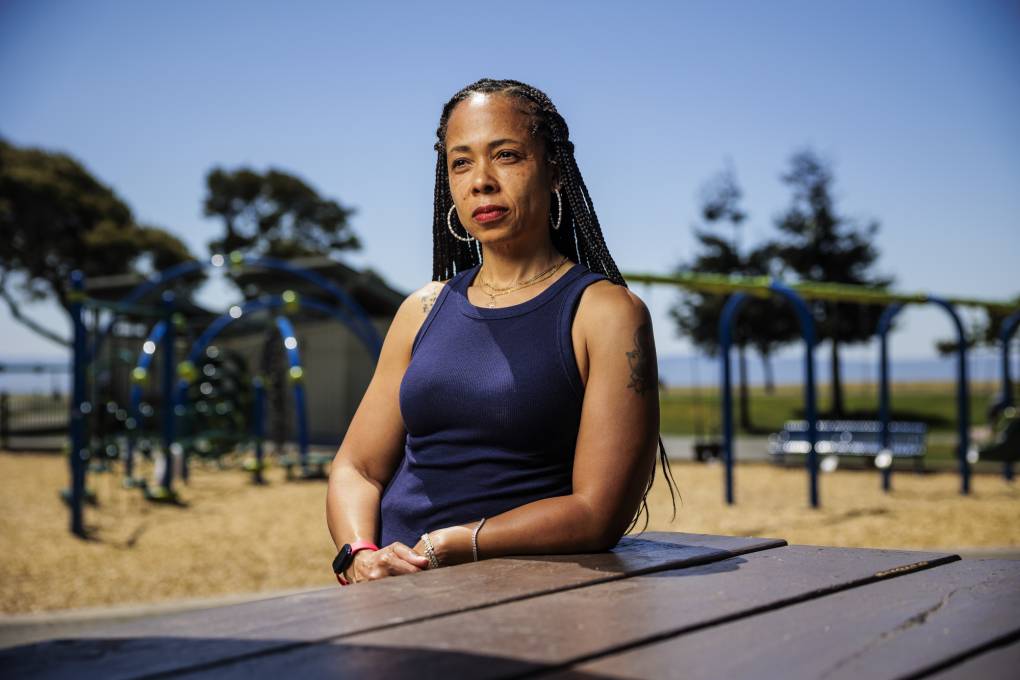
"caption": "Birdie Winrow in San Leandro on April 14, 2025.",
"credit": "Martin do Nascimento/KQED",
"altTag": null,
"description": null,
"imgSizes": {
"medium": {
"file": "https://cdn.kqed.org/wp-content/uploads/sites/10/2025/04/250414-HEAD-START-WORKER-LAID-OFF-MD-01-KQED-800x533.jpg",
"width": 800,
"height": 533,
"mimeType": "image/jpeg"
},
"large": {
"file": "https://cdn.kqed.org/wp-content/uploads/sites/10/2025/04/250414-HEAD-START-WORKER-LAID-OFF-MD-01-KQED-1020x680.jpg",
"width": 1020,
"height": 680,
"mimeType": "image/jpeg"
},
"thumbnail": {
"file": "https://cdn.kqed.org/wp-content/uploads/sites/10/2025/04/250414-HEAD-START-WORKER-LAID-OFF-MD-01-KQED-160x107.jpg",
"width": 160,
"height": 107,
"mimeType": "image/jpeg"
},
"1536x1536": {
"file": "https://cdn.kqed.org/wp-content/uploads/sites/10/2025/04/250414-HEAD-START-WORKER-LAID-OFF-MD-01-KQED-1536x1024.jpg",
"width": 1536,
"height": 1024,
"mimeType": "image/jpeg"
},
"post-thumbnail": {
"file": "https://cdn.kqed.org/wp-content/uploads/sites/10/2025/04/250414-HEAD-START-WORKER-LAID-OFF-MD-01-KQED-672x372.jpg",
"width": 672,
"height": 372,
"mimeType": "image/jpeg"
},
"twentyfourteen-full-width": {
"file": "https://cdn.kqed.org/wp-content/uploads/sites/10/2025/04/250414-HEAD-START-WORKER-LAID-OFF-MD-01-KQED-1038x576.jpg",
"width": 1038,
"height": 576,
"mimeType": "image/jpeg"
},
"full-width": {
"file": "https://cdn.kqed.org/wp-content/uploads/sites/10/2025/04/250414-HEAD-START-WORKER-LAID-OFF-MD-01-KQED-1920x1280.jpg",
"width": 1920,
"height": 1280,
"mimeType": "image/jpeg"
},
"kqedFullSize": {
"file": "https://cdn.kqed.org/wp-content/uploads/sites/10/2025/04/250414-HEAD-START-WORKER-LAID-OFF-MD-01-KQED.jpg",
"width": 2000,
"height": 1333
}
},
"isLoading": false,
"fetchFailed": false
},
"news_12036125": {
"type": "attachments",
"id": "news_12036125",
"meta": {
"index": "attachments_1716263798",
"site": "news",
"id": "12036125",
"found": true
},
"title": "Meta Logo Illustrations",
"publishDate": 1744761425,
"status": "inherit",
"parent": 12036068,
"modified": 1744761498,
"caption": "The Meta, Facebook, Instagram, WhatsApp, Messenger and Threads logos are screened on a mobile phone on Jan. 25, 2025. ",
"credit": "Beata Zawrzel/NurPhoto via Getty Images",
"altTag": null,
"description": null,
"imgSizes": {
"medium": {
"file": "https://cdn.kqed.org/wp-content/uploads/sites/10/2025/04/MetaGetty2-800x533.jpg",
"width": 800,
"height": 533,
"mimeType": "image/jpeg"
},
"large": {
"file": "https://cdn.kqed.org/wp-content/uploads/sites/10/2025/04/MetaGetty2-1020x680.jpg",
"width": 1020,
"height": 680,
"mimeType": "image/jpeg"
},
"thumbnail": {
"file": "https://cdn.kqed.org/wp-content/uploads/sites/10/2025/04/MetaGetty2-160x107.jpg",
"width": 160,
"height": 107,
"mimeType": "image/jpeg"
},
"1536x1536": {
"file": "https://cdn.kqed.org/wp-content/uploads/sites/10/2025/04/MetaGetty2-1536x1024.jpg",
"width": 1536,
"height": 1024,
"mimeType": "image/jpeg"
},
"post-thumbnail": {
"file": "https://cdn.kqed.org/wp-content/uploads/sites/10/2025/04/MetaGetty2-672x372.jpg",
"width": 672,
"height": 372,
"mimeType": "image/jpeg"
},
"twentyfourteen-full-width": {
"file": "https://cdn.kqed.org/wp-content/uploads/sites/10/2025/04/MetaGetty2-1038x576.jpg",
"width": 1038,
"height": 576,
"mimeType": "image/jpeg"
},
"full-width": {
"file": "https://cdn.kqed.org/wp-content/uploads/sites/10/2025/04/MetaGetty2-1920x1280.jpg",
"width": 1920,
"height": 1280,
"mimeType": "image/jpeg"
},
"kqedFullSize": {
"file": "https://cdn.kqed.org/wp-content/uploads/sites/10/2025/04/MetaGetty2.jpg",
"width": 2000,
"height": 1333
}
},
"isLoading": false,
"fetchFailed": false
},
"news_11667757": {
"type": "attachments",
"id": "news_11667757",
"meta": {
"index": "attachments_1716263798",
"site": "news",
"id": "11667757",
"found": true
},
"title": "17306665486_9d1bff4693_k",
"publishDate": 1526054732,
"status": "inherit",
"parent": 11667618,
"modified": 1526054791,
"caption": "A Goodwill store",
"credit": "Mike Mozart/Flickr",
"altTag": null,
"description": "A Goodwill store",
"imgSizes": {
"thumbnail": {
"file": "https://cdn.kqed.org/wp-content/uploads/sites/10/2018/05/17306665486_9d1bff4693_k-160x107.jpg",
"width": 160,
"height": 107,
"mimeType": "image/jpeg"
},
"medium": {
"file": "https://cdn.kqed.org/wp-content/uploads/sites/10/2018/05/17306665486_9d1bff4693_k-800x534.jpg",
"width": 800,
"height": 534,
"mimeType": "image/jpeg"
},
"large": {
"file": "https://cdn.kqed.org/wp-content/uploads/sites/10/2018/05/17306665486_9d1bff4693_k-1020x680.jpg",
"width": 1020,
"height": 680,
"mimeType": "image/jpeg"
},
"complete_open_graph": {
"file": "https://cdn.kqed.org/wp-content/uploads/sites/10/2018/05/17306665486_9d1bff4693_k-1200x800.jpg",
"width": 1200,
"height": 800,
"mimeType": "image/jpeg"
},
"fd-lrg": {
"file": "https://cdn.kqed.org/wp-content/uploads/sites/10/2018/05/17306665486_9d1bff4693_k-1920x1281.jpg",
"width": 1920,
"height": 1281,
"mimeType": "image/jpeg"
},
"fd-med": {
"file": "https://cdn.kqed.org/wp-content/uploads/sites/10/2018/05/17306665486_9d1bff4693_k-1180x787.jpg",
"width": 1180,
"height": 787,
"mimeType": "image/jpeg"
},
"fd-sm": {
"file": "https://cdn.kqed.org/wp-content/uploads/sites/10/2018/05/17306665486_9d1bff4693_k-960x640.jpg",
"width": 960,
"height": 640,
"mimeType": "image/jpeg"
},
"post-thumbnail": {
"file": "https://cdn.kqed.org/wp-content/uploads/sites/10/2018/05/17306665486_9d1bff4693_k-672x372.jpg",
"width": 672,
"height": 372,
"mimeType": "image/jpeg"
},
"twentyfourteen-full-width": {
"file": "https://cdn.kqed.org/wp-content/uploads/sites/10/2018/05/17306665486_9d1bff4693_k-1038x576.jpg",
"width": 1038,
"height": 576,
"mimeType": "image/jpeg"
},
"xxsmall": {
"file": "https://cdn.kqed.org/wp-content/uploads/sites/10/2018/05/17306665486_9d1bff4693_k-240x160.jpg",
"width": 240,
"height": 160,
"mimeType": "image/jpeg"
},
"xsmall": {
"file": "https://cdn.kqed.org/wp-content/uploads/sites/10/2018/05/17306665486_9d1bff4693_k-375x250.jpg",
"width": 375,
"height": 250,
"mimeType": "image/jpeg"
},
"small": {
"file": "https://cdn.kqed.org/wp-content/uploads/sites/10/2018/05/17306665486_9d1bff4693_k-520x347.jpg",
"width": 520,
"height": 347,
"mimeType": "image/jpeg"
},
"xlarge": {
"file": "https://cdn.kqed.org/wp-content/uploads/sites/10/2018/05/17306665486_9d1bff4693_k-1180x787.jpg",
"width": 1180,
"height": 787,
"mimeType": "image/jpeg"
},
"full-width": {
"file": "https://cdn.kqed.org/wp-content/uploads/sites/10/2018/05/17306665486_9d1bff4693_k-1920x1281.jpg",
"width": 1920,
"height": 1281,
"mimeType": "image/jpeg"
},
"guest-author-32": {
"file": "https://cdn.kqed.org/wp-content/uploads/sites/10/2018/05/17306665486_9d1bff4693_k-32x32.jpg",
"width": 32,
"height": 32,
"mimeType": "image/jpeg"
},
"guest-author-50": {
"file": "https://cdn.kqed.org/wp-content/uploads/sites/10/2018/05/17306665486_9d1bff4693_k-50x50.jpg",
"width": 50,
"height": 50,
"mimeType": "image/jpeg"
},
"guest-author-64": {
"file": "https://cdn.kqed.org/wp-content/uploads/sites/10/2018/05/17306665486_9d1bff4693_k-64x64.jpg",
"width": 64,
"height": 64,
"mimeType": "image/jpeg"
},
"guest-author-96": {
"file": "https://cdn.kqed.org/wp-content/uploads/sites/10/2018/05/17306665486_9d1bff4693_k-96x96.jpg",
"width": 96,
"height": 96,
"mimeType": "image/jpeg"
},
"guest-author-128": {
"file": "https://cdn.kqed.org/wp-content/uploads/sites/10/2018/05/17306665486_9d1bff4693_k-128x128.jpg",
"width": 128,
"height": 128,
"mimeType": "image/jpeg"
},
"detail": {
"file": "https://cdn.kqed.org/wp-content/uploads/sites/10/2018/05/17306665486_9d1bff4693_k-150x150.jpg",
"width": 150,
"height": 150,
"mimeType": "image/jpeg"
},
"kqedFullSize": {
"file": "https://cdn.kqed.org/wp-content/uploads/sites/10/2018/05/17306665486_9d1bff4693_k-e1744242245311.jpg",
"width": 2000,
"height": 1334
}
},
"isLoading": false,
"fetchFailed": false
},
"news_12033001": {
"type": "attachments",
"id": "news_12033001",
"meta": {
"index": "attachments_1716263798",
"site": "news",
"id": "12033001",
"found": true
},
"title": "20250325_TEACHERS-FOR-TK_DMB_00048-KQED",
"publishDate": 1742939381,
"status": "inherit",
"parent": 0,
"modified": 1744242147,
"caption": "Angelica Cardenas, of Hayward, poses for a portrait with one of her favorite children's books in the library on the Cal State University East Bay campus in Hayward on March 25, 2025. Cardenas received her Master's degree in Early Childhood Education from Cal State East Bay.",
"credit": "David M. Barreda/KQED",
"altTag": null,
"description": null,
"imgSizes": {
"medium": {
"file": "https://cdn.kqed.org/wp-content/uploads/sites/10/2025/03/20250325_TEACHERS-FOR-TK_DMB_00048-KQED-800x533.jpg",
"width": 800,
"height": 533,
"mimeType": "image/jpeg"
},
"large": {
"file": "https://cdn.kqed.org/wp-content/uploads/sites/10/2025/03/20250325_TEACHERS-FOR-TK_DMB_00048-KQED-1020x680.jpg",
"width": 1020,
"height": 680,
"mimeType": "image/jpeg"
},
"thumbnail": {
"file": "https://cdn.kqed.org/wp-content/uploads/sites/10/2025/03/20250325_TEACHERS-FOR-TK_DMB_00048-KQED-160x107.jpg",
"width": 160,
"height": 107,
"mimeType": "image/jpeg"
},
"1536x1536": {
"file": "https://cdn.kqed.org/wp-content/uploads/sites/10/2025/03/20250325_TEACHERS-FOR-TK_DMB_00048-KQED-1536x1024.jpg",
"width": 1536,
"height": 1024,
"mimeType": "image/jpeg"
},
"post-thumbnail": {
"file": "https://cdn.kqed.org/wp-content/uploads/sites/10/2025/03/20250325_TEACHERS-FOR-TK_DMB_00048-KQED-672x372.jpg",
"width": 672,
"height": 372,
"mimeType": "image/jpeg"
},
"twentyfourteen-full-width": {
"file": "https://cdn.kqed.org/wp-content/uploads/sites/10/2025/03/20250325_TEACHERS-FOR-TK_DMB_00048-KQED-1038x576.jpg",
"width": 1038,
"height": 576,
"mimeType": "image/jpeg"
},
"full-width": {
"file": "https://cdn.kqed.org/wp-content/uploads/sites/10/2025/03/20250325_TEACHERS-FOR-TK_DMB_00048-KQED-1920x1280.jpg",
"width": 1920,
"height": 1280,
"mimeType": "image/jpeg"
},
"kqedFullSize": {
"file": "https://cdn.kqed.org/wp-content/uploads/sites/10/2025/03/20250325_TEACHERS-FOR-TK_DMB_00048-KQED.jpg",
"width": 2000,
"height": 1333
}
},
"isLoading": false,
"fetchFailed": false
},
"news_11944379": {
"type": "attachments",
"id": "news_11944379",
"meta": {
"index": "attachments_1716263798",
"site": "news",
"id": "11944379",
"found": true
},
"title": "RS16535_IMG_0443.JPG",
"publishDate": 1679513384,
"status": "inherit",
"parent": 11944344,
"modified": 1786382854,
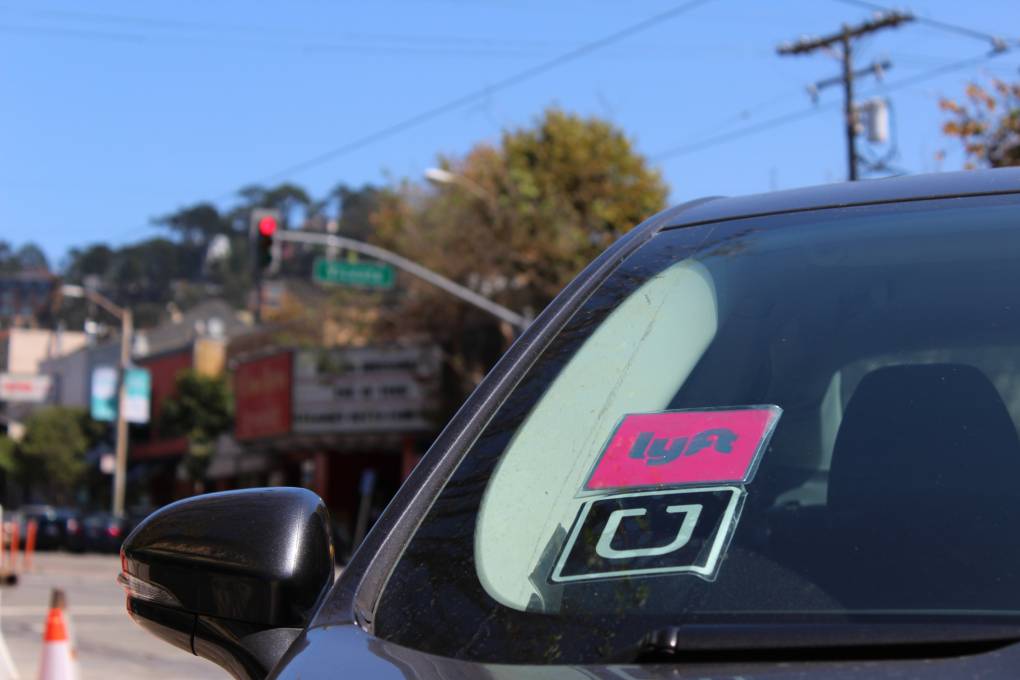
"caption": "Proposition 22 allows gig companies such as Uber, Lyft and the like to classify their drivers as independent contractors rather than employees. ",
"credit": "Ericka Cruz Guevarra/KQED",
"altTag": "A close-up shot of a black vehicle with a pink Lyft sticker and a black-and-white Uber sticker on the left side of its windshield. The vehicle sits idle, waiting to pick up a customer.",
"description": null,
"imgSizes": {
"medium": {
"file": "https://cdn.kqed.org/wp-content/uploads/sites/10/2023/03/RS16535_IMG_0443.JPG-800x533.jpg",
"width": 800,
"height": 533,
"mimeType": "image/jpeg"
},
"large": {
"file": "https://cdn.kqed.org/wp-content/uploads/sites/10/2023/03/RS16535_IMG_0443.JPG-1020x680.jpg",
"width": 1020,
"height": 680,
"mimeType": "image/jpeg"
},
"thumbnail": {
"file": "https://cdn.kqed.org/wp-content/uploads/sites/10/2023/03/RS16535_IMG_0443.JPG-160x107.jpg",
"width": 160,
"height": 107,
"mimeType": "image/jpeg"
},
"1536x1536": {
"file": "https://cdn.kqed.org/wp-content/uploads/sites/10/2023/03/RS16535_IMG_0443.JPG-1536x1024.jpg",
"width": 1536,
"height": 1024,
"mimeType": "image/jpeg"
},
"2048x2048": {
"file": "https://cdn.kqed.org/wp-content/uploads/sites/10/2023/03/RS16535_IMG_0443.JPG-2048x1365.jpg",
"width": 2048,
"height": 1365,
"mimeType": "image/jpeg"
},
"post-thumbnail": {
"file": "https://cdn.kqed.org/wp-content/uploads/sites/10/2023/03/RS16535_IMG_0443.JPG-672x372.jpg",
"width": 672,
"height": 372,
"mimeType": "image/jpeg"
},
"twentyfourteen-full-width": {
"file": "https://cdn.kqed.org/wp-content/uploads/sites/10/2023/03/RS16535_IMG_0443.JPG-1038x576.jpg",
"width": 1038,
"height": 576,
"mimeType": "image/jpeg"
},
"full-width": {
"file": "https://cdn.kqed.org/wp-content/uploads/sites/10/2023/03/RS16535_IMG_0443.JPG-1920x1280.jpg",
"width": 1920,
"height": 1280,
"mimeType": "image/jpeg"
},
"kqedFullSize": {
"file": "https://cdn.kqed.org/wp-content/uploads/sites/10/2023/03/RS16535_IMG_0443.JPG-scaled-e1764810192572.jpg",
"width": 2000,
"height": 1334
}
},
"isLoading": false,
"fetchFailed": false
},
"news_12034533": {
"type": "attachments",
"id": "news_12034533",
"meta": {
"index": "attachments_1716263798",
"site": "news",
"id": "12034533",
"found": true
},
"title": "HHS Announces Plan To Cut 10,000 Employees And Close Offices",
"publishDate": 1743789804,
"status": "inherit",
"parent": 12034527,
"modified": 1743789859,
"caption": "The U.S. Department of Health and Human Services building is seen on March 27, 2025, in Washington, D.C. The Department of Health and Human Services announced it is cutting 10,000 jobs and closing offices aimed at cutting $1.8 billion.",
"credit": "Kayla Bartkowski/Getty Images",
"altTag": null,
"description": null,
"imgSizes": {
"medium": {
"file": "https://cdn.kqed.org/wp-content/uploads/sites/10/2025/04/USDeptHealthHumanServicesGetty-800x533.jpg",
"width": 800,
"height": 533,
"mimeType": "image/jpeg"
},
"large": {
"file": "https://cdn.kqed.org/wp-content/uploads/sites/10/2025/04/USDeptHealthHumanServicesGetty-1020x680.jpg",
"width": 1020,
"height": 680,
"mimeType": "image/jpeg"
},
"thumbnail": {
"file": "https://cdn.kqed.org/wp-content/uploads/sites/10/2025/04/USDeptHealthHumanServicesGetty-160x107.jpg",
"width": 160,
"height": 107,
"mimeType": "image/jpeg"
},
"1536x1536": {
"file": "https://cdn.kqed.org/wp-content/uploads/sites/10/2025/04/USDeptHealthHumanServicesGetty-1536x1024.jpg",
"width": 1536,
"height": 1024,
"mimeType": "image/jpeg"
},
"post-thumbnail": {
"file": "https://cdn.kqed.org/wp-content/uploads/sites/10/2025/04/USDeptHealthHumanServicesGetty-672x372.jpg",
"width": 672,
"height": 372,
"mimeType": "image/jpeg"
},
"twentyfourteen-full-width": {
"file": "https://cdn.kqed.org/wp-content/uploads/sites/10/2025/04/USDeptHealthHumanServicesGetty-1038x576.jpg",
"width": 1038,
"height": 576,
"mimeType": "image/jpeg"
},
"full-width": {
"file": "https://cdn.kqed.org/wp-content/uploads/sites/10/2025/04/USDeptHealthHumanServicesGetty-1920x1280.jpg",
"width": 1920,
"height": 1280,
"mimeType": "image/jpeg"
},
"kqedFullSize": {
"file": "https://cdn.kqed.org/wp-content/uploads/sites/10/2025/04/USDeptHealthHumanServicesGetty.jpg",
"width": 2000,
"height": 1333
}
},
"isLoading": false,
"fetchFailed": false
},
"news_12034488": {
"type": "attachments",
"id": "news_12034488",
"meta": {
"index": "attachments_1716263798",
"site": "news",
"id": "12034488",
"found": true
},
"title": "USAID",
"publishDate": 1743723216,
"status": "inherit",
"parent": 12034478,
"modified": 1760568574,
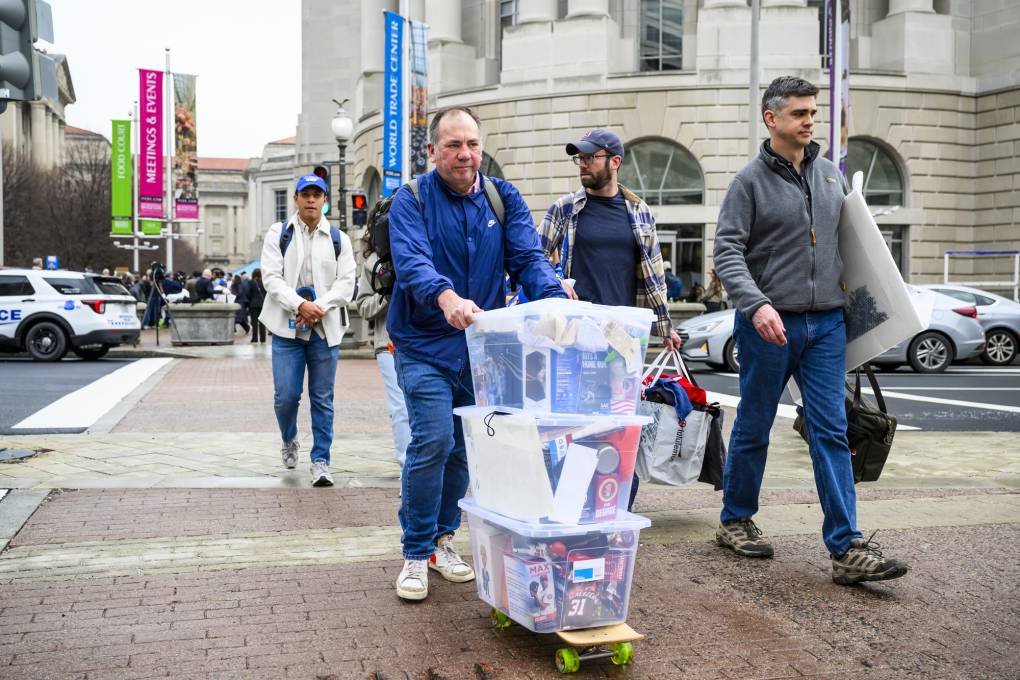
"caption": "A former USAID employee pushes personal items on a skateboard as he leaves the former USAID offices at the Ronald Reagan Building and International Trade Center on Feb. 27, 2025, in Washington, D.C. ",
"credit": "Pete Kiehart/The Washington Post via Getty Images",
"altTag": null,
"description": null,
"imgSizes": {
"medium": {
"file": "https://cdn.kqed.org/wp-content/uploads/sites/10/2025/04/FederalEmployeeLayoffsGetty-800x533.jpg",
"width": 800,
"height": 533,
"mimeType": "image/jpeg"
},
"large": {
"file": "https://cdn.kqed.org/wp-content/uploads/sites/10/2025/04/FederalEmployeeLayoffsGetty-1020x680.jpg",
"width": 1020,
"height": 680,
"mimeType": "image/jpeg"
},
"thumbnail": {
"file": "https://cdn.kqed.org/wp-content/uploads/sites/10/2025/04/FederalEmployeeLayoffsGetty-160x107.jpg",
"width": 160,
"height": 107,
"mimeType": "image/jpeg"
},
"1536x1536": {
"file": "https://cdn.kqed.org/wp-content/uploads/sites/10/2025/04/FederalEmployeeLayoffsGetty-1536x1024.jpg",
"width": 1536,
"height": 1024,
"mimeType": "image/jpeg"
},
"post-thumbnail": {
"file": "https://cdn.kqed.org/wp-content/uploads/sites/10/2025/04/FederalEmployeeLayoffsGetty-672x372.jpg",
"width": 672,
"height": 372,
"mimeType": "image/jpeg"
},
"twentyfourteen-full-width": {
"file": "https://cdn.kqed.org/wp-content/uploads/sites/10/2025/04/FederalEmployeeLayoffsGetty-1038x576.jpg",
"width": 1038,
"height": 576,
"mimeType": "image/jpeg"
},
"full-width": {
"file": "https://cdn.kqed.org/wp-content/uploads/sites/10/2025/04/FederalEmployeeLayoffsGetty-1920x1280.jpg",
"width": 1920,
"height": 1280,
"mimeType": "image/jpeg"
},
"kqedFullSize": {
"file": "https://cdn.kqed.org/wp-content/uploads/sites/10/2025/04/FederalEmployeeLayoffsGetty.jpg",
"width": 2000,
"height": 1333
}
},
"isLoading": false,
"fetchFailed": false
},
"news_12034415": {
"type": "attachments",
"id": "news_12034415",
"meta": {
"index": "attachments_1716263798",
"site": "news",
"id": "12034415",
"found": true
},
"title": "071322-Mt-Shasta-GETTY-CM-01 copy",
"publishDate": 1743707869,
"status": "inherit",
"parent": 12034414,
"modified": 1743707908,
"caption": "Mount Shasta (right) and its geologic sibling Shastina, left, as seen from the city of Mount Shasta on July 13, 2022.",
"credit": "Myung J. Chun/Los Angeles Times via Getty Images",
"altTag": null,
"description": null,
"imgSizes": {
"medium": {
"file": "https://cdn.kqed.org/wp-content/uploads/sites/10/2025/04/071322-Mt-Shasta-GETTY-CM-01-copy-800x534.jpg",
"width": 800,
"height": 534,
"mimeType": "image/jpeg"
},
"large": {
"file": "https://cdn.kqed.org/wp-content/uploads/sites/10/2025/04/071322-Mt-Shasta-GETTY-CM-01-copy-1020x680.jpg",
"width": 1020,
"height": 680,
"mimeType": "image/jpeg"
},
"thumbnail": {
"file": "https://cdn.kqed.org/wp-content/uploads/sites/10/2025/04/071322-Mt-Shasta-GETTY-CM-01-copy-160x107.jpg",
"width": 160,
"height": 107,
"mimeType": "image/jpeg"
},
"1536x1536": {
"file": "https://cdn.kqed.org/wp-content/uploads/sites/10/2025/04/071322-Mt-Shasta-GETTY-CM-01-copy-1536x1025.jpg",
"width": 1536,
"height": 1025,
"mimeType": "image/jpeg"
},
"post-thumbnail": {
"file": "https://cdn.kqed.org/wp-content/uploads/sites/10/2025/04/071322-Mt-Shasta-GETTY-CM-01-copy-672x372.jpg",
"width": 672,
"height": 372,
"mimeType": "image/jpeg"
},
"twentyfourteen-full-width": {
"file": "https://cdn.kqed.org/wp-content/uploads/sites/10/2025/04/071322-Mt-Shasta-GETTY-CM-01-copy-1038x576.jpg",
"width": 1038,
"height": 576,
"mimeType": "image/jpeg"
},
"full-width": {
"file": "https://cdn.kqed.org/wp-content/uploads/sites/10/2025/04/071322-Mt-Shasta-GETTY-CM-01-copy-1920x1281.jpg",
"width": 1920,
"height": 1281,
"mimeType": "image/jpeg"
},
"kqedFullSize": {
"file": "https://cdn.kqed.org/wp-content/uploads/sites/10/2025/04/071322-Mt-Shasta-GETTY-CM-01-copy.jpg",
"width": 2000,
"height": 1334
}
},
"isLoading": false,
"fetchFailed": false
},
"news_12034374": {
"type": "attachments",
"id": "news_12034374",
"meta": {
"index": "attachments_1716263798",
"site": "news",
"id": "12034374",
"found": true
},
"title": "IMG_0970",
"publishDate": 1743636615,
"status": "inherit",
"parent": 12033977,
"modified": 1743636639,
"caption": null,
"credit": "Illustration by Anna Vignet/KQED",
"altTag": null,
"description": null,
"imgSizes": {
"medium": {
"file": "https://cdn.kqed.org/wp-content/uploads/sites/10/2025/04/IMG_0970-800x600.jpg",
"width": 800,
"height": 600,
"mimeType": "image/jpeg"
},
"large": {
"file": "https://cdn.kqed.org/wp-content/uploads/sites/10/2025/04/IMG_0970-1020x765.jpg",
"width": 1020,
"height": 765,
"mimeType": "image/jpeg"
},
"thumbnail": {
"file": "https://cdn.kqed.org/wp-content/uploads/sites/10/2025/04/IMG_0970-160x120.jpg",
"width": 160,
"height": 120,
"mimeType": "image/jpeg"
},
"1536x1536": {
"file": "https://cdn.kqed.org/wp-content/uploads/sites/10/2025/04/IMG_0970-1536x1152.jpg",
"width": 1536,
"height": 1152,
"mimeType": "image/jpeg"
},
"2048x2048": {
"file": "https://cdn.kqed.org/wp-content/uploads/sites/10/2025/04/IMG_0970-2048x1536.jpg",
"width": 2048,
"height": 1536,
"mimeType": "image/jpeg"
},
"post-thumbnail": {
"file": "https://cdn.kqed.org/wp-content/uploads/sites/10/2025/04/IMG_0970-672x372.jpg",
"width": 672,
"height": 372,
"mimeType": "image/jpeg"
},
"twentyfourteen-full-width": {
"file": "https://cdn.kqed.org/wp-content/uploads/sites/10/2025/04/IMG_0970-1038x576.jpg",
"width": 1038,
"height": 576,
"mimeType": "image/jpeg"
},
"full-width": {
"file": "https://cdn.kqed.org/wp-content/uploads/sites/10/2025/04/IMG_0970-1920x1440.jpg",
"width": 1920,
"height": 1440,
"mimeType": "image/jpeg"
},
"kqedFullSize": {
"file": "https://cdn.kqed.org/wp-content/uploads/sites/10/2025/04/IMG_0970.jpg",
"width": 2560,
"height": 1920
}
},
"isLoading": false,
"fetchFailed": false
},
"news_12028811": {
"type": "attachments",
"id": "news_12028811",
"meta": {
"index": "attachments_1716263798",
"site": "news",
"id": "12028811",
"found": true
},
"title": "250226-UC STRIKE-MD-08",
"publishDate": 1740605238,
"status": "inherit",
"parent": 12028446,
"modified": 1740614905,
"caption": "Sarah Roberts, a medical interpreter at UCSF, and other members of the University Professional and Technical Employees Local 9119 and the American Federation of State County and Municipal Employees Local 3299 strike at the UCSF Medical Center at Mission Bay in San Francisco on Feb. 26, 2025. The strike represents the latest escalation in a conflict over top union concerns such as staffing levels and compensation that sparked a two-day work stoppage at UC San Francisco in November.",
"credit": "Martin do Nascimento/KQED",
"altTag": null,
"description": null,
"imgSizes": {
"medium": {
"file": "https://cdn.kqed.org/wp-content/uploads/sites/10/2025/02/250226-UC-STRIKE-MD-08-800x533.jpg",
"width": 800,
"height": 533,
"mimeType": "image/jpeg"
},
"large": {
"file": "https://cdn.kqed.org/wp-content/uploads/sites/10/2025/02/250226-UC-STRIKE-MD-08-1020x680.jpg",
"width": 1020,
"height": 680,
"mimeType": "image/jpeg"
},
"thumbnail": {
"file": "https://cdn.kqed.org/wp-content/uploads/sites/10/2025/02/250226-UC-STRIKE-MD-08-160x107.jpg",
"width": 160,
"height": 107,
"mimeType": "image/jpeg"
},
"1536x1536": {
"file": "https://cdn.kqed.org/wp-content/uploads/sites/10/2025/02/250226-UC-STRIKE-MD-08-1536x1024.jpg",
"width": 1536,
"height": 1024,
"mimeType": "image/jpeg"
},
"post-thumbnail": {
"file": "https://cdn.kqed.org/wp-content/uploads/sites/10/2025/02/250226-UC-STRIKE-MD-08-672x372.jpg",
"width": 672,
"height": 372,
"mimeType": "image/jpeg"
},
"twentyfourteen-full-width": {
"file": "https://cdn.kqed.org/wp-content/uploads/sites/10/2025/02/250226-UC-STRIKE-MD-08-1038x576.jpg",
"width": 1038,
"height": 576,
"mimeType": "image/jpeg"
},
"full-width": {
"file": "https://cdn.kqed.org/wp-content/uploads/sites/10/2025/02/250226-UC-STRIKE-MD-08-1920x1280.jpg",
"width": 1920,
"height": 1280,
"mimeType": "image/jpeg"
},
"kqedFullSize": {
"file": "https://cdn.kqed.org/wp-content/uploads/sites/10/2025/02/250226-UC-STRIKE-MD-08.jpg",
"width": 2000,
"height": 1333
}
},
"isLoading": false,
"fetchFailed": false
}
},
"audioPlayerReducer": {
"postId": "stream_live",
"isPaused": true,
"isPlaying": false,
"pfsActive": false,
"pledgeModalIsOpen": true,
"playerDrawerIsOpen": false,
"liveAudioPlayStartedAt": 0,
"liveAudioPlayContext": ""
},
"authorsReducer": {
"byline_news_12033209": {
"type": "authors",
"id": "byline_news_12033209",
"meta": {
"override": true
},
"slug": "byline_news_12033209",
"name": "\u003ca href=\"https://www.kqed.org/author/daisynguyen\" target=\"_blank\" rel=\"noopener noreferrer\">Daisy Nguyen\u003c/a> and \u003ca href=\"https://www.kqed.org/author/ellyyu\" target=\"_blank\" rel=\"noopener noreferrer\">Elly Yu\u003c/a>",
"isLoading": false
},
"byline_news_12034414": {
"type": "authors",
"id": "byline_news_12034414",
"meta": {
"override": true
},
"slug": "byline_news_12034414",
"name": "\u003ca href=\"https://calmatters.org/author/jeanne-kuang/\">Jeanne Kuang\u003c/a>, CalMatters",
"isLoading": false
},
"rachael-myrow": {
"type": "authors",
"id": "251",
"meta": {
"index": "authors_1716337520",
"id": "251",
"found": true
},
"name": "Rachael Myrow",
"firstName": "Rachael",
"lastName": "Myrow",
"slug": "rachael-myrow",
"email": "rmyrow@kqed.org",
"display_author_email": true,
"staff_mastheads": [
"news"
],
"title": "Senior Editor of KQED's Silicon Valley News Desk",
"bio": "• I write and edit stories about how Silicon Valley power and policies shape everyday life in California. I’m also passionate about making Bay Area history and culture more accessible to a broad public. • I’ve been a journalist for most of my life, starting in high school with The Franklin Press in Los Angeles, where I grew up. While earning my first degree in English at UC Berkeley, I got my start in public radio at KALX-FM. After completing a second degree in journalism at Cal, I landed my first professional job at Marketplace, then moved on to KPCC (now LAist), and then KQED, where I hosted The California Report for more than seven years. • My reporting has appeared on NPR, The World, WBUR’s \u003ci>Here & Now\u003c/i>, and the BBC. I also guest host for KQED’s \u003ci>Forum\u003c/i>, as well as the Commonwealth Club in San Francisco. • I speak periodically on media, democracy and technology issues, and do voiceover work for documentaries and educational video projects. • Outside of the studio, you'll find me hiking Bay Area trails and whipping up Insta-ready meals in my kitchen. • I do not accept gifts, money, or favors from anyone connected to my reporting, I don't pay people for information, and I do not support or donate to political causes. • I strive to treat the people I report on with fairness, honesty, and respect. I also recognize there are often multiple sides to a story and work to verify information through multiple sources and documentation. If I get something wrong, I correct it.",
"avatar": "https://secure.gravatar.com/avatar/3ed8a3c5f26025e4a805ba634cda8cd764906b97438a6d9ce216b044e340da4e?s=600&d=blank&r=g",
"twitter": "rachaelmyrow",
"bluesky": null,
"facebook": null,
"instagram": null,
"linkedin": "https://www.linkedin.com/in/rachaelmyrow/",
"sites": [
{
"site": "arts",
"roles": [
"administrator"
]
},
{
"site": "news",
"roles": [
"edit_others_posts",
"editor"
]
},
{
"site": "futureofyou",
"roles": [
"editor"
]
},
{
"site": "bayareabites",
"roles": [
"editor"
]
},
{
"site": "stateofhealth",
"roles": [
"editor"
]
},
{
"site": "science",
"roles": [
"editor"
]
},
{
"site": "food",
"roles": [
"editor"
]
},
{
"site": "forum",
"roles": [
"editor"
]
},
{
"site": "liveblog",
"roles": [
"author"
]
}
],
"headData": {
"title": "Rachael Myrow | KQED",
"description": "Senior Editor of KQED's Silicon Valley News Desk",
"ogImgSrc": "https://secure.gravatar.com/avatar/3ed8a3c5f26025e4a805ba634cda8cd764906b97438a6d9ce216b044e340da4e?s=600&d=blank&r=g",
"twImgSrc": "https://secure.gravatar.com/avatar/3ed8a3c5f26025e4a805ba634cda8cd764906b97438a6d9ce216b044e340da4e?s=600&d=blank&r=g"
},
"isLoading": false,
"link": "/author/rachael-myrow"
},
"fjhabvala": {
"type": "authors",
"id": "8659",
"meta": {
"index": "authors_1716337520",
"id": "8659",
"found": true
},
"name": "Farida Jhabvala Romero",
"firstName": "Farida",
"lastName": "Jhabvala Romero",
"slug": "fjhabvala",
"email": "fjhabvala@kqed.org",
"display_author_email": true,
"staff_mastheads": [
"news"
],
"title": "KQED Contributor",
"bio": "Farida Jhabvala Romero is a Labor Correspondent for KQED. She previously covered immigration. Farida was \u003ca href=\"https://www.ccnma.org/2022-most-influential-latina-journalists\">named\u003c/a> one of the 10 Most Influential Latina Journalists in California in 2022 by the California Chicano News Media Association. Her work has won awards from the Society of Professional Journalists (Northern California), as well as a national and regional Edward M. Murrow Award for the collaborative reporting projects “Dangerous Air” and “Graying California.” Before joining KQED, Farida worked as a producer at Radio Bilingüe, a national public radio network. Farida earned her master’s degree in journalism from Stanford University.",
"avatar": "https://secure.gravatar.com/avatar/f9f022d4e2609741874222a1e9d41f48fea74011aa7c615eef91d9a50c944ebe?s=600&d=blank&r=g",
"twitter": "FaridaJhabvala",
"bluesky": null,
"facebook": null,
"instagram": null,
"linkedin": "https://www.linkedin.com/in/faridajhabvala/",
"sites": [
{
"site": "news",
"roles": [
"editor"
]
},
{
"site": "stateofhealth",
"roles": [
"author"
]
},
{
"site": "liveblog",
"roles": [
"author"
]
}
],
"headData": {
"title": "Farida Jhabvala Romero | KQED",
"description": "KQED Contributor",
"ogImgSrc": "https://secure.gravatar.com/avatar/f9f022d4e2609741874222a1e9d41f48fea74011aa7c615eef91d9a50c944ebe?s=600&d=blank&r=g",
"twImgSrc": "https://secure.gravatar.com/avatar/f9f022d4e2609741874222a1e9d41f48fea74011aa7c615eef91d9a50c944ebe?s=600&d=blank&r=g"
},
"isLoading": false,
"link": "/author/fjhabvala"
},
"ccabreralomeli": {
"type": "authors",
"id": "11708",
"meta": {
"index": "authors_1716337520",
"id": "11708",
"found": true
},
"name": "Carlos Cabrera-Lomelí",
"firstName": "Carlos",
"lastName": "Cabrera-Lomelí",
"slug": "ccabreralomeli",
"email": "ccabreralomeli@KQED.org",
"display_author_email": true,
"staff_mastheads": [
"news"
],
"title": "Community Reporter",
"bio": "Carlos Cabrera-Lomelí is a community reporter with KQED's digital engagement team. He also reports and co-produces for KQED's bilingual news hub KQED en Español. He grew up in San Francisco's Mission District and has previously worked with Univision, 48 Hills and REFORMA in Mexico City.",
"avatar": "https://secure.gravatar.com/avatar/c309be9665e484f887b818c89e273ecc673004f426f36b24d00a4d813a2e0518?s=600&d=blank&r=g",
"twitter": "@LomeliCabrera",
"bluesky": null,
"facebook": null,
"instagram": null,
"linkedin": null,
"sites": [
{
"site": "arts",
"roles": [
"editor"
]
},
{
"site": "news",
"roles": [
"editor"
]
},
{
"site": "about",
"roles": [
"editor"
]
},
{
"site": "science",
"roles": [
"editor"
]
},
{
"site": "perspectives",
"roles": [
"editor"
]
},
{
"site": "elections",
"roles": [
"editor"
]
},
{
"site": "liveblog",
"roles": [
"contributor"
]
}
],
"headData": {
"title": "Carlos Cabrera-Lomelí | KQED",
"description": "Community Reporter",
"ogImgSrc": "https://secure.gravatar.com/avatar/c309be9665e484f887b818c89e273ecc673004f426f36b24d00a4d813a2e0518?s=600&d=blank&r=g",
"twImgSrc": "https://secure.gravatar.com/avatar/c309be9665e484f887b818c89e273ecc673004f426f36b24d00a4d813a2e0518?s=600&d=blank&r=g"
},
"isLoading": false,
"link": "/author/ccabreralomeli"
},
"daisynguyen": {
"type": "authors",
"id": "11829",
"meta": {
"index": "authors_1716337520",
"id": "11829",
"found": true
},
"name": "Daisy Nguyen",
"firstName": "Daisy",
"lastName": "Nguyen",
"slug": "daisynguyen",
"email": "daisynguyen@kqed.org",
"display_author_email": true,
"staff_mastheads": [
"news"
],
"title": "KQED Contributor",
"bio": "I have covered early childhood education and child care for KQED since 2022. I focus on policies aimed at increasing access to early care and education and how they shape individual lives. I've been a journalist for more than two decades, with most of that time devoted to covering breaking news throughout California for The Associated Press. I grew up in San Francisco and studied at UC Davis and Columbia University's Graduate School of Journalism. I live in Oakland with my husband and two kids.",
"avatar": "https://secure.gravatar.com/avatar/2da2127c27f7143b53ebd419800fd55f?s=600&d=blank&r=g",
"twitter": null,
"facebook": null,
"instagram": null,
"linkedin": "https://www.linkedin.com/in/daisynguyen/",
"sites": [
{
"site": "news",
"roles": [
"author"
]
},
{
"site": "liveblog",
"roles": [
"author"
]
}
],
"headData": {
"title": "Daisy Nguyen | KQED",
"description": "KQED Contributor",
"ogImgSrc": "https://secure.gravatar.com/avatar/2da2127c27f7143b53ebd419800fd55f?s=600&d=blank&r=g",
"twImgSrc": "https://secure.gravatar.com/avatar/2da2127c27f7143b53ebd419800fd55f?s=600&d=blank&r=g"
},
"isLoading": false,
"link": "/author/daisynguyen"
},
"nkhan": {
"type": "authors",
"id": "11867",
"meta": {
"index": "authors_1716337520",
"id": "11867",
"found": true
},
"name": "Nisa Khan",
"firstName": "Nisa",
"lastName": "Khan",
"slug": "nkhan",
"email": "nkhan@kqed.org",
"display_author_email": false,
"staff_mastheads": [],
"title": "KQED Contributor",
"bio": "Nisa Khan is a reporter for KQED's Audience News Desk. She was formerly a data reporter at Michigan Radio. She earned a Bachelor of Science in Information from the University of Michigan and a Master of Arts in Communication from Stanford University.",
"avatar": "https://secure.gravatar.com/avatar/8720459eef081ff64582b3506b124d58523e80e120704a0cbd9892533c914991?s=600&d=blank&r=g",
"twitter": "mnisakhan",
"bluesky": null,
"facebook": null,
"instagram": null,
"linkedin": null,
"sites": [
{
"site": "arts",
"roles": [
"editor"
]
},
{
"site": "news",
"roles": [
"editor"
]
},
{
"site": "science",
"roles": [
"editor",
"author"
]
},
{
"site": "forum",
"roles": [
"editor"
]
},
{
"site": "liveblog",
"roles": [
"contributor"
]
}
],
"headData": {
"title": "Nisa Khan | KQED",
"description": "KQED Contributor",
"ogImgSrc": "https://secure.gravatar.com/avatar/8720459eef081ff64582b3506b124d58523e80e120704a0cbd9892533c914991?s=600&d=blank&r=g",
"twImgSrc": "https://secure.gravatar.com/avatar/8720459eef081ff64582b3506b124d58523e80e120704a0cbd9892533c914991?s=600&d=blank&r=g"
},
"isLoading": false,
"link": "/author/nkhan"
},
"kdebenedetti": {
"type": "authors",
"id": "11913",
"meta": {
"index": "authors_1716337520",
"id": "11913",
"found": true
},
"name": "Katie DeBenedetti",
"firstName": "Katie",
"lastName": "DeBenedetti",
"slug": "kdebenedetti",
"email": "kdebenedetti@kqed.org",
"display_author_email": false,
"staff_mastheads": [
"news",
"science"
],
"title": "KQED Contributor",
"bio": "Katie DeBenedetti is a digital reporter covering daily news for the Express Desk. Prior to joining KQED as a culture reporting intern in January 2024, she covered education and city government for the Napa Valley Register.",
"avatar": "https://secure.gravatar.com/avatar/6e31073cb8f7e4214ab03f42771d0f45?s=600&d=blank&r=g",
"twitter": null,
"facebook": null,
"instagram": null,
"linkedin": null,
"sites": [
{
"site": "news",
"roles": [
"author"
]
},
{
"site": "science",
"roles": [
"author"
]
},
{
"site": "liveblog",
"roles": [
"author"
]
}
],
"headData": {
"title": "Katie DeBenedetti | KQED",
"description": "KQED Contributor",
"ogImgSrc": "https://secure.gravatar.com/avatar/6e31073cb8f7e4214ab03f42771d0f45?s=600&d=blank&r=g",
"twImgSrc": "https://secure.gravatar.com/avatar/6e31073cb8f7e4214ab03f42771d0f45?s=600&d=blank&r=g"
},
"isLoading": false,
"link": "/author/kdebenedetti"
},
"slim": {
"type": "authors",
"id": "11920",
"meta": {
"index": "authors_1716337520",
"id": "11920",
"found": true
},
"name": "Samantha Lim",
"firstName": "Samantha",
"lastName": "Lim",
"slug": "slim",
"email": "slim@KQED.org",
"display_author_email": false,
"staff_mastheads": [],
"title": "KQED Contributor",
"bio": null,
"avatar": "https://secure.gravatar.com/avatar/82e592e6c15fe1a04d385e8ad0fb0b4e?s=600&d=blank&r=g",
"twitter": null,
"facebook": null,
"instagram": null,
"linkedin": null,
"sites": [
{
"site": "news",
"roles": []
}
],
"headData": {
"title": "Samantha Lim | KQED",
"description": "KQED Contributor",
"ogImgSrc": "https://secure.gravatar.com/avatar/82e592e6c15fe1a04d385e8ad0fb0b4e?s=600&d=blank&r=g",
"twImgSrc": "https://secure.gravatar.com/avatar/82e592e6c15fe1a04d385e8ad0fb0b4e?s=600&d=blank&r=g"
},
"isLoading": false,
"link": "/author/slim"
}
},
"pagesReducer": {
"news_tag_labor": {
"type": "terms",
"id": "news_19904",
"meta": {
"index": "terms_1716263798",
"site": "news",
"id": "19904",
"score": 8.558012
},
"name": "Labor",
"slug": "labor",
"taxonomy": "tag",
"description": null,
"featImg": null,
"headData": {
"title": "Labor | KQED News",
"description": null,
"ogTitle": null,
"ogDescription": null,
"ogImgId": null,
"twTitle": null,
"twDescription": null,
"twImgId": null
},
"ttid": 19921,
"isLoading": false,
"title": "Labor",
"pageMeta": {
"site": "news",
"WpPageTemplate": "page-topic-editorial",
"currentPage": 22
},
"blocks": [
{
"blockName": "kqed/post-list",
"attrs": {
"layout": "cardArticle2",
"query": "posts/news?tag=labor",
"seeMore": false,
"paginated": true,
"page": 22
}
},
{
"blockName": "kqed/ad"
}
]
}
},
"pfsSessionReducer": {},
"postsReducer": {
"stream_live": {
"type": "live",
"id": "stream_live",
"audioUrl": "https://streams.kqed.org/kqedradio",
"title": "Live Stream",
"excerpt": "Live Stream information currently unavailable.",
"link": "/radio",
"featImg": "",
"label": {
"name": "KQED Live",
"link": "/"
}
},
"stream_kqedNewscast": {
"type": "posts",
"id": "stream_kqedNewscast",
"audioUrl": "https://www.kqed.org/.stream/anon/radio/RDnews/newscast.mp3?_=1",
"title": "KQED Newscast",
"featImg": "",
"label": {
"name": "88.5 FM",
"link": "/"
}
},
"news_12036400": {
"type": "posts",
"id": "news_12036400",
"meta": {
"index": "posts_1716263798",
"site": "news",
"id": "12036400",
"score": null,
"sort": [
1744913582000
]
},
"guestAuthors": [],
"slug": "oakland-teachers-union-moves-one-step-closer-possible-strike",
"title": "Oakland Teachers Union Moves One Step Closer to a Possible Strike",
"publishDate": 1744913582,
"format": "standard",
"headTitle": "Oakland Teachers Union Moves One Step Closer to a Possible Strike | KQED",
"labelTerm": {
"site": "news"
},
"content": "\u003cp>\u003cem>Updated 4:20 p.m. Thursday\u003c/em>\u003c/p>\n\u003cp>Leaders of the union representing \u003ca href=\"https://www.kqed.org/news/tag/oakland-unified-school-district\">Oakland\u003c/a> teachers called for a strike authorization vote Wednesday, claiming the district has failed to provide transparent and timely \u003ca href=\"https://www.kqed.org/news/12023461/ousd-on-track-run-out-of-cash-after-avoiding-hard-decisions-scathing-letter-says\">financial information\u003c/a>.\u003c/p>\n\u003cp>If more than half of the union’s 3,000 members vote in favor, they will be authorized to hold a one-day walkout set for May 1.\u003c/p>\n\u003cp>The union is currently bargaining with Oakland Unified School District leadership after it triggered escalated fiscal oversight in December and\u003ca href=\"https://www.kqed.org/news/12029001/oakland-school-board-approves-over-100-layoffs-a-day-after-similar-vote-in-sf\"> voted \u003c/a>to approve layoffs to help address a\u003ca href=\"https://www.kqed.org/news/12023461/ousd-on-track-run-out-of-cash-after-avoiding-hard-decisions-scathing-letter-says\"> $95 million budget deficit\u003c/a> in February.\u003c/p>\n\u003cp>[ad fullwidth]\u003c/p>\n\u003cp>“We’ve attempted to gather information all year. OUSD’s response to those requests has been delayed,” union president Kampala Taiz-Rancifer said. “They have cut members’ jobs, and we have to … understand what are the resources in the school district, along with whether or not the job losses are actually necessary.”\u003c/p>\n\u003cp>She said that union leaders’ recent discussions with the county superintendent and OUSD’s chief business officer seeking answers to budget questions have been unproductive and contributed to the call for a strike authorization vote.\u003c/p>\n\u003cfigure id=\"attachment_12029338\" class=\"wp-caption aligncenter\" style=\"max-width: 2000px\">\u003cimg loading=\"lazy\" decoding=\"async\" class=\"size-full wp-image-12029338\" src=\"https://cdn.kqed.org/wp-content/uploads/sites/10/2025/02/20241211-OUSDMergerVote-JY-026_qed.jpg\" alt=\"\" width=\"2000\" height=\"1333\" srcset=\"https://cdn.kqed.org/wp-content/uploads/sites/10/2025/02/20241211-OUSDMergerVote-JY-026_qed.jpg 2000w, https://cdn.kqed.org/wp-content/uploads/sites/10/2025/02/20241211-OUSDMergerVote-JY-026_qed-800x533.jpg 800w, https://cdn.kqed.org/wp-content/uploads/sites/10/2025/02/20241211-OUSDMergerVote-JY-026_qed-1020x680.jpg 1020w, https://cdn.kqed.org/wp-content/uploads/sites/10/2025/02/20241211-OUSDMergerVote-JY-026_qed-160x107.jpg 160w, https://cdn.kqed.org/wp-content/uploads/sites/10/2025/02/20241211-OUSDMergerVote-JY-026_qed-1536x1024.jpg 1536w, https://cdn.kqed.org/wp-content/uploads/sites/10/2025/02/20241211-OUSDMergerVote-JY-026_qed-1920x1280.jpg 1920w\" sizes=\"auto, (max-width: 2000px) 100vw, 2000px\">\u003cfigcaption class=\"wp-caption-text\">The Oakland Unified School District Board listens to public comment during a meeting at La Escuelita Elementary School in Oakland, California, on Dec. 11, 2024. \u003ccite>(Juliana Yamada/KQED)\u003c/cite>\u003c/figcaption>\u003c/figure>\n\u003cp>After the meetings, Taiz-Rancifer said the union was given “data dumps” that were difficult to understand and parse through.\u003c/p>\n\u003cp>“Those are meant to confuse, meant to delay,” she told KQED.\u003c/p>\n\u003cp>The district said it is committed to transparency and open communication with the union.\u003c/p>\n\u003cp>“We are hopeful that we can work together to find solutions and ensure a strong finish to the school year for all Oakland students,” a spokesperson said in a statement.[aside postID=news_12035005 hero='https://cdn.kqed.org/wp-content/uploads/sites/10/2017/12/RS26222_IMG_2896-qut-1180x787.jpg']The move comes after Oakland’s school board certified a \u003ca href=\"https://www.kqed.org/news/12027158/how-oakland-and-sf-ended-up-among-7-ca-school-districts-who-cant-pay-their-bills\">negative budget\u003c/a> — meaning it doesn’t have the funds to pay its bills over the next two years — but quickly reversed course last month. The union has called the move misleading and accused the district of “manufacturing” a $95 million budget deficit.\u003c/p>\n\u003cp>“OUSD has a pattern of saying that they do not have resources, and then at the end of the school year, they are operating with a surplus,” Taiz-Rancifer said.\u003c/p>\n\u003cp>In its second interim report released last month, the district’s deficit shrank to $12 million, and it pulled back the negative status. The significant improvement followed the school board’s approval of a laundry list of “budget balancing solutions” in December and hundreds of \u003ca href=\"https://www.kqed.org/news/12029001/oakland-school-board-approves-over-100-layoffs-a-day-after-similar-vote-in-sf\">possible layoffs\u003c/a> in February, which could cost about 100 full-time positions and exclude some summer work for even more — resulting in a pay loss for many employees, according to union leaders.\u003c/p>\n\u003cp>If the union does strike, it will be the fourth time since 2019. Just two years ago, a \u003ca href=\"https://www.kqed.org/news/11949458/oakland-teachers-strike-ends-as-union-reaches-agreement-with-school-district\">work stoppage paused instruction\u003c/a> for more than a week, only ending after the district agreed to a retroactive 10% raise and continued salary increase between 11% and 23% for staffers.\u003c/p>\n\u003cfigure id=\"attachment_11726890\" class=\"wp-caption aligncenter\" style=\"max-width: 1920px\">\u003cimg loading=\"lazy\" decoding=\"async\" class=\"size-full wp-image-11726890\" src=\"https://cdn.kqed.org/wp-content/uploads/sites/10/2019/02/RS34714_20190118-30-qut.jpg\" alt=\"Oakland teachers march during an unsanctioned 'sick out' on Jan. 18, 2019. On Saturday, the teachers union announced that the teachers would go on strike starting Thursday, Jan. 21.\" width=\"1920\" height=\"1280\" srcset=\"https://cdn.kqed.org/wp-content/uploads/sites/10/2019/02/RS34714_20190118-30-qut.jpg 1920w, https://cdn.kqed.org/wp-content/uploads/sites/10/2019/02/RS34714_20190118-30-qut-160x107.jpg 160w, https://cdn.kqed.org/wp-content/uploads/sites/10/2019/02/RS34714_20190118-30-qut-800x533.jpg 800w, https://cdn.kqed.org/wp-content/uploads/sites/10/2019/02/RS34714_20190118-30-qut-1020x680.jpg 1020w, https://cdn.kqed.org/wp-content/uploads/sites/10/2019/02/RS34714_20190118-30-qut-1200x800.jpg 1200w\" sizes=\"auto, (max-width: 1920px) 100vw, 1920px\">\u003cfigcaption class=\"wp-caption-text\">Oakland teachers march during an unsanctioned “sickout” on Jan. 18, 2019. \u003ccite>(Monica Lam/KQED)\u003c/cite>\u003c/figcaption>\u003c/figure>\n\u003cp>In recent budget conversations, the district has cited those costs as part of the reason for its current financial struggle. The raises were paid for in part with one-time COVID-19 relief funds that have now dried up, and OUSD has been hesitant to make cuts elsewhere.\u003c/p>\n\u003cp>Separately, Oakland educators — \u003ca href=\"https://www.kqed.org/news/12025440/schools-face-cuts-california-teachers-unions-band-together-demands\">in alignment with unions across the state\u003c/a> — kicked off contract negotiations with the district in February, demanding smaller class sizes, more resources and better wages and benefits for teachers.\u003c/p>\n\u003cp>Union members will have until April 25 to vote on the strike authorization, after which the organization will decide whether to stage a walkout. Labor leaders say they are continuing to bargain with OUSD and hope to avoid a strike.\u003c/p>\n\u003cp>“That can only happen if there is a transparent and accountable relationship between the District and teachers, students, families, and our community,” Taiz-Rancifer said in a statement.\u003c/p>\n\u003cp>\u003c/p>\n",
"blocks": [],
"excerpt": "The Oakland Education Association says the Oakland Unified School District has not been transparent about its financial situation as the two parties negotiate.",
"status": "publish",
"parent": 0,
"modified": 1744932198,
"stats": {
"hasAudio": false,
"hasVideo": false,
"hasChartOrMap": false,
"iframeSrcs": [],
"hasGoogleForm": false,
"hasGallery": false,
"hasHearkenModule": false,
"hasPolis": false,
"paragraphCount": 19,
"wordCount": 710
},
"headData": {
"title": "Oakland Teachers Union Moves One Step Closer to a Possible Strike | KQED",
"description": "The Oakland Education Association says the Oakland Unified School District has not been transparent about its financial situation as the two parties negotiate.",
"ogTitle": "",
"ogDescription": "",
"ogImgId": "",
"twTitle": "",
"twDescription": "",
"twImgId": "",
"schema": {
"@context": "https://schema.org",
"@type": "NewsArticle",
"headline": "Oakland Teachers Union Moves One Step Closer to a Possible Strike",
"datePublished": "2025-04-17T11:13:02-07:00",
"dateModified": "2025-04-17T16:23:18-07:00",
"image": "https://cdn.kqed.org/wp-content/uploads/2020/02/KQED-OG-Image@1x.png",
"isAccessibleForFree": "True",
"publisher": {
"@type": "NewsMediaOrganization",
"@id": "https://www.kqed.org/#organization",
"name": "KQED",
"logo": "https://cdn.kqed.org/wp-content/uploads/2020/02/KQED-OG-Image@1x.png",
"url": "https://www.kqed.org",
"sameAs": [
"https://www.facebook.com/KQED",
"https://twitter.com/KQED",
"https://www.instagram.com/kqed/",
"https://www.tiktok.com/@kqedofficial",
"https://www.linkedin.com/company/kqed",
"https://www.youtube.com/channel/UCeC0IOo7i1P_61zVUWbJ4nw"
]
}
}
},
"sticky": false,
"nprStoryId": "kqed-12036400",
"templateType": "standard",
"featuredImageType": "standard",
"excludeFromSiteSearch": "Include",
"articleAge": "0",
"path": "/news/12036400/oakland-teachers-union-moves-one-step-closer-possible-strike",
"audioTrackLength": null,
"parsedContent": [
{
"type": "contentString",
"content": "\u003cdiv class=\"post-body\">\u003cp>\u003cp>\u003cem>Updated 4:20 p.m. Thursday\u003c/em>\u003c/p>\n\u003cp>Leaders of the union representing \u003ca href=\"https://www.kqed.org/news/tag/oakland-unified-school-district\">Oakland\u003c/a> teachers called for a strike authorization vote Wednesday, claiming the district has failed to provide transparent and timely \u003ca href=\"https://www.kqed.org/news/12023461/ousd-on-track-run-out-of-cash-after-avoiding-hard-decisions-scathing-letter-says\">financial information\u003c/a>.\u003c/p>\n\u003cp>If more than half of the union’s 3,000 members vote in favor, they will be authorized to hold a one-day walkout set for May 1.\u003c/p>\n\u003cp>The union is currently bargaining with Oakland Unified School District leadership after it triggered escalated fiscal oversight in December and\u003ca href=\"https://www.kqed.org/news/12029001/oakland-school-board-approves-over-100-layoffs-a-day-after-similar-vote-in-sf\"> voted \u003c/a>to approve layoffs to help address a\u003ca href=\"https://www.kqed.org/news/12023461/ousd-on-track-run-out-of-cash-after-avoiding-hard-decisions-scathing-letter-says\"> $95 million budget deficit\u003c/a> in February.\u003c/p>\n\u003cp>\u003c/p>\u003c/div>",
"attributes": {
"named": {},
"numeric": []
}
},
{
"type": "component",
"content": "",
"name": "ad",
"attributes": {
"named": {
"label": "fullwidth"
},
"numeric": [
"fullwidth"
]
}
},
{
"type": "contentString",
"content": "\u003cdiv class=\"post-body\">\u003cp>\u003c/p>\n\u003cp>“We’ve attempted to gather information all year. OUSD’s response to those requests has been delayed,” union president Kampala Taiz-Rancifer said. “They have cut members’ jobs, and we have to … understand what are the resources in the school district, along with whether or not the job losses are actually necessary.”\u003c/p>\n\u003cp>She said that union leaders’ recent discussions with the county superintendent and OUSD’s chief business officer seeking answers to budget questions have been unproductive and contributed to the call for a strike authorization vote.\u003c/p>\n\u003cfigure id=\"attachment_12029338\" class=\"wp-caption aligncenter\" style=\"max-width: 2000px\">\u003cimg loading=\"lazy\" decoding=\"async\" class=\"size-full wp-image-12029338\" src=\"https://cdn.kqed.org/wp-content/uploads/sites/10/2025/02/20241211-OUSDMergerVote-JY-026_qed.jpg\" alt=\"\" width=\"2000\" height=\"1333\" srcset=\"https://cdn.kqed.org/wp-content/uploads/sites/10/2025/02/20241211-OUSDMergerVote-JY-026_qed.jpg 2000w, https://cdn.kqed.org/wp-content/uploads/sites/10/2025/02/20241211-OUSDMergerVote-JY-026_qed-800x533.jpg 800w, https://cdn.kqed.org/wp-content/uploads/sites/10/2025/02/20241211-OUSDMergerVote-JY-026_qed-1020x680.jpg 1020w, https://cdn.kqed.org/wp-content/uploads/sites/10/2025/02/20241211-OUSDMergerVote-JY-026_qed-160x107.jpg 160w, https://cdn.kqed.org/wp-content/uploads/sites/10/2025/02/20241211-OUSDMergerVote-JY-026_qed-1536x1024.jpg 1536w, https://cdn.kqed.org/wp-content/uploads/sites/10/2025/02/20241211-OUSDMergerVote-JY-026_qed-1920x1280.jpg 1920w\" sizes=\"auto, (max-width: 2000px) 100vw, 2000px\">\u003cfigcaption class=\"wp-caption-text\">The Oakland Unified School District Board listens to public comment during a meeting at La Escuelita Elementary School in Oakland, California, on Dec. 11, 2024. \u003ccite>(Juliana Yamada/KQED)\u003c/cite>\u003c/figcaption>\u003c/figure>\n\u003cp>After the meetings, Taiz-Rancifer said the union was given “data dumps” that were difficult to understand and parse through.\u003c/p>\n\u003cp>“Those are meant to confuse, meant to delay,” she told KQED.\u003c/p>\n\u003cp>The district said it is committed to transparency and open communication with the union.\u003c/p>\n\u003cp>“We are hopeful that we can work together to find solutions and ensure a strong finish to the school year for all Oakland students,” a spokesperson said in a statement.\u003c/p>\u003c/div>",
"attributes": {
"named": {},
"numeric": []
}
},
{
"type": "component",
"content": "",
"name": "aside",
"attributes": {
"named": {
"postid": "news_12035005",
"hero": "https://cdn.kqed.org/wp-content/uploads/sites/10/2017/12/RS26222_IMG_2896-qut-1180x787.jpg",
"label": ""
},
"numeric": []
}
},
{
"type": "contentString",
"content": "\u003cdiv class=\"post-body\">\u003cp>The move comes after Oakland’s school board certified a \u003ca href=\"https://www.kqed.org/news/12027158/how-oakland-and-sf-ended-up-among-7-ca-school-districts-who-cant-pay-their-bills\">negative budget\u003c/a> — meaning it doesn’t have the funds to pay its bills over the next two years — but quickly reversed course last month. The union has called the move misleading and accused the district of “manufacturing” a $95 million budget deficit.\u003c/p>\n\u003cp>“OUSD has a pattern of saying that they do not have resources, and then at the end of the school year, they are operating with a surplus,” Taiz-Rancifer said.\u003c/p>\n\u003cp>In its second interim report released last month, the district’s deficit shrank to $12 million, and it pulled back the negative status. The significant improvement followed the school board’s approval of a laundry list of “budget balancing solutions” in December and hundreds of \u003ca href=\"https://www.kqed.org/news/12029001/oakland-school-board-approves-over-100-layoffs-a-day-after-similar-vote-in-sf\">possible layoffs\u003c/a> in February, which could cost about 100 full-time positions and exclude some summer work for even more — resulting in a pay loss for many employees, according to union leaders.\u003c/p>\n\u003cp>If the union does strike, it will be the fourth time since 2019. Just two years ago, a \u003ca href=\"https://www.kqed.org/news/11949458/oakland-teachers-strike-ends-as-union-reaches-agreement-with-school-district\">work stoppage paused instruction\u003c/a> for more than a week, only ending after the district agreed to a retroactive 10% raise and continued salary increase between 11% and 23% for staffers.\u003c/p>\n\u003cfigure id=\"attachment_11726890\" class=\"wp-caption aligncenter\" style=\"max-width: 1920px\">\u003cimg loading=\"lazy\" decoding=\"async\" class=\"size-full wp-image-11726890\" src=\"https://cdn.kqed.org/wp-content/uploads/sites/10/2019/02/RS34714_20190118-30-qut.jpg\" alt=\"Oakland teachers march during an unsanctioned 'sick out' on Jan. 18, 2019. On Saturday, the teachers union announced that the teachers would go on strike starting Thursday, Jan. 21.\" width=\"1920\" height=\"1280\" srcset=\"https://cdn.kqed.org/wp-content/uploads/sites/10/2019/02/RS34714_20190118-30-qut.jpg 1920w, https://cdn.kqed.org/wp-content/uploads/sites/10/2019/02/RS34714_20190118-30-qut-160x107.jpg 160w, https://cdn.kqed.org/wp-content/uploads/sites/10/2019/02/RS34714_20190118-30-qut-800x533.jpg 800w, https://cdn.kqed.org/wp-content/uploads/sites/10/2019/02/RS34714_20190118-30-qut-1020x680.jpg 1020w, https://cdn.kqed.org/wp-content/uploads/sites/10/2019/02/RS34714_20190118-30-qut-1200x800.jpg 1200w\" sizes=\"auto, (max-width: 1920px) 100vw, 1920px\">\u003cfigcaption class=\"wp-caption-text\">Oakland teachers march during an unsanctioned “sickout” on Jan. 18, 2019. \u003ccite>(Monica Lam/KQED)\u003c/cite>\u003c/figcaption>\u003c/figure>\n\u003cp>In recent budget conversations, the district has cited those costs as part of the reason for its current financial struggle. The raises were paid for in part with one-time COVID-19 relief funds that have now dried up, and OUSD has been hesitant to make cuts elsewhere.\u003c/p>\n\u003cp>Separately, Oakland educators — \u003ca href=\"https://www.kqed.org/news/12025440/schools-face-cuts-california-teachers-unions-band-together-demands\">in alignment with unions across the state\u003c/a> — kicked off contract negotiations with the district in February, demanding smaller class sizes, more resources and better wages and benefits for teachers.\u003c/p>\n\u003cp>Union members will have until April 25 to vote on the strike authorization, after which the organization will decide whether to stage a walkout. Labor leaders say they are continuing to bargain with OUSD and hope to avoid a strike.\u003c/p>\n\u003cp>“That can only happen if there is a transparent and accountable relationship between the District and teachers, students, families, and our community,” Taiz-Rancifer said in a statement.\u003c/p>\n\u003cp>\u003c/p>\n\u003c/div>\u003c/p>",
"attributes": {
"named": {},
"numeric": []
}
}
],
"link": "/news/12036400/oakland-teachers-union-moves-one-step-closer-possible-strike",
"authors": [
"11913"
],
"categories": [
"news_18540",
"news_28250",
"news_8"
],
"tags": [
"news_18352",
"news_20013",
"news_27626",
"news_19904",
"news_24590",
"news_34054",
"news_24851",
"news_31016",
"news_1826",
"news_3366",
"news_31988"
],
"featImg": "news_11727746",
"label": "news"
},
"news_12036105": {
"type": "posts",
"id": "news_12036105",
"meta": {
"index": "posts_1716263798",
"site": "news",
"id": "12036105",
"score": null,
"sort": [
1744815633000
]
},
"guestAuthors": [],
"slug": "bay-area-advocates-alarmed-by-mass-firings-at-federal-low-income-energy-program",
"title": "Bay Area Advocates Alarmed by Mass Firings at Federal Low-Income Energy Program",
"publishDate": 1744815633,
"format": "standard",
"headTitle": "Bay Area Advocates Alarmed by Mass Firings at Federal Low-Income Energy Program | KQED",
"labelTerm": {
"site": "news"
},
"content": "\u003cp>Bay Area consumer advocates are sounding alarms after the \u003ca href=\"https://www.kqed.org/news/tag/donald-trump\">Trump administration\u003c/a> this month fired the entire staff running a federal program that helps low-income Americans afford to heat and cool their homes.\u003c/p>\n\u003cp>The Low-Income Home Energy Assistance Program (LIHEAP) distributes federal funds to help \u003ca href=\"https://www.csd.ca.gov/pages/liheapprogram.aspx\">households with their energy needs\u003c/a> through services such as providing one-time financial assistance to pay bills, offering emergency help when utilities are disconnected or upgrading homes to make them more energy-efficient.\u003c/p>\n\u003cp>States use the federal funding to provide those services, but \u003ca href=\"https://www.caliheapapply.com/\">California’s LIHEAP application\u003c/a> warns that executive orders affecting LIHEAP’s “operations and program funding” have left such assistance uncertain.\u003c/p>\n\u003cp>“We encourage you to apply for LIHEAP, but we cannot guarantee a payment assistance benefit, even if you are approved,” the application reads.\u003c/p>\n\u003cp>[ad fullwidth]\u003c/p>\n\u003cp>The uncertainty comes after around \u003ca href=\"https://www.npr.org/sections/shots-health-news/2025/04/01/g-s1-57716/hhs-layoffs-seniors-disabled-liheap-acl\">20 federal employees at the office overseeing LIHEAP\u003c/a> were laid off as part of wide-reaching staff cuts across the \u003ca href=\"https://www.kqed.org/news/12034527/meals-on-wheels-child-welfare-hhs-staff-sf-woke-up-our-jobs-gone\">Department of Health and Human Services\u003c/a> in early April.\u003c/p>\n\u003cp>The Utility Reform Network (TURN), a consumer advocacy group based in Oakland, signed \u003ca href=\"https://www.nclc.org/wp-content/uploads/2025/04/2025.04.11_Letter_Rural-Power-Coalition_LIHEAP-Sign-on-Letter.pdf\">a letter with 220 other groups\u003c/a> last week demanding that Congress reinstate the laid-off federal employees.\u003c/p>\n\u003cp>“If there’s no one working the program, then if you apply, there’s no one going to process that application,” said Lee Trotman, a spokesperson for TURN. “This is a crisis at the federal level. And it’s going to affect Californians.”\u003c/p>\n\u003cp>LIHEAP helps around \u003ca href=\"https://nlihc.org/resource/entire-liheap-staff-hhs-fired-jeopardizing-distribution-home-energy-bill-assistance-low\">6.2 million households across the country\u003c/a>, according to the National Low Income Housing Coalition.\u003c/p>\n\u003cp>[aside postID=news_12035735 hero='https://cdn.kqed.org/wp-content/uploads/sites/10/2025/04/internal-revenue-service_qed-1020x680.jpg']\u003c/p>\n\u003cp>Such aid is especially helpful in Northern California, where the average PG&E \u003ca href=\"https://www.kqed.org/news/12033386/pge-electricity-rates-have-jumped-nearly-70-since-2020\">bill has gone up by 67% since 2020\u003c/a>. A March KQED analysis found that residential ratepayers now pay an average of about $300 a month for their combined gas and electric service, up from $179 in 2020.\u003c/p>\n\u003cp>A program like LIHEAP “basically lowers energy costs for low-income families and gives people breathing room to minimize trade-offs between their energy needs and food, stable housing or medicine,” Trotman said.\u003c/p>\n\u003cp>The letter notes that the Department of Health and Human Services still has $378 million of LIHEAP funding for the fiscal year, which runs through September, and it is “unclear how or if these funds will be distributed” to states.\u003c/p>\n\u003cp>According to the state, California has received over $215 million in LIHEAP funding so far this year.\u003c/p>\n\u003cp>LIHEAP is overseen by the California Department of Community Services and Development (CSD) and is administered by \u003ca href=\"https://www.pge.com/en/account/billing-and-assistance/financial-assistance/low-income-home-energy-assistance-program.html\">31 agencies across the state\u003c/a>.\u003c/p>\n\u003cp>CSD said in a statement to KQED that the department is “committed to understanding the implications of the announcement by the U.S. Department of Health and Human Services (HHS) regarding downsizing in the federal office.”\u003c/p>\n\u003cp>“As of today, we are not experiencing any impacts to LIHEAP’s ability to provide benefits to low-income households. Our priority remains to ensure all Californians continue to receive uninterrupted access to essential LIHEAP services.”\u003c/p>\n\u003ch2>What can you do if you need help with energy bills?\u003c/h2>\n\u003cp>Californians can still \u003ca href=\"https://www.caliheapapply.com/\">apply for LIHEAP online\u003c/a>.\u003c/p>\n\u003cp>Generally, \u003ca href=\"https://www.csd.ca.gov/Pages/LIHEAP-Income-Eligibility.aspx\">eligibility for LIHEAP is based on your household’s income\u003c/a> as follows:\u003c/p>\n\u003cul>\n\u003cli>$3,170.00 monthly income for a household of 1\u003c/li>\n\u003cli>$4,145.41 monthly income for a household of 2\u003c/li>\n\u003cli>$6,096.25 monthly income for a household of 4.\u003c/li>\n\u003c/ul>\n\u003cp>However, eligibility can be affected by other factors like the source of your household’s income, and CSD recommends applicants reach out to their service providers for more information.\u003c/p>\n\u003cp>[aside postID=news_12035871 hero='https://cdn.kqed.org/wp-content/uploads/sites/10/2024/09/012-1020x680.jpg']\u003c/p>\n\u003cp>Trotman said that households may be able to enroll in both LIHEAP and their utility provider’s own discount program.\u003c/p>\n\u003cp>“Federal funding for LIHEAP is limited, and local LIHEAP service providers prioritize benefits and services for particularly vulnerable households,” \u003ca href=\"https://www.csd.ca.gov/pages/liheapprogram.aspx\">the state’s website\u003c/a> reads. “As a result, some households eligible for LIHEAP may not qualify for a benefit in order to prioritize assistance for households with the greatest need.”\u003c/p>\n\u003cp>Trotman said applicants should apply for PG&E’s \u003ca href=\"https://www.pge.com/en/account/billing-and-assistance/financial-assistance/california-alternate-rates-for-energy-program.html\">California Alternate Rates for Energy program\u003c/a> and \u003ca href=\"https://www.pge.com/en/account/billing-and-assistance/financial-assistance/family-electric-rate-assistance-program-fera.html\">Family Electric Rate Assistance (FERA) program\u003c/a>.\u003c/p>\n\u003cp>\u003ca href=\"https://www.kqed.org/news/11972887/pge-rates-are-way-up-do-you-qualify-for-a-discount\">Read more about these discount guides provided by PG&E\u003c/a> and the \u003ca href=\"https://www.kqed.org/news/12023805/pge-bills-keep-rising-what-can-you-do-to-potentially-lower-your-bills\">practical steps you can take to potentially save energy at home\u003c/a>.\u003c/p>\n\u003cp>You can also consult the California Public Utility Commission’s \u003ca href=\"https://www.cpuc.ca.gov/consumer-support/financial-assistance-savings-and-discounts\">listing options for finding more financial assistance and discounts\u003c/a>.\u003c/p>\n\u003cp>\u003c/p>\n",
"blocks": [],
"excerpt": "The Trump administration laid off the entire staff running the Low-Income Home Energy Assistance Program, which helps people with utility bills and energy-efficient upgrades.",
"status": "publish",
"parent": 0,
"modified": 1744765481,
"stats": {
"hasAudio": false,
"hasVideo": false,
"hasChartOrMap": false,
"iframeSrcs": [],
"hasGoogleForm": false,
"hasGallery": false,
"hasHearkenModule": false,
"hasPolis": false,
"paragraphCount": 27,
"wordCount": 790
},
"headData": {
"title": "Bay Area Advocates Alarmed by Mass Firings at Federal Low-Income Energy Program | KQED",
"description": "The Trump administration laid off the entire staff running the Low-Income Home Energy Assistance Program, which helps people with utility bills and energy-efficient upgrades.",
"ogTitle": "",
"ogDescription": "",
"ogImgId": "",
"twTitle": "",
"twDescription": "",
"twImgId": "",
"schema": {
"@context": "https://schema.org",
"@type": "NewsArticle",
"headline": "Bay Area Advocates Alarmed by Mass Firings at Federal Low-Income Energy Program",
"datePublished": "2025-04-16T08:00:33-07:00",
"dateModified": "2025-04-15T18:04:41-07:00",
"image": "https://cdn.kqed.org/wp-content/uploads/2020/02/KQED-OG-Image@1x.png",
"isAccessibleForFree": "True",
"publisher": {
"@type": "NewsMediaOrganization",
"@id": "https://www.kqed.org/#organization",
"name": "KQED",
"logo": "https://cdn.kqed.org/wp-content/uploads/2020/02/KQED-OG-Image@1x.png",
"url": "https://www.kqed.org",
"sameAs": [
"https://www.facebook.com/KQED",
"https://twitter.com/KQED",
"https://www.instagram.com/kqed/",
"https://www.tiktok.com/@kqedofficial",
"https://www.linkedin.com/company/kqed",
"https://www.youtube.com/channel/UCeC0IOo7i1P_61zVUWbJ4nw"
]
}
}
},
"sticky": false,
"templateType": "standard",
"featuredImageType": "standard",
"excludeFromSiteSearch": "Include",
"articleAge": "0",
"path": "/news/12036105/bay-area-advocates-alarmed-by-mass-firings-at-federal-low-income-energy-program",
"audioTrackLength": null,
"parsedContent": [
{
"type": "contentString",
"content": "\u003cdiv class=\"post-body\">\u003cp>\u003cp>Bay Area consumer advocates are sounding alarms after the \u003ca href=\"https://www.kqed.org/news/tag/donald-trump\">Trump administration\u003c/a> this month fired the entire staff running a federal program that helps low-income Americans afford to heat and cool their homes.\u003c/p>\n\u003cp>The Low-Income Home Energy Assistance Program (LIHEAP) distributes federal funds to help \u003ca href=\"https://www.csd.ca.gov/pages/liheapprogram.aspx\">households with their energy needs\u003c/a> through services such as providing one-time financial assistance to pay bills, offering emergency help when utilities are disconnected or upgrading homes to make them more energy-efficient.\u003c/p>\n\u003cp>States use the federal funding to provide those services, but \u003ca href=\"https://www.caliheapapply.com/\">California’s LIHEAP application\u003c/a> warns that executive orders affecting LIHEAP’s “operations and program funding” have left such assistance uncertain.\u003c/p>\n\u003cp>“We encourage you to apply for LIHEAP, but we cannot guarantee a payment assistance benefit, even if you are approved,” the application reads.\u003c/p>\n\u003cp>\u003c/p>\u003c/div>",
"attributes": {
"named": {},
"numeric": []
}
},
{
"type": "component",
"content": "",
"name": "ad",
"attributes": {
"named": {
"label": "fullwidth"
},
"numeric": [
"fullwidth"
]
}
},
{
"type": "contentString",
"content": "\u003cdiv class=\"post-body\">\u003cp>\u003c/p>\n\u003cp>The uncertainty comes after around \u003ca href=\"https://www.npr.org/sections/shots-health-news/2025/04/01/g-s1-57716/hhs-layoffs-seniors-disabled-liheap-acl\">20 federal employees at the office overseeing LIHEAP\u003c/a> were laid off as part of wide-reaching staff cuts across the \u003ca href=\"https://www.kqed.org/news/12034527/meals-on-wheels-child-welfare-hhs-staff-sf-woke-up-our-jobs-gone\">Department of Health and Human Services\u003c/a> in early April.\u003c/p>\n\u003cp>The Utility Reform Network (TURN), a consumer advocacy group based in Oakland, signed \u003ca href=\"https://www.nclc.org/wp-content/uploads/2025/04/2025.04.11_Letter_Rural-Power-Coalition_LIHEAP-Sign-on-Letter.pdf\">a letter with 220 other groups\u003c/a> last week demanding that Congress reinstate the laid-off federal employees.\u003c/p>\n\u003cp>“If there’s no one working the program, then if you apply, there’s no one going to process that application,” said Lee Trotman, a spokesperson for TURN. “This is a crisis at the federal level. And it’s going to affect Californians.”\u003c/p>\n\u003cp>LIHEAP helps around \u003ca href=\"https://nlihc.org/resource/entire-liheap-staff-hhs-fired-jeopardizing-distribution-home-energy-bill-assistance-low\">6.2 million households across the country\u003c/a>, according to the National Low Income Housing Coalition.\u003c/p>\n\u003cp>\u003c/p>\u003c/div>",
"attributes": {
"named": {},
"numeric": []
}
},
{
"type": "component",
"content": "",
"name": "aside",
"attributes": {
"named": {
"postid": "news_12035735",
"hero": "https://cdn.kqed.org/wp-content/uploads/sites/10/2025/04/internal-revenue-service_qed-1020x680.jpg",
"label": ""
},
"numeric": []
}
},
{
"type": "contentString",
"content": "\u003cdiv class=\"post-body\">\u003cp>\u003c/p>\n\u003cp>Such aid is especially helpful in Northern California, where the average PG&E \u003ca href=\"https://www.kqed.org/news/12033386/pge-electricity-rates-have-jumped-nearly-70-since-2020\">bill has gone up by 67% since 2020\u003c/a>. A March KQED analysis found that residential ratepayers now pay an average of about $300 a month for their combined gas and electric service, up from $179 in 2020.\u003c/p>\n\u003cp>A program like LIHEAP “basically lowers energy costs for low-income families and gives people breathing room to minimize trade-offs between their energy needs and food, stable housing or medicine,” Trotman said.\u003c/p>\n\u003cp>The letter notes that the Department of Health and Human Services still has $378 million of LIHEAP funding for the fiscal year, which runs through September, and it is “unclear how or if these funds will be distributed” to states.\u003c/p>\n\u003cp>According to the state, California has received over $215 million in LIHEAP funding so far this year.\u003c/p>\n\u003cp>LIHEAP is overseen by the California Department of Community Services and Development (CSD) and is administered by \u003ca href=\"https://www.pge.com/en/account/billing-and-assistance/financial-assistance/low-income-home-energy-assistance-program.html\">31 agencies across the state\u003c/a>.\u003c/p>\n\u003cp>CSD said in a statement to KQED that the department is “committed to understanding the implications of the announcement by the U.S. Department of Health and Human Services (HHS) regarding downsizing in the federal office.”\u003c/p>\n\u003cp>“As of today, we are not experiencing any impacts to LIHEAP’s ability to provide benefits to low-income households. Our priority remains to ensure all Californians continue to receive uninterrupted access to essential LIHEAP services.”\u003c/p>\n\u003ch2>What can you do if you need help with energy bills?\u003c/h2>\n\u003cp>Californians can still \u003ca href=\"https://www.caliheapapply.com/\">apply for LIHEAP online\u003c/a>.\u003c/p>\n\u003cp>Generally, \u003ca href=\"https://www.csd.ca.gov/Pages/LIHEAP-Income-Eligibility.aspx\">eligibility for LIHEAP is based on your household’s income\u003c/a> as follows:\u003c/p>\n\u003cul>\n\u003cli>$3,170.00 monthly income for a household of 1\u003c/li>\n\u003cli>$4,145.41 monthly income for a household of 2\u003c/li>\n\u003cli>$6,096.25 monthly income for a household of 4.\u003c/li>\n\u003c/ul>\n\u003cp>However, eligibility can be affected by other factors like the source of your household’s income, and CSD recommends applicants reach out to their service providers for more information.\u003c/p>\n\u003cp>\u003c/p>\u003c/div>",
"attributes": {
"named": {},
"numeric": []
}
},
{
"type": "component",
"content": "",
"name": "aside",
"attributes": {
"named": {
"postid": "news_12035871",
"hero": "https://cdn.kqed.org/wp-content/uploads/sites/10/2024/09/012-1020x680.jpg",
"label": ""
},
"numeric": []
}
},
{
"type": "contentString",
"content": "\u003cdiv class=\"post-body\">\u003cp>\u003c/p>\n\u003cp>Trotman said that households may be able to enroll in both LIHEAP and their utility provider’s own discount program.\u003c/p>\n\u003cp>“Federal funding for LIHEAP is limited, and local LIHEAP service providers prioritize benefits and services for particularly vulnerable households,” \u003ca href=\"https://www.csd.ca.gov/pages/liheapprogram.aspx\">the state’s website\u003c/a> reads. “As a result, some households eligible for LIHEAP may not qualify for a benefit in order to prioritize assistance for households with the greatest need.”\u003c/p>\n\u003cp>Trotman said applicants should apply for PG&E’s \u003ca href=\"https://www.pge.com/en/account/billing-and-assistance/financial-assistance/california-alternate-rates-for-energy-program.html\">California Alternate Rates for Energy program\u003c/a> and \u003ca href=\"https://www.pge.com/en/account/billing-and-assistance/financial-assistance/family-electric-rate-assistance-program-fera.html\">Family Electric Rate Assistance (FERA) program\u003c/a>.\u003c/p>\n\u003cp>\u003ca href=\"https://www.kqed.org/news/11972887/pge-rates-are-way-up-do-you-qualify-for-a-discount\">Read more about these discount guides provided by PG&E\u003c/a> and the \u003ca href=\"https://www.kqed.org/news/12023805/pge-bills-keep-rising-what-can-you-do-to-potentially-lower-your-bills\">practical steps you can take to potentially save energy at home\u003c/a>.\u003c/p>\n\u003cp>You can also consult the California Public Utility Commission’s \u003ca href=\"https://www.cpuc.ca.gov/consumer-support/financial-assistance-savings-and-discounts\">listing options for finding more financial assistance and discounts\u003c/a>.\u003c/p>\n\u003cp>\u003c/p>\n\u003c/div>\u003c/p>",
"attributes": {
"named": {},
"numeric": []
}
}
],
"link": "/news/12036105/bay-area-advocates-alarmed-by-mass-firings-at-federal-low-income-energy-program",
"authors": [
"11867"
],
"categories": [
"news_31795",
"news_6266",
"news_34551",
"news_8",
"news_13"
],
"tags": [
"news_3921",
"news_32707",
"news_1386",
"news_18538",
"news_1323",
"news_20466",
"news_1775",
"news_19904",
"news_352",
"news_35193"
],
"featImg": "news_12013319",
"label": "news"
},
"news_12035966": {
"type": "posts",
"id": "news_12035966",
"meta": {
"index": "posts_1716263798",
"site": "news",
"id": "12035966",
"score": null,
"sort": [
1744812016000
]
},
"guestAuthors": [],
"slug": "i-know-the-power-of-head-start-laid-off-worker-fears-for-programs-future",
"title": "‘I Know the Power of Head Start’: Laid-Off Worker Fears for the Program’s Future",
"publishDate": 1744812016,
"format": "standard",
"headTitle": "‘I Know the Power of Head Start’: Laid-Off Worker Fears for the Program’s Future | KQED",
"labelTerm": {
"site": "news"
},
"content": "\u003cp>Birdie Winrow was on the verge of buying a home when the \u003ca href=\"https://www.kqed.org/news/tag/donald-trump\">Trump\u003c/a> administration began firing federal workers as part of its push to downsize the government.\u003c/p>\n\u003cp>Winrow, 48, had only been working at the Office of \u003ca href=\"https://www.kqed.org/news/tag/head-start\">Head Start\u003c/a>’s regional office in San Francisco for a month. Although she was spared in the first round of cuts, she sensed that more were on the way, prompting her to walk away from what she described as a sweet deal. The owner was willing to sell her the house in the East Bay city of Antioch below the asking price.\u003c/p>\n\u003cp>“I had been saving for three years to get to this point to buy a house, and so I was really sad about it,” she said.\u003c/p>\n\u003cp>[ad fullwidth]\u003c/p>\n\u003cp>It was a devastating loss for Winrow. The house would’ve been a dream realized through hard work, and with the help of Head Start.\u003c/p>\n\u003cp>She first heard about the federal program nearly 30 years ago, when she was a 19-year-old mom raising two kids in San Francisco. She relied on government assistance programs to get by but was ready to get off welfare and move on with her life. So she enrolled her 3-year-old son at a Head Start center in the Bayview-Hunter’s Point neighborhood so she could look for a job.\u003c/p>\n\u003cfigure id=\"attachment_12035957\" class=\"wp-caption aligncenter\" style=\"max-width: 2000px\">\u003cimg loading=\"lazy\" decoding=\"async\" class=\"size-full wp-image-12035957\" src=\"https://cdn.kqed.org/wp-content/uploads/sites/10/2025/04/250414-HEAD-START-WORKER-LAID-OFF-MD-07-KQED.jpg\" alt=\"\" width=\"2000\" height=\"1333\" srcset=\"https://cdn.kqed.org/wp-content/uploads/sites/10/2025/04/250414-HEAD-START-WORKER-LAID-OFF-MD-07-KQED.jpg 2000w, https://cdn.kqed.org/wp-content/uploads/sites/10/2025/04/250414-HEAD-START-WORKER-LAID-OFF-MD-07-KQED-800x533.jpg 800w, https://cdn.kqed.org/wp-content/uploads/sites/10/2025/04/250414-HEAD-START-WORKER-LAID-OFF-MD-07-KQED-1020x680.jpg 1020w, https://cdn.kqed.org/wp-content/uploads/sites/10/2025/04/250414-HEAD-START-WORKER-LAID-OFF-MD-07-KQED-160x107.jpg 160w, https://cdn.kqed.org/wp-content/uploads/sites/10/2025/04/250414-HEAD-START-WORKER-LAID-OFF-MD-07-KQED-1536x1024.jpg 1536w, https://cdn.kqed.org/wp-content/uploads/sites/10/2025/04/250414-HEAD-START-WORKER-LAID-OFF-MD-07-KQED-1920x1280.jpg 1920w\" sizes=\"auto, (max-width: 2000px) 100vw, 2000px\">\u003cfigcaption class=\"wp-caption-text\">Birdie Winrow in San Leandro on April 14, 2025. \u003ccite>(Martin do Nascimento/KQED)\u003c/cite>\u003c/figcaption>\u003c/figure>\n\u003cp>A worker at the Head Start center told Winrow her son had to undergo a dental exam as part of the enrollment process. That prompted Winrow to take her son to his first dental checkup and to improve her parenting skills.\u003c/p>\n\u003cp>“That was a really profound moment in my teenage mom life to say, ‘Oh, I need to actually brush my baby’s teeth every day, and I have to take him to the dentist,’” she said. “That was my beginning of loving Head Start.”\u003c/p>\n\u003cp>Child care enabled her to pursue work at the San Francisco school district and a drug rehab center. She went on to have two more children, earned college and graduate degrees in human services and human development and established a career in social work and early childhood education.[aside postID=news_12027906 hero='https://cdn.kqed.org/wp-content/uploads/sites/10/2025/02/250213-HEADSTARTFUNDINGINTERRUPTION-03-BL-KQED-1020x680.jpg']She also came back to Head Start to work in various roles, from teacher to manager of several programs in the East Bay.\u003c/p>\n\u003cp>She said her story is proof that Head Start works.\u003c/p>\n\u003cp>The federal program was founded 60 years ago to help America’s poorest families break the cycle of poverty by delivering meals, developmental screenings, and an early education for children from birth to 5 years old while helping their parents pursue financial security.\u003c/p>\n\u003cp>\u003cstrong>“\u003c/strong>I know the power of Head Start because I used the tools that Head Start gave me to be who I am today and have all of these opportunities that I’ve had,” she said.\u003c/p>\n\u003cp>Winrow said she took the job at the regional office because she wanted to make a bigger impact by serving as a federal liaison to local Head Start programs in California, Arizona, Nevada, Hawaii and U.S. territories in the Pacific.\u003c/p>\n\u003cp>But on April 1, she abruptly lost her job when the Department of Health and Human Services shuttered half of its regional offices.\u003c/p>\n\u003cfigure id=\"attachment_12036030\" class=\"wp-caption aligncenter\" style=\"max-width: 2000px\">\u003cimg loading=\"lazy\" decoding=\"async\" class=\"size-full wp-image-12036030\" src=\"https://cdn.kqed.org/wp-content/uploads/sites/10/2025/04/250213-HeadStartFundingInterruption-14-BL_qed.jpg\" alt=\"\" width=\"2000\" height=\"1333\" srcset=\"https://cdn.kqed.org/wp-content/uploads/sites/10/2025/04/250213-HeadStartFundingInterruption-14-BL_qed.jpg 2000w, https://cdn.kqed.org/wp-content/uploads/sites/10/2025/04/250213-HeadStartFundingInterruption-14-BL_qed-800x533.jpg 800w, https://cdn.kqed.org/wp-content/uploads/sites/10/2025/04/250213-HeadStartFundingInterruption-14-BL_qed-1020x680.jpg 1020w, https://cdn.kqed.org/wp-content/uploads/sites/10/2025/04/250213-HeadStartFundingInterruption-14-BL_qed-160x107.jpg 160w, https://cdn.kqed.org/wp-content/uploads/sites/10/2025/04/250213-HeadStartFundingInterruption-14-BL_qed-1536x1024.jpg 1536w, https://cdn.kqed.org/wp-content/uploads/sites/10/2025/04/250213-HeadStartFundingInterruption-14-BL_qed-1920x1280.jpg 1920w\" sizes=\"auto, (max-width: 2000px) 100vw, 2000px\">\u003cfigcaption class=\"wp-caption-text\">Children ride bicycles in the playground at a Head Start program in American Canyon, California, on Feb. 13, 2025. \u003ccite>(Beth LaBerge/KQED)\u003c/cite>\u003c/figcaption>\u003c/figure>\n\u003cp>Laurie Todd-Smith, deputy assistant secretary for Early Childhood Development at HHS, told Head Start providers by email that the government was consolidating 10 regional offices into five to save taxpayers’ money and that the move “will serve multiple goals without impacting critical services.”\u003c/p>\n\u003cp>However, Head Start providers, some of whom \u003ca href=\"https://www.kqed.org/news/12027906/local-head-start-program-scrambles-to-keep-supporting-kids-amid-trumps-funding-freezes\">had problems accessing their funding after Trump took office\u003c/a>, are worried the elimination of the regional offices will delay the release of funds and hinder their ability to serve children and families.\u003c/p>\n\u003cp>“That’s very worrisome, in particular to our small nonprofits who by law, cannot keep a lot of cash on hand and by their nature, don’t have a cash flow,” said Ed Condon, executive director of the Region 9 Head Start Association, which represents 160 agencies serving more than 130,000 Head Start children and families in the western U.S.\u003c/p>\n\u003cp>These nonprofits risk not being able to pay their staff or rent on time, he said.\u003c/p>\n\u003cfigure id=\"attachment_12036037\" class=\"wp-caption aligncenter\" style=\"max-width: 2000px\">\u003cimg loading=\"lazy\" decoding=\"async\" class=\"size-full wp-image-12036037\" src=\"https://cdn.kqed.org/wp-content/uploads/sites/10/2025/04/20240524_MobileHeadStart-50_qed.jpg\" alt=\"\" width=\"2000\" height=\"1333\" srcset=\"https://cdn.kqed.org/wp-content/uploads/sites/10/2025/04/20240524_MobileHeadStart-50_qed.jpg 2000w, https://cdn.kqed.org/wp-content/uploads/sites/10/2025/04/20240524_MobileHeadStart-50_qed-800x533.jpg 800w, https://cdn.kqed.org/wp-content/uploads/sites/10/2025/04/20240524_MobileHeadStart-50_qed-1020x680.jpg 1020w, https://cdn.kqed.org/wp-content/uploads/sites/10/2025/04/20240524_MobileHeadStart-50_qed-160x107.jpg 160w, https://cdn.kqed.org/wp-content/uploads/sites/10/2025/04/20240524_MobileHeadStart-50_qed-1536x1024.jpg 1536w, https://cdn.kqed.org/wp-content/uploads/sites/10/2025/04/20240524_MobileHeadStart-50_qed-1920x1280.jpg 1920w\" sizes=\"auto, (max-width: 2000px) 100vw, 2000px\">\u003cfigcaption class=\"wp-caption-text\">The Oakland Head Start mobile classroom at Lincoln Square Park in Oakland on Friday, May 24, 2024. Last year, the city of Oakland introduced its “Ready, Set, Go” vehicle, an RV converted into a Head Start classroom, which travels to homeless shelters, providing educational and social services to families experiencing housing instability. \u003ccite>(Gina Castro/KQED)\u003c/cite>\u003c/figcaption>\u003c/figure>\n\u003cp>Firing workers at these regional offices eliminates expertise that took decades to build up, he said.\u003c/p>\n\u003cp>Head Start providers have yet to receive a transition plan laying out who they should turn to for support. The email sent by Todd-Smith instructed them to submit urgent questions to an online system that the Office of Head Start staff would monitor.\u003c/p>\n\u003cp>In all, staffing at the Administration of Children and Families, which oversees Head Start and other childcare and child welfare programs, dropped by 40% in just three months, according to a memo by former ACF staffers.\u003c/p>\n\u003cp>They’re concerned the cuts are part of a bigger plan to get rid of Head Start, as outlined in Project 2025, a conservative policy blueprint led by Russel Vought, who Trump appointed to run the White House Office of Management and Budget.[aside postID=news_12031853 hero='https://cdn.kqed.org/wp-content/uploads/sites/10/2025/03/20250307_ALAMEDACHILDCARE_GC-16-KQED-1020x680.jpg']At the San Francisco regional office, Winrow reviewed grant applications to ensure local agencies were meeting Head Start’s quality standards.\u003c/p>\n\u003cp>She said her experiences at Head Start helped her understand the importance of targeting funds to serve the most vulnerable families, whether they’re experiencing homelessness or have a child with developmental delays.\u003c/p>\n\u003cp>“Federal workers are needed because they are directly connected to the recipients who serve our low-income families,” she said.\u003c/p>\n\u003cp>Besides the personal loss of her job and the home she hoped to buy, Winrow is concerned the latest cuts will weaken a program that has done so much for her and her family.\u003c/p>\n\u003cp>Six of her grandkids have gone through Head Start too.\u003c/p>\n\u003cp>She wonders if the children who come behind them will get the same benefits.\u003c/p>\n\u003cp>“I’m a living example of why Head Start matters and why Head Start is important — not only because I worked there, but a lot of times Head Start people … start off maybe as a child or they may start off as a parent, but in the end they give back,” she said.\u003c/p>\n\u003cp>[ad floatright]\u003c/p>\n",
"blocks": [],
"excerpt": "Head Start programs worry that the closure of a federal office in San Francisco could create delays in getting funding requests approved — and weaken their support system.",
"status": "publish",
"parent": 0,
"modified": 1745254903,
"stats": {
"hasAudio": false,
"hasVideo": false,
"hasChartOrMap": false,
"iframeSrcs": [],
"hasGoogleForm": false,
"hasGallery": false,
"hasHearkenModule": false,
"hasPolis": false,
"paragraphCount": 29,
"wordCount": 1188
},
"headData": {
"title": "‘I Know the Power of Head Start’: Laid-Off Worker Fears for the Program’s Future | KQED",
"description": "Head Start programs worry that the closure of a federal office in San Francisco could create delays in getting funding requests approved — and weaken their support system.",
"ogTitle": "",
"ogDescription": "",
"ogImgId": "",
"twTitle": "",
"twDescription": "",
"twImgId": "",
"schema": {
"@context": "https://schema.org",
"@type": "NewsArticle",
"headline": "‘I Know the Power of Head Start’: Laid-Off Worker Fears for the Program’s Future",
"datePublished": "2025-04-16T07:00:16-07:00",
"dateModified": "2025-04-21T10:01:43-07:00",
"image": "https://cdn.kqed.org/wp-content/uploads/2020/02/KQED-OG-Image@1x.png",
"isAccessibleForFree": "True",
"publisher": {
"@type": "NewsMediaOrganization",
"@id": "https://www.kqed.org/#organization",
"name": "KQED",
"logo": "https://cdn.kqed.org/wp-content/uploads/2020/02/KQED-OG-Image@1x.png",
"url": "https://www.kqed.org",
"sameAs": [
"https://www.facebook.com/KQED",
"https://twitter.com/KQED",
"https://www.instagram.com/kqed/",
"https://www.tiktok.com/@kqedofficial",
"https://www.linkedin.com/company/kqed",
"https://www.youtube.com/channel/UCeC0IOo7i1P_61zVUWbJ4nw"
]
}
}
},
"audioUrl": "https://traffic.omny.fm/d/clips/0af137ef-751e-4b19-a055-aaef00d2d578/ffca7e9f-6831-41c5-bcaf-aaef00f5a073/b6f0daab-f2d2-4d4f-8f1f-b2c601037e4b/audio.mp3",
"sticky": false,
"nprStoryId": "kqed-12035966",
"templateType": "standard",
"featuredImageType": "standard",
"excludeFromSiteSearch": "Include",
"articleAge": "0",
"path": "/news/12035966/i-know-the-power-of-head-start-laid-off-worker-fears-for-programs-future",
"audioTrackLength": null,
"parsedContent": [
{
"type": "contentString",
"content": "\u003cdiv class=\"post-body\">\u003cp>\u003cp>Birdie Winrow was on the verge of buying a home when the \u003ca href=\"https://www.kqed.org/news/tag/donald-trump\">Trump\u003c/a> administration began firing federal workers as part of its push to downsize the government.\u003c/p>\n\u003cp>Winrow, 48, had only been working at the Office of \u003ca href=\"https://www.kqed.org/news/tag/head-start\">Head Start\u003c/a>’s regional office in San Francisco for a month. Although she was spared in the first round of cuts, she sensed that more were on the way, prompting her to walk away from what she described as a sweet deal. The owner was willing to sell her the house in the East Bay city of Antioch below the asking price.\u003c/p>\n\u003cp>“I had been saving for three years to get to this point to buy a house, and so I was really sad about it,” she said.\u003c/p>\n\u003cp>\u003c/p>\u003c/div>",
"attributes": {
"named": {},
"numeric": []
}
},
{
"type": "component",
"content": "",
"name": "ad",
"attributes": {
"named": {
"label": "fullwidth"
},
"numeric": [
"fullwidth"
]
}
},
{
"type": "contentString",
"content": "\u003cdiv class=\"post-body\">\u003cp>\u003c/p>\n\u003cp>It was a devastating loss for Winrow. The house would’ve been a dream realized through hard work, and with the help of Head Start.\u003c/p>\n\u003cp>She first heard about the federal program nearly 30 years ago, when she was a 19-year-old mom raising two kids in San Francisco. She relied on government assistance programs to get by but was ready to get off welfare and move on with her life. So she enrolled her 3-year-old son at a Head Start center in the Bayview-Hunter’s Point neighborhood so she could look for a job.\u003c/p>\n\u003cfigure id=\"attachment_12035957\" class=\"wp-caption aligncenter\" style=\"max-width: 2000px\">\u003cimg loading=\"lazy\" decoding=\"async\" class=\"size-full wp-image-12035957\" src=\"https://cdn.kqed.org/wp-content/uploads/sites/10/2025/04/250414-HEAD-START-WORKER-LAID-OFF-MD-07-KQED.jpg\" alt=\"\" width=\"2000\" height=\"1333\" srcset=\"https://cdn.kqed.org/wp-content/uploads/sites/10/2025/04/250414-HEAD-START-WORKER-LAID-OFF-MD-07-KQED.jpg 2000w, https://cdn.kqed.org/wp-content/uploads/sites/10/2025/04/250414-HEAD-START-WORKER-LAID-OFF-MD-07-KQED-800x533.jpg 800w, https://cdn.kqed.org/wp-content/uploads/sites/10/2025/04/250414-HEAD-START-WORKER-LAID-OFF-MD-07-KQED-1020x680.jpg 1020w, https://cdn.kqed.org/wp-content/uploads/sites/10/2025/04/250414-HEAD-START-WORKER-LAID-OFF-MD-07-KQED-160x107.jpg 160w, https://cdn.kqed.org/wp-content/uploads/sites/10/2025/04/250414-HEAD-START-WORKER-LAID-OFF-MD-07-KQED-1536x1024.jpg 1536w, https://cdn.kqed.org/wp-content/uploads/sites/10/2025/04/250414-HEAD-START-WORKER-LAID-OFF-MD-07-KQED-1920x1280.jpg 1920w\" sizes=\"auto, (max-width: 2000px) 100vw, 2000px\">\u003cfigcaption class=\"wp-caption-text\">Birdie Winrow in San Leandro on April 14, 2025. \u003ccite>(Martin do Nascimento/KQED)\u003c/cite>\u003c/figcaption>\u003c/figure>\n\u003cp>A worker at the Head Start center told Winrow her son had to undergo a dental exam as part of the enrollment process. That prompted Winrow to take her son to his first dental checkup and to improve her parenting skills.\u003c/p>\n\u003cp>“That was a really profound moment in my teenage mom life to say, ‘Oh, I need to actually brush my baby’s teeth every day, and I have to take him to the dentist,’” she said. “That was my beginning of loving Head Start.”\u003c/p>\n\u003cp>Child care enabled her to pursue work at the San Francisco school district and a drug rehab center. She went on to have two more children, earned college and graduate degrees in human services and human development and established a career in social work and early childhood education.\u003c/p>\u003c/div>",
"attributes": {
"named": {},
"numeric": []
}
},
{
"type": "component",
"content": "",
"name": "aside",
"attributes": {
"named": {
"postid": "news_12027906",
"hero": "https://cdn.kqed.org/wp-content/uploads/sites/10/2025/02/250213-HEADSTARTFUNDINGINTERRUPTION-03-BL-KQED-1020x680.jpg",
"label": ""
},
"numeric": []
}
},
{
"type": "contentString",
"content": "\u003cdiv class=\"post-body\">\u003cp>She also came back to Head Start to work in various roles, from teacher to manager of several programs in the East Bay.\u003c/p>\n\u003cp>She said her story is proof that Head Start works.\u003c/p>\n\u003cp>The federal program was founded 60 years ago to help America’s poorest families break the cycle of poverty by delivering meals, developmental screenings, and an early education for children from birth to 5 years old while helping their parents pursue financial security.\u003c/p>\n\u003cp>\u003cstrong>“\u003c/strong>I know the power of Head Start because I used the tools that Head Start gave me to be who I am today and have all of these opportunities that I’ve had,” she said.\u003c/p>\n\u003cp>Winrow said she took the job at the regional office because she wanted to make a bigger impact by serving as a federal liaison to local Head Start programs in California, Arizona, Nevada, Hawaii and U.S. territories in the Pacific.\u003c/p>\n\u003cp>But on April 1, she abruptly lost her job when the Department of Health and Human Services shuttered half of its regional offices.\u003c/p>\n\u003cfigure id=\"attachment_12036030\" class=\"wp-caption aligncenter\" style=\"max-width: 2000px\">\u003cimg loading=\"lazy\" decoding=\"async\" class=\"size-full wp-image-12036030\" src=\"https://cdn.kqed.org/wp-content/uploads/sites/10/2025/04/250213-HeadStartFundingInterruption-14-BL_qed.jpg\" alt=\"\" width=\"2000\" height=\"1333\" srcset=\"https://cdn.kqed.org/wp-content/uploads/sites/10/2025/04/250213-HeadStartFundingInterruption-14-BL_qed.jpg 2000w, https://cdn.kqed.org/wp-content/uploads/sites/10/2025/04/250213-HeadStartFundingInterruption-14-BL_qed-800x533.jpg 800w, https://cdn.kqed.org/wp-content/uploads/sites/10/2025/04/250213-HeadStartFundingInterruption-14-BL_qed-1020x680.jpg 1020w, https://cdn.kqed.org/wp-content/uploads/sites/10/2025/04/250213-HeadStartFundingInterruption-14-BL_qed-160x107.jpg 160w, https://cdn.kqed.org/wp-content/uploads/sites/10/2025/04/250213-HeadStartFundingInterruption-14-BL_qed-1536x1024.jpg 1536w, https://cdn.kqed.org/wp-content/uploads/sites/10/2025/04/250213-HeadStartFundingInterruption-14-BL_qed-1920x1280.jpg 1920w\" sizes=\"auto, (max-width: 2000px) 100vw, 2000px\">\u003cfigcaption class=\"wp-caption-text\">Children ride bicycles in the playground at a Head Start program in American Canyon, California, on Feb. 13, 2025. \u003ccite>(Beth LaBerge/KQED)\u003c/cite>\u003c/figcaption>\u003c/figure>\n\u003cp>Laurie Todd-Smith, deputy assistant secretary for Early Childhood Development at HHS, told Head Start providers by email that the government was consolidating 10 regional offices into five to save taxpayers’ money and that the move “will serve multiple goals without impacting critical services.”\u003c/p>\n\u003cp>However, Head Start providers, some of whom \u003ca href=\"https://www.kqed.org/news/12027906/local-head-start-program-scrambles-to-keep-supporting-kids-amid-trumps-funding-freezes\">had problems accessing their funding after Trump took office\u003c/a>, are worried the elimination of the regional offices will delay the release of funds and hinder their ability to serve children and families.\u003c/p>\n\u003cp>“That’s very worrisome, in particular to our small nonprofits who by law, cannot keep a lot of cash on hand and by their nature, don’t have a cash flow,” said Ed Condon, executive director of the Region 9 Head Start Association, which represents 160 agencies serving more than 130,000 Head Start children and families in the western U.S.\u003c/p>\n\u003cp>These nonprofits risk not being able to pay their staff or rent on time, he said.\u003c/p>\n\u003cfigure id=\"attachment_12036037\" class=\"wp-caption aligncenter\" style=\"max-width: 2000px\">\u003cimg loading=\"lazy\" decoding=\"async\" class=\"size-full wp-image-12036037\" src=\"https://cdn.kqed.org/wp-content/uploads/sites/10/2025/04/20240524_MobileHeadStart-50_qed.jpg\" alt=\"\" width=\"2000\" height=\"1333\" srcset=\"https://cdn.kqed.org/wp-content/uploads/sites/10/2025/04/20240524_MobileHeadStart-50_qed.jpg 2000w, https://cdn.kqed.org/wp-content/uploads/sites/10/2025/04/20240524_MobileHeadStart-50_qed-800x533.jpg 800w, https://cdn.kqed.org/wp-content/uploads/sites/10/2025/04/20240524_MobileHeadStart-50_qed-1020x680.jpg 1020w, https://cdn.kqed.org/wp-content/uploads/sites/10/2025/04/20240524_MobileHeadStart-50_qed-160x107.jpg 160w, https://cdn.kqed.org/wp-content/uploads/sites/10/2025/04/20240524_MobileHeadStart-50_qed-1536x1024.jpg 1536w, https://cdn.kqed.org/wp-content/uploads/sites/10/2025/04/20240524_MobileHeadStart-50_qed-1920x1280.jpg 1920w\" sizes=\"auto, (max-width: 2000px) 100vw, 2000px\">\u003cfigcaption class=\"wp-caption-text\">The Oakland Head Start mobile classroom at Lincoln Square Park in Oakland on Friday, May 24, 2024. Last year, the city of Oakland introduced its “Ready, Set, Go” vehicle, an RV converted into a Head Start classroom, which travels to homeless shelters, providing educational and social services to families experiencing housing instability. \u003ccite>(Gina Castro/KQED)\u003c/cite>\u003c/figcaption>\u003c/figure>\n\u003cp>Firing workers at these regional offices eliminates expertise that took decades to build up, he said.\u003c/p>\n\u003cp>Head Start providers have yet to receive a transition plan laying out who they should turn to for support. The email sent by Todd-Smith instructed them to submit urgent questions to an online system that the Office of Head Start staff would monitor.\u003c/p>\n\u003cp>In all, staffing at the Administration of Children and Families, which oversees Head Start and other childcare and child welfare programs, dropped by 40% in just three months, according to a memo by former ACF staffers.\u003c/p>\n\u003cp>They’re concerned the cuts are part of a bigger plan to get rid of Head Start, as outlined in Project 2025, a conservative policy blueprint led by Russel Vought, who Trump appointed to run the White House Office of Management and Budget.\u003c/p>\u003c/div>",
"attributes": {
"named": {},
"numeric": []
}
},
{
"type": "component",
"content": "",
"name": "aside",
"attributes": {
"named": {
"postid": "news_12031853",
"hero": "https://cdn.kqed.org/wp-content/uploads/sites/10/2025/03/20250307_ALAMEDACHILDCARE_GC-16-KQED-1020x680.jpg",
"label": ""
},
"numeric": []
}
},
{
"type": "contentString",
"content": "\u003cdiv class=\"post-body\">\u003cp>At the San Francisco regional office, Winrow reviewed grant applications to ensure local agencies were meeting Head Start’s quality standards.\u003c/p>\n\u003cp>She said her experiences at Head Start helped her understand the importance of targeting funds to serve the most vulnerable families, whether they’re experiencing homelessness or have a child with developmental delays.\u003c/p>\n\u003cp>“Federal workers are needed because they are directly connected to the recipients who serve our low-income families,” she said.\u003c/p>\n\u003cp>Besides the personal loss of her job and the home she hoped to buy, Winrow is concerned the latest cuts will weaken a program that has done so much for her and her family.\u003c/p>\n\u003cp>Six of her grandkids have gone through Head Start too.\u003c/p>\n\u003cp>She wonders if the children who come behind them will get the same benefits.\u003c/p>\n\u003cp>“I’m a living example of why Head Start matters and why Head Start is important — not only because I worked there, but a lot of times Head Start people … start off maybe as a child or they may start off as a parent, but in the end they give back,” she said.\u003c/p>\n\u003cp>\u003c/p>\u003c/div>",
"attributes": {
"named": {},
"numeric": []
}
},
{
"type": "component",
"content": "",
"name": "ad",
"attributes": {
"named": {
"label": "floatright"
},
"numeric": [
"floatright"
]
}
},
{
"type": "contentString",
"content": "\u003cdiv class=\"post-body\">\u003cp>\u003c/p>\n\u003c/div>\u003c/p>",
"attributes": {
"named": {},
"numeric": []
}
}
],
"link": "/news/12035966/i-know-the-power-of-head-start-laid-off-worker-fears-for-programs-future",
"authors": [
"11829"
],
"categories": [
"news_34551",
"news_8",
"news_13"
],
"tags": [
"news_18538",
"news_20754",
"news_29886",
"news_1323",
"news_32102",
"news_32928",
"news_20013",
"news_20466",
"news_27626",
"news_33388",
"news_19904"
],
"featImg": "news_12035947",
"label": "news"
},
"news_12036068": {
"type": "posts",
"id": "news_12036068",
"meta": {
"index": "posts_1716263798",
"site": "news",
"id": "12036068",
"score": null,
"sort": [
1744808427000
]
},
"guestAuthors": [],
"slug": "black-market-groups-facebook-sell-thousands-fake-uber-delivery-accounts",
"title": "Black Market Groups on Facebook Sell Thousands of Fake Uber, Delivery Accounts",
"publishDate": 1744808427,
"format": "audio",
"headTitle": "Black Market Groups on Facebook Sell Thousands of Fake Uber, Delivery Accounts | KQED",
"labelTerm": {
"site": "news"
},
"content": "\u003cp>The other day, I logged into \u003ca href=\"https://www.kqed.org/news/tag/facebook\">Facebook\u003c/a> and searched for ride-share and delivery accounts for sale. As the cartoon dog \u003cem>Scooby Doo\u003c/em> likes to say: “Ruh-roh.”\u003c/p>\n\u003cp>A \u003ca href=\"https://www.techtransparencyproject.org/articles/for-sale-on-facebook-fraudulent-uber-driver-accounts\">report \u003c/a>out this week from the non-profit watchdog Tech Transparency Project identified 80 Facebook groups with more than 800,000 users collectively that trade in driver accounts for Uber, DoorDash and other ride-share and delivery apps.\u003c/p>\n\u003cp>“This black market allows people to acquire driver accounts for Uber and other services without going through the required screening process or even having a valid driver’s license,” the researchers wrote. “Meta is failing to meet its \u003ca href=\"https://www.kqed.org/news/12020606/meta-ends-fact-checking-ahead-of-2nd-trump-term\">new, lowered bar\u003c/a> for policy enforcement by hosting a thriving trade in fraudulent Uber driver accounts.”\u003c/p>\n\u003cp>[ad fullwidth]\u003c/p>\n\u003cp>For the report, TPP researchers created a new Facebook account and began typing “uber account” into the platform’s search bar. Before the words had been fully typed in, Facebook auto-populated “uber account for rent” as the first suggested search term.\u003c/p>\n\u003cp>That led researchers to dozens of Facebook groups where users sought or offered up active Uber, DoorDash or Deliveroo accounts. Prices vary, but accounts commonly go for $350- 430 for sale or $115 for rent every 30 days, according to the report. Users often posted publicly in the groups to advertise or ask for an account. Once they received a response, the requesters often suggested moving the conversation out of public view to direct messages.\u003c/p>\n\u003cfigure id=\"attachment_12008321\" class=\"wp-caption aligncenter\" style=\"max-width: 2000px\">\u003cimg loading=\"lazy\" decoding=\"async\" class=\"size-full wp-image-12008321\" src=\"https://cdn.kqed.org/wp-content/uploads/sites/10/2024/10/SFLyftDriverAP.jpg\" alt=\"\" width=\"2000\" height=\"1240\" srcset=\"https://cdn.kqed.org/wp-content/uploads/sites/10/2024/10/SFLyftDriverAP.jpg 2000w, https://cdn.kqed.org/wp-content/uploads/sites/10/2024/10/SFLyftDriverAP-800x496.jpg 800w, https://cdn.kqed.org/wp-content/uploads/sites/10/2024/10/SFLyftDriverAP-1020x632.jpg 1020w, https://cdn.kqed.org/wp-content/uploads/sites/10/2024/10/SFLyftDriverAP-160x99.jpg 160w, https://cdn.kqed.org/wp-content/uploads/sites/10/2024/10/SFLyftDriverAP-1536x952.jpg 1536w, https://cdn.kqed.org/wp-content/uploads/sites/10/2024/10/SFLyftDriverAP-1920x1190.jpg 1920w\" sizes=\"auto, (max-width: 2000px) 100vw, 2000px\">\u003cfigcaption class=\"wp-caption-text\">A Lyft car crosses Market Street in San Francisco on Feb. 8, 2018. \u003ccite>(Jeff Chiu/AP Photo)\u003c/cite>\u003c/figcaption>\u003c/figure>\n\u003cp>“It’s particularly concerning when you think about the fact that many of the people that engage in these groups or are looking to rent accounts are people that would not be able to pass a background check or a criminal check to get an account to drive Uber,” said Katie Paul, director of TPP, which has been researching black markets on social media for several years. “It really thwarts a lot of the safeguards that companies like Uber, DoorDash and others have in place to try to protect consumers.”\u003c/p>\n\u003cp>Meta did not get back to KQED with a comment in time for this story, but the company does have a publicly posted \u003ca href=\"https://transparency.meta.com/policies/community-standards/fraud-scams\">Fraud, Scams, and Deceptive Practices policy\u003c/a> that promises the removal of content that “purposefully employs deceptive means — such as wilful misrepresentation, stolen information and exaggerated claims — to either scam or defraud users and businesses, or to drive engagement.”\u003c/p>\n\u003cp>In a January post by Joel Kaplan, Meta’s chief global affairs officer, announcing looser rules governing political content, \u003ca href=\"https://about.fb.com/news/2025/01/meta-more-speech-fewer-mistakes/\">he wrote\u003c/a>: “We have been using automated systems to scan for all policy violations, but this has resulted in too many mistakes and too much content being censored that shouldn’t have been. So, we’re going to continue to focus these systems on tackling illegal and high-severity violations, like terrorism, child sexual exploitation, drugs, fraud and scams.”[aside postID=news_11895742 hero='https://ww2.kqed.org/app/uploads/sites/10/2021/11/GettyImages-1236188328-1-1020x568.jpg']Paul argued that the infiltration of the black market in account fraud extends beyond posts on Facebook. It’s also in the advertising, Meta’s primary revenue driver.\u003c/p>\n\u003cp>“Ads are notable because they’re one of the only things on the platform that are actually reviewed and approved before they are run,” Paul said. “Even if they later removed them, the company had still made their money in the process. The fact that they haven’t addressed this is largely because there are no regulations in place that require them to do so. So as we’re seeing a failure of regulatory enforcement or efforts on the part of Congress, we see these companies becoming more and more lax in the way that they moderate explicitly illegal or harmful content on their platforms.”\u003c/p>\n\u003cp>Paul also argues that Facebook is structurally worse than other social media platforms in terms of enabling black market behavior because of the platform’s global reach, and the ease of finding groups, which she describes as “the perfect digital toolkit for these black market traffickers of, really, anything you can think of, whether it’s human smuggling, account trafficking, antiquities trafficking. You can easily search — name the bad thing — and the words for sale, and dozens of groups pop up immediately.”\u003c/p>\n\u003cp>From there, Paul adds, the actors move transactional conversations to more secure apps like WhatsApp or Facebook Messenger, which are both also owned by Meta.\u003c/p>\n\u003cfigure id=\"attachment_11951943\" class=\"wp-caption aligncenter\" style=\"max-width: 1920px\">\u003cimg loading=\"lazy\" decoding=\"async\" class=\"size-full wp-image-11951943\" src=\"https://cdn.kqed.org/wp-content/uploads/sites/10/2023/06/060123-Meta-Facebook-Instagram-AP-JC-KQED.jpg\" alt=\"The Meta booth at the Game Developers Conference 2023 in San Francisco.\" width=\"1920\" height=\"1280\" srcset=\"https://cdn.kqed.org/wp-content/uploads/sites/10/2023/06/060123-Meta-Facebook-Instagram-AP-JC-KQED.jpg 1920w, https://cdn.kqed.org/wp-content/uploads/sites/10/2023/06/060123-Meta-Facebook-Instagram-AP-JC-KQED-800x533.jpg 800w, https://cdn.kqed.org/wp-content/uploads/sites/10/2023/06/060123-Meta-Facebook-Instagram-AP-JC-KQED-1020x680.jpg 1020w, https://cdn.kqed.org/wp-content/uploads/sites/10/2023/06/060123-Meta-Facebook-Instagram-AP-JC-KQED-160x107.jpg 160w, https://cdn.kqed.org/wp-content/uploads/sites/10/2023/06/060123-Meta-Facebook-Instagram-AP-JC-KQED-1536x1024.jpg 1536w\" sizes=\"auto, (max-width: 1920px) 100vw, 1920px\">\u003cfigcaption class=\"wp-caption-text\">Despite heavy lobbying by Mark Zuckerberg to avoid a trial, the Federal Trade Commission’s case against Meta began Monday, alleging the company violated competition laws with its acquisitions of Instagram and WhatsApp. \u003ccite>(Jeff Chiu/AP Photo)\u003c/cite>\u003c/figcaption>\u003c/figure>\n\u003cp>“Meta really owns the entire cycle of the issue there, including the final communications for delivery of whatever that black market trade is. With Google, if you’re talking about search ads, for instance, they could direct you to a website, but you’re not going to get that same level of anonymity or the kind of protected functionality that you see on Facebook,” Paul said.\u003c/p>\n\u003cp>Food delivery services, in particular, have faced regulatory scrutiny over concerns about unauthorized account sharing. As of March 1, 2025, \u003ca href=\"https://leginfo.legislature.ca.gov/faces/billNavClient.xhtml?bill_id=202320240AB375\">AB-375\u003c/a> requires third-party food delivery platforms like San Francisco-based DoorDash and UberEats to provide the customer with the first name and photo of their driver.\u003c/p>\n\u003cp>“We’re deactivating more fraudulent accounts, conducting more real-time identity checks and preventing more offenders from returning,” DoorDash spokesperson Julian Crowley wrote KQED in a statement. Even before the new state law came into effect, DoorDash introduced a more robust system for flagging unauthorized drivers in Los Angeles, Denver, Seattle and other cities late last year.[aside postID=news_11965403 hero='https://ww2.kqed.org/app/uploads/sites/10/2023/10/231019-GazaRally-011-BL-qut-1020x680.jpg']Crowley added, “While many of these ‘ads’ are scams for accounts that don’t actually exist, we take all fraud seriously. Our teams actively monitor for suspicious activity — including ads for fraudulent accounts — and take action. We’ve reached out to Meta to collaborate in dismantling these groups and stand ready to work with enforcement to hold fraudsters accountable.”\u003c/p>\n\u003cp>“Account sharing is never allowed, and we have robust safeguards in place from account creation to trip completion designed to help verify that the person using an account is the rightful owner,” an Uber spokesperson said in an email. “In the US, all drivers and couriers must pass a background check, provide a valid photo ID and Social Security Number, and regularly verify their identity through our Real-Time ID Check, which uses selfies to confirm that the person behind the wheel or making a delivery is the same person that passed our multi-step screening process.”\u003c/p>\n\u003cp>Last year, Wired\u003ca href=\"https://www.wired.com/story/priscila-queen-of-the-rideshare-mafia/\"> profiled\u003c/a> a woman who made thousands of dollars fraudulently renting out Uber and DoorDash accounts before being arrested after Uber tipped off the FBI.\u003c/p>\n\u003cp>“\u003ca href=\"https://www.lyft.com/terms\">Lyft’s\u003c/a> Terms of Service strictly prohibit fraudulent activity of any kind, including account sharing or buying and selling Lyft accounts, and such behavior can and does lead to a permanent ban from the platform,” a Lyft spokesperson wrote KQED. “We have robust policies in place—including rigorous and thorough background checks and screenings for every driver—to help prevent fraudulent activity.”\u003c/p>\n\u003cp>“We have led the industry in taking action to secure our platform, and were the first major delivery platform to roll out direct right to work checks, a registration process, daily identity verification and now additional device checks for riders, including substitutes,” wrote a Deliveroo spokesperson.\u003c/p>\n\u003cp>While the California attorney general’s office, sometimes in conjunction with city or district attorneys, has cracked down on ride-share and food delivery companies in the recent past, it’s been for issues like \u003ca href=\"https://oag.ca.gov/news/press-releases/attorney-general-becerra-and-city-attorneys-los-angeles-san-diego-and-san-0\">classification \u003c/a>of workers, \u003ca href=\"https://oag.ca.gov/news/press-releases/california-attorney-general-becerra-san-francisco-district-attorney-gasc%C3%B3n\">data breach\u003c/a> cover-ups and \u003ca href=\"https://oag.ca.gov/news/press-releases/attorney-general-bonta-announces-settlement-doordash-investigation-finds-company#:~:text=The%20investigation%20by%20the%20California%20Department%20of,violation%20of%20both%20the%20CCPA%20and%20CalOPPA.\">consumer privacy\u003c/a>, not unauthorized account access. When queried directly about that issue, a spokesman for the AG’s office wrote, “To protect their integrity, we’re unable to comment on, even to confirm or deny, any potential or ongoing investigations.”\u003c/p>\n\u003cp>[ad floatright]\u003c/p>\n",
"blocks": [],
"excerpt": "Facebook is host to dozens of black market groups that sell or rent driver accounts, giving people a way to work for ride-share services under false identities and putting riders at risk, a report says. ",
"status": "publish",
"parent": 0,
"modified": 1744837260,
"stats": {
"hasAudio": false,
"hasVideo": false,
"hasChartOrMap": false,
"iframeSrcs": [],
"hasGoogleForm": false,
"hasGallery": false,
"hasHearkenModule": false,
"hasPolis": false,
"paragraphCount": 21,
"wordCount": 1426
},
"headData": {
"title": "Black Market Groups on Facebook Sell Thousands of Fake Uber, Delivery Accounts | KQED",
"description": "Facebook is host to dozens of black market groups that sell or rent driver accounts, giving people a way to work for ride-share services under false identities and putting riders at risk, a report says. ",
"ogTitle": "",
"ogDescription": "",
"ogImgId": "",
"twTitle": "",
"twDescription": "",
"twImgId": "",
"schema": {
"@context": "https://schema.org",
"@type": "NewsArticle",
"headline": "Black Market Groups on Facebook Sell Thousands of Fake Uber, Delivery Accounts",
"datePublished": "2025-04-16T06:00:27-07:00",
"dateModified": "2025-04-16T14:01:00-07:00",
"image": "https://cdn.kqed.org/wp-content/uploads/2020/02/KQED-OG-Image@1x.png",
"isAccessibleForFree": "True",
"publisher": {
"@type": "NewsMediaOrganization",
"@id": "https://www.kqed.org/#organization",
"name": "KQED",
"logo": "https://cdn.kqed.org/wp-content/uploads/2020/02/KQED-OG-Image@1x.png",
"url": "https://www.kqed.org",
"sameAs": [
"https://www.facebook.com/KQED",
"https://twitter.com/KQED",
"https://www.instagram.com/kqed/",
"https://www.tiktok.com/@kqedofficial",
"https://www.linkedin.com/company/kqed",
"https://www.youtube.com/channel/UCeC0IOo7i1P_61zVUWbJ4nw"
]
}
}
},
"sourceUrl": "https://traffic.omny.fm/d/clips/0af137ef-751e-4b19-a055-aaef00d2d578/ffca7e9f-6831-4[…]f-aaef00f5a073/48683b01-57e9-4f91-b46c-b2c101021125/audio.mp3",
"audioUrl": "https://traffic.omny.fm/d/clips/0af137ef-751e-4b19-a055-aaef00d2d578/ffca7e9f-6831-4[…]f-aaef00f5a073/48683b01-57e9-4f91-b46c-b2c101021125/audio.mp3",
"sticky": false,
"nprStoryId": "kqed-12036068",
"templateType": "standard",
"featuredImageType": "standard",
"excludeFromSiteSearch": "Include",
"articleAge": "0",
"path": "/news/12036068/black-market-groups-facebook-sell-thousands-fake-uber-delivery-accounts",
"audioTrackLength": null,
"parsedContent": [
{
"type": "contentString",
"content": "\u003cdiv class=\"post-body\">\u003cp>\u003cp>The other day, I logged into \u003ca href=\"https://www.kqed.org/news/tag/facebook\">Facebook\u003c/a> and searched for ride-share and delivery accounts for sale. As the cartoon dog \u003cem>Scooby Doo\u003c/em> likes to say: “Ruh-roh.”\u003c/p>\n\u003cp>A \u003ca href=\"https://www.techtransparencyproject.org/articles/for-sale-on-facebook-fraudulent-uber-driver-accounts\">report \u003c/a>out this week from the non-profit watchdog Tech Transparency Project identified 80 Facebook groups with more than 800,000 users collectively that trade in driver accounts for Uber, DoorDash and other ride-share and delivery apps.\u003c/p>\n\u003cp>“This black market allows people to acquire driver accounts for Uber and other services without going through the required screening process or even having a valid driver’s license,” the researchers wrote. “Meta is failing to meet its \u003ca href=\"https://www.kqed.org/news/12020606/meta-ends-fact-checking-ahead-of-2nd-trump-term\">new, lowered bar\u003c/a> for policy enforcement by hosting a thriving trade in fraudulent Uber driver accounts.”\u003c/p>\n\u003cp>\u003c/p>\u003c/div>",
"attributes": {
"named": {},
"numeric": []
}
},
{
"type": "component",
"content": "",
"name": "ad",
"attributes": {
"named": {
"label": "fullwidth"
},
"numeric": [
"fullwidth"
]
}
},
{
"type": "contentString",
"content": "\u003cdiv class=\"post-body\">\u003cp>\u003c/p>\n\u003cp>For the report, TPP researchers created a new Facebook account and began typing “uber account” into the platform’s search bar. Before the words had been fully typed in, Facebook auto-populated “uber account for rent” as the first suggested search term.\u003c/p>\n\u003cp>That led researchers to dozens of Facebook groups where users sought or offered up active Uber, DoorDash or Deliveroo accounts. Prices vary, but accounts commonly go for $350- 430 for sale or $115 for rent every 30 days, according to the report. Users often posted publicly in the groups to advertise or ask for an account. Once they received a response, the requesters often suggested moving the conversation out of public view to direct messages.\u003c/p>\n\u003cfigure id=\"attachment_12008321\" class=\"wp-caption aligncenter\" style=\"max-width: 2000px\">\u003cimg loading=\"lazy\" decoding=\"async\" class=\"size-full wp-image-12008321\" src=\"https://cdn.kqed.org/wp-content/uploads/sites/10/2024/10/SFLyftDriverAP.jpg\" alt=\"\" width=\"2000\" height=\"1240\" srcset=\"https://cdn.kqed.org/wp-content/uploads/sites/10/2024/10/SFLyftDriverAP.jpg 2000w, https://cdn.kqed.org/wp-content/uploads/sites/10/2024/10/SFLyftDriverAP-800x496.jpg 800w, https://cdn.kqed.org/wp-content/uploads/sites/10/2024/10/SFLyftDriverAP-1020x632.jpg 1020w, https://cdn.kqed.org/wp-content/uploads/sites/10/2024/10/SFLyftDriverAP-160x99.jpg 160w, https://cdn.kqed.org/wp-content/uploads/sites/10/2024/10/SFLyftDriverAP-1536x952.jpg 1536w, https://cdn.kqed.org/wp-content/uploads/sites/10/2024/10/SFLyftDriverAP-1920x1190.jpg 1920w\" sizes=\"auto, (max-width: 2000px) 100vw, 2000px\">\u003cfigcaption class=\"wp-caption-text\">A Lyft car crosses Market Street in San Francisco on Feb. 8, 2018. \u003ccite>(Jeff Chiu/AP Photo)\u003c/cite>\u003c/figcaption>\u003c/figure>\n\u003cp>“It’s particularly concerning when you think about the fact that many of the people that engage in these groups or are looking to rent accounts are people that would not be able to pass a background check or a criminal check to get an account to drive Uber,” said Katie Paul, director of TPP, which has been researching black markets on social media for several years. “It really thwarts a lot of the safeguards that companies like Uber, DoorDash and others have in place to try to protect consumers.”\u003c/p>\n\u003cp>Meta did not get back to KQED with a comment in time for this story, but the company does have a publicly posted \u003ca href=\"https://transparency.meta.com/policies/community-standards/fraud-scams\">Fraud, Scams, and Deceptive Practices policy\u003c/a> that promises the removal of content that “purposefully employs deceptive means — such as wilful misrepresentation, stolen information and exaggerated claims — to either scam or defraud users and businesses, or to drive engagement.”\u003c/p>\n\u003cp>In a January post by Joel Kaplan, Meta’s chief global affairs officer, announcing looser rules governing political content, \u003ca href=\"https://about.fb.com/news/2025/01/meta-more-speech-fewer-mistakes/\">he wrote\u003c/a>: “We have been using automated systems to scan for all policy violations, but this has resulted in too many mistakes and too much content being censored that shouldn’t have been. So, we’re going to continue to focus these systems on tackling illegal and high-severity violations, like terrorism, child sexual exploitation, drugs, fraud and scams.”\u003c/p>\u003c/div>",
"attributes": {
"named": {},
"numeric": []
}
},
{
"type": "component",
"content": "",
"name": "aside",
"attributes": {
"named": {
"postid": "news_11895742",
"hero": "https://ww2.kqed.org/app/uploads/sites/10/2021/11/GettyImages-1236188328-1-1020x568.jpg",
"label": ""
},
"numeric": []
}
},
{
"type": "contentString",
"content": "\u003cdiv class=\"post-body\">\u003cp>Paul argued that the infiltration of the black market in account fraud extends beyond posts on Facebook. It’s also in the advertising, Meta’s primary revenue driver.\u003c/p>\n\u003cp>“Ads are notable because they’re one of the only things on the platform that are actually reviewed and approved before they are run,” Paul said. “Even if they later removed them, the company had still made their money in the process. The fact that they haven’t addressed this is largely because there are no regulations in place that require them to do so. So as we’re seeing a failure of regulatory enforcement or efforts on the part of Congress, we see these companies becoming more and more lax in the way that they moderate explicitly illegal or harmful content on their platforms.”\u003c/p>\n\u003cp>Paul also argues that Facebook is structurally worse than other social media platforms in terms of enabling black market behavior because of the platform’s global reach, and the ease of finding groups, which she describes as “the perfect digital toolkit for these black market traffickers of, really, anything you can think of, whether it’s human smuggling, account trafficking, antiquities trafficking. You can easily search — name the bad thing — and the words for sale, and dozens of groups pop up immediately.”\u003c/p>\n\u003cp>From there, Paul adds, the actors move transactional conversations to more secure apps like WhatsApp or Facebook Messenger, which are both also owned by Meta.\u003c/p>\n\u003cfigure id=\"attachment_11951943\" class=\"wp-caption aligncenter\" style=\"max-width: 1920px\">\u003cimg loading=\"lazy\" decoding=\"async\" class=\"size-full wp-image-11951943\" src=\"https://cdn.kqed.org/wp-content/uploads/sites/10/2023/06/060123-Meta-Facebook-Instagram-AP-JC-KQED.jpg\" alt=\"The Meta booth at the Game Developers Conference 2023 in San Francisco.\" width=\"1920\" height=\"1280\" srcset=\"https://cdn.kqed.org/wp-content/uploads/sites/10/2023/06/060123-Meta-Facebook-Instagram-AP-JC-KQED.jpg 1920w, https://cdn.kqed.org/wp-content/uploads/sites/10/2023/06/060123-Meta-Facebook-Instagram-AP-JC-KQED-800x533.jpg 800w, https://cdn.kqed.org/wp-content/uploads/sites/10/2023/06/060123-Meta-Facebook-Instagram-AP-JC-KQED-1020x680.jpg 1020w, https://cdn.kqed.org/wp-content/uploads/sites/10/2023/06/060123-Meta-Facebook-Instagram-AP-JC-KQED-160x107.jpg 160w, https://cdn.kqed.org/wp-content/uploads/sites/10/2023/06/060123-Meta-Facebook-Instagram-AP-JC-KQED-1536x1024.jpg 1536w\" sizes=\"auto, (max-width: 1920px) 100vw, 1920px\">\u003cfigcaption class=\"wp-caption-text\">Despite heavy lobbying by Mark Zuckerberg to avoid a trial, the Federal Trade Commission’s case against Meta began Monday, alleging the company violated competition laws with its acquisitions of Instagram and WhatsApp. \u003ccite>(Jeff Chiu/AP Photo)\u003c/cite>\u003c/figcaption>\u003c/figure>\n\u003cp>“Meta really owns the entire cycle of the issue there, including the final communications for delivery of whatever that black market trade is. With Google, if you’re talking about search ads, for instance, they could direct you to a website, but you’re not going to get that same level of anonymity or the kind of protected functionality that you see on Facebook,” Paul said.\u003c/p>\n\u003cp>Food delivery services, in particular, have faced regulatory scrutiny over concerns about unauthorized account sharing. As of March 1, 2025, \u003ca href=\"https://leginfo.legislature.ca.gov/faces/billNavClient.xhtml?bill_id=202320240AB375\">AB-375\u003c/a> requires third-party food delivery platforms like San Francisco-based DoorDash and UberEats to provide the customer with the first name and photo of their driver.\u003c/p>\n\u003cp>“We’re deactivating more fraudulent accounts, conducting more real-time identity checks and preventing more offenders from returning,” DoorDash spokesperson Julian Crowley wrote KQED in a statement. Even before the new state law came into effect, DoorDash introduced a more robust system for flagging unauthorized drivers in Los Angeles, Denver, Seattle and other cities late last year.\u003c/p>\u003c/div>",
"attributes": {
"named": {},
"numeric": []
}
},
{
"type": "component",
"content": "",
"name": "aside",
"attributes": {
"named": {
"postid": "news_11965403",
"hero": "https://ww2.kqed.org/app/uploads/sites/10/2023/10/231019-GazaRally-011-BL-qut-1020x680.jpg",
"label": ""
},
"numeric": []
}
},
{
"type": "contentString",
"content": "\u003cdiv class=\"post-body\">\u003cp>Crowley added, “While many of these ‘ads’ are scams for accounts that don’t actually exist, we take all fraud seriously. Our teams actively monitor for suspicious activity — including ads for fraudulent accounts — and take action. We’ve reached out to Meta to collaborate in dismantling these groups and stand ready to work with enforcement to hold fraudsters accountable.”\u003c/p>\n\u003cp>“Account sharing is never allowed, and we have robust safeguards in place from account creation to trip completion designed to help verify that the person using an account is the rightful owner,” an Uber spokesperson said in an email. “In the US, all drivers and couriers must pass a background check, provide a valid photo ID and Social Security Number, and regularly verify their identity through our Real-Time ID Check, which uses selfies to confirm that the person behind the wheel or making a delivery is the same person that passed our multi-step screening process.”\u003c/p>\n\u003cp>Last year, Wired\u003ca href=\"https://www.wired.com/story/priscila-queen-of-the-rideshare-mafia/\"> profiled\u003c/a> a woman who made thousands of dollars fraudulently renting out Uber and DoorDash accounts before being arrested after Uber tipped off the FBI.\u003c/p>\n\u003cp>“\u003ca href=\"https://www.lyft.com/terms\">Lyft’s\u003c/a> Terms of Service strictly prohibit fraudulent activity of any kind, including account sharing or buying and selling Lyft accounts, and such behavior can and does lead to a permanent ban from the platform,” a Lyft spokesperson wrote KQED. “We have robust policies in place—including rigorous and thorough background checks and screenings for every driver—to help prevent fraudulent activity.”\u003c/p>\n\u003cp>“We have led the industry in taking action to secure our platform, and were the first major delivery platform to roll out direct right to work checks, a registration process, daily identity verification and now additional device checks for riders, including substitutes,” wrote a Deliveroo spokesperson.\u003c/p>\n\u003cp>While the California attorney general’s office, sometimes in conjunction with city or district attorneys, has cracked down on ride-share and food delivery companies in the recent past, it’s been for issues like \u003ca href=\"https://oag.ca.gov/news/press-releases/attorney-general-becerra-and-city-attorneys-los-angeles-san-diego-and-san-0\">classification \u003c/a>of workers, \u003ca href=\"https://oag.ca.gov/news/press-releases/california-attorney-general-becerra-san-francisco-district-attorney-gasc%C3%B3n\">data breach\u003c/a> cover-ups and \u003ca href=\"https://oag.ca.gov/news/press-releases/attorney-general-bonta-announces-settlement-doordash-investigation-finds-company#:~:text=The%20investigation%20by%20the%20California%20Department%20of,violation%20of%20both%20the%20CCPA%20and%20CalOPPA.\">consumer privacy\u003c/a>, not unauthorized account access. When queried directly about that issue, a spokesman for the AG’s office wrote, “To protect their integrity, we’re unable to comment on, even to confirm or deny, any potential or ongoing investigations.”\u003c/p>\n\u003cp>\u003c/p>\u003c/div>",
"attributes": {
"named": {},
"numeric": []
}
},
{
"type": "component",
"content": "",
"name": "ad",
"attributes": {
"named": {
"label": "floatright"
},
"numeric": [
"floatright"
]
}
},
{
"type": "contentString",
"content": "\u003cdiv class=\"post-body\">\u003cp>\u003c/p>\n\u003c/div>\u003c/p>",
"attributes": {
"named": {},
"numeric": []
}
}
],
"link": "/news/12036068/black-market-groups-facebook-sell-thousands-fake-uber-delivery-accounts",
"authors": [
"251"
],
"categories": [
"news_8",
"news_248",
"news_1397"
],
"tags": [
"news_18538",
"news_23052",
"news_34164",
"news_26585",
"news_19904",
"news_35207",
"news_23667",
"news_34586",
"news_4523"
],
"featImg": "news_12036125",
"label": "news"
},
"news_12035299": {
"type": "posts",
"id": "news_12035299",
"meta": {
"index": "posts_1716263798",
"site": "news",
"id": "12035299",
"score": null,
"sort": [
1744320536000
]
},
"guestAuthors": [],
"slug": "bay-area-goodwill-could-soon-shutter-more-locations-after-2-closures-90-layoffs",
"title": "Bay Area Goodwill Could Soon Shutter More Locations After 2 Closures, 90 Layoffs",
"publishDate": 1744320536,
"format": "standard",
"headTitle": "Bay Area Goodwill Could Soon Shutter More Locations After 2 Closures, 90 Layoffs | KQED",
"labelTerm": {
"site": "news"
},
"content": "\u003cp>Goodwill is expected to close more Bay Area stores and \u003ca href=\"https://www.kqed.org/news/11760158/how-to-responsibly-purge-your-closet-in-the-bay-area\">donation centers\u003c/a> in the coming weeks after moving to permanently shut down two facilities and lay off dozens of employees.\u003c/p>\n\u003cp>The nonprofit’s training and career center in San Francisco and one of its Oakland retail stores are set to close on June 7, according to a notice that Goodwill San Francisco Bay sent to state employment officials this week. As a result, 18 employees at 750 Post St. in San Francisco and 72 at 1301 30th Ave. in Oakland will be let go.\u003c/p>\n\u003cp>In a letter sent to the California Employment Development Department, Mona Stone, the organization’s chief legal officer, said the facility closures are a result of changes in business operations.\u003c/p>\n\u003cp>[ad fullwidth]\u003c/p>\n\u003cp>“As Goodwill of the San Francisco Bay looks ahead, we have made some adjustments to our existing footprint and structure to better position the organization for future growth plans in the coming years,” Goodwill said in a statement to KQED.\u003c/p>\n\u003cp>The organization is looking to add larger and more efficient operational spaces, according to the statement. Other Bay Area locations that do not align with the new vision, including an Oakland warehouse, may also face closure soon, the statement continued.\u003c/p>\n\u003cfigure id=\"attachment_11760194\" class=\"wp-caption aligncenter\" style=\"max-width: 1920px\">\u003cimg loading=\"lazy\" decoding=\"async\" class=\"size-full wp-image-11760194\" src=\"https://cdn.kqed.org/wp-content/uploads/sites/10/2019/07/Clothes-6.jpg\" alt=\"\" width=\"1920\" height=\"1280\" srcset=\"https://cdn.kqed.org/wp-content/uploads/sites/10/2019/07/Clothes-6.jpg 1920w, https://cdn.kqed.org/wp-content/uploads/sites/10/2019/07/Clothes-6-160x107.jpg 160w, https://cdn.kqed.org/wp-content/uploads/sites/10/2019/07/Clothes-6-800x533.jpg 800w, https://cdn.kqed.org/wp-content/uploads/sites/10/2019/07/Clothes-6-1020x680.jpg 1020w, https://cdn.kqed.org/wp-content/uploads/sites/10/2019/07/Clothes-6-1200x800.jpg 1200w\" sizes=\"auto, (max-width: 1920px) 100vw, 1920px\">\u003cfigcaption class=\"wp-caption-text\">A worker sorts through clothing at Goodwill’s sorting facility in South San Francisco on July 10, 2019. \u003ccite>(Sarah Craig/KQED)\u003c/cite>\u003c/figcaption>\u003c/figure>\n\u003cp>It encouraged workers facing termination to apply for roles at other locations. There are about 10 Goodwill locations, including donation centers and career offices, scattered across San Francisco and a few more in the rest of the Bay Area. It is unknown which other locations may close or how many.\u003c/p>\n\u003cp>The layoffs announced this week will affect positions ranging from management and store supervision to retail and warehouse work and are expected to be permanent, according to the organization’s notice to state employment officials. Other employees will be able to continue in their positions either remotely or at nearby locations with no changes to pay or benefits, it said.\u003c/p>\n\u003cp>News of the closures follows a tumultuous year for the nonprofit’s Bay Area chapter.[aside postID=news_12034827 hero='https://cdn.kqed.org/wp-content/uploads/sites/10/2025/04/250407-TARIFFSBAYAREASMALLBIZ-05-BL_QED-KQED-1020x680.jpg']In 2024, Goodwill of the San Francisco Bay entered into an \u003ca href=\"https://www.linkedin.com/posts/tim-o%E2%80%99neal-474980238_goodwill-of-central-and-northern-arizona-activity-7236801820650565632-jSsW/\">operating partnership\u003c/a> with Goodwill of Northern and Central Arizona. The move was essentially an acquisition after Bay Area executives stepped down from their positions in favor of Arizona-based CEO Tim O’Neal, according to an \u003ca href=\"https://projects.propublica.org/nonprofits/display_audit/2024-06-GSAFAC-0000355807\">audit\u003c/a> published by ProPublica. Goodwill San Francisco, under former CEO William Rogers, also went through a merger in 2021 when it took over Goodwill East Bay.\u003c/p>\n\u003cp>“Goodwill effectively became a wholly-owned and controlled subsidiary of [Goodwill of Northern and Central Arizona],” the audit reads.\u003c/p>\n\u003cp>In an interview with the \u003ca href=\"https://www.bizjournals.com/sanfrancisco/news/2024/09/03/goodwill-az-md-monocacy-ceo-tim-oneal-sanfrancisco.html\">San Francisco Business Times\u003c/a> last year, O’Neal said the nonprofit planned to invest $7 million in the Bay Area’s network of retail stores and community service projects. He said they would open locations in suburban areas and shift away from smaller stores as part of the organization’s expansion.\u003c/p>\n\u003cp>Notice of the impending closures were sent to local workforce agencies, San Francisco Mayor Daniel Lurie, interim Oakland Mayor Kevin Jenkins and supervisors in Alameda and San Francisco counties.\u003c/p>\n\u003cfigure id=\"attachment_10908960\" class=\"wp-caption aligncenter\" style=\"max-width: 2000px\">\u003cimg loading=\"lazy\" decoding=\"async\" class=\"size-full wp-image-10908960\" src=\"https://cdn.kqed.org/wp-content/uploads/sites/10/2016/03/RS18844_shoppers-in-the-bins-e1744320417150.jpg\" alt=\"\" width=\"2000\" height=\"1126\">\u003cfigcaption class=\"wp-caption-text\">Goodwill employees sort through donations on March 25, 2016. \u003ccite>(Andrew Stelzer/KQED)\u003c/cite>\u003c/figcaption>\u003c/figure>\n\u003cp>“Goodwill has been an important workforce development partner, which is why this closure is so disappointing,” said San Francisco Supervisor Danny Sauter, whose district includes the Goodwill career center set to close. “I look forward to working with Goodwill to ensure their career training continues in other ways in San Francisco.”\u003c/p>\n\u003cp>According to its statement, Goodwill provided 3,600 individuals facing barriers to employment with career training last year. Its services are funded through a large network of used clothing and goods stores, and services are provided at dedicated locations.\u003c/p>\n\u003cp>Goodwill operates seven career centers in the Bay Area, including the one that’s set to close in June. The others may be consolidated in the near future.\u003c/p>\n\u003cp>“While we are reducing some operations today, these updates will better position [Goodwill San Francisco Bay] for future growth and continued service to our community in the region,” Goodwill’s statement read.\u003c/p>\n\u003cp>\u003c/p>\n",
"blocks": [],
"excerpt": "Goodwill San Francisco Bay is closing its training and career center in San Francisco and one of its Oakland retail stores in June. It comes after a tumultuous year for the nonprofit.",
"status": "publish",
"parent": 0,
"modified": 1744322595,
"stats": {
"hasAudio": false,
"hasVideo": false,
"hasChartOrMap": false,
"iframeSrcs": [],
"hasGoogleForm": false,
"hasGallery": false,
"hasHearkenModule": false,
"hasPolis": false,
"paragraphCount": 17,
"wordCount": 734
},
"headData": {
"title": "Bay Area Goodwill Could Soon Shutter More Locations After 2 Closures, 90 Layoffs | KQED",
"description": "Goodwill San Francisco Bay is closing its training and career center in San Francisco and one of its Oakland retail stores in June. It comes after a tumultuous year for the nonprofit.",
"ogTitle": "",
"ogDescription": "",
"ogImgId": "",
"twTitle": "",
"twDescription": "",
"twImgId": "",
"schema": {
"@context": "https://schema.org",
"@type": "NewsArticle",
"headline": "Bay Area Goodwill Could Soon Shutter More Locations After 2 Closures, 90 Layoffs",
"datePublished": "2025-04-10T14:28:56-07:00",
"dateModified": "2025-04-10T15:03:15-07:00",
"image": "https://cdn.kqed.org/wp-content/uploads/2020/02/KQED-OG-Image@1x.png",
"isAccessibleForFree": "True",
"publisher": {
"@type": "NewsMediaOrganization",
"@id": "https://www.kqed.org/#organization",
"name": "KQED",
"logo": "https://cdn.kqed.org/wp-content/uploads/2020/02/KQED-OG-Image@1x.png",
"url": "https://www.kqed.org",
"sameAs": [
"https://www.facebook.com/KQED",
"https://twitter.com/KQED",
"https://www.instagram.com/kqed/",
"https://www.tiktok.com/@kqedofficial",
"https://www.linkedin.com/company/kqed",
"https://www.youtube.com/channel/UCeC0IOo7i1P_61zVUWbJ4nw"
]
}
}
},
"sticky": false,
"nprStoryId": "kqed-12035299",
"templateType": "standard",
"featuredImageType": "standard",
"excludeFromSiteSearch": "Include",
"articleAge": "0",
"path": "/news/12035299/bay-area-goodwill-could-soon-shutter-more-locations-after-2-closures-90-layoffs",
"audioTrackLength": null,
"parsedContent": [
{
"type": "contentString",
"content": "\u003cdiv class=\"post-body\">\u003cp>\u003cp>Goodwill is expected to close more Bay Area stores and \u003ca href=\"https://www.kqed.org/news/11760158/how-to-responsibly-purge-your-closet-in-the-bay-area\">donation centers\u003c/a> in the coming weeks after moving to permanently shut down two facilities and lay off dozens of employees.\u003c/p>\n\u003cp>The nonprofit’s training and career center in San Francisco and one of its Oakland retail stores are set to close on June 7, according to a notice that Goodwill San Francisco Bay sent to state employment officials this week. As a result, 18 employees at 750 Post St. in San Francisco and 72 at 1301 30th Ave. in Oakland will be let go.\u003c/p>\n\u003cp>In a letter sent to the California Employment Development Department, Mona Stone, the organization’s chief legal officer, said the facility closures are a result of changes in business operations.\u003c/p>\n\u003cp>\u003c/p>\u003c/div>",
"attributes": {
"named": {},
"numeric": []
}
},
{
"type": "component",
"content": "",
"name": "ad",
"attributes": {
"named": {
"label": "fullwidth"
},
"numeric": [
"fullwidth"
]
}
},
{
"type": "contentString",
"content": "\u003cdiv class=\"post-body\">\u003cp>\u003c/p>\n\u003cp>“As Goodwill of the San Francisco Bay looks ahead, we have made some adjustments to our existing footprint and structure to better position the organization for future growth plans in the coming years,” Goodwill said in a statement to KQED.\u003c/p>\n\u003cp>The organization is looking to add larger and more efficient operational spaces, according to the statement. Other Bay Area locations that do not align with the new vision, including an Oakland warehouse, may also face closure soon, the statement continued.\u003c/p>\n\u003cfigure id=\"attachment_11760194\" class=\"wp-caption aligncenter\" style=\"max-width: 1920px\">\u003cimg loading=\"lazy\" decoding=\"async\" class=\"size-full wp-image-11760194\" src=\"https://cdn.kqed.org/wp-content/uploads/sites/10/2019/07/Clothes-6.jpg\" alt=\"\" width=\"1920\" height=\"1280\" srcset=\"https://cdn.kqed.org/wp-content/uploads/sites/10/2019/07/Clothes-6.jpg 1920w, https://cdn.kqed.org/wp-content/uploads/sites/10/2019/07/Clothes-6-160x107.jpg 160w, https://cdn.kqed.org/wp-content/uploads/sites/10/2019/07/Clothes-6-800x533.jpg 800w, https://cdn.kqed.org/wp-content/uploads/sites/10/2019/07/Clothes-6-1020x680.jpg 1020w, https://cdn.kqed.org/wp-content/uploads/sites/10/2019/07/Clothes-6-1200x800.jpg 1200w\" sizes=\"auto, (max-width: 1920px) 100vw, 1920px\">\u003cfigcaption class=\"wp-caption-text\">A worker sorts through clothing at Goodwill’s sorting facility in South San Francisco on July 10, 2019. \u003ccite>(Sarah Craig/KQED)\u003c/cite>\u003c/figcaption>\u003c/figure>\n\u003cp>It encouraged workers facing termination to apply for roles at other locations. There are about 10 Goodwill locations, including donation centers and career offices, scattered across San Francisco and a few more in the rest of the Bay Area. It is unknown which other locations may close or how many.\u003c/p>\n\u003cp>The layoffs announced this week will affect positions ranging from management and store supervision to retail and warehouse work and are expected to be permanent, according to the organization’s notice to state employment officials. Other employees will be able to continue in their positions either remotely or at nearby locations with no changes to pay or benefits, it said.\u003c/p>\n\u003cp>News of the closures follows a tumultuous year for the nonprofit’s Bay Area chapter.\u003c/p>\u003c/div>",
"attributes": {
"named": {},
"numeric": []
}
},
{
"type": "component",
"content": "",
"name": "aside",
"attributes": {
"named": {
"postid": "news_12034827",
"hero": "https://cdn.kqed.org/wp-content/uploads/sites/10/2025/04/250407-TARIFFSBAYAREASMALLBIZ-05-BL_QED-KQED-1020x680.jpg",
"label": ""
},
"numeric": []
}
},
{
"type": "contentString",
"content": "\u003cdiv class=\"post-body\">\u003cp>In 2024, Goodwill of the San Francisco Bay entered into an \u003ca href=\"https://www.linkedin.com/posts/tim-o%E2%80%99neal-474980238_goodwill-of-central-and-northern-arizona-activity-7236801820650565632-jSsW/\">operating partnership\u003c/a> with Goodwill of Northern and Central Arizona. The move was essentially an acquisition after Bay Area executives stepped down from their positions in favor of Arizona-based CEO Tim O’Neal, according to an \u003ca href=\"https://projects.propublica.org/nonprofits/display_audit/2024-06-GSAFAC-0000355807\">audit\u003c/a> published by ProPublica. Goodwill San Francisco, under former CEO William Rogers, also went through a merger in 2021 when it took over Goodwill East Bay.\u003c/p>\n\u003cp>“Goodwill effectively became a wholly-owned and controlled subsidiary of [Goodwill of Northern and Central Arizona],” the audit reads.\u003c/p>\n\u003cp>In an interview with the \u003ca href=\"https://www.bizjournals.com/sanfrancisco/news/2024/09/03/goodwill-az-md-monocacy-ceo-tim-oneal-sanfrancisco.html\">San Francisco Business Times\u003c/a> last year, O’Neal said the nonprofit planned to invest $7 million in the Bay Area’s network of retail stores and community service projects. He said they would open locations in suburban areas and shift away from smaller stores as part of the organization’s expansion.\u003c/p>\n\u003cp>Notice of the impending closures were sent to local workforce agencies, San Francisco Mayor Daniel Lurie, interim Oakland Mayor Kevin Jenkins and supervisors in Alameda and San Francisco counties.\u003c/p>\n\u003cfigure id=\"attachment_10908960\" class=\"wp-caption aligncenter\" style=\"max-width: 2000px\">\u003cimg loading=\"lazy\" decoding=\"async\" class=\"size-full wp-image-10908960\" src=\"https://cdn.kqed.org/wp-content/uploads/sites/10/2016/03/RS18844_shoppers-in-the-bins-e1744320417150.jpg\" alt=\"\" width=\"2000\" height=\"1126\">\u003cfigcaption class=\"wp-caption-text\">Goodwill employees sort through donations on March 25, 2016. \u003ccite>(Andrew Stelzer/KQED)\u003c/cite>\u003c/figcaption>\u003c/figure>\n\u003cp>“Goodwill has been an important workforce development partner, which is why this closure is so disappointing,” said San Francisco Supervisor Danny Sauter, whose district includes the Goodwill career center set to close. “I look forward to working with Goodwill to ensure their career training continues in other ways in San Francisco.”\u003c/p>\n\u003cp>According to its statement, Goodwill provided 3,600 individuals facing barriers to employment with career training last year. Its services are funded through a large network of used clothing and goods stores, and services are provided at dedicated locations.\u003c/p>\n\u003cp>Goodwill operates seven career centers in the Bay Area, including the one that’s set to close in June. The others may be consolidated in the near future.\u003c/p>\n\u003cp>“While we are reducing some operations today, these updates will better position [Goodwill San Francisco Bay] for future growth and continued service to our community in the region,” Goodwill’s statement read.\u003c/p>\n\u003cp>\u003c/p>\n\u003c/div>\u003c/p>",
"attributes": {
"named": {},
"numeric": []
}
}
],
"link": "/news/12035299/bay-area-goodwill-could-soon-shutter-more-locations-after-2-closures-90-layoffs",
"authors": [
"11920"
],
"categories": [
"news_31795",
"news_34551",
"news_8"
],
"tags": [
"news_1386",
"news_18538",
"news_18352",
"news_19904",
"news_352",
"news_34054",
"news_38"
],
"featImg": "news_11667757",
"label": "news"
},
"news_12033209": {
"type": "posts",
"id": "news_12033209",
"meta": {
"index": "posts_1716263798",
"site": "news",
"id": "12033209",
"score": null,
"sort": [
1744293651000
]
},
"guestAuthors": [],
"slug": "california-needs-transitional-kindergarten-teachers-preschool-teachers-want-in",
"title": "California Needs Transitional Kindergarten Teachers. Preschool Teachers Want in",
"publishDate": 1744293651,
"format": "standard",
"headTitle": "California Needs Transitional Kindergarten Teachers. Preschool Teachers Want in | KQED",
"labelTerm": {
"site": "news"
},
"content": "\u003cp>When Humberto Estratalán’s daughter started transitional kindergarten last fall in the Coachella Valley city of La Quinta, he was surprised to hear she’d be in a combination class with kindergartners — with only one teacher.\u003c/p>\n\u003cp>He said the classroom held about 30 kids but had no dedicated aide to help the teacher manage them. His daughter would come home, deflated.\u003c/p>\n\u003cp>“She was struggling emotionally. We could tell she was just a little, not herself, not as happy to be at school,” Estratalán said. “She said, ‘Who do I go to when [the teacher] is busy?’”\u003c/p>\n\u003cp>[ad fullwidth]\u003c/p>\n\u003cp>The most upsetting moment was when he picked her up from school one day and noticed her sweatpants were inside out. He said when he asked the school about it, he was told his daughter had an accident and had been sent to an office to change by herself.\u003c/p>\n\u003cp>“Here we have a 4-year-old in the office restroom, sitting on the floor, naked, changing herself,” he said. “That was the last straw.”\u003c/p>\n\u003cp>Estratalán, who is an education policy advocate for the nonprofit UNITE-LA, said he knew that state rules require an adult for every 12 transitional kindergarten students. He complained to the Desert Sands Unified School District, and within two months, the school reassigned teachers from other grades and hired more staff to open up a new transitional kindergarten class with a teacher and aide, where he said his daughter is thriving.\u003c/p>\n\u003cfigure id=\"attachment_12035275\" class=\"wp-caption aligncenter\" style=\"max-width: 1999px\">\u003cimg loading=\"lazy\" decoding=\"async\" class=\"wp-image-12035275 size-full\" src=\"https://cdn.kqed.org/wp-content/uploads/sites/10/2025/04/240517-TKBilingualLearners-125-BL_qed.jpg\" alt=\"\" width=\"1999\" height=\"1333\" srcset=\"https://cdn.kqed.org/wp-content/uploads/sites/10/2025/04/240517-TKBilingualLearners-125-BL_qed.jpg 1999w, https://cdn.kqed.org/wp-content/uploads/sites/10/2025/04/240517-TKBilingualLearners-125-BL_qed-800x533.jpg 800w, https://cdn.kqed.org/wp-content/uploads/sites/10/2025/04/240517-TKBilingualLearners-125-BL_qed-1020x680.jpg 1020w, https://cdn.kqed.org/wp-content/uploads/sites/10/2025/04/240517-TKBilingualLearners-125-BL_qed-160x107.jpg 160w, https://cdn.kqed.org/wp-content/uploads/sites/10/2025/04/240517-TKBilingualLearners-125-BL_qed-1536x1024.jpg 1536w, https://cdn.kqed.org/wp-content/uploads/sites/10/2025/04/240517-TKBilingualLearners-125-BL_qed-1920x1280.jpg 1920w\" sizes=\"auto, (max-width: 1999px) 100vw, 1999px\">\u003cfigcaption class=\"wp-caption-text\">Bilingual exercises hang on a wall in a transitional kindergarten classroom in Oakland, California, on May 17, 2024. Beginning this fall, all California children who turn 4 by Sept. 1 will be eligible for transitional kindergarten, marking the final phase of the state’s four-year rollout of the expanded grade level. \u003ccite>(Beth LaBerge/KQED)\u003c/cite>\u003c/figcaption>\u003c/figure>\n\u003cp>The rough start of the year, however, highlights the staffing challenges some school districts face as they try to keep up with California’s rapid expansion of transitional kindergarten. The state needs a lot more teachers and aides to fill TK classrooms, but advocates say early childhood educators who have the experience and desire to step into those jobs are being deterred by the state’s credentialing system.\u003c/p>\n\u003cp>Starting this fall, any child who turns 4 by Sept. 1 can enroll in TK, marking the final phase of California’s four-year rollout of the new grade. A lot is riding on the success of universal TK: supporters hope that a year of learning through play will \u003ca href=\"https://www.gov.ca.gov/2021/10/05/governor-newsom-signs-early-childhood-legislation-highlights-transformative-investments-in-early-learning/#:~:text=%E2%80%9CEvery%20child%20deserves%20access%20to,Rivas%2C%20author%20of%20AB%201363.\">help give a boost to young kids who may not otherwise have access to preschool.\u003c/a> Districts facing declining enrollment hope that a surge of new students will improve their financial outlook.\u003c/p>\n\u003cp>Gov. Gavin Newsom, who made universal TK a focus of his education policy, is proposing to spend \u003ca href=\"https://ebudget.ca.gov/2025-26/pdf/BudgetSummary/TK-12Education.pdf\">$3.9 billion in the 2025–26 budget \u003c/a>to fully implement the program. Part of that money would go toward lowering the student to teacher staffing ratio from 12-to-1 to 10-to-1. School districts that don’t comply could face a fine or risk losing funding.[aside postID=news_12031802 hero='https://cdn.kqed.org/wp-content/uploads/sites/10/2025/03/TKSF-1020x765.jpg']\u003ca href=\"https://learningpolicyinstitute.org/media/3724/download?inline&file=California_Transitional_Kindergarten_Workforce_REPORT.pdf\">Researchers estimate\u003c/a> that California schools will need 11,900 teachers and at least 16,000 aides to keep TK expansion on track. But amid a shortage of teachers at all levels of public education, some school districts struggle to hire or retain those who have the skills to support the physical, social-emotional, and cognitive development of 4-year-olds, said Naj Alikhan, a spokesman for the Association of California School Administrators.\u003c/p>\n\u003cp>Rural or smaller school districts have a hard time finding a qualified teacher from their local pool of candidates.\u003c/p>\n\u003cp>Desert Sands Unified, where Estratalán’s daughter is enrolled, has hosted job fairs and offered financial incentives to entice teachers.\u003c/p>\n\u003cp>“We don’t have, you know, five universities like the Bay Area right around all these school districts, and it’s difficult,” said Dennis Zink, senior director of certificated personnel at the district.\u003c/p>\n\u003cp>To grow the workforce, the state introduced a new credential for teachers who want to specialize in TK through third grade.\u003c/p>\n\u003cp>But Alikhan said he’s heard anecdotally that not enough people are pursuing the PK–3 credential, and one reason may be the credential’s \u003ca href=\"https://drive.google.com/file/d/17_-_qQGLGSU60cOR_RcZPPQrvEOc2Tk5/view\">stringent requirements\u003c/a>.\u003c/p>\n\u003cfigure id=\"attachment_12035266\" class=\"wp-caption aligncenter\" style=\"max-width: 2000px\">\u003cimg loading=\"lazy\" decoding=\"async\" class=\"size-full wp-image-12035266\" src=\"https://cdn.kqed.org/wp-content/uploads/sites/10/2025/04/ECED-CREDENTIALS-10.jpg\" alt=\"\" width=\"2000\" height=\"1333\" srcset=\"https://cdn.kqed.org/wp-content/uploads/sites/10/2025/04/ECED-CREDENTIALS-10.jpg 2000w, https://cdn.kqed.org/wp-content/uploads/sites/10/2025/04/ECED-CREDENTIALS-10-800x533.jpg 800w, https://cdn.kqed.org/wp-content/uploads/sites/10/2025/04/ECED-CREDENTIALS-10-1020x680.jpg 1020w, https://cdn.kqed.org/wp-content/uploads/sites/10/2025/04/ECED-CREDENTIALS-10-160x107.jpg 160w, https://cdn.kqed.org/wp-content/uploads/sites/10/2025/04/ECED-CREDENTIALS-10-1536x1024.jpg 1536w, https://cdn.kqed.org/wp-content/uploads/sites/10/2025/04/ECED-CREDENTIALS-10-1920x1280.jpg 1920w\" sizes=\"auto, (max-width: 2000px) 100vw, 2000px\">\u003cfigcaption class=\"wp-caption-text\">Students in the early education credential program make mini-lesson plans during their lecture at Cal State Dominguez Hills on April 8, 2025. \u003ccite>(Julie Leopo/LAist)\u003c/cite>\u003c/figcaption>\u003c/figure>\n\u003cp>\u003cstrong>“\u003c/strong>Teachers may want to do it, but it’s the investment of time and investment of money that’s preventing some from moving forward with it,” he said.\u003cstrong> \u003c/strong>\u003c/p>\n\u003cp>Candidates must hold a bachelor’s degree, complete coursework in child development or early childhood education, pass the state’s teacher performance assessment and undergo up to 600 hours of training in classrooms — typically without pay.\u003c/p>\n\u003cp>Critics say those are tough barriers for at least \u003ca href=\"https://cscce.berkeley.edu/publications/data-snapshot/double-or-nothing-potential-tk-wages-for-californias-early-educators/\">17,000 early educators who already teach young kids and have a bachelor’s degree \u003c/a>but aren’t part of the state’s K–12 school system.\u003c/p>\n\u003cp>Angelica Cardenas, who has a master’s degree in early childhood education and 13 years of experience teaching 2- to 5-year-olds in Head Start and state preschool programs in the Bay Area, would still need a credential to teach TK.\u003c/p>\n\u003cfigure id=\"attachment_12033002\" class=\"wp-caption aligncenter\" style=\"max-width: 2000px\">\u003cimg loading=\"lazy\" decoding=\"async\" class=\"wp-image-12033002 size-full\" src=\"https://cdn.kqed.org/wp-content/uploads/sites/10/2025/03/20250325_TEACHERS-FOR-TK_DMB_00058-KQED.jpg\" alt=\"\" width=\"2000\" height=\"1333\" srcset=\"https://cdn.kqed.org/wp-content/uploads/sites/10/2025/03/20250325_TEACHERS-FOR-TK_DMB_00058-KQED.jpg 2000w, https://cdn.kqed.org/wp-content/uploads/sites/10/2025/03/20250325_TEACHERS-FOR-TK_DMB_00058-KQED-800x533.jpg 800w, https://cdn.kqed.org/wp-content/uploads/sites/10/2025/03/20250325_TEACHERS-FOR-TK_DMB_00058-KQED-1020x680.jpg 1020w, https://cdn.kqed.org/wp-content/uploads/sites/10/2025/03/20250325_TEACHERS-FOR-TK_DMB_00058-KQED-160x107.jpg 160w, https://cdn.kqed.org/wp-content/uploads/sites/10/2025/03/20250325_TEACHERS-FOR-TK_DMB_00058-KQED-1536x1024.jpg 1536w, https://cdn.kqed.org/wp-content/uploads/sites/10/2025/03/20250325_TEACHERS-FOR-TK_DMB_00058-KQED-1920x1280.jpg 1920w\" sizes=\"auto, (max-width: 2000px) 100vw, 2000px\">\u003cfigcaption class=\"wp-caption-text\">Angelica Cardenas of Hayward poses for a portrait on the Cal State University East Bay campus in Hayward, March 25, 2025. \u003ccite>(David M. Barreda/KQED)\u003c/cite>\u003c/figcaption>\u003c/figure>\n\u003cp>“People tell me ‘I think you’d be a really good TK teacher,’ and I would love to, but right now, I don’t know if I have the energy to go back to school,” Cardenas said.\u003c/p>\n\u003cp>The state’s credentialing program would also require her to jump through more hoops than a K–12 teacher at a private or public school with no experience teaching 4-year-olds.\u003c/p>\n\u003cp>For example, a preschool teacher with a bachelor’s degree and five years of work experience would still have to undergo classroom training to earn the credential. Those 600 hours amount to at least $10,000 in lost wages, according to researchers at the Center for the Study of Child Care Employment (CSCCE) at UC Berkeley and the California Budget and Policy Center.\u003c/p>\n\u003cp>By comparison, \u003ca href=\"https://www.ctc.ca.gov/credentials/leaflets/Single-Multiple-Subject-Credentials-(CL-834)\">private school\u003c/a> teachers, who are not required to hold a state-issued credential, can shift to TK without additional training or any experience teaching 4-year-olds. State law only requires them and K–12 public school teachers to complete six to eight classes of early childhood education or development.\u003c/p>\n\u003cp>Lea Austin, executive director of the CSCCE, argues that the separate pathways are inequitable for early educators, the majority of whom are women of color. A preschool teacher earns on average $17.66 per hour, which is less than half the salary of an elementary school teacher, according to an analysis of the most recent labor data for California workers.\u003c/p>\n\u003cp>“You can’t use your existing experience and education as evidence that you are a qualified teacher in the same way that anybody teaching kindergarten or older has the opportunity to do that,” Austin said.\u003c/p>\n\u003cfigure id=\"attachment_12035265\" class=\"wp-caption aligncenter\" style=\"max-width: 2000px\">\u003cimg loading=\"lazy\" decoding=\"async\" class=\"size-full wp-image-12035265\" src=\"https://cdn.kqed.org/wp-content/uploads/sites/10/2025/04/ECED-CREDENTIALS-1.jpg\" alt=\"\" width=\"2000\" height=\"1333\" srcset=\"https://cdn.kqed.org/wp-content/uploads/sites/10/2025/04/ECED-CREDENTIALS-1.jpg 2000w, https://cdn.kqed.org/wp-content/uploads/sites/10/2025/04/ECED-CREDENTIALS-1-800x533.jpg 800w, https://cdn.kqed.org/wp-content/uploads/sites/10/2025/04/ECED-CREDENTIALS-1-1020x680.jpg 1020w, https://cdn.kqed.org/wp-content/uploads/sites/10/2025/04/ECED-CREDENTIALS-1-160x107.jpg 160w, https://cdn.kqed.org/wp-content/uploads/sites/10/2025/04/ECED-CREDENTIALS-1-1536x1024.jpg 1536w, https://cdn.kqed.org/wp-content/uploads/sites/10/2025/04/ECED-CREDENTIALS-1-1920x1280.jpg 1920w\" sizes=\"auto, (max-width: 2000px) 100vw, 2000px\">\u003cfigcaption class=\"wp-caption-text\">Assistant professor Yoonjin Esther Nam-Huh teaches early literacy and language trainings at Cal State Dominguez Hills on April 8, 2025. \u003ccite>(Julie Leopo/LAist)\u003c/cite>\u003c/figcaption>\u003c/figure>\n\u003cp>Austin and other advocates have called on the state’s Commission on Teacher Credentialing to offer early educators the same pathway to teaching TK as private school teachers. She said if the state doesn’t improve access, it risks losing a valuable workforce.\u003c/p>\n\u003cp>“It just feels sad and wrong to be losing such experienced educators when there’s a clear need for them and when there should be opportunities for them,” Austin said.\u003c/p>\n\u003cp>Mary Vixie Sandy, director of the Commission, said that policy for private school teachers existed long before the PK–3 credential came along. She urged patience as teacher preparation programs train the first cohorts of PK–3 credential candidates to figure out what worked and what didn’t and consider changes in the future.\u003c/p>\n\u003cp>“We’re not trying to keep a workforce out, not at all. We most certainly want the workforce in,” she said.[aside postID=news_12027906 hero='https://cdn.kqed.org/wp-content/uploads/sites/10/2025/02/250213-HEADSTARTFUNDINGINTERRUPTION-03-BL-KQED-1020x680.jpg']The CTC allows teacher training programs to waive up to 400 hours of training depending on a person’s preschool classroom experience, but requires 200 hours to prepare candidates to teach up to third grade.\u003c/p>\n\u003cp>“The knowledge of someone whose complete experience has been with 3- and 4-year-olds may not be sufficient to be assigned to a third-grade classroom,” she said. “And if they have a credential that authorizes them to serve in those places, we have a fundamental obligation to the public to make sure the people we credential are prepared to do so.”\u003c/p>\n\u003cp>Cardenas, 38, considers herself a lifelong learner and said she would be willing to undergo more professional training, but she can’t afford to take time off work to pursue a credential, at least not without a scholarship or grant.\u003c/p>\n\u003cp>It takes one to two years to complete a teacher preparation program, and the CTC is giving these programs some leeway to waive prior coursework in child development or early childhood education.\u003c/p>\n\u003cp>The state has awarded \u003ca href=\"https://www.lao.ca.gov/Publications/Report/5012#:~:text=Many%20Teacher%20Recruitment%20Grants%20Are%20Targeted%20to,are%20EL/LI%20is%2055%20percent%20or%20greater.\">millions of dollars in grants\u003c/a> to support aspiring TK teachers willing to work in classrooms as they earn their credential. California State University, Dominguez Hills, is \u003ca href=\"https://news.csudh.edu/ballmer-group-gift/\">offering up to $15,000 grants to students pursuing the credential\u003c/a> as part of an effort to increase the early childhood education workforce. It’s also trying to make returning to school easier for preschool teachers who have an associate’s degree by giving them three years to complete their bachelor’s degree and PK–3 credential if they attend full-time.\u003c/p>\n\u003cfigure id=\"attachment_12007557\" class=\"wp-caption aligncenter\" style=\"max-width: 2000px\">\u003cimg loading=\"lazy\" decoding=\"async\" class=\"size-full wp-image-12007557\" src=\"https://cdn.kqed.org/wp-content/uploads/sites/10/2024/10/SanJoseStateUniversityGetty1.jpg\" alt=\"\" width=\"2000\" height=\"1124\" srcset=\"https://cdn.kqed.org/wp-content/uploads/sites/10/2024/10/SanJoseStateUniversityGetty1.jpg 2000w, https://cdn.kqed.org/wp-content/uploads/sites/10/2024/10/SanJoseStateUniversityGetty1-800x450.jpg 800w, https://cdn.kqed.org/wp-content/uploads/sites/10/2024/10/SanJoseStateUniversityGetty1-1020x573.jpg 1020w, https://cdn.kqed.org/wp-content/uploads/sites/10/2024/10/SanJoseStateUniversityGetty1-160x90.jpg 160w, https://cdn.kqed.org/wp-content/uploads/sites/10/2024/10/SanJoseStateUniversityGetty1-1536x863.jpg 1536w, https://cdn.kqed.org/wp-content/uploads/sites/10/2024/10/SanJoseStateUniversityGetty1-1920x1079.jpg 1920w\" sizes=\"auto, (max-width: 2000px) 100vw, 2000px\">\u003cfigcaption class=\"wp-caption-text\">San José State University’s Washington Square Hall located in downtown San José. \u003ccite>(Sundry Photography via Getty Images)\u003c/cite>\u003c/figcaption>\u003c/figure>\n\u003cp>San Jose State University offered to cover the full cost of tuition for up to 28 early educators who enrolled in its PK-3 credentialing program by April 1st, according to Maria Fusaro, a child and adolescent development professor at the university.\u003c/p>\n\u003cp>Fusaro said going through the program takes “a big commitment,” but it’s up to early educators to decide whether the effort is worth the reward of working in a K–12 setting.\u003c/p>\n\u003cp>A single mom of two boys, Cardenas said she’s attracted to the good salary, benefits and summer breaks that come with teaching in public schools. She said she was excited by the prospect of teaching TK when the state began expanding the grade.\u003c/p>\n\u003cp>She knows she has what it takes to teach 4-year-olds — the patience to see them through the potty training and other foundational skills so they’re ready for the next stage of learning.\u003c/p>\n\u003cp>“It saddens me that after all the years of education that I have, all the years of experience, I wouldn’t be able to teach TK even though that’s my jam,” she said.\u003c/p>\n\u003cp>[ad floatright]\u003c/p>\n",
"blocks": [],
"excerpt": "California needs a lot more teachers and aides to fill transitional kindergarten classrooms, but advocates say early childhood educators who have the experience and desire to step into those jobs are deterred by the state’s credentialing system. ",
"status": "publish",
"parent": 0,
"modified": 1744911689,
"stats": {
"hasAudio": false,
"hasVideo": false,
"hasChartOrMap": false,
"iframeSrcs": [],
"hasGoogleForm": false,
"hasGallery": false,
"hasHearkenModule": false,
"hasPolis": false,
"paragraphCount": 39,
"wordCount": 1954
},
"headData": {
"title": "California Needs Transitional Kindergarten Teachers. Preschool Teachers Want in | KQED",
"description": "California needs a lot more teachers and aides to fill transitional kindergarten classrooms, but advocates say early childhood educators who have the experience and desire to step into those jobs are deterred by the state’s credentialing system. ",
"ogTitle": "",
"ogDescription": "",
"ogImgId": "",
"twTitle": "",
"twDescription": "",
"twImgId": "",
"schema": {
"@context": "https://schema.org",
"@type": "NewsArticle",
"headline": "California Needs Transitional Kindergarten Teachers. Preschool Teachers Want in",
"datePublished": "2025-04-10T07:00:51-07:00",
"dateModified": "2025-04-17T10:41:29-07:00",
"image": "https://cdn.kqed.org/wp-content/uploads/2020/02/KQED-OG-Image@1x.png",
"isAccessibleForFree": "True",
"publisher": {
"@type": "NewsMediaOrganization",
"@id": "https://www.kqed.org/#organization",
"name": "KQED",
"logo": "https://cdn.kqed.org/wp-content/uploads/2020/02/KQED-OG-Image@1x.png",
"url": "https://www.kqed.org",
"sameAs": [
"https://www.facebook.com/KQED",
"https://twitter.com/KQED",
"https://www.instagram.com/kqed/",
"https://www.tiktok.com/@kqedofficial",
"https://www.linkedin.com/company/kqed",
"https://www.youtube.com/channel/UCeC0IOo7i1P_61zVUWbJ4nw"
]
}
}
},
"sticky": false,
"nprByline": "\u003ca href=\"https://www.kqed.org/author/daisynguyen\" target=\"_blank\" rel=\"noopener noreferrer\">Daisy Nguyen\u003c/a> and \u003ca href=\"https://www.kqed.org/author/ellyyu\" target=\"_blank\" rel=\"noopener noreferrer\">Elly Yu\u003c/a>",
"nprStoryId": "kqed-12033209",
"templateType": "standard",
"featuredImageType": "standard",
"excludeFromSiteSearch": "Include",
"showOnAuthorArchivePages": "No",
"articleAge": "0",
"path": "/news/12033209/california-needs-transitional-kindergarten-teachers-preschool-teachers-want-in",
"audioTrackLength": null,
"parsedContent": [
{
"type": "contentString",
"content": "\u003cdiv class=\"post-body\">\u003cp>\u003cp>When Humberto Estratalán’s daughter started transitional kindergarten last fall in the Coachella Valley city of La Quinta, he was surprised to hear she’d be in a combination class with kindergartners — with only one teacher.\u003c/p>\n\u003cp>He said the classroom held about 30 kids but had no dedicated aide to help the teacher manage them. His daughter would come home, deflated.\u003c/p>\n\u003cp>“She was struggling emotionally. We could tell she was just a little, not herself, not as happy to be at school,” Estratalán said. “She said, ‘Who do I go to when [the teacher] is busy?’”\u003c/p>\n\u003cp>\u003c/p>\u003c/div>",
"attributes": {
"named": {},
"numeric": []
}
},
{
"type": "component",
"content": "",
"name": "ad",
"attributes": {
"named": {
"label": "fullwidth"
},
"numeric": [
"fullwidth"
]
}
},
{
"type": "contentString",
"content": "\u003cdiv class=\"post-body\">\u003cp>\u003c/p>\n\u003cp>The most upsetting moment was when he picked her up from school one day and noticed her sweatpants were inside out. He said when he asked the school about it, he was told his daughter had an accident and had been sent to an office to change by herself.\u003c/p>\n\u003cp>“Here we have a 4-year-old in the office restroom, sitting on the floor, naked, changing herself,” he said. “That was the last straw.”\u003c/p>\n\u003cp>Estratalán, who is an education policy advocate for the nonprofit UNITE-LA, said he knew that state rules require an adult for every 12 transitional kindergarten students. He complained to the Desert Sands Unified School District, and within two months, the school reassigned teachers from other grades and hired more staff to open up a new transitional kindergarten class with a teacher and aide, where he said his daughter is thriving.\u003c/p>\n\u003cfigure id=\"attachment_12035275\" class=\"wp-caption aligncenter\" style=\"max-width: 1999px\">\u003cimg loading=\"lazy\" decoding=\"async\" class=\"wp-image-12035275 size-full\" src=\"https://cdn.kqed.org/wp-content/uploads/sites/10/2025/04/240517-TKBilingualLearners-125-BL_qed.jpg\" alt=\"\" width=\"1999\" height=\"1333\" srcset=\"https://cdn.kqed.org/wp-content/uploads/sites/10/2025/04/240517-TKBilingualLearners-125-BL_qed.jpg 1999w, https://cdn.kqed.org/wp-content/uploads/sites/10/2025/04/240517-TKBilingualLearners-125-BL_qed-800x533.jpg 800w, https://cdn.kqed.org/wp-content/uploads/sites/10/2025/04/240517-TKBilingualLearners-125-BL_qed-1020x680.jpg 1020w, https://cdn.kqed.org/wp-content/uploads/sites/10/2025/04/240517-TKBilingualLearners-125-BL_qed-160x107.jpg 160w, https://cdn.kqed.org/wp-content/uploads/sites/10/2025/04/240517-TKBilingualLearners-125-BL_qed-1536x1024.jpg 1536w, https://cdn.kqed.org/wp-content/uploads/sites/10/2025/04/240517-TKBilingualLearners-125-BL_qed-1920x1280.jpg 1920w\" sizes=\"auto, (max-width: 1999px) 100vw, 1999px\">\u003cfigcaption class=\"wp-caption-text\">Bilingual exercises hang on a wall in a transitional kindergarten classroom in Oakland, California, on May 17, 2024. Beginning this fall, all California children who turn 4 by Sept. 1 will be eligible for transitional kindergarten, marking the final phase of the state’s four-year rollout of the expanded grade level. \u003ccite>(Beth LaBerge/KQED)\u003c/cite>\u003c/figcaption>\u003c/figure>\n\u003cp>The rough start of the year, however, highlights the staffing challenges some school districts face as they try to keep up with California’s rapid expansion of transitional kindergarten. The state needs a lot more teachers and aides to fill TK classrooms, but advocates say early childhood educators who have the experience and desire to step into those jobs are being deterred by the state’s credentialing system.\u003c/p>\n\u003cp>Starting this fall, any child who turns 4 by Sept. 1 can enroll in TK, marking the final phase of California’s four-year rollout of the new grade. A lot is riding on the success of universal TK: supporters hope that a year of learning through play will \u003ca href=\"https://www.gov.ca.gov/2021/10/05/governor-newsom-signs-early-childhood-legislation-highlights-transformative-investments-in-early-learning/#:~:text=%E2%80%9CEvery%20child%20deserves%20access%20to,Rivas%2C%20author%20of%20AB%201363.\">help give a boost to young kids who may not otherwise have access to preschool.\u003c/a> Districts facing declining enrollment hope that a surge of new students will improve their financial outlook.\u003c/p>\n\u003cp>Gov. Gavin Newsom, who made universal TK a focus of his education policy, is proposing to spend \u003ca href=\"https://ebudget.ca.gov/2025-26/pdf/BudgetSummary/TK-12Education.pdf\">$3.9 billion in the 2025–26 budget \u003c/a>to fully implement the program. Part of that money would go toward lowering the student to teacher staffing ratio from 12-to-1 to 10-to-1. School districts that don’t comply could face a fine or risk losing funding.\u003c/p>\u003c/div>",
"attributes": {
"named": {},
"numeric": []
}
},
{
"type": "component",
"content": "",
"name": "aside",
"attributes": {
"named": {
"postid": "news_12031802",
"hero": "https://cdn.kqed.org/wp-content/uploads/sites/10/2025/03/TKSF-1020x765.jpg",
"label": ""
},
"numeric": []
}
},
{
"type": "contentString",
"content": "\u003cdiv class=\"post-body\">\u003cp>\u003ca href=\"https://learningpolicyinstitute.org/media/3724/download?inline&file=California_Transitional_Kindergarten_Workforce_REPORT.pdf\">Researchers estimate\u003c/a> that California schools will need 11,900 teachers and at least 16,000 aides to keep TK expansion on track. But amid a shortage of teachers at all levels of public education, some school districts struggle to hire or retain those who have the skills to support the physical, social-emotional, and cognitive development of 4-year-olds, said Naj Alikhan, a spokesman for the Association of California School Administrators.\u003c/p>\n\u003cp>Rural or smaller school districts have a hard time finding a qualified teacher from their local pool of candidates.\u003c/p>\n\u003cp>Desert Sands Unified, where Estratalán’s daughter is enrolled, has hosted job fairs and offered financial incentives to entice teachers.\u003c/p>\n\u003cp>“We don’t have, you know, five universities like the Bay Area right around all these school districts, and it’s difficult,” said Dennis Zink, senior director of certificated personnel at the district.\u003c/p>\n\u003cp>To grow the workforce, the state introduced a new credential for teachers who want to specialize in TK through third grade.\u003c/p>\n\u003cp>But Alikhan said he’s heard anecdotally that not enough people are pursuing the PK–3 credential, and one reason may be the credential’s \u003ca href=\"https://drive.google.com/file/d/17_-_qQGLGSU60cOR_RcZPPQrvEOc2Tk5/view\">stringent requirements\u003c/a>.\u003c/p>\n\u003cfigure id=\"attachment_12035266\" class=\"wp-caption aligncenter\" style=\"max-width: 2000px\">\u003cimg loading=\"lazy\" decoding=\"async\" class=\"size-full wp-image-12035266\" src=\"https://cdn.kqed.org/wp-content/uploads/sites/10/2025/04/ECED-CREDENTIALS-10.jpg\" alt=\"\" width=\"2000\" height=\"1333\" srcset=\"https://cdn.kqed.org/wp-content/uploads/sites/10/2025/04/ECED-CREDENTIALS-10.jpg 2000w, https://cdn.kqed.org/wp-content/uploads/sites/10/2025/04/ECED-CREDENTIALS-10-800x533.jpg 800w, https://cdn.kqed.org/wp-content/uploads/sites/10/2025/04/ECED-CREDENTIALS-10-1020x680.jpg 1020w, https://cdn.kqed.org/wp-content/uploads/sites/10/2025/04/ECED-CREDENTIALS-10-160x107.jpg 160w, https://cdn.kqed.org/wp-content/uploads/sites/10/2025/04/ECED-CREDENTIALS-10-1536x1024.jpg 1536w, https://cdn.kqed.org/wp-content/uploads/sites/10/2025/04/ECED-CREDENTIALS-10-1920x1280.jpg 1920w\" sizes=\"auto, (max-width: 2000px) 100vw, 2000px\">\u003cfigcaption class=\"wp-caption-text\">Students in the early education credential program make mini-lesson plans during their lecture at Cal State Dominguez Hills on April 8, 2025. \u003ccite>(Julie Leopo/LAist)\u003c/cite>\u003c/figcaption>\u003c/figure>\n\u003cp>\u003cstrong>“\u003c/strong>Teachers may want to do it, but it’s the investment of time and investment of money that’s preventing some from moving forward with it,” he said.\u003cstrong> \u003c/strong>\u003c/p>\n\u003cp>Candidates must hold a bachelor’s degree, complete coursework in child development or early childhood education, pass the state’s teacher performance assessment and undergo up to 600 hours of training in classrooms — typically without pay.\u003c/p>\n\u003cp>Critics say those are tough barriers for at least \u003ca href=\"https://cscce.berkeley.edu/publications/data-snapshot/double-or-nothing-potential-tk-wages-for-californias-early-educators/\">17,000 early educators who already teach young kids and have a bachelor’s degree \u003c/a>but aren’t part of the state’s K–12 school system.\u003c/p>\n\u003cp>Angelica Cardenas, who has a master’s degree in early childhood education and 13 years of experience teaching 2- to 5-year-olds in Head Start and state preschool programs in the Bay Area, would still need a credential to teach TK.\u003c/p>\n\u003cfigure id=\"attachment_12033002\" class=\"wp-caption aligncenter\" style=\"max-width: 2000px\">\u003cimg loading=\"lazy\" decoding=\"async\" class=\"wp-image-12033002 size-full\" src=\"https://cdn.kqed.org/wp-content/uploads/sites/10/2025/03/20250325_TEACHERS-FOR-TK_DMB_00058-KQED.jpg\" alt=\"\" width=\"2000\" height=\"1333\" srcset=\"https://cdn.kqed.org/wp-content/uploads/sites/10/2025/03/20250325_TEACHERS-FOR-TK_DMB_00058-KQED.jpg 2000w, https://cdn.kqed.org/wp-content/uploads/sites/10/2025/03/20250325_TEACHERS-FOR-TK_DMB_00058-KQED-800x533.jpg 800w, https://cdn.kqed.org/wp-content/uploads/sites/10/2025/03/20250325_TEACHERS-FOR-TK_DMB_00058-KQED-1020x680.jpg 1020w, https://cdn.kqed.org/wp-content/uploads/sites/10/2025/03/20250325_TEACHERS-FOR-TK_DMB_00058-KQED-160x107.jpg 160w, https://cdn.kqed.org/wp-content/uploads/sites/10/2025/03/20250325_TEACHERS-FOR-TK_DMB_00058-KQED-1536x1024.jpg 1536w, https://cdn.kqed.org/wp-content/uploads/sites/10/2025/03/20250325_TEACHERS-FOR-TK_DMB_00058-KQED-1920x1280.jpg 1920w\" sizes=\"auto, (max-width: 2000px) 100vw, 2000px\">\u003cfigcaption class=\"wp-caption-text\">Angelica Cardenas of Hayward poses for a portrait on the Cal State University East Bay campus in Hayward, March 25, 2025. \u003ccite>(David M. Barreda/KQED)\u003c/cite>\u003c/figcaption>\u003c/figure>\n\u003cp>“People tell me ‘I think you’d be a really good TK teacher,’ and I would love to, but right now, I don’t know if I have the energy to go back to school,” Cardenas said.\u003c/p>\n\u003cp>The state’s credentialing program would also require her to jump through more hoops than a K–12 teacher at a private or public school with no experience teaching 4-year-olds.\u003c/p>\n\u003cp>For example, a preschool teacher with a bachelor’s degree and five years of work experience would still have to undergo classroom training to earn the credential. Those 600 hours amount to at least $10,000 in lost wages, according to researchers at the Center for the Study of Child Care Employment (CSCCE) at UC Berkeley and the California Budget and Policy Center.\u003c/p>\n\u003cp>By comparison, \u003ca href=\"https://www.ctc.ca.gov/credentials/leaflets/Single-Multiple-Subject-Credentials-(CL-834)\">private school\u003c/a> teachers, who are not required to hold a state-issued credential, can shift to TK without additional training or any experience teaching 4-year-olds. State law only requires them and K–12 public school teachers to complete six to eight classes of early childhood education or development.\u003c/p>\n\u003cp>Lea Austin, executive director of the CSCCE, argues that the separate pathways are inequitable for early educators, the majority of whom are women of color. A preschool teacher earns on average $17.66 per hour, which is less than half the salary of an elementary school teacher, according to an analysis of the most recent labor data for California workers.\u003c/p>\n\u003cp>“You can’t use your existing experience and education as evidence that you are a qualified teacher in the same way that anybody teaching kindergarten or older has the opportunity to do that,” Austin said.\u003c/p>\n\u003cfigure id=\"attachment_12035265\" class=\"wp-caption aligncenter\" style=\"max-width: 2000px\">\u003cimg loading=\"lazy\" decoding=\"async\" class=\"size-full wp-image-12035265\" src=\"https://cdn.kqed.org/wp-content/uploads/sites/10/2025/04/ECED-CREDENTIALS-1.jpg\" alt=\"\" width=\"2000\" height=\"1333\" srcset=\"https://cdn.kqed.org/wp-content/uploads/sites/10/2025/04/ECED-CREDENTIALS-1.jpg 2000w, https://cdn.kqed.org/wp-content/uploads/sites/10/2025/04/ECED-CREDENTIALS-1-800x533.jpg 800w, https://cdn.kqed.org/wp-content/uploads/sites/10/2025/04/ECED-CREDENTIALS-1-1020x680.jpg 1020w, https://cdn.kqed.org/wp-content/uploads/sites/10/2025/04/ECED-CREDENTIALS-1-160x107.jpg 160w, https://cdn.kqed.org/wp-content/uploads/sites/10/2025/04/ECED-CREDENTIALS-1-1536x1024.jpg 1536w, https://cdn.kqed.org/wp-content/uploads/sites/10/2025/04/ECED-CREDENTIALS-1-1920x1280.jpg 1920w\" sizes=\"auto, (max-width: 2000px) 100vw, 2000px\">\u003cfigcaption class=\"wp-caption-text\">Assistant professor Yoonjin Esther Nam-Huh teaches early literacy and language trainings at Cal State Dominguez Hills on April 8, 2025. \u003ccite>(Julie Leopo/LAist)\u003c/cite>\u003c/figcaption>\u003c/figure>\n\u003cp>Austin and other advocates have called on the state’s Commission on Teacher Credentialing to offer early educators the same pathway to teaching TK as private school teachers. She said if the state doesn’t improve access, it risks losing a valuable workforce.\u003c/p>\n\u003cp>“It just feels sad and wrong to be losing such experienced educators when there’s a clear need for them and when there should be opportunities for them,” Austin said.\u003c/p>\n\u003cp>Mary Vixie Sandy, director of the Commission, said that policy for private school teachers existed long before the PK–3 credential came along. She urged patience as teacher preparation programs train the first cohorts of PK–3 credential candidates to figure out what worked and what didn’t and consider changes in the future.\u003c/p>\n\u003cp>“We’re not trying to keep a workforce out, not at all. We most certainly want the workforce in,” she said.\u003c/p>\u003c/div>",
"attributes": {
"named": {},
"numeric": []
}
},
{
"type": "component",
"content": "",
"name": "aside",
"attributes": {
"named": {
"postid": "news_12027906",
"hero": "https://cdn.kqed.org/wp-content/uploads/sites/10/2025/02/250213-HEADSTARTFUNDINGINTERRUPTION-03-BL-KQED-1020x680.jpg",
"label": ""
},
"numeric": []
}
},
{
"type": "contentString",
"content": "\u003cdiv class=\"post-body\">\u003cp>The CTC allows teacher training programs to waive up to 400 hours of training depending on a person’s preschool classroom experience, but requires 200 hours to prepare candidates to teach up to third grade.\u003c/p>\n\u003cp>“The knowledge of someone whose complete experience has been with 3- and 4-year-olds may not be sufficient to be assigned to a third-grade classroom,” she said. “And if they have a credential that authorizes them to serve in those places, we have a fundamental obligation to the public to make sure the people we credential are prepared to do so.”\u003c/p>\n\u003cp>Cardenas, 38, considers herself a lifelong learner and said she would be willing to undergo more professional training, but she can’t afford to take time off work to pursue a credential, at least not without a scholarship or grant.\u003c/p>\n\u003cp>It takes one to two years to complete a teacher preparation program, and the CTC is giving these programs some leeway to waive prior coursework in child development or early childhood education.\u003c/p>\n\u003cp>The state has awarded \u003ca href=\"https://www.lao.ca.gov/Publications/Report/5012#:~:text=Many%20Teacher%20Recruitment%20Grants%20Are%20Targeted%20to,are%20EL/LI%20is%2055%20percent%20or%20greater.\">millions of dollars in grants\u003c/a> to support aspiring TK teachers willing to work in classrooms as they earn their credential. California State University, Dominguez Hills, is \u003ca href=\"https://news.csudh.edu/ballmer-group-gift/\">offering up to $15,000 grants to students pursuing the credential\u003c/a> as part of an effort to increase the early childhood education workforce. It’s also trying to make returning to school easier for preschool teachers who have an associate’s degree by giving them three years to complete their bachelor’s degree and PK–3 credential if they attend full-time.\u003c/p>\n\u003cfigure id=\"attachment_12007557\" class=\"wp-caption aligncenter\" style=\"max-width: 2000px\">\u003cimg loading=\"lazy\" decoding=\"async\" class=\"size-full wp-image-12007557\" src=\"https://cdn.kqed.org/wp-content/uploads/sites/10/2024/10/SanJoseStateUniversityGetty1.jpg\" alt=\"\" width=\"2000\" height=\"1124\" srcset=\"https://cdn.kqed.org/wp-content/uploads/sites/10/2024/10/SanJoseStateUniversityGetty1.jpg 2000w, https://cdn.kqed.org/wp-content/uploads/sites/10/2024/10/SanJoseStateUniversityGetty1-800x450.jpg 800w, https://cdn.kqed.org/wp-content/uploads/sites/10/2024/10/SanJoseStateUniversityGetty1-1020x573.jpg 1020w, https://cdn.kqed.org/wp-content/uploads/sites/10/2024/10/SanJoseStateUniversityGetty1-160x90.jpg 160w, https://cdn.kqed.org/wp-content/uploads/sites/10/2024/10/SanJoseStateUniversityGetty1-1536x863.jpg 1536w, https://cdn.kqed.org/wp-content/uploads/sites/10/2024/10/SanJoseStateUniversityGetty1-1920x1079.jpg 1920w\" sizes=\"auto, (max-width: 2000px) 100vw, 2000px\">\u003cfigcaption class=\"wp-caption-text\">San José State University’s Washington Square Hall located in downtown San José. \u003ccite>(Sundry Photography via Getty Images)\u003c/cite>\u003c/figcaption>\u003c/figure>\n\u003cp>San Jose State University offered to cover the full cost of tuition for up to 28 early educators who enrolled in its PK-3 credentialing program by April 1st, according to Maria Fusaro, a child and adolescent development professor at the university.\u003c/p>\n\u003cp>Fusaro said going through the program takes “a big commitment,” but it’s up to early educators to decide whether the effort is worth the reward of working in a K–12 setting.\u003c/p>\n\u003cp>A single mom of two boys, Cardenas said she’s attracted to the good salary, benefits and summer breaks that come with teaching in public schools. She said she was excited by the prospect of teaching TK when the state began expanding the grade.\u003c/p>\n\u003cp>She knows she has what it takes to teach 4-year-olds — the patience to see them through the potty training and other foundational skills so they’re ready for the next stage of learning.\u003c/p>\n\u003cp>“It saddens me that after all the years of education that I have, all the years of experience, I wouldn’t be able to teach TK even though that’s my jam,” she said.\u003c/p>\n\u003cp>\u003c/p>\u003c/div>",
"attributes": {
"named": {},
"numeric": []
}
},
{
"type": "component",
"content": "",
"name": "ad",
"attributes": {
"named": {
"label": "floatright"
},
"numeric": [
"floatright"
]
}
},
{
"type": "contentString",
"content": "\u003cdiv class=\"post-body\">\u003cp>\u003c/p>\n\u003c/div>\u003c/p>",
"attributes": {
"named": {},
"numeric": []
}
}
],
"link": "/news/12033209/california-needs-transitional-kindergarten-teachers-preschool-teachers-want-in",
"authors": [
"byline_news_12033209"
],
"categories": [
"news_31795",
"news_18540",
"news_8"
],
"tags": [
"news_18538",
"news_32102",
"news_32928",
"news_29460",
"news_20013",
"news_27626",
"news_16",
"news_19904",
"news_2044",
"news_2252"
],
"featImg": "news_12033001",
"label": "news"
},
"news_12034860": {
"type": "posts",
"id": "news_12034860",
"meta": {
"index": "posts_1716263798",
"site": "news",
"id": "12034860",
"score": null,
"sort": [
1744144281000
]
},
"guestAuthors": [],
"slug": "california-bill-would-allow-uber-lyft-drivers-bargain-collectively",
"title": "California Bill Would Allow Uber, Lyft Drivers to Bargain Collectively",
"publishDate": 1744144281,
"format": "standard",
"headTitle": "California Bill Would Allow Uber, Lyft Drivers to Bargain Collectively | KQED",
"labelTerm": {
"site": "news"
},
"content": "\u003cp>\u003cem>Updated 2:23 p.m. Tuesday\u003c/em>\u003c/p>\n\u003cp>California lawmakers are introducing a bill that would allow drivers for ride-hailing apps to bargain collectively over pay and working conditions, even as they remain classified as independent contractors for companies such as \u003ca href=\"https://www.kqed.org/news/12033648/uber-lyft-withheld-billions-in-pay-california-alleges-settlement-talks-are-underway\">Uber and Lyft\u003c/a>.\u003c/p>\n\u003cp>Under the measure, announced Tuesday at a rally with dozens of drivers near the state Capitol, unions that are certified by the state would be able to negotiate with app-based transportation companies on behalf of drivers to resolve disputes and improve working conditions. The California Labor and Workforce Development Agency would enforce the provisions, though details on the process have not yet been worked out, according to a draft of the bill reviewed by KQED.\u003c/p>\n\u003cp>Independent contractors are not entitled to employee benefits such as minimum wage and overtime. They are also excluded from the National Labor Relations Act, a federal law that grants most private-sector employees the right to collectively bargain.\u003c/p>\n\u003cp>[ad fullwidth]\u003c/p>\n\u003cp>The proposed legislation, AB 1340, would not cover delivery drivers.\u003c/p>\n\u003cp>Assemblymembers Buffy Wicks (D-Oakland) and Marc Berman (D-Menlo Park), who are among several Democratic co-authors of the bill, spoke at Tuesday’s rally.\u003c/p>\n\u003cp>“We stand for the right of every worker to truly have a voice,” Wicks told the crowd of people holding signs that read “Gig Drivers Union Now.” “We’re here today to talk about respecting the voices of our rideshare drivers and offering you the choice to build power in your union. To build power for better wages, to build power for better working conditions, to build power for financial stability in your homes.”\u003c/p>\n\u003cfigure id=\"attachment_12033651\" class=\"wp-caption aligncenter\" style=\"max-width: 2000px\">\u003cimg loading=\"lazy\" decoding=\"async\" class=\"size-full wp-image-12033651\" src=\"https://cdn.kqed.org/wp-content/uploads/sites/10/2025/03/240625-UBERSANJOSE-JG-1-1.jpg\" alt=\"\" width=\"2000\" height=\"1333\" srcset=\"https://cdn.kqed.org/wp-content/uploads/sites/10/2025/03/240625-UBERSANJOSE-JG-1-1.jpg 2000w, https://cdn.kqed.org/wp-content/uploads/sites/10/2025/03/240625-UBERSANJOSE-JG-1-1-800x533.jpg 800w, https://cdn.kqed.org/wp-content/uploads/sites/10/2025/03/240625-UBERSANJOSE-JG-1-1-1020x680.jpg 1020w, https://cdn.kqed.org/wp-content/uploads/sites/10/2025/03/240625-UBERSANJOSE-JG-1-1-160x107.jpg 160w, https://cdn.kqed.org/wp-content/uploads/sites/10/2025/03/240625-UBERSANJOSE-JG-1-1-1536x1024.jpg 1536w, https://cdn.kqed.org/wp-content/uploads/sites/10/2025/03/240625-UBERSANJOSE-JG-1-1-1920x1280.jpg 1920w\" sizes=\"auto, (max-width: 2000px) 100vw, 2000px\">\u003cfigcaption class=\"wp-caption-text\">Uber drivers and advocates rally outside the company’s driver support center in South San José on June 25, 2024. \u003ccite>(Joseph Geha/KQED)\u003c/cite>\u003c/figcaption>\u003c/figure>\n\u003cp>The Service Employees International Union, which supports AB 1340, backed a similar initiative in Massachusetts that \u003ca href=\"https://www.reuters.com/business/autos-transportation/massachusetts-voters-allow-uber-lyft-drivers-unionize-2024-11-06/#:~:text=BOSTON%2C%20Nov%206%20(Reuters),based%20companies%20like%20Uber%20(UBER.\">voters approved\u003c/a> last fall.\u003c/p>\n\u003cp>In California, Uber, Lyft and other gig companies spent more than $200 million to back \u003ca href=\"https://www.kqed.org/news/12002988/some-gig-workers-say-they-are-seeing-little-of-prop-22-promises-and-lack-of-enforcement-from-state\">Proposition 22\u003c/a>, a 2020 ballot initiative that exempted them from having to classify their drivers as employees. Studies show employers often save money by hiring independent contractors, as they generally avoid paying for payroll taxes and employee benefits.\u003c/p>\n\u003cp>“Drivers overwhelmingly voted for and continue to support Prop. 22 because it is their preferred way to structure benefits and protections,” a Lyft spokesperson said in a statement. “And for years, we’ve been building upon this framework to roll out new products and features designed to improve the driver experience.”[aside postID=news_12034478 hero='https://cdn.kqed.org/wp-content/uploads/sites/10/2025/04/FederalEmployeeLayoffsGetty-1020x680.jpg']As part of Proposition 22, the gig companies promised that drivers would receive at least 120% of the local minimum wage while giving a ride or doing a delivery, a health care stipend of up to $426 for those that qualified, and accident insurance.\u003c/p>\n\u003cp>An Uber spokesperson said AB 1340, if implemented, would end up increasing the price of rides and suggested that most drivers’ voices may be left out of a union process because only a small proportion work a significant number of hours.\u003c/p>\n\u003cp>They pointed to \u003ca href=\"https://protectdriversandservices.com/wp-content/uploads/2025/01/BRG-Economic-Impact-Analysis_FINAL_1.21.25.pdf\" target=\"_blank\" rel=\"noopener noreferrer\">a report (PDF)\u003c/a> by the Berkeley Research Group, a consulting firm, that found only 7% of drivers for app-based ride and delivery platforms worked more than 20 hours per week. The research was commissioned by Protect App-Based Drivers & Services, a group that counts Uber and Lyft among its members.\u003c/p>\n\u003cp>“Californians are already feeling the squeeze — and this proposal would drive up rideshare costs even more while threatening the flexible jobs thousands depend on,” the Uber spokesperson said. “Drivers have been clear: they want to stay independent and keep the freedom to choose when and how they work, with access to meaningful benefits.”\u003c/p>\n\u003cp>However, at the Sacramento rally, several drivers said their payment for rides has dropped as Uber and Lyft keep a greater share of what customers pay. A \u003ca href=\"https://laborcenter.berkeley.edu/gig-passenger-and-delivery-driver-pay-in-five-metro-areas/\">report by the UC Berkeley Labor Center\u003c/a> last year found that ride-hail drivers in the San Francisco Bay and four other metro areas made less than minimum wage after taking into account expenses and wait times.\u003c/p>\n\u003cfigure id=\"attachment_11770515\" class=\"wp-caption aligncenter\" style=\"max-width: 1920px\">\u003cimg loading=\"lazy\" decoding=\"async\" class=\"size-full wp-image-11770515\" src=\"https://cdn.kqed.org/wp-content/uploads/sites/10/2019/08/RS38759__M6A2447-qut.jpg\" alt=\"\" width=\"1920\" height=\"1457\" srcset=\"https://cdn.kqed.org/wp-content/uploads/sites/10/2019/08/RS38759__M6A2447-qut.jpg 1920w, https://cdn.kqed.org/wp-content/uploads/sites/10/2019/08/RS38759__M6A2447-qut-160x121.jpg 160w, https://cdn.kqed.org/wp-content/uploads/sites/10/2019/08/RS38759__M6A2447-qut-800x607.jpg 800w, https://cdn.kqed.org/wp-content/uploads/sites/10/2019/08/RS38759__M6A2447-qut-1020x774.jpg 1020w, https://cdn.kqed.org/wp-content/uploads/sites/10/2019/08/RS38759__M6A2447-qut-1200x911.jpg 1200w\" sizes=\"auto, (max-width: 1920px) 100vw, 1920px\">\u003cfigcaption class=\"wp-caption-text\">Uber and Lyft drivers rallied at Uber headquarters in San Francisco in August 2019 before heading to Sacramento to push for legislation classifying them as employees. \u003ccite>(Sruti Mamidanna/KQED)\u003c/cite>\u003c/figcaption>\u003c/figure>\n\u003cp>Nick Calabar Jr. of Stockton said that when he started driving for Uber and Lyft 16 years ago, the pay was decent, but now it’s a struggle to survive. During a ride last week that cost the customer $60, Lyft only paid him $14, he said.\u003c/p>\n\u003cp>“How is that fair? I do all the work, pay for the cost of my car payment each month, cost of charging my vehicle, and not to mention taking all the risks,” Calabar said. “Like thousands of rideshare drivers, working for Uber or Lyft isn’t just a side gig, it’s our job.”\u003c/p>\n\u003cp>The effort to carve a new path for ride-hail drivers to collectively bargain in California comes as attorneys for the state and the cities of San Francisco, Los Angeles and San Diego are meeting Tuesday for a closed-door \u003ca href=\"https://www.kqed.org/news/12033648/uber-lyft-withheld-billions-in-pay-california-alleges-settlement-talks-are-underway\">mediation session\u003c/a> with Lyft. Another is planned with Uber for next month.[aside postID=news_12033648 hero='https://cdn.kqed.org/wp-content/uploads/sites/10/2025/03/240625-UBERSANJOSE-JG-1-1-1020x680.jpg']The negotiations stem from yearslong lawsuits by the California labor commissioner’s office, as well as the attorney general’s office and the three cities. Those legal challenges allege Uber and Lyft owe potentially billions of dollars in wages and damages to drivers misclassified as independent contractors before Proposition 22 passed.\u003c/p>\n\u003cp>Last fall, Massachusetts \u003ca href=\"https://www.reuters.com/business/autos-transportation/massachusetts-voters-allow-uber-lyft-drivers-unionize-2024-11-06/#:~:text=BOSTON%2C%20Nov%206%20(Reuters),based%20companies%20like%20Uber%20(UBER.\">became the first state\u003c/a> to allow ride-hail drivers to unionize as independent contractors. The companies did not formally oppose that measure.\u003c/p>\n\u003cp>The Massachusetts Department of Labor is drafting regulations on the nuts and bolts of how the measure will work, including what happens if negotiations break down or what behavior constitutes as an unfair labor practice, said Maria O’Brien, who teaches employment law at Boston University.\u003c/p>\n\u003cp>“Even though Uber and Lyft did not formally oppose this, I would be very surprised if they simply rolled over once the regs are issued,” O’Brien said, pointing to companies’ track record of fighting policies they perceived as threats to their revenue and profits. “It wouldn’t surprise me, depending on what the regulations say, if you were to see lawsuits from Uber and Lyft.”\u003c/p>\n\u003cp>For the estimated 70,000 ride-hail drivers in that state, an option to engage in collective negotiations could build on gains achieved through a \u003ca href=\"https://www.mass.gov/info-details/uber-and-lyft-settlement-information-and-frequently-asked-questions\">settlement \u003c/a>between the Massachusetts attorney general’s office and Uber and Lyft last year, she said.\u003c/p>\n\u003cp>In that deal, the companies agreed to pay a combined total of $175 million, most of it in restitution to drivers who were underpaid. Uber and Lyft must also compensate drivers at least $33.48 per hour for time spent picking up and driving a customer, an amount that will be adjusted annually for inflation.\u003c/p>\n\u003cp>“I think that the drivers themselves view the settlement as a promising first step, but view the union as a mechanism by which they’re going to get increases going forward,” O’Brien said.\u003c/p>\n\u003cp>[ad floatright]\u003c/p>\n",
"blocks": [],
"excerpt": "Under AB 1340, drivers for ride-hailing apps would be able to bargain collectively over pay and working conditions, even as they remain classified as independent contractors.",
"status": "publish",
"parent": 0,
"modified": 1744244222,
"stats": {
"hasAudio": false,
"hasVideo": false,
"hasChartOrMap": false,
"iframeSrcs": [],
"hasGoogleForm": false,
"hasGallery": false,
"hasHearkenModule": false,
"hasPolis": false,
"paragraphCount": 25,
"wordCount": 1258
},
"headData": {
"title": "California Bill Would Allow Uber, Lyft Drivers to Bargain Collectively | KQED",
"description": "Under AB 1340, drivers for ride-hailing apps would be able to bargain collectively over pay and working conditions, even as they remain classified as independent contractors.",
"ogTitle": "",
"ogDescription": "",
"ogImgId": "",
"twTitle": "",
"twDescription": "",
"twImgId": "",
"schema": {
"@context": "https://schema.org",
"@type": "NewsArticle",
"headline": "California Bill Would Allow Uber, Lyft Drivers to Bargain Collectively",
"datePublished": "2025-04-08T13:31:21-07:00",
"dateModified": "2025-04-09T17:17:02-07:00",
"image": "https://cdn.kqed.org/wp-content/uploads/2020/02/KQED-OG-Image@1x.png",
"isAccessibleForFree": "True",
"publisher": {
"@type": "NewsMediaOrganization",
"@id": "https://www.kqed.org/#organization",
"name": "KQED",
"logo": "https://cdn.kqed.org/wp-content/uploads/2020/02/KQED-OG-Image@1x.png",
"url": "https://www.kqed.org",
"sameAs": [
"https://www.facebook.com/KQED",
"https://twitter.com/KQED",
"https://www.instagram.com/kqed/",
"https://www.tiktok.com/@kqedofficial",
"https://www.linkedin.com/company/kqed",
"https://www.youtube.com/channel/UCeC0IOo7i1P_61zVUWbJ4nw"
]
}
}
},
"audioUrl": "https://traffic.omny.fm/d/clips/0af137ef-751e-4b19-a055-aaef00d2d578/ffca7e9f-6831-4[…]f-aaef00f5a073/37ac7ea5-4090-4725-ac3c-b2ba0105a3a2/audio.mp3",
"sticky": false,
"nprStoryId": "kqed-12034860",
"templateType": "standard",
"featuredImageType": "standard",
"excludeFromSiteSearch": "Include",
"articleAge": "0",
"path": "/news/12034860/california-bill-would-allow-uber-lyft-drivers-bargain-collectively",
"audioTrackLength": null,
"parsedContent": [
{
"type": "contentString",
"content": "\u003cdiv class=\"post-body\">\u003cp>\u003cp>\u003cem>Updated 2:23 p.m. Tuesday\u003c/em>\u003c/p>\n\u003cp>California lawmakers are introducing a bill that would allow drivers for ride-hailing apps to bargain collectively over pay and working conditions, even as they remain classified as independent contractors for companies such as \u003ca href=\"https://www.kqed.org/news/12033648/uber-lyft-withheld-billions-in-pay-california-alleges-settlement-talks-are-underway\">Uber and Lyft\u003c/a>.\u003c/p>\n\u003cp>Under the measure, announced Tuesday at a rally with dozens of drivers near the state Capitol, unions that are certified by the state would be able to negotiate with app-based transportation companies on behalf of drivers to resolve disputes and improve working conditions. The California Labor and Workforce Development Agency would enforce the provisions, though details on the process have not yet been worked out, according to a draft of the bill reviewed by KQED.\u003c/p>\n\u003cp>Independent contractors are not entitled to employee benefits such as minimum wage and overtime. They are also excluded from the National Labor Relations Act, a federal law that grants most private-sector employees the right to collectively bargain.\u003c/p>\n\u003cp>\u003c/p>\u003c/div>",
"attributes": {
"named": {},
"numeric": []
}
},
{
"type": "component",
"content": "",
"name": "ad",
"attributes": {
"named": {
"label": "fullwidth"
},
"numeric": [
"fullwidth"
]
}
},
{
"type": "contentString",
"content": "\u003cdiv class=\"post-body\">\u003cp>\u003c/p>\n\u003cp>The proposed legislation, AB 1340, would not cover delivery drivers.\u003c/p>\n\u003cp>Assemblymembers Buffy Wicks (D-Oakland) and Marc Berman (D-Menlo Park), who are among several Democratic co-authors of the bill, spoke at Tuesday’s rally.\u003c/p>\n\u003cp>“We stand for the right of every worker to truly have a voice,” Wicks told the crowd of people holding signs that read “Gig Drivers Union Now.” “We’re here today to talk about respecting the voices of our rideshare drivers and offering you the choice to build power in your union. To build power for better wages, to build power for better working conditions, to build power for financial stability in your homes.”\u003c/p>\n\u003cfigure id=\"attachment_12033651\" class=\"wp-caption aligncenter\" style=\"max-width: 2000px\">\u003cimg loading=\"lazy\" decoding=\"async\" class=\"size-full wp-image-12033651\" src=\"https://cdn.kqed.org/wp-content/uploads/sites/10/2025/03/240625-UBERSANJOSE-JG-1-1.jpg\" alt=\"\" width=\"2000\" height=\"1333\" srcset=\"https://cdn.kqed.org/wp-content/uploads/sites/10/2025/03/240625-UBERSANJOSE-JG-1-1.jpg 2000w, https://cdn.kqed.org/wp-content/uploads/sites/10/2025/03/240625-UBERSANJOSE-JG-1-1-800x533.jpg 800w, https://cdn.kqed.org/wp-content/uploads/sites/10/2025/03/240625-UBERSANJOSE-JG-1-1-1020x680.jpg 1020w, https://cdn.kqed.org/wp-content/uploads/sites/10/2025/03/240625-UBERSANJOSE-JG-1-1-160x107.jpg 160w, https://cdn.kqed.org/wp-content/uploads/sites/10/2025/03/240625-UBERSANJOSE-JG-1-1-1536x1024.jpg 1536w, https://cdn.kqed.org/wp-content/uploads/sites/10/2025/03/240625-UBERSANJOSE-JG-1-1-1920x1280.jpg 1920w\" sizes=\"auto, (max-width: 2000px) 100vw, 2000px\">\u003cfigcaption class=\"wp-caption-text\">Uber drivers and advocates rally outside the company’s driver support center in South San José on June 25, 2024. \u003ccite>(Joseph Geha/KQED)\u003c/cite>\u003c/figcaption>\u003c/figure>\n\u003cp>The Service Employees International Union, which supports AB 1340, backed a similar initiative in Massachusetts that \u003ca href=\"https://www.reuters.com/business/autos-transportation/massachusetts-voters-allow-uber-lyft-drivers-unionize-2024-11-06/#:~:text=BOSTON%2C%20Nov%206%20(Reuters),based%20companies%20like%20Uber%20(UBER.\">voters approved\u003c/a> last fall.\u003c/p>\n\u003cp>In California, Uber, Lyft and other gig companies spent more than $200 million to back \u003ca href=\"https://www.kqed.org/news/12002988/some-gig-workers-say-they-are-seeing-little-of-prop-22-promises-and-lack-of-enforcement-from-state\">Proposition 22\u003c/a>, a 2020 ballot initiative that exempted them from having to classify their drivers as employees. Studies show employers often save money by hiring independent contractors, as they generally avoid paying for payroll taxes and employee benefits.\u003c/p>\n\u003cp>“Drivers overwhelmingly voted for and continue to support Prop. 22 because it is their preferred way to structure benefits and protections,” a Lyft spokesperson said in a statement. “And for years, we’ve been building upon this framework to roll out new products and features designed to improve the driver experience.”\u003c/p>\u003c/div>",
"attributes": {
"named": {},
"numeric": []
}
},
{
"type": "component",
"content": "",
"name": "aside",
"attributes": {
"named": {
"postid": "news_12034478",
"hero": "https://cdn.kqed.org/wp-content/uploads/sites/10/2025/04/FederalEmployeeLayoffsGetty-1020x680.jpg",
"label": ""
},
"numeric": []
}
},
{
"type": "contentString",
"content": "\u003cdiv class=\"post-body\">\u003cp>As part of Proposition 22, the gig companies promised that drivers would receive at least 120% of the local minimum wage while giving a ride or doing a delivery, a health care stipend of up to $426 for those that qualified, and accident insurance.\u003c/p>\n\u003cp>An Uber spokesperson said AB 1340, if implemented, would end up increasing the price of rides and suggested that most drivers’ voices may be left out of a union process because only a small proportion work a significant number of hours.\u003c/p>\n\u003cp>They pointed to \u003ca href=\"https://protectdriversandservices.com/wp-content/uploads/2025/01/BRG-Economic-Impact-Analysis_FINAL_1.21.25.pdf\" target=\"_blank\" rel=\"noopener noreferrer\">a report (PDF)\u003c/a> by the Berkeley Research Group, a consulting firm, that found only 7% of drivers for app-based ride and delivery platforms worked more than 20 hours per week. The research was commissioned by Protect App-Based Drivers & Services, a group that counts Uber and Lyft among its members.\u003c/p>\n\u003cp>“Californians are already feeling the squeeze — and this proposal would drive up rideshare costs even more while threatening the flexible jobs thousands depend on,” the Uber spokesperson said. “Drivers have been clear: they want to stay independent and keep the freedom to choose when and how they work, with access to meaningful benefits.”\u003c/p>\n\u003cp>However, at the Sacramento rally, several drivers said their payment for rides has dropped as Uber and Lyft keep a greater share of what customers pay. A \u003ca href=\"https://laborcenter.berkeley.edu/gig-passenger-and-delivery-driver-pay-in-five-metro-areas/\">report by the UC Berkeley Labor Center\u003c/a> last year found that ride-hail drivers in the San Francisco Bay and four other metro areas made less than minimum wage after taking into account expenses and wait times.\u003c/p>\n\u003cfigure id=\"attachment_11770515\" class=\"wp-caption aligncenter\" style=\"max-width: 1920px\">\u003cimg loading=\"lazy\" decoding=\"async\" class=\"size-full wp-image-11770515\" src=\"https://cdn.kqed.org/wp-content/uploads/sites/10/2019/08/RS38759__M6A2447-qut.jpg\" alt=\"\" width=\"1920\" height=\"1457\" srcset=\"https://cdn.kqed.org/wp-content/uploads/sites/10/2019/08/RS38759__M6A2447-qut.jpg 1920w, https://cdn.kqed.org/wp-content/uploads/sites/10/2019/08/RS38759__M6A2447-qut-160x121.jpg 160w, https://cdn.kqed.org/wp-content/uploads/sites/10/2019/08/RS38759__M6A2447-qut-800x607.jpg 800w, https://cdn.kqed.org/wp-content/uploads/sites/10/2019/08/RS38759__M6A2447-qut-1020x774.jpg 1020w, https://cdn.kqed.org/wp-content/uploads/sites/10/2019/08/RS38759__M6A2447-qut-1200x911.jpg 1200w\" sizes=\"auto, (max-width: 1920px) 100vw, 1920px\">\u003cfigcaption class=\"wp-caption-text\">Uber and Lyft drivers rallied at Uber headquarters in San Francisco in August 2019 before heading to Sacramento to push for legislation classifying them as employees. \u003ccite>(Sruti Mamidanna/KQED)\u003c/cite>\u003c/figcaption>\u003c/figure>\n\u003cp>Nick Calabar Jr. of Stockton said that when he started driving for Uber and Lyft 16 years ago, the pay was decent, but now it’s a struggle to survive. During a ride last week that cost the customer $60, Lyft only paid him $14, he said.\u003c/p>\n\u003cp>“How is that fair? I do all the work, pay for the cost of my car payment each month, cost of charging my vehicle, and not to mention taking all the risks,” Calabar said. “Like thousands of rideshare drivers, working for Uber or Lyft isn’t just a side gig, it’s our job.”\u003c/p>\n\u003cp>The effort to carve a new path for ride-hail drivers to collectively bargain in California comes as attorneys for the state and the cities of San Francisco, Los Angeles and San Diego are meeting Tuesday for a closed-door \u003ca href=\"https://www.kqed.org/news/12033648/uber-lyft-withheld-billions-in-pay-california-alleges-settlement-talks-are-underway\">mediation session\u003c/a> with Lyft. Another is planned with Uber for next month.\u003c/p>\u003c/div>",
"attributes": {
"named": {},
"numeric": []
}
},
{
"type": "component",
"content": "",
"name": "aside",
"attributes": {
"named": {
"postid": "news_12033648",
"hero": "https://cdn.kqed.org/wp-content/uploads/sites/10/2025/03/240625-UBERSANJOSE-JG-1-1-1020x680.jpg",
"label": ""
},
"numeric": []
}
},
{
"type": "contentString",
"content": "\u003cdiv class=\"post-body\">\u003cp>The negotiations stem from yearslong lawsuits by the California labor commissioner’s office, as well as the attorney general’s office and the three cities. Those legal challenges allege Uber and Lyft owe potentially billions of dollars in wages and damages to drivers misclassified as independent contractors before Proposition 22 passed.\u003c/p>\n\u003cp>Last fall, Massachusetts \u003ca href=\"https://www.reuters.com/business/autos-transportation/massachusetts-voters-allow-uber-lyft-drivers-unionize-2024-11-06/#:~:text=BOSTON%2C%20Nov%206%20(Reuters),based%20companies%20like%20Uber%20(UBER.\">became the first state\u003c/a> to allow ride-hail drivers to unionize as independent contractors. The companies did not formally oppose that measure.\u003c/p>\n\u003cp>The Massachusetts Department of Labor is drafting regulations on the nuts and bolts of how the measure will work, including what happens if negotiations break down or what behavior constitutes as an unfair labor practice, said Maria O’Brien, who teaches employment law at Boston University.\u003c/p>\n\u003cp>“Even though Uber and Lyft did not formally oppose this, I would be very surprised if they simply rolled over once the regs are issued,” O’Brien said, pointing to companies’ track record of fighting policies they perceived as threats to their revenue and profits. “It wouldn’t surprise me, depending on what the regulations say, if you were to see lawsuits from Uber and Lyft.”\u003c/p>\n\u003cp>For the estimated 70,000 ride-hail drivers in that state, an option to engage in collective negotiations could build on gains achieved through a \u003ca href=\"https://www.mass.gov/info-details/uber-and-lyft-settlement-information-and-frequently-asked-questions\">settlement \u003c/a>between the Massachusetts attorney general’s office and Uber and Lyft last year, she said.\u003c/p>\n\u003cp>In that deal, the companies agreed to pay a combined total of $175 million, most of it in restitution to drivers who were underpaid. Uber and Lyft must also compensate drivers at least $33.48 per hour for time spent picking up and driving a customer, an amount that will be adjusted annually for inflation.\u003c/p>\n\u003cp>“I think that the drivers themselves view the settlement as a promising first step, but view the union as a mechanism by which they’re going to get increases going forward,” O’Brien said.\u003c/p>\n\u003cp>\u003c/p>\u003c/div>",
"attributes": {
"named": {},
"numeric": []
}
},
{
"type": "component",
"content": "",
"name": "ad",
"attributes": {
"named": {
"label": "floatright"
},
"numeric": [
"floatright"
]
}
},
{
"type": "contentString",
"content": "\u003cdiv class=\"post-body\">\u003cp>\u003c/p>\n\u003c/div>\u003c/p>",
"attributes": {
"named": {},
"numeric": []
}
}
],
"link": "/news/12034860/california-bill-would-allow-uber-lyft-drivers-bargain-collectively",
"authors": [
"8659"
],
"categories": [
"news_31795",
"news_34551",
"news_8"
],
"tags": [
"news_20179",
"news_18538",
"news_34164",
"news_26585",
"news_19904",
"news_4524",
"news_35207",
"news_23667",
"news_4523"
],
"featImg": "news_11944379",
"label": "news"
},
"news_12034527": {
"type": "posts",
"id": "news_12034527",
"meta": {
"index": "posts_1716263798",
"site": "news",
"id": "12034527",
"score": null,
"sort": [
1743797696000
]
},
"guestAuthors": [],
"slug": "meals-on-wheels-child-welfare-hhs-staff-sf-woke-up-our-jobs-gone",
"title": "Meals on Wheels, Child Welfare: Key HHS Staff in SF ‘Woke Up and Our Jobs Were Gone’",
"publishDate": 1743797696,
"format": "standard",
"headTitle": "Meals on Wheels, Child Welfare: Key HHS Staff in SF ‘Woke Up and Our Jobs Were Gone’ | KQED",
"labelTerm": {
"site": "news"
},
"content": "\u003cp>Sara Minnich woke up Tuesday to an email she’d been dreading for weeks.\u003c/p>\n\u003cp>She was laid off from her job at the Health Resources and Services Administration — one of the federal agencies whose \u003ca href=\"https://www.kqed.org/news/12033968/san-franciscos-hhs-office-close-federal-health-cuts-pelosi\">San Francisco staff was gutted\u003c/a> as part of wide-ranging cuts to the Department of Health and Human Services’ workforce.\u003c/p>\n\u003cp>“We woke up one day and our jobs were gone,” she told KQED.\u003c/p>\n\u003cp>Minnich and hundreds of other HHS workers in the San Francisco regional office — which connects California, Nevada, Arizona, Hawaii, six U.S. territories and more than 100 tribes to federal health resources — were shut out of their government emails, computers and offices just hours after getting the message around 2:30 a.m.\u003c/p>\n\u003cp>[ad fullwidth]\u003c/p>\n\u003cp>The layoffs and closure of the office came less than a week after Health Secretary Robert F. Kennedy Jr. announced that HHS would reduce its staff by about 25% and shutter at least five of its 10 regional offices in the name of “governmental efficiency.” He said about 10,000 roles would be eliminated, on top of another 10,000 employees who had agreed to leave through early retirement and other means.\u003c/p>\n\u003cp>Three former employees in San Francisco’s office who lost their jobs spoke to KQED about what they did for the department and the holes their terminations will leave behind.\u003c/p>\n\u003ch2>Historical knowledge thrown out the window\u003c/h2>\n\u003cp>The email was an impersonal form message: Minnich would be placed on 60 days of administrative leave before losing her job entirely. After she opened it, she quickly fired off a few emails to contacts in the department’s Denver office, one of the five she heard would remain open.\u003c/p>\n\u003cp>Minnich said she didn’t have time to hand off all of her work, but one of the documents she sent was vital: a 4,000-person contact list that included leads at primary care associations, employees in the region’s state offices for rural health, and organizations like the California Growers Association.\u003c/p>\n\u003cfigure id=\"attachment_12034562\" class=\"wp-caption aligncenter\" style=\"max-width: 2000px\">\u003cimg loading=\"lazy\" decoding=\"async\" class=\"size-full wp-image-12034562\" src=\"https://cdn.kqed.org/wp-content/uploads/sites/10/2025/04/HHSGetty.jpg\" alt=\"\" width=\"2000\" height=\"1333\" srcset=\"https://cdn.kqed.org/wp-content/uploads/sites/10/2025/04/HHSGetty.jpg 2000w, https://cdn.kqed.org/wp-content/uploads/sites/10/2025/04/HHSGetty-800x533.jpg 800w, https://cdn.kqed.org/wp-content/uploads/sites/10/2025/04/HHSGetty-1020x680.jpg 1020w, https://cdn.kqed.org/wp-content/uploads/sites/10/2025/04/HHSGetty-160x107.jpg 160w, https://cdn.kqed.org/wp-content/uploads/sites/10/2025/04/HHSGetty-1536x1024.jpg 1536w, https://cdn.kqed.org/wp-content/uploads/sites/10/2025/04/HHSGetty-1920x1280.jpg 1920w\" sizes=\"auto, (max-width: 2000px) 100vw, 2000px\">\u003cfigcaption class=\"wp-caption-text\">Employees of the Department of Health and Human Services (HHS) stand in line to enter the Mary E. Switzer Memorial Building on April 2, 2025 in Washington, D.C. Layoffs began earlier this week at the Health and Human Service Administration offices after it was announced last week that the Trump Administration plans to cut 10,000 jobs at HHS. \u003ccite>(Anna Moneymaker/Getty Images)\u003c/cite>\u003c/figcaption>\u003c/figure>\n\u003cp>Minnich described her role as two-pronged: helping people connect with HRSA grant money and programs and making the programs work better for their needs.\u003c/p>\n\u003cp>When the COVID-19 vaccine was rolled out in 2021, HRSA worked with the California Growers Association to vaccinate migrant farmworkers. It also regularly hosts grant workshops with community-based health centers that don’t have the bandwidth to hire an expert, and it connects primary care associations and clinics in rural areas with targeted health initiatives like the Rural Communities Opioid Response Program and another for all-inclusive elder care.\u003c/p>\n\u003cp>“We are like ambassadors for the agency and liaisons between the general public, between HRSA grantees, [and] between health centers,” Minnich said.\u003c/p>\n\u003cp>She also did public health surveillance and collected feedback about the efficiency of some of the federal HRSA initiatives.\u003c/p>\n\u003cp>This meant hearing: “‘Here’s the way that we feel like us in rural areas are being left out,’ or ‘Here’s a gap in policy where it doesn’t take into account these specific circumstances,’” she said. “We could relay those messages back to our leadership and to the different bureaus and offices that were in charge of coming out with the funding opportunities and with the policies surrounding these grants.”\u003c/p>\n\u003cp>In the San Francisco office’s region, this work was especially important.\u003c/p>\n\u003cp>“When working with these Pacific Island jurisdictions and tribes, there’s so much knowledge and just so much trust that needs to be built before there’s any sort of successful partnership there,” Minnich said. “The amount of historical knowledge and experience and relationships that have sometimes taken decades to build … it feels like it’s all just being thrown out the window.”\u003c/p>\n\u003ch2>‘We are the connective tissue’\u003c/h2>\n\u003cp>Fay Gordon was a regional administrator for the Administration for Community Living, an agency that ensures states and territories adhere to federal laws related to community health and services for older adults and people with disabilities. It \u003ca href=\"https://www.npr.org/sections/shots-health-news/2025/04/01/g-s1-57716/hhs-layoffs-seniors-disabled-liheap-acl\">coordinates Meals on Wheels\u003c/a>, which serves more than 216 million meals a year, and funds senior centers.\u003c/p>\n\u003cp>In addition to oversight and data management, a big part of Gordon’s job was to be a point of contact for service providers and recipients and “the central voice for them within our headquarters in D.C.”\u003c/p>\n\u003cfigure id=\"attachment_11937354\" class=\"wp-caption aligncenter\" style=\"max-width: 1920px\">\u003cimg loading=\"lazy\" decoding=\"async\" class=\"size-full wp-image-11937354\" src=\"https://cdn.kqed.org/wp-content/uploads/sites/10/2023/01/RS41018_030_KQED_EmbarcaderoNavigationCenter_01302020_7939-qut.jpg\" alt=\"Pre-packed meals in a fridge awaiting delivery.\" width=\"1920\" height=\"1278\" srcset=\"https://cdn.kqed.org/wp-content/uploads/sites/10/2023/01/RS41018_030_KQED_EmbarcaderoNavigationCenter_01302020_7939-qut.jpg 1920w, https://cdn.kqed.org/wp-content/uploads/sites/10/2023/01/RS41018_030_KQED_EmbarcaderoNavigationCenter_01302020_7939-qut-800x533.jpg 800w, https://cdn.kqed.org/wp-content/uploads/sites/10/2023/01/RS41018_030_KQED_EmbarcaderoNavigationCenter_01302020_7939-qut-1020x679.jpg 1020w, https://cdn.kqed.org/wp-content/uploads/sites/10/2023/01/RS41018_030_KQED_EmbarcaderoNavigationCenter_01302020_7939-qut-160x107.jpg 160w, https://cdn.kqed.org/wp-content/uploads/sites/10/2023/01/RS41018_030_KQED_EmbarcaderoNavigationCenter_01302020_7939-qut-1536x1022.jpg 1536w\" sizes=\"auto, (max-width: 1920px) 100vw, 1920px\">\u003cfigcaption class=\"wp-caption-text\">Dinners prepared by Meals on Wheels in the kitchen at the Embarcadero SAFE Navigation Center at the corner of Embarcadero and Beale Street in San Francisco on Jan. 30, 2020. \u003ccite>(Beth LaBerge/KQED)\u003c/cite>\u003c/figcaption>\u003c/figure>\n\u003cp>“We are the connective tissue,” Gordon said. “We are the direct line from these local providers, from the senior centers, from the transportation providers, from the people who are doing respite … back to the complexity of the federal bureaucracy. And now that line is lost and that voice is lost.”\u003c/p>\n\u003cp>The Administration for Community Living is being completely overhauled. According to Kennedy’s March 27 directive, its “critical programs” will be integrated into other HHS agencies, like the Administration for Children and Families and the Centers for Medicare and Medicaid Services.\u003c/p>\n\u003cp>Gordon said that not having dedicated staff for ACL programs worries her.[aside postID=news_12034478 hero='https://cdn.kqed.org/wp-content/uploads/sites/10/2025/04/FederalEmployeeLayoffsGetty-1020x680.jpg']“I think it has to do with capacity and relationships,” she said.\u003c/p>\n\u003cp>One part of the job that’s often overlooked is the role regional ACL employees play in disaster response, which often disproportionately affects older adults, according to Gordon.\u003c/p>\n\u003cp>After the deadly wildfires that devastated Los Angeles this year, she said her knowledge of California’s unique assisted living system was imperative in helping facilities and connecting residents with resources.\u003c/p>\n\u003cp>“Most people who work at the national level don’t realize that California has a very unique system of assisted living,” she said. “I was able to step in and say, ‘We’ve got to check on these smaller residential facilities, see if these business owners are OK, see where their residents are, what their emergency plan was.’”\u003c/p>\n\u003cp>Gordon did similar work after a major typhoon in Guam in May 2023 and the fires in Maui that August, she said.\u003c/p>\n\u003cp>“I am extraordinarily concerned with what will happen when there is a major climate disaster, which, given the fact that we work in the Pacific Coast, as we have seen, is very likely to happen,” she told KQED. “What happens when there’s no leadership at the national level that understands the unique systems and programs for older adults in that state and in that locality?\u003c/p>\n\u003cp>“And who will be there to elevate those needs and make sure that they get the supplemental programs and the funding and the resources in a timely manner?”\u003c/p>\n\u003ch2>Preventing waste and abuse\u003c/h2>\n\u003cp>Around 55 of the 65 Administration for Children and Families workers based in San Francisco were also laid off, including regional administrator Pete Weldy.\u003c/p>\n\u003cp>“Our entire Head Start team, our entire childcare team, our child welfare team, our child support team, the people that oversee the Temporary Assistance for Needy Families program, our people who do work on low income heating energy assistance programs” were all affected, he told KQED.\u003c/p>\n\u003cfigure id=\"attachment_12022566\" class=\"wp-caption aligncenter\" style=\"max-width: 1988px\">\u003cimg loading=\"lazy\" decoding=\"async\" class=\"wp-image-12022566 size-full\" src=\"https://cdn.kqed.org/wp-content/uploads/sites/10/2025/01/20240524_MobileHeadStart-14_qed.jpg\" alt=\"\" width=\"1988\" height=\"1333\" srcset=\"https://cdn.kqed.org/wp-content/uploads/sites/10/2025/01/20240524_MobileHeadStart-14_qed.jpg 1988w, https://cdn.kqed.org/wp-content/uploads/sites/10/2025/01/20240524_MobileHeadStart-14_qed-800x536.jpg 800w, https://cdn.kqed.org/wp-content/uploads/sites/10/2025/01/20240524_MobileHeadStart-14_qed-1020x684.jpg 1020w, https://cdn.kqed.org/wp-content/uploads/sites/10/2025/01/20240524_MobileHeadStart-14_qed-160x107.jpg 160w, https://cdn.kqed.org/wp-content/uploads/sites/10/2025/01/20240524_MobileHeadStart-14_qed-1536x1030.jpg 1536w, https://cdn.kqed.org/wp-content/uploads/sites/10/2025/01/20240524_MobileHeadStart-14_qed-1920x1287.jpg 1920w\" sizes=\"auto, (max-width: 1988px) 100vw, 1988px\">\u003cfigcaption class=\"wp-caption-text\">Children play under a giant parachute at Lincoln Square Park in Oakland on Friday, May 24, 2024. Last year, the city of Oakland introduced their ‘Ready, Set, Go,’ vehicle, an RV converted into a Head Start classroom, which travels to homeless shelters, providing educational and social services to families experiencing housing instability. \u003ccite>(Gina Castro/KQED)\u003c/cite>\u003c/figcaption>\u003c/figure>\n\u003cp>One of the administration’s most well-known programs is Head Start, which provides early education, nutrition, health and other services for children from low-income families.\u003c/p>\n\u003cp>In California, these are run through various entities, including cities like \u003ca href=\"https://www.oaklandca.gov/topics/head-start\">Oakland\u003c/a> and county offices of education. In Oakland, Head Start funds a preschool program, lends laptops, and trains educators to work with kids up to 5 years old.\u003c/p>\n\u003cp>Weldy said that ACF also funded San Francisco’s Larkin Street Youth Services and Huckleberry Youth Programs through its Runaway and Homeless Youth Program.\u003c/p>\n\u003cp>ACF’s job was to ensure the programs used funding correctly and provided imperative resources for low-income families and youth.\u003c/p>\n\u003cp>[aside postID=news_12033968 hero='https://cdn.kqed.org/wp-content/uploads/sites/10/2019/12/ap_19339517645312_wide-ffafd91c38d240cad446fa4a43ddd2ffbad7e6f0-1020x574.jpg']“Program officers are really the people who are supposed to be preventing waste, fraud and abuse, who are making sure the dollars are spent in the way that Congress intended them to be spent — those are the folks who were there, who were providing both technical assistance and oversight over taxpayer dollars,” he said. “That oversight is now gone.”\u003c/p>\n\u003cp>Weldy said the federal government was putting some “hurdles” in its payment management system, which would require grant recipients to get validation from an employee before using some of their funds.\u003c/p>\n\u003cp>“With so many reductions yesterday, it’s hard to say if those programs are going to be able to get the money as quickly as they normally would,” he said.\u003c/p>\n\u003cp>Weldy isn’t as worried about the states as he is the tribes and territories he worked with, though.\u003c/p>\n\u003cp>One of the U.S.’s largest tribes, the Navajo Nation, is within San Francisco’s region, he said. “You also have a bunch of really smaller tribes. You have landless urban tribes who are federally recognized. These are really complicated, delicate relationships that the federal government’s been trying to mend for a hundred years or more, and we were making really good progress,” he said.\u003c/p>\n\u003cp>“But I think you have to be here to do that kind of work.”\u003c/p>\n\u003cp>He said that there are also unique challenges that face the Pacific territories, like American Samoa, the Commonwealth of the Northern Mariana Islands and Guam, since they are “treated like a state but not funded like one.”\u003c/p>\n\u003cp>Knowing the community nonprofits and funding recipients in the many areas covered by the West Coast region is key to making sure the $12 billion that used to flow through the San Francisco office was spent and went to good use, Weldy said.\u003c/p>\n\u003cp>“The regional offices like the front lines of the federal government,” he said. “We’re here in San Francisco because we’re closer to all of our partners in the region. We’re in the same time zone. They can come and visit us; we go visit them.”\u003c/p>\n\u003cp>All three employees said they hadn’t been told how the department plans to redistribute their work — or whether any such plan exists. Some grant recipients might start working with people in farther regional branches, like Denver or HHS’s D.C. headquarters.\u003c/p>\n\u003cp>They also aren’t sure whether their long-established regional networks will be maintained at all. Many contacts have already been wiped from their records.\u003c/p>\n\u003cp>[ad floatright]\u003c/p>\n",
"blocks": [],
"excerpt": "After San Francisco’s Department of Health and Human Services regional office was shuttered this week, former employees spoke to KQED about the holes their terminations will leave behind.",
"status": "publish",
"parent": 0,
"modified": 1744218417,
"stats": {
"hasAudio": false,
"hasVideo": false,
"hasChartOrMap": false,
"iframeSrcs": [],
"hasGoogleForm": false,
"hasGallery": false,
"hasHearkenModule": false,
"hasPolis": false,
"paragraphCount": 45,
"wordCount": 1959
},
"headData": {
"title": "Meals on Wheels, Child Welfare: Key HHS Staff in SF ‘Woke Up and Our Jobs Were Gone’ | KQED",
"description": "After San Francisco’s Department of Health and Human Services regional office was shuttered this week, former employees spoke to KQED about the holes their terminations will leave behind.",
"ogTitle": "",
"ogDescription": "",
"ogImgId": "",
"twTitle": "",
"twDescription": "",
"twImgId": "",
"schema": {
"@context": "https://schema.org",
"@type": "NewsArticle",
"headline": "Meals on Wheels, Child Welfare: Key HHS Staff in SF ‘Woke Up and Our Jobs Were Gone’",
"datePublished": "2025-04-04T13:14:56-07:00",
"dateModified": "2025-04-09T10:06:57-07:00",
"image": "https://cdn.kqed.org/wp-content/uploads/2020/02/KQED-OG-Image@1x.png",
"isAccessibleForFree": "True",
"publisher": {
"@type": "NewsMediaOrganization",
"@id": "https://www.kqed.org/#organization",
"name": "KQED",
"logo": "https://cdn.kqed.org/wp-content/uploads/2020/02/KQED-OG-Image@1x.png",
"url": "https://www.kqed.org",
"sameAs": [
"https://www.facebook.com/KQED",
"https://twitter.com/KQED",
"https://www.instagram.com/kqed/",
"https://www.tiktok.com/@kqedofficial",
"https://www.linkedin.com/company/kqed",
"https://www.youtube.com/channel/UCeC0IOo7i1P_61zVUWbJ4nw"
]
}
}
},
"audioUrl": "https://traffic.omny.fm/d/clips/0af137ef-751e-4b19-a055-aaef00d2d578/ffca7e9f-6831-41c5-bcaf-aaef00f5a073/75e83911-6dd1-449a-ba9b-b2ba0105a3a2/audio.mp3",
"sticky": false,
"nprStoryId": "kqed-12034527",
"templateType": "standard",
"featuredImageType": "standard",
"excludeFromSiteSearch": "Include",
"articleAge": "0",
"path": "/news/12034527/meals-on-wheels-child-welfare-hhs-staff-sf-woke-up-our-jobs-gone",
"audioTrackLength": null,
"parsedContent": [
{
"type": "contentString",
"content": "\u003cdiv class=\"post-body\">\u003cp>\u003cp>Sara Minnich woke up Tuesday to an email she’d been dreading for weeks.\u003c/p>\n\u003cp>She was laid off from her job at the Health Resources and Services Administration — one of the federal agencies whose \u003ca href=\"https://www.kqed.org/news/12033968/san-franciscos-hhs-office-close-federal-health-cuts-pelosi\">San Francisco staff was gutted\u003c/a> as part of wide-ranging cuts to the Department of Health and Human Services’ workforce.\u003c/p>\n\u003cp>“We woke up one day and our jobs were gone,” she told KQED.\u003c/p>\n\u003cp>Minnich and hundreds of other HHS workers in the San Francisco regional office — which connects California, Nevada, Arizona, Hawaii, six U.S. territories and more than 100 tribes to federal health resources — were shut out of their government emails, computers and offices just hours after getting the message around 2:30 a.m.\u003c/p>\n\u003cp>\u003c/p>\u003c/div>",
"attributes": {
"named": {},
"numeric": []
}
},
{
"type": "component",
"content": "",
"name": "ad",
"attributes": {
"named": {
"label": "fullwidth"
},
"numeric": [
"fullwidth"
]
}
},
{
"type": "contentString",
"content": "\u003cdiv class=\"post-body\">\u003cp>\u003c/p>\n\u003cp>The layoffs and closure of the office came less than a week after Health Secretary Robert F. Kennedy Jr. announced that HHS would reduce its staff by about 25% and shutter at least five of its 10 regional offices in the name of “governmental efficiency.” He said about 10,000 roles would be eliminated, on top of another 10,000 employees who had agreed to leave through early retirement and other means.\u003c/p>\n\u003cp>Three former employees in San Francisco’s office who lost their jobs spoke to KQED about what they did for the department and the holes their terminations will leave behind.\u003c/p>\n\u003ch2>Historical knowledge thrown out the window\u003c/h2>\n\u003cp>The email was an impersonal form message: Minnich would be placed on 60 days of administrative leave before losing her job entirely. After she opened it, she quickly fired off a few emails to contacts in the department’s Denver office, one of the five she heard would remain open.\u003c/p>\n\u003cp>Minnich said she didn’t have time to hand off all of her work, but one of the documents she sent was vital: a 4,000-person contact list that included leads at primary care associations, employees in the region’s state offices for rural health, and organizations like the California Growers Association.\u003c/p>\n\u003cfigure id=\"attachment_12034562\" class=\"wp-caption aligncenter\" style=\"max-width: 2000px\">\u003cimg loading=\"lazy\" decoding=\"async\" class=\"size-full wp-image-12034562\" src=\"https://cdn.kqed.org/wp-content/uploads/sites/10/2025/04/HHSGetty.jpg\" alt=\"\" width=\"2000\" height=\"1333\" srcset=\"https://cdn.kqed.org/wp-content/uploads/sites/10/2025/04/HHSGetty.jpg 2000w, https://cdn.kqed.org/wp-content/uploads/sites/10/2025/04/HHSGetty-800x533.jpg 800w, https://cdn.kqed.org/wp-content/uploads/sites/10/2025/04/HHSGetty-1020x680.jpg 1020w, https://cdn.kqed.org/wp-content/uploads/sites/10/2025/04/HHSGetty-160x107.jpg 160w, https://cdn.kqed.org/wp-content/uploads/sites/10/2025/04/HHSGetty-1536x1024.jpg 1536w, https://cdn.kqed.org/wp-content/uploads/sites/10/2025/04/HHSGetty-1920x1280.jpg 1920w\" sizes=\"auto, (max-width: 2000px) 100vw, 2000px\">\u003cfigcaption class=\"wp-caption-text\">Employees of the Department of Health and Human Services (HHS) stand in line to enter the Mary E. Switzer Memorial Building on April 2, 2025 in Washington, D.C. Layoffs began earlier this week at the Health and Human Service Administration offices after it was announced last week that the Trump Administration plans to cut 10,000 jobs at HHS. \u003ccite>(Anna Moneymaker/Getty Images)\u003c/cite>\u003c/figcaption>\u003c/figure>\n\u003cp>Minnich described her role as two-pronged: helping people connect with HRSA grant money and programs and making the programs work better for their needs.\u003c/p>\n\u003cp>When the COVID-19 vaccine was rolled out in 2021, HRSA worked with the California Growers Association to vaccinate migrant farmworkers. It also regularly hosts grant workshops with community-based health centers that don’t have the bandwidth to hire an expert, and it connects primary care associations and clinics in rural areas with targeted health initiatives like the Rural Communities Opioid Response Program and another for all-inclusive elder care.\u003c/p>\n\u003cp>“We are like ambassadors for the agency and liaisons between the general public, between HRSA grantees, [and] between health centers,” Minnich said.\u003c/p>\n\u003cp>She also did public health surveillance and collected feedback about the efficiency of some of the federal HRSA initiatives.\u003c/p>\n\u003cp>This meant hearing: “‘Here’s the way that we feel like us in rural areas are being left out,’ or ‘Here’s a gap in policy where it doesn’t take into account these specific circumstances,’” she said. “We could relay those messages back to our leadership and to the different bureaus and offices that were in charge of coming out with the funding opportunities and with the policies surrounding these grants.”\u003c/p>\n\u003cp>In the San Francisco office’s region, this work was especially important.\u003c/p>\n\u003cp>“When working with these Pacific Island jurisdictions and tribes, there’s so much knowledge and just so much trust that needs to be built before there’s any sort of successful partnership there,” Minnich said. “The amount of historical knowledge and experience and relationships that have sometimes taken decades to build … it feels like it’s all just being thrown out the window.”\u003c/p>\n\u003ch2>‘We are the connective tissue’\u003c/h2>\n\u003cp>Fay Gordon was a regional administrator for the Administration for Community Living, an agency that ensures states and territories adhere to federal laws related to community health and services for older adults and people with disabilities. It \u003ca href=\"https://www.npr.org/sections/shots-health-news/2025/04/01/g-s1-57716/hhs-layoffs-seniors-disabled-liheap-acl\">coordinates Meals on Wheels\u003c/a>, which serves more than 216 million meals a year, and funds senior centers.\u003c/p>\n\u003cp>In addition to oversight and data management, a big part of Gordon’s job was to be a point of contact for service providers and recipients and “the central voice for them within our headquarters in D.C.”\u003c/p>\n\u003cfigure id=\"attachment_11937354\" class=\"wp-caption aligncenter\" style=\"max-width: 1920px\">\u003cimg loading=\"lazy\" decoding=\"async\" class=\"size-full wp-image-11937354\" src=\"https://cdn.kqed.org/wp-content/uploads/sites/10/2023/01/RS41018_030_KQED_EmbarcaderoNavigationCenter_01302020_7939-qut.jpg\" alt=\"Pre-packed meals in a fridge awaiting delivery.\" width=\"1920\" height=\"1278\" srcset=\"https://cdn.kqed.org/wp-content/uploads/sites/10/2023/01/RS41018_030_KQED_EmbarcaderoNavigationCenter_01302020_7939-qut.jpg 1920w, https://cdn.kqed.org/wp-content/uploads/sites/10/2023/01/RS41018_030_KQED_EmbarcaderoNavigationCenter_01302020_7939-qut-800x533.jpg 800w, https://cdn.kqed.org/wp-content/uploads/sites/10/2023/01/RS41018_030_KQED_EmbarcaderoNavigationCenter_01302020_7939-qut-1020x679.jpg 1020w, https://cdn.kqed.org/wp-content/uploads/sites/10/2023/01/RS41018_030_KQED_EmbarcaderoNavigationCenter_01302020_7939-qut-160x107.jpg 160w, https://cdn.kqed.org/wp-content/uploads/sites/10/2023/01/RS41018_030_KQED_EmbarcaderoNavigationCenter_01302020_7939-qut-1536x1022.jpg 1536w\" sizes=\"auto, (max-width: 1920px) 100vw, 1920px\">\u003cfigcaption class=\"wp-caption-text\">Dinners prepared by Meals on Wheels in the kitchen at the Embarcadero SAFE Navigation Center at the corner of Embarcadero and Beale Street in San Francisco on Jan. 30, 2020. \u003ccite>(Beth LaBerge/KQED)\u003c/cite>\u003c/figcaption>\u003c/figure>\n\u003cp>“We are the connective tissue,” Gordon said. “We are the direct line from these local providers, from the senior centers, from the transportation providers, from the people who are doing respite … back to the complexity of the federal bureaucracy. And now that line is lost and that voice is lost.”\u003c/p>\n\u003cp>The Administration for Community Living is being completely overhauled. According to Kennedy’s March 27 directive, its “critical programs” will be integrated into other HHS agencies, like the Administration for Children and Families and the Centers for Medicare and Medicaid Services.\u003c/p>\n\u003cp>Gordon said that not having dedicated staff for ACL programs worries her.\u003c/p>\u003c/div>",
"attributes": {
"named": {},
"numeric": []
}
},
{
"type": "component",
"content": "",
"name": "aside",
"attributes": {
"named": {
"postid": "news_12034478",
"hero": "https://cdn.kqed.org/wp-content/uploads/sites/10/2025/04/FederalEmployeeLayoffsGetty-1020x680.jpg",
"label": ""
},
"numeric": []
}
},
{
"type": "contentString",
"content": "\u003cdiv class=\"post-body\">\u003cp>“I think it has to do with capacity and relationships,” she said.\u003c/p>\n\u003cp>One part of the job that’s often overlooked is the role regional ACL employees play in disaster response, which often disproportionately affects older adults, according to Gordon.\u003c/p>\n\u003cp>After the deadly wildfires that devastated Los Angeles this year, she said her knowledge of California’s unique assisted living system was imperative in helping facilities and connecting residents with resources.\u003c/p>\n\u003cp>“Most people who work at the national level don’t realize that California has a very unique system of assisted living,” she said. “I was able to step in and say, ‘We’ve got to check on these smaller residential facilities, see if these business owners are OK, see where their residents are, what their emergency plan was.’”\u003c/p>\n\u003cp>Gordon did similar work after a major typhoon in Guam in May 2023 and the fires in Maui that August, she said.\u003c/p>\n\u003cp>“I am extraordinarily concerned with what will happen when there is a major climate disaster, which, given the fact that we work in the Pacific Coast, as we have seen, is very likely to happen,” she told KQED. “What happens when there’s no leadership at the national level that understands the unique systems and programs for older adults in that state and in that locality?\u003c/p>\n\u003cp>“And who will be there to elevate those needs and make sure that they get the supplemental programs and the funding and the resources in a timely manner?”\u003c/p>\n\u003ch2>Preventing waste and abuse\u003c/h2>\n\u003cp>Around 55 of the 65 Administration for Children and Families workers based in San Francisco were also laid off, including regional administrator Pete Weldy.\u003c/p>\n\u003cp>“Our entire Head Start team, our entire childcare team, our child welfare team, our child support team, the people that oversee the Temporary Assistance for Needy Families program, our people who do work on low income heating energy assistance programs” were all affected, he told KQED.\u003c/p>\n\u003cfigure id=\"attachment_12022566\" class=\"wp-caption aligncenter\" style=\"max-width: 1988px\">\u003cimg loading=\"lazy\" decoding=\"async\" class=\"wp-image-12022566 size-full\" src=\"https://cdn.kqed.org/wp-content/uploads/sites/10/2025/01/20240524_MobileHeadStart-14_qed.jpg\" alt=\"\" width=\"1988\" height=\"1333\" srcset=\"https://cdn.kqed.org/wp-content/uploads/sites/10/2025/01/20240524_MobileHeadStart-14_qed.jpg 1988w, https://cdn.kqed.org/wp-content/uploads/sites/10/2025/01/20240524_MobileHeadStart-14_qed-800x536.jpg 800w, https://cdn.kqed.org/wp-content/uploads/sites/10/2025/01/20240524_MobileHeadStart-14_qed-1020x684.jpg 1020w, https://cdn.kqed.org/wp-content/uploads/sites/10/2025/01/20240524_MobileHeadStart-14_qed-160x107.jpg 160w, https://cdn.kqed.org/wp-content/uploads/sites/10/2025/01/20240524_MobileHeadStart-14_qed-1536x1030.jpg 1536w, https://cdn.kqed.org/wp-content/uploads/sites/10/2025/01/20240524_MobileHeadStart-14_qed-1920x1287.jpg 1920w\" sizes=\"auto, (max-width: 1988px) 100vw, 1988px\">\u003cfigcaption class=\"wp-caption-text\">Children play under a giant parachute at Lincoln Square Park in Oakland on Friday, May 24, 2024. Last year, the city of Oakland introduced their ‘Ready, Set, Go,’ vehicle, an RV converted into a Head Start classroom, which travels to homeless shelters, providing educational and social services to families experiencing housing instability. \u003ccite>(Gina Castro/KQED)\u003c/cite>\u003c/figcaption>\u003c/figure>\n\u003cp>One of the administration’s most well-known programs is Head Start, which provides early education, nutrition, health and other services for children from low-income families.\u003c/p>\n\u003cp>In California, these are run through various entities, including cities like \u003ca href=\"https://www.oaklandca.gov/topics/head-start\">Oakland\u003c/a> and county offices of education. In Oakland, Head Start funds a preschool program, lends laptops, and trains educators to work with kids up to 5 years old.\u003c/p>\n\u003cp>Weldy said that ACF also funded San Francisco’s Larkin Street Youth Services and Huckleberry Youth Programs through its Runaway and Homeless Youth Program.\u003c/p>\n\u003cp>ACF’s job was to ensure the programs used funding correctly and provided imperative resources for low-income families and youth.\u003c/p>\n\u003cp>\u003c/p>\u003c/div>",
"attributes": {
"named": {},
"numeric": []
}
},
{
"type": "component",
"content": "",
"name": "aside",
"attributes": {
"named": {
"postid": "news_12033968",
"hero": "https://cdn.kqed.org/wp-content/uploads/sites/10/2019/12/ap_19339517645312_wide-ffafd91c38d240cad446fa4a43ddd2ffbad7e6f0-1020x574.jpg",
"label": ""
},
"numeric": []
}
},
{
"type": "contentString",
"content": "\u003cdiv class=\"post-body\">\u003cp>“Program officers are really the people who are supposed to be preventing waste, fraud and abuse, who are making sure the dollars are spent in the way that Congress intended them to be spent — those are the folks who were there, who were providing both technical assistance and oversight over taxpayer dollars,” he said. “That oversight is now gone.”\u003c/p>\n\u003cp>Weldy said the federal government was putting some “hurdles” in its payment management system, which would require grant recipients to get validation from an employee before using some of their funds.\u003c/p>\n\u003cp>“With so many reductions yesterday, it’s hard to say if those programs are going to be able to get the money as quickly as they normally would,” he said.\u003c/p>\n\u003cp>Weldy isn’t as worried about the states as he is the tribes and territories he worked with, though.\u003c/p>\n\u003cp>One of the U.S.’s largest tribes, the Navajo Nation, is within San Francisco’s region, he said. “You also have a bunch of really smaller tribes. You have landless urban tribes who are federally recognized. These are really complicated, delicate relationships that the federal government’s been trying to mend for a hundred years or more, and we were making really good progress,” he said.\u003c/p>\n\u003cp>“But I think you have to be here to do that kind of work.”\u003c/p>\n\u003cp>He said that there are also unique challenges that face the Pacific territories, like American Samoa, the Commonwealth of the Northern Mariana Islands and Guam, since they are “treated like a state but not funded like one.”\u003c/p>\n\u003cp>Knowing the community nonprofits and funding recipients in the many areas covered by the West Coast region is key to making sure the $12 billion that used to flow through the San Francisco office was spent and went to good use, Weldy said.\u003c/p>\n\u003cp>“The regional offices like the front lines of the federal government,” he said. “We’re here in San Francisco because we’re closer to all of our partners in the region. We’re in the same time zone. They can come and visit us; we go visit them.”\u003c/p>\n\u003cp>All three employees said they hadn’t been told how the department plans to redistribute their work — or whether any such plan exists. Some grant recipients might start working with people in farther regional branches, like Denver or HHS’s D.C. headquarters.\u003c/p>\n\u003cp>They also aren’t sure whether their long-established regional networks will be maintained at all. Many contacts have already been wiped from their records.\u003c/p>\n\u003cp>\u003c/p>\u003c/div>",
"attributes": {
"named": {},
"numeric": []
}
},
{
"type": "component",
"content": "",
"name": "ad",
"attributes": {
"named": {
"label": "floatright"
},
"numeric": [
"floatright"
]
}
},
{
"type": "contentString",
"content": "\u003cdiv class=\"post-body\">\u003cp>\u003c/p>\n\u003c/div>\u003c/p>",
"attributes": {
"named": {},
"numeric": []
}
}
],
"link": "/news/12034527/meals-on-wheels-child-welfare-hhs-staff-sf-woke-up-our-jobs-gone",
"authors": [
"11913"
],
"categories": [
"news_31795",
"news_457",
"news_8",
"news_13"
],
"tags": [
"news_18538",
"news_23556",
"news_1323",
"news_20466",
"news_27626",
"news_34377",
"news_34957",
"news_34974",
"news_18543",
"news_19904",
"news_352",
"news_177",
"news_17968",
"news_38",
"news_24935"
],
"featImg": "news_12034533",
"label": "news"
},
"news_12034478": {
"type": "posts",
"id": "news_12034478",
"meta": {
"index": "posts_1716263798",
"site": "news",
"id": "12034478",
"score": null,
"sort": [
1743784023000
]
},
"guestAuthors": [],
"slug": "federal-workers-fired-thousands-california-wants-hire-them",
"title": "Federal Workers Are Being Fired by the Thousands. California Wants to Hire Them",
"publishDate": 1743784023,
"format": "standard",
"headTitle": "Federal Workers Are Being Fired by the Thousands. California Wants to Hire Them | KQED",
"labelTerm": {
"site": "news"
},
"content": "\u003cp>The Golden State has a message for federal employees who’ve \u003ca href=\"https://www.kqed.org/news/12034414/rural-california-relies-on-the-trump-administration-for-jobs-now-theyre-bracing-for-cuts\">lost their jobs\u003c/a>: Come work for California.\u003c/p>\n\u003cp>As the Trump administration carries out massive layoffs across federal agencies, California launched \u003ca href=\"https://www.calhr.ca.gov/Pages/latest-news.aspx\">an initiative\u003c/a> on Friday to recruit those displaced workers to thousands of vacant positions with the state.\u003c/p>\n\u003cp>Top recruitment priorities for the state’s 3,200 current job openings include \u003ca href=\"https://www.kqed.org/news/12029182/federal-policy-turmoil-threatens-californias-wildfire-prevention-efforts\">firefighters\u003c/a>, clinical social workers and psychologists, Monica Erickson, chief deputy director of the California Department of Human Resources, told KQED.\u003c/p>\n\u003cp>[ad fullwidth]\u003c/p>\n\u003cp>“This is an incredible opportunity for California to be able to get workers that have incredible skill sets that California is looking for,” said Erickson, a state employee for 35 years. “We have great opportunities.”\u003c/p>\n\u003cp>Tens of thousands of federal workers have been terminated or placed on administrative leave as President Trump and billionaire adviser Elon Musk’s Department of Government Efficiency shrinks agencies in a quest to reduce spending. Just this week, about 10,000 people were laid off from the Department of Health and Human Services, including hundreds at a \u003ca href=\"https://www.kqed.org/news/12033968/san-franciscos-hhs-office-close-federal-health-cuts-pelosi\">San Francisco office that was shut down\u003c/a>.\u003c/p>\n\u003cfigure id=\"attachment_12024152\" class=\"wp-caption aligncenter\" style=\"max-width: 2000px\">\u003cimg loading=\"lazy\" decoding=\"async\" class=\"size-full wp-image-12024152\" src=\"https://cdn.kqed.org/wp-content/uploads/sites/10/2025/01/102425-Newsom-Trump-LA-Fires-AP-CM-03-copy.jpg\" alt=\"Two men wearing jackets and the man on the right wearing a black hat stand near each other talking.\" width=\"2000\" height=\"1336\" srcset=\"https://cdn.kqed.org/wp-content/uploads/sites/10/2025/01/102425-Newsom-Trump-LA-Fires-AP-CM-03-copy.jpg 2000w, https://cdn.kqed.org/wp-content/uploads/sites/10/2025/01/102425-Newsom-Trump-LA-Fires-AP-CM-03-copy-800x534.jpg 800w, https://cdn.kqed.org/wp-content/uploads/sites/10/2025/01/102425-Newsom-Trump-LA-Fires-AP-CM-03-copy-1020x681.jpg 1020w, https://cdn.kqed.org/wp-content/uploads/sites/10/2025/01/102425-Newsom-Trump-LA-Fires-AP-CM-03-copy-160x107.jpg 160w, https://cdn.kqed.org/wp-content/uploads/sites/10/2025/01/102425-Newsom-Trump-LA-Fires-AP-CM-03-copy-1536x1026.jpg 1536w, https://cdn.kqed.org/wp-content/uploads/sites/10/2025/01/102425-Newsom-Trump-LA-Fires-AP-CM-03-copy-1920x1283.jpg 1920w\" sizes=\"auto, (max-width: 2000px) 100vw, 2000px\">\u003cfigcaption class=\"wp-caption-text\">President Donald Trump talks with Gov. Gavin Newsom after arriving on Air Force One at Los Angeles International Airport in Los Angeles on Jan. 24, 2025. \u003ccite>(Mark Schiefelbein/AP Photo)\u003c/cite>\u003c/figcaption>\u003c/figure>\n\u003cp>Last month, Gov. Gavin Newsom \u003ca href=\"https://www.gov.ca.gov/2025/03/03/governor-newsom-orders-return-to-office/\">ordered\u003c/a> CalHR to take steps to recruit laid-off federal employees. That includes a new resource \u003ca href=\"https://workforcalifornia.ca.gov/federalworkers\">website\u003c/a> that aims to help former or current federal workers better understand California’s job application process and find openings that match their skills, particularly in fields such as firefighting, \u003ca href=\"https://www.kqed.org/news/12029178/trumps-mass-layoffs-noaa-cut-into-bay-area-weather-service\">weather forecasting\u003c/a>, \u003ca href=\"https://www.kqed.org/news/12029795/california-scientists-left-adrift-mass-federal-layoffs-noaa\">science\u003c/a>, and medical and mental health.\u003c/p>\n\u003cp>“California values the skillset and experience federal workers bring to public service — and we want them to know that there is a place for them here in the Golden State,” Newsom said in a statement. “Recruiting these experienced professionals to fill key job openings in a variety of fields can help us now and into the future.”\u003c/p>\n\u003cp>California is joining other states that are wooing former federal employees to fill jobs within their ranks. New York Gov. Kathy Hochul said a “You’re Hired” campaign that started in February has drawn more than \u003ca href=\"https://www.governor.ny.gov/news/youre-hired-governor-hochul-announces-more-1300-applications-received-new-york-launched#:~:text=Governor%20Kathy%20Hochul%20today%20updated,of%20Government%20Efficiency%20\">1,300 job applications\u003c/a> to state agencies and hired 28 candidates with federal work experience.[aside postID=news_12034221 hero='https://cdn.kqed.org/wp-content/uploads/sites/10/2025/03/250307-BERKELEY-SCIENCE-PROTEST-MD-06-KQED-1020x680.jpg']According to the Hawaii Department of Human Resources Development, the state has hired 12 former federal workers, with more in the pipeline, after receiving more than 2,200 applications since February.\u003c/p>\n\u003cp>Hawaii Gov. Josh Green ordered the state to \u003ca href=\"https://governor.hawaii.gov/newsroom/office-of-the-governor-news-release-gov-green-signs-executive-order-for-expedited-state-hiring/\">expedite\u003c/a> its hiring process for federal workers, a step California has not yet taken, according to Erickson.\u003c/p>\n\u003cp>“We’re certainly trying to focus on our federal workforce and bring them over by providing resources to them, videos to make it easy to hire, but the process is the same,” Erickson said.\u003c/p>\n\u003cp>Applicants who’ve self-identified as being affected by federal job cuts have created 165 online accounts to apply for California state jobs since March 7, when CalHR started tracking this information. The agency does not know how many of these applicants have been hired, according to a spokesperson.\u003c/p>\n\u003cp>California’s new one-stop website for federal employees features guides to navigate the application process, examples of state positions that may have federal equivalency and a look at benefits available to California state workers such as employee pensions.\u003c/p>\n\u003cp>CalHR will hold a virtual training on Thursday tailored to former federal employees on how to apply for a state job, as well as future \u003ca href=\"https://workforcalifornia.ca.gov/events/\">hiring events\u003c/a>.\u003c/p>\n\u003cp>\u003c/p>\n",
"blocks": [],
"excerpt": "Amid the Trump administration’s mass layoffs, California has launched an initiative to recruit federal workers, especially in fields such as firefighting and medical and mental health.",
"status": "publish",
"parent": 0,
"modified": 1744045746,
"stats": {
"hasAudio": false,
"hasVideo": false,
"hasChartOrMap": false,
"iframeSrcs": [],
"hasGoogleForm": false,
"hasGallery": false,
"hasHearkenModule": false,
"hasPolis": false,
"paragraphCount": 15,
"wordCount": 629
},
"headData": {
"title": "Federal Workers Are Being Fired by the Thousands. California Wants to Hire Them | KQED",
"description": "Amid the Trump administration’s mass layoffs, California has launched an initiative to recruit federal workers, especially in fields such as firefighting and medical and mental health.",
"ogTitle": "",
"ogDescription": "",
"ogImgId": "",
"twTitle": "",
"twDescription": "",
"twImgId": "",
"schema": {
"@context": "https://schema.org",
"@type": "NewsArticle",
"headline": "Federal Workers Are Being Fired by the Thousands. California Wants to Hire Them",
"datePublished": "2025-04-04T09:27:03-07:00",
"dateModified": "2025-04-07T10:09:06-07:00",
"image": "https://cdn.kqed.org/wp-content/uploads/2020/02/KQED-OG-Image@1x.png",
"isAccessibleForFree": "True",
"publisher": {
"@type": "NewsMediaOrganization",
"@id": "https://www.kqed.org/#organization",
"name": "KQED",
"logo": "https://cdn.kqed.org/wp-content/uploads/2020/02/KQED-OG-Image@1x.png",
"url": "https://www.kqed.org",
"sameAs": [
"https://www.facebook.com/KQED",
"https://twitter.com/KQED",
"https://www.instagram.com/kqed/",
"https://www.tiktok.com/@kqedofficial",
"https://www.linkedin.com/company/kqed",
"https://www.youtube.com/channel/UCeC0IOo7i1P_61zVUWbJ4nw"
]
}
}
},
"audioUrl": "https://traffic.omny.fm/d/clips/0af137ef-751e-4b19-a055-aaef00d2d578/ffca7e9f-6831-4[…]f-aaef00f5a073/21086ca5-219a-4279-a356-b2b801047bd2/audio.mp3",
"sticky": false,
"nprStoryId": "kqed-12034478",
"templateType": "standard",
"featuredImageType": "standard",
"excludeFromSiteSearch": "Include",
"articleAge": "0",
"path": "/news/12034478/federal-workers-fired-thousands-california-wants-hire-them",
"audioTrackLength": null,
"parsedContent": [
{
"type": "contentString",
"content": "\u003cdiv class=\"post-body\">\u003cp>\u003cp>The Golden State has a message for federal employees who’ve \u003ca href=\"https://www.kqed.org/news/12034414/rural-california-relies-on-the-trump-administration-for-jobs-now-theyre-bracing-for-cuts\">lost their jobs\u003c/a>: Come work for California.\u003c/p>\n\u003cp>As the Trump administration carries out massive layoffs across federal agencies, California launched \u003ca href=\"https://www.calhr.ca.gov/Pages/latest-news.aspx\">an initiative\u003c/a> on Friday to recruit those displaced workers to thousands of vacant positions with the state.\u003c/p>\n\u003cp>Top recruitment priorities for the state’s 3,200 current job openings include \u003ca href=\"https://www.kqed.org/news/12029182/federal-policy-turmoil-threatens-californias-wildfire-prevention-efforts\">firefighters\u003c/a>, clinical social workers and psychologists, Monica Erickson, chief deputy director of the California Department of Human Resources, told KQED.\u003c/p>\n\u003cp>\u003c/p>\u003c/div>",
"attributes": {
"named": {},
"numeric": []
}
},
{
"type": "component",
"content": "",
"name": "ad",
"attributes": {
"named": {
"label": "fullwidth"
},
"numeric": [
"fullwidth"
]
}
},
{
"type": "contentString",
"content": "\u003cdiv class=\"post-body\">\u003cp>\u003c/p>\n\u003cp>“This is an incredible opportunity for California to be able to get workers that have incredible skill sets that California is looking for,” said Erickson, a state employee for 35 years. “We have great opportunities.”\u003c/p>\n\u003cp>Tens of thousands of federal workers have been terminated or placed on administrative leave as President Trump and billionaire adviser Elon Musk’s Department of Government Efficiency shrinks agencies in a quest to reduce spending. Just this week, about 10,000 people were laid off from the Department of Health and Human Services, including hundreds at a \u003ca href=\"https://www.kqed.org/news/12033968/san-franciscos-hhs-office-close-federal-health-cuts-pelosi\">San Francisco office that was shut down\u003c/a>.\u003c/p>\n\u003cfigure id=\"attachment_12024152\" class=\"wp-caption aligncenter\" style=\"max-width: 2000px\">\u003cimg loading=\"lazy\" decoding=\"async\" class=\"size-full wp-image-12024152\" src=\"https://cdn.kqed.org/wp-content/uploads/sites/10/2025/01/102425-Newsom-Trump-LA-Fires-AP-CM-03-copy.jpg\" alt=\"Two men wearing jackets and the man on the right wearing a black hat stand near each other talking.\" width=\"2000\" height=\"1336\" srcset=\"https://cdn.kqed.org/wp-content/uploads/sites/10/2025/01/102425-Newsom-Trump-LA-Fires-AP-CM-03-copy.jpg 2000w, https://cdn.kqed.org/wp-content/uploads/sites/10/2025/01/102425-Newsom-Trump-LA-Fires-AP-CM-03-copy-800x534.jpg 800w, https://cdn.kqed.org/wp-content/uploads/sites/10/2025/01/102425-Newsom-Trump-LA-Fires-AP-CM-03-copy-1020x681.jpg 1020w, https://cdn.kqed.org/wp-content/uploads/sites/10/2025/01/102425-Newsom-Trump-LA-Fires-AP-CM-03-copy-160x107.jpg 160w, https://cdn.kqed.org/wp-content/uploads/sites/10/2025/01/102425-Newsom-Trump-LA-Fires-AP-CM-03-copy-1536x1026.jpg 1536w, https://cdn.kqed.org/wp-content/uploads/sites/10/2025/01/102425-Newsom-Trump-LA-Fires-AP-CM-03-copy-1920x1283.jpg 1920w\" sizes=\"auto, (max-width: 2000px) 100vw, 2000px\">\u003cfigcaption class=\"wp-caption-text\">President Donald Trump talks with Gov. Gavin Newsom after arriving on Air Force One at Los Angeles International Airport in Los Angeles on Jan. 24, 2025. \u003ccite>(Mark Schiefelbein/AP Photo)\u003c/cite>\u003c/figcaption>\u003c/figure>\n\u003cp>Last month, Gov. Gavin Newsom \u003ca href=\"https://www.gov.ca.gov/2025/03/03/governor-newsom-orders-return-to-office/\">ordered\u003c/a> CalHR to take steps to recruit laid-off federal employees. That includes a new resource \u003ca href=\"https://workforcalifornia.ca.gov/federalworkers\">website\u003c/a> that aims to help former or current federal workers better understand California’s job application process and find openings that match their skills, particularly in fields such as firefighting, \u003ca href=\"https://www.kqed.org/news/12029178/trumps-mass-layoffs-noaa-cut-into-bay-area-weather-service\">weather forecasting\u003c/a>, \u003ca href=\"https://www.kqed.org/news/12029795/california-scientists-left-adrift-mass-federal-layoffs-noaa\">science\u003c/a>, and medical and mental health.\u003c/p>\n\u003cp>“California values the skillset and experience federal workers bring to public service — and we want them to know that there is a place for them here in the Golden State,” Newsom said in a statement. “Recruiting these experienced professionals to fill key job openings in a variety of fields can help us now and into the future.”\u003c/p>\n\u003cp>California is joining other states that are wooing former federal employees to fill jobs within their ranks. New York Gov. Kathy Hochul said a “You’re Hired” campaign that started in February has drawn more than \u003ca href=\"https://www.governor.ny.gov/news/youre-hired-governor-hochul-announces-more-1300-applications-received-new-york-launched#:~:text=Governor%20Kathy%20Hochul%20today%20updated,of%20Government%20Efficiency%20\">1,300 job applications\u003c/a> to state agencies and hired 28 candidates with federal work experience.\u003c/p>\u003c/div>",
"attributes": {
"named": {},
"numeric": []
}
},
{
"type": "component",
"content": "",
"name": "aside",
"attributes": {
"named": {
"postid": "news_12034221",
"hero": "https://cdn.kqed.org/wp-content/uploads/sites/10/2025/03/250307-BERKELEY-SCIENCE-PROTEST-MD-06-KQED-1020x680.jpg",
"label": ""
},
"numeric": []
}
},
{
"type": "contentString",
"content": "\u003cdiv class=\"post-body\">\u003cp>According to the Hawaii Department of Human Resources Development, the state has hired 12 former federal workers, with more in the pipeline, after receiving more than 2,200 applications since February.\u003c/p>\n\u003cp>Hawaii Gov. Josh Green ordered the state to \u003ca href=\"https://governor.hawaii.gov/newsroom/office-of-the-governor-news-release-gov-green-signs-executive-order-for-expedited-state-hiring/\">expedite\u003c/a> its hiring process for federal workers, a step California has not yet taken, according to Erickson.\u003c/p>\n\u003cp>“We’re certainly trying to focus on our federal workforce and bring them over by providing resources to them, videos to make it easy to hire, but the process is the same,” Erickson said.\u003c/p>\n\u003cp>Applicants who’ve self-identified as being affected by federal job cuts have created 165 online accounts to apply for California state jobs since March 7, when CalHR started tracking this information. The agency does not know how many of these applicants have been hired, according to a spokesperson.\u003c/p>\n\u003cp>California’s new one-stop website for federal employees features guides to navigate the application process, examples of state positions that may have federal equivalency and a look at benefits available to California state workers such as employee pensions.\u003c/p>\n\u003cp>CalHR will hold a virtual training on Thursday tailored to former federal employees on how to apply for a state job, as well as future \u003ca href=\"https://workforcalifornia.ca.gov/events/\">hiring events\u003c/a>.\u003c/p>\n\u003cp>\u003c/p>\n\u003c/div>\u003c/p>",
"attributes": {
"named": {},
"numeric": []
}
}
],
"link": "/news/12034478/federal-workers-fired-thousands-california-wants-hire-them",
"authors": [
"8659"
],
"categories": [
"news_31795",
"news_34551",
"news_8"
],
"tags": [
"news_18538",
"news_1323",
"news_3897",
"news_20466",
"news_34377",
"news_34957",
"news_34974",
"news_16",
"news_19904",
"news_352",
"news_17968"
],
"featImg": "news_12034488",
"label": "news"
},
"news_12034414": {
"type": "posts",
"id": "news_12034414",
"meta": {
"index": "posts_1716263798",
"site": "news",
"id": "12034414",
"score": null,
"sort": [
1743709300000
]
},
"guestAuthors": [],
"slug": "rural-california-relies-on-the-trump-administration-for-jobs-now-theyre-bracing-for-cuts",
"title": "Rural California Relies on the Trump Administration for Jobs. Now They're Bracing for Cuts",
"publishDate": 1743709300,
"format": "standard",
"headTitle": "Rural California Relies on the Trump Administration for Jobs. Now They’re Bracing for Cuts | KQED",
"labelTerm": {
"term": 18481,
"site": "news"
},
"content": "\u003cp>\u003cem>This story was originally published by \u003ca href=\"https://calmatters.org/\">CalMatters\u003c/a>. \u003ca href=\"https://calmatters.org/subscribe-to-calmatters/\">Sign up\u003c/a> for their newsletters.\u003c/em>\u003c/p>\n\u003cp>Far from the halls of power in Washington, the forested hamlet of Mount Shasta has long tied its economic fate to a functioning federal government.\u003c/p>\n\u003cp>Yet even in a county where President Donald Trump’s cuts could hit the region’s economy hard, some are welcoming them. Nearly 60% of voters there supported the president.\u003c/p>\n\u003cp>The past two months have been a whirlwind for rural towns across California like Mount Shasta, population 3,200, where federal lands abound and outdoor recreation drives the local economy. Probationary federal workers were abruptly fired, then reinstated under court order, as further reductions in force loom. Local organizations scrambled when the federal government froze some grant funds for wildfire preparation, trail maintenance and other work, then some saw the money trickle in again but with no guarantee it’ll continue.\u003c/p>\n\u003cp>[ad fullwidth]\u003c/p>\n\u003cp>The Sierra Club and other nonprofits are suing the Trump administration to reverse Forest Service firings.\u003c/p>\n\u003cp>Business owners and officials in forest towns, overwhelmingly dependent on recreation and tourism, are anxious about whether there will be enough federal workers to keep trails open, campgrounds clean and visitors coming.\u003c/p>\n\u003cp>Some forest towns, like Mammoth Lakes in the eastern Sierra Nevada, are trying to backfill some anticipated federal losses with their own dollars. But that would be a tough undertaking for many others.\u003c/p>\n\u003cp>“We are a poor, rural county,” said Siskiyou County Supervisor Ed Valenzuela, who represents Mount Shasta. “Federal funding, it’s not like that money is going to be replicated anywhere else.”\u003c/p>\n\u003ch2>Rural California relies on federal funding\u003c/h2>\n\u003cp>He has cause for concern. The namesake mountain towers above the small town, drawing in thousands of visitors to climb and ski. In surrounding Siskiyou County, over 60% of the land is owned and managed by the U.S. Forest Service. As much as 6% of the county workforce is employed by the federal government, according to Census data.\u003c/p>\n\u003cp>It’s second only to neighboring Lassen County. Both are among the most Trump-supporting counties in the state. In Siskiyou County, nearly 60% voted for the president in November.[aside postID=news_12026245 hero='https://cdn.kqed.org/wp-content/uploads/sites/10/2025/01/ap25023755326447-1020x681.jpeg']Estimates from state labor agencies show other small, forested counties in Northern California and the Sierra Nevada also have high shares of federal employment. By contrast, though federal agencies employ far more people at offices in urban counties, they’re only responsible for 1–2% of the workforces there.\u003c/p>\n\u003cp>“Things are magnified in a small community,” said Tonya Dowse, executive director of the Siskiyou Economic Development Council, a nonprofit that receives several federal grants to help small businesses, farmers and towns including Mount Shasta. “Small reductions are felt to a greater extent.”\u003c/p>\n\u003cp>Federal land makes up the majority of many rural counties, which are already dealing with the \u003ca href=\"https://calmatters.org/education/k-12-education/2025/03/rural-counties/\">likely loss of millions of federal dollars\u003c/a> that prop up their school systems and public works departments. Rural hospitals are \u003ca href=\"https://ccf.georgetown.edu/2025/01/15/medicaids-role-in-small-towns-and-rural-areas/\">generally more reliant\u003c/a> on the massive low-income health program Medicaid. Their populations are older and poorer, making the Social Security Administration and federally funded safety net programs critical.\u003c/p>\n\u003cfigure id=\"attachment_12034416\" class=\"wp-caption aligncenter\" style=\"max-width: 2500px\">\u003cimg loading=\"lazy\" decoding=\"async\" class=\"size-full wp-image-12034416\" src=\"https://cdn.kqed.org/wp-content/uploads/sites/10/2025/04/Copy-of-KQED-side-by-side-downpage-image.jpg\" alt=\"\" width=\"2500\" height=\"833\" srcset=\"https://cdn.kqed.org/wp-content/uploads/sites/10/2025/04/Copy-of-KQED-side-by-side-downpage-image.jpg 2500w, https://cdn.kqed.org/wp-content/uploads/sites/10/2025/04/Copy-of-KQED-side-by-side-downpage-image-800x267.jpg 800w, https://cdn.kqed.org/wp-content/uploads/sites/10/2025/04/Copy-of-KQED-side-by-side-downpage-image-1020x340.jpg 1020w, https://cdn.kqed.org/wp-content/uploads/sites/10/2025/04/Copy-of-KQED-side-by-side-downpage-image-160x53.jpg 160w, https://cdn.kqed.org/wp-content/uploads/sites/10/2025/04/Copy-of-KQED-side-by-side-downpage-image-1536x512.jpg 1536w, https://cdn.kqed.org/wp-content/uploads/sites/10/2025/04/Copy-of-KQED-side-by-side-downpage-image-2048x682.jpg 2048w, https://cdn.kqed.org/wp-content/uploads/sites/10/2025/04/Copy-of-KQED-side-by-side-downpage-image-1920x640.jpg 1920w\" sizes=\"auto, (max-width: 2500px) 100vw, 2500px\">\u003cfigcaption class=\"wp-caption-text\">A view of the rural Siskiyou County community of Happy Camp on Dec. 13, 2024. \u003ccite>(Miguel Gutierrez Jr./CalMatters)\u003c/cite>\u003c/figcaption>\u003c/figure>\n\u003cp>Federal officials have not been forthcoming about exactly how many workers have been fired and reinstated in recent weeks, and locals say they’re unsure themselves. The Forest Service in February cut at least 3,400 probationary employees nationwide. The Washington Post reported last week that the administration plans new cuts of \u003ca href=\"https://www.washingtonpost.com/politics/2025/03/27/federal-worker-layoffs-government-agencies/\">between 8% to 50% across federal agencies\u003c/a>.\u003c/p>\n\u003cp>A spokesperson for the Forest Service, who would not provide a name, would say only that probationary employees who were fired in February were placed in March under a “phased plan for return-to-duty.” Thomas Stokesberry, a spokesperson for the Shasta-Trinity National Forest, directed a separate request for a breakdown of staffing cuts to the regional Forest Service press office, which did not respond.\u003c/p>\n\u003cp>In Mount Shasta, everyone seems to know someone who is affected. John Redmond, a bar owner who is also the mayor, said his regulars who work at the local Forest Service district office haven’t been spending as much since they were fired or heard of cuts. Timothy Keating, a longtime mountain guide, said he depends on a fully staffed Forest Service to approve his operating permits.\u003c/p>\n\u003cp>Down the street, an outdoor goods store manager named Michelle is also worried about economic fallout. She wouldn’t give her last name out of fear of drawing attention to her husband, a federal employee who she said was anxious about losing his job in the next round of reductions in force.\u003c/p>\n\u003cp>“A lot of federal workers make up our middle class,” she said. “This can really hurt our local tax base and spending levels.”\u003c/p>\n\u003ch2>Trump’s cuts will hit a divided county\u003c/h2>\n\u003cp>Yet others welcome cuts, even if they’ll hit the local economy.\u003c/p>\n\u003cp>While the town of Mount Shasta is liberal, its streets of Subarus, crystal shops and bed-and-breakfasts welcoming out-of-town mountaineers give way quickly to vast stretches of the county where ranchers and loggers have long clashed with environmentalists and chafed at state and federal regulations.[aside postID=news_12028454 hero='https://cdn.kqed.org/wp-content/uploads/sites/10/2025/02/GettyImages-2177324845-1020x680.jpg']Longtime resentment over Forest Service management and the decline of the timber industry have split the county.\u003c/p>\n\u003cp>Many in Mount Shasta cheered when then-President Joe Biden, in his last days in office in January, designated a new national monument on Forest Service lands outside the town, increasing federal protections there. Other Siskiyou County residents, including Supervisor W. Jess Harris, celebrated when Trump indicated last month he may revoke the designation.\u003c/p>\n\u003cp>Harris acknowledges the county relies on the federal government for both services and jobs — but he said it doesn’t have to be that way. He hopes federal cuts will reduce grants to environmental nonprofits that he says have hampered private industry.\u003c/p>\n\u003cp>Regulations like those that restrict logging to protect the spotted owl, listed as a threatened species, have “effectively damaged all of our natural resource industries,” he said. “Our area’s just a prime example of what happens when you kill the industry and become reliant on the government jobs.”\u003c/p>\n\u003cp>Dan Dorsey, chair of the local Republican Party, said he welcomes reducing federal spending and doesn’t believe the cuts will be drastic.\u003c/p>\n\u003cp>“I think the idea is to sit back and wait and see where the cuts are going to be made, and do we actually need those programs anymore?” he said. “We have too many -ologists all over the place.”\u003c/p>\n\u003cp>Other local politicians are caught in the middle.\u003c/p>\n\u003cp>Assemblywoman Heather Hadwick, a Republican from Alturas, represents 11 rural counties across Northern California, including Siskiyou. She said she’s worried about the economic ripple effects of job losses in small towns, and about funding delays in local wildfire mitigation projects, when now is the season to make those preparations.\u003c/p>\n\u003cfigure id=\"attachment_12034417\" class=\"wp-caption aligncenter\" style=\"max-width: 2000px\">\u003cimg loading=\"lazy\" decoding=\"async\" class=\"size-full wp-image-12034417\" src=\"https://cdn.kqed.org/wp-content/uploads/sites/10/2025/04/022025_Capitol-Session_FG_CM_28-copy.jpg\" alt=\"\" width=\"2000\" height=\"1333\" srcset=\"https://cdn.kqed.org/wp-content/uploads/sites/10/2025/04/022025_Capitol-Session_FG_CM_28-copy.jpg 2000w, https://cdn.kqed.org/wp-content/uploads/sites/10/2025/04/022025_Capitol-Session_FG_CM_28-copy-800x533.jpg 800w, https://cdn.kqed.org/wp-content/uploads/sites/10/2025/04/022025_Capitol-Session_FG_CM_28-copy-1020x680.jpg 1020w, https://cdn.kqed.org/wp-content/uploads/sites/10/2025/04/022025_Capitol-Session_FG_CM_28-copy-160x107.jpg 160w, https://cdn.kqed.org/wp-content/uploads/sites/10/2025/04/022025_Capitol-Session_FG_CM_28-copy-1536x1024.jpg 1536w, https://cdn.kqed.org/wp-content/uploads/sites/10/2025/04/022025_Capitol-Session_FG_CM_28-copy-1920x1280.jpg 1920w\" sizes=\"auto, (max-width: 2000px) 100vw, 2000px\">\u003cfigcaption class=\"wp-caption-text\">Assemblymember Heather Hadwick speaks before lawmakers during an Assembly floor session at the state Capitol in Sacramento on Feb. 20, 2025. \u003ccite>(Fred Greaves for CalMatters)\u003c/cite>\u003c/figcaption>\u003c/figure>\n\u003cp>It’s personal, too. Hadwick’s husband manages a local office of the U.S. Department of Agriculture and she’s seen firsthand how “his people are stressed.” But her district, which she said already holds deep distrust of the government, voted for cuts and spending reviews.\u003c/p>\n\u003cp>“I think it’s going to be uncomfortable for a while and it’s going to hurt, I know some of those programs that I care about deeply are going to be affected,” she said. “My district is very conservative, and I am very conservative … I’m going to trust in my president and trust what he’s doing is best.”\u003c/p>\n\u003cp>With both federal uncertainty and local polarization, some are hesitant to speak publicly against the cuts. The leader of one nonprofit in Siskiyou County detailed to CalMatters how the group had a Forest Service grant temporarily frozen, delaying the hiring of contractors. But after meeting with the rest of the organization the leader asked to withdraw their comments, stressing the need to remain “apolitical.”\u003c/p>\n\u003ch2>Other forest towns are preparing\u003c/h2>\n\u003cp>In bluer parts of California, some forest towns are trying to mount a small resistance. Council members in Truckee, near Lake Tahoe, last month \u003ca href=\"https://www.townoftruckee.gov/CivicAlerts.aspx?AID=116\">passed a resolution\u003c/a> denouncing possible federal cuts, citing the impact they would have on the region’s ability to prevent wildfires and accommodate tourists visiting the Tahoe National Forest.\u003c/p>\n\u003cp>Similar resolutions have passed in a handful of local fire protection districts and in the eastern Sierra Nevada town of Mammoth Lakes.\u003c/p>\n\u003cp>The town, population 7,200, balloons to nearly quadruple its size on the weekends, from skiers in winter to backpackers, climbers and tourists in spring, summer and fall. It needs the visitors: Nearly three-quarters of Mammoth Lakes’ revenue comes from a bed tax on hotels and Airbnbs, Mayor Chris Bubser said.\u003c/p>\n\u003cp>Bubser said the city has already hired a new staff member to pick up trash and help maintain local campgrounds in case there aren’t enough Forest Service personnel to do so this summer.\u003c/p>\n\u003cp>And in March, the Mammoth Lakes Town Council agreed to provide $700,000 in bridge funding for a forest-thinning and wildfire resilience project run by a local nonprofit that spans 58,000 acres of mostly national forest land surrounding the town. The project relies on about $17 million in different federal grants, some of which is frozen, she said. But Bubser said she didn’t want the project to get delayed, risking having contractors leave town if they can’t be hired in time.\u003c/p>\n\u003cp>“How, as a small-town government, are we supposed to plan and execute when the earth is moving beneath us?” she said. “We have to be prepared for any situation. We’re all alone out here.”\u003c/p>\n\u003cp>\u003cem>This article was \u003ca href=\"https://calmatters.org/politics/2025/04/rural-california-federal-cuts/\">originally published on CalMatters\u003c/a> and was republished under the \u003ca href=\"https://creativecommons.org/licenses/by-nc-nd/4.0/\">Creative Commons Attribution-NonCommercial-NoDerivatives\u003c/a> license.\u003c/em>\u003c/p>\n\u003cp>[ad floatright]\u003c/p>\n",
"blocks": [],
"excerpt": "Rural counties are some of the most reliant on federal funding and federal workers. But some still welcome Trump’s upcoming cuts to forestry and other departments.",
"status": "publish",
"parent": 0,
"modified": 1743709300,
"stats": {
"hasAudio": false,
"hasVideo": false,
"hasChartOrMap": false,
"iframeSrcs": [],
"hasGoogleForm": false,
"hasGallery": false,
"hasHearkenModule": false,
"hasPolis": false,
"paragraphCount": 38,
"wordCount": 1756
},
"headData": {
"title": "Rural California Relies on the Trump Administration for Jobs. Now They're Bracing for Cuts | KQED",
"description": "Rural counties are some of the most reliant on federal funding and federal workers. But some still welcome Trump’s upcoming cuts to forestry and other departments.",
"ogTitle": "",
"ogDescription": "",
"ogImgId": "",
"twTitle": "",
"twDescription": "",
"twImgId": "",
"schema": {
"@context": "https://schema.org",
"@type": "NewsArticle",
"headline": "Rural California Relies on the Trump Administration for Jobs. Now They're Bracing for Cuts",
"datePublished": "2025-04-03T12:41:40-07:00",
"dateModified": "2025-04-03T12:41:40-07:00",
"image": "https://cdn.kqed.org/wp-content/uploads/2020/02/KQED-OG-Image@1x.png",
"isAccessibleForFree": "True",
"publisher": {
"@type": "NewsMediaOrganization",
"@id": "https://www.kqed.org/#organization",
"name": "KQED",
"logo": "https://cdn.kqed.org/wp-content/uploads/2020/02/KQED-OG-Image@1x.png",
"url": "https://www.kqed.org",
"sameAs": [
"https://www.facebook.com/KQED",
"https://twitter.com/KQED",
"https://www.instagram.com/kqed/",
"https://www.tiktok.com/@kqedofficial",
"https://www.linkedin.com/company/kqed",
"https://www.youtube.com/channel/UCeC0IOo7i1P_61zVUWbJ4nw"
]
}
}
},
"sticky": false,
"nprByline": "\u003ca href=\"https://calmatters.org/author/jeanne-kuang/\">Jeanne Kuang\u003c/a>, CalMatters",
"nprStoryId": "kqed-12034414",
"templateType": "standard",
"featuredImageType": "standard",
"excludeFromSiteSearch": "Include",
"showOnAuthorArchivePages": "No",
"articleAge": "0",
"path": "/news/12034414/rural-california-relies-on-the-trump-administration-for-jobs-now-theyre-bracing-for-cuts",
"audioTrackLength": null,
"parsedContent": [
{
"type": "contentString",
"content": "\u003cdiv class=\"post-body\">\u003cp>\u003cp>\u003cem>This story was originally published by \u003ca href=\"https://calmatters.org/\">CalMatters\u003c/a>. \u003ca href=\"https://calmatters.org/subscribe-to-calmatters/\">Sign up\u003c/a> for their newsletters.\u003c/em>\u003c/p>\n\u003cp>Far from the halls of power in Washington, the forested hamlet of Mount Shasta has long tied its economic fate to a functioning federal government.\u003c/p>\n\u003cp>Yet even in a county where President Donald Trump’s cuts could hit the region’s economy hard, some are welcoming them. Nearly 60% of voters there supported the president.\u003c/p>\n\u003cp>The past two months have been a whirlwind for rural towns across California like Mount Shasta, population 3,200, where federal lands abound and outdoor recreation drives the local economy. Probationary federal workers were abruptly fired, then reinstated under court order, as further reductions in force loom. Local organizations scrambled when the federal government froze some grant funds for wildfire preparation, trail maintenance and other work, then some saw the money trickle in again but with no guarantee it’ll continue.\u003c/p>\n\u003cp>\u003c/p>\u003c/div>",
"attributes": {
"named": {},
"numeric": []
}
},
{
"type": "component",
"content": "",
"name": "ad",
"attributes": {
"named": {
"label": "fullwidth"
},
"numeric": [
"fullwidth"
]
}
},
{
"type": "contentString",
"content": "\u003cdiv class=\"post-body\">\u003cp>\u003c/p>\n\u003cp>The Sierra Club and other nonprofits are suing the Trump administration to reverse Forest Service firings.\u003c/p>\n\u003cp>Business owners and officials in forest towns, overwhelmingly dependent on recreation and tourism, are anxious about whether there will be enough federal workers to keep trails open, campgrounds clean and visitors coming.\u003c/p>\n\u003cp>Some forest towns, like Mammoth Lakes in the eastern Sierra Nevada, are trying to backfill some anticipated federal losses with their own dollars. But that would be a tough undertaking for many others.\u003c/p>\n\u003cp>“We are a poor, rural county,” said Siskiyou County Supervisor Ed Valenzuela, who represents Mount Shasta. “Federal funding, it’s not like that money is going to be replicated anywhere else.”\u003c/p>\n\u003ch2>Rural California relies on federal funding\u003c/h2>\n\u003cp>He has cause for concern. The namesake mountain towers above the small town, drawing in thousands of visitors to climb and ski. In surrounding Siskiyou County, over 60% of the land is owned and managed by the U.S. Forest Service. As much as 6% of the county workforce is employed by the federal government, according to Census data.\u003c/p>\n\u003cp>It’s second only to neighboring Lassen County. Both are among the most Trump-supporting counties in the state. In Siskiyou County, nearly 60% voted for the president in November.\u003c/p>\u003c/div>",
"attributes": {
"named": {},
"numeric": []
}
},
{
"type": "component",
"content": "",
"name": "aside",
"attributes": {
"named": {
"postid": "news_12026245",
"hero": "https://cdn.kqed.org/wp-content/uploads/sites/10/2025/01/ap25023755326447-1020x681.jpeg",
"label": ""
},
"numeric": []
}
},
{
"type": "contentString",
"content": "\u003cdiv class=\"post-body\">\u003cp>Estimates from state labor agencies show other small, forested counties in Northern California and the Sierra Nevada also have high shares of federal employment. By contrast, though federal agencies employ far more people at offices in urban counties, they’re only responsible for 1–2% of the workforces there.\u003c/p>\n\u003cp>“Things are magnified in a small community,” said Tonya Dowse, executive director of the Siskiyou Economic Development Council, a nonprofit that receives several federal grants to help small businesses, farmers and towns including Mount Shasta. “Small reductions are felt to a greater extent.”\u003c/p>\n\u003cp>Federal land makes up the majority of many rural counties, which are already dealing with the \u003ca href=\"https://calmatters.org/education/k-12-education/2025/03/rural-counties/\">likely loss of millions of federal dollars\u003c/a> that prop up their school systems and public works departments. Rural hospitals are \u003ca href=\"https://ccf.georgetown.edu/2025/01/15/medicaids-role-in-small-towns-and-rural-areas/\">generally more reliant\u003c/a> on the massive low-income health program Medicaid. Their populations are older and poorer, making the Social Security Administration and federally funded safety net programs critical.\u003c/p>\n\u003cfigure id=\"attachment_12034416\" class=\"wp-caption aligncenter\" style=\"max-width: 2500px\">\u003cimg loading=\"lazy\" decoding=\"async\" class=\"size-full wp-image-12034416\" src=\"https://cdn.kqed.org/wp-content/uploads/sites/10/2025/04/Copy-of-KQED-side-by-side-downpage-image.jpg\" alt=\"\" width=\"2500\" height=\"833\" srcset=\"https://cdn.kqed.org/wp-content/uploads/sites/10/2025/04/Copy-of-KQED-side-by-side-downpage-image.jpg 2500w, https://cdn.kqed.org/wp-content/uploads/sites/10/2025/04/Copy-of-KQED-side-by-side-downpage-image-800x267.jpg 800w, https://cdn.kqed.org/wp-content/uploads/sites/10/2025/04/Copy-of-KQED-side-by-side-downpage-image-1020x340.jpg 1020w, https://cdn.kqed.org/wp-content/uploads/sites/10/2025/04/Copy-of-KQED-side-by-side-downpage-image-160x53.jpg 160w, https://cdn.kqed.org/wp-content/uploads/sites/10/2025/04/Copy-of-KQED-side-by-side-downpage-image-1536x512.jpg 1536w, https://cdn.kqed.org/wp-content/uploads/sites/10/2025/04/Copy-of-KQED-side-by-side-downpage-image-2048x682.jpg 2048w, https://cdn.kqed.org/wp-content/uploads/sites/10/2025/04/Copy-of-KQED-side-by-side-downpage-image-1920x640.jpg 1920w\" sizes=\"auto, (max-width: 2500px) 100vw, 2500px\">\u003cfigcaption class=\"wp-caption-text\">A view of the rural Siskiyou County community of Happy Camp on Dec. 13, 2024. \u003ccite>(Miguel Gutierrez Jr./CalMatters)\u003c/cite>\u003c/figcaption>\u003c/figure>\n\u003cp>Federal officials have not been forthcoming about exactly how many workers have been fired and reinstated in recent weeks, and locals say they’re unsure themselves. The Forest Service in February cut at least 3,400 probationary employees nationwide. The Washington Post reported last week that the administration plans new cuts of \u003ca href=\"https://www.washingtonpost.com/politics/2025/03/27/federal-worker-layoffs-government-agencies/\">between 8% to 50% across federal agencies\u003c/a>.\u003c/p>\n\u003cp>A spokesperson for the Forest Service, who would not provide a name, would say only that probationary employees who were fired in February were placed in March under a “phased plan for return-to-duty.” Thomas Stokesberry, a spokesperson for the Shasta-Trinity National Forest, directed a separate request for a breakdown of staffing cuts to the regional Forest Service press office, which did not respond.\u003c/p>\n\u003cp>In Mount Shasta, everyone seems to know someone who is affected. John Redmond, a bar owner who is also the mayor, said his regulars who work at the local Forest Service district office haven’t been spending as much since they were fired or heard of cuts. Timothy Keating, a longtime mountain guide, said he depends on a fully staffed Forest Service to approve his operating permits.\u003c/p>\n\u003cp>Down the street, an outdoor goods store manager named Michelle is also worried about economic fallout. She wouldn’t give her last name out of fear of drawing attention to her husband, a federal employee who she said was anxious about losing his job in the next round of reductions in force.\u003c/p>\n\u003cp>“A lot of federal workers make up our middle class,” she said. “This can really hurt our local tax base and spending levels.”\u003c/p>\n\u003ch2>Trump’s cuts will hit a divided county\u003c/h2>\n\u003cp>Yet others welcome cuts, even if they’ll hit the local economy.\u003c/p>\n\u003cp>While the town of Mount Shasta is liberal, its streets of Subarus, crystal shops and bed-and-breakfasts welcoming out-of-town mountaineers give way quickly to vast stretches of the county where ranchers and loggers have long clashed with environmentalists and chafed at state and federal regulations.\u003c/p>\u003c/div>",
"attributes": {
"named": {},
"numeric": []
}
},
{
"type": "component",
"content": "",
"name": "aside",
"attributes": {
"named": {
"postid": "news_12028454",
"hero": "https://cdn.kqed.org/wp-content/uploads/sites/10/2025/02/GettyImages-2177324845-1020x680.jpg",
"label": ""
},
"numeric": []
}
},
{
"type": "contentString",
"content": "\u003cdiv class=\"post-body\">\u003cp>Longtime resentment over Forest Service management and the decline of the timber industry have split the county.\u003c/p>\n\u003cp>Many in Mount Shasta cheered when then-President Joe Biden, in his last days in office in January, designated a new national monument on Forest Service lands outside the town, increasing federal protections there. Other Siskiyou County residents, including Supervisor W. Jess Harris, celebrated when Trump indicated last month he may revoke the designation.\u003c/p>\n\u003cp>Harris acknowledges the county relies on the federal government for both services and jobs — but he said it doesn’t have to be that way. He hopes federal cuts will reduce grants to environmental nonprofits that he says have hampered private industry.\u003c/p>\n\u003cp>Regulations like those that restrict logging to protect the spotted owl, listed as a threatened species, have “effectively damaged all of our natural resource industries,” he said. “Our area’s just a prime example of what happens when you kill the industry and become reliant on the government jobs.”\u003c/p>\n\u003cp>Dan Dorsey, chair of the local Republican Party, said he welcomes reducing federal spending and doesn’t believe the cuts will be drastic.\u003c/p>\n\u003cp>“I think the idea is to sit back and wait and see where the cuts are going to be made, and do we actually need those programs anymore?” he said. “We have too many -ologists all over the place.”\u003c/p>\n\u003cp>Other local politicians are caught in the middle.\u003c/p>\n\u003cp>Assemblywoman Heather Hadwick, a Republican from Alturas, represents 11 rural counties across Northern California, including Siskiyou. She said she’s worried about the economic ripple effects of job losses in small towns, and about funding delays in local wildfire mitigation projects, when now is the season to make those preparations.\u003c/p>\n\u003cfigure id=\"attachment_12034417\" class=\"wp-caption aligncenter\" style=\"max-width: 2000px\">\u003cimg loading=\"lazy\" decoding=\"async\" class=\"size-full wp-image-12034417\" src=\"https://cdn.kqed.org/wp-content/uploads/sites/10/2025/04/022025_Capitol-Session_FG_CM_28-copy.jpg\" alt=\"\" width=\"2000\" height=\"1333\" srcset=\"https://cdn.kqed.org/wp-content/uploads/sites/10/2025/04/022025_Capitol-Session_FG_CM_28-copy.jpg 2000w, https://cdn.kqed.org/wp-content/uploads/sites/10/2025/04/022025_Capitol-Session_FG_CM_28-copy-800x533.jpg 800w, https://cdn.kqed.org/wp-content/uploads/sites/10/2025/04/022025_Capitol-Session_FG_CM_28-copy-1020x680.jpg 1020w, https://cdn.kqed.org/wp-content/uploads/sites/10/2025/04/022025_Capitol-Session_FG_CM_28-copy-160x107.jpg 160w, https://cdn.kqed.org/wp-content/uploads/sites/10/2025/04/022025_Capitol-Session_FG_CM_28-copy-1536x1024.jpg 1536w, https://cdn.kqed.org/wp-content/uploads/sites/10/2025/04/022025_Capitol-Session_FG_CM_28-copy-1920x1280.jpg 1920w\" sizes=\"auto, (max-width: 2000px) 100vw, 2000px\">\u003cfigcaption class=\"wp-caption-text\">Assemblymember Heather Hadwick speaks before lawmakers during an Assembly floor session at the state Capitol in Sacramento on Feb. 20, 2025. \u003ccite>(Fred Greaves for CalMatters)\u003c/cite>\u003c/figcaption>\u003c/figure>\n\u003cp>It’s personal, too. Hadwick’s husband manages a local office of the U.S. Department of Agriculture and she’s seen firsthand how “his people are stressed.” But her district, which she said already holds deep distrust of the government, voted for cuts and spending reviews.\u003c/p>\n\u003cp>“I think it’s going to be uncomfortable for a while and it’s going to hurt, I know some of those programs that I care about deeply are going to be affected,” she said. “My district is very conservative, and I am very conservative … I’m going to trust in my president and trust what he’s doing is best.”\u003c/p>\n\u003cp>With both federal uncertainty and local polarization, some are hesitant to speak publicly against the cuts. The leader of one nonprofit in Siskiyou County detailed to CalMatters how the group had a Forest Service grant temporarily frozen, delaying the hiring of contractors. But after meeting with the rest of the organization the leader asked to withdraw their comments, stressing the need to remain “apolitical.”\u003c/p>\n\u003ch2>Other forest towns are preparing\u003c/h2>\n\u003cp>In bluer parts of California, some forest towns are trying to mount a small resistance. Council members in Truckee, near Lake Tahoe, last month \u003ca href=\"https://www.townoftruckee.gov/CivicAlerts.aspx?AID=116\">passed a resolution\u003c/a> denouncing possible federal cuts, citing the impact they would have on the region’s ability to prevent wildfires and accommodate tourists visiting the Tahoe National Forest.\u003c/p>\n\u003cp>Similar resolutions have passed in a handful of local fire protection districts and in the eastern Sierra Nevada town of Mammoth Lakes.\u003c/p>\n\u003cp>The town, population 7,200, balloons to nearly quadruple its size on the weekends, from skiers in winter to backpackers, climbers and tourists in spring, summer and fall. It needs the visitors: Nearly three-quarters of Mammoth Lakes’ revenue comes from a bed tax on hotels and Airbnbs, Mayor Chris Bubser said.\u003c/p>\n\u003cp>Bubser said the city has already hired a new staff member to pick up trash and help maintain local campgrounds in case there aren’t enough Forest Service personnel to do so this summer.\u003c/p>\n\u003cp>And in March, the Mammoth Lakes Town Council agreed to provide $700,000 in bridge funding for a forest-thinning and wildfire resilience project run by a local nonprofit that spans 58,000 acres of mostly national forest land surrounding the town. The project relies on about $17 million in different federal grants, some of which is frozen, she said. But Bubser said she didn’t want the project to get delayed, risking having contractors leave town if they can’t be hired in time.\u003c/p>\n\u003cp>“How, as a small-town government, are we supposed to plan and execute when the earth is moving beneath us?” she said. “We have to be prepared for any situation. We’re all alone out here.”\u003c/p>\n\u003cp>\u003cem>This article was \u003ca href=\"https://calmatters.org/politics/2025/04/rural-california-federal-cuts/\">originally published on CalMatters\u003c/a> and was republished under the \u003ca href=\"https://creativecommons.org/licenses/by-nc-nd/4.0/\">Creative Commons Attribution-NonCommercial-NoDerivatives\u003c/a> license.\u003c/em>\u003c/p>\n\u003cp>\u003c/p>\u003c/div>",
"attributes": {
"named": {},
"numeric": []
}
},
{
"type": "component",
"content": "",
"name": "ad",
"attributes": {
"named": {
"label": "floatright"
},
"numeric": [
"floatright"
]
}
},
{
"type": "contentString",
"content": "\u003cdiv class=\"post-body\">\u003cp>\u003c/p>\n\u003c/div>\u003c/p>",
"attributes": {
"named": {},
"numeric": []
}
}
],
"link": "/news/12034414/rural-california-relies-on-the-trump-administration-for-jobs-now-theyre-bracing-for-cuts",
"authors": [
"byline_news_12034414"
],
"categories": [
"news_1758",
"news_457",
"news_34551",
"news_8",
"news_13"
],
"tags": [
"news_2704",
"news_1323",
"news_20023",
"news_35063",
"news_18543",
"news_19904",
"news_2715",
"news_21603",
"news_20792"
],
"affiliates": [
"news_18481"
],
"featImg": "news_12034415",
"label": "news_18481"
},
"news_12033977": {
"type": "posts",
"id": "news_12033977",
"meta": {
"index": "posts_1716263798",
"site": "news",
"id": "12033977",
"score": null,
"sort": [
1743678056000
]
},
"guestAuthors": [],
"slug": "if-your-employer-demands-a-return-to-the-office-what-options-do-you-have",
"title": "If Your Employer Demands a Return to the Office, What Options Do You Have?",
"publishDate": 1743678056,
"format": "standard",
"headTitle": "If Your Employer Demands a Return to the Office, What Options Do You Have? | KQED",
"labelTerm": {
"site": "news"
},
"content": "\u003cp>Five years ago this month, millions of Americans began\u003ca href=\"https://www.kqed.org/forum/2010101876368/working-from-home-in-the-coronavirus-era\"> working from home\u003c/a> as companies adapted to the sudden realities of the\u003ca href=\"https://www.bbc.com/worklife/article/20200312-coronavirus-covid-19-update-work-from-home-in-a-pandemic\"> COVID-19 pandemic\u003c/a>.\u003c/p>\n\u003cp>As the coronavirus spread nationwide, individual states — \u003ca href=\"https://calmatters.org/health/coronavirus/2020/03/california-essential-worker-coronavirus-lockdown/\">including California\u003c/a> — ordered residents to stay in their homes to minimize infections. And while some exceptions were made for workers considered “essential,” by April 2020, a Gallup poll found that 62% of employed Americans had begun \u003ca href=\"https://news.gallup.com/poll/306695/workers-discovering-affinity-remote-work.aspx\">working from home\u003c/a>.\u003c/p>\n\u003cul>\n\u003cli>\u003cb>\u003ca href=\"#A\">Tell us: How has a return-to-office mandate affected you?\u003c/a>\u003c/b>\u003c/li>\n\u003c/ul>\n\u003cp>However, even as remote work swiftly became a new normal for many employees, the shift to widespread “working from home” was not permanent. As soon as the strictest\u003ca href=\"https://www.kqed.org/news/11874669/californias-june-15-reopening-will-scrap-social-distancing-and-capacity-requirements\"> public health restrictions \u003c/a>were lifted, some companies around the country began calling their employees back to the office, while others instituted hybrid schedules where staff could mix in-office work with remote work.\u003c/p>\n\u003cp>And now, in recent months, several major employers are changing or abandoning those hybrid schedules completely — with companies like Meta, Amazon, Salesforce and JPMorgan ordering their staff to increase their\u003ca href=\"https://www.axios.com/2025/01/01/back-to-work-office-companies\"> in-office attendance\u003c/a>. On March 3, Gov. Gavin Newsom signed an \u003ca href=\"https://www.gov.ca.gov/wp-content/uploads/2025/03/RTO-EO-3.3.25_-GGN-signed.pdf\">executive order (PDF)\u003c/a> ordering most state employees to work in-person at least four days a week starting July 1, stating that “When we work together, collaboration improves, innovation thrives, and accountability increases.”\u003c/p>\n\u003cp>[ad fullwidth]\u003c/p>\n\u003cp>However, going into the office more often can be a major adjustment for many reasons. These include the length — and expense — of commuting and losing flexibility that remote work can afford people with personal responsibilities like raising a child, taking care of a loved one or dealing with their own health issues. This flexibility, advocates say, has allowed working mothers to be \u003ca href=\"https://www.nytimes.com/2023/11/12/business/women-work-remote-flexible-careers.html\">more involved in their careers \u003c/a>while they balance child-raising and granted more job opportunities to folks living with\u003ca href=\"https://www.washingtonpost.com/technology/2022/06/30/return-to-office-inequity/\"> disabilities and chronic health conditions\u003c/a>.\u003c/p>\n\u003cp>So if your employer suddenly demands that you increase your in-office hours, what can you do — and what rights do employees even have when it comes to return-to-office mandates? We spoke to several legal experts who focus on employment law to understand what options remote or hybrid employees have in 2025 if they are asked to come to the office more — and how to best advocate for your particular needs.\u003c/p>\n\u003ch2>When it comes to return-to-office mandates, your employer has the upper hand\u003c/h2>\n\u003cp>“The employer always has the right to set the terms and conditions of employment,” said Christine Long, partner at Berliner Cohen, a San José-based law firm that provides employers with legal representation — “as long as the employee is given notice in advance of those things.” Adequate notice, Long said, “is usually considered a pay period in advance.”\u003c/p>\n\u003cp>Even if you moved to another region — or even another state — during the pandemic, your employer can still require that you come into the office any number of days during the week. And if you were hired during the pandemic \u003cem>while\u003c/em> you were living in another state, it’s likely your employer can also ask for you to move to California. The employer usually has the right to change the terms of employment, Long told KQED.\u003c/p>\n\u003cp>[aside postID=forum_2010101909031 hero='https://cdn.kqed.org/wp-content/uploads/sites/43/2025/02/GettyImages-2197268386-1-1020x574.jpg']\u003c/p>\n\u003cp>Ella Zheng, managing partner at the San Francisco and Palo Alto offices of Sanford Heisler Sharp McKnight — a firm that offers legal services to workers — agrees that businesses have the upper hand here. Ultimately, “the employer has the discretion to set how many days they require their employees to go back to work,” she said.\u003c/p>\n\u003cp>Zheng acknowledges that going to the office more could absolutely make it harder for employees to maintain a work-life balance — particularly caregivers. “If they’re raising a child, especially a young child,” she said, “If the employee is caring for an elder at home potentially with medical conditions, they would have concerns about returning to work.”\u003c/p>\n\u003cp>However, at the state level, there is still no law in place that requires employers to set up hybrid work schedules for parents or caregivers. During the pandemic, Long said, “there was no order that said ‘you must work from home.’ The order was that you are not to be out unless you’re performing essential services.”\u003c/p>\n\u003cp>There is one state law that does allow employees to request accommodations, including working from home in very specific circumstances. In 1959, California passed the \u003ca href=\"https://www.dor.ca.gov/Home/FairEmploymentAct\">Fair Employment and Housing Act (FEHA)\u003c/a>, which states that employers cannot discriminate against employees based on several factors, including a medical condition or a physical or mental disability.\u003c/p>\n\u003cp>Being a parent or a caregiver, however, is not one of these factors — and “just getting your kid to and from school or needing child care in the afternoon, those are not accommodations,” Long said. (In San Francisco, however, employees who are parents or caregivers \u003cem>are \u003c/em>afforded some additional protections thanks to the city’s \u003ca href=\"https://www.sf.gov/information--family-friendly-workplace-ordinance\">Family Friendly Workplace Ordinance [FFWO]\u003c/a> — more on that in the next section.)\u003c/p>\n\u003cp>If you do plan to request certain accommodations from your employer due to your health or disability, keep in mind that while your employer is not allowed to ask for a diagnosis, they can ask you for a medical note from your healthcare provider confirming that you have a disability and listing the ways in which it limits you. You can contact\u003ca href=\"https://www.dor.ca.gov/Home/FairEmploymentAct\"> California’s Department of Rehabilitation \u003c/a>to better understand which disabilities and health conditions are included under FEHA\u003ca href=\"https://www.dor.ca.gov/Home/FairEmploymentAct\">.\u003c/a>\u003c/p>\n\u003cp>If you are granted accommodations under FEHA, Zheng said that your employer needs to make sure you will not be adversely impacted in the workplace as a result. Employees, she said, “should not get excluded from important projects or assignments and not be retaliated against because they have this reasonable accommodation.”\u003c/p>\n\u003cfigure id=\"attachment_12034008\" class=\"wp-caption aligncenter\" style=\"max-width: 1989px\">\u003cimg loading=\"lazy\" decoding=\"async\" class=\"size-full wp-image-12034008\" src=\"https://cdn.kqed.org/wp-content/uploads/sites/10/2025/04/bartnostrike20130804_qed.jpg\" alt=\"\" width=\"1989\" height=\"1333\" srcset=\"https://cdn.kqed.org/wp-content/uploads/sites/10/2025/04/bartnostrike20130804_qed.jpg 1989w, https://cdn.kqed.org/wp-content/uploads/sites/10/2025/04/bartnostrike20130804_qed-800x536.jpg 800w, https://cdn.kqed.org/wp-content/uploads/sites/10/2025/04/bartnostrike20130804_qed-1020x684.jpg 1020w, https://cdn.kqed.org/wp-content/uploads/sites/10/2025/04/bartnostrike20130804_qed-160x107.jpg 160w, https://cdn.kqed.org/wp-content/uploads/sites/10/2025/04/bartnostrike20130804_qed-1536x1029.jpg 1536w, https://cdn.kqed.org/wp-content/uploads/sites/10/2025/04/bartnostrike20130804_qed-1920x1287.jpg 1920w\" sizes=\"auto, (max-width: 1989px) 100vw, 1989px\">\u003cfigcaption class=\"wp-caption-text\">Bay Area Rapid Transit commuters stand on the platform as a train pulls into the Powell Street station in San Francisco. \u003ccite>(Justin Sullivan/Getty Images)\u003c/cite>\u003c/figcaption>\u003c/figure>\n\u003ch2>If you work in San Francisco, you may have more ability to push back against return-to-work mandates\u003c/h2>\n\u003cp>In 2022, San Francisco expanded its \u003ca href=\"https://www.sf.gov/information--family-friendly-workplace-ordinance\">Family Friendly Workplace Ordinance\u003c/a> (FFWO), which sets up rules for SF-based employers with 20 or more employees. “The ordinance allows people to make requests of their employer to help them with parenting, family caregiving or caring for an older adult in their family,” said Katherine Wutchiett, senior staff attorney at Legal Aid at Work, a San Francisco-based legal aid office that offers services across California.\u003c/p>\n\u003cp>“People can request things like adjusting their schedule to make it possible to do daycare pickup, or requesting to be on projects that have more predictable hours,” she said. “There’s not a set list of what people can ask for, but it’s just changes that would allow them to be able to take care of their family.”\u003c/p>\n\u003cp>To qualify for \u003ca href=\"https://www.sf.gov/sites/default/files/2022-12/Family%20Friendly%20Workplace%20Poster%202022_0.pdf\">accommodations under FFWO\u003c/a>, you must:\u003c/p>\n\u003cul>\n\u003cli>work in San Francisco, or be assigned to your employer’s San Francisco office (you don’t need to live in San Francisco);\u003c/li>\n\u003cli>work for a company that has at least 20 or more employees;\u003c/li>\n\u003cli>work with this employer at least eight hours per week on a regular basis, for at least six months;\u003c/li>\n\u003cli>be responsible for the care of either a child (your own or a child you’re a guardian of), a family member with a serious health condition, or a family member 65 or older.\u003c/li>\n\u003c/ul>\n\u003cp>You must submit the FFWO request for accommodations to your employer in writing. If you’re unsure how to get started, San Francisco city officials have created \u003ca href=\"https://www.sf.gov/sites/default/files/2024-02/FFWO%20Sample%20Request%20Form%20-%20August%202022%20%28English%29.pdf\">a sample FFWO form (PDF) \u003c/a>that you can complete yourself and submit to your employer.[aside postID=news_12030376 hero='https://cdn.kqed.org/wp-content/uploads/sites/10/2025/03/M6A0745_qed-1020x680.jpg']“Using the [sample] form can be a great way to make the request because there are some employers that don’t know that this law exists,” Wutchiett said. “It educates the employer that this is actually a San Francisco city ordinance.”\u003c/p>\n\u003cp>An employer \u003cem>can\u003c/em> deny your request, but \u003ca href=\"https://www.sf.gov/sites/default/files/2022-12/Family%20Friendly%20Workplace%20Poster%202022_0.pdf\">according to city notices (PDF)\u003c/a>, your employer can only deny your request once they have met with you to discuss alternatives — and they must also show that accommodating your request would cause them \u003ca href=\"https://www.sf.gov/reports--may-2023--reasonable-accommodation-policy\">“undue hardship.”\u003c/a> Your employer must provide you an explanation in writing and you have the right to file a complaint with the city’s Office of Labor Standards Enforcement (OLSE).\u003c/p>\n\u003cp>If you believe that your employer has ignored your request — or is not following the terms of the FFWO — \u003ca href=\"https://www.sf.gov/information--contact-office-labor-standards-enforcement\">you can contact OLSE directly\u003c/a>.\u003c/p>\n\u003ch2>You can still try to advocate for yourself in the face of an employer’s return-to-office announcement\u003c/h2>\n\u003cp>If you don’t work in San Francisco and aren’t therefore covered by the city’s \u003ca href=\"https://www.sf.gov/information--family-friendly-workplace-ordinance\">Family Friendly Workplace Ordinance\u003c/a>, you frankly have fewer options available to push back against an employer who’s demanding that you come into the office more.\u003c/p>\n\u003cp>And even though it’s possible to still talk to your employer to propose alternatives, the legal experts KQED spoke to recommend that you exercise a degree of caution when trying this — to make sure you don’t accidentally jeopardize your job.\u003c/p>\n\u003cp>“People can certainly talk to their employer about standards and ask questions,” said Wutchiett from Legal Aid at Work. But, “they should be careful knowing that if they say to their employer, ‘I absolutely cannot come to work more than two days a week in person,’ and their employer wants to set a four day in-person requirement, that might make it difficult for them to continue in their job,” she warned.\u003c/p>\n\u003cp>You also want to be proactive in initiating any conversation like this with your employer, recommended Zheng from Sanford Heisler Sharp McKnight. “As soon as [employees] learn about the change in the in-office workday policy, they should start thinking about raising the accommodation request with the employer, and they need to do that as soon as possible,” she said. “They can’t be sitting on the policy for a long time and not say anything until the last minute.”\u003c/p>\n\u003cp>Make sure you know the right person to talk about your company’s policies, Zheng adds — whether that’s your direct supervisor or the human resources department — and then communicate with that person in writing, whether that’s email or text. If you end up having an in-person conversation, make sure to send an email or another type of written message to who you met — confirming what you discussed and potentially agreed to.\u003c/p>\n\u003cp>“That way it’s very clear as to who said what, and it’s really the best way for employees to protect themselves,” Zheng said.\u003c/p>\n\u003cp>When talking to your employer, Wutchiett also suggests highlighting how remote working or a hybrid schedule has helped you become a more productive worker — ideally with concrete examples.\u003c/p>\n\u003cp>“One thing we learned from the pandemic is that a lot of people are able to work really successfully from home,” she said. “Think through the ways that you’ve been successful over the last couple of years, how you’ve been able to accomplish your employer’s needs while still working from your home and being able to point out that in the ways it benefits both the employer and yourself.”\u003c/p>\n\u003cp>“That can be a way to have a friendlier conversation about what that transition to go back might look like,” she added.\u003c/p>\n\u003cp>And if you’re planning to request for an accommodation under California’s \u003ca href=\"https://www.dor.ca.gov/Home/FairEmploymentAct\">Fair Employment and Housing Act\u003c/a> (FEHA), remember that there is a process both you and your employer must follow.\u003c/p>\n\u003cp>“Once you make that [FEHA] request, your employer has an obligation to engage in a good faith interactive process with you, to determine how they can accommodate you,” Wutchiett said. Employers are required to provide reasonable accommodations that would allow you to fulfill your essential functions at work, she explained, unless they can show that it would cause them “an undue hardship.”\u003c/p>\n\u003ch2>If you’re part of a union, check in with them about your employer’s return-to-office mandate ASAP\u003c/h2>\n\u003cp>According to 2023 data from UC Berkeley’s Labor Center, 16.2% of working Californians form \u003ca href=\"https://laborcenter.berkeley.edu/wp-content/uploads/2023/08/California-Union-Membership-and-Coverage-2023-Chartboook.pdf\">part of a labor union (PDF)\u003c/a>. If you’re one of them, your union could well be an additional resource when talking with your employer about returning to the office.\u003c/p>\n\u003cp>“It is always important to seek out your shop steward, your union leadership, and try to get the help that they can provide for you,” said Lorena Gonzalez, president of the California Labor Federation. She adds that union leadership can walk you through the finer details of the collective bargaining agreement that exists between workers, the union and the employer.\u003c/p>\n\u003cp>“If you have a collective bargaining agreement with your employer, it’s really important to know the conditions of it,” she said. “Some things were bargained for during and after COVID that have to be taken into consideration.”\u003c/p>\n\u003cp>Unions and employers re-negotiate their collective bargaining agreements every few years and if negotiations are coming up at your workplace, remote working options could be something you tell your union that you’re interested in being considered for negotiations.\u003c/p>\n\u003cp>Returning to the office “absolutely something that could be collectively bargained,” Gonzalez said. “It’s usually up to the union and the membership of the union what the priorities are at the bargaining table.”\u003c/p>\n\u003cp>And even if contract negotiations are not scheduled for the near future, she stressed the support that a union can offer its members in these kinds of labor matters. She points to the organizing and legal efforts led by SEIU Local 1000, which represents tens of thousands of state employees, \u003ca href=\"https://www.abc10.com/article/news/local/state-workers-protest-newsom-return-to-office-order/103-29575fa6-02d2-4d35-959c-872e2b8e05ec#:~:text=SACRAMENTO%2C%20Calif.,they%20call%20an%20unfair%20mandate.\">as they push back \u003c/a>against Gov. Newsom’s return-to-office mandate.\u003c/p>\n\u003cp>“When we work collectively with the union, we’re able to have a much stronger voice,” Gonzalez said — “and we’re able to force employers to deal with issues that otherwise they would like to just mandate.”\u003c/p>\n\u003ch2>\u003cb>\u003ca id=\"A\">\u003c/a>Tell us: How has a return-to-office mandate affected you?\u003c/b>\u003c/h2>\n\u003cp>\u003cspan style=\"font-weight: 400\">Do you work for an employer that “went remote” during the height of the pandemic but has since requested that employees return to in-person work?\u003c/span>\u003c/p>\n\u003cp>\u003cspan style=\"font-weight: 400\">If you’ve experienced a return-to-office mandate, we’d like to hear from you. How did having to work in the office more days a week affect your daily life, your family or your commute — and how do you feel about it all? What positive effects, if any, has returning to the office had for you, personally or professionally? \u003c/span>\u003c/p>\n\u003cp>\u003cspan style=\"font-weight: 400\">Also, if you feel like you’ve finally made in-person work for you again, we’d like to hear your advice. How would you recommend others adapt to the shift away from remote work and back to the office? And if you worked out an understanding with your employer concerning a return-to-office mandate, what strategies worked for you?\u003c/span>\u003c/p>\n\u003cp>\u003cspan style=\"font-weight: 400\">You can use the form below to share your thoughts with us, and what you tell us could be shared in a future KQED story. You don’t have to name your employer if you don’t want to, but it will be helpful to hear about when your employer began mandating more days in the office, where your office is based and where you live.\u003c/span>\u003c/p>\n\u003cp>\u003cspan style=\"font-weight: 400\">We may use any contact information you provide to get in touch with you to ask a few follow-up questions, but we’ll never share your information outside of KQED without your permission. We won’t be able to reply to everyone who submits a question, but what you tell us will make our reporting stronger on KQED.org, KQED Public Radio and our social media channels.\u003c/span>\u003c/p>\n\u003cp>https://docs.google.com/forms/d/e/1FAIpQLSeF6RelNW1w7veJkDblmQFXeX-eeH4PiQGGHdodqSbAWHmqfw/viewform?embedded=true\u003c/p>\n\u003cp>[ad floatright]\u003c/p>\n",
"blocks": [],
"excerpt": "In the light of Newsom's RTO (Return to Office) mandate for state workers, what rights do you have if your employer demands a return to office?",
"status": "publish",
"parent": 0,
"modified": 1743785463,
"stats": {
"hasAudio": false,
"hasVideo": false,
"hasChartOrMap": false,
"iframeSrcs": [],
"hasGoogleForm": true,
"hasGallery": false,
"hasHearkenModule": false,
"hasPolis": false,
"paragraphCount": 47,
"wordCount": 2798
},
"headData": {
"title": "If Your Employer Demands a Return to the Office, What Options Do You Have? | KQED",
"description": "In the light of Newsom's RTO (Return to Office) mandate for state workers, what rights do you have if your employer demands a return to office?",
"ogTitle": "",
"ogDescription": "",
"ogImgId": "",
"twTitle": "",
"twDescription": "",
"twImgId": "",
"schema": {
"@context": "https://schema.org",
"@type": "NewsArticle",
"headline": "If Your Employer Demands a Return to the Office, What Options Do You Have?",
"datePublished": "2025-04-03T04:00:56-07:00",
"dateModified": "2025-04-04T09:51:03-07:00",
"image": "https://cdn.kqed.org/wp-content/uploads/2020/02/KQED-OG-Image@1x.png",
"isAccessibleForFree": "True",
"publisher": {
"@type": "NewsMediaOrganization",
"@id": "https://www.kqed.org/#organization",
"name": "KQED",
"logo": "https://cdn.kqed.org/wp-content/uploads/2020/02/KQED-OG-Image@1x.png",
"url": "https://www.kqed.org",
"sameAs": [
"https://www.facebook.com/KQED",
"https://twitter.com/KQED",
"https://www.instagram.com/kqed/",
"https://www.tiktok.com/@kqedofficial",
"https://www.linkedin.com/company/kqed",
"https://www.youtube.com/channel/UCeC0IOo7i1P_61zVUWbJ4nw"
]
}
}
},
"sticky": false,
"nprStoryId": "kqed-12033977",
"templateType": "standard",
"featuredImageType": "standard",
"excludeFromSiteSearch": "Include",
"articleAge": "0",
"path": "/news/12033977/if-your-employer-demands-a-return-to-the-office-what-options-do-you-have",
"audioTrackLength": null,
"parsedContent": [
{
"type": "contentString",
"content": "\u003cdiv class=\"post-body\">\u003cp>\u003cp>Five years ago this month, millions of Americans began\u003ca href=\"https://www.kqed.org/forum/2010101876368/working-from-home-in-the-coronavirus-era\"> working from home\u003c/a> as companies adapted to the sudden realities of the\u003ca href=\"https://www.bbc.com/worklife/article/20200312-coronavirus-covid-19-update-work-from-home-in-a-pandemic\"> COVID-19 pandemic\u003c/a>.\u003c/p>\n\u003cp>As the coronavirus spread nationwide, individual states — \u003ca href=\"https://calmatters.org/health/coronavirus/2020/03/california-essential-worker-coronavirus-lockdown/\">including California\u003c/a> — ordered residents to stay in their homes to minimize infections. And while some exceptions were made for workers considered “essential,” by April 2020, a Gallup poll found that 62% of employed Americans had begun \u003ca href=\"https://news.gallup.com/poll/306695/workers-discovering-affinity-remote-work.aspx\">working from home\u003c/a>.\u003c/p>\n\u003cul>\n\u003cli>\u003cb>\u003ca href=\"#A\">Tell us: How has a return-to-office mandate affected you?\u003c/a>\u003c/b>\u003c/li>\n\u003c/ul>\n\u003cp>However, even as remote work swiftly became a new normal for many employees, the shift to widespread “working from home” was not permanent. As soon as the strictest\u003ca href=\"https://www.kqed.org/news/11874669/californias-june-15-reopening-will-scrap-social-distancing-and-capacity-requirements\"> public health restrictions \u003c/a>were lifted, some companies around the country began calling their employees back to the office, while others instituted hybrid schedules where staff could mix in-office work with remote work.\u003c/p>\n\u003cp>And now, in recent months, several major employers are changing or abandoning those hybrid schedules completely — with companies like Meta, Amazon, Salesforce and JPMorgan ordering their staff to increase their\u003ca href=\"https://www.axios.com/2025/01/01/back-to-work-office-companies\"> in-office attendance\u003c/a>. On March 3, Gov. Gavin Newsom signed an \u003ca href=\"https://www.gov.ca.gov/wp-content/uploads/2025/03/RTO-EO-3.3.25_-GGN-signed.pdf\">executive order (PDF)\u003c/a> ordering most state employees to work in-person at least four days a week starting July 1, stating that “When we work together, collaboration improves, innovation thrives, and accountability increases.”\u003c/p>\n\u003cp>\u003c/p>\u003c/div>",
"attributes": {
"named": {},
"numeric": []
}
},
{
"type": "component",
"content": "",
"name": "ad",
"attributes": {
"named": {
"label": "fullwidth"
},
"numeric": [
"fullwidth"
]
}
},
{
"type": "contentString",
"content": "\u003cdiv class=\"post-body\">\u003cp>\u003c/p>\n\u003cp>However, going into the office more often can be a major adjustment for many reasons. These include the length — and expense — of commuting and losing flexibility that remote work can afford people with personal responsibilities like raising a child, taking care of a loved one or dealing with their own health issues. This flexibility, advocates say, has allowed working mothers to be \u003ca href=\"https://www.nytimes.com/2023/11/12/business/women-work-remote-flexible-careers.html\">more involved in their careers \u003c/a>while they balance child-raising and granted more job opportunities to folks living with\u003ca href=\"https://www.washingtonpost.com/technology/2022/06/30/return-to-office-inequity/\"> disabilities and chronic health conditions\u003c/a>.\u003c/p>\n\u003cp>So if your employer suddenly demands that you increase your in-office hours, what can you do — and what rights do employees even have when it comes to return-to-office mandates? We spoke to several legal experts who focus on employment law to understand what options remote or hybrid employees have in 2025 if they are asked to come to the office more — and how to best advocate for your particular needs.\u003c/p>\n\u003ch2>When it comes to return-to-office mandates, your employer has the upper hand\u003c/h2>\n\u003cp>“The employer always has the right to set the terms and conditions of employment,” said Christine Long, partner at Berliner Cohen, a San José-based law firm that provides employers with legal representation — “as long as the employee is given notice in advance of those things.” Adequate notice, Long said, “is usually considered a pay period in advance.”\u003c/p>\n\u003cp>Even if you moved to another region — or even another state — during the pandemic, your employer can still require that you come into the office any number of days during the week. And if you were hired during the pandemic \u003cem>while\u003c/em> you were living in another state, it’s likely your employer can also ask for you to move to California. The employer usually has the right to change the terms of employment, Long told KQED.\u003c/p>\n\u003cp>\u003c/p>\u003c/div>",
"attributes": {
"named": {},
"numeric": []
}
},
{
"type": "component",
"content": "",
"name": "aside",
"attributes": {
"named": {
"postid": "forum_2010101909031",
"hero": "https://cdn.kqed.org/wp-content/uploads/sites/43/2025/02/GettyImages-2197268386-1-1020x574.jpg",
"label": ""
},
"numeric": []
}
},
{
"type": "contentString",
"content": "\u003cdiv class=\"post-body\">\u003cp>\u003c/p>\n\u003cp>Ella Zheng, managing partner at the San Francisco and Palo Alto offices of Sanford Heisler Sharp McKnight — a firm that offers legal services to workers — agrees that businesses have the upper hand here. Ultimately, “the employer has the discretion to set how many days they require their employees to go back to work,” she said.\u003c/p>\n\u003cp>Zheng acknowledges that going to the office more could absolutely make it harder for employees to maintain a work-life balance — particularly caregivers. “If they’re raising a child, especially a young child,” she said, “If the employee is caring for an elder at home potentially with medical conditions, they would have concerns about returning to work.”\u003c/p>\n\u003cp>However, at the state level, there is still no law in place that requires employers to set up hybrid work schedules for parents or caregivers. During the pandemic, Long said, “there was no order that said ‘you must work from home.’ The order was that you are not to be out unless you’re performing essential services.”\u003c/p>\n\u003cp>There is one state law that does allow employees to request accommodations, including working from home in very specific circumstances. In 1959, California passed the \u003ca href=\"https://www.dor.ca.gov/Home/FairEmploymentAct\">Fair Employment and Housing Act (FEHA)\u003c/a>, which states that employers cannot discriminate against employees based on several factors, including a medical condition or a physical or mental disability.\u003c/p>\n\u003cp>Being a parent or a caregiver, however, is not one of these factors — and “just getting your kid to and from school or needing child care in the afternoon, those are not accommodations,” Long said. (In San Francisco, however, employees who are parents or caregivers \u003cem>are \u003c/em>afforded some additional protections thanks to the city’s \u003ca href=\"https://www.sf.gov/information--family-friendly-workplace-ordinance\">Family Friendly Workplace Ordinance [FFWO]\u003c/a> — more on that in the next section.)\u003c/p>\n\u003cp>If you do plan to request certain accommodations from your employer due to your health or disability, keep in mind that while your employer is not allowed to ask for a diagnosis, they can ask you for a medical note from your healthcare provider confirming that you have a disability and listing the ways in which it limits you. You can contact\u003ca href=\"https://www.dor.ca.gov/Home/FairEmploymentAct\"> California’s Department of Rehabilitation \u003c/a>to better understand which disabilities and health conditions are included under FEHA\u003ca href=\"https://www.dor.ca.gov/Home/FairEmploymentAct\">.\u003c/a>\u003c/p>\n\u003cp>If you are granted accommodations under FEHA, Zheng said that your employer needs to make sure you will not be adversely impacted in the workplace as a result. Employees, she said, “should not get excluded from important projects or assignments and not be retaliated against because they have this reasonable accommodation.”\u003c/p>\n\u003cfigure id=\"attachment_12034008\" class=\"wp-caption aligncenter\" style=\"max-width: 1989px\">\u003cimg loading=\"lazy\" decoding=\"async\" class=\"size-full wp-image-12034008\" src=\"https://cdn.kqed.org/wp-content/uploads/sites/10/2025/04/bartnostrike20130804_qed.jpg\" alt=\"\" width=\"1989\" height=\"1333\" srcset=\"https://cdn.kqed.org/wp-content/uploads/sites/10/2025/04/bartnostrike20130804_qed.jpg 1989w, https://cdn.kqed.org/wp-content/uploads/sites/10/2025/04/bartnostrike20130804_qed-800x536.jpg 800w, https://cdn.kqed.org/wp-content/uploads/sites/10/2025/04/bartnostrike20130804_qed-1020x684.jpg 1020w, https://cdn.kqed.org/wp-content/uploads/sites/10/2025/04/bartnostrike20130804_qed-160x107.jpg 160w, https://cdn.kqed.org/wp-content/uploads/sites/10/2025/04/bartnostrike20130804_qed-1536x1029.jpg 1536w, https://cdn.kqed.org/wp-content/uploads/sites/10/2025/04/bartnostrike20130804_qed-1920x1287.jpg 1920w\" sizes=\"auto, (max-width: 1989px) 100vw, 1989px\">\u003cfigcaption class=\"wp-caption-text\">Bay Area Rapid Transit commuters stand on the platform as a train pulls into the Powell Street station in San Francisco. \u003ccite>(Justin Sullivan/Getty Images)\u003c/cite>\u003c/figcaption>\u003c/figure>\n\u003ch2>If you work in San Francisco, you may have more ability to push back against return-to-work mandates\u003c/h2>\n\u003cp>In 2022, San Francisco expanded its \u003ca href=\"https://www.sf.gov/information--family-friendly-workplace-ordinance\">Family Friendly Workplace Ordinance\u003c/a> (FFWO), which sets up rules for SF-based employers with 20 or more employees. “The ordinance allows people to make requests of their employer to help them with parenting, family caregiving or caring for an older adult in their family,” said Katherine Wutchiett, senior staff attorney at Legal Aid at Work, a San Francisco-based legal aid office that offers services across California.\u003c/p>\n\u003cp>“People can request things like adjusting their schedule to make it possible to do daycare pickup, or requesting to be on projects that have more predictable hours,” she said. “There’s not a set list of what people can ask for, but it’s just changes that would allow them to be able to take care of their family.”\u003c/p>\n\u003cp>To qualify for \u003ca href=\"https://www.sf.gov/sites/default/files/2022-12/Family%20Friendly%20Workplace%20Poster%202022_0.pdf\">accommodations under FFWO\u003c/a>, you must:\u003c/p>\n\u003cul>\n\u003cli>work in San Francisco, or be assigned to your employer’s San Francisco office (you don’t need to live in San Francisco);\u003c/li>\n\u003cli>work for a company that has at least 20 or more employees;\u003c/li>\n\u003cli>work with this employer at least eight hours per week on a regular basis, for at least six months;\u003c/li>\n\u003cli>be responsible for the care of either a child (your own or a child you’re a guardian of), a family member with a serious health condition, or a family member 65 or older.\u003c/li>\n\u003c/ul>\n\u003cp>You must submit the FFWO request for accommodations to your employer in writing. If you’re unsure how to get started, San Francisco city officials have created \u003ca href=\"https://www.sf.gov/sites/default/files/2024-02/FFWO%20Sample%20Request%20Form%20-%20August%202022%20%28English%29.pdf\">a sample FFWO form (PDF) \u003c/a>that you can complete yourself and submit to your employer.\u003c/p>\u003c/div>",
"attributes": {
"named": {},
"numeric": []
}
},
{
"type": "component",
"content": "",
"name": "aside",
"attributes": {
"named": {
"postid": "news_12030376",
"hero": "https://cdn.kqed.org/wp-content/uploads/sites/10/2025/03/M6A0745_qed-1020x680.jpg",
"label": ""
},
"numeric": []
}
},
{
"type": "contentString",
"content": "\u003cdiv class=\"post-body\">\u003cp>“Using the [sample] form can be a great way to make the request because there are some employers that don’t know that this law exists,” Wutchiett said. “It educates the employer that this is actually a San Francisco city ordinance.”\u003c/p>\n\u003cp>An employer \u003cem>can\u003c/em> deny your request, but \u003ca href=\"https://www.sf.gov/sites/default/files/2022-12/Family%20Friendly%20Workplace%20Poster%202022_0.pdf\">according to city notices (PDF)\u003c/a>, your employer can only deny your request once they have met with you to discuss alternatives — and they must also show that accommodating your request would cause them \u003ca href=\"https://www.sf.gov/reports--may-2023--reasonable-accommodation-policy\">“undue hardship.”\u003c/a> Your employer must provide you an explanation in writing and you have the right to file a complaint with the city’s Office of Labor Standards Enforcement (OLSE).\u003c/p>\n\u003cp>If you believe that your employer has ignored your request — or is not following the terms of the FFWO — \u003ca href=\"https://www.sf.gov/information--contact-office-labor-standards-enforcement\">you can contact OLSE directly\u003c/a>.\u003c/p>\n\u003ch2>You can still try to advocate for yourself in the face of an employer’s return-to-office announcement\u003c/h2>\n\u003cp>If you don’t work in San Francisco and aren’t therefore covered by the city’s \u003ca href=\"https://www.sf.gov/information--family-friendly-workplace-ordinance\">Family Friendly Workplace Ordinance\u003c/a>, you frankly have fewer options available to push back against an employer who’s demanding that you come into the office more.\u003c/p>\n\u003cp>And even though it’s possible to still talk to your employer to propose alternatives, the legal experts KQED spoke to recommend that you exercise a degree of caution when trying this — to make sure you don’t accidentally jeopardize your job.\u003c/p>\n\u003cp>“People can certainly talk to their employer about standards and ask questions,” said Wutchiett from Legal Aid at Work. But, “they should be careful knowing that if they say to their employer, ‘I absolutely cannot come to work more than two days a week in person,’ and their employer wants to set a four day in-person requirement, that might make it difficult for them to continue in their job,” she warned.\u003c/p>\n\u003cp>You also want to be proactive in initiating any conversation like this with your employer, recommended Zheng from Sanford Heisler Sharp McKnight. “As soon as [employees] learn about the change in the in-office workday policy, they should start thinking about raising the accommodation request with the employer, and they need to do that as soon as possible,” she said. “They can’t be sitting on the policy for a long time and not say anything until the last minute.”\u003c/p>\n\u003cp>Make sure you know the right person to talk about your company’s policies, Zheng adds — whether that’s your direct supervisor or the human resources department — and then communicate with that person in writing, whether that’s email or text. If you end up having an in-person conversation, make sure to send an email or another type of written message to who you met — confirming what you discussed and potentially agreed to.\u003c/p>\n\u003cp>“That way it’s very clear as to who said what, and it’s really the best way for employees to protect themselves,” Zheng said.\u003c/p>\n\u003cp>When talking to your employer, Wutchiett also suggests highlighting how remote working or a hybrid schedule has helped you become a more productive worker — ideally with concrete examples.\u003c/p>\n\u003cp>“One thing we learned from the pandemic is that a lot of people are able to work really successfully from home,” she said. “Think through the ways that you’ve been successful over the last couple of years, how you’ve been able to accomplish your employer’s needs while still working from your home and being able to point out that in the ways it benefits both the employer and yourself.”\u003c/p>\n\u003cp>“That can be a way to have a friendlier conversation about what that transition to go back might look like,” she added.\u003c/p>\n\u003cp>And if you’re planning to request for an accommodation under California’s \u003ca href=\"https://www.dor.ca.gov/Home/FairEmploymentAct\">Fair Employment and Housing Act\u003c/a> (FEHA), remember that there is a process both you and your employer must follow.\u003c/p>\n\u003cp>“Once you make that [FEHA] request, your employer has an obligation to engage in a good faith interactive process with you, to determine how they can accommodate you,” Wutchiett said. Employers are required to provide reasonable accommodations that would allow you to fulfill your essential functions at work, she explained, unless they can show that it would cause them “an undue hardship.”\u003c/p>\n\u003ch2>If you’re part of a union, check in with them about your employer’s return-to-office mandate ASAP\u003c/h2>\n\u003cp>According to 2023 data from UC Berkeley’s Labor Center, 16.2% of working Californians form \u003ca href=\"https://laborcenter.berkeley.edu/wp-content/uploads/2023/08/California-Union-Membership-and-Coverage-2023-Chartboook.pdf\">part of a labor union (PDF)\u003c/a>. If you’re one of them, your union could well be an additional resource when talking with your employer about returning to the office.\u003c/p>\n\u003cp>“It is always important to seek out your shop steward, your union leadership, and try to get the help that they can provide for you,” said Lorena Gonzalez, president of the California Labor Federation. She adds that union leadership can walk you through the finer details of the collective bargaining agreement that exists between workers, the union and the employer.\u003c/p>\n\u003cp>“If you have a collective bargaining agreement with your employer, it’s really important to know the conditions of it,” she said. “Some things were bargained for during and after COVID that have to be taken into consideration.”\u003c/p>\n\u003cp>Unions and employers re-negotiate their collective bargaining agreements every few years and if negotiations are coming up at your workplace, remote working options could be something you tell your union that you’re interested in being considered for negotiations.\u003c/p>\n\u003cp>Returning to the office “absolutely something that could be collectively bargained,” Gonzalez said. “It’s usually up to the union and the membership of the union what the priorities are at the bargaining table.”\u003c/p>\n\u003cp>And even if contract negotiations are not scheduled for the near future, she stressed the support that a union can offer its members in these kinds of labor matters. She points to the organizing and legal efforts led by SEIU Local 1000, which represents tens of thousands of state employees, \u003ca href=\"https://www.abc10.com/article/news/local/state-workers-protest-newsom-return-to-office-order/103-29575fa6-02d2-4d35-959c-872e2b8e05ec#:~:text=SACRAMENTO%2C%20Calif.,they%20call%20an%20unfair%20mandate.\">as they push back \u003c/a>against Gov. Newsom’s return-to-office mandate.\u003c/p>\n\u003cp>“When we work collectively with the union, we’re able to have a much stronger voice,” Gonzalez said — “and we’re able to force employers to deal with issues that otherwise they would like to just mandate.”\u003c/p>\n\u003ch2>\u003cb>\u003ca id=\"A\">\u003c/a>Tell us: How has a return-to-office mandate affected you?\u003c/b>\u003c/h2>\n\u003cp>\u003cspan style=\"font-weight: 400\">Do you work for an employer that “went remote” during the height of the pandemic but has since requested that employees return to in-person work?\u003c/span>\u003c/p>\n\u003cp>\u003cspan style=\"font-weight: 400\">If you’ve experienced a return-to-office mandate, we’d like to hear from you. How did having to work in the office more days a week affect your daily life, your family or your commute — and how do you feel about it all? What positive effects, if any, has returning to the office had for you, personally or professionally? \u003c/span>\u003c/p>\n\u003cp>\u003cspan style=\"font-weight: 400\">Also, if you feel like you’ve finally made in-person work for you again, we’d like to hear your advice. How would you recommend others adapt to the shift away from remote work and back to the office? And if you worked out an understanding with your employer concerning a return-to-office mandate, what strategies worked for you?\u003c/span>\u003c/p>\n\u003cp>\u003cspan style=\"font-weight: 400\">You can use the form below to share your thoughts with us, and what you tell us could be shared in a future KQED story. You don’t have to name your employer if you don’t want to, but it will be helpful to hear about when your employer began mandating more days in the office, where your office is based and where you live.\u003c/span>\u003c/p>\n\u003cp>\u003cspan style=\"font-weight: 400\">We may use any contact information you provide to get in touch with you to ask a few follow-up questions, but we’ll never share your information outside of KQED without your permission. We won’t be able to reply to everyone who submits a question, but what you tell us will make our reporting stronger on KQED.org, KQED Public Radio and our social media channels.\u003c/span>\u003c/p>\u003c/p>\u003cp>\u003cdiv class='utils-parseShortcode-shortcodes-__shortcodes__shortcodeWrapper'>\n \u003ciframe\n src='https://docs.google.com/forms/d/e/1FAIpQLSeF6RelNW1w7veJkDblmQFXeX-eeH4PiQGGHdodqSbAWHmqfw/viewform?embedded=true?embedded=true'\n title='https://docs.google.com/forms/d/e/1FAIpQLSeF6RelNW1w7veJkDblmQFXeX-eeH4PiQGGHdodqSbAWHmqfw/viewform?embedded=true'\n width='760' height='500'\n frameborder='0'\n marginheight='0' marginwidth='0'>\u003c/iframe>\u003c/div>\u003c/p>\u003cp>\u003cp>\u003c/p>\u003c/div>",
"attributes": {
"named": {},
"numeric": []
}
},
{
"type": "component",
"content": "",
"name": "ad",
"attributes": {
"named": {
"label": "floatright"
},
"numeric": [
"floatright"
]
}
},
{
"type": "contentString",
"content": "\u003cdiv class=\"post-body\">\u003cp>\u003c/p>\n\u003c/div>\u003c/p>",
"attributes": {
"named": {},
"numeric": []
}
}
],
"link": "/news/12033977/if-your-employer-demands-a-return-to-the-office-what-options-do-you-have",
"authors": [
"11708"
],
"categories": [
"news_31795",
"news_34168",
"news_34551",
"news_8"
],
"tags": [
"news_32707",
"news_30731",
"news_16",
"news_26702",
"news_19904",
"news_5555",
"news_121"
],
"featImg": "news_12034374",
"label": "news"
},
"news_12034098": {
"type": "posts",
"id": "news_12034098",
"meta": {
"index": "posts_1716263798",
"site": "news",
"id": "12034098",
"score": null,
"sort": [
1743543727000
]
},
"guestAuthors": [],
"slug": "nearly-60000-uc-workers-hit-picket-lines-in-3rd-statewide-strike-in-recent-months",
"title": "UC Workers Hit Picket Lines in Third Statewide Strike in Recent Months",
"publishDate": 1743543727,
"format": "standard",
"headTitle": "UC Workers Hit Picket Lines in Third Statewide Strike in Recent Months | KQED",
"labelTerm": {
"site": "news"
},
"content": "\u003cp>Tens of thousands of workers in health care, service, research and other roles at the \u003ca href=\"https://www.kqed.org/news/12027153/uc-workers-vote-to-strike-amid-federal-funding-threats\">University of California\u003c/a> walked off the job on Tuesday for the third time in five months as contentious contract negotiations drag on.\u003c/p>\n\u003cp>Labor experts said \u003ca href=\"https://www.kqed.org/news/12028446/tens-of-thousands-uc-workers-strike-disrupting-campuses-hospitals-labs\">yet another strike\u003c/a> across all UC campuses, hospitals and laboratories — this one limited to a single day — points to a high level of frustration with the state’s second-largest employer as workers push for improved wages and staffing.\u003c/p>\n\u003cp>“These workers — who are community members but also patients in the health care system — are determined to make sure that these jobs are sustainable and that they can remain in these jobs,” said Rebecca Givan, a professor of labor studies and employment relations at Rutgers University who has followed the health care industry for decades.\u003c/p>\n\u003cp>[ad fullwidth]\u003c/p>\n\u003cp>Tuesday’s walkout over UC’s alleged unfair labor practices was initiated by the University Professional and Technical Employees (UPTE), which represents about 20,000 physician assistants, pharmacists, IT analysts and others. An additional 37,000 patient care, technical and service workers represented by the American Federation of State, County and Municipal Employees (AFSCME) joined the strike in solidarity.\u003c/p>\n\u003cp>Both unions have repeatedly gone to state regulators to accuse the UC system of unlawful bad-faith bargaining, which the university strongly denies. The California Public Employment Relations Board is investigating the allegations.\u003c/p>\n\u003cp>At UC Berkeley on Tuesday, a long line of workers marched around campus, holding signs that read “For our patients, for our research, for our students,” and “On Strike,” before a midday rally.\u003c/p>\n\u003cp>[aside postID=news_12032232 hero='https://cdn.kqed.org/wp-content/uploads/sites/10/2025/03/GettyImages-2201544551-1020x729.jpg']\u003c/p>\n\u003cp>“All we want is to be able to have adequate staffing, to have enough co-workers to accomplish whatever our mission is at our worksite,” said Catherine Callaway, a UC Berkeley museum scientist and UPTE worksite representative. “What it feels like day to day is looking at all the things that you can’t possibly get done, watching your co-workers slowly burn out, watching people leave before they should really have to.”\u003c/p>\n\u003cp>UPTE members \u003ca href=\"https://upte.org/ucstrike\">argue that the university’s plans\u003c/a> to increase their health care costs without bargaining over the changes will exacerbate a recruitment and retention crisis that is hurting patient care and research. The university denies that a staffing crisis is taking place, \u003ca href=\"https://labor.universityofcalifornia.edu/_files/upte-2025-fact-sheet.pdf\">pointing (PDF)\u003c/a> to lower turnover rates and increasing headcounts.\u003c/p>\n\u003cp>Last month, UC President Michael Drake announced \u003ca href=\"https://www.kqed.org/news/12032232/head-of-ucs-largest-union-blasts-top-brass-for-hiring-freeze-amid-massive-vacancy-crisis\">a systemwide hiring freeze\u003c/a> and other cost-saving measures as the university faces threats to its federal and state funding. Since contract negotiations with AFSCME and UPTE began in January and June 2024, respectively, UC has offered “generous wage increases,” expanded sick leave and other benefits to try to avoid strike disruptions, according to a \u003ca href=\"https://www.universityofcalifornia.edu/press-room/statement-april-1-upte-and-afscme-strike\">statement\u003c/a> by the university.\u003c/p>\n\u003cp>“These strikes cost the University system millions of dollars, at a time when federal and state funding is uncertain,” the UC statement read. “UPTE and AFSCME are not being forthright in their characterizations, which is upsetting since we’ve made sincere efforts to find mutually beneficial solutions. Regardless, we are hopeful AFSCME and UPTE will make meaningful efforts to settle these contracts soon.”\u003c/p>\n\u003cfigure id=\"attachment_12034103\" class=\"wp-caption aligncenter\" style=\"max-width: 2000px\">\u003cimg loading=\"lazy\" decoding=\"async\" class=\"size-full wp-image-12034103\" src=\"https://cdn.kqed.org/wp-content/uploads/sites/10/2025/04/250226-UC-STRIKE-MD-12_qed.jpg\" alt=\"\" width=\"2000\" height=\"1333\" srcset=\"https://cdn.kqed.org/wp-content/uploads/sites/10/2025/04/250226-UC-STRIKE-MD-12_qed.jpg 2000w, https://cdn.kqed.org/wp-content/uploads/sites/10/2025/04/250226-UC-STRIKE-MD-12_qed-800x533.jpg 800w, https://cdn.kqed.org/wp-content/uploads/sites/10/2025/04/250226-UC-STRIKE-MD-12_qed-1020x680.jpg 1020w, https://cdn.kqed.org/wp-content/uploads/sites/10/2025/04/250226-UC-STRIKE-MD-12_qed-160x107.jpg 160w, https://cdn.kqed.org/wp-content/uploads/sites/10/2025/04/250226-UC-STRIKE-MD-12_qed-1536x1024.jpg 1536w, https://cdn.kqed.org/wp-content/uploads/sites/10/2025/04/250226-UC-STRIKE-MD-12_qed-1920x1280.jpg 1920w\" sizes=\"auto, (max-width: 2000px) 100vw, 2000px\">\u003cfigcaption class=\"wp-caption-text\">Members of the University Professional and Technical Employees Local 9119 and the American Federation of State County and Municipal Employees Local 3299 strike at the UC Mission Bay Campus in San Francisco on Feb. 26, 2025. \u003ccite>(Martin do Nascimento/KQED)\u003c/cite>\u003c/figcaption>\u003c/figure>\n\u003cp>The unions argue that even if budget reductions are necessary, the cuts should not be disproportionately shouldered by their members’ paychecks and working conditions. They have noted that the university approved big raises for campus chancellors last year and continued to invest in new hospital buildings and other large capital projects.\u003c/p>\n\u003cp>AFSCME and UC representatives are scheduled to meet in the coming weeks, according to a university spokesperson. State regulators have intervened in the UPTE negotiations after that union declared in January that talks with UC broke down.\u003c/p>\n\u003cp>The strikes by UPTE and AFSCME, including for a few days in November and February, have been the largest in the country in 2024 and so far this year, according to Johnnie Kallas, who directs the \u003ca href=\"https://striketracker.ilr.cornell.edu/\">Labor Action Tracker\u003c/a>, a project by Cornell University and the University of Illinois.\u003c/p>\n\u003cp>In health care, education and other settings, limited-duration strikes are much more common than indefinite walkouts, which tend to be more disruptive for employers as well as workers who forgo their paychecks, Kallas added.\u003c/p>\n\u003cp>“Workers and their representatives in the unions are very frustrated that UC hasn’t — at least in their mind — meaningfully come to the table to resolve their outstanding issues,” he said. “But it hasn’t reached the point where, for a variety of reasons, the union and the workers have decided they want to go on an even longer strike, which would be even more disruptive.”\u003c/p>\n\u003cp>\u003cem>KQED’s \u003c/em>\u003ca href=\"https://www.kqed.org/author/bkrans\">\u003cem>Brian Krans\u003c/em>\u003c/a>\u003cem> contributed to this report.\u003c/em>\u003c/p>\n\u003cp>\u003c/p>\n",
"blocks": [],
"excerpt": "Another strike by University of California workers in health care, service research and other roles — limited to a single day — underscores the frustration over contract negotiations.",
"status": "publish",
"parent": 0,
"modified": 1744125573,
"stats": {
"hasAudio": false,
"hasVideo": false,
"hasChartOrMap": false,
"iframeSrcs": [],
"hasGoogleForm": false,
"hasGallery": false,
"hasHearkenModule": false,
"hasPolis": false,
"paragraphCount": 19,
"wordCount": 856
},
"headData": {
"title": "UC Workers Hit Picket Lines in Third Statewide Strike in Recent Months | KQED",
"description": "Another strike by University of California workers in health care, service research and other roles — limited to a single day — underscores the frustration over contract negotiations.",
"ogTitle": "",
"ogDescription": "",
"ogImgId": "",
"twTitle": "",
"twDescription": "",
"twImgId": "",
"schema": {
"@context": "https://schema.org",
"@type": "NewsArticle",
"headline": "UC Workers Hit Picket Lines in Third Statewide Strike in Recent Months",
"datePublished": "2025-04-01T14:42:07-07:00",
"dateModified": "2025-04-08T08:19:33-07:00",
"image": "https://cdn.kqed.org/wp-content/uploads/2020/02/KQED-OG-Image@1x.png",
"isAccessibleForFree": "True",
"publisher": {
"@type": "NewsMediaOrganization",
"@id": "https://www.kqed.org/#organization",
"name": "KQED",
"logo": "https://cdn.kqed.org/wp-content/uploads/2020/02/KQED-OG-Image@1x.png",
"url": "https://www.kqed.org",
"sameAs": [
"https://www.facebook.com/KQED",
"https://twitter.com/KQED",
"https://www.instagram.com/kqed/",
"https://www.tiktok.com/@kqedofficial",
"https://www.linkedin.com/company/kqed",
"https://www.youtube.com/channel/UCeC0IOo7i1P_61zVUWbJ4nw"
]
}
}
},
"audioUrl": "https://cdn.kqed.org/wp-content/uploads/sites/10/2025/04/Nearly-60000-UC-Workers-Walk-Off-Job-Again-Today.mp3",
"sticky": false,
"nprStoryId": "kqed-12034098",
"templateType": "standard",
"featuredImageType": "standard",
"excludeFromSiteSearch": "Include",
"articleAge": "0",
"path": "/news/12034098/nearly-60000-uc-workers-hit-picket-lines-in-3rd-statewide-strike-in-recent-months",
"audioTrackLength": null,
"parsedContent": [
{
"type": "contentString",
"content": "\u003cdiv class=\"post-body\">\u003cp>\u003cp>Tens of thousands of workers in health care, service, research and other roles at the \u003ca href=\"https://www.kqed.org/news/12027153/uc-workers-vote-to-strike-amid-federal-funding-threats\">University of California\u003c/a> walked off the job on Tuesday for the third time in five months as contentious contract negotiations drag on.\u003c/p>\n\u003cp>Labor experts said \u003ca href=\"https://www.kqed.org/news/12028446/tens-of-thousands-uc-workers-strike-disrupting-campuses-hospitals-labs\">yet another strike\u003c/a> across all UC campuses, hospitals and laboratories — this one limited to a single day — points to a high level of frustration with the state’s second-largest employer as workers push for improved wages and staffing.\u003c/p>\n\u003cp>“These workers — who are community members but also patients in the health care system — are determined to make sure that these jobs are sustainable and that they can remain in these jobs,” said Rebecca Givan, a professor of labor studies and employment relations at Rutgers University who has followed the health care industry for decades.\u003c/p>\n\u003cp>\u003c/p>\u003c/div>",
"attributes": {
"named": {},
"numeric": []
}
},
{
"type": "component",
"content": "",
"name": "ad",
"attributes": {
"named": {
"label": "fullwidth"
},
"numeric": [
"fullwidth"
]
}
},
{
"type": "contentString",
"content": "\u003cdiv class=\"post-body\">\u003cp>\u003c/p>\n\u003cp>Tuesday’s walkout over UC’s alleged unfair labor practices was initiated by the University Professional and Technical Employees (UPTE), which represents about 20,000 physician assistants, pharmacists, IT analysts and others. An additional 37,000 patient care, technical and service workers represented by the American Federation of State, County and Municipal Employees (AFSCME) joined the strike in solidarity.\u003c/p>\n\u003cp>Both unions have repeatedly gone to state regulators to accuse the UC system of unlawful bad-faith bargaining, which the university strongly denies. The California Public Employment Relations Board is investigating the allegations.\u003c/p>\n\u003cp>At UC Berkeley on Tuesday, a long line of workers marched around campus, holding signs that read “For our patients, for our research, for our students,” and “On Strike,” before a midday rally.\u003c/p>\n\u003cp>\u003c/p>\u003c/div>",
"attributes": {
"named": {},
"numeric": []
}
},
{
"type": "component",
"content": "",
"name": "aside",
"attributes": {
"named": {
"postid": "news_12032232",
"hero": "https://cdn.kqed.org/wp-content/uploads/sites/10/2025/03/GettyImages-2201544551-1020x729.jpg",
"label": ""
},
"numeric": []
}
},
{
"type": "contentString",
"content": "\u003cdiv class=\"post-body\">\u003cp>\u003c/p>\n\u003cp>“All we want is to be able to have adequate staffing, to have enough co-workers to accomplish whatever our mission is at our worksite,” said Catherine Callaway, a UC Berkeley museum scientist and UPTE worksite representative. “What it feels like day to day is looking at all the things that you can’t possibly get done, watching your co-workers slowly burn out, watching people leave before they should really have to.”\u003c/p>\n\u003cp>UPTE members \u003ca href=\"https://upte.org/ucstrike\">argue that the university’s plans\u003c/a> to increase their health care costs without bargaining over the changes will exacerbate a recruitment and retention crisis that is hurting patient care and research. The university denies that a staffing crisis is taking place, \u003ca href=\"https://labor.universityofcalifornia.edu/_files/upte-2025-fact-sheet.pdf\">pointing (PDF)\u003c/a> to lower turnover rates and increasing headcounts.\u003c/p>\n\u003cp>Last month, UC President Michael Drake announced \u003ca href=\"https://www.kqed.org/news/12032232/head-of-ucs-largest-union-blasts-top-brass-for-hiring-freeze-amid-massive-vacancy-crisis\">a systemwide hiring freeze\u003c/a> and other cost-saving measures as the university faces threats to its federal and state funding. Since contract negotiations with AFSCME and UPTE began in January and June 2024, respectively, UC has offered “generous wage increases,” expanded sick leave and other benefits to try to avoid strike disruptions, according to a \u003ca href=\"https://www.universityofcalifornia.edu/press-room/statement-april-1-upte-and-afscme-strike\">statement\u003c/a> by the university.\u003c/p>\n\u003cp>“These strikes cost the University system millions of dollars, at a time when federal and state funding is uncertain,” the UC statement read. “UPTE and AFSCME are not being forthright in their characterizations, which is upsetting since we’ve made sincere efforts to find mutually beneficial solutions. Regardless, we are hopeful AFSCME and UPTE will make meaningful efforts to settle these contracts soon.”\u003c/p>\n\u003cfigure id=\"attachment_12034103\" class=\"wp-caption aligncenter\" style=\"max-width: 2000px\">\u003cimg loading=\"lazy\" decoding=\"async\" class=\"size-full wp-image-12034103\" src=\"https://cdn.kqed.org/wp-content/uploads/sites/10/2025/04/250226-UC-STRIKE-MD-12_qed.jpg\" alt=\"\" width=\"2000\" height=\"1333\" srcset=\"https://cdn.kqed.org/wp-content/uploads/sites/10/2025/04/250226-UC-STRIKE-MD-12_qed.jpg 2000w, https://cdn.kqed.org/wp-content/uploads/sites/10/2025/04/250226-UC-STRIKE-MD-12_qed-800x533.jpg 800w, https://cdn.kqed.org/wp-content/uploads/sites/10/2025/04/250226-UC-STRIKE-MD-12_qed-1020x680.jpg 1020w, https://cdn.kqed.org/wp-content/uploads/sites/10/2025/04/250226-UC-STRIKE-MD-12_qed-160x107.jpg 160w, https://cdn.kqed.org/wp-content/uploads/sites/10/2025/04/250226-UC-STRIKE-MD-12_qed-1536x1024.jpg 1536w, https://cdn.kqed.org/wp-content/uploads/sites/10/2025/04/250226-UC-STRIKE-MD-12_qed-1920x1280.jpg 1920w\" sizes=\"auto, (max-width: 2000px) 100vw, 2000px\">\u003cfigcaption class=\"wp-caption-text\">Members of the University Professional and Technical Employees Local 9119 and the American Federation of State County and Municipal Employees Local 3299 strike at the UC Mission Bay Campus in San Francisco on Feb. 26, 2025. \u003ccite>(Martin do Nascimento/KQED)\u003c/cite>\u003c/figcaption>\u003c/figure>\n\u003cp>The unions argue that even if budget reductions are necessary, the cuts should not be disproportionately shouldered by their members’ paychecks and working conditions. They have noted that the university approved big raises for campus chancellors last year and continued to invest in new hospital buildings and other large capital projects.\u003c/p>\n\u003cp>AFSCME and UC representatives are scheduled to meet in the coming weeks, according to a university spokesperson. State regulators have intervened in the UPTE negotiations after that union declared in January that talks with UC broke down.\u003c/p>\n\u003cp>The strikes by UPTE and AFSCME, including for a few days in November and February, have been the largest in the country in 2024 and so far this year, according to Johnnie Kallas, who directs the \u003ca href=\"https://striketracker.ilr.cornell.edu/\">Labor Action Tracker\u003c/a>, a project by Cornell University and the University of Illinois.\u003c/p>\n\u003cp>In health care, education and other settings, limited-duration strikes are much more common than indefinite walkouts, which tend to be more disruptive for employers as well as workers who forgo their paychecks, Kallas added.\u003c/p>\n\u003cp>“Workers and their representatives in the unions are very frustrated that UC hasn’t — at least in their mind — meaningfully come to the table to resolve their outstanding issues,” he said. “But it hasn’t reached the point where, for a variety of reasons, the union and the workers have decided they want to go on an even longer strike, which would be even more disruptive.”\u003c/p>\n\u003cp>\u003cem>KQED’s \u003c/em>\u003ca href=\"https://www.kqed.org/author/bkrans\">\u003cem>Brian Krans\u003c/em>\u003c/a>\u003cem> contributed to this report.\u003c/em>\u003c/p>\n\u003cp>\u003c/p>\n\u003c/div>\u003c/p>",
"attributes": {
"named": {},
"numeric": []
}
}
],
"link": "/news/12034098/nearly-60000-uc-workers-hit-picket-lines-in-3rd-statewide-strike-in-recent-months",
"authors": [
"8659"
],
"categories": [
"news_31795",
"news_34551",
"news_8"
],
"tags": [
"news_129",
"news_18538",
"news_35118",
"news_24939",
"news_19904",
"news_24590",
"news_20482",
"news_17597",
"news_922",
"news_794",
"news_206"
],
"featImg": "news_12028811",
"label": "news"
}
},
"podcastsReducer": {
"isFetching": false,
"fetchFailed": false,
"hasFetched": false,
"podcasts": {}
},
"radioProgramsReducer": {
"isFetching": false,
"fetchFailed": false,
"hasFetched": false,
"radioPrograms": {}
},
"radioSearchSegmentsReducer": {},
"programsReducer": {
"all-things-considered": {
"id": "all-things-considered",
"title": "All Things Considered",
"info": "Every weekday, \u003cem>All Things Considered\u003c/em> hosts Robert Siegel, Audie Cornish, Ari Shapiro, and Kelly McEvers present the program's trademark mix of news, interviews, commentaries, reviews, and offbeat features. Michel Martin hosts on the weekends.",
"airtime": "MON-FRI 1pm-2pm, 4:30pm-6:30pm\u003cbr />SAT-SUN 5pm-6pm",
"imageSrc": "https://cdn.kqed.org/wp-content/uploads/2024/04/All-Things-Considered-Podcast-Tile-360x360-1.jpg",
"officialWebsiteLink": "https://www.npr.org/programs/all-things-considered/",
"meta": {
"site": "news",
"source": "npr"
},
"link": "/radio/program/all-things-considered"
},
"american-suburb-podcast": {
"id": "american-suburb-podcast",
"title": "American Suburb: The Podcast",
"tagline": "The flip side of gentrification, told through one town",
"info": "Gentrification is changing cities across America, forcing people from neighborhoods they have long called home. Call them the displaced. Now those priced out of the Bay Area are looking for a better life in an unlikely place. American Suburb follows this migration to one California town along the Delta, 45 miles from San Francisco. But is this once sleepy suburb ready for them?",
"imageSrc": "https://cdn.kqed.org/wp-content/uploads/2024/04/American-Suburb-Podcast-Tile-703x703-1.jpg",
"officialWebsiteLink": "/news/series/american-suburb-podcast",
"meta": {
"site": "news",
"source": "kqed",
"order": 19
},
"link": "/news/series/american-suburb-podcast/",
"subscribe": {
"npr": "https://rpb3r.app.goo.gl/RBrW",
"apple": "https://itunes.apple.com/WebObjects/MZStore.woa/wa/viewPodcast?mt=2&id=1287748328",
"tuneIn": "https://tunein.com/radio/American-Suburb-p1086805/",
"rss": "https://ww2.kqed.org/news/series/american-suburb-podcast/feed/podcast",
"google": "https://podcasts.google.com/feed/aHR0cHM6Ly9mZWVkcy5tZWdhcGhvbmUuZm0vS1FJTkMzMDExODgxNjA5"
}
},
"baycurious": {
"id": "baycurious",
"title": "Bay Curious",
"tagline": "Exploring the Bay Area, one question at a time",
"info": "KQED’s new podcast, Bay Curious, gets to the bottom of the mysteries — both profound and peculiar — that give the Bay Area its unique identity. And we’ll do it with your help! You ask the questions. You decide what Bay Curious investigates. And you join us on the journey to find the answers.",
"imageSrc": "https://cdn.kqed.org/wp-content/uploads/2024/04/Bay-Curious-Podcast-Tile-703x703-1.jpg",
"imageAlt": "KQED Bay Curious",
"officialWebsiteLink": "/news/series/baycurious",
"meta": {
"site": "news",
"source": "kqed",
"order": 3
},
"link": "/podcasts/baycurious",
"subscribe": {
"apple": "https://podcasts.apple.com/us/podcast/bay-curious/id1172473406",
"npr": "https://www.npr.org/podcasts/500557090/bay-curious",
"rss": "https://ww2.kqed.org/news/category/bay-curious-podcast/feed/podcast",
"amazon": "https://music.amazon.com/podcasts/9a90d476-aa04-455d-9a4c-0871ed6216d4/bay-curious",
"stitcher": "https://www.stitcher.com/podcast/kqed/bay-curious",
"spotify": "https://open.spotify.com/show/6O76IdmhixfijmhTZLIJ8k"
}
},
"bbc-world-service": {
"id": "bbc-world-service",
"title": "BBC World Service",
"info": "The day's top stories from BBC News compiled twice daily in the week, once at weekends.",
"airtime": "MON-FRI 9pm-10pm, TUE-FRI 1am-2am",
"imageSrc": "https://cdn.kqed.org/wp-content/uploads/2024/04/BBC-World-Service-Podcast-Tile-360x360-1.jpg",
"officialWebsiteLink": "https://www.bbc.co.uk/sounds/play/live:bbc_world_service",
"meta": {
"site": "news",
"source": "BBC World Service"
},
"link": "/radio/program/bbc-world-service",
"subscribe": {
"apple": "https://itunes.apple.com/us/podcast/global-news-podcast/id135067274?mt=2",
"tuneIn": "https://tunein.com/radio/BBC-World-Service-p455581/",
"rss": "https://podcasts.files.bbci.co.uk/p02nq0gn.rss"
}
},
"californiareport": {
"id": "californiareport",
"title": "The California Report",
"tagline": "California, day by day",
"info": "KQED’s statewide radio news program providing daily coverage of issues, trends and public policy decisions.",
"imageSrc": "https://cdn.kqed.org/wp-content/uploads/2024/04/The-California-Report-Podcast-Tile-703x703-1.jpg",
"imageAlt": "KQED The California Report",
"officialWebsiteLink": "/californiareport",
"meta": {
"site": "news",
"source": "kqed",
"order": 8
},
"link": "/californiareport",
"subscribe": {
"apple": "https://podcasts.apple.com/us/podcast/kqeds-the-california-report/id79681292",
"amazon": "https://music.amazon.com/podcasts/26099305-72af-4542-9dde-ac1807fe36d5/kqed-s-the-california-report",
"npr": "https://www.npr.org/podcasts/432285393/the-california-report",
"stitcher": "https://www.stitcher.com/podcast/kqedfm-kqeds-the-california-report-podcast-8838",
"rss": "https://ww2.kqed.org/news/tag/tcram/feed/podcast"
}
},
"californiareportmagazine": {
"id": "californiareportmagazine",
"title": "The California Report Magazine",
"tagline": "Your state, your stories",
"info": "Every week, The California Report Magazine takes you on a road trip for the ears: to visit the places and meet the people who make California unique. The in-depth storytelling podcast from the California Report.",
"airtime": "FRI 4:30pm-5pm, 6:30pm-7pm, 11pm-11:30pm",
"imageSrc": "https://cdn.kqed.org/wp-content/uploads/2024/04/The-California-Report-Magazine-Podcast-Tile-703x703-1.jpg",
"imageAlt": "KQED The California Report Magazine",
"officialWebsiteLink": "/californiareportmagazine",
"meta": {
"site": "news",
"source": "kqed",
"order": 10
},
"link": "/californiareportmagazine",
"subscribe": {
"apple": "https://podcasts.apple.com/us/podcast/the-california-report-magazine/id1314750545",
"google": "https://podcasts.google.com/feed/aHR0cHM6Ly9mZWVkcy5tZWdhcGhvbmUuZm0vS1FJTkM3NjkwNjk1OTAz",
"npr": "https://www.npr.org/podcasts/564733126/the-california-report-magazine",
"stitcher": "https://www.stitcher.com/podcast/kqed/the-california-report-magazine",
"rss": "https://ww2.kqed.org/news/tag/tcrmag/feed/podcast"
}
},
"city-arts": {
"id": "city-arts",
"title": "City Arts & Lectures",
"info": "A one-hour radio program to hear celebrated writers, artists and thinkers address contemporary ideas and values, often discussing the creative process. Please note: tapes or transcripts are not available",
"imageSrc": "https://ww2.kqed.org/radio/wp-content/uploads/sites/50/2018/05/cityartsandlecture-300x300.jpg",
"officialWebsiteLink": "https://www.cityarts.net/",
"airtime": "SUN 1pm-2pm, TUE 10pm, WED 1am",
"meta": {
"site": "news",
"source": "City Arts & Lectures"
},
"link": "https://www.cityarts.net",
"subscribe": {
"tuneIn": "https://tunein.com/radio/City-Arts-and-Lectures-p692/",
"rss": "https://www.cityarts.net/feed/"
}
},
"closealltabs": {
"id": "closealltabs",
"title": "Close All Tabs",
"tagline": "Your irreverent guide to the trends redefining our world",
"info": "Close All Tabs breaks down how digital culture shapes our world through thoughtful insights and irreverent humor.",
"imageSrc": "https://cdn.kqed.org/wp-content/uploads/2025/02/CAT_2_Tile-scaled.jpg",
"imageAlt": "KQED Close All Tabs",
"officialWebsiteLink": "/podcasts/closealltabs",
"meta": {
"site": "news",
"source": "kqed",
"order": 1
},
"link": "/podcasts/closealltabs",
"subscribe": {
"apple": "https://podcasts.apple.com/us/podcast/close-all-tabs/id214663465",
"rss": "https://feeds.megaphone.fm/KQINC6993880386",
"amazon": "https://music.amazon.com/podcasts/92d9d4ac-67a3-4eed-b10a-fb45d45b1ef2/close-all-tabs",
"spotify": "https://open.spotify.com/show/6LAJFHnGK1pYXYzv6SIol6?si=deb0cae19813417c"
}
},
"code-switch-life-kit": {
"id": "code-switch-life-kit",
"title": "Code Switch / Life Kit",
"info": "\u003cem>Code Switch\u003c/em>, which listeners will hear in the first part of the hour, has fearless and much-needed conversations about race. Hosted by journalists of color, the show tackles the subject of race head-on, exploring how it impacts every part of society — from politics and pop culture to history, sports and more.\u003cbr />\u003cbr />\u003cem>Life Kit\u003c/em>, which will be in the second part of the hour, guides you through spaces and feelings no one prepares you for — from finances to mental health, from workplace microaggressions to imposter syndrome, from relationships to parenting. The show features experts with real world experience and shares their knowledge. Because everyone needs a little help being human.\u003cbr />\u003cbr />\u003ca href=\"https://www.npr.org/podcasts/510312/codeswitch\">\u003cem>Code Switch\u003c/em> offical site and podcast\u003c/a>\u003cbr />\u003ca href=\"https://www.npr.org/lifekit\">\u003cem>Life Kit\u003c/em> offical site and podcast\u003c/a>\u003cbr />",
"airtime": "SUN 9pm-10pm",
"imageSrc": "https://cdn.kqed.org/wp-content/uploads/2024/04/Code-Switch-Life-Kit-Podcast-Tile-360x360-1.jpg",
"meta": {
"site": "radio",
"source": "npr"
},
"link": "/radio/program/code-switch-life-kit",
"subscribe": {
"apple": "https://podcasts.apple.com/podcast/1112190608?mt=2&at=11l79Y&ct=nprdirectory",
"google": "https://podcasts.google.com/feed/aHR0cHM6Ly93d3cubnByLm9yZy9yc3MvcG9kY2FzdC5waHA_aWQ9NTEwMzEy",
"spotify": "https://open.spotify.com/show/3bExJ9JQpkwNhoHvaIIuyV",
"rss": "https://feeds.npr.org/510312/podcast.xml"
}
},
"commonwealth-club": {
"id": "commonwealth-club",
"title": "Commonwealth Club of California Podcast",
"info": "The Commonwealth Club of California is the nation's oldest and largest public affairs forum. As a non-partisan forum, The Club brings to the public airwaves diverse viewpoints on important topics. The Club's weekly radio broadcast - the oldest in the U.S., dating back to 1924 - is carried across the nation on public radio stations and is now podcasting. Our website archive features audio of our recent programs, as well as selected speeches from our long and distinguished history. This podcast feed is usually updated twice a week and is always un-edited.",
"airtime": "THU 10pm, FRI 1am",
"imageSrc": "https://cdn.kqed.org/wp-content/uploads/2024/04/Commonwealth-Club-Podcast-Tile-360x360-1.jpg",
"officialWebsiteLink": "https://www.commonwealthclub.org/podcasts",
"meta": {
"site": "news",
"source": "Commonwealth Club of California"
},
"link": "/radio/program/commonwealth-club",
"subscribe": {
"apple": "https://itunes.apple.com/us/podcast/commonwealth-club-of-california-podcast/id976334034?mt=2",
"google": "https://podcasts.google.com/feed/aHR0cDovL3d3dy5jb21tb253ZWFsdGhjbHViLm9yZy9hdWRpby9wb2RjYXN0L3dlZWtseS54bWw",
"tuneIn": "https://tunein.com/radio/Commonwealth-Club-of-California-p1060/"
}
},
"forum": {
"id": "forum",
"title": "Forum",
"tagline": "The conversation starts here",
"info": "KQED’s live call-in program discussing local, state, national and international issues, as well as in-depth interviews.",
"airtime": "MON-FRI 9am-11am, 10pm-11pm",
"imageSrc": "https://cdn.kqed.org/wp-content/uploads/2024/04/Forum-Podcast-Tile-703x703-1.jpg",
"imageAlt": "KQED Forum with Mina Kim and Alexis Madrigal",
"officialWebsiteLink": "/forum",
"meta": {
"site": "news",
"source": "kqed",
"order": 9
},
"link": "/forum",
"subscribe": {
"apple": "https://podcasts.apple.com/us/podcast/kqeds-forum/id73329719",
"google": "https://podcasts.google.com/feed/aHR0cHM6Ly9mZWVkcy5tZWdhcGhvbmUuZm0vS1FJTkM5NTU3MzgxNjMz",
"npr": "https://www.npr.org/podcasts/432307980/forum",
"stitcher": "https://www.stitcher.com/podcast/kqedfm-kqeds-forum-podcast",
"rss": "https://feeds.megaphone.fm/KQINC9557381633"
}
},
"freakonomics-radio": {
"id": "freakonomics-radio",
"title": "Freakonomics Radio",
"info": "Freakonomics Radio is a one-hour award-winning podcast and public-radio project hosted by Stephen Dubner, with co-author Steve Levitt as a regular guest. It is produced in partnership with WNYC.",
"imageSrc": "https://ww2.kqed.org/news/wp-content/uploads/sites/10/2018/05/freakonomicsRadio.png",
"officialWebsiteLink": "http://freakonomics.com/",
"airtime": "SUN 1am-2am, SAT 3pm-4pm",
"meta": {
"site": "radio",
"source": "WNYC"
},
"link": "/radio/program/freakonomics-radio",
"subscribe": {
"npr": "https://rpb3r.app.goo.gl/4s8b",
"apple": "https://itunes.apple.com/us/podcast/freakonomics-radio/id354668519",
"tuneIn": "https://tunein.com/podcasts/WNYC-Podcasts/Freakonomics-Radio-p272293/",
"rss": "https://feeds.feedburner.com/freakonomicsradio"
}
},
"fresh-air": {
"id": "fresh-air",
"title": "Fresh Air",
"info": "Hosted by Terry Gross, \u003cem>Fresh Air from WHYY\u003c/em> is the Peabody Award-winning weekday magazine of contemporary arts and issues. One of public radio's most popular programs, Fresh Air features intimate conversations with today's biggest luminaries.",
"airtime": "MON-FRI 7pm-8pm",
"imageSrc": "https://cdn.kqed.org/wp-content/uploads/2024/04/Fresh-Air-Podcast-Tile-360x360-1.jpg",
"officialWebsiteLink": "https://www.npr.org/programs/fresh-air/",
"meta": {
"site": "radio",
"source": "npr"
},
"link": "/radio/program/fresh-air",
"subscribe": {
"npr": "https://rpb3r.app.goo.gl/4s8b",
"apple": "https://itunes.apple.com/WebObjects/MZStore.woa/wa/viewPodcast?s=143441&mt=2&id=214089682&at=11l79Y&ct=nprdirectory",
"tuneIn": "https://tunein.com/radio/Fresh-Air-p17/",
"rss": "https://feeds.npr.org/381444908/podcast.xml"
}
},
"here-and-now": {
"id": "here-and-now",
"title": "Here & Now",
"info": "A live production of NPR and WBUR Boston, in collaboration with stations across the country, Here & Now reflects the fluid world of news as it's happening in the middle of the day, with timely, in-depth news, interviews and conversation. Hosted by Robin Young, Jeremy Hobson and Tonya Mosley.",
"airtime": "MON-THU 11am-12pm",
"imageSrc": "https://cdn.kqed.org/wp-content/uploads/2024/04/Here-And-Now-Podcast-Tile-360x360-1.jpg",
"officialWebsiteLink": "http://www.wbur.org/hereandnow",
"meta": {
"site": "news",
"source": "npr"
},
"link": "/radio/program/here-and-now",
"subsdcribe": {
"apple": "https://itunes.apple.com/WebObjects/MZStore.woa/wa/viewPodcast?mt=2&id=426698661",
"tuneIn": "https://tunein.com/radio/Here--Now-p211/",
"rss": "https://feeds.npr.org/510051/podcast.xml"
}
},
"hidden-brain": {
"id": "hidden-brain",
"title": "Hidden Brain",
"info": "Shankar Vedantam uses science and storytelling to reveal the unconscious patterns that drive human behavior, shape our choices and direct our relationships.",
"imageSrc": "https://ww2.kqed.org/radio/wp-content/uploads/sites/50/2018/05/hiddenbrain.jpg",
"officialWebsiteLink": "https://www.npr.org/series/423302056/hidden-brain",
"airtime": "SUN 7pm-8pm",
"meta": {
"site": "news",
"source": "NPR"
},
"link": "/radio/program/hidden-brain",
"subscribe": {
"apple": "https://itunes.apple.com/us/podcast/hidden-brain/id1028908750?mt=2",
"tuneIn": "https://tunein.com/podcasts/Science-Podcasts/Hidden-Brain-p787503/",
"rss": "https://feeds.npr.org/510308/podcast.xml"
}
},
"how-i-built-this": {
"id": "how-i-built-this",
"title": "How I Built This with Guy Raz",
"info": "Guy Raz dives into the stories behind some of the world's best known companies. How I Built This weaves a narrative journey about innovators, entrepreneurs and idealists—and the movements they built.",
"imageSrc": "https://ww2.kqed.org/news/wp-content/uploads/sites/10/2018/05/howIBuiltThis.png",
"officialWebsiteLink": "https://www.npr.org/podcasts/510313/how-i-built-this",
"airtime": "SUN 7:30pm-8pm",
"meta": {
"site": "news",
"source": "npr"
},
"link": "/radio/program/how-i-built-this",
"subscribe": {
"npr": "https://rpb3r.app.goo.gl/3zxy",
"apple": "https://itunes.apple.com/us/podcast/how-i-built-this-with-guy-raz/id1150510297?mt=2",
"tuneIn": "https://tunein.com/podcasts/Arts--Culture-Podcasts/How-I-Built-This-p910896/",
"rss": "https://feeds.npr.org/510313/podcast.xml"
}
},
"hyphenacion": {
"id": "hyphenacion",
"title": "Hyphenación",
"tagline": "Where conversation and cultura meet",
"info": "What kind of no sabo word is Hyphenación? For us, it’s about living within a hyphenation. Like being a third-gen Mexican-American from the Texas border now living that Bay Area Chicano life. Like Xorje! Each week we bring together a couple of hyphenated Latinos to talk all about personal life choices: family, careers, relationships, belonging … everything is on the table. ",
"imageSrc": "https://cdn.kqed.org/wp-content/uploads/2025/03/Hyphenacion_FinalAssets_PodcastTile.png",
"imageAlt": "KQED Hyphenación",
"officialWebsiteLink": "/podcasts/hyphenacion",
"meta": {
"site": "news",
"source": "kqed",
"order": 15
},
"link": "/podcasts/hyphenacion",
"subscribe": {
"apple": "https://podcasts.apple.com/us/podcast/hyphenaci%C3%B3n/id1191591838",
"spotify": "https://open.spotify.com/show/2p3Fifq96nw9BPcmFdIq0o?si=39209f7b25774f38",
"youtube": "https://www.youtube.com/c/kqedarts",
"amazon": "https://music.amazon.com/podcasts/6c3dd23c-93fb-4aab-97ba-1725fa6315f1/hyphenaci%C3%B3n",
"rss": "https://feeds.megaphone.fm/KQINC2275451163"
}
},
"jerrybrown": {
"id": "jerrybrown",
"title": "The Political Mind of Jerry Brown",
"tagline": "Lessons from a lifetime in politics",
"info": "The Political Mind of Jerry Brown brings listeners the wisdom of the former Governor, Mayor, and presidential candidate. Scott Shafer interviewed Brown for more than 40 hours, covering the former governor's life and half-century in the political game – and Brown has some lessons he'd like to share. ",
"imageSrc": "https://cdn.kqed.org/wp-content/uploads/2024/04/The-Political-Mind-of-Jerry-Brown-Podcast-Tile-703x703-1.jpg",
"imageAlt": "KQED The Political Mind of Jerry Brown",
"officialWebsiteLink": "/podcasts/jerrybrown",
"meta": {
"site": "news",
"source": "kqed",
"order": 18
},
"link": "/podcasts/jerrybrown",
"subscribe": {
"npr": "https://www.npr.org/podcasts/790253322/the-political-mind-of-jerry-brown",
"apple": "https://itunes.apple.com/us/podcast/id1492194549",
"rss": "https://ww2.kqed.org/news/series/jerrybrown/feed/podcast/",
"tuneIn": "http://tun.in/pjGcK",
"stitcher": "https://www.stitcher.com/podcast/kqed/the-political-mind-of-jerry-brown",
"spotify": "https://open.spotify.com/show/54C1dmuyFyKMFttY6X2j6r?si=K8SgRCoISNK6ZbjpXrX5-w",
"amazon": "https://music.amazon.com/podcasts/44420f75-3b0e-4301-ab3b-16da6b09e543/the-political-mind-of-jerry-brown"
}
},
"latino-usa": {
"id": "latino-usa",
"title": "Latino USA",
"airtime": "MON 1am-2am, SUN 6pm-7pm",
"info": "Latino USA, the radio journal of news and culture, is the only national, English-language radio program produced from a Latino perspective.",
"imageSrc": "https://ww2.kqed.org/radio/wp-content/uploads/sites/50/2018/04/latinoUsa.jpg",
"officialWebsiteLink": "http://latinousa.org/",
"meta": {
"site": "news",
"source": "npr"
},
"link": "/radio/program/latino-usa",
"subscribe": {
"npr": "https://rpb3r.app.goo.gl/xtTd",
"apple": "https://itunes.apple.com/WebObjects/MZStore.woa/wa/viewPodcast?s=143441&mt=2&id=79681317&at=11l79Y&ct=nprdirectory",
"tuneIn": "https://tunein.com/radio/Latino-USA-p621/",
"rss": "https://feeds.npr.org/510016/podcast.xml"
}
},
"marketplace": {
"id": "marketplace",
"title": "Marketplace",
"info": "Our flagship program, helmed by Kai Ryssdal, examines what the day in money delivered, through stories, conversations, newsworthy numbers and more. Updated Monday through Friday at about 3:30 p.m. PT.",
"airtime": "MON-FRI 4pm-4:30pm, MON-WED 6:30pm-7pm",
"imageSrc": "https://cdn.kqed.org/wp-content/uploads/2024/04/Marketplace-Podcast-Tile-360x360-1.jpg",
"officialWebsiteLink": "https://www.marketplace.org/",
"meta": {
"site": "news",
"source": "American Public Media"
},
"link": "/radio/program/marketplace",
"subscribe": {
"apple": "https://itunes.apple.com/WebObjects/MZStore.woa/wa/viewPodcast?s=143441&mt=2&id=201853034&at=11l79Y&ct=nprdirectory",
"tuneIn": "https://tunein.com/radio/APM-Marketplace-p88/",
"rss": "https://feeds.publicradio.org/public_feeds/marketplace-pm/rss/rss"
}
},
"masters-of-scale": {
"id": "masters-of-scale",
"title": "Masters of Scale",
"info": "Masters of Scale is an original podcast in which LinkedIn co-founder and Greylock Partner Reid Hoffman sets out to describe and prove theories that explain how great entrepreneurs take their companies from zero to a gazillion in ingenious fashion.",
"airtime": "Every other Wednesday June 12 through October 16 at 8pm (repeats Thursdays at 2am)",
"imageSrc": "https://cdn.kqed.org/wp-content/uploads/2024/04/Masters-of-Scale-Podcast-Tile-360x360-1.jpg",
"officialWebsiteLink": "https://mastersofscale.com/",
"meta": {
"site": "radio",
"source": "WaitWhat"
},
"link": "/radio/program/masters-of-scale",
"subscribe": {
"apple": "http://mastersofscale.app.link/",
"rss": "https://rss.art19.com/masters-of-scale"
}
},
"mindshift": {
"id": "mindshift",
"title": "MindShift",
"tagline": "A podcast about the future of learning and how we raise our kids",
"info": "The MindShift podcast explores the innovations in education that are shaping how kids learn. Hosts Ki Sung and Katrina Schwartz introduce listeners to educators, researchers, parents and students who are developing effective ways to improve how kids learn. We cover topics like how fed-up administrators are developing surprising tactics to deal with classroom disruptions; how listening to podcasts are helping kids develop reading skills; the consequences of overparenting; and why interdisciplinary learning can engage students on all ends of the traditional achievement spectrum. This podcast is part of the MindShift education site, a division of KQED News. KQED is an NPR/PBS member station based in San Francisco. You can also visit the MindShift website for episodes and supplemental blog posts or tweet us \u003ca href=\"https://twitter.com/MindShiftKQED\">@MindShiftKQED\u003c/a> or visit us at \u003ca href=\"/mindshift\">MindShift.KQED.org\u003c/a>",
"imageSrc": "https://cdn.kqed.org/wp-content/uploads/2024/04/Mindshift-Podcast-Tile-703x703-1.jpg",
"imageAlt": "KQED MindShift: How We Will Learn",
"officialWebsiteLink": "/mindshift/",
"meta": {
"site": "news",
"source": "kqed",
"order": 12
},
"link": "/podcasts/mindshift",
"subscribe": {
"apple": "https://podcasts.apple.com/us/podcast/mindshift-podcast/id1078765985",
"google": "https://podcasts.google.com/feed/aHR0cHM6Ly9mZWVkcy5tZWdhcGhvbmUuZm0vS1FJTkM1NzY0NjAwNDI5",
"npr": "https://www.npr.org/podcasts/464615685/mind-shift-podcast",
"stitcher": "https://www.stitcher.com/podcast/kqed/stories-teachers-share",
"spotify": "https://open.spotify.com/show/0MxSpNYZKNprFLCl7eEtyx"
}
},
"morning-edition": {
"id": "morning-edition",
"title": "Morning Edition",
"info": "\u003cem>Morning Edition\u003c/em> takes listeners around the country and the world with multi-faceted stories and commentaries every weekday. Hosts Steve Inskeep, David Greene and Rachel Martin bring you the latest breaking news and features to prepare you for the day.",
"airtime": "MON-FRI 3am-9am",
"imageSrc": "https://cdn.kqed.org/wp-content/uploads/2024/04/Morning-Edition-Podcast-Tile-360x360-1.jpg",
"officialWebsiteLink": "https://www.npr.org/programs/morning-edition/",
"meta": {
"site": "news",
"source": "npr"
},
"link": "/radio/program/morning-edition"
},
"onourwatch": {
"id": "onourwatch",
"title": "On Our Watch",
"tagline": "Deeply-reported investigative journalism",
"info": "For decades, the process for how police police themselves has been inconsistent – if not opaque. In some states, like California, these proceedings were completely hidden. After a new police transparency law unsealed scores of internal affairs files, our reporters set out to examine these cases and the shadow world of police discipline. On Our Watch brings listeners into the rooms where officers are questioned and witnesses are interrogated to find out who this system is really protecting. Is it the officers, or the public they've sworn to serve?",
"imageSrc": "https://cdn.kqed.org/wp-content/uploads/2024/04/On-Our-Watch-Podcast-Tile-703x703-1.jpg",
"imageAlt": "On Our Watch from NPR and KQED",
"officialWebsiteLink": "/podcasts/onourwatch",
"meta": {
"site": "news",
"source": "kqed",
"order": 11
},
"link": "/podcasts/onourwatch",
"subscribe": {
"apple": "https://podcasts.apple.com/podcast/id1567098962",
"google": "https://podcasts.google.com/feed/aHR0cHM6Ly9mZWVkcy5ucHIub3JnLzUxMDM2MC9wb2RjYXN0LnhtbD9zYz1nb29nbGVwb2RjYXN0cw",
"npr": "https://rpb3r.app.goo.gl/onourwatch",
"spotify": "https://open.spotify.com/show/0OLWoyizopu6tY1XiuX70x",
"tuneIn": "https://tunein.com/radio/On-Our-Watch-p1436229/",
"stitcher": "https://www.stitcher.com/show/on-our-watch",
"rss": "https://feeds.npr.org/510360/podcast.xml"
}
},
"on-the-media": {
"id": "on-the-media",
"title": "On The Media",
"info": "Our weekly podcast explores how the media 'sausage' is made, casts an incisive eye on fluctuations in the marketplace of ideas, and examines threats to the freedom of information and expression in America and abroad. For one hour a week, the show tries to lift the veil from the process of \"making media,\" especially news media, because it's through that lens that we see the world and the world sees us",
"airtime": "SUN 2pm-3pm, MON 12am-1am",
"imageSrc": "https://ww2.kqed.org/radio/wp-content/uploads/sites/50/2018/04/onTheMedia.png",
"officialWebsiteLink": "https://www.wnycstudios.org/shows/otm",
"meta": {
"site": "news",
"source": "wnyc"
},
"link": "/radio/program/on-the-media",
"subscribe": {
"apple": "https://itunes.apple.com/us/podcast/on-the-media/id73330715?mt=2",
"tuneIn": "https://tunein.com/radio/On-the-Media-p69/",
"rss": "http://feeds.wnyc.org/onthemedia"
}
},
"pbs-newshour": {
"id": "pbs-newshour",
"title": "PBS NewsHour",
"info": "Analysis, background reports and updates from the PBS NewsHour putting today's news in context.",
"airtime": "MON-FRI 3pm-4pm",
"imageSrc": "https://cdn.kqed.org/wp-content/uploads/2024/04/PBS-News-Hour-Podcast-Tile-360x360-1.jpg",
"officialWebsiteLink": "https://www.pbs.org/newshour/",
"meta": {
"site": "news",
"source": "pbs"
},
"link": "/radio/program/pbs-newshour",
"subscribe": {
"apple": "https://itunes.apple.com/us/podcast/pbs-newshour-full-show/id394432287?mt=2",
"tuneIn": "https://tunein.com/radio/PBS-NewsHour---Full-Show-p425698/",
"rss": "https://www.pbs.org/newshour/feeds/rss/podcasts/show"
}
},
"perspectives": {
"id": "perspectives",
"title": "Perspectives",
"tagline": "KQED's series of daily listener commentaries since 1991",
"info": "KQED's series of daily listener commentaries since 1991.",
"imageSrc": "https://cdn.kqed.org/wp-content/uploads/2025/01/Perspectives_Tile_Final.jpg",
"imageAlt": "KQED Perspectives",
"officialWebsiteLink": "/perspectives/",
"meta": {
"site": "radio",
"source": "kqed",
"order": 14
},
"link": "/perspectives",
"subscribe": {
"apple": "https://podcasts.apple.com/us/podcast/id73801135",
"npr": "https://www.npr.org/podcasts/432309616/perspectives",
"rss": "https://ww2.kqed.org/perspectives/category/perspectives/feed/",
"google": "https://podcasts.google.com/feed/aHR0cHM6Ly93dzIua3FlZC5vcmcvcGVyc3BlY3RpdmVzL2NhdGVnb3J5L3BlcnNwZWN0aXZlcy9mZWVkLw"
}
},
"planet-money": {
"id": "planet-money",
"title": "Planet Money",
"info": "The economy explained. Imagine you could call up a friend and say, Meet me at the bar and tell me what's going on with the economy. Now imagine that's actually a fun evening.",
"airtime": "SUN 3pm-4pm",
"imageSrc": "https://ww2.kqed.org/radio/wp-content/uploads/sites/50/2018/04/planetmoney.jpg",
"officialWebsiteLink": "https://www.npr.org/sections/money/",
"meta": {
"site": "news",
"source": "npr"
},
"link": "/radio/program/planet-money",
"subscribe": {
"npr": "https://rpb3r.app.goo.gl/M4f5",
"apple": "https://itunes.apple.com/us/podcast/planet-money/id290783428?mt=2",
"tuneIn": "https://tunein.com/podcasts/Business--Economics-Podcasts/Planet-Money-p164680/",
"rss": "https://feeds.npr.org/510289/podcast.xml"
}
},
"politicalbreakdown": {
"id": "politicalbreakdown",
"title": "Political Breakdown",
"tagline": "Politics from a personal perspective",
"info": "Political Breakdown is a new series that explores the political intersection of California and the nation. Each week hosts Scott Shafer and Marisa Lagos are joined with a new special guest to unpack politics -- with personality — and offer an insider’s glimpse at how politics happens.",
"airtime": "THU 6:30pm-7pm",
"imageSrc": "https://cdn.kqed.org/wp-content/uploads/2024/04/Political-Breakdown-2024-Podcast-Tile-703x703-1.jpg",
"imageAlt": "KQED Political Breakdown",
"officialWebsiteLink": "/podcasts/politicalbreakdown",
"meta": {
"site": "radio",
"source": "kqed",
"order": 5
},
"link": "/podcasts/politicalbreakdown",
"subscribe": {
"apple": "https://podcasts.apple.com/us/podcast/political-breakdown/id1327641087",
"amazon": "https://music.amazon.com/podcasts/e0c2d153-ad36-4c8d-901d-f1da6a724824/political-breakdown",
"npr": "https://www.npr.org/podcasts/572155894/political-breakdown",
"stitcher": "https://www.stitcher.com/podcast/kqed/political-breakdown",
"spotify": "https://open.spotify.com/show/07RVyIjIdk2WDuVehvBMoN",
"rss": "https://ww2.kqed.org/news/tag/political-breakdown/feed/podcast"
}
},
"possible": {
"id": "possible",
"title": "Possible",
"info": "Possible is hosted by entrepreneur Reid Hoffman and writer Aria Finger. Together in Possible, Hoffman and Finger lead enlightening discussions about building a brighter collective future. The show features interviews with visionary guests like Trevor Noah, Sam Altman and Janette Sadik-Khan. Possible paints an optimistic portrait of the world we can create through science, policy, business, art and our shared humanity. It asks: What if everything goes right for once? How can we get there? Each episode also includes a short fiction story generated by advanced AI GPT-4, serving as a thought-provoking springboard to speculate how humanity could leverage technology for good.",
"airtime": "SUN 2pm",
"imageSrc": "https://cdn.kqed.org/wp-content/uploads/2024/04/Possible-Podcast-Tile-360x360-1.jpg",
"officialWebsiteLink": "https://www.possible.fm/",
"meta": {
"site": "news",
"source": "Possible"
},
"link": "/radio/program/possible",
"subscribe": {
"apple": "https://podcasts.apple.com/us/podcast/possible/id1677184070",
"spotify": "https://open.spotify.com/show/730YpdUSNlMyPQwNnyjp4k"
}
},
"pri-the-world": {
"id": "pri-the-world",
"title": "PRI's The World: Latest Edition",
"info": "Each weekday, host Marco Werman and his team of producers bring you the world's most interesting stories in an hour of radio that reminds us just how small our planet really is.",
"airtime": "MON-FRI 2pm-3pm",
"imageSrc": "https://cdn.kqed.org/wp-content/uploads/2024/04/The-World-Podcast-Tile-360x360-1.jpg",
"officialWebsiteLink": "https://www.pri.org/programs/the-world",
"meta": {
"site": "news",
"source": "PRI"
},
"link": "/radio/program/pri-the-world",
"subscribe": {
"apple": "https://itunes.apple.com/us/podcast/pris-the-world-latest-edition/id278196007?mt=2",
"tuneIn": "https://tunein.com/podcasts/News--Politics-Podcasts/PRIs-The-World-p24/",
"rss": "http://feeds.feedburner.com/pri/theworld"
}
},
"radiolab": {
"id": "radiolab",
"title": "Radiolab",
"info": "A two-time Peabody Award-winner, Radiolab is an investigation told through sounds and stories, and centered around one big idea. In the Radiolab world, information sounds like music and science and culture collide. Hosted by Jad Abumrad and Robert Krulwich, the show is designed for listeners who demand skepticism, but appreciate wonder. WNYC Studios is the producer of other leading podcasts including Freakonomics Radio, Death, Sex & Money, On the Media and many more.",
"airtime": "SUN 12am-1am, SAT 2pm-3pm",
"imageSrc": "https://ww2.kqed.org/radio/wp-content/uploads/sites/50/2018/04/radiolab1400.png",
"officialWebsiteLink": "https://www.wnycstudios.org/shows/radiolab/",
"meta": {
"site": "science",
"source": "WNYC"
},
"link": "/radio/program/radiolab",
"subscribe": {
"apple": "https://itunes.apple.com/us/podcast/radiolab/id152249110?mt=2",
"tuneIn": "https://tunein.com/radio/RadioLab-p68032/",
"rss": "https://feeds.wnyc.org/radiolab"
}
},
"reveal": {
"id": "reveal",
"title": "Reveal",
"info": "Created by The Center for Investigative Reporting and PRX, Reveal is public radios first one-hour weekly radio show and podcast dedicated to investigative reporting. Credible, fact based and without a partisan agenda, Reveal combines the power and artistry of driveway moment storytelling with data-rich reporting on critically important issues. The result is stories that inform and inspire, arming our listeners with information to right injustices, hold the powerful accountable and improve lives.Reveal is hosted by Al Letson and showcases the award-winning work of CIR and newsrooms large and small across the nation. In a radio and podcast market crowded with choices, Reveal focuses on important and often surprising stories that illuminate the world for our listeners.",
"airtime": "SAT 4pm-5pm",
"imageSrc": "https://ww2.kqed.org/radio/wp-content/uploads/sites/50/2018/04/reveal300px.png",
"officialWebsiteLink": "https://www.revealnews.org/episodes/",
"meta": {
"site": "news",
"source": "npr"
},
"link": "/radio/program/reveal",
"subscribe": {
"apple": "https://itunes.apple.com/us/podcast/reveal/id886009669",
"tuneIn": "https://tunein.com/radio/Reveal-p679597/",
"rss": "http://feeds.revealradio.org/revealpodcast"
}
},
"rightnowish": {
"id": "rightnowish",
"title": "Rightnowish",
"tagline": "Art is where you find it",
"info": "Rightnowish digs into life in the Bay Area right now… ish. Journalist Pendarvis Harshaw takes us to galleries painted on the sides of liquor stores in West Oakland. We'll dance in warehouses in the Bayview, make smoothies with kids in South Berkeley, and listen to classical music in a 1984 Cutlass Supreme in Richmond. Every week, Pen talks to movers and shakers about how the Bay Area shapes what they create, and how they shape the place we call home.",
"imageSrc": "https://cdn.kqed.org/wp-content/uploads/2024/04/Rightnowish-Podcast-Tile-500x500-1.jpg",
"imageAlt": "KQED Rightnowish with Pendarvis Harshaw",
"officialWebsiteLink": "/podcasts/rightnowish",
"meta": {
"site": "arts",
"source": "kqed",
"order": 16
},
"link": "/podcasts/rightnowish",
"subscribe": {
"npr": "https://www.npr.org/podcasts/721590300/rightnowish",
"rss": "https://ww2.kqed.org/arts/programs/rightnowish/feed/podcast",
"apple": "https://podcasts.apple.com/us/podcast/rightnowish/id1482187648",
"stitcher": "https://www.stitcher.com/podcast/kqed/rightnowish",
"google": "https://podcasts.google.com/feed/aHR0cHM6Ly9mZWVkcy5tZWdhcGhvbmUuZm0vS1FJTkMxMjU5MTY3NDc4",
"spotify": "https://open.spotify.com/show/7kEJuafTzTVan7B78ttz1I"
}
},
"science-friday": {
"id": "science-friday",
"title": "Science Friday",
"info": "Science Friday is a weekly science talk show, broadcast live over public radio stations nationwide. Each week, the show focuses on science topics that are in the news and tries to bring an educated, balanced discussion to bear on the scientific issues at hand. Panels of expert guests join host Ira Flatow, a veteran science journalist, to discuss science and to take questions from listeners during the call-in portion of the program.",
"airtime": "FRI 11am-1pm",
"imageSrc": "https://cdn.kqed.org/wp-content/uploads/2024/04/Science-Friday-Podcast-Tile-360x360-1.jpg",
"officialWebsiteLink": "https://www.wnycstudios.org/shows/science-friday",
"meta": {
"site": "news",
"source": "npr"
},
"link": "/radio/program/science-friday",
"subscribe": {
"apple": "https://itunes.apple.com/WebObjects/MZStore.woa/wa/viewPodcast?s=143441&mt=2&id=73329284&at=11l79Y&ct=nprdirectory",
"tuneIn": "https://tunein.com/radio/Science-Friday-p394/",
"rss": "http://feeds.wnyc.org/science-friday"
}
},
"snap-judgment": {
"id": "snap-judgment",
"title": "Snap Judgment",
"tagline": "Real stories with killer beats",
"info": "The Snap Judgment radio show and podcast mixes real stories with killer beats to produce cinematic, dramatic radio. Snap's musical brand of storytelling dares listeners to see the world through the eyes of another. This is storytelling... with a BEAT!! Snap first aired on public radio stations nationwide in July 2010. Today, Snap Judgment airs on over 450 public radio stations and is brought to the airwaves by KQED & PRX.",
"airtime": "SAT 1pm-2pm, 9pm-10pm",
"imageSrc": "https://cdn.kqed.org/wp-content/uploads/2024/05/Snap-Judgment-Podcast-Tile-703x703-1.jpg",
"imageAlt": "KQED Snap Judgment",
"officialWebsiteLink": "https://snapjudgment.org",
"meta": {
"site": "arts",
"source": "kqed",
"order": 4
},
"link": "https://snapjudgment.org",
"subscribe": {
"apple": "https://podcasts.apple.com/us/podcast/snap-judgment/id283657561",
"npr": "https://www.npr.org/podcasts/449018144/snap-judgment",
"stitcher": "https://www.pandora.com/podcast/snap-judgment/PC:241?source=stitcher-sunset",
"spotify": "https://open.spotify.com/show/3Cct7ZWmxHNAtLgBTqjC5v",
"rss": "https://snap.feed.snapjudgment.org/"
}
},
"soldout": {
"id": "soldout",
"title": "SOLD OUT: Rethinking Housing in America",
"tagline": "A new future for housing",
"info": "Sold Out: Rethinking Housing in America",
"imageSrc": "https://cdn.kqed.org/wp-content/uploads/2024/04/Sold-Out-Podcast-Tile-703x703-1.jpg",
"imageAlt": "KQED Sold Out: Rethinking Housing in America",
"officialWebsiteLink": "/podcasts/soldout",
"meta": {
"site": "news",
"source": "kqed",
"order": 13
},
"link": "/podcasts/soldout",
"subscribe": {
"npr": "https://www.npr.org/podcasts/911586047/s-o-l-d-o-u-t-a-new-future-for-housing",
"apple": "https://podcasts.apple.com/us/podcast/introducing-sold-out-rethinking-housing-in-america/id1531354937",
"rss": "https://feeds.megaphone.fm/soldout",
"spotify": "https://open.spotify.com/show/38dTBSk2ISFoPiyYNoKn1X",
"stitcher": "https://www.stitcher.com/podcast/kqed/sold-out-rethinking-housing-in-america",
"tunein": "https://tunein.com/radio/SOLD-OUT-Rethinking-Housing-in-America-p1365871/"
}
},
"spooked": {
"id": "spooked",
"title": "Spooked",
"tagline": "True-life supernatural stories",
"info": "",
"imageSrc": "https://cdn.kqed.org/wp-content/uploads/2024/10/Spooked-Podcast-Tile-703x703-1.jpg",
"imageAlt": "KQED Spooked",
"officialWebsiteLink": "https://spookedpodcast.org/",
"meta": {
"site": "news",
"source": "kqed",
"order": 7
},
"link": "https://spookedpodcast.org/",
"subscribe": {
"apple": "https://podcasts.apple.com/us/podcast/spooked/id1279361017",
"npr": "https://www.npr.org/podcasts/549547848/snap-judgment-presents-spooked",
"spotify": "https://open.spotify.com/show/76571Rfl3m7PLJQZKQIGCT",
"rss": "https://feeds.simplecast.com/TBotaapn"
}
},
"tech-nation": {
"id": "tech-nation",
"title": "Tech Nation Radio Podcast",
"info": "Tech Nation is a weekly public radio program, hosted by Dr. Moira Gunn. Founded in 1993, it has grown from a simple interview show to a multi-faceted production, featuring conversations with noted technology and science leaders, and a weekly science and technology-related commentary.",
"airtime": "FRI 10pm",
"imageSrc": "https://cdn.kqed.org/wp-content/uploads/2024/04/Tech-Nation-Radio-Podcast-Tile-360x360-1.jpg",
"officialWebsiteLink": "http://technation.podomatic.com/",
"meta": {
"site": "science",
"source": "Tech Nation Media"
},
"link": "/radio/program/tech-nation",
"subscribe": {
"rss": "https://technation.podomatic.com/rss2.xml"
}
},
"ted-radio-hour": {
"id": "ted-radio-hour",
"title": "TED Radio Hour",
"info": "The TED Radio Hour is a journey through fascinating ideas, astonishing inventions, fresh approaches to old problems, and new ways to think and create.",
"airtime": "SUN 3pm-4pm, SAT 10pm-11pm",
"imageSrc": "https://ww2.kqed.org/radio/wp-content/uploads/sites/50/2018/04/tedRadioHour.jpg",
"officialWebsiteLink": "https://www.npr.org/programs/ted-radio-hour/?showDate=2018-06-22",
"meta": {
"site": "news",
"source": "npr"
},
"link": "/radio/program/ted-radio-hour",
"subscribe": {
"npr": "https://rpb3r.app.goo.gl/8vsS",
"apple": "https://itunes.apple.com/WebObjects/MZStore.woa/wa/viewPodcast?s=143441&mt=2&id=523121474&at=11l79Y&ct=nprdirectory",
"tuneIn": "https://tunein.com/radio/TED-Radio-Hour-p418021/",
"rss": "https://feeds.npr.org/510298/podcast.xml"
}
},
"thebay": {
"id": "thebay",
"title": "The Bay",
"tagline": "Local news to keep you rooted",
"info": "Host Devin Katayama walks you through the biggest story of the day with reporters and newsmakers.",
"imageSrc": "https://cdn.kqed.org/wp-content/uploads/2024/04/The-Bay-Podcast-Tile-703x703-1.jpg",
"imageAlt": "KQED The Bay",
"officialWebsiteLink": "/podcasts/thebay",
"meta": {
"site": "radio",
"source": "kqed",
"order": 2
},
"link": "/podcasts/thebay",
"subscribe": {
"apple": "https://podcasts.apple.com/us/podcast/the-bay/id1350043452",
"amazon": "https://music.amazon.com/podcasts/d800ea4c-7a2c-42f2-b861-edaf78a5db0b/the-bay",
"npr": "https://www.npr.org/podcasts/586725995/the-bay",
"stitcher": "https://www.stitcher.com/podcast/kqed/the-bay",
"spotify": "https://open.spotify.com/show/4BIKBKIujizLHlIlBNaAqQ",
"rss": "https://feeds.megaphone.fm/KQINC8259786327"
}
},
"thelatest": {
"id": "thelatest",
"title": "The Latest",
"tagline": "Trusted local news in real time",
"info": "",
"imageSrc": "https://cdn.kqed.org/wp-content/uploads/2025/05/The-Latest-2025-Podcast-Tile-703x703-1.jpg",
"imageAlt": "KQED The Latest",
"officialWebsiteLink": "/thelatest",
"meta": {
"site": "news",
"source": "kqed",
"order": 6
},
"link": "/thelatest",
"subscribe": {
"apple": "https://podcasts.apple.com/us/podcast/the-latest-from-kqed/id1197721799",
"npr": "https://www.npr.org/podcasts/1257949365/the-latest-from-k-q-e-d",
"spotify": "https://open.spotify.com/show/5KIIXMgM9GTi5AepwOYvIZ?si=bd3053fec7244dba",
"rss": "https://feeds.megaphone.fm/KQINC9137121918"
}
},
"theleap": {
"id": "theleap",
"title": "The Leap",
"tagline": "What if you closed your eyes, and jumped?",
"info": "Stories about people making dramatic, risky changes, told by award-winning public radio reporter Judy Campbell.",
"imageSrc": "https://cdn.kqed.org/wp-content/uploads/2024/04/The-Leap-Podcast-Tile-703x703-1.jpg",
"imageAlt": "KQED The Leap",
"officialWebsiteLink": "/podcasts/theleap",
"meta": {
"site": "news",
"source": "kqed",
"order": 17
},
"link": "/podcasts/theleap",
"subscribe": {
"apple": "https://podcasts.apple.com/us/podcast/the-leap/id1046668171",
"npr": "https://www.npr.org/podcasts/447248267/the-leap",
"stitcher": "https://www.stitcher.com/podcast/kqed/the-leap",
"spotify": "https://open.spotify.com/show/3sSlVHHzU0ytLwuGs1SD1U",
"rss": "https://ww2.kqed.org/news/programs/the-leap/feed/podcast"
}
},
"the-moth-radio-hour": {
"id": "the-moth-radio-hour",
"title": "The Moth Radio Hour",
"info": "Since its launch in 1997, The Moth has presented thousands of true stories, told live and without notes, to standing-room-only crowds worldwide. Moth storytellers stand alone, under a spotlight, with only a microphone and a roomful of strangers. The storyteller and the audience embark on a high-wire act of shared experience which is both terrifying and exhilarating. Since 2008, The Moth podcast has featured many of our favorite stories told live on Moth stages around the country. For information on all of our programs and live events, visit themoth.org.",
"airtime": "SAT 8pm-9pm and SUN 11am-12pm",
"imageSrc": "https://ww2.kqed.org/radio/wp-content/uploads/sites/50/2018/04/theMoth.jpg",
"officialWebsiteLink": "https://themoth.org/",
"meta": {
"site": "arts",
"source": "prx"
},
"link": "/radio/program/the-moth-radio-hour",
"subscribe": {
"apple": "https://itunes.apple.com/us/podcast/the-moth-podcast/id275699983?mt=2",
"tuneIn": "https://tunein.com/radio/The-Moth-p273888/",
"rss": "http://feeds.themoth.org/themothpodcast"
}
},
"the-new-yorker-radio-hour": {
"id": "the-new-yorker-radio-hour",
"title": "The New Yorker Radio Hour",
"info": "The New Yorker Radio Hour is a weekly program presented by the magazine's editor, David Remnick, and produced by WNYC Studios and The New Yorker. Each episode features a diverse mix of interviews, profiles, storytelling, and an occasional burst of humor inspired by the magazine, and shaped by its writers, artists, and editors. This isn't a radio version of a magazine, but something all its own, reflecting the rich possibilities of audio storytelling and conversation. Theme music for the show was composed and performed by Merrill Garbus of tUnE-YArDs.",
"airtime": "SAT 10am-11am",
"imageSrc": "https://cdn.kqed.org/wp-content/uploads/2024/04/The-New-Yorker-Podcast-Tile-360x360-1.jpg",
"officialWebsiteLink": "https://www.wnycstudios.org/shows/tnyradiohour",
"meta": {
"site": "arts",
"source": "WNYC"
},
"link": "/radio/program/the-new-yorker-radio-hour",
"subscribe": {
"apple": "https://itunes.apple.com/us/podcast/id1050430296",
"tuneIn": "https://tunein.com/podcasts/WNYC-Podcasts/New-Yorker-Radio-Hour-p803804/",
"rss": "https://feeds.feedburner.com/newyorkerradiohour"
}
},
"the-sam-sanders-show": {
"id": "the-sam-sanders-show",
"title": "The Sam Sanders Show",
"info": "One of public radio's most dynamic voices, Sam Sanders helped launch The NPR Politics Podcast and hosted NPR's hit show It's Been A Minute. Now, the award-winning host returns with something brand new, The Sam Sanders Show. Every week, Sam Sanders and friends dig into the culture that shapes our lives: what's driving the biggest trends, how artists really think, and even the memes you can't stop scrolling past. Sam is beloved for his way of unpacking the world and bringing you up close to fresh currents and engaging conversations. The Sam Sanders Show is smart, funny and always a good time.",
"airtime": "FRI 12-1pm AND SAT 11am-12pm",
"imageSrc": "https://cdn.kqed.org/wp-content/uploads/2025/11/The-Sam-Sanders-Show-Podcast-Tile-400x400-1.jpg",
"officialWebsiteLink": "https://www.kcrw.com/shows/the-sam-sanders-show/latest",
"meta": {
"site": "arts",
"source": "KCRW"
},
"link": "https://www.kcrw.com/shows/the-sam-sanders-show/latest",
"subscribe": {
"rss": "https://feed.cdnstream1.com/zjb/feed/download/ac/28/59/ac28594c-e1d0-4231-8728-61865cdc80e8.xml"
}
},
"the-splendid-table": {
"id": "the-splendid-table",
"title": "The Splendid Table",
"info": "\u003cem>The Splendid Table\u003c/em> hosts our nation's conversations about cooking, sustainability and food culture.",
"imageSrc": "https://cdn.kqed.org/wp-content/uploads/2024/04/The-Splendid-Table-Podcast-Tile-360x360-1.jpg",
"officialWebsiteLink": "https://www.splendidtable.org/",
"airtime": "SUN 10-11 pm",
"meta": {
"site": "radio",
"source": "npr"
},
"link": "/radio/program/the-splendid-table"
},
"this-american-life": {
"id": "this-american-life",
"title": "This American Life",
"info": "This American Life is a weekly public radio show, heard by 2.2 million people on more than 500 stations. Another 2.5 million people download the weekly podcast. It is hosted by Ira Glass, produced in collaboration with Chicago Public Media, delivered to stations by PRX The Public Radio Exchange, and has won all of the major broadcasting awards.",
"airtime": "SAT 12pm-1pm, 7pm-8pm",
"imageSrc": "https://ww2.kqed.org/radio/wp-content/uploads/sites/50/2018/04/thisAmericanLife.png",
"officialWebsiteLink": "https://www.thisamericanlife.org/",
"meta": {
"site": "news",
"source": "wbez"
},
"link": "/radio/program/this-american-life",
"subscribe": {
"apple": "https://itunes.apple.com/WebObjects/MZStore.woa/wa/viewPodcast?s=143441&mt=2&id=201671138&at=11l79Y&ct=nprdirectory",
"rss": "https://www.thisamericanlife.org/podcast/rss.xml"
}
},
"tinydeskradio": {
"id": "tinydeskradio",
"title": "Tiny Desk Radio",
"info": "We're bringing the best of Tiny Desk to the airwaves, only on public radio.",
"airtime": "SUN 8pm and SAT 9pm",
"imageSrc": "https://cdn.kqed.org/wp-content/uploads/2025/04/300x300-For-Member-Station-Logo-Tiny-Desk-Radio-@2x.png",
"officialWebsiteLink": "https://www.npr.org/series/g-s1-52030/tiny-desk-radio",
"meta": {
"site": "news",
"source": "npr"
},
"link": "/radio/program/tinydeskradio",
"subscribe": {
"rss": "https://feeds.npr.org/g-s1-52030/rss.xml"
}
},
"wait-wait-dont-tell-me": {
"id": "wait-wait-dont-tell-me",
"title": "Wait Wait... Don't Tell Me!",
"info": "Peter Sagal and Bill Kurtis host the weekly NPR News quiz show alongside some of the best and brightest news and entertainment personalities.",
"airtime": "SUN 10am-11am, SAT 11am-12pm, SAT 6pm-7pm",
"imageSrc": "https://cdn.kqed.org/wp-content/uploads/2024/04/Wait-Wait-Podcast-Tile-300x300-1.jpg",
"officialWebsiteLink": "https://www.npr.org/programs/wait-wait-dont-tell-me/",
"meta": {
"site": "news",
"source": "npr"
},
"link": "/radio/program/wait-wait-dont-tell-me",
"subscribe": {
"npr": "https://rpb3r.app.goo.gl/Xogv",
"apple": "https://itunes.apple.com/WebObjects/MZStore.woa/wa/viewPodcast?s=143441&mt=2&id=121493804&at=11l79Y&ct=nprdirectory",
"tuneIn": "https://tunein.com/radio/Wait-Wait-Dont-Tell-Me-p46/",
"rss": "https://feeds.npr.org/344098539/podcast.xml"
}
},
"weekend-edition-saturday": {
"id": "weekend-edition-saturday",
"title": "Weekend Edition Saturday",
"info": "Weekend Edition Saturday wraps up the week's news and offers a mix of analysis and features on a wide range of topics, including arts, sports, entertainment, and human interest stories. The two-hour program is hosted by NPR's Peabody Award-winning Scott Simon.",
"airtime": "SAT 5am-10am",
"imageSrc": "https://cdn.kqed.org/wp-content/uploads/2024/04/Weekend-Edition-Podcast-Tile-360x360-1.jpg",
"officialWebsiteLink": "https://www.npr.org/programs/weekend-edition-saturday/",
"meta": {
"site": "news",
"source": "npr"
},
"link": "/radio/program/weekend-edition-saturday"
},
"weekend-edition-sunday": {
"id": "weekend-edition-sunday",
"title": "Weekend Edition Sunday",
"info": "Weekend Edition Sunday features interviews with newsmakers, artists, scientists, politicians, musicians, writers, theologians and historians. The program has covered news events from Nelson Mandela's 1990 release from a South African prison to the capture of Saddam Hussein.",
"airtime": "SUN 5am-10am",
"imageSrc": "https://cdn.kqed.org/wp-content/uploads/2024/04/Weekend-Edition-Podcast-Tile-360x360-1.jpg",
"officialWebsiteLink": "https://www.npr.org/programs/weekend-edition-sunday/",
"meta": {
"site": "news",
"source": "npr"
},
"link": "/radio/program/weekend-edition-sunday"
}
},
"racesReducer": {},
"racesGenElectionReducer": {},
"racesGenElection2026Reducer": {},
"radioSchedulesReducer": {},
"listsReducer": {
"posts/news?tag=labor": {
"isFetching": false,
"latestQuery": {
"from": 252,
"size": 12
},
"vitalsOnly": false,
"totalRequested": 12,
"isLoading": false,
"isLoadingMore": true,
"total": {
"value": 1072,
"relation": "eq"
},
"items": [
"news_12036400",
"news_12036105",
"news_12035966",
"news_12036068",
"news_12035299",
"news_12033209",
"news_12034860",
"news_12034527",
"news_12034478",
"news_12034414",
"news_12033977",
"news_12034098"
],
"complete": true
}
},
"recallGuideReducer": {
"intros": {},
"policy": {},
"candidates": {}
},
"savedArticleReducer": {
"articles": [],
"status": {}
},
"newslettersReducer": {
"isFetching": false,
"fetchFailed": false,
"hasFetched": false,
"newsletters": {},
"isSubscribing": false,
"isUnsubscribing": false,
"subscribedNewsletters": {}
},
"termsReducer": {
"about": {
"name": "About",
"type": "terms",
"id": "about",
"slug": "about",
"link": "/about",
"taxonomy": "site"
},
"arts": {
"name": "Arts & Culture",
"grouping": [
"arts",
"pop",
"trulyca"
],
"description": "KQED Arts provides daily in-depth coverage of the Bay Area's music, art, film, performing arts, literature and arts news, as well as cultural commentary and criticism.",
"type": "terms",
"id": "arts",
"slug": "arts",
"link": "/arts",
"taxonomy": "site"
},
"artschool": {
"name": "Art School",
"parent": "arts",
"type": "terms",
"id": "artschool",
"slug": "artschool",
"link": "/artschool",
"taxonomy": "site"
},
"bayareabites": {
"name": "KQED food",
"grouping": [
"food",
"bayareabites",
"checkplease"
],
"parent": "food",
"type": "terms",
"id": "bayareabites",
"slug": "bayareabites",
"link": "/food",
"taxonomy": "site"
},
"bayareahiphop": {
"name": "Bay Area Hiphop",
"type": "terms",
"id": "bayareahiphop",
"slug": "bayareahiphop",
"link": "/bayareahiphop",
"taxonomy": "site"
},
"campaign21": {
"name": "Campaign 21",
"type": "terms",
"id": "campaign21",
"slug": "campaign21",
"link": "/campaign21",
"taxonomy": "site"
},
"careers": {
"name": "Careers",
"type": "terms",
"id": "careers",
"slug": "careers",
"link": "/careers",
"taxonomy": "site"
},
"checkplease": {
"name": "KQED food",
"grouping": [
"food",
"bayareabites",
"checkplease"
],
"parent": "food",
"type": "terms",
"id": "checkplease",
"slug": "checkplease",
"link": "/food",
"taxonomy": "site"
},
"education": {
"name": "Education",
"grouping": [
"education"
],
"type": "terms",
"id": "education",
"slug": "education",
"link": "/education",
"taxonomy": "site"
},
"elections": {
"name": "Elections",
"type": "terms",
"id": "elections",
"slug": "elections",
"link": "/elections",
"taxonomy": "site"
},
"events": {
"name": "Events",
"type": "terms",
"id": "events",
"slug": "events",
"link": "/events",
"taxonomy": "site"
},
"event": {
"name": "Event",
"alias": "events",
"type": "terms",
"id": "event",
"slug": "event",
"link": "/event",
"taxonomy": "site"
},
"filmschoolshorts": {
"name": "Film School Shorts",
"type": "terms",
"id": "filmschoolshorts",
"slug": "filmschoolshorts",
"link": "/filmschoolshorts",
"taxonomy": "site"
},
"food": {
"name": "KQED food",
"grouping": [
"food",
"bayareabites",
"checkplease"
],
"type": "terms",
"id": "food",
"slug": "food",
"link": "/food",
"taxonomy": "site"
},
"forum": {
"name": "Forum",
"relatedContentQuery": "posts/forum?",
"parent": "news",
"type": "terms",
"id": "forum",
"slug": "forum",
"link": "/forum",
"taxonomy": "site"
},
"futureofyou": {
"name": "Future of You",
"grouping": [
"science",
"futureofyou"
],
"parent": "science",
"type": "terms",
"id": "futureofyou",
"slug": "futureofyou",
"link": "/futureofyou",
"taxonomy": "site"
},
"jpepinheart": {
"name": "KQED food",
"relatedContentQuery": "posts/food,bayareabites,checkplease",
"parent": "food",
"type": "terms",
"id": "jpepinheart",
"slug": "jpepinheart",
"link": "/food",
"taxonomy": "site"
},
"liveblog": {
"name": "Live Blog",
"type": "terms",
"id": "liveblog",
"slug": "liveblog",
"link": "/liveblog",
"taxonomy": "site"
},
"livetv": {
"name": "Live TV",
"parent": "tv",
"type": "terms",
"id": "livetv",
"slug": "livetv",
"link": "/livetv",
"taxonomy": "site"
},
"lowdown": {
"name": "The Lowdown",
"relatedContentQuery": "posts/lowdown?",
"parent": "news",
"type": "terms",
"id": "lowdown",
"slug": "lowdown",
"link": "/lowdown",
"taxonomy": "site"
},
"mindshift": {
"name": "Mindshift",
"parent": "news",
"description": "MindShift explores the future of education by highlighting the innovative – and sometimes counterintuitive – ways educators and parents are helping all children succeed.",
"type": "terms",
"id": "mindshift",
"slug": "mindshift",
"link": "/mindshift",
"taxonomy": "site"
},
"news": {
"name": "News",
"grouping": [
"news",
"forum"
],
"type": "terms",
"id": "news",
"slug": "news",
"link": "/news",
"taxonomy": "site"
},
"newsletters": {
"name": "newsletters",
"type": "terms",
"id": "newsletters",
"slug": "newsletters",
"link": "/newsletters",
"taxonomy": "site"
},
"perspectives": {
"name": "Perspectives",
"parent": "radio",
"type": "terms",
"id": "perspectives",
"slug": "perspectives",
"link": "/perspectives",
"taxonomy": "site"
},
"podcasts": {
"name": "Podcasts",
"type": "terms",
"id": "podcasts",
"slug": "podcasts",
"link": "/podcasts",
"taxonomy": "site"
},
"pop": {
"name": "Pop",
"parent": "arts",
"type": "terms",
"id": "pop",
"slug": "pop",
"link": "/pop",
"taxonomy": "site"
},
"pressroom": {
"name": "Pressroom",
"type": "terms",
"id": "pressroom",
"slug": "pressroom",
"link": "/pressroom",
"taxonomy": "site"
},
"quest": {
"name": "Quest",
"parent": "science",
"type": "terms",
"id": "quest",
"slug": "quest",
"link": "/quest",
"taxonomy": "site"
},
"radio": {
"name": "Radio",
"grouping": [
"forum",
"perspectives"
],
"description": "Listen to KQED Public Radio – home of Forum and The California Report – on 88.5 FM in San Francisco, 89.3 FM in Sacramento, 88.3 FM in Santa Rosa and 88.1 FM in Martinez.",
"type": "terms",
"id": "radio",
"slug": "radio",
"link": "/radio",
"taxonomy": "site"
},
"root": {
"name": "KQED",
"image": "https://ww2.kqed.org/app/uploads/2020/02/KQED-OG-Image@1x.png",
"imageWidth": 1200,
"imageHeight": 630,
"headData": {
"title": "KQED | News, Radio, Podcasts, TV | Public Media for Northern California",
"description": "KQED provides public radio, television, and independent reporting on issues that matter to the Bay Area. We’re the NPR and PBS member station for Northern California."
},
"type": "terms",
"id": "root",
"slug": "root",
"link": "/root",
"taxonomy": "site"
},
"science": {
"name": "Science",
"grouping": [
"science",
"futureofyou"
],
"description": "KQED Science brings you award-winning science and environment coverage from the Bay Area and beyond.",
"type": "terms",
"id": "science",
"slug": "science",
"link": "/science",
"taxonomy": "site"
},
"stateofhealth": {
"name": "State of Health",
"parent": "science",
"type": "terms",
"id": "stateofhealth",
"slug": "stateofhealth",
"link": "/stateofhealth",
"taxonomy": "site"
},
"support": {
"name": "Support",
"type": "terms",
"id": "support",
"slug": "support",
"link": "/support",
"taxonomy": "site"
},
"thedolist": {
"name": "The Do List",
"parent": "arts",
"type": "terms",
"id": "thedolist",
"slug": "thedolist",
"link": "/thedolist",
"taxonomy": "site"
},
"trulyca": {
"name": "Truly CA",
"grouping": [
"arts",
"pop",
"trulyca"
],
"parent": "arts",
"type": "terms",
"id": "trulyca",
"slug": "trulyca",
"link": "/trulyca",
"taxonomy": "site"
},
"tv": {
"name": "TV",
"type": "terms",
"id": "tv",
"slug": "tv",
"link": "/tv",
"taxonomy": "site"
},
"voterguide": {
"name": "Voter Guide",
"parent": "elections",
"alias": "elections",
"type": "terms",
"id": "voterguide",
"slug": "voterguide",
"link": "/voterguide",
"taxonomy": "site"
},
"guiaelectoral": {
"name": "Guia Electoral",
"parent": "elections",
"alias": "elections",
"type": "terms",
"id": "guiaelectoral",
"slug": "guiaelectoral",
"link": "/guiaelectoral",
"taxonomy": "site"
},
"news_tag_labor": {
"isLoading": true
},
"news_19904": {
"type": "terms",
"id": "news_19904",
"meta": {
"index": "terms_1716263798",
"site": "news",
"id": "19904",
"found": true
},
"relationships": {},
"name": "Labor",
"slug": "labor",
"taxonomy": "tag",
"description": null,
"featImg": null,
"headData": {
"title": "Labor | KQED News",
"description": null,
"ogTitle": null,
"ogDescription": null,
"ogImgId": null,
"twTitle": null,
"twDescription": null,
"twImgId": null
},
"ttid": 19921,
"isLoading": false,
"link": "/news/tag/labor"
},
"news_18540": {
"type": "terms",
"id": "news_18540",
"meta": {
"index": "terms_1716263798",
"site": "news",
"id": "18540",
"found": true
},
"relationships": {},
"featImg": null,
"name": "Education",
"description": null,
"taxonomy": "category",
"headData": {
"twImgId": null,
"twTitle": null,
"ogTitle": null,
"ogImgId": null,
"twDescription": null,
"description": null,
"title": "Education Archives | KQED News",
"ogDescription": null
},
"ttid": 2595,
"slug": "education",
"isLoading": false,
"link": "/news/category/education"
},
"news_28250": {
"type": "terms",
"id": "news_28250",
"meta": {
"index": "terms_1716263798",
"site": "news",
"id": "28250",
"found": true
},
"relationships": {},
"featImg": null,
"name": "Local",
"description": null,
"taxonomy": "category",
"headData": {
"twImgId": null,
"twTitle": null,
"ogTitle": null,
"ogImgId": null,
"twDescription": null,
"description": null,
"title": "Local Archives | KQED News",
"ogDescription": null
},
"ttid": 28267,
"slug": "local",
"isLoading": false,
"link": "/news/category/local"
},
"news_8": {
"type": "terms",
"id": "news_8",
"meta": {
"index": "terms_1716263798",
"site": "news",
"id": "8",
"found": true
},
"relationships": {},
"featImg": null,
"name": "News",
"description": null,
"taxonomy": "category",
"headData": {
"twImgId": null,
"twTitle": null,
"ogTitle": null,
"ogImgId": null,
"twDescription": null,
"description": null,
"title": "News Archives | KQED News",
"ogDescription": null
},
"ttid": 8,
"slug": "news",
"isLoading": false,
"link": "/news/category/news"
},
"news_18352": {
"type": "terms",
"id": "news_18352",
"meta": {
"index": "terms_1716263798",
"site": "news",
"id": "18352",
"found": true
},
"relationships": {},
"featImg": null,
"name": "East Bay",
"description": null,
"taxonomy": "tag",
"headData": {
"twImgId": null,
"twTitle": null,
"ogTitle": null,
"ogImgId": null,
"twDescription": null,
"description": null,
"title": "East Bay Archives | KQED News",
"ogDescription": null
},
"ttid": 18386,
"slug": "east-bay",
"isLoading": false,
"link": "/news/tag/east-bay"
},
"news_20013": {
"type": "terms",
"id": "news_20013",
"meta": {
"index": "terms_1716263798",
"site": "news",
"id": "20013",
"found": true
},
"relationships": {},
"featImg": null,
"name": "education",
"description": null,
"taxonomy": "tag",
"headData": {
"twImgId": null,
"twTitle": null,
"ogTitle": null,
"ogImgId": null,
"twDescription": null,
"description": null,
"title": "education Archives | KQED News",
"ogDescription": null
},
"ttid": 20030,
"slug": "education",
"isLoading": false,
"link": "/news/tag/education"
},
"news_27626": {
"type": "terms",
"id": "news_27626",
"meta": {
"index": "terms_1716263798",
"site": "news",
"id": "27626",
"found": true
},
"relationships": {},
"featImg": null,
"name": "featured-news",
"description": null,
"taxonomy": "tag",
"headData": {
"twImgId": null,
"twTitle": null,
"ogTitle": null,
"ogImgId": null,
"twDescription": null,
"description": null,
"title": "featured-news Archives | KQED News",
"ogDescription": null
},
"ttid": 27643,
"slug": "featured-news",
"isLoading": false,
"link": "/news/tag/featured-news"
},
"news_24590": {
"type": "terms",
"id": "news_24590",
"meta": {
"index": "terms_1716263798",
"site": "news",
"id": "24590",
"found": true
},
"relationships": {},
"featImg": null,
"name": "labor strikes",
"description": null,
"taxonomy": "tag",
"headData": {
"twImgId": null,
"twTitle": null,
"ogTitle": null,
"ogImgId": null,
"twDescription": null,
"description": null,
"title": "labor strikes Archives | KQED News",
"ogDescription": null
},
"ttid": 24607,
"slug": "labor-strikes",
"isLoading": false,
"link": "/news/tag/labor-strikes"
},
"news_34054": {
"type": "terms",
"id": "news_34054",
"meta": {
"index": "terms_1716263798",
"site": "news",
"id": "34054",
"found": true
},
"relationships": {},
"featImg": null,
"name": "oakland",
"description": null,
"taxonomy": "tag",
"headData": {
"twImgId": null,
"twTitle": null,
"ogTitle": null,
"ogImgId": null,
"twDescription": null,
"description": null,
"title": "oakland Archives | KQED News",
"ogDescription": null
},
"ttid": 34071,
"slug": "oakland",
"isLoading": false,
"link": "/news/tag/oakland"
},
"news_24851": {
"type": "terms",
"id": "news_24851",
"meta": {
"index": "terms_1716263798",
"site": "news",
"id": "24851",
"found": true
},
"relationships": {},
"featImg": null,
"name": "Oakland teachers",
"description": null,
"taxonomy": "tag",
"headData": {
"twImgId": null,
"twTitle": null,
"ogTitle": null,
"ogImgId": null,
"twDescription": null,
"description": null,
"title": "Oakland teachers Archives | KQED News",
"ogDescription": null
},
"ttid": 24868,
"slug": "oakland-teachers",
"isLoading": false,
"link": "/news/tag/oakland-teachers"
},
"news_31016": {
"type": "terms",
"id": "news_31016",
"meta": {
"index": "terms_1716263798",
"site": "news",
"id": "31016",
"found": true
},
"relationships": {},
"featImg": null,
"name": "oakland teachers strike",
"description": null,
"taxonomy": "tag",
"headData": {
"twImgId": null,
"twTitle": null,
"ogTitle": null,
"ogImgId": null,
"twDescription": null,
"description": null,
"title": "oakland teachers strike Archives | KQED News",
"ogDescription": null
},
"ttid": 31033,
"slug": "oakland-teachers-strike",
"isLoading": false,
"link": "/news/tag/oakland-teachers-strike"
},
"news_1826": {
"type": "terms",
"id": "news_1826",
"meta": {
"index": "terms_1716263798",
"site": "news",
"id": "1826",
"found": true
},
"relationships": {},
"featImg": null,
"name": "Oakland Unified School District",
"description": null,
"taxonomy": "tag",
"headData": {
"twImgId": null,
"twTitle": null,
"ogTitle": null,
"ogImgId": null,
"twDescription": null,
"description": null,
"title": "Oakland Unified School District Archives | KQED News",
"ogDescription": null
},
"ttid": 1841,
"slug": "oakland-unified-school-district",
"isLoading": false,
"link": "/news/tag/oakland-unified-school-district"
},
"news_3366": {
"type": "terms",
"id": "news_3366",
"meta": {
"index": "terms_1716263798",
"site": "news",
"id": "3366",
"found": true
},
"relationships": {},
"featImg": null,
"name": "OUSD",
"description": null,
"taxonomy": "tag",
"headData": {
"twImgId": null,
"twTitle": null,
"ogTitle": null,
"ogImgId": null,
"twDescription": null,
"description": null,
"title": "OUSD Archives | KQED News",
"ogDescription": null
},
"ttid": 3384,
"slug": "ousd",
"isLoading": false,
"link": "/news/tag/ousd"
},
"news_31988": {
"type": "terms",
"id": "news_31988",
"meta": {
"index": "terms_1716263798",
"site": "news",
"id": "31988",
"found": true
},
"relationships": {},
"featImg": null,
"name": "teachers union",
"description": null,
"taxonomy": "tag",
"headData": {
"twImgId": null,
"twTitle": null,
"ogTitle": null,
"ogImgId": null,
"twDescription": null,
"description": null,
"title": "teachers union Archives | KQED News",
"ogDescription": null
},
"ttid": 32005,
"slug": "teachers-union",
"isLoading": false,
"link": "/news/tag/teachers-union"
},
"news_33746": {
"type": "terms",
"id": "news_33746",
"meta": {
"index": "terms_1716263798",
"site": "news",
"id": "33746",
"found": true
},
"relationships": {},
"featImg": null,
"name": "Education",
"description": null,
"taxonomy": "interest",
"headData": {
"twImgId": null,
"twTitle": null,
"ogTitle": null,
"ogImgId": null,
"twDescription": null,
"description": null,
"title": "Education Archives | KQED News",
"ogDescription": null
},
"ttid": 33763,
"slug": "education",
"isLoading": false,
"link": "/news/interest/education"
},
"news_33733": {
"type": "terms",
"id": "news_33733",
"meta": {
"index": "terms_1716263798",
"site": "news",
"id": "33733",
"found": true
},
"relationships": {},
"featImg": null,
"name": "News",
"description": null,
"taxonomy": "interest",
"headData": {
"twImgId": null,
"twTitle": null,
"ogTitle": null,
"ogImgId": null,
"twDescription": null,
"description": null,
"title": "News Archives | KQED News",
"ogDescription": null
},
"ttid": 33750,
"slug": "news",
"isLoading": false,
"link": "/news/interest/news"
},
"news_33730": {
"type": "terms",
"id": "news_33730",
"meta": {
"index": "terms_1716263798",
"site": "news",
"id": "33730",
"found": true
},
"relationships": {},
"featImg": null,
"name": "Oakland",
"description": null,
"taxonomy": "interest",
"headData": {
"twImgId": null,
"twTitle": null,
"ogTitle": null,
"ogImgId": null,
"twDescription": null,
"description": null,
"title": "Oakland Archives | KQED News",
"ogDescription": null
},
"ttid": 33747,
"slug": "oakland",
"isLoading": false,
"link": "/news/interest/oakland"
},
"news_31795": {
"type": "terms",
"id": "news_31795",
"meta": {
"index": "terms_1716263798",
"site": "news",
"id": "31795",
"found": true
},
"relationships": {},
"featImg": null,
"name": "California",
"description": null,
"taxonomy": "category",
"headData": {
"twImgId": null,
"twTitle": null,
"ogTitle": null,
"ogImgId": null,
"twDescription": null,
"description": null,
"title": "California Archives | KQED News",
"ogDescription": null
},
"ttid": 31812,
"slug": "california",
"isLoading": false,
"link": "/news/category/california"
},
"news_6266": {
"type": "terms",
"id": "news_6266",
"meta": {
"index": "terms_1716263798",
"site": "news",
"id": "6266",
"found": true
},
"relationships": {},
"featImg": null,
"name": "Housing",
"description": null,
"taxonomy": "category",
"headData": {
"twImgId": null,
"twTitle": null,
"ogTitle": null,
"ogImgId": null,
"twDescription": null,
"description": null,
"title": "Housing Archives | KQED News",
"ogDescription": null
},
"ttid": 6290,
"slug": "housing",
"isLoading": false,
"link": "/news/category/housing"
},
"news_34551": {
"type": "terms",
"id": "news_34551",
"meta": {
"index": "terms_1716263798",
"site": "news",
"id": "34551",
"found": true
},
"relationships": {},
"name": "Labor",
"slug": "labor",
"taxonomy": "category",
"description": "We examine worker safety, workplace regulation, employment trends and union organizing.",
"featImg": null,
"headData": {
"title": "Labor | KQED News",
"description": "We examine worker safety, workplace regulation, employment trends and union organizing.",
"ogTitle": null,
"ogDescription": null,
"ogImgId": null,
"twTitle": null,
"twDescription": null,
"twImgId": null
},
"ttid": 34568,
"isLoading": false,
"link": "/news/category/labor"
},
"news_13": {
"type": "terms",
"id": "news_13",
"meta": {
"index": "terms_1716263798",
"site": "news",
"id": "13",
"found": true
},
"relationships": {},
"name": "Politics",
"slug": "politics",
"taxonomy": "category",
"description": null,
"featImg": null,
"headData": {
"title": "Politics | KQED News",
"description": null,
"ogTitle": null,
"ogDescription": null,
"ogImgId": null,
"twTitle": null,
"twDescription": null,
"twImgId": null
},
"ttid": 13,
"isLoading": false,
"link": "/news/category/politics"
},
"news_3921": {
"type": "terms",
"id": "news_3921",
"meta": {
"index": "terms_1716263798",
"site": "news",
"id": "3921",
"found": true
},
"relationships": {},
"featImg": null,
"name": "affordable housing",
"description": null,
"taxonomy": "tag",
"headData": {
"twImgId": null,
"twTitle": null,
"ogTitle": null,
"ogImgId": null,
"twDescription": null,
"description": null,
"title": "affordable housing Archives | KQED News",
"ogDescription": null
},
"ttid": 3940,
"slug": "affordable-housing",
"isLoading": false,
"link": "/news/tag/affordable-housing"
},
"news_32707": {
"type": "terms",
"id": "news_32707",
"meta": {
"index": "terms_1716263798",
"site": "news",
"id": "32707",
"found": true
},
"relationships": {},
"featImg": null,
"name": "audience-news",
"description": null,
"taxonomy": "tag",
"headData": {
"twImgId": null,
"twTitle": null,
"ogTitle": null,
"ogImgId": null,
"twDescription": null,
"description": null,
"title": "audience-news Archives | KQED News",
"ogDescription": null
},
"ttid": 32724,
"slug": "audience-news",
"isLoading": false,
"link": "/news/tag/audience-news"
},
"news_1386": {
"type": "terms",
"id": "news_1386",
"meta": {
"index": "terms_1716263798",
"site": "news",
"id": "1386",
"found": true
},
"relationships": {},
"featImg": null,
"name": "Bay Area",
"description": null,
"taxonomy": "tag",
"headData": {
"twImgId": null,
"twTitle": null,
"ogTitle": null,
"ogImgId": null,
"twDescription": null,
"description": null,
"title": "Bay Area Archives | KQED News",
"ogDescription": null
},
"ttid": 1398,
"slug": "bay-area",
"isLoading": false,
"link": "/news/tag/bay-area"
},
"news_18538": {
"type": "terms",
"id": "news_18538",
"meta": {
"index": "terms_1716263798",
"site": "news",
"id": "18538",
"found": true
},
"relationships": {},
"featImg": null,
"name": "California",
"description": null,
"taxonomy": "tag",
"headData": {
"twImgId": null,
"twTitle": null,
"ogTitle": null,
"ogImgId": null,
"twDescription": null,
"description": null,
"title": "California Archives | KQED News",
"ogDescription": null
},
"ttid": 31,
"slug": "california",
"isLoading": false,
"link": "/news/tag/california"
},
"news_1323": {
"type": "terms",
"id": "news_1323",
"meta": {
"index": "terms_1716263798",
"site": "news",
"id": "1323",
"found": true
},
"relationships": {},
"featImg": null,
"name": "Donald Trump",
"description": null,
"taxonomy": "tag",
"headData": {
"twImgId": null,
"twTitle": null,
"ogTitle": null,
"ogImgId": null,
"twDescription": null,
"description": null,
"title": "Donald Trump Archives | KQED News",
"ogDescription": null
},
"ttid": 1335,
"slug": "donald-trump",
"isLoading": false,
"link": "/news/tag/donald-trump"
},
"news_20466": {
"type": "terms",
"id": "news_20466",
"meta": {
"index": "terms_1716263798",
"site": "news",
"id": "20466",
"found": true
},
"relationships": {},
"featImg": null,
"name": "Executive Order",
"description": null,
"taxonomy": "tag",
"headData": {
"twImgId": null,
"twTitle": null,
"ogTitle": null,
"ogImgId": null,
"twDescription": null,
"description": null,
"title": "Executive Order Archives | KQED News",
"ogDescription": null
},
"ttid": 20483,
"slug": "executive-order",
"isLoading": false,
"link": "/news/tag/executive-order"
},
"news_1775": {
"type": "terms",
"id": "news_1775",
"meta": {
"index": "terms_1716263798",
"site": "news",
"id": "1775",
"found": true
},
"relationships": {},
"featImg": null,
"name": "housing",
"description": null,
"taxonomy": "tag",
"headData": {
"twImgId": null,
"twTitle": null,
"ogTitle": null,
"ogImgId": null,
"twDescription": null,
"description": null,
"title": "housing Archives | KQED News",
"ogDescription": null
},
"ttid": 1790,
"slug": "housing",
"isLoading": false,
"link": "/news/tag/housing"
},
"news_352": {
"type": "terms",
"id": "news_352",
"meta": {
"index": "terms_1716263798",
"site": "news",
"id": "352",
"found": true
},
"relationships": {},
"featImg": null,
"name": "layoffs",
"description": null,
"taxonomy": "tag",
"headData": {
"twImgId": null,
"twTitle": null,
"ogTitle": null,
"ogImgId": null,
"twDescription": null,
"description": null,
"title": "layoffs Archives | KQED News",
"ogDescription": null
},
"ttid": 360,
"slug": "layoffs",
"isLoading": false,
"link": "/news/tag/layoffs"
},
"news_35193": {
"type": "terms",
"id": "news_35193",
"meta": {
"index": "terms_1716263798",
"site": "news",
"id": "35193",
"found": true
},
"relationships": {},
"name": "rental assistance",
"slug": "rental-assistance",
"taxonomy": "tag",
"description": null,
"featImg": null,
"headData": {
"title": "rental assistance | KQED News",
"description": null,
"ogTitle": null,
"ogDescription": null,
"ogImgId": null,
"twTitle": null,
"twDescription": null,
"twImgId": null
},
"ttid": 35210,
"isLoading": false,
"link": "/news/tag/rental-assistance"
},
"news_33739": {
"type": "terms",
"id": "news_33739",
"meta": {
"index": "terms_1716263798",
"site": "news",
"id": "33739",
"found": true
},
"relationships": {},
"featImg": null,
"name": "Housing",
"description": null,
"taxonomy": "interest",
"headData": {
"twImgId": null,
"twTitle": null,
"ogTitle": null,
"ogImgId": null,
"twDescription": null,
"description": null,
"title": "Housing Archives | KQED News",
"ogDescription": null
},
"ttid": 33756,
"slug": "housing",
"isLoading": false,
"link": "/news/interest/housing"
},
"news_33734": {
"type": "terms",
"id": "news_33734",
"meta": {
"index": "terms_1716263798",
"site": "news",
"id": "33734",
"found": true
},
"relationships": {},
"featImg": null,
"name": "Local Politics",
"description": null,
"taxonomy": "interest",
"headData": {
"twImgId": null,
"twTitle": null,
"ogTitle": null,
"ogImgId": null,
"twDescription": null,
"description": null,
"title": "Local Politics Archives | KQED News",
"ogDescription": null
},
"ttid": 33751,
"slug": "local-politics",
"isLoading": false,
"link": "/news/interest/local-politics"
},
"news_20754": {
"type": "terms",
"id": "news_20754",
"meta": {
"index": "terms_1716263798",
"site": "news",
"id": "20754",
"found": true
},
"relationships": {},
"featImg": null,
"name": "child care",
"description": null,
"taxonomy": "tag",
"headData": {
"twImgId": null,
"twTitle": null,
"ogTitle": null,
"ogImgId": null,
"twDescription": null,
"description": null,
"title": "child care Archives | KQED News",
"ogDescription": null
},
"ttid": 20771,
"slug": "child-care",
"isLoading": false,
"link": "/news/tag/child-care"
},
"news_29886": {
"type": "terms",
"id": "news_29886",
"meta": {
"index": "terms_1716263798",
"site": "news",
"id": "29886",
"found": true
},
"relationships": {},
"featImg": null,
"name": "children's health",
"description": null,
"taxonomy": "tag",
"headData": {
"twImgId": null,
"twTitle": null,
"ogTitle": null,
"ogImgId": null,
"twDescription": null,
"description": null,
"title": "children's health Archives | KQED News",
"ogDescription": null
},
"ttid": 29903,
"slug": "childrens-health",
"isLoading": false,
"link": "/news/tag/childrens-health"
},
"news_32102": {
"type": "terms",
"id": "news_32102",
"meta": {
"index": "terms_1716263798",
"site": "news",
"id": "32102",
"found": true
},
"relationships": {},
"featImg": null,
"name": "early childhood education and care",
"description": null,
"taxonomy": "tag",
"headData": {
"twImgId": null,
"twTitle": null,
"ogTitle": null,
"ogImgId": null,
"twDescription": null,
"description": null,
"title": "early childhood education and care Archives | KQED News",
"ogDescription": null
},
"ttid": 32119,
"slug": "early-childhood-education-and-care",
"isLoading": false,
"link": "/news/tag/early-childhood-education-and-care"
},
"news_32928": {
"type": "terms",
"id": "news_32928",
"meta": {
"index": "terms_1716263798",
"site": "news",
"id": "32928",
"found": true
},
"relationships": {},
"featImg": null,
"name": "early childhood services",
"description": null,
"taxonomy": "tag",
"headData": {
"twImgId": null,
"twTitle": null,
"ogTitle": null,
"ogImgId": null,
"twDescription": null,
"description": null,
"title": "early childhood services Archives | KQED News",
"ogDescription": null
},
"ttid": 32945,
"slug": "early-childhood-services",
"isLoading": false,
"link": "/news/tag/early-childhood-services"
},
"news_33388": {
"type": "terms",
"id": "news_33388",
"meta": {
"index": "terms_1716263798",
"site": "news",
"id": "33388",
"found": true
},
"relationships": {},
"featImg": null,
"name": "Head Start",
"description": null,
"taxonomy": "tag",
"headData": {
"twImgId": null,
"twTitle": null,
"ogTitle": null,
"ogImgId": null,
"twDescription": null,
"description": null,
"title": "Head Start Archives | KQED News",
"ogDescription": null
},
"ttid": 33405,
"slug": "head-start",
"isLoading": false,
"link": "/news/tag/head-start"
},
"news_33738": {
"type": "terms",
"id": "news_33738",
"meta": {
"index": "terms_1716263798",
"site": "news",
"id": "33738",
"found": true
},
"relationships": {},
"featImg": null,
"name": "California",
"description": null,
"taxonomy": "interest",
"headData": {
"twImgId": null,
"twTitle": null,
"ogTitle": null,
"ogImgId": null,
"twDescription": null,
"description": null,
"title": "California Archives | KQED News",
"ogDescription": null
},
"ttid": 33755,
"slug": "california",
"isLoading": false,
"link": "/news/interest/california"
},
"news_248": {
"type": "terms",
"id": "news_248",
"meta": {
"index": "terms_1716263798",
"site": "news",
"id": "248",
"found": true
},
"relationships": {},
"featImg": null,
"name": "Technology",
"description": null,
"taxonomy": "category",
"headData": {
"twImgId": null,
"twTitle": null,
"ogTitle": null,
"ogImgId": null,
"twDescription": null,
"description": null,
"title": "Technology Archives | KQED News",
"ogDescription": null
},
"ttid": 256,
"slug": "technology",
"isLoading": false,
"link": "/news/category/technology"
},
"news_1397": {
"type": "terms",
"id": "news_1397",
"meta": {
"index": "terms_1716263798",
"site": "news",
"id": "1397",
"found": true
},
"relationships": {},
"featImg": null,
"name": "Transportation",
"description": null,
"taxonomy": "category",
"headData": {
"twImgId": null,
"twTitle": null,
"ogTitle": null,
"ogImgId": null,
"twDescription": null,
"description": null,
"title": "Transportation Archives | KQED News",
"ogDescription": null
},
"ttid": 1409,
"slug": "transportation",
"isLoading": false,
"link": "/news/category/transportation"
},
"news_23052": {
"type": "terms",
"id": "news_23052",
"meta": {
"index": "terms_1716263798",
"site": "news",
"id": "23052",
"found": true
},
"relationships": {},
"featImg": null,
"name": "fraud",
"description": null,
"taxonomy": "tag",
"headData": {
"twImgId": null,
"twTitle": null,
"ogTitle": null,
"ogImgId": null,
"twDescription": null,
"description": null,
"title": "fraud Archives | KQED News",
"ogDescription": null
},
"ttid": 23069,
"slug": "fraud",
"isLoading": false,
"link": "/news/tag/fraud"
},
"news_34164": {
"type": "terms",
"id": "news_34164",
"meta": {
"index": "terms_1716263798",
"site": "news",
"id": "34164",
"found": true
},
"relationships": {},
"name": "gig companies",
"slug": "gig-companies",
"taxonomy": "tag",
"description": null,
"featImg": null,
"headData": {
"title": "gig companies Archives | KQED News",
"description": null,
"ogTitle": null,
"ogDescription": null,
"ogImgId": null,
"twTitle": null,
"twDescription": null,
"twImgId": null
},
"ttid": 34181,
"isLoading": false,
"link": "/news/tag/gig-companies"
},
"news_26585": {
"type": "terms",
"id": "news_26585",
"meta": {
"index": "terms_1716263798",
"site": "news",
"id": "26585",
"found": true
},
"relationships": {},
"featImg": null,
"name": "gig workers",
"description": null,
"taxonomy": "tag",
"headData": {
"twImgId": null,
"twTitle": null,
"ogTitle": null,
"ogImgId": null,
"twDescription": null,
"description": null,
"title": "gig workers Archives | KQED News",
"ogDescription": null
},
"ttid": 26602,
"slug": "gig-workers",
"isLoading": false,
"link": "/news/tag/gig-workers"
},
"news_35207": {
"type": "terms",
"id": "news_35207",
"meta": {
"index": "terms_1716263798",
"site": "news",
"id": "35207",
"found": true
},
"relationships": {},
"name": "ride hail drivers",
"slug": "ride-hail-drivers",
"taxonomy": "tag",
"description": null,
"featImg": null,
"headData": {
"title": "ride hail drivers | KQED News",
"description": null,
"ogTitle": null,
"ogDescription": null,
"ogImgId": null,
"twTitle": null,
"twDescription": null,
"twImgId": null
},
"ttid": 35224,
"isLoading": false,
"link": "/news/tag/ride-hail-drivers"
},
"news_23667": {
"type": "terms",
"id": "news_23667",
"meta": {
"index": "terms_1716263798",
"site": "news",
"id": "23667",
"found": true
},
"relationships": {},
"featImg": null,
"name": "ride-hailing",
"description": null,
"taxonomy": "tag",
"headData": {
"twImgId": null,
"twTitle": null,
"ogTitle": null,
"ogImgId": null,
"twDescription": null,
"description": null,
"title": "ride-hailing Archives | KQED News",
"ogDescription": null
},
"ttid": 23684,
"slug": "ride-hailing",
"isLoading": false,
"link": "/news/tag/ride-hailing"
},
"news_34586": {
"type": "terms",
"id": "news_34586",
"meta": {
"index": "terms_1716263798",
"site": "news",
"id": "34586",
"found": true
},
"relationships": {},
"name": "Silicon Valley",
"slug": "silicon-valley",
"taxonomy": "tag",
"description": null,
"featImg": null,
"headData": {
"title": "Silicon Valley | KQED News",
"description": null,
"ogTitle": null,
"ogDescription": null,
"ogImgId": null,
"twTitle": null,
"twDescription": null,
"twImgId": null
},
"ttid": 34603,
"isLoading": false,
"link": "/news/tag/silicon-valley"
},
"news_4523": {
"type": "terms",
"id": "news_4523",
"meta": {
"index": "terms_1716263798",
"site": "news",
"id": "4523",
"found": true
},
"relationships": {},
"featImg": null,
"name": "Uber",
"description": null,
"taxonomy": "tag",
"headData": {
"twImgId": null,
"twTitle": null,
"ogTitle": null,
"ogImgId": null,
"twDescription": null,
"description": null,
"title": "Uber Archives | KQED News",
"ogDescription": null
},
"ttid": 4542,
"slug": "uber",
"isLoading": false,
"link": "/news/tag/uber"
},
"news_33731": {
"type": "terms",
"id": "news_33731",
"meta": {
"index": "terms_1716263798",
"site": "news",
"id": "33731",
"found": true
},
"relationships": {},
"featImg": null,
"name": "South Bay",
"description": null,
"taxonomy": "interest",
"headData": {
"twImgId": null,
"twTitle": null,
"ogTitle": null,
"ogImgId": null,
"twDescription": null,
"description": null,
"title": "South Bay Archives | KQED News",
"ogDescription": null
},
"ttid": 33748,
"slug": "south-bay",
"isLoading": false,
"link": "/news/interest/south-bay"
},
"news_38": {
"type": "terms",
"id": "news_38",
"meta": {
"index": "terms_1716263798",
"site": "news",
"id": "38",
"found": true
},
"relationships": {},
"featImg": null,
"name": "San Francisco",
"description": null,
"taxonomy": "tag",
"headData": {
"twImgId": null,
"twTitle": null,
"ogTitle": null,
"ogImgId": null,
"twDescription": null,
"description": null,
"title": "San Francisco Archives | KQED News",
"ogDescription": null
},
"ttid": 58,
"slug": "san-francisco",
"isLoading": false,
"link": "/news/tag/san-francisco"
},
"news_33729": {
"type": "terms",
"id": "news_33729",
"meta": {
"index": "terms_1716263798",
"site": "news",
"id": "33729",
"found": true
},
"relationships": {},
"featImg": null,
"name": "San Francisco",
"description": null,
"taxonomy": "interest",
"headData": {
"twImgId": null,
"twTitle": null,
"ogTitle": null,
"ogImgId": null,
"twDescription": null,
"description": null,
"title": "San Francisco Archives | KQED News",
"ogDescription": null
},
"ttid": 33746,
"slug": "san-francisco",
"isLoading": false,
"link": "/news/interest/san-francisco"
},
"news_29460": {
"type": "terms",
"id": "news_29460",
"meta": {
"index": "terms_1716263798",
"site": "news",
"id": "29460",
"found": true
},
"relationships": {},
"featImg": null,
"name": "early education",
"description": null,
"taxonomy": "tag",
"headData": {
"twImgId": null,
"twTitle": null,
"ogTitle": null,
"ogImgId": null,
"twDescription": null,
"description": null,
"title": "early education Archives | KQED News",
"ogDescription": null
},
"ttid": 29477,
"slug": "early-education",
"isLoading": false,
"link": "/news/tag/early-education"
},
"news_16": {
"type": "terms",
"id": "news_16",
"meta": {
"index": "terms_1716263798",
"site": "news",
"id": "16",
"found": true
},
"relationships": {},
"featImg": null,
"name": "Gavin Newsom",
"description": null,
"taxonomy": "tag",
"headData": {
"twImgId": null,
"twTitle": null,
"ogTitle": null,
"ogImgId": null,
"twDescription": null,
"description": null,
"title": "Gavin Newsom Archives | KQED News",
"ogDescription": null
},
"ttid": 16,
"slug": "gavin-newsom",
"isLoading": false,
"link": "/news/tag/gavin-newsom"
},
"news_2044": {
"type": "terms",
"id": "news_2044",
"meta": {
"index": "terms_1716263798",
"site": "news",
"id": "2044",
"found": true
},
"relationships": {},
"featImg": null,
"name": "teachers",
"description": null,
"taxonomy": "tag",
"headData": {
"twImgId": null,
"twTitle": null,
"ogTitle": null,
"ogImgId": null,
"twDescription": null,
"description": null,
"title": "teachers Archives | KQED News",
"ogDescription": null
},
"ttid": 2059,
"slug": "teachers",
"isLoading": false,
"link": "/news/tag/teachers"
},
"news_2252": {
"type": "terms",
"id": "news_2252",
"meta": {
"index": "terms_1716263798",
"site": "news",
"id": "2252",
"found": true
},
"relationships": {},
"featImg": null,
"name": "transitional kindergarten",
"description": null,
"taxonomy": "tag",
"headData": {
"twImgId": null,
"twTitle": null,
"ogTitle": null,
"ogImgId": null,
"twDescription": null,
"description": null,
"title": "transitional kindergarten Archives | KQED News",
"ogDescription": null
},
"ttid": 2267,
"slug": "transitional-kindergarten",
"isLoading": false,
"link": "/news/tag/transitional-kindergarten"
},
"news_20179": {
"type": "terms",
"id": "news_20179",
"meta": {
"index": "terms_1716263798",
"site": "news",
"id": "20179",
"found": true
},
"relationships": {},
"featImg": null,
"name": "Buffy Wicks",
"description": null,
"taxonomy": "tag",
"headData": {
"twImgId": null,
"twTitle": null,
"ogTitle": null,
"ogImgId": null,
"twDescription": null,
"description": null,
"title": "Buffy Wicks Archives | KQED News",
"ogDescription": null
},
"ttid": 20196,
"slug": "buffy-wicks",
"isLoading": false,
"link": "/news/tag/buffy-wicks"
},
"news_4524": {
"type": "terms",
"id": "news_4524",
"meta": {
"index": "terms_1716263798",
"site": "news",
"id": "4524",
"found": true
},
"relationships": {},
"featImg": null,
"name": "Lyft",
"description": null,
"taxonomy": "tag",
"headData": {
"twImgId": null,
"twTitle": null,
"ogTitle": null,
"ogImgId": null,
"twDescription": null,
"description": null,
"title": "Lyft Archives | KQED News",
"ogDescription": null
},
"ttid": 4543,
"slug": "lyft",
"isLoading": false,
"link": "/news/tag/lyft"
},
"news_457": {
"type": "terms",
"id": "news_457",
"meta": {
"index": "terms_1716263798",
"site": "news",
"id": "457",
"found": true
},
"relationships": {},
"featImg": null,
"name": "Health",
"description": null,
"taxonomy": "category",
"headData": {
"twImgId": null,
"twTitle": null,
"ogTitle": null,
"ogImgId": null,
"twDescription": null,
"description": null,
"title": "Health Archives | KQED News",
"ogDescription": null
},
"ttid": 16998,
"slug": "health",
"isLoading": false,
"link": "/news/category/health"
},
"news_23556": {
"type": "terms",
"id": "news_23556",
"meta": {
"index": "terms_1716263798",
"site": "news",
"id": "23556",
"found": true
},
"relationships": {},
"featImg": null,
"name": "Department of Health and Human Services",
"description": null,
"taxonomy": "tag",
"headData": {
"twImgId": null,
"twTitle": null,
"ogTitle": null,
"ogImgId": null,
"twDescription": null,
"description": null,
"title": "Department of Health and Human Services Archives | KQED News",
"ogDescription": null
},
"ttid": 23573,
"slug": "department-of-health-and-human-services",
"isLoading": false,
"link": "/news/tag/department-of-health-and-human-services"
},
"news_34377": {
"type": "terms",
"id": "news_34377",
"meta": {
"index": "terms_1716263798",
"site": "news",
"id": "34377",
"found": true
},
"relationships": {},
"name": "featured-politics",
"slug": "featured-politics",
"taxonomy": "tag",
"description": null,
"featImg": null,
"headData": {
"title": "featured-politics Archives | KQED News",
"description": null,
"ogTitle": null,
"ogDescription": null,
"ogImgId": null,
"twTitle": null,
"twDescription": null,
"twImgId": null
},
"ttid": 34394,
"isLoading": false,
"link": "/news/tag/featured-politics"
},
"news_34957": {
"type": "terms",
"id": "news_34957",
"meta": {
"index": "terms_1716263798",
"site": "news",
"id": "34957",
"found": true
},
"relationships": {},
"name": "federal employees",
"slug": "federal-employees",
"taxonomy": "tag",
"description": null,
"featImg": null,
"headData": {
"title": "federal employees | KQED News",
"description": null,
"ogTitle": null,
"ogDescription": null,
"ogImgId": null,
"twTitle": null,
"twDescription": null,
"twImgId": null
},
"ttid": 34974,
"isLoading": false,
"link": "/news/tag/federal-employees"
},
"news_34974": {
"type": "terms",
"id": "news_34974",
"meta": {
"index": "terms_1716263798",
"site": "news",
"id": "34974",
"found": true
},
"relationships": {},
"name": "federal workers",
"slug": "federal-workers",
"taxonomy": "tag",
"description": null,
"featImg": null,
"headData": {
"title": "federal workers | KQED News",
"description": null,
"ogTitle": null,
"ogDescription": null,
"ogImgId": null,
"twTitle": null,
"twDescription": null,
"twImgId": null
},
"ttid": 34991,
"isLoading": false,
"link": "/news/tag/federal-workers"
},
"news_18543": {
"type": "terms",
"id": "news_18543",
"meta": {
"index": "terms_1716263798",
"site": "news",
"id": "18543",
"found": true
},
"relationships": {},
"featImg": null,
"name": "Health",
"description": null,
"taxonomy": "tag",
"headData": {
"twImgId": null,
"twTitle": null,
"ogTitle": null,
"ogImgId": null,
"twDescription": null,
"description": null,
"title": "Health Archives | KQED News",
"ogDescription": null
},
"ttid": 466,
"slug": "health",
"isLoading": false,
"link": "/news/tag/health"
},
"news_177": {
"type": "terms",
"id": "news_177",
"meta": {
"index": "terms_1716263798",
"site": "news",
"id": "177",
"found": true
},
"relationships": {},
"featImg": null,
"name": "Nancy Pelosi",
"description": null,
"taxonomy": "tag",
"headData": {
"twImgId": null,
"twTitle": null,
"ogTitle": null,
"ogImgId": null,
"twDescription": null,
"description": null,
"title": "Nancy Pelosi Archives | KQED News",
"ogDescription": null
},
"ttid": 184,
"slug": "nancy-pelosi",
"isLoading": false,
"link": "/news/tag/nancy-pelosi"
},
"news_17968": {
"type": "terms",
"id": "news_17968",
"meta": {
"index": "terms_1716263798",
"site": "news",
"id": "17968",
"found": true
},
"relationships": {},
"name": "Politics",
"slug": "politics",
"taxonomy": "tag",
"description": null,
"featImg": null,
"headData": {
"title": "Politics | KQED News",
"description": null,
"ogTitle": null,
"ogDescription": null,
"ogImgId": null,
"twTitle": null,
"twDescription": null,
"twImgId": null
},
"ttid": 18002,
"isLoading": false,
"link": "/news/tag/politics"
},
"news_24935": {
"type": "terms",
"id": "news_24935",
"meta": {
"index": "terms_1716263798",
"site": "news",
"id": "24935",
"found": true
},
"relationships": {},
"featImg": null,
"name": "U.S. Department of Health and Human Services",
"description": null,
"taxonomy": "tag",
"headData": {
"twImgId": null,
"twTitle": null,
"ogTitle": null,
"ogImgId": null,
"twDescription": null,
"description": null,
"title": "U.S. Department of Health and Human Services Archives | KQED News",
"ogDescription": null
},
"ttid": 24952,
"slug": "u-s-department-of-health-and-human-services",
"isLoading": false,
"link": "/news/tag/u-s-department-of-health-and-human-services"
},
"news_33747": {
"type": "terms",
"id": "news_33747",
"meta": {
"index": "terms_1716263798",
"site": "news",
"id": "33747",
"found": true
},
"relationships": {},
"featImg": null,
"name": "Health",
"description": null,
"taxonomy": "interest",
"headData": {
"twImgId": null,
"twTitle": null,
"ogTitle": null,
"ogImgId": null,
"twDescription": null,
"description": null,
"title": "Health Archives | KQED News",
"ogDescription": null
},
"ttid": 33764,
"slug": "health",
"isLoading": false,
"link": "/news/interest/health"
},
"news_3897": {
"type": "terms",
"id": "news_3897",
"meta": {
"index": "terms_1716263798",
"site": "news",
"id": "3897",
"found": true
},
"relationships": {},
"featImg": null,
"name": "Elon Musk",
"description": null,
"taxonomy": "tag",
"headData": {
"twImgId": null,
"twTitle": null,
"ogTitle": null,
"ogImgId": null,
"twDescription": null,
"description": null,
"title": "Elon Musk Archives | KQED News",
"ogDescription": null
},
"ttid": 3916,
"slug": "elon-musk",
"isLoading": false,
"link": "/news/tag/elon-musk"
},
"news_1758": {
"type": "terms",
"id": "news_1758",
"meta": {
"index": "terms_1716263798",
"site": "news",
"id": "1758",
"found": true
},
"relationships": {},
"featImg": null,
"name": "Economy",
"description": null,
"taxonomy": "category",
"headData": {
"twImgId": null,
"twTitle": null,
"ogTitle": null,
"ogImgId": null,
"twDescription": null,
"description": "Full coverage of the economy",
"title": "Economy Archives | KQED News",
"ogDescription": null
},
"ttid": 2648,
"slug": "economy",
"isLoading": false,
"link": "/news/category/economy"
},
"news_2704": {
"type": "terms",
"id": "news_2704",
"meta": {
"index": "terms_1716263798",
"site": "news",
"id": "2704",
"found": true
},
"relationships": {},
"featImg": null,
"name": "California Legislature",
"description": null,
"taxonomy": "tag",
"headData": {
"twImgId": null,
"twTitle": null,
"ogTitle": null,
"ogImgId": null,
"twDescription": null,
"description": null,
"title": "California Legislature Archives | KQED News",
"ogDescription": null
},
"ttid": 2722,
"slug": "california-legislature",
"isLoading": false,
"link": "/news/tag/california-legislature"
},
"news_20023": {
"type": "terms",
"id": "news_20023",
"meta": {
"index": "terms_1716263798",
"site": "news",
"id": "20023",
"found": true
},
"relationships": {},
"featImg": null,
"name": "environment",
"description": null,
"taxonomy": "tag",
"headData": {
"twImgId": null,
"twTitle": null,
"ogTitle": null,
"ogImgId": null,
"twDescription": null,
"description": null,
"title": "environment Archives | KQED News",
"ogDescription": null
},
"ttid": 20040,
"slug": "environment",
"isLoading": false,
"link": "/news/tag/environment"
},
"news_35063": {
"type": "terms",
"id": "news_35063",
"meta": {
"index": "terms_1716263798",
"site": "news",
"id": "35063",
"found": true
},
"relationships": {},
"name": "federal funding",
"slug": "federal-funding",
"taxonomy": "tag",
"description": null,
"featImg": null,
"headData": {
"title": "federal funding | KQED News",
"description": null,
"ogTitle": null,
"ogDescription": null,
"ogImgId": null,
"twTitle": null,
"twDescription": null,
"twImgId": null
},
"ttid": 35080,
"isLoading": false,
"link": "/news/tag/federal-funding"
},
"news_2715": {
"type": "terms",
"id": "news_2715",
"meta": {
"index": "terms_1716263798",
"site": "news",
"id": "2715",
"found": true
},
"relationships": {},
"featImg": null,
"name": "national parks",
"description": null,
"taxonomy": "tag",
"headData": {
"twImgId": null,
"twTitle": null,
"ogTitle": null,
"ogImgId": null,
"twDescription": null,
"description": null,
"title": "national parks Archives | KQED News",
"ogDescription": null
},
"ttid": 2733,
"slug": "national-parks",
"isLoading": false,
"link": "/news/tag/national-parks"
},
"news_21603": {
"type": "terms",
"id": "news_21603",
"meta": {
"index": "terms_1716263798",
"site": "news",
"id": "21603",
"found": true
},
"relationships": {},
"featImg": null,
"name": "rural California",
"description": null,
"taxonomy": "tag",
"headData": {
"twImgId": null,
"twTitle": null,
"ogTitle": null,
"ogImgId": null,
"twDescription": null,
"description": null,
"title": "rural California Archives | KQED News",
"ogDescription": null
},
"ttid": 21620,
"slug": "rural-california",
"isLoading": false,
"link": "/news/tag/rural-california"
},
"news_20792": {
"type": "terms",
"id": "news_20792",
"meta": {
"index": "terms_1716263798",
"site": "news",
"id": "20792",
"found": true
},
"relationships": {},
"featImg": null,
"name": "U.S. Forest Service",
"description": null,
"taxonomy": "tag",
"headData": {
"twImgId": null,
"twTitle": null,
"ogTitle": null,
"ogImgId": null,
"twDescription": null,
"description": null,
"title": "U.S. Forest Service Archives | KQED News",
"ogDescription": null
},
"ttid": 20809,
"slug": "u-s-forest-service",
"isLoading": false,
"link": "/news/tag/u-s-forest-service"
},
"news_18481": {
"type": "terms",
"id": "news_18481",
"meta": {
"index": "terms_1716263798",
"site": "news",
"id": "18481",
"found": true
},
"relationships": {},
"featImg": null,
"name": "CALmatters",
"description": null,
"taxonomy": "affiliate",
"headData": {
"twImgId": null,
"twTitle": null,
"ogTitle": null,
"ogImgId": null,
"twDescription": null,
"description": null,
"title": "CALmatters Archives | KQED Arts",
"ogDescription": null
},
"ttid": 18515,
"slug": "calmatters",
"isLoading": false,
"link": "/news/affiliate/calmatters"
},
"news_34168": {
"type": "terms",
"id": "news_34168",
"meta": {
"index": "terms_1716263798",
"site": "news",
"id": "34168",
"found": true
},
"relationships": {},
"name": "Guides and Explainers",
"slug": "guides-and-explainers",
"taxonomy": "category",
"description": null,
"featImg": null,
"headData": {
"title": "Guides and Explainers Archives | KQED News",
"description": null,
"ogTitle": null,
"ogDescription": null,
"ogImgId": null,
"twTitle": null,
"twDescription": null,
"twImgId": null
},
"ttid": 34185,
"isLoading": false,
"link": "/news/category/guides-and-explainers"
},
"news_30731": {
"type": "terms",
"id": "news_30731",
"meta": {
"index": "terms_1716263798",
"site": "news",
"id": "30731",
"found": true
},
"relationships": {},
"featImg": null,
"name": "California Labor Commissioner’s Office",
"description": null,
"taxonomy": "tag",
"headData": {
"twImgId": null,
"twTitle": null,
"ogTitle": null,
"ogImgId": null,
"twDescription": null,
"description": null,
"title": "California Labor Commissioner’s Office Archives | KQED News",
"ogDescription": null
},
"ttid": 30748,
"slug": "california-labor-commissioners-office",
"isLoading": false,
"link": "/news/tag/california-labor-commissioners-office"
},
"news_26702": {
"type": "terms",
"id": "news_26702",
"meta": {
"index": "terms_1716263798",
"site": "news",
"id": "26702",
"found": true
},
"relationships": {},
"featImg": null,
"name": "KQED guides",
"description": null,
"taxonomy": "tag",
"headData": {
"twImgId": null,
"twTitle": null,
"ogTitle": null,
"ogImgId": null,
"twDescription": null,
"description": null,
"title": "KQED guides Archives | KQED News",
"ogDescription": null
},
"ttid": 26719,
"slug": "kqed-guides",
"isLoading": false,
"link": "/news/tag/kqed-guides"
},
"news_5555": {
"type": "terms",
"id": "news_5555",
"meta": {
"index": "terms_1716263798",
"site": "news",
"id": "5555",
"found": true
},
"relationships": {},
"featImg": null,
"name": "labor law",
"description": null,
"taxonomy": "tag",
"headData": {
"twImgId": null,
"twTitle": null,
"ogTitle": null,
"ogImgId": null,
"twDescription": null,
"description": null,
"title": "labor law Archives | KQED News",
"ogDescription": null
},
"ttid": 5578,
"slug": "labor-law",
"isLoading": false,
"link": "/news/tag/labor-law"
},
"news_121": {
"type": "terms",
"id": "news_121",
"meta": {
"index": "terms_1716263798",
"site": "news",
"id": "121",
"found": true
},
"relationships": {},
"featImg": null,
"name": "state employees",
"description": null,
"taxonomy": "tag",
"headData": {
"twImgId": null,
"twTitle": null,
"ogTitle": null,
"ogImgId": null,
"twDescription": null,
"description": null,
"title": "state employees Archives | KQED News",
"ogDescription": null
},
"ttid": 125,
"slug": "state-employees",
"isLoading": false,
"link": "/news/tag/state-employees"
},
"news_129": {
"type": "terms",
"id": "news_129",
"meta": {
"index": "terms_1716263798",
"site": "news",
"id": "129",
"found": true
},
"relationships": {},
"featImg": null,
"name": "Berkeley",
"description": null,
"taxonomy": "tag",
"headData": {
"twImgId": null,
"twTitle": null,
"ogTitle": null,
"ogImgId": null,
"twDescription": null,
"description": null,
"title": "Berkeley Archives | KQED News",
"ogDescription": null
},
"ttid": 133,
"slug": "berkeley",
"isLoading": false,
"link": "/news/tag/berkeley"
},
"news_35118": {
"type": "terms",
"id": "news_35118",
"meta": {
"index": "terms_1716263798",
"site": "news",
"id": "35118",
"found": true
},
"relationships": {},
"name": "health care",
"slug": "health-care",
"taxonomy": "tag",
"description": null,
"featImg": null,
"headData": {
"title": "health care | KQED News",
"description": null,
"ogTitle": null,
"ogDescription": null,
"ogImgId": null,
"twTitle": null,
"twDescription": null,
"twImgId": null
},
"ttid": 35135,
"isLoading": false,
"link": "/news/tag/health-care"
},
"news_24939": {
"type": "terms",
"id": "news_24939",
"meta": {
"index": "terms_1716263798",
"site": "news",
"id": "24939",
"found": true
},
"relationships": {},
"featImg": null,
"name": "health care workers",
"description": null,
"taxonomy": "tag",
"headData": {
"twImgId": null,
"twTitle": null,
"ogTitle": null,
"ogImgId": null,
"twDescription": null,
"description": null,
"title": "health care workers Archives | KQED News",
"ogDescription": null
},
"ttid": 24956,
"slug": "health-care-workers",
"isLoading": false,
"link": "/news/tag/health-care-workers"
},
"news_20482": {
"type": "terms",
"id": "news_20482",
"meta": {
"index": "terms_1716263798",
"site": "news",
"id": "20482",
"found": true
},
"relationships": {},
"featImg": null,
"name": "labor unions",
"description": null,
"taxonomy": "tag",
"headData": {
"twImgId": null,
"twTitle": null,
"ogTitle": null,
"ogImgId": null,
"twDescription": null,
"description": null,
"title": "labor unions Archives | KQED News",
"ogDescription": null
},
"ttid": 20499,
"slug": "labor-unions",
"isLoading": false,
"link": "/news/tag/labor-unions"
},
"news_17597": {
"type": "terms",
"id": "news_17597",
"meta": {
"index": "terms_1716263798",
"site": "news",
"id": "17597",
"found": true
},
"relationships": {},
"featImg": null,
"name": "UC Berkeley",
"description": null,
"taxonomy": "tag",
"headData": {
"twImgId": null,
"twTitle": null,
"ogTitle": null,
"ogImgId": null,
"twDescription": null,
"description": null,
"title": "UC Berkeley Archives | KQED News",
"ogDescription": null
},
"ttid": 17631,
"slug": "uc-berkeley",
"isLoading": false,
"link": "/news/tag/uc-berkeley"
},
"news_922": {
"type": "terms",
"id": "news_922",
"meta": {
"index": "terms_1716263798",
"site": "news",
"id": "922",
"found": true
},
"relationships": {},
"featImg": null,
"name": "ucsf",
"description": null,
"taxonomy": "tag",
"headData": {
"twImgId": null,
"twTitle": null,
"ogTitle": null,
"ogImgId": null,
"twDescription": null,
"description": null,
"title": "ucsf Archives | KQED News",
"ogDescription": null
},
"ttid": 932,
"slug": "ucsf",
"isLoading": false,
"link": "/news/tag/ucsf"
},
"news_794": {
"type": "terms",
"id": "news_794",
"meta": {
"index": "terms_1716263798",
"site": "news",
"id": "794",
"found": true
},
"relationships": {},
"name": "Unions",
"slug": "unions",
"taxonomy": "tag",
"description": null,
"featImg": null,
"headData": {
"title": "Unions | KQED News",
"description": null,
"ogTitle": null,
"ogDescription": null,
"ogImgId": null,
"twTitle": null,
"twDescription": null,
"twImgId": null
},
"ttid": 804,
"isLoading": false,
"link": "/news/tag/unions"
},
"news_206": {
"type": "terms",
"id": "news_206",
"meta": {
"index": "terms_1716263798",
"site": "news",
"id": "206",
"found": true
},
"relationships": {},
"featImg": null,
"name": "University of California",
"description": null,
"taxonomy": "tag",
"headData": {
"twImgId": null,
"twTitle": null,
"ogTitle": null,
"ogImgId": null,
"twDescription": null,
"description": null,
"title": "University of California Archives | KQED News",
"ogDescription": null
},
"ttid": 214,
"slug": "university-of-california",
"isLoading": false,
"link": "/news/tag/university-of-california"
},
"news_33742": {
"type": "terms",
"id": "news_33742",
"meta": {
"index": "terms_1716263798",
"site": "news",
"id": "33742",
"found": true
},
"relationships": {},
"featImg": null,
"name": "Berkeley",
"description": null,
"taxonomy": "interest",
"headData": {
"twImgId": null,
"twTitle": null,
"ogTitle": null,
"ogImgId": null,
"twDescription": null,
"description": null,
"title": "Berkeley Archives | KQED News",
"ogDescription": null
},
"ttid": 33759,
"slug": "berkeley",
"isLoading": false,
"link": "/news/interest/berkeley"
}
},
"userPermissionsReducer": {
"wpLoggedIn": false
},
"eventsReducer": {},
"fssReducer": {},
"tvDailyScheduleReducer": {},
"tvWeeklyScheduleReducer": {},
"tvPrimetimeScheduleReducer": {},
"tvMonthlyScheduleReducer": {},
"userAccountReducer": {
"user": {
"email": null,
"emailStatus": "EMAIL_UNVALIDATED",
"loggedStatus": "LOGGED_OUT",
"loggingChecked": false,
"articles": [],
"firstName": null,
"lastName": null,
"phoneNumber": null,
"fetchingMembership": false,
"membershipError": false,
"memberships": [
{
"id": null,
"startDate": null,
"firstName": null,
"lastName": null,
"familyNumber": null,
"memberNumber": null,
"memberSince": null,
"expirationDate": null,
"pfsEligible": false,
"isSustaining": false,
"membershipLevel": "Prospect",
"membershipStatus": "Non Member",
"lastGiftDate": null,
"renewalDate": null,
"lastDonationAmount": null
}
]
},
"authModal": {
"isOpen": false,
"view": "LANDING_VIEW"
},
"error": null
},
"youthMediaReducer": {},
"checkPleaseReducer": {
"filterData": {
"region": {
"key": "Restaurant Region",
"filters": [
"Any Region"
]
},
"cuisine": {
"key": "Restaurant Cuisine",
"filters": [
"Any Cuisine"
]
}
},
"restaurantDataById": {},
"restaurantIdsSorted": [],
"error": null
},
"userAgentReducer": {
"userAgent": "Mozilla/5.0 AppleWebKit/537.36 (KHTML, like Gecko; compatible; ClaudeBot/1.0; +claudebot@anthropic.com)",
"isBot": true
},
"requestOutcomesReducer": {
"notFound": []
}
}