window.__IS_SSR__=true
window.__INITIAL_STATE__={
"attachmentsReducer": {
"audio_0": {
"type": "attachments",
"id": "audio_0",
"imgSizes": {
"kqedFullSize": {
"file": "https://ww2.kqed.org/news/wp-content/themes/KQED-unified/img/audio_bgs/background0.jpg"
}
}
},
"audio_1": {
"type": "attachments",
"id": "audio_1",
"imgSizes": {
"kqedFullSize": {
"file": "https://ww2.kqed.org/news/wp-content/themes/KQED-unified/img/audio_bgs/background1.jpg"
}
}
},
"audio_2": {
"type": "attachments",
"id": "audio_2",
"imgSizes": {
"kqedFullSize": {
"file": "https://ww2.kqed.org/news/wp-content/themes/KQED-unified/img/audio_bgs/background2.jpg"
}
}
},
"audio_3": {
"type": "attachments",
"id": "audio_3",
"imgSizes": {
"kqedFullSize": {
"file": "https://ww2.kqed.org/news/wp-content/themes/KQED-unified/img/audio_bgs/background3.jpg"
}
}
},
"audio_4": {
"type": "attachments",
"id": "audio_4",
"imgSizes": {
"kqedFullSize": {
"file": "https://ww2.kqed.org/news/wp-content/themes/KQED-unified/img/audio_bgs/background4.jpg"
}
}
},
"placeholder": {
"type": "attachments",
"id": "placeholder",
"imgSizes": {
"thumbnail": {
"file": "https://cdn.kqed.org/wp-content/uploads/2024/12/KQED-Default-Image-816638274-2000x1333-1-160x107.jpg",
"width": 160,
"height": 107,
"mimeType": "image/jpeg"
},
"medium": {
"file": "https://cdn.kqed.org/wp-content/uploads/2024/12/KQED-Default-Image-816638274-2000x1333-1-800x533.jpg",
"width": 800,
"height": 533,
"mimeType": "image/jpeg"
},
"medium_large": {
"file": "https://cdn.kqed.org/wp-content/uploads/2024/12/KQED-Default-Image-816638274-2000x1333-1-768x512.jpg",
"width": 768,
"height": 512,
"mimeType": "image/jpeg"
},
"large": {
"file": "https://cdn.kqed.org/wp-content/uploads/2024/12/KQED-Default-Image-816638274-2000x1333-1-1020x680.jpg",
"width": 1020,
"height": 680,
"mimeType": "image/jpeg"
},
"1536x1536": {
"file": "https://cdn.kqed.org/wp-content/uploads/2024/12/KQED-Default-Image-816638274-2000x1333-1-1536x1024.jpg",
"width": 1536,
"height": 1024,
"mimeType": "image/jpeg"
},
"fd-lrg": {
"file": "https://cdn.kqed.org/wp-content/uploads/2024/12/KQED-Default-Image-816638274-2000x1333-1-1536x1024.jpg",
"width": 1536,
"height": 1024,
"mimeType": "image/jpeg"
},
"fd-med": {
"file": "https://cdn.kqed.org/wp-content/uploads/2024/12/KQED-Default-Image-816638274-2000x1333-1-1020x680.jpg",
"width": 1020,
"height": 680,
"mimeType": "image/jpeg"
},
"fd-sm": {
"file": "https://cdn.kqed.org/wp-content/uploads/2024/12/KQED-Default-Image-816638274-2000x1333-1-800x533.jpg",
"width": 800,
"height": 533,
"mimeType": "image/jpeg"
},
"post-thumbnail": {
"file": "https://cdn.kqed.org/wp-content/uploads/2024/12/KQED-Default-Image-816638274-2000x1333-1-672x372.jpg",
"width": 672,
"height": 372,
"mimeType": "image/jpeg"
},
"twentyfourteen-full-width": {
"file": "https://cdn.kqed.org/wp-content/uploads/2024/12/KQED-Default-Image-816638274-2000x1333-1-1038x576.jpg",
"width": 1038,
"height": 576,
"mimeType": "image/jpeg"
},
"xxsmall": {
"file": "https://cdn.kqed.org/wp-content/uploads/2024/12/KQED-Default-Image-816638274-2000x1333-1-160x107.jpg",
"width": 160,
"height": 107,
"mimeType": "image/jpeg"
},
"xsmall": {
"file": "https://cdn.kqed.org/wp-content/uploads/2024/12/KQED-Default-Image-816638274-2000x1333-1-672x372.jpg",
"width": 672,
"height": 372,
"mimeType": "image/jpeg"
},
"small": {
"file": "https://cdn.kqed.org/wp-content/uploads/2024/12/KQED-Default-Image-816638274-2000x1333-1-672x372.jpg",
"width": 672,
"height": 372,
"mimeType": "image/jpeg"
},
"xlarge": {
"file": "https://cdn.kqed.org/wp-content/uploads/2024/12/KQED-Default-Image-816638274-2000x1333-1-1020x680.jpg",
"width": 1020,
"height": 680,
"mimeType": "image/jpeg"
},
"full-width": {
"file": "https://cdn.kqed.org/wp-content/uploads/2024/12/KQED-Default-Image-816638274-2000x1333-1-1920x1280.jpg",
"width": 1920,
"height": 1280,
"mimeType": "image/jpeg"
},
"guest-author-32": {
"file": "https://cdn.kqed.org/wp-content/uploads/2025/01/KQED-Default-Image-816638274-1333x1333-1-160x160.jpg",
"width": 32,
"height": 32,
"mimeType": "image/jpeg"
},
"guest-author-50": {
"file": "https://cdn.kqed.org/wp-content/uploads/2025/01/KQED-Default-Image-816638274-1333x1333-1-160x160.jpg",
"width": 50,
"height": 50,
"mimeType": "image/jpeg"
},
"guest-author-64": {
"file": "https://cdn.kqed.org/wp-content/uploads/2025/01/KQED-Default-Image-816638274-1333x1333-1-160x160.jpg",
"width": 64,
"height": 64,
"mimeType": "image/jpeg"
},
"guest-author-96": {
"file": "https://cdn.kqed.org/wp-content/uploads/2025/01/KQED-Default-Image-816638274-1333x1333-1-160x160.jpg",
"width": 96,
"height": 96,
"mimeType": "image/jpeg"
},
"guest-author-128": {
"file": "https://cdn.kqed.org/wp-content/uploads/2025/01/KQED-Default-Image-816638274-1333x1333-1-160x160.jpg",
"width": 128,
"height": 128,
"mimeType": "image/jpeg"
},
"detail": {
"file": "https://cdn.kqed.org/wp-content/uploads/2025/01/KQED-Default-Image-816638274-1333x1333-1-160x160.jpg",
"width": 160,
"height": 160,
"mimeType": "image/jpeg"
},
"kqedFullSize": {
"file": "https://cdn.kqed.org/wp-content/uploads/2024/12/KQED-Default-Image-816638274-2000x1333-1.jpg",
"width": 2000,
"height": 1333
}
}
},
"news_12050646": {
"type": "attachments",
"id": "news_12050646",
"meta": {
"index": "attachments_1716263798",
"site": "news",
"id": "12050646",
"found": true
},
"title": "Construction at Sylvia Mendez Elementary School in Berkeley on Aug. 1, 2025.",
"publishDate": 1754072869,
"status": "inherit",
"parent": 0,
"modified": 1754072914,
"caption": "Construction at Sylvia Mendez Elementary School in Berkeley on Aug. 1, 2025. Berkeley police and California workplace safety officials are investigating the death of a man who fell several stories while installing scaffolding at the Berkeley elementary school.",
"credit": "Martin do Nascimento/KQED",
"altTag": null,
"description": null,
"imgSizes": {
"thumbnail": {
"file": "https://cdn.kqed.org/wp-content/uploads/sites/10/2025/08/250801-BERKELEY-OSHA-DEATH-MD-05-KQED-160x107.jpg",
"width": 160,
"height": 107,
"mimeType": "image/jpeg"
},
"1536x1536": {
"file": "https://cdn.kqed.org/wp-content/uploads/sites/10/2025/08/250801-BERKELEY-OSHA-DEATH-MD-05-KQED-1536x1025.jpg",
"width": 1536,
"height": 1025,
"mimeType": "image/jpeg"
},
"post-thumbnail": {
"file": "https://cdn.kqed.org/wp-content/uploads/sites/10/2025/08/250801-BERKELEY-OSHA-DEATH-MD-05-KQED-672x372.jpg",
"width": 672,
"height": 372,
"mimeType": "image/jpeg"
},
"twentyfourteen-full-width": {
"file": "https://cdn.kqed.org/wp-content/uploads/sites/10/2025/08/250801-BERKELEY-OSHA-DEATH-MD-05-KQED-1038x576.jpg",
"width": 1038,
"height": 576,
"mimeType": "image/jpeg"
},
"kqedFullSize": {
"file": "https://cdn.kqed.org/wp-content/uploads/sites/10/2025/08/250801-BERKELEY-OSHA-DEATH-MD-05-KQED.jpg",
"width": 2000,
"height": 1334
}
},
"isLoading": false,
"fetchFailed": false
},
"news_12050149": {
"type": "attachments",
"id": "news_12050149",
"meta": {
"index": "attachments_1716263798",
"site": "news",
"id": "12050149",
"found": true
},
"title": "HospiceStrike3",
"publishDate": 1753828540,
"status": "inherit",
"parent": 12050138,
"modified": 1753828654,
"caption": "Caregivers went on strike at one of the Bay Area’s oldest hospice facilities, Hospice East Bay in Pleasant Hill, on Tuesday, July 29, 2025. They say they are dealing with severe understaffing.",
"credit": "Nibras Suliman/KQED",
"altTag": null,
"description": null,
"imgSizes": {
"thumbnail": {
"file": "https://cdn.kqed.org/wp-content/uploads/sites/10/2025/07/HospiceStrike3-160x120.jpg",
"width": 160,
"height": 120,
"mimeType": "image/jpeg"
},
"1536x1536": {
"file": "https://cdn.kqed.org/wp-content/uploads/sites/10/2025/07/HospiceStrike3-1536x1152.jpg",
"width": 1536,
"height": 1152,
"mimeType": "image/jpeg"
},
"post-thumbnail": {
"file": "https://cdn.kqed.org/wp-content/uploads/sites/10/2025/07/HospiceStrike3-672x372.jpg",
"width": 672,
"height": 372,
"mimeType": "image/jpeg"
},
"twentyfourteen-full-width": {
"file": "https://cdn.kqed.org/wp-content/uploads/sites/10/2025/07/HospiceStrike3-1038x576.jpg",
"width": 1038,
"height": 576,
"mimeType": "image/jpeg"
},
"kqedFullSize": {
"file": "https://cdn.kqed.org/wp-content/uploads/sites/10/2025/07/HospiceStrike3.jpg",
"width": 2000,
"height": 1500
}
},
"isLoading": false,
"fetchFailed": false
},
"news_12049787": {
"type": "attachments",
"id": "news_12049787",
"meta": {
"index": "attachments_1716263798",
"site": "news",
"id": "12049787",
"found": true
},
"title": "A Safeway store in Oakland on Feb. 26, 2024.",
"publishDate": 1753469072,
"status": "inherit",
"parent": 12049782,
"modified": 1753469086,
"caption": "A Safeway store in Oakland on Feb. 26, 2024.",
"credit": "Martin do Nascimento/KQED",
"altTag": null,
"description": null,
"imgSizes": {
"thumbnail": {
"file": "https://cdn.kqed.org/wp-content/uploads/sites/10/2025/07/240226-PHARMACY-HACK-MD-02_qed-160x107.jpg",
"width": 160,
"height": 107,
"mimeType": "image/jpeg"
},
"1536x1536": {
"file": "https://cdn.kqed.org/wp-content/uploads/sites/10/2025/07/240226-PHARMACY-HACK-MD-02_qed-1536x1024.jpg",
"width": 1536,
"height": 1024,
"mimeType": "image/jpeg"
},
"post-thumbnail": {
"file": "https://cdn.kqed.org/wp-content/uploads/sites/10/2025/07/240226-PHARMACY-HACK-MD-02_qed-672x372.jpg",
"width": 672,
"height": 372,
"mimeType": "image/jpeg"
},
"twentyfourteen-full-width": {
"file": "https://cdn.kqed.org/wp-content/uploads/sites/10/2025/07/240226-PHARMACY-HACK-MD-02_qed-1038x576.jpg",
"width": 1038,
"height": 576,
"mimeType": "image/jpeg"
},
"kqedFullSize": {
"file": "https://cdn.kqed.org/wp-content/uploads/sites/10/2025/07/240226-PHARMACY-HACK-MD-02_qed.jpg",
"width": 2000,
"height": 1333
}
},
"isLoading": false,
"fetchFailed": false
},
"news_12049055": {
"type": "attachments",
"id": "news_12049055",
"meta": {
"index": "attachments_1716263798",
"site": "news",
"id": "12049055",
"found": true
},
"title": "CALIFORNIA-OFICINA POSTAL-INCENDIO",
"publishDate": 1753135682,
"status": "inherit",
"parent": 12049042,
"modified": 1753140045,
"caption": "San José Fire Department firefighters respond to a fire after a car crashed into a post office on Sunday, July 20, 2025, in San José, California.",
"credit": "Courtesy of San José Fire Department via AP",
"altTag": null,
"description": null,
"imgSizes": {
"thumbnail": {
"file": "https://cdn.kqed.org/wp-content/uploads/sites/10/2025/07/SanJosePostOfficeFireAP1-160x128.jpg",
"width": 160,
"height": 128,
"mimeType": "image/jpeg"
},
"1536x1536": {
"file": "https://cdn.kqed.org/wp-content/uploads/sites/10/2025/07/SanJosePostOfficeFireAP1-1536x1228.jpg",
"width": 1536,
"height": 1228,
"mimeType": "image/jpeg"
},
"post-thumbnail": {
"file": "https://cdn.kqed.org/wp-content/uploads/sites/10/2025/07/SanJosePostOfficeFireAP1-672x372.jpg",
"width": 672,
"height": 372,
"mimeType": "image/jpeg"
},
"twentyfourteen-full-width": {
"file": "https://cdn.kqed.org/wp-content/uploads/sites/10/2025/07/SanJosePostOfficeFireAP1-1038x576.jpg",
"width": 1038,
"height": 576,
"mimeType": "image/jpeg"
},
"kqedFullSize": {
"file": "https://cdn.kqed.org/wp-content/uploads/sites/10/2025/07/SanJosePostOfficeFireAP1.jpg",
"width": 2000,
"height": 1599
}
},
"isLoading": false,
"fetchFailed": false
},
"news_12049008": {
"type": "attachments",
"id": "news_12049008",
"meta": {
"index": "attachments_1716263798",
"site": "news",
"id": "12049008",
"found": true
},
"title": "070125-Farmworker-Harvest-LV-CM-54 copy",
"publishDate": 1753129139,
"status": "inherit",
"parent": 12049005,
"modified": 1753129167,
"caption": "Farmworkers harvest banana peppers at a farm near the town of Helm on July 1, 2025. ",
"credit": "Larry Valenzuela/CalMatters/CatchLight Local",
"altTag": null,
"description": null,
"imgSizes": {
"thumbnail": {
"file": "https://cdn.kqed.org/wp-content/uploads/sites/10/2025/07/070125-Farmworker-Harvest-LV-CM-54-copy-160x107.jpg",
"width": 160,
"height": 107,
"mimeType": "image/jpeg"
},
"1536x1536": {
"file": "https://cdn.kqed.org/wp-content/uploads/sites/10/2025/07/070125-Farmworker-Harvest-LV-CM-54-copy-1536x1024.jpg",
"width": 1536,
"height": 1024,
"mimeType": "image/jpeg"
},
"post-thumbnail": {
"file": "https://cdn.kqed.org/wp-content/uploads/sites/10/2025/07/070125-Farmworker-Harvest-LV-CM-54-copy-672x372.jpg",
"width": 672,
"height": 372,
"mimeType": "image/jpeg"
},
"twentyfourteen-full-width": {
"file": "https://cdn.kqed.org/wp-content/uploads/sites/10/2025/07/070125-Farmworker-Harvest-LV-CM-54-copy-1038x576.jpg",
"width": 1038,
"height": 576,
"mimeType": "image/jpeg"
},
"kqedFullSize": {
"file": "https://cdn.kqed.org/wp-content/uploads/sites/10/2025/07/070125-Farmworker-Harvest-LV-CM-54-copy.jpg",
"width": 2000,
"height": 1333
}
},
"isLoading": false,
"fetchFailed": false
},
"news_12048740": {
"type": "attachments",
"id": "news_12048740",
"meta": {
"index": "attachments_1716263798",
"site": "news",
"id": "12048740",
"found": true
},
"title": "Compost, recycling and garbage carts set outside",
"publishDate": 1752860364,
"status": "inherit",
"parent": 12048733,
"modified": 1752860381,
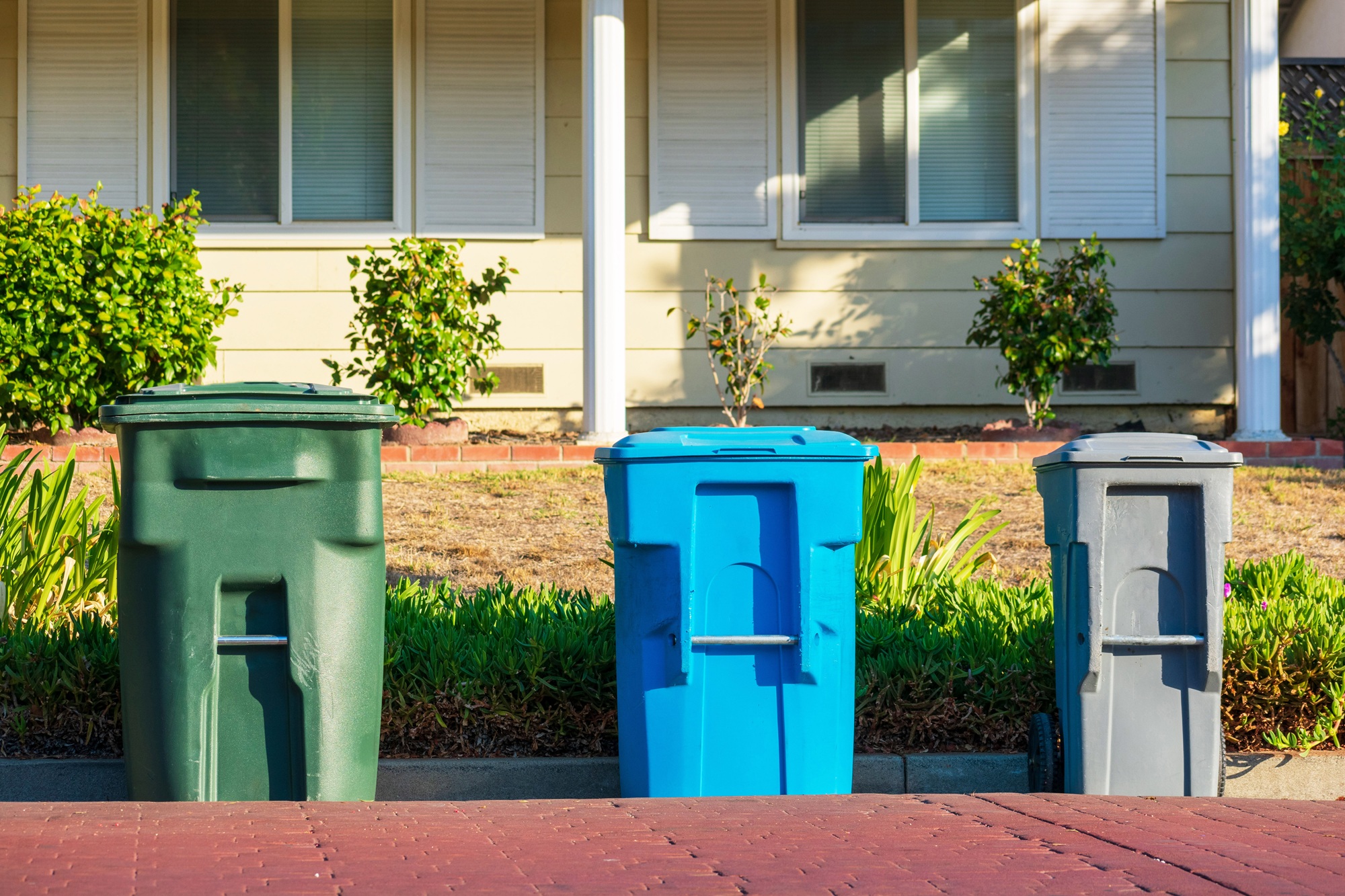
"caption": "Compost, recycling and garbage carts set outside of the home on the curb for residential garbage and recycling pickup.",
"credit": "Michael Vi/iStock via Getty Images",
"altTag": null,
"description": null,
"imgSizes": {
"thumbnail": {
"file": "https://cdn.kqed.org/wp-content/uploads/sites/10/2025/07/GarbageContainersGetty-160x107.jpg",
"width": 160,
"height": 107,
"mimeType": "image/jpeg"
},
"1536x1536": {
"file": "https://cdn.kqed.org/wp-content/uploads/sites/10/2025/07/GarbageContainersGetty-1536x1024.jpg",
"width": 1536,
"height": 1024,
"mimeType": "image/jpeg"
},
"post-thumbnail": {
"file": "https://cdn.kqed.org/wp-content/uploads/sites/10/2025/07/GarbageContainersGetty-672x372.jpg",
"width": 672,
"height": 372,
"mimeType": "image/jpeg"
},
"twentyfourteen-full-width": {
"file": "https://cdn.kqed.org/wp-content/uploads/sites/10/2025/07/GarbageContainersGetty-1038x576.jpg",
"width": 1038,
"height": 576,
"mimeType": "image/jpeg"
},
"kqedFullSize": {
"file": "https://cdn.kqed.org/wp-content/uploads/sites/10/2025/07/GarbageContainersGetty.jpg",
"width": 2000,
"height": 1333
}
},
"isLoading": false,
"fetchFailed": false
},
"news_11987511": {
"type": "attachments",
"id": "news_11987511",
"meta": {
"index": "attachments_1716263798",
"site": "news",
"id": "11987511",
"found": true
},
"title": "240522-KQEDheadquarters-10-BL_qut",
"publishDate": 1716487818,
"status": "inherit",
"parent": 11987509,
"modified": 1716487863,
"caption": "A KQED sign in the lobby of the organization's headquarters in San Francisco.",
"credit": "Beth LaBerge/KQED",
"altTag": null,
"description": null,
"imgSizes": {
"medium": {
"file": "https://cdn.kqed.org/wp-content/uploads/sites/10/2024/05/240522-KQEDheadquarters-10-BL_qut-800x533.jpg",
"width": 800,
"height": 533,
"mimeType": "image/jpeg"
},
"large": {
"file": "https://cdn.kqed.org/wp-content/uploads/sites/10/2024/05/240522-KQEDheadquarters-10-BL_qut-1020x680.jpg",
"width": 1020,
"height": 680,
"mimeType": "image/jpeg"
},
"thumbnail": {
"file": "https://cdn.kqed.org/wp-content/uploads/sites/10/2024/05/240522-KQEDheadquarters-10-BL_qut-160x107.jpg",
"width": 160,
"height": 107,
"mimeType": "image/jpeg"
},
"1536x1536": {
"file": "https://cdn.kqed.org/wp-content/uploads/sites/10/2024/05/240522-KQEDheadquarters-10-BL_qut-1536x1024.jpg",
"width": 1536,
"height": 1024,
"mimeType": "image/jpeg"
},
"post-thumbnail": {
"file": "https://cdn.kqed.org/wp-content/uploads/sites/10/2024/05/240522-KQEDheadquarters-10-BL_qut-672x372.jpg",
"width": 672,
"height": 372,
"mimeType": "image/jpeg"
},
"twentyfourteen-full-width": {
"file": "https://cdn.kqed.org/wp-content/uploads/sites/10/2024/05/240522-KQEDheadquarters-10-BL_qut-1038x576.jpg",
"width": 1038,
"height": 576,
"mimeType": "image/jpeg"
},
"kqedFullSize": {
"file": "https://cdn.kqed.org/wp-content/uploads/sites/10/2024/05/240522-KQEDheadquarters-10-BL_qut.jpg",
"width": 1920,
"height": 1280
}
},
"isLoading": false,
"fetchFailed": false
},
"news_12048609": {
"type": "attachments",
"id": "news_12048609",
"meta": {
"index": "attachments_1716263798",
"site": "news",
"id": "12048609",
"found": true
},
"title": "Good Trouble Protest",
"publishDate": 1752790280,
"status": "inherit",
"parent": 0,
"modified": 1752796758,
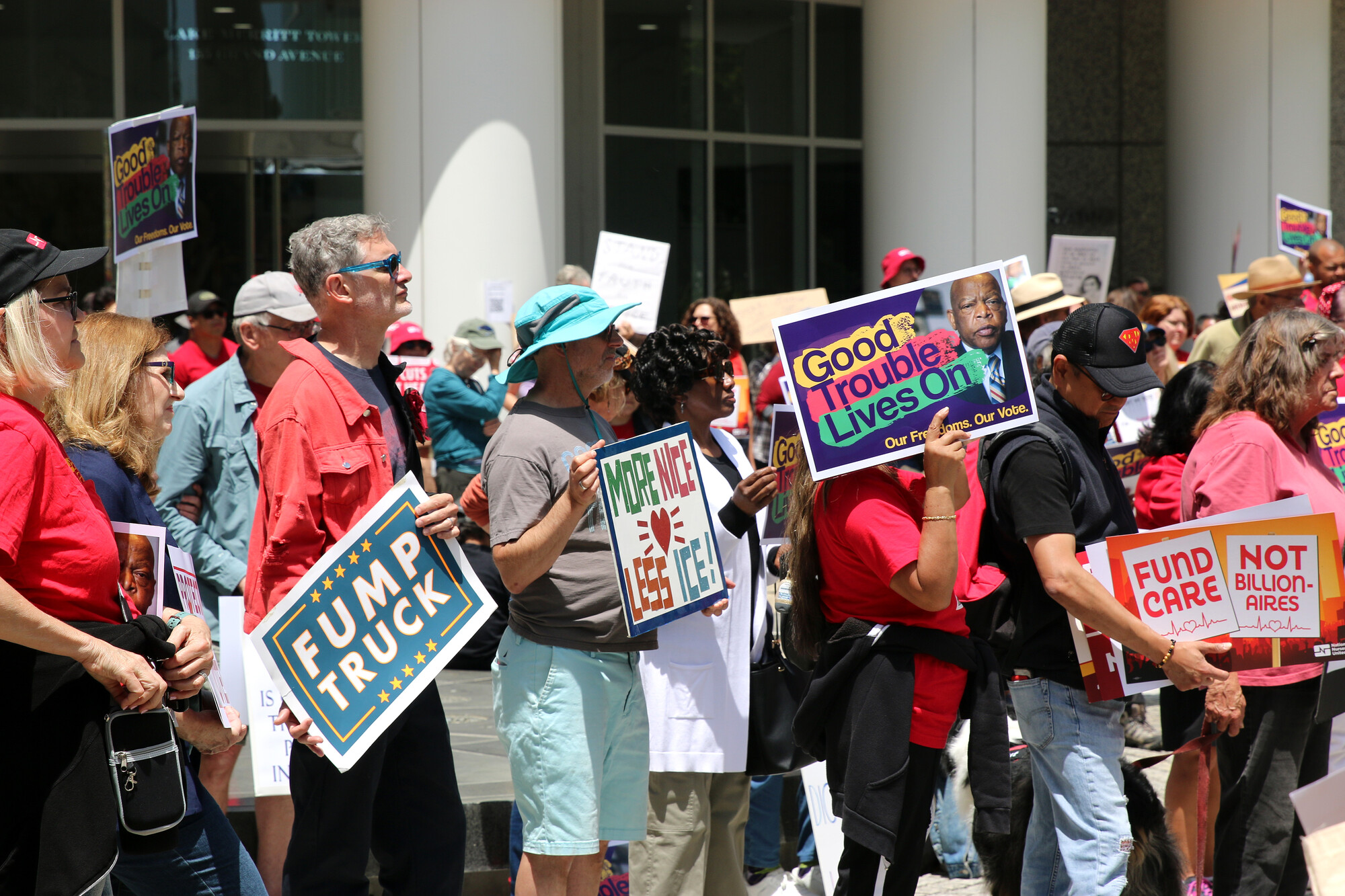
"caption": "Protesters hold signs condemning President Donald Trump and remembering the late Georgia Congressman John Lewis at a rally on Thursday in Oakland coordinated by the California Nurses Association. The \"Good Trouble\" rally was one of many in the Bay Area and hundreds across the nation to commemorate Lewis' death five years ago.",
"credit": "Brian Krans/KQED",
"altTag": null,
"description": null,
"imgSizes": {
"thumbnail": {
"file": "https://cdn.kqed.org/wp-content/uploads/sites/10/2025/07/250717GoodTrouble4_qed-160x107.jpg",
"width": 160,
"height": 107,
"mimeType": "image/jpeg"
},
"1536x1536": {
"file": "https://cdn.kqed.org/wp-content/uploads/sites/10/2025/07/250717GoodTrouble4_qed-1536x1024.jpg",
"width": 1536,
"height": 1024,
"mimeType": "image/jpeg"
},
"post-thumbnail": {
"file": "https://cdn.kqed.org/wp-content/uploads/sites/10/2025/07/250717GoodTrouble4_qed-672x372.jpg",
"width": 672,
"height": 372,
"mimeType": "image/jpeg"
},
"twentyfourteen-full-width": {
"file": "https://cdn.kqed.org/wp-content/uploads/sites/10/2025/07/250717GoodTrouble4_qed-1038x576.jpg",
"width": 1038,
"height": 576,
"mimeType": "image/jpeg"
},
"kqedFullSize": {
"file": "https://cdn.kqed.org/wp-content/uploads/sites/10/2025/07/250717GoodTrouble4_qed.jpg",
"width": 2000,
"height": 1333
}
},
"isLoading": false,
"fetchFailed": false
},
"news_12048133": {
"type": "attachments",
"id": "news_12048133",
"meta": {
"index": "attachments_1716263798",
"site": "news",
"id": "12048133",
"found": true
},
"title": "240522-KQEDheadquarters-12-BL_qed",
"publishDate": 1752605240,
"status": "inherit",
"parent": 12048122,
"modified": 1752605252,
"caption": "A KQED sign in the entrance way to the organization's headquarters in San Francisco on May 22, 2024.",
"credit": "Beth LaBerge/KQED",
"altTag": null,
"description": null,
"imgSizes": {
"thumbnail": {
"file": "https://cdn.kqed.org/wp-content/uploads/sites/10/2025/07/240522-KQEDheadquarters-12-BL_qed-160x107.jpg",
"width": 160,
"height": 107,
"mimeType": "image/jpeg"
},
"1536x1536": {
"file": "https://cdn.kqed.org/wp-content/uploads/sites/10/2025/07/240522-KQEDheadquarters-12-BL_qed-1536x1024.jpg",
"width": 1536,
"height": 1024,
"mimeType": "image/jpeg"
},
"post-thumbnail": {
"file": "https://cdn.kqed.org/wp-content/uploads/sites/10/2025/07/240522-KQEDheadquarters-12-BL_qed-672x372.jpg",
"width": 672,
"height": 372,
"mimeType": "image/jpeg"
},
"twentyfourteen-full-width": {
"file": "https://cdn.kqed.org/wp-content/uploads/sites/10/2025/07/240522-KQEDheadquarters-12-BL_qed-1038x576.jpg",
"width": 1038,
"height": 576,
"mimeType": "image/jpeg"
},
"kqedFullSize": {
"file": "https://cdn.kqed.org/wp-content/uploads/sites/10/2025/07/240522-KQEDheadquarters-12-BL_qed.jpg",
"width": 1999,
"height": 1333
}
},
"isLoading": false,
"fetchFailed": false
},
"news_12047919": {
"type": "attachments",
"id": "news_12047919",
"meta": {
"index": "attachments_1716263798",
"site": "news",
"id": "12047919",
"found": true
},
"title": "Concepts Save The World and Environmental Issues, Garbage Bags Stacking Storage Against Green Trees Backgrounds. Waste Management",
"publishDate": 1752515742,
"status": "inherit",
"parent": 12047597,
"modified": 1752515766,
"caption": null,
"credit": "KDP/iStock via Getty Images",
"altTag": null,
"description": null,
"imgSizes": {
"thumbnail": {
"file": "https://cdn.kqed.org/wp-content/uploads/sites/10/2025/07/GarbageBagsGetty-160x107.jpg",
"width": 160,
"height": 107,
"mimeType": "image/jpeg"
},
"1536x1536": {
"file": "https://cdn.kqed.org/wp-content/uploads/sites/10/2025/07/GarbageBagsGetty-1536x1025.jpg",
"width": 1536,
"height": 1025,
"mimeType": "image/jpeg"
},
"post-thumbnail": {
"file": "https://cdn.kqed.org/wp-content/uploads/sites/10/2025/07/GarbageBagsGetty-672x372.jpg",
"width": 672,
"height": 372,
"mimeType": "image/jpeg"
},
"twentyfourteen-full-width": {
"file": "https://cdn.kqed.org/wp-content/uploads/sites/10/2025/07/GarbageBagsGetty-1038x576.jpg",
"width": 1038,
"height": 576,
"mimeType": "image/jpeg"
},
"kqedFullSize": {
"file": "https://cdn.kqed.org/wp-content/uploads/sites/10/2025/07/GarbageBagsGetty.jpg",
"width": 2000,
"height": 1334
}
},
"isLoading": false,
"fetchFailed": false
},
"news_12047391": {
"type": "attachments",
"id": "news_12047391",
"meta": {
"index": "attachments_1716263798",
"site": "news",
"id": "12047391",
"found": true
},
"title": "Government Assistance Programs Aid Underprivileged Communities In New York State",
"publishDate": 1752013492,
"status": "inherit",
"parent": 12047363,
"modified": 1752014498,
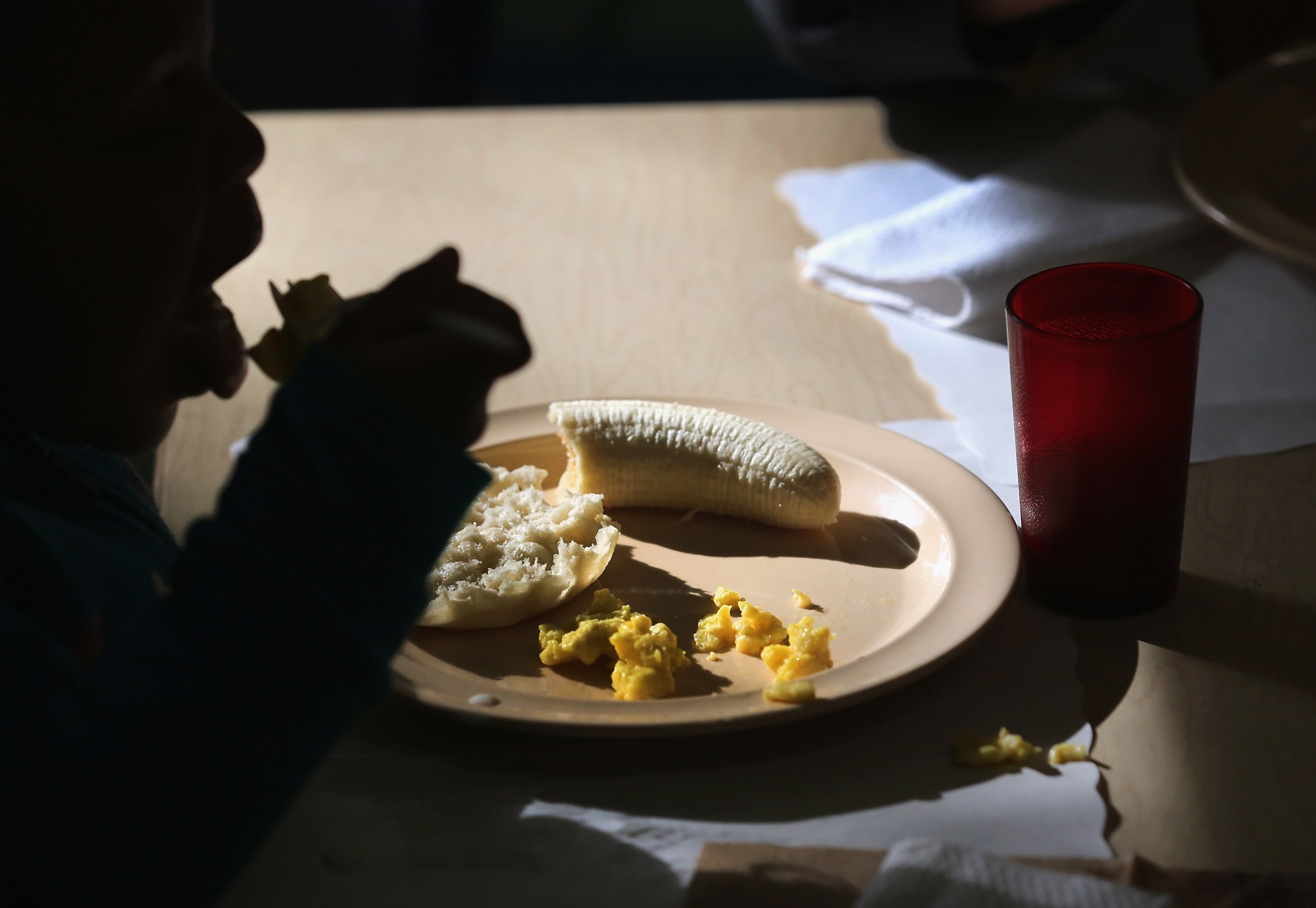
"caption": "Children eat breakfast at a federally-funded Head Start Program school on Sept. 20, 2012, in Woodbourne, New York. ",
"credit": "John Moore/Getty Images",
"altTag": null,
"description": null,
"imgSizes": {
"thumbnail": {
"file": "https://cdn.kqed.org/wp-content/uploads/sites/10/2025/07/GuaranteedIncomeGetty-160x110.jpg",
"width": 160,
"height": 110,
"mimeType": "image/jpeg"
},
"1536x1536": {
"file": "https://cdn.kqed.org/wp-content/uploads/sites/10/2025/07/GuaranteedIncomeGetty-1536x1060.jpg",
"width": 1536,
"height": 1060,
"mimeType": "image/jpeg"
},
"post-thumbnail": {
"file": "https://cdn.kqed.org/wp-content/uploads/sites/10/2025/07/GuaranteedIncomeGetty-672x372.jpg",
"width": 672,
"height": 372,
"mimeType": "image/jpeg"
},
"twentyfourteen-full-width": {
"file": "https://cdn.kqed.org/wp-content/uploads/sites/10/2025/07/GuaranteedIncomeGetty-1038x576.jpg",
"width": 1038,
"height": 576,
"mimeType": "image/jpeg"
},
"kqedFullSize": {
"file": "https://cdn.kqed.org/wp-content/uploads/sites/10/2025/07/GuaranteedIncomeGetty.jpg",
"width": 2000,
"height": 1380
}
},
"isLoading": false,
"fetchFailed": false
},
"news_12047307": {
"type": "attachments",
"id": "news_12047307",
"meta": {
"index": "attachments_1716263798",
"site": "news",
"id": "12047307",
"found": true
},
"title": "Napa Valley Winery Harvests Its Bounty",
"publishDate": 1751930765,
"status": "inherit",
"parent": 12047129,
"modified": 1751930808,
"caption": "A woman participates in a wine tasting at the St. Supery Winery on Oct. 18, 2005 in Rutherford, California. ",
"credit": "Justin Sullivan/Getty Images",
"altTag": null,
"description": null,
"imgSizes": {
"thumbnail": {
"file": "https://cdn.kqed.org/wp-content/uploads/sites/10/2025/07/55950722_qed-160x114.jpg",
"width": 160,
"height": 114,
"mimeType": "image/jpeg"
},
"1536x1536": {
"file": "https://cdn.kqed.org/wp-content/uploads/sites/10/2025/07/55950722_qed-1536x1093.jpg",
"width": 1536,
"height": 1093,
"mimeType": "image/jpeg"
},
"post-thumbnail": {
"file": "https://cdn.kqed.org/wp-content/uploads/sites/10/2025/07/55950722_qed-672x372.jpg",
"width": 672,
"height": 372,
"mimeType": "image/jpeg"
},
"twentyfourteen-full-width": {
"file": "https://cdn.kqed.org/wp-content/uploads/sites/10/2025/07/55950722_qed-1038x576.jpg",
"width": 1038,
"height": 576,
"mimeType": "image/jpeg"
},
"kqedFullSize": {
"file": "https://cdn.kqed.org/wp-content/uploads/sites/10/2025/07/55950722_qed.jpg",
"width": 1874,
"height": 1333
}
},
"isLoading": false,
"fetchFailed": false
}
},
"audioPlayerReducer": {
"postId": "stream_live",
"isPaused": true,
"isPlaying": false,
"pfsActive": false,
"pledgeModalIsOpen": true,
"playerDrawerIsOpen": false,
"liveAudioPlayStartedAt": 0,
"liveAudioPlayContext": ""
},
"authorsReducer": {
"byline_news_12049005": {
"type": "authors",
"id": "byline_news_12049005",
"meta": {
"override": true
},
"slug": "byline_news_12049005",
"name": "Jeanne Kuang, CalMatters",
"isLoading": false
},
"shossaini": {
"type": "authors",
"id": "3214",
"meta": {
"index": "authors_1716337520",
"id": "3214",
"found": true
},
"name": "Sara Hossaini",
"firstName": "Sara",
"lastName": "Hossaini",
"slug": "shossaini",
"email": "shossaini@kqed.org",
"display_author_email": true,
"staff_mastheads": [
"news"
],
"title": "KQED Reporter",
"bio": "Sara Hossaini came to general assignment reporting at KQED in 2013 after two winters reporting at Wyoming Public Radio. She holds a bachelor's degree in broadcast journalism from the University of Nebraska-Lincoln. Her radio romance began after a bitter breakup with documentary film (Ok, maybe it's still complicated). Her first simultaneous jobs in San Francisco were as Associate Producer on a PBS film series through the Center for Asian American Media and as a butler. She likes to trot, plot and make things with her hands.",
"avatar": "https://secure.gravatar.com/avatar/060e9f56b9554e17942e89f413242774?s=600&d=blank&r=g",
"twitter": "mshossaini",
"facebook": null,
"instagram": null,
"linkedin": null,
"sites": [
{
"site": "news",
"roles": [
"author"
]
},
{
"site": "stateofhealth",
"roles": [
"author"
]
}
],
"headData": {
"title": "Sara Hossaini | KQED",
"description": "KQED Reporter",
"ogImgSrc": "https://secure.gravatar.com/avatar/060e9f56b9554e17942e89f413242774?s=600&d=blank&r=g",
"twImgSrc": "https://secure.gravatar.com/avatar/060e9f56b9554e17942e89f413242774?s=600&d=blank&r=g"
},
"isLoading": false,
"link": "/author/shossaini"
},
"vrancano": {
"type": "authors",
"id": "11276",
"meta": {
"index": "authors_1716337520",
"id": "11276",
"found": true
},
"name": "Vanessa Rancaño",
"firstName": "Vanessa",
"lastName": "Rancaño",
"slug": "vrancano",
"email": "vrancano@kqed.org",
"display_author_email": false,
"staff_mastheads": [
"news"
],
"title": "Reporter",
"bio": "Vanessa Rancaño is a features reporter for KQED. She’s also covered homelessness and education for the station and reported from the Central Valley. Her work has aired across public radio, from flagship national news shows to longform narrative podcasts. Before taking up a mic, she worked as a freelance print journalist. She’s been recognized with a number of national and regional awards. Vanessa grew up in California's Central Valley. She's a former NPR Kroc Fellow, and a graduate of the UC Berkeley Graduate School of Journalism.",
"avatar": "https://secure.gravatar.com/avatar/b3a383dfb0e7ee1c17568f2cf067904ab654d6e3de9743fc661f3c788ade1bed?s=600&d=blank&r=g",
"twitter": "vanessarancano",
"bluesky": null,
"facebook": null,
"instagram": null,
"linkedin": null,
"sites": [
{
"site": "arts",
"roles": [
"editor"
]
},
{
"site": "news",
"roles": [
"editor"
]
},
{
"site": "liveblog",
"roles": [
"contributor"
]
}
],
"headData": {
"title": "Vanessa Rancaño | KQED",
"description": "Reporter",
"ogImgSrc": "https://secure.gravatar.com/avatar/b3a383dfb0e7ee1c17568f2cf067904ab654d6e3de9743fc661f3c788ade1bed?s=600&d=blank&r=g",
"twImgSrc": "https://secure.gravatar.com/avatar/b3a383dfb0e7ee1c17568f2cf067904ab654d6e3de9743fc661f3c788ade1bed?s=600&d=blank&r=g"
},
"isLoading": false,
"link": "/author/vrancano"
},
"jgeha": {
"type": "authors",
"id": "11906",
"meta": {
"index": "authors_1716337520",
"id": "11906",
"found": true
},
"name": "Joseph Geha",
"firstName": "Joseph",
"lastName": "Geha",
"slug": "jgeha",
"email": "jgeha@kqed.org",
"display_author_email": false,
"staff_mastheads": [
"news",
"science"
],
"title": "KQED Contributor",
"bio": null,
"avatar": "https://secure.gravatar.com/avatar/ea84d2b6dd93d6369d453edf19dd583f117cd1759d2d9c9c92f9de77017354fe?s=600&d=blank&r=g",
"twitter": null,
"bluesky": null,
"facebook": null,
"instagram": null,
"linkedin": null,
"sites": [
{
"site": "news",
"roles": [
"editor"
]
},
{
"site": "liveblog",
"roles": [
"author"
]
}
],
"headData": {
"title": "Joseph Geha | KQED",
"description": "KQED Contributor",
"ogImgSrc": "https://secure.gravatar.com/avatar/ea84d2b6dd93d6369d453edf19dd583f117cd1759d2d9c9c92f9de77017354fe?s=600&d=blank&r=g",
"twImgSrc": "https://secure.gravatar.com/avatar/ea84d2b6dd93d6369d453edf19dd583f117cd1759d2d9c9c92f9de77017354fe?s=600&d=blank&r=g"
},
"isLoading": false,
"link": "/author/jgeha"
},
"kdebenedetti": {
"type": "authors",
"id": "11913",
"meta": {
"index": "authors_1716337520",
"id": "11913",
"found": true
},
"name": "Katie DeBenedetti",
"firstName": "Katie",
"lastName": "DeBenedetti",
"slug": "kdebenedetti",
"email": "kdebenedetti@kqed.org",
"display_author_email": false,
"staff_mastheads": [
"news",
"science"
],
"title": "KQED Contributor",
"bio": "Katie DeBenedetti is a digital reporter covering daily news for the Express Desk. Prior to joining KQED as a culture reporting intern in January 2024, she covered education and city government for the Napa Valley Register.",
"avatar": "https://secure.gravatar.com/avatar/6e31073cb8f7e4214ab03f42771d0f45?s=600&d=blank&r=g",
"twitter": null,
"facebook": null,
"instagram": null,
"linkedin": null,
"sites": [
{
"site": "news",
"roles": [
"author"
]
},
{
"site": "science",
"roles": [
"author"
]
},
{
"site": "liveblog",
"roles": [
"author"
]
}
],
"headData": {
"title": "Katie DeBenedetti | KQED",
"description": "KQED Contributor",
"ogImgSrc": "https://secure.gravatar.com/avatar/6e31073cb8f7e4214ab03f42771d0f45?s=600&d=blank&r=g",
"twImgSrc": "https://secure.gravatar.com/avatar/6e31073cb8f7e4214ab03f42771d0f45?s=600&d=blank&r=g"
},
"isLoading": false,
"link": "/author/kdebenedetti"
},
"slim": {
"type": "authors",
"id": "11920",
"meta": {
"index": "authors_1716337520",
"id": "11920",
"found": true
},
"name": "Samantha Lim",
"firstName": "Samantha",
"lastName": "Lim",
"slug": "slim",
"email": "slim@KQED.org",
"display_author_email": false,
"staff_mastheads": [],
"title": "KQED Contributor",
"bio": null,
"avatar": "https://secure.gravatar.com/avatar/82e592e6c15fe1a04d385e8ad0fb0b4e?s=600&d=blank&r=g",
"twitter": null,
"facebook": null,
"instagram": null,
"linkedin": null,
"sites": [
{
"site": "news",
"roles": []
}
],
"headData": {
"title": "Samantha Lim | KQED",
"description": "KQED Contributor",
"ogImgSrc": "https://secure.gravatar.com/avatar/82e592e6c15fe1a04d385e8ad0fb0b4e?s=600&d=blank&r=g",
"twImgSrc": "https://secure.gravatar.com/avatar/82e592e6c15fe1a04d385e8ad0fb0b4e?s=600&d=blank&r=g"
},
"isLoading": false,
"link": "/author/slim"
},
"bkrans": {
"type": "authors",
"id": "11923",
"meta": {
"index": "authors_1716337520",
"id": "11923",
"found": true
},
"name": "Brian Krans",
"firstName": "Brian",
"lastName": "Krans",
"slug": "bkrans",
"email": "bkrans@kqed.org",
"display_author_email": false,
"staff_mastheads": [
"news"
],
"title": "KQED Contributing Reporter",
"bio": "Brian Krans is an award-winning local news and investigative reporter who has been proudly working as a general assignment reporter for KQED since August 2023. He lives in Richmond, where he also reports on air pollution for Richmondside. He is also a founding member of the Vallejo Sun.",
"avatar": "https://secure.gravatar.com/avatar/d1014d604089314a94807d2c4f2d3e06?s=600&d=blank&r=g",
"twitter": "citizenkrans",
"facebook": null,
"instagram": null,
"linkedin": null,
"sites": [
{
"site": "news",
"roles": [
"editor"
]
}
],
"headData": {
"title": "Brian Krans | KQED",
"description": "KQED Contributing Reporter",
"ogImgSrc": "https://secure.gravatar.com/avatar/d1014d604089314a94807d2c4f2d3e06?s=600&d=blank&r=g",
"twImgSrc": "https://secure.gravatar.com/avatar/d1014d604089314a94807d2c4f2d3e06?s=600&d=blank&r=g"
},
"isLoading": false,
"link": "/author/bkrans"
},
"gzada": {
"type": "authors",
"id": "11929",
"meta": {
"index": "authors_1716337520",
"id": "11929",
"found": true
},
"name": "Gilare Zada",
"firstName": "Gilare",
"lastName": "Zada",
"slug": "gzada",
"email": "gzada@kqed.org",
"display_author_email": true,
"staff_mastheads": [
"news"
],
"title": null,
"bio": "Gilare Zada is a Kurdish-American from San Diego, CA. Storytelling, fitness, and binge reading are some of her passions outside of news reporting. Her work has appeared in Mission Local, the Peninsula Press, the San Francisco Press Club, and more. She also writes as a class correspondent for the Stanford Magazine - go Card!",
"avatar": "https://secure.gravatar.com/avatar/33a75f2b947669a488a805edec3fbf3838c1cedaedda710e983770633b4d6a75?s=600&d=blank&r=g",
"twitter": null,
"bluesky": null,
"facebook": null,
"instagram": null,
"linkedin": null,
"sites": [
{
"site": "",
"roles": [
"editor"
]
},
{
"site": "arts",
"roles": [
"editor"
]
},
{
"site": "news",
"roles": [
"administrator"
]
},
{
"site": "science",
"roles": [
"editor"
]
}
],
"headData": {
"title": "Gilare Zada | KQED",
"description": null,
"ogImgSrc": "https://secure.gravatar.com/avatar/33a75f2b947669a488a805edec3fbf3838c1cedaedda710e983770633b4d6a75?s=600&d=blank&r=g",
"twImgSrc": "https://secure.gravatar.com/avatar/33a75f2b947669a488a805edec3fbf3838c1cedaedda710e983770633b4d6a75?s=600&d=blank&r=g"
},
"isLoading": false,
"link": "/author/gzada"
},
"skennedy": {
"type": "authors",
"id": "11935",
"meta": {
"index": "authors_1716337520",
"id": "11935",
"found": true
},
"name": "Samantha Kennedy",
"firstName": "Samantha",
"lastName": "Kennedy",
"slug": "skennedy",
"email": "SKennedy@kqed.org",
"display_author_email": false,
"staff_mastheads": [],
"title": "KQED Contributor",
"bio": null,
"avatar": "https://secure.gravatar.com/avatar/adc7b14bf1e801793202a156ecc864d4ad505b0fd63162a2f3da0e5ba57222d0?s=600&d=blank&r=g",
"twitter": null,
"bluesky": null,
"facebook": null,
"instagram": null,
"linkedin": null,
"sites": [
{
"site": "arts",
"roles": [
"author"
]
},
{
"site": "news",
"roles": [
"editor"
]
},
{
"site": "science",
"roles": [
"editor"
]
}
],
"headData": {
"title": "Samantha Kennedy | KQED",
"description": "KQED Contributor",
"ogImgSrc": "https://secure.gravatar.com/avatar/adc7b14bf1e801793202a156ecc864d4ad505b0fd63162a2f3da0e5ba57222d0?s=600&d=blank&r=g",
"twImgSrc": "https://secure.gravatar.com/avatar/adc7b14bf1e801793202a156ecc864d4ad505b0fd63162a2f3da0e5ba57222d0?s=600&d=blank&r=g"
},
"isLoading": false,
"link": "/author/skennedy"
}
},
"pagesReducer": {
"news_tag_labor": {
"type": "terms",
"id": "news_19904",
"meta": {
"index": "terms_1716263798",
"site": "news",
"id": "19904",
"score": 8.558012
},
"name": "Labor",
"slug": "labor",
"taxonomy": "tag",
"description": null,
"featImg": null,
"headData": {
"title": "Labor | KQED News",
"description": null,
"ogTitle": null,
"ogDescription": null,
"ogImgId": null,
"twTitle": null,
"twDescription": null,
"twImgId": null
},
"ttid": 19921,
"isLoading": false,
"title": "Labor",
"pageMeta": {
"site": "news",
"WpPageTemplate": "page-topic-editorial",
"currentPage": 18
},
"blocks": [
{
"blockName": "kqed/post-list",
"attrs": {
"layout": "cardArticle2",
"query": "posts/news?tag=labor",
"seeMore": false,
"paginated": true,
"page": 18
}
},
{
"blockName": "kqed/ad"
}
]
}
},
"pfsSessionReducer": {},
"postsReducer": {
"stream_live": {
"type": "live",
"id": "stream_live",
"audioUrl": "https://streams.kqed.org/kqedradio",
"title": "Live Stream",
"excerpt": "Live Stream information currently unavailable.",
"link": "/radio",
"featImg": "",
"label": {
"name": "KQED Live",
"link": "/"
}
},
"stream_kqedNewscast": {
"type": "posts",
"id": "stream_kqedNewscast",
"audioUrl": "https://www.kqed.org/.stream/anon/radio/RDnews/newscast.mp3?_=1",
"title": "KQED Newscast",
"featImg": "",
"label": {
"name": "88.5 FM",
"link": "/"
}
},
"news_12050640": {
"type": "posts",
"id": "news_12050640",
"meta": {
"index": "posts_1716263798",
"site": "news",
"id": "12050640",
"score": null,
"sort": [
1754079927000
]
},
"guestAuthors": [],
"slug": "construction-workers-death-at-berkeley-school-is-under-investigation",
"title": "Construction Worker’s Death at Berkeley School Is Under Investigation",
"publishDate": 1754079927,
"format": "standard",
"headTitle": "Construction Worker’s Death at Berkeley School Is Under Investigation | KQED",
"labelTerm": {
"site": "news"
},
"content": "\u003cp>Police and California workplace safety officials are investigating the death of a 41-year-old man who fell several stories at a \u003ca href=\"https://www.kqed.org/news/tag/berkeley\">Berkeley\u003c/a> elementary school while installing scaffolding last week, the Berkeley Police Department said.\u003c/p>\n\u003cp>On July 24, the Berkeley Fire Department responded to a 911 call around 12:50 p.m. that someone had fallen from scaffolding on the 2800 block of Ellsworth Street. Crews found a construction worker on the ground after he fell from a height of about 40 feet. The man had been working on a renovation project at Sylvia Mendez Elementary School.\u003c/p>\n\u003cp>[ad fullwidth]\u003c/p>\n\u003cp>The man died after being taken to a hospital, police said. The Alameda County coroner’s office identified him as Jonathan Dillard Guidi of Sacramento. Guidi was a father of seven children.\u003c/p>\n\u003cp>“He had the biggest heart and always put others first,” said a \u003ca href=\"https://www.gofundme.com/f/support-mama-kids-after-sudden-loss-of-father\">GoFundMe\u003c/a> opened to help support Guidi’s family. “There are simply no words to describe the hole his absence leaves behind.”\u003c/p>\n\u003cfigure id=\"attachment_12050644\" class=\"wp-caption aligncenter\" style=\"max-width: 2000px\">\u003cimg loading=\"lazy\" decoding=\"async\" class=\"size-full wp-image-12050644\" src=\"https://cdn.kqed.org/wp-content/uploads/sites/10/2025/08/250801-BERKELEY-OSHA-DEATH-MD-01-KQED.jpg\" alt=\"\" width=\"2000\" height=\"1333\" srcset=\"https://cdn.kqed.org/wp-content/uploads/sites/10/2025/08/250801-BERKELEY-OSHA-DEATH-MD-01-KQED.jpg 2000w, https://cdn.kqed.org/wp-content/uploads/sites/10/2025/08/250801-BERKELEY-OSHA-DEATH-MD-01-KQED-160x107.jpg 160w, https://cdn.kqed.org/wp-content/uploads/sites/10/2025/08/250801-BERKELEY-OSHA-DEATH-MD-01-KQED-1536x1024.jpg 1536w\" sizes=\"auto, (max-width: 2000px) 100vw, 2000px\">\u003cfigcaption class=\"wp-caption-text\">Construction workers operate atop scaffolding at Sylvia Mendez Elementary School in Berkeley on Aug. 1, 2025. \u003ccite>(Martin do Nascimento/KQED)\u003c/cite>\u003c/figcaption>\u003c/figure>\n\u003cp>The Berkeley Police Department, which is conducting a death investigation, said the California Division of Occupational Safety and Health also responded to the scene.\u003c/p>\n\u003cp>Cal/OSHA did not immediately respond to a request for comment about the occupational safety investigation.\u003c/p>\n\u003cp>The agency, which inspects workplaces across the state for occupational safety and health violations, conducts investigations in cases where a death or other serious injury or illness is reported. Cal/OSHA “must issue any citations within six months” of when a violation occurred, according to the agency.\u003c/p>\n\u003cp>\u003c/p>\n",
"blocks": [],
"excerpt": "Berkeley police and California workplace safety officials are investigating the death of a man who fell several stories while installing scaffolding at Sylvia Mendez Elementary School.",
"status": "publish",
"parent": 0,
"modified": 1754082276,
"stats": {
"hasAudio": false,
"hasVideo": false,
"hasChartOrMap": false,
"iframeSrcs": [],
"hasGoogleForm": false,
"hasGallery": false,
"hasHearkenModule": false,
"hasPolis": false,
"paragraphCount": 9,
"wordCount": 279
},
"headData": {
"title": "Construction Worker’s Death at Berkeley School Is Under Investigation | KQED",
"description": "Berkeley police and California workplace safety officials are investigating the death of a man who fell several stories while installing scaffolding at Sylvia Mendez Elementary School.",
"ogTitle": "",
"ogDescription": "",
"ogImgId": "",
"twTitle": "",
"twDescription": "",
"twImgId": "",
"schema": {
"@context": "https://schema.org",
"@type": "NewsArticle",
"headline": "Construction Worker’s Death at Berkeley School Is Under Investigation",
"datePublished": "2025-08-01T13:25:27-07:00",
"dateModified": "2025-08-01T14:04:36-07:00",
"image": "https://cdn.kqed.org/wp-content/uploads/2020/02/KQED-OG-Image@1x.png",
"isAccessibleForFree": "True",
"publisher": {
"@type": "NewsMediaOrganization",
"@id": "https://www.kqed.org/#organization",
"name": "KQED",
"logo": "https://cdn.kqed.org/wp-content/uploads/2020/02/KQED-OG-Image@1x.png",
"url": "https://www.kqed.org",
"sameAs": [
"https://www.facebook.com/KQED",
"https://twitter.com/KQED",
"https://www.instagram.com/kqed/",
"https://www.tiktok.com/@kqedofficial",
"https://www.linkedin.com/company/kqed",
"https://www.youtube.com/channel/UCeC0IOo7i1P_61zVUWbJ4nw"
]
}
}
},
"primaryCategory": {
"termId": 8,
"slug": "news",
"name": "News"
},
"sticky": false,
"nprStoryId": "kqed-12050640",
"templateType": "standard",
"featuredImageType": "standard",
"excludeFromSiteSearch": "Include",
"articleAge": "0",
"path": "/news/12050640/construction-workers-death-at-berkeley-school-is-under-investigation",
"audioTrackLength": null,
"parsedContent": [
{
"type": "contentString",
"content": "\u003cdiv class=\"post-body\">\u003cp>\u003cp>Police and California workplace safety officials are investigating the death of a 41-year-old man who fell several stories at a \u003ca href=\"https://www.kqed.org/news/tag/berkeley\">Berkeley\u003c/a> elementary school while installing scaffolding last week, the Berkeley Police Department said.\u003c/p>\n\u003cp>On July 24, the Berkeley Fire Department responded to a 911 call around 12:50 p.m. that someone had fallen from scaffolding on the 2800 block of Ellsworth Street. Crews found a construction worker on the ground after he fell from a height of about 40 feet. The man had been working on a renovation project at Sylvia Mendez Elementary School.\u003c/p>\n\u003cp>\u003c/p>\u003c/div>",
"attributes": {
"named": {},
"numeric": []
}
},
{
"type": "component",
"content": "",
"name": "ad",
"attributes": {
"named": {
"label": "fullwidth"
},
"numeric": [
"fullwidth"
]
}
},
{
"type": "contentString",
"content": "\u003cdiv class=\"post-body\">\u003cp>\u003c/p>\n\u003cp>The man died after being taken to a hospital, police said. The Alameda County coroner’s office identified him as Jonathan Dillard Guidi of Sacramento. Guidi was a father of seven children.\u003c/p>\n\u003cp>“He had the biggest heart and always put others first,” said a \u003ca href=\"https://www.gofundme.com/f/support-mama-kids-after-sudden-loss-of-father\">GoFundMe\u003c/a> opened to help support Guidi’s family. “There are simply no words to describe the hole his absence leaves behind.”\u003c/p>\n\u003cfigure id=\"attachment_12050644\" class=\"wp-caption aligncenter\" style=\"max-width: 2000px\">\u003cimg loading=\"lazy\" decoding=\"async\" class=\"size-full wp-image-12050644\" src=\"https://cdn.kqed.org/wp-content/uploads/sites/10/2025/08/250801-BERKELEY-OSHA-DEATH-MD-01-KQED.jpg\" alt=\"\" width=\"2000\" height=\"1333\" srcset=\"https://cdn.kqed.org/wp-content/uploads/sites/10/2025/08/250801-BERKELEY-OSHA-DEATH-MD-01-KQED.jpg 2000w, https://cdn.kqed.org/wp-content/uploads/sites/10/2025/08/250801-BERKELEY-OSHA-DEATH-MD-01-KQED-160x107.jpg 160w, https://cdn.kqed.org/wp-content/uploads/sites/10/2025/08/250801-BERKELEY-OSHA-DEATH-MD-01-KQED-1536x1024.jpg 1536w\" sizes=\"auto, (max-width: 2000px) 100vw, 2000px\">\u003cfigcaption class=\"wp-caption-text\">Construction workers operate atop scaffolding at Sylvia Mendez Elementary School in Berkeley on Aug. 1, 2025. \u003ccite>(Martin do Nascimento/KQED)\u003c/cite>\u003c/figcaption>\u003c/figure>\n\u003cp>The Berkeley Police Department, which is conducting a death investigation, said the California Division of Occupational Safety and Health also responded to the scene.\u003c/p>\n\u003cp>Cal/OSHA did not immediately respond to a request for comment about the occupational safety investigation.\u003c/p>\n\u003cp>The agency, which inspects workplaces across the state for occupational safety and health violations, conducts investigations in cases where a death or other serious injury or illness is reported. Cal/OSHA “must issue any citations within six months” of when a violation occurred, according to the agency.\u003c/p>\n\u003cp>\u003c/p>\n\u003c/div>\u003c/p>",
"attributes": {
"named": {},
"numeric": []
}
}
],
"link": "/news/12050640/construction-workers-death-at-berkeley-school-is-under-investigation",
"authors": [
"11935"
],
"categories": [
"news_31795",
"news_34551",
"news_28250",
"news_8"
],
"tags": [
"news_1386",
"news_129",
"news_6145",
"news_18538",
"news_35134",
"news_22434",
"news_18352",
"news_19904",
"news_34456",
"news_23063"
],
"featImg": "news_12050646",
"label": "news"
},
"news_12050138": {
"type": "posts",
"id": "news_12050138",
"meta": {
"index": "posts_1716263798",
"site": "news",
"id": "12050138",
"score": null,
"sort": [
1753833064000
]
},
"guestAuthors": [],
"slug": "hospice-east-bay-workers-hold-one-day-strike-amid-contract-dispute",
"title": "Hospice East Bay Workers Hold One-Day Strike Amid Contract Dispute",
"publishDate": 1753833064,
"format": "standard",
"headTitle": "Hospice East Bay Workers Hold One-Day Strike Amid Contract Dispute | KQED",
"labelTerm": {
"site": "news"
},
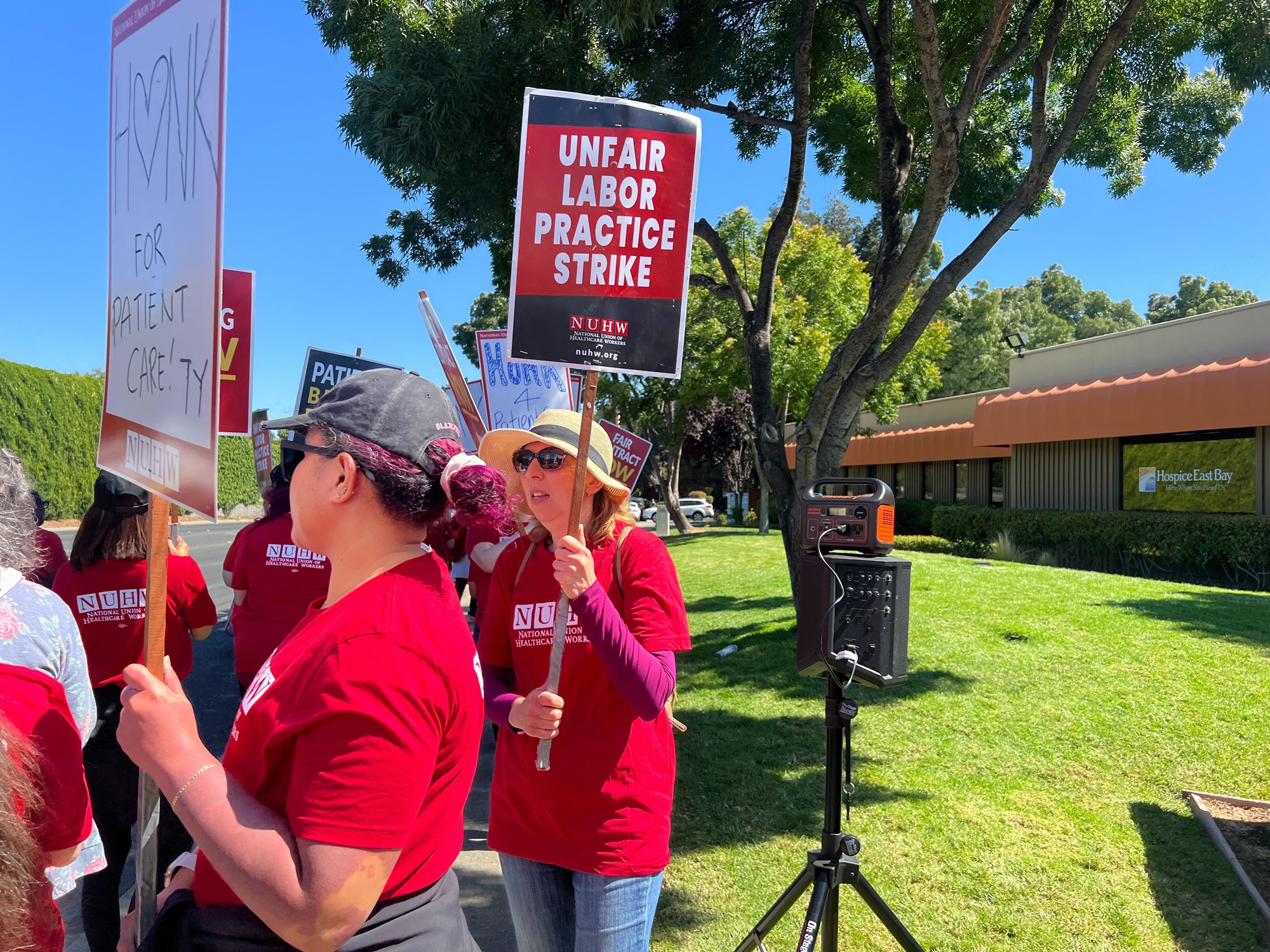
"content": "\u003cp>Frustrated by delays in securing their first union contract nearly two years after organizing, workers at one of the \u003ca href=\"https://www.kqed.org/news/tag/bay-area\">Bay Area\u003c/a>’s oldest hospice care organizations went on a one-day strike on Tuesday.\u003c/p>\n\u003cp>Before dawn, some of the nonprofit’s 80 represented employees began picketing outside the Pleasant Hill headquarters of the nearly 50-year-old Hospice East Bay, demanding progress toward enshrining what they describe as modest workplace standards. The push for a contract comes amid the organization’s looming affiliation with a larger hospice chain based in Florida.\u003c/p>\n\u003cp>“We’ve asked for pretty simple things,” said Jill Tobin, who’s helped dying patients through their final moments for more than four years as a Registered Nurse Case Manager at Hospice East Bay.\u003c/p>\n\u003cp>[ad fullwidth]\u003c/p>\n\u003cp>“For example, we proposed to keep our benefits the same as they are now. We just wanted them protected under a contract,” Tobin said. “[Hospice East Bay] said no, they want the right to make them worse. And so, that’s been really shocking and disappointing.”\u003c/p>\n\u003cp>Historically, patient care at the hospice has been “top notch,” Tobin said, but she’s noted a slow erosion since 2023, when nurses, bereavement counselors, pharmacists and others voted to join the National Union of Healthcare Workers. Since then, she said her caseload has jumped from 10 to 15 people, which she called painful for practitioners and patients both.\u003c/p>\n\u003cp>“You’re coming into their home, you’re taking off your shoes, right? Your whole kind of goal is to build rapport and be present with them first and foremost. Like that’s really the medicine of hospice work,” Tobin said.\u003c/p>\n\u003cfigure id=\"attachment_12050147\" class=\"wp-caption aligncenter\" style=\"max-width: 2000px\">\u003cimg loading=\"lazy\" decoding=\"async\" class=\"size-full wp-image-12050147\" src=\"https://cdn.kqed.org/wp-content/uploads/sites/10/2025/07/HospiceStrike1.jpg\" alt=\"\" width=\"2000\" height=\"1500\" srcset=\"https://cdn.kqed.org/wp-content/uploads/sites/10/2025/07/HospiceStrike1.jpg 2000w, https://cdn.kqed.org/wp-content/uploads/sites/10/2025/07/HospiceStrike1-160x120.jpg 160w, https://cdn.kqed.org/wp-content/uploads/sites/10/2025/07/HospiceStrike1-1536x1152.jpg 1536w\" sizes=\"auto, (max-width: 2000px) 100vw, 2000px\">\u003cfigcaption class=\"wp-caption-text\">Caregivers went on strike at one of the Bay Area’s oldest hospice facilities, Hospice East Bay in Pleasant Hill, on Tuesday, July 29, 2025. They say they are dealing with severe understaffing. \u003ccite>(Nibras Suliman/KQED)\u003c/cite>\u003c/figcaption>\u003c/figure>\n\u003cp>The workers’ initial proposal included safe staffing ratios and a 5% wage increase every year for the next three years. But workers said they’ve been met with resistance, and have accused management of several unfair labor practices — including improperly freezing employees’ existing annual raises and laying off a cohort of represented musical therapists.\u003c/p>\n\u003cp>Claire Eustace, a spiritual care counselor, said she’s worried about clients losing access to her specialty’s services, as well.\u003c/p>\n\u003cp>“I’m afraid that we have this big nonprofit that is taking over … probably starting some time in August. I’m afraid that the priority on spiritual care is gonna go away,” Eustace said.\u003c/p>\n\u003cp>UC Berkeley Labor Center Deputy Executive Director Laurel Lucia said nonprofit providers like Hospice East Bay, which serves Alameda, Contra Costa and parts of Solano counties, have a special duty to the community in a field that is increasingly facing corporatization by for-profit owners.[aside postID=news_12048636 hero='https://cdn.kqed.org/wp-content/uploads/sites/10/2025/05/npr.brightspotcdn-1020x680.jpg']Better conditions for workers, Lucia added, do affect patient experience.\u003c/p>\n\u003cp>“There is research from other health care sectors that’s shown that adequate wages are an important component of retaining health care workers,” Lucia said. “And kind of relatedly, there is research showing the importance of adequate and consistent staffing to patients having good quality of care.”\u003c/p>\n\u003cp>Hospice East Bay spokesperson Rico Marcelli said he couldn’t speak to the bargaining process, other than to say that management remains committed to being at the table with workers.\u003c/p>\n\u003cp>As for the decision to lay off the musical therapists, Marcelli said Hospice East Bay decided as part of its effort to contend with serious financial challenges — including a more than $4 million increase in operating losses in 2024 over the prior year.\u003c/p>\n\u003cp>“Nonprofit hospice care is under threat right now,” Marcelli said, “and part of that is lowered [Medicare] reimbursement rates.”\u003c/p>\n\u003cp>Medicare and Medicaid reimbursement for hospice, which provides 92% of Hospice East Bay’s hospice revenue, Marcelli said, has not kept pace with increases in labor and other patient care expenses. For the current fiscal year, reimbursement for hospice care in Contra Costa County was cut by 1.4%.\u003c/p>\n\u003cp>Marcelli said hospice services will not be affected by the one-day strike and that he’s hopeful the two parties will come to an agreement soon.\u003c/p>\n\u003cp>“I’m sure we’re going to be able to get over these differences because we have to. If we don’t come together, we’re not going to be able to fulfill our mission.”\u003c/p>\n\u003cp>\u003cem>KQED’s Nibras Suliman contributed to this report.\u003c/em>\u003c/p>\n\u003cp>\u003c/p>\n",
"blocks": [],
"excerpt": "The Pleasanton facility said lowered Medicare and Medicaid reimbursement rates threaten nonprofit hospice care. ",
"status": "publish",
"parent": 0,
"modified": 1753985055,
"stats": {
"hasAudio": false,
"hasVideo": false,
"hasChartOrMap": false,
"iframeSrcs": [],
"hasGoogleForm": false,
"hasGallery": false,
"hasHearkenModule": false,
"hasPolis": false,
"paragraphCount": 20,
"wordCount": 802
},
"headData": {
"title": "Hospice East Bay Workers Hold One-Day Strike Amid Contract Dispute | KQED",
"description": "The Pleasanton facility said lowered Medicare and Medicaid reimbursement rates threaten nonprofit hospice care. ",
"ogTitle": "",
"ogDescription": "",
"ogImgId": "",
"twTitle": "",
"twDescription": "",
"twImgId": "",
"schema": {
"@context": "https://schema.org",
"@type": "NewsArticle",
"headline": "Hospice East Bay Workers Hold One-Day Strike Amid Contract Dispute",
"datePublished": "2025-07-29T16:51:04-07:00",
"dateModified": "2025-07-31T11:04:15-07:00",
"image": "https://cdn.kqed.org/wp-content/uploads/2020/02/KQED-OG-Image@1x.png",
"isAccessibleForFree": "True",
"publisher": {
"@type": "NewsMediaOrganization",
"@id": "https://www.kqed.org/#organization",
"name": "KQED",
"logo": "https://cdn.kqed.org/wp-content/uploads/2020/02/KQED-OG-Image@1x.png",
"url": "https://www.kqed.org",
"sameAs": [
"https://www.facebook.com/KQED",
"https://twitter.com/KQED",
"https://www.instagram.com/kqed/",
"https://www.tiktok.com/@kqedofficial",
"https://www.linkedin.com/company/kqed",
"https://www.youtube.com/channel/UCeC0IOo7i1P_61zVUWbJ4nw"
]
}
}
},
"primaryCategory": {
"termId": 8,
"slug": "news",
"name": "News"
},
"audioUrl": "https://traffic.omny.fm/d/clips/0af137ef-751e-4b19-a055-aaef00d2d578/ffca7e9f-6831-41c5-bcaf-aaef00f5a073/9fea644e-5a90-4997-a3fa-b32b011f18b2/audio.mp3",
"sticky": false,
"nprStoryId": "kqed-12050138",
"templateType": "standard",
"featuredImageType": "standard",
"excludeFromSiteSearch": "Include",
"articleAge": "0",
"path": "/news/12050138/hospice-east-bay-workers-hold-one-day-strike-amid-contract-dispute",
"audioTrackLength": null,
"parsedContent": [
{
"type": "contentString",
"content": "\u003cdiv class=\"post-body\">\u003cp>\u003cp>Frustrated by delays in securing their first union contract nearly two years after organizing, workers at one of the \u003ca href=\"https://www.kqed.org/news/tag/bay-area\">Bay Area\u003c/a>’s oldest hospice care organizations went on a one-day strike on Tuesday.\u003c/p>\n\u003cp>Before dawn, some of the nonprofit’s 80 represented employees began picketing outside the Pleasant Hill headquarters of the nearly 50-year-old Hospice East Bay, demanding progress toward enshrining what they describe as modest workplace standards. The push for a contract comes amid the organization’s looming affiliation with a larger hospice chain based in Florida.\u003c/p>\n\u003cp>“We’ve asked for pretty simple things,” said Jill Tobin, who’s helped dying patients through their final moments for more than four years as a Registered Nurse Case Manager at Hospice East Bay.\u003c/p>\n\u003cp>\u003c/p>\u003c/div>",
"attributes": {
"named": {},
"numeric": []
}
},
{
"type": "component",
"content": "",
"name": "ad",
"attributes": {
"named": {
"label": "fullwidth"
},
"numeric": [
"fullwidth"
]
}
},
{
"type": "contentString",
"content": "\u003cdiv class=\"post-body\">\u003cp>\u003c/p>\n\u003cp>“For example, we proposed to keep our benefits the same as they are now. We just wanted them protected under a contract,” Tobin said. “[Hospice East Bay] said no, they want the right to make them worse. And so, that’s been really shocking and disappointing.”\u003c/p>\n\u003cp>Historically, patient care at the hospice has been “top notch,” Tobin said, but she’s noted a slow erosion since 2023, when nurses, bereavement counselors, pharmacists and others voted to join the National Union of Healthcare Workers. Since then, she said her caseload has jumped from 10 to 15 people, which she called painful for practitioners and patients both.\u003c/p>\n\u003cp>“You’re coming into their home, you’re taking off your shoes, right? Your whole kind of goal is to build rapport and be present with them first and foremost. Like that’s really the medicine of hospice work,” Tobin said.\u003c/p>\n\u003cfigure id=\"attachment_12050147\" class=\"wp-caption aligncenter\" style=\"max-width: 2000px\">\u003cimg loading=\"lazy\" decoding=\"async\" class=\"size-full wp-image-12050147\" src=\"https://cdn.kqed.org/wp-content/uploads/sites/10/2025/07/HospiceStrike1.jpg\" alt=\"\" width=\"2000\" height=\"1500\" srcset=\"https://cdn.kqed.org/wp-content/uploads/sites/10/2025/07/HospiceStrike1.jpg 2000w, https://cdn.kqed.org/wp-content/uploads/sites/10/2025/07/HospiceStrike1-160x120.jpg 160w, https://cdn.kqed.org/wp-content/uploads/sites/10/2025/07/HospiceStrike1-1536x1152.jpg 1536w\" sizes=\"auto, (max-width: 2000px) 100vw, 2000px\">\u003cfigcaption class=\"wp-caption-text\">Caregivers went on strike at one of the Bay Area’s oldest hospice facilities, Hospice East Bay in Pleasant Hill, on Tuesday, July 29, 2025. They say they are dealing with severe understaffing. \u003ccite>(Nibras Suliman/KQED)\u003c/cite>\u003c/figcaption>\u003c/figure>\n\u003cp>The workers’ initial proposal included safe staffing ratios and a 5% wage increase every year for the next three years. But workers said they’ve been met with resistance, and have accused management of several unfair labor practices — including improperly freezing employees’ existing annual raises and laying off a cohort of represented musical therapists.\u003c/p>\n\u003cp>Claire Eustace, a spiritual care counselor, said she’s worried about clients losing access to her specialty’s services, as well.\u003c/p>\n\u003cp>“I’m afraid that we have this big nonprofit that is taking over … probably starting some time in August. I’m afraid that the priority on spiritual care is gonna go away,” Eustace said.\u003c/p>\n\u003cp>UC Berkeley Labor Center Deputy Executive Director Laurel Lucia said nonprofit providers like Hospice East Bay, which serves Alameda, Contra Costa and parts of Solano counties, have a special duty to the community in a field that is increasingly facing corporatization by for-profit owners.\u003c/p>\u003c/div>",
"attributes": {
"named": {},
"numeric": []
}
},
{
"type": "component",
"content": "",
"name": "aside",
"attributes": {
"named": {
"postid": "news_12048636",
"hero": "https://cdn.kqed.org/wp-content/uploads/sites/10/2025/05/npr.brightspotcdn-1020x680.jpg",
"label": ""
},
"numeric": []
}
},
{
"type": "contentString",
"content": "\u003cdiv class=\"post-body\">\u003cp>Better conditions for workers, Lucia added, do affect patient experience.\u003c/p>\n\u003cp>“There is research from other health care sectors that’s shown that adequate wages are an important component of retaining health care workers,” Lucia said. “And kind of relatedly, there is research showing the importance of adequate and consistent staffing to patients having good quality of care.”\u003c/p>\n\u003cp>Hospice East Bay spokesperson Rico Marcelli said he couldn’t speak to the bargaining process, other than to say that management remains committed to being at the table with workers.\u003c/p>\n\u003cp>As for the decision to lay off the musical therapists, Marcelli said Hospice East Bay decided as part of its effort to contend with serious financial challenges — including a more than $4 million increase in operating losses in 2024 over the prior year.\u003c/p>\n\u003cp>“Nonprofit hospice care is under threat right now,” Marcelli said, “and part of that is lowered [Medicare] reimbursement rates.”\u003c/p>\n\u003cp>Medicare and Medicaid reimbursement for hospice, which provides 92% of Hospice East Bay’s hospice revenue, Marcelli said, has not kept pace with increases in labor and other patient care expenses. For the current fiscal year, reimbursement for hospice care in Contra Costa County was cut by 1.4%.\u003c/p>\n\u003cp>Marcelli said hospice services will not be affected by the one-day strike and that he’s hopeful the two parties will come to an agreement soon.\u003c/p>\n\u003cp>“I’m sure we’re going to be able to get over these differences because we have to. If we don’t come together, we’re not going to be able to fulfill our mission.”\u003c/p>\n\u003cp>\u003cem>KQED’s Nibras Suliman contributed to this report.\u003c/em>\u003c/p>\n\u003cp>\u003c/p>\n\u003c/div>\u003c/p>",
"attributes": {
"named": {},
"numeric": []
}
}
],
"link": "/news/12050138/hospice-east-bay-workers-hold-one-day-strike-amid-contract-dispute",
"authors": [
"3214"
],
"categories": [
"news_31795",
"news_457",
"news_34551",
"news_28250",
"news_8"
],
"tags": [
"news_1386",
"news_18538",
"news_18352",
"news_18543",
"news_35118",
"news_24939",
"news_18509",
"news_19904",
"news_24590",
"news_21789",
"news_1901",
"news_23794"
],
"featImg": "news_12050149",
"label": "news"
},
"news_12049782": {
"type": "posts",
"id": "news_12049782",
"meta": {
"index": "posts_1716263798",
"site": "news",
"id": "12049782",
"score": null,
"sort": [
1753551914000
]
},
"guestAuthors": [],
"slug": "northern-california-safeway-employees-reach-tentative-agreement-averting-strike",
"title": "Northern California Safeway Employees Reach Tentative Agreement, Averting Strike",
"publishDate": 1753551914,
"format": "standard",
"headTitle": "Northern California Safeway Employees Reach Tentative Agreement, Averting Strike | KQED",
"labelTerm": {
"site": "news"
},
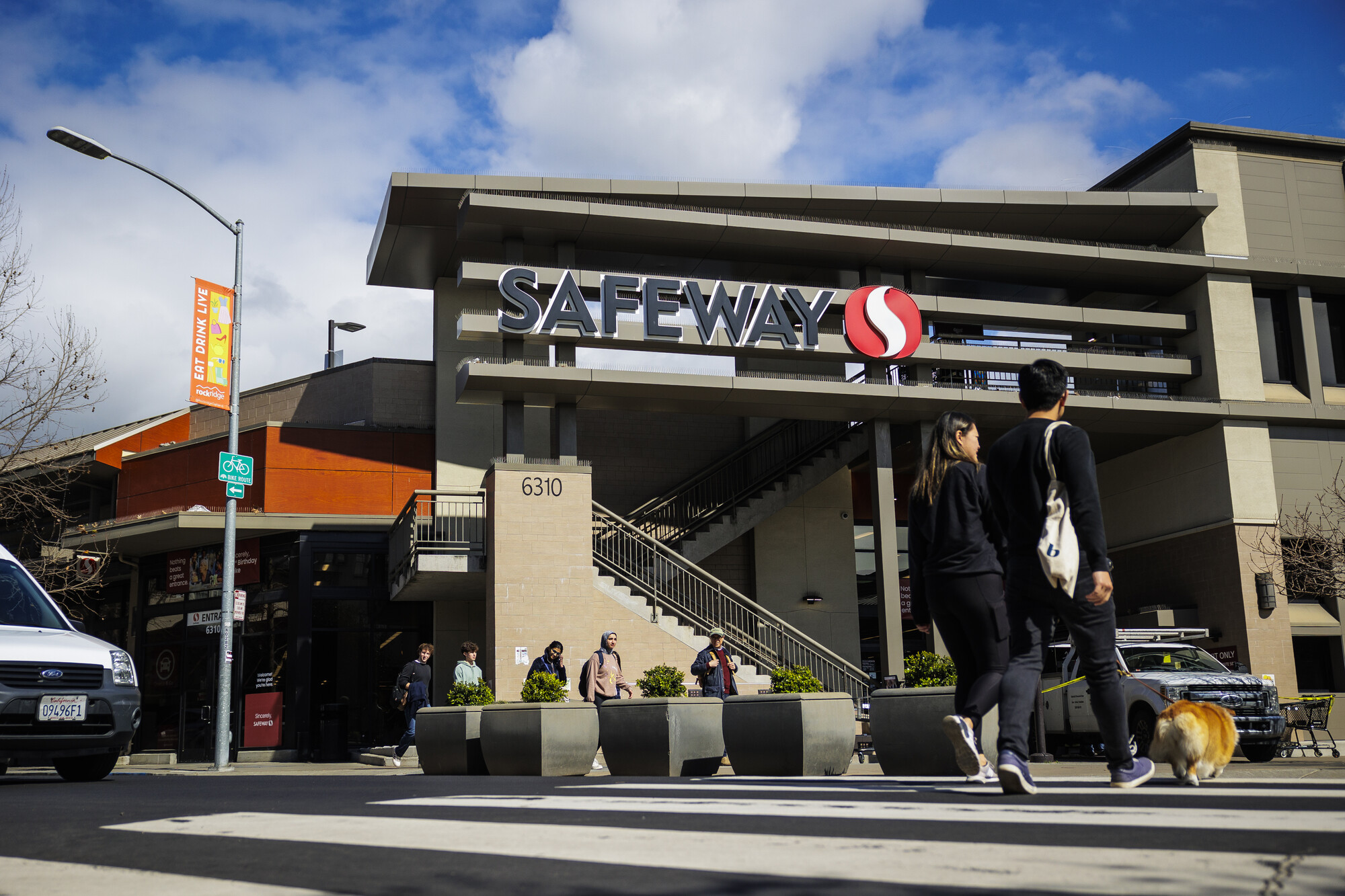
"content": "\u003cp>\u003cstrong>Update, 11:45 a.m. Sunday\u003c/strong>\u003c/p>\n\u003cp>A potential strike involving thousands of unionized Safeway employees has been averted after they came to a tentative agreement with the grocery giant early Sunday morning.\u003c/p>\n\u003cp>The tentative agreement came after five months of negotiations, and gives workers a wage increase, a stronger pension plan, improved scheduling and affordable healthcare.\u003c/p>\n\u003cp>“This is a hard-earned and inspiring victory,” said UFCW Local 5 President John Frahm and UFCW Local 648 President Dan Larson in a joint statement. “Because our members stood together—strong and unshakable—they secured a contract that reflects their value and delivers real improvements for their families and futures.”\u003c/p>\n\u003cp>Union leaders said they plan to schedule ratification votes in the coming days, and are confident members will sign off on the deal.\u003c/p>\n\u003cp>“We are pleased to have reached a fair and equitable tentative agreement with the UFCW locals in Northern California,” wrote Justin Hendrickson, a spokesperson for Safeway. “We appreciate the union’s partnership in reaching a contract that will benefit our associates and allow us to continue to serve our customers.”\u003c/p>\n\u003cp>The strike — originally scheduled to begin Saturday morning — was put on hold as members of United Food and Commercial Workers attempted to get higher wages and better and more affordable medical benefits.\u003c/p>\n\u003cp>Jim Araby, spokesperson for UFCW Local 5, said in a statement Saturday morning that the union gave a midnight deadline “to get a deal done.” If not, union members will be on strike beginning at 12:01 a.m. Sunday “at numerous locations across Northern California.”\u003c/p>\n\u003cp>While members voted to authorize a strike earlier this month, they cited “incremental progress toward a tentative agreement members can review and vote on,” according to a \u003ca href=\"https://ufcw5.org/2025/07/safeway-and-vons-workers-temporarily-extend-strike-deadline/\">joint statement\u003c/a> published early Saturday morning by three UFCW local chapters that represent workers across California.\u003c/p>\n\u003cp>“This recognition of our pressure and member solidarity is working,” UFCW Local 5 President John Frahm, UFCW 8-Golden State President Jacques Loveall, and UFCW Local 648 President Dan Larson in a joint statement. “Our members remain mobilized and ready, but as long as talks are advancing toward a fair deal, we will continue to bargain in good faith.”\u003c/p>\n\u003cp>[ad fullwidth]\u003c/p>\n\u003cp>\u003cstrong>Original story\u003c/strong>\u003c/p>\n\u003cp>Bay Area residents may have to change their grocery shopping plans this weekend as \u003ca href=\"https://www.kqed.org/news/tag/safeway\">Safeway\u003c/a> workers in Northern California threaten to go on strike Saturday if a labor contract is not secured.\u003c/p>\n\u003cp>More than 20,000 workers represented by the United Food and Commercial Workers could walk out if a strike is called, which the union said would happen if they don’t reach an agreement with Safeway by Friday night. The labor group is seeking higher wages and increased benefits for grocery store employees, among other concerns.\u003c/p>\n\u003cp>“We have been in round-the-clock negotiations since yesterday morning and continuing through the day. There’s been some progress, but not enough as it stands,” Jim Araby, a spokesperson for UFCW Local 5 in Hayward, said Friday.\u003c/p>\n\u003cp>While UFCW and Safeway leaders are still at the bargaining table alongside a federal mediator, Araby is skeptical they will be able to reach an agreement and have workers vote on it before the union’s deadline.\u003c/p>\n\u003cp>More than 200 Safeway stores could be blocked by picket lines if a strike occurs, Araby said, adding that 95% of union members voted to approve the strike earlier this month.\u003c/p>\n\u003cp>Workers have been unable to keep up with exorbitant cost-of-living increases in the Bay Area, and health care costs have also gone up for the union’s members, he said.\u003c/p>\n\u003cfigure id=\"attachment_12049786\" class=\"wp-caption aligncenter\" style=\"max-width: 2000px\">\u003cimg loading=\"lazy\" decoding=\"async\" class=\"size-full wp-image-12049786\" src=\"https://cdn.kqed.org/wp-content/uploads/sites/10/2025/07/20250117_Safeway-Injuries_DMB_00251_qed.jpg\" alt=\"\" width=\"2000\" height=\"1333\" srcset=\"https://cdn.kqed.org/wp-content/uploads/sites/10/2025/07/20250117_Safeway-Injuries_DMB_00251_qed.jpg 2000w, https://cdn.kqed.org/wp-content/uploads/sites/10/2025/07/20250117_Safeway-Injuries_DMB_00251_qed-160x107.jpg 160w, https://cdn.kqed.org/wp-content/uploads/sites/10/2025/07/20250117_Safeway-Injuries_DMB_00251_qed-1536x1024.jpg 1536w\" sizes=\"auto, (max-width: 2000px) 100vw, 2000px\">\u003cfigcaption class=\"wp-caption-text\">A tractor trailer exits Safeway’s Northern California Distribution Center in Tracy, on Jan. 17, 2025. \u003ccite>(David M. Barreda/KQED)\u003c/cite>\u003c/figcaption>\u003c/figure>\n\u003cp>A spokesperson for Safeway said in a statement that the company is committed to engaging in good-faith negotiations with UFCW Local 5 and other labor groups in Northern California, while also balancing the needs of customers and the corporation’s growth in a “highly competitive grocery industry.”\u003c/p>\n\u003cp>“While we are disappointed that the unions have indicated the possibility of a strike at some of our stores, we fully respect our associates’ right to engage in collective bargaining,” the statement reads. “We are hopeful a resolution will be reached soon.”\u003c/p>\n\u003cp>Safeway and its parent company, Albertsons, can afford to give workers better wages and benefits, Araby said, noting that the parent company reported a net income of \u003ca href=\"https://www.albertsonscompanies.com/newsroom/press-releases/news-details/2025/Albertsons-Companies-Inc--Reports-Fourth-Quarter-and-Full-Year-Results/default.aspx\">nearly $1 billion\u003c/a> last year and paid stockholders a $4 billion dividend in 2023.[aside postID=news_12048733 hero='https://cdn.kqed.org/wp-content/uploads/sites/10/2025/07/GarbageContainersGetty.jpg']“We know they’re doing well,” he said.\u003c/p>\n\u003cp>Since word of a potential strike has spread, workers have reported seeing signs advertising that the company is looking for replacement workers. While union members negotiate for more equitable wages, Safeway plans on paying their temporary replacements $27 per hour — more than most of its workers make, Araby said.\u003c/p>\n\u003cp>“Most members feel like it was a massive slap in the face,” he said. “It’s definitely influenced our members to want to go out on strike. … It’s a typical tactic by employers to try to bring up doubt among the rank and file.”\u003c/p>\n\u003cp>It’s been a busy few months for labor groups in the Bay Area.\u003c/p>\n\u003cp>In early July, more than 2,000 workers across the country went on strike after months of labor negotiations with waste management company \u003ca href=\"https://www.kqed.org/news/12048733/trash-is-still-piling-up-as-republic-services-workers-strike-heres-what-to-know\">Republic Services\u003c/a> hit a standstill. A tentative agreement was reached between the parties last week, after Bay Area residents and officials issued complaints about trash piling up on sidewalks and in driveways.\u003c/p>\n\u003cp>According to Araby, the increase in labor action speaks to workers’ increased frustrations about low wages, poor benefits and other labor conditions. The disparity between employers and their workers is growing, and people are fed up with wealthy corporations not treating their employees fairly, he said, adding that whether workers decide to keep going is up to companies like Safeway.\u003c/p>\n\u003cp>“We’re interested in bringing forth a proposal that our members will be able to vote for. We want to avoid a work stoppage,” he said. “But our members have been clear to us that they’re ready to take one if the deal is not good enough.”\u003c/p>\n\u003cp>[ad floatright]\u003c/p>\n",
"blocks": [],
"excerpt": "The tentative agreement came after five months of negotiations, and gives workers a wage increase, a stronger pension plan, improved scheduling and affordable healthcare.",
"status": "publish",
"parent": 0,
"modified": 1753642387,
"stats": {
"hasAudio": false,
"hasVideo": false,
"hasChartOrMap": false,
"iframeSrcs": [],
"hasGoogleForm": false,
"hasGallery": false,
"hasHearkenModule": false,
"hasPolis": false,
"paragraphCount": 28,
"wordCount": 1097
},
"headData": {
"title": "Northern California Safeway Employees Reach Tentative Agreement, Averting Strike | KQED",
"description": "The tentative agreement came after five months of negotiations, and gives workers a wage increase, a stronger pension plan, improved scheduling and affordable healthcare.",
"ogTitle": "",
"ogDescription": "",
"ogImgId": "",
"twTitle": "",
"twDescription": "",
"twImgId": "",
"schema": {
"@context": "https://schema.org",
"@type": "NewsArticle",
"headline": "Northern California Safeway Employees Reach Tentative Agreement, Averting Strike",
"datePublished": "2025-07-26T10:45:14-07:00",
"dateModified": "2025-07-27T11:53:07-07:00",
"image": "https://cdn.kqed.org/wp-content/uploads/2020/02/KQED-OG-Image@1x.png",
"isAccessibleForFree": "True",
"publisher": {
"@type": "NewsMediaOrganization",
"@id": "https://www.kqed.org/#organization",
"name": "KQED",
"logo": "https://cdn.kqed.org/wp-content/uploads/2020/02/KQED-OG-Image@1x.png",
"url": "https://www.kqed.org",
"sameAs": [
"https://www.facebook.com/KQED",
"https://twitter.com/KQED",
"https://www.instagram.com/kqed/",
"https://www.tiktok.com/@kqedofficial",
"https://www.linkedin.com/company/kqed",
"https://www.youtube.com/channel/UCeC0IOo7i1P_61zVUWbJ4nw"
]
}
}
},
"primaryCategory": {
"termId": 8,
"slug": "news",
"name": "News"
},
"sticky": false,
"WpOldSlug": "northern-california-safeway-strike-looms-as-labor-negotiations-stall",
"nprStoryId": "kqed-12049782",
"templateType": "standard",
"featuredImageType": "standard",
"excludeFromSiteSearch": "Include",
"articleAge": "0",
"path": "/news/12049782/northern-california-safeway-employees-reach-tentative-agreement-averting-strike",
"audioTrackLength": null,
"parsedContent": [
{
"type": "contentString",
"content": "\u003cdiv class=\"post-body\">\u003cp>\u003cp>\u003cstrong>Update, 11:45 a.m. Sunday\u003c/strong>\u003c/p>\n\u003cp>A potential strike involving thousands of unionized Safeway employees has been averted after they came to a tentative agreement with the grocery giant early Sunday morning.\u003c/p>\n\u003cp>The tentative agreement came after five months of negotiations, and gives workers a wage increase, a stronger pension plan, improved scheduling and affordable healthcare.\u003c/p>\n\u003cp>“This is a hard-earned and inspiring victory,” said UFCW Local 5 President John Frahm and UFCW Local 648 President Dan Larson in a joint statement. “Because our members stood together—strong and unshakable—they secured a contract that reflects their value and delivers real improvements for their families and futures.”\u003c/p>\n\u003cp>Union leaders said they plan to schedule ratification votes in the coming days, and are confident members will sign off on the deal.\u003c/p>\n\u003cp>“We are pleased to have reached a fair and equitable tentative agreement with the UFCW locals in Northern California,” wrote Justin Hendrickson, a spokesperson for Safeway. “We appreciate the union’s partnership in reaching a contract that will benefit our associates and allow us to continue to serve our customers.”\u003c/p>\n\u003cp>The strike — originally scheduled to begin Saturday morning — was put on hold as members of United Food and Commercial Workers attempted to get higher wages and better and more affordable medical benefits.\u003c/p>\n\u003cp>Jim Araby, spokesperson for UFCW Local 5, said in a statement Saturday morning that the union gave a midnight deadline “to get a deal done.” If not, union members will be on strike beginning at 12:01 a.m. Sunday “at numerous locations across Northern California.”\u003c/p>\n\u003cp>While members voted to authorize a strike earlier this month, they cited “incremental progress toward a tentative agreement members can review and vote on,” according to a \u003ca href=\"https://ufcw5.org/2025/07/safeway-and-vons-workers-temporarily-extend-strike-deadline/\">joint statement\u003c/a> published early Saturday morning by three UFCW local chapters that represent workers across California.\u003c/p>\n\u003cp>“This recognition of our pressure and member solidarity is working,” UFCW Local 5 President John Frahm, UFCW 8-Golden State President Jacques Loveall, and UFCW Local 648 President Dan Larson in a joint statement. “Our members remain mobilized and ready, but as long as talks are advancing toward a fair deal, we will continue to bargain in good faith.”\u003c/p>\n\u003cp>\u003c/p>\u003c/div>",
"attributes": {
"named": {},
"numeric": []
}
},
{
"type": "component",
"content": "",
"name": "ad",
"attributes": {
"named": {
"label": "fullwidth"
},
"numeric": [
"fullwidth"
]
}
},
{
"type": "contentString",
"content": "\u003cdiv class=\"post-body\">\u003cp>\u003c/p>\n\u003cp>\u003cstrong>Original story\u003c/strong>\u003c/p>\n\u003cp>Bay Area residents may have to change their grocery shopping plans this weekend as \u003ca href=\"https://www.kqed.org/news/tag/safeway\">Safeway\u003c/a> workers in Northern California threaten to go on strike Saturday if a labor contract is not secured.\u003c/p>\n\u003cp>More than 20,000 workers represented by the United Food and Commercial Workers could walk out if a strike is called, which the union said would happen if they don’t reach an agreement with Safeway by Friday night. The labor group is seeking higher wages and increased benefits for grocery store employees, among other concerns.\u003c/p>\n\u003cp>“We have been in round-the-clock negotiations since yesterday morning and continuing through the day. There’s been some progress, but not enough as it stands,” Jim Araby, a spokesperson for UFCW Local 5 in Hayward, said Friday.\u003c/p>\n\u003cp>While UFCW and Safeway leaders are still at the bargaining table alongside a federal mediator, Araby is skeptical they will be able to reach an agreement and have workers vote on it before the union’s deadline.\u003c/p>\n\u003cp>More than 200 Safeway stores could be blocked by picket lines if a strike occurs, Araby said, adding that 95% of union members voted to approve the strike earlier this month.\u003c/p>\n\u003cp>Workers have been unable to keep up with exorbitant cost-of-living increases in the Bay Area, and health care costs have also gone up for the union’s members, he said.\u003c/p>\n\u003cfigure id=\"attachment_12049786\" class=\"wp-caption aligncenter\" style=\"max-width: 2000px\">\u003cimg loading=\"lazy\" decoding=\"async\" class=\"size-full wp-image-12049786\" src=\"https://cdn.kqed.org/wp-content/uploads/sites/10/2025/07/20250117_Safeway-Injuries_DMB_00251_qed.jpg\" alt=\"\" width=\"2000\" height=\"1333\" srcset=\"https://cdn.kqed.org/wp-content/uploads/sites/10/2025/07/20250117_Safeway-Injuries_DMB_00251_qed.jpg 2000w, https://cdn.kqed.org/wp-content/uploads/sites/10/2025/07/20250117_Safeway-Injuries_DMB_00251_qed-160x107.jpg 160w, https://cdn.kqed.org/wp-content/uploads/sites/10/2025/07/20250117_Safeway-Injuries_DMB_00251_qed-1536x1024.jpg 1536w\" sizes=\"auto, (max-width: 2000px) 100vw, 2000px\">\u003cfigcaption class=\"wp-caption-text\">A tractor trailer exits Safeway’s Northern California Distribution Center in Tracy, on Jan. 17, 2025. \u003ccite>(David M. Barreda/KQED)\u003c/cite>\u003c/figcaption>\u003c/figure>\n\u003cp>A spokesperson for Safeway said in a statement that the company is committed to engaging in good-faith negotiations with UFCW Local 5 and other labor groups in Northern California, while also balancing the needs of customers and the corporation’s growth in a “highly competitive grocery industry.”\u003c/p>\n\u003cp>“While we are disappointed that the unions have indicated the possibility of a strike at some of our stores, we fully respect our associates’ right to engage in collective bargaining,” the statement reads. “We are hopeful a resolution will be reached soon.”\u003c/p>\n\u003cp>Safeway and its parent company, Albertsons, can afford to give workers better wages and benefits, Araby said, noting that the parent company reported a net income of \u003ca href=\"https://www.albertsonscompanies.com/newsroom/press-releases/news-details/2025/Albertsons-Companies-Inc--Reports-Fourth-Quarter-and-Full-Year-Results/default.aspx\">nearly $1 billion\u003c/a> last year and paid stockholders a $4 billion dividend in 2023.\u003c/p>\u003c/div>",
"attributes": {
"named": {},
"numeric": []
}
},
{
"type": "component",
"content": "",
"name": "aside",
"attributes": {
"named": {
"postid": "news_12048733",
"hero": "https://cdn.kqed.org/wp-content/uploads/sites/10/2025/07/GarbageContainersGetty.jpg",
"label": ""
},
"numeric": []
}
},
{
"type": "contentString",
"content": "\u003cdiv class=\"post-body\">\u003cp>“We know they’re doing well,” he said.\u003c/p>\n\u003cp>Since word of a potential strike has spread, workers have reported seeing signs advertising that the company is looking for replacement workers. While union members negotiate for more equitable wages, Safeway plans on paying their temporary replacements $27 per hour — more than most of its workers make, Araby said.\u003c/p>\n\u003cp>“Most members feel like it was a massive slap in the face,” he said. “It’s definitely influenced our members to want to go out on strike. … It’s a typical tactic by employers to try to bring up doubt among the rank and file.”\u003c/p>\n\u003cp>It’s been a busy few months for labor groups in the Bay Area.\u003c/p>\n\u003cp>In early July, more than 2,000 workers across the country went on strike after months of labor negotiations with waste management company \u003ca href=\"https://www.kqed.org/news/12048733/trash-is-still-piling-up-as-republic-services-workers-strike-heres-what-to-know\">Republic Services\u003c/a> hit a standstill. A tentative agreement was reached between the parties last week, after Bay Area residents and officials issued complaints about trash piling up on sidewalks and in driveways.\u003c/p>\n\u003cp>According to Araby, the increase in labor action speaks to workers’ increased frustrations about low wages, poor benefits and other labor conditions. The disparity between employers and their workers is growing, and people are fed up with wealthy corporations not treating their employees fairly, he said, adding that whether workers decide to keep going is up to companies like Safeway.\u003c/p>\n\u003cp>“We’re interested in bringing forth a proposal that our members will be able to vote for. We want to avoid a work stoppage,” he said. “But our members have been clear to us that they’re ready to take one if the deal is not good enough.”\u003c/p>\n\u003cp>\u003c/p>\u003c/div>",
"attributes": {
"named": {},
"numeric": []
}
},
{
"type": "component",
"content": "",
"name": "ad",
"attributes": {
"named": {
"label": "floatright"
},
"numeric": [
"floatright"
]
}
},
{
"type": "contentString",
"content": "\u003cdiv class=\"post-body\">\u003cp>\u003c/p>\n\u003c/div>\u003c/p>",
"attributes": {
"named": {},
"numeric": []
}
}
],
"link": "/news/12049782/northern-california-safeway-employees-reach-tentative-agreement-averting-strike",
"authors": [
"11920",
"11923"
],
"categories": [
"news_31795",
"news_34551",
"news_8"
],
"tags": [
"news_1386",
"news_18538",
"news_27626",
"news_19904",
"news_24590",
"news_20482",
"news_5930",
"news_4778"
],
"featImg": "news_12049787",
"label": "news"
},
"news_12049042": {
"type": "posts",
"id": "news_12049042",
"meta": {
"index": "posts_1716263798",
"site": "news",
"id": "12049042",
"score": null,
"sort": [
1753139845000
]
},
"guestAuthors": [],
"slug": "pat-tillmans-brother-arrested-in-san-jose-post-office-fire-had-alarming-posts-online",
"title": "Pat Tillman’s Brother, Arrested in San José Post Office Fire, Had Alarming Posts Online",
"publishDate": 1753139845,
"format": "standard",
"headTitle": "Pat Tillman’s Brother, Arrested in San José Post Office Fire, Had Alarming Posts Online | KQED",
"labelTerm": {
"site": "news"
},
"content": "\u003cp>After the brother of late Army Ranger and former NFL player \u003ca href=\"https://www.kqed.org/arts/33330/the_tillman_story_one_familys_quest_for_the_truth\">Pat Tillman Jr.\u003c/a> was arrested in connection with a car crash at a South San José post office, his family said Monday that he has been affected by “severe mental health issues” for years.\u003c/p>\n\u003cp>Richard Tillman, 44, of San José, was booked into Santa Clara County Main Jail on suspicion of arson on Sunday after the crash. He is being held on $60,000 bail and is scheduled to appear in court on Wednesday, according to authorities.\u003c/p>\n\u003cp>Last week, Tillman posted a video to his YouTube account in which he referred to himself as a god and talked vaguely about doing something in the future. It was among a string of live videos he frequently posted to his account, which YouTube has since terminated.\u003c/p>\n\u003cp>[ad fullwidth]\u003c/p>\n\u003cp>A slew of posts on his Facebook profile also include apparent threats to the families of postal workers and other delivery companies that their loved ones could be “dropping dead” soon.\u003c/p>\n\u003cp>San José police officers responding to reports of a fire around 3 a.m. Sunday at the Almaden Valley U.S. Post Office branch said they found a car that had been driven into the post office, caught fire and caused the building to catch on fire. The San José Fire Department said in a social media \u003ca href=\"https://x.com/SJFD/status/1946954875553886618\">post\u003c/a> that about 50 firefighters responded to the blaze and had it knocked down by 4:31 a.m.\u003c/p>\n\u003cp>No injuries were reported, and Tillman was arrested in connection with the fire, police said.\u003c/p>\n\u003cfigure id=\"attachment_12049066\" class=\"wp-caption aligncenter\" style=\"max-width: 2000px\">\u003cimg loading=\"lazy\" decoding=\"async\" class=\"size-full wp-image-12049066\" src=\"https://cdn.kqed.org/wp-content/uploads/sites/10/2025/07/SanJosePostOfficeFireTwitter.jpg\" alt=\"\" width=\"2000\" height=\"1599\" srcset=\"https://cdn.kqed.org/wp-content/uploads/sites/10/2025/07/SanJosePostOfficeFireTwitter.jpg 2000w, https://cdn.kqed.org/wp-content/uploads/sites/10/2025/07/SanJosePostOfficeFireTwitter-160x128.jpg 160w, https://cdn.kqed.org/wp-content/uploads/sites/10/2025/07/SanJosePostOfficeFireTwitter-1536x1228.jpg 1536w\" sizes=\"auto, (max-width: 2000px) 100vw, 2000px\">\u003cfigcaption class=\"wp-caption-text\">San José Fire Department firefighters respond to a fire after a car crashed into a Post Office on Sunday, July 20, 2025, in San José, California. \u003ccite>(Courtesy of San José Fire Department via X)\u003c/cite>\u003c/figcaption>\u003c/figure>\n\u003cp>The U.S. Postal Inspection Service, the federal law enforcement arm of the postal service, took over the case.\u003c/p>\n\u003cp>Inspectors are looking into “whether this was an intentional act designed to damage the post office somehow and what possible motives or explanations there could be for that,” Matthew Norfleet, a U.S. postal inspector and spokesperson for the agency, told KQED on Monday.\u003c/p>\n\u003cp>“If this was intentional, there really can be no rational explanation for it. A post office is a facility that serves the community,” Norfleet said. “It’s there to make sure everybody gets what they need. So the idea that you would intentionally damage one and set it on fire, there’s just no way that could ever make sense.”\u003c/p>\n\u003cp>Tillman’s brother, Kevin Tillman, said in a statement shared with KQED on Monday on behalf of their family that they had limited information but were in communication with authorities.[aside postID=news_12047900 hero='https://cdn.kqed.org/wp-content/uploads/sites/10/2025/07/240418-SJPDFILE-JG-6_qed.jpg']“Our family is aware that my brother Richard has been arrested. First and foremost, we are relieved that no one was physically harmed,” the statement said.\u003c/p>\n\u003cp>“To be clear, it’s no secret that Richard has been battling severe mental health issues for many years,” it continued. “He has been livestreaming, what I’ll call, his altered self on social media for anyone to witness. Unfortunately, securing the proper care and support for him has proven incredibly difficult — or rather, impossible. As a result, none of this is as shocking as it should be.”\u003c/p>\n\u003cp>Pat Tillman Jr. was killed in Afghanistan in 2004 when members of his U.S. platoon fired on him and an Afghan militia member, mistaking them for enemy fighters. The U.S. government subsequently attempted to cover up the truth about the killing, including instructing an officer to lie to the soldier’s family about the circumstances of his death.\u003c/p>\n\u003cp>At the time, Richard Tillman \u003ca href=\"https://www.espn.com/espn/eticket/story?page=tillmanpart3&redirected=true\">told ESPN\u003c/a> he didn’t believe the story that the military told of his older brother’s death.\u003c/p>\n\u003cp>“I remember talking to my mom about it,” he said. “‘You know what? This is shady.’ It didn’t really go much further than that because you can’t, really. … So it is more a hindsight that you saw something weird. But we did verbalize it — that is for sure.”\u003c/p>\n\u003cp>In recent years, Tillman often livestreamed on his YouTube account from behind the wheel of a parked car. He referred to himself as a god by the name of “Yeshua,” railed against the government and addressed posts to Taylor Swift as “Sweet Divine Soulmate Baby.”\u003c/p>\n\u003cp>In a video uploaded five days before the crash — which also has since been removed — Tillman went on a profanity-laced diatribe about getting retribution for wrongs against him, referring to “Richard Tillman” as a past version of himself whom he was seeking vengeance for, one that no longer existed as he became “Yeshua.”\u003c/p>\n\u003cp>In that video, he alluded to doing “something” in the next few months, or as early as a few weeks.\u003c/p>\n\u003cp>“Uh, but don’t worry. I’m not going to harm anyone physically. So there’s nothing to worry about,” he said, laughing to himself. “Absolutely marvelous. You guys will find out what I’m laughing about one day.”\u003c/p>\n\u003cp>YouTube has not yet responded to a request from KQED to address a report that Tillman livestreamed the crash.\u003c/p>\n\u003cp>Other posts on Tillman’s Facebook page are often accompanied by captions with conspiratorial and persecutorial tones.\u003c/p>\n\u003cp>On May 6, 2023, Tillman posted a picture of himself on Facebook with the caption directed to “people in the postal service game” who were allegedly not delivering him his packages, such as hats and necklaces. He wrote: “So to any wives, or family members, of postal workers that start to see their family is dropping dead for no reason, understand they’re absolutely is a reason they did not follow their oath and they did not deliver the mail to The Most High God’s Son.”\u003c/p>\n\u003cp>Norfleet, the postal inspector, said there has been a question of whether the suspect “broadcast this when he was doing it, or may have made statements somewhere on social media, talking about what plans might have been for this event.”\u003c/p>\n\u003cp>Tillman’s posts also denounced the “Hollywood elite” and politicians. In May 2023, he posted: “Oh and Fresno /Clovis police, I am not suicidal, so don’t bother coming near my house because of this post. I am perfectly fine” followed by the laughing/crying emoji.\u003c/p>\n\u003cp>Another post that month includes a picture of him smiling, sitting on a bench with a bicycle next to him: “Keep spying, I love it! It’s an absolute joy to hunt the hunters! I eat cowards as a snack, and you are all cowards … Bill Clinton, George Bush, Mark Zuckerberg and the rest of you subhumans will reap what you sow, and I’ll be smiling and laughing the whole way through!”\u003c/p>\n\u003cp>In January 2024, Tillman posted a video of himself playing with his two sons on Facebook with the caption: “My family and the government said I’m a threat to my kids. … This video shows why family and government can be completely wrong and worthless.”\u003c/p>\n\u003cp>[ad floatright]\u003c/p>\n",
"blocks": [],
"excerpt": "The brother of the late Pat Tillman Jr. is suspected of starting a fire at a San José post office by crashing into it, and his family says he has had mental health issues for years.",
"status": "publish",
"parent": 0,
"modified": 1753141365,
"stats": {
"hasAudio": false,
"hasVideo": false,
"hasChartOrMap": false,
"iframeSrcs": [],
"hasGoogleForm": false,
"hasGallery": false,
"hasHearkenModule": false,
"hasPolis": false,
"paragraphCount": 27,
"wordCount": 1266
},
"headData": {
"title": "Pat Tillman’s Brother, Arrested in San José Post Office Fire, Had Alarming Posts Online | KQED",
"description": "The brother of the late Pat Tillman Jr. is suspected of starting a fire at a San José post office by crashing into it, and his family says he has had mental health issues for years.",
"ogTitle": "",
"ogDescription": "",
"ogImgId": "",
"twTitle": "",
"twDescription": "",
"twImgId": "",
"schema": {
"@context": "https://schema.org",
"@type": "NewsArticle",
"headline": "Pat Tillman’s Brother, Arrested in San José Post Office Fire, Had Alarming Posts Online",
"datePublished": "2025-07-21T16:17:25-07:00",
"dateModified": "2025-07-21T16:42:45-07:00",
"image": "https://cdn.kqed.org/wp-content/uploads/2020/02/KQED-OG-Image@1x.png",
"isAccessibleForFree": "True",
"publisher": {
"@type": "NewsMediaOrganization",
"@id": "https://www.kqed.org/#organization",
"name": "KQED",
"logo": "https://cdn.kqed.org/wp-content/uploads/2020/02/KQED-OG-Image@1x.png",
"url": "https://www.kqed.org",
"sameAs": [
"https://www.facebook.com/KQED",
"https://twitter.com/KQED",
"https://www.instagram.com/kqed/",
"https://www.tiktok.com/@kqedofficial",
"https://www.linkedin.com/company/kqed",
"https://www.youtube.com/channel/UCeC0IOo7i1P_61zVUWbJ4nw"
]
}
}
},
"primaryCategory": {
"termId": 8,
"slug": "news",
"name": "News"
},
"sticky": false,
"nprStoryId": "kqed-12049042",
"templateType": "standard",
"featuredImageType": "standard",
"excludeFromSiteSearch": "Include",
"articleAge": "0",
"path": "/news/12049042/pat-tillmans-brother-arrested-in-san-jose-post-office-fire-had-alarming-posts-online",
"audioTrackLength": null,
"parsedContent": [
{
"type": "contentString",
"content": "\u003cdiv class=\"post-body\">\u003cp>\u003cp>After the brother of late Army Ranger and former NFL player \u003ca href=\"https://www.kqed.org/arts/33330/the_tillman_story_one_familys_quest_for_the_truth\">Pat Tillman Jr.\u003c/a> was arrested in connection with a car crash at a South San José post office, his family said Monday that he has been affected by “severe mental health issues” for years.\u003c/p>\n\u003cp>Richard Tillman, 44, of San José, was booked into Santa Clara County Main Jail on suspicion of arson on Sunday after the crash. He is being held on $60,000 bail and is scheduled to appear in court on Wednesday, according to authorities.\u003c/p>\n\u003cp>Last week, Tillman posted a video to his YouTube account in which he referred to himself as a god and talked vaguely about doing something in the future. It was among a string of live videos he frequently posted to his account, which YouTube has since terminated.\u003c/p>\n\u003cp>\u003c/p>\u003c/div>",
"attributes": {
"named": {},
"numeric": []
}
},
{
"type": "component",
"content": "",
"name": "ad",
"attributes": {
"named": {
"label": "fullwidth"
},
"numeric": [
"fullwidth"
]
}
},
{
"type": "contentString",
"content": "\u003cdiv class=\"post-body\">\u003cp>\u003c/p>\n\u003cp>A slew of posts on his Facebook profile also include apparent threats to the families of postal workers and other delivery companies that their loved ones could be “dropping dead” soon.\u003c/p>\n\u003cp>San José police officers responding to reports of a fire around 3 a.m. Sunday at the Almaden Valley U.S. Post Office branch said they found a car that had been driven into the post office, caught fire and caused the building to catch on fire. The San José Fire Department said in a social media \u003ca href=\"https://x.com/SJFD/status/1946954875553886618\">post\u003c/a> that about 50 firefighters responded to the blaze and had it knocked down by 4:31 a.m.\u003c/p>\n\u003cp>No injuries were reported, and Tillman was arrested in connection with the fire, police said.\u003c/p>\n\u003cfigure id=\"attachment_12049066\" class=\"wp-caption aligncenter\" style=\"max-width: 2000px\">\u003cimg loading=\"lazy\" decoding=\"async\" class=\"size-full wp-image-12049066\" src=\"https://cdn.kqed.org/wp-content/uploads/sites/10/2025/07/SanJosePostOfficeFireTwitter.jpg\" alt=\"\" width=\"2000\" height=\"1599\" srcset=\"https://cdn.kqed.org/wp-content/uploads/sites/10/2025/07/SanJosePostOfficeFireTwitter.jpg 2000w, https://cdn.kqed.org/wp-content/uploads/sites/10/2025/07/SanJosePostOfficeFireTwitter-160x128.jpg 160w, https://cdn.kqed.org/wp-content/uploads/sites/10/2025/07/SanJosePostOfficeFireTwitter-1536x1228.jpg 1536w\" sizes=\"auto, (max-width: 2000px) 100vw, 2000px\">\u003cfigcaption class=\"wp-caption-text\">San José Fire Department firefighters respond to a fire after a car crashed into a Post Office on Sunday, July 20, 2025, in San José, California. \u003ccite>(Courtesy of San José Fire Department via X)\u003c/cite>\u003c/figcaption>\u003c/figure>\n\u003cp>The U.S. Postal Inspection Service, the federal law enforcement arm of the postal service, took over the case.\u003c/p>\n\u003cp>Inspectors are looking into “whether this was an intentional act designed to damage the post office somehow and what possible motives or explanations there could be for that,” Matthew Norfleet, a U.S. postal inspector and spokesperson for the agency, told KQED on Monday.\u003c/p>\n\u003cp>“If this was intentional, there really can be no rational explanation for it. A post office is a facility that serves the community,” Norfleet said. “It’s there to make sure everybody gets what they need. So the idea that you would intentionally damage one and set it on fire, there’s just no way that could ever make sense.”\u003c/p>\n\u003cp>Tillman’s brother, Kevin Tillman, said in a statement shared with KQED on Monday on behalf of their family that they had limited information but were in communication with authorities.\u003c/p>\u003c/div>",
"attributes": {
"named": {},
"numeric": []
}
},
{
"type": "component",
"content": "",
"name": "aside",
"attributes": {
"named": {
"postid": "news_12047900",
"hero": "https://cdn.kqed.org/wp-content/uploads/sites/10/2025/07/240418-SJPDFILE-JG-6_qed.jpg",
"label": ""
},
"numeric": []
}
},
{
"type": "contentString",
"content": "\u003cdiv class=\"post-body\">\u003cp>“Our family is aware that my brother Richard has been arrested. First and foremost, we are relieved that no one was physically harmed,” the statement said.\u003c/p>\n\u003cp>“To be clear, it’s no secret that Richard has been battling severe mental health issues for many years,” it continued. “He has been livestreaming, what I’ll call, his altered self on social media for anyone to witness. Unfortunately, securing the proper care and support for him has proven incredibly difficult — or rather, impossible. As a result, none of this is as shocking as it should be.”\u003c/p>\n\u003cp>Pat Tillman Jr. was killed in Afghanistan in 2004 when members of his U.S. platoon fired on him and an Afghan militia member, mistaking them for enemy fighters. The U.S. government subsequently attempted to cover up the truth about the killing, including instructing an officer to lie to the soldier’s family about the circumstances of his death.\u003c/p>\n\u003cp>At the time, Richard Tillman \u003ca href=\"https://www.espn.com/espn/eticket/story?page=tillmanpart3&redirected=true\">told ESPN\u003c/a> he didn’t believe the story that the military told of his older brother’s death.\u003c/p>\n\u003cp>“I remember talking to my mom about it,” he said. “‘You know what? This is shady.’ It didn’t really go much further than that because you can’t, really. … So it is more a hindsight that you saw something weird. But we did verbalize it — that is for sure.”\u003c/p>\n\u003cp>In recent years, Tillman often livestreamed on his YouTube account from behind the wheel of a parked car. He referred to himself as a god by the name of “Yeshua,” railed against the government and addressed posts to Taylor Swift as “Sweet Divine Soulmate Baby.”\u003c/p>\n\u003cp>In a video uploaded five days before the crash — which also has since been removed — Tillman went on a profanity-laced diatribe about getting retribution for wrongs against him, referring to “Richard Tillman” as a past version of himself whom he was seeking vengeance for, one that no longer existed as he became “Yeshua.”\u003c/p>\n\u003cp>In that video, he alluded to doing “something” in the next few months, or as early as a few weeks.\u003c/p>\n\u003cp>“Uh, but don’t worry. I’m not going to harm anyone physically. So there’s nothing to worry about,” he said, laughing to himself. “Absolutely marvelous. You guys will find out what I’m laughing about one day.”\u003c/p>\n\u003cp>YouTube has not yet responded to a request from KQED to address a report that Tillman livestreamed the crash.\u003c/p>\n\u003cp>Other posts on Tillman’s Facebook page are often accompanied by captions with conspiratorial and persecutorial tones.\u003c/p>\n\u003cp>On May 6, 2023, Tillman posted a picture of himself on Facebook with the caption directed to “people in the postal service game” who were allegedly not delivering him his packages, such as hats and necklaces. He wrote: “So to any wives, or family members, of postal workers that start to see their family is dropping dead for no reason, understand they’re absolutely is a reason they did not follow their oath and they did not deliver the mail to The Most High God’s Son.”\u003c/p>\n\u003cp>Norfleet, the postal inspector, said there has been a question of whether the suspect “broadcast this when he was doing it, or may have made statements somewhere on social media, talking about what plans might have been for this event.”\u003c/p>\n\u003cp>Tillman’s posts also denounced the “Hollywood elite” and politicians. In May 2023, he posted: “Oh and Fresno /Clovis police, I am not suicidal, so don’t bother coming near my house because of this post. I am perfectly fine” followed by the laughing/crying emoji.\u003c/p>\n\u003cp>Another post that month includes a picture of him smiling, sitting on a bench with a bicycle next to him: “Keep spying, I love it! It’s an absolute joy to hunt the hunters! I eat cowards as a snack, and you are all cowards … Bill Clinton, George Bush, Mark Zuckerberg and the rest of you subhumans will reap what you sow, and I’ll be smiling and laughing the whole way through!”\u003c/p>\n\u003cp>In January 2024, Tillman posted a video of himself playing with his two sons on Facebook with the caption: “My family and the government said I’m a threat to my kids. … This video shows why family and government can be completely wrong and worthless.”\u003c/p>\n\u003cp>\u003c/p>\u003c/div>",
"attributes": {
"named": {},
"numeric": []
}
},
{
"type": "component",
"content": "",
"name": "ad",
"attributes": {
"named": {
"label": "floatright"
},
"numeric": [
"floatright"
]
}
},
{
"type": "contentString",
"content": "\u003cdiv class=\"post-body\">\u003cp>\u003c/p>\n\u003c/div>\u003c/p>",
"attributes": {
"named": {},
"numeric": []
}
}
],
"link": "/news/12049042/pat-tillmans-brother-arrested-in-san-jose-post-office-fire-had-alarming-posts-online",
"authors": [
"11923",
"11906"
],
"categories": [
"news_34167",
"news_28250",
"news_8"
],
"tags": [
"news_24350",
"news_17626",
"news_17725",
"news_27626",
"news_19904",
"news_19954",
"news_34926",
"news_18541",
"news_21285"
],
"featImg": "news_12049055",
"label": "news"
},
"news_12049005": {
"type": "posts",
"id": "news_12049005",
"meta": {
"index": "posts_1716263798",
"site": "news",
"id": "12049005",
"score": null,
"sort": [
1753131616000
]
},
"guestAuthors": [],
"slug": "california-osha-inspectors-dont-visit-worksites-even-when-workers-are-injured",
"title": "California OSHA Inspectors Don’t Visit Worksites Even When Workers Are Injured",
"publishDate": 1753131616,
"format": "standard",
"headTitle": "California OSHA Inspectors Don’t Visit Worksites Even When Workers Are Injured | KQED",
"labelTerm": {
"term": 18481,
"site": "news"
},
"content": "\u003cp>\u003c!-- Creative Commons Attribution-NonCommercial-NoDerivatives https://creativecommons.org/licenses/by-nc-nd/4.0/ -->\u003c/p>\n\u003cp>\u003cem>This story was originally published by \u003ca href=\"https://calmatters.org/\">CalMatters\u003c/a>. \u003ca href=\"https://calmatters.org/subscribe-to-calmatters/\">Sign up\u003c/a> for their newsletters.\u003c/em>\u003c/p>\n\u003cp>California’s worker safety agency is under-inspecting workplaces after accidents and worker injuries, failing to enforce labor regulations in a way that “may undermine” them because it does not have enough employees to do the inspections, a state audit found.\u003c/p>\n\u003cp>In a \u003ca href=\"https://www.auditor.ca.gov/reports/2024-115/\">review\u003c/a> of the California Division of Occupational Safety and Health published Thursday, state auditors found understaffing was a primary factor leading inspectors to skip in-person inspections of worksites even in cases where auditors found — and division managers agreed — it was likely warranted.\u003c/p>\n\u003cp>Nearly one-third of the division’s 800-plus positions were vacant last year, a rate that is even worse in some district offices and among some of the staff responsible for inspections and enforcement.\u003c/p>\n\u003cp>[ad fullwidth]\u003c/p>\n\u003cp>“When it does perform inspections, Cal/OSHA’s process has critical weaknesses,” state auditor Grant Parks wrote.\u003c/p>\n\u003cp>The weaknesses, he wrote, included inspectors failing to review employers’ required injury prevention plans, document notes from interviews with workers, initiate inspections quickly and ensure employers had addressed alleged hazards before closing a case file.\u003c/p>\n\u003cp>State law allows Cal/OSHA to inspect workplaces in-person proactively, after accidents or in response to a complaint. But it only mandates inspections for workplace deaths or “serious” accidents, generally defined as those requiring inpatient hospital care or resulting in “serious permanent disfiguration.”\u003c/p>\n\u003cp>Enforcement staff first determine if the complaints are valid, and then often choose to \u003ca href=\"https://calmatters.org/california-divide/2020/10/cal-osha-response-covid-complaints/\">inspect “by letter”\u003c/a> instead, which involves writing to employers asking them to investigate the complaints themselves and document how they’ve addressed hazards.\u003c/p>\n\u003cp>[aside postID=news_11989885 hero='https://cdn.kqed.org/wp-content/uploads/sites/10/2024/03/240322-INDOOR-HEAT-GETTY-02-KQED-1020x623.jpg']\u003c/p>\n\u003cp>Last year out of more than 12,000 complaints, the agency found 87% valid; staff inspected just 17% of those workplaces in person rather than investigating “by letter.” Out of 5,800 workplace accidents, the agency deemed 42% serious enough to send an inspector.\u003c/p>\n\u003cp>Auditors found staff didn’t always investigate a complaint or inspect a worksite when they should have.\u003c/p>\n\u003cp>In one case, a union representative filed a complaint saying that construction workers were riding on heavy machinery on the road with no seat belts, and another worker was hanging off the side of the vehicle, in danger of falling and being hit in oncoming traffic. Cal/OSHA declined to investigate because the incident was on a public road and therefore outside the agency’s jurisdiction. But the audit found the agency should have opened the complaint because workers were riding in a company vehicle — activity covered by workplace safety regulations.\u003c/p>\n\u003cp>Auditors reviewed another complaint from a kitchen worker who was taken to the ER by ambulance, possibly from heat illness. The worker reported poor ventilation, broken air conditioning and temperatures that reached 90 degrees indoors. Despite agency policies requiring on-site inspections for serious hazards involving current employees, and for any heat-related complaints, Cal/OSHA sent the employer a letter. Auditors reviewing the case records found the employer had not responded.\u003c/p>\n\u003ch2>Serious injuries investigated by letter\u003c/h2>\n\u003cp>The audit also highlighted two injuries that Cal/OSHA said weren’t “serious” enough to inspect in person; in one, a worker was cut by a chainsaw, requiring surgery and an overnight hospital stay, and in another a worker was knocked out when hit in the head and suffered a skull fracture, but was not formally admitted to the hospital.\u003c/p>\n\u003cp>In the chainsaw case, managers told auditors the worker was wearing protective equipment so there was less reason to suspect workplace violations. In general, the audit found that managers overwhelmingly reported understaffing as the reason for not inspecting.\u003c/p>\n\u003cp>The agency, the audit noted, doesn’t have a complaint form on its website. To file a complaint, workers must call or email a Cal/OSHA district office, or fill out a complaint form on the federal OSHA website.\u003c/p>\n\u003cp>The audit places further pressure on Cal/OSHA and its beleaguered parent agency, the Department of Industrial Relations, to deal with a trenchant staffing problem that advocates and lawmakers say renders some of the strictest worker protections in the nation toothless.\u003c/p>\n\u003cp>It comes a year after \u003ca href=\"https://calmatters.org/california-divide/2024/05/california-wage-theft-audit-labor-commissioner/\">a similar audit of the Labor Commissioner’s Office\u003c/a>, also a part of that department, which found workers complaining to the agency about wage theft were waiting more than two years on average to get their claims resolved — six times longer than the time required by law.\u003c/p>\n\u003cp>Both audits were ordered by state lawmakers, who are by now familiar with the understaffing complaints. \u003ca href=\"https://leginfo.legislature.ca.gov/faces/billNavClient.xhtml?bill_id=202520260AB694\">One bill \u003c/a>this year would require the department to study how to make more appealing career paths for the inspector positions, some of which require engineering degrees.\u003c/p>\n\u003cp>Stephen Knight, director of the advocacy group Worksafe, called the audit’s findings “really disappointing.”\u003c/p>\n\u003cp>“It confirms that California’s promise to hold employers accountable remains unfulfilled,” Knight said. “There’s a lot of good solid detail and suggestions in the audit, nothing they couldn’t have figured out beforehand. Certainly what it would require is resources and political leadership that sides with workers over corner-cutting employers.”\u003c/p>\n\u003cp>The problem is urgent, he said, noting workplace accidents have killed three teenagers in California just the past two weeks: one \u003ca href=\"https://www.ktvu.com/news/young-worker-dies-falling-meat-grinder-frozen-burrito-factory\">who fell into a meat grinder\u003c/a> at a burrito factory in Los Angeles County and two who died \u003ca href=\"https://www.cbsnews.com/sacramento/news/explosion-fire-esparto-yolo-county/\">in a fireworks warehouse explosion\u003c/a> in rural Yolo County.\u003c/p>\n\u003cp>The workplace agency has been the subject of several investigations in recent years. Last year \u003ca href=\"https://www.sacbee.com/news/politics-government/the-state-worker/article283078973.html\">the Sacramento Bee found\u003c/a> the division of Cal/OSHA that recommends cases for criminal prosecution was so understaffed it couldn’t even consider cases in which workers suffered severe but nonfatal accidents, such as ones that caused paralysis. CalMatters last year reported that the agency’s inspections and citations of heat-related hazards had \u003ca href=\"https://calmatters.org/california-divide/2024/08/california-farmworkers-heat-illness/\">plummeted since the pandemic\u003c/a>, despite the rising risks of extreme heat for outdoor workers.\u003c/p>\n\u003cp>In a letter dated June 27 responding to the audit, Department of Industrial Relations director Katrina Hagen wrote that the department “has been working to address structural and process issues, as well as recruitment and retention issues,” including studying the agency’s pay and job responsibility levels. Hagen wrote that Cal/OSHA’s vacancy rate had dropped to 12% this year; the auditor responded they hadn’t seen up-to-date data showing that.\u003c/p>\n\u003cp>Hagen also wrote that Cal/OSHA is working on making an online complaint form, and said the agency is getting a new case management system that will flag cases that should have gotten an in-person inspection, but didn’t. Both upgrades, she wrote, are expected in 2027.\u003c/p>\n\u003ch2>‘What’s the point?’\u003c/h2>\n\u003cp>The audit also questioned Cal/OSHA’s practice of reducing the fines it issued to employers after citing them for safety violations. Employers often appeal citations, a process that can take years to resolve, and the fines or violations can be reduced during settlement conferences, but the auditors wrote that the reasons aren’t always documented. In a four-year period reviewed by auditors, the average reduction was more than half the original fine.\u003c/p>\n\u003cp>Assembly Labor Committee Chair \u003ca href=\"https://calmatters.digitaldemocracy.org/legislators/liz-ortega-165416\">Liz Ortega\u003c/a>, a Hayward Democrat who requested the audit last year, slammed the practice.\u003c/p>\n\u003cp>“This Cal/OSHA standard operating procedure can stop TODAY,” she wrote in response to a query from CalMatters. “Injuries won’t abate until there are consequences. If Cal/OSHA won’t do it, we should get someone who will.”\u003c/p>\n\u003cp>She said she wanted to see the agency increase its referrals for criminal prosecution to 5% of serious cases this year, and called the investigations that don’t include in-person inspections “fake.”\u003c/p>\n\u003cp>“Sending a letter!!!” Ortega wrote. “What’s the point?”\u003c/p>\n\u003cp>\u003cem>This article was \u003ca href=\"https://calmatters.org/politics/2025/07/california-osha-inspections-state-audit/\">originally published on CalMatters\u003c/a> and was republished under the \u003ca href=\"https://creativecommons.org/licenses/by-nc-nd/4.0/\">Creative Commons Attribution-NonCommercial-NoDerivatives\u003c/a> license.\u003c/em>\u003c/p>\n\u003cp>[ad floatright]\u003c/p>\n",
"blocks": [],
"excerpt": "Nearly a third of Cal/OSHA positions were vacant last year. A new state audit found that caused the agency to skip in-person inspections, even when workers were injured.",
"status": "publish",
"parent": 0,
"modified": 1753129926,
"stats": {
"hasAudio": false,
"hasVideo": false,
"hasChartOrMap": false,
"iframeSrcs": [],
"hasGoogleForm": false,
"hasGallery": false,
"hasHearkenModule": false,
"hasPolis": false,
"paragraphCount": 34,
"wordCount": 1378
},
"headData": {
"title": "California OSHA Inspectors Don’t Visit Worksites Even When Workers Are Injured | KQED",
"description": "Nearly a third of Cal/OSHA positions were vacant last year. A new state audit found that caused the agency to skip in-person inspections, even when workers were injured.",
"ogTitle": "",
"ogDescription": "",
"ogImgId": "",
"twTitle": "",
"twDescription": "",
"twImgId": "",
"schema": {
"@context": "https://schema.org",
"@type": "NewsArticle",
"headline": "California OSHA Inspectors Don’t Visit Worksites Even When Workers Are Injured",
"datePublished": "2025-07-21T14:00:16-07:00",
"dateModified": "2025-07-21T13:32:06-07:00",
"image": "https://cdn.kqed.org/wp-content/uploads/2020/02/KQED-OG-Image@1x.png",
"isAccessibleForFree": "True",
"publisher": {
"@type": "NewsMediaOrganization",
"@id": "https://www.kqed.org/#organization",
"name": "KQED",
"logo": "https://cdn.kqed.org/wp-content/uploads/2020/02/KQED-OG-Image@1x.png",
"url": "https://www.kqed.org",
"sameAs": [
"https://www.facebook.com/KQED",
"https://twitter.com/KQED",
"https://www.instagram.com/kqed/",
"https://www.tiktok.com/@kqedofficial",
"https://www.linkedin.com/company/kqed",
"https://www.youtube.com/channel/UCeC0IOo7i1P_61zVUWbJ4nw"
]
}
}
},
"primaryCategory": {
"termId": 8,
"slug": "news",
"name": "News"
},
"sticky": false,
"nprByline": "Jeanne Kuang, CalMatters",
"templateType": "standard",
"featuredImageType": "standard",
"excludeFromSiteSearch": "Include",
"showOnAuthorArchivePages": "No",
"articleAge": "0",
"path": "/news/12049005/california-osha-inspectors-dont-visit-worksites-even-when-workers-are-injured",
"audioTrackLength": null,
"parsedContent": [
{
"type": "contentString",
"content": "\u003cdiv class=\"post-body\">\u003cp>\u003cp>\u003c!-- Creative Commons Attribution-NonCommercial-NoDerivatives https://creativecommons.org/licenses/by-nc-nd/4.0/ -->\u003c/p>\n\u003cp>\u003cem>This story was originally published by \u003ca href=\"https://calmatters.org/\">CalMatters\u003c/a>. \u003ca href=\"https://calmatters.org/subscribe-to-calmatters/\">Sign up\u003c/a> for their newsletters.\u003c/em>\u003c/p>\n\u003cp>California’s worker safety agency is under-inspecting workplaces after accidents and worker injuries, failing to enforce labor regulations in a way that “may undermine” them because it does not have enough employees to do the inspections, a state audit found.\u003c/p>\n\u003cp>In a \u003ca href=\"https://www.auditor.ca.gov/reports/2024-115/\">review\u003c/a> of the California Division of Occupational Safety and Health published Thursday, state auditors found understaffing was a primary factor leading inspectors to skip in-person inspections of worksites even in cases where auditors found — and division managers agreed — it was likely warranted.\u003c/p>\n\u003cp>Nearly one-third of the division’s 800-plus positions were vacant last year, a rate that is even worse in some district offices and among some of the staff responsible for inspections and enforcement.\u003c/p>\n\u003cp>\u003c/p>\u003c/div>",
"attributes": {
"named": {},
"numeric": []
}
},
{
"type": "component",
"content": "",
"name": "ad",
"attributes": {
"named": {
"label": "fullwidth"
},
"numeric": [
"fullwidth"
]
}
},
{
"type": "contentString",
"content": "\u003cdiv class=\"post-body\">\u003cp>\u003c/p>\n\u003cp>“When it does perform inspections, Cal/OSHA’s process has critical weaknesses,” state auditor Grant Parks wrote.\u003c/p>\n\u003cp>The weaknesses, he wrote, included inspectors failing to review employers’ required injury prevention plans, document notes from interviews with workers, initiate inspections quickly and ensure employers had addressed alleged hazards before closing a case file.\u003c/p>\n\u003cp>State law allows Cal/OSHA to inspect workplaces in-person proactively, after accidents or in response to a complaint. But it only mandates inspections for workplace deaths or “serious” accidents, generally defined as those requiring inpatient hospital care or resulting in “serious permanent disfiguration.”\u003c/p>\n\u003cp>Enforcement staff first determine if the complaints are valid, and then often choose to \u003ca href=\"https://calmatters.org/california-divide/2020/10/cal-osha-response-covid-complaints/\">inspect “by letter”\u003c/a> instead, which involves writing to employers asking them to investigate the complaints themselves and document how they’ve addressed hazards.\u003c/p>\n\u003cp>\u003c/p>\u003c/div>",
"attributes": {
"named": {},
"numeric": []
}
},
{
"type": "component",
"content": "",
"name": "aside",
"attributes": {
"named": {
"postid": "news_11989885",
"hero": "https://cdn.kqed.org/wp-content/uploads/sites/10/2024/03/240322-INDOOR-HEAT-GETTY-02-KQED-1020x623.jpg",
"label": ""
},
"numeric": []
}
},
{
"type": "contentString",
"content": "\u003cdiv class=\"post-body\">\u003cp>\u003c/p>\n\u003cp>Last year out of more than 12,000 complaints, the agency found 87% valid; staff inspected just 17% of those workplaces in person rather than investigating “by letter.” Out of 5,800 workplace accidents, the agency deemed 42% serious enough to send an inspector.\u003c/p>\n\u003cp>Auditors found staff didn’t always investigate a complaint or inspect a worksite when they should have.\u003c/p>\n\u003cp>In one case, a union representative filed a complaint saying that construction workers were riding on heavy machinery on the road with no seat belts, and another worker was hanging off the side of the vehicle, in danger of falling and being hit in oncoming traffic. Cal/OSHA declined to investigate because the incident was on a public road and therefore outside the agency’s jurisdiction. But the audit found the agency should have opened the complaint because workers were riding in a company vehicle — activity covered by workplace safety regulations.\u003c/p>\n\u003cp>Auditors reviewed another complaint from a kitchen worker who was taken to the ER by ambulance, possibly from heat illness. The worker reported poor ventilation, broken air conditioning and temperatures that reached 90 degrees indoors. Despite agency policies requiring on-site inspections for serious hazards involving current employees, and for any heat-related complaints, Cal/OSHA sent the employer a letter. Auditors reviewing the case records found the employer had not responded.\u003c/p>\n\u003ch2>Serious injuries investigated by letter\u003c/h2>\n\u003cp>The audit also highlighted two injuries that Cal/OSHA said weren’t “serious” enough to inspect in person; in one, a worker was cut by a chainsaw, requiring surgery and an overnight hospital stay, and in another a worker was knocked out when hit in the head and suffered a skull fracture, but was not formally admitted to the hospital.\u003c/p>\n\u003cp>In the chainsaw case, managers told auditors the worker was wearing protective equipment so there was less reason to suspect workplace violations. In general, the audit found that managers overwhelmingly reported understaffing as the reason for not inspecting.\u003c/p>\n\u003cp>The agency, the audit noted, doesn’t have a complaint form on its website. To file a complaint, workers must call or email a Cal/OSHA district office, or fill out a complaint form on the federal OSHA website.\u003c/p>\n\u003cp>The audit places further pressure on Cal/OSHA and its beleaguered parent agency, the Department of Industrial Relations, to deal with a trenchant staffing problem that advocates and lawmakers say renders some of the strictest worker protections in the nation toothless.\u003c/p>\n\u003cp>It comes a year after \u003ca href=\"https://calmatters.org/california-divide/2024/05/california-wage-theft-audit-labor-commissioner/\">a similar audit of the Labor Commissioner’s Office\u003c/a>, also a part of that department, which found workers complaining to the agency about wage theft were waiting more than two years on average to get their claims resolved — six times longer than the time required by law.\u003c/p>\n\u003cp>Both audits were ordered by state lawmakers, who are by now familiar with the understaffing complaints. \u003ca href=\"https://leginfo.legislature.ca.gov/faces/billNavClient.xhtml?bill_id=202520260AB694\">One bill \u003c/a>this year would require the department to study how to make more appealing career paths for the inspector positions, some of which require engineering degrees.\u003c/p>\n\u003cp>Stephen Knight, director of the advocacy group Worksafe, called the audit’s findings “really disappointing.”\u003c/p>\n\u003cp>“It confirms that California’s promise to hold employers accountable remains unfulfilled,” Knight said. “There’s a lot of good solid detail and suggestions in the audit, nothing they couldn’t have figured out beforehand. Certainly what it would require is resources and political leadership that sides with workers over corner-cutting employers.”\u003c/p>\n\u003cp>The problem is urgent, he said, noting workplace accidents have killed three teenagers in California just the past two weeks: one \u003ca href=\"https://www.ktvu.com/news/young-worker-dies-falling-meat-grinder-frozen-burrito-factory\">who fell into a meat grinder\u003c/a> at a burrito factory in Los Angeles County and two who died \u003ca href=\"https://www.cbsnews.com/sacramento/news/explosion-fire-esparto-yolo-county/\">in a fireworks warehouse explosion\u003c/a> in rural Yolo County.\u003c/p>\n\u003cp>The workplace agency has been the subject of several investigations in recent years. Last year \u003ca href=\"https://www.sacbee.com/news/politics-government/the-state-worker/article283078973.html\">the Sacramento Bee found\u003c/a> the division of Cal/OSHA that recommends cases for criminal prosecution was so understaffed it couldn’t even consider cases in which workers suffered severe but nonfatal accidents, such as ones that caused paralysis. CalMatters last year reported that the agency’s inspections and citations of heat-related hazards had \u003ca href=\"https://calmatters.org/california-divide/2024/08/california-farmworkers-heat-illness/\">plummeted since the pandemic\u003c/a>, despite the rising risks of extreme heat for outdoor workers.\u003c/p>\n\u003cp>In a letter dated June 27 responding to the audit, Department of Industrial Relations director Katrina Hagen wrote that the department “has been working to address structural and process issues, as well as recruitment and retention issues,” including studying the agency’s pay and job responsibility levels. Hagen wrote that Cal/OSHA’s vacancy rate had dropped to 12% this year; the auditor responded they hadn’t seen up-to-date data showing that.\u003c/p>\n\u003cp>Hagen also wrote that Cal/OSHA is working on making an online complaint form, and said the agency is getting a new case management system that will flag cases that should have gotten an in-person inspection, but didn’t. Both upgrades, she wrote, are expected in 2027.\u003c/p>\n\u003ch2>‘What’s the point?’\u003c/h2>\n\u003cp>The audit also questioned Cal/OSHA’s practice of reducing the fines it issued to employers after citing them for safety violations. Employers often appeal citations, a process that can take years to resolve, and the fines or violations can be reduced during settlement conferences, but the auditors wrote that the reasons aren’t always documented. In a four-year period reviewed by auditors, the average reduction was more than half the original fine.\u003c/p>\n\u003cp>Assembly Labor Committee Chair \u003ca href=\"https://calmatters.digitaldemocracy.org/legislators/liz-ortega-165416\">Liz Ortega\u003c/a>, a Hayward Democrat who requested the audit last year, slammed the practice.\u003c/p>\n\u003cp>“This Cal/OSHA standard operating procedure can stop TODAY,” she wrote in response to a query from CalMatters. “Injuries won’t abate until there are consequences. If Cal/OSHA won’t do it, we should get someone who will.”\u003c/p>\n\u003cp>She said she wanted to see the agency increase its referrals for criminal prosecution to 5% of serious cases this year, and called the investigations that don’t include in-person inspections “fake.”\u003c/p>\n\u003cp>“Sending a letter!!!” Ortega wrote. “What’s the point?”\u003c/p>\n\u003cp>\u003cem>This article was \u003ca href=\"https://calmatters.org/politics/2025/07/california-osha-inspections-state-audit/\">originally published on CalMatters\u003c/a> and was republished under the \u003ca href=\"https://creativecommons.org/licenses/by-nc-nd/4.0/\">Creative Commons Attribution-NonCommercial-NoDerivatives\u003c/a> license.\u003c/em>\u003c/p>\n\u003cp>\u003c/p>\u003c/div>",
"attributes": {
"named": {},
"numeric": []
}
},
{
"type": "component",
"content": "",
"name": "ad",
"attributes": {
"named": {
"label": "floatright"
},
"numeric": [
"floatright"
]
}
},
{
"type": "contentString",
"content": "\u003cdiv class=\"post-body\">\u003cp>\u003c/p>\n\u003c/div>\u003c/p>",
"attributes": {
"named": {},
"numeric": []
}
}
],
"link": "/news/12049005/california-osha-inspectors-dont-visit-worksites-even-when-workers-are-injured",
"authors": [
"byline_news_12049005"
],
"categories": [
"news_31795",
"news_34551",
"news_8"
],
"tags": [
"news_30731",
"news_5043",
"news_35134",
"news_6612",
"news_19904",
"news_32377",
"news_29865",
"news_23007",
"news_23063"
],
"affiliates": [
"news_18481"
],
"featImg": "news_12049008",
"label": "news_18481"
},
"news_12048733": {
"type": "posts",
"id": "news_12048733",
"meta": {
"index": "posts_1716263798",
"site": "news",
"id": "12048733",
"score": null,
"sort": [
1752882710000
]
},
"guestAuthors": [],
"slug": "trash-is-still-piling-up-as-republic-services-workers-strike-heres-what-to-know",
"title": "Tentative Deal Reached to End Bay Area Trash Strike, Teamsters Say",
"publishDate": 1752882710,
"format": "standard",
"headTitle": "Tentative Deal Reached to End Bay Area Trash Strike, Teamsters Say | KQED",
"labelTerm": {
"site": "news"
},
"content": "\u003cp>\u003cstrong>\u003cem>Updated at 6:45 p.m.\u003c/em>\u003c/strong>\u003c/p>\n\u003cp>A tentative agreement has been reached between striking workers and a waste management company that \u003ca href=\"https://www.kqed.org/news/12047597/bay-area-trash-pickups-stall-as-republic-services-workers-join-nationwide-strike\">serves several Bay Area cities\u003c/a>, a union representative confirmed Friday.\u003c/p>\n\u003cp>“We’ve reached a tentative agreement with Teamsters Local 439 for our Forward Landfill employees,” Republic Services said in a statement. “Local 439 has informed us that picket lines are coming down across the Bay Area, and our employees are returning to work tomorrow.”\u003c/p>\n\u003cp>Workers went on strike in early July after monthslong contract negotiations between their union, the International Brotherhood of Teamsters, and Republic Services hit a standstill. Earlier Friday, the company issued a warning that workers who continued to strike would have their health care benefit contributions revoked — unless they agreed to cross the picket line and return to work, union leaders said.\u003c/p>\n\u003cp>Cities considered legal action against the company as the trash went uncollected.\u003c/p>\n\u003cp>[ad fullwidth]\u003c/p>\n\u003cp>\u003cstrong>Catch up fast: \u003c/strong>The strike started in the Boston area, where Teamsters-represented Republic Services workers voted to walk off the job in response to what union leaders described as the company’s refusal to match the wage and benefits packages offered by other waste management companies. The labor action spread across the country, and more than 2,000 Teamsters workers at Republic Services are now on strike or honoring picket lines nationwide, \u003ca href=\"https://x.com/Teamsters/status/1945220523257938148\">the union said\u003c/a>. The company has resorted to hiring replacement workers to mitigate growing trash and waste pileups.\u003c/p>\n\u003cp>While Teamsters workers in Stockton are among those on strike as they seek an agreement on a new contract, others across the Bay Area have stopped work in solidarity.\u003c/p>\n\u003cfigure id=\"attachment_68627\" class=\"wp-caption aligncenter\" style=\"max-width: 2000px\">\u003cimg loading=\"lazy\" decoding=\"async\" class=\"size-full wp-image-68627\" src=\"https://cdn.kqed.org/wp-content/uploads/sites/10/2012/06/StocktonSign0422-e1752882563298.jpg\" alt=\"\" width=\"2000\" height=\"1333\">\u003cfigcaption class=\"wp-caption-text\">Downtown Stockton on April 29, 2008. \u003ccite>(Justin Sullivan/Getty Images)\u003c/cite>\u003c/figcaption>\u003c/figure>\n\u003cp>Republic Services “still says no to any better medical and any retirement and still low wages,” said Gilbert Gomez, a representative for Stockton-based Teamsters Local 439. “They rather spend millions [of] dollars bringing in out-of-state replacement workers and everything else instead of settling with 35 [Local 439] members that are their employees.”\u003c/p>\n\u003cp>In the Bay Area, residents in Daly City, Half Moon Bay, San José, Richmond and other cities reported trash piling up and reduced services. Though limited trash pick-up has resumed in most cities, some have set up temporary drop-off sites and dumpsters.\u003c/p>\n\u003cp>\u003cstrong>The latest: \u003c/strong>Republic Services notified workers this week that it planned to cancel medical benefits for all workers who refused to come back to work, Gomez said. In a message that was forwarded to KQED by union representatives, Republic Services allegedly told workers that benefit contributions will end Saturday. Employees who do not return to work by Monday will be responsible for paying the full cost of their benefits, including medical, dental and vision, according to the statement.\u003c/p>\n\u003cp>“You are welcome to return to work even while the Teamsters organization continues its strike, in which case the company will continue paying for your benefits — the choice is yours,” the message read.[aside postID=news_12047597 hero='https://cdn.kqed.org/wp-content/uploads/sites/10/2025/07/GarbageBagsGetty.jpg']Meanwhile, city officials across the Bay Area are urging Republic Services to reach an agreement with union members to end the labor action. Stockton Mayor Christina Fugazi demanded in a social media post on Thursday that the company resolve “the trash situation” by sitting down with workers and union leaders.\u003c/p>\n\u003cp>Fugazi also called on Republic Services to provide customers with a refund for the services delayed by the strike, adding that the city will end its contract with the company if the situation is not resolved.\u003c/p>\n\u003cp>“There are fast food workers who are making more than our waste haul employees,” Fugazi said in her Facebook post. “That’s not right, and we need to get this trash picked up. Republic Services, they’re willing to sit at the table with you. They’re available 24/7 to settle this contract and get back to work.”\u003c/p>\n\u003cp>City officials in Daly City, Fairfield and Suisun City have also threatened to pursue legal action against Republic Services if services do not resume. The company has been warned that it is “in violation of our contract,” Fairfield Mayor Catherine Moy said on Facebook.\u003c/p>\n\u003cp>\u003cstrong>By the numbers: \u003c/strong>Last year, Republic Services reported a net income of $512 million — a more than $70 million increase from 2023. Meanwhile, negotiations between the company and striking workers demanding better wages and benefits have been fruitless. Teamsters leaders noted that competitors offer better compensation packages, and workers are demanding that Republic Services follow suit.\u003c/p>\n\u003cp>“Our members are everyday Americans performing essential services across our communities, but Republic is unwilling to offer workers good wages, decent benefits, or a fair contract,” Teamsters General President Sean O’Brien said in a statement. “We don’t want this garbage piling up. We want to return to work. But we refuse to be exploited.”\u003c/p>\n\u003cp>\u003cstrong>The bottom line:\u003c/strong> Bay Area city officials were calling on the company to compensate residents and to reach a contract agreement with the union as soon as possible. It is likely that residents would continue to see reduced collection services as long as the strike continued, although cities and the company were working to find temporary solutions.\u003c/p>\n\u003cp>\u003c/p>\n",
"blocks": [],
"excerpt": "As residents in multiple Bay Area cities report reduced services, union representatives say the company is threatening to cancel striking workers’ health care benefits. ",
"status": "publish",
"parent": 0,
"modified": 1752892598,
"stats": {
"hasAudio": false,
"hasVideo": false,
"hasChartOrMap": false,
"iframeSrcs": [],
"hasGoogleForm": false,
"hasGallery": false,
"hasHearkenModule": false,
"hasPolis": false,
"paragraphCount": 19,
"wordCount": 898
},
"headData": {
"title": "Tentative Deal Reached to End Bay Area Trash Strike, Teamsters Say | KQED",
"description": "As residents in multiple Bay Area cities report reduced services, union representatives say the company is threatening to cancel striking workers’ health care benefits. ",
"ogTitle": "",
"ogDescription": "",
"ogImgId": "",
"twTitle": "",
"twDescription": "",
"twImgId": "",
"schema": {
"@context": "https://schema.org",
"@type": "NewsArticle",
"headline": "Tentative Deal Reached to End Bay Area Trash Strike, Teamsters Say",
"datePublished": "2025-07-18T16:51:50-07:00",
"dateModified": "2025-07-18T19:36:38-07:00",
"image": "https://cdn.kqed.org/wp-content/uploads/2020/02/KQED-OG-Image@1x.png",
"isAccessibleForFree": "True",
"publisher": {
"@type": "NewsMediaOrganization",
"@id": "https://www.kqed.org/#organization",
"name": "KQED",
"logo": "https://cdn.kqed.org/wp-content/uploads/2020/02/KQED-OG-Image@1x.png",
"url": "https://www.kqed.org",
"sameAs": [
"https://www.facebook.com/KQED",
"https://twitter.com/KQED",
"https://www.instagram.com/kqed/",
"https://www.tiktok.com/@kqedofficial",
"https://www.linkedin.com/company/kqed",
"https://www.youtube.com/channel/UCeC0IOo7i1P_61zVUWbJ4nw"
]
}
}
},
"primaryCategory": {
"termId": 8,
"slug": "news",
"name": "News"
},
"sticky": false,
"nprStoryId": "kqed-12048733",
"templateType": "standard",
"featuredImageType": "standard",
"excludeFromSiteSearch": "Include",
"articleAge": "0",
"path": "/news/12048733/trash-is-still-piling-up-as-republic-services-workers-strike-heres-what-to-know",
"audioTrackLength": null,
"parsedContent": [
{
"type": "contentString",
"content": "\u003cdiv class=\"post-body\">\u003cp>\u003cp>\u003cstrong>\u003cem>Updated at 6:45 p.m.\u003c/em>\u003c/strong>\u003c/p>\n\u003cp>A tentative agreement has been reached between striking workers and a waste management company that \u003ca href=\"https://www.kqed.org/news/12047597/bay-area-trash-pickups-stall-as-republic-services-workers-join-nationwide-strike\">serves several Bay Area cities\u003c/a>, a union representative confirmed Friday.\u003c/p>\n\u003cp>“We’ve reached a tentative agreement with Teamsters Local 439 for our Forward Landfill employees,” Republic Services said in a statement. “Local 439 has informed us that picket lines are coming down across the Bay Area, and our employees are returning to work tomorrow.”\u003c/p>\n\u003cp>Workers went on strike in early July after monthslong contract negotiations between their union, the International Brotherhood of Teamsters, and Republic Services hit a standstill. Earlier Friday, the company issued a warning that workers who continued to strike would have their health care benefit contributions revoked — unless they agreed to cross the picket line and return to work, union leaders said.\u003c/p>\n\u003cp>Cities considered legal action against the company as the trash went uncollected.\u003c/p>\n\u003cp>\u003c/p>\u003c/div>",
"attributes": {
"named": {},
"numeric": []
}
},
{
"type": "component",
"content": "",
"name": "ad",
"attributes": {
"named": {
"label": "fullwidth"
},
"numeric": [
"fullwidth"
]
}
},
{
"type": "contentString",
"content": "\u003cdiv class=\"post-body\">\u003cp>\u003c/p>\n\u003cp>\u003cstrong>Catch up fast: \u003c/strong>The strike started in the Boston area, where Teamsters-represented Republic Services workers voted to walk off the job in response to what union leaders described as the company’s refusal to match the wage and benefits packages offered by other waste management companies. The labor action spread across the country, and more than 2,000 Teamsters workers at Republic Services are now on strike or honoring picket lines nationwide, \u003ca href=\"https://x.com/Teamsters/status/1945220523257938148\">the union said\u003c/a>. The company has resorted to hiring replacement workers to mitigate growing trash and waste pileups.\u003c/p>\n\u003cp>While Teamsters workers in Stockton are among those on strike as they seek an agreement on a new contract, others across the Bay Area have stopped work in solidarity.\u003c/p>\n\u003cfigure id=\"attachment_68627\" class=\"wp-caption aligncenter\" style=\"max-width: 2000px\">\u003cimg loading=\"lazy\" decoding=\"async\" class=\"size-full wp-image-68627\" src=\"https://cdn.kqed.org/wp-content/uploads/sites/10/2012/06/StocktonSign0422-e1752882563298.jpg\" alt=\"\" width=\"2000\" height=\"1333\">\u003cfigcaption class=\"wp-caption-text\">Downtown Stockton on April 29, 2008. \u003ccite>(Justin Sullivan/Getty Images)\u003c/cite>\u003c/figcaption>\u003c/figure>\n\u003cp>Republic Services “still says no to any better medical and any retirement and still low wages,” said Gilbert Gomez, a representative for Stockton-based Teamsters Local 439. “They rather spend millions [of] dollars bringing in out-of-state replacement workers and everything else instead of settling with 35 [Local 439] members that are their employees.”\u003c/p>\n\u003cp>In the Bay Area, residents in Daly City, Half Moon Bay, San José, Richmond and other cities reported trash piling up and reduced services. Though limited trash pick-up has resumed in most cities, some have set up temporary drop-off sites and dumpsters.\u003c/p>\n\u003cp>\u003cstrong>The latest: \u003c/strong>Republic Services notified workers this week that it planned to cancel medical benefits for all workers who refused to come back to work, Gomez said. In a message that was forwarded to KQED by union representatives, Republic Services allegedly told workers that benefit contributions will end Saturday. Employees who do not return to work by Monday will be responsible for paying the full cost of their benefits, including medical, dental and vision, according to the statement.\u003c/p>\n\u003cp>“You are welcome to return to work even while the Teamsters organization continues its strike, in which case the company will continue paying for your benefits — the choice is yours,” the message read.\u003c/p>\u003c/div>",
"attributes": {
"named": {},
"numeric": []
}
},
{
"type": "component",
"content": "",
"name": "aside",
"attributes": {
"named": {
"postid": "news_12047597",
"hero": "https://cdn.kqed.org/wp-content/uploads/sites/10/2025/07/GarbageBagsGetty.jpg",
"label": ""
},
"numeric": []
}
},
{
"type": "contentString",
"content": "\u003cdiv class=\"post-body\">\u003cp>Meanwhile, city officials across the Bay Area are urging Republic Services to reach an agreement with union members to end the labor action. Stockton Mayor Christina Fugazi demanded in a social media post on Thursday that the company resolve “the trash situation” by sitting down with workers and union leaders.\u003c/p>\n\u003cp>Fugazi also called on Republic Services to provide customers with a refund for the services delayed by the strike, adding that the city will end its contract with the company if the situation is not resolved.\u003c/p>\n\u003cp>“There are fast food workers who are making more than our waste haul employees,” Fugazi said in her Facebook post. “That’s not right, and we need to get this trash picked up. Republic Services, they’re willing to sit at the table with you. They’re available 24/7 to settle this contract and get back to work.”\u003c/p>\n\u003cp>City officials in Daly City, Fairfield and Suisun City have also threatened to pursue legal action against Republic Services if services do not resume. The company has been warned that it is “in violation of our contract,” Fairfield Mayor Catherine Moy said on Facebook.\u003c/p>\n\u003cp>\u003cstrong>By the numbers: \u003c/strong>Last year, Republic Services reported a net income of $512 million — a more than $70 million increase from 2023. Meanwhile, negotiations between the company and striking workers demanding better wages and benefits have been fruitless. Teamsters leaders noted that competitors offer better compensation packages, and workers are demanding that Republic Services follow suit.\u003c/p>\n\u003cp>“Our members are everyday Americans performing essential services across our communities, but Republic is unwilling to offer workers good wages, decent benefits, or a fair contract,” Teamsters General President Sean O’Brien said in a statement. “We don’t want this garbage piling up. We want to return to work. But we refuse to be exploited.”\u003c/p>\n\u003cp>\u003cstrong>The bottom line:\u003c/strong> Bay Area city officials were calling on the company to compensate residents and to reach a contract agreement with the union as soon as possible. It is likely that residents would continue to see reduced collection services as long as the strike continued, although cities and the company were working to find temporary solutions.\u003c/p>\n\u003cp>\u003c/p>\n\u003c/div>\u003c/p>",
"attributes": {
"named": {},
"numeric": []
}
}
],
"link": "/news/12048733/trash-is-still-piling-up-as-republic-services-workers-strike-heres-what-to-know",
"authors": [
"11920"
],
"categories": [
"news_31795",
"news_34551",
"news_28250",
"news_8"
],
"tags": [
"news_1386",
"news_18538",
"news_4265",
"news_19904",
"news_24590",
"news_20482",
"news_1568",
"news_6579"
],
"featImg": "news_12048740",
"label": "news"
},
"news_12048660": {
"type": "posts",
"id": "news_12048660",
"meta": {
"index": "posts_1716263798",
"site": "news",
"id": "12048660",
"score": null,
"sort": [
1752878527000
]
},
"guestAuthors": [],
"slug": "no-one-in-public-media-is-safe-kqed-layoffs-underscore-peril-of-federal-defunding",
"title": "‘No One in Public Media Is Safe’: KQED Layoffs Underscore Peril of Federal Defunding",
"publishDate": 1752878527,
"format": "standard",
"headTitle": "‘No One in Public Media Is Safe’: KQED Layoffs Underscore Peril of Federal Defunding | KQED",
"labelTerm": {
"site": "news"
},
"content": "\u003cp>On the heels of \u003ca href=\"https://www.kqed.org/news/12048122/kqed-to-slash-workforce-by-15-cutting-dozens-of-jobs-in-latest-round-of-layoffs\">major layoffs at KQED\u003c/a>, Congress moved to claw back over a billion dollars in federal funding for public media, heightening financial uncertainty for some 1,500 radio and television stations across the country, including one of the system’s biggest.\u003c/p>\n\u003cp>While the dominant narrative around the Corporation for Public Broadcasting cuts has centered on the existential danger for small, rural stations, KQED’s precarious situation suggests the consequences could ripple far wider.\u003c/p>\n\u003cp>“This [layoffs] announcement makes it clear that no one in public media is safe,” said Rodney Benson, a media professor at New York University. “The threat to public media funding affects even the largest and strongest outlets.”\u003c/p>\n\u003cp>[ad fullwidth]\u003c/p>\n\u003cp>KQED \u003ca href=\"https://radioinsight.com/headlines/303978/june-2025-5-29-6-25-nielsen-audio-ppm-ratings-day-1-kqed-fm-sets-new-high-rock-rises-in-los-angeles/\">posted record-high radio ratings\u003c/a> last month and has grown its digital and podcast audiences, but that hasn’t translated to financial stability. Earlier this week, the organization announced it would slash 15% of its staff, citing lower-than-expected revenue growth and economic volatility.\u003c/p>\n\u003cp>The loss of federal dollars will only deepen those challenges.\u003c/p>\n\u003cp>“This is the most difficult, distressing moment in the nearly 60-year history of public broadcasting, in the 71-year history of KQED,” the organization’s President and CEO, Michael Isip, said \u003ca href=\"https://www.kqed.org/forum/2010101910637/congress-votes-to-defund-public-media\">Friday morning on the program Forum\u003c/a>.\u003c/p>\n\u003cfigure id=\"attachment_11987158\" class=\"wp-caption aligncenter\" style=\"max-width: 1500px\">\u003cimg loading=\"lazy\" decoding=\"async\" class=\"size-full wp-image-11987158\" src=\"https://cdn.kqed.org/wp-content/uploads/sites/10/2024/05/kqed-hq-1.jpg\" alt=\"\" width=\"1500\" height=\"999\" srcset=\"https://cdn.kqed.org/wp-content/uploads/sites/10/2024/05/kqed-hq-1.jpg 1500w, https://cdn.kqed.org/wp-content/uploads/sites/10/2024/05/kqed-hq-1-800x533.jpg 800w, https://cdn.kqed.org/wp-content/uploads/sites/10/2024/05/kqed-hq-1-1020x679.jpg 1020w, https://cdn.kqed.org/wp-content/uploads/sites/10/2024/05/kqed-hq-1-160x107.jpg 160w\" sizes=\"auto, (max-width: 1500px) 100vw, 1500px\">\u003cfigcaption class=\"wp-caption-text\">An exterior view of KQED’s headquarters in San Francisco. \u003ccite>(Courtesy of Jason O'Rear)\u003c/cite>\u003c/figcaption>\u003c/figure>\n\u003cp>The rescissions package that the House sent to President Donald Trump’s desk late Thursday guts $1.1 billion in federal funding for public media that Congress previously approved, zeroing out that money for the next two years. CPB distributes the federal money to NPR, PBS and its member stations, which were expecting their next payments in the fall. Those will no longer come.\u003c/p>\n\u003cp>“The immediate response to this particular round of cuts will be that we are likely to see many stations … go dark,” NPR CEO Katherine Maher said Friday on Morning Edition. “These are stations that serve rural communities. They are stations that receive, in the case of Alaska, up to 70% of their budget in federal funds. And we’re talking small budgets. We’re talking $500,000, $600,000.”\u003c/p>\n\u003cp>KQED, meanwhile, receives close to $8 million a year in CPB funding, representing about 7% to 8% of its \u003ca href=\"https://www.kqed.org/community-report#financials\">annual revenue\u003c/a>. Like many large stations in major markets across the country, KQED’s budget includes significant revenue from donors and corporate sponsors, lessening its dependence on federal funding.[aside postID=news_12048122 hero='https://cdn.kqed.org/wp-content/uploads/sites/10/2025/07/240522-KQEDheadquarters-12-BL_qed.jpg']“We’re going to move forward, we have no choice but to,” Isip said. “We have a responsibility. Our community expects it from us, and we’ll find a way to preserve independent, noncommercial, public media.”\u003c/p>\n\u003cp>But how the station will do that isn’t yet clear. Isip said KQED would tap reserves to cover fiscal years 2026 and 2027 and seek out new revenue sources.\u003c/p>\n\u003cp>“There are going to be communities who are losing local news and information, so what can KQED do to fill those gaps around the state?” Isip said, noting that the outlet remains one of the largest nonprofit newsrooms in the country. “We have the privilege and the resources to be able to think about how we can support the rest of the state.”\u003c/p>\n\u003cp>That mission could draw in new philanthropic support, Isip said, and there is still a chance that Congress restores some funding in its upcoming regular budget process for next year.\u003c/p>\n\u003cp>Still, station leaders have not ruled out the possibility of further cuts in a future without federal funding.\u003c/p>\n\u003cp>While conservative legislators have targeted public media funding for decades, the scale of the current campaign is unprecedented, said Mike Janssen, an editor at the industry publication \u003cem>Current\u003c/em>. “The number of attacks and the different directions they’re coming from all at once is what’s different,” he said.\u003c/p>\n\u003cfigure id=\"attachment_11987160\" class=\"wp-caption aligncenter\" style=\"max-width: 1500px\">\u003cimg loading=\"lazy\" decoding=\"async\" class=\"size-full wp-image-11987160\" src=\"https://cdn.kqed.org/wp-content/uploads/sites/10/2024/05/kqed-hq-3.jpg\" alt=\"\" width=\"1500\" height=\"1102\" srcset=\"https://cdn.kqed.org/wp-content/uploads/sites/10/2024/05/kqed-hq-3.jpg 1500w, https://cdn.kqed.org/wp-content/uploads/sites/10/2024/05/kqed-hq-3-800x588.jpg 800w, https://cdn.kqed.org/wp-content/uploads/sites/10/2024/05/kqed-hq-3-1020x749.jpg 1020w, https://cdn.kqed.org/wp-content/uploads/sites/10/2024/05/kqed-hq-3-160x118.jpg 160w\" sizes=\"auto, (max-width: 1500px) 100vw, 1500px\">\u003cfigcaption class=\"wp-caption-text\">The interior of KQED’s newsroom at its San Francisco headquarters. \u003ccite>(Courtesy of Jason O'Rear)\u003c/cite>\u003c/figcaption>\u003c/figure>\n\u003cp>The political push to defund public media includes not just the CPB rescission and \u003ca href=\"https://cpb.org/pressroom/CPB-Statement-Response-President-Trump-s-Proposed-Rescissions-Package-and-Budget\">elimination of funding in Trump’s proposed 2026 budget\u003c/a>, but also an executive order he signed in May to cut federal funding for NPR and PBS. The Department of Education also \u003ca href=\"https://cpb.org/pressroom/CPB-Statement-US-Department-Education-Terminating-Ready-Learn-Grant\">ended its Ready to Learn grant\u003c/a>, which has funded educational TV programs, and the FCC opened an investigation into underwriting practices at public stations, including KQED.\u003c/p>\n\u003cp>These challenges arrive as public media organizations are already navigating a turbulent landscape of declining radio and TV audiences, weakening underwriting revenue from corporate sponsors, and a podcast market that has proved difficult to monetize.\u003c/p>\n\u003cp>“It’s a perfect storm,” said Janssen, who’s covered public media for more than two decades. “Traditional funding models are kind of falling apart, and there’s this big need to expand on digital platforms for new audiences, and those two things just aren’t a good combination.”[aside postID=news_12038576 hero='https://cdn.kqed.org/wp-content/uploads/sites/10/2025/05/GettyImages-2206434879-1020x680.jpg']He pointed to other large public media outlets like \u003ca href=\"https://current.org/2024/07/laist-cuts-28-positions-with-buyouts-layoffs/\">LAist in Los Angeles\u003c/a> and \u003ca href=\"https://current.org/2025/06/gbh-layoffs-hit-45-staffers-less-than-a-month-after-world-cuts/\">WGBH in Boston\u003c/a> that have made similar investments in innovation and also faced cuts. Since March 2023, \u003cem>Current\u003c/em> has tracked roughly 654 layoffs in public media and 73 buyout offers accepted.\u003c/p>\n\u003cp>Janssen and other experts are hard pressed to point to a model that’s working. Optimism about partnerships between local newspapers and public media stations has tempered after Chicago Public Media’s acquisition of the \u003cem>Chicago Sun-Times\u003c/em> failed \u003ca href=\"https://current.org/2025/03/chicago-public-media-avoids-layoffs-as-35-employees-accept-buyouts/\">to fend off reductions there\u003c/a>.\u003c/p>\n\u003cp>“You have to keep growing audience, but how do you do that in a lean way where you can also absorb the shock of what’s going on with underwriting and audience?” Janssen said. “It’s a very hard line to walk.”\u003c/p>\n\u003cp>Nik Usher, associate professor of communication studies at the University of San Diego, said medium-sized outlets like KQED are in a particularly difficult situation. They’re too small to compete with major national outlets, but big enough to pour resources into making their own programs, rather than relying primarily on content made by NPR or other national producers.\u003c/p>\n\u003cp>This “Goldilocks problem,” Usher said, means they’re “not too big and not too small. Just the right size to be screwed by the way that the attention economy works right now.”\u003c/p>\n\u003cfigure id=\"attachment_11987159\" class=\"wp-caption aligncenter\" style=\"max-width: 1500px\">\u003cimg loading=\"lazy\" decoding=\"async\" class=\"size-full wp-image-11987159\" src=\"https://cdn.kqed.org/wp-content/uploads/sites/10/2024/05/kqed-hq-2.jpg\" alt=\"\" width=\"1500\" height=\"1000\" srcset=\"https://cdn.kqed.org/wp-content/uploads/sites/10/2024/05/kqed-hq-2.jpg 1500w, https://cdn.kqed.org/wp-content/uploads/sites/10/2024/05/kqed-hq-2-800x533.jpg 800w, https://cdn.kqed.org/wp-content/uploads/sites/10/2024/05/kqed-hq-2-1020x680.jpg 1020w, https://cdn.kqed.org/wp-content/uploads/sites/10/2024/05/kqed-hq-2-160x107.jpg 160w\" sizes=\"auto, (max-width: 1500px) 100vw, 1500px\">\u003cfigcaption class=\"wp-caption-text\">The interior of KQED’s lobby at its headquarters in San Francisco. \u003ccite>(Courtesy of Jason O'Rear)\u003c/cite>\u003c/figcaption>\u003c/figure>\n\u003cp>While these stations may get a relatively small portion of their overall funding from the federal government, losing it could hurt other revenue sources, such as shows that outlets like KQED produce and sell to other stations.\u003c/p>\n\u003cp>“Cuts make it harder to do good work, and then that good work is less compelling and fewer people want to purchase it to rebroadcast,” Usher said. “It’s kind of got a potential to spiral.”\u003c/p>\n\u003cp>Victor Pickard, a media policy scholar at the University of Pennsylvania’s Annenberg School for Communication, said the crisis at KQED underscores a larger reckoning with the country’s anemic support for public media.\u003c/p>\n\u003cp>“We’ve always impoverished our public media,” he said. “It’s a bit of a misnomer to call it public; it’s much more of a hybrid dependent on private capital.”\u003c/p>\n\u003cp>In most Western European countries, public media is \u003ca href=\"https://www.internetvoices.org/sites/default/files/resources/public-media-and-political-independence.pdf\">funded at about $100 per capita\u003c/a> annually, according to a report from NYU’s Benson and a colleague. \u003ca href=\"https://cpb.org/sites/default/files/reports/revenue/2020PublicBroadcastingRevenue.pdf\">In the United States, it receives\u003c/a> about $1.50 per capita in federal funding each year, and around $3 per capita in total public support, including state and local dollars. With private funding from corporations, foundations and individual donors factored in, the figure is still under $10 per capita.\u003c/p>\n\u003cfigure id=\"attachment_11987200\" class=\"wp-caption aligncenter\" style=\"max-width: 1000px\">\u003cimg loading=\"lazy\" decoding=\"async\" class=\"size-full wp-image-11987200\" src=\"https://cdn.kqed.org/wp-content/uploads/sites/10/2024/05/KQED_Expansion_web_3_1000x600.jpg.png\" alt=\"\" width=\"1000\" height=\"600\" srcset=\"https://cdn.kqed.org/wp-content/uploads/sites/10/2024/05/KQED_Expansion_web_3_1000x600.jpg.png 1000w, https://cdn.kqed.org/wp-content/uploads/sites/10/2024/05/KQED_Expansion_web_3_1000x600.jpg-800x480.png 800w, https://cdn.kqed.org/wp-content/uploads/sites/10/2024/05/KQED_Expansion_web_3_1000x600.jpg-160x96.png 160w\" sizes=\"auto, (max-width: 1000px) 100vw, 1000px\">\u003cfigcaption class=\"wp-caption-text\">KQED’s renovated headquarters in San Francisco. \u003ccite>(Courtesy Jason O'Rear)\u003c/cite>\u003c/figcaption>\u003c/figure>\n\u003cp>As a result of public media’s shaky government funding, Pickard said it now faces many of the same financial pressures as commercial outlets — shrinking ad revenue, market-driven content decisions, and the need to chase audiences with deep pockets. But that’s exactly what public media was meant to resist: a system that only serves those who can pay.\u003c/p>\n\u003cp>“If we are going to guarantee that all members of society have access to a baseline level of news and information — not just wealthy audiences but everyone, not just people who live in cities, but people living in the hinterlands as well — then we need a public media system,” he said.[aside postID=news_12038583 hero='https://cdn.kqed.org/wp-content/uploads/sites/10/2025/05/20240411_PressDemocratFile_GC-4_qed-1020x680.jpg']As stations look to make up for the loss of federal support, they’ll also find private funding sources facing their own challenges. Corporate sponsors are likely to be tested by economic uncertainty and the FCC’s investigation into underwriting practices. And foundations are seeing heightened demand for grants as wider government support for nonprofits evaporates.\u003c/p>\n\u003cp>“We just think that these are signals that it’s going to be more challenging moving forward,” KQED’s Isip said.\u003c/p>\n\u003cp>State-level funding, meanwhile, doesn’t come close to replacing the hole left by CPB cuts. According to a \u003ca href=\"https://current.org/state-funding-guide/\">tracker compiled by \u003cem>Current\u003c/em>\u003c/a>, 36 states provide some level of direct funding to broadcasters, but in most of those states, funding remained flat or decreased between the last two budget cycles.\u003c/p>\n\u003cp>California does not directly fund public broadcasters as part of its state budget. In May, officials announced a partnership between the state and private donors, including Google, to distribute money for local news coverage, but it’s not clear whether public media stations will be eligible.\u003c/p>\n\u003cp>While Benson cautioned that public media shouldn’t abandon hope for federal funding, for now, he said the path forward is paved with private dollars.\u003c/p>\n\u003cp>“The future is public media that is more fully in the nonprofit model,” he said in an email. “If anyone can make it work, stations like KQED can, but I would imagine that at least in the near term, budgets will be tight and these will not be the last layoffs.”\u003c/p>\n\u003cp>\u003cem>This story was reported and written by KQED reporter \u003ca href=\"https://www.kqed.org/author/vrancano\">Vanessa Rancaño\u003c/a> and edited by KQED senior editor \u003ca href=\"https://www.kqed.org/author/jservantez\">Jared Servantez\u003c/a>, who contributed additional reporting. Under KQED’s standard practices for reporting on itself, no member of KQED management or its news executives reviewed this story before it was posted publicly.\u003c/em>\u003c/p>\n\u003cp>[ad floatright]\u003c/p>\n",
"blocks": [],
"excerpt": "The Bay Area station is cutting 15% of its staff and bracing for the loss of federal support — a sign, experts say, of deeper problems in U.S. public media’s fragile funding model.",
"status": "publish",
"parent": 0,
"modified": 1752880278,
"stats": {
"hasAudio": false,
"hasVideo": false,
"hasChartOrMap": false,
"iframeSrcs": [],
"hasGoogleForm": false,
"hasGallery": false,
"hasHearkenModule": false,
"hasPolis": false,
"paragraphCount": 36,
"wordCount": 1833
},
"headData": {
"title": "‘No One in Public Media Is Safe’: KQED Layoffs Underscore Peril of Federal Defunding | KQED",
"description": "The Bay Area station is cutting 15% of its staff and bracing for the loss of federal support — a sign, experts say, of deeper problems in U.S. public media’s fragile funding model.",
"ogTitle": "",
"ogDescription": "",
"ogImgId": "",
"twTitle": "",
"twDescription": "",
"twImgId": "",
"schema": {
"@context": "https://schema.org",
"@type": "NewsArticle",
"headline": "‘No One in Public Media Is Safe’: KQED Layoffs Underscore Peril of Federal Defunding",
"datePublished": "2025-07-18T15:42:07-07:00",
"dateModified": "2025-07-18T16:11:18-07:00",
"image": "https://cdn.kqed.org/wp-content/uploads/2020/02/KQED-OG-Image@1x.png",
"isAccessibleForFree": "True",
"publisher": {
"@type": "NewsMediaOrganization",
"@id": "https://www.kqed.org/#organization",
"name": "KQED",
"logo": "https://cdn.kqed.org/wp-content/uploads/2020/02/KQED-OG-Image@1x.png",
"url": "https://www.kqed.org",
"sameAs": [
"https://www.facebook.com/KQED",
"https://twitter.com/KQED",
"https://www.instagram.com/kqed/",
"https://www.tiktok.com/@kqedofficial",
"https://www.linkedin.com/company/kqed",
"https://www.youtube.com/channel/UCeC0IOo7i1P_61zVUWbJ4nw"
]
}
}
},
"primaryCategory": {
"termId": 8,
"slug": "news",
"name": "News"
},
"sticky": false,
"nprStoryId": "kqed-12048660",
"templateType": "standard",
"featuredImageType": "standard",
"excludeFromSiteSearch": "Include",
"articleAge": "0",
"path": "/news/12048660/no-one-in-public-media-is-safe-kqed-layoffs-underscore-peril-of-federal-defunding",
"audioTrackLength": null,
"parsedContent": [
{
"type": "contentString",
"content": "\u003cdiv class=\"post-body\">\u003cp>\u003cp>On the heels of \u003ca href=\"https://www.kqed.org/news/12048122/kqed-to-slash-workforce-by-15-cutting-dozens-of-jobs-in-latest-round-of-layoffs\">major layoffs at KQED\u003c/a>, Congress moved to claw back over a billion dollars in federal funding for public media, heightening financial uncertainty for some 1,500 radio and television stations across the country, including one of the system’s biggest.\u003c/p>\n\u003cp>While the dominant narrative around the Corporation for Public Broadcasting cuts has centered on the existential danger for small, rural stations, KQED’s precarious situation suggests the consequences could ripple far wider.\u003c/p>\n\u003cp>“This [layoffs] announcement makes it clear that no one in public media is safe,” said Rodney Benson, a media professor at New York University. “The threat to public media funding affects even the largest and strongest outlets.”\u003c/p>\n\u003cp>\u003c/p>\u003c/div>",
"attributes": {
"named": {},
"numeric": []
}
},
{
"type": "component",
"content": "",
"name": "ad",
"attributes": {
"named": {
"label": "fullwidth"
},
"numeric": [
"fullwidth"
]
}
},
{
"type": "contentString",
"content": "\u003cdiv class=\"post-body\">\u003cp>\u003c/p>\n\u003cp>KQED \u003ca href=\"https://radioinsight.com/headlines/303978/june-2025-5-29-6-25-nielsen-audio-ppm-ratings-day-1-kqed-fm-sets-new-high-rock-rises-in-los-angeles/\">posted record-high radio ratings\u003c/a> last month and has grown its digital and podcast audiences, but that hasn’t translated to financial stability. Earlier this week, the organization announced it would slash 15% of its staff, citing lower-than-expected revenue growth and economic volatility.\u003c/p>\n\u003cp>The loss of federal dollars will only deepen those challenges.\u003c/p>\n\u003cp>“This is the most difficult, distressing moment in the nearly 60-year history of public broadcasting, in the 71-year history of KQED,” the organization’s President and CEO, Michael Isip, said \u003ca href=\"https://www.kqed.org/forum/2010101910637/congress-votes-to-defund-public-media\">Friday morning on the program Forum\u003c/a>.\u003c/p>\n\u003cfigure id=\"attachment_11987158\" class=\"wp-caption aligncenter\" style=\"max-width: 1500px\">\u003cimg loading=\"lazy\" decoding=\"async\" class=\"size-full wp-image-11987158\" src=\"https://cdn.kqed.org/wp-content/uploads/sites/10/2024/05/kqed-hq-1.jpg\" alt=\"\" width=\"1500\" height=\"999\" srcset=\"https://cdn.kqed.org/wp-content/uploads/sites/10/2024/05/kqed-hq-1.jpg 1500w, https://cdn.kqed.org/wp-content/uploads/sites/10/2024/05/kqed-hq-1-800x533.jpg 800w, https://cdn.kqed.org/wp-content/uploads/sites/10/2024/05/kqed-hq-1-1020x679.jpg 1020w, https://cdn.kqed.org/wp-content/uploads/sites/10/2024/05/kqed-hq-1-160x107.jpg 160w\" sizes=\"auto, (max-width: 1500px) 100vw, 1500px\">\u003cfigcaption class=\"wp-caption-text\">An exterior view of KQED’s headquarters in San Francisco. \u003ccite>(Courtesy of Jason O'Rear)\u003c/cite>\u003c/figcaption>\u003c/figure>\n\u003cp>The rescissions package that the House sent to President Donald Trump’s desk late Thursday guts $1.1 billion in federal funding for public media that Congress previously approved, zeroing out that money for the next two years. CPB distributes the federal money to NPR, PBS and its member stations, which were expecting their next payments in the fall. Those will no longer come.\u003c/p>\n\u003cp>“The immediate response to this particular round of cuts will be that we are likely to see many stations … go dark,” NPR CEO Katherine Maher said Friday on Morning Edition. “These are stations that serve rural communities. They are stations that receive, in the case of Alaska, up to 70% of their budget in federal funds. And we’re talking small budgets. We’re talking $500,000, $600,000.”\u003c/p>\n\u003cp>KQED, meanwhile, receives close to $8 million a year in CPB funding, representing about 7% to 8% of its \u003ca href=\"https://www.kqed.org/community-report#financials\">annual revenue\u003c/a>. Like many large stations in major markets across the country, KQED’s budget includes significant revenue from donors and corporate sponsors, lessening its dependence on federal funding.\u003c/p>\u003c/div>",
"attributes": {
"named": {},
"numeric": []
}
},
{
"type": "component",
"content": "",
"name": "aside",
"attributes": {
"named": {
"postid": "news_12048122",
"hero": "https://cdn.kqed.org/wp-content/uploads/sites/10/2025/07/240522-KQEDheadquarters-12-BL_qed.jpg",
"label": ""
},
"numeric": []
}
},
{
"type": "contentString",
"content": "\u003cdiv class=\"post-body\">\u003cp>“We’re going to move forward, we have no choice but to,” Isip said. “We have a responsibility. Our community expects it from us, and we’ll find a way to preserve independent, noncommercial, public media.”\u003c/p>\n\u003cp>But how the station will do that isn’t yet clear. Isip said KQED would tap reserves to cover fiscal years 2026 and 2027 and seek out new revenue sources.\u003c/p>\n\u003cp>“There are going to be communities who are losing local news and information, so what can KQED do to fill those gaps around the state?” Isip said, noting that the outlet remains one of the largest nonprofit newsrooms in the country. “We have the privilege and the resources to be able to think about how we can support the rest of the state.”\u003c/p>\n\u003cp>That mission could draw in new philanthropic support, Isip said, and there is still a chance that Congress restores some funding in its upcoming regular budget process for next year.\u003c/p>\n\u003cp>Still, station leaders have not ruled out the possibility of further cuts in a future without federal funding.\u003c/p>\n\u003cp>While conservative legislators have targeted public media funding for decades, the scale of the current campaign is unprecedented, said Mike Janssen, an editor at the industry publication \u003cem>Current\u003c/em>. “The number of attacks and the different directions they’re coming from all at once is what’s different,” he said.\u003c/p>\n\u003cfigure id=\"attachment_11987160\" class=\"wp-caption aligncenter\" style=\"max-width: 1500px\">\u003cimg loading=\"lazy\" decoding=\"async\" class=\"size-full wp-image-11987160\" src=\"https://cdn.kqed.org/wp-content/uploads/sites/10/2024/05/kqed-hq-3.jpg\" alt=\"\" width=\"1500\" height=\"1102\" srcset=\"https://cdn.kqed.org/wp-content/uploads/sites/10/2024/05/kqed-hq-3.jpg 1500w, https://cdn.kqed.org/wp-content/uploads/sites/10/2024/05/kqed-hq-3-800x588.jpg 800w, https://cdn.kqed.org/wp-content/uploads/sites/10/2024/05/kqed-hq-3-1020x749.jpg 1020w, https://cdn.kqed.org/wp-content/uploads/sites/10/2024/05/kqed-hq-3-160x118.jpg 160w\" sizes=\"auto, (max-width: 1500px) 100vw, 1500px\">\u003cfigcaption class=\"wp-caption-text\">The interior of KQED’s newsroom at its San Francisco headquarters. \u003ccite>(Courtesy of Jason O'Rear)\u003c/cite>\u003c/figcaption>\u003c/figure>\n\u003cp>The political push to defund public media includes not just the CPB rescission and \u003ca href=\"https://cpb.org/pressroom/CPB-Statement-Response-President-Trump-s-Proposed-Rescissions-Package-and-Budget\">elimination of funding in Trump’s proposed 2026 budget\u003c/a>, but also an executive order he signed in May to cut federal funding for NPR and PBS. The Department of Education also \u003ca href=\"https://cpb.org/pressroom/CPB-Statement-US-Department-Education-Terminating-Ready-Learn-Grant\">ended its Ready to Learn grant\u003c/a>, which has funded educational TV programs, and the FCC opened an investigation into underwriting practices at public stations, including KQED.\u003c/p>\n\u003cp>These challenges arrive as public media organizations are already navigating a turbulent landscape of declining radio and TV audiences, weakening underwriting revenue from corporate sponsors, and a podcast market that has proved difficult to monetize.\u003c/p>\n\u003cp>“It’s a perfect storm,” said Janssen, who’s covered public media for more than two decades. “Traditional funding models are kind of falling apart, and there’s this big need to expand on digital platforms for new audiences, and those two things just aren’t a good combination.”\u003c/p>\u003c/div>",
"attributes": {
"named": {},
"numeric": []
}
},
{
"type": "component",
"content": "",
"name": "aside",
"attributes": {
"named": {
"postid": "news_12038576",
"hero": "https://cdn.kqed.org/wp-content/uploads/sites/10/2025/05/GettyImages-2206434879-1020x680.jpg",
"label": ""
},
"numeric": []
}
},
{
"type": "contentString",
"content": "\u003cdiv class=\"post-body\">\u003cp>He pointed to other large public media outlets like \u003ca href=\"https://current.org/2024/07/laist-cuts-28-positions-with-buyouts-layoffs/\">LAist in Los Angeles\u003c/a> and \u003ca href=\"https://current.org/2025/06/gbh-layoffs-hit-45-staffers-less-than-a-month-after-world-cuts/\">WGBH in Boston\u003c/a> that have made similar investments in innovation and also faced cuts. Since March 2023, \u003cem>Current\u003c/em> has tracked roughly 654 layoffs in public media and 73 buyout offers accepted.\u003c/p>\n\u003cp>Janssen and other experts are hard pressed to point to a model that’s working. Optimism about partnerships between local newspapers and public media stations has tempered after Chicago Public Media’s acquisition of the \u003cem>Chicago Sun-Times\u003c/em> failed \u003ca href=\"https://current.org/2025/03/chicago-public-media-avoids-layoffs-as-35-employees-accept-buyouts/\">to fend off reductions there\u003c/a>.\u003c/p>\n\u003cp>“You have to keep growing audience, but how do you do that in a lean way where you can also absorb the shock of what’s going on with underwriting and audience?” Janssen said. “It’s a very hard line to walk.”\u003c/p>\n\u003cp>Nik Usher, associate professor of communication studies at the University of San Diego, said medium-sized outlets like KQED are in a particularly difficult situation. They’re too small to compete with major national outlets, but big enough to pour resources into making their own programs, rather than relying primarily on content made by NPR or other national producers.\u003c/p>\n\u003cp>This “Goldilocks problem,” Usher said, means they’re “not too big and not too small. Just the right size to be screwed by the way that the attention economy works right now.”\u003c/p>\n\u003cfigure id=\"attachment_11987159\" class=\"wp-caption aligncenter\" style=\"max-width: 1500px\">\u003cimg loading=\"lazy\" decoding=\"async\" class=\"size-full wp-image-11987159\" src=\"https://cdn.kqed.org/wp-content/uploads/sites/10/2024/05/kqed-hq-2.jpg\" alt=\"\" width=\"1500\" height=\"1000\" srcset=\"https://cdn.kqed.org/wp-content/uploads/sites/10/2024/05/kqed-hq-2.jpg 1500w, https://cdn.kqed.org/wp-content/uploads/sites/10/2024/05/kqed-hq-2-800x533.jpg 800w, https://cdn.kqed.org/wp-content/uploads/sites/10/2024/05/kqed-hq-2-1020x680.jpg 1020w, https://cdn.kqed.org/wp-content/uploads/sites/10/2024/05/kqed-hq-2-160x107.jpg 160w\" sizes=\"auto, (max-width: 1500px) 100vw, 1500px\">\u003cfigcaption class=\"wp-caption-text\">The interior of KQED’s lobby at its headquarters in San Francisco. \u003ccite>(Courtesy of Jason O'Rear)\u003c/cite>\u003c/figcaption>\u003c/figure>\n\u003cp>While these stations may get a relatively small portion of their overall funding from the federal government, losing it could hurt other revenue sources, such as shows that outlets like KQED produce and sell to other stations.\u003c/p>\n\u003cp>“Cuts make it harder to do good work, and then that good work is less compelling and fewer people want to purchase it to rebroadcast,” Usher said. “It’s kind of got a potential to spiral.”\u003c/p>\n\u003cp>Victor Pickard, a media policy scholar at the University of Pennsylvania’s Annenberg School for Communication, said the crisis at KQED underscores a larger reckoning with the country’s anemic support for public media.\u003c/p>\n\u003cp>“We’ve always impoverished our public media,” he said. “It’s a bit of a misnomer to call it public; it’s much more of a hybrid dependent on private capital.”\u003c/p>\n\u003cp>In most Western European countries, public media is \u003ca href=\"https://www.internetvoices.org/sites/default/files/resources/public-media-and-political-independence.pdf\">funded at about $100 per capita\u003c/a> annually, according to a report from NYU’s Benson and a colleague. \u003ca href=\"https://cpb.org/sites/default/files/reports/revenue/2020PublicBroadcastingRevenue.pdf\">In the United States, it receives\u003c/a> about $1.50 per capita in federal funding each year, and around $3 per capita in total public support, including state and local dollars. With private funding from corporations, foundations and individual donors factored in, the figure is still under $10 per capita.\u003c/p>\n\u003cfigure id=\"attachment_11987200\" class=\"wp-caption aligncenter\" style=\"max-width: 1000px\">\u003cimg loading=\"lazy\" decoding=\"async\" class=\"size-full wp-image-11987200\" src=\"https://cdn.kqed.org/wp-content/uploads/sites/10/2024/05/KQED_Expansion_web_3_1000x600.jpg.png\" alt=\"\" width=\"1000\" height=\"600\" srcset=\"https://cdn.kqed.org/wp-content/uploads/sites/10/2024/05/KQED_Expansion_web_3_1000x600.jpg.png 1000w, https://cdn.kqed.org/wp-content/uploads/sites/10/2024/05/KQED_Expansion_web_3_1000x600.jpg-800x480.png 800w, https://cdn.kqed.org/wp-content/uploads/sites/10/2024/05/KQED_Expansion_web_3_1000x600.jpg-160x96.png 160w\" sizes=\"auto, (max-width: 1000px) 100vw, 1000px\">\u003cfigcaption class=\"wp-caption-text\">KQED’s renovated headquarters in San Francisco. \u003ccite>(Courtesy Jason O'Rear)\u003c/cite>\u003c/figcaption>\u003c/figure>\n\u003cp>As a result of public media’s shaky government funding, Pickard said it now faces many of the same financial pressures as commercial outlets — shrinking ad revenue, market-driven content decisions, and the need to chase audiences with deep pockets. But that’s exactly what public media was meant to resist: a system that only serves those who can pay.\u003c/p>\n\u003cp>“If we are going to guarantee that all members of society have access to a baseline level of news and information — not just wealthy audiences but everyone, not just people who live in cities, but people living in the hinterlands as well — then we need a public media system,” he said.\u003c/p>\u003c/div>",
"attributes": {
"named": {},
"numeric": []
}
},
{
"type": "component",
"content": "",
"name": "aside",
"attributes": {
"named": {
"postid": "news_12038583",
"hero": "https://cdn.kqed.org/wp-content/uploads/sites/10/2025/05/20240411_PressDemocratFile_GC-4_qed-1020x680.jpg",
"label": ""
},
"numeric": []
}
},
{
"type": "contentString",
"content": "\u003cdiv class=\"post-body\">\u003cp>As stations look to make up for the loss of federal support, they’ll also find private funding sources facing their own challenges. Corporate sponsors are likely to be tested by economic uncertainty and the FCC’s investigation into underwriting practices. And foundations are seeing heightened demand for grants as wider government support for nonprofits evaporates.\u003c/p>\n\u003cp>“We just think that these are signals that it’s going to be more challenging moving forward,” KQED’s Isip said.\u003c/p>\n\u003cp>State-level funding, meanwhile, doesn’t come close to replacing the hole left by CPB cuts. According to a \u003ca href=\"https://current.org/state-funding-guide/\">tracker compiled by \u003cem>Current\u003c/em>\u003c/a>, 36 states provide some level of direct funding to broadcasters, but in most of those states, funding remained flat or decreased between the last two budget cycles.\u003c/p>\n\u003cp>California does not directly fund public broadcasters as part of its state budget. In May, officials announced a partnership between the state and private donors, including Google, to distribute money for local news coverage, but it’s not clear whether public media stations will be eligible.\u003c/p>\n\u003cp>While Benson cautioned that public media shouldn’t abandon hope for federal funding, for now, he said the path forward is paved with private dollars.\u003c/p>\n\u003cp>“The future is public media that is more fully in the nonprofit model,” he said in an email. “If anyone can make it work, stations like KQED can, but I would imagine that at least in the near term, budgets will be tight and these will not be the last layoffs.”\u003c/p>\n\u003cp>\u003cem>This story was reported and written by KQED reporter \u003ca href=\"https://www.kqed.org/author/vrancano\">Vanessa Rancaño\u003c/a> and edited by KQED senior editor \u003ca href=\"https://www.kqed.org/author/jservantez\">Jared Servantez\u003c/a>, who contributed additional reporting. Under KQED’s standard practices for reporting on itself, no member of KQED management or its news executives reviewed this story before it was posted publicly.\u003c/em>\u003c/p>\n\u003cp>\u003c/p>\u003c/div>",
"attributes": {
"named": {},
"numeric": []
}
},
{
"type": "component",
"content": "",
"name": "ad",
"attributes": {
"named": {
"label": "floatright"
},
"numeric": [
"floatright"
]
}
},
{
"type": "contentString",
"content": "\u003cdiv class=\"post-body\">\u003cp>\u003c/p>\n\u003c/div>\u003c/p>",
"attributes": {
"named": {},
"numeric": []
}
}
],
"link": "/news/12048660/no-one-in-public-media-is-safe-kqed-layoffs-underscore-peril-of-federal-defunding",
"authors": [
"11276"
],
"categories": [
"news_31795",
"news_34551",
"news_8",
"news_13"
],
"tags": [
"news_18538",
"news_1323",
"news_27626",
"news_9",
"news_19904",
"news_205",
"news_3424",
"news_1401",
"news_38"
],
"featImg": "news_11987511",
"label": "news"
},
"news_12048562": {
"type": "posts",
"id": "news_12048562",
"meta": {
"index": "posts_1716263798",
"site": "news",
"id": "12048562",
"score": null,
"sort": [
1752795604000
]
},
"guestAuthors": [],
"slug": "good-trouble-protest-organizers-condemn-trumps-cuts-to-public-health-immigration-policies",
"title": "‘Good Trouble’ Protest Organizers Condemn Trump’s Cuts to Public Health, Immigration Policies",
"publishDate": 1752795604,
"format": "standard",
"headTitle": "‘Good Trouble’ Protest Organizers Condemn Trump’s Cuts to Public Health, Immigration Policies | KQED",
"labelTerm": {
"site": "news"
},
"content": "\u003cp>Nearly three dozen coordinated protests were held in the Bay Area on Thursday, commemorating the fifth anniversary of the death of Congressman John Lewis, a civil rights legend with a legacy of creating “good trouble.”\u003c/p>\n\u003cp>Organized under the motto “\u003ca href=\"https://goodtroubleliveson.org/\">Good Trouble Lives On\u003c/a>,” the protests are in response to what organizers say are the Trump administration’s “extreme crackdown” on civil rights, from voting to free speech and protesting itself.\u003c/p>\n\u003cp>Lewis coined the term “good trouble,” which protest organizers have translated to mean the act of coming together to take peaceful, nonviolent action to challenge injustice and create meaningful change. Lewis, of Georgia, served in Congress for three decades before his death in 2020.\u003c/p>\n\u003cp>[ad fullwidth]\u003c/p>\n\u003cp>Outside the California Nurses Association headquarters in Oakland, about 200 people — mostly CNA members — gathered to hear speakers condemn the slashing of federal programs like Medicaid, SNAP and Social Security that have been shown to improve the health of marginalized people.\u003c/p>\n\u003cp>Cathy Kennedy, president of CNA, said Lewis stands as a model for people to speak up when they see injustice. She cited the passage of the so-called “One Big Beautiful Bill” — which is expected to result in 3.4 million Californians losing their medical coverage — as an example.\u003c/p>\n\u003cfigure id=\"attachment_12048608\" class=\"wp-caption aligncenter\" style=\"max-width: 2000px\">\u003cimg loading=\"lazy\" decoding=\"async\" class=\"size-full wp-image-12048608\" src=\"https://cdn.kqed.org/wp-content/uploads/sites/10/2025/07/250717GoodTrouble3_qed.jpg\" alt=\"\" width=\"2000\" height=\"1333\" srcset=\"https://cdn.kqed.org/wp-content/uploads/sites/10/2025/07/250717GoodTrouble3_qed.jpg 2000w, https://cdn.kqed.org/wp-content/uploads/sites/10/2025/07/250717GoodTrouble3_qed-160x107.jpg 160w, https://cdn.kqed.org/wp-content/uploads/sites/10/2025/07/250717GoodTrouble3_qed-1536x1024.jpg 1536w\" sizes=\"auto, (max-width: 2000px) 100vw, 2000px\">\u003cfigcaption class=\"wp-caption-text\">Members of the California Nurses Association gather for a rally on Thursday outside their headquarters in Oakland. \u003ccite>(Brian Krans/KQED)\u003c/cite>\u003c/figcaption>\u003c/figure>\n\u003cp>“You’re going to see rural hospitals close down. They already started cutting some services, basic needs like maternal health services in rural areas and in some hospitals,” Kennedy said. “It’s going to have a trickle-down effect on everybody. They’re coming after the working people, and it’s benefiting only less than the 1%. It’s happening.”\u003c/p>\n\u003cp>As caretakers of the community, Kennedy said it was important that the public see nurses taking a stand alongside them. “We’re very trusted in the communities. And so what better person to also voice their concerns and to say that we are resisting, along with everybody else,” she said.\u003c/p>\n\u003cfigure id=\"attachment_12048607\" class=\"wp-caption aligncenter\" style=\"max-width: 2000px\">\u003cimg loading=\"lazy\" decoding=\"async\" class=\"size-full wp-image-12048607\" src=\"https://cdn.kqed.org/wp-content/uploads/sites/10/2025/07/250717GoodTrouble2_qed.jpg\" alt=\"\" width=\"2000\" height=\"1333\" srcset=\"https://cdn.kqed.org/wp-content/uploads/sites/10/2025/07/250717GoodTrouble2_qed.jpg 2000w, https://cdn.kqed.org/wp-content/uploads/sites/10/2025/07/250717GoodTrouble2_qed-160x107.jpg 160w, https://cdn.kqed.org/wp-content/uploads/sites/10/2025/07/250717GoodTrouble2_qed-1536x1024.jpg 1536w\" sizes=\"auto, (max-width: 2000px) 100vw, 2000px\">\u003cfigcaption class=\"wp-caption-text\">Cathy Kennedy, president of the California Nurses Association, speaks to members and others gathered at a rally on Thursday outside CNA’s headquarters in Oakland. \u003ccite>(Brian Krans/KQED)\u003c/cite>\u003c/figcaption>\u003c/figure>\n\u003cp>Josh Anijar, executive director of the Contra Costa Labor Council, said the one thing that can hurt those in power — and the only way to make sure everyone understands how “these draconian cuts” are going to affect members of the community — is an organized base.[aside postID=news_12048504 hero='https://cdn.kqed.org/wp-content/uploads/sites/10/2025/07/250717-BontaForum-04-BL_qed.jpg']“What they’re afraid of right now is workers coming together in moments like this, in break rooms, on your neighborhood stoop, just hanging out, talking. Every conversation for all of us should be an organizing conversation,” Anijar said. “Every single one of us are going to be impacted by these cuts to Medicaid. Every single one of us are going to feel these hurts.”\u003c/p>\n\u003cp>Alongside nurses, labor leaders and community organizers condemned Trump’s immigration policies, namely using masked federal agents to intimidate and detain immigrants and federalizing the California National Guard in Los Angeles.\u003c/p>\n\u003cp>Kim Tavaglione, executive director of the San Francisco Labor Council, said those tactics are harming communities.\u003c/p>\n\u003cfigure id=\"attachment_12048606\" class=\"wp-caption aligncenter\" style=\"max-width: 2000px\">\u003cimg loading=\"lazy\" decoding=\"async\" class=\"size-full wp-image-12048606\" src=\"https://cdn.kqed.org/wp-content/uploads/sites/10/2025/07/250717GoodTrouble1_qed.jpg\" alt=\"\" width=\"2000\" height=\"1333\" srcset=\"https://cdn.kqed.org/wp-content/uploads/sites/10/2025/07/250717GoodTrouble1_qed.jpg 2000w, https://cdn.kqed.org/wp-content/uploads/sites/10/2025/07/250717GoodTrouble1_qed-160x107.jpg 160w, https://cdn.kqed.org/wp-content/uploads/sites/10/2025/07/250717GoodTrouble1_qed-1536x1024.jpg 1536w\" sizes=\"auto, (max-width: 2000px) 100vw, 2000px\">\u003cfigcaption class=\"wp-caption-text\">Members of the California Nurses Association gather for a rally on Thursday outside their headquarters in Oakland. \u003ccite>(Brian Krans/KQED)\u003c/cite>\u003c/figcaption>\u003c/figure>\n\u003cp>“He’s declared war on our communities. He’s declared war on our neighbors. Nobody really gave a shit whether or not their neighbors were legal or not legal. They are our neighbors, and they’re being kidnapped just to meet some stupid quota that makes no sense,” Tavaglione said. “He promised to take away criminals, but he’s taken away hard-working people that make our country work.”\u003c/p>\n\u003cfigure id=\"attachment_12048610\" class=\"wp-caption aligncenter\" style=\"max-width: 2000px\">\u003cimg loading=\"lazy\" decoding=\"async\" class=\"size-full wp-image-12048610\" src=\"https://cdn.kqed.org/wp-content/uploads/sites/10/2025/07/250717GoodTrouble5_qed.jpg\" alt=\"\" width=\"2000\" height=\"1333\" srcset=\"https://cdn.kqed.org/wp-content/uploads/sites/10/2025/07/250717GoodTrouble5_qed.jpg 2000w, https://cdn.kqed.org/wp-content/uploads/sites/10/2025/07/250717GoodTrouble5_qed-160x107.jpg 160w, https://cdn.kqed.org/wp-content/uploads/sites/10/2025/07/250717GoodTrouble5_qed-1536x1024.jpg 1536w\" sizes=\"auto, (max-width: 2000px) 100vw, 2000px\">\u003cfigcaption class=\"wp-caption-text\">Members of the California Nurses Association gather to pose for a photo following a rally on Thursday outside their headquarters in Oakland. \u003ccite>(Brian Krans/KQED)\u003c/cite>\u003c/figcaption>\u003c/figure>\n\u003cp>Tavaglione said labor councils are pushing union members to attend \u003ca href=\"https://aflcio.org/sites/default/files/2025-03/2025%20Labor%20In%20the%20Pulpit%20Explainer.pdf\">Labor in the Pulpit\u003c/a> this Labor Day weekend, where they speak before a local congregation about issues impacting the community in preparation for the midterm elections next year.\u003c/p>\n\u003cp>“You are more trusted than any politician on this earth. When you speak your truth, people listen,” Tavaglione said, referring to union members. “If you get your five minutes in front of them, your leaders, they will follow you. They will follow you to the polls. They will follow your judgment on who to vote for. And I’m here asking you to please participate.”\u003c/p>\n\u003cp>\u003c/p>\n",
"blocks": [],
"excerpt": "Nearly three dozen coordinated protests in the Bay Area, among hundreds across the country, honor the late Congressman John Lewis’ legacy of creating \"good trouble.\"",
"status": "publish",
"parent": 0,
"modified": 1752797983,
"stats": {
"hasAudio": false,
"hasVideo": false,
"hasChartOrMap": false,
"iframeSrcs": [],
"hasGoogleForm": false,
"hasGallery": false,
"hasHearkenModule": false,
"hasPolis": false,
"paragraphCount": 15,
"wordCount": 809
},
"headData": {
"title": "‘Good Trouble’ Protest Organizers Condemn Trump’s Cuts to Public Health, Immigration Policies | KQED",
"description": "Nearly three dozen coordinated protests in the Bay Area, among hundreds across the country, honor the late Congressman John Lewis’ legacy of creating "good trouble."",
"ogTitle": "",
"ogDescription": "",
"ogImgId": "",
"twTitle": "",
"twDescription": "",
"twImgId": "",
"schema": {
"@context": "https://schema.org",
"@type": "NewsArticle",
"headline": "‘Good Trouble’ Protest Organizers Condemn Trump’s Cuts to Public Health, Immigration Policies",
"datePublished": "2025-07-17T16:40:04-07:00",
"dateModified": "2025-07-17T17:19:43-07:00",
"image": "https://cdn.kqed.org/wp-content/uploads/2020/02/KQED-OG-Image@1x.png",
"isAccessibleForFree": "True",
"publisher": {
"@type": "NewsMediaOrganization",
"@id": "https://www.kqed.org/#organization",
"name": "KQED",
"logo": "https://cdn.kqed.org/wp-content/uploads/2020/02/KQED-OG-Image@1x.png",
"url": "https://www.kqed.org",
"sameAs": [
"https://www.facebook.com/KQED",
"https://twitter.com/KQED",
"https://www.instagram.com/kqed/",
"https://www.tiktok.com/@kqedofficial",
"https://www.linkedin.com/company/kqed",
"https://www.youtube.com/channel/UCeC0IOo7i1P_61zVUWbJ4nw"
]
}
}
},
"primaryCategory": {
"termId": 8,
"slug": "news",
"name": "News"
},
"sticky": false,
"nprStoryId": "kqed-12048562",
"templateType": "standard",
"featuredImageType": "standard",
"excludeFromSiteSearch": "Include",
"articleAge": "0",
"path": "/news/12048562/good-trouble-protest-organizers-condemn-trumps-cuts-to-public-health-immigration-policies",
"audioTrackLength": null,
"parsedContent": [
{
"type": "contentString",
"content": "\u003cdiv class=\"post-body\">\u003cp>\u003cp>Nearly three dozen coordinated protests were held in the Bay Area on Thursday, commemorating the fifth anniversary of the death of Congressman John Lewis, a civil rights legend with a legacy of creating “good trouble.”\u003c/p>\n\u003cp>Organized under the motto “\u003ca href=\"https://goodtroubleliveson.org/\">Good Trouble Lives On\u003c/a>,” the protests are in response to what organizers say are the Trump administration’s “extreme crackdown” on civil rights, from voting to free speech and protesting itself.\u003c/p>\n\u003cp>Lewis coined the term “good trouble,” which protest organizers have translated to mean the act of coming together to take peaceful, nonviolent action to challenge injustice and create meaningful change. Lewis, of Georgia, served in Congress for three decades before his death in 2020.\u003c/p>\n\u003cp>\u003c/p>\u003c/div>",
"attributes": {
"named": {},
"numeric": []
}
},
{
"type": "component",
"content": "",
"name": "ad",
"attributes": {
"named": {
"label": "fullwidth"
},
"numeric": [
"fullwidth"
]
}
},
{
"type": "contentString",
"content": "\u003cdiv class=\"post-body\">\u003cp>\u003c/p>\n\u003cp>Outside the California Nurses Association headquarters in Oakland, about 200 people — mostly CNA members — gathered to hear speakers condemn the slashing of federal programs like Medicaid, SNAP and Social Security that have been shown to improve the health of marginalized people.\u003c/p>\n\u003cp>Cathy Kennedy, president of CNA, said Lewis stands as a model for people to speak up when they see injustice. She cited the passage of the so-called “One Big Beautiful Bill” — which is expected to result in 3.4 million Californians losing their medical coverage — as an example.\u003c/p>\n\u003cfigure id=\"attachment_12048608\" class=\"wp-caption aligncenter\" style=\"max-width: 2000px\">\u003cimg loading=\"lazy\" decoding=\"async\" class=\"size-full wp-image-12048608\" src=\"https://cdn.kqed.org/wp-content/uploads/sites/10/2025/07/250717GoodTrouble3_qed.jpg\" alt=\"\" width=\"2000\" height=\"1333\" srcset=\"https://cdn.kqed.org/wp-content/uploads/sites/10/2025/07/250717GoodTrouble3_qed.jpg 2000w, https://cdn.kqed.org/wp-content/uploads/sites/10/2025/07/250717GoodTrouble3_qed-160x107.jpg 160w, https://cdn.kqed.org/wp-content/uploads/sites/10/2025/07/250717GoodTrouble3_qed-1536x1024.jpg 1536w\" sizes=\"auto, (max-width: 2000px) 100vw, 2000px\">\u003cfigcaption class=\"wp-caption-text\">Members of the California Nurses Association gather for a rally on Thursday outside their headquarters in Oakland. \u003ccite>(Brian Krans/KQED)\u003c/cite>\u003c/figcaption>\u003c/figure>\n\u003cp>“You’re going to see rural hospitals close down. They already started cutting some services, basic needs like maternal health services in rural areas and in some hospitals,” Kennedy said. “It’s going to have a trickle-down effect on everybody. They’re coming after the working people, and it’s benefiting only less than the 1%. It’s happening.”\u003c/p>\n\u003cp>As caretakers of the community, Kennedy said it was important that the public see nurses taking a stand alongside them. “We’re very trusted in the communities. And so what better person to also voice their concerns and to say that we are resisting, along with everybody else,” she said.\u003c/p>\n\u003cfigure id=\"attachment_12048607\" class=\"wp-caption aligncenter\" style=\"max-width: 2000px\">\u003cimg loading=\"lazy\" decoding=\"async\" class=\"size-full wp-image-12048607\" src=\"https://cdn.kqed.org/wp-content/uploads/sites/10/2025/07/250717GoodTrouble2_qed.jpg\" alt=\"\" width=\"2000\" height=\"1333\" srcset=\"https://cdn.kqed.org/wp-content/uploads/sites/10/2025/07/250717GoodTrouble2_qed.jpg 2000w, https://cdn.kqed.org/wp-content/uploads/sites/10/2025/07/250717GoodTrouble2_qed-160x107.jpg 160w, https://cdn.kqed.org/wp-content/uploads/sites/10/2025/07/250717GoodTrouble2_qed-1536x1024.jpg 1536w\" sizes=\"auto, (max-width: 2000px) 100vw, 2000px\">\u003cfigcaption class=\"wp-caption-text\">Cathy Kennedy, president of the California Nurses Association, speaks to members and others gathered at a rally on Thursday outside CNA’s headquarters in Oakland. \u003ccite>(Brian Krans/KQED)\u003c/cite>\u003c/figcaption>\u003c/figure>\n\u003cp>Josh Anijar, executive director of the Contra Costa Labor Council, said the one thing that can hurt those in power — and the only way to make sure everyone understands how “these draconian cuts” are going to affect members of the community — is an organized base.\u003c/p>\u003c/div>",
"attributes": {
"named": {},
"numeric": []
}
},
{
"type": "component",
"content": "",
"name": "aside",
"attributes": {
"named": {
"postid": "news_12048504",
"hero": "https://cdn.kqed.org/wp-content/uploads/sites/10/2025/07/250717-BontaForum-04-BL_qed.jpg",
"label": ""
},
"numeric": []
}
},
{
"type": "contentString",
"content": "\u003cdiv class=\"post-body\">\u003cp>“What they’re afraid of right now is workers coming together in moments like this, in break rooms, on your neighborhood stoop, just hanging out, talking. Every conversation for all of us should be an organizing conversation,” Anijar said. “Every single one of us are going to be impacted by these cuts to Medicaid. Every single one of us are going to feel these hurts.”\u003c/p>\n\u003cp>Alongside nurses, labor leaders and community organizers condemned Trump’s immigration policies, namely using masked federal agents to intimidate and detain immigrants and federalizing the California National Guard in Los Angeles.\u003c/p>\n\u003cp>Kim Tavaglione, executive director of the San Francisco Labor Council, said those tactics are harming communities.\u003c/p>\n\u003cfigure id=\"attachment_12048606\" class=\"wp-caption aligncenter\" style=\"max-width: 2000px\">\u003cimg loading=\"lazy\" decoding=\"async\" class=\"size-full wp-image-12048606\" src=\"https://cdn.kqed.org/wp-content/uploads/sites/10/2025/07/250717GoodTrouble1_qed.jpg\" alt=\"\" width=\"2000\" height=\"1333\" srcset=\"https://cdn.kqed.org/wp-content/uploads/sites/10/2025/07/250717GoodTrouble1_qed.jpg 2000w, https://cdn.kqed.org/wp-content/uploads/sites/10/2025/07/250717GoodTrouble1_qed-160x107.jpg 160w, https://cdn.kqed.org/wp-content/uploads/sites/10/2025/07/250717GoodTrouble1_qed-1536x1024.jpg 1536w\" sizes=\"auto, (max-width: 2000px) 100vw, 2000px\">\u003cfigcaption class=\"wp-caption-text\">Members of the California Nurses Association gather for a rally on Thursday outside their headquarters in Oakland. \u003ccite>(Brian Krans/KQED)\u003c/cite>\u003c/figcaption>\u003c/figure>\n\u003cp>“He’s declared war on our communities. He’s declared war on our neighbors. Nobody really gave a shit whether or not their neighbors were legal or not legal. They are our neighbors, and they’re being kidnapped just to meet some stupid quota that makes no sense,” Tavaglione said. “He promised to take away criminals, but he’s taken away hard-working people that make our country work.”\u003c/p>\n\u003cfigure id=\"attachment_12048610\" class=\"wp-caption aligncenter\" style=\"max-width: 2000px\">\u003cimg loading=\"lazy\" decoding=\"async\" class=\"size-full wp-image-12048610\" src=\"https://cdn.kqed.org/wp-content/uploads/sites/10/2025/07/250717GoodTrouble5_qed.jpg\" alt=\"\" width=\"2000\" height=\"1333\" srcset=\"https://cdn.kqed.org/wp-content/uploads/sites/10/2025/07/250717GoodTrouble5_qed.jpg 2000w, https://cdn.kqed.org/wp-content/uploads/sites/10/2025/07/250717GoodTrouble5_qed-160x107.jpg 160w, https://cdn.kqed.org/wp-content/uploads/sites/10/2025/07/250717GoodTrouble5_qed-1536x1024.jpg 1536w\" sizes=\"auto, (max-width: 2000px) 100vw, 2000px\">\u003cfigcaption class=\"wp-caption-text\">Members of the California Nurses Association gather to pose for a photo following a rally on Thursday outside their headquarters in Oakland. \u003ccite>(Brian Krans/KQED)\u003c/cite>\u003c/figcaption>\u003c/figure>\n\u003cp>Tavaglione said labor councils are pushing union members to attend \u003ca href=\"https://aflcio.org/sites/default/files/2025-03/2025%20Labor%20In%20the%20Pulpit%20Explainer.pdf\">Labor in the Pulpit\u003c/a> this Labor Day weekend, where they speak before a local congregation about issues impacting the community in preparation for the midterm elections next year.\u003c/p>\n\u003cp>“You are more trusted than any politician on this earth. When you speak your truth, people listen,” Tavaglione said, referring to union members. “If you get your five minutes in front of them, your leaders, they will follow you. They will follow you to the polls. They will follow your judgment on who to vote for. And I’m here asking you to please participate.”\u003c/p>\n\u003cp>\u003c/p>\n\u003c/div>\u003c/p>",
"attributes": {
"named": {},
"numeric": []
}
}
],
"link": "/news/12048562/good-trouble-protest-organizers-condemn-trumps-cuts-to-public-health-immigration-policies",
"authors": [
"11923"
],
"categories": [
"news_31795",
"news_457",
"news_34551",
"news_28250",
"news_8"
],
"tags": [
"news_18538",
"news_18543",
"news_19904",
"news_20482",
"news_21789",
"news_1901",
"news_34054"
],
"featImg": "news_12048609",
"label": "news"
},
"news_12048122": {
"type": "posts",
"id": "news_12048122",
"meta": {
"index": "posts_1716263798",
"site": "news",
"id": "12048122",
"score": null,
"sort": [
1752621279000
]
},
"guestAuthors": [],
"slug": "kqed-to-slash-workforce-by-15-cutting-dozens-of-jobs-in-latest-round-of-layoffs",
"title": "KQED to Slash Workforce by 15%, Cutting Dozens of Jobs in Latest Round of Layoffs",
"publishDate": 1752621279,
"format": "standard",
"headTitle": "KQED to Slash Workforce by 15%, Cutting Dozens of Jobs in Latest Round of Layoffs | KQED",
"labelTerm": {
"site": "news"
},
"content": "\u003cp>\u003cem>Updated at 6:15 p.m.\u003c/em>\u003c/p>\n\u003cp>KQED announced Tuesday it’s laying off 45 people and losing 12 more who took voluntary departure offers, marking a 15% reduction in staff as the organization faces a significant budget shortfall and \u003ca href=\"https://www.kqed.org/news/12048108/will-congress-cut-funds-to-npr-pbs-and-foreign-aid-this-week\">mounting financial uncertainty\u003c/a>.\u003c/p>\n\u003cp>It’s the third round of layoffs in five years for one of the most-listened-to public radio stations in the country and comes as federal funding for public media is under threat.\u003c/p>\n\u003cp>The cuts impact every level of the organization, from top executives to custodial staff, but content-producing departments account for nearly three-quarters of them. KQED is disbanding its digital video team and slashing its education department, which produces media literacy curriculum, as part of a plan to sharpen its focus on local news and community events.\u003c/p>\n\u003cp>“In these uncertain times, the prudent, responsible thing to do is address what we have control over and to stabilize the organization so we can better navigate whatever challenges and uncertainty comes our way,” President and CEO Michael Isip said.\u003c/p>\n\u003cp>[ad fullwidth]\u003c/p>\n\u003cp>KQED is operating at a $12 million deficit in the current fiscal year. The reductions are expected to bring down the shortfall by about 90% going into next year, Isip said.\u003c/p>\n\u003cp>In addition to paring back its staff, the nonprofit said it will stop contributing to employees’ retirement accounts and freeze salary increases beginning this fall. The current plan is to restart both next year.\u003c/p>\n\u003cp>Leaders with the unions representing many of KQED’s workers said the company will have to negotiate before freezing pay for union members.\u003c/p>\n\u003cp>A spokesperson for the Screen Actors Guild-American Federation of Television and Radio Artists (SAG-AFTRA), which represents radio, digital news and podcast employees, said in a statement that the union is “committed to protecting the rights of our members in accordance with our collective bargaining agreements and ensuring that those impacted are treated fairly and equitably.”\u003c/p>\n\u003cfigure id=\"attachment_11987511\" class=\"wp-caption aligncenter\" style=\"max-width: 1920px\">\u003cimg loading=\"lazy\" decoding=\"async\" class=\"size-full wp-image-11987511\" src=\"https://cdn.kqed.org/wp-content/uploads/sites/10/2024/05/240522-KQEDheadquarters-10-BL_qut.jpg\" alt=\"\" width=\"1920\" height=\"1280\" srcset=\"https://cdn.kqed.org/wp-content/uploads/sites/10/2024/05/240522-KQEDheadquarters-10-BL_qut.jpg 1920w, https://cdn.kqed.org/wp-content/uploads/sites/10/2024/05/240522-KQEDheadquarters-10-BL_qut-800x533.jpg 800w, https://cdn.kqed.org/wp-content/uploads/sites/10/2024/05/240522-KQEDheadquarters-10-BL_qut-1020x680.jpg 1020w, https://cdn.kqed.org/wp-content/uploads/sites/10/2024/05/240522-KQEDheadquarters-10-BL_qut-160x107.jpg 160w, https://cdn.kqed.org/wp-content/uploads/sites/10/2024/05/240522-KQEDheadquarters-10-BL_qut-1536x1024.jpg 1536w\" sizes=\"auto, (max-width: 1920px) 100vw, 1920px\">\u003cfigcaption class=\"wp-caption-text\">A KQED sign in the lobby of the organization’s headquarters in San Francisco. \u003ccite>(Beth LaBerge/KQED)\u003c/cite>\u003c/figcaption>\u003c/figure>\n\u003cp>The cuts whittle KQED’s workforce to 312, down from 369 full-time employees. An additional 10 vacant positions will go unfilled.\u003c/p>\n\u003cp>Four senior leaders are among those leaving the company, including Chief Operations and Administrative Officer Maria Miller and Chief Diversity, Equity & Inclusion Officer Eric Abrams. Isip said they were “mutual agreements that this was a good time for them to transition,” and he added that Abrams’ departure was not a response to pressure from the Trump administration to roll back DEI initiatives.\u003c/p>\n\u003cp>Petrice Gaskin, KQED’s director of mid-level giving who worked with Abrams as co-chair of the organization’s DEI council, lamented the optics of losing him in this climate. “At the same time, we acknowledge that this is a tough time period for everyone,” she said, “we’re really fighting for survival here.”\u003c/p>\n\u003cp>She credited Abrams with building a healthier culture at KQED, in part by making space to navigate difficult conversations. “KQED as a whole, people want to be nice and kind, but sometimes being nice gets in the way of addressing difficult topics that have to be unpacked that aren’t nice,” she said.\u003c/p>\n\u003ch2>‘Devastating’ cuts to some teams\u003c/h2>\n\u003cp>KQED’s education department is among those hardest hit; it’s losing eight of its 13 regular members. “It’s pretty devastating. The folks who we are losing … every single one of them has contributed to the success of our work in pretty significant ways,” said Michelle Parker, executive director of education.\u003c/p>\n\u003cp>The cuts mean listeners won’t hear as many young voices on the airwaves, and staff won’t see clusters of teens around the studio each year during \u003ca href=\"https://www.kqed.org/youthtakeover\">Youth Takeover\u003c/a> week, as the station is ending the eight-year-old tradition of giving swaths of airtime over to local youth once a year. The department will still help young people produce and publish media through the Youth Media Challenge showcase.\u003c/p>\n\u003cp>“We are still committed to youth voice, and we will still continue to do it in the best ways we can with the resources we have for as long as we are allowed to do that,” Parker said.[aside postID=news_11987176 hero='https://cdn.kqed.org/wp-content/uploads/sites/10/2024/05/KQED_Expansion_web_3_1000x600.jpg.png']The small remaining team will provide fewer educator workshops and less curriculum development than in the past, but it will keep professional development courses for K–12 teachers available through the \u003ca href=\"https://teach.kqed.org/\">KQED Teach platform\u003c/a>.\u003c/p>\n\u003cp>In dissolving its digital video team, the organization is focusing its online video offerings on expanding the audiences of existing shows and podcasts.\u003c/p>\n\u003cp>“We are really rethinking digital video,” Editor in Chief Ethan Toven-Lindsey said. “In terms of our local and news growth, it made sense for [the team] to be disbanded and to not have this separate, standalone unit, but to be integrated into different units.”\u003c/p>\n\u003cp>The station’s call-in radio show, Forum, already \u003ca href=\"https://video.kqed.org/show/kqedforum/\">produces videos\u003c/a> that stream on KQED’s website and YouTube, while its Political Breakdown podcast team is considering making its own video content. “That’s the map,” Toven-Lindsey said.\u003c/p>\n\u003cp>The digital video team’s work had centered on the often \u003ca href=\"https://www.kqed.org/pressroom/11550/kqed-receives-seven-northern-california-emmy-awards\">Emmy-lauded\u003c/a> Deep Look and other resource-intensive programs. Now, just two members of the 13-person team will remain at KQED, with one of them reporting to newsroom leadership. A scaled-back version of Deep Look will live on.\u003c/p>\n\u003cp>Separate from the reductions, Chief Content Officer \u003ca href=\"https://wpln.org/post/nashville-public-radio-names-holly-kernan-of-kqed-as-president-and-ceo/\">Holly Kernan left last month to become CEO of Nashville Public Radio\u003c/a>. Rather than replace her, Isip named Toven-Lindsey editor in chief, a new position.\u003c/p>\n\u003cp>“It’s an indication that KQED’s future sustainability, our future strategy, our future growth — the backbone is local news,” Toven-Lindsey said.\u003c/p>\n\u003cp>Six of the staff cuts will come from the newsroom, including four layoffs and two people who took voluntary departure offers.\u003c/p>\n\u003cp>Sarah Augusta, who took the buyout offer after six years with KQED’s fundraising team, said she “decided to make a total right angle career switch” and open an independent bookstore in Martinez this fall.\u003c/p>\n\u003cp>While she said her team, which works with some of the organization’s largest donors, at times felt under-resourced, she added that “this place also attracts some of the most fascinating, interesting, creative people I’ve ever worked with.”\u003c/p>\n\u003ch2>A volatile financial picture\u003c/h2>\n\u003cp>The station has been running a board-approved deficit since 2022. Based on revenue projections at the time, leadership expected to get back in the black by fiscal year 2027, according to a KQED spokesperson. The timeline banked on revenue growth of 2.4% a year, but it’s only grown 1.3%.\u003c/p>\n\u003cp>Board chair Jennifer Cabalquinto said the broader economic situation has thrown those projections out the window. “The volatility is very real, and that’s really impacted the revenue sources,” she said, noting that the threat of losing federal funding compounds the picture. “It’s a double whammy.”\u003c/p>\n\u003cp>The Trump administration is working on multiple fronts to gut federal support for public media. \u003ca href=\"https://www.npr.org/2025/07/15/g-s1-77572/npr-pbs-funding-rescission-congress\">The Senate faces a Friday deadline\u003c/a> to decide whether to claw back $1.1 billion appropriated for the Corporation for Public Broadcasting, a move already approved by the House of Representatives.\u003c/p>\n\u003cp>Last year, \u003ca href=\"https://www.kqed.org/community-report#financials\">KQED received $7.6 million from CPB\u003c/a>. If that’s pulled, Cabalquinto said the organization would likely rely on cash reserves in the short term.\u003c/p>\n\u003cp>Meanwhile, NPR and PBS are suing Trump to block \u003ca href=\"https://www.whitehouse.gov/presidential-actions/2025/05/ending-taxpayer-subsidization-of-biased-media/\">an executive order\u003c/a> that aims to cut off their federal funding, and the Federal Communications Commission is investigating the underwriting practices of local member stations — a move that Isip said has had “a chilling effect” among some corporate sponsors.\u003c/p>\n\u003cp>KQED’s financial troubles stem from the organization’s growth in recent years, driven by multimillion-dollar investments, and sluggish revenue growth can no longer support its size. But they are also indicative of the existential challenges bearing down on the nation’s public media system and news industry writ large.\u003c/p>\n\u003cp>New economic headwinds are contributing to a longstanding struggle to find financial footing in a digital environment.\u003c/p>\n\u003cp>“It wasn’t just one thing that’s causing this deficit, it’s multiple investments in growing our service,” Isip said.\u003c/p>\n\u003cp>Between 2013 and 2018, the nonprofit added 60 employees, mostly focused on digital services, according to Isip. During that period, the education department nearly tripled in size, he said, and the station added journalists, building among the largest nonprofit newsrooms in the country.\u003c/p>\n\u003cp>“We had to do that,” Isip said. “Broadcast audiences are declining. If we didn’t expand into new areas, that would threaten our future and our relevancy to our audiences moving forward.”\u003c/p>\n\u003cp>The growth was made possible in part by $45 million in one-time money from \u003ca href=\"https://www.kqed.org/campaign21\">a fundraising campaign\u003c/a> that also bankrolled a \u003ca href=\"https://www.kqed.org/pressroom/11576/kqed-plan-for-opening\">$94 million building renovation\u003c/a>, and station leaders were betting that expanding services would boost the station’s audience, bringing an uptick in ongoing revenue to follow.\u003c/p>\n\u003cp>“That has been the case,” Isip said. “But our financial support has not grown at the same rate as our expense growth.”\u003c/p>\n\u003cp>Carrie Biggs-Adams, president of NABET Local 51, which represents the company’s radio and television engineers, among many other employees, voiced concerns about leaders’ management of KQED’s assets.\u003c/p>\n\u003cp>“It’s just stunning to have this happen in a place that had so much money a few years ago,” she said. Four NABET members are being laid off, according to Biggs-Adams.\u003c/p>\n\u003cp>Over the past eight years, KQED’s revenue has grown by 3.2%, while expenses have risen 4.7%, Isip said.\u003c/p>\n\u003cp>He blamed a number of factors, including the effects of the COVID-19 pandemic. While individual donations from community members are strong — the May pledge drive brought in an annualized total of about $1.9 million, and the February drive brought in $2.3 million, the biggest since 2018 — corporate sponsorship and underwriting have “softened,” Isip said. Funding from foundations and grants is about flat, he added.\u003c/p>\n\u003cp>Last year, \u003ca href=\"https://www.kqed.org/news/11987509/kqed-cuts-34-positions-amid-budget-shortfall\">the company eliminated 34 positions\u003c/a> amid other cuts, with leadership again citing rising costs and flagging expenses. In 2020, it \u003ca href=\"https://www.kqed.org/news/11832855/kqed-announces-layoffs-blames-coronavirus-pandemic-for-budget-shortfall\">laid off 20 employees\u003c/a>.\u003c/p>\n\u003cp>\u003cem>This story was reported and written by KQED reporter Vanessa Rancaño and edited by KQED’s Jared Servantez. Under KQED’s standard practices for reporting on itself, no member of KQED management or its news executives reviewed this story before it was posted publicly.\u003c/em>\u003c/p>\n\u003cp>[ad floatright]\u003c/p>\n",
"blocks": [],
"excerpt": "The Bay Area media nonprofit is laying off staff for the third time in five years. It comes as the Trump administration aims to cut off federal funding for public media. ",
"status": "publish",
"parent": 0,
"modified": 1752628852,
"stats": {
"hasAudio": false,
"hasVideo": false,
"hasChartOrMap": false,
"iframeSrcs": [],
"hasGoogleForm": false,
"hasGallery": false,
"hasHearkenModule": false,
"hasPolis": false,
"paragraphCount": 45,
"wordCount": 1841
},
"headData": {
"title": "KQED to Slash Workforce by 15%, Cutting Dozens of Jobs in Latest Round of Layoffs | KQED",
"description": "The Bay Area media nonprofit is laying off staff for the third time in five years. It comes as the Trump administration aims to cut off federal funding for public media. ",
"ogTitle": "",
"ogDescription": "",
"ogImgId": "",
"twTitle": "",
"twDescription": "",
"twImgId": "",
"schema": {
"@context": "https://schema.org",
"@type": "NewsArticle",
"headline": "KQED to Slash Workforce by 15%, Cutting Dozens of Jobs in Latest Round of Layoffs",
"datePublished": "2025-07-15T16:14:39-07:00",
"dateModified": "2025-07-15T18:20:52-07:00",
"image": "https://cdn.kqed.org/wp-content/uploads/2020/02/KQED-OG-Image@1x.png",
"isAccessibleForFree": "True",
"publisher": {
"@type": "NewsMediaOrganization",
"@id": "https://www.kqed.org/#organization",
"name": "KQED",
"logo": "https://cdn.kqed.org/wp-content/uploads/2020/02/KQED-OG-Image@1x.png",
"url": "https://www.kqed.org",
"sameAs": [
"https://www.facebook.com/KQED",
"https://twitter.com/KQED",
"https://www.instagram.com/kqed/",
"https://www.tiktok.com/@kqedofficial",
"https://www.linkedin.com/company/kqed",
"https://www.youtube.com/channel/UCeC0IOo7i1P_61zVUWbJ4nw"
]
}
}
},
"primaryCategory": {
"termId": 8,
"slug": "news",
"name": "News"
},
"sticky": false,
"nprStoryId": "kqed-12048122",
"templateType": "standard",
"featuredImageType": "standard",
"excludeFromSiteSearch": "Include",
"articleAge": "0",
"path": "/news/12048122/kqed-to-slash-workforce-by-15-cutting-dozens-of-jobs-in-latest-round-of-layoffs",
"audioTrackLength": null,
"parsedContent": [
{
"type": "contentString",
"content": "\u003cdiv class=\"post-body\">\u003cp>\u003cp>\u003cem>Updated at 6:15 p.m.\u003c/em>\u003c/p>\n\u003cp>KQED announced Tuesday it’s laying off 45 people and losing 12 more who took voluntary departure offers, marking a 15% reduction in staff as the organization faces a significant budget shortfall and \u003ca href=\"https://www.kqed.org/news/12048108/will-congress-cut-funds-to-npr-pbs-and-foreign-aid-this-week\">mounting financial uncertainty\u003c/a>.\u003c/p>\n\u003cp>It’s the third round of layoffs in five years for one of the most-listened-to public radio stations in the country and comes as federal funding for public media is under threat.\u003c/p>\n\u003cp>The cuts impact every level of the organization, from top executives to custodial staff, but content-producing departments account for nearly three-quarters of them. KQED is disbanding its digital video team and slashing its education department, which produces media literacy curriculum, as part of a plan to sharpen its focus on local news and community events.\u003c/p>\n\u003cp>“In these uncertain times, the prudent, responsible thing to do is address what we have control over and to stabilize the organization so we can better navigate whatever challenges and uncertainty comes our way,” President and CEO Michael Isip said.\u003c/p>\n\u003cp>\u003c/p>\u003c/div>",
"attributes": {
"named": {},
"numeric": []
}
},
{
"type": "component",
"content": "",
"name": "ad",
"attributes": {
"named": {
"label": "fullwidth"
},
"numeric": [
"fullwidth"
]
}
},
{
"type": "contentString",
"content": "\u003cdiv class=\"post-body\">\u003cp>\u003c/p>\n\u003cp>KQED is operating at a $12 million deficit in the current fiscal year. The reductions are expected to bring down the shortfall by about 90% going into next year, Isip said.\u003c/p>\n\u003cp>In addition to paring back its staff, the nonprofit said it will stop contributing to employees’ retirement accounts and freeze salary increases beginning this fall. The current plan is to restart both next year.\u003c/p>\n\u003cp>Leaders with the unions representing many of KQED’s workers said the company will have to negotiate before freezing pay for union members.\u003c/p>\n\u003cp>A spokesperson for the Screen Actors Guild-American Federation of Television and Radio Artists (SAG-AFTRA), which represents radio, digital news and podcast employees, said in a statement that the union is “committed to protecting the rights of our members in accordance with our collective bargaining agreements and ensuring that those impacted are treated fairly and equitably.”\u003c/p>\n\u003cfigure id=\"attachment_11987511\" class=\"wp-caption aligncenter\" style=\"max-width: 1920px\">\u003cimg loading=\"lazy\" decoding=\"async\" class=\"size-full wp-image-11987511\" src=\"https://cdn.kqed.org/wp-content/uploads/sites/10/2024/05/240522-KQEDheadquarters-10-BL_qut.jpg\" alt=\"\" width=\"1920\" height=\"1280\" srcset=\"https://cdn.kqed.org/wp-content/uploads/sites/10/2024/05/240522-KQEDheadquarters-10-BL_qut.jpg 1920w, https://cdn.kqed.org/wp-content/uploads/sites/10/2024/05/240522-KQEDheadquarters-10-BL_qut-800x533.jpg 800w, https://cdn.kqed.org/wp-content/uploads/sites/10/2024/05/240522-KQEDheadquarters-10-BL_qut-1020x680.jpg 1020w, https://cdn.kqed.org/wp-content/uploads/sites/10/2024/05/240522-KQEDheadquarters-10-BL_qut-160x107.jpg 160w, https://cdn.kqed.org/wp-content/uploads/sites/10/2024/05/240522-KQEDheadquarters-10-BL_qut-1536x1024.jpg 1536w\" sizes=\"auto, (max-width: 1920px) 100vw, 1920px\">\u003cfigcaption class=\"wp-caption-text\">A KQED sign in the lobby of the organization’s headquarters in San Francisco. \u003ccite>(Beth LaBerge/KQED)\u003c/cite>\u003c/figcaption>\u003c/figure>\n\u003cp>The cuts whittle KQED’s workforce to 312, down from 369 full-time employees. An additional 10 vacant positions will go unfilled.\u003c/p>\n\u003cp>Four senior leaders are among those leaving the company, including Chief Operations and Administrative Officer Maria Miller and Chief Diversity, Equity & Inclusion Officer Eric Abrams. Isip said they were “mutual agreements that this was a good time for them to transition,” and he added that Abrams’ departure was not a response to pressure from the Trump administration to roll back DEI initiatives.\u003c/p>\n\u003cp>Petrice Gaskin, KQED’s director of mid-level giving who worked with Abrams as co-chair of the organization’s DEI council, lamented the optics of losing him in this climate. “At the same time, we acknowledge that this is a tough time period for everyone,” she said, “we’re really fighting for survival here.”\u003c/p>\n\u003cp>She credited Abrams with building a healthier culture at KQED, in part by making space to navigate difficult conversations. “KQED as a whole, people want to be nice and kind, but sometimes being nice gets in the way of addressing difficult topics that have to be unpacked that aren’t nice,” she said.\u003c/p>\n\u003ch2>‘Devastating’ cuts to some teams\u003c/h2>\n\u003cp>KQED’s education department is among those hardest hit; it’s losing eight of its 13 regular members. “It’s pretty devastating. The folks who we are losing … every single one of them has contributed to the success of our work in pretty significant ways,” said Michelle Parker, executive director of education.\u003c/p>\n\u003cp>The cuts mean listeners won’t hear as many young voices on the airwaves, and staff won’t see clusters of teens around the studio each year during \u003ca href=\"https://www.kqed.org/youthtakeover\">Youth Takeover\u003c/a> week, as the station is ending the eight-year-old tradition of giving swaths of airtime over to local youth once a year. The department will still help young people produce and publish media through the Youth Media Challenge showcase.\u003c/p>\n\u003cp>“We are still committed to youth voice, and we will still continue to do it in the best ways we can with the resources we have for as long as we are allowed to do that,” Parker said.\u003c/p>\u003c/div>",
"attributes": {
"named": {},
"numeric": []
}
},
{
"type": "component",
"content": "",
"name": "aside",
"attributes": {
"named": {
"postid": "news_11987176",
"hero": "https://cdn.kqed.org/wp-content/uploads/sites/10/2024/05/KQED_Expansion_web_3_1000x600.jpg.png",
"label": ""
},
"numeric": []
}
},
{
"type": "contentString",
"content": "\u003cdiv class=\"post-body\">\u003cp>The small remaining team will provide fewer educator workshops and less curriculum development than in the past, but it will keep professional development courses for K–12 teachers available through the \u003ca href=\"https://teach.kqed.org/\">KQED Teach platform\u003c/a>.\u003c/p>\n\u003cp>In dissolving its digital video team, the organization is focusing its online video offerings on expanding the audiences of existing shows and podcasts.\u003c/p>\n\u003cp>“We are really rethinking digital video,” Editor in Chief Ethan Toven-Lindsey said. “In terms of our local and news growth, it made sense for [the team] to be disbanded and to not have this separate, standalone unit, but to be integrated into different units.”\u003c/p>\n\u003cp>The station’s call-in radio show, Forum, already \u003ca href=\"https://video.kqed.org/show/kqedforum/\">produces videos\u003c/a> that stream on KQED’s website and YouTube, while its Political Breakdown podcast team is considering making its own video content. “That’s the map,” Toven-Lindsey said.\u003c/p>\n\u003cp>The digital video team’s work had centered on the often \u003ca href=\"https://www.kqed.org/pressroom/11550/kqed-receives-seven-northern-california-emmy-awards\">Emmy-lauded\u003c/a> Deep Look and other resource-intensive programs. Now, just two members of the 13-person team will remain at KQED, with one of them reporting to newsroom leadership. A scaled-back version of Deep Look will live on.\u003c/p>\n\u003cp>Separate from the reductions, Chief Content Officer \u003ca href=\"https://wpln.org/post/nashville-public-radio-names-holly-kernan-of-kqed-as-president-and-ceo/\">Holly Kernan left last month to become CEO of Nashville Public Radio\u003c/a>. Rather than replace her, Isip named Toven-Lindsey editor in chief, a new position.\u003c/p>\n\u003cp>“It’s an indication that KQED’s future sustainability, our future strategy, our future growth — the backbone is local news,” Toven-Lindsey said.\u003c/p>\n\u003cp>Six of the staff cuts will come from the newsroom, including four layoffs and two people who took voluntary departure offers.\u003c/p>\n\u003cp>Sarah Augusta, who took the buyout offer after six years with KQED’s fundraising team, said she “decided to make a total right angle career switch” and open an independent bookstore in Martinez this fall.\u003c/p>\n\u003cp>While she said her team, which works with some of the organization’s largest donors, at times felt under-resourced, she added that “this place also attracts some of the most fascinating, interesting, creative people I’ve ever worked with.”\u003c/p>\n\u003ch2>A volatile financial picture\u003c/h2>\n\u003cp>The station has been running a board-approved deficit since 2022. Based on revenue projections at the time, leadership expected to get back in the black by fiscal year 2027, according to a KQED spokesperson. The timeline banked on revenue growth of 2.4% a year, but it’s only grown 1.3%.\u003c/p>\n\u003cp>Board chair Jennifer Cabalquinto said the broader economic situation has thrown those projections out the window. “The volatility is very real, and that’s really impacted the revenue sources,” she said, noting that the threat of losing federal funding compounds the picture. “It’s a double whammy.”\u003c/p>\n\u003cp>The Trump administration is working on multiple fronts to gut federal support for public media. \u003ca href=\"https://www.npr.org/2025/07/15/g-s1-77572/npr-pbs-funding-rescission-congress\">The Senate faces a Friday deadline\u003c/a> to decide whether to claw back $1.1 billion appropriated for the Corporation for Public Broadcasting, a move already approved by the House of Representatives.\u003c/p>\n\u003cp>Last year, \u003ca href=\"https://www.kqed.org/community-report#financials\">KQED received $7.6 million from CPB\u003c/a>. If that’s pulled, Cabalquinto said the organization would likely rely on cash reserves in the short term.\u003c/p>\n\u003cp>Meanwhile, NPR and PBS are suing Trump to block \u003ca href=\"https://www.whitehouse.gov/presidential-actions/2025/05/ending-taxpayer-subsidization-of-biased-media/\">an executive order\u003c/a> that aims to cut off their federal funding, and the Federal Communications Commission is investigating the underwriting practices of local member stations — a move that Isip said has had “a chilling effect” among some corporate sponsors.\u003c/p>\n\u003cp>KQED’s financial troubles stem from the organization’s growth in recent years, driven by multimillion-dollar investments, and sluggish revenue growth can no longer support its size. But they are also indicative of the existential challenges bearing down on the nation’s public media system and news industry writ large.\u003c/p>\n\u003cp>New economic headwinds are contributing to a longstanding struggle to find financial footing in a digital environment.\u003c/p>\n\u003cp>“It wasn’t just one thing that’s causing this deficit, it’s multiple investments in growing our service,” Isip said.\u003c/p>\n\u003cp>Between 2013 and 2018, the nonprofit added 60 employees, mostly focused on digital services, according to Isip. During that period, the education department nearly tripled in size, he said, and the station added journalists, building among the largest nonprofit newsrooms in the country.\u003c/p>\n\u003cp>“We had to do that,” Isip said. “Broadcast audiences are declining. If we didn’t expand into new areas, that would threaten our future and our relevancy to our audiences moving forward.”\u003c/p>\n\u003cp>The growth was made possible in part by $45 million in one-time money from \u003ca href=\"https://www.kqed.org/campaign21\">a fundraising campaign\u003c/a> that also bankrolled a \u003ca href=\"https://www.kqed.org/pressroom/11576/kqed-plan-for-opening\">$94 million building renovation\u003c/a>, and station leaders were betting that expanding services would boost the station’s audience, bringing an uptick in ongoing revenue to follow.\u003c/p>\n\u003cp>“That has been the case,” Isip said. “But our financial support has not grown at the same rate as our expense growth.”\u003c/p>\n\u003cp>Carrie Biggs-Adams, president of NABET Local 51, which represents the company’s radio and television engineers, among many other employees, voiced concerns about leaders’ management of KQED’s assets.\u003c/p>\n\u003cp>“It’s just stunning to have this happen in a place that had so much money a few years ago,” she said. Four NABET members are being laid off, according to Biggs-Adams.\u003c/p>\n\u003cp>Over the past eight years, KQED’s revenue has grown by 3.2%, while expenses have risen 4.7%, Isip said.\u003c/p>\n\u003cp>He blamed a number of factors, including the effects of the COVID-19 pandemic. While individual donations from community members are strong — the May pledge drive brought in an annualized total of about $1.9 million, and the February drive brought in $2.3 million, the biggest since 2018 — corporate sponsorship and underwriting have “softened,” Isip said. Funding from foundations and grants is about flat, he added.\u003c/p>\n\u003cp>Last year, \u003ca href=\"https://www.kqed.org/news/11987509/kqed-cuts-34-positions-amid-budget-shortfall\">the company eliminated 34 positions\u003c/a> amid other cuts, with leadership again citing rising costs and flagging expenses. In 2020, it \u003ca href=\"https://www.kqed.org/news/11832855/kqed-announces-layoffs-blames-coronavirus-pandemic-for-budget-shortfall\">laid off 20 employees\u003c/a>.\u003c/p>\n\u003cp>\u003cem>This story was reported and written by KQED reporter Vanessa Rancaño and edited by KQED’s Jared Servantez. Under KQED’s standard practices for reporting on itself, no member of KQED management or its news executives reviewed this story before it was posted publicly.\u003c/em>\u003c/p>\n\u003cp>\u003c/p>\u003c/div>",
"attributes": {
"named": {},
"numeric": []
}
},
{
"type": "component",
"content": "",
"name": "ad",
"attributes": {
"named": {
"label": "floatright"
},
"numeric": [
"floatright"
]
}
},
{
"type": "contentString",
"content": "\u003cdiv class=\"post-body\">\u003cp>\u003c/p>\n\u003c/div>\u003c/p>",
"attributes": {
"named": {},
"numeric": []
}
}
],
"link": "/news/12048122/kqed-to-slash-workforce-by-15-cutting-dozens-of-jobs-in-latest-round-of-layoffs",
"authors": [
"11276"
],
"categories": [
"news_31795",
"news_34551",
"news_28250",
"news_8"
],
"tags": [
"news_1386",
"news_3854",
"news_34186",
"news_18538",
"news_1323",
"news_27626",
"news_2670",
"news_9",
"news_19904",
"news_352",
"news_205",
"news_3424",
"news_18542",
"news_1400",
"news_1401",
"news_38"
],
"featImg": "news_12048133",
"label": "news"
},
"news_12047597": {
"type": "posts",
"id": "news_12047597",
"meta": {
"index": "posts_1716263798",
"site": "news",
"id": "12047597",
"score": null,
"sort": [
1752187300000
]
},
"guestAuthors": [],
"slug": "bay-area-trash-pickups-stall-as-republic-services-workers-join-nationwide-strike",
"title": "Bay Area Trash Pickups Stall as Republic Services Workers Join Nationwide Strike",
"publishDate": 1752187300,
"format": "standard",
"headTitle": "Bay Area Trash Pickups Stall as Republic Services Workers Join Nationwide Strike | KQED",
"labelTerm": {
"site": "news"
},
"content": "\u003cp>After months of negotiations failed to produce a new contract, workers for Republic Services, the waste company servicing cities in the \u003ca href=\"https://www.kqed.org/news/tag/bay-area\">Bay Area\u003c/a>, have gone on a solidarity strike.\u003c/p>\n\u003cp>The International Brotherhood of Teamsters Union, which represents nearly 8,000 Republic Services workers nationwide, last week overwhelmingly \u003ca href=\"https://teamster.org/2025/07/teamsters-to-republic-services-end-subpar-compensation-to-resolve-strike/\">voted\u003c/a> in favor of walking the picket line to protest what it called “subpar compensation.”\u003c/p>\n\u003cp>Around 2,000 of those represented workers are actively on strike across five cities nationwide: Stockton, Boston, Atlanta, Ottawa, Illinois and Lacey, Washington.\u003c/p>\n\u003cp>[ad fullwidth]\u003c/p>\n\u003cp>According to the Teamsters, the strike vote, which passed by more than 90%, was fueled by Republic Services’ refusal to match workers’ wages and benefits to those offered by their competitors, like Capitol Waste and Star Waste Systems.\u003c/p>\n\u003cp>This week, Bay Area workers joined their East Coast counterparts in solidarity, causing a three-day pileup outside of countless homes and businesses.\u003c/p>\n\u003cp>“They drag for months, then they come back and offer nothing,” said Gilbert Gomez, a representative for Teamsters Local 439 in Stockton.\u003c/p>\n\u003cp>Gomez said watching the garbage service company rake in record profits, all while negotiations continue to stall, has only exacerbated workers’ frustration. Republic Services \u003ca href=\"https://investor.republicservices.com/news-releases/news-release-details/republic-services-inc-reports-fourth-quarter-and-full-year-2024\">reported\u003c/a> a net income of around $500 million for the first three months of 2025 alone.[aside postID=news_12046134 hero='https://cdn.kqed.org/wp-content/uploads/sites/10/2025/06/250626-SJBBB-JG-5-KQED.jpg']“Your management is getting these big bonuses and these guys want to come in and lowball you,” Gomez said. “And it’s pretty much like a slap in the face.”\u003c/p>\n\u003cp>A spokesperson for Republic Services responded in a statement, apologizing for “this inconvenience,” also stating that the company is “ready to continue discussions with the union to reach an agreement.”\u003c/p>\n\u003cp>Affected areas include Half Moon Bay, Daly City, San José and many cities in the East Bay, like Piedmont and Richmond.\u003c/p>\n\u003cp>Gomez said tangible impacts of the strike aren’t just from the absence of trash pickups alone, but also from drivers who are honoring the picket line by abstaining from transporting waste to landfills.\u003c/p>\n\u003cp>“The Bay Area is pretty solid when it comes to labor workers, and they’re real supportive,” Gomez said.\u003c/p>\n\u003cp>Regarding residents’ reactions to the garbage buildup, Gomez said, despite expressing concern, they have been supportive of the workers’ strike overall.\u003c/p>\n\u003cp>“I hope they get what they’re asking for,” said Michael Chang, a Daly City resident. His street’s regular trash pickup day is Wednesday.\u003c/p>\n\u003cp>Chang admitted his surprise when Thursday morning rolled around and his street was still lined with trash bins. But he believes “the real fundamental issue is with the company.”\u003c/p>\n\u003cp>“If there’s a strike or anything like that, I think it just kind of breaks the system,” Chang said. “And there’s no alternative option.”\u003c/p>\n\u003cp>Chang said that although the trash buildup hasn’t caused any significant smells or inconveniences, he can expect that to change should the strike persist through the week.\u003c/p>\n\u003cp>“It’s also going to start causing some parking issues, maybe people will have to start moving neighbors’ trash cans to park their cars,” Chang said.\u003c/p>\n\u003cp>He said he may end up taking his trash out to the landfill himself, but he’s trying to avoid that.\u003c/p>\n\u003cp>Brenda Muñoz is the UC Berkeley Labor Center’s executive director. She said this effort sheds an important light on the role that essential workers play, but also on the broader implications of private companies leveraging power over those workers.\u003c/p>\n\u003cp>She asked, “How do you boast about your company doing well if workers are being left behind, and not keeping up with the pace of that growth from the company?”\u003c/p>\n\u003cp>Muñoz emphasized the increasingly steep costs of living in California, particularly the Bay Area, as a driving force behind the necessity of striking.\u003c/p>\n\u003cp>She said that where essential workers are otherwise invisible, actions like this one bring their significance to light, and there exists the “valid concern that they should be making more in the face of increasing costs of living and the company making a good profit.”\u003c/p>\n\u003cp>Muñoz, like Chang, has also been directly impacted by the strike. She lives in Hercules, and said her area, rife with raccoons, has experienced trash pileup this week.\u003c/p>\n\u003cp>“Trash picked up is a benefit that we get,” Muñoz said. “But it doesn’t come to us without also seeing that the workers get their fair share.”\u003c/p>\n\u003cp>\u003c/p>\n",
"blocks": [],
"excerpt": "Three days after Bay Area workers joined their East Coast counterparts in a nationwide strike, garbage pickups across several counties have been on pause, causing trash pileups.",
"status": "publish",
"parent": 0,
"modified": 1752515780,
"stats": {
"hasAudio": false,
"hasVideo": false,
"hasChartOrMap": false,
"iframeSrcs": [],
"hasGoogleForm": false,
"hasGallery": false,
"hasHearkenModule": false,
"hasPolis": false,
"paragraphCount": 26,
"wordCount": 794
},
"headData": {
"title": "Bay Area Trash Pickups Stall as Republic Services Workers Join Nationwide Strike | KQED",
"description": "Three days after Bay Area workers joined their East Coast counterparts in a nationwide strike, garbage pickups across several counties have been on pause, causing trash pileups.",
"ogTitle": "",
"ogDescription": "",
"ogImgId": "",
"twTitle": "",
"twDescription": "",
"twImgId": "",
"schema": {
"@context": "https://schema.org",
"@type": "NewsArticle",
"headline": "Bay Area Trash Pickups Stall as Republic Services Workers Join Nationwide Strike",
"datePublished": "2025-07-10T15:41:40-07:00",
"dateModified": "2025-07-14T10:56:20-07:00",
"image": "https://cdn.kqed.org/wp-content/uploads/2020/02/KQED-OG-Image@1x.png",
"isAccessibleForFree": "True",
"publisher": {
"@type": "NewsMediaOrganization",
"@id": "https://www.kqed.org/#organization",
"name": "KQED",
"logo": "https://cdn.kqed.org/wp-content/uploads/2020/02/KQED-OG-Image@1x.png",
"url": "https://www.kqed.org",
"sameAs": [
"https://www.facebook.com/KQED",
"https://twitter.com/KQED",
"https://www.instagram.com/kqed/",
"https://www.tiktok.com/@kqedofficial",
"https://www.linkedin.com/company/kqed",
"https://www.youtube.com/channel/UCeC0IOo7i1P_61zVUWbJ4nw"
]
}
}
},
"primaryCategory": {
"termId": 8,
"slug": "news",
"name": "News"
},
"sticky": false,
"nprStoryId": "kqed-12047597",
"templateType": "standard",
"featuredImageType": "standard",
"excludeFromSiteSearch": "Include",
"articleAge": "0",
"path": "/news/12047597/bay-area-trash-pickups-stall-as-republic-services-workers-join-nationwide-strike",
"audioTrackLength": null,
"parsedContent": [
{
"type": "contentString",
"content": "\u003cdiv class=\"post-body\">\u003cp>\u003cp>After months of negotiations failed to produce a new contract, workers for Republic Services, the waste company servicing cities in the \u003ca href=\"https://www.kqed.org/news/tag/bay-area\">Bay Area\u003c/a>, have gone on a solidarity strike.\u003c/p>\n\u003cp>The International Brotherhood of Teamsters Union, which represents nearly 8,000 Republic Services workers nationwide, last week overwhelmingly \u003ca href=\"https://teamster.org/2025/07/teamsters-to-republic-services-end-subpar-compensation-to-resolve-strike/\">voted\u003c/a> in favor of walking the picket line to protest what it called “subpar compensation.”\u003c/p>\n\u003cp>Around 2,000 of those represented workers are actively on strike across five cities nationwide: Stockton, Boston, Atlanta, Ottawa, Illinois and Lacey, Washington.\u003c/p>\n\u003cp>\u003c/p>\u003c/div>",
"attributes": {
"named": {},
"numeric": []
}
},
{
"type": "component",
"content": "",
"name": "ad",
"attributes": {
"named": {
"label": "fullwidth"
},
"numeric": [
"fullwidth"
]
}
},
{
"type": "contentString",
"content": "\u003cdiv class=\"post-body\">\u003cp>\u003c/p>\n\u003cp>According to the Teamsters, the strike vote, which passed by more than 90%, was fueled by Republic Services’ refusal to match workers’ wages and benefits to those offered by their competitors, like Capitol Waste and Star Waste Systems.\u003c/p>\n\u003cp>This week, Bay Area workers joined their East Coast counterparts in solidarity, causing a three-day pileup outside of countless homes and businesses.\u003c/p>\n\u003cp>“They drag for months, then they come back and offer nothing,” said Gilbert Gomez, a representative for Teamsters Local 439 in Stockton.\u003c/p>\n\u003cp>Gomez said watching the garbage service company rake in record profits, all while negotiations continue to stall, has only exacerbated workers’ frustration. Republic Services \u003ca href=\"https://investor.republicservices.com/news-releases/news-release-details/republic-services-inc-reports-fourth-quarter-and-full-year-2024\">reported\u003c/a> a net income of around $500 million for the first three months of 2025 alone.\u003c/p>\u003c/div>",
"attributes": {
"named": {},
"numeric": []
}
},
{
"type": "component",
"content": "",
"name": "aside",
"attributes": {
"named": {
"postid": "news_12046134",
"hero": "https://cdn.kqed.org/wp-content/uploads/sites/10/2025/06/250626-SJBBB-JG-5-KQED.jpg",
"label": ""
},
"numeric": []
}
},
{
"type": "contentString",
"content": "\u003cdiv class=\"post-body\">\u003cp>“Your management is getting these big bonuses and these guys want to come in and lowball you,” Gomez said. “And it’s pretty much like a slap in the face.”\u003c/p>\n\u003cp>A spokesperson for Republic Services responded in a statement, apologizing for “this inconvenience,” also stating that the company is “ready to continue discussions with the union to reach an agreement.”\u003c/p>\n\u003cp>Affected areas include Half Moon Bay, Daly City, San José and many cities in the East Bay, like Piedmont and Richmond.\u003c/p>\n\u003cp>Gomez said tangible impacts of the strike aren’t just from the absence of trash pickups alone, but also from drivers who are honoring the picket line by abstaining from transporting waste to landfills.\u003c/p>\n\u003cp>“The Bay Area is pretty solid when it comes to labor workers, and they’re real supportive,” Gomez said.\u003c/p>\n\u003cp>Regarding residents’ reactions to the garbage buildup, Gomez said, despite expressing concern, they have been supportive of the workers’ strike overall.\u003c/p>\n\u003cp>“I hope they get what they’re asking for,” said Michael Chang, a Daly City resident. His street’s regular trash pickup day is Wednesday.\u003c/p>\n\u003cp>Chang admitted his surprise when Thursday morning rolled around and his street was still lined with trash bins. But he believes “the real fundamental issue is with the company.”\u003c/p>\n\u003cp>“If there’s a strike or anything like that, I think it just kind of breaks the system,” Chang said. “And there’s no alternative option.”\u003c/p>\n\u003cp>Chang said that although the trash buildup hasn’t caused any significant smells or inconveniences, he can expect that to change should the strike persist through the week.\u003c/p>\n\u003cp>“It’s also going to start causing some parking issues, maybe people will have to start moving neighbors’ trash cans to park their cars,” Chang said.\u003c/p>\n\u003cp>He said he may end up taking his trash out to the landfill himself, but he’s trying to avoid that.\u003c/p>\n\u003cp>Brenda Muñoz is the UC Berkeley Labor Center’s executive director. She said this effort sheds an important light on the role that essential workers play, but also on the broader implications of private companies leveraging power over those workers.\u003c/p>\n\u003cp>She asked, “How do you boast about your company doing well if workers are being left behind, and not keeping up with the pace of that growth from the company?”\u003c/p>\n\u003cp>Muñoz emphasized the increasingly steep costs of living in California, particularly the Bay Area, as a driving force behind the necessity of striking.\u003c/p>\n\u003cp>She said that where essential workers are otherwise invisible, actions like this one bring their significance to light, and there exists the “valid concern that they should be making more in the face of increasing costs of living and the company making a good profit.”\u003c/p>\n\u003cp>Muñoz, like Chang, has also been directly impacted by the strike. She lives in Hercules, and said her area, rife with raccoons, has experienced trash pileup this week.\u003c/p>\n\u003cp>“Trash picked up is a benefit that we get,” Muñoz said. “But it doesn’t come to us without also seeing that the workers get their fair share.”\u003c/p>\n\u003cp>\u003c/p>\n\u003c/div>\u003c/p>",
"attributes": {
"named": {},
"numeric": []
}
}
],
"link": "/news/12047597/bay-area-trash-pickups-stall-as-republic-services-workers-join-nationwide-strike",
"authors": [
"11929"
],
"categories": [
"news_31795",
"news_34551",
"news_28250",
"news_8"
],
"tags": [
"news_1386",
"news_18538",
"news_2567",
"news_4265",
"news_1164",
"news_19904",
"news_24590",
"news_20482",
"news_1749",
"news_18188",
"news_6579"
],
"featImg": "news_12047919",
"label": "news"
},
"news_12047363": {
"type": "posts",
"id": "news_12047363",
"meta": {
"index": "posts_1716263798",
"site": "news",
"id": "12047363",
"score": null,
"sort": [
1752014126000
]
},
"guestAuthors": [],
"slug": "18k-18-months-no-strings-attached-contra-costa-county-pilots-guaranteed-income-program",
"title": "$18K, 18 Months, No Strings Attached: Contra Costa County Pilots Guaranteed Income Program",
"publishDate": 1752014126,
"format": "standard",
"headTitle": "$18K, 18 Months, No Strings Attached: Contra Costa County Pilots Guaranteed Income Program | KQED",
"labelTerm": {
"site": "news"
},
"content": "\u003cp>\u003cem>Updated 12:26 p.m. Wednesday\u003c/em>\u003c/p>\n\u003cp>The \u003ca href=\"https://www.kqed.org/news/tag/contra-costa-county\">Contra Costa County\u003c/a> Board of Supervisors unanimously approved a \u003ca href=\"https://www.kqed.org/news/tag/guaranteed-income\">guaranteed income\u003c/a> pilot project this week that will provide eligible residents with regular cash payments for more than a year.\u003c/p>\n\u003cp>Under the Contra Costa THRIVES Guaranteed Income Pilot Program, 170 participants will be given $18,000 over 18 months. The project, administered by the county’s Employment and Human Services Department, specifically focuses on youth transitioning from foster care, families with young children and people who were previously incarcerated.\u003c/p>\n\u003cp>Supporters of the program say it will provide participants with more financial stability and improve employment opportunities, while others are concerned that the program’s benefits are a temporary solution, compared to other programs. Some county residents who attended the Board of Supervisors meeting were also frustrated at what they said were the program’s overly strict eligibility requirements.\u003c/p>\n\u003cp>[ad fullwidth]\u003c/p>\n\u003cp>In order to qualify for the program, participants must be part of an existing social services initiative, such as CalWORKS’ Welfare-to-Work or Adult Protective Services and must have legal control of their own finances. People who are or have been part of a different guaranteed income program will not be considered.\u003c/p>\n\u003cp>Once eligibility is determined, the final participants will be randomly selected.\u003c/p>\n\u003cp>Funding for the program will be allocated from three sources: $3.25 million from the Measure X sales tax, $1 million from Assembly Bill 109 and $16,200 from a Contra Costa County-based nonprofit.\u003c/p>\n\u003cfigure id=\"attachment_12002238\" class=\"wp-caption aligncenter\" style=\"max-width: 1999px\">\u003cimg loading=\"lazy\" decoding=\"async\" class=\"size-full wp-image-12002238\" src=\"https://cdn.kqed.org/wp-content/uploads/sites/10/2024/08/240827-PortCosta-61-BL_qed.jpg\" alt=\"\" width=\"1999\" height=\"1333\" srcset=\"https://cdn.kqed.org/wp-content/uploads/sites/10/2024/08/240827-PortCosta-61-BL_qed.jpg 1999w, https://cdn.kqed.org/wp-content/uploads/sites/10/2024/08/240827-PortCosta-61-BL_qed-800x533.jpg 800w, https://cdn.kqed.org/wp-content/uploads/sites/10/2024/08/240827-PortCosta-61-BL_qed-1020x680.jpg 1020w, https://cdn.kqed.org/wp-content/uploads/sites/10/2024/08/240827-PortCosta-61-BL_qed-160x107.jpg 160w, https://cdn.kqed.org/wp-content/uploads/sites/10/2024/08/240827-PortCosta-61-BL_qed-1536x1024.jpg 1536w, https://cdn.kqed.org/wp-content/uploads/sites/10/2024/08/240827-PortCosta-61-BL_qed-1920x1280.jpg 1920w\" sizes=\"auto, (max-width: 1999px) 100vw, 1999px\">\u003cfigcaption class=\"wp-caption-text\">The town of Port Costa in Contra Costa County on Aug. 27, 2024. \u003ccite>(Beth LaBerge/KQED)\u003c/cite>\u003c/figcaption>\u003c/figure>\n\u003cp>Employment and Human Services Department officials said 75% of the program’s budget will be dedicated to direct payments for participants.\u003c/p>\n\u003cp>“As a child, my family relied on programs like [Aid to Families with Dependent Children] and food stamps. Later, as an adult, I received Medi-Cal,” Aisha Teal, a workforce services specialist at the department, told the Board of Supervisors during Tuesday’s meeting. “I know firsthand the difference these programs make in people’s lives.”\u003c/p>\n\u003cp>Several community members and some supervisors pushed back against the plan, however.\u003c/p>\n\u003cp>Supervisor Shanelle Scales-Preston said many people in the community are afraid to sign up for county programs, especially those who are particularly vulnerable. Some immigrant families are afraid to fill out paperwork because they fear being tracked, she said, adding that they would be barred from participating because of the program’s enrollment requirement.[aside postID=news_11946467 hero='https://ww2.kqed.org/app/uploads/sites/10/2020/09/GettyImages-1208196870-1020x680.jpg']She also expressed concern regarding the long-term evaluation that would be conducted during and after the project. The study will be outsourced to a university and could cost more than $600,000.\u003c/p>\n\u003cp>“I don’t want all the money just going out to all of these other entities … This program is for our low-income, our marginalized communities,” Scales-Preston said. “That’s where the direct services really need to go.”\u003c/p>\n\u003cp>Johana Gurdian, a representative of the Contra Costa Guaranteed Income Coalition, said she is frustrated at what she described as the county’s disregard of community groups.\u003c/p>\n\u003cp>The program “leaves out entire sectors of our county, like our undocumented families that are literally being taken away from Concord courthouse. This leaves out folks that are simply above the federal poverty limits that have stayed the same for the last 40-plus years,” she said.\u003c/p>\n\u003cp>While county officials behind the initiative have met advisory groups such as the Economic Opportunity Committee, they have yet to sit down with the people who will actually be most affected, Gurdian said.\u003c/p>\n\u003cp>Several Bay Area municipalities have already experimented with guaranteed income programs. \u003ca href=\"https://www.kqed.org/news/11946467/study-shows-limits-of-stocktons-guaranteed-income-program-during-pandemic\">Stockton was one of the first cities\u003c/a> in the state to introduce its own pilot program, which lasted for two years. As part of the experiment, more than 100 low-income residents were given $500 every month with no requirements for how to spend it.\u003c/p>\n\u003cp>Oakland also introduced its own pilot program, which lasted for 18 months and cost $6.7 million. A \u003ca href=\"https://www.uptogether.org/wp-content/uploads/2025/04/CGIR-Oakland-Report-FINAL-small.pdf\">study\u003c/a> conducted at the end of the experiment found that employment for participating residents increased from 15 to 26%. It also showed that 44% were less likely to become homeless.\u003c/p>\n\u003cp>\u003cem>June 9: A previous version of this story misattributed a quote to Marla Stuart, director of the Employment and Human Services Department. It has been corrected to attribute the quote to Aisha Teal, a workforce services specialist.\u003c/em>\u003c/p>\n\u003cp>\u003c/p>\n",
"blocks": [],
"excerpt": "Proponents say the program could offer financial stability and improve employment opportunities for vulnerable Contra Costa County residents.",
"status": "publish",
"parent": 0,
"modified": 1752089201,
"stats": {
"hasAudio": false,
"hasVideo": false,
"hasChartOrMap": false,
"iframeSrcs": [],
"hasGoogleForm": false,
"hasGallery": false,
"hasHearkenModule": false,
"hasPolis": false,
"paragraphCount": 20,
"wordCount": 765
},
"headData": {
"title": "$18K, 18 Months, No Strings Attached: Contra Costa County Pilots Guaranteed Income Program | KQED",
"description": "Proponents say the program could offer financial stability and improve employment opportunities for vulnerable Contra Costa County residents.",
"ogTitle": "",
"ogDescription": "",
"ogImgId": "",
"twTitle": "",
"twDescription": "",
"twImgId": "",
"schema": {
"@context": "https://schema.org",
"@type": "NewsArticle",
"headline": "$18K, 18 Months, No Strings Attached: Contra Costa County Pilots Guaranteed Income Program",
"datePublished": "2025-07-08T15:35:26-07:00",
"dateModified": "2025-07-09T12:26:41-07:00",
"image": "https://cdn.kqed.org/wp-content/uploads/2020/02/KQED-OG-Image@1x.png",
"isAccessibleForFree": "True",
"publisher": {
"@type": "NewsMediaOrganization",
"@id": "https://www.kqed.org/#organization",
"name": "KQED",
"logo": "https://cdn.kqed.org/wp-content/uploads/2020/02/KQED-OG-Image@1x.png",
"url": "https://www.kqed.org",
"sameAs": [
"https://www.facebook.com/KQED",
"https://twitter.com/KQED",
"https://www.instagram.com/kqed/",
"https://www.tiktok.com/@kqedofficial",
"https://www.linkedin.com/company/kqed",
"https://www.youtube.com/channel/UCeC0IOo7i1P_61zVUWbJ4nw"
]
}
}
},
"primaryCategory": {
"termId": 8,
"slug": "news",
"name": "News"
},
"sticky": false,
"nprStoryId": "kqed-12047363",
"templateType": "standard",
"featuredImageType": "standard",
"excludeFromSiteSearch": "Include",
"articleAge": "0",
"path": "/news/12047363/18k-18-months-no-strings-attached-contra-costa-county-pilots-guaranteed-income-program",
"audioTrackLength": null,
"parsedContent": [
{
"type": "contentString",
"content": "\u003cdiv class=\"post-body\">\u003cp>\u003cp>\u003cem>Updated 12:26 p.m. Wednesday\u003c/em>\u003c/p>\n\u003cp>The \u003ca href=\"https://www.kqed.org/news/tag/contra-costa-county\">Contra Costa County\u003c/a> Board of Supervisors unanimously approved a \u003ca href=\"https://www.kqed.org/news/tag/guaranteed-income\">guaranteed income\u003c/a> pilot project this week that will provide eligible residents with regular cash payments for more than a year.\u003c/p>\n\u003cp>Under the Contra Costa THRIVES Guaranteed Income Pilot Program, 170 participants will be given $18,000 over 18 months. The project, administered by the county’s Employment and Human Services Department, specifically focuses on youth transitioning from foster care, families with young children and people who were previously incarcerated.\u003c/p>\n\u003cp>Supporters of the program say it will provide participants with more financial stability and improve employment opportunities, while others are concerned that the program’s benefits are a temporary solution, compared to other programs. Some county residents who attended the Board of Supervisors meeting were also frustrated at what they said were the program’s overly strict eligibility requirements.\u003c/p>\n\u003cp>\u003c/p>\u003c/div>",
"attributes": {
"named": {},
"numeric": []
}
},
{
"type": "component",
"content": "",
"name": "ad",
"attributes": {
"named": {
"label": "fullwidth"
},
"numeric": [
"fullwidth"
]
}
},
{
"type": "contentString",
"content": "\u003cdiv class=\"post-body\">\u003cp>\u003c/p>\n\u003cp>In order to qualify for the program, participants must be part of an existing social services initiative, such as CalWORKS’ Welfare-to-Work or Adult Protective Services and must have legal control of their own finances. People who are or have been part of a different guaranteed income program will not be considered.\u003c/p>\n\u003cp>Once eligibility is determined, the final participants will be randomly selected.\u003c/p>\n\u003cp>Funding for the program will be allocated from three sources: $3.25 million from the Measure X sales tax, $1 million from Assembly Bill 109 and $16,200 from a Contra Costa County-based nonprofit.\u003c/p>\n\u003cfigure id=\"attachment_12002238\" class=\"wp-caption aligncenter\" style=\"max-width: 1999px\">\u003cimg loading=\"lazy\" decoding=\"async\" class=\"size-full wp-image-12002238\" src=\"https://cdn.kqed.org/wp-content/uploads/sites/10/2024/08/240827-PortCosta-61-BL_qed.jpg\" alt=\"\" width=\"1999\" height=\"1333\" srcset=\"https://cdn.kqed.org/wp-content/uploads/sites/10/2024/08/240827-PortCosta-61-BL_qed.jpg 1999w, https://cdn.kqed.org/wp-content/uploads/sites/10/2024/08/240827-PortCosta-61-BL_qed-800x533.jpg 800w, https://cdn.kqed.org/wp-content/uploads/sites/10/2024/08/240827-PortCosta-61-BL_qed-1020x680.jpg 1020w, https://cdn.kqed.org/wp-content/uploads/sites/10/2024/08/240827-PortCosta-61-BL_qed-160x107.jpg 160w, https://cdn.kqed.org/wp-content/uploads/sites/10/2024/08/240827-PortCosta-61-BL_qed-1536x1024.jpg 1536w, https://cdn.kqed.org/wp-content/uploads/sites/10/2024/08/240827-PortCosta-61-BL_qed-1920x1280.jpg 1920w\" sizes=\"auto, (max-width: 1999px) 100vw, 1999px\">\u003cfigcaption class=\"wp-caption-text\">The town of Port Costa in Contra Costa County on Aug. 27, 2024. \u003ccite>(Beth LaBerge/KQED)\u003c/cite>\u003c/figcaption>\u003c/figure>\n\u003cp>Employment and Human Services Department officials said 75% of the program’s budget will be dedicated to direct payments for participants.\u003c/p>\n\u003cp>“As a child, my family relied on programs like [Aid to Families with Dependent Children] and food stamps. Later, as an adult, I received Medi-Cal,” Aisha Teal, a workforce services specialist at the department, told the Board of Supervisors during Tuesday’s meeting. “I know firsthand the difference these programs make in people’s lives.”\u003c/p>\n\u003cp>Several community members and some supervisors pushed back against the plan, however.\u003c/p>\n\u003cp>Supervisor Shanelle Scales-Preston said many people in the community are afraid to sign up for county programs, especially those who are particularly vulnerable. Some immigrant families are afraid to fill out paperwork because they fear being tracked, she said, adding that they would be barred from participating because of the program’s enrollment requirement.\u003c/p>\u003c/div>",
"attributes": {
"named": {},
"numeric": []
}
},
{
"type": "component",
"content": "",
"name": "aside",
"attributes": {
"named": {
"postid": "news_11946467",
"hero": "https://ww2.kqed.org/app/uploads/sites/10/2020/09/GettyImages-1208196870-1020x680.jpg",
"label": ""
},
"numeric": []
}
},
{
"type": "contentString",
"content": "\u003cdiv class=\"post-body\">\u003cp>She also expressed concern regarding the long-term evaluation that would be conducted during and after the project. The study will be outsourced to a university and could cost more than $600,000.\u003c/p>\n\u003cp>“I don’t want all the money just going out to all of these other entities … This program is for our low-income, our marginalized communities,” Scales-Preston said. “That’s where the direct services really need to go.”\u003c/p>\n\u003cp>Johana Gurdian, a representative of the Contra Costa Guaranteed Income Coalition, said she is frustrated at what she described as the county’s disregard of community groups.\u003c/p>\n\u003cp>The program “leaves out entire sectors of our county, like our undocumented families that are literally being taken away from Concord courthouse. This leaves out folks that are simply above the federal poverty limits that have stayed the same for the last 40-plus years,” she said.\u003c/p>\n\u003cp>While county officials behind the initiative have met advisory groups such as the Economic Opportunity Committee, they have yet to sit down with the people who will actually be most affected, Gurdian said.\u003c/p>\n\u003cp>Several Bay Area municipalities have already experimented with guaranteed income programs. \u003ca href=\"https://www.kqed.org/news/11946467/study-shows-limits-of-stocktons-guaranteed-income-program-during-pandemic\">Stockton was one of the first cities\u003c/a> in the state to introduce its own pilot program, which lasted for two years. As part of the experiment, more than 100 low-income residents were given $500 every month with no requirements for how to spend it.\u003c/p>\n\u003cp>Oakland also introduced its own pilot program, which lasted for 18 months and cost $6.7 million. A \u003ca href=\"https://www.uptogether.org/wp-content/uploads/2025/04/CGIR-Oakland-Report-FINAL-small.pdf\">study\u003c/a> conducted at the end of the experiment found that employment for participating residents increased from 15 to 26%. It also showed that 44% were less likely to become homeless.\u003c/p>\n\u003cp>\u003cem>June 9: A previous version of this story misattributed a quote to Marla Stuart, director of the Employment and Human Services Department. It has been corrected to attribute the quote to Aisha Teal, a workforce services specialist.\u003c/em>\u003c/p>\n\u003cp>\u003c/p>\n\u003c/div>\u003c/p>",
"attributes": {
"named": {},
"numeric": []
}
}
],
"link": "/news/12047363/18k-18-months-no-strings-attached-contra-costa-county-pilots-guaranteed-income-program",
"authors": [
"11920"
],
"categories": [
"news_31795",
"news_34551",
"news_8"
],
"tags": [
"news_1386",
"news_20332",
"news_18538",
"news_1467",
"news_18352",
"news_28824",
"news_5096",
"news_19904",
"news_21308",
"news_17968"
],
"featImg": "news_12047391",
"label": "news"
},
"news_12047129": {
"type": "posts",
"id": "news_12047129",
"meta": {
"index": "posts_1716263798",
"site": "news",
"id": "12047129",
"score": null,
"sort": [
1751931070000
]
},
"guestAuthors": [],
"slug": "a-major-wine-company-is-leaving-the-state-as-gen-zs-drinking-habits-shift",
"title": "A Major Wine Company Is Leaving the State, as Gen-Z’s Drinking Habits Shift",
"publishDate": 1751931070,
"format": "standard",
"headTitle": "A Major Wine Company Is Leaving the State, as Gen-Z’s Drinking Habits Shift | KQED",
"labelTerm": {
"site": "news"
},
"content": "\u003cp>A major wine distributor plans to leave \u003ca href=\"https://www.kqed.org/news/tag/california\">California\u003c/a> and lay off nearly 2,000 employees this fall, citing changes in the industry that have made the home state of the U.S.’s wine country an “unsustainable” market amid a national downturn.\u003c/p>\n\u003cp>Republic National Distributing Company, one of the biggest alcohol wholesalers in the U.S., announced it would leave the state — and its few thousand California-based brands — last month after experiencing rising costs, supplier changes and “industry headwinds,” CEO Bob Hendrickson said in a statement.\u003c/p>\n\u003cp>RNDC is just one company facing financial strains, as experts warn the wine industry must adapt to consumer preferences. The announcement comes after years of declining wine sales nationally, including in California.\u003c/p>\n\u003cp>[ad fullwidth]\u003c/p>\n\u003cp>The brand will officially depart Sept. 2, and is set to lay off 1,756 employees based in the state the same day, according to Worker Adjustment and Retraining notices filed last week.\u003c/p>\n\u003cp>“Moving forward, we are using this moment to sharpen our focus and reinvest in the markets where we’re best positioned to grow,” Hendrickson’s statement reads.\u003c/p>\n\u003cp>California sellers shipped 9% fewer cases of wine in the U.S. and abroad in 2022 than in 2021, and another 7% fewer in 2023 than in 2022, according to \u003ca href=\"https://wineinstitute.org/our-industry/statistics/california-us-wine-sales/\">Wine Institute data\u003c/a>.\u003c/p>\n\u003cfigure id=\"attachment_12030737\" class=\"wp-caption aligncenter\" style=\"max-width: 2000px\">\u003cimg loading=\"lazy\" decoding=\"async\" class=\"size-full wp-image-12030737\" src=\"https://cdn.kqed.org/wp-content/uploads/sites/10/2025/03/230720-HEINOLDS-MHN-06-KQED_qed.jpg\" alt=\"\" width=\"2000\" height=\"1333\" srcset=\"https://cdn.kqed.org/wp-content/uploads/sites/10/2025/03/230720-HEINOLDS-MHN-06-KQED_qed.jpg 2000w, https://cdn.kqed.org/wp-content/uploads/sites/10/2025/03/230720-HEINOLDS-MHN-06-KQED_qed-800x533.jpg 800w, https://cdn.kqed.org/wp-content/uploads/sites/10/2025/03/230720-HEINOLDS-MHN-06-KQED_qed-1020x680.jpg 1020w, https://cdn.kqed.org/wp-content/uploads/sites/10/2025/03/230720-HEINOLDS-MHN-06-KQED_qed-160x107.jpg 160w, https://cdn.kqed.org/wp-content/uploads/sites/10/2025/03/230720-HEINOLDS-MHN-06-KQED_qed-1536x1024.jpg 1536w, https://cdn.kqed.org/wp-content/uploads/sites/10/2025/03/230720-HEINOLDS-MHN-06-KQED_qed-1920x1280.jpg 1920w\" sizes=\"auto, (max-width: 2000px) 100vw, 2000px\">\u003cfigcaption class=\"wp-caption-text\">A sommelier pours a glass of wine at Heinold’s First and Last Chance Saloon in Oakland on July 20, 2023. \u003ccite>(Martin do Nascimento/KQED)\u003c/cite>\u003c/figcaption>\u003c/figure>\n\u003cp>In 2024, Napa and Sonoma counties — widely considered some of the top wine destinations in the U.S. — saw some of the largest decreases in direct-to-consumer sales throughout the U.S., dropping 12% and 13%, respectively, according to data from Wine Business Analytics.\u003c/p>\n\u003cp>Rob McMillan, a wine business analyst and the founder of Silicon Valley Bank’s wine division, said the reason for the decrease is two-pronged: younger people are drinking less, and people are reaching for more of a variety when they do drink.\u003c/p>\n\u003cp>“It’s changed a lot,” he said, of the number of young people choosing to drink.\u003c/p>\n\u003cp>U.S. government data showed that the amount of alcohol that 20 to 29-year-olds drank was higher than that of older generations. Now, that amount is pretty much the same as older age groups, according to McMillan. He said a higher number of young people are also choosing to abstain from drinking altogether.[aside postID=news_12036225 hero='https://cdn.kqed.org/wp-content/uploads/sites/10/2025/04/GettyImages-2202727364-1020x680.jpg']The Baby Boomer generation, which has been one of the biggest wine-drinking groups, is also getting older and drinking less, he said. When they do drink, it’s generally at a higher price point than the majority of the bottles that go through large distributors, including Republic.\u003c/p>\n\u003cp>It’s not that people — or young people — who Republic’s brands appeal to aren’t drinking at all, though.\u003c/p>\n\u003cp>In recent years, seltzers, ciders and other canned “ready-to-drink” alcoholic beverages have gained popularity with drinkers of all ages.\u003c/p>\n\u003cp>“There’s more options,” McMillan, who has studied the wine industry for forty years, said. “I’ll have a [ready-to-drink] once in a while. I’m not just a wine drinker, and that’s a change from the past.\u003c/p>\n\u003cp>He said that a young person looking to purchase a drink they know they will like, without breaking the bank, might opt for a canned Moscow Mule or another classic cocktail with a familiar taste, rather than a bottle of wine whose notes may be new.\u003c/p>\n\u003cp>“That’s where you’re going to make that entry,” into alcohol, he said. “We [the wine industry] just haven’t done, I don’t think, as good a job as the spirits category.”\u003c/p>\n\u003cp>While spirit sales are up compared to wine, the whole category of alcohol sales is down. Aside from people choosing to be sober in higher numbers, McMillan said, alcohol is also now rivaled by drinks infused with other psychoactive properties, like cannabis and psilocybin mushrooms.\u003c/p>\n\u003cp>In the near future, he said, the wine industry needs to recalibrate with what consumers now want.\u003c/p>\n\u003cp>“What happened to RNDC isn’t an isolated thing,” according to McMillan. “Fewer consumers, fewer distributors, fewer gallons made — the whole thing has to adjust essentially. It doesn’t mean the whole thing is falling apart, but we’re going through an adjustment.”\u003c/p>\n\u003cp>\u003c/p>\n",
"blocks": [],
"excerpt": "The Los Angeles-based company’s decision to lay off more than 1,700 employees reflects wider industry changes, including consumption by younger generations. ",
"status": "publish",
"parent": 0,
"modified": 1751933318,
"stats": {
"hasAudio": false,
"hasVideo": false,
"hasChartOrMap": false,
"iframeSrcs": [],
"hasGoogleForm": false,
"hasGallery": false,
"hasHearkenModule": false,
"hasPolis": false,
"paragraphCount": 20,
"wordCount": 781
},
"headData": {
"title": "A Major Wine Company Is Leaving the State, as Gen-Z’s Drinking Habits Shift | KQED",
"description": "The Los Angeles-based company’s decision to lay off more than 1,700 employees reflects wider industry changes, including consumption by younger generations. ",
"ogTitle": "",
"ogDescription": "",
"ogImgId": "",
"twTitle": "",
"twDescription": "",
"twImgId": "",
"schema": {
"@context": "https://schema.org",
"@type": "NewsArticle",
"headline": "A Major Wine Company Is Leaving the State, as Gen-Z’s Drinking Habits Shift",
"datePublished": "2025-07-07T16:31:10-07:00",
"dateModified": "2025-07-07T17:08:38-07:00",
"image": "https://cdn.kqed.org/wp-content/uploads/2020/02/KQED-OG-Image@1x.png",
"isAccessibleForFree": "True",
"publisher": {
"@type": "NewsMediaOrganization",
"@id": "https://www.kqed.org/#organization",
"name": "KQED",
"logo": "https://cdn.kqed.org/wp-content/uploads/2020/02/KQED-OG-Image@1x.png",
"url": "https://www.kqed.org",
"sameAs": [
"https://www.facebook.com/KQED",
"https://twitter.com/KQED",
"https://www.instagram.com/kqed/",
"https://www.tiktok.com/@kqedofficial",
"https://www.linkedin.com/company/kqed",
"https://www.youtube.com/channel/UCeC0IOo7i1P_61zVUWbJ4nw"
]
}
}
},
"primaryCategory": {
"termId": 8,
"slug": "news",
"name": "News"
},
"sticky": false,
"nprStoryId": "kqed-12047129",
"templateType": "standard",
"featuredImageType": "standard",
"excludeFromSiteSearch": "Include",
"articleAge": "0",
"path": "/news/12047129/a-major-wine-company-is-leaving-the-state-as-gen-zs-drinking-habits-shift",
"audioTrackLength": null,
"parsedContent": [
{
"type": "contentString",
"content": "\u003cdiv class=\"post-body\">\u003cp>\u003cp>A major wine distributor plans to leave \u003ca href=\"https://www.kqed.org/news/tag/california\">California\u003c/a> and lay off nearly 2,000 employees this fall, citing changes in the industry that have made the home state of the U.S.’s wine country an “unsustainable” market amid a national downturn.\u003c/p>\n\u003cp>Republic National Distributing Company, one of the biggest alcohol wholesalers in the U.S., announced it would leave the state — and its few thousand California-based brands — last month after experiencing rising costs, supplier changes and “industry headwinds,” CEO Bob Hendrickson said in a statement.\u003c/p>\n\u003cp>RNDC is just one company facing financial strains, as experts warn the wine industry must adapt to consumer preferences. The announcement comes after years of declining wine sales nationally, including in California.\u003c/p>\n\u003cp>\u003c/p>\u003c/div>",
"attributes": {
"named": {},
"numeric": []
}
},
{
"type": "component",
"content": "",
"name": "ad",
"attributes": {
"named": {
"label": "fullwidth"
},
"numeric": [
"fullwidth"
]
}
},
{
"type": "contentString",
"content": "\u003cdiv class=\"post-body\">\u003cp>\u003c/p>\n\u003cp>The brand will officially depart Sept. 2, and is set to lay off 1,756 employees based in the state the same day, according to Worker Adjustment and Retraining notices filed last week.\u003c/p>\n\u003cp>“Moving forward, we are using this moment to sharpen our focus and reinvest in the markets where we’re best positioned to grow,” Hendrickson’s statement reads.\u003c/p>\n\u003cp>California sellers shipped 9% fewer cases of wine in the U.S. and abroad in 2022 than in 2021, and another 7% fewer in 2023 than in 2022, according to \u003ca href=\"https://wineinstitute.org/our-industry/statistics/california-us-wine-sales/\">Wine Institute data\u003c/a>.\u003c/p>\n\u003cfigure id=\"attachment_12030737\" class=\"wp-caption aligncenter\" style=\"max-width: 2000px\">\u003cimg loading=\"lazy\" decoding=\"async\" class=\"size-full wp-image-12030737\" src=\"https://cdn.kqed.org/wp-content/uploads/sites/10/2025/03/230720-HEINOLDS-MHN-06-KQED_qed.jpg\" alt=\"\" width=\"2000\" height=\"1333\" srcset=\"https://cdn.kqed.org/wp-content/uploads/sites/10/2025/03/230720-HEINOLDS-MHN-06-KQED_qed.jpg 2000w, https://cdn.kqed.org/wp-content/uploads/sites/10/2025/03/230720-HEINOLDS-MHN-06-KQED_qed-800x533.jpg 800w, https://cdn.kqed.org/wp-content/uploads/sites/10/2025/03/230720-HEINOLDS-MHN-06-KQED_qed-1020x680.jpg 1020w, https://cdn.kqed.org/wp-content/uploads/sites/10/2025/03/230720-HEINOLDS-MHN-06-KQED_qed-160x107.jpg 160w, https://cdn.kqed.org/wp-content/uploads/sites/10/2025/03/230720-HEINOLDS-MHN-06-KQED_qed-1536x1024.jpg 1536w, https://cdn.kqed.org/wp-content/uploads/sites/10/2025/03/230720-HEINOLDS-MHN-06-KQED_qed-1920x1280.jpg 1920w\" sizes=\"auto, (max-width: 2000px) 100vw, 2000px\">\u003cfigcaption class=\"wp-caption-text\">A sommelier pours a glass of wine at Heinold’s First and Last Chance Saloon in Oakland on July 20, 2023. \u003ccite>(Martin do Nascimento/KQED)\u003c/cite>\u003c/figcaption>\u003c/figure>\n\u003cp>In 2024, Napa and Sonoma counties — widely considered some of the top wine destinations in the U.S. — saw some of the largest decreases in direct-to-consumer sales throughout the U.S., dropping 12% and 13%, respectively, according to data from Wine Business Analytics.\u003c/p>\n\u003cp>Rob McMillan, a wine business analyst and the founder of Silicon Valley Bank’s wine division, said the reason for the decrease is two-pronged: younger people are drinking less, and people are reaching for more of a variety when they do drink.\u003c/p>\n\u003cp>“It’s changed a lot,” he said, of the number of young people choosing to drink.\u003c/p>\n\u003cp>U.S. government data showed that the amount of alcohol that 20 to 29-year-olds drank was higher than that of older generations. Now, that amount is pretty much the same as older age groups, according to McMillan. He said a higher number of young people are also choosing to abstain from drinking altogether.\u003c/p>\u003c/div>",
"attributes": {
"named": {},
"numeric": []
}
},
{
"type": "component",
"content": "",
"name": "aside",
"attributes": {
"named": {
"postid": "news_12036225",
"hero": "https://cdn.kqed.org/wp-content/uploads/sites/10/2025/04/GettyImages-2202727364-1020x680.jpg",
"label": ""
},
"numeric": []
}
},
{
"type": "contentString",
"content": "\u003cdiv class=\"post-body\">\u003cp>The Baby Boomer generation, which has been one of the biggest wine-drinking groups, is also getting older and drinking less, he said. When they do drink, it’s generally at a higher price point than the majority of the bottles that go through large distributors, including Republic.\u003c/p>\n\u003cp>It’s not that people — or young people — who Republic’s brands appeal to aren’t drinking at all, though.\u003c/p>\n\u003cp>In recent years, seltzers, ciders and other canned “ready-to-drink” alcoholic beverages have gained popularity with drinkers of all ages.\u003c/p>\n\u003cp>“There’s more options,” McMillan, who has studied the wine industry for forty years, said. “I’ll have a [ready-to-drink] once in a while. I’m not just a wine drinker, and that’s a change from the past.\u003c/p>\n\u003cp>He said that a young person looking to purchase a drink they know they will like, without breaking the bank, might opt for a canned Moscow Mule or another classic cocktail with a familiar taste, rather than a bottle of wine whose notes may be new.\u003c/p>\n\u003cp>“That’s where you’re going to make that entry,” into alcohol, he said. “We [the wine industry] just haven’t done, I don’t think, as good a job as the spirits category.”\u003c/p>\n\u003cp>While spirit sales are up compared to wine, the whole category of alcohol sales is down. Aside from people choosing to be sober in higher numbers, McMillan said, alcohol is also now rivaled by drinks infused with other psychoactive properties, like cannabis and psilocybin mushrooms.\u003c/p>\n\u003cp>In the near future, he said, the wine industry needs to recalibrate with what consumers now want.\u003c/p>\n\u003cp>“What happened to RNDC isn’t an isolated thing,” according to McMillan. “Fewer consumers, fewer distributors, fewer gallons made — the whole thing has to adjust essentially. It doesn’t mean the whole thing is falling apart, but we’re going through an adjustment.”\u003c/p>\n\u003cp>\u003c/p>\n\u003c/div>\u003c/p>",
"attributes": {
"named": {},
"numeric": []
}
}
],
"link": "/news/12047129/a-major-wine-company-is-leaving-the-state-as-gen-zs-drinking-habits-shift",
"authors": [
"11913"
],
"categories": [
"news_31795",
"news_1758",
"news_24114",
"news_34551",
"news_8"
],
"tags": [
"news_3651",
"news_35331",
"news_35333",
"news_18545",
"news_27626",
"news_19904",
"news_21540",
"news_1275",
"news_6926",
"news_21991"
],
"featImg": "news_12047307",
"label": "news"
}
},
"podcastsReducer": {
"isFetching": false,
"fetchFailed": false,
"hasFetched": false,
"podcasts": {}
},
"radioProgramsReducer": {
"isFetching": false,
"fetchFailed": false,
"hasFetched": false,
"radioPrograms": {}
},
"radioSearchSegmentsReducer": {},
"programsReducer": {
"all-things-considered": {
"id": "all-things-considered",
"title": "All Things Considered",
"info": "Every weekday, \u003cem>All Things Considered\u003c/em> hosts Robert Siegel, Audie Cornish, Ari Shapiro, and Kelly McEvers present the program's trademark mix of news, interviews, commentaries, reviews, and offbeat features. Michel Martin hosts on the weekends.",
"airtime": "MON-FRI 1pm-2pm, 4:30pm-6:30pm\u003cbr />SAT-SUN 5pm-6pm",
"imageSrc": "https://cdn.kqed.org/wp-content/uploads/2024/04/All-Things-Considered-Podcast-Tile-360x360-1.jpg",
"officialWebsiteLink": "https://www.npr.org/programs/all-things-considered/",
"meta": {
"site": "news",
"source": "npr"
},
"link": "/radio/program/all-things-considered"
},
"american-suburb-podcast": {
"id": "american-suburb-podcast",
"title": "American Suburb: The Podcast",
"tagline": "The flip side of gentrification, told through one town",
"info": "Gentrification is changing cities across America, forcing people from neighborhoods they have long called home. Call them the displaced. Now those priced out of the Bay Area are looking for a better life in an unlikely place. American Suburb follows this migration to one California town along the Delta, 45 miles from San Francisco. But is this once sleepy suburb ready for them?",
"imageSrc": "https://cdn.kqed.org/wp-content/uploads/2024/04/American-Suburb-Podcast-Tile-703x703-1.jpg",
"officialWebsiteLink": "/news/series/american-suburb-podcast",
"meta": {
"site": "news",
"source": "kqed",
"order": 19
},
"link": "/news/series/american-suburb-podcast/",
"subscribe": {
"npr": "https://rpb3r.app.goo.gl/RBrW",
"apple": "https://itunes.apple.com/WebObjects/MZStore.woa/wa/viewPodcast?mt=2&id=1287748328",
"tuneIn": "https://tunein.com/radio/American-Suburb-p1086805/",
"rss": "https://ww2.kqed.org/news/series/american-suburb-podcast/feed/podcast",
"google": "https://podcasts.google.com/feed/aHR0cHM6Ly9mZWVkcy5tZWdhcGhvbmUuZm0vS1FJTkMzMDExODgxNjA5"
}
},
"baycurious": {
"id": "baycurious",
"title": "Bay Curious",
"tagline": "Exploring the Bay Area, one question at a time",
"info": "KQED’s new podcast, Bay Curious, gets to the bottom of the mysteries — both profound and peculiar — that give the Bay Area its unique identity. And we’ll do it with your help! You ask the questions. You decide what Bay Curious investigates. And you join us on the journey to find the answers.",
"imageSrc": "https://cdn.kqed.org/wp-content/uploads/2024/04/Bay-Curious-Podcast-Tile-703x703-1.jpg",
"imageAlt": "KQED Bay Curious",
"officialWebsiteLink": "/news/series/baycurious",
"meta": {
"site": "news",
"source": "kqed",
"order": 3
},
"link": "/podcasts/baycurious",
"subscribe": {
"apple": "https://podcasts.apple.com/us/podcast/bay-curious/id1172473406",
"npr": "https://www.npr.org/podcasts/500557090/bay-curious",
"rss": "https://ww2.kqed.org/news/category/bay-curious-podcast/feed/podcast",
"amazon": "https://music.amazon.com/podcasts/9a90d476-aa04-455d-9a4c-0871ed6216d4/bay-curious",
"stitcher": "https://www.stitcher.com/podcast/kqed/bay-curious",
"spotify": "https://open.spotify.com/show/6O76IdmhixfijmhTZLIJ8k"
}
},
"bbc-world-service": {
"id": "bbc-world-service",
"title": "BBC World Service",
"info": "The day's top stories from BBC News compiled twice daily in the week, once at weekends.",
"airtime": "MON-FRI 9pm-10pm, TUE-FRI 1am-2am",
"imageSrc": "https://cdn.kqed.org/wp-content/uploads/2024/04/BBC-World-Service-Podcast-Tile-360x360-1.jpg",
"officialWebsiteLink": "https://www.bbc.co.uk/sounds/play/live:bbc_world_service",
"meta": {
"site": "news",
"source": "BBC World Service"
},
"link": "/radio/program/bbc-world-service",
"subscribe": {
"apple": "https://itunes.apple.com/us/podcast/global-news-podcast/id135067274?mt=2",
"tuneIn": "https://tunein.com/radio/BBC-World-Service-p455581/",
"rss": "https://podcasts.files.bbci.co.uk/p02nq0gn.rss"
}
},
"californiareport": {
"id": "californiareport",
"title": "The California Report",
"tagline": "California, day by day",
"info": "KQED’s statewide radio news program providing daily coverage of issues, trends and public policy decisions.",
"imageSrc": "https://cdn.kqed.org/wp-content/uploads/2024/04/The-California-Report-Podcast-Tile-703x703-1.jpg",
"imageAlt": "KQED The California Report",
"officialWebsiteLink": "/californiareport",
"meta": {
"site": "news",
"source": "kqed",
"order": 8
},
"link": "/californiareport",
"subscribe": {
"apple": "https://podcasts.apple.com/us/podcast/kqeds-the-california-report/id79681292",
"amazon": "https://music.amazon.com/podcasts/26099305-72af-4542-9dde-ac1807fe36d5/kqed-s-the-california-report",
"npr": "https://www.npr.org/podcasts/432285393/the-california-report",
"stitcher": "https://www.stitcher.com/podcast/kqedfm-kqeds-the-california-report-podcast-8838",
"rss": "https://ww2.kqed.org/news/tag/tcram/feed/podcast"
}
},
"californiareportmagazine": {
"id": "californiareportmagazine",
"title": "The California Report Magazine",
"tagline": "Your state, your stories",
"info": "Every week, The California Report Magazine takes you on a road trip for the ears: to visit the places and meet the people who make California unique. The in-depth storytelling podcast from the California Report.",
"airtime": "FRI 4:30pm-5pm, 6:30pm-7pm, 11pm-11:30pm",
"imageSrc": "https://cdn.kqed.org/wp-content/uploads/2024/04/The-California-Report-Magazine-Podcast-Tile-703x703-1.jpg",
"imageAlt": "KQED The California Report Magazine",
"officialWebsiteLink": "/californiareportmagazine",
"meta": {
"site": "news",
"source": "kqed",
"order": 10
},
"link": "/californiareportmagazine",
"subscribe": {
"apple": "https://podcasts.apple.com/us/podcast/the-california-report-magazine/id1314750545",
"google": "https://podcasts.google.com/feed/aHR0cHM6Ly9mZWVkcy5tZWdhcGhvbmUuZm0vS1FJTkM3NjkwNjk1OTAz",
"npr": "https://www.npr.org/podcasts/564733126/the-california-report-magazine",
"stitcher": "https://www.stitcher.com/podcast/kqed/the-california-report-magazine",
"rss": "https://ww2.kqed.org/news/tag/tcrmag/feed/podcast"
}
},
"city-arts": {
"id": "city-arts",
"title": "City Arts & Lectures",
"info": "A one-hour radio program to hear celebrated writers, artists and thinkers address contemporary ideas and values, often discussing the creative process. Please note: tapes or transcripts are not available",
"imageSrc": "https://ww2.kqed.org/radio/wp-content/uploads/sites/50/2018/05/cityartsandlecture-300x300.jpg",
"officialWebsiteLink": "https://www.cityarts.net/",
"airtime": "SUN 1pm-2pm, TUE 10pm, WED 1am",
"meta": {
"site": "news",
"source": "City Arts & Lectures"
},
"link": "https://www.cityarts.net",
"subscribe": {
"tuneIn": "https://tunein.com/radio/City-Arts-and-Lectures-p692/",
"rss": "https://www.cityarts.net/feed/"
}
},
"closealltabs": {
"id": "closealltabs",
"title": "Close All Tabs",
"tagline": "Your irreverent guide to the trends redefining our world",
"info": "Close All Tabs breaks down how digital culture shapes our world through thoughtful insights and irreverent humor.",
"imageSrc": "https://cdn.kqed.org/wp-content/uploads/2025/02/CAT_2_Tile-scaled.jpg",
"imageAlt": "KQED Close All Tabs",
"officialWebsiteLink": "/podcasts/closealltabs",
"meta": {
"site": "news",
"source": "kqed",
"order": 1
},
"link": "/podcasts/closealltabs",
"subscribe": {
"apple": "https://podcasts.apple.com/us/podcast/close-all-tabs/id214663465",
"rss": "https://feeds.megaphone.fm/KQINC6993880386",
"amazon": "https://music.amazon.com/podcasts/92d9d4ac-67a3-4eed-b10a-fb45d45b1ef2/close-all-tabs",
"spotify": "https://open.spotify.com/show/6LAJFHnGK1pYXYzv6SIol6?si=deb0cae19813417c"
}
},
"code-switch-life-kit": {
"id": "code-switch-life-kit",
"title": "Code Switch / Life Kit",
"info": "\u003cem>Code Switch\u003c/em>, which listeners will hear in the first part of the hour, has fearless and much-needed conversations about race. Hosted by journalists of color, the show tackles the subject of race head-on, exploring how it impacts every part of society — from politics and pop culture to history, sports and more.\u003cbr />\u003cbr />\u003cem>Life Kit\u003c/em>, which will be in the second part of the hour, guides you through spaces and feelings no one prepares you for — from finances to mental health, from workplace microaggressions to imposter syndrome, from relationships to parenting. The show features experts with real world experience and shares their knowledge. Because everyone needs a little help being human.\u003cbr />\u003cbr />\u003ca href=\"https://www.npr.org/podcasts/510312/codeswitch\">\u003cem>Code Switch\u003c/em> offical site and podcast\u003c/a>\u003cbr />\u003ca href=\"https://www.npr.org/lifekit\">\u003cem>Life Kit\u003c/em> offical site and podcast\u003c/a>\u003cbr />",
"airtime": "SUN 9pm-10pm",
"imageSrc": "https://cdn.kqed.org/wp-content/uploads/2024/04/Code-Switch-Life-Kit-Podcast-Tile-360x360-1.jpg",
"meta": {
"site": "radio",
"source": "npr"
},
"link": "/radio/program/code-switch-life-kit",
"subscribe": {
"apple": "https://podcasts.apple.com/podcast/1112190608?mt=2&at=11l79Y&ct=nprdirectory",
"google": "https://podcasts.google.com/feed/aHR0cHM6Ly93d3cubnByLm9yZy9yc3MvcG9kY2FzdC5waHA_aWQ9NTEwMzEy",
"spotify": "https://open.spotify.com/show/3bExJ9JQpkwNhoHvaIIuyV",
"rss": "https://feeds.npr.org/510312/podcast.xml"
}
},
"commonwealth-club": {
"id": "commonwealth-club",
"title": "Commonwealth Club of California Podcast",
"info": "The Commonwealth Club of California is the nation's oldest and largest public affairs forum. As a non-partisan forum, The Club brings to the public airwaves diverse viewpoints on important topics. The Club's weekly radio broadcast - the oldest in the U.S., dating back to 1924 - is carried across the nation on public radio stations and is now podcasting. Our website archive features audio of our recent programs, as well as selected speeches from our long and distinguished history. This podcast feed is usually updated twice a week and is always un-edited.",
"airtime": "THU 10pm, FRI 1am",
"imageSrc": "https://cdn.kqed.org/wp-content/uploads/2024/04/Commonwealth-Club-Podcast-Tile-360x360-1.jpg",
"officialWebsiteLink": "https://www.commonwealthclub.org/podcasts",
"meta": {
"site": "news",
"source": "Commonwealth Club of California"
},
"link": "/radio/program/commonwealth-club",
"subscribe": {
"apple": "https://itunes.apple.com/us/podcast/commonwealth-club-of-california-podcast/id976334034?mt=2",
"google": "https://podcasts.google.com/feed/aHR0cDovL3d3dy5jb21tb253ZWFsdGhjbHViLm9yZy9hdWRpby9wb2RjYXN0L3dlZWtseS54bWw",
"tuneIn": "https://tunein.com/radio/Commonwealth-Club-of-California-p1060/"
}
},
"forum": {
"id": "forum",
"title": "Forum",
"tagline": "The conversation starts here",
"info": "KQED’s live call-in program discussing local, state, national and international issues, as well as in-depth interviews.",
"airtime": "MON-FRI 9am-11am, 10pm-11pm",
"imageSrc": "https://cdn.kqed.org/wp-content/uploads/2024/04/Forum-Podcast-Tile-703x703-1.jpg",
"imageAlt": "KQED Forum with Mina Kim and Alexis Madrigal",
"officialWebsiteLink": "/forum",
"meta": {
"site": "news",
"source": "kqed",
"order": 9
},
"link": "/forum",
"subscribe": {
"apple": "https://podcasts.apple.com/us/podcast/kqeds-forum/id73329719",
"google": "https://podcasts.google.com/feed/aHR0cHM6Ly9mZWVkcy5tZWdhcGhvbmUuZm0vS1FJTkM5NTU3MzgxNjMz",
"npr": "https://www.npr.org/podcasts/432307980/forum",
"stitcher": "https://www.stitcher.com/podcast/kqedfm-kqeds-forum-podcast",
"rss": "https://feeds.megaphone.fm/KQINC9557381633"
}
},
"freakonomics-radio": {
"id": "freakonomics-radio",
"title": "Freakonomics Radio",
"info": "Freakonomics Radio is a one-hour award-winning podcast and public-radio project hosted by Stephen Dubner, with co-author Steve Levitt as a regular guest. It is produced in partnership with WNYC.",
"imageSrc": "https://ww2.kqed.org/news/wp-content/uploads/sites/10/2018/05/freakonomicsRadio.png",
"officialWebsiteLink": "http://freakonomics.com/",
"airtime": "SUN 1am-2am, SAT 3pm-4pm",
"meta": {
"site": "radio",
"source": "WNYC"
},
"link": "/radio/program/freakonomics-radio",
"subscribe": {
"npr": "https://rpb3r.app.goo.gl/4s8b",
"apple": "https://itunes.apple.com/us/podcast/freakonomics-radio/id354668519",
"tuneIn": "https://tunein.com/podcasts/WNYC-Podcasts/Freakonomics-Radio-p272293/",
"rss": "https://feeds.feedburner.com/freakonomicsradio"
}
},
"fresh-air": {
"id": "fresh-air",
"title": "Fresh Air",
"info": "Hosted by Terry Gross, \u003cem>Fresh Air from WHYY\u003c/em> is the Peabody Award-winning weekday magazine of contemporary arts and issues. One of public radio's most popular programs, Fresh Air features intimate conversations with today's biggest luminaries.",
"airtime": "MON-FRI 7pm-8pm",
"imageSrc": "https://cdn.kqed.org/wp-content/uploads/2024/04/Fresh-Air-Podcast-Tile-360x360-1.jpg",
"officialWebsiteLink": "https://www.npr.org/programs/fresh-air/",
"meta": {
"site": "radio",
"source": "npr"
},
"link": "/radio/program/fresh-air",
"subscribe": {
"npr": "https://rpb3r.app.goo.gl/4s8b",
"apple": "https://itunes.apple.com/WebObjects/MZStore.woa/wa/viewPodcast?s=143441&mt=2&id=214089682&at=11l79Y&ct=nprdirectory",
"tuneIn": "https://tunein.com/radio/Fresh-Air-p17/",
"rss": "https://feeds.npr.org/381444908/podcast.xml"
}
},
"here-and-now": {
"id": "here-and-now",
"title": "Here & Now",
"info": "A live production of NPR and WBUR Boston, in collaboration with stations across the country, Here & Now reflects the fluid world of news as it's happening in the middle of the day, with timely, in-depth news, interviews and conversation. Hosted by Robin Young, Jeremy Hobson and Tonya Mosley.",
"airtime": "MON-THU 11am-12pm",
"imageSrc": "https://cdn.kqed.org/wp-content/uploads/2024/04/Here-And-Now-Podcast-Tile-360x360-1.jpg",
"officialWebsiteLink": "http://www.wbur.org/hereandnow",
"meta": {
"site": "news",
"source": "npr"
},
"link": "/radio/program/here-and-now",
"subsdcribe": {
"apple": "https://itunes.apple.com/WebObjects/MZStore.woa/wa/viewPodcast?mt=2&id=426698661",
"tuneIn": "https://tunein.com/radio/Here--Now-p211/",
"rss": "https://feeds.npr.org/510051/podcast.xml"
}
},
"hidden-brain": {
"id": "hidden-brain",
"title": "Hidden Brain",
"info": "Shankar Vedantam uses science and storytelling to reveal the unconscious patterns that drive human behavior, shape our choices and direct our relationships.",
"imageSrc": "https://ww2.kqed.org/radio/wp-content/uploads/sites/50/2018/05/hiddenbrain.jpg",
"officialWebsiteLink": "https://www.npr.org/series/423302056/hidden-brain",
"airtime": "SUN 7pm-8pm",
"meta": {
"site": "news",
"source": "NPR"
},
"link": "/radio/program/hidden-brain",
"subscribe": {
"apple": "https://itunes.apple.com/us/podcast/hidden-brain/id1028908750?mt=2",
"tuneIn": "https://tunein.com/podcasts/Science-Podcasts/Hidden-Brain-p787503/",
"rss": "https://feeds.npr.org/510308/podcast.xml"
}
},
"how-i-built-this": {
"id": "how-i-built-this",
"title": "How I Built This with Guy Raz",
"info": "Guy Raz dives into the stories behind some of the world's best known companies. How I Built This weaves a narrative journey about innovators, entrepreneurs and idealists—and the movements they built.",
"imageSrc": "https://ww2.kqed.org/news/wp-content/uploads/sites/10/2018/05/howIBuiltThis.png",
"officialWebsiteLink": "https://www.npr.org/podcasts/510313/how-i-built-this",
"airtime": "SUN 7:30pm-8pm",
"meta": {
"site": "news",
"source": "npr"
},
"link": "/radio/program/how-i-built-this",
"subscribe": {
"npr": "https://rpb3r.app.goo.gl/3zxy",
"apple": "https://itunes.apple.com/us/podcast/how-i-built-this-with-guy-raz/id1150510297?mt=2",
"tuneIn": "https://tunein.com/podcasts/Arts--Culture-Podcasts/How-I-Built-This-p910896/",
"rss": "https://feeds.npr.org/510313/podcast.xml"
}
},
"hyphenacion": {
"id": "hyphenacion",
"title": "Hyphenación",
"tagline": "Where conversation and cultura meet",
"info": "What kind of no sabo word is Hyphenación? For us, it’s about living within a hyphenation. Like being a third-gen Mexican-American from the Texas border now living that Bay Area Chicano life. Like Xorje! Each week we bring together a couple of hyphenated Latinos to talk all about personal life choices: family, careers, relationships, belonging … everything is on the table. ",
"imageSrc": "https://cdn.kqed.org/wp-content/uploads/2025/03/Hyphenacion_FinalAssets_PodcastTile.png",
"imageAlt": "KQED Hyphenación",
"officialWebsiteLink": "/podcasts/hyphenacion",
"meta": {
"site": "news",
"source": "kqed",
"order": 15
},
"link": "/podcasts/hyphenacion",
"subscribe": {
"apple": "https://podcasts.apple.com/us/podcast/hyphenaci%C3%B3n/id1191591838",
"spotify": "https://open.spotify.com/show/2p3Fifq96nw9BPcmFdIq0o?si=39209f7b25774f38",
"youtube": "https://www.youtube.com/c/kqedarts",
"amazon": "https://music.amazon.com/podcasts/6c3dd23c-93fb-4aab-97ba-1725fa6315f1/hyphenaci%C3%B3n",
"rss": "https://feeds.megaphone.fm/KQINC2275451163"
}
},
"jerrybrown": {
"id": "jerrybrown",
"title": "The Political Mind of Jerry Brown",
"tagline": "Lessons from a lifetime in politics",
"info": "The Political Mind of Jerry Brown brings listeners the wisdom of the former Governor, Mayor, and presidential candidate. Scott Shafer interviewed Brown for more than 40 hours, covering the former governor's life and half-century in the political game – and Brown has some lessons he'd like to share. ",
"imageSrc": "https://cdn.kqed.org/wp-content/uploads/2024/04/The-Political-Mind-of-Jerry-Brown-Podcast-Tile-703x703-1.jpg",
"imageAlt": "KQED The Political Mind of Jerry Brown",
"officialWebsiteLink": "/podcasts/jerrybrown",
"meta": {
"site": "news",
"source": "kqed",
"order": 18
},
"link": "/podcasts/jerrybrown",
"subscribe": {
"npr": "https://www.npr.org/podcasts/790253322/the-political-mind-of-jerry-brown",
"apple": "https://itunes.apple.com/us/podcast/id1492194549",
"rss": "https://ww2.kqed.org/news/series/jerrybrown/feed/podcast/",
"tuneIn": "http://tun.in/pjGcK",
"stitcher": "https://www.stitcher.com/podcast/kqed/the-political-mind-of-jerry-brown",
"spotify": "https://open.spotify.com/show/54C1dmuyFyKMFttY6X2j6r?si=K8SgRCoISNK6ZbjpXrX5-w",
"amazon": "https://music.amazon.com/podcasts/44420f75-3b0e-4301-ab3b-16da6b09e543/the-political-mind-of-jerry-brown"
}
},
"latino-usa": {
"id": "latino-usa",
"title": "Latino USA",
"airtime": "MON 1am-2am, SUN 6pm-7pm",
"info": "Latino USA, the radio journal of news and culture, is the only national, English-language radio program produced from a Latino perspective.",
"imageSrc": "https://ww2.kqed.org/radio/wp-content/uploads/sites/50/2018/04/latinoUsa.jpg",
"officialWebsiteLink": "http://latinousa.org/",
"meta": {
"site": "news",
"source": "npr"
},
"link": "/radio/program/latino-usa",
"subscribe": {
"npr": "https://rpb3r.app.goo.gl/xtTd",
"apple": "https://itunes.apple.com/WebObjects/MZStore.woa/wa/viewPodcast?s=143441&mt=2&id=79681317&at=11l79Y&ct=nprdirectory",
"tuneIn": "https://tunein.com/radio/Latino-USA-p621/",
"rss": "https://feeds.npr.org/510016/podcast.xml"
}
},
"marketplace": {
"id": "marketplace",
"title": "Marketplace",
"info": "Our flagship program, helmed by Kai Ryssdal, examines what the day in money delivered, through stories, conversations, newsworthy numbers and more. Updated Monday through Friday at about 3:30 p.m. PT.",
"airtime": "MON-FRI 4pm-4:30pm, MON-WED 6:30pm-7pm",
"imageSrc": "https://cdn.kqed.org/wp-content/uploads/2024/04/Marketplace-Podcast-Tile-360x360-1.jpg",
"officialWebsiteLink": "https://www.marketplace.org/",
"meta": {
"site": "news",
"source": "American Public Media"
},
"link": "/radio/program/marketplace",
"subscribe": {
"apple": "https://itunes.apple.com/WebObjects/MZStore.woa/wa/viewPodcast?s=143441&mt=2&id=201853034&at=11l79Y&ct=nprdirectory",
"tuneIn": "https://tunein.com/radio/APM-Marketplace-p88/",
"rss": "https://feeds.publicradio.org/public_feeds/marketplace-pm/rss/rss"
}
},
"masters-of-scale": {
"id": "masters-of-scale",
"title": "Masters of Scale",
"info": "Masters of Scale is an original podcast in which LinkedIn co-founder and Greylock Partner Reid Hoffman sets out to describe and prove theories that explain how great entrepreneurs take their companies from zero to a gazillion in ingenious fashion.",
"airtime": "Every other Wednesday June 12 through October 16 at 8pm (repeats Thursdays at 2am)",
"imageSrc": "https://cdn.kqed.org/wp-content/uploads/2024/04/Masters-of-Scale-Podcast-Tile-360x360-1.jpg",
"officialWebsiteLink": "https://mastersofscale.com/",
"meta": {
"site": "radio",
"source": "WaitWhat"
},
"link": "/radio/program/masters-of-scale",
"subscribe": {
"apple": "http://mastersofscale.app.link/",
"rss": "https://rss.art19.com/masters-of-scale"
}
},
"mindshift": {
"id": "mindshift",
"title": "MindShift",
"tagline": "A podcast about the future of learning and how we raise our kids",
"info": "The MindShift podcast explores the innovations in education that are shaping how kids learn. Hosts Ki Sung and Katrina Schwartz introduce listeners to educators, researchers, parents and students who are developing effective ways to improve how kids learn. We cover topics like how fed-up administrators are developing surprising tactics to deal with classroom disruptions; how listening to podcasts are helping kids develop reading skills; the consequences of overparenting; and why interdisciplinary learning can engage students on all ends of the traditional achievement spectrum. This podcast is part of the MindShift education site, a division of KQED News. KQED is an NPR/PBS member station based in San Francisco. You can also visit the MindShift website for episodes and supplemental blog posts or tweet us \u003ca href=\"https://twitter.com/MindShiftKQED\">@MindShiftKQED\u003c/a> or visit us at \u003ca href=\"/mindshift\">MindShift.KQED.org\u003c/a>",
"imageSrc": "https://cdn.kqed.org/wp-content/uploads/2024/04/Mindshift-Podcast-Tile-703x703-1.jpg",
"imageAlt": "KQED MindShift: How We Will Learn",
"officialWebsiteLink": "/mindshift/",
"meta": {
"site": "news",
"source": "kqed",
"order": 12
},
"link": "/podcasts/mindshift",
"subscribe": {
"apple": "https://podcasts.apple.com/us/podcast/mindshift-podcast/id1078765985",
"google": "https://podcasts.google.com/feed/aHR0cHM6Ly9mZWVkcy5tZWdhcGhvbmUuZm0vS1FJTkM1NzY0NjAwNDI5",
"npr": "https://www.npr.org/podcasts/464615685/mind-shift-podcast",
"stitcher": "https://www.stitcher.com/podcast/kqed/stories-teachers-share",
"spotify": "https://open.spotify.com/show/0MxSpNYZKNprFLCl7eEtyx"
}
},
"morning-edition": {
"id": "morning-edition",
"title": "Morning Edition",
"info": "\u003cem>Morning Edition\u003c/em> takes listeners around the country and the world with multi-faceted stories and commentaries every weekday. Hosts Steve Inskeep, David Greene and Rachel Martin bring you the latest breaking news and features to prepare you for the day.",
"airtime": "MON-FRI 3am-9am",
"imageSrc": "https://cdn.kqed.org/wp-content/uploads/2024/04/Morning-Edition-Podcast-Tile-360x360-1.jpg",
"officialWebsiteLink": "https://www.npr.org/programs/morning-edition/",
"meta": {
"site": "news",
"source": "npr"
},
"link": "/radio/program/morning-edition"
},
"onourwatch": {
"id": "onourwatch",
"title": "On Our Watch",
"tagline": "Deeply-reported investigative journalism",
"info": "For decades, the process for how police police themselves has been inconsistent – if not opaque. In some states, like California, these proceedings were completely hidden. After a new police transparency law unsealed scores of internal affairs files, our reporters set out to examine these cases and the shadow world of police discipline. On Our Watch brings listeners into the rooms where officers are questioned and witnesses are interrogated to find out who this system is really protecting. Is it the officers, or the public they've sworn to serve?",
"imageSrc": "https://cdn.kqed.org/wp-content/uploads/2024/04/On-Our-Watch-Podcast-Tile-703x703-1.jpg",
"imageAlt": "On Our Watch from NPR and KQED",
"officialWebsiteLink": "/podcasts/onourwatch",
"meta": {
"site": "news",
"source": "kqed",
"order": 11
},
"link": "/podcasts/onourwatch",
"subscribe": {
"apple": "https://podcasts.apple.com/podcast/id1567098962",
"google": "https://podcasts.google.com/feed/aHR0cHM6Ly9mZWVkcy5ucHIub3JnLzUxMDM2MC9wb2RjYXN0LnhtbD9zYz1nb29nbGVwb2RjYXN0cw",
"npr": "https://rpb3r.app.goo.gl/onourwatch",
"spotify": "https://open.spotify.com/show/0OLWoyizopu6tY1XiuX70x",
"tuneIn": "https://tunein.com/radio/On-Our-Watch-p1436229/",
"stitcher": "https://www.stitcher.com/show/on-our-watch",
"rss": "https://feeds.npr.org/510360/podcast.xml"
}
},
"on-the-media": {
"id": "on-the-media",
"title": "On The Media",
"info": "Our weekly podcast explores how the media 'sausage' is made, casts an incisive eye on fluctuations in the marketplace of ideas, and examines threats to the freedom of information and expression in America and abroad. For one hour a week, the show tries to lift the veil from the process of \"making media,\" especially news media, because it's through that lens that we see the world and the world sees us",
"airtime": "SUN 2pm-3pm, MON 12am-1am",
"imageSrc": "https://ww2.kqed.org/radio/wp-content/uploads/sites/50/2018/04/onTheMedia.png",
"officialWebsiteLink": "https://www.wnycstudios.org/shows/otm",
"meta": {
"site": "news",
"source": "wnyc"
},
"link": "/radio/program/on-the-media",
"subscribe": {
"apple": "https://itunes.apple.com/us/podcast/on-the-media/id73330715?mt=2",
"tuneIn": "https://tunein.com/radio/On-the-Media-p69/",
"rss": "http://feeds.wnyc.org/onthemedia"
}
},
"pbs-newshour": {
"id": "pbs-newshour",
"title": "PBS NewsHour",
"info": "Analysis, background reports and updates from the PBS NewsHour putting today's news in context.",
"airtime": "MON-FRI 3pm-4pm",
"imageSrc": "https://cdn.kqed.org/wp-content/uploads/2024/04/PBS-News-Hour-Podcast-Tile-360x360-1.jpg",
"officialWebsiteLink": "https://www.pbs.org/newshour/",
"meta": {
"site": "news",
"source": "pbs"
},
"link": "/radio/program/pbs-newshour",
"subscribe": {
"apple": "https://itunes.apple.com/us/podcast/pbs-newshour-full-show/id394432287?mt=2",
"tuneIn": "https://tunein.com/radio/PBS-NewsHour---Full-Show-p425698/",
"rss": "https://www.pbs.org/newshour/feeds/rss/podcasts/show"
}
},
"perspectives": {
"id": "perspectives",
"title": "Perspectives",
"tagline": "KQED's series of daily listener commentaries since 1991",
"info": "KQED's series of daily listener commentaries since 1991.",
"imageSrc": "https://cdn.kqed.org/wp-content/uploads/2025/01/Perspectives_Tile_Final.jpg",
"imageAlt": "KQED Perspectives",
"officialWebsiteLink": "/perspectives/",
"meta": {
"site": "radio",
"source": "kqed",
"order": 14
},
"link": "/perspectives",
"subscribe": {
"apple": "https://podcasts.apple.com/us/podcast/id73801135",
"npr": "https://www.npr.org/podcasts/432309616/perspectives",
"rss": "https://ww2.kqed.org/perspectives/category/perspectives/feed/",
"google": "https://podcasts.google.com/feed/aHR0cHM6Ly93dzIua3FlZC5vcmcvcGVyc3BlY3RpdmVzL2NhdGVnb3J5L3BlcnNwZWN0aXZlcy9mZWVkLw"
}
},
"planet-money": {
"id": "planet-money",
"title": "Planet Money",
"info": "The economy explained. Imagine you could call up a friend and say, Meet me at the bar and tell me what's going on with the economy. Now imagine that's actually a fun evening.",
"airtime": "SUN 3pm-4pm",
"imageSrc": "https://ww2.kqed.org/radio/wp-content/uploads/sites/50/2018/04/planetmoney.jpg",
"officialWebsiteLink": "https://www.npr.org/sections/money/",
"meta": {
"site": "news",
"source": "npr"
},
"link": "/radio/program/planet-money",
"subscribe": {
"npr": "https://rpb3r.app.goo.gl/M4f5",
"apple": "https://itunes.apple.com/us/podcast/planet-money/id290783428?mt=2",
"tuneIn": "https://tunein.com/podcasts/Business--Economics-Podcasts/Planet-Money-p164680/",
"rss": "https://feeds.npr.org/510289/podcast.xml"
}
},
"politicalbreakdown": {
"id": "politicalbreakdown",
"title": "Political Breakdown",
"tagline": "Politics from a personal perspective",
"info": "Political Breakdown is a new series that explores the political intersection of California and the nation. Each week hosts Scott Shafer and Marisa Lagos are joined with a new special guest to unpack politics -- with personality — and offer an insider’s glimpse at how politics happens.",
"airtime": "THU 6:30pm-7pm",
"imageSrc": "https://cdn.kqed.org/wp-content/uploads/2024/04/Political-Breakdown-2024-Podcast-Tile-703x703-1.jpg",
"imageAlt": "KQED Political Breakdown",
"officialWebsiteLink": "/podcasts/politicalbreakdown",
"meta": {
"site": "radio",
"source": "kqed",
"order": 5
},
"link": "/podcasts/politicalbreakdown",
"subscribe": {
"apple": "https://podcasts.apple.com/us/podcast/political-breakdown/id1327641087",
"amazon": "https://music.amazon.com/podcasts/e0c2d153-ad36-4c8d-901d-f1da6a724824/political-breakdown",
"npr": "https://www.npr.org/podcasts/572155894/political-breakdown",
"stitcher": "https://www.stitcher.com/podcast/kqed/political-breakdown",
"spotify": "https://open.spotify.com/show/07RVyIjIdk2WDuVehvBMoN",
"rss": "https://ww2.kqed.org/news/tag/political-breakdown/feed/podcast"
}
},
"possible": {
"id": "possible",
"title": "Possible",
"info": "Possible is hosted by entrepreneur Reid Hoffman and writer Aria Finger. Together in Possible, Hoffman and Finger lead enlightening discussions about building a brighter collective future. The show features interviews with visionary guests like Trevor Noah, Sam Altman and Janette Sadik-Khan. Possible paints an optimistic portrait of the world we can create through science, policy, business, art and our shared humanity. It asks: What if everything goes right for once? How can we get there? Each episode also includes a short fiction story generated by advanced AI GPT-4, serving as a thought-provoking springboard to speculate how humanity could leverage technology for good.",
"airtime": "SUN 2pm",
"imageSrc": "https://cdn.kqed.org/wp-content/uploads/2024/04/Possible-Podcast-Tile-360x360-1.jpg",
"officialWebsiteLink": "https://www.possible.fm/",
"meta": {
"site": "news",
"source": "Possible"
},
"link": "/radio/program/possible",
"subscribe": {
"apple": "https://podcasts.apple.com/us/podcast/possible/id1677184070",
"spotify": "https://open.spotify.com/show/730YpdUSNlMyPQwNnyjp4k"
}
},
"pri-the-world": {
"id": "pri-the-world",
"title": "PRI's The World: Latest Edition",
"info": "Each weekday, host Marco Werman and his team of producers bring you the world's most interesting stories in an hour of radio that reminds us just how small our planet really is.",
"airtime": "MON-FRI 2pm-3pm",
"imageSrc": "https://cdn.kqed.org/wp-content/uploads/2024/04/The-World-Podcast-Tile-360x360-1.jpg",
"officialWebsiteLink": "https://www.pri.org/programs/the-world",
"meta": {
"site": "news",
"source": "PRI"
},
"link": "/radio/program/pri-the-world",
"subscribe": {
"apple": "https://itunes.apple.com/us/podcast/pris-the-world-latest-edition/id278196007?mt=2",
"tuneIn": "https://tunein.com/podcasts/News--Politics-Podcasts/PRIs-The-World-p24/",
"rss": "http://feeds.feedburner.com/pri/theworld"
}
},
"radiolab": {
"id": "radiolab",
"title": "Radiolab",
"info": "A two-time Peabody Award-winner, Radiolab is an investigation told through sounds and stories, and centered around one big idea. In the Radiolab world, information sounds like music and science and culture collide. Hosted by Jad Abumrad and Robert Krulwich, the show is designed for listeners who demand skepticism, but appreciate wonder. WNYC Studios is the producer of other leading podcasts including Freakonomics Radio, Death, Sex & Money, On the Media and many more.",
"airtime": "SUN 12am-1am, SAT 2pm-3pm",
"imageSrc": "https://ww2.kqed.org/radio/wp-content/uploads/sites/50/2018/04/radiolab1400.png",
"officialWebsiteLink": "https://www.wnycstudios.org/shows/radiolab/",
"meta": {
"site": "science",
"source": "WNYC"
},
"link": "/radio/program/radiolab",
"subscribe": {
"apple": "https://itunes.apple.com/us/podcast/radiolab/id152249110?mt=2",
"tuneIn": "https://tunein.com/radio/RadioLab-p68032/",
"rss": "https://feeds.wnyc.org/radiolab"
}
},
"reveal": {
"id": "reveal",
"title": "Reveal",
"info": "Created by The Center for Investigative Reporting and PRX, Reveal is public radios first one-hour weekly radio show and podcast dedicated to investigative reporting. Credible, fact based and without a partisan agenda, Reveal combines the power and artistry of driveway moment storytelling with data-rich reporting on critically important issues. The result is stories that inform and inspire, arming our listeners with information to right injustices, hold the powerful accountable and improve lives.Reveal is hosted by Al Letson and showcases the award-winning work of CIR and newsrooms large and small across the nation. In a radio and podcast market crowded with choices, Reveal focuses on important and often surprising stories that illuminate the world for our listeners.",
"airtime": "SAT 4pm-5pm",
"imageSrc": "https://ww2.kqed.org/radio/wp-content/uploads/sites/50/2018/04/reveal300px.png",
"officialWebsiteLink": "https://www.revealnews.org/episodes/",
"meta": {
"site": "news",
"source": "npr"
},
"link": "/radio/program/reveal",
"subscribe": {
"apple": "https://itunes.apple.com/us/podcast/reveal/id886009669",
"tuneIn": "https://tunein.com/radio/Reveal-p679597/",
"rss": "http://feeds.revealradio.org/revealpodcast"
}
},
"rightnowish": {
"id": "rightnowish",
"title": "Rightnowish",
"tagline": "Art is where you find it",
"info": "Rightnowish digs into life in the Bay Area right now… ish. Journalist Pendarvis Harshaw takes us to galleries painted on the sides of liquor stores in West Oakland. We'll dance in warehouses in the Bayview, make smoothies with kids in South Berkeley, and listen to classical music in a 1984 Cutlass Supreme in Richmond. Every week, Pen talks to movers and shakers about how the Bay Area shapes what they create, and how they shape the place we call home.",
"imageSrc": "https://cdn.kqed.org/wp-content/uploads/2024/04/Rightnowish-Podcast-Tile-500x500-1.jpg",
"imageAlt": "KQED Rightnowish with Pendarvis Harshaw",
"officialWebsiteLink": "/podcasts/rightnowish",
"meta": {
"site": "arts",
"source": "kqed",
"order": 16
},
"link": "/podcasts/rightnowish",
"subscribe": {
"npr": "https://www.npr.org/podcasts/721590300/rightnowish",
"rss": "https://ww2.kqed.org/arts/programs/rightnowish/feed/podcast",
"apple": "https://podcasts.apple.com/us/podcast/rightnowish/id1482187648",
"stitcher": "https://www.stitcher.com/podcast/kqed/rightnowish",
"google": "https://podcasts.google.com/feed/aHR0cHM6Ly9mZWVkcy5tZWdhcGhvbmUuZm0vS1FJTkMxMjU5MTY3NDc4",
"spotify": "https://open.spotify.com/show/7kEJuafTzTVan7B78ttz1I"
}
},
"science-friday": {
"id": "science-friday",
"title": "Science Friday",
"info": "Science Friday is a weekly science talk show, broadcast live over public radio stations nationwide. Each week, the show focuses on science topics that are in the news and tries to bring an educated, balanced discussion to bear on the scientific issues at hand. Panels of expert guests join host Ira Flatow, a veteran science journalist, to discuss science and to take questions from listeners during the call-in portion of the program.",
"airtime": "FRI 11am-1pm",
"imageSrc": "https://cdn.kqed.org/wp-content/uploads/2024/04/Science-Friday-Podcast-Tile-360x360-1.jpg",
"officialWebsiteLink": "https://www.wnycstudios.org/shows/science-friday",
"meta": {
"site": "news",
"source": "npr"
},
"link": "/radio/program/science-friday",
"subscribe": {
"apple": "https://itunes.apple.com/WebObjects/MZStore.woa/wa/viewPodcast?s=143441&mt=2&id=73329284&at=11l79Y&ct=nprdirectory",
"tuneIn": "https://tunein.com/radio/Science-Friday-p394/",
"rss": "http://feeds.wnyc.org/science-friday"
}
},
"snap-judgment": {
"id": "snap-judgment",
"title": "Snap Judgment",
"tagline": "Real stories with killer beats",
"info": "The Snap Judgment radio show and podcast mixes real stories with killer beats to produce cinematic, dramatic radio. Snap's musical brand of storytelling dares listeners to see the world through the eyes of another. This is storytelling... with a BEAT!! Snap first aired on public radio stations nationwide in July 2010. Today, Snap Judgment airs on over 450 public radio stations and is brought to the airwaves by KQED & PRX.",
"airtime": "SAT 1pm-2pm, 9pm-10pm",
"imageSrc": "https://cdn.kqed.org/wp-content/uploads/2024/05/Snap-Judgment-Podcast-Tile-703x703-1.jpg",
"imageAlt": "KQED Snap Judgment",
"officialWebsiteLink": "https://snapjudgment.org",
"meta": {
"site": "arts",
"source": "kqed",
"order": 4
},
"link": "https://snapjudgment.org",
"subscribe": {
"apple": "https://podcasts.apple.com/us/podcast/snap-judgment/id283657561",
"npr": "https://www.npr.org/podcasts/449018144/snap-judgment",
"stitcher": "https://www.pandora.com/podcast/snap-judgment/PC:241?source=stitcher-sunset",
"spotify": "https://open.spotify.com/show/3Cct7ZWmxHNAtLgBTqjC5v",
"rss": "https://snap.feed.snapjudgment.org/"
}
},
"soldout": {
"id": "soldout",
"title": "SOLD OUT: Rethinking Housing in America",
"tagline": "A new future for housing",
"info": "Sold Out: Rethinking Housing in America",
"imageSrc": "https://cdn.kqed.org/wp-content/uploads/2024/04/Sold-Out-Podcast-Tile-703x703-1.jpg",
"imageAlt": "KQED Sold Out: Rethinking Housing in America",
"officialWebsiteLink": "/podcasts/soldout",
"meta": {
"site": "news",
"source": "kqed",
"order": 13
},
"link": "/podcasts/soldout",
"subscribe": {
"npr": "https://www.npr.org/podcasts/911586047/s-o-l-d-o-u-t-a-new-future-for-housing",
"apple": "https://podcasts.apple.com/us/podcast/introducing-sold-out-rethinking-housing-in-america/id1531354937",
"rss": "https://feeds.megaphone.fm/soldout",
"spotify": "https://open.spotify.com/show/38dTBSk2ISFoPiyYNoKn1X",
"stitcher": "https://www.stitcher.com/podcast/kqed/sold-out-rethinking-housing-in-america",
"tunein": "https://tunein.com/radio/SOLD-OUT-Rethinking-Housing-in-America-p1365871/"
}
},
"spooked": {
"id": "spooked",
"title": "Spooked",
"tagline": "True-life supernatural stories",
"info": "",
"imageSrc": "https://cdn.kqed.org/wp-content/uploads/2024/10/Spooked-Podcast-Tile-703x703-1.jpg",
"imageAlt": "KQED Spooked",
"officialWebsiteLink": "https://spookedpodcast.org/",
"meta": {
"site": "news",
"source": "kqed",
"order": 7
},
"link": "https://spookedpodcast.org/",
"subscribe": {
"apple": "https://podcasts.apple.com/us/podcast/spooked/id1279361017",
"npr": "https://www.npr.org/podcasts/549547848/snap-judgment-presents-spooked",
"spotify": "https://open.spotify.com/show/76571Rfl3m7PLJQZKQIGCT",
"rss": "https://feeds.simplecast.com/TBotaapn"
}
},
"tech-nation": {
"id": "tech-nation",
"title": "Tech Nation Radio Podcast",
"info": "Tech Nation is a weekly public radio program, hosted by Dr. Moira Gunn. Founded in 1993, it has grown from a simple interview show to a multi-faceted production, featuring conversations with noted technology and science leaders, and a weekly science and technology-related commentary.",
"airtime": "FRI 10pm",
"imageSrc": "https://cdn.kqed.org/wp-content/uploads/2024/04/Tech-Nation-Radio-Podcast-Tile-360x360-1.jpg",
"officialWebsiteLink": "http://technation.podomatic.com/",
"meta": {
"site": "science",
"source": "Tech Nation Media"
},
"link": "/radio/program/tech-nation",
"subscribe": {
"rss": "https://technation.podomatic.com/rss2.xml"
}
},
"ted-radio-hour": {
"id": "ted-radio-hour",
"title": "TED Radio Hour",
"info": "The TED Radio Hour is a journey through fascinating ideas, astonishing inventions, fresh approaches to old problems, and new ways to think and create.",
"airtime": "SUN 3pm-4pm, SAT 10pm-11pm",
"imageSrc": "https://ww2.kqed.org/radio/wp-content/uploads/sites/50/2018/04/tedRadioHour.jpg",
"officialWebsiteLink": "https://www.npr.org/programs/ted-radio-hour/?showDate=2018-06-22",
"meta": {
"site": "news",
"source": "npr"
},
"link": "/radio/program/ted-radio-hour",
"subscribe": {
"npr": "https://rpb3r.app.goo.gl/8vsS",
"apple": "https://itunes.apple.com/WebObjects/MZStore.woa/wa/viewPodcast?s=143441&mt=2&id=523121474&at=11l79Y&ct=nprdirectory",
"tuneIn": "https://tunein.com/radio/TED-Radio-Hour-p418021/",
"rss": "https://feeds.npr.org/510298/podcast.xml"
}
},
"thebay": {
"id": "thebay",
"title": "The Bay",
"tagline": "Local news to keep you rooted",
"info": "Host Devin Katayama walks you through the biggest story of the day with reporters and newsmakers.",
"imageSrc": "https://cdn.kqed.org/wp-content/uploads/2024/04/The-Bay-Podcast-Tile-703x703-1.jpg",
"imageAlt": "KQED The Bay",
"officialWebsiteLink": "/podcasts/thebay",
"meta": {
"site": "radio",
"source": "kqed",
"order": 2
},
"link": "/podcasts/thebay",
"subscribe": {
"apple": "https://podcasts.apple.com/us/podcast/the-bay/id1350043452",
"amazon": "https://music.amazon.com/podcasts/d800ea4c-7a2c-42f2-b861-edaf78a5db0b/the-bay",
"npr": "https://www.npr.org/podcasts/586725995/the-bay",
"stitcher": "https://www.stitcher.com/podcast/kqed/the-bay",
"spotify": "https://open.spotify.com/show/4BIKBKIujizLHlIlBNaAqQ",
"rss": "https://feeds.megaphone.fm/KQINC8259786327"
}
},
"thelatest": {
"id": "thelatest",
"title": "The Latest",
"tagline": "Trusted local news in real time",
"info": "",
"imageSrc": "https://cdn.kqed.org/wp-content/uploads/2025/05/The-Latest-2025-Podcast-Tile-703x703-1.jpg",
"imageAlt": "KQED The Latest",
"officialWebsiteLink": "/thelatest",
"meta": {
"site": "news",
"source": "kqed",
"order": 6
},
"link": "/thelatest",
"subscribe": {
"apple": "https://podcasts.apple.com/us/podcast/the-latest-from-kqed/id1197721799",
"npr": "https://www.npr.org/podcasts/1257949365/the-latest-from-k-q-e-d",
"spotify": "https://open.spotify.com/show/5KIIXMgM9GTi5AepwOYvIZ?si=bd3053fec7244dba",
"rss": "https://feeds.megaphone.fm/KQINC9137121918"
}
},
"theleap": {
"id": "theleap",
"title": "The Leap",
"tagline": "What if you closed your eyes, and jumped?",
"info": "Stories about people making dramatic, risky changes, told by award-winning public radio reporter Judy Campbell.",
"imageSrc": "https://cdn.kqed.org/wp-content/uploads/2024/04/The-Leap-Podcast-Tile-703x703-1.jpg",
"imageAlt": "KQED The Leap",
"officialWebsiteLink": "/podcasts/theleap",
"meta": {
"site": "news",
"source": "kqed",
"order": 17
},
"link": "/podcasts/theleap",
"subscribe": {
"apple": "https://podcasts.apple.com/us/podcast/the-leap/id1046668171",
"npr": "https://www.npr.org/podcasts/447248267/the-leap",
"stitcher": "https://www.stitcher.com/podcast/kqed/the-leap",
"spotify": "https://open.spotify.com/show/3sSlVHHzU0ytLwuGs1SD1U",
"rss": "https://ww2.kqed.org/news/programs/the-leap/feed/podcast"
}
},
"the-moth-radio-hour": {
"id": "the-moth-radio-hour",
"title": "The Moth Radio Hour",
"info": "Since its launch in 1997, The Moth has presented thousands of true stories, told live and without notes, to standing-room-only crowds worldwide. Moth storytellers stand alone, under a spotlight, with only a microphone and a roomful of strangers. The storyteller and the audience embark on a high-wire act of shared experience which is both terrifying and exhilarating. Since 2008, The Moth podcast has featured many of our favorite stories told live on Moth stages around the country. For information on all of our programs and live events, visit themoth.org.",
"airtime": "SAT 8pm-9pm and SUN 11am-12pm",
"imageSrc": "https://ww2.kqed.org/radio/wp-content/uploads/sites/50/2018/04/theMoth.jpg",
"officialWebsiteLink": "https://themoth.org/",
"meta": {
"site": "arts",
"source": "prx"
},
"link": "/radio/program/the-moth-radio-hour",
"subscribe": {
"apple": "https://itunes.apple.com/us/podcast/the-moth-podcast/id275699983?mt=2",
"tuneIn": "https://tunein.com/radio/The-Moth-p273888/",
"rss": "http://feeds.themoth.org/themothpodcast"
}
},
"the-new-yorker-radio-hour": {
"id": "the-new-yorker-radio-hour",
"title": "The New Yorker Radio Hour",
"info": "The New Yorker Radio Hour is a weekly program presented by the magazine's editor, David Remnick, and produced by WNYC Studios and The New Yorker. Each episode features a diverse mix of interviews, profiles, storytelling, and an occasional burst of humor inspired by the magazine, and shaped by its writers, artists, and editors. This isn't a radio version of a magazine, but something all its own, reflecting the rich possibilities of audio storytelling and conversation. Theme music for the show was composed and performed by Merrill Garbus of tUnE-YArDs.",
"airtime": "SAT 10am-11am",
"imageSrc": "https://cdn.kqed.org/wp-content/uploads/2024/04/The-New-Yorker-Podcast-Tile-360x360-1.jpg",
"officialWebsiteLink": "https://www.wnycstudios.org/shows/tnyradiohour",
"meta": {
"site": "arts",
"source": "WNYC"
},
"link": "/radio/program/the-new-yorker-radio-hour",
"subscribe": {
"apple": "https://itunes.apple.com/us/podcast/id1050430296",
"tuneIn": "https://tunein.com/podcasts/WNYC-Podcasts/New-Yorker-Radio-Hour-p803804/",
"rss": "https://feeds.feedburner.com/newyorkerradiohour"
}
},
"the-sam-sanders-show": {
"id": "the-sam-sanders-show",
"title": "The Sam Sanders Show",
"info": "One of public radio's most dynamic voices, Sam Sanders helped launch The NPR Politics Podcast and hosted NPR's hit show It's Been A Minute. Now, the award-winning host returns with something brand new, The Sam Sanders Show. Every week, Sam Sanders and friends dig into the culture that shapes our lives: what's driving the biggest trends, how artists really think, and even the memes you can't stop scrolling past. Sam is beloved for his way of unpacking the world and bringing you up close to fresh currents and engaging conversations. The Sam Sanders Show is smart, funny and always a good time.",
"airtime": "FRI 12-1pm AND SAT 11am-12pm",
"imageSrc": "https://cdn.kqed.org/wp-content/uploads/2025/11/The-Sam-Sanders-Show-Podcast-Tile-400x400-1.jpg",
"officialWebsiteLink": "https://www.kcrw.com/shows/the-sam-sanders-show/latest",
"meta": {
"site": "arts",
"source": "KCRW"
},
"link": "https://www.kcrw.com/shows/the-sam-sanders-show/latest",
"subscribe": {
"rss": "https://feed.cdnstream1.com/zjb/feed/download/ac/28/59/ac28594c-e1d0-4231-8728-61865cdc80e8.xml"
}
},
"the-splendid-table": {
"id": "the-splendid-table",
"title": "The Splendid Table",
"info": "\u003cem>The Splendid Table\u003c/em> hosts our nation's conversations about cooking, sustainability and food culture.",
"imageSrc": "https://cdn.kqed.org/wp-content/uploads/2024/04/The-Splendid-Table-Podcast-Tile-360x360-1.jpg",
"officialWebsiteLink": "https://www.splendidtable.org/",
"airtime": "SUN 10-11 pm",
"meta": {
"site": "radio",
"source": "npr"
},
"link": "/radio/program/the-splendid-table"
},
"this-american-life": {
"id": "this-american-life",
"title": "This American Life",
"info": "This American Life is a weekly public radio show, heard by 2.2 million people on more than 500 stations. Another 2.5 million people download the weekly podcast. It is hosted by Ira Glass, produced in collaboration with Chicago Public Media, delivered to stations by PRX The Public Radio Exchange, and has won all of the major broadcasting awards.",
"airtime": "SAT 12pm-1pm, 7pm-8pm",
"imageSrc": "https://ww2.kqed.org/radio/wp-content/uploads/sites/50/2018/04/thisAmericanLife.png",
"officialWebsiteLink": "https://www.thisamericanlife.org/",
"meta": {
"site": "news",
"source": "wbez"
},
"link": "/radio/program/this-american-life",
"subscribe": {
"apple": "https://itunes.apple.com/WebObjects/MZStore.woa/wa/viewPodcast?s=143441&mt=2&id=201671138&at=11l79Y&ct=nprdirectory",
"rss": "https://www.thisamericanlife.org/podcast/rss.xml"
}
},
"tinydeskradio": {
"id": "tinydeskradio",
"title": "Tiny Desk Radio",
"info": "We're bringing the best of Tiny Desk to the airwaves, only on public radio.",
"airtime": "SUN 8pm and SAT 9pm",
"imageSrc": "https://cdn.kqed.org/wp-content/uploads/2025/04/300x300-For-Member-Station-Logo-Tiny-Desk-Radio-@2x.png",
"officialWebsiteLink": "https://www.npr.org/series/g-s1-52030/tiny-desk-radio",
"meta": {
"site": "news",
"source": "npr"
},
"link": "/radio/program/tinydeskradio",
"subscribe": {
"rss": "https://feeds.npr.org/g-s1-52030/rss.xml"
}
},
"wait-wait-dont-tell-me": {
"id": "wait-wait-dont-tell-me",
"title": "Wait Wait... Don't Tell Me!",
"info": "Peter Sagal and Bill Kurtis host the weekly NPR News quiz show alongside some of the best and brightest news and entertainment personalities.",
"airtime": "SUN 10am-11am, SAT 11am-12pm, SAT 6pm-7pm",
"imageSrc": "https://cdn.kqed.org/wp-content/uploads/2024/04/Wait-Wait-Podcast-Tile-300x300-1.jpg",
"officialWebsiteLink": "https://www.npr.org/programs/wait-wait-dont-tell-me/",
"meta": {
"site": "news",
"source": "npr"
},
"link": "/radio/program/wait-wait-dont-tell-me",
"subscribe": {
"npr": "https://rpb3r.app.goo.gl/Xogv",
"apple": "https://itunes.apple.com/WebObjects/MZStore.woa/wa/viewPodcast?s=143441&mt=2&id=121493804&at=11l79Y&ct=nprdirectory",
"tuneIn": "https://tunein.com/radio/Wait-Wait-Dont-Tell-Me-p46/",
"rss": "https://feeds.npr.org/344098539/podcast.xml"
}
},
"weekend-edition-saturday": {
"id": "weekend-edition-saturday",
"title": "Weekend Edition Saturday",
"info": "Weekend Edition Saturday wraps up the week's news and offers a mix of analysis and features on a wide range of topics, including arts, sports, entertainment, and human interest stories. The two-hour program is hosted by NPR's Peabody Award-winning Scott Simon.",
"airtime": "SAT 5am-10am",
"imageSrc": "https://cdn.kqed.org/wp-content/uploads/2024/04/Weekend-Edition-Podcast-Tile-360x360-1.jpg",
"officialWebsiteLink": "https://www.npr.org/programs/weekend-edition-saturday/",
"meta": {
"site": "news",
"source": "npr"
},
"link": "/radio/program/weekend-edition-saturday"
},
"weekend-edition-sunday": {
"id": "weekend-edition-sunday",
"title": "Weekend Edition Sunday",
"info": "Weekend Edition Sunday features interviews with newsmakers, artists, scientists, politicians, musicians, writers, theologians and historians. The program has covered news events from Nelson Mandela's 1990 release from a South African prison to the capture of Saddam Hussein.",
"airtime": "SUN 5am-10am",
"imageSrc": "https://cdn.kqed.org/wp-content/uploads/2024/04/Weekend-Edition-Podcast-Tile-360x360-1.jpg",
"officialWebsiteLink": "https://www.npr.org/programs/weekend-edition-sunday/",
"meta": {
"site": "news",
"source": "npr"
},
"link": "/radio/program/weekend-edition-sunday"
}
},
"racesReducer": {},
"racesGenElectionReducer": {},
"racesGenElection2026Reducer": {},
"radioSchedulesReducer": {},
"listsReducer": {
"posts/news?tag=labor": {
"isFetching": false,
"latestQuery": {
"from": 204,
"size": 12
},
"vitalsOnly": false,
"totalRequested": 12,
"isLoading": false,
"isLoadingMore": true,
"total": {
"value": 1072,
"relation": "eq"
},
"items": [
"news_12050640",
"news_12050138",
"news_12049782",
"news_12049042",
"news_12049005",
"news_12048733",
"news_12048660",
"news_12048562",
"news_12048122",
"news_12047597",
"news_12047363",
"news_12047129"
],
"complete": true
}
},
"recallGuideReducer": {
"intros": {},
"policy": {},
"candidates": {}
},
"savedArticleReducer": {
"articles": [],
"status": {}
},
"newslettersReducer": {
"isFetching": false,
"fetchFailed": false,
"hasFetched": false,
"newsletters": {},
"isSubscribing": false,
"isUnsubscribing": false,
"subscribedNewsletters": {}
},
"termsReducer": {
"about": {
"name": "About",
"type": "terms",
"id": "about",
"slug": "about",
"link": "/about",
"taxonomy": "site"
},
"arts": {
"name": "Arts & Culture",
"grouping": [
"arts",
"pop",
"trulyca"
],
"description": "KQED Arts provides daily in-depth coverage of the Bay Area's music, art, film, performing arts, literature and arts news, as well as cultural commentary and criticism.",
"type": "terms",
"id": "arts",
"slug": "arts",
"link": "/arts",
"taxonomy": "site"
},
"artschool": {
"name": "Art School",
"parent": "arts",
"type": "terms",
"id": "artschool",
"slug": "artschool",
"link": "/artschool",
"taxonomy": "site"
},
"bayareabites": {
"name": "KQED food",
"grouping": [
"food",
"bayareabites",
"checkplease"
],
"parent": "food",
"type": "terms",
"id": "bayareabites",
"slug": "bayareabites",
"link": "/food",
"taxonomy": "site"
},
"bayareahiphop": {
"name": "Bay Area Hiphop",
"type": "terms",
"id": "bayareahiphop",
"slug": "bayareahiphop",
"link": "/bayareahiphop",
"taxonomy": "site"
},
"campaign21": {
"name": "Campaign 21",
"type": "terms",
"id": "campaign21",
"slug": "campaign21",
"link": "/campaign21",
"taxonomy": "site"
},
"careers": {
"name": "Careers",
"type": "terms",
"id": "careers",
"slug": "careers",
"link": "/careers",
"taxonomy": "site"
},
"checkplease": {
"name": "KQED food",
"grouping": [
"food",
"bayareabites",
"checkplease"
],
"parent": "food",
"type": "terms",
"id": "checkplease",
"slug": "checkplease",
"link": "/food",
"taxonomy": "site"
},
"education": {
"name": "Education",
"grouping": [
"education"
],
"type": "terms",
"id": "education",
"slug": "education",
"link": "/education",
"taxonomy": "site"
},
"elections": {
"name": "Elections",
"type": "terms",
"id": "elections",
"slug": "elections",
"link": "/elections",
"taxonomy": "site"
},
"events": {
"name": "Events",
"type": "terms",
"id": "events",
"slug": "events",
"link": "/events",
"taxonomy": "site"
},
"event": {
"name": "Event",
"alias": "events",
"type": "terms",
"id": "event",
"slug": "event",
"link": "/event",
"taxonomy": "site"
},
"filmschoolshorts": {
"name": "Film School Shorts",
"type": "terms",
"id": "filmschoolshorts",
"slug": "filmschoolshorts",
"link": "/filmschoolshorts",
"taxonomy": "site"
},
"food": {
"name": "KQED food",
"grouping": [
"food",
"bayareabites",
"checkplease"
],
"type": "terms",
"id": "food",
"slug": "food",
"link": "/food",
"taxonomy": "site"
},
"forum": {
"name": "Forum",
"relatedContentQuery": "posts/forum?",
"parent": "news",
"type": "terms",
"id": "forum",
"slug": "forum",
"link": "/forum",
"taxonomy": "site"
},
"futureofyou": {
"name": "Future of You",
"grouping": [
"science",
"futureofyou"
],
"parent": "science",
"type": "terms",
"id": "futureofyou",
"slug": "futureofyou",
"link": "/futureofyou",
"taxonomy": "site"
},
"jpepinheart": {
"name": "KQED food",
"relatedContentQuery": "posts/food,bayareabites,checkplease",
"parent": "food",
"type": "terms",
"id": "jpepinheart",
"slug": "jpepinheart",
"link": "/food",
"taxonomy": "site"
},
"liveblog": {
"name": "Live Blog",
"type": "terms",
"id": "liveblog",
"slug": "liveblog",
"link": "/liveblog",
"taxonomy": "site"
},
"livetv": {
"name": "Live TV",
"parent": "tv",
"type": "terms",
"id": "livetv",
"slug": "livetv",
"link": "/livetv",
"taxonomy": "site"
},
"lowdown": {
"name": "The Lowdown",
"relatedContentQuery": "posts/lowdown?",
"parent": "news",
"type": "terms",
"id": "lowdown",
"slug": "lowdown",
"link": "/lowdown",
"taxonomy": "site"
},
"mindshift": {
"name": "Mindshift",
"parent": "news",
"description": "MindShift explores the future of education by highlighting the innovative – and sometimes counterintuitive – ways educators and parents are helping all children succeed.",
"type": "terms",
"id": "mindshift",
"slug": "mindshift",
"link": "/mindshift",
"taxonomy": "site"
},
"news": {
"name": "News",
"grouping": [
"news",
"forum"
],
"type": "terms",
"id": "news",
"slug": "news",
"link": "/news",
"taxonomy": "site"
},
"newsletters": {
"name": "newsletters",
"type": "terms",
"id": "newsletters",
"slug": "newsletters",
"link": "/newsletters",
"taxonomy": "site"
},
"perspectives": {
"name": "Perspectives",
"parent": "radio",
"type": "terms",
"id": "perspectives",
"slug": "perspectives",
"link": "/perspectives",
"taxonomy": "site"
},
"podcasts": {
"name": "Podcasts",
"type": "terms",
"id": "podcasts",
"slug": "podcasts",
"link": "/podcasts",
"taxonomy": "site"
},
"pop": {
"name": "Pop",
"parent": "arts",
"type": "terms",
"id": "pop",
"slug": "pop",
"link": "/pop",
"taxonomy": "site"
},
"pressroom": {
"name": "Pressroom",
"type": "terms",
"id": "pressroom",
"slug": "pressroom",
"link": "/pressroom",
"taxonomy": "site"
},
"quest": {
"name": "Quest",
"parent": "science",
"type": "terms",
"id": "quest",
"slug": "quest",
"link": "/quest",
"taxonomy": "site"
},
"radio": {
"name": "Radio",
"grouping": [
"forum",
"perspectives"
],
"description": "Listen to KQED Public Radio – home of Forum and The California Report – on 88.5 FM in San Francisco, 89.3 FM in Sacramento, 88.3 FM in Santa Rosa and 88.1 FM in Martinez.",
"type": "terms",
"id": "radio",
"slug": "radio",
"link": "/radio",
"taxonomy": "site"
},
"root": {
"name": "KQED",
"image": "https://ww2.kqed.org/app/uploads/2020/02/KQED-OG-Image@1x.png",
"imageWidth": 1200,
"imageHeight": 630,
"headData": {
"title": "KQED | News, Radio, Podcasts, TV | Public Media for Northern California",
"description": "KQED provides public radio, television, and independent reporting on issues that matter to the Bay Area. We’re the NPR and PBS member station for Northern California."
},
"type": "terms",
"id": "root",
"slug": "root",
"link": "/root",
"taxonomy": "site"
},
"science": {
"name": "Science",
"grouping": [
"science",
"futureofyou"
],
"description": "KQED Science brings you award-winning science and environment coverage from the Bay Area and beyond.",
"type": "terms",
"id": "science",
"slug": "science",
"link": "/science",
"taxonomy": "site"
},
"stateofhealth": {
"name": "State of Health",
"parent": "science",
"type": "terms",
"id": "stateofhealth",
"slug": "stateofhealth",
"link": "/stateofhealth",
"taxonomy": "site"
},
"support": {
"name": "Support",
"type": "terms",
"id": "support",
"slug": "support",
"link": "/support",
"taxonomy": "site"
},
"thedolist": {
"name": "The Do List",
"parent": "arts",
"type": "terms",
"id": "thedolist",
"slug": "thedolist",
"link": "/thedolist",
"taxonomy": "site"
},
"trulyca": {
"name": "Truly CA",
"grouping": [
"arts",
"pop",
"trulyca"
],
"parent": "arts",
"type": "terms",
"id": "trulyca",
"slug": "trulyca",
"link": "/trulyca",
"taxonomy": "site"
},
"tv": {
"name": "TV",
"type": "terms",
"id": "tv",
"slug": "tv",
"link": "/tv",
"taxonomy": "site"
},
"voterguide": {
"name": "Voter Guide",
"parent": "elections",
"alias": "elections",
"type": "terms",
"id": "voterguide",
"slug": "voterguide",
"link": "/voterguide",
"taxonomy": "site"
},
"guiaelectoral": {
"name": "Guia Electoral",
"parent": "elections",
"alias": "elections",
"type": "terms",
"id": "guiaelectoral",
"slug": "guiaelectoral",
"link": "/guiaelectoral",
"taxonomy": "site"
},
"news_tag_labor": {
"isLoading": true
},
"news_19904": {
"type": "terms",
"id": "news_19904",
"meta": {
"index": "terms_1716263798",
"site": "news",
"id": "19904",
"found": true
},
"relationships": {},
"name": "Labor",
"slug": "labor",
"taxonomy": "tag",
"description": null,
"featImg": null,
"headData": {
"title": "Labor | KQED News",
"description": null,
"ogTitle": null,
"ogDescription": null,
"ogImgId": null,
"twTitle": null,
"twDescription": null,
"twImgId": null
},
"ttid": 19921,
"isLoading": false,
"link": "/news/tag/labor"
},
"news_31795": {
"type": "terms",
"id": "news_31795",
"meta": {
"index": "terms_1716263798",
"site": "news",
"id": "31795",
"found": true
},
"relationships": {},
"featImg": null,
"name": "California",
"description": null,
"taxonomy": "category",
"headData": {
"twImgId": null,
"twTitle": null,
"ogTitle": null,
"ogImgId": null,
"twDescription": null,
"description": null,
"title": "California Archives | KQED News",
"ogDescription": null
},
"ttid": 31812,
"slug": "california",
"isLoading": false,
"link": "/news/category/california"
},
"news_34551": {
"type": "terms",
"id": "news_34551",
"meta": {
"index": "terms_1716263798",
"site": "news",
"id": "34551",
"found": true
},
"relationships": {},
"name": "Labor",
"slug": "labor",
"taxonomy": "category",
"description": "We examine worker safety, workplace regulation, employment trends and union organizing.",
"featImg": null,
"headData": {
"title": "Labor | KQED News",
"description": "We examine worker safety, workplace regulation, employment trends and union organizing.",
"ogTitle": null,
"ogDescription": null,
"ogImgId": null,
"twTitle": null,
"twDescription": null,
"twImgId": null
},
"ttid": 34568,
"isLoading": false,
"link": "/news/category/labor"
},
"news_28250": {
"type": "terms",
"id": "news_28250",
"meta": {
"index": "terms_1716263798",
"site": "news",
"id": "28250",
"found": true
},
"relationships": {},
"featImg": null,
"name": "Local",
"description": null,
"taxonomy": "category",
"headData": {
"twImgId": null,
"twTitle": null,
"ogTitle": null,
"ogImgId": null,
"twDescription": null,
"description": null,
"title": "Local Archives | KQED News",
"ogDescription": null
},
"ttid": 28267,
"slug": "local",
"isLoading": false,
"link": "/news/category/local"
},
"news_8": {
"type": "terms",
"id": "news_8",
"meta": {
"index": "terms_1716263798",
"site": "news",
"id": "8",
"found": true
},
"relationships": {},
"featImg": null,
"name": "News",
"description": null,
"taxonomy": "category",
"headData": {
"twImgId": null,
"twTitle": null,
"ogTitle": null,
"ogImgId": null,
"twDescription": null,
"description": null,
"title": "News Archives | KQED News",
"ogDescription": null
},
"ttid": 8,
"slug": "news",
"isLoading": false,
"link": "/news/category/news"
},
"news_1386": {
"type": "terms",
"id": "news_1386",
"meta": {
"index": "terms_1716263798",
"site": "news",
"id": "1386",
"found": true
},
"relationships": {},
"featImg": null,
"name": "Bay Area",
"description": null,
"taxonomy": "tag",
"headData": {
"twImgId": null,
"twTitle": null,
"ogTitle": null,
"ogImgId": null,
"twDescription": null,
"description": null,
"title": "Bay Area Archives | KQED News",
"ogDescription": null
},
"ttid": 1398,
"slug": "bay-area",
"isLoading": false,
"link": "/news/tag/bay-area"
},
"news_129": {
"type": "terms",
"id": "news_129",
"meta": {
"index": "terms_1716263798",
"site": "news",
"id": "129",
"found": true
},
"relationships": {},
"featImg": null,
"name": "Berkeley",
"description": null,
"taxonomy": "tag",
"headData": {
"twImgId": null,
"twTitle": null,
"ogTitle": null,
"ogImgId": null,
"twDescription": null,
"description": null,
"title": "Berkeley Archives | KQED News",
"ogDescription": null
},
"ttid": 133,
"slug": "berkeley",
"isLoading": false,
"link": "/news/tag/berkeley"
},
"news_6145": {
"type": "terms",
"id": "news_6145",
"meta": {
"index": "terms_1716263798",
"site": "news",
"id": "6145",
"found": true
},
"relationships": {},
"featImg": null,
"name": "Cal-OSHA",
"description": null,
"taxonomy": "tag",
"headData": {
"twImgId": null,
"twTitle": null,
"ogTitle": null,
"ogImgId": null,
"twDescription": null,
"description": null,
"title": "Cal-OSHA Archives | KQED News",
"ogDescription": null
},
"ttid": 6169,
"slug": "cal-osha",
"isLoading": false,
"link": "/news/tag/cal-osha"
},
"news_18538": {
"type": "terms",
"id": "news_18538",
"meta": {
"index": "terms_1716263798",
"site": "news",
"id": "18538",
"found": true
},
"relationships": {},
"featImg": null,
"name": "California",
"description": null,
"taxonomy": "tag",
"headData": {
"twImgId": null,
"twTitle": null,
"ogTitle": null,
"ogImgId": null,
"twDescription": null,
"description": null,
"title": "California Archives | KQED News",
"ogDescription": null
},
"ttid": 31,
"slug": "california",
"isLoading": false,
"link": "/news/tag/california"
},
"news_35134": {
"type": "terms",
"id": "news_35134",
"meta": {
"index": "terms_1716263798",
"site": "news",
"id": "35134",
"found": true
},
"relationships": {},
"name": "day laborers",
"slug": "day-laborers",
"taxonomy": "tag",
"description": null,
"featImg": null,
"headData": {
"title": "day laborers | KQED News",
"description": null,
"ogTitle": null,
"ogDescription": null,
"ogImgId": null,
"twTitle": null,
"twDescription": null,
"twImgId": null
},
"ttid": 35151,
"isLoading": false,
"link": "/news/tag/day-laborers"
},
"news_22434": {
"type": "terms",
"id": "news_22434",
"meta": {
"index": "terms_1716263798",
"site": "news",
"id": "22434",
"found": true
},
"relationships": {},
"featImg": null,
"name": "death",
"description": null,
"taxonomy": "tag",
"headData": {
"twImgId": null,
"twTitle": null,
"ogTitle": null,
"ogImgId": null,
"twDescription": null,
"description": null,
"title": "death Archives | KQED News",
"ogDescription": null
},
"ttid": 22451,
"slug": "death",
"isLoading": false,
"link": "/news/tag/death"
},
"news_18352": {
"type": "terms",
"id": "news_18352",
"meta": {
"index": "terms_1716263798",
"site": "news",
"id": "18352",
"found": true
},
"relationships": {},
"featImg": null,
"name": "East Bay",
"description": null,
"taxonomy": "tag",
"headData": {
"twImgId": null,
"twTitle": null,
"ogTitle": null,
"ogImgId": null,
"twDescription": null,
"description": null,
"title": "East Bay Archives | KQED News",
"ogDescription": null
},
"ttid": 18386,
"slug": "east-bay",
"isLoading": false,
"link": "/news/tag/east-bay"
},
"news_34456": {
"type": "terms",
"id": "news_34456",
"meta": {
"index": "terms_1716263798",
"site": "news",
"id": "34456",
"found": true
},
"relationships": {},
"name": "worker deaths",
"slug": "worker-deaths",
"taxonomy": "tag",
"description": null,
"featImg": null,
"headData": {
"title": "worker deaths | KQED News",
"description": null,
"ogTitle": null,
"ogDescription": null,
"ogImgId": null,
"twTitle": null,
"twDescription": null,
"twImgId": null
},
"ttid": 34473,
"isLoading": false,
"link": "/news/tag/worker-deaths"
},
"news_23063": {
"type": "terms",
"id": "news_23063",
"meta": {
"index": "terms_1716263798",
"site": "news",
"id": "23063",
"found": true
},
"relationships": {},
"featImg": null,
"name": "workplace safety",
"description": null,
"taxonomy": "tag",
"headData": {
"twImgId": null,
"twTitle": null,
"ogTitle": null,
"ogImgId": null,
"twDescription": null,
"description": null,
"title": "workplace safety Archives | KQED News",
"ogDescription": null
},
"ttid": 23080,
"slug": "workplace-safety",
"isLoading": false,
"link": "/news/tag/workplace-safety"
},
"news_33742": {
"type": "terms",
"id": "news_33742",
"meta": {
"index": "terms_1716263798",
"site": "news",
"id": "33742",
"found": true
},
"relationships": {},
"featImg": null,
"name": "Berkeley",
"description": null,
"taxonomy": "interest",
"headData": {
"twImgId": null,
"twTitle": null,
"ogTitle": null,
"ogImgId": null,
"twDescription": null,
"description": null,
"title": "Berkeley Archives | KQED News",
"ogDescription": null
},
"ttid": 33759,
"slug": "berkeley",
"isLoading": false,
"link": "/news/interest/berkeley"
},
"news_33733": {
"type": "terms",
"id": "news_33733",
"meta": {
"index": "terms_1716263798",
"site": "news",
"id": "33733",
"found": true
},
"relationships": {},
"featImg": null,
"name": "News",
"description": null,
"taxonomy": "interest",
"headData": {
"twImgId": null,
"twTitle": null,
"ogTitle": null,
"ogImgId": null,
"twDescription": null,
"description": null,
"title": "News Archives | KQED News",
"ogDescription": null
},
"ttid": 33750,
"slug": "news",
"isLoading": false,
"link": "/news/interest/news"
},
"news_457": {
"type": "terms",
"id": "news_457",
"meta": {
"index": "terms_1716263798",
"site": "news",
"id": "457",
"found": true
},
"relationships": {},
"featImg": null,
"name": "Health",
"description": null,
"taxonomy": "category",
"headData": {
"twImgId": null,
"twTitle": null,
"ogTitle": null,
"ogImgId": null,
"twDescription": null,
"description": null,
"title": "Health Archives | KQED News",
"ogDescription": null
},
"ttid": 16998,
"slug": "health",
"isLoading": false,
"link": "/news/category/health"
},
"news_18543": {
"type": "terms",
"id": "news_18543",
"meta": {
"index": "terms_1716263798",
"site": "news",
"id": "18543",
"found": true
},
"relationships": {},
"featImg": null,
"name": "Health",
"description": null,
"taxonomy": "tag",
"headData": {
"twImgId": null,
"twTitle": null,
"ogTitle": null,
"ogImgId": null,
"twDescription": null,
"description": null,
"title": "Health Archives | KQED News",
"ogDescription": null
},
"ttid": 466,
"slug": "health",
"isLoading": false,
"link": "/news/tag/health"
},
"news_35118": {
"type": "terms",
"id": "news_35118",
"meta": {
"index": "terms_1716263798",
"site": "news",
"id": "35118",
"found": true
},
"relationships": {},
"name": "health care",
"slug": "health-care",
"taxonomy": "tag",
"description": null,
"featImg": null,
"headData": {
"title": "health care | KQED News",
"description": null,
"ogTitle": null,
"ogDescription": null,
"ogImgId": null,
"twTitle": null,
"twDescription": null,
"twImgId": null
},
"ttid": 35135,
"isLoading": false,
"link": "/news/tag/health-care"
},
"news_24939": {
"type": "terms",
"id": "news_24939",
"meta": {
"index": "terms_1716263798",
"site": "news",
"id": "24939",
"found": true
},
"relationships": {},
"featImg": null,
"name": "health care workers",
"description": null,
"taxonomy": "tag",
"headData": {
"twImgId": null,
"twTitle": null,
"ogTitle": null,
"ogImgId": null,
"twDescription": null,
"description": null,
"title": "health care workers Archives | KQED News",
"ogDescription": null
},
"ttid": 24956,
"slug": "health-care-workers",
"isLoading": false,
"link": "/news/tag/health-care-workers"
},
"news_18509": {
"type": "terms",
"id": "news_18509",
"meta": {
"index": "terms_1716263798",
"site": "news",
"id": "18509",
"found": true
},
"relationships": {},
"featImg": null,
"name": "Hospice",
"description": null,
"taxonomy": "tag",
"headData": {
"twImgId": null,
"twTitle": null,
"ogTitle": null,
"ogImgId": null,
"twDescription": null,
"description": null,
"title": "Hospice Archives | KQED News",
"ogDescription": null
},
"ttid": 18543,
"slug": "hospice",
"isLoading": false,
"link": "/news/tag/hospice"
},
"news_24590": {
"type": "terms",
"id": "news_24590",
"meta": {
"index": "terms_1716263798",
"site": "news",
"id": "24590",
"found": true
},
"relationships": {},
"featImg": null,
"name": "labor strikes",
"description": null,
"taxonomy": "tag",
"headData": {
"twImgId": null,
"twTitle": null,
"ogTitle": null,
"ogImgId": null,
"twDescription": null,
"description": null,
"title": "labor strikes Archives | KQED News",
"ogDescription": null
},
"ttid": 24607,
"slug": "labor-strikes",
"isLoading": false,
"link": "/news/tag/labor-strikes"
},
"news_21789": {
"type": "terms",
"id": "news_21789",
"meta": {
"index": "terms_1716263798",
"site": "news",
"id": "21789",
"found": true
},
"relationships": {},
"featImg": null,
"name": "nurses",
"description": null,
"taxonomy": "tag",
"headData": {
"twImgId": null,
"twTitle": null,
"ogTitle": null,
"ogImgId": null,
"twDescription": null,
"description": null,
"title": "nurses Archives | KQED News",
"ogDescription": null
},
"ttid": 21806,
"slug": "nurses",
"isLoading": false,
"link": "/news/tag/nurses"
},
"news_1901": {
"type": "terms",
"id": "news_1901",
"meta": {
"index": "terms_1716263798",
"site": "news",
"id": "1901",
"found": true
},
"relationships": {},
"featImg": null,
"name": "nurses strike",
"description": null,
"taxonomy": "tag",
"headData": {
"twImgId": null,
"twTitle": null,
"ogTitle": null,
"ogImgId": null,
"twDescription": null,
"description": null,
"title": "nurses strike Archives | KQED News",
"ogDescription": null
},
"ttid": 1916,
"slug": "nurses-strike",
"isLoading": false,
"link": "/news/tag/nurses-strike"
},
"news_23794": {
"type": "terms",
"id": "news_23794",
"meta": {
"index": "terms_1716263798",
"site": "news",
"id": "23794",
"found": true
},
"relationships": {},
"featImg": null,
"name": "pleasant hill",
"description": null,
"taxonomy": "tag",
"headData": {
"twImgId": null,
"twTitle": null,
"ogTitle": null,
"ogImgId": null,
"twDescription": null,
"description": null,
"title": "pleasant hill Archives | KQED News",
"ogDescription": null
},
"ttid": 23811,
"slug": "pleasant-hill",
"isLoading": false,
"link": "/news/tag/pleasant-hill"
},
"news_33738": {
"type": "terms",
"id": "news_33738",
"meta": {
"index": "terms_1716263798",
"site": "news",
"id": "33738",
"found": true
},
"relationships": {},
"featImg": null,
"name": "California",
"description": null,
"taxonomy": "interest",
"headData": {
"twImgId": null,
"twTitle": null,
"ogTitle": null,
"ogImgId": null,
"twDescription": null,
"description": null,
"title": "California Archives | KQED News",
"ogDescription": null
},
"ttid": 33755,
"slug": "california",
"isLoading": false,
"link": "/news/interest/california"
},
"news_33747": {
"type": "terms",
"id": "news_33747",
"meta": {
"index": "terms_1716263798",
"site": "news",
"id": "33747",
"found": true
},
"relationships": {},
"featImg": null,
"name": "Health",
"description": null,
"taxonomy": "interest",
"headData": {
"twImgId": null,
"twTitle": null,
"ogTitle": null,
"ogImgId": null,
"twDescription": null,
"description": null,
"title": "Health Archives | KQED News",
"ogDescription": null
},
"ttid": 33764,
"slug": "health",
"isLoading": false,
"link": "/news/interest/health"
},
"news_27626": {
"type": "terms",
"id": "news_27626",
"meta": {
"index": "terms_1716263798",
"site": "news",
"id": "27626",
"found": true
},
"relationships": {},
"featImg": null,
"name": "featured-news",
"description": null,
"taxonomy": "tag",
"headData": {
"twImgId": null,
"twTitle": null,
"ogTitle": null,
"ogImgId": null,
"twDescription": null,
"description": null,
"title": "featured-news Archives | KQED News",
"ogDescription": null
},
"ttid": 27643,
"slug": "featured-news",
"isLoading": false,
"link": "/news/tag/featured-news"
},
"news_20482": {
"type": "terms",
"id": "news_20482",
"meta": {
"index": "terms_1716263798",
"site": "news",
"id": "20482",
"found": true
},
"relationships": {},
"featImg": null,
"name": "labor unions",
"description": null,
"taxonomy": "tag",
"headData": {
"twImgId": null,
"twTitle": null,
"ogTitle": null,
"ogImgId": null,
"twDescription": null,
"description": null,
"title": "labor unions Archives | KQED News",
"ogDescription": null
},
"ttid": 20499,
"slug": "labor-unions",
"isLoading": false,
"link": "/news/tag/labor-unions"
},
"news_5930": {
"type": "terms",
"id": "news_5930",
"meta": {
"index": "terms_1716263798",
"site": "news",
"id": "5930",
"found": true
},
"relationships": {},
"featImg": null,
"name": "Northern California",
"description": null,
"taxonomy": "tag",
"headData": {
"twImgId": null,
"twTitle": null,
"ogTitle": null,
"ogImgId": null,
"twDescription": null,
"description": null,
"title": "Northern California Archives | KQED News",
"ogDescription": null
},
"ttid": 5954,
"slug": "northern-california",
"isLoading": false,
"link": "/news/tag/northern-california"
},
"news_4778": {
"type": "terms",
"id": "news_4778",
"meta": {
"index": "terms_1716263798",
"site": "news",
"id": "4778",
"found": true
},
"relationships": {},
"featImg": null,
"name": "Safeway",
"description": null,
"taxonomy": "tag",
"headData": {
"twImgId": null,
"twTitle": null,
"ogTitle": null,
"ogImgId": null,
"twDescription": null,
"description": null,
"title": "Safeway Archives | KQED News",
"ogDescription": null
},
"ttid": 4797,
"slug": "safeway",
"isLoading": false,
"link": "/news/tag/safeway"
},
"news_34167": {
"type": "terms",
"id": "news_34167",
"meta": {
"index": "terms_1716263798",
"site": "news",
"id": "34167",
"found": true
},
"relationships": {},
"name": "Criminal Justice",
"slug": "criminal-justice",
"taxonomy": "category",
"description": null,
"featImg": null,
"headData": {
"title": "Criminal Justice Archives | KQED News",
"description": null,
"ogTitle": null,
"ogDescription": null,
"ogImgId": null,
"twTitle": null,
"twDescription": null,
"twImgId": null
},
"ttid": 34184,
"isLoading": false,
"link": "/news/category/criminal-justice"
},
"news_24350": {
"type": "terms",
"id": "news_24350",
"meta": {
"index": "terms_1716263798",
"site": "news",
"id": "24350",
"found": true
},
"relationships": {},
"featImg": null,
"name": "arson",
"description": null,
"taxonomy": "tag",
"headData": {
"twImgId": null,
"twTitle": null,
"ogTitle": null,
"ogImgId": null,
"twDescription": null,
"description": null,
"title": "arson Archives | KQED News",
"ogDescription": null
},
"ttid": 24367,
"slug": "arson",
"isLoading": false,
"link": "/news/tag/arson"
},
"news_17626": {
"type": "terms",
"id": "news_17626",
"meta": {
"index": "terms_1716263798",
"site": "news",
"id": "17626",
"found": true
},
"relationships": {},
"featImg": null,
"name": "crime",
"description": null,
"taxonomy": "tag",
"headData": {
"twImgId": null,
"twTitle": null,
"ogTitle": null,
"ogImgId": null,
"twDescription": null,
"description": null,
"title": "crime Archives | KQED News",
"ogDescription": null
},
"ttid": 17660,
"slug": "crime",
"isLoading": false,
"link": "/news/tag/crime"
},
"news_17725": {
"type": "terms",
"id": "news_17725",
"meta": {
"index": "terms_1716263798",
"site": "news",
"id": "17725",
"found": true
},
"relationships": {},
"featImg": null,
"name": "criminal justice",
"description": null,
"taxonomy": "tag",
"headData": {
"twImgId": null,
"twTitle": null,
"ogTitle": null,
"ogImgId": null,
"twDescription": null,
"description": null,
"title": "criminal justice Archives | KQED News",
"ogDescription": null
},
"ttid": 17759,
"slug": "criminal-justice",
"isLoading": false,
"link": "/news/tag/criminal-justice"
},
"news_19954": {
"type": "terms",
"id": "news_19954",
"meta": {
"index": "terms_1716263798",
"site": "news",
"id": "19954",
"found": true
},
"relationships": {},
"featImg": null,
"name": "Law and Justice",
"description": null,
"taxonomy": "tag",
"headData": {
"twImgId": null,
"twTitle": null,
"ogTitle": null,
"ogImgId": null,
"twDescription": null,
"description": null,
"title": "Law and Justice Archives | KQED News",
"ogDescription": null
},
"ttid": 19971,
"slug": "law-and-justice",
"isLoading": false,
"link": "/news/tag/law-and-justice"
},
"news_34926": {
"type": "terms",
"id": "news_34926",
"meta": {
"index": "terms_1716263798",
"site": "news",
"id": "34926",
"found": true
},
"relationships": {},
"name": "post office",
"slug": "post-office",
"taxonomy": "tag",
"description": null,
"featImg": null,
"headData": {
"title": "post office | KQED News",
"description": null,
"ogTitle": null,
"ogDescription": null,
"ogImgId": null,
"twTitle": null,
"twDescription": null,
"twImgId": null
},
"ttid": 34943,
"isLoading": false,
"link": "/news/tag/post-office"
},
"news_18541": {
"type": "terms",
"id": "news_18541",
"meta": {
"index": "terms_1716263798",
"site": "news",
"id": "18541",
"found": true
},
"relationships": {},
"featImg": null,
"name": "San Jose",
"description": null,
"taxonomy": "tag",
"headData": {
"twImgId": null,
"twTitle": null,
"ogTitle": null,
"ogImgId": null,
"twDescription": null,
"description": null,
"title": "San Jose Archives | KQED News",
"ogDescription": null
},
"ttid": 91,
"slug": "san-jose",
"isLoading": false,
"link": "/news/tag/san-jose"
},
"news_21285": {
"type": "terms",
"id": "news_21285",
"meta": {
"index": "terms_1716263798",
"site": "news",
"id": "21285",
"found": true
},
"relationships": {},
"featImg": null,
"name": "South Bay",
"description": null,
"taxonomy": "tag",
"headData": {
"twImgId": null,
"twTitle": null,
"ogTitle": null,
"ogImgId": null,
"twDescription": null,
"description": null,
"title": "South Bay Archives | KQED News",
"ogDescription": null
},
"ttid": 21302,
"slug": "south-bay",
"isLoading": false,
"link": "/news/tag/south-bay"
},
"news_33745": {
"type": "terms",
"id": "news_33745",
"meta": {
"index": "terms_1716263798",
"site": "news",
"id": "33745",
"found": true
},
"relationships": {},
"featImg": null,
"name": "Criminal Justice",
"description": null,
"taxonomy": "interest",
"headData": {
"twImgId": null,
"twTitle": null,
"ogTitle": null,
"ogImgId": null,
"twDescription": null,
"description": null,
"title": "Criminal Justice Archives | KQED News",
"ogDescription": null
},
"ttid": 33762,
"slug": "criminal-justice",
"isLoading": false,
"link": "/news/interest/criminal-justice"
},
"news_33731": {
"type": "terms",
"id": "news_33731",
"meta": {
"index": "terms_1716263798",
"site": "news",
"id": "33731",
"found": true
},
"relationships": {},
"featImg": null,
"name": "South Bay",
"description": null,
"taxonomy": "interest",
"headData": {
"twImgId": null,
"twTitle": null,
"ogTitle": null,
"ogImgId": null,
"twDescription": null,
"description": null,
"title": "South Bay Archives | KQED News",
"ogDescription": null
},
"ttid": 33748,
"slug": "south-bay",
"isLoading": false,
"link": "/news/interest/south-bay"
},
"news_30731": {
"type": "terms",
"id": "news_30731",
"meta": {
"index": "terms_1716263798",
"site": "news",
"id": "30731",
"found": true
},
"relationships": {},
"featImg": null,
"name": "California Labor Commissioner’s Office",
"description": null,
"taxonomy": "tag",
"headData": {
"twImgId": null,
"twTitle": null,
"ogTitle": null,
"ogImgId": null,
"twDescription": null,
"description": null,
"title": "California Labor Commissioner’s Office Archives | KQED News",
"ogDescription": null
},
"ttid": 30748,
"slug": "california-labor-commissioners-office",
"isLoading": false,
"link": "/news/tag/california-labor-commissioners-office"
},
"news_5043": {
"type": "terms",
"id": "news_5043",
"meta": {
"index": "terms_1716263798",
"site": "news",
"id": "5043",
"found": true
},
"relationships": {},
"featImg": null,
"name": "CalOSHA",
"description": null,
"taxonomy": "tag",
"headData": {
"twImgId": null,
"twTitle": null,
"ogTitle": null,
"ogImgId": null,
"twDescription": null,
"description": null,
"title": "CalOSHA Archives | KQED News",
"ogDescription": null
},
"ttid": 5063,
"slug": "calosha",
"isLoading": false,
"link": "/news/tag/calosha"
},
"news_6612": {
"type": "terms",
"id": "news_6612",
"meta": {
"index": "terms_1716263798",
"site": "news",
"id": "6612",
"found": true
},
"relationships": {},
"featImg": null,
"name": "industrial accidents",
"description": null,
"taxonomy": "tag",
"headData": {
"twImgId": null,
"twTitle": null,
"ogTitle": null,
"ogImgId": null,
"twDescription": null,
"description": null,
"title": "industrial accidents Archives | KQED News",
"ogDescription": null
},
"ttid": 6636,
"slug": "industrial-accidents",
"isLoading": false,
"link": "/news/tag/industrial-accidents"
},
"news_32377": {
"type": "terms",
"id": "news_32377",
"meta": {
"index": "terms_1716263798",
"site": "news",
"id": "32377",
"found": true
},
"relationships": {},
"featImg": null,
"name": "labor laws",
"description": null,
"taxonomy": "tag",
"headData": {
"twImgId": null,
"twTitle": null,
"ogTitle": null,
"ogImgId": null,
"twDescription": null,
"description": null,
"title": "labor laws Archives | KQED News",
"ogDescription": null
},
"ttid": 32394,
"slug": "labor-laws",
"isLoading": false,
"link": "/news/tag/labor-laws"
},
"news_29865": {
"type": "terms",
"id": "news_29865",
"meta": {
"index": "terms_1716263798",
"site": "news",
"id": "29865",
"found": true
},
"relationships": {},
"featImg": null,
"name": "labor rights",
"description": null,
"taxonomy": "tag",
"headData": {
"twImgId": null,
"twTitle": null,
"ogTitle": null,
"ogImgId": null,
"twDescription": null,
"description": null,
"title": "labor rights Archives | KQED News",
"ogDescription": null
},
"ttid": 29882,
"slug": "labor-rights",
"isLoading": false,
"link": "/news/tag/labor-rights"
},
"news_23007": {
"type": "terms",
"id": "news_23007",
"meta": {
"index": "terms_1716263798",
"site": "news",
"id": "23007",
"found": true
},
"relationships": {},
"featImg": null,
"name": "worker safety",
"description": null,
"taxonomy": "tag",
"headData": {
"twImgId": null,
"twTitle": null,
"ogTitle": null,
"ogImgId": null,
"twDescription": null,
"description": null,
"title": "worker safety Archives | KQED News",
"ogDescription": null
},
"ttid": 23024,
"slug": "worker-safety",
"isLoading": false,
"link": "/news/tag/worker-safety"
},
"news_18481": {
"type": "terms",
"id": "news_18481",
"meta": {
"index": "terms_1716263798",
"site": "news",
"id": "18481",
"found": true
},
"relationships": {},
"featImg": null,
"name": "CALmatters",
"description": null,
"taxonomy": "affiliate",
"headData": {
"twImgId": null,
"twTitle": null,
"ogTitle": null,
"ogImgId": null,
"twDescription": null,
"description": null,
"title": "CALmatters Archives | KQED Arts",
"ogDescription": null
},
"ttid": 18515,
"slug": "calmatters",
"isLoading": false,
"link": "/news/affiliate/calmatters"
},
"news_4265": {
"type": "terms",
"id": "news_4265",
"meta": {
"index": "terms_1716263798",
"site": "news",
"id": "4265",
"found": true
},
"relationships": {},
"featImg": null,
"name": "garbage",
"description": null,
"taxonomy": "tag",
"headData": {
"twImgId": null,
"twTitle": null,
"ogTitle": null,
"ogImgId": null,
"twDescription": null,
"description": null,
"title": "garbage Archives | KQED News",
"ogDescription": null
},
"ttid": 4284,
"slug": "garbage",
"isLoading": false,
"link": "/news/tag/garbage"
},
"news_1568": {
"type": "terms",
"id": "news_1568",
"meta": {
"index": "terms_1716263798",
"site": "news",
"id": "1568",
"found": true
},
"relationships": {},
"featImg": null,
"name": "trash",
"description": null,
"taxonomy": "tag",
"headData": {
"twImgId": null,
"twTitle": null,
"ogTitle": null,
"ogImgId": null,
"twDescription": null,
"description": null,
"title": "trash Archives | KQED News",
"ogDescription": null
},
"ttid": 1580,
"slug": "trash",
"isLoading": false,
"link": "/news/tag/trash"
},
"news_6579": {
"type": "terms",
"id": "news_6579",
"meta": {
"index": "terms_1716263798",
"site": "news",
"id": "6579",
"found": true
},
"relationships": {},
"featImg": null,
"name": "Waste Disposal",
"description": null,
"taxonomy": "tag",
"headData": {
"twImgId": null,
"twTitle": null,
"ogTitle": null,
"ogImgId": null,
"twDescription": null,
"description": null,
"title": "Waste Disposal Archives | KQED News",
"ogDescription": null
},
"ttid": 6603,
"slug": "waste-disposal",
"isLoading": false,
"link": "/news/tag/waste-disposal"
},
"news_33734": {
"type": "terms",
"id": "news_33734",
"meta": {
"index": "terms_1716263798",
"site": "news",
"id": "33734",
"found": true
},
"relationships": {},
"featImg": null,
"name": "Local Politics",
"description": null,
"taxonomy": "interest",
"headData": {
"twImgId": null,
"twTitle": null,
"ogTitle": null,
"ogImgId": null,
"twDescription": null,
"description": null,
"title": "Local Politics Archives | KQED News",
"ogDescription": null
},
"ttid": 33751,
"slug": "local-politics",
"isLoading": false,
"link": "/news/interest/local-politics"
},
"news_13": {
"type": "terms",
"id": "news_13",
"meta": {
"index": "terms_1716263798",
"site": "news",
"id": "13",
"found": true
},
"relationships": {},
"name": "Politics",
"slug": "politics",
"taxonomy": "category",
"description": null,
"featImg": null,
"headData": {
"title": "Politics | KQED News",
"description": null,
"ogTitle": null,
"ogDescription": null,
"ogImgId": null,
"twTitle": null,
"twDescription": null,
"twImgId": null
},
"ttid": 13,
"isLoading": false,
"link": "/news/category/politics"
},
"news_1323": {
"type": "terms",
"id": "news_1323",
"meta": {
"index": "terms_1716263798",
"site": "news",
"id": "1323",
"found": true
},
"relationships": {},
"featImg": null,
"name": "Donald Trump",
"description": null,
"taxonomy": "tag",
"headData": {
"twImgId": null,
"twTitle": null,
"ogTitle": null,
"ogImgId": null,
"twDescription": null,
"description": null,
"title": "Donald Trump Archives | KQED News",
"ogDescription": null
},
"ttid": 1335,
"slug": "donald-trump",
"isLoading": false,
"link": "/news/tag/donald-trump"
},
"news_9": {
"type": "terms",
"id": "news_9",
"meta": {
"index": "terms_1716263798",
"site": "news",
"id": "9",
"found": true
},
"relationships": {},
"featImg": null,
"name": "KQED",
"description": null,
"taxonomy": "tag",
"headData": {
"twImgId": null,
"twTitle": null,
"ogTitle": null,
"ogImgId": null,
"twDescription": null,
"description": null,
"title": "KQED Archives | KQED News",
"ogDescription": null
},
"ttid": 150,
"slug": "kqed",
"isLoading": false,
"link": "/news/tag/kqed"
},
"news_205": {
"type": "terms",
"id": "news_205",
"meta": {
"index": "terms_1716263798",
"site": "news",
"id": "205",
"found": true
},
"relationships": {},
"featImg": null,
"name": "Media",
"description": null,
"taxonomy": "tag",
"headData": {
"twImgId": null,
"twTitle": null,
"ogTitle": null,
"ogImgId": null,
"twDescription": null,
"description": null,
"title": "Media Archives | KQED News",
"ogDescription": null
},
"ttid": 213,
"slug": "media",
"isLoading": false,
"link": "/news/tag/media"
},
"news_3424": {
"type": "terms",
"id": "news_3424",
"meta": {
"index": "terms_1716263798",
"site": "news",
"id": "3424",
"found": true
},
"relationships": {},
"featImg": null,
"name": "nonprofits",
"description": null,
"taxonomy": "tag",
"headData": {
"twImgId": null,
"twTitle": null,
"ogTitle": null,
"ogImgId": null,
"twDescription": null,
"description": null,
"title": "nonprofits Archives | KQED News",
"ogDescription": null
},
"ttid": 3442,
"slug": "nonprofits",
"isLoading": false,
"link": "/news/tag/nonprofits"
},
"news_1401": {
"type": "terms",
"id": "news_1401",
"meta": {
"index": "terms_1716263798",
"site": "news",
"id": "1401",
"found": true
},
"relationships": {},
"featImg": null,
"name": "public media",
"description": null,
"taxonomy": "tag",
"headData": {
"twImgId": null,
"twTitle": null,
"ogTitle": null,
"ogImgId": null,
"twDescription": null,
"description": null,
"title": "public media Archives | KQED News",
"ogDescription": null
},
"ttid": 1413,
"slug": "public-media",
"isLoading": false,
"link": "/news/tag/public-media"
},
"news_38": {
"type": "terms",
"id": "news_38",
"meta": {
"index": "terms_1716263798",
"site": "news",
"id": "38",
"found": true
},
"relationships": {},
"featImg": null,
"name": "San Francisco",
"description": null,
"taxonomy": "tag",
"headData": {
"twImgId": null,
"twTitle": null,
"ogTitle": null,
"ogImgId": null,
"twDescription": null,
"description": null,
"title": "San Francisco Archives | KQED News",
"ogDescription": null
},
"ttid": 58,
"slug": "san-francisco",
"isLoading": false,
"link": "/news/tag/san-francisco"
},
"news_33729": {
"type": "terms",
"id": "news_33729",
"meta": {
"index": "terms_1716263798",
"site": "news",
"id": "33729",
"found": true
},
"relationships": {},
"featImg": null,
"name": "San Francisco",
"description": null,
"taxonomy": "interest",
"headData": {
"twImgId": null,
"twTitle": null,
"ogTitle": null,
"ogImgId": null,
"twDescription": null,
"description": null,
"title": "San Francisco Archives | KQED News",
"ogDescription": null
},
"ttid": 33746,
"slug": "san-francisco",
"isLoading": false,
"link": "/news/interest/san-francisco"
},
"news_34054": {
"type": "terms",
"id": "news_34054",
"meta": {
"index": "terms_1716263798",
"site": "news",
"id": "34054",
"found": true
},
"relationships": {},
"featImg": null,
"name": "oakland",
"description": null,
"taxonomy": "tag",
"headData": {
"twImgId": null,
"twTitle": null,
"ogTitle": null,
"ogImgId": null,
"twDescription": null,
"description": null,
"title": "oakland Archives | KQED News",
"ogDescription": null
},
"ttid": 34071,
"slug": "oakland",
"isLoading": false,
"link": "/news/tag/oakland"
},
"news_33730": {
"type": "terms",
"id": "news_33730",
"meta": {
"index": "terms_1716263798",
"site": "news",
"id": "33730",
"found": true
},
"relationships": {},
"featImg": null,
"name": "Oakland",
"description": null,
"taxonomy": "interest",
"headData": {
"twImgId": null,
"twTitle": null,
"ogTitle": null,
"ogImgId": null,
"twDescription": null,
"description": null,
"title": "Oakland Archives | KQED News",
"ogDescription": null
},
"ttid": 33747,
"slug": "oakland",
"isLoading": false,
"link": "/news/interest/oakland"
},
"news_3854": {
"type": "terms",
"id": "news_3854",
"meta": {
"index": "terms_1716263798",
"site": "news",
"id": "3854",
"found": true
},
"relationships": {},
"featImg": null,
"name": "budget cuts",
"description": null,
"taxonomy": "tag",
"headData": {
"twImgId": null,
"twTitle": null,
"ogTitle": null,
"ogImgId": null,
"twDescription": null,
"description": null,
"title": "budget cuts Archives | KQED News",
"ogDescription": null
},
"ttid": 3873,
"slug": "budget-cuts",
"isLoading": false,
"link": "/news/tag/budget-cuts"
},
"news_34186": {
"type": "terms",
"id": "news_34186",
"meta": {
"index": "terms_1716263798",
"site": "news",
"id": "34186",
"found": true
},
"relationships": {},
"name": "budget deficit",
"slug": "budget-deficit",
"taxonomy": "tag",
"description": null,
"featImg": null,
"headData": {
"title": "budget deficit Archives | KQED News",
"description": null,
"ogTitle": null,
"ogDescription": null,
"ogImgId": null,
"twTitle": null,
"twDescription": null,
"twImgId": null
},
"ttid": 34203,
"isLoading": false,
"link": "/news/tag/budget-deficit"
},
"news_2670": {
"type": "terms",
"id": "news_2670",
"meta": {
"index": "terms_1716263798",
"site": "news",
"id": "2670",
"found": true
},
"relationships": {},
"featImg": null,
"name": "journalism",
"description": null,
"taxonomy": "tag",
"headData": {
"twImgId": null,
"twTitle": null,
"ogTitle": null,
"ogImgId": null,
"twDescription": null,
"description": null,
"title": "journalism Archives | KQED News",
"ogDescription": null
},
"ttid": 2687,
"slug": "journalism",
"isLoading": false,
"link": "/news/tag/journalism"
},
"news_352": {
"type": "terms",
"id": "news_352",
"meta": {
"index": "terms_1716263798",
"site": "news",
"id": "352",
"found": true
},
"relationships": {},
"featImg": null,
"name": "layoffs",
"description": null,
"taxonomy": "tag",
"headData": {
"twImgId": null,
"twTitle": null,
"ogTitle": null,
"ogImgId": null,
"twDescription": null,
"description": null,
"title": "layoffs Archives | KQED News",
"ogDescription": null
},
"ttid": 360,
"slug": "layoffs",
"isLoading": false,
"link": "/news/tag/layoffs"
},
"news_18542": {
"type": "terms",
"id": "news_18542",
"meta": {
"index": "terms_1716263798",
"site": "news",
"id": "18542",
"found": true
},
"relationships": {},
"featImg": null,
"name": "NPR",
"description": null,
"taxonomy": "tag",
"headData": {
"twImgId": null,
"twTitle": null,
"ogTitle": null,
"ogImgId": null,
"twDescription": null,
"description": null,
"title": "NPR Archives | KQED News",
"ogDescription": null
},
"ttid": 261,
"slug": "npr",
"isLoading": false,
"link": "/news/tag/npr"
},
"news_1400": {
"type": "terms",
"id": "news_1400",
"meta": {
"index": "terms_1716263798",
"site": "news",
"id": "1400",
"found": true
},
"relationships": {},
"featImg": null,
"name": "pbs",
"description": null,
"taxonomy": "tag",
"headData": {
"twImgId": null,
"twTitle": null,
"ogTitle": null,
"ogImgId": null,
"twDescription": null,
"description": null,
"title": "pbs Archives | KQED News",
"ogDescription": null
},
"ttid": 1412,
"slug": "pbs",
"isLoading": false,
"link": "/news/tag/pbs"
},
"news_2567": {
"type": "terms",
"id": "news_2567",
"meta": {
"index": "terms_1716263798",
"site": "news",
"id": "2567",
"found": true
},
"relationships": {},
"featImg": null,
"name": "Daly City",
"description": null,
"taxonomy": "tag",
"headData": {
"twImgId": null,
"twTitle": null,
"ogTitle": null,
"ogImgId": null,
"twDescription": null,
"description": null,
"title": "Daly City Archives | KQED News",
"ogDescription": null
},
"ttid": 2582,
"slug": "daly-city",
"isLoading": false,
"link": "/news/tag/daly-city"
},
"news_1164": {
"type": "terms",
"id": "news_1164",
"meta": {
"index": "terms_1716263798",
"site": "news",
"id": "1164",
"found": true
},
"relationships": {},
"featImg": null,
"name": "Half Moon Bay",
"description": null,
"taxonomy": "tag",
"headData": {
"twImgId": null,
"twTitle": null,
"ogTitle": null,
"ogImgId": null,
"twDescription": null,
"description": null,
"title": "Half Moon Bay Archives | KQED News",
"ogDescription": null
},
"ttid": 1175,
"slug": "half-moon-bay",
"isLoading": false,
"link": "/news/tag/half-moon-bay"
},
"news_1749": {
"type": "terms",
"id": "news_1749",
"meta": {
"index": "terms_1716263798",
"site": "news",
"id": "1749",
"found": true
},
"relationships": {},
"featImg": null,
"name": "Santa Clara",
"description": null,
"taxonomy": "tag",
"headData": {
"twImgId": null,
"twTitle": null,
"ogTitle": null,
"ogImgId": null,
"twDescription": null,
"description": null,
"title": "Santa Clara Archives | KQED News",
"ogDescription": null
},
"ttid": 1761,
"slug": "santa-clara",
"isLoading": false,
"link": "/news/tag/santa-clara"
},
"news_18188": {
"type": "terms",
"id": "news_18188",
"meta": {
"index": "terms_1716263798",
"site": "news",
"id": "18188",
"found": true
},
"relationships": {},
"featImg": null,
"name": "Santa Clara County",
"description": null,
"taxonomy": "tag",
"headData": {
"twImgId": null,
"twTitle": null,
"ogTitle": null,
"ogImgId": null,
"twDescription": null,
"description": null,
"title": "Santa Clara County Archives | KQED News",
"ogDescription": null
},
"ttid": 18222,
"slug": "santa-clara-county",
"isLoading": false,
"link": "/news/tag/santa-clara-county"
},
"news_20332": {
"type": "terms",
"id": "news_20332",
"meta": {
"index": "terms_1716263798",
"site": "news",
"id": "20332",
"found": true
},
"relationships": {},
"featImg": null,
"name": "Board of Supervisors",
"description": null,
"taxonomy": "tag",
"headData": {
"twImgId": null,
"twTitle": null,
"ogTitle": null,
"ogImgId": null,
"twDescription": null,
"description": null,
"title": "Board of Supervisors Archives | KQED News",
"ogDescription": null
},
"ttid": 20349,
"slug": "board-of-supervisors",
"isLoading": false,
"link": "/news/tag/board-of-supervisors"
},
"news_1467": {
"type": "terms",
"id": "news_1467",
"meta": {
"index": "terms_1716263798",
"site": "news",
"id": "1467",
"found": true
},
"relationships": {},
"featImg": null,
"name": "Contra Costa County",
"description": null,
"taxonomy": "tag",
"headData": {
"twImgId": null,
"twTitle": null,
"ogTitle": null,
"ogImgId": null,
"twDescription": null,
"description": null,
"title": "Contra Costa County Archives | KQED News",
"ogDescription": null
},
"ttid": 1479,
"slug": "contra-costa-county",
"isLoading": false,
"link": "/news/tag/contra-costa-county"
},
"news_28824": {
"type": "terms",
"id": "news_28824",
"meta": {
"index": "terms_1716263798",
"site": "news",
"id": "28824",
"found": true
},
"relationships": {},
"featImg": null,
"name": "guaranteed income",
"description": null,
"taxonomy": "tag",
"headData": {
"twImgId": null,
"twTitle": null,
"ogTitle": null,
"ogImgId": null,
"twDescription": null,
"description": null,
"title": "guaranteed income Archives | KQED News",
"ogDescription": null
},
"ttid": 28841,
"slug": "guaranteed-income",
"isLoading": false,
"link": "/news/tag/guaranteed-income"
},
"news_5096": {
"type": "terms",
"id": "news_5096",
"meta": {
"index": "terms_1716263798",
"site": "news",
"id": "5096",
"found": true
},
"relationships": {},
"featImg": null,
"name": "income inequality",
"description": null,
"taxonomy": "tag",
"headData": {
"twImgId": null,
"twTitle": null,
"ogTitle": null,
"ogImgId": null,
"twDescription": null,
"description": null,
"title": "income inequality Archives | KQED News",
"ogDescription": null
},
"ttid": 5117,
"slug": "income-inequality",
"isLoading": false,
"link": "/news/tag/income-inequality"
},
"news_21308": {
"type": "terms",
"id": "news_21308",
"meta": {
"index": "terms_1716263798",
"site": "news",
"id": "21308",
"found": true
},
"relationships": {},
"featImg": null,
"name": "low-income",
"description": null,
"taxonomy": "tag",
"headData": {
"twImgId": null,
"twTitle": null,
"ogTitle": null,
"ogImgId": null,
"twDescription": null,
"description": null,
"title": "low-income Archives | KQED News",
"ogDescription": null
},
"ttid": 21325,
"slug": "low-income",
"isLoading": false,
"link": "/news/tag/low-income"
},
"news_17968": {
"type": "terms",
"id": "news_17968",
"meta": {
"index": "terms_1716263798",
"site": "news",
"id": "17968",
"found": true
},
"relationships": {},
"name": "Politics",
"slug": "politics",
"taxonomy": "tag",
"description": null,
"featImg": null,
"headData": {
"title": "Politics | KQED News",
"description": null,
"ogTitle": null,
"ogDescription": null,
"ogImgId": null,
"twTitle": null,
"twDescription": null,
"twImgId": null
},
"ttid": 18002,
"isLoading": false,
"link": "/news/tag/politics"
},
"news_33741": {
"type": "terms",
"id": "news_33741",
"meta": {
"index": "terms_1716263798",
"site": "news",
"id": "33741",
"found": true
},
"relationships": {},
"featImg": null,
"name": "East Bay",
"description": null,
"taxonomy": "interest",
"headData": {
"twImgId": null,
"twTitle": null,
"ogTitle": null,
"ogImgId": null,
"twDescription": null,
"description": null,
"title": "East Bay Archives | KQED News",
"ogDescription": null
},
"ttid": 33758,
"slug": "east-bay",
"isLoading": false,
"link": "/news/interest/east-bay"
},
"news_1758": {
"type": "terms",
"id": "news_1758",
"meta": {
"index": "terms_1716263798",
"site": "news",
"id": "1758",
"found": true
},
"relationships": {},
"featImg": null,
"name": "Economy",
"description": null,
"taxonomy": "category",
"headData": {
"twImgId": null,
"twTitle": null,
"ogTitle": null,
"ogImgId": null,
"twDescription": null,
"description": "Full coverage of the economy",
"title": "Economy Archives | KQED News",
"ogDescription": null
},
"ttid": 2648,
"slug": "economy",
"isLoading": false,
"link": "/news/category/economy"
},
"news_24114": {
"type": "terms",
"id": "news_24114",
"meta": {
"index": "terms_1716263798",
"site": "news",
"id": "24114",
"found": true
},
"relationships": {},
"featImg": null,
"name": "Food",
"description": null,
"taxonomy": "category",
"headData": {
"twImgId": null,
"twTitle": null,
"ogTitle": null,
"ogImgId": null,
"twDescription": null,
"description": null,
"title": "Food Archives | KQED News",
"ogDescription": null
},
"ttid": 24131,
"slug": "food",
"isLoading": false,
"link": "/news/category/food"
},
"news_3651": {
"type": "terms",
"id": "news_3651",
"meta": {
"index": "terms_1716263798",
"site": "news",
"id": "3651",
"found": true
},
"relationships": {},
"featImg": null,
"name": "California economy",
"description": null,
"taxonomy": "tag",
"headData": {
"twImgId": null,
"twTitle": null,
"ogTitle": null,
"ogImgId": null,
"twDescription": null,
"description": null,
"title": "California economy Archives | KQED News",
"ogDescription": null
},
"ttid": 3669,
"slug": "california-economy",
"isLoading": false,
"link": "/news/tag/california-economy"
},
"news_35331": {
"type": "terms",
"id": "news_35331",
"meta": {
"index": "terms_1716263798",
"site": "news",
"id": "35331",
"found": true
},
"relationships": {},
"name": "california wine",
"slug": "california-wine",
"taxonomy": "tag",
"description": null,
"featImg": null,
"headData": {
"title": "california wine | KQED News",
"description": null,
"ogTitle": null,
"ogDescription": null,
"ogImgId": null,
"twTitle": null,
"twDescription": null,
"twImgId": null
},
"ttid": 35348,
"isLoading": false,
"link": "/news/tag/california-wine"
},
"news_35333": {
"type": "terms",
"id": "news_35333",
"meta": {
"index": "terms_1716263798",
"site": "news",
"id": "35333",
"found": true
},
"relationships": {},
"name": "California wineries",
"slug": "california-wineries",
"taxonomy": "tag",
"description": null,
"featImg": null,
"headData": {
"title": "California wineries | KQED News",
"description": null,
"ogTitle": null,
"ogDescription": null,
"ogImgId": null,
"twTitle": null,
"twDescription": null,
"twImgId": null
},
"ttid": 35350,
"isLoading": false,
"link": "/news/tag/california-wineries"
},
"news_18545": {
"type": "terms",
"id": "news_18545",
"meta": {
"index": "terms_1716263798",
"site": "news",
"id": "18545",
"found": true
},
"relationships": {},
"featImg": null,
"name": "Economy",
"description": null,
"taxonomy": "tag",
"headData": {
"twImgId": null,
"twTitle": null,
"ogTitle": null,
"ogImgId": null,
"twDescription": null,
"description": null,
"title": "Economy Archives | KQED News",
"ogDescription": null
},
"ttid": 1771,
"slug": "economy",
"isLoading": false,
"link": "/news/tag/economy"
},
"news_21540": {
"type": "terms",
"id": "news_21540",
"meta": {
"index": "terms_1716263798",
"site": "news",
"id": "21540",
"found": true
},
"relationships": {},
"featImg": null,
"name": "Texas",
"description": null,
"taxonomy": "tag",
"headData": {
"twImgId": null,
"twTitle": null,
"ogTitle": null,
"ogImgId": null,
"twDescription": null,
"description": null,
"title": "Texas Archives | KQED News",
"ogDescription": null
},
"ttid": 21557,
"slug": "texas",
"isLoading": false,
"link": "/news/tag/texas"
},
"news_1275": {
"type": "terms",
"id": "news_1275",
"meta": {
"index": "terms_1716263798",
"site": "news",
"id": "1275",
"found": true
},
"relationships": {},
"featImg": null,
"name": "wine",
"description": null,
"taxonomy": "tag",
"headData": {
"twImgId": null,
"twTitle": null,
"ogTitle": null,
"ogImgId": null,
"twDescription": null,
"description": null,
"title": "wine Archives | KQED News",
"ogDescription": null
},
"ttid": 1287,
"slug": "wine",
"isLoading": false,
"link": "/news/tag/wine"
},
"news_6926": {
"type": "terms",
"id": "news_6926",
"meta": {
"index": "terms_1716263798",
"site": "news",
"id": "6926",
"found": true
},
"relationships": {},
"featImg": null,
"name": "wine industry",
"description": null,
"taxonomy": "tag",
"headData": {
"twImgId": null,
"twTitle": null,
"ogTitle": null,
"ogImgId": null,
"twDescription": null,
"description": null,
"title": "wine industry Archives | KQED News",
"ogDescription": null
},
"ttid": 6950,
"slug": "wine-industry",
"isLoading": false,
"link": "/news/tag/wine-industry"
},
"news_21991": {
"type": "terms",
"id": "news_21991",
"meta": {
"index": "terms_1716263798",
"site": "news",
"id": "21991",
"found": true
},
"relationships": {},
"featImg": null,
"name": "wineries",
"description": null,
"taxonomy": "tag",
"headData": {
"twImgId": null,
"twTitle": null,
"ogTitle": null,
"ogImgId": null,
"twDescription": null,
"description": null,
"title": "wineries Archives | KQED News",
"ogDescription": null
},
"ttid": 22008,
"slug": "wineries",
"isLoading": false,
"link": "/news/tag/wineries"
},
"news_33735": {
"type": "terms",
"id": "news_33735",
"meta": {
"index": "terms_1716263798",
"site": "news",
"id": "33735",
"found": true
},
"relationships": {},
"featImg": null,
"name": "Food and Drink",
"description": null,
"taxonomy": "interest",
"headData": {
"twImgId": null,
"twTitle": null,
"ogTitle": null,
"ogImgId": null,
"twDescription": null,
"description": null,
"title": "Food and Drink Archives | KQED News",
"ogDescription": null
},
"ttid": 33752,
"slug": "food-and-drink",
"isLoading": false,
"link": "/news/interest/food-and-drink"
}
},
"userPermissionsReducer": {
"wpLoggedIn": false
},
"eventsReducer": {},
"fssReducer": {},
"tvDailyScheduleReducer": {},
"tvWeeklyScheduleReducer": {},
"tvPrimetimeScheduleReducer": {},
"tvMonthlyScheduleReducer": {},
"userAccountReducer": {
"user": {
"email": null,
"emailStatus": "EMAIL_UNVALIDATED",
"loggedStatus": "LOGGED_OUT",
"loggingChecked": false,
"articles": [],
"firstName": null,
"lastName": null,
"phoneNumber": null,
"fetchingMembership": false,
"membershipError": false,
"memberships": [
{
"id": null,
"startDate": null,
"firstName": null,
"lastName": null,
"familyNumber": null,
"memberNumber": null,
"memberSince": null,
"expirationDate": null,
"pfsEligible": false,
"isSustaining": false,
"membershipLevel": "Prospect",
"membershipStatus": "Non Member",
"lastGiftDate": null,
"renewalDate": null,
"lastDonationAmount": null
}
]
},
"authModal": {
"isOpen": false,
"view": "LANDING_VIEW"
},
"error": null
},
"youthMediaReducer": {},
"checkPleaseReducer": {
"filterData": {
"region": {
"key": "Restaurant Region",
"filters": [
"Any Region"
]
},
"cuisine": {
"key": "Restaurant Cuisine",
"filters": [
"Any Cuisine"
]
}
},
"restaurantDataById": {},
"restaurantIdsSorted": [],
"error": null
},
"userAgentReducer": {
"userAgent": "Mozilla/5.0 AppleWebKit/537.36 (KHTML, like Gecko; compatible; ClaudeBot/1.0; +claudebot@anthropic.com)",
"isBot": true
},
"requestOutcomesReducer": {
"notFound": []
}
}