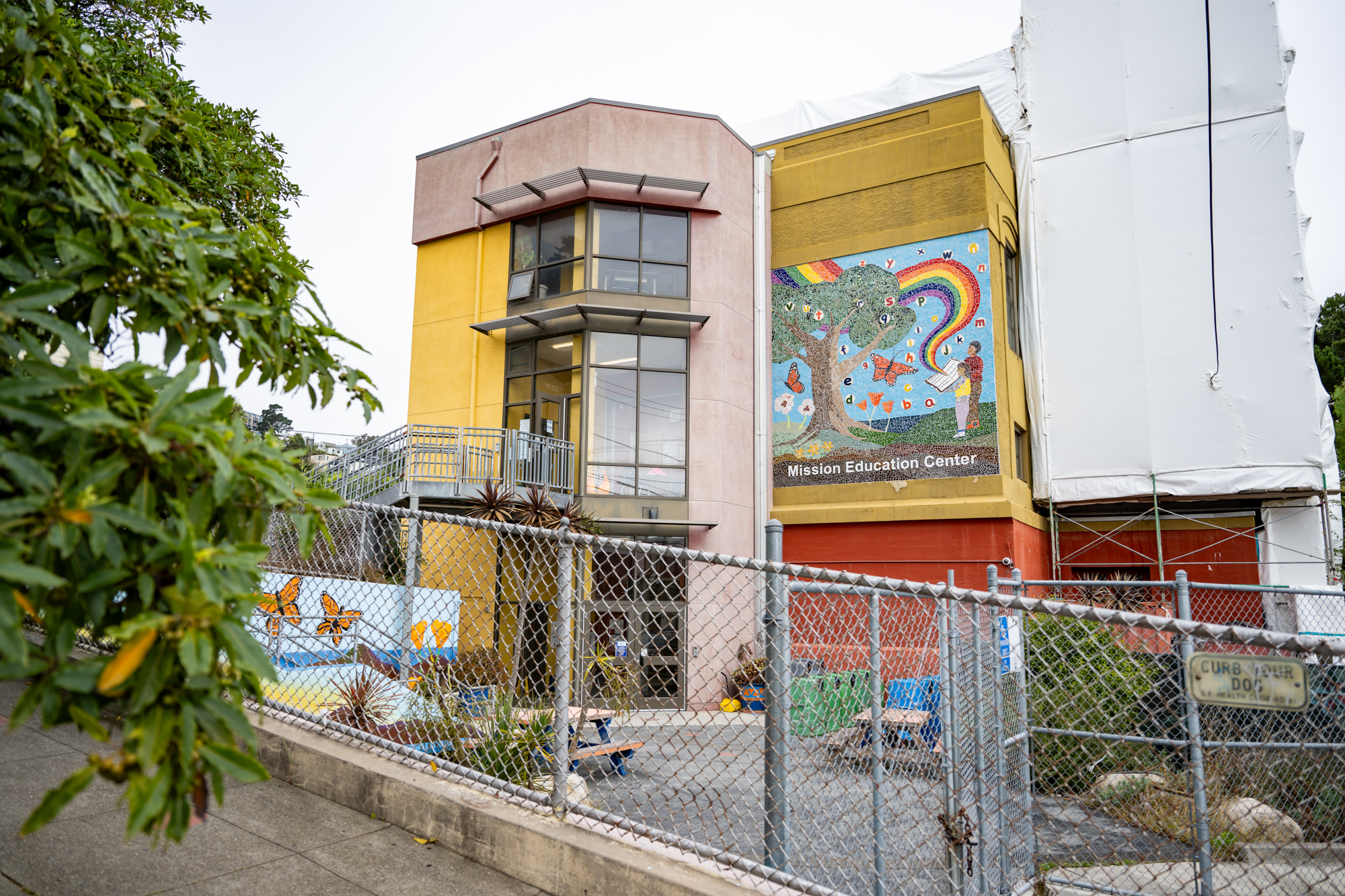
window.__IS_SSR__=true
window.__INITIAL_STATE__={
"attachmentsReducer": {
"audio_0": {
"type": "attachments",
"id": "audio_0",
"imgSizes": {
"kqedFullSize": {
"file": "https://ww2.kqed.org/news/wp-content/themes/KQED-unified/img/audio_bgs/background0.jpg"
}
}
},
"audio_1": {
"type": "attachments",
"id": "audio_1",
"imgSizes": {
"kqedFullSize": {
"file": "https://ww2.kqed.org/news/wp-content/themes/KQED-unified/img/audio_bgs/background1.jpg"
}
}
},
"audio_2": {
"type": "attachments",
"id": "audio_2",
"imgSizes": {
"kqedFullSize": {
"file": "https://ww2.kqed.org/news/wp-content/themes/KQED-unified/img/audio_bgs/background2.jpg"
}
}
},
"audio_3": {
"type": "attachments",
"id": "audio_3",
"imgSizes": {
"kqedFullSize": {
"file": "https://ww2.kqed.org/news/wp-content/themes/KQED-unified/img/audio_bgs/background3.jpg"
}
}
},
"audio_4": {
"type": "attachments",
"id": "audio_4",
"imgSizes": {
"kqedFullSize": {
"file": "https://ww2.kqed.org/news/wp-content/themes/KQED-unified/img/audio_bgs/background4.jpg"
}
}
},
"placeholder": {
"type": "attachments",
"id": "placeholder",
"imgSizes": {
"thumbnail": {
"file": "https://cdn.kqed.org/wp-content/uploads/2024/12/KQED-Default-Image-816638274-2000x1333-1-160x107.jpg",
"width": 160,
"height": 107,
"mimeType": "image/jpeg"
},
"medium": {
"file": "https://cdn.kqed.org/wp-content/uploads/2024/12/KQED-Default-Image-816638274-2000x1333-1-800x533.jpg",
"width": 800,
"height": 533,
"mimeType": "image/jpeg"
},
"medium_large": {
"file": "https://cdn.kqed.org/wp-content/uploads/2024/12/KQED-Default-Image-816638274-2000x1333-1-768x512.jpg",
"width": 768,
"height": 512,
"mimeType": "image/jpeg"
},
"large": {
"file": "https://cdn.kqed.org/wp-content/uploads/2024/12/KQED-Default-Image-816638274-2000x1333-1-1020x680.jpg",
"width": 1020,
"height": 680,
"mimeType": "image/jpeg"
},
"1536x1536": {
"file": "https://cdn.kqed.org/wp-content/uploads/2024/12/KQED-Default-Image-816638274-2000x1333-1-1536x1024.jpg",
"width": 1536,
"height": 1024,
"mimeType": "image/jpeg"
},
"fd-lrg": {
"file": "https://cdn.kqed.org/wp-content/uploads/2024/12/KQED-Default-Image-816638274-2000x1333-1-1536x1024.jpg",
"width": 1536,
"height": 1024,
"mimeType": "image/jpeg"
},
"fd-med": {
"file": "https://cdn.kqed.org/wp-content/uploads/2024/12/KQED-Default-Image-816638274-2000x1333-1-1020x680.jpg",
"width": 1020,
"height": 680,
"mimeType": "image/jpeg"
},
"fd-sm": {
"file": "https://cdn.kqed.org/wp-content/uploads/2024/12/KQED-Default-Image-816638274-2000x1333-1-800x533.jpg",
"width": 800,
"height": 533,
"mimeType": "image/jpeg"
},
"post-thumbnail": {
"file": "https://cdn.kqed.org/wp-content/uploads/2024/12/KQED-Default-Image-816638274-2000x1333-1-672x372.jpg",
"width": 672,
"height": 372,
"mimeType": "image/jpeg"
},
"twentyfourteen-full-width": {
"file": "https://cdn.kqed.org/wp-content/uploads/2024/12/KQED-Default-Image-816638274-2000x1333-1-1038x576.jpg",
"width": 1038,
"height": 576,
"mimeType": "image/jpeg"
},
"xxsmall": {
"file": "https://cdn.kqed.org/wp-content/uploads/2024/12/KQED-Default-Image-816638274-2000x1333-1-160x107.jpg",
"width": 160,
"height": 107,
"mimeType": "image/jpeg"
},
"xsmall": {
"file": "https://cdn.kqed.org/wp-content/uploads/2024/12/KQED-Default-Image-816638274-2000x1333-1-672x372.jpg",
"width": 672,
"height": 372,
"mimeType": "image/jpeg"
},
"small": {
"file": "https://cdn.kqed.org/wp-content/uploads/2024/12/KQED-Default-Image-816638274-2000x1333-1-672x372.jpg",
"width": 672,
"height": 372,
"mimeType": "image/jpeg"
},
"xlarge": {
"file": "https://cdn.kqed.org/wp-content/uploads/2024/12/KQED-Default-Image-816638274-2000x1333-1-1020x680.jpg",
"width": 1020,
"height": 680,
"mimeType": "image/jpeg"
},
"full-width": {
"file": "https://cdn.kqed.org/wp-content/uploads/2024/12/KQED-Default-Image-816638274-2000x1333-1-1920x1280.jpg",
"width": 1920,
"height": 1280,
"mimeType": "image/jpeg"
},
"guest-author-32": {
"file": "https://cdn.kqed.org/wp-content/uploads/2025/01/KQED-Default-Image-816638274-1333x1333-1-160x160.jpg",
"width": 32,
"height": 32,
"mimeType": "image/jpeg"
},
"guest-author-50": {
"file": "https://cdn.kqed.org/wp-content/uploads/2025/01/KQED-Default-Image-816638274-1333x1333-1-160x160.jpg",
"width": 50,
"height": 50,
"mimeType": "image/jpeg"
},
"guest-author-64": {
"file": "https://cdn.kqed.org/wp-content/uploads/2025/01/KQED-Default-Image-816638274-1333x1333-1-160x160.jpg",
"width": 64,
"height": 64,
"mimeType": "image/jpeg"
},
"guest-author-96": {
"file": "https://cdn.kqed.org/wp-content/uploads/2025/01/KQED-Default-Image-816638274-1333x1333-1-160x160.jpg",
"width": 96,
"height": 96,
"mimeType": "image/jpeg"
},
"guest-author-128": {
"file": "https://cdn.kqed.org/wp-content/uploads/2025/01/KQED-Default-Image-816638274-1333x1333-1-160x160.jpg",
"width": 128,
"height": 128,
"mimeType": "image/jpeg"
},
"detail": {
"file": "https://cdn.kqed.org/wp-content/uploads/2025/01/KQED-Default-Image-816638274-1333x1333-1-160x160.jpg",
"width": 160,
"height": 160,
"mimeType": "image/jpeg"
},
"kqedFullSize": {
"file": "https://cdn.kqed.org/wp-content/uploads/2024/12/KQED-Default-Image-816638274-2000x1333-1.jpg",
"width": 2000,
"height": 1333
}
}
},
"news_12053560": {
"type": "attachments",
"id": "news_12053560",
"meta": {
"index": "attachments_1716263798",
"site": "news",
"id": "12053560",
"found": true
},
"title": "250825-SFUSDMISSIONEDCENTER-06-BL-KQED",
"publishDate": 1756145313,
"status": "inherit",
"parent": 12082156,
"modified": 1777678565,
"caption": "The Mission Education Center, a bilingual elementary school in the San Francisco Unified School District, in San Francisco’s Noe Valley neighborhood on Aug. 25, 2025. A group of parents wrote a letter to the SFUSD raising “urgent concerns about the unsafe and unacceptable conditions at Mission Education Center.”",
"credit": "Beth LaBerge/KQED",
"altTag": null,
"description": null,
"imgSizes": {
"thumbnail": {
"file": "https://cdn.kqed.org/wp-content/uploads/sites/10/2025/08/250825-SFUSDMISSIONEDCENTER-06-BL-KQED-160x107.jpg",
"width": 160,
"height": 107,
"mimeType": "image/jpeg"
},
"1536x1536": {
"file": "https://cdn.kqed.org/wp-content/uploads/sites/10/2025/08/250825-SFUSDMISSIONEDCENTER-06-BL-KQED-1536x1024.jpg",
"width": 1536,
"height": 1024,
"mimeType": "image/jpeg"
},
"post-thumbnail": {
"file": "https://cdn.kqed.org/wp-content/uploads/sites/10/2025/08/250825-SFUSDMISSIONEDCENTER-06-BL-KQED-672x372.jpg",
"width": 672,
"height": 372,
"mimeType": "image/jpeg"
},
"twentyfourteen-full-width": {
"file": "https://cdn.kqed.org/wp-content/uploads/sites/10/2025/08/250825-SFUSDMISSIONEDCENTER-06-BL-KQED-1038x576.jpg",
"width": 1038,
"height": 576,
"mimeType": "image/jpeg"
},
"kqedFullSize": {
"file": "https://cdn.kqed.org/wp-content/uploads/sites/10/2025/08/250825-SFUSDMISSIONEDCENTER-06-BL-KQED.jpg",
"width": 2000,
"height": 1333
}
},
"isLoading": false,
"fetchFailed": false
},
"news_11997842": {
"type": "attachments",
"id": "news_11997842",
"meta": {
"index": "attachments_1716263798",
"site": "news",
"id": "11997842",
"found": true
},
"title": "GettyImages-2158244120",
"publishDate": 1722279466,
"status": "inherit",
"parent": 11997819,
"modified": 1722281528,
"caption": "Elon Musk at an event on June 19, 2024, in Cannes, France. ",
"credit": "Marc Piasecki/Getty Images",
"altTag": null,
"description": null,
"imgSizes": {
"medium": {
"file": "https://cdn.kqed.org/wp-content/uploads/sites/10/2024/07/GettyImages-2158244120-800x534.jpg",
"width": 800,
"height": 534,
"mimeType": "image/jpeg"
},
"large": {
"file": "https://cdn.kqed.org/wp-content/uploads/sites/10/2024/07/GettyImages-2158244120-1020x681.jpg",
"width": 1020,
"height": 681,
"mimeType": "image/jpeg"
},
"thumbnail": {
"file": "https://cdn.kqed.org/wp-content/uploads/sites/10/2024/07/GettyImages-2158244120-160x107.jpg",
"width": 160,
"height": 107,
"mimeType": "image/jpeg"
},
"1536x1536": {
"file": "https://cdn.kqed.org/wp-content/uploads/sites/10/2024/07/GettyImages-2158244120-1536x1025.jpg",
"width": 1536,
"height": 1025,
"mimeType": "image/jpeg"
},
"post-thumbnail": {
"file": "https://cdn.kqed.org/wp-content/uploads/sites/10/2024/07/GettyImages-2158244120-672x372.jpg",
"width": 672,
"height": 372,
"mimeType": "image/jpeg"
},
"twentyfourteen-full-width": {
"file": "https://cdn.kqed.org/wp-content/uploads/sites/10/2024/07/GettyImages-2158244120-1038x576.jpg",
"width": 1038,
"height": 576,
"mimeType": "image/jpeg"
},
"kqedFullSize": {
"file": "https://cdn.kqed.org/wp-content/uploads/sites/10/2024/07/GettyImages-2158244120.jpg",
"width": 1920,
"height": 1281
}
},
"isLoading": false,
"fetchFailed": false
},
"news_12053096": {
"type": "attachments",
"id": "news_12053096",
"meta": {
"index": "attachments_1716263798",
"site": "news",
"id": "12053096",
"found": true
},
"title": "Trans Flag Hung From El Capitan",
"publishDate": 1755734796,
"status": "inherit",
"parent": 12053078,
"modified": 1755734855,
"caption": "A group of transgender, queer and allied climbers unfurled a trans pride flag on El Capitan in Yosemite National Park, California, on May 20, 2025. The flag is the largest flag ever flown on the famed granite monolith in the park, and hangs beneath Heart Ledges, a symbolic location near the literal and figurative heart of El Capitan. ",
"credit": "Carlos Avila Gonzalez/San Francisco Chronicle via Getty Images",
"altTag": null,
"description": null,
"imgSizes": {
"thumbnail": {
"file": "https://cdn.kqed.org/wp-content/uploads/sites/10/2025/08/YosemiteTransFlagGetty-160x107.jpg",
"width": 160,
"height": 107,
"mimeType": "image/jpeg"
},
"1536x1536": {
"file": "https://cdn.kqed.org/wp-content/uploads/sites/10/2025/08/YosemiteTransFlagGetty-1536x1024.jpg",
"width": 1536,
"height": 1024,
"mimeType": "image/jpeg"
},
"post-thumbnail": {
"file": "https://cdn.kqed.org/wp-content/uploads/sites/10/2025/08/YosemiteTransFlagGetty-672x372.jpg",
"width": 672,
"height": 372,
"mimeType": "image/jpeg"
},
"twentyfourteen-full-width": {
"file": "https://cdn.kqed.org/wp-content/uploads/sites/10/2025/08/YosemiteTransFlagGetty-1038x576.jpg",
"width": 1038,
"height": 576,
"mimeType": "image/jpeg"
},
"kqedFullSize": {
"file": "https://cdn.kqed.org/wp-content/uploads/sites/10/2025/08/YosemiteTransFlagGetty.jpg",
"width": 2000,
"height": 1333
}
},
"isLoading": false,
"fetchFailed": false
},
"news_12053048": {
"type": "attachments",
"id": "news_12053048",
"meta": {
"index": "attachments_1716263798",
"site": "news",
"id": "12053048",
"found": true
},
"title": "Kaiser San Rafael in San Rafael on Aug. 20, 2025.",
"publishDate": 1755721637,
"status": "inherit",
"parent": 0,
"modified": 1755728081,
"caption": "The Kaiser Permanente hospital in San Rafael on Aug. 20, 2025.",
"credit": "Martin do Nascimento/KQED",
"altTag": null,
"description": null,
"imgSizes": {
"thumbnail": {
"file": "https://cdn.kqed.org/wp-content/uploads/sites/10/2025/08/250820-KAISER-SAN-RAFAEL-MD-02-KQED-160x107.jpg",
"width": 160,
"height": 107,
"mimeType": "image/jpeg"
},
"1536x1536": {
"file": "https://cdn.kqed.org/wp-content/uploads/sites/10/2025/08/250820-KAISER-SAN-RAFAEL-MD-02-KQED-1536x1025.jpg",
"width": 1536,
"height": 1025,
"mimeType": "image/jpeg"
},
"post-thumbnail": {
"file": "https://cdn.kqed.org/wp-content/uploads/sites/10/2025/08/250820-KAISER-SAN-RAFAEL-MD-02-KQED-672x372.jpg",
"width": 672,
"height": 372,
"mimeType": "image/jpeg"
},
"twentyfourteen-full-width": {
"file": "https://cdn.kqed.org/wp-content/uploads/sites/10/2025/08/250820-KAISER-SAN-RAFAEL-MD-02-KQED-1038x576.jpg",
"width": 1038,
"height": 576,
"mimeType": "image/jpeg"
},
"kqedFullSize": {
"file": "https://cdn.kqed.org/wp-content/uploads/sites/10/2025/08/250820-KAISER-SAN-RAFAEL-MD-02-KQED.jpg",
"width": 2000,
"height": 1334
}
},
"isLoading": false,
"fetchFailed": false
},
"news_12052409": {
"type": "attachments",
"id": "news_12052409",
"meta": {
"index": "attachments_1716263798",
"site": "news",
"id": "12052409",
"found": true
},
"title": "241023-SFUSDSuperintendent-12-BL_qed (1)",
"publishDate": 1755284348,
"status": "inherit",
"parent": 0,
"modified": 1755301624,
"caption": "A teacher instructs her class at Yick Wo Alternative Elementary School in San Francisco on Oct. 23, 2024.",
"credit": "Beth LaBerge/KQED",
"altTag": null,
"description": null,
"imgSizes": {
"thumbnail": {
"file": "https://cdn.kqed.org/wp-content/uploads/sites/10/2025/08/241023-SFUSDSuperintendent-12-BL_qed-1-160x107.jpg",
"width": 160,
"height": 107,
"mimeType": "image/jpeg"
},
"1536x1536": {
"file": "https://cdn.kqed.org/wp-content/uploads/sites/10/2025/08/241023-SFUSDSuperintendent-12-BL_qed-1-1536x1024.jpg",
"width": 1536,
"height": 1024,
"mimeType": "image/jpeg"
},
"post-thumbnail": {
"file": "https://cdn.kqed.org/wp-content/uploads/sites/10/2025/08/241023-SFUSDSuperintendent-12-BL_qed-1-672x372.jpg",
"width": 672,
"height": 372,
"mimeType": "image/jpeg"
},
"twentyfourteen-full-width": {
"file": "https://cdn.kqed.org/wp-content/uploads/sites/10/2025/08/241023-SFUSDSuperintendent-12-BL_qed-1-1038x576.jpg",
"width": 1038,
"height": 576,
"mimeType": "image/jpeg"
},
"kqedFullSize": {
"file": "https://cdn.kqed.org/wp-content/uploads/sites/10/2025/08/241023-SFUSDSuperintendent-12-BL_qed-1.jpg",
"width": 1999,
"height": 1333
}
},
"isLoading": false,
"fetchFailed": false
},
"news_12049998": {
"type": "attachments",
"id": "news_12049998",
"meta": {
"index": "attachments_1716263798",
"site": "news",
"id": "12049998",
"found": true
},
"title": "20250725_OAKLANDDAYLABORERS_GC-3-KQED",
"publishDate": 1753721859,
"status": "inherit",
"parent": 0,
"modified": 1755298552,
"caption": "Day laborers wait for work at a Walgreens in Oakland on July 25, 2025. Fewer people have come to the stop out of fear of being deported.",
"credit": "Gina Castro for KQED",
"altTag": null,
"description": null,
"imgSizes": {
"thumbnail": {
"file": "https://cdn.kqed.org/wp-content/uploads/sites/10/2025/07/20250725_OAKLANDDAYLABORERS_GC-3-KQED-160x107.jpg",
"width": 160,
"height": 107,
"mimeType": "image/jpeg"
},
"1536x1536": {
"file": "https://cdn.kqed.org/wp-content/uploads/sites/10/2025/07/20250725_OAKLANDDAYLABORERS_GC-3-KQED-1536x1024.jpg",
"width": 1536,
"height": 1024,
"mimeType": "image/jpeg"
},
"post-thumbnail": {
"file": "https://cdn.kqed.org/wp-content/uploads/sites/10/2025/07/20250725_OAKLANDDAYLABORERS_GC-3-KQED-672x372.jpg",
"width": 672,
"height": 372,
"mimeType": "image/jpeg"
},
"twentyfourteen-full-width": {
"file": "https://cdn.kqed.org/wp-content/uploads/sites/10/2025/07/20250725_OAKLANDDAYLABORERS_GC-3-KQED-1038x576.jpg",
"width": 1038,
"height": 576,
"mimeType": "image/jpeg"
},
"kqedFullSize": {
"file": "https://cdn.kqed.org/wp-content/uploads/sites/10/2025/07/20250725_OAKLANDDAYLABORERS_GC-3-KQED.jpg",
"width": 2000,
"height": 1333
}
},
"isLoading": false,
"fetchFailed": false
},
"news_12051869": {
"type": "attachments",
"id": "news_12051869",
"meta": {
"index": "attachments_1716263798",
"site": "news",
"id": "12051869",
"found": true
},
"title": "250418-SFUSD-04-BL_qed",
"publishDate": 1755024187,
"status": "inherit",
"parent": 12051862,
"modified": 1755024198,
"caption": "The San Francisco Unified School District Administrative Offices in San Francisco on April 18, 2025.",
"credit": "Beth LaBerge/KQED",
"altTag": null,
"description": null,
"imgSizes": {
"thumbnail": {
"file": "https://cdn.kqed.org/wp-content/uploads/sites/10/2025/08/250418-SFUSD-04-BL_qed-160x107.jpg",
"width": 160,
"height": 107,
"mimeType": "image/jpeg"
},
"1536x1536": {
"file": "https://cdn.kqed.org/wp-content/uploads/sites/10/2025/08/250418-SFUSD-04-BL_qed-1536x1024.jpg",
"width": 1536,
"height": 1024,
"mimeType": "image/jpeg"
},
"post-thumbnail": {
"file": "https://cdn.kqed.org/wp-content/uploads/sites/10/2025/08/250418-SFUSD-04-BL_qed-672x372.jpg",
"width": 672,
"height": 372,
"mimeType": "image/jpeg"
},
"twentyfourteen-full-width": {
"file": "https://cdn.kqed.org/wp-content/uploads/sites/10/2025/08/250418-SFUSD-04-BL_qed-1038x576.jpg",
"width": 1038,
"height": 576,
"mimeType": "image/jpeg"
},
"kqedFullSize": {
"file": "https://cdn.kqed.org/wp-content/uploads/sites/10/2025/08/250418-SFUSD-04-BL_qed.jpg",
"width": 2000,
"height": 1333
}
},
"isLoading": false,
"fetchFailed": false
},
"news_12051282": {
"type": "attachments",
"id": "news_12051282",
"meta": {
"index": "attachments_1716263798",
"site": "news",
"id": "12051282",
"found": true
},
"title": "Philz Coffee",
"publishDate": 1754593712,
"status": "inherit",
"parent": 12051278,
"modified": 1754593743,
"caption": "Sign on facade at Philz Coffee cafe in Lafayette, California, on Jan. 25, 2022.",
"credit": "Gado/Getty Images",
"altTag": null,
"description": null,
"imgSizes": {
"thumbnail": {
"file": "https://cdn.kqed.org/wp-content/uploads/sites/10/2025/08/PhilzCoffeeGetty-160x107.jpg",
"width": 160,
"height": 107,
"mimeType": "image/jpeg"
},
"1536x1536": {
"file": "https://cdn.kqed.org/wp-content/uploads/sites/10/2025/08/PhilzCoffeeGetty-1536x1024.jpg",
"width": 1536,
"height": 1024,
"mimeType": "image/jpeg"
},
"post-thumbnail": {
"file": "https://cdn.kqed.org/wp-content/uploads/sites/10/2025/08/PhilzCoffeeGetty-672x372.jpg",
"width": 672,
"height": 372,
"mimeType": "image/jpeg"
},
"twentyfourteen-full-width": {
"file": "https://cdn.kqed.org/wp-content/uploads/sites/10/2025/08/PhilzCoffeeGetty-1038x576.jpg",
"width": 1038,
"height": 576,
"mimeType": "image/jpeg"
},
"kqedFullSize": {
"file": "https://cdn.kqed.org/wp-content/uploads/sites/10/2025/08/PhilzCoffeeGetty.jpg",
"width": 2000,
"height": 1333
}
},
"isLoading": false,
"fetchFailed": false
},
"news_12051173": {
"type": "attachments",
"id": "news_12051173",
"meta": {
"index": "attachments_1716263798",
"site": "news",
"id": "12051173",
"found": true
},
"title": "250806_SCALEAI_ 0013_GH-KQED",
"publishDate": 1754519801,
"status": "inherit",
"parent": 0,
"modified": 1754519945,
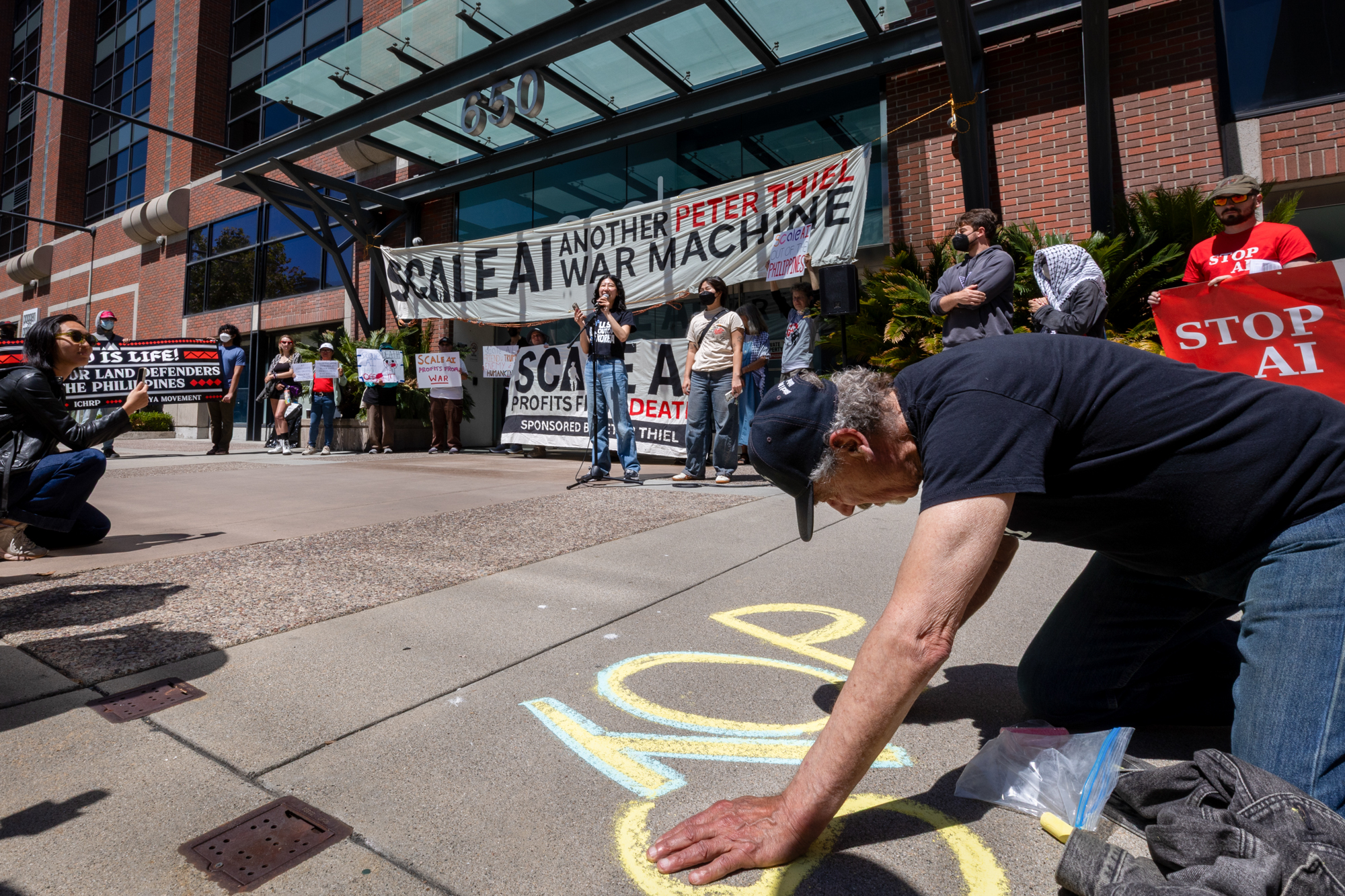
"caption": "Katie Na (center) speaks to a crowd of about 50 people outside Scale AI’s San Francisco headquarters on Aug. 6, 2025, during a protest against the company’s Pentagon-funded AI military project, Thunderforge.",
"credit": "Gustavo Hernandez/KQED",
"altTag": null,
"description": null,
"imgSizes": {
"thumbnail": {
"file": "https://cdn.kqed.org/wp-content/uploads/sites/10/2025/08/250806_SCALEAI_-0013_GH-KQED-160x107.jpg",
"width": 160,
"height": 107,
"mimeType": "image/jpeg"
},
"1536x1536": {
"file": "https://cdn.kqed.org/wp-content/uploads/sites/10/2025/08/250806_SCALEAI_-0013_GH-KQED-1536x1024.jpg",
"width": 1536,
"height": 1024,
"mimeType": "image/jpeg"
},
"post-thumbnail": {
"file": "https://cdn.kqed.org/wp-content/uploads/sites/10/2025/08/250806_SCALEAI_-0013_GH-KQED-672x372.jpg",
"width": 672,
"height": 372,
"mimeType": "image/jpeg"
},
"twentyfourteen-full-width": {
"file": "https://cdn.kqed.org/wp-content/uploads/sites/10/2025/08/250806_SCALEAI_-0013_GH-KQED-1038x576.jpg",
"width": 1038,
"height": 576,
"mimeType": "image/jpeg"
},
"kqedFullSize": {
"file": "https://cdn.kqed.org/wp-content/uploads/sites/10/2025/08/250806_SCALEAI_-0013_GH-KQED.jpg",
"width": 2000,
"height": 1333
}
},
"isLoading": false,
"fetchFailed": false
},
"news_11732929": {
"type": "attachments",
"id": "news_11732929",
"meta": {
"index": "attachments_1716263798",
"site": "news",
"id": "11732929",
"found": true
},
"parent": 11732835,
"imgSizes": {
"twentyfourteen-full-width": {
"file": "https://ww2.kqed.org/app/uploads/sites/10/2019/03/GettyImages-1135386368-1038x576.jpg",
"width": 1038,
"mimeType": "image/jpeg",
"height": 576
},
"thumbnail": {
"file": "https://ww2.kqed.org/app/uploads/sites/10/2019/03/GettyImages-1135386368-160x106.jpg",
"width": 160,
"mimeType": "image/jpeg",
"height": 106
},
"post-thumbnail": {
"file": "https://ww2.kqed.org/app/uploads/sites/10/2019/03/GettyImages-1135386368-672x372.jpg",
"width": 672,
"mimeType": "image/jpeg",
"height": 372
},
"kqedFullSize": {
"file": "https://ww2.kqed.org/app/uploads/sites/10/2019/03/GettyImages-1135386368-e1552589629977.jpg",
"width": 1920,
"height": 1278
},
"large": {
"file": "https://ww2.kqed.org/app/uploads/sites/10/2019/03/GettyImages-1135386368-1020x679.jpg",
"width": 1020,
"mimeType": "image/jpeg",
"height": 679
},
"complete_open_graph": {
"file": "https://ww2.kqed.org/app/uploads/sites/10/2019/03/GettyImages-1135386368-1200x799.jpg",
"width": 1200,
"mimeType": "image/jpeg",
"height": 799
},
"guest-author-50": {
"file": "https://ww2.kqed.org/app/uploads/sites/10/2019/03/GettyImages-1135386368-50x50.jpg",
"width": 50,
"mimeType": "image/jpeg",
"height": 50
},
"guest-author-96": {
"file": "https://ww2.kqed.org/app/uploads/sites/10/2019/03/GettyImages-1135386368-96x96.jpg",
"width": 96,
"mimeType": "image/jpeg",
"height": 96
},
"medium": {
"file": "https://ww2.kqed.org/app/uploads/sites/10/2019/03/GettyImages-1135386368-800x532.jpg",
"width": 800,
"mimeType": "image/jpeg",
"height": 532
},
"guest-author-64": {
"file": "https://ww2.kqed.org/app/uploads/sites/10/2019/03/GettyImages-1135386368-64x64.jpg",
"width": 64,
"mimeType": "image/jpeg",
"height": 64
},
"guest-author-32": {
"file": "https://ww2.kqed.org/app/uploads/sites/10/2019/03/GettyImages-1135386368-32x32.jpg",
"width": 32,
"mimeType": "image/jpeg",
"height": 32
},
"full-width": {
"file": "https://ww2.kqed.org/app/uploads/sites/10/2019/03/GettyImages-1135386368-1920x1278.jpg",
"width": 1920,
"mimeType": "image/jpeg",
"height": 1278
},
"guest-author-128": {
"file": "https://ww2.kqed.org/app/uploads/sites/10/2019/03/GettyImages-1135386368-128x128.jpg",
"width": 128,
"mimeType": "image/jpeg",
"height": 128
}
},
"publishDate": 1552589542,
"modified": 1552601592,
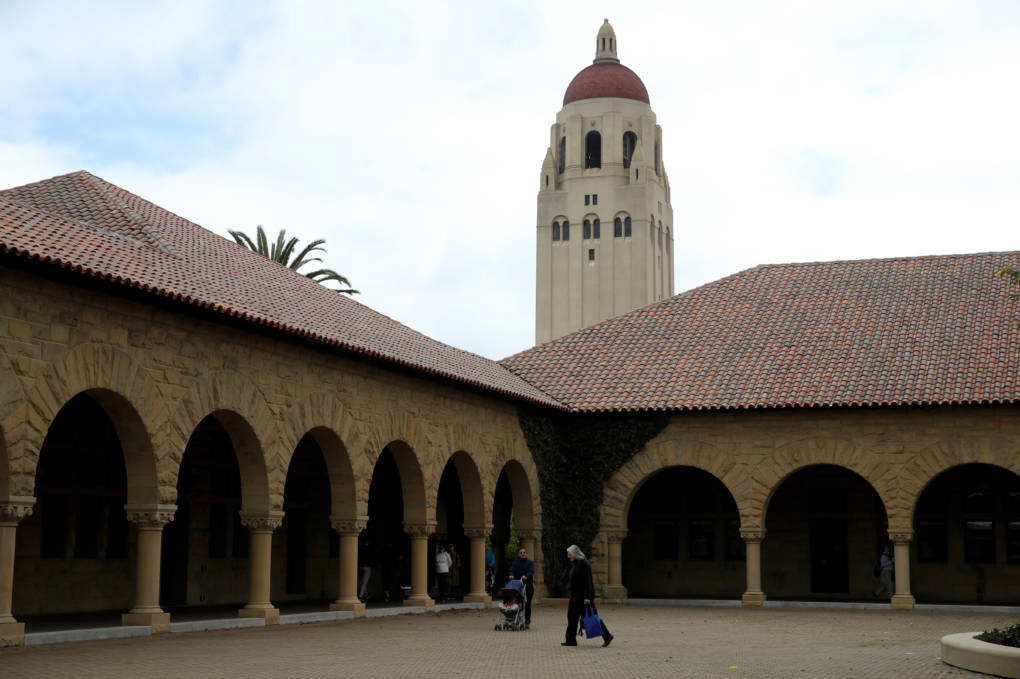
"caption": "People walk by Hoover Tower on the Stanford University campus on March 12, 2019. Fifty people, including actresses Lori Loughlin and Felicity Huffman, have been charged in a widespread elite college admission bribery scheme. Parents, ACT and SAT administrators and coaches at universities including Stanford, Georgetown, Yale and the University of Southern California have been charged.",
"description": null,
"title": "More Than 30 People Charged In Elite College Entry Bribery Scheme",
"credit": "Justin Sullivan/Getty Images",
"status": "inherit",
"isLoading": false,
"fetchFailed": false
},
"news_12050941": {
"type": "attachments",
"id": "news_12050941",
"meta": {
"index": "attachments_1716263798",
"site": "news",
"id": "12050941",
"found": true
},
"title": "The REI store in Berkeley on March 28, 2025.",
"publishDate": 1754415771,
"status": "inherit",
"parent": 12050938,
"modified": 1754415782,
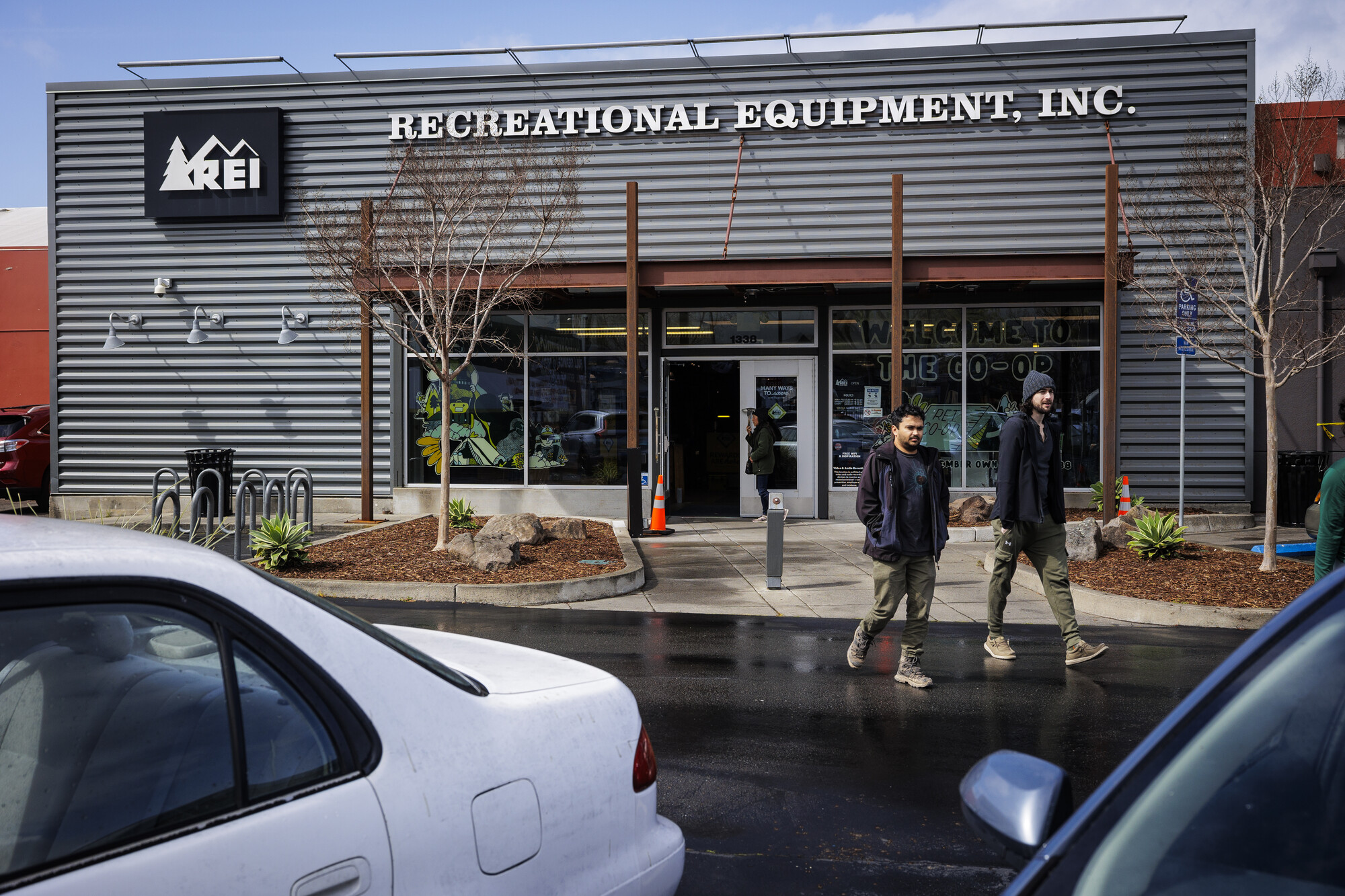
"caption": "The REI store in Berkeley on March 28, 2025.",
"credit": "Martin do Nascimento/KQED",
"altTag": null,
"description": null,
"imgSizes": {
"thumbnail": {
"file": "https://cdn.kqed.org/wp-content/uploads/sites/10/2025/08/250328-REI-LABOR-DISPUTE-MD-09_qed-160x107.jpg",
"width": 160,
"height": 107,
"mimeType": "image/jpeg"
},
"1536x1536": {
"file": "https://cdn.kqed.org/wp-content/uploads/sites/10/2025/08/250328-REI-LABOR-DISPUTE-MD-09_qed-1536x1024.jpg",
"width": 1536,
"height": 1024,
"mimeType": "image/jpeg"
},
"post-thumbnail": {
"file": "https://cdn.kqed.org/wp-content/uploads/sites/10/2025/08/250328-REI-LABOR-DISPUTE-MD-09_qed-672x372.jpg",
"width": 672,
"height": 372,
"mimeType": "image/jpeg"
},
"twentyfourteen-full-width": {
"file": "https://cdn.kqed.org/wp-content/uploads/sites/10/2025/08/250328-REI-LABOR-DISPUTE-MD-09_qed-1038x576.jpg",
"width": 1038,
"height": 576,
"mimeType": "image/jpeg"
},
"kqedFullSize": {
"file": "https://cdn.kqed.org/wp-content/uploads/sites/10/2025/08/250328-REI-LABOR-DISPUTE-MD-09_qed.jpg",
"width": 2000,
"height": 1333
}
},
"isLoading": false,
"fetchFailed": false
},
"news_12050982": {
"type": "attachments",
"id": "news_12050982",
"meta": {
"index": "attachments_1716263798",
"site": "news",
"id": "12050982",
"found": true
},
"title": "250805-NOVATO-STRIKE-MD-06-KQED-1",
"publishDate": 1754421918,
"status": "inherit",
"parent": 0,
"modified": 1754421933,
"caption": "Public servants strike in front of the Novato City Hall on Aug. 5, 2025.",
"credit": "Martin do Nascimento/KQED",
"altTag": null,
"description": null,
"imgSizes": {
"thumbnail": {
"file": "https://cdn.kqed.org/wp-content/uploads/sites/10/2025/08/250805-NOVATO-STRIKE-MD-06-KQED-1-160x107.jpg",
"width": 160,
"height": 107,
"mimeType": "image/jpeg"
},
"1536x1536": {
"file": "https://cdn.kqed.org/wp-content/uploads/sites/10/2025/08/250805-NOVATO-STRIKE-MD-06-KQED-1-1536x1025.jpg",
"width": 1536,
"height": 1025,
"mimeType": "image/jpeg"
},
"post-thumbnail": {
"file": "https://cdn.kqed.org/wp-content/uploads/sites/10/2025/08/250805-NOVATO-STRIKE-MD-06-KQED-1-672x372.jpg",
"width": 672,
"height": 372,
"mimeType": "image/jpeg"
},
"twentyfourteen-full-width": {
"file": "https://cdn.kqed.org/wp-content/uploads/sites/10/2025/08/250805-NOVATO-STRIKE-MD-06-KQED-1-1038x576.jpg",
"width": 1038,
"height": 576,
"mimeType": "image/jpeg"
},
"kqedFullSize": {
"file": "https://cdn.kqed.org/wp-content/uploads/sites/10/2025/08/250805-NOVATO-STRIKE-MD-06-KQED-1.jpg",
"width": 2000,
"height": 1334
}
},
"isLoading": false,
"fetchFailed": false
}
},
"audioPlayerReducer": {
"postId": "stream_live",
"isPaused": true,
"isPlaying": false,
"pfsActive": false,
"pledgeModalIsOpen": true,
"playerDrawerIsOpen": false,
"liveAudioPlayStartedAt": 0,
"liveAudioPlayContext": ""
},
"authorsReducer": {
"rachael-myrow": {
"type": "authors",
"id": "251",
"meta": {
"index": "authors_1716337520",
"id": "251",
"found": true
},
"name": "Rachael Myrow",
"firstName": "Rachael",
"lastName": "Myrow",
"slug": "rachael-myrow",
"email": "rmyrow@kqed.org",
"display_author_email": true,
"staff_mastheads": [
"news"
],
"title": "Senior Editor of KQED's Silicon Valley News Desk",
"bio": "• I write and edit stories about how Silicon Valley power and policies shape everyday life in California. I’m also passionate about making Bay Area history and culture more accessible to a broad public. • I’ve been a journalist for most of my life, starting in high school with The Franklin Press in Los Angeles, where I grew up. While earning my first degree in English at UC Berkeley, I got my start in public radio at KALX-FM. After completing a second degree in journalism at Cal, I landed my first professional job at Marketplace, then moved on to KPCC (now LAist), and then KQED, where I hosted The California Report for more than seven years. • My reporting has appeared on NPR, The World, WBUR’s \u003ci>Here & Now\u003c/i>, and the BBC. I also guest host for KQED’s \u003ci>Forum\u003c/i>, as well as the Commonwealth Club in San Francisco. • I speak periodically on media, democracy and technology issues, and do voiceover work for documentaries and educational video projects. • Outside of the studio, you'll find me hiking Bay Area trails and whipping up Insta-ready meals in my kitchen. • I do not accept gifts, money, or favors from anyone connected to my reporting, I don't pay people for information, and I do not support or donate to political causes. • I strive to treat the people I report on with fairness, honesty, and respect. I also recognize there are often multiple sides to a story and work to verify information through multiple sources and documentation. If I get something wrong, I correct it.",
"avatar": "https://secure.gravatar.com/avatar/3ed8a3c5f26025e4a805ba634cda8cd764906b97438a6d9ce216b044e340da4e?s=600&d=blank&r=g",
"twitter": "rachaelmyrow",
"bluesky": null,
"facebook": null,
"instagram": null,
"linkedin": "https://www.linkedin.com/in/rachaelmyrow/",
"sites": [
{
"site": "arts",
"roles": [
"administrator"
]
},
{
"site": "news",
"roles": [
"edit_others_posts",
"editor"
]
},
{
"site": "futureofyou",
"roles": [
"editor"
]
},
{
"site": "bayareabites",
"roles": [
"editor"
]
},
{
"site": "stateofhealth",
"roles": [
"editor"
]
},
{
"site": "science",
"roles": [
"editor"
]
},
{
"site": "food",
"roles": [
"editor"
]
},
{
"site": "forum",
"roles": [
"editor"
]
},
{
"site": "liveblog",
"roles": [
"author"
]
}
],
"headData": {
"title": "Rachael Myrow | KQED",
"description": "Senior Editor of KQED's Silicon Valley News Desk",
"ogImgSrc": "https://secure.gravatar.com/avatar/3ed8a3c5f26025e4a805ba634cda8cd764906b97438a6d9ce216b044e340da4e?s=600&d=blank&r=g",
"twImgSrc": "https://secure.gravatar.com/avatar/3ed8a3c5f26025e4a805ba634cda8cd764906b97438a6d9ce216b044e340da4e?s=600&d=blank&r=g"
},
"isLoading": false,
"link": "/author/rachael-myrow"
},
"rvasquez": {
"type": "authors",
"id": "11860",
"meta": {
"index": "authors_1716337520",
"id": "11860",
"found": true
},
"name": "Rachael Vasquez",
"firstName": "Rachael",
"lastName": "Vasquez",
"slug": "rvasquez",
"email": "rvasquez@KQED.org",
"display_author_email": false,
"staff_mastheads": [
"news"
],
"title": "KQED Contributor",
"bio": "Rachael Vasquez is a weekend host and editor at KQED. She’s worked in public radio for years, most recently at Wisconsin Public Radio in Madison, Wis. where she woke up very early as a producer for the network’s statewide \"Morning Edition\" broadcast, later serving as a producer for the stations’s afternoon talk show \"Central Time,\" and going on to report on business and economics during the coronavirus pandemic. In addition to hearing her anchor the afternoon newscasts every weekend at KQED, you can find her working with a number of different teams including the weekday newsroom and \"Forum.\" Rachael is an East Bay native who loves watching old movies and cooking her abuelita’s recipes.",
"avatar": "https://secure.gravatar.com/avatar/a1defdae97cbdde04c13baacacd7c94a?s=600&d=blank&r=g",
"twitter": null,
"facebook": null,
"instagram": null,
"linkedin": null,
"sites": [
{
"site": "news",
"roles": [
"editor"
]
}
],
"headData": {
"title": "Rachael Vasquez | KQED",
"description": "KQED Contributor",
"ogImgSrc": "https://secure.gravatar.com/avatar/a1defdae97cbdde04c13baacacd7c94a?s=600&d=blank&r=g",
"twImgSrc": "https://secure.gravatar.com/avatar/a1defdae97cbdde04c13baacacd7c94a?s=600&d=blank&r=g"
},
"isLoading": false,
"link": "/author/rvasquez"
},
"jgeha": {
"type": "authors",
"id": "11906",
"meta": {
"index": "authors_1716337520",
"id": "11906",
"found": true
},
"name": "Joseph Geha",
"firstName": "Joseph",
"lastName": "Geha",
"slug": "jgeha",
"email": "jgeha@kqed.org",
"display_author_email": false,
"staff_mastheads": [
"news",
"science"
],
"title": "KQED Contributor",
"bio": null,
"avatar": "https://secure.gravatar.com/avatar/ea84d2b6dd93d6369d453edf19dd583f117cd1759d2d9c9c92f9de77017354fe?s=600&d=blank&r=g",
"twitter": null,
"bluesky": null,
"facebook": null,
"instagram": null,
"linkedin": null,
"sites": [
{
"site": "news",
"roles": [
"editor"
]
},
{
"site": "liveblog",
"roles": [
"author"
]
}
],
"headData": {
"title": "Joseph Geha | KQED",
"description": "KQED Contributor",
"ogImgSrc": "https://secure.gravatar.com/avatar/ea84d2b6dd93d6369d453edf19dd583f117cd1759d2d9c9c92f9de77017354fe?s=600&d=blank&r=g",
"twImgSrc": "https://secure.gravatar.com/avatar/ea84d2b6dd93d6369d453edf19dd583f117cd1759d2d9c9c92f9de77017354fe?s=600&d=blank&r=g"
},
"isLoading": false,
"link": "/author/jgeha"
},
"kdebenedetti": {
"type": "authors",
"id": "11913",
"meta": {
"index": "authors_1716337520",
"id": "11913",
"found": true
},
"name": "Katie DeBenedetti",
"firstName": "Katie",
"lastName": "DeBenedetti",
"slug": "kdebenedetti",
"email": "kdebenedetti@kqed.org",
"display_author_email": false,
"staff_mastheads": [
"news",
"science"
],
"title": "KQED Contributor",
"bio": "Katie DeBenedetti is a digital reporter covering daily news for the Express Desk. Prior to joining KQED as a culture reporting intern in January 2024, she covered education and city government for the Napa Valley Register.",
"avatar": "https://secure.gravatar.com/avatar/6e31073cb8f7e4214ab03f42771d0f45?s=600&d=blank&r=g",
"twitter": null,
"facebook": null,
"instagram": null,
"linkedin": null,
"sites": [
{
"site": "news",
"roles": [
"author"
]
},
{
"site": "science",
"roles": [
"author"
]
},
{
"site": "liveblog",
"roles": [
"author"
]
}
],
"headData": {
"title": "Katie DeBenedetti | KQED",
"description": "KQED Contributor",
"ogImgSrc": "https://secure.gravatar.com/avatar/6e31073cb8f7e4214ab03f42771d0f45?s=600&d=blank&r=g",
"twImgSrc": "https://secure.gravatar.com/avatar/6e31073cb8f7e4214ab03f42771d0f45?s=600&d=blank&r=g"
},
"isLoading": false,
"link": "/author/kdebenedetti"
},
"skennedy": {
"type": "authors",
"id": "11935",
"meta": {
"index": "authors_1716337520",
"id": "11935",
"found": true
},
"name": "Samantha Kennedy",
"firstName": "Samantha",
"lastName": "Kennedy",
"slug": "skennedy",
"email": "SKennedy@kqed.org",
"display_author_email": false,
"staff_mastheads": [],
"title": "KQED Contributor",
"bio": null,
"avatar": "https://secure.gravatar.com/avatar/adc7b14bf1e801793202a156ecc864d4ad505b0fd63162a2f3da0e5ba57222d0?s=600&d=blank&r=g",
"twitter": null,
"bluesky": null,
"facebook": null,
"instagram": null,
"linkedin": null,
"sites": [
{
"site": "arts",
"roles": [
"author"
]
},
{
"site": "news",
"roles": [
"editor"
]
},
{
"site": "science",
"roles": [
"editor"
]
}
],
"headData": {
"title": "Samantha Kennedy | KQED",
"description": "KQED Contributor",
"ogImgSrc": "https://secure.gravatar.com/avatar/adc7b14bf1e801793202a156ecc864d4ad505b0fd63162a2f3da0e5ba57222d0?s=600&d=blank&r=g",
"twImgSrc": "https://secure.gravatar.com/avatar/adc7b14bf1e801793202a156ecc864d4ad505b0fd63162a2f3da0e5ba57222d0?s=600&d=blank&r=g"
},
"isLoading": false,
"link": "/author/skennedy"
},
"sarahwright": {
"type": "authors",
"id": "11956",
"meta": {
"index": "authors_1716337520",
"id": "11956",
"found": true
},
"name": "Sarah Wright",
"firstName": "Sarah",
"lastName": "Wright",
"slug": "sarahwright",
"email": "swright@kqed.org",
"display_author_email": true,
"staff_mastheads": [],
"title": "Outdoors Engagement Reporter",
"bio": "Sarah Wright is KQED's Outdoors Engagement Reporter. Originally from Lake Tahoe, she completed a thru-hike of the Pacific Crest Trail in 2019 and was a U.S. Fulbright Program grantee to Argentina in 2023. Her journalism has appeared in The Guardian, The San Francisco Standard, The Palo Alto Weekly and the Half Moon Bay Review.",
"avatar": "https://secure.gravatar.com/avatar/c161a3d6441865cba25e6db4fa561099ad665799e9432e34da2b84d7e371524c?s=600&d=blank&r=g",
"twitter": null,
"bluesky": null,
"facebook": null,
"instagram": null,
"linkedin": null,
"sites": [
{
"site": "arts",
"roles": [
"editor"
]
},
{
"site": "news",
"roles": [
"editor"
]
},
{
"site": "science",
"roles": [
"contributor",
"author"
]
},
{
"site": "forum",
"roles": [
"editor"
]
}
],
"headData": {
"title": "Sarah Wright | KQED",
"description": "Outdoors Engagement Reporter",
"ogImgSrc": "https://secure.gravatar.com/avatar/c161a3d6441865cba25e6db4fa561099ad665799e9432e34da2b84d7e371524c?s=600&d=blank&r=g",
"twImgSrc": "https://secure.gravatar.com/avatar/c161a3d6441865cba25e6db4fa561099ad665799e9432e34da2b84d7e371524c?s=600&d=blank&r=g"
},
"isLoading": false,
"link": "/author/sarahwright"
},
"mbernal": {
"type": "authors",
"id": "11977",
"meta": {
"index": "authors_1716337520",
"id": "11977",
"found": true
},
"name": "María Fernanda Bernal",
"firstName": "María Fernanda",
"lastName": "Bernal",
"slug": "mbernal",
"email": "mbernal@kqed.org",
"display_author_email": false,
"staff_mastheads": [
"news"
],
"title": "KQED Contributor",
"bio": "Maria Fernanda is a UC Berkeley J-School alum and was named Innovation Fellow in 2023. She was the 2022 White House Correspondents' Fellow and Cokie Roberts Scholar. In her time at the Investigative Reporting Program, she led an investigative team and received a National Press Award in 2025 for the story on Chevron's Manipulation of Media. She is most proud of her international recognition with the first place podcast award from the Insituto Mexicano de la radio in 2021. Maria Fernanda is a Bay Area-based journalist who is currently working as a general assignment reporter, weekend host and producer at KQED.",
"avatar": "https://secure.gravatar.com/avatar/f44c9ad4bd3426006b0def803428a08a?s=600&d=blank&r=g",
"twitter": null,
"facebook": null,
"instagram": null,
"linkedin": null,
"sites": [
{
"site": "arts",
"roles": [
"editor"
]
},
{
"site": "news",
"roles": [
"editor",
"author"
]
},
{
"site": "science",
"roles": [
"editor"
]
}
],
"headData": {
"title": "María Fernanda Bernal | KQED",
"description": "KQED Contributor",
"ogImgSrc": "https://secure.gravatar.com/avatar/f44c9ad4bd3426006b0def803428a08a?s=600&d=blank&r=g",
"twImgSrc": "https://secure.gravatar.com/avatar/f44c9ad4bd3426006b0def803428a08a?s=600&d=blank&r=g"
},
"isLoading": false,
"link": "/author/mbernal"
}
},
"pagesReducer": {
"news_tag_labor": {
"type": "terms",
"id": "news_19904",
"meta": {
"index": "terms_1716263798",
"site": "news",
"id": "19904",
"score": 8.558012
},
"name": "Labor",
"slug": "labor",
"taxonomy": "tag",
"description": null,
"featImg": null,
"headData": {
"title": "Labor | KQED News",
"description": null,
"ogTitle": null,
"ogDescription": null,
"ogImgId": null,
"twTitle": null,
"twDescription": null,
"twImgId": null
},
"ttid": 19921,
"isLoading": false,
"title": "Labor",
"pageMeta": {
"site": "news",
"WpPageTemplate": "page-topic-editorial",
"currentPage": 17
},
"blocks": [
{
"blockName": "kqed/post-list",
"attrs": {
"layout": "cardArticle2",
"query": "posts/news?tag=labor",
"seeMore": false,
"paginated": true,
"page": 17
}
},
{
"blockName": "kqed/ad"
}
]
}
},
"pfsSessionReducer": {},
"postsReducer": {
"stream_live": {
"type": "live",
"id": "stream_live",
"audioUrl": "https://streams.kqed.org/kqedradio",
"title": "Live Stream",
"excerpt": "Live Stream information currently unavailable.",
"link": "/radio",
"featImg": "",
"label": {
"name": "KQED Live",
"link": "/"
}
},
"stream_kqedNewscast": {
"type": "posts",
"id": "stream_kqedNewscast",
"audioUrl": "https://www.kqed.org/.stream/anon/radio/RDnews/newscast.mp3?_=1",
"title": "KQED Newscast",
"featImg": "",
"label": {
"name": "88.5 FM",
"link": "/"
}
},
"news_12053574": {
"type": "posts",
"id": "news_12053574",
"meta": {
"index": "posts_1716263798",
"site": "news",
"id": "12053574",
"score": null,
"sort": [
1756150215000
]
},
"guestAuthors": [],
"slug": "sf-school-serving-spanish-speaking-immigrants-is-severely-understaffed-parents-say",
"title": "SF School Serving Spanish-Speaking Immigrants Is ‘Severely Understaffed,’ Parents Say",
"publishDate": 1756150215,
"format": "standard",
"headTitle": "SF School Serving Spanish-Speaking Immigrants Is ‘Severely Understaffed,’ Parents Say | KQED",
"labelTerm": {
"site": "news"
},
"content": "\u003cp>\u003cem>Updated at 6:30 p.m.\u003c/em>\u003c/p>\n\u003cp>On its \u003ca href=\"https://www.kqed.org/news/12052399/a-new-school-year-begins-in-san-francisco-with-new-possibilities-and-problems\">first day of school last week\u003c/a>, the \u003ca href=\"https://www.kqed.org/news/tag/sfusd\">San Francisco Unified School District\u003c/a> announced that it had fully staffed schools — albeit some with substitute teachers — and was prepared for a year of smooth sailing, focused on the “basics.”\u003c/p>\n\u003cp>But that was far from the scene at Mission Education Center, a campus serving pre-kindergarten through fifth grade for newly arrived Spanish-speaking immigrants.\u003c/p>\n\u003cp>“It was just kind of a cacophony of catastrophe that first morning, because as the conversations unfolded throughout the morning, we realized to what extent the school was just severely understaffed,” said Jeremiah Mayfield, whose daughter started transitional kindergarten last week. The school recently expanded to add Spanish-immersion transitional kindergarten classrooms for the district’s youngest students.\u003c/p>\n\u003cp>[ad fullwidth]\u003c/p>\n\u003cp>Mayfield and a coalition of 13 other parents wrote in a letter to the district on Wednesday that when they and their 4-year-olds arrived on campus that morning, there was no smiling principal waiting to greet them. That role remains vacant, along with three classroom teaching positions and multiple paraeducator jobs.\u003c/p>\n\u003cp>“We are writing to raise urgent concerns about the unsafe and unacceptable conditions at Mission Education Center,” the letter reads. “We love SFUSD. We believe in public education. We trusted the system — and the system failed us and our children.”\u003c/p>\n\u003cp>SFUSD said in a message to families Monday afternoon that it had offered the principal and pre-kindergarten teacher roles to candidates, and extended offers for instructional aide positions to three other people. It said it was still looking for two TK teachers.\u003c/p>\n\u003cp>“Please know that we see and understand these challenges, and we are truly grateful for your patience and partnership during this time,” the message, which the district shared with KQED, reads. “We are fully committed to providing the very best care and quality education to each of the 76 students enrolled at MEC.”\u003c/p>\n\u003cfigure id=\"attachment_12053561\" class=\"wp-caption aligncenter\" style=\"max-width: 2000px\">\u003cimg loading=\"lazy\" decoding=\"async\" class=\"size-full wp-image-12053561\" src=\"https://cdn.kqed.org/wp-content/uploads/sites/10/2025/08/250825-SFUSDMISSIONEDCENTER-08-BL-KQED.jpg\" alt=\"\" width=\"2000\" height=\"1333\" srcset=\"https://cdn.kqed.org/wp-content/uploads/sites/10/2025/08/250825-SFUSDMISSIONEDCENTER-08-BL-KQED.jpg 2000w, https://cdn.kqed.org/wp-content/uploads/sites/10/2025/08/250825-SFUSDMISSIONEDCENTER-08-BL-KQED-160x107.jpg 160w, https://cdn.kqed.org/wp-content/uploads/sites/10/2025/08/250825-SFUSDMISSIONEDCENTER-08-BL-KQED-1536x1024.jpg 1536w\" sizes=\"auto, (max-width: 2000px) 100vw, 2000px\">\u003cfigcaption class=\"wp-caption-text\">The Mission Education Center, a bilingual elementary school in the San Francisco Unified School District, in San Francisco’s Noe Valley neighborhood, on Aug. 25, 2025. \u003ccite>(Beth LaBerge/KQED)\u003c/cite>\u003c/figcaption>\u003c/figure>\n\u003cp>After the children lined up and were led to their classrooms, the site’s interim principal — who himself has been teaching one of the classes, according to Mayfield — corralled worried parents in the cafeteria.\u003c/p>\n\u003cp>“We don’t have teachers. We don’t have staff. We are scrambling to try to get resources here the rest of the week,” Mayfield recalled the interim leader saying. “It’s going to be pretty chaotic and pretty much adjusting targets every day.”\u003c/p>\n\u003cp>Mayfield said before the school year started, his daughter’s class had been assigned a teacher, a longtime bilingual educator in SFUSD who taught older classes prior to this year. He met her during a back-to-school event the previous week, but on the first day, she wasn’t there.\u003c/p>\n\u003cp>“The parents showed up and we’re being told, ‘[This teacher’s] class line up here,’” Mayfield said. “We’re lined up, and this woman is in the front of the line, and I said, ‘Well, that’s not [our teacher]. I met her on Friday. Who is this?’[aside postID=news_12052579 hero='https://cdn.kqed.org/wp-content/uploads/sites/10/2025/08/teacher-with-a-little-girl-with-glasses.jpg']“That’s when we found out, oh, this is a substitute,” he continued.\u003c/p>\n\u003cp>Mayfield said the school later told him and other parents that the teacher who was assigned to the classroom didn’t have the necessary early education training, and that they were working all week to “get her credentialed.”\u003c/p>\n\u003cp>In the meantime, his daughter has had three substitutes.\u003c/p>\n\u003cp>“She’s progressively gotten worse and worse about wanting to go in after they line up in the morning — crying, hugging me, saying to me, ‘I don’t know who those people are,’” Mayfield said. “It’s hard to see your kid … you want them to have a great educational experience. You want her to love school. You want her to feel safe at school. And literally she’s showing up every day, and she doesn’t know who’s going to be her teacher.”\u003c/p>\n\u003cp>Mission Education Center has operated for years as a small pre-kindergarten through fifth-grade campus meant to serve as a transitional school for newly arrived immigrant students, helping them get up to speed with the district’s grade-level learning standards and move into general education classrooms.\u003c/p>\n\u003cp>SFUSD announced \u003ca href=\"https://www.ppssf.org/news/the-sfusd-transitional-kindergarten-program-is-opening-six-new-sites-in-2022-2023\">it would introduce\u003c/a> Spanish immersion TK at MEC for the 2022–23 school year, and last year, the site had \u003ca href=\"https://dq.cde.ca.gov/dataquest/dqcensus/enrgrdlevels.aspx?cds=38684786089585&agglevel=School&year=2024-25&ro=y\">47 TK students\u003c/a>, according to state data. Mayfield explained the site as almost containing two separate schools.\u003c/p>\n\u003cfigure id=\"attachment_12051869\" class=\"wp-caption aligncenter\" style=\"max-width: 2000px\">\u003cimg loading=\"lazy\" decoding=\"async\" class=\"size-full wp-image-12051869\" src=\"https://cdn.kqed.org/wp-content/uploads/sites/10/2025/08/250418-SFUSD-04-BL_qed.jpg\" alt=\"\" width=\"2000\" height=\"1333\" srcset=\"https://cdn.kqed.org/wp-content/uploads/sites/10/2025/08/250418-SFUSD-04-BL_qed.jpg 2000w, https://cdn.kqed.org/wp-content/uploads/sites/10/2025/08/250418-SFUSD-04-BL_qed-160x107.jpg 160w, https://cdn.kqed.org/wp-content/uploads/sites/10/2025/08/250418-SFUSD-04-BL_qed-1536x1024.jpg 1536w\" sizes=\"auto, (max-width: 2000px) 100vw, 2000px\">\u003cfigcaption class=\"wp-caption-text\">The San Francisco Unified School District Administrative Offices in San Francisco on April 18, 2025. \u003ccite>(Beth LaBerge/KQED)\u003c/cite>\u003c/figcaption>\u003c/figure>\n\u003cp>The early education expansion appears to be where most of MEC’s staffing issues are.\u003c/p>\n\u003cp>As of Friday, two of the three TK classes and the pre-kindergarten didn’t have permanent teachers, according to parents. All but one paraeducator position across those classrooms — since state staffing rules say each group of 20 TKers should have two supervising adults — were still vacant.\u003c/p>\n\u003cp>While Mayfield said he and other parents were assured that a principal had been hired in June and was being onboarded over the summer, the interim principal said last week that the position hadn’t been filled.\u003c/p>\n\u003cp>The letter from concerned parents to the district said that on the first day, one paraeducator floated between three rooms. By Wednesday, the district had sent in central office employees as support, Mayfield said.[aside postID=news_12052609 hero='https://cdn.kqed.org/wp-content/uploads/sites/10/2025/08/240520-TKParentsDilemma-32-BL_qed.jpg']The letter also said that on the first day, parents anxiously lingering around the school until midmorning saw one child go to the bathroom alone, while others were left in the halls. They say they had to step in to lead early morning circle time for a group of TK kids. Substitute staff sent to teach the Spanish immersion classes, which include some children who only speak Spanish fluently, don’t have the necessary language skills, according to multiple parents.\u003c/p>\n\u003cp>“These conditions are unsafe, inequitable, and a violation of the state’s expectations for early education,” the parents wrote in their letter. “On-site staff have been transparent and honest about these challenges to us and are doing their best — and for this, we are grateful, we applaud them — but this clearly needs immediate support from the district.”\u003c/p>\n\u003cp>Lucia Gonzalezz Ippolito’s daughter, who started TK last week, had been in a Spanish Immersion preschool for the last two years. She said that the program was great, and her daughter could have continued there for one more year before enrolling in kindergarten, but she felt pressure to put her in TK at SFUSD so she would have a better chance of getting one of the district’s competitive Spanish immersion spots.\u003c/p>\n\u003cp>“If I want her in a Spanish immersion program, I have to stay in MEC,” Gonzalez Ippolito said. “If you go to a regular TK or if you stay in preschool, then you’ll probably be like number 50 on the wait list.”\u003c/p>\n\u003cp>Since she took the helm as superintendent last year, Maria Su has said that one of her goals is to expand the district’s TK offerings, first \u003ca href=\"https://www.kqed.org/news/12052609/as-transitional-kindergarten-opens-to-all-4-year-olds-sf-parents-compete-for-seats\">adding 16 classrooms this year\u003c/a>, and looking at potential locations for more early education programs in the future to meet enrollment demands. This fall, an influx of applications to the grade level, which California now guarantees access to for all students, \u003ca href=\"https://www.kqed.org/news/12031802/san-francisco-public-schools-see-surge-applications-thanks-transitional-kindergarten-demand\">boosted the district’s struggling enrollment\u003c/a>.\u003c/p>\n\u003cp>But, “if you’re going to focus and make this an early education hub and have multiple classes of TKs there, you need to give it the attention that it deserves,” Mayfield said.\u003c/p>\n\u003cp>After the parents’ letter, a follow-up message on Friday morning, and more individual emails asking district leaders for information throughout the week, Mayfield said parents finally got a response from SFUSD’s assistant superintendent of early education late Friday morning.\u003c/p>\n\u003cp>“We are working closely with HR to address the staffing needs at MEC, and by end of day Monday, we will be able to share additional updates regarding staffing plans and next steps,” Christie Herrera wrote in the message shared with KQED.\u003c/p>\n\u003cp>While parents wait to see what those updates will be, Mayfield said it feels like too little, too late.\u003c/p>\n\u003cp>“If this is the way that the district acts and carries itself and works with parents, then I understand why parents don’t trust the district,” he told KQED. “I understand why the district has the reputation that they do for being very mismanaged and chaotic and disorganized and probably wasteful. It just feels like the district is there to try to protect the district, and nobody’s thinking about the kids.”\u003c/p>\n\u003cp>[ad floatright]\u003c/p>\n",
"blocks": [],
"excerpt": "A group of parents wrote a letter to the San Francisco Unified School District raising “urgent concerns about the unsafe and unacceptable conditions at Mission Education Center.”",
"status": "publish",
"parent": 0,
"modified": 1756172402,
"stats": {
"hasAudio": false,
"hasVideo": false,
"hasChartOrMap": false,
"iframeSrcs": [],
"hasGoogleForm": false,
"hasGallery": false,
"hasHearkenModule": false,
"hasPolis": false,
"paragraphCount": 32,
"wordCount": 1586
},
"headData": {
"title": "SF School Serving Spanish-Speaking Immigrants Is ‘Severely Understaffed,’ Parents Say | KQED",
"description": "A group of parents wrote a letter to the San Francisco Unified School District raising “urgent concerns about the unsafe and unacceptable conditions at Mission Education Center.”",
"ogTitle": "",
"ogDescription": "",
"ogImgId": "",
"twTitle": "",
"twDescription": "",
"twImgId": "",
"schema": {
"@context": "https://schema.org",
"@type": "NewsArticle",
"headline": "SF School Serving Spanish-Speaking Immigrants Is ‘Severely Understaffed,’ Parents Say",
"datePublished": "2025-08-25T12:30:15-07:00",
"dateModified": "2025-08-25T18:40:02-07:00",
"image": "https://cdn.kqed.org/wp-content/uploads/2020/02/KQED-OG-Image@1x.png",
"isAccessibleForFree": "True",
"publisher": {
"@type": "NewsMediaOrganization",
"@id": "https://www.kqed.org/#organization",
"name": "KQED",
"logo": "https://cdn.kqed.org/wp-content/uploads/2020/02/KQED-OG-Image@1x.png",
"url": "https://www.kqed.org",
"sameAs": [
"https://www.facebook.com/KQED",
"https://twitter.com/KQED",
"https://www.instagram.com/kqed/",
"https://www.tiktok.com/@kqedofficial",
"https://www.linkedin.com/company/kqed",
"https://www.youtube.com/channel/UCeC0IOo7i1P_61zVUWbJ4nw"
]
}
}
},
"primaryCategory": {
"termId": 8,
"slug": "news",
"name": "News"
},
"sticky": false,
"nprStoryId": "kqed-12053574",
"templateType": "standard",
"featuredImageType": "standard",
"excludeFromSiteSearch": "Include",
"articleAge": "0",
"path": "/news/12053574/sf-school-serving-spanish-speaking-immigrants-is-severely-understaffed-parents-say",
"audioTrackLength": null,
"parsedContent": [
{
"type": "contentString",
"content": "\u003cdiv class=\"post-body\">\u003cp>\u003cp>\u003cem>Updated at 6:30 p.m.\u003c/em>\u003c/p>\n\u003cp>On its \u003ca href=\"https://www.kqed.org/news/12052399/a-new-school-year-begins-in-san-francisco-with-new-possibilities-and-problems\">first day of school last week\u003c/a>, the \u003ca href=\"https://www.kqed.org/news/tag/sfusd\">San Francisco Unified School District\u003c/a> announced that it had fully staffed schools — albeit some with substitute teachers — and was prepared for a year of smooth sailing, focused on the “basics.”\u003c/p>\n\u003cp>But that was far from the scene at Mission Education Center, a campus serving pre-kindergarten through fifth grade for newly arrived Spanish-speaking immigrants.\u003c/p>\n\u003cp>“It was just kind of a cacophony of catastrophe that first morning, because as the conversations unfolded throughout the morning, we realized to what extent the school was just severely understaffed,” said Jeremiah Mayfield, whose daughter started transitional kindergarten last week. The school recently expanded to add Spanish-immersion transitional kindergarten classrooms for the district’s youngest students.\u003c/p>\n\u003cp>\u003c/p>\u003c/div>",
"attributes": {
"named": {},
"numeric": []
}
},
{
"type": "component",
"content": "",
"name": "ad",
"attributes": {
"named": {
"label": "fullwidth"
},
"numeric": [
"fullwidth"
]
}
},
{
"type": "contentString",
"content": "\u003cdiv class=\"post-body\">\u003cp>\u003c/p>\n\u003cp>Mayfield and a coalition of 13 other parents wrote in a letter to the district on Wednesday that when they and their 4-year-olds arrived on campus that morning, there was no smiling principal waiting to greet them. That role remains vacant, along with three classroom teaching positions and multiple paraeducator jobs.\u003c/p>\n\u003cp>“We are writing to raise urgent concerns about the unsafe and unacceptable conditions at Mission Education Center,” the letter reads. “We love SFUSD. We believe in public education. We trusted the system — and the system failed us and our children.”\u003c/p>\n\u003cp>SFUSD said in a message to families Monday afternoon that it had offered the principal and pre-kindergarten teacher roles to candidates, and extended offers for instructional aide positions to three other people. It said it was still looking for two TK teachers.\u003c/p>\n\u003cp>“Please know that we see and understand these challenges, and we are truly grateful for your patience and partnership during this time,” the message, which the district shared with KQED, reads. “We are fully committed to providing the very best care and quality education to each of the 76 students enrolled at MEC.”\u003c/p>\n\u003cfigure id=\"attachment_12053561\" class=\"wp-caption aligncenter\" style=\"max-width: 2000px\">\u003cimg loading=\"lazy\" decoding=\"async\" class=\"size-full wp-image-12053561\" src=\"https://cdn.kqed.org/wp-content/uploads/sites/10/2025/08/250825-SFUSDMISSIONEDCENTER-08-BL-KQED.jpg\" alt=\"\" width=\"2000\" height=\"1333\" srcset=\"https://cdn.kqed.org/wp-content/uploads/sites/10/2025/08/250825-SFUSDMISSIONEDCENTER-08-BL-KQED.jpg 2000w, https://cdn.kqed.org/wp-content/uploads/sites/10/2025/08/250825-SFUSDMISSIONEDCENTER-08-BL-KQED-160x107.jpg 160w, https://cdn.kqed.org/wp-content/uploads/sites/10/2025/08/250825-SFUSDMISSIONEDCENTER-08-BL-KQED-1536x1024.jpg 1536w\" sizes=\"auto, (max-width: 2000px) 100vw, 2000px\">\u003cfigcaption class=\"wp-caption-text\">The Mission Education Center, a bilingual elementary school in the San Francisco Unified School District, in San Francisco’s Noe Valley neighborhood, on Aug. 25, 2025. \u003ccite>(Beth LaBerge/KQED)\u003c/cite>\u003c/figcaption>\u003c/figure>\n\u003cp>After the children lined up and were led to their classrooms, the site’s interim principal — who himself has been teaching one of the classes, according to Mayfield — corralled worried parents in the cafeteria.\u003c/p>\n\u003cp>“We don’t have teachers. We don’t have staff. We are scrambling to try to get resources here the rest of the week,” Mayfield recalled the interim leader saying. “It’s going to be pretty chaotic and pretty much adjusting targets every day.”\u003c/p>\n\u003cp>Mayfield said before the school year started, his daughter’s class had been assigned a teacher, a longtime bilingual educator in SFUSD who taught older classes prior to this year. He met her during a back-to-school event the previous week, but on the first day, she wasn’t there.\u003c/p>\n\u003cp>“The parents showed up and we’re being told, ‘[This teacher’s] class line up here,’” Mayfield said. “We’re lined up, and this woman is in the front of the line, and I said, ‘Well, that’s not [our teacher]. I met her on Friday. Who is this?’\u003c/p>\u003c/div>",
"attributes": {
"named": {},
"numeric": []
}
},
{
"type": "component",
"content": "",
"name": "aside",
"attributes": {
"named": {
"postid": "news_12052579",
"hero": "https://cdn.kqed.org/wp-content/uploads/sites/10/2025/08/teacher-with-a-little-girl-with-glasses.jpg",
"label": ""
},
"numeric": []
}
},
{
"type": "contentString",
"content": "\u003cdiv class=\"post-body\">\u003cp>“That’s when we found out, oh, this is a substitute,” he continued.\u003c/p>\n\u003cp>Mayfield said the school later told him and other parents that the teacher who was assigned to the classroom didn’t have the necessary early education training, and that they were working all week to “get her credentialed.”\u003c/p>\n\u003cp>In the meantime, his daughter has had three substitutes.\u003c/p>\n\u003cp>“She’s progressively gotten worse and worse about wanting to go in after they line up in the morning — crying, hugging me, saying to me, ‘I don’t know who those people are,’” Mayfield said. “It’s hard to see your kid … you want them to have a great educational experience. You want her to love school. You want her to feel safe at school. And literally she’s showing up every day, and she doesn’t know who’s going to be her teacher.”\u003c/p>\n\u003cp>Mission Education Center has operated for years as a small pre-kindergarten through fifth-grade campus meant to serve as a transitional school for newly arrived immigrant students, helping them get up to speed with the district’s grade-level learning standards and move into general education classrooms.\u003c/p>\n\u003cp>SFUSD announced \u003ca href=\"https://www.ppssf.org/news/the-sfusd-transitional-kindergarten-program-is-opening-six-new-sites-in-2022-2023\">it would introduce\u003c/a> Spanish immersion TK at MEC for the 2022–23 school year, and last year, the site had \u003ca href=\"https://dq.cde.ca.gov/dataquest/dqcensus/enrgrdlevels.aspx?cds=38684786089585&agglevel=School&year=2024-25&ro=y\">47 TK students\u003c/a>, according to state data. Mayfield explained the site as almost containing two separate schools.\u003c/p>\n\u003cfigure id=\"attachment_12051869\" class=\"wp-caption aligncenter\" style=\"max-width: 2000px\">\u003cimg loading=\"lazy\" decoding=\"async\" class=\"size-full wp-image-12051869\" src=\"https://cdn.kqed.org/wp-content/uploads/sites/10/2025/08/250418-SFUSD-04-BL_qed.jpg\" alt=\"\" width=\"2000\" height=\"1333\" srcset=\"https://cdn.kqed.org/wp-content/uploads/sites/10/2025/08/250418-SFUSD-04-BL_qed.jpg 2000w, https://cdn.kqed.org/wp-content/uploads/sites/10/2025/08/250418-SFUSD-04-BL_qed-160x107.jpg 160w, https://cdn.kqed.org/wp-content/uploads/sites/10/2025/08/250418-SFUSD-04-BL_qed-1536x1024.jpg 1536w\" sizes=\"auto, (max-width: 2000px) 100vw, 2000px\">\u003cfigcaption class=\"wp-caption-text\">The San Francisco Unified School District Administrative Offices in San Francisco on April 18, 2025. \u003ccite>(Beth LaBerge/KQED)\u003c/cite>\u003c/figcaption>\u003c/figure>\n\u003cp>The early education expansion appears to be where most of MEC’s staffing issues are.\u003c/p>\n\u003cp>As of Friday, two of the three TK classes and the pre-kindergarten didn’t have permanent teachers, according to parents. All but one paraeducator position across those classrooms — since state staffing rules say each group of 20 TKers should have two supervising adults — were still vacant.\u003c/p>\n\u003cp>While Mayfield said he and other parents were assured that a principal had been hired in June and was being onboarded over the summer, the interim principal said last week that the position hadn’t been filled.\u003c/p>\n\u003cp>The letter from concerned parents to the district said that on the first day, one paraeducator floated between three rooms. By Wednesday, the district had sent in central office employees as support, Mayfield said.\u003c/p>\u003c/div>",
"attributes": {
"named": {},
"numeric": []
}
},
{
"type": "component",
"content": "",
"name": "aside",
"attributes": {
"named": {
"postid": "news_12052609",
"hero": "https://cdn.kqed.org/wp-content/uploads/sites/10/2025/08/240520-TKParentsDilemma-32-BL_qed.jpg",
"label": ""
},
"numeric": []
}
},
{
"type": "contentString",
"content": "\u003cdiv class=\"post-body\">\u003cp>The letter also said that on the first day, parents anxiously lingering around the school until midmorning saw one child go to the bathroom alone, while others were left in the halls. They say they had to step in to lead early morning circle time for a group of TK kids. Substitute staff sent to teach the Spanish immersion classes, which include some children who only speak Spanish fluently, don’t have the necessary language skills, according to multiple parents.\u003c/p>\n\u003cp>“These conditions are unsafe, inequitable, and a violation of the state’s expectations for early education,” the parents wrote in their letter. “On-site staff have been transparent and honest about these challenges to us and are doing their best — and for this, we are grateful, we applaud them — but this clearly needs immediate support from the district.”\u003c/p>\n\u003cp>Lucia Gonzalezz Ippolito’s daughter, who started TK last week, had been in a Spanish Immersion preschool for the last two years. She said that the program was great, and her daughter could have continued there for one more year before enrolling in kindergarten, but she felt pressure to put her in TK at SFUSD so she would have a better chance of getting one of the district’s competitive Spanish immersion spots.\u003c/p>\n\u003cp>“If I want her in a Spanish immersion program, I have to stay in MEC,” Gonzalez Ippolito said. “If you go to a regular TK or if you stay in preschool, then you’ll probably be like number 50 on the wait list.”\u003c/p>\n\u003cp>Since she took the helm as superintendent last year, Maria Su has said that one of her goals is to expand the district’s TK offerings, first \u003ca href=\"https://www.kqed.org/news/12052609/as-transitional-kindergarten-opens-to-all-4-year-olds-sf-parents-compete-for-seats\">adding 16 classrooms this year\u003c/a>, and looking at potential locations for more early education programs in the future to meet enrollment demands. This fall, an influx of applications to the grade level, which California now guarantees access to for all students, \u003ca href=\"https://www.kqed.org/news/12031802/san-francisco-public-schools-see-surge-applications-thanks-transitional-kindergarten-demand\">boosted the district’s struggling enrollment\u003c/a>.\u003c/p>\n\u003cp>But, “if you’re going to focus and make this an early education hub and have multiple classes of TKs there, you need to give it the attention that it deserves,” Mayfield said.\u003c/p>\n\u003cp>After the parents’ letter, a follow-up message on Friday morning, and more individual emails asking district leaders for information throughout the week, Mayfield said parents finally got a response from SFUSD’s assistant superintendent of early education late Friday morning.\u003c/p>\n\u003cp>“We are working closely with HR to address the staffing needs at MEC, and by end of day Monday, we will be able to share additional updates regarding staffing plans and next steps,” Christie Herrera wrote in the message shared with KQED.\u003c/p>\n\u003cp>While parents wait to see what those updates will be, Mayfield said it feels like too little, too late.\u003c/p>\n\u003cp>“If this is the way that the district acts and carries itself and works with parents, then I understand why parents don’t trust the district,” he told KQED. “I understand why the district has the reputation that they do for being very mismanaged and chaotic and disorganized and probably wasteful. It just feels like the district is there to try to protect the district, and nobody’s thinking about the kids.”\u003c/p>\n\u003cp>\u003c/p>\u003c/div>",
"attributes": {
"named": {},
"numeric": []
}
},
{
"type": "component",
"content": "",
"name": "ad",
"attributes": {
"named": {
"label": "floatright"
},
"numeric": [
"floatright"
]
}
},
{
"type": "contentString",
"content": "\u003cdiv class=\"post-body\">\u003cp>\u003c/p>\n\u003c/div>\u003c/p>",
"attributes": {
"named": {},
"numeric": []
}
}
],
"link": "/news/12053574/sf-school-serving-spanish-speaking-immigrants-is-severely-understaffed-parents-say",
"authors": [
"11913"
],
"categories": [
"news_18540",
"news_1169",
"news_34551",
"news_28250",
"news_8"
],
"tags": [
"news_1386",
"news_32102",
"news_32928",
"news_29460",
"news_20013",
"news_27626",
"news_6904",
"news_20202",
"news_19904",
"news_38",
"news_3946",
"news_1290",
"news_27160",
"news_34163"
],
"featImg": "news_12053560",
"label": "news"
},
"news_12053310": {
"type": "posts",
"id": "news_12053310",
"meta": {
"index": "posts_1716263798",
"site": "news",
"id": "12053310",
"score": null,
"sort": [
1755895820000
]
},
"guestAuthors": [],
"slug": "elon-musk-reaches-a-tentative-settlement-with-former-twitter-employees",
"title": "Elon Musk Reaches a Tentative Settlement with Former Twitter Employees",
"publishDate": 1755895820,
"format": "standard",
"headTitle": "Elon Musk Reaches a Tentative Settlement with Former Twitter Employees | KQED",
"labelTerm": {
"site": "news"
},
"content": "\u003cp>Elon Musk and X Corp., formally known as Twitter, reached \u003ca href=\"https://www.kqed.org/news/12025826/what-happens-after-the-fork-in-the-road-a-lawyer-for-ex-twitter-employees-weighs-in\">a settlement with former employees\u003c/a> in a San Francisco court on Wednesday.\u003c/p>\n\u003cp>A court filing released Wednesday shows both parties reached an agreement for an undisclosed amount in principle, and requested that a Sept. 17 hearing be postponed while they worked out a deal.\u003c/p>\n\u003cp>The class-action lawsuit was led by two former Twitter employees, Courtney McMillian and Ronald Cooper, who requested $500 million on behalf of their colleagues.\u003c/p>\n\u003cp>[ad fullwidth]\u003c/p>\n\u003cp>When Musk \u003ca href=\"https://www.kqed.org/news/11930570/he-wants-attention-as-elon-musk-takes-over-twitter-this-tech-insider-has-some-thoughts\">bought Twitter\u003c/a> for $44 billion in 2002, he fired 6,000 employees.\u003c/p>\n\u003cp>The class-action lawsuit stems from that turnover, after former Twitter employees say they did not receive their severance benefits or information about their severance package.\u003c/p>\n\u003cp>Twitter’s \u003ca href=\"https://www.sec.gov/Archives/edgar/data/1418091/000119312522120474/d310843ddefa14a.htm\">merger agreement\u003c/a> states that severance, among other former employee benefits, would be honored for up to a year after the merger. The lawsuit claims that those promises were made to prevent a mass resignation that would threaten the merger deal.\u003c/p>\n\u003cfigure id=\"attachment_11998863\" class=\"wp-caption aligncenter\" style=\"max-width: 2000px\">\u003cimg loading=\"lazy\" decoding=\"async\" class=\"size-full wp-image-11998863\" src=\"https://cdn.kqed.org/wp-content/uploads/sites/10/2024/08/XSFGetty.jpg\" alt=\"\" width=\"2000\" height=\"1172\" srcset=\"https://cdn.kqed.org/wp-content/uploads/sites/10/2024/08/XSFGetty.jpg 2000w, https://cdn.kqed.org/wp-content/uploads/sites/10/2024/08/XSFGetty-800x469.jpg 800w, https://cdn.kqed.org/wp-content/uploads/sites/10/2024/08/XSFGetty-1020x598.jpg 1020w, https://cdn.kqed.org/wp-content/uploads/sites/10/2024/08/XSFGetty-160x94.jpg 160w, https://cdn.kqed.org/wp-content/uploads/sites/10/2024/08/XSFGetty-1536x900.jpg 1536w, https://cdn.kqed.org/wp-content/uploads/sites/10/2024/08/XSFGetty-1920x1125.jpg 1920w\" sizes=\"auto, (max-width: 2000px) 100vw, 2000px\">\u003cfigcaption class=\"wp-caption-text\">An aerial view of X headquarters is seen on July 28, 2023, in San Francisco, California. \u003ccite>(Justin Sullivan/Getty Images)\u003c/cite>\u003c/figcaption>\u003c/figure>\n\u003cp>The severance package included at least two months’ salary, six months’ pay plus one week for each year of service for senior employees and a cash contribution for continued health care, according to the suit.\u003c/p>\n\u003cp>McMillian’s severance package included six-and-a-half months’ pay, six months of continued health insurance coverage and any bonuses. She was offered severance equal to one month’s pay, according to the suit.\u003c/p>\n\u003cp>Copper’s severance allegedly included six months and one week of pay, six months of health insurance coverage, and any bonuses. He was also offered severance equal to one month’s pay.[aside postID=news_12018617 hero='https://cdn.kqed.org/wp-content/uploads/sites/10/2024/12/NedSegalGetty-1020x680.jpg']Some employees received nothing, the suit said.\u003c/p>\n\u003cp>McMillian said in the suit that she was informed that Musk and the company decided to deny employees their severance after reviewing how much it would cost the company.\u003c/p>\n\u003cp>The suit also stated that after the merger, Twitter would shut down Slack and emails to prevent employees from seeking information or communicating amongst themselves about their benefits.\u003c/p>\n\u003cp>When employees asked about the severance plan or other work policies, the company would refer them to view Musk’s personal X account and listen to the “All In” podcast, hosted by his friends Jason Calacanis and David Sacks.\u003c/p>\n\u003cp>The lawsuit claimed the fired employees were entitled to no less than $500 million.\u003c/p>\n\u003cp>A federal judge dismissed the class action lawsuit in 2024, but McMillian and Cooper appealed.\u003c/p>\n\u003cp>Attorneys representing the former employees and Elon Musk did not yet respond to a request for comment about the settlement. The CEO has yet to post about the settlement on X.\u003c/p>\n\u003cp>\u003c/p>\n",
"blocks": [],
"excerpt": "Former Twitter employees dismissed by Musk requested $500 million in a class action lawsuit.",
"status": "publish",
"parent": 0,
"modified": 1755895820,
"stats": {
"hasAudio": false,
"hasVideo": false,
"hasChartOrMap": false,
"iframeSrcs": [],
"hasGoogleForm": false,
"hasGallery": false,
"hasHearkenModule": false,
"hasPolis": false,
"paragraphCount": 17,
"wordCount": 477
},
"headData": {
"title": "Elon Musk Reaches a Tentative Settlement with Former Twitter Employees | KQED",
"description": "Former Twitter employees dismissed by Musk requested $500 million in a class action lawsuit.",
"ogTitle": "",
"ogDescription": "",
"ogImgId": "",
"twTitle": "",
"twDescription": "",
"twImgId": "",
"schema": {
"@context": "https://schema.org",
"@type": "NewsArticle",
"headline": "Elon Musk Reaches a Tentative Settlement with Former Twitter Employees",
"datePublished": "2025-08-22T13:50:20-07:00",
"dateModified": "2025-08-22T13:50:20-07:00",
"image": "https://cdn.kqed.org/wp-content/uploads/2020/02/KQED-OG-Image@1x.png",
"isAccessibleForFree": "True",
"publisher": {
"@type": "NewsMediaOrganization",
"@id": "https://www.kqed.org/#organization",
"name": "KQED",
"logo": "https://cdn.kqed.org/wp-content/uploads/2020/02/KQED-OG-Image@1x.png",
"url": "https://www.kqed.org",
"sameAs": [
"https://www.facebook.com/KQED",
"https://twitter.com/KQED",
"https://www.instagram.com/kqed/",
"https://www.tiktok.com/@kqedofficial",
"https://www.linkedin.com/company/kqed",
"https://www.youtube.com/channel/UCeC0IOo7i1P_61zVUWbJ4nw"
]
}
}
},
"primaryCategory": {
"termId": 8,
"slug": "news",
"name": "News"
},
"sticky": false,
"nprStoryId": "kqed-12053310",
"templateType": "standard",
"featuredImageType": "standard",
"excludeFromSiteSearch": "Include",
"articleAge": "0",
"path": "/news/12053310/elon-musk-reaches-a-tentative-settlement-with-former-twitter-employees",
"audioTrackLength": null,
"parsedContent": [
{
"type": "contentString",
"content": "\u003cdiv class=\"post-body\">\u003cp>\u003cp>Elon Musk and X Corp., formally known as Twitter, reached \u003ca href=\"https://www.kqed.org/news/12025826/what-happens-after-the-fork-in-the-road-a-lawyer-for-ex-twitter-employees-weighs-in\">a settlement with former employees\u003c/a> in a San Francisco court on Wednesday.\u003c/p>\n\u003cp>A court filing released Wednesday shows both parties reached an agreement for an undisclosed amount in principle, and requested that a Sept. 17 hearing be postponed while they worked out a deal.\u003c/p>\n\u003cp>The class-action lawsuit was led by two former Twitter employees, Courtney McMillian and Ronald Cooper, who requested $500 million on behalf of their colleagues.\u003c/p>\n\u003cp>\u003c/p>\u003c/div>",
"attributes": {
"named": {},
"numeric": []
}
},
{
"type": "component",
"content": "",
"name": "ad",
"attributes": {
"named": {
"label": "fullwidth"
},
"numeric": [
"fullwidth"
]
}
},
{
"type": "contentString",
"content": "\u003cdiv class=\"post-body\">\u003cp>\u003c/p>\n\u003cp>When Musk \u003ca href=\"https://www.kqed.org/news/11930570/he-wants-attention-as-elon-musk-takes-over-twitter-this-tech-insider-has-some-thoughts\">bought Twitter\u003c/a> for $44 billion in 2002, he fired 6,000 employees.\u003c/p>\n\u003cp>The class-action lawsuit stems from that turnover, after former Twitter employees say they did not receive their severance benefits or information about their severance package.\u003c/p>\n\u003cp>Twitter’s \u003ca href=\"https://www.sec.gov/Archives/edgar/data/1418091/000119312522120474/d310843ddefa14a.htm\">merger agreement\u003c/a> states that severance, among other former employee benefits, would be honored for up to a year after the merger. The lawsuit claims that those promises were made to prevent a mass resignation that would threaten the merger deal.\u003c/p>\n\u003cfigure id=\"attachment_11998863\" class=\"wp-caption aligncenter\" style=\"max-width: 2000px\">\u003cimg loading=\"lazy\" decoding=\"async\" class=\"size-full wp-image-11998863\" src=\"https://cdn.kqed.org/wp-content/uploads/sites/10/2024/08/XSFGetty.jpg\" alt=\"\" width=\"2000\" height=\"1172\" srcset=\"https://cdn.kqed.org/wp-content/uploads/sites/10/2024/08/XSFGetty.jpg 2000w, https://cdn.kqed.org/wp-content/uploads/sites/10/2024/08/XSFGetty-800x469.jpg 800w, https://cdn.kqed.org/wp-content/uploads/sites/10/2024/08/XSFGetty-1020x598.jpg 1020w, https://cdn.kqed.org/wp-content/uploads/sites/10/2024/08/XSFGetty-160x94.jpg 160w, https://cdn.kqed.org/wp-content/uploads/sites/10/2024/08/XSFGetty-1536x900.jpg 1536w, https://cdn.kqed.org/wp-content/uploads/sites/10/2024/08/XSFGetty-1920x1125.jpg 1920w\" sizes=\"auto, (max-width: 2000px) 100vw, 2000px\">\u003cfigcaption class=\"wp-caption-text\">An aerial view of X headquarters is seen on July 28, 2023, in San Francisco, California. \u003ccite>(Justin Sullivan/Getty Images)\u003c/cite>\u003c/figcaption>\u003c/figure>\n\u003cp>The severance package included at least two months’ salary, six months’ pay plus one week for each year of service for senior employees and a cash contribution for continued health care, according to the suit.\u003c/p>\n\u003cp>McMillian’s severance package included six-and-a-half months’ pay, six months of continued health insurance coverage and any bonuses. She was offered severance equal to one month’s pay, according to the suit.\u003c/p>\n\u003cp>Copper’s severance allegedly included six months and one week of pay, six months of health insurance coverage, and any bonuses. He was also offered severance equal to one month’s pay.\u003c/p>\u003c/div>",
"attributes": {
"named": {},
"numeric": []
}
},
{
"type": "component",
"content": "",
"name": "aside",
"attributes": {
"named": {
"postid": "news_12018617",
"hero": "https://cdn.kqed.org/wp-content/uploads/sites/10/2024/12/NedSegalGetty-1020x680.jpg",
"label": ""
},
"numeric": []
}
},
{
"type": "contentString",
"content": "\u003cdiv class=\"post-body\">\u003cp>Some employees received nothing, the suit said.\u003c/p>\n\u003cp>McMillian said in the suit that she was informed that Musk and the company decided to deny employees their severance after reviewing how much it would cost the company.\u003c/p>\n\u003cp>The suit also stated that after the merger, Twitter would shut down Slack and emails to prevent employees from seeking information or communicating amongst themselves about their benefits.\u003c/p>\n\u003cp>When employees asked about the severance plan or other work policies, the company would refer them to view Musk’s personal X account and listen to the “All In” podcast, hosted by his friends Jason Calacanis and David Sacks.\u003c/p>\n\u003cp>The lawsuit claimed the fired employees were entitled to no less than $500 million.\u003c/p>\n\u003cp>A federal judge dismissed the class action lawsuit in 2024, but McMillian and Cooper appealed.\u003c/p>\n\u003cp>Attorneys representing the former employees and Elon Musk did not yet respond to a request for comment about the settlement. The CEO has yet to post about the settlement on X.\u003c/p>\n\u003cp>\u003c/p>\n\u003c/div>\u003c/p>",
"attributes": {
"named": {},
"numeric": []
}
}
],
"link": "/news/12053310/elon-musk-reaches-a-tentative-settlement-with-former-twitter-employees",
"authors": [
"11977"
],
"categories": [
"news_31795",
"news_28250",
"news_8",
"news_248"
],
"tags": [
"news_34061",
"news_18538",
"news_3897",
"news_19904",
"news_21891",
"news_352",
"news_3064",
"news_34586",
"news_1089",
"news_1631",
"news_346"
],
"featImg": "news_11997842",
"label": "news"
},
"news_12053078": {
"type": "posts",
"id": "news_12053078",
"meta": {
"index": "posts_1716263798",
"site": "news",
"id": "12053078",
"score": null,
"sort": [
1755793388000
]
},
"guestAuthors": [],
"slug": "yosemite-biologist-fired-after-hanging-transgender-pride-flag-from-el-capitan",
"title": "Yosemite Biologist Fired After Hanging Transgender Pride Flag From El Capitan",
"publishDate": 1755793388,
"format": "standard",
"headTitle": "Yosemite Biologist Fired After Hanging Transgender Pride Flag From El Capitan | KQED",
"labelTerm": {
"site": "news"
},
"content": "\u003cp>A \u003ca href=\"https://www.kqed.org/news/tag/yosemite-national-park\">Yosemite National Park\u003c/a> ranger was fired last week after they hung a transgender pride flag from famed climbing wall El Capitan this spring.\u003c/p>\n\u003cp>SJ Joslin, formerly a wildlife biologist at Yosemite, and several others lugged a 58 lb flag up the imposing wall and flew the flag on a heart-shaped feature of the rock for two hours in a celebration of their transgender identity, they said in an interview with KQED.\u003c/p>\n\u003cp>Joslin was not on duty at the time and was not acting on behalf of the National Parks Service, they said.\u003c/p>\n\u003cp>[ad fullwidth]\u003c/p>\n\u003cp>“I just thought: What better of a place to hang a huge flag whose entire point is acceptance and celebration of a group of people — and really everyone?” they said.\u003c/p>\n\u003cp>But last week, Joslin received their termination letter, which said they “failed to demonstrate acceptable conduct.”\u003c/p>\n\u003cp>Rachel Pawlitz, spokesperson for the National Park Service, would not comment on Joslin’s specific case, but confirmed NPS is “pursuing administrative action against multiple employees for failing to follow National Park Service regulations.”\u003c/p>\n\u003cfigure id=\"attachment_11947774\" class=\"wp-caption aligncenter\" style=\"max-width: 1920px\">\u003cimg loading=\"lazy\" decoding=\"async\" class=\"size-full wp-image-11947774\" src=\"https://cdn.kqed.org/wp-content/uploads/sites/10/2023/04/RS64733_GettyImages-1244209043-qut.jpg\" alt=\"A view of El Capitan in Yosemite, a sheer rock face with a bright blue sky behind it. An orange car drives on the road in the foreground.\" width=\"1920\" height=\"1280\" srcset=\"https://cdn.kqed.org/wp-content/uploads/sites/10/2023/04/RS64733_GettyImages-1244209043-qut.jpg 1920w, https://cdn.kqed.org/wp-content/uploads/sites/10/2023/04/RS64733_GettyImages-1244209043-qut-800x533.jpg 800w, https://cdn.kqed.org/wp-content/uploads/sites/10/2023/04/RS64733_GettyImages-1244209043-qut-1020x680.jpg 1020w, https://cdn.kqed.org/wp-content/uploads/sites/10/2023/04/RS64733_GettyImages-1244209043-qut-160x107.jpg 160w, https://cdn.kqed.org/wp-content/uploads/sites/10/2023/04/RS64733_GettyImages-1244209043-qut-1536x1024.jpg 1536w\" sizes=\"auto, (max-width: 1920px) 100vw, 1920px\">\u003cfigcaption class=\"wp-caption-text\">A view of El Capitan in Yosemite National Park on Oct. 23, 2022. \u003ccite>(Tayfun Coskun/Anadolu Agency via Getty Images)\u003c/cite>\u003c/figcaption>\u003c/figure>\n\u003cp>Pawlitz wrote in a statement that there have been multiple “unauthorized demonstrations involving El Capitan” and that “displaying signs, banners, and flags outside of designated First-Amendment areas detracts from the visitor experience and the protection of the park.” Demonstrations, she added, require a \u003ca href=\"https://www.nps.gov/yose/learn/management/upload/ep-compendium.pdf\">permit\u003c/a>.\u003c/p>\n\u003cp>Yosemite has First Amendment \u003ca href=\"https://public-nps.opendata.arcgis.com/datasets/nps::yosemite-national-park-designated-first-amendment-areas-open-data/about\">zones\u003c/a>, where 25 or more people can gather in permitted demonstrations.\u003c/p>\n\u003cp>“We want to emphasize that we take the protection of the park’s resources and the experience of our visitors very seriously, and will not tolerate violations of laws and regulations that impact those resources and experiences,” Pawlitz wrote.\u003c/p>\n\u003cp>Joslin said flying the flag was not a demonstration, but rather a celebration of identity, and criticized the parks service for taking action against them and not others who have similarly displayed flags on the prominent rock wall facing Yosemite Valley.[aside postID=news_12050945 hero='https://cdn.kqed.org/wp-content/uploads/sites/10/2025/08/20250725_KaiserTransProtest_GC-1_qed.jpg']In fact, the park changed its flag-flying \u003ca href=\"https://www.climbing.com/news/yosemite-bans-large-flags-on-el-cap-and-other-walls/\">policy \u003c/a>just one day after Joslin scaled the wall, banning large flags over 15 square feet in wilderness areas within the park.\u003c/p>\n\u003cp>“Hanging flags on El Capitan goes back decades,” they said, referring to a recent “\u003ca href=\"https://www.climbing.com/news/stop-the-genocide-banner-from-el-capitan/\">Stop the Genocide” flag\u003c/a> hung in 2024 and an upside-down\u003ca href=\"https://www.cnn.com/2025/02/24/travel/upside-down-american-flag-firefall-yosemite\"> American flag\u003c/a> flown in February of this year, among many others.\u003c/p>\n\u003cp>Yet, “we are the only group of people that have been prosecuted for hanging a flag.”\u003c/p>\n\u003cp>Joanna Citron Day, \u003ca href=\"https://peer.org/\">general counsel\u003c/a> at Public Employees for Environmental Responsibility, a legal assistance group that plans to assist Joslin in pursuing reinstatement to their position, said Joslin’s firing was arbitrary and “politically motivated.”\u003c/p>\n\u003cp>“SJ got fired for exercising their First Amendment right — period,” she said. “The message it sends is be scared and be quiet.”\u003c/p>\n\u003cp>LGBTQ+ advocates in the Bay Area condemned Joslin’s dismissal as part of the administration’s ongoing attacks on the trans community.\u003c/p>\n\u003cp>\u003ca href=\"https://www.pattiegonia.net/\">Pattie Gonia\u003c/a>, a drag queen and environmental activist, who was also involved in hanging the flag, defended Joslin, writing in a statement that their firing “is not just an attack on SJ, but a targeted move by the Trump administration to silence and punish anyone who practices free speech and dares to stand in defiance of the erasure of trans people.”\u003c/p>\n\u003cfigure id=\"attachment_11643341\" class=\"wp-caption aligncenter\" style=\"max-width: 1920px\">\u003cimg loading=\"lazy\" decoding=\"async\" class=\"size-full wp-image-11643341\" src=\"https://cdn.kqed.org/wp-content/uploads/sites/10/2018/01/RS16413_GettyImages-476571408-qut.jpg\" alt=\"Some visitors to many parks, monuments and public lands were frustrated with spotty service caused by the government shutdown. The El Capitan monolith in the Yosemite National Park in California.\" width=\"1920\" height=\"1378\" srcset=\"https://cdn.kqed.org/wp-content/uploads/sites/10/2018/01/RS16413_GettyImages-476571408-qut.jpg 1920w, https://cdn.kqed.org/wp-content/uploads/sites/10/2018/01/RS16413_GettyImages-476571408-qut-160x115.jpg 160w, https://cdn.kqed.org/wp-content/uploads/sites/10/2018/01/RS16413_GettyImages-476571408-qut-800x574.jpg 800w, https://cdn.kqed.org/wp-content/uploads/sites/10/2018/01/RS16413_GettyImages-476571408-qut-1020x732.jpg 1020w, https://cdn.kqed.org/wp-content/uploads/sites/10/2018/01/RS16413_GettyImages-476571408-qut-1180x847.jpg 1180w, https://cdn.kqed.org/wp-content/uploads/sites/10/2018/01/RS16413_GettyImages-476571408-qut-960x689.jpg 960w, https://cdn.kqed.org/wp-content/uploads/sites/10/2018/01/RS16413_GettyImages-476571408-qut-240x172.jpg 240w, https://cdn.kqed.org/wp-content/uploads/sites/10/2018/01/RS16413_GettyImages-476571408-qut-375x269.jpg 375w, https://cdn.kqed.org/wp-content/uploads/sites/10/2018/01/RS16413_GettyImages-476571408-qut-520x373.jpg 520w\" sizes=\"auto, (max-width: 1920px) 100vw, 1920px\">\u003cfigcaption class=\"wp-caption-text\">The El Capitan monolith in the Yosemite National Park in California. \u003ccite>(Mark Ralston/AFP/Getty Images)\u003c/cite>\u003c/figcaption>\u003c/figure>\n\u003cp>Elizabeth Villano, an organizer with \u003ca href=\"https://www.resistancerangers.org/\">Resistance Rangers\u003c/a>, an unofficial group of off-duty rangers advocating for public lands, said Joslin’s firing — along with a recently-revoked Department of Interior order that asked applicants to government jobs to answer questions about how they would help \u003ca href=\"https://subscriber.politicopro.com/article/eenews/2025/07/02/opm-backs-off-pro-trump-essay-requirement-for-job-applicants-00437027\">implement \u003c/a>Trump’s agenda — is part of a concerted effort to make what should be nonpartisan work ideological.\u003c/p>\n\u003cp>“What the Trump administration is trying to do is to make sure that those people who are on the ground in these bipartisan jobs are only supporting his agenda,” Villano said. “It seems as though what they’re slowly trying to do is weed out the people who disagree with them.”\u003c/p>\n\u003cp>Villano said the rules National Parks rangers must abide by while on duty are strict — they can’t so much as recommend their favorite restaurant to a visitor, for example — but those rules don’t apply when they are off-duty.\u003c/p>\n\u003cp>Plus, she said, Joslin’s firing also goes against Trump’s early 2025 \u003ca href=\"https://www.whitehouse.gov/presidential-actions/2025/01/restoring-freedom-of-speech-and-ending-federal-censorship/\">order \u003c/a>that bars federal officials from infringing upon free speech, creating “a really disturbing pattern.”\u003c/p>\n\u003cp>“It makes you wonder what they mean when they say they want to bring back free speech,” Villano said. “To me, the harder they push back on that, the more it reminds us of how powerful it is when we speak out.”\u003c/p>\n\u003cp>Joslin said they plan to pursue legal action to try to get their job back, and that their firing indicates that “the rules only apply to certain people.”\u003c/p>\n\u003cp>“I think that my firing is a signal to other federal workers, especially NPS workers, that if you don’t comply with the ideology or the message that this current administration wants to send, then you will be eliminated,” they said. “I really care about Yosemite National Park and I want to continue caring for it in my role as a wildlife biologist.”\u003c/p>\n\u003cp>\u003c/p>\n",
"blocks": [],
"excerpt": "Advocates say the National Park Service ranger’s firing constitutes a First Amendment violation.\r\n",
"status": "publish",
"parent": 0,
"modified": 1755797760,
"stats": {
"hasAudio": false,
"hasVideo": false,
"hasChartOrMap": false,
"iframeSrcs": [],
"hasGoogleForm": false,
"hasGallery": false,
"hasHearkenModule": false,
"hasPolis": false,
"paragraphCount": 25,
"wordCount": 969
},
"headData": {
"title": "Yosemite Biologist Fired After Hanging Transgender Pride Flag From El Capitan | KQED",
"description": "Advocates say the National Park Service ranger’s firing constitutes a First Amendment violation.\r\n",
"ogTitle": "",
"ogDescription": "",
"ogImgId": "",
"twTitle": "",
"twDescription": "",
"twImgId": "",
"schema": {
"@context": "https://schema.org",
"@type": "NewsArticle",
"headline": "Yosemite Biologist Fired After Hanging Transgender Pride Flag From El Capitan",
"datePublished": "2025-08-21T09:23:08-07:00",
"dateModified": "2025-08-21T10:36:00-07:00",
"image": "https://cdn.kqed.org/wp-content/uploads/2020/02/KQED-OG-Image@1x.png",
"isAccessibleForFree": "True",
"publisher": {
"@type": "NewsMediaOrganization",
"@id": "https://www.kqed.org/#organization",
"name": "KQED",
"logo": "https://cdn.kqed.org/wp-content/uploads/2020/02/KQED-OG-Image@1x.png",
"url": "https://www.kqed.org",
"sameAs": [
"https://www.facebook.com/KQED",
"https://twitter.com/KQED",
"https://www.instagram.com/kqed/",
"https://www.tiktok.com/@kqedofficial",
"https://www.linkedin.com/company/kqed",
"https://www.youtube.com/channel/UCeC0IOo7i1P_61zVUWbJ4nw"
]
}
}
},
"primaryCategory": {
"termId": 8,
"slug": "news",
"name": "News"
},
"sticky": false,
"nprStoryId": "kqed-12053078",
"templateType": "standard",
"featuredImageType": "standard",
"excludeFromSiteSearch": "Include",
"articleAge": "0",
"path": "/news/12053078/yosemite-biologist-fired-after-hanging-transgender-pride-flag-from-el-capitan",
"audioTrackLength": null,
"parsedContent": [
{
"type": "contentString",
"content": "\u003cdiv class=\"post-body\">\u003cp>\u003cp>A \u003ca href=\"https://www.kqed.org/news/tag/yosemite-national-park\">Yosemite National Park\u003c/a> ranger was fired last week after they hung a transgender pride flag from famed climbing wall El Capitan this spring.\u003c/p>\n\u003cp>SJ Joslin, formerly a wildlife biologist at Yosemite, and several others lugged a 58 lb flag up the imposing wall and flew the flag on a heart-shaped feature of the rock for two hours in a celebration of their transgender identity, they said in an interview with KQED.\u003c/p>\n\u003cp>Joslin was not on duty at the time and was not acting on behalf of the National Parks Service, they said.\u003c/p>\n\u003cp>\u003c/p>\u003c/div>",
"attributes": {
"named": {},
"numeric": []
}
},
{
"type": "component",
"content": "",
"name": "ad",
"attributes": {
"named": {
"label": "fullwidth"
},
"numeric": [
"fullwidth"
]
}
},
{
"type": "contentString",
"content": "\u003cdiv class=\"post-body\">\u003cp>\u003c/p>\n\u003cp>“I just thought: What better of a place to hang a huge flag whose entire point is acceptance and celebration of a group of people — and really everyone?” they said.\u003c/p>\n\u003cp>But last week, Joslin received their termination letter, which said they “failed to demonstrate acceptable conduct.”\u003c/p>\n\u003cp>Rachel Pawlitz, spokesperson for the National Park Service, would not comment on Joslin’s specific case, but confirmed NPS is “pursuing administrative action against multiple employees for failing to follow National Park Service regulations.”\u003c/p>\n\u003cfigure id=\"attachment_11947774\" class=\"wp-caption aligncenter\" style=\"max-width: 1920px\">\u003cimg loading=\"lazy\" decoding=\"async\" class=\"size-full wp-image-11947774\" src=\"https://cdn.kqed.org/wp-content/uploads/sites/10/2023/04/RS64733_GettyImages-1244209043-qut.jpg\" alt=\"A view of El Capitan in Yosemite, a sheer rock face with a bright blue sky behind it. An orange car drives on the road in the foreground.\" width=\"1920\" height=\"1280\" srcset=\"https://cdn.kqed.org/wp-content/uploads/sites/10/2023/04/RS64733_GettyImages-1244209043-qut.jpg 1920w, https://cdn.kqed.org/wp-content/uploads/sites/10/2023/04/RS64733_GettyImages-1244209043-qut-800x533.jpg 800w, https://cdn.kqed.org/wp-content/uploads/sites/10/2023/04/RS64733_GettyImages-1244209043-qut-1020x680.jpg 1020w, https://cdn.kqed.org/wp-content/uploads/sites/10/2023/04/RS64733_GettyImages-1244209043-qut-160x107.jpg 160w, https://cdn.kqed.org/wp-content/uploads/sites/10/2023/04/RS64733_GettyImages-1244209043-qut-1536x1024.jpg 1536w\" sizes=\"auto, (max-width: 1920px) 100vw, 1920px\">\u003cfigcaption class=\"wp-caption-text\">A view of El Capitan in Yosemite National Park on Oct. 23, 2022. \u003ccite>(Tayfun Coskun/Anadolu Agency via Getty Images)\u003c/cite>\u003c/figcaption>\u003c/figure>\n\u003cp>Pawlitz wrote in a statement that there have been multiple “unauthorized demonstrations involving El Capitan” and that “displaying signs, banners, and flags outside of designated First-Amendment areas detracts from the visitor experience and the protection of the park.” Demonstrations, she added, require a \u003ca href=\"https://www.nps.gov/yose/learn/management/upload/ep-compendium.pdf\">permit\u003c/a>.\u003c/p>\n\u003cp>Yosemite has First Amendment \u003ca href=\"https://public-nps.opendata.arcgis.com/datasets/nps::yosemite-national-park-designated-first-amendment-areas-open-data/about\">zones\u003c/a>, where 25 or more people can gather in permitted demonstrations.\u003c/p>\n\u003cp>“We want to emphasize that we take the protection of the park’s resources and the experience of our visitors very seriously, and will not tolerate violations of laws and regulations that impact those resources and experiences,” Pawlitz wrote.\u003c/p>\n\u003cp>Joslin said flying the flag was not a demonstration, but rather a celebration of identity, and criticized the parks service for taking action against them and not others who have similarly displayed flags on the prominent rock wall facing Yosemite Valley.\u003c/p>\u003c/div>",
"attributes": {
"named": {},
"numeric": []
}
},
{
"type": "component",
"content": "",
"name": "aside",
"attributes": {
"named": {
"postid": "news_12050945",
"hero": "https://cdn.kqed.org/wp-content/uploads/sites/10/2025/08/20250725_KaiserTransProtest_GC-1_qed.jpg",
"label": ""
},
"numeric": []
}
},
{
"type": "contentString",
"content": "\u003cdiv class=\"post-body\">\u003cp>In fact, the park changed its flag-flying \u003ca href=\"https://www.climbing.com/news/yosemite-bans-large-flags-on-el-cap-and-other-walls/\">policy \u003c/a>just one day after Joslin scaled the wall, banning large flags over 15 square feet in wilderness areas within the park.\u003c/p>\n\u003cp>“Hanging flags on El Capitan goes back decades,” they said, referring to a recent “\u003ca href=\"https://www.climbing.com/news/stop-the-genocide-banner-from-el-capitan/\">Stop the Genocide” flag\u003c/a> hung in 2024 and an upside-down\u003ca href=\"https://www.cnn.com/2025/02/24/travel/upside-down-american-flag-firefall-yosemite\"> American flag\u003c/a> flown in February of this year, among many others.\u003c/p>\n\u003cp>Yet, “we are the only group of people that have been prosecuted for hanging a flag.”\u003c/p>\n\u003cp>Joanna Citron Day, \u003ca href=\"https://peer.org/\">general counsel\u003c/a> at Public Employees for Environmental Responsibility, a legal assistance group that plans to assist Joslin in pursuing reinstatement to their position, said Joslin’s firing was arbitrary and “politically motivated.”\u003c/p>\n\u003cp>“SJ got fired for exercising their First Amendment right — period,” she said. “The message it sends is be scared and be quiet.”\u003c/p>\n\u003cp>LGBTQ+ advocates in the Bay Area condemned Joslin’s dismissal as part of the administration’s ongoing attacks on the trans community.\u003c/p>\n\u003cp>\u003ca href=\"https://www.pattiegonia.net/\">Pattie Gonia\u003c/a>, a drag queen and environmental activist, who was also involved in hanging the flag, defended Joslin, writing in a statement that their firing “is not just an attack on SJ, but a targeted move by the Trump administration to silence and punish anyone who practices free speech and dares to stand in defiance of the erasure of trans people.”\u003c/p>\n\u003cfigure id=\"attachment_11643341\" class=\"wp-caption aligncenter\" style=\"max-width: 1920px\">\u003cimg loading=\"lazy\" decoding=\"async\" class=\"size-full wp-image-11643341\" src=\"https://cdn.kqed.org/wp-content/uploads/sites/10/2018/01/RS16413_GettyImages-476571408-qut.jpg\" alt=\"Some visitors to many parks, monuments and public lands were frustrated with spotty service caused by the government shutdown. The El Capitan monolith in the Yosemite National Park in California.\" width=\"1920\" height=\"1378\" srcset=\"https://cdn.kqed.org/wp-content/uploads/sites/10/2018/01/RS16413_GettyImages-476571408-qut.jpg 1920w, https://cdn.kqed.org/wp-content/uploads/sites/10/2018/01/RS16413_GettyImages-476571408-qut-160x115.jpg 160w, https://cdn.kqed.org/wp-content/uploads/sites/10/2018/01/RS16413_GettyImages-476571408-qut-800x574.jpg 800w, https://cdn.kqed.org/wp-content/uploads/sites/10/2018/01/RS16413_GettyImages-476571408-qut-1020x732.jpg 1020w, https://cdn.kqed.org/wp-content/uploads/sites/10/2018/01/RS16413_GettyImages-476571408-qut-1180x847.jpg 1180w, https://cdn.kqed.org/wp-content/uploads/sites/10/2018/01/RS16413_GettyImages-476571408-qut-960x689.jpg 960w, https://cdn.kqed.org/wp-content/uploads/sites/10/2018/01/RS16413_GettyImages-476571408-qut-240x172.jpg 240w, https://cdn.kqed.org/wp-content/uploads/sites/10/2018/01/RS16413_GettyImages-476571408-qut-375x269.jpg 375w, https://cdn.kqed.org/wp-content/uploads/sites/10/2018/01/RS16413_GettyImages-476571408-qut-520x373.jpg 520w\" sizes=\"auto, (max-width: 1920px) 100vw, 1920px\">\u003cfigcaption class=\"wp-caption-text\">The El Capitan monolith in the Yosemite National Park in California. \u003ccite>(Mark Ralston/AFP/Getty Images)\u003c/cite>\u003c/figcaption>\u003c/figure>\n\u003cp>Elizabeth Villano, an organizer with \u003ca href=\"https://www.resistancerangers.org/\">Resistance Rangers\u003c/a>, an unofficial group of off-duty rangers advocating for public lands, said Joslin’s firing — along with a recently-revoked Department of Interior order that asked applicants to government jobs to answer questions about how they would help \u003ca href=\"https://subscriber.politicopro.com/article/eenews/2025/07/02/opm-backs-off-pro-trump-essay-requirement-for-job-applicants-00437027\">implement \u003c/a>Trump’s agenda — is part of a concerted effort to make what should be nonpartisan work ideological.\u003c/p>\n\u003cp>“What the Trump administration is trying to do is to make sure that those people who are on the ground in these bipartisan jobs are only supporting his agenda,” Villano said. “It seems as though what they’re slowly trying to do is weed out the people who disagree with them.”\u003c/p>\n\u003cp>Villano said the rules National Parks rangers must abide by while on duty are strict — they can’t so much as recommend their favorite restaurant to a visitor, for example — but those rules don’t apply when they are off-duty.\u003c/p>\n\u003cp>Plus, she said, Joslin’s firing also goes against Trump’s early 2025 \u003ca href=\"https://www.whitehouse.gov/presidential-actions/2025/01/restoring-freedom-of-speech-and-ending-federal-censorship/\">order \u003c/a>that bars federal officials from infringing upon free speech, creating “a really disturbing pattern.”\u003c/p>\n\u003cp>“It makes you wonder what they mean when they say they want to bring back free speech,” Villano said. “To me, the harder they push back on that, the more it reminds us of how powerful it is when we speak out.”\u003c/p>\n\u003cp>Joslin said they plan to pursue legal action to try to get their job back, and that their firing indicates that “the rules only apply to certain people.”\u003c/p>\n\u003cp>“I think that my firing is a signal to other federal workers, especially NPS workers, that if you don’t comply with the ideology or the message that this current administration wants to send, then you will be eliminated,” they said. “I really care about Yosemite National Park and I want to continue caring for it in my role as a wildlife biologist.”\u003c/p>\n\u003cp>\u003c/p>\n\u003c/div>\u003c/p>",
"attributes": {
"named": {},
"numeric": []
}
}
],
"link": "/news/12053078/yosemite-biologist-fired-after-hanging-transgender-pride-flag-from-el-capitan",
"authors": [
"11956"
],
"categories": [
"news_31795",
"news_8",
"news_13"
],
"tags": [
"news_32707",
"news_18538",
"news_27626",
"news_23960",
"news_19904",
"news_20004",
"news_19345",
"news_17898",
"news_2715",
"news_17968",
"news_2486",
"news_17603",
"news_4746"
],
"featImg": "news_12053096",
"label": "news"
},
"news_12052971": {
"type": "posts",
"id": "news_12052971",
"meta": {
"index": "posts_1716263798",
"site": "news",
"id": "12052971",
"score": null,
"sort": [
1755728226000
]
},
"guestAuthors": [],
"slug": "kaiser-to-lay-off-nearly-25-of-outpatient-nurses-in-san-rafael",
"title": "Kaiser to Lay Off Dozens of Outpatient Nurses in San Rafael",
"publishDate": 1755728226,
"format": "standard",
"headTitle": "Kaiser to Lay Off Dozens of Outpatient Nurses in San Rafael | KQED",
"labelTerm": {
"site": "news"
},
"content": "\u003cp>Nurses at \u003ca href=\"https://www.kqed.org/news/tag/kaiser-permanente\">Kaiser Permanente\u003c/a>’s outpatient clinics in San Rafael are raising concerns about potential delays to patient care as the company plans to lay off dozens of nurses working there.\u003c/p>\n\u003cp>The 41 registered nurses and nurse practitioners who would be laid off work in 14 departments, including prenatal care, dermatology and medical procedures, according to the California Nurses Association.\u003c/p>\n\u003cp>“They are targeting the outpatient nurses,” said Pam Cronin, a pediatric nurse at Kaiser in San Rafael. “These nurses work in specialty clinics. Many of them keep patients out of the hospital — they’re the ones that triage and catch the problems before they become life-threatening.”\u003c/p>\n\u003cp>[ad fullwidth]\u003c/p>\n\u003cp>CNA, which represents about 500 registered nurses at Kaiser facilities in San Rafael, said patients in the health system are already experiencing long wait times. Layoffs would risk further delaying care, the union argued, causing “potentially deadly consequences.”\u003c/p>\n\u003cp>“These are pregnant women with concerns about their unborn children,” Cronin said. “They want access to a nurse that can reassure them.”\u003c/p>\n\u003cfigure id=\"attachment_12053049\" class=\"wp-caption aligncenter\" style=\"max-width: 2000px\">\u003cimg loading=\"lazy\" decoding=\"async\" class=\"size-full wp-image-12053049\" src=\"https://cdn.kqed.org/wp-content/uploads/sites/10/2025/08/250820-KAISER-SAN-RAFAEL-MD-03-KQED.jpg\" alt=\"\" width=\"2000\" height=\"1334\" srcset=\"https://cdn.kqed.org/wp-content/uploads/sites/10/2025/08/250820-KAISER-SAN-RAFAEL-MD-03-KQED.jpg 2000w, https://cdn.kqed.org/wp-content/uploads/sites/10/2025/08/250820-KAISER-SAN-RAFAEL-MD-03-KQED-160x107.jpg 160w, https://cdn.kqed.org/wp-content/uploads/sites/10/2025/08/250820-KAISER-SAN-RAFAEL-MD-03-KQED-1536x1025.jpg 1536w\" sizes=\"auto, (max-width: 2000px) 100vw, 2000px\">\u003cfigcaption class=\"wp-caption-text\">The Kaiser Permanente hospital in San Rafael on Aug. 20, 2025. \u003ccite>(Martin do Nascimento/KQED)\u003c/cite>\u003c/figcaption>\u003c/figure>\n\u003cp>Nurses with CNA said patients have shared stories of \u003ca href=\"https://www.kqed.org/science/1991871/systemic-neglect-how-staffing-shortages-in-nursing-homes-leave-patients-trapped-in-hospitals\">delays in care\u003c/a>, long hold times and struggles for older patients using more recent internet-based appointment systems. When told of the planned cuts, Cronin said, patients are shocked.\u003c/p>\n\u003cp>“Most people recognize that Kaiser is a very large health care provider,” she said.\u003c/p>\n\u003cp>Kaiser pushed back on the assertion that patient care would be affected, saying in a statement that “none of these changes will impact the quality of Kaiser Permanente’s patient care and services.”\u003c/p>\n\u003cp>The nonprofit healthcare giant said the staff reductions were made as the volume of care had dropped at its outpatient facilities in San Rafael post-pandemic.[aside postID=news_12051862 hero='https://cdn.kqed.org/wp-content/uploads/sites/10/2025/08/250418-SFUSD-04-BL_qed.jpg']“To match staffing and care needs, we are rebalancing resources,” the company said.\u003c/p>\n\u003cp>Nurses pointed to Kaiser’s \u003ca href=\"https://about.kaiserpermanente.org/news/press-release-archive/kaiser-foundation-health-plan-hospitals-risant-health-report-2024-financial-results\">net income in 2024\u003c/a>, arguing the company’s justification for the cuts doesn’t hold up.\u003c/p>\n\u003cp>“It’s absolutely unacceptable that Kaiser made $13 billion last year, yet is cutting staff,” Colleen Gibbons, a medical-surgical nurse at Kaiser San Rafael and the chief nurse representative, said in a statement.\u003c/p>\n\u003cp>CNA received notice of the proposed layoffs at the end of June, and they are set to take effect Oct. 14.\u003c/p>\n\u003cp>For the nurses left after the layoffs take effect, the workload will only grow, Cronin said.\u003c/p>\n\u003cp>“The work doesn’t go away just because the nurses go away,” Cronin said. “There’s still these patients that paid for access to quality medical care … and the nurses will continue to try to provide it despite how Kaiser continues to tie our hands.”\u003c/p>\n\u003cp>Forty-two workers in San Rafael were initially slated for layoffs, but negotiations with CNA spared a position, reducing the total to 41.\u003c/p>\n\u003cp>Kaiser said the number of total affected positions may change as bargaining with the union continues.\u003c/p>\n\u003cp>The company pointed to 400 open nursing positions across Kaiser locations in Northern California, saying it wants to “help transition impacted employees to available inpatient positions that are closest to where they live.”\u003c/p>\n\u003cp>Nurses plan to picket the layoffs on Thursday outside Kaiser’s downtown San Rafael clinic.\u003c/p>\n\u003cp>\u003cem>Clarification, Sept. 24: A previous version of this story said nearly a quarter of nurses at Kaiser’s outpatient clinics in San Rafael would be laid off. Kaiser and the California Nurses Association dispute the impact of the proposed layoffs, with Kaiser saying the cuts would affect 18% of outpatient nurses in San Rafael and the union estimating closer to 23%.\u003c/em>\u003c/p>\n\u003cp>\u003c/p>\n",
"blocks": [],
"excerpt": "The union representing nurses at Kaiser Permanente’s clinics in San Rafael warns that the cuts will further delay care for patients.",
"status": "publish",
"parent": 0,
"modified": 1758751336,
"stats": {
"hasAudio": false,
"hasVideo": false,
"hasChartOrMap": false,
"iframeSrcs": [],
"hasGoogleForm": false,
"hasGallery": false,
"hasHearkenModule": false,
"hasPolis": false,
"paragraphCount": 21,
"wordCount": 650
},
"headData": {
"title": "Kaiser to Lay Off Dozens of Outpatient Nurses in San Rafael | KQED",
"description": "The union representing nurses at Kaiser Permanente’s clinics in San Rafael warns that the cuts will further delay care for patients.",
"ogTitle": "",
"ogDescription": "",
"ogImgId": "",
"twTitle": "",
"twDescription": "",
"twImgId": "",
"schema": {
"@context": "https://schema.org",
"@type": "NewsArticle",
"headline": "Kaiser to Lay Off Dozens of Outpatient Nurses in San Rafael",
"datePublished": "2025-08-20T15:17:06-07:00",
"dateModified": "2025-09-24T15:02:16-07:00",
"image": "https://cdn.kqed.org/wp-content/uploads/2020/02/KQED-OG-Image@1x.png",
"isAccessibleForFree": "True",
"publisher": {
"@type": "NewsMediaOrganization",
"@id": "https://www.kqed.org/#organization",
"name": "KQED",
"logo": "https://cdn.kqed.org/wp-content/uploads/2020/02/KQED-OG-Image@1x.png",
"url": "https://www.kqed.org",
"sameAs": [
"https://www.facebook.com/KQED",
"https://twitter.com/KQED",
"https://www.instagram.com/kqed/",
"https://www.tiktok.com/@kqedofficial",
"https://www.linkedin.com/company/kqed",
"https://www.youtube.com/channel/UCeC0IOo7i1P_61zVUWbJ4nw"
]
}
}
},
"primaryCategory": {
"termId": 8,
"slug": "news",
"name": "News"
},
"sticky": false,
"nprStoryId": "kqed-12052971",
"templateType": "standard",
"featuredImageType": "standard",
"excludeFromSiteSearch": "Include",
"articleAge": "0",
"path": "/news/12052971/kaiser-to-lay-off-nearly-25-of-outpatient-nurses-in-san-rafael",
"audioTrackLength": null,
"parsedContent": [
{
"type": "contentString",
"content": "\u003cdiv class=\"post-body\">\u003cp>\u003cp>Nurses at \u003ca href=\"https://www.kqed.org/news/tag/kaiser-permanente\">Kaiser Permanente\u003c/a>’s outpatient clinics in San Rafael are raising concerns about potential delays to patient care as the company plans to lay off dozens of nurses working there.\u003c/p>\n\u003cp>The 41 registered nurses and nurse practitioners who would be laid off work in 14 departments, including prenatal care, dermatology and medical procedures, according to the California Nurses Association.\u003c/p>\n\u003cp>“They are targeting the outpatient nurses,” said Pam Cronin, a pediatric nurse at Kaiser in San Rafael. “These nurses work in specialty clinics. Many of them keep patients out of the hospital — they’re the ones that triage and catch the problems before they become life-threatening.”\u003c/p>\n\u003cp>\u003c/p>\u003c/div>",
"attributes": {
"named": {},
"numeric": []
}
},
{
"type": "component",
"content": "",
"name": "ad",
"attributes": {
"named": {
"label": "fullwidth"
},
"numeric": [
"fullwidth"
]
}
},
{
"type": "contentString",
"content": "\u003cdiv class=\"post-body\">\u003cp>\u003c/p>\n\u003cp>CNA, which represents about 500 registered nurses at Kaiser facilities in San Rafael, said patients in the health system are already experiencing long wait times. Layoffs would risk further delaying care, the union argued, causing “potentially deadly consequences.”\u003c/p>\n\u003cp>“These are pregnant women with concerns about their unborn children,” Cronin said. “They want access to a nurse that can reassure them.”\u003c/p>\n\u003cfigure id=\"attachment_12053049\" class=\"wp-caption aligncenter\" style=\"max-width: 2000px\">\u003cimg loading=\"lazy\" decoding=\"async\" class=\"size-full wp-image-12053049\" src=\"https://cdn.kqed.org/wp-content/uploads/sites/10/2025/08/250820-KAISER-SAN-RAFAEL-MD-03-KQED.jpg\" alt=\"\" width=\"2000\" height=\"1334\" srcset=\"https://cdn.kqed.org/wp-content/uploads/sites/10/2025/08/250820-KAISER-SAN-RAFAEL-MD-03-KQED.jpg 2000w, https://cdn.kqed.org/wp-content/uploads/sites/10/2025/08/250820-KAISER-SAN-RAFAEL-MD-03-KQED-160x107.jpg 160w, https://cdn.kqed.org/wp-content/uploads/sites/10/2025/08/250820-KAISER-SAN-RAFAEL-MD-03-KQED-1536x1025.jpg 1536w\" sizes=\"auto, (max-width: 2000px) 100vw, 2000px\">\u003cfigcaption class=\"wp-caption-text\">The Kaiser Permanente hospital in San Rafael on Aug. 20, 2025. \u003ccite>(Martin do Nascimento/KQED)\u003c/cite>\u003c/figcaption>\u003c/figure>\n\u003cp>Nurses with CNA said patients have shared stories of \u003ca href=\"https://www.kqed.org/science/1991871/systemic-neglect-how-staffing-shortages-in-nursing-homes-leave-patients-trapped-in-hospitals\">delays in care\u003c/a>, long hold times and struggles for older patients using more recent internet-based appointment systems. When told of the planned cuts, Cronin said, patients are shocked.\u003c/p>\n\u003cp>“Most people recognize that Kaiser is a very large health care provider,” she said.\u003c/p>\n\u003cp>Kaiser pushed back on the assertion that patient care would be affected, saying in a statement that “none of these changes will impact the quality of Kaiser Permanente’s patient care and services.”\u003c/p>\n\u003cp>The nonprofit healthcare giant said the staff reductions were made as the volume of care had dropped at its outpatient facilities in San Rafael post-pandemic.\u003c/p>\u003c/div>",
"attributes": {
"named": {},
"numeric": []
}
},
{
"type": "component",
"content": "",
"name": "aside",
"attributes": {
"named": {
"postid": "news_12051862",
"hero": "https://cdn.kqed.org/wp-content/uploads/sites/10/2025/08/250418-SFUSD-04-BL_qed.jpg",
"label": ""
},
"numeric": []
}
},
{
"type": "contentString",
"content": "\u003cdiv class=\"post-body\">\u003cp>“To match staffing and care needs, we are rebalancing resources,” the company said.\u003c/p>\n\u003cp>Nurses pointed to Kaiser’s \u003ca href=\"https://about.kaiserpermanente.org/news/press-release-archive/kaiser-foundation-health-plan-hospitals-risant-health-report-2024-financial-results\">net income in 2024\u003c/a>, arguing the company’s justification for the cuts doesn’t hold up.\u003c/p>\n\u003cp>“It’s absolutely unacceptable that Kaiser made $13 billion last year, yet is cutting staff,” Colleen Gibbons, a medical-surgical nurse at Kaiser San Rafael and the chief nurse representative, said in a statement.\u003c/p>\n\u003cp>CNA received notice of the proposed layoffs at the end of June, and they are set to take effect Oct. 14.\u003c/p>\n\u003cp>For the nurses left after the layoffs take effect, the workload will only grow, Cronin said.\u003c/p>\n\u003cp>“The work doesn’t go away just because the nurses go away,” Cronin said. “There’s still these patients that paid for access to quality medical care … and the nurses will continue to try to provide it despite how Kaiser continues to tie our hands.”\u003c/p>\n\u003cp>Forty-two workers in San Rafael were initially slated for layoffs, but negotiations with CNA spared a position, reducing the total to 41.\u003c/p>\n\u003cp>Kaiser said the number of total affected positions may change as bargaining with the union continues.\u003c/p>\n\u003cp>The company pointed to 400 open nursing positions across Kaiser locations in Northern California, saying it wants to “help transition impacted employees to available inpatient positions that are closest to where they live.”\u003c/p>\n\u003cp>Nurses plan to picket the layoffs on Thursday outside Kaiser’s downtown San Rafael clinic.\u003c/p>\n\u003cp>\u003cem>Clarification, Sept. 24: A previous version of this story said nearly a quarter of nurses at Kaiser’s outpatient clinics in San Rafael would be laid off. Kaiser and the California Nurses Association dispute the impact of the proposed layoffs, with Kaiser saying the cuts would affect 18% of outpatient nurses in San Rafael and the union estimating closer to 23%.\u003c/em>\u003c/p>\n\u003cp>\u003c/p>\n\u003c/div>\u003c/p>",
"attributes": {
"named": {},
"numeric": []
}
}
],
"link": "/news/12052971/kaiser-to-lay-off-nearly-25-of-outpatient-nurses-in-san-rafael",
"authors": [
"11860"
],
"categories": [
"news_31795",
"news_457",
"news_34551",
"news_28250",
"news_8"
],
"tags": [
"news_1386",
"news_18352",
"news_18543",
"news_35118",
"news_21790",
"news_421",
"news_33310",
"news_19904",
"news_352",
"news_19960",
"news_23515"
],
"featImg": "news_12053048",
"label": "news"
},
"news_12052399": {
"type": "posts",
"id": "news_12052399",
"meta": {
"index": "posts_1716263798",
"site": "news",
"id": "12052399",
"score": null,
"sort": [
1755514841000
]
},
"guestAuthors": [],
"slug": "a-new-school-year-begins-in-san-francisco-with-new-possibilities-and-problems",
"title": "A New School Year Begins in San Francisco, With New Possibilities and Problems",
"publishDate": 1755514841,
"format": "standard",
"headTitle": "A New School Year Begins in San Francisco, With New Possibilities and Problems | KQED",
"labelTerm": {
"site": "news"
},
"content": "\u003cp>Class is back in session for \u003ca href=\"https://www.kqed.org/news/tag/sfusd\">San Francisco Unified School District\u003c/a>, and the new school year promises lots of change for the nearly 50,000 students and thousands more staffers headed back to campuses.\u003c/p>\n\u003cp>While a \u003ca href=\"https://www.kqed.org/news/12008405/these-san-francisco-schools-could-close-list-isnt-final\">list of closing schools\u003c/a> is no longer looming overhead, and \u003ca href=\"https://www.kqed.org/news/12010008/sf-schools-crisis-is-spiraling-with-top-official-to-resign-heres-all-thats-happened\">leadership feels more stable \u003c/a>without the \u003ca href=\"https://www.kqed.org/news/12005932/sf-mayor-sends-team-to-address-crisis-at-school-district-but-dont-call-it-a-takeover\">flurry of major city elections\u003c/a>, SFUSD is teed up for plenty of changes and growing pains.\u003c/p>\n\u003cp>Here’s what we’re watching heading into the fall.\u003c/p>\n\u003cp>[ad fullwidth]\u003c/p>\n\u003ch2>Slimmed down staffing\u003c/h2>\n\u003cp>To close a record-high budget deficit projected for the 2025–26 school year, SFUSD last spring \u003ca href=\"https://www.kqed.org/news/12044768/sf-school-district-unveils-balanced-budget-after-cutting-over-110-million-in-spending\">laid off 109 members of its staff\u003c/a> and offered \u003ca href=\"https://www.kqed.org/news/12017631/embattled-sf-school-district-offer-hundreds-buyouts-potential-layoffs\">early retirement packages\u003c/a> to another 345 who agreed to leave their positions in June.\u003c/p>\n\u003cp>San Francisco’s school board \u003ca href=\"https://www.kqed.org/news/12028317/sf-schools-brace-hundreds-layoffs-including-teachers-librarians-counselors\">approved much higher layoff projections\u003c/a> in March, totalling more than 500 across school sites and the district’s administrative office, but was able to\u003ca href=\"https://www.kqed.org/news/12040756/sfusd-reverses-over-150-layoffs-but-hiring-teachers-may-still-be-an-uphill-battle\"> rescind most preliminary pink slips\u003c/a> thanks to high participation in the voluntary buyout.\u003c/p>\n\u003cfigure id=\"attachment_12046126\" class=\"wp-caption aligncenter\" style=\"max-width: 1999px\">\u003cimg loading=\"lazy\" decoding=\"async\" class=\"size-full wp-image-12046126\" src=\"https://cdn.kqed.org/wp-content/uploads/sites/10/2025/06/250418-SFUSD-01-BL_qed.jpg\" alt=\"\" width=\"1999\" height=\"1333\" srcset=\"https://cdn.kqed.org/wp-content/uploads/sites/10/2025/06/250418-SFUSD-01-BL_qed.jpg 1999w, https://cdn.kqed.org/wp-content/uploads/sites/10/2025/06/250418-SFUSD-01-BL_qed-160x107.jpg 160w, https://cdn.kqed.org/wp-content/uploads/sites/10/2025/06/250418-SFUSD-01-BL_qed-1536x1024.jpg 1536w\" sizes=\"auto, (max-width: 1999px) 100vw, 1999px\">\u003cfigcaption class=\"wp-caption-text\">The San Francisco Unified School District Administrative Offices in San Francisco on April 18, 2025. \u003ccite>(Beth LaBerge/KQED)\u003c/cite>\u003c/figcaption>\u003c/figure>\n\u003cp>Even though the final layoff numbers ended up being relatively low, especially for student-facing positions, campuses are going to have noticeably fewer staff members this fall.\u003c/p>\n\u003cp>The district eliminated 400 positions in schools and across its administration, shifting many educators working in specialized roles, like curriculum development or reading support, into classroom positions vacated by buyout recipients.[aside postID=news_12044768 hero='https://cdn.kqed.org/wp-content/uploads/sites/10/2025/06/250421-SFUSDCentralCuts-07-BL_qed.jpg']Schools will operate this fall according to a new bare-bones staffing model, which guarantees a principal, classroom teachers, a clerk and custodial staff.\u003c/p>\n\u003cp>Other professionals, however, who families have grown accustomed to having around — like additional teachers who help keep class sizes small, or support English language learners — will only work in schools that have discretionary budgets available.\u003c/p>\n\u003cp>SFUSD has publicly shared a supplementary staffing guide explaining how those roles could be filled, but how much funding individual schools have, and what they’re using it for, will start coming into view in the first few weeks of the year.\u003c/p>\n\u003cp>It also remains to be seen how many classes will start the year without a permanent teacher.\u003c/p>\n\u003cp>The district did not provide data on how many teacher vacancies it had on Friday, but in May, principals indicated that they were falling behind in \u003ca href=\"https://www.kqed.org/news/12040756/sfusd-reverses-over-150-layoffs-but-hiring-teachers-may-still-be-an-uphill-battle\">trying to fill the positions\u003c/a> of those retiring or leaving the district.\u003c/p>\n\u003ch2>Curriculum changes\u003c/h2>\n\u003cp>The district is also introducing some pretty significant curriculum changes — both planned and unplanned.\u003c/p>\n\u003cp>This week, kindergarten through eighth-grade math classes will begin using new lesson plans focused on problem-based learning and real-world applications. Both Imagine Learning and Amplify Desmos Math lessons were piloted in some SFUSD elementary and middle schools, respectively, last year.\u003c/p>\n\u003cfigure id=\"attachment_12008414\" class=\"wp-caption aligncenter\" style=\"max-width: 2000px\">\u003cimg loading=\"lazy\" decoding=\"async\" class=\"size-full wp-image-12008414\" src=\"https://cdn.kqed.org/wp-content/uploads/sites/10/2024/10/SFUSDStudentsGetty.jpg\" alt=\"\" width=\"2000\" height=\"1336\" srcset=\"https://cdn.kqed.org/wp-content/uploads/sites/10/2024/10/SFUSDStudentsGetty.jpg 2000w, https://cdn.kqed.org/wp-content/uploads/sites/10/2024/10/SFUSDStudentsGetty-800x534.jpg 800w, https://cdn.kqed.org/wp-content/uploads/sites/10/2024/10/SFUSDStudentsGetty-1020x681.jpg 1020w, https://cdn.kqed.org/wp-content/uploads/sites/10/2024/10/SFUSDStudentsGetty-160x107.jpg 160w, https://cdn.kqed.org/wp-content/uploads/sites/10/2024/10/SFUSDStudentsGetty-1536x1026.jpg 1536w, https://cdn.kqed.org/wp-content/uploads/sites/10/2024/10/SFUSDStudentsGetty-1920x1283.jpg 1920w\" sizes=\"auto, (max-width: 2000px) 100vw, 2000px\">\u003cfigcaption class=\"wp-caption-text\">Students from the San Francisco Unified School District return to their buses after a field trip in San Francisco, California, on Sept. 13, 2012. \u003ccite>(Liz Hafalia/The San Francisco Chronicle via Getty Images)\u003c/cite>\u003c/figcaption>\u003c/figure>\n\u003cp>The new curriculum will cost the district a total of $11.6 million — to fund new textbooks, digital licenses and professional development over the next five years in elementary grades and one year in middle school classes, according to SFUSD’s adoption \u003ca href=\"https://go.boarddocs.com/ca/sfusd/Board.nsf/files/DEYNRV60952B/%24file/K-8%20Math%20Curriculum%20Adoption%20-%20Mar.%202025.pdf\">documents\u003c/a>.\u003c/p>\n\u003cp>While the district has been working toward acquiring new math materials for multiple years, it also decided to make a last-minute change to another course curriculum: ninth-grade ethnic studies.\u003c/p>\n\u003cp>After parents and a \u003ca href=\"https://defendinged.org/map/\">national education organization\u003c/a> with a record of efforts to \u003ca href=\"https://web.archive.org/web/20250521190020/https:/www.bostonglobe.com/2022/11/14/metro/right-leaning-nonprofit-increasingly-targets-massachusetts-teaching-gender-race-sex-education/\">curtail education\u003c/a> about gender, race and sexual orientation in public schools expressed \u003ca href=\"https://www.kqed.org/news/12046122/sfusd-was-a-pioneer-in-ethnic-studies-now-the-program-could-be-put-on-pause\">concerns with SFUSD’s longstanding Ethnic Studies curriculum\u003c/a>, Superintendent Maria Su decided to swap it out for a more regulated curriculum used by other districts across the state.\u003c/p>\n\u003cp>She told school leaders and families in June that SFUSD would\u003ca href=\"https://www.kqed.org/news/12046580/sf-school-district-wont-cancel-ethnic-studies-but-pauses-its-homegrown-curriculum\"> pause instruction of its homegrown curriculum\u003c/a>, developed by educators over more than 15 years, to audit course materials. Throughout the 2025–26 school year, she said the district will work on a more regulated internal curriculum to bring to the school board for approval ahead of fall 2026.\u003c/p>\n\u003ch2>Payroll problems persist\u003c/h2>\n\u003cp>As teachers returned to classrooms last week, some dealt with what has become a fairly typical point of tension in recent years: \u003ca href=\"https://www.kqed.org/news/12051862/sf-teachers-are-yet-again-having-payroll-issues-just-after-launch-of-costly-new-system\">getting paid\u003c/a>.\u003c/p>\n\u003cp>After two years and more than $30 million trying to make a payroll system operated by EMPower work, the district ditched it last year, shelling out even more money to purchase new software from companies Frontline and Red Rover to manage paychecks and employee benefits.[aside postID=news_12051862 hero='https://cdn.kqed.org/wp-content/uploads/sites/10/2025/08/250418-SFUSD-04-BL_qed.jpg']That program launched in July, but in its first few weeks, some educators are already experiencing familiar issues.\u003c/p>\n\u003cp>United Educators of San Francisco said some of its members’ dues haven’t been properly deducted from their summer paychecks, while other employees have reported being paid at the wrong rate or missing money for clocked vacation and sick days.\u003c/p>\n\u003cp>The district said that kinks are expected, and some of the issues are byproducts of the EMPower system, since a lot of data had to be transferred over from that software.\u003c/p>\n\u003cp>Marin Trujillo, SFUSD’s head of staff, assured board members last week that, unlike issues that arose in EMPower, he’s confident the district can identify and fix the root causes quickly.\u003c/p>\n\u003ch2>Declining enrollment and … a new school?\u003c/h2>\n\u003cp>While many of the problems SFUSD has been dealing with for years — long-term enrollment decline, funding shortfalls and teacher retention — persist, Su looks to be betting on new programs to draw in more students and resources.\u003c/p>\n\u003cp>SFUSD saw an uptick in interest for this fall, thanks to \u003ca href=\"https://www.kqed.org/news/12031802/san-francisco-public-schools-see-surge-applications-thanks-transitional-kindergarten-demand\">expanding transitional kindergarten\u003c/a> offerings. Total applications were up 10%, led by families looking to enroll their 4-year-olds in district schools.\u003c/p>\n\u003cfigure id=\"attachment_12046127\" class=\"wp-caption aligncenter\" style=\"max-width: 2000px\">\u003cimg loading=\"lazy\" decoding=\"async\" class=\"size-full wp-image-12046127\" src=\"https://cdn.kqed.org/wp-content/uploads/sites/10/2025/06/250421-SFUSDCentralCuts-09-BL_qed.jpg\" alt=\"\" width=\"2000\" height=\"1333\" srcset=\"https://cdn.kqed.org/wp-content/uploads/sites/10/2025/06/250421-SFUSDCentralCuts-09-BL_qed.jpg 2000w, https://cdn.kqed.org/wp-content/uploads/sites/10/2025/06/250421-SFUSDCentralCuts-09-BL_qed-160x107.jpg 160w, https://cdn.kqed.org/wp-content/uploads/sites/10/2025/06/250421-SFUSDCentralCuts-09-BL_qed-1536x1024.jpg 1536w\" sizes=\"auto, (max-width: 2000px) 100vw, 2000px\">\u003cfigcaption class=\"wp-caption-text\">San Francisco Unified School District Superintendent Dr. Maria Su speaks during a press conference at the school district offices in San Francisco on April 21, 2025. \u003ccite>(Beth LaBerge/KQED)\u003c/cite>\u003c/figcaption>\u003c/figure>\n\u003cp>While Su and San Francisco’s Board of Education President Phil Kim have both left the door open to the possibility of school closures in the coming years, Su said in the spring that she’s most interested in transforming SFUSD sites for more TK classes and \u003ca href=\"https://www.kqed.org/news/12044978/sfusd-pays-millions-for-special-ed-this-change-could-save-money-and-help-families\">expanded special education \u003c/a>offerings.\u003c/p>\n\u003cp>One such site might also become the home of a new kindergarten through eighth-grade \u003ca href=\"https://www.kqed.org/news/12048313/san-francisco-unified-plans-new-mandarin-immersion-school-amid-charter-push\">Mandarin immersion school\u003c/a> announced in July.[aside postID=news_12048313 hero='https://cdn.kqed.org/wp-content/uploads/sites/10/2025/07/SanFranciscoK8SchoolGetty.jpg']Su previously said the move follows years of growing interest in a new dual language program. Currently, SFUSD only has 66 seats across two kindergarten Mandarin immersion programs, more than half of which are reserved for Mandarin speakers.\u003c/p>\n\u003cp>But the announcement this summer also came as support grew for a parent-led effort to launch a charter school offering a similar program.\u003c/p>\n\u003cp>In June, leaders of the proposed Dragon Gate Academy, also a K–8 Mandarin immersion school, submitted a petition to the city’s school board asking for a charter to open next fall.\u003c/p>\n\u003cp>Last week, district staff urged the board to reject the proposal, citing educational and legal issues, and saying SFUSD “is not positioned to absorb the financial impact of the charter school.”\u003c/p>\n\u003cp>School districts have been generally wary of new charters, which can hurt their enrollment and siphon their per-pupil funding. The board will vote on the proposal Aug. 26.\u003c/p>\n\u003cp>[ad floatright]\u003c/p>\n",
"blocks": [],
"excerpt": "As 50,000 students return to San Francisco Unified School District schools, families can anticipate slimmed-down staffing, a new ethnic studies curriculum and a chance for kindergarteners to learn Mandarin.",
"status": "publish",
"parent": 0,
"modified": 1755644665,
"stats": {
"hasAudio": false,
"hasVideo": false,
"hasChartOrMap": false,
"iframeSrcs": [],
"hasGoogleForm": false,
"hasGallery": false,
"hasHearkenModule": false,
"hasPolis": false,
"paragraphCount": 32,
"wordCount": 1286
},
"headData": {
"title": "A New School Year Begins in San Francisco, With New Possibilities and Problems | KQED",
"description": "As 50,000 students return to San Francisco Unified School District schools, families can anticipate slimmed-down staffing, a new ethnic studies curriculum and a chance for kindergarteners to learn Mandarin.",
"ogTitle": "",
"ogDescription": "",
"ogImgId": "",
"twTitle": "",
"twDescription": "",
"twImgId": "",
"schema": {
"@context": "https://schema.org",
"@type": "NewsArticle",
"headline": "A New School Year Begins in San Francisco, With New Possibilities and Problems",
"datePublished": "2025-08-18T04:00:41-07:00",
"dateModified": "2025-08-19T16:04:25-07:00",
"image": "https://cdn.kqed.org/wp-content/uploads/2020/02/KQED-OG-Image@1x.png",
"isAccessibleForFree": "True",
"publisher": {
"@type": "NewsMediaOrganization",
"@id": "https://www.kqed.org/#organization",
"name": "KQED",
"logo": "https://cdn.kqed.org/wp-content/uploads/2020/02/KQED-OG-Image@1x.png",
"url": "https://www.kqed.org",
"sameAs": [
"https://www.facebook.com/KQED",
"https://twitter.com/KQED",
"https://www.instagram.com/kqed/",
"https://www.tiktok.com/@kqedofficial",
"https://www.linkedin.com/company/kqed",
"https://www.youtube.com/channel/UCeC0IOo7i1P_61zVUWbJ4nw"
]
}
}
},
"primaryCategory": {
"termId": 8,
"slug": "news",
"name": "News"
},
"audioUrl": "https://traffic.omny.fm/d/clips/0af137ef-751e-4b19-a055-aaef00d2d578/ffca7e9f-6831-41c5-bcaf-aaef00f5a073/da0ea965-6169-4a27-924c-b33d01147b8e/audio.mp3",
"sticky": false,
"nprStoryId": "kqed-12052399",
"templateType": "standard",
"featuredImageType": "standard",
"excludeFromSiteSearch": "Include",
"articleAge": "0",
"path": "/news/12052399/a-new-school-year-begins-in-san-francisco-with-new-possibilities-and-problems",
"audioTrackLength": null,
"parsedContent": [
{
"type": "contentString",
"content": "\u003cdiv class=\"post-body\">\u003cp>\u003cp>Class is back in session for \u003ca href=\"https://www.kqed.org/news/tag/sfusd\">San Francisco Unified School District\u003c/a>, and the new school year promises lots of change for the nearly 50,000 students and thousands more staffers headed back to campuses.\u003c/p>\n\u003cp>While a \u003ca href=\"https://www.kqed.org/news/12008405/these-san-francisco-schools-could-close-list-isnt-final\">list of closing schools\u003c/a> is no longer looming overhead, and \u003ca href=\"https://www.kqed.org/news/12010008/sf-schools-crisis-is-spiraling-with-top-official-to-resign-heres-all-thats-happened\">leadership feels more stable \u003c/a>without the \u003ca href=\"https://www.kqed.org/news/12005932/sf-mayor-sends-team-to-address-crisis-at-school-district-but-dont-call-it-a-takeover\">flurry of major city elections\u003c/a>, SFUSD is teed up for plenty of changes and growing pains.\u003c/p>\n\u003cp>Here’s what we’re watching heading into the fall.\u003c/p>\n\u003cp>\u003c/p>\u003c/div>",
"attributes": {
"named": {},
"numeric": []
}
},
{
"type": "component",
"content": "",
"name": "ad",
"attributes": {
"named": {
"label": "fullwidth"
},
"numeric": [
"fullwidth"
]
}
},
{
"type": "contentString",
"content": "\u003cdiv class=\"post-body\">\u003cp>\u003c/p>\n\u003ch2>Slimmed down staffing\u003c/h2>\n\u003cp>To close a record-high budget deficit projected for the 2025–26 school year, SFUSD last spring \u003ca href=\"https://www.kqed.org/news/12044768/sf-school-district-unveils-balanced-budget-after-cutting-over-110-million-in-spending\">laid off 109 members of its staff\u003c/a> and offered \u003ca href=\"https://www.kqed.org/news/12017631/embattled-sf-school-district-offer-hundreds-buyouts-potential-layoffs\">early retirement packages\u003c/a> to another 345 who agreed to leave their positions in June.\u003c/p>\n\u003cp>San Francisco’s school board \u003ca href=\"https://www.kqed.org/news/12028317/sf-schools-brace-hundreds-layoffs-including-teachers-librarians-counselors\">approved much higher layoff projections\u003c/a> in March, totalling more than 500 across school sites and the district’s administrative office, but was able to\u003ca href=\"https://www.kqed.org/news/12040756/sfusd-reverses-over-150-layoffs-but-hiring-teachers-may-still-be-an-uphill-battle\"> rescind most preliminary pink slips\u003c/a> thanks to high participation in the voluntary buyout.\u003c/p>\n\u003cfigure id=\"attachment_12046126\" class=\"wp-caption aligncenter\" style=\"max-width: 1999px\">\u003cimg loading=\"lazy\" decoding=\"async\" class=\"size-full wp-image-12046126\" src=\"https://cdn.kqed.org/wp-content/uploads/sites/10/2025/06/250418-SFUSD-01-BL_qed.jpg\" alt=\"\" width=\"1999\" height=\"1333\" srcset=\"https://cdn.kqed.org/wp-content/uploads/sites/10/2025/06/250418-SFUSD-01-BL_qed.jpg 1999w, https://cdn.kqed.org/wp-content/uploads/sites/10/2025/06/250418-SFUSD-01-BL_qed-160x107.jpg 160w, https://cdn.kqed.org/wp-content/uploads/sites/10/2025/06/250418-SFUSD-01-BL_qed-1536x1024.jpg 1536w\" sizes=\"auto, (max-width: 1999px) 100vw, 1999px\">\u003cfigcaption class=\"wp-caption-text\">The San Francisco Unified School District Administrative Offices in San Francisco on April 18, 2025. \u003ccite>(Beth LaBerge/KQED)\u003c/cite>\u003c/figcaption>\u003c/figure>\n\u003cp>Even though the final layoff numbers ended up being relatively low, especially for student-facing positions, campuses are going to have noticeably fewer staff members this fall.\u003c/p>\n\u003cp>The district eliminated 400 positions in schools and across its administration, shifting many educators working in specialized roles, like curriculum development or reading support, into classroom positions vacated by buyout recipients.\u003c/p>\u003c/div>",
"attributes": {
"named": {},
"numeric": []
}
},
{
"type": "component",
"content": "",
"name": "aside",
"attributes": {
"named": {
"postid": "news_12044768",
"hero": "https://cdn.kqed.org/wp-content/uploads/sites/10/2025/06/250421-SFUSDCentralCuts-07-BL_qed.jpg",
"label": ""
},
"numeric": []
}
},
{
"type": "contentString",
"content": "\u003cdiv class=\"post-body\">\u003cp>Schools will operate this fall according to a new bare-bones staffing model, which guarantees a principal, classroom teachers, a clerk and custodial staff.\u003c/p>\n\u003cp>Other professionals, however, who families have grown accustomed to having around — like additional teachers who help keep class sizes small, or support English language learners — will only work in schools that have discretionary budgets available.\u003c/p>\n\u003cp>SFUSD has publicly shared a supplementary staffing guide explaining how those roles could be filled, but how much funding individual schools have, and what they’re using it for, will start coming into view in the first few weeks of the year.\u003c/p>\n\u003cp>It also remains to be seen how many classes will start the year without a permanent teacher.\u003c/p>\n\u003cp>The district did not provide data on how many teacher vacancies it had on Friday, but in May, principals indicated that they were falling behind in \u003ca href=\"https://www.kqed.org/news/12040756/sfusd-reverses-over-150-layoffs-but-hiring-teachers-may-still-be-an-uphill-battle\">trying to fill the positions\u003c/a> of those retiring or leaving the district.\u003c/p>\n\u003ch2>Curriculum changes\u003c/h2>\n\u003cp>The district is also introducing some pretty significant curriculum changes — both planned and unplanned.\u003c/p>\n\u003cp>This week, kindergarten through eighth-grade math classes will begin using new lesson plans focused on problem-based learning and real-world applications. Both Imagine Learning and Amplify Desmos Math lessons were piloted in some SFUSD elementary and middle schools, respectively, last year.\u003c/p>\n\u003cfigure id=\"attachment_12008414\" class=\"wp-caption aligncenter\" style=\"max-width: 2000px\">\u003cimg loading=\"lazy\" decoding=\"async\" class=\"size-full wp-image-12008414\" src=\"https://cdn.kqed.org/wp-content/uploads/sites/10/2024/10/SFUSDStudentsGetty.jpg\" alt=\"\" width=\"2000\" height=\"1336\" srcset=\"https://cdn.kqed.org/wp-content/uploads/sites/10/2024/10/SFUSDStudentsGetty.jpg 2000w, https://cdn.kqed.org/wp-content/uploads/sites/10/2024/10/SFUSDStudentsGetty-800x534.jpg 800w, https://cdn.kqed.org/wp-content/uploads/sites/10/2024/10/SFUSDStudentsGetty-1020x681.jpg 1020w, https://cdn.kqed.org/wp-content/uploads/sites/10/2024/10/SFUSDStudentsGetty-160x107.jpg 160w, https://cdn.kqed.org/wp-content/uploads/sites/10/2024/10/SFUSDStudentsGetty-1536x1026.jpg 1536w, https://cdn.kqed.org/wp-content/uploads/sites/10/2024/10/SFUSDStudentsGetty-1920x1283.jpg 1920w\" sizes=\"auto, (max-width: 2000px) 100vw, 2000px\">\u003cfigcaption class=\"wp-caption-text\">Students from the San Francisco Unified School District return to their buses after a field trip in San Francisco, California, on Sept. 13, 2012. \u003ccite>(Liz Hafalia/The San Francisco Chronicle via Getty Images)\u003c/cite>\u003c/figcaption>\u003c/figure>\n\u003cp>The new curriculum will cost the district a total of $11.6 million — to fund new textbooks, digital licenses and professional development over the next five years in elementary grades and one year in middle school classes, according to SFUSD’s adoption \u003ca href=\"https://go.boarddocs.com/ca/sfusd/Board.nsf/files/DEYNRV60952B/%24file/K-8%20Math%20Curriculum%20Adoption%20-%20Mar.%202025.pdf\">documents\u003c/a>.\u003c/p>\n\u003cp>While the district has been working toward acquiring new math materials for multiple years, it also decided to make a last-minute change to another course curriculum: ninth-grade ethnic studies.\u003c/p>\n\u003cp>After parents and a \u003ca href=\"https://defendinged.org/map/\">national education organization\u003c/a> with a record of efforts to \u003ca href=\"https://web.archive.org/web/20250521190020/https:/www.bostonglobe.com/2022/11/14/metro/right-leaning-nonprofit-increasingly-targets-massachusetts-teaching-gender-race-sex-education/\">curtail education\u003c/a> about gender, race and sexual orientation in public schools expressed \u003ca href=\"https://www.kqed.org/news/12046122/sfusd-was-a-pioneer-in-ethnic-studies-now-the-program-could-be-put-on-pause\">concerns with SFUSD’s longstanding Ethnic Studies curriculum\u003c/a>, Superintendent Maria Su decided to swap it out for a more regulated curriculum used by other districts across the state.\u003c/p>\n\u003cp>She told school leaders and families in June that SFUSD would\u003ca href=\"https://www.kqed.org/news/12046580/sf-school-district-wont-cancel-ethnic-studies-but-pauses-its-homegrown-curriculum\"> pause instruction of its homegrown curriculum\u003c/a>, developed by educators over more than 15 years, to audit course materials. Throughout the 2025–26 school year, she said the district will work on a more regulated internal curriculum to bring to the school board for approval ahead of fall 2026.\u003c/p>\n\u003ch2>Payroll problems persist\u003c/h2>\n\u003cp>As teachers returned to classrooms last week, some dealt with what has become a fairly typical point of tension in recent years: \u003ca href=\"https://www.kqed.org/news/12051862/sf-teachers-are-yet-again-having-payroll-issues-just-after-launch-of-costly-new-system\">getting paid\u003c/a>.\u003c/p>\n\u003cp>After two years and more than $30 million trying to make a payroll system operated by EMPower work, the district ditched it last year, shelling out even more money to purchase new software from companies Frontline and Red Rover to manage paychecks and employee benefits.\u003c/p>\u003c/div>",
"attributes": {
"named": {},
"numeric": []
}
},
{
"type": "component",
"content": "",
"name": "aside",
"attributes": {
"named": {
"postid": "news_12051862",
"hero": "https://cdn.kqed.org/wp-content/uploads/sites/10/2025/08/250418-SFUSD-04-BL_qed.jpg",
"label": ""
},
"numeric": []
}
},
{
"type": "contentString",
"content": "\u003cdiv class=\"post-body\">\u003cp>That program launched in July, but in its first few weeks, some educators are already experiencing familiar issues.\u003c/p>\n\u003cp>United Educators of San Francisco said some of its members’ dues haven’t been properly deducted from their summer paychecks, while other employees have reported being paid at the wrong rate or missing money for clocked vacation and sick days.\u003c/p>\n\u003cp>The district said that kinks are expected, and some of the issues are byproducts of the EMPower system, since a lot of data had to be transferred over from that software.\u003c/p>\n\u003cp>Marin Trujillo, SFUSD’s head of staff, assured board members last week that, unlike issues that arose in EMPower, he’s confident the district can identify and fix the root causes quickly.\u003c/p>\n\u003ch2>Declining enrollment and … a new school?\u003c/h2>\n\u003cp>While many of the problems SFUSD has been dealing with for years — long-term enrollment decline, funding shortfalls and teacher retention — persist, Su looks to be betting on new programs to draw in more students and resources.\u003c/p>\n\u003cp>SFUSD saw an uptick in interest for this fall, thanks to \u003ca href=\"https://www.kqed.org/news/12031802/san-francisco-public-schools-see-surge-applications-thanks-transitional-kindergarten-demand\">expanding transitional kindergarten\u003c/a> offerings. Total applications were up 10%, led by families looking to enroll their 4-year-olds in district schools.\u003c/p>\n\u003cfigure id=\"attachment_12046127\" class=\"wp-caption aligncenter\" style=\"max-width: 2000px\">\u003cimg loading=\"lazy\" decoding=\"async\" class=\"size-full wp-image-12046127\" src=\"https://cdn.kqed.org/wp-content/uploads/sites/10/2025/06/250421-SFUSDCentralCuts-09-BL_qed.jpg\" alt=\"\" width=\"2000\" height=\"1333\" srcset=\"https://cdn.kqed.org/wp-content/uploads/sites/10/2025/06/250421-SFUSDCentralCuts-09-BL_qed.jpg 2000w, https://cdn.kqed.org/wp-content/uploads/sites/10/2025/06/250421-SFUSDCentralCuts-09-BL_qed-160x107.jpg 160w, https://cdn.kqed.org/wp-content/uploads/sites/10/2025/06/250421-SFUSDCentralCuts-09-BL_qed-1536x1024.jpg 1536w\" sizes=\"auto, (max-width: 2000px) 100vw, 2000px\">\u003cfigcaption class=\"wp-caption-text\">San Francisco Unified School District Superintendent Dr. Maria Su speaks during a press conference at the school district offices in San Francisco on April 21, 2025. \u003ccite>(Beth LaBerge/KQED)\u003c/cite>\u003c/figcaption>\u003c/figure>\n\u003cp>While Su and San Francisco’s Board of Education President Phil Kim have both left the door open to the possibility of school closures in the coming years, Su said in the spring that she’s most interested in transforming SFUSD sites for more TK classes and \u003ca href=\"https://www.kqed.org/news/12044978/sfusd-pays-millions-for-special-ed-this-change-could-save-money-and-help-families\">expanded special education \u003c/a>offerings.\u003c/p>\n\u003cp>One such site might also become the home of a new kindergarten through eighth-grade \u003ca href=\"https://www.kqed.org/news/12048313/san-francisco-unified-plans-new-mandarin-immersion-school-amid-charter-push\">Mandarin immersion school\u003c/a> announced in July.\u003c/p>\u003c/div>",
"attributes": {
"named": {},
"numeric": []
}
},
{
"type": "component",
"content": "",
"name": "aside",
"attributes": {
"named": {
"postid": "news_12048313",
"hero": "https://cdn.kqed.org/wp-content/uploads/sites/10/2025/07/SanFranciscoK8SchoolGetty.jpg",
"label": ""
},
"numeric": []
}
},
{
"type": "contentString",
"content": "\u003cdiv class=\"post-body\">\u003cp>Su previously said the move follows years of growing interest in a new dual language program. Currently, SFUSD only has 66 seats across two kindergarten Mandarin immersion programs, more than half of which are reserved for Mandarin speakers.\u003c/p>\n\u003cp>But the announcement this summer also came as support grew for a parent-led effort to launch a charter school offering a similar program.\u003c/p>\n\u003cp>In June, leaders of the proposed Dragon Gate Academy, also a K–8 Mandarin immersion school, submitted a petition to the city’s school board asking for a charter to open next fall.\u003c/p>\n\u003cp>Last week, district staff urged the board to reject the proposal, citing educational and legal issues, and saying SFUSD “is not positioned to absorb the financial impact of the charter school.”\u003c/p>\n\u003cp>School districts have been generally wary of new charters, which can hurt their enrollment and siphon their per-pupil funding. The board will vote on the proposal Aug. 26.\u003c/p>\n\u003cp>\u003c/p>\u003c/div>",
"attributes": {
"named": {},
"numeric": []
}
},
{
"type": "component",
"content": "",
"name": "ad",
"attributes": {
"named": {
"label": "floatright"
},
"numeric": [
"floatright"
]
}
},
{
"type": "contentString",
"content": "\u003cdiv class=\"post-body\">\u003cp>\u003c/p>\n\u003c/div>\u003c/p>",
"attributes": {
"named": {},
"numeric": []
}
}
],
"link": "/news/12052399/a-new-school-year-begins-in-san-francisco-with-new-possibilities-and-problems",
"authors": [
"11913"
],
"categories": [
"news_18540",
"news_34551",
"news_28250",
"news_8"
],
"tags": [
"news_1386",
"news_20013",
"news_27626",
"news_19904",
"news_20516",
"news_38",
"news_30812",
"news_33375",
"news_3946",
"news_1290"
],
"featImg": "news_12052409",
"label": "news"
},
"news_12052452": {
"type": "posts",
"id": "news_12052452",
"meta": {
"index": "posts_1716263798",
"site": "news",
"id": "12052452",
"score": null,
"sort": [
1755352853000
]
},
"guestAuthors": [],
"slug": "you-cant-trust-anyone-in-oakland-fear-of-ice-raids-grips-day-laborers",
"title": "‘You Can’t Trust Anyone’: In Oakland, Fear of ICE Raids Grips Day Laborers",
"publishDate": 1755352853,
"format": "standard",
"headTitle": "‘You Can’t Trust Anyone’: In Oakland, Fear of ICE Raids Grips Day Laborers | KQED",
"labelTerm": {
"site": "news"
},
"content": "\u003cp>Weekdays at the Walgreens parking lot in \u003ca href=\"https://www.kqed.org/news/tag/fruitvale\">Fruitvale\u003c/a> have grown eerily quiet.\u003c/p>\n\u003cp>On a typical morning months ago, upwards of 60 men in work boots and dark hoodies would have been gathered around light poles and pop-up food stands in the large lot, chatting and drinking coffee out of paper cups. But on a recent gloomy Friday, only about a dozen day laborers milled about, hoping to find work.\u003c/p>\n\u003cp>“I think people are starting to feel it. I’m scared,” a man in a black hooded sweatshirt, leaning against the Oakland drugstore building, said in Spanish. “It’s not like last year. Right now, I’m just scared. You can’t trust anyone anymore.”\u003c/p>\n\u003cp>[ad fullwidth]\u003c/p>\n\u003cp>He and other workers who spoke with KQED anonymously, fearing identification by immigration officials, said the number of day laborers gathering there has dwindled in recent months as the immigration raids sweeping through Southern and Central California stoke a foreboding feeling that they’ll hit the Bay Area next.\u003c/p>\n\u003cp>Since President Donald Trump took office with a campaign pledge to carry out mass deportations of undocumented immigrants, Immigration and Customs Enforcement’s daily arrest targets have swelled as its operations pick up significantly across California. And there’s little sign of a slowdown — in July, Congress granted ICE \u003ca href=\"https://www.kqed.org/forum/2010101910650/ices-budget-just-tripled-whats-next\">an additional $75 billion\u003c/a> over the next four years to hire more officers and expand detention capacity, making it the largest law enforcement agency in the country.\u003c/p>\n\u003cfigure id=\"attachment_12049999\" class=\"wp-caption aligncenter\" style=\"max-width: 2000px\">\u003cimg loading=\"lazy\" decoding=\"async\" class=\"size-full wp-image-12049999\" src=\"https://cdn.kqed.org/wp-content/uploads/sites/10/2025/07/20250725_OAKLANDDAYLABORERS_GC-4-KQED.jpg\" alt=\"\" width=\"2000\" height=\"1333\" srcset=\"https://cdn.kqed.org/wp-content/uploads/sites/10/2025/07/20250725_OAKLANDDAYLABORERS_GC-4-KQED.jpg 2000w, https://cdn.kqed.org/wp-content/uploads/sites/10/2025/07/20250725_OAKLANDDAYLABORERS_GC-4-KQED-160x107.jpg 160w, https://cdn.kqed.org/wp-content/uploads/sites/10/2025/07/20250725_OAKLANDDAYLABORERS_GC-4-KQED-1536x1024.jpg 1536w\" sizes=\"auto, (max-width: 2000px) 100vw, 2000px\">\u003cfigcaption class=\"wp-caption-text\">A day laborer waits for work at a Walgreens in Oakland on July 25, 2025. \u003ccite>(Gina Castro for KQED)\u003c/cite>\u003c/figcaption>\u003c/figure>\n\u003cp>Raids have shaken gas stations, farms and hardware stores across the state, and ICE officers have taken to arresting people outside immigration courts and local immigration offices where they’re summoned for check-ins on their asylum cases — a tactic \u003ca href=\"https://www.kqed.org/news/12041473/unprecedented-ice-officers-operating-inside-bay-area-immigration-courts-lawyers-say\">previously unheard of\u003c/a> by immigrant advocates.\u003c/p>\n\u003cp>On Tuesday, officials detained six people, including a teenager and a young adult with Down syndrome, after \u003ca href=\"https://www.kqed.org/news/12052198/teen-arrested-in-ice-raid-at-an-oakland-home-detained-out-of-state-attorney-says\">raiding a house in East Oakland\u003c/a>.[aside postID=news_12052198 hero='https://cdn.kqed.org/wp-content/uploads/sites/10/2025/07/GettyImages-2220045842-2000x1334.jpg']Outside the Walgreens in Oakland, the man in the black hoodie said he’s been watching this unfold on the news. Though he is increasingly wary of the risk it puts him in, he still comes here most days because he needs the work.\u003c/p>\n\u003cp>Now, he said, he stays more alert and regularly checks his phone for any warning of ICE activity.\u003c/p>\n\u003cp>He recounted what he’s been told to do if ICE officers appear: “They say, ‘Don’t talk, don’t say anything. If they stop you, if they detain you, you’re never going to say anything. If they take you to the immigration, never say if you have papers. You will never speak and that’s it.’”\u003c/p>\n\u003cp>The man said he knows his rights and carries a red wallet-sized card that says in both English and Spanish that he does not want to answer questions, speak with immigration officials or hand over any documentation. But he also relies on faith to keep him safe.\u003c/p>\n\u003cp>“I know that I have faith in God and I ask God and I am sure that if God tells me that it is my time, then it is my time, my destiny,” he said.\u003c/p>\n\u003ch2>‘A chilling effect’\u003c/h2>\n\u003cp>That morning, a team of outreach workers with Street Level Health Project, an Oakland nonprofit that serves undocumented immigrants and is part of Alameda County’s Rapid Response Network, also headed out of their Fruitvale office onto deserted roads.\u003c/p>\n\u003cp>The team regularly checks in with day laborers at the Walgreens store on Foothill Boulevard. While walking there, executive director Gabriela Galicia told KQED that Street Level has had fewer clients coming in over the past few weeks, and she’s seeing fewer people on the streets and in stores in the neighborhood.\u003c/p>\n\u003cfigure id=\"attachment_12050003\" class=\"wp-caption aligncenter\" style=\"max-width: 2000px\">\u003cimg loading=\"lazy\" decoding=\"async\" class=\"wp-image-12050003 size-full\" src=\"https://cdn.kqed.org/wp-content/uploads/sites/10/2025/07/20250725_OAKLANDDAYLABORERS_GC-15-KQED.jpg\" alt=\"\" width=\"2000\" height=\"1366\" srcset=\"https://cdn.kqed.org/wp-content/uploads/sites/10/2025/07/20250725_OAKLANDDAYLABORERS_GC-15-KQED.jpg 2000w, https://cdn.kqed.org/wp-content/uploads/sites/10/2025/07/20250725_OAKLANDDAYLABORERS_GC-15-KQED-160x109.jpg 160w, https://cdn.kqed.org/wp-content/uploads/sites/10/2025/07/20250725_OAKLANDDAYLABORERS_GC-15-KQED-1536x1049.jpg 1536w\" sizes=\"auto, (max-width: 2000px) 100vw, 2000px\">\u003cfigcaption class=\"wp-caption-text\">Gabriela Galicia, executive director of Street Level Health Project, poses for a photo in Oakland on July 25, 2025. \u003ccite>(Gina Castro for KQED)\u003c/cite>\u003c/figcaption>\u003c/figure>\n\u003cp>“It’s definitely apparent that there is a chilling effect,” she said.\u003c/p>\n\u003cp>Although Galicia said Street Level saw an increase in weekly clients during the first few months of the Trump administration, she believes some are now worried the office itself could be a target for immigration officers.[aside postID=news_12052249 hero='https://cdn.kqed.org/wp-content/uploads/sites/10/2025/08/250814-OAKLANDPUSHBACK-08-KQED.jpg']“We’ve received community members that have stated very upfront that they are scared to sometimes leave the house, go to work, do their normal activities in the neighborhood or take their kids to summer programming,” she said.\u003c/p>\n\u003cp>One laborer outside Walgreens told KQED he’s drastically reduced how much time he spends out of the house, leaving virtually only to work at this point.\u003c/p>\n\u003cp>“I don’t think there’s a way to protect yourself,” he said. “What you can do is avoid going out a lot, and only go out to the [day laborer] stops out of necessity.”\u003c/p>\n\u003cp>He’s also altered his work routine. On days he might have once stood around on Foothill through the afternoon, he now waits just a few hours in the morning to see if a truck rolls into the lot with a job.\u003c/p>\n\u003cp>“You only come out here for a bit because there’s no other way, and after that, you get exhausted,” he said. “Before, with more confidence, people stayed longer. You felt more free.”\u003c/p>\n\u003ch2>Struggling to find work\u003c/h2>\n\u003cp>Laborers said even as their numbers drop, work is becoming harder to find.\u003c/p>\n\u003cp>Potential employers “don’t come” any longer, one told KQED in Spanish. “Some say they are afraid. They are afraid of coming to hire people.”\u003c/p>\n\u003cp>Workers said there have been weeks when they’ve found work for only a few days. Other weeks, there’s been none at all.\u003c/p>\n\u003cfigure id=\"attachment_12050000\" class=\"wp-caption aligncenter\" style=\"max-width: 2000px\">\u003cimg loading=\"lazy\" decoding=\"async\" class=\"size-full wp-image-12050000\" src=\"https://cdn.kqed.org/wp-content/uploads/sites/10/2025/07/20250725_OAKLANDDAYLABORERS_GC-6-KQED.jpg\" alt=\"\" width=\"2000\" height=\"1333\" srcset=\"https://cdn.kqed.org/wp-content/uploads/sites/10/2025/07/20250725_OAKLANDDAYLABORERS_GC-6-KQED.jpg 2000w, https://cdn.kqed.org/wp-content/uploads/sites/10/2025/07/20250725_OAKLANDDAYLABORERS_GC-6-KQED-160x107.jpg 160w, https://cdn.kqed.org/wp-content/uploads/sites/10/2025/07/20250725_OAKLANDDAYLABORERS_GC-6-KQED-1536x1024.jpg 1536w\" sizes=\"auto, (max-width: 2000px) 100vw, 2000px\">\u003cfigcaption class=\"wp-caption-text\">Steve Robles, left, and Norma Calvo, right, both of Street Level Health Project, speak to and offer services to a day laborer waiting for work at a Walgreens in Oakland on July 25, 2025. \u003ccite>(Gina Castro for KQED)\u003c/cite>\u003c/figcaption>\u003c/figure>\n\u003cp>Multiple day laborers told KQED that they used to work for companies but were recently let go or had their hours cut short. One works for an electrical company where he’s promised 25 hours of work a week.\u003c/p>\n\u003cp>But he said he’s only been getting about five hours consistently, and he has had to supplement his income by picking up more one-off jobs.\u003c/p>\n\u003cp>“The company also went down and has less staff and is letting people go,” he said. “We don’t know the motive.”\u003c/p>\n\u003cfigure id=\"attachment_12050001\" class=\"wp-caption aligncenter\" style=\"max-width: 2000px\">\u003cimg loading=\"lazy\" decoding=\"async\" class=\"size-full wp-image-12050001\" src=\"https://cdn.kqed.org/wp-content/uploads/sites/10/2025/07/20250725_OAKLANDDAYLABORERS_GC-11-KQED.jpg\" alt=\"\" width=\"2000\" height=\"1333\" srcset=\"https://cdn.kqed.org/wp-content/uploads/sites/10/2025/07/20250725_OAKLANDDAYLABORERS_GC-11-KQED.jpg 2000w, https://cdn.kqed.org/wp-content/uploads/sites/10/2025/07/20250725_OAKLANDDAYLABORERS_GC-11-KQED-160x107.jpg 160w, https://cdn.kqed.org/wp-content/uploads/sites/10/2025/07/20250725_OAKLANDDAYLABORERS_GC-11-KQED-1536x1024.jpg 1536w\" sizes=\"auto, (max-width: 2000px) 100vw, 2000px\">\u003cfigcaption class=\"wp-caption-text\">Steve Robles holds a red card, listing people’s rights and protections if they are approached by ICE agents, in Oakland on July 25, 2025. \u003ccite>(Gina Castro for KQED)\u003c/cite>\u003c/figcaption>\u003c/figure>\n\u003cp>\u003ca href=\"https://www.congress.gov/bill/99th-congress/senate-bill/1200\">Federal immigration law\u003c/a> bars employers from hiring people who are not authorized to work in the U.S. Historically, the government has rarely targeted companies or people who do hire these workers, but it’s possible that they could face prosecution, fines and even jail time.\u003c/p>\n\u003cp>Although some employees at Street Level believe the labor downturn could be a regular summer slump, the nonprofit’s employment advocate, Steve Robles Ramirez, doesn’t anticipate work picking back up in the fall. If it does, he said, Street Level will be focused on trying to help protect immigrant laborers from the new reality they face under the Trump administration.\u003c/p>\n\u003cp>“We’ve heard from a lot of day laborers that they fear that a lot of bosses now can freely be comfortable with their bigotry and their racism,” he told KQED. “I think this has become normalized, unfortunately. The people who are employing our day laborers already have that power over them, which could just lead to a lot of exploitation.\u003c/p>\n\u003cp>“While this isn’t new … I think it’s been amplified to another level, to where it’s a real crisis,” he said.\u003c/p>\n\u003cp>\u003cem>KQED’s \u003c/em>\u003ca href=\"https://www.kqed.org/author/gcastro\">\u003cem>Gina Castro\u003c/em>\u003c/a>\u003cem> contributed to this report. \u003c/em>\u003c/p>\n\u003cp>[ad floatright]\u003c/p>\n",
"blocks": [],
"excerpt": "At one popular day laborer spot in Fruitvale, far fewer men are looking for work amid the Trump administration’s immigration crackdown. Those who remain are on edge.",
"status": "publish",
"parent": 0,
"modified": 1755364110,
"stats": {
"hasAudio": false,
"hasVideo": false,
"hasChartOrMap": false,
"iframeSrcs": [],
"hasGoogleForm": false,
"hasGallery": false,
"hasHearkenModule": false,
"hasPolis": false,
"paragraphCount": 32,
"wordCount": 1414
},
"headData": {
"title": "‘You Can’t Trust Anyone’: In Oakland, Fear of ICE Raids Grips Day Laborers | KQED",
"description": "At one popular day laborer spot in Fruitvale, far fewer men are looking for work amid the Trump administration’s immigration crackdown. Those who remain are on edge.",
"ogTitle": "",
"ogDescription": "",
"ogImgId": "",
"twTitle": "",
"twDescription": "",
"twImgId": "",
"schema": {
"@context": "https://schema.org",
"@type": "NewsArticle",
"headline": "‘You Can’t Trust Anyone’: In Oakland, Fear of ICE Raids Grips Day Laborers",
"datePublished": "2025-08-16T07:00:53-07:00",
"dateModified": "2025-08-16T10:08:30-07:00",
"image": "https://cdn.kqed.org/wp-content/uploads/2020/02/KQED-OG-Image@1x.png",
"isAccessibleForFree": "True",
"publisher": {
"@type": "NewsMediaOrganization",
"@id": "https://www.kqed.org/#organization",
"name": "KQED",
"logo": "https://cdn.kqed.org/wp-content/uploads/2020/02/KQED-OG-Image@1x.png",
"url": "https://www.kqed.org",
"sameAs": [
"https://www.facebook.com/KQED",
"https://twitter.com/KQED",
"https://www.instagram.com/kqed/",
"https://www.tiktok.com/@kqedofficial",
"https://www.linkedin.com/company/kqed",
"https://www.youtube.com/channel/UCeC0IOo7i1P_61zVUWbJ4nw"
]
}
}
},
"primaryCategory": {
"termId": 8,
"slug": "news",
"name": "News"
},
"sticky": false,
"nprStoryId": "kqed-12052452",
"templateType": "standard",
"featuredImageType": "standard",
"excludeFromSiteSearch": "Include",
"articleAge": "0",
"path": "/news/12052452/you-cant-trust-anyone-in-oakland-fear-of-ice-raids-grips-day-laborers",
"audioTrackLength": null,
"parsedContent": [
{
"type": "contentString",
"content": "\u003cdiv class=\"post-body\">\u003cp>\u003cp>Weekdays at the Walgreens parking lot in \u003ca href=\"https://www.kqed.org/news/tag/fruitvale\">Fruitvale\u003c/a> have grown eerily quiet.\u003c/p>\n\u003cp>On a typical morning months ago, upwards of 60 men in work boots and dark hoodies would have been gathered around light poles and pop-up food stands in the large lot, chatting and drinking coffee out of paper cups. But on a recent gloomy Friday, only about a dozen day laborers milled about, hoping to find work.\u003c/p>\n\u003cp>“I think people are starting to feel it. I’m scared,” a man in a black hooded sweatshirt, leaning against the Oakland drugstore building, said in Spanish. “It’s not like last year. Right now, I’m just scared. You can’t trust anyone anymore.”\u003c/p>\n\u003cp>\u003c/p>\u003c/div>",
"attributes": {
"named": {},
"numeric": []
}
},
{
"type": "component",
"content": "",
"name": "ad",
"attributes": {
"named": {
"label": "fullwidth"
},
"numeric": [
"fullwidth"
]
}
},
{
"type": "contentString",
"content": "\u003cdiv class=\"post-body\">\u003cp>\u003c/p>\n\u003cp>He and other workers who spoke with KQED anonymously, fearing identification by immigration officials, said the number of day laborers gathering there has dwindled in recent months as the immigration raids sweeping through Southern and Central California stoke a foreboding feeling that they’ll hit the Bay Area next.\u003c/p>\n\u003cp>Since President Donald Trump took office with a campaign pledge to carry out mass deportations of undocumented immigrants, Immigration and Customs Enforcement’s daily arrest targets have swelled as its operations pick up significantly across California. And there’s little sign of a slowdown — in July, Congress granted ICE \u003ca href=\"https://www.kqed.org/forum/2010101910650/ices-budget-just-tripled-whats-next\">an additional $75 billion\u003c/a> over the next four years to hire more officers and expand detention capacity, making it the largest law enforcement agency in the country.\u003c/p>\n\u003cfigure id=\"attachment_12049999\" class=\"wp-caption aligncenter\" style=\"max-width: 2000px\">\u003cimg loading=\"lazy\" decoding=\"async\" class=\"size-full wp-image-12049999\" src=\"https://cdn.kqed.org/wp-content/uploads/sites/10/2025/07/20250725_OAKLANDDAYLABORERS_GC-4-KQED.jpg\" alt=\"\" width=\"2000\" height=\"1333\" srcset=\"https://cdn.kqed.org/wp-content/uploads/sites/10/2025/07/20250725_OAKLANDDAYLABORERS_GC-4-KQED.jpg 2000w, https://cdn.kqed.org/wp-content/uploads/sites/10/2025/07/20250725_OAKLANDDAYLABORERS_GC-4-KQED-160x107.jpg 160w, https://cdn.kqed.org/wp-content/uploads/sites/10/2025/07/20250725_OAKLANDDAYLABORERS_GC-4-KQED-1536x1024.jpg 1536w\" sizes=\"auto, (max-width: 2000px) 100vw, 2000px\">\u003cfigcaption class=\"wp-caption-text\">A day laborer waits for work at a Walgreens in Oakland on July 25, 2025. \u003ccite>(Gina Castro for KQED)\u003c/cite>\u003c/figcaption>\u003c/figure>\n\u003cp>Raids have shaken gas stations, farms and hardware stores across the state, and ICE officers have taken to arresting people outside immigration courts and local immigration offices where they’re summoned for check-ins on their asylum cases — a tactic \u003ca href=\"https://www.kqed.org/news/12041473/unprecedented-ice-officers-operating-inside-bay-area-immigration-courts-lawyers-say\">previously unheard of\u003c/a> by immigrant advocates.\u003c/p>\n\u003cp>On Tuesday, officials detained six people, including a teenager and a young adult with Down syndrome, after \u003ca href=\"https://www.kqed.org/news/12052198/teen-arrested-in-ice-raid-at-an-oakland-home-detained-out-of-state-attorney-says\">raiding a house in East Oakland\u003c/a>.\u003c/p>\u003c/div>",
"attributes": {
"named": {},
"numeric": []
}
},
{
"type": "component",
"content": "",
"name": "aside",
"attributes": {
"named": {
"postid": "news_12052198",
"hero": "https://cdn.kqed.org/wp-content/uploads/sites/10/2025/07/GettyImages-2220045842-2000x1334.jpg",
"label": ""
},
"numeric": []
}
},
{
"type": "contentString",
"content": "\u003cdiv class=\"post-body\">\u003cp>Outside the Walgreens in Oakland, the man in the black hoodie said he’s been watching this unfold on the news. Though he is increasingly wary of the risk it puts him in, he still comes here most days because he needs the work.\u003c/p>\n\u003cp>Now, he said, he stays more alert and regularly checks his phone for any warning of ICE activity.\u003c/p>\n\u003cp>He recounted what he’s been told to do if ICE officers appear: “They say, ‘Don’t talk, don’t say anything. If they stop you, if they detain you, you’re never going to say anything. If they take you to the immigration, never say if you have papers. You will never speak and that’s it.’”\u003c/p>\n\u003cp>The man said he knows his rights and carries a red wallet-sized card that says in both English and Spanish that he does not want to answer questions, speak with immigration officials or hand over any documentation. But he also relies on faith to keep him safe.\u003c/p>\n\u003cp>“I know that I have faith in God and I ask God and I am sure that if God tells me that it is my time, then it is my time, my destiny,” he said.\u003c/p>\n\u003ch2>‘A chilling effect’\u003c/h2>\n\u003cp>That morning, a team of outreach workers with Street Level Health Project, an Oakland nonprofit that serves undocumented immigrants and is part of Alameda County’s Rapid Response Network, also headed out of their Fruitvale office onto deserted roads.\u003c/p>\n\u003cp>The team regularly checks in with day laborers at the Walgreens store on Foothill Boulevard. While walking there, executive director Gabriela Galicia told KQED that Street Level has had fewer clients coming in over the past few weeks, and she’s seeing fewer people on the streets and in stores in the neighborhood.\u003c/p>\n\u003cfigure id=\"attachment_12050003\" class=\"wp-caption aligncenter\" style=\"max-width: 2000px\">\u003cimg loading=\"lazy\" decoding=\"async\" class=\"wp-image-12050003 size-full\" src=\"https://cdn.kqed.org/wp-content/uploads/sites/10/2025/07/20250725_OAKLANDDAYLABORERS_GC-15-KQED.jpg\" alt=\"\" width=\"2000\" height=\"1366\" srcset=\"https://cdn.kqed.org/wp-content/uploads/sites/10/2025/07/20250725_OAKLANDDAYLABORERS_GC-15-KQED.jpg 2000w, https://cdn.kqed.org/wp-content/uploads/sites/10/2025/07/20250725_OAKLANDDAYLABORERS_GC-15-KQED-160x109.jpg 160w, https://cdn.kqed.org/wp-content/uploads/sites/10/2025/07/20250725_OAKLANDDAYLABORERS_GC-15-KQED-1536x1049.jpg 1536w\" sizes=\"auto, (max-width: 2000px) 100vw, 2000px\">\u003cfigcaption class=\"wp-caption-text\">Gabriela Galicia, executive director of Street Level Health Project, poses for a photo in Oakland on July 25, 2025. \u003ccite>(Gina Castro for KQED)\u003c/cite>\u003c/figcaption>\u003c/figure>\n\u003cp>“It’s definitely apparent that there is a chilling effect,” she said.\u003c/p>\n\u003cp>Although Galicia said Street Level saw an increase in weekly clients during the first few months of the Trump administration, she believes some are now worried the office itself could be a target for immigration officers.\u003c/p>\u003c/div>",
"attributes": {
"named": {},
"numeric": []
}
},
{
"type": "component",
"content": "",
"name": "aside",
"attributes": {
"named": {
"postid": "news_12052249",
"hero": "https://cdn.kqed.org/wp-content/uploads/sites/10/2025/08/250814-OAKLANDPUSHBACK-08-KQED.jpg",
"label": ""
},
"numeric": []
}
},
{
"type": "contentString",
"content": "\u003cdiv class=\"post-body\">\u003cp>“We’ve received community members that have stated very upfront that they are scared to sometimes leave the house, go to work, do their normal activities in the neighborhood or take their kids to summer programming,” she said.\u003c/p>\n\u003cp>One laborer outside Walgreens told KQED he’s drastically reduced how much time he spends out of the house, leaving virtually only to work at this point.\u003c/p>\n\u003cp>“I don’t think there’s a way to protect yourself,” he said. “What you can do is avoid going out a lot, and only go out to the [day laborer] stops out of necessity.”\u003c/p>\n\u003cp>He’s also altered his work routine. On days he might have once stood around on Foothill through the afternoon, he now waits just a few hours in the morning to see if a truck rolls into the lot with a job.\u003c/p>\n\u003cp>“You only come out here for a bit because there’s no other way, and after that, you get exhausted,” he said. “Before, with more confidence, people stayed longer. You felt more free.”\u003c/p>\n\u003ch2>Struggling to find work\u003c/h2>\n\u003cp>Laborers said even as their numbers drop, work is becoming harder to find.\u003c/p>\n\u003cp>Potential employers “don’t come” any longer, one told KQED in Spanish. “Some say they are afraid. They are afraid of coming to hire people.”\u003c/p>\n\u003cp>Workers said there have been weeks when they’ve found work for only a few days. Other weeks, there’s been none at all.\u003c/p>\n\u003cfigure id=\"attachment_12050000\" class=\"wp-caption aligncenter\" style=\"max-width: 2000px\">\u003cimg loading=\"lazy\" decoding=\"async\" class=\"size-full wp-image-12050000\" src=\"https://cdn.kqed.org/wp-content/uploads/sites/10/2025/07/20250725_OAKLANDDAYLABORERS_GC-6-KQED.jpg\" alt=\"\" width=\"2000\" height=\"1333\" srcset=\"https://cdn.kqed.org/wp-content/uploads/sites/10/2025/07/20250725_OAKLANDDAYLABORERS_GC-6-KQED.jpg 2000w, https://cdn.kqed.org/wp-content/uploads/sites/10/2025/07/20250725_OAKLANDDAYLABORERS_GC-6-KQED-160x107.jpg 160w, https://cdn.kqed.org/wp-content/uploads/sites/10/2025/07/20250725_OAKLANDDAYLABORERS_GC-6-KQED-1536x1024.jpg 1536w\" sizes=\"auto, (max-width: 2000px) 100vw, 2000px\">\u003cfigcaption class=\"wp-caption-text\">Steve Robles, left, and Norma Calvo, right, both of Street Level Health Project, speak to and offer services to a day laborer waiting for work at a Walgreens in Oakland on July 25, 2025. \u003ccite>(Gina Castro for KQED)\u003c/cite>\u003c/figcaption>\u003c/figure>\n\u003cp>Multiple day laborers told KQED that they used to work for companies but were recently let go or had their hours cut short. One works for an electrical company where he’s promised 25 hours of work a week.\u003c/p>\n\u003cp>But he said he’s only been getting about five hours consistently, and he has had to supplement his income by picking up more one-off jobs.\u003c/p>\n\u003cp>“The company also went down and has less staff and is letting people go,” he said. “We don’t know the motive.”\u003c/p>\n\u003cfigure id=\"attachment_12050001\" class=\"wp-caption aligncenter\" style=\"max-width: 2000px\">\u003cimg loading=\"lazy\" decoding=\"async\" class=\"size-full wp-image-12050001\" src=\"https://cdn.kqed.org/wp-content/uploads/sites/10/2025/07/20250725_OAKLANDDAYLABORERS_GC-11-KQED.jpg\" alt=\"\" width=\"2000\" height=\"1333\" srcset=\"https://cdn.kqed.org/wp-content/uploads/sites/10/2025/07/20250725_OAKLANDDAYLABORERS_GC-11-KQED.jpg 2000w, https://cdn.kqed.org/wp-content/uploads/sites/10/2025/07/20250725_OAKLANDDAYLABORERS_GC-11-KQED-160x107.jpg 160w, https://cdn.kqed.org/wp-content/uploads/sites/10/2025/07/20250725_OAKLANDDAYLABORERS_GC-11-KQED-1536x1024.jpg 1536w\" sizes=\"auto, (max-width: 2000px) 100vw, 2000px\">\u003cfigcaption class=\"wp-caption-text\">Steve Robles holds a red card, listing people’s rights and protections if they are approached by ICE agents, in Oakland on July 25, 2025. \u003ccite>(Gina Castro for KQED)\u003c/cite>\u003c/figcaption>\u003c/figure>\n\u003cp>\u003ca href=\"https://www.congress.gov/bill/99th-congress/senate-bill/1200\">Federal immigration law\u003c/a> bars employers from hiring people who are not authorized to work in the U.S. Historically, the government has rarely targeted companies or people who do hire these workers, but it’s possible that they could face prosecution, fines and even jail time.\u003c/p>\n\u003cp>Although some employees at Street Level believe the labor downturn could be a regular summer slump, the nonprofit’s employment advocate, Steve Robles Ramirez, doesn’t anticipate work picking back up in the fall. If it does, he said, Street Level will be focused on trying to help protect immigrant laborers from the new reality they face under the Trump administration.\u003c/p>\n\u003cp>“We’ve heard from a lot of day laborers that they fear that a lot of bosses now can freely be comfortable with their bigotry and their racism,” he told KQED. “I think this has become normalized, unfortunately. The people who are employing our day laborers already have that power over them, which could just lead to a lot of exploitation.\u003c/p>\n\u003cp>“While this isn’t new … I think it’s been amplified to another level, to where it’s a real crisis,” he said.\u003c/p>\n\u003cp>\u003cem>KQED’s \u003c/em>\u003ca href=\"https://www.kqed.org/author/gcastro\">\u003cem>Gina Castro\u003c/em>\u003c/a>\u003cem> contributed to this report. \u003c/em>\u003c/p>\n\u003cp>\u003c/p>\u003c/div>",
"attributes": {
"named": {},
"numeric": []
}
},
{
"type": "component",
"content": "",
"name": "ad",
"attributes": {
"named": {
"label": "floatright"
},
"numeric": [
"floatright"
]
}
},
{
"type": "contentString",
"content": "\u003cdiv class=\"post-body\">\u003cp>\u003c/p>\n\u003c/div>\u003c/p>",
"attributes": {
"named": {},
"numeric": []
}
}
],
"link": "/news/12052452/you-cant-trust-anyone-in-oakland-fear-of-ice-raids-grips-day-laborers",
"authors": [
"11913"
],
"categories": [
"news_31795",
"news_1169",
"news_34551",
"news_28250",
"news_8",
"news_13"
],
"tags": [
"news_1386",
"news_18538",
"news_35134",
"news_1323",
"news_18352",
"news_27626",
"news_34377",
"news_85",
"news_17708",
"news_20202",
"news_19904",
"news_34054",
"news_17968",
"news_244",
"news_32380",
"news_2211"
],
"featImg": "news_12049998",
"label": "news"
},
"news_12051862": {
"type": "posts",
"id": "news_12051862",
"meta": {
"index": "posts_1716263798",
"site": "news",
"id": "12051862",
"score": null,
"sort": [
1755024945000
]
},
"guestAuthors": [],
"slug": "sf-teachers-are-yet-again-having-payroll-issues-just-after-launch-of-costly-new-system",
"title": "SF Teachers Are Yet Again Having Payroll Issues, Just After Launch of Costly New System",
"publishDate": 1755024945,
"format": "standard",
"headTitle": "SF Teachers Are Yet Again Having Payroll Issues, Just After Launch of Costly New System | KQED",
"labelTerm": {
"site": "news"
},
"content": "\u003cp>More than 100 \u003ca href=\"https://www.kqed.org/news/tag/san-francisco\">San Francisco\u003c/a> public school employees haven’t been properly paid for their summer work, union leaders said as teachers return to their classrooms this week, just over a month after the district rolled out a replacement for its \u003ca href=\"https://www.kqed.org/news/11908196/sfusd-teachers-protest-missed-paychecks-and-payroll-glitches-at-headquarters-overnight\">faulty payroll system\u003c/a> at a cost of tens of millions of dollars.\u003c/p>\n\u003cp>According to the teachers’ union’s state labor complaint filed Monday against the \u003ca href=\"https://www.kqed.org/news/tag/san-francisco-unified-school-district\">San Francisco Unified School District\u003c/a>, some members’ paychecks were delayed or missing, their hours were miscalculated or their union dues went undeducted in the first six weeks since the new system launched.\u003c/p>\n\u003cp>“As they processed the first couple of checks for maybe a couple hundred employees who had worked over summer, many of the same excuses started to emerge, which was, ‘We didn’t account for these unique circumstances,’ and all of a sudden, people were not receiving their full pay,” said Frank Lara, the executive vice president of United Educators of San Francisco.\u003c/p>\n\u003cp>[ad fullwidth]\u003c/p>\n\u003cp>Payroll has been \u003ca href=\"https://www.kqed.org/news/11922273/as-new-school-year-begins-some-s-f-teachers-still-havent-been-paid-what-theyre-owed-sfusd\">a thorn in the district’s side\u003c/a> since 2022, when it implemented the costly EMPower system that left some employees with incorrect paychecks, and others without pay at all.\u003c/p>\n\u003cp>Over two years, the district tried to resolve issues with the buggy software, spending more than $30 million and ultimately angering thousands of educators.\u003c/p>\n\u003cp>In total, Lara estimated that at least 3,000 of the union’s members had issues getting paid through EMPower and filed more than 10,000 issue tickets with district staff.\u003c/p>\n\u003cfigure id=\"attachment_12042992\" class=\"wp-caption aligncenter\" style=\"max-width: 2000px\">\u003cimg loading=\"lazy\" decoding=\"async\" class=\"size-full wp-image-12042992\" src=\"https://cdn.kqed.org/wp-content/uploads/sites/10/2025/06/250605-TREASUREISLANDJOBCORPS-21-BL-KQED.jpg\" alt=\"\" width=\"2000\" height=\"1333\" srcset=\"https://cdn.kqed.org/wp-content/uploads/sites/10/2025/06/250605-TREASUREISLANDJOBCORPS-21-BL-KQED.jpg 2000w, https://cdn.kqed.org/wp-content/uploads/sites/10/2025/06/250605-TREASUREISLANDJOBCORPS-21-BL-KQED-160x107.jpg 160w, https://cdn.kqed.org/wp-content/uploads/sites/10/2025/06/250605-TREASUREISLANDJOBCORPS-21-BL-KQED-1536x1024.jpg 1536w\" sizes=\"auto, (max-width: 2000px) 100vw, 2000px\">\u003cfigcaption class=\"wp-caption-text\">Frank Lara, executive vice president of United Educators of San Francisco, speaks during a rally outside the Treasure Island Job Corps Center in San Francisco on June 5, 2025, protesting the facility’s upcoming closure, which they say could leave at-risk youth homeless. \u003ccite>(Beth LaBerge/KQED)\u003c/cite>\u003c/figcaption>\u003c/figure>\n\u003cp>Over the summer, the district rolled out a new system, operated by Frontline and Red Rover, that Superintendent Maria Su assured the school board and district employees would operate more smoothly and reliably. That software cost the \u003ca href=\"https://www.kqed.org/news/12044768/sf-school-district-unveils-balanced-budget-after-cutting-over-110-million-in-spending\">cash-strapped district\u003c/a> $20 million more.\u003c/p>\n\u003cp>“After careful deliberation with our teams, I am pleased to announce that we will be able to proceed with the transition to Frontline as scheduled on July 1,” Su told reporters in June. “And we’ve done all the due diligence to make sure we are going to be able to do it and not have the hiccups of last time.”\u003c/p>\n\u003cp>But since July, Lara said about 150 of the union’s 500 or so members who worked over the summer have had payroll issues.[aside postID=news_12048313 hero='https://cdn.kqed.org/wp-content/uploads/sites/10/2025/07/SanFranciscoK8SchoolGetty.jpg']Some teachers who worked at district-sponsored enrichment programs over the summer didn’t receive pay at all; others never had union dues deducted from their paychecks like they were supposed to.\u003c/p>\n\u003cp>Other employees were paid at the incorrect rate or had their paychecks delayed for weeks, among other issues.\u003c/p>\n\u003cp>“We knew that going into the implementation of Frontline, there were going to be challenges. … with the implementation of any software and program, especially built on top of a system that we know struggled and did not work for our school district,” said Phil Kim, the president of San Francisco’s Board of Education. “The question I think that I’ve been posing to staff and making sure that the superintendent prioritizes is: ‘How fast are we able to resolve these issues?’”\u003c/p>\n\u003cp>So far, the union has been especially disappointed by how the district is handling the problems, Lara said.\u003c/p>\n\u003cp>“When we raised the alarm, we were shocked at how dismissive the staff was in terms of the very real concerns,” he told KQED.\u003c/p>\n\u003cp>“When a problem arises, everybody starts blaming each other. When we talk to the executive director of payroll … they go, ‘That’s probably an HR thing or a labor relations thing.’ So then we go over to the executive director of HR, and they’re like, ‘We raised these concerns a year ago and they didn’t include that into the system,’” he said. “Then who’s managing the system?”\u003c/p>\n\u003cfigure id=\"attachment_12046127\" class=\"wp-caption aligncenter\" style=\"max-width: 2000px\">\u003cimg loading=\"lazy\" decoding=\"async\" class=\"size-full wp-image-12046127\" src=\"https://cdn.kqed.org/wp-content/uploads/sites/10/2025/06/250421-SFUSDCentralCuts-09-BL_qed.jpg\" alt=\"\" width=\"2000\" height=\"1333\" srcset=\"https://cdn.kqed.org/wp-content/uploads/sites/10/2025/06/250421-SFUSDCentralCuts-09-BL_qed.jpg 2000w, https://cdn.kqed.org/wp-content/uploads/sites/10/2025/06/250421-SFUSDCentralCuts-09-BL_qed-160x107.jpg 160w, https://cdn.kqed.org/wp-content/uploads/sites/10/2025/06/250421-SFUSDCentralCuts-09-BL_qed-1536x1024.jpg 1536w\" sizes=\"auto, (max-width: 2000px) 100vw, 2000px\">\u003cfigcaption class=\"wp-caption-text\">San Francisco Unified School District Superintendent Dr. Maria Su speaks during a press conference at the school district offices in San Francisco on April 21, 2025. \u003ccite>(Beth LaBerge/KQED)\u003c/cite>\u003c/figcaption>\u003c/figure>\n\u003cp>Last week, the union sent a cease and desist letter to district leaders, including Su and Kim, detailing the issues employees had been dealing with since July, and informing the district it would file a state labor complaint if the issues were not resolved.\u003c/p>\n\u003cp>On Monday, UESF sent that complaint to California’s Public Employment Relations Board, writing that after spending a year preparing for the transition to Frontline, “the system cannot actually do the things we need it to do.”\u003c/p>\n\u003cp>“UESF’s expectation is that SFUSD is paying all of our members exactly what they are owed exactly when it is owed, that our member’s benefits are fully and completely available … without delay,” the unfair-practice charge reads.\u003c/p>\n\u003cp>In a statement, the district said it is working quickly to resolve any issues that arise and has created a website for employees with information and a way to report payroll concerns.\u003c/p>\n\u003cp>As teachers return to their classrooms on Tuesday before the first day of school next week, union leaders plan to rally outside the district’s office, urging officials to resolve the issues quickly.\u003c/p>\n\u003cp>“We’re really concerned now that 6,000 of our members are coming back, especially substitute teachers, that this is going to be a problem,” Lara said.\u003c/p>\n\u003cp>\u003c/p>\n",
"blocks": [],
"excerpt": "The San Francisco Unified School District spent tens of millions of dollars on a replacement for its faulty payroll system. It’s already having major problems, the teachers union says.",
"status": "publish",
"parent": 0,
"modified": 1755026000,
"stats": {
"hasAudio": false,
"hasVideo": false,
"hasChartOrMap": false,
"iframeSrcs": [],
"hasGoogleForm": false,
"hasGallery": false,
"hasHearkenModule": false,
"hasPolis": false,
"paragraphCount": 22,
"wordCount": 981
},
"headData": {
"title": "SF Teachers Are Yet Again Having Payroll Issues, Just After Launch of Costly New System | KQED",
"description": "The San Francisco Unified School District spent tens of millions of dollars on a replacement for its faulty payroll system. It’s already having major problems, the teachers union says.",
"ogTitle": "",
"ogDescription": "",
"ogImgId": "",
"twTitle": "",
"twDescription": "",
"twImgId": "",
"schema": {
"@context": "https://schema.org",
"@type": "NewsArticle",
"headline": "SF Teachers Are Yet Again Having Payroll Issues, Just After Launch of Costly New System",
"datePublished": "2025-08-12T11:55:45-07:00",
"dateModified": "2025-08-12T12:13:20-07:00",
"image": "https://cdn.kqed.org/wp-content/uploads/2020/02/KQED-OG-Image@1x.png",
"isAccessibleForFree": "True",
"publisher": {
"@type": "NewsMediaOrganization",
"@id": "https://www.kqed.org/#organization",
"name": "KQED",
"logo": "https://cdn.kqed.org/wp-content/uploads/2020/02/KQED-OG-Image@1x.png",
"url": "https://www.kqed.org",
"sameAs": [
"https://www.facebook.com/KQED",
"https://twitter.com/KQED",
"https://www.instagram.com/kqed/",
"https://www.tiktok.com/@kqedofficial",
"https://www.linkedin.com/company/kqed",
"https://www.youtube.com/channel/UCeC0IOo7i1P_61zVUWbJ4nw"
]
}
}
},
"primaryCategory": {
"termId": 8,
"slug": "news",
"name": "News"
},
"sticky": false,
"nprStoryId": "kqed-12051862",
"templateType": "standard",
"featuredImageType": "standard",
"excludeFromSiteSearch": "Include",
"articleAge": "0",
"path": "/news/12051862/sf-teachers-are-yet-again-having-payroll-issues-just-after-launch-of-costly-new-system",
"audioTrackLength": null,
"parsedContent": [
{
"type": "contentString",
"content": "\u003cdiv class=\"post-body\">\u003cp>\u003cp>More than 100 \u003ca href=\"https://www.kqed.org/news/tag/san-francisco\">San Francisco\u003c/a> public school employees haven’t been properly paid for their summer work, union leaders said as teachers return to their classrooms this week, just over a month after the district rolled out a replacement for its \u003ca href=\"https://www.kqed.org/news/11908196/sfusd-teachers-protest-missed-paychecks-and-payroll-glitches-at-headquarters-overnight\">faulty payroll system\u003c/a> at a cost of tens of millions of dollars.\u003c/p>\n\u003cp>According to the teachers’ union’s state labor complaint filed Monday against the \u003ca href=\"https://www.kqed.org/news/tag/san-francisco-unified-school-district\">San Francisco Unified School District\u003c/a>, some members’ paychecks were delayed or missing, their hours were miscalculated or their union dues went undeducted in the first six weeks since the new system launched.\u003c/p>\n\u003cp>“As they processed the first couple of checks for maybe a couple hundred employees who had worked over summer, many of the same excuses started to emerge, which was, ‘We didn’t account for these unique circumstances,’ and all of a sudden, people were not receiving their full pay,” said Frank Lara, the executive vice president of United Educators of San Francisco.\u003c/p>\n\u003cp>\u003c/p>\u003c/div>",
"attributes": {
"named": {},
"numeric": []
}
},
{
"type": "component",
"content": "",
"name": "ad",
"attributes": {
"named": {
"label": "fullwidth"
},
"numeric": [
"fullwidth"
]
}
},
{
"type": "contentString",
"content": "\u003cdiv class=\"post-body\">\u003cp>\u003c/p>\n\u003cp>Payroll has been \u003ca href=\"https://www.kqed.org/news/11922273/as-new-school-year-begins-some-s-f-teachers-still-havent-been-paid-what-theyre-owed-sfusd\">a thorn in the district’s side\u003c/a> since 2022, when it implemented the costly EMPower system that left some employees with incorrect paychecks, and others without pay at all.\u003c/p>\n\u003cp>Over two years, the district tried to resolve issues with the buggy software, spending more than $30 million and ultimately angering thousands of educators.\u003c/p>\n\u003cp>In total, Lara estimated that at least 3,000 of the union’s members had issues getting paid through EMPower and filed more than 10,000 issue tickets with district staff.\u003c/p>\n\u003cfigure id=\"attachment_12042992\" class=\"wp-caption aligncenter\" style=\"max-width: 2000px\">\u003cimg loading=\"lazy\" decoding=\"async\" class=\"size-full wp-image-12042992\" src=\"https://cdn.kqed.org/wp-content/uploads/sites/10/2025/06/250605-TREASUREISLANDJOBCORPS-21-BL-KQED.jpg\" alt=\"\" width=\"2000\" height=\"1333\" srcset=\"https://cdn.kqed.org/wp-content/uploads/sites/10/2025/06/250605-TREASUREISLANDJOBCORPS-21-BL-KQED.jpg 2000w, https://cdn.kqed.org/wp-content/uploads/sites/10/2025/06/250605-TREASUREISLANDJOBCORPS-21-BL-KQED-160x107.jpg 160w, https://cdn.kqed.org/wp-content/uploads/sites/10/2025/06/250605-TREASUREISLANDJOBCORPS-21-BL-KQED-1536x1024.jpg 1536w\" sizes=\"auto, (max-width: 2000px) 100vw, 2000px\">\u003cfigcaption class=\"wp-caption-text\">Frank Lara, executive vice president of United Educators of San Francisco, speaks during a rally outside the Treasure Island Job Corps Center in San Francisco on June 5, 2025, protesting the facility’s upcoming closure, which they say could leave at-risk youth homeless. \u003ccite>(Beth LaBerge/KQED)\u003c/cite>\u003c/figcaption>\u003c/figure>\n\u003cp>Over the summer, the district rolled out a new system, operated by Frontline and Red Rover, that Superintendent Maria Su assured the school board and district employees would operate more smoothly and reliably. That software cost the \u003ca href=\"https://www.kqed.org/news/12044768/sf-school-district-unveils-balanced-budget-after-cutting-over-110-million-in-spending\">cash-strapped district\u003c/a> $20 million more.\u003c/p>\n\u003cp>“After careful deliberation with our teams, I am pleased to announce that we will be able to proceed with the transition to Frontline as scheduled on July 1,” Su told reporters in June. “And we’ve done all the due diligence to make sure we are going to be able to do it and not have the hiccups of last time.”\u003c/p>\n\u003cp>But since July, Lara said about 150 of the union’s 500 or so members who worked over the summer have had payroll issues.\u003c/p>\u003c/div>",
"attributes": {
"named": {},
"numeric": []
}
},
{
"type": "component",
"content": "",
"name": "aside",
"attributes": {
"named": {
"postid": "news_12048313",
"hero": "https://cdn.kqed.org/wp-content/uploads/sites/10/2025/07/SanFranciscoK8SchoolGetty.jpg",
"label": ""
},
"numeric": []
}
},
{
"type": "contentString",
"content": "\u003cdiv class=\"post-body\">\u003cp>Some teachers who worked at district-sponsored enrichment programs over the summer didn’t receive pay at all; others never had union dues deducted from their paychecks like they were supposed to.\u003c/p>\n\u003cp>Other employees were paid at the incorrect rate or had their paychecks delayed for weeks, among other issues.\u003c/p>\n\u003cp>“We knew that going into the implementation of Frontline, there were going to be challenges. … with the implementation of any software and program, especially built on top of a system that we know struggled and did not work for our school district,” said Phil Kim, the president of San Francisco’s Board of Education. “The question I think that I’ve been posing to staff and making sure that the superintendent prioritizes is: ‘How fast are we able to resolve these issues?’”\u003c/p>\n\u003cp>So far, the union has been especially disappointed by how the district is handling the problems, Lara said.\u003c/p>\n\u003cp>“When we raised the alarm, we were shocked at how dismissive the staff was in terms of the very real concerns,” he told KQED.\u003c/p>\n\u003cp>“When a problem arises, everybody starts blaming each other. When we talk to the executive director of payroll … they go, ‘That’s probably an HR thing or a labor relations thing.’ So then we go over to the executive director of HR, and they’re like, ‘We raised these concerns a year ago and they didn’t include that into the system,’” he said. “Then who’s managing the system?”\u003c/p>\n\u003cfigure id=\"attachment_12046127\" class=\"wp-caption aligncenter\" style=\"max-width: 2000px\">\u003cimg loading=\"lazy\" decoding=\"async\" class=\"size-full wp-image-12046127\" src=\"https://cdn.kqed.org/wp-content/uploads/sites/10/2025/06/250421-SFUSDCentralCuts-09-BL_qed.jpg\" alt=\"\" width=\"2000\" height=\"1333\" srcset=\"https://cdn.kqed.org/wp-content/uploads/sites/10/2025/06/250421-SFUSDCentralCuts-09-BL_qed.jpg 2000w, https://cdn.kqed.org/wp-content/uploads/sites/10/2025/06/250421-SFUSDCentralCuts-09-BL_qed-160x107.jpg 160w, https://cdn.kqed.org/wp-content/uploads/sites/10/2025/06/250421-SFUSDCentralCuts-09-BL_qed-1536x1024.jpg 1536w\" sizes=\"auto, (max-width: 2000px) 100vw, 2000px\">\u003cfigcaption class=\"wp-caption-text\">San Francisco Unified School District Superintendent Dr. Maria Su speaks during a press conference at the school district offices in San Francisco on April 21, 2025. \u003ccite>(Beth LaBerge/KQED)\u003c/cite>\u003c/figcaption>\u003c/figure>\n\u003cp>Last week, the union sent a cease and desist letter to district leaders, including Su and Kim, detailing the issues employees had been dealing with since July, and informing the district it would file a state labor complaint if the issues were not resolved.\u003c/p>\n\u003cp>On Monday, UESF sent that complaint to California’s Public Employment Relations Board, writing that after spending a year preparing for the transition to Frontline, “the system cannot actually do the things we need it to do.”\u003c/p>\n\u003cp>“UESF’s expectation is that SFUSD is paying all of our members exactly what they are owed exactly when it is owed, that our member’s benefits are fully and completely available … without delay,” the unfair-practice charge reads.\u003c/p>\n\u003cp>In a statement, the district said it is working quickly to resolve any issues that arise and has created a website for employees with information and a way to report payroll concerns.\u003c/p>\n\u003cp>As teachers return to their classrooms on Tuesday before the first day of school next week, union leaders plan to rally outside the district’s office, urging officials to resolve the issues quickly.\u003c/p>\n\u003cp>“We’re really concerned now that 6,000 of our members are coming back, especially substitute teachers, that this is going to be a problem,” Lara said.\u003c/p>\n\u003cp>\u003c/p>\n\u003c/div>\u003c/p>",
"attributes": {
"named": {},
"numeric": []
}
}
],
"link": "/news/12051862/sf-teachers-are-yet-again-having-payroll-issues-just-after-launch-of-costly-new-system",
"authors": [
"11913"
],
"categories": [
"news_18540",
"news_34551",
"news_28250",
"news_8"
],
"tags": [
"news_1386",
"news_18538",
"news_20013",
"news_27626",
"news_19904",
"news_20516",
"news_30812",
"news_33375",
"news_3946",
"news_1290",
"news_3733"
],
"featImg": "news_12051869",
"label": "news"
},
"news_12051278": {
"type": "posts",
"id": "news_12051278",
"meta": {
"index": "posts_1716263798",
"site": "news",
"id": "12051278",
"score": null,
"sort": [
1754676643000
]
},
"guestAuthors": [],
"slug": "no-layoffs-in-philz-coffee-sale-but-stock-owning-former-employees-will-lose-out",
"title": "No Layoffs in Philz Coffee Sale, But Stock-Owning Former Employees Will Lose Out",
"publishDate": 1754676643,
"format": "standard",
"headTitle": "No Layoffs in Philz Coffee Sale, But Stock-Owning Former Employees Will Lose Out | KQED",
"labelTerm": {
"site": "news"
},
"content": "\u003cp>As private equity firm Freeman Spogli completes a deal to buy \u003ca href=\"https://www.kqed.org/news/tag/bay-area\">Bay Area\u003c/a> coffee company Philz Coffee, there won’t be any job cuts or store closures, CEO Mahesh Sadarangani said.\u003c/p>\n\u003cp>Some former employees, however, will have to say goodbye to their investments.\u003c/p>\n\u003cp>Ten former employees who invested in the company by buying shares during and after their time at Philz — known as “common stock,” which can bring voting rights and ownership — before 2022, “did lose their money in the investment,” as part of the deal with the equity company, Sadarangani said.\u003c/p>\n\u003cp>[ad fullwidth]\u003c/p>\n\u003cp>“That’s not an easy thing. What I would say, with any investment, there’s risk, but no current team members were impacted,” Sadarangani said. “And as we think about moving forward in our growth, it’s something I don’t take lightly.”\u003c/p>\n\u003cp>What’s happening to Philz is something that occurs “fairly often” when a smaller company is sold, according to UC Berkeley School of Law professor Prasad Krishnamurthy.\u003c/p>\n\u003cp>Especially when the company runs out of money.\u003c/p>\n\u003cfigure id=\"attachment_12051283\" class=\"wp-caption aligncenter\" style=\"max-width: 2000px\">\u003cimg loading=\"lazy\" decoding=\"async\" class=\"size-full wp-image-12051283\" src=\"https://cdn.kqed.org/wp-content/uploads/sites/10/2025/08/004_KQED_SanFrancisco_Philz_07112020_3851_qed.jpg\" alt=\"\" width=\"2000\" height=\"1333\" srcset=\"https://cdn.kqed.org/wp-content/uploads/sites/10/2025/08/004_KQED_SanFrancisco_Philz_07112020_3851_qed.jpg 2000w, https://cdn.kqed.org/wp-content/uploads/sites/10/2025/08/004_KQED_SanFrancisco_Philz_07112020_3851_qed-160x107.jpg 160w, https://cdn.kqed.org/wp-content/uploads/sites/10/2025/08/004_KQED_SanFrancisco_Philz_07112020_3851_qed-1536x1024.jpg 1536w\" sizes=\"auto, (max-width: 2000px) 100vw, 2000px\">\u003cfigcaption class=\"wp-caption-text\">Philz Coffee on 24th and Folsom streets in San Francisco on July 11, 2020. \u003ccite>(Beth LaBerge/KQED)\u003c/cite>\u003c/figcaption>\u003c/figure>\n\u003cp>“Philz appears loaded up on debt and preferred shares. So, for whatever price they’re being potentially sold to the private equity holder — and that could be either through a kind of merger and acquisition transaction or it could be through asset sale,” Krishnamurthy said. “Either way, after the debt holders get paid off and after the preferred shareholders get paid up, there doesn’t seem to be any money left over for the common shareholders.”\u003c/p>\n\u003cp>Former employees who anonymously spoke with \u003ca href=\"https://missionlocal.org/2025/07/philz-coffee-private-equity-sell/\">Mission Local\u003c/a> said they paid tens of thousands of dollars to purchase their stock, which is now essentially worthless.\u003c/p>\n\u003cp>“I was expecting to at least gain something of it,” said a former employee, who paid $12,000 for her shares in 2013.\u003c/p>\n\u003cp>Current employees will be getting a “thank you” bonus of an undisclosed amount as part of the deal, Sadarangani said.[aside postID=news_12050938 hero='https://cdn.kqed.org/wp-content/uploads/sites/10/2025/08/250328-REI-LABOR-DISPUTE-MD-09_qed.jpg']“That’s what’s really exciting as we think about what’s most important about this brand,” Sadarangani said.“It’s our team and our customers that we’re very thankful for.”\u003c/p>\n\u003cp>The company, which was founded in San Francisco’s Mission District in 2003, currently has 77 stores spread across California and Chicago and around 1,500 employees, with plans to expand to 10 more locations. Sadarangani said they’re considering locations in adjacent states like Arizona and Texas.\u003c/p>\n\u003cp>“But nothing is going to change,” Sadarangani said. “We want to have that same great cup of coffee, one cup at a time, but just bring it to more communities.”\u003c/p>\n\u003cp>The sale was announced in a release Aug. 4. Philz declined to state the price of the sale, but Mission Local reported $145 million.\u003c/p>\n\u003cp>Chris Watts, a former manager of the Castro and Mission locations, said the company’s culture had soured in recent years, becoming increasingly corporate even before the sale.\u003c/p>\n\u003cp>“Become a people company again,” said Watts, who told KQED he left the company late last month after being told to reduce his staff’s hours in a way that would affect their health insurance. “That’s one of our ideals that we all lived off of, was we are a people company and a coffee company second. By the way that they’re treating everyone right now, it’s all about profits, it’s not about people.”\u003c/p>\n\u003cp>Sadarangani denied that Philz changes employee benefits based on hours.\u003c/p>\n\u003cp>For the CEO’s part in the private equity deal, he “will receive compensation and proceeds in connection with the transaction,” according to the company’s website, and will be reinvesting “100%” of his after-tax proceeds back into the company.\u003c/p>\n\u003cp>\u003cem>KQED’s \u003c/em>\u003ca href=\"https://www.kqed.org/author/carlysevern\">\u003cem>Carly Severn\u003c/em>\u003c/a>\u003cem> and \u003c/em>\u003ca href=\"https://www.kqed.org/author/emanoukian\">\u003cem>Elize Manoukian\u003c/em>\u003c/a>\u003cem> contributed to this report. \u003c/em>\u003c/p>\n\u003cp>\u003c/p>\n",
"blocks": [],
"excerpt": "The San Francisco coffee shop chain’s CEO said no “current team members” were impacted in the sale to a private equity firm this week. ",
"status": "publish",
"parent": 0,
"modified": 1754677441,
"stats": {
"hasAudio": false,
"hasVideo": false,
"hasChartOrMap": false,
"iframeSrcs": [],
"hasGoogleForm": false,
"hasGallery": false,
"hasHearkenModule": false,
"hasPolis": false,
"paragraphCount": 20,
"wordCount": 719
},
"headData": {
"title": "No Layoffs in Philz Coffee Sale, But Stock-Owning Former Employees Will Lose Out | KQED",
"description": "The San Francisco coffee shop chain’s CEO said no “current team members” were impacted in the sale to a private equity firm this week. ",
"ogTitle": "",
"ogDescription": "",
"ogImgId": "",
"twTitle": "",
"twDescription": "",
"twImgId": "",
"schema": {
"@context": "https://schema.org",
"@type": "NewsArticle",
"headline": "No Layoffs in Philz Coffee Sale, But Stock-Owning Former Employees Will Lose Out",
"datePublished": "2025-08-08T11:10:43-07:00",
"dateModified": "2025-08-08T11:24:01-07:00",
"image": "https://cdn.kqed.org/wp-content/uploads/2020/02/KQED-OG-Image@1x.png",
"isAccessibleForFree": "True",
"publisher": {
"@type": "NewsMediaOrganization",
"@id": "https://www.kqed.org/#organization",
"name": "KQED",
"logo": "https://cdn.kqed.org/wp-content/uploads/2020/02/KQED-OG-Image@1x.png",
"url": "https://www.kqed.org",
"sameAs": [
"https://www.facebook.com/KQED",
"https://twitter.com/KQED",
"https://www.instagram.com/kqed/",
"https://www.tiktok.com/@kqedofficial",
"https://www.linkedin.com/company/kqed",
"https://www.youtube.com/channel/UCeC0IOo7i1P_61zVUWbJ4nw"
]
}
}
},
"primaryCategory": {
"termId": 8,
"slug": "news",
"name": "News"
},
"sticky": false,
"nprStoryId": "kqed-12051278",
"templateType": "standard",
"featuredImageType": "standard",
"excludeFromSiteSearch": "Include",
"articleAge": "0",
"path": "/news/12051278/no-layoffs-in-philz-coffee-sale-but-stock-owning-former-employees-will-lose-out",
"audioTrackLength": null,
"parsedContent": [
{
"type": "contentString",
"content": "\u003cdiv class=\"post-body\">\u003cp>\u003cp>As private equity firm Freeman Spogli completes a deal to buy \u003ca href=\"https://www.kqed.org/news/tag/bay-area\">Bay Area\u003c/a> coffee company Philz Coffee, there won’t be any job cuts or store closures, CEO Mahesh Sadarangani said.\u003c/p>\n\u003cp>Some former employees, however, will have to say goodbye to their investments.\u003c/p>\n\u003cp>Ten former employees who invested in the company by buying shares during and after their time at Philz — known as “common stock,” which can bring voting rights and ownership — before 2022, “did lose their money in the investment,” as part of the deal with the equity company, Sadarangani said.\u003c/p>\n\u003cp>\u003c/p>\u003c/div>",
"attributes": {
"named": {},
"numeric": []
}
},
{
"type": "component",
"content": "",
"name": "ad",
"attributes": {
"named": {
"label": "fullwidth"
},
"numeric": [
"fullwidth"
]
}
},
{
"type": "contentString",
"content": "\u003cdiv class=\"post-body\">\u003cp>\u003c/p>\n\u003cp>“That’s not an easy thing. What I would say, with any investment, there’s risk, but no current team members were impacted,” Sadarangani said. “And as we think about moving forward in our growth, it’s something I don’t take lightly.”\u003c/p>\n\u003cp>What’s happening to Philz is something that occurs “fairly often” when a smaller company is sold, according to UC Berkeley School of Law professor Prasad Krishnamurthy.\u003c/p>\n\u003cp>Especially when the company runs out of money.\u003c/p>\n\u003cfigure id=\"attachment_12051283\" class=\"wp-caption aligncenter\" style=\"max-width: 2000px\">\u003cimg loading=\"lazy\" decoding=\"async\" class=\"size-full wp-image-12051283\" src=\"https://cdn.kqed.org/wp-content/uploads/sites/10/2025/08/004_KQED_SanFrancisco_Philz_07112020_3851_qed.jpg\" alt=\"\" width=\"2000\" height=\"1333\" srcset=\"https://cdn.kqed.org/wp-content/uploads/sites/10/2025/08/004_KQED_SanFrancisco_Philz_07112020_3851_qed.jpg 2000w, https://cdn.kqed.org/wp-content/uploads/sites/10/2025/08/004_KQED_SanFrancisco_Philz_07112020_3851_qed-160x107.jpg 160w, https://cdn.kqed.org/wp-content/uploads/sites/10/2025/08/004_KQED_SanFrancisco_Philz_07112020_3851_qed-1536x1024.jpg 1536w\" sizes=\"auto, (max-width: 2000px) 100vw, 2000px\">\u003cfigcaption class=\"wp-caption-text\">Philz Coffee on 24th and Folsom streets in San Francisco on July 11, 2020. \u003ccite>(Beth LaBerge/KQED)\u003c/cite>\u003c/figcaption>\u003c/figure>\n\u003cp>“Philz appears loaded up on debt and preferred shares. So, for whatever price they’re being potentially sold to the private equity holder — and that could be either through a kind of merger and acquisition transaction or it could be through asset sale,” Krishnamurthy said. “Either way, after the debt holders get paid off and after the preferred shareholders get paid up, there doesn’t seem to be any money left over for the common shareholders.”\u003c/p>\n\u003cp>Former employees who anonymously spoke with \u003ca href=\"https://missionlocal.org/2025/07/philz-coffee-private-equity-sell/\">Mission Local\u003c/a> said they paid tens of thousands of dollars to purchase their stock, which is now essentially worthless.\u003c/p>\n\u003cp>“I was expecting to at least gain something of it,” said a former employee, who paid $12,000 for her shares in 2013.\u003c/p>\n\u003cp>Current employees will be getting a “thank you” bonus of an undisclosed amount as part of the deal, Sadarangani said.\u003c/p>\u003c/div>",
"attributes": {
"named": {},
"numeric": []
}
},
{
"type": "component",
"content": "",
"name": "aside",
"attributes": {
"named": {
"postid": "news_12050938",
"hero": "https://cdn.kqed.org/wp-content/uploads/sites/10/2025/08/250328-REI-LABOR-DISPUTE-MD-09_qed.jpg",
"label": ""
},
"numeric": []
}
},
{
"type": "contentString",
"content": "\u003cdiv class=\"post-body\">\u003cp>“That’s what’s really exciting as we think about what’s most important about this brand,” Sadarangani said.“It’s our team and our customers that we’re very thankful for.”\u003c/p>\n\u003cp>The company, which was founded in San Francisco’s Mission District in 2003, currently has 77 stores spread across California and Chicago and around 1,500 employees, with plans to expand to 10 more locations. Sadarangani said they’re considering locations in adjacent states like Arizona and Texas.\u003c/p>\n\u003cp>“But nothing is going to change,” Sadarangani said. “We want to have that same great cup of coffee, one cup at a time, but just bring it to more communities.”\u003c/p>\n\u003cp>The sale was announced in a release Aug. 4. Philz declined to state the price of the sale, but Mission Local reported $145 million.\u003c/p>\n\u003cp>Chris Watts, a former manager of the Castro and Mission locations, said the company’s culture had soured in recent years, becoming increasingly corporate even before the sale.\u003c/p>\n\u003cp>“Become a people company again,” said Watts, who told KQED he left the company late last month after being told to reduce his staff’s hours in a way that would affect their health insurance. “That’s one of our ideals that we all lived off of, was we are a people company and a coffee company second. By the way that they’re treating everyone right now, it’s all about profits, it’s not about people.”\u003c/p>\n\u003cp>Sadarangani denied that Philz changes employee benefits based on hours.\u003c/p>\n\u003cp>For the CEO’s part in the private equity deal, he “will receive compensation and proceeds in connection with the transaction,” according to the company’s website, and will be reinvesting “100%” of his after-tax proceeds back into the company.\u003c/p>\n\u003cp>\u003cem>KQED’s \u003c/em>\u003ca href=\"https://www.kqed.org/author/carlysevern\">\u003cem>Carly Severn\u003c/em>\u003c/a>\u003cem> and \u003c/em>\u003ca href=\"https://www.kqed.org/author/emanoukian\">\u003cem>Elize Manoukian\u003c/em>\u003c/a>\u003cem> contributed to this report. \u003c/em>\u003c/p>\n\u003cp>\u003c/p>\n\u003c/div>\u003c/p>",
"attributes": {
"named": {},
"numeric": []
}
}
],
"link": "/news/12051278/no-layoffs-in-philz-coffee-sale-but-stock-owning-former-employees-will-lose-out",
"authors": [
"11935"
],
"categories": [
"news_31795",
"news_34551",
"news_28250",
"news_8"
],
"tags": [
"news_1386",
"news_34215",
"news_27626",
"news_333",
"news_19904",
"news_20482",
"news_38",
"news_794"
],
"featImg": "news_12051282",
"label": "news"
},
"news_12051183": {
"type": "posts",
"id": "news_12051183",
"meta": {
"index": "posts_1716263798",
"site": "news",
"id": "12051183",
"score": null,
"sort": [
1754522873000
]
},
"guestAuthors": [],
"slug": "protesters-against-ai-militarization-rally-at-scale-ai-in-san-francisco",
"title": "Protesters Against AI Militarization Rally at Scale AI in San Francisco",
"publishDate": 1754522873,
"format": "standard",
"headTitle": "Protesters Against AI Militarization Rally at Scale AI in San Francisco | KQED",
"labelTerm": {
"site": "news"
},
"content": "\u003cp>More than 50 protesters rallied outside a San Francisco AI company on Wednesday afternoon against Silicon Valley’s \u003ca href=\"https://www.kqed.org/news/11986743/the-tech-employees-who-want-to-sever-silicon-valleys-deep-ties-with-israel\">growing involvement in war and global conflict\u003c/a>.\u003c/p>\n\u003cp>“No boots on the ground, no bombs in the air! U.S. out of everywhere!” the protesters chanted.\u003c/p>\n\u003cp>Their target, Scale AI, landed a multimillion-dollar contract with the Defense Department this year to prototype \u003ca href=\"https://spectrum.ieee.org/thunderforge-ai-wargames-dod\">Thunderforge\u003c/a>, a project designed to integrate AI agents into military planning and operations. The activists further claim that Scale AI profits from exploiting low-wage data workers.\u003c/p>\n\u003cp>[ad fullwidth]\u003c/p>\n\u003cp>But the protesters argue Scale AI is just one of many AI companies, including \u003ca href=\"https://omny.fm/shows/kqed-segmented-audio/kqed-newscast-426fd644-73a0-49bd-b524-ccb8fdd41ab3\">Palantir\u003c/a>, \u003ca href=\"https://www.anduril.com/article/anduril-raises-usd1-5-billion-to-rebuild-the-arsenal-of-democracy/\">Anduril\u003c/a> and SpaceX, that are increasingly focused on profiting from U.S. imperialism around the world, from “\u003ca href=\"https://www.kqed.org/news/11985580/divestment-from-israeli-tech-is-a-tall-order-for-silicon-valley-heres-why\">Palestine\u003c/a> to the Philippines.”\u003c/p>\n\u003cp>Much of their ire is particularly focused on \u003ca href=\"https://www.kqed.org/news/12033066/the-broligarchy-pt-1-chronicles-of-the-paypal-mafia\">Peter Thiel\u003c/a>, the billionaire co-founder of Palantir and a key force behind many of the companies expanding into government contracts.\u003c/p>\n\u003cfigure id=\"attachment_12051170\" class=\"wp-caption aligncenter\" style=\"max-width: 2000px\">\u003cimg loading=\"lazy\" decoding=\"async\" class=\"size-full wp-image-12051170\" src=\"https://cdn.kqed.org/wp-content/uploads/sites/10/2025/08/250806_SCALEAI_-0007_GH-KQED.jpg\" alt=\"\" width=\"2000\" height=\"1333\" srcset=\"https://cdn.kqed.org/wp-content/uploads/sites/10/2025/08/250806_SCALEAI_-0007_GH-KQED.jpg 2000w, https://cdn.kqed.org/wp-content/uploads/sites/10/2025/08/250806_SCALEAI_-0007_GH-KQED-160x107.jpg 160w, https://cdn.kqed.org/wp-content/uploads/sites/10/2025/08/250806_SCALEAI_-0007_GH-KQED-1536x1024.jpg 1536w\" sizes=\"auto, (max-width: 2000px) 100vw, 2000px\">\u003cfigcaption class=\"wp-caption-text\">Protesters tie a banner to the doors of Scale AI’s San Francisco headquarters on Aug. 6, 2025, as part of a demonstration against the company’s role in U.S. military operations in the Philippines. \u003ccite>(Gustavo Hernandez/KQED)\u003c/cite>\u003c/figcaption>\u003c/figure>\n\u003cp>Thiel has long championed the idea that Silicon Valley should align more closely with U.S. national interests. “A.I. is a military technology, or at least it’s a dual-use technology,” he said at the Reagan National Defense Forum in 2019, according to \u003ca href=\"https://www.foxnews.com/media/peter-thiel-china-national-defense\">Fox News\u003c/a>.\u003c/p>\n\u003cp>“No to billionaire war profiteering. No to tech-powered militarization. And no to the normalization of AI-powered violence!” yelled Katie Na, an organizer with Planet Over Profit Bay Area. “With their AI-driven war platforms, their surveillance tools, their automatic weapons systems, they’re really building up their infrastructure for this private, VC-backed, VC-owned military future.”[aside postID=news_12050772 hero='https://cdn.kqed.org/wp-content/uploads/sites/10/2024/10/240923-AI-IN-POLICING-MD-13_qed-1020x680.jpg']Brandon Lee, chair of the \u003ca href=\"https://ichrp.net\">International Coalition for Human Rights in the Philippines\u003c/a>, said his concerns extend beyond the weaponization of technology for the U.S. military.\u003c/p>\n\u003cp>“They are training militaries around the world, particularly in the Philippines, where the military is using that technology to repress its people,” Lee said.\u003c/p>\n\u003cp>That includes himself — Lee, \u003ca href=\"https://www.justice4brandonlee.org/about\">born and raised in San Francisco\u003c/a>, moved to the Philippines to work as a human rights activist and was shot multiple times by government forces in 2019, leaving him paralyzed and using a wheelchair.\u003c/p>\n\u003cp>Wednesday’s protest was part of the broader \u003ca href=\"https://www.stopbillionaires.org\">Stop Billionaires Summer\u003c/a> campaign, a Bay Area-based effort to confront billionaire-driven militarism, climate destruction and authoritarianism.\u003c/p>\n\u003cp>“We disagree with these characterizations of our company. Scale is proud of our work supporting U.S. national security, and we’re equally proud of the opportunities our platforms create for contributors around the world,” wrote Joe Osborne, a spokesman for Scale AI.\u003c/p>\n\u003cp>\u003c/p>\n",
"blocks": [],
"excerpt": "Members of a coalition of activist groups say Scale is part of a broader trend of Silicon Valley firms — like Palantir and SpaceX — fueling U.S. militarism “from Palestine to the Philippines.”",
"status": "publish",
"parent": 0,
"modified": 1754598151,
"stats": {
"hasAudio": false,
"hasVideo": false,
"hasChartOrMap": false,
"iframeSrcs": [],
"hasGoogleForm": false,
"hasGallery": false,
"hasHearkenModule": false,
"hasPolis": false,
"paragraphCount": 13,
"wordCount": 503
},
"headData": {
"title": "Protesters Against AI Militarization Rally at Scale AI in San Francisco | KQED",
"description": "Members of a coalition of activist groups say Scale is part of a broader trend of Silicon Valley firms — like Palantir and SpaceX — fueling U.S. militarism “from Palestine to the Philippines.”",
"ogTitle": "",
"ogDescription": "",
"ogImgId": "",
"twTitle": "",
"twDescription": "",
"twImgId": "",
"schema": {
"@context": "https://schema.org",
"@type": "NewsArticle",
"headline": "Protesters Against AI Militarization Rally at Scale AI in San Francisco",
"datePublished": "2025-08-06T16:27:53-07:00",
"dateModified": "2025-08-07T13:22:31-07:00",
"image": "https://cdn.kqed.org/wp-content/uploads/2020/02/KQED-OG-Image@1x.png",
"isAccessibleForFree": "True",
"publisher": {
"@type": "NewsMediaOrganization",
"@id": "https://www.kqed.org/#organization",
"name": "KQED",
"logo": "https://cdn.kqed.org/wp-content/uploads/2020/02/KQED-OG-Image@1x.png",
"url": "https://www.kqed.org",
"sameAs": [
"https://www.facebook.com/KQED",
"https://twitter.com/KQED",
"https://www.instagram.com/kqed/",
"https://www.tiktok.com/@kqedofficial",
"https://www.linkedin.com/company/kqed",
"https://www.youtube.com/channel/UCeC0IOo7i1P_61zVUWbJ4nw"
]
}
}
},
"primaryCategory": {
"termId": 8,
"slug": "news",
"name": "News"
},
"sticky": false,
"nprStoryId": "kqed-12051183",
"templateType": "standard",
"featuredImageType": "standard",
"excludeFromSiteSearch": "Include",
"articleAge": "0",
"path": "/news/12051183/protesters-against-ai-militarization-rally-at-scale-ai-in-san-francisco",
"audioTrackLength": null,
"parsedContent": [
{
"type": "contentString",
"content": "\u003cdiv class=\"post-body\">\u003cp>\u003cp>More than 50 protesters rallied outside a San Francisco AI company on Wednesday afternoon against Silicon Valley’s \u003ca href=\"https://www.kqed.org/news/11986743/the-tech-employees-who-want-to-sever-silicon-valleys-deep-ties-with-israel\">growing involvement in war and global conflict\u003c/a>.\u003c/p>\n\u003cp>“No boots on the ground, no bombs in the air! U.S. out of everywhere!” the protesters chanted.\u003c/p>\n\u003cp>Their target, Scale AI, landed a multimillion-dollar contract with the Defense Department this year to prototype \u003ca href=\"https://spectrum.ieee.org/thunderforge-ai-wargames-dod\">Thunderforge\u003c/a>, a project designed to integrate AI agents into military planning and operations. The activists further claim that Scale AI profits from exploiting low-wage data workers.\u003c/p>\n\u003cp>\u003c/p>\u003c/div>",
"attributes": {
"named": {},
"numeric": []
}
},
{
"type": "component",
"content": "",
"name": "ad",
"attributes": {
"named": {
"label": "fullwidth"
},
"numeric": [
"fullwidth"
]
}
},
{
"type": "contentString",
"content": "\u003cdiv class=\"post-body\">\u003cp>\u003c/p>\n\u003cp>But the protesters argue Scale AI is just one of many AI companies, including \u003ca href=\"https://omny.fm/shows/kqed-segmented-audio/kqed-newscast-426fd644-73a0-49bd-b524-ccb8fdd41ab3\">Palantir\u003c/a>, \u003ca href=\"https://www.anduril.com/article/anduril-raises-usd1-5-billion-to-rebuild-the-arsenal-of-democracy/\">Anduril\u003c/a> and SpaceX, that are increasingly focused on profiting from U.S. imperialism around the world, from “\u003ca href=\"https://www.kqed.org/news/11985580/divestment-from-israeli-tech-is-a-tall-order-for-silicon-valley-heres-why\">Palestine\u003c/a> to the Philippines.”\u003c/p>\n\u003cp>Much of their ire is particularly focused on \u003ca href=\"https://www.kqed.org/news/12033066/the-broligarchy-pt-1-chronicles-of-the-paypal-mafia\">Peter Thiel\u003c/a>, the billionaire co-founder of Palantir and a key force behind many of the companies expanding into government contracts.\u003c/p>\n\u003cfigure id=\"attachment_12051170\" class=\"wp-caption aligncenter\" style=\"max-width: 2000px\">\u003cimg loading=\"lazy\" decoding=\"async\" class=\"size-full wp-image-12051170\" src=\"https://cdn.kqed.org/wp-content/uploads/sites/10/2025/08/250806_SCALEAI_-0007_GH-KQED.jpg\" alt=\"\" width=\"2000\" height=\"1333\" srcset=\"https://cdn.kqed.org/wp-content/uploads/sites/10/2025/08/250806_SCALEAI_-0007_GH-KQED.jpg 2000w, https://cdn.kqed.org/wp-content/uploads/sites/10/2025/08/250806_SCALEAI_-0007_GH-KQED-160x107.jpg 160w, https://cdn.kqed.org/wp-content/uploads/sites/10/2025/08/250806_SCALEAI_-0007_GH-KQED-1536x1024.jpg 1536w\" sizes=\"auto, (max-width: 2000px) 100vw, 2000px\">\u003cfigcaption class=\"wp-caption-text\">Protesters tie a banner to the doors of Scale AI’s San Francisco headquarters on Aug. 6, 2025, as part of a demonstration against the company’s role in U.S. military operations in the Philippines. \u003ccite>(Gustavo Hernandez/KQED)\u003c/cite>\u003c/figcaption>\u003c/figure>\n\u003cp>Thiel has long championed the idea that Silicon Valley should align more closely with U.S. national interests. “A.I. is a military technology, or at least it’s a dual-use technology,” he said at the Reagan National Defense Forum in 2019, according to \u003ca href=\"https://www.foxnews.com/media/peter-thiel-china-national-defense\">Fox News\u003c/a>.\u003c/p>\n\u003cp>“No to billionaire war profiteering. No to tech-powered militarization. And no to the normalization of AI-powered violence!” yelled Katie Na, an organizer with Planet Over Profit Bay Area. “With their AI-driven war platforms, their surveillance tools, their automatic weapons systems, they’re really building up their infrastructure for this private, VC-backed, VC-owned military future.”\u003c/p>\u003c/div>",
"attributes": {
"named": {},
"numeric": []
}
},
{
"type": "component",
"content": "",
"name": "aside",
"attributes": {
"named": {
"postid": "news_12050772",
"hero": "https://cdn.kqed.org/wp-content/uploads/sites/10/2024/10/240923-AI-IN-POLICING-MD-13_qed-1020x680.jpg",
"label": ""
},
"numeric": []
}
},
{
"type": "contentString",
"content": "\u003cdiv class=\"post-body\">\u003cp>Brandon Lee, chair of the \u003ca href=\"https://ichrp.net\">International Coalition for Human Rights in the Philippines\u003c/a>, said his concerns extend beyond the weaponization of technology for the U.S. military.\u003c/p>\n\u003cp>“They are training militaries around the world, particularly in the Philippines, where the military is using that technology to repress its people,” Lee said.\u003c/p>\n\u003cp>That includes himself — Lee, \u003ca href=\"https://www.justice4brandonlee.org/about\">born and raised in San Francisco\u003c/a>, moved to the Philippines to work as a human rights activist and was shot multiple times by government forces in 2019, leaving him paralyzed and using a wheelchair.\u003c/p>\n\u003cp>Wednesday’s protest was part of the broader \u003ca href=\"https://www.stopbillionaires.org\">Stop Billionaires Summer\u003c/a> campaign, a Bay Area-based effort to confront billionaire-driven militarism, climate destruction and authoritarianism.\u003c/p>\n\u003cp>“We disagree with these characterizations of our company. Scale is proud of our work supporting U.S. national security, and we’re equally proud of the opportunities our platforms create for contributors around the world,” wrote Joe Osborne, a spokesman for Scale AI.\u003c/p>\n\u003cp>\u003c/p>\n\u003c/div>\u003c/p>",
"attributes": {
"named": {},
"numeric": []
}
}
],
"link": "/news/12051183/protesters-against-ai-militarization-rally-at-scale-ai-in-san-francisco",
"authors": [
"251"
],
"categories": [
"news_31795",
"news_8",
"news_248"
],
"tags": [
"news_25184",
"news_32664",
"news_34755",
"news_1386",
"news_18538",
"news_19904",
"news_20100",
"news_5055",
"news_17968",
"news_38",
"news_34586",
"news_1631",
"news_21417"
],
"featImg": "news_12051173",
"label": "news"
},
"news_12050989": {
"type": "posts",
"id": "news_12050989",
"meta": {
"index": "posts_1716263798",
"site": "news",
"id": "12050989",
"score": null,
"sort": [
1754440919000
]
},
"guestAuthors": [],
"slug": "stanford-university-lays-off-363-employees-citing-trump-cuts",
"title": "Stanford University Lays Off 363 Employees, Citing Trump Cuts",
"publishDate": 1754440919,
"format": "standard",
"headTitle": "Stanford University Lays Off 363 Employees, Citing Trump Cuts | KQED",
"labelTerm": {
"site": "news"
},
"content": "\u003cp>\u003ca href=\"https://www.kqed.org/news/tag/stanford-university\">Stanford University\u003c/a> is laying off hundreds of employees as part of sweeping budget reductions forced by federal policies championed by the Trump administration, according to documents filed by the school.\u003c/p>\n\u003cp>The layoffs will impact 363 staff members across departments, cutting roles in administrative services, research, facilities, communications, libraries, marketing and student services — according to a list Stanford provided to the state as part of required worker layoff notification filing, known as a WARN notice. The layoffs include workers in the School of Medicine, although it appears educators will be largely unaffected.\u003c/p>\n\u003cp>The notice adds more clarity to a major announcement by the school’s president and provost in late June, which said Stanford would cut $140 million in general funding from its coming year budget.\u003c/p>\n\u003cp>[ad fullwidth]\u003c/p>\n\u003cp>In a July 31 letter to the state’s Employment Development Department, Stanford’s head of human resources, Elizabeth Zacharias, said the layoffs, which are set to take effect between Sept. 30 and Nov. 1, are chiefly due to ongoing economic uncertainty stemming from anticipated changes in federal policy.\u003c/p>\n\u003cp>The government’s cutting of federal research funding and planned increases to its endowment tax “are expected to have significant budgetary consequences,” she said.\u003c/p>\n\u003cp>Zacharias also pointed to “rising operational costs, shifts in funding sources, and programmatic changes” as contributing to the layoff decision.\u003c/p>\n\u003cp>The school declined an interview request on Tuesday.\u003c/p>\n\u003cp>Stanford’s roughly $37.6 billion \u003ca href=\"https://facts.stanford.edu/administration/finances/\">endowment\u003c/a> was previously taxed at a rate of 1.4% annually on its investment earnings. Under President Donald Trump’s so-called “One Big Beautiful Bill,” approved by the Republican-controlled Congress, the endowment will now face an 8% tax.[aside postID=news_12044201 hero='https://cdn.kqed.org/wp-content/uploads/sites/10/2025/06/VaccinationsStory.jpg']Stanford President Jonathan Levin and Provost Jenny Martinez said in a July 31 \u003ca href=\"https://news.stanford.edu/stories/2025/07/budget-staffing-update\">statement\u003c/a> to the school community that many schools and units at Stanford have made staff reductions.\u003c/p>\n\u003cp>“The university is providing support resources as well as layoff benefits to eligible employees. Nonetheless, these are difficult actions that affect valued colleagues and friends who have made important contributions to Stanford,” Levin and Martinez said.\u003c/p>\n\u003cp>A Stanford spokesperson, Luisa Rapport, told KQED in an email that laid off eligible employees will receive “severance based on their years of service to the university, contributions to their benefits premiums for three months, and outplacement assistance.”\u003c/p>\n\u003cp>In a June \u003ca href=\"https://news.stanford.edu/stories/2025/06/update-2025-2026-budget\">announcement\u003c/a>, Levin and Martinez noted that the school would continue \u003ca href=\"https://www.kqed.org/news/12029016/stanford-freezes-staff-hiring-as-it-braces-for-possible-federal-funding-cuts\">its hiring freeze for staff members\u003c/a>, but faculty hiring would likely continue, though possibly at a slower rate than normal.\u003c/p>\n\u003cp>“We believe deeply in the value of universities, in federal support for basic research, and in the endowment model that underpins financial aid and graduate fellowships. We will continue to advocate for these things,” they wrote.\u003c/p>\n\u003cp>“At the same time, we need to be realistic about the current landscape and its consequences. There is significant uncertainty about how federal support for universities will evolve, but it is clear that the status quo has changed.”\u003c/p>\n\u003cp>\u003c/p>\n",
"blocks": [],
"excerpt": "President Donald Trump’s “One Big Beautiful Bill” raised the tax rate for Stanford’s endowment, among other factors, pushing the school to lay off hundreds.",
"status": "publish",
"parent": 0,
"modified": 1754501032,
"stats": {
"hasAudio": false,
"hasVideo": false,
"hasChartOrMap": false,
"iframeSrcs": [],
"hasGoogleForm": false,
"hasGallery": false,
"hasHearkenModule": false,
"hasPolis": false,
"paragraphCount": 15,
"wordCount": 522
},
"headData": {
"title": "Stanford University Lays Off 363 Employees, Citing Trump Cuts | KQED",
"description": "President Donald Trump’s “One Big Beautiful Bill” raised the tax rate for Stanford’s endowment, among other factors, pushing the school to lay off hundreds.",
"ogTitle": "",
"ogDescription": "",
"ogImgId": "",
"twTitle": "",
"twDescription": "",
"twImgId": "",
"schema": {
"@context": "https://schema.org",
"@type": "NewsArticle",
"headline": "Stanford University Lays Off 363 Employees, Citing Trump Cuts",
"datePublished": "2025-08-05T17:41:59-07:00",
"dateModified": "2025-08-06T10:23:52-07:00",
"image": "https://cdn.kqed.org/wp-content/uploads/2020/02/KQED-OG-Image@1x.png",
"isAccessibleForFree": "True",
"publisher": {
"@type": "NewsMediaOrganization",
"@id": "https://www.kqed.org/#organization",
"name": "KQED",
"logo": "https://cdn.kqed.org/wp-content/uploads/2020/02/KQED-OG-Image@1x.png",
"url": "https://www.kqed.org",
"sameAs": [
"https://www.facebook.com/KQED",
"https://twitter.com/KQED",
"https://www.instagram.com/kqed/",
"https://www.tiktok.com/@kqedofficial",
"https://www.linkedin.com/company/kqed",
"https://www.youtube.com/channel/UCeC0IOo7i1P_61zVUWbJ4nw"
]
}
}
},
"primaryCategory": {
"termId": 8,
"slug": "news",
"name": "News"
},
"sticky": false,
"nprStoryId": "kqed-12050989",
"templateType": "standard",
"featuredImageType": "standard",
"excludeFromSiteSearch": "Include",
"articleAge": "0",
"path": "/news/12050989/stanford-university-lays-off-363-employees-citing-trump-cuts",
"audioTrackLength": null,
"parsedContent": [
{
"type": "contentString",
"content": "\u003cdiv class=\"post-body\">\u003cp>\u003cp>\u003ca href=\"https://www.kqed.org/news/tag/stanford-university\">Stanford University\u003c/a> is laying off hundreds of employees as part of sweeping budget reductions forced by federal policies championed by the Trump administration, according to documents filed by the school.\u003c/p>\n\u003cp>The layoffs will impact 363 staff members across departments, cutting roles in administrative services, research, facilities, communications, libraries, marketing and student services — according to a list Stanford provided to the state as part of required worker layoff notification filing, known as a WARN notice. The layoffs include workers in the School of Medicine, although it appears educators will be largely unaffected.\u003c/p>\n\u003cp>The notice adds more clarity to a major announcement by the school’s president and provost in late June, which said Stanford would cut $140 million in general funding from its coming year budget.\u003c/p>\n\u003cp>\u003c/p>\u003c/div>",
"attributes": {
"named": {},
"numeric": []
}
},
{
"type": "component",
"content": "",
"name": "ad",
"attributes": {
"named": {
"label": "fullwidth"
},
"numeric": [
"fullwidth"
]
}
},
{
"type": "contentString",
"content": "\u003cdiv class=\"post-body\">\u003cp>\u003c/p>\n\u003cp>In a July 31 letter to the state’s Employment Development Department, Stanford’s head of human resources, Elizabeth Zacharias, said the layoffs, which are set to take effect between Sept. 30 and Nov. 1, are chiefly due to ongoing economic uncertainty stemming from anticipated changes in federal policy.\u003c/p>\n\u003cp>The government’s cutting of federal research funding and planned increases to its endowment tax “are expected to have significant budgetary consequences,” she said.\u003c/p>\n\u003cp>Zacharias also pointed to “rising operational costs, shifts in funding sources, and programmatic changes” as contributing to the layoff decision.\u003c/p>\n\u003cp>The school declined an interview request on Tuesday.\u003c/p>\n\u003cp>Stanford’s roughly $37.6 billion \u003ca href=\"https://facts.stanford.edu/administration/finances/\">endowment\u003c/a> was previously taxed at a rate of 1.4% annually on its investment earnings. Under President Donald Trump’s so-called “One Big Beautiful Bill,” approved by the Republican-controlled Congress, the endowment will now face an 8% tax.\u003c/p>\u003c/div>",
"attributes": {
"named": {},
"numeric": []
}
},
{
"type": "component",
"content": "",
"name": "aside",
"attributes": {
"named": {
"postid": "news_12044201",
"hero": "https://cdn.kqed.org/wp-content/uploads/sites/10/2025/06/VaccinationsStory.jpg",
"label": ""
},
"numeric": []
}
},
{
"type": "contentString",
"content": "\u003cdiv class=\"post-body\">\u003cp>Stanford President Jonathan Levin and Provost Jenny Martinez said in a July 31 \u003ca href=\"https://news.stanford.edu/stories/2025/07/budget-staffing-update\">statement\u003c/a> to the school community that many schools and units at Stanford have made staff reductions.\u003c/p>\n\u003cp>“The university is providing support resources as well as layoff benefits to eligible employees. Nonetheless, these are difficult actions that affect valued colleagues and friends who have made important contributions to Stanford,” Levin and Martinez said.\u003c/p>\n\u003cp>A Stanford spokesperson, Luisa Rapport, told KQED in an email that laid off eligible employees will receive “severance based on their years of service to the university, contributions to their benefits premiums for three months, and outplacement assistance.”\u003c/p>\n\u003cp>In a June \u003ca href=\"https://news.stanford.edu/stories/2025/06/update-2025-2026-budget\">announcement\u003c/a>, Levin and Martinez noted that the school would continue \u003ca href=\"https://www.kqed.org/news/12029016/stanford-freezes-staff-hiring-as-it-braces-for-possible-federal-funding-cuts\">its hiring freeze for staff members\u003c/a>, but faculty hiring would likely continue, though possibly at a slower rate than normal.\u003c/p>\n\u003cp>“We believe deeply in the value of universities, in federal support for basic research, and in the endowment model that underpins financial aid and graduate fellowships. We will continue to advocate for these things,” they wrote.\u003c/p>\n\u003cp>“At the same time, we need to be realistic about the current landscape and its consequences. There is significant uncertainty about how federal support for universities will evolve, but it is clear that the status quo has changed.”\u003c/p>\n\u003cp>\u003c/p>\n\u003c/div>\u003c/p>",
"attributes": {
"named": {},
"numeric": []
}
}
],
"link": "/news/12050989/stanford-university-lays-off-363-employees-citing-trump-cuts",
"authors": [
"11906"
],
"categories": [
"news_31795",
"news_18540",
"news_34551",
"news_28250",
"news_8",
"news_13"
],
"tags": [
"news_3854",
"news_1323",
"news_20013",
"news_20466",
"news_27626",
"news_19904",
"news_21285",
"news_178",
"news_1928"
],
"featImg": "news_11732929",
"label": "news"
},
"news_12050938": {
"type": "posts",
"id": "news_12050938",
"meta": {
"index": "posts_1716263798",
"site": "news",
"id": "12050938",
"score": null,
"sort": [
1754438037000
]
},
"guestAuthors": [],
"slug": "unionized-berkeley-rei-workers-get-pay-raises-after-labor-board-alleged-they-were-shut-out",
"title": "Unionized Berkeley REI Workers Get Pay Raises After Labor Board Alleged They Were Shut Out",
"publishDate": 1754438037,
"format": "standard",
"headTitle": "Unionized Berkeley REI Workers Get Pay Raises After Labor Board Alleged They Were Shut Out | KQED",
"labelTerm": {
"site": "news"
},
"content": "\u003cp>Following a years-long organizing effort, some workers at a \u003ca href=\"https://www.kqed.org/news/tag/berkeley\">Berkeley\u003c/a> REI store are set to get retroactive pay raises and bonuses as part of a labor deal with two unions representing workers at 11 stores across the country.\u003c/p>\n\u003cp>The agreement reached last week between REI Co-op, the United Food and Commercial Workers International Union — which represents the Berkeley workers — and the Retail, Wholesale and Department Store Union establishes a national bargaining structure for unionized workers that provides compensation some workers previously did not receive between 2022 and 2024.\u003c/p>\n\u003cp>“This agreement came together because REI and the union agreed to find a new way to work together. The national bargaining structure is that way, and we believe it will make it easier to do what’s right for all REI Union members,” said Sam Wirt, a sales specialist who has worked at Berkeley’s REI store since 2020. “We’re not far away from achieving first contracts at all of our stores.”\u003c/p>\n\u003cp>[ad fullwidth]\u003c/p>\n\u003cp>The payout comes months after investigators from the \u003ca href=\"https://www.kqed.org/news/12032259/rei-punished-unionized-workers-in-berkeley-by-holding-back-raises-labor-board-alleges\">National Labor Relations Board \u003c/a>issued complaints that the Washington-based outdoor equipment retailer illegally excluded unionized workers at stores like the one in Berkeley from wage increases and other bonuses that were otherwise given to non-unionized employees.\u003c/p>\n\u003cp>Berkeley workers told KQED after NLRB issued its complaint in March that they felt REI’s alleged actions were “punishment” for unionizing. The complaint was at least one of four the Board had issued against the company at the time. And \u003ca href=\"https://www.kqed.org/news/12037284/frustrated-berkeley-rei-workers-accuse-co-op-union-busting-straying-from-values\">dozens of claims\u003c/a>, alleging violations of labor laws like illegally terminating and intimidating workers, were under investigation at the time by the NLRB.[aside postID=news_12037284 hero='https://cdn.kqed.org/wp-content/uploads/sites/10/2025/03/250328-REI-LABOR-DISPUTE-MD-10-KQED-1020x680.jpg']REI has denied claims that it harmed workers by excluding them from pay increases and dragging its feet on reaching a contract with workers.\u003c/p>\n\u003cp>In an Aug. 1 statement, the company said the agreement “reflects both sides’ commitment to finding solutions to complex issues and clears the way for continued good faith discussions toward a collective bargaining agreement.”\u003c/p>\n\u003cp>As part of the agreement, unfair labor practices charges with the NLRB will be dropped, according to a statement by the United Food and Commercial Workers International Union.\u003c/p>\n\u003cp>The REI union bargaining committee was supportive of the agreement, writing in a statement: “We want what’s best for all REI workers, our customers, and the co-op. This agreement is a tremendous step forward in negotiating a first contract, and we look forward to continuing to bargain with REI.”\u003c/p>\n\u003cp>Since 2022, 11 REI stores, including the Berkeley shop and one in Santa Cruz, have unionized, according to UFCW. This includes workers at stores in New York, Ohio, Illinois and Indiana who have also unionized in that time.\u003c/p>\n\u003cp>\u003cem>KQED’s Nibras Suliman contributed to this report. \u003c/em>\u003c/p>\n\u003cp>\u003c/p>\n",
"blocks": [],
"excerpt": "The agreement reached last week between REI and two unions establishes a bargaining structure and provides retroactive bonuses and pay raises for some workers who were denied.",
"status": "publish",
"parent": 0,
"modified": 1754440553,
"stats": {
"hasAudio": false,
"hasVideo": false,
"hasChartOrMap": false,
"iframeSrcs": [],
"hasGoogleForm": false,
"hasGallery": false,
"hasHearkenModule": false,
"hasPolis": false,
"paragraphCount": 12,
"wordCount": 502
},
"headData": {
"title": "Unionized Berkeley REI Workers Get Pay Raises After Labor Board Alleged They Were Shut Out | KQED",
"description": "The agreement reached last week between REI and two unions establishes a bargaining structure and provides retroactive bonuses and pay raises for some workers who were denied.",
"ogTitle": "",
"ogDescription": "",
"ogImgId": "",
"twTitle": "",
"twDescription": "",
"twImgId": "",
"schema": {
"@context": "https://schema.org",
"@type": "NewsArticle",
"headline": "Unionized Berkeley REI Workers Get Pay Raises After Labor Board Alleged They Were Shut Out",
"datePublished": "2025-08-05T16:53:57-07:00",
"dateModified": "2025-08-05T17:35:53-07:00",
"image": "https://cdn.kqed.org/wp-content/uploads/2020/02/KQED-OG-Image@1x.png",
"isAccessibleForFree": "True",
"publisher": {
"@type": "NewsMediaOrganization",
"@id": "https://www.kqed.org/#organization",
"name": "KQED",
"logo": "https://cdn.kqed.org/wp-content/uploads/2020/02/KQED-OG-Image@1x.png",
"url": "https://www.kqed.org",
"sameAs": [
"https://www.facebook.com/KQED",
"https://twitter.com/KQED",
"https://www.instagram.com/kqed/",
"https://www.tiktok.com/@kqedofficial",
"https://www.linkedin.com/company/kqed",
"https://www.youtube.com/channel/UCeC0IOo7i1P_61zVUWbJ4nw"
]
}
}
},
"primaryCategory": {
"termId": 8,
"slug": "news",
"name": "News"
},
"sticky": false,
"nprStoryId": "kqed-12050938",
"templateType": "standard",
"featuredImageType": "standard",
"excludeFromSiteSearch": "Include",
"articleAge": "0",
"path": "/news/12050938/unionized-berkeley-rei-workers-get-pay-raises-after-labor-board-alleged-they-were-shut-out",
"audioTrackLength": null,
"parsedContent": [
{
"type": "contentString",
"content": "\u003cdiv class=\"post-body\">\u003cp>\u003cp>Following a years-long organizing effort, some workers at a \u003ca href=\"https://www.kqed.org/news/tag/berkeley\">Berkeley\u003c/a> REI store are set to get retroactive pay raises and bonuses as part of a labor deal with two unions representing workers at 11 stores across the country.\u003c/p>\n\u003cp>The agreement reached last week between REI Co-op, the United Food and Commercial Workers International Union — which represents the Berkeley workers — and the Retail, Wholesale and Department Store Union establishes a national bargaining structure for unionized workers that provides compensation some workers previously did not receive between 2022 and 2024.\u003c/p>\n\u003cp>“This agreement came together because REI and the union agreed to find a new way to work together. The national bargaining structure is that way, and we believe it will make it easier to do what’s right for all REI Union members,” said Sam Wirt, a sales specialist who has worked at Berkeley’s REI store since 2020. “We’re not far away from achieving first contracts at all of our stores.”\u003c/p>\n\u003cp>\u003c/p>\u003c/div>",
"attributes": {
"named": {},
"numeric": []
}
},
{
"type": "component",
"content": "",
"name": "ad",
"attributes": {
"named": {
"label": "fullwidth"
},
"numeric": [
"fullwidth"
]
}
},
{
"type": "contentString",
"content": "\u003cdiv class=\"post-body\">\u003cp>\u003c/p>\n\u003cp>The payout comes months after investigators from the \u003ca href=\"https://www.kqed.org/news/12032259/rei-punished-unionized-workers-in-berkeley-by-holding-back-raises-labor-board-alleges\">National Labor Relations Board \u003c/a>issued complaints that the Washington-based outdoor equipment retailer illegally excluded unionized workers at stores like the one in Berkeley from wage increases and other bonuses that were otherwise given to non-unionized employees.\u003c/p>\n\u003cp>Berkeley workers told KQED after NLRB issued its complaint in March that they felt REI’s alleged actions were “punishment” for unionizing. The complaint was at least one of four the Board had issued against the company at the time. And \u003ca href=\"https://www.kqed.org/news/12037284/frustrated-berkeley-rei-workers-accuse-co-op-union-busting-straying-from-values\">dozens of claims\u003c/a>, alleging violations of labor laws like illegally terminating and intimidating workers, were under investigation at the time by the NLRB.\u003c/p>\u003c/div>",
"attributes": {
"named": {},
"numeric": []
}
},
{
"type": "component",
"content": "",
"name": "aside",
"attributes": {
"named": {
"postid": "news_12037284",
"hero": "https://cdn.kqed.org/wp-content/uploads/sites/10/2025/03/250328-REI-LABOR-DISPUTE-MD-10-KQED-1020x680.jpg",
"label": ""
},
"numeric": []
}
},
{
"type": "contentString",
"content": "\u003cdiv class=\"post-body\">\u003cp>REI has denied claims that it harmed workers by excluding them from pay increases and dragging its feet on reaching a contract with workers.\u003c/p>\n\u003cp>In an Aug. 1 statement, the company said the agreement “reflects both sides’ commitment to finding solutions to complex issues and clears the way for continued good faith discussions toward a collective bargaining agreement.”\u003c/p>\n\u003cp>As part of the agreement, unfair labor practices charges with the NLRB will be dropped, according to a statement by the United Food and Commercial Workers International Union.\u003c/p>\n\u003cp>The REI union bargaining committee was supportive of the agreement, writing in a statement: “We want what’s best for all REI workers, our customers, and the co-op. This agreement is a tremendous step forward in negotiating a first contract, and we look forward to continuing to bargain with REI.”\u003c/p>\n\u003cp>Since 2022, 11 REI stores, including the Berkeley shop and one in Santa Cruz, have unionized, according to UFCW. This includes workers at stores in New York, Ohio, Illinois and Indiana who have also unionized in that time.\u003c/p>\n\u003cp>\u003cem>KQED’s Nibras Suliman contributed to this report. \u003c/em>\u003c/p>\n\u003cp>\u003c/p>\n\u003c/div>\u003c/p>",
"attributes": {
"named": {},
"numeric": []
}
}
],
"link": "/news/12050938/unionized-berkeley-rei-workers-get-pay-raises-after-labor-board-alleged-they-were-shut-out",
"authors": [
"11935"
],
"categories": [
"news_31795",
"news_34551",
"news_28250",
"news_8"
],
"tags": [
"news_129",
"news_18352",
"news_32885",
"news_19904",
"news_20482",
"news_794",
"news_3733"
],
"featImg": "news_12050941",
"label": "news"
},
"news_12050935": {
"type": "posts",
"id": "news_12050935",
"meta": {
"index": "posts_1716263798",
"site": "news",
"id": "12050935",
"score": null,
"sort": [
1754428732000
]
},
"guestAuthors": [],
"slug": "novato-city-workers-strike-over-staffing-shortages-and-city-investments",
"title": "Novato City Workers Strike Over Staffing Shortages and City Investment",
"publishDate": 1754428732,
"format": "standard",
"headTitle": "Novato City Workers Strike Over Staffing Shortages and City Investment | KQED",
"labelTerm": {
"site": "news"
},
"content": "\u003cp>\u003ca href=\"https://www.kqed.org/news/tag/novato\">Novato city workers\u003c/a> walked off the job on Tuesday over what they believe are unfair labor practices and a deepening staffing crisis.\u003c/p>\n\u003cp>Employees skipped scheduled shifts at the Novato Gymnastics Center and Margaret Todd Senior Center, maintenance crews didn’t report to job sites and building inspections weren’t completed, according to \u003ca href=\"https://www.kqed.org/news/tag/labor\">Service Employees International Union Local 1021\u003c/a>, which represents the striking workers.\u003c/p>\n\u003cp>Instead, dozens of the employees gathered at city hall, donning the union’s purple shirts and protesting the city’s lack of investment in its departments, which they say are sorely understaffed and underresourced.\u003c/p>\n\u003cp>[ad fullwidth]\u003c/p>\n\u003cp>“We love our jobs. We don’t want to go on strike. But we have to hold the City of Novato accountable to the community, its employees and its fiscal commitments to public services,” said Perry Siu, who works as a recreation supervisor.\u003c/p>\n\u003cp>In November, the city in northern Marin County approved Measure M — a \u003ca href=\"https://www.kqed.org/elections/results/marin/measures#measure-m\">0.75% sales tax increase\u003c/a> to generate about $10 million in additional city-controlled revenue each year — meant to offset a growing budget deficit and boost funding for public safety, infrastructure repairs and maintenance at parks and other public facilities.\u003c/p>\n\u003cfigure id=\"attachment_12050954\" class=\"wp-caption aligncenter\" style=\"max-width: 2000px\">\u003cimg loading=\"lazy\" decoding=\"async\" class=\"size-full wp-image-12050954\" src=\"https://cdn.kqed.org/wp-content/uploads/sites/10/2025/08/250805-NOVATO-STRIKE-MD-07-KQED.jpg\" alt=\"\" width=\"2000\" height=\"1334\" srcset=\"https://cdn.kqed.org/wp-content/uploads/sites/10/2025/08/250805-NOVATO-STRIKE-MD-07-KQED.jpg 2000w, https://cdn.kqed.org/wp-content/uploads/sites/10/2025/08/250805-NOVATO-STRIKE-MD-07-KQED-160x107.jpg 160w, https://cdn.kqed.org/wp-content/uploads/sites/10/2025/08/250805-NOVATO-STRIKE-MD-07-KQED-1536x1025.jpg 1536w\" sizes=\"auto, (max-width: 2000px) 100vw, 2000px\">\u003cfigcaption class=\"wp-caption-text\">Public servants strike in front of the Novato City Hall on Aug. 5, 2025. \u003ccite>(Martin do Nascimento/KQED)\u003c/cite>\u003c/figcaption>\u003c/figure>\n\u003cp>The city also said it would invest the cash in roles previously eliminated due to budget constraints during the pandemic and into salary increases to improve employee retention. Currently, one in five city workers has been employed for less than a year.\u003c/p>\n\u003cp>Retailers implemented the new sales tax rate in April, and revenue became available to the city this month, but despite these changes, the union said promised improvements to their wages and city infrastructure aren’t being implemented.\u003c/p>\n\u003cp>“We just aren’t seeing that at the bargaining table,” Tiffany Porter, a recreation and aquatics supervisor with the Parks, Recreation & Community Services Department, told KQED from the picket line on Tuesday.[aside postID=news_12050138 hero='https://cdn.kqed.org/wp-content/uploads/sites/10/2025/07/HospiceStrike3.jpg']That “is extremely frustrating when we spent our nights and weekends out there educating the community about Measure M, and it did pass,” she continued. Porter said she and other SEIU employees canvassed in the lead up to November’s election, rallying support for the measure that ultimately passed with more than 57% of the vote.\u003c/p>\n\u003cp>Last month, the Novato City Council approved new labor agreements with four of its employee groups reflecting promises made in Measure M, including an 11% salary increase over three years and greater discounts for employees on city park and recreation programming. Those agreements affect about 31% of staff, but negotiations with the city’s other three unions — SEIU 1021 and Novato Police and Police Managers’ associations — are ongoing.\u003c/p>\n\u003cp>SEIU spokesperson Ian Lee said in a statement on Monday that 98% of the union’s bargaining unit voted in favor of the strike last week since the City Council was “refusing to follow through on their promise.”\u003c/p>\n\u003cp>The City Council said in a statement midday Tuesday that it has offered all SEIU employees 11% raises over the next three years, and some even larger increases.\u003c/p>\n\u003cp>“Despite multiple attempts to meet with SEIU over the past month, SEIU has chosen to prematurely strike instead of lawfully continuing negotiations,” the statement said. “We urge SEIU to return to the table in good faith so we can reach a fair and competitive agreement for Novato employees and stay focused on delivering high-quality services to the Novato community.”\u003c/p>\n\u003cp>The City Council said it is working with staff to ensure there are minimal disruptions to city services.\u003c/p>\n\u003cp>\u003c/p>\n",
"blocks": [],
"excerpt": "City workers in Novato, in Marin County, went on strike Tuesday, citing unfair labor practices and a staffing crisis.",
"status": "publish",
"parent": 0,
"modified": 1754433727,
"stats": {
"hasAudio": false,
"hasVideo": false,
"hasChartOrMap": false,
"iframeSrcs": [],
"hasGoogleForm": false,
"hasGallery": false,
"hasHearkenModule": false,
"hasPolis": false,
"paragraphCount": 15,
"wordCount": 636
},
"headData": {
"title": "Novato City Workers Strike Over Staffing Shortages and City Investment | KQED",
"description": "City workers in Novato, in Marin County, went on strike Tuesday, citing unfair labor practices and a staffing crisis.",
"ogTitle": "",
"ogDescription": "",
"ogImgId": "",
"twTitle": "",
"twDescription": "",
"twImgId": "",
"schema": {
"@context": "https://schema.org",
"@type": "NewsArticle",
"headline": "Novato City Workers Strike Over Staffing Shortages and City Investment",
"datePublished": "2025-08-05T14:18:52-07:00",
"dateModified": "2025-08-05T15:42:07-07:00",
"image": "https://cdn.kqed.org/wp-content/uploads/2020/02/KQED-OG-Image@1x.png",
"isAccessibleForFree": "True",
"publisher": {
"@type": "NewsMediaOrganization",
"@id": "https://www.kqed.org/#organization",
"name": "KQED",
"logo": "https://cdn.kqed.org/wp-content/uploads/2020/02/KQED-OG-Image@1x.png",
"url": "https://www.kqed.org",
"sameAs": [
"https://www.facebook.com/KQED",
"https://twitter.com/KQED",
"https://www.instagram.com/kqed/",
"https://www.tiktok.com/@kqedofficial",
"https://www.linkedin.com/company/kqed",
"https://www.youtube.com/channel/UCeC0IOo7i1P_61zVUWbJ4nw"
]
}
}
},
"primaryCategory": {
"termId": 8,
"slug": "news",
"name": "News"
},
"sticky": false,
"nprStoryId": "kqed-12050935",
"templateType": "standard",
"featuredImageType": "standard",
"excludeFromSiteSearch": "Include",
"articleAge": "0",
"path": "/news/12050935/novato-city-workers-strike-over-staffing-shortages-and-city-investments",
"audioTrackLength": null,
"parsedContent": [
{
"type": "contentString",
"content": "\u003cdiv class=\"post-body\">\u003cp>\u003cp>\u003ca href=\"https://www.kqed.org/news/tag/novato\">Novato city workers\u003c/a> walked off the job on Tuesday over what they believe are unfair labor practices and a deepening staffing crisis.\u003c/p>\n\u003cp>Employees skipped scheduled shifts at the Novato Gymnastics Center and Margaret Todd Senior Center, maintenance crews didn’t report to job sites and building inspections weren’t completed, according to \u003ca href=\"https://www.kqed.org/news/tag/labor\">Service Employees International Union Local 1021\u003c/a>, which represents the striking workers.\u003c/p>\n\u003cp>Instead, dozens of the employees gathered at city hall, donning the union’s purple shirts and protesting the city’s lack of investment in its departments, which they say are sorely understaffed and underresourced.\u003c/p>\n\u003cp>\u003c/p>\u003c/div>",
"attributes": {
"named": {},
"numeric": []
}
},
{
"type": "component",
"content": "",
"name": "ad",
"attributes": {
"named": {
"label": "fullwidth"
},
"numeric": [
"fullwidth"
]
}
},
{
"type": "contentString",
"content": "\u003cdiv class=\"post-body\">\u003cp>\u003c/p>\n\u003cp>“We love our jobs. We don’t want to go on strike. But we have to hold the City of Novato accountable to the community, its employees and its fiscal commitments to public services,” said Perry Siu, who works as a recreation supervisor.\u003c/p>\n\u003cp>In November, the city in northern Marin County approved Measure M — a \u003ca href=\"https://www.kqed.org/elections/results/marin/measures#measure-m\">0.75% sales tax increase\u003c/a> to generate about $10 million in additional city-controlled revenue each year — meant to offset a growing budget deficit and boost funding for public safety, infrastructure repairs and maintenance at parks and other public facilities.\u003c/p>\n\u003cfigure id=\"attachment_12050954\" class=\"wp-caption aligncenter\" style=\"max-width: 2000px\">\u003cimg loading=\"lazy\" decoding=\"async\" class=\"size-full wp-image-12050954\" src=\"https://cdn.kqed.org/wp-content/uploads/sites/10/2025/08/250805-NOVATO-STRIKE-MD-07-KQED.jpg\" alt=\"\" width=\"2000\" height=\"1334\" srcset=\"https://cdn.kqed.org/wp-content/uploads/sites/10/2025/08/250805-NOVATO-STRIKE-MD-07-KQED.jpg 2000w, https://cdn.kqed.org/wp-content/uploads/sites/10/2025/08/250805-NOVATO-STRIKE-MD-07-KQED-160x107.jpg 160w, https://cdn.kqed.org/wp-content/uploads/sites/10/2025/08/250805-NOVATO-STRIKE-MD-07-KQED-1536x1025.jpg 1536w\" sizes=\"auto, (max-width: 2000px) 100vw, 2000px\">\u003cfigcaption class=\"wp-caption-text\">Public servants strike in front of the Novato City Hall on Aug. 5, 2025. \u003ccite>(Martin do Nascimento/KQED)\u003c/cite>\u003c/figcaption>\u003c/figure>\n\u003cp>The city also said it would invest the cash in roles previously eliminated due to budget constraints during the pandemic and into salary increases to improve employee retention. Currently, one in five city workers has been employed for less than a year.\u003c/p>\n\u003cp>Retailers implemented the new sales tax rate in April, and revenue became available to the city this month, but despite these changes, the union said promised improvements to their wages and city infrastructure aren’t being implemented.\u003c/p>\n\u003cp>“We just aren’t seeing that at the bargaining table,” Tiffany Porter, a recreation and aquatics supervisor with the Parks, Recreation & Community Services Department, told KQED from the picket line on Tuesday.\u003c/p>\u003c/div>",
"attributes": {
"named": {},
"numeric": []
}
},
{
"type": "component",
"content": "",
"name": "aside",
"attributes": {
"named": {
"postid": "news_12050138",
"hero": "https://cdn.kqed.org/wp-content/uploads/sites/10/2025/07/HospiceStrike3.jpg",
"label": ""
},
"numeric": []
}
},
{
"type": "contentString",
"content": "\u003cdiv class=\"post-body\">\u003cp>That “is extremely frustrating when we spent our nights and weekends out there educating the community about Measure M, and it did pass,” she continued. Porter said she and other SEIU employees canvassed in the lead up to November’s election, rallying support for the measure that ultimately passed with more than 57% of the vote.\u003c/p>\n\u003cp>Last month, the Novato City Council approved new labor agreements with four of its employee groups reflecting promises made in Measure M, including an 11% salary increase over three years and greater discounts for employees on city park and recreation programming. Those agreements affect about 31% of staff, but negotiations with the city’s other three unions — SEIU 1021 and Novato Police and Police Managers’ associations — are ongoing.\u003c/p>\n\u003cp>SEIU spokesperson Ian Lee said in a statement on Monday that 98% of the union’s bargaining unit voted in favor of the strike last week since the City Council was “refusing to follow through on their promise.”\u003c/p>\n\u003cp>The City Council said in a statement midday Tuesday that it has offered all SEIU employees 11% raises over the next three years, and some even larger increases.\u003c/p>\n\u003cp>“Despite multiple attempts to meet with SEIU over the past month, SEIU has chosen to prematurely strike instead of lawfully continuing negotiations,” the statement said. “We urge SEIU to return to the table in good faith so we can reach a fair and competitive agreement for Novato employees and stay focused on delivering high-quality services to the Novato community.”\u003c/p>\n\u003cp>The City Council said it is working with staff to ensure there are minimal disruptions to city services.\u003c/p>\n\u003cp>\u003c/p>\n\u003c/div>\u003c/p>",
"attributes": {
"named": {},
"numeric": []
}
}
],
"link": "/news/12050935/novato-city-workers-strike-over-staffing-shortages-and-city-investments",
"authors": [
"11913"
],
"categories": [
"news_31795",
"news_34551",
"news_28250",
"news_8"
],
"tags": [
"news_1386",
"news_153",
"news_19904",
"news_24590",
"news_28979"
],
"featImg": "news_12050982",
"label": "news"
}
},
"podcastsReducer": {
"isFetching": false,
"fetchFailed": false,
"hasFetched": false,
"podcasts": {}
},
"radioProgramsReducer": {
"isFetching": false,
"fetchFailed": false,
"hasFetched": false,
"radioPrograms": {}
},
"radioSearchSegmentsReducer": {},
"programsReducer": {
"all-things-considered": {
"id": "all-things-considered",
"title": "All Things Considered",
"info": "Every weekday, \u003cem>All Things Considered\u003c/em> hosts Robert Siegel, Audie Cornish, Ari Shapiro, and Kelly McEvers present the program's trademark mix of news, interviews, commentaries, reviews, and offbeat features. Michel Martin hosts on the weekends.",
"airtime": "MON-FRI 1pm-2pm, 4:30pm-6:30pm\u003cbr />SAT-SUN 5pm-6pm",
"imageSrc": "https://cdn.kqed.org/wp-content/uploads/2024/04/All-Things-Considered-Podcast-Tile-360x360-1.jpg",
"officialWebsiteLink": "https://www.npr.org/programs/all-things-considered/",
"meta": {
"site": "news",
"source": "npr"
},
"link": "/radio/program/all-things-considered"
},
"american-suburb-podcast": {
"id": "american-suburb-podcast",
"title": "American Suburb: The Podcast",
"tagline": "The flip side of gentrification, told through one town",
"info": "Gentrification is changing cities across America, forcing people from neighborhoods they have long called home. Call them the displaced. Now those priced out of the Bay Area are looking for a better life in an unlikely place. American Suburb follows this migration to one California town along the Delta, 45 miles from San Francisco. But is this once sleepy suburb ready for them?",
"imageSrc": "https://cdn.kqed.org/wp-content/uploads/2024/04/American-Suburb-Podcast-Tile-703x703-1.jpg",
"officialWebsiteLink": "/news/series/american-suburb-podcast",
"meta": {
"site": "news",
"source": "kqed",
"order": 19
},
"link": "/news/series/american-suburb-podcast/",
"subscribe": {
"npr": "https://rpb3r.app.goo.gl/RBrW",
"apple": "https://itunes.apple.com/WebObjects/MZStore.woa/wa/viewPodcast?mt=2&id=1287748328",
"tuneIn": "https://tunein.com/radio/American-Suburb-p1086805/",
"rss": "https://ww2.kqed.org/news/series/american-suburb-podcast/feed/podcast",
"google": "https://podcasts.google.com/feed/aHR0cHM6Ly9mZWVkcy5tZWdhcGhvbmUuZm0vS1FJTkMzMDExODgxNjA5"
}
},
"baycurious": {
"id": "baycurious",
"title": "Bay Curious",
"tagline": "Exploring the Bay Area, one question at a time",
"info": "KQED’s new podcast, Bay Curious, gets to the bottom of the mysteries — both profound and peculiar — that give the Bay Area its unique identity. And we’ll do it with your help! You ask the questions. You decide what Bay Curious investigates. And you join us on the journey to find the answers.",
"imageSrc": "https://cdn.kqed.org/wp-content/uploads/2024/04/Bay-Curious-Podcast-Tile-703x703-1.jpg",
"imageAlt": "KQED Bay Curious",
"officialWebsiteLink": "/news/series/baycurious",
"meta": {
"site": "news",
"source": "kqed",
"order": 3
},
"link": "/podcasts/baycurious",
"subscribe": {
"apple": "https://podcasts.apple.com/us/podcast/bay-curious/id1172473406",
"npr": "https://www.npr.org/podcasts/500557090/bay-curious",
"rss": "https://ww2.kqed.org/news/category/bay-curious-podcast/feed/podcast",
"amazon": "https://music.amazon.com/podcasts/9a90d476-aa04-455d-9a4c-0871ed6216d4/bay-curious",
"stitcher": "https://www.stitcher.com/podcast/kqed/bay-curious",
"spotify": "https://open.spotify.com/show/6O76IdmhixfijmhTZLIJ8k"
}
},
"bbc-world-service": {
"id": "bbc-world-service",
"title": "BBC World Service",
"info": "The day's top stories from BBC News compiled twice daily in the week, once at weekends.",
"airtime": "MON-FRI 9pm-10pm, TUE-FRI 1am-2am",
"imageSrc": "https://cdn.kqed.org/wp-content/uploads/2024/04/BBC-World-Service-Podcast-Tile-360x360-1.jpg",
"officialWebsiteLink": "https://www.bbc.co.uk/sounds/play/live:bbc_world_service",
"meta": {
"site": "news",
"source": "BBC World Service"
},
"link": "/radio/program/bbc-world-service",
"subscribe": {
"apple": "https://itunes.apple.com/us/podcast/global-news-podcast/id135067274?mt=2",
"tuneIn": "https://tunein.com/radio/BBC-World-Service-p455581/",
"rss": "https://podcasts.files.bbci.co.uk/p02nq0gn.rss"
}
},
"californiareport": {
"id": "californiareport",
"title": "The California Report",
"tagline": "California, day by day",
"info": "KQED’s statewide radio news program providing daily coverage of issues, trends and public policy decisions.",
"imageSrc": "https://cdn.kqed.org/wp-content/uploads/2024/04/The-California-Report-Podcast-Tile-703x703-1.jpg",
"imageAlt": "KQED The California Report",
"officialWebsiteLink": "/californiareport",
"meta": {
"site": "news",
"source": "kqed",
"order": 8
},
"link": "/californiareport",
"subscribe": {
"apple": "https://podcasts.apple.com/us/podcast/kqeds-the-california-report/id79681292",
"amazon": "https://music.amazon.com/podcasts/26099305-72af-4542-9dde-ac1807fe36d5/kqed-s-the-california-report",
"npr": "https://www.npr.org/podcasts/432285393/the-california-report",
"stitcher": "https://www.stitcher.com/podcast/kqedfm-kqeds-the-california-report-podcast-8838",
"rss": "https://ww2.kqed.org/news/tag/tcram/feed/podcast"
}
},
"californiareportmagazine": {
"id": "californiareportmagazine",
"title": "The California Report Magazine",
"tagline": "Your state, your stories",
"info": "Every week, The California Report Magazine takes you on a road trip for the ears: to visit the places and meet the people who make California unique. The in-depth storytelling podcast from the California Report.",
"airtime": "FRI 4:30pm-5pm, 6:30pm-7pm, 11pm-11:30pm",
"imageSrc": "https://cdn.kqed.org/wp-content/uploads/2024/04/The-California-Report-Magazine-Podcast-Tile-703x703-1.jpg",
"imageAlt": "KQED The California Report Magazine",
"officialWebsiteLink": "/californiareportmagazine",
"meta": {
"site": "news",
"source": "kqed",
"order": 10
},
"link": "/californiareportmagazine",
"subscribe": {
"apple": "https://podcasts.apple.com/us/podcast/the-california-report-magazine/id1314750545",
"google": "https://podcasts.google.com/feed/aHR0cHM6Ly9mZWVkcy5tZWdhcGhvbmUuZm0vS1FJTkM3NjkwNjk1OTAz",
"npr": "https://www.npr.org/podcasts/564733126/the-california-report-magazine",
"stitcher": "https://www.stitcher.com/podcast/kqed/the-california-report-magazine",
"rss": "https://ww2.kqed.org/news/tag/tcrmag/feed/podcast"
}
},
"city-arts": {
"id": "city-arts",
"title": "City Arts & Lectures",
"info": "A one-hour radio program to hear celebrated writers, artists and thinkers address contemporary ideas and values, often discussing the creative process. Please note: tapes or transcripts are not available",
"imageSrc": "https://ww2.kqed.org/radio/wp-content/uploads/sites/50/2018/05/cityartsandlecture-300x300.jpg",
"officialWebsiteLink": "https://www.cityarts.net/",
"airtime": "SUN 1pm-2pm, TUE 10pm, WED 1am",
"meta": {
"site": "news",
"source": "City Arts & Lectures"
},
"link": "https://www.cityarts.net",
"subscribe": {
"tuneIn": "https://tunein.com/radio/City-Arts-and-Lectures-p692/",
"rss": "https://www.cityarts.net/feed/"
}
},
"closealltabs": {
"id": "closealltabs",
"title": "Close All Tabs",
"tagline": "Your irreverent guide to the trends redefining our world",
"info": "Close All Tabs breaks down how digital culture shapes our world through thoughtful insights and irreverent humor.",
"imageSrc": "https://cdn.kqed.org/wp-content/uploads/2025/02/CAT_2_Tile-scaled.jpg",
"imageAlt": "KQED Close All Tabs",
"officialWebsiteLink": "/podcasts/closealltabs",
"meta": {
"site": "news",
"source": "kqed",
"order": 1
},
"link": "/podcasts/closealltabs",
"subscribe": {
"apple": "https://podcasts.apple.com/us/podcast/close-all-tabs/id214663465",
"rss": "https://feeds.megaphone.fm/KQINC6993880386",
"amazon": "https://music.amazon.com/podcasts/92d9d4ac-67a3-4eed-b10a-fb45d45b1ef2/close-all-tabs",
"spotify": "https://open.spotify.com/show/6LAJFHnGK1pYXYzv6SIol6?si=deb0cae19813417c"
}
},
"code-switch-life-kit": {
"id": "code-switch-life-kit",
"title": "Code Switch / Life Kit",
"info": "\u003cem>Code Switch\u003c/em>, which listeners will hear in the first part of the hour, has fearless and much-needed conversations about race. Hosted by journalists of color, the show tackles the subject of race head-on, exploring how it impacts every part of society — from politics and pop culture to history, sports and more.\u003cbr />\u003cbr />\u003cem>Life Kit\u003c/em>, which will be in the second part of the hour, guides you through spaces and feelings no one prepares you for — from finances to mental health, from workplace microaggressions to imposter syndrome, from relationships to parenting. The show features experts with real world experience and shares their knowledge. Because everyone needs a little help being human.\u003cbr />\u003cbr />\u003ca href=\"https://www.npr.org/podcasts/510312/codeswitch\">\u003cem>Code Switch\u003c/em> offical site and podcast\u003c/a>\u003cbr />\u003ca href=\"https://www.npr.org/lifekit\">\u003cem>Life Kit\u003c/em> offical site and podcast\u003c/a>\u003cbr />",
"airtime": "SUN 9pm-10pm",
"imageSrc": "https://cdn.kqed.org/wp-content/uploads/2024/04/Code-Switch-Life-Kit-Podcast-Tile-360x360-1.jpg",
"meta": {
"site": "radio",
"source": "npr"
},
"link": "/radio/program/code-switch-life-kit",
"subscribe": {
"apple": "https://podcasts.apple.com/podcast/1112190608?mt=2&at=11l79Y&ct=nprdirectory",
"google": "https://podcasts.google.com/feed/aHR0cHM6Ly93d3cubnByLm9yZy9yc3MvcG9kY2FzdC5waHA_aWQ9NTEwMzEy",
"spotify": "https://open.spotify.com/show/3bExJ9JQpkwNhoHvaIIuyV",
"rss": "https://feeds.npr.org/510312/podcast.xml"
}
},
"commonwealth-club": {
"id": "commonwealth-club",
"title": "Commonwealth Club of California Podcast",
"info": "The Commonwealth Club of California is the nation's oldest and largest public affairs forum. As a non-partisan forum, The Club brings to the public airwaves diverse viewpoints on important topics. The Club's weekly radio broadcast - the oldest in the U.S., dating back to 1924 - is carried across the nation on public radio stations and is now podcasting. Our website archive features audio of our recent programs, as well as selected speeches from our long and distinguished history. This podcast feed is usually updated twice a week and is always un-edited.",
"airtime": "THU 10pm, FRI 1am",
"imageSrc": "https://cdn.kqed.org/wp-content/uploads/2024/04/Commonwealth-Club-Podcast-Tile-360x360-1.jpg",
"officialWebsiteLink": "https://www.commonwealthclub.org/podcasts",
"meta": {
"site": "news",
"source": "Commonwealth Club of California"
},
"link": "/radio/program/commonwealth-club",
"subscribe": {
"apple": "https://itunes.apple.com/us/podcast/commonwealth-club-of-california-podcast/id976334034?mt=2",
"google": "https://podcasts.google.com/feed/aHR0cDovL3d3dy5jb21tb253ZWFsdGhjbHViLm9yZy9hdWRpby9wb2RjYXN0L3dlZWtseS54bWw",
"tuneIn": "https://tunein.com/radio/Commonwealth-Club-of-California-p1060/"
}
},
"forum": {
"id": "forum",
"title": "Forum",
"tagline": "The conversation starts here",
"info": "KQED’s live call-in program discussing local, state, national and international issues, as well as in-depth interviews.",
"airtime": "MON-FRI 9am-11am, 10pm-11pm",
"imageSrc": "https://cdn.kqed.org/wp-content/uploads/2024/04/Forum-Podcast-Tile-703x703-1.jpg",
"imageAlt": "KQED Forum with Mina Kim and Alexis Madrigal",
"officialWebsiteLink": "/forum",
"meta": {
"site": "news",
"source": "kqed",
"order": 9
},
"link": "/forum",
"subscribe": {
"apple": "https://podcasts.apple.com/us/podcast/kqeds-forum/id73329719",
"google": "https://podcasts.google.com/feed/aHR0cHM6Ly9mZWVkcy5tZWdhcGhvbmUuZm0vS1FJTkM5NTU3MzgxNjMz",
"npr": "https://www.npr.org/podcasts/432307980/forum",
"stitcher": "https://www.stitcher.com/podcast/kqedfm-kqeds-forum-podcast",
"rss": "https://feeds.megaphone.fm/KQINC9557381633"
}
},
"freakonomics-radio": {
"id": "freakonomics-radio",
"title": "Freakonomics Radio",
"info": "Freakonomics Radio is a one-hour award-winning podcast and public-radio project hosted by Stephen Dubner, with co-author Steve Levitt as a regular guest. It is produced in partnership with WNYC.",
"imageSrc": "https://ww2.kqed.org/news/wp-content/uploads/sites/10/2018/05/freakonomicsRadio.png",
"officialWebsiteLink": "http://freakonomics.com/",
"airtime": "SUN 1am-2am, SAT 3pm-4pm",
"meta": {
"site": "radio",
"source": "WNYC"
},
"link": "/radio/program/freakonomics-radio",
"subscribe": {
"npr": "https://rpb3r.app.goo.gl/4s8b",
"apple": "https://itunes.apple.com/us/podcast/freakonomics-radio/id354668519",
"tuneIn": "https://tunein.com/podcasts/WNYC-Podcasts/Freakonomics-Radio-p272293/",
"rss": "https://feeds.feedburner.com/freakonomicsradio"
}
},
"fresh-air": {
"id": "fresh-air",
"title": "Fresh Air",
"info": "Hosted by Terry Gross, \u003cem>Fresh Air from WHYY\u003c/em> is the Peabody Award-winning weekday magazine of contemporary arts and issues. One of public radio's most popular programs, Fresh Air features intimate conversations with today's biggest luminaries.",
"airtime": "MON-FRI 7pm-8pm",
"imageSrc": "https://cdn.kqed.org/wp-content/uploads/2024/04/Fresh-Air-Podcast-Tile-360x360-1.jpg",
"officialWebsiteLink": "https://www.npr.org/programs/fresh-air/",
"meta": {
"site": "radio",
"source": "npr"
},
"link": "/radio/program/fresh-air",
"subscribe": {
"npr": "https://rpb3r.app.goo.gl/4s8b",
"apple": "https://itunes.apple.com/WebObjects/MZStore.woa/wa/viewPodcast?s=143441&mt=2&id=214089682&at=11l79Y&ct=nprdirectory",
"tuneIn": "https://tunein.com/radio/Fresh-Air-p17/",
"rss": "https://feeds.npr.org/381444908/podcast.xml"
}
},
"here-and-now": {
"id": "here-and-now",
"title": "Here & Now",
"info": "A live production of NPR and WBUR Boston, in collaboration with stations across the country, Here & Now reflects the fluid world of news as it's happening in the middle of the day, with timely, in-depth news, interviews and conversation. Hosted by Robin Young, Jeremy Hobson and Tonya Mosley.",
"airtime": "MON-THU 11am-12pm",
"imageSrc": "https://cdn.kqed.org/wp-content/uploads/2024/04/Here-And-Now-Podcast-Tile-360x360-1.jpg",
"officialWebsiteLink": "http://www.wbur.org/hereandnow",
"meta": {
"site": "news",
"source": "npr"
},
"link": "/radio/program/here-and-now",
"subsdcribe": {
"apple": "https://itunes.apple.com/WebObjects/MZStore.woa/wa/viewPodcast?mt=2&id=426698661",
"tuneIn": "https://tunein.com/radio/Here--Now-p211/",
"rss": "https://feeds.npr.org/510051/podcast.xml"
}
},
"hidden-brain": {
"id": "hidden-brain",
"title": "Hidden Brain",
"info": "Shankar Vedantam uses science and storytelling to reveal the unconscious patterns that drive human behavior, shape our choices and direct our relationships.",
"imageSrc": "https://ww2.kqed.org/radio/wp-content/uploads/sites/50/2018/05/hiddenbrain.jpg",
"officialWebsiteLink": "https://www.npr.org/series/423302056/hidden-brain",
"airtime": "SUN 7pm-8pm",
"meta": {
"site": "news",
"source": "NPR"
},
"link": "/radio/program/hidden-brain",
"subscribe": {
"apple": "https://itunes.apple.com/us/podcast/hidden-brain/id1028908750?mt=2",
"tuneIn": "https://tunein.com/podcasts/Science-Podcasts/Hidden-Brain-p787503/",
"rss": "https://feeds.npr.org/510308/podcast.xml"
}
},
"how-i-built-this": {
"id": "how-i-built-this",
"title": "How I Built This with Guy Raz",
"info": "Guy Raz dives into the stories behind some of the world's best known companies. How I Built This weaves a narrative journey about innovators, entrepreneurs and idealists—and the movements they built.",
"imageSrc": "https://ww2.kqed.org/news/wp-content/uploads/sites/10/2018/05/howIBuiltThis.png",
"officialWebsiteLink": "https://www.npr.org/podcasts/510313/how-i-built-this",
"airtime": "SUN 7:30pm-8pm",
"meta": {
"site": "news",
"source": "npr"
},
"link": "/radio/program/how-i-built-this",
"subscribe": {
"npr": "https://rpb3r.app.goo.gl/3zxy",
"apple": "https://itunes.apple.com/us/podcast/how-i-built-this-with-guy-raz/id1150510297?mt=2",
"tuneIn": "https://tunein.com/podcasts/Arts--Culture-Podcasts/How-I-Built-This-p910896/",
"rss": "https://feeds.npr.org/510313/podcast.xml"
}
},
"hyphenacion": {
"id": "hyphenacion",
"title": "Hyphenación",
"tagline": "Where conversation and cultura meet",
"info": "What kind of no sabo word is Hyphenación? For us, it’s about living within a hyphenation. Like being a third-gen Mexican-American from the Texas border now living that Bay Area Chicano life. Like Xorje! Each week we bring together a couple of hyphenated Latinos to talk all about personal life choices: family, careers, relationships, belonging … everything is on the table. ",
"imageSrc": "https://cdn.kqed.org/wp-content/uploads/2025/03/Hyphenacion_FinalAssets_PodcastTile.png",
"imageAlt": "KQED Hyphenación",
"officialWebsiteLink": "/podcasts/hyphenacion",
"meta": {
"site": "news",
"source": "kqed",
"order": 15
},
"link": "/podcasts/hyphenacion",
"subscribe": {
"apple": "https://podcasts.apple.com/us/podcast/hyphenaci%C3%B3n/id1191591838",
"spotify": "https://open.spotify.com/show/2p3Fifq96nw9BPcmFdIq0o?si=39209f7b25774f38",
"youtube": "https://www.youtube.com/c/kqedarts",
"amazon": "https://music.amazon.com/podcasts/6c3dd23c-93fb-4aab-97ba-1725fa6315f1/hyphenaci%C3%B3n",
"rss": "https://feeds.megaphone.fm/KQINC2275451163"
}
},
"jerrybrown": {
"id": "jerrybrown",
"title": "The Political Mind of Jerry Brown",
"tagline": "Lessons from a lifetime in politics",
"info": "The Political Mind of Jerry Brown brings listeners the wisdom of the former Governor, Mayor, and presidential candidate. Scott Shafer interviewed Brown for more than 40 hours, covering the former governor's life and half-century in the political game – and Brown has some lessons he'd like to share. ",
"imageSrc": "https://cdn.kqed.org/wp-content/uploads/2024/04/The-Political-Mind-of-Jerry-Brown-Podcast-Tile-703x703-1.jpg",
"imageAlt": "KQED The Political Mind of Jerry Brown",
"officialWebsiteLink": "/podcasts/jerrybrown",
"meta": {
"site": "news",
"source": "kqed",
"order": 18
},
"link": "/podcasts/jerrybrown",
"subscribe": {
"npr": "https://www.npr.org/podcasts/790253322/the-political-mind-of-jerry-brown",
"apple": "https://itunes.apple.com/us/podcast/id1492194549",
"rss": "https://ww2.kqed.org/news/series/jerrybrown/feed/podcast/",
"tuneIn": "http://tun.in/pjGcK",
"stitcher": "https://www.stitcher.com/podcast/kqed/the-political-mind-of-jerry-brown",
"spotify": "https://open.spotify.com/show/54C1dmuyFyKMFttY6X2j6r?si=K8SgRCoISNK6ZbjpXrX5-w",
"amazon": "https://music.amazon.com/podcasts/44420f75-3b0e-4301-ab3b-16da6b09e543/the-political-mind-of-jerry-brown"
}
},
"latino-usa": {
"id": "latino-usa",
"title": "Latino USA",
"airtime": "MON 1am-2am, SUN 6pm-7pm",
"info": "Latino USA, the radio journal of news and culture, is the only national, English-language radio program produced from a Latino perspective.",
"imageSrc": "https://ww2.kqed.org/radio/wp-content/uploads/sites/50/2018/04/latinoUsa.jpg",
"officialWebsiteLink": "http://latinousa.org/",
"meta": {
"site": "news",
"source": "npr"
},
"link": "/radio/program/latino-usa",
"subscribe": {
"npr": "https://rpb3r.app.goo.gl/xtTd",
"apple": "https://itunes.apple.com/WebObjects/MZStore.woa/wa/viewPodcast?s=143441&mt=2&id=79681317&at=11l79Y&ct=nprdirectory",
"tuneIn": "https://tunein.com/radio/Latino-USA-p621/",
"rss": "https://feeds.npr.org/510016/podcast.xml"
}
},
"marketplace": {
"id": "marketplace",
"title": "Marketplace",
"info": "Our flagship program, helmed by Kai Ryssdal, examines what the day in money delivered, through stories, conversations, newsworthy numbers and more. Updated Monday through Friday at about 3:30 p.m. PT.",
"airtime": "MON-FRI 4pm-4:30pm, MON-WED 6:30pm-7pm",
"imageSrc": "https://cdn.kqed.org/wp-content/uploads/2024/04/Marketplace-Podcast-Tile-360x360-1.jpg",
"officialWebsiteLink": "https://www.marketplace.org/",
"meta": {
"site": "news",
"source": "American Public Media"
},
"link": "/radio/program/marketplace",
"subscribe": {
"apple": "https://itunes.apple.com/WebObjects/MZStore.woa/wa/viewPodcast?s=143441&mt=2&id=201853034&at=11l79Y&ct=nprdirectory",
"tuneIn": "https://tunein.com/radio/APM-Marketplace-p88/",
"rss": "https://feeds.publicradio.org/public_feeds/marketplace-pm/rss/rss"
}
},
"masters-of-scale": {
"id": "masters-of-scale",
"title": "Masters of Scale",
"info": "Masters of Scale is an original podcast in which LinkedIn co-founder and Greylock Partner Reid Hoffman sets out to describe and prove theories that explain how great entrepreneurs take their companies from zero to a gazillion in ingenious fashion.",
"airtime": "Every other Wednesday June 12 through October 16 at 8pm (repeats Thursdays at 2am)",
"imageSrc": "https://cdn.kqed.org/wp-content/uploads/2024/04/Masters-of-Scale-Podcast-Tile-360x360-1.jpg",
"officialWebsiteLink": "https://mastersofscale.com/",
"meta": {
"site": "radio",
"source": "WaitWhat"
},
"link": "/radio/program/masters-of-scale",
"subscribe": {
"apple": "http://mastersofscale.app.link/",
"rss": "https://rss.art19.com/masters-of-scale"
}
},
"mindshift": {
"id": "mindshift",
"title": "MindShift",
"tagline": "A podcast about the future of learning and how we raise our kids",
"info": "The MindShift podcast explores the innovations in education that are shaping how kids learn. Hosts Ki Sung and Katrina Schwartz introduce listeners to educators, researchers, parents and students who are developing effective ways to improve how kids learn. We cover topics like how fed-up administrators are developing surprising tactics to deal with classroom disruptions; how listening to podcasts are helping kids develop reading skills; the consequences of overparenting; and why interdisciplinary learning can engage students on all ends of the traditional achievement spectrum. This podcast is part of the MindShift education site, a division of KQED News. KQED is an NPR/PBS member station based in San Francisco. You can also visit the MindShift website for episodes and supplemental blog posts or tweet us \u003ca href=\"https://twitter.com/MindShiftKQED\">@MindShiftKQED\u003c/a> or visit us at \u003ca href=\"/mindshift\">MindShift.KQED.org\u003c/a>",
"imageSrc": "https://cdn.kqed.org/wp-content/uploads/2024/04/Mindshift-Podcast-Tile-703x703-1.jpg",
"imageAlt": "KQED MindShift: How We Will Learn",
"officialWebsiteLink": "/mindshift/",
"meta": {
"site": "news",
"source": "kqed",
"order": 12
},
"link": "/podcasts/mindshift",
"subscribe": {
"apple": "https://podcasts.apple.com/us/podcast/mindshift-podcast/id1078765985",
"google": "https://podcasts.google.com/feed/aHR0cHM6Ly9mZWVkcy5tZWdhcGhvbmUuZm0vS1FJTkM1NzY0NjAwNDI5",
"npr": "https://www.npr.org/podcasts/464615685/mind-shift-podcast",
"stitcher": "https://www.stitcher.com/podcast/kqed/stories-teachers-share",
"spotify": "https://open.spotify.com/show/0MxSpNYZKNprFLCl7eEtyx"
}
},
"morning-edition": {
"id": "morning-edition",
"title": "Morning Edition",
"info": "\u003cem>Morning Edition\u003c/em> takes listeners around the country and the world with multi-faceted stories and commentaries every weekday. Hosts Steve Inskeep, David Greene and Rachel Martin bring you the latest breaking news and features to prepare you for the day.",
"airtime": "MON-FRI 3am-9am",
"imageSrc": "https://cdn.kqed.org/wp-content/uploads/2024/04/Morning-Edition-Podcast-Tile-360x360-1.jpg",
"officialWebsiteLink": "https://www.npr.org/programs/morning-edition/",
"meta": {
"site": "news",
"source": "npr"
},
"link": "/radio/program/morning-edition"
},
"onourwatch": {
"id": "onourwatch",
"title": "On Our Watch",
"tagline": "Deeply-reported investigative journalism",
"info": "For decades, the process for how police police themselves has been inconsistent – if not opaque. In some states, like California, these proceedings were completely hidden. After a new police transparency law unsealed scores of internal affairs files, our reporters set out to examine these cases and the shadow world of police discipline. On Our Watch brings listeners into the rooms where officers are questioned and witnesses are interrogated to find out who this system is really protecting. Is it the officers, or the public they've sworn to serve?",
"imageSrc": "https://cdn.kqed.org/wp-content/uploads/2024/04/On-Our-Watch-Podcast-Tile-703x703-1.jpg",
"imageAlt": "On Our Watch from NPR and KQED",
"officialWebsiteLink": "/podcasts/onourwatch",
"meta": {
"site": "news",
"source": "kqed",
"order": 11
},
"link": "/podcasts/onourwatch",
"subscribe": {
"apple": "https://podcasts.apple.com/podcast/id1567098962",
"google": "https://podcasts.google.com/feed/aHR0cHM6Ly9mZWVkcy5ucHIub3JnLzUxMDM2MC9wb2RjYXN0LnhtbD9zYz1nb29nbGVwb2RjYXN0cw",
"npr": "https://rpb3r.app.goo.gl/onourwatch",
"spotify": "https://open.spotify.com/show/0OLWoyizopu6tY1XiuX70x",
"tuneIn": "https://tunein.com/radio/On-Our-Watch-p1436229/",
"stitcher": "https://www.stitcher.com/show/on-our-watch",
"rss": "https://feeds.npr.org/510360/podcast.xml"
}
},
"on-the-media": {
"id": "on-the-media",
"title": "On The Media",
"info": "Our weekly podcast explores how the media 'sausage' is made, casts an incisive eye on fluctuations in the marketplace of ideas, and examines threats to the freedom of information and expression in America and abroad. For one hour a week, the show tries to lift the veil from the process of \"making media,\" especially news media, because it's through that lens that we see the world and the world sees us",
"airtime": "SUN 2pm-3pm, MON 12am-1am",
"imageSrc": "https://ww2.kqed.org/radio/wp-content/uploads/sites/50/2018/04/onTheMedia.png",
"officialWebsiteLink": "https://www.wnycstudios.org/shows/otm",
"meta": {
"site": "news",
"source": "wnyc"
},
"link": "/radio/program/on-the-media",
"subscribe": {
"apple": "https://itunes.apple.com/us/podcast/on-the-media/id73330715?mt=2",
"tuneIn": "https://tunein.com/radio/On-the-Media-p69/",
"rss": "http://feeds.wnyc.org/onthemedia"
}
},
"pbs-newshour": {
"id": "pbs-newshour",
"title": "PBS NewsHour",
"info": "Analysis, background reports and updates from the PBS NewsHour putting today's news in context.",
"airtime": "MON-FRI 3pm-4pm",
"imageSrc": "https://cdn.kqed.org/wp-content/uploads/2024/04/PBS-News-Hour-Podcast-Tile-360x360-1.jpg",
"officialWebsiteLink": "https://www.pbs.org/newshour/",
"meta": {
"site": "news",
"source": "pbs"
},
"link": "/radio/program/pbs-newshour",
"subscribe": {
"apple": "https://itunes.apple.com/us/podcast/pbs-newshour-full-show/id394432287?mt=2",
"tuneIn": "https://tunein.com/radio/PBS-NewsHour---Full-Show-p425698/",
"rss": "https://www.pbs.org/newshour/feeds/rss/podcasts/show"
}
},
"perspectives": {
"id": "perspectives",
"title": "Perspectives",
"tagline": "KQED's series of daily listener commentaries since 1991",
"info": "KQED's series of daily listener commentaries since 1991.",
"imageSrc": "https://cdn.kqed.org/wp-content/uploads/2025/01/Perspectives_Tile_Final.jpg",
"imageAlt": "KQED Perspectives",
"officialWebsiteLink": "/perspectives/",
"meta": {
"site": "radio",
"source": "kqed",
"order": 14
},
"link": "/perspectives",
"subscribe": {
"apple": "https://podcasts.apple.com/us/podcast/id73801135",
"npr": "https://www.npr.org/podcasts/432309616/perspectives",
"rss": "https://ww2.kqed.org/perspectives/category/perspectives/feed/",
"google": "https://podcasts.google.com/feed/aHR0cHM6Ly93dzIua3FlZC5vcmcvcGVyc3BlY3RpdmVzL2NhdGVnb3J5L3BlcnNwZWN0aXZlcy9mZWVkLw"
}
},
"planet-money": {
"id": "planet-money",
"title": "Planet Money",
"info": "The economy explained. Imagine you could call up a friend and say, Meet me at the bar and tell me what's going on with the economy. Now imagine that's actually a fun evening.",
"airtime": "SUN 3pm-4pm",
"imageSrc": "https://ww2.kqed.org/radio/wp-content/uploads/sites/50/2018/04/planetmoney.jpg",
"officialWebsiteLink": "https://www.npr.org/sections/money/",
"meta": {
"site": "news",
"source": "npr"
},
"link": "/radio/program/planet-money",
"subscribe": {
"npr": "https://rpb3r.app.goo.gl/M4f5",
"apple": "https://itunes.apple.com/us/podcast/planet-money/id290783428?mt=2",
"tuneIn": "https://tunein.com/podcasts/Business--Economics-Podcasts/Planet-Money-p164680/",
"rss": "https://feeds.npr.org/510289/podcast.xml"
}
},
"politicalbreakdown": {
"id": "politicalbreakdown",
"title": "Political Breakdown",
"tagline": "Politics from a personal perspective",
"info": "Political Breakdown is a new series that explores the political intersection of California and the nation. Each week hosts Scott Shafer and Marisa Lagos are joined with a new special guest to unpack politics -- with personality — and offer an insider’s glimpse at how politics happens.",
"airtime": "THU 6:30pm-7pm",
"imageSrc": "https://cdn.kqed.org/wp-content/uploads/2024/04/Political-Breakdown-2024-Podcast-Tile-703x703-1.jpg",
"imageAlt": "KQED Political Breakdown",
"officialWebsiteLink": "/podcasts/politicalbreakdown",
"meta": {
"site": "radio",
"source": "kqed",
"order": 5
},
"link": "/podcasts/politicalbreakdown",
"subscribe": {
"apple": "https://podcasts.apple.com/us/podcast/political-breakdown/id1327641087",
"amazon": "https://music.amazon.com/podcasts/e0c2d153-ad36-4c8d-901d-f1da6a724824/political-breakdown",
"npr": "https://www.npr.org/podcasts/572155894/political-breakdown",
"stitcher": "https://www.stitcher.com/podcast/kqed/political-breakdown",
"spotify": "https://open.spotify.com/show/07RVyIjIdk2WDuVehvBMoN",
"rss": "https://ww2.kqed.org/news/tag/political-breakdown/feed/podcast"
}
},
"possible": {
"id": "possible",
"title": "Possible",
"info": "Possible is hosted by entrepreneur Reid Hoffman and writer Aria Finger. Together in Possible, Hoffman and Finger lead enlightening discussions about building a brighter collective future. The show features interviews with visionary guests like Trevor Noah, Sam Altman and Janette Sadik-Khan. Possible paints an optimistic portrait of the world we can create through science, policy, business, art and our shared humanity. It asks: What if everything goes right for once? How can we get there? Each episode also includes a short fiction story generated by advanced AI GPT-4, serving as a thought-provoking springboard to speculate how humanity could leverage technology for good.",
"airtime": "SUN 2pm",
"imageSrc": "https://cdn.kqed.org/wp-content/uploads/2024/04/Possible-Podcast-Tile-360x360-1.jpg",
"officialWebsiteLink": "https://www.possible.fm/",
"meta": {
"site": "news",
"source": "Possible"
},
"link": "/radio/program/possible",
"subscribe": {
"apple": "https://podcasts.apple.com/us/podcast/possible/id1677184070",
"spotify": "https://open.spotify.com/show/730YpdUSNlMyPQwNnyjp4k"
}
},
"pri-the-world": {
"id": "pri-the-world",
"title": "PRI's The World: Latest Edition",
"info": "Each weekday, host Marco Werman and his team of producers bring you the world's most interesting stories in an hour of radio that reminds us just how small our planet really is.",
"airtime": "MON-FRI 2pm-3pm",
"imageSrc": "https://cdn.kqed.org/wp-content/uploads/2024/04/The-World-Podcast-Tile-360x360-1.jpg",
"officialWebsiteLink": "https://www.pri.org/programs/the-world",
"meta": {
"site": "news",
"source": "PRI"
},
"link": "/radio/program/pri-the-world",
"subscribe": {
"apple": "https://itunes.apple.com/us/podcast/pris-the-world-latest-edition/id278196007?mt=2",
"tuneIn": "https://tunein.com/podcasts/News--Politics-Podcasts/PRIs-The-World-p24/",
"rss": "http://feeds.feedburner.com/pri/theworld"
}
},
"radiolab": {
"id": "radiolab",
"title": "Radiolab",
"info": "A two-time Peabody Award-winner, Radiolab is an investigation told through sounds and stories, and centered around one big idea. In the Radiolab world, information sounds like music and science and culture collide. Hosted by Jad Abumrad and Robert Krulwich, the show is designed for listeners who demand skepticism, but appreciate wonder. WNYC Studios is the producer of other leading podcasts including Freakonomics Radio, Death, Sex & Money, On the Media and many more.",
"airtime": "SUN 12am-1am, SAT 2pm-3pm",
"imageSrc": "https://ww2.kqed.org/radio/wp-content/uploads/sites/50/2018/04/radiolab1400.png",
"officialWebsiteLink": "https://www.wnycstudios.org/shows/radiolab/",
"meta": {
"site": "science",
"source": "WNYC"
},
"link": "/radio/program/radiolab",
"subscribe": {
"apple": "https://itunes.apple.com/us/podcast/radiolab/id152249110?mt=2",
"tuneIn": "https://tunein.com/radio/RadioLab-p68032/",
"rss": "https://feeds.wnyc.org/radiolab"
}
},
"reveal": {
"id": "reveal",
"title": "Reveal",
"info": "Created by The Center for Investigative Reporting and PRX, Reveal is public radios first one-hour weekly radio show and podcast dedicated to investigative reporting. Credible, fact based and without a partisan agenda, Reveal combines the power and artistry of driveway moment storytelling with data-rich reporting on critically important issues. The result is stories that inform and inspire, arming our listeners with information to right injustices, hold the powerful accountable and improve lives.Reveal is hosted by Al Letson and showcases the award-winning work of CIR and newsrooms large and small across the nation. In a radio and podcast market crowded with choices, Reveal focuses on important and often surprising stories that illuminate the world for our listeners.",
"airtime": "SAT 4pm-5pm",
"imageSrc": "https://ww2.kqed.org/radio/wp-content/uploads/sites/50/2018/04/reveal300px.png",
"officialWebsiteLink": "https://www.revealnews.org/episodes/",
"meta": {
"site": "news",
"source": "npr"
},
"link": "/radio/program/reveal",
"subscribe": {
"apple": "https://itunes.apple.com/us/podcast/reveal/id886009669",
"tuneIn": "https://tunein.com/radio/Reveal-p679597/",
"rss": "http://feeds.revealradio.org/revealpodcast"
}
},
"rightnowish": {
"id": "rightnowish",
"title": "Rightnowish",
"tagline": "Art is where you find it",
"info": "Rightnowish digs into life in the Bay Area right now… ish. Journalist Pendarvis Harshaw takes us to galleries painted on the sides of liquor stores in West Oakland. We'll dance in warehouses in the Bayview, make smoothies with kids in South Berkeley, and listen to classical music in a 1984 Cutlass Supreme in Richmond. Every week, Pen talks to movers and shakers about how the Bay Area shapes what they create, and how they shape the place we call home.",
"imageSrc": "https://cdn.kqed.org/wp-content/uploads/2024/04/Rightnowish-Podcast-Tile-500x500-1.jpg",
"imageAlt": "KQED Rightnowish with Pendarvis Harshaw",
"officialWebsiteLink": "/podcasts/rightnowish",
"meta": {
"site": "arts",
"source": "kqed",
"order": 16
},
"link": "/podcasts/rightnowish",
"subscribe": {
"npr": "https://www.npr.org/podcasts/721590300/rightnowish",
"rss": "https://ww2.kqed.org/arts/programs/rightnowish/feed/podcast",
"apple": "https://podcasts.apple.com/us/podcast/rightnowish/id1482187648",
"stitcher": "https://www.stitcher.com/podcast/kqed/rightnowish",
"google": "https://podcasts.google.com/feed/aHR0cHM6Ly9mZWVkcy5tZWdhcGhvbmUuZm0vS1FJTkMxMjU5MTY3NDc4",
"spotify": "https://open.spotify.com/show/7kEJuafTzTVan7B78ttz1I"
}
},
"science-friday": {
"id": "science-friday",
"title": "Science Friday",
"info": "Science Friday is a weekly science talk show, broadcast live over public radio stations nationwide. Each week, the show focuses on science topics that are in the news and tries to bring an educated, balanced discussion to bear on the scientific issues at hand. Panels of expert guests join host Ira Flatow, a veteran science journalist, to discuss science and to take questions from listeners during the call-in portion of the program.",
"airtime": "FRI 11am-1pm",
"imageSrc": "https://cdn.kqed.org/wp-content/uploads/2024/04/Science-Friday-Podcast-Tile-360x360-1.jpg",
"officialWebsiteLink": "https://www.wnycstudios.org/shows/science-friday",
"meta": {
"site": "news",
"source": "npr"
},
"link": "/radio/program/science-friday",
"subscribe": {
"apple": "https://itunes.apple.com/WebObjects/MZStore.woa/wa/viewPodcast?s=143441&mt=2&id=73329284&at=11l79Y&ct=nprdirectory",
"tuneIn": "https://tunein.com/radio/Science-Friday-p394/",
"rss": "http://feeds.wnyc.org/science-friday"
}
},
"snap-judgment": {
"id": "snap-judgment",
"title": "Snap Judgment",
"tagline": "Real stories with killer beats",
"info": "The Snap Judgment radio show and podcast mixes real stories with killer beats to produce cinematic, dramatic radio. Snap's musical brand of storytelling dares listeners to see the world through the eyes of another. This is storytelling... with a BEAT!! Snap first aired on public radio stations nationwide in July 2010. Today, Snap Judgment airs on over 450 public radio stations and is brought to the airwaves by KQED & PRX.",
"airtime": "SAT 1pm-2pm, 9pm-10pm",
"imageSrc": "https://cdn.kqed.org/wp-content/uploads/2024/05/Snap-Judgment-Podcast-Tile-703x703-1.jpg",
"imageAlt": "KQED Snap Judgment",
"officialWebsiteLink": "https://snapjudgment.org",
"meta": {
"site": "arts",
"source": "kqed",
"order": 4
},
"link": "https://snapjudgment.org",
"subscribe": {
"apple": "https://podcasts.apple.com/us/podcast/snap-judgment/id283657561",
"npr": "https://www.npr.org/podcasts/449018144/snap-judgment",
"stitcher": "https://www.pandora.com/podcast/snap-judgment/PC:241?source=stitcher-sunset",
"spotify": "https://open.spotify.com/show/3Cct7ZWmxHNAtLgBTqjC5v",
"rss": "https://snap.feed.snapjudgment.org/"
}
},
"soldout": {
"id": "soldout",
"title": "SOLD OUT: Rethinking Housing in America",
"tagline": "A new future for housing",
"info": "Sold Out: Rethinking Housing in America",
"imageSrc": "https://cdn.kqed.org/wp-content/uploads/2024/04/Sold-Out-Podcast-Tile-703x703-1.jpg",
"imageAlt": "KQED Sold Out: Rethinking Housing in America",
"officialWebsiteLink": "/podcasts/soldout",
"meta": {
"site": "news",
"source": "kqed",
"order": 13
},
"link": "/podcasts/soldout",
"subscribe": {
"npr": "https://www.npr.org/podcasts/911586047/s-o-l-d-o-u-t-a-new-future-for-housing",
"apple": "https://podcasts.apple.com/us/podcast/introducing-sold-out-rethinking-housing-in-america/id1531354937",
"rss": "https://feeds.megaphone.fm/soldout",
"spotify": "https://open.spotify.com/show/38dTBSk2ISFoPiyYNoKn1X",
"stitcher": "https://www.stitcher.com/podcast/kqed/sold-out-rethinking-housing-in-america",
"tunein": "https://tunein.com/radio/SOLD-OUT-Rethinking-Housing-in-America-p1365871/"
}
},
"spooked": {
"id": "spooked",
"title": "Spooked",
"tagline": "True-life supernatural stories",
"info": "",
"imageSrc": "https://cdn.kqed.org/wp-content/uploads/2024/10/Spooked-Podcast-Tile-703x703-1.jpg",
"imageAlt": "KQED Spooked",
"officialWebsiteLink": "https://spookedpodcast.org/",
"meta": {
"site": "news",
"source": "kqed",
"order": 7
},
"link": "https://spookedpodcast.org/",
"subscribe": {
"apple": "https://podcasts.apple.com/us/podcast/spooked/id1279361017",
"npr": "https://www.npr.org/podcasts/549547848/snap-judgment-presents-spooked",
"spotify": "https://open.spotify.com/show/76571Rfl3m7PLJQZKQIGCT",
"rss": "https://feeds.simplecast.com/TBotaapn"
}
},
"tech-nation": {
"id": "tech-nation",
"title": "Tech Nation Radio Podcast",
"info": "Tech Nation is a weekly public radio program, hosted by Dr. Moira Gunn. Founded in 1993, it has grown from a simple interview show to a multi-faceted production, featuring conversations with noted technology and science leaders, and a weekly science and technology-related commentary.",
"airtime": "FRI 10pm",
"imageSrc": "https://cdn.kqed.org/wp-content/uploads/2024/04/Tech-Nation-Radio-Podcast-Tile-360x360-1.jpg",
"officialWebsiteLink": "http://technation.podomatic.com/",
"meta": {
"site": "science",
"source": "Tech Nation Media"
},
"link": "/radio/program/tech-nation",
"subscribe": {
"rss": "https://technation.podomatic.com/rss2.xml"
}
},
"ted-radio-hour": {
"id": "ted-radio-hour",
"title": "TED Radio Hour",
"info": "The TED Radio Hour is a journey through fascinating ideas, astonishing inventions, fresh approaches to old problems, and new ways to think and create.",
"airtime": "SUN 3pm-4pm, SAT 10pm-11pm",
"imageSrc": "https://ww2.kqed.org/radio/wp-content/uploads/sites/50/2018/04/tedRadioHour.jpg",
"officialWebsiteLink": "https://www.npr.org/programs/ted-radio-hour/?showDate=2018-06-22",
"meta": {
"site": "news",
"source": "npr"
},
"link": "/radio/program/ted-radio-hour",
"subscribe": {
"npr": "https://rpb3r.app.goo.gl/8vsS",
"apple": "https://itunes.apple.com/WebObjects/MZStore.woa/wa/viewPodcast?s=143441&mt=2&id=523121474&at=11l79Y&ct=nprdirectory",
"tuneIn": "https://tunein.com/radio/TED-Radio-Hour-p418021/",
"rss": "https://feeds.npr.org/510298/podcast.xml"
}
},
"thebay": {
"id": "thebay",
"title": "The Bay",
"tagline": "Local news to keep you rooted",
"info": "Host Devin Katayama walks you through the biggest story of the day with reporters and newsmakers.",
"imageSrc": "https://cdn.kqed.org/wp-content/uploads/2024/04/The-Bay-Podcast-Tile-703x703-1.jpg",
"imageAlt": "KQED The Bay",
"officialWebsiteLink": "/podcasts/thebay",
"meta": {
"site": "radio",
"source": "kqed",
"order": 2
},
"link": "/podcasts/thebay",
"subscribe": {
"apple": "https://podcasts.apple.com/us/podcast/the-bay/id1350043452",
"amazon": "https://music.amazon.com/podcasts/d800ea4c-7a2c-42f2-b861-edaf78a5db0b/the-bay",
"npr": "https://www.npr.org/podcasts/586725995/the-bay",
"stitcher": "https://www.stitcher.com/podcast/kqed/the-bay",
"spotify": "https://open.spotify.com/show/4BIKBKIujizLHlIlBNaAqQ",
"rss": "https://feeds.megaphone.fm/KQINC8259786327"
}
},
"thelatest": {
"id": "thelatest",
"title": "The Latest",
"tagline": "Trusted local news in real time",
"info": "",
"imageSrc": "https://cdn.kqed.org/wp-content/uploads/2025/05/The-Latest-2025-Podcast-Tile-703x703-1.jpg",
"imageAlt": "KQED The Latest",
"officialWebsiteLink": "/thelatest",
"meta": {
"site": "news",
"source": "kqed",
"order": 6
},
"link": "/thelatest",
"subscribe": {
"apple": "https://podcasts.apple.com/us/podcast/the-latest-from-kqed/id1197721799",
"npr": "https://www.npr.org/podcasts/1257949365/the-latest-from-k-q-e-d",
"spotify": "https://open.spotify.com/show/5KIIXMgM9GTi5AepwOYvIZ?si=bd3053fec7244dba",
"rss": "https://feeds.megaphone.fm/KQINC9137121918"
}
},
"theleap": {
"id": "theleap",
"title": "The Leap",
"tagline": "What if you closed your eyes, and jumped?",
"info": "Stories about people making dramatic, risky changes, told by award-winning public radio reporter Judy Campbell.",
"imageSrc": "https://cdn.kqed.org/wp-content/uploads/2024/04/The-Leap-Podcast-Tile-703x703-1.jpg",
"imageAlt": "KQED The Leap",
"officialWebsiteLink": "/podcasts/theleap",
"meta": {
"site": "news",
"source": "kqed",
"order": 17
},
"link": "/podcasts/theleap",
"subscribe": {
"apple": "https://podcasts.apple.com/us/podcast/the-leap/id1046668171",
"npr": "https://www.npr.org/podcasts/447248267/the-leap",
"stitcher": "https://www.stitcher.com/podcast/kqed/the-leap",
"spotify": "https://open.spotify.com/show/3sSlVHHzU0ytLwuGs1SD1U",
"rss": "https://ww2.kqed.org/news/programs/the-leap/feed/podcast"
}
},
"the-moth-radio-hour": {
"id": "the-moth-radio-hour",
"title": "The Moth Radio Hour",
"info": "Since its launch in 1997, The Moth has presented thousands of true stories, told live and without notes, to standing-room-only crowds worldwide. Moth storytellers stand alone, under a spotlight, with only a microphone and a roomful of strangers. The storyteller and the audience embark on a high-wire act of shared experience which is both terrifying and exhilarating. Since 2008, The Moth podcast has featured many of our favorite stories told live on Moth stages around the country. For information on all of our programs and live events, visit themoth.org.",
"airtime": "SAT 8pm-9pm and SUN 11am-12pm",
"imageSrc": "https://ww2.kqed.org/radio/wp-content/uploads/sites/50/2018/04/theMoth.jpg",
"officialWebsiteLink": "https://themoth.org/",
"meta": {
"site": "arts",
"source": "prx"
},
"link": "/radio/program/the-moth-radio-hour",
"subscribe": {
"apple": "https://itunes.apple.com/us/podcast/the-moth-podcast/id275699983?mt=2",
"tuneIn": "https://tunein.com/radio/The-Moth-p273888/",
"rss": "http://feeds.themoth.org/themothpodcast"
}
},
"the-new-yorker-radio-hour": {
"id": "the-new-yorker-radio-hour",
"title": "The New Yorker Radio Hour",
"info": "The New Yorker Radio Hour is a weekly program presented by the magazine's editor, David Remnick, and produced by WNYC Studios and The New Yorker. Each episode features a diverse mix of interviews, profiles, storytelling, and an occasional burst of humor inspired by the magazine, and shaped by its writers, artists, and editors. This isn't a radio version of a magazine, but something all its own, reflecting the rich possibilities of audio storytelling and conversation. Theme music for the show was composed and performed by Merrill Garbus of tUnE-YArDs.",
"airtime": "SAT 10am-11am",
"imageSrc": "https://cdn.kqed.org/wp-content/uploads/2024/04/The-New-Yorker-Podcast-Tile-360x360-1.jpg",
"officialWebsiteLink": "https://www.wnycstudios.org/shows/tnyradiohour",
"meta": {
"site": "arts",
"source": "WNYC"
},
"link": "/radio/program/the-new-yorker-radio-hour",
"subscribe": {
"apple": "https://itunes.apple.com/us/podcast/id1050430296",
"tuneIn": "https://tunein.com/podcasts/WNYC-Podcasts/New-Yorker-Radio-Hour-p803804/",
"rss": "https://feeds.feedburner.com/newyorkerradiohour"
}
},
"the-sam-sanders-show": {
"id": "the-sam-sanders-show",
"title": "The Sam Sanders Show",
"info": "One of public radio's most dynamic voices, Sam Sanders helped launch The NPR Politics Podcast and hosted NPR's hit show It's Been A Minute. Now, the award-winning host returns with something brand new, The Sam Sanders Show. Every week, Sam Sanders and friends dig into the culture that shapes our lives: what's driving the biggest trends, how artists really think, and even the memes you can't stop scrolling past. Sam is beloved for his way of unpacking the world and bringing you up close to fresh currents and engaging conversations. The Sam Sanders Show is smart, funny and always a good time.",
"airtime": "FRI 12-1pm AND SAT 11am-12pm",
"imageSrc": "https://cdn.kqed.org/wp-content/uploads/2025/11/The-Sam-Sanders-Show-Podcast-Tile-400x400-1.jpg",
"officialWebsiteLink": "https://www.kcrw.com/shows/the-sam-sanders-show/latest",
"meta": {
"site": "arts",
"source": "KCRW"
},
"link": "https://www.kcrw.com/shows/the-sam-sanders-show/latest",
"subscribe": {
"rss": "https://feed.cdnstream1.com/zjb/feed/download/ac/28/59/ac28594c-e1d0-4231-8728-61865cdc80e8.xml"
}
},
"the-splendid-table": {
"id": "the-splendid-table",
"title": "The Splendid Table",
"info": "\u003cem>The Splendid Table\u003c/em> hosts our nation's conversations about cooking, sustainability and food culture.",
"imageSrc": "https://cdn.kqed.org/wp-content/uploads/2024/04/The-Splendid-Table-Podcast-Tile-360x360-1.jpg",
"officialWebsiteLink": "https://www.splendidtable.org/",
"airtime": "SUN 10-11 pm",
"meta": {
"site": "radio",
"source": "npr"
},
"link": "/radio/program/the-splendid-table"
},
"this-american-life": {
"id": "this-american-life",
"title": "This American Life",
"info": "This American Life is a weekly public radio show, heard by 2.2 million people on more than 500 stations. Another 2.5 million people download the weekly podcast. It is hosted by Ira Glass, produced in collaboration with Chicago Public Media, delivered to stations by PRX The Public Radio Exchange, and has won all of the major broadcasting awards.",
"airtime": "SAT 12pm-1pm, 7pm-8pm",
"imageSrc": "https://ww2.kqed.org/radio/wp-content/uploads/sites/50/2018/04/thisAmericanLife.png",
"officialWebsiteLink": "https://www.thisamericanlife.org/",
"meta": {
"site": "news",
"source": "wbez"
},
"link": "/radio/program/this-american-life",
"subscribe": {
"apple": "https://itunes.apple.com/WebObjects/MZStore.woa/wa/viewPodcast?s=143441&mt=2&id=201671138&at=11l79Y&ct=nprdirectory",
"rss": "https://www.thisamericanlife.org/podcast/rss.xml"
}
},
"tinydeskradio": {
"id": "tinydeskradio",
"title": "Tiny Desk Radio",
"info": "We're bringing the best of Tiny Desk to the airwaves, only on public radio.",
"airtime": "SUN 8pm and SAT 9pm",
"imageSrc": "https://cdn.kqed.org/wp-content/uploads/2025/04/300x300-For-Member-Station-Logo-Tiny-Desk-Radio-@2x.png",
"officialWebsiteLink": "https://www.npr.org/series/g-s1-52030/tiny-desk-radio",
"meta": {
"site": "news",
"source": "npr"
},
"link": "/radio/program/tinydeskradio",
"subscribe": {
"rss": "https://feeds.npr.org/g-s1-52030/rss.xml"
}
},
"wait-wait-dont-tell-me": {
"id": "wait-wait-dont-tell-me",
"title": "Wait Wait... Don't Tell Me!",
"info": "Peter Sagal and Bill Kurtis host the weekly NPR News quiz show alongside some of the best and brightest news and entertainment personalities.",
"airtime": "SUN 10am-11am, SAT 11am-12pm, SAT 6pm-7pm",
"imageSrc": "https://cdn.kqed.org/wp-content/uploads/2024/04/Wait-Wait-Podcast-Tile-300x300-1.jpg",
"officialWebsiteLink": "https://www.npr.org/programs/wait-wait-dont-tell-me/",
"meta": {
"site": "news",
"source": "npr"
},
"link": "/radio/program/wait-wait-dont-tell-me",
"subscribe": {
"npr": "https://rpb3r.app.goo.gl/Xogv",
"apple": "https://itunes.apple.com/WebObjects/MZStore.woa/wa/viewPodcast?s=143441&mt=2&id=121493804&at=11l79Y&ct=nprdirectory",
"tuneIn": "https://tunein.com/radio/Wait-Wait-Dont-Tell-Me-p46/",
"rss": "https://feeds.npr.org/344098539/podcast.xml"
}
},
"weekend-edition-saturday": {
"id": "weekend-edition-saturday",
"title": "Weekend Edition Saturday",
"info": "Weekend Edition Saturday wraps up the week's news and offers a mix of analysis and features on a wide range of topics, including arts, sports, entertainment, and human interest stories. The two-hour program is hosted by NPR's Peabody Award-winning Scott Simon.",
"airtime": "SAT 5am-10am",
"imageSrc": "https://cdn.kqed.org/wp-content/uploads/2024/04/Weekend-Edition-Podcast-Tile-360x360-1.jpg",
"officialWebsiteLink": "https://www.npr.org/programs/weekend-edition-saturday/",
"meta": {
"site": "news",
"source": "npr"
},
"link": "/radio/program/weekend-edition-saturday"
},
"weekend-edition-sunday": {
"id": "weekend-edition-sunday",
"title": "Weekend Edition Sunday",
"info": "Weekend Edition Sunday features interviews with newsmakers, artists, scientists, politicians, musicians, writers, theologians and historians. The program has covered news events from Nelson Mandela's 1990 release from a South African prison to the capture of Saddam Hussein.",
"airtime": "SUN 5am-10am",
"imageSrc": "https://cdn.kqed.org/wp-content/uploads/2024/04/Weekend-Edition-Podcast-Tile-360x360-1.jpg",
"officialWebsiteLink": "https://www.npr.org/programs/weekend-edition-sunday/",
"meta": {
"site": "news",
"source": "npr"
},
"link": "/radio/program/weekend-edition-sunday"
}
},
"racesReducer": {},
"racesGenElectionReducer": {},
"racesGenElection2026Reducer": {},
"radioSchedulesReducer": {},
"listsReducer": {
"posts/news?tag=labor": {
"isFetching": false,
"latestQuery": {
"from": 192,
"size": 12
},
"vitalsOnly": false,
"totalRequested": 12,
"isLoading": false,
"isLoadingMore": true,
"total": {
"value": 1072,
"relation": "eq"
},
"items": [
"news_12053574",
"news_12053310",
"news_12053078",
"news_12052971",
"news_12052399",
"news_12052452",
"news_12051862",
"news_12051278",
"news_12051183",
"news_12050989",
"news_12050938",
"news_12050935"
],
"complete": true
}
},
"recallGuideReducer": {
"intros": {},
"policy": {},
"candidates": {}
},
"savedArticleReducer": {
"articles": [],
"status": {}
},
"newslettersReducer": {
"isFetching": false,
"fetchFailed": false,
"hasFetched": false,
"newsletters": {},
"isSubscribing": false,
"isUnsubscribing": false,
"subscribedNewsletters": {}
},
"termsReducer": {
"about": {
"name": "About",
"type": "terms",
"id": "about",
"slug": "about",
"link": "/about",
"taxonomy": "site"
},
"arts": {
"name": "Arts & Culture",
"grouping": [
"arts",
"pop",
"trulyca"
],
"description": "KQED Arts provides daily in-depth coverage of the Bay Area's music, art, film, performing arts, literature and arts news, as well as cultural commentary and criticism.",
"type": "terms",
"id": "arts",
"slug": "arts",
"link": "/arts",
"taxonomy": "site"
},
"artschool": {
"name": "Art School",
"parent": "arts",
"type": "terms",
"id": "artschool",
"slug": "artschool",
"link": "/artschool",
"taxonomy": "site"
},
"bayareabites": {
"name": "KQED food",
"grouping": [
"food",
"bayareabites",
"checkplease"
],
"parent": "food",
"type": "terms",
"id": "bayareabites",
"slug": "bayareabites",
"link": "/food",
"taxonomy": "site"
},
"bayareahiphop": {
"name": "Bay Area Hiphop",
"type": "terms",
"id": "bayareahiphop",
"slug": "bayareahiphop",
"link": "/bayareahiphop",
"taxonomy": "site"
},
"campaign21": {
"name": "Campaign 21",
"type": "terms",
"id": "campaign21",
"slug": "campaign21",
"link": "/campaign21",
"taxonomy": "site"
},
"careers": {
"name": "Careers",
"type": "terms",
"id": "careers",
"slug": "careers",
"link": "/careers",
"taxonomy": "site"
},
"checkplease": {
"name": "KQED food",
"grouping": [
"food",
"bayareabites",
"checkplease"
],
"parent": "food",
"type": "terms",
"id": "checkplease",
"slug": "checkplease",
"link": "/food",
"taxonomy": "site"
},
"education": {
"name": "Education",
"grouping": [
"education"
],
"type": "terms",
"id": "education",
"slug": "education",
"link": "/education",
"taxonomy": "site"
},
"elections": {
"name": "Elections",
"type": "terms",
"id": "elections",
"slug": "elections",
"link": "/elections",
"taxonomy": "site"
},
"events": {
"name": "Events",
"type": "terms",
"id": "events",
"slug": "events",
"link": "/events",
"taxonomy": "site"
},
"event": {
"name": "Event",
"alias": "events",
"type": "terms",
"id": "event",
"slug": "event",
"link": "/event",
"taxonomy": "site"
},
"filmschoolshorts": {
"name": "Film School Shorts",
"type": "terms",
"id": "filmschoolshorts",
"slug": "filmschoolshorts",
"link": "/filmschoolshorts",
"taxonomy": "site"
},
"food": {
"name": "KQED food",
"grouping": [
"food",
"bayareabites",
"checkplease"
],
"type": "terms",
"id": "food",
"slug": "food",
"link": "/food",
"taxonomy": "site"
},
"forum": {
"name": "Forum",
"relatedContentQuery": "posts/forum?",
"parent": "news",
"type": "terms",
"id": "forum",
"slug": "forum",
"link": "/forum",
"taxonomy": "site"
},
"futureofyou": {
"name": "Future of You",
"grouping": [
"science",
"futureofyou"
],
"parent": "science",
"type": "terms",
"id": "futureofyou",
"slug": "futureofyou",
"link": "/futureofyou",
"taxonomy": "site"
},
"jpepinheart": {
"name": "KQED food",
"relatedContentQuery": "posts/food,bayareabites,checkplease",
"parent": "food",
"type": "terms",
"id": "jpepinheart",
"slug": "jpepinheart",
"link": "/food",
"taxonomy": "site"
},
"liveblog": {
"name": "Live Blog",
"type": "terms",
"id": "liveblog",
"slug": "liveblog",
"link": "/liveblog",
"taxonomy": "site"
},
"livetv": {
"name": "Live TV",
"parent": "tv",
"type": "terms",
"id": "livetv",
"slug": "livetv",
"link": "/livetv",
"taxonomy": "site"
},
"lowdown": {
"name": "The Lowdown",
"relatedContentQuery": "posts/lowdown?",
"parent": "news",
"type": "terms",
"id": "lowdown",
"slug": "lowdown",
"link": "/lowdown",
"taxonomy": "site"
},
"mindshift": {
"name": "Mindshift",
"parent": "news",
"description": "MindShift explores the future of education by highlighting the innovative – and sometimes counterintuitive – ways educators and parents are helping all children succeed.",
"type": "terms",
"id": "mindshift",
"slug": "mindshift",
"link": "/mindshift",
"taxonomy": "site"
},
"news": {
"name": "News",
"grouping": [
"news",
"forum"
],
"type": "terms",
"id": "news",
"slug": "news",
"link": "/news",
"taxonomy": "site"
},
"newsletters": {
"name": "newsletters",
"type": "terms",
"id": "newsletters",
"slug": "newsletters",
"link": "/newsletters",
"taxonomy": "site"
},
"perspectives": {
"name": "Perspectives",
"parent": "radio",
"type": "terms",
"id": "perspectives",
"slug": "perspectives",
"link": "/perspectives",
"taxonomy": "site"
},
"podcasts": {
"name": "Podcasts",
"type": "terms",
"id": "podcasts",
"slug": "podcasts",
"link": "/podcasts",
"taxonomy": "site"
},
"pop": {
"name": "Pop",
"parent": "arts",
"type": "terms",
"id": "pop",
"slug": "pop",
"link": "/pop",
"taxonomy": "site"
},
"pressroom": {
"name": "Pressroom",
"type": "terms",
"id": "pressroom",
"slug": "pressroom",
"link": "/pressroom",
"taxonomy": "site"
},
"quest": {
"name": "Quest",
"parent": "science",
"type": "terms",
"id": "quest",
"slug": "quest",
"link": "/quest",
"taxonomy": "site"
},
"radio": {
"name": "Radio",
"grouping": [
"forum",
"perspectives"
],
"description": "Listen to KQED Public Radio – home of Forum and The California Report – on 88.5 FM in San Francisco, 89.3 FM in Sacramento, 88.3 FM in Santa Rosa and 88.1 FM in Martinez.",
"type": "terms",
"id": "radio",
"slug": "radio",
"link": "/radio",
"taxonomy": "site"
},
"root": {
"name": "KQED",
"image": "https://ww2.kqed.org/app/uploads/2020/02/KQED-OG-Image@1x.png",
"imageWidth": 1200,
"imageHeight": 630,
"headData": {
"title": "KQED | News, Radio, Podcasts, TV | Public Media for Northern California",
"description": "KQED provides public radio, television, and independent reporting on issues that matter to the Bay Area. We’re the NPR and PBS member station for Northern California."
},
"type": "terms",
"id": "root",
"slug": "root",
"link": "/root",
"taxonomy": "site"
},
"science": {
"name": "Science",
"grouping": [
"science",
"futureofyou"
],
"description": "KQED Science brings you award-winning science and environment coverage from the Bay Area and beyond.",
"type": "terms",
"id": "science",
"slug": "science",
"link": "/science",
"taxonomy": "site"
},
"stateofhealth": {
"name": "State of Health",
"parent": "science",
"type": "terms",
"id": "stateofhealth",
"slug": "stateofhealth",
"link": "/stateofhealth",
"taxonomy": "site"
},
"support": {
"name": "Support",
"type": "terms",
"id": "support",
"slug": "support",
"link": "/support",
"taxonomy": "site"
},
"thedolist": {
"name": "The Do List",
"parent": "arts",
"type": "terms",
"id": "thedolist",
"slug": "thedolist",
"link": "/thedolist",
"taxonomy": "site"
},
"trulyca": {
"name": "Truly CA",
"grouping": [
"arts",
"pop",
"trulyca"
],
"parent": "arts",
"type": "terms",
"id": "trulyca",
"slug": "trulyca",
"link": "/trulyca",
"taxonomy": "site"
},
"tv": {
"name": "TV",
"type": "terms",
"id": "tv",
"slug": "tv",
"link": "/tv",
"taxonomy": "site"
},
"voterguide": {
"name": "Voter Guide",
"parent": "elections",
"alias": "elections",
"type": "terms",
"id": "voterguide",
"slug": "voterguide",
"link": "/voterguide",
"taxonomy": "site"
},
"guiaelectoral": {
"name": "Guia Electoral",
"parent": "elections",
"alias": "elections",
"type": "terms",
"id": "guiaelectoral",
"slug": "guiaelectoral",
"link": "/guiaelectoral",
"taxonomy": "site"
},
"news_tag_labor": {
"isLoading": true
},
"news_19904": {
"type": "terms",
"id": "news_19904",
"meta": {
"index": "terms_1716263798",
"site": "news",
"id": "19904",
"found": true
},
"relationships": {},
"name": "Labor",
"slug": "labor",
"taxonomy": "tag",
"description": null,
"featImg": null,
"headData": {
"title": "Labor | KQED News",
"description": null,
"ogTitle": null,
"ogDescription": null,
"ogImgId": null,
"twTitle": null,
"twDescription": null,
"twImgId": null
},
"ttid": 19921,
"isLoading": false,
"link": "/news/tag/labor"
},
"news_18540": {
"type": "terms",
"id": "news_18540",
"meta": {
"index": "terms_1716263798",
"site": "news",
"id": "18540",
"found": true
},
"relationships": {},
"featImg": null,
"name": "Education",
"description": null,
"taxonomy": "category",
"headData": {
"twImgId": null,
"twTitle": null,
"ogTitle": null,
"ogImgId": null,
"twDescription": null,
"description": null,
"title": "Education Archives | KQED News",
"ogDescription": null
},
"ttid": 2595,
"slug": "education",
"isLoading": false,
"link": "/news/category/education"
},
"news_1169": {
"type": "terms",
"id": "news_1169",
"meta": {
"index": "terms_1716263798",
"site": "news",
"id": "1169",
"found": true
},
"relationships": {},
"featImg": null,
"name": "Immigration",
"description": null,
"taxonomy": "category",
"headData": {
"twImgId": null,
"twTitle": null,
"ogTitle": null,
"ogImgId": null,
"twDescription": null,
"description": null,
"title": "Immigration Archives | KQED News",
"ogDescription": null
},
"ttid": 1180,
"slug": "immigration",
"isLoading": false,
"link": "/news/category/immigration"
},
"news_34551": {
"type": "terms",
"id": "news_34551",
"meta": {
"index": "terms_1716263798",
"site": "news",
"id": "34551",
"found": true
},
"relationships": {},
"name": "Labor",
"slug": "labor",
"taxonomy": "category",
"description": "We examine worker safety, workplace regulation, employment trends and union organizing.",
"featImg": null,
"headData": {
"title": "Labor | KQED News",
"description": "We examine worker safety, workplace regulation, employment trends and union organizing.",
"ogTitle": null,
"ogDescription": null,
"ogImgId": null,
"twTitle": null,
"twDescription": null,
"twImgId": null
},
"ttid": 34568,
"isLoading": false,
"link": "/news/category/labor"
},
"news_28250": {
"type": "terms",
"id": "news_28250",
"meta": {
"index": "terms_1716263798",
"site": "news",
"id": "28250",
"found": true
},
"relationships": {},
"featImg": null,
"name": "Local",
"description": null,
"taxonomy": "category",
"headData": {
"twImgId": null,
"twTitle": null,
"ogTitle": null,
"ogImgId": null,
"twDescription": null,
"description": null,
"title": "Local Archives | KQED News",
"ogDescription": null
},
"ttid": 28267,
"slug": "local",
"isLoading": false,
"link": "/news/category/local"
},
"news_8": {
"type": "terms",
"id": "news_8",
"meta": {
"index": "terms_1716263798",
"site": "news",
"id": "8",
"found": true
},
"relationships": {},
"featImg": null,
"name": "News",
"description": null,
"taxonomy": "category",
"headData": {
"twImgId": null,
"twTitle": null,
"ogTitle": null,
"ogImgId": null,
"twDescription": null,
"description": null,
"title": "News Archives | KQED News",
"ogDescription": null
},
"ttid": 8,
"slug": "news",
"isLoading": false,
"link": "/news/category/news"
},
"news_1386": {
"type": "terms",
"id": "news_1386",
"meta": {
"index": "terms_1716263798",
"site": "news",
"id": "1386",
"found": true
},
"relationships": {},
"featImg": null,
"name": "Bay Area",
"description": null,
"taxonomy": "tag",
"headData": {
"twImgId": null,
"twTitle": null,
"ogTitle": null,
"ogImgId": null,
"twDescription": null,
"description": null,
"title": "Bay Area Archives | KQED News",
"ogDescription": null
},
"ttid": 1398,
"slug": "bay-area",
"isLoading": false,
"link": "/news/tag/bay-area"
},
"news_32102": {
"type": "terms",
"id": "news_32102",
"meta": {
"index": "terms_1716263798",
"site": "news",
"id": "32102",
"found": true
},
"relationships": {},
"featImg": null,
"name": "early childhood education and care",
"description": null,
"taxonomy": "tag",
"headData": {
"twImgId": null,
"twTitle": null,
"ogTitle": null,
"ogImgId": null,
"twDescription": null,
"description": null,
"title": "early childhood education and care Archives | KQED News",
"ogDescription": null
},
"ttid": 32119,
"slug": "early-childhood-education-and-care",
"isLoading": false,
"link": "/news/tag/early-childhood-education-and-care"
},
"news_32928": {
"type": "terms",
"id": "news_32928",
"meta": {
"index": "terms_1716263798",
"site": "news",
"id": "32928",
"found": true
},
"relationships": {},
"featImg": null,
"name": "early childhood services",
"description": null,
"taxonomy": "tag",
"headData": {
"twImgId": null,
"twTitle": null,
"ogTitle": null,
"ogImgId": null,
"twDescription": null,
"description": null,
"title": "early childhood services Archives | KQED News",
"ogDescription": null
},
"ttid": 32945,
"slug": "early-childhood-services",
"isLoading": false,
"link": "/news/tag/early-childhood-services"
},
"news_29460": {
"type": "terms",
"id": "news_29460",
"meta": {
"index": "terms_1716263798",
"site": "news",
"id": "29460",
"found": true
},
"relationships": {},
"featImg": null,
"name": "early education",
"description": null,
"taxonomy": "tag",
"headData": {
"twImgId": null,
"twTitle": null,
"ogTitle": null,
"ogImgId": null,
"twDescription": null,
"description": null,
"title": "early education Archives | KQED News",
"ogDescription": null
},
"ttid": 29477,
"slug": "early-education",
"isLoading": false,
"link": "/news/tag/early-education"
},
"news_20013": {
"type": "terms",
"id": "news_20013",
"meta": {
"index": "terms_1716263798",
"site": "news",
"id": "20013",
"found": true
},
"relationships": {},
"featImg": null,
"name": "education",
"description": null,
"taxonomy": "tag",
"headData": {
"twImgId": null,
"twTitle": null,
"ogTitle": null,
"ogImgId": null,
"twDescription": null,
"description": null,
"title": "education Archives | KQED News",
"ogDescription": null
},
"ttid": 20030,
"slug": "education",
"isLoading": false,
"link": "/news/tag/education"
},
"news_27626": {
"type": "terms",
"id": "news_27626",
"meta": {
"index": "terms_1716263798",
"site": "news",
"id": "27626",
"found": true
},
"relationships": {},
"featImg": null,
"name": "featured-news",
"description": null,
"taxonomy": "tag",
"headData": {
"twImgId": null,
"twTitle": null,
"ogTitle": null,
"ogImgId": null,
"twDescription": null,
"description": null,
"title": "featured-news Archives | KQED News",
"ogDescription": null
},
"ttid": 27643,
"slug": "featured-news",
"isLoading": false,
"link": "/news/tag/featured-news"
},
"news_6904": {
"type": "terms",
"id": "news_6904",
"meta": {
"index": "terms_1716263798",
"site": "news",
"id": "6904",
"found": true
},
"relationships": {},
"featImg": null,
"name": "immigrant children",
"description": null,
"taxonomy": "tag",
"headData": {
"twImgId": null,
"twTitle": null,
"ogTitle": null,
"ogImgId": null,
"twDescription": null,
"description": null,
"title": "immigrant children Archives | KQED News",
"ogDescription": null
},
"ttid": 6928,
"slug": "immigrant-children",
"isLoading": false,
"link": "/news/tag/immigrant-children"
},
"news_20202": {
"type": "terms",
"id": "news_20202",
"meta": {
"index": "terms_1716263798",
"site": "news",
"id": "20202",
"found": true
},
"relationships": {},
"featImg": null,
"name": "immigration",
"description": null,
"taxonomy": "tag",
"headData": {
"twImgId": null,
"twTitle": null,
"ogTitle": null,
"ogImgId": null,
"twDescription": null,
"description": null,
"title": "immigration Archives | KQED News",
"ogDescription": null
},
"ttid": 20219,
"slug": "immigration",
"isLoading": false,
"link": "/news/tag/immigration"
},
"news_38": {
"type": "terms",
"id": "news_38",
"meta": {
"index": "terms_1716263798",
"site": "news",
"id": "38",
"found": true
},
"relationships": {},
"featImg": null,
"name": "San Francisco",
"description": null,
"taxonomy": "tag",
"headData": {
"twImgId": null,
"twTitle": null,
"ogTitle": null,
"ogImgId": null,
"twDescription": null,
"description": null,
"title": "San Francisco Archives | KQED News",
"ogDescription": null
},
"ttid": 58,
"slug": "san-francisco",
"isLoading": false,
"link": "/news/tag/san-francisco"
},
"news_3946": {
"type": "terms",
"id": "news_3946",
"meta": {
"index": "terms_1716263798",
"site": "news",
"id": "3946",
"found": true
},
"relationships": {},
"featImg": null,
"name": "San Francisco Unified School District",
"description": null,
"taxonomy": "tag",
"headData": {
"twImgId": null,
"twTitle": null,
"ogTitle": null,
"ogImgId": null,
"twDescription": null,
"description": null,
"title": "San Francisco Unified School District Archives | KQED News",
"ogDescription": null
},
"ttid": 3965,
"slug": "san-francisco-unified-school-district",
"isLoading": false,
"link": "/news/tag/san-francisco-unified-school-district"
},
"news_1290": {
"type": "terms",
"id": "news_1290",
"meta": {
"index": "terms_1716263798",
"site": "news",
"id": "1290",
"found": true
},
"relationships": {},
"featImg": null,
"name": "SFUSD",
"description": null,
"taxonomy": "tag",
"headData": {
"twImgId": null,
"twTitle": null,
"ogTitle": null,
"ogImgId": null,
"twDescription": null,
"description": null,
"title": "SFUSD Archives | KQED News",
"ogDescription": null
},
"ttid": 1302,
"slug": "sfusd",
"isLoading": false,
"link": "/news/tag/sfusd"
},
"news_27160": {
"type": "terms",
"id": "news_27160",
"meta": {
"index": "terms_1716263798",
"site": "news",
"id": "27160",
"found": true
},
"relationships": {},
"featImg": null,
"name": "Spanish",
"description": null,
"taxonomy": "tag",
"headData": {
"twImgId": null,
"twTitle": null,
"ogTitle": null,
"ogImgId": null,
"twDescription": null,
"description": null,
"title": "Spanish Archives | KQED News",
"ogDescription": null
},
"ttid": 27177,
"slug": "spanish",
"isLoading": false,
"link": "/news/tag/spanish"
},
"news_34163": {
"type": "terms",
"id": "news_34163",
"meta": {
"index": "terms_1716263798",
"site": "news",
"id": "34163",
"found": true
},
"relationships": {},
"name": "TK",
"slug": "tk",
"taxonomy": "tag",
"description": null,
"featImg": null,
"headData": {
"title": "TK Archives | KQED News",
"description": null,
"ogTitle": null,
"ogDescription": null,
"ogImgId": null,
"twTitle": null,
"twDescription": null,
"twImgId": null
},
"ttid": 34180,
"isLoading": false,
"link": "/news/tag/tk"
},
"news_33746": {
"type": "terms",
"id": "news_33746",
"meta": {
"index": "terms_1716263798",
"site": "news",
"id": "33746",
"found": true
},
"relationships": {},
"featImg": null,
"name": "Education",
"description": null,
"taxonomy": "interest",
"headData": {
"twImgId": null,
"twTitle": null,
"ogTitle": null,
"ogImgId": null,
"twDescription": null,
"description": null,
"title": "Education Archives | KQED News",
"ogDescription": null
},
"ttid": 33763,
"slug": "education",
"isLoading": false,
"link": "/news/interest/education"
},
"news_33748": {
"type": "terms",
"id": "news_33748",
"meta": {
"index": "terms_1716263798",
"site": "news",
"id": "33748",
"found": true
},
"relationships": {},
"featImg": null,
"name": "Immigration",
"description": null,
"taxonomy": "interest",
"headData": {
"twImgId": null,
"twTitle": null,
"ogTitle": null,
"ogImgId": null,
"twDescription": null,
"description": null,
"title": "Immigration Archives | KQED News",
"ogDescription": null
},
"ttid": 33765,
"slug": "immigration",
"isLoading": false,
"link": "/news/interest/immigration"
},
"news_33733": {
"type": "terms",
"id": "news_33733",
"meta": {
"index": "terms_1716263798",
"site": "news",
"id": "33733",
"found": true
},
"relationships": {},
"featImg": null,
"name": "News",
"description": null,
"taxonomy": "interest",
"headData": {
"twImgId": null,
"twTitle": null,
"ogTitle": null,
"ogImgId": null,
"twDescription": null,
"description": null,
"title": "News Archives | KQED News",
"ogDescription": null
},
"ttid": 33750,
"slug": "news",
"isLoading": false,
"link": "/news/interest/news"
},
"news_31795": {
"type": "terms",
"id": "news_31795",
"meta": {
"index": "terms_1716263798",
"site": "news",
"id": "31795",
"found": true
},
"relationships": {},
"featImg": null,
"name": "California",
"description": null,
"taxonomy": "category",
"headData": {
"twImgId": null,
"twTitle": null,
"ogTitle": null,
"ogImgId": null,
"twDescription": null,
"description": null,
"title": "California Archives | KQED News",
"ogDescription": null
},
"ttid": 31812,
"slug": "california",
"isLoading": false,
"link": "/news/category/california"
},
"news_248": {
"type": "terms",
"id": "news_248",
"meta": {
"index": "terms_1716263798",
"site": "news",
"id": "248",
"found": true
},
"relationships": {},
"featImg": null,
"name": "Technology",
"description": null,
"taxonomy": "category",
"headData": {
"twImgId": null,
"twTitle": null,
"ogTitle": null,
"ogImgId": null,
"twDescription": null,
"description": null,
"title": "Technology Archives | KQED News",
"ogDescription": null
},
"ttid": 256,
"slug": "technology",
"isLoading": false,
"link": "/news/category/technology"
},
"news_34061": {
"type": "terms",
"id": "news_34061",
"meta": {
"index": "terms_1716263798",
"site": "news",
"id": "34061",
"found": true
},
"relationships": {},
"featImg": null,
"name": "billionaires",
"description": null,
"taxonomy": "tag",
"headData": {
"twImgId": null,
"twTitle": null,
"ogTitle": null,
"ogImgId": null,
"twDescription": null,
"description": null,
"title": "billionaires Archives | KQED News",
"ogDescription": null
},
"ttid": 34078,
"slug": "billionaires",
"isLoading": false,
"link": "/news/tag/billionaires"
},
"news_18538": {
"type": "terms",
"id": "news_18538",
"meta": {
"index": "terms_1716263798",
"site": "news",
"id": "18538",
"found": true
},
"relationships": {},
"featImg": null,
"name": "California",
"description": null,
"taxonomy": "tag",
"headData": {
"twImgId": null,
"twTitle": null,
"ogTitle": null,
"ogImgId": null,
"twDescription": null,
"description": null,
"title": "California Archives | KQED News",
"ogDescription": null
},
"ttid": 31,
"slug": "california",
"isLoading": false,
"link": "/news/tag/california"
},
"news_3897": {
"type": "terms",
"id": "news_3897",
"meta": {
"index": "terms_1716263798",
"site": "news",
"id": "3897",
"found": true
},
"relationships": {},
"featImg": null,
"name": "Elon Musk",
"description": null,
"taxonomy": "tag",
"headData": {
"twImgId": null,
"twTitle": null,
"ogTitle": null,
"ogImgId": null,
"twDescription": null,
"description": null,
"title": "Elon Musk Archives | KQED News",
"ogDescription": null
},
"ttid": 3916,
"slug": "elon-musk",
"isLoading": false,
"link": "/news/tag/elon-musk"
},
"news_21891": {
"type": "terms",
"id": "news_21891",
"meta": {
"index": "terms_1716263798",
"site": "news",
"id": "21891",
"found": true
},
"relationships": {},
"featImg": null,
"name": "lawsuits",
"description": null,
"taxonomy": "tag",
"headData": {
"twImgId": null,
"twTitle": null,
"ogTitle": null,
"ogImgId": null,
"twDescription": null,
"description": null,
"title": "lawsuits Archives | KQED News",
"ogDescription": null
},
"ttid": 21908,
"slug": "lawsuits",
"isLoading": false,
"link": "/news/tag/lawsuits"
},
"news_352": {
"type": "terms",
"id": "news_352",
"meta": {
"index": "terms_1716263798",
"site": "news",
"id": "352",
"found": true
},
"relationships": {},
"featImg": null,
"name": "layoffs",
"description": null,
"taxonomy": "tag",
"headData": {
"twImgId": null,
"twTitle": null,
"ogTitle": null,
"ogImgId": null,
"twDescription": null,
"description": null,
"title": "layoffs Archives | KQED News",
"ogDescription": null
},
"ttid": 360,
"slug": "layoffs",
"isLoading": false,
"link": "/news/tag/layoffs"
},
"news_3064": {
"type": "terms",
"id": "news_3064",
"meta": {
"index": "terms_1716263798",
"site": "news",
"id": "3064",
"found": true
},
"relationships": {},
"featImg": null,
"name": "settlement",
"description": null,
"taxonomy": "tag",
"headData": {
"twImgId": null,
"twTitle": null,
"ogTitle": null,
"ogImgId": null,
"twDescription": null,
"description": null,
"title": "settlement Archives | KQED News",
"ogDescription": null
},
"ttid": 3082,
"slug": "settlement",
"isLoading": false,
"link": "/news/tag/settlement"
},
"news_34586": {
"type": "terms",
"id": "news_34586",
"meta": {
"index": "terms_1716263798",
"site": "news",
"id": "34586",
"found": true
},
"relationships": {},
"name": "Silicon Valley",
"slug": "silicon-valley",
"taxonomy": "tag",
"description": null,
"featImg": null,
"headData": {
"title": "Silicon Valley | KQED News",
"description": null,
"ogTitle": null,
"ogDescription": null,
"ogImgId": null,
"twTitle": null,
"twDescription": null,
"twImgId": null
},
"ttid": 34603,
"isLoading": false,
"link": "/news/tag/silicon-valley"
},
"news_1089": {
"type": "terms",
"id": "news_1089",
"meta": {
"index": "terms_1716263798",
"site": "news",
"id": "1089",
"found": true
},
"relationships": {},
"featImg": null,
"name": "social media",
"description": null,
"taxonomy": "tag",
"headData": {
"twImgId": null,
"twTitle": null,
"ogTitle": null,
"ogImgId": null,
"twDescription": null,
"description": null,
"title": "social media Archives | KQED News",
"ogDescription": null
},
"ttid": 1100,
"slug": "social-media",
"isLoading": false,
"link": "/news/tag/social-media"
},
"news_1631": {
"type": "terms",
"id": "news_1631",
"meta": {
"index": "terms_1716263798",
"site": "news",
"id": "1631",
"found": true
},
"relationships": {},
"name": "Technology",
"slug": "technology",
"taxonomy": "tag",
"description": null,
"featImg": null,
"headData": {
"title": "Technology | KQED News",
"description": null,
"ogTitle": null,
"ogDescription": null,
"ogImgId": null,
"twTitle": null,
"twDescription": null,
"twImgId": null
},
"ttid": 1643,
"isLoading": false,
"link": "/news/tag/technology"
},
"news_346": {
"type": "terms",
"id": "news_346",
"meta": {
"index": "terms_1716263798",
"site": "news",
"id": "346",
"found": true
},
"relationships": {},
"featImg": null,
"name": "Twitter",
"description": null,
"taxonomy": "tag",
"headData": {
"twImgId": null,
"twTitle": null,
"ogTitle": null,
"ogImgId": null,
"twDescription": null,
"description": null,
"title": "Twitter Archives | KQED News",
"ogDescription": null
},
"ttid": 354,
"slug": "twitter",
"isLoading": false,
"link": "/news/tag/twitter"
},
"news_33738": {
"type": "terms",
"id": "news_33738",
"meta": {
"index": "terms_1716263798",
"site": "news",
"id": "33738",
"found": true
},
"relationships": {},
"featImg": null,
"name": "California",
"description": null,
"taxonomy": "interest",
"headData": {
"twImgId": null,
"twTitle": null,
"ogTitle": null,
"ogImgId": null,
"twDescription": null,
"description": null,
"title": "California Archives | KQED News",
"ogDescription": null
},
"ttid": 33755,
"slug": "california",
"isLoading": false,
"link": "/news/interest/california"
},
"news_33732": {
"type": "terms",
"id": "news_33732",
"meta": {
"index": "terms_1716263798",
"site": "news",
"id": "33732",
"found": true
},
"relationships": {},
"featImg": null,
"name": "Technology",
"description": null,
"taxonomy": "interest",
"headData": {
"twImgId": null,
"twTitle": null,
"ogTitle": null,
"ogImgId": null,
"twDescription": null,
"description": null,
"title": "Technology Archives | KQED News",
"ogDescription": null
},
"ttid": 33749,
"slug": "technology",
"isLoading": false,
"link": "/news/interest/technology"
},
"news_13": {
"type": "terms",
"id": "news_13",
"meta": {
"index": "terms_1716263798",
"site": "news",
"id": "13",
"found": true
},
"relationships": {},
"name": "Politics",
"slug": "politics",
"taxonomy": "category",
"description": null,
"featImg": null,
"headData": {
"title": "Politics | KQED News",
"description": null,
"ogTitle": null,
"ogDescription": null,
"ogImgId": null,
"twTitle": null,
"twDescription": null,
"twImgId": null
},
"ttid": 13,
"isLoading": false,
"link": "/news/category/politics"
},
"news_32707": {
"type": "terms",
"id": "news_32707",
"meta": {
"index": "terms_1716263798",
"site": "news",
"id": "32707",
"found": true
},
"relationships": {},
"featImg": null,
"name": "audience-news",
"description": null,
"taxonomy": "tag",
"headData": {
"twImgId": null,
"twTitle": null,
"ogTitle": null,
"ogImgId": null,
"twDescription": null,
"description": null,
"title": "audience-news Archives | KQED News",
"ogDescription": null
},
"ttid": 32724,
"slug": "audience-news",
"isLoading": false,
"link": "/news/tag/audience-news"
},
"news_23960": {
"type": "terms",
"id": "news_23960",
"meta": {
"index": "terms_1716263798",
"site": "news",
"id": "23960",
"found": true
},
"relationships": {},
"featImg": null,
"name": "First Amendment",
"description": null,
"taxonomy": "tag",
"headData": {
"twImgId": null,
"twTitle": null,
"ogTitle": null,
"ogImgId": null,
"twDescription": null,
"description": null,
"title": "First Amendment Archives | KQED News",
"ogDescription": null
},
"ttid": 23977,
"slug": "first-amendment",
"isLoading": false,
"link": "/news/tag/first-amendment"
},
"news_20004": {
"type": "terms",
"id": "news_20004",
"meta": {
"index": "terms_1716263798",
"site": "news",
"id": "20004",
"found": true
},
"relationships": {},
"featImg": null,
"name": "LGBTQ",
"description": null,
"taxonomy": "tag",
"headData": {
"twImgId": null,
"twTitle": null,
"ogTitle": null,
"ogImgId": null,
"twDescription": null,
"description": null,
"title": "LGBTQ Archives | KQED News",
"ogDescription": null
},
"ttid": 20021,
"slug": "lgbtq",
"isLoading": false,
"link": "/news/tag/lgbtq"
},
"news_19345": {
"type": "terms",
"id": "news_19345",
"meta": {
"index": "terms_1716263798",
"site": "news",
"id": "19345",
"found": true
},
"relationships": {},
"featImg": null,
"name": "LGBTQ rights",
"description": null,
"taxonomy": "tag",
"headData": {
"twImgId": null,
"twTitle": null,
"ogTitle": null,
"ogImgId": null,
"twDescription": null,
"description": null,
"title": "LGBTQ rights Archives | KQED News",
"ogDescription": null
},
"ttid": 19362,
"slug": "lgbtq-rights",
"isLoading": false,
"link": "/news/tag/lgbtq-rights"
},
"news_17898": {
"type": "terms",
"id": "news_17898",
"meta": {
"index": "terms_1716263798",
"site": "news",
"id": "17898",
"found": true
},
"relationships": {},
"featImg": null,
"name": "National Park Service",
"description": null,
"taxonomy": "tag",
"headData": {
"twImgId": null,
"twTitle": null,
"ogTitle": null,
"ogImgId": null,
"twDescription": null,
"description": null,
"title": "National Park Service Archives | KQED News",
"ogDescription": null
},
"ttid": 17932,
"slug": "national-park-service",
"isLoading": false,
"link": "/news/tag/national-park-service"
},
"news_2715": {
"type": "terms",
"id": "news_2715",
"meta": {
"index": "terms_1716263798",
"site": "news",
"id": "2715",
"found": true
},
"relationships": {},
"featImg": null,
"name": "national parks",
"description": null,
"taxonomy": "tag",
"headData": {
"twImgId": null,
"twTitle": null,
"ogTitle": null,
"ogImgId": null,
"twDescription": null,
"description": null,
"title": "national parks Archives | KQED News",
"ogDescription": null
},
"ttid": 2733,
"slug": "national-parks",
"isLoading": false,
"link": "/news/tag/national-parks"
},
"news_17968": {
"type": "terms",
"id": "news_17968",
"meta": {
"index": "terms_1716263798",
"site": "news",
"id": "17968",
"found": true
},
"relationships": {},
"name": "Politics",
"slug": "politics",
"taxonomy": "tag",
"description": null,
"featImg": null,
"headData": {
"title": "Politics | KQED News",
"description": null,
"ogTitle": null,
"ogDescription": null,
"ogImgId": null,
"twTitle": null,
"twDescription": null,
"twImgId": null
},
"ttid": 18002,
"isLoading": false,
"link": "/news/tag/politics"
},
"news_2486": {
"type": "terms",
"id": "news_2486",
"meta": {
"index": "terms_1716263798",
"site": "news",
"id": "2486",
"found": true
},
"relationships": {},
"featImg": null,
"name": "transgender",
"description": null,
"taxonomy": "tag",
"headData": {
"twImgId": null,
"twTitle": null,
"ogTitle": null,
"ogImgId": null,
"twDescription": null,
"description": null,
"title": "transgender Archives | KQED News",
"ogDescription": null
},
"ttid": 2501,
"slug": "transgender",
"isLoading": false,
"link": "/news/tag/transgender"
},
"news_17603": {
"type": "terms",
"id": "news_17603",
"meta": {
"index": "terms_1716263798",
"site": "news",
"id": "17603",
"found": true
},
"relationships": {},
"featImg": null,
"name": "Yosemite",
"description": null,
"taxonomy": "tag",
"headData": {
"twImgId": null,
"twTitle": null,
"ogTitle": null,
"ogImgId": null,
"twDescription": null,
"description": null,
"title": "Yosemite Archives | KQED News",
"ogDescription": null
},
"ttid": 17637,
"slug": "yosemite",
"isLoading": false,
"link": "/news/tag/yosemite"
},
"news_4746": {
"type": "terms",
"id": "news_4746",
"meta": {
"index": "terms_1716263798",
"site": "news",
"id": "4746",
"found": true
},
"relationships": {},
"featImg": null,
"name": "Yosemite National Park",
"description": null,
"taxonomy": "tag",
"headData": {
"twImgId": null,
"twTitle": null,
"ogTitle": null,
"ogImgId": null,
"twDescription": null,
"description": null,
"title": "Yosemite National Park Archives | KQED News",
"ogDescription": null
},
"ttid": 4765,
"slug": "yosemite-national-park",
"isLoading": false,
"link": "/news/tag/yosemite-national-park"
},
"news_33734": {
"type": "terms",
"id": "news_33734",
"meta": {
"index": "terms_1716263798",
"site": "news",
"id": "33734",
"found": true
},
"relationships": {},
"featImg": null,
"name": "Local Politics",
"description": null,
"taxonomy": "interest",
"headData": {
"twImgId": null,
"twTitle": null,
"ogTitle": null,
"ogImgId": null,
"twDescription": null,
"description": null,
"title": "Local Politics Archives | KQED News",
"ogDescription": null
},
"ttid": 33751,
"slug": "local-politics",
"isLoading": false,
"link": "/news/interest/local-politics"
},
"news_457": {
"type": "terms",
"id": "news_457",
"meta": {
"index": "terms_1716263798",
"site": "news",
"id": "457",
"found": true
},
"relationships": {},
"featImg": null,
"name": "Health",
"description": null,
"taxonomy": "category",
"headData": {
"twImgId": null,
"twTitle": null,
"ogTitle": null,
"ogImgId": null,
"twDescription": null,
"description": null,
"title": "Health Archives | KQED News",
"ogDescription": null
},
"ttid": 16998,
"slug": "health",
"isLoading": false,
"link": "/news/category/health"
},
"news_18352": {
"type": "terms",
"id": "news_18352",
"meta": {
"index": "terms_1716263798",
"site": "news",
"id": "18352",
"found": true
},
"relationships": {},
"featImg": null,
"name": "East Bay",
"description": null,
"taxonomy": "tag",
"headData": {
"twImgId": null,
"twTitle": null,
"ogTitle": null,
"ogImgId": null,
"twDescription": null,
"description": null,
"title": "East Bay Archives | KQED News",
"ogDescription": null
},
"ttid": 18386,
"slug": "east-bay",
"isLoading": false,
"link": "/news/tag/east-bay"
},
"news_18543": {
"type": "terms",
"id": "news_18543",
"meta": {
"index": "terms_1716263798",
"site": "news",
"id": "18543",
"found": true
},
"relationships": {},
"featImg": null,
"name": "Health",
"description": null,
"taxonomy": "tag",
"headData": {
"twImgId": null,
"twTitle": null,
"ogTitle": null,
"ogImgId": null,
"twDescription": null,
"description": null,
"title": "Health Archives | KQED News",
"ogDescription": null
},
"ttid": 466,
"slug": "health",
"isLoading": false,
"link": "/news/tag/health"
},
"news_35118": {
"type": "terms",
"id": "news_35118",
"meta": {
"index": "terms_1716263798",
"site": "news",
"id": "35118",
"found": true
},
"relationships": {},
"name": "health care",
"slug": "health-care",
"taxonomy": "tag",
"description": null,
"featImg": null,
"headData": {
"title": "health care | KQED News",
"description": null,
"ogTitle": null,
"ogDescription": null,
"ogImgId": null,
"twTitle": null,
"twDescription": null,
"twImgId": null
},
"ttid": 35135,
"isLoading": false,
"link": "/news/tag/health-care"
},
"news_21790": {
"type": "terms",
"id": "news_21790",
"meta": {
"index": "terms_1716263798",
"site": "news",
"id": "21790",
"found": true
},
"relationships": {},
"featImg": null,
"name": "Kaiser",
"description": null,
"taxonomy": "tag",
"headData": {
"twImgId": null,
"twTitle": null,
"ogTitle": null,
"ogImgId": null,
"twDescription": null,
"description": null,
"title": "Kaiser Archives | KQED News",
"ogDescription": null
},
"ttid": 21807,
"slug": "kaiser",
"isLoading": false,
"link": "/news/tag/kaiser"
},
"news_421": {
"type": "terms",
"id": "news_421",
"meta": {
"index": "terms_1716263798",
"site": "news",
"id": "421",
"found": true
},
"relationships": {},
"featImg": null,
"name": "Kaiser Permanente",
"description": null,
"taxonomy": "tag",
"headData": {
"twImgId": null,
"twTitle": null,
"ogTitle": null,
"ogImgId": null,
"twDescription": null,
"description": null,
"title": "Kaiser Permanente Archives | KQED News",
"ogDescription": null
},
"ttid": 430,
"slug": "kaiser-permanente",
"isLoading": false,
"link": "/news/tag/kaiser-permanente"
},
"news_33310": {
"type": "terms",
"id": "news_33310",
"meta": {
"index": "terms_1716263798",
"site": "news",
"id": "33310",
"found": true
},
"relationships": {},
"name": "kaiser workers",
"slug": "kaiser-workers",
"taxonomy": "tag",
"description": null,
"featImg": null,
"headData": {
"title": "kaiser workers | KQED News",
"description": null,
"ogTitle": null,
"ogDescription": null,
"ogImgId": null,
"twTitle": null,
"twDescription": null,
"twImgId": null,
"metaRobotsNoIndex": "noindex"
},
"ttid": 33327,
"isLoading": false,
"link": "/news/tag/kaiser-workers"
},
"news_19960": {
"type": "terms",
"id": "news_19960",
"meta": {
"index": "terms_1716263798",
"site": "news",
"id": "19960",
"found": true
},
"relationships": {},
"featImg": null,
"name": "public health",
"description": null,
"taxonomy": "tag",
"headData": {
"twImgId": null,
"twTitle": null,
"ogTitle": null,
"ogImgId": null,
"twDescription": null,
"description": null,
"title": "public health Archives | KQED News",
"ogDescription": null
},
"ttid": 19977,
"slug": "public-health",
"isLoading": false,
"link": "/news/tag/public-health"
},
"news_23515": {
"type": "terms",
"id": "news_23515",
"meta": {
"index": "terms_1716263798",
"site": "news",
"id": "23515",
"found": true
},
"relationships": {},
"featImg": null,
"name": "San Rafael",
"description": null,
"taxonomy": "tag",
"headData": {
"twImgId": null,
"twTitle": null,
"ogTitle": null,
"ogImgId": null,
"twDescription": null,
"description": null,
"title": "San Rafael Archives | KQED News",
"ogDescription": null
},
"ttid": 23532,
"slug": "san-rafael",
"isLoading": false,
"link": "/news/tag/san-rafael"
},
"news_33747": {
"type": "terms",
"id": "news_33747",
"meta": {
"index": "terms_1716263798",
"site": "news",
"id": "33747",
"found": true
},
"relationships": {},
"featImg": null,
"name": "Health",
"description": null,
"taxonomy": "interest",
"headData": {
"twImgId": null,
"twTitle": null,
"ogTitle": null,
"ogImgId": null,
"twDescription": null,
"description": null,
"title": "Health Archives | KQED News",
"ogDescription": null
},
"ttid": 33764,
"slug": "health",
"isLoading": false,
"link": "/news/interest/health"
},
"news_20516": {
"type": "terms",
"id": "news_20516",
"meta": {
"index": "terms_1716263798",
"site": "news",
"id": "20516",
"found": true
},
"relationships": {},
"featImg": null,
"name": "public schools",
"description": null,
"taxonomy": "tag",
"headData": {
"twImgId": null,
"twTitle": null,
"ogTitle": null,
"ogImgId": null,
"twDescription": null,
"description": null,
"title": "public schools Archives | KQED News",
"ogDescription": null
},
"ttid": 20533,
"slug": "public-schools",
"isLoading": false,
"link": "/news/tag/public-schools"
},
"news_30812": {
"type": "terms",
"id": "news_30812",
"meta": {
"index": "terms_1716263798",
"site": "news",
"id": "30812",
"found": true
},
"relationships": {},
"featImg": null,
"name": "san francisco teachers",
"description": null,
"taxonomy": "tag",
"headData": {
"twImgId": null,
"twTitle": null,
"ogTitle": null,
"ogImgId": null,
"twDescription": null,
"description": null,
"title": "san francisco teachers Archives | KQED News",
"ogDescription": null
},
"ttid": 30829,
"slug": "san-francisco-teachers",
"isLoading": false,
"link": "/news/tag/san-francisco-teachers"
},
"news_33375": {
"type": "terms",
"id": "news_33375",
"meta": {
"index": "terms_1716263798",
"site": "news",
"id": "33375",
"found": true
},
"relationships": {},
"featImg": null,
"name": "san francisco teachers' union",
"description": null,
"taxonomy": "tag",
"headData": {
"twImgId": null,
"twTitle": null,
"ogTitle": null,
"ogImgId": null,
"twDescription": null,
"description": null,
"title": "san francisco teachers' union Archives | KQED News",
"ogDescription": null
},
"ttid": 33392,
"slug": "san-francisco-teachers-union",
"isLoading": false,
"link": "/news/tag/san-francisco-teachers-union"
},
"news_33729": {
"type": "terms",
"id": "news_33729",
"meta": {
"index": "terms_1716263798",
"site": "news",
"id": "33729",
"found": true
},
"relationships": {},
"featImg": null,
"name": "San Francisco",
"description": null,
"taxonomy": "interest",
"headData": {
"twImgId": null,
"twTitle": null,
"ogTitle": null,
"ogImgId": null,
"twDescription": null,
"description": null,
"title": "San Francisco Archives | KQED News",
"ogDescription": null
},
"ttid": 33746,
"slug": "san-francisco",
"isLoading": false,
"link": "/news/interest/san-francisco"
},
"news_35134": {
"type": "terms",
"id": "news_35134",
"meta": {
"index": "terms_1716263798",
"site": "news",
"id": "35134",
"found": true
},
"relationships": {},
"name": "day laborers",
"slug": "day-laborers",
"taxonomy": "tag",
"description": null,
"featImg": null,
"headData": {
"title": "day laborers | KQED News",
"description": null,
"ogTitle": null,
"ogDescription": null,
"ogImgId": null,
"twTitle": null,
"twDescription": null,
"twImgId": null
},
"ttid": 35151,
"isLoading": false,
"link": "/news/tag/day-laborers"
},
"news_1323": {
"type": "terms",
"id": "news_1323",
"meta": {
"index": "terms_1716263798",
"site": "news",
"id": "1323",
"found": true
},
"relationships": {},
"featImg": null,
"name": "Donald Trump",
"description": null,
"taxonomy": "tag",
"headData": {
"twImgId": null,
"twTitle": null,
"ogTitle": null,
"ogImgId": null,
"twDescription": null,
"description": null,
"title": "Donald Trump Archives | KQED News",
"ogDescription": null
},
"ttid": 1335,
"slug": "donald-trump",
"isLoading": false,
"link": "/news/tag/donald-trump"
},
"news_34377": {
"type": "terms",
"id": "news_34377",
"meta": {
"index": "terms_1716263798",
"site": "news",
"id": "34377",
"found": true
},
"relationships": {},
"name": "featured-politics",
"slug": "featured-politics",
"taxonomy": "tag",
"description": null,
"featImg": null,
"headData": {
"title": "featured-politics Archives | KQED News",
"description": null,
"ogTitle": null,
"ogDescription": null,
"ogImgId": null,
"twTitle": null,
"twDescription": null,
"twImgId": null
},
"ttid": 34394,
"isLoading": false,
"link": "/news/tag/featured-politics"
},
"news_85": {
"type": "terms",
"id": "news_85",
"meta": {
"index": "terms_1716263798",
"site": "news",
"id": "85",
"found": true
},
"relationships": {},
"featImg": null,
"name": "Fruitvale",
"description": null,
"taxonomy": "tag",
"headData": {
"twImgId": null,
"twTitle": null,
"ogTitle": null,
"ogImgId": null,
"twDescription": null,
"description": null,
"title": "Fruitvale Archives | KQED News",
"ogDescription": null
},
"ttid": 87,
"slug": "fruitvale",
"isLoading": false,
"link": "/news/tag/fruitvale"
},
"news_17708": {
"type": "terms",
"id": "news_17708",
"meta": {
"index": "terms_1716263798",
"site": "news",
"id": "17708",
"found": true
},
"relationships": {},
"featImg": null,
"name": "immigrants",
"description": null,
"taxonomy": "tag",
"headData": {
"twImgId": null,
"twTitle": null,
"ogTitle": null,
"ogImgId": null,
"twDescription": null,
"description": null,
"title": "immigrants Archives | KQED News",
"ogDescription": null
},
"ttid": 17742,
"slug": "immigrants",
"isLoading": false,
"link": "/news/tag/immigrants"
},
"news_34054": {
"type": "terms",
"id": "news_34054",
"meta": {
"index": "terms_1716263798",
"site": "news",
"id": "34054",
"found": true
},
"relationships": {},
"featImg": null,
"name": "oakland",
"description": null,
"taxonomy": "tag",
"headData": {
"twImgId": null,
"twTitle": null,
"ogTitle": null,
"ogImgId": null,
"twDescription": null,
"description": null,
"title": "oakland Archives | KQED News",
"ogDescription": null
},
"ttid": 34071,
"slug": "oakland",
"isLoading": false,
"link": "/news/tag/oakland"
},
"news_244": {
"type": "terms",
"id": "news_244",
"meta": {
"index": "terms_1716263798",
"site": "news",
"id": "244",
"found": true
},
"relationships": {},
"featImg": null,
"name": "undocumented immigrants",
"description": null,
"taxonomy": "tag",
"headData": {
"twImgId": null,
"twTitle": null,
"ogTitle": null,
"ogImgId": null,
"twDescription": null,
"description": null,
"title": "undocumented immigrants Archives | KQED News",
"ogDescription": null
},
"ttid": 252,
"slug": "undocumented-immigrants",
"isLoading": false,
"link": "/news/tag/undocumented-immigrants"
},
"news_32380": {
"type": "terms",
"id": "news_32380",
"meta": {
"index": "terms_1716263798",
"site": "news",
"id": "32380",
"found": true
},
"relationships": {},
"featImg": null,
"name": "undocumented workers",
"description": null,
"taxonomy": "tag",
"headData": {
"twImgId": null,
"twTitle": null,
"ogTitle": null,
"ogImgId": null,
"twDescription": null,
"description": null,
"title": "undocumented workers Archives | KQED News",
"ogDescription": null
},
"ttid": 32397,
"slug": "undocumented-workers",
"isLoading": false,
"link": "/news/tag/undocumented-workers"
},
"news_2211": {
"type": "terms",
"id": "news_2211",
"meta": {
"index": "terms_1716263798",
"site": "news",
"id": "2211",
"found": true
},
"relationships": {},
"featImg": null,
"name": "Walgreens",
"description": null,
"taxonomy": "tag",
"headData": {
"twImgId": null,
"twTitle": null,
"ogTitle": null,
"ogImgId": null,
"twDescription": null,
"description": null,
"title": "Walgreens Archives | KQED News",
"ogDescription": null
},
"ttid": 2226,
"slug": "walgreens",
"isLoading": false,
"link": "/news/tag/walgreens"
},
"news_33730": {
"type": "terms",
"id": "news_33730",
"meta": {
"index": "terms_1716263798",
"site": "news",
"id": "33730",
"found": true
},
"relationships": {},
"featImg": null,
"name": "Oakland",
"description": null,
"taxonomy": "interest",
"headData": {
"twImgId": null,
"twTitle": null,
"ogTitle": null,
"ogImgId": null,
"twDescription": null,
"description": null,
"title": "Oakland Archives | KQED News",
"ogDescription": null
},
"ttid": 33747,
"slug": "oakland",
"isLoading": false,
"link": "/news/interest/oakland"
},
"news_3733": {
"type": "terms",
"id": "news_3733",
"meta": {
"index": "terms_1716263798",
"site": "news",
"id": "3733",
"found": true
},
"relationships": {},
"featImg": null,
"name": "wages",
"description": null,
"taxonomy": "tag",
"headData": {
"twImgId": null,
"twTitle": null,
"ogTitle": null,
"ogImgId": null,
"twDescription": null,
"description": null,
"title": "wages Archives | KQED News",
"ogDescription": null
},
"ttid": 3751,
"slug": "wages",
"isLoading": false,
"link": "/news/tag/wages"
},
"news_34215": {
"type": "terms",
"id": "news_34215",
"meta": {
"index": "terms_1716263798",
"site": "news",
"id": "34215",
"found": true
},
"relationships": {},
"name": "coffee",
"slug": "coffee",
"taxonomy": "tag",
"description": null,
"featImg": null,
"headData": {
"title": "coffee Archives | KQED News",
"description": null,
"ogTitle": null,
"ogDescription": null,
"ogImgId": null,
"twTitle": null,
"twDescription": null,
"twImgId": null
},
"ttid": 34232,
"isLoading": false,
"link": "/news/tag/coffee"
},
"news_333": {
"type": "terms",
"id": "news_333",
"meta": {
"index": "terms_1716263798",
"site": "news",
"id": "333",
"found": true
},
"relationships": {},
"featImg": null,
"name": "Food",
"description": null,
"taxonomy": "tag",
"headData": {
"twImgId": null,
"twTitle": null,
"ogTitle": null,
"ogImgId": null,
"twDescription": null,
"description": null,
"title": "Food Archives | KQED News",
"ogDescription": null
},
"ttid": 341,
"slug": "food",
"isLoading": false,
"link": "/news/tag/food"
},
"news_20482": {
"type": "terms",
"id": "news_20482",
"meta": {
"index": "terms_1716263798",
"site": "news",
"id": "20482",
"found": true
},
"relationships": {},
"featImg": null,
"name": "labor unions",
"description": null,
"taxonomy": "tag",
"headData": {
"twImgId": null,
"twTitle": null,
"ogTitle": null,
"ogImgId": null,
"twDescription": null,
"description": null,
"title": "labor unions Archives | KQED News",
"ogDescription": null
},
"ttid": 20499,
"slug": "labor-unions",
"isLoading": false,
"link": "/news/tag/labor-unions"
},
"news_794": {
"type": "terms",
"id": "news_794",
"meta": {
"index": "terms_1716263798",
"site": "news",
"id": "794",
"found": true
},
"relationships": {},
"name": "Unions",
"slug": "unions",
"taxonomy": "tag",
"description": null,
"featImg": null,
"headData": {
"title": "Unions | KQED News",
"description": null,
"ogTitle": null,
"ogDescription": null,
"ogImgId": null,
"twTitle": null,
"twDescription": null,
"twImgId": null
},
"ttid": 804,
"isLoading": false,
"link": "/news/tag/unions"
},
"news_33735": {
"type": "terms",
"id": "news_33735",
"meta": {
"index": "terms_1716263798",
"site": "news",
"id": "33735",
"found": true
},
"relationships": {},
"featImg": null,
"name": "Food and Drink",
"description": null,
"taxonomy": "interest",
"headData": {
"twImgId": null,
"twTitle": null,
"ogTitle": null,
"ogImgId": null,
"twDescription": null,
"description": null,
"title": "Food and Drink Archives | KQED News",
"ogDescription": null
},
"ttid": 33752,
"slug": "food-and-drink",
"isLoading": false,
"link": "/news/interest/food-and-drink"
},
"news_25184": {
"type": "terms",
"id": "news_25184",
"meta": {
"index": "terms_1716263798",
"site": "news",
"id": "25184",
"found": true
},
"relationships": {},
"featImg": null,
"name": "AI",
"description": null,
"taxonomy": "tag",
"headData": {
"twImgId": null,
"twTitle": null,
"ogTitle": null,
"ogImgId": null,
"twDescription": null,
"description": null,
"title": "AI Archives | KQED News",
"ogDescription": null
},
"ttid": 25201,
"slug": "ai",
"isLoading": false,
"link": "/news/tag/ai"
},
"news_32664": {
"type": "terms",
"id": "news_32664",
"meta": {
"index": "terms_1716263798",
"site": "news",
"id": "32664",
"found": true
},
"relationships": {},
"name": "AI software",
"slug": "ai-software",
"taxonomy": "tag",
"description": null,
"featImg": null,
"headData": {
"title": "AI software | KQED News",
"description": null,
"ogTitle": null,
"ogDescription": null,
"ogImgId": null,
"twTitle": null,
"twDescription": null,
"twImgId": null
},
"ttid": 32681,
"isLoading": false,
"link": "/news/tag/ai-software"
},
"news_34755": {
"type": "terms",
"id": "news_34755",
"meta": {
"index": "terms_1716263798",
"site": "news",
"id": "34755",
"found": true
},
"relationships": {},
"name": "artificial intelligence",
"slug": "artificial-intelligence",
"taxonomy": "tag",
"description": null,
"featImg": null,
"headData": {
"title": "artificial intelligence | KQED News",
"description": null,
"ogTitle": null,
"ogDescription": null,
"ogImgId": null,
"twTitle": null,
"twDescription": null,
"twImgId": null
},
"ttid": 34772,
"isLoading": false,
"link": "/news/tag/artificial-intelligence"
},
"news_20100": {
"type": "terms",
"id": "news_20100",
"meta": {
"index": "terms_1716263798",
"site": "news",
"id": "20100",
"found": true
},
"relationships": {},
"featImg": null,
"name": "Pentagon",
"description": null,
"taxonomy": "tag",
"headData": {
"twImgId": null,
"twTitle": null,
"ogTitle": null,
"ogImgId": null,
"twDescription": null,
"description": null,
"title": "Pentagon Archives | KQED News",
"ogDescription": null
},
"ttid": 20117,
"slug": "pentagon",
"isLoading": false,
"link": "/news/tag/pentagon"
},
"news_5055": {
"type": "terms",
"id": "news_5055",
"meta": {
"index": "terms_1716263798",
"site": "news",
"id": "5055",
"found": true
},
"relationships": {},
"featImg": null,
"name": "Philippines",
"description": null,
"taxonomy": "tag",
"headData": {
"twImgId": null,
"twTitle": null,
"ogTitle": null,
"ogImgId": null,
"twDescription": null,
"description": null,
"title": "Philippines Archives | KQED News",
"ogDescription": null
},
"ttid": 5076,
"slug": "philippines",
"isLoading": false,
"link": "/news/tag/philippines"
},
"news_21417": {
"type": "terms",
"id": "news_21417",
"meta": {
"index": "terms_1716263798",
"site": "news",
"id": "21417",
"found": true
},
"relationships": {},
"featImg": null,
"name": "U.S. Military",
"description": null,
"taxonomy": "tag",
"headData": {
"twImgId": null,
"twTitle": null,
"ogTitle": null,
"ogImgId": null,
"twDescription": null,
"description": null,
"title": "U.S. Military Archives | KQED News",
"ogDescription": null
},
"ttid": 21434,
"slug": "u-s-military",
"isLoading": false,
"link": "/news/tag/u-s-military"
},
"news_3854": {
"type": "terms",
"id": "news_3854",
"meta": {
"index": "terms_1716263798",
"site": "news",
"id": "3854",
"found": true
},
"relationships": {},
"featImg": null,
"name": "budget cuts",
"description": null,
"taxonomy": "tag",
"headData": {
"twImgId": null,
"twTitle": null,
"ogTitle": null,
"ogImgId": null,
"twDescription": null,
"description": null,
"title": "budget cuts Archives | KQED News",
"ogDescription": null
},
"ttid": 3873,
"slug": "budget-cuts",
"isLoading": false,
"link": "/news/tag/budget-cuts"
},
"news_20466": {
"type": "terms",
"id": "news_20466",
"meta": {
"index": "terms_1716263798",
"site": "news",
"id": "20466",
"found": true
},
"relationships": {},
"featImg": null,
"name": "Executive Order",
"description": null,
"taxonomy": "tag",
"headData": {
"twImgId": null,
"twTitle": null,
"ogTitle": null,
"ogImgId": null,
"twDescription": null,
"description": null,
"title": "Executive Order Archives | KQED News",
"ogDescription": null
},
"ttid": 20483,
"slug": "executive-order",
"isLoading": false,
"link": "/news/tag/executive-order"
},
"news_21285": {
"type": "terms",
"id": "news_21285",
"meta": {
"index": "terms_1716263798",
"site": "news",
"id": "21285",
"found": true
},
"relationships": {},
"featImg": null,
"name": "South Bay",
"description": null,
"taxonomy": "tag",
"headData": {
"twImgId": null,
"twTitle": null,
"ogTitle": null,
"ogImgId": null,
"twDescription": null,
"description": null,
"title": "South Bay Archives | KQED News",
"ogDescription": null
},
"ttid": 21302,
"slug": "south-bay",
"isLoading": false,
"link": "/news/tag/south-bay"
},
"news_178": {
"type": "terms",
"id": "news_178",
"meta": {
"index": "terms_1716263798",
"site": "news",
"id": "178",
"found": true
},
"relationships": {},
"featImg": null,
"name": "Stanford",
"description": null,
"taxonomy": "tag",
"headData": {
"twImgId": null,
"twTitle": null,
"ogTitle": null,
"ogImgId": null,
"twDescription": null,
"description": null,
"title": "Stanford Archives | KQED News",
"ogDescription": null
},
"ttid": 185,
"slug": "stanford",
"isLoading": false,
"link": "/news/tag/stanford"
},
"news_1928": {
"type": "terms",
"id": "news_1928",
"meta": {
"index": "terms_1716263798",
"site": "news",
"id": "1928",
"found": true
},
"relationships": {},
"featImg": null,
"name": "Stanford University",
"description": null,
"taxonomy": "tag",
"headData": {
"twImgId": null,
"twTitle": null,
"ogTitle": null,
"ogImgId": null,
"twDescription": null,
"description": null,
"title": "Stanford University Archives | KQED News",
"ogDescription": null
},
"ttid": 1943,
"slug": "stanford-university",
"isLoading": false,
"link": "/news/tag/stanford-university"
},
"news_33731": {
"type": "terms",
"id": "news_33731",
"meta": {
"index": "terms_1716263798",
"site": "news",
"id": "33731",
"found": true
},
"relationships": {},
"featImg": null,
"name": "South Bay",
"description": null,
"taxonomy": "interest",
"headData": {
"twImgId": null,
"twTitle": null,
"ogTitle": null,
"ogImgId": null,
"twDescription": null,
"description": null,
"title": "South Bay Archives | KQED News",
"ogDescription": null
},
"ttid": 33748,
"slug": "south-bay",
"isLoading": false,
"link": "/news/interest/south-bay"
},
"news_129": {
"type": "terms",
"id": "news_129",
"meta": {
"index": "terms_1716263798",
"site": "news",
"id": "129",
"found": true
},
"relationships": {},
"featImg": null,
"name": "Berkeley",
"description": null,
"taxonomy": "tag",
"headData": {
"twImgId": null,
"twTitle": null,
"ogTitle": null,
"ogImgId": null,
"twDescription": null,
"description": null,
"title": "Berkeley Archives | KQED News",
"ogDescription": null
},
"ttid": 133,
"slug": "berkeley",
"isLoading": false,
"link": "/news/tag/berkeley"
},
"news_32885": {
"type": "terms",
"id": "news_32885",
"meta": {
"index": "terms_1716263798",
"site": "news",
"id": "32885",
"found": true
},
"relationships": {},
"featImg": null,
"name": "higher wages",
"description": null,
"taxonomy": "tag",
"headData": {
"twImgId": null,
"twTitle": null,
"ogTitle": null,
"ogImgId": null,
"twDescription": null,
"description": null,
"title": "higher wages Archives | KQED News",
"ogDescription": null
},
"ttid": 32902,
"slug": "higher-wages",
"isLoading": false,
"link": "/news/tag/higher-wages"
},
"news_33742": {
"type": "terms",
"id": "news_33742",
"meta": {
"index": "terms_1716263798",
"site": "news",
"id": "33742",
"found": true
},
"relationships": {},
"featImg": null,
"name": "Berkeley",
"description": null,
"taxonomy": "interest",
"headData": {
"twImgId": null,
"twTitle": null,
"ogTitle": null,
"ogImgId": null,
"twDescription": null,
"description": null,
"title": "Berkeley Archives | KQED News",
"ogDescription": null
},
"ttid": 33759,
"slug": "berkeley",
"isLoading": false,
"link": "/news/interest/berkeley"
},
"news_153": {
"type": "terms",
"id": "news_153",
"meta": {
"index": "terms_1716263798",
"site": "news",
"id": "153",
"found": true
},
"relationships": {},
"featImg": null,
"name": "government workers",
"description": null,
"taxonomy": "tag",
"headData": {
"twImgId": null,
"twTitle": null,
"ogTitle": null,
"ogImgId": null,
"twDescription": null,
"description": null,
"title": "government workers Archives | KQED News",
"ogDescription": null
},
"ttid": 160,
"slug": "government-workers",
"isLoading": false,
"link": "/news/tag/government-workers"
},
"news_24590": {
"type": "terms",
"id": "news_24590",
"meta": {
"index": "terms_1716263798",
"site": "news",
"id": "24590",
"found": true
},
"relationships": {},
"featImg": null,
"name": "labor strikes",
"description": null,
"taxonomy": "tag",
"headData": {
"twImgId": null,
"twTitle": null,
"ogTitle": null,
"ogImgId": null,
"twDescription": null,
"description": null,
"title": "labor strikes Archives | KQED News",
"ogDescription": null
},
"ttid": 24607,
"slug": "labor-strikes",
"isLoading": false,
"link": "/news/tag/labor-strikes"
},
"news_28979": {
"type": "terms",
"id": "news_28979",
"meta": {
"index": "terms_1716263798",
"site": "news",
"id": "28979",
"found": true
},
"relationships": {},
"name": "novato",
"slug": "novato",
"taxonomy": "tag",
"description": null,
"featImg": null,
"headData": {
"title": "novato | KQED News",
"description": null,
"ogTitle": null,
"ogDescription": null,
"ogImgId": null,
"twTitle": null,
"twDescription": null,
"twImgId": null,
"metaRobotsNoIndex": "noindex"
},
"ttid": 28996,
"isLoading": false,
"link": "/news/tag/novato"
}
},
"userPermissionsReducer": {
"wpLoggedIn": false
},
"eventsReducer": {},
"fssReducer": {},
"tvDailyScheduleReducer": {},
"tvWeeklyScheduleReducer": {},
"tvPrimetimeScheduleReducer": {},
"tvMonthlyScheduleReducer": {},
"userAccountReducer": {
"user": {
"email": null,
"emailStatus": "EMAIL_UNVALIDATED",
"loggedStatus": "LOGGED_OUT",
"loggingChecked": false,
"articles": [],
"firstName": null,
"lastName": null,
"phoneNumber": null,
"fetchingMembership": false,
"membershipError": false,
"memberships": [
{
"id": null,
"startDate": null,
"firstName": null,
"lastName": null,
"familyNumber": null,
"memberNumber": null,
"memberSince": null,
"expirationDate": null,
"pfsEligible": false,
"isSustaining": false,
"membershipLevel": "Prospect",
"membershipStatus": "Non Member",
"lastGiftDate": null,
"renewalDate": null,
"lastDonationAmount": null
}
]
},
"authModal": {
"isOpen": false,
"view": "LANDING_VIEW"
},
"error": null
},
"youthMediaReducer": {},
"checkPleaseReducer": {
"filterData": {
"region": {
"key": "Restaurant Region",
"filters": [
"Any Region"
]
},
"cuisine": {
"key": "Restaurant Cuisine",
"filters": [
"Any Cuisine"
]
}
},
"restaurantDataById": {},
"restaurantIdsSorted": [],
"error": null
},
"userAgentReducer": {
"userAgent": "Mozilla/5.0 AppleWebKit/537.36 (KHTML, like Gecko; compatible; ClaudeBot/1.0; +claudebot@anthropic.com)",
"isBot": true
},
"requestOutcomesReducer": {
"notFound": []
}
}