window.__IS_SSR__=true
window.__INITIAL_STATE__={
"attachmentsReducer": {
"audio_0": {
"type": "attachments",
"id": "audio_0",
"imgSizes": {
"kqedFullSize": {
"file": "https://ww2.kqed.org/news/wp-content/themes/KQED-unified/img/audio_bgs/background0.jpg"
}
}
},
"audio_1": {
"type": "attachments",
"id": "audio_1",
"imgSizes": {
"kqedFullSize": {
"file": "https://ww2.kqed.org/news/wp-content/themes/KQED-unified/img/audio_bgs/background1.jpg"
}
}
},
"audio_2": {
"type": "attachments",
"id": "audio_2",
"imgSizes": {
"kqedFullSize": {
"file": "https://ww2.kqed.org/news/wp-content/themes/KQED-unified/img/audio_bgs/background2.jpg"
}
}
},
"audio_3": {
"type": "attachments",
"id": "audio_3",
"imgSizes": {
"kqedFullSize": {
"file": "https://ww2.kqed.org/news/wp-content/themes/KQED-unified/img/audio_bgs/background3.jpg"
}
}
},
"audio_4": {
"type": "attachments",
"id": "audio_4",
"imgSizes": {
"kqedFullSize": {
"file": "https://ww2.kqed.org/news/wp-content/themes/KQED-unified/img/audio_bgs/background4.jpg"
}
}
},
"placeholder": {
"type": "attachments",
"id": "placeholder",
"imgSizes": {
"thumbnail": {
"file": "https://cdn.kqed.org/wp-content/uploads/2024/12/KQED-Default-Image-816638274-2000x1333-1-160x107.jpg",
"width": 160,
"height": 107,
"mimeType": "image/jpeg"
},
"medium": {
"file": "https://cdn.kqed.org/wp-content/uploads/2024/12/KQED-Default-Image-816638274-2000x1333-1-800x533.jpg",
"width": 800,
"height": 533,
"mimeType": "image/jpeg"
},
"medium_large": {
"file": "https://cdn.kqed.org/wp-content/uploads/2024/12/KQED-Default-Image-816638274-2000x1333-1-768x512.jpg",
"width": 768,
"height": 512,
"mimeType": "image/jpeg"
},
"large": {
"file": "https://cdn.kqed.org/wp-content/uploads/2024/12/KQED-Default-Image-816638274-2000x1333-1-1020x680.jpg",
"width": 1020,
"height": 680,
"mimeType": "image/jpeg"
},
"1536x1536": {
"file": "https://cdn.kqed.org/wp-content/uploads/2024/12/KQED-Default-Image-816638274-2000x1333-1-1536x1024.jpg",
"width": 1536,
"height": 1024,
"mimeType": "image/jpeg"
},
"fd-lrg": {
"file": "https://cdn.kqed.org/wp-content/uploads/2024/12/KQED-Default-Image-816638274-2000x1333-1-1536x1024.jpg",
"width": 1536,
"height": 1024,
"mimeType": "image/jpeg"
},
"fd-med": {
"file": "https://cdn.kqed.org/wp-content/uploads/2024/12/KQED-Default-Image-816638274-2000x1333-1-1020x680.jpg",
"width": 1020,
"height": 680,
"mimeType": "image/jpeg"
},
"fd-sm": {
"file": "https://cdn.kqed.org/wp-content/uploads/2024/12/KQED-Default-Image-816638274-2000x1333-1-800x533.jpg",
"width": 800,
"height": 533,
"mimeType": "image/jpeg"
},
"post-thumbnail": {
"file": "https://cdn.kqed.org/wp-content/uploads/2024/12/KQED-Default-Image-816638274-2000x1333-1-672x372.jpg",
"width": 672,
"height": 372,
"mimeType": "image/jpeg"
},
"twentyfourteen-full-width": {
"file": "https://cdn.kqed.org/wp-content/uploads/2024/12/KQED-Default-Image-816638274-2000x1333-1-1038x576.jpg",
"width": 1038,
"height": 576,
"mimeType": "image/jpeg"
},
"xxsmall": {
"file": "https://cdn.kqed.org/wp-content/uploads/2024/12/KQED-Default-Image-816638274-2000x1333-1-160x107.jpg",
"width": 160,
"height": 107,
"mimeType": "image/jpeg"
},
"xsmall": {
"file": "https://cdn.kqed.org/wp-content/uploads/2024/12/KQED-Default-Image-816638274-2000x1333-1-672x372.jpg",
"width": 672,
"height": 372,
"mimeType": "image/jpeg"
},
"small": {
"file": "https://cdn.kqed.org/wp-content/uploads/2024/12/KQED-Default-Image-816638274-2000x1333-1-672x372.jpg",
"width": 672,
"height": 372,
"mimeType": "image/jpeg"
},
"xlarge": {
"file": "https://cdn.kqed.org/wp-content/uploads/2024/12/KQED-Default-Image-816638274-2000x1333-1-1020x680.jpg",
"width": 1020,
"height": 680,
"mimeType": "image/jpeg"
},
"full-width": {
"file": "https://cdn.kqed.org/wp-content/uploads/2024/12/KQED-Default-Image-816638274-2000x1333-1-1920x1280.jpg",
"width": 1920,
"height": 1280,
"mimeType": "image/jpeg"
},
"guest-author-32": {
"file": "https://cdn.kqed.org/wp-content/uploads/2025/01/KQED-Default-Image-816638274-1333x1333-1-160x160.jpg",
"width": 32,
"height": 32,
"mimeType": "image/jpeg"
},
"guest-author-50": {
"file": "https://cdn.kqed.org/wp-content/uploads/2025/01/KQED-Default-Image-816638274-1333x1333-1-160x160.jpg",
"width": 50,
"height": 50,
"mimeType": "image/jpeg"
},
"guest-author-64": {
"file": "https://cdn.kqed.org/wp-content/uploads/2025/01/KQED-Default-Image-816638274-1333x1333-1-160x160.jpg",
"width": 64,
"height": 64,
"mimeType": "image/jpeg"
},
"guest-author-96": {
"file": "https://cdn.kqed.org/wp-content/uploads/2025/01/KQED-Default-Image-816638274-1333x1333-1-160x160.jpg",
"width": 96,
"height": 96,
"mimeType": "image/jpeg"
},
"guest-author-128": {
"file": "https://cdn.kqed.org/wp-content/uploads/2025/01/KQED-Default-Image-816638274-1333x1333-1-160x160.jpg",
"width": 128,
"height": 128,
"mimeType": "image/jpeg"
},
"detail": {
"file": "https://cdn.kqed.org/wp-content/uploads/2025/01/KQED-Default-Image-816638274-1333x1333-1-160x160.jpg",
"width": 160,
"height": 160,
"mimeType": "image/jpeg"
},
"kqedFullSize": {
"file": "https://cdn.kqed.org/wp-content/uploads/2024/12/KQED-Default-Image-816638274-2000x1333-1.jpg",
"width": 2000,
"height": 1333
}
}
},
"news_11983729": {
"type": "attachments",
"id": "news_11983729",
"meta": {
"index": "attachments_1716263798",
"site": "news",
"id": "11983729",
"found": true
},
"title": "240422-NursesAI-29-BL",
"publishDate": 1713822684,
"status": "inherit",
"parent": 0,
"modified": 1760140505,
"caption": "Claire Siegel rallies alongside fellow nurses from across California at Kaiser Permanente on Geary Boulevard in San Francisco on April 22, 2024. Tens of thousands of employees plan to walk off the job as tensions increase over layoffs and staffing levels at the nonprofit health care giant. ",
"credit": "Beth LaBerge/KQED",
"altTag": "A woman with glasses holds a sign above her head that reads 'Patients are NOT algorithms' in front of a Kaiser Permanente building.",
"description": null,
"imgSizes": {
"medium": {
"file": "https://cdn.kqed.org/wp-content/uploads/sites/10/2024/04/240422-NursesAI-29-BL-800x533.jpg",
"width": 800,
"height": 533,
"mimeType": "image/jpeg"
},
"large": {
"file": "https://cdn.kqed.org/wp-content/uploads/sites/10/2024/04/240422-NursesAI-29-BL-1020x680.jpg",
"width": 1020,
"height": 680,
"mimeType": "image/jpeg"
},
"thumbnail": {
"file": "https://cdn.kqed.org/wp-content/uploads/sites/10/2024/04/240422-NursesAI-29-BL-160x107.jpg",
"width": 160,
"height": 107,
"mimeType": "image/jpeg"
},
"1536x1536": {
"file": "https://cdn.kqed.org/wp-content/uploads/sites/10/2024/04/240422-NursesAI-29-BL-1536x1024.jpg",
"width": 1536,
"height": 1024,
"mimeType": "image/jpeg"
},
"2048x2048": {
"file": "https://cdn.kqed.org/wp-content/uploads/sites/10/2024/04/240422-NursesAI-29-BL-2048x1366.jpg",
"width": 2048,
"height": 1366,
"mimeType": "image/jpeg"
},
"post-thumbnail": {
"file": "https://cdn.kqed.org/wp-content/uploads/sites/10/2024/04/240422-NursesAI-29-BL-672x372.jpg",
"width": 672,
"height": 372,
"mimeType": "image/jpeg"
},
"twentyfourteen-full-width": {
"file": "https://cdn.kqed.org/wp-content/uploads/sites/10/2024/04/240422-NursesAI-29-BL-1038x576.jpg",
"width": 1038,
"height": 576,
"mimeType": "image/jpeg"
},
"full-width": {
"file": "https://cdn.kqed.org/wp-content/uploads/sites/10/2024/04/240422-NursesAI-29-BL-1920x1280.jpg",
"width": 1920,
"height": 1280,
"mimeType": "image/jpeg"
},
"kqedFullSize": {
"file": "https://cdn.kqed.org/wp-content/uploads/sites/10/2024/04/240422-NursesAI-29-BL-scaled.jpg",
"width": 2560,
"height": 1707
}
},
"isLoading": false,
"fetchFailed": false
},
"news_12059581": {
"type": "attachments",
"id": "news_12059581",
"meta": {
"index": "attachments_1716263798",
"site": "news",
"id": "12059581",
"found": true
},
"title": "20240827_SFUSDProtest_GC-5_qed",
"publishDate": 1760136595,
"status": "inherit",
"parent": 12059537,
"modified": 1760136618,
"caption": "Individuals cheer during an emergency rally and press conference, held by the United Educators of San Francisco, demanding fully staffed schools, outside of the San Francisco Unified School District offices, on Aug. 27, 2024.",
"credit": "Gina Castro/KQED",
"altTag": null,
"description": null,
"imgSizes": {
"thumbnail": {
"file": "https://cdn.kqed.org/wp-content/uploads/sites/10/2025/10/20240827_SFUSDProtest_GC-5_qed-160x109.jpg",
"width": 160,
"height": 109,
"mimeType": "image/jpeg"
},
"1536x1536": {
"file": "https://cdn.kqed.org/wp-content/uploads/sites/10/2025/10/20240827_SFUSDProtest_GC-5_qed-1536x1048.jpg",
"width": 1536,
"height": 1048,
"mimeType": "image/jpeg"
},
"post-thumbnail": {
"file": "https://cdn.kqed.org/wp-content/uploads/sites/10/2025/10/20240827_SFUSDProtest_GC-5_qed-672x372.jpg",
"width": 672,
"height": 372,
"mimeType": "image/jpeg"
},
"twentyfourteen-full-width": {
"file": "https://cdn.kqed.org/wp-content/uploads/sites/10/2025/10/20240827_SFUSDProtest_GC-5_qed-1038x576.jpg",
"width": 1038,
"height": 576,
"mimeType": "image/jpeg"
},
"kqedFullSize": {
"file": "https://cdn.kqed.org/wp-content/uploads/sites/10/2025/10/20240827_SFUSDProtest_GC-5_qed.jpg",
"width": 1953,
"height": 1333
}
},
"isLoading": false,
"fetchFailed": false
},
"news_12058363": {
"type": "attachments",
"id": "news_12058363",
"meta": {
"index": "attachments_1716263798",
"site": "news",
"id": "12058363",
"found": true
},
"title": "Fort Point National Historic Site, Low Angle View Of Bridge",
"publishDate": 1759422906,
"status": "inherit",
"parent": 12058291,
"modified": 1759423091,
"caption": "Fort Point, a signature landmark located beneath the Golden Gate Bridge in San Francisco, California, on April 16, 2025.",
"credit": "EyeEm Mobile GmbH/iStock via Getty Images",
"altTag": null,
"description": null,
"imgSizes": {
"thumbnail": {
"file": "https://cdn.kqed.org/wp-content/uploads/sites/10/2025/10/GGBridgeGetty-160x107.jpg",
"width": 160,
"height": 107,
"mimeType": "image/jpeg"
},
"1536x1536": {
"file": "https://cdn.kqed.org/wp-content/uploads/sites/10/2025/10/GGBridgeGetty-1536x1024.jpg",
"width": 1536,
"height": 1024,
"mimeType": "image/jpeg"
},
"post-thumbnail": {
"file": "https://cdn.kqed.org/wp-content/uploads/sites/10/2025/10/GGBridgeGetty-672x372.jpg",
"width": 672,
"height": 372,
"mimeType": "image/jpeg"
},
"twentyfourteen-full-width": {
"file": "https://cdn.kqed.org/wp-content/uploads/sites/10/2025/10/GGBridgeGetty-1038x576.jpg",
"width": 1038,
"height": 576,
"mimeType": "image/jpeg"
},
"kqedFullSize": {
"file": "https://cdn.kqed.org/wp-content/uploads/sites/10/2025/10/GGBridgeGetty.jpg",
"width": 2000,
"height": 1333
}
},
"isLoading": false,
"fetchFailed": false
},
"news_12059164": {
"type": "attachments",
"id": "news_12059164",
"meta": {
"index": "attachments_1716263798",
"site": "news",
"id": "12059164",
"found": true
},
"title": "WIRED25 Work: Inside San Francisco's Most Innovative Workplaces",
"publishDate": 1759958711,
"status": "inherit",
"parent": 12059158,
"modified": 1759958792,
"caption": "Airbnb signage on display at WIRED25 offices on Oct. 12, 2018, in San Francisco, California. ",
"credit": "Phillip Faraone/Getty Images for WIRED25",
"altTag": null,
"description": null,
"imgSizes": {
"thumbnail": {
"file": "https://cdn.kqed.org/wp-content/uploads/sites/10/2025/10/AirbnbSFGetty-160x107.jpg",
"width": 160,
"height": 107,
"mimeType": "image/jpeg"
},
"1536x1536": {
"file": "https://cdn.kqed.org/wp-content/uploads/sites/10/2025/10/AirbnbSFGetty-1536x1024.jpg",
"width": 1536,
"height": 1024,
"mimeType": "image/jpeg"
},
"post-thumbnail": {
"file": "https://cdn.kqed.org/wp-content/uploads/sites/10/2025/10/AirbnbSFGetty-672x372.jpg",
"width": 672,
"height": 372,
"mimeType": "image/jpeg"
},
"twentyfourteen-full-width": {
"file": "https://cdn.kqed.org/wp-content/uploads/sites/10/2025/10/AirbnbSFGetty-1038x576.jpg",
"width": 1038,
"height": 576,
"mimeType": "image/jpeg"
},
"kqedFullSize": {
"file": "https://cdn.kqed.org/wp-content/uploads/sites/10/2025/10/AirbnbSFGetty.jpg",
"width": 2000,
"height": 1333
}
},
"isLoading": false,
"fetchFailed": false
},
"news_12059198": {
"type": "attachments",
"id": "news_12059198",
"meta": {
"index": "attachments_1716263798",
"site": "news",
"id": "12059198",
"found": true
},
"title": "251008-SFFD JAMES WILLIAMS-02-KQED",
"publishDate": 1759964152,
"status": "inherit",
"parent": 0,
"modified": 1759964558,
"caption": "San José Fire Department Asst. Fire Chief James Williams (left) on Sept. 12, 2023.",
"credit": "Courtesy of San José Fire Department",
"altTag": null,
"description": null,
"imgSizes": {
"thumbnail": {
"file": "https://cdn.kqed.org/wp-content/uploads/sites/10/2025/10/251008-SFFD-JAMES-WILLIAMS-02-KQED-160x107.jpg",
"width": 160,
"height": 107,
"mimeType": "image/jpeg"
},
"1536x1536": {
"file": "https://cdn.kqed.org/wp-content/uploads/sites/10/2025/10/251008-SFFD-JAMES-WILLIAMS-02-KQED-1536x1024.jpg",
"width": 1536,
"height": 1024,
"mimeType": "image/jpeg"
},
"post-thumbnail": {
"file": "https://cdn.kqed.org/wp-content/uploads/sites/10/2025/10/251008-SFFD-JAMES-WILLIAMS-02-KQED-672x372.jpg",
"width": 672,
"height": 372,
"mimeType": "image/jpeg"
},
"twentyfourteen-full-width": {
"file": "https://cdn.kqed.org/wp-content/uploads/sites/10/2025/10/251008-SFFD-JAMES-WILLIAMS-02-KQED-1038x576.jpg",
"width": 1038,
"height": 576,
"mimeType": "image/jpeg"
},
"kqedFullSize": {
"file": "https://cdn.kqed.org/wp-content/uploads/sites/10/2025/10/251008-SFFD-JAMES-WILLIAMS-02-KQED.jpg",
"width": 2000,
"height": 1333
}
},
"isLoading": false,
"fetchFailed": false
},
"news_12059036": {
"type": "attachments",
"id": "news_12059036",
"meta": {
"index": "attachments_1716263798",
"site": "news",
"id": "12059036",
"found": true
},
"title": "251007_Urban Alchemy Rally_-21_qed",
"publishDate": 1759877337,
"status": "inherit",
"parent": 0,
"modified": 1759877741,
"caption": "Urban Alchemy practitioners gather on the steps of San Francisco City Hall during a rally honoring colleague Joey Alexander on Oct. 7, 2025.",
"credit": "Gustavo Hernandez/KQED",
"altTag": null,
"description": null,
"imgSizes": {
"thumbnail": {
"file": "https://cdn.kqed.org/wp-content/uploads/sites/10/2025/10/251007_Urban-Alchemy-Rally_-21_qed-160x107.jpg",
"width": 160,
"height": 107,
"mimeType": "image/jpeg"
},
"1536x1536": {
"file": "https://cdn.kqed.org/wp-content/uploads/sites/10/2025/10/251007_Urban-Alchemy-Rally_-21_qed-1536x1024.jpg",
"width": 1536,
"height": 1024,
"mimeType": "image/jpeg"
},
"post-thumbnail": {
"file": "https://cdn.kqed.org/wp-content/uploads/sites/10/2025/10/251007_Urban-Alchemy-Rally_-21_qed-672x372.jpg",
"width": 672,
"height": 372,
"mimeType": "image/jpeg"
},
"twentyfourteen-full-width": {
"file": "https://cdn.kqed.org/wp-content/uploads/sites/10/2025/10/251007_Urban-Alchemy-Rally_-21_qed-1038x576.jpg",
"width": 1038,
"height": 576,
"mimeType": "image/jpeg"
},
"kqedFullSize": {
"file": "https://cdn.kqed.org/wp-content/uploads/sites/10/2025/10/251007_Urban-Alchemy-Rally_-21_qed.jpg",
"width": 2000,
"height": 1333
}
},
"isLoading": false,
"fetchFailed": false
},
"news_12059135": {
"type": "attachments",
"id": "news_12059135",
"meta": {
"index": "attachments_1716263798",
"site": "news",
"id": "12059135",
"found": true
},
"title": "Record High Inflation Forces Many To Depend On Food Banks For Basic Needs",
"publishDate": 1759947400,
"status": "inherit",
"parent": 12058985,
"modified": 1759947455,
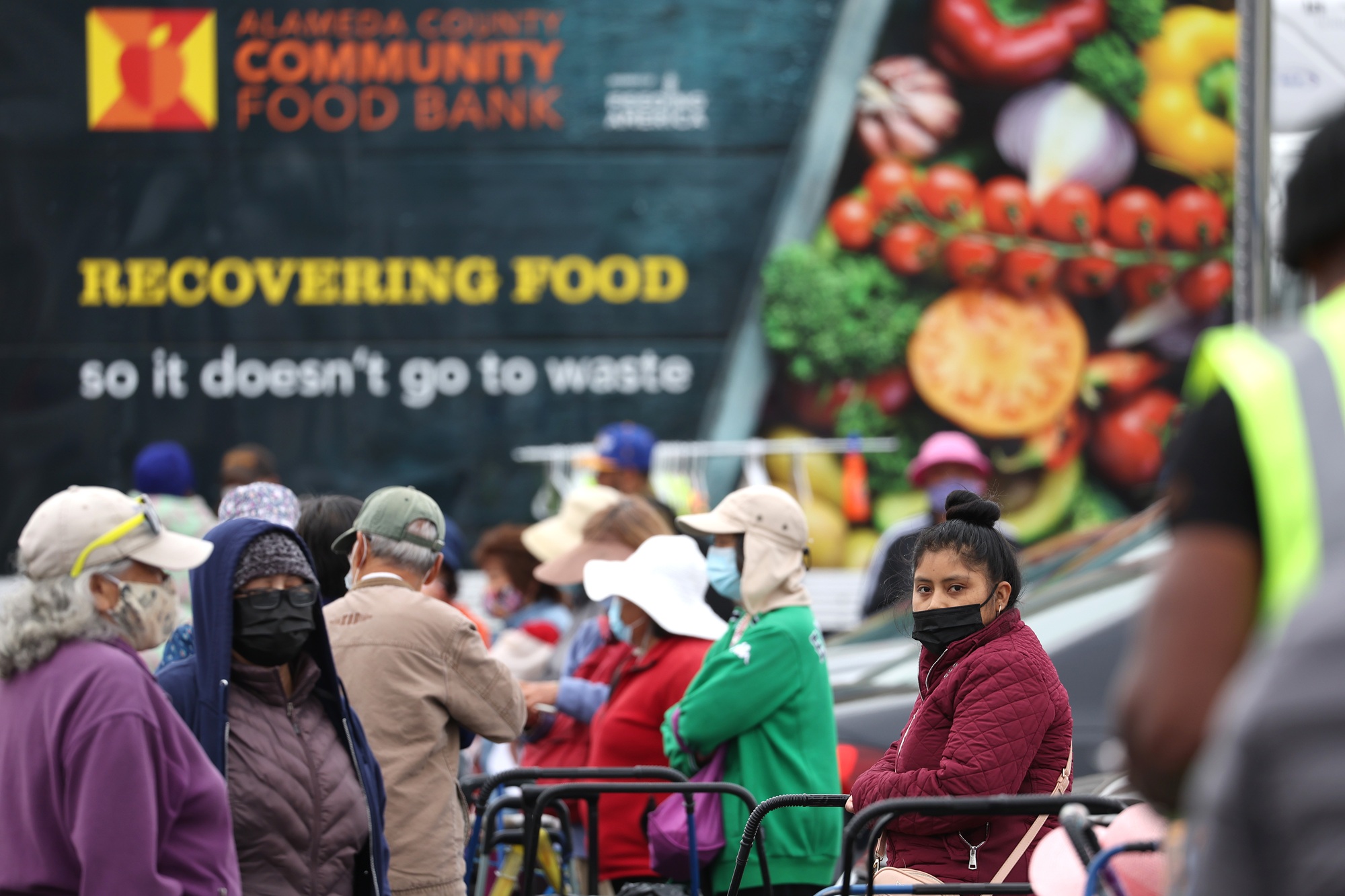
"caption": "People wait in line to receive packages of food during an Alameda County Community Food Bank food giveaway at Acts Full Gospel Church on July 15, 2022, in Oakland, California. ",
"credit": "Justin Sullivan/Getty Images",
"altTag": null,
"description": null,
"imgSizes": {
"thumbnail": {
"file": "https://cdn.kqed.org/wp-content/uploads/sites/10/2025/10/EastBayFoodBankGetty1-160x107.jpg",
"width": 160,
"height": 107,
"mimeType": "image/jpeg"
},
"1536x1536": {
"file": "https://cdn.kqed.org/wp-content/uploads/sites/10/2025/10/EastBayFoodBankGetty1-1536x1024.jpg",
"width": 1536,
"height": 1024,
"mimeType": "image/jpeg"
},
"post-thumbnail": {
"file": "https://cdn.kqed.org/wp-content/uploads/sites/10/2025/10/EastBayFoodBankGetty1-672x372.jpg",
"width": 672,
"height": 372,
"mimeType": "image/jpeg"
},
"twentyfourteen-full-width": {
"file": "https://cdn.kqed.org/wp-content/uploads/sites/10/2025/10/EastBayFoodBankGetty1-1038x576.jpg",
"width": 1038,
"height": 576,
"mimeType": "image/jpeg"
},
"kqedFullSize": {
"file": "https://cdn.kqed.org/wp-content/uploads/sites/10/2025/10/EastBayFoodBankGetty1.jpg",
"width": 2000,
"height": 1333
}
},
"isLoading": false,
"fetchFailed": false
},
"news_11997574": {
"type": "attachments",
"id": "news_11997574",
"meta": {
"index": "attachments_1716263798",
"site": "news",
"id": "11997574",
"found": true
},
"title": "US-DEMONSTRATION-UBER-LYFT",
"publishDate": 1722018786,
"status": "inherit",
"parent": 12033648,
"modified": 1759532393,
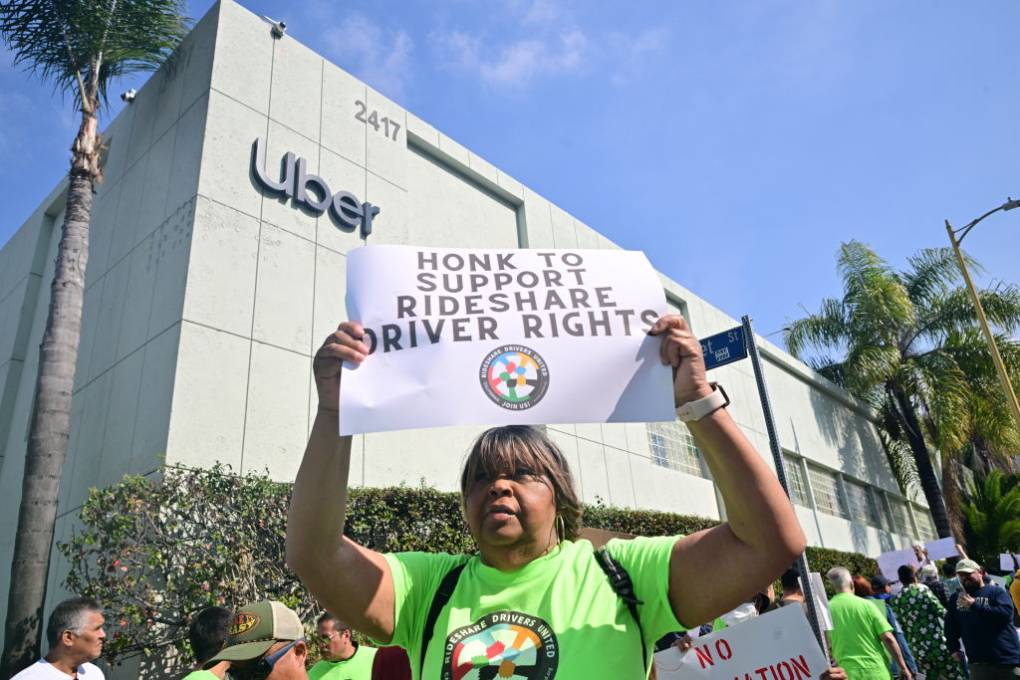
"caption": "Members of the Rideshare Drivers United organization protest against Uber and Lyft during a demonstration in Los Angeles, California, on Feb.14, 2024. ",
"credit": "Frederic J. Brown/AFP via Getty Images",
"altTag": null,
"description": null,
"imgSizes": {
"medium": {
"file": "https://cdn.kqed.org/wp-content/uploads/sites/10/2024/07/GettyImages-2003719181-800x534.jpg",
"width": 800,
"height": 534,
"mimeType": "image/jpeg"
},
"large": {
"file": "https://cdn.kqed.org/wp-content/uploads/sites/10/2024/07/GettyImages-2003719181-1020x680.jpg",
"width": 1020,
"height": 680,
"mimeType": "image/jpeg"
},
"thumbnail": {
"file": "https://cdn.kqed.org/wp-content/uploads/sites/10/2024/07/GettyImages-2003719181-160x107.jpg",
"width": 160,
"height": 107,
"mimeType": "image/jpeg"
},
"post-thumbnail": {
"file": "https://cdn.kqed.org/wp-content/uploads/sites/10/2024/07/GettyImages-2003719181-672x372.jpg",
"width": 672,
"height": 372,
"mimeType": "image/jpeg"
},
"twentyfourteen-full-width": {
"file": "https://cdn.kqed.org/wp-content/uploads/sites/10/2024/07/GettyImages-2003719181-1024x576.jpg",
"width": 1024,
"height": 576,
"mimeType": "image/jpeg"
},
"kqedFullSize": {
"file": "https://cdn.kqed.org/wp-content/uploads/sites/10/2024/07/GettyImages-2003719181.jpg",
"width": 1024,
"height": 683
}
},
"isLoading": false,
"fetchFailed": false
},
"news_12058453": {
"type": "attachments",
"id": "news_12058453",
"meta": {
"index": "attachments_1716263798",
"site": "news",
"id": "12058453",
"found": true
},
"title": "URBAN ALCHEMY-01-KQED",
"publishDate": 1759441196,
"status": "inherit",
"parent": 0,
"modified": 1759443749,
"caption": "Joey Alexander had worked for Urban Alchemy as a street practitioner for over two years.",
"credit": "Courtesy of Urban Alchemy",
"altTag": null,
"description": null,
"imgSizes": {
"medium": {
"file": "https://cdn.kqed.org/wp-content/uploads/sites/10/2025/10/URBAN-ALCHEMY-01-KQED-2000x1429.jpg",
"width": 2000,
"height": 1429,
"mimeType": "image/jpeg"
},
"large": {
"file": "https://cdn.kqed.org/wp-content/uploads/sites/10/2025/10/URBAN-ALCHEMY-01-KQED-2000x1429.jpg",
"width": 2000,
"height": 1429,
"mimeType": "image/jpeg"
},
"thumbnail": {
"file": "https://cdn.kqed.org/wp-content/uploads/sites/10/2025/10/URBAN-ALCHEMY-01-KQED-160x114.jpg",
"width": 160,
"height": 114,
"mimeType": "image/jpeg"
},
"1536x1536": {
"file": "https://cdn.kqed.org/wp-content/uploads/sites/10/2025/10/URBAN-ALCHEMY-01-KQED-1536x1097.jpg",
"width": 1536,
"height": 1097,
"mimeType": "image/jpeg"
},
"2048x2048": {
"file": "https://cdn.kqed.org/wp-content/uploads/sites/10/2025/10/URBAN-ALCHEMY-01-KQED-2048x1463.jpg",
"width": 2048,
"height": 1463,
"mimeType": "image/jpeg"
},
"post-thumbnail": {
"file": "https://cdn.kqed.org/wp-content/uploads/sites/10/2025/10/URBAN-ALCHEMY-01-KQED-672x372.jpg",
"width": 672,
"height": 372,
"mimeType": "image/jpeg"
},
"twentyfourteen-full-width": {
"file": "https://cdn.kqed.org/wp-content/uploads/sites/10/2025/10/URBAN-ALCHEMY-01-KQED-1038x576.jpg",
"width": 1038,
"height": 576,
"mimeType": "image/jpeg"
},
"full-width": {
"file": "https://cdn.kqed.org/wp-content/uploads/sites/10/2025/10/URBAN-ALCHEMY-01-KQED-2000x1429.jpg",
"width": 2000,
"height": 1429,
"mimeType": "image/jpeg"
},
"kqedFullSize": {
"file": "https://cdn.kqed.org/wp-content/uploads/sites/10/2025/10/URBAN-ALCHEMY-01-KQED.jpg",
"width": 2100,
"height": 1500
}
},
"isLoading": false,
"fetchFailed": false
},
"news_12058255": {
"type": "attachments",
"id": "news_12058255",
"meta": {
"index": "attachments_1716263798",
"site": "news",
"id": "12058255",
"found": true
},
"title": "251001-NATIONAL PARKS SHUTDOWN-MD-08-KQED",
"publishDate": 1759349193,
"status": "inherit",
"parent": 0,
"modified": 1759370717,
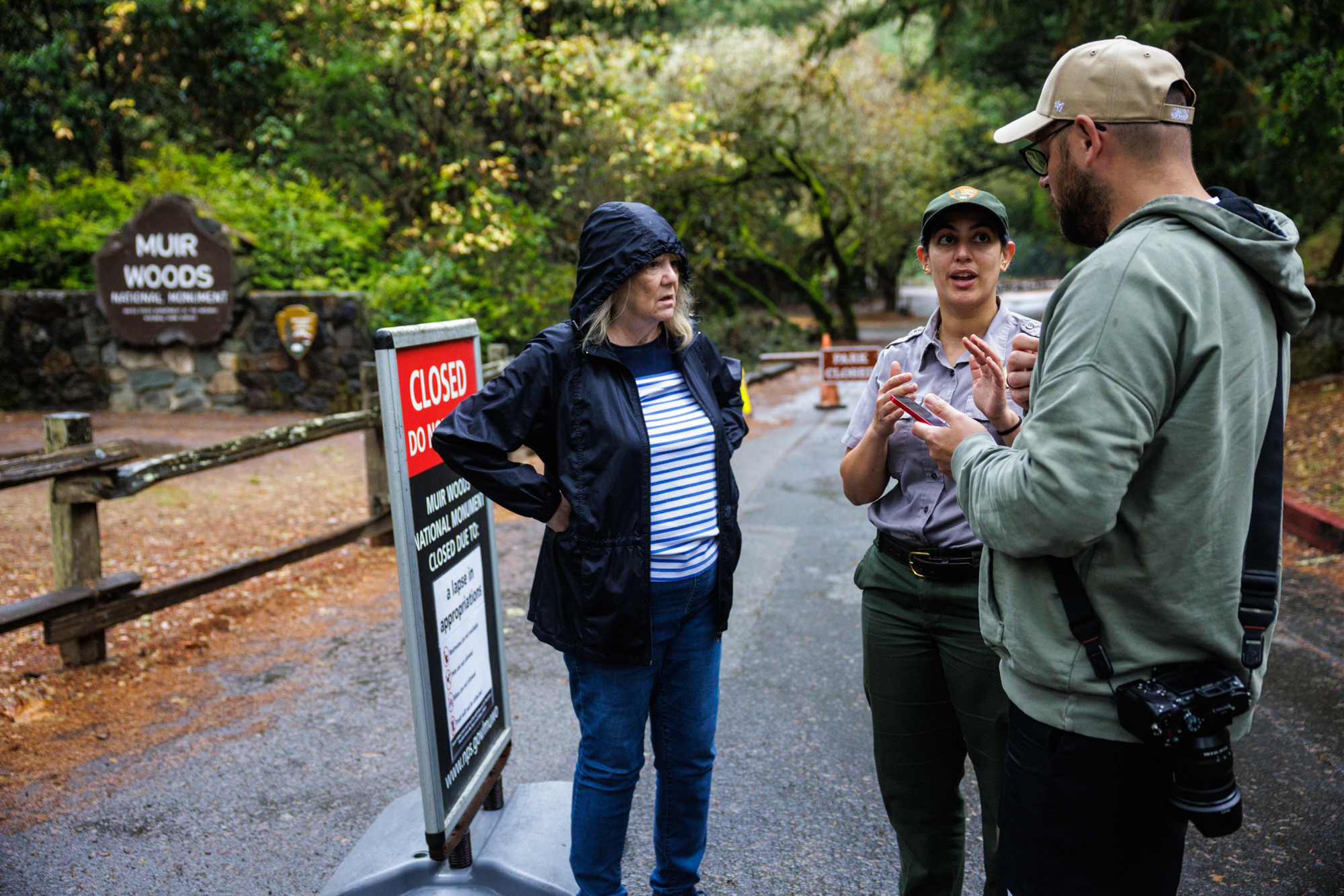
"caption": "Park ranger Heather Calabrese (second from right) explains to visitors at Muir Woods National Monument in Marin County that the park is closed as a consequence of the government shutdown on Oct. 1, 2025.",
"credit": "Martin do Nascimento/KQED",
"altTag": null,
"description": null,
"imgSizes": {
"thumbnail": {
"file": "https://cdn.kqed.org/wp-content/uploads/sites/10/2025/10/251001-NATIONAL-PARKS-SHUTDOWN-MD-08-KQED-160x107.jpg",
"width": 160,
"height": 107,
"mimeType": "image/jpeg"
},
"1536x1536": {
"file": "https://cdn.kqed.org/wp-content/uploads/sites/10/2025/10/251001-NATIONAL-PARKS-SHUTDOWN-MD-08-KQED-1536x1025.jpg",
"width": 1536,
"height": 1025,
"mimeType": "image/jpeg"
},
"post-thumbnail": {
"file": "https://cdn.kqed.org/wp-content/uploads/sites/10/2025/10/251001-NATIONAL-PARKS-SHUTDOWN-MD-08-KQED-672x372.jpg",
"width": 672,
"height": 372,
"mimeType": "image/jpeg"
},
"twentyfourteen-full-width": {
"file": "https://cdn.kqed.org/wp-content/uploads/sites/10/2025/10/251001-NATIONAL-PARKS-SHUTDOWN-MD-08-KQED-1038x576.jpg",
"width": 1038,
"height": 576,
"mimeType": "image/jpeg"
},
"kqedFullSize": {
"file": "https://cdn.kqed.org/wp-content/uploads/sites/10/2025/10/251001-NATIONAL-PARKS-SHUTDOWN-MD-08-KQED.jpg",
"width": 2000,
"height": 1334
}
},
"isLoading": false,
"fetchFailed": false
},
"news_12058324": {
"type": "attachments",
"id": "news_12058324",
"meta": {
"index": "attachments_1716263798",
"site": "news",
"id": "12058324",
"found": true
},
"title": "Government Shutdown Looms As House And Senate Disagree On Funding Bill",
"publishDate": 1759362335,
"status": "inherit",
"parent": 12058294,
"modified": 1759363906,
"caption": "A view of the U.S. Capitol as the sun sets on Sept. 29, 2025, in Washington, D.C. House and Senate leadership met with President Donald Trump earlier in the day at the White House to try to avoid a government shutdown at midnight on Sept. 30.",
"credit": "Photo by Anna Moneymaker/Getty Images",
"altTag": null,
"description": null,
"imgSizes": {
"medium": {
"file": "https://cdn.kqed.org/wp-content/uploads/sites/10/2025/10/GettyImages-2238183191-2000x1334.jpg",
"width": 2000,
"height": 1334,
"mimeType": "image/jpeg"
},
"large": {
"file": "https://cdn.kqed.org/wp-content/uploads/sites/10/2025/10/GettyImages-2238183191-2000x1334.jpg",
"width": 2000,
"height": 1334,
"mimeType": "image/jpeg"
},
"thumbnail": {
"file": "https://cdn.kqed.org/wp-content/uploads/sites/10/2025/10/GettyImages-2238183191-160x107.jpg",
"width": 160,
"height": 107,
"mimeType": "image/jpeg"
},
"1536x1536": {
"file": "https://cdn.kqed.org/wp-content/uploads/sites/10/2025/10/GettyImages-2238183191-1536x1024.jpg",
"width": 1536,
"height": 1024,
"mimeType": "image/jpeg"
},
"2048x2048": {
"file": "https://cdn.kqed.org/wp-content/uploads/sites/10/2025/10/GettyImages-2238183191-2048x1366.jpg",
"width": 2048,
"height": 1366,
"mimeType": "image/jpeg"
},
"post-thumbnail": {
"file": "https://cdn.kqed.org/wp-content/uploads/sites/10/2025/10/GettyImages-2238183191-672x372.jpg",
"width": 672,
"height": 372,
"mimeType": "image/jpeg"
},
"twentyfourteen-full-width": {
"file": "https://cdn.kqed.org/wp-content/uploads/sites/10/2025/10/GettyImages-2238183191-1038x576.jpg",
"width": 1038,
"height": 576,
"mimeType": "image/jpeg"
},
"full-width": {
"file": "https://cdn.kqed.org/wp-content/uploads/sites/10/2025/10/GettyImages-2238183191-2000x1334.jpg",
"width": 2000,
"height": 1334,
"mimeType": "image/jpeg"
},
"kqedFullSize": {
"file": "https://cdn.kqed.org/wp-content/uploads/sites/10/2025/10/GettyImages-2238183191-scaled.jpg",
"width": 2560,
"height": 1707
}
},
"isLoading": false,
"fetchFailed": false
},
"news_12058157": {
"type": "attachments",
"id": "news_12058157",
"meta": {
"index": "attachments_1716263798",
"site": "news",
"id": "12058157",
"found": true
},
"title": "250912-TrumpsSignageOrder-36-BL_qed",
"publishDate": 1759275286,
"status": "inherit",
"parent": 12058137,
"modified": 1759275313,
"caption": "Park visitors look at a sign titled \"Saving Muir Woods\" in Founders Grove at Muir Woods National Monument on Sept. 12, 2025. Part of the Golden Gate National Recreation Area, the monument preserves one of the last remaining old-growth coast redwood forests in the Bay Area.",
"credit": "Beth LaBerge/KQED",
"altTag": null,
"description": null,
"imgSizes": {
"thumbnail": {
"file": "https://cdn.kqed.org/wp-content/uploads/sites/10/2025/09/250912-TrumpsSignageOrder-36-BL_qed-160x107.jpg",
"width": 160,
"height": 107,
"mimeType": "image/jpeg"
},
"1536x1536": {
"file": "https://cdn.kqed.org/wp-content/uploads/sites/10/2025/09/250912-TrumpsSignageOrder-36-BL_qed-1536x1024.jpg",
"width": 1536,
"height": 1024,
"mimeType": "image/jpeg"
},
"post-thumbnail": {
"file": "https://cdn.kqed.org/wp-content/uploads/sites/10/2025/09/250912-TrumpsSignageOrder-36-BL_qed-672x372.jpg",
"width": 672,
"height": 372,
"mimeType": "image/jpeg"
},
"twentyfourteen-full-width": {
"file": "https://cdn.kqed.org/wp-content/uploads/sites/10/2025/09/250912-TrumpsSignageOrder-36-BL_qed-1038x576.jpg",
"width": 1038,
"height": 576,
"mimeType": "image/jpeg"
},
"kqedFullSize": {
"file": "https://cdn.kqed.org/wp-content/uploads/sites/10/2025/09/250912-TrumpsSignageOrder-36-BL_qed.jpg",
"width": 2000,
"height": 1333
}
},
"isLoading": false,
"fetchFailed": false
}
},
"audioPlayerReducer": {
"postId": "stream_live",
"isPaused": true,
"isPlaying": false,
"pfsActive": false,
"pledgeModalIsOpen": true,
"playerDrawerIsOpen": false,
"liveAudioPlayStartedAt": 0,
"liveAudioPlayContext": ""
},
"authorsReducer": {
"carlysevern": {
"type": "authors",
"id": "3243",
"meta": {
"index": "authors_1716337520",
"id": "3243",
"found": true
},
"name": "Carly Severn",
"firstName": "Carly",
"lastName": "Severn",
"slug": "carlysevern",
"email": "csevern@kqed.org",
"display_author_email": false,
"staff_mastheads": [
"news"
],
"title": "Senior Editor, Audience News ",
"bio": "Carly is KQED's Senior Editor of Audience News on the Digital News team, and has reported for the California Report Magazine, Bay Curious and KQED Arts. She's formerly the host of \u003ca href=\"http://ww2.kqed.org/pop/category/the-cooler/\" rel=\"noopener noreferrer\">The Cooler\u003c/a> podcast.",
"avatar": "https://secure.gravatar.com/avatar/54037bf5c128fe678f0ef26cec97a93f2e7f220a22d7285703328f12c42c1b1d?s=600&d=blank&r=g",
"twitter": "teacupinthebay",
"bluesky": null,
"facebook": null,
"instagram": null,
"linkedin": null,
"sites": [
{
"site": "",
"roles": [
"editor"
]
},
{
"site": "arts",
"roles": [
"editor"
]
},
{
"site": "news",
"roles": [
"administrator"
]
},
{
"site": "pop",
"roles": [
"editor"
]
},
{
"site": "futureofyou",
"roles": [
"editor"
]
},
{
"site": "about",
"roles": [
"administrator"
]
},
{
"site": "mindshift",
"roles": [
"editor"
]
},
{
"site": "bayareabites",
"roles": [
"editor"
]
},
{
"site": "stateofhealth",
"roles": [
"editor"
]
},
{
"site": "science",
"roles": [
"editor"
]
},
{
"site": "food",
"roles": [
"contributor"
]
},
{
"site": "forum",
"roles": [
"editor"
]
},
{
"site": "perspectives",
"roles": [
"administrator"
]
},
{
"site": "liveblog",
"roles": [
"editor"
]
}
],
"headData": {
"title": "Carly Severn | KQED",
"description": "Senior Editor, Audience News ",
"ogImgSrc": "https://secure.gravatar.com/avatar/54037bf5c128fe678f0ef26cec97a93f2e7f220a22d7285703328f12c42c1b1d?s=600&d=blank&r=g",
"twImgSrc": "https://secure.gravatar.com/avatar/54037bf5c128fe678f0ef26cec97a93f2e7f220a22d7285703328f12c42c1b1d?s=600&d=blank&r=g"
},
"isLoading": false,
"link": "/author/carlysevern"
},
"fjhabvala": {
"type": "authors",
"id": "8659",
"meta": {
"index": "authors_1716337520",
"id": "8659",
"found": true
},
"name": "Farida Jhabvala Romero",
"firstName": "Farida",
"lastName": "Jhabvala Romero",
"slug": "fjhabvala",
"email": "fjhabvala@kqed.org",
"display_author_email": true,
"staff_mastheads": [
"news"
],
"title": "KQED Contributor",
"bio": "Farida Jhabvala Romero is a Labor Correspondent for KQED. She previously covered immigration. Farida was \u003ca href=\"https://www.ccnma.org/2022-most-influential-latina-journalists\">named\u003c/a> one of the 10 Most Influential Latina Journalists in California in 2022 by the California Chicano News Media Association. Her work has won awards from the Society of Professional Journalists (Northern California), as well as a national and regional Edward M. Murrow Award for the collaborative reporting projects “Dangerous Air” and “Graying California.” Before joining KQED, Farida worked as a producer at Radio Bilingüe, a national public radio network. Farida earned her master’s degree in journalism from Stanford University.",
"avatar": "https://secure.gravatar.com/avatar/f9f022d4e2609741874222a1e9d41f48fea74011aa7c615eef91d9a50c944ebe?s=600&d=blank&r=g",
"twitter": "FaridaJhabvala",
"bluesky": null,
"facebook": null,
"instagram": null,
"linkedin": "https://www.linkedin.com/in/faridajhabvala/",
"sites": [
{
"site": "news",
"roles": [
"editor"
]
},
{
"site": "stateofhealth",
"roles": [
"author"
]
},
{
"site": "liveblog",
"roles": [
"author"
]
}
],
"headData": {
"title": "Farida Jhabvala Romero | KQED",
"description": "KQED Contributor",
"ogImgSrc": "https://secure.gravatar.com/avatar/f9f022d4e2609741874222a1e9d41f48fea74011aa7c615eef91d9a50c944ebe?s=600&d=blank&r=g",
"twImgSrc": "https://secure.gravatar.com/avatar/f9f022d4e2609741874222a1e9d41f48fea74011aa7c615eef91d9a50c944ebe?s=600&d=blank&r=g"
},
"isLoading": false,
"link": "/author/fjhabvala"
},
"jlara": {
"type": "authors",
"id": "11761",
"meta": {
"index": "authors_1716337520",
"id": "11761",
"found": true
},
"name": "Juan Carlos Lara",
"firstName": "Juan Carlos",
"lastName": "Lara",
"slug": "jlara",
"email": "jlara@kqed.org",
"display_author_email": false,
"staff_mastheads": [],
"title": "KQED Contributor",
"bio": null,
"avatar": "https://secure.gravatar.com/avatar/19e2052b9b05657c5ff2af2121846e9c?s=600&d=blank&r=g",
"twitter": null,
"facebook": null,
"instagram": null,
"linkedin": null,
"sites": [
{
"site": "arts",
"roles": [
"editor"
]
},
{
"site": "news",
"roles": [
"editor"
]
},
{
"site": "forum",
"roles": [
"editor"
]
},
{
"site": "liveblog",
"roles": [
"contributor"
]
}
],
"headData": {
"title": "Juan Carlos Lara | KQED",
"description": "KQED Contributor",
"ogImgSrc": "https://secure.gravatar.com/avatar/19e2052b9b05657c5ff2af2121846e9c?s=600&d=blank&r=g",
"twImgSrc": "https://secure.gravatar.com/avatar/19e2052b9b05657c5ff2af2121846e9c?s=600&d=blank&r=g"
},
"isLoading": false,
"link": "/author/jlara"
},
"jgeha": {
"type": "authors",
"id": "11906",
"meta": {
"index": "authors_1716337520",
"id": "11906",
"found": true
},
"name": "Joseph Geha",
"firstName": "Joseph",
"lastName": "Geha",
"slug": "jgeha",
"email": "jgeha@kqed.org",
"display_author_email": false,
"staff_mastheads": [
"news",
"science"
],
"title": "KQED Contributor",
"bio": null,
"avatar": "https://secure.gravatar.com/avatar/ea84d2b6dd93d6369d453edf19dd583f117cd1759d2d9c9c92f9de77017354fe?s=600&d=blank&r=g",
"twitter": null,
"bluesky": null,
"facebook": null,
"instagram": null,
"linkedin": null,
"sites": [
{
"site": "news",
"roles": [
"editor"
]
},
{
"site": "liveblog",
"roles": [
"author"
]
}
],
"headData": {
"title": "Joseph Geha | KQED",
"description": "KQED Contributor",
"ogImgSrc": "https://secure.gravatar.com/avatar/ea84d2b6dd93d6369d453edf19dd583f117cd1759d2d9c9c92f9de77017354fe?s=600&d=blank&r=g",
"twImgSrc": "https://secure.gravatar.com/avatar/ea84d2b6dd93d6369d453edf19dd583f117cd1759d2d9c9c92f9de77017354fe?s=600&d=blank&r=g"
},
"isLoading": false,
"link": "/author/jgeha"
},
"kdebenedetti": {
"type": "authors",
"id": "11913",
"meta": {
"index": "authors_1716337520",
"id": "11913",
"found": true
},
"name": "Katie DeBenedetti",
"firstName": "Katie",
"lastName": "DeBenedetti",
"slug": "kdebenedetti",
"email": "kdebenedetti@kqed.org",
"display_author_email": false,
"staff_mastheads": [
"news",
"science"
],
"title": "KQED Contributor",
"bio": "Katie DeBenedetti is a digital reporter covering daily news for the Express Desk. Prior to joining KQED as a culture reporting intern in January 2024, she covered education and city government for the Napa Valley Register.",
"avatar": "https://secure.gravatar.com/avatar/6e31073cb8f7e4214ab03f42771d0f45?s=600&d=blank&r=g",
"twitter": null,
"facebook": null,
"instagram": null,
"linkedin": null,
"sites": [
{
"site": "news",
"roles": [
"author"
]
},
{
"site": "science",
"roles": [
"author"
]
},
{
"site": "liveblog",
"roles": [
"author"
]
}
],
"headData": {
"title": "Katie DeBenedetti | KQED",
"description": "KQED Contributor",
"ogImgSrc": "https://secure.gravatar.com/avatar/6e31073cb8f7e4214ab03f42771d0f45?s=600&d=blank&r=g",
"twImgSrc": "https://secure.gravatar.com/avatar/6e31073cb8f7e4214ab03f42771d0f45?s=600&d=blank&r=g"
},
"isLoading": false,
"link": "/author/kdebenedetti"
},
"sarahwright": {
"type": "authors",
"id": "11956",
"meta": {
"index": "authors_1716337520",
"id": "11956",
"found": true
},
"name": "Sarah Wright",
"firstName": "Sarah",
"lastName": "Wright",
"slug": "sarahwright",
"email": "swright@kqed.org",
"display_author_email": true,
"staff_mastheads": [],
"title": "Outdoors Engagement Reporter",
"bio": "Sarah Wright is KQED's Outdoors Engagement Reporter. Originally from Lake Tahoe, she completed a thru-hike of the Pacific Crest Trail in 2019 and was a U.S. Fulbright Program grantee to Argentina in 2023. Her journalism has appeared in The Guardian, The San Francisco Standard, The Palo Alto Weekly and the Half Moon Bay Review.",
"avatar": "https://secure.gravatar.com/avatar/c161a3d6441865cba25e6db4fa561099ad665799e9432e34da2b84d7e371524c?s=600&d=blank&r=g",
"twitter": null,
"bluesky": null,
"facebook": null,
"instagram": null,
"linkedin": null,
"sites": [
{
"site": "arts",
"roles": [
"editor"
]
},
{
"site": "news",
"roles": [
"editor"
]
},
{
"site": "science",
"roles": [
"contributor",
"author"
]
},
{
"site": "forum",
"roles": [
"editor"
]
}
],
"headData": {
"title": "Sarah Wright | KQED",
"description": "Outdoors Engagement Reporter",
"ogImgSrc": "https://secure.gravatar.com/avatar/c161a3d6441865cba25e6db4fa561099ad665799e9432e34da2b84d7e371524c?s=600&d=blank&r=g",
"twImgSrc": "https://secure.gravatar.com/avatar/c161a3d6441865cba25e6db4fa561099ad665799e9432e34da2b84d7e371524c?s=600&d=blank&r=g"
},
"isLoading": false,
"link": "/author/sarahwright"
}
},
"pagesReducer": {
"news_tag_labor": {
"type": "terms",
"id": "news_19904",
"meta": {
"index": "terms_1716263798",
"site": "news",
"id": "19904",
"score": 8.558012
},
"name": "Labor",
"slug": "labor",
"taxonomy": "tag",
"description": null,
"featImg": null,
"headData": {
"title": "Labor | KQED News",
"description": null,
"ogTitle": null,
"ogDescription": null,
"ogImgId": null,
"twTitle": null,
"twDescription": null,
"twImgId": null
},
"ttid": 19921,
"isLoading": false,
"title": "Labor",
"pageMeta": {
"site": "news",
"WpPageTemplate": "page-topic-editorial",
"currentPage": 14
},
"blocks": [
{
"blockName": "kqed/post-list",
"attrs": {
"layout": "cardArticle2",
"query": "posts/news?tag=labor",
"seeMore": false,
"paginated": true,
"page": 14
}
},
{
"blockName": "kqed/ad"
}
]
}
},
"pfsSessionReducer": {},
"postsReducer": {
"stream_live": {
"type": "live",
"id": "stream_live",
"audioUrl": "https://streams.kqed.org/kqedradio",
"title": "Live Stream",
"excerpt": "Live Stream information currently unavailable.",
"link": "/radio",
"featImg": "",
"label": {
"name": "KQED Live",
"link": "/"
}
},
"stream_kqedNewscast": {
"type": "posts",
"id": "stream_kqedNewscast",
"audioUrl": "https://www.kqed.org/.stream/anon/radio/RDnews/newscast.mp3?_=1",
"title": "KQED Newscast",
"featImg": "",
"label": {
"name": "88.5 FM",
"link": "/"
}
},
"news_12059551": {
"type": "posts",
"id": "news_12059551",
"meta": {
"index": "posts_1716263798",
"site": "news",
"id": "12059551",
"score": null,
"sort": [
1760140209000
]
},
"guestAuthors": [],
"slug": "california-kaiser-health-care-workers-reaching-breaking-point-set-to-strike-next-week",
"title": "California Kaiser Health Care Workers, Reaching ‘Breaking Point,’ Set to Strike Next Week",
"publishDate": 1760140209,
"format": "standard",
"headTitle": "California Kaiser Health Care Workers, Reaching ‘Breaking Point,’ Set to Strike Next Week | KQED",
"labelTerm": {
"site": "news"
},
"content": "\u003cp>Tens of thousands of \u003ca href=\"https://www.kqed.org/news/tag/kaiser-permanente\">Kaiser Permanente\u003c/a> nurses and employees plan to walk off the job on Tuesday over wage and staffing level concerns that they say have been unaddressed as the healthcare organization’s operations expand.\u003c/p>\n\u003cp>The walkout, which is expected to last five days, could bring disruptions to dozens of clinics and hospitals in California and Hawaii, according to one of the unions launching the strike.\u003c/p>\n\u003cp>Representatives for Kaiser, which employs about 180,000 people in California, said that in the event of a work stoppage, impacted facilities will remain open. Physicians will continue to see patients aided by trained managers and contingency staff, including licensed temporary nurses.\u003c/p>\n\u003cp>[ad fullwidth]\u003c/p>\n\u003cp>“We take any threat to services seriously, and our patients remain our priority,” Lionel Sims, vice president of human resources at Kaiser Permanente in Northern California, said in a statement.\u003c/p>\n\u003cp>The standoff comes as Kaiser unveiled another round of layoffs targeting hundreds of workers in the state, including 184 employees primarily in IT and food services in Northern California who were notified recently, the organization said. The job losses and walkout are not connected, according to Kaiser.\u003c/p>\n\u003cfigure id=\"attachment_11963409\" class=\"wp-caption aligncenter\" style=\"max-width: 2000px\">\u003cimg loading=\"lazy\" decoding=\"async\" class=\"size-full wp-image-11963409\" src=\"https://cdn.kqed.org/wp-content/uploads/sites/10/2023/10/231004-KAISER-STRIKE-MD-10-KQED.jpg\" alt='A large modern building with the words \"Kaiser Permanente\" across the top.' width=\"2000\" height=\"1333\" srcset=\"https://cdn.kqed.org/wp-content/uploads/sites/10/2023/10/231004-KAISER-STRIKE-MD-10-KQED.jpg 2000w, https://cdn.kqed.org/wp-content/uploads/sites/10/2023/10/231004-KAISER-STRIKE-MD-10-KQED-800x533.jpg 800w, https://cdn.kqed.org/wp-content/uploads/sites/10/2023/10/231004-KAISER-STRIKE-MD-10-KQED-1020x680.jpg 1020w, https://cdn.kqed.org/wp-content/uploads/sites/10/2023/10/231004-KAISER-STRIKE-MD-10-KQED-160x107.jpg 160w, https://cdn.kqed.org/wp-content/uploads/sites/10/2023/10/231004-KAISER-STRIKE-MD-10-KQED-1536x1024.jpg 1536w, https://cdn.kqed.org/wp-content/uploads/sites/10/2023/10/231004-KAISER-STRIKE-MD-10-KQED-1920x1280.jpg 1920w\" sizes=\"auto, (max-width: 2000px) 100vw, 2000px\">\u003cfigcaption class=\"wp-caption-text\">The Kaiser Permanente Oakland Medical Center in Oakland on Oct. 4, 2023. \u003ccite>(Martin do Nascimento/KQED)\u003c/cite>\u003c/figcaption>\u003c/figure>\n\u003cp>Since May, the Alliance of Healthcare Unions and Kaiser have been negotiating a new nationwide labor contract covering nearly 61,000 employees. Several of the 23 unions that form the Alliance notified Kaiser about their intent to strike, including the \u003ca href=\"https://url.us.m.mimecastprotect.com/s/_Hb6C829m0uQljg8unfPuyed-I?domain=zwly9k6z.r.us-east-1.awstrack.me\">United Nurses Associations of California/Union of Health Care Professionals\u003c/a>, which represents about 31,000 registered nurses, pharmacists, physician assistants and other health care professionals largely based in California.\u003c/p>\n\u003cp>Union officials said the walkout, which is set to end at 7 a.m. on Sunday, is necessary to protect patients and their caregivers, who are struggling with short staffing and stagnant wages and benefits, as many professionals lack pensions. They warned that Kaiser’s failure to sufficiently invest in its workforce is leading to delays in appointments, treatment and recovery for patients.\u003c/p>\n\u003cp>“Our patients are waiting longer, and our caregivers are stretched to the breaking point, and Kaiser executives are sitting on billions,” Joe Guzynski, executive director at UNAC/UHCP and a lead negotiator, said in a statement.\u003c/p>\n\u003cp>Staffing levels remain a top concern for hospital employees nationwide due to burnout and turnover, especially for nurses, according\u003ca href=\"https://www.kqed.org/news/12011878/thousands-of-uc-san-francisco-workers-are-preparing-to-strike\"> to experts\u003c/a>.[aside postID=news_12058930 hero='https://cdn.kqed.org/wp-content/uploads/sites/10/2025/09/20250923_MEDICAIDDISABILITY_GC-15-KQED.jpg']Kaiser Permanente, headquartered in Oakland, posted $63.9 billion in operating revenue and nearly \u003ca href=\"https://about.kaiserpermanente.org/news/kaiser-permanente-and-risant-health-q2-2025-financial-update\">$2 billion\u003c/a> in operating income for the first half of 2025, slightly higher than for the same period last year. The health organization and its affiliates, with about 12.6 million members, have been \u003ca href=\"https://www.beckershospitalreview.com/finance/kaisers-risant-health-to-become-35b-system-in-5-years-14-things-to-know/\">acquiring hospital systems\u003c/a> in recent years, including in Pennsylvania and North Carolina.\u003c/p>\n\u003cp>Sims dismissed claims that Kaiser is putting the quality of patient care at risk, citing top ratings for its Medicare and commercial health plans. The threat of a walkout, he said, aims to pressure Kaiser to agree to union demands for a 25% pay increase over four years. The organization’s latest offer adds up to 21.5% and improves medical plans and retiree benefits, Sims said, showing that the private nonprofit health plan values its employees as it tries to keep care affordable for patients.\u003c/p>\n\u003cp>“They say their goal is to protect patients by ensuring better care and staffing, but the real issue is wages — they are demanding significantly higher increases than our 21.5% offer,” Sims said. “Their claims about Kaiser Permanente’s quality and staffing don’t reflect the facts.”\u003c/p>\n\u003cp>According to the employer, the organization meets and often exceeds California’s mandated nurse-to-patient ratios and staffing standards.\u003c/p>\n\u003cp>Kaiser’s offer includes gradual raises of 6.5% in 2025, 6.5% in 2026, 4% in 2027 and 3% in 2028, according \u003ca href=\"https://www.ahcunions.org/post/september-national-bargaining-update\">to the \u003c/a>Alliance. The union has proposed a boost of 13% in 2025, 6% in 2026, 4% in 2027 and 4% in 2028.\u003c/p>\n\u003cp>Peter Sidhu, UNAC/UHCP executive vice president, said the union agreed to much lower wage increases in contract negotiations during the COVID-19 pandemic, because Kaiser maintained it was struggling financially. As a result, he said, the union’s members were left behind as inflation soared and other employees who went on strike got bigger pay boosts.\u003c/p>\n\u003cp>“We’re not just negotiating for today’s needs. We’re negotiating for the inflation that our members have had,” Sidhu, who worked for Kaiser for more than 20 years as a critical care nurse, told KQED. “And during that time, we’ve lost a lot of staff. There’s been a mass exodus. So in order for us to catch up and be competitive in this market, we need more than what they’re offering.”\u003c/p>\n\u003cp>\u003cem>KQED’s \u003c/em>\u003ca href=\"https://www.kqed.org/author/kevinstark\">\u003cem>Kevin Stark \u003c/em>\u003c/a>\u003cem>contributed to this story.\u003c/em>\u003c/p>\n\u003cp>\u003c/p>\n",
"blocks": [],
"excerpt": "Tens of thousands of employees plan to walk off the job as tensions increase over layoffs and staffing levels at the nonprofit health care giant. ",
"status": "publish",
"parent": 0,
"modified": 1760143160,
"stats": {
"hasAudio": false,
"hasVideo": false,
"hasChartOrMap": false,
"iframeSrcs": [],
"hasGoogleForm": false,
"hasGallery": false,
"hasHearkenModule": false,
"hasPolis": false,
"paragraphCount": 18,
"wordCount": 840
},
"headData": {
"title": "California Kaiser Health Care Workers, Reaching ‘Breaking Point,’ Set to Strike Next Week | KQED",
"description": "Tens of thousands of employees plan to walk off the job as tensions increase over layoffs and staffing levels at the nonprofit health care giant. ",
"ogTitle": "",
"ogDescription": "",
"ogImgId": "",
"twTitle": "",
"twDescription": "",
"twImgId": "",
"schema": {
"@context": "https://schema.org",
"@type": "NewsArticle",
"headline": "California Kaiser Health Care Workers, Reaching ‘Breaking Point,’ Set to Strike Next Week",
"datePublished": "2025-10-10T16:50:09-07:00",
"dateModified": "2025-10-10T17:39:20-07:00",
"image": "https://cdn.kqed.org/wp-content/uploads/2020/02/KQED-OG-Image@1x.png",
"isAccessibleForFree": "True",
"publisher": {
"@type": "NewsMediaOrganization",
"@id": "https://www.kqed.org/#organization",
"name": "KQED",
"logo": "https://cdn.kqed.org/wp-content/uploads/2020/02/KQED-OG-Image@1x.png",
"url": "https://www.kqed.org",
"sameAs": [
"https://www.facebook.com/KQED",
"https://twitter.com/KQED",
"https://www.instagram.com/kqed/",
"https://www.tiktok.com/@kqedofficial",
"https://www.linkedin.com/company/kqed",
"https://www.youtube.com/channel/UCeC0IOo7i1P_61zVUWbJ4nw"
]
}
}
},
"primaryCategory": {
"termId": 34551,
"slug": "labor",
"name": "Labor"
},
"sticky": false,
"nprStoryId": "kqed-12059551",
"templateType": "standard",
"featuredImageType": "standard",
"excludeFromSiteSearch": "Include",
"articleAge": "0",
"path": "/news/12059551/california-kaiser-health-care-workers-reaching-breaking-point-set-to-strike-next-week",
"audioTrackLength": null,
"parsedContent": [
{
"type": "contentString",
"content": "\u003cdiv class=\"post-body\">\u003cp>\u003cp>Tens of thousands of \u003ca href=\"https://www.kqed.org/news/tag/kaiser-permanente\">Kaiser Permanente\u003c/a> nurses and employees plan to walk off the job on Tuesday over wage and staffing level concerns that they say have been unaddressed as the healthcare organization’s operations expand.\u003c/p>\n\u003cp>The walkout, which is expected to last five days, could bring disruptions to dozens of clinics and hospitals in California and Hawaii, according to one of the unions launching the strike.\u003c/p>\n\u003cp>Representatives for Kaiser, which employs about 180,000 people in California, said that in the event of a work stoppage, impacted facilities will remain open. Physicians will continue to see patients aided by trained managers and contingency staff, including licensed temporary nurses.\u003c/p>\n\u003cp>\u003c/p>\u003c/div>",
"attributes": {
"named": {},
"numeric": []
}
},
{
"type": "component",
"content": "",
"name": "ad",
"attributes": {
"named": {
"label": "fullwidth"
},
"numeric": [
"fullwidth"
]
}
},
{
"type": "contentString",
"content": "\u003cdiv class=\"post-body\">\u003cp>\u003c/p>\n\u003cp>“We take any threat to services seriously, and our patients remain our priority,” Lionel Sims, vice president of human resources at Kaiser Permanente in Northern California, said in a statement.\u003c/p>\n\u003cp>The standoff comes as Kaiser unveiled another round of layoffs targeting hundreds of workers in the state, including 184 employees primarily in IT and food services in Northern California who were notified recently, the organization said. The job losses and walkout are not connected, according to Kaiser.\u003c/p>\n\u003cfigure id=\"attachment_11963409\" class=\"wp-caption aligncenter\" style=\"max-width: 2000px\">\u003cimg loading=\"lazy\" decoding=\"async\" class=\"size-full wp-image-11963409\" src=\"https://cdn.kqed.org/wp-content/uploads/sites/10/2023/10/231004-KAISER-STRIKE-MD-10-KQED.jpg\" alt='A large modern building with the words \"Kaiser Permanente\" across the top.' width=\"2000\" height=\"1333\" srcset=\"https://cdn.kqed.org/wp-content/uploads/sites/10/2023/10/231004-KAISER-STRIKE-MD-10-KQED.jpg 2000w, https://cdn.kqed.org/wp-content/uploads/sites/10/2023/10/231004-KAISER-STRIKE-MD-10-KQED-800x533.jpg 800w, https://cdn.kqed.org/wp-content/uploads/sites/10/2023/10/231004-KAISER-STRIKE-MD-10-KQED-1020x680.jpg 1020w, https://cdn.kqed.org/wp-content/uploads/sites/10/2023/10/231004-KAISER-STRIKE-MD-10-KQED-160x107.jpg 160w, https://cdn.kqed.org/wp-content/uploads/sites/10/2023/10/231004-KAISER-STRIKE-MD-10-KQED-1536x1024.jpg 1536w, https://cdn.kqed.org/wp-content/uploads/sites/10/2023/10/231004-KAISER-STRIKE-MD-10-KQED-1920x1280.jpg 1920w\" sizes=\"auto, (max-width: 2000px) 100vw, 2000px\">\u003cfigcaption class=\"wp-caption-text\">The Kaiser Permanente Oakland Medical Center in Oakland on Oct. 4, 2023. \u003ccite>(Martin do Nascimento/KQED)\u003c/cite>\u003c/figcaption>\u003c/figure>\n\u003cp>Since May, the Alliance of Healthcare Unions and Kaiser have been negotiating a new nationwide labor contract covering nearly 61,000 employees. Several of the 23 unions that form the Alliance notified Kaiser about their intent to strike, including the \u003ca href=\"https://url.us.m.mimecastprotect.com/s/_Hb6C829m0uQljg8unfPuyed-I?domain=zwly9k6z.r.us-east-1.awstrack.me\">United Nurses Associations of California/Union of Health Care Professionals\u003c/a>, which represents about 31,000 registered nurses, pharmacists, physician assistants and other health care professionals largely based in California.\u003c/p>\n\u003cp>Union officials said the walkout, which is set to end at 7 a.m. on Sunday, is necessary to protect patients and their caregivers, who are struggling with short staffing and stagnant wages and benefits, as many professionals lack pensions. They warned that Kaiser’s failure to sufficiently invest in its workforce is leading to delays in appointments, treatment and recovery for patients.\u003c/p>\n\u003cp>“Our patients are waiting longer, and our caregivers are stretched to the breaking point, and Kaiser executives are sitting on billions,” Joe Guzynski, executive director at UNAC/UHCP and a lead negotiator, said in a statement.\u003c/p>\n\u003cp>Staffing levels remain a top concern for hospital employees nationwide due to burnout and turnover, especially for nurses, according\u003ca href=\"https://www.kqed.org/news/12011878/thousands-of-uc-san-francisco-workers-are-preparing-to-strike\"> to experts\u003c/a>.\u003c/p>\u003c/div>",
"attributes": {
"named": {},
"numeric": []
}
},
{
"type": "component",
"content": "",
"name": "aside",
"attributes": {
"named": {
"postid": "news_12058930",
"hero": "https://cdn.kqed.org/wp-content/uploads/sites/10/2025/09/20250923_MEDICAIDDISABILITY_GC-15-KQED.jpg",
"label": ""
},
"numeric": []
}
},
{
"type": "contentString",
"content": "\u003cdiv class=\"post-body\">\u003cp>Kaiser Permanente, headquartered in Oakland, posted $63.9 billion in operating revenue and nearly \u003ca href=\"https://about.kaiserpermanente.org/news/kaiser-permanente-and-risant-health-q2-2025-financial-update\">$2 billion\u003c/a> in operating income for the first half of 2025, slightly higher than for the same period last year. The health organization and its affiliates, with about 12.6 million members, have been \u003ca href=\"https://www.beckershospitalreview.com/finance/kaisers-risant-health-to-become-35b-system-in-5-years-14-things-to-know/\">acquiring hospital systems\u003c/a> in recent years, including in Pennsylvania and North Carolina.\u003c/p>\n\u003cp>Sims dismissed claims that Kaiser is putting the quality of patient care at risk, citing top ratings for its Medicare and commercial health plans. The threat of a walkout, he said, aims to pressure Kaiser to agree to union demands for a 25% pay increase over four years. The organization’s latest offer adds up to 21.5% and improves medical plans and retiree benefits, Sims said, showing that the private nonprofit health plan values its employees as it tries to keep care affordable for patients.\u003c/p>\n\u003cp>“They say their goal is to protect patients by ensuring better care and staffing, but the real issue is wages — they are demanding significantly higher increases than our 21.5% offer,” Sims said. “Their claims about Kaiser Permanente’s quality and staffing don’t reflect the facts.”\u003c/p>\n\u003cp>According to the employer, the organization meets and often exceeds California’s mandated nurse-to-patient ratios and staffing standards.\u003c/p>\n\u003cp>Kaiser’s offer includes gradual raises of 6.5% in 2025, 6.5% in 2026, 4% in 2027 and 3% in 2028, according \u003ca href=\"https://www.ahcunions.org/post/september-national-bargaining-update\">to the \u003c/a>Alliance. The union has proposed a boost of 13% in 2025, 6% in 2026, 4% in 2027 and 4% in 2028.\u003c/p>\n\u003cp>Peter Sidhu, UNAC/UHCP executive vice president, said the union agreed to much lower wage increases in contract negotiations during the COVID-19 pandemic, because Kaiser maintained it was struggling financially. As a result, he said, the union’s members were left behind as inflation soared and other employees who went on strike got bigger pay boosts.\u003c/p>\n\u003cp>“We’re not just negotiating for today’s needs. We’re negotiating for the inflation that our members have had,” Sidhu, who worked for Kaiser for more than 20 years as a critical care nurse, told KQED. “And during that time, we’ve lost a lot of staff. There’s been a mass exodus. So in order for us to catch up and be competitive in this market, we need more than what they’re offering.”\u003c/p>\n\u003cp>\u003cem>KQED’s \u003c/em>\u003ca href=\"https://www.kqed.org/author/kevinstark\">\u003cem>Kevin Stark \u003c/em>\u003c/a>\u003cem>contributed to this story.\u003c/em>\u003c/p>\n\u003cp>\u003c/p>\n\u003c/div>\u003c/p>",
"attributes": {
"named": {},
"numeric": []
}
}
],
"link": "/news/12059551/california-kaiser-health-care-workers-reaching-breaking-point-set-to-strike-next-week",
"authors": [
"8659"
],
"categories": [
"news_31795",
"news_457",
"news_34551",
"news_28250",
"news_8"
],
"tags": [
"news_1386",
"news_18538",
"news_18543",
"news_35118",
"news_24939",
"news_21790",
"news_421",
"news_33310",
"news_19904"
],
"featImg": "news_11983729",
"label": "news"
},
"news_12059537": {
"type": "posts",
"id": "news_12059537",
"meta": {
"index": "posts_1716263798",
"site": "news",
"id": "12059537",
"score": null,
"sort": [
1760137259000
]
},
"guestAuthors": [],
"slug": "as-deficit-looms-sf-public-school-teachers-threaten-strike-over-fair-contracts",
"title": "As Deficit Looms, SF Public School Teachers Threaten Strike Over ‘Fair Contracts’",
"publishDate": 1760137259,
"format": "standard",
"headTitle": "As Deficit Looms, SF Public School Teachers Threaten Strike Over ‘Fair Contracts’ | KQED",
"labelTerm": {
"site": "news"
},
"content": "\u003cp>\u003ca href=\"https://www.kqed.org/news/tag/san-francisco-teachers\">San Francisco teachers\u003c/a> and the public school district are at an impasse after 8 months of contract negotiations have garnered very little movement toward an agreement.\u003c/p>\n\u003cp>The parties on Thursday jointly requested that the California Public Employment Relations Board officially declare a deadlock and appoint a mediator to intervene in their bargaining process.\u003c/p>\n\u003cp>The move is an escalation toward a strike from United Educators of San Francisco, and comes after the union flatly rejected the San Francisco Unified School District’s contract proposal that would have given educators a 2% raise on Monday. The union said the deal would have required more cuts and concessions than benefits for its members.\u003c/p>\n\u003cp>[ad fullwidth]\u003c/p>\n\u003cp>“That’s when we started really being concerned about the state of negotiations,” said Nathalie Hrizi, who is coordinating UESF’s bargaining. “We really felt we were so far apart in terms of our highest priorities that we had to declare an impasse, and the district declared jointly with us.”\u003c/p>\n\u003cp>\u003ca href=\"https://www.kqed.org/news/12025440/schools-face-cuts-california-teachers-unions-band-together-demands\">Contract negotiations\u003c/a> have been ongoing since March, and UESF’s existing contract expired June 30. It remains in place for the most part as the parties work to finalize a new contract for the next two years, according to Hrizi.\u003c/p>\n\u003cfigure id=\"attachment_12022799\" class=\"wp-caption aligncenter\" style=\"max-width: 2000px\">\u003cimg loading=\"lazy\" decoding=\"async\" class=\"size-full wp-image-12022799\" src=\"https://cdn.kqed.org/wp-content/uploads/sites/10/2025/01/20250115_TrumpProtestPresser_GC-15.jpg\" alt=\"\" width=\"2000\" height=\"1333\" srcset=\"https://cdn.kqed.org/wp-content/uploads/sites/10/2025/01/20250115_TrumpProtestPresser_GC-15.jpg 2000w, https://cdn.kqed.org/wp-content/uploads/sites/10/2025/01/20250115_TrumpProtestPresser_GC-15-800x533.jpg 800w, https://cdn.kqed.org/wp-content/uploads/sites/10/2025/01/20250115_TrumpProtestPresser_GC-15-1020x680.jpg 1020w, https://cdn.kqed.org/wp-content/uploads/sites/10/2025/01/20250115_TrumpProtestPresser_GC-15-160x107.jpg 160w, https://cdn.kqed.org/wp-content/uploads/sites/10/2025/01/20250115_TrumpProtestPresser_GC-15-1536x1024.jpg 1536w, https://cdn.kqed.org/wp-content/uploads/sites/10/2025/01/20250115_TrumpProtestPresser_GC-15-1920x1280.jpg 1920w\" sizes=\"auto, (max-width: 2000px) 100vw, 2000px\">\u003cfigcaption class=\"wp-caption-text\">Nathalie Hrizi, vice president of substitutes for United Educators of SF and public teacher, poses for a photo outside of City Hall in San Francisco on Wednesday, Jan. 15, 2025. \u003ccite>(Gina Castro/KQED)\u003c/cite>\u003c/figcaption>\u003c/figure>\n\u003cp>Throughout negotiations, the biggest sticking points for the union have been: an agreement that the district will cover healthcare for educators’ dependents; development of a workload model aimed at improving working conditions for special education teachers; pay increases for certificated and classified positions; and a few “low-to-no-cost” demands, including reaffirming the district’s sanctuary status and committing to use district resources to provide shelter for the most vulnerable students.\u003c/p>\n\u003cp>UESF’s initial proposal for the pay increase in March was 14% for classified employees and 9% for certificated employees over two years. UESF president Cassondra Curiel said that in the months since, there’s been no back-and-forth negotiations bringing that percentage down. The district had not proposed any raise until the 2% offer, she told KQED.\u003c/p>\n\u003cp>“They have at each turn either delayed, rejected or dismissed our conversations at the bargaining table in such a way that it has made it impossible for the two of us parties to have a constructive conversation about the realities of the finances and the realities of the needs of our members,” Curiel said.[aside postID=news_12051862 hero='https://cdn.kqed.org/wp-content/uploads/sites/10/2025/08/250418-SFUSD-04-BL_qed.jpg']Hrizi said the union was “ready and willing” to move on a number of its demands, but that the district’s proposal would have required them to drop many of their demands to gain the small raise.\u003c/p>\n\u003cp>SFUSD proposed the salary hike in exchange for undoing existing agreements that give high school teachers who take on extra work — as department heads or teachers of Advanced Placement courses that enroll a certain number of students — an additional “prep” period. Stipends that are awarded to schools based on the number of AP exams their students take would also be cut.\u003c/p>\n\u003cp>Additionally, the deal would have ended a program that allows educators to apply for semester-to-year-long sabbaticals after serving in the district for a minimum number of years and increased class sizes on some campuses.\u003c/p>\n\u003cp>“What we saw was a 2% raise created by cuts and a denial of some of the things that are most important to our students,” Hrizi said.\u003c/p>\n\u003cp>SFUSD \u003ca href=\"https://www.sfusd.edu/about-sfusd/sfusd-news/press-releases/2023-10-20-sfusd-uesf-announce-9000-salary-raise-teachers-2023-24\">granted teachers a historic $9,000 raise\u003c/a> in 2023, and an additional 5% salary increase the following year. The same deal gave classified educators a significant bump, to a minimum wage of $30 an hour.\u003c/p>\n\u003cfigure id=\"attachment_12046126\" class=\"wp-caption aligncenter\" style=\"max-width: 1999px\">\u003cimg loading=\"lazy\" decoding=\"async\" class=\"size-full wp-image-12046126\" src=\"https://cdn.kqed.org/wp-content/uploads/sites/10/2025/06/250418-SFUSD-01-BL_qed.jpg\" alt=\"\" width=\"1999\" height=\"1333\" srcset=\"https://cdn.kqed.org/wp-content/uploads/sites/10/2025/06/250418-SFUSD-01-BL_qed.jpg 1999w, https://cdn.kqed.org/wp-content/uploads/sites/10/2025/06/250418-SFUSD-01-BL_qed-160x107.jpg 160w, https://cdn.kqed.org/wp-content/uploads/sites/10/2025/06/250418-SFUSD-01-BL_qed-1536x1024.jpg 1536w\" sizes=\"auto, (max-width: 1999px) 100vw, 1999px\">\u003cfigcaption class=\"wp-caption-text\">The San Francisco Unified School District Administrative Offices in San Francisco on April 18, 2025. \u003ccite>(Beth LaBerge/KQED)\u003c/cite>\u003c/figcaption>\u003c/figure>\n\u003cp>Hrizi said those raises have been integral to hiring and retaining teachers, and “at the time, the district had the financial wherewithal to fund that package.”\u003c/p>\n\u003cp>She said that times are different now — SFUSD is in the midst of a multi-year budget crisis, and received a negative budget certification in spring of 2024 for the first time in recent memory. It \u003ca href=\"https://www.kqed.org/news/12044768/sf-school-district-unveils-balanced-budget-after-cutting-over-110-million-in-spending\">made $113 million\u003c/a> in cuts last year, including 100 layoffs of central office staffers and \u003ca href=\"https://www.kqed.org/news/12017631/embattled-sf-school-district-offer-hundreds-buyouts-potential-layoffs\">early retirement buyouts\u003c/a> of about 350 other employees.\u003c/p>\n\u003cp>The district implemented a stricter staffing model this year that leaves many schools’ former supplemental positions, like educators on special assignment or class-size-reducing teachers, vacant.\u003c/p>\n\u003cp>And in the 2026-2027 year, SFUSD said it will have to make further budget reductions. It remains under a negative budget status.\u003c/p>\n\u003cfigure id=\"attachment_12025666\" class=\"wp-caption aligncenter\" style=\"max-width: 2000px\">\u003cimg loading=\"lazy\" decoding=\"async\" class=\"size-full wp-image-12025666\" src=\"https://cdn.kqed.org/wp-content/uploads/sites/10/2025/02/250204-WeCantWait-13-BL.jpg\" alt=\"\" width=\"2000\" height=\"1333\" srcset=\"https://cdn.kqed.org/wp-content/uploads/sites/10/2025/02/250204-WeCantWait-13-BL.jpg 2000w, https://cdn.kqed.org/wp-content/uploads/sites/10/2025/02/250204-WeCantWait-13-BL-800x533.jpg 800w, https://cdn.kqed.org/wp-content/uploads/sites/10/2025/02/250204-WeCantWait-13-BL-1020x680.jpg 1020w, https://cdn.kqed.org/wp-content/uploads/sites/10/2025/02/250204-WeCantWait-13-BL-160x107.jpg 160w, https://cdn.kqed.org/wp-content/uploads/sites/10/2025/02/250204-WeCantWait-13-BL-1536x1024.jpg 1536w, https://cdn.kqed.org/wp-content/uploads/sites/10/2025/02/250204-WeCantWait-13-BL-1920x1280.jpg 1920w\" sizes=\"auto, (max-width: 2000px) 100vw, 2000px\">\u003cfigcaption class=\"wp-caption-text\">Cassondra Curiel, president of United Educators of San Francisco, speaks during a press conference at Buena Vista Horace Mann K-8 Community School in San Francisco’s Mission District on Tuesday, Feb. 4, 2025. \u003ccite>(Beth LaBerge/KQED)\u003c/cite>\u003c/figcaption>\u003c/figure>\n\u003cp>“SFUSD is committed to a budget process that prioritizes decisions benefiting students while ensuring long-term financial stability,” district spokesperson Laura Dudnick said in a statement. “The [California Department of Education] continues to closely monitor our finances, and we must address deficit spending to meet our obligations.”\u003c/p>\n\u003cp>Any raises the district does give teachers, she said, would need CDE approval.\u003c/p>\n\u003cp>“We’re not coming back saying we need to do what you did two years ago,” Hrizi told KQED. “We’re saying, given the current context, here are things that we think would make a big difference in the lives of educators and students and that are pretty doable and we’re happy to negotiate about them.[aside postID=news_12052399 hero='https://cdn.kqed.org/wp-content/uploads/sites/10/2025/08/241023-SFUSDSuperintendent-12-BL_qed-1.jpg']“And we have not had a partner in those negotiations,” she said.\u003c/p>\n\u003cp>Next Tuesday, the union is prepared to rally outside the district’s school board meeting, where it will deliver a petition signed by more than 75% of UESF’s 6,000 members declaring that they are willing to strike if necessary to “win a fair contract.”\u003c/p>\n\u003cp>Declaring an impasse is a step in that direction, but the district and union will go through a mediation and, if necessary, another third-party-led “fact-finding” period to try to reach an agreement first.\u003c/p>\n\u003cp>If they are unable to find common ground at the end of that process, the district will have a chance to provide a “best and final” offer, and the union will legally be able to initiate a strike.\u003c/p>\n\u003cp>“We want an agreement,” Curiel said. “UESF members do not want to strike. It’s not the goal.\u003c/p>\n\u003cp>“What I do know is that over 4,000 of my members are willing to strike if the district makes us. And that is the motivation for getting the agreement,” she said.\u003c/p>\n\u003cp>[ad floatright]\u003c/p>\n",
"blocks": [],
"excerpt": "A deadlock in contract negotiations with the teachers union comes as San Francisco schools face a multi-year budget crisis.",
"status": "publish",
"parent": 0,
"modified": 1760138928,
"stats": {
"hasAudio": false,
"hasVideo": false,
"hasChartOrMap": false,
"iframeSrcs": [],
"hasGoogleForm": false,
"hasGallery": false,
"hasHearkenModule": false,
"hasPolis": false,
"paragraphCount": 26,
"wordCount": 1206
},
"headData": {
"title": "As Deficit Looms, SF Public School Teachers Threaten Strike Over ‘Fair Contracts’ | KQED",
"description": "A deadlock in contract negotiations with the teachers union comes as San Francisco schools face a multi-year budget crisis.",
"ogTitle": "",
"ogDescription": "",
"ogImgId": "",
"twTitle": "",
"twDescription": "",
"twImgId": "",
"schema": {
"@context": "https://schema.org",
"@type": "NewsArticle",
"headline": "As Deficit Looms, SF Public School Teachers Threaten Strike Over ‘Fair Contracts’",
"datePublished": "2025-10-10T16:00:59-07:00",
"dateModified": "2025-10-10T16:28:48-07:00",
"image": "https://cdn.kqed.org/wp-content/uploads/2020/02/KQED-OG-Image@1x.png",
"isAccessibleForFree": "True",
"publisher": {
"@type": "NewsMediaOrganization",
"@id": "https://www.kqed.org/#organization",
"name": "KQED",
"logo": "https://cdn.kqed.org/wp-content/uploads/2020/02/KQED-OG-Image@1x.png",
"url": "https://www.kqed.org",
"sameAs": [
"https://www.facebook.com/KQED",
"https://twitter.com/KQED",
"https://www.instagram.com/kqed/",
"https://www.tiktok.com/@kqedofficial",
"https://www.linkedin.com/company/kqed",
"https://www.youtube.com/channel/UCeC0IOo7i1P_61zVUWbJ4nw"
]
}
}
},
"primaryCategory": {
"termId": 18540,
"slug": "education",
"name": "Education"
},
"sticky": false,
"nprStoryId": "kqed-12059537",
"templateType": "standard",
"featuredImageType": "standard",
"excludeFromSiteSearch": "Include",
"articleAge": "0",
"path": "/news/12059537/as-deficit-looms-sf-public-school-teachers-threaten-strike-over-fair-contracts",
"audioTrackLength": null,
"parsedContent": [
{
"type": "contentString",
"content": "\u003cdiv class=\"post-body\">\u003cp>\u003cp>\u003ca href=\"https://www.kqed.org/news/tag/san-francisco-teachers\">San Francisco teachers\u003c/a> and the public school district are at an impasse after 8 months of contract negotiations have garnered very little movement toward an agreement.\u003c/p>\n\u003cp>The parties on Thursday jointly requested that the California Public Employment Relations Board officially declare a deadlock and appoint a mediator to intervene in their bargaining process.\u003c/p>\n\u003cp>The move is an escalation toward a strike from United Educators of San Francisco, and comes after the union flatly rejected the San Francisco Unified School District’s contract proposal that would have given educators a 2% raise on Monday. The union said the deal would have required more cuts and concessions than benefits for its members.\u003c/p>\n\u003cp>\u003c/p>\u003c/div>",
"attributes": {
"named": {},
"numeric": []
}
},
{
"type": "component",
"content": "",
"name": "ad",
"attributes": {
"named": {
"label": "fullwidth"
},
"numeric": [
"fullwidth"
]
}
},
{
"type": "contentString",
"content": "\u003cdiv class=\"post-body\">\u003cp>\u003c/p>\n\u003cp>“That’s when we started really being concerned about the state of negotiations,” said Nathalie Hrizi, who is coordinating UESF’s bargaining. “We really felt we were so far apart in terms of our highest priorities that we had to declare an impasse, and the district declared jointly with us.”\u003c/p>\n\u003cp>\u003ca href=\"https://www.kqed.org/news/12025440/schools-face-cuts-california-teachers-unions-band-together-demands\">Contract negotiations\u003c/a> have been ongoing since March, and UESF’s existing contract expired June 30. It remains in place for the most part as the parties work to finalize a new contract for the next two years, according to Hrizi.\u003c/p>\n\u003cfigure id=\"attachment_12022799\" class=\"wp-caption aligncenter\" style=\"max-width: 2000px\">\u003cimg loading=\"lazy\" decoding=\"async\" class=\"size-full wp-image-12022799\" src=\"https://cdn.kqed.org/wp-content/uploads/sites/10/2025/01/20250115_TrumpProtestPresser_GC-15.jpg\" alt=\"\" width=\"2000\" height=\"1333\" srcset=\"https://cdn.kqed.org/wp-content/uploads/sites/10/2025/01/20250115_TrumpProtestPresser_GC-15.jpg 2000w, https://cdn.kqed.org/wp-content/uploads/sites/10/2025/01/20250115_TrumpProtestPresser_GC-15-800x533.jpg 800w, https://cdn.kqed.org/wp-content/uploads/sites/10/2025/01/20250115_TrumpProtestPresser_GC-15-1020x680.jpg 1020w, https://cdn.kqed.org/wp-content/uploads/sites/10/2025/01/20250115_TrumpProtestPresser_GC-15-160x107.jpg 160w, https://cdn.kqed.org/wp-content/uploads/sites/10/2025/01/20250115_TrumpProtestPresser_GC-15-1536x1024.jpg 1536w, https://cdn.kqed.org/wp-content/uploads/sites/10/2025/01/20250115_TrumpProtestPresser_GC-15-1920x1280.jpg 1920w\" sizes=\"auto, (max-width: 2000px) 100vw, 2000px\">\u003cfigcaption class=\"wp-caption-text\">Nathalie Hrizi, vice president of substitutes for United Educators of SF and public teacher, poses for a photo outside of City Hall in San Francisco on Wednesday, Jan. 15, 2025. \u003ccite>(Gina Castro/KQED)\u003c/cite>\u003c/figcaption>\u003c/figure>\n\u003cp>Throughout negotiations, the biggest sticking points for the union have been: an agreement that the district will cover healthcare for educators’ dependents; development of a workload model aimed at improving working conditions for special education teachers; pay increases for certificated and classified positions; and a few “low-to-no-cost” demands, including reaffirming the district’s sanctuary status and committing to use district resources to provide shelter for the most vulnerable students.\u003c/p>\n\u003cp>UESF’s initial proposal for the pay increase in March was 14% for classified employees and 9% for certificated employees over two years. UESF president Cassondra Curiel said that in the months since, there’s been no back-and-forth negotiations bringing that percentage down. The district had not proposed any raise until the 2% offer, she told KQED.\u003c/p>\n\u003cp>“They have at each turn either delayed, rejected or dismissed our conversations at the bargaining table in such a way that it has made it impossible for the two of us parties to have a constructive conversation about the realities of the finances and the realities of the needs of our members,” Curiel said.\u003c/p>\u003c/div>",
"attributes": {
"named": {},
"numeric": []
}
},
{
"type": "component",
"content": "",
"name": "aside",
"attributes": {
"named": {
"postid": "news_12051862",
"hero": "https://cdn.kqed.org/wp-content/uploads/sites/10/2025/08/250418-SFUSD-04-BL_qed.jpg",
"label": ""
},
"numeric": []
}
},
{
"type": "contentString",
"content": "\u003cdiv class=\"post-body\">\u003cp>Hrizi said the union was “ready and willing” to move on a number of its demands, but that the district’s proposal would have required them to drop many of their demands to gain the small raise.\u003c/p>\n\u003cp>SFUSD proposed the salary hike in exchange for undoing existing agreements that give high school teachers who take on extra work — as department heads or teachers of Advanced Placement courses that enroll a certain number of students — an additional “prep” period. Stipends that are awarded to schools based on the number of AP exams their students take would also be cut.\u003c/p>\n\u003cp>Additionally, the deal would have ended a program that allows educators to apply for semester-to-year-long sabbaticals after serving in the district for a minimum number of years and increased class sizes on some campuses.\u003c/p>\n\u003cp>“What we saw was a 2% raise created by cuts and a denial of some of the things that are most important to our students,” Hrizi said.\u003c/p>\n\u003cp>SFUSD \u003ca href=\"https://www.sfusd.edu/about-sfusd/sfusd-news/press-releases/2023-10-20-sfusd-uesf-announce-9000-salary-raise-teachers-2023-24\">granted teachers a historic $9,000 raise\u003c/a> in 2023, and an additional 5% salary increase the following year. The same deal gave classified educators a significant bump, to a minimum wage of $30 an hour.\u003c/p>\n\u003cfigure id=\"attachment_12046126\" class=\"wp-caption aligncenter\" style=\"max-width: 1999px\">\u003cimg loading=\"lazy\" decoding=\"async\" class=\"size-full wp-image-12046126\" src=\"https://cdn.kqed.org/wp-content/uploads/sites/10/2025/06/250418-SFUSD-01-BL_qed.jpg\" alt=\"\" width=\"1999\" height=\"1333\" srcset=\"https://cdn.kqed.org/wp-content/uploads/sites/10/2025/06/250418-SFUSD-01-BL_qed.jpg 1999w, https://cdn.kqed.org/wp-content/uploads/sites/10/2025/06/250418-SFUSD-01-BL_qed-160x107.jpg 160w, https://cdn.kqed.org/wp-content/uploads/sites/10/2025/06/250418-SFUSD-01-BL_qed-1536x1024.jpg 1536w\" sizes=\"auto, (max-width: 1999px) 100vw, 1999px\">\u003cfigcaption class=\"wp-caption-text\">The San Francisco Unified School District Administrative Offices in San Francisco on April 18, 2025. \u003ccite>(Beth LaBerge/KQED)\u003c/cite>\u003c/figcaption>\u003c/figure>\n\u003cp>Hrizi said those raises have been integral to hiring and retaining teachers, and “at the time, the district had the financial wherewithal to fund that package.”\u003c/p>\n\u003cp>She said that times are different now — SFUSD is in the midst of a multi-year budget crisis, and received a negative budget certification in spring of 2024 for the first time in recent memory. It \u003ca href=\"https://www.kqed.org/news/12044768/sf-school-district-unveils-balanced-budget-after-cutting-over-110-million-in-spending\">made $113 million\u003c/a> in cuts last year, including 100 layoffs of central office staffers and \u003ca href=\"https://www.kqed.org/news/12017631/embattled-sf-school-district-offer-hundreds-buyouts-potential-layoffs\">early retirement buyouts\u003c/a> of about 350 other employees.\u003c/p>\n\u003cp>The district implemented a stricter staffing model this year that leaves many schools’ former supplemental positions, like educators on special assignment or class-size-reducing teachers, vacant.\u003c/p>\n\u003cp>And in the 2026-2027 year, SFUSD said it will have to make further budget reductions. It remains under a negative budget status.\u003c/p>\n\u003cfigure id=\"attachment_12025666\" class=\"wp-caption aligncenter\" style=\"max-width: 2000px\">\u003cimg loading=\"lazy\" decoding=\"async\" class=\"size-full wp-image-12025666\" src=\"https://cdn.kqed.org/wp-content/uploads/sites/10/2025/02/250204-WeCantWait-13-BL.jpg\" alt=\"\" width=\"2000\" height=\"1333\" srcset=\"https://cdn.kqed.org/wp-content/uploads/sites/10/2025/02/250204-WeCantWait-13-BL.jpg 2000w, https://cdn.kqed.org/wp-content/uploads/sites/10/2025/02/250204-WeCantWait-13-BL-800x533.jpg 800w, https://cdn.kqed.org/wp-content/uploads/sites/10/2025/02/250204-WeCantWait-13-BL-1020x680.jpg 1020w, https://cdn.kqed.org/wp-content/uploads/sites/10/2025/02/250204-WeCantWait-13-BL-160x107.jpg 160w, https://cdn.kqed.org/wp-content/uploads/sites/10/2025/02/250204-WeCantWait-13-BL-1536x1024.jpg 1536w, https://cdn.kqed.org/wp-content/uploads/sites/10/2025/02/250204-WeCantWait-13-BL-1920x1280.jpg 1920w\" sizes=\"auto, (max-width: 2000px) 100vw, 2000px\">\u003cfigcaption class=\"wp-caption-text\">Cassondra Curiel, president of United Educators of San Francisco, speaks during a press conference at Buena Vista Horace Mann K-8 Community School in San Francisco’s Mission District on Tuesday, Feb. 4, 2025. \u003ccite>(Beth LaBerge/KQED)\u003c/cite>\u003c/figcaption>\u003c/figure>\n\u003cp>“SFUSD is committed to a budget process that prioritizes decisions benefiting students while ensuring long-term financial stability,” district spokesperson Laura Dudnick said in a statement. “The [California Department of Education] continues to closely monitor our finances, and we must address deficit spending to meet our obligations.”\u003c/p>\n\u003cp>Any raises the district does give teachers, she said, would need CDE approval.\u003c/p>\n\u003cp>“We’re not coming back saying we need to do what you did two years ago,” Hrizi told KQED. “We’re saying, given the current context, here are things that we think would make a big difference in the lives of educators and students and that are pretty doable and we’re happy to negotiate about them.\u003c/p>\u003c/div>",
"attributes": {
"named": {},
"numeric": []
}
},
{
"type": "component",
"content": "",
"name": "aside",
"attributes": {
"named": {
"postid": "news_12052399",
"hero": "https://cdn.kqed.org/wp-content/uploads/sites/10/2025/08/241023-SFUSDSuperintendent-12-BL_qed-1.jpg",
"label": ""
},
"numeric": []
}
},
{
"type": "contentString",
"content": "\u003cdiv class=\"post-body\">\u003cp>“And we have not had a partner in those negotiations,” she said.\u003c/p>\n\u003cp>Next Tuesday, the union is prepared to rally outside the district’s school board meeting, where it will deliver a petition signed by more than 75% of UESF’s 6,000 members declaring that they are willing to strike if necessary to “win a fair contract.”\u003c/p>\n\u003cp>Declaring an impasse is a step in that direction, but the district and union will go through a mediation and, if necessary, another third-party-led “fact-finding” period to try to reach an agreement first.\u003c/p>\n\u003cp>If they are unable to find common ground at the end of that process, the district will have a chance to provide a “best and final” offer, and the union will legally be able to initiate a strike.\u003c/p>\n\u003cp>“We want an agreement,” Curiel said. “UESF members do not want to strike. It’s not the goal.\u003c/p>\n\u003cp>“What I do know is that over 4,000 of my members are willing to strike if the district makes us. And that is the motivation for getting the agreement,” she said.\u003c/p>\n\u003cp>\u003c/p>\u003c/div>",
"attributes": {
"named": {},
"numeric": []
}
},
{
"type": "component",
"content": "",
"name": "ad",
"attributes": {
"named": {
"label": "floatright"
},
"numeric": [
"floatright"
]
}
},
{
"type": "contentString",
"content": "\u003cdiv class=\"post-body\">\u003cp>\u003c/p>\n\u003c/div>\u003c/p>",
"attributes": {
"named": {},
"numeric": []
}
}
],
"link": "/news/12059537/as-deficit-looms-sf-public-school-teachers-threaten-strike-over-fair-contracts",
"authors": [
"11913"
],
"categories": [
"news_18540",
"news_34551",
"news_28250",
"news_8"
],
"tags": [
"news_20013",
"news_27626",
"news_19904",
"news_38",
"news_30812",
"news_33375",
"news_3946",
"news_1290"
],
"featImg": "news_12059581",
"label": "news"
},
"news_12058291": {
"type": "posts",
"id": "news_12058291",
"meta": {
"index": "posts_1716263798",
"site": "news",
"id": "12058291",
"score": null,
"sort": [
1760130952000
]
},
"guestAuthors": [],
"slug": "san-francisco-national-parks-government-shutdown-bay-area-muir-woods-redwoods-fort-point",
"title": "Which Bay Area Landmarks Are Closed by the Government Shutdown — and Where Can You Go Instead?",
"publishDate": 1760130952,
"format": "standard",
"headTitle": "Which Bay Area Landmarks Are Closed by the Government Shutdown — and Where Can You Go Instead? | KQED",
"labelTerm": {
"site": "news"
},
"content": "\u003cp>Now entering its second week, the \u003ca href=\"https://www.kqed.org/news/12057777\">federal government shutdown\u003c/a> has resulted in many San Francisco Bay Area landmarks and attractions closing their doors.\u003c/p>\n\u003cp>This includes \u003ca href=\"https://www.kqed.org/news/12058298/at-muir-woods-tourists-heartbroken-over-national-park-closure-during-shutdown\">Muir Woods National Monument\u003c/a>, where visitors who came to see the giant redwoods on Oct. 1 were not able to enter the park. \u003ca href=\"https://www.nps.gov/alca/index.htm\">Alcatraz Island\u003c/a> was also initially closed but \u003ca href=\"https://www.cityexperiences.com/san-francisco/city-cruises/alcatraz/tour-options/alcatraz-day-tour/\">re-opened on Oct. 3,\u003c/a> and \u003ca href=\"https://www.kqed.org/news/12059259/san-franciscos-fort-point-will-partially-reopen-amid-national-parks-shutdown\">Fort Point will partially reopen on Friday\u003c/a>.\u003c/p>\n\u003cp>Last year, San Francisco alone drew \u003ca href=\"https://sftravel.ent.box.com/s/n3xqgl7cnjxl9wwd3kodkxkooswrp2ca\">an estimated 23.3 million visitors.\u003c/a> And for those who traveled across the country — \u003ca href=\"https://www.kqed.org/news/12058298/at-muir-woods-tourists-heartbroken-over-national-park-closure-during-shutdown\">or even the globe \u003c/a>— to see these sites, it’s a dismaying, unexpected prospect.\u003c/p>\n\u003cp>[ad fullwidth]\u003c/p>\n\u003cp>But while several landmarks will remain closed for the duration of the shutdown, other Bay Area locations on the tourist trail remain open. Keep reading for which federally managed locations locally are closed to the public, and where visitors can go instead.\u003c/p>\n\u003cul>\n\u003cli>\u003cstrong>Jump straight to: \u003ca href=\"#WhatBayAreavisitorattractionsareclosedduringtheshutdown\">What Bay Area visitor attractions are closed during the shutdown\u003c/a>\u003c/strong>\u003c/li>\n\u003c/ul>\n\u003ch2>First off, which Bay Area tourist spots are \u003cem>unaffected \u003c/em>by the shutdown?\u003c/h2>\n\u003cp>\u003cstrong>Alcatraz Island\u003c/strong>\u003c/p>\n\u003cp>Alcatraz Island was a particularly confusing case for tourists to San Francisco early in the shutdown. After posting a Oct. 1 closure that was described as temporary due to a “planned project,” NPS said that the site would be “reopening for its regular schedule on October 2 with all facilities OPEN” — and Alcatraz City Cruises, \u003ca href=\"https://www.cityexperiences.com/san-francisco/city-cruises/alcatraz/tour-options/alcatraz-day-tour/\">the ferry company that operates boat service to the island\u003c/a>, was still selling tickets for Thursday onward.\u003c/p>\n\u003cp>But on Oct. 2, notices were posted on NPS.gov stating that \u003ca href=\"https://www.nps.gov/alca/index.htm\">Alcatraz Island was now in fact “closed due to lapse in federal appropriations,”\u003c/a> offering no timeframe for the closure, and that any ticket purchases would be refunded.\u003c/p>\n\u003cfigure id=\"attachment_12058258\" class=\"wp-caption alignnone\" style=\"max-width: 2000px\">\u003cimg loading=\"lazy\" decoding=\"async\" class=\"size-full wp-image-12058258\" src=\"https://cdn.kqed.org/wp-content/uploads/sites/10/2025/10/20251001_PARKSSHUTDOWN_GC-7-KQED.jpg\" alt=\"\" width=\"2000\" height=\"1333\" srcset=\"https://cdn.kqed.org/wp-content/uploads/sites/10/2025/10/20251001_PARKSSHUTDOWN_GC-7-KQED.jpg 2000w, https://cdn.kqed.org/wp-content/uploads/sites/10/2025/10/20251001_PARKSSHUTDOWN_GC-7-KQED-160x107.jpg 160w, https://cdn.kqed.org/wp-content/uploads/sites/10/2025/10/20251001_PARKSSHUTDOWN_GC-7-KQED-1536x1024.jpg 1536w\" sizes=\"auto, (max-width: 2000px) 100vw, 2000px\">\u003cfigcaption class=\"wp-caption-text\">A security guard informs a tourist that Alcatraz Island is closed Oct. 1, citing closure due to a planned project, on October 1, 2025. \u003ccite>(Gina Castro/KQED)\u003c/cite>\u003c/figcaption>\u003c/figure>\n\u003cp>On Oct. 3, \u003ca href=\"https://www.cityexperiences.com/san-francisco/city-cruises/alcatraz/tour-options/alcatraz-day-tour/\">Alcatraz City Cruises’ website said tours to the Island had resumed once more at 10:30 a.m.\u003c/a>\u003c/p>\n\u003cp>Brendan David, owner of local tour company San Francisco Excursions told KQED that the NPS staffer responsible for tour groups on the Island informed him early on Oct. 3 that earlier tours that day had been canceled.\u003c/p>\n\u003cp>During the 2018 government shutdown, \u003ca href=\"https://www.mercurynews.com/2018/12/24/alcatraz-cancelled-shutdown-san-francisco-bay-area-muir-woods/\">Alcatraz remained open, though night tours were canceled.\u003c/a>\u003c/p>\n\u003cp>\u003cstrong>Fort Point National Historic Site (partially open starting Oct. 10)\u003c/strong>\u003c/p>\n\u003cdiv class=\"post-body\">\n\u003cp>After being \u003ca href=\"https://www.kqed.org/news/12058291/san-francisco-national-parks-government-shutdown-bay-area-muir-woods-redwoods-fort-point\">shuttered for over a week due to the federal government shutdown\u003c/a>, \u003ca href=\"https://www.nps.gov/fopo/index.htm\">Fort Point National Historic Site\u003c/a> is scheduled to partially reopen to the public on Friday.\u003c/p>\n\u003cp>The San Francisco national park site, famed for its use as a filming location for Alfred Hitchcock’s 1958 thriller \u003ca href=\"https://reelsf.com/reelsf/vertigo-fort-point\">\u003cem>Vertigo\u003c/em>\u003c/a>, will reopen only on weekends during the shutdown, according to Chris Lehnertz, president and CEO of the Golden Gate National Parks Conservancy.\u003c/p>\n\u003cp>During the shutdown, \u003ca href=\"https://www.kqed.org/news/12058291/san-francisco-national-parks-government-shutdown-bay-area-muir-woods-redwoods-fort-point\">the gates that lead to Fort Point by Long Avenue and Marine Drive have remained locked\u003c/a>, although pedestrian access is still possible and the site’s bathrooms are still open.\u003c/p>\n\u003c/div>\n\u003cdiv class=\"post-body\">\n\u003cp>But Lehnertz said due to the popularity of the \u003ca href=\"https://www.for-site.org/black-gold-stories-untold\">\u003cem>Black Gold: Stories Untold \u003c/em>\u003c/a>exhibition on display inside Fort Point, the conservancy made a donation to fund staffing at the site for the show’s final weekend on Oct. 10-13. Both the museum and exhibition will be open from 10 a.m. to 5 p.m.\u003c/p>\n\u003c/div>\n\u003cdiv class=\"post-body\">\n\u003cp>The Fort Point visitor center, parking lot, bookstore and the bathrooms will be open Friday through Monday for the Indigenous Peoples Day holiday weekend, and every following weekend, Friday through Sunday, “for the foreseeable future,” said Lehnertz. \u003ca href=\"https://www.kqed.org/news/12059259/san-franciscos-fort-point-will-partially-reopen-amid-national-parks-shutdown\">Read more about the reopening of Fort Point.\u003c/a>\u003c/p>\n\u003cp>\u003cem>Alternatives to Fort Point during the week:\u003c/em> \u003ca href=\"https://www.nps.gov/goga/planyourvisit/fort-baker.htm\">NPS site Fort Baker\u003c/a>, across the Golden Gate Bridge in Marin County, remains open during the shutdown. The Golden Gate National Parks Conservancy also offers more\u003ca href=\"https://www.parksconservancy.org/article/seven-places-gaze-golden-gate-bridge\"> ideas for scenic vantage points around the bridge\u003c/a>.\u003c/p>\n\u003c/div>\n\u003cp>\u003cstrong>The Presidio\u003c/strong>\u003c/p>\n\u003cp>The Presidio of San Francisco is under NPS jurisdiction but funded separately, so the former U.S.-Army-site-turned-national park will remain open and accessible. Take a look at our suggestions for\u003ca href=\"https://www.kqed.org/news/12054079/best-hikes-san-francisco-presidio-views-trails-hiking\"> four hikes to discover the Presidio.\u003c/a>\u003c/p>\n\u003cfigure id=\"attachment_12055111\" class=\"wp-caption aligncenter\" style=\"max-width: 2000px\">\u003cimg loading=\"lazy\" decoding=\"async\" class=\"size-full wp-image-12055111\" src=\"https://cdn.kqed.org/wp-content/uploads/sites/10/2025/09/250904-PRESIDIOHIKES-22-BL-KQED.jpg\" alt=\"\" width=\"2000\" height=\"1333\" srcset=\"https://cdn.kqed.org/wp-content/uploads/sites/10/2025/09/250904-PRESIDIOHIKES-22-BL-KQED.jpg 2000w, https://cdn.kqed.org/wp-content/uploads/sites/10/2025/09/250904-PRESIDIOHIKES-22-BL-KQED-160x107.jpg 160w, https://cdn.kqed.org/wp-content/uploads/sites/10/2025/09/250904-PRESIDIOHIKES-22-BL-KQED-1536x1024.jpg 1536w\" sizes=\"auto, (max-width: 2000px) 100vw, 2000px\">\u003cfigcaption class=\"wp-caption-text\">A trail passes by Immigrant Point Overlook in the Presidio of San Francisco on Sept. 4, 2025. \u003ccite>(Beth LaBerge/KQED)\u003c/cite>\u003c/figcaption>\u003c/figure>\n\u003cp>\u003cstrong>Golden Gate Park\u003c/strong>\u003c/p>\n\u003cp>Golden Gate Park is not federal land and therefore is unaffected by the shutdown.\u003c/p>\n\u003cfigure id=\"attachment_12046160\" class=\"wp-caption alignnone\" style=\"max-width: 2000px\">\u003cimg loading=\"lazy\" decoding=\"async\" class=\"size-full wp-image-12046160\" src=\"https://cdn.kqed.org/wp-content/uploads/sites/10/2025/06/250624-PARKFILE-25-BL-KQED.jpg\" alt=\"\" width=\"2000\" height=\"1333\" srcset=\"https://cdn.kqed.org/wp-content/uploads/sites/10/2025/06/250624-PARKFILE-25-BL-KQED.jpg 2000w, https://cdn.kqed.org/wp-content/uploads/sites/10/2025/06/250624-PARKFILE-25-BL-KQED-160x107.jpg 160w, https://cdn.kqed.org/wp-content/uploads/sites/10/2025/06/250624-PARKFILE-25-BL-KQED-1536x1024.jpg 1536w\" sizes=\"auto, (max-width: 2000px) 100vw, 2000px\">\u003cfigcaption class=\"wp-caption-text\">People row on a rental boat on Blue Heron Lake in Golden Gate Park in San Francisco on June 24, 2025. \u003ccite>(Beth LaBerge/KQED)\u003c/cite>\u003c/figcaption>\u003c/figure>\n\u003cp>\u003cstrong>Almost all museums and galleries around the Bay Area\u003c/strong>\u003c/p>\n\u003cp>Unlike Washington, D.C., where museums and galleries are part of the federal Smithsonian group, Bay Area museums and galleries aren’t federally run and are unaffected by the shutdown. That includes the de Young Museum, the Legion of Honor, SFMOMA, the California Academy of Sciences and the Oakland Museum of California.\u003c/p>\n\u003cp>The only exception will be the museums that are part of NPS sites.\u003c/p>\n\u003cfigure id=\"attachment_12049693\" class=\"wp-caption aligncenter\" style=\"max-width: 1920px\">\u003cimg loading=\"lazy\" decoding=\"async\" class=\"size-full wp-image-12049693\" src=\"https://cdn.kqed.org/wp-content/uploads/sites/10/2025/07/Fog-2.png\" alt=\"\" width=\"1920\" height=\"1280\" srcset=\"https://cdn.kqed.org/wp-content/uploads/sites/10/2025/07/Fog-2.png 1920w, https://cdn.kqed.org/wp-content/uploads/sites/10/2025/07/Fog-2-160x107.png 160w, https://cdn.kqed.org/wp-content/uploads/sites/10/2025/07/Fog-2-1536x1024.png 1536w\" sizes=\"auto, (max-width: 1920px) 100vw, 1920px\">\u003cfigcaption class=\"wp-caption-text\">Hikers explore Point Reyes shrouded in fog on July 20, 2025. \u003ccite>(Sarah Wright/KQED)\u003c/cite>\u003c/figcaption>\u003c/figure>\n\u003cp>\u003cstrong>Point Reyes National Seashore \u003c/strong>\u003c/p>\n\u003cp>No NPS closures have yet been posted for this 100-square-mile stretch of wilderness on the North Bay coast, though visitors should watch for \u003ca href=\"https://www.nps.gov/pore/planyourvisit/conditions.htm\">bathroom closures\u003c/a>.\u003c/p>\n\u003cp>\u003cstrong>And in case you were wondering … San Francisco cable cars\u003c/strong>\u003c/p>\n\u003cp>Run by SFMTA, the cable cars will continue to operate.\u003c/p>\n\u003ch2>\u003ca id=\"WhatBayAreavisitorattractionsareclosedduringtheshutdown\">\u003c/a>What Bay Area parks, landmarks and tourist attractions are affected by the shutdown?\u003c/h2>\n\u003cp>\u003cstrong>Muir Woods National Monument: Closed with temporary re-opening Oct. 23-Nov 1\u003c/strong>\u003c/p>\n\u003cp>Many people come to the Bay Area hoping to visit Muir Woods’ famous, majestic redwoods, but this national park is one of the Bay Area NPS sites that \u003ca href=\"https://www.nps.gov/goga/planyourvisit/park-status-during-2025-lapse.htm\">closed straightaway at the start of the shutdown\u003c/a>.\u003c/p>\n\u003cp>However, \u003ca href=\"https://www.kqed.org/news/12061286/muir-woods-reopens-amid-government-shutdown-temporarily\">Muir Woods was temporarily re-opened for 10 days on Oct. 23\u003c/a> thanks to donations from several companies associated with the park. Nov. `1 will be the last day to visit Muir Woods during the shutdown before it closes again.\u003c/p>\n\u003cp>Both parking at Muir Woods itself and the shuttle to the park require \u003ca href=\"http://gomuirwoods.com\">timed reservations in advance via gomuirwoods.com\u003c/a>.\u003c/p>\n\u003cfigure id=\"attachment_12058253\" class=\"wp-caption aligncenter\" style=\"max-width: 2000px\">\u003cimg loading=\"lazy\" decoding=\"async\" class=\"size-full wp-image-12058253\" src=\"https://cdn.kqed.org/wp-content/uploads/sites/10/2025/10/251001-NATIONAL-PARKS-SHUTDOWN-MD-04-KQED.jpg\" alt=\"\" width=\"2000\" height=\"1333\" srcset=\"https://cdn.kqed.org/wp-content/uploads/sites/10/2025/10/251001-NATIONAL-PARKS-SHUTDOWN-MD-04-KQED.jpg 2000w, https://cdn.kqed.org/wp-content/uploads/sites/10/2025/10/251001-NATIONAL-PARKS-SHUTDOWN-MD-04-KQED-160x107.jpg 160w, https://cdn.kqed.org/wp-content/uploads/sites/10/2025/10/251001-NATIONAL-PARKS-SHUTDOWN-MD-04-KQED-1536x1024.jpg 1536w\" sizes=\"auto, (max-width: 2000px) 100vw, 2000px\">\u003cfigcaption class=\"wp-caption-text\">A visitor peeks past the barriers at the entrance of Muir Woods National Monument in Marin County, California, which is closed as a consequence of the government shutdown on Oct. 1, 2025. \u003ccite>(Martin do Nascimento/KQED)\u003c/cite>\u003c/figcaption>\u003c/figure>\n\u003cp>If you’ve already bought reservations for a period when Muir Woods will be closed, they’ll be canceled and refunded. You \u003cem>can \u003c/em>still make reservations, but since we don’t know how long the shutdown will last, be aware that “any reservations made for the near future may be automatically canceled and refunded if the shutdown continues,” according to the Go Muir Woods site.\u003c/p>\n\u003cp>\u003cem>Alternatives to Muir Woods? \u003c/em>On Wednesday, park rangers turning away visitors recommended nearby hikes, including \u003ca href=\"https://parks.marincounty.gov/parkspreserves/preserves/roys-redwoods\">Roy’s Redwoods Preserve\u003c/a> around 45 minutes north, and trails around \u003ca href=\"https://www.parks.ca.gov/?page_id=471\">Mt. Tamalpais\u003c/a> — which, as a California State Park, remains open to the public.\u003c/p>\n\u003cp>KQED also has a guide to other forest spaces around the Bay Area that offer \u003ca href=\"https://www.kqed.org/news/12050823/muir-woods-reservation-parking-redwood-forests-bay-area-alternative\">stunning redwoods\u003c/a>, including Samuel P. Taylor State Park and Armstrong Redwoods State park in the North Bay. \u003ca href=\"https://www.kqed.org/news/12050823/muir-woods-reservation-parking-redwood-forests-bay-area-alternative\">Read our full guide to Bay Area redwoods to visit as an alternative to Muir Woods.\u003c/a>\u003c/p>\n\u003cfigure id=\"attachment_12050853\" class=\"wp-caption alignnone\" style=\"max-width: 1920px\">\u003cimg loading=\"lazy\" decoding=\"async\" class=\"wp-image-12050853 size-full\" src=\"https://cdn.kqed.org/wp-content/uploads/sites/10/2025/08/Armstrong-Redwoods-1.png\" alt=\"\" width=\"1920\" height=\"1176\" srcset=\"https://cdn.kqed.org/wp-content/uploads/sites/10/2025/08/Armstrong-Redwoods-1.png 1920w, https://cdn.kqed.org/wp-content/uploads/sites/10/2025/08/Armstrong-Redwoods-1-160x98.png 160w, https://cdn.kqed.org/wp-content/uploads/sites/10/2025/08/Armstrong-Redwoods-1-1536x941.png 1536w\" sizes=\"auto, (max-width: 1920px) 100vw, 1920px\">\u003cfigcaption class=\"wp-caption-text\">If you can’t see Muir Woods, the Bay Area still holds other beautiful redwood forests, like Armstrong Redwoods State Natural Reserve. \u003ccite>(Hotaik Sung/Getty)\u003c/cite>\u003c/figcaption>\u003c/figure>\n\u003cp>You may hear that it’s possible to \u003ca href=\"https://www.alltrails.com/trail/us/california/canopy-lost-and-fern-creek-loop\">hike into Muir Woods from other areas\u003c/a>, but while it’s technically true, the NPS has historically urged visitors to stay away from closed parks.[aside postID=news_12058137 hero='https://cdn.kqed.org/wp-content/uploads/sites/10/2025/09/250912-TrumpsSignageOrder-36-BL_qed.jpg']A full closure like this also means that if you get into trouble on the steep trails, there will be no park rangers or first responders in the vicinity to help you — and there’s little-to-no cellphone service.\u003c/p>\n\u003cp>\u003cstrong>China Beach: Closed\u003c/strong>\u003c/p>\n\u003cp>\u003ca href=\"https://www.nps.gov/goga/planyourvisit/chinabeach.htm\">China Beach\u003c/a>, a small but scenic San Francisco cove with views of the Golden Gate Bridge, is now closed.\u003c/p>\n\u003cp>\u003cem>Alternatives to China Beach: \u003c/em>While nearby NPS site \u003ca href=\"https://www.nps.gov/places/000/baker-beach.htm\">Baker Beach\u003c/a> remains open and offers a similar vista, its parking lot has been closed — so you’ll need to find alternative parking in the Sea Cliff neighborhood. Baker Beach’s bathrooms, however, will remain open.\u003c/p>\n\u003cfigure id=\"attachment_12058373\" class=\"wp-caption aligncenter\" style=\"max-width: 1777px\">\u003cimg loading=\"lazy\" decoding=\"async\" class=\"size-full wp-image-12058373\" src=\"https://cdn.kqed.org/wp-content/uploads/sites/10/2025/10/PointBonita_20120317b_qed.jpg\" alt=\"\" width=\"1777\" height=\"1333\" srcset=\"https://cdn.kqed.org/wp-content/uploads/sites/10/2025/10/PointBonita_20120317b_qed.jpg 1777w, https://cdn.kqed.org/wp-content/uploads/sites/10/2025/10/PointBonita_20120317b_qed-160x120.jpg 160w, https://cdn.kqed.org/wp-content/uploads/sites/10/2025/10/PointBonita_20120317b_qed-1536x1152.jpg 1536w\" sizes=\"auto, (max-width: 1777px) 100vw, 1777px\">\u003cfigcaption class=\"wp-caption-text\">Point Bonita Lighthouse in the Marin Headlands of California on March 17, 2012. \u003ccite>(Craig Miller/KQED)\u003c/cite>\u003c/figcaption>\u003c/figure>\n\u003cp>\u003cstrong>Point Bonita Lighthouse: Closed\u003c/strong>\u003c/p>\n\u003cp>\u003ca href=\"https://www.nps.gov/goga/pobo.htm\">This 1855 lighthouse in the Marin Headlands\u003c/a>, with views over the Golden Gate, is also now closed.\u003c/p>\n\u003cp>\u003cem>Alternatives to Point Bonita Lighthouse: \u003c/em>NPS has suggestions on \u003ca href=\"https://www.nps.gov/goga/planyourvisit/marin-headlands-scenic-vistas.htm\">how to drive the Headlands\u003c/a> to access the most striking vantage points over the ocean and the Bay. If it’s lighthouses you’re looking for, consider heading south to visit \u003ca href=\"https://www.lighthousefriends.com/light.asp?ID=78#google_vignette\">Point Montara \u003c/a>near Half Moon Bay, \u003ca href=\"https://www.parks.ca.gov/?page_id=533\">Pigeon Point\u003c/a> near Pescadero and \u003ca href=\"https://www.pointpinoslighthouse.org/\">Point Pinos\u003c/a> near Monterey. There’s also the \u003ca href=\"https://www.nps.gov/pore/planyourvisit/lighthouse.htm\">Point Reyes lighthouse\u003c/a>, but as this is NPS land, you should stay vigilant for any updates around shutdown closures.\u003c/p>\n\u003cfigure id=\"attachment_11993184\" class=\"wp-caption alignnone\" style=\"max-width: 1777px\">\u003cimg loading=\"lazy\" decoding=\"async\" class=\"wp-image-11993184 size-full\" src=\"https://cdn.kqed.org/wp-content/uploads/sites/10/2024/07/GettyImages-2155470074_qed.jpg\" alt=\"\" width=\"1777\" height=\"1333\" srcset=\"https://cdn.kqed.org/wp-content/uploads/sites/10/2024/07/GettyImages-2155470074_qed.jpg 1777w, https://cdn.kqed.org/wp-content/uploads/sites/10/2024/07/GettyImages-2155470074_qed-800x600.jpg 800w, https://cdn.kqed.org/wp-content/uploads/sites/10/2024/07/GettyImages-2155470074_qed-1020x765.jpg 1020w, https://cdn.kqed.org/wp-content/uploads/sites/10/2024/07/GettyImages-2155470074_qed-160x120.jpg 160w, https://cdn.kqed.org/wp-content/uploads/sites/10/2024/07/GettyImages-2155470074_qed-1536x1152.jpg 1536w\" sizes=\"auto, (max-width: 1777px) 100vw, 1777px\">\u003cfigcaption class=\"wp-caption-text\">San Francisco’s Baker Beach photographed on June 4, 2024. \u003ccite>(Tayfun Coskun/Getty Images)\u003c/cite>\u003c/figcaption>\u003c/figure>\n\u003ch2>Finally: Going to the beach? Watch out for parking lot closures\u003c/h2>\n\u003cp>Popular Bay Area beaches where parking lots are currently closed (but bathrooms remain open):\u003c/p>\n\u003cul>\n\u003cli>Crissy Field East Beach, San Francisco\u003c/li>\n\u003cli>Baker Beach, San Francisco\u003c/li>\n\u003cli>Stinson Beach, Marin County\u003c/li>\n\u003cli>Muir Beach and Muir Beach Overlook, Marin County.\u003c/li>\n\u003c/ul>\n\u003cp>\u003ca href=\"https://www.nps.gov/goga/planyourvisit/park-status-during-2025-lapse.htm\">See the full list of NPS closures and advisories for the Golden Gate National Recreation Area\u003c/a>.\u003c/p>\n\u003cp>[ad floatright]\u003c/p>\n",
"blocks": [],
"excerpt": "On Wednesday, some popular National Park Service locations around the Bay Area began experiencing full or partial closures. Here are the spots that are still open and unaffected.",
"status": "publish",
"parent": 0,
"modified": 1761760450,
"stats": {
"hasAudio": false,
"hasVideo": false,
"hasChartOrMap": false,
"iframeSrcs": [],
"hasGoogleForm": false,
"hasGallery": false,
"hasHearkenModule": false,
"hasPolis": false,
"paragraphCount": 46,
"wordCount": 1616
},
"headData": {
"title": "Which Bay Area Landmarks Are Closed by the Government Shutdown — and Where Can You Go Instead? | KQED",
"description": "On Wednesday, some popular National Park Service locations around the Bay Area began experiencing full or partial closures. Here are the spots that are still open and unaffected.",
"ogTitle": "",
"ogDescription": "",
"ogImgId": "",
"twTitle": "",
"twDescription": "",
"twImgId": "",
"schema": {
"@context": "https://schema.org",
"@type": "NewsArticle",
"headline": "Which Bay Area Landmarks Are Closed by the Government Shutdown — and Where Can You Go Instead?",
"datePublished": "2025-10-10T14:15:52-07:00",
"dateModified": "2025-10-29T10:54:10-07:00",
"image": "https://cdn.kqed.org/wp-content/uploads/2020/02/KQED-OG-Image@1x.png",
"isAccessibleForFree": "True",
"publisher": {
"@type": "NewsMediaOrganization",
"@id": "https://www.kqed.org/#organization",
"name": "KQED",
"logo": "https://cdn.kqed.org/wp-content/uploads/2020/02/KQED-OG-Image@1x.png",
"url": "https://www.kqed.org",
"sameAs": [
"https://www.facebook.com/KQED",
"https://twitter.com/KQED",
"https://www.instagram.com/kqed/",
"https://www.tiktok.com/@kqedofficial",
"https://www.linkedin.com/company/kqed",
"https://www.youtube.com/channel/UCeC0IOo7i1P_61zVUWbJ4nw"
]
}
}
},
"primaryCategory": {
"termId": 34168,
"slug": "guides-and-explainers",
"name": "Guides and Explainers"
},
"sticky": false,
"nprStoryId": "kqed-12058291",
"templateType": "standard",
"featuredImageType": "standard",
"excludeFromSiteSearch": "Include",
"articleAge": "0",
"path": "/news/12058291/san-francisco-national-parks-government-shutdown-bay-area-muir-woods-redwoods-fort-point",
"audioTrackLength": null,
"parsedContent": [
{
"type": "contentString",
"content": "\u003cdiv class=\"post-body\">\u003cp>\u003cp>Now entering its second week, the \u003ca href=\"https://www.kqed.org/news/12057777\">federal government shutdown\u003c/a> has resulted in many San Francisco Bay Area landmarks and attractions closing their doors.\u003c/p>\n\u003cp>This includes \u003ca href=\"https://www.kqed.org/news/12058298/at-muir-woods-tourists-heartbroken-over-national-park-closure-during-shutdown\">Muir Woods National Monument\u003c/a>, where visitors who came to see the giant redwoods on Oct. 1 were not able to enter the park. \u003ca href=\"https://www.nps.gov/alca/index.htm\">Alcatraz Island\u003c/a> was also initially closed but \u003ca href=\"https://www.cityexperiences.com/san-francisco/city-cruises/alcatraz/tour-options/alcatraz-day-tour/\">re-opened on Oct. 3,\u003c/a> and \u003ca href=\"https://www.kqed.org/news/12059259/san-franciscos-fort-point-will-partially-reopen-amid-national-parks-shutdown\">Fort Point will partially reopen on Friday\u003c/a>.\u003c/p>\n\u003cp>Last year, San Francisco alone drew \u003ca href=\"https://sftravel.ent.box.com/s/n3xqgl7cnjxl9wwd3kodkxkooswrp2ca\">an estimated 23.3 million visitors.\u003c/a> And for those who traveled across the country — \u003ca href=\"https://www.kqed.org/news/12058298/at-muir-woods-tourists-heartbroken-over-national-park-closure-during-shutdown\">or even the globe \u003c/a>— to see these sites, it’s a dismaying, unexpected prospect.\u003c/p>\n\u003cp>\u003c/p>\u003c/div>",
"attributes": {
"named": {},
"numeric": []
}
},
{
"type": "component",
"content": "",
"name": "ad",
"attributes": {
"named": {
"label": "fullwidth"
},
"numeric": [
"fullwidth"
]
}
},
{
"type": "contentString",
"content": "\u003cdiv class=\"post-body\">\u003cp>\u003c/p>\n\u003cp>But while several landmarks will remain closed for the duration of the shutdown, other Bay Area locations on the tourist trail remain open. Keep reading for which federally managed locations locally are closed to the public, and where visitors can go instead.\u003c/p>\n\u003cul>\n\u003cli>\u003cstrong>Jump straight to: \u003ca href=\"#WhatBayAreavisitorattractionsareclosedduringtheshutdown\">What Bay Area visitor attractions are closed during the shutdown\u003c/a>\u003c/strong>\u003c/li>\n\u003c/ul>\n\u003ch2>First off, which Bay Area tourist spots are \u003cem>unaffected \u003c/em>by the shutdown?\u003c/h2>\n\u003cp>\u003cstrong>Alcatraz Island\u003c/strong>\u003c/p>\n\u003cp>Alcatraz Island was a particularly confusing case for tourists to San Francisco early in the shutdown. After posting a Oct. 1 closure that was described as temporary due to a “planned project,” NPS said that the site would be “reopening for its regular schedule on October 2 with all facilities OPEN” — and Alcatraz City Cruises, \u003ca href=\"https://www.cityexperiences.com/san-francisco/city-cruises/alcatraz/tour-options/alcatraz-day-tour/\">the ferry company that operates boat service to the island\u003c/a>, was still selling tickets for Thursday onward.\u003c/p>\n\u003cp>But on Oct. 2, notices were posted on NPS.gov stating that \u003ca href=\"https://www.nps.gov/alca/index.htm\">Alcatraz Island was now in fact “closed due to lapse in federal appropriations,”\u003c/a> offering no timeframe for the closure, and that any ticket purchases would be refunded.\u003c/p>\n\u003cfigure id=\"attachment_12058258\" class=\"wp-caption alignnone\" style=\"max-width: 2000px\">\u003cimg loading=\"lazy\" decoding=\"async\" class=\"size-full wp-image-12058258\" src=\"https://cdn.kqed.org/wp-content/uploads/sites/10/2025/10/20251001_PARKSSHUTDOWN_GC-7-KQED.jpg\" alt=\"\" width=\"2000\" height=\"1333\" srcset=\"https://cdn.kqed.org/wp-content/uploads/sites/10/2025/10/20251001_PARKSSHUTDOWN_GC-7-KQED.jpg 2000w, https://cdn.kqed.org/wp-content/uploads/sites/10/2025/10/20251001_PARKSSHUTDOWN_GC-7-KQED-160x107.jpg 160w, https://cdn.kqed.org/wp-content/uploads/sites/10/2025/10/20251001_PARKSSHUTDOWN_GC-7-KQED-1536x1024.jpg 1536w\" sizes=\"auto, (max-width: 2000px) 100vw, 2000px\">\u003cfigcaption class=\"wp-caption-text\">A security guard informs a tourist that Alcatraz Island is closed Oct. 1, citing closure due to a planned project, on October 1, 2025. \u003ccite>(Gina Castro/KQED)\u003c/cite>\u003c/figcaption>\u003c/figure>\n\u003cp>On Oct. 3, \u003ca href=\"https://www.cityexperiences.com/san-francisco/city-cruises/alcatraz/tour-options/alcatraz-day-tour/\">Alcatraz City Cruises’ website said tours to the Island had resumed once more at 10:30 a.m.\u003c/a>\u003c/p>\n\u003cp>Brendan David, owner of local tour company San Francisco Excursions told KQED that the NPS staffer responsible for tour groups on the Island informed him early on Oct. 3 that earlier tours that day had been canceled.\u003c/p>\n\u003cp>During the 2018 government shutdown, \u003ca href=\"https://www.mercurynews.com/2018/12/24/alcatraz-cancelled-shutdown-san-francisco-bay-area-muir-woods/\">Alcatraz remained open, though night tours were canceled.\u003c/a>\u003c/p>\n\u003cp>\u003cstrong>Fort Point National Historic Site (partially open starting Oct. 10)\u003c/strong>\u003c/p>\n\u003cdiv class=\"post-body\">\n\u003cp>After being \u003ca href=\"https://www.kqed.org/news/12058291/san-francisco-national-parks-government-shutdown-bay-area-muir-woods-redwoods-fort-point\">shuttered for over a week due to the federal government shutdown\u003c/a>, \u003ca href=\"https://www.nps.gov/fopo/index.htm\">Fort Point National Historic Site\u003c/a> is scheduled to partially reopen to the public on Friday.\u003c/p>\n\u003cp>The San Francisco national park site, famed for its use as a filming location for Alfred Hitchcock’s 1958 thriller \u003ca href=\"https://reelsf.com/reelsf/vertigo-fort-point\">\u003cem>Vertigo\u003c/em>\u003c/a>, will reopen only on weekends during the shutdown, according to Chris Lehnertz, president and CEO of the Golden Gate National Parks Conservancy.\u003c/p>\n\u003cp>During the shutdown, \u003ca href=\"https://www.kqed.org/news/12058291/san-francisco-national-parks-government-shutdown-bay-area-muir-woods-redwoods-fort-point\">the gates that lead to Fort Point by Long Avenue and Marine Drive have remained locked\u003c/a>, although pedestrian access is still possible and the site’s bathrooms are still open.\u003c/p>\n\u003c/div>\n\u003cdiv class=\"post-body\">\n\u003cp>But Lehnertz said due to the popularity of the \u003ca href=\"https://www.for-site.org/black-gold-stories-untold\">\u003cem>Black Gold: Stories Untold \u003c/em>\u003c/a>exhibition on display inside Fort Point, the conservancy made a donation to fund staffing at the site for the show’s final weekend on Oct. 10-13. Both the museum and exhibition will be open from 10 a.m. to 5 p.m.\u003c/p>\n\u003c/div>\n\u003cdiv class=\"post-body\">\n\u003cp>The Fort Point visitor center, parking lot, bookstore and the bathrooms will be open Friday through Monday for the Indigenous Peoples Day holiday weekend, and every following weekend, Friday through Sunday, “for the foreseeable future,” said Lehnertz. \u003ca href=\"https://www.kqed.org/news/12059259/san-franciscos-fort-point-will-partially-reopen-amid-national-parks-shutdown\">Read more about the reopening of Fort Point.\u003c/a>\u003c/p>\n\u003cp>\u003cem>Alternatives to Fort Point during the week:\u003c/em> \u003ca href=\"https://www.nps.gov/goga/planyourvisit/fort-baker.htm\">NPS site Fort Baker\u003c/a>, across the Golden Gate Bridge in Marin County, remains open during the shutdown. The Golden Gate National Parks Conservancy also offers more\u003ca href=\"https://www.parksconservancy.org/article/seven-places-gaze-golden-gate-bridge\"> ideas for scenic vantage points around the bridge\u003c/a>.\u003c/p>\n\u003c/div>\n\u003cp>\u003cstrong>The Presidio\u003c/strong>\u003c/p>\n\u003cp>The Presidio of San Francisco is under NPS jurisdiction but funded separately, so the former U.S.-Army-site-turned-national park will remain open and accessible. Take a look at our suggestions for\u003ca href=\"https://www.kqed.org/news/12054079/best-hikes-san-francisco-presidio-views-trails-hiking\"> four hikes to discover the Presidio.\u003c/a>\u003c/p>\n\u003cfigure id=\"attachment_12055111\" class=\"wp-caption aligncenter\" style=\"max-width: 2000px\">\u003cimg loading=\"lazy\" decoding=\"async\" class=\"size-full wp-image-12055111\" src=\"https://cdn.kqed.org/wp-content/uploads/sites/10/2025/09/250904-PRESIDIOHIKES-22-BL-KQED.jpg\" alt=\"\" width=\"2000\" height=\"1333\" srcset=\"https://cdn.kqed.org/wp-content/uploads/sites/10/2025/09/250904-PRESIDIOHIKES-22-BL-KQED.jpg 2000w, https://cdn.kqed.org/wp-content/uploads/sites/10/2025/09/250904-PRESIDIOHIKES-22-BL-KQED-160x107.jpg 160w, https://cdn.kqed.org/wp-content/uploads/sites/10/2025/09/250904-PRESIDIOHIKES-22-BL-KQED-1536x1024.jpg 1536w\" sizes=\"auto, (max-width: 2000px) 100vw, 2000px\">\u003cfigcaption class=\"wp-caption-text\">A trail passes by Immigrant Point Overlook in the Presidio of San Francisco on Sept. 4, 2025. \u003ccite>(Beth LaBerge/KQED)\u003c/cite>\u003c/figcaption>\u003c/figure>\n\u003cp>\u003cstrong>Golden Gate Park\u003c/strong>\u003c/p>\n\u003cp>Golden Gate Park is not federal land and therefore is unaffected by the shutdown.\u003c/p>\n\u003cfigure id=\"attachment_12046160\" class=\"wp-caption alignnone\" style=\"max-width: 2000px\">\u003cimg loading=\"lazy\" decoding=\"async\" class=\"size-full wp-image-12046160\" src=\"https://cdn.kqed.org/wp-content/uploads/sites/10/2025/06/250624-PARKFILE-25-BL-KQED.jpg\" alt=\"\" width=\"2000\" height=\"1333\" srcset=\"https://cdn.kqed.org/wp-content/uploads/sites/10/2025/06/250624-PARKFILE-25-BL-KQED.jpg 2000w, https://cdn.kqed.org/wp-content/uploads/sites/10/2025/06/250624-PARKFILE-25-BL-KQED-160x107.jpg 160w, https://cdn.kqed.org/wp-content/uploads/sites/10/2025/06/250624-PARKFILE-25-BL-KQED-1536x1024.jpg 1536w\" sizes=\"auto, (max-width: 2000px) 100vw, 2000px\">\u003cfigcaption class=\"wp-caption-text\">People row on a rental boat on Blue Heron Lake in Golden Gate Park in San Francisco on June 24, 2025. \u003ccite>(Beth LaBerge/KQED)\u003c/cite>\u003c/figcaption>\u003c/figure>\n\u003cp>\u003cstrong>Almost all museums and galleries around the Bay Area\u003c/strong>\u003c/p>\n\u003cp>Unlike Washington, D.C., where museums and galleries are part of the federal Smithsonian group, Bay Area museums and galleries aren’t federally run and are unaffected by the shutdown. That includes the de Young Museum, the Legion of Honor, SFMOMA, the California Academy of Sciences and the Oakland Museum of California.\u003c/p>\n\u003cp>The only exception will be the museums that are part of NPS sites.\u003c/p>\n\u003cfigure id=\"attachment_12049693\" class=\"wp-caption aligncenter\" style=\"max-width: 1920px\">\u003cimg loading=\"lazy\" decoding=\"async\" class=\"size-full wp-image-12049693\" src=\"https://cdn.kqed.org/wp-content/uploads/sites/10/2025/07/Fog-2.png\" alt=\"\" width=\"1920\" height=\"1280\" srcset=\"https://cdn.kqed.org/wp-content/uploads/sites/10/2025/07/Fog-2.png 1920w, https://cdn.kqed.org/wp-content/uploads/sites/10/2025/07/Fog-2-160x107.png 160w, https://cdn.kqed.org/wp-content/uploads/sites/10/2025/07/Fog-2-1536x1024.png 1536w\" sizes=\"auto, (max-width: 1920px) 100vw, 1920px\">\u003cfigcaption class=\"wp-caption-text\">Hikers explore Point Reyes shrouded in fog on July 20, 2025. \u003ccite>(Sarah Wright/KQED)\u003c/cite>\u003c/figcaption>\u003c/figure>\n\u003cp>\u003cstrong>Point Reyes National Seashore \u003c/strong>\u003c/p>\n\u003cp>No NPS closures have yet been posted for this 100-square-mile stretch of wilderness on the North Bay coast, though visitors should watch for \u003ca href=\"https://www.nps.gov/pore/planyourvisit/conditions.htm\">bathroom closures\u003c/a>.\u003c/p>\n\u003cp>\u003cstrong>And in case you were wondering … San Francisco cable cars\u003c/strong>\u003c/p>\n\u003cp>Run by SFMTA, the cable cars will continue to operate.\u003c/p>\n\u003ch2>\u003ca id=\"WhatBayAreavisitorattractionsareclosedduringtheshutdown\">\u003c/a>What Bay Area parks, landmarks and tourist attractions are affected by the shutdown?\u003c/h2>\n\u003cp>\u003cstrong>Muir Woods National Monument: Closed with temporary re-opening Oct. 23-Nov 1\u003c/strong>\u003c/p>\n\u003cp>Many people come to the Bay Area hoping to visit Muir Woods’ famous, majestic redwoods, but this national park is one of the Bay Area NPS sites that \u003ca href=\"https://www.nps.gov/goga/planyourvisit/park-status-during-2025-lapse.htm\">closed straightaway at the start of the shutdown\u003c/a>.\u003c/p>\n\u003cp>However, \u003ca href=\"https://www.kqed.org/news/12061286/muir-woods-reopens-amid-government-shutdown-temporarily\">Muir Woods was temporarily re-opened for 10 days on Oct. 23\u003c/a> thanks to donations from several companies associated with the park. Nov. `1 will be the last day to visit Muir Woods during the shutdown before it closes again.\u003c/p>\n\u003cp>Both parking at Muir Woods itself and the shuttle to the park require \u003ca href=\"http://gomuirwoods.com\">timed reservations in advance via gomuirwoods.com\u003c/a>.\u003c/p>\n\u003cfigure id=\"attachment_12058253\" class=\"wp-caption aligncenter\" style=\"max-width: 2000px\">\u003cimg loading=\"lazy\" decoding=\"async\" class=\"size-full wp-image-12058253\" src=\"https://cdn.kqed.org/wp-content/uploads/sites/10/2025/10/251001-NATIONAL-PARKS-SHUTDOWN-MD-04-KQED.jpg\" alt=\"\" width=\"2000\" height=\"1333\" srcset=\"https://cdn.kqed.org/wp-content/uploads/sites/10/2025/10/251001-NATIONAL-PARKS-SHUTDOWN-MD-04-KQED.jpg 2000w, https://cdn.kqed.org/wp-content/uploads/sites/10/2025/10/251001-NATIONAL-PARKS-SHUTDOWN-MD-04-KQED-160x107.jpg 160w, https://cdn.kqed.org/wp-content/uploads/sites/10/2025/10/251001-NATIONAL-PARKS-SHUTDOWN-MD-04-KQED-1536x1024.jpg 1536w\" sizes=\"auto, (max-width: 2000px) 100vw, 2000px\">\u003cfigcaption class=\"wp-caption-text\">A visitor peeks past the barriers at the entrance of Muir Woods National Monument in Marin County, California, which is closed as a consequence of the government shutdown on Oct. 1, 2025. \u003ccite>(Martin do Nascimento/KQED)\u003c/cite>\u003c/figcaption>\u003c/figure>\n\u003cp>If you’ve already bought reservations for a period when Muir Woods will be closed, they’ll be canceled and refunded. You \u003cem>can \u003c/em>still make reservations, but since we don’t know how long the shutdown will last, be aware that “any reservations made for the near future may be automatically canceled and refunded if the shutdown continues,” according to the Go Muir Woods site.\u003c/p>\n\u003cp>\u003cem>Alternatives to Muir Woods? \u003c/em>On Wednesday, park rangers turning away visitors recommended nearby hikes, including \u003ca href=\"https://parks.marincounty.gov/parkspreserves/preserves/roys-redwoods\">Roy’s Redwoods Preserve\u003c/a> around 45 minutes north, and trails around \u003ca href=\"https://www.parks.ca.gov/?page_id=471\">Mt. Tamalpais\u003c/a> — which, as a California State Park, remains open to the public.\u003c/p>\n\u003cp>KQED also has a guide to other forest spaces around the Bay Area that offer \u003ca href=\"https://www.kqed.org/news/12050823/muir-woods-reservation-parking-redwood-forests-bay-area-alternative\">stunning redwoods\u003c/a>, including Samuel P. Taylor State Park and Armstrong Redwoods State park in the North Bay. \u003ca href=\"https://www.kqed.org/news/12050823/muir-woods-reservation-parking-redwood-forests-bay-area-alternative\">Read our full guide to Bay Area redwoods to visit as an alternative to Muir Woods.\u003c/a>\u003c/p>\n\u003cfigure id=\"attachment_12050853\" class=\"wp-caption alignnone\" style=\"max-width: 1920px\">\u003cimg loading=\"lazy\" decoding=\"async\" class=\"wp-image-12050853 size-full\" src=\"https://cdn.kqed.org/wp-content/uploads/sites/10/2025/08/Armstrong-Redwoods-1.png\" alt=\"\" width=\"1920\" height=\"1176\" srcset=\"https://cdn.kqed.org/wp-content/uploads/sites/10/2025/08/Armstrong-Redwoods-1.png 1920w, https://cdn.kqed.org/wp-content/uploads/sites/10/2025/08/Armstrong-Redwoods-1-160x98.png 160w, https://cdn.kqed.org/wp-content/uploads/sites/10/2025/08/Armstrong-Redwoods-1-1536x941.png 1536w\" sizes=\"auto, (max-width: 1920px) 100vw, 1920px\">\u003cfigcaption class=\"wp-caption-text\">If you can’t see Muir Woods, the Bay Area still holds other beautiful redwood forests, like Armstrong Redwoods State Natural Reserve. \u003ccite>(Hotaik Sung/Getty)\u003c/cite>\u003c/figcaption>\u003c/figure>\n\u003cp>You may hear that it’s possible to \u003ca href=\"https://www.alltrails.com/trail/us/california/canopy-lost-and-fern-creek-loop\">hike into Muir Woods from other areas\u003c/a>, but while it’s technically true, the NPS has historically urged visitors to stay away from closed parks.\u003c/p>\u003c/div>",
"attributes": {
"named": {},
"numeric": []
}
},
{
"type": "component",
"content": "",
"name": "aside",
"attributes": {
"named": {
"postid": "news_12058137",
"hero": "https://cdn.kqed.org/wp-content/uploads/sites/10/2025/09/250912-TrumpsSignageOrder-36-BL_qed.jpg",
"label": ""
},
"numeric": []
}
},
{
"type": "contentString",
"content": "\u003cdiv class=\"post-body\">\u003cp>A full closure like this also means that if you get into trouble on the steep trails, there will be no park rangers or first responders in the vicinity to help you — and there’s little-to-no cellphone service.\u003c/p>\n\u003cp>\u003cstrong>China Beach: Closed\u003c/strong>\u003c/p>\n\u003cp>\u003ca href=\"https://www.nps.gov/goga/planyourvisit/chinabeach.htm\">China Beach\u003c/a>, a small but scenic San Francisco cove with views of the Golden Gate Bridge, is now closed.\u003c/p>\n\u003cp>\u003cem>Alternatives to China Beach: \u003c/em>While nearby NPS site \u003ca href=\"https://www.nps.gov/places/000/baker-beach.htm\">Baker Beach\u003c/a> remains open and offers a similar vista, its parking lot has been closed — so you’ll need to find alternative parking in the Sea Cliff neighborhood. Baker Beach’s bathrooms, however, will remain open.\u003c/p>\n\u003cfigure id=\"attachment_12058373\" class=\"wp-caption aligncenter\" style=\"max-width: 1777px\">\u003cimg loading=\"lazy\" decoding=\"async\" class=\"size-full wp-image-12058373\" src=\"https://cdn.kqed.org/wp-content/uploads/sites/10/2025/10/PointBonita_20120317b_qed.jpg\" alt=\"\" width=\"1777\" height=\"1333\" srcset=\"https://cdn.kqed.org/wp-content/uploads/sites/10/2025/10/PointBonita_20120317b_qed.jpg 1777w, https://cdn.kqed.org/wp-content/uploads/sites/10/2025/10/PointBonita_20120317b_qed-160x120.jpg 160w, https://cdn.kqed.org/wp-content/uploads/sites/10/2025/10/PointBonita_20120317b_qed-1536x1152.jpg 1536w\" sizes=\"auto, (max-width: 1777px) 100vw, 1777px\">\u003cfigcaption class=\"wp-caption-text\">Point Bonita Lighthouse in the Marin Headlands of California on March 17, 2012. \u003ccite>(Craig Miller/KQED)\u003c/cite>\u003c/figcaption>\u003c/figure>\n\u003cp>\u003cstrong>Point Bonita Lighthouse: Closed\u003c/strong>\u003c/p>\n\u003cp>\u003ca href=\"https://www.nps.gov/goga/pobo.htm\">This 1855 lighthouse in the Marin Headlands\u003c/a>, with views over the Golden Gate, is also now closed.\u003c/p>\n\u003cp>\u003cem>Alternatives to Point Bonita Lighthouse: \u003c/em>NPS has suggestions on \u003ca href=\"https://www.nps.gov/goga/planyourvisit/marin-headlands-scenic-vistas.htm\">how to drive the Headlands\u003c/a> to access the most striking vantage points over the ocean and the Bay. If it’s lighthouses you’re looking for, consider heading south to visit \u003ca href=\"https://www.lighthousefriends.com/light.asp?ID=78#google_vignette\">Point Montara \u003c/a>near Half Moon Bay, \u003ca href=\"https://www.parks.ca.gov/?page_id=533\">Pigeon Point\u003c/a> near Pescadero and \u003ca href=\"https://www.pointpinoslighthouse.org/\">Point Pinos\u003c/a> near Monterey. There’s also the \u003ca href=\"https://www.nps.gov/pore/planyourvisit/lighthouse.htm\">Point Reyes lighthouse\u003c/a>, but as this is NPS land, you should stay vigilant for any updates around shutdown closures.\u003c/p>\n\u003cfigure id=\"attachment_11993184\" class=\"wp-caption alignnone\" style=\"max-width: 1777px\">\u003cimg loading=\"lazy\" decoding=\"async\" class=\"wp-image-11993184 size-full\" src=\"https://cdn.kqed.org/wp-content/uploads/sites/10/2024/07/GettyImages-2155470074_qed.jpg\" alt=\"\" width=\"1777\" height=\"1333\" srcset=\"https://cdn.kqed.org/wp-content/uploads/sites/10/2024/07/GettyImages-2155470074_qed.jpg 1777w, https://cdn.kqed.org/wp-content/uploads/sites/10/2024/07/GettyImages-2155470074_qed-800x600.jpg 800w, https://cdn.kqed.org/wp-content/uploads/sites/10/2024/07/GettyImages-2155470074_qed-1020x765.jpg 1020w, https://cdn.kqed.org/wp-content/uploads/sites/10/2024/07/GettyImages-2155470074_qed-160x120.jpg 160w, https://cdn.kqed.org/wp-content/uploads/sites/10/2024/07/GettyImages-2155470074_qed-1536x1152.jpg 1536w\" sizes=\"auto, (max-width: 1777px) 100vw, 1777px\">\u003cfigcaption class=\"wp-caption-text\">San Francisco’s Baker Beach photographed on June 4, 2024. \u003ccite>(Tayfun Coskun/Getty Images)\u003c/cite>\u003c/figcaption>\u003c/figure>\n\u003ch2>Finally: Going to the beach? Watch out for parking lot closures\u003c/h2>\n\u003cp>Popular Bay Area beaches where parking lots are currently closed (but bathrooms remain open):\u003c/p>\n\u003cul>\n\u003cli>Crissy Field East Beach, San Francisco\u003c/li>\n\u003cli>Baker Beach, San Francisco\u003c/li>\n\u003cli>Stinson Beach, Marin County\u003c/li>\n\u003cli>Muir Beach and Muir Beach Overlook, Marin County.\u003c/li>\n\u003c/ul>\n\u003cp>\u003ca href=\"https://www.nps.gov/goga/planyourvisit/park-status-during-2025-lapse.htm\">See the full list of NPS closures and advisories for the Golden Gate National Recreation Area\u003c/a>.\u003c/p>\n\u003cp>\u003c/p>\u003c/div>",
"attributes": {
"named": {},
"numeric": []
}
},
{
"type": "component",
"content": "",
"name": "ad",
"attributes": {
"named": {
"label": "floatright"
},
"numeric": [
"floatright"
]
}
},
{
"type": "contentString",
"content": "\u003cdiv class=\"post-body\">\u003cp>\u003c/p>\n\u003c/div>\u003c/p>",
"attributes": {
"named": {},
"numeric": []
}
}
],
"link": "/news/12058291/san-francisco-national-parks-government-shutdown-bay-area-muir-woods-redwoods-fort-point",
"authors": [
"3243"
],
"categories": [
"news_31795",
"news_34168",
"news_34551",
"news_8",
"news_13"
],
"tags": [
"news_32707",
"news_36020",
"news_24345",
"news_1323",
"news_35888",
"news_27626",
"news_34957",
"news_1204",
"news_19904",
"news_2715",
"news_35724",
"news_17968"
],
"featImg": "news_12058363",
"label": "news"
},
"news_12059158": {
"type": "posts",
"id": "news_12059158",
"meta": {
"index": "posts_1716263798",
"site": "news",
"id": "12059158",
"score": null,
"sort": [
1759968744000
]
},
"guestAuthors": [],
"slug": "sf-unions-call-for-boycott-of-airbnb-as-it-tries-to-claw-back-120-million-in-taxes",
"title": "SF Unions Call for Boycott of Airbnb as It Tries to Claw Back $120 Million in Taxes",
"publishDate": 1759968744,
"format": "standard",
"headTitle": "SF Unions Call for Boycott of Airbnb as It Tries to Claw Back $120 Million in Taxes | KQED",
"labelTerm": {
"site": "news"
},
"content": "\u003cp>\u003ca href=\"https://www.kqed.org/news/tag/san-francisco\">San Francisco\u003c/a> labor unions, advocacy groups and elected officials on Wednesday called for a boycott of Airbnb over the short-term rental company’s legal battle seeking a massive \u003ca href=\"https://www.kqed.org/news/12041773/san-francisco-mayor-daniel-lurie-plans-to-cut-1400-jobs-in-city-budget-proposal\">business tax refund\u003c/a> from the city.\u003c/p>\n\u003cp>The boycott campaign is the latest escalation in an effort to get Airbnb to drop the lawsuit it filed late last year, which aims to claw back $120 million that the company alleges it overpaid in business taxes.\u003c/p>\n\u003cp>Organized labor representatives and some Democrats have blamed the lawsuit, along with similar litigation from other major San Francisco tech companies, for \u003ca href=\"https://www.kqed.org/news/12042690/sf-labor-unions-community-groups-decry-budget-cuts-at-city-hall\">compounding a budget crunch\u003c/a> that saw some of the city’s most significant spending cuts in years.\u003c/p>\n\u003cp>[ad fullwidth]\u003c/p>\n\u003cp>“When a city that has given them so much now is facing a budget deficit of $800 million in the next two fiscal years, what did Airbnb do? They filed lawsuits against us so they don’t have to pay their fair share,” San Francisco Supervisor Connie Chan said, speaking in front of the company’s headquarters at a Wednesday press conference announcing the boycott campaign.\u003c/p>\n\u003cp>Boycott supporters say two-thirds of the money Airbnb wants returned is now tied up while the lawsuit plays out, meaning it can’t be used on city services and leaves San Francisco with less leeway to fill gaps left by President Trump’s funding cuts.\u003c/p>\n\u003cfigure id=\"attachment_11982523\" class=\"wp-caption aligncenter\" style=\"max-width: 2000px\">\u003cimg loading=\"lazy\" decoding=\"async\" class=\"size-full wp-image-11982523\" src=\"https://cdn.kqed.org/wp-content/uploads/sites/10/2024/04/240409-SF-LIBRARY-RALLY-MD-19-KQED-4.jpg\" alt=\"\" width=\"2000\" height=\"1333\" srcset=\"https://cdn.kqed.org/wp-content/uploads/sites/10/2024/04/240409-SF-LIBRARY-RALLY-MD-19-KQED-4.jpg 2000w, https://cdn.kqed.org/wp-content/uploads/sites/10/2024/04/240409-SF-LIBRARY-RALLY-MD-19-KQED-4-800x533.jpg 800w, https://cdn.kqed.org/wp-content/uploads/sites/10/2024/04/240409-SF-LIBRARY-RALLY-MD-19-KQED-4-1020x680.jpg 1020w, https://cdn.kqed.org/wp-content/uploads/sites/10/2024/04/240409-SF-LIBRARY-RALLY-MD-19-KQED-4-160x107.jpg 160w, https://cdn.kqed.org/wp-content/uploads/sites/10/2024/04/240409-SF-LIBRARY-RALLY-MD-19-KQED-4-1536x1024.jpg 1536w, https://cdn.kqed.org/wp-content/uploads/sites/10/2024/04/240409-SF-LIBRARY-RALLY-MD-19-KQED-4-1920x1280.jpg 1920w\" sizes=\"auto, (max-width: 2000px) 100vw, 2000px\">\u003cfigcaption class=\"wp-caption-text\">District 1 Supervisor Connie Chan speaks at a rally in front of San Francisco’s Main Library on Larkin Street on April 9, 2024. \u003ccite>(Martin do Nascimento/KQED)\u003c/cite>\u003c/figcaption>\u003c/figure>\n\u003cp>“Because of your lawsuits, you’re further cutting our services like Muni, like libraries,” Chan said. “But most importantly, as we’re fighting Trump, we need money to safeguard the Medicaid cuts that [are] going to hurt our families. We need to safeguard those food security programs that many of our families desperately need.”\u003c/p>\n\u003cp>\u003ca href=\"https://www.boycott-airbnb.org/home#why\">Organizers are asking residents\u003c/a> and visitors not to book rentals through Airbnb and, if they run a rental property, to remove it from the website.\u003c/p>\n\u003cp>Speakers at Wednesday’s boycott announcement also took the opportunity to call out Airbnb for past misdeeds.\u003c/p>\n\u003cp>The company and other short-term rental platforms have come under intense criticism for contributing to the housing affordability crisis and operating on the fringes of regulation in many cities. Following complaints from residents and others, San Francisco \u003ca href=\"https://www.kqed.org/news/11734283/a-\">began regulating short-term rentals\u003c/a> in 2015.[aside postID=news_12057448 hero='https://cdn.kqed.org/wp-content/uploads/sites/10/2025/06/250519-AffordableHousingFile-24-BL_qed-1020x680.jpg']“Ten and 15 years ago, there were a lot of companies that were coming in — technology companies that were disrupting marketplaces — and many of them were pursuing a business model of ‘ask forgiveness, not permission,’” Supervisor Matt Dorsey said Wednesday. “The worst offender was Airbnb.”\u003c/p>\n\u003cp>Fred Sherburn-Zimmer, the Housing Rights Committee’s director of policy and campaigns, said she also remembered Airbnb’s early impact on the city’s housing market.\u003c/p>\n\u003cp>“I over and over saw apartment after apartment evicted — long-term tenants in every neighborhood of this city whose landlords kicked them out because they could, then Airbnb’d the properties,” Sherburn-Zimmer said.\u003c/p>\n\u003cp>Organizers said they’re also boycotting the company due to Airbnb cofounder and board member Joe Gebbia’s ties to the Trump administration. Gebbia announced in February that he had joined the DOGE team led by Elon Musk that advocated for the \u003ca href=\"https://www.kqed.org/news/12038026/san-francisco-santa-clara-counties-sue-trump-over-mass-doge-led-firings\">mass firings of federal employees\u003c/a>.\u003c/p>\n\u003cp>Airbnb said Gebbia left his operating role at the company in 2022, but he remains on the company’s board of directors.\u003c/p>\n\u003cfigure id=\"attachment_12059163\" class=\"wp-caption aligncenter\" style=\"max-width: 2000px\">\u003cimg loading=\"lazy\" decoding=\"async\" class=\"size-full wp-image-12059163\" src=\"https://cdn.kqed.org/wp-content/uploads/sites/10/2025/10/AirbnbSFKQED.jpg\" alt=\"\" width=\"2000\" height=\"1500\" srcset=\"https://cdn.kqed.org/wp-content/uploads/sites/10/2025/10/AirbnbSFKQED.jpg 2000w, https://cdn.kqed.org/wp-content/uploads/sites/10/2025/10/AirbnbSFKQED-160x120.jpg 160w, https://cdn.kqed.org/wp-content/uploads/sites/10/2025/10/AirbnbSFKQED-1536x1152.jpg 1536w\" sizes=\"auto, (max-width: 2000px) 100vw, 2000px\">\u003cfigcaption class=\"wp-caption-text\">Activists, unions, advocacy groups and officials — including San Francisco Supervisor Matt Dorsey — rallied on Oct. 8, 2025, calling for a boycott of Airbnb over its ties to President Donald Trump’s anti-worker agenda, local business tax avoidance and its role in the housing crisis. \u003ccite>(Juan Carlos Lara/KQED)\u003c/cite>\u003c/figcaption>\u003c/figure>\n\u003cp>Airbnb declined to comment on its ongoing litigation against San Francisco, but in a statement, the company said it pays its taxes.\u003c/p>\n\u003cp>“In 2024, the company contributed more than $3.8 billion in total tax revenue to the state alone,” Airbnb wrote. “We will continue to work closely with local leaders to work towards the post-pandemic revitalization of the city we call home.”\u003c/p>\n\u003cp>According to the company’s lawsuit, the tax error stems from city officials misclassifying the type of business Airbnb is. The city denied Airbnb’s appeal of the classification.[aside postID=news_12057798 hero='https://cdn.kqed.org/wp-content/uploads/sites/10/2024/07/GettyImages-2003719181-1020x680.jpg']“In every tax matter, we strive to make sure taxes are levied correctly,” the San Francisco city attorney’s office wrote in a statement. “We work diligently to protect the City’s resources and ensure all taxpayers are following the law. This case is no different.”\u003c/p>\n\u003cp>Representatives for Airbnb and San Francisco met this week to discuss a possible trial schedule, with the trial currently set to begin in February.\u003c/p>\n\u003cp>Airbnb pointed out that they’re also not the only company suing to get back what they say were overpaid taxes.\u003c/p>\n\u003cp>Microsoft, Lyft and others filed similar lawsuits in the last year, saying San Francisco’s complicated tax laws resulted in incorrectly calculated business taxes.\u003c/p>\n\u003cp>Last November, San Francisco politicians and business leaders successfully pushed for the passage of Proposition M, which reworked and in some cases simplified the city’s tax codes.\u003c/p>\n\u003cp>Groups, including the Service Employees International Union Local 1021, say those changes benefitted major companies like Airbnb and Google, making the ongoing effort to recover some tax dollars more egregious.\u003c/p>\n\u003cp>“Airbnb is a guest and they must operate accordingly. They get to be in our city, they get to use our resources,” SEIU Local 1021 President Theresa Rutherford said. “And if they are not going to pay their fair share, then like all bad guests, you kick them out.”\u003c/p>\n\u003cp>\u003c/p>\n",
"blocks": [],
"excerpt": "The boycott campaign is the latest push to get Airbnb to drop its lawsuit against San Francisco, which organizers said was the company trying to avoid paying its fair share.",
"status": "publish",
"parent": 0,
"modified": 1759971229,
"stats": {
"hasAudio": false,
"hasVideo": false,
"hasChartOrMap": false,
"iframeSrcs": [],
"hasGoogleForm": false,
"hasGallery": false,
"hasHearkenModule": false,
"hasPolis": false,
"paragraphCount": 24,
"wordCount": 1030
},
"headData": {
"title": "SF Unions Call for Boycott of Airbnb as It Tries to Claw Back $120 Million in Taxes | KQED",
"description": "The boycott campaign is the latest push to get Airbnb to drop its lawsuit against San Francisco, which organizers said was the company trying to avoid paying its fair share.",
"ogTitle": "",
"ogDescription": "",
"ogImgId": "",
"twTitle": "",
"twDescription": "",
"twImgId": "",
"schema": {
"@context": "https://schema.org",
"@type": "NewsArticle",
"headline": "SF Unions Call for Boycott of Airbnb as It Tries to Claw Back $120 Million in Taxes",
"datePublished": "2025-10-08T17:12:24-07:00",
"dateModified": "2025-10-08T17:53:49-07:00",
"image": "https://cdn.kqed.org/wp-content/uploads/2020/02/KQED-OG-Image@1x.png",
"isAccessibleForFree": "True",
"publisher": {
"@type": "NewsMediaOrganization",
"@id": "https://www.kqed.org/#organization",
"name": "KQED",
"logo": "https://cdn.kqed.org/wp-content/uploads/2020/02/KQED-OG-Image@1x.png",
"url": "https://www.kqed.org",
"sameAs": [
"https://www.facebook.com/KQED",
"https://twitter.com/KQED",
"https://www.instagram.com/kqed/",
"https://www.tiktok.com/@kqedofficial",
"https://www.linkedin.com/company/kqed",
"https://www.youtube.com/channel/UCeC0IOo7i1P_61zVUWbJ4nw"
]
}
}
},
"primaryCategory": {
"termId": 6266,
"slug": "housing",
"name": "Housing"
},
"sticky": false,
"nprStoryId": "kqed-12059158",
"templateType": "standard",
"featuredImageType": "standard",
"excludeFromSiteSearch": "Include",
"articleAge": "0",
"path": "/news/12059158/sf-unions-call-for-boycott-of-airbnb-as-it-tries-to-claw-back-120-million-in-taxes",
"audioTrackLength": null,
"parsedContent": [
{
"type": "contentString",
"content": "\u003cdiv class=\"post-body\">\u003cp>\u003cp>\u003ca href=\"https://www.kqed.org/news/tag/san-francisco\">San Francisco\u003c/a> labor unions, advocacy groups and elected officials on Wednesday called for a boycott of Airbnb over the short-term rental company’s legal battle seeking a massive \u003ca href=\"https://www.kqed.org/news/12041773/san-francisco-mayor-daniel-lurie-plans-to-cut-1400-jobs-in-city-budget-proposal\">business tax refund\u003c/a> from the city.\u003c/p>\n\u003cp>The boycott campaign is the latest escalation in an effort to get Airbnb to drop the lawsuit it filed late last year, which aims to claw back $120 million that the company alleges it overpaid in business taxes.\u003c/p>\n\u003cp>Organized labor representatives and some Democrats have blamed the lawsuit, along with similar litigation from other major San Francisco tech companies, for \u003ca href=\"https://www.kqed.org/news/12042690/sf-labor-unions-community-groups-decry-budget-cuts-at-city-hall\">compounding a budget crunch\u003c/a> that saw some of the city’s most significant spending cuts in years.\u003c/p>\n\u003cp>\u003c/p>\u003c/div>",
"attributes": {
"named": {},
"numeric": []
}
},
{
"type": "component",
"content": "",
"name": "ad",
"attributes": {
"named": {
"label": "fullwidth"
},
"numeric": [
"fullwidth"
]
}
},
{
"type": "contentString",
"content": "\u003cdiv class=\"post-body\">\u003cp>\u003c/p>\n\u003cp>“When a city that has given them so much now is facing a budget deficit of $800 million in the next two fiscal years, what did Airbnb do? They filed lawsuits against us so they don’t have to pay their fair share,” San Francisco Supervisor Connie Chan said, speaking in front of the company’s headquarters at a Wednesday press conference announcing the boycott campaign.\u003c/p>\n\u003cp>Boycott supporters say two-thirds of the money Airbnb wants returned is now tied up while the lawsuit plays out, meaning it can’t be used on city services and leaves San Francisco with less leeway to fill gaps left by President Trump’s funding cuts.\u003c/p>\n\u003cfigure id=\"attachment_11982523\" class=\"wp-caption aligncenter\" style=\"max-width: 2000px\">\u003cimg loading=\"lazy\" decoding=\"async\" class=\"size-full wp-image-11982523\" src=\"https://cdn.kqed.org/wp-content/uploads/sites/10/2024/04/240409-SF-LIBRARY-RALLY-MD-19-KQED-4.jpg\" alt=\"\" width=\"2000\" height=\"1333\" srcset=\"https://cdn.kqed.org/wp-content/uploads/sites/10/2024/04/240409-SF-LIBRARY-RALLY-MD-19-KQED-4.jpg 2000w, https://cdn.kqed.org/wp-content/uploads/sites/10/2024/04/240409-SF-LIBRARY-RALLY-MD-19-KQED-4-800x533.jpg 800w, https://cdn.kqed.org/wp-content/uploads/sites/10/2024/04/240409-SF-LIBRARY-RALLY-MD-19-KQED-4-1020x680.jpg 1020w, https://cdn.kqed.org/wp-content/uploads/sites/10/2024/04/240409-SF-LIBRARY-RALLY-MD-19-KQED-4-160x107.jpg 160w, https://cdn.kqed.org/wp-content/uploads/sites/10/2024/04/240409-SF-LIBRARY-RALLY-MD-19-KQED-4-1536x1024.jpg 1536w, https://cdn.kqed.org/wp-content/uploads/sites/10/2024/04/240409-SF-LIBRARY-RALLY-MD-19-KQED-4-1920x1280.jpg 1920w\" sizes=\"auto, (max-width: 2000px) 100vw, 2000px\">\u003cfigcaption class=\"wp-caption-text\">District 1 Supervisor Connie Chan speaks at a rally in front of San Francisco’s Main Library on Larkin Street on April 9, 2024. \u003ccite>(Martin do Nascimento/KQED)\u003c/cite>\u003c/figcaption>\u003c/figure>\n\u003cp>“Because of your lawsuits, you’re further cutting our services like Muni, like libraries,” Chan said. “But most importantly, as we’re fighting Trump, we need money to safeguard the Medicaid cuts that [are] going to hurt our families. We need to safeguard those food security programs that many of our families desperately need.”\u003c/p>\n\u003cp>\u003ca href=\"https://www.boycott-airbnb.org/home#why\">Organizers are asking residents\u003c/a> and visitors not to book rentals through Airbnb and, if they run a rental property, to remove it from the website.\u003c/p>\n\u003cp>Speakers at Wednesday’s boycott announcement also took the opportunity to call out Airbnb for past misdeeds.\u003c/p>\n\u003cp>The company and other short-term rental platforms have come under intense criticism for contributing to the housing affordability crisis and operating on the fringes of regulation in many cities. Following complaints from residents and others, San Francisco \u003ca href=\"https://www.kqed.org/news/11734283/a-\">began regulating short-term rentals\u003c/a> in 2015.\u003c/p>\u003c/div>",
"attributes": {
"named": {},
"numeric": []
}
},
{
"type": "component",
"content": "",
"name": "aside",
"attributes": {
"named": {
"postid": "news_12057448",
"hero": "https://cdn.kqed.org/wp-content/uploads/sites/10/2025/06/250519-AffordableHousingFile-24-BL_qed-1020x680.jpg",
"label": ""
},
"numeric": []
}
},
{
"type": "contentString",
"content": "\u003cdiv class=\"post-body\">\u003cp>“Ten and 15 years ago, there were a lot of companies that were coming in — technology companies that were disrupting marketplaces — and many of them were pursuing a business model of ‘ask forgiveness, not permission,’” Supervisor Matt Dorsey said Wednesday. “The worst offender was Airbnb.”\u003c/p>\n\u003cp>Fred Sherburn-Zimmer, the Housing Rights Committee’s director of policy and campaigns, said she also remembered Airbnb’s early impact on the city’s housing market.\u003c/p>\n\u003cp>“I over and over saw apartment after apartment evicted — long-term tenants in every neighborhood of this city whose landlords kicked them out because they could, then Airbnb’d the properties,” Sherburn-Zimmer said.\u003c/p>\n\u003cp>Organizers said they’re also boycotting the company due to Airbnb cofounder and board member Joe Gebbia’s ties to the Trump administration. Gebbia announced in February that he had joined the DOGE team led by Elon Musk that advocated for the \u003ca href=\"https://www.kqed.org/news/12038026/san-francisco-santa-clara-counties-sue-trump-over-mass-doge-led-firings\">mass firings of federal employees\u003c/a>.\u003c/p>\n\u003cp>Airbnb said Gebbia left his operating role at the company in 2022, but he remains on the company’s board of directors.\u003c/p>\n\u003cfigure id=\"attachment_12059163\" class=\"wp-caption aligncenter\" style=\"max-width: 2000px\">\u003cimg loading=\"lazy\" decoding=\"async\" class=\"size-full wp-image-12059163\" src=\"https://cdn.kqed.org/wp-content/uploads/sites/10/2025/10/AirbnbSFKQED.jpg\" alt=\"\" width=\"2000\" height=\"1500\" srcset=\"https://cdn.kqed.org/wp-content/uploads/sites/10/2025/10/AirbnbSFKQED.jpg 2000w, https://cdn.kqed.org/wp-content/uploads/sites/10/2025/10/AirbnbSFKQED-160x120.jpg 160w, https://cdn.kqed.org/wp-content/uploads/sites/10/2025/10/AirbnbSFKQED-1536x1152.jpg 1536w\" sizes=\"auto, (max-width: 2000px) 100vw, 2000px\">\u003cfigcaption class=\"wp-caption-text\">Activists, unions, advocacy groups and officials — including San Francisco Supervisor Matt Dorsey — rallied on Oct. 8, 2025, calling for a boycott of Airbnb over its ties to President Donald Trump’s anti-worker agenda, local business tax avoidance and its role in the housing crisis. \u003ccite>(Juan Carlos Lara/KQED)\u003c/cite>\u003c/figcaption>\u003c/figure>\n\u003cp>Airbnb declined to comment on its ongoing litigation against San Francisco, but in a statement, the company said it pays its taxes.\u003c/p>\n\u003cp>“In 2024, the company contributed more than $3.8 billion in total tax revenue to the state alone,” Airbnb wrote. “We will continue to work closely with local leaders to work towards the post-pandemic revitalization of the city we call home.”\u003c/p>\n\u003cp>According to the company’s lawsuit, the tax error stems from city officials misclassifying the type of business Airbnb is. The city denied Airbnb’s appeal of the classification.\u003c/p>\u003c/div>",
"attributes": {
"named": {},
"numeric": []
}
},
{
"type": "component",
"content": "",
"name": "aside",
"attributes": {
"named": {
"postid": "news_12057798",
"hero": "https://cdn.kqed.org/wp-content/uploads/sites/10/2024/07/GettyImages-2003719181-1020x680.jpg",
"label": ""
},
"numeric": []
}
},
{
"type": "contentString",
"content": "\u003cdiv class=\"post-body\">\u003cp>“In every tax matter, we strive to make sure taxes are levied correctly,” the San Francisco city attorney’s office wrote in a statement. “We work diligently to protect the City’s resources and ensure all taxpayers are following the law. This case is no different.”\u003c/p>\n\u003cp>Representatives for Airbnb and San Francisco met this week to discuss a possible trial schedule, with the trial currently set to begin in February.\u003c/p>\n\u003cp>Airbnb pointed out that they’re also not the only company suing to get back what they say were overpaid taxes.\u003c/p>\n\u003cp>Microsoft, Lyft and others filed similar lawsuits in the last year, saying San Francisco’s complicated tax laws resulted in incorrectly calculated business taxes.\u003c/p>\n\u003cp>Last November, San Francisco politicians and business leaders successfully pushed for the passage of Proposition M, which reworked and in some cases simplified the city’s tax codes.\u003c/p>\n\u003cp>Groups, including the Service Employees International Union Local 1021, say those changes benefitted major companies like Airbnb and Google, making the ongoing effort to recover some tax dollars more egregious.\u003c/p>\n\u003cp>“Airbnb is a guest and they must operate accordingly. They get to be in our city, they get to use our resources,” SEIU Local 1021 President Theresa Rutherford said. “And if they are not going to pay their fair share, then like all bad guests, you kick them out.”\u003c/p>\n\u003cp>\u003c/p>\n\u003c/div>\u003c/p>",
"attributes": {
"named": {},
"numeric": []
}
}
],
"link": "/news/12059158/sf-unions-call-for-boycott-of-airbnb-as-it-tries-to-claw-back-120-million-in-taxes",
"authors": [
"11761"
],
"categories": [
"news_6266",
"news_34551",
"news_28250",
"news_8",
"news_13"
],
"tags": [
"news_3921",
"news_1735",
"news_1386",
"news_18538",
"news_1323",
"news_1775",
"news_21358",
"news_19904",
"news_17968",
"news_38"
],
"featImg": "news_12059164",
"label": "news"
},
"news_12059166": {
"type": "posts",
"id": "news_12059166",
"meta": {
"index": "posts_1716263798",
"site": "news",
"id": "12059166",
"score": null,
"sort": [
1759964749000
]
},
"guestAuthors": [],
"slug": "former-san-jose-assistant-fire-chief-could-sue-over-firing",
"title": "Former San José Assistant Fire Chief Could Sue Over Firing",
"publishDate": 1759964749,
"format": "standard",
"headTitle": "Former San José Assistant Fire Chief Could Sue Over Firing | KQED",
"labelTerm": {
"site": "news"
},
"content": "\u003cp>The \u003ca href=\"https://www.kqed.org/news/tag/san-jose\">San José\u003c/a> Fire Department’s former assistant chief may sue the city over allegations that he was discriminated against and wrongfully fired.\u003c/p>\n\u003cp>James Williams, 57, who served as assistant chief in San José from 2021 to this July, filed a claim for damages against the city at the end of September over his firing, and his attorney said a lawsuit will be filed if the city doesn’t resolve the claim soon.\u003c/p>\n\u003cp>“He was really hoping he would retire with the city of San José,” attorney Jamon Hicks, of the Douglas/Hicks law firm, said.\u003c/p>\n\u003cp>[ad fullwidth]\u003c/p>\n\u003cp>If the city doesn’t respond to the claim within 45 days or chooses to reject the claim for damages, Williams would have up to six months to file a lawsuit against the city.\u003c/p>\n\u003cp>The claim alleges the department “systematically stripped Mr. Williams of his duties, excluded him from executive decision making, denied [him] fair performance evaluations, and [that he was] ultimately informed by the Fire Chief Robert Sapien that the City was ‘going in a different direction.’”\u003c/p>\n\u003cp>Hicks said Williams was referred to as a “dinosaur” during his time in San José, suggesting bias about his age, and was questioned about when he planned to retire. He was fired about two months before he would have become eligible for deferred retirement benefits, Hicks said, putting his future financial security at risk.\u003c/p>\n\u003cp>“The complaint filed on behalf of former Assistant Fire Chief James Williams came as unexpected news to the San José Fire Department. As it concerns a personnel matter, we are not able to comment further,” Sapien said in a statement.[aside postID=news_12059098 hero='https://cdn.kqed.org/wp-content/uploads/sites/10/2024/03/240327-OPD-CHIEF-MITCHELL-MD-02-KQED-1020x680.jpg']\u003c/p>\n\u003cp>Williams had a nearly 40-year career in fire service, including previous work in Oakland and two years as the chief of the Oxnard Fire Department. He abruptly resigned from his post in Oxnard in 2015 and received a $60,000 payout in exchange for agreeing not to sue the city, according to the \u003ca href=\"https://archive.vcstar.com/news/local/oxnard/oxnards-former-fire-chief-was-paid-60000-agreed-not-to-sue-document-shows-ep-1361014215-347814161.html\">Ventura County Star\u003c/a>. It’s unclear what led to the departure.\u003c/p>\n\u003cp>In San José, the claim said Williams’ firing came after he had worked to strengthen ties with the firefighters union and pushed back on Sapien’s “effort to monopolize authority in violation of department rules assigning day-to-day operations to the Assistant Chief.”\u003c/p>\n\u003cp>The firing also came after Williams said he was seeking medical leave for a work-related injury, the claim said. Williams is alleging the city violated his rights under the state’s Fair Employment and Housing Act, and that he faced discrimination, harassment, retaliation and age bias.\u003c/p>\n\u003cp>“He’s definitely stressed, he’s definitely concerned,” Hicks said.\u003c/p>\n\u003cp>“The absolute last thing he wanted was litigation. We were extremely hopeful and optimistic that we would be able to sit down with the city of San José and the fire department, that we would have an opportunity to work this out without this becoming a public matter,” Hicks said. “Unfortunately, that wasn’t able to be.”\u003c/p>\n\u003cp>\u003c/p>\n",
"blocks": [],
"excerpt": "Former San José Assistant Fire Chief James Williams has filed a claim against the city for unlawful termination and discrimination. ",
"status": "publish",
"parent": 0,
"modified": 1760394237,
"stats": {
"hasAudio": false,
"hasVideo": false,
"hasChartOrMap": false,
"iframeSrcs": [],
"hasGoogleForm": false,
"hasGallery": false,
"hasHearkenModule": false,
"hasPolis": false,
"paragraphCount": 14,
"wordCount": 552
},
"headData": {
"title": "Former San José Assistant Fire Chief Could Sue Over Firing | KQED",
"description": "Former San José Assistant Fire Chief James Williams has filed a claim against the city for unlawful termination and discrimination. ",
"ogTitle": "",
"ogDescription": "",
"ogImgId": "",
"twTitle": "",
"twDescription": "",
"twImgId": "",
"schema": {
"@context": "https://schema.org",
"@type": "NewsArticle",
"headline": "Former San José Assistant Fire Chief Could Sue Over Firing",
"datePublished": "2025-10-08T16:05:49-07:00",
"dateModified": "2025-10-13T15:23:57-07:00",
"image": "https://cdn.kqed.org/wp-content/uploads/2020/02/KQED-OG-Image@1x.png",
"isAccessibleForFree": "True",
"publisher": {
"@type": "NewsMediaOrganization",
"@id": "https://www.kqed.org/#organization",
"name": "KQED",
"logo": "https://cdn.kqed.org/wp-content/uploads/2020/02/KQED-OG-Image@1x.png",
"url": "https://www.kqed.org",
"sameAs": [
"https://www.facebook.com/KQED",
"https://twitter.com/KQED",
"https://www.instagram.com/kqed/",
"https://www.tiktok.com/@kqedofficial",
"https://www.linkedin.com/company/kqed",
"https://www.youtube.com/channel/UCeC0IOo7i1P_61zVUWbJ4nw"
]
}
}
},
"primaryCategory": {
"termId": 34551,
"slug": "labor",
"name": "Labor"
},
"sticky": false,
"nprStoryId": "kqed-12059166",
"templateType": "standard",
"featuredImageType": "standard",
"excludeFromSiteSearch": "Include",
"articleAge": "0",
"path": "/news/12059166/former-san-jose-assistant-fire-chief-could-sue-over-firing",
"audioTrackLength": null,
"parsedContent": [
{
"type": "contentString",
"content": "\u003cdiv class=\"post-body\">\u003cp>\u003cp>The \u003ca href=\"https://www.kqed.org/news/tag/san-jose\">San José\u003c/a> Fire Department’s former assistant chief may sue the city over allegations that he was discriminated against and wrongfully fired.\u003c/p>\n\u003cp>James Williams, 57, who served as assistant chief in San José from 2021 to this July, filed a claim for damages against the city at the end of September over his firing, and his attorney said a lawsuit will be filed if the city doesn’t resolve the claim soon.\u003c/p>\n\u003cp>“He was really hoping he would retire with the city of San José,” attorney Jamon Hicks, of the Douglas/Hicks law firm, said.\u003c/p>\n\u003cp>\u003c/p>\u003c/div>",
"attributes": {
"named": {},
"numeric": []
}
},
{
"type": "component",
"content": "",
"name": "ad",
"attributes": {
"named": {
"label": "fullwidth"
},
"numeric": [
"fullwidth"
]
}
},
{
"type": "contentString",
"content": "\u003cdiv class=\"post-body\">\u003cp>\u003c/p>\n\u003cp>If the city doesn’t respond to the claim within 45 days or chooses to reject the claim for damages, Williams would have up to six months to file a lawsuit against the city.\u003c/p>\n\u003cp>The claim alleges the department “systematically stripped Mr. Williams of his duties, excluded him from executive decision making, denied [him] fair performance evaluations, and [that he was] ultimately informed by the Fire Chief Robert Sapien that the City was ‘going in a different direction.’”\u003c/p>\n\u003cp>Hicks said Williams was referred to as a “dinosaur” during his time in San José, suggesting bias about his age, and was questioned about when he planned to retire. He was fired about two months before he would have become eligible for deferred retirement benefits, Hicks said, putting his future financial security at risk.\u003c/p>\n\u003cp>“The complaint filed on behalf of former Assistant Fire Chief James Williams came as unexpected news to the San José Fire Department. As it concerns a personnel matter, we are not able to comment further,” Sapien said in a statement.\u003c/p>\u003c/div>",
"attributes": {
"named": {},
"numeric": []
}
},
{
"type": "component",
"content": "",
"name": "aside",
"attributes": {
"named": {
"postid": "news_12059098",
"hero": "https://cdn.kqed.org/wp-content/uploads/sites/10/2024/03/240327-OPD-CHIEF-MITCHELL-MD-02-KQED-1020x680.jpg",
"label": ""
},
"numeric": []
}
},
{
"type": "contentString",
"content": "\u003cdiv class=\"post-body\">\u003cp>\u003c/p>\n\u003cp>Williams had a nearly 40-year career in fire service, including previous work in Oakland and two years as the chief of the Oxnard Fire Department. He abruptly resigned from his post in Oxnard in 2015 and received a $60,000 payout in exchange for agreeing not to sue the city, according to the \u003ca href=\"https://archive.vcstar.com/news/local/oxnard/oxnards-former-fire-chief-was-paid-60000-agreed-not-to-sue-document-shows-ep-1361014215-347814161.html\">Ventura County Star\u003c/a>. It’s unclear what led to the departure.\u003c/p>\n\u003cp>In San José, the claim said Williams’ firing came after he had worked to strengthen ties with the firefighters union and pushed back on Sapien’s “effort to monopolize authority in violation of department rules assigning day-to-day operations to the Assistant Chief.”\u003c/p>\n\u003cp>The firing also came after Williams said he was seeking medical leave for a work-related injury, the claim said. Williams is alleging the city violated his rights under the state’s Fair Employment and Housing Act, and that he faced discrimination, harassment, retaliation and age bias.\u003c/p>\n\u003cp>“He’s definitely stressed, he’s definitely concerned,” Hicks said.\u003c/p>\n\u003cp>“The absolute last thing he wanted was litigation. We were extremely hopeful and optimistic that we would be able to sit down with the city of San José and the fire department, that we would have an opportunity to work this out without this becoming a public matter,” Hicks said. “Unfortunately, that wasn’t able to be.”\u003c/p>\n\u003cp>\u003c/p>\n\u003c/div>\u003c/p>",
"attributes": {
"named": {},
"numeric": []
}
}
],
"link": "/news/12059166/former-san-jose-assistant-fire-chief-could-sue-over-firing",
"authors": [
"11906"
],
"categories": [
"news_34551",
"news_6188",
"news_28250",
"news_8"
],
"tags": [
"news_18512",
"news_19904",
"news_19954",
"news_18541",
"news_34586",
"news_21285"
],
"featImg": "news_12059198",
"label": "news"
},
"news_12058981": {
"type": "posts",
"id": "news_12058981",
"meta": {
"index": "posts_1716263798",
"site": "news",
"id": "12058981",
"score": null,
"sort": [
1759963980000
]
},
"guestAuthors": [],
"slug": "city-leaders-and-tenderloin-vow-to-fight-for-urban-alchemy-after-employee-shot-while-working",
"title": "City Leaders and Tenderloin Vow to ‘Fight’ for Urban Alchemy After Employee Shot While Working",
"publishDate": 1759963980,
"format": "standard",
"headTitle": "City Leaders and Tenderloin Vow to ‘Fight’ for Urban Alchemy After Employee Shot While Working | KQED",
"labelTerm": {
"site": "news"
},
"content": "\u003cp>After an Urban Alchemy community ambassador was \u003ca href=\"https://www.kqed.org/news/12058277/sf-district-attorney-to-charge-man-suspected-of-killing-urban-alchemy-employee-with-shotgun-blast\">fatally shot on the job\u003c/a> last month, San Francisco lawmakers on Tuesday rallied behind the nonprofit, whose future role in the city has been in question in recent months.\u003c/p>\n\u003cp>City leaders joined about 100 members of the Tenderloin community on the steps of City Hall to pay tribute to Joey Alexander, who was shot just a few hundred feet away in front of the city’s main library after asking a man to stop using drugs on the street.\u003c/p>\n\u003cp>They paid tribute to Alexander’s life and service, as well as to the mission of the nonprofit, which has contracted with the city since 2018 to patrol and clean up some of its roughest downtown streets.\u003c/p>\n\u003cp>[ad fullwidth]\u003c/p>\n\u003cp>“We cannot deliver on safe and clean streets in the Tenderloin without Urban Alchemy, full stop,” said Supervisor Bilal Mahmood, who represents the neighborhood.\u003c/p>\n\u003cp>Mayor Daniel Lurie, District Attorney Brooke Jenkins and other city supervisors also praised the ambassadors’ ability to connect with Tenderloin residents, aid in school children’s safe passage through the neighborhood and drive reductions in crime and drug use on the streets they patrol.\u003c/p>\n\u003cfigure id=\"attachment_12059031\" class=\"wp-caption aligncenter\" style=\"max-width: 2000px\">\u003cimg loading=\"lazy\" decoding=\"async\" class=\"size-full wp-image-12059031\" src=\"https://cdn.kqed.org/wp-content/uploads/sites/10/2025/10/251007_Urban-Alchemy-Rally_-2_qed.jpg\" alt=\"\" width=\"2000\" height=\"1333\" srcset=\"https://cdn.kqed.org/wp-content/uploads/sites/10/2025/10/251007_Urban-Alchemy-Rally_-2_qed.jpg 2000w, https://cdn.kqed.org/wp-content/uploads/sites/10/2025/10/251007_Urban-Alchemy-Rally_-2_qed-160x107.jpg 160w, https://cdn.kqed.org/wp-content/uploads/sites/10/2025/10/251007_Urban-Alchemy-Rally_-2_qed-1536x1024.jpg 1536w\" sizes=\"auto, (max-width: 2000px) 100vw, 2000px\">\u003cfigcaption class=\"wp-caption-text\">Mayor Daniel Lurie speaks at a rally on the steps of City Hall in San Francisco on Oct. 7, 2025, following the death of Urban Alchemy practitioner Joey Alexander. \u003ccite>(Gustavo Hernandez/KQED)\u003c/cite>\u003c/figcaption>\u003c/figure>\n\u003cp>Jenkins said that she was moved looking out at the throng of Urban Alchemy ambassadors gathered for the event, wearing their identifiable black and yellow branded vests.\u003c/p>\n\u003cp>“[I see] a beautiful representation — of mostly Black men — in front of me with those vests on, working, contributing, giving back to our city,” she said, noting that the nonprofit’s employment opportunities for formerly incarcerated people, including Alexander, can have a major impact on reducing recidivism.\u003c/p>\n\u003cp>“Every day, ambassadors [from] Urban Alchemy work alongside San Francisco police officers, our neighborhood street teams and service providers, helping connect people in crisis to care, supporting first responders and ensuring that our neighborhoods are welcoming places for everyone,” Lurie said. “That work, your work, is so important.”[aside postID=news_12058277 hero='https://cdn.kqed.org/wp-content/uploads/sites/10/2025/10/URBAN-ALCHEMY-01-KQED-2000x1429.jpg']Whether Urban Alchemy’s ambassador work with the city — which currently extends through the end of the year — will continue in its current capacity, though, is somewhat uncertain.\u003c/p>\n\u003cp>The role of the nonprofit has expanded to include operating safe RV parking sites and homeless shelters in recent years, but its ambassador contract could be impacted by changes to the city’s larger approach to street safety work.\u003c/p>\n\u003cp>In 2023, a \u003ca href=\"https://www.sf.gov/sites/default/files/2024-01/Ambassador%20Program%20Report%202023.pdf\">Department of Emergency Management report\u003c/a> showed that there were at least 34 different ambassador programs, run by seven nonprofits and even more “community benefit districts,” which were awarded grants by twelve government agencies to operate across the city.\u003c/p>\n\u003cp>Lurie spokesperson Charles Lutvak said that strategically, it makes more sense to have one department overseeing all of the work around street conditions.\u003c/p>\n\u003cp>The city is phasing out its own Community Ambassador Program through the Office of Civic Engagement and Immigrant Affairs in 2027, and the Mayor’s office has consolidated all street ambassador contracts under DEM, which will decide which organizations win future bids.\u003c/p>\n\u003cfigure id=\"attachment_12059035\" class=\"wp-caption aligncenter\" style=\"max-width: 2000px\">\u003cimg loading=\"lazy\" decoding=\"async\" class=\"size-full wp-image-12059035\" src=\"https://cdn.kqed.org/wp-content/uploads/sites/10/2025/10/251007_Urban-Alchemy-Rally_-18_qed.jpg\" alt=\"\" width=\"2000\" height=\"1333\" srcset=\"https://cdn.kqed.org/wp-content/uploads/sites/10/2025/10/251007_Urban-Alchemy-Rally_-18_qed.jpg 2000w, https://cdn.kqed.org/wp-content/uploads/sites/10/2025/10/251007_Urban-Alchemy-Rally_-18_qed-160x107.jpg 160w, https://cdn.kqed.org/wp-content/uploads/sites/10/2025/10/251007_Urban-Alchemy-Rally_-18_qed-1536x1024.jpg 1536w\" sizes=\"auto, (max-width: 2000px) 100vw, 2000px\">\u003cfigcaption class=\"wp-caption-text\">A jacket with the Urban Alchemy logo is seen during a rally outside San Francisco City Hall on Oct. 7, 2025. \u003ccite>(Gustavo Hernandez/KQED)\u003c/cite>\u003c/figcaption>\u003c/figure>\n\u003cp>Earlier this month, the agency \u003ca href=\"https://sfcitypartner.sfgov.org/pages/Events-BS3/event-details.aspx?Page=AUC_RESP_INQ_DTL&Action=U&AUC_ID=0000011141&AUC_ROUND=1&AUC_VERSION=2&BIDDER_ID=0000000001&BIDDER_LOC=1&BIDDER_SETID=SHARE&BIDDER_TYPE=B&BUSINESS_UNIT=SFGOV&PAGE=AUC_RESP_INQ_DTL&&PAGE=AUC_RESP_INQ_DTL&PAGE=AUC_RESP_INQ_DTL\">issued a request for proposals\u003c/a> for contractors to run a “Community Safety Ambassador Program,” which it said would provide “ongoing deployment of a specialized and highly trained community safety ambassador program” along 12 corridors, including the Tenderloin and Civic Center areas.\u003c/p>\n\u003cp>The restructuring comes after the city controller’s office placed Urban Alchemy under review over financial issues, and after the nonprofit lost a key contract to staff Bay Area Rapid Transit bathrooms and elevators in the city with its ambassadors. Separately, Supervisor Connie Chan called for an audit of its previous overspending last November.\u003c/p>\n\u003cp>But the outpouring of support for the organization — and \u003ca href=\"https://urban-alchemy.us/mayor-london-breed-stanford-researchers-and-urban-alchemyannounce-52-decrease-in-crime-rates-in-ambassador-served-areas/\">data\u003c/a> that shows an overall 50% reduction in crime and 80% reduction in drug-related crime where it operates — was a “loud and clear” indicator of its impact, Mahmood said Tuesday.\u003c/p>\n\u003cp>“We’re urging the mayor’s office to include Urban Alchemy as part of the long-term plan,” he said. “We still don’t know the long-term details of what’s going to happen in years to come.\u003c/p>\n\u003cp>“We have seen the data of how they impact this neighborhood, and so we’re going to fight like hell to ensure that our communities still continue to feel safe,” he continued.\u003c/p>\n\u003cp>\u003c/p>\n",
"blocks": [],
"excerpt": "The nonprofit, which created a new model for public safety in San Francisco, has stumbled over financial management issues in recent years. ",
"status": "publish",
"parent": 0,
"modified": 1759966131,
"stats": {
"hasAudio": false,
"hasVideo": false,
"hasChartOrMap": false,
"iframeSrcs": [],
"hasGoogleForm": false,
"hasGallery": false,
"hasHearkenModule": false,
"hasPolis": false,
"paragraphCount": 19,
"wordCount": 817
},
"headData": {
"title": "City Leaders and Tenderloin Vow to ‘Fight’ for Urban Alchemy After Employee Shot While Working | KQED",
"description": "The nonprofit, which created a new model for public safety in San Francisco, has stumbled over financial management issues in recent years. ",
"ogTitle": "",
"ogDescription": "",
"ogImgId": "",
"twTitle": "",
"twDescription": "",
"twImgId": "",
"schema": {
"@context": "https://schema.org",
"@type": "NewsArticle",
"headline": "City Leaders and Tenderloin Vow to ‘Fight’ for Urban Alchemy After Employee Shot While Working",
"datePublished": "2025-10-08T15:53:00-07:00",
"dateModified": "2025-10-08T16:28:51-07:00",
"image": "https://cdn.kqed.org/wp-content/uploads/2020/02/KQED-OG-Image@1x.png",
"isAccessibleForFree": "True",
"publisher": {
"@type": "NewsMediaOrganization",
"@id": "https://www.kqed.org/#organization",
"name": "KQED",
"logo": "https://cdn.kqed.org/wp-content/uploads/2020/02/KQED-OG-Image@1x.png",
"url": "https://www.kqed.org",
"sameAs": [
"https://www.facebook.com/KQED",
"https://twitter.com/KQED",
"https://www.instagram.com/kqed/",
"https://www.tiktok.com/@kqedofficial",
"https://www.linkedin.com/company/kqed",
"https://www.youtube.com/channel/UCeC0IOo7i1P_61zVUWbJ4nw"
]
}
}
},
"primaryCategory": {
"termId": 34167,
"slug": "criminal-justice",
"name": "Criminal Justice"
},
"sticky": false,
"nprStoryId": "kqed-12058981",
"templateType": "standard",
"featuredImageType": "standard",
"excludeFromSiteSearch": "Include",
"articleAge": "0",
"path": "/news/12058981/city-leaders-and-tenderloin-vow-to-fight-for-urban-alchemy-after-employee-shot-while-working",
"audioTrackLength": null,
"parsedContent": [
{
"type": "contentString",
"content": "\u003cdiv class=\"post-body\">\u003cp>\u003cp>After an Urban Alchemy community ambassador was \u003ca href=\"https://www.kqed.org/news/12058277/sf-district-attorney-to-charge-man-suspected-of-killing-urban-alchemy-employee-with-shotgun-blast\">fatally shot on the job\u003c/a> last month, San Francisco lawmakers on Tuesday rallied behind the nonprofit, whose future role in the city has been in question in recent months.\u003c/p>\n\u003cp>City leaders joined about 100 members of the Tenderloin community on the steps of City Hall to pay tribute to Joey Alexander, who was shot just a few hundred feet away in front of the city’s main library after asking a man to stop using drugs on the street.\u003c/p>\n\u003cp>They paid tribute to Alexander’s life and service, as well as to the mission of the nonprofit, which has contracted with the city since 2018 to patrol and clean up some of its roughest downtown streets.\u003c/p>\n\u003cp>\u003c/p>\u003c/div>",
"attributes": {
"named": {},
"numeric": []
}
},
{
"type": "component",
"content": "",
"name": "ad",
"attributes": {
"named": {
"label": "fullwidth"
},
"numeric": [
"fullwidth"
]
}
},
{
"type": "contentString",
"content": "\u003cdiv class=\"post-body\">\u003cp>\u003c/p>\n\u003cp>“We cannot deliver on safe and clean streets in the Tenderloin without Urban Alchemy, full stop,” said Supervisor Bilal Mahmood, who represents the neighborhood.\u003c/p>\n\u003cp>Mayor Daniel Lurie, District Attorney Brooke Jenkins and other city supervisors also praised the ambassadors’ ability to connect with Tenderloin residents, aid in school children’s safe passage through the neighborhood and drive reductions in crime and drug use on the streets they patrol.\u003c/p>\n\u003cfigure id=\"attachment_12059031\" class=\"wp-caption aligncenter\" style=\"max-width: 2000px\">\u003cimg loading=\"lazy\" decoding=\"async\" class=\"size-full wp-image-12059031\" src=\"https://cdn.kqed.org/wp-content/uploads/sites/10/2025/10/251007_Urban-Alchemy-Rally_-2_qed.jpg\" alt=\"\" width=\"2000\" height=\"1333\" srcset=\"https://cdn.kqed.org/wp-content/uploads/sites/10/2025/10/251007_Urban-Alchemy-Rally_-2_qed.jpg 2000w, https://cdn.kqed.org/wp-content/uploads/sites/10/2025/10/251007_Urban-Alchemy-Rally_-2_qed-160x107.jpg 160w, https://cdn.kqed.org/wp-content/uploads/sites/10/2025/10/251007_Urban-Alchemy-Rally_-2_qed-1536x1024.jpg 1536w\" sizes=\"auto, (max-width: 2000px) 100vw, 2000px\">\u003cfigcaption class=\"wp-caption-text\">Mayor Daniel Lurie speaks at a rally on the steps of City Hall in San Francisco on Oct. 7, 2025, following the death of Urban Alchemy practitioner Joey Alexander. \u003ccite>(Gustavo Hernandez/KQED)\u003c/cite>\u003c/figcaption>\u003c/figure>\n\u003cp>Jenkins said that she was moved looking out at the throng of Urban Alchemy ambassadors gathered for the event, wearing their identifiable black and yellow branded vests.\u003c/p>\n\u003cp>“[I see] a beautiful representation — of mostly Black men — in front of me with those vests on, working, contributing, giving back to our city,” she said, noting that the nonprofit’s employment opportunities for formerly incarcerated people, including Alexander, can have a major impact on reducing recidivism.\u003c/p>\n\u003cp>“Every day, ambassadors [from] Urban Alchemy work alongside San Francisco police officers, our neighborhood street teams and service providers, helping connect people in crisis to care, supporting first responders and ensuring that our neighborhoods are welcoming places for everyone,” Lurie said. “That work, your work, is so important.”\u003c/p>\u003c/div>",
"attributes": {
"named": {},
"numeric": []
}
},
{
"type": "component",
"content": "",
"name": "aside",
"attributes": {
"named": {
"postid": "news_12058277",
"hero": "https://cdn.kqed.org/wp-content/uploads/sites/10/2025/10/URBAN-ALCHEMY-01-KQED-2000x1429.jpg",
"label": ""
},
"numeric": []
}
},
{
"type": "contentString",
"content": "\u003cdiv class=\"post-body\">\u003cp>Whether Urban Alchemy’s ambassador work with the city — which currently extends through the end of the year — will continue in its current capacity, though, is somewhat uncertain.\u003c/p>\n\u003cp>The role of the nonprofit has expanded to include operating safe RV parking sites and homeless shelters in recent years, but its ambassador contract could be impacted by changes to the city’s larger approach to street safety work.\u003c/p>\n\u003cp>In 2023, a \u003ca href=\"https://www.sf.gov/sites/default/files/2024-01/Ambassador%20Program%20Report%202023.pdf\">Department of Emergency Management report\u003c/a> showed that there were at least 34 different ambassador programs, run by seven nonprofits and even more “community benefit districts,” which were awarded grants by twelve government agencies to operate across the city.\u003c/p>\n\u003cp>Lurie spokesperson Charles Lutvak said that strategically, it makes more sense to have one department overseeing all of the work around street conditions.\u003c/p>\n\u003cp>The city is phasing out its own Community Ambassador Program through the Office of Civic Engagement and Immigrant Affairs in 2027, and the Mayor’s office has consolidated all street ambassador contracts under DEM, which will decide which organizations win future bids.\u003c/p>\n\u003cfigure id=\"attachment_12059035\" class=\"wp-caption aligncenter\" style=\"max-width: 2000px\">\u003cimg loading=\"lazy\" decoding=\"async\" class=\"size-full wp-image-12059035\" src=\"https://cdn.kqed.org/wp-content/uploads/sites/10/2025/10/251007_Urban-Alchemy-Rally_-18_qed.jpg\" alt=\"\" width=\"2000\" height=\"1333\" srcset=\"https://cdn.kqed.org/wp-content/uploads/sites/10/2025/10/251007_Urban-Alchemy-Rally_-18_qed.jpg 2000w, https://cdn.kqed.org/wp-content/uploads/sites/10/2025/10/251007_Urban-Alchemy-Rally_-18_qed-160x107.jpg 160w, https://cdn.kqed.org/wp-content/uploads/sites/10/2025/10/251007_Urban-Alchemy-Rally_-18_qed-1536x1024.jpg 1536w\" sizes=\"auto, (max-width: 2000px) 100vw, 2000px\">\u003cfigcaption class=\"wp-caption-text\">A jacket with the Urban Alchemy logo is seen during a rally outside San Francisco City Hall on Oct. 7, 2025. \u003ccite>(Gustavo Hernandez/KQED)\u003c/cite>\u003c/figcaption>\u003c/figure>\n\u003cp>Earlier this month, the agency \u003ca href=\"https://sfcitypartner.sfgov.org/pages/Events-BS3/event-details.aspx?Page=AUC_RESP_INQ_DTL&Action=U&AUC_ID=0000011141&AUC_ROUND=1&AUC_VERSION=2&BIDDER_ID=0000000001&BIDDER_LOC=1&BIDDER_SETID=SHARE&BIDDER_TYPE=B&BUSINESS_UNIT=SFGOV&PAGE=AUC_RESP_INQ_DTL&&PAGE=AUC_RESP_INQ_DTL&PAGE=AUC_RESP_INQ_DTL\">issued a request for proposals\u003c/a> for contractors to run a “Community Safety Ambassador Program,” which it said would provide “ongoing deployment of a specialized and highly trained community safety ambassador program” along 12 corridors, including the Tenderloin and Civic Center areas.\u003c/p>\n\u003cp>The restructuring comes after the city controller’s office placed Urban Alchemy under review over financial issues, and after the nonprofit lost a key contract to staff Bay Area Rapid Transit bathrooms and elevators in the city with its ambassadors. Separately, Supervisor Connie Chan called for an audit of its previous overspending last November.\u003c/p>\n\u003cp>But the outpouring of support for the organization — and \u003ca href=\"https://urban-alchemy.us/mayor-london-breed-stanford-researchers-and-urban-alchemyannounce-52-decrease-in-crime-rates-in-ambassador-served-areas/\">data\u003c/a> that shows an overall 50% reduction in crime and 80% reduction in drug-related crime where it operates — was a “loud and clear” indicator of its impact, Mahmood said Tuesday.\u003c/p>\n\u003cp>“We’re urging the mayor’s office to include Urban Alchemy as part of the long-term plan,” he said. “We still don’t know the long-term details of what’s going to happen in years to come.\u003c/p>\n\u003cp>“We have seen the data of how they impact this neighborhood, and so we’re going to fight like hell to ensure that our communities still continue to feel safe,” he continued.\u003c/p>\n\u003cp>\u003c/p>\n\u003c/div>\u003c/p>",
"attributes": {
"named": {},
"numeric": []
}
}
],
"link": "/news/12058981/city-leaders-and-tenderloin-vow-to-fight-for-urban-alchemy-after-employee-shot-while-working",
"authors": [
"11913"
],
"categories": [
"news_34167",
"news_6188",
"news_28250",
"news_8"
],
"tags": [
"news_1386",
"news_17725",
"news_27626",
"news_35784",
"news_4020",
"news_19904",
"news_19954",
"news_34054",
"news_22456",
"news_38"
],
"featImg": "news_12059036",
"label": "news"
},
"news_12058985": {
"type": "posts",
"id": "news_12058985",
"meta": {
"index": "posts_1716263798",
"site": "news",
"id": "12058985",
"score": null,
"sort": [
1759947619000
]
},
"guestAuthors": [],
"slug": "east-bay-workers-now-earn-more-but-many-still-struggle-to-make-ends-meet",
"title": "East Bay Workers Now Earn More, But Many Still Struggle to Make Ends Meet",
"publishDate": 1759947619,
"format": "standard",
"headTitle": "East Bay Workers Now Earn More, But Many Still Struggle to Make Ends Meet | KQED",
"labelTerm": {
"site": "news"
},
"content": "\u003cp>Workers’ wages in \u003ca href=\"https://www.kqed.org/news/tag/alameda-county\">Alameda\u003c/a> and \u003ca href=\"https://www.kqed.org/news/tag/contra-costa-county\">Contra Costa\u003c/a> counties rose during the COVID-19 pandemic recovery, but the gains were not enough for many to afford the region’s high cost of living, according to a UC Berkeley Labor Center \u003ca href=\"https://laborcenter.berkeley.edu/state-of-working-east-bay-2021-2023/\">report\u003c/a> published Tuesday.\u003c/p>\n\u003cp>Researchers estimated that the median hourly wage in the East Bay region reached more than $35.43 in 2023, nearly $3 higher than in 2019, adjusting for inflation. Despite the higher individual income, which added up thousands of dollars per year, the number of workers living at or near poverty increased to nearly 97,000, or one in 10.\u003c/p>\n\u003cp>“The wage gains are really important and that is a true bright spot in the story, but in the aggregate, it didn’t really move the needle,” said Savannah Hunter, a senior researcher at the UC Berkeley Labor Center who co-authored the report. “A lot of people still don’t make enough to make ends meet in the East Bay.”\u003c/p>\n\u003cp>[ad fullwidth]\u003c/p>\n\u003cp>More than half of East Bay workers weren’t paid enough to support a household of two full-time worker parents and two children. Among renters, about one-third of workers struggled to afford housing costs, according to the report’s findings.\u003c/p>\n\u003cp>Latino and Black workers disproportionately experienced lower incomes than whites and Asians. Hispanic immigrants earned a median hourly wage that rose to just $22, the lowest when compared to other race and ethnicity groups, as well as other U.S.-born and foreign-born workers.[aside postID=news_12053655 hero='https://cdn.kqed.org/wp-content/uploads/sites/10/2025/08/GuaranteedIncomeGetty.jpg']The end of pandemic-era relief programs in 2022, such as stimulus payments and tax credits, likely dimmed the higher earnings employers paid to attract and retain workers in a tight labor market, Hunter said. The federal government’s choice to let those social support policies expire led to a \u003ca href=\"https://www.cbpp.org/research/poverty-and-inequality/expiration-of-pandemic-relief-led-to-record-increases-in-poverty\">spike in poverty\u003c/a> nationwide, especially for children.\u003c/p>\n\u003cp>Stasia Hansen, research and policy director with the East Bay Alliance for a Sustainable Economy, said state and local governments must invest public dollars to make housing more affordable and ensure that employers in industries where wage theft is common pay workers what they are owed.\u003c/p>\n\u003cp>“Too many East Bay workers are trapped in poverty while working full-time. That’s honestly a policy failure; it’s not an accident. That is something that we have the power to change,” Hansen said. “We are seeing so much wealth in the East Bay and more broadly the Bay Area, and the concentration of that wealth is not going into our immigrant and Black communities.”\u003c/p>\n\u003cp>Hansen worried that the Trump administration’s steps to shrink healthcare access and the social safety net could exacerbate poverty. Trump’s ‘Big Beautiful’ spending bill, for instance, is expected to \u003ca href=\"https://www.kqed.org/forum/2010101911196/trump-cuts-to-snap-program-threaten-to-increase-hunger-locally-nationwide\">cut about $184 billion\u003c/a> from the Supplemental Nutrition Assistance Program through 2034.\u003c/p>\n\u003cp>“That’s going the wrong direction for what we need for our workers and for our communities and families in the East Bay,” she said.\u003c/p>\n\u003cp>\u003c/p>\n",
"blocks": [],
"excerpt": "Over half of East Bay workers were not paid enough to support a four-person household, UC Berkeley researchers found.\r\n",
"status": "publish",
"parent": 0,
"modified": 1759950491,
"stats": {
"hasAudio": false,
"hasVideo": false,
"hasChartOrMap": false,
"iframeSrcs": [],
"hasGoogleForm": false,
"hasGallery": false,
"hasHearkenModule": false,
"hasPolis": false,
"paragraphCount": 11,
"wordCount": 530
},
"headData": {
"title": "East Bay Workers Now Earn More, But Many Still Struggle to Make Ends Meet | KQED",
"description": "Over half of East Bay workers were not paid enough to support a four-person household, UC Berkeley researchers found.\r\n",
"ogTitle": "",
"ogDescription": "",
"ogImgId": "",
"twTitle": "",
"twDescription": "",
"twImgId": "",
"schema": {
"@context": "https://schema.org",
"@type": "NewsArticle",
"headline": "East Bay Workers Now Earn More, But Many Still Struggle to Make Ends Meet",
"datePublished": "2025-10-08T11:20:19-07:00",
"dateModified": "2025-10-08T12:08:11-07:00",
"image": "https://cdn.kqed.org/wp-content/uploads/2020/02/KQED-OG-Image@1x.png",
"isAccessibleForFree": "True",
"publisher": {
"@type": "NewsMediaOrganization",
"@id": "https://www.kqed.org/#organization",
"name": "KQED",
"logo": "https://cdn.kqed.org/wp-content/uploads/2020/02/KQED-OG-Image@1x.png",
"url": "https://www.kqed.org",
"sameAs": [
"https://www.facebook.com/KQED",
"https://twitter.com/KQED",
"https://www.instagram.com/kqed/",
"https://www.tiktok.com/@kqedofficial",
"https://www.linkedin.com/company/kqed",
"https://www.youtube.com/channel/UCeC0IOo7i1P_61zVUWbJ4nw"
]
}
}
},
"primaryCategory": {
"termId": 34551,
"slug": "labor",
"name": "Labor"
},
"sticky": false,
"nprStoryId": "kqed-12058985",
"templateType": "standard",
"featuredImageType": "standard",
"excludeFromSiteSearch": "Include",
"articleAge": "0",
"path": "/news/12058985/east-bay-workers-now-earn-more-but-many-still-struggle-to-make-ends-meet",
"audioTrackLength": null,
"parsedContent": [
{
"type": "contentString",
"content": "\u003cdiv class=\"post-body\">\u003cp>\u003cp>Workers’ wages in \u003ca href=\"https://www.kqed.org/news/tag/alameda-county\">Alameda\u003c/a> and \u003ca href=\"https://www.kqed.org/news/tag/contra-costa-county\">Contra Costa\u003c/a> counties rose during the COVID-19 pandemic recovery, but the gains were not enough for many to afford the region’s high cost of living, according to a UC Berkeley Labor Center \u003ca href=\"https://laborcenter.berkeley.edu/state-of-working-east-bay-2021-2023/\">report\u003c/a> published Tuesday.\u003c/p>\n\u003cp>Researchers estimated that the median hourly wage in the East Bay region reached more than $35.43 in 2023, nearly $3 higher than in 2019, adjusting for inflation. Despite the higher individual income, which added up thousands of dollars per year, the number of workers living at or near poverty increased to nearly 97,000, or one in 10.\u003c/p>\n\u003cp>“The wage gains are really important and that is a true bright spot in the story, but in the aggregate, it didn’t really move the needle,” said Savannah Hunter, a senior researcher at the UC Berkeley Labor Center who co-authored the report. “A lot of people still don’t make enough to make ends meet in the East Bay.”\u003c/p>\n\u003cp>\u003c/p>\u003c/div>",
"attributes": {
"named": {},
"numeric": []
}
},
{
"type": "component",
"content": "",
"name": "ad",
"attributes": {
"named": {
"label": "fullwidth"
},
"numeric": [
"fullwidth"
]
}
},
{
"type": "contentString",
"content": "\u003cdiv class=\"post-body\">\u003cp>\u003c/p>\n\u003cp>More than half of East Bay workers weren’t paid enough to support a household of two full-time worker parents and two children. Among renters, about one-third of workers struggled to afford housing costs, according to the report’s findings.\u003c/p>\n\u003cp>Latino and Black workers disproportionately experienced lower incomes than whites and Asians. Hispanic immigrants earned a median hourly wage that rose to just $22, the lowest when compared to other race and ethnicity groups, as well as other U.S.-born and foreign-born workers.\u003c/p>\u003c/div>",
"attributes": {
"named": {},
"numeric": []
}
},
{
"type": "component",
"content": "",
"name": "aside",
"attributes": {
"named": {
"postid": "news_12053655",
"hero": "https://cdn.kqed.org/wp-content/uploads/sites/10/2025/08/GuaranteedIncomeGetty.jpg",
"label": ""
},
"numeric": []
}
},
{
"type": "contentString",
"content": "\u003cdiv class=\"post-body\">\u003cp>The end of pandemic-era relief programs in 2022, such as stimulus payments and tax credits, likely dimmed the higher earnings employers paid to attract and retain workers in a tight labor market, Hunter said. The federal government’s choice to let those social support policies expire led to a \u003ca href=\"https://www.cbpp.org/research/poverty-and-inequality/expiration-of-pandemic-relief-led-to-record-increases-in-poverty\">spike in poverty\u003c/a> nationwide, especially for children.\u003c/p>\n\u003cp>Stasia Hansen, research and policy director with the East Bay Alliance for a Sustainable Economy, said state and local governments must invest public dollars to make housing more affordable and ensure that employers in industries where wage theft is common pay workers what they are owed.\u003c/p>\n\u003cp>“Too many East Bay workers are trapped in poverty while working full-time. That’s honestly a policy failure; it’s not an accident. That is something that we have the power to change,” Hansen said. “We are seeing so much wealth in the East Bay and more broadly the Bay Area, and the concentration of that wealth is not going into our immigrant and Black communities.”\u003c/p>\n\u003cp>Hansen worried that the Trump administration’s steps to shrink healthcare access and the social safety net could exacerbate poverty. Trump’s ‘Big Beautiful’ spending bill, for instance, is expected to \u003ca href=\"https://www.kqed.org/forum/2010101911196/trump-cuts-to-snap-program-threaten-to-increase-hunger-locally-nationwide\">cut about $184 billion\u003c/a> from the Supplemental Nutrition Assistance Program through 2034.\u003c/p>\n\u003cp>“That’s going the wrong direction for what we need for our workers and for our communities and families in the East Bay,” she said.\u003c/p>\n\u003cp>\u003c/p>\n\u003c/div>\u003c/p>",
"attributes": {
"named": {},
"numeric": []
}
}
],
"link": "/news/12058985/east-bay-workers-now-earn-more-but-many-still-struggle-to-make-ends-meet",
"authors": [
"8659"
],
"categories": [
"news_31795",
"news_1758",
"news_34551",
"news_28250",
"news_8"
],
"tags": [
"news_1386",
"news_129",
"news_18352",
"news_23333",
"news_19904",
"news_34054",
"news_1585",
"news_17597"
],
"featImg": "news_12059135",
"label": "news"
},
"news_12057798": {
"type": "posts",
"id": "news_12057798",
"meta": {
"index": "posts_1716263798",
"site": "news",
"id": "12057798",
"score": null,
"sort": [
1759530538000
]
},
"guestAuthors": [],
"slug": "california-gives-uber-lyft-drivers-collective-bargaining-rights",
"title": "California Gives Uber, Lyft Drivers Collective Bargaining Rights",
"publishDate": 1759530538,
"format": "standard",
"headTitle": "California Gives Uber, Lyft Drivers Collective Bargaining Rights | KQED",
"labelTerm": {
"site": "news"
},
"content": "\u003cp>Hundreds of thousands of ride-hailing app drivers gained a path to \u003ca href=\"https://www.kqed.org/news/12034860/california-bill-would-allow-uber-lyft-drivers-bargain-collectively\">negotiate a first union contract\u003c/a> with Uber and Lyft, even as they remain classified as independent contractors, under legislation signed Friday by Gov. Gavin Newsom.\u003cstrong> \u003c/strong>\u003c/p>\n\u003cp>The law was hailed as a milestone for app-based drivers in their yearslong battle to expand workplace rights, though critics of the measure said drivers will face serious hurdles to convince the tech giants to raise their pay and benefits.\u003c/p>\n\u003cp>“We are now empowered to affect the conditions and the wages of the drivers,” said Joseph Augusto, who has driven for Uber and Lyft in the Bay Area for more than 10 years. “We are looking forward to building a union and trying to negotiate with Uber and Lyft. This is a step forward. It’s going to take a lot more work, but this is the beginning.”\u003c/p>\n\u003cp>[ad fullwidth]\u003c/p>\n\u003cp>Ride-hail drivers in California have \u003ca href=\"https://www.kqed.org/news/11928844/rideshare-drivers-rally-for-rights-announce-new-statewide-union\">formed unions\u003c/a> in the past, but the app-based transportation giants weren’t required to bargain with them. AB 1340 by Assemblymembers Buffy Wicks, D-Oakland, and Marc Berman, D-Menlo Park, will change that starting Jan. 1 for drivers’ unions certified by a state board.\u003c/p>\n\u003cp>Uber, Lyft and other gig companies \u003ca href=\"https://www.kqed.org/news/12034860/california-bill-would-allow-uber-lyft-drivers-bargain-collectively\">successfully fought\u003c/a> to classify drivers as independent contractors in a 2020 California ballot measure. Under federal law, most private sector employees have the right to collectively bargain and receive benefits such as minimum wage and overtime; independent contractors typically do not.\u003c/p>\n\u003cfigure id=\"attachment_12033653\" class=\"wp-caption aligncenter\" style=\"max-width: 2000px\">\u003cimg loading=\"lazy\" decoding=\"async\" class=\"size-full wp-image-12033653\" src=\"https://cdn.kqed.org/wp-content/uploads/sites/10/2025/03/IMG_1196-scaled-e1759530132238.jpg\" alt=\"\" width=\"2000\" height=\"1500\">\u003cfigcaption class=\"wp-caption-text\">Uber’s headquarters in San Francisco’s Mission Bay neighborhood on Oct. 12, 2022. \u003ccite>(Farida Jhabvala Romero/KQED)\u003c/cite>\u003c/figcaption>\u003c/figure>\n\u003cp>The new legislation requires app-based transportation companies and certified unions to negotiate in good faith over issues such as driver deactivations, paid leave and earnings. It also protects gig drivers from retaliation and offers the opportunity to reach an industry-wide contract.\u003c/p>\n\u003cp>The Public Employment Relations Board is set to enforce the provisions, including by overseeing union elections and bargaining, mediating disputes and determining whether any unfair labor practices occurred.\u003c/p>\n\u003cp>Uber and Lyft initially opposed the measure, arguing that it would increase the price of rides and exclude most drivers who don’t work a significant number of hours per week. But the companies changed their stance in August, \u003ca href=\"https://www.gov.ca.gov/2025/08/29/governor-newsom-pro-tem-mcguire-speaker-rivas-announce-support-for-legislation-empowering-gig-workers-improving-rideshare-affordability/\">in exchange\u003c/a> for significant reductions in insurance requirements through another bill, SB 371.\u003c/p>\n\u003cp>Opponents to that bill argued that the concessions, which are expected to save the companies money by lowering the underinsured motorist coverage from $1 million to $60,000 per person, will shift the financial burden from serious accidents to vulnerable Californians and hospitals. The companies said the move will help them reduce the price of ride-hail services.[aside postID=news_12033648 hero='https://cdn.kqed.org/wp-content/uploads/sites/10/2025/03/240625-UBERSANJOSE-JG-1-1-1020x680.jpg']“AB 1340 and SB 371 together represent a compromise that lowers costs for riders while creating stronger voices for drivers — demonstrating how industry, labor, and lawmakers can work together to deliver real solutions,” Ramona Prieto, Uber’s head of public policy for California, said in a statement.\u003c/p>\n\u003cp>According to Uber and Lyft, drivers enjoy the flexibility to set their own schedules and an employee model threatens the companies’ survival. The 2020 ballot measure backed by the companies, Proposition 22, promised drivers would receive at least 120% of the local minimum wage, a health care stipend of up to $426 for those working a certain number of hours and accident insurance.\u003c/p>\n\u003cp>But many ride-hail drivers say they have seen their real wages slip since, while the companies became profitable. Researchers at the UC Berkeley Labor Center \u003ca href=\"https://laborcenter.berkeley.edu/gig-passenger-and-delivery-driver-pay-in-five-metro-areas/\">found\u003c/a> last year that California passenger drivers made less than the state’s minimum wage, after car expenses and excluding tips.\u003c/p>\n\u003cp>AB 1340 restricts the organizations that may be certified to represent drivers to those that have experience negotiating a labor contract or that are affiliated with such a union. Supporters of the measure said the requirements will ensure legitimate organizations have the resources to represent what could become a very large statewide bargaining bloc.\u003c/p>\n\u003cp>Rideshare Drivers United, an organization with more than 20,000 California gig driver members, said the conditions could unduly benefit the Service Employees International Union, a major labor group that sponsored AB 1340 and backed a similar initiative in Massachusetts that voters approved last fall. Jason Munderloh, who began driving for Uber and Lyft in San Francisco 11 years ago, said he is also concerned that the new law \u003ca href=\"https://www.caaa.org/?pg=latestnews&blAction=showEntry&blogEntry=130853#:~:text=AB%201340%20offers%20a%20state,the%20traditional%20workers'%20compensation%20system.\">does not guarantee\u003c/a> the right to strike, a key to union leverage.\u003c/p>\n\u003cfigure id=\"attachment_11986560\" class=\"wp-caption aligncenter\" style=\"max-width: 1920px\">\u003cimg loading=\"lazy\" decoding=\"async\" class=\"size-full wp-image-11986560\" src=\"https://cdn.kqed.org/wp-content/uploads/sites/10/2024/05/001_SanFrancisco_GigWorkersProtest_11032021_qut.jpg\" alt=\"A car with a Lyft sign drives with a black flag in the window.\" width=\"1920\" height=\"1280\" srcset=\"https://cdn.kqed.org/wp-content/uploads/sites/10/2024/05/001_SanFrancisco_GigWorkersProtest_11032021_qut.jpg 1920w, https://cdn.kqed.org/wp-content/uploads/sites/10/2024/05/001_SanFrancisco_GigWorkersProtest_11032021_qut-800x533.jpg 800w, https://cdn.kqed.org/wp-content/uploads/sites/10/2024/05/001_SanFrancisco_GigWorkersProtest_11032021_qut-1020x680.jpg 1020w, https://cdn.kqed.org/wp-content/uploads/sites/10/2024/05/001_SanFrancisco_GigWorkersProtest_11032021_qut-160x107.jpg 160w, https://cdn.kqed.org/wp-content/uploads/sites/10/2024/05/001_SanFrancisco_GigWorkersProtest_11032021_qut-1536x1024.jpg 1536w\" sizes=\"auto, (max-width: 1920px) 100vw, 1920px\">\u003cfigcaption class=\"wp-caption-text\">Rideshare drivers form a row to block the street in front of the DoorDash headquarters in San Francisco on Nov. 3, 2021, during a protest for fair wages and employee protections. \u003ccite>(Beth LaBerge/KQED)\u003c/cite>\u003c/figcaption>\u003c/figure>\n\u003cp>“It’s a missed opportunity,” said Munderloh, who volunteers with Rideshare Drivers United. “We’re going to be in what might be a very long fight. We need to start on the right foot. And we need a very strong [law]. And I just don’t see that that’s the way AB 1340 is.”\u003c/p>\n\u003cp>Munderloh pointed to the difficulties unionized employees covered by the National Labor Relations Act have had in securing a first contract with Starbucks, Amazon and other large corporations. Employer \u003ca href=\"https://www.ilr.cornell.edu/news/research/bronfenbrenner-outlines-employer-anti-union-efforts-congress\">opposition\u003c/a> and the lack of financial penalties for unfair labor practices under that federal law make it difficult for some employees to ever win a first union contract, according to researchers.\u003c/p>\n\u003cp>California’s new legislation allows ride-hail drivers to engage in protected union activities, such as a work stoppage. But the state can’t guarantee the right to strike because of federal antitrust laws, according to Scott Kronland, an attorney with Altshuler Berzon in San Francisco who advised the SEIU on AB 1340.[aside postID=news_12056553 hero='https://cdn.kqed.org/wp-content/uploads/sites/10/2025/09/LegalAide.jpg']It’s yet to be seen whether federal courts could see striking ride-hail drivers as businesses banding together to illegally reduce competition, since they are not employees.\u003c/p>\n\u003cp>“It’s a very complicated bill, but there are significant legal constraints,” said Kronland, who argued a challenge to Proposition 22 on behalf of several drivers and unions. “And basically, this is the best you are going to do with Prop 22 and federal antitrust laws until you can change them.”\u003c/p>\n\u003cp>AB 1340 became possible after the California Court of Appeals in that case struck down language that prevented state lawmakers from authorizing collective bargaining rights.\u003c/p>\n\u003cp>David Weil, a professor of social policy and economics at Brandeis University, said he was skeptical that a deal embraced by the tech giants would significantly benefit drivers in the long run, even if workers can get to the bargaining table. Uber and Lyft control their drivers’ ever-changing rates, what rides they have access to and how much riders will pay by crunching data through an algorithm that works to maximize the companies’ profits, he added.\u003c/p>\n\u003cp>“Uber and Lyft, because of their vast control of information and algorithms, are always in a position where they have the advantage. … To borrow a gambling term, it’s always going to be the house that always wins relative to the drivers,” said Weil, who led the U.S. Department of Labor’s Wage and Hour Division during the Obama administration. “They’re not going to surrender their ability to set prices and their ability to hold all the cards.”\u003c/p>\n\u003cp>This comes as Uber and Lyft continue to \u003ca href=\"https://www.kqed.org/news/12033648/uber-lyft-withheld-billions-in-pay-california-alleges-settlement-talks-are-underway\">negotiate a settlement\u003c/a> with California, as well as the cities of San Francisco, Los Angeles and San Diego, which sued the companies over the alleged withholding of wages for thousands of drivers during a period of time before Proposition 22 passed.\u003c/p>\n\u003cp>Drivers like Munderloh are demanding that the state and cities get an agreement that recoups billions of dollars in back wages and benefits, as well as raises driver pay going forward.\u003c/p>\n\u003cp>“The best way for drivers to improve what we’re being paid is actually the wage theft lawsuit that’s going on,” he said. “And the union struggle that we’re having here with AB 1340 is a longer-term issue.”\u003c/p>\n\u003cp>[ad floatright]\u003c/p>\n",
"blocks": [],
"excerpt": "Critics say the law signed Friday by Gov. Gavin Newsom doesn’t do enough to help level the power imbalance between tech giants and drivers.",
"status": "publish",
"parent": 0,
"modified": 1759533767,
"stats": {
"hasAudio": false,
"hasVideo": false,
"hasChartOrMap": false,
"iframeSrcs": [],
"hasGoogleForm": false,
"hasGallery": false,
"hasHearkenModule": false,
"hasPolis": false,
"paragraphCount": 25,
"wordCount": 1413
},
"headData": {
"title": "California Gives Uber, Lyft Drivers Collective Bargaining Rights | KQED",
"description": "Critics say the law signed Friday by Gov. Gavin Newsom doesn’t do enough to help level the power imbalance between tech giants and drivers.",
"ogTitle": "",
"ogDescription": "",
"ogImgId": "",
"twTitle": "",
"twDescription": "",
"twImgId": "",
"schema": {
"@context": "https://schema.org",
"@type": "NewsArticle",
"headline": "California Gives Uber, Lyft Drivers Collective Bargaining Rights",
"datePublished": "2025-10-03T15:28:58-07:00",
"dateModified": "2025-10-03T16:22:47-07:00",
"image": "https://cdn.kqed.org/wp-content/uploads/2020/02/KQED-OG-Image@1x.png",
"isAccessibleForFree": "True",
"publisher": {
"@type": "NewsMediaOrganization",
"@id": "https://www.kqed.org/#organization",
"name": "KQED",
"logo": "https://cdn.kqed.org/wp-content/uploads/2020/02/KQED-OG-Image@1x.png",
"url": "https://www.kqed.org",
"sameAs": [
"https://www.facebook.com/KQED",
"https://twitter.com/KQED",
"https://www.instagram.com/kqed/",
"https://www.tiktok.com/@kqedofficial",
"https://www.linkedin.com/company/kqed",
"https://www.youtube.com/channel/UCeC0IOo7i1P_61zVUWbJ4nw"
]
}
}
},
"primaryCategory": {
"termId": 34551,
"slug": "labor",
"name": "Labor"
},
"sticky": false,
"nprStoryId": "kqed-12057798",
"templateType": "standard",
"featuredImageType": "standard",
"excludeFromSiteSearch": "Include",
"articleAge": "0",
"path": "/news/12057798/california-gives-uber-lyft-drivers-collective-bargaining-rights",
"audioTrackLength": null,
"parsedContent": [
{
"type": "contentString",
"content": "\u003cdiv class=\"post-body\">\u003cp>\u003cp>Hundreds of thousands of ride-hailing app drivers gained a path to \u003ca href=\"https://www.kqed.org/news/12034860/california-bill-would-allow-uber-lyft-drivers-bargain-collectively\">negotiate a first union contract\u003c/a> with Uber and Lyft, even as they remain classified as independent contractors, under legislation signed Friday by Gov. Gavin Newsom.\u003cstrong> \u003c/strong>\u003c/p>\n\u003cp>The law was hailed as a milestone for app-based drivers in their yearslong battle to expand workplace rights, though critics of the measure said drivers will face serious hurdles to convince the tech giants to raise their pay and benefits.\u003c/p>\n\u003cp>“We are now empowered to affect the conditions and the wages of the drivers,” said Joseph Augusto, who has driven for Uber and Lyft in the Bay Area for more than 10 years. “We are looking forward to building a union and trying to negotiate with Uber and Lyft. This is a step forward. It’s going to take a lot more work, but this is the beginning.”\u003c/p>\n\u003cp>\u003c/p>\u003c/div>",
"attributes": {
"named": {},
"numeric": []
}
},
{
"type": "component",
"content": "",
"name": "ad",
"attributes": {
"named": {
"label": "fullwidth"
},
"numeric": [
"fullwidth"
]
}
},
{
"type": "contentString",
"content": "\u003cdiv class=\"post-body\">\u003cp>\u003c/p>\n\u003cp>Ride-hail drivers in California have \u003ca href=\"https://www.kqed.org/news/11928844/rideshare-drivers-rally-for-rights-announce-new-statewide-union\">formed unions\u003c/a> in the past, but the app-based transportation giants weren’t required to bargain with them. AB 1340 by Assemblymembers Buffy Wicks, D-Oakland, and Marc Berman, D-Menlo Park, will change that starting Jan. 1 for drivers’ unions certified by a state board.\u003c/p>\n\u003cp>Uber, Lyft and other gig companies \u003ca href=\"https://www.kqed.org/news/12034860/california-bill-would-allow-uber-lyft-drivers-bargain-collectively\">successfully fought\u003c/a> to classify drivers as independent contractors in a 2020 California ballot measure. Under federal law, most private sector employees have the right to collectively bargain and receive benefits such as minimum wage and overtime; independent contractors typically do not.\u003c/p>\n\u003cfigure id=\"attachment_12033653\" class=\"wp-caption aligncenter\" style=\"max-width: 2000px\">\u003cimg loading=\"lazy\" decoding=\"async\" class=\"size-full wp-image-12033653\" src=\"https://cdn.kqed.org/wp-content/uploads/sites/10/2025/03/IMG_1196-scaled-e1759530132238.jpg\" alt=\"\" width=\"2000\" height=\"1500\">\u003cfigcaption class=\"wp-caption-text\">Uber’s headquarters in San Francisco’s Mission Bay neighborhood on Oct. 12, 2022. \u003ccite>(Farida Jhabvala Romero/KQED)\u003c/cite>\u003c/figcaption>\u003c/figure>\n\u003cp>The new legislation requires app-based transportation companies and certified unions to negotiate in good faith over issues such as driver deactivations, paid leave and earnings. It also protects gig drivers from retaliation and offers the opportunity to reach an industry-wide contract.\u003c/p>\n\u003cp>The Public Employment Relations Board is set to enforce the provisions, including by overseeing union elections and bargaining, mediating disputes and determining whether any unfair labor practices occurred.\u003c/p>\n\u003cp>Uber and Lyft initially opposed the measure, arguing that it would increase the price of rides and exclude most drivers who don’t work a significant number of hours per week. But the companies changed their stance in August, \u003ca href=\"https://www.gov.ca.gov/2025/08/29/governor-newsom-pro-tem-mcguire-speaker-rivas-announce-support-for-legislation-empowering-gig-workers-improving-rideshare-affordability/\">in exchange\u003c/a> for significant reductions in insurance requirements through another bill, SB 371.\u003c/p>\n\u003cp>Opponents to that bill argued that the concessions, which are expected to save the companies money by lowering the underinsured motorist coverage from $1 million to $60,000 per person, will shift the financial burden from serious accidents to vulnerable Californians and hospitals. The companies said the move will help them reduce the price of ride-hail services.\u003c/p>\u003c/div>",
"attributes": {
"named": {},
"numeric": []
}
},
{
"type": "component",
"content": "",
"name": "aside",
"attributes": {
"named": {
"postid": "news_12033648",
"hero": "https://cdn.kqed.org/wp-content/uploads/sites/10/2025/03/240625-UBERSANJOSE-JG-1-1-1020x680.jpg",
"label": ""
},
"numeric": []
}
},
{
"type": "contentString",
"content": "\u003cdiv class=\"post-body\">\u003cp>“AB 1340 and SB 371 together represent a compromise that lowers costs for riders while creating stronger voices for drivers — demonstrating how industry, labor, and lawmakers can work together to deliver real solutions,” Ramona Prieto, Uber’s head of public policy for California, said in a statement.\u003c/p>\n\u003cp>According to Uber and Lyft, drivers enjoy the flexibility to set their own schedules and an employee model threatens the companies’ survival. The 2020 ballot measure backed by the companies, Proposition 22, promised drivers would receive at least 120% of the local minimum wage, a health care stipend of up to $426 for those working a certain number of hours and accident insurance.\u003c/p>\n\u003cp>But many ride-hail drivers say they have seen their real wages slip since, while the companies became profitable. Researchers at the UC Berkeley Labor Center \u003ca href=\"https://laborcenter.berkeley.edu/gig-passenger-and-delivery-driver-pay-in-five-metro-areas/\">found\u003c/a> last year that California passenger drivers made less than the state’s minimum wage, after car expenses and excluding tips.\u003c/p>\n\u003cp>AB 1340 restricts the organizations that may be certified to represent drivers to those that have experience negotiating a labor contract or that are affiliated with such a union. Supporters of the measure said the requirements will ensure legitimate organizations have the resources to represent what could become a very large statewide bargaining bloc.\u003c/p>\n\u003cp>Rideshare Drivers United, an organization with more than 20,000 California gig driver members, said the conditions could unduly benefit the Service Employees International Union, a major labor group that sponsored AB 1340 and backed a similar initiative in Massachusetts that voters approved last fall. Jason Munderloh, who began driving for Uber and Lyft in San Francisco 11 years ago, said he is also concerned that the new law \u003ca href=\"https://www.caaa.org/?pg=latestnews&blAction=showEntry&blogEntry=130853#:~:text=AB%201340%20offers%20a%20state,the%20traditional%20workers'%20compensation%20system.\">does not guarantee\u003c/a> the right to strike, a key to union leverage.\u003c/p>\n\u003cfigure id=\"attachment_11986560\" class=\"wp-caption aligncenter\" style=\"max-width: 1920px\">\u003cimg loading=\"lazy\" decoding=\"async\" class=\"size-full wp-image-11986560\" src=\"https://cdn.kqed.org/wp-content/uploads/sites/10/2024/05/001_SanFrancisco_GigWorkersProtest_11032021_qut.jpg\" alt=\"A car with a Lyft sign drives with a black flag in the window.\" width=\"1920\" height=\"1280\" srcset=\"https://cdn.kqed.org/wp-content/uploads/sites/10/2024/05/001_SanFrancisco_GigWorkersProtest_11032021_qut.jpg 1920w, https://cdn.kqed.org/wp-content/uploads/sites/10/2024/05/001_SanFrancisco_GigWorkersProtest_11032021_qut-800x533.jpg 800w, https://cdn.kqed.org/wp-content/uploads/sites/10/2024/05/001_SanFrancisco_GigWorkersProtest_11032021_qut-1020x680.jpg 1020w, https://cdn.kqed.org/wp-content/uploads/sites/10/2024/05/001_SanFrancisco_GigWorkersProtest_11032021_qut-160x107.jpg 160w, https://cdn.kqed.org/wp-content/uploads/sites/10/2024/05/001_SanFrancisco_GigWorkersProtest_11032021_qut-1536x1024.jpg 1536w\" sizes=\"auto, (max-width: 1920px) 100vw, 1920px\">\u003cfigcaption class=\"wp-caption-text\">Rideshare drivers form a row to block the street in front of the DoorDash headquarters in San Francisco on Nov. 3, 2021, during a protest for fair wages and employee protections. \u003ccite>(Beth LaBerge/KQED)\u003c/cite>\u003c/figcaption>\u003c/figure>\n\u003cp>“It’s a missed opportunity,” said Munderloh, who volunteers with Rideshare Drivers United. “We’re going to be in what might be a very long fight. We need to start on the right foot. And we need a very strong [law]. And I just don’t see that that’s the way AB 1340 is.”\u003c/p>\n\u003cp>Munderloh pointed to the difficulties unionized employees covered by the National Labor Relations Act have had in securing a first contract with Starbucks, Amazon and other large corporations. Employer \u003ca href=\"https://www.ilr.cornell.edu/news/research/bronfenbrenner-outlines-employer-anti-union-efforts-congress\">opposition\u003c/a> and the lack of financial penalties for unfair labor practices under that federal law make it difficult for some employees to ever win a first union contract, according to researchers.\u003c/p>\n\u003cp>California’s new legislation allows ride-hail drivers to engage in protected union activities, such as a work stoppage. But the state can’t guarantee the right to strike because of federal antitrust laws, according to Scott Kronland, an attorney with Altshuler Berzon in San Francisco who advised the SEIU on AB 1340.\u003c/p>\u003c/div>",
"attributes": {
"named": {},
"numeric": []
}
},
{
"type": "component",
"content": "",
"name": "aside",
"attributes": {
"named": {
"postid": "news_12056553",
"hero": "https://cdn.kqed.org/wp-content/uploads/sites/10/2025/09/LegalAide.jpg",
"label": ""
},
"numeric": []
}
},
{
"type": "contentString",
"content": "\u003cdiv class=\"post-body\">\u003cp>It’s yet to be seen whether federal courts could see striking ride-hail drivers as businesses banding together to illegally reduce competition, since they are not employees.\u003c/p>\n\u003cp>“It’s a very complicated bill, but there are significant legal constraints,” said Kronland, who argued a challenge to Proposition 22 on behalf of several drivers and unions. “And basically, this is the best you are going to do with Prop 22 and federal antitrust laws until you can change them.”\u003c/p>\n\u003cp>AB 1340 became possible after the California Court of Appeals in that case struck down language that prevented state lawmakers from authorizing collective bargaining rights.\u003c/p>\n\u003cp>David Weil, a professor of social policy and economics at Brandeis University, said he was skeptical that a deal embraced by the tech giants would significantly benefit drivers in the long run, even if workers can get to the bargaining table. Uber and Lyft control their drivers’ ever-changing rates, what rides they have access to and how much riders will pay by crunching data through an algorithm that works to maximize the companies’ profits, he added.\u003c/p>\n\u003cp>“Uber and Lyft, because of their vast control of information and algorithms, are always in a position where they have the advantage. … To borrow a gambling term, it’s always going to be the house that always wins relative to the drivers,” said Weil, who led the U.S. Department of Labor’s Wage and Hour Division during the Obama administration. “They’re not going to surrender their ability to set prices and their ability to hold all the cards.”\u003c/p>\n\u003cp>This comes as Uber and Lyft continue to \u003ca href=\"https://www.kqed.org/news/12033648/uber-lyft-withheld-billions-in-pay-california-alleges-settlement-talks-are-underway\">negotiate a settlement\u003c/a> with California, as well as the cities of San Francisco, Los Angeles and San Diego, which sued the companies over the alleged withholding of wages for thousands of drivers during a period of time before Proposition 22 passed.\u003c/p>\n\u003cp>Drivers like Munderloh are demanding that the state and cities get an agreement that recoups billions of dollars in back wages and benefits, as well as raises driver pay going forward.\u003c/p>\n\u003cp>“The best way for drivers to improve what we’re being paid is actually the wage theft lawsuit that’s going on,” he said. “And the union struggle that we’re having here with AB 1340 is a longer-term issue.”\u003c/p>\n\u003cp>\u003c/p>\u003c/div>",
"attributes": {
"named": {},
"numeric": []
}
},
{
"type": "component",
"content": "",
"name": "ad",
"attributes": {
"named": {
"label": "floatright"
},
"numeric": [
"floatright"
]
}
},
{
"type": "contentString",
"content": "\u003cdiv class=\"post-body\">\u003cp>\u003c/p>\n\u003c/div>\u003c/p>",
"attributes": {
"named": {},
"numeric": []
}
}
],
"link": "/news/12057798/california-gives-uber-lyft-drivers-collective-bargaining-rights",
"authors": [
"8659"
],
"categories": [
"news_31795",
"news_1758",
"news_34551",
"news_8",
"news_13",
"news_1397"
],
"tags": [
"news_18538",
"news_27626",
"news_16",
"news_19904",
"news_32652",
"news_4524",
"news_25675",
"news_20517",
"news_4523"
],
"featImg": "news_11997574",
"label": "news"
},
"news_12058277": {
"type": "posts",
"id": "news_12058277",
"meta": {
"index": "posts_1716263798",
"site": "news",
"id": "12058277",
"score": null,
"sort": [
1759518045000
]
},
"guestAuthors": [],
"slug": "sf-district-attorney-to-charge-man-suspected-of-killing-urban-alchemy-employee-with-shotgun-blast",
"title": "Man Charged With Murder in Shooting of Urban Alchemy Worker Near SF Civic Center",
"publishDate": 1759518045,
"format": "standard",
"headTitle": "Man Charged With Murder in Shooting of Urban Alchemy Worker Near SF Civic Center | KQED",
"labelTerm": {
"site": "news"
},
"content": "\u003cp>The man accused of fatally shooting an Urban Alchemy street ambassador outside \u003ca href=\"https://www.kqed.org/news/tag/san-francisco\">San Francisco\u003c/a>’s main library last week has been charged with murder, District Attorney Brooke Jenkins said Thursday.\u003c/p>\n\u003cp>Edmund Bowen, 42, is accused of shooting Joey Alexander, 60, with a shotgun at close range after Alexander asked him not to use drugs in public. Alexander, who had worked for more than two years as an ambassador for the nonprofit contracted by the city to help improve safety and cleanliness on downtown streets, died Tuesday of his injuries.\u003c/p>\n\u003cp>“Urban Alchemy ambassadors work every day to provide safe passage for [the Tenderloin’s students], to make sure that families feel that there is somebody looking out for them as they move about this community,” Jenkins \u003ca href=\"https://www.ktvu.com/video/1718055?taid=68df37894406150001618cbb&utm_campaign=trueanthem&utm_medium=trueanthem&utm_source=twitter\">told reporters on Thursday\u003c/a>. “To have one of those ambassadors who has come back into the community after once serving time in prison and now coming back to give back to the community, be hurt and be tragically killed in this way, of course, is very disheartening and alarming.”\u003c/p>\n\u003cp>[ad fullwidth]\u003c/p>\n\u003cp>Alexander was manning his usual post outside San Francisco’s main library on Larkin Street just before 5 p.m. Friday when he approached Bowen, who was allegedly using drugs on the street, according to the nonprofit.\u003c/p>\n\u003cp>After Alexander asked him not to, Bowen pulled a shotgun out of his bag, said “F— Urban Alchemy” and shot Alexander, an Urban Alchemy spokesperson said. According to the district attorney’s office, Bowen was standing about 20 feet from Alexander when he fired.\u003c/p>\n\u003cp>Bowen was arrested shortly after the shooting and has remained in custody since. He also faces an assault charge after another nearby worker said they were injured by shrapnel from his shotgun.\u003c/p>\n\u003cfigure id=\"attachment_12058454\" class=\"wp-caption alignleft\" style=\"max-width: 1499px\">\u003cimg loading=\"lazy\" decoding=\"async\" class=\"size-full wp-image-12058454\" src=\"https://cdn.kqed.org/wp-content/uploads/sites/10/2025/10/URBAN-ALCHEMY-02-KQED.jpg\" alt=\"\" width=\"1499\" height=\"2000\" srcset=\"https://cdn.kqed.org/wp-content/uploads/sites/10/2025/10/URBAN-ALCHEMY-02-KQED.jpg 1499w, https://cdn.kqed.org/wp-content/uploads/sites/10/2025/10/URBAN-ALCHEMY-02-KQED-160x213.jpg 160w, https://cdn.kqed.org/wp-content/uploads/sites/10/2025/10/URBAN-ALCHEMY-02-KQED-1151x1536.jpg 1151w\" sizes=\"auto, (max-width: 1499px) 100vw, 1499px\">\u003cfigcaption class=\"wp-caption-text\">Colleagues said Joey Alexander, left, was a beloved coworker and friend. \u003ccite>(Courtesy of Urban Alchemy)\u003c/cite>\u003c/figcaption>\u003c/figure>\n\u003cp>Alexander was rushed to the hospital, where doctors treated him for multiple days before he died Tuesday, according to Jess Montejano, a spokesperson for the nonprofit. He is at least the third Urban Alchemy employee to be shot on the job. Montejano said he believes Alexander is the first to die from related injuries.\u003c/p>\n\u003cp>“Mr. Alexander was a beloved member of our team, and it’s a devastating loss,” Montejano said. “[He] was an exceptional employee, … loved his job, loved giving back and serving the community and doing his work. [He was] just beloved among everyone that worked with him and that knew him.”\u003c/p>\n\u003cp>Like many Urban Alchemy employees, Alexander had lived through some of the same challenging experiences — like homelessness, addiction and incarceration — as the people he aimed to serve, Montejano said.\u003c/p>\n\u003cp>According to the \u003ca href=\"https://www.sfchronicle.com/sf/article/prison-found-new-life-s-f-came-shotgun-blast-21078628.php\">\u003cem>San Francisco Chronicle\u003c/em>\u003c/a>, Alexander had previously spent 23 years in prison. An Oakland resident, Alexander worked for Urban Alchemy as a “street practitioner” for more than two years.\u003c/p>\n\u003cp>“Our entire team really shares a higher purpose of giving back to the community and serving these vulnerable populations because many of them share that same experience that these people in crisis are going through themselves,” Montejano said.\u003c/p>\n\u003cp>While many street practitioners can connect with people and manage crises situations based on their own life experience, Montejano said the employees, who do not have law enforcement training, are sometimes put in dangerous situations.\u003c/p>\n\u003cp>“Our practitioners serve some of the most tough neighborhoods impacted by addiction, poverty, homelessness and crime in San Francisco,” he said. “They are trained with their lived experience … to bring more peace, safety and cleanliness on the streets. It’s an unfortunate reality that, yes, we do experience hate and sometimes violence in the line of work that we do.”\u003c/p>\n\u003cp>Jenkins said Thursday that the shooting raises concerns about these workers’ safety, and she said the city should ensure police are in a position to “serve as a buffer” to protect them.[aside postID=news_12058145 hero='https://cdn.kqed.org/wp-content/uploads/sites/10/2025/09/20231128-Muni-002-JY_qed.jpg']However, she said, the nonprofit’s model for patrolling the neighborhood is worthwhile.\u003c/p>\n\u003cp>“These are people who make [Tenderloin residents] feel safer,” Jenkins said. “And what we do know is that we are over 500 [police] officers short, and so we have to do something as a city to supplement the shortage in police staffing who can also help us maintain our street conditions.”\u003c/p>\n\u003cp>The shooting comes at an inflection point for Urban Alchemy, once heralded for its breakthrough community-centered approach to tackling homelessness and drug use.\u003c/p>\n\u003cp>San Francisco first contracted with a predecessor of the nonprofit, Hunters Point Family, then \u003ca href=\"https://urban-alchemy.us/who-we-are/our-people/dr-lena-miller/\">led by Urban Alchemy’s Executive Director\u003c/a>, Dr. Lena Miller, in 2014. At the time, it was tasked with operating and cleaning public toilets throughout the city overnight.\u003c/p>\n\u003cp>Since its founding in 2018, Urban Alchemy’s responsibilities have steadily mounted, from stationing practitioners during daytime hours downtown to dissuade public drug use and clean up streets to operating \u003ca href=\"https://hsh.archive.sf.gov/wp-content/uploads/2024/04/Consent-Item-11.1-UA-Safe-Parking-@-Candlestick.pdf\">safe RV parking sites\u003c/a> and \u003ca href=\"https://sfgov.legistar.com/LegislationDetail.aspx?ID=5363341&GUID=0F3A493D-A9D0-4090-AED9-B465E2D61842\">homeless shelters\u003c/a>.\u003c/p>\n\u003cp>The organization has expanded to nine cities in six states, and received \u003ca href=\"https://www.youtube.com/watch?v=odRmLmrPEz8\">praise from former Mayor London Breed\u003c/a> and community activists in the Tenderloin. A 2024 \u003ca href=\"https://urban-alchemy.us/wp-content/uploads/2024/08/Stanford-Data-Press-Release.pdf\">Stanford University study\u003c/a> found that when its practitioners are present on street corners, crime dropped significantly.\u003c/p>\n\u003cp>But it’s also struggled to live up to its lofty mission in recent years. Friday’s tragic incident comes as the nonprofit has faced backlash for overspending, management struggles and employee misconduct allegations.\u003c/p>\n\u003cp>In April, Urban Alchemy lost contracts with Bay Area Rapid Transit to provide bathroom and elevator attendants at San Francisco stations and in August, the city placed it on a nonprofit “watch list,” citing serious fiscal or programmatic concerns.\u003c/p>\n\u003cfigure id=\"attachment_12036369\" class=\"wp-caption aligncenter\" style=\"max-width: 2000px\">\u003cimg loading=\"lazy\" decoding=\"async\" class=\"size-full wp-image-12036369\" src=\"https://cdn.kqed.org/wp-content/uploads/sites/10/2025/04/019_KQED_EmbarcaderoNavigationCenter_01302020_7872_qed.jpg\" alt=\"\" width=\"2000\" height=\"1331\" srcset=\"https://cdn.kqed.org/wp-content/uploads/sites/10/2025/04/019_KQED_EmbarcaderoNavigationCenter_01302020_7872_qed.jpg 2000w, https://cdn.kqed.org/wp-content/uploads/sites/10/2025/04/019_KQED_EmbarcaderoNavigationCenter_01302020_7872_qed-800x532.jpg 800w, https://cdn.kqed.org/wp-content/uploads/sites/10/2025/04/019_KQED_EmbarcaderoNavigationCenter_01302020_7872_qed-1020x679.jpg 1020w, https://cdn.kqed.org/wp-content/uploads/sites/10/2025/04/019_KQED_EmbarcaderoNavigationCenter_01302020_7872_qed-160x106.jpg 160w, https://cdn.kqed.org/wp-content/uploads/sites/10/2025/04/019_KQED_EmbarcaderoNavigationCenter_01302020_7872_qed-1536x1022.jpg 1536w, https://cdn.kqed.org/wp-content/uploads/sites/10/2025/04/019_KQED_EmbarcaderoNavigationCenter_01302020_7872_qed-1920x1278.jpg 1920w\" sizes=\"auto, (max-width: 2000px) 100vw, 2000px\">\u003cfigcaption class=\"wp-caption-text\">The dormitory at the Embarcadero SAFE Navigation Center at the corner of Embarcadero and Beale Street in San Francisco on Jan. 30, 2020. San Francisco plans to expand a program pairing shelter beds at the Adante Hotel on Geary Street in Lower Nob Hill with access to addiction treatment, to intervene in the city’s drug crisis. \u003ccite>(Beth LaBerge/KQED)\u003c/cite>\u003c/figcaption>\u003c/figure>\n\u003cp>In September, the \u003ca href=\"https://www.sfchronicle.com/sf/article/urban-alchemy-gave-800k-in-bump-to-shelter-staff-21055295.php\">\u003cem>San Francisco Chronicle \u003c/em>reported\u003c/a> that the organization gave staff pay raises that overspent its contract to operate a shelter in Lower Nob Hill by about $800,000, despite warnings not to by city analysts. The nonprofit disputed the claim, saying it requested $800,000 in budget increases after being asked to run a larger operation but overspent by only $336,000.\u003c/p>\n\u003cp>At the end of last month, Austin, Texas, opted not to renew contracts with the company to operate emergency centers after finding it misrepresented client exit data,\u003ca href=\"https://www.statesman.com/news/local/article/city-end-contracts-urban-alchemy-three-years-21051321.php\"> according to the \u003cem>Austin American-Statesman.\u003c/em>\u003c/a>\u003c/p>\n\u003cp>Last year, the city controller in Los Angeles, another of Urban Alchemy’s outposts, launched an investigation into the organization after a video circulated of an employee spraying water toward an unhoused person as they scrambled to collect their things on a sidewalk in the Skid Row neighborhood, the \u003ca href=\"https://www.latimes.com/california/story/2024-01-23/after-worker-sprays-water-near-unhoused-person-l-a-city-controller-launches-investigation?utm_source=chatgpt.com\">\u003cem>Los Angeles Times\u003c/em>\u003c/a> reported. Urban Alchemy denounced the incident at the time and said that it had fired the involved employee.\u003c/p>\n\u003cp>Last February, a man who had lived at a homeless encampment in Sausalito managed by Urban Alchemy \u003ca href=\"https://wraphome.org/wp-content/uploads/2024/02/Filed-Scan-Arthur-Bruce-v-Urban-Alchemy-et-al.pdf\">filed a lawsuit\u003c/a> alleging that an employee assaulted him after raising concerns that the nonprofit’s staff had engaged in dealing methamphetamine and sexually exploited unhoused residents. Urban Alchemy said it is seeking to have the suit dismissed and noted the court has already dismissed multiple of the initial complaints.\u003c/p>\n\u003cp>Montejano said the nonprofit’s “community-based” safety models are proven and data-driven. He said he doesn’t expect Alexander’s death to mean any change in the way it operates.\u003c/p>\n\u003cp>“We’re doubling down on the mission and the model, and we’re making sure that Mr. Alexander’s death isn’t in vain,” he told KQED. “We always train our employees to be safe; we are not the police. But we’re going to continue to work on our mission, our model that we know is effective, and providing safety, cleanliness and connections to care and support, and housing in some instances, for the communities that we serve.”\u003c/p>\n\u003cp>[ad floatright]\u003c/p>\n",
"blocks": [],
"excerpt": "Urban Alchemy, a “homelessness solutions” nonprofit founded in San Francisco, has come under increased scrutiny for the safety of its community-driven model. \r\n",
"status": "publish",
"parent": 0,
"modified": 1759519587,
"stats": {
"hasAudio": false,
"hasVideo": false,
"hasChartOrMap": false,
"iframeSrcs": [],
"hasGoogleForm": false,
"hasGallery": false,
"hasHearkenModule": false,
"hasPolis": false,
"paragraphCount": 29,
"wordCount": 1402
},
"headData": {
"title": "Man Charged With Murder in Shooting of Urban Alchemy Worker Near SF Civic Center | KQED",
"description": "Urban Alchemy, a “homelessness solutions” nonprofit founded in San Francisco, has come under increased scrutiny for the safety of its community-driven model. \r\n",
"ogTitle": "",
"ogDescription": "",
"ogImgId": "",
"twTitle": "",
"twDescription": "",
"twImgId": "",
"schema": {
"@context": "https://schema.org",
"@type": "NewsArticle",
"headline": "Man Charged With Murder in Shooting of Urban Alchemy Worker Near SF Civic Center",
"datePublished": "2025-10-03T12:00:45-07:00",
"dateModified": "2025-10-03T12:26:27-07:00",
"image": "https://cdn.kqed.org/wp-content/uploads/2020/02/KQED-OG-Image@1x.png",
"isAccessibleForFree": "True",
"publisher": {
"@type": "NewsMediaOrganization",
"@id": "https://www.kqed.org/#organization",
"name": "KQED",
"logo": "https://cdn.kqed.org/wp-content/uploads/2020/02/KQED-OG-Image@1x.png",
"url": "https://www.kqed.org",
"sameAs": [
"https://www.facebook.com/KQED",
"https://twitter.com/KQED",
"https://www.instagram.com/kqed/",
"https://www.tiktok.com/@kqedofficial",
"https://www.linkedin.com/company/kqed",
"https://www.youtube.com/channel/UCeC0IOo7i1P_61zVUWbJ4nw"
]
}
}
},
"primaryCategory": {
"termId": 34167,
"slug": "criminal-justice",
"name": "Criminal Justice"
},
"sticky": false,
"nprStoryId": "kqed-12058277",
"templateType": "standard",
"featuredImageType": "standard",
"excludeFromSiteSearch": "Include",
"articleAge": "0",
"path": "/news/12058277/sf-district-attorney-to-charge-man-suspected-of-killing-urban-alchemy-employee-with-shotgun-blast",
"audioTrackLength": null,
"parsedContent": [
{
"type": "contentString",
"content": "\u003cdiv class=\"post-body\">\u003cp>\u003cp>The man accused of fatally shooting an Urban Alchemy street ambassador outside \u003ca href=\"https://www.kqed.org/news/tag/san-francisco\">San Francisco\u003c/a>’s main library last week has been charged with murder, District Attorney Brooke Jenkins said Thursday.\u003c/p>\n\u003cp>Edmund Bowen, 42, is accused of shooting Joey Alexander, 60, with a shotgun at close range after Alexander asked him not to use drugs in public. Alexander, who had worked for more than two years as an ambassador for the nonprofit contracted by the city to help improve safety and cleanliness on downtown streets, died Tuesday of his injuries.\u003c/p>\n\u003cp>“Urban Alchemy ambassadors work every day to provide safe passage for [the Tenderloin’s students], to make sure that families feel that there is somebody looking out for them as they move about this community,” Jenkins \u003ca href=\"https://www.ktvu.com/video/1718055?taid=68df37894406150001618cbb&utm_campaign=trueanthem&utm_medium=trueanthem&utm_source=twitter\">told reporters on Thursday\u003c/a>. “To have one of those ambassadors who has come back into the community after once serving time in prison and now coming back to give back to the community, be hurt and be tragically killed in this way, of course, is very disheartening and alarming.”\u003c/p>\n\u003cp>\u003c/p>\u003c/div>",
"attributes": {
"named": {},
"numeric": []
}
},
{
"type": "component",
"content": "",
"name": "ad",
"attributes": {
"named": {
"label": "fullwidth"
},
"numeric": [
"fullwidth"
]
}
},
{
"type": "contentString",
"content": "\u003cdiv class=\"post-body\">\u003cp>\u003c/p>\n\u003cp>Alexander was manning his usual post outside San Francisco’s main library on Larkin Street just before 5 p.m. Friday when he approached Bowen, who was allegedly using drugs on the street, according to the nonprofit.\u003c/p>\n\u003cp>After Alexander asked him not to, Bowen pulled a shotgun out of his bag, said “F— Urban Alchemy” and shot Alexander, an Urban Alchemy spokesperson said. According to the district attorney’s office, Bowen was standing about 20 feet from Alexander when he fired.\u003c/p>\n\u003cp>Bowen was arrested shortly after the shooting and has remained in custody since. He also faces an assault charge after another nearby worker said they were injured by shrapnel from his shotgun.\u003c/p>\n\u003cfigure id=\"attachment_12058454\" class=\"wp-caption alignleft\" style=\"max-width: 1499px\">\u003cimg loading=\"lazy\" decoding=\"async\" class=\"size-full wp-image-12058454\" src=\"https://cdn.kqed.org/wp-content/uploads/sites/10/2025/10/URBAN-ALCHEMY-02-KQED.jpg\" alt=\"\" width=\"1499\" height=\"2000\" srcset=\"https://cdn.kqed.org/wp-content/uploads/sites/10/2025/10/URBAN-ALCHEMY-02-KQED.jpg 1499w, https://cdn.kqed.org/wp-content/uploads/sites/10/2025/10/URBAN-ALCHEMY-02-KQED-160x213.jpg 160w, https://cdn.kqed.org/wp-content/uploads/sites/10/2025/10/URBAN-ALCHEMY-02-KQED-1151x1536.jpg 1151w\" sizes=\"auto, (max-width: 1499px) 100vw, 1499px\">\u003cfigcaption class=\"wp-caption-text\">Colleagues said Joey Alexander, left, was a beloved coworker and friend. \u003ccite>(Courtesy of Urban Alchemy)\u003c/cite>\u003c/figcaption>\u003c/figure>\n\u003cp>Alexander was rushed to the hospital, where doctors treated him for multiple days before he died Tuesday, according to Jess Montejano, a spokesperson for the nonprofit. He is at least the third Urban Alchemy employee to be shot on the job. Montejano said he believes Alexander is the first to die from related injuries.\u003c/p>\n\u003cp>“Mr. Alexander was a beloved member of our team, and it’s a devastating loss,” Montejano said. “[He] was an exceptional employee, … loved his job, loved giving back and serving the community and doing his work. [He was] just beloved among everyone that worked with him and that knew him.”\u003c/p>\n\u003cp>Like many Urban Alchemy employees, Alexander had lived through some of the same challenging experiences — like homelessness, addiction and incarceration — as the people he aimed to serve, Montejano said.\u003c/p>\n\u003cp>According to the \u003ca href=\"https://www.sfchronicle.com/sf/article/prison-found-new-life-s-f-came-shotgun-blast-21078628.php\">\u003cem>San Francisco Chronicle\u003c/em>\u003c/a>, Alexander had previously spent 23 years in prison. An Oakland resident, Alexander worked for Urban Alchemy as a “street practitioner” for more than two years.\u003c/p>\n\u003cp>“Our entire team really shares a higher purpose of giving back to the community and serving these vulnerable populations because many of them share that same experience that these people in crisis are going through themselves,” Montejano said.\u003c/p>\n\u003cp>While many street practitioners can connect with people and manage crises situations based on their own life experience, Montejano said the employees, who do not have law enforcement training, are sometimes put in dangerous situations.\u003c/p>\n\u003cp>“Our practitioners serve some of the most tough neighborhoods impacted by addiction, poverty, homelessness and crime in San Francisco,” he said. “They are trained with their lived experience … to bring more peace, safety and cleanliness on the streets. It’s an unfortunate reality that, yes, we do experience hate and sometimes violence in the line of work that we do.”\u003c/p>\n\u003cp>Jenkins said Thursday that the shooting raises concerns about these workers’ safety, and she said the city should ensure police are in a position to “serve as a buffer” to protect them.\u003c/p>\u003c/div>",
"attributes": {
"named": {},
"numeric": []
}
},
{
"type": "component",
"content": "",
"name": "aside",
"attributes": {
"named": {
"postid": "news_12058145",
"hero": "https://cdn.kqed.org/wp-content/uploads/sites/10/2025/09/20231128-Muni-002-JY_qed.jpg",
"label": ""
},
"numeric": []
}
},
{
"type": "contentString",
"content": "\u003cdiv class=\"post-body\">\u003cp>However, she said, the nonprofit’s model for patrolling the neighborhood is worthwhile.\u003c/p>\n\u003cp>“These are people who make [Tenderloin residents] feel safer,” Jenkins said. “And what we do know is that we are over 500 [police] officers short, and so we have to do something as a city to supplement the shortage in police staffing who can also help us maintain our street conditions.”\u003c/p>\n\u003cp>The shooting comes at an inflection point for Urban Alchemy, once heralded for its breakthrough community-centered approach to tackling homelessness and drug use.\u003c/p>\n\u003cp>San Francisco first contracted with a predecessor of the nonprofit, Hunters Point Family, then \u003ca href=\"https://urban-alchemy.us/who-we-are/our-people/dr-lena-miller/\">led by Urban Alchemy’s Executive Director\u003c/a>, Dr. Lena Miller, in 2014. At the time, it was tasked with operating and cleaning public toilets throughout the city overnight.\u003c/p>\n\u003cp>Since its founding in 2018, Urban Alchemy’s responsibilities have steadily mounted, from stationing practitioners during daytime hours downtown to dissuade public drug use and clean up streets to operating \u003ca href=\"https://hsh.archive.sf.gov/wp-content/uploads/2024/04/Consent-Item-11.1-UA-Safe-Parking-@-Candlestick.pdf\">safe RV parking sites\u003c/a> and \u003ca href=\"https://sfgov.legistar.com/LegislationDetail.aspx?ID=5363341&GUID=0F3A493D-A9D0-4090-AED9-B465E2D61842\">homeless shelters\u003c/a>.\u003c/p>\n\u003cp>The organization has expanded to nine cities in six states, and received \u003ca href=\"https://www.youtube.com/watch?v=odRmLmrPEz8\">praise from former Mayor London Breed\u003c/a> and community activists in the Tenderloin. A 2024 \u003ca href=\"https://urban-alchemy.us/wp-content/uploads/2024/08/Stanford-Data-Press-Release.pdf\">Stanford University study\u003c/a> found that when its practitioners are present on street corners, crime dropped significantly.\u003c/p>\n\u003cp>But it’s also struggled to live up to its lofty mission in recent years. Friday’s tragic incident comes as the nonprofit has faced backlash for overspending, management struggles and employee misconduct allegations.\u003c/p>\n\u003cp>In April, Urban Alchemy lost contracts with Bay Area Rapid Transit to provide bathroom and elevator attendants at San Francisco stations and in August, the city placed it on a nonprofit “watch list,” citing serious fiscal or programmatic concerns.\u003c/p>\n\u003cfigure id=\"attachment_12036369\" class=\"wp-caption aligncenter\" style=\"max-width: 2000px\">\u003cimg loading=\"lazy\" decoding=\"async\" class=\"size-full wp-image-12036369\" src=\"https://cdn.kqed.org/wp-content/uploads/sites/10/2025/04/019_KQED_EmbarcaderoNavigationCenter_01302020_7872_qed.jpg\" alt=\"\" width=\"2000\" height=\"1331\" srcset=\"https://cdn.kqed.org/wp-content/uploads/sites/10/2025/04/019_KQED_EmbarcaderoNavigationCenter_01302020_7872_qed.jpg 2000w, https://cdn.kqed.org/wp-content/uploads/sites/10/2025/04/019_KQED_EmbarcaderoNavigationCenter_01302020_7872_qed-800x532.jpg 800w, https://cdn.kqed.org/wp-content/uploads/sites/10/2025/04/019_KQED_EmbarcaderoNavigationCenter_01302020_7872_qed-1020x679.jpg 1020w, https://cdn.kqed.org/wp-content/uploads/sites/10/2025/04/019_KQED_EmbarcaderoNavigationCenter_01302020_7872_qed-160x106.jpg 160w, https://cdn.kqed.org/wp-content/uploads/sites/10/2025/04/019_KQED_EmbarcaderoNavigationCenter_01302020_7872_qed-1536x1022.jpg 1536w, https://cdn.kqed.org/wp-content/uploads/sites/10/2025/04/019_KQED_EmbarcaderoNavigationCenter_01302020_7872_qed-1920x1278.jpg 1920w\" sizes=\"auto, (max-width: 2000px) 100vw, 2000px\">\u003cfigcaption class=\"wp-caption-text\">The dormitory at the Embarcadero SAFE Navigation Center at the corner of Embarcadero and Beale Street in San Francisco on Jan. 30, 2020. San Francisco plans to expand a program pairing shelter beds at the Adante Hotel on Geary Street in Lower Nob Hill with access to addiction treatment, to intervene in the city’s drug crisis. \u003ccite>(Beth LaBerge/KQED)\u003c/cite>\u003c/figcaption>\u003c/figure>\n\u003cp>In September, the \u003ca href=\"https://www.sfchronicle.com/sf/article/urban-alchemy-gave-800k-in-bump-to-shelter-staff-21055295.php\">\u003cem>San Francisco Chronicle \u003c/em>reported\u003c/a> that the organization gave staff pay raises that overspent its contract to operate a shelter in Lower Nob Hill by about $800,000, despite warnings not to by city analysts. The nonprofit disputed the claim, saying it requested $800,000 in budget increases after being asked to run a larger operation but overspent by only $336,000.\u003c/p>\n\u003cp>At the end of last month, Austin, Texas, opted not to renew contracts with the company to operate emergency centers after finding it misrepresented client exit data,\u003ca href=\"https://www.statesman.com/news/local/article/city-end-contracts-urban-alchemy-three-years-21051321.php\"> according to the \u003cem>Austin American-Statesman.\u003c/em>\u003c/a>\u003c/p>\n\u003cp>Last year, the city controller in Los Angeles, another of Urban Alchemy’s outposts, launched an investigation into the organization after a video circulated of an employee spraying water toward an unhoused person as they scrambled to collect their things on a sidewalk in the Skid Row neighborhood, the \u003ca href=\"https://www.latimes.com/california/story/2024-01-23/after-worker-sprays-water-near-unhoused-person-l-a-city-controller-launches-investigation?utm_source=chatgpt.com\">\u003cem>Los Angeles Times\u003c/em>\u003c/a> reported. Urban Alchemy denounced the incident at the time and said that it had fired the involved employee.\u003c/p>\n\u003cp>Last February, a man who had lived at a homeless encampment in Sausalito managed by Urban Alchemy \u003ca href=\"https://wraphome.org/wp-content/uploads/2024/02/Filed-Scan-Arthur-Bruce-v-Urban-Alchemy-et-al.pdf\">filed a lawsuit\u003c/a> alleging that an employee assaulted him after raising concerns that the nonprofit’s staff had engaged in dealing methamphetamine and sexually exploited unhoused residents. Urban Alchemy said it is seeking to have the suit dismissed and noted the court has already dismissed multiple of the initial complaints.\u003c/p>\n\u003cp>Montejano said the nonprofit’s “community-based” safety models are proven and data-driven. He said he doesn’t expect Alexander’s death to mean any change in the way it operates.\u003c/p>\n\u003cp>“We’re doubling down on the mission and the model, and we’re making sure that Mr. Alexander’s death isn’t in vain,” he told KQED. “We always train our employees to be safe; we are not the police. But we’re going to continue to work on our mission, our model that we know is effective, and providing safety, cleanliness and connections to care and support, and housing in some instances, for the communities that we serve.”\u003c/p>\n\u003cp>\u003c/p>\u003c/div>",
"attributes": {
"named": {},
"numeric": []
}
},
{
"type": "component",
"content": "",
"name": "ad",
"attributes": {
"named": {
"label": "floatright"
},
"numeric": [
"floatright"
]
}
},
{
"type": "contentString",
"content": "\u003cdiv class=\"post-body\">\u003cp>\u003c/p>\n\u003c/div>\u003c/p>",
"attributes": {
"named": {},
"numeric": []
}
}
],
"link": "/news/12058277/sf-district-attorney-to-charge-man-suspected-of-killing-urban-alchemy-employee-with-shotgun-blast",
"authors": [
"11913"
],
"categories": [
"news_31795",
"news_34167",
"news_6266",
"news_34551",
"news_28250",
"news_8"
],
"tags": [
"news_3921",
"news_1386",
"news_17725",
"news_18352",
"news_4020",
"news_1775",
"news_19904",
"news_17996",
"news_412",
"news_416",
"news_22456",
"news_38"
],
"featImg": "news_12058453",
"label": "news"
},
"news_12058298": {
"type": "posts",
"id": "news_12058298",
"meta": {
"index": "posts_1716263798",
"site": "news",
"id": "12058298",
"score": null,
"sort": [
1759362750000
]
},
"guestAuthors": [],
"slug": "at-muir-woods-tourists-heartbroken-over-national-park-closure-during-shutdown",
"title": "At Muir Woods, Tourists ‘Heartbroken’ Over National Park Closure During Shutdown",
"publishDate": 1759362750,
"format": "standard",
"headTitle": "At Muir Woods, Tourists ‘Heartbroken’ Over National Park Closure During Shutdown | KQED",
"labelTerm": {
"site": "news"
},
"content": "\u003cp>As visitors arrived at the entrance to Muir Woods National Monument on Wednesday morning, they were greeted by a sign: “Closed due to a lapse in appropriations.”\u003c/p>\n\u003cp>In other words, the \u003ca href=\"https://www.kqed.org/news/12057777\">federal government had shut down\u003c/a> at 12:01 that day.\u003c/p>\n\u003cp>A National Park Service ranger greeted people by the closed gate, explaining the closure and recommending alternatives such as \u003ca href=\"https://parks.marincounty.gov/parkspreserves/preserves/roys-redwoods\">Roy’s Redwoods Preserve\u003c/a>, about 45 minutes north, and hikes around \u003ca href=\"https://www.parks.ca.gov/?page_id=471\">Mt. Tamalpais\u003c/a> — a California state park that remains open.\u003c/p>\n\u003cp>[ad fullwidth]\u003c/p>\n\u003cp>The shutdown has left Bay Area parks in mixed states. Muir Woods is fully closed. Alcatraz Island is slated to stay open. Other sites like Point Reyes National Seashore and Fort Point have partial closures, with some parking lots blocked or bathrooms locked.\u003c/p>\n\u003cp>Even park staff said they \u003ca href=\"https://www.kqed.org/news/12058137/government-shutdown-2025-national-parks-planning-memo\">didn’t learn the plan\u003c/a> until Tuesday afternoon.\u003c/p>\n\u003cp>One NPS superintendent, who was on a call with parks leadership on Tuesday, spoke to KQED on condition of anonymity for fear of retaliation and losing their job, said this didn’t take place until 3 p.m. that afternoon.\u003c/p>\n\u003cfigure id=\"attachment_12058343\" class=\"wp-caption aligncenter\" style=\"max-width: 2000px\">\u003cimg loading=\"lazy\" decoding=\"async\" class=\"size-full wp-image-12058343\" src=\"https://cdn.kqed.org/wp-content/uploads/sites/10/2025/10/251001-NATIONAL-PARKS-SHUTDOWN-MD-03-1-KQED.jpg\" alt=\"\" width=\"2000\" height=\"1333\" srcset=\"https://cdn.kqed.org/wp-content/uploads/sites/10/2025/10/251001-NATIONAL-PARKS-SHUTDOWN-MD-03-1-KQED.jpg 2000w, https://cdn.kqed.org/wp-content/uploads/sites/10/2025/10/251001-NATIONAL-PARKS-SHUTDOWN-MD-03-1-KQED-160x107.jpg 160w, https://cdn.kqed.org/wp-content/uploads/sites/10/2025/10/251001-NATIONAL-PARKS-SHUTDOWN-MD-03-1-KQED-1536x1024.jpg 1536w\" sizes=\"auto, (max-width: 2000px) 100vw, 2000px\">\u003cfigcaption class=\"wp-caption-text\">A visitor takes a photos of a sign indicating that Muir Woods National Monument in Marin County, CA is closed as a consequence of the government shutdown on Oct. 1, 2025. \u003ccite>(Martin do Nascimento/KQED)\u003c/cite>\u003c/figcaption>\u003c/figure>\n\u003cp>The NPS had submitted a closure plan last week, but staff didn’t get direction from the Department of the Interior until the last minute. KQED has reached out to NPS and DOI for comment, and has not yet received a response.\u003c/p>\n\u003cp>The superintendent told KQED they were told to report on Wednesday and submit their closure plan, which included making a formal request for any essential employees they believed needed to continue working — and to then instruct everyone else to set out-of-office notifications on their emails and phones.\u003c/p>\n\u003cp>Then, “I’ll finalize any time sheets and lock the doors,” they said on Tuesday night.\u003c/p>\n\u003cp>At Muir Woods, tourists like Amelia Lei Cabatit expressed confusion.\u003c/p>\n\u003cp>“I thought I was being clever when I Googled and it said yesterday night that parks would remain open,” she said.\u003c/p>\n\u003cp>Cabatit came to California all the way from Hong Kong. Muir Woods was at the top of her list, she said, along with Yosemite, where she has reservations next week.\u003c/p>\n\u003cp>\u003ca href=\"https://www.nps.gov/yose/index.htm\">Yosemite remains partially open\u003c/a> with \u003ca href=\"https://www.mariposagazette.com/articles/yosemite-remains-open-but-with-limited-visitor-services/\">reports of reduced staffing\u003c/a>, but Cabatit fears it’s unlikely the shutdown will be resolved in time.\u003c/p>\n\u003cp>“Honestly, I’m heartbroken,” she said. “I’ve been everywhere from Africa to the Galapagos to Costa Rica. I tell you, there’s nothing as beautiful as California parks.”\u003c/p>\n\u003ch2>The impact on visitors — and the land\u003c/h2>\n\u003cp>Running national parks on a “skeleton crew” is going to be an issue for visitors, the superintendent warned, especially considering \u003ca href=\"https://www.nps.gov/subjects/socialscience/visitor-use-statistics-dashboard.htm#:~:text=The%20National%20Park%20Service%20reported,2%25\">visitor numbers\u003c/a> continue to rise.\u003c/p>\n\u003cp>More than 40 former superintendents \u003ca href=\"https://www.kqed.org/news/12057777/with-a-government-shutdown-looming-heres-how-the-bay-area-could-be-affected\">signed a letter\u003c/a> to Interior Secretary Doug Burgum last week, \u003ca href=\"https://www.kqed.org/news/12058137/government-shutdown-2025-national-parks-planning-memo\">raising the alarm about\u003c/a> what keeping some parks open with no staff could mean for visitors and the parks’ ecology itself.[aside postID=news_12058294 hero='https://cdn.kqed.org/wp-content/uploads/sites/10/2025/10/GettyImages-2238183191-scaled.jpg']They warned the safety of visitors is at stake, as there won’t be staff to direct them and emergency response times may be slower due to low staffing.\u003c/p>\n\u003cp>“If people go into Yosemite and they [don’t] know where to go or what to do, they’ll be on their own,” said Don Neubacher, former park superintendent for Yosemite and Point Reyes national parks.\u003c/p>\n\u003cp>Unsupervised visitors can also cause damage to parks, as happened at Joshua Tree National Park during the 2018–19 government shutdown, where bathrooms overflowed, pounds of trash accumulated, vehicles went off-road and iconic \u003ca href=\"https://www.nytimes.com/2019/01/29/us/joshua-tree-shutdown.html\">Joshua trees were cut down\u003c/a>.\u003c/p>\n\u003cp>“What we saw last time required dozens of volunteers to step up and fill the gap left by lack of maintenance and lack of law enforcement,” said Kenji Haroutunian, executive director of the nonprofit Friends of Joshua Tree. His group was one of those that helped maintain and clean up the park during and after the shutdown, and had urged NPS leaders to close Joshua Tree for the duration of any shutdown.\u003c/p>\n\u003cp>Instead, Haroutunian said, the park’s “partial opening” will once again “require some of the community to step up … to support the skeleton crew that’s likely to be in place for the foreseeable future.”\u003c/p>\n\u003ch2>The longer-term picture for parks\u003c/h2>\n\u003cp>Russell Galipeau, former superintendent of Channel Islands National Park, said focusing only on human impacts of the shutdown misses another major issue: the consequences for research across NPS land.\u003c/p>\n\u003cp>While they’re not considered “essential” under a government shutdown, staff like wildlife biologists who help manage bear populations and monitor ecosystems are just as important — and their work, too, will get shut down, Galipeau warned.\u003c/p>\n\u003cfigure id=\"attachment_10898045\" class=\"wp-caption aligncenter\" style=\"max-width: 1920px\">\u003cimg loading=\"lazy\" decoding=\"async\" class=\"size-full wp-image-10898045\" src=\"https://cdn.kqed.org/wp-content/uploads/sites/10/2016/03/channeleagles.jpg\" alt=\"A breeding pair of bald eagles atop their nest in Channel Islands National Park.\" width=\"1920\" height=\"1121\" srcset=\"https://cdn.kqed.org/wp-content/uploads/sites/10/2016/03/channeleagles.jpg 1920w, https://cdn.kqed.org/wp-content/uploads/sites/10/2016/03/channeleagles-400x234.jpg 400w, https://cdn.kqed.org/wp-content/uploads/sites/10/2016/03/channeleagles-800x467.jpg 800w, https://cdn.kqed.org/wp-content/uploads/sites/10/2016/03/channeleagles-1180x689.jpg 1180w, https://cdn.kqed.org/wp-content/uploads/sites/10/2016/03/channeleagles-960x561.jpg 960w\" sizes=\"auto, (max-width: 1920px) 100vw, 1920px\">\u003cfigcaption class=\"wp-caption-text\">A breeding pair of bald eagles atop their nest in Channel Islands National Park. \u003ccite>(Courtesy National Park Service)\u003c/cite>\u003c/figcaption>\u003c/figure>\n\u003cp>“We forget that these parks, these natural areas, they don’t manage themselves,” he said. “Sometimes, intervention is necessary.”\u003c/p>\n\u003cp>At the Channel Islands, that means 40 years of data monitoring the health of the kelp forest or local populations of pinnipeds will now have a shutdown-sized hole — along with monitoring of fish populations to help inform fishing policy.\u003c/p>\n\u003cp>“All those programs get shut down, and so we no longer have that canary in the coal mine that’s giving us an indicator of the health of not just the park, not just the ecosystem, but the place we live,” Galipeau said.[aside postID=news_12058137 hero='https://cdn.kqed.org/wp-content/uploads/sites/10/2025/09/250912-TrumpsSignageOrder-36-BL_qed.jpg']Galipeau said he was especially worried about smaller or less-visited parks like Manzanar National Historic Site — concerns echoed by that park’s former superintendent, Bernadette Johnson. Manzanar’s remote location in the Eastern Sierra doesn’t have onsite worker housing, and the park was already only open four days a week due to lack of staffing and budget.\u003c/p>\n\u003cp>“Small parks like Manzanar really can’t afford to lose any other bodies at all,” Johnson said. “It’s already been bare bones.”\u003c/p>\n\u003cp>She noted that it’s not just the parks that will lose income, including entrance fees, during the shutdown: Bookstores, coffee shops, and even nearby towns will all lose out on dollars while parks are closed. But Galipeau said that the current shutdown plan, which prioritizes keeping parks that \u003cem>can \u003c/em>collect entrance fees open, is a dangerous game, too. “Now all of a sudden, we’re letting money drive everything,” he said.\u003c/p>\n\u003cp>Under President Donald Trump’s second administration, Galipeau said, it’s been especially hard to find out what the plans for national parks are — and what the future might hold. “In the past, you could talk to people more openly,” he said. “You could understand what their shutdown plans were.”\u003c/p>\n\u003cp>“It’s very hard to get anybody to talk to us,” he said. “Because they don’t know what’s going to happen to them if they’ll be perceived as non-loyalists.”\u003c/p>\n\u003cp>\u003cem>This story contains reporting by KQED’s \u003c/em>\u003ca href=\"https://www.kqed.org/author/kmizuguchi\">\u003cem>Keith Mizuguchi\u003c/em>\u003c/a>\u003cem> and \u003c/em>\u003ca href=\"https://www.kqed.org/author/carlysevern\">\u003cem>Carly Severn\u003c/em>\u003c/a>\u003c/p>\n\u003cp>[ad floatright]\u003c/p>\n",
"blocks": [],
"excerpt": "As some national parks close their doors entirely during the shutdown, visitors and advocates are dismayed by what’s unfolding.",
"status": "publish",
"parent": 0,
"modified": 1761760660,
"stats": {
"hasAudio": false,
"hasVideo": false,
"hasChartOrMap": false,
"iframeSrcs": [],
"hasGoogleForm": false,
"hasGallery": false,
"hasHearkenModule": false,
"hasPolis": false,
"paragraphCount": 32,
"wordCount": 1275
},
"headData": {
"title": "At Muir Woods, Tourists ‘Heartbroken’ Over National Park Closure During Shutdown | KQED",
"description": "As some national parks close their doors entirely during the shutdown, visitors and advocates are dismayed by what’s unfolding.",
"ogTitle": "",
"ogDescription": "",
"ogImgId": "",
"twTitle": "",
"twDescription": "",
"twImgId": "",
"schema": {
"@context": "https://schema.org",
"@type": "NewsArticle",
"headline": "At Muir Woods, Tourists ‘Heartbroken’ Over National Park Closure During Shutdown",
"datePublished": "2025-10-01T16:52:30-07:00",
"dateModified": "2025-10-29T10:57:40-07:00",
"image": "https://cdn.kqed.org/wp-content/uploads/2020/02/KQED-OG-Image@1x.png",
"isAccessibleForFree": "True",
"publisher": {
"@type": "NewsMediaOrganization",
"@id": "https://www.kqed.org/#organization",
"name": "KQED",
"logo": "https://cdn.kqed.org/wp-content/uploads/2020/02/KQED-OG-Image@1x.png",
"url": "https://www.kqed.org",
"sameAs": [
"https://www.facebook.com/KQED",
"https://twitter.com/KQED",
"https://www.instagram.com/kqed/",
"https://www.tiktok.com/@kqedofficial",
"https://www.linkedin.com/company/kqed",
"https://www.youtube.com/channel/UCeC0IOo7i1P_61zVUWbJ4nw"
]
}
}
},
"primaryCategory": {
"termId": 34168,
"slug": "guides-and-explainers",
"name": "Guides and Explainers"
},
"audioUrl": "https://traffic.omny.fm/d/clips/0af137ef-751e-4b19-a055-aaef00d2d578/ffca7e9f-6831-41c5-bcaf-aaef00f5a073/12cc96de-63e0-470d-8443-b36b0116c0e4/audio.mp3",
"sticky": false,
"nprStoryId": "kqed-12058298",
"templateType": "standard",
"featuredImageType": "standard",
"excludeFromSiteSearch": "Include",
"articleAge": "0",
"path": "/news/12058298/at-muir-woods-tourists-heartbroken-over-national-park-closure-during-shutdown",
"audioTrackLength": null,
"parsedContent": [
{
"type": "contentString",
"content": "\u003cdiv class=\"post-body\">\u003cp>\u003cp>As visitors arrived at the entrance to Muir Woods National Monument on Wednesday morning, they were greeted by a sign: “Closed due to a lapse in appropriations.”\u003c/p>\n\u003cp>In other words, the \u003ca href=\"https://www.kqed.org/news/12057777\">federal government had shut down\u003c/a> at 12:01 that day.\u003c/p>\n\u003cp>A National Park Service ranger greeted people by the closed gate, explaining the closure and recommending alternatives such as \u003ca href=\"https://parks.marincounty.gov/parkspreserves/preserves/roys-redwoods\">Roy’s Redwoods Preserve\u003c/a>, about 45 minutes north, and hikes around \u003ca href=\"https://www.parks.ca.gov/?page_id=471\">Mt. Tamalpais\u003c/a> — a California state park that remains open.\u003c/p>\n\u003cp>\u003c/p>\u003c/div>",
"attributes": {
"named": {},
"numeric": []
}
},
{
"type": "component",
"content": "",
"name": "ad",
"attributes": {
"named": {
"label": "fullwidth"
},
"numeric": [
"fullwidth"
]
}
},
{
"type": "contentString",
"content": "\u003cdiv class=\"post-body\">\u003cp>\u003c/p>\n\u003cp>The shutdown has left Bay Area parks in mixed states. Muir Woods is fully closed. Alcatraz Island is slated to stay open. Other sites like Point Reyes National Seashore and Fort Point have partial closures, with some parking lots blocked or bathrooms locked.\u003c/p>\n\u003cp>Even park staff said they \u003ca href=\"https://www.kqed.org/news/12058137/government-shutdown-2025-national-parks-planning-memo\">didn’t learn the plan\u003c/a> until Tuesday afternoon.\u003c/p>\n\u003cp>One NPS superintendent, who was on a call with parks leadership on Tuesday, spoke to KQED on condition of anonymity for fear of retaliation and losing their job, said this didn’t take place until 3 p.m. that afternoon.\u003c/p>\n\u003cfigure id=\"attachment_12058343\" class=\"wp-caption aligncenter\" style=\"max-width: 2000px\">\u003cimg loading=\"lazy\" decoding=\"async\" class=\"size-full wp-image-12058343\" src=\"https://cdn.kqed.org/wp-content/uploads/sites/10/2025/10/251001-NATIONAL-PARKS-SHUTDOWN-MD-03-1-KQED.jpg\" alt=\"\" width=\"2000\" height=\"1333\" srcset=\"https://cdn.kqed.org/wp-content/uploads/sites/10/2025/10/251001-NATIONAL-PARKS-SHUTDOWN-MD-03-1-KQED.jpg 2000w, https://cdn.kqed.org/wp-content/uploads/sites/10/2025/10/251001-NATIONAL-PARKS-SHUTDOWN-MD-03-1-KQED-160x107.jpg 160w, https://cdn.kqed.org/wp-content/uploads/sites/10/2025/10/251001-NATIONAL-PARKS-SHUTDOWN-MD-03-1-KQED-1536x1024.jpg 1536w\" sizes=\"auto, (max-width: 2000px) 100vw, 2000px\">\u003cfigcaption class=\"wp-caption-text\">A visitor takes a photos of a sign indicating that Muir Woods National Monument in Marin County, CA is closed as a consequence of the government shutdown on Oct. 1, 2025. \u003ccite>(Martin do Nascimento/KQED)\u003c/cite>\u003c/figcaption>\u003c/figure>\n\u003cp>The NPS had submitted a closure plan last week, but staff didn’t get direction from the Department of the Interior until the last minute. KQED has reached out to NPS and DOI for comment, and has not yet received a response.\u003c/p>\n\u003cp>The superintendent told KQED they were told to report on Wednesday and submit their closure plan, which included making a formal request for any essential employees they believed needed to continue working — and to then instruct everyone else to set out-of-office notifications on their emails and phones.\u003c/p>\n\u003cp>Then, “I’ll finalize any time sheets and lock the doors,” they said on Tuesday night.\u003c/p>\n\u003cp>At Muir Woods, tourists like Amelia Lei Cabatit expressed confusion.\u003c/p>\n\u003cp>“I thought I was being clever when I Googled and it said yesterday night that parks would remain open,” she said.\u003c/p>\n\u003cp>Cabatit came to California all the way from Hong Kong. Muir Woods was at the top of her list, she said, along with Yosemite, where she has reservations next week.\u003c/p>\n\u003cp>\u003ca href=\"https://www.nps.gov/yose/index.htm\">Yosemite remains partially open\u003c/a> with \u003ca href=\"https://www.mariposagazette.com/articles/yosemite-remains-open-but-with-limited-visitor-services/\">reports of reduced staffing\u003c/a>, but Cabatit fears it’s unlikely the shutdown will be resolved in time.\u003c/p>\n\u003cp>“Honestly, I’m heartbroken,” she said. “I’ve been everywhere from Africa to the Galapagos to Costa Rica. I tell you, there’s nothing as beautiful as California parks.”\u003c/p>\n\u003ch2>The impact on visitors — and the land\u003c/h2>\n\u003cp>Running national parks on a “skeleton crew” is going to be an issue for visitors, the superintendent warned, especially considering \u003ca href=\"https://www.nps.gov/subjects/socialscience/visitor-use-statistics-dashboard.htm#:~:text=The%20National%20Park%20Service%20reported,2%25\">visitor numbers\u003c/a> continue to rise.\u003c/p>\n\u003cp>More than 40 former superintendents \u003ca href=\"https://www.kqed.org/news/12057777/with-a-government-shutdown-looming-heres-how-the-bay-area-could-be-affected\">signed a letter\u003c/a> to Interior Secretary Doug Burgum last week, \u003ca href=\"https://www.kqed.org/news/12058137/government-shutdown-2025-national-parks-planning-memo\">raising the alarm about\u003c/a> what keeping some parks open with no staff could mean for visitors and the parks’ ecology itself.\u003c/p>\u003c/div>",
"attributes": {
"named": {},
"numeric": []
}
},
{
"type": "component",
"content": "",
"name": "aside",
"attributes": {
"named": {
"postid": "news_12058294",
"hero": "https://cdn.kqed.org/wp-content/uploads/sites/10/2025/10/GettyImages-2238183191-scaled.jpg",
"label": ""
},
"numeric": []
}
},
{
"type": "contentString",
"content": "\u003cdiv class=\"post-body\">\u003cp>They warned the safety of visitors is at stake, as there won’t be staff to direct them and emergency response times may be slower due to low staffing.\u003c/p>\n\u003cp>“If people go into Yosemite and they [don’t] know where to go or what to do, they’ll be on their own,” said Don Neubacher, former park superintendent for Yosemite and Point Reyes national parks.\u003c/p>\n\u003cp>Unsupervised visitors can also cause damage to parks, as happened at Joshua Tree National Park during the 2018–19 government shutdown, where bathrooms overflowed, pounds of trash accumulated, vehicles went off-road and iconic \u003ca href=\"https://www.nytimes.com/2019/01/29/us/joshua-tree-shutdown.html\">Joshua trees were cut down\u003c/a>.\u003c/p>\n\u003cp>“What we saw last time required dozens of volunteers to step up and fill the gap left by lack of maintenance and lack of law enforcement,” said Kenji Haroutunian, executive director of the nonprofit Friends of Joshua Tree. His group was one of those that helped maintain and clean up the park during and after the shutdown, and had urged NPS leaders to close Joshua Tree for the duration of any shutdown.\u003c/p>\n\u003cp>Instead, Haroutunian said, the park’s “partial opening” will once again “require some of the community to step up … to support the skeleton crew that’s likely to be in place for the foreseeable future.”\u003c/p>\n\u003ch2>The longer-term picture for parks\u003c/h2>\n\u003cp>Russell Galipeau, former superintendent of Channel Islands National Park, said focusing only on human impacts of the shutdown misses another major issue: the consequences for research across NPS land.\u003c/p>\n\u003cp>While they’re not considered “essential” under a government shutdown, staff like wildlife biologists who help manage bear populations and monitor ecosystems are just as important — and their work, too, will get shut down, Galipeau warned.\u003c/p>\n\u003cfigure id=\"attachment_10898045\" class=\"wp-caption aligncenter\" style=\"max-width: 1920px\">\u003cimg loading=\"lazy\" decoding=\"async\" class=\"size-full wp-image-10898045\" src=\"https://cdn.kqed.org/wp-content/uploads/sites/10/2016/03/channeleagles.jpg\" alt=\"A breeding pair of bald eagles atop their nest in Channel Islands National Park.\" width=\"1920\" height=\"1121\" srcset=\"https://cdn.kqed.org/wp-content/uploads/sites/10/2016/03/channeleagles.jpg 1920w, https://cdn.kqed.org/wp-content/uploads/sites/10/2016/03/channeleagles-400x234.jpg 400w, https://cdn.kqed.org/wp-content/uploads/sites/10/2016/03/channeleagles-800x467.jpg 800w, https://cdn.kqed.org/wp-content/uploads/sites/10/2016/03/channeleagles-1180x689.jpg 1180w, https://cdn.kqed.org/wp-content/uploads/sites/10/2016/03/channeleagles-960x561.jpg 960w\" sizes=\"auto, (max-width: 1920px) 100vw, 1920px\">\u003cfigcaption class=\"wp-caption-text\">A breeding pair of bald eagles atop their nest in Channel Islands National Park. \u003ccite>(Courtesy National Park Service)\u003c/cite>\u003c/figcaption>\u003c/figure>\n\u003cp>“We forget that these parks, these natural areas, they don’t manage themselves,” he said. “Sometimes, intervention is necessary.”\u003c/p>\n\u003cp>At the Channel Islands, that means 40 years of data monitoring the health of the kelp forest or local populations of pinnipeds will now have a shutdown-sized hole — along with monitoring of fish populations to help inform fishing policy.\u003c/p>\n\u003cp>“All those programs get shut down, and so we no longer have that canary in the coal mine that’s giving us an indicator of the health of not just the park, not just the ecosystem, but the place we live,” Galipeau said.\u003c/p>\u003c/div>",
"attributes": {
"named": {},
"numeric": []
}
},
{
"type": "component",
"content": "",
"name": "aside",
"attributes": {
"named": {
"postid": "news_12058137",
"hero": "https://cdn.kqed.org/wp-content/uploads/sites/10/2025/09/250912-TrumpsSignageOrder-36-BL_qed.jpg",
"label": ""
},
"numeric": []
}
},
{
"type": "contentString",
"content": "\u003cdiv class=\"post-body\">\u003cp>Galipeau said he was especially worried about smaller or less-visited parks like Manzanar National Historic Site — concerns echoed by that park’s former superintendent, Bernadette Johnson. Manzanar’s remote location in the Eastern Sierra doesn’t have onsite worker housing, and the park was already only open four days a week due to lack of staffing and budget.\u003c/p>\n\u003cp>“Small parks like Manzanar really can’t afford to lose any other bodies at all,” Johnson said. “It’s already been bare bones.”\u003c/p>\n\u003cp>She noted that it’s not just the parks that will lose income, including entrance fees, during the shutdown: Bookstores, coffee shops, and even nearby towns will all lose out on dollars while parks are closed. But Galipeau said that the current shutdown plan, which prioritizes keeping parks that \u003cem>can \u003c/em>collect entrance fees open, is a dangerous game, too. “Now all of a sudden, we’re letting money drive everything,” he said.\u003c/p>\n\u003cp>Under President Donald Trump’s second administration, Galipeau said, it’s been especially hard to find out what the plans for national parks are — and what the future might hold. “In the past, you could talk to people more openly,” he said. “You could understand what their shutdown plans were.”\u003c/p>\n\u003cp>“It’s very hard to get anybody to talk to us,” he said. “Because they don’t know what’s going to happen to them if they’ll be perceived as non-loyalists.”\u003c/p>\n\u003cp>\u003cem>This story contains reporting by KQED’s \u003c/em>\u003ca href=\"https://www.kqed.org/author/kmizuguchi\">\u003cem>Keith Mizuguchi\u003c/em>\u003c/a>\u003cem> and \u003c/em>\u003ca href=\"https://www.kqed.org/author/carlysevern\">\u003cem>Carly Severn\u003c/em>\u003c/a>\u003c/p>\n\u003cp>\u003c/p>\u003c/div>",
"attributes": {
"named": {},
"numeric": []
}
},
{
"type": "component",
"content": "",
"name": "ad",
"attributes": {
"named": {
"label": "floatright"
},
"numeric": [
"floatright"
]
}
},
{
"type": "contentString",
"content": "\u003cdiv class=\"post-body\">\u003cp>\u003c/p>\n\u003c/div>\u003c/p>",
"attributes": {
"named": {},
"numeric": []
}
}
],
"link": "/news/12058298/at-muir-woods-tourists-heartbroken-over-national-park-closure-during-shutdown",
"authors": [
"11956"
],
"categories": [
"news_31795",
"news_34168",
"news_34551",
"news_8",
"news_13"
],
"tags": [
"news_32707",
"news_36020",
"news_24345",
"news_1323",
"news_35888",
"news_27626",
"news_34957",
"news_1204",
"news_19904",
"news_2715",
"news_35724"
],
"featImg": "news_12058255",
"label": "news"
},
"news_12058294": {
"type": "posts",
"id": "news_12058294",
"meta": {
"index": "posts_1716263798",
"site": "news",
"id": "12058294",
"score": null,
"sort": [
1759361718000
]
},
"guestAuthors": [],
"slug": "its-going-to-be-painful-day-one-of-government-shutdown-hits-the-bay-area",
"title": "‘It’s Going to Be Painful’: Day 1 of Government Shutdown Hits the Bay Area",
"publishDate": 1759361718,
"format": "standard",
"headTitle": "‘It’s Going to Be Painful’: Day 1 of Government Shutdown Hits the Bay Area | KQED",
"labelTerm": {
"site": "news"
},
"content": "\u003cp>Many in the Bay Area woke up Wednesday bracing for what could be an extended \u003ca href=\"https://www.kqed.org/news/12057777/\">government shutdown\u003c/a> that began overnight, spurred by a deadlock on spending bills in the Senate.\u003c/p>\n\u003cp>Already, the effects are being felt.\u003c/p>\n\u003cp>When the shutdown started at 12:01 a.m., thousands of the region’s federal workers were furloughed and many government services ground to a halt.\u003c/p>\n\u003cp>[ad fullwidth]\u003c/p>\n\u003cp>MT Snyder, a San Francisco-based federal worker and member of the city’s union chapter representing employees at the National Labor Relations Board, woke up suspended from her job, per the board’s shutdown contingency plan. After going into work to set an out-of-office email response and cancel all upcoming appointments on her calendar, she said, she was no longer permitted to work.\u003c/p>\n\u003cp>For the NLRB, which ensures that private sector workers are able to unionize in line with the National Labor Relations Act, the shutdown means all pending votes and negotiations for workers going through the unionization process in San Francisco will be put on hold.\u003c/p>\n\u003cfigure id=\"attachment_12058315\" class=\"wp-caption aligncenter\" style=\"max-width: 2560px\">\u003ca href=\"https://cdn.kqed.org/wp-content/uploads/sites/10/2025/10/GettyImages-2238026667-scaled.jpg\">\u003cimg loading=\"lazy\" decoding=\"async\" class=\"size-full wp-image-12058315\" src=\"https://cdn.kqed.org/wp-content/uploads/sites/10/2025/10/GettyImages-2238026667-scaled.jpg\" alt=\"\" width=\"2560\" height=\"1706\" srcset=\"https://cdn.kqed.org/wp-content/uploads/sites/10/2025/10/GettyImages-2238026667-scaled.jpg 2560w, https://cdn.kqed.org/wp-content/uploads/sites/10/2025/10/GettyImages-2238026667-2000x1333.jpg 2000w, https://cdn.kqed.org/wp-content/uploads/sites/10/2025/10/GettyImages-2238026667-160x107.jpg 160w, https://cdn.kqed.org/wp-content/uploads/sites/10/2025/10/GettyImages-2238026667-1536x1024.jpg 1536w, https://cdn.kqed.org/wp-content/uploads/sites/10/2025/10/GettyImages-2238026667-2048x1365.jpg 2048w\" sizes=\"auto, (max-width: 2560px) 100vw, 2560px\">\u003c/a>\u003cfigcaption class=\"wp-caption-text\">Maintenance workers are seen just after midnight at the U.S. Capitol on Oct. 1, 2025, in Washington, D.C. The government shut down early Wednesday after Congress failed to reach a funding deal. \u003ccite>(Photo by Kent Nishimura/Getty Images)\u003c/cite>\u003c/figcaption>\u003c/figure>\n\u003cp>“All of the workers right now who have come to the National Labor Relations Board and said, ‘Hey, we want to have an election, we want to vote on whether or not to have the union’ — none of those elections can happen,” she told KQED.\u003c/p>\n\u003cp>Additionally, any local workers who believe that their employer has violated the NLRA won’t be able to request an investigation and support from the board.\u003c/p>\n\u003cp>“If a worker says, ‘I was fired for unionizing,’ they come to us … they file a complaint and then the board investigates and can get a remedy for them, can ensure that their rights are upheld,” she said. “There is no other place for them to go if we’re shut down.”\u003c/p>\n\u003cp>Many other agencies halted operations that weren’t deemed “essential,” in line with contingency plans they all have for lapses in federal appropriations.\u003c/p>\n\u003cp>Across the Bay Area, \u003ca href=\"https://www.kqed.org/news/12058137/government-shutdown-2025-national-parks-planning-memo\">national parks\u003c/a> that can be blocked from public access, such as Muir Woods, are closed, and 9,000 parks employees have been furloughed.\u003c/p>\n\u003cp>Alcatraz and Fort Point are open, while some bathrooms are locked. Ocean, Stinson and Muir beaches — all part of the Golden Gate National Recreation Area — are accessible and have open bathrooms, but their public parking lots are shuttered.[aside postID=news_12019327 hero='https://cdn.kqed.org/wp-content/uploads/sites/10/2024/12/Government-ShutdownAP-1020x679.jpg']NASA’s Ames Research Center in Mountain View has also ceased most operations, according to Jonas Dino, president of the Ames Federal Employees Union, though certain employees are exempt and will continue working, including those in safety, cybersecurity and any mission-critical operations.\u003c/p>\n\u003cp>“We are trying to provide our members with as much [information] for resources like shutdown assistance loans with the SRI Federal Credit Union and union activities,” he said.\u003c/p>\n\u003cp>The Air National Guard facility at Moffett Field remains open and “fully operational,” according to Jeffrey Nelan, deputy communications director for the California Military Department. He noted that personnel continue to carry out duties.\u003c/p>\n\u003cp>Although the Moffett Field Museum is privately funded and also remains open, confusion over the government shutdown is likely to hurt business, executive director Jeff Wasel said. In previous shutdowns, people have assumed the museum was closed, he said.\u003c/p>\n\u003cp>“Shutdowns [are] kind of double-edged swords in that sense,” he said. “We do, at the beginning, suffer a little bit of a downturn, but sometimes that downturn [has been] made up by government employees that have spare time to come in and visit the museum.”\u003c/p>\n\u003cp>He is expecting a 20% to 30% decline in revenues while the shutdown is in effect.\u003c/p>\n\u003cfigure id=\"attachment_12029189\" class=\"wp-caption aligncenter\" style=\"max-width: 2000px\">\u003ca href=\"https://cdn.kqed.org/wp-content/uploads/sites/10/2025/02/NOAAGetty.jpg\">\u003cimg loading=\"lazy\" decoding=\"async\" class=\"size-full wp-image-12029189\" src=\"https://cdn.kqed.org/wp-content/uploads/sites/10/2025/02/NOAAGetty.jpg\" alt=\"\" width=\"2000\" height=\"1333\" srcset=\"https://cdn.kqed.org/wp-content/uploads/sites/10/2025/02/NOAAGetty.jpg 2000w, https://cdn.kqed.org/wp-content/uploads/sites/10/2025/02/NOAAGetty-800x533.jpg 800w, https://cdn.kqed.org/wp-content/uploads/sites/10/2025/02/NOAAGetty-1020x680.jpg 1020w, https://cdn.kqed.org/wp-content/uploads/sites/10/2025/02/NOAAGetty-160x107.jpg 160w, https://cdn.kqed.org/wp-content/uploads/sites/10/2025/02/NOAAGetty-1536x1024.jpg 1536w, https://cdn.kqed.org/wp-content/uploads/sites/10/2025/02/NOAAGetty-1920x1280.jpg 1920w\" sizes=\"auto, (max-width: 2000px) 100vw, 2000px\">\u003c/a>\u003cfigcaption class=\"wp-caption-text\">National Oceanic & Atmospheric Administration Earth System Research Laboratory in Boulder, Colorado. \u003ccite>(Byunghwan Lim/Getty Images)\u003c/cite>\u003c/figcaption>\u003c/figure>\n\u003cp>The National Oceanic and Atmospheric Administration and the National Weather Service will continue weather forecasting, emergency responses and some satellite operations, but tours, most research and other services deemed unessential, like fishery monitoring, survey work and stock assessment, will cease.\u003c/p>\n\u003cp>NOAA said it also won’t regularly update its social media pages, which people often check during weather emergencies.\u003c/p>\n\u003cp>“NOAA is unable to respond to emails or voicemails that are not mission-critical,” the communications office said Wednesday.\u003c/p>\n\u003cp>The \u003ca href=\"https://www.epa.gov/system/files/documents/2025-09/epa-contingency-plan-9_29_25.pdf\">Environmental Protection Agency is operating similarly\u003c/a>, pausing most research and issuance of new grants, permits, guidance and regulations.\u003c/p>\n\u003cp>While the effects of paused “non-essential” work might not be felt right away, they could become more obvious if the shutdown drags on, which Rep. Mark DeSaulnier said is likely.[aside postID=news_12058260 hero='https://cdn.kqed.org/wp-content/uploads/sites/10/2025/10/GettyImages-903911876-2000x1333.jpg']Speaking on KQED’s \u003cem>Forum\u003c/em> on Wednesday morning, the East Bay Democrat said he was\u003ca href=\"https://www.kqed.org/forum/2010101911415/federal-government-shutdown-looms-large-ahead-of-midnight-deadline\"> prepared for a shutdown that rivaled\u003c/a> the record 35-day lapse in appropriations during President Trump’s first term.\u003c/p>\n\u003cp>“It’s going to be painful,” he said.\u003c/p>\n\u003cp>Depending on just how long it lasts, more services that are still operating as of Oct. 1 could also face disruptions.\u003c/p>\n\u003cp>CalFresh, California’s iteration of the federal Supplemental Nutrition Assistance Program, has enough funding to continue providing food stamps to residents who qualify for about a month, according to DeSaulnier.\u003c/p>\n\u003cp>Federal courts have enough money to continue paying for operations for \u003ca href=\"https://www.uscourts.gov/data-news/judiciary-news/2025/10/01/judiciary-still-operating-shutdown-starts\">a little over two weeks\u003c/a>, according to the judiciary. After that, they will continue to operate under the Anti-Deficiency Act, but like all federal employees deemed “essential,” court workers won’t be paid until the shutdown ends.\u003c/p>\n\u003cp>If the shutdown drags on, government agencies that remain open under the Anti-Deficiency Act — including the U.S. Postal Service, the Transportation Security Administration and the Federal Aviation Administration — could fall into chaos.\u003c/p>\n\u003cp>In 2019, travel at LaGuardia Airport in New York \u003ca href=\"https://www.cnn.com/2019/02/06/politics/ten-air-traffic-controllers-shutdown\">was temporarily paused\u003c/a> and other major airports experienced significant delays after unpaid air traffic controllers called in sick to work on the 35th day of that federal shutdown. \u003cem>SFGate\u003c/em> reported at the time that Bay Area airports \u003ca href=\"https://www.sfgate.com/travel/article/California-airports-unaffected-by-government-13533315.php\">were largely unaffected\u003c/a>. TSA workers at SFO are not federal employees.\u003c/p>\n\u003cfigure id=\"attachment_12058317\" class=\"wp-caption aligncenter\" style=\"max-width: 2560px\">\u003ca href=\"https://cdn.kqed.org/wp-content/uploads/sites/10/2025/10/GettyImages-2238159587-scaled.jpg\">\u003cimg loading=\"lazy\" decoding=\"async\" class=\"size-full wp-image-12058317\" src=\"https://cdn.kqed.org/wp-content/uploads/sites/10/2025/10/GettyImages-2238159587-scaled.jpg\" alt=\"\" width=\"2560\" height=\"1765\" srcset=\"https://cdn.kqed.org/wp-content/uploads/sites/10/2025/10/GettyImages-2238159587-scaled.jpg 2560w, https://cdn.kqed.org/wp-content/uploads/sites/10/2025/10/GettyImages-2238159587-2000x1379.jpg 2000w, https://cdn.kqed.org/wp-content/uploads/sites/10/2025/10/GettyImages-2238159587-160x110.jpg 160w, https://cdn.kqed.org/wp-content/uploads/sites/10/2025/10/GettyImages-2238159587-1536x1059.jpg 1536w, https://cdn.kqed.org/wp-content/uploads/sites/10/2025/10/GettyImages-2238159587-2048x1412.jpg 2048w\" sizes=\"auto, (max-width: 2560px) 100vw, 2560px\">\u003c/a>\u003cfigcaption class=\"wp-caption-text\">U.S. House Minority Leader Hakeem Jeffries, D-NY, (L) and Senate Minority Leader Charles Schumer, D-NY, deliver remarks following a meeting with U.S. President Donald Trump at the White House on Sept. 29, 2025, in Washington, D.C. The Democratic leaders met with President Trump to negotiate funding legislation to avoid a government shutdown. \u003ccite>(Photo by Win McNamee/Getty Images)\u003c/cite>\u003c/figcaption>\u003c/figure>\n\u003cp>Not long after the air traffic controllers’ sickout, Trump backed a stopgap spending bill to end that shutdown amid mounting pressure. It’s hard to know how long this one could last.\u003c/p>\n\u003cp>Despite Republican control of Congress and the White House, federal agency websites are blaming Democrats for the disruption. On the Department of Housing and Urban Development’s homepage, a banner reads: “The Radical Left in Congress shut down the government. HUD will use available resources to help Americans in need.”\u003c/p>\n\u003cp>Democrats refused to sign a Republican-led spending plan for the new fiscal year beginning Oct. 1 in order to try to force the restoration of health care subsidies through the Affordable Care Act, which are set to expire at the end of the year.\u003c/p>\n\u003cp>On Tuesday, both Democrat and Republican-based stopgap funding plans \u003ca href=\"https://www.npr.org/2025/09/30/g-s1-91217/government-shutdown-midnight\">failed in the Senate\u003c/a>, and DeSaulnier said last-ditch negotiations in the House were unproductive after Republican members didn’t show up to negotiate.\u003c/p>\n\u003cp>It’s unclear if and when that might change.\u003c/p>\n\u003cp>“They’re not talking to us. They’re being told by the president not to talk to us,” DeSaulnier said.\u003c/p>\n\u003cp>In March, Senate Minority Leader Chuck Schumer and a handful of other Democrats broke with the party to pass a Republican spending bill and avoid a government shutdown — inviting\u003ca href=\"https://www.nytimes.com/2025/03/16/us/politics/absolutely-ridiculous-democrats-seethe-at-schumer-for-backing-gop-spending-bill.html\"> pushback from leaders\u003c/a> like Speaker Emerita Nancy Pelosi and House Minority Leader Hakeem Jeffries (D–N.Y.).\u003c/p>\n\u003cp>But it appears that now, the party is more united behind the idea that a shutdown is a rare bargaining chip with the Trump administration.\u003c/p>\n\u003cp>“This is the way [Trump] negotiates,” DeSaulnier said Wednesday. “And we’re not having it because every time we try, he wants more. The cost is to the American public and in this instance to the health of this country.”\u003c/p>\n\u003cp>\u003cem>KQED’s \u003c/em>\u003ca href=\"https://www.kqed.org/author/abandlamudi\">\u003cem>Adhiti Bandlamudi\u003c/em>\u003c/a>\u003cem> and \u003c/em>\u003ca href=\"https://www.kqed.org/author/bwatt\">\u003cem>Brian Watt\u003c/em>\u003c/a>\u003cem> contributed to this report. \u003c/em>\u003c/p>\n\u003cp>[ad floatright]\u003c/p>\n",
"blocks": [],
"excerpt": "When the government shutdown started at 12:01 a.m., thousands of the region’s federal workers were furloughed and many services ground to a halt.",
"status": "publish",
"parent": 0,
"modified": 1759423380,
"stats": {
"hasAudio": false,
"hasVideo": false,
"hasChartOrMap": false,
"iframeSrcs": [],
"hasGoogleForm": false,
"hasGallery": false,
"hasHearkenModule": false,
"hasPolis": false,
"paragraphCount": 39,
"wordCount": 1490
},
"headData": {
"title": "‘It’s Going to Be Painful’: Day 1 of Government Shutdown Hits the Bay Area | KQED",
"description": "When the government shutdown started at 12:01 a.m., thousands of the region’s federal workers were furloughed and many services ground to a halt.",
"ogTitle": "",
"ogDescription": "",
"ogImgId": "",
"twTitle": "",
"twDescription": "",
"twImgId": "",
"schema": {
"@context": "https://schema.org",
"@type": "NewsArticle",
"headline": "‘It’s Going to Be Painful’: Day 1 of Government Shutdown Hits the Bay Area",
"datePublished": "2025-10-01T16:35:18-07:00",
"dateModified": "2025-10-02T09:43:00-07:00",
"image": "https://cdn.kqed.org/wp-content/uploads/2020/02/KQED-OG-Image@1x.png",
"isAccessibleForFree": "True",
"publisher": {
"@type": "NewsMediaOrganization",
"@id": "https://www.kqed.org/#organization",
"name": "KQED",
"logo": "https://cdn.kqed.org/wp-content/uploads/2020/02/KQED-OG-Image@1x.png",
"url": "https://www.kqed.org",
"sameAs": [
"https://www.facebook.com/KQED",
"https://twitter.com/KQED",
"https://www.instagram.com/kqed/",
"https://www.tiktok.com/@kqedofficial",
"https://www.linkedin.com/company/kqed",
"https://www.youtube.com/channel/UCeC0IOo7i1P_61zVUWbJ4nw"
]
}
}
},
"primaryCategory": {
"termId": 13,
"slug": "politics",
"name": "Politics"
},
"audioUrl": "https://traffic.omny.fm/d/clips/0af137ef-751e-4b19-a055-aaef00d2d578/ffca7e9f-6831-41c5-bcaf-aaef00f5a073/2e9ea018-b3cb-4eaa-98b4-b36a010ce8e7/audio.mp3",
"sticky": false,
"WpOldSlug": "with-a-government-shutdown-looming-heres-how-the-bay-area-could-be-affected",
"nprStoryId": "kqed-12058294",
"templateType": "standard",
"featuredImageType": "standard",
"excludeFromSiteSearch": "Include",
"articleAge": "0",
"path": "/news/12058294/its-going-to-be-painful-day-one-of-government-shutdown-hits-the-bay-area",
"audioTrackLength": null,
"parsedContent": [
{
"type": "contentString",
"content": "\u003cdiv class=\"post-body\">\u003cp>\u003cp>Many in the Bay Area woke up Wednesday bracing for what could be an extended \u003ca href=\"https://www.kqed.org/news/12057777/\">government shutdown\u003c/a> that began overnight, spurred by a deadlock on spending bills in the Senate.\u003c/p>\n\u003cp>Already, the effects are being felt.\u003c/p>\n\u003cp>When the shutdown started at 12:01 a.m., thousands of the region’s federal workers were furloughed and many government services ground to a halt.\u003c/p>\n\u003cp>\u003c/p>\u003c/div>",
"attributes": {
"named": {},
"numeric": []
}
},
{
"type": "component",
"content": "",
"name": "ad",
"attributes": {
"named": {
"label": "fullwidth"
},
"numeric": [
"fullwidth"
]
}
},
{
"type": "contentString",
"content": "\u003cdiv class=\"post-body\">\u003cp>\u003c/p>\n\u003cp>MT Snyder, a San Francisco-based federal worker and member of the city’s union chapter representing employees at the National Labor Relations Board, woke up suspended from her job, per the board’s shutdown contingency plan. After going into work to set an out-of-office email response and cancel all upcoming appointments on her calendar, she said, she was no longer permitted to work.\u003c/p>\n\u003cp>For the NLRB, which ensures that private sector workers are able to unionize in line with the National Labor Relations Act, the shutdown means all pending votes and negotiations for workers going through the unionization process in San Francisco will be put on hold.\u003c/p>\n\u003cfigure id=\"attachment_12058315\" class=\"wp-caption aligncenter\" style=\"max-width: 2560px\">\u003ca href=\"https://cdn.kqed.org/wp-content/uploads/sites/10/2025/10/GettyImages-2238026667-scaled.jpg\">\u003cimg loading=\"lazy\" decoding=\"async\" class=\"size-full wp-image-12058315\" src=\"https://cdn.kqed.org/wp-content/uploads/sites/10/2025/10/GettyImages-2238026667-scaled.jpg\" alt=\"\" width=\"2560\" height=\"1706\" srcset=\"https://cdn.kqed.org/wp-content/uploads/sites/10/2025/10/GettyImages-2238026667-scaled.jpg 2560w, https://cdn.kqed.org/wp-content/uploads/sites/10/2025/10/GettyImages-2238026667-2000x1333.jpg 2000w, https://cdn.kqed.org/wp-content/uploads/sites/10/2025/10/GettyImages-2238026667-160x107.jpg 160w, https://cdn.kqed.org/wp-content/uploads/sites/10/2025/10/GettyImages-2238026667-1536x1024.jpg 1536w, https://cdn.kqed.org/wp-content/uploads/sites/10/2025/10/GettyImages-2238026667-2048x1365.jpg 2048w\" sizes=\"auto, (max-width: 2560px) 100vw, 2560px\">\u003c/a>\u003cfigcaption class=\"wp-caption-text\">Maintenance workers are seen just after midnight at the U.S. Capitol on Oct. 1, 2025, in Washington, D.C. The government shut down early Wednesday after Congress failed to reach a funding deal. \u003ccite>(Photo by Kent Nishimura/Getty Images)\u003c/cite>\u003c/figcaption>\u003c/figure>\n\u003cp>“All of the workers right now who have come to the National Labor Relations Board and said, ‘Hey, we want to have an election, we want to vote on whether or not to have the union’ — none of those elections can happen,” she told KQED.\u003c/p>\n\u003cp>Additionally, any local workers who believe that their employer has violated the NLRA won’t be able to request an investigation and support from the board.\u003c/p>\n\u003cp>“If a worker says, ‘I was fired for unionizing,’ they come to us … they file a complaint and then the board investigates and can get a remedy for them, can ensure that their rights are upheld,” she said. “There is no other place for them to go if we’re shut down.”\u003c/p>\n\u003cp>Many other agencies halted operations that weren’t deemed “essential,” in line with contingency plans they all have for lapses in federal appropriations.\u003c/p>\n\u003cp>Across the Bay Area, \u003ca href=\"https://www.kqed.org/news/12058137/government-shutdown-2025-national-parks-planning-memo\">national parks\u003c/a> that can be blocked from public access, such as Muir Woods, are closed, and 9,000 parks employees have been furloughed.\u003c/p>\n\u003cp>Alcatraz and Fort Point are open, while some bathrooms are locked. Ocean, Stinson and Muir beaches — all part of the Golden Gate National Recreation Area — are accessible and have open bathrooms, but their public parking lots are shuttered.\u003c/p>\u003c/div>",
"attributes": {
"named": {},
"numeric": []
}
},
{
"type": "component",
"content": "",
"name": "aside",
"attributes": {
"named": {
"postid": "news_12019327",
"hero": "https://cdn.kqed.org/wp-content/uploads/sites/10/2024/12/Government-ShutdownAP-1020x679.jpg",
"label": ""
},
"numeric": []
}
},
{
"type": "contentString",
"content": "\u003cdiv class=\"post-body\">\u003cp>NASA’s Ames Research Center in Mountain View has also ceased most operations, according to Jonas Dino, president of the Ames Federal Employees Union, though certain employees are exempt and will continue working, including those in safety, cybersecurity and any mission-critical operations.\u003c/p>\n\u003cp>“We are trying to provide our members with as much [information] for resources like shutdown assistance loans with the SRI Federal Credit Union and union activities,” he said.\u003c/p>\n\u003cp>The Air National Guard facility at Moffett Field remains open and “fully operational,” according to Jeffrey Nelan, deputy communications director for the California Military Department. He noted that personnel continue to carry out duties.\u003c/p>\n\u003cp>Although the Moffett Field Museum is privately funded and also remains open, confusion over the government shutdown is likely to hurt business, executive director Jeff Wasel said. In previous shutdowns, people have assumed the museum was closed, he said.\u003c/p>\n\u003cp>“Shutdowns [are] kind of double-edged swords in that sense,” he said. “We do, at the beginning, suffer a little bit of a downturn, but sometimes that downturn [has been] made up by government employees that have spare time to come in and visit the museum.”\u003c/p>\n\u003cp>He is expecting a 20% to 30% decline in revenues while the shutdown is in effect.\u003c/p>\n\u003cfigure id=\"attachment_12029189\" class=\"wp-caption aligncenter\" style=\"max-width: 2000px\">\u003ca href=\"https://cdn.kqed.org/wp-content/uploads/sites/10/2025/02/NOAAGetty.jpg\">\u003cimg loading=\"lazy\" decoding=\"async\" class=\"size-full wp-image-12029189\" src=\"https://cdn.kqed.org/wp-content/uploads/sites/10/2025/02/NOAAGetty.jpg\" alt=\"\" width=\"2000\" height=\"1333\" srcset=\"https://cdn.kqed.org/wp-content/uploads/sites/10/2025/02/NOAAGetty.jpg 2000w, https://cdn.kqed.org/wp-content/uploads/sites/10/2025/02/NOAAGetty-800x533.jpg 800w, https://cdn.kqed.org/wp-content/uploads/sites/10/2025/02/NOAAGetty-1020x680.jpg 1020w, https://cdn.kqed.org/wp-content/uploads/sites/10/2025/02/NOAAGetty-160x107.jpg 160w, https://cdn.kqed.org/wp-content/uploads/sites/10/2025/02/NOAAGetty-1536x1024.jpg 1536w, https://cdn.kqed.org/wp-content/uploads/sites/10/2025/02/NOAAGetty-1920x1280.jpg 1920w\" sizes=\"auto, (max-width: 2000px) 100vw, 2000px\">\u003c/a>\u003cfigcaption class=\"wp-caption-text\">National Oceanic & Atmospheric Administration Earth System Research Laboratory in Boulder, Colorado. \u003ccite>(Byunghwan Lim/Getty Images)\u003c/cite>\u003c/figcaption>\u003c/figure>\n\u003cp>The National Oceanic and Atmospheric Administration and the National Weather Service will continue weather forecasting, emergency responses and some satellite operations, but tours, most research and other services deemed unessential, like fishery monitoring, survey work and stock assessment, will cease.\u003c/p>\n\u003cp>NOAA said it also won’t regularly update its social media pages, which people often check during weather emergencies.\u003c/p>\n\u003cp>“NOAA is unable to respond to emails or voicemails that are not mission-critical,” the communications office said Wednesday.\u003c/p>\n\u003cp>The \u003ca href=\"https://www.epa.gov/system/files/documents/2025-09/epa-contingency-plan-9_29_25.pdf\">Environmental Protection Agency is operating similarly\u003c/a>, pausing most research and issuance of new grants, permits, guidance and regulations.\u003c/p>\n\u003cp>While the effects of paused “non-essential” work might not be felt right away, they could become more obvious if the shutdown drags on, which Rep. Mark DeSaulnier said is likely.\u003c/p>\u003c/div>",
"attributes": {
"named": {},
"numeric": []
}
},
{
"type": "component",
"content": "",
"name": "aside",
"attributes": {
"named": {
"postid": "news_12058260",
"hero": "https://cdn.kqed.org/wp-content/uploads/sites/10/2025/10/GettyImages-903911876-2000x1333.jpg",
"label": ""
},
"numeric": []
}
},
{
"type": "contentString",
"content": "\u003cdiv class=\"post-body\">\u003cp>Speaking on KQED’s \u003cem>Forum\u003c/em> on Wednesday morning, the East Bay Democrat said he was\u003ca href=\"https://www.kqed.org/forum/2010101911415/federal-government-shutdown-looms-large-ahead-of-midnight-deadline\"> prepared for a shutdown that rivaled\u003c/a> the record 35-day lapse in appropriations during President Trump’s first term.\u003c/p>\n\u003cp>“It’s going to be painful,” he said.\u003c/p>\n\u003cp>Depending on just how long it lasts, more services that are still operating as of Oct. 1 could also face disruptions.\u003c/p>\n\u003cp>CalFresh, California’s iteration of the federal Supplemental Nutrition Assistance Program, has enough funding to continue providing food stamps to residents who qualify for about a month, according to DeSaulnier.\u003c/p>\n\u003cp>Federal courts have enough money to continue paying for operations for \u003ca href=\"https://www.uscourts.gov/data-news/judiciary-news/2025/10/01/judiciary-still-operating-shutdown-starts\">a little over two weeks\u003c/a>, according to the judiciary. After that, they will continue to operate under the Anti-Deficiency Act, but like all federal employees deemed “essential,” court workers won’t be paid until the shutdown ends.\u003c/p>\n\u003cp>If the shutdown drags on, government agencies that remain open under the Anti-Deficiency Act — including the U.S. Postal Service, the Transportation Security Administration and the Federal Aviation Administration — could fall into chaos.\u003c/p>\n\u003cp>In 2019, travel at LaGuardia Airport in New York \u003ca href=\"https://www.cnn.com/2019/02/06/politics/ten-air-traffic-controllers-shutdown\">was temporarily paused\u003c/a> and other major airports experienced significant delays after unpaid air traffic controllers called in sick to work on the 35th day of that federal shutdown. \u003cem>SFGate\u003c/em> reported at the time that Bay Area airports \u003ca href=\"https://www.sfgate.com/travel/article/California-airports-unaffected-by-government-13533315.php\">were largely unaffected\u003c/a>. TSA workers at SFO are not federal employees.\u003c/p>\n\u003cfigure id=\"attachment_12058317\" class=\"wp-caption aligncenter\" style=\"max-width: 2560px\">\u003ca href=\"https://cdn.kqed.org/wp-content/uploads/sites/10/2025/10/GettyImages-2238159587-scaled.jpg\">\u003cimg loading=\"lazy\" decoding=\"async\" class=\"size-full wp-image-12058317\" src=\"https://cdn.kqed.org/wp-content/uploads/sites/10/2025/10/GettyImages-2238159587-scaled.jpg\" alt=\"\" width=\"2560\" height=\"1765\" srcset=\"https://cdn.kqed.org/wp-content/uploads/sites/10/2025/10/GettyImages-2238159587-scaled.jpg 2560w, https://cdn.kqed.org/wp-content/uploads/sites/10/2025/10/GettyImages-2238159587-2000x1379.jpg 2000w, https://cdn.kqed.org/wp-content/uploads/sites/10/2025/10/GettyImages-2238159587-160x110.jpg 160w, https://cdn.kqed.org/wp-content/uploads/sites/10/2025/10/GettyImages-2238159587-1536x1059.jpg 1536w, https://cdn.kqed.org/wp-content/uploads/sites/10/2025/10/GettyImages-2238159587-2048x1412.jpg 2048w\" sizes=\"auto, (max-width: 2560px) 100vw, 2560px\">\u003c/a>\u003cfigcaption class=\"wp-caption-text\">U.S. House Minority Leader Hakeem Jeffries, D-NY, (L) and Senate Minority Leader Charles Schumer, D-NY, deliver remarks following a meeting with U.S. President Donald Trump at the White House on Sept. 29, 2025, in Washington, D.C. The Democratic leaders met with President Trump to negotiate funding legislation to avoid a government shutdown. \u003ccite>(Photo by Win McNamee/Getty Images)\u003c/cite>\u003c/figcaption>\u003c/figure>\n\u003cp>Not long after the air traffic controllers’ sickout, Trump backed a stopgap spending bill to end that shutdown amid mounting pressure. It’s hard to know how long this one could last.\u003c/p>\n\u003cp>Despite Republican control of Congress and the White House, federal agency websites are blaming Democrats for the disruption. On the Department of Housing and Urban Development’s homepage, a banner reads: “The Radical Left in Congress shut down the government. HUD will use available resources to help Americans in need.”\u003c/p>\n\u003cp>Democrats refused to sign a Republican-led spending plan for the new fiscal year beginning Oct. 1 in order to try to force the restoration of health care subsidies through the Affordable Care Act, which are set to expire at the end of the year.\u003c/p>\n\u003cp>On Tuesday, both Democrat and Republican-based stopgap funding plans \u003ca href=\"https://www.npr.org/2025/09/30/g-s1-91217/government-shutdown-midnight\">failed in the Senate\u003c/a>, and DeSaulnier said last-ditch negotiations in the House were unproductive after Republican members didn’t show up to negotiate.\u003c/p>\n\u003cp>It’s unclear if and when that might change.\u003c/p>\n\u003cp>“They’re not talking to us. They’re being told by the president not to talk to us,” DeSaulnier said.\u003c/p>\n\u003cp>In March, Senate Minority Leader Chuck Schumer and a handful of other Democrats broke with the party to pass a Republican spending bill and avoid a government shutdown — inviting\u003ca href=\"https://www.nytimes.com/2025/03/16/us/politics/absolutely-ridiculous-democrats-seethe-at-schumer-for-backing-gop-spending-bill.html\"> pushback from leaders\u003c/a> like Speaker Emerita Nancy Pelosi and House Minority Leader Hakeem Jeffries (D–N.Y.).\u003c/p>\n\u003cp>But it appears that now, the party is more united behind the idea that a shutdown is a rare bargaining chip with the Trump administration.\u003c/p>\n\u003cp>“This is the way [Trump] negotiates,” DeSaulnier said Wednesday. “And we’re not having it because every time we try, he wants more. The cost is to the American public and in this instance to the health of this country.”\u003c/p>\n\u003cp>\u003cem>KQED’s \u003c/em>\u003ca href=\"https://www.kqed.org/author/abandlamudi\">\u003cem>Adhiti Bandlamudi\u003c/em>\u003c/a>\u003cem> and \u003c/em>\u003ca href=\"https://www.kqed.org/author/bwatt\">\u003cem>Brian Watt\u003c/em>\u003c/a>\u003cem> contributed to this report. \u003c/em>\u003c/p>\n\u003cp>\u003c/p>\u003c/div>",
"attributes": {
"named": {},
"numeric": []
}
},
{
"type": "component",
"content": "",
"name": "ad",
"attributes": {
"named": {
"label": "floatright"
},
"numeric": [
"floatright"
]
}
},
{
"type": "contentString",
"content": "\u003cdiv class=\"post-body\">\u003cp>\u003c/p>\n\u003c/div>\u003c/p>",
"attributes": {
"named": {},
"numeric": []
}
}
],
"link": "/news/12058294/its-going-to-be-painful-day-one-of-government-shutdown-hits-the-bay-area",
"authors": [
"11913"
],
"categories": [
"news_34165",
"news_34168",
"news_34551",
"news_8",
"news_13"
],
"tags": [
"news_20281",
"news_32707",
"news_1386",
"news_18538",
"news_1323",
"news_34974",
"news_1204",
"news_19904",
"news_355",
"news_17996",
"news_2905",
"news_17968"
],
"featImg": "news_12058324",
"label": "news"
},
"news_12058137": {
"type": "posts",
"id": "news_12058137",
"meta": {
"index": "posts_1716263798",
"site": "news",
"id": "12058137",
"score": null,
"sort": [
1759280102000
]
},
"guestAuthors": [],
"slug": "government-shutdown-2025-national-parks-planning-memo",
"title": "‘Going to Be Chaos’: Advocates Alarmed by Last-Minute National Parks Shutdown Plans",
"publishDate": 1759280102,
"format": "standard",
"headTitle": "‘Going to Be Chaos’: Advocates Alarmed by Last-Minute National Parks Shutdown Plans | KQED",
"labelTerm": {
"site": "news"
},
"content": "\u003cp>\u003ca href=\"https://www.kqed.org/forum/2010101911415/federal-government-shutdown-looms-large-ahead-of-midnight-deadline\">The federal government shut down\u003c/a> at 12:01 a.m. Wednesday, after Congress failed to \u003ca href=\"https://www.kqed.org/news/tag/government-shutdown\">pass stop-gap government funding\u003c/a> by Tuesday’s deadline.\u003c/p>\n\u003cp>And with hours to go, the \u003ca href=\"https://www.kqed.org/news/tag/national-parks-service\">National Park Service\u003c/a> shared a last-minute contingency plan that would keep many park sites open but without full staffing.\u003c/p>\n\u003cp>According to an internal NPS memo obtained by KQED, national park sites that \u003cem>can\u003c/em> be made physically inaccessible to the public will be closed off. But all other NPS sites, including those with roads and trails that are accessible to the public, will now remain open according to the memo.\u003c/p>\n\u003cul>\n\u003cli>\u003cstrong>Jump straight to: \u003ca href=\"#national-park-closures-bay-area\">What national parks will be closed in the Bay Area?\u003c/a>\u003c/strong>\u003c/li>\n\u003c/ul>\n\u003cp>\u003ca href=\"https://www.doi.gov/sites/default/files/documents/2025-09/doi-nps-lapse-plan2025930508.pdf\">An expanded version of the NPS plan\u003c/a> was posted online later Tuesday, with an estimate that over 9,000 staff nationwide — out of a total NPS workforce of 14,500 — are expected to be furloughed in the event of a shutdown.\u003c/p>\n\u003cp>The shutdown will see federal workers around the country — including NPS staff — go without pay, with those employees deemed “essential” required to work through the period regardless. Under \u003ca href=\"https://www.doi.gov/sites/default/files/documents/2025-09/doi-nps-lapse-plan2025930508.pdf\">the NPS shutdown plan posted online\u003c/a>, just over 5,000 NPS staff would be categorized as essential.\u003c/p>\n\u003cp>[ad fullwidth]\u003c/p>\n\u003cp>Advocates for America’s national parks have expressed alarm at the last-minute nature of this planning for park closures. Superintendents were only informed during a meeting late Tuesday afternoon about which sites would remain open — followed by the email memo shortly after — according to Jesse Chakrin, executive director of the Fund for People in Parks, an advocacy group that works with small or lesser-known parks in the West.\u003c/p>\n\u003cp>Chakrin said this is the tightest turnaround for shutdown planning he’s seen by a large margin. “They’re asking for each park unit to make a plan, including staffing numbers and associated costs for a shutdown, which is happening in hours,” he said.\u003c/p>\n\u003cfigure id=\"attachment_12029489\" class=\"wp-caption aligncenter\" style=\"max-width: 2000px\">\u003cimg loading=\"lazy\" decoding=\"async\" class=\"size-full wp-image-12029489\" src=\"https://cdn.kqed.org/wp-content/uploads/sites/10/2025/03/CaliforniaPublicLandsGetty1.jpg\" alt=\"\" width=\"2000\" height=\"1335\" srcset=\"https://cdn.kqed.org/wp-content/uploads/sites/10/2025/03/CaliforniaPublicLandsGetty1.jpg 2000w, https://cdn.kqed.org/wp-content/uploads/sites/10/2025/03/CaliforniaPublicLandsGetty1-800x534.jpg 800w, https://cdn.kqed.org/wp-content/uploads/sites/10/2025/03/CaliforniaPublicLandsGetty1-1020x681.jpg 1020w, https://cdn.kqed.org/wp-content/uploads/sites/10/2025/03/CaliforniaPublicLandsGetty1-160x107.jpg 160w, https://cdn.kqed.org/wp-content/uploads/sites/10/2025/03/CaliforniaPublicLandsGetty1-1536x1025.jpg 1536w, https://cdn.kqed.org/wp-content/uploads/sites/10/2025/03/CaliforniaPublicLandsGetty1-1920x1282.jpg 1920w\" sizes=\"auto, (max-width: 2000px) 100vw, 2000px\">\u003cfigcaption class=\"wp-caption-text\">A volunteer for the National Park Service welcomes visitors at the Exploration Center in Yosemite Valley, at Yosemite National Park on March 1, 2025. \u003ccite>(Laure Andrillon/AFP via Getty)\u003c/cite>\u003c/figcaption>\u003c/figure>\n\u003cp>“This would have been something that would have taken at least all hands, weeks to prepare for in any other administration,” Chakrin said.\u003c/p>\n\u003ch2>\u003ca id=\"national-park-closures-bay-area\">\u003c/a>National park closures in the Bay Area\u003c/h2>\n\u003cp>The Golden Gate National Recreation Area, which manages many of the Bay Area’s national park sites, has released a list of \u003ca href=\"https://www.nps.gov/goga/planyourvisit/park-status-during-2025-lapse.htm\">which parks are closed as of Wednesday and which will remain open.\u003c/a> They include:\u003c/p>\n\u003cul>\n\u003cli>Muir Woods National Monument: Closed\u003c/li>\n\u003cli>Alcatraz Island: Temporarily closed on Wednesday, but “reopening for its regular schedule on October 2 with all facilities OPEN”\u003c/li>\n\u003cli>Fort Point: Interior, parking lot and Long Avenue and Marine Drive closed, with restrooms open\u003c/li>\n\u003cli>China Beach: Closed\u003c/li>\n\u003cli>Ocean Beach: Sloat Blvd parking lot closed, with bathrooms open\u003c/li>\n\u003cli>Stinson Beach: Parking lot closed, with bathrooms open\u003c/li>\n\u003cli>Muir Beach and Muir Beach Overlook: Parking lot closed, with bathrooms open.\u003c/li>\n\u003c/ul>\n\u003cp>Point Reyes National Seashore is open, but with \u003ca href=\"https://www.nps.gov/pore/planyourvisit/conditions.htm\">certain bathroom closures\u003c/a>.\u003c/p>\n\u003cp>A spokesperson for the Presidio, which is financially independent from NPS, said that site would remain fully open to the public.\u003c/p>\n\u003ch2>‘Morale is already rock bottom’\u003c/h2>\n\u003cp>The NPS’s email memo to staff “sounds to me like it will be a mixture of open and closed with as much open as possible,” Chakrin said. But he expressed concern about the “haphazard” nature of the planning and confusing language contained in the memo.\u003c/p>\n\u003cp>“It looks like a lot of this was cut and pasted from different plans,” he said, calling the memo “not very well thought out.” KQED has contacted NPS to request comment on its shutdown planning.[aside postID=news_12057777 hero='https://cdn.kqed.org/wp-content/uploads/sites/10/2025/09/GETTYIMAGES-2236770685-KQED_1.jpg']The memo states that parks that collect entrance fees will be staying open to do what they can to collect those fees and use them to run the park during the shutdown, Chakrin explained. Those that don’t collect fees may be able to pull from those same pots of cash to keep extremely limited services going.\u003c/p>\n\u003cp>While peak summer tourism season is over, fall is still a busy time for parks in the Bay Area and across the country. NPS \u003ca href=\"https://www.nps.gov/subjects/socialscience/visitor-use-statistics-dashboard.htm#:~:text=The%20National%20Park%20Service%20reported,2%25\">data\u003c/a> shows nearly 30 million people visited parks in October of last year.\u003c/p>\n\u003cp>As federal staff, NPS employees will have to wait for backpay after a shutdown ends, while some will be required to work unpaid through the period as “essential” staff. Parks staff have grown increasingly worried, however, that they will be the \u003ca href=\"https://www.politico.com/news/2025/09/24/white-house-firings-shutdown-00579909\">target of firings Trump has proposed\u003c/a> — on top of the \u003ca href=\"https://www.npca.org/articles/9551-staffing-crisis-at-national-parks-reaches-breaking-point-new-data-shows-24\">reported 24% reduction in staff \u003c/a>that parks have already seen this year.\u003c/p>\n\u003cfigure id=\"attachment_11691329\" class=\"wp-caption aligncenter\" style=\"max-width: 1920px\">\u003cimg loading=\"lazy\" decoding=\"async\" class=\"size-full wp-image-11691329\" src=\"https://cdn.kqed.org/wp-content/uploads/sites/10/2018/09/RS30208_DSC_1071-qut.jpg\" alt=\"\" width=\"1920\" height=\"1280\" srcset=\"https://cdn.kqed.org/wp-content/uploads/sites/10/2018/09/RS30208_DSC_1071-qut.jpg 1920w, https://cdn.kqed.org/wp-content/uploads/sites/10/2018/09/RS30208_DSC_1071-qut-160x107.jpg 160w, https://cdn.kqed.org/wp-content/uploads/sites/10/2018/09/RS30208_DSC_1071-qut-800x533.jpg 800w, https://cdn.kqed.org/wp-content/uploads/sites/10/2018/09/RS30208_DSC_1071-qut-1020x680.jpg 1020w, https://cdn.kqed.org/wp-content/uploads/sites/10/2018/09/RS30208_DSC_1071-qut-1200x800.jpg 1200w, https://cdn.kqed.org/wp-content/uploads/sites/10/2018/09/RS30208_DSC_1071-qut-1180x787.jpg 1180w, https://cdn.kqed.org/wp-content/uploads/sites/10/2018/09/RS30208_DSC_1071-qut-960x640.jpg 960w, https://cdn.kqed.org/wp-content/uploads/sites/10/2018/09/RS30208_DSC_1071-qut-240x160.jpg 240w, https://cdn.kqed.org/wp-content/uploads/sites/10/2018/09/RS30208_DSC_1071-qut-375x250.jpg 375w, https://cdn.kqed.org/wp-content/uploads/sites/10/2018/09/RS30208_DSC_1071-qut-520x347.jpg 520w\" sizes=\"auto, (max-width: 1920px) 100vw, 1920px\">\u003cfigcaption class=\"wp-caption-text\">Point Reyes National Seashore. \u003ccite>(Carly Severn/KQED)\u003c/cite>\u003c/figcaption>\u003c/figure>\n\u003cp>“Morale is already rock bottom with park staff,” said Don Neubacher, former park superintendent for Yosemite and Point Reyes national parks.\u003c/p>\n\u003cp>Parks advocates warn that keeping parks open with such skeletal resources is a bad idea for both the parks and the people who visit them. Late last week, a group of more than 40 former park superintendents \u003ca href=\"https://www.kqed.org/news/12057777/with-a-government-shutdown-looming-heres-how-the-bay-area-could-be-affected\">signed a letter\u003c/a> calling on the administration to close parks to avoid damage to fragile ecosystems and harm to visitors.\u003c/p>\n\u003cp>The last government shutdown over the winter of 2018–19 lasted 35 days, and resulted in vandalism, garbage and long-term damage by visitors to California’s Joshua Tree National Park while most of its park rangers were furloughed.\u003c/p>\n\u003cp>“This type of both open and closed type of situation is really confusing,” Chakrin said. “It’s confusing for the folks that are trying to manage parks responsibly and for the public trying to visit them responsibly.”\u003c/p>\n\u003cp>“I think it is going to be chaos,” he said.\u003c/p>\n\u003cp>\u003cem>This story contains reporting from KQED’s \u003ca href=\"https://www.kqed.org/author/abandlamudi\">Adhiti Bandlamudi\u003c/a>.\u003c/em>\u003c/p>\n\u003cp>\u003c/p>\n",
"blocks": [],
"excerpt": "Many parks will stay open during a federal government shutdown, but confusion persists about what visitors can expect.",
"status": "publish",
"parent": 0,
"modified": 1761760800,
"stats": {
"hasAudio": false,
"hasVideo": false,
"hasChartOrMap": false,
"iframeSrcs": [],
"hasGoogleForm": false,
"hasGallery": false,
"hasHearkenModule": false,
"hasPolis": false,
"paragraphCount": 23,
"wordCount": 1004
},
"headData": {
"title": "‘Going to Be Chaos’: Advocates Alarmed by Last-Minute National Parks Shutdown Plans | KQED",
"description": "Many parks will stay open during a federal government shutdown, but confusion persists about what visitors can expect.",
"ogTitle": "",
"ogDescription": "",
"ogImgId": "",
"twTitle": "",
"twDescription": "",
"twImgId": "",
"schema": {
"@context": "https://schema.org",
"@type": "NewsArticle",
"headline": "‘Going to Be Chaos’: Advocates Alarmed by Last-Minute National Parks Shutdown Plans",
"datePublished": "2025-09-30T17:55:02-07:00",
"dateModified": "2025-10-29T11:00:00-07:00",
"image": "https://cdn.kqed.org/wp-content/uploads/2020/02/KQED-OG-Image@1x.png",
"isAccessibleForFree": "True",
"publisher": {
"@type": "NewsMediaOrganization",
"@id": "https://www.kqed.org/#organization",
"name": "KQED",
"logo": "https://cdn.kqed.org/wp-content/uploads/2020/02/KQED-OG-Image@1x.png",
"url": "https://www.kqed.org",
"sameAs": [
"https://www.facebook.com/KQED",
"https://twitter.com/KQED",
"https://www.instagram.com/kqed/",
"https://www.tiktok.com/@kqedofficial",
"https://www.linkedin.com/company/kqed",
"https://www.youtube.com/channel/UCeC0IOo7i1P_61zVUWbJ4nw"
]
}
}
},
"primaryCategory": {
"termId": 34168,
"slug": "guides-and-explainers",
"name": "Guides and Explainers"
},
"sticky": false,
"nprStoryId": "kqed-12058137",
"templateType": "standard",
"featuredImageType": "standard",
"excludeFromSiteSearch": "Include",
"articleAge": "0",
"path": "/news/12058137/government-shutdown-2025-national-parks-planning-memo",
"audioTrackLength": null,
"parsedContent": [
{
"type": "contentString",
"content": "\u003cdiv class=\"post-body\">\u003cp>\u003cp>\u003ca href=\"https://www.kqed.org/forum/2010101911415/federal-government-shutdown-looms-large-ahead-of-midnight-deadline\">The federal government shut down\u003c/a> at 12:01 a.m. Wednesday, after Congress failed to \u003ca href=\"https://www.kqed.org/news/tag/government-shutdown\">pass stop-gap government funding\u003c/a> by Tuesday’s deadline.\u003c/p>\n\u003cp>And with hours to go, the \u003ca href=\"https://www.kqed.org/news/tag/national-parks-service\">National Park Service\u003c/a> shared a last-minute contingency plan that would keep many park sites open but without full staffing.\u003c/p>\n\u003cp>According to an internal NPS memo obtained by KQED, national park sites that \u003cem>can\u003c/em> be made physically inaccessible to the public will be closed off. But all other NPS sites, including those with roads and trails that are accessible to the public, will now remain open according to the memo.\u003c/p>\n\u003cul>\n\u003cli>\u003cstrong>Jump straight to: \u003ca href=\"#national-park-closures-bay-area\">What national parks will be closed in the Bay Area?\u003c/a>\u003c/strong>\u003c/li>\n\u003c/ul>\n\u003cp>\u003ca href=\"https://www.doi.gov/sites/default/files/documents/2025-09/doi-nps-lapse-plan2025930508.pdf\">An expanded version of the NPS plan\u003c/a> was posted online later Tuesday, with an estimate that over 9,000 staff nationwide — out of a total NPS workforce of 14,500 — are expected to be furloughed in the event of a shutdown.\u003c/p>\n\u003cp>The shutdown will see federal workers around the country — including NPS staff — go without pay, with those employees deemed “essential” required to work through the period regardless. Under \u003ca href=\"https://www.doi.gov/sites/default/files/documents/2025-09/doi-nps-lapse-plan2025930508.pdf\">the NPS shutdown plan posted online\u003c/a>, just over 5,000 NPS staff would be categorized as essential.\u003c/p>\n\u003cp>\u003c/p>\u003c/div>",
"attributes": {
"named": {},
"numeric": []
}
},
{
"type": "component",
"content": "",
"name": "ad",
"attributes": {
"named": {
"label": "fullwidth"
},
"numeric": [
"fullwidth"
]
}
},
{
"type": "contentString",
"content": "\u003cdiv class=\"post-body\">\u003cp>\u003c/p>\n\u003cp>Advocates for America’s national parks have expressed alarm at the last-minute nature of this planning for park closures. Superintendents were only informed during a meeting late Tuesday afternoon about which sites would remain open — followed by the email memo shortly after — according to Jesse Chakrin, executive director of the Fund for People in Parks, an advocacy group that works with small or lesser-known parks in the West.\u003c/p>\n\u003cp>Chakrin said this is the tightest turnaround for shutdown planning he’s seen by a large margin. “They’re asking for each park unit to make a plan, including staffing numbers and associated costs for a shutdown, which is happening in hours,” he said.\u003c/p>\n\u003cfigure id=\"attachment_12029489\" class=\"wp-caption aligncenter\" style=\"max-width: 2000px\">\u003cimg loading=\"lazy\" decoding=\"async\" class=\"size-full wp-image-12029489\" src=\"https://cdn.kqed.org/wp-content/uploads/sites/10/2025/03/CaliforniaPublicLandsGetty1.jpg\" alt=\"\" width=\"2000\" height=\"1335\" srcset=\"https://cdn.kqed.org/wp-content/uploads/sites/10/2025/03/CaliforniaPublicLandsGetty1.jpg 2000w, https://cdn.kqed.org/wp-content/uploads/sites/10/2025/03/CaliforniaPublicLandsGetty1-800x534.jpg 800w, https://cdn.kqed.org/wp-content/uploads/sites/10/2025/03/CaliforniaPublicLandsGetty1-1020x681.jpg 1020w, https://cdn.kqed.org/wp-content/uploads/sites/10/2025/03/CaliforniaPublicLandsGetty1-160x107.jpg 160w, https://cdn.kqed.org/wp-content/uploads/sites/10/2025/03/CaliforniaPublicLandsGetty1-1536x1025.jpg 1536w, https://cdn.kqed.org/wp-content/uploads/sites/10/2025/03/CaliforniaPublicLandsGetty1-1920x1282.jpg 1920w\" sizes=\"auto, (max-width: 2000px) 100vw, 2000px\">\u003cfigcaption class=\"wp-caption-text\">A volunteer for the National Park Service welcomes visitors at the Exploration Center in Yosemite Valley, at Yosemite National Park on March 1, 2025. \u003ccite>(Laure Andrillon/AFP via Getty)\u003c/cite>\u003c/figcaption>\u003c/figure>\n\u003cp>“This would have been something that would have taken at least all hands, weeks to prepare for in any other administration,” Chakrin said.\u003c/p>\n\u003ch2>\u003ca id=\"national-park-closures-bay-area\">\u003c/a>National park closures in the Bay Area\u003c/h2>\n\u003cp>The Golden Gate National Recreation Area, which manages many of the Bay Area’s national park sites, has released a list of \u003ca href=\"https://www.nps.gov/goga/planyourvisit/park-status-during-2025-lapse.htm\">which parks are closed as of Wednesday and which will remain open.\u003c/a> They include:\u003c/p>\n\u003cul>\n\u003cli>Muir Woods National Monument: Closed\u003c/li>\n\u003cli>Alcatraz Island: Temporarily closed on Wednesday, but “reopening for its regular schedule on October 2 with all facilities OPEN”\u003c/li>\n\u003cli>Fort Point: Interior, parking lot and Long Avenue and Marine Drive closed, with restrooms open\u003c/li>\n\u003cli>China Beach: Closed\u003c/li>\n\u003cli>Ocean Beach: Sloat Blvd parking lot closed, with bathrooms open\u003c/li>\n\u003cli>Stinson Beach: Parking lot closed, with bathrooms open\u003c/li>\n\u003cli>Muir Beach and Muir Beach Overlook: Parking lot closed, with bathrooms open.\u003c/li>\n\u003c/ul>\n\u003cp>Point Reyes National Seashore is open, but with \u003ca href=\"https://www.nps.gov/pore/planyourvisit/conditions.htm\">certain bathroom closures\u003c/a>.\u003c/p>\n\u003cp>A spokesperson for the Presidio, which is financially independent from NPS, said that site would remain fully open to the public.\u003c/p>\n\u003ch2>‘Morale is already rock bottom’\u003c/h2>\n\u003cp>The NPS’s email memo to staff “sounds to me like it will be a mixture of open and closed with as much open as possible,” Chakrin said. But he expressed concern about the “haphazard” nature of the planning and confusing language contained in the memo.\u003c/p>\n\u003cp>“It looks like a lot of this was cut and pasted from different plans,” he said, calling the memo “not very well thought out.” KQED has contacted NPS to request comment on its shutdown planning.\u003c/p>\u003c/div>",
"attributes": {
"named": {},
"numeric": []
}
},
{
"type": "component",
"content": "",
"name": "aside",
"attributes": {
"named": {
"postid": "news_12057777",
"hero": "https://cdn.kqed.org/wp-content/uploads/sites/10/2025/09/GETTYIMAGES-2236770685-KQED_1.jpg",
"label": ""
},
"numeric": []
}
},
{
"type": "contentString",
"content": "\u003cdiv class=\"post-body\">\u003cp>The memo states that parks that collect entrance fees will be staying open to do what they can to collect those fees and use them to run the park during the shutdown, Chakrin explained. Those that don’t collect fees may be able to pull from those same pots of cash to keep extremely limited services going.\u003c/p>\n\u003cp>While peak summer tourism season is over, fall is still a busy time for parks in the Bay Area and across the country. NPS \u003ca href=\"https://www.nps.gov/subjects/socialscience/visitor-use-statistics-dashboard.htm#:~:text=The%20National%20Park%20Service%20reported,2%25\">data\u003c/a> shows nearly 30 million people visited parks in October of last year.\u003c/p>\n\u003cp>As federal staff, NPS employees will have to wait for backpay after a shutdown ends, while some will be required to work unpaid through the period as “essential” staff. Parks staff have grown increasingly worried, however, that they will be the \u003ca href=\"https://www.politico.com/news/2025/09/24/white-house-firings-shutdown-00579909\">target of firings Trump has proposed\u003c/a> — on top of the \u003ca href=\"https://www.npca.org/articles/9551-staffing-crisis-at-national-parks-reaches-breaking-point-new-data-shows-24\">reported 24% reduction in staff \u003c/a>that parks have already seen this year.\u003c/p>\n\u003cfigure id=\"attachment_11691329\" class=\"wp-caption aligncenter\" style=\"max-width: 1920px\">\u003cimg loading=\"lazy\" decoding=\"async\" class=\"size-full wp-image-11691329\" src=\"https://cdn.kqed.org/wp-content/uploads/sites/10/2018/09/RS30208_DSC_1071-qut.jpg\" alt=\"\" width=\"1920\" height=\"1280\" srcset=\"https://cdn.kqed.org/wp-content/uploads/sites/10/2018/09/RS30208_DSC_1071-qut.jpg 1920w, https://cdn.kqed.org/wp-content/uploads/sites/10/2018/09/RS30208_DSC_1071-qut-160x107.jpg 160w, https://cdn.kqed.org/wp-content/uploads/sites/10/2018/09/RS30208_DSC_1071-qut-800x533.jpg 800w, https://cdn.kqed.org/wp-content/uploads/sites/10/2018/09/RS30208_DSC_1071-qut-1020x680.jpg 1020w, https://cdn.kqed.org/wp-content/uploads/sites/10/2018/09/RS30208_DSC_1071-qut-1200x800.jpg 1200w, https://cdn.kqed.org/wp-content/uploads/sites/10/2018/09/RS30208_DSC_1071-qut-1180x787.jpg 1180w, https://cdn.kqed.org/wp-content/uploads/sites/10/2018/09/RS30208_DSC_1071-qut-960x640.jpg 960w, https://cdn.kqed.org/wp-content/uploads/sites/10/2018/09/RS30208_DSC_1071-qut-240x160.jpg 240w, https://cdn.kqed.org/wp-content/uploads/sites/10/2018/09/RS30208_DSC_1071-qut-375x250.jpg 375w, https://cdn.kqed.org/wp-content/uploads/sites/10/2018/09/RS30208_DSC_1071-qut-520x347.jpg 520w\" sizes=\"auto, (max-width: 1920px) 100vw, 1920px\">\u003cfigcaption class=\"wp-caption-text\">Point Reyes National Seashore. \u003ccite>(Carly Severn/KQED)\u003c/cite>\u003c/figcaption>\u003c/figure>\n\u003cp>“Morale is already rock bottom with park staff,” said Don Neubacher, former park superintendent for Yosemite and Point Reyes national parks.\u003c/p>\n\u003cp>Parks advocates warn that keeping parks open with such skeletal resources is a bad idea for both the parks and the people who visit them. Late last week, a group of more than 40 former park superintendents \u003ca href=\"https://www.kqed.org/news/12057777/with-a-government-shutdown-looming-heres-how-the-bay-area-could-be-affected\">signed a letter\u003c/a> calling on the administration to close parks to avoid damage to fragile ecosystems and harm to visitors.\u003c/p>\n\u003cp>The last government shutdown over the winter of 2018–19 lasted 35 days, and resulted in vandalism, garbage and long-term damage by visitors to California’s Joshua Tree National Park while most of its park rangers were furloughed.\u003c/p>\n\u003cp>“This type of both open and closed type of situation is really confusing,” Chakrin said. “It’s confusing for the folks that are trying to manage parks responsibly and for the public trying to visit them responsibly.”\u003c/p>\n\u003cp>“I think it is going to be chaos,” he said.\u003c/p>\n\u003cp>\u003cem>This story contains reporting from KQED’s \u003ca href=\"https://www.kqed.org/author/abandlamudi\">Adhiti Bandlamudi\u003c/a>.\u003c/em>\u003c/p>\n\u003cp>\u003c/p>\n\u003c/div>\u003c/p>",
"attributes": {
"named": {},
"numeric": []
}
}
],
"link": "/news/12058137/government-shutdown-2025-national-parks-planning-memo",
"authors": [
"11956",
"3243"
],
"categories": [
"news_31795",
"news_34168",
"news_34551",
"news_8",
"news_13"
],
"tags": [
"news_32707",
"news_36020",
"news_24345",
"news_1323",
"news_35888",
"news_27626",
"news_34957",
"news_1204",
"news_19904",
"news_2715",
"news_35724"
],
"featImg": "news_12058157",
"label": "news"
}
},
"podcastsReducer": {
"isFetching": false,
"fetchFailed": false,
"hasFetched": false,
"podcasts": {}
},
"radioProgramsReducer": {
"isFetching": false,
"fetchFailed": false,
"hasFetched": false,
"radioPrograms": {}
},
"radioSearchSegmentsReducer": {},
"programsReducer": {
"all-things-considered": {
"id": "all-things-considered",
"title": "All Things Considered",
"info": "Every weekday, \u003cem>All Things Considered\u003c/em> hosts Robert Siegel, Audie Cornish, Ari Shapiro, and Kelly McEvers present the program's trademark mix of news, interviews, commentaries, reviews, and offbeat features. Michel Martin hosts on the weekends.",
"airtime": "MON-FRI 1pm-2pm, 4:30pm-6:30pm\u003cbr />SAT-SUN 5pm-6pm",
"imageSrc": "https://cdn.kqed.org/wp-content/uploads/2024/04/All-Things-Considered-Podcast-Tile-360x360-1.jpg",
"officialWebsiteLink": "https://www.npr.org/programs/all-things-considered/",
"meta": {
"site": "news",
"source": "npr"
},
"link": "/radio/program/all-things-considered"
},
"american-suburb-podcast": {
"id": "american-suburb-podcast",
"title": "American Suburb: The Podcast",
"tagline": "The flip side of gentrification, told through one town",
"info": "Gentrification is changing cities across America, forcing people from neighborhoods they have long called home. Call them the displaced. Now those priced out of the Bay Area are looking for a better life in an unlikely place. American Suburb follows this migration to one California town along the Delta, 45 miles from San Francisco. But is this once sleepy suburb ready for them?",
"imageSrc": "https://cdn.kqed.org/wp-content/uploads/2024/04/American-Suburb-Podcast-Tile-703x703-1.jpg",
"officialWebsiteLink": "/news/series/american-suburb-podcast",
"meta": {
"site": "news",
"source": "kqed",
"order": 19
},
"link": "/news/series/american-suburb-podcast/",
"subscribe": {
"npr": "https://rpb3r.app.goo.gl/RBrW",
"apple": "https://itunes.apple.com/WebObjects/MZStore.woa/wa/viewPodcast?mt=2&id=1287748328",
"tuneIn": "https://tunein.com/radio/American-Suburb-p1086805/",
"rss": "https://ww2.kqed.org/news/series/american-suburb-podcast/feed/podcast",
"google": "https://podcasts.google.com/feed/aHR0cHM6Ly9mZWVkcy5tZWdhcGhvbmUuZm0vS1FJTkMzMDExODgxNjA5"
}
},
"baycurious": {
"id": "baycurious",
"title": "Bay Curious",
"tagline": "Exploring the Bay Area, one question at a time",
"info": "KQED’s new podcast, Bay Curious, gets to the bottom of the mysteries — both profound and peculiar — that give the Bay Area its unique identity. And we’ll do it with your help! You ask the questions. You decide what Bay Curious investigates. And you join us on the journey to find the answers.",
"imageSrc": "https://cdn.kqed.org/wp-content/uploads/2024/04/Bay-Curious-Podcast-Tile-703x703-1.jpg",
"imageAlt": "KQED Bay Curious",
"officialWebsiteLink": "/news/series/baycurious",
"meta": {
"site": "news",
"source": "kqed",
"order": 3
},
"link": "/podcasts/baycurious",
"subscribe": {
"apple": "https://podcasts.apple.com/us/podcast/bay-curious/id1172473406",
"npr": "https://www.npr.org/podcasts/500557090/bay-curious",
"rss": "https://ww2.kqed.org/news/category/bay-curious-podcast/feed/podcast",
"amazon": "https://music.amazon.com/podcasts/9a90d476-aa04-455d-9a4c-0871ed6216d4/bay-curious",
"stitcher": "https://www.stitcher.com/podcast/kqed/bay-curious",
"spotify": "https://open.spotify.com/show/6O76IdmhixfijmhTZLIJ8k"
}
},
"bbc-world-service": {
"id": "bbc-world-service",
"title": "BBC World Service",
"info": "The day's top stories from BBC News compiled twice daily in the week, once at weekends.",
"airtime": "MON-FRI 9pm-10pm, TUE-FRI 1am-2am",
"imageSrc": "https://cdn.kqed.org/wp-content/uploads/2024/04/BBC-World-Service-Podcast-Tile-360x360-1.jpg",
"officialWebsiteLink": "https://www.bbc.co.uk/sounds/play/live:bbc_world_service",
"meta": {
"site": "news",
"source": "BBC World Service"
},
"link": "/radio/program/bbc-world-service",
"subscribe": {
"apple": "https://itunes.apple.com/us/podcast/global-news-podcast/id135067274?mt=2",
"tuneIn": "https://tunein.com/radio/BBC-World-Service-p455581/",
"rss": "https://podcasts.files.bbci.co.uk/p02nq0gn.rss"
}
},
"californiareport": {
"id": "californiareport",
"title": "The California Report",
"tagline": "California, day by day",
"info": "KQED’s statewide radio news program providing daily coverage of issues, trends and public policy decisions.",
"imageSrc": "https://cdn.kqed.org/wp-content/uploads/2024/04/The-California-Report-Podcast-Tile-703x703-1.jpg",
"imageAlt": "KQED The California Report",
"officialWebsiteLink": "/californiareport",
"meta": {
"site": "news",
"source": "kqed",
"order": 8
},
"link": "/californiareport",
"subscribe": {
"apple": "https://podcasts.apple.com/us/podcast/kqeds-the-california-report/id79681292",
"amazon": "https://music.amazon.com/podcasts/26099305-72af-4542-9dde-ac1807fe36d5/kqed-s-the-california-report",
"npr": "https://www.npr.org/podcasts/432285393/the-california-report",
"stitcher": "https://www.stitcher.com/podcast/kqedfm-kqeds-the-california-report-podcast-8838",
"rss": "https://ww2.kqed.org/news/tag/tcram/feed/podcast"
}
},
"californiareportmagazine": {
"id": "californiareportmagazine",
"title": "The California Report Magazine",
"tagline": "Your state, your stories",
"info": "Every week, The California Report Magazine takes you on a road trip for the ears: to visit the places and meet the people who make California unique. The in-depth storytelling podcast from the California Report.",
"airtime": "FRI 4:30pm-5pm, 6:30pm-7pm, 11pm-11:30pm",
"imageSrc": "https://cdn.kqed.org/wp-content/uploads/2024/04/The-California-Report-Magazine-Podcast-Tile-703x703-1.jpg",
"imageAlt": "KQED The California Report Magazine",
"officialWebsiteLink": "/californiareportmagazine",
"meta": {
"site": "news",
"source": "kqed",
"order": 10
},
"link": "/californiareportmagazine",
"subscribe": {
"apple": "https://podcasts.apple.com/us/podcast/the-california-report-magazine/id1314750545",
"google": "https://podcasts.google.com/feed/aHR0cHM6Ly9mZWVkcy5tZWdhcGhvbmUuZm0vS1FJTkM3NjkwNjk1OTAz",
"npr": "https://www.npr.org/podcasts/564733126/the-california-report-magazine",
"stitcher": "https://www.stitcher.com/podcast/kqed/the-california-report-magazine",
"rss": "https://ww2.kqed.org/news/tag/tcrmag/feed/podcast"
}
},
"city-arts": {
"id": "city-arts",
"title": "City Arts & Lectures",
"info": "A one-hour radio program to hear celebrated writers, artists and thinkers address contemporary ideas and values, often discussing the creative process. Please note: tapes or transcripts are not available",
"imageSrc": "https://ww2.kqed.org/radio/wp-content/uploads/sites/50/2018/05/cityartsandlecture-300x300.jpg",
"officialWebsiteLink": "https://www.cityarts.net/",
"airtime": "SUN 1pm-2pm, TUE 10pm, WED 1am",
"meta": {
"site": "news",
"source": "City Arts & Lectures"
},
"link": "https://www.cityarts.net",
"subscribe": {
"tuneIn": "https://tunein.com/radio/City-Arts-and-Lectures-p692/",
"rss": "https://www.cityarts.net/feed/"
}
},
"closealltabs": {
"id": "closealltabs",
"title": "Close All Tabs",
"tagline": "Your irreverent guide to the trends redefining our world",
"info": "Close All Tabs breaks down how digital culture shapes our world through thoughtful insights and irreverent humor.",
"imageSrc": "https://cdn.kqed.org/wp-content/uploads/2025/02/CAT_2_Tile-scaled.jpg",
"imageAlt": "KQED Close All Tabs",
"officialWebsiteLink": "/podcasts/closealltabs",
"meta": {
"site": "news",
"source": "kqed",
"order": 1
},
"link": "/podcasts/closealltabs",
"subscribe": {
"apple": "https://podcasts.apple.com/us/podcast/close-all-tabs/id214663465",
"rss": "https://feeds.megaphone.fm/KQINC6993880386",
"amazon": "https://music.amazon.com/podcasts/92d9d4ac-67a3-4eed-b10a-fb45d45b1ef2/close-all-tabs",
"spotify": "https://open.spotify.com/show/6LAJFHnGK1pYXYzv6SIol6?si=deb0cae19813417c"
}
},
"code-switch-life-kit": {
"id": "code-switch-life-kit",
"title": "Code Switch / Life Kit",
"info": "\u003cem>Code Switch\u003c/em>, which listeners will hear in the first part of the hour, has fearless and much-needed conversations about race. Hosted by journalists of color, the show tackles the subject of race head-on, exploring how it impacts every part of society — from politics and pop culture to history, sports and more.\u003cbr />\u003cbr />\u003cem>Life Kit\u003c/em>, which will be in the second part of the hour, guides you through spaces and feelings no one prepares you for — from finances to mental health, from workplace microaggressions to imposter syndrome, from relationships to parenting. The show features experts with real world experience and shares their knowledge. Because everyone needs a little help being human.\u003cbr />\u003cbr />\u003ca href=\"https://www.npr.org/podcasts/510312/codeswitch\">\u003cem>Code Switch\u003c/em> offical site and podcast\u003c/a>\u003cbr />\u003ca href=\"https://www.npr.org/lifekit\">\u003cem>Life Kit\u003c/em> offical site and podcast\u003c/a>\u003cbr />",
"airtime": "SUN 9pm-10pm",
"imageSrc": "https://cdn.kqed.org/wp-content/uploads/2024/04/Code-Switch-Life-Kit-Podcast-Tile-360x360-1.jpg",
"meta": {
"site": "radio",
"source": "npr"
},
"link": "/radio/program/code-switch-life-kit",
"subscribe": {
"apple": "https://podcasts.apple.com/podcast/1112190608?mt=2&at=11l79Y&ct=nprdirectory",
"google": "https://podcasts.google.com/feed/aHR0cHM6Ly93d3cubnByLm9yZy9yc3MvcG9kY2FzdC5waHA_aWQ9NTEwMzEy",
"spotify": "https://open.spotify.com/show/3bExJ9JQpkwNhoHvaIIuyV",
"rss": "https://feeds.npr.org/510312/podcast.xml"
}
},
"commonwealth-club": {
"id": "commonwealth-club",
"title": "Commonwealth Club of California Podcast",
"info": "The Commonwealth Club of California is the nation's oldest and largest public affairs forum. As a non-partisan forum, The Club brings to the public airwaves diverse viewpoints on important topics. The Club's weekly radio broadcast - the oldest in the U.S., dating back to 1924 - is carried across the nation on public radio stations and is now podcasting. Our website archive features audio of our recent programs, as well as selected speeches from our long and distinguished history. This podcast feed is usually updated twice a week and is always un-edited.",
"airtime": "THU 10pm, FRI 1am",
"imageSrc": "https://cdn.kqed.org/wp-content/uploads/2024/04/Commonwealth-Club-Podcast-Tile-360x360-1.jpg",
"officialWebsiteLink": "https://www.commonwealthclub.org/podcasts",
"meta": {
"site": "news",
"source": "Commonwealth Club of California"
},
"link": "/radio/program/commonwealth-club",
"subscribe": {
"apple": "https://itunes.apple.com/us/podcast/commonwealth-club-of-california-podcast/id976334034?mt=2",
"google": "https://podcasts.google.com/feed/aHR0cDovL3d3dy5jb21tb253ZWFsdGhjbHViLm9yZy9hdWRpby9wb2RjYXN0L3dlZWtseS54bWw",
"tuneIn": "https://tunein.com/radio/Commonwealth-Club-of-California-p1060/"
}
},
"forum": {
"id": "forum",
"title": "Forum",
"tagline": "The conversation starts here",
"info": "KQED’s live call-in program discussing local, state, national and international issues, as well as in-depth interviews.",
"airtime": "MON-FRI 9am-11am, 10pm-11pm",
"imageSrc": "https://cdn.kqed.org/wp-content/uploads/2024/04/Forum-Podcast-Tile-703x703-1.jpg",
"imageAlt": "KQED Forum with Mina Kim and Alexis Madrigal",
"officialWebsiteLink": "/forum",
"meta": {
"site": "news",
"source": "kqed",
"order": 9
},
"link": "/forum",
"subscribe": {
"apple": "https://podcasts.apple.com/us/podcast/kqeds-forum/id73329719",
"google": "https://podcasts.google.com/feed/aHR0cHM6Ly9mZWVkcy5tZWdhcGhvbmUuZm0vS1FJTkM5NTU3MzgxNjMz",
"npr": "https://www.npr.org/podcasts/432307980/forum",
"stitcher": "https://www.stitcher.com/podcast/kqedfm-kqeds-forum-podcast",
"rss": "https://feeds.megaphone.fm/KQINC9557381633"
}
},
"freakonomics-radio": {
"id": "freakonomics-radio",
"title": "Freakonomics Radio",
"info": "Freakonomics Radio is a one-hour award-winning podcast and public-radio project hosted by Stephen Dubner, with co-author Steve Levitt as a regular guest. It is produced in partnership with WNYC.",
"imageSrc": "https://ww2.kqed.org/news/wp-content/uploads/sites/10/2018/05/freakonomicsRadio.png",
"officialWebsiteLink": "http://freakonomics.com/",
"airtime": "SUN 1am-2am, SAT 3pm-4pm",
"meta": {
"site": "radio",
"source": "WNYC"
},
"link": "/radio/program/freakonomics-radio",
"subscribe": {
"npr": "https://rpb3r.app.goo.gl/4s8b",
"apple": "https://itunes.apple.com/us/podcast/freakonomics-radio/id354668519",
"tuneIn": "https://tunein.com/podcasts/WNYC-Podcasts/Freakonomics-Radio-p272293/",
"rss": "https://feeds.feedburner.com/freakonomicsradio"
}
},
"fresh-air": {
"id": "fresh-air",
"title": "Fresh Air",
"info": "Hosted by Terry Gross, \u003cem>Fresh Air from WHYY\u003c/em> is the Peabody Award-winning weekday magazine of contemporary arts and issues. One of public radio's most popular programs, Fresh Air features intimate conversations with today's biggest luminaries.",
"airtime": "MON-FRI 7pm-8pm",
"imageSrc": "https://cdn.kqed.org/wp-content/uploads/2024/04/Fresh-Air-Podcast-Tile-360x360-1.jpg",
"officialWebsiteLink": "https://www.npr.org/programs/fresh-air/",
"meta": {
"site": "radio",
"source": "npr"
},
"link": "/radio/program/fresh-air",
"subscribe": {
"npr": "https://rpb3r.app.goo.gl/4s8b",
"apple": "https://itunes.apple.com/WebObjects/MZStore.woa/wa/viewPodcast?s=143441&mt=2&id=214089682&at=11l79Y&ct=nprdirectory",
"tuneIn": "https://tunein.com/radio/Fresh-Air-p17/",
"rss": "https://feeds.npr.org/381444908/podcast.xml"
}
},
"here-and-now": {
"id": "here-and-now",
"title": "Here & Now",
"info": "A live production of NPR and WBUR Boston, in collaboration with stations across the country, Here & Now reflects the fluid world of news as it's happening in the middle of the day, with timely, in-depth news, interviews and conversation. Hosted by Robin Young, Jeremy Hobson and Tonya Mosley.",
"airtime": "MON-THU 11am-12pm",
"imageSrc": "https://cdn.kqed.org/wp-content/uploads/2024/04/Here-And-Now-Podcast-Tile-360x360-1.jpg",
"officialWebsiteLink": "http://www.wbur.org/hereandnow",
"meta": {
"site": "news",
"source": "npr"
},
"link": "/radio/program/here-and-now",
"subsdcribe": {
"apple": "https://itunes.apple.com/WebObjects/MZStore.woa/wa/viewPodcast?mt=2&id=426698661",
"tuneIn": "https://tunein.com/radio/Here--Now-p211/",
"rss": "https://feeds.npr.org/510051/podcast.xml"
}
},
"hidden-brain": {
"id": "hidden-brain",
"title": "Hidden Brain",
"info": "Shankar Vedantam uses science and storytelling to reveal the unconscious patterns that drive human behavior, shape our choices and direct our relationships.",
"imageSrc": "https://ww2.kqed.org/radio/wp-content/uploads/sites/50/2018/05/hiddenbrain.jpg",
"officialWebsiteLink": "https://www.npr.org/series/423302056/hidden-brain",
"airtime": "SUN 7pm-8pm",
"meta": {
"site": "news",
"source": "NPR"
},
"link": "/radio/program/hidden-brain",
"subscribe": {
"apple": "https://itunes.apple.com/us/podcast/hidden-brain/id1028908750?mt=2",
"tuneIn": "https://tunein.com/podcasts/Science-Podcasts/Hidden-Brain-p787503/",
"rss": "https://feeds.npr.org/510308/podcast.xml"
}
},
"how-i-built-this": {
"id": "how-i-built-this",
"title": "How I Built This with Guy Raz",
"info": "Guy Raz dives into the stories behind some of the world's best known companies. How I Built This weaves a narrative journey about innovators, entrepreneurs and idealists—and the movements they built.",
"imageSrc": "https://ww2.kqed.org/news/wp-content/uploads/sites/10/2018/05/howIBuiltThis.png",
"officialWebsiteLink": "https://www.npr.org/podcasts/510313/how-i-built-this",
"airtime": "SUN 7:30pm-8pm",
"meta": {
"site": "news",
"source": "npr"
},
"link": "/radio/program/how-i-built-this",
"subscribe": {
"npr": "https://rpb3r.app.goo.gl/3zxy",
"apple": "https://itunes.apple.com/us/podcast/how-i-built-this-with-guy-raz/id1150510297?mt=2",
"tuneIn": "https://tunein.com/podcasts/Arts--Culture-Podcasts/How-I-Built-This-p910896/",
"rss": "https://feeds.npr.org/510313/podcast.xml"
}
},
"hyphenacion": {
"id": "hyphenacion",
"title": "Hyphenación",
"tagline": "Where conversation and cultura meet",
"info": "What kind of no sabo word is Hyphenación? For us, it’s about living within a hyphenation. Like being a third-gen Mexican-American from the Texas border now living that Bay Area Chicano life. Like Xorje! Each week we bring together a couple of hyphenated Latinos to talk all about personal life choices: family, careers, relationships, belonging … everything is on the table. ",
"imageSrc": "https://cdn.kqed.org/wp-content/uploads/2025/03/Hyphenacion_FinalAssets_PodcastTile.png",
"imageAlt": "KQED Hyphenación",
"officialWebsiteLink": "/podcasts/hyphenacion",
"meta": {
"site": "news",
"source": "kqed",
"order": 15
},
"link": "/podcasts/hyphenacion",
"subscribe": {
"apple": "https://podcasts.apple.com/us/podcast/hyphenaci%C3%B3n/id1191591838",
"spotify": "https://open.spotify.com/show/2p3Fifq96nw9BPcmFdIq0o?si=39209f7b25774f38",
"youtube": "https://www.youtube.com/c/kqedarts",
"amazon": "https://music.amazon.com/podcasts/6c3dd23c-93fb-4aab-97ba-1725fa6315f1/hyphenaci%C3%B3n",
"rss": "https://feeds.megaphone.fm/KQINC2275451163"
}
},
"jerrybrown": {
"id": "jerrybrown",
"title": "The Political Mind of Jerry Brown",
"tagline": "Lessons from a lifetime in politics",
"info": "The Political Mind of Jerry Brown brings listeners the wisdom of the former Governor, Mayor, and presidential candidate. Scott Shafer interviewed Brown for more than 40 hours, covering the former governor's life and half-century in the political game – and Brown has some lessons he'd like to share. ",
"imageSrc": "https://cdn.kqed.org/wp-content/uploads/2024/04/The-Political-Mind-of-Jerry-Brown-Podcast-Tile-703x703-1.jpg",
"imageAlt": "KQED The Political Mind of Jerry Brown",
"officialWebsiteLink": "/podcasts/jerrybrown",
"meta": {
"site": "news",
"source": "kqed",
"order": 18
},
"link": "/podcasts/jerrybrown",
"subscribe": {
"npr": "https://www.npr.org/podcasts/790253322/the-political-mind-of-jerry-brown",
"apple": "https://itunes.apple.com/us/podcast/id1492194549",
"rss": "https://ww2.kqed.org/news/series/jerrybrown/feed/podcast/",
"tuneIn": "http://tun.in/pjGcK",
"stitcher": "https://www.stitcher.com/podcast/kqed/the-political-mind-of-jerry-brown",
"spotify": "https://open.spotify.com/show/54C1dmuyFyKMFttY6X2j6r?si=K8SgRCoISNK6ZbjpXrX5-w",
"amazon": "https://music.amazon.com/podcasts/44420f75-3b0e-4301-ab3b-16da6b09e543/the-political-mind-of-jerry-brown"
}
},
"latino-usa": {
"id": "latino-usa",
"title": "Latino USA",
"airtime": "MON 1am-2am, SUN 6pm-7pm",
"info": "Latino USA, the radio journal of news and culture, is the only national, English-language radio program produced from a Latino perspective.",
"imageSrc": "https://ww2.kqed.org/radio/wp-content/uploads/sites/50/2018/04/latinoUsa.jpg",
"officialWebsiteLink": "http://latinousa.org/",
"meta": {
"site": "news",
"source": "npr"
},
"link": "/radio/program/latino-usa",
"subscribe": {
"npr": "https://rpb3r.app.goo.gl/xtTd",
"apple": "https://itunes.apple.com/WebObjects/MZStore.woa/wa/viewPodcast?s=143441&mt=2&id=79681317&at=11l79Y&ct=nprdirectory",
"tuneIn": "https://tunein.com/radio/Latino-USA-p621/",
"rss": "https://feeds.npr.org/510016/podcast.xml"
}
},
"marketplace": {
"id": "marketplace",
"title": "Marketplace",
"info": "Our flagship program, helmed by Kai Ryssdal, examines what the day in money delivered, through stories, conversations, newsworthy numbers and more. Updated Monday through Friday at about 3:30 p.m. PT.",
"airtime": "MON-FRI 4pm-4:30pm, MON-WED 6:30pm-7pm",
"imageSrc": "https://cdn.kqed.org/wp-content/uploads/2024/04/Marketplace-Podcast-Tile-360x360-1.jpg",
"officialWebsiteLink": "https://www.marketplace.org/",
"meta": {
"site": "news",
"source": "American Public Media"
},
"link": "/radio/program/marketplace",
"subscribe": {
"apple": "https://itunes.apple.com/WebObjects/MZStore.woa/wa/viewPodcast?s=143441&mt=2&id=201853034&at=11l79Y&ct=nprdirectory",
"tuneIn": "https://tunein.com/radio/APM-Marketplace-p88/",
"rss": "https://feeds.publicradio.org/public_feeds/marketplace-pm/rss/rss"
}
},
"masters-of-scale": {
"id": "masters-of-scale",
"title": "Masters of Scale",
"info": "Masters of Scale is an original podcast in which LinkedIn co-founder and Greylock Partner Reid Hoffman sets out to describe and prove theories that explain how great entrepreneurs take their companies from zero to a gazillion in ingenious fashion.",
"airtime": "Every other Wednesday June 12 through October 16 at 8pm (repeats Thursdays at 2am)",
"imageSrc": "https://cdn.kqed.org/wp-content/uploads/2024/04/Masters-of-Scale-Podcast-Tile-360x360-1.jpg",
"officialWebsiteLink": "https://mastersofscale.com/",
"meta": {
"site": "radio",
"source": "WaitWhat"
},
"link": "/radio/program/masters-of-scale",
"subscribe": {
"apple": "http://mastersofscale.app.link/",
"rss": "https://rss.art19.com/masters-of-scale"
}
},
"mindshift": {
"id": "mindshift",
"title": "MindShift",
"tagline": "A podcast about the future of learning and how we raise our kids",
"info": "The MindShift podcast explores the innovations in education that are shaping how kids learn. Hosts Ki Sung and Katrina Schwartz introduce listeners to educators, researchers, parents and students who are developing effective ways to improve how kids learn. We cover topics like how fed-up administrators are developing surprising tactics to deal with classroom disruptions; how listening to podcasts are helping kids develop reading skills; the consequences of overparenting; and why interdisciplinary learning can engage students on all ends of the traditional achievement spectrum. This podcast is part of the MindShift education site, a division of KQED News. KQED is an NPR/PBS member station based in San Francisco. You can also visit the MindShift website for episodes and supplemental blog posts or tweet us \u003ca href=\"https://twitter.com/MindShiftKQED\">@MindShiftKQED\u003c/a> or visit us at \u003ca href=\"/mindshift\">MindShift.KQED.org\u003c/a>",
"imageSrc": "https://cdn.kqed.org/wp-content/uploads/2024/04/Mindshift-Podcast-Tile-703x703-1.jpg",
"imageAlt": "KQED MindShift: How We Will Learn",
"officialWebsiteLink": "/mindshift/",
"meta": {
"site": "news",
"source": "kqed",
"order": 12
},
"link": "/podcasts/mindshift",
"subscribe": {
"apple": "https://podcasts.apple.com/us/podcast/mindshift-podcast/id1078765985",
"google": "https://podcasts.google.com/feed/aHR0cHM6Ly9mZWVkcy5tZWdhcGhvbmUuZm0vS1FJTkM1NzY0NjAwNDI5",
"npr": "https://www.npr.org/podcasts/464615685/mind-shift-podcast",
"stitcher": "https://www.stitcher.com/podcast/kqed/stories-teachers-share",
"spotify": "https://open.spotify.com/show/0MxSpNYZKNprFLCl7eEtyx"
}
},
"morning-edition": {
"id": "morning-edition",
"title": "Morning Edition",
"info": "\u003cem>Morning Edition\u003c/em> takes listeners around the country and the world with multi-faceted stories and commentaries every weekday. Hosts Steve Inskeep, David Greene and Rachel Martin bring you the latest breaking news and features to prepare you for the day.",
"airtime": "MON-FRI 3am-9am",
"imageSrc": "https://cdn.kqed.org/wp-content/uploads/2024/04/Morning-Edition-Podcast-Tile-360x360-1.jpg",
"officialWebsiteLink": "https://www.npr.org/programs/morning-edition/",
"meta": {
"site": "news",
"source": "npr"
},
"link": "/radio/program/morning-edition"
},
"onourwatch": {
"id": "onourwatch",
"title": "On Our Watch",
"tagline": "Deeply-reported investigative journalism",
"info": "For decades, the process for how police police themselves has been inconsistent – if not opaque. In some states, like California, these proceedings were completely hidden. After a new police transparency law unsealed scores of internal affairs files, our reporters set out to examine these cases and the shadow world of police discipline. On Our Watch brings listeners into the rooms where officers are questioned and witnesses are interrogated to find out who this system is really protecting. Is it the officers, or the public they've sworn to serve?",
"imageSrc": "https://cdn.kqed.org/wp-content/uploads/2024/04/On-Our-Watch-Podcast-Tile-703x703-1.jpg",
"imageAlt": "On Our Watch from NPR and KQED",
"officialWebsiteLink": "/podcasts/onourwatch",
"meta": {
"site": "news",
"source": "kqed",
"order": 11
},
"link": "/podcasts/onourwatch",
"subscribe": {
"apple": "https://podcasts.apple.com/podcast/id1567098962",
"google": "https://podcasts.google.com/feed/aHR0cHM6Ly9mZWVkcy5ucHIub3JnLzUxMDM2MC9wb2RjYXN0LnhtbD9zYz1nb29nbGVwb2RjYXN0cw",
"npr": "https://rpb3r.app.goo.gl/onourwatch",
"spotify": "https://open.spotify.com/show/0OLWoyizopu6tY1XiuX70x",
"tuneIn": "https://tunein.com/radio/On-Our-Watch-p1436229/",
"stitcher": "https://www.stitcher.com/show/on-our-watch",
"rss": "https://feeds.npr.org/510360/podcast.xml"
}
},
"on-the-media": {
"id": "on-the-media",
"title": "On The Media",
"info": "Our weekly podcast explores how the media 'sausage' is made, casts an incisive eye on fluctuations in the marketplace of ideas, and examines threats to the freedom of information and expression in America and abroad. For one hour a week, the show tries to lift the veil from the process of \"making media,\" especially news media, because it's through that lens that we see the world and the world sees us",
"airtime": "SUN 2pm-3pm, MON 12am-1am",
"imageSrc": "https://ww2.kqed.org/radio/wp-content/uploads/sites/50/2018/04/onTheMedia.png",
"officialWebsiteLink": "https://www.wnycstudios.org/shows/otm",
"meta": {
"site": "news",
"source": "wnyc"
},
"link": "/radio/program/on-the-media",
"subscribe": {
"apple": "https://itunes.apple.com/us/podcast/on-the-media/id73330715?mt=2",
"tuneIn": "https://tunein.com/radio/On-the-Media-p69/",
"rss": "http://feeds.wnyc.org/onthemedia"
}
},
"pbs-newshour": {
"id": "pbs-newshour",
"title": "PBS NewsHour",
"info": "Analysis, background reports and updates from the PBS NewsHour putting today's news in context.",
"airtime": "MON-FRI 3pm-4pm",
"imageSrc": "https://cdn.kqed.org/wp-content/uploads/2024/04/PBS-News-Hour-Podcast-Tile-360x360-1.jpg",
"officialWebsiteLink": "https://www.pbs.org/newshour/",
"meta": {
"site": "news",
"source": "pbs"
},
"link": "/radio/program/pbs-newshour",
"subscribe": {
"apple": "https://itunes.apple.com/us/podcast/pbs-newshour-full-show/id394432287?mt=2",
"tuneIn": "https://tunein.com/radio/PBS-NewsHour---Full-Show-p425698/",
"rss": "https://www.pbs.org/newshour/feeds/rss/podcasts/show"
}
},
"perspectives": {
"id": "perspectives",
"title": "Perspectives",
"tagline": "KQED's series of daily listener commentaries since 1991",
"info": "KQED's series of daily listener commentaries since 1991.",
"imageSrc": "https://cdn.kqed.org/wp-content/uploads/2025/01/Perspectives_Tile_Final.jpg",
"imageAlt": "KQED Perspectives",
"officialWebsiteLink": "/perspectives/",
"meta": {
"site": "radio",
"source": "kqed",
"order": 14
},
"link": "/perspectives",
"subscribe": {
"apple": "https://podcasts.apple.com/us/podcast/id73801135",
"npr": "https://www.npr.org/podcasts/432309616/perspectives",
"rss": "https://ww2.kqed.org/perspectives/category/perspectives/feed/",
"google": "https://podcasts.google.com/feed/aHR0cHM6Ly93dzIua3FlZC5vcmcvcGVyc3BlY3RpdmVzL2NhdGVnb3J5L3BlcnNwZWN0aXZlcy9mZWVkLw"
}
},
"planet-money": {
"id": "planet-money",
"title": "Planet Money",
"info": "The economy explained. Imagine you could call up a friend and say, Meet me at the bar and tell me what's going on with the economy. Now imagine that's actually a fun evening.",
"airtime": "SUN 3pm-4pm",
"imageSrc": "https://ww2.kqed.org/radio/wp-content/uploads/sites/50/2018/04/planetmoney.jpg",
"officialWebsiteLink": "https://www.npr.org/sections/money/",
"meta": {
"site": "news",
"source": "npr"
},
"link": "/radio/program/planet-money",
"subscribe": {
"npr": "https://rpb3r.app.goo.gl/M4f5",
"apple": "https://itunes.apple.com/us/podcast/planet-money/id290783428?mt=2",
"tuneIn": "https://tunein.com/podcasts/Business--Economics-Podcasts/Planet-Money-p164680/",
"rss": "https://feeds.npr.org/510289/podcast.xml"
}
},
"politicalbreakdown": {
"id": "politicalbreakdown",
"title": "Political Breakdown",
"tagline": "Politics from a personal perspective",
"info": "Political Breakdown is a new series that explores the political intersection of California and the nation. Each week hosts Scott Shafer and Marisa Lagos are joined with a new special guest to unpack politics -- with personality — and offer an insider’s glimpse at how politics happens.",
"airtime": "THU 6:30pm-7pm",
"imageSrc": "https://cdn.kqed.org/wp-content/uploads/2024/04/Political-Breakdown-2024-Podcast-Tile-703x703-1.jpg",
"imageAlt": "KQED Political Breakdown",
"officialWebsiteLink": "/podcasts/politicalbreakdown",
"meta": {
"site": "radio",
"source": "kqed",
"order": 5
},
"link": "/podcasts/politicalbreakdown",
"subscribe": {
"apple": "https://podcasts.apple.com/us/podcast/political-breakdown/id1327641087",
"amazon": "https://music.amazon.com/podcasts/e0c2d153-ad36-4c8d-901d-f1da6a724824/political-breakdown",
"npr": "https://www.npr.org/podcasts/572155894/political-breakdown",
"stitcher": "https://www.stitcher.com/podcast/kqed/political-breakdown",
"spotify": "https://open.spotify.com/show/07RVyIjIdk2WDuVehvBMoN",
"rss": "https://ww2.kqed.org/news/tag/political-breakdown/feed/podcast"
}
},
"possible": {
"id": "possible",
"title": "Possible",
"info": "Possible is hosted by entrepreneur Reid Hoffman and writer Aria Finger. Together in Possible, Hoffman and Finger lead enlightening discussions about building a brighter collective future. The show features interviews with visionary guests like Trevor Noah, Sam Altman and Janette Sadik-Khan. Possible paints an optimistic portrait of the world we can create through science, policy, business, art and our shared humanity. It asks: What if everything goes right for once? How can we get there? Each episode also includes a short fiction story generated by advanced AI GPT-4, serving as a thought-provoking springboard to speculate how humanity could leverage technology for good.",
"airtime": "SUN 2pm",
"imageSrc": "https://cdn.kqed.org/wp-content/uploads/2024/04/Possible-Podcast-Tile-360x360-1.jpg",
"officialWebsiteLink": "https://www.possible.fm/",
"meta": {
"site": "news",
"source": "Possible"
},
"link": "/radio/program/possible",
"subscribe": {
"apple": "https://podcasts.apple.com/us/podcast/possible/id1677184070",
"spotify": "https://open.spotify.com/show/730YpdUSNlMyPQwNnyjp4k"
}
},
"pri-the-world": {
"id": "pri-the-world",
"title": "PRI's The World: Latest Edition",
"info": "Each weekday, host Marco Werman and his team of producers bring you the world's most interesting stories in an hour of radio that reminds us just how small our planet really is.",
"airtime": "MON-FRI 2pm-3pm",
"imageSrc": "https://cdn.kqed.org/wp-content/uploads/2024/04/The-World-Podcast-Tile-360x360-1.jpg",
"officialWebsiteLink": "https://www.pri.org/programs/the-world",
"meta": {
"site": "news",
"source": "PRI"
},
"link": "/radio/program/pri-the-world",
"subscribe": {
"apple": "https://itunes.apple.com/us/podcast/pris-the-world-latest-edition/id278196007?mt=2",
"tuneIn": "https://tunein.com/podcasts/News--Politics-Podcasts/PRIs-The-World-p24/",
"rss": "http://feeds.feedburner.com/pri/theworld"
}
},
"radiolab": {
"id": "radiolab",
"title": "Radiolab",
"info": "A two-time Peabody Award-winner, Radiolab is an investigation told through sounds and stories, and centered around one big idea. In the Radiolab world, information sounds like music and science and culture collide. Hosted by Jad Abumrad and Robert Krulwich, the show is designed for listeners who demand skepticism, but appreciate wonder. WNYC Studios is the producer of other leading podcasts including Freakonomics Radio, Death, Sex & Money, On the Media and many more.",
"airtime": "SUN 12am-1am, SAT 2pm-3pm",
"imageSrc": "https://ww2.kqed.org/radio/wp-content/uploads/sites/50/2018/04/radiolab1400.png",
"officialWebsiteLink": "https://www.wnycstudios.org/shows/radiolab/",
"meta": {
"site": "science",
"source": "WNYC"
},
"link": "/radio/program/radiolab",
"subscribe": {
"apple": "https://itunes.apple.com/us/podcast/radiolab/id152249110?mt=2",
"tuneIn": "https://tunein.com/radio/RadioLab-p68032/",
"rss": "https://feeds.wnyc.org/radiolab"
}
},
"reveal": {
"id": "reveal",
"title": "Reveal",
"info": "Created by The Center for Investigative Reporting and PRX, Reveal is public radios first one-hour weekly radio show and podcast dedicated to investigative reporting. Credible, fact based and without a partisan agenda, Reveal combines the power and artistry of driveway moment storytelling with data-rich reporting on critically important issues. The result is stories that inform and inspire, arming our listeners with information to right injustices, hold the powerful accountable and improve lives.Reveal is hosted by Al Letson and showcases the award-winning work of CIR and newsrooms large and small across the nation. In a radio and podcast market crowded with choices, Reveal focuses on important and often surprising stories that illuminate the world for our listeners.",
"airtime": "SAT 4pm-5pm",
"imageSrc": "https://ww2.kqed.org/radio/wp-content/uploads/sites/50/2018/04/reveal300px.png",
"officialWebsiteLink": "https://www.revealnews.org/episodes/",
"meta": {
"site": "news",
"source": "npr"
},
"link": "/radio/program/reveal",
"subscribe": {
"apple": "https://itunes.apple.com/us/podcast/reveal/id886009669",
"tuneIn": "https://tunein.com/radio/Reveal-p679597/",
"rss": "http://feeds.revealradio.org/revealpodcast"
}
},
"rightnowish": {
"id": "rightnowish",
"title": "Rightnowish",
"tagline": "Art is where you find it",
"info": "Rightnowish digs into life in the Bay Area right now… ish. Journalist Pendarvis Harshaw takes us to galleries painted on the sides of liquor stores in West Oakland. We'll dance in warehouses in the Bayview, make smoothies with kids in South Berkeley, and listen to classical music in a 1984 Cutlass Supreme in Richmond. Every week, Pen talks to movers and shakers about how the Bay Area shapes what they create, and how they shape the place we call home.",
"imageSrc": "https://cdn.kqed.org/wp-content/uploads/2024/04/Rightnowish-Podcast-Tile-500x500-1.jpg",
"imageAlt": "KQED Rightnowish with Pendarvis Harshaw",
"officialWebsiteLink": "/podcasts/rightnowish",
"meta": {
"site": "arts",
"source": "kqed",
"order": 16
},
"link": "/podcasts/rightnowish",
"subscribe": {
"npr": "https://www.npr.org/podcasts/721590300/rightnowish",
"rss": "https://ww2.kqed.org/arts/programs/rightnowish/feed/podcast",
"apple": "https://podcasts.apple.com/us/podcast/rightnowish/id1482187648",
"stitcher": "https://www.stitcher.com/podcast/kqed/rightnowish",
"google": "https://podcasts.google.com/feed/aHR0cHM6Ly9mZWVkcy5tZWdhcGhvbmUuZm0vS1FJTkMxMjU5MTY3NDc4",
"spotify": "https://open.spotify.com/show/7kEJuafTzTVan7B78ttz1I"
}
},
"science-friday": {
"id": "science-friday",
"title": "Science Friday",
"info": "Science Friday is a weekly science talk show, broadcast live over public radio stations nationwide. Each week, the show focuses on science topics that are in the news and tries to bring an educated, balanced discussion to bear on the scientific issues at hand. Panels of expert guests join host Ira Flatow, a veteran science journalist, to discuss science and to take questions from listeners during the call-in portion of the program.",
"airtime": "FRI 11am-1pm",
"imageSrc": "https://cdn.kqed.org/wp-content/uploads/2024/04/Science-Friday-Podcast-Tile-360x360-1.jpg",
"officialWebsiteLink": "https://www.wnycstudios.org/shows/science-friday",
"meta": {
"site": "news",
"source": "npr"
},
"link": "/radio/program/science-friday",
"subscribe": {
"apple": "https://itunes.apple.com/WebObjects/MZStore.woa/wa/viewPodcast?s=143441&mt=2&id=73329284&at=11l79Y&ct=nprdirectory",
"tuneIn": "https://tunein.com/radio/Science-Friday-p394/",
"rss": "http://feeds.wnyc.org/science-friday"
}
},
"snap-judgment": {
"id": "snap-judgment",
"title": "Snap Judgment",
"tagline": "Real stories with killer beats",
"info": "The Snap Judgment radio show and podcast mixes real stories with killer beats to produce cinematic, dramatic radio. Snap's musical brand of storytelling dares listeners to see the world through the eyes of another. This is storytelling... with a BEAT!! Snap first aired on public radio stations nationwide in July 2010. Today, Snap Judgment airs on over 450 public radio stations and is brought to the airwaves by KQED & PRX.",
"airtime": "SAT 1pm-2pm, 9pm-10pm",
"imageSrc": "https://cdn.kqed.org/wp-content/uploads/2024/05/Snap-Judgment-Podcast-Tile-703x703-1.jpg",
"imageAlt": "KQED Snap Judgment",
"officialWebsiteLink": "https://snapjudgment.org",
"meta": {
"site": "arts",
"source": "kqed",
"order": 4
},
"link": "https://snapjudgment.org",
"subscribe": {
"apple": "https://podcasts.apple.com/us/podcast/snap-judgment/id283657561",
"npr": "https://www.npr.org/podcasts/449018144/snap-judgment",
"stitcher": "https://www.pandora.com/podcast/snap-judgment/PC:241?source=stitcher-sunset",
"spotify": "https://open.spotify.com/show/3Cct7ZWmxHNAtLgBTqjC5v",
"rss": "https://snap.feed.snapjudgment.org/"
}
},
"soldout": {
"id": "soldout",
"title": "SOLD OUT: Rethinking Housing in America",
"tagline": "A new future for housing",
"info": "Sold Out: Rethinking Housing in America",
"imageSrc": "https://cdn.kqed.org/wp-content/uploads/2024/04/Sold-Out-Podcast-Tile-703x703-1.jpg",
"imageAlt": "KQED Sold Out: Rethinking Housing in America",
"officialWebsiteLink": "/podcasts/soldout",
"meta": {
"site": "news",
"source": "kqed",
"order": 13
},
"link": "/podcasts/soldout",
"subscribe": {
"npr": "https://www.npr.org/podcasts/911586047/s-o-l-d-o-u-t-a-new-future-for-housing",
"apple": "https://podcasts.apple.com/us/podcast/introducing-sold-out-rethinking-housing-in-america/id1531354937",
"rss": "https://feeds.megaphone.fm/soldout",
"spotify": "https://open.spotify.com/show/38dTBSk2ISFoPiyYNoKn1X",
"stitcher": "https://www.stitcher.com/podcast/kqed/sold-out-rethinking-housing-in-america",
"tunein": "https://tunein.com/radio/SOLD-OUT-Rethinking-Housing-in-America-p1365871/"
}
},
"spooked": {
"id": "spooked",
"title": "Spooked",
"tagline": "True-life supernatural stories",
"info": "",
"imageSrc": "https://cdn.kqed.org/wp-content/uploads/2024/10/Spooked-Podcast-Tile-703x703-1.jpg",
"imageAlt": "KQED Spooked",
"officialWebsiteLink": "https://spookedpodcast.org/",
"meta": {
"site": "news",
"source": "kqed",
"order": 7
},
"link": "https://spookedpodcast.org/",
"subscribe": {
"apple": "https://podcasts.apple.com/us/podcast/spooked/id1279361017",
"npr": "https://www.npr.org/podcasts/549547848/snap-judgment-presents-spooked",
"spotify": "https://open.spotify.com/show/76571Rfl3m7PLJQZKQIGCT",
"rss": "https://feeds.simplecast.com/TBotaapn"
}
},
"tech-nation": {
"id": "tech-nation",
"title": "Tech Nation Radio Podcast",
"info": "Tech Nation is a weekly public radio program, hosted by Dr. Moira Gunn. Founded in 1993, it has grown from a simple interview show to a multi-faceted production, featuring conversations with noted technology and science leaders, and a weekly science and technology-related commentary.",
"airtime": "FRI 10pm",
"imageSrc": "https://cdn.kqed.org/wp-content/uploads/2024/04/Tech-Nation-Radio-Podcast-Tile-360x360-1.jpg",
"officialWebsiteLink": "http://technation.podomatic.com/",
"meta": {
"site": "science",
"source": "Tech Nation Media"
},
"link": "/radio/program/tech-nation",
"subscribe": {
"rss": "https://technation.podomatic.com/rss2.xml"
}
},
"ted-radio-hour": {
"id": "ted-radio-hour",
"title": "TED Radio Hour",
"info": "The TED Radio Hour is a journey through fascinating ideas, astonishing inventions, fresh approaches to old problems, and new ways to think and create.",
"airtime": "SUN 3pm-4pm, SAT 10pm-11pm",
"imageSrc": "https://ww2.kqed.org/radio/wp-content/uploads/sites/50/2018/04/tedRadioHour.jpg",
"officialWebsiteLink": "https://www.npr.org/programs/ted-radio-hour/?showDate=2018-06-22",
"meta": {
"site": "news",
"source": "npr"
},
"link": "/radio/program/ted-radio-hour",
"subscribe": {
"npr": "https://rpb3r.app.goo.gl/8vsS",
"apple": "https://itunes.apple.com/WebObjects/MZStore.woa/wa/viewPodcast?s=143441&mt=2&id=523121474&at=11l79Y&ct=nprdirectory",
"tuneIn": "https://tunein.com/radio/TED-Radio-Hour-p418021/",
"rss": "https://feeds.npr.org/510298/podcast.xml"
}
},
"thebay": {
"id": "thebay",
"title": "The Bay",
"tagline": "Local news to keep you rooted",
"info": "Host Devin Katayama walks you through the biggest story of the day with reporters and newsmakers.",
"imageSrc": "https://cdn.kqed.org/wp-content/uploads/2024/04/The-Bay-Podcast-Tile-703x703-1.jpg",
"imageAlt": "KQED The Bay",
"officialWebsiteLink": "/podcasts/thebay",
"meta": {
"site": "radio",
"source": "kqed",
"order": 2
},
"link": "/podcasts/thebay",
"subscribe": {
"apple": "https://podcasts.apple.com/us/podcast/the-bay/id1350043452",
"amazon": "https://music.amazon.com/podcasts/d800ea4c-7a2c-42f2-b861-edaf78a5db0b/the-bay",
"npr": "https://www.npr.org/podcasts/586725995/the-bay",
"stitcher": "https://www.stitcher.com/podcast/kqed/the-bay",
"spotify": "https://open.spotify.com/show/4BIKBKIujizLHlIlBNaAqQ",
"rss": "https://feeds.megaphone.fm/KQINC8259786327"
}
},
"thelatest": {
"id": "thelatest",
"title": "The Latest",
"tagline": "Trusted local news in real time",
"info": "",
"imageSrc": "https://cdn.kqed.org/wp-content/uploads/2025/05/The-Latest-2025-Podcast-Tile-703x703-1.jpg",
"imageAlt": "KQED The Latest",
"officialWebsiteLink": "/thelatest",
"meta": {
"site": "news",
"source": "kqed",
"order": 6
},
"link": "/thelatest",
"subscribe": {
"apple": "https://podcasts.apple.com/us/podcast/the-latest-from-kqed/id1197721799",
"npr": "https://www.npr.org/podcasts/1257949365/the-latest-from-k-q-e-d",
"spotify": "https://open.spotify.com/show/5KIIXMgM9GTi5AepwOYvIZ?si=bd3053fec7244dba",
"rss": "https://feeds.megaphone.fm/KQINC9137121918"
}
},
"theleap": {
"id": "theleap",
"title": "The Leap",
"tagline": "What if you closed your eyes, and jumped?",
"info": "Stories about people making dramatic, risky changes, told by award-winning public radio reporter Judy Campbell.",
"imageSrc": "https://cdn.kqed.org/wp-content/uploads/2024/04/The-Leap-Podcast-Tile-703x703-1.jpg",
"imageAlt": "KQED The Leap",
"officialWebsiteLink": "/podcasts/theleap",
"meta": {
"site": "news",
"source": "kqed",
"order": 17
},
"link": "/podcasts/theleap",
"subscribe": {
"apple": "https://podcasts.apple.com/us/podcast/the-leap/id1046668171",
"npr": "https://www.npr.org/podcasts/447248267/the-leap",
"stitcher": "https://www.stitcher.com/podcast/kqed/the-leap",
"spotify": "https://open.spotify.com/show/3sSlVHHzU0ytLwuGs1SD1U",
"rss": "https://ww2.kqed.org/news/programs/the-leap/feed/podcast"
}
},
"the-moth-radio-hour": {
"id": "the-moth-radio-hour",
"title": "The Moth Radio Hour",
"info": "Since its launch in 1997, The Moth has presented thousands of true stories, told live and without notes, to standing-room-only crowds worldwide. Moth storytellers stand alone, under a spotlight, with only a microphone and a roomful of strangers. The storyteller and the audience embark on a high-wire act of shared experience which is both terrifying and exhilarating. Since 2008, The Moth podcast has featured many of our favorite stories told live on Moth stages around the country. For information on all of our programs and live events, visit themoth.org.",
"airtime": "SAT 8pm-9pm and SUN 11am-12pm",
"imageSrc": "https://ww2.kqed.org/radio/wp-content/uploads/sites/50/2018/04/theMoth.jpg",
"officialWebsiteLink": "https://themoth.org/",
"meta": {
"site": "arts",
"source": "prx"
},
"link": "/radio/program/the-moth-radio-hour",
"subscribe": {
"apple": "https://itunes.apple.com/us/podcast/the-moth-podcast/id275699983?mt=2",
"tuneIn": "https://tunein.com/radio/The-Moth-p273888/",
"rss": "http://feeds.themoth.org/themothpodcast"
}
},
"the-new-yorker-radio-hour": {
"id": "the-new-yorker-radio-hour",
"title": "The New Yorker Radio Hour",
"info": "The New Yorker Radio Hour is a weekly program presented by the magazine's editor, David Remnick, and produced by WNYC Studios and The New Yorker. Each episode features a diverse mix of interviews, profiles, storytelling, and an occasional burst of humor inspired by the magazine, and shaped by its writers, artists, and editors. This isn't a radio version of a magazine, but something all its own, reflecting the rich possibilities of audio storytelling and conversation. Theme music for the show was composed and performed by Merrill Garbus of tUnE-YArDs.",
"airtime": "SAT 10am-11am",
"imageSrc": "https://cdn.kqed.org/wp-content/uploads/2024/04/The-New-Yorker-Podcast-Tile-360x360-1.jpg",
"officialWebsiteLink": "https://www.wnycstudios.org/shows/tnyradiohour",
"meta": {
"site": "arts",
"source": "WNYC"
},
"link": "/radio/program/the-new-yorker-radio-hour",
"subscribe": {
"apple": "https://itunes.apple.com/us/podcast/id1050430296",
"tuneIn": "https://tunein.com/podcasts/WNYC-Podcasts/New-Yorker-Radio-Hour-p803804/",
"rss": "https://feeds.feedburner.com/newyorkerradiohour"
}
},
"the-sam-sanders-show": {
"id": "the-sam-sanders-show",
"title": "The Sam Sanders Show",
"info": "One of public radio's most dynamic voices, Sam Sanders helped launch The NPR Politics Podcast and hosted NPR's hit show It's Been A Minute. Now, the award-winning host returns with something brand new, The Sam Sanders Show. Every week, Sam Sanders and friends dig into the culture that shapes our lives: what's driving the biggest trends, how artists really think, and even the memes you can't stop scrolling past. Sam is beloved for his way of unpacking the world and bringing you up close to fresh currents and engaging conversations. The Sam Sanders Show is smart, funny and always a good time.",
"airtime": "FRI 12-1pm AND SAT 11am-12pm",
"imageSrc": "https://cdn.kqed.org/wp-content/uploads/2025/11/The-Sam-Sanders-Show-Podcast-Tile-400x400-1.jpg",
"officialWebsiteLink": "https://www.kcrw.com/shows/the-sam-sanders-show/latest",
"meta": {
"site": "arts",
"source": "KCRW"
},
"link": "https://www.kcrw.com/shows/the-sam-sanders-show/latest",
"subscribe": {
"rss": "https://feed.cdnstream1.com/zjb/feed/download/ac/28/59/ac28594c-e1d0-4231-8728-61865cdc80e8.xml"
}
},
"the-splendid-table": {
"id": "the-splendid-table",
"title": "The Splendid Table",
"info": "\u003cem>The Splendid Table\u003c/em> hosts our nation's conversations about cooking, sustainability and food culture.",
"imageSrc": "https://cdn.kqed.org/wp-content/uploads/2024/04/The-Splendid-Table-Podcast-Tile-360x360-1.jpg",
"officialWebsiteLink": "https://www.splendidtable.org/",
"airtime": "SUN 10-11 pm",
"meta": {
"site": "radio",
"source": "npr"
},
"link": "/radio/program/the-splendid-table"
},
"this-american-life": {
"id": "this-american-life",
"title": "This American Life",
"info": "This American Life is a weekly public radio show, heard by 2.2 million people on more than 500 stations. Another 2.5 million people download the weekly podcast. It is hosted by Ira Glass, produced in collaboration with Chicago Public Media, delivered to stations by PRX The Public Radio Exchange, and has won all of the major broadcasting awards.",
"airtime": "SAT 12pm-1pm, 7pm-8pm",
"imageSrc": "https://ww2.kqed.org/radio/wp-content/uploads/sites/50/2018/04/thisAmericanLife.png",
"officialWebsiteLink": "https://www.thisamericanlife.org/",
"meta": {
"site": "news",
"source": "wbez"
},
"link": "/radio/program/this-american-life",
"subscribe": {
"apple": "https://itunes.apple.com/WebObjects/MZStore.woa/wa/viewPodcast?s=143441&mt=2&id=201671138&at=11l79Y&ct=nprdirectory",
"rss": "https://www.thisamericanlife.org/podcast/rss.xml"
}
},
"tinydeskradio": {
"id": "tinydeskradio",
"title": "Tiny Desk Radio",
"info": "We're bringing the best of Tiny Desk to the airwaves, only on public radio.",
"airtime": "SUN 8pm and SAT 9pm",
"imageSrc": "https://cdn.kqed.org/wp-content/uploads/2025/04/300x300-For-Member-Station-Logo-Tiny-Desk-Radio-@2x.png",
"officialWebsiteLink": "https://www.npr.org/series/g-s1-52030/tiny-desk-radio",
"meta": {
"site": "news",
"source": "npr"
},
"link": "/radio/program/tinydeskradio",
"subscribe": {
"rss": "https://feeds.npr.org/g-s1-52030/rss.xml"
}
},
"wait-wait-dont-tell-me": {
"id": "wait-wait-dont-tell-me",
"title": "Wait Wait... Don't Tell Me!",
"info": "Peter Sagal and Bill Kurtis host the weekly NPR News quiz show alongside some of the best and brightest news and entertainment personalities.",
"airtime": "SUN 10am-11am, SAT 11am-12pm, SAT 6pm-7pm",
"imageSrc": "https://cdn.kqed.org/wp-content/uploads/2024/04/Wait-Wait-Podcast-Tile-300x300-1.jpg",
"officialWebsiteLink": "https://www.npr.org/programs/wait-wait-dont-tell-me/",
"meta": {
"site": "news",
"source": "npr"
},
"link": "/radio/program/wait-wait-dont-tell-me",
"subscribe": {
"npr": "https://rpb3r.app.goo.gl/Xogv",
"apple": "https://itunes.apple.com/WebObjects/MZStore.woa/wa/viewPodcast?s=143441&mt=2&id=121493804&at=11l79Y&ct=nprdirectory",
"tuneIn": "https://tunein.com/radio/Wait-Wait-Dont-Tell-Me-p46/",
"rss": "https://feeds.npr.org/344098539/podcast.xml"
}
},
"weekend-edition-saturday": {
"id": "weekend-edition-saturday",
"title": "Weekend Edition Saturday",
"info": "Weekend Edition Saturday wraps up the week's news and offers a mix of analysis and features on a wide range of topics, including arts, sports, entertainment, and human interest stories. The two-hour program is hosted by NPR's Peabody Award-winning Scott Simon.",
"airtime": "SAT 5am-10am",
"imageSrc": "https://cdn.kqed.org/wp-content/uploads/2024/04/Weekend-Edition-Podcast-Tile-360x360-1.jpg",
"officialWebsiteLink": "https://www.npr.org/programs/weekend-edition-saturday/",
"meta": {
"site": "news",
"source": "npr"
},
"link": "/radio/program/weekend-edition-saturday"
},
"weekend-edition-sunday": {
"id": "weekend-edition-sunday",
"title": "Weekend Edition Sunday",
"info": "Weekend Edition Sunday features interviews with newsmakers, artists, scientists, politicians, musicians, writers, theologians and historians. The program has covered news events from Nelson Mandela's 1990 release from a South African prison to the capture of Saddam Hussein.",
"airtime": "SUN 5am-10am",
"imageSrc": "https://cdn.kqed.org/wp-content/uploads/2024/04/Weekend-Edition-Podcast-Tile-360x360-1.jpg",
"officialWebsiteLink": "https://www.npr.org/programs/weekend-edition-sunday/",
"meta": {
"site": "news",
"source": "npr"
},
"link": "/radio/program/weekend-edition-sunday"
}
},
"racesReducer": {},
"racesGenElectionReducer": {},
"racesGenElection2026Reducer": {},
"radioSchedulesReducer": {},
"listsReducer": {
"posts/news?tag=labor": {
"isFetching": false,
"latestQuery": {
"from": 156,
"size": 12
},
"vitalsOnly": false,
"totalRequested": 12,
"isLoading": false,
"isLoadingMore": true,
"total": {
"value": 1072,
"relation": "eq"
},
"items": [
"news_12059551",
"news_12059537",
"news_12058291",
"news_12059158",
"news_12059166",
"news_12058981",
"news_12058985",
"news_12057798",
"news_12058277",
"news_12058298",
"news_12058294",
"news_12058137"
],
"complete": true
}
},
"recallGuideReducer": {
"intros": {},
"policy": {},
"candidates": {}
},
"savedArticleReducer": {
"articles": [],
"status": {}
},
"newslettersReducer": {
"isFetching": false,
"fetchFailed": false,
"hasFetched": false,
"newsletters": {},
"isSubscribing": false,
"isUnsubscribing": false,
"subscribedNewsletters": {}
},
"termsReducer": {
"about": {
"name": "About",
"type": "terms",
"id": "about",
"slug": "about",
"link": "/about",
"taxonomy": "site"
},
"arts": {
"name": "Arts & Culture",
"grouping": [
"arts",
"pop",
"trulyca"
],
"description": "KQED Arts provides daily in-depth coverage of the Bay Area's music, art, film, performing arts, literature and arts news, as well as cultural commentary and criticism.",
"type": "terms",
"id": "arts",
"slug": "arts",
"link": "/arts",
"taxonomy": "site"
},
"artschool": {
"name": "Art School",
"parent": "arts",
"type": "terms",
"id": "artschool",
"slug": "artschool",
"link": "/artschool",
"taxonomy": "site"
},
"bayareabites": {
"name": "KQED food",
"grouping": [
"food",
"bayareabites",
"checkplease"
],
"parent": "food",
"type": "terms",
"id": "bayareabites",
"slug": "bayareabites",
"link": "/food",
"taxonomy": "site"
},
"bayareahiphop": {
"name": "Bay Area Hiphop",
"type": "terms",
"id": "bayareahiphop",
"slug": "bayareahiphop",
"link": "/bayareahiphop",
"taxonomy": "site"
},
"campaign21": {
"name": "Campaign 21",
"type": "terms",
"id": "campaign21",
"slug": "campaign21",
"link": "/campaign21",
"taxonomy": "site"
},
"careers": {
"name": "Careers",
"type": "terms",
"id": "careers",
"slug": "careers",
"link": "/careers",
"taxonomy": "site"
},
"checkplease": {
"name": "KQED food",
"grouping": [
"food",
"bayareabites",
"checkplease"
],
"parent": "food",
"type": "terms",
"id": "checkplease",
"slug": "checkplease",
"link": "/food",
"taxonomy": "site"
},
"education": {
"name": "Education",
"grouping": [
"education"
],
"type": "terms",
"id": "education",
"slug": "education",
"link": "/education",
"taxonomy": "site"
},
"elections": {
"name": "Elections",
"type": "terms",
"id": "elections",
"slug": "elections",
"link": "/elections",
"taxonomy": "site"
},
"events": {
"name": "Events",
"type": "terms",
"id": "events",
"slug": "events",
"link": "/events",
"taxonomy": "site"
},
"event": {
"name": "Event",
"alias": "events",
"type": "terms",
"id": "event",
"slug": "event",
"link": "/event",
"taxonomy": "site"
},
"filmschoolshorts": {
"name": "Film School Shorts",
"type": "terms",
"id": "filmschoolshorts",
"slug": "filmschoolshorts",
"link": "/filmschoolshorts",
"taxonomy": "site"
},
"food": {
"name": "KQED food",
"grouping": [
"food",
"bayareabites",
"checkplease"
],
"type": "terms",
"id": "food",
"slug": "food",
"link": "/food",
"taxonomy": "site"
},
"forum": {
"name": "Forum",
"relatedContentQuery": "posts/forum?",
"parent": "news",
"type": "terms",
"id": "forum",
"slug": "forum",
"link": "/forum",
"taxonomy": "site"
},
"futureofyou": {
"name": "Future of You",
"grouping": [
"science",
"futureofyou"
],
"parent": "science",
"type": "terms",
"id": "futureofyou",
"slug": "futureofyou",
"link": "/futureofyou",
"taxonomy": "site"
},
"jpepinheart": {
"name": "KQED food",
"relatedContentQuery": "posts/food,bayareabites,checkplease",
"parent": "food",
"type": "terms",
"id": "jpepinheart",
"slug": "jpepinheart",
"link": "/food",
"taxonomy": "site"
},
"liveblog": {
"name": "Live Blog",
"type": "terms",
"id": "liveblog",
"slug": "liveblog",
"link": "/liveblog",
"taxonomy": "site"
},
"livetv": {
"name": "Live TV",
"parent": "tv",
"type": "terms",
"id": "livetv",
"slug": "livetv",
"link": "/livetv",
"taxonomy": "site"
},
"lowdown": {
"name": "The Lowdown",
"relatedContentQuery": "posts/lowdown?",
"parent": "news",
"type": "terms",
"id": "lowdown",
"slug": "lowdown",
"link": "/lowdown",
"taxonomy": "site"
},
"mindshift": {
"name": "Mindshift",
"parent": "news",
"description": "MindShift explores the future of education by highlighting the innovative – and sometimes counterintuitive – ways educators and parents are helping all children succeed.",
"type": "terms",
"id": "mindshift",
"slug": "mindshift",
"link": "/mindshift",
"taxonomy": "site"
},
"news": {
"name": "News",
"grouping": [
"news",
"forum"
],
"type": "terms",
"id": "news",
"slug": "news",
"link": "/news",
"taxonomy": "site"
},
"newsletters": {
"name": "newsletters",
"type": "terms",
"id": "newsletters",
"slug": "newsletters",
"link": "/newsletters",
"taxonomy": "site"
},
"perspectives": {
"name": "Perspectives",
"parent": "radio",
"type": "terms",
"id": "perspectives",
"slug": "perspectives",
"link": "/perspectives",
"taxonomy": "site"
},
"podcasts": {
"name": "Podcasts",
"type": "terms",
"id": "podcasts",
"slug": "podcasts",
"link": "/podcasts",
"taxonomy": "site"
},
"pop": {
"name": "Pop",
"parent": "arts",
"type": "terms",
"id": "pop",
"slug": "pop",
"link": "/pop",
"taxonomy": "site"
},
"pressroom": {
"name": "Pressroom",
"type": "terms",
"id": "pressroom",
"slug": "pressroom",
"link": "/pressroom",
"taxonomy": "site"
},
"quest": {
"name": "Quest",
"parent": "science",
"type": "terms",
"id": "quest",
"slug": "quest",
"link": "/quest",
"taxonomy": "site"
},
"radio": {
"name": "Radio",
"grouping": [
"forum",
"perspectives"
],
"description": "Listen to KQED Public Radio – home of Forum and The California Report – on 88.5 FM in San Francisco, 89.3 FM in Sacramento, 88.3 FM in Santa Rosa and 88.1 FM in Martinez.",
"type": "terms",
"id": "radio",
"slug": "radio",
"link": "/radio",
"taxonomy": "site"
},
"root": {
"name": "KQED",
"image": "https://ww2.kqed.org/app/uploads/2020/02/KQED-OG-Image@1x.png",
"imageWidth": 1200,
"imageHeight": 630,
"headData": {
"title": "KQED | News, Radio, Podcasts, TV | Public Media for Northern California",
"description": "KQED provides public radio, television, and independent reporting on issues that matter to the Bay Area. We’re the NPR and PBS member station for Northern California."
},
"type": "terms",
"id": "root",
"slug": "root",
"link": "/root",
"taxonomy": "site"
},
"science": {
"name": "Science",
"grouping": [
"science",
"futureofyou"
],
"description": "KQED Science brings you award-winning science and environment coverage from the Bay Area and beyond.",
"type": "terms",
"id": "science",
"slug": "science",
"link": "/science",
"taxonomy": "site"
},
"stateofhealth": {
"name": "State of Health",
"parent": "science",
"type": "terms",
"id": "stateofhealth",
"slug": "stateofhealth",
"link": "/stateofhealth",
"taxonomy": "site"
},
"support": {
"name": "Support",
"type": "terms",
"id": "support",
"slug": "support",
"link": "/support",
"taxonomy": "site"
},
"thedolist": {
"name": "The Do List",
"parent": "arts",
"type": "terms",
"id": "thedolist",
"slug": "thedolist",
"link": "/thedolist",
"taxonomy": "site"
},
"trulyca": {
"name": "Truly CA",
"grouping": [
"arts",
"pop",
"trulyca"
],
"parent": "arts",
"type": "terms",
"id": "trulyca",
"slug": "trulyca",
"link": "/trulyca",
"taxonomy": "site"
},
"tv": {
"name": "TV",
"type": "terms",
"id": "tv",
"slug": "tv",
"link": "/tv",
"taxonomy": "site"
},
"voterguide": {
"name": "Voter Guide",
"parent": "elections",
"alias": "elections",
"type": "terms",
"id": "voterguide",
"slug": "voterguide",
"link": "/voterguide",
"taxonomy": "site"
},
"guiaelectoral": {
"name": "Guia Electoral",
"parent": "elections",
"alias": "elections",
"type": "terms",
"id": "guiaelectoral",
"slug": "guiaelectoral",
"link": "/guiaelectoral",
"taxonomy": "site"
},
"news_tag_labor": {
"isLoading": true
},
"news_19904": {
"type": "terms",
"id": "news_19904",
"meta": {
"index": "terms_1716263798",
"site": "news",
"id": "19904",
"found": true
},
"relationships": {},
"name": "Labor",
"slug": "labor",
"taxonomy": "tag",
"description": null,
"featImg": null,
"headData": {
"title": "Labor | KQED News",
"description": null,
"ogTitle": null,
"ogDescription": null,
"ogImgId": null,
"twTitle": null,
"twDescription": null,
"twImgId": null
},
"ttid": 19921,
"isLoading": false,
"link": "/news/tag/labor"
},
"news_31795": {
"type": "terms",
"id": "news_31795",
"meta": {
"index": "terms_1716263798",
"site": "news",
"id": "31795",
"found": true
},
"relationships": {},
"featImg": null,
"name": "California",
"description": null,
"taxonomy": "category",
"headData": {
"twImgId": null,
"twTitle": null,
"ogTitle": null,
"ogImgId": null,
"twDescription": null,
"description": null,
"title": "California Archives | KQED News",
"ogDescription": null
},
"ttid": 31812,
"slug": "california",
"isLoading": false,
"link": "/news/category/california"
},
"news_457": {
"type": "terms",
"id": "news_457",
"meta": {
"index": "terms_1716263798",
"site": "news",
"id": "457",
"found": true
},
"relationships": {},
"featImg": null,
"name": "Health",
"description": null,
"taxonomy": "category",
"headData": {
"twImgId": null,
"twTitle": null,
"ogTitle": null,
"ogImgId": null,
"twDescription": null,
"description": null,
"title": "Health Archives | KQED News",
"ogDescription": null
},
"ttid": 16998,
"slug": "health",
"isLoading": false,
"link": "/news/category/health"
},
"news_34551": {
"type": "terms",
"id": "news_34551",
"meta": {
"index": "terms_1716263798",
"site": "news",
"id": "34551",
"found": true
},
"relationships": {},
"name": "Labor",
"slug": "labor",
"taxonomy": "category",
"description": "We examine worker safety, workplace regulation, employment trends and union organizing.",
"featImg": null,
"headData": {
"title": "Labor | KQED News",
"description": "We examine worker safety, workplace regulation, employment trends and union organizing.",
"ogTitle": null,
"ogDescription": null,
"ogImgId": null,
"twTitle": null,
"twDescription": null,
"twImgId": null
},
"ttid": 34568,
"isLoading": false,
"link": "/news/category/labor"
},
"news_28250": {
"type": "terms",
"id": "news_28250",
"meta": {
"index": "terms_1716263798",
"site": "news",
"id": "28250",
"found": true
},
"relationships": {},
"featImg": null,
"name": "Local",
"description": null,
"taxonomy": "category",
"headData": {
"twImgId": null,
"twTitle": null,
"ogTitle": null,
"ogImgId": null,
"twDescription": null,
"description": null,
"title": "Local Archives | KQED News",
"ogDescription": null
},
"ttid": 28267,
"slug": "local",
"isLoading": false,
"link": "/news/category/local"
},
"news_8": {
"type": "terms",
"id": "news_8",
"meta": {
"index": "terms_1716263798",
"site": "news",
"id": "8",
"found": true
},
"relationships": {},
"featImg": null,
"name": "News",
"description": null,
"taxonomy": "category",
"headData": {
"twImgId": null,
"twTitle": null,
"ogTitle": null,
"ogImgId": null,
"twDescription": null,
"description": null,
"title": "News Archives | KQED News",
"ogDescription": null
},
"ttid": 8,
"slug": "news",
"isLoading": false,
"link": "/news/category/news"
},
"news_1386": {
"type": "terms",
"id": "news_1386",
"meta": {
"index": "terms_1716263798",
"site": "news",
"id": "1386",
"found": true
},
"relationships": {},
"featImg": null,
"name": "Bay Area",
"description": null,
"taxonomy": "tag",
"headData": {
"twImgId": null,
"twTitle": null,
"ogTitle": null,
"ogImgId": null,
"twDescription": null,
"description": null,
"title": "Bay Area Archives | KQED News",
"ogDescription": null
},
"ttid": 1398,
"slug": "bay-area",
"isLoading": false,
"link": "/news/tag/bay-area"
},
"news_18538": {
"type": "terms",
"id": "news_18538",
"meta": {
"index": "terms_1716263798",
"site": "news",
"id": "18538",
"found": true
},
"relationships": {},
"featImg": null,
"name": "California",
"description": null,
"taxonomy": "tag",
"headData": {
"twImgId": null,
"twTitle": null,
"ogTitle": null,
"ogImgId": null,
"twDescription": null,
"description": null,
"title": "California Archives | KQED News",
"ogDescription": null
},
"ttid": 31,
"slug": "california",
"isLoading": false,
"link": "/news/tag/california"
},
"news_18543": {
"type": "terms",
"id": "news_18543",
"meta": {
"index": "terms_1716263798",
"site": "news",
"id": "18543",
"found": true
},
"relationships": {},
"featImg": null,
"name": "Health",
"description": null,
"taxonomy": "tag",
"headData": {
"twImgId": null,
"twTitle": null,
"ogTitle": null,
"ogImgId": null,
"twDescription": null,
"description": null,
"title": "Health Archives | KQED News",
"ogDescription": null
},
"ttid": 466,
"slug": "health",
"isLoading": false,
"link": "/news/tag/health"
},
"news_35118": {
"type": "terms",
"id": "news_35118",
"meta": {
"index": "terms_1716263798",
"site": "news",
"id": "35118",
"found": true
},
"relationships": {},
"name": "health care",
"slug": "health-care",
"taxonomy": "tag",
"description": null,
"featImg": null,
"headData": {
"title": "health care | KQED News",
"description": null,
"ogTitle": null,
"ogDescription": null,
"ogImgId": null,
"twTitle": null,
"twDescription": null,
"twImgId": null
},
"ttid": 35135,
"isLoading": false,
"link": "/news/tag/health-care"
},
"news_24939": {
"type": "terms",
"id": "news_24939",
"meta": {
"index": "terms_1716263798",
"site": "news",
"id": "24939",
"found": true
},
"relationships": {},
"featImg": null,
"name": "health care workers",
"description": null,
"taxonomy": "tag",
"headData": {
"twImgId": null,
"twTitle": null,
"ogTitle": null,
"ogImgId": null,
"twDescription": null,
"description": null,
"title": "health care workers Archives | KQED News",
"ogDescription": null
},
"ttid": 24956,
"slug": "health-care-workers",
"isLoading": false,
"link": "/news/tag/health-care-workers"
},
"news_21790": {
"type": "terms",
"id": "news_21790",
"meta": {
"index": "terms_1716263798",
"site": "news",
"id": "21790",
"found": true
},
"relationships": {},
"featImg": null,
"name": "Kaiser",
"description": null,
"taxonomy": "tag",
"headData": {
"twImgId": null,
"twTitle": null,
"ogTitle": null,
"ogImgId": null,
"twDescription": null,
"description": null,
"title": "Kaiser Archives | KQED News",
"ogDescription": null
},
"ttid": 21807,
"slug": "kaiser",
"isLoading": false,
"link": "/news/tag/kaiser"
},
"news_421": {
"type": "terms",
"id": "news_421",
"meta": {
"index": "terms_1716263798",
"site": "news",
"id": "421",
"found": true
},
"relationships": {},
"featImg": null,
"name": "Kaiser Permanente",
"description": null,
"taxonomy": "tag",
"headData": {
"twImgId": null,
"twTitle": null,
"ogTitle": null,
"ogImgId": null,
"twDescription": null,
"description": null,
"title": "Kaiser Permanente Archives | KQED News",
"ogDescription": null
},
"ttid": 430,
"slug": "kaiser-permanente",
"isLoading": false,
"link": "/news/tag/kaiser-permanente"
},
"news_33310": {
"type": "terms",
"id": "news_33310",
"meta": {
"index": "terms_1716263798",
"site": "news",
"id": "33310",
"found": true
},
"relationships": {},
"name": "kaiser workers",
"slug": "kaiser-workers",
"taxonomy": "tag",
"description": null,
"featImg": null,
"headData": {
"title": "kaiser workers | KQED News",
"description": null,
"ogTitle": null,
"ogDescription": null,
"ogImgId": null,
"twTitle": null,
"twDescription": null,
"twImgId": null,
"metaRobotsNoIndex": "noindex"
},
"ttid": 33327,
"isLoading": false,
"link": "/news/tag/kaiser-workers"
},
"news_33738": {
"type": "terms",
"id": "news_33738",
"meta": {
"index": "terms_1716263798",
"site": "news",
"id": "33738",
"found": true
},
"relationships": {},
"featImg": null,
"name": "California",
"description": null,
"taxonomy": "interest",
"headData": {
"twImgId": null,
"twTitle": null,
"ogTitle": null,
"ogImgId": null,
"twDescription": null,
"description": null,
"title": "California Archives | KQED News",
"ogDescription": null
},
"ttid": 33755,
"slug": "california",
"isLoading": false,
"link": "/news/interest/california"
},
"news_33747": {
"type": "terms",
"id": "news_33747",
"meta": {
"index": "terms_1716263798",
"site": "news",
"id": "33747",
"found": true
},
"relationships": {},
"featImg": null,
"name": "Health",
"description": null,
"taxonomy": "interest",
"headData": {
"twImgId": null,
"twTitle": null,
"ogTitle": null,
"ogImgId": null,
"twDescription": null,
"description": null,
"title": "Health Archives | KQED News",
"ogDescription": null
},
"ttid": 33764,
"slug": "health",
"isLoading": false,
"link": "/news/interest/health"
},
"news_33733": {
"type": "terms",
"id": "news_33733",
"meta": {
"index": "terms_1716263798",
"site": "news",
"id": "33733",
"found": true
},
"relationships": {},
"featImg": null,
"name": "News",
"description": null,
"taxonomy": "interest",
"headData": {
"twImgId": null,
"twTitle": null,
"ogTitle": null,
"ogImgId": null,
"twDescription": null,
"description": null,
"title": "News Archives | KQED News",
"ogDescription": null
},
"ttid": 33750,
"slug": "news",
"isLoading": false,
"link": "/news/interest/news"
},
"news_18540": {
"type": "terms",
"id": "news_18540",
"meta": {
"index": "terms_1716263798",
"site": "news",
"id": "18540",
"found": true
},
"relationships": {},
"featImg": null,
"name": "Education",
"description": null,
"taxonomy": "category",
"headData": {
"twImgId": null,
"twTitle": null,
"ogTitle": null,
"ogImgId": null,
"twDescription": null,
"description": null,
"title": "Education Archives | KQED News",
"ogDescription": null
},
"ttid": 2595,
"slug": "education",
"isLoading": false,
"link": "/news/category/education"
},
"news_20013": {
"type": "terms",
"id": "news_20013",
"meta": {
"index": "terms_1716263798",
"site": "news",
"id": "20013",
"found": true
},
"relationships": {},
"featImg": null,
"name": "education",
"description": null,
"taxonomy": "tag",
"headData": {
"twImgId": null,
"twTitle": null,
"ogTitle": null,
"ogImgId": null,
"twDescription": null,
"description": null,
"title": "education Archives | KQED News",
"ogDescription": null
},
"ttid": 20030,
"slug": "education",
"isLoading": false,
"link": "/news/tag/education"
},
"news_27626": {
"type": "terms",
"id": "news_27626",
"meta": {
"index": "terms_1716263798",
"site": "news",
"id": "27626",
"found": true
},
"relationships": {},
"featImg": null,
"name": "featured-news",
"description": null,
"taxonomy": "tag",
"headData": {
"twImgId": null,
"twTitle": null,
"ogTitle": null,
"ogImgId": null,
"twDescription": null,
"description": null,
"title": "featured-news Archives | KQED News",
"ogDescription": null
},
"ttid": 27643,
"slug": "featured-news",
"isLoading": false,
"link": "/news/tag/featured-news"
},
"news_38": {
"type": "terms",
"id": "news_38",
"meta": {
"index": "terms_1716263798",
"site": "news",
"id": "38",
"found": true
},
"relationships": {},
"featImg": null,
"name": "San Francisco",
"description": null,
"taxonomy": "tag",
"headData": {
"twImgId": null,
"twTitle": null,
"ogTitle": null,
"ogImgId": null,
"twDescription": null,
"description": null,
"title": "San Francisco Archives | KQED News",
"ogDescription": null
},
"ttid": 58,
"slug": "san-francisco",
"isLoading": false,
"link": "/news/tag/san-francisco"
},
"news_30812": {
"type": "terms",
"id": "news_30812",
"meta": {
"index": "terms_1716263798",
"site": "news",
"id": "30812",
"found": true
},
"relationships": {},
"featImg": null,
"name": "san francisco teachers",
"description": null,
"taxonomy": "tag",
"headData": {
"twImgId": null,
"twTitle": null,
"ogTitle": null,
"ogImgId": null,
"twDescription": null,
"description": null,
"title": "san francisco teachers Archives | KQED News",
"ogDescription": null
},
"ttid": 30829,
"slug": "san-francisco-teachers",
"isLoading": false,
"link": "/news/tag/san-francisco-teachers"
},
"news_33375": {
"type": "terms",
"id": "news_33375",
"meta": {
"index": "terms_1716263798",
"site": "news",
"id": "33375",
"found": true
},
"relationships": {},
"featImg": null,
"name": "san francisco teachers' union",
"description": null,
"taxonomy": "tag",
"headData": {
"twImgId": null,
"twTitle": null,
"ogTitle": null,
"ogImgId": null,
"twDescription": null,
"description": null,
"title": "san francisco teachers' union Archives | KQED News",
"ogDescription": null
},
"ttid": 33392,
"slug": "san-francisco-teachers-union",
"isLoading": false,
"link": "/news/tag/san-francisco-teachers-union"
},
"news_3946": {
"type": "terms",
"id": "news_3946",
"meta": {
"index": "terms_1716263798",
"site": "news",
"id": "3946",
"found": true
},
"relationships": {},
"featImg": null,
"name": "San Francisco Unified School District",
"description": null,
"taxonomy": "tag",
"headData": {
"twImgId": null,
"twTitle": null,
"ogTitle": null,
"ogImgId": null,
"twDescription": null,
"description": null,
"title": "San Francisco Unified School District Archives | KQED News",
"ogDescription": null
},
"ttid": 3965,
"slug": "san-francisco-unified-school-district",
"isLoading": false,
"link": "/news/tag/san-francisco-unified-school-district"
},
"news_1290": {
"type": "terms",
"id": "news_1290",
"meta": {
"index": "terms_1716263798",
"site": "news",
"id": "1290",
"found": true
},
"relationships": {},
"featImg": null,
"name": "SFUSD",
"description": null,
"taxonomy": "tag",
"headData": {
"twImgId": null,
"twTitle": null,
"ogTitle": null,
"ogImgId": null,
"twDescription": null,
"description": null,
"title": "SFUSD Archives | KQED News",
"ogDescription": null
},
"ttid": 1302,
"slug": "sfusd",
"isLoading": false,
"link": "/news/tag/sfusd"
},
"news_33746": {
"type": "terms",
"id": "news_33746",
"meta": {
"index": "terms_1716263798",
"site": "news",
"id": "33746",
"found": true
},
"relationships": {},
"featImg": null,
"name": "Education",
"description": null,
"taxonomy": "interest",
"headData": {
"twImgId": null,
"twTitle": null,
"ogTitle": null,
"ogImgId": null,
"twDescription": null,
"description": null,
"title": "Education Archives | KQED News",
"ogDescription": null
},
"ttid": 33763,
"slug": "education",
"isLoading": false,
"link": "/news/interest/education"
},
"news_33729": {
"type": "terms",
"id": "news_33729",
"meta": {
"index": "terms_1716263798",
"site": "news",
"id": "33729",
"found": true
},
"relationships": {},
"featImg": null,
"name": "San Francisco",
"description": null,
"taxonomy": "interest",
"headData": {
"twImgId": null,
"twTitle": null,
"ogTitle": null,
"ogImgId": null,
"twDescription": null,
"description": null,
"title": "San Francisco Archives | KQED News",
"ogDescription": null
},
"ttid": 33746,
"slug": "san-francisco",
"isLoading": false,
"link": "/news/interest/san-francisco"
},
"news_34168": {
"type": "terms",
"id": "news_34168",
"meta": {
"index": "terms_1716263798",
"site": "news",
"id": "34168",
"found": true
},
"relationships": {},
"name": "Guides and Explainers",
"slug": "guides-and-explainers",
"taxonomy": "category",
"description": null,
"featImg": null,
"headData": {
"title": "Guides and Explainers Archives | KQED News",
"description": null,
"ogTitle": null,
"ogDescription": null,
"ogImgId": null,
"twTitle": null,
"twDescription": null,
"twImgId": null
},
"ttid": 34185,
"isLoading": false,
"link": "/news/category/guides-and-explainers"
},
"news_13": {
"type": "terms",
"id": "news_13",
"meta": {
"index": "terms_1716263798",
"site": "news",
"id": "13",
"found": true
},
"relationships": {},
"name": "Politics",
"slug": "politics",
"taxonomy": "category",
"description": null,
"featImg": null,
"headData": {
"title": "Politics | KQED News",
"description": null,
"ogTitle": null,
"ogDescription": null,
"ogImgId": null,
"twTitle": null,
"twDescription": null,
"twImgId": null
},
"ttid": 13,
"isLoading": false,
"link": "/news/category/politics"
},
"news_32707": {
"type": "terms",
"id": "news_32707",
"meta": {
"index": "terms_1716263798",
"site": "news",
"id": "32707",
"found": true
},
"relationships": {},
"featImg": null,
"name": "audience-news",
"description": null,
"taxonomy": "tag",
"headData": {
"twImgId": null,
"twTitle": null,
"ogTitle": null,
"ogImgId": null,
"twDescription": null,
"description": null,
"title": "audience-news Archives | KQED News",
"ogDescription": null
},
"ttid": 32724,
"slug": "audience-news",
"isLoading": false,
"link": "/news/tag/audience-news"
},
"news_36020": {
"type": "terms",
"id": "news_36020",
"meta": {
"index": "terms_1716263798",
"site": "news",
"id": "36020",
"found": true
},
"relationships": {},
"name": "audience-shutdown",
"slug": "audience-shutdown",
"taxonomy": "tag",
"description": null,
"featImg": null,
"headData": {
"title": "audience-shutdown | KQED News",
"description": null,
"ogTitle": null,
"ogDescription": null,
"ogImgId": null,
"twTitle": null,
"twDescription": null,
"twImgId": null
},
"ttid": 36037,
"isLoading": false,
"link": "/news/tag/audience-shutdown"
},
"news_24345": {
"type": "terms",
"id": "news_24345",
"meta": {
"index": "terms_1716263798",
"site": "news",
"id": "24345",
"found": true
},
"relationships": {},
"featImg": null,
"name": "California State Parks",
"description": null,
"taxonomy": "tag",
"headData": {
"twImgId": null,
"twTitle": null,
"ogTitle": null,
"ogImgId": null,
"twDescription": null,
"description": null,
"title": "California State Parks Archives | KQED News",
"ogDescription": null
},
"ttid": 24362,
"slug": "california-state-parks",
"isLoading": false,
"link": "/news/tag/california-state-parks"
},
"news_1323": {
"type": "terms",
"id": "news_1323",
"meta": {
"index": "terms_1716263798",
"site": "news",
"id": "1323",
"found": true
},
"relationships": {},
"featImg": null,
"name": "Donald Trump",
"description": null,
"taxonomy": "tag",
"headData": {
"twImgId": null,
"twTitle": null,
"ogTitle": null,
"ogImgId": null,
"twDescription": null,
"description": null,
"title": "Donald Trump Archives | KQED News",
"ogDescription": null
},
"ttid": 1335,
"slug": "donald-trump",
"isLoading": false,
"link": "/news/tag/donald-trump"
},
"news_35888": {
"type": "terms",
"id": "news_35888",
"meta": {
"index": "terms_1716263798",
"site": "news",
"id": "35888",
"found": true
},
"relationships": {},
"name": "featured-audience-news",
"slug": "featured-audience-news",
"taxonomy": "tag",
"description": null,
"featImg": null,
"headData": {
"title": "featured-audience-news | KQED News",
"description": null,
"ogTitle": null,
"ogDescription": null,
"ogImgId": null,
"twTitle": null,
"twDescription": null,
"twImgId": null
},
"ttid": 35905,
"isLoading": false,
"link": "/news/tag/featured-audience-news"
},
"news_34957": {
"type": "terms",
"id": "news_34957",
"meta": {
"index": "terms_1716263798",
"site": "news",
"id": "34957",
"found": true
},
"relationships": {},
"name": "federal employees",
"slug": "federal-employees",
"taxonomy": "tag",
"description": null,
"featImg": null,
"headData": {
"title": "federal employees | KQED News",
"description": null,
"ogTitle": null,
"ogDescription": null,
"ogImgId": null,
"twTitle": null,
"twDescription": null,
"twImgId": null
},
"ttid": 34974,
"isLoading": false,
"link": "/news/tag/federal-employees"
},
"news_1204": {
"type": "terms",
"id": "news_1204",
"meta": {
"index": "terms_1716263798",
"site": "news",
"id": "1204",
"found": true
},
"relationships": {},
"featImg": null,
"name": "government shutdown",
"description": null,
"taxonomy": "tag",
"headData": {
"twImgId": null,
"twTitle": null,
"ogTitle": null,
"ogImgId": null,
"twDescription": null,
"description": null,
"title": "government shutdown Archives | KQED News",
"ogDescription": null
},
"ttid": 1216,
"slug": "government-shutdown",
"isLoading": false,
"link": "/news/tag/government-shutdown"
},
"news_2715": {
"type": "terms",
"id": "news_2715",
"meta": {
"index": "terms_1716263798",
"site": "news",
"id": "2715",
"found": true
},
"relationships": {},
"featImg": null,
"name": "national parks",
"description": null,
"taxonomy": "tag",
"headData": {
"twImgId": null,
"twTitle": null,
"ogTitle": null,
"ogImgId": null,
"twDescription": null,
"description": null,
"title": "national parks Archives | KQED News",
"ogDescription": null
},
"ttid": 2733,
"slug": "national-parks",
"isLoading": false,
"link": "/news/tag/national-parks"
},
"news_35724": {
"type": "terms",
"id": "news_35724",
"meta": {
"index": "terms_1716263798",
"site": "news",
"id": "35724",
"found": true
},
"relationships": {},
"name": "Parks Service",
"slug": "parks-service",
"taxonomy": "tag",
"description": null,
"featImg": null,
"headData": {
"title": "Parks Service | KQED News",
"description": null,
"ogTitle": null,
"ogDescription": null,
"ogImgId": null,
"twTitle": null,
"twDescription": null,
"twImgId": null
},
"ttid": 35741,
"isLoading": false,
"link": "/news/tag/parks-service"
},
"news_17968": {
"type": "terms",
"id": "news_17968",
"meta": {
"index": "terms_1716263798",
"site": "news",
"id": "17968",
"found": true
},
"relationships": {},
"name": "Politics",
"slug": "politics",
"taxonomy": "tag",
"description": null,
"featImg": null,
"headData": {
"title": "Politics | KQED News",
"description": null,
"ogTitle": null,
"ogDescription": null,
"ogImgId": null,
"twTitle": null,
"twDescription": null,
"twImgId": null
},
"ttid": 18002,
"isLoading": false,
"link": "/news/tag/politics"
},
"news_33734": {
"type": "terms",
"id": "news_33734",
"meta": {
"index": "terms_1716263798",
"site": "news",
"id": "33734",
"found": true
},
"relationships": {},
"featImg": null,
"name": "Local Politics",
"description": null,
"taxonomy": "interest",
"headData": {
"twImgId": null,
"twTitle": null,
"ogTitle": null,
"ogImgId": null,
"twDescription": null,
"description": null,
"title": "Local Politics Archives | KQED News",
"ogDescription": null
},
"ttid": 33751,
"slug": "local-politics",
"isLoading": false,
"link": "/news/interest/local-politics"
},
"news_6266": {
"type": "terms",
"id": "news_6266",
"meta": {
"index": "terms_1716263798",
"site": "news",
"id": "6266",
"found": true
},
"relationships": {},
"featImg": null,
"name": "Housing",
"description": null,
"taxonomy": "category",
"headData": {
"twImgId": null,
"twTitle": null,
"ogTitle": null,
"ogImgId": null,
"twDescription": null,
"description": null,
"title": "Housing Archives | KQED News",
"ogDescription": null
},
"ttid": 6290,
"slug": "housing",
"isLoading": false,
"link": "/news/category/housing"
},
"news_3921": {
"type": "terms",
"id": "news_3921",
"meta": {
"index": "terms_1716263798",
"site": "news",
"id": "3921",
"found": true
},
"relationships": {},
"featImg": null,
"name": "affordable housing",
"description": null,
"taxonomy": "tag",
"headData": {
"twImgId": null,
"twTitle": null,
"ogTitle": null,
"ogImgId": null,
"twDescription": null,
"description": null,
"title": "affordable housing Archives | KQED News",
"ogDescription": null
},
"ttid": 3940,
"slug": "affordable-housing",
"isLoading": false,
"link": "/news/tag/affordable-housing"
},
"news_1735": {
"type": "terms",
"id": "news_1735",
"meta": {
"index": "terms_1716263798",
"site": "news",
"id": "1735",
"found": true
},
"relationships": {},
"featImg": null,
"name": "Airbnb",
"description": null,
"taxonomy": "tag",
"headData": {
"twImgId": null,
"twTitle": null,
"ogTitle": null,
"ogImgId": null,
"twDescription": null,
"description": null,
"title": "Airbnb Archives | KQED News",
"ogDescription": null
},
"ttid": 1747,
"slug": "airbnb",
"isLoading": false,
"link": "/news/tag/airbnb"
},
"news_1775": {
"type": "terms",
"id": "news_1775",
"meta": {
"index": "terms_1716263798",
"site": "news",
"id": "1775",
"found": true
},
"relationships": {},
"featImg": null,
"name": "housing",
"description": null,
"taxonomy": "tag",
"headData": {
"twImgId": null,
"twTitle": null,
"ogTitle": null,
"ogImgId": null,
"twDescription": null,
"description": null,
"title": "housing Archives | KQED News",
"ogDescription": null
},
"ttid": 1790,
"slug": "housing",
"isLoading": false,
"link": "/news/tag/housing"
},
"news_21358": {
"type": "terms",
"id": "news_21358",
"meta": {
"index": "terms_1716263798",
"site": "news",
"id": "21358",
"found": true
},
"relationships": {},
"featImg": null,
"name": "housing crisis",
"description": null,
"taxonomy": "tag",
"headData": {
"twImgId": null,
"twTitle": null,
"ogTitle": null,
"ogImgId": null,
"twDescription": null,
"description": null,
"title": "housing crisis Archives | KQED News",
"ogDescription": null
},
"ttid": 21375,
"slug": "housing-crisis",
"isLoading": false,
"link": "/news/tag/housing-crisis"
},
"news_33739": {
"type": "terms",
"id": "news_33739",
"meta": {
"index": "terms_1716263798",
"site": "news",
"id": "33739",
"found": true
},
"relationships": {},
"featImg": null,
"name": "Housing",
"description": null,
"taxonomy": "interest",
"headData": {
"twImgId": null,
"twTitle": null,
"ogTitle": null,
"ogImgId": null,
"twDescription": null,
"description": null,
"title": "Housing Archives | KQED News",
"ogDescription": null
},
"ttid": 33756,
"slug": "housing",
"isLoading": false,
"link": "/news/interest/housing"
},
"news_6188": {
"type": "terms",
"id": "news_6188",
"meta": {
"index": "terms_1716263798",
"site": "news",
"id": "6188",
"found": true
},
"relationships": {},
"featImg": null,
"name": "Law and Justice",
"description": null,
"taxonomy": "category",
"headData": {
"twImgId": null,
"twTitle": null,
"ogTitle": null,
"ogImgId": null,
"twDescription": null,
"description": null,
"title": "Law and Justice Archives | KQED News",
"ogDescription": null
},
"ttid": 6212,
"slug": "law-and-justice",
"isLoading": false,
"link": "/news/category/law-and-justice"
},
"news_18512": {
"type": "terms",
"id": "news_18512",
"meta": {
"index": "terms_1716263798",
"site": "news",
"id": "18512",
"found": true
},
"relationships": {},
"featImg": null,
"name": "firefighters",
"description": null,
"taxonomy": "tag",
"headData": {
"twImgId": null,
"twTitle": null,
"ogTitle": null,
"ogImgId": null,
"twDescription": null,
"description": null,
"title": "firefighters Archives | KQED News",
"ogDescription": null
},
"ttid": 18546,
"slug": "firefighters",
"isLoading": false,
"link": "/news/tag/firefighters"
},
"news_19954": {
"type": "terms",
"id": "news_19954",
"meta": {
"index": "terms_1716263798",
"site": "news",
"id": "19954",
"found": true
},
"relationships": {},
"featImg": null,
"name": "Law and Justice",
"description": null,
"taxonomy": "tag",
"headData": {
"twImgId": null,
"twTitle": null,
"ogTitle": null,
"ogImgId": null,
"twDescription": null,
"description": null,
"title": "Law and Justice Archives | KQED News",
"ogDescription": null
},
"ttid": 19971,
"slug": "law-and-justice",
"isLoading": false,
"link": "/news/tag/law-and-justice"
},
"news_18541": {
"type": "terms",
"id": "news_18541",
"meta": {
"index": "terms_1716263798",
"site": "news",
"id": "18541",
"found": true
},
"relationships": {},
"featImg": null,
"name": "San Jose",
"description": null,
"taxonomy": "tag",
"headData": {
"twImgId": null,
"twTitle": null,
"ogTitle": null,
"ogImgId": null,
"twDescription": null,
"description": null,
"title": "San Jose Archives | KQED News",
"ogDescription": null
},
"ttid": 91,
"slug": "san-jose",
"isLoading": false,
"link": "/news/tag/san-jose"
},
"news_34586": {
"type": "terms",
"id": "news_34586",
"meta": {
"index": "terms_1716263798",
"site": "news",
"id": "34586",
"found": true
},
"relationships": {},
"name": "Silicon Valley",
"slug": "silicon-valley",
"taxonomy": "tag",
"description": null,
"featImg": null,
"headData": {
"title": "Silicon Valley | KQED News",
"description": null,
"ogTitle": null,
"ogDescription": null,
"ogImgId": null,
"twTitle": null,
"twDescription": null,
"twImgId": null
},
"ttid": 34603,
"isLoading": false,
"link": "/news/tag/silicon-valley"
},
"news_21285": {
"type": "terms",
"id": "news_21285",
"meta": {
"index": "terms_1716263798",
"site": "news",
"id": "21285",
"found": true
},
"relationships": {},
"featImg": null,
"name": "South Bay",
"description": null,
"taxonomy": "tag",
"headData": {
"twImgId": null,
"twTitle": null,
"ogTitle": null,
"ogImgId": null,
"twDescription": null,
"description": null,
"title": "South Bay Archives | KQED News",
"ogDescription": null
},
"ttid": 21302,
"slug": "south-bay",
"isLoading": false,
"link": "/news/tag/south-bay"
},
"news_33731": {
"type": "terms",
"id": "news_33731",
"meta": {
"index": "terms_1716263798",
"site": "news",
"id": "33731",
"found": true
},
"relationships": {},
"featImg": null,
"name": "South Bay",
"description": null,
"taxonomy": "interest",
"headData": {
"twImgId": null,
"twTitle": null,
"ogTitle": null,
"ogImgId": null,
"twDescription": null,
"description": null,
"title": "South Bay Archives | KQED News",
"ogDescription": null
},
"ttid": 33748,
"slug": "south-bay",
"isLoading": false,
"link": "/news/interest/south-bay"
},
"news_34167": {
"type": "terms",
"id": "news_34167",
"meta": {
"index": "terms_1716263798",
"site": "news",
"id": "34167",
"found": true
},
"relationships": {},
"name": "Criminal Justice",
"slug": "criminal-justice",
"taxonomy": "category",
"description": null,
"featImg": null,
"headData": {
"title": "Criminal Justice Archives | KQED News",
"description": null,
"ogTitle": null,
"ogDescription": null,
"ogImgId": null,
"twTitle": null,
"twDescription": null,
"twImgId": null
},
"ttid": 34184,
"isLoading": false,
"link": "/news/category/criminal-justice"
},
"news_17725": {
"type": "terms",
"id": "news_17725",
"meta": {
"index": "terms_1716263798",
"site": "news",
"id": "17725",
"found": true
},
"relationships": {},
"featImg": null,
"name": "criminal justice",
"description": null,
"taxonomy": "tag",
"headData": {
"twImgId": null,
"twTitle": null,
"ogTitle": null,
"ogImgId": null,
"twDescription": null,
"description": null,
"title": "criminal justice Archives | KQED News",
"ogDescription": null
},
"ttid": 17759,
"slug": "criminal-justice",
"isLoading": false,
"link": "/news/tag/criminal-justice"
},
"news_35784": {
"type": "terms",
"id": "news_35784",
"meta": {
"index": "terms_1716263798",
"site": "news",
"id": "35784",
"found": true
},
"relationships": {},
"name": "gun violence",
"slug": "gun-violence",
"taxonomy": "tag",
"description": null,
"featImg": null,
"headData": {
"title": "gun violence | KQED News",
"description": null,
"ogTitle": null,
"ogDescription": null,
"ogImgId": null,
"twTitle": null,
"twDescription": null,
"twImgId": null
},
"ttid": 35801,
"isLoading": false,
"link": "/news/tag/gun-violence"
},
"news_4020": {
"type": "terms",
"id": "news_4020",
"meta": {
"index": "terms_1716263798",
"site": "news",
"id": "4020",
"found": true
},
"relationships": {},
"name": "Homelessness",
"slug": "homelessness",
"taxonomy": "tag",
"description": null,
"featImg": null,
"headData": {
"title": "Homelessness | KQED News",
"description": null,
"ogTitle": null,
"ogDescription": null,
"ogImgId": null,
"twTitle": null,
"twDescription": null,
"twImgId": null,
"metaRobotsNoIndex": "index"
},
"ttid": 4039,
"isLoading": false,
"link": "/news/tag/homelessness"
},
"news_34054": {
"type": "terms",
"id": "news_34054",
"meta": {
"index": "terms_1716263798",
"site": "news",
"id": "34054",
"found": true
},
"relationships": {},
"featImg": null,
"name": "oakland",
"description": null,
"taxonomy": "tag",
"headData": {
"twImgId": null,
"twTitle": null,
"ogTitle": null,
"ogImgId": null,
"twDescription": null,
"description": null,
"title": "oakland Archives | KQED News",
"ogDescription": null
},
"ttid": 34071,
"slug": "oakland",
"isLoading": false,
"link": "/news/tag/oakland"
},
"news_22456": {
"type": "terms",
"id": "news_22456",
"meta": {
"index": "terms_1716263798",
"site": "news",
"id": "22456",
"found": true
},
"relationships": {},
"featImg": null,
"name": "public safety",
"description": null,
"taxonomy": "tag",
"headData": {
"twImgId": null,
"twTitle": null,
"ogTitle": null,
"ogImgId": null,
"twDescription": null,
"description": null,
"title": "public safety Archives | KQED News",
"ogDescription": null
},
"ttid": 22473,
"slug": "public-safety",
"isLoading": false,
"link": "/news/tag/public-safety"
},
"news_33745": {
"type": "terms",
"id": "news_33745",
"meta": {
"index": "terms_1716263798",
"site": "news",
"id": "33745",
"found": true
},
"relationships": {},
"featImg": null,
"name": "Criminal Justice",
"description": null,
"taxonomy": "interest",
"headData": {
"twImgId": null,
"twTitle": null,
"ogTitle": null,
"ogImgId": null,
"twDescription": null,
"description": null,
"title": "Criminal Justice Archives | KQED News",
"ogDescription": null
},
"ttid": 33762,
"slug": "criminal-justice",
"isLoading": false,
"link": "/news/interest/criminal-justice"
},
"news_1758": {
"type": "terms",
"id": "news_1758",
"meta": {
"index": "terms_1716263798",
"site": "news",
"id": "1758",
"found": true
},
"relationships": {},
"featImg": null,
"name": "Economy",
"description": null,
"taxonomy": "category",
"headData": {
"twImgId": null,
"twTitle": null,
"ogTitle": null,
"ogImgId": null,
"twDescription": null,
"description": "Full coverage of the economy",
"title": "Economy Archives | KQED News",
"ogDescription": null
},
"ttid": 2648,
"slug": "economy",
"isLoading": false,
"link": "/news/category/economy"
},
"news_129": {
"type": "terms",
"id": "news_129",
"meta": {
"index": "terms_1716263798",
"site": "news",
"id": "129",
"found": true
},
"relationships": {},
"featImg": null,
"name": "Berkeley",
"description": null,
"taxonomy": "tag",
"headData": {
"twImgId": null,
"twTitle": null,
"ogTitle": null,
"ogImgId": null,
"twDescription": null,
"description": null,
"title": "Berkeley Archives | KQED News",
"ogDescription": null
},
"ttid": 133,
"slug": "berkeley",
"isLoading": false,
"link": "/news/tag/berkeley"
},
"news_18352": {
"type": "terms",
"id": "news_18352",
"meta": {
"index": "terms_1716263798",
"site": "news",
"id": "18352",
"found": true
},
"relationships": {},
"featImg": null,
"name": "East Bay",
"description": null,
"taxonomy": "tag",
"headData": {
"twImgId": null,
"twTitle": null,
"ogTitle": null,
"ogImgId": null,
"twDescription": null,
"description": null,
"title": "East Bay Archives | KQED News",
"ogDescription": null
},
"ttid": 18386,
"slug": "east-bay",
"isLoading": false,
"link": "/news/tag/east-bay"
},
"news_23333": {
"type": "terms",
"id": "news_23333",
"meta": {
"index": "terms_1716263798",
"site": "news",
"id": "23333",
"found": true
},
"relationships": {},
"featImg": null,
"name": "families",
"description": null,
"taxonomy": "tag",
"headData": {
"twImgId": null,
"twTitle": null,
"ogTitle": null,
"ogImgId": null,
"twDescription": null,
"description": null,
"title": "families Archives | KQED News",
"ogDescription": null
},
"ttid": 23350,
"slug": "families",
"isLoading": false,
"link": "/news/tag/families"
},
"news_1585": {
"type": "terms",
"id": "news_1585",
"meta": {
"index": "terms_1716263798",
"site": "news",
"id": "1585",
"found": true
},
"relationships": {},
"featImg": null,
"name": "poverty",
"description": null,
"taxonomy": "tag",
"headData": {
"twImgId": null,
"twTitle": null,
"ogTitle": null,
"ogImgId": null,
"twDescription": null,
"description": null,
"title": "poverty Archives | KQED News",
"ogDescription": null
},
"ttid": 1597,
"slug": "poverty",
"isLoading": false,
"link": "/news/tag/poverty"
},
"news_17597": {
"type": "terms",
"id": "news_17597",
"meta": {
"index": "terms_1716263798",
"site": "news",
"id": "17597",
"found": true
},
"relationships": {},
"featImg": null,
"name": "UC Berkeley",
"description": null,
"taxonomy": "tag",
"headData": {
"twImgId": null,
"twTitle": null,
"ogTitle": null,
"ogImgId": null,
"twDescription": null,
"description": null,
"title": "UC Berkeley Archives | KQED News",
"ogDescription": null
},
"ttid": 17631,
"slug": "uc-berkeley",
"isLoading": false,
"link": "/news/tag/uc-berkeley"
},
"news_33741": {
"type": "terms",
"id": "news_33741",
"meta": {
"index": "terms_1716263798",
"site": "news",
"id": "33741",
"found": true
},
"relationships": {},
"featImg": null,
"name": "East Bay",
"description": null,
"taxonomy": "interest",
"headData": {
"twImgId": null,
"twTitle": null,
"ogTitle": null,
"ogImgId": null,
"twDescription": null,
"description": null,
"title": "East Bay Archives | KQED News",
"ogDescription": null
},
"ttid": 33758,
"slug": "east-bay",
"isLoading": false,
"link": "/news/interest/east-bay"
},
"news_1397": {
"type": "terms",
"id": "news_1397",
"meta": {
"index": "terms_1716263798",
"site": "news",
"id": "1397",
"found": true
},
"relationships": {},
"featImg": null,
"name": "Transportation",
"description": null,
"taxonomy": "category",
"headData": {
"twImgId": null,
"twTitle": null,
"ogTitle": null,
"ogImgId": null,
"twDescription": null,
"description": null,
"title": "Transportation Archives | KQED News",
"ogDescription": null
},
"ttid": 1409,
"slug": "transportation",
"isLoading": false,
"link": "/news/category/transportation"
},
"news_16": {
"type": "terms",
"id": "news_16",
"meta": {
"index": "terms_1716263798",
"site": "news",
"id": "16",
"found": true
},
"relationships": {},
"featImg": null,
"name": "Gavin Newsom",
"description": null,
"taxonomy": "tag",
"headData": {
"twImgId": null,
"twTitle": null,
"ogTitle": null,
"ogImgId": null,
"twDescription": null,
"description": null,
"title": "Gavin Newsom Archives | KQED News",
"ogDescription": null
},
"ttid": 16,
"slug": "gavin-newsom",
"isLoading": false,
"link": "/news/tag/gavin-newsom"
},
"news_32652": {
"type": "terms",
"id": "news_32652",
"meta": {
"index": "terms_1716263798",
"site": "news",
"id": "32652",
"found": true
},
"relationships": {},
"name": "labor actions",
"slug": "labor-actions",
"taxonomy": "tag",
"description": null,
"featImg": null,
"headData": {
"title": "labor actions | KQED News",
"description": null,
"ogTitle": null,
"ogDescription": null,
"ogImgId": null,
"twTitle": null,
"twDescription": null,
"twImgId": null,
"metaRobotsNoIndex": "noindex"
},
"ttid": 32669,
"isLoading": false,
"link": "/news/tag/labor-actions"
},
"news_4524": {
"type": "terms",
"id": "news_4524",
"meta": {
"index": "terms_1716263798",
"site": "news",
"id": "4524",
"found": true
},
"relationships": {},
"featImg": null,
"name": "Lyft",
"description": null,
"taxonomy": "tag",
"headData": {
"twImgId": null,
"twTitle": null,
"ogTitle": null,
"ogImgId": null,
"twDescription": null,
"description": null,
"title": "Lyft Archives | KQED News",
"ogDescription": null
},
"ttid": 4543,
"slug": "lyft",
"isLoading": false,
"link": "/news/tag/lyft"
},
"news_25675": {
"type": "terms",
"id": "news_25675",
"meta": {
"index": "terms_1716263798",
"site": "news",
"id": "25675",
"found": true
},
"relationships": {},
"featImg": null,
"name": "rideshare",
"description": null,
"taxonomy": "tag",
"headData": {
"twImgId": null,
"twTitle": null,
"ogTitle": null,
"ogImgId": null,
"twDescription": null,
"description": null,
"title": "rideshare Archives | KQED News",
"ogDescription": null
},
"ttid": 25692,
"slug": "rideshare",
"isLoading": false,
"link": "/news/tag/rideshare"
},
"news_20517": {
"type": "terms",
"id": "news_20517",
"meta": {
"index": "terms_1716263798",
"site": "news",
"id": "20517",
"found": true
},
"relationships": {},
"featImg": null,
"name": "transportation",
"description": null,
"taxonomy": "tag",
"headData": {
"twImgId": null,
"twTitle": null,
"ogTitle": null,
"ogImgId": null,
"twDescription": null,
"description": null,
"title": "transportation Archives | KQED News",
"ogDescription": null
},
"ttid": 20534,
"slug": "transportation",
"isLoading": false,
"link": "/news/tag/transportation"
},
"news_4523": {
"type": "terms",
"id": "news_4523",
"meta": {
"index": "terms_1716263798",
"site": "news",
"id": "4523",
"found": true
},
"relationships": {},
"featImg": null,
"name": "Uber",
"description": null,
"taxonomy": "tag",
"headData": {
"twImgId": null,
"twTitle": null,
"ogTitle": null,
"ogImgId": null,
"twDescription": null,
"description": null,
"title": "Uber Archives | KQED News",
"ogDescription": null
},
"ttid": 4542,
"slug": "uber",
"isLoading": false,
"link": "/news/tag/uber"
},
"news_17996": {
"type": "terms",
"id": "news_17996",
"meta": {
"index": "terms_1716263798",
"site": "news",
"id": "17996",
"found": true
},
"relationships": {},
"featImg": null,
"name": "News",
"description": null,
"taxonomy": "tag",
"headData": {
"twImgId": null,
"twTitle": null,
"ogTitle": null,
"ogImgId": null,
"twDescription": null,
"description": null,
"title": "News Archives | KQED News",
"ogDescription": null
},
"ttid": 18030,
"slug": "news",
"isLoading": false,
"link": "/news/tag/news"
},
"news_412": {
"type": "terms",
"id": "news_412",
"meta": {
"index": "terms_1716263798",
"site": "news",
"id": "412",
"found": true
},
"relationships": {},
"featImg": null,
"name": "Oakland police",
"description": null,
"taxonomy": "tag",
"headData": {
"twImgId": null,
"twTitle": null,
"ogTitle": null,
"ogImgId": null,
"twDescription": null,
"description": null,
"title": "Oakland police Archives | KQED News",
"ogDescription": null
},
"ttid": 421,
"slug": "oakland-police",
"isLoading": false,
"link": "/news/tag/oakland-police"
},
"news_416": {
"type": "terms",
"id": "news_416",
"meta": {
"index": "terms_1716263798",
"site": "news",
"id": "416",
"found": true
},
"relationships": {},
"featImg": null,
"name": "Oakland Police Department",
"description": null,
"taxonomy": "tag",
"headData": {
"twImgId": null,
"twTitle": null,
"ogTitle": null,
"ogImgId": null,
"twDescription": null,
"description": null,
"title": "Oakland Police Department Archives | KQED News",
"ogDescription": null
},
"ttid": 425,
"slug": "oakland-police-department",
"isLoading": false,
"link": "/news/tag/oakland-police-department"
},
"news_33730": {
"type": "terms",
"id": "news_33730",
"meta": {
"index": "terms_1716263798",
"site": "news",
"id": "33730",
"found": true
},
"relationships": {},
"featImg": null,
"name": "Oakland",
"description": null,
"taxonomy": "interest",
"headData": {
"twImgId": null,
"twTitle": null,
"ogTitle": null,
"ogImgId": null,
"twDescription": null,
"description": null,
"title": "Oakland Archives | KQED News",
"ogDescription": null
},
"ttid": 33747,
"slug": "oakland",
"isLoading": false,
"link": "/news/interest/oakland"
},
"news_34165": {
"type": "terms",
"id": "news_34165",
"meta": {
"index": "terms_1716263798",
"site": "news",
"id": "34165",
"found": true
},
"relationships": {},
"name": "Climate",
"slug": "climate",
"taxonomy": "category",
"description": null,
"featImg": null,
"headData": {
"title": "Climate Archives | KQED News",
"description": null,
"ogTitle": null,
"ogDescription": null,
"ogImgId": null,
"twTitle": null,
"twDescription": null,
"twImgId": null
},
"ttid": 34182,
"isLoading": false,
"link": "/news/category/climate"
},
"news_20281": {
"type": "terms",
"id": "news_20281",
"meta": {
"index": "terms_1716263798",
"site": "news",
"id": "20281",
"found": true
},
"relationships": {},
"featImg": null,
"name": "air travel",
"description": null,
"taxonomy": "tag",
"headData": {
"twImgId": null,
"twTitle": null,
"ogTitle": null,
"ogImgId": null,
"twDescription": null,
"description": null,
"title": "air travel Archives | KQED News",
"ogDescription": null
},
"ttid": 20298,
"slug": "air-travel",
"isLoading": false,
"link": "/news/tag/air-travel"
},
"news_34974": {
"type": "terms",
"id": "news_34974",
"meta": {
"index": "terms_1716263798",
"site": "news",
"id": "34974",
"found": true
},
"relationships": {},
"name": "federal workers",
"slug": "federal-workers",
"taxonomy": "tag",
"description": null,
"featImg": null,
"headData": {
"title": "federal workers | KQED News",
"description": null,
"ogTitle": null,
"ogDescription": null,
"ogImgId": null,
"twTitle": null,
"twDescription": null,
"twImgId": null
},
"ttid": 34991,
"isLoading": false,
"link": "/news/tag/federal-workers"
},
"news_355": {
"type": "terms",
"id": "news_355",
"meta": {
"index": "terms_1716263798",
"site": "news",
"id": "355",
"found": true
},
"relationships": {},
"featImg": null,
"name": "NASA",
"description": null,
"taxonomy": "tag",
"headData": {
"twImgId": null,
"twTitle": null,
"ogTitle": null,
"ogImgId": null,
"twDescription": null,
"description": null,
"title": "NASA Archives | KQED News",
"ogDescription": null
},
"ttid": 363,
"slug": "nasa",
"isLoading": false,
"link": "/news/tag/nasa"
},
"news_2905": {
"type": "terms",
"id": "news_2905",
"meta": {
"index": "terms_1716263798",
"site": "news",
"id": "2905",
"found": true
},
"relationships": {},
"featImg": null,
"name": "parks",
"description": null,
"taxonomy": "tag",
"headData": {
"twImgId": null,
"twTitle": null,
"ogTitle": null,
"ogImgId": null,
"twDescription": null,
"description": null,
"title": "parks Archives | KQED News",
"ogDescription": null
},
"ttid": 2923,
"slug": "parks",
"isLoading": false,
"link": "/news/tag/parks"
},
"news_33750": {
"type": "terms",
"id": "news_33750",
"meta": {
"index": "terms_1716263798",
"site": "news",
"id": "33750",
"found": true
},
"relationships": {},
"featImg": null,
"name": "Climate",
"description": null,
"taxonomy": "interest",
"headData": {
"twImgId": null,
"twTitle": null,
"ogTitle": null,
"ogImgId": null,
"twDescription": null,
"description": null,
"title": "Climate Archives | KQED News",
"ogDescription": null
},
"ttid": 33767,
"slug": "climate",
"isLoading": false,
"link": "/news/interest/climate"
}
},
"userPermissionsReducer": {
"wpLoggedIn": false
},
"eventsReducer": {},
"fssReducer": {},
"tvDailyScheduleReducer": {},
"tvWeeklyScheduleReducer": {},
"tvPrimetimeScheduleReducer": {},
"tvMonthlyScheduleReducer": {},
"userAccountReducer": {
"user": {
"email": null,
"emailStatus": "EMAIL_UNVALIDATED",
"loggedStatus": "LOGGED_OUT",
"loggingChecked": false,
"articles": [],
"firstName": null,
"lastName": null,
"phoneNumber": null,
"fetchingMembership": false,
"membershipError": false,
"memberships": [
{
"id": null,
"startDate": null,
"firstName": null,
"lastName": null,
"familyNumber": null,
"memberNumber": null,
"memberSince": null,
"expirationDate": null,
"pfsEligible": false,
"isSustaining": false,
"membershipLevel": "Prospect",
"membershipStatus": "Non Member",
"lastGiftDate": null,
"renewalDate": null,
"lastDonationAmount": null
}
]
},
"authModal": {
"isOpen": false,
"view": "LANDING_VIEW"
},
"error": null
},
"youthMediaReducer": {},
"checkPleaseReducer": {
"filterData": {
"region": {
"key": "Restaurant Region",
"filters": [
"Any Region"
]
},
"cuisine": {
"key": "Restaurant Cuisine",
"filters": [
"Any Cuisine"
]
}
},
"restaurantDataById": {},
"restaurantIdsSorted": [],
"error": null
},
"userAgentReducer": {
"userAgent": "Mozilla/5.0 AppleWebKit/537.36 (KHTML, like Gecko; compatible; ClaudeBot/1.0; +claudebot@anthropic.com)",
"isBot": true
},
"requestOutcomesReducer": {
"notFound": []
}
}