window.__IS_SSR__=true
window.__INITIAL_STATE__={
"attachmentsReducer": {
"audio_0": {
"type": "attachments",
"id": "audio_0",
"imgSizes": {
"kqedFullSize": {
"file": "https://ww2.kqed.org/news/wp-content/themes/KQED-unified/img/audio_bgs/background0.jpg"
}
}
},
"audio_1": {
"type": "attachments",
"id": "audio_1",
"imgSizes": {
"kqedFullSize": {
"file": "https://ww2.kqed.org/news/wp-content/themes/KQED-unified/img/audio_bgs/background1.jpg"
}
}
},
"audio_2": {
"type": "attachments",
"id": "audio_2",
"imgSizes": {
"kqedFullSize": {
"file": "https://ww2.kqed.org/news/wp-content/themes/KQED-unified/img/audio_bgs/background2.jpg"
}
}
},
"audio_3": {
"type": "attachments",
"id": "audio_3",
"imgSizes": {
"kqedFullSize": {
"file": "https://ww2.kqed.org/news/wp-content/themes/KQED-unified/img/audio_bgs/background3.jpg"
}
}
},
"audio_4": {
"type": "attachments",
"id": "audio_4",
"imgSizes": {
"kqedFullSize": {
"file": "https://ww2.kqed.org/news/wp-content/themes/KQED-unified/img/audio_bgs/background4.jpg"
}
}
},
"placeholder": {
"type": "attachments",
"id": "placeholder",
"imgSizes": {
"thumbnail": {
"file": "https://cdn.kqed.org/wp-content/uploads/2024/12/KQED-Default-Image-816638274-2000x1333-1-160x107.jpg",
"width": 160,
"height": 107,
"mimeType": "image/jpeg"
},
"medium": {
"file": "https://cdn.kqed.org/wp-content/uploads/2024/12/KQED-Default-Image-816638274-2000x1333-1-800x533.jpg",
"width": 800,
"height": 533,
"mimeType": "image/jpeg"
},
"medium_large": {
"file": "https://cdn.kqed.org/wp-content/uploads/2024/12/KQED-Default-Image-816638274-2000x1333-1-768x512.jpg",
"width": 768,
"height": 512,
"mimeType": "image/jpeg"
},
"large": {
"file": "https://cdn.kqed.org/wp-content/uploads/2024/12/KQED-Default-Image-816638274-2000x1333-1-1020x680.jpg",
"width": 1020,
"height": 680,
"mimeType": "image/jpeg"
},
"1536x1536": {
"file": "https://cdn.kqed.org/wp-content/uploads/2024/12/KQED-Default-Image-816638274-2000x1333-1-1536x1024.jpg",
"width": 1536,
"height": 1024,
"mimeType": "image/jpeg"
},
"fd-lrg": {
"file": "https://cdn.kqed.org/wp-content/uploads/2024/12/KQED-Default-Image-816638274-2000x1333-1-1536x1024.jpg",
"width": 1536,
"height": 1024,
"mimeType": "image/jpeg"
},
"fd-med": {
"file": "https://cdn.kqed.org/wp-content/uploads/2024/12/KQED-Default-Image-816638274-2000x1333-1-1020x680.jpg",
"width": 1020,
"height": 680,
"mimeType": "image/jpeg"
},
"fd-sm": {
"file": "https://cdn.kqed.org/wp-content/uploads/2024/12/KQED-Default-Image-816638274-2000x1333-1-800x533.jpg",
"width": 800,
"height": 533,
"mimeType": "image/jpeg"
},
"post-thumbnail": {
"file": "https://cdn.kqed.org/wp-content/uploads/2024/12/KQED-Default-Image-816638274-2000x1333-1-672x372.jpg",
"width": 672,
"height": 372,
"mimeType": "image/jpeg"
},
"twentyfourteen-full-width": {
"file": "https://cdn.kqed.org/wp-content/uploads/2024/12/KQED-Default-Image-816638274-2000x1333-1-1038x576.jpg",
"width": 1038,
"height": 576,
"mimeType": "image/jpeg"
},
"xxsmall": {
"file": "https://cdn.kqed.org/wp-content/uploads/2024/12/KQED-Default-Image-816638274-2000x1333-1-160x107.jpg",
"width": 160,
"height": 107,
"mimeType": "image/jpeg"
},
"xsmall": {
"file": "https://cdn.kqed.org/wp-content/uploads/2024/12/KQED-Default-Image-816638274-2000x1333-1-672x372.jpg",
"width": 672,
"height": 372,
"mimeType": "image/jpeg"
},
"small": {
"file": "https://cdn.kqed.org/wp-content/uploads/2024/12/KQED-Default-Image-816638274-2000x1333-1-672x372.jpg",
"width": 672,
"height": 372,
"mimeType": "image/jpeg"
},
"xlarge": {
"file": "https://cdn.kqed.org/wp-content/uploads/2024/12/KQED-Default-Image-816638274-2000x1333-1-1020x680.jpg",
"width": 1020,
"height": 680,
"mimeType": "image/jpeg"
},
"full-width": {
"file": "https://cdn.kqed.org/wp-content/uploads/2024/12/KQED-Default-Image-816638274-2000x1333-1-1920x1280.jpg",
"width": 1920,
"height": 1280,
"mimeType": "image/jpeg"
},
"guest-author-32": {
"file": "https://cdn.kqed.org/wp-content/uploads/2025/01/KQED-Default-Image-816638274-1333x1333-1-160x160.jpg",
"width": 32,
"height": 32,
"mimeType": "image/jpeg"
},
"guest-author-50": {
"file": "https://cdn.kqed.org/wp-content/uploads/2025/01/KQED-Default-Image-816638274-1333x1333-1-160x160.jpg",
"width": 50,
"height": 50,
"mimeType": "image/jpeg"
},
"guest-author-64": {
"file": "https://cdn.kqed.org/wp-content/uploads/2025/01/KQED-Default-Image-816638274-1333x1333-1-160x160.jpg",
"width": 64,
"height": 64,
"mimeType": "image/jpeg"
},
"guest-author-96": {
"file": "https://cdn.kqed.org/wp-content/uploads/2025/01/KQED-Default-Image-816638274-1333x1333-1-160x160.jpg",
"width": 96,
"height": 96,
"mimeType": "image/jpeg"
},
"guest-author-128": {
"file": "https://cdn.kqed.org/wp-content/uploads/2025/01/KQED-Default-Image-816638274-1333x1333-1-160x160.jpg",
"width": 128,
"height": 128,
"mimeType": "image/jpeg"
},
"detail": {
"file": "https://cdn.kqed.org/wp-content/uploads/2025/01/KQED-Default-Image-816638274-1333x1333-1-160x160.jpg",
"width": 160,
"height": 160,
"mimeType": "image/jpeg"
},
"kqedFullSize": {
"file": "https://cdn.kqed.org/wp-content/uploads/2024/12/KQED-Default-Image-816638274-2000x1333-1.jpg",
"width": 2000,
"height": 1333
}
}
},
"news_12057835": {
"type": "attachments",
"id": "news_12057835",
"meta": {
"index": "attachments_1716263798",
"site": "news",
"id": "12057835",
"found": true
},
"title": "20250926_StarbucksClosures_GC-2_qed",
"publishDate": 1758930403,
"status": "inherit",
"parent": 0,
"modified": 1758930507,
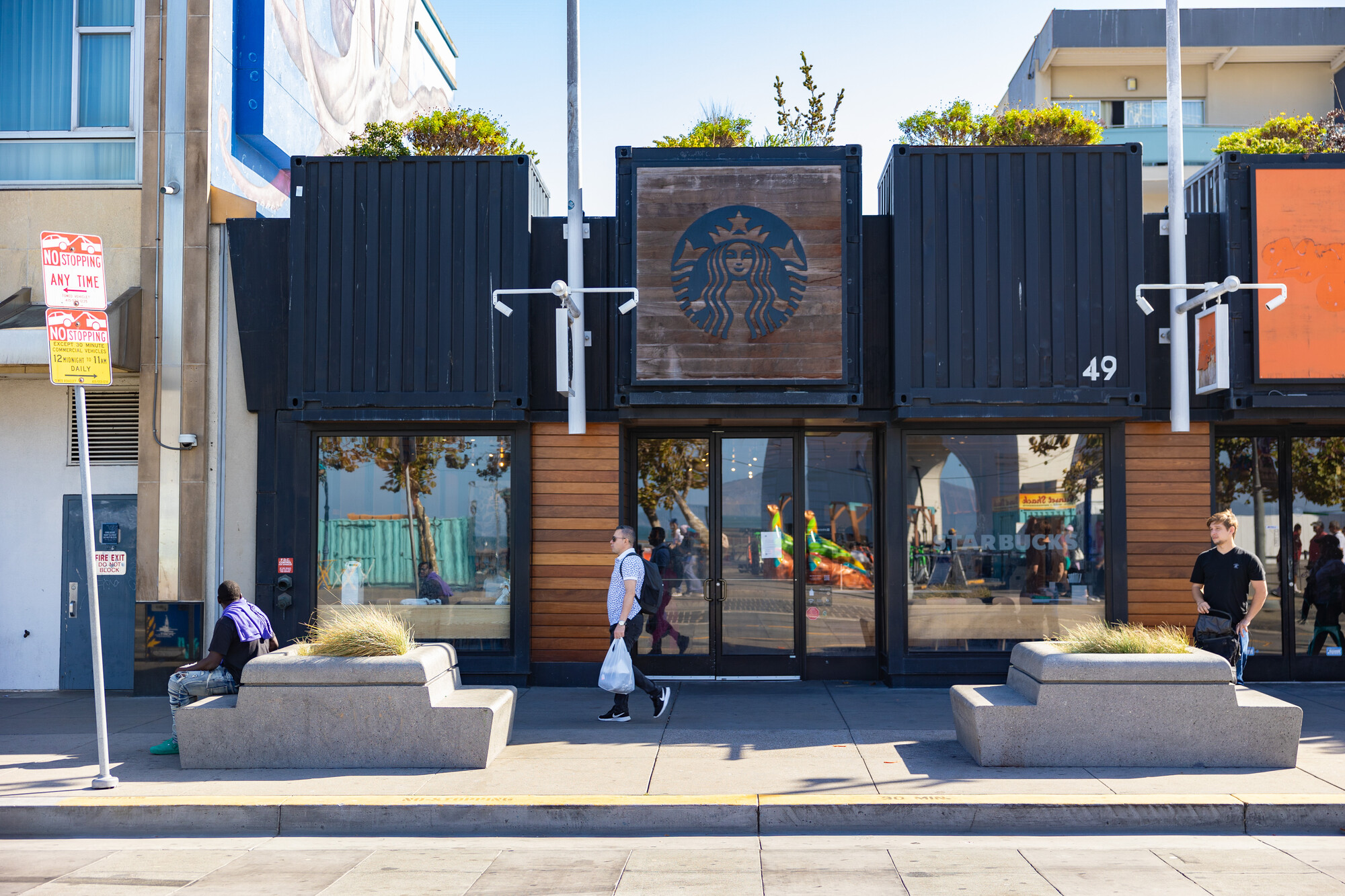
"caption": "Facade of a Starbucks Coffee shop in San Francisco, on Aug. 20, 2024. Several Bay Area Starbucks locations, including unionized stores, face closures amid cost-cutting moves. ",
"credit": "Gina Castro/KQED",
"altTag": null,
"description": null,
"imgSizes": {
"thumbnail": {
"file": "https://cdn.kqed.org/wp-content/uploads/sites/10/2025/09/20250926_StarbucksClosures_GC-2_qed-160x107.jpg",
"width": 160,
"height": 107,
"mimeType": "image/jpeg"
},
"1536x1536": {
"file": "https://cdn.kqed.org/wp-content/uploads/sites/10/2025/09/20250926_StarbucksClosures_GC-2_qed-1536x1024.jpg",
"width": 1536,
"height": 1024,
"mimeType": "image/jpeg"
},
"post-thumbnail": {
"file": "https://cdn.kqed.org/wp-content/uploads/sites/10/2025/09/20250926_StarbucksClosures_GC-2_qed-672x372.jpg",
"width": 672,
"height": 372,
"mimeType": "image/jpeg"
},
"twentyfourteen-full-width": {
"file": "https://cdn.kqed.org/wp-content/uploads/sites/10/2025/09/20250926_StarbucksClosures_GC-2_qed-1038x576.jpg",
"width": 1038,
"height": 576,
"mimeType": "image/jpeg"
},
"kqedFullSize": {
"file": "https://cdn.kqed.org/wp-content/uploads/sites/10/2025/09/20250926_StarbucksClosures_GC-2_qed.jpg",
"width": 2000,
"height": 1333
}
},
"isLoading": false,
"fetchFailed": false
},
"news_12038002": {
"type": "attachments",
"id": "news_12038002",
"meta": {
"index": "attachments_1716263798",
"site": "news",
"id": "12038002",
"found": true
},
"title": "An Oakland Police Department squad car in downtown Oakland on April 28, 2025.",
"publishDate": 1745884766,
"status": "inherit",
"parent": 12042539,
"modified": 1748986081,
"caption": "An Oakland Police Department squad car in downtown Oakland on April 28, 2025.",
"credit": "Martin do Nascimento/KQED",
"altTag": null,
"description": null,
"imgSizes": {
"medium": {
"file": "https://cdn.kqed.org/wp-content/uploads/sites/10/2025/04/250428-OPD-FILE-MD-01-KQED-1-800x533.jpg",
"width": 800,
"height": 533,
"mimeType": "image/jpeg"
},
"large": {
"file": "https://cdn.kqed.org/wp-content/uploads/sites/10/2025/04/250428-OPD-FILE-MD-01-KQED-1-1020x680.jpg",
"width": 1020,
"height": 680,
"mimeType": "image/jpeg"
},
"thumbnail": {
"file": "https://cdn.kqed.org/wp-content/uploads/sites/10/2025/04/250428-OPD-FILE-MD-01-KQED-1-160x107.jpg",
"width": 160,
"height": 107,
"mimeType": "image/jpeg"
},
"1536x1536": {
"file": "https://cdn.kqed.org/wp-content/uploads/sites/10/2025/04/250428-OPD-FILE-MD-01-KQED-1-1536x1024.jpg",
"width": 1536,
"height": 1024,
"mimeType": "image/jpeg"
},
"post-thumbnail": {
"file": "https://cdn.kqed.org/wp-content/uploads/sites/10/2025/04/250428-OPD-FILE-MD-01-KQED-1-672x372.jpg",
"width": 672,
"height": 372,
"mimeType": "image/jpeg"
},
"twentyfourteen-full-width": {
"file": "https://cdn.kqed.org/wp-content/uploads/sites/10/2025/04/250428-OPD-FILE-MD-01-KQED-1-1038x576.jpg",
"width": 1038,
"height": 576,
"mimeType": "image/jpeg"
},
"full-width": {
"file": "https://cdn.kqed.org/wp-content/uploads/sites/10/2025/04/250428-OPD-FILE-MD-01-KQED-1-1920x1280.jpg",
"width": 1920,
"height": 1280,
"mimeType": "image/jpeg"
},
"kqedFullSize": {
"file": "https://cdn.kqed.org/wp-content/uploads/sites/10/2025/04/250428-OPD-FILE-MD-01-KQED-1.jpg",
"width": 2000,
"height": 1333
}
},
"isLoading": false,
"fetchFailed": false
},
"news_12057746": {
"type": "attachments",
"id": "news_12057746",
"meta": {
"index": "attachments_1716263798",
"site": "news",
"id": "12057746",
"found": true
},
"title": "President Trump Signs Executive Order At The White House",
"publishDate": 1758907661,
"status": "inherit",
"parent": 12057742,
"modified": 1758917101,
"caption": "A poster of the \"Trump Gold Card\" is seen as President Donald Trump signs an executive order in the Oval Office at the White House on Sept. 19, 2025 in Washington, DC. KQED’s Forum spoke to experts about how H-1B visa holders in the Bay Area are reacting to the latest White House order.",
"credit": "Andrew Harnik/Getty Images",
"altTag": null,
"description": null,
"imgSizes": {
"medium": {
"file": "https://cdn.kqed.org/wp-content/uploads/sites/10/2025/09/GettyImages-2236329361-2000x1333.jpg",
"width": 2000,
"height": 1333,
"mimeType": "image/jpeg"
},
"large": {
"file": "https://cdn.kqed.org/wp-content/uploads/sites/10/2025/09/GettyImages-2236329361-2000x1333.jpg",
"width": 2000,
"height": 1333,
"mimeType": "image/jpeg"
},
"thumbnail": {
"file": "https://cdn.kqed.org/wp-content/uploads/sites/10/2025/09/GettyImages-2236329361-160x107.jpg",
"width": 160,
"height": 107,
"mimeType": "image/jpeg"
},
"1536x1536": {
"file": "https://cdn.kqed.org/wp-content/uploads/sites/10/2025/09/GettyImages-2236329361-1536x1024.jpg",
"width": 1536,
"height": 1024,
"mimeType": "image/jpeg"
},
"2048x2048": {
"file": "https://cdn.kqed.org/wp-content/uploads/sites/10/2025/09/GettyImages-2236329361-2048x1365.jpg",
"width": 2048,
"height": 1365,
"mimeType": "image/jpeg"
},
"post-thumbnail": {
"file": "https://cdn.kqed.org/wp-content/uploads/sites/10/2025/09/GettyImages-2236329361-672x372.jpg",
"width": 672,
"height": 372,
"mimeType": "image/jpeg"
},
"twentyfourteen-full-width": {
"file": "https://cdn.kqed.org/wp-content/uploads/sites/10/2025/09/GettyImages-2236329361-1038x576.jpg",
"width": 1038,
"height": 576,
"mimeType": "image/jpeg"
},
"full-width": {
"file": "https://cdn.kqed.org/wp-content/uploads/sites/10/2025/09/GettyImages-2236329361-2000x1333.jpg",
"width": 2000,
"height": 1333,
"mimeType": "image/jpeg"
},
"kqedFullSize": {
"file": "https://cdn.kqed.org/wp-content/uploads/sites/10/2025/09/GettyImages-2236329361-scaled-e1760568167148.jpg",
"width": 2000,
"height": 1333
}
},
"isLoading": false,
"fetchFailed": false
},
"news_12057602": {
"type": "attachments",
"id": "news_12057602",
"meta": {
"index": "attachments_1716263798",
"site": "news",
"id": "12057602",
"found": true
},
"title": "BART employees stand outside a damaged 3-car train at the Fruitvale station in Oakland, Calif. on Thursday, July 9, 2015 after an early morning fire below the train between the Coliseum and Fruitvale stations disrupted the morning commute. At least three",
"publishDate": 1758821425,
"status": "inherit",
"parent": 12057594,
"modified": 1769128187,
"caption": "BART employees stand outside a damaged three-car train at the Fruitvale station in Oakland, California, on July 9, 2015.",
"credit": "Paul Chinn/The San Francisco Chronicle via Getty Images",
"altTag": null,
"description": null,
"imgSizes": {
"thumbnail": {
"file": "https://cdn.kqed.org/wp-content/uploads/sites/10/2025/09/BARTEmployeesGetty-160x105.jpg",
"width": 160,
"height": 105,
"mimeType": "image/jpeg"
},
"1536x1536": {
"file": "https://cdn.kqed.org/wp-content/uploads/sites/10/2025/09/BARTEmployeesGetty-1536x1006.jpg",
"width": 1536,
"height": 1006,
"mimeType": "image/jpeg"
},
"post-thumbnail": {
"file": "https://cdn.kqed.org/wp-content/uploads/sites/10/2025/09/BARTEmployeesGetty-672x372.jpg",
"width": 672,
"height": 372,
"mimeType": "image/jpeg"
},
"twentyfourteen-full-width": {
"file": "https://cdn.kqed.org/wp-content/uploads/sites/10/2025/09/BARTEmployeesGetty-1038x576.jpg",
"width": 1038,
"height": 576,
"mimeType": "image/jpeg"
},
"kqedFullSize": {
"file": "https://cdn.kqed.org/wp-content/uploads/sites/10/2025/09/BARTEmployeesGetty.jpg",
"width": 2000,
"height": 1310
}
},
"isLoading": false,
"fetchFailed": false
},
"news_12055077": {
"type": "attachments",
"id": "news_12055077",
"meta": {
"index": "attachments_1716263798",
"site": "news",
"id": "12055077",
"found": true
},
"title": "250905-ADOPTACORNER_00805_TV-KQED",
"publishDate": 1757337325,
"status": "inherit",
"parent": 12055084,
"modified": 1757352537,
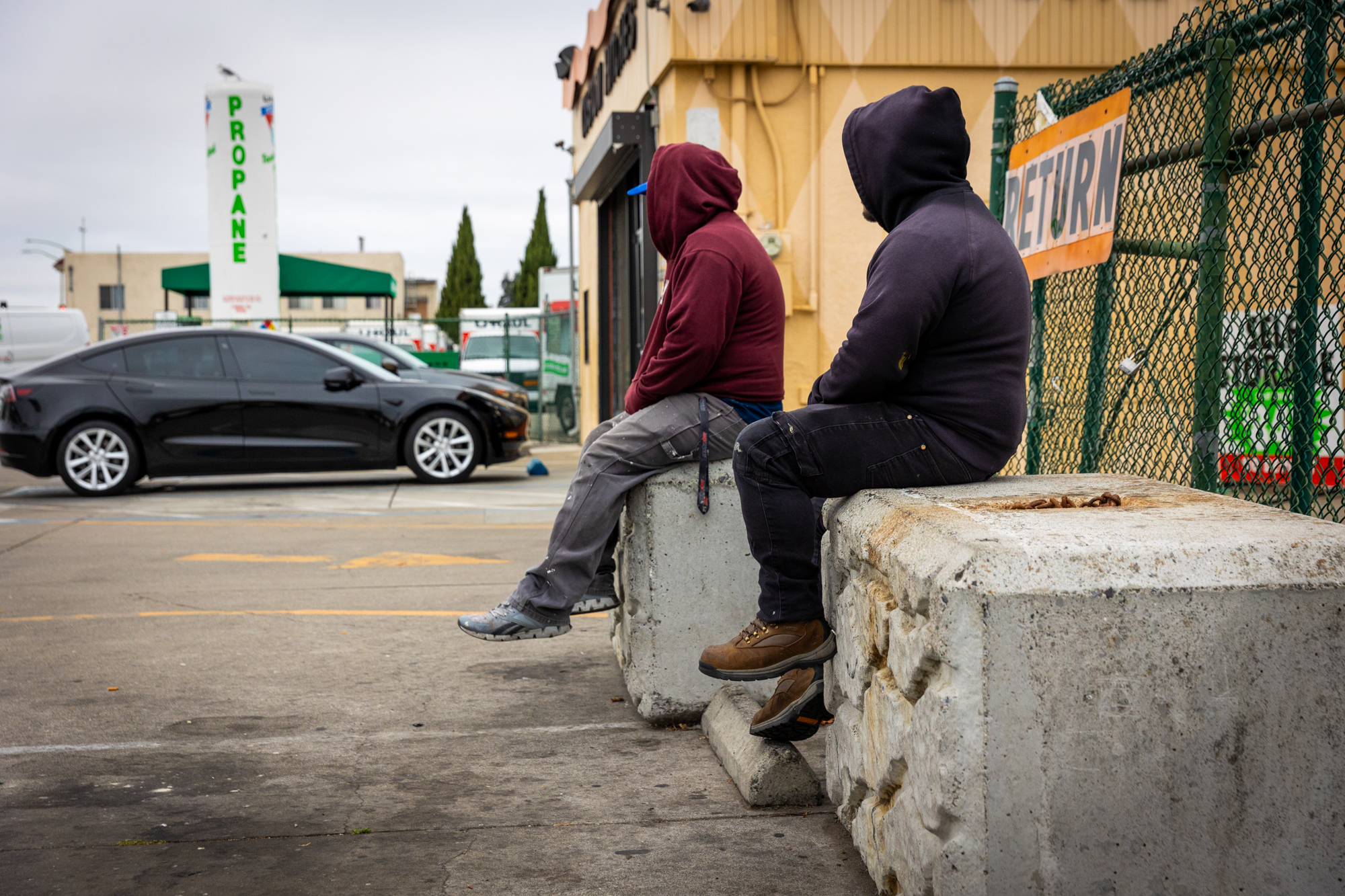
"caption": "Day laborers wait for work on International Boulevard at a U-Haul in Oakland on Sept. 5, 2025.",
"credit": "Tâm Vũ/KQED",
"altTag": null,
"description": null,
"imgSizes": {
"thumbnail": {
"file": "https://cdn.kqed.org/wp-content/uploads/sites/10/2025/09/250905-ADOPTACORNER_00805_TV-KQED-160x107.jpg",
"width": 160,
"height": 107,
"mimeType": "image/jpeg"
},
"1536x1536": {
"file": "https://cdn.kqed.org/wp-content/uploads/sites/10/2025/09/250905-ADOPTACORNER_00805_TV-KQED-1536x1024.jpg",
"width": 1536,
"height": 1024,
"mimeType": "image/jpeg"
},
"post-thumbnail": {
"file": "https://cdn.kqed.org/wp-content/uploads/sites/10/2025/09/250905-ADOPTACORNER_00805_TV-KQED-672x372.jpg",
"width": 672,
"height": 372,
"mimeType": "image/jpeg"
},
"twentyfourteen-full-width": {
"file": "https://cdn.kqed.org/wp-content/uploads/sites/10/2025/09/250905-ADOPTACORNER_00805_TV-KQED-1038x576.jpg",
"width": 1038,
"height": 576,
"mimeType": "image/jpeg"
},
"kqedFullSize": {
"file": "https://cdn.kqed.org/wp-content/uploads/sites/10/2025/09/250905-ADOPTACORNER_00805_TV-KQED.jpg",
"width": 2000,
"height": 1333
}
},
"isLoading": false,
"fetchFailed": false
},
"news_12055049": {
"type": "attachments",
"id": "news_12055049",
"meta": {
"index": "attachments_1716263798",
"site": "news",
"id": "12055049",
"found": true
},
"title": "250904_K ONDA SEPTEMBER NAIL ARTIST-_GH-2-KQED",
"publishDate": 1757336009,
"status": "inherit",
"parent": 0,
"modified": 1758581875,
"caption": "Laysa Cazares, a Hayward native and nail artist, at Sparkle SF studio in San Francisco on Sept. 4, 2025. Known for three-dimensional, airbrushed and hand-painted designs, Cazares draws on fashion and her Mexican heritage to transform manicures into art.",
"credit": "Gustavo Hernandez/KQED",
"altTag": null,
"description": null,
"imgSizes": {
"thumbnail": {
"file": "https://cdn.kqed.org/wp-content/uploads/sites/10/2025/09/250904_K-ONDA-SEPTEMBER-NAIL-ARTIST-_GH-2-KQED-160x107.jpg",
"width": 160,
"height": 107,
"mimeType": "image/jpeg"
},
"1536x1536": {
"file": "https://cdn.kqed.org/wp-content/uploads/sites/10/2025/09/250904_K-ONDA-SEPTEMBER-NAIL-ARTIST-_GH-2-KQED-1536x1024.jpg",
"width": 1536,
"height": 1024,
"mimeType": "image/jpeg"
},
"post-thumbnail": {
"file": "https://cdn.kqed.org/wp-content/uploads/sites/10/2025/09/250904_K-ONDA-SEPTEMBER-NAIL-ARTIST-_GH-2-KQED-672x372.jpg",
"width": 672,
"height": 372,
"mimeType": "image/jpeg"
},
"twentyfourteen-full-width": {
"file": "https://cdn.kqed.org/wp-content/uploads/sites/10/2025/09/250904_K-ONDA-SEPTEMBER-NAIL-ARTIST-_GH-2-KQED-1038x576.jpg",
"width": 1038,
"height": 576,
"mimeType": "image/jpeg"
},
"kqedFullSize": {
"file": "https://cdn.kqed.org/wp-content/uploads/sites/10/2025/09/250904_K-ONDA-SEPTEMBER-NAIL-ARTIST-_GH-2-KQED.jpg",
"width": 2000,
"height": 1333
}
},
"isLoading": false,
"fetchFailed": false
},
"news_12056599": {
"type": "attachments",
"id": "news_12056599",
"meta": {
"index": "attachments_1716263798",
"site": "news",
"id": "12056599",
"found": true
},
"title": "A security guard",
"publishDate": 1758218477,
"status": "inherit",
"parent": 12056553,
"modified": 1758218516,
"caption": "A security guard stock photo.",
"credit": "Marc Volk/Getty Images",
"altTag": null,
"description": null,
"imgSizes": {
"thumbnail": {
"file": "https://cdn.kqed.org/wp-content/uploads/sites/10/2025/09/LegalAide-160x107.jpg",
"width": 160,
"height": 107,
"mimeType": "image/jpeg"
},
"1536x1536": {
"file": "https://cdn.kqed.org/wp-content/uploads/sites/10/2025/09/LegalAide-1536x1024.jpg",
"width": 1536,
"height": 1024,
"mimeType": "image/jpeg"
},
"post-thumbnail": {
"file": "https://cdn.kqed.org/wp-content/uploads/sites/10/2025/09/LegalAide-672x372.jpg",
"width": 672,
"height": 372,
"mimeType": "image/jpeg"
},
"twentyfourteen-full-width": {
"file": "https://cdn.kqed.org/wp-content/uploads/sites/10/2025/09/LegalAide-1038x576.jpg",
"width": 1038,
"height": 576,
"mimeType": "image/jpeg"
},
"kqedFullSize": {
"file": "https://cdn.kqed.org/wp-content/uploads/sites/10/2025/09/LegalAide.jpg",
"width": 2000,
"height": 1333
}
},
"isLoading": false,
"fetchFailed": false
},
"news_12056435": {
"type": "attachments",
"id": "news_12056435",
"meta": {
"index": "attachments_1716263798",
"site": "news",
"id": "12056435",
"found": true
},
"title": "250917-FAST-FOOD WORKERS-MD-04-KQED",
"publishDate": 1758147461,
"status": "inherit",
"parent": 0,
"modified": 1758147588,
"caption": "Delia Vargas and other fast food workers protest in front of an El Pollo Loco restaurant in San José on Sept. 17, 2025.",
"credit": "Martin do Nascimento/KQED",
"altTag": null,
"description": null,
"imgSizes": {
"thumbnail": {
"file": "https://cdn.kqed.org/wp-content/uploads/sites/10/2025/09/250917-FAST-FOOD-WORKERS-MD-04-KQED-160x107.jpg",
"width": 160,
"height": 107,
"mimeType": "image/jpeg"
},
"1536x1536": {
"file": "https://cdn.kqed.org/wp-content/uploads/sites/10/2025/09/250917-FAST-FOOD-WORKERS-MD-04-KQED-1536x1025.jpg",
"width": 1536,
"height": 1025,
"mimeType": "image/jpeg"
},
"post-thumbnail": {
"file": "https://cdn.kqed.org/wp-content/uploads/sites/10/2025/09/250917-FAST-FOOD-WORKERS-MD-04-KQED-672x372.jpg",
"width": 672,
"height": 372,
"mimeType": "image/jpeg"
},
"twentyfourteen-full-width": {
"file": "https://cdn.kqed.org/wp-content/uploads/sites/10/2025/09/250917-FAST-FOOD-WORKERS-MD-04-KQED-1038x576.jpg",
"width": 1038,
"height": 576,
"mimeType": "image/jpeg"
},
"kqedFullSize": {
"file": "https://cdn.kqed.org/wp-content/uploads/sites/10/2025/09/250917-FAST-FOOD-WORKERS-MD-04-KQED.jpg",
"width": 2000,
"height": 1334
}
},
"isLoading": false,
"fetchFailed": false
},
"news_12049142": {
"type": "attachments",
"id": "news_12049142",
"meta": {
"index": "attachments_1716263798",
"site": "news",
"id": "12049142",
"found": true
},
"title": "big-sur-is-highway-1-open",
"publishDate": 1753203859,
"status": "inherit",
"parent": 12049138,
"modified": 1753213650,
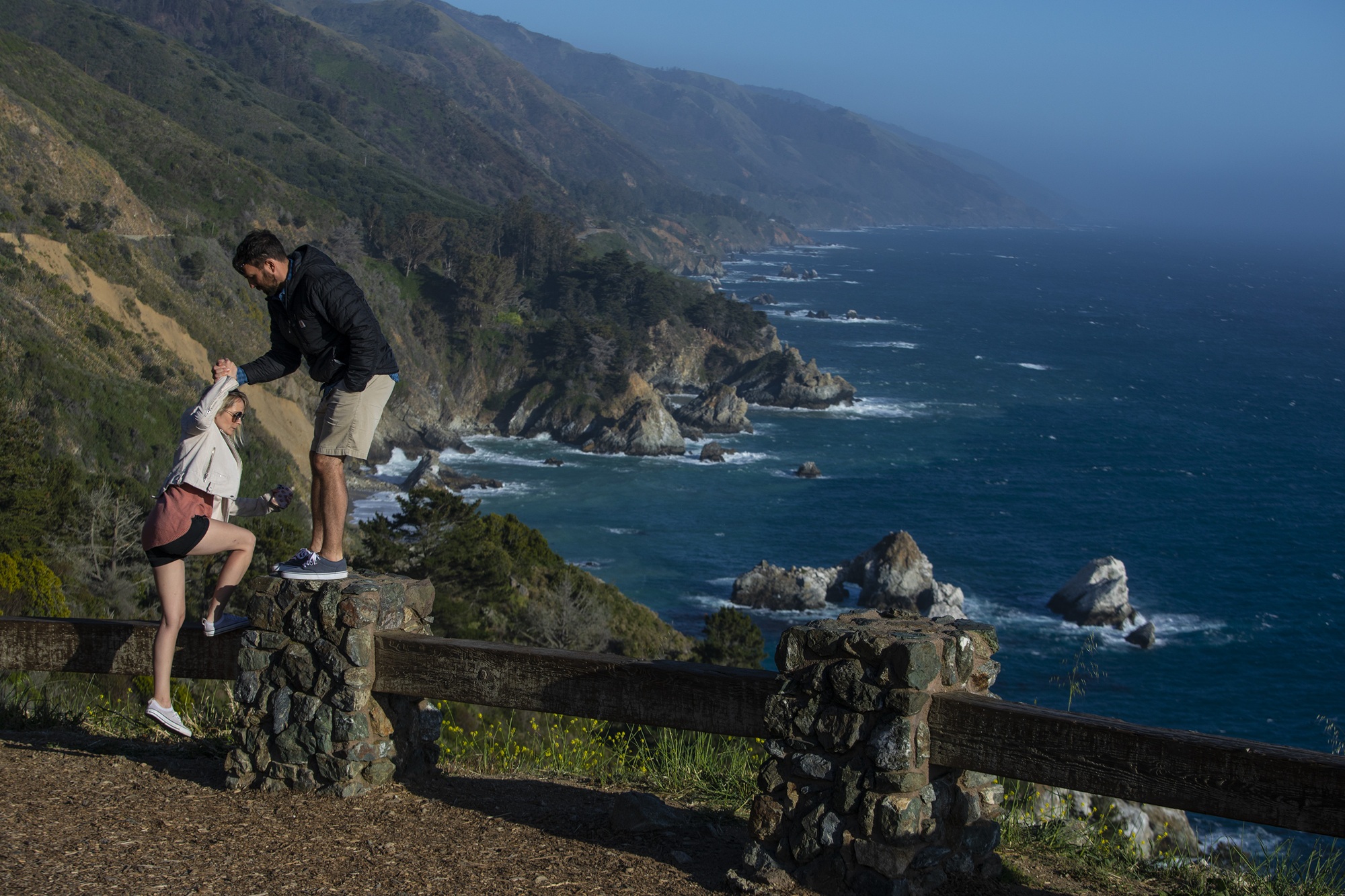
"caption": "A couple climbs a pilaster to get a view south to the coastline of Julia Pfeiffer Burns State Park along California Highway 1 on May 2, 2021, in Big Sur, California. ",
"credit": "Brian van der Brug/Los Angeles Times via Getty Images",
"altTag": null,
"description": null,
"imgSizes": {
"thumbnail": {
"file": "https://cdn.kqed.org/wp-content/uploads/sites/10/2025/07/BigSurGetty-160x107.jpg",
"width": 160,
"height": 107,
"mimeType": "image/jpeg"
},
"1536x1536": {
"file": "https://cdn.kqed.org/wp-content/uploads/sites/10/2025/07/BigSurGetty-1536x1024.jpg",
"width": 1536,
"height": 1024,
"mimeType": "image/jpeg"
},
"post-thumbnail": {
"file": "https://cdn.kqed.org/wp-content/uploads/sites/10/2025/07/BigSurGetty-672x372.jpg",
"width": 672,
"height": 372,
"mimeType": "image/jpeg"
},
"twentyfourteen-full-width": {
"file": "https://cdn.kqed.org/wp-content/uploads/sites/10/2025/07/BigSurGetty-1038x576.jpg",
"width": 1038,
"height": 576,
"mimeType": "image/jpeg"
},
"kqedFullSize": {
"file": "https://cdn.kqed.org/wp-content/uploads/sites/10/2025/07/BigSurGetty.jpg",
"width": 2000,
"height": 1333
}
},
"isLoading": false,
"fetchFailed": false
},
"news_12055987": {
"type": "attachments",
"id": "news_12055987",
"meta": {
"index": "attachments_1716263798",
"site": "news",
"id": "12055987",
"found": true
},
"title": "Downtown San Francisco",
"publishDate": 1757968450,
"status": "inherit",
"parent": 12055969,
"modified": 1757968562,
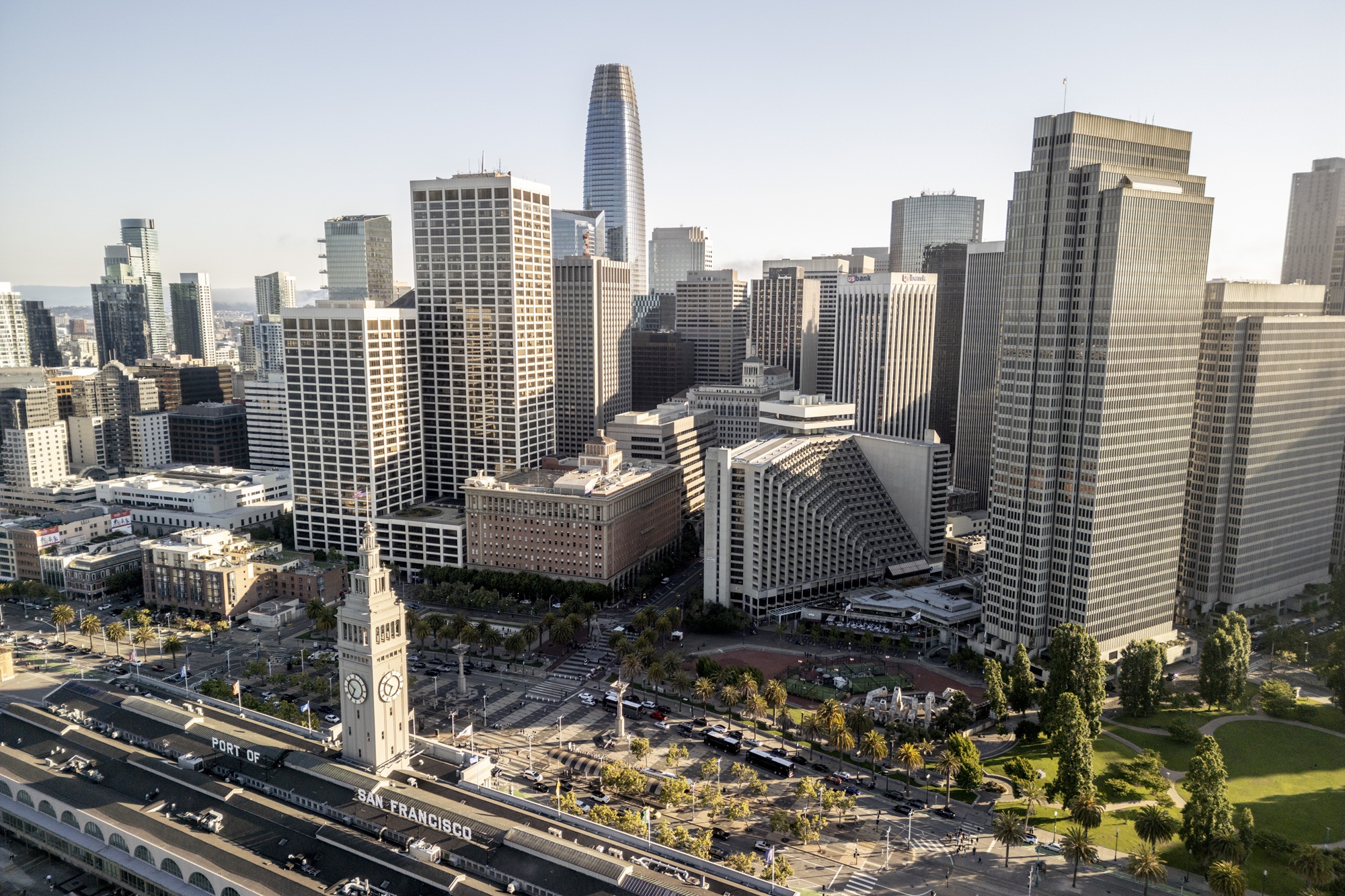
"caption": "A view of the downtown San Francisco skyline on July 10, 2025. ",
"credit": "Stephen Lam/San Francisco Chronicle via Getty Images",
"altTag": null,
"description": null,
"imgSizes": {
"thumbnail": {
"file": "https://cdn.kqed.org/wp-content/uploads/sites/10/2025/09/SFSkylineGetty-160x107.jpg",
"width": 160,
"height": 107,
"mimeType": "image/jpeg"
},
"1536x1536": {
"file": "https://cdn.kqed.org/wp-content/uploads/sites/10/2025/09/SFSkylineGetty-1536x1024.jpg",
"width": 1536,
"height": 1024,
"mimeType": "image/jpeg"
},
"post-thumbnail": {
"file": "https://cdn.kqed.org/wp-content/uploads/sites/10/2025/09/SFSkylineGetty-672x372.jpg",
"width": 672,
"height": 372,
"mimeType": "image/jpeg"
},
"twentyfourteen-full-width": {
"file": "https://cdn.kqed.org/wp-content/uploads/sites/10/2025/09/SFSkylineGetty-1038x576.jpg",
"width": 1038,
"height": 576,
"mimeType": "image/jpeg"
},
"kqedFullSize": {
"file": "https://cdn.kqed.org/wp-content/uploads/sites/10/2025/09/SFSkylineGetty.jpg",
"width": 2000,
"height": 1333
}
},
"isLoading": false,
"fetchFailed": false
},
"news_12055808": {
"type": "attachments",
"id": "news_12055808",
"meta": {
"index": "attachments_1716263798",
"site": "news",
"id": "12055808",
"found": true
},
"title": "250912-TRUMPSSIGNAGEORDER-15-BL-KQED",
"publishDate": 1757714612,
"status": "inherit",
"parent": 0,
"modified": 1757714776,
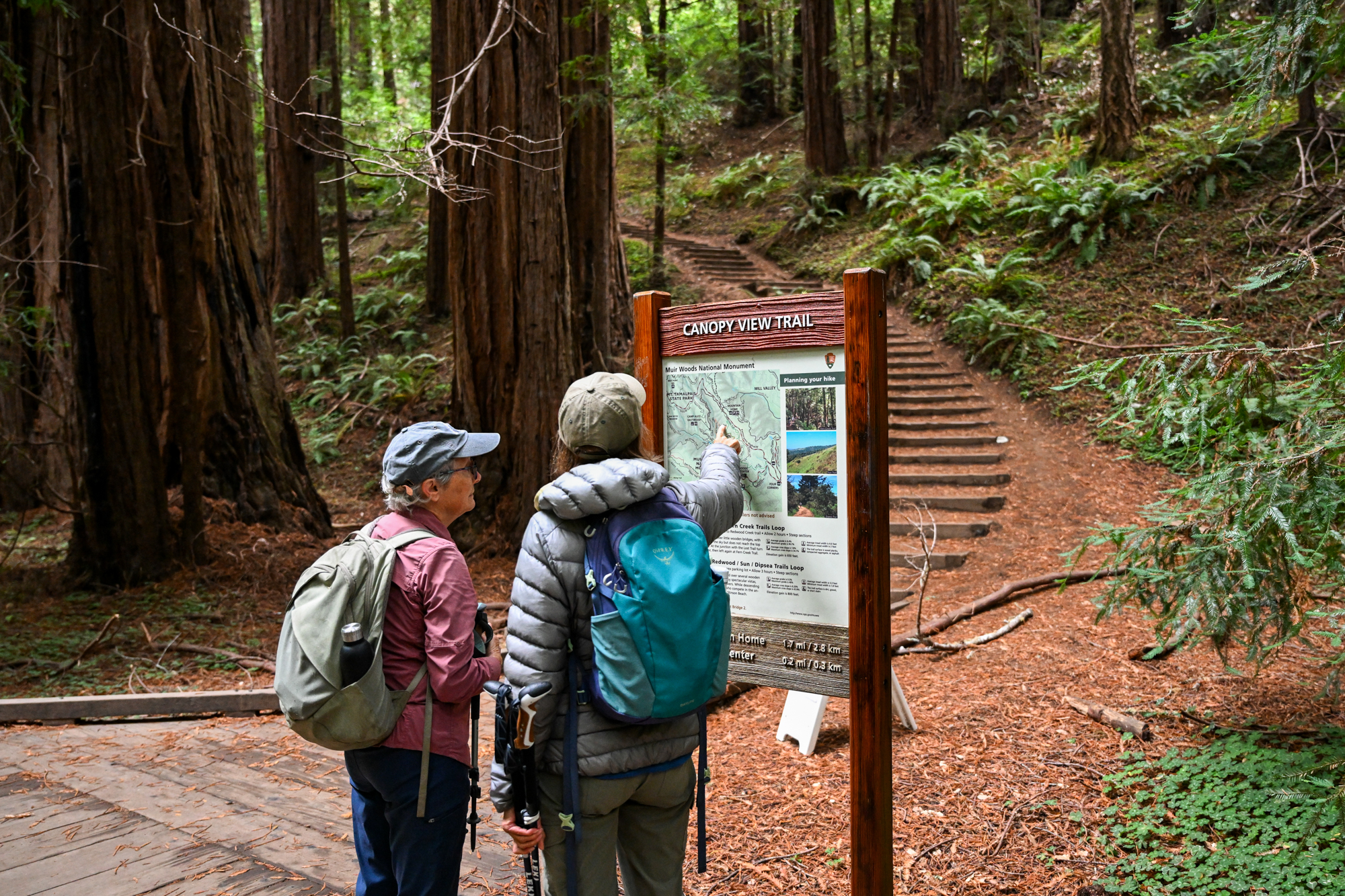
"caption": "Hikers plan their route on the Canopy View Trail at Muir Woods National Monument on Sept. 12, 2025. Part of the Golden Gate National Recreation Area, the monument protects one of the last old-growth coast redwood forests in the Bay Area.",
"credit": "Beth LaBerge/KQED",
"altTag": null,
"description": null,
"imgSizes": {
"thumbnail": {
"file": "https://cdn.kqed.org/wp-content/uploads/sites/10/2025/09/250912-TRUMPSSIGNAGEORDER-15-BL-KQED-160x107.jpg",
"width": 160,
"height": 107,
"mimeType": "image/jpeg"
},
"1536x1536": {
"file": "https://cdn.kqed.org/wp-content/uploads/sites/10/2025/09/250912-TRUMPSSIGNAGEORDER-15-BL-KQED-1536x1024.jpg",
"width": 1536,
"height": 1024,
"mimeType": "image/jpeg"
},
"post-thumbnail": {
"file": "https://cdn.kqed.org/wp-content/uploads/sites/10/2025/09/250912-TRUMPSSIGNAGEORDER-15-BL-KQED-672x372.jpg",
"width": 672,
"height": 372,
"mimeType": "image/jpeg"
},
"twentyfourteen-full-width": {
"file": "https://cdn.kqed.org/wp-content/uploads/sites/10/2025/09/250912-TRUMPSSIGNAGEORDER-15-BL-KQED-1038x576.jpg",
"width": 1038,
"height": 576,
"mimeType": "image/jpeg"
},
"kqedFullSize": {
"file": "https://cdn.kqed.org/wp-content/uploads/sites/10/2025/09/250912-TRUMPSSIGNAGEORDER-15-BL-KQED.jpg",
"width": 2000,
"height": 1333
}
},
"isLoading": false,
"fetchFailed": false
}
},
"audioPlayerReducer": {
"postId": "stream_live",
"isPaused": true,
"isPlaying": false,
"pfsActive": false,
"pledgeModalIsOpen": true,
"playerDrawerIsOpen": false,
"liveAudioPlayStartedAt": 0,
"liveAudioPlayContext": ""
},
"authorsReducer": {
"shossaini": {
"type": "authors",
"id": "3214",
"meta": {
"index": "authors_1716337520",
"id": "3214",
"found": true
},
"name": "Sara Hossaini",
"firstName": "Sara",
"lastName": "Hossaini",
"slug": "shossaini",
"email": "shossaini@kqed.org",
"display_author_email": true,
"staff_mastheads": [
"news"
],
"title": "KQED Reporter",
"bio": "Sara Hossaini came to general assignment reporting at KQED in 2013 after two winters reporting at Wyoming Public Radio. She holds a bachelor's degree in broadcast journalism from the University of Nebraska-Lincoln. Her radio romance began after a bitter breakup with documentary film (Ok, maybe it's still complicated). Her first simultaneous jobs in San Francisco were as Associate Producer on a PBS film series through the Center for Asian American Media and as a butler. She likes to trot, plot and make things with her hands.",
"avatar": "https://secure.gravatar.com/avatar/060e9f56b9554e17942e89f413242774?s=600&d=blank&r=g",
"twitter": "mshossaini",
"facebook": null,
"instagram": null,
"linkedin": null,
"sites": [
{
"site": "news",
"roles": [
"author"
]
},
{
"site": "stateofhealth",
"roles": [
"author"
]
}
],
"headData": {
"title": "Sara Hossaini | KQED",
"description": "KQED Reporter",
"ogImgSrc": "https://secure.gravatar.com/avatar/060e9f56b9554e17942e89f413242774?s=600&d=blank&r=g",
"twImgSrc": "https://secure.gravatar.com/avatar/060e9f56b9554e17942e89f413242774?s=600&d=blank&r=g"
},
"isLoading": false,
"link": "/author/shossaini"
},
"fjhabvala": {
"type": "authors",
"id": "8659",
"meta": {
"index": "authors_1716337520",
"id": "8659",
"found": true
},
"name": "Farida Jhabvala Romero",
"firstName": "Farida",
"lastName": "Jhabvala Romero",
"slug": "fjhabvala",
"email": "fjhabvala@kqed.org",
"display_author_email": true,
"staff_mastheads": [
"news"
],
"title": "KQED Contributor",
"bio": "Farida Jhabvala Romero is a Labor Correspondent for KQED. She previously covered immigration. Farida was \u003ca href=\"https://www.ccnma.org/2022-most-influential-latina-journalists\">named\u003c/a> one of the 10 Most Influential Latina Journalists in California in 2022 by the California Chicano News Media Association. Her work has won awards from the Society of Professional Journalists (Northern California), as well as a national and regional Edward M. Murrow Award for the collaborative reporting projects “Dangerous Air” and “Graying California.” Before joining KQED, Farida worked as a producer at Radio Bilingüe, a national public radio network. Farida earned her master’s degree in journalism from Stanford University.",
"avatar": "https://secure.gravatar.com/avatar/f9f022d4e2609741874222a1e9d41f48fea74011aa7c615eef91d9a50c944ebe?s=600&d=blank&r=g",
"twitter": "FaridaJhabvala",
"bluesky": null,
"facebook": null,
"instagram": null,
"linkedin": "https://www.linkedin.com/in/faridajhabvala/",
"sites": [
{
"site": "news",
"roles": [
"editor"
]
},
{
"site": "stateofhealth",
"roles": [
"author"
]
},
{
"site": "liveblog",
"roles": [
"author"
]
}
],
"headData": {
"title": "Farida Jhabvala Romero | KQED",
"description": "KQED Contributor",
"ogImgSrc": "https://secure.gravatar.com/avatar/f9f022d4e2609741874222a1e9d41f48fea74011aa7c615eef91d9a50c944ebe?s=600&d=blank&r=g",
"twImgSrc": "https://secure.gravatar.com/avatar/f9f022d4e2609741874222a1e9d41f48fea74011aa7c615eef91d9a50c944ebe?s=600&d=blank&r=g"
},
"isLoading": false,
"link": "/author/fjhabvala"
},
"btorres": {
"type": "authors",
"id": "11666",
"meta": {
"index": "authors_1716337520",
"id": "11666",
"found": true
},
"name": "Blanca Torres",
"firstName": "Blanca",
"lastName": "Torres",
"slug": "btorres",
"email": "btorres@kqed.org",
"display_author_email": true,
"staff_mastheads": [
"news"
],
"title": "Producer, Forum",
"bio": "Blanca Torres brings sharp news judgement and keen sense of lively conversation to her work as producer for Forum. She loves producing shows that leave listeners feeling like they heard distinctive voices, learned something new and gained a fresh perspective.\r\n\r\nShe joined KQED in January of 2020 after 16 years of working as a newspaper reporter most recently at the \u003cem>San Francisco Business Times,\u003c/em> where she wrote about real estate and economic development. Before that, she covered a variety of beats including crime, education, retail, workplace, the economy, consumer issues, and small business for the \u003cem>Contra Costa Times, Baltimore Sun\u003c/em> and\u003cem> The Seattle Times\u003c/em>. In addition to reporting, she worked as an editorial writer and columnist for the \u003cem>Seattle Times\u003c/em>. From 2017 to 2020, Blanca won a total of ten awards from the National Association of Real Estate Editors and won first place for land use reporting from the California News Publishers Association two years in a row. She is also a member and former board member for the National Association of Hispanic Journalists.\r\n\r\nA native of the Pacific Northwest, Blanca earned her bachelor's degree from Vanderbilt University in Nashville and a master's in fine arts in creative writing at Mills College. She lives in the East Bay with her family.",
"avatar": "https://secure.gravatar.com/avatar/50b49d19b14a1eed34f26ebf4681152cdd81574ed21851100871ccd29e578cdc?s=600&d=blank&r=g",
"twitter": "@blancawrites",
"bluesky": null,
"facebook": null,
"instagram": null,
"linkedin": null,
"sites": [
{
"site": "arts",
"roles": [
"editor"
]
},
{
"site": "news",
"roles": [
"editor"
]
},
{
"site": "forum",
"roles": [
"editor"
]
}
],
"headData": {
"title": "Blanca Torres | KQED",
"description": "Producer, Forum",
"ogImgSrc": "https://secure.gravatar.com/avatar/50b49d19b14a1eed34f26ebf4681152cdd81574ed21851100871ccd29e578cdc?s=600&d=blank&r=g",
"twImgSrc": "https://secure.gravatar.com/avatar/50b49d19b14a1eed34f26ebf4681152cdd81574ed21851100871ccd29e578cdc?s=600&d=blank&r=g"
},
"isLoading": false,
"link": "/author/btorres"
},
"abandlamudi": {
"type": "authors",
"id": "11672",
"meta": {
"index": "authors_1716337520",
"id": "11672",
"found": true
},
"name": "Adhiti Bandlamudi",
"firstName": "Adhiti",
"lastName": "Bandlamudi",
"slug": "abandlamudi",
"email": "abandlamudi@kqed.org",
"display_author_email": false,
"staff_mastheads": [
"news"
],
"title": "KQED Housing Reporter",
"bio": "Adhiti Bandlamudi reports for KQED's Housing desk. She focuses on how housing gets built across the Bay Area. Before joining KQED in 2020, she reported for WUNC in Durham, North Carolina, WABE in Atlanta, Georgia and Capital Public Radio in Sacramento. In 2017, she was awarded a Kroc Fellowship at NPR where she reported on everything from sprinkles to the Golden State Killer's arrest. When she's not reporting, she's baking new recipes in her kitchen or watching movies with friends and family. She's originally from Georgia and has strong opinions about Great British Bake Off.",
"avatar": "https://secure.gravatar.com/avatar/868129c8b257bb99a3500e2c86a65400?s=600&d=mm&r=g",
"twitter": "oddity_adhiti",
"facebook": null,
"instagram": null,
"linkedin": null,
"sites": [
{
"site": "arts",
"roles": [
"author"
]
},
{
"site": "news",
"roles": [
"editor"
]
},
{
"site": "liveblog",
"roles": [
"author"
]
}
],
"headData": {
"title": "Adhiti Bandlamudi | KQED",
"description": "KQED Housing Reporter",
"ogImgSrc": "https://secure.gravatar.com/avatar/868129c8b257bb99a3500e2c86a65400?s=600&d=mm&r=g",
"twImgSrc": "https://secure.gravatar.com/avatar/868129c8b257bb99a3500e2c86a65400?s=600&d=mm&r=g"
},
"isLoading": false,
"link": "/author/abandlamudi"
},
"amadrigal": {
"type": "authors",
"id": "11757",
"meta": {
"index": "authors_1716337520",
"id": "11757",
"found": true
},
"name": "Alexis Madrigal",
"firstName": "Alexis",
"lastName": "Madrigal",
"slug": "amadrigal",
"email": "amadrigal@kqed.org",
"display_author_email": true,
"staff_mastheads": [],
"title": "Co-Host Forum",
"bio": "Alexis Madrigal is the co-host of Forum. He is also a contributing writer at \u003cem>The Atlantic \u003c/em>and the co-founder of the COVID Tracking Project. He's the creator of the podcast, \u003cem>Containers\u003c/em>, and has been a staff writer at \u003cem>Wired. \u003c/em>He was a visiting scholar at UC Berkeley's Information School, and is working on a book about Oakland and the Bay Area's revolutionary ideas.",
"avatar": "https://secure.gravatar.com/avatar/ffeee1fe99a3e31957381f377ca63502bdcc0c3dbccaaa701e579a10aa0c5e1f?s=600&d=blank&r=g",
"twitter": "alexismadrigal",
"bluesky": null,
"facebook": null,
"instagram": null,
"linkedin": null,
"sites": [
{
"site": "arts",
"roles": [
"editor"
]
},
{
"site": "news",
"roles": [
"editor"
]
},
{
"site": "forum",
"roles": [
"editor"
]
}
],
"headData": {
"title": "Alexis Madrigal | KQED",
"description": "Co-Host Forum",
"ogImgSrc": "https://secure.gravatar.com/avatar/ffeee1fe99a3e31957381f377ca63502bdcc0c3dbccaaa701e579a10aa0c5e1f?s=600&d=blank&r=g",
"twImgSrc": "https://secure.gravatar.com/avatar/ffeee1fe99a3e31957381f377ca63502bdcc0c3dbccaaa701e579a10aa0c5e1f?s=600&d=blank&r=g"
},
"isLoading": false,
"link": "/author/amadrigal"
},
"jlara": {
"type": "authors",
"id": "11761",
"meta": {
"index": "authors_1716337520",
"id": "11761",
"found": true
},
"name": "Juan Carlos Lara",
"firstName": "Juan Carlos",
"lastName": "Lara",
"slug": "jlara",
"email": "jlara@kqed.org",
"display_author_email": false,
"staff_mastheads": [],
"title": "KQED Contributor",
"bio": null,
"avatar": "https://secure.gravatar.com/avatar/19e2052b9b05657c5ff2af2121846e9c?s=600&d=blank&r=g",
"twitter": null,
"facebook": null,
"instagram": null,
"linkedin": null,
"sites": [
{
"site": "arts",
"roles": [
"editor"
]
},
{
"site": "news",
"roles": [
"editor"
]
},
{
"site": "forum",
"roles": [
"editor"
]
},
{
"site": "liveblog",
"roles": [
"contributor"
]
}
],
"headData": {
"title": "Juan Carlos Lara | KQED",
"description": "KQED Contributor",
"ogImgSrc": "https://secure.gravatar.com/avatar/19e2052b9b05657c5ff2af2121846e9c?s=600&d=blank&r=g",
"twImgSrc": "https://secure.gravatar.com/avatar/19e2052b9b05657c5ff2af2121846e9c?s=600&d=blank&r=g"
},
"isLoading": false,
"link": "/author/jlara"
},
"ibloom": {
"type": "authors",
"id": "11805",
"meta": {
"index": "authors_1716337520",
"id": "11805",
"found": true
},
"name": "Izzy Bloom",
"firstName": "Izzy",
"lastName": "Bloom",
"slug": "ibloom",
"email": "ibloom@kqed.org",
"display_author_email": false,
"staff_mastheads": [],
"title": "KQED Reporter & Producer",
"bio": "Izzy is a reporter and producer on KQED's California Politics & Government Desk. She joined the desk in 2024 to produce Political Breakdown, covering local and national elections and attending the RNC and DNC in Milwaukee and Chicago. \r\n\r\nBefore that, Izzy was a producer on The California Report and reported long-form stories for The California Report Magazine. She was a finalist for the Third Coast/Richard H. Driehaus Foundation Competition and was awarded for her reporting on indigenous land back by the Society of Professional Journalists. Izzy received her master's in journalism from the University of California, Berkeley.",
"avatar": "https://secure.gravatar.com/avatar/cc4d272ca430783ee1a8efac470a6b1e0fdd082c3beb61da019801d0ff751c8c?s=600&d=blank&r=g",
"twitter": null,
"bluesky": null,
"facebook": null,
"instagram": null,
"linkedin": null,
"sites": [
{
"site": "news",
"roles": [
"editor"
]
},
{
"site": "perspectives",
"roles": [
"editor"
]
}
],
"headData": {
"title": "Izzy Bloom | KQED",
"description": "KQED Reporter & Producer",
"ogImgSrc": "https://secure.gravatar.com/avatar/cc4d272ca430783ee1a8efac470a6b1e0fdd082c3beb61da019801d0ff751c8c?s=600&d=blank&r=g",
"twImgSrc": "https://secure.gravatar.com/avatar/cc4d272ca430783ee1a8efac470a6b1e0fdd082c3beb61da019801d0ff751c8c?s=600&d=blank&r=g"
},
"isLoading": false,
"link": "/author/ibloom"
},
"nkhan": {
"type": "authors",
"id": "11867",
"meta": {
"index": "authors_1716337520",
"id": "11867",
"found": true
},
"name": "Nisa Khan",
"firstName": "Nisa",
"lastName": "Khan",
"slug": "nkhan",
"email": "nkhan@kqed.org",
"display_author_email": false,
"staff_mastheads": [],
"title": "KQED Contributor",
"bio": "Nisa Khan is a reporter for KQED's Audience News Desk. She was formerly a data reporter at Michigan Radio. She earned a Bachelor of Science in Information from the University of Michigan and a Master of Arts in Communication from Stanford University.",
"avatar": "https://secure.gravatar.com/avatar/8720459eef081ff64582b3506b124d58523e80e120704a0cbd9892533c914991?s=600&d=blank&r=g",
"twitter": "mnisakhan",
"bluesky": null,
"facebook": null,
"instagram": null,
"linkedin": null,
"sites": [
{
"site": "arts",
"roles": [
"editor"
]
},
{
"site": "news",
"roles": [
"editor"
]
},
{
"site": "science",
"roles": [
"editor",
"author"
]
},
{
"site": "forum",
"roles": [
"editor"
]
},
{
"site": "liveblog",
"roles": [
"contributor"
]
}
],
"headData": {
"title": "Nisa Khan | KQED",
"description": "KQED Contributor",
"ogImgSrc": "https://secure.gravatar.com/avatar/8720459eef081ff64582b3506b124d58523e80e120704a0cbd9892533c914991?s=600&d=blank&r=g",
"twImgSrc": "https://secure.gravatar.com/avatar/8720459eef081ff64582b3506b124d58523e80e120704a0cbd9892533c914991?s=600&d=blank&r=g"
},
"isLoading": false,
"link": "/author/nkhan"
},
"jgeha": {
"type": "authors",
"id": "11906",
"meta": {
"index": "authors_1716337520",
"id": "11906",
"found": true
},
"name": "Joseph Geha",
"firstName": "Joseph",
"lastName": "Geha",
"slug": "jgeha",
"email": "jgeha@kqed.org",
"display_author_email": false,
"staff_mastheads": [
"news",
"science"
],
"title": "KQED Contributor",
"bio": null,
"avatar": "https://secure.gravatar.com/avatar/ea84d2b6dd93d6369d453edf19dd583f117cd1759d2d9c9c92f9de77017354fe?s=600&d=blank&r=g",
"twitter": null,
"bluesky": null,
"facebook": null,
"instagram": null,
"linkedin": null,
"sites": [
{
"site": "news",
"roles": [
"editor"
]
},
{
"site": "liveblog",
"roles": [
"author"
]
}
],
"headData": {
"title": "Joseph Geha | KQED",
"description": "KQED Contributor",
"ogImgSrc": "https://secure.gravatar.com/avatar/ea84d2b6dd93d6369d453edf19dd583f117cd1759d2d9c9c92f9de77017354fe?s=600&d=blank&r=g",
"twImgSrc": "https://secure.gravatar.com/avatar/ea84d2b6dd93d6369d453edf19dd583f117cd1759d2d9c9c92f9de77017354fe?s=600&d=blank&r=g"
},
"isLoading": false,
"link": "/author/jgeha"
},
"kdebenedetti": {
"type": "authors",
"id": "11913",
"meta": {
"index": "authors_1716337520",
"id": "11913",
"found": true
},
"name": "Katie DeBenedetti",
"firstName": "Katie",
"lastName": "DeBenedetti",
"slug": "kdebenedetti",
"email": "kdebenedetti@kqed.org",
"display_author_email": false,
"staff_mastheads": [
"news",
"science"
],
"title": "KQED Contributor",
"bio": "Katie DeBenedetti is a digital reporter covering daily news for the Express Desk. Prior to joining KQED as a culture reporting intern in January 2024, she covered education and city government for the Napa Valley Register.",
"avatar": "https://secure.gravatar.com/avatar/6e31073cb8f7e4214ab03f42771d0f45?s=600&d=blank&r=g",
"twitter": null,
"facebook": null,
"instagram": null,
"linkedin": null,
"sites": [
{
"site": "news",
"roles": [
"author"
]
},
{
"site": "science",
"roles": [
"author"
]
},
{
"site": "liveblog",
"roles": [
"author"
]
}
],
"headData": {
"title": "Katie DeBenedetti | KQED",
"description": "KQED Contributor",
"ogImgSrc": "https://secure.gravatar.com/avatar/6e31073cb8f7e4214ab03f42771d0f45?s=600&d=blank&r=g",
"twImgSrc": "https://secure.gravatar.com/avatar/6e31073cb8f7e4214ab03f42771d0f45?s=600&d=blank&r=g"
},
"isLoading": false,
"link": "/author/kdebenedetti"
},
"sarahwright": {
"type": "authors",
"id": "11956",
"meta": {
"index": "authors_1716337520",
"id": "11956",
"found": true
},
"name": "Sarah Wright",
"firstName": "Sarah",
"lastName": "Wright",
"slug": "sarahwright",
"email": "swright@kqed.org",
"display_author_email": true,
"staff_mastheads": [],
"title": "Outdoors Engagement Reporter",
"bio": "Sarah Wright is KQED's Outdoors Engagement Reporter. Originally from Lake Tahoe, she completed a thru-hike of the Pacific Crest Trail in 2019 and was a U.S. Fulbright Program grantee to Argentina in 2023. Her journalism has appeared in The Guardian, The San Francisco Standard, The Palo Alto Weekly and the Half Moon Bay Review.",
"avatar": "https://secure.gravatar.com/avatar/c161a3d6441865cba25e6db4fa561099ad665799e9432e34da2b84d7e371524c?s=600&d=blank&r=g",
"twitter": null,
"bluesky": null,
"facebook": null,
"instagram": null,
"linkedin": null,
"sites": [
{
"site": "arts",
"roles": [
"editor"
]
},
{
"site": "news",
"roles": [
"editor"
]
},
{
"site": "science",
"roles": [
"contributor",
"author"
]
},
{
"site": "forum",
"roles": [
"editor"
]
}
],
"headData": {
"title": "Sarah Wright | KQED",
"description": "Outdoors Engagement Reporter",
"ogImgSrc": "https://secure.gravatar.com/avatar/c161a3d6441865cba25e6db4fa561099ad665799e9432e34da2b84d7e371524c?s=600&d=blank&r=g",
"twImgSrc": "https://secure.gravatar.com/avatar/c161a3d6441865cba25e6db4fa561099ad665799e9432e34da2b84d7e371524c?s=600&d=blank&r=g"
},
"isLoading": false,
"link": "/author/sarahwright"
},
"aaliahmad": {
"type": "authors",
"id": "11986",
"meta": {
"index": "authors_1716337520",
"id": "11986",
"found": true
},
"name": "Ayah Ali-Ahmad",
"firstName": "Ayah",
"lastName": "Ali-Ahmad",
"slug": "aaliahmad",
"email": "aaliahmad@KQED.org",
"display_author_email": false,
"staff_mastheads": [],
"title": "KQED Contributor",
"bio": null,
"avatar": "https://secure.gravatar.com/avatar/1cf54f187a5e1064b2cfef3f3d2f1e4f93e453395d56912aca6382a6071ec3ed?s=600&d=blank&r=g",
"twitter": "ayahaliahmad",
"bluesky": null,
"facebook": null,
"instagram": null,
"linkedin": null,
"sites": [
{
"site": "news",
"roles": [
"subscriber"
]
}
],
"headData": {
"title": "Ayah Ali-Ahmad | KQED",
"description": "KQED Contributor",
"ogImgSrc": "https://secure.gravatar.com/avatar/1cf54f187a5e1064b2cfef3f3d2f1e4f93e453395d56912aca6382a6071ec3ed?s=600&d=blank&r=g",
"twImgSrc": "https://secure.gravatar.com/avatar/1cf54f187a5e1064b2cfef3f3d2f1e4f93e453395d56912aca6382a6071ec3ed?s=600&d=blank&r=g"
},
"isLoading": false,
"link": "/author/aaliahmad"
}
},
"pagesReducer": {
"news_tag_labor": {
"type": "terms",
"id": "news_19904",
"meta": {
"index": "terms_1716263798",
"site": "news",
"id": "19904",
"score": 8.558012
},
"name": "Labor",
"slug": "labor",
"taxonomy": "tag",
"description": null,
"featImg": null,
"headData": {
"title": "Labor | KQED News",
"description": null,
"ogTitle": null,
"ogDescription": null,
"ogImgId": null,
"twTitle": null,
"twDescription": null,
"twImgId": null
},
"ttid": 19921,
"isLoading": false,
"title": "Labor",
"pageMeta": {
"site": "news",
"WpPageTemplate": "page-topic-editorial",
"currentPage": 15
},
"blocks": [
{
"blockName": "kqed/post-list",
"attrs": {
"layout": "cardArticle2",
"query": "posts/news?tag=labor",
"seeMore": false,
"paginated": true,
"page": 15
}
},
{
"blockName": "kqed/ad"
}
]
}
},
"pfsSessionReducer": {},
"postsReducer": {
"stream_live": {
"type": "live",
"id": "stream_live",
"audioUrl": "https://streams.kqed.org/kqedradio",
"title": "Live Stream",
"excerpt": "Live Stream information currently unavailable.",
"link": "/radio",
"featImg": "",
"label": {
"name": "KQED Live",
"link": "/"
}
},
"stream_kqedNewscast": {
"type": "posts",
"id": "stream_kqedNewscast",
"audioUrl": "https://www.kqed.org/.stream/anon/radio/RDnews/newscast.mp3?_=1",
"title": "KQED Newscast",
"featImg": "",
"label": {
"name": "88.5 FM",
"link": "/"
}
},
"news_12057789": {
"type": "posts",
"id": "news_12057789",
"meta": {
"index": "posts_1716263798",
"site": "news",
"id": "12057789",
"score": null,
"sort": [
1758928196000
]
},
"guestAuthors": [],
"slug": "starbucks-to-shutter-san-francisco-stores-as-part-of-nationwide-restructuring-plan",
"title": "Starbucks to Shutter San Francisco Stores as Part of Nationwide Restructuring Plan",
"publishDate": 1758928196,
"format": "standard",
"headTitle": "Starbucks to Shutter San Francisco Stores as Part of Nationwide Restructuring Plan | KQED",
"labelTerm": {
"site": "news"
},
"content": "\u003cp>At least two \u003ca href=\"https://www.kqed.org/news/tag/san-francisco\">San Francisco\u003c/a> Starbucks locations are permanently closing, and more will be closed next week as the company undergoes nationwide restructuring.\u003c/p>\n\u003cp>A Jefferson Street store near Fisherman’s Wharf and an 18th Street store in the heart of the Castro both had identical posted signs Friday announcing their closures.\u003c/p>\n\u003cp>“We’ve made the incredibly difficult decision to close this Starbucks location by the end of the week. We know this may be hard to hear,” the signs read.\u003c/p>\n\u003cp>[ad fullwidth]\u003c/p>\n\u003cp>Starbucks CEO \u003ca href=\"https://about.starbucks.com/press/2025/message-from-brian-an-important-update/\">Brian Niccol said Thursday\u003c/a> the company expects to end the fiscal year, which closes Sunday, with roughly 400 fewer stores in North America than it had at the end of June.\u003c/p>\n\u003cp>“We identified coffeehouses where we’re unable to create the physical environment our customers and partners expect, or where we don’t see a path to financial performance, and these locations will be closed,” Niccol wrote.\u003c/p>\n\u003cfigure id=\"attachment_12057834\" class=\"wp-caption aligncenter\" style=\"max-width: 1952px\">\u003ca href=\"https://cdn.kqed.org/wp-content/uploads/sites/10/2025/09/20250926_StarbucksClosures_GC-1_qed.jpg\">\u003cimg loading=\"lazy\" decoding=\"async\" class=\"size-full wp-image-12057834\" src=\"https://cdn.kqed.org/wp-content/uploads/sites/10/2025/09/20250926_StarbucksClosures_GC-1_qed.jpg\" alt=\"\" width=\"1952\" height=\"1333\" srcset=\"https://cdn.kqed.org/wp-content/uploads/sites/10/2025/09/20250926_StarbucksClosures_GC-1_qed.jpg 1952w, https://cdn.kqed.org/wp-content/uploads/sites/10/2025/09/20250926_StarbucksClosures_GC-1_qed-160x109.jpg 160w, https://cdn.kqed.org/wp-content/uploads/sites/10/2025/09/20250926_StarbucksClosures_GC-1_qed-1536x1049.jpg 1536w\" sizes=\"auto, (max-width: 1952px) 100vw, 1952px\">\u003c/a>\u003cfigcaption class=\"wp-caption-text\">A sign is posted informing customers that this location will permanently close is posted at the Starbucks on 49 Jefferson St. in Fisherman’s Wharf on Sept. 26, 2025. \u003ccite>(Gina Castro/KQED)\u003c/cite>\u003c/figcaption>\u003c/figure>\n\u003cp>The company has not released a list of closures, but an \u003ca href=\"https://www.starbucks.com/store-locator?map=37.740845,-122.43827,13z&place=18th%20St,%20San%20Francisco,%20CA,%20USA\">online store locator\u003c/a> shows over a dozen locations in the Bay Area set to be closed all next week.\u003c/p>\n\u003cp>In San Francisco, those include the Fisherman’s Wharf and Castro locations — the latter notable as the first unionized store in the city — as well as:\u003c/p>\n\u003cul>\n\u003cli>350 Rhode Island St.\u003c/li>\n\u003cli>1501 Fillmore St.\u003c/li>\n\u003cli>462 Powell St.\u003c/li>\n\u003cli>689 Townsend St.\u003c/li>\n\u003cli>44 Montgomery St.\u003c/li>\n\u003c/ul>\n\u003cp>San Mateo County locations listed as closed next week:\u003c/p>\n\u003cul>\n\u003cli>321 Gellert Blvd., Daly City\u003c/li>\n\u003cli>1391 Saratoga Dr., San Mateo\u003c/li>\n\u003c/ul>\n\u003cp>East Bay locations listed as closed next week:\u003c/p>\n\u003cul>\n\u003cli>200 Broadway, Oakland\u003c/li>\n\u003cli>3013 Broadway, Oakland\u003c/li>\n\u003cli>470 Lake Park Ave., Oakland\u003c/li>\n\u003cli>3839 Emery St., Emeryville\u003c/li>\n\u003cli>1799 Solano Ave., Berkeley\u003c/li>\n\u003cli>41093 Fremont Blvd., Fremont\u003c/li>\n\u003cli>38012 Mission Blvd., Fremont\u003c/li>\n\u003cli>4251 Livermore Outlets Dr., Livermore\u003c/li>\n\u003cli>223 S. Vasco Rd., Livermore\u003c/li>\n\u003cli>1900 Contra Costa Blvd., Pleasant Hill\u003c/li>\n\u003cli>398 Hartz Ave., Danville\u003c/li>\n\u003cli>11000 Crow Canyon Rd., Danville\u003c/li>\n\u003cli>799 A St., Hayward\u003c/li>\n\u003cli>6000 Bollinger Canyon Rd., San Ramon\u003c/li>\n\u003cli>1601 Mt. Diablo Blvd., Walnut Creek\u003c/li>\n\u003c/ul>\n\u003cp>In the North Bay, \u003cem>The Press Democrat\u003c/em> reports \u003ca href=\"https://www.pressdemocrat.com/2025/09/26/starbucks-closures-which-locations-are-shutting-down-in-sonoma-and-napa/\">at least six planned closures\u003c/a>:\u003c/p>\n\u003cul>\n\u003cli>801 Gravenstein Highway, Sebastopol\u003c/li>\n\u003cli>2755 Yulupa Ave., Santa Rosa\u003c/li>\n\u003cli>125 Petaluma Blvd. N., Petaluma\u003c/li>\n\u003cli>3350 California Blvd., Napa\u003c/li>\n\u003cli>1200 Lincoln Ave., Napa\u003c/li>\n\u003cli>1340 Trancas St., Napa\u003c/li>\n\u003c/ul>\n\u003cp>“This announcement makes it clear things are only going Backwards at Starbucks under Brian Niccol’s leadership,” Starbucks Workers United said in a statement. “Yet again, we’re experiencing new policies and major decisions being made with zero barista input.”[aside postID=news_12019704 hero='https://cdn.kqed.org/wp-content/uploads/sites/10/2024/12/121924_Amazon_Strike_SF-02-CM-copy-1020x680.jpg']The push to unionize Starbucks has surged in recent years. Baristas formed Starbucks Workers United in New York in December of 2021, and by the following May, California employees had organized four locations in a single week. Earlier this month, the union announced its 650th successful vote nationwide.\u003c/p>\n\u003cp>A Starbucks spokesperson said unionized status was not considered when deciding which stores to close. Niccol said the company plans to offer transfers to employees at shuttered stores and severance packages for those who can’t be reassigned. Starbucks will also cut about 900 non-retail jobs and eliminate some open positions.\u003c/p>\n\u003cp>\u003c/p>\n",
"blocks": [],
"excerpt": "Several Bay Area Starbucks locations, including unionized stores, face closures amid cost-cutting moves. \r\n",
"status": "publish",
"parent": 0,
"modified": 1758930663,
"stats": {
"hasAudio": false,
"hasVideo": false,
"hasChartOrMap": false,
"iframeSrcs": [],
"hasGoogleForm": false,
"hasGallery": false,
"hasHearkenModule": false,
"hasPolis": false,
"paragraphCount": 14,
"wordCount": 569
},
"headData": {
"title": "Starbucks to Shutter San Francisco Stores as Part of Nationwide Restructuring Plan | KQED",
"description": "Several Bay Area Starbucks locations, including unionized stores, face closures amid cost-cutting moves. \r\n",
"ogTitle": "",
"ogDescription": "",
"ogImgId": "",
"twTitle": "",
"twDescription": "",
"twImgId": "",
"schema": {
"@context": "https://schema.org",
"@type": "NewsArticle",
"headline": "Starbucks to Shutter San Francisco Stores as Part of Nationwide Restructuring Plan",
"datePublished": "2025-09-26T16:09:56-07:00",
"dateModified": "2025-09-26T16:51:03-07:00",
"image": "https://cdn.kqed.org/wp-content/uploads/2020/02/KQED-OG-Image@1x.png",
"isAccessibleForFree": "True",
"publisher": {
"@type": "NewsMediaOrganization",
"@id": "https://www.kqed.org/#organization",
"name": "KQED",
"logo": "https://cdn.kqed.org/wp-content/uploads/2020/02/KQED-OG-Image@1x.png",
"url": "https://www.kqed.org",
"sameAs": [
"https://www.facebook.com/KQED",
"https://twitter.com/KQED",
"https://www.instagram.com/kqed/",
"https://www.tiktok.com/@kqedofficial",
"https://www.linkedin.com/company/kqed",
"https://www.youtube.com/channel/UCeC0IOo7i1P_61zVUWbJ4nw"
]
}
}
},
"primaryCategory": {
"termId": 8,
"slug": "news",
"name": "News"
},
"sticky": false,
"nprStoryId": "kqed-12057789",
"templateType": "standard",
"featuredImageType": "standard",
"excludeFromSiteSearch": "Include",
"articleAge": "0",
"path": "/news/12057789/starbucks-to-shutter-san-francisco-stores-as-part-of-nationwide-restructuring-plan",
"audioTrackLength": null,
"parsedContent": [
{
"type": "contentString",
"content": "\u003cdiv class=\"post-body\">\u003cp>\u003cp>At least two \u003ca href=\"https://www.kqed.org/news/tag/san-francisco\">San Francisco\u003c/a> Starbucks locations are permanently closing, and more will be closed next week as the company undergoes nationwide restructuring.\u003c/p>\n\u003cp>A Jefferson Street store near Fisherman’s Wharf and an 18th Street store in the heart of the Castro both had identical posted signs Friday announcing their closures.\u003c/p>\n\u003cp>“We’ve made the incredibly difficult decision to close this Starbucks location by the end of the week. We know this may be hard to hear,” the signs read.\u003c/p>\n\u003cp>\u003c/p>\u003c/div>",
"attributes": {
"named": {},
"numeric": []
}
},
{
"type": "component",
"content": "",
"name": "ad",
"attributes": {
"named": {
"label": "fullwidth"
},
"numeric": [
"fullwidth"
]
}
},
{
"type": "contentString",
"content": "\u003cdiv class=\"post-body\">\u003cp>\u003c/p>\n\u003cp>Starbucks CEO \u003ca href=\"https://about.starbucks.com/press/2025/message-from-brian-an-important-update/\">Brian Niccol said Thursday\u003c/a> the company expects to end the fiscal year, which closes Sunday, with roughly 400 fewer stores in North America than it had at the end of June.\u003c/p>\n\u003cp>“We identified coffeehouses where we’re unable to create the physical environment our customers and partners expect, or where we don’t see a path to financial performance, and these locations will be closed,” Niccol wrote.\u003c/p>\n\u003cfigure id=\"attachment_12057834\" class=\"wp-caption aligncenter\" style=\"max-width: 1952px\">\u003ca href=\"https://cdn.kqed.org/wp-content/uploads/sites/10/2025/09/20250926_StarbucksClosures_GC-1_qed.jpg\">\u003cimg loading=\"lazy\" decoding=\"async\" class=\"size-full wp-image-12057834\" src=\"https://cdn.kqed.org/wp-content/uploads/sites/10/2025/09/20250926_StarbucksClosures_GC-1_qed.jpg\" alt=\"\" width=\"1952\" height=\"1333\" srcset=\"https://cdn.kqed.org/wp-content/uploads/sites/10/2025/09/20250926_StarbucksClosures_GC-1_qed.jpg 1952w, https://cdn.kqed.org/wp-content/uploads/sites/10/2025/09/20250926_StarbucksClosures_GC-1_qed-160x109.jpg 160w, https://cdn.kqed.org/wp-content/uploads/sites/10/2025/09/20250926_StarbucksClosures_GC-1_qed-1536x1049.jpg 1536w\" sizes=\"auto, (max-width: 1952px) 100vw, 1952px\">\u003c/a>\u003cfigcaption class=\"wp-caption-text\">A sign is posted informing customers that this location will permanently close is posted at the Starbucks on 49 Jefferson St. in Fisherman’s Wharf on Sept. 26, 2025. \u003ccite>(Gina Castro/KQED)\u003c/cite>\u003c/figcaption>\u003c/figure>\n\u003cp>The company has not released a list of closures, but an \u003ca href=\"https://www.starbucks.com/store-locator?map=37.740845,-122.43827,13z&place=18th%20St,%20San%20Francisco,%20CA,%20USA\">online store locator\u003c/a> shows over a dozen locations in the Bay Area set to be closed all next week.\u003c/p>\n\u003cp>In San Francisco, those include the Fisherman’s Wharf and Castro locations — the latter notable as the first unionized store in the city — as well as:\u003c/p>\n\u003cul>\n\u003cli>350 Rhode Island St.\u003c/li>\n\u003cli>1501 Fillmore St.\u003c/li>\n\u003cli>462 Powell St.\u003c/li>\n\u003cli>689 Townsend St.\u003c/li>\n\u003cli>44 Montgomery St.\u003c/li>\n\u003c/ul>\n\u003cp>San Mateo County locations listed as closed next week:\u003c/p>\n\u003cul>\n\u003cli>321 Gellert Blvd., Daly City\u003c/li>\n\u003cli>1391 Saratoga Dr., San Mateo\u003c/li>\n\u003c/ul>\n\u003cp>East Bay locations listed as closed next week:\u003c/p>\n\u003cul>\n\u003cli>200 Broadway, Oakland\u003c/li>\n\u003cli>3013 Broadway, Oakland\u003c/li>\n\u003cli>470 Lake Park Ave., Oakland\u003c/li>\n\u003cli>3839 Emery St., Emeryville\u003c/li>\n\u003cli>1799 Solano Ave., Berkeley\u003c/li>\n\u003cli>41093 Fremont Blvd., Fremont\u003c/li>\n\u003cli>38012 Mission Blvd., Fremont\u003c/li>\n\u003cli>4251 Livermore Outlets Dr., Livermore\u003c/li>\n\u003cli>223 S. Vasco Rd., Livermore\u003c/li>\n\u003cli>1900 Contra Costa Blvd., Pleasant Hill\u003c/li>\n\u003cli>398 Hartz Ave., Danville\u003c/li>\n\u003cli>11000 Crow Canyon Rd., Danville\u003c/li>\n\u003cli>799 A St., Hayward\u003c/li>\n\u003cli>6000 Bollinger Canyon Rd., San Ramon\u003c/li>\n\u003cli>1601 Mt. Diablo Blvd., Walnut Creek\u003c/li>\n\u003c/ul>\n\u003cp>In the North Bay, \u003cem>The Press Democrat\u003c/em> reports \u003ca href=\"https://www.pressdemocrat.com/2025/09/26/starbucks-closures-which-locations-are-shutting-down-in-sonoma-and-napa/\">at least six planned closures\u003c/a>:\u003c/p>\n\u003cul>\n\u003cli>801 Gravenstein Highway, Sebastopol\u003c/li>\n\u003cli>2755 Yulupa Ave., Santa Rosa\u003c/li>\n\u003cli>125 Petaluma Blvd. N., Petaluma\u003c/li>\n\u003cli>3350 California Blvd., Napa\u003c/li>\n\u003cli>1200 Lincoln Ave., Napa\u003c/li>\n\u003cli>1340 Trancas St., Napa\u003c/li>\n\u003c/ul>\n\u003cp>“This announcement makes it clear things are only going Backwards at Starbucks under Brian Niccol’s leadership,” Starbucks Workers United said in a statement. “Yet again, we’re experiencing new policies and major decisions being made with zero barista input.”\u003c/p>\u003c/div>",
"attributes": {
"named": {},
"numeric": []
}
},
{
"type": "component",
"content": "",
"name": "aside",
"attributes": {
"named": {
"postid": "news_12019704",
"hero": "https://cdn.kqed.org/wp-content/uploads/sites/10/2024/12/121924_Amazon_Strike_SF-02-CM-copy-1020x680.jpg",
"label": ""
},
"numeric": []
}
},
{
"type": "contentString",
"content": "\u003cdiv class=\"post-body\">\u003cp>The push to unionize Starbucks has surged in recent years. Baristas formed Starbucks Workers United in New York in December of 2021, and by the following May, California employees had organized four locations in a single week. Earlier this month, the union announced its 650th successful vote nationwide.\u003c/p>\n\u003cp>A Starbucks spokesperson said unionized status was not considered when deciding which stores to close. Niccol said the company plans to offer transfers to employees at shuttered stores and severance packages for those who can’t be reassigned. Starbucks will also cut about 900 non-retail jobs and eliminate some open positions.\u003c/p>\n\u003cp>\u003c/p>\n\u003c/div>\u003c/p>",
"attributes": {
"named": {},
"numeric": []
}
}
],
"link": "/news/12057789/starbucks-to-shutter-san-francisco-stores-as-part-of-nationwide-restructuring-plan",
"authors": [
"11761"
],
"categories": [
"news_31795",
"news_34551",
"news_28250",
"news_8"
],
"tags": [
"news_1386",
"news_34215",
"news_27626",
"news_333",
"news_19904",
"news_20482",
"news_38",
"news_794"
],
"featImg": "news_12057835",
"label": "news"
},
"news_12057782": {
"type": "posts",
"id": "news_12057782",
"meta": {
"index": "posts_1716263798",
"site": "news",
"id": "12057782",
"score": null,
"sort": [
1758924968000
]
},
"guestAuthors": [],
"slug": "oakland-police-no-longer-need-supervisors-permission-for-high-speed-chases",
"title": "Oakland Police No Longer Need Supervisors’ Permission for High-Speed Chases",
"publishDate": 1758924968,
"format": "standard",
"headTitle": "Oakland Police No Longer Need Supervisors’ Permission for High-Speed Chases | KQED",
"labelTerm": {
"site": "news"
},
"content": "\u003cp>Oakland’s Police Commission is loosening restrictions on \u003ca href=\"https://www.kqed.org/news/12043904/oakland-watchdogs-say-chp-should-follow-opd-pursuit-policy-following-deadly-crash\">vehicle pursuits\u003c/a>, granting officers more leeway to chase suspects at high speeds despite safety concerns from residents.\u003c/p>\n\u003cp>The citizen-led commission voted unanimously Thursday evening to remove a special order that required \u003ca href=\"https://www.kqed.org/news/tag/oakland-police-department\">Oakland Police Department\u003c/a> officers to gain special permission to continue chases once speeds reach 50 mph.\u003c/p>\n\u003cp>According to the policy, officers must notify a supervising officer immediately after beginning a chase and seek permission to continue. All chases remain limited to situations in which officers have a “reasonable suspicion” that a violent crime has occurred or a suspect has a firearm.\u003c/p>\n\u003cp>[ad fullwidth]\u003c/p>\n\u003cp>The change comes after strong pressure from Police Chief Floyd Mitchell, who has been advocating for months to lift the restrictions put in place in 2022 after a series of deaths related to high-speed chases.\u003c/p>\n\u003cp>Mitchell said the special order has hampered his department’s ability to prevent crime, citing a nearly 50% increase in 2023 in the number of suspects fleeing by car without being chased, and an even further increase in 2024.\u003c/p>\n\u003cfigure id=\"attachment_12000600\" class=\"wp-caption aligncenter\" style=\"max-width: 2000px\">\u003ca href=\"https://cdn.kqed.org/wp-content/uploads/sites/10/2024/08/IMG_0478.jpeg\">\u003cimg loading=\"lazy\" decoding=\"async\" class=\"size-full wp-image-12000600\" src=\"https://cdn.kqed.org/wp-content/uploads/sites/10/2024/08/IMG_0478.jpeg\" alt=\"\" width=\"2000\" height=\"1500\" srcset=\"https://cdn.kqed.org/wp-content/uploads/sites/10/2024/08/IMG_0478.jpeg 2000w, https://cdn.kqed.org/wp-content/uploads/sites/10/2024/08/IMG_0478-800x600.jpeg 800w, https://cdn.kqed.org/wp-content/uploads/sites/10/2024/08/IMG_0478-1020x765.jpeg 1020w, https://cdn.kqed.org/wp-content/uploads/sites/10/2024/08/IMG_0478-160x120.jpeg 160w, https://cdn.kqed.org/wp-content/uploads/sites/10/2024/08/IMG_0478-1536x1152.jpeg 1536w, https://cdn.kqed.org/wp-content/uploads/sites/10/2024/08/IMG_0478-1920x1440.jpeg 1920w\" sizes=\"auto, (max-width: 2000px) 100vw, 2000px\">\u003c/a>\u003cfigcaption class=\"wp-caption-text\">Oakland Police Chief Floyd Mitchell (center) speaks at a news conference on Aug. 16, 2024. Mitchell has been advocating for months to lift the restrictions put in place in 2022 after a series of deaths related to high-speed chases. \u003ccite>(Brian Krans/KQED)\u003c/cite>\u003c/figcaption>\u003c/figure>\n\u003cp>Last year, Gov. Gavin Newsom echoed Mitchell’s concerns, telling then-Mayor Sheng Thao, the City Council and the Police Commission \u003ca href=\"https://www.gov.ca.gov/2024/07/26/governor-newsom-urges-oakland-to-reconsider-policy-that-limits-police-pursuits/\">in a letter\u003c/a> that Oakland’s pursuit restrictions allowed criminals to flee “with impunity.” He urged the city to remove its special order, which was more restrictive than most California jurisdictions’ chase policies.\u003c/p>\n\u003cp>According to Newsom, California Highway Patrol officers \u003ca href=\"https://www.kqed.org/news/11993611/newsom-to-quadruple-chp-deployment-in-oakland-ramping-up-states-policing-role\">he sent to Oakland\u003c/a> that spring to counter rising crime, sideshows and carjackings had reported that criminals were avoiding arrest by fleeing via specific routes where they knew OPD would discontinue pursuits.\u003c/p>\n\u003cp>Newsom said that while he understood the policy aimed to protect bystanders during a pursuit, “there is also extreme danger to the public in allowing criminals to act with impunity, and the reckless driving associated with sideshows and other criminal acts is a significant threat to public safety.”[aside postID=news_12043904 hero='https://cdn.kqed.org/wp-content/uploads/sites/10/2025/06/CHP-Getty-1020x680.jpg']In May, Mitchell submitted a request to rescind the special order and change some language in the city’s pursuit policy. In August, he amended the request, tightening some of the changed language specifying when an officer must report that they have begun a high-speed pursuit based on feedback from the city attorney’s office, Police Commission and others.\u003c/p>\n\u003cp>Despite the revisions, many speakers at Thursday’s commission meeting urged the body not to loosen chase rules, saying it could increase the number of police chase-related deaths.\u003c/p>\n\u003cp>“The current policy is restrictive, as it should be,” one man said during public comment, pointing to \u003ca href=\"https://www.sfchronicle.com/projects/2024/police-chases-database/\">research conducted by the \u003cem>San Francisco Chronicle\u003c/em>\u003c/a> that found more than 25% of those killed in pursuits across the U.S. were bystanders.\u003c/p>\n\u003cp>“This doesn’t call in more justice; if anything it may lead to more grief,” he continued.\u003c/p>\n\u003cp>The man said he had previously worked with Marvin Boomer, a \u003ca href=\"https://www.kqed.org/news/12042539/after-fatal-chp-pursuit-crash-oakland-police-watchdog-says-systemic-changes-are-needed\">veteran Oakland teacher who was struck and killed\u003c/a> by a driver fleeing a police chase just days after Mitchell’s request in May.\u003c/p>\n\u003cp>Boomer and his girlfriend \u003ca href=\"https://www.kqed.org/news/12042178/oakland-chp-pursuit-crash-kills-a-beloved-teacher-renewing-debate-over-police-chases\">were hit\u003c/a> while walking along a sidewalk in the Clinton-San Antonio neighborhood on May 28, after CHP officers chased 18-year-old Eric Scott Hernandez-Garcia, who was driving a vehicle they said was associated with a “felony evading incident.”\u003c/p>\n\u003cp>The CHP officers, who aren’t bound by Oakland’s stricter regulations, first initiated and discontinued a short chase, then picked it back up at a second location after Hernandez-Garcia briefly exited the car.\u003c/p>\n\u003cp>Seconds into the second chase, Hernandez-Garcia hit a minivan, causing minor injuries to its passengers, and the CHP again called off their pursuit. He continued to drive east, where he smashed into a fire hydrant and hit the couple on East 21st Street and 12th Avenue. Boomer was pronounced dead at the scene, and his girlfriend was taken to a hospital for treatment.\u003c/p>\n\u003cp>At the time, Cat Brooks, co-founder and executive director of the Anti-Police Terror Project, \u003ca href=\"https://www.kqed.org/news/12043904/oakland-watchdogs-say-chp-should-follow-opd-pursuit-policy-following-deadly-crash'\">cautioned against loosening the OPD policy\u003c/a>.\u003c/p>\n\u003cp>“Police high-speed chases kill more people every year than tornadoes, hurricanes, floods, and lightning combined,” she said. “They do not prevent crime. They do not solve crime.”\u003c/p>\n\u003cp>\u003c/p>\n",
"blocks": [],
"excerpt": "Despite safety concerns from residents, the Oakland Police Commission voted unanimously to remove restrictions put in place after a series of deaths related to high-speed pursuits.\r\n",
"status": "publish",
"parent": 0,
"modified": 1758926825,
"stats": {
"hasAudio": false,
"hasVideo": false,
"hasChartOrMap": false,
"iframeSrcs": [],
"hasGoogleForm": false,
"hasGallery": false,
"hasHearkenModule": false,
"hasPolis": false,
"paragraphCount": 19,
"wordCount": 783
},
"headData": {
"title": "Oakland Police No Longer Need Supervisors’ Permission for High-Speed Chases | KQED",
"description": "Despite safety concerns from residents, the Oakland Police Commission voted unanimously to remove restrictions put in place after a series of deaths related to high-speed pursuits.\r\n",
"ogTitle": "",
"ogDescription": "",
"ogImgId": "",
"twTitle": "",
"twDescription": "",
"twImgId": "",
"schema": {
"@context": "https://schema.org",
"@type": "NewsArticle",
"headline": "Oakland Police No Longer Need Supervisors’ Permission for High-Speed Chases",
"datePublished": "2025-09-26T15:16:08-07:00",
"dateModified": "2025-09-26T15:47:05-07:00",
"image": "https://cdn.kqed.org/wp-content/uploads/2020/02/KQED-OG-Image@1x.png",
"isAccessibleForFree": "True",
"publisher": {
"@type": "NewsMediaOrganization",
"@id": "https://www.kqed.org/#organization",
"name": "KQED",
"logo": "https://cdn.kqed.org/wp-content/uploads/2020/02/KQED-OG-Image@1x.png",
"url": "https://www.kqed.org",
"sameAs": [
"https://www.facebook.com/KQED",
"https://twitter.com/KQED",
"https://www.instagram.com/kqed/",
"https://www.tiktok.com/@kqedofficial",
"https://www.linkedin.com/company/kqed",
"https://www.youtube.com/channel/UCeC0IOo7i1P_61zVUWbJ4nw"
]
}
}
},
"primaryCategory": {
"termId": 8,
"slug": "news",
"name": "News"
},
"sticky": false,
"nprStoryId": "kqed-12057782",
"templateType": "standard",
"featuredImageType": "standard",
"excludeFromSiteSearch": "Include",
"articleAge": "0",
"path": "/news/12057782/oakland-police-no-longer-need-supervisors-permission-for-high-speed-chases",
"audioTrackLength": null,
"parsedContent": [
{
"type": "contentString",
"content": "\u003cdiv class=\"post-body\">\u003cp>\u003cp>Oakland’s Police Commission is loosening restrictions on \u003ca href=\"https://www.kqed.org/news/12043904/oakland-watchdogs-say-chp-should-follow-opd-pursuit-policy-following-deadly-crash\">vehicle pursuits\u003c/a>, granting officers more leeway to chase suspects at high speeds despite safety concerns from residents.\u003c/p>\n\u003cp>The citizen-led commission voted unanimously Thursday evening to remove a special order that required \u003ca href=\"https://www.kqed.org/news/tag/oakland-police-department\">Oakland Police Department\u003c/a> officers to gain special permission to continue chases once speeds reach 50 mph.\u003c/p>\n\u003cp>According to the policy, officers must notify a supervising officer immediately after beginning a chase and seek permission to continue. All chases remain limited to situations in which officers have a “reasonable suspicion” that a violent crime has occurred or a suspect has a firearm.\u003c/p>\n\u003cp>\u003c/p>\u003c/div>",
"attributes": {
"named": {},
"numeric": []
}
},
{
"type": "component",
"content": "",
"name": "ad",
"attributes": {
"named": {
"label": "fullwidth"
},
"numeric": [
"fullwidth"
]
}
},
{
"type": "contentString",
"content": "\u003cdiv class=\"post-body\">\u003cp>\u003c/p>\n\u003cp>The change comes after strong pressure from Police Chief Floyd Mitchell, who has been advocating for months to lift the restrictions put in place in 2022 after a series of deaths related to high-speed chases.\u003c/p>\n\u003cp>Mitchell said the special order has hampered his department’s ability to prevent crime, citing a nearly 50% increase in 2023 in the number of suspects fleeing by car without being chased, and an even further increase in 2024.\u003c/p>\n\u003cfigure id=\"attachment_12000600\" class=\"wp-caption aligncenter\" style=\"max-width: 2000px\">\u003ca href=\"https://cdn.kqed.org/wp-content/uploads/sites/10/2024/08/IMG_0478.jpeg\">\u003cimg loading=\"lazy\" decoding=\"async\" class=\"size-full wp-image-12000600\" src=\"https://cdn.kqed.org/wp-content/uploads/sites/10/2024/08/IMG_0478.jpeg\" alt=\"\" width=\"2000\" height=\"1500\" srcset=\"https://cdn.kqed.org/wp-content/uploads/sites/10/2024/08/IMG_0478.jpeg 2000w, https://cdn.kqed.org/wp-content/uploads/sites/10/2024/08/IMG_0478-800x600.jpeg 800w, https://cdn.kqed.org/wp-content/uploads/sites/10/2024/08/IMG_0478-1020x765.jpeg 1020w, https://cdn.kqed.org/wp-content/uploads/sites/10/2024/08/IMG_0478-160x120.jpeg 160w, https://cdn.kqed.org/wp-content/uploads/sites/10/2024/08/IMG_0478-1536x1152.jpeg 1536w, https://cdn.kqed.org/wp-content/uploads/sites/10/2024/08/IMG_0478-1920x1440.jpeg 1920w\" sizes=\"auto, (max-width: 2000px) 100vw, 2000px\">\u003c/a>\u003cfigcaption class=\"wp-caption-text\">Oakland Police Chief Floyd Mitchell (center) speaks at a news conference on Aug. 16, 2024. Mitchell has been advocating for months to lift the restrictions put in place in 2022 after a series of deaths related to high-speed chases. \u003ccite>(Brian Krans/KQED)\u003c/cite>\u003c/figcaption>\u003c/figure>\n\u003cp>Last year, Gov. Gavin Newsom echoed Mitchell’s concerns, telling then-Mayor Sheng Thao, the City Council and the Police Commission \u003ca href=\"https://www.gov.ca.gov/2024/07/26/governor-newsom-urges-oakland-to-reconsider-policy-that-limits-police-pursuits/\">in a letter\u003c/a> that Oakland’s pursuit restrictions allowed criminals to flee “with impunity.” He urged the city to remove its special order, which was more restrictive than most California jurisdictions’ chase policies.\u003c/p>\n\u003cp>According to Newsom, California Highway Patrol officers \u003ca href=\"https://www.kqed.org/news/11993611/newsom-to-quadruple-chp-deployment-in-oakland-ramping-up-states-policing-role\">he sent to Oakland\u003c/a> that spring to counter rising crime, sideshows and carjackings had reported that criminals were avoiding arrest by fleeing via specific routes where they knew OPD would discontinue pursuits.\u003c/p>\n\u003cp>Newsom said that while he understood the policy aimed to protect bystanders during a pursuit, “there is also extreme danger to the public in allowing criminals to act with impunity, and the reckless driving associated with sideshows and other criminal acts is a significant threat to public safety.”\u003c/p>\u003c/div>",
"attributes": {
"named": {},
"numeric": []
}
},
{
"type": "component",
"content": "",
"name": "aside",
"attributes": {
"named": {
"postid": "news_12043904",
"hero": "https://cdn.kqed.org/wp-content/uploads/sites/10/2025/06/CHP-Getty-1020x680.jpg",
"label": ""
},
"numeric": []
}
},
{
"type": "contentString",
"content": "\u003cdiv class=\"post-body\">\u003cp>In May, Mitchell submitted a request to rescind the special order and change some language in the city’s pursuit policy. In August, he amended the request, tightening some of the changed language specifying when an officer must report that they have begun a high-speed pursuit based on feedback from the city attorney’s office, Police Commission and others.\u003c/p>\n\u003cp>Despite the revisions, many speakers at Thursday’s commission meeting urged the body not to loosen chase rules, saying it could increase the number of police chase-related deaths.\u003c/p>\n\u003cp>“The current policy is restrictive, as it should be,” one man said during public comment, pointing to \u003ca href=\"https://www.sfchronicle.com/projects/2024/police-chases-database/\">research conducted by the \u003cem>San Francisco Chronicle\u003c/em>\u003c/a> that found more than 25% of those killed in pursuits across the U.S. were bystanders.\u003c/p>\n\u003cp>“This doesn’t call in more justice; if anything it may lead to more grief,” he continued.\u003c/p>\n\u003cp>The man said he had previously worked with Marvin Boomer, a \u003ca href=\"https://www.kqed.org/news/12042539/after-fatal-chp-pursuit-crash-oakland-police-watchdog-says-systemic-changes-are-needed\">veteran Oakland teacher who was struck and killed\u003c/a> by a driver fleeing a police chase just days after Mitchell’s request in May.\u003c/p>\n\u003cp>Boomer and his girlfriend \u003ca href=\"https://www.kqed.org/news/12042178/oakland-chp-pursuit-crash-kills-a-beloved-teacher-renewing-debate-over-police-chases\">were hit\u003c/a> while walking along a sidewalk in the Clinton-San Antonio neighborhood on May 28, after CHP officers chased 18-year-old Eric Scott Hernandez-Garcia, who was driving a vehicle they said was associated with a “felony evading incident.”\u003c/p>\n\u003cp>The CHP officers, who aren’t bound by Oakland’s stricter regulations, first initiated and discontinued a short chase, then picked it back up at a second location after Hernandez-Garcia briefly exited the car.\u003c/p>\n\u003cp>Seconds into the second chase, Hernandez-Garcia hit a minivan, causing minor injuries to its passengers, and the CHP again called off their pursuit. He continued to drive east, where he smashed into a fire hydrant and hit the couple on East 21st Street and 12th Avenue. Boomer was pronounced dead at the scene, and his girlfriend was taken to a hospital for treatment.\u003c/p>\n\u003cp>At the time, Cat Brooks, co-founder and executive director of the Anti-Police Terror Project, \u003ca href=\"https://www.kqed.org/news/12043904/oakland-watchdogs-say-chp-should-follow-opd-pursuit-policy-following-deadly-crash'\">cautioned against loosening the OPD policy\u003c/a>.\u003c/p>\n\u003cp>“Police high-speed chases kill more people every year than tornadoes, hurricanes, floods, and lightning combined,” she said. “They do not prevent crime. They do not solve crime.”\u003c/p>\n\u003cp>\u003c/p>\n\u003c/div>\u003c/p>",
"attributes": {
"named": {},
"numeric": []
}
}
],
"link": "/news/12057782/oakland-police-no-longer-need-supervisors-permission-for-high-speed-chases",
"authors": [
"11913"
],
"categories": [
"news_31795",
"news_34551",
"news_28250",
"news_8"
],
"tags": [
"news_18352",
"news_19904",
"news_17996",
"news_412",
"news_416",
"news_22456"
],
"featImg": "news_12038002",
"label": "news"
},
"news_12057742": {
"type": "posts",
"id": "news_12057742",
"meta": {
"index": "posts_1716263798",
"site": "news",
"id": "12057742",
"score": null,
"sort": [
1758910468000
]
},
"guestAuthors": [],
"slug": "h1b-visa-executive-order-trump-green-card-citizenship-september-19",
"title": "‘A Big Shock’: How Trump’s $100,000 H-1B Executive Order Unfolded — and What Might Be Next",
"publishDate": 1758910468,
"format": "standard",
"headTitle": "‘A Big Shock’: How Trump’s $100,000 H-1B Executive Order Unfolded — and What Might Be Next | KQED",
"labelTerm": {
"site": "news"
},
"content": "\u003cp>On Sept. 19, panic struck an evening Emirates flight on the runway at SFO International Airport that was about to depart for India — as news spread in the cabin of \u003ca href=\"https://www.kqed.org/forum/2010101911349/trump-dropped-a-100000-fee-on-h-1b-visas-and-sent-silicon-valley-spinning\">President Donald Trump’s executive order concerning H-1B visas.\u003c/a>\u003c/p>\n\u003cp>According to \u003ca href=\"https://www.businessinsider.com/trump-h-1b-visa-fee-silicon-valley-tech-hiring-2025-9\">Business Insider\u003c/a>, \u003ca href=\"https://x.com/fl360aero/status/1969474540674720093?s=46&t=7BBzFwo6eYLzJIVfAlumEQ\">passengers began to stand up\u003c/a> and leave the plane after receiving alerts and calls on their phones. Zarna Joshi, a U.S. citizen on the flight, said passengers had “already been onboard for two hours, and there were no updates — just more people leaving.”\u003c/p>\n\u003cp>[ad fullwidth]\u003c/p>\n\u003cp>\u003ca href=\"https://www.whitehouse.gov/presidential-actions/2025/09/restriction-on-entry-of-certain-nonimmigrant-workers/\">Trump’s executive order \u003c/a>had demanded companies pay $100,000 to supplement a single H-1B visa — a type of temporary visa category that allows employers to hire foreign workers in \u003ca href=\"https://www.americanimmigrationcouncil.org/fact-sheet/h1b-visa-program-fact-sheet/\">“specialty occupations”\u003c/a> that usually require at least a bachelor’s degree. Previously, companies usually paid around \u003ca href=\"https://www.americanimmigrationcouncil.org/blog/trump-100000-fee-h1b-visa/\">$2,000 to $5,000\u003c/a> per H-1B visa.\u003c/p>\n\u003cp>Companies like Microsoft began \u003ca href=\"https://www.businessinsider.com/read-memos-sent-big-tech-trump-h-1b-changes-2025-9\">sending urgent memos to their employees\u003c/a>, recommending H-1B visa holders cancel any upcoming international travel and remain in the United States, or return immediately if they were currently abroad.\u003c/p>\n\u003cp>It took a day for \u003ca href=\"https://www.npr.org/2025/09/20/nx-s1-5548568/h1b-visa-fee-trump-tech\">the White House to clarify\u003c/a> that the $100,000 fee only applied to new visas, and would not actually affect current visa holders or renewals.\u003c/p>\n\u003ch2>Confusion, concern and $100,000\u003c/h2>\n\u003cp>The White House claimed the measures would address what it called a “large-scale replacement of American workers through systemic abuse” of the H-1B program, which “has undermined both our economic and national security.” Many economists have historically pushed back on this claim, emphasizing that visa restrictions actually encourage companies to \u003ca href=\"https://www.americanimmigrationcouncil.org/fact-sheet/h1b-visa-program-fact-sheet/\">expand operations\u003c/a> in other countries.\u003c/p>\n\u003cp>Nevertheless, Trump’s order is another part of the \u003ca href=\"https://www.kqed.org/immigration\">anti-immigration policies\u003c/a> enacted since his inauguration in January.[aside postID=news_12057638 hero='https://cdn.kqed.org/wp-content/uploads/sites/10/2025/03/AP25069706250720-1020x680.jpg']The H-1B visa system is \u003ca href=\"https://www.boundless.com/immigration-resources/the-h-1b-visa-explained/\">notoriously difficult\u003c/a> for applicants to navigate. There is also a limit to the number of visas given out in a year, resulting in long waits and a major backlog.\u003c/p>\n\u003cp>The executive order has already had a major impact in California, a state with the most visa approvals at nearly \u003ca href=\"https://www.uscis.gov/tools/reports-and-studies/h-1b-employer-data-hub\">62,000 visa beneficiaries\u003c/a> in the current fiscal year. According to the \u003cem>Wall Street Journal, \u003c/em>nearly \u003ca href=\"https://www.wsj.com/economy/jobs/h1b-visas-workers-charts-cb81493c\">two-thirds of visa holders\u003c/a> work in tech companies like Amazon and Google — with Amazon alone approving over \u003ca href=\"https://www.uscis.gov/tools/reports-and-studies/h-1b-employer-data-hub\">10,000 visa beneficiaries\u003c/a> in the current fiscal year.\u003c/p>\n\u003cp>A vast majority of visa holders also come from India. In 2024, \u003ca href=\"https://www.wsj.com/economy/jobs/h1b-visas-workers-charts-cb81493c\">71% of approved H-1B visa petitions\u003c/a> were for people born in India. In comparison, people from China made up almost 12% of approved applicants.\u003c/p>\n\u003cp>To understand how communities in the Bay are reacting, \u003ca href=\"https://www.kqed.org/forum/2010101911349/trump-dropped-a-100000-fee-on-h-1b-visas-and-sent-silicon-valley-spinning\">KQED \u003cem>Forum\u003c/em>\u003c/a> spoke with lawyer Emily Neumann and journalists Pranav Dixit and Tanay Gokhale.\u003c/p>\n\u003cp>\u003cem>This interview has been edited for brevity and clarity.\u003c/em>\u003c/p>\n\u003ch2>The scale and scope of the H-1B program\u003c/h2>\n\u003cp>\u003cstrong>Emily Neumann:\u003c/strong> We’re talking about 85,000 visas per year. Every year, that’s the cap: We have 65,000 for regular or bachelor’s degree holders and an extra 20,000 for master’s degree holders.\u003c/p>\n\u003cp>Now, we do have a larger population than that, because these visas are granted for three-year increments and can be extended for a total of six years. So we have six years’ worth of people in the country on this visa.[aside postID=news_12057368 hero='https://cdn.kqed.org/wp-content/uploads/sites/10/2018/08/RS24077_Courthouse-closeup-qut-1180x664.jpg']On top of that, because of green card problems [and] backlogs, because there’s a \u003cem>per-country\u003c/em> cap, we have certain countries where H-1B holders can extend beyond that six-year limit because they’re waiting for their green card. And that is a very large population. There are hundreds of thousands of people in that situation.\u003c/p>\n\u003cp>That’s where it seems like there are so many H-1B holders out there, even though we only give out 85,000 a year.\u003c/p>\n\u003cp>\u003cstrong>Pranav Dixit:\u003c/strong> There are certain rules that even the H-1Bs are subject to. It’s not just “hire whoever you want on an H-1B.”\u003c/p>\n\u003cp>H-1B workers still have to be paid what is known as a prevailing wage. They can’t be paid way less than anybody else in that field makes. So there are already checks and balances in the system.\u003c/p>\n\u003cp>The central argument that tech companies have always made is: “This kind of visa gives us the freedom to hire for roles that we just cannot find American workers for.” Some of that has been challenged in the last couple of years with the thousands of layoffs across the tech industry. There are certainly lots of Americans who are out of jobs in the tech industry. But [there] has always been the central argument that these visas are used to fill roles that there’s just not enough STEM talent in this country for.\u003c/p>\n\u003cp>\u003cstrong>Tanay Gokhale\u003c/strong>: There \u003cem>are \u003c/em>legitimate problems with the H-1B visa system: the way the lottery is run, the way outsourcing has become a bigger problem over the past few years. In fact, before the current administration’s attack on H-1B started, Bernie Sanders wrote about it in \u003ca href=\"https://x.com/sensanders/status/1874918027982172626?s=46\">a Senate report\u003c/a> in February, speaking about the same issues that the current administration is speaking about.\u003c/p>\n\u003cfigure id=\"attachment_11848802\" class=\"wp-caption aligncenter\" style=\"max-width: 1920px\">\u003ca href=\"https://cdn.kqed.org/wp-content/uploads/sites/10/2020/11/iStock-1130785257_1_1920x.jpg\">\u003cimg loading=\"lazy\" decoding=\"async\" class=\"size-full wp-image-11848802\" src=\"https://cdn.kqed.org/wp-content/uploads/sites/10/2020/11/iStock-1130785257_1_1920x.jpg\" alt=\"Biometric passport with visa stamp for United States\" width=\"1920\" height=\"1281\" srcset=\"https://cdn.kqed.org/wp-content/uploads/sites/10/2020/11/iStock-1130785257_1_1920x.jpg 1920w, https://cdn.kqed.org/wp-content/uploads/sites/10/2020/11/iStock-1130785257_1_1920x-800x534.jpg 800w, https://cdn.kqed.org/wp-content/uploads/sites/10/2020/11/iStock-1130785257_1_1920x-1020x681.jpg 1020w, https://cdn.kqed.org/wp-content/uploads/sites/10/2020/11/iStock-1130785257_1_1920x-160x107.jpg 160w, https://cdn.kqed.org/wp-content/uploads/sites/10/2020/11/iStock-1130785257_1_1920x-1536x1025.jpg 1536w\" sizes=\"auto, (max-width: 1920px) 100vw, 1920px\">\u003c/a>\u003cfigcaption class=\"wp-caption-text\">An H-1B visa issued Nov. 30, 2010. KQED’s Forum spoke to experts about how H-1B visa holders in the Bay Area are reacting to the latest White House order. \u003ccite>(iStock)\u003c/cite>\u003c/figcaption>\u003c/figure>\n\u003cp>But on the flip side … if there really is a shortage of domestic workers — and I’ve been hearing that in some cases there is — [it’s] really a sort of supply issue. [If] tomorrow, you just cut off all foreign workers [from] being able to work in these tech companies, these companies will have a hard time. It is really a bigger issue for firms that do not have the resources of the really big tech companies.\u003c/p>\n\u003cp>I understand that there are legitimate concerns. But the sheer volume of workers that are staffing firms in the US, the volume of foreign workers … it just demands a little more thought and a little bit more concerted policy changes.\u003c/p>\n\u003ch2>How the H-1B executive order unfolded\u003c/h2>\n\u003cp>\u003cstrong>Dixit:\u003c/strong> It definitely came as a big shock, right when everyone was trying to wrap up their week and get ready for the weekend. I think the initial chaos stemmed from the way the proclamation was written originally. Everyone felt that even current visa holders might be banned from reentry unless their employers paid $100,000. It was effectively a travel ban for anybody on an H-1B.\u003c/p>\n\u003cp>\u003ca href=\"https://www.pbs.org/newshour/politics/white-house-clarifies-100k-h-1b-visa-fee-wont-apply-to-existing-holders-as-trump-stirs-anxiety\">Within a day\u003c/a>, the White House clarified that the fee doesn’t apply to anyone with an existing visa or anybody who’s renewing a visa, and then things calmed down a little.[aside postID=news_12055606 hero='https://cdn.kqed.org/wp-content/uploads/sites/10/2025/09/USImmigrationCustomsEnforcementHQGetty.jpg']\u003cstrong>Neumann:\u003c/strong> The first email I got was from an HR director saying, “Hey, our CEO is hearing something about a $100,000 fee. How is this going to impact us? Is this true?”\u003c/p>\n\u003cp>And so then we’re scrambling to find out what is going to be in this executive order. We’re listening live, as he’s signing this order, and we have someone saying that this is going to apply to everyone, every H-1B, every year. And \u003cem>then \u003c/em>a few minutes later, we get the actual text of it, which sounds quite different, but also sounds like it applies to everyone. And \u003cem>then \u003c/em>we start getting these clarifications, coming on Twitter of all places, rather than anything official.\u003c/p>\n\u003cp>But \u003cem>then \u003c/em>we have three different agencies posting fact sheets and FAQs, and still we have questions. But at least we know: People who are outside the U.S. could still travel back in. And those that were in the U.S., leaving, were still safe to go out and come back in.\u003c/p>\n\u003cp>In my mind, what [Trump’s] done just now is just the beginning. This is not the only restriction they have planned. We’ve got more coming.\u003c/p>\n\u003ch2>Silicon Valley’s reaction\u003c/h2>\n\u003cp>\u003cstrong>Dixit:\u003c/strong> I thought that \u003ca href=\"https://x.com/reedhastings/status/1969828972688248953\">Reed Hastings’ comment\u003c/a> was really interesting, but I feel like he may also have been a bit of an outlier. [The Netflix chairman and co-founder called the $100,000 fee \u003ca href=\"https://x.com/reedhastings/status/1969828972688248953\">“a great solution”\u003c/a> and said that H-1B will be “used just for very high value jobs.”]\u003c/p>\n\u003cp>H-1B visas are central to the way that most tech companies have hired international workers for more than three decades at this point, for roles that they say they just can’t fill with American workers alone.[aside postID=news_12056762 hero='https://cdn.kqed.org/wp-content/uploads/sites/10/2025/09/250715-ImmigrationCourtProtests-16-BL_qed.jpg']Most H-1B visas are used by the big tech companies: the Microsofts, the Googles, the Apples, and the Amazons. But also a large chunk of them go to the IT consulting and outsourcing firms.\u003c/p>\n\u003cp>There’s a lot of sentiment in the Valley that, “Hey, there are genuine problems with this program right now.” But in the long term, if this fee sticks, it is going to impact the ability of almost everyone to hire for roles that they may not find American workers for.\u003c/p>\n\u003cp>\u003cstrong>Neumann:\u003c/strong> The companies I work with constantly talk about how we have these positions that are going unfilled. Not necessarily the big tech companies, but small, mid-sized companies. They do hire engineers, not just in tech, and all the time we hear about, “We can’t find someone to do this work.”\u003c/p>\n\u003cp>The process itself, the fact that we’re choosing people based on a lottery … because we have these caps that were set before the internet even existed. We also have this green card backlog that impacts the H-1B, because people are stuck on an H-1B for years and years and years based on their country of birth. There are a lot of problems with the program, but I think companies are not happy about this $100,000 fee for sure. I don’t know of any company I’ve come across that is willing to pay it. I think they will hopefully be looking for an exemption.\u003c/p>\n\u003cp>Otherwise, they will look at only sponsoring individuals who are in the U.S., who we think would not be subject to this fee.\u003c/p>\n\u003ch2>The H-1B impact on health care in the US — and who might be exempt\u003c/h2>\n\u003cp>\u003cstrong>Neumann:\u003c/strong> \u003ca href=\"https://www.reuters.com/business/healthcare-pharmaceuticals/trumps-h-1b-visa-fee-increase-raises-us-doctor-shortage-concerns-2025-09-24/\">Universities, hospitals, medical facilities tend to sponsor people\u003c/a> who are outside the U.S. Because most of these are cap-exempt institutions, they can file all year round. They don’t have to worry about this lottery in March and filing in April. And so they do bring a lot of people in [who] are outside the country.[aside postID=news_12055552 hero='https://cdn.kqed.org/wp-content/uploads/sites/10/2025/09/kvcr-mental-health-68c2d0da5f736.jpg']This $100,000 fee applies to \u003cem>any \u003c/em>petition being filed for someone who’s outside the county. The only filings happening right now are going to be these cap-exempt institutions. Which are for our doctors, for our nurses, for our researchers. So it’s really shooting us in the foot.\u003c/p>\n\u003cp>\u003cstrong>Dixit:\u003c/strong> I did hear about an exemption for people like doctors. I think this stuff is changing so rapidly at this point that it’s really hard to tell. I think it’s a wait-and-watch at this time.\u003c/p>\n\u003cp>\u003cstrong>Neumann:\u003c/strong> The Secretary of Homeland Security will get to decide whether an individual is going to be in the national interest, or a particular company, or a particular industry. We have zero information on what factors they will consider.\u003c/p>\n\u003cp>We have a little bit of prior experience with these national interest exemptions from the previous travel ban, but we don’t know if they’re going to be the same. We don’t know if maybe the companies that are liking this provision have already been told behind the scenes that they’re going to get an exemption. We don’t know what the factors are going to be, and there’s no guidance yet.\u003c/p>\n\u003ch2>The legalities — and possible long-term impacts — of the executive order\u003c/h2>\n\u003cp>\u003cstrong>Neumann:\u003c/strong> [Trump’s] authority comes from \u003ca href=\"https://www.americanimmigrationcouncil.org/fact-sheet/understanding-ina-section-212f-president-authority-suspend-entry-migrants/\">the Immigration and Nationality Act, Section 212F\u003c/a>. That’s an entry ban. He can block anyone from entering if he feels it’s in the national interest.\u003c/p>\n\u003cp>He does \u003cem>not \u003c/em>have the ability to impose a $100,000 fee. Fees are set by Congress. And they can be adjusted based on inflation through the regulatory process, but it’s not something the president can unilaterally impose. There’s going to be litigation on that for sure.[aside postID=news_12057569 hero='https://cdn.kqed.org/wp-content/uploads/sites/10/2025/09/healthcare-68d54870be6a1.jpg']We’re also going to have to see how these exemptions work. If they allow for a lot of exemptions where this isn’t that big of an issue for most U.S. companies, it might be workable. But it definitely impacts the overall path for people who are currently in the U.S., as well as those who might be considering the U.S. as a destination. We saw, during the previous Trump administration, that people were looking to Canada, looking to other countries to make their home because of such uncertainty with the H-1B and the path to the green card. So I think we’re going to see that again, we’re going to start losing talent if we continue these types of restrictions.\u003c/p>\n\u003cp>\u003cstrong>Dixit:\u003c/strong> I think people who would have looked at immigrating as a complete no-brainer are increasingly rethinking that decision. They’re increasingly choosing to spend their lives in Canada or Mexico or India.\u003c/p>\n\u003cp>Tech companies are responding to that. We’ve seen lots of offshoring to these countries in the last few years. I remember it was 2023, when Canada opened a special visa for 10,000 U.S. H-1B workers, and \u003ca href=\"https://www.bbc.com/news/articles/cx27lj39e99o\">it filled up in [24] hours\u003c/a>. People are increasingly getting tired of the constant instability.\u003c/p>\n\u003cp>If this sticks — and I think there is a big “if” [around] this $100,000 fee, with litigation and everything — I think companies are going to rethink hiring in the U.S. More than hiring locally, it’s going to lead to an offshoring of jobs to Canada, Mexico, India and maybe other places around the world.\u003c/p>\n\u003ch2>The effect on Bay Area communities\u003c/h2>\n\u003cp>\u003cstrong>Gokhale: \u003c/strong>In the short term, there was obviously panic among visa holders who are outside the country or planning to travel outside the country. And even after the clarification — though there was some amount of relief that “we are not in immediate danger” — the big emotion that has emerged from this is uncertainty and confusion among international workers, [and also] international students, many of whom hope to apply next year for the H-1B.[aside postID=news_12057384 hero='https://cdn.kqed.org/wp-content/uploads/sites/10/2025/09/250905-ADOPTACORNER_00805_TV-KQED.jpg']There is definitely concern about, “Even if they haven’t come for us right now, will they eventually come for us in the next few months, in the next year?” It’s thrown a lot of things into a tailspin for a lot of people who have planned to live their life here, to set up a family, to set up a career in this country.\u003c/p>\n\u003cp>I’ve had conversations in the past few days that signaled to me that there’s a sense of disillusionment with the “H-1B, green card, citizenship” pipeline of the American dream. There just seems to be a massive reevaluation of whether the United States is still a good option to invest your future.\u003c/p>\n\u003cp>I definitely see a lot of anti-Indian hate in general on social media. Reddit, Instagram, TikTok, any social media channel of your choice. There’s a lot of new, sometimes really wild, disturbing stuff coming out about Indians, Indian stereotypes — which I thought were on the way out — are suddenly making a resurgence.\u003c/p>\n\u003cp>I’ve personally covered hate crimes where there’s some \u003ca href=\"https://indiacurrents.com/ca-v-hate-crime-racism-islamophobia-homphobia/\">pretty graphic anti-H-1B graffiti on a public park bathroom\u003c/a>, which is something that I think can only happen in Silicon Valley or in the Bay Area.\u003c/p>\n\u003cp>I don’t think the U.S. is the only place where this is happening. We’re seeing an anti-immigrant sort of sentiment in Australia, specifically targeted toward South Asians, in \u003ca href=\"https://www.newstatesman.com/politics/northern-ireland/2025/06/irelands-anti-immigrant-rage-will-not-go-away\">Ireland\u003c/a>, in \u003ca href=\"https://www.latimes.com/world-nation/story/2024-12-12/housing-crisis-economic-woes-and-trump-how-canada-turned-against-immigrants\">Canada\u003c/a>.\u003c/p>\n\u003cp>It’s a global trend that we’re seeing: \u003ca href=\"https://www.theguardian.com/world/2024/sep/27/anti-immigration-mood-sweeping-eu-capitals-puts-strain-on-blocs-unity\">anti-immigrant sentiment\u003c/a> in general.\u003c/p>\n\u003cp>[ad floatright]\u003c/p>\n",
"blocks": [],
"excerpt": "KQED’s Forum spoke to experts about how H-1B visa holders in the Bay Area are reacting to the latest White House order.",
"status": "publish",
"parent": 0,
"modified": 1758918851,
"stats": {
"hasAudio": false,
"hasVideo": false,
"hasChartOrMap": false,
"iframeSrcs": [],
"hasGoogleForm": false,
"hasGallery": false,
"hasHearkenModule": false,
"hasPolis": false,
"paragraphCount": 48,
"wordCount": 2918
},
"headData": {
"title": "‘A Big Shock’: How Trump’s $100,000 H-1B Executive Order Unfolded — and What Might Be Next | KQED",
"description": "KQED’s Forum spoke to experts about how H-1B visa holders in the Bay Area are reacting to the latest White House order.",
"ogTitle": "",
"ogDescription": "",
"ogImgId": "",
"twTitle": "",
"twDescription": "",
"twImgId": "",
"schema": {
"@context": "https://schema.org",
"@type": "NewsArticle",
"headline": "‘A Big Shock’: How Trump’s $100,000 H-1B Executive Order Unfolded — and What Might Be Next",
"datePublished": "2025-09-26T11:14:28-07:00",
"dateModified": "2025-09-26T13:34:11-07:00",
"image": "https://cdn.kqed.org/wp-content/uploads/2020/02/KQED-OG-Image@1x.png",
"isAccessibleForFree": "True",
"publisher": {
"@type": "NewsMediaOrganization",
"@id": "https://www.kqed.org/#organization",
"name": "KQED",
"logo": "https://cdn.kqed.org/wp-content/uploads/2020/02/KQED-OG-Image@1x.png",
"url": "https://www.kqed.org",
"sameAs": [
"https://www.facebook.com/KQED",
"https://twitter.com/KQED",
"https://www.instagram.com/kqed/",
"https://www.tiktok.com/@kqedofficial",
"https://www.linkedin.com/company/kqed",
"https://www.youtube.com/channel/UCeC0IOo7i1P_61zVUWbJ4nw"
]
}
}
},
"primaryCategory": {
"termId": 1169,
"slug": "immigration",
"name": "Immigration"
},
"sticky": false,
"nprStoryId": "kqed-12057742",
"templateType": "standard",
"featuredImageType": "standard",
"excludeFromSiteSearch": "Include",
"articleAge": "0",
"path": "/news/12057742/h1b-visa-executive-order-trump-green-card-citizenship-september-19",
"audioTrackLength": null,
"parsedContent": [
{
"type": "contentString",
"content": "\u003cdiv class=\"post-body\">\u003cp>\u003cp>On Sept. 19, panic struck an evening Emirates flight on the runway at SFO International Airport that was about to depart for India — as news spread in the cabin of \u003ca href=\"https://www.kqed.org/forum/2010101911349/trump-dropped-a-100000-fee-on-h-1b-visas-and-sent-silicon-valley-spinning\">President Donald Trump’s executive order concerning H-1B visas.\u003c/a>\u003c/p>\n\u003cp>According to \u003ca href=\"https://www.businessinsider.com/trump-h-1b-visa-fee-silicon-valley-tech-hiring-2025-9\">Business Insider\u003c/a>, \u003ca href=\"https://x.com/fl360aero/status/1969474540674720093?s=46&t=7BBzFwo6eYLzJIVfAlumEQ\">passengers began to stand up\u003c/a> and leave the plane after receiving alerts and calls on their phones. Zarna Joshi, a U.S. citizen on the flight, said passengers had “already been onboard for two hours, and there were no updates — just more people leaving.”\u003c/p>\n\u003cp>\u003c/p>\u003c/div>",
"attributes": {
"named": {},
"numeric": []
}
},
{
"type": "component",
"content": "",
"name": "ad",
"attributes": {
"named": {
"label": "fullwidth"
},
"numeric": [
"fullwidth"
]
}
},
{
"type": "contentString",
"content": "\u003cdiv class=\"post-body\">\u003cp>\u003c/p>\n\u003cp>\u003ca href=\"https://www.whitehouse.gov/presidential-actions/2025/09/restriction-on-entry-of-certain-nonimmigrant-workers/\">Trump’s executive order \u003c/a>had demanded companies pay $100,000 to supplement a single H-1B visa — a type of temporary visa category that allows employers to hire foreign workers in \u003ca href=\"https://www.americanimmigrationcouncil.org/fact-sheet/h1b-visa-program-fact-sheet/\">“specialty occupations”\u003c/a> that usually require at least a bachelor’s degree. Previously, companies usually paid around \u003ca href=\"https://www.americanimmigrationcouncil.org/blog/trump-100000-fee-h1b-visa/\">$2,000 to $5,000\u003c/a> per H-1B visa.\u003c/p>\n\u003cp>Companies like Microsoft began \u003ca href=\"https://www.businessinsider.com/read-memos-sent-big-tech-trump-h-1b-changes-2025-9\">sending urgent memos to their employees\u003c/a>, recommending H-1B visa holders cancel any upcoming international travel and remain in the United States, or return immediately if they were currently abroad.\u003c/p>\n\u003cp>It took a day for \u003ca href=\"https://www.npr.org/2025/09/20/nx-s1-5548568/h1b-visa-fee-trump-tech\">the White House to clarify\u003c/a> that the $100,000 fee only applied to new visas, and would not actually affect current visa holders or renewals.\u003c/p>\n\u003ch2>Confusion, concern and $100,000\u003c/h2>\n\u003cp>The White House claimed the measures would address what it called a “large-scale replacement of American workers through systemic abuse” of the H-1B program, which “has undermined both our economic and national security.” Many economists have historically pushed back on this claim, emphasizing that visa restrictions actually encourage companies to \u003ca href=\"https://www.americanimmigrationcouncil.org/fact-sheet/h1b-visa-program-fact-sheet/\">expand operations\u003c/a> in other countries.\u003c/p>\n\u003cp>Nevertheless, Trump’s order is another part of the \u003ca href=\"https://www.kqed.org/immigration\">anti-immigration policies\u003c/a> enacted since his inauguration in January.\u003c/p>\u003c/div>",
"attributes": {
"named": {},
"numeric": []
}
},
{
"type": "component",
"content": "",
"name": "aside",
"attributes": {
"named": {
"postid": "news_12057638",
"hero": "https://cdn.kqed.org/wp-content/uploads/sites/10/2025/03/AP25069706250720-1020x680.jpg",
"label": ""
},
"numeric": []
}
},
{
"type": "contentString",
"content": "\u003cdiv class=\"post-body\">\u003cp>The H-1B visa system is \u003ca href=\"https://www.boundless.com/immigration-resources/the-h-1b-visa-explained/\">notoriously difficult\u003c/a> for applicants to navigate. There is also a limit to the number of visas given out in a year, resulting in long waits and a major backlog.\u003c/p>\n\u003cp>The executive order has already had a major impact in California, a state with the most visa approvals at nearly \u003ca href=\"https://www.uscis.gov/tools/reports-and-studies/h-1b-employer-data-hub\">62,000 visa beneficiaries\u003c/a> in the current fiscal year. According to the \u003cem>Wall Street Journal, \u003c/em>nearly \u003ca href=\"https://www.wsj.com/economy/jobs/h1b-visas-workers-charts-cb81493c\">two-thirds of visa holders\u003c/a> work in tech companies like Amazon and Google — with Amazon alone approving over \u003ca href=\"https://www.uscis.gov/tools/reports-and-studies/h-1b-employer-data-hub\">10,000 visa beneficiaries\u003c/a> in the current fiscal year.\u003c/p>\n\u003cp>A vast majority of visa holders also come from India. In 2024, \u003ca href=\"https://www.wsj.com/economy/jobs/h1b-visas-workers-charts-cb81493c\">71% of approved H-1B visa petitions\u003c/a> were for people born in India. In comparison, people from China made up almost 12% of approved applicants.\u003c/p>\n\u003cp>To understand how communities in the Bay are reacting, \u003ca href=\"https://www.kqed.org/forum/2010101911349/trump-dropped-a-100000-fee-on-h-1b-visas-and-sent-silicon-valley-spinning\">KQED \u003cem>Forum\u003c/em>\u003c/a> spoke with lawyer Emily Neumann and journalists Pranav Dixit and Tanay Gokhale.\u003c/p>\n\u003cp>\u003cem>This interview has been edited for brevity and clarity.\u003c/em>\u003c/p>\n\u003ch2>The scale and scope of the H-1B program\u003c/h2>\n\u003cp>\u003cstrong>Emily Neumann:\u003c/strong> We’re talking about 85,000 visas per year. Every year, that’s the cap: We have 65,000 for regular or bachelor’s degree holders and an extra 20,000 for master’s degree holders.\u003c/p>\n\u003cp>Now, we do have a larger population than that, because these visas are granted for three-year increments and can be extended for a total of six years. So we have six years’ worth of people in the country on this visa.\u003c/p>\u003c/div>",
"attributes": {
"named": {},
"numeric": []
}
},
{
"type": "component",
"content": "",
"name": "aside",
"attributes": {
"named": {
"postid": "news_12057368",
"hero": "https://cdn.kqed.org/wp-content/uploads/sites/10/2018/08/RS24077_Courthouse-closeup-qut-1180x664.jpg",
"label": ""
},
"numeric": []
}
},
{
"type": "contentString",
"content": "\u003cdiv class=\"post-body\">\u003cp>On top of that, because of green card problems [and] backlogs, because there’s a \u003cem>per-country\u003c/em> cap, we have certain countries where H-1B holders can extend beyond that six-year limit because they’re waiting for their green card. And that is a very large population. There are hundreds of thousands of people in that situation.\u003c/p>\n\u003cp>That’s where it seems like there are so many H-1B holders out there, even though we only give out 85,000 a year.\u003c/p>\n\u003cp>\u003cstrong>Pranav Dixit:\u003c/strong> There are certain rules that even the H-1Bs are subject to. It’s not just “hire whoever you want on an H-1B.”\u003c/p>\n\u003cp>H-1B workers still have to be paid what is known as a prevailing wage. They can’t be paid way less than anybody else in that field makes. So there are already checks and balances in the system.\u003c/p>\n\u003cp>The central argument that tech companies have always made is: “This kind of visa gives us the freedom to hire for roles that we just cannot find American workers for.” Some of that has been challenged in the last couple of years with the thousands of layoffs across the tech industry. There are certainly lots of Americans who are out of jobs in the tech industry. But [there] has always been the central argument that these visas are used to fill roles that there’s just not enough STEM talent in this country for.\u003c/p>\n\u003cp>\u003cstrong>Tanay Gokhale\u003c/strong>: There \u003cem>are \u003c/em>legitimate problems with the H-1B visa system: the way the lottery is run, the way outsourcing has become a bigger problem over the past few years. In fact, before the current administration’s attack on H-1B started, Bernie Sanders wrote about it in \u003ca href=\"https://x.com/sensanders/status/1874918027982172626?s=46\">a Senate report\u003c/a> in February, speaking about the same issues that the current administration is speaking about.\u003c/p>\n\u003cfigure id=\"attachment_11848802\" class=\"wp-caption aligncenter\" style=\"max-width: 1920px\">\u003ca href=\"https://cdn.kqed.org/wp-content/uploads/sites/10/2020/11/iStock-1130785257_1_1920x.jpg\">\u003cimg loading=\"lazy\" decoding=\"async\" class=\"size-full wp-image-11848802\" src=\"https://cdn.kqed.org/wp-content/uploads/sites/10/2020/11/iStock-1130785257_1_1920x.jpg\" alt=\"Biometric passport with visa stamp for United States\" width=\"1920\" height=\"1281\" srcset=\"https://cdn.kqed.org/wp-content/uploads/sites/10/2020/11/iStock-1130785257_1_1920x.jpg 1920w, https://cdn.kqed.org/wp-content/uploads/sites/10/2020/11/iStock-1130785257_1_1920x-800x534.jpg 800w, https://cdn.kqed.org/wp-content/uploads/sites/10/2020/11/iStock-1130785257_1_1920x-1020x681.jpg 1020w, https://cdn.kqed.org/wp-content/uploads/sites/10/2020/11/iStock-1130785257_1_1920x-160x107.jpg 160w, https://cdn.kqed.org/wp-content/uploads/sites/10/2020/11/iStock-1130785257_1_1920x-1536x1025.jpg 1536w\" sizes=\"auto, (max-width: 1920px) 100vw, 1920px\">\u003c/a>\u003cfigcaption class=\"wp-caption-text\">An H-1B visa issued Nov. 30, 2010. KQED’s Forum spoke to experts about how H-1B visa holders in the Bay Area are reacting to the latest White House order. \u003ccite>(iStock)\u003c/cite>\u003c/figcaption>\u003c/figure>\n\u003cp>But on the flip side … if there really is a shortage of domestic workers — and I’ve been hearing that in some cases there is — [it’s] really a sort of supply issue. [If] tomorrow, you just cut off all foreign workers [from] being able to work in these tech companies, these companies will have a hard time. It is really a bigger issue for firms that do not have the resources of the really big tech companies.\u003c/p>\n\u003cp>I understand that there are legitimate concerns. But the sheer volume of workers that are staffing firms in the US, the volume of foreign workers … it just demands a little more thought and a little bit more concerted policy changes.\u003c/p>\n\u003ch2>How the H-1B executive order unfolded\u003c/h2>\n\u003cp>\u003cstrong>Dixit:\u003c/strong> It definitely came as a big shock, right when everyone was trying to wrap up their week and get ready for the weekend. I think the initial chaos stemmed from the way the proclamation was written originally. Everyone felt that even current visa holders might be banned from reentry unless their employers paid $100,000. It was effectively a travel ban for anybody on an H-1B.\u003c/p>\n\u003cp>\u003ca href=\"https://www.pbs.org/newshour/politics/white-house-clarifies-100k-h-1b-visa-fee-wont-apply-to-existing-holders-as-trump-stirs-anxiety\">Within a day\u003c/a>, the White House clarified that the fee doesn’t apply to anyone with an existing visa or anybody who’s renewing a visa, and then things calmed down a little.\u003c/p>\u003c/div>",
"attributes": {
"named": {},
"numeric": []
}
},
{
"type": "component",
"content": "",
"name": "aside",
"attributes": {
"named": {
"postid": "news_12055606",
"hero": "https://cdn.kqed.org/wp-content/uploads/sites/10/2025/09/USImmigrationCustomsEnforcementHQGetty.jpg",
"label": ""
},
"numeric": []
}
},
{
"type": "contentString",
"content": "\u003cdiv class=\"post-body\">\u003cp>\u003cstrong>Neumann:\u003c/strong> The first email I got was from an HR director saying, “Hey, our CEO is hearing something about a $100,000 fee. How is this going to impact us? Is this true?”\u003c/p>\n\u003cp>And so then we’re scrambling to find out what is going to be in this executive order. We’re listening live, as he’s signing this order, and we have someone saying that this is going to apply to everyone, every H-1B, every year. And \u003cem>then \u003c/em>a few minutes later, we get the actual text of it, which sounds quite different, but also sounds like it applies to everyone. And \u003cem>then \u003c/em>we start getting these clarifications, coming on Twitter of all places, rather than anything official.\u003c/p>\n\u003cp>But \u003cem>then \u003c/em>we have three different agencies posting fact sheets and FAQs, and still we have questions. But at least we know: People who are outside the U.S. could still travel back in. And those that were in the U.S., leaving, were still safe to go out and come back in.\u003c/p>\n\u003cp>In my mind, what [Trump’s] done just now is just the beginning. This is not the only restriction they have planned. We’ve got more coming.\u003c/p>\n\u003ch2>Silicon Valley’s reaction\u003c/h2>\n\u003cp>\u003cstrong>Dixit:\u003c/strong> I thought that \u003ca href=\"https://x.com/reedhastings/status/1969828972688248953\">Reed Hastings’ comment\u003c/a> was really interesting, but I feel like he may also have been a bit of an outlier. [The Netflix chairman and co-founder called the $100,000 fee \u003ca href=\"https://x.com/reedhastings/status/1969828972688248953\">“a great solution”\u003c/a> and said that H-1B will be “used just for very high value jobs.”]\u003c/p>\n\u003cp>H-1B visas are central to the way that most tech companies have hired international workers for more than three decades at this point, for roles that they say they just can’t fill with American workers alone.\u003c/p>\u003c/div>",
"attributes": {
"named": {},
"numeric": []
}
},
{
"type": "component",
"content": "",
"name": "aside",
"attributes": {
"named": {
"postid": "news_12056762",
"hero": "https://cdn.kqed.org/wp-content/uploads/sites/10/2025/09/250715-ImmigrationCourtProtests-16-BL_qed.jpg",
"label": ""
},
"numeric": []
}
},
{
"type": "contentString",
"content": "\u003cdiv class=\"post-body\">\u003cp>Most H-1B visas are used by the big tech companies: the Microsofts, the Googles, the Apples, and the Amazons. But also a large chunk of them go to the IT consulting and outsourcing firms.\u003c/p>\n\u003cp>There’s a lot of sentiment in the Valley that, “Hey, there are genuine problems with this program right now.” But in the long term, if this fee sticks, it is going to impact the ability of almost everyone to hire for roles that they may not find American workers for.\u003c/p>\n\u003cp>\u003cstrong>Neumann:\u003c/strong> The companies I work with constantly talk about how we have these positions that are going unfilled. Not necessarily the big tech companies, but small, mid-sized companies. They do hire engineers, not just in tech, and all the time we hear about, “We can’t find someone to do this work.”\u003c/p>\n\u003cp>The process itself, the fact that we’re choosing people based on a lottery … because we have these caps that were set before the internet even existed. We also have this green card backlog that impacts the H-1B, because people are stuck on an H-1B for years and years and years based on their country of birth. There are a lot of problems with the program, but I think companies are not happy about this $100,000 fee for sure. I don’t know of any company I’ve come across that is willing to pay it. I think they will hopefully be looking for an exemption.\u003c/p>\n\u003cp>Otherwise, they will look at only sponsoring individuals who are in the U.S., who we think would not be subject to this fee.\u003c/p>\n\u003ch2>The H-1B impact on health care in the US — and who might be exempt\u003c/h2>\n\u003cp>\u003cstrong>Neumann:\u003c/strong> \u003ca href=\"https://www.reuters.com/business/healthcare-pharmaceuticals/trumps-h-1b-visa-fee-increase-raises-us-doctor-shortage-concerns-2025-09-24/\">Universities, hospitals, medical facilities tend to sponsor people\u003c/a> who are outside the U.S. Because most of these are cap-exempt institutions, they can file all year round. They don’t have to worry about this lottery in March and filing in April. And so they do bring a lot of people in [who] are outside the country.\u003c/p>\u003c/div>",
"attributes": {
"named": {},
"numeric": []
}
},
{
"type": "component",
"content": "",
"name": "aside",
"attributes": {
"named": {
"postid": "news_12055552",
"hero": "https://cdn.kqed.org/wp-content/uploads/sites/10/2025/09/kvcr-mental-health-68c2d0da5f736.jpg",
"label": ""
},
"numeric": []
}
},
{
"type": "contentString",
"content": "\u003cdiv class=\"post-body\">\u003cp>This $100,000 fee applies to \u003cem>any \u003c/em>petition being filed for someone who’s outside the county. The only filings happening right now are going to be these cap-exempt institutions. Which are for our doctors, for our nurses, for our researchers. So it’s really shooting us in the foot.\u003c/p>\n\u003cp>\u003cstrong>Dixit:\u003c/strong> I did hear about an exemption for people like doctors. I think this stuff is changing so rapidly at this point that it’s really hard to tell. I think it’s a wait-and-watch at this time.\u003c/p>\n\u003cp>\u003cstrong>Neumann:\u003c/strong> The Secretary of Homeland Security will get to decide whether an individual is going to be in the national interest, or a particular company, or a particular industry. We have zero information on what factors they will consider.\u003c/p>\n\u003cp>We have a little bit of prior experience with these national interest exemptions from the previous travel ban, but we don’t know if they’re going to be the same. We don’t know if maybe the companies that are liking this provision have already been told behind the scenes that they’re going to get an exemption. We don’t know what the factors are going to be, and there’s no guidance yet.\u003c/p>\n\u003ch2>The legalities — and possible long-term impacts — of the executive order\u003c/h2>\n\u003cp>\u003cstrong>Neumann:\u003c/strong> [Trump’s] authority comes from \u003ca href=\"https://www.americanimmigrationcouncil.org/fact-sheet/understanding-ina-section-212f-president-authority-suspend-entry-migrants/\">the Immigration and Nationality Act, Section 212F\u003c/a>. That’s an entry ban. He can block anyone from entering if he feels it’s in the national interest.\u003c/p>\n\u003cp>He does \u003cem>not \u003c/em>have the ability to impose a $100,000 fee. Fees are set by Congress. And they can be adjusted based on inflation through the regulatory process, but it’s not something the president can unilaterally impose. There’s going to be litigation on that for sure.\u003c/p>\u003c/div>",
"attributes": {
"named": {},
"numeric": []
}
},
{
"type": "component",
"content": "",
"name": "aside",
"attributes": {
"named": {
"postid": "news_12057569",
"hero": "https://cdn.kqed.org/wp-content/uploads/sites/10/2025/09/healthcare-68d54870be6a1.jpg",
"label": ""
},
"numeric": []
}
},
{
"type": "contentString",
"content": "\u003cdiv class=\"post-body\">\u003cp>We’re also going to have to see how these exemptions work. If they allow for a lot of exemptions where this isn’t that big of an issue for most U.S. companies, it might be workable. But it definitely impacts the overall path for people who are currently in the U.S., as well as those who might be considering the U.S. as a destination. We saw, during the previous Trump administration, that people were looking to Canada, looking to other countries to make their home because of such uncertainty with the H-1B and the path to the green card. So I think we’re going to see that again, we’re going to start losing talent if we continue these types of restrictions.\u003c/p>\n\u003cp>\u003cstrong>Dixit:\u003c/strong> I think people who would have looked at immigrating as a complete no-brainer are increasingly rethinking that decision. They’re increasingly choosing to spend their lives in Canada or Mexico or India.\u003c/p>\n\u003cp>Tech companies are responding to that. We’ve seen lots of offshoring to these countries in the last few years. I remember it was 2023, when Canada opened a special visa for 10,000 U.S. H-1B workers, and \u003ca href=\"https://www.bbc.com/news/articles/cx27lj39e99o\">it filled up in [24] hours\u003c/a>. People are increasingly getting tired of the constant instability.\u003c/p>\n\u003cp>If this sticks — and I think there is a big “if” [around] this $100,000 fee, with litigation and everything — I think companies are going to rethink hiring in the U.S. More than hiring locally, it’s going to lead to an offshoring of jobs to Canada, Mexico, India and maybe other places around the world.\u003c/p>\n\u003ch2>The effect on Bay Area communities\u003c/h2>\n\u003cp>\u003cstrong>Gokhale: \u003c/strong>In the short term, there was obviously panic among visa holders who are outside the country or planning to travel outside the country. And even after the clarification — though there was some amount of relief that “we are not in immediate danger” — the big emotion that has emerged from this is uncertainty and confusion among international workers, [and also] international students, many of whom hope to apply next year for the H-1B.\u003c/p>\u003c/div>",
"attributes": {
"named": {},
"numeric": []
}
},
{
"type": "component",
"content": "",
"name": "aside",
"attributes": {
"named": {
"postid": "news_12057384",
"hero": "https://cdn.kqed.org/wp-content/uploads/sites/10/2025/09/250905-ADOPTACORNER_00805_TV-KQED.jpg",
"label": ""
},
"numeric": []
}
},
{
"type": "contentString",
"content": "\u003cdiv class=\"post-body\">\u003cp>There is definitely concern about, “Even if they haven’t come for us right now, will they eventually come for us in the next few months, in the next year?” It’s thrown a lot of things into a tailspin for a lot of people who have planned to live their life here, to set up a family, to set up a career in this country.\u003c/p>\n\u003cp>I’ve had conversations in the past few days that signaled to me that there’s a sense of disillusionment with the “H-1B, green card, citizenship” pipeline of the American dream. There just seems to be a massive reevaluation of whether the United States is still a good option to invest your future.\u003c/p>\n\u003cp>I definitely see a lot of anti-Indian hate in general on social media. Reddit, Instagram, TikTok, any social media channel of your choice. There’s a lot of new, sometimes really wild, disturbing stuff coming out about Indians, Indian stereotypes — which I thought were on the way out — are suddenly making a resurgence.\u003c/p>\n\u003cp>I’ve personally covered hate crimes where there’s some \u003ca href=\"https://indiacurrents.com/ca-v-hate-crime-racism-islamophobia-homphobia/\">pretty graphic anti-H-1B graffiti on a public park bathroom\u003c/a>, which is something that I think can only happen in Silicon Valley or in the Bay Area.\u003c/p>\n\u003cp>I don’t think the U.S. is the only place where this is happening. We’re seeing an anti-immigrant sort of sentiment in Australia, specifically targeted toward South Asians, in \u003ca href=\"https://www.newstatesman.com/politics/northern-ireland/2025/06/irelands-anti-immigrant-rage-will-not-go-away\">Ireland\u003c/a>, in \u003ca href=\"https://www.latimes.com/world-nation/story/2024-12-12/housing-crisis-economic-woes-and-trump-how-canada-turned-against-immigrants\">Canada\u003c/a>.\u003c/p>\n\u003cp>It’s a global trend that we’re seeing: \u003ca href=\"https://www.theguardian.com/world/2024/sep/27/anti-immigration-mood-sweeping-eu-capitals-puts-strain-on-blocs-unity\">anti-immigrant sentiment\u003c/a> in general.\u003c/p>\n\u003cp>\u003c/p>\u003c/div>",
"attributes": {
"named": {},
"numeric": []
}
},
{
"type": "component",
"content": "",
"name": "ad",
"attributes": {
"named": {
"label": "floatright"
},
"numeric": [
"floatright"
]
}
},
{
"type": "contentString",
"content": "\u003cdiv class=\"post-body\">\u003cp>\u003c/p>\n\u003c/div>\u003c/p>",
"attributes": {
"named": {},
"numeric": []
}
}
],
"link": "/news/12057742/h1b-visa-executive-order-trump-green-card-citizenship-september-19",
"authors": [
"11867",
"11757"
],
"categories": [
"news_31795",
"news_34168",
"news_1169",
"news_34551",
"news_28250",
"news_8"
],
"tags": [
"news_1386",
"news_1323",
"news_35888",
"news_28145",
"news_20202",
"news_19904",
"news_17996"
],
"featImg": "news_12057746",
"label": "news"
},
"news_12057594": {
"type": "posts",
"id": "news_12057594",
"meta": {
"index": "posts_1716263798",
"site": "news",
"id": "12057594",
"score": null,
"sort": [
1758847425000
]
},
"guestAuthors": [],
"slug": "bart-audit-flags-overtime-costs-weak-controls-as-agency-spends-96-million",
"title": "BART Audit Flags Overtime Costs, Weak Controls as Agency Spends $96 Million",
"publishDate": 1758847425,
"format": "standard",
"headTitle": "BART Audit Flags Overtime Costs, Weak Controls as Agency Spends $96 Million | KQED",
"labelTerm": {
"site": "news"
},
"content": "\u003cp>Rigid union rules. Persistent staffing gaps. Outdated timekeeping systems.\u003c/p>\n\u003cp>Those are among the factors \u003ca href=\"https://www.kqed.org/news/tag/bart\">BART’s\u003c/a> inspector general pointed to in explaining why the transit agency continues to spend a growing share of its budget on overtime.\u003c/p>\n\u003cp>According to the watchdog office’s \u003ca href=\"https://www.bartoig.org/files/d8c036b58/BART+Overtime+Risks+Can+be+Reduced+by+Strategic+Improvements+in+Oversight+and+Management+June+13+-+2025.pdf\">recently published report\u003c/a>, overtime accounted for 14% of BART’s budget last year, with 57 employees doubling their base salaries through extra hours. While the trend dipped slightly last year, the report showed spending escalated from 2021 to 2023, when the agency paid about $96 million in overtime.\u003c/p>\n\u003cp>[ad fullwidth]\u003c/p>\n\u003cp>“Overtime is gonna happen — you can’t run BART without overtime,” Inspector General Claudette Biemeret told the Board of Directors on Wednesday. “But at the end of the fiscal year, you wanna have your costs pretty close to what your budget was and not having these huge variances.”\u003c/p>\n\u003cp>BART staff said the pandemic played a large role in the staffing shortages. In 2021 alone, the agency lost 567 employees, 287 of whom retired after an incentive program was approved by the board. Others left after the agency implemented a \u003ca href=\"https://www.bart.gov/sites/default/files/docs/Memo%20Vaccine%20Mandate%20for%20Consultants%20%20Contractors_10.29.2021.pdf\">COVID-19 vaccine mandate\u003c/a>. Since then, however, BART has steadily hired, growing its workforce by 11.5%.\u003c/p>\n\u003cp>Still, overtime spending grew through 2023.\u003c/p>\n\u003cfigure id=\"attachment_12054821\" class=\"wp-caption aligncenter\" style=\"max-width: 2000px\">\u003cimg loading=\"lazy\" decoding=\"async\" class=\"size-full wp-image-12054821\" src=\"https://cdn.kqed.org/wp-content/uploads/sites/10/2025/09/250905-BARTOutage-03-BL_qed.jpg\" alt=\"\" width=\"2000\" height=\"1333\" srcset=\"https://cdn.kqed.org/wp-content/uploads/sites/10/2025/09/250905-BARTOutage-03-BL_qed.jpg 2000w, https://cdn.kqed.org/wp-content/uploads/sites/10/2025/09/250905-BARTOutage-03-BL_qed-160x107.jpg 160w, https://cdn.kqed.org/wp-content/uploads/sites/10/2025/09/250905-BARTOutage-03-BL_qed-1536x1024.jpg 1536w\" sizes=\"auto, (max-width: 2000px) 100vw, 2000px\">\u003cfigcaption class=\"wp-caption-text\">Tape blocks the entrance to the 24th Street BART Station in San Francisco during an outage on Sept. 5, 2025. \u003ccite>(Beth LaBerge/KQED)\u003c/cite>\u003c/figcaption>\u003c/figure>\n\u003cp>Biemeret said her office tried to identify the root causes but struggled to access key information in BART’s timekeeping system. Employees are required to file timesheets with overtime codes.\u003c/p>\n\u003cp>“But there is one field that [is] just a basic comment field — it’s freeform — you can type whatever you want in it, where people might put in the reason why they worked overtime,” she said. “Someone called out sick, there was an emergency, there was some sort of unexpected problem, whatever that may be. We could not get that information out of the system.”\u003c/p>\n\u003cp>Later in Wednesday’s meeting, BART’s Chief Financial Officer Joseph Beach contradicted Biemeret.[aside postID=news_12052690 hero='https://cdn.kqed.org/wp-content/uploads/sites/10/2025/08/20241204-BART-JY-023_qed.jpg']“Actually, we do have that information available that can come out of the system,” he said. “It’s just data in the system; there should be no reason we shouldn’t get that for you.”\u003c/p>\n\u003cp>Biemeret said it was a surprise to hear that, since her staff had worked extensively to obtain the data, but were told it was inaccessible.\u003c/p>\n\u003cp>The report recommended several reforms, including stronger data collection, tighter overtime approval controls and better anti-fraud tools.\u003c/p>\n\u003cp>Although the audit did not uncover fraud, Biemeret said BART’s current data collection system was not robust enough to detect inconsistencies or red flags.\u003c/p>\n\u003cp>During public comment, SEIU 1021 President John Arantes, who represents 1,700 BART employees, blasted the report as “totally slanderous” to workers.\u003c/p>\n\u003cp>\u003cstrong>“\u003c/strong>If you gave us enough [of a] raise to live in the Bay Area, we [would] not need to work overtime,” he said. “We are not slaves or indentured servants. We have rights. We work overtime, and you shall pay us for the work that we do.”\u003c/p>\n\u003cp>Biemeret and board members stressed the audit was not to determine whether overtime should be allowed or paid, but rather to help BART manage costs.\u003c/p>\n\u003cp>The board instructed staff to begin implementing some recommendations while the inspector general’s office continues its review.\u003c/p>\n\u003cp>\u003cem>\u003cstrong>Clarification:\u003c/strong> A photo in a Sept. 25 story about a BART audit was miscaptioned. The image showed SFMTA employees assisting passengers at the 24th Street BART station on Sept. 5, not BART employees as originally stated.\u003c/em>\u003c/p>\n\u003cp>\u003c/p>\n",
"blocks": [],
"excerpt": "A new watchdog report reveals BART spent nearly $100 million on overtime in recent years, raising concerns about staffing, weak data systems and long-term financial management.",
"status": "publish",
"parent": 0,
"modified": 1759341625,
"stats": {
"hasAudio": false,
"hasVideo": false,
"hasChartOrMap": false,
"iframeSrcs": [],
"hasGoogleForm": false,
"hasGallery": false,
"hasHearkenModule": false,
"hasPolis": false,
"paragraphCount": 19,
"wordCount": 641
},
"headData": {
"title": "BART Audit Flags Overtime Costs, Weak Controls as Agency Spends $96 Million | KQED",
"description": "A new watchdog report reveals BART spent nearly $100 million on overtime in recent years, raising concerns about staffing, weak data systems and long-term financial management.",
"ogTitle": "",
"ogDescription": "",
"ogImgId": "",
"twTitle": "",
"twDescription": "",
"twImgId": "",
"schema": {
"@context": "https://schema.org",
"@type": "NewsArticle",
"headline": "BART Audit Flags Overtime Costs, Weak Controls as Agency Spends $96 Million",
"datePublished": "2025-09-25T17:43:45-07:00",
"dateModified": "2025-10-01T11:00:25-07:00",
"image": "https://cdn.kqed.org/wp-content/uploads/2020/02/KQED-OG-Image@1x.png",
"isAccessibleForFree": "True",
"publisher": {
"@type": "NewsMediaOrganization",
"@id": "https://www.kqed.org/#organization",
"name": "KQED",
"logo": "https://cdn.kqed.org/wp-content/uploads/2020/02/KQED-OG-Image@1x.png",
"url": "https://www.kqed.org",
"sameAs": [
"https://www.facebook.com/KQED",
"https://twitter.com/KQED",
"https://www.instagram.com/kqed/",
"https://www.tiktok.com/@kqedofficial",
"https://www.linkedin.com/company/kqed",
"https://www.youtube.com/channel/UCeC0IOo7i1P_61zVUWbJ4nw"
]
}
}
},
"primaryCategory": {
"termId": 34551,
"slug": "labor",
"name": "Labor"
},
"sticky": false,
"nprStoryId": "kqed-12057594",
"templateType": "standard",
"featuredImageType": "standard",
"excludeFromSiteSearch": "Include",
"articleAge": "0",
"path": "/news/12057594/bart-audit-flags-overtime-costs-weak-controls-as-agency-spends-96-million",
"audioTrackLength": null,
"parsedContent": [
{
"type": "contentString",
"content": "\u003cdiv class=\"post-body\">\u003cp>\u003cp>Rigid union rules. Persistent staffing gaps. Outdated timekeeping systems.\u003c/p>\n\u003cp>Those are among the factors \u003ca href=\"https://www.kqed.org/news/tag/bart\">BART’s\u003c/a> inspector general pointed to in explaining why the transit agency continues to spend a growing share of its budget on overtime.\u003c/p>\n\u003cp>According to the watchdog office’s \u003ca href=\"https://www.bartoig.org/files/d8c036b58/BART+Overtime+Risks+Can+be+Reduced+by+Strategic+Improvements+in+Oversight+and+Management+June+13+-+2025.pdf\">recently published report\u003c/a>, overtime accounted for 14% of BART’s budget last year, with 57 employees doubling their base salaries through extra hours. While the trend dipped slightly last year, the report showed spending escalated from 2021 to 2023, when the agency paid about $96 million in overtime.\u003c/p>\n\u003cp>\u003c/p>\u003c/div>",
"attributes": {
"named": {},
"numeric": []
}
},
{
"type": "component",
"content": "",
"name": "ad",
"attributes": {
"named": {
"label": "fullwidth"
},
"numeric": [
"fullwidth"
]
}
},
{
"type": "contentString",
"content": "\u003cdiv class=\"post-body\">\u003cp>\u003c/p>\n\u003cp>“Overtime is gonna happen — you can’t run BART without overtime,” Inspector General Claudette Biemeret told the Board of Directors on Wednesday. “But at the end of the fiscal year, you wanna have your costs pretty close to what your budget was and not having these huge variances.”\u003c/p>\n\u003cp>BART staff said the pandemic played a large role in the staffing shortages. In 2021 alone, the agency lost 567 employees, 287 of whom retired after an incentive program was approved by the board. Others left after the agency implemented a \u003ca href=\"https://www.bart.gov/sites/default/files/docs/Memo%20Vaccine%20Mandate%20for%20Consultants%20%20Contractors_10.29.2021.pdf\">COVID-19 vaccine mandate\u003c/a>. Since then, however, BART has steadily hired, growing its workforce by 11.5%.\u003c/p>\n\u003cp>Still, overtime spending grew through 2023.\u003c/p>\n\u003cfigure id=\"attachment_12054821\" class=\"wp-caption aligncenter\" style=\"max-width: 2000px\">\u003cimg loading=\"lazy\" decoding=\"async\" class=\"size-full wp-image-12054821\" src=\"https://cdn.kqed.org/wp-content/uploads/sites/10/2025/09/250905-BARTOutage-03-BL_qed.jpg\" alt=\"\" width=\"2000\" height=\"1333\" srcset=\"https://cdn.kqed.org/wp-content/uploads/sites/10/2025/09/250905-BARTOutage-03-BL_qed.jpg 2000w, https://cdn.kqed.org/wp-content/uploads/sites/10/2025/09/250905-BARTOutage-03-BL_qed-160x107.jpg 160w, https://cdn.kqed.org/wp-content/uploads/sites/10/2025/09/250905-BARTOutage-03-BL_qed-1536x1024.jpg 1536w\" sizes=\"auto, (max-width: 2000px) 100vw, 2000px\">\u003cfigcaption class=\"wp-caption-text\">Tape blocks the entrance to the 24th Street BART Station in San Francisco during an outage on Sept. 5, 2025. \u003ccite>(Beth LaBerge/KQED)\u003c/cite>\u003c/figcaption>\u003c/figure>\n\u003cp>Biemeret said her office tried to identify the root causes but struggled to access key information in BART’s timekeeping system. Employees are required to file timesheets with overtime codes.\u003c/p>\n\u003cp>“But there is one field that [is] just a basic comment field — it’s freeform — you can type whatever you want in it, where people might put in the reason why they worked overtime,” she said. “Someone called out sick, there was an emergency, there was some sort of unexpected problem, whatever that may be. We could not get that information out of the system.”\u003c/p>\n\u003cp>Later in Wednesday’s meeting, BART’s Chief Financial Officer Joseph Beach contradicted Biemeret.\u003c/p>\u003c/div>",
"attributes": {
"named": {},
"numeric": []
}
},
{
"type": "component",
"content": "",
"name": "aside",
"attributes": {
"named": {
"postid": "news_12052690",
"hero": "https://cdn.kqed.org/wp-content/uploads/sites/10/2025/08/20241204-BART-JY-023_qed.jpg",
"label": ""
},
"numeric": []
}
},
{
"type": "contentString",
"content": "\u003cdiv class=\"post-body\">\u003cp>“Actually, we do have that information available that can come out of the system,” he said. “It’s just data in the system; there should be no reason we shouldn’t get that for you.”\u003c/p>\n\u003cp>Biemeret said it was a surprise to hear that, since her staff had worked extensively to obtain the data, but were told it was inaccessible.\u003c/p>\n\u003cp>The report recommended several reforms, including stronger data collection, tighter overtime approval controls and better anti-fraud tools.\u003c/p>\n\u003cp>Although the audit did not uncover fraud, Biemeret said BART’s current data collection system was not robust enough to detect inconsistencies or red flags.\u003c/p>\n\u003cp>During public comment, SEIU 1021 President John Arantes, who represents 1,700 BART employees, blasted the report as “totally slanderous” to workers.\u003c/p>\n\u003cp>\u003cstrong>“\u003c/strong>If you gave us enough [of a] raise to live in the Bay Area, we [would] not need to work overtime,” he said. “We are not slaves or indentured servants. We have rights. We work overtime, and you shall pay us for the work that we do.”\u003c/p>\n\u003cp>Biemeret and board members stressed the audit was not to determine whether overtime should be allowed or paid, but rather to help BART manage costs.\u003c/p>\n\u003cp>The board instructed staff to begin implementing some recommendations while the inspector general’s office continues its review.\u003c/p>\n\u003cp>\u003cem>\u003cstrong>Clarification:\u003c/strong> A photo in a Sept. 25 story about a BART audit was miscaptioned. The image showed SFMTA employees assisting passengers at the 24th Street BART station on Sept. 5, not BART employees as originally stated.\u003c/em>\u003c/p>\n\u003cp>\u003c/p>\n\u003c/div>\u003c/p>",
"attributes": {
"named": {},
"numeric": []
}
}
],
"link": "/news/12057594/bart-audit-flags-overtime-costs-weak-controls-as-agency-spends-96-million",
"authors": [
"11672"
],
"categories": [
"news_34551",
"news_28250",
"news_8",
"news_1397"
],
"tags": [
"news_269",
"news_1386",
"news_27626",
"news_19904",
"news_1764",
"news_20517"
],
"featImg": "news_12057602",
"label": "news"
},
"news_12057384": {
"type": "posts",
"id": "news_12057384",
"meta": {
"index": "posts_1716263798",
"site": "news",
"id": "12057384",
"score": null,
"sort": [
1758756189000
]
},
"guestAuthors": [],
"slug": "south-bay-day-laborer-center-staff-devastated-over-immigration-arrest",
"title": "South Bay Day Laborer Center Staff ‘Devastated’ Over Immigration Arrest",
"publishDate": 1758756189,
"format": "standard",
"headTitle": "South Bay Day Laborer Center Staff ‘Devastated’ Over Immigration Arrest | KQED",
"labelTerm": {
"site": "news"
},
"content": "\u003cp>South Bay officials are working to reassure immigrant communities they are supported following the startling arrest of a man by a plainclothes federal immigration officer at a day laborer center in San José on Tuesday and condemning what they say is a departure from the way detentions have typically been carried out.\u003c/p>\n\u003cp>Leaders from the city of San José, Santa Clara County and a host of local immigrant rights organizations and nonprofits on Wednesday decried the arrest as a violation of the trust they have built with local immigrant communities, and said it could spread more fear throughout the region.\u003c/p>\n\u003cp>“San José will not tolerate tactics that endanger or intimidate our immigrant neighbors,” District 5 Councilmember Peter Ortiz said during a press conference on Wednesday morning.\u003c/p>\n\u003cp>[ad fullwidth]\u003c/p>\n\u003cp>Ortiz said he and other council members are working on a memo that asks the city of San José, Santa Clara County and community-based organizations to work together “to create a comprehensive immigrant support plan.”\u003c/p>\n\u003cp>Ortiz said the plan would be aimed at boosting local coordination and response around targeted arrests like those seen in the city throughout the year, or potential raids like those playing out in Los Angeles and elsewhere.\u003c/p>\n\u003cp>The move comes as the Trump administration ramps up mass immigration enforcement efforts against people in the U.S. who lack permanent legal status. Immigration and border authorities are using increasingly aggressive tactics, such as targeting locations that have previously been off limits, including immigration courts, check-in centers and state courthouses. Last week, officers \u003ca href=\"https://www.kqed.org/news/12057368/unprecedented-ice-arrest-inside-oakland-courthouse-draws-backlash\">detained a man\u003c/a> at an Alameda County courthouse in apparent violation of California law.\u003c/p>\n\u003cfigure id=\"attachment_12057528\" class=\"wp-caption aligncenter\" style=\"max-width: 2000px\">\u003cimg loading=\"lazy\" decoding=\"async\" class=\"size-full wp-image-12057528\" src=\"https://cdn.kqed.org/wp-content/uploads/sites/10/2025/09/250924-SJICE-JG-3_qed.jpg\" alt=\"\" width=\"2000\" height=\"1333\" srcset=\"https://cdn.kqed.org/wp-content/uploads/sites/10/2025/09/250924-SJICE-JG-3_qed.jpg 2000w, https://cdn.kqed.org/wp-content/uploads/sites/10/2025/09/250924-SJICE-JG-3_qed-160x107.jpg 160w, https://cdn.kqed.org/wp-content/uploads/sites/10/2025/09/250924-SJICE-JG-3_qed-1536x1024.jpg 1536w\" sizes=\"auto, (max-width: 2000px) 100vw, 2000px\">\u003cfigcaption class=\"wp-caption-text\">San José District 5 City Councilmember Peter Ortiz speaks during a Sept. 24, 2025, press conference about an immigration arrest at a local nonprofit.\u003c/figcaption>\u003c/figure>\n\u003cp>Around 9:15 a.m. Tuesday, city officials said a federal immigration officer wearing street clothes came into the open side door of ConXión to Community, a nearly 50-year-old nonprofit resource center in the city’s Little Saigon neighborhood, near East San José.\u003c/p>\n\u003cp>The officer said he was “police” and there to arrest a man who was a “fugitive,” according to Rose Amador, the retiring president and CEO of the center, who talked with her staff about the incident.\u003c/p>\n\u003cp>But the organization said he didn’t identify himself as a federal agent, and only after he took the other man outside did he handcuff him with the support of other officers who were in the parking lot, some wearing uniforms.[aside postID=news_12054668 hero='https://cdn.kqed.org/wp-content/uploads/sites/10/2025/09/GettyImages-2220320695-2000x1334.jpg']A spokesperson for U.S. Immigration and Customs Enforcement did not respond to a request for comment on Wednesday.\u003c/p>\n\u003cp>Amador said that in her 43 years at the nonprofit, she has never heard of an immigration arrest being made on the property, and said it was shocking to everyone there.\u003c/p>\n\u003cp>“It was startling. It was devastating to our staff to have one of our clients taken like that,” Amador told KQED. “We’re a big family with all of our clients and our programs.”\u003c/p>\n\u003cp>Amador said the center has served as a deeply trusted community resource for decades, offering help to people in need of work, along with other programs for people seeking food assistance, classes and job training, laundry services, showers and other necessities.\u003c/p>\n\u003cp>Ortiz called the arrest a “disturbing event” for the area.\u003c/p>\n\u003cp>“When federal officers conceal their identity or impersonate local law enforcement, it spreads fear, it spreads confusion and it spreads distrust across our neighborhoods. That is unacceptable in our city,” he said.\u003c/p>\n\u003cp>Ortiz, with the support of other council members, is pushing to enact a local law that would require federal agents to \u003ca href=\"https://www.kqed.org/news/12054798/san-jose-joins-the-growing-call-to-unmask-ice-agents\">clearly identify\u003c/a> themselves and ban them from wearing masks or face coverings in most instances, similar to a state bill that was \u003ca href=\"https://www.kqed.org/news/12056972/newsom-signs-laws-to-resist-trumps-immigration-crackdown-including-ban-on-masks-for-ice-agents\">signed into law\u003c/a> by Gov. Newsom just days ago. It’s unclear whether immigration agents would abide by the law.\u003c/p>\n\u003cfigure id=\"attachment_12057530\" class=\"wp-caption aligncenter\" style=\"max-width: 1999px\">\u003cimg loading=\"lazy\" decoding=\"async\" class=\"size-full wp-image-12057530\" src=\"https://cdn.kqed.org/wp-content/uploads/sites/10/2025/09/250924-SJICE-JG-2_qed.jpg\" alt=\"\" width=\"1999\" height=\"1333\" srcset=\"https://cdn.kqed.org/wp-content/uploads/sites/10/2025/09/250924-SJICE-JG-2_qed.jpg 1999w, https://cdn.kqed.org/wp-content/uploads/sites/10/2025/09/250924-SJICE-JG-2_qed-160x107.jpg 160w, https://cdn.kqed.org/wp-content/uploads/sites/10/2025/09/250924-SJICE-JG-2_qed-1536x1024.jpg 1536w\" sizes=\"auto, (max-width: 1999px) 100vw, 1999px\">\u003cfigcaption class=\"wp-caption-text\">Rose Amador, the retiring president and CEO of nonprofit ConXión to Community, speaks during a Sept. 24, 2025, press conference about an immigration arrest at the organization’s building. \u003ccite>(Joseph Geha/KQED)\u003c/cite>\u003c/figcaption>\u003c/figure>\n\u003cp>Ortiz and other local leaders hope to ensure residents don’t recede further from public life out of concern about immigration enforcement, noting the arrest appeared to be a targeted one, and that the day laborer center was not raided.\u003c/p>\n\u003cp>Socorro Montaño, a co-director of the nonprofit Latinos United for New America, and a lead dispatcher with the \u003ca href=\"https://www.kqed.org/news/12050993/a-day-in-the-life-of-san-joses-rapid-response-network-built-to-resist-ice-fear\">Rapid Response Network\u003c/a> of Santa Clara County — a coalition that works to verify reports of ICE in cities and provide legal support to people who are arrested — said the community is better protected when it’s organized.\u003c/p>\n\u003cp>“This is a critical moment for all local businesses and organizations to review their safety protocol. Employees should be trained to identify ICE agents, know when to call the Rapid Response Network, demand warrants and exercise their rights,” Montaño said during the press conference.\u003c/p>\n\u003cp>The man who was arrested and his family are being assisted by an attorney and the staff of the Rapid Response Network, Montaño said.\u003c/p>\n\u003cp>Ortiz said he hopes the latest memo he and his colleagues are working on for immigrant support plans, in addition to past efforts to allocate \u003ca href=\"https://www.kqed.org/news/12043787/as-ice-fears-grow-san-jose-approves-1-5-million-to-support-immigrants\">more city money\u003c/a> for legal aid and other services, along with the de-masking law, will help residents see their local officials are working to protect them.\u003c/p>\n\u003cp>“San José has always been a city of immigrants. Our immigrant neighbors built this city, they keep our economy moving…and they enrich every part of our culture,” Ortiz said.\u003c/p>\n\u003cp>“If our residents are not safe, our entire city suffers. We cannot allow this fear to define our city.”\u003c/p>\n\u003cp>\u003c/p>\n",
"blocks": [],
"excerpt": "South Bay leaders and organizations are coming together to show support for immigrant communities following a startling arrest at a San José nonprofit. ",
"status": "publish",
"parent": 0,
"modified": 1758767488,
"stats": {
"hasAudio": false,
"hasVideo": false,
"hasChartOrMap": false,
"iframeSrcs": [],
"hasGoogleForm": false,
"hasGallery": false,
"hasHearkenModule": false,
"hasPolis": false,
"paragraphCount": 24,
"wordCount": 1011
},
"headData": {
"title": "South Bay Day Laborer Center Staff ‘Devastated’ Over Immigration Arrest | KQED",
"description": "South Bay leaders and organizations are coming together to show support for immigrant communities following a startling arrest at a San José nonprofit. ",
"ogTitle": "",
"ogDescription": "",
"ogImgId": "",
"twTitle": "",
"twDescription": "",
"twImgId": "",
"schema": {
"@context": "https://schema.org",
"@type": "NewsArticle",
"headline": "South Bay Day Laborer Center Staff ‘Devastated’ Over Immigration Arrest",
"datePublished": "2025-09-24T16:23:09-07:00",
"dateModified": "2025-09-24T19:31:28-07:00",
"image": "https://cdn.kqed.org/wp-content/uploads/2020/02/KQED-OG-Image@1x.png",
"isAccessibleForFree": "True",
"publisher": {
"@type": "NewsMediaOrganization",
"@id": "https://www.kqed.org/#organization",
"name": "KQED",
"logo": "https://cdn.kqed.org/wp-content/uploads/2020/02/KQED-OG-Image@1x.png",
"url": "https://www.kqed.org",
"sameAs": [
"https://www.facebook.com/KQED",
"https://twitter.com/KQED",
"https://www.instagram.com/kqed/",
"https://www.tiktok.com/@kqedofficial",
"https://www.linkedin.com/company/kqed",
"https://www.youtube.com/channel/UCeC0IOo7i1P_61zVUWbJ4nw"
]
}
}
},
"primaryCategory": {
"termId": 1169,
"slug": "immigration",
"name": "Immigration"
},
"sticky": false,
"nprStoryId": "kqed-12057384",
"templateType": "standard",
"featuredImageType": "standard",
"excludeFromSiteSearch": "Include",
"articleAge": "0",
"path": "/news/12057384/south-bay-day-laborer-center-staff-devastated-over-immigration-arrest",
"audioTrackLength": null,
"parsedContent": [
{
"type": "contentString",
"content": "\u003cdiv class=\"post-body\">\u003cp>\u003cp>South Bay officials are working to reassure immigrant communities they are supported following the startling arrest of a man by a plainclothes federal immigration officer at a day laborer center in San José on Tuesday and condemning what they say is a departure from the way detentions have typically been carried out.\u003c/p>\n\u003cp>Leaders from the city of San José, Santa Clara County and a host of local immigrant rights organizations and nonprofits on Wednesday decried the arrest as a violation of the trust they have built with local immigrant communities, and said it could spread more fear throughout the region.\u003c/p>\n\u003cp>“San José will not tolerate tactics that endanger or intimidate our immigrant neighbors,” District 5 Councilmember Peter Ortiz said during a press conference on Wednesday morning.\u003c/p>\n\u003cp>\u003c/p>\u003c/div>",
"attributes": {
"named": {},
"numeric": []
}
},
{
"type": "component",
"content": "",
"name": "ad",
"attributes": {
"named": {
"label": "fullwidth"
},
"numeric": [
"fullwidth"
]
}
},
{
"type": "contentString",
"content": "\u003cdiv class=\"post-body\">\u003cp>\u003c/p>\n\u003cp>Ortiz said he and other council members are working on a memo that asks the city of San José, Santa Clara County and community-based organizations to work together “to create a comprehensive immigrant support plan.”\u003c/p>\n\u003cp>Ortiz said the plan would be aimed at boosting local coordination and response around targeted arrests like those seen in the city throughout the year, or potential raids like those playing out in Los Angeles and elsewhere.\u003c/p>\n\u003cp>The move comes as the Trump administration ramps up mass immigration enforcement efforts against people in the U.S. who lack permanent legal status. Immigration and border authorities are using increasingly aggressive tactics, such as targeting locations that have previously been off limits, including immigration courts, check-in centers and state courthouses. Last week, officers \u003ca href=\"https://www.kqed.org/news/12057368/unprecedented-ice-arrest-inside-oakland-courthouse-draws-backlash\">detained a man\u003c/a> at an Alameda County courthouse in apparent violation of California law.\u003c/p>\n\u003cfigure id=\"attachment_12057528\" class=\"wp-caption aligncenter\" style=\"max-width: 2000px\">\u003cimg loading=\"lazy\" decoding=\"async\" class=\"size-full wp-image-12057528\" src=\"https://cdn.kqed.org/wp-content/uploads/sites/10/2025/09/250924-SJICE-JG-3_qed.jpg\" alt=\"\" width=\"2000\" height=\"1333\" srcset=\"https://cdn.kqed.org/wp-content/uploads/sites/10/2025/09/250924-SJICE-JG-3_qed.jpg 2000w, https://cdn.kqed.org/wp-content/uploads/sites/10/2025/09/250924-SJICE-JG-3_qed-160x107.jpg 160w, https://cdn.kqed.org/wp-content/uploads/sites/10/2025/09/250924-SJICE-JG-3_qed-1536x1024.jpg 1536w\" sizes=\"auto, (max-width: 2000px) 100vw, 2000px\">\u003cfigcaption class=\"wp-caption-text\">San José District 5 City Councilmember Peter Ortiz speaks during a Sept. 24, 2025, press conference about an immigration arrest at a local nonprofit.\u003c/figcaption>\u003c/figure>\n\u003cp>Around 9:15 a.m. Tuesday, city officials said a federal immigration officer wearing street clothes came into the open side door of ConXión to Community, a nearly 50-year-old nonprofit resource center in the city’s Little Saigon neighborhood, near East San José.\u003c/p>\n\u003cp>The officer said he was “police” and there to arrest a man who was a “fugitive,” according to Rose Amador, the retiring president and CEO of the center, who talked with her staff about the incident.\u003c/p>\n\u003cp>But the organization said he didn’t identify himself as a federal agent, and only after he took the other man outside did he handcuff him with the support of other officers who were in the parking lot, some wearing uniforms.\u003c/p>\u003c/div>",
"attributes": {
"named": {},
"numeric": []
}
},
{
"type": "component",
"content": "",
"name": "aside",
"attributes": {
"named": {
"postid": "news_12054668",
"hero": "https://cdn.kqed.org/wp-content/uploads/sites/10/2025/09/GettyImages-2220320695-2000x1334.jpg",
"label": ""
},
"numeric": []
}
},
{
"type": "contentString",
"content": "\u003cdiv class=\"post-body\">\u003cp>A spokesperson for U.S. Immigration and Customs Enforcement did not respond to a request for comment on Wednesday.\u003c/p>\n\u003cp>Amador said that in her 43 years at the nonprofit, she has never heard of an immigration arrest being made on the property, and said it was shocking to everyone there.\u003c/p>\n\u003cp>“It was startling. It was devastating to our staff to have one of our clients taken like that,” Amador told KQED. “We’re a big family with all of our clients and our programs.”\u003c/p>\n\u003cp>Amador said the center has served as a deeply trusted community resource for decades, offering help to people in need of work, along with other programs for people seeking food assistance, classes and job training, laundry services, showers and other necessities.\u003c/p>\n\u003cp>Ortiz called the arrest a “disturbing event” for the area.\u003c/p>\n\u003cp>“When federal officers conceal their identity or impersonate local law enforcement, it spreads fear, it spreads confusion and it spreads distrust across our neighborhoods. That is unacceptable in our city,” he said.\u003c/p>\n\u003cp>Ortiz, with the support of other council members, is pushing to enact a local law that would require federal agents to \u003ca href=\"https://www.kqed.org/news/12054798/san-jose-joins-the-growing-call-to-unmask-ice-agents\">clearly identify\u003c/a> themselves and ban them from wearing masks or face coverings in most instances, similar to a state bill that was \u003ca href=\"https://www.kqed.org/news/12056972/newsom-signs-laws-to-resist-trumps-immigration-crackdown-including-ban-on-masks-for-ice-agents\">signed into law\u003c/a> by Gov. Newsom just days ago. It’s unclear whether immigration agents would abide by the law.\u003c/p>\n\u003cfigure id=\"attachment_12057530\" class=\"wp-caption aligncenter\" style=\"max-width: 1999px\">\u003cimg loading=\"lazy\" decoding=\"async\" class=\"size-full wp-image-12057530\" src=\"https://cdn.kqed.org/wp-content/uploads/sites/10/2025/09/250924-SJICE-JG-2_qed.jpg\" alt=\"\" width=\"1999\" height=\"1333\" srcset=\"https://cdn.kqed.org/wp-content/uploads/sites/10/2025/09/250924-SJICE-JG-2_qed.jpg 1999w, https://cdn.kqed.org/wp-content/uploads/sites/10/2025/09/250924-SJICE-JG-2_qed-160x107.jpg 160w, https://cdn.kqed.org/wp-content/uploads/sites/10/2025/09/250924-SJICE-JG-2_qed-1536x1024.jpg 1536w\" sizes=\"auto, (max-width: 1999px) 100vw, 1999px\">\u003cfigcaption class=\"wp-caption-text\">Rose Amador, the retiring president and CEO of nonprofit ConXión to Community, speaks during a Sept. 24, 2025, press conference about an immigration arrest at the organization’s building. \u003ccite>(Joseph Geha/KQED)\u003c/cite>\u003c/figcaption>\u003c/figure>\n\u003cp>Ortiz and other local leaders hope to ensure residents don’t recede further from public life out of concern about immigration enforcement, noting the arrest appeared to be a targeted one, and that the day laborer center was not raided.\u003c/p>\n\u003cp>Socorro Montaño, a co-director of the nonprofit Latinos United for New America, and a lead dispatcher with the \u003ca href=\"https://www.kqed.org/news/12050993/a-day-in-the-life-of-san-joses-rapid-response-network-built-to-resist-ice-fear\">Rapid Response Network\u003c/a> of Santa Clara County — a coalition that works to verify reports of ICE in cities and provide legal support to people who are arrested — said the community is better protected when it’s organized.\u003c/p>\n\u003cp>“This is a critical moment for all local businesses and organizations to review their safety protocol. Employees should be trained to identify ICE agents, know when to call the Rapid Response Network, demand warrants and exercise their rights,” Montaño said during the press conference.\u003c/p>\n\u003cp>The man who was arrested and his family are being assisted by an attorney and the staff of the Rapid Response Network, Montaño said.\u003c/p>\n\u003cp>Ortiz said he hopes the latest memo he and his colleagues are working on for immigrant support plans, in addition to past efforts to allocate \u003ca href=\"https://www.kqed.org/news/12043787/as-ice-fears-grow-san-jose-approves-1-5-million-to-support-immigrants\">more city money\u003c/a> for legal aid and other services, along with the de-masking law, will help residents see their local officials are working to protect them.\u003c/p>\n\u003cp>“San José has always been a city of immigrants. Our immigrant neighbors built this city, they keep our economy moving…and they enrich every part of our culture,” Ortiz said.\u003c/p>\n\u003cp>“If our residents are not safe, our entire city suffers. We cannot allow this fear to define our city.”\u003c/p>\n\u003cp>\u003c/p>\n\u003c/div>\u003c/p>",
"attributes": {
"named": {},
"numeric": []
}
}
],
"link": "/news/12057384/south-bay-day-laborer-center-staff-devastated-over-immigration-arrest",
"authors": [
"11906"
],
"categories": [
"news_1169",
"news_34551",
"news_28250",
"news_8"
],
"tags": [
"news_35134",
"news_35766",
"news_20857",
"news_19904",
"news_17996",
"news_18541",
"news_21285"
],
"featImg": "news_12055077",
"label": "news"
},
"news_12057037": {
"type": "posts",
"id": "news_12057037",
"meta": {
"index": "posts_1716263798",
"site": "news",
"id": "12057037",
"score": null,
"sort": [
1758648616000
]
},
"guestAuthors": [],
"slug": "san-francisco-nail-artist-turns-manicures-into-wearable-art-rooted-in-mexican-heritage",
"title": "San Francisco Nail Artist Turns Manicures Into Wearable Art Rooted in Mexican Heritage",
"publishDate": 1758648616,
"format": "standard",
"headTitle": "San Francisco Nail Artist Turns Manicures Into Wearable Art Rooted in Mexican Heritage | KQED",
"labelTerm": {
"site": "news"
},
"content": "\u003cp>\u003cem>Sign up for K Onda KQED, a monthly newsletter focused on the Bay Area’s Latinx community. \u003c/em>\u003ca href=\"https://www.kqed.org/newsletters/k-onda\">\u003cem>Click here to subscribe.\u003c/em>\u003c/a>\u003c/p>\n\u003cp>Against a sky blue backdrop, Laysa Cazares painted a series of \u003ca href=\"https://www.kqed.org/news/tag/california\">California\u003c/a> poppies. With a tiny brush, she used shades of orange to create petals just a few millimeters wide that looked like they were fluttering in a breeze.\u003c/p>\n\u003cp>A lifelong artist, Cazares’ favorite medium may seem unusual: fingernails.\u003c/p>\n\u003cp>“It’s a little canvas where you can put whatever you want, and it’s wearable art, which I think is really cool,” the 29-year-old said.\u003c/p>\n\u003cp>[ad fullwidth]\u003c/p>\n\u003cp>Cazares, raised in Manteca and now based in San Francisco, is among a growing number of high-end nail artists elevating traditional manicures into works of art amid the booming multibillion-dollar beauty industry. She has built a following for her three-dimensional, airbrushed and hand-painted nail designs that incorporate fashion, her Mexican heritage and meticulous artistry.\u003c/p>\n\u003cp>On a recent morning, her right hand featured metallic charcoal gray adorned with polka dots, which she said are trending. Her left hand showed a light blue-hued design with three-dimensional spheres inspired by a bubble bath.\u003c/p>\n\u003cfigure id=\"attachment_12055054\" class=\"wp-caption aligncenter\" style=\"max-width: 2000px\">\u003cimg loading=\"lazy\" decoding=\"async\" class=\"size-full wp-image-12055054\" src=\"https://cdn.kqed.org/wp-content/uploads/sites/10/2025/09/250904_K-ONDA-SEPTEMBER-NAIL-ARTIST-_GH-KQED.jpg\" alt=\"\" width=\"2000\" height=\"1333\" srcset=\"https://cdn.kqed.org/wp-content/uploads/sites/10/2025/09/250904_K-ONDA-SEPTEMBER-NAIL-ARTIST-_GH-KQED.jpg 2000w, https://cdn.kqed.org/wp-content/uploads/sites/10/2025/09/250904_K-ONDA-SEPTEMBER-NAIL-ARTIST-_GH-KQED-160x107.jpg 160w, https://cdn.kqed.org/wp-content/uploads/sites/10/2025/09/250904_K-ONDA-SEPTEMBER-NAIL-ARTIST-_GH-KQED-1536x1024.jpg 1536w\" sizes=\"auto, (max-width: 2000px) 100vw, 2000px\">\u003cfigcaption class=\"wp-caption-text\">Laysa Cazares pulls gel from a container during a nail-sculpting class at Sparkle SF in San Francisco on Sept. 4, 2025. Cazares, a Hayward native, is known for her detailed, three-dimensional nail art. \u003ccite>(Gustavo Hernandez/KQED)\u003c/cite>\u003c/figcaption>\u003c/figure>\n\u003cp>Cazares, who goes by the moniker \u003ca href=\"https://www.instagram.com/nailbruja/\">Nail Bruja\u003c/a> — “nail witch” in Spanglish — uses a variety of gels to layer on clients’ nails, create longer nails and sculpt 3D objects from scratch. She then applies paints and polishes to create intricate designs and effects like a cat-eye shimmer or reflective shine.\u003c/p>\n\u003cp>For one client, she created a tiny cat that looked like it was poking out from behind a nail. For another, she shaped long, pointy nails to resemble plant leaves dotted with 3D ladybugs and raindrops.\u003c/p>\n\u003cp>“It’s almost like clay, so you can just mold it and then you paint it and you can do whatever,” she said. “That wasn’t a thing 10 years ago until recently, so it’s really cool to be able to make whatever you want on your nail.”[aside postID=arts_13981143 hero='https://cdn.kqed.org/wp-content/uploads/sites/2/2024/09/240916_ElGrito_EG_007-1020x680.jpg']Her love affair with nails started early. She remembers waking up early — and sometimes being late — because she painted her nails in the morning to match her outfit. She credits her older sister for introducing her to painting, ceramics and other crafts.\u003c/p>\n\u003cp>After high school, Cazares decided against college but wanted a career in art. She didn’t see a clear path until her sister suggested she become a licensed nail technician, which she did in 2015.\u003c/p>\n\u003cp>Her parents were skeptical at first, questioning how she could earn a living wage doing manicures and pedicures. Nail technicians \u003ca href=\"https://www.bls.gov/ooh/personal-care-and-service/manicurists-and-pedicurists.htm\">made an average\u003c/a> of $16.66 per hour or about $34,660 a year in 2024, according to the U.S. Bureau of Labor Statistics. The industry has a \u003ca href=\"https://www.kqed.org/news/11275303/nail-salon-workers-allege-wage-theft-indicate-larger-exploitation\">history of labor exploitation\u003c/a>.\u003c/p>\n\u003cp>“I have immigrant parents, they’re from Mexico, and my mom, one of her favorite sayings, ‘I didn’t cross a country for you to not be successful,’” Cazeres said. That made her more determined to pursue nail art in a way that would be lucrative.\u003c/p>\n\u003cp>Six years ago, she immersed herself in nail art while working at a Fremont salon specializing in designs with long acrylic tips, which were popular at the time.\u003c/p>\n\u003cp>“I had a full clientele and it just clicked like, ‘Oh, I really could actually live off of this and have it be my career full time,” she said. “Sometimes I’m like, ‘Oh, maybe going to school would have been cool, too.’ But I love nails and I love art. So being a nail artist just works. I get to combine both.”\u003c/p>\n\u003cp>In 2022, she moved to Miami, which also has a robust nail industry. She returned to California last December and now works at Sparkle SF, a salon in San Francisco’s Mission District.\u003c/p>\n\u003cfigure id=\"attachment_12055050\" class=\"wp-caption aligncenter\" style=\"max-width: 2000px\">\u003cimg loading=\"lazy\" decoding=\"async\" class=\"size-full wp-image-12055050\" src=\"https://cdn.kqed.org/wp-content/uploads/sites/10/2025/09/250904_K-ONDA-SEPTEMBER-NAIL-ARTIST-_GH-5-KQED.jpg\" alt=\"\" width=\"2000\" height=\"1333\" srcset=\"https://cdn.kqed.org/wp-content/uploads/sites/10/2025/09/250904_K-ONDA-SEPTEMBER-NAIL-ARTIST-_GH-5-KQED.jpg 2000w, https://cdn.kqed.org/wp-content/uploads/sites/10/2025/09/250904_K-ONDA-SEPTEMBER-NAIL-ARTIST-_GH-5-KQED-160x107.jpg 160w, https://cdn.kqed.org/wp-content/uploads/sites/10/2025/09/250904_K-ONDA-SEPTEMBER-NAIL-ARTIST-_GH-5-KQED-1536x1024.jpg 1536w\" sizes=\"auto, (max-width: 2000px) 100vw, 2000px\">\u003cfigcaption class=\"wp-caption-text\">Polaroids of staff and visitors decorate a wall inside Sparkle SF in San Francisco on Sept. 4, 2025. The studio doubles as both a workplace and a creative hub for nail art. \u003ccite>(Gustavo Hernandez/KQED)\u003c/cite>\u003c/figcaption>\u003c/figure>\n\u003cp>“San Francisco is just such a fun, quirky, unique place where even the older generations are into nail art,” she said. “Younger people will do all the crazy stuff, and they’re not scared to get 3D. They’re not scared to like chrome or airbrush or anything. They’re down to try it all.”\u003c/p>\n\u003cp>Sparke SF is strictly for nail art and doesn’t offer pedicures, massages or facials, said owner Mia Rubie, who started the salon more than a decade ago and has watched nail art continuously evolve.\u003c/p>\n\u003cp>“Now, there’s so many possibilities with nail art,” thanks in part to social media, she said. Clients “are making it a very personalized experience, like something tailored to their own interests or something that they’re into or dedicating nails to somebody else or things like that. People are discovering that you can use it as a valid expression of art.”\u003c/p>\n\u003cp>“The history of nails is very multicultural,” said Jillian Hernandez, a professor of women’s studies at the University of Florida who leads the Full Set Project, a team of scholars researching the nail industry. The intricate nail designs innovated by Vietnamese nail techs caught on with Black and Latina women, who helped turn long, brightly decorated nails into bold fashion statements.\u003c/p>\n\u003cp>Her team plans to release a documentary, \u003ca href=\"https://historymiami.org/event/film-screening-panel-discussion-full-set-a-celebration-of-miami-nail-artistry/\">\u003cem>Nail Tech: Portrait of an Artist\u003c/em>\u003c/a>, in December, chronicling the career of Miami-based nail artist Kro Vargas.\u003c/p>\n\u003cfigure id=\"attachment_12055053\" class=\"wp-caption aligncenter\" style=\"max-width: 2000px\">\u003cimg loading=\"lazy\" decoding=\"async\" class=\"size-full wp-image-12055053\" src=\"https://cdn.kqed.org/wp-content/uploads/sites/10/2025/09/250904_K-ONDA-SEPTEMBER-NAIL-ARTIST-_GH-21-KQED.jpg\" alt=\"\" width=\"2000\" height=\"1333\" srcset=\"https://cdn.kqed.org/wp-content/uploads/sites/10/2025/09/250904_K-ONDA-SEPTEMBER-NAIL-ARTIST-_GH-21-KQED.jpg 2000w, https://cdn.kqed.org/wp-content/uploads/sites/10/2025/09/250904_K-ONDA-SEPTEMBER-NAIL-ARTIST-_GH-21-KQED-160x107.jpg 160w, https://cdn.kqed.org/wp-content/uploads/sites/10/2025/09/250904_K-ONDA-SEPTEMBER-NAIL-ARTIST-_GH-21-KQED-1536x1024.jpg 1536w\" sizes=\"auto, (max-width: 2000px) 100vw, 2000px\">\u003cfigcaption class=\"wp-caption-text\">An assortment of intricate nail designs displayed at Sparkle SF in San Francisco on Sept. 4, 2025. The salon is known for showcasing bold, colorful and three-dimensional nail artistry. \u003ccite>(Gustavo Hernandez/KQED)\u003c/cite>\u003c/figcaption>\u003c/figure>\n\u003cp>“Over the last decade, particularly the last five years since COVID, there was increasing interest in self-care practices, but also famous women of color like Cardi B, for example, entered the mainstream and also entered spaces of fashion and brought their own aesthetics to these spaces,” Hernandez said.\u003c/p>\n\u003cp>The shift from seeing nails as simple grooming to fashionable art is slowly changing how workers in the industry are viewed, Hernandez said.\u003c/p>\n\u003cp>“It gets to this fundamental question of how do we value workers? We tend to undervalue care work because it’s associated with women and people of color,” she said. “All nail techs are artists, and they should be respected for their labor, whether they’re in the corner salon or whether they’re in these highly specialized studios doing nails for celebrities. That’s extremely important.”\u003c/p>\n\u003cp>The cost of nail art is also rising as designs require more expertise and time. At Sparkle, prices start around $60 for a basic manicure, but intricate designs can cost a few hundred dollars and take several hours. Cazares said her designs typically last about a month.\u003c/p>\n\u003cfigure id=\"attachment_12055052\" class=\"wp-caption aligncenter\" style=\"max-width: 2000px\">\u003cimg loading=\"lazy\" decoding=\"async\" class=\"size-full wp-image-12055052\" src=\"https://cdn.kqed.org/wp-content/uploads/sites/10/2025/09/250904_K-ONDA-SEPTEMBER-NAIL-ARTIST-_GH-19-KQED.jpg\" alt=\"\" width=\"2000\" height=\"1333\" srcset=\"https://cdn.kqed.org/wp-content/uploads/sites/10/2025/09/250904_K-ONDA-SEPTEMBER-NAIL-ARTIST-_GH-19-KQED.jpg 2000w, https://cdn.kqed.org/wp-content/uploads/sites/10/2025/09/250904_K-ONDA-SEPTEMBER-NAIL-ARTIST-_GH-19-KQED-160x107.jpg 160w, https://cdn.kqed.org/wp-content/uploads/sites/10/2025/09/250904_K-ONDA-SEPTEMBER-NAIL-ARTIST-_GH-19-KQED-1536x1024.jpg 1536w\" sizes=\"auto, (max-width: 2000px) 100vw, 2000px\">\u003cfigcaption class=\"wp-caption-text\">Nail artist Laysa Cazares works at her station inside Sparkle SF in San Francisco on Sept. 4, 2025. \u003ccite>(Gustavo Hernandez/KQED)\u003c/cite>\u003c/figcaption>\u003c/figure>\n\u003cp>The most expensive set she has ever done took eight hours, covered both hands with Swarovski crystals and cost $1,400.\u003c/p>\n\u003cp>“Nails aren’t a necessity; they are a luxury,” Cazares said. “I love the feeling of feeling put together, and for a lot of people, this does that for them. For women who work corporate tech jobs, their jobs are so demanding; this is a form of self-expression.”\u003c/p>\n\u003cp>That resonates with San Mateo resident Cristina Medina, 30, who had her first manicure in middle school.\u003c/p>\n\u003cp>“My mom always had her nails done for as long as I can remember, so I think I got it from her, the habit of getting my nails done,” she said. “I’ve always correlated getting my nails done as a way of self-pampering, of taking care of myself. It helps me feel more put together.”\u003c/p>\n\u003cfigure id=\"attachment_12057050\" class=\"wp-caption aligncenter\" style=\"max-width: 2000px\">\u003cimg loading=\"lazy\" decoding=\"async\" class=\"size-full wp-image-12057050\" src=\"https://cdn.kqed.org/wp-content/uploads/sites/10/2025/09/250919-K-ONDA-NAIL-ARTIST-DIPTYCH-1.jpg\" alt=\"\" width=\"2000\" height=\"1129\" srcset=\"https://cdn.kqed.org/wp-content/uploads/sites/10/2025/09/250919-K-ONDA-NAIL-ARTIST-DIPTYCH-1.jpg 2000w, https://cdn.kqed.org/wp-content/uploads/sites/10/2025/09/250919-K-ONDA-NAIL-ARTIST-DIPTYCH-1-160x90.jpg 160w, https://cdn.kqed.org/wp-content/uploads/sites/10/2025/09/250919-K-ONDA-NAIL-ARTIST-DIPTYCH-1-1536x867.jpg 1536w\" sizes=\"auto, (max-width: 2000px) 100vw, 2000px\">\u003cfigcaption class=\"wp-caption-text\">Specialty designs by San Francisco nail artist Laysa Cazares. \u003ccite>(Courtesy of Laysa Cazares)\u003c/cite>\u003c/figcaption>\u003c/figure>\n\u003cp>Medina has a standing appointment every three weeks. Her designs range from a simple French tip to more seasonal creations.\u003c/p>\n\u003cp>“I like to spice it up during the holidays,” she said. “For example, Halloween and Dia de los Muertos are coming up, so I might mess with orange, brown colors or even pumpkin. It really gives me that creative freedom and gives me a way to express myself throughout the year.”\u003c/p>\n\u003cp>Cazares is hosting an event this month called \u003ca href=\"http://www.nomicreativestudios.com\">Hexed by Nail Bruja & Friends\u003c/a> to showcase nail art the way an art gallery exhibits paintings. The Friday event will also feature vendors, tarot card readings and cocktails, and will run from 6–9 p.m. at a retro pinball arcade at 1767 Waller St. in San Francisco. Tickets are $30.\u003c/p>\n\u003cp>\u003cem>\u003cstrong>Clarification:\u003c/strong> An earlier version of this story said “Latina and Black women pioneered long, brightly decorated nails as fashion statements well before the mainstream embraced the look, she said, while many Vietnamese women have worked in salons.” To clarify, the professor emphasized that Black and Latina women helped popularize and bring visibility to nail art as a cultural fashion statement, while Vietnamese women, many of them immigrants, played a central role in the nail salon industry where the style was widely practiced.\u003c/em>\u003c/p>\n\u003cp>[ad floatright]\u003c/p>\n",
"blocks": [],
"excerpt": "High-end nail art is booming in the Bay Area as Latina artists reshape the beauty industry with bold, hand-painted and sculpted designs.",
"status": "publish",
"parent": 0,
"modified": 1758734592,
"stats": {
"hasAudio": false,
"hasVideo": false,
"hasChartOrMap": false,
"iframeSrcs": [],
"hasGoogleForm": false,
"hasGallery": false,
"hasHearkenModule": false,
"hasPolis": false,
"paragraphCount": 34,
"wordCount": 1654
},
"headData": {
"title": "San Francisco Nail Artist Turns Manicures Into Wearable Art Rooted in Mexican Heritage | KQED",
"description": "High-end nail art is booming in the Bay Area as Latina artists reshape the beauty industry with bold, hand-painted and sculpted designs.",
"ogTitle": "",
"ogDescription": "",
"ogImgId": "",
"twTitle": "",
"twDescription": "",
"twImgId": "",
"schema": {
"@context": "https://schema.org",
"@type": "NewsArticle",
"headline": "San Francisco Nail Artist Turns Manicures Into Wearable Art Rooted in Mexican Heritage",
"datePublished": "2025-09-23T10:30:16-07:00",
"dateModified": "2025-09-24T10:23:12-07:00",
"image": "https://cdn.kqed.org/wp-content/uploads/2020/02/KQED-OG-Image@1x.png",
"isAccessibleForFree": "True",
"publisher": {
"@type": "NewsMediaOrganization",
"@id": "https://www.kqed.org/#organization",
"name": "KQED",
"logo": "https://cdn.kqed.org/wp-content/uploads/2020/02/KQED-OG-Image@1x.png",
"url": "https://www.kqed.org",
"sameAs": [
"https://www.facebook.com/KQED",
"https://twitter.com/KQED",
"https://www.instagram.com/kqed/",
"https://www.tiktok.com/@kqedofficial",
"https://www.linkedin.com/company/kqed",
"https://www.youtube.com/channel/UCeC0IOo7i1P_61zVUWbJ4nw"
]
}
}
},
"primaryCategory": {
"termId": 223,
"slug": "arts-and-culture",
"name": "Arts and Culture"
},
"sticky": false,
"nprStoryId": "kqed-12057037",
"templateType": "standard",
"featuredImageType": "standard",
"excludeFromSiteSearch": "Include",
"showOnAuthorArchivePages": "No",
"articleAge": "0",
"path": "/news/12057037/san-francisco-nail-artist-turns-manicures-into-wearable-art-rooted-in-mexican-heritage",
"audioTrackLength": null,
"parsedContent": [
{
"type": "contentString",
"content": "\u003cdiv class=\"post-body\">\u003cp>\u003cp>\u003cem>Sign up for K Onda KQED, a monthly newsletter focused on the Bay Area’s Latinx community. \u003c/em>\u003ca href=\"https://www.kqed.org/newsletters/k-onda\">\u003cem>Click here to subscribe.\u003c/em>\u003c/a>\u003c/p>\n\u003cp>Against a sky blue backdrop, Laysa Cazares painted a series of \u003ca href=\"https://www.kqed.org/news/tag/california\">California\u003c/a> poppies. With a tiny brush, she used shades of orange to create petals just a few millimeters wide that looked like they were fluttering in a breeze.\u003c/p>\n\u003cp>A lifelong artist, Cazares’ favorite medium may seem unusual: fingernails.\u003c/p>\n\u003cp>“It’s a little canvas where you can put whatever you want, and it’s wearable art, which I think is really cool,” the 29-year-old said.\u003c/p>\n\u003cp>\u003c/p>\u003c/div>",
"attributes": {
"named": {},
"numeric": []
}
},
{
"type": "component",
"content": "",
"name": "ad",
"attributes": {
"named": {
"label": "fullwidth"
},
"numeric": [
"fullwidth"
]
}
},
{
"type": "contentString",
"content": "\u003cdiv class=\"post-body\">\u003cp>\u003c/p>\n\u003cp>Cazares, raised in Manteca and now based in San Francisco, is among a growing number of high-end nail artists elevating traditional manicures into works of art amid the booming multibillion-dollar beauty industry. She has built a following for her three-dimensional, airbrushed and hand-painted nail designs that incorporate fashion, her Mexican heritage and meticulous artistry.\u003c/p>\n\u003cp>On a recent morning, her right hand featured metallic charcoal gray adorned with polka dots, which she said are trending. Her left hand showed a light blue-hued design with three-dimensional spheres inspired by a bubble bath.\u003c/p>\n\u003cfigure id=\"attachment_12055054\" class=\"wp-caption aligncenter\" style=\"max-width: 2000px\">\u003cimg loading=\"lazy\" decoding=\"async\" class=\"size-full wp-image-12055054\" src=\"https://cdn.kqed.org/wp-content/uploads/sites/10/2025/09/250904_K-ONDA-SEPTEMBER-NAIL-ARTIST-_GH-KQED.jpg\" alt=\"\" width=\"2000\" height=\"1333\" srcset=\"https://cdn.kqed.org/wp-content/uploads/sites/10/2025/09/250904_K-ONDA-SEPTEMBER-NAIL-ARTIST-_GH-KQED.jpg 2000w, https://cdn.kqed.org/wp-content/uploads/sites/10/2025/09/250904_K-ONDA-SEPTEMBER-NAIL-ARTIST-_GH-KQED-160x107.jpg 160w, https://cdn.kqed.org/wp-content/uploads/sites/10/2025/09/250904_K-ONDA-SEPTEMBER-NAIL-ARTIST-_GH-KQED-1536x1024.jpg 1536w\" sizes=\"auto, (max-width: 2000px) 100vw, 2000px\">\u003cfigcaption class=\"wp-caption-text\">Laysa Cazares pulls gel from a container during a nail-sculpting class at Sparkle SF in San Francisco on Sept. 4, 2025. Cazares, a Hayward native, is known for her detailed, three-dimensional nail art. \u003ccite>(Gustavo Hernandez/KQED)\u003c/cite>\u003c/figcaption>\u003c/figure>\n\u003cp>Cazares, who goes by the moniker \u003ca href=\"https://www.instagram.com/nailbruja/\">Nail Bruja\u003c/a> — “nail witch” in Spanglish — uses a variety of gels to layer on clients’ nails, create longer nails and sculpt 3D objects from scratch. She then applies paints and polishes to create intricate designs and effects like a cat-eye shimmer or reflective shine.\u003c/p>\n\u003cp>For one client, she created a tiny cat that looked like it was poking out from behind a nail. For another, she shaped long, pointy nails to resemble plant leaves dotted with 3D ladybugs and raindrops.\u003c/p>\n\u003cp>“It’s almost like clay, so you can just mold it and then you paint it and you can do whatever,” she said. “That wasn’t a thing 10 years ago until recently, so it’s really cool to be able to make whatever you want on your nail.”\u003c/p>\u003c/div>",
"attributes": {
"named": {},
"numeric": []
}
},
{
"type": "component",
"content": "",
"name": "aside",
"attributes": {
"named": {
"postid": "arts_13981143",
"hero": "https://cdn.kqed.org/wp-content/uploads/sites/2/2024/09/240916_ElGrito_EG_007-1020x680.jpg",
"label": ""
},
"numeric": []
}
},
{
"type": "contentString",
"content": "\u003cdiv class=\"post-body\">\u003cp>Her love affair with nails started early. She remembers waking up early — and sometimes being late — because she painted her nails in the morning to match her outfit. She credits her older sister for introducing her to painting, ceramics and other crafts.\u003c/p>\n\u003cp>After high school, Cazares decided against college but wanted a career in art. She didn’t see a clear path until her sister suggested she become a licensed nail technician, which she did in 2015.\u003c/p>\n\u003cp>Her parents were skeptical at first, questioning how she could earn a living wage doing manicures and pedicures. Nail technicians \u003ca href=\"https://www.bls.gov/ooh/personal-care-and-service/manicurists-and-pedicurists.htm\">made an average\u003c/a> of $16.66 per hour or about $34,660 a year in 2024, according to the U.S. Bureau of Labor Statistics. The industry has a \u003ca href=\"https://www.kqed.org/news/11275303/nail-salon-workers-allege-wage-theft-indicate-larger-exploitation\">history of labor exploitation\u003c/a>.\u003c/p>\n\u003cp>“I have immigrant parents, they’re from Mexico, and my mom, one of her favorite sayings, ‘I didn’t cross a country for you to not be successful,’” Cazeres said. That made her more determined to pursue nail art in a way that would be lucrative.\u003c/p>\n\u003cp>Six years ago, she immersed herself in nail art while working at a Fremont salon specializing in designs with long acrylic tips, which were popular at the time.\u003c/p>\n\u003cp>“I had a full clientele and it just clicked like, ‘Oh, I really could actually live off of this and have it be my career full time,” she said. “Sometimes I’m like, ‘Oh, maybe going to school would have been cool, too.’ But I love nails and I love art. So being a nail artist just works. I get to combine both.”\u003c/p>\n\u003cp>In 2022, she moved to Miami, which also has a robust nail industry. She returned to California last December and now works at Sparkle SF, a salon in San Francisco’s Mission District.\u003c/p>\n\u003cfigure id=\"attachment_12055050\" class=\"wp-caption aligncenter\" style=\"max-width: 2000px\">\u003cimg loading=\"lazy\" decoding=\"async\" class=\"size-full wp-image-12055050\" src=\"https://cdn.kqed.org/wp-content/uploads/sites/10/2025/09/250904_K-ONDA-SEPTEMBER-NAIL-ARTIST-_GH-5-KQED.jpg\" alt=\"\" width=\"2000\" height=\"1333\" srcset=\"https://cdn.kqed.org/wp-content/uploads/sites/10/2025/09/250904_K-ONDA-SEPTEMBER-NAIL-ARTIST-_GH-5-KQED.jpg 2000w, https://cdn.kqed.org/wp-content/uploads/sites/10/2025/09/250904_K-ONDA-SEPTEMBER-NAIL-ARTIST-_GH-5-KQED-160x107.jpg 160w, https://cdn.kqed.org/wp-content/uploads/sites/10/2025/09/250904_K-ONDA-SEPTEMBER-NAIL-ARTIST-_GH-5-KQED-1536x1024.jpg 1536w\" sizes=\"auto, (max-width: 2000px) 100vw, 2000px\">\u003cfigcaption class=\"wp-caption-text\">Polaroids of staff and visitors decorate a wall inside Sparkle SF in San Francisco on Sept. 4, 2025. The studio doubles as both a workplace and a creative hub for nail art. \u003ccite>(Gustavo Hernandez/KQED)\u003c/cite>\u003c/figcaption>\u003c/figure>\n\u003cp>“San Francisco is just such a fun, quirky, unique place where even the older generations are into nail art,” she said. “Younger people will do all the crazy stuff, and they’re not scared to get 3D. They’re not scared to like chrome or airbrush or anything. They’re down to try it all.”\u003c/p>\n\u003cp>Sparke SF is strictly for nail art and doesn’t offer pedicures, massages or facials, said owner Mia Rubie, who started the salon more than a decade ago and has watched nail art continuously evolve.\u003c/p>\n\u003cp>“Now, there’s so many possibilities with nail art,” thanks in part to social media, she said. Clients “are making it a very personalized experience, like something tailored to their own interests or something that they’re into or dedicating nails to somebody else or things like that. People are discovering that you can use it as a valid expression of art.”\u003c/p>\n\u003cp>“The history of nails is very multicultural,” said Jillian Hernandez, a professor of women’s studies at the University of Florida who leads the Full Set Project, a team of scholars researching the nail industry. The intricate nail designs innovated by Vietnamese nail techs caught on with Black and Latina women, who helped turn long, brightly decorated nails into bold fashion statements.\u003c/p>\n\u003cp>Her team plans to release a documentary, \u003ca href=\"https://historymiami.org/event/film-screening-panel-discussion-full-set-a-celebration-of-miami-nail-artistry/\">\u003cem>Nail Tech: Portrait of an Artist\u003c/em>\u003c/a>, in December, chronicling the career of Miami-based nail artist Kro Vargas.\u003c/p>\n\u003cfigure id=\"attachment_12055053\" class=\"wp-caption aligncenter\" style=\"max-width: 2000px\">\u003cimg loading=\"lazy\" decoding=\"async\" class=\"size-full wp-image-12055053\" src=\"https://cdn.kqed.org/wp-content/uploads/sites/10/2025/09/250904_K-ONDA-SEPTEMBER-NAIL-ARTIST-_GH-21-KQED.jpg\" alt=\"\" width=\"2000\" height=\"1333\" srcset=\"https://cdn.kqed.org/wp-content/uploads/sites/10/2025/09/250904_K-ONDA-SEPTEMBER-NAIL-ARTIST-_GH-21-KQED.jpg 2000w, https://cdn.kqed.org/wp-content/uploads/sites/10/2025/09/250904_K-ONDA-SEPTEMBER-NAIL-ARTIST-_GH-21-KQED-160x107.jpg 160w, https://cdn.kqed.org/wp-content/uploads/sites/10/2025/09/250904_K-ONDA-SEPTEMBER-NAIL-ARTIST-_GH-21-KQED-1536x1024.jpg 1536w\" sizes=\"auto, (max-width: 2000px) 100vw, 2000px\">\u003cfigcaption class=\"wp-caption-text\">An assortment of intricate nail designs displayed at Sparkle SF in San Francisco on Sept. 4, 2025. The salon is known for showcasing bold, colorful and three-dimensional nail artistry. \u003ccite>(Gustavo Hernandez/KQED)\u003c/cite>\u003c/figcaption>\u003c/figure>\n\u003cp>“Over the last decade, particularly the last five years since COVID, there was increasing interest in self-care practices, but also famous women of color like Cardi B, for example, entered the mainstream and also entered spaces of fashion and brought their own aesthetics to these spaces,” Hernandez said.\u003c/p>\n\u003cp>The shift from seeing nails as simple grooming to fashionable art is slowly changing how workers in the industry are viewed, Hernandez said.\u003c/p>\n\u003cp>“It gets to this fundamental question of how do we value workers? We tend to undervalue care work because it’s associated with women and people of color,” she said. “All nail techs are artists, and they should be respected for their labor, whether they’re in the corner salon or whether they’re in these highly specialized studios doing nails for celebrities. That’s extremely important.”\u003c/p>\n\u003cp>The cost of nail art is also rising as designs require more expertise and time. At Sparkle, prices start around $60 for a basic manicure, but intricate designs can cost a few hundred dollars and take several hours. Cazares said her designs typically last about a month.\u003c/p>\n\u003cfigure id=\"attachment_12055052\" class=\"wp-caption aligncenter\" style=\"max-width: 2000px\">\u003cimg loading=\"lazy\" decoding=\"async\" class=\"size-full wp-image-12055052\" src=\"https://cdn.kqed.org/wp-content/uploads/sites/10/2025/09/250904_K-ONDA-SEPTEMBER-NAIL-ARTIST-_GH-19-KQED.jpg\" alt=\"\" width=\"2000\" height=\"1333\" srcset=\"https://cdn.kqed.org/wp-content/uploads/sites/10/2025/09/250904_K-ONDA-SEPTEMBER-NAIL-ARTIST-_GH-19-KQED.jpg 2000w, https://cdn.kqed.org/wp-content/uploads/sites/10/2025/09/250904_K-ONDA-SEPTEMBER-NAIL-ARTIST-_GH-19-KQED-160x107.jpg 160w, https://cdn.kqed.org/wp-content/uploads/sites/10/2025/09/250904_K-ONDA-SEPTEMBER-NAIL-ARTIST-_GH-19-KQED-1536x1024.jpg 1536w\" sizes=\"auto, (max-width: 2000px) 100vw, 2000px\">\u003cfigcaption class=\"wp-caption-text\">Nail artist Laysa Cazares works at her station inside Sparkle SF in San Francisco on Sept. 4, 2025. \u003ccite>(Gustavo Hernandez/KQED)\u003c/cite>\u003c/figcaption>\u003c/figure>\n\u003cp>The most expensive set she has ever done took eight hours, covered both hands with Swarovski crystals and cost $1,400.\u003c/p>\n\u003cp>“Nails aren’t a necessity; they are a luxury,” Cazares said. “I love the feeling of feeling put together, and for a lot of people, this does that for them. For women who work corporate tech jobs, their jobs are so demanding; this is a form of self-expression.”\u003c/p>\n\u003cp>That resonates with San Mateo resident Cristina Medina, 30, who had her first manicure in middle school.\u003c/p>\n\u003cp>“My mom always had her nails done for as long as I can remember, so I think I got it from her, the habit of getting my nails done,” she said. “I’ve always correlated getting my nails done as a way of self-pampering, of taking care of myself. It helps me feel more put together.”\u003c/p>\n\u003cfigure id=\"attachment_12057050\" class=\"wp-caption aligncenter\" style=\"max-width: 2000px\">\u003cimg loading=\"lazy\" decoding=\"async\" class=\"size-full wp-image-12057050\" src=\"https://cdn.kqed.org/wp-content/uploads/sites/10/2025/09/250919-K-ONDA-NAIL-ARTIST-DIPTYCH-1.jpg\" alt=\"\" width=\"2000\" height=\"1129\" srcset=\"https://cdn.kqed.org/wp-content/uploads/sites/10/2025/09/250919-K-ONDA-NAIL-ARTIST-DIPTYCH-1.jpg 2000w, https://cdn.kqed.org/wp-content/uploads/sites/10/2025/09/250919-K-ONDA-NAIL-ARTIST-DIPTYCH-1-160x90.jpg 160w, https://cdn.kqed.org/wp-content/uploads/sites/10/2025/09/250919-K-ONDA-NAIL-ARTIST-DIPTYCH-1-1536x867.jpg 1536w\" sizes=\"auto, (max-width: 2000px) 100vw, 2000px\">\u003cfigcaption class=\"wp-caption-text\">Specialty designs by San Francisco nail artist Laysa Cazares. \u003ccite>(Courtesy of Laysa Cazares)\u003c/cite>\u003c/figcaption>\u003c/figure>\n\u003cp>Medina has a standing appointment every three weeks. Her designs range from a simple French tip to more seasonal creations.\u003c/p>\n\u003cp>“I like to spice it up during the holidays,” she said. “For example, Halloween and Dia de los Muertos are coming up, so I might mess with orange, brown colors or even pumpkin. It really gives me that creative freedom and gives me a way to express myself throughout the year.”\u003c/p>\n\u003cp>Cazares is hosting an event this month called \u003ca href=\"http://www.nomicreativestudios.com\">Hexed by Nail Bruja & Friends\u003c/a> to showcase nail art the way an art gallery exhibits paintings. The Friday event will also feature vendors, tarot card readings and cocktails, and will run from 6–9 p.m. at a retro pinball arcade at 1767 Waller St. in San Francisco. Tickets are $30.\u003c/p>\n\u003cp>\u003cem>\u003cstrong>Clarification:\u003c/strong> An earlier version of this story said “Latina and Black women pioneered long, brightly decorated nails as fashion statements well before the mainstream embraced the look, she said, while many Vietnamese women have worked in salons.” To clarify, the professor emphasized that Black and Latina women helped popularize and bring visibility to nail art as a cultural fashion statement, while Vietnamese women, many of them immigrants, played a central role in the nail salon industry where the style was widely practiced.\u003c/em>\u003c/p>\n\u003cp>\u003c/p>\u003c/div>",
"attributes": {
"named": {},
"numeric": []
}
},
{
"type": "component",
"content": "",
"name": "ad",
"attributes": {
"named": {
"label": "floatright"
},
"numeric": [
"floatright"
]
}
},
{
"type": "contentString",
"content": "\u003cdiv class=\"post-body\">\u003cp>\u003c/p>\n\u003c/div>\u003c/p>",
"attributes": {
"named": {},
"numeric": []
}
}
],
"link": "/news/12057037/san-francisco-nail-artist-turns-manicures-into-wearable-art-rooted-in-mexican-heritage",
"authors": [
"11666"
],
"categories": [
"news_29992",
"news_223",
"news_31795",
"news_34551",
"news_28250",
"news_8"
],
"tags": [
"news_19133",
"news_27626",
"news_18816",
"news_19904",
"news_25409",
"news_5624",
"news_5270",
"news_2457",
"news_17996",
"news_38"
],
"featImg": "news_12055049",
"label": "news"
},
"news_12057073": {
"type": "posts",
"id": "news_12057073",
"meta": {
"index": "posts_1716263798",
"site": "news",
"id": "12057073",
"score": null,
"sort": [
1758582189000
]
},
"guestAuthors": [],
"slug": "oakland-naacp-partners-with-city-and-police-to-recruit-new-officers",
"title": "Oakland NAACP Partners With City and Police to Recruit New Officers",
"publishDate": 1758582189,
"format": "standard",
"headTitle": "Oakland NAACP Partners With City and Police to Recruit New Officers | KQED",
"labelTerm": {
"site": "news"
},
"content": "\u003cp>The Oakland branch of the NAACP announced Monday that it is partnering with the city and \u003ca href=\"https://www.kqed.org/news/tag/oakland-police-department\">police department\u003c/a> to recruit new officers.\u003c/p>\n\u003cp>At a press conference alongside Councilmember Charlene Wang and representatives from Mayor Barbara Lee’s office, local NAACP leaders said volunteers will visit churches and community events to encourage residents to apply to join the force, which is still struggling to emerge from more than 20 years of federal \u003ca href=\"https://www.oaklandca.gov/files/assets/city/v/1/police/documents/opd-policies-and-resources/police-conduct-report-and-reforms-2003/background-fact-sheet-on-negotiated-settlement-agreement.pdf\">oversight\u003c/a>. The department was placed \u003ca href=\"https://www.kqed.org/forum/2010101891855/oakland-police-departments-brutality-corruption-and-cover-up-and-long-road-toward-reform\">under consent decree in 2003\u003c/a> after more than 100 Oakland citizens alleged sadistic beatings, evidence tampering and other abuses by a group of OPD officers known as the Riders.\u003c/p>\n\u003cp>“Now, I know there are many people out there wondering why in the world is the NAACP partnering with OPD, given some of the negative and bad history of OPD in this community,” said retired Alameda County Superior Court Judge Brenda Harbin-Forte, a member of the NAACP executive committee.\u003c/p>\n\u003cp>[ad fullwidth]\u003c/p>\n\u003cp>Harbin-Forte explained that most of the victims she saw while on the criminal court bench were African Americans and other people of color.\u003c/p>\n\u003cp>“We are partnering because our community needs the help, and the NAACP is a community organization.\u003cem>”\u003c/em>\u003c/p>\n\u003cp>According to OPD, the department currently has 644 sworn officers, including 511 available for full-duty, far below the 877, a recent city-commissioned \u003ca href=\"https://www.oaklandca.gov/files/assets/city/v/1/inspector-general/documents/published-reports/pfm-opd-staffing-study.pdf\">study\u003c/a> said are needed. Last week, OPD \u003ca href=\"https://www.oaklandca.gov/News-Releases/Police/OPD-Reassigns-Traffic-Officers-to-Strengthen-Patrol-Coverage?\">announced\u003c/a> it would reassign half a dozen traffic cops to patrol duty due to ongoing staffing challenges.\u003c/p>\n\u003cfigure id=\"attachment_12027694\" class=\"wp-caption aligncenter\" style=\"max-width: 2000px\">\u003cimg loading=\"lazy\" decoding=\"async\" class=\"size-full wp-image-12027694\" src=\"https://cdn.kqed.org/wp-content/uploads/sites/10/2025/02/20250218_Oak-Mayoral_DMB_00029.jpg\" alt=\"\" width=\"2000\" height=\"1333\" srcset=\"https://cdn.kqed.org/wp-content/uploads/sites/10/2025/02/20250218_Oak-Mayoral_DMB_00029.jpg 2000w, https://cdn.kqed.org/wp-content/uploads/sites/10/2025/02/20250218_Oak-Mayoral_DMB_00029-800x533.jpg 800w, https://cdn.kqed.org/wp-content/uploads/sites/10/2025/02/20250218_Oak-Mayoral_DMB_00029-1020x680.jpg 1020w, https://cdn.kqed.org/wp-content/uploads/sites/10/2025/02/20250218_Oak-Mayoral_DMB_00029-160x107.jpg 160w, https://cdn.kqed.org/wp-content/uploads/sites/10/2025/02/20250218_Oak-Mayoral_DMB_00029-1536x1024.jpg 1536w, https://cdn.kqed.org/wp-content/uploads/sites/10/2025/02/20250218_Oak-Mayoral_DMB_00029-1920x1280.jpg 1920w\" sizes=\"auto, (max-width: 2000px) 100vw, 2000px\">\u003cfigcaption class=\"wp-caption-text\">(Left to right) Kara Murray-Badal, Charlene Wang and Kanitha Matoury discuss issues facing voters as they run for a vacant City Council seat at a public forum hosted by Greenbelt Alliance, Housing Action Coalition and East Bay for Everyone, in downtown Oakland, California, on Feb. 18, 2025. \u003ccite>(David M. Barreda/KQED)\u003c/cite>\u003c/figcaption>\u003c/figure>\n\u003cp>Wang, who chairs the city’s Public Safety Committee, said those challenges feel personal.\u003c/p>\n\u003cp>“I still think about the three police officers that came to me in 2018 and saved my life,” she said, describing how she survived an incident of domestic violence. “We need hometown heroes … If you act with integrity, if you want to help us solve this crime, please sign up.”\u003c/p>\n\u003cp>Lee’s office said the recruitment push will draw from existing budget allocations, including funds for five police academies and marketing to fill them.\u003c/p>\n\u003cp>“Mayor Lee is committed to getting to 700 officers as approved by voters under the NN Measure,” said Rev. Damita Davis-Howard, Lee’s public safety director.[aside postID=news_12053148 hero='https://cdn.kqed.org/wp-content/uploads/sites/10/2025/08/250821-OAK-CHINATOWN-ROBBERIES-MD-01-KQED.jpg']Oakland’s NAACP is not completely alone in its decision to help lead a police recruiting campaign — a Baltimore County chapter made a similar \u003ca href=\"https://www.baltimorecountymd.gov/departments/police/news/baltimore-county-police-department-and-randallstown-naacp-launch-innovative\">commitment\u003c/a> in December. But the Bay Area group’s recent positions on public safety have drawn heat from other Black leaders in Oakland who have \u003ca href=\"https://oaklandside.org/2023/09/20/oakland-naacp-hijacked-conservative-black-community-leaders/\">criticized \u003c/a>the NAACP for aligning with conservative political voices, spreading \u003ca href=\"https://www.npr.org/2024/06/24/nx-s1-5018077/black-activists-in-oakland-blame-the-local-naacp-branch-for-misinformation-on-crime\">misinformation \u003c/a>and deviating from the national NAACP’s traditional role as a police watchdog and advocate for reform.\u003c/p>\n\u003cp>In 2023, the group \u003ca href=\"https://www.berkeleyscanner.com/content/files/2023/07/oakland-naacp-op-ed-crime-7272023.pdf?\">called\u003c/a> for a “state of emergency” over rising crime, which members blamed on antipolice rhetoric and progressive politics. Harbin-Forte also led the recall effort against \u003ca href=\"https://www.kqed.org/news/12009524/two-big-recall-elections-in-the-east-bay\">former Oakland Mayor Sheng Thao\u003c/a>, until she stepped down to run for Oakland city attorney.\u003c/p>\n\u003cp>Councilmember Carroll Fife is critical of Oakland’s NAACP leadership but said that she believes Lee “is doing exactly what she was elected to do” in bringing people together, even those with disparate voices.\u003c/p>\n\u003cp>Oakland NAACP President Cynthia Adams agreed.\u003c/p>\n\u003cp>“We are a nonpartisan organization,” she said. “We’re here to make sure that our city is safe for everyone. No more division in Oakland. It’s over as of this day.”\u003c/p>\n\u003cp>The next police academy class begins Nov. 8, and city officials said they hope to fill all 40 seats.\u003c/p>\n\u003cp>\u003cem>Sept. 26: A previous version of this story incorrectly said Harbin-Forte led the recall effort against former Alameda County District Attorney Pamela Price. She led the recall campaign against former Oakland Mayor Sheng Thao, which was backed by the Oakland NAACP. The story has been edited to correct the inaccuracy.\u003c/em>\u003c/p>\n\u003cp>\u003c/p>\n",
"blocks": [],
"excerpt": "The historic civil rights group’s local chapter has caused controversy in Oakland by calling for more police and less progressive politics in the city. ",
"status": "publish",
"parent": 0,
"modified": 1758908892,
"stats": {
"hasAudio": false,
"hasVideo": false,
"hasChartOrMap": false,
"iframeSrcs": [],
"hasGoogleForm": false,
"hasGallery": false,
"hasHearkenModule": false,
"hasPolis": false,
"paragraphCount": 18,
"wordCount": 729
},
"headData": {
"title": "Oakland NAACP Partners With City and Police to Recruit New Officers | KQED",
"description": "The historic civil rights group’s local chapter has caused controversy in Oakland by calling for more police and less progressive politics in the city. ",
"ogTitle": "",
"ogDescription": "",
"ogImgId": "",
"twTitle": "",
"twDescription": "",
"twImgId": "",
"schema": {
"@context": "https://schema.org",
"@type": "NewsArticle",
"headline": "Oakland NAACP Partners With City and Police to Recruit New Officers",
"datePublished": "2025-09-22T16:03:09-07:00",
"dateModified": "2025-09-26T10:48:12-07:00",
"image": "https://cdn.kqed.org/wp-content/uploads/2020/02/KQED-OG-Image@1x.png",
"isAccessibleForFree": "True",
"publisher": {
"@type": "NewsMediaOrganization",
"@id": "https://www.kqed.org/#organization",
"name": "KQED",
"logo": "https://cdn.kqed.org/wp-content/uploads/2020/02/KQED-OG-Image@1x.png",
"url": "https://www.kqed.org",
"sameAs": [
"https://www.facebook.com/KQED",
"https://twitter.com/KQED",
"https://www.instagram.com/kqed/",
"https://www.tiktok.com/@kqedofficial",
"https://www.linkedin.com/company/kqed",
"https://www.youtube.com/channel/UCeC0IOo7i1P_61zVUWbJ4nw"
]
}
}
},
"primaryCategory": {
"termId": 8,
"slug": "news",
"name": "News"
},
"sticky": false,
"nprStoryId": "kqed-12057073",
"templateType": "standard",
"featuredImageType": "standard",
"excludeFromSiteSearch": "Include",
"articleAge": "0",
"path": "/news/12057073/oakland-naacp-partners-with-city-and-police-to-recruit-new-officers",
"audioTrackLength": null,
"parsedContent": [
{
"type": "contentString",
"content": "\u003cdiv class=\"post-body\">\u003cp>\u003cp>The Oakland branch of the NAACP announced Monday that it is partnering with the city and \u003ca href=\"https://www.kqed.org/news/tag/oakland-police-department\">police department\u003c/a> to recruit new officers.\u003c/p>\n\u003cp>At a press conference alongside Councilmember Charlene Wang and representatives from Mayor Barbara Lee’s office, local NAACP leaders said volunteers will visit churches and community events to encourage residents to apply to join the force, which is still struggling to emerge from more than 20 years of federal \u003ca href=\"https://www.oaklandca.gov/files/assets/city/v/1/police/documents/opd-policies-and-resources/police-conduct-report-and-reforms-2003/background-fact-sheet-on-negotiated-settlement-agreement.pdf\">oversight\u003c/a>. The department was placed \u003ca href=\"https://www.kqed.org/forum/2010101891855/oakland-police-departments-brutality-corruption-and-cover-up-and-long-road-toward-reform\">under consent decree in 2003\u003c/a> after more than 100 Oakland citizens alleged sadistic beatings, evidence tampering and other abuses by a group of OPD officers known as the Riders.\u003c/p>\n\u003cp>“Now, I know there are many people out there wondering why in the world is the NAACP partnering with OPD, given some of the negative and bad history of OPD in this community,” said retired Alameda County Superior Court Judge Brenda Harbin-Forte, a member of the NAACP executive committee.\u003c/p>\n\u003cp>\u003c/p>\u003c/div>",
"attributes": {
"named": {},
"numeric": []
}
},
{
"type": "component",
"content": "",
"name": "ad",
"attributes": {
"named": {
"label": "fullwidth"
},
"numeric": [
"fullwidth"
]
}
},
{
"type": "contentString",
"content": "\u003cdiv class=\"post-body\">\u003cp>\u003c/p>\n\u003cp>Harbin-Forte explained that most of the victims she saw while on the criminal court bench were African Americans and other people of color.\u003c/p>\n\u003cp>“We are partnering because our community needs the help, and the NAACP is a community organization.\u003cem>”\u003c/em>\u003c/p>\n\u003cp>According to OPD, the department currently has 644 sworn officers, including 511 available for full-duty, far below the 877, a recent city-commissioned \u003ca href=\"https://www.oaklandca.gov/files/assets/city/v/1/inspector-general/documents/published-reports/pfm-opd-staffing-study.pdf\">study\u003c/a> said are needed. Last week, OPD \u003ca href=\"https://www.oaklandca.gov/News-Releases/Police/OPD-Reassigns-Traffic-Officers-to-Strengthen-Patrol-Coverage?\">announced\u003c/a> it would reassign half a dozen traffic cops to patrol duty due to ongoing staffing challenges.\u003c/p>\n\u003cfigure id=\"attachment_12027694\" class=\"wp-caption aligncenter\" style=\"max-width: 2000px\">\u003cimg loading=\"lazy\" decoding=\"async\" class=\"size-full wp-image-12027694\" src=\"https://cdn.kqed.org/wp-content/uploads/sites/10/2025/02/20250218_Oak-Mayoral_DMB_00029.jpg\" alt=\"\" width=\"2000\" height=\"1333\" srcset=\"https://cdn.kqed.org/wp-content/uploads/sites/10/2025/02/20250218_Oak-Mayoral_DMB_00029.jpg 2000w, https://cdn.kqed.org/wp-content/uploads/sites/10/2025/02/20250218_Oak-Mayoral_DMB_00029-800x533.jpg 800w, https://cdn.kqed.org/wp-content/uploads/sites/10/2025/02/20250218_Oak-Mayoral_DMB_00029-1020x680.jpg 1020w, https://cdn.kqed.org/wp-content/uploads/sites/10/2025/02/20250218_Oak-Mayoral_DMB_00029-160x107.jpg 160w, https://cdn.kqed.org/wp-content/uploads/sites/10/2025/02/20250218_Oak-Mayoral_DMB_00029-1536x1024.jpg 1536w, https://cdn.kqed.org/wp-content/uploads/sites/10/2025/02/20250218_Oak-Mayoral_DMB_00029-1920x1280.jpg 1920w\" sizes=\"auto, (max-width: 2000px) 100vw, 2000px\">\u003cfigcaption class=\"wp-caption-text\">(Left to right) Kara Murray-Badal, Charlene Wang and Kanitha Matoury discuss issues facing voters as they run for a vacant City Council seat at a public forum hosted by Greenbelt Alliance, Housing Action Coalition and East Bay for Everyone, in downtown Oakland, California, on Feb. 18, 2025. \u003ccite>(David M. Barreda/KQED)\u003c/cite>\u003c/figcaption>\u003c/figure>\n\u003cp>Wang, who chairs the city’s Public Safety Committee, said those challenges feel personal.\u003c/p>\n\u003cp>“I still think about the three police officers that came to me in 2018 and saved my life,” she said, describing how she survived an incident of domestic violence. “We need hometown heroes … If you act with integrity, if you want to help us solve this crime, please sign up.”\u003c/p>\n\u003cp>Lee’s office said the recruitment push will draw from existing budget allocations, including funds for five police academies and marketing to fill them.\u003c/p>\n\u003cp>“Mayor Lee is committed to getting to 700 officers as approved by voters under the NN Measure,” said Rev. Damita Davis-Howard, Lee’s public safety director.\u003c/p>\u003c/div>",
"attributes": {
"named": {},
"numeric": []
}
},
{
"type": "component",
"content": "",
"name": "aside",
"attributes": {
"named": {
"postid": "news_12053148",
"hero": "https://cdn.kqed.org/wp-content/uploads/sites/10/2025/08/250821-OAK-CHINATOWN-ROBBERIES-MD-01-KQED.jpg",
"label": ""
},
"numeric": []
}
},
{
"type": "contentString",
"content": "\u003cdiv class=\"post-body\">\u003cp>Oakland’s NAACP is not completely alone in its decision to help lead a police recruiting campaign — a Baltimore County chapter made a similar \u003ca href=\"https://www.baltimorecountymd.gov/departments/police/news/baltimore-county-police-department-and-randallstown-naacp-launch-innovative\">commitment\u003c/a> in December. But the Bay Area group’s recent positions on public safety have drawn heat from other Black leaders in Oakland who have \u003ca href=\"https://oaklandside.org/2023/09/20/oakland-naacp-hijacked-conservative-black-community-leaders/\">criticized \u003c/a>the NAACP for aligning with conservative political voices, spreading \u003ca href=\"https://www.npr.org/2024/06/24/nx-s1-5018077/black-activists-in-oakland-blame-the-local-naacp-branch-for-misinformation-on-crime\">misinformation \u003c/a>and deviating from the national NAACP’s traditional role as a police watchdog and advocate for reform.\u003c/p>\n\u003cp>In 2023, the group \u003ca href=\"https://www.berkeleyscanner.com/content/files/2023/07/oakland-naacp-op-ed-crime-7272023.pdf?\">called\u003c/a> for a “state of emergency” over rising crime, which members blamed on antipolice rhetoric and progressive politics. Harbin-Forte also led the recall effort against \u003ca href=\"https://www.kqed.org/news/12009524/two-big-recall-elections-in-the-east-bay\">former Oakland Mayor Sheng Thao\u003c/a>, until she stepped down to run for Oakland city attorney.\u003c/p>\n\u003cp>Councilmember Carroll Fife is critical of Oakland’s NAACP leadership but said that she believes Lee “is doing exactly what she was elected to do” in bringing people together, even those with disparate voices.\u003c/p>\n\u003cp>Oakland NAACP President Cynthia Adams agreed.\u003c/p>\n\u003cp>“We are a nonpartisan organization,” she said. “We’re here to make sure that our city is safe for everyone. No more division in Oakland. It’s over as of this day.”\u003c/p>\n\u003cp>The next police academy class begins Nov. 8, and city officials said they hope to fill all 40 seats.\u003c/p>\n\u003cp>\u003cem>Sept. 26: A previous version of this story incorrectly said Harbin-Forte led the recall effort against former Alameda County District Attorney Pamela Price. She led the recall campaign against former Oakland Mayor Sheng Thao, which was backed by the Oakland NAACP. The story has been edited to correct the inaccuracy.\u003c/em>\u003c/p>\n\u003cp>\u003c/p>\n\u003c/div>\u003c/p>",
"attributes": {
"named": {},
"numeric": []
}
}
],
"link": "/news/12057073/oakland-naacp-partners-with-city-and-police-to-recruit-new-officers",
"authors": [
"3214"
],
"categories": [
"news_31795",
"news_34551",
"news_28250",
"news_8"
],
"tags": [
"news_18352",
"news_19904",
"news_22841",
"news_17996",
"news_412",
"news_416",
"news_22456"
],
"featImg": "news_12038002",
"label": "news"
},
"news_12056553": {
"type": "posts",
"id": "news_12056553",
"meta": {
"index": "posts_1716263798",
"site": "news",
"id": "12056553",
"score": null,
"sort": [
1758304850000
]
},
"guestAuthors": [],
"slug": "major-u-s-event-staffing-company-to-reform-hiring-practices-under-settlement-deal",
"title": "Major US Event Staffing Company to Reform Hiring Practices Under Settlement Deal",
"publishDate": 1758304850,
"format": "standard",
"headTitle": "Major US Event Staffing Company to Reform Hiring Practices Under Settlement Deal | KQED",
"labelTerm": {
"site": "news"
},
"content": "\u003cp>One of the nation’s largest event staffing companies has agreed to reform its hiring practices after a \u003ca href=\"https://www.kqed.org/news/tag/california\">California\u003c/a> job applicant complained he was illegally rejected solely because of a prior criminal conviction, according to a recent settlement deal obtained by KQED.\u003c/p>\n\u003cp>Contemporary Services Corporation promised to pay an undisclosed amount in damages and take steps to comply with a state law that aims to increase job opportunities for an estimated 7 million Californians living with criminal records.\u003c/p>\n\u003cp>The Los Angeles-based company, which employs about 10,000 workers in the state, has staffed Super Bowls, Major League Baseball World Series, presidential inaugurations, papal visits and other \u003ca href=\"https://csc-usa.com/experience-overview\">major events\u003c/a> nationwide.\u003c/p>\n\u003cp>[ad fullwidth]\u003c/p>\n\u003cp>“It’s a huge win for people with prior convictions to be judged not on their past, but their potential,” said Molly Lao, an attorney with the nonprofit Legal Aid at Work, who represented the claimant, identified only by the pseudonym James. “We can actually get people the second chance they deserve to work and to move on with their lives.”\u003c/p>\n\u003cp>The parties agreed to keep confidential the claimant’s identity and the amount CSC paid him in damages. Legal Aid at Work attorneys said they waited to \u003ca href=\"https://legalaidatwork.org/nationwide-event-security-firm-employing-tens-of-thousands-of-workers-adopts-fair-chance-hiring-reforms-after-settlement/\">announce\u003c/a> the deal, which was signed in May, until last week to ensure the company had begun implementing relief measures.\u003c/p>\n\u003cp>CSC did not immediately respond to requests for comment.\u003c/p>\n\u003cfigure id=\"attachment_12056886\" class=\"wp-caption aligncenter\" style=\"max-width: 2000px\">\u003cimg loading=\"lazy\" decoding=\"async\" class=\"wp-image-12056886 size-full\" src=\"https://cdn.kqed.org/wp-content/uploads/sites/10/2025/09/Sports_GettyImages-1241205798.jpg\" alt=\"\" width=\"2000\" height=\"1333\" srcset=\"https://cdn.kqed.org/wp-content/uploads/sites/10/2025/09/Sports_GettyImages-1241205798.jpg 2000w, https://cdn.kqed.org/wp-content/uploads/sites/10/2025/09/Sports_GettyImages-1241205798-160x107.jpg 160w, https://cdn.kqed.org/wp-content/uploads/sites/10/2025/09/Sports_GettyImages-1241205798-1536x1024.jpg 1536w\" sizes=\"auto, (max-width: 2000px) 100vw, 2000px\">\u003cfigcaption class=\"wp-caption-text\">Fans before a Texas Longhorns and Oklahoma Sooners game on June 9, 2022. The Settlement with the California-based company comes as the state gears up to host the Superbowl and some FIFA World Cup matches. \u003ccite>(Ethan Mito/NCAA Photos via Getty Images)\u003c/cite>\u003c/figcaption>\u003c/figure>\n\u003cp>Nationwide, formerly incarcerated people are more likely to be unemployed, which disproportionately impacts Black and Latino communities. Dozens of states have passed so-called “Ban the Box” legislation to lower barriers to employment for people with criminal records. Although these laws can slow down the hiring process, they can also open up the workforce pool for employers.\u003c/p>\n\u003cp>The \u003ca href=\"https://calcivilrights.ca.gov/fair-chance-act/\">California Fair Chance Act\u003c/a>, which went into effect in 2018, bars most employers with five or more employees from asking about a job seeker’s criminal record before offering them a position. If a criminal record pops up during a background check, the employer must conduct an individualized assessment that considers the nature of the offence, whether it would impact the position’s duties and other factors before deciding to retract the offer.\u003c/p>\n\u003cp>CSC violated those requirements and instead rejected James after a background check was completed without explanation or a chance to respond, Lao said. Her client had been told he was a top candidate because of his extensive experience, she added.[aside postID=news_12054312 hero='https://cdn.kqed.org/wp-content/uploads/sites/10/2025/09/Untitled-design.jpg']Under the settlement deal, CSC agreed to stop asking applicants to self-disclose criminal convictions and revise its policies to mandate individualized assessments and notice procedures within 60 days, as well as train its hiring personnel and make other changes. The company must also provide annual reports to the California Civil Rights Department about the outcomes for job applicants with criminal histories.\u003c/p>\n\u003cp>“This case has changed my life,” James said in a statement. “I’m glad that others who apply to CSC won’t have to go through what I did, and that we can all start building a future.”\u003c/p>\n\u003cp>The state’s Civil Rights Department, which helped mediate the deal with CSC, has \u003ca href=\"https://calcivilrights.ca.gov/2024/12/03/california-settles-with-big-box-retailers-amazon-and-others-over-alleged-violations-of-state-fair-chance-act/\">settled \u003c/a>alleged violations of the Fair Chance Act with Amazon, Ikea, Kohl’s, the L.A. Dodgers and other employers in recent years.\u003c/p>\n\u003cp>“We remain committed to ensuring every Californian has a fair chance to make a living and give back to our communities,” Rishi Khalsa, a department spokesperson, said in an email.\u003c/p>\n\u003cp>As California gears up to host the Super Bowl and several FIFA World Cup matches next year, as well as the Summer Olympics in 2028, the events are expected to support \u003ca href=\"https://www.gov.ca.gov/2025/02/19/the-golden-state-will-soon-be-home-to-the-worlds-most-renowned-athletic-events/\">thousands of jobs\u003c/a> and funnel billions of dollars into the state. Lao said she hopes the CSC case alerts more California employers that the law bars them from automatically shutting workers out because of prior convictions.\u003c/p>\n\u003cp>“It’ll result in having more workers, more people willing to work hard at these events, if only they’re given the chance,” she said.\u003c/p>\n\u003cp>\u003c/p>\n",
"blocks": [],
"excerpt": "The settlement with the California-based company comes as the state gears up to host the Super Bowl and some FIFA World Cup matches next year, events expected to support thousands of jobs and funnel billions into the state.",
"status": "publish",
"parent": 0,
"modified": 1758309657,
"stats": {
"hasAudio": false,
"hasVideo": false,
"hasChartOrMap": false,
"iframeSrcs": [],
"hasGoogleForm": false,
"hasGallery": false,
"hasHearkenModule": false,
"hasPolis": false,
"paragraphCount": 16,
"wordCount": 745
},
"headData": {
"title": "Major US Event Staffing Company to Reform Hiring Practices Under Settlement Deal | KQED",
"description": "The settlement with the California-based company comes as the state gears up to host the Super Bowl and some FIFA World Cup matches next year, events expected to support thousands of jobs and funnel billions into the state.",
"ogTitle": "",
"ogDescription": "",
"ogImgId": "",
"twTitle": "",
"twDescription": "",
"twImgId": "",
"schema": {
"@context": "https://schema.org",
"@type": "NewsArticle",
"headline": "Major US Event Staffing Company to Reform Hiring Practices Under Settlement Deal",
"datePublished": "2025-09-19T11:00:50-07:00",
"dateModified": "2025-09-19T12:20:57-07:00",
"image": "https://cdn.kqed.org/wp-content/uploads/2020/02/KQED-OG-Image@1x.png",
"isAccessibleForFree": "True",
"publisher": {
"@type": "NewsMediaOrganization",
"@id": "https://www.kqed.org/#organization",
"name": "KQED",
"logo": "https://cdn.kqed.org/wp-content/uploads/2020/02/KQED-OG-Image@1x.png",
"url": "https://www.kqed.org",
"sameAs": [
"https://www.facebook.com/KQED",
"https://twitter.com/KQED",
"https://www.instagram.com/kqed/",
"https://www.tiktok.com/@kqedofficial",
"https://www.linkedin.com/company/kqed",
"https://www.youtube.com/channel/UCeC0IOo7i1P_61zVUWbJ4nw"
]
}
}
},
"primaryCategory": {
"termId": 34551,
"slug": "labor",
"name": "Labor"
},
"sticky": false,
"nprStoryId": "kqed-12056553",
"templateType": "standard",
"featuredImageType": "standard",
"excludeFromSiteSearch": "Include",
"articleAge": "0",
"path": "/news/12056553/major-u-s-event-staffing-company-to-reform-hiring-practices-under-settlement-deal",
"audioTrackLength": null,
"parsedContent": [
{
"type": "contentString",
"content": "\u003cdiv class=\"post-body\">\u003cp>\u003cp>One of the nation’s largest event staffing companies has agreed to reform its hiring practices after a \u003ca href=\"https://www.kqed.org/news/tag/california\">California\u003c/a> job applicant complained he was illegally rejected solely because of a prior criminal conviction, according to a recent settlement deal obtained by KQED.\u003c/p>\n\u003cp>Contemporary Services Corporation promised to pay an undisclosed amount in damages and take steps to comply with a state law that aims to increase job opportunities for an estimated 7 million Californians living with criminal records.\u003c/p>\n\u003cp>The Los Angeles-based company, which employs about 10,000 workers in the state, has staffed Super Bowls, Major League Baseball World Series, presidential inaugurations, papal visits and other \u003ca href=\"https://csc-usa.com/experience-overview\">major events\u003c/a> nationwide.\u003c/p>\n\u003cp>\u003c/p>\u003c/div>",
"attributes": {
"named": {},
"numeric": []
}
},
{
"type": "component",
"content": "",
"name": "ad",
"attributes": {
"named": {
"label": "fullwidth"
},
"numeric": [
"fullwidth"
]
}
},
{
"type": "contentString",
"content": "\u003cdiv class=\"post-body\">\u003cp>\u003c/p>\n\u003cp>“It’s a huge win for people with prior convictions to be judged not on their past, but their potential,” said Molly Lao, an attorney with the nonprofit Legal Aid at Work, who represented the claimant, identified only by the pseudonym James. “We can actually get people the second chance they deserve to work and to move on with their lives.”\u003c/p>\n\u003cp>The parties agreed to keep confidential the claimant’s identity and the amount CSC paid him in damages. Legal Aid at Work attorneys said they waited to \u003ca href=\"https://legalaidatwork.org/nationwide-event-security-firm-employing-tens-of-thousands-of-workers-adopts-fair-chance-hiring-reforms-after-settlement/\">announce\u003c/a> the deal, which was signed in May, until last week to ensure the company had begun implementing relief measures.\u003c/p>\n\u003cp>CSC did not immediately respond to requests for comment.\u003c/p>\n\u003cfigure id=\"attachment_12056886\" class=\"wp-caption aligncenter\" style=\"max-width: 2000px\">\u003cimg loading=\"lazy\" decoding=\"async\" class=\"wp-image-12056886 size-full\" src=\"https://cdn.kqed.org/wp-content/uploads/sites/10/2025/09/Sports_GettyImages-1241205798.jpg\" alt=\"\" width=\"2000\" height=\"1333\" srcset=\"https://cdn.kqed.org/wp-content/uploads/sites/10/2025/09/Sports_GettyImages-1241205798.jpg 2000w, https://cdn.kqed.org/wp-content/uploads/sites/10/2025/09/Sports_GettyImages-1241205798-160x107.jpg 160w, https://cdn.kqed.org/wp-content/uploads/sites/10/2025/09/Sports_GettyImages-1241205798-1536x1024.jpg 1536w\" sizes=\"auto, (max-width: 2000px) 100vw, 2000px\">\u003cfigcaption class=\"wp-caption-text\">Fans before a Texas Longhorns and Oklahoma Sooners game on June 9, 2022. The Settlement with the California-based company comes as the state gears up to host the Superbowl and some FIFA World Cup matches. \u003ccite>(Ethan Mito/NCAA Photos via Getty Images)\u003c/cite>\u003c/figcaption>\u003c/figure>\n\u003cp>Nationwide, formerly incarcerated people are more likely to be unemployed, which disproportionately impacts Black and Latino communities. Dozens of states have passed so-called “Ban the Box” legislation to lower barriers to employment for people with criminal records. Although these laws can slow down the hiring process, they can also open up the workforce pool for employers.\u003c/p>\n\u003cp>The \u003ca href=\"https://calcivilrights.ca.gov/fair-chance-act/\">California Fair Chance Act\u003c/a>, which went into effect in 2018, bars most employers with five or more employees from asking about a job seeker’s criminal record before offering them a position. If a criminal record pops up during a background check, the employer must conduct an individualized assessment that considers the nature of the offence, whether it would impact the position’s duties and other factors before deciding to retract the offer.\u003c/p>\n\u003cp>CSC violated those requirements and instead rejected James after a background check was completed without explanation or a chance to respond, Lao said. Her client had been told he was a top candidate because of his extensive experience, she added.\u003c/p>\u003c/div>",
"attributes": {
"named": {},
"numeric": []
}
},
{
"type": "component",
"content": "",
"name": "aside",
"attributes": {
"named": {
"postid": "news_12054312",
"hero": "https://cdn.kqed.org/wp-content/uploads/sites/10/2025/09/Untitled-design.jpg",
"label": ""
},
"numeric": []
}
},
{
"type": "contentString",
"content": "\u003cdiv class=\"post-body\">\u003cp>Under the settlement deal, CSC agreed to stop asking applicants to self-disclose criminal convictions and revise its policies to mandate individualized assessments and notice procedures within 60 days, as well as train its hiring personnel and make other changes. The company must also provide annual reports to the California Civil Rights Department about the outcomes for job applicants with criminal histories.\u003c/p>\n\u003cp>“This case has changed my life,” James said in a statement. “I’m glad that others who apply to CSC won’t have to go through what I did, and that we can all start building a future.”\u003c/p>\n\u003cp>The state’s Civil Rights Department, which helped mediate the deal with CSC, has \u003ca href=\"https://calcivilrights.ca.gov/2024/12/03/california-settles-with-big-box-retailers-amazon-and-others-over-alleged-violations-of-state-fair-chance-act/\">settled \u003c/a>alleged violations of the Fair Chance Act with Amazon, Ikea, Kohl’s, the L.A. Dodgers and other employers in recent years.\u003c/p>\n\u003cp>“We remain committed to ensuring every Californian has a fair chance to make a living and give back to our communities,” Rishi Khalsa, a department spokesperson, said in an email.\u003c/p>\n\u003cp>As California gears up to host the Super Bowl and several FIFA World Cup matches next year, as well as the Summer Olympics in 2028, the events are expected to support \u003ca href=\"https://www.gov.ca.gov/2025/02/19/the-golden-state-will-soon-be-home-to-the-worlds-most-renowned-athletic-events/\">thousands of jobs\u003c/a> and funnel billions of dollars into the state. Lao said she hopes the CSC case alerts more California employers that the law bars them from automatically shutting workers out because of prior convictions.\u003c/p>\n\u003cp>“It’ll result in having more workers, more people willing to work hard at these events, if only they’re given the chance,” she said.\u003c/p>\n\u003cp>\u003c/p>\n\u003c/div>\u003c/p>",
"attributes": {
"named": {},
"numeric": []
}
}
],
"link": "/news/12056553/major-u-s-event-staffing-company-to-reform-hiring-practices-under-settlement-deal",
"authors": [
"8659"
],
"categories": [
"news_34551",
"news_6188",
"news_8"
],
"tags": [
"news_19904",
"news_29865",
"news_19954",
"news_20199",
"news_38",
"news_3064"
],
"featImg": "news_12056599",
"label": "news"
},
"news_12056337": {
"type": "posts",
"id": "news_12056337",
"meta": {
"index": "posts_1716263798",
"site": "news",
"id": "12056337",
"score": null,
"sort": [
1758204001000
]
},
"guestAuthors": [],
"slug": "fast-food-workers-protest-alleged-wage-theft-and-poor-work-conditions-at-san-jose-chain",
"title": "Fast Food Workers Protest Alleged Wage Theft and Poor Work Conditions at San José Chain",
"publishDate": 1758204001,
"format": "standard",
"headTitle": "Fast Food Workers Protest Alleged Wage Theft and Poor Work Conditions at San José Chain | KQED",
"labelTerm": {
"site": "news"
},
"content": "\u003cp>A mother and daughter who said they were fired from a fast food restaurant in \u003ca href=\"https://www.kqed.org/news/tag/san-jose\">San José\u003c/a> for protesting working conditions rallied Wednesday alongside community members, officials and union representatives to demand their jobs back.\u003c/p>\n\u003cp>According to the California Fast Food Workers Union, Erika and Adriana Medina, former employees of an El Pollo Loco on Monterey Road, were terminated after they spoke out against working conditions, which is illegal under federal labor law.\u003c/p>\n\u003cp>[ad fullwidth]\u003c/p>\n\u003cp>Erika Medina, Adriana’s mother, who worked at the restaurant for 16 years, said through an interpreter that she was frustrated with the conditions at the location. “It’s really difficult,” she said, adding that the kitchen’s air conditioning was broken, with temperatures sometimes exceeding 91 degrees.\u003c/p>\n\u003cp>Medina said she participated in a walkout to “defend our rights.”\u003c/p>\n\u003cp>“We know that we should work in better conditions,” Medina said.\u003c/p>\n\u003cfigure id=\"attachment_12056437\" class=\"wp-caption aligncenter\" style=\"max-width: 2000px\">\u003cimg loading=\"lazy\" decoding=\"async\" class=\"size-full wp-image-12056437\" src=\"https://cdn.kqed.org/wp-content/uploads/sites/10/2025/09/250917-FAST-FOOD-WORKERS-MD-06-KQED.jpg\" alt=\"\" width=\"2000\" height=\"1334\" srcset=\"https://cdn.kqed.org/wp-content/uploads/sites/10/2025/09/250917-FAST-FOOD-WORKERS-MD-06-KQED.jpg 2000w, https://cdn.kqed.org/wp-content/uploads/sites/10/2025/09/250917-FAST-FOOD-WORKERS-MD-06-KQED-160x107.jpg 160w, https://cdn.kqed.org/wp-content/uploads/sites/10/2025/09/250917-FAST-FOOD-WORKERS-MD-06-KQED-1536x1025.jpg 1536w\" sizes=\"auto, (max-width: 2000px) 100vw, 2000px\">\u003cfigcaption class=\"wp-caption-text\">Erika Medina and other fast food workers protest in front of an El Pollo Loco restaurant in San José on Sept. 17, 2025. \u003ccite>(Martin do Nascimento/KQED)\u003c/cite>\u003c/figcaption>\u003c/figure>\n\u003cp>Now, without a job, Medina said she is “really uncertain how I’m going to support my family.”\u003c/p>\n\u003cp>The California Fast Food Workers Union said it filed a wage theft complaint with the California Labor Commissioner’s Office and an excessive heat complaint with Cal/OSHA on behalf of the Medinas.\u003c/p>\n\u003cp>Additionally, the National Fast Food Workers Union \u003ca href=\"https://www.nlrb.gov/case/32-CA-372972\">filed \u003c/a>an unfair labor practice complaint against WKS Restaurant Corporation, which operates the El Pollo Loco in San José, with the National Labor Relations Board on Sept. 8. The complaint alleged “unlawful discrimination” and “termination” for “protected, concerted Union activity.”\u003c/p>\n\u003cfigure id=\"attachment_12056433\" class=\"wp-caption aligncenter\" style=\"max-width: 2000px\">\u003cimg loading=\"lazy\" decoding=\"async\" class=\"size-full wp-image-12056433\" src=\"https://cdn.kqed.org/wp-content/uploads/sites/10/2025/09/250917-FAST-FOOD-WORKERS-MD-02-KQED.jpg\" alt=\"\" width=\"2000\" height=\"1334\" srcset=\"https://cdn.kqed.org/wp-content/uploads/sites/10/2025/09/250917-FAST-FOOD-WORKERS-MD-02-KQED.jpg 2000w, https://cdn.kqed.org/wp-content/uploads/sites/10/2025/09/250917-FAST-FOOD-WORKERS-MD-02-KQED-160x107.jpg 160w, https://cdn.kqed.org/wp-content/uploads/sites/10/2025/09/250917-FAST-FOOD-WORKERS-MD-02-KQED-1536x1025.jpg 1536w\" sizes=\"auto, (max-width: 2000px) 100vw, 2000px\">\u003cfigcaption class=\"wp-caption-text\">Olivia Garza (center) and other fast food workers march to protest in front of an El Pollo Loco restaurant in San José on Sept. 17, 2025. \u003ccite>(Martin do Nascimento/KQED)\u003c/cite>\u003c/figcaption>\u003c/figure>\n\u003cp>Maria Maldonado, the statewide director for the California Fast Food Workers Union, said the firings are part of a pattern of retaliation by the location’s management.\u003c/p>\n\u003cp>“It’s time that [those employers] respect the workers and listen to what they have to say, because they are worried about their health and the health of the community,” she said at the rally.\u003c/p>\n\u003cp>\u003cspan style=\"font-weight: 400\">In an email, a spokesperson for El Pollo Loco said that worker safety is the “top priority” at El Pollo Loco, and that the corporation’s franchisee partner “took action on the AC unit immediately upon it being reported as broken, and the unit was quickly repaired.”\u003c/span>\u003c/p>\n\u003cp>\u003cspan style=\"font-weight: 400\">The spokesperson added: “ … Our franchisee partners operate independent businesses. That said, we have been informed by our franchisee partner that these descriptions concerning particular employees are inaccurate. We cannot comment any further on those matters.”\u003c/span>\u003c/p>\n\u003cp>California’s fast food workforce includes more than 630,000 workers across the state, according to the union’s numbers. Most of these workers are adult women of color, and more than 60% of them are Latina.\u003c/p>\n\u003cfigure id=\"attachment_12056438\" class=\"wp-caption aligncenter\" style=\"max-width: 2000px\">\u003cimg loading=\"lazy\" decoding=\"async\" class=\"size-full wp-image-12056438\" src=\"https://cdn.kqed.org/wp-content/uploads/sites/10/2025/09/250917-FAST-FOOD-WORKERS-MD-07-KQED.jpg\" alt=\"\" width=\"2000\" height=\"1334\" srcset=\"https://cdn.kqed.org/wp-content/uploads/sites/10/2025/09/250917-FAST-FOOD-WORKERS-MD-07-KQED.jpg 2000w, https://cdn.kqed.org/wp-content/uploads/sites/10/2025/09/250917-FAST-FOOD-WORKERS-MD-07-KQED-160x107.jpg 160w, https://cdn.kqed.org/wp-content/uploads/sites/10/2025/09/250917-FAST-FOOD-WORKERS-MD-07-KQED-1536x1025.jpg 1536w\" sizes=\"auto, (max-width: 2000px) 100vw, 2000px\">\u003cfigcaption class=\"wp-caption-text\">San José City Councilmember Domingo Candelas speaks as food workers protest in front of an El Pollo Loco restaurant in San José on Sept. 17, 2025. \u003ccite>(Martin do Nascimento/KQED)\u003c/cite>\u003c/figcaption>\u003c/figure>\n\u003cp>Workers also urged Santa Clara County lawmakers to advance the “Fast Food Fair Work Law,” which would mandate “know your rights” trainings for the county’s more than 26,000 fast-food workers.\u003c/p>\n\u003cp>Speaking at the rally, San José Councilmember Domingo Candelas said he was there to support the workers.\u003c/p>\n\u003cp>“I know that the fight is not easy,” he said. “But as a leader, as a proud son of immigrants, a proud son of Mexican immigrants who came to this country in search of a better life, I understand that struggle.”\u003c/p>\n\u003cp>\u003c/p>\n",
"blocks": [],
"excerpt": "The California Fast Food Workers Union filed complaints on behalf of a mother and daughter who said they were wrongfully terminated from an El Pollo Loco outpost in Santa Clara County.",
"status": "publish",
"parent": 0,
"modified": 1763421880,
"stats": {
"hasAudio": false,
"hasVideo": false,
"hasChartOrMap": false,
"iframeSrcs": [],
"hasGoogleForm": false,
"hasGallery": false,
"hasHearkenModule": false,
"hasPolis": false,
"paragraphCount": 18,
"wordCount": 651
},
"headData": {
"title": "Fast Food Workers Protest Alleged Wage Theft and Poor Work Conditions at San José Chain | KQED",
"description": "The California Fast Food Workers Union filed complaints on behalf of a mother and daughter who said they were wrongfully terminated from an El Pollo Loco outpost in Santa Clara County.",
"ogTitle": "",
"ogDescription": "",
"ogImgId": "",
"twTitle": "",
"twDescription": "",
"twImgId": "",
"schema": {
"@context": "https://schema.org",
"@type": "NewsArticle",
"headline": "Fast Food Workers Protest Alleged Wage Theft and Poor Work Conditions at San José Chain",
"datePublished": "2025-09-18T07:00:01-07:00",
"dateModified": "2025-11-17T15:24:40-08:00",
"image": "https://cdn.kqed.org/wp-content/uploads/2020/02/KQED-OG-Image@1x.png",
"isAccessibleForFree": "True",
"publisher": {
"@type": "NewsMediaOrganization",
"@id": "https://www.kqed.org/#organization",
"name": "KQED",
"logo": "https://cdn.kqed.org/wp-content/uploads/2020/02/KQED-OG-Image@1x.png",
"url": "https://www.kqed.org",
"sameAs": [
"https://www.facebook.com/KQED",
"https://twitter.com/KQED",
"https://www.instagram.com/kqed/",
"https://www.tiktok.com/@kqedofficial",
"https://www.linkedin.com/company/kqed",
"https://www.youtube.com/channel/UCeC0IOo7i1P_61zVUWbJ4nw"
]
}
}
},
"primaryCategory": {
"termId": 34551,
"slug": "labor",
"name": "Labor"
},
"sticky": false,
"nprStoryId": "kqed-12056337",
"templateType": "standard",
"featuredImageType": "standard",
"excludeFromSiteSearch": "Include",
"showOnAuthorArchivePages": "No",
"articleAge": "0",
"path": "/news/12056337/fast-food-workers-protest-alleged-wage-theft-and-poor-work-conditions-at-san-jose-chain",
"audioTrackLength": null,
"parsedContent": [
{
"type": "contentString",
"content": "\u003cdiv class=\"post-body\">\u003cp>\u003cp>A mother and daughter who said they were fired from a fast food restaurant in \u003ca href=\"https://www.kqed.org/news/tag/san-jose\">San José\u003c/a> for protesting working conditions rallied Wednesday alongside community members, officials and union representatives to demand their jobs back.\u003c/p>\n\u003cp>According to the California Fast Food Workers Union, Erika and Adriana Medina, former employees of an El Pollo Loco on Monterey Road, were terminated after they spoke out against working conditions, which is illegal under federal labor law.\u003c/p>\n\u003cp>\u003c/p>\u003c/div>",
"attributes": {
"named": {},
"numeric": []
}
},
{
"type": "component",
"content": "",
"name": "ad",
"attributes": {
"named": {
"label": "fullwidth"
},
"numeric": [
"fullwidth"
]
}
},
{
"type": "contentString",
"content": "\u003cdiv class=\"post-body\">\u003cp>\u003c/p>\n\u003cp>Erika Medina, Adriana’s mother, who worked at the restaurant for 16 years, said through an interpreter that she was frustrated with the conditions at the location. “It’s really difficult,” she said, adding that the kitchen’s air conditioning was broken, with temperatures sometimes exceeding 91 degrees.\u003c/p>\n\u003cp>Medina said she participated in a walkout to “defend our rights.”\u003c/p>\n\u003cp>“We know that we should work in better conditions,” Medina said.\u003c/p>\n\u003cfigure id=\"attachment_12056437\" class=\"wp-caption aligncenter\" style=\"max-width: 2000px\">\u003cimg loading=\"lazy\" decoding=\"async\" class=\"size-full wp-image-12056437\" src=\"https://cdn.kqed.org/wp-content/uploads/sites/10/2025/09/250917-FAST-FOOD-WORKERS-MD-06-KQED.jpg\" alt=\"\" width=\"2000\" height=\"1334\" srcset=\"https://cdn.kqed.org/wp-content/uploads/sites/10/2025/09/250917-FAST-FOOD-WORKERS-MD-06-KQED.jpg 2000w, https://cdn.kqed.org/wp-content/uploads/sites/10/2025/09/250917-FAST-FOOD-WORKERS-MD-06-KQED-160x107.jpg 160w, https://cdn.kqed.org/wp-content/uploads/sites/10/2025/09/250917-FAST-FOOD-WORKERS-MD-06-KQED-1536x1025.jpg 1536w\" sizes=\"auto, (max-width: 2000px) 100vw, 2000px\">\u003cfigcaption class=\"wp-caption-text\">Erika Medina and other fast food workers protest in front of an El Pollo Loco restaurant in San José on Sept. 17, 2025. \u003ccite>(Martin do Nascimento/KQED)\u003c/cite>\u003c/figcaption>\u003c/figure>\n\u003cp>Now, without a job, Medina said she is “really uncertain how I’m going to support my family.”\u003c/p>\n\u003cp>The California Fast Food Workers Union said it filed a wage theft complaint with the California Labor Commissioner’s Office and an excessive heat complaint with Cal/OSHA on behalf of the Medinas.\u003c/p>\n\u003cp>Additionally, the National Fast Food Workers Union \u003ca href=\"https://www.nlrb.gov/case/32-CA-372972\">filed \u003c/a>an unfair labor practice complaint against WKS Restaurant Corporation, which operates the El Pollo Loco in San José, with the National Labor Relations Board on Sept. 8. The complaint alleged “unlawful discrimination” and “termination” for “protected, concerted Union activity.”\u003c/p>\n\u003cfigure id=\"attachment_12056433\" class=\"wp-caption aligncenter\" style=\"max-width: 2000px\">\u003cimg loading=\"lazy\" decoding=\"async\" class=\"size-full wp-image-12056433\" src=\"https://cdn.kqed.org/wp-content/uploads/sites/10/2025/09/250917-FAST-FOOD-WORKERS-MD-02-KQED.jpg\" alt=\"\" width=\"2000\" height=\"1334\" srcset=\"https://cdn.kqed.org/wp-content/uploads/sites/10/2025/09/250917-FAST-FOOD-WORKERS-MD-02-KQED.jpg 2000w, https://cdn.kqed.org/wp-content/uploads/sites/10/2025/09/250917-FAST-FOOD-WORKERS-MD-02-KQED-160x107.jpg 160w, https://cdn.kqed.org/wp-content/uploads/sites/10/2025/09/250917-FAST-FOOD-WORKERS-MD-02-KQED-1536x1025.jpg 1536w\" sizes=\"auto, (max-width: 2000px) 100vw, 2000px\">\u003cfigcaption class=\"wp-caption-text\">Olivia Garza (center) and other fast food workers march to protest in front of an El Pollo Loco restaurant in San José on Sept. 17, 2025. \u003ccite>(Martin do Nascimento/KQED)\u003c/cite>\u003c/figcaption>\u003c/figure>\n\u003cp>Maria Maldonado, the statewide director for the California Fast Food Workers Union, said the firings are part of a pattern of retaliation by the location’s management.\u003c/p>\n\u003cp>“It’s time that [those employers] respect the workers and listen to what they have to say, because they are worried about their health and the health of the community,” she said at the rally.\u003c/p>\n\u003cp>\u003cspan style=\"font-weight: 400\">In an email, a spokesperson for El Pollo Loco said that worker safety is the “top priority” at El Pollo Loco, and that the corporation’s franchisee partner “took action on the AC unit immediately upon it being reported as broken, and the unit was quickly repaired.”\u003c/span>\u003c/p>\n\u003cp>\u003cspan style=\"font-weight: 400\">The spokesperson added: “ … Our franchisee partners operate independent businesses. That said, we have been informed by our franchisee partner that these descriptions concerning particular employees are inaccurate. We cannot comment any further on those matters.”\u003c/span>\u003c/p>\n\u003cp>California’s fast food workforce includes more than 630,000 workers across the state, according to the union’s numbers. Most of these workers are adult women of color, and more than 60% of them are Latina.\u003c/p>\n\u003cfigure id=\"attachment_12056438\" class=\"wp-caption aligncenter\" style=\"max-width: 2000px\">\u003cimg loading=\"lazy\" decoding=\"async\" class=\"size-full wp-image-12056438\" src=\"https://cdn.kqed.org/wp-content/uploads/sites/10/2025/09/250917-FAST-FOOD-WORKERS-MD-07-KQED.jpg\" alt=\"\" width=\"2000\" height=\"1334\" srcset=\"https://cdn.kqed.org/wp-content/uploads/sites/10/2025/09/250917-FAST-FOOD-WORKERS-MD-07-KQED.jpg 2000w, https://cdn.kqed.org/wp-content/uploads/sites/10/2025/09/250917-FAST-FOOD-WORKERS-MD-07-KQED-160x107.jpg 160w, https://cdn.kqed.org/wp-content/uploads/sites/10/2025/09/250917-FAST-FOOD-WORKERS-MD-07-KQED-1536x1025.jpg 1536w\" sizes=\"auto, (max-width: 2000px) 100vw, 2000px\">\u003cfigcaption class=\"wp-caption-text\">San José City Councilmember Domingo Candelas speaks as food workers protest in front of an El Pollo Loco restaurant in San José on Sept. 17, 2025. \u003ccite>(Martin do Nascimento/KQED)\u003c/cite>\u003c/figcaption>\u003c/figure>\n\u003cp>Workers also urged Santa Clara County lawmakers to advance the “Fast Food Fair Work Law,” which would mandate “know your rights” trainings for the county’s more than 26,000 fast-food workers.\u003c/p>\n\u003cp>Speaking at the rally, San José Councilmember Domingo Candelas said he was there to support the workers.\u003c/p>\n\u003cp>“I know that the fight is not easy,” he said. “But as a leader, as a proud son of immigrants, a proud son of Mexican immigrants who came to this country in search of a better life, I understand that struggle.”\u003c/p>\n\u003cp>\u003c/p>\n\u003c/div>\u003c/p>",
"attributes": {
"named": {},
"numeric": []
}
}
],
"link": "/news/12056337/fast-food-workers-protest-alleged-wage-theft-and-poor-work-conditions-at-san-jose-chain",
"authors": [
"11986"
],
"categories": [
"news_24114",
"news_34551",
"news_8"
],
"tags": [
"news_34430",
"news_32236",
"news_29044",
"news_27626",
"news_19904",
"news_18541",
"news_21285"
],
"featImg": "news_12056435",
"label": "news"
},
"news_12056298": {
"type": "posts",
"id": "news_12056298",
"meta": {
"index": "posts_1716263798",
"site": "news",
"id": "12056298",
"score": null,
"sort": [
1758135650000
]
},
"guestAuthors": [],
"slug": "4-million-acres-of-californias-public-lands-are-road-free-trump-wants-to-change-that",
"title": "4 Million Acres of California's Public Lands Are Road-Free. Trump Wants to Change That",
"publishDate": 1758135650,
"format": "standard",
"headTitle": "4 Million Acres of California’s Public Lands Are Road-Free. Trump Wants to Change That | KQED",
"labelTerm": {
"site": "news"
},
"content": "\u003cp>A 2025 proposal from President Donald Trump’s administration would open up nearly 4 million acres of land in California to logging and road construction — by rescinding the so-called “Roadless Rule” law.\u003c/p>\n\u003cp>With \u003ca href=\"https://www.federalregister.gov/documents/2025/08/29/2025-16581/special-areas-roadless-area-conservation-national-forest-system-lands\">the deadline for giving public comment\u003c/a> on Friday, advocates for protecting public lands are urging members of the public to speak up in defense of these wilderness places. But what’s really at stake — and why is the Trump administration going after roadless lands?\u003c/p>\n\u003cp>We break down the Roadless Rule, the debate around these lands and what a change in the law might mean for public lands in California.\u003c/p>\n\u003cp>[ad fullwidth]\u003c/p>\n\u003ch2>Jump straight to:\u003c/h2>\n\u003cul>\n\u003cli>\u003cstrong>\u003ca href=\"#WhydoestheTrump\">Why does the Trump administration want to open up these areas to roads?\u003c/a>\u003c/strong>\u003c/li>\n\u003cli>\u003cstrong>\u003ca href=\"#Whatpubliclands\">What public lands are at stake?\u003c/a>\u003c/strong>\u003c/li>\n\u003cli>\u003cstrong>\u003ca href=\"#Isthisreallygoing\">Is this really going to help with wildfire mitigation?\u003c/a>\u003c/strong>\u003c/li>\n\u003cli>\u003cstrong>\u003ca href=\"#Whathappensnext\">What happens next, and how can I weigh in?\u003c/a>\u003c/strong>\u003c/li>\n\u003c/ul>\n\u003ch2>\u003ca id=\"WhydoestheTrump\">\u003c/a>What is the Trump administration proposing and why?\u003c/h2>\n\u003cp>Almost a quarter of a century ago, the 2001 Roadless Area Conservation Rule identified nearly 45 million acres of U.S. National Forest land where the construction of roads would be prohibited — effectively making timber logging and harvesting impossible in these spaces.\u003c/p>\n\u003cp>The \u003ca href=\"https://clintonwhitehouse5.archives.gov/WH/new/html/Fri_Jan_5_151122_2001.html\">2001 rule was first instituted by former President Bill Clinton\u003c/a>, with the intent of not only preserving national forests but also protecting vital ecosystems and watersheds throughout the country. By bisecting wilderness areas, \u003ca href=\"https://www.fhwa.dot.gov/clas/ctip/wildlife_crossing_structures/ch_2.aspx#:~:text=As%20a%20result%2C%20today%20many,may%20be%20blocked%20or%20altered.\">roads are known to be harmful to ecosystems\u003c/a> by separating wildlife, rerouting water and introducing humans and machinery to a landscape that isn’t used to these interruptions.\u003c/p>\n\u003cfigure id=\"attachment_12056324\" class=\"wp-caption aligncenter\" style=\"max-width: 2560px\">\u003ca href=\"https://cdn.kqed.org/wp-content/uploads/sites/10/2025/09/GettyImages-2230843397-scaled.jpg\">\u003cimg loading=\"lazy\" decoding=\"async\" class=\"wp-image-12056324 size-full\" src=\"https://cdn.kqed.org/wp-content/uploads/sites/10/2025/09/GettyImages-2230843397-scaled.jpg\" alt=\"\" width=\"2560\" height=\"1707\" srcset=\"https://cdn.kqed.org/wp-content/uploads/sites/10/2025/09/GettyImages-2230843397-scaled.jpg 2560w, https://cdn.kqed.org/wp-content/uploads/sites/10/2025/09/GettyImages-2230843397-2000x1333.jpg 2000w, https://cdn.kqed.org/wp-content/uploads/sites/10/2025/09/GettyImages-2230843397-160x107.jpg 160w, https://cdn.kqed.org/wp-content/uploads/sites/10/2025/09/GettyImages-2230843397-1536x1024.jpg 1536w, https://cdn.kqed.org/wp-content/uploads/sites/10/2025/09/GettyImages-2230843397-2048x1365.jpg 2048w\" sizes=\"auto, (max-width: 2560px) 100vw, 2560px\">\u003c/a>\u003cfigcaption class=\"wp-caption-text\">An aerial view of the Trinity Alps in northern California on June 25, 2025. \u003ccite>(Marli Miller/UCG/Universal Images Group via Getty Images)\u003c/cite>\u003c/figcaption>\u003c/figure>\n\u003cp>Earlier this summer, the U.S. Department of Agriculture, led by Secretary Brooke Rollins, submitted a “\u003ca href=\"https://www.federalregister.gov/documents/2025/08/29/2025-16581/special-areas-roadless-area-conservation-national-forest-system-lands\">notice of intent\u003c/a>” to rescind the Roadless Rule.\u003c/p>\n\u003cp>The change, the administration claims, is to help prevent wildfires — both by opening up access for firefighters in these densely forested areas and also to perform forest management, like forest thinning, to help reduce the fire risk in these forests.\u003c/p>\n\u003ch2>\u003ca id=\"Whatpubliclands\">\u003c/a>If the Roadless Rule is rescinded, what lands might be affected?\u003c/h2>\n\u003cp>In California alone, 4 million acres would potentially be opened up to roadbuilding. Not all Forest Service land is roadless, but in California, \u003ca href=\"https://www.congress.gov/crs-product/R46504\">roadless lands constitute 21% of Forest Service land, and 4% of the whole state overall. \u003c/a>\u003c/p>\n\u003cp>That includes lands surrounding Lake Tahoe, Yosemite National Park and other parts of the Sierra Nevada and Sierra Foothills. Farther north, areas like Mendocino, the Trinity Alps and Castle Crags could be opened up with new roads. The law also covers parts of the Big Sur and the San Gabriel Mountains to the south.[aside postID=news_12046147 hero='https://cdn.kqed.org/wp-content/uploads/sites/10/2025/06/452872414_qed.jpg']An analysis by the National Parks Conservation Association found that 30% of the affected lands are within 30 miles of national parks, including along the Pacific Crest Trail in California. The \u003ca href=\"https://www.pcta.org/2025/scrapping-the-roadless-rule-will-harm-the-pct-96600/\">Pacific Crest Trail Association said around 9% of the trail\u003c/a>, which stretches from Canada to Mexico through some of the West Coast’s most rugged lands, \u003ca href=\"https://pcta.maps.arcgis.com/apps/instant/basic/index.html?appid=39ee0c9dd291447a843a1f9a14d20541\">would be affected\u003c/a>.\u003c/p>\n\u003cp>While \u003ca href=\"https://www.usda.gov/about-usda/news/press-releases/2025/06/23/secretary-rollins-rescinds-roadless-rule-eliminating-impediment-responsible-forest-management\">the Trump administration argues\u003c/a> building roads and strategically logging forests could reduce wildfire risks in these areas, public lands advocates like the \u003ca href=\"https://www.outdooralliance.org/roadless\">Outdoor Alliance\u003c/a>, the \u003ca href=\"https://www.npca.org/articles/10409-hands-off-public-lands-parks-group-decries-proposed-rollback-of-roadless\">National Parks Conservation Association\u003c/a> and the \u003ca href=\"https://www.sierraclub.org/press-releases/2025/08/trump-administration-attempt-repeal-roadless-rule-met-widespread-opposition\">Sierra Club\u003c/a> say the wildfire argument is a red herring for the administration’s real goal: to \u003ca href=\"https://www.whitehouse.gov/presidential-actions/2025/03/immediate-expansion-of-american-timber-production/\">open up more public lands for extraction\u003c/a>.\u003c/p>\n\u003cp>Advocates also point to \u003ca href=\"https://www.wilderness.org/sites/default/files/media/file/Summary%20NFS%20roads%20fire%20paper%20-%202025.pdf\">studies\u003c/a> that show \u003ca href=\"https://www.pacificbio.org/publications/wildfire_studies/Roads_And_Wildfires_2007.pdf\">fires are much more likely to start in areas with roads\u003c/a>.\u003c/p>\n\u003cp>“Everyone who cares for America’s national parks and public lands should be deeply alarmed about attempts to dismantle the roadless rule,” wrote Beau Kiklis, associate director of energy and landscape conservation for the NPCA, in a statement to KQED. “This is nothing short of another brazen attempt to sell off America’s public lands, by opening up these forest lands for industrial logging, roadbuilding and other development.”\u003c/p>\n\u003cp>Environmental advocates also worry that these lands being opened to roads and logging may affect sources of clean water — like freshwater rivers across California — that millions of people rely on for their drinking water.\u003c/p>\n\u003ch2>\u003ca id=\"Isthisreallygoing\">\u003c/a>What do wildfire and forestry experts say?\u003c/h2>\n\u003cp>Supporters of Trump’s proposal say that while \u003ca href=\"https://readyforwildfire.org/prevent-wildfire/\">humans start 95% of wildfires in California and worldwide\u003c/a> — and roads undoubtedly allow people to travel \u003cem>into \u003c/em>the wilderness — roads can also play a part in wildfire mitigation and firefighting. Fires need to be accessed to be fought, and the roadways themselves can often serve as firebreaks, \u003ca href=\"https://www.fs.usda.gov/inside-fs/leadership/its-time-common-sense-roadless-reform\">Forest Service Chief Tom Schultz said,\u003c/a> saying 8 million acres of roadless areas have burned since 2001. Some experts even say that \u003ca href=\"https://www.npr.org/2025/08/29/nx-s1-5521379/trump-administration-forest-roads-roadless-rule-firefighters-wildfire#:~:text=While%20the%20Roadless%20Rule%20prohibits,the%20area%20would%20normally%20have.\">a “surgical” approach\u003c/a> to building new roads could be beneficial.\u003c/p>\n\u003cp>The Hotshot Wakeup, a podcast and blog run by wildland firefighters, \u003ca href=\"https://thehotshotwakeup.substack.com/p/forest-service-chief-applauds-usda\">spoke out in defense of maintaining \u003cem>existing \u003c/em>roads\u003c/a>, saying unmaintained wilderness roads often set back firefighters — but did not weigh in on whether the Roadless Rule should be rescinded.\u003c/p>\n\u003cfigure id=\"attachment_12055321\" class=\"wp-caption aligncenter\" style=\"max-width: 2000px\">\u003ca href=\"https://cdn.kqed.org/wp-content/uploads/sites/10/2025/09/Garnet-Fire-AP.jpg\">\u003cimg loading=\"lazy\" decoding=\"async\" class=\"size-full wp-image-12055321\" src=\"https://cdn.kqed.org/wp-content/uploads/sites/10/2025/09/Garnet-Fire-AP.jpg\" alt=\"\" width=\"2000\" height=\"1333\" srcset=\"https://cdn.kqed.org/wp-content/uploads/sites/10/2025/09/Garnet-Fire-AP.jpg 2000w, https://cdn.kqed.org/wp-content/uploads/sites/10/2025/09/Garnet-Fire-AP-160x107.jpg 160w, https://cdn.kqed.org/wp-content/uploads/sites/10/2025/09/Garnet-Fire-AP-1536x1024.jpg 1536w\" sizes=\"auto, (max-width: 2000px) 100vw, 2000px\">\u003c/a>\u003cfigcaption class=\"wp-caption-text\">A plane drops fire retardant on the Garnet Fire on Aug. 26, 2025, in Fresno County, California. \u003ccite>(Ethan Swope/AP Photo)\u003c/cite>\u003c/figcaption>\u003c/figure>\n\u003cp>But opponents of the potential repeal say the rule already allows roads to be constructed if one is \u003ca href=\"https://www.congress.gov/crs-product/R46504\">“needed to protect health and safety in cases of imminent danger, such as wildfire\u003c/a>.” And \u003ca href=\"https://earthjustice.org/feature/timeline-of-the-roadless-rule\">one former Forest Service chief told NPR\u003c/a> that the rule also includes exceptions for small-scale logging in the case of habitat protection or to reduce wildfire risk.\u003c/p>\n\u003cp>A \u003ca href=\"https://calmatters.org/environment/2025/06/roadless-rule-repeal-california-forests/#:~:text=The%20roadless%20rule%20already%20allows,the%20risk%20of%20severe%20wildfires.\">\u003cem>CalMatters\u003c/em> analysis found\u003c/a> that the California Forestry Association, while in support of the Trump administration’s proposed repeal, doesn’t see the Roadless Rule as a “significant impediment” to fire management.\u003c/p>\n\u003ch2>\u003ca id=\"Whathappensnext\">\u003c/a>What happens next, and how can I weigh in?\u003c/h2>\n\u003cp>As part of the public process under the National Environmental Policy Act, the rescission is subject to a public comment period, which ends on Friday, Sept. 19. \u003ca href=\"https://www.federalregister.gov/documents/2025/08/29/2025-16581/special-areas-roadless-area-conservation-national-forest-system-lands\">Public comments can be submitted via the Federal Register, the federal government’s journal.\u003c/a>[aside postID=news_12055659 hero='https://cdn.kqed.org/wp-content/uploads/sites/10/2025/09/250912-TRUMPSSIGNAGEORDER-15-BL-KQED.jpg']Once public comments are in, the Forest Service must prepare an environmental impact statement, which the agency said \u003ca href=\"https://www.regulations.gov/document/FS-2025-0001-0001\">it aims to do by March 2026\u003c/a>. That, too, will be subject to public comment before the administration can fully end the rule by late 2026.\u003c/p>\n\u003cp>Public comment is part of the NEPA process, and environmental reviews can slow down implementation of a policy so much that it never gets implemented, but the comments themselves can’t directly block a proposal like this one.\u003c/p>\n\u003cp>\u003ca href=\"https://www.regulations.gov/document/FS-2025-0001-0001\">But past challenges to the rule have succeeded in the courts\u003c/a>, and organizations like \u003ca href=\"https://earthjustice.org/feature/timeline-of-the-roadless-rule\">Earthjustice have vowed to continue their fight to maintain the rule. \u003c/a>\u003c/p>\n\u003cp>In fact, the rule has faced legal challenges since its inception in 2001, including pushback by former President George W. Bush’s administration and the first Trump administration, and multiple legal challenges from individual states, which sought to establish their own rules. So far, California Gov. Gavin Newsom has not weighed in on this attempt to rescind the rule or whether California would protect its roadless wilderness in other ways.\u003c/p>\n\u003cp>[ad floatright]\u003c/p>\n",
"blocks": [],
"excerpt": "In another attempt to change how public lands are used — and by whom — the Trump administration wants to roll back the decades-old 'Roadless Rule' that keeps certain wildernesses logging-free.",
"status": "publish",
"parent": 0,
"modified": 1758135719,
"stats": {
"hasAudio": false,
"hasVideo": false,
"hasChartOrMap": false,
"iframeSrcs": [],
"hasGoogleForm": false,
"hasGallery": false,
"hasHearkenModule": false,
"hasPolis": false,
"paragraphCount": 23,
"wordCount": 1238
},
"headData": {
"title": "4 Million Acres of California's Public Lands Are Road-Free. Trump Wants to Change That | KQED",
"description": "In another attempt to change how public lands are used — and by whom — the Trump administration wants to roll back the decades-old 'Roadless Rule' that keeps certain wildernesses logging-free.",
"ogTitle": "",
"ogDescription": "",
"ogImgId": "",
"twTitle": "",
"twDescription": "",
"twImgId": "",
"schema": {
"@context": "https://schema.org",
"@type": "NewsArticle",
"headline": "4 Million Acres of California's Public Lands Are Road-Free. Trump Wants to Change That",
"datePublished": "2025-09-17T12:00:50-07:00",
"dateModified": "2025-09-17T12:01:59-07:00",
"image": "https://cdn.kqed.org/wp-content/uploads/2020/02/KQED-OG-Image@1x.png",
"isAccessibleForFree": "True",
"publisher": {
"@type": "NewsMediaOrganization",
"@id": "https://www.kqed.org/#organization",
"name": "KQED",
"logo": "https://cdn.kqed.org/wp-content/uploads/2020/02/KQED-OG-Image@1x.png",
"url": "https://www.kqed.org",
"sameAs": [
"https://www.facebook.com/KQED",
"https://twitter.com/KQED",
"https://www.instagram.com/kqed/",
"https://www.tiktok.com/@kqedofficial",
"https://www.linkedin.com/company/kqed",
"https://www.youtube.com/channel/UCeC0IOo7i1P_61zVUWbJ4nw"
]
}
}
},
"primaryCategory": {
"termId": 19906,
"slug": "environment",
"name": "Environment"
},
"sticky": false,
"nprStoryId": "kqed-12056298",
"templateType": "standard",
"featuredImageType": "standard",
"excludeFromSiteSearch": "Include",
"articleAge": "0",
"path": "/news/12056298/4-million-acres-of-californias-public-lands-are-road-free-trump-wants-to-change-that",
"audioTrackLength": null,
"parsedContent": [
{
"type": "contentString",
"content": "\u003cdiv class=\"post-body\">\u003cp>\u003cp>A 2025 proposal from President Donald Trump’s administration would open up nearly 4 million acres of land in California to logging and road construction — by rescinding the so-called “Roadless Rule” law.\u003c/p>\n\u003cp>With \u003ca href=\"https://www.federalregister.gov/documents/2025/08/29/2025-16581/special-areas-roadless-area-conservation-national-forest-system-lands\">the deadline for giving public comment\u003c/a> on Friday, advocates for protecting public lands are urging members of the public to speak up in defense of these wilderness places. But what’s really at stake — and why is the Trump administration going after roadless lands?\u003c/p>\n\u003cp>We break down the Roadless Rule, the debate around these lands and what a change in the law might mean for public lands in California.\u003c/p>\n\u003cp>\u003c/p>\u003c/div>",
"attributes": {
"named": {},
"numeric": []
}
},
{
"type": "component",
"content": "",
"name": "ad",
"attributes": {
"named": {
"label": "fullwidth"
},
"numeric": [
"fullwidth"
]
}
},
{
"type": "contentString",
"content": "\u003cdiv class=\"post-body\">\u003cp>\u003c/p>\n\u003ch2>Jump straight to:\u003c/h2>\n\u003cul>\n\u003cli>\u003cstrong>\u003ca href=\"#WhydoestheTrump\">Why does the Trump administration want to open up these areas to roads?\u003c/a>\u003c/strong>\u003c/li>\n\u003cli>\u003cstrong>\u003ca href=\"#Whatpubliclands\">What public lands are at stake?\u003c/a>\u003c/strong>\u003c/li>\n\u003cli>\u003cstrong>\u003ca href=\"#Isthisreallygoing\">Is this really going to help with wildfire mitigation?\u003c/a>\u003c/strong>\u003c/li>\n\u003cli>\u003cstrong>\u003ca href=\"#Whathappensnext\">What happens next, and how can I weigh in?\u003c/a>\u003c/strong>\u003c/li>\n\u003c/ul>\n\u003ch2>\u003ca id=\"WhydoestheTrump\">\u003c/a>What is the Trump administration proposing and why?\u003c/h2>\n\u003cp>Almost a quarter of a century ago, the 2001 Roadless Area Conservation Rule identified nearly 45 million acres of U.S. National Forest land where the construction of roads would be prohibited — effectively making timber logging and harvesting impossible in these spaces.\u003c/p>\n\u003cp>The \u003ca href=\"https://clintonwhitehouse5.archives.gov/WH/new/html/Fri_Jan_5_151122_2001.html\">2001 rule was first instituted by former President Bill Clinton\u003c/a>, with the intent of not only preserving national forests but also protecting vital ecosystems and watersheds throughout the country. By bisecting wilderness areas, \u003ca href=\"https://www.fhwa.dot.gov/clas/ctip/wildlife_crossing_structures/ch_2.aspx#:~:text=As%20a%20result%2C%20today%20many,may%20be%20blocked%20or%20altered.\">roads are known to be harmful to ecosystems\u003c/a> by separating wildlife, rerouting water and introducing humans and machinery to a landscape that isn’t used to these interruptions.\u003c/p>\n\u003cfigure id=\"attachment_12056324\" class=\"wp-caption aligncenter\" style=\"max-width: 2560px\">\u003ca href=\"https://cdn.kqed.org/wp-content/uploads/sites/10/2025/09/GettyImages-2230843397-scaled.jpg\">\u003cimg loading=\"lazy\" decoding=\"async\" class=\"wp-image-12056324 size-full\" src=\"https://cdn.kqed.org/wp-content/uploads/sites/10/2025/09/GettyImages-2230843397-scaled.jpg\" alt=\"\" width=\"2560\" height=\"1707\" srcset=\"https://cdn.kqed.org/wp-content/uploads/sites/10/2025/09/GettyImages-2230843397-scaled.jpg 2560w, https://cdn.kqed.org/wp-content/uploads/sites/10/2025/09/GettyImages-2230843397-2000x1333.jpg 2000w, https://cdn.kqed.org/wp-content/uploads/sites/10/2025/09/GettyImages-2230843397-160x107.jpg 160w, https://cdn.kqed.org/wp-content/uploads/sites/10/2025/09/GettyImages-2230843397-1536x1024.jpg 1536w, https://cdn.kqed.org/wp-content/uploads/sites/10/2025/09/GettyImages-2230843397-2048x1365.jpg 2048w\" sizes=\"auto, (max-width: 2560px) 100vw, 2560px\">\u003c/a>\u003cfigcaption class=\"wp-caption-text\">An aerial view of the Trinity Alps in northern California on June 25, 2025. \u003ccite>(Marli Miller/UCG/Universal Images Group via Getty Images)\u003c/cite>\u003c/figcaption>\u003c/figure>\n\u003cp>Earlier this summer, the U.S. Department of Agriculture, led by Secretary Brooke Rollins, submitted a “\u003ca href=\"https://www.federalregister.gov/documents/2025/08/29/2025-16581/special-areas-roadless-area-conservation-national-forest-system-lands\">notice of intent\u003c/a>” to rescind the Roadless Rule.\u003c/p>\n\u003cp>The change, the administration claims, is to help prevent wildfires — both by opening up access for firefighters in these densely forested areas and also to perform forest management, like forest thinning, to help reduce the fire risk in these forests.\u003c/p>\n\u003ch2>\u003ca id=\"Whatpubliclands\">\u003c/a>If the Roadless Rule is rescinded, what lands might be affected?\u003c/h2>\n\u003cp>In California alone, 4 million acres would potentially be opened up to roadbuilding. Not all Forest Service land is roadless, but in California, \u003ca href=\"https://www.congress.gov/crs-product/R46504\">roadless lands constitute 21% of Forest Service land, and 4% of the whole state overall. \u003c/a>\u003c/p>\n\u003cp>That includes lands surrounding Lake Tahoe, Yosemite National Park and other parts of the Sierra Nevada and Sierra Foothills. Farther north, areas like Mendocino, the Trinity Alps and Castle Crags could be opened up with new roads. The law also covers parts of the Big Sur and the San Gabriel Mountains to the south.\u003c/p>\u003c/div>",
"attributes": {
"named": {},
"numeric": []
}
},
{
"type": "component",
"content": "",
"name": "aside",
"attributes": {
"named": {
"postid": "news_12046147",
"hero": "https://cdn.kqed.org/wp-content/uploads/sites/10/2025/06/452872414_qed.jpg",
"label": ""
},
"numeric": []
}
},
{
"type": "contentString",
"content": "\u003cdiv class=\"post-body\">\u003cp>An analysis by the National Parks Conservation Association found that 30% of the affected lands are within 30 miles of national parks, including along the Pacific Crest Trail in California. The \u003ca href=\"https://www.pcta.org/2025/scrapping-the-roadless-rule-will-harm-the-pct-96600/\">Pacific Crest Trail Association said around 9% of the trail\u003c/a>, which stretches from Canada to Mexico through some of the West Coast’s most rugged lands, \u003ca href=\"https://pcta.maps.arcgis.com/apps/instant/basic/index.html?appid=39ee0c9dd291447a843a1f9a14d20541\">would be affected\u003c/a>.\u003c/p>\n\u003cp>While \u003ca href=\"https://www.usda.gov/about-usda/news/press-releases/2025/06/23/secretary-rollins-rescinds-roadless-rule-eliminating-impediment-responsible-forest-management\">the Trump administration argues\u003c/a> building roads and strategically logging forests could reduce wildfire risks in these areas, public lands advocates like the \u003ca href=\"https://www.outdooralliance.org/roadless\">Outdoor Alliance\u003c/a>, the \u003ca href=\"https://www.npca.org/articles/10409-hands-off-public-lands-parks-group-decries-proposed-rollback-of-roadless\">National Parks Conservation Association\u003c/a> and the \u003ca href=\"https://www.sierraclub.org/press-releases/2025/08/trump-administration-attempt-repeal-roadless-rule-met-widespread-opposition\">Sierra Club\u003c/a> say the wildfire argument is a red herring for the administration’s real goal: to \u003ca href=\"https://www.whitehouse.gov/presidential-actions/2025/03/immediate-expansion-of-american-timber-production/\">open up more public lands for extraction\u003c/a>.\u003c/p>\n\u003cp>Advocates also point to \u003ca href=\"https://www.wilderness.org/sites/default/files/media/file/Summary%20NFS%20roads%20fire%20paper%20-%202025.pdf\">studies\u003c/a> that show \u003ca href=\"https://www.pacificbio.org/publications/wildfire_studies/Roads_And_Wildfires_2007.pdf\">fires are much more likely to start in areas with roads\u003c/a>.\u003c/p>\n\u003cp>“Everyone who cares for America’s national parks and public lands should be deeply alarmed about attempts to dismantle the roadless rule,” wrote Beau Kiklis, associate director of energy and landscape conservation for the NPCA, in a statement to KQED. “This is nothing short of another brazen attempt to sell off America’s public lands, by opening up these forest lands for industrial logging, roadbuilding and other development.”\u003c/p>\n\u003cp>Environmental advocates also worry that these lands being opened to roads and logging may affect sources of clean water — like freshwater rivers across California — that millions of people rely on for their drinking water.\u003c/p>\n\u003ch2>\u003ca id=\"Isthisreallygoing\">\u003c/a>What do wildfire and forestry experts say?\u003c/h2>\n\u003cp>Supporters of Trump’s proposal say that while \u003ca href=\"https://readyforwildfire.org/prevent-wildfire/\">humans start 95% of wildfires in California and worldwide\u003c/a> — and roads undoubtedly allow people to travel \u003cem>into \u003c/em>the wilderness — roads can also play a part in wildfire mitigation and firefighting. Fires need to be accessed to be fought, and the roadways themselves can often serve as firebreaks, \u003ca href=\"https://www.fs.usda.gov/inside-fs/leadership/its-time-common-sense-roadless-reform\">Forest Service Chief Tom Schultz said,\u003c/a> saying 8 million acres of roadless areas have burned since 2001. Some experts even say that \u003ca href=\"https://www.npr.org/2025/08/29/nx-s1-5521379/trump-administration-forest-roads-roadless-rule-firefighters-wildfire#:~:text=While%20the%20Roadless%20Rule%20prohibits,the%20area%20would%20normally%20have.\">a “surgical” approach\u003c/a> to building new roads could be beneficial.\u003c/p>\n\u003cp>The Hotshot Wakeup, a podcast and blog run by wildland firefighters, \u003ca href=\"https://thehotshotwakeup.substack.com/p/forest-service-chief-applauds-usda\">spoke out in defense of maintaining \u003cem>existing \u003c/em>roads\u003c/a>, saying unmaintained wilderness roads often set back firefighters — but did not weigh in on whether the Roadless Rule should be rescinded.\u003c/p>\n\u003cfigure id=\"attachment_12055321\" class=\"wp-caption aligncenter\" style=\"max-width: 2000px\">\u003ca href=\"https://cdn.kqed.org/wp-content/uploads/sites/10/2025/09/Garnet-Fire-AP.jpg\">\u003cimg loading=\"lazy\" decoding=\"async\" class=\"size-full wp-image-12055321\" src=\"https://cdn.kqed.org/wp-content/uploads/sites/10/2025/09/Garnet-Fire-AP.jpg\" alt=\"\" width=\"2000\" height=\"1333\" srcset=\"https://cdn.kqed.org/wp-content/uploads/sites/10/2025/09/Garnet-Fire-AP.jpg 2000w, https://cdn.kqed.org/wp-content/uploads/sites/10/2025/09/Garnet-Fire-AP-160x107.jpg 160w, https://cdn.kqed.org/wp-content/uploads/sites/10/2025/09/Garnet-Fire-AP-1536x1024.jpg 1536w\" sizes=\"auto, (max-width: 2000px) 100vw, 2000px\">\u003c/a>\u003cfigcaption class=\"wp-caption-text\">A plane drops fire retardant on the Garnet Fire on Aug. 26, 2025, in Fresno County, California. \u003ccite>(Ethan Swope/AP Photo)\u003c/cite>\u003c/figcaption>\u003c/figure>\n\u003cp>But opponents of the potential repeal say the rule already allows roads to be constructed if one is \u003ca href=\"https://www.congress.gov/crs-product/R46504\">“needed to protect health and safety in cases of imminent danger, such as wildfire\u003c/a>.” And \u003ca href=\"https://earthjustice.org/feature/timeline-of-the-roadless-rule\">one former Forest Service chief told NPR\u003c/a> that the rule also includes exceptions for small-scale logging in the case of habitat protection or to reduce wildfire risk.\u003c/p>\n\u003cp>A \u003ca href=\"https://calmatters.org/environment/2025/06/roadless-rule-repeal-california-forests/#:~:text=The%20roadless%20rule%20already%20allows,the%20risk%20of%20severe%20wildfires.\">\u003cem>CalMatters\u003c/em> analysis found\u003c/a> that the California Forestry Association, while in support of the Trump administration’s proposed repeal, doesn’t see the Roadless Rule as a “significant impediment” to fire management.\u003c/p>\n\u003ch2>\u003ca id=\"Whathappensnext\">\u003c/a>What happens next, and how can I weigh in?\u003c/h2>\n\u003cp>As part of the public process under the National Environmental Policy Act, the rescission is subject to a public comment period, which ends on Friday, Sept. 19. \u003ca href=\"https://www.federalregister.gov/documents/2025/08/29/2025-16581/special-areas-roadless-area-conservation-national-forest-system-lands\">Public comments can be submitted via the Federal Register, the federal government’s journal.\u003c/a>\u003c/p>\u003c/div>",
"attributes": {
"named": {},
"numeric": []
}
},
{
"type": "component",
"content": "",
"name": "aside",
"attributes": {
"named": {
"postid": "news_12055659",
"hero": "https://cdn.kqed.org/wp-content/uploads/sites/10/2025/09/250912-TRUMPSSIGNAGEORDER-15-BL-KQED.jpg",
"label": ""
},
"numeric": []
}
},
{
"type": "contentString",
"content": "\u003cdiv class=\"post-body\">\u003cp>Once public comments are in, the Forest Service must prepare an environmental impact statement, which the agency said \u003ca href=\"https://www.regulations.gov/document/FS-2025-0001-0001\">it aims to do by March 2026\u003c/a>. That, too, will be subject to public comment before the administration can fully end the rule by late 2026.\u003c/p>\n\u003cp>Public comment is part of the NEPA process, and environmental reviews can slow down implementation of a policy so much that it never gets implemented, but the comments themselves can’t directly block a proposal like this one.\u003c/p>\n\u003cp>\u003ca href=\"https://www.regulations.gov/document/FS-2025-0001-0001\">But past challenges to the rule have succeeded in the courts\u003c/a>, and organizations like \u003ca href=\"https://earthjustice.org/feature/timeline-of-the-roadless-rule\">Earthjustice have vowed to continue their fight to maintain the rule. \u003c/a>\u003c/p>\n\u003cp>In fact, the rule has faced legal challenges since its inception in 2001, including pushback by former President George W. Bush’s administration and the first Trump administration, and multiple legal challenges from individual states, which sought to establish their own rules. So far, California Gov. Gavin Newsom has not weighed in on this attempt to rescind the rule or whether California would protect its roadless wilderness in other ways.\u003c/p>\n\u003cp>\u003c/p>\u003c/div>",
"attributes": {
"named": {},
"numeric": []
}
},
{
"type": "component",
"content": "",
"name": "ad",
"attributes": {
"named": {
"label": "floatright"
},
"numeric": [
"floatright"
]
}
},
{
"type": "contentString",
"content": "\u003cdiv class=\"post-body\">\u003cp>\u003c/p>\n\u003c/div>\u003c/p>",
"attributes": {
"named": {},
"numeric": []
}
}
],
"link": "/news/12056298/4-million-acres-of-californias-public-lands-are-road-free-trump-wants-to-change-that",
"authors": [
"11956"
],
"categories": [
"news_31795",
"news_19906",
"news_34168",
"news_34551",
"news_8",
"news_13"
],
"tags": [
"news_32707",
"news_18538",
"news_24345",
"news_19204",
"news_1323",
"news_20023",
"news_34377",
"news_19904",
"news_2715",
"news_17968",
"news_1419"
],
"featImg": "news_12049142",
"label": "news"
},
"news_12055969": {
"type": "posts",
"id": "news_12055969",
"meta": {
"index": "posts_1716263798",
"site": "news",
"id": "12055969",
"score": null,
"sort": [
1757974611000
]
},
"guestAuthors": [],
"slug": "trump-tariffs-could-cause-job-loss-and-lower-incomes-in-sf",
"title": "Trump Tariffs Could Cause Job Loss and Lower Incomes in SF",
"publishDate": 1757974611,
"format": "standard",
"headTitle": "Trump Tariffs Could Cause Job Loss and Lower Incomes in SF | KQED",
"labelTerm": {
"site": "news"
},
"content": "\u003cp>The Trump administration’s \u003ca href=\"https://www.kqed.org/news/12034501/tariffs-to-have-widespread-impact-on-california-businesses\">wide-ranging tariffs \u003c/a>will result in reduced incomes and a loss of jobs in nearly every industry in San Francisco, according to a \u003ca href=\"https://media.api.sf.gov/documents/Tariffs_Economic_Impact_9.15.25.pdf\">new report by the San Francisco Office of Economic Analysis\u003c/a> released on Monday.\u003c/p>\n\u003cp>The hardest-hit sectors are anticipated to be business and professional services, followed by trade, transportation and construction.\u003c/p>\n\u003cp>As inflation picks up and tariffs drive the price of goods up, San Francisco residents’ disposable income could dwindle by an average of $5,600 per year.\u003c/p>\n\u003cp>[ad fullwidth]\u003c/p>\n\u003cp>“It’s not going to feel like anybody got a pay cut,” said Ted Egan, the city’s chief economist. “It’s just going to feel like things are more expensive.”\u003c/p>\n\u003cp>San Francisco and California will be better off than the rest of the country thanks to its status as a hub for technology manufacturing. The industry is poised to gain more than 5,000 jobs over the next 20 years as the price of Asian electronics imports gets more expensive and the rest of the country turns to purchase these goods from the Golden State.\u003c/p>\n\u003cp>“It doesn’t make California better off, but it does make California better off than the rest of the United States,” Egan said.\u003c/p>\n\u003cp>The city will still lose more jobs than it gains. The office estimates a net loss of 18,000 jobs between 2025 and 2045.[aside postID=news_12038033 hero='https://cdn.kqed.org/wp-content/uploads/sites/10/2025/04/250421-CHINATOWNTARIFFS-30-BL-KQED-1020x680.jpg']The report’s projections are based on the assumption that all of President Donald Trump’s tariffs remain in effect and do not include potential interventions by the Federal Reserve.\u003c/p>\n\u003cp>Last week, the \u003ca href=\"https://www.npr.org/2025/09/09/nx-s1-5535813/supreme-court-trump-tariffs\">Supreme Court\u003c/a> said it would examine whether President Trump exceeded his authority in using emergency powers to implement sweeping tariffs. The president used the International Emergency Economic Powers Act to impose steep tariffs on China, Canada and Mexico over illegal fentanyl imports and to justify “reciprocal” taxes on other major trading partners.\u003c/p>\n\u003cp>“If they wind up being declared unlawful, then a lot of this bad economic news goes away,” Egan said.\u003c/p>\n\u003cp>The Federal Reserve could also step in to address the slowdown in economic growth and prevent a recession. The federal government stands to receive significant tariff revenue that could be used to stimulate the economy.\u003c/p>\n\u003cp>“In theory, the federal government could take all the tariff money and invest in transportation or something else,” said Jeff Bellisario, the executive director of the Bay Area Council Economic Institute.\u003c/p>\n\u003cp>In addition to adding high-tech manufacturing jobs in San Francisco to offset the harm to other industries, Bellisario recommends city leaders continue to prioritize tourism.\u003c/p>\n\u003cp>“If you think about the city’s long-term growth, you really want to make sure that tourism continues to thrive,” he said. “I think the story becomes more about — how does San Francisco or California capture its share of a potentially smaller pie when people are out spending money?”\u003c/p>\n\u003cp>\u003cem>KQED’s \u003ca href=\"https://www.kqed.org/author/bkrans\">Brian Krans\u003c/a> contributed to this report.\u003c/em>\u003c/p>\n\u003cp>\u003c/p>\n",
"blocks": [],
"excerpt": "San Francisco and California will be better off than the rest of the country, but residents will still feel the sting of tariff-induced inflation. ",
"status": "publish",
"parent": 0,
"modified": 1757975637,
"stats": {
"hasAudio": false,
"hasVideo": false,
"hasChartOrMap": false,
"iframeSrcs": [],
"hasGoogleForm": false,
"hasGallery": false,
"hasHearkenModule": false,
"hasPolis": false,
"paragraphCount": 16,
"wordCount": 533
},
"headData": {
"title": "Trump Tariffs Could Cause Job Loss and Lower Incomes in SF | KQED",
"description": "San Francisco and California will be better off than the rest of the country, but residents will still feel the sting of tariff-induced inflation. ",
"ogTitle": "",
"ogDescription": "",
"ogImgId": "",
"twTitle": "",
"twDescription": "",
"twImgId": "",
"schema": {
"@context": "https://schema.org",
"@type": "NewsArticle",
"headline": "Trump Tariffs Could Cause Job Loss and Lower Incomes in SF",
"datePublished": "2025-09-15T15:16:51-07:00",
"dateModified": "2025-09-15T15:33:57-07:00",
"image": "https://cdn.kqed.org/wp-content/uploads/2020/02/KQED-OG-Image@1x.png",
"isAccessibleForFree": "True",
"publisher": {
"@type": "NewsMediaOrganization",
"@id": "https://www.kqed.org/#organization",
"name": "KQED",
"logo": "https://cdn.kqed.org/wp-content/uploads/2020/02/KQED-OG-Image@1x.png",
"url": "https://www.kqed.org",
"sameAs": [
"https://www.facebook.com/KQED",
"https://twitter.com/KQED",
"https://www.instagram.com/kqed/",
"https://www.tiktok.com/@kqedofficial",
"https://www.linkedin.com/company/kqed",
"https://www.youtube.com/channel/UCeC0IOo7i1P_61zVUWbJ4nw"
]
}
}
},
"primaryCategory": {
"termId": 34551,
"slug": "labor",
"name": "Labor"
},
"sticky": false,
"nprStoryId": "kqed-12055969",
"templateType": "standard",
"featuredImageType": "standard",
"excludeFromSiteSearch": "Include",
"articleAge": "0",
"path": "/news/12055969/trump-tariffs-could-cause-job-loss-and-lower-incomes-in-sf",
"audioTrackLength": null,
"parsedContent": [
{
"type": "contentString",
"content": "\u003cdiv class=\"post-body\">\u003cp>\u003cp>The Trump administration’s \u003ca href=\"https://www.kqed.org/news/12034501/tariffs-to-have-widespread-impact-on-california-businesses\">wide-ranging tariffs \u003c/a>will result in reduced incomes and a loss of jobs in nearly every industry in San Francisco, according to a \u003ca href=\"https://media.api.sf.gov/documents/Tariffs_Economic_Impact_9.15.25.pdf\">new report by the San Francisco Office of Economic Analysis\u003c/a> released on Monday.\u003c/p>\n\u003cp>The hardest-hit sectors are anticipated to be business and professional services, followed by trade, transportation and construction.\u003c/p>\n\u003cp>As inflation picks up and tariffs drive the price of goods up, San Francisco residents’ disposable income could dwindle by an average of $5,600 per year.\u003c/p>\n\u003cp>\u003c/p>\u003c/div>",
"attributes": {
"named": {},
"numeric": []
}
},
{
"type": "component",
"content": "",
"name": "ad",
"attributes": {
"named": {
"label": "fullwidth"
},
"numeric": [
"fullwidth"
]
}
},
{
"type": "contentString",
"content": "\u003cdiv class=\"post-body\">\u003cp>\u003c/p>\n\u003cp>“It’s not going to feel like anybody got a pay cut,” said Ted Egan, the city’s chief economist. “It’s just going to feel like things are more expensive.”\u003c/p>\n\u003cp>San Francisco and California will be better off than the rest of the country thanks to its status as a hub for technology manufacturing. The industry is poised to gain more than 5,000 jobs over the next 20 years as the price of Asian electronics imports gets more expensive and the rest of the country turns to purchase these goods from the Golden State.\u003c/p>\n\u003cp>“It doesn’t make California better off, but it does make California better off than the rest of the United States,” Egan said.\u003c/p>\n\u003cp>The city will still lose more jobs than it gains. The office estimates a net loss of 18,000 jobs between 2025 and 2045.\u003c/p>\u003c/div>",
"attributes": {
"named": {},
"numeric": []
}
},
{
"type": "component",
"content": "",
"name": "aside",
"attributes": {
"named": {
"postid": "news_12038033",
"hero": "https://cdn.kqed.org/wp-content/uploads/sites/10/2025/04/250421-CHINATOWNTARIFFS-30-BL-KQED-1020x680.jpg",
"label": ""
},
"numeric": []
}
},
{
"type": "contentString",
"content": "\u003cdiv class=\"post-body\">\u003cp>The report’s projections are based on the assumption that all of President Donald Trump’s tariffs remain in effect and do not include potential interventions by the Federal Reserve.\u003c/p>\n\u003cp>Last week, the \u003ca href=\"https://www.npr.org/2025/09/09/nx-s1-5535813/supreme-court-trump-tariffs\">Supreme Court\u003c/a> said it would examine whether President Trump exceeded his authority in using emergency powers to implement sweeping tariffs. The president used the International Emergency Economic Powers Act to impose steep tariffs on China, Canada and Mexico over illegal fentanyl imports and to justify “reciprocal” taxes on other major trading partners.\u003c/p>\n\u003cp>“If they wind up being declared unlawful, then a lot of this bad economic news goes away,” Egan said.\u003c/p>\n\u003cp>The Federal Reserve could also step in to address the slowdown in economic growth and prevent a recession. The federal government stands to receive significant tariff revenue that could be used to stimulate the economy.\u003c/p>\n\u003cp>“In theory, the federal government could take all the tariff money and invest in transportation or something else,” said Jeff Bellisario, the executive director of the Bay Area Council Economic Institute.\u003c/p>\n\u003cp>In addition to adding high-tech manufacturing jobs in San Francisco to offset the harm to other industries, Bellisario recommends city leaders continue to prioritize tourism.\u003c/p>\n\u003cp>“If you think about the city’s long-term growth, you really want to make sure that tourism continues to thrive,” he said. “I think the story becomes more about — how does San Francisco or California capture its share of a potentially smaller pie when people are out spending money?”\u003c/p>\n\u003cp>\u003cem>KQED’s \u003ca href=\"https://www.kqed.org/author/bkrans\">Brian Krans\u003c/a> contributed to this report.\u003c/em>\u003c/p>\n\u003cp>\u003c/p>\n\u003c/div>\u003c/p>",
"attributes": {
"named": {},
"numeric": []
}
}
],
"link": "/news/12055969/trump-tariffs-could-cause-job-loss-and-lower-incomes-in-sf",
"authors": [
"11805"
],
"categories": [
"news_31795",
"news_1758",
"news_34551",
"news_28250",
"news_8",
"news_13"
],
"tags": [
"news_1386",
"news_1323",
"news_18545",
"news_34377",
"news_30877",
"news_19904",
"news_17968",
"news_38",
"news_23908"
],
"featImg": "news_12055987",
"label": "news"
},
"news_12055659": {
"type": "posts",
"id": "news_12055659",
"meta": {
"index": "posts_1716263798",
"site": "news",
"id": "12055659",
"score": null,
"sort": [
1757937617000
]
},
"guestAuthors": [],
"slug": "national-park-service-california-yosemite-muir-woods-trump-executive-order",
"title": "As Trump Targets National Parks that 'Disparage Americans,’ Advocates Warn California History Is At Stake",
"publishDate": 1757937617,
"format": "standard",
"headTitle": "As Trump Targets National Parks that ‘Disparage Americans,’ Advocates Warn California History Is At Stake | KQED",
"labelTerm": {
"site": "news"
},
"content": "\u003cp>When U.S. National Park Service staff found out this spring that they were being instructed to \u003ca href=\"https://www.kqed.org/news/12049405/muir-woods-national-monument-exhibit-removal-trump-executive-order-national-parks-history-under-construction-sticky-notes\">scrub entire parks of any materials that “inappropriately disparage Americans past or living”\u003c/a> reactions among workers ranged from disbelief to anger.\u003c/p>\n\u003cp>“Sometimes I’m raging. Sometimes I’m in denial,” said one park superintendent, who spoke on condition of anonymity for fear of retaliation and losing their job.\u003c/p>\n\u003cp>It had already been a chaotic year for national parks under President Donald Trump’s second administration. First came the \u003ca href=\"https://www.kqed.org/news/12030343/layoffs-have-hit-the-beloved-national-park-service-how-will-it-affect-your-visit\">attempt to fire thousands of employees\u003c/a> of the National Park Service and impose a hiring freeze — followed by \u003ca href=\"https://www.pbs.org/newshour/show/how-funding-cuts-to-national-parks-may-harm-the-communities-around-them\">threats to cut billions in funding\u003c/a> and \u003ca href=\"https://www.kqed.org/news/12046147/incredibly-short-sighted-land-conservation-groups-rally-against-gop-proposal-to-sell-off-public-lands-like-tahoe\">sell off federal lands\u003c/a>, including some less popular \u003ca href=\"https://www.eenews.net/articles/trump-plan-could-offload-hundreds-of-national-park-sites-to-states/\">national parks\u003c/a>.\u003c/p>\n\u003cp>[ad fullwidth]\u003c/p>\n\u003cp>Then, in March, Trump issued an executive order called “\u003ca href=\"https://www.kqed.org/news/12049405/muir-woods-national-monument-exhibit-removal-trump-executive-order-national-parks-history-under-construction-sticky-notes\">Restoring Truth and Sanity to American History\u003c/a>.” It ordered staff working at all National Park Service locations to remove any content that casts Americans in a negative light from parks, monuments and memorials.\u003c/p>\n\u003cp>It’s thrown staff into further chaos.\u003c/p>\n\u003cfigure id=\"attachment_12029489\" class=\"wp-caption aligncenter\" style=\"max-width: 2000px\">\u003ca href=\"https://cdn.kqed.org/wp-content/uploads/sites/10/2025/03/CaliforniaPublicLandsGetty1.jpg\">\u003cimg loading=\"lazy\" decoding=\"async\" class=\"size-full wp-image-12029489\" src=\"https://cdn.kqed.org/wp-content/uploads/sites/10/2025/03/CaliforniaPublicLandsGetty1.jpg\" alt=\"\" width=\"2000\" height=\"1335\" srcset=\"https://cdn.kqed.org/wp-content/uploads/sites/10/2025/03/CaliforniaPublicLandsGetty1.jpg 2000w, https://cdn.kqed.org/wp-content/uploads/sites/10/2025/03/CaliforniaPublicLandsGetty1-800x534.jpg 800w, https://cdn.kqed.org/wp-content/uploads/sites/10/2025/03/CaliforniaPublicLandsGetty1-1020x681.jpg 1020w, https://cdn.kqed.org/wp-content/uploads/sites/10/2025/03/CaliforniaPublicLandsGetty1-160x107.jpg 160w, https://cdn.kqed.org/wp-content/uploads/sites/10/2025/03/CaliforniaPublicLandsGetty1-1536x1025.jpg 1536w, https://cdn.kqed.org/wp-content/uploads/sites/10/2025/03/CaliforniaPublicLandsGetty1-1920x1282.jpg 1920w\" sizes=\"auto, (max-width: 2000px) 100vw, 2000px\">\u003c/a>\u003cfigcaption class=\"wp-caption-text\">A volunteer for the National Park Service welcomes visitors at the Exploration Center in Yosemite Valley, at Yosemite National Park on March 1, 2025. \u003ccite>(Laure Andrillon/AFP via Getty)\u003c/cite>\u003c/figcaption>\u003c/figure>\n\u003cp>“Things that would normally take us years to do, like exhibit development, we’re trying to figure out how to wholesale make changes that many of us are morally opposed to in weeks,” the anonymous superintendent said. “It’s kind of wild.”\u003c/p>\n\u003cp>Many parks staffers are wary of \u003ca href=\"https://www.kqed.org/news/12053078/yosemite-biologist-fired-after-hanging-transgender-pride-flag-from-el-capitan\">speaking up\u003c/a> on the record. “There’s worry and fear that telling the truth can get them in trouble,” said Neal Desai, Pacific regional director for the National Parks Conservation Association.\u003c/p>\n\u003cp>Across the nation, from Yosemite National Park in California to the Smithsonian Institution in Washington, D.C., staff are now grappling with what the anonymous superintendent called a “Herculean” task: Inspect, document and potentially change or cover up thousands of signs ahead of a looming September deadline from the federal government.\u003c/p>\n\u003cp>On Monday, \u003cem>The Washington Post\u003c/em> reported that the Trump administration has already ordered \u003ca href=\"https://www.washingtonpost.com/climate-environment/2025/09/15/national-parks-slavery-information-removal/\">the removal of exhibits related to slavery at multiple parks\u003c/a>, including at Harpers Ferry National Historic Park in West Virginia and the President’s House Site in Philadelphia.\u003c/p>\n\u003cp>Staff and advocates at California’s iconic national parks say they’re especially worried about the potential threat to the state’s cultural memory — and that the very nature of historical truth is now at stake.\u003c/p>\n\u003cul>\n\u003cli>\u003cem>\u003cstrong>\u003ca href=\"#contact-author\">Want to contact this story’s author?\u003c/a>\u003c/strong>\u003c/em>\u003c/li>\n\u003c/ul>\n\u003ch2>Chaos and confusion\u003c/h2>\n\u003cp>\u003ca href=\"https://www.whitehouse.gov/presidential-actions/2025/03/restoring-truth-and-sanity-to-american-history/\">Trump’s order\u003c/a> addressed what it called a “distorted narrative” about American history — one the White House claimed was permeating the country’s national parks, monuments and other federal institutions.\u003c/p>\n\u003cp>In demanding the signage review, Trump instructed parks staff to “focus on the greatness of the achievements and progress of the American people” and “the beauty, abundance, and grandeur of the American landscape.”[aside postID=news_12049405 hero='https://cdn.kqed.org/wp-content/uploads/sites/10/2025/07/Muir-Woods-Exhibit-1.png']“Interpretive materials that disproportionately emphasize negative aspects of U.S. history or historical figures, without acknowledging broader context or national progress, can unintentionally distort understanding rather than enrich it,” the National Park Service told KQED in an emailed statement.\u003c/p>\n\u003cp>The dismay and disbelief among park staff were instantaneous. “This is the fascist playbook,” said one park ranger, who also wished to remain anonymous for fear of retaliation. “You silence the voices that are inconvenient to you, and you control history, you control the narratives.”\u003c/p>\n\u003cp>U.S. Department of the Interior Secretary Doug Burgum\u003ca href=\"https://www.doi.gov/document-library/secretary-order/so-3431-restoring-truth-and-sanity-american-history\"> doubled down on Trump’s order in May\u003c/a>, further instructing parks to report on any statues or monuments that had been \u003cem>removed \u003c/em>since 2020 at the height of the Black Lives Matter movement, including Confederate monuments.\u003c/p>\n\u003cp>Waysigns, interpretive signs, exhibits, brochures, films screened within park buildings, even merchandise sold in park kiosks and bookstores — according to the orders, all of it had to be entered into a federal database for the government’s review. \u003ca href=\"https://www.npr.org/2025/06/10/nx-s1-5429773/national-park-service-signs\">Staff were also ordered to post new signs around parks land\u003c/a> urging the public to submit feedback online about parks and their signage.\u003c/p>\n\u003cp>“Frankly, it’s unlike anything we’ve ever seen in this country,” California Rep. Jared Huffman, who serves on the House Committee on Natural Resources, told KQED. In August, Huffman \u003ca href=\"https://democrats-naturalresources.house.gov/imo/media/doc/FINAL_Format_Opposition%20to%20Censorship%20at%20NPS.pdf\">co-authored a letter\u003c/a> in response to the White House’s orders, requesting the rationale for \u003ca href=\"https://www.kqed.org/news/12056560/north-bay-lawmaker-calls-out-trump-for-whitewashing-national-parks\">“ongoing efforts to rewrite history,”\u003c/a> and asking for more information about \u003cem>who \u003c/em>within the federal government would ultimately decide what can or can’t go in national parks.\u003c/p>\n\u003cfigure id=\"attachment_12055103\" class=\"wp-caption aligncenter\" style=\"max-width: 2000px\">\u003ca href=\"https://cdn.kqed.org/wp-content/uploads/sites/10/2025/09/250904-PRESIDIOHIKES-04-BL-KQED.jpg\">\u003cimg loading=\"lazy\" decoding=\"async\" class=\"size-full wp-image-12055103\" src=\"https://cdn.kqed.org/wp-content/uploads/sites/10/2025/09/250904-PRESIDIOHIKES-04-BL-KQED.jpg\" alt=\"\" width=\"2000\" height=\"1333\" srcset=\"https://cdn.kqed.org/wp-content/uploads/sites/10/2025/09/250904-PRESIDIOHIKES-04-BL-KQED.jpg 2000w, https://cdn.kqed.org/wp-content/uploads/sites/10/2025/09/250904-PRESIDIOHIKES-04-BL-KQED-160x107.jpg 160w, https://cdn.kqed.org/wp-content/uploads/sites/10/2025/09/250904-PRESIDIOHIKES-04-BL-KQED-1536x1024.jpg 1536w\" sizes=\"auto, (max-width: 2000px) 100vw, 2000px\">\u003c/a>\u003cfigcaption class=\"wp-caption-text\">Inspiration Point overlook in the Presidio of San Francisco on Sept. 4, 2025, looks out over the Bay and Alcatraz. \u003ccite>(Beth LaBerge/KQED)\u003c/cite>\u003c/figcaption>\u003c/figure>\n\u003cp>And in a state with as many parks resources and visitorship as California, the orders required a particularly enormous undertaking. The state has nine major national parks — the most of any state across the country — including Yosemite and Joshua Tree, each of which regularly receives 3 to 4 million visitors annually.\u003c/p>\n\u003cp>That’s not to mention \u003ca href=\"https://www.nps.gov/findapark/index.htm?s=CA&ps=21\">the dozens of smaller national historic landmarks, smaller parks, monuments and historic trails\u003c/a> on a scale matched only by Washington, D.C., including Alcatraz, the Presidio and Fort Point just in the Bay Area.\u003c/p>\n\u003ch2>Unknown judges, unclear timeline\u003c/h2>\n\u003cp>Who exactly within the federal government would make the final decisions on thousands of signs — covering hundreds of years of history — remains unclear.\u003c/p>\n\u003cp>Huffman said he has yet to receive any response to the Committee on Natural Resources’ queries. And the NPS did not respond to KQED’s query on who is evaluating submissions, saying only that they are done “manually.”[aside postID=news_12030343 hero='https://cdn.kqed.org/wp-content/uploads/sites/10/2025/03/CaliforniaPublicLandGetty2-1020x681.jpg']As first \u003ca href=\"https://www.nytimes.com/2025/06/13/climate/national-parks-trump-americans-censorship.html\">reported by \u003cem>The New York Times\u003c/em>\u003c/a>, the federal government originally told parks they’d know which exhibits were slated for removal by Wednesday. The anonymous superintendent said staff were initially told that a panel of subject matter experts would issue a memo on what should ultimately be removed.\u003c/p>\n\u003cp>But in mid-August, they were told they’d instead only “receive an email that identified which submissions were in conflict, but not tell us what exactly was considered problematic or why,” the superintendent said. And when the emails came, they didn’t make clear exactly \u003cem>when \u003c/em>staff should pull down any material that had been, in the government’s words, “found to be out of conformance.” (The NPS did not respond to KQED’s questions about the timeline for removals.)\u003c/p>\n\u003cp>Ultimately, the confusing rollout has put the onus on parks staff to “determine what someone thought was in conflict” with the order, the superintendent said, and then decide themselves how to move forward in a way they think the federal government wants.\u003c/p>\n\u003cp>“Which is really frustrating,” they said. “Do we change a word in a sentence, or do we take down a whole exhibit? Or somewhere in between?”\u003c/p>\n\u003cp>But one of the first high-profile examples of such removal has already happened here in California — offering insight into the kind of history that’s being targeted.\u003c/p>\n\u003ch2>Change already comes for California\u003c/h2>\n\u003cp>With its towering redwoods, Muir Woods National Monument is one of California’s most popular parks, with annual visitorship of \u003ca href=\"https://www.nps.gov/muwo/planyourvisit/reservations.htm#:~:text=In%20the%20last%20decade%20Muir,thereby%20improving%20the%20visitor%20experience.\">more than a million people.\u003c/a>\u003c/p>\n\u003cp>In 2021, Muir Woods park rangers developed \u003ca href=\"https://www.kqed.org/news/12049405/muir-woods-national-monument-exhibit-removal-trump-executive-order-national-parks-history-under-construction-sticky-notes\">an exhibit called “History Under Construction,”\u003c/a> which took the form of sticky notes placed on a permanent sign. The sticky notes represented an effort to add context to the park’s history, highlighting the foundational roles of women and Indigenous people in its creation and the oftentimes racist and violent past of its more notable founders.\u003c/p>\n\u003cfigure id=\"attachment_12055806\" class=\"wp-caption aligncenter\" style=\"max-width: 2000px\">\u003ca href=\"https://cdn.kqed.org/wp-content/uploads/sites/10/2025/09/250912-TRUMPSSIGNAGEORDER-04-BL-KQED.jpg\">\u003cimg loading=\"lazy\" decoding=\"async\" class=\"size-full wp-image-12055806\" src=\"https://cdn.kqed.org/wp-content/uploads/sites/10/2025/09/250912-TRUMPSSIGNAGEORDER-04-BL-KQED.jpg\" alt=\"\" width=\"2000\" height=\"1333\" srcset=\"https://cdn.kqed.org/wp-content/uploads/sites/10/2025/09/250912-TRUMPSSIGNAGEORDER-04-BL-KQED.jpg 2000w, https://cdn.kqed.org/wp-content/uploads/sites/10/2025/09/250912-TRUMPSSIGNAGEORDER-04-BL-KQED-160x107.jpg 160w, https://cdn.kqed.org/wp-content/uploads/sites/10/2025/09/250912-TRUMPSSIGNAGEORDER-04-BL-KQED-1536x1024.jpg 1536w\" sizes=\"auto, (max-width: 2000px) 100vw, 2000px\">\u003c/a>\u003cfigcaption class=\"wp-caption-text\">Christine Lehnertz, president & CEO of the Golden Gate National Parks Conservancy, stands in Muir Woods National Monument on Sept. 12, 2025. The park is home to some of the last remaining stands of old-growth coast redwoods in the Bay Area. \u003ccite>(Beth LaBerge/KQED)\u003c/cite>\u003c/figcaption>\u003c/figure>\n\u003cp>“Part of our duty in the National Park Service is to tell the full story” of Muir Woods’ stewardship, the exhibit read.\u003c/p>\n\u003cp>But in mid-July, \u003ca href=\"https://www.kqed.org/news/12049405/muir-woods-national-monument-exhibit-removal-trump-executive-order-national-parks-history-under-construction-sticky-notes\">Muir Woods staff removed the sticky note exhibit altogether\u003c/a>, with a spokesperson for the Golden Gate National Recreation Area confirming its removal was prompted by Trump’s executive order.\u003c/p>\n\u003cp>The swiftness of the Muir Woods removal was jarring to some observers. “We were surprised that changes happened at Muir Woods so quickly,” said Chris Lehnertz, president and CEO of the \u003ca href=\"https://www.parksconservancy.org/\">Golden Gate National Parks Conservancy\u003c/a>, the nonprofit partner of the \u003ca href=\"https://www.nps.gov/goga/index.htm\">Golden Gate National Recreation Area\u003c/a>, which manages Muir Woods.\u003c/p>\n\u003cp>The Muir Woods removal was ordered by a higher-up outside of the park, according to Lehnertz and an anonymous source with knowledge of the exhibit’s development. The National Park Service did not reply to KQED’s request for confirmation of the directive’s source.\u003c/p>\n\u003cp>The federal government has yet to make widespread directives to parks staff to enact removals. Yet preemptive changes within other national parks have already been witnessed — with apparent anxiety over landing in the White House’s crosshairs even pre-dating the “Restoring Truth and Sanity” executive order.[aside postID=news_12049014 hero='https://cdn.kqed.org/wp-content/uploads/sites/10/2025/07/S_ElYose1_ENLARGED.jpg']As \u003ca href=\"https://www.resistancerangers.org/rangers-uncensored\">documented by the Resistance Rangers advocacy group\u003c/a>, the website for New York’s \u003ca href=\"https://web.archive.org/web/diff/20250526052358/20250604180857/https:/www.nps.gov/ston/learn/historyculture.htm\">Stonewall National Monument\u003c/a> was altered in February to \u003ca href=\"https://www.npr.org/2025/02/14/g-s1-48923/stonewall-monument-transgender-park-service\">remove references to transgender people\u003c/a>. Language on other national park websites was removed in February and then restored, including information about \u003ca href=\"https://www.nytimes.com/2025/04/08/us/politics/national-park-service-harriet-tubman-underground-railroad-dei.html\">abolitionist leader Harriet Tubman\u003c/a> on an NPS webpage about the Underground Railroad.\u003c/p>\n\u003cp>In the Bay Area, \u003ca href=\"https://richmondside.org/2025/02/04/rosie-riveter-museum-temporarily-removes-lgbtq-exhibit/\">as reported by \u003cem>Richmondside,\u003c/em>\u003c/a> a handful of staff members at \u003ca href=\"https://www.nps.gov/rori/index.htm\">Rosie the Riveter World War II Homefront National Historic Park\u003c/a> briefly removed an exhibit focused on the LGBTQ+ history of the region right after Trump’s inauguration in January, before putting it back up a few days later.\u003c/p>\n\u003cp>“It’s an anxious time to be a superintendent,” Lehnertz said.\u003c/p>\n\u003cp>Donna Graves, an independent historian who helped develop the Rosie the Riveter Park back in 2000, said Rosie is the kind of national park site where “inclusive storytelling permeates every aspect of the exhibits in the visitor center, the handouts, the films that are shown.”\u003c/p>\n\u003cp>Parks staff found themselves in a quandary, said Graves, \u003ca href=\"https://www.kqed.org/news/12053628/richmond-rally-national-parks-trump-white-house-rosie-the-riveter-world-war-ii-homefront\">who organized a rally against the order in August\u003c/a>. Should employees submit every piece of content in the park for federal review, “seeing it as sort of flooding the zone”?\u003c/p>\n\u003cp>“Others took the stance of, ‘Well, we’re not ‘\u003ca href=\"https://www.whitehouse.gov/presidential-actions/2025/03/restoring-truth-and-sanity-to-american-history/\">\u003cem>inappropriately’\u003c/em>\u003c/a> disparaging anybody. We think what we’re doing is appropriate,’” Graves said. “So they did not report any content.”\u003c/p>\n\u003ch2>‘Hard history’\u003c/h2>\n\u003cp>The idea of taking a second look at history isn’t actually new for the National Park Service.\u003c/p>\n\u003cp>Lehnertz said when Jonathan Jarvis was parks director from 2009 to 2017, he made a sweeping effort to broaden the narratives on display, shifting from a previous focus on military and political history to including individuals’ stories, expanding the timeline to before the country’s founding and “opening up the story” of American history, she said.\u003c/p>\n\u003cfigure id=\"attachment_12055735\" class=\"wp-caption aligncenter\" style=\"max-width: 1999px\">\u003ca href=\"https://cdn.kqed.org/wp-content/uploads/sites/10/2025/09/250911-TRUMP-PARK-SIGNAGE-MD-07_qed.jpg\">\u003cimg loading=\"lazy\" decoding=\"async\" class=\"size-full wp-image-12055735\" src=\"https://cdn.kqed.org/wp-content/uploads/sites/10/2025/09/250911-TRUMP-PARK-SIGNAGE-MD-07_qed.jpg\" alt=\"\" width=\"1999\" height=\"1333\" srcset=\"https://cdn.kqed.org/wp-content/uploads/sites/10/2025/09/250911-TRUMP-PARK-SIGNAGE-MD-07_qed.jpg 1999w, https://cdn.kqed.org/wp-content/uploads/sites/10/2025/09/250911-TRUMP-PARK-SIGNAGE-MD-07_qed-160x107.jpg 160w, https://cdn.kqed.org/wp-content/uploads/sites/10/2025/09/250911-TRUMP-PARK-SIGNAGE-MD-07_qed-1536x1024.jpg 1536w\" sizes=\"auto, (max-width: 1999px) 100vw, 1999px\">\u003c/a>\u003cfigcaption class=\"wp-caption-text\">Jonathan Jarvis sits outside of his home in Pinole on Sept. 11, 2025. \u003ccite>(Martin do Nascimento/KQED)\u003c/cite>\u003c/figcaption>\u003c/figure>\n\u003cp>Jarvis, she said, “helped us understand that the preamble to the Constitution — ‘We, the people’ — means ‘We, \u003cem>all \u003c/em>the people; we, \u003cem>all \u003c/em>the stories.’ And that means hard history sometimes,” she said.\u003c/p>\n\u003cp>By contrast, the Trump administration’s approach to revisiting history “isn’t an honest exercise,” argued National Parks Conservation Association’s Desai.\u003c/p>\n\u003cp>“It’s premeditated — there’s a goal in mind at the end,” Desai said. “They’re not really looking at all these things in a critical way or in a scholarly way. It’s about: ‘We want to erase certain parts of history, and clamp down on the Park Service from providing Americans with a full picture.’”\u003c/p>\n\u003cp>Jarvis — who lives in Contra Costa County after retiring from NPS — agreed. Had he still been at the helm of national parks, Jarvis said, he’d have “gone upstairs and told them this was a really stupid idea.”\u003c/p>\n\u003cp>“Just the task of it in of itself is completely daunting,” he said. “To think that there’s going to be somebody back there with either the intelligence — or the capacity — to somehow give a ‘Yes’ or ‘No’ to a sign that is in some visitor center in \u003ca href=\"https://www.nps.gov/dino/index.htm\">Dinosaur National Monument\u003c/a> that talks about evolution.”\u003c/p>\n\u003cp>“It’s absurd,” he said.\u003c/p>\n\u003ch2>‘Going backwards’\u003c/h2>\n\u003cp>The federal government’s orders are forcing national parks around the country to review hundreds of years of history — events that often sharply illustrate the human cost of that state’s development.\u003c/p>\n\u003cp>In states including \u003cspan style=\"font-weight: 400;\">Pennsylvania\u003c/span>, Florida, Tennessee and Louisiana, \u003ca href=\"https://www.nytimes.com/2025/07/22/climate/trump-national-park-service-history-changes.html?unlocked_article_code=1.YU8.pD7e.gGRCQPevwA7m&smid=url-share\">staff have been asked to flag mentions of slavery\u003c/a> for possible removal.[aside postID=news_12054083 hero='https://cdn.kqed.org/wp-content/uploads/sites/10/2025/03/CaliforniaPublicLandsGetty1-1020x681.jpg']In California, where the arrival of white settlers in the 1840s and the subsequent Gold Rush sparked \u003ca href=\"https://www.history.com/articles/native-american-genocide-california-apology\">a decades-long genocide of Native Americans\u003c/a> that killed tens of thousands of people, parks staffers must decide how to deal with this state’s painful history around its Indigenous communities.\u003c/p>\n\u003cp>When Sharaya Souza, co-founder of the \u003ca href=\"https://americanindianculturaldistrict.org/\">American Indian Cultural District in San Francisco\u003c/a> who previously served on the \u003ca href=\"https://nahc.ca.gov/\">California Native American Heritage Commission\u003c/a>, first heard about the changes National Park Service staff had made to their own Muir Woods “History Under Construction” exhibit, she said she was “sad but not surprised.” (Souza spoke to KQED on her own behalf and not for the organizations she works with.)\u003c/p>\n\u003cp>Souza, who is Taos Pueblo, Ute and Kiowa — in addition to being of both Spanish and Brazilian heritage — also pointed out just how small the additions acknowledging Indigenous history on the NPS sign had been. “That’s all [Native people] got: Post-it notes.”\u003c/p>\n\u003cp>Souza has worked to elevate Indigenous history across the Bay Area — including a \u003ca href=\"https://americanindianculturaldistrict.org/indigenizesf\">current partnership with the San Francisco Museum of Modern Art\u003c/a>, which, via an effort known as placekeeping, aims to identify and reimagine statues, monuments and street names in the city that honor people who contributed to the genocide of Native Americans. This kind of work is “letting people know the full history of what happened here,” Souza said. “And yes, some of it was a hard history.”\u003c/p>\n\u003cp>\u003ca href=\"https://www.kqed.org/news/11826151/how-do-we-heal-toppling-the-myth-of-junipero-serra\">The state’s history of violence toward its Native communities\u003c/a> has \u003ca href=\"https://www.hcn.org/issues/51-7/tribal-affairs-indigenous-educators-fight-for-an-accurate-history-of-california-missions/\">long gone ignored in California\u003c/a>, but in recent years, many national parks across California have \u003ca href=\"https://www.nps.gov/places/000/yosemite-museum.htm\">begun to acknowledge\u003c/a> that brutal history in their programming or signage — even though Souza said there’s still a long way to go.\u003c/p>\n\u003cp>And tribes’ relationships with the parks haven’t always been smooth either, advocate Morning Star Gali said. A member of the Ajumawi band of the Pit River Tribe and the founder of \u003ca href=\"https://www.indigenousjustice.org/\">Indigenous Justice\u003c/a>, Gali is also the California Tribal and Community Liaison for the International Indian Treaty Council, coordinating the \u003ca href=\"https://www.iitc.org/2024-indigenous-peoples-day-alcatraz-sunrise-gathering/\">annual Sunrise Gathering for Alcatraz Island\u003c/a>. She has been driving work to \u003ca href=\"https://legiscan.com/CA/text/AB2022/id/2571917\">remove racist place names\u003c/a> and add signage, particularly to NPS sites like Alcatraz, that acknowledge its Indigenous history.\u003c/p>\n\u003cp>Gali said that while staff and leadership at some parks have \u003ca href=\"https://www.parks.ca.gov/?page_id=30927\">supported their efforts\u003c/a>, many are limited in the changes they can make — and others have dragged their feet in allowing tribes to access and use their sacred land or have scrutinized their practices and religious expression.\u003c/p>\n\u003cfigure id=\"attachment_12055805\" class=\"wp-caption aligncenter\" style=\"max-width: 2000px\">\u003ca href=\"https://cdn.kqed.org/wp-content/uploads/sites/10/2025/09/250912-TRUMP-PARK-SIGNS-MD-04-KQED.jpg\">\u003cimg loading=\"lazy\" decoding=\"async\" class=\"size-full wp-image-12055805\" src=\"https://cdn.kqed.org/wp-content/uploads/sites/10/2025/09/250912-TRUMP-PARK-SIGNS-MD-04-KQED.jpg\" alt=\"\" width=\"2000\" height=\"1334\" srcset=\"https://cdn.kqed.org/wp-content/uploads/sites/10/2025/09/250912-TRUMP-PARK-SIGNS-MD-04-KQED.jpg 2000w, https://cdn.kqed.org/wp-content/uploads/sites/10/2025/09/250912-TRUMP-PARK-SIGNS-MD-04-KQED-160x107.jpg 160w, https://cdn.kqed.org/wp-content/uploads/sites/10/2025/09/250912-TRUMP-PARK-SIGNS-MD-04-KQED-1536x1025.jpg 1536w\" sizes=\"auto, (max-width: 2000px) 100vw, 2000px\">\u003c/a>\u003cfigcaption class=\"wp-caption-text\">Morning Star Gali stands in front of Wahpepah’s Kitchen at Fruitvale Station in Oakland on Sept. 12, 2025. \u003ccite>(Martin do Nascimento/KQED)\u003c/cite>\u003c/figcaption>\u003c/figure>\n\u003cp>“Where do we go when we’re shut out of our sacred places?” she said. “Where do we go when we’re no longer allowed into both state and federal sites?”\u003c/p>\n\u003cp>Souza agreed: “We’ve kind of become \u003ca href=\"https://en.wikipedia.org/wiki/The_Indian_in_the_Cupboard\">the Indian in the Cupboard\u003c/a>,” she said. “You take them out when you want to play with them.”\u003c/p>\n\u003cp>“But you put them back in the cupboard when it comes to actually elevating that truth-telling, and it’s out of some sort of fear that it’s going to increase ‘a sense of national shame,’” she said, \u003ca href=\"https://www.whitehouse.gov/presidential-actions/2025/03/restoring-truth-and-sanity-to-american-history/\">referencing the language used in Trump’s executive order\u003c/a>.\u003c/p>\n\u003cp>“I’m a little afraid of the direction that we are going,” Souza said. “That we’re going backwards from all the progress that we’ve made over the years.”\u003c/p>\n\u003ch2>‘A white nationalist effort’\u003c/h2>\n\u003cp>Another aspect of California history that many worry could be erased: the imprisonment of Japanese Americans during World War II.\u003c/p>\n\u003cp>These events are commemorated at the National Park Service’s \u003ca href=\"https://www.nps.gov/manz/index.htm\">Manzanar National Historic Site\u003c/a> in the Eastern Sierra, where around 11,000 people were incarcerated. Around the country, well over \u003ca href=\"https://www.pbslearningmedia.org/resource/japanese-american-incarceration-during-ww2/asian-americans-video/\">100,000 people were imprisoned\u003c/a> this way.[aside postID=news_12047124 hero='https://cdn.kqed.org/wp-content/uploads/sites/10/2025/07/Sonora-Pass-3-1-2000x1276.jpg']Survivors of Japanese American incarceration have been \u003ca href=\"https://www.kqed.org/news/12021919/bay-area-japanese-americans-draw-on-wwii-trauma-resist-deportation-threats\">among the most vocal\u003c/a> against the Trump administration’s detainment and deportation of immigrants, after the president used the same law deployed against them in the 1940s — the Alien Enemies Act of 1798 — \u003ca href=\"https://www.npr.org/2025/04/18/nx-s1-5369579/supreme-court-block-deportations-venezuelans\">to attempt to deport Venezuelans being held at a Texas detention center\u003c/a>.\u003c/p>\n\u003cp>Now, advocates are worried the history they’ve fought so hard to tell \u003ca href=\"https://www.mammothtimes.com/news/never-again-is-now-day-of-action-held-in-defense-of-national-parks-history/article_3de956aa-c1ca-4e9d-b0ea-2ebc99f6031d.html\">will be at risk once again\u003c/a>. The story told at Manzanar is “a cautionary tale,” said Bruce Embrey, who co-chairs the Manzanar Committee that his mother, who was incarcerated at Manzanar, co-founded in 1970.\u003c/p>\n\u003cp>For Embrey, the signage review at parks like Manzanar is “a white nationalist effort to erase our history,” he said — and he believes that “if they cannot rewrite the narrative of the Smithsonian or Manzanar or the various sites around this country, they will close them.”\u003c/p>\n\u003cp>Lehnertz said it’s stories like those on display at Manzanar that are most needed in parks.\u003c/p>\n\u003cfigure id=\"attachment_10614867\" class=\"wp-caption aligncenter\" style=\"max-width: 1920px\">\u003ca href=\"https://cdn.kqed.org/wp-content/uploads/sites/10/2015/07/Barracks.jpg\">\u003cimg loading=\"lazy\" decoding=\"async\" class=\"size-full wp-image-10614867\" src=\"https://cdn.kqed.org/wp-content/uploads/sites/10/2015/07/Barracks.jpg\" alt=\"A reconstructed barrack at the Manzanar National Historic Site, west of Death Valley.\" width=\"1920\" height=\"1158\" srcset=\"https://cdn.kqed.org/wp-content/uploads/sites/10/2015/07/Barracks.jpg 1920w, https://cdn.kqed.org/wp-content/uploads/sites/10/2015/07/Barracks-400x241.jpg 400w, https://cdn.kqed.org/wp-content/uploads/sites/10/2015/07/Barracks-800x483.jpg 800w, https://cdn.kqed.org/wp-content/uploads/sites/10/2015/07/Barracks-1440x869.jpg 1440w, https://cdn.kqed.org/wp-content/uploads/sites/10/2015/07/Barracks-1400x844.jpg 1400w, https://cdn.kqed.org/wp-content/uploads/sites/10/2015/07/Barracks-1180x712.jpg 1180w, https://cdn.kqed.org/wp-content/uploads/sites/10/2015/07/Barracks-960x579.jpg 960w\" sizes=\"auto, (max-width: 1920px) 100vw, 1920px\">\u003c/a>\u003cfigcaption class=\"wp-caption-text\">A reconstructed barrack at the Manzanar National Historic Site, west of Death Valley. \u003ccite>(Susan Valot)\u003c/cite>\u003c/figcaption>\u003c/figure>\n\u003cp>“The United States does not put its history into secret boxes,” she said. “It shares its history openly, and that’s what makes America great, is our willingness to sometimes disagree.”\u003c/p>\n\u003cp>“And our willingness to commit resources to a rigorous understanding of history, even when it disagrees with our family’s experience of history,” she said.\u003c/p>\n\u003ch2>An uncertain future\u003c/h2>\n\u003cp>Regardless of the federal government’s final decisions, many staffers are worried about the degrading effect that any hasty revision of information will have on the parks — and on visitors.\u003c/p>\n\u003cp>Normally, the anonymous superintendent said, they would work with historians, biologists and other subject matter experts to help develop park signage.[aside postID=news_12053628 hero='https://cdn.kqed.org/wp-content/uploads/sites/10/2025/08/250825_ROSIE-THE-RIVETER-PROTEST-_-0006_GH-KQED.jpg']Signs also have to be accessible — often featuring braille or sitting at wheelchair height — and parks staff will often consult with tribal communities or descendants of the historical figure they’re writing about. Parks advocates have even argued the changes demanded by the executive order violate their \u003ca href=\"https://www.nps.gov/articles/000/cultural-and-natural-resource-consultation.htm\">legal obligation to consult with tribes\u003c/a> before making significant changes to parks.\u003c/p>\n\u003cp>“We’re talking millions of dollars here in terms of process and years of work to do a full exhibit, and the signage, and all the interpretive materials that go with,” former NPS leader Jarvis said.\u003c/p>\n\u003cp>In the absence of those funds, covered-up signs will likely become a familiar sight to visitors, said Jesse Chakrin, the executive director of \u003ca href=\"https://www.peopleinparks.org/index.html\">Fund for People in Parks\u003c/a>. Chakrin’s group works with small or lesser-known parks in the West on elements like signage that aren’t typically funded by federal dollars — “a long and slow process,” which can cost up to $5,000 for a single sign.\u003c/p>\n\u003cp>In an era of reduced staffing, Chakrin said, these signs “may be the only way that a visitor actually better understands the park location that they’re in.”\u003c/p>\n\u003cp>But Chakrin’s biggest concern is that even if no more sign removal orders ever materialize, the order is so broad — and the penalties so nebulous — that parks staff will simply self-censor out of fear of retribution.\u003c/p>\n\u003cfigure id=\"attachment_12055812\" class=\"wp-caption aligncenter\" style=\"max-width: 2000px\">\u003ca href=\"https://cdn.kqed.org/wp-content/uploads/sites/10/2025/09/250912-TRUMPSSIGNAGEORDER-42-BL-KQED.jpg\">\u003cimg loading=\"lazy\" decoding=\"async\" class=\"size-full wp-image-12055812\" src=\"https://cdn.kqed.org/wp-content/uploads/sites/10/2025/09/250912-TRUMPSSIGNAGEORDER-42-BL-KQED.jpg\" alt=\"\" width=\"2000\" height=\"1333\" srcset=\"https://cdn.kqed.org/wp-content/uploads/sites/10/2025/09/250912-TRUMPSSIGNAGEORDER-42-BL-KQED.jpg 2000w, https://cdn.kqed.org/wp-content/uploads/sites/10/2025/09/250912-TRUMPSSIGNAGEORDER-42-BL-KQED-160x107.jpg 160w, https://cdn.kqed.org/wp-content/uploads/sites/10/2025/09/250912-TRUMPSSIGNAGEORDER-42-BL-KQED-1536x1024.jpg 1536w\" sizes=\"auto, (max-width: 2000px) 100vw, 2000px\">\u003c/a>\u003cfigcaption class=\"wp-caption-text\">The entrance to Muir Woods National Monument on Sept. 12, 2025. Part of the Golden Gate National Recreation Area, the monument protects one of the last old-growth coast redwood forests in the Bay Area. \u003ccite>(Beth LaBerge/KQED)\u003c/cite>\u003c/figcaption>\u003c/figure>\n\u003cp>“People will stop telling full and complete stories,” he said. “People will start to think about the ways that they can be careful so as to not offend.”\u003c/p>\n\u003cp>This puts parks staff in a moral quandary, Jarvis said, with many feeling the order runs counter to the park service’s mission “to tell these stories authentically and based on the best scholarship in science.”\u003c/p>\n\u003cp>“It’s essentially a violation of that responsibility,” he said.\u003c/p>\n\u003ch2>Visitors speak up\u003c/h2>\n\u003cp>Amid all this turmoil, staff and advocates say that visitors have yet to see the biggest effects of the orders. Nonprofit partners like “friends” groups have been backfilling a lot of public-facing roles, as have seasonal staff.\u003c/p>\n\u003cp>“Visitors aren’t really seeing the full impact because of this veneer, this facade, of keeping parks ‘open and accessible’,” the superintendent said — referring to \u003ca href=\"https://www.doi.gov/document-library/secretary-order/so-3426-ensuring-national-parks-are-open-and-accessible\">another secretarial order\u003c/a> that mandates parks keep functioning even amid \u003ca href=\"https://federalnewsnetwork.com/hiring-retention/2025/02/what-the-hiring-freeze-means-for-the-national-park-service-as-it-was-just-about-to-start-finding-seasonal-employees/\">severe staffing shortages\u003c/a>.[aside postID=news_12053078 hero='https://cdn.kqed.org/wp-content/uploads/sites/10/2025/08/YosemiteTransFlagGetty.jpg']“Meanwhile, everything on the back end is falling apart.”\u003c/p>\n\u003cp>One thing that might give parks staff solace: Across California, the federally mandated signs urging the public to join the review of parks signage have so far not borne much fruit for the Trump administration.\u003c/p>\n\u003cp>According to a copy of the public submissions received by California parks and provided to KQED by the National Parks Conservation Association, out of around 300 entries across the state’s national parks sites from June and July of this year, just four were elevated for review — all of which critiqued the Muir Woods “History Under Construction” exhibit.\u003c/p>\n\u003cp>A handful of others alerted parks staff to infrastructure issues with bathrooms or fading signs that need replacing. But nearly all of the rest of the submissions were either in praise of rangers and parks staff or offering complimentary views of existing signage.\u003c/p>\n\u003cp>And hundreds of public comments were submitted specifically in protest of the signage order — commending displays at parks that highlighted Indigenous history and climate change. Manzanar, especially, wrote one visitor, “is an example that the beauty and grandeur of our constitution can never be taken for granted,” making reference to \u003ca href=\"https://www.whitehouse.gov/presidential-actions/2025/03/restoring-truth-and-sanity-to-american-history/\">the language of Trump’s executive order\u003c/a>. Another comment about Yosemite urged parks staff to “continue to educate people about the Native Americans who were displaced in this area.”\u003c/p>\n\u003cfigure id=\"attachment_12053665\" class=\"wp-caption alignnone\" style=\"max-width: 2000px\">\u003cimg loading=\"lazy\" decoding=\"async\" class=\"size-full wp-image-12053665\" src=\"https://cdn.kqed.org/wp-content/uploads/sites/10/2025/08/250825_ROSIE-THE-RIVETER-PROTEST-_-0002_GH-KQED.jpg\" alt=\"\" width=\"2000\" height=\"1333\" srcset=\"https://cdn.kqed.org/wp-content/uploads/sites/10/2025/08/250825_ROSIE-THE-RIVETER-PROTEST-_-0002_GH-KQED.jpg 2000w, https://cdn.kqed.org/wp-content/uploads/sites/10/2025/08/250825_ROSIE-THE-RIVETER-PROTEST-_-0002_GH-KQED-160x107.jpg 160w, https://cdn.kqed.org/wp-content/uploads/sites/10/2025/08/250825_ROSIE-THE-RIVETER-PROTEST-_-0002_GH-KQED-1536x1024.jpg 1536w\" sizes=\"auto, (max-width: 2000px) 100vw, 2000px\">\u003cfigcaption class=\"wp-caption-text\">Supporters line the walkway with signs spelling “Protect Our Park” during the National Parks Conservation Association’s Day of Action at Rosie the Riveter/WWII Home Front National Historical Park in Richmond, California, on Aug. 25, 2025. \u003ccite>(Gustavo Hernandez/KQED)\u003c/cite>\u003c/figcaption>\u003c/figure>\n\u003cp>Parks advocates said the results of the public submissions give them hope that, amid everything, park visitors see the value in telling the whole story of American history.\u003c/p>\n\u003cp>“History aims to improve the nation by learning the lessons of the past,” Lehnertz said. “And the openness of any individual American to learning that, in my experience, has been 99% to 1%.”\u003c/p>\n\u003cp>Or as Graves put it: “They’ve said over and over — ‘We want to know the whole truth. Don’t dumb down our history.’”\u003c/p>\n\u003cp>\u003cstrong>\u003ca id=\"contact-author\">\u003c/a>\u003cem>Reporter Sarah Wright can be securely reached on Signal: @sarahfbw.153\u003c/em>\u003c/strong>\u003c/p>\n\u003cp>[ad floatright]\u003c/p>\n",
"blocks": [],
"excerpt": "Everything from national park exhibits to gift store merchandise is now under review by the Trump administration for materials that \"inappropriately disparage Americans.\" Advocates ask: What will this mean for California parks like Yosemite?\r\n",
"status": "publish",
"parent": 0,
"modified": 1758374267,
"stats": {
"hasAudio": false,
"hasVideo": false,
"hasChartOrMap": false,
"iframeSrcs": [],
"hasGoogleForm": false,
"hasGallery": false,
"hasHearkenModule": false,
"hasPolis": false,
"paragraphCount": 84,
"wordCount": 4218
},
"headData": {
"title": "As Trump Targets National Parks that 'Disparage Americans,’ Advocates Warn California History Is At Stake | KQED",
"description": "Everything from national park exhibits to gift store merchandise is now under review by the Trump administration for materials that "inappropriately disparage Americans." Advocates ask: What will this mean for California parks like Yosemite?\r\n",
"ogTitle": "",
"ogDescription": "",
"ogImgId": "",
"twTitle": "",
"twDescription": "",
"twImgId": "",
"schema": {
"@context": "https://schema.org",
"@type": "NewsArticle",
"headline": "As Trump Targets National Parks that 'Disparage Americans,’ Advocates Warn California History Is At Stake",
"datePublished": "2025-09-15T05:00:17-07:00",
"dateModified": "2025-09-20T06:17:47-07:00",
"image": "https://cdn.kqed.org/wp-content/uploads/2020/02/KQED-OG-Image@1x.png",
"isAccessibleForFree": "True",
"publisher": {
"@type": "NewsMediaOrganization",
"@id": "https://www.kqed.org/#organization",
"name": "KQED",
"logo": "https://cdn.kqed.org/wp-content/uploads/2020/02/KQED-OG-Image@1x.png",
"url": "https://www.kqed.org",
"sameAs": [
"https://www.facebook.com/KQED",
"https://twitter.com/KQED",
"https://www.instagram.com/kqed/",
"https://www.tiktok.com/@kqedofficial",
"https://www.linkedin.com/company/kqed",
"https://www.youtube.com/channel/UCeC0IOo7i1P_61zVUWbJ4nw"
]
}
}
},
"primaryCategory": {
"termId": 31795,
"slug": "california",
"name": "California"
},
"audioUrl": "https://traffic.omny.fm/d/clips/0af137ef-751e-4b19-a055-aaef00d2d578/ffca7e9f-6831-41c5-bcaf-aaef00f5a073/6170f540-3616-429a-80b1-b35a010d43ed/audio.mp3",
"sticky": false,
"nprStoryId": "kqed-12055659",
"templateType": "standard",
"featuredImageType": "standard",
"excludeFromSiteSearch": "Include",
"articleAge": "0",
"path": "/news/12055659/national-park-service-california-yosemite-muir-woods-trump-executive-order",
"audioTrackLength": null,
"parsedContent": [
{
"type": "contentString",
"content": "\u003cdiv class=\"post-body\">\u003cp>\u003cp>When U.S. National Park Service staff found out this spring that they were being instructed to \u003ca href=\"https://www.kqed.org/news/12049405/muir-woods-national-monument-exhibit-removal-trump-executive-order-national-parks-history-under-construction-sticky-notes\">scrub entire parks of any materials that “inappropriately disparage Americans past or living”\u003c/a> reactions among workers ranged from disbelief to anger.\u003c/p>\n\u003cp>“Sometimes I’m raging. Sometimes I’m in denial,” said one park superintendent, who spoke on condition of anonymity for fear of retaliation and losing their job.\u003c/p>\n\u003cp>It had already been a chaotic year for national parks under President Donald Trump’s second administration. First came the \u003ca href=\"https://www.kqed.org/news/12030343/layoffs-have-hit-the-beloved-national-park-service-how-will-it-affect-your-visit\">attempt to fire thousands of employees\u003c/a> of the National Park Service and impose a hiring freeze — followed by \u003ca href=\"https://www.pbs.org/newshour/show/how-funding-cuts-to-national-parks-may-harm-the-communities-around-them\">threats to cut billions in funding\u003c/a> and \u003ca href=\"https://www.kqed.org/news/12046147/incredibly-short-sighted-land-conservation-groups-rally-against-gop-proposal-to-sell-off-public-lands-like-tahoe\">sell off federal lands\u003c/a>, including some less popular \u003ca href=\"https://www.eenews.net/articles/trump-plan-could-offload-hundreds-of-national-park-sites-to-states/\">national parks\u003c/a>.\u003c/p>\n\u003cp>\u003c/p>\u003c/div>",
"attributes": {
"named": {},
"numeric": []
}
},
{
"type": "component",
"content": "",
"name": "ad",
"attributes": {
"named": {
"label": "fullwidth"
},
"numeric": [
"fullwidth"
]
}
},
{
"type": "contentString",
"content": "\u003cdiv class=\"post-body\">\u003cp>\u003c/p>\n\u003cp>Then, in March, Trump issued an executive order called “\u003ca href=\"https://www.kqed.org/news/12049405/muir-woods-national-monument-exhibit-removal-trump-executive-order-national-parks-history-under-construction-sticky-notes\">Restoring Truth and Sanity to American History\u003c/a>.” It ordered staff working at all National Park Service locations to remove any content that casts Americans in a negative light from parks, monuments and memorials.\u003c/p>\n\u003cp>It’s thrown staff into further chaos.\u003c/p>\n\u003cfigure id=\"attachment_12029489\" class=\"wp-caption aligncenter\" style=\"max-width: 2000px\">\u003ca href=\"https://cdn.kqed.org/wp-content/uploads/sites/10/2025/03/CaliforniaPublicLandsGetty1.jpg\">\u003cimg loading=\"lazy\" decoding=\"async\" class=\"size-full wp-image-12029489\" src=\"https://cdn.kqed.org/wp-content/uploads/sites/10/2025/03/CaliforniaPublicLandsGetty1.jpg\" alt=\"\" width=\"2000\" height=\"1335\" srcset=\"https://cdn.kqed.org/wp-content/uploads/sites/10/2025/03/CaliforniaPublicLandsGetty1.jpg 2000w, https://cdn.kqed.org/wp-content/uploads/sites/10/2025/03/CaliforniaPublicLandsGetty1-800x534.jpg 800w, https://cdn.kqed.org/wp-content/uploads/sites/10/2025/03/CaliforniaPublicLandsGetty1-1020x681.jpg 1020w, https://cdn.kqed.org/wp-content/uploads/sites/10/2025/03/CaliforniaPublicLandsGetty1-160x107.jpg 160w, https://cdn.kqed.org/wp-content/uploads/sites/10/2025/03/CaliforniaPublicLandsGetty1-1536x1025.jpg 1536w, https://cdn.kqed.org/wp-content/uploads/sites/10/2025/03/CaliforniaPublicLandsGetty1-1920x1282.jpg 1920w\" sizes=\"auto, (max-width: 2000px) 100vw, 2000px\">\u003c/a>\u003cfigcaption class=\"wp-caption-text\">A volunteer for the National Park Service welcomes visitors at the Exploration Center in Yosemite Valley, at Yosemite National Park on March 1, 2025. \u003ccite>(Laure Andrillon/AFP via Getty)\u003c/cite>\u003c/figcaption>\u003c/figure>\n\u003cp>“Things that would normally take us years to do, like exhibit development, we’re trying to figure out how to wholesale make changes that many of us are morally opposed to in weeks,” the anonymous superintendent said. “It’s kind of wild.”\u003c/p>\n\u003cp>Many parks staffers are wary of \u003ca href=\"https://www.kqed.org/news/12053078/yosemite-biologist-fired-after-hanging-transgender-pride-flag-from-el-capitan\">speaking up\u003c/a> on the record. “There’s worry and fear that telling the truth can get them in trouble,” said Neal Desai, Pacific regional director for the National Parks Conservation Association.\u003c/p>\n\u003cp>Across the nation, from Yosemite National Park in California to the Smithsonian Institution in Washington, D.C., staff are now grappling with what the anonymous superintendent called a “Herculean” task: Inspect, document and potentially change or cover up thousands of signs ahead of a looming September deadline from the federal government.\u003c/p>\n\u003cp>On Monday, \u003cem>The Washington Post\u003c/em> reported that the Trump administration has already ordered \u003ca href=\"https://www.washingtonpost.com/climate-environment/2025/09/15/national-parks-slavery-information-removal/\">the removal of exhibits related to slavery at multiple parks\u003c/a>, including at Harpers Ferry National Historic Park in West Virginia and the President’s House Site in Philadelphia.\u003c/p>\n\u003cp>Staff and advocates at California’s iconic national parks say they’re especially worried about the potential threat to the state’s cultural memory — and that the very nature of historical truth is now at stake.\u003c/p>\n\u003cul>\n\u003cli>\u003cem>\u003cstrong>\u003ca href=\"#contact-author\">Want to contact this story’s author?\u003c/a>\u003c/strong>\u003c/em>\u003c/li>\n\u003c/ul>\n\u003ch2>Chaos and confusion\u003c/h2>\n\u003cp>\u003ca href=\"https://www.whitehouse.gov/presidential-actions/2025/03/restoring-truth-and-sanity-to-american-history/\">Trump’s order\u003c/a> addressed what it called a “distorted narrative” about American history — one the White House claimed was permeating the country’s national parks, monuments and other federal institutions.\u003c/p>\n\u003cp>In demanding the signage review, Trump instructed parks staff to “focus on the greatness of the achievements and progress of the American people” and “the beauty, abundance, and grandeur of the American landscape.”\u003c/p>\u003c/div>",
"attributes": {
"named": {},
"numeric": []
}
},
{
"type": "component",
"content": "",
"name": "aside",
"attributes": {
"named": {
"postid": "news_12049405",
"hero": "https://cdn.kqed.org/wp-content/uploads/sites/10/2025/07/Muir-Woods-Exhibit-1.png",
"label": ""
},
"numeric": []
}
},
{
"type": "contentString",
"content": "\u003cdiv class=\"post-body\">\u003cp>“Interpretive materials that disproportionately emphasize negative aspects of U.S. history or historical figures, without acknowledging broader context or national progress, can unintentionally distort understanding rather than enrich it,” the National Park Service told KQED in an emailed statement.\u003c/p>\n\u003cp>The dismay and disbelief among park staff were instantaneous. “This is the fascist playbook,” said one park ranger, who also wished to remain anonymous for fear of retaliation. “You silence the voices that are inconvenient to you, and you control history, you control the narratives.”\u003c/p>\n\u003cp>U.S. Department of the Interior Secretary Doug Burgum\u003ca href=\"https://www.doi.gov/document-library/secretary-order/so-3431-restoring-truth-and-sanity-american-history\"> doubled down on Trump’s order in May\u003c/a>, further instructing parks to report on any statues or monuments that had been \u003cem>removed \u003c/em>since 2020 at the height of the Black Lives Matter movement, including Confederate monuments.\u003c/p>\n\u003cp>Waysigns, interpretive signs, exhibits, brochures, films screened within park buildings, even merchandise sold in park kiosks and bookstores — according to the orders, all of it had to be entered into a federal database for the government’s review. \u003ca href=\"https://www.npr.org/2025/06/10/nx-s1-5429773/national-park-service-signs\">Staff were also ordered to post new signs around parks land\u003c/a> urging the public to submit feedback online about parks and their signage.\u003c/p>\n\u003cp>“Frankly, it’s unlike anything we’ve ever seen in this country,” California Rep. Jared Huffman, who serves on the House Committee on Natural Resources, told KQED. In August, Huffman \u003ca href=\"https://democrats-naturalresources.house.gov/imo/media/doc/FINAL_Format_Opposition%20to%20Censorship%20at%20NPS.pdf\">co-authored a letter\u003c/a> in response to the White House’s orders, requesting the rationale for \u003ca href=\"https://www.kqed.org/news/12056560/north-bay-lawmaker-calls-out-trump-for-whitewashing-national-parks\">“ongoing efforts to rewrite history,”\u003c/a> and asking for more information about \u003cem>who \u003c/em>within the federal government would ultimately decide what can or can’t go in national parks.\u003c/p>\n\u003cfigure id=\"attachment_12055103\" class=\"wp-caption aligncenter\" style=\"max-width: 2000px\">\u003ca href=\"https://cdn.kqed.org/wp-content/uploads/sites/10/2025/09/250904-PRESIDIOHIKES-04-BL-KQED.jpg\">\u003cimg loading=\"lazy\" decoding=\"async\" class=\"size-full wp-image-12055103\" src=\"https://cdn.kqed.org/wp-content/uploads/sites/10/2025/09/250904-PRESIDIOHIKES-04-BL-KQED.jpg\" alt=\"\" width=\"2000\" height=\"1333\" srcset=\"https://cdn.kqed.org/wp-content/uploads/sites/10/2025/09/250904-PRESIDIOHIKES-04-BL-KQED.jpg 2000w, https://cdn.kqed.org/wp-content/uploads/sites/10/2025/09/250904-PRESIDIOHIKES-04-BL-KQED-160x107.jpg 160w, https://cdn.kqed.org/wp-content/uploads/sites/10/2025/09/250904-PRESIDIOHIKES-04-BL-KQED-1536x1024.jpg 1536w\" sizes=\"auto, (max-width: 2000px) 100vw, 2000px\">\u003c/a>\u003cfigcaption class=\"wp-caption-text\">Inspiration Point overlook in the Presidio of San Francisco on Sept. 4, 2025, looks out over the Bay and Alcatraz. \u003ccite>(Beth LaBerge/KQED)\u003c/cite>\u003c/figcaption>\u003c/figure>\n\u003cp>And in a state with as many parks resources and visitorship as California, the orders required a particularly enormous undertaking. The state has nine major national parks — the most of any state across the country — including Yosemite and Joshua Tree, each of which regularly receives 3 to 4 million visitors annually.\u003c/p>\n\u003cp>That’s not to mention \u003ca href=\"https://www.nps.gov/findapark/index.htm?s=CA&ps=21\">the dozens of smaller national historic landmarks, smaller parks, monuments and historic trails\u003c/a> on a scale matched only by Washington, D.C., including Alcatraz, the Presidio and Fort Point just in the Bay Area.\u003c/p>\n\u003ch2>Unknown judges, unclear timeline\u003c/h2>\n\u003cp>Who exactly within the federal government would make the final decisions on thousands of signs — covering hundreds of years of history — remains unclear.\u003c/p>\n\u003cp>Huffman said he has yet to receive any response to the Committee on Natural Resources’ queries. And the NPS did not respond to KQED’s query on who is evaluating submissions, saying only that they are done “manually.”\u003c/p>\u003c/div>",
"attributes": {
"named": {},
"numeric": []
}
},
{
"type": "component",
"content": "",
"name": "aside",
"attributes": {
"named": {
"postid": "news_12030343",
"hero": "https://cdn.kqed.org/wp-content/uploads/sites/10/2025/03/CaliforniaPublicLandGetty2-1020x681.jpg",
"label": ""
},
"numeric": []
}
},
{
"type": "contentString",
"content": "\u003cdiv class=\"post-body\">\u003cp>As first \u003ca href=\"https://www.nytimes.com/2025/06/13/climate/national-parks-trump-americans-censorship.html\">reported by \u003cem>The New York Times\u003c/em>\u003c/a>, the federal government originally told parks they’d know which exhibits were slated for removal by Wednesday. The anonymous superintendent said staff were initially told that a panel of subject matter experts would issue a memo on what should ultimately be removed.\u003c/p>\n\u003cp>But in mid-August, they were told they’d instead only “receive an email that identified which submissions were in conflict, but not tell us what exactly was considered problematic or why,” the superintendent said. And when the emails came, they didn’t make clear exactly \u003cem>when \u003c/em>staff should pull down any material that had been, in the government’s words, “found to be out of conformance.” (The NPS did not respond to KQED’s questions about the timeline for removals.)\u003c/p>\n\u003cp>Ultimately, the confusing rollout has put the onus on parks staff to “determine what someone thought was in conflict” with the order, the superintendent said, and then decide themselves how to move forward in a way they think the federal government wants.\u003c/p>\n\u003cp>“Which is really frustrating,” they said. “Do we change a word in a sentence, or do we take down a whole exhibit? Or somewhere in between?”\u003c/p>\n\u003cp>But one of the first high-profile examples of such removal has already happened here in California — offering insight into the kind of history that’s being targeted.\u003c/p>\n\u003ch2>Change already comes for California\u003c/h2>\n\u003cp>With its towering redwoods, Muir Woods National Monument is one of California’s most popular parks, with annual visitorship of \u003ca href=\"https://www.nps.gov/muwo/planyourvisit/reservations.htm#:~:text=In%20the%20last%20decade%20Muir,thereby%20improving%20the%20visitor%20experience.\">more than a million people.\u003c/a>\u003c/p>\n\u003cp>In 2021, Muir Woods park rangers developed \u003ca href=\"https://www.kqed.org/news/12049405/muir-woods-national-monument-exhibit-removal-trump-executive-order-national-parks-history-under-construction-sticky-notes\">an exhibit called “History Under Construction,”\u003c/a> which took the form of sticky notes placed on a permanent sign. The sticky notes represented an effort to add context to the park’s history, highlighting the foundational roles of women and Indigenous people in its creation and the oftentimes racist and violent past of its more notable founders.\u003c/p>\n\u003cfigure id=\"attachment_12055806\" class=\"wp-caption aligncenter\" style=\"max-width: 2000px\">\u003ca href=\"https://cdn.kqed.org/wp-content/uploads/sites/10/2025/09/250912-TRUMPSSIGNAGEORDER-04-BL-KQED.jpg\">\u003cimg loading=\"lazy\" decoding=\"async\" class=\"size-full wp-image-12055806\" src=\"https://cdn.kqed.org/wp-content/uploads/sites/10/2025/09/250912-TRUMPSSIGNAGEORDER-04-BL-KQED.jpg\" alt=\"\" width=\"2000\" height=\"1333\" srcset=\"https://cdn.kqed.org/wp-content/uploads/sites/10/2025/09/250912-TRUMPSSIGNAGEORDER-04-BL-KQED.jpg 2000w, https://cdn.kqed.org/wp-content/uploads/sites/10/2025/09/250912-TRUMPSSIGNAGEORDER-04-BL-KQED-160x107.jpg 160w, https://cdn.kqed.org/wp-content/uploads/sites/10/2025/09/250912-TRUMPSSIGNAGEORDER-04-BL-KQED-1536x1024.jpg 1536w\" sizes=\"auto, (max-width: 2000px) 100vw, 2000px\">\u003c/a>\u003cfigcaption class=\"wp-caption-text\">Christine Lehnertz, president & CEO of the Golden Gate National Parks Conservancy, stands in Muir Woods National Monument on Sept. 12, 2025. The park is home to some of the last remaining stands of old-growth coast redwoods in the Bay Area. \u003ccite>(Beth LaBerge/KQED)\u003c/cite>\u003c/figcaption>\u003c/figure>\n\u003cp>“Part of our duty in the National Park Service is to tell the full story” of Muir Woods’ stewardship, the exhibit read.\u003c/p>\n\u003cp>But in mid-July, \u003ca href=\"https://www.kqed.org/news/12049405/muir-woods-national-monument-exhibit-removal-trump-executive-order-national-parks-history-under-construction-sticky-notes\">Muir Woods staff removed the sticky note exhibit altogether\u003c/a>, with a spokesperson for the Golden Gate National Recreation Area confirming its removal was prompted by Trump’s executive order.\u003c/p>\n\u003cp>The swiftness of the Muir Woods removal was jarring to some observers. “We were surprised that changes happened at Muir Woods so quickly,” said Chris Lehnertz, president and CEO of the \u003ca href=\"https://www.parksconservancy.org/\">Golden Gate National Parks Conservancy\u003c/a>, the nonprofit partner of the \u003ca href=\"https://www.nps.gov/goga/index.htm\">Golden Gate National Recreation Area\u003c/a>, which manages Muir Woods.\u003c/p>\n\u003cp>The Muir Woods removal was ordered by a higher-up outside of the park, according to Lehnertz and an anonymous source with knowledge of the exhibit’s development. The National Park Service did not reply to KQED’s request for confirmation of the directive’s source.\u003c/p>\n\u003cp>The federal government has yet to make widespread directives to parks staff to enact removals. Yet preemptive changes within other national parks have already been witnessed — with apparent anxiety over landing in the White House’s crosshairs even pre-dating the “Restoring Truth and Sanity” executive order.\u003c/p>\u003c/div>",
"attributes": {
"named": {},
"numeric": []
}
},
{
"type": "component",
"content": "",
"name": "aside",
"attributes": {
"named": {
"postid": "news_12049014",
"hero": "https://cdn.kqed.org/wp-content/uploads/sites/10/2025/07/S_ElYose1_ENLARGED.jpg",
"label": ""
},
"numeric": []
}
},
{
"type": "contentString",
"content": "\u003cdiv class=\"post-body\">\u003cp>As \u003ca href=\"https://www.resistancerangers.org/rangers-uncensored\">documented by the Resistance Rangers advocacy group\u003c/a>, the website for New York’s \u003ca href=\"https://web.archive.org/web/diff/20250526052358/20250604180857/https:/www.nps.gov/ston/learn/historyculture.htm\">Stonewall National Monument\u003c/a> was altered in February to \u003ca href=\"https://www.npr.org/2025/02/14/g-s1-48923/stonewall-monument-transgender-park-service\">remove references to transgender people\u003c/a>. Language on other national park websites was removed in February and then restored, including information about \u003ca href=\"https://www.nytimes.com/2025/04/08/us/politics/national-park-service-harriet-tubman-underground-railroad-dei.html\">abolitionist leader Harriet Tubman\u003c/a> on an NPS webpage about the Underground Railroad.\u003c/p>\n\u003cp>In the Bay Area, \u003ca href=\"https://richmondside.org/2025/02/04/rosie-riveter-museum-temporarily-removes-lgbtq-exhibit/\">as reported by \u003cem>Richmondside,\u003c/em>\u003c/a> a handful of staff members at \u003ca href=\"https://www.nps.gov/rori/index.htm\">Rosie the Riveter World War II Homefront National Historic Park\u003c/a> briefly removed an exhibit focused on the LGBTQ+ history of the region right after Trump’s inauguration in January, before putting it back up a few days later.\u003c/p>\n\u003cp>“It’s an anxious time to be a superintendent,” Lehnertz said.\u003c/p>\n\u003cp>Donna Graves, an independent historian who helped develop the Rosie the Riveter Park back in 2000, said Rosie is the kind of national park site where “inclusive storytelling permeates every aspect of the exhibits in the visitor center, the handouts, the films that are shown.”\u003c/p>\n\u003cp>Parks staff found themselves in a quandary, said Graves, \u003ca href=\"https://www.kqed.org/news/12053628/richmond-rally-national-parks-trump-white-house-rosie-the-riveter-world-war-ii-homefront\">who organized a rally against the order in August\u003c/a>. Should employees submit every piece of content in the park for federal review, “seeing it as sort of flooding the zone”?\u003c/p>\n\u003cp>“Others took the stance of, ‘Well, we’re not ‘\u003ca href=\"https://www.whitehouse.gov/presidential-actions/2025/03/restoring-truth-and-sanity-to-american-history/\">\u003cem>inappropriately’\u003c/em>\u003c/a> disparaging anybody. We think what we’re doing is appropriate,’” Graves said. “So they did not report any content.”\u003c/p>\n\u003ch2>‘Hard history’\u003c/h2>\n\u003cp>The idea of taking a second look at history isn’t actually new for the National Park Service.\u003c/p>\n\u003cp>Lehnertz said when Jonathan Jarvis was parks director from 2009 to 2017, he made a sweeping effort to broaden the narratives on display, shifting from a previous focus on military and political history to including individuals’ stories, expanding the timeline to before the country’s founding and “opening up the story” of American history, she said.\u003c/p>\n\u003cfigure id=\"attachment_12055735\" class=\"wp-caption aligncenter\" style=\"max-width: 1999px\">\u003ca href=\"https://cdn.kqed.org/wp-content/uploads/sites/10/2025/09/250911-TRUMP-PARK-SIGNAGE-MD-07_qed.jpg\">\u003cimg loading=\"lazy\" decoding=\"async\" class=\"size-full wp-image-12055735\" src=\"https://cdn.kqed.org/wp-content/uploads/sites/10/2025/09/250911-TRUMP-PARK-SIGNAGE-MD-07_qed.jpg\" alt=\"\" width=\"1999\" height=\"1333\" srcset=\"https://cdn.kqed.org/wp-content/uploads/sites/10/2025/09/250911-TRUMP-PARK-SIGNAGE-MD-07_qed.jpg 1999w, https://cdn.kqed.org/wp-content/uploads/sites/10/2025/09/250911-TRUMP-PARK-SIGNAGE-MD-07_qed-160x107.jpg 160w, https://cdn.kqed.org/wp-content/uploads/sites/10/2025/09/250911-TRUMP-PARK-SIGNAGE-MD-07_qed-1536x1024.jpg 1536w\" sizes=\"auto, (max-width: 1999px) 100vw, 1999px\">\u003c/a>\u003cfigcaption class=\"wp-caption-text\">Jonathan Jarvis sits outside of his home in Pinole on Sept. 11, 2025. \u003ccite>(Martin do Nascimento/KQED)\u003c/cite>\u003c/figcaption>\u003c/figure>\n\u003cp>Jarvis, she said, “helped us understand that the preamble to the Constitution — ‘We, the people’ — means ‘We, \u003cem>all \u003c/em>the people; we, \u003cem>all \u003c/em>the stories.’ And that means hard history sometimes,” she said.\u003c/p>\n\u003cp>By contrast, the Trump administration’s approach to revisiting history “isn’t an honest exercise,” argued National Parks Conservation Association’s Desai.\u003c/p>\n\u003cp>“It’s premeditated — there’s a goal in mind at the end,” Desai said. “They’re not really looking at all these things in a critical way or in a scholarly way. It’s about: ‘We want to erase certain parts of history, and clamp down on the Park Service from providing Americans with a full picture.’”\u003c/p>\n\u003cp>Jarvis — who lives in Contra Costa County after retiring from NPS — agreed. Had he still been at the helm of national parks, Jarvis said, he’d have “gone upstairs and told them this was a really stupid idea.”\u003c/p>\n\u003cp>“Just the task of it in of itself is completely daunting,” he said. “To think that there’s going to be somebody back there with either the intelligence — or the capacity — to somehow give a ‘Yes’ or ‘No’ to a sign that is in some visitor center in \u003ca href=\"https://www.nps.gov/dino/index.htm\">Dinosaur National Monument\u003c/a> that talks about evolution.”\u003c/p>\n\u003cp>“It’s absurd,” he said.\u003c/p>\n\u003ch2>‘Going backwards’\u003c/h2>\n\u003cp>The federal government’s orders are forcing national parks around the country to review hundreds of years of history — events that often sharply illustrate the human cost of that state’s development.\u003c/p>\n\u003cp>In states including \u003cspan style=\"font-weight: 400;\">Pennsylvania\u003c/span>, Florida, Tennessee and Louisiana, \u003ca href=\"https://www.nytimes.com/2025/07/22/climate/trump-national-park-service-history-changes.html?unlocked_article_code=1.YU8.pD7e.gGRCQPevwA7m&smid=url-share\">staff have been asked to flag mentions of slavery\u003c/a> for possible removal.\u003c/p>\u003c/div>",
"attributes": {
"named": {},
"numeric": []
}
},
{
"type": "component",
"content": "",
"name": "aside",
"attributes": {
"named": {
"postid": "news_12054083",
"hero": "https://cdn.kqed.org/wp-content/uploads/sites/10/2025/03/CaliforniaPublicLandsGetty1-1020x681.jpg",
"label": ""
},
"numeric": []
}
},
{
"type": "contentString",
"content": "\u003cdiv class=\"post-body\">\u003cp>In California, where the arrival of white settlers in the 1840s and the subsequent Gold Rush sparked \u003ca href=\"https://www.history.com/articles/native-american-genocide-california-apology\">a decades-long genocide of Native Americans\u003c/a> that killed tens of thousands of people, parks staffers must decide how to deal with this state’s painful history around its Indigenous communities.\u003c/p>\n\u003cp>When Sharaya Souza, co-founder of the \u003ca href=\"https://americanindianculturaldistrict.org/\">American Indian Cultural District in San Francisco\u003c/a> who previously served on the \u003ca href=\"https://nahc.ca.gov/\">California Native American Heritage Commission\u003c/a>, first heard about the changes National Park Service staff had made to their own Muir Woods “History Under Construction” exhibit, she said she was “sad but not surprised.” (Souza spoke to KQED on her own behalf and not for the organizations she works with.)\u003c/p>\n\u003cp>Souza, who is Taos Pueblo, Ute and Kiowa — in addition to being of both Spanish and Brazilian heritage — also pointed out just how small the additions acknowledging Indigenous history on the NPS sign had been. “That’s all [Native people] got: Post-it notes.”\u003c/p>\n\u003cp>Souza has worked to elevate Indigenous history across the Bay Area — including a \u003ca href=\"https://americanindianculturaldistrict.org/indigenizesf\">current partnership with the San Francisco Museum of Modern Art\u003c/a>, which, via an effort known as placekeeping, aims to identify and reimagine statues, monuments and street names in the city that honor people who contributed to the genocide of Native Americans. This kind of work is “letting people know the full history of what happened here,” Souza said. “And yes, some of it was a hard history.”\u003c/p>\n\u003cp>\u003ca href=\"https://www.kqed.org/news/11826151/how-do-we-heal-toppling-the-myth-of-junipero-serra\">The state’s history of violence toward its Native communities\u003c/a> has \u003ca href=\"https://www.hcn.org/issues/51-7/tribal-affairs-indigenous-educators-fight-for-an-accurate-history-of-california-missions/\">long gone ignored in California\u003c/a>, but in recent years, many national parks across California have \u003ca href=\"https://www.nps.gov/places/000/yosemite-museum.htm\">begun to acknowledge\u003c/a> that brutal history in their programming or signage — even though Souza said there’s still a long way to go.\u003c/p>\n\u003cp>And tribes’ relationships with the parks haven’t always been smooth either, advocate Morning Star Gali said. A member of the Ajumawi band of the Pit River Tribe and the founder of \u003ca href=\"https://www.indigenousjustice.org/\">Indigenous Justice\u003c/a>, Gali is also the California Tribal and Community Liaison for the International Indian Treaty Council, coordinating the \u003ca href=\"https://www.iitc.org/2024-indigenous-peoples-day-alcatraz-sunrise-gathering/\">annual Sunrise Gathering for Alcatraz Island\u003c/a>. She has been driving work to \u003ca href=\"https://legiscan.com/CA/text/AB2022/id/2571917\">remove racist place names\u003c/a> and add signage, particularly to NPS sites like Alcatraz, that acknowledge its Indigenous history.\u003c/p>\n\u003cp>Gali said that while staff and leadership at some parks have \u003ca href=\"https://www.parks.ca.gov/?page_id=30927\">supported their efforts\u003c/a>, many are limited in the changes they can make — and others have dragged their feet in allowing tribes to access and use their sacred land or have scrutinized their practices and religious expression.\u003c/p>\n\u003cfigure id=\"attachment_12055805\" class=\"wp-caption aligncenter\" style=\"max-width: 2000px\">\u003ca href=\"https://cdn.kqed.org/wp-content/uploads/sites/10/2025/09/250912-TRUMP-PARK-SIGNS-MD-04-KQED.jpg\">\u003cimg loading=\"lazy\" decoding=\"async\" class=\"size-full wp-image-12055805\" src=\"https://cdn.kqed.org/wp-content/uploads/sites/10/2025/09/250912-TRUMP-PARK-SIGNS-MD-04-KQED.jpg\" alt=\"\" width=\"2000\" height=\"1334\" srcset=\"https://cdn.kqed.org/wp-content/uploads/sites/10/2025/09/250912-TRUMP-PARK-SIGNS-MD-04-KQED.jpg 2000w, https://cdn.kqed.org/wp-content/uploads/sites/10/2025/09/250912-TRUMP-PARK-SIGNS-MD-04-KQED-160x107.jpg 160w, https://cdn.kqed.org/wp-content/uploads/sites/10/2025/09/250912-TRUMP-PARK-SIGNS-MD-04-KQED-1536x1025.jpg 1536w\" sizes=\"auto, (max-width: 2000px) 100vw, 2000px\">\u003c/a>\u003cfigcaption class=\"wp-caption-text\">Morning Star Gali stands in front of Wahpepah’s Kitchen at Fruitvale Station in Oakland on Sept. 12, 2025. \u003ccite>(Martin do Nascimento/KQED)\u003c/cite>\u003c/figcaption>\u003c/figure>\n\u003cp>“Where do we go when we’re shut out of our sacred places?” she said. “Where do we go when we’re no longer allowed into both state and federal sites?”\u003c/p>\n\u003cp>Souza agreed: “We’ve kind of become \u003ca href=\"https://en.wikipedia.org/wiki/The_Indian_in_the_Cupboard\">the Indian in the Cupboard\u003c/a>,” she said. “You take them out when you want to play with them.”\u003c/p>\n\u003cp>“But you put them back in the cupboard when it comes to actually elevating that truth-telling, and it’s out of some sort of fear that it’s going to increase ‘a sense of national shame,’” she said, \u003ca href=\"https://www.whitehouse.gov/presidential-actions/2025/03/restoring-truth-and-sanity-to-american-history/\">referencing the language used in Trump’s executive order\u003c/a>.\u003c/p>\n\u003cp>“I’m a little afraid of the direction that we are going,” Souza said. “That we’re going backwards from all the progress that we’ve made over the years.”\u003c/p>\n\u003ch2>‘A white nationalist effort’\u003c/h2>\n\u003cp>Another aspect of California history that many worry could be erased: the imprisonment of Japanese Americans during World War II.\u003c/p>\n\u003cp>These events are commemorated at the National Park Service’s \u003ca href=\"https://www.nps.gov/manz/index.htm\">Manzanar National Historic Site\u003c/a> in the Eastern Sierra, where around 11,000 people were incarcerated. Around the country, well over \u003ca href=\"https://www.pbslearningmedia.org/resource/japanese-american-incarceration-during-ww2/asian-americans-video/\">100,000 people were imprisoned\u003c/a> this way.\u003c/p>\u003c/div>",
"attributes": {
"named": {},
"numeric": []
}
},
{
"type": "component",
"content": "",
"name": "aside",
"attributes": {
"named": {
"postid": "news_12047124",
"hero": "https://cdn.kqed.org/wp-content/uploads/sites/10/2025/07/Sonora-Pass-3-1-2000x1276.jpg",
"label": ""
},
"numeric": []
}
},
{
"type": "contentString",
"content": "\u003cdiv class=\"post-body\">\u003cp>Survivors of Japanese American incarceration have been \u003ca href=\"https://www.kqed.org/news/12021919/bay-area-japanese-americans-draw-on-wwii-trauma-resist-deportation-threats\">among the most vocal\u003c/a> against the Trump administration’s detainment and deportation of immigrants, after the president used the same law deployed against them in the 1940s — the Alien Enemies Act of 1798 — \u003ca href=\"https://www.npr.org/2025/04/18/nx-s1-5369579/supreme-court-block-deportations-venezuelans\">to attempt to deport Venezuelans being held at a Texas detention center\u003c/a>.\u003c/p>\n\u003cp>Now, advocates are worried the history they’ve fought so hard to tell \u003ca href=\"https://www.mammothtimes.com/news/never-again-is-now-day-of-action-held-in-defense-of-national-parks-history/article_3de956aa-c1ca-4e9d-b0ea-2ebc99f6031d.html\">will be at risk once again\u003c/a>. The story told at Manzanar is “a cautionary tale,” said Bruce Embrey, who co-chairs the Manzanar Committee that his mother, who was incarcerated at Manzanar, co-founded in 1970.\u003c/p>\n\u003cp>For Embrey, the signage review at parks like Manzanar is “a white nationalist effort to erase our history,” he said — and he believes that “if they cannot rewrite the narrative of the Smithsonian or Manzanar or the various sites around this country, they will close them.”\u003c/p>\n\u003cp>Lehnertz said it’s stories like those on display at Manzanar that are most needed in parks.\u003c/p>\n\u003cfigure id=\"attachment_10614867\" class=\"wp-caption aligncenter\" style=\"max-width: 1920px\">\u003ca href=\"https://cdn.kqed.org/wp-content/uploads/sites/10/2015/07/Barracks.jpg\">\u003cimg loading=\"lazy\" decoding=\"async\" class=\"size-full wp-image-10614867\" src=\"https://cdn.kqed.org/wp-content/uploads/sites/10/2015/07/Barracks.jpg\" alt=\"A reconstructed barrack at the Manzanar National Historic Site, west of Death Valley.\" width=\"1920\" height=\"1158\" srcset=\"https://cdn.kqed.org/wp-content/uploads/sites/10/2015/07/Barracks.jpg 1920w, https://cdn.kqed.org/wp-content/uploads/sites/10/2015/07/Barracks-400x241.jpg 400w, https://cdn.kqed.org/wp-content/uploads/sites/10/2015/07/Barracks-800x483.jpg 800w, https://cdn.kqed.org/wp-content/uploads/sites/10/2015/07/Barracks-1440x869.jpg 1440w, https://cdn.kqed.org/wp-content/uploads/sites/10/2015/07/Barracks-1400x844.jpg 1400w, https://cdn.kqed.org/wp-content/uploads/sites/10/2015/07/Barracks-1180x712.jpg 1180w, https://cdn.kqed.org/wp-content/uploads/sites/10/2015/07/Barracks-960x579.jpg 960w\" sizes=\"auto, (max-width: 1920px) 100vw, 1920px\">\u003c/a>\u003cfigcaption class=\"wp-caption-text\">A reconstructed barrack at the Manzanar National Historic Site, west of Death Valley. \u003ccite>(Susan Valot)\u003c/cite>\u003c/figcaption>\u003c/figure>\n\u003cp>“The United States does not put its history into secret boxes,” she said. “It shares its history openly, and that’s what makes America great, is our willingness to sometimes disagree.”\u003c/p>\n\u003cp>“And our willingness to commit resources to a rigorous understanding of history, even when it disagrees with our family’s experience of history,” she said.\u003c/p>\n\u003ch2>An uncertain future\u003c/h2>\n\u003cp>Regardless of the federal government’s final decisions, many staffers are worried about the degrading effect that any hasty revision of information will have on the parks — and on visitors.\u003c/p>\n\u003cp>Normally, the anonymous superintendent said, they would work with historians, biologists and other subject matter experts to help develop park signage.\u003c/p>\u003c/div>",
"attributes": {
"named": {},
"numeric": []
}
},
{
"type": "component",
"content": "",
"name": "aside",
"attributes": {
"named": {
"postid": "news_12053628",
"hero": "https://cdn.kqed.org/wp-content/uploads/sites/10/2025/08/250825_ROSIE-THE-RIVETER-PROTEST-_-0006_GH-KQED.jpg",
"label": ""
},
"numeric": []
}
},
{
"type": "contentString",
"content": "\u003cdiv class=\"post-body\">\u003cp>Signs also have to be accessible — often featuring braille or sitting at wheelchair height — and parks staff will often consult with tribal communities or descendants of the historical figure they’re writing about. Parks advocates have even argued the changes demanded by the executive order violate their \u003ca href=\"https://www.nps.gov/articles/000/cultural-and-natural-resource-consultation.htm\">legal obligation to consult with tribes\u003c/a> before making significant changes to parks.\u003c/p>\n\u003cp>“We’re talking millions of dollars here in terms of process and years of work to do a full exhibit, and the signage, and all the interpretive materials that go with,” former NPS leader Jarvis said.\u003c/p>\n\u003cp>In the absence of those funds, covered-up signs will likely become a familiar sight to visitors, said Jesse Chakrin, the executive director of \u003ca href=\"https://www.peopleinparks.org/index.html\">Fund for People in Parks\u003c/a>. Chakrin’s group works with small or lesser-known parks in the West on elements like signage that aren’t typically funded by federal dollars — “a long and slow process,” which can cost up to $5,000 for a single sign.\u003c/p>\n\u003cp>In an era of reduced staffing, Chakrin said, these signs “may be the only way that a visitor actually better understands the park location that they’re in.”\u003c/p>\n\u003cp>But Chakrin’s biggest concern is that even if no more sign removal orders ever materialize, the order is so broad — and the penalties so nebulous — that parks staff will simply self-censor out of fear of retribution.\u003c/p>\n\u003cfigure id=\"attachment_12055812\" class=\"wp-caption aligncenter\" style=\"max-width: 2000px\">\u003ca href=\"https://cdn.kqed.org/wp-content/uploads/sites/10/2025/09/250912-TRUMPSSIGNAGEORDER-42-BL-KQED.jpg\">\u003cimg loading=\"lazy\" decoding=\"async\" class=\"size-full wp-image-12055812\" src=\"https://cdn.kqed.org/wp-content/uploads/sites/10/2025/09/250912-TRUMPSSIGNAGEORDER-42-BL-KQED.jpg\" alt=\"\" width=\"2000\" height=\"1333\" srcset=\"https://cdn.kqed.org/wp-content/uploads/sites/10/2025/09/250912-TRUMPSSIGNAGEORDER-42-BL-KQED.jpg 2000w, https://cdn.kqed.org/wp-content/uploads/sites/10/2025/09/250912-TRUMPSSIGNAGEORDER-42-BL-KQED-160x107.jpg 160w, https://cdn.kqed.org/wp-content/uploads/sites/10/2025/09/250912-TRUMPSSIGNAGEORDER-42-BL-KQED-1536x1024.jpg 1536w\" sizes=\"auto, (max-width: 2000px) 100vw, 2000px\">\u003c/a>\u003cfigcaption class=\"wp-caption-text\">The entrance to Muir Woods National Monument on Sept. 12, 2025. Part of the Golden Gate National Recreation Area, the monument protects one of the last old-growth coast redwood forests in the Bay Area. \u003ccite>(Beth LaBerge/KQED)\u003c/cite>\u003c/figcaption>\u003c/figure>\n\u003cp>“People will stop telling full and complete stories,” he said. “People will start to think about the ways that they can be careful so as to not offend.”\u003c/p>\n\u003cp>This puts parks staff in a moral quandary, Jarvis said, with many feeling the order runs counter to the park service’s mission “to tell these stories authentically and based on the best scholarship in science.”\u003c/p>\n\u003cp>“It’s essentially a violation of that responsibility,” he said.\u003c/p>\n\u003ch2>Visitors speak up\u003c/h2>\n\u003cp>Amid all this turmoil, staff and advocates say that visitors have yet to see the biggest effects of the orders. Nonprofit partners like “friends” groups have been backfilling a lot of public-facing roles, as have seasonal staff.\u003c/p>\n\u003cp>“Visitors aren’t really seeing the full impact because of this veneer, this facade, of keeping parks ‘open and accessible’,” the superintendent said — referring to \u003ca href=\"https://www.doi.gov/document-library/secretary-order/so-3426-ensuring-national-parks-are-open-and-accessible\">another secretarial order\u003c/a> that mandates parks keep functioning even amid \u003ca href=\"https://federalnewsnetwork.com/hiring-retention/2025/02/what-the-hiring-freeze-means-for-the-national-park-service-as-it-was-just-about-to-start-finding-seasonal-employees/\">severe staffing shortages\u003c/a>.\u003c/p>\u003c/div>",
"attributes": {
"named": {},
"numeric": []
}
},
{
"type": "component",
"content": "",
"name": "aside",
"attributes": {
"named": {
"postid": "news_12053078",
"hero": "https://cdn.kqed.org/wp-content/uploads/sites/10/2025/08/YosemiteTransFlagGetty.jpg",
"label": ""
},
"numeric": []
}
},
{
"type": "contentString",
"content": "\u003cdiv class=\"post-body\">\u003cp>“Meanwhile, everything on the back end is falling apart.”\u003c/p>\n\u003cp>One thing that might give parks staff solace: Across California, the federally mandated signs urging the public to join the review of parks signage have so far not borne much fruit for the Trump administration.\u003c/p>\n\u003cp>According to a copy of the public submissions received by California parks and provided to KQED by the National Parks Conservation Association, out of around 300 entries across the state’s national parks sites from June and July of this year, just four were elevated for review — all of which critiqued the Muir Woods “History Under Construction” exhibit.\u003c/p>\n\u003cp>A handful of others alerted parks staff to infrastructure issues with bathrooms or fading signs that need replacing. But nearly all of the rest of the submissions were either in praise of rangers and parks staff or offering complimentary views of existing signage.\u003c/p>\n\u003cp>And hundreds of public comments were submitted specifically in protest of the signage order — commending displays at parks that highlighted Indigenous history and climate change. Manzanar, especially, wrote one visitor, “is an example that the beauty and grandeur of our constitution can never be taken for granted,” making reference to \u003ca href=\"https://www.whitehouse.gov/presidential-actions/2025/03/restoring-truth-and-sanity-to-american-history/\">the language of Trump’s executive order\u003c/a>. Another comment about Yosemite urged parks staff to “continue to educate people about the Native Americans who were displaced in this area.”\u003c/p>\n\u003cfigure id=\"attachment_12053665\" class=\"wp-caption alignnone\" style=\"max-width: 2000px\">\u003cimg loading=\"lazy\" decoding=\"async\" class=\"size-full wp-image-12053665\" src=\"https://cdn.kqed.org/wp-content/uploads/sites/10/2025/08/250825_ROSIE-THE-RIVETER-PROTEST-_-0002_GH-KQED.jpg\" alt=\"\" width=\"2000\" height=\"1333\" srcset=\"https://cdn.kqed.org/wp-content/uploads/sites/10/2025/08/250825_ROSIE-THE-RIVETER-PROTEST-_-0002_GH-KQED.jpg 2000w, https://cdn.kqed.org/wp-content/uploads/sites/10/2025/08/250825_ROSIE-THE-RIVETER-PROTEST-_-0002_GH-KQED-160x107.jpg 160w, https://cdn.kqed.org/wp-content/uploads/sites/10/2025/08/250825_ROSIE-THE-RIVETER-PROTEST-_-0002_GH-KQED-1536x1024.jpg 1536w\" sizes=\"auto, (max-width: 2000px) 100vw, 2000px\">\u003cfigcaption class=\"wp-caption-text\">Supporters line the walkway with signs spelling “Protect Our Park” during the National Parks Conservation Association’s Day of Action at Rosie the Riveter/WWII Home Front National Historical Park in Richmond, California, on Aug. 25, 2025. \u003ccite>(Gustavo Hernandez/KQED)\u003c/cite>\u003c/figcaption>\u003c/figure>\n\u003cp>Parks advocates said the results of the public submissions give them hope that, amid everything, park visitors see the value in telling the whole story of American history.\u003c/p>\n\u003cp>“History aims to improve the nation by learning the lessons of the past,” Lehnertz said. “And the openness of any individual American to learning that, in my experience, has been 99% to 1%.”\u003c/p>\n\u003cp>Or as Graves put it: “They’ve said over and over — ‘We want to know the whole truth. Don’t dumb down our history.’”\u003c/p>\n\u003cp>\u003cstrong>\u003ca id=\"contact-author\">\u003c/a>\u003cem>Reporter Sarah Wright can be securely reached on Signal: @sarahfbw.153\u003c/em>\u003c/strong>\u003c/p>\n\u003cp>\u003c/p>\u003c/div>",
"attributes": {
"named": {},
"numeric": []
}
},
{
"type": "component",
"content": "",
"name": "ad",
"attributes": {
"named": {
"label": "floatright"
},
"numeric": [
"floatright"
]
}
},
{
"type": "contentString",
"content": "\u003cdiv class=\"post-body\">\u003cp>\u003c/p>\n\u003c/div>\u003c/p>",
"attributes": {
"named": {},
"numeric": []
}
}
],
"link": "/news/12055659/national-park-service-california-yosemite-muir-woods-trump-executive-order",
"authors": [
"11956"
],
"categories": [
"news_31795",
"news_34168",
"news_34551",
"news_8",
"news_13"
],
"tags": [
"news_32707",
"news_18538",
"news_24345",
"news_1323",
"news_34377",
"news_19904",
"news_2715",
"news_17968",
"news_1419"
],
"featImg": "news_12055808",
"label": "news"
}
},
"podcastsReducer": {
"isFetching": false,
"fetchFailed": false,
"hasFetched": false,
"podcasts": {}
},
"radioProgramsReducer": {
"isFetching": false,
"fetchFailed": false,
"hasFetched": false,
"radioPrograms": {}
},
"radioSearchSegmentsReducer": {},
"programsReducer": {
"all-things-considered": {
"id": "all-things-considered",
"title": "All Things Considered",
"info": "Every weekday, \u003cem>All Things Considered\u003c/em> hosts Robert Siegel, Audie Cornish, Ari Shapiro, and Kelly McEvers present the program's trademark mix of news, interviews, commentaries, reviews, and offbeat features. Michel Martin hosts on the weekends.",
"airtime": "MON-FRI 1pm-2pm, 4:30pm-6:30pm\u003cbr />SAT-SUN 5pm-6pm",
"imageSrc": "https://cdn.kqed.org/wp-content/uploads/2024/04/All-Things-Considered-Podcast-Tile-360x360-1.jpg",
"officialWebsiteLink": "https://www.npr.org/programs/all-things-considered/",
"meta": {
"site": "news",
"source": "npr"
},
"link": "/radio/program/all-things-considered"
},
"american-suburb-podcast": {
"id": "american-suburb-podcast",
"title": "American Suburb: The Podcast",
"tagline": "The flip side of gentrification, told through one town",
"info": "Gentrification is changing cities across America, forcing people from neighborhoods they have long called home. Call them the displaced. Now those priced out of the Bay Area are looking for a better life in an unlikely place. American Suburb follows this migration to one California town along the Delta, 45 miles from San Francisco. But is this once sleepy suburb ready for them?",
"imageSrc": "https://cdn.kqed.org/wp-content/uploads/2024/04/American-Suburb-Podcast-Tile-703x703-1.jpg",
"officialWebsiteLink": "/news/series/american-suburb-podcast",
"meta": {
"site": "news",
"source": "kqed",
"order": 19
},
"link": "/news/series/american-suburb-podcast/",
"subscribe": {
"npr": "https://rpb3r.app.goo.gl/RBrW",
"apple": "https://itunes.apple.com/WebObjects/MZStore.woa/wa/viewPodcast?mt=2&id=1287748328",
"tuneIn": "https://tunein.com/radio/American-Suburb-p1086805/",
"rss": "https://ww2.kqed.org/news/series/american-suburb-podcast/feed/podcast",
"google": "https://podcasts.google.com/feed/aHR0cHM6Ly9mZWVkcy5tZWdhcGhvbmUuZm0vS1FJTkMzMDExODgxNjA5"
}
},
"baycurious": {
"id": "baycurious",
"title": "Bay Curious",
"tagline": "Exploring the Bay Area, one question at a time",
"info": "KQED’s new podcast, Bay Curious, gets to the bottom of the mysteries — both profound and peculiar — that give the Bay Area its unique identity. And we’ll do it with your help! You ask the questions. You decide what Bay Curious investigates. And you join us on the journey to find the answers.",
"imageSrc": "https://cdn.kqed.org/wp-content/uploads/2024/04/Bay-Curious-Podcast-Tile-703x703-1.jpg",
"imageAlt": "KQED Bay Curious",
"officialWebsiteLink": "/news/series/baycurious",
"meta": {
"site": "news",
"source": "kqed",
"order": 3
},
"link": "/podcasts/baycurious",
"subscribe": {
"apple": "https://podcasts.apple.com/us/podcast/bay-curious/id1172473406",
"npr": "https://www.npr.org/podcasts/500557090/bay-curious",
"rss": "https://ww2.kqed.org/news/category/bay-curious-podcast/feed/podcast",
"amazon": "https://music.amazon.com/podcasts/9a90d476-aa04-455d-9a4c-0871ed6216d4/bay-curious",
"stitcher": "https://www.stitcher.com/podcast/kqed/bay-curious",
"spotify": "https://open.spotify.com/show/6O76IdmhixfijmhTZLIJ8k"
}
},
"bbc-world-service": {
"id": "bbc-world-service",
"title": "BBC World Service",
"info": "The day's top stories from BBC News compiled twice daily in the week, once at weekends.",
"airtime": "MON-FRI 9pm-10pm, TUE-FRI 1am-2am",
"imageSrc": "https://cdn.kqed.org/wp-content/uploads/2024/04/BBC-World-Service-Podcast-Tile-360x360-1.jpg",
"officialWebsiteLink": "https://www.bbc.co.uk/sounds/play/live:bbc_world_service",
"meta": {
"site": "news",
"source": "BBC World Service"
},
"link": "/radio/program/bbc-world-service",
"subscribe": {
"apple": "https://itunes.apple.com/us/podcast/global-news-podcast/id135067274?mt=2",
"tuneIn": "https://tunein.com/radio/BBC-World-Service-p455581/",
"rss": "https://podcasts.files.bbci.co.uk/p02nq0gn.rss"
}
},
"californiareport": {
"id": "californiareport",
"title": "The California Report",
"tagline": "California, day by day",
"info": "KQED’s statewide radio news program providing daily coverage of issues, trends and public policy decisions.",
"imageSrc": "https://cdn.kqed.org/wp-content/uploads/2024/04/The-California-Report-Podcast-Tile-703x703-1.jpg",
"imageAlt": "KQED The California Report",
"officialWebsiteLink": "/californiareport",
"meta": {
"site": "news",
"source": "kqed",
"order": 8
},
"link": "/californiareport",
"subscribe": {
"apple": "https://podcasts.apple.com/us/podcast/kqeds-the-california-report/id79681292",
"amazon": "https://music.amazon.com/podcasts/26099305-72af-4542-9dde-ac1807fe36d5/kqed-s-the-california-report",
"npr": "https://www.npr.org/podcasts/432285393/the-california-report",
"stitcher": "https://www.stitcher.com/podcast/kqedfm-kqeds-the-california-report-podcast-8838",
"rss": "https://ww2.kqed.org/news/tag/tcram/feed/podcast"
}
},
"californiareportmagazine": {
"id": "californiareportmagazine",
"title": "The California Report Magazine",
"tagline": "Your state, your stories",
"info": "Every week, The California Report Magazine takes you on a road trip for the ears: to visit the places and meet the people who make California unique. The in-depth storytelling podcast from the California Report.",
"airtime": "FRI 4:30pm-5pm, 6:30pm-7pm, 11pm-11:30pm",
"imageSrc": "https://cdn.kqed.org/wp-content/uploads/2024/04/The-California-Report-Magazine-Podcast-Tile-703x703-1.jpg",
"imageAlt": "KQED The California Report Magazine",
"officialWebsiteLink": "/californiareportmagazine",
"meta": {
"site": "news",
"source": "kqed",
"order": 10
},
"link": "/californiareportmagazine",
"subscribe": {
"apple": "https://podcasts.apple.com/us/podcast/the-california-report-magazine/id1314750545",
"google": "https://podcasts.google.com/feed/aHR0cHM6Ly9mZWVkcy5tZWdhcGhvbmUuZm0vS1FJTkM3NjkwNjk1OTAz",
"npr": "https://www.npr.org/podcasts/564733126/the-california-report-magazine",
"stitcher": "https://www.stitcher.com/podcast/kqed/the-california-report-magazine",
"rss": "https://ww2.kqed.org/news/tag/tcrmag/feed/podcast"
}
},
"city-arts": {
"id": "city-arts",
"title": "City Arts & Lectures",
"info": "A one-hour radio program to hear celebrated writers, artists and thinkers address contemporary ideas and values, often discussing the creative process. Please note: tapes or transcripts are not available",
"imageSrc": "https://ww2.kqed.org/radio/wp-content/uploads/sites/50/2018/05/cityartsandlecture-300x300.jpg",
"officialWebsiteLink": "https://www.cityarts.net/",
"airtime": "SUN 1pm-2pm, TUE 10pm, WED 1am",
"meta": {
"site": "news",
"source": "City Arts & Lectures"
},
"link": "https://www.cityarts.net",
"subscribe": {
"tuneIn": "https://tunein.com/radio/City-Arts-and-Lectures-p692/",
"rss": "https://www.cityarts.net/feed/"
}
},
"closealltabs": {
"id": "closealltabs",
"title": "Close All Tabs",
"tagline": "Your irreverent guide to the trends redefining our world",
"info": "Close All Tabs breaks down how digital culture shapes our world through thoughtful insights and irreverent humor.",
"imageSrc": "https://cdn.kqed.org/wp-content/uploads/2025/02/CAT_2_Tile-scaled.jpg",
"imageAlt": "KQED Close All Tabs",
"officialWebsiteLink": "/podcasts/closealltabs",
"meta": {
"site": "news",
"source": "kqed",
"order": 1
},
"link": "/podcasts/closealltabs",
"subscribe": {
"apple": "https://podcasts.apple.com/us/podcast/close-all-tabs/id214663465",
"rss": "https://feeds.megaphone.fm/KQINC6993880386",
"amazon": "https://music.amazon.com/podcasts/92d9d4ac-67a3-4eed-b10a-fb45d45b1ef2/close-all-tabs",
"spotify": "https://open.spotify.com/show/6LAJFHnGK1pYXYzv6SIol6?si=deb0cae19813417c"
}
},
"code-switch-life-kit": {
"id": "code-switch-life-kit",
"title": "Code Switch / Life Kit",
"info": "\u003cem>Code Switch\u003c/em>, which listeners will hear in the first part of the hour, has fearless and much-needed conversations about race. Hosted by journalists of color, the show tackles the subject of race head-on, exploring how it impacts every part of society — from politics and pop culture to history, sports and more.\u003cbr />\u003cbr />\u003cem>Life Kit\u003c/em>, which will be in the second part of the hour, guides you through spaces and feelings no one prepares you for — from finances to mental health, from workplace microaggressions to imposter syndrome, from relationships to parenting. The show features experts with real world experience and shares their knowledge. Because everyone needs a little help being human.\u003cbr />\u003cbr />\u003ca href=\"https://www.npr.org/podcasts/510312/codeswitch\">\u003cem>Code Switch\u003c/em> offical site and podcast\u003c/a>\u003cbr />\u003ca href=\"https://www.npr.org/lifekit\">\u003cem>Life Kit\u003c/em> offical site and podcast\u003c/a>\u003cbr />",
"airtime": "SUN 9pm-10pm",
"imageSrc": "https://cdn.kqed.org/wp-content/uploads/2024/04/Code-Switch-Life-Kit-Podcast-Tile-360x360-1.jpg",
"meta": {
"site": "radio",
"source": "npr"
},
"link": "/radio/program/code-switch-life-kit",
"subscribe": {
"apple": "https://podcasts.apple.com/podcast/1112190608?mt=2&at=11l79Y&ct=nprdirectory",
"google": "https://podcasts.google.com/feed/aHR0cHM6Ly93d3cubnByLm9yZy9yc3MvcG9kY2FzdC5waHA_aWQ9NTEwMzEy",
"spotify": "https://open.spotify.com/show/3bExJ9JQpkwNhoHvaIIuyV",
"rss": "https://feeds.npr.org/510312/podcast.xml"
}
},
"commonwealth-club": {
"id": "commonwealth-club",
"title": "Commonwealth Club of California Podcast",
"info": "The Commonwealth Club of California is the nation's oldest and largest public affairs forum. As a non-partisan forum, The Club brings to the public airwaves diverse viewpoints on important topics. The Club's weekly radio broadcast - the oldest in the U.S., dating back to 1924 - is carried across the nation on public radio stations and is now podcasting. Our website archive features audio of our recent programs, as well as selected speeches from our long and distinguished history. This podcast feed is usually updated twice a week and is always un-edited.",
"airtime": "THU 10pm, FRI 1am",
"imageSrc": "https://cdn.kqed.org/wp-content/uploads/2024/04/Commonwealth-Club-Podcast-Tile-360x360-1.jpg",
"officialWebsiteLink": "https://www.commonwealthclub.org/podcasts",
"meta": {
"site": "news",
"source": "Commonwealth Club of California"
},
"link": "/radio/program/commonwealth-club",
"subscribe": {
"apple": "https://itunes.apple.com/us/podcast/commonwealth-club-of-california-podcast/id976334034?mt=2",
"google": "https://podcasts.google.com/feed/aHR0cDovL3d3dy5jb21tb253ZWFsdGhjbHViLm9yZy9hdWRpby9wb2RjYXN0L3dlZWtseS54bWw",
"tuneIn": "https://tunein.com/radio/Commonwealth-Club-of-California-p1060/"
}
},
"forum": {
"id": "forum",
"title": "Forum",
"tagline": "The conversation starts here",
"info": "KQED’s live call-in program discussing local, state, national and international issues, as well as in-depth interviews.",
"airtime": "MON-FRI 9am-11am, 10pm-11pm",
"imageSrc": "https://cdn.kqed.org/wp-content/uploads/2024/04/Forum-Podcast-Tile-703x703-1.jpg",
"imageAlt": "KQED Forum with Mina Kim and Alexis Madrigal",
"officialWebsiteLink": "/forum",
"meta": {
"site": "news",
"source": "kqed",
"order": 9
},
"link": "/forum",
"subscribe": {
"apple": "https://podcasts.apple.com/us/podcast/kqeds-forum/id73329719",
"google": "https://podcasts.google.com/feed/aHR0cHM6Ly9mZWVkcy5tZWdhcGhvbmUuZm0vS1FJTkM5NTU3MzgxNjMz",
"npr": "https://www.npr.org/podcasts/432307980/forum",
"stitcher": "https://www.stitcher.com/podcast/kqedfm-kqeds-forum-podcast",
"rss": "https://feeds.megaphone.fm/KQINC9557381633"
}
},
"freakonomics-radio": {
"id": "freakonomics-radio",
"title": "Freakonomics Radio",
"info": "Freakonomics Radio is a one-hour award-winning podcast and public-radio project hosted by Stephen Dubner, with co-author Steve Levitt as a regular guest. It is produced in partnership with WNYC.",
"imageSrc": "https://ww2.kqed.org/news/wp-content/uploads/sites/10/2018/05/freakonomicsRadio.png",
"officialWebsiteLink": "http://freakonomics.com/",
"airtime": "SUN 1am-2am, SAT 3pm-4pm",
"meta": {
"site": "radio",
"source": "WNYC"
},
"link": "/radio/program/freakonomics-radio",
"subscribe": {
"npr": "https://rpb3r.app.goo.gl/4s8b",
"apple": "https://itunes.apple.com/us/podcast/freakonomics-radio/id354668519",
"tuneIn": "https://tunein.com/podcasts/WNYC-Podcasts/Freakonomics-Radio-p272293/",
"rss": "https://feeds.feedburner.com/freakonomicsradio"
}
},
"fresh-air": {
"id": "fresh-air",
"title": "Fresh Air",
"info": "Hosted by Terry Gross, \u003cem>Fresh Air from WHYY\u003c/em> is the Peabody Award-winning weekday magazine of contemporary arts and issues. One of public radio's most popular programs, Fresh Air features intimate conversations with today's biggest luminaries.",
"airtime": "MON-FRI 7pm-8pm",
"imageSrc": "https://cdn.kqed.org/wp-content/uploads/2024/04/Fresh-Air-Podcast-Tile-360x360-1.jpg",
"officialWebsiteLink": "https://www.npr.org/programs/fresh-air/",
"meta": {
"site": "radio",
"source": "npr"
},
"link": "/radio/program/fresh-air",
"subscribe": {
"npr": "https://rpb3r.app.goo.gl/4s8b",
"apple": "https://itunes.apple.com/WebObjects/MZStore.woa/wa/viewPodcast?s=143441&mt=2&id=214089682&at=11l79Y&ct=nprdirectory",
"tuneIn": "https://tunein.com/radio/Fresh-Air-p17/",
"rss": "https://feeds.npr.org/381444908/podcast.xml"
}
},
"here-and-now": {
"id": "here-and-now",
"title": "Here & Now",
"info": "A live production of NPR and WBUR Boston, in collaboration with stations across the country, Here & Now reflects the fluid world of news as it's happening in the middle of the day, with timely, in-depth news, interviews and conversation. Hosted by Robin Young, Jeremy Hobson and Tonya Mosley.",
"airtime": "MON-THU 11am-12pm",
"imageSrc": "https://cdn.kqed.org/wp-content/uploads/2024/04/Here-And-Now-Podcast-Tile-360x360-1.jpg",
"officialWebsiteLink": "http://www.wbur.org/hereandnow",
"meta": {
"site": "news",
"source": "npr"
},
"link": "/radio/program/here-and-now",
"subsdcribe": {
"apple": "https://itunes.apple.com/WebObjects/MZStore.woa/wa/viewPodcast?mt=2&id=426698661",
"tuneIn": "https://tunein.com/radio/Here--Now-p211/",
"rss": "https://feeds.npr.org/510051/podcast.xml"
}
},
"hidden-brain": {
"id": "hidden-brain",
"title": "Hidden Brain",
"info": "Shankar Vedantam uses science and storytelling to reveal the unconscious patterns that drive human behavior, shape our choices and direct our relationships.",
"imageSrc": "https://ww2.kqed.org/radio/wp-content/uploads/sites/50/2018/05/hiddenbrain.jpg",
"officialWebsiteLink": "https://www.npr.org/series/423302056/hidden-brain",
"airtime": "SUN 7pm-8pm",
"meta": {
"site": "news",
"source": "NPR"
},
"link": "/radio/program/hidden-brain",
"subscribe": {
"apple": "https://itunes.apple.com/us/podcast/hidden-brain/id1028908750?mt=2",
"tuneIn": "https://tunein.com/podcasts/Science-Podcasts/Hidden-Brain-p787503/",
"rss": "https://feeds.npr.org/510308/podcast.xml"
}
},
"how-i-built-this": {
"id": "how-i-built-this",
"title": "How I Built This with Guy Raz",
"info": "Guy Raz dives into the stories behind some of the world's best known companies. How I Built This weaves a narrative journey about innovators, entrepreneurs and idealists—and the movements they built.",
"imageSrc": "https://ww2.kqed.org/news/wp-content/uploads/sites/10/2018/05/howIBuiltThis.png",
"officialWebsiteLink": "https://www.npr.org/podcasts/510313/how-i-built-this",
"airtime": "SUN 7:30pm-8pm",
"meta": {
"site": "news",
"source": "npr"
},
"link": "/radio/program/how-i-built-this",
"subscribe": {
"npr": "https://rpb3r.app.goo.gl/3zxy",
"apple": "https://itunes.apple.com/us/podcast/how-i-built-this-with-guy-raz/id1150510297?mt=2",
"tuneIn": "https://tunein.com/podcasts/Arts--Culture-Podcasts/How-I-Built-This-p910896/",
"rss": "https://feeds.npr.org/510313/podcast.xml"
}
},
"hyphenacion": {
"id": "hyphenacion",
"title": "Hyphenación",
"tagline": "Where conversation and cultura meet",
"info": "What kind of no sabo word is Hyphenación? For us, it’s about living within a hyphenation. Like being a third-gen Mexican-American from the Texas border now living that Bay Area Chicano life. Like Xorje! Each week we bring together a couple of hyphenated Latinos to talk all about personal life choices: family, careers, relationships, belonging … everything is on the table. ",
"imageSrc": "https://cdn.kqed.org/wp-content/uploads/2025/03/Hyphenacion_FinalAssets_PodcastTile.png",
"imageAlt": "KQED Hyphenación",
"officialWebsiteLink": "/podcasts/hyphenacion",
"meta": {
"site": "news",
"source": "kqed",
"order": 15
},
"link": "/podcasts/hyphenacion",
"subscribe": {
"apple": "https://podcasts.apple.com/us/podcast/hyphenaci%C3%B3n/id1191591838",
"spotify": "https://open.spotify.com/show/2p3Fifq96nw9BPcmFdIq0o?si=39209f7b25774f38",
"youtube": "https://www.youtube.com/c/kqedarts",
"amazon": "https://music.amazon.com/podcasts/6c3dd23c-93fb-4aab-97ba-1725fa6315f1/hyphenaci%C3%B3n",
"rss": "https://feeds.megaphone.fm/KQINC2275451163"
}
},
"jerrybrown": {
"id": "jerrybrown",
"title": "The Political Mind of Jerry Brown",
"tagline": "Lessons from a lifetime in politics",
"info": "The Political Mind of Jerry Brown brings listeners the wisdom of the former Governor, Mayor, and presidential candidate. Scott Shafer interviewed Brown for more than 40 hours, covering the former governor's life and half-century in the political game – and Brown has some lessons he'd like to share. ",
"imageSrc": "https://cdn.kqed.org/wp-content/uploads/2024/04/The-Political-Mind-of-Jerry-Brown-Podcast-Tile-703x703-1.jpg",
"imageAlt": "KQED The Political Mind of Jerry Brown",
"officialWebsiteLink": "/podcasts/jerrybrown",
"meta": {
"site": "news",
"source": "kqed",
"order": 18
},
"link": "/podcasts/jerrybrown",
"subscribe": {
"npr": "https://www.npr.org/podcasts/790253322/the-political-mind-of-jerry-brown",
"apple": "https://itunes.apple.com/us/podcast/id1492194549",
"rss": "https://ww2.kqed.org/news/series/jerrybrown/feed/podcast/",
"tuneIn": "http://tun.in/pjGcK",
"stitcher": "https://www.stitcher.com/podcast/kqed/the-political-mind-of-jerry-brown",
"spotify": "https://open.spotify.com/show/54C1dmuyFyKMFttY6X2j6r?si=K8SgRCoISNK6ZbjpXrX5-w",
"amazon": "https://music.amazon.com/podcasts/44420f75-3b0e-4301-ab3b-16da6b09e543/the-political-mind-of-jerry-brown"
}
},
"latino-usa": {
"id": "latino-usa",
"title": "Latino USA",
"airtime": "MON 1am-2am, SUN 6pm-7pm",
"info": "Latino USA, the radio journal of news and culture, is the only national, English-language radio program produced from a Latino perspective.",
"imageSrc": "https://ww2.kqed.org/radio/wp-content/uploads/sites/50/2018/04/latinoUsa.jpg",
"officialWebsiteLink": "http://latinousa.org/",
"meta": {
"site": "news",
"source": "npr"
},
"link": "/radio/program/latino-usa",
"subscribe": {
"npr": "https://rpb3r.app.goo.gl/xtTd",
"apple": "https://itunes.apple.com/WebObjects/MZStore.woa/wa/viewPodcast?s=143441&mt=2&id=79681317&at=11l79Y&ct=nprdirectory",
"tuneIn": "https://tunein.com/radio/Latino-USA-p621/",
"rss": "https://feeds.npr.org/510016/podcast.xml"
}
},
"marketplace": {
"id": "marketplace",
"title": "Marketplace",
"info": "Our flagship program, helmed by Kai Ryssdal, examines what the day in money delivered, through stories, conversations, newsworthy numbers and more. Updated Monday through Friday at about 3:30 p.m. PT.",
"airtime": "MON-FRI 4pm-4:30pm, MON-WED 6:30pm-7pm",
"imageSrc": "https://cdn.kqed.org/wp-content/uploads/2024/04/Marketplace-Podcast-Tile-360x360-1.jpg",
"officialWebsiteLink": "https://www.marketplace.org/",
"meta": {
"site": "news",
"source": "American Public Media"
},
"link": "/radio/program/marketplace",
"subscribe": {
"apple": "https://itunes.apple.com/WebObjects/MZStore.woa/wa/viewPodcast?s=143441&mt=2&id=201853034&at=11l79Y&ct=nprdirectory",
"tuneIn": "https://tunein.com/radio/APM-Marketplace-p88/",
"rss": "https://feeds.publicradio.org/public_feeds/marketplace-pm/rss/rss"
}
},
"masters-of-scale": {
"id": "masters-of-scale",
"title": "Masters of Scale",
"info": "Masters of Scale is an original podcast in which LinkedIn co-founder and Greylock Partner Reid Hoffman sets out to describe and prove theories that explain how great entrepreneurs take their companies from zero to a gazillion in ingenious fashion.",
"airtime": "Every other Wednesday June 12 through October 16 at 8pm (repeats Thursdays at 2am)",
"imageSrc": "https://cdn.kqed.org/wp-content/uploads/2024/04/Masters-of-Scale-Podcast-Tile-360x360-1.jpg",
"officialWebsiteLink": "https://mastersofscale.com/",
"meta": {
"site": "radio",
"source": "WaitWhat"
},
"link": "/radio/program/masters-of-scale",
"subscribe": {
"apple": "http://mastersofscale.app.link/",
"rss": "https://rss.art19.com/masters-of-scale"
}
},
"mindshift": {
"id": "mindshift",
"title": "MindShift",
"tagline": "A podcast about the future of learning and how we raise our kids",
"info": "The MindShift podcast explores the innovations in education that are shaping how kids learn. Hosts Ki Sung and Katrina Schwartz introduce listeners to educators, researchers, parents and students who are developing effective ways to improve how kids learn. We cover topics like how fed-up administrators are developing surprising tactics to deal with classroom disruptions; how listening to podcasts are helping kids develop reading skills; the consequences of overparenting; and why interdisciplinary learning can engage students on all ends of the traditional achievement spectrum. This podcast is part of the MindShift education site, a division of KQED News. KQED is an NPR/PBS member station based in San Francisco. You can also visit the MindShift website for episodes and supplemental blog posts or tweet us \u003ca href=\"https://twitter.com/MindShiftKQED\">@MindShiftKQED\u003c/a> or visit us at \u003ca href=\"/mindshift\">MindShift.KQED.org\u003c/a>",
"imageSrc": "https://cdn.kqed.org/wp-content/uploads/2024/04/Mindshift-Podcast-Tile-703x703-1.jpg",
"imageAlt": "KQED MindShift: How We Will Learn",
"officialWebsiteLink": "/mindshift/",
"meta": {
"site": "news",
"source": "kqed",
"order": 12
},
"link": "/podcasts/mindshift",
"subscribe": {
"apple": "https://podcasts.apple.com/us/podcast/mindshift-podcast/id1078765985",
"google": "https://podcasts.google.com/feed/aHR0cHM6Ly9mZWVkcy5tZWdhcGhvbmUuZm0vS1FJTkM1NzY0NjAwNDI5",
"npr": "https://www.npr.org/podcasts/464615685/mind-shift-podcast",
"stitcher": "https://www.stitcher.com/podcast/kqed/stories-teachers-share",
"spotify": "https://open.spotify.com/show/0MxSpNYZKNprFLCl7eEtyx"
}
},
"morning-edition": {
"id": "morning-edition",
"title": "Morning Edition",
"info": "\u003cem>Morning Edition\u003c/em> takes listeners around the country and the world with multi-faceted stories and commentaries every weekday. Hosts Steve Inskeep, David Greene and Rachel Martin bring you the latest breaking news and features to prepare you for the day.",
"airtime": "MON-FRI 3am-9am",
"imageSrc": "https://cdn.kqed.org/wp-content/uploads/2024/04/Morning-Edition-Podcast-Tile-360x360-1.jpg",
"officialWebsiteLink": "https://www.npr.org/programs/morning-edition/",
"meta": {
"site": "news",
"source": "npr"
},
"link": "/radio/program/morning-edition"
},
"onourwatch": {
"id": "onourwatch",
"title": "On Our Watch",
"tagline": "Deeply-reported investigative journalism",
"info": "For decades, the process for how police police themselves has been inconsistent – if not opaque. In some states, like California, these proceedings were completely hidden. After a new police transparency law unsealed scores of internal affairs files, our reporters set out to examine these cases and the shadow world of police discipline. On Our Watch brings listeners into the rooms where officers are questioned and witnesses are interrogated to find out who this system is really protecting. Is it the officers, or the public they've sworn to serve?",
"imageSrc": "https://cdn.kqed.org/wp-content/uploads/2024/04/On-Our-Watch-Podcast-Tile-703x703-1.jpg",
"imageAlt": "On Our Watch from NPR and KQED",
"officialWebsiteLink": "/podcasts/onourwatch",
"meta": {
"site": "news",
"source": "kqed",
"order": 11
},
"link": "/podcasts/onourwatch",
"subscribe": {
"apple": "https://podcasts.apple.com/podcast/id1567098962",
"google": "https://podcasts.google.com/feed/aHR0cHM6Ly9mZWVkcy5ucHIub3JnLzUxMDM2MC9wb2RjYXN0LnhtbD9zYz1nb29nbGVwb2RjYXN0cw",
"npr": "https://rpb3r.app.goo.gl/onourwatch",
"spotify": "https://open.spotify.com/show/0OLWoyizopu6tY1XiuX70x",
"tuneIn": "https://tunein.com/radio/On-Our-Watch-p1436229/",
"stitcher": "https://www.stitcher.com/show/on-our-watch",
"rss": "https://feeds.npr.org/510360/podcast.xml"
}
},
"on-the-media": {
"id": "on-the-media",
"title": "On The Media",
"info": "Our weekly podcast explores how the media 'sausage' is made, casts an incisive eye on fluctuations in the marketplace of ideas, and examines threats to the freedom of information and expression in America and abroad. For one hour a week, the show tries to lift the veil from the process of \"making media,\" especially news media, because it's through that lens that we see the world and the world sees us",
"airtime": "SUN 2pm-3pm, MON 12am-1am",
"imageSrc": "https://ww2.kqed.org/radio/wp-content/uploads/sites/50/2018/04/onTheMedia.png",
"officialWebsiteLink": "https://www.wnycstudios.org/shows/otm",
"meta": {
"site": "news",
"source": "wnyc"
},
"link": "/radio/program/on-the-media",
"subscribe": {
"apple": "https://itunes.apple.com/us/podcast/on-the-media/id73330715?mt=2",
"tuneIn": "https://tunein.com/radio/On-the-Media-p69/",
"rss": "http://feeds.wnyc.org/onthemedia"
}
},
"pbs-newshour": {
"id": "pbs-newshour",
"title": "PBS NewsHour",
"info": "Analysis, background reports and updates from the PBS NewsHour putting today's news in context.",
"airtime": "MON-FRI 3pm-4pm",
"imageSrc": "https://cdn.kqed.org/wp-content/uploads/2024/04/PBS-News-Hour-Podcast-Tile-360x360-1.jpg",
"officialWebsiteLink": "https://www.pbs.org/newshour/",
"meta": {
"site": "news",
"source": "pbs"
},
"link": "/radio/program/pbs-newshour",
"subscribe": {
"apple": "https://itunes.apple.com/us/podcast/pbs-newshour-full-show/id394432287?mt=2",
"tuneIn": "https://tunein.com/radio/PBS-NewsHour---Full-Show-p425698/",
"rss": "https://www.pbs.org/newshour/feeds/rss/podcasts/show"
}
},
"perspectives": {
"id": "perspectives",
"title": "Perspectives",
"tagline": "KQED's series of daily listener commentaries since 1991",
"info": "KQED's series of daily listener commentaries since 1991.",
"imageSrc": "https://cdn.kqed.org/wp-content/uploads/2025/01/Perspectives_Tile_Final.jpg",
"imageAlt": "KQED Perspectives",
"officialWebsiteLink": "/perspectives/",
"meta": {
"site": "radio",
"source": "kqed",
"order": 14
},
"link": "/perspectives",
"subscribe": {
"apple": "https://podcasts.apple.com/us/podcast/id73801135",
"npr": "https://www.npr.org/podcasts/432309616/perspectives",
"rss": "https://ww2.kqed.org/perspectives/category/perspectives/feed/",
"google": "https://podcasts.google.com/feed/aHR0cHM6Ly93dzIua3FlZC5vcmcvcGVyc3BlY3RpdmVzL2NhdGVnb3J5L3BlcnNwZWN0aXZlcy9mZWVkLw"
}
},
"planet-money": {
"id": "planet-money",
"title": "Planet Money",
"info": "The economy explained. Imagine you could call up a friend and say, Meet me at the bar and tell me what's going on with the economy. Now imagine that's actually a fun evening.",
"airtime": "SUN 3pm-4pm",
"imageSrc": "https://ww2.kqed.org/radio/wp-content/uploads/sites/50/2018/04/planetmoney.jpg",
"officialWebsiteLink": "https://www.npr.org/sections/money/",
"meta": {
"site": "news",
"source": "npr"
},
"link": "/radio/program/planet-money",
"subscribe": {
"npr": "https://rpb3r.app.goo.gl/M4f5",
"apple": "https://itunes.apple.com/us/podcast/planet-money/id290783428?mt=2",
"tuneIn": "https://tunein.com/podcasts/Business--Economics-Podcasts/Planet-Money-p164680/",
"rss": "https://feeds.npr.org/510289/podcast.xml"
}
},
"politicalbreakdown": {
"id": "politicalbreakdown",
"title": "Political Breakdown",
"tagline": "Politics from a personal perspective",
"info": "Political Breakdown is a new series that explores the political intersection of California and the nation. Each week hosts Scott Shafer and Marisa Lagos are joined with a new special guest to unpack politics -- with personality — and offer an insider’s glimpse at how politics happens.",
"airtime": "THU 6:30pm-7pm",
"imageSrc": "https://cdn.kqed.org/wp-content/uploads/2024/04/Political-Breakdown-2024-Podcast-Tile-703x703-1.jpg",
"imageAlt": "KQED Political Breakdown",
"officialWebsiteLink": "/podcasts/politicalbreakdown",
"meta": {
"site": "radio",
"source": "kqed",
"order": 5
},
"link": "/podcasts/politicalbreakdown",
"subscribe": {
"apple": "https://podcasts.apple.com/us/podcast/political-breakdown/id1327641087",
"amazon": "https://music.amazon.com/podcasts/e0c2d153-ad36-4c8d-901d-f1da6a724824/political-breakdown",
"npr": "https://www.npr.org/podcasts/572155894/political-breakdown",
"stitcher": "https://www.stitcher.com/podcast/kqed/political-breakdown",
"spotify": "https://open.spotify.com/show/07RVyIjIdk2WDuVehvBMoN",
"rss": "https://ww2.kqed.org/news/tag/political-breakdown/feed/podcast"
}
},
"possible": {
"id": "possible",
"title": "Possible",
"info": "Possible is hosted by entrepreneur Reid Hoffman and writer Aria Finger. Together in Possible, Hoffman and Finger lead enlightening discussions about building a brighter collective future. The show features interviews with visionary guests like Trevor Noah, Sam Altman and Janette Sadik-Khan. Possible paints an optimistic portrait of the world we can create through science, policy, business, art and our shared humanity. It asks: What if everything goes right for once? How can we get there? Each episode also includes a short fiction story generated by advanced AI GPT-4, serving as a thought-provoking springboard to speculate how humanity could leverage technology for good.",
"airtime": "SUN 2pm",
"imageSrc": "https://cdn.kqed.org/wp-content/uploads/2024/04/Possible-Podcast-Tile-360x360-1.jpg",
"officialWebsiteLink": "https://www.possible.fm/",
"meta": {
"site": "news",
"source": "Possible"
},
"link": "/radio/program/possible",
"subscribe": {
"apple": "https://podcasts.apple.com/us/podcast/possible/id1677184070",
"spotify": "https://open.spotify.com/show/730YpdUSNlMyPQwNnyjp4k"
}
},
"pri-the-world": {
"id": "pri-the-world",
"title": "PRI's The World: Latest Edition",
"info": "Each weekday, host Marco Werman and his team of producers bring you the world's most interesting stories in an hour of radio that reminds us just how small our planet really is.",
"airtime": "MON-FRI 2pm-3pm",
"imageSrc": "https://cdn.kqed.org/wp-content/uploads/2024/04/The-World-Podcast-Tile-360x360-1.jpg",
"officialWebsiteLink": "https://www.pri.org/programs/the-world",
"meta": {
"site": "news",
"source": "PRI"
},
"link": "/radio/program/pri-the-world",
"subscribe": {
"apple": "https://itunes.apple.com/us/podcast/pris-the-world-latest-edition/id278196007?mt=2",
"tuneIn": "https://tunein.com/podcasts/News--Politics-Podcasts/PRIs-The-World-p24/",
"rss": "http://feeds.feedburner.com/pri/theworld"
}
},
"radiolab": {
"id": "radiolab",
"title": "Radiolab",
"info": "A two-time Peabody Award-winner, Radiolab is an investigation told through sounds and stories, and centered around one big idea. In the Radiolab world, information sounds like music and science and culture collide. Hosted by Jad Abumrad and Robert Krulwich, the show is designed for listeners who demand skepticism, but appreciate wonder. WNYC Studios is the producer of other leading podcasts including Freakonomics Radio, Death, Sex & Money, On the Media and many more.",
"airtime": "SUN 12am-1am, SAT 2pm-3pm",
"imageSrc": "https://ww2.kqed.org/radio/wp-content/uploads/sites/50/2018/04/radiolab1400.png",
"officialWebsiteLink": "https://www.wnycstudios.org/shows/radiolab/",
"meta": {
"site": "science",
"source": "WNYC"
},
"link": "/radio/program/radiolab",
"subscribe": {
"apple": "https://itunes.apple.com/us/podcast/radiolab/id152249110?mt=2",
"tuneIn": "https://tunein.com/radio/RadioLab-p68032/",
"rss": "https://feeds.wnyc.org/radiolab"
}
},
"reveal": {
"id": "reveal",
"title": "Reveal",
"info": "Created by The Center for Investigative Reporting and PRX, Reveal is public radios first one-hour weekly radio show and podcast dedicated to investigative reporting. Credible, fact based and without a partisan agenda, Reveal combines the power and artistry of driveway moment storytelling with data-rich reporting on critically important issues. The result is stories that inform and inspire, arming our listeners with information to right injustices, hold the powerful accountable and improve lives.Reveal is hosted by Al Letson and showcases the award-winning work of CIR and newsrooms large and small across the nation. In a radio and podcast market crowded with choices, Reveal focuses on important and often surprising stories that illuminate the world for our listeners.",
"airtime": "SAT 4pm-5pm",
"imageSrc": "https://ww2.kqed.org/radio/wp-content/uploads/sites/50/2018/04/reveal300px.png",
"officialWebsiteLink": "https://www.revealnews.org/episodes/",
"meta": {
"site": "news",
"source": "npr"
},
"link": "/radio/program/reveal",
"subscribe": {
"apple": "https://itunes.apple.com/us/podcast/reveal/id886009669",
"tuneIn": "https://tunein.com/radio/Reveal-p679597/",
"rss": "http://feeds.revealradio.org/revealpodcast"
}
},
"rightnowish": {
"id": "rightnowish",
"title": "Rightnowish",
"tagline": "Art is where you find it",
"info": "Rightnowish digs into life in the Bay Area right now… ish. Journalist Pendarvis Harshaw takes us to galleries painted on the sides of liquor stores in West Oakland. We'll dance in warehouses in the Bayview, make smoothies with kids in South Berkeley, and listen to classical music in a 1984 Cutlass Supreme in Richmond. Every week, Pen talks to movers and shakers about how the Bay Area shapes what they create, and how they shape the place we call home.",
"imageSrc": "https://cdn.kqed.org/wp-content/uploads/2024/04/Rightnowish-Podcast-Tile-500x500-1.jpg",
"imageAlt": "KQED Rightnowish with Pendarvis Harshaw",
"officialWebsiteLink": "/podcasts/rightnowish",
"meta": {
"site": "arts",
"source": "kqed",
"order": 16
},
"link": "/podcasts/rightnowish",
"subscribe": {
"npr": "https://www.npr.org/podcasts/721590300/rightnowish",
"rss": "https://ww2.kqed.org/arts/programs/rightnowish/feed/podcast",
"apple": "https://podcasts.apple.com/us/podcast/rightnowish/id1482187648",
"stitcher": "https://www.stitcher.com/podcast/kqed/rightnowish",
"google": "https://podcasts.google.com/feed/aHR0cHM6Ly9mZWVkcy5tZWdhcGhvbmUuZm0vS1FJTkMxMjU5MTY3NDc4",
"spotify": "https://open.spotify.com/show/7kEJuafTzTVan7B78ttz1I"
}
},
"science-friday": {
"id": "science-friday",
"title": "Science Friday",
"info": "Science Friday is a weekly science talk show, broadcast live over public radio stations nationwide. Each week, the show focuses on science topics that are in the news and tries to bring an educated, balanced discussion to bear on the scientific issues at hand. Panels of expert guests join host Ira Flatow, a veteran science journalist, to discuss science and to take questions from listeners during the call-in portion of the program.",
"airtime": "FRI 11am-1pm",
"imageSrc": "https://cdn.kqed.org/wp-content/uploads/2024/04/Science-Friday-Podcast-Tile-360x360-1.jpg",
"officialWebsiteLink": "https://www.wnycstudios.org/shows/science-friday",
"meta": {
"site": "news",
"source": "npr"
},
"link": "/radio/program/science-friday",
"subscribe": {
"apple": "https://itunes.apple.com/WebObjects/MZStore.woa/wa/viewPodcast?s=143441&mt=2&id=73329284&at=11l79Y&ct=nprdirectory",
"tuneIn": "https://tunein.com/radio/Science-Friday-p394/",
"rss": "http://feeds.wnyc.org/science-friday"
}
},
"snap-judgment": {
"id": "snap-judgment",
"title": "Snap Judgment",
"tagline": "Real stories with killer beats",
"info": "The Snap Judgment radio show and podcast mixes real stories with killer beats to produce cinematic, dramatic radio. Snap's musical brand of storytelling dares listeners to see the world through the eyes of another. This is storytelling... with a BEAT!! Snap first aired on public radio stations nationwide in July 2010. Today, Snap Judgment airs on over 450 public radio stations and is brought to the airwaves by KQED & PRX.",
"airtime": "SAT 1pm-2pm, 9pm-10pm",
"imageSrc": "https://cdn.kqed.org/wp-content/uploads/2024/05/Snap-Judgment-Podcast-Tile-703x703-1.jpg",
"imageAlt": "KQED Snap Judgment",
"officialWebsiteLink": "https://snapjudgment.org",
"meta": {
"site": "arts",
"source": "kqed",
"order": 4
},
"link": "https://snapjudgment.org",
"subscribe": {
"apple": "https://podcasts.apple.com/us/podcast/snap-judgment/id283657561",
"npr": "https://www.npr.org/podcasts/449018144/snap-judgment",
"stitcher": "https://www.pandora.com/podcast/snap-judgment/PC:241?source=stitcher-sunset",
"spotify": "https://open.spotify.com/show/3Cct7ZWmxHNAtLgBTqjC5v",
"rss": "https://snap.feed.snapjudgment.org/"
}
},
"soldout": {
"id": "soldout",
"title": "SOLD OUT: Rethinking Housing in America",
"tagline": "A new future for housing",
"info": "Sold Out: Rethinking Housing in America",
"imageSrc": "https://cdn.kqed.org/wp-content/uploads/2024/04/Sold-Out-Podcast-Tile-703x703-1.jpg",
"imageAlt": "KQED Sold Out: Rethinking Housing in America",
"officialWebsiteLink": "/podcasts/soldout",
"meta": {
"site": "news",
"source": "kqed",
"order": 13
},
"link": "/podcasts/soldout",
"subscribe": {
"npr": "https://www.npr.org/podcasts/911586047/s-o-l-d-o-u-t-a-new-future-for-housing",
"apple": "https://podcasts.apple.com/us/podcast/introducing-sold-out-rethinking-housing-in-america/id1531354937",
"rss": "https://feeds.megaphone.fm/soldout",
"spotify": "https://open.spotify.com/show/38dTBSk2ISFoPiyYNoKn1X",
"stitcher": "https://www.stitcher.com/podcast/kqed/sold-out-rethinking-housing-in-america",
"tunein": "https://tunein.com/radio/SOLD-OUT-Rethinking-Housing-in-America-p1365871/"
}
},
"spooked": {
"id": "spooked",
"title": "Spooked",
"tagline": "True-life supernatural stories",
"info": "",
"imageSrc": "https://cdn.kqed.org/wp-content/uploads/2024/10/Spooked-Podcast-Tile-703x703-1.jpg",
"imageAlt": "KQED Spooked",
"officialWebsiteLink": "https://spookedpodcast.org/",
"meta": {
"site": "news",
"source": "kqed",
"order": 7
},
"link": "https://spookedpodcast.org/",
"subscribe": {
"apple": "https://podcasts.apple.com/us/podcast/spooked/id1279361017",
"npr": "https://www.npr.org/podcasts/549547848/snap-judgment-presents-spooked",
"spotify": "https://open.spotify.com/show/76571Rfl3m7PLJQZKQIGCT",
"rss": "https://feeds.simplecast.com/TBotaapn"
}
},
"tech-nation": {
"id": "tech-nation",
"title": "Tech Nation Radio Podcast",
"info": "Tech Nation is a weekly public radio program, hosted by Dr. Moira Gunn. Founded in 1993, it has grown from a simple interview show to a multi-faceted production, featuring conversations with noted technology and science leaders, and a weekly science and technology-related commentary.",
"airtime": "FRI 10pm",
"imageSrc": "https://cdn.kqed.org/wp-content/uploads/2024/04/Tech-Nation-Radio-Podcast-Tile-360x360-1.jpg",
"officialWebsiteLink": "http://technation.podomatic.com/",
"meta": {
"site": "science",
"source": "Tech Nation Media"
},
"link": "/radio/program/tech-nation",
"subscribe": {
"rss": "https://technation.podomatic.com/rss2.xml"
}
},
"ted-radio-hour": {
"id": "ted-radio-hour",
"title": "TED Radio Hour",
"info": "The TED Radio Hour is a journey through fascinating ideas, astonishing inventions, fresh approaches to old problems, and new ways to think and create.",
"airtime": "SUN 3pm-4pm, SAT 10pm-11pm",
"imageSrc": "https://ww2.kqed.org/radio/wp-content/uploads/sites/50/2018/04/tedRadioHour.jpg",
"officialWebsiteLink": "https://www.npr.org/programs/ted-radio-hour/?showDate=2018-06-22",
"meta": {
"site": "news",
"source": "npr"
},
"link": "/radio/program/ted-radio-hour",
"subscribe": {
"npr": "https://rpb3r.app.goo.gl/8vsS",
"apple": "https://itunes.apple.com/WebObjects/MZStore.woa/wa/viewPodcast?s=143441&mt=2&id=523121474&at=11l79Y&ct=nprdirectory",
"tuneIn": "https://tunein.com/radio/TED-Radio-Hour-p418021/",
"rss": "https://feeds.npr.org/510298/podcast.xml"
}
},
"thebay": {
"id": "thebay",
"title": "The Bay",
"tagline": "Local news to keep you rooted",
"info": "Host Devin Katayama walks you through the biggest story of the day with reporters and newsmakers.",
"imageSrc": "https://cdn.kqed.org/wp-content/uploads/2024/04/The-Bay-Podcast-Tile-703x703-1.jpg",
"imageAlt": "KQED The Bay",
"officialWebsiteLink": "/podcasts/thebay",
"meta": {
"site": "radio",
"source": "kqed",
"order": 2
},
"link": "/podcasts/thebay",
"subscribe": {
"apple": "https://podcasts.apple.com/us/podcast/the-bay/id1350043452",
"amazon": "https://music.amazon.com/podcasts/d800ea4c-7a2c-42f2-b861-edaf78a5db0b/the-bay",
"npr": "https://www.npr.org/podcasts/586725995/the-bay",
"stitcher": "https://www.stitcher.com/podcast/kqed/the-bay",
"spotify": "https://open.spotify.com/show/4BIKBKIujizLHlIlBNaAqQ",
"rss": "https://feeds.megaphone.fm/KQINC8259786327"
}
},
"thelatest": {
"id": "thelatest",
"title": "The Latest",
"tagline": "Trusted local news in real time",
"info": "",
"imageSrc": "https://cdn.kqed.org/wp-content/uploads/2025/05/The-Latest-2025-Podcast-Tile-703x703-1.jpg",
"imageAlt": "KQED The Latest",
"officialWebsiteLink": "/thelatest",
"meta": {
"site": "news",
"source": "kqed",
"order": 6
},
"link": "/thelatest",
"subscribe": {
"apple": "https://podcasts.apple.com/us/podcast/the-latest-from-kqed/id1197721799",
"npr": "https://www.npr.org/podcasts/1257949365/the-latest-from-k-q-e-d",
"spotify": "https://open.spotify.com/show/5KIIXMgM9GTi5AepwOYvIZ?si=bd3053fec7244dba",
"rss": "https://feeds.megaphone.fm/KQINC9137121918"
}
},
"theleap": {
"id": "theleap",
"title": "The Leap",
"tagline": "What if you closed your eyes, and jumped?",
"info": "Stories about people making dramatic, risky changes, told by award-winning public radio reporter Judy Campbell.",
"imageSrc": "https://cdn.kqed.org/wp-content/uploads/2024/04/The-Leap-Podcast-Tile-703x703-1.jpg",
"imageAlt": "KQED The Leap",
"officialWebsiteLink": "/podcasts/theleap",
"meta": {
"site": "news",
"source": "kqed",
"order": 17
},
"link": "/podcasts/theleap",
"subscribe": {
"apple": "https://podcasts.apple.com/us/podcast/the-leap/id1046668171",
"npr": "https://www.npr.org/podcasts/447248267/the-leap",
"stitcher": "https://www.stitcher.com/podcast/kqed/the-leap",
"spotify": "https://open.spotify.com/show/3sSlVHHzU0ytLwuGs1SD1U",
"rss": "https://ww2.kqed.org/news/programs/the-leap/feed/podcast"
}
},
"the-moth-radio-hour": {
"id": "the-moth-radio-hour",
"title": "The Moth Radio Hour",
"info": "Since its launch in 1997, The Moth has presented thousands of true stories, told live and without notes, to standing-room-only crowds worldwide. Moth storytellers stand alone, under a spotlight, with only a microphone and a roomful of strangers. The storyteller and the audience embark on a high-wire act of shared experience which is both terrifying and exhilarating. Since 2008, The Moth podcast has featured many of our favorite stories told live on Moth stages around the country. For information on all of our programs and live events, visit themoth.org.",
"airtime": "SAT 8pm-9pm and SUN 11am-12pm",
"imageSrc": "https://ww2.kqed.org/radio/wp-content/uploads/sites/50/2018/04/theMoth.jpg",
"officialWebsiteLink": "https://themoth.org/",
"meta": {
"site": "arts",
"source": "prx"
},
"link": "/radio/program/the-moth-radio-hour",
"subscribe": {
"apple": "https://itunes.apple.com/us/podcast/the-moth-podcast/id275699983?mt=2",
"tuneIn": "https://tunein.com/radio/The-Moth-p273888/",
"rss": "http://feeds.themoth.org/themothpodcast"
}
},
"the-new-yorker-radio-hour": {
"id": "the-new-yorker-radio-hour",
"title": "The New Yorker Radio Hour",
"info": "The New Yorker Radio Hour is a weekly program presented by the magazine's editor, David Remnick, and produced by WNYC Studios and The New Yorker. Each episode features a diverse mix of interviews, profiles, storytelling, and an occasional burst of humor inspired by the magazine, and shaped by its writers, artists, and editors. This isn't a radio version of a magazine, but something all its own, reflecting the rich possibilities of audio storytelling and conversation. Theme music for the show was composed and performed by Merrill Garbus of tUnE-YArDs.",
"airtime": "SAT 10am-11am",
"imageSrc": "https://cdn.kqed.org/wp-content/uploads/2024/04/The-New-Yorker-Podcast-Tile-360x360-1.jpg",
"officialWebsiteLink": "https://www.wnycstudios.org/shows/tnyradiohour",
"meta": {
"site": "arts",
"source": "WNYC"
},
"link": "/radio/program/the-new-yorker-radio-hour",
"subscribe": {
"apple": "https://itunes.apple.com/us/podcast/id1050430296",
"tuneIn": "https://tunein.com/podcasts/WNYC-Podcasts/New-Yorker-Radio-Hour-p803804/",
"rss": "https://feeds.feedburner.com/newyorkerradiohour"
}
},
"the-sam-sanders-show": {
"id": "the-sam-sanders-show",
"title": "The Sam Sanders Show",
"info": "One of public radio's most dynamic voices, Sam Sanders helped launch The NPR Politics Podcast and hosted NPR's hit show It's Been A Minute. Now, the award-winning host returns with something brand new, The Sam Sanders Show. Every week, Sam Sanders and friends dig into the culture that shapes our lives: what's driving the biggest trends, how artists really think, and even the memes you can't stop scrolling past. Sam is beloved for his way of unpacking the world and bringing you up close to fresh currents and engaging conversations. The Sam Sanders Show is smart, funny and always a good time.",
"airtime": "FRI 12-1pm AND SAT 11am-12pm",
"imageSrc": "https://cdn.kqed.org/wp-content/uploads/2025/11/The-Sam-Sanders-Show-Podcast-Tile-400x400-1.jpg",
"officialWebsiteLink": "https://www.kcrw.com/shows/the-sam-sanders-show/latest",
"meta": {
"site": "arts",
"source": "KCRW"
},
"link": "https://www.kcrw.com/shows/the-sam-sanders-show/latest",
"subscribe": {
"rss": "https://feed.cdnstream1.com/zjb/feed/download/ac/28/59/ac28594c-e1d0-4231-8728-61865cdc80e8.xml"
}
},
"the-splendid-table": {
"id": "the-splendid-table",
"title": "The Splendid Table",
"info": "\u003cem>The Splendid Table\u003c/em> hosts our nation's conversations about cooking, sustainability and food culture.",
"imageSrc": "https://cdn.kqed.org/wp-content/uploads/2024/04/The-Splendid-Table-Podcast-Tile-360x360-1.jpg",
"officialWebsiteLink": "https://www.splendidtable.org/",
"airtime": "SUN 10-11 pm",
"meta": {
"site": "radio",
"source": "npr"
},
"link": "/radio/program/the-splendid-table"
},
"this-american-life": {
"id": "this-american-life",
"title": "This American Life",
"info": "This American Life is a weekly public radio show, heard by 2.2 million people on more than 500 stations. Another 2.5 million people download the weekly podcast. It is hosted by Ira Glass, produced in collaboration with Chicago Public Media, delivered to stations by PRX The Public Radio Exchange, and has won all of the major broadcasting awards.",
"airtime": "SAT 12pm-1pm, 7pm-8pm",
"imageSrc": "https://ww2.kqed.org/radio/wp-content/uploads/sites/50/2018/04/thisAmericanLife.png",
"officialWebsiteLink": "https://www.thisamericanlife.org/",
"meta": {
"site": "news",
"source": "wbez"
},
"link": "/radio/program/this-american-life",
"subscribe": {
"apple": "https://itunes.apple.com/WebObjects/MZStore.woa/wa/viewPodcast?s=143441&mt=2&id=201671138&at=11l79Y&ct=nprdirectory",
"rss": "https://www.thisamericanlife.org/podcast/rss.xml"
}
},
"tinydeskradio": {
"id": "tinydeskradio",
"title": "Tiny Desk Radio",
"info": "We're bringing the best of Tiny Desk to the airwaves, only on public radio.",
"airtime": "SUN 8pm and SAT 9pm",
"imageSrc": "https://cdn.kqed.org/wp-content/uploads/2025/04/300x300-For-Member-Station-Logo-Tiny-Desk-Radio-@2x.png",
"officialWebsiteLink": "https://www.npr.org/series/g-s1-52030/tiny-desk-radio",
"meta": {
"site": "news",
"source": "npr"
},
"link": "/radio/program/tinydeskradio",
"subscribe": {
"rss": "https://feeds.npr.org/g-s1-52030/rss.xml"
}
},
"wait-wait-dont-tell-me": {
"id": "wait-wait-dont-tell-me",
"title": "Wait Wait... Don't Tell Me!",
"info": "Peter Sagal and Bill Kurtis host the weekly NPR News quiz show alongside some of the best and brightest news and entertainment personalities.",
"airtime": "SUN 10am-11am, SAT 11am-12pm, SAT 6pm-7pm",
"imageSrc": "https://cdn.kqed.org/wp-content/uploads/2024/04/Wait-Wait-Podcast-Tile-300x300-1.jpg",
"officialWebsiteLink": "https://www.npr.org/programs/wait-wait-dont-tell-me/",
"meta": {
"site": "news",
"source": "npr"
},
"link": "/radio/program/wait-wait-dont-tell-me",
"subscribe": {
"npr": "https://rpb3r.app.goo.gl/Xogv",
"apple": "https://itunes.apple.com/WebObjects/MZStore.woa/wa/viewPodcast?s=143441&mt=2&id=121493804&at=11l79Y&ct=nprdirectory",
"tuneIn": "https://tunein.com/radio/Wait-Wait-Dont-Tell-Me-p46/",
"rss": "https://feeds.npr.org/344098539/podcast.xml"
}
},
"weekend-edition-saturday": {
"id": "weekend-edition-saturday",
"title": "Weekend Edition Saturday",
"info": "Weekend Edition Saturday wraps up the week's news and offers a mix of analysis and features on a wide range of topics, including arts, sports, entertainment, and human interest stories. The two-hour program is hosted by NPR's Peabody Award-winning Scott Simon.",
"airtime": "SAT 5am-10am",
"imageSrc": "https://cdn.kqed.org/wp-content/uploads/2024/04/Weekend-Edition-Podcast-Tile-360x360-1.jpg",
"officialWebsiteLink": "https://www.npr.org/programs/weekend-edition-saturday/",
"meta": {
"site": "news",
"source": "npr"
},
"link": "/radio/program/weekend-edition-saturday"
},
"weekend-edition-sunday": {
"id": "weekend-edition-sunday",
"title": "Weekend Edition Sunday",
"info": "Weekend Edition Sunday features interviews with newsmakers, artists, scientists, politicians, musicians, writers, theologians and historians. The program has covered news events from Nelson Mandela's 1990 release from a South African prison to the capture of Saddam Hussein.",
"airtime": "SUN 5am-10am",
"imageSrc": "https://cdn.kqed.org/wp-content/uploads/2024/04/Weekend-Edition-Podcast-Tile-360x360-1.jpg",
"officialWebsiteLink": "https://www.npr.org/programs/weekend-edition-sunday/",
"meta": {
"site": "news",
"source": "npr"
},
"link": "/radio/program/weekend-edition-sunday"
}
},
"racesReducer": {},
"racesGenElectionReducer": {},
"racesGenElection2026Reducer": {},
"radioSchedulesReducer": {},
"listsReducer": {
"posts/news?tag=labor": {
"isFetching": false,
"latestQuery": {
"from": 168,
"size": 12
},
"vitalsOnly": false,
"totalRequested": 12,
"isLoading": false,
"isLoadingMore": true,
"total": {
"value": 1072,
"relation": "eq"
},
"items": [
"news_12057789",
"news_12057782",
"news_12057742",
"news_12057594",
"news_12057384",
"news_12057037",
"news_12057073",
"news_12056553",
"news_12056337",
"news_12056298",
"news_12055969",
"news_12055659"
],
"complete": true
}
},
"recallGuideReducer": {
"intros": {},
"policy": {},
"candidates": {}
},
"savedArticleReducer": {
"articles": [],
"status": {}
},
"newslettersReducer": {
"isFetching": false,
"fetchFailed": false,
"hasFetched": false,
"newsletters": {},
"isSubscribing": false,
"isUnsubscribing": false,
"subscribedNewsletters": {}
},
"termsReducer": {
"about": {
"name": "About",
"type": "terms",
"id": "about",
"slug": "about",
"link": "/about",
"taxonomy": "site"
},
"arts": {
"name": "Arts & Culture",
"grouping": [
"arts",
"pop",
"trulyca"
],
"description": "KQED Arts provides daily in-depth coverage of the Bay Area's music, art, film, performing arts, literature and arts news, as well as cultural commentary and criticism.",
"type": "terms",
"id": "arts",
"slug": "arts",
"link": "/arts",
"taxonomy": "site"
},
"artschool": {
"name": "Art School",
"parent": "arts",
"type": "terms",
"id": "artschool",
"slug": "artschool",
"link": "/artschool",
"taxonomy": "site"
},
"bayareabites": {
"name": "KQED food",
"grouping": [
"food",
"bayareabites",
"checkplease"
],
"parent": "food",
"type": "terms",
"id": "bayareabites",
"slug": "bayareabites",
"link": "/food",
"taxonomy": "site"
},
"bayareahiphop": {
"name": "Bay Area Hiphop",
"type": "terms",
"id": "bayareahiphop",
"slug": "bayareahiphop",
"link": "/bayareahiphop",
"taxonomy": "site"
},
"campaign21": {
"name": "Campaign 21",
"type": "terms",
"id": "campaign21",
"slug": "campaign21",
"link": "/campaign21",
"taxonomy": "site"
},
"careers": {
"name": "Careers",
"type": "terms",
"id": "careers",
"slug": "careers",
"link": "/careers",
"taxonomy": "site"
},
"checkplease": {
"name": "KQED food",
"grouping": [
"food",
"bayareabites",
"checkplease"
],
"parent": "food",
"type": "terms",
"id": "checkplease",
"slug": "checkplease",
"link": "/food",
"taxonomy": "site"
},
"education": {
"name": "Education",
"grouping": [
"education"
],
"type": "terms",
"id": "education",
"slug": "education",
"link": "/education",
"taxonomy": "site"
},
"elections": {
"name": "Elections",
"type": "terms",
"id": "elections",
"slug": "elections",
"link": "/elections",
"taxonomy": "site"
},
"events": {
"name": "Events",
"type": "terms",
"id": "events",
"slug": "events",
"link": "/events",
"taxonomy": "site"
},
"event": {
"name": "Event",
"alias": "events",
"type": "terms",
"id": "event",
"slug": "event",
"link": "/event",
"taxonomy": "site"
},
"filmschoolshorts": {
"name": "Film School Shorts",
"type": "terms",
"id": "filmschoolshorts",
"slug": "filmschoolshorts",
"link": "/filmschoolshorts",
"taxonomy": "site"
},
"food": {
"name": "KQED food",
"grouping": [
"food",
"bayareabites",
"checkplease"
],
"type": "terms",
"id": "food",
"slug": "food",
"link": "/food",
"taxonomy": "site"
},
"forum": {
"name": "Forum",
"relatedContentQuery": "posts/forum?",
"parent": "news",
"type": "terms",
"id": "forum",
"slug": "forum",
"link": "/forum",
"taxonomy": "site"
},
"futureofyou": {
"name": "Future of You",
"grouping": [
"science",
"futureofyou"
],
"parent": "science",
"type": "terms",
"id": "futureofyou",
"slug": "futureofyou",
"link": "/futureofyou",
"taxonomy": "site"
},
"jpepinheart": {
"name": "KQED food",
"relatedContentQuery": "posts/food,bayareabites,checkplease",
"parent": "food",
"type": "terms",
"id": "jpepinheart",
"slug": "jpepinheart",
"link": "/food",
"taxonomy": "site"
},
"liveblog": {
"name": "Live Blog",
"type": "terms",
"id": "liveblog",
"slug": "liveblog",
"link": "/liveblog",
"taxonomy": "site"
},
"livetv": {
"name": "Live TV",
"parent": "tv",
"type": "terms",
"id": "livetv",
"slug": "livetv",
"link": "/livetv",
"taxonomy": "site"
},
"lowdown": {
"name": "The Lowdown",
"relatedContentQuery": "posts/lowdown?",
"parent": "news",
"type": "terms",
"id": "lowdown",
"slug": "lowdown",
"link": "/lowdown",
"taxonomy": "site"
},
"mindshift": {
"name": "Mindshift",
"parent": "news",
"description": "MindShift explores the future of education by highlighting the innovative – and sometimes counterintuitive – ways educators and parents are helping all children succeed.",
"type": "terms",
"id": "mindshift",
"slug": "mindshift",
"link": "/mindshift",
"taxonomy": "site"
},
"news": {
"name": "News",
"grouping": [
"news",
"forum"
],
"type": "terms",
"id": "news",
"slug": "news",
"link": "/news",
"taxonomy": "site"
},
"newsletters": {
"name": "newsletters",
"type": "terms",
"id": "newsletters",
"slug": "newsletters",
"link": "/newsletters",
"taxonomy": "site"
},
"perspectives": {
"name": "Perspectives",
"parent": "radio",
"type": "terms",
"id": "perspectives",
"slug": "perspectives",
"link": "/perspectives",
"taxonomy": "site"
},
"podcasts": {
"name": "Podcasts",
"type": "terms",
"id": "podcasts",
"slug": "podcasts",
"link": "/podcasts",
"taxonomy": "site"
},
"pop": {
"name": "Pop",
"parent": "arts",
"type": "terms",
"id": "pop",
"slug": "pop",
"link": "/pop",
"taxonomy": "site"
},
"pressroom": {
"name": "Pressroom",
"type": "terms",
"id": "pressroom",
"slug": "pressroom",
"link": "/pressroom",
"taxonomy": "site"
},
"quest": {
"name": "Quest",
"parent": "science",
"type": "terms",
"id": "quest",
"slug": "quest",
"link": "/quest",
"taxonomy": "site"
},
"radio": {
"name": "Radio",
"grouping": [
"forum",
"perspectives"
],
"description": "Listen to KQED Public Radio – home of Forum and The California Report – on 88.5 FM in San Francisco, 89.3 FM in Sacramento, 88.3 FM in Santa Rosa and 88.1 FM in Martinez.",
"type": "terms",
"id": "radio",
"slug": "radio",
"link": "/radio",
"taxonomy": "site"
},
"root": {
"name": "KQED",
"image": "https://ww2.kqed.org/app/uploads/2020/02/KQED-OG-Image@1x.png",
"imageWidth": 1200,
"imageHeight": 630,
"headData": {
"title": "KQED | News, Radio, Podcasts, TV | Public Media for Northern California",
"description": "KQED provides public radio, television, and independent reporting on issues that matter to the Bay Area. We’re the NPR and PBS member station for Northern California."
},
"type": "terms",
"id": "root",
"slug": "root",
"link": "/root",
"taxonomy": "site"
},
"science": {
"name": "Science",
"grouping": [
"science",
"futureofyou"
],
"description": "KQED Science brings you award-winning science and environment coverage from the Bay Area and beyond.",
"type": "terms",
"id": "science",
"slug": "science",
"link": "/science",
"taxonomy": "site"
},
"stateofhealth": {
"name": "State of Health",
"parent": "science",
"type": "terms",
"id": "stateofhealth",
"slug": "stateofhealth",
"link": "/stateofhealth",
"taxonomy": "site"
},
"support": {
"name": "Support",
"type": "terms",
"id": "support",
"slug": "support",
"link": "/support",
"taxonomy": "site"
},
"thedolist": {
"name": "The Do List",
"parent": "arts",
"type": "terms",
"id": "thedolist",
"slug": "thedolist",
"link": "/thedolist",
"taxonomy": "site"
},
"trulyca": {
"name": "Truly CA",
"grouping": [
"arts",
"pop",
"trulyca"
],
"parent": "arts",
"type": "terms",
"id": "trulyca",
"slug": "trulyca",
"link": "/trulyca",
"taxonomy": "site"
},
"tv": {
"name": "TV",
"type": "terms",
"id": "tv",
"slug": "tv",
"link": "/tv",
"taxonomy": "site"
},
"voterguide": {
"name": "Voter Guide",
"parent": "elections",
"alias": "elections",
"type": "terms",
"id": "voterguide",
"slug": "voterguide",
"link": "/voterguide",
"taxonomy": "site"
},
"guiaelectoral": {
"name": "Guia Electoral",
"parent": "elections",
"alias": "elections",
"type": "terms",
"id": "guiaelectoral",
"slug": "guiaelectoral",
"link": "/guiaelectoral",
"taxonomy": "site"
},
"news_tag_labor": {
"isLoading": true
},
"news_19904": {
"type": "terms",
"id": "news_19904",
"meta": {
"index": "terms_1716263798",
"site": "news",
"id": "19904",
"found": true
},
"relationships": {},
"name": "Labor",
"slug": "labor",
"taxonomy": "tag",
"description": null,
"featImg": null,
"headData": {
"title": "Labor | KQED News",
"description": null,
"ogTitle": null,
"ogDescription": null,
"ogImgId": null,
"twTitle": null,
"twDescription": null,
"twImgId": null
},
"ttid": 19921,
"isLoading": false,
"link": "/news/tag/labor"
},
"news_31795": {
"type": "terms",
"id": "news_31795",
"meta": {
"index": "terms_1716263798",
"site": "news",
"id": "31795",
"found": true
},
"relationships": {},
"featImg": null,
"name": "California",
"description": null,
"taxonomy": "category",
"headData": {
"twImgId": null,
"twTitle": null,
"ogTitle": null,
"ogImgId": null,
"twDescription": null,
"description": null,
"title": "California Archives | KQED News",
"ogDescription": null
},
"ttid": 31812,
"slug": "california",
"isLoading": false,
"link": "/news/category/california"
},
"news_34551": {
"type": "terms",
"id": "news_34551",
"meta": {
"index": "terms_1716263798",
"site": "news",
"id": "34551",
"found": true
},
"relationships": {},
"name": "Labor",
"slug": "labor",
"taxonomy": "category",
"description": "We examine worker safety, workplace regulation, employment trends and union organizing.",
"featImg": null,
"headData": {
"title": "Labor | KQED News",
"description": "We examine worker safety, workplace regulation, employment trends and union organizing.",
"ogTitle": null,
"ogDescription": null,
"ogImgId": null,
"twTitle": null,
"twDescription": null,
"twImgId": null
},
"ttid": 34568,
"isLoading": false,
"link": "/news/category/labor"
},
"news_28250": {
"type": "terms",
"id": "news_28250",
"meta": {
"index": "terms_1716263798",
"site": "news",
"id": "28250",
"found": true
},
"relationships": {},
"featImg": null,
"name": "Local",
"description": null,
"taxonomy": "category",
"headData": {
"twImgId": null,
"twTitle": null,
"ogTitle": null,
"ogImgId": null,
"twDescription": null,
"description": null,
"title": "Local Archives | KQED News",
"ogDescription": null
},
"ttid": 28267,
"slug": "local",
"isLoading": false,
"link": "/news/category/local"
},
"news_8": {
"type": "terms",
"id": "news_8",
"meta": {
"index": "terms_1716263798",
"site": "news",
"id": "8",
"found": true
},
"relationships": {},
"featImg": null,
"name": "News",
"description": null,
"taxonomy": "category",
"headData": {
"twImgId": null,
"twTitle": null,
"ogTitle": null,
"ogImgId": null,
"twDescription": null,
"description": null,
"title": "News Archives | KQED News",
"ogDescription": null
},
"ttid": 8,
"slug": "news",
"isLoading": false,
"link": "/news/category/news"
},
"news_1386": {
"type": "terms",
"id": "news_1386",
"meta": {
"index": "terms_1716263798",
"site": "news",
"id": "1386",
"found": true
},
"relationships": {},
"featImg": null,
"name": "Bay Area",
"description": null,
"taxonomy": "tag",
"headData": {
"twImgId": null,
"twTitle": null,
"ogTitle": null,
"ogImgId": null,
"twDescription": null,
"description": null,
"title": "Bay Area Archives | KQED News",
"ogDescription": null
},
"ttid": 1398,
"slug": "bay-area",
"isLoading": false,
"link": "/news/tag/bay-area"
},
"news_34215": {
"type": "terms",
"id": "news_34215",
"meta": {
"index": "terms_1716263798",
"site": "news",
"id": "34215",
"found": true
},
"relationships": {},
"name": "coffee",
"slug": "coffee",
"taxonomy": "tag",
"description": null,
"featImg": null,
"headData": {
"title": "coffee Archives | KQED News",
"description": null,
"ogTitle": null,
"ogDescription": null,
"ogImgId": null,
"twTitle": null,
"twDescription": null,
"twImgId": null
},
"ttid": 34232,
"isLoading": false,
"link": "/news/tag/coffee"
},
"news_27626": {
"type": "terms",
"id": "news_27626",
"meta": {
"index": "terms_1716263798",
"site": "news",
"id": "27626",
"found": true
},
"relationships": {},
"featImg": null,
"name": "featured-news",
"description": null,
"taxonomy": "tag",
"headData": {
"twImgId": null,
"twTitle": null,
"ogTitle": null,
"ogImgId": null,
"twDescription": null,
"description": null,
"title": "featured-news Archives | KQED News",
"ogDescription": null
},
"ttid": 27643,
"slug": "featured-news",
"isLoading": false,
"link": "/news/tag/featured-news"
},
"news_333": {
"type": "terms",
"id": "news_333",
"meta": {
"index": "terms_1716263798",
"site": "news",
"id": "333",
"found": true
},
"relationships": {},
"featImg": null,
"name": "Food",
"description": null,
"taxonomy": "tag",
"headData": {
"twImgId": null,
"twTitle": null,
"ogTitle": null,
"ogImgId": null,
"twDescription": null,
"description": null,
"title": "Food Archives | KQED News",
"ogDescription": null
},
"ttid": 341,
"slug": "food",
"isLoading": false,
"link": "/news/tag/food"
},
"news_20482": {
"type": "terms",
"id": "news_20482",
"meta": {
"index": "terms_1716263798",
"site": "news",
"id": "20482",
"found": true
},
"relationships": {},
"featImg": null,
"name": "labor unions",
"description": null,
"taxonomy": "tag",
"headData": {
"twImgId": null,
"twTitle": null,
"ogTitle": null,
"ogImgId": null,
"twDescription": null,
"description": null,
"title": "labor unions Archives | KQED News",
"ogDescription": null
},
"ttid": 20499,
"slug": "labor-unions",
"isLoading": false,
"link": "/news/tag/labor-unions"
},
"news_38": {
"type": "terms",
"id": "news_38",
"meta": {
"index": "terms_1716263798",
"site": "news",
"id": "38",
"found": true
},
"relationships": {},
"featImg": null,
"name": "San Francisco",
"description": null,
"taxonomy": "tag",
"headData": {
"twImgId": null,
"twTitle": null,
"ogTitle": null,
"ogImgId": null,
"twDescription": null,
"description": null,
"title": "San Francisco Archives | KQED News",
"ogDescription": null
},
"ttid": 58,
"slug": "san-francisco",
"isLoading": false,
"link": "/news/tag/san-francisco"
},
"news_794": {
"type": "terms",
"id": "news_794",
"meta": {
"index": "terms_1716263798",
"site": "news",
"id": "794",
"found": true
},
"relationships": {},
"name": "Unions",
"slug": "unions",
"taxonomy": "tag",
"description": null,
"featImg": null,
"headData": {
"title": "Unions | KQED News",
"description": null,
"ogTitle": null,
"ogDescription": null,
"ogImgId": null,
"twTitle": null,
"twDescription": null,
"twImgId": null
},
"ttid": 804,
"isLoading": false,
"link": "/news/tag/unions"
},
"news_33738": {
"type": "terms",
"id": "news_33738",
"meta": {
"index": "terms_1716263798",
"site": "news",
"id": "33738",
"found": true
},
"relationships": {},
"featImg": null,
"name": "California",
"description": null,
"taxonomy": "interest",
"headData": {
"twImgId": null,
"twTitle": null,
"ogTitle": null,
"ogImgId": null,
"twDescription": null,
"description": null,
"title": "California Archives | KQED News",
"ogDescription": null
},
"ttid": 33755,
"slug": "california",
"isLoading": false,
"link": "/news/interest/california"
},
"news_33735": {
"type": "terms",
"id": "news_33735",
"meta": {
"index": "terms_1716263798",
"site": "news",
"id": "33735",
"found": true
},
"relationships": {},
"featImg": null,
"name": "Food and Drink",
"description": null,
"taxonomy": "interest",
"headData": {
"twImgId": null,
"twTitle": null,
"ogTitle": null,
"ogImgId": null,
"twDescription": null,
"description": null,
"title": "Food and Drink Archives | KQED News",
"ogDescription": null
},
"ttid": 33752,
"slug": "food-and-drink",
"isLoading": false,
"link": "/news/interest/food-and-drink"
},
"news_33733": {
"type": "terms",
"id": "news_33733",
"meta": {
"index": "terms_1716263798",
"site": "news",
"id": "33733",
"found": true
},
"relationships": {},
"featImg": null,
"name": "News",
"description": null,
"taxonomy": "interest",
"headData": {
"twImgId": null,
"twTitle": null,
"ogTitle": null,
"ogImgId": null,
"twDescription": null,
"description": null,
"title": "News Archives | KQED News",
"ogDescription": null
},
"ttid": 33750,
"slug": "news",
"isLoading": false,
"link": "/news/interest/news"
},
"news_18352": {
"type": "terms",
"id": "news_18352",
"meta": {
"index": "terms_1716263798",
"site": "news",
"id": "18352",
"found": true
},
"relationships": {},
"featImg": null,
"name": "East Bay",
"description": null,
"taxonomy": "tag",
"headData": {
"twImgId": null,
"twTitle": null,
"ogTitle": null,
"ogImgId": null,
"twDescription": null,
"description": null,
"title": "East Bay Archives | KQED News",
"ogDescription": null
},
"ttid": 18386,
"slug": "east-bay",
"isLoading": false,
"link": "/news/tag/east-bay"
},
"news_17996": {
"type": "terms",
"id": "news_17996",
"meta": {
"index": "terms_1716263798",
"site": "news",
"id": "17996",
"found": true
},
"relationships": {},
"featImg": null,
"name": "News",
"description": null,
"taxonomy": "tag",
"headData": {
"twImgId": null,
"twTitle": null,
"ogTitle": null,
"ogImgId": null,
"twDescription": null,
"description": null,
"title": "News Archives | KQED News",
"ogDescription": null
},
"ttid": 18030,
"slug": "news",
"isLoading": false,
"link": "/news/tag/news"
},
"news_412": {
"type": "terms",
"id": "news_412",
"meta": {
"index": "terms_1716263798",
"site": "news",
"id": "412",
"found": true
},
"relationships": {},
"featImg": null,
"name": "Oakland police",
"description": null,
"taxonomy": "tag",
"headData": {
"twImgId": null,
"twTitle": null,
"ogTitle": null,
"ogImgId": null,
"twDescription": null,
"description": null,
"title": "Oakland police Archives | KQED News",
"ogDescription": null
},
"ttid": 421,
"slug": "oakland-police",
"isLoading": false,
"link": "/news/tag/oakland-police"
},
"news_416": {
"type": "terms",
"id": "news_416",
"meta": {
"index": "terms_1716263798",
"site": "news",
"id": "416",
"found": true
},
"relationships": {},
"featImg": null,
"name": "Oakland Police Department",
"description": null,
"taxonomy": "tag",
"headData": {
"twImgId": null,
"twTitle": null,
"ogTitle": null,
"ogImgId": null,
"twDescription": null,
"description": null,
"title": "Oakland Police Department Archives | KQED News",
"ogDescription": null
},
"ttid": 425,
"slug": "oakland-police-department",
"isLoading": false,
"link": "/news/tag/oakland-police-department"
},
"news_22456": {
"type": "terms",
"id": "news_22456",
"meta": {
"index": "terms_1716263798",
"site": "news",
"id": "22456",
"found": true
},
"relationships": {},
"featImg": null,
"name": "public safety",
"description": null,
"taxonomy": "tag",
"headData": {
"twImgId": null,
"twTitle": null,
"ogTitle": null,
"ogImgId": null,
"twDescription": null,
"description": null,
"title": "public safety Archives | KQED News",
"ogDescription": null
},
"ttid": 22473,
"slug": "public-safety",
"isLoading": false,
"link": "/news/tag/public-safety"
},
"news_33745": {
"type": "terms",
"id": "news_33745",
"meta": {
"index": "terms_1716263798",
"site": "news",
"id": "33745",
"found": true
},
"relationships": {},
"featImg": null,
"name": "Criminal Justice",
"description": null,
"taxonomy": "interest",
"headData": {
"twImgId": null,
"twTitle": null,
"ogTitle": null,
"ogImgId": null,
"twDescription": null,
"description": null,
"title": "Criminal Justice Archives | KQED News",
"ogDescription": null
},
"ttid": 33762,
"slug": "criminal-justice",
"isLoading": false,
"link": "/news/interest/criminal-justice"
},
"news_33730": {
"type": "terms",
"id": "news_33730",
"meta": {
"index": "terms_1716263798",
"site": "news",
"id": "33730",
"found": true
},
"relationships": {},
"featImg": null,
"name": "Oakland",
"description": null,
"taxonomy": "interest",
"headData": {
"twImgId": null,
"twTitle": null,
"ogTitle": null,
"ogImgId": null,
"twDescription": null,
"description": null,
"title": "Oakland Archives | KQED News",
"ogDescription": null
},
"ttid": 33747,
"slug": "oakland",
"isLoading": false,
"link": "/news/interest/oakland"
},
"news_34168": {
"type": "terms",
"id": "news_34168",
"meta": {
"index": "terms_1716263798",
"site": "news",
"id": "34168",
"found": true
},
"relationships": {},
"name": "Guides and Explainers",
"slug": "guides-and-explainers",
"taxonomy": "category",
"description": null,
"featImg": null,
"headData": {
"title": "Guides and Explainers Archives | KQED News",
"description": null,
"ogTitle": null,
"ogDescription": null,
"ogImgId": null,
"twTitle": null,
"twDescription": null,
"twImgId": null
},
"ttid": 34185,
"isLoading": false,
"link": "/news/category/guides-and-explainers"
},
"news_1169": {
"type": "terms",
"id": "news_1169",
"meta": {
"index": "terms_1716263798",
"site": "news",
"id": "1169",
"found": true
},
"relationships": {},
"featImg": null,
"name": "Immigration",
"description": null,
"taxonomy": "category",
"headData": {
"twImgId": null,
"twTitle": null,
"ogTitle": null,
"ogImgId": null,
"twDescription": null,
"description": null,
"title": "Immigration Archives | KQED News",
"ogDescription": null
},
"ttid": 1180,
"slug": "immigration",
"isLoading": false,
"link": "/news/category/immigration"
},
"news_1323": {
"type": "terms",
"id": "news_1323",
"meta": {
"index": "terms_1716263798",
"site": "news",
"id": "1323",
"found": true
},
"relationships": {},
"featImg": null,
"name": "Donald Trump",
"description": null,
"taxonomy": "tag",
"headData": {
"twImgId": null,
"twTitle": null,
"ogTitle": null,
"ogImgId": null,
"twDescription": null,
"description": null,
"title": "Donald Trump Archives | KQED News",
"ogDescription": null
},
"ttid": 1335,
"slug": "donald-trump",
"isLoading": false,
"link": "/news/tag/donald-trump"
},
"news_35888": {
"type": "terms",
"id": "news_35888",
"meta": {
"index": "terms_1716263798",
"site": "news",
"id": "35888",
"found": true
},
"relationships": {},
"name": "featured-audience-news",
"slug": "featured-audience-news",
"taxonomy": "tag",
"description": null,
"featImg": null,
"headData": {
"title": "featured-audience-news | KQED News",
"description": null,
"ogTitle": null,
"ogDescription": null,
"ogImgId": null,
"twTitle": null,
"twDescription": null,
"twImgId": null
},
"ttid": 35905,
"isLoading": false,
"link": "/news/tag/featured-audience-news"
},
"news_28145": {
"type": "terms",
"id": "news_28145",
"meta": {
"index": "terms_1716263798",
"site": "news",
"id": "28145",
"found": true
},
"relationships": {},
"featImg": null,
"name": "H1B visas",
"description": null,
"taxonomy": "tag",
"headData": {
"twImgId": null,
"twTitle": null,
"ogTitle": null,
"ogImgId": null,
"twDescription": null,
"description": null,
"title": "H1B visas Archives | KQED News",
"ogDescription": null
},
"ttid": 28162,
"slug": "h1b-visas",
"isLoading": false,
"link": "/news/tag/h1b-visas"
},
"news_20202": {
"type": "terms",
"id": "news_20202",
"meta": {
"index": "terms_1716263798",
"site": "news",
"id": "20202",
"found": true
},
"relationships": {},
"featImg": null,
"name": "immigration",
"description": null,
"taxonomy": "tag",
"headData": {
"twImgId": null,
"twTitle": null,
"ogTitle": null,
"ogImgId": null,
"twDescription": null,
"description": null,
"title": "immigration Archives | KQED News",
"ogDescription": null
},
"ttid": 20219,
"slug": "immigration",
"isLoading": false,
"link": "/news/tag/immigration"
},
"news_33748": {
"type": "terms",
"id": "news_33748",
"meta": {
"index": "terms_1716263798",
"site": "news",
"id": "33748",
"found": true
},
"relationships": {},
"featImg": null,
"name": "Immigration",
"description": null,
"taxonomy": "interest",
"headData": {
"twImgId": null,
"twTitle": null,
"ogTitle": null,
"ogImgId": null,
"twDescription": null,
"description": null,
"title": "Immigration Archives | KQED News",
"ogDescription": null
},
"ttid": 33765,
"slug": "immigration",
"isLoading": false,
"link": "/news/interest/immigration"
},
"news_33729": {
"type": "terms",
"id": "news_33729",
"meta": {
"index": "terms_1716263798",
"site": "news",
"id": "33729",
"found": true
},
"relationships": {},
"featImg": null,
"name": "San Francisco",
"description": null,
"taxonomy": "interest",
"headData": {
"twImgId": null,
"twTitle": null,
"ogTitle": null,
"ogImgId": null,
"twDescription": null,
"description": null,
"title": "San Francisco Archives | KQED News",
"ogDescription": null
},
"ttid": 33746,
"slug": "san-francisco",
"isLoading": false,
"link": "/news/interest/san-francisco"
},
"news_1397": {
"type": "terms",
"id": "news_1397",
"meta": {
"index": "terms_1716263798",
"site": "news",
"id": "1397",
"found": true
},
"relationships": {},
"featImg": null,
"name": "Transportation",
"description": null,
"taxonomy": "category",
"headData": {
"twImgId": null,
"twTitle": null,
"ogTitle": null,
"ogImgId": null,
"twDescription": null,
"description": null,
"title": "Transportation Archives | KQED News",
"ogDescription": null
},
"ttid": 1409,
"slug": "transportation",
"isLoading": false,
"link": "/news/category/transportation"
},
"news_269": {
"type": "terms",
"id": "news_269",
"meta": {
"index": "terms_1716263798",
"site": "news",
"id": "269",
"found": true
},
"relationships": {},
"featImg": null,
"name": "BART",
"description": null,
"taxonomy": "tag",
"headData": {
"twImgId": null,
"twTitle": null,
"ogTitle": null,
"ogImgId": null,
"twDescription": null,
"description": null,
"title": "BART Archives | KQED News",
"ogDescription": null
},
"ttid": 277,
"slug": "bart",
"isLoading": false,
"link": "/news/tag/bart"
},
"news_1764": {
"type": "terms",
"id": "news_1764",
"meta": {
"index": "terms_1716263798",
"site": "news",
"id": "1764",
"found": true
},
"relationships": {},
"featImg": null,
"name": "public transit",
"description": null,
"taxonomy": "tag",
"headData": {
"twImgId": null,
"twTitle": null,
"ogTitle": null,
"ogImgId": null,
"twDescription": null,
"description": null,
"title": "public transit Archives | KQED News",
"ogDescription": null
},
"ttid": 1777,
"slug": "public-transit",
"isLoading": false,
"link": "/news/tag/public-transit"
},
"news_20517": {
"type": "terms",
"id": "news_20517",
"meta": {
"index": "terms_1716263798",
"site": "news",
"id": "20517",
"found": true
},
"relationships": {},
"featImg": null,
"name": "transportation",
"description": null,
"taxonomy": "tag",
"headData": {
"twImgId": null,
"twTitle": null,
"ogTitle": null,
"ogImgId": null,
"twDescription": null,
"description": null,
"title": "transportation Archives | KQED News",
"ogDescription": null
},
"ttid": 20534,
"slug": "transportation",
"isLoading": false,
"link": "/news/tag/transportation"
},
"news_33741": {
"type": "terms",
"id": "news_33741",
"meta": {
"index": "terms_1716263798",
"site": "news",
"id": "33741",
"found": true
},
"relationships": {},
"featImg": null,
"name": "East Bay",
"description": null,
"taxonomy": "interest",
"headData": {
"twImgId": null,
"twTitle": null,
"ogTitle": null,
"ogImgId": null,
"twDescription": null,
"description": null,
"title": "East Bay Archives | KQED News",
"ogDescription": null
},
"ttid": 33758,
"slug": "east-bay",
"isLoading": false,
"link": "/news/interest/east-bay"
},
"news_35134": {
"type": "terms",
"id": "news_35134",
"meta": {
"index": "terms_1716263798",
"site": "news",
"id": "35134",
"found": true
},
"relationships": {},
"name": "day laborers",
"slug": "day-laborers",
"taxonomy": "tag",
"description": null,
"featImg": null,
"headData": {
"title": "day laborers | KQED News",
"description": null,
"ogTitle": null,
"ogDescription": null,
"ogImgId": null,
"twTitle": null,
"twDescription": null,
"twImgId": null
},
"ttid": 35151,
"isLoading": false,
"link": "/news/tag/day-laborers"
},
"news_35766": {
"type": "terms",
"id": "news_35766",
"meta": {
"index": "terms_1716263798",
"site": "news",
"id": "35766",
"found": true
},
"relationships": {},
"name": "immigration arrest",
"slug": "immigration-arrest",
"taxonomy": "tag",
"description": null,
"featImg": null,
"headData": {
"title": "immigration arrest | KQED News",
"description": null,
"ogTitle": null,
"ogDescription": null,
"ogImgId": null,
"twTitle": null,
"twDescription": null,
"twImgId": null
},
"ttid": 35783,
"isLoading": false,
"link": "/news/tag/immigration-arrest"
},
"news_20857": {
"type": "terms",
"id": "news_20857",
"meta": {
"index": "terms_1716263798",
"site": "news",
"id": "20857",
"found": true
},
"relationships": {},
"featImg": null,
"name": "Immigration Customs and Enforcement",
"description": null,
"taxonomy": "tag",
"headData": {
"twImgId": null,
"twTitle": null,
"ogTitle": null,
"ogImgId": null,
"twDescription": null,
"description": null,
"title": "Immigration Customs and Enforcement Archives | KQED News",
"ogDescription": null
},
"ttid": 20874,
"slug": "immigration-customs-and-enforcement",
"isLoading": false,
"link": "/news/tag/immigration-customs-and-enforcement"
},
"news_18541": {
"type": "terms",
"id": "news_18541",
"meta": {
"index": "terms_1716263798",
"site": "news",
"id": "18541",
"found": true
},
"relationships": {},
"featImg": null,
"name": "San Jose",
"description": null,
"taxonomy": "tag",
"headData": {
"twImgId": null,
"twTitle": null,
"ogTitle": null,
"ogImgId": null,
"twDescription": null,
"description": null,
"title": "San Jose Archives | KQED News",
"ogDescription": null
},
"ttid": 91,
"slug": "san-jose",
"isLoading": false,
"link": "/news/tag/san-jose"
},
"news_21285": {
"type": "terms",
"id": "news_21285",
"meta": {
"index": "terms_1716263798",
"site": "news",
"id": "21285",
"found": true
},
"relationships": {},
"featImg": null,
"name": "South Bay",
"description": null,
"taxonomy": "tag",
"headData": {
"twImgId": null,
"twTitle": null,
"ogTitle": null,
"ogImgId": null,
"twDescription": null,
"description": null,
"title": "South Bay Archives | KQED News",
"ogDescription": null
},
"ttid": 21302,
"slug": "south-bay",
"isLoading": false,
"link": "/news/tag/south-bay"
},
"news_33731": {
"type": "terms",
"id": "news_33731",
"meta": {
"index": "terms_1716263798",
"site": "news",
"id": "33731",
"found": true
},
"relationships": {},
"featImg": null,
"name": "South Bay",
"description": null,
"taxonomy": "interest",
"headData": {
"twImgId": null,
"twTitle": null,
"ogTitle": null,
"ogImgId": null,
"twDescription": null,
"description": null,
"title": "South Bay Archives | KQED News",
"ogDescription": null
},
"ttid": 33748,
"slug": "south-bay",
"isLoading": false,
"link": "/news/interest/south-bay"
},
"news_29992": {
"type": "terms",
"id": "news_29992",
"meta": {
"index": "terms_1716263798",
"site": "news",
"id": "29992",
"found": true
},
"relationships": {},
"featImg": null,
"name": "Arts",
"description": null,
"taxonomy": "category",
"headData": {
"twImgId": null,
"twTitle": null,
"ogTitle": null,
"ogImgId": null,
"twDescription": null,
"description": null,
"title": "Arts Archives | KQED News",
"ogDescription": null
},
"ttid": 30009,
"slug": "arts",
"isLoading": false,
"link": "/news/category/arts"
},
"news_223": {
"type": "terms",
"id": "news_223",
"meta": {
"index": "terms_1716263798",
"site": "news",
"id": "223",
"found": true
},
"relationships": {},
"featImg": null,
"name": "Arts and Culture",
"description": null,
"taxonomy": "category",
"headData": {
"twImgId": null,
"twTitle": null,
"ogTitle": null,
"ogImgId": null,
"twDescription": null,
"description": null,
"title": "Arts and Culture Archives | KQED News",
"ogDescription": null
},
"ttid": 231,
"slug": "arts-and-culture",
"isLoading": false,
"link": "/news/category/arts-and-culture"
},
"news_19133": {
"type": "terms",
"id": "news_19133",
"meta": {
"index": "terms_1716263798",
"site": "news",
"id": "19133",
"found": true
},
"relationships": {},
"featImg": null,
"name": "Arts",
"description": null,
"taxonomy": "tag",
"headData": {
"twImgId": null,
"twTitle": null,
"ogTitle": null,
"ogImgId": null,
"twDescription": null,
"description": null,
"title": "Arts Archives | KQED News",
"ogDescription": null
},
"ttid": 19150,
"slug": "arts",
"isLoading": false,
"link": "/news/tag/arts"
},
"news_18816": {
"type": "terms",
"id": "news_18816",
"meta": {
"index": "terms_1716263798",
"site": "news",
"id": "18816",
"found": true
},
"relationships": {},
"featImg": null,
"name": "Halloween",
"description": null,
"taxonomy": "tag",
"headData": {
"twImgId": null,
"twTitle": null,
"ogTitle": null,
"ogImgId": null,
"twDescription": null,
"description": null,
"title": "Halloween Archives | KQED News",
"ogDescription": null
},
"ttid": 18833,
"slug": "halloween",
"isLoading": false,
"link": "/news/tag/halloween"
},
"news_25409": {
"type": "terms",
"id": "news_25409",
"meta": {
"index": "terms_1716263798",
"site": "news",
"id": "25409",
"found": true
},
"relationships": {},
"featImg": null,
"name": "Latinx",
"description": null,
"taxonomy": "tag",
"headData": {
"twImgId": null,
"twTitle": null,
"ogTitle": null,
"ogImgId": null,
"twDescription": null,
"description": null,
"title": "Latinx Archives | KQED News",
"ogDescription": null
},
"ttid": 25426,
"slug": "latinx",
"isLoading": false,
"link": "/news/tag/latinx"
},
"news_5624": {
"type": "terms",
"id": "news_5624",
"meta": {
"index": "terms_1716263798",
"site": "news",
"id": "5624",
"found": true
},
"relationships": {},
"featImg": null,
"name": "Manteca",
"description": null,
"taxonomy": "tag",
"headData": {
"twImgId": null,
"twTitle": null,
"ogTitle": null,
"ogImgId": null,
"twDescription": null,
"description": null,
"title": "Manteca Archives | KQED News",
"ogDescription": null
},
"ttid": 5648,
"slug": "manteca",
"isLoading": false,
"link": "/news/tag/manteca"
},
"news_5270": {
"type": "terms",
"id": "news_5270",
"meta": {
"index": "terms_1716263798",
"site": "news",
"id": "5270",
"found": true
},
"relationships": {},
"featImg": null,
"name": "Mission District",
"description": null,
"taxonomy": "tag",
"headData": {
"twImgId": null,
"twTitle": null,
"ogTitle": null,
"ogImgId": null,
"twDescription": null,
"description": null,
"title": "Mission District Archives | KQED News",
"ogDescription": null
},
"ttid": 5292,
"slug": "mission-district",
"isLoading": false,
"link": "/news/tag/mission-district"
},
"news_2457": {
"type": "terms",
"id": "news_2457",
"meta": {
"index": "terms_1716263798",
"site": "news",
"id": "2457",
"found": true
},
"relationships": {},
"name": "nail polish",
"slug": "nail-polish",
"taxonomy": "tag",
"description": null,
"featImg": null,
"headData": {
"title": "nail polish | KQED News",
"description": null,
"ogTitle": null,
"ogDescription": null,
"ogImgId": null,
"twTitle": null,
"twDescription": null,
"twImgId": null,
"metaRobotsNoIndex": "noindex"
},
"ttid": 2472,
"isLoading": false,
"link": "/news/tag/nail-polish"
},
"news_33736": {
"type": "terms",
"id": "news_33736",
"meta": {
"index": "terms_1716263798",
"site": "news",
"id": "33736",
"found": true
},
"relationships": {},
"featImg": null,
"name": "Arts and Culture",
"description": null,
"taxonomy": "interest",
"headData": {
"twImgId": null,
"twTitle": null,
"ogTitle": null,
"ogImgId": null,
"twDescription": null,
"description": null,
"title": "Arts and Culture Archives | KQED News",
"ogDescription": null
},
"ttid": 33753,
"slug": "arts-and-culture",
"isLoading": false,
"link": "/news/interest/arts-and-culture"
},
"news_33740": {
"type": "terms",
"id": "news_33740",
"meta": {
"index": "terms_1716263798",
"site": "news",
"id": "33740",
"found": true
},
"relationships": {},
"featImg": null,
"name": "Events",
"description": null,
"taxonomy": "interest",
"headData": {
"twImgId": null,
"twTitle": null,
"ogTitle": null,
"ogImgId": null,
"twDescription": null,
"description": null,
"title": "Events Archives | KQED News",
"ogDescription": null
},
"ttid": 33757,
"slug": "events",
"isLoading": false,
"link": "/news/interest/events"
},
"news_22841": {
"type": "terms",
"id": "news_22841",
"meta": {
"index": "terms_1716263798",
"site": "news",
"id": "22841",
"found": true
},
"relationships": {},
"featImg": null,
"name": "NAACP",
"description": null,
"taxonomy": "tag",
"headData": {
"twImgId": null,
"twTitle": null,
"ogTitle": null,
"ogImgId": null,
"twDescription": null,
"description": null,
"title": "NAACP Archives | KQED News",
"ogDescription": null
},
"ttid": 22858,
"slug": "naacp",
"isLoading": false,
"link": "/news/tag/naacp"
},
"news_6188": {
"type": "terms",
"id": "news_6188",
"meta": {
"index": "terms_1716263798",
"site": "news",
"id": "6188",
"found": true
},
"relationships": {},
"featImg": null,
"name": "Law and Justice",
"description": null,
"taxonomy": "category",
"headData": {
"twImgId": null,
"twTitle": null,
"ogTitle": null,
"ogImgId": null,
"twDescription": null,
"description": null,
"title": "Law and Justice Archives | KQED News",
"ogDescription": null
},
"ttid": 6212,
"slug": "law-and-justice",
"isLoading": false,
"link": "/news/category/law-and-justice"
},
"news_29865": {
"type": "terms",
"id": "news_29865",
"meta": {
"index": "terms_1716263798",
"site": "news",
"id": "29865",
"found": true
},
"relationships": {},
"featImg": null,
"name": "labor rights",
"description": null,
"taxonomy": "tag",
"headData": {
"twImgId": null,
"twTitle": null,
"ogTitle": null,
"ogImgId": null,
"twDescription": null,
"description": null,
"title": "labor rights Archives | KQED News",
"ogDescription": null
},
"ttid": 29882,
"slug": "labor-rights",
"isLoading": false,
"link": "/news/tag/labor-rights"
},
"news_19954": {
"type": "terms",
"id": "news_19954",
"meta": {
"index": "terms_1716263798",
"site": "news",
"id": "19954",
"found": true
},
"relationships": {},
"featImg": null,
"name": "Law and Justice",
"description": null,
"taxonomy": "tag",
"headData": {
"twImgId": null,
"twTitle": null,
"ogTitle": null,
"ogImgId": null,
"twDescription": null,
"description": null,
"title": "Law and Justice Archives | KQED News",
"ogDescription": null
},
"ttid": 19971,
"slug": "law-and-justice",
"isLoading": false,
"link": "/news/tag/law-and-justice"
},
"news_20199": {
"type": "terms",
"id": "news_20199",
"meta": {
"index": "terms_1716263798",
"site": "news",
"id": "20199",
"found": true
},
"relationships": {},
"featImg": null,
"name": "lawsuit",
"description": null,
"taxonomy": "tag",
"headData": {
"twImgId": null,
"twTitle": null,
"ogTitle": null,
"ogImgId": null,
"twDescription": null,
"description": null,
"title": "lawsuit Archives | KQED News",
"ogDescription": null
},
"ttid": 20216,
"slug": "lawsuit",
"isLoading": false,
"link": "/news/tag/lawsuit"
},
"news_3064": {
"type": "terms",
"id": "news_3064",
"meta": {
"index": "terms_1716263798",
"site": "news",
"id": "3064",
"found": true
},
"relationships": {},
"featImg": null,
"name": "settlement",
"description": null,
"taxonomy": "tag",
"headData": {
"twImgId": null,
"twTitle": null,
"ogTitle": null,
"ogImgId": null,
"twDescription": null,
"description": null,
"title": "settlement Archives | KQED News",
"ogDescription": null
},
"ttid": 3082,
"slug": "settlement",
"isLoading": false,
"link": "/news/tag/settlement"
},
"news_24114": {
"type": "terms",
"id": "news_24114",
"meta": {
"index": "terms_1716263798",
"site": "news",
"id": "24114",
"found": true
},
"relationships": {},
"featImg": null,
"name": "Food",
"description": null,
"taxonomy": "category",
"headData": {
"twImgId": null,
"twTitle": null,
"ogTitle": null,
"ogImgId": null,
"twDescription": null,
"description": null,
"title": "Food Archives | KQED News",
"ogDescription": null
},
"ttid": 24131,
"slug": "food",
"isLoading": false,
"link": "/news/category/food"
},
"news_34430": {
"type": "terms",
"id": "news_34430",
"meta": {
"index": "terms_1716263798",
"site": "news",
"id": "34430",
"found": true
},
"relationships": {},
"name": "fast food jobs",
"slug": "fast-food-jobs",
"taxonomy": "tag",
"description": null,
"featImg": null,
"headData": {
"title": "fast food jobs | KQED News",
"description": null,
"ogTitle": null,
"ogDescription": null,
"ogImgId": null,
"twTitle": null,
"twDescription": null,
"twImgId": null,
"metaRobotsNoIndex": "noindex"
},
"ttid": 34447,
"isLoading": false,
"link": "/news/tag/fast-food-jobs"
},
"news_32236": {
"type": "terms",
"id": "news_32236",
"meta": {
"index": "terms_1716263798",
"site": "news",
"id": "32236",
"found": true
},
"relationships": {},
"featImg": null,
"name": "fast food wages",
"description": null,
"taxonomy": "tag",
"headData": {
"twImgId": null,
"twTitle": null,
"ogTitle": null,
"ogImgId": null,
"twDescription": null,
"description": null,
"title": "fast food wages Archives | KQED News",
"ogDescription": null
},
"ttid": 32253,
"slug": "fast-food-wages",
"isLoading": false,
"link": "/news/tag/fast-food-wages"
},
"news_29044": {
"type": "terms",
"id": "news_29044",
"meta": {
"index": "terms_1716263798",
"site": "news",
"id": "29044",
"found": true
},
"relationships": {},
"featImg": null,
"name": "fast food workers",
"description": null,
"taxonomy": "tag",
"headData": {
"twImgId": null,
"twTitle": null,
"ogTitle": null,
"ogImgId": null,
"twDescription": null,
"description": null,
"title": "fast food workers Archives | KQED News",
"ogDescription": null
},
"ttid": 29061,
"slug": "fast-food-workers",
"isLoading": false,
"link": "/news/tag/fast-food-workers"
},
"news_19906": {
"type": "terms",
"id": "news_19906",
"meta": {
"index": "terms_1716263798",
"site": "news",
"id": "19906",
"found": true
},
"relationships": {},
"featImg": null,
"name": "Environment",
"description": null,
"taxonomy": "category",
"headData": {
"twImgId": null,
"twTitle": null,
"ogTitle": null,
"ogImgId": null,
"twDescription": null,
"description": null,
"title": "Environment Archives | KQED News",
"ogDescription": null
},
"ttid": 19923,
"slug": "environment",
"isLoading": false,
"link": "/news/category/environment"
},
"news_13": {
"type": "terms",
"id": "news_13",
"meta": {
"index": "terms_1716263798",
"site": "news",
"id": "13",
"found": true
},
"relationships": {},
"name": "Politics",
"slug": "politics",
"taxonomy": "category",
"description": null,
"featImg": null,
"headData": {
"title": "Politics | KQED News",
"description": null,
"ogTitle": null,
"ogDescription": null,
"ogImgId": null,
"twTitle": null,
"twDescription": null,
"twImgId": null
},
"ttid": 13,
"isLoading": false,
"link": "/news/category/politics"
},
"news_32707": {
"type": "terms",
"id": "news_32707",
"meta": {
"index": "terms_1716263798",
"site": "news",
"id": "32707",
"found": true
},
"relationships": {},
"featImg": null,
"name": "audience-news",
"description": null,
"taxonomy": "tag",
"headData": {
"twImgId": null,
"twTitle": null,
"ogTitle": null,
"ogImgId": null,
"twDescription": null,
"description": null,
"title": "audience-news Archives | KQED News",
"ogDescription": null
},
"ttid": 32724,
"slug": "audience-news",
"isLoading": false,
"link": "/news/tag/audience-news"
},
"news_18538": {
"type": "terms",
"id": "news_18538",
"meta": {
"index": "terms_1716263798",
"site": "news",
"id": "18538",
"found": true
},
"relationships": {},
"featImg": null,
"name": "California",
"description": null,
"taxonomy": "tag",
"headData": {
"twImgId": null,
"twTitle": null,
"ogTitle": null,
"ogImgId": null,
"twDescription": null,
"description": null,
"title": "California Archives | KQED News",
"ogDescription": null
},
"ttid": 31,
"slug": "california",
"isLoading": false,
"link": "/news/tag/california"
},
"news_24345": {
"type": "terms",
"id": "news_24345",
"meta": {
"index": "terms_1716263798",
"site": "news",
"id": "24345",
"found": true
},
"relationships": {},
"featImg": null,
"name": "California State Parks",
"description": null,
"taxonomy": "tag",
"headData": {
"twImgId": null,
"twTitle": null,
"ogTitle": null,
"ogImgId": null,
"twDescription": null,
"description": null,
"title": "California State Parks Archives | KQED News",
"ogDescription": null
},
"ttid": 24362,
"slug": "california-state-parks",
"isLoading": false,
"link": "/news/tag/california-state-parks"
},
"news_19204": {
"type": "terms",
"id": "news_19204",
"meta": {
"index": "terms_1716263798",
"site": "news",
"id": "19204",
"found": true
},
"relationships": {},
"featImg": null,
"name": "climate",
"description": null,
"taxonomy": "tag",
"headData": {
"twImgId": null,
"twTitle": null,
"ogTitle": null,
"ogImgId": null,
"twDescription": null,
"description": null,
"title": "climate Archives | KQED News",
"ogDescription": null
},
"ttid": 19221,
"slug": "climate",
"isLoading": false,
"link": "/news/tag/climate"
},
"news_20023": {
"type": "terms",
"id": "news_20023",
"meta": {
"index": "terms_1716263798",
"site": "news",
"id": "20023",
"found": true
},
"relationships": {},
"featImg": null,
"name": "environment",
"description": null,
"taxonomy": "tag",
"headData": {
"twImgId": null,
"twTitle": null,
"ogTitle": null,
"ogImgId": null,
"twDescription": null,
"description": null,
"title": "environment Archives | KQED News",
"ogDescription": null
},
"ttid": 20040,
"slug": "environment",
"isLoading": false,
"link": "/news/tag/environment"
},
"news_34377": {
"type": "terms",
"id": "news_34377",
"meta": {
"index": "terms_1716263798",
"site": "news",
"id": "34377",
"found": true
},
"relationships": {},
"name": "featured-politics",
"slug": "featured-politics",
"taxonomy": "tag",
"description": null,
"featImg": null,
"headData": {
"title": "featured-politics Archives | KQED News",
"description": null,
"ogTitle": null,
"ogDescription": null,
"ogImgId": null,
"twTitle": null,
"twDescription": null,
"twImgId": null
},
"ttid": 34394,
"isLoading": false,
"link": "/news/tag/featured-politics"
},
"news_2715": {
"type": "terms",
"id": "news_2715",
"meta": {
"index": "terms_1716263798",
"site": "news",
"id": "2715",
"found": true
},
"relationships": {},
"featImg": null,
"name": "national parks",
"description": null,
"taxonomy": "tag",
"headData": {
"twImgId": null,
"twTitle": null,
"ogTitle": null,
"ogImgId": null,
"twDescription": null,
"description": null,
"title": "national parks Archives | KQED News",
"ogDescription": null
},
"ttid": 2733,
"slug": "national-parks",
"isLoading": false,
"link": "/news/tag/national-parks"
},
"news_17968": {
"type": "terms",
"id": "news_17968",
"meta": {
"index": "terms_1716263798",
"site": "news",
"id": "17968",
"found": true
},
"relationships": {},
"name": "Politics",
"slug": "politics",
"taxonomy": "tag",
"description": null,
"featImg": null,
"headData": {
"title": "Politics | KQED News",
"description": null,
"ogTitle": null,
"ogDescription": null,
"ogImgId": null,
"twTitle": null,
"twDescription": null,
"twImgId": null
},
"ttid": 18002,
"isLoading": false,
"link": "/news/tag/politics"
},
"news_1419": {
"type": "terms",
"id": "news_1419",
"meta": {
"index": "terms_1716263798",
"site": "news",
"id": "1419",
"found": true
},
"relationships": {},
"featImg": null,
"name": "state parks",
"description": null,
"taxonomy": "tag",
"headData": {
"twImgId": null,
"twTitle": null,
"ogTitle": null,
"ogImgId": null,
"twDescription": null,
"description": null,
"title": "state parks Archives | KQED News",
"ogDescription": null
},
"ttid": 1431,
"slug": "state-parks",
"isLoading": false,
"link": "/news/tag/state-parks"
},
"news_33750": {
"type": "terms",
"id": "news_33750",
"meta": {
"index": "terms_1716263798",
"site": "news",
"id": "33750",
"found": true
},
"relationships": {},
"featImg": null,
"name": "Climate",
"description": null,
"taxonomy": "interest",
"headData": {
"twImgId": null,
"twTitle": null,
"ogTitle": null,
"ogImgId": null,
"twDescription": null,
"description": null,
"title": "Climate Archives | KQED News",
"ogDescription": null
},
"ttid": 33767,
"slug": "climate",
"isLoading": false,
"link": "/news/interest/climate"
},
"news_1758": {
"type": "terms",
"id": "news_1758",
"meta": {
"index": "terms_1716263798",
"site": "news",
"id": "1758",
"found": true
},
"relationships": {},
"featImg": null,
"name": "Economy",
"description": null,
"taxonomy": "category",
"headData": {
"twImgId": null,
"twTitle": null,
"ogTitle": null,
"ogImgId": null,
"twDescription": null,
"description": "Full coverage of the economy",
"title": "Economy Archives | KQED News",
"ogDescription": null
},
"ttid": 2648,
"slug": "economy",
"isLoading": false,
"link": "/news/category/economy"
},
"news_18545": {
"type": "terms",
"id": "news_18545",
"meta": {
"index": "terms_1716263798",
"site": "news",
"id": "18545",
"found": true
},
"relationships": {},
"featImg": null,
"name": "Economy",
"description": null,
"taxonomy": "tag",
"headData": {
"twImgId": null,
"twTitle": null,
"ogTitle": null,
"ogImgId": null,
"twDescription": null,
"description": null,
"title": "Economy Archives | KQED News",
"ogDescription": null
},
"ttid": 1771,
"slug": "economy",
"isLoading": false,
"link": "/news/tag/economy"
},
"news_30877": {
"type": "terms",
"id": "news_30877",
"meta": {
"index": "terms_1716263798",
"site": "news",
"id": "30877",
"found": true
},
"relationships": {},
"featImg": null,
"name": "inflation",
"description": null,
"taxonomy": "tag",
"headData": {
"twImgId": null,
"twTitle": null,
"ogTitle": null,
"ogImgId": null,
"twDescription": null,
"description": null,
"title": "inflation Archives | KQED News",
"ogDescription": null
},
"ttid": 30894,
"slug": "inflation",
"isLoading": false,
"link": "/news/tag/inflation"
},
"news_23908": {
"type": "terms",
"id": "news_23908",
"meta": {
"index": "terms_1716263798",
"site": "news",
"id": "23908",
"found": true
},
"relationships": {},
"featImg": null,
"name": "tariffs",
"description": null,
"taxonomy": "tag",
"headData": {
"twImgId": null,
"twTitle": null,
"ogTitle": null,
"ogImgId": null,
"twDescription": null,
"description": null,
"title": "tariffs Archives | KQED News",
"ogDescription": null
},
"ttid": 23925,
"slug": "tariffs",
"isLoading": false,
"link": "/news/tag/tariffs"
},
"news_33734": {
"type": "terms",
"id": "news_33734",
"meta": {
"index": "terms_1716263798",
"site": "news",
"id": "33734",
"found": true
},
"relationships": {},
"featImg": null,
"name": "Local Politics",
"description": null,
"taxonomy": "interest",
"headData": {
"twImgId": null,
"twTitle": null,
"ogTitle": null,
"ogImgId": null,
"twDescription": null,
"description": null,
"title": "Local Politics Archives | KQED News",
"ogDescription": null
},
"ttid": 33751,
"slug": "local-politics",
"isLoading": false,
"link": "/news/interest/local-politics"
}
},
"userPermissionsReducer": {
"wpLoggedIn": false
},
"eventsReducer": {},
"fssReducer": {},
"tvDailyScheduleReducer": {},
"tvWeeklyScheduleReducer": {},
"tvPrimetimeScheduleReducer": {},
"tvMonthlyScheduleReducer": {},
"userAccountReducer": {
"user": {
"email": null,
"emailStatus": "EMAIL_UNVALIDATED",
"loggedStatus": "LOGGED_OUT",
"loggingChecked": false,
"articles": [],
"firstName": null,
"lastName": null,
"phoneNumber": null,
"fetchingMembership": false,
"membershipError": false,
"memberships": [
{
"id": null,
"startDate": null,
"firstName": null,
"lastName": null,
"familyNumber": null,
"memberNumber": null,
"memberSince": null,
"expirationDate": null,
"pfsEligible": false,
"isSustaining": false,
"membershipLevel": "Prospect",
"membershipStatus": "Non Member",
"lastGiftDate": null,
"renewalDate": null,
"lastDonationAmount": null
}
]
},
"authModal": {
"isOpen": false,
"view": "LANDING_VIEW"
},
"error": null
},
"youthMediaReducer": {},
"checkPleaseReducer": {
"filterData": {
"region": {
"key": "Restaurant Region",
"filters": [
"Any Region"
]
},
"cuisine": {
"key": "Restaurant Cuisine",
"filters": [
"Any Cuisine"
]
}
},
"restaurantDataById": {},
"restaurantIdsSorted": [],
"error": null
},
"userAgentReducer": {
"userAgent": "Mozilla/5.0 AppleWebKit/537.36 (KHTML, like Gecko; compatible; ClaudeBot/1.0; +claudebot@anthropic.com)",
"isBot": true
},
"requestOutcomesReducer": {
"notFound": []
}
}