window.__IS_SSR__=true
window.__INITIAL_STATE__={
"attachmentsReducer": {
"audio_0": {
"type": "attachments",
"id": "audio_0",
"imgSizes": {
"kqedFullSize": {
"file": "https://ww2.kqed.org/news/wp-content/themes/KQED-unified/img/audio_bgs/background0.jpg"
}
}
},
"audio_1": {
"type": "attachments",
"id": "audio_1",
"imgSizes": {
"kqedFullSize": {
"file": "https://ww2.kqed.org/news/wp-content/themes/KQED-unified/img/audio_bgs/background1.jpg"
}
}
},
"audio_2": {
"type": "attachments",
"id": "audio_2",
"imgSizes": {
"kqedFullSize": {
"file": "https://ww2.kqed.org/news/wp-content/themes/KQED-unified/img/audio_bgs/background2.jpg"
}
}
},
"audio_3": {
"type": "attachments",
"id": "audio_3",
"imgSizes": {
"kqedFullSize": {
"file": "https://ww2.kqed.org/news/wp-content/themes/KQED-unified/img/audio_bgs/background3.jpg"
}
}
},
"audio_4": {
"type": "attachments",
"id": "audio_4",
"imgSizes": {
"kqedFullSize": {
"file": "https://ww2.kqed.org/news/wp-content/themes/KQED-unified/img/audio_bgs/background4.jpg"
}
}
},
"placeholder": {
"type": "attachments",
"id": "placeholder",
"imgSizes": {
"thumbnail": {
"file": "https://cdn.kqed.org/wp-content/uploads/2024/12/KQED-Default-Image-816638274-2000x1333-1-160x107.jpg",
"width": 160,
"height": 107,
"mimeType": "image/jpeg"
},
"medium": {
"file": "https://cdn.kqed.org/wp-content/uploads/2024/12/KQED-Default-Image-816638274-2000x1333-1-800x533.jpg",
"width": 800,
"height": 533,
"mimeType": "image/jpeg"
},
"medium_large": {
"file": "https://cdn.kqed.org/wp-content/uploads/2024/12/KQED-Default-Image-816638274-2000x1333-1-768x512.jpg",
"width": 768,
"height": 512,
"mimeType": "image/jpeg"
},
"large": {
"file": "https://cdn.kqed.org/wp-content/uploads/2024/12/KQED-Default-Image-816638274-2000x1333-1-1020x680.jpg",
"width": 1020,
"height": 680,
"mimeType": "image/jpeg"
},
"1536x1536": {
"file": "https://cdn.kqed.org/wp-content/uploads/2024/12/KQED-Default-Image-816638274-2000x1333-1-1536x1024.jpg",
"width": 1536,
"height": 1024,
"mimeType": "image/jpeg"
},
"fd-lrg": {
"file": "https://cdn.kqed.org/wp-content/uploads/2024/12/KQED-Default-Image-816638274-2000x1333-1-1536x1024.jpg",
"width": 1536,
"height": 1024,
"mimeType": "image/jpeg"
},
"fd-med": {
"file": "https://cdn.kqed.org/wp-content/uploads/2024/12/KQED-Default-Image-816638274-2000x1333-1-1020x680.jpg",
"width": 1020,
"height": 680,
"mimeType": "image/jpeg"
},
"fd-sm": {
"file": "https://cdn.kqed.org/wp-content/uploads/2024/12/KQED-Default-Image-816638274-2000x1333-1-800x533.jpg",
"width": 800,
"height": 533,
"mimeType": "image/jpeg"
},
"post-thumbnail": {
"file": "https://cdn.kqed.org/wp-content/uploads/2024/12/KQED-Default-Image-816638274-2000x1333-1-672x372.jpg",
"width": 672,
"height": 372,
"mimeType": "image/jpeg"
},
"twentyfourteen-full-width": {
"file": "https://cdn.kqed.org/wp-content/uploads/2024/12/KQED-Default-Image-816638274-2000x1333-1-1038x576.jpg",
"width": 1038,
"height": 576,
"mimeType": "image/jpeg"
},
"xxsmall": {
"file": "https://cdn.kqed.org/wp-content/uploads/2024/12/KQED-Default-Image-816638274-2000x1333-1-160x107.jpg",
"width": 160,
"height": 107,
"mimeType": "image/jpeg"
},
"xsmall": {
"file": "https://cdn.kqed.org/wp-content/uploads/2024/12/KQED-Default-Image-816638274-2000x1333-1-672x372.jpg",
"width": 672,
"height": 372,
"mimeType": "image/jpeg"
},
"small": {
"file": "https://cdn.kqed.org/wp-content/uploads/2024/12/KQED-Default-Image-816638274-2000x1333-1-672x372.jpg",
"width": 672,
"height": 372,
"mimeType": "image/jpeg"
},
"xlarge": {
"file": "https://cdn.kqed.org/wp-content/uploads/2024/12/KQED-Default-Image-816638274-2000x1333-1-1020x680.jpg",
"width": 1020,
"height": 680,
"mimeType": "image/jpeg"
},
"full-width": {
"file": "https://cdn.kqed.org/wp-content/uploads/2024/12/KQED-Default-Image-816638274-2000x1333-1-1920x1280.jpg",
"width": 1920,
"height": 1280,
"mimeType": "image/jpeg"
},
"guest-author-32": {
"file": "https://cdn.kqed.org/wp-content/uploads/2025/01/KQED-Default-Image-816638274-1333x1333-1-160x160.jpg",
"width": 32,
"height": 32,
"mimeType": "image/jpeg"
},
"guest-author-50": {
"file": "https://cdn.kqed.org/wp-content/uploads/2025/01/KQED-Default-Image-816638274-1333x1333-1-160x160.jpg",
"width": 50,
"height": 50,
"mimeType": "image/jpeg"
},
"guest-author-64": {
"file": "https://cdn.kqed.org/wp-content/uploads/2025/01/KQED-Default-Image-816638274-1333x1333-1-160x160.jpg",
"width": 64,
"height": 64,
"mimeType": "image/jpeg"
},
"guest-author-96": {
"file": "https://cdn.kqed.org/wp-content/uploads/2025/01/KQED-Default-Image-816638274-1333x1333-1-160x160.jpg",
"width": 96,
"height": 96,
"mimeType": "image/jpeg"
},
"guest-author-128": {
"file": "https://cdn.kqed.org/wp-content/uploads/2025/01/KQED-Default-Image-816638274-1333x1333-1-160x160.jpg",
"width": 128,
"height": 128,
"mimeType": "image/jpeg"
},
"detail": {
"file": "https://cdn.kqed.org/wp-content/uploads/2025/01/KQED-Default-Image-816638274-1333x1333-1-160x160.jpg",
"width": 160,
"height": 160,
"mimeType": "image/jpeg"
},
"kqedFullSize": {
"file": "https://cdn.kqed.org/wp-content/uploads/2024/12/KQED-Default-Image-816638274-2000x1333-1.jpg",
"width": 2000,
"height": 1333
}
}
},
"news_11928003": {
"type": "attachments",
"id": "news_11928003",
"meta": {
"index": "attachments_1716263798",
"site": "news",
"id": "11928003",
"found": true
},
"parent": 11927941,
"imgSizes": {
"twentyfourteen-full-width": {
"file": "https://ww2.kqed.org/app/uploads/sites/10/2022/10/RS41395_002_KQED_Housing_MountainView_02192020_3308-qut-1038x576.jpg",
"width": 1038,
"mimeType": "image/jpeg",
"height": 576
},
"thumbnail": {
"file": "https://ww2.kqed.org/app/uploads/sites/10/2022/10/RS41395_002_KQED_Housing_MountainView_02192020_3308-qut-160x107.jpg",
"width": 160,
"mimeType": "image/jpeg",
"height": 107
},
"post-thumbnail": {
"file": "https://ww2.kqed.org/app/uploads/sites/10/2022/10/RS41395_002_KQED_Housing_MountainView_02192020_3308-qut-672x372.jpg",
"width": 672,
"mimeType": "image/jpeg",
"height": 372
},
"kqedFullSize": {
"file": "https://ww2.kqed.org/app/uploads/sites/10/2022/10/RS41395_002_KQED_Housing_MountainView_02192020_3308-qut.jpg",
"width": 1920,
"height": 1280
},
"large": {
"file": "https://ww2.kqed.org/app/uploads/sites/10/2022/10/RS41395_002_KQED_Housing_MountainView_02192020_3308-qut-1020x680.jpg",
"width": 1020,
"mimeType": "image/jpeg",
"height": 680
},
"1536x1536": {
"file": "https://ww2.kqed.org/app/uploads/sites/10/2022/10/RS41395_002_KQED_Housing_MountainView_02192020_3308-qut-1536x1024.jpg",
"width": 1536,
"mimeType": "image/jpeg",
"height": 1024
},
"medium": {
"file": "https://ww2.kqed.org/app/uploads/sites/10/2022/10/RS41395_002_KQED_Housing_MountainView_02192020_3308-qut-800x533.jpg",
"width": 800,
"mimeType": "image/jpeg",
"height": 533
}
},
"publishDate": 1665105667,
"modified": 1665167296,
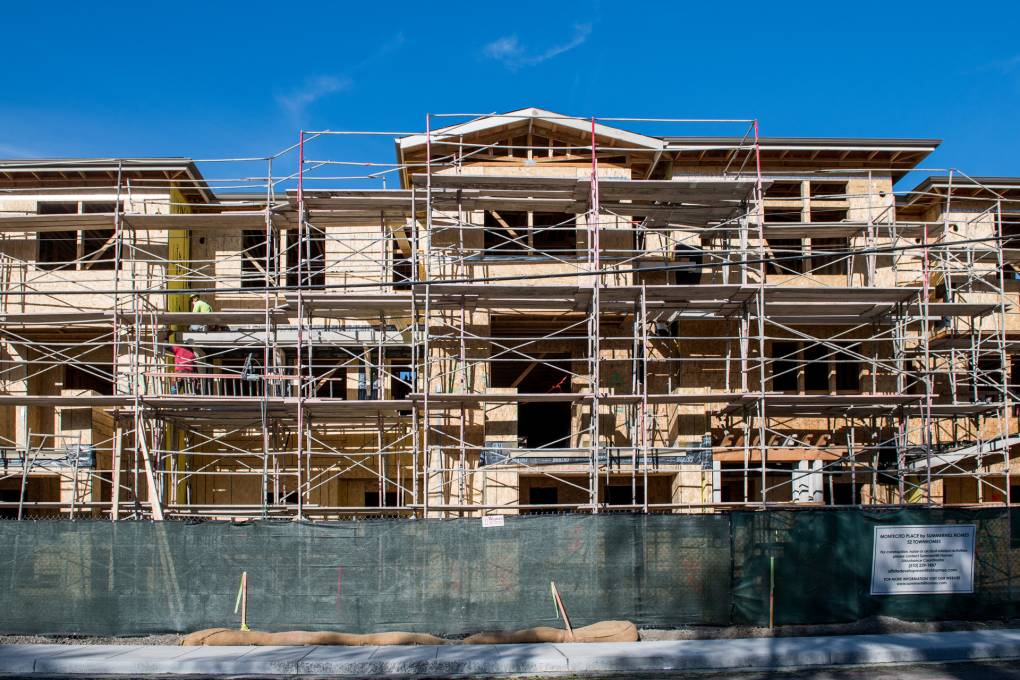
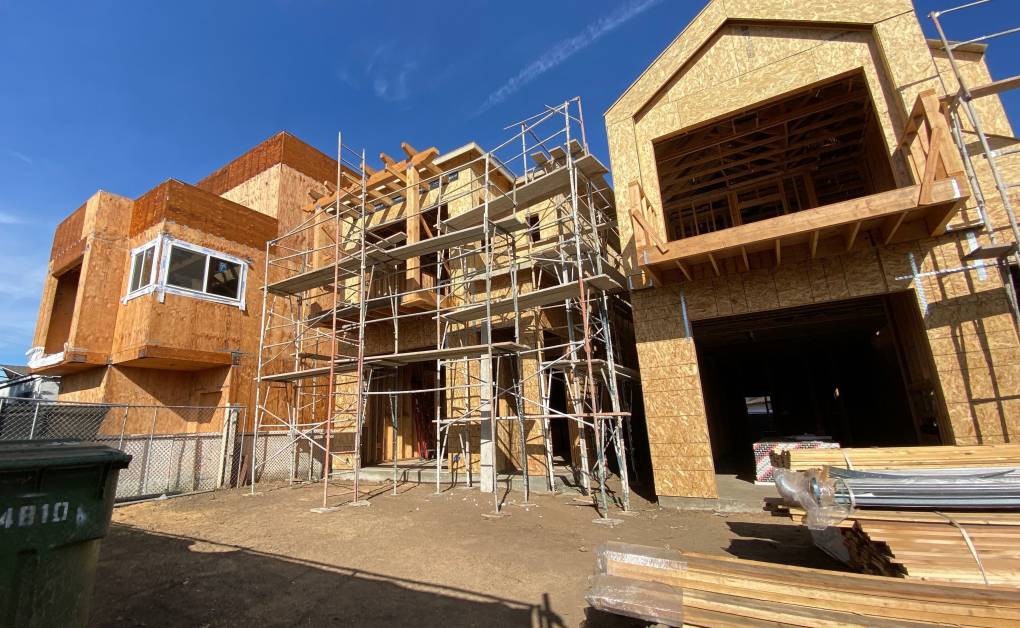
"caption": "In an effort to stanch the flow of teachers leaving and to attract new teachers to the state, California lawmakers passed a suite of housing bills that will allow staff housing to be built on any property owned by a school district without requiring the district to request zoning changes from city or county officials.",
"description": null,
"title": "RS41395_002_KQED_Housing_MountainView_02192020_3308-qut",
"credit": "Beth LaBerge/KQED",
"status": "inherit",
"altTag": "A housing complex under construction with scaffolding and a fence in front of it.",
"isLoading": false,
"fetchFailed": false
},
"news_11927281": {
"type": "attachments",
"id": "news_11927281",
"meta": {
"index": "attachments_1716263798",
"site": "news",
"id": "11927281",
"found": true
},
"parent": 11927278,
"imgSizes": {
"twentyfourteen-full-width": {
"file": "https://ww2.kqed.org/app/uploads/sites/10/2022/09/RS57928_014_KQED_MountainViewRVs_08172022-qut-1038x576.jpg",
"width": 1038,
"mimeType": "image/jpeg",
"height": 576
},
"thumbnail": {
"file": "https://ww2.kqed.org/app/uploads/sites/10/2022/09/RS57928_014_KQED_MountainViewRVs_08172022-qut-160x107.jpg",
"width": 160,
"mimeType": "image/jpeg",
"height": 107
},
"post-thumbnail": {
"file": "https://ww2.kqed.org/app/uploads/sites/10/2022/09/RS57928_014_KQED_MountainViewRVs_08172022-qut-672x372.jpg",
"width": 672,
"mimeType": "image/jpeg",
"height": 372
},
"kqedFullSize": {
"file": "https://ww2.kqed.org/app/uploads/sites/10/2022/09/RS57928_014_KQED_MountainViewRVs_08172022-qut.jpg",
"width": 1920,
"height": 1280
},
"large": {
"file": "https://ww2.kqed.org/app/uploads/sites/10/2022/09/RS57928_014_KQED_MountainViewRVs_08172022-qut-1020x680.jpg",
"width": 1020,
"mimeType": "image/jpeg",
"height": 680
},
"1536x1536": {
"file": "https://ww2.kqed.org/app/uploads/sites/10/2022/09/RS57928_014_KQED_MountainViewRVs_08172022-qut-1536x1024.jpg",
"width": 1536,
"mimeType": "image/jpeg",
"height": 1024
},
"medium": {
"file": "https://ww2.kqed.org/app/uploads/sites/10/2022/09/RS57928_014_KQED_MountainViewRVs_08172022-qut-800x533.jpg",
"width": 800,
"mimeType": "image/jpeg",
"height": 533
}
},
"publishDate": 1664558587,
"modified": 1664565930,
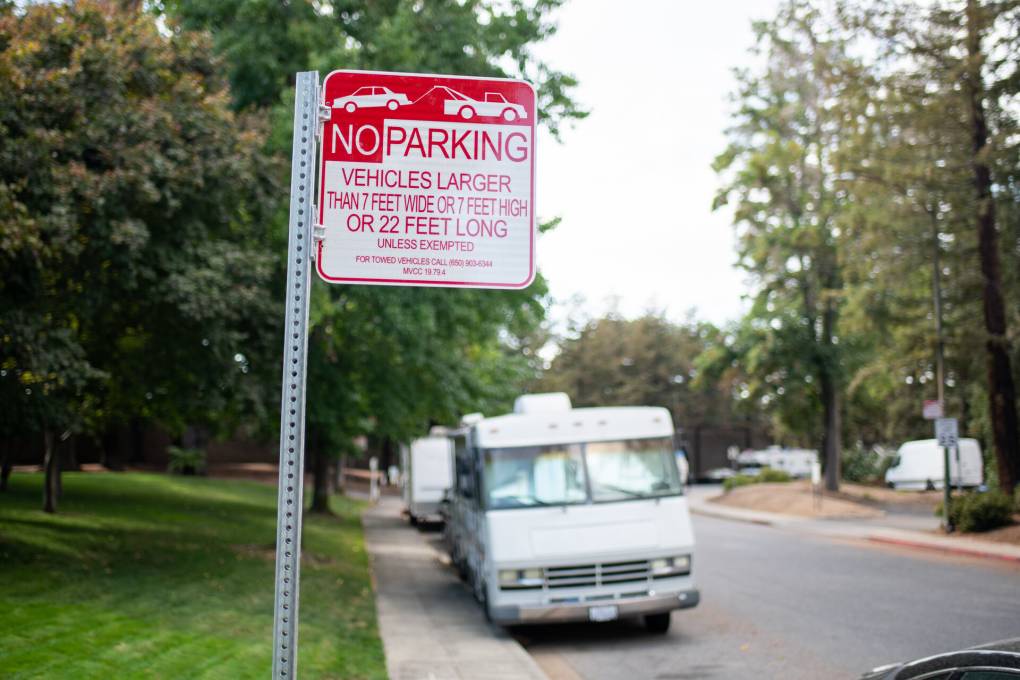
"caption": "A 'No Parking' sign aimed at RVs is posted near RVs parked along Continental Circle in Mountain View on Aug. 17, 2022. A new ordinance goes into effect October 1 further prohibiting where RVs can park in the city.",
"description": null,
"title": "RS57928_014_KQED_MountainViewRVs_08172022-qut",
"credit": "Beth LaBerge/KQED",
"status": "inherit",
"altTag": "a red and white 'no parking' sign is seen on a street where an RV is parked",
"isLoading": false,
"fetchFailed": false
},
"news_11927200": {
"type": "attachments",
"id": "news_11927200",
"meta": {
"index": "attachments_1716263798",
"site": "news",
"id": "11927200",
"found": true
},
"parent": 11927152,
"imgSizes": {
"twentyfourteen-full-width": {
"file": "https://ww2.kqed.org/app/uploads/sites/10/2022/09/RS58147_DSC03479-qut-1038x576.jpg",
"width": 1038,
"mimeType": "image/jpeg",
"height": 576
},
"thumbnail": {
"file": "https://ww2.kqed.org/app/uploads/sites/10/2022/09/RS58147_DSC03479-qut-160x107.jpg",
"width": 160,
"mimeType": "image/jpeg",
"height": 107
},
"post-thumbnail": {
"file": "https://ww2.kqed.org/app/uploads/sites/10/2022/09/RS58147_DSC03479-qut-672x372.jpg",
"width": 672,
"mimeType": "image/jpeg",
"height": 372
},
"kqedFullSize": {
"file": "https://ww2.kqed.org/app/uploads/sites/10/2022/09/RS58147_DSC03479-qut.jpg",
"width": 1920,
"height": 1280
},
"large": {
"file": "https://ww2.kqed.org/app/uploads/sites/10/2022/09/RS58147_DSC03479-qut-1020x680.jpg",
"width": 1020,
"mimeType": "image/jpeg",
"height": 680
},
"1536x1536": {
"file": "https://ww2.kqed.org/app/uploads/sites/10/2022/09/RS58147_DSC03479-qut-1536x1024.jpg",
"width": 1536,
"mimeType": "image/jpeg",
"height": 1024
},
"medium": {
"file": "https://ww2.kqed.org/app/uploads/sites/10/2022/09/RS58147_DSC03479-qut-800x533.jpg",
"width": 800,
"mimeType": "image/jpeg",
"height": 533
}
},
"publishDate": 1664491428,
"modified": 1664493815,
"caption": "For Flor Rodriguez and her two daughters, COVID rent relief came as a lifeline. But now the state is asking her — and thousands of other applicants — to pay back the money.",
"description": "A Latina mother and her two daughters look beseechingly at the camera.",
"title": "RS58147_DSC03479-qut",
"credit": "Aryk Copley/KQED",
"status": "inherit",
"altTag": "A Latina woman holding a 2-year-old daughter next to her 9-year-old daughter looking at the camera in a park with a playground in the background on a sunny day",
"isLoading": false,
"fetchFailed": false
},
"news_11850166": {
"type": "attachments",
"id": "news_11850166",
"meta": {
"index": "attachments_1716263798",
"site": "news",
"id": "11850166",
"found": true
},
"parent": 11850145,
"imgSizes": {
"apple_news_ca_landscape_5_5": {
"file": "https://ww2.kqed.org/app/uploads/sites/10/2020/12/RS42473_007_KQED_SanFrancisco_RentStrike_03312020-qut-1044x783.jpg",
"width": 1044,
"mimeType": "image/jpeg",
"height": 783
},
"apple_news_ca_square_4_0": {
"file": "https://ww2.kqed.org/app/uploads/sites/10/2020/12/RS42473_007_KQED_SanFrancisco_RentStrike_03312020-qut-470x470.jpg",
"width": 470,
"mimeType": "image/jpeg",
"height": 470
},
"twentyfourteen-full-width": {
"file": "https://ww2.kqed.org/app/uploads/sites/10/2020/12/RS42473_007_KQED_SanFrancisco_RentStrike_03312020-qut-1038x576.jpg",
"width": 1038,
"mimeType": "image/jpeg",
"height": 576
},
"thumbnail": {
"file": "https://ww2.kqed.org/app/uploads/sites/10/2020/12/RS42473_007_KQED_SanFrancisco_RentStrike_03312020-qut-160x107.jpg",
"width": 160,
"mimeType": "image/jpeg",
"height": 107
},
"post-thumbnail": {
"file": "https://ww2.kqed.org/app/uploads/sites/10/2020/12/RS42473_007_KQED_SanFrancisco_RentStrike_03312020-qut-672x372.jpg",
"width": 672,
"mimeType": "image/jpeg",
"height": 372
},
"kqedFullSize": {
"file": "https://ww2.kqed.org/app/uploads/sites/10/2020/12/RS42473_007_KQED_SanFrancisco_RentStrike_03312020-qut.jpg",
"width": 1920,
"height": 1280
},
"apple_news_ca_landscape_4_7": {
"file": "https://ww2.kqed.org/app/uploads/sites/10/2020/12/RS42473_007_KQED_SanFrancisco_RentStrike_03312020-qut-632x474.jpg",
"width": 632,
"mimeType": "image/jpeg",
"height": 474
},
"large": {
"file": "https://ww2.kqed.org/app/uploads/sites/10/2020/12/RS42473_007_KQED_SanFrancisco_RentStrike_03312020-qut-1020x680.jpg",
"width": 1020,
"mimeType": "image/jpeg",
"height": 680
},
"apple_news_ca_landscape_4_0": {
"file": "https://ww2.kqed.org/app/uploads/sites/10/2020/12/RS42473_007_KQED_SanFrancisco_RentStrike_03312020-qut-536x402.jpg",
"width": 536,
"mimeType": "image/jpeg",
"height": 402
},
"apple_news_ca_portrait_12_9": {
"file": "https://ww2.kqed.org/app/uploads/sites/10/2020/12/RS42473_007_KQED_SanFrancisco_RentStrike_03312020-qut-1122x1280.jpg",
"width": 1122,
"mimeType": "image/jpeg",
"height": 1280
},
"medium": {
"file": "https://ww2.kqed.org/app/uploads/sites/10/2020/12/RS42473_007_KQED_SanFrancisco_RentStrike_03312020-qut-800x533.jpg",
"width": 800,
"mimeType": "image/jpeg",
"height": 533
},
"apple_news_ca_portrait_4_0": {
"file": "https://ww2.kqed.org/app/uploads/sites/10/2020/12/RS42473_007_KQED_SanFrancisco_RentStrike_03312020-qut-354x472.jpg",
"width": 354,
"mimeType": "image/jpeg",
"height": 472
},
"apple_news_ca_portrait_9_7": {
"file": "https://ww2.kqed.org/app/uploads/sites/10/2020/12/RS42473_007_KQED_SanFrancisco_RentStrike_03312020-qut-840x1120.jpg",
"width": 840,
"mimeType": "image/jpeg",
"height": 1120
},
"apple_news_ca_landscape_12_9": {
"file": "https://ww2.kqed.org/app/uploads/sites/10/2020/12/RS42473_007_KQED_SanFrancisco_RentStrike_03312020-qut-1832x1280.jpg",
"width": 1832,
"mimeType": "image/jpeg",
"height": 1280
},
"apple_news_ca_square_9_7": {
"file": "https://ww2.kqed.org/app/uploads/sites/10/2020/12/RS42473_007_KQED_SanFrancisco_RentStrike_03312020-qut-1104x1104.jpg",
"width": 1104,
"mimeType": "image/jpeg",
"height": 1104
},
"1536x1536": {
"file": "https://ww2.kqed.org/app/uploads/sites/10/2020/12/RS42473_007_KQED_SanFrancisco_RentStrike_03312020-qut-1536x1024.jpg",
"width": 1536,
"mimeType": "image/jpeg",
"height": 1024
},
"apple_news_ca_portrait_4_7": {
"file": "https://ww2.kqed.org/app/uploads/sites/10/2020/12/RS42473_007_KQED_SanFrancisco_RentStrike_03312020-qut-414x552.jpg",
"width": 414,
"mimeType": "image/jpeg",
"height": 552
},
"apple_news_ca_square_12_9": {
"file": "https://ww2.kqed.org/app/uploads/sites/10/2020/12/RS42473_007_KQED_SanFrancisco_RentStrike_03312020-qut-1472x1280.jpg",
"width": 1472,
"mimeType": "image/jpeg",
"height": 1280
},
"apple_news_ca_portrait_5_5": {
"file": "https://ww2.kqed.org/app/uploads/sites/10/2020/12/RS42473_007_KQED_SanFrancisco_RentStrike_03312020-qut-687x916.jpg",
"width": 687,
"mimeType": "image/jpeg",
"height": 916
},
"apple_news_ca_square_4_7": {
"file": "https://ww2.kqed.org/app/uploads/sites/10/2020/12/RS42473_007_KQED_SanFrancisco_RentStrike_03312020-qut-550x550.jpg",
"width": 550,
"mimeType": "image/jpeg",
"height": 550
},
"apple_news_ca_landscape_9_7": {
"file": "https://ww2.kqed.org/app/uploads/sites/10/2020/12/RS42473_007_KQED_SanFrancisco_RentStrike_03312020-qut-1376x1032.jpg",
"width": 1376,
"mimeType": "image/jpeg",
"height": 1032
},
"apple_news_ca_square_5_5": {
"file": "https://ww2.kqed.org/app/uploads/sites/10/2020/12/RS42473_007_KQED_SanFrancisco_RentStrike_03312020-qut-912x912.jpg",
"width": 912,
"mimeType": "image/jpeg",
"height": 912
}
},
"publishDate": 1607390993,
"modified": 1664324333,
"caption": "A man walks past a 'Rent Strike!' sign in the Mission District on March 31, 2020.",
"description": null,
"title": "RS42473_007_KQED_SanFrancisco_RentStrike_03312020-qut",
"credit": "Beth LaBerge/KQED",
"status": "inherit",
"altTag": "A banner on a building says 'Rent Strike!'",
"isLoading": false,
"fetchFailed": false
},
"news_11926909": {
"type": "attachments",
"id": "news_11926909",
"meta": {
"index": "attachments_1716263798",
"site": "news",
"id": "11926909",
"found": true
},
"parent": 11926891,
"imgSizes": {
"twentyfourteen-full-width": {
"file": "https://ww2.kqed.org/app/uploads/sites/10/2022/09/RS58870_Toro_Castaño_001-qut-1038x576.jpg",
"width": 1038,
"mimeType": "image/jpeg",
"height": 576
},
"thumbnail": {
"file": "https://ww2.kqed.org/app/uploads/sites/10/2022/09/RS58870_Toro_Castaño_001-qut-160x107.jpg",
"width": 160,
"mimeType": "image/jpeg",
"height": 107
},
"post-thumbnail": {
"file": "https://ww2.kqed.org/app/uploads/sites/10/2022/09/RS58870_Toro_Castaño_001-qut-672x372.jpg",
"width": 672,
"mimeType": "image/jpeg",
"height": 372
},
"kqedFullSize": {
"file": "https://ww2.kqed.org/app/uploads/sites/10/2022/09/RS58870_Toro_Castaño_001-qut.jpg",
"width": 1920,
"height": 1280
},
"large": {
"file": "https://ww2.kqed.org/app/uploads/sites/10/2022/09/RS58870_Toro_Castaño_001-qut-1020x680.jpg",
"width": 1020,
"mimeType": "image/jpeg",
"height": 680
},
"1536x1536": {
"file": "https://ww2.kqed.org/app/uploads/sites/10/2022/09/RS58870_Toro_Castaño_001-qut-1536x1024.jpg",
"width": 1536,
"mimeType": "image/jpeg",
"height": 1024
},
"medium": {
"file": "https://ww2.kqed.org/app/uploads/sites/10/2022/09/RS58870_Toro_Castaño_001-qut-800x533.jpg",
"width": 800,
"mimeType": "image/jpeg",
"height": 533
}
},
"publishDate": 1664319729,
"modified": 1664319809,
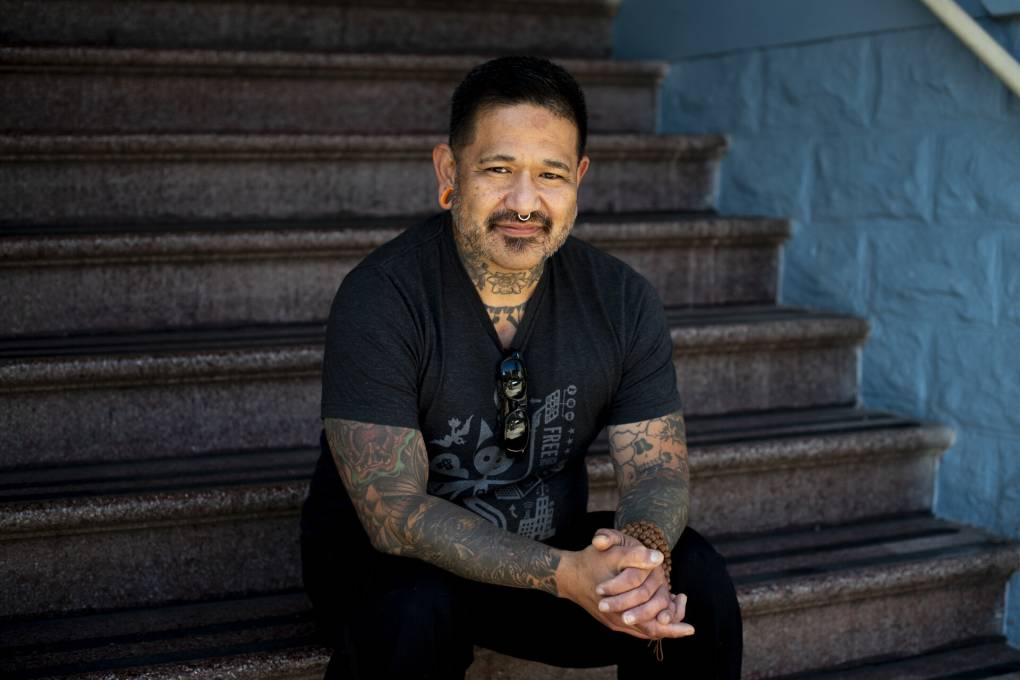
"caption": "Toro Castaño poses for a portrait outside his home in San Francisco on September 27, 2022. Castaño says he was displaced nearly daily when he lived on the streets of the Castro for two years. He's one of seven unhoused or formerly unhoused residents suing the city over forced displacements.",
"description": null,
"title": "KQED_Toro_Portrait",
"credit": "Marlena Sloss/KQED",
"status": "inherit",
"altTag": "A man wearing a short sleeved black shirt with tattoos on his arms and a nose ring sits on steps with his hands together.",
"isLoading": false,
"fetchFailed": false
},
"news_11925207": {
"type": "attachments",
"id": "news_11925207",
"meta": {
"index": "attachments_1716263798",
"site": "news",
"id": "11925207",
"found": true
},
"parent": 11925199,
"imgSizes": {
"twentyfourteen-full-width": {
"file": "https://ww2.kqed.org/app/uploads/sites/10/2022/09/RS57916_007_KQED_MountainViewRVs_08172022-qut-1038x576.jpg",
"width": 1038,
"mimeType": "image/jpeg",
"height": 576
},
"thumbnail": {
"file": "https://ww2.kqed.org/app/uploads/sites/10/2022/09/RS57916_007_KQED_MountainViewRVs_08172022-qut-160x107.jpg",
"width": 160,
"mimeType": "image/jpeg",
"height": 107
},
"post-thumbnail": {
"file": "https://ww2.kqed.org/app/uploads/sites/10/2022/09/RS57916_007_KQED_MountainViewRVs_08172022-qut-672x372.jpg",
"width": 672,
"mimeType": "image/jpeg",
"height": 372
},
"kqedFullSize": {
"file": "https://ww2.kqed.org/app/uploads/sites/10/2022/09/RS57916_007_KQED_MountainViewRVs_08172022-qut.jpg",
"width": 1920,
"height": 1280
},
"large": {
"file": "https://ww2.kqed.org/app/uploads/sites/10/2022/09/RS57916_007_KQED_MountainViewRVs_08172022-qut-1020x680.jpg",
"width": 1020,
"mimeType": "image/jpeg",
"height": 680
},
"1536x1536": {
"file": "https://ww2.kqed.org/app/uploads/sites/10/2022/09/RS57916_007_KQED_MountainViewRVs_08172022-qut-1536x1024.jpg",
"width": 1536,
"mimeType": "image/jpeg",
"height": 1024
},
"medium": {
"file": "https://ww2.kqed.org/app/uploads/sites/10/2022/09/RS57916_007_KQED_MountainViewRVs_08172022-qut-800x533.jpg",
"width": 800,
"mimeType": "image/jpeg",
"height": 533
}
},
"publishDate": 1662761388,
"modified": 1662770100,
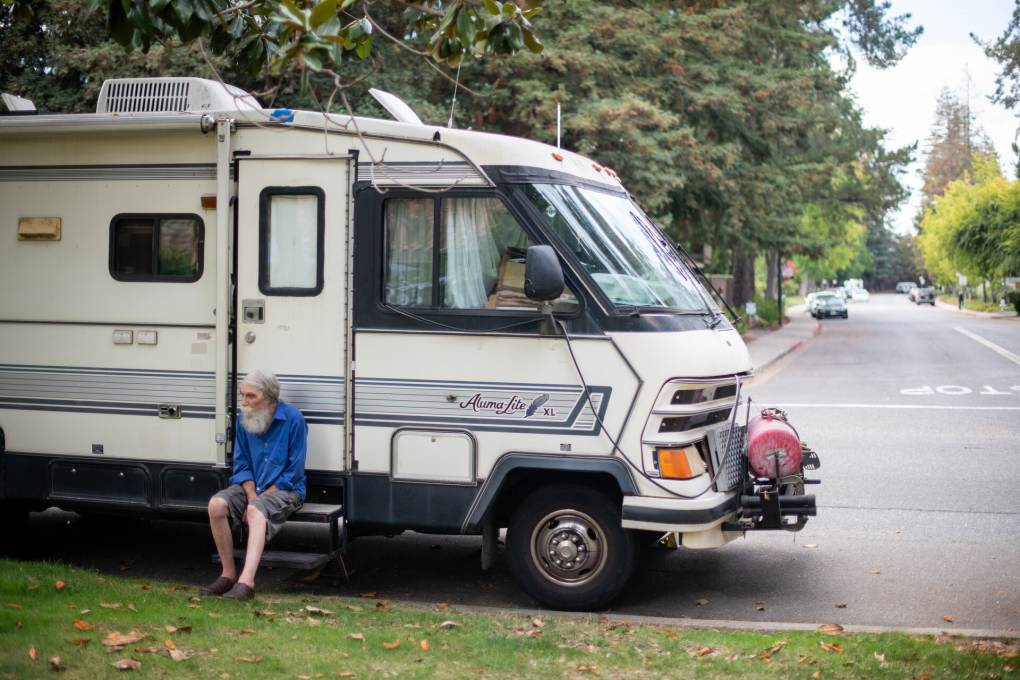
"caption": "Harry Epstein, 72, sits on the steps of his RV parked in Mountain View on Aug. 17, 2022. He has lived on these streets for the past 15 years and has come to call them home, like many other RV residents in the city.",
"description": null,
"title": "RS57916_007_KQED_MountainViewRVs_08172022-qut",
"credit": "Beth LaBerge/KQED",
"status": "inherit",
"altTag": "elderly man in blue shirt with large white beard sits on step outside an RV truck parked at the side of a street",
"isLoading": false,
"fetchFailed": false
},
"news_11926545": {
"type": "attachments",
"id": "news_11926545",
"meta": {
"index": "attachments_1716263798",
"site": "news",
"id": "11926545",
"found": true
},
"parent": 11926519,
"imgSizes": {
"twentyfourteen-full-width": {
"file": "https://ww2.kqed.org/app/uploads/sites/10/2022/09/RS57341_027_KQED_WoodStreetEncampment_07192022-qut-1-1038x576.jpg",
"width": 1038,
"mimeType": "image/jpeg",
"height": 576
},
"thumbnail": {
"file": "https://ww2.kqed.org/app/uploads/sites/10/2022/09/RS57341_027_KQED_WoodStreetEncampment_07192022-qut-1-160x107.jpg",
"width": 160,
"mimeType": "image/jpeg",
"height": 107
},
"post-thumbnail": {
"file": "https://ww2.kqed.org/app/uploads/sites/10/2022/09/RS57341_027_KQED_WoodStreetEncampment_07192022-qut-1-672x372.jpg",
"width": 672,
"mimeType": "image/jpeg",
"height": 372
},
"kqedFullSize": {
"file": "https://ww2.kqed.org/app/uploads/sites/10/2022/09/RS57341_027_KQED_WoodStreetEncampment_07192022-qut-1.jpg",
"width": 1920,
"height": 1280
},
"large": {
"file": "https://ww2.kqed.org/app/uploads/sites/10/2022/09/RS57341_027_KQED_WoodStreetEncampment_07192022-qut-1-1020x680.jpg",
"width": 1020,
"mimeType": "image/jpeg",
"height": 680
},
"1536x1536": {
"file": "https://ww2.kqed.org/app/uploads/sites/10/2022/09/RS57341_027_KQED_WoodStreetEncampment_07192022-qut-1-1536x1024.jpg",
"width": 1536,
"mimeType": "image/jpeg",
"height": 1024
},
"medium": {
"file": "https://ww2.kqed.org/app/uploads/sites/10/2022/09/RS57341_027_KQED_WoodStreetEncampment_07192022-qut-1-800x533.jpg",
"width": 800,
"mimeType": "image/jpeg",
"height": 533
}
},
"publishDate": 1663960199,
"modified": 1663963830,
"caption": "A sign says 'Housing Is a Human Right' at the Cob on Wood Project at the Wood Street encampment in West Oakland on July 19, 2022.",
"description": null,
"title": "RS57341_027_KQED_WoodStreetEncampment_07192022-qut (1)",
"credit": "Beth LaBerge/KQED",
"status": "inherit",
"altTag": "a sign reads \"Housing is a human right\" in a homeless encampment",
"isLoading": false,
"fetchFailed": false
},
"news_11926289": {
"type": "attachments",
"id": "news_11926289",
"meta": {
"index": "attachments_1716263798",
"site": "news",
"id": "11926289",
"found": true
},
"parent": 11926282,
"imgSizes": {
"twentyfourteen-full-width": {
"file": "https://ww2.kqed.org/app/uploads/sites/10/2022/09/IMG_6205-1-1038x576.jpg",
"width": 1038,
"mimeType": "image/jpeg",
"height": 576
},
"thumbnail": {
"file": "https://ww2.kqed.org/app/uploads/sites/10/2022/09/IMG_6205-1-160x107.jpg",
"width": 160,
"mimeType": "image/jpeg",
"height": 107
},
"post-thumbnail": {
"file": "https://ww2.kqed.org/app/uploads/sites/10/2022/09/IMG_6205-1-672x372.jpg",
"width": 672,
"mimeType": "image/jpeg",
"height": 372
},
"kqedFullSize": {
"file": "https://ww2.kqed.org/app/uploads/sites/10/2022/09/IMG_6205-1-scaled.jpg",
"width": 2560,
"height": 1707
},
"2048x2048": {
"file": "https://ww2.kqed.org/app/uploads/sites/10/2022/09/IMG_6205-1-2048x1365.jpg",
"width": 2048,
"mimeType": "image/jpeg",
"height": 1365
},
"large": {
"file": "https://ww2.kqed.org/app/uploads/sites/10/2022/09/IMG_6205-1-1020x680.jpg",
"width": 1020,
"mimeType": "image/jpeg",
"height": 680
},
"1536x1536": {
"file": "https://ww2.kqed.org/app/uploads/sites/10/2022/09/IMG_6205-1-1536x1024.jpg",
"width": 1536,
"mimeType": "image/jpeg",
"height": 1024
},
"full-width": {
"file": "https://ww2.kqed.org/app/uploads/sites/10/2022/09/IMG_6205-1-1920x1280.jpg",
"width": 1920,
"mimeType": "image/jpeg",
"height": 1280
},
"medium": {
"file": "https://ww2.kqed.org/app/uploads/sites/10/2022/09/IMG_6205-1-800x533.jpg",
"width": 800,
"mimeType": "image/jpeg",
"height": 533
}
},
"publishDate": 1663708429,
"modified": 1663708452,
"caption": null,
"description": null,
"title": "IMG_6205 (1)",
"credit": "Jana Kadah / San Jose Spotlight",
"status": "inherit",
"altTag": null,
"isLoading": false,
"fetchFailed": false
},
"news_11925697": {
"type": "attachments",
"id": "news_11925697",
"meta": {
"index": "attachments_1716263798",
"site": "news",
"id": "11925697",
"found": true
},
"parent": 11925690,
"imgSizes": {
"twentyfourteen-full-width": {
"file": "https://ww2.kqed.org/app/uploads/sites/10/2022/09/002_KQED_BerkeleySmallSites_09142022-1038x576.jpg",
"width": 1038,
"mimeType": "image/jpeg",
"height": 576
},
"thumbnail": {
"file": "https://ww2.kqed.org/app/uploads/sites/10/2022/09/002_KQED_BerkeleySmallSites_09142022-160x107.jpg",
"width": 160,
"mimeType": "image/jpeg",
"height": 107
},
"post-thumbnail": {
"file": "https://ww2.kqed.org/app/uploads/sites/10/2022/09/002_KQED_BerkeleySmallSites_09142022-672x372.jpg",
"width": 672,
"mimeType": "image/jpeg",
"height": 372
},
"kqedFullSize": {
"file": "https://ww2.kqed.org/app/uploads/sites/10/2022/09/002_KQED_BerkeleySmallSites_09142022.jpg",
"width": 1920,
"height": 1280
},
"large": {
"file": "https://ww2.kqed.org/app/uploads/sites/10/2022/09/002_KQED_BerkeleySmallSites_09142022-1020x680.jpg",
"width": 1020,
"mimeType": "image/jpeg",
"height": 680
},
"1536x1536": {
"file": "https://ww2.kqed.org/app/uploads/sites/10/2022/09/002_KQED_BerkeleySmallSites_09142022-1536x1024.jpg",
"width": 1536,
"mimeType": "image/jpeg",
"height": 1024
},
"medium": {
"file": "https://ww2.kqed.org/app/uploads/sites/10/2022/09/002_KQED_BerkeleySmallSites_09142022-800x533.jpg",
"width": 800,
"mimeType": "image/jpeg",
"height": 533
}
},
"publishDate": 1663198404,
"modified": 1663206128,
"caption": "Betty Gray waters plants in her new apartment in Berkeley on Sept. 14, 2022. She is a resident of the newly renovated Stuart Street Co-Op Apartments funded by Berkeley's Small Sites Program.",
"description": null,
"title": "002_KQED_BerkeleySmallSites_09142022",
"credit": "Beth LaBerge/KQED",
"status": "inherit",
"altTag": "A woman wearing glasses, black gloves, bracelets and a yellow shirt rests her hands in front of a sink counter while water runs from a faucet into a plant.",
"isLoading": false,
"fetchFailed": false
},
"news_11924205": {
"type": "attachments",
"id": "news_11924205",
"meta": {
"index": "attachments_1716263798",
"site": "news",
"id": "11924205",
"found": true
},
"parent": 11924117,
"imgSizes": {
"twentyfourteen-full-width": {
"file": "https://ww2.kqed.org/app/uploads/sites/10/2022/08/RS58238_GettyImages-1238594058-qut-1038x576.jpg",
"width": 1038,
"mimeType": "image/jpeg",
"height": 576
},
"thumbnail": {
"file": "https://ww2.kqed.org/app/uploads/sites/10/2022/08/RS58238_GettyImages-1238594058-qut-160x107.jpg",
"width": 160,
"mimeType": "image/jpeg",
"height": 107
},
"post-thumbnail": {
"file": "https://ww2.kqed.org/app/uploads/sites/10/2022/08/RS58238_GettyImages-1238594058-qut-672x372.jpg",
"width": 672,
"mimeType": "image/jpeg",
"height": 372
},
"kqedFullSize": {
"file": "https://ww2.kqed.org/app/uploads/sites/10/2022/08/RS58238_GettyImages-1238594058-qut.jpg",
"width": 1920,
"height": 1280
},
"large": {
"file": "https://ww2.kqed.org/app/uploads/sites/10/2022/08/RS58238_GettyImages-1238594058-qut-1020x680.jpg",
"width": 1020,
"mimeType": "image/jpeg",
"height": 680
},
"1536x1536": {
"file": "https://ww2.kqed.org/app/uploads/sites/10/2022/08/RS58238_GettyImages-1238594058-qut-1536x1024.jpg",
"width": 1536,
"mimeType": "image/jpeg",
"height": 1024
},
"medium": {
"file": "https://ww2.kqed.org/app/uploads/sites/10/2022/08/RS58238_GettyImages-1238594058-qut-800x533.jpg",
"width": 800,
"mimeType": "image/jpeg",
"height": 533
}
},
"publishDate": 1661963945,
"modified": 1685626707,
"caption": "Gov. Gavin Newsom signs legislation to institute CARE Court, his plan to overhaul the state's approach to mental health care for people diagnosed with schizophrenia and other psychotic disorders.",
"description": null,
"title": "Governor Gavin Newsom speaks during a press conference to unveil the next phase of California's pandemic response",
"credit": "Allen J. Schaben/Los Angeles Times via Getty Images",
"status": "inherit",
"altTag": "Gavin Newsom speaks at a press conference",
"isLoading": false,
"fetchFailed": false
},
"news_11925180": {
"type": "attachments",
"id": "news_11925180",
"meta": {
"index": "attachments_1716263798",
"site": "news",
"id": "11925180",
"found": true
},
"parent": 11925169,
"imgSizes": {
"twentyfourteen-full-width": {
"file": "https://ww2.kqed.org/app/uploads/sites/10/2022/09/022_KQED_WoodStreetOaklandCalTrans_09082022-1038x576.jpg",
"width": 1038,
"mimeType": "image/jpeg",
"height": 576
},
"thumbnail": {
"file": "https://ww2.kqed.org/app/uploads/sites/10/2022/09/022_KQED_WoodStreetOaklandCalTrans_09082022-160x107.jpg",
"width": 160,
"mimeType": "image/jpeg",
"height": 107
},
"post-thumbnail": {
"file": "https://ww2.kqed.org/app/uploads/sites/10/2022/09/022_KQED_WoodStreetOaklandCalTrans_09082022-672x372.jpg",
"width": 672,
"mimeType": "image/jpeg",
"height": 372
},
"kqedFullSize": {
"file": "https://ww2.kqed.org/app/uploads/sites/10/2022/09/022_KQED_WoodStreetOaklandCalTrans_09082022.jpg",
"width": 1920,
"height": 1280
},
"large": {
"file": "https://ww2.kqed.org/app/uploads/sites/10/2022/09/022_KQED_WoodStreetOaklandCalTrans_09082022-1020x680.jpg",
"width": 1020,
"mimeType": "image/jpeg",
"height": 680
},
"1536x1536": {
"file": "https://ww2.kqed.org/app/uploads/sites/10/2022/09/022_KQED_WoodStreetOaklandCalTrans_09082022-1536x1024.jpg",
"width": 1536,
"mimeType": "image/jpeg",
"height": 1024
},
"medium": {
"file": "https://ww2.kqed.org/app/uploads/sites/10/2022/09/022_KQED_WoodStreetOaklandCalTrans_09082022-800x533.jpg",
"width": 800,
"mimeType": "image/jpeg",
"height": 533
}
},
"publishDate": 1662759779,
"modified": 1663002999,
"caption": "Caltrans crews wait to clear the Wood Street encampment in Oakland on Sept. 8, 2022, while residents and advocates block the road.",
"description": null,
"title": "022_KQED_WoodStreetOaklandCalTrans_09082022",
"credit": "Beth LaBerge/KQED",
"status": "inherit",
"altTag": "Several people stand with signs saying 'shelter beds are not the answer' police and people with hardhats can be seen among the crowd",
"isLoading": false,
"fetchFailed": false
},
"news_11925001": {
"type": "attachments",
"id": "news_11925001",
"meta": {
"index": "attachments_1716263798",
"site": "news",
"id": "11925001",
"found": true
},
"parent": 11925000,
"imgSizes": {
"twentyfourteen-full-width": {
"file": "https://ww2.kqed.org/app/uploads/sites/10/2022/09/gettyimages-1229723447_custom-df5a0c820abbb19ccd18a396c793d24dc9746881-1038x576.jpg",
"width": 1038,
"mimeType": "image/jpeg",
"height": 576
},
"thumbnail": {
"file": "https://ww2.kqed.org/app/uploads/sites/10/2022/09/gettyimages-1229723447_custom-df5a0c820abbb19ccd18a396c793d24dc9746881-160x98.jpg",
"width": 160,
"mimeType": "image/jpeg",
"height": 98
},
"post-thumbnail": {
"file": "https://ww2.kqed.org/app/uploads/sites/10/2022/09/gettyimages-1229723447_custom-df5a0c820abbb19ccd18a396c793d24dc9746881-672x372.jpg",
"width": 672,
"mimeType": "image/jpeg",
"height": 372
},
"kqedFullSize": {
"file": "https://ww2.kqed.org/app/uploads/sites/10/2022/09/gettyimages-1229723447_custom-df5a0c820abbb19ccd18a396c793d24dc9746881-scaled.jpg",
"width": 2560,
"height": 1576
},
"2048x2048": {
"file": "https://ww2.kqed.org/app/uploads/sites/10/2022/09/gettyimages-1229723447_custom-df5a0c820abbb19ccd18a396c793d24dc9746881-2048x1260.jpg",
"width": 2048,
"mimeType": "image/jpeg",
"height": 1260
},
"large": {
"file": "https://ww2.kqed.org/app/uploads/sites/10/2022/09/gettyimages-1229723447_custom-df5a0c820abbb19ccd18a396c793d24dc9746881-1020x628.jpg",
"width": 1020,
"mimeType": "image/jpeg",
"height": 628
},
"1536x1536": {
"file": "https://ww2.kqed.org/app/uploads/sites/10/2022/09/gettyimages-1229723447_custom-df5a0c820abbb19ccd18a396c793d24dc9746881-1536x945.jpg",
"width": 1536,
"mimeType": "image/jpeg",
"height": 945
},
"full-width": {
"file": "https://ww2.kqed.org/app/uploads/sites/10/2022/09/gettyimages-1229723447_custom-df5a0c820abbb19ccd18a396c793d24dc9746881-1920x1182.jpg",
"width": 1920,
"mimeType": "image/jpeg",
"height": 1182
},
"medium": {
"file": "https://ww2.kqed.org/app/uploads/sites/10/2022/09/gettyimages-1229723447_custom-df5a0c820abbb19ccd18a396c793d24dc9746881-800x492.jpg",
"width": 800,
"mimeType": "image/jpeg",
"height": 492
}
},
"publishDate": 1662667937,
"modified": 1675433713,
"caption": null,
"description": "A house under construction is seen in Culver City, a neighborhood of Los Angeles on November 21, 2020. - The US real estate market is booming even as the coronavirus crisis intensifies, and the seemingly insatiable appetite for new and older homes has sent prices soaring -- meaning more and more families with modest incomes are seeing their dreams of owning property shattered. (Photo by Chris DELMAS / AFP) (Photo by CHRIS DELMAS/AFP via Getty Images)",
"title": "High housing costs in Milpitas, in Northern California, have made it difficult for educators to live near where they work. The median home price in Milpitas is $1.3 million, according to Realtor.com. Here, a house is under construction in Culver City, in Southern California, in 2020.",
"credit": "Photo by CHRIS DELMAS/AFP via Getty Images",
"status": "inherit",
"altTag": "A house under construction.",
"isLoading": false,
"fetchFailed": false
}
},
"audioPlayerReducer": {
"postId": "stream_live",
"isPaused": true,
"isPlaying": false,
"pfsActive": false,
"pledgeModalIsOpen": true,
"playerDrawerIsOpen": false,
"liveAudioPlayStartedAt": 0,
"liveAudioPlayContext": ""
},
"authorsReducer": {
"byline_news_11927941": {
"type": "authors",
"id": "byline_news_11927941",
"meta": {
"override": true
},
"slug": "byline_news_11927941",
"name": "\u003ca href=\"https://edsource.org/author/dlambert\">Diana Lambert\u003c/a>",
"isLoading": false
},
"byline_news_11925690": {
"type": "authors",
"id": "byline_news_11925690",
"meta": {
"override": true
},
"slug": "byline_news_11925690",
"name": "\u003ca href=\"https://twitter.com/AnaOphLin\">Anaïs-Ophelia Lino\u003c/a>",
"isLoading": false
},
"byline_news_11925000": {
"type": "authors",
"id": "byline_news_11925000",
"meta": {
"override": true
},
"slug": "byline_news_11925000",
"name": "Joe Hernandez",
"isLoading": false
},
"shossaini": {
"type": "authors",
"id": "3214",
"meta": {
"index": "authors_1716337520",
"id": "3214",
"found": true
},
"name": "Sara Hossaini",
"firstName": "Sara",
"lastName": "Hossaini",
"slug": "shossaini",
"email": "shossaini@kqed.org",
"display_author_email": true,
"staff_mastheads": [
"news"
],
"title": "KQED Reporter",
"bio": "Sara Hossaini came to general assignment reporting at KQED in 2013 after two winters reporting at Wyoming Public Radio. She holds a bachelor's degree in broadcast journalism from the University of Nebraska-Lincoln. Her radio romance began after a bitter breakup with documentary film (Ok, maybe it's still complicated). Her first simultaneous jobs in San Francisco were as Associate Producer on a PBS film series through the Center for Asian American Media and as a butler. She likes to trot, plot and make things with her hands.",
"avatar": "https://secure.gravatar.com/avatar/060e9f56b9554e17942e89f413242774?s=600&d=blank&r=g",
"twitter": "mshossaini",
"facebook": null,
"instagram": null,
"linkedin": null,
"sites": [
{
"site": "news",
"roles": [
"author"
]
},
{
"site": "stateofhealth",
"roles": [
"author"
]
}
],
"headData": {
"title": "Sara Hossaini | KQED",
"description": "KQED Reporter",
"ogImgSrc": "https://secure.gravatar.com/avatar/060e9f56b9554e17942e89f413242774?s=600&d=blank&r=g",
"twImgSrc": "https://secure.gravatar.com/avatar/060e9f56b9554e17942e89f413242774?s=600&d=blank&r=g"
},
"isLoading": false,
"link": "/author/shossaini"
},
"esilvers": {
"type": "authors",
"id": "7237",
"meta": {
"index": "authors_1716337520",
"id": "7237",
"found": true
},
"name": "Emma Silvers",
"firstName": "Emma",
"lastName": "Silvers",
"slug": "esilvers",
"email": "esilvers@kqed.org",
"display_author_email": false,
"staff_mastheads": [],
"title": "KQED Contributor",
"bio": "Emma Silvers is an editor at KQED Arts and a former digital producer at KQED News. Born and raised in the Bay Area, she has previously been an arts and entertainment editor at the \u003cem>San Francisco Chronicle\u003c/em>, \u003cem>SF Weekly\u003c/em> and the \u003cem>San Francisco Bay Guardian.\u003c/em> \u003ca href=\"https://www.emmasilvers.com\">Her work\u003c/a> has also appeared in \u003cem>Rolling Stone\u003c/em>, Pitchfork and \u003cem>Mother Jones\u003c/em>. In 2017 she was the recipient of the Society of Professional Journalists-Northern California's award for arts and culture reporting. In 1993 she \u003ca href=\"https://www.kqed.org/pop/16759/wait-what-my-coworker-was-a-voice-over-hyperventilator-for-jurassic-park\">hyperventilated in \u003cem>Jurassic Park\u003c/em>\u003c/a>.",
"avatar": "https://secure.gravatar.com/avatar/247beada39b88ea5759db1f51dba05cf?s=600&d=blank&r=g",
"twitter": "emmaruthless",
"facebook": null,
"instagram": null,
"linkedin": null,
"sites": [
{
"site": "arts",
"roles": [
"editor"
]
},
{
"site": "news",
"roles": [
"editor"
]
},
{
"site": "pop",
"roles": [
"contributor"
]
},
{
"site": "bayareabites",
"roles": [
"editor"
]
},
{
"site": "food",
"roles": [
"contributor"
]
},
{
"site": "liveblog",
"roles": [
"editor"
]
}
],
"headData": {
"title": "Emma Silvers | KQED",
"description": "KQED Contributor",
"ogImgSrc": "https://secure.gravatar.com/avatar/247beada39b88ea5759db1f51dba05cf?s=600&d=blank&r=g",
"twImgSrc": "https://secure.gravatar.com/avatar/247beada39b88ea5759db1f51dba05cf?s=600&d=blank&r=g"
},
"isLoading": false,
"link": "/author/esilvers"
},
"ecruzguevarra": {
"type": "authors",
"id": "8654",
"meta": {
"index": "authors_1716337520",
"id": "8654",
"found": true
},
"name": "Ericka Cruz Guevarra",
"firstName": "Ericka",
"lastName": "Cruz Guevarra",
"slug": "ecruzguevarra",
"email": "ecruzguevarra@kqed.org",
"display_author_email": true,
"staff_mastheads": [
"news"
],
"title": "Producer, The Bay Podcast",
"bio": "Ericka Cruz Guevarra is host of \u003ca href=\"https://www.kqed.org/podcasts/thebay\">\u003cem>The Bay\u003c/em>\u003c/a> podcast at KQED. Before host, she was the show’s producer. Her work in that capacity includes a three-part reported series on policing in Vallejo, which won a 2020 excellence in journalism award from the Society of Professional Journalists. Ericka has worked as a breaking news reporter at Oregon Public Broadcasting, helped produce the Code Switch podcast, and was KQED’s inaugural Raul Ramirez Diversity Fund intern. She’s also an alumna of NPR’s Next Generation Radio program. Send her an email if you have strong feelings about whether Fairfield and Suisun City are the Bay. Ericka is represented by SAG-AFTRA.",
"avatar": "https://secure.gravatar.com/avatar/accefc1de4bafc7e234b69bcb9b6f6536c130fd84709bc3069ef11a78787e1bb?s=600&d=blank&r=g",
"twitter": "NotoriousECG",
"bluesky": null,
"facebook": null,
"instagram": null,
"linkedin": null,
"sites": [
{
"site": "arts",
"roles": [
"subscriber"
]
},
{
"site": "news",
"roles": [
"editor",
"manage_categories"
]
},
{
"site": "futureofyou",
"roles": [
"subscriber"
]
},
{
"site": "stateofhealth",
"roles": [
"subscriber"
]
},
{
"site": "science",
"roles": [
"editor"
]
},
{
"site": "forum",
"roles": [
"subscriber"
]
}
],
"headData": {
"title": "Ericka Cruz Guevarra | KQED",
"description": "Producer, The Bay Podcast",
"ogImgSrc": "https://secure.gravatar.com/avatar/accefc1de4bafc7e234b69bcb9b6f6536c130fd84709bc3069ef11a78787e1bb?s=600&d=blank&r=g",
"twImgSrc": "https://secure.gravatar.com/avatar/accefc1de4bafc7e234b69bcb9b6f6536c130fd84709bc3069ef11a78787e1bb?s=600&d=blank&r=g"
},
"isLoading": false,
"link": "/author/ecruzguevarra"
},
"vrancano": {
"type": "authors",
"id": "11276",
"meta": {
"index": "authors_1716337520",
"id": "11276",
"found": true
},
"name": "Vanessa Rancaño",
"firstName": "Vanessa",
"lastName": "Rancaño",
"slug": "vrancano",
"email": "vrancano@kqed.org",
"display_author_email": false,
"staff_mastheads": [
"news"
],
"title": "Reporter",
"bio": "Vanessa Rancaño is a features reporter for KQED. She’s also covered homelessness and education for the station and reported from the Central Valley. Her work has aired across public radio, from flagship national news shows to longform narrative podcasts. Before taking up a mic, she worked as a freelance print journalist. She’s been recognized with a number of national and regional awards. Vanessa grew up in California's Central Valley. She's a former NPR Kroc Fellow, and a graduate of the UC Berkeley Graduate School of Journalism.",
"avatar": "https://secure.gravatar.com/avatar/b3a383dfb0e7ee1c17568f2cf067904ab654d6e3de9743fc661f3c788ade1bed?s=600&d=blank&r=g",
"twitter": "vanessarancano",
"bluesky": null,
"facebook": null,
"instagram": null,
"linkedin": null,
"sites": [
{
"site": "arts",
"roles": [
"editor"
]
},
{
"site": "news",
"roles": [
"editor"
]
},
{
"site": "liveblog",
"roles": [
"contributor"
]
}
],
"headData": {
"title": "Vanessa Rancaño | KQED",
"description": "Reporter",
"ogImgSrc": "https://secure.gravatar.com/avatar/b3a383dfb0e7ee1c17568f2cf067904ab654d6e3de9743fc661f3c788ade1bed?s=600&d=blank&r=g",
"twImgSrc": "https://secure.gravatar.com/avatar/b3a383dfb0e7ee1c17568f2cf067904ab654d6e3de9743fc661f3c788ade1bed?s=600&d=blank&r=g"
},
"isLoading": false,
"link": "/author/vrancano"
},
"amontecillo": {
"type": "authors",
"id": "11649",
"meta": {
"index": "authors_1716337520",
"id": "11649",
"found": true
},
"name": "Alan Montecillo",
"firstName": "Alan",
"lastName": "Montecillo",
"slug": "amontecillo",
"email": "amontecillo@kqed.org",
"display_author_email": false,
"staff_mastheads": [
"news"
],
"title": "KQED Contributor",
"bio": "Alan Montecillo is the senior editor of \u003cem>\u003ca href=\"http://kqed.org/thebay\">The Bay\u003c/a>, \u003c/em> KQED's local news podcast. Before moving to the Bay Area, he worked as a senior talk show producer for WILL in Champaign-Urbana, Illinois and at Oregon Public Broadcasting in Portland, Oregon. He has won journalism awards from the Society of Professional Journalists Northern California, the Public Media Journalists Association, The Signal Awards, and has also received a regional Edward R. Murrow award. Alan is a Filipino American from Hong Kong and a graduate of Reed College.",
"avatar": "https://secure.gravatar.com/avatar/268f53a2066899ea9efdd8a5900218b17c822d9862cbc9326cccec53ef41d349?s=600&d=blank&r=g",
"twitter": "alanmontecillo",
"bluesky": null,
"facebook": null,
"instagram": null,
"linkedin": null,
"sites": [
{
"site": "",
"roles": [
"editor"
]
},
{
"site": "news",
"roles": [
"editor",
"manage_categories"
]
}
],
"headData": {
"title": "Alan Montecillo | KQED",
"description": "KQED Contributor",
"ogImgSrc": "https://secure.gravatar.com/avatar/268f53a2066899ea9efdd8a5900218b17c822d9862cbc9326cccec53ef41d349?s=600&d=blank&r=g",
"twImgSrc": "https://secure.gravatar.com/avatar/268f53a2066899ea9efdd8a5900218b17c822d9862cbc9326cccec53ef41d349?s=600&d=blank&r=g"
},
"isLoading": false,
"link": "/author/amontecillo"
},
"ebaldassari": {
"type": "authors",
"id": "11652",
"meta": {
"index": "authors_1716337520",
"id": "11652",
"found": true
},
"name": "Erin Baldassari",
"firstName": "Erin",
"lastName": "Baldassari",
"slug": "ebaldassari",
"email": "ebaldassari@KQED.org",
"display_author_email": true,
"staff_mastheads": [
"news"
],
"title": "Staff Writer",
"bio": "Erin Baldassari covers housing for KQED. She's a former print journalist and most recently worked as the transportation reporter for the \u003cem>Mercury News\u003c/em> and \u003cem>East Bay Times. \u003c/em>There, she focused on how the Bay Area’s housing shortage has changed the way people move around the region. She also served on the \u003cem>East Bay Times\u003c/em>’ 2017 Pulitzer Prize-winning team for coverage of the Ghost Ship Fire in Oakland. Prior to that, Erin worked as a breaking news and general assignment reporter for a variety of outlets in the Bay Area and the greater Boston area. A Tufts University alumna, Erin grew up in the foothills of the Sierra Nevada mountains and in Sonoma County. She is a life-long KQED listener.",
"avatar": "https://secure.gravatar.com/avatar/5e95cad64a8ca08288082212e199d2b0cbeb4fd8e8ef5339395f361032bbe005?s=600&d=blank&r=g",
"twitter": "e_baldi",
"bluesky": null,
"facebook": null,
"instagram": null,
"linkedin": null,
"sites": [
{
"site": "news",
"roles": [
"edit_others_posts",
"editor"
]
},
{
"site": "science",
"roles": [
"editor"
]
},
{
"site": "liveblog",
"roles": [
"editor"
]
}
],
"headData": {
"title": "Erin Baldassari | KQED",
"description": "Staff Writer",
"ogImgSrc": "https://secure.gravatar.com/avatar/5e95cad64a8ca08288082212e199d2b0cbeb4fd8e8ef5339395f361032bbe005?s=600&d=blank&r=g",
"twImgSrc": "https://secure.gravatar.com/avatar/5e95cad64a8ca08288082212e199d2b0cbeb4fd8e8ef5339395f361032bbe005?s=600&d=blank&r=g"
},
"isLoading": false,
"link": "/author/ebaldassari"
},
"blaberge": {
"type": "authors",
"id": "11667",
"meta": {
"index": "authors_1716337520",
"id": "11667",
"found": true
},
"name": "Beth LaBerge",
"firstName": "Beth",
"lastName": "LaBerge",
"slug": "blaberge",
"email": "blaberge@KQED.org",
"display_author_email": true,
"staff_mastheads": [
"news"
],
"title": "Photographer, News",
"bio": "Beth LaBerge is a visual journalist for \u003ca href=\"https://www.kqed.org/news\">KQED News\u003c/a>.",
"avatar": "https://secure.gravatar.com/avatar/ce49ecd7a1306685637b45a1f6f5dedfc4ae9481966eb596fea5160466dd6319?s=600&d=blank&r=g",
"twitter": null,
"bluesky": null,
"facebook": null,
"instagram": "https://www.instagram.com/bethlaberge/",
"linkedin": null,
"sites": [
{
"site": "arts",
"roles": [
"editor",
"manage_categories"
]
},
{
"site": "news",
"roles": [
"editor",
"edit_plugins",
"manage_categories"
]
},
{
"site": "science",
"roles": [
"editor",
"contributor",
"author",
"manage_categories"
]
},
{
"site": "perspectives",
"roles": [
"editor"
]
},
{
"site": "liveblog",
"roles": [
"editor"
]
}
],
"headData": {
"title": "Beth LaBerge | KQED",
"description": "Photographer, News",
"ogImgSrc": "https://secure.gravatar.com/avatar/ce49ecd7a1306685637b45a1f6f5dedfc4ae9481966eb596fea5160466dd6319?s=600&d=blank&r=g",
"twImgSrc": "https://secure.gravatar.com/avatar/ce49ecd7a1306685637b45a1f6f5dedfc4ae9481966eb596fea5160466dd6319?s=600&d=blank&r=g"
},
"isLoading": false,
"link": "/author/blaberge"
},
"abandlamudi": {
"type": "authors",
"id": "11672",
"meta": {
"index": "authors_1716337520",
"id": "11672",
"found": true
},
"name": "Adhiti Bandlamudi",
"firstName": "Adhiti",
"lastName": "Bandlamudi",
"slug": "abandlamudi",
"email": "abandlamudi@kqed.org",
"display_author_email": false,
"staff_mastheads": [
"news"
],
"title": "KQED Housing Reporter",
"bio": "Adhiti Bandlamudi reports for KQED's Housing desk. She focuses on how housing gets built across the Bay Area. Before joining KQED in 2020, she reported for WUNC in Durham, North Carolina, WABE in Atlanta, Georgia and Capital Public Radio in Sacramento. In 2017, she was awarded a Kroc Fellowship at NPR where she reported on everything from sprinkles to the Golden State Killer's arrest. When she's not reporting, she's baking new recipes in her kitchen or watching movies with friends and family. She's originally from Georgia and has strong opinions about Great British Bake Off.",
"avatar": "https://secure.gravatar.com/avatar/868129c8b257bb99a3500e2c86a65400?s=600&d=mm&r=g",
"twitter": "oddity_adhiti",
"facebook": null,
"instagram": null,
"linkedin": null,
"sites": [
{
"site": "arts",
"roles": [
"author"
]
},
{
"site": "news",
"roles": [
"editor"
]
},
{
"site": "liveblog",
"roles": [
"author"
]
}
],
"headData": {
"title": "Adhiti Bandlamudi | KQED",
"description": "KQED Housing Reporter",
"ogImgSrc": "https://secure.gravatar.com/avatar/868129c8b257bb99a3500e2c86a65400?s=600&d=mm&r=g",
"twImgSrc": "https://secure.gravatar.com/avatar/868129c8b257bb99a3500e2c86a65400?s=600&d=mm&r=g"
},
"isLoading": false,
"link": "/author/abandlamudi"
},
"ccabreralomeli": {
"type": "authors",
"id": "11708",
"meta": {
"index": "authors_1716337520",
"id": "11708",
"found": true
},
"name": "Carlos Cabrera-Lomelí",
"firstName": "Carlos",
"lastName": "Cabrera-Lomelí",
"slug": "ccabreralomeli",
"email": "ccabreralomeli@KQED.org",
"display_author_email": true,
"staff_mastheads": [
"news"
],
"title": "Community Reporter",
"bio": "Carlos Cabrera-Lomelí is a community reporter with KQED's digital engagement team. He also reports and co-produces for KQED's bilingual news hub KQED en Español. He grew up in San Francisco's Mission District and has previously worked with Univision, 48 Hills and REFORMA in Mexico City.",
"avatar": "https://secure.gravatar.com/avatar/c309be9665e484f887b818c89e273ecc673004f426f36b24d00a4d813a2e0518?s=600&d=blank&r=g",
"twitter": "@LomeliCabrera",
"bluesky": null,
"facebook": null,
"instagram": null,
"linkedin": null,
"sites": [
{
"site": "arts",
"roles": [
"editor"
]
},
{
"site": "news",
"roles": [
"editor"
]
},
{
"site": "about",
"roles": [
"editor"
]
},
{
"site": "science",
"roles": [
"editor"
]
},
{
"site": "perspectives",
"roles": [
"editor"
]
},
{
"site": "elections",
"roles": [
"editor"
]
},
{
"site": "liveblog",
"roles": [
"contributor"
]
}
],
"headData": {
"title": "Carlos Cabrera-Lomelí | KQED",
"description": "Community Reporter",
"ogImgSrc": "https://secure.gravatar.com/avatar/c309be9665e484f887b818c89e273ecc673004f426f36b24d00a4d813a2e0518?s=600&d=blank&r=g",
"twImgSrc": "https://secure.gravatar.com/avatar/c309be9665e484f887b818c89e273ecc673004f426f36b24d00a4d813a2e0518?s=600&d=blank&r=g"
},
"isLoading": false,
"link": "/author/ccabreralomeli"
},
"mesquinca": {
"type": "authors",
"id": "11802",
"meta": {
"index": "authors_1716337520",
"id": "11802",
"found": true
},
"name": "Maria Esquinca",
"firstName": "Maria",
"lastName": "Esquinca",
"slug": "mesquinca",
"email": "mesquinca@kqed.org",
"display_author_email": false,
"staff_mastheads": [],
"title": "Producer, The Bay",
"bio": "María Esquinca is a producer of The Bay. Before that, she was a New York Women’s Foundation IGNITE Fellow at Latino USA. She worked at Radio Bilingue where she covered the San Joaquin Valley. Maria has interned at WLRN, News 21, The New York Times Student Journalism Institute and at Crain’s Detroit Business as a Dow Jones News Fund Business Reporting Intern. She is an MFA graduate from the University of Miami. In 2017, she graduated from the Walter Cronkite School of Journalism and Mass Communication with a Master of Mass Communication. A fronteriza, she was born in Ciudad Juárez, Chihuahua, Mexico and grew up in El Paso, Texas.",
"avatar": "https://secure.gravatar.com/avatar/77cedba18aae91da775038ba06dcd8d0?s=600&d=blank&r=g",
"twitter": "@m_esquinca",
"facebook": null,
"instagram": null,
"linkedin": null,
"sites": [
{
"site": "news",
"roles": []
}
],
"headData": {
"title": "Maria Esquinca | KQED",
"description": "Producer, The Bay",
"ogImgSrc": "https://secure.gravatar.com/avatar/77cedba18aae91da775038ba06dcd8d0?s=600&d=blank&r=g",
"twImgSrc": "https://secure.gravatar.com/avatar/77cedba18aae91da775038ba06dcd8d0?s=600&d=blank&r=g"
},
"isLoading": false,
"link": "/author/mesquinca"
}
},
"pagesReducer": {
"news_tag_housing": {
"type": "terms",
"id": "news_1775",
"meta": {
"index": "terms_1716263798",
"site": "news",
"id": "1775",
"score": 7.0362396
},
"featImg": null,
"name": "housing",
"description": null,
"taxonomy": "tag",
"headData": {
"twImgId": null,
"twTitle": null,
"ogTitle": null,
"ogImgId": null,
"twDescription": null,
"description": null,
"title": "housing Archives | KQED News",
"ogDescription": null
},
"ttid": 1790,
"slug": "housing",
"isLoading": false,
"title": "housing",
"pageMeta": {
"site": "news",
"WpPageTemplate": "page-topic-editorial",
"currentPage": 51
},
"blocks": [
{
"blockName": "kqed/post-list",
"attrs": {
"layout": "cardArticle2",
"query": "posts/news?tag=housing",
"seeMore": false,
"paginated": true,
"page": 51
}
},
{
"blockName": "kqed/ad"
}
]
}
},
"pfsSessionReducer": {},
"postsReducer": {
"stream_live": {
"type": "live",
"id": "stream_live",
"audioUrl": "https://streams.kqed.org/kqedradio",
"title": "Live Stream",
"excerpt": "Live Stream information currently unavailable.",
"link": "/radio",
"featImg": "",
"label": {
"name": "KQED Live",
"link": "/"
}
},
"stream_kqedNewscast": {
"type": "posts",
"id": "stream_kqedNewscast",
"audioUrl": "https://www.kqed.org/.stream/anon/radio/RDnews/newscast.mp3?_=1",
"title": "KQED Newscast",
"featImg": "",
"label": {
"name": "88.5 FM",
"link": "/"
}
},
"news_11927941": {
"type": "posts",
"id": "news_11927941",
"meta": {
"index": "posts_1716263798",
"site": "news",
"id": "11927941",
"score": null,
"sort": [
1665107823000
]
},
"guestAuthors": [],
"slug": "california-eases-zoning-laws-to-pave-way-for-affordable-teacher-housing",
"title": "California Eases Zoning Laws to Pave Way for Affordable Teacher Housing",
"publishDate": 1665107823,
"format": "standard",
"headTitle": "California Eases Zoning Laws to Pave Way for Affordable Teacher Housing | KQED",
"labelTerm": {},
"content": "\u003cp>Newly signed legislation loosening zoning requirements will soon make it easier for California school districts to build affordable housing for their teachers and other staff.\u003c/p>\n\u003cp>It is the latest in a series of bills passed by lawmakers over the last seven years to remove hurdles around building teacher housing. The new legislation, part of a suite of 41 housing bills signed by Gov. Gavin Newsom last week, will allow staff housing to be built on any property owned by a school district without requiring the district to request zoning changes from city or county officials.\u003c/p>\n\u003cp>It will be in effect from Jan. 1, 2024, to Jan. 1, 2033.\u003c/p>\n\u003cp>“Teachers and staff are leaving because the skyrocketing cost of living and stagnant salaries make it almost impossible to afford living in the communities where they teach,” said Assemblymember Richard Bloom, D-Santa Monica, author of the legislation. “We are hemorrhaging talented teachers, which ultimately negatively impacts the quality of a public education for our kids. We can do better. AB 2295 gives school districts an essential tool in addressing staffing challenges by utilizing properties they already own.”[aside postID=news_11927544 hero='https://ww2.kqed.org/app/uploads/sites/10/2022/10/GettyImages-1239458034-1020x658.jpg']A 2021 joint study by the Center for Cities and Schools and the Terner Center for Housing Innovation, both at UC Berkeley, along with CityLab at UCLA, found that \u003ca href=\"https://csba.org/workforcehousing\">the state’s school districts own more than 150,000 acres of land and that 75,000 acres could be developed into affordable housing\u003c/a>. At 30 units per acre, there could be 2.3 million units of housing, according to the report.\u003c/p>\n\u003cp>There are \u003ca href=\"https://edsource.org/2019/in-need-of-teacher-housing-more-california-school-districts-building-their-own/611220\">workforce housing developments\u003c/a> in Santa Clara, Los Angeles and \u003ca href=\"https://www.juhsd.net/site/handlers/filedownload.ashx?moduleinstanceid=2482&dataid=2526&FileName=Employee%20Housing%20for%20Staff%20Updated%20Jan2020.pdf\">Daly City\u003c/a>, but more than 40 other districts are considering similar projects, according to the report.\u003c/p>\n\u003cp>On Thursday, Oakland Mayor Libby Schaaf announced the city would contribute $5 million of state funding for a public-private partnership program called Teachers Rooted in Oakland — or TRIO — that supports teacher recruitment and retention and provides stipends and subsidized housing for trainees and teachers of color.\u003c/p>\n\u003cp>Geometry teacher Anthony Ochoa lives in one of these TRIO-subsidized apartments.\u003c/p>\n\u003cp>“Due to the high prices in the Bay Area, I wasn’t going to continue into my credential program after graduating,” said Ochoa. “But once I was accepted into the program and I saw the benefits and how they could help me still live out here, I was able to continue and go into the credential program out here.”\u003c/p>\n\u003cp>TRIO also launched an online housing platform Thursday that connects teachers to property owners offering below-market-rate rents.[pullquote size=\"medium\" align=\"right\" citation=\"Assemblymember Richard Bloom, D-Santa Monica\"]‘We are hemorrhaging talented teachers, which ultimately negatively impacts the quality of a public education for our kids. We can do better. AB 2295 gives school districts an essential tool in addressing staffing challenges by utilizing properties they already own.’[/pullquote]But the added flexibility on zoning requirements comes with restrictions. Housing projects must have at least 10 housing units and be on a vacant parcel in an area that is already largely developed. It also must be adjacent to a parcel that is zoned residential.\u003c/p>\n\u003cp>These housing projects also will be exempt from some federal and state requirements governing the construction and sale of school property, although local building requirements and design standards will still apply as long as they don’t conflict with the housing density and 30-foot height permitted by the bill.\u003c/p>\n\u003cp>The law is meant to keep city and county governments from putting up roadblocks to new projects by adding restrictions over and above the standard zoning, said Troy Flint, spokesperson for the California School Boards Association, which co-sponsored the legislation. Newsom signed the bill on Wednesday.\u003c/p>\n\u003cp>“I am thrilled that Gov. Newsom has signed AB 2295 and demonstrated his support for education workforce housing,” said Vernon M. Billy, executive director of CSBA. “Our members across the state have expressed a strong and growing interest in creative efforts to address the teacher shortage.”\u003c/p>\n\u003cp>High rent and house prices have long made it difficult for teachers, especially those at the bottom of the pay scale, to find affordable homes. \u003ca href=\"https://edsource.org/topic/californias-teacher-housing-crunch\">Even teachers earning average or the highest salaries faced struggles paying the rent\u003c/a>, especially in the high-cost coastal and metro areas, according to a 2019 EdSource analysis of the issue.\u003c/p>\n\u003cp>To address this problem, the bill requires that a majority of the units on the property be affordable to tenants with moderate incomes and at least 30% be affordable to lower-income households. Unrented units can be made available to employees of adjacent school districts and then to public employees living within district boundaries.\u003c/p>\n\u003cp>An \u003ca href=\"https://leginfo.legislature.ca.gov/faces/billAnalysisClient.xhtml?bill_id=202120220AB2295\">Assembly analysis\u003c/a> of the bill says moderate incomes are generally no more than 120% of the area median income, and lower incomes are less than 80% of the area median income.\u003c/p>\n\u003cp>Assembly Bill 2295 is the latest legislation to make it more affordable for teachers to live in California. The \u003ca href=\"https://leginfo.legislature.ca.gov/faces/billNavClient.xhtml?bill_id=201520160SB1413\">Teacher Housing Act of 2016\u003c/a> paved the way for district-provided teacher housing by allowing school districts to provide affordable housing specifically for district employees and their families. Previous state law required that homes or apartments be open to anyone who meets the lower-income requirement if they used state and federal lower-income housing funds or tax credits.\u003c/p>\n\u003cp>\u003ca href=\"https://leginfo.legislature.ca.gov/faces/billTextClient.xhtml?bill_id=201720180AB1157\">Assembly Bill 1157\u003c/a>, approved by Gov. Jerry Brown in 2017, exempted school districts from some requirements related to the sale or lease of property if it will be used for employee housing. Districts no longer have had to convene an advisory committee when they want to sell, lease or rent surplus property because of this piece of legislation. The bill also exempts the district from property tax on the complex.\u003c/p>\n\u003cp>In recent years eight school districts have attempted to pass school bonds or other local propositions to fund housing for school employees. Six passed, according to the Assembly analysis of the bill.\u003c/p>\n\u003cp>Districts see offering housing as a way to give them a competitive edge when competing for teachers and other staff.\u003c/p>\n\u003cp>“School districts are eager to address these issues by converting unused or underutilized property to affordable housing for school staff but are slowed or stymied by current regulations,” according to a statement from the California School Boards Association. “Under existing law, development of surplus school property into education workforce housing can often take seven years to complete. By removing administrative barriers, while still allowing for a robust community engagement process, AB 2295 would shorten that timeline in most cases, making it easier for local educational agencies to build housing on their property.”\u003c/p>\n\u003cp>\u003cem>\u003ca href=\"https://edsource.org/2022/newly-signed-bill-will-make-it-easier-for-california-school-districts-to-build-staff-housing/679095\">The original version of this story was published by EdSource\u003c/a>.\u003c/em>\u003c/p>\n\u003cp>\u003cem>KQED’s E Okobi contributed reporting to this story.\u003c/em>\u003c/p>\n\u003cp>[ad fullwidth]\u003c/p>\n\u003cp>[ad floatright]\u003c/p>\n",
"blocks": [],
"excerpt": "Newly signed legislation loosening zoning requirements will soon make it easier for California school districts to build affordable housing for their teachers and other staff.",
"status": "publish",
"parent": 0,
"modified": 1725922433,
"stats": {
"hasAudio": false,
"hasVideo": false,
"hasChartOrMap": false,
"iframeSrcs": [],
"hasGoogleForm": false,
"hasGallery": false,
"hasHearkenModule": false,
"hasPolis": false,
"paragraphCount": 24,
"wordCount": 1161
},
"headData": {
"title": "California Eases Zoning Laws to Pave Way for Affordable Teacher Housing | KQED",
"description": "Newly signed legislation loosening zoning requirements will soon make it easier for California school districts to build affordable housing for their teachers and other staff.",
"ogTitle": "",
"ogDescription": "",
"ogImgId": "",
"twTitle": "",
"twDescription": "",
"twImgId": "",
"schema": {
"@context": "https://schema.org",
"@type": "NewsArticle",
"headline": "California Eases Zoning Laws to Pave Way for Affordable Teacher Housing",
"datePublished": "2022-10-06T18:57:03-07:00",
"dateModified": "2024-09-09T15:53:53-07:00",
"image": "https://cdn.kqed.org/wp-content/uploads/2020/02/KQED-OG-Image@1x.png",
"isAccessibleForFree": "True",
"publisher": {
"@type": "NewsMediaOrganization",
"@id": "https://www.kqed.org/#organization",
"name": "KQED",
"logo": "https://cdn.kqed.org/wp-content/uploads/2020/02/KQED-OG-Image@1x.png",
"url": "https://www.kqed.org",
"sameAs": [
"https://www.facebook.com/KQED",
"https://twitter.com/KQED",
"https://www.instagram.com/kqed/",
"https://www.tiktok.com/@kqedofficial",
"https://www.linkedin.com/company/kqed",
"https://www.youtube.com/channel/UCeC0IOo7i1P_61zVUWbJ4nw"
]
}
}
},
"source": "EdSource",
"sourceUrl": "https://edsource.org",
"sticky": false,
"nprByline": "\u003ca href=\"https://edsource.org/author/dlambert\">Diana Lambert\u003c/a>",
"excludeFromSiteSearch": "Include",
"showOnAuthorArchivePages": "No",
"path": "/news/11927941/california-eases-zoning-laws-to-pave-way-for-affordable-teacher-housing",
"audioTrackLength": null,
"parsedContent": [
{
"type": "contentString",
"content": "\u003cdiv class=\"post-body\">\u003cp>\u003cp>Newly signed legislation loosening zoning requirements will soon make it easier for California school districts to build affordable housing for their teachers and other staff.\u003c/p>\n\u003cp>It is the latest in a series of bills passed by lawmakers over the last seven years to remove hurdles around building teacher housing. The new legislation, part of a suite of 41 housing bills signed by Gov. Gavin Newsom last week, will allow staff housing to be built on any property owned by a school district without requiring the district to request zoning changes from city or county officials.\u003c/p>\n\u003cp>It will be in effect from Jan. 1, 2024, to Jan. 1, 2033.\u003c/p>\n\u003cp>“Teachers and staff are leaving because the skyrocketing cost of living and stagnant salaries make it almost impossible to afford living in the communities where they teach,” said Assemblymember Richard Bloom, D-Santa Monica, author of the legislation. “We are hemorrhaging talented teachers, which ultimately negatively impacts the quality of a public education for our kids. We can do better. AB 2295 gives school districts an essential tool in addressing staffing challenges by utilizing properties they already own.”\u003c/p>\u003c/div>",
"attributes": {
"named": {},
"numeric": []
}
},
{
"type": "component",
"content": "",
"name": "aside",
"attributes": {
"named": {
"postid": "news_11927544",
"hero": "https://ww2.kqed.org/app/uploads/sites/10/2022/10/GettyImages-1239458034-1020x658.jpg",
"label": ""
},
"numeric": []
}
},
{
"type": "contentString",
"content": "\u003cdiv class=\"post-body\">\u003cp>A 2021 joint study by the Center for Cities and Schools and the Terner Center for Housing Innovation, both at UC Berkeley, along with CityLab at UCLA, found that \u003ca href=\"https://csba.org/workforcehousing\">the state’s school districts own more than 150,000 acres of land and that 75,000 acres could be developed into affordable housing\u003c/a>. At 30 units per acre, there could be 2.3 million units of housing, according to the report.\u003c/p>\n\u003cp>There are \u003ca href=\"https://edsource.org/2019/in-need-of-teacher-housing-more-california-school-districts-building-their-own/611220\">workforce housing developments\u003c/a> in Santa Clara, Los Angeles and \u003ca href=\"https://www.juhsd.net/site/handlers/filedownload.ashx?moduleinstanceid=2482&dataid=2526&FileName=Employee%20Housing%20for%20Staff%20Updated%20Jan2020.pdf\">Daly City\u003c/a>, but more than 40 other districts are considering similar projects, according to the report.\u003c/p>\n\u003cp>On Thursday, Oakland Mayor Libby Schaaf announced the city would contribute $5 million of state funding for a public-private partnership program called Teachers Rooted in Oakland — or TRIO — that supports teacher recruitment and retention and provides stipends and subsidized housing for trainees and teachers of color.\u003c/p>\n\u003cp>Geometry teacher Anthony Ochoa lives in one of these TRIO-subsidized apartments.\u003c/p>\n\u003cp>“Due to the high prices in the Bay Area, I wasn’t going to continue into my credential program after graduating,” said Ochoa. “But once I was accepted into the program and I saw the benefits and how they could help me still live out here, I was able to continue and go into the credential program out here.”\u003c/p>\n\u003cp>TRIO also launched an online housing platform Thursday that connects teachers to property owners offering below-market-rate rents.\u003c/p>\u003c/div>",
"attributes": {
"named": {},
"numeric": []
}
},
{
"type": "component",
"content": "‘We are hemorrhaging talented teachers, which ultimately negatively impacts the quality of a public education for our kids. We can do better. AB 2295 gives school districts an essential tool in addressing staffing challenges by utilizing properties they already own.’",
"name": "pullquote",
"attributes": {
"named": {
"size": "medium",
"align": "right",
"citation": "Assemblymember Richard Bloom, D-Santa Monica",
"label": ""
},
"numeric": []
}
},
{
"type": "contentString",
"content": "\u003cdiv class=\"post-body\">\u003cp>But the added flexibility on zoning requirements comes with restrictions. Housing projects must have at least 10 housing units and be on a vacant parcel in an area that is already largely developed. It also must be adjacent to a parcel that is zoned residential.\u003c/p>\n\u003cp>These housing projects also will be exempt from some federal and state requirements governing the construction and sale of school property, although local building requirements and design standards will still apply as long as they don’t conflict with the housing density and 30-foot height permitted by the bill.\u003c/p>\n\u003cp>The law is meant to keep city and county governments from putting up roadblocks to new projects by adding restrictions over and above the standard zoning, said Troy Flint, spokesperson for the California School Boards Association, which co-sponsored the legislation. Newsom signed the bill on Wednesday.\u003c/p>\n\u003cp>“I am thrilled that Gov. Newsom has signed AB 2295 and demonstrated his support for education workforce housing,” said Vernon M. Billy, executive director of CSBA. “Our members across the state have expressed a strong and growing interest in creative efforts to address the teacher shortage.”\u003c/p>\n\u003cp>High rent and house prices have long made it difficult for teachers, especially those at the bottom of the pay scale, to find affordable homes. \u003ca href=\"https://edsource.org/topic/californias-teacher-housing-crunch\">Even teachers earning average or the highest salaries faced struggles paying the rent\u003c/a>, especially in the high-cost coastal and metro areas, according to a 2019 EdSource analysis of the issue.\u003c/p>\n\u003cp>To address this problem, the bill requires that a majority of the units on the property be affordable to tenants with moderate incomes and at least 30% be affordable to lower-income households. Unrented units can be made available to employees of adjacent school districts and then to public employees living within district boundaries.\u003c/p>\n\u003cp>An \u003ca href=\"https://leginfo.legislature.ca.gov/faces/billAnalysisClient.xhtml?bill_id=202120220AB2295\">Assembly analysis\u003c/a> of the bill says moderate incomes are generally no more than 120% of the area median income, and lower incomes are less than 80% of the area median income.\u003c/p>\n\u003cp>Assembly Bill 2295 is the latest legislation to make it more affordable for teachers to live in California. The \u003ca href=\"https://leginfo.legislature.ca.gov/faces/billNavClient.xhtml?bill_id=201520160SB1413\">Teacher Housing Act of 2016\u003c/a> paved the way for district-provided teacher housing by allowing school districts to provide affordable housing specifically for district employees and their families. Previous state law required that homes or apartments be open to anyone who meets the lower-income requirement if they used state and federal lower-income housing funds or tax credits.\u003c/p>\n\u003cp>\u003ca href=\"https://leginfo.legislature.ca.gov/faces/billTextClient.xhtml?bill_id=201720180AB1157\">Assembly Bill 1157\u003c/a>, approved by Gov. Jerry Brown in 2017, exempted school districts from some requirements related to the sale or lease of property if it will be used for employee housing. Districts no longer have had to convene an advisory committee when they want to sell, lease or rent surplus property because of this piece of legislation. The bill also exempts the district from property tax on the complex.\u003c/p>\n\u003cp>In recent years eight school districts have attempted to pass school bonds or other local propositions to fund housing for school employees. Six passed, according to the Assembly analysis of the bill.\u003c/p>\n\u003cp>Districts see offering housing as a way to give them a competitive edge when competing for teachers and other staff.\u003c/p>\n\u003cp>“School districts are eager to address these issues by converting unused or underutilized property to affordable housing for school staff but are slowed or stymied by current regulations,” according to a statement from the California School Boards Association. “Under existing law, development of surplus school property into education workforce housing can often take seven years to complete. By removing administrative barriers, while still allowing for a robust community engagement process, AB 2295 would shorten that timeline in most cases, making it easier for local educational agencies to build housing on their property.”\u003c/p>\n\u003cp>\u003cem>\u003ca href=\"https://edsource.org/2022/newly-signed-bill-will-make-it-easier-for-california-school-districts-to-build-staff-housing/679095\">The original version of this story was published by EdSource\u003c/a>.\u003c/em>\u003c/p>\n\u003cp>\u003cem>KQED’s E Okobi contributed reporting to this story.\u003c/em>\u003c/p>\n\u003cp>\u003c/p>\u003c/div>",
"attributes": {
"named": {},
"numeric": []
}
},
{
"type": "component",
"content": "",
"name": "ad",
"attributes": {
"named": {
"label": "fullwidth"
},
"numeric": [
"fullwidth"
]
}
},
{
"type": "contentString",
"content": "\u003cdiv class=\"post-body\">\u003cp>\u003c/p>\n\u003cp>\u003c/p>\u003c/div>",
"attributes": {
"named": {},
"numeric": []
}
},
{
"type": "component",
"content": "",
"name": "ad",
"attributes": {
"named": {
"label": "floatright"
},
"numeric": [
"floatright"
]
}
},
{
"type": "contentString",
"content": "\u003cdiv class=\"post-body\">\u003cp>\u003c/p>\n\u003c/div>\u003c/p>",
"attributes": {
"named": {},
"numeric": []
}
}
],
"link": "/news/11927941/california-eases-zoning-laws-to-pave-way-for-affordable-teacher-housing",
"authors": [
"byline_news_11927941"
],
"categories": [
"news_6266",
"news_8"
],
"tags": [
"news_30911",
"news_27626",
"news_1775",
"news_2044"
],
"featImg": "news_11928003",
"label": "source_news_11927941"
},
"news_11927278": {
"type": "posts",
"id": "news_11927278",
"meta": {
"index": "posts_1716263798",
"site": "news",
"id": "11927278",
"score": null,
"sort": [
1664568183000
]
},
"guestAuthors": [],
"slug": "mountain-view-rv-residents-face-new-parking-restrictions-oct-1-heres-what-to-know",
"title": "Mountain View RV Residents Face New Parking Restrictions Oct. 1. Here's What to Know",
"publishDate": 1664568183,
"format": "standard",
"headTitle": "Mountain View RV Residents Face New Parking Restrictions Oct. 1. Here’s What to Know | KQED",
"labelTerm": {
"site": "news"
},
"content": "\u003cp>On Oct. 1, Mountain View will begin enforcing two parking restrictions: the Narrow Streets Ordinance and the Bike Lane Ordinance. Both measures restrict where oversized vehicles — including RVs and large trucks — can park in the city. This comes a week after the city released the details of \u003ca href=\"https://www.kqed.org/news/11925199/we-are-also-worthy-of-this-place-mountain-view-rv-residents-wait-in-limbo-amid-impending-street-parking-settlement\">a tentative settlement it reached with a group of RV residents\u003c/a> who had sued the city over the parking restrictions.\u003c/p>\n\u003cp>The settlement gives Mountain View authorities the green light to begin fining and towing vehicles that are in violation of the parking rules. Vehicles larger than 22 feet long or 7 feet high can no longer park on streets that are less than 40 feet wide — which represents roughly 90% of Mountain View streets.\u003c/p>\n\u003cp>[aside label=\"Related Stories\" postID=\"news_11925199,news_11848619,news_11889042\"]If an RV parks on one of these “narrow streets” or a street with a bike lane, officials can ticket the vehicle. Owners also can be ticketed again after 72 hours if they do not move or end up parking on another narrow street. Each ticket will come with a fine of $65.\u003c/p>\n\u003cp>If the owner does not move the vehicle after 72 hours, they can be ticketed again. After three citations, the city can immediately tow the vehicle. An RV also can be immediately towed if it’s blocking a driveway or parked in the path of traffic.\u003c/p>\n\u003ch2>What does the settlement mean for RV residents?\u003c/h2>\n\u003cp>According to the settlement, the city must provide at least three miles of “street segments” where people can park their vehicles. The city defines street segments as specific sections of a few streets distributed across the city. The settlement states that street segments “shall have some parking capacity for [oversized vehicles] on both sides of the street.”\u003c/p>\n\u003ch2>So where can RV residents park starting Oct. 1?\u003c/h2>\n\u003cp>Below is a list of the street segments in Mountain View where RVs can park. Keep in mind that streets where many RVs used to park, like Continental Circle and Crisanto Avenue, will be marked as either a narrow street or a bike lane street — meaning off-limits for RVs.\u003c/p>\n\u003cp>[ad fullwidth]\u003c/p>\n\u003cp>Additionally, once an RV owner finds a parking spot where RVs are allowed, they can only stay there for 72 hours max. On Oct. 1, Mountain View will also begin to enforce City Code Section 19.72, which prohibits all vehicles from parking for more than 72 hours anywhere in the city. This rule also requires that when a vehicle moves to find a new parking spot after its 72 hours are up, that new parking spot must be 1,000 feet (or roughly one-fifth of a mile) away from its previous parking spot.\u003c/p>\n\u003cp>If a vehicle doesn’t move to a new parking spot after 72 hours, the city says the owner can receive a warning or citation and/or get towed.\u003c/p>\n\u003ch2>Spaces where RVs and other oversized vehicles can park beginning Oct. 1\u003c/h2>\n\u003cp>KQED created this list based on a map provided by the city. However, always pay close attention to the parking signs you see on the streets because those determine how the city will enforce its rules.\u003c/p>\n\u003ch2>\u003cstrong>North Mountain View\u003c/strong>\u003c/h2>\n\u003cul>\n\u003cli>\u003cstrong>All of Casey Avenue\u003c/strong>\u003c/li>\n\u003cli>\u003cstrong>All of Broderick Way\u003c/strong>\u003c/li>\n\u003cli>\u003cstrong>All of Coast Avenue\u003c/strong>\u003c/li>\n\u003cli>\u003cstrong>All of Marine Way\u003c/strong>\u003c/li>\n\u003cli>\u003cstrong>All of Space Park Way\u003c/strong>\u003c/li>\n\u003cli>\u003cstrong>All of Pear Avenue\u003c/strong>\u003c/li>\n\u003cli>\u003cstrong>All of Armand Drive\u003c/strong>\u003c/li>\n\u003cli>\u003cstrong>Leghorn Street:\u003c/strong> Two blocks between San Antonio Road to Rengstorff Avenue\u003c/li>\n\u003cli>\u003cstrong>Independence Avenue:\u003c/strong> Two blocks from East Charleston Road to Wyandotte Street; southern half of the block between Old Middlefield Way and Wyandotte Street\u003c/li>\n\u003cli>\u003cstrong>Wyandotte Street:\u003c/strong> One block between San Antonio Road and Independence Avenue; eastern half of the block between Independence Avenue and Rengstorff Avenue\u003c/li>\n\u003cli>\u003cstrong>Old Middlefield Way:\u003c/strong> Blocks stretching between San Antonio Road and the eastern end of the street\u003c/li>\n\u003cli>\u003cstrong>Plymouth Street:\u003c/strong> Two blocks between Rengstorff Avenue and Amherst Way\u003c/li>\n\u003cli>\u003cstrong>Colony Street:\u003c/strong> Western portion of the block between Rengstorff Avenue and Sierra Vista Avenue (look for where the parking restriction signs are placed)\u003c/li>\n\u003cli>\u003cstrong>Terra Bella Avenue:\u003c/strong> Blocks stretching from West Middlefield Road to the start of San Leandro Street (in front of Recology Mountain View)\u003c/li>\n\u003cli>\u003cstrong>Linda Vista Avenue:\u003c/strong> Between West Middlefield Road and Moonbeam Drive; and the northern half of the block between Terra Bella Avenue and where Linda Vista Avenue dead-ends\u003c/li>\n\u003c/ul>\n\u003ch2>\u003cstrong>West Mountain View\u003c/strong>\u003c/h2>\n\u003cul>\n\u003cli>\u003cstrong>All of Ortega Avenue\u003c/strong>\u003c/li>\n\u003cli>\u003cstrong>Del Medio Avenue:\u003c/strong> Blocks stretching from California Street to the 100 block\u003c/li>\n\u003cli>\u003cstrong>Del Medio Court:\u003c/strong> Between Del Medio Avenue and the start of the Montelena Court cul-de-sac\u003c/li>\n\u003cli>\u003cstrong>Fayette Drive:\u003c/strong> Between Mayfield Avenue and San Antonio Road\u003c/li>\n\u003cli>\u003cstrong>Pacchetti Way:\u003c/strong> Between California Street and Freedom Lane\u003c/li>\n\u003c/ul>\n\u003ch2>\u003cstrong>East Mountain View\u003c/strong>\u003c/h2>\n\u003cul>\n\u003cli>\u003cstrong>All of Winston Place\u003c/strong> (between Leong Drive and Emily Drive)\u003c/li>\n\u003cli>\u003cstrong>All of National Avenue\u003c/strong>\u003c/li>\n\u003cli>\u003cstrong>All of Pioneer Way\u003c/strong>\u003c/li>\n\u003cli>\u003cstrong>Clyde Court\u003c/strong> (breaks off from Clyde Avenue)\u003c/li>\n\u003cli>\u003cstrong>Logue Avenue:\u003c/strong> Between Maude Avenue and the northern end of the street\u003c/li>\n\u003cli>\u003cstrong>Ravendale Drive:\u003c/strong> Space between where Ravendale Drive turns and North Bernardo Avenue\u003c/li>\n\u003cli>\u003cstrong>North Bernardo Avenue:\u003c/strong> Between East Middlefield Road and the Central Expressway\u003c/li>\n\u003cli>\u003cstrong>Devoto Street:\u003c/strong> Between Borello Way and Muir Drive\u003c/li>\n\u003cli>\u003cstrong>Muir Drive:\u003c/strong> Southern half of the block between Devoto Street and Moraga Drive\u003c/li>\n\u003cli>\u003cstrong>Easy Street:\u003c/strong> Between Creekside Park and ramp to get on Highway 85\u003c/li>\n\u003c/ul>\n\u003ch2>\u003cstrong>Downtown Mountain View\u003c/strong>\u003c/h2>\n\u003cul>\n\u003cli>\u003cstrong>All of Polaris Avenue\u003c/strong>\u003c/li>\n\u003cli>\u003cstrong>All of Gemini Avenue\u003c/strong>\u003c/li>\n\u003cli>\u003cstrong>Stierlin Road:\u003c/strong> Between North Shoreline Boulevard and Windmill Park Lane\u003c/li>\n\u003cli>\u003cstrong>Central Avenue:\u003c/strong> Blocks between Andsbury Avenue and Moffett Boulevard\u003c/li>\n\u003cli>\u003cstrong>Moffett Boulevard:\u003c/strong> Between Jackson Street and Cypress Point Drive\u003c/li>\n\u003cli>\u003cstrong>Wright Avenue:\u003c/strong> Between North Shoreline Boulevard and Granada Drive\u003c/li>\n\u003cli>\u003cstrong>Villa Street:\u003c/strong> Between Escuela Avenue and Higdon Avenue\u003c/li>\n\u003cli>\u003cstrong>California Street:\u003c/strong> Block between Castro Street and Hope Street\u003c/li>\n\u003cli>\u003cstrong>View Street:\u003c/strong> Blocks between Church Street and El Camino Real\u003c/li>\n\u003cli>\u003cstrong>Centre Street:\u003c/strong> Block between CA 237 and Yuba Drive\u003c/li>\n\u003cli>\u003cstrong>Yuba Drive:\u003c/strong> Between El Camino Real and Church Street\u003c/li>\n\u003c/ul>\n\u003ch2>\u003cstrong>South Mountain View\u003c/strong>\u003c/h2>\n\u003cul>\n\u003cli>\u003cstrong>Ernestine Lane:\u003c/strong> Between Dennis Lane and Mountain View Avenue\u003c/li>\n\u003cli>\u003cstrong>Mountain View Avenue:\u003c/strong> Between Ernestine Lane and Vista Grande Avenue\u003c/li>\n\u003cli>\u003cstrong>Miramonte Avenue:\u003c/strong> Between split with Park Drive and Rincon Street\u003c/li>\n\u003cli>\u003cstrong>Camille Court:\u003c/strong> Between Bonita Avenue and Petie Way\u003c/li>\n\u003cli>\u003cstrong>Ednamary Way:\u003c/strong> Between Clark Avenue and El Monte Avenue\u003c/li>\n\u003cli>\u003cstrong>Clark Avenue:\u003c/strong> Between Marich Way and Jardin Drive\u003c/li>\n\u003cli>\u003cstrong>Dale Avenue:\u003c/strong> Short segment in the middle of the block between Continental Circle and Heatherstone Way (look for where the parking restriction signs are placed)\u003c/li>\n\u003c/ul>\n\u003cfigure id=\"attachment_11927290\" class=\"wp-caption aligncenter\" style=\"max-width: 800px\">\u003ca href=\"https://ww2.kqed.org/app/uploads/sites/10/2022/09/ENGLISH-SPANISH_Final-Parking-Restrictions-Map-08242283-1-scaled.jpg\">\u003cimg loading=\"lazy\" decoding=\"async\" class=\"size-medium wp-image-11927290\" src=\"https://ww2.kqed.org/app/uploads/sites/10/2022/09/ENGLISH-SPANISH_Final-Parking-Restrictions-Map-08242283-1-800x1236.jpg\" alt=\"a map of parking spots in Mountain View\" width=\"800\" height=\"1236\" srcset=\"https://cdn.kqed.org/wp-content/uploads/sites/10/2022/09/ENGLISH-SPANISH_Final-Parking-Restrictions-Map-08242283-1-800x1236.jpg 800w, https://cdn.kqed.org/wp-content/uploads/sites/10/2022/09/ENGLISH-SPANISH_Final-Parking-Restrictions-Map-08242283-1-1020x1576.jpg 1020w, https://cdn.kqed.org/wp-content/uploads/sites/10/2022/09/ENGLISH-SPANISH_Final-Parking-Restrictions-Map-08242283-1-160x247.jpg 160w, https://cdn.kqed.org/wp-content/uploads/sites/10/2022/09/ENGLISH-SPANISH_Final-Parking-Restrictions-Map-08242283-1-994x1536.jpg 994w, https://cdn.kqed.org/wp-content/uploads/sites/10/2022/09/ENGLISH-SPANISH_Final-Parking-Restrictions-Map-08242283-1-1325x2048.jpg 1325w, https://cdn.kqed.org/wp-content/uploads/sites/10/2022/09/ENGLISH-SPANISH_Final-Parking-Restrictions-Map-08242283-1-1920x2967.jpg 1920w, https://cdn.kqed.org/wp-content/uploads/sites/10/2022/09/ENGLISH-SPANISH_Final-Parking-Restrictions-Map-08242283-1-scaled.jpg 1656w\" sizes=\"(max-width: 800px) 100vw, 800px\">\u003c/a>\u003cfigcaption class=\"wp-caption-text\">When issuing a ticket, police have to provide a copy of this map so RV residents know where they can and cannot park. The city of Mountain View started distributing these maps in early September. \u003ccite>(Courtesy of the City of Mountain View)\u003c/cite>\u003c/figcaption>\u003c/figure>\n\u003ch2>What will happen to RVs that remain parked on a ‘narrow’ street?\u003c/h2>\n\u003cp>Starting October 1, the Mountain View police can immediately ticket any RV or oversized vehicle they spot parked on a narrow street. If the vehicle stays in the same spot — or moves to another street deemed off-limits for RVs — officials need to wait 72 hours before they can issue another fine. If a vehicle has been ticketed three times and is spotted once again by the police, that vehicle will be towed immediately.\u003c/p>\n\u003cp>It’s important to keep in mind that the city doesn’t need to wait for the third citation to tow a vehicle. The settlement allows Mountain View to tow RVs with at least one ticket, as long as 72 hours have passed since the police issued the first fine. If a vehicle is towed, you can call (650) 903-6344 about retrieving it.\u003c/p>\n\u003cp>However, the settlement also allows police officers the option to grant RV owners more than 72 hours to move their vehicle before calling in the tow truck. This can only happen if the police officer believes there is “good cause.” A “good cause” extension could be granted if there is a mechanical issue that prevents the RV from moving or if the RV owner was not properly notified that their vehicle was violating parking rules. If this is the case, the vehicle owner would have to prove this to the police officer.\u003c/p>\n\u003ch2>How can RV residents prepare for the parking rules?\u003c/h2>\n\u003cp>KQED spoke to former Mountain View Mayor Lenny Siegel to better understand how people living in RVs can prepare for the parking restrictions. He’s an outspoken advocate for RV residents who has closely followed the developments of the Narrow Street Ordinance.\u003c/p>\n\u003cp>“I would advise people not to wait for the last minute to figure out where they would want to move,” he said. “A lot of these streets often have cars parked on them during the day and so they will have to figure out a time when they’re available.”\u003c/p>\n\u003cp>But most importantly, Siegel said, “you have to be prepared for backlash.” He points out that some of the streets where RVs will be allowed to park after October 1 are residential streets that are not used to RVs. Some areas may be more friendly to RVs than others.\u003c/p>\n\u003cp>Another thing to keep in mind is the 72-hour parking limit. Some RV residents said they are considering a strategy to trade parking spots with each other every 72 hours, and that way follow both the Narrow Street Ordinance and the parking limit.\u003c/p>\n\u003ch2>What other housing options are available?\u003c/h2>\n\u003cp>The city of Mountain View has distributed a flyer titled “Other Resources and Information,” listing the contact information of agencies and nonprofits in the South Bay that offer shelter and food.\u003c/p>\n\u003cfigure id=\"attachment_11927297\" class=\"wp-caption alignright\" style=\"max-width: 800px\">\u003ca href=\"https://ww2.kqed.org/app/uploads/sites/10/2022/09/20220817_170205-scaled.jpg\">\u003cimg loading=\"lazy\" decoding=\"async\" class=\"size-medium wp-image-11927297\" src=\"https://ww2.kqed.org/app/uploads/sites/10/2022/09/20220817_170205-800x1421.jpg\" alt=\"a flyer listing resources for residents of RVs\" width=\"800\" height=\"1421\" srcset=\"https://cdn.kqed.org/wp-content/uploads/sites/10/2022/09/20220817_170205-800x1421.jpg 800w, https://cdn.kqed.org/wp-content/uploads/sites/10/2022/09/20220817_170205-1020x1812.jpg 1020w, https://cdn.kqed.org/wp-content/uploads/sites/10/2022/09/20220817_170205-160x284.jpg 160w, https://cdn.kqed.org/wp-content/uploads/sites/10/2022/09/20220817_170205-865x1536.jpg 865w, https://cdn.kqed.org/wp-content/uploads/sites/10/2022/09/20220817_170205-1153x2048.jpg 1153w, https://cdn.kqed.org/wp-content/uploads/sites/10/2022/09/20220817_170205-1920x3410.jpg 1920w, https://cdn.kqed.org/wp-content/uploads/sites/10/2022/09/20220817_170205-scaled.jpg 1441w\" sizes=\"(max-width: 800px) 100vw, 800px\">\u003c/a>\u003cfigcaption class=\"wp-caption-text\">A flyer distributed by the city of Mountain View listing resources for RV residents. \u003ccite>(Carlos Cabrera-Lomelí/KQED)\u003c/cite>\u003c/figcaption>\u003c/figure>\n\u003cp>Only two programs listed offer some sort of housing: \u003ca href=\"https://www.movemv.org/\">MOVE Mountain View\u003c/a> and Santa Clara County’s Here4You hotline. MOVE MV provides free parking lots for people who are living in RVs or other vehicles. These lots include shared bathrooms, hand-washing facilities and security. Residents are required to work with a case manager to find permanent housing, which may not be in Mountain View.\u003c/p>\n\u003cp>There is a waitlist to enter MOVE. To get on the list, go \u003ca href=\"https://www.movemv.org/\">through the program’s website\u003c/a> or call (650) 861-0181. KQED was unable to obtain information on how long the waitlist currently is.\u003c/p>\n\u003cp>The other option is the Here4You hotline, which connects callers to the network of homeless shelters across Santa Clara County. These are congregate shelters, with private rooms and shared restrooms and social spaces, that offer 60-day stays and the assistance of social workers to find long-term housing. There are options available for families as well.\u003c/p>\n\u003cp>Many of these shelters have rules, like a curfew that requires guests to be back at a certain time. But if you work at night and can provide documentation from your employer that confirms your schedule, the shelter can be flexible with this requirement.\u003c/p>\n\u003cp>To reach the hotline, call (408) 385-2400. Callers will be asked to provide some personal information to complete an intake form and start the process to find a shelter.\u003c/p>\n\u003cp>[ad floatright]\u003c/p>\n\u003cp>Several of the RV residents who have spoken to KQED have said that these options are not feasible for them for various reasons, including long wait times to receive assistance or worries that they may lose their RV. KQED will continue researching alternate options for RV residents who may be affected by the parking restrictions and update this guide as we find them.\u003c/p>\n\n",
"blocks": [],
"excerpt": "With two new ordinances restricting where oversized vehicles can park in the city, here's an in-progress guide to resources for people who live in RVs.",
"status": "publish",
"parent": 0,
"modified": 1721120452,
"stats": {
"hasAudio": false,
"hasVideo": false,
"hasChartOrMap": false,
"iframeSrcs": [],
"hasGoogleForm": false,
"hasGallery": false,
"hasHearkenModule": false,
"hasPolis": false,
"paragraphCount": 25,
"wordCount": 1902
},
"headData": {
"title": "Mountain View RV Residents Face New Parking Restrictions Oct. 1. Here's What to Know | KQED",
"description": "With two new ordinances restricting where oversized vehicles can park in the city, here's an in-progress guide to resources for people who live in RVs.",
"ogTitle": "",
"ogDescription": "",
"ogImgId": "",
"twTitle": "",
"twDescription": "",
"twImgId": "",
"schema": {
"@context": "https://schema.org",
"@type": "NewsArticle",
"headline": "Mountain View RV Residents Face New Parking Restrictions Oct. 1. Here's What to Know",
"datePublished": "2022-09-30T13:03:03-07:00",
"dateModified": "2024-07-16T02:00:52-07:00",
"image": "https://cdn.kqed.org/wp-content/uploads/2020/02/KQED-OG-Image@1x.png",
"isAccessibleForFree": "True",
"publisher": {
"@type": "NewsMediaOrganization",
"@id": "https://www.kqed.org/#organization",
"name": "KQED",
"logo": "https://cdn.kqed.org/wp-content/uploads/2020/02/KQED-OG-Image@1x.png",
"url": "https://www.kqed.org",
"sameAs": [
"https://www.facebook.com/KQED",
"https://twitter.com/KQED",
"https://www.instagram.com/kqed/",
"https://www.tiktok.com/@kqedofficial",
"https://www.linkedin.com/company/kqed",
"https://www.youtube.com/channel/UCeC0IOo7i1P_61zVUWbJ4nw"
]
}
}
},
"audioUrl": "https://traffic.omny.fm/d/clips/0af137ef-751e-4b19-a055-aaef00d2d578/ffca7e9f-6831-4[…]/11eeb113-de12-4630-9689-af20011f7085/audio.mp3",
"sticky": false,
"excludeFromSiteSearch": "Include",
"path": "/news/11927278/mountain-view-rv-residents-face-new-parking-restrictions-oct-1-heres-what-to-know",
"audioTrackLength": null,
"parsedContent": [
{
"type": "contentString",
"content": "\u003cdiv class=\"post-body\">\u003cp>\u003cp>On Oct. 1, Mountain View will begin enforcing two parking restrictions: the Narrow Streets Ordinance and the Bike Lane Ordinance. Both measures restrict where oversized vehicles — including RVs and large trucks — can park in the city. This comes a week after the city released the details of \u003ca href=\"https://www.kqed.org/news/11925199/we-are-also-worthy-of-this-place-mountain-view-rv-residents-wait-in-limbo-amid-impending-street-parking-settlement\">a tentative settlement it reached with a group of RV residents\u003c/a> who had sued the city over the parking restrictions.\u003c/p>\n\u003cp>The settlement gives Mountain View authorities the green light to begin fining and towing vehicles that are in violation of the parking rules. Vehicles larger than 22 feet long or 7 feet high can no longer park on streets that are less than 40 feet wide — which represents roughly 90% of Mountain View streets.\u003c/p>\n\u003cp>\u003c/p>\u003c/div>",
"attributes": {
"named": {},
"numeric": []
}
},
{
"type": "component",
"content": "",
"name": "aside",
"attributes": {
"named": {
"label": "Related Stories ",
"postid": "news_11925199,news_11848619,news_11889042"
},
"numeric": []
}
},
{
"type": "contentString",
"content": "\u003cdiv class=\"post-body\">\u003cp>If an RV parks on one of these “narrow streets” or a street with a bike lane, officials can ticket the vehicle. Owners also can be ticketed again after 72 hours if they do not move or end up parking on another narrow street. Each ticket will come with a fine of $65.\u003c/p>\n\u003cp>If the owner does not move the vehicle after 72 hours, they can be ticketed again. After three citations, the city can immediately tow the vehicle. An RV also can be immediately towed if it’s blocking a driveway or parked in the path of traffic.\u003c/p>\n\u003ch2>What does the settlement mean for RV residents?\u003c/h2>\n\u003cp>According to the settlement, the city must provide at least three miles of “street segments” where people can park their vehicles. The city defines street segments as specific sections of a few streets distributed across the city. The settlement states that street segments “shall have some parking capacity for [oversized vehicles] on both sides of the street.”\u003c/p>\n\u003ch2>So where can RV residents park starting Oct. 1?\u003c/h2>\n\u003cp>Below is a list of the street segments in Mountain View where RVs can park. Keep in mind that streets where many RVs used to park, like Continental Circle and Crisanto Avenue, will be marked as either a narrow street or a bike lane street — meaning off-limits for RVs.\u003c/p>\n\u003cp>\u003c/p>\u003c/div>",
"attributes": {
"named": {},
"numeric": []
}
},
{
"type": "component",
"content": "",
"name": "ad",
"attributes": {
"named": {
"label": "fullwidth"
},
"numeric": [
"fullwidth"
]
}
},
{
"type": "contentString",
"content": "\u003cdiv class=\"post-body\">\u003cp>\u003c/p>\n\u003cp>Additionally, once an RV owner finds a parking spot where RVs are allowed, they can only stay there for 72 hours max. On Oct. 1, Mountain View will also begin to enforce City Code Section 19.72, which prohibits all vehicles from parking for more than 72 hours anywhere in the city. This rule also requires that when a vehicle moves to find a new parking spot after its 72 hours are up, that new parking spot must be 1,000 feet (or roughly one-fifth of a mile) away from its previous parking spot.\u003c/p>\n\u003cp>If a vehicle doesn’t move to a new parking spot after 72 hours, the city says the owner can receive a warning or citation and/or get towed.\u003c/p>\n\u003ch2>Spaces where RVs and other oversized vehicles can park beginning Oct. 1\u003c/h2>\n\u003cp>KQED created this list based on a map provided by the city. However, always pay close attention to the parking signs you see on the streets because those determine how the city will enforce its rules.\u003c/p>\n\u003ch2>\u003cstrong>North Mountain View\u003c/strong>\u003c/h2>\n\u003cul>\n\u003cli>\u003cstrong>All of Casey Avenue\u003c/strong>\u003c/li>\n\u003cli>\u003cstrong>All of Broderick Way\u003c/strong>\u003c/li>\n\u003cli>\u003cstrong>All of Coast Avenue\u003c/strong>\u003c/li>\n\u003cli>\u003cstrong>All of Marine Way\u003c/strong>\u003c/li>\n\u003cli>\u003cstrong>All of Space Park Way\u003c/strong>\u003c/li>\n\u003cli>\u003cstrong>All of Pear Avenue\u003c/strong>\u003c/li>\n\u003cli>\u003cstrong>All of Armand Drive\u003c/strong>\u003c/li>\n\u003cli>\u003cstrong>Leghorn Street:\u003c/strong> Two blocks between San Antonio Road to Rengstorff Avenue\u003c/li>\n\u003cli>\u003cstrong>Independence Avenue:\u003c/strong> Two blocks from East Charleston Road to Wyandotte Street; southern half of the block between Old Middlefield Way and Wyandotte Street\u003c/li>\n\u003cli>\u003cstrong>Wyandotte Street:\u003c/strong> One block between San Antonio Road and Independence Avenue; eastern half of the block between Independence Avenue and Rengstorff Avenue\u003c/li>\n\u003cli>\u003cstrong>Old Middlefield Way:\u003c/strong> Blocks stretching between San Antonio Road and the eastern end of the street\u003c/li>\n\u003cli>\u003cstrong>Plymouth Street:\u003c/strong> Two blocks between Rengstorff Avenue and Amherst Way\u003c/li>\n\u003cli>\u003cstrong>Colony Street:\u003c/strong> Western portion of the block between Rengstorff Avenue and Sierra Vista Avenue (look for where the parking restriction signs are placed)\u003c/li>\n\u003cli>\u003cstrong>Terra Bella Avenue:\u003c/strong> Blocks stretching from West Middlefield Road to the start of San Leandro Street (in front of Recology Mountain View)\u003c/li>\n\u003cli>\u003cstrong>Linda Vista Avenue:\u003c/strong> Between West Middlefield Road and Moonbeam Drive; and the northern half of the block between Terra Bella Avenue and where Linda Vista Avenue dead-ends\u003c/li>\n\u003c/ul>\n\u003ch2>\u003cstrong>West Mountain View\u003c/strong>\u003c/h2>\n\u003cul>\n\u003cli>\u003cstrong>All of Ortega Avenue\u003c/strong>\u003c/li>\n\u003cli>\u003cstrong>Del Medio Avenue:\u003c/strong> Blocks stretching from California Street to the 100 block\u003c/li>\n\u003cli>\u003cstrong>Del Medio Court:\u003c/strong> Between Del Medio Avenue and the start of the Montelena Court cul-de-sac\u003c/li>\n\u003cli>\u003cstrong>Fayette Drive:\u003c/strong> Between Mayfield Avenue and San Antonio Road\u003c/li>\n\u003cli>\u003cstrong>Pacchetti Way:\u003c/strong> Between California Street and Freedom Lane\u003c/li>\n\u003c/ul>\n\u003ch2>\u003cstrong>East Mountain View\u003c/strong>\u003c/h2>\n\u003cul>\n\u003cli>\u003cstrong>All of Winston Place\u003c/strong> (between Leong Drive and Emily Drive)\u003c/li>\n\u003cli>\u003cstrong>All of National Avenue\u003c/strong>\u003c/li>\n\u003cli>\u003cstrong>All of Pioneer Way\u003c/strong>\u003c/li>\n\u003cli>\u003cstrong>Clyde Court\u003c/strong> (breaks off from Clyde Avenue)\u003c/li>\n\u003cli>\u003cstrong>Logue Avenue:\u003c/strong> Between Maude Avenue and the northern end of the street\u003c/li>\n\u003cli>\u003cstrong>Ravendale Drive:\u003c/strong> Space between where Ravendale Drive turns and North Bernardo Avenue\u003c/li>\n\u003cli>\u003cstrong>North Bernardo Avenue:\u003c/strong> Between East Middlefield Road and the Central Expressway\u003c/li>\n\u003cli>\u003cstrong>Devoto Street:\u003c/strong> Between Borello Way and Muir Drive\u003c/li>\n\u003cli>\u003cstrong>Muir Drive:\u003c/strong> Southern half of the block between Devoto Street and Moraga Drive\u003c/li>\n\u003cli>\u003cstrong>Easy Street:\u003c/strong> Between Creekside Park and ramp to get on Highway 85\u003c/li>\n\u003c/ul>\n\u003ch2>\u003cstrong>Downtown Mountain View\u003c/strong>\u003c/h2>\n\u003cul>\n\u003cli>\u003cstrong>All of Polaris Avenue\u003c/strong>\u003c/li>\n\u003cli>\u003cstrong>All of Gemini Avenue\u003c/strong>\u003c/li>\n\u003cli>\u003cstrong>Stierlin Road:\u003c/strong> Between North Shoreline Boulevard and Windmill Park Lane\u003c/li>\n\u003cli>\u003cstrong>Central Avenue:\u003c/strong> Blocks between Andsbury Avenue and Moffett Boulevard\u003c/li>\n\u003cli>\u003cstrong>Moffett Boulevard:\u003c/strong> Between Jackson Street and Cypress Point Drive\u003c/li>\n\u003cli>\u003cstrong>Wright Avenue:\u003c/strong> Between North Shoreline Boulevard and Granada Drive\u003c/li>\n\u003cli>\u003cstrong>Villa Street:\u003c/strong> Between Escuela Avenue and Higdon Avenue\u003c/li>\n\u003cli>\u003cstrong>California Street:\u003c/strong> Block between Castro Street and Hope Street\u003c/li>\n\u003cli>\u003cstrong>View Street:\u003c/strong> Blocks between Church Street and El Camino Real\u003c/li>\n\u003cli>\u003cstrong>Centre Street:\u003c/strong> Block between CA 237 and Yuba Drive\u003c/li>\n\u003cli>\u003cstrong>Yuba Drive:\u003c/strong> Between El Camino Real and Church Street\u003c/li>\n\u003c/ul>\n\u003ch2>\u003cstrong>South Mountain View\u003c/strong>\u003c/h2>\n\u003cul>\n\u003cli>\u003cstrong>Ernestine Lane:\u003c/strong> Between Dennis Lane and Mountain View Avenue\u003c/li>\n\u003cli>\u003cstrong>Mountain View Avenue:\u003c/strong> Between Ernestine Lane and Vista Grande Avenue\u003c/li>\n\u003cli>\u003cstrong>Miramonte Avenue:\u003c/strong> Between split with Park Drive and Rincon Street\u003c/li>\n\u003cli>\u003cstrong>Camille Court:\u003c/strong> Between Bonita Avenue and Petie Way\u003c/li>\n\u003cli>\u003cstrong>Ednamary Way:\u003c/strong> Between Clark Avenue and El Monte Avenue\u003c/li>\n\u003cli>\u003cstrong>Clark Avenue:\u003c/strong> Between Marich Way and Jardin Drive\u003c/li>\n\u003cli>\u003cstrong>Dale Avenue:\u003c/strong> Short segment in the middle of the block between Continental Circle and Heatherstone Way (look for where the parking restriction signs are placed)\u003c/li>\n\u003c/ul>\n\u003cfigure id=\"attachment_11927290\" class=\"wp-caption aligncenter\" style=\"max-width: 800px\">\u003ca href=\"https://ww2.kqed.org/app/uploads/sites/10/2022/09/ENGLISH-SPANISH_Final-Parking-Restrictions-Map-08242283-1-scaled.jpg\">\u003cimg loading=\"lazy\" decoding=\"async\" class=\"size-medium wp-image-11927290\" src=\"https://ww2.kqed.org/app/uploads/sites/10/2022/09/ENGLISH-SPANISH_Final-Parking-Restrictions-Map-08242283-1-800x1236.jpg\" alt=\"a map of parking spots in Mountain View\" width=\"800\" height=\"1236\" srcset=\"https://cdn.kqed.org/wp-content/uploads/sites/10/2022/09/ENGLISH-SPANISH_Final-Parking-Restrictions-Map-08242283-1-800x1236.jpg 800w, https://cdn.kqed.org/wp-content/uploads/sites/10/2022/09/ENGLISH-SPANISH_Final-Parking-Restrictions-Map-08242283-1-1020x1576.jpg 1020w, https://cdn.kqed.org/wp-content/uploads/sites/10/2022/09/ENGLISH-SPANISH_Final-Parking-Restrictions-Map-08242283-1-160x247.jpg 160w, https://cdn.kqed.org/wp-content/uploads/sites/10/2022/09/ENGLISH-SPANISH_Final-Parking-Restrictions-Map-08242283-1-994x1536.jpg 994w, https://cdn.kqed.org/wp-content/uploads/sites/10/2022/09/ENGLISH-SPANISH_Final-Parking-Restrictions-Map-08242283-1-1325x2048.jpg 1325w, https://cdn.kqed.org/wp-content/uploads/sites/10/2022/09/ENGLISH-SPANISH_Final-Parking-Restrictions-Map-08242283-1-1920x2967.jpg 1920w, https://cdn.kqed.org/wp-content/uploads/sites/10/2022/09/ENGLISH-SPANISH_Final-Parking-Restrictions-Map-08242283-1-scaled.jpg 1656w\" sizes=\"(max-width: 800px) 100vw, 800px\">\u003c/a>\u003cfigcaption class=\"wp-caption-text\">When issuing a ticket, police have to provide a copy of this map so RV residents know where they can and cannot park. The city of Mountain View started distributing these maps in early September. \u003ccite>(Courtesy of the City of Mountain View)\u003c/cite>\u003c/figcaption>\u003c/figure>\n\u003ch2>What will happen to RVs that remain parked on a ‘narrow’ street?\u003c/h2>\n\u003cp>Starting October 1, the Mountain View police can immediately ticket any RV or oversized vehicle they spot parked on a narrow street. If the vehicle stays in the same spot — or moves to another street deemed off-limits for RVs — officials need to wait 72 hours before they can issue another fine. If a vehicle has been ticketed three times and is spotted once again by the police, that vehicle will be towed immediately.\u003c/p>\n\u003cp>It’s important to keep in mind that the city doesn’t need to wait for the third citation to tow a vehicle. The settlement allows Mountain View to tow RVs with at least one ticket, as long as 72 hours have passed since the police issued the first fine. If a vehicle is towed, you can call (650) 903-6344 about retrieving it.\u003c/p>\n\u003cp>However, the settlement also allows police officers the option to grant RV owners more than 72 hours to move their vehicle before calling in the tow truck. This can only happen if the police officer believes there is “good cause.” A “good cause” extension could be granted if there is a mechanical issue that prevents the RV from moving or if the RV owner was not properly notified that their vehicle was violating parking rules. If this is the case, the vehicle owner would have to prove this to the police officer.\u003c/p>\n\u003ch2>How can RV residents prepare for the parking rules?\u003c/h2>\n\u003cp>KQED spoke to former Mountain View Mayor Lenny Siegel to better understand how people living in RVs can prepare for the parking restrictions. He’s an outspoken advocate for RV residents who has closely followed the developments of the Narrow Street Ordinance.\u003c/p>\n\u003cp>“I would advise people not to wait for the last minute to figure out where they would want to move,” he said. “A lot of these streets often have cars parked on them during the day and so they will have to figure out a time when they’re available.”\u003c/p>\n\u003cp>But most importantly, Siegel said, “you have to be prepared for backlash.” He points out that some of the streets where RVs will be allowed to park after October 1 are residential streets that are not used to RVs. Some areas may be more friendly to RVs than others.\u003c/p>\n\u003cp>Another thing to keep in mind is the 72-hour parking limit. Some RV residents said they are considering a strategy to trade parking spots with each other every 72 hours, and that way follow both the Narrow Street Ordinance and the parking limit.\u003c/p>\n\u003ch2>What other housing options are available?\u003c/h2>\n\u003cp>The city of Mountain View has distributed a flyer titled “Other Resources and Information,” listing the contact information of agencies and nonprofits in the South Bay that offer shelter and food.\u003c/p>\n\u003cfigure id=\"attachment_11927297\" class=\"wp-caption alignright\" style=\"max-width: 800px\">\u003ca href=\"https://ww2.kqed.org/app/uploads/sites/10/2022/09/20220817_170205-scaled.jpg\">\u003cimg loading=\"lazy\" decoding=\"async\" class=\"size-medium wp-image-11927297\" src=\"https://ww2.kqed.org/app/uploads/sites/10/2022/09/20220817_170205-800x1421.jpg\" alt=\"a flyer listing resources for residents of RVs\" width=\"800\" height=\"1421\" srcset=\"https://cdn.kqed.org/wp-content/uploads/sites/10/2022/09/20220817_170205-800x1421.jpg 800w, https://cdn.kqed.org/wp-content/uploads/sites/10/2022/09/20220817_170205-1020x1812.jpg 1020w, https://cdn.kqed.org/wp-content/uploads/sites/10/2022/09/20220817_170205-160x284.jpg 160w, https://cdn.kqed.org/wp-content/uploads/sites/10/2022/09/20220817_170205-865x1536.jpg 865w, https://cdn.kqed.org/wp-content/uploads/sites/10/2022/09/20220817_170205-1153x2048.jpg 1153w, https://cdn.kqed.org/wp-content/uploads/sites/10/2022/09/20220817_170205-1920x3410.jpg 1920w, https://cdn.kqed.org/wp-content/uploads/sites/10/2022/09/20220817_170205-scaled.jpg 1441w\" sizes=\"(max-width: 800px) 100vw, 800px\">\u003c/a>\u003cfigcaption class=\"wp-caption-text\">A flyer distributed by the city of Mountain View listing resources for RV residents. \u003ccite>(Carlos Cabrera-Lomelí/KQED)\u003c/cite>\u003c/figcaption>\u003c/figure>\n\u003cp>Only two programs listed offer some sort of housing: \u003ca href=\"https://www.movemv.org/\">MOVE Mountain View\u003c/a> and Santa Clara County’s Here4You hotline. MOVE MV provides free parking lots for people who are living in RVs or other vehicles. These lots include shared bathrooms, hand-washing facilities and security. Residents are required to work with a case manager to find permanent housing, which may not be in Mountain View.\u003c/p>\n\u003cp>There is a waitlist to enter MOVE. To get on the list, go \u003ca href=\"https://www.movemv.org/\">through the program’s website\u003c/a> or call (650) 861-0181. KQED was unable to obtain information on how long the waitlist currently is.\u003c/p>\n\u003cp>The other option is the Here4You hotline, which connects callers to the network of homeless shelters across Santa Clara County. These are congregate shelters, with private rooms and shared restrooms and social spaces, that offer 60-day stays and the assistance of social workers to find long-term housing. There are options available for families as well.\u003c/p>\n\u003cp>Many of these shelters have rules, like a curfew that requires guests to be back at a certain time. But if you work at night and can provide documentation from your employer that confirms your schedule, the shelter can be flexible with this requirement.\u003c/p>\n\u003cp>To reach the hotline, call (408) 385-2400. Callers will be asked to provide some personal information to complete an intake form and start the process to find a shelter.\u003c/p>\n\u003cp>\u003c/p>\u003c/div>",
"attributes": {
"named": {},
"numeric": []
}
},
{
"type": "component",
"content": "",
"name": "ad",
"attributes": {
"named": {
"label": "floatright"
},
"numeric": [
"floatright"
]
}
},
{
"type": "contentString",
"content": "\u003cdiv class=\"post-body\">\u003cp>\u003c/p>\n\u003cp>Several of the RV residents who have spoken to KQED have said that these options are not feasible for them for various reasons, including long wait times to receive assistance or worries that they may lose their RV. KQED will continue researching alternate options for RV residents who may be affected by the parking restrictions and update this guide as we find them.\u003c/p>\n\n\u003c/div>\u003c/p>",
"attributes": {
"named": {},
"numeric": []
}
}
],
"link": "/news/11927278/mountain-view-rv-residents-face-new-parking-restrictions-oct-1-heres-what-to-know",
"authors": [
"11708"
],
"categories": [
"news_1758",
"news_6266",
"news_28250",
"news_8"
],
"tags": [
"news_3921",
"news_24805",
"news_4020",
"news_1775",
"news_638",
"news_24635"
],
"featImg": "news_11927281",
"label": "news"
},
"news_11927152": {
"type": "posts",
"id": "news_11927152",
"meta": {
"index": "posts_1716263798",
"site": "news",
"id": "11927152",
"score": null,
"sort": [
1664495052000
]
},
"guestAuthors": [],
"slug": "california-tenants-caught-up-in-state-fraud-probe-told-to-return-rent-relief-payments",
"title": "California Tenants Caught Up in State Fraud Probe, Told to Return Rent-Relief Payments",
"publishDate": 1664495052,
"format": "standard",
"headTitle": "California Tenants Caught Up in State Fraud Probe, Told to Return Rent-Relief Payments | KQED",
"labelTerm": {
"site": "news"
},
"content": "\u003cp>\u003cspan style=\"font-weight: 400\">When Flor Rodriguez got a $9,000 rent-relief check in the mail last December, it felt like an answer to her prayers. \u003c/span>\u003c/p>\n\u003cp>\u003cspan style=\"font-weight: 400\">Even before the pandemic started, it was hard for Rodriguez to make rent. She worked in Napa’s vineyards for years, but wildfires put her out of her job picking grapes. Then COVID slashed her hours cleaning houses. \u003c/span>\u003c/p>\n\u003cp>\u003cspan style=\"font-weight: 400\">She struggled to come up with $1,650 a month for the two-bedroom apartment she shares with the 9-year-old and 2-year-old daughters she’s raising on her own. The 39-year-old immigrated from Guatemala four years ago and has an asylum case pending.[pullquote size=\"medium\" align=\"right\" citation=\"Becky Castañeda, case manager, Napa County Recovery Center\"]‘It felt like a stab in the back. What was supposed to be an assistance to get tenants out of debt just put them back in it.’[/pullquote]\u003cspan style=\"font-weight: 400\">She was stressing about the possibility of losing their home when a social worker told Rodriguez about the state’s \u003c/span>\u003ca href=\"https://housing.ca.gov/covid_rr/program_overview.html\">\u003cspan style=\"font-weight: 400\">COVID rent-relief program\u003c/span>\u003c/a>\u003cspan style=\"font-weight: 400\">, which launched in mid-March of 2021 and allowed tenants and landlords to apply for up to 18 months in assistance.\u003c/span>\u003c/span>\u003c/p>\n\u003cp>\u003cspan style=\"font-weight: 400\">Rodriguez got approved and says she used the money to help cover her rental debt. But five months later, in April, the state told her she had to return the money. \u003c/span>\u003c/p>\n\u003cp>\u003cspan style=\"font-weight: 400\">California has \u003c/span>\u003ca href=\"https://housing.ca.gov/covid_rr/dashboard.html\">\u003cspan style=\"font-weight: 400\">handed out more than $4.3 billion\u003c/span>\u003c/a>\u003cspan style=\"font-weight: 400\"> in emergency COVID rent relief since the start of the pandemic. For Rodriguez and many other tenants with lower incomes who fell behind on rent, it’s been a lifeline. \u003c/span>\u003c/p>\n\u003cp>\u003cspan style=\"font-weight: 400\">Now the state is asking thousands of applicants to pay back the money — in most cases, after they received it. \u003c/span>\u003c/p>\n\u003cp>\u003cspan style=\"font-weight: 400\">“How am I going to come up with that money if I don’t have it?” Rodriguez said. \u003c/span>\u003c/p>\n\u003ch2>Who’s caught — and who’s caught up?\u003c/h2>\n\u003cp>\u003cspan style=\"font-weight: 400\">The state has issued almost 19,000 notices to California tenants and landlords who were originally approved for rent relief, saying they actually weren’t eligible. The vast majority of those denials — over 16,500 of them — went to people who’d already received the funds. \u003c/span>\u003c/p>\n\u003cp>\u003cspan style=\"font-weight: 400\">It’s part of an effort to catch fraud, according to the Department of Housing and Community Development.\u003c/span>\u003c/p>\n\u003cp>\u003cspan style=\"font-weight: 400\">“People get really clever. They are very, very smart and they do a lot of things to try to end-run around whatever kind of security you build into your systems,” said Jessica Hayes, who, as federal recovery branch chief for the HCD, manages its rent-relief operation and other federally funded programs.\u003c/span>\u003c/p>\n\u003cp>\u003cspan style=\"font-weight: 400\">With brazen examples of fraud in pandemic-aid programs surfacing around the country, Hayes touts the department’s track record. Administrators had to balance responsibly managing taxpayer money with a mandate from state lawmakers to get the program running quickly, she says.\u003c/span>\u003c/p>\n\u003cp>\u003cspan style=\"font-weight: 400\">“It would have been 100% preferable to have caught every single one of these on the front end,” she said. “But it’s also not possible. There’s no physical way when your goal is to be as open as possible and really help as many people as possible.” \u003c/span>\u003c/p>\n\u003cp>\u003cspan style=\"font-weight: 400\">Hayes wouldn’t disclose specific fraud-protection measures out of concern it would compromise the department’s work.\u003c/span>\u003c/p>\n\u003cp>\u003cspan style=\"font-weight: 400\">But advocates say tenants who desperately needed the assistance have gotten wrongfully caught up.\u003c/span>\u003c/p>\n\u003ch2>A helping hand\u003c/h2>\n\u003cp>\u003cspan style=\"font-weight: 400\">At the Napa County Recovery Center, case workers have been working to help clients like Rodriguez. \u003c/span>\u003c/p>\n\u003cp>\u003cspan style=\"font-weight: 400\">The center was one of many community organizations around the state that got a grant to work with renters in need and help them access the program. \u003c/span>\u003c/p>\n\u003cp>\u003cspan style=\"font-weight: 400\">But out of 147 people who got approved with their help, 35 were later denied. For many of them the news came months after they’d received the money. \u003c/span>\u003c/p>\n\u003cp>\u003cspan style=\"font-weight: 400\">“It felt like a stab in the back,” said Becky Castañeda, 20, one of the case managers in Napa hired to reach out to potential applicants and support them through the process. “What was supposed to be an assistance to get tenants out of debt just put them back in it.”\u003c/span>\u003c/p>\n\u003cfigure id=\"attachment_11927202\" class=\"wp-caption alignnone\" style=\"max-width: 800px\">\u003cimg loading=\"lazy\" decoding=\"async\" class=\"size-medium wp-image-11927202\" src=\"https://ww2.kqed.org/app/uploads/sites/10/2022/09/RS58155_DSC03268-qut-800x533.jpg\" alt=\"A young Latina woman of 20 with long black hair stands with her arms folded in front of a red wooden fence as she looks at the camera with a determined expression.\" width=\"800\" height=\"533\" srcset=\"https://cdn.kqed.org/wp-content/uploads/sites/10/2022/09/RS58155_DSC03268-qut-800x533.jpg 800w, https://cdn.kqed.org/wp-content/uploads/sites/10/2022/09/RS58155_DSC03268-qut-1020x680.jpg 1020w, https://cdn.kqed.org/wp-content/uploads/sites/10/2022/09/RS58155_DSC03268-qut-160x107.jpg 160w, https://cdn.kqed.org/wp-content/uploads/sites/10/2022/09/RS58155_DSC03268-qut-1536x1024.jpg 1536w, https://cdn.kqed.org/wp-content/uploads/sites/10/2022/09/RS58155_DSC03268-qut.jpg 1920w\" sizes=\"auto, (max-width: 800px) 100vw, 800px\">\u003cfigcaption class=\"wp-caption-text\">Becky Castañeda, case manager at Napa County Recovery Center, one of many community organizations around the state that got a grant to work with renters in need and help them access the program. She’s working with a mother of four named Monica who’s being asked to pay back $3,400. \u003ccite>(Aryk Copley/KQED)\u003c/cite>\u003c/figcaption>\u003c/figure>\n\u003cp>\u003cspan style=\"font-weight: 400\">The state does give applicants a chance to appeal before coming to a final decision and sending out a “recapture notice.” But advocates say the appeal process is overly difficult. Many of the denial notices cite “inconsistent or unverifiable information” but offer no specifics.\u003c/span>\u003c/p>\n\u003cp>\u003cspan style=\"font-weight: 400\">“How are they supposed to know what supporting paperwork to provide on their appeal?” Castañeda said. \u003c/span>\u003c/p>\n\u003cp>\u003cspan style=\"font-weight: 400\">She’s working with a mother of four named Monica who’s being asked to pay back $3,400. (We’re not using Monica’s last name to protect her privacy because she’s undocumented.) She says she lost her income when the restaurant where she works closed for a year early in the pandemic. She applied for aid in November, and was approved in mid-February. In March, after receiving a check, she got a notice informing her she’d have to pay it back.\u003c/span>\u003c/p>\n\u003cp>\u003cspan style=\"font-weight: 400\">After reviewing the application, Castañeda and her colleagues couldn’t identify any inaccuracies or unverifiable information, so, like they’ve done with many of these appeals, they sent in the same documents again — PG&E bills, lease agreements, income documentation. They submitted the appeal in early April and are still waiting on a decision, Castañeda says. \u003c/span>\u003c/p>\n\u003cp>\u003cspan style=\"font-weight: 400\">“It would have been better if they were honest from the beginning because now it seems like it was all a trick,” said Monica, 34, who’s desperate for an answer on the appeal. She’s stressed, wondering how the state will collect. She and her husband are back to working part-time now, she says, and while they’re caught up on rent for the time being, they’re still behind on some bills.\u003c/span>\u003c/p>\n\u003ch2>Vague charges, denied appeals\u003c/h2>\n\u003cp>In San Francisco, attorney Ora Prochovnick is representing a tenant who’s been told that her property manager needs to return $31,000 in rent relief they got on her behalf. Prochovnick, director of litigation and policy for the \u003ca href=\"https://evictiondefense.org/\">Eviction Defense Collaborative\u003c/a>, got involved after the client appealed the decision and was denied. She says the reason given for the denial was so vague it didn’t give her client a real chance to defend herself.\u003c/p>\n\u003cp>\u003cspan style=\"font-weight: 400\">Prochovnick says HCD finally provided a detailed list of the alleged problems with the application two months after the notice was issued, and only after she applied pressure. \u003c/span>\u003c/p>\n\u003cp>\u003cspan style=\"font-weight: 400\">“None of them had any merit and it didn’t take a lot of digging to find that,” Prochovnick said. “So it seems that what they did is a very cursory surface investigation and latched on to the easiest opportunity to deny rather than doing any homework so that they could approve.”\u003c/span>\u003c/p>\n\u003cp>\u003cspan style=\"font-weight: 400\">Among the list of issues reviewers flagged was an objection to the quality of her driver’s license photo and the font used on it, Prochovnick says. She has seen the license and calls the implication that it’s fraudulent “one of the craziest accusations I’ve ever read.”\u003c/span>\u003c/p>\n\u003cp>\u003cspan style=\"font-weight: 400\">The tenant is facing eviction, but Prochovnick says the landlord has agreed to put the process on hold while lawyers try to resolve the problem.\u003c/span>\u003c/p>\n\u003cp>\u003cspan style=\"font-weight: 400\">For Prochovnick, the case points to broader equity concerns. \u003c/span>\u003c/p>\n\u003cp>\u003cspan style=\"font-weight: 400\">“I am an experienced attorney who’s been a litigator for more than 35 years and I’m dumbfounded by this process,” she said. “I’m just imagining all of the many tenants who don’t have those types of resources and are just told, ‘Give back the money.’”\u003c/span>\u003c/p>\n\u003cp>\u003cspan style=\"font-weight: 400\">Earlier this summer, tenant advocacy groups \u003c/span>\u003ca href=\"https://publiccounsel.org/wp-content/uploads/2022/06/Petition-for-Writ-of-Mandate_Filed.pdf\">\u003cspan style=\"font-weight: 400\">filed a lawsuit\u003c/span>\u003c/a>\u003cspan style=\"font-weight: 400\"> on behalf of renters who were denied rent relief. A \u003c/span>\u003ca href=\"https://wclp.org/press-release-judge-orders-ca-dept-of-housing-community-development-to-stop-denying-state-rental-assistance-applications-until-further-review/\">\u003cspan style=\"font-weight: 400\">judge has ordered\u003c/span>\u003c/a>\u003cspan style=\"font-weight: 400\"> the state to stop issuing denials while the suit moves forward. For now, HCD officials say demands for repayment are on hold to ensure people have a chance to appeal. \u003c/span>\u003c/p>\n\u003cp>\u003cspan style=\"font-weight: 400\">“We hope the ultimate outcome of our lawsuit is a fairer process to ensure that everyone has an equal opportunity to get the help they need in order to stabilize their housing and not become homeless,” said Lorraine López, senior attorney for the \u003ca href=\"https://wclp.org/\">Western Center on Law and Poverty\u003c/a> who’s working on the case.\u003c/span>\u003c/p>\n\u003cp>\u003cspan style=\"font-weight: 400\">The suit alleges HCD’s denial process doesn’t provide applicants due process, and seeks a more transparent appeals process that grants them access to details about the reasons they were denied. \u003c/span>\u003c/p>\n\u003cp>\u003cspan style=\"font-weight: 400\">Of the 18,871 denials HCD issued after applicants were approved, only 2,503 have been appealed, according to the department, but there’s still time. \u003c/span>\u003c/p>\n\u003cp>\u003cspan style=\"font-weight: 400\">In Napa, case managers at the recovery center have only had seven appeals approved at this point, of the 25 they submitted. \u003c/span>\u003c/p>\n\u003ch2>An uncertain future\u003c/h2>\n\u003cp>\u003cspan style=\"font-weight: 400\">Even as Flor Rodriguez waits on her appeal, she’s preparing to move. \u003c/span>\u003c/p>\n\u003cp>\u003cspan style=\"font-weight: 400\">She’s being evicted by her landlord — not because of her difficulties with the rent-relief program, but because the landlord told Rodriguez she plans to renovate the apartment. \u003c/span>\u003c/p>\n\u003cp>\u003cspan style=\"font-weight: 400\">At home, with her 2-year-old daughter, Carmen, in her arms, Rodriguez is waiting for a ride from a friend to go see another apartment. But the odds aren’t in her favor. The vacancy rate for rental housing in the city of Napa is just 2%, according to the city’s Housing Division. \u003c/span>\u003c/p>\n\u003cp>\u003cspan style=\"font-weight: 400\">After weeks of looking for apartments, Rodriguez still hasn’t found anything. She says her 9-year-old daughter has started to ask what’s going to happen. “She’s worried we’re going to end up on the streets,” Rodriguez said. \u003c/span>\u003c/p>\n\u003cp>\u003cspan style=\"font-weight: 400\">She tells her daughter it will be OK. She’s trying to convince herself, too.\u003c/span>\u003c/p>\n\u003cp>[ad fullwidth]\u003c/p>\n\u003cp>\u003cem>Shortly after KQED published this story, attorney Ora Prochovnick received word from the state Department of Housing and Community Development that her client’s case was resolved and she would be able to keep the rental assistance she already received. \u003c/em>\u003c/p>\n\u003cp>[ad floatright]\u003c/p>\n",
"blocks": [],
"excerpt": "State asks COVID rent relief recipients to return aid but many claim to be wrongfully accused of fraud",
"status": "publish",
"parent": 0,
"modified": 1738785379,
"stats": {
"hasAudio": false,
"hasVideo": false,
"hasChartOrMap": false,
"iframeSrcs": [],
"hasGoogleForm": false,
"hasGallery": false,
"hasHearkenModule": false,
"hasPolis": false,
"paragraphCount": 43,
"wordCount": 1826
},
"headData": {
"title": "California Tenants Caught Up in State Fraud Probe, Told to Return Rent-Relief Payments | KQED",
"description": "State asks COVID rent relief recipients to return aid but many claim to be wrongfully accused of fraud",
"ogTitle": "",
"ogDescription": "",
"ogImgId": "",
"twTitle": "",
"twDescription": "",
"twImgId": "",
"schema": {
"@context": "https://schema.org",
"@type": "NewsArticle",
"headline": "California Tenants Caught Up in State Fraud Probe, Told to Return Rent-Relief Payments",
"datePublished": "2022-09-29T16:44:12-07:00",
"dateModified": "2025-02-05T11:56:19-08:00",
"image": "https://cdn.kqed.org/wp-content/uploads/2020/02/KQED-OG-Image@1x.png",
"isAccessibleForFree": "True",
"publisher": {
"@type": "NewsMediaOrganization",
"@id": "https://www.kqed.org/#organization",
"name": "KQED",
"logo": "https://cdn.kqed.org/wp-content/uploads/2020/02/KQED-OG-Image@1x.png",
"url": "https://www.kqed.org",
"sameAs": [
"https://www.facebook.com/KQED",
"https://twitter.com/KQED",
"https://www.instagram.com/kqed/",
"https://www.tiktok.com/@kqedofficial",
"https://www.linkedin.com/company/kqed",
"https://www.youtube.com/channel/UCeC0IOo7i1P_61zVUWbJ4nw"
]
}
}
},
"audioUrl": "https://traffic.omny.fm/d/clips/0af137ef-751e-4b19-a055-aaef00d2d578/ffca7e9f-6831-4[…]f-aaef00f5a073/3af89145-18d9-4745-a448-af1c011cab65/audio.mp3",
"sticky": false,
"excludeFromSiteSearch": "Include",
"path": "/news/11927152/california-tenants-caught-up-in-state-fraud-probe-told-to-return-rent-relief-payments",
"audioTrackLength": null,
"parsedContent": [
{
"type": "contentString",
"content": "\u003cdiv class=\"post-body\">\u003cp>\u003cp>\u003cspan style=\"font-weight: 400\">When Flor Rodriguez got a $9,000 rent-relief check in the mail last December, it felt like an answer to her prayers. \u003c/span>\u003c/p>\n\u003cp>\u003cspan style=\"font-weight: 400\">Even before the pandemic started, it was hard for Rodriguez to make rent. She worked in Napa’s vineyards for years, but wildfires put her out of her job picking grapes. Then COVID slashed her hours cleaning houses. \u003c/span>\u003c/p>\n\u003cp>\u003cspan style=\"font-weight: 400\">She struggled to come up with $1,650 a month for the two-bedroom apartment she shares with the 9-year-old and 2-year-old daughters she’s raising on her own. The 39-year-old immigrated from Guatemala four years ago and has an asylum case pending.\u003c/p>\u003c/div>",
"attributes": {
"named": {},
"numeric": []
}
},
{
"type": "component",
"content": "‘It felt like a stab in the back. What was supposed to be an assistance to get tenants out of debt just put them back in it.’",
"name": "pullquote",
"attributes": {
"named": {
"size": "medium",
"align": "right",
"citation": "Becky Castañeda, case manager, Napa County Recovery Center",
"label": ""
},
"numeric": []
}
},
{
"type": "contentString",
"content": "\u003cdiv class=\"post-body\">\u003cp>\u003cspan style=\"font-weight: 400\">She was stressing about the possibility of losing their home when a social worker told Rodriguez about the state’s \u003c/span>\u003ca href=\"https://housing.ca.gov/covid_rr/program_overview.html\">\u003cspan style=\"font-weight: 400\">COVID rent-relief program\u003c/span>\u003c/a>\u003cspan style=\"font-weight: 400\">, which launched in mid-March of 2021 and allowed tenants and landlords to apply for up to 18 months in assistance.\u003c/span>\u003c/span>\u003c/p>\n\u003cp>\u003cspan style=\"font-weight: 400\">Rodriguez got approved and says she used the money to help cover her rental debt. But five months later, in April, the state told her she had to return the money. \u003c/span>\u003c/p>\n\u003cp>\u003cspan style=\"font-weight: 400\">California has \u003c/span>\u003ca href=\"https://housing.ca.gov/covid_rr/dashboard.html\">\u003cspan style=\"font-weight: 400\">handed out more than $4.3 billion\u003c/span>\u003c/a>\u003cspan style=\"font-weight: 400\"> in emergency COVID rent relief since the start of the pandemic. For Rodriguez and many other tenants with lower incomes who fell behind on rent, it’s been a lifeline. \u003c/span>\u003c/p>\n\u003cp>\u003cspan style=\"font-weight: 400\">Now the state is asking thousands of applicants to pay back the money — in most cases, after they received it. \u003c/span>\u003c/p>\n\u003cp>\u003cspan style=\"font-weight: 400\">“How am I going to come up with that money if I don’t have it?” Rodriguez said. \u003c/span>\u003c/p>\n\u003ch2>Who’s caught — and who’s caught up?\u003c/h2>\n\u003cp>\u003cspan style=\"font-weight: 400\">The state has issued almost 19,000 notices to California tenants and landlords who were originally approved for rent relief, saying they actually weren’t eligible. The vast majority of those denials — over 16,500 of them — went to people who’d already received the funds. \u003c/span>\u003c/p>\n\u003cp>\u003cspan style=\"font-weight: 400\">It’s part of an effort to catch fraud, according to the Department of Housing and Community Development.\u003c/span>\u003c/p>\n\u003cp>\u003cspan style=\"font-weight: 400\">“People get really clever. They are very, very smart and they do a lot of things to try to end-run around whatever kind of security you build into your systems,” said Jessica Hayes, who, as federal recovery branch chief for the HCD, manages its rent-relief operation and other federally funded programs.\u003c/span>\u003c/p>\n\u003cp>\u003cspan style=\"font-weight: 400\">With brazen examples of fraud in pandemic-aid programs surfacing around the country, Hayes touts the department’s track record. Administrators had to balance responsibly managing taxpayer money with a mandate from state lawmakers to get the program running quickly, she says.\u003c/span>\u003c/p>\n\u003cp>\u003cspan style=\"font-weight: 400\">“It would have been 100% preferable to have caught every single one of these on the front end,” she said. “But it’s also not possible. There’s no physical way when your goal is to be as open as possible and really help as many people as possible.” \u003c/span>\u003c/p>\n\u003cp>\u003cspan style=\"font-weight: 400\">Hayes wouldn’t disclose specific fraud-protection measures out of concern it would compromise the department’s work.\u003c/span>\u003c/p>\n\u003cp>\u003cspan style=\"font-weight: 400\">But advocates say tenants who desperately needed the assistance have gotten wrongfully caught up.\u003c/span>\u003c/p>\n\u003ch2>A helping hand\u003c/h2>\n\u003cp>\u003cspan style=\"font-weight: 400\">At the Napa County Recovery Center, case workers have been working to help clients like Rodriguez. \u003c/span>\u003c/p>\n\u003cp>\u003cspan style=\"font-weight: 400\">The center was one of many community organizations around the state that got a grant to work with renters in need and help them access the program. \u003c/span>\u003c/p>\n\u003cp>\u003cspan style=\"font-weight: 400\">But out of 147 people who got approved with their help, 35 were later denied. For many of them the news came months after they’d received the money. \u003c/span>\u003c/p>\n\u003cp>\u003cspan style=\"font-weight: 400\">“It felt like a stab in the back,” said Becky Castañeda, 20, one of the case managers in Napa hired to reach out to potential applicants and support them through the process. “What was supposed to be an assistance to get tenants out of debt just put them back in it.”\u003c/span>\u003c/p>\n\u003cfigure id=\"attachment_11927202\" class=\"wp-caption alignnone\" style=\"max-width: 800px\">\u003cimg loading=\"lazy\" decoding=\"async\" class=\"size-medium wp-image-11927202\" src=\"https://ww2.kqed.org/app/uploads/sites/10/2022/09/RS58155_DSC03268-qut-800x533.jpg\" alt=\"A young Latina woman of 20 with long black hair stands with her arms folded in front of a red wooden fence as she looks at the camera with a determined expression.\" width=\"800\" height=\"533\" srcset=\"https://cdn.kqed.org/wp-content/uploads/sites/10/2022/09/RS58155_DSC03268-qut-800x533.jpg 800w, https://cdn.kqed.org/wp-content/uploads/sites/10/2022/09/RS58155_DSC03268-qut-1020x680.jpg 1020w, https://cdn.kqed.org/wp-content/uploads/sites/10/2022/09/RS58155_DSC03268-qut-160x107.jpg 160w, https://cdn.kqed.org/wp-content/uploads/sites/10/2022/09/RS58155_DSC03268-qut-1536x1024.jpg 1536w, https://cdn.kqed.org/wp-content/uploads/sites/10/2022/09/RS58155_DSC03268-qut.jpg 1920w\" sizes=\"auto, (max-width: 800px) 100vw, 800px\">\u003cfigcaption class=\"wp-caption-text\">Becky Castañeda, case manager at Napa County Recovery Center, one of many community organizations around the state that got a grant to work with renters in need and help them access the program. She’s working with a mother of four named Monica who’s being asked to pay back $3,400. \u003ccite>(Aryk Copley/KQED)\u003c/cite>\u003c/figcaption>\u003c/figure>\n\u003cp>\u003cspan style=\"font-weight: 400\">The state does give applicants a chance to appeal before coming to a final decision and sending out a “recapture notice.” But advocates say the appeal process is overly difficult. Many of the denial notices cite “inconsistent or unverifiable information” but offer no specifics.\u003c/span>\u003c/p>\n\u003cp>\u003cspan style=\"font-weight: 400\">“How are they supposed to know what supporting paperwork to provide on their appeal?” Castañeda said. \u003c/span>\u003c/p>\n\u003cp>\u003cspan style=\"font-weight: 400\">She’s working with a mother of four named Monica who’s being asked to pay back $3,400. (We’re not using Monica’s last name to protect her privacy because she’s undocumented.) She says she lost her income when the restaurant where she works closed for a year early in the pandemic. She applied for aid in November, and was approved in mid-February. In March, after receiving a check, she got a notice informing her she’d have to pay it back.\u003c/span>\u003c/p>\n\u003cp>\u003cspan style=\"font-weight: 400\">After reviewing the application, Castañeda and her colleagues couldn’t identify any inaccuracies or unverifiable information, so, like they’ve done with many of these appeals, they sent in the same documents again — PG&E bills, lease agreements, income documentation. They submitted the appeal in early April and are still waiting on a decision, Castañeda says. \u003c/span>\u003c/p>\n\u003cp>\u003cspan style=\"font-weight: 400\">“It would have been better if they were honest from the beginning because now it seems like it was all a trick,” said Monica, 34, who’s desperate for an answer on the appeal. She’s stressed, wondering how the state will collect. She and her husband are back to working part-time now, she says, and while they’re caught up on rent for the time being, they’re still behind on some bills.\u003c/span>\u003c/p>\n\u003ch2>Vague charges, denied appeals\u003c/h2>\n\u003cp>In San Francisco, attorney Ora Prochovnick is representing a tenant who’s been told that her property manager needs to return $31,000 in rent relief they got on her behalf. Prochovnick, director of litigation and policy for the \u003ca href=\"https://evictiondefense.org/\">Eviction Defense Collaborative\u003c/a>, got involved after the client appealed the decision and was denied. She says the reason given for the denial was so vague it didn’t give her client a real chance to defend herself.\u003c/p>\n\u003cp>\u003cspan style=\"font-weight: 400\">Prochovnick says HCD finally provided a detailed list of the alleged problems with the application two months after the notice was issued, and only after she applied pressure. \u003c/span>\u003c/p>\n\u003cp>\u003cspan style=\"font-weight: 400\">“None of them had any merit and it didn’t take a lot of digging to find that,” Prochovnick said. “So it seems that what they did is a very cursory surface investigation and latched on to the easiest opportunity to deny rather than doing any homework so that they could approve.”\u003c/span>\u003c/p>\n\u003cp>\u003cspan style=\"font-weight: 400\">Among the list of issues reviewers flagged was an objection to the quality of her driver’s license photo and the font used on it, Prochovnick says. She has seen the license and calls the implication that it’s fraudulent “one of the craziest accusations I’ve ever read.”\u003c/span>\u003c/p>\n\u003cp>\u003cspan style=\"font-weight: 400\">The tenant is facing eviction, but Prochovnick says the landlord has agreed to put the process on hold while lawyers try to resolve the problem.\u003c/span>\u003c/p>\n\u003cp>\u003cspan style=\"font-weight: 400\">For Prochovnick, the case points to broader equity concerns. \u003c/span>\u003c/p>\n\u003cp>\u003cspan style=\"font-weight: 400\">“I am an experienced attorney who’s been a litigator for more than 35 years and I’m dumbfounded by this process,” she said. “I’m just imagining all of the many tenants who don’t have those types of resources and are just told, ‘Give back the money.’”\u003c/span>\u003c/p>\n\u003cp>\u003cspan style=\"font-weight: 400\">Earlier this summer, tenant advocacy groups \u003c/span>\u003ca href=\"https://publiccounsel.org/wp-content/uploads/2022/06/Petition-for-Writ-of-Mandate_Filed.pdf\">\u003cspan style=\"font-weight: 400\">filed a lawsuit\u003c/span>\u003c/a>\u003cspan style=\"font-weight: 400\"> on behalf of renters who were denied rent relief. A \u003c/span>\u003ca href=\"https://wclp.org/press-release-judge-orders-ca-dept-of-housing-community-development-to-stop-denying-state-rental-assistance-applications-until-further-review/\">\u003cspan style=\"font-weight: 400\">judge has ordered\u003c/span>\u003c/a>\u003cspan style=\"font-weight: 400\"> the state to stop issuing denials while the suit moves forward. For now, HCD officials say demands for repayment are on hold to ensure people have a chance to appeal. \u003c/span>\u003c/p>\n\u003cp>\u003cspan style=\"font-weight: 400\">“We hope the ultimate outcome of our lawsuit is a fairer process to ensure that everyone has an equal opportunity to get the help they need in order to stabilize their housing and not become homeless,” said Lorraine López, senior attorney for the \u003ca href=\"https://wclp.org/\">Western Center on Law and Poverty\u003c/a> who’s working on the case.\u003c/span>\u003c/p>\n\u003cp>\u003cspan style=\"font-weight: 400\">The suit alleges HCD’s denial process doesn’t provide applicants due process, and seeks a more transparent appeals process that grants them access to details about the reasons they were denied. \u003c/span>\u003c/p>\n\u003cp>\u003cspan style=\"font-weight: 400\">Of the 18,871 denials HCD issued after applicants were approved, only 2,503 have been appealed, according to the department, but there’s still time. \u003c/span>\u003c/p>\n\u003cp>\u003cspan style=\"font-weight: 400\">In Napa, case managers at the recovery center have only had seven appeals approved at this point, of the 25 they submitted. \u003c/span>\u003c/p>\n\u003ch2>An uncertain future\u003c/h2>\n\u003cp>\u003cspan style=\"font-weight: 400\">Even as Flor Rodriguez waits on her appeal, she’s preparing to move. \u003c/span>\u003c/p>\n\u003cp>\u003cspan style=\"font-weight: 400\">She’s being evicted by her landlord — not because of her difficulties with the rent-relief program, but because the landlord told Rodriguez she plans to renovate the apartment. \u003c/span>\u003c/p>\n\u003cp>\u003cspan style=\"font-weight: 400\">At home, with her 2-year-old daughter, Carmen, in her arms, Rodriguez is waiting for a ride from a friend to go see another apartment. But the odds aren’t in her favor. The vacancy rate for rental housing in the city of Napa is just 2%, according to the city’s Housing Division. \u003c/span>\u003c/p>\n\u003cp>\u003cspan style=\"font-weight: 400\">After weeks of looking for apartments, Rodriguez still hasn’t found anything. She says her 9-year-old daughter has started to ask what’s going to happen. “She’s worried we’re going to end up on the streets,” Rodriguez said. \u003c/span>\u003c/p>\n\u003cp>\u003cspan style=\"font-weight: 400\">She tells her daughter it will be OK. She’s trying to convince herself, too.\u003c/span>\u003c/p>\n\u003cp>\u003c/p>\u003c/div>",
"attributes": {
"named": {},
"numeric": []
}
},
{
"type": "component",
"content": "",
"name": "ad",
"attributes": {
"named": {
"label": "fullwidth"
},
"numeric": [
"fullwidth"
]
}
},
{
"type": "contentString",
"content": "\u003cdiv class=\"post-body\">\u003cp>\u003c/p>\n\u003cp>\u003cem>Shortly after KQED published this story, attorney Ora Prochovnick received word from the state Department of Housing and Community Development that her client’s case was resolved and she would be able to keep the rental assistance she already received. \u003c/em>\u003c/p>\n\u003cp>\u003c/p>\u003c/div>",
"attributes": {
"named": {},
"numeric": []
}
},
{
"type": "component",
"content": "",
"name": "ad",
"attributes": {
"named": {
"label": "floatright"
},
"numeric": [
"floatright"
]
}
},
{
"type": "contentString",
"content": "\u003cdiv class=\"post-body\">\u003cp>\u003c/p>\n\u003c/div>\u003c/p>",
"attributes": {
"named": {},
"numeric": []
}
}
],
"link": "/news/11927152/california-tenants-caught-up-in-state-fraud-probe-told-to-return-rent-relief-payments",
"authors": [
"11276"
],
"categories": [
"news_6266",
"news_6188",
"news_8"
],
"tags": [
"news_27989",
"news_27626",
"news_1775",
"news_20967"
],
"featImg": "news_11927200",
"label": "news"
},
"news_11926851": {
"type": "posts",
"id": "news_11926851",
"meta": {
"index": "posts_1716263798",
"site": "news",
"id": "11926851",
"score": null,
"sort": [
1664371238000
]
},
"guestAuthors": [],
"slug": "faced-with-backlog-sf-hits-pause-on-new-applications-for-covid-rent-assistance",
"title": "Faced With Backlog, San Francisco Hits Pause on New Applications for COVID Rent Assistance",
"publishDate": 1664371238,
"format": "standard",
"headTitle": "Faced With Backlog, San Francisco Hits Pause on New Applications for COVID Rent Assistance | KQED",
"labelTerm": {
"site": "news"
},
"content": "\u003cp>San Francisco has abruptly hit pause on a rent-relief initiative that’s been drawing scores of new applications from tenants suffering from pandemic-related financial hardship.\u003c/p>\n\u003cp>The \u003ca href=\"https://sf.gov/renthelp\" target=\"_blank\" rel=\"noopener noreferrer\">San Francisco Emergency Rental Assistance Program\u003c/a> announced last Thursday that it would immediately stop accepting new applications. [aside postID=\"news_11918382,news_11907165,news_11889738\" label=\"Related Posts\"]That’s necessary, officials say, because the effort has been overwhelmed with requests for help since California shut down its statewide rent-relief program on April 1. With tenants filing about 300 new applications a week, the backlog for the city’s program now stands at 4,000 applications.\u003c/p>\n\u003cp>A group of local nonprofits has been helping the city process applications for the program, which offers lower-income tenants as much as $7,500 in rental assistance.\u003c/p>\n\u003cp>The volume of new requests was heavy enough that agencies were “basically barely treading water,” said Ora Prochovnick, director of litigation and policy with the Eviction Defense Collaborative, one of the nonprofits involved. “They were trying to keep up with the new applications and therefore never able to touch the backlog.”\u003c/p>\n\u003cp>Anne Stanley, a spokesperson for Mayor London Breed, said the emergency assistance model the city’s program has been using “is just not sustainable for the level of need that’s being shown.”\u003c/p>\n\u003cp>“What was supposed to be a safety net for people who had been kind of left behind by the state’s [rent-relief program] closure, ended up really being more of what clearly needed to be a ‘steady state’ program,” rather than just an emergency one, said Stanley.\u003c/p>\n\u003cp>She emphasized that the pause on accepting new rental-assistance applications is temporary, and intended to allow agencies to make a dent in the backlog while the city works to revamp and relaunch the effort by the end of the year.\u003c/p>\n\u003cp>Stanley said the city could commit as much as $30 million a year for rental assistance, a huge increase from the $4 million a year it budgeted for direct tenant aid before the pandemic. The city is also consulting with a wide range of housing agencies and advocacy groups to refine eligibility criteria.[pullquote size=\"medium\" align=\"right\" citation=\"Ora Prochovnick, director of litigation and policy, Eviction Defense Collaborative\"]‘I think it’s important to get the message out that this should not frighten people. It doesn’t mean that the funding isn’t there. The city has ample resources and has set aside funds to make sure that this rental assistance becomes available.’[/pullquote]Both Prochovnick and Stanley say the pause in accepting new rental-assistance applications won’t lead to a new wave of evictions because of other protections the city has put in place for tenants who have suffered pandemic-related hardships.\u003c/p>\n\u003cp>Those protections include an ordinance that gives tenants a right to counsel when they face the threat of eviction and a ban on evictions for nonpayment of rent, because of pandemic-related reasons, that was owed on or after July 1, 2022 .\u003c/p>\n\u003cp>“I think it’s important to get the message out that this should not frighten people,” Prochovnick said. “It doesn’t mean that the funding isn’t there. The city has ample resources and has set aside funds to make sure that this rental assistance becomes available.”\u003c/p>\n\u003cp>Even though the rent-relief program is technically closed to new applicants, Prochovnick says, there are still ways for nonprofits to access funds even for tenants who have not yet applied.\u003c/p>\n\u003cp>“If somebody is not already in the backlog and is at risk of imminent eviction, there will be ways the tenant right-to-counsel programs can intercede to make sure that those are still processed,” she said. “So it’s not going to lead to additional evictions, we don’t believe, because of the careful way that the city is trying to do this.”\u003c/p>\n\u003cp>[ad fullwidth]\u003c/p>\n\u003cp>\u003c/p>\n",
"blocks": [],
"excerpt": "With 4,000 requests for emergency rent assistance still unprocessed, San Francisco announced it would stop accepting new applications until later this year.",
"status": "publish",
"parent": 0,
"modified": 1738785386,
"stats": {
"hasAudio": false,
"hasVideo": false,
"hasChartOrMap": false,
"iframeSrcs": [],
"hasGoogleForm": false,
"hasGallery": false,
"hasHearkenModule": false,
"hasPolis": false,
"paragraphCount": 14,
"wordCount": 679
},
"headData": {
"title": "Faced With Backlog, San Francisco Hits Pause on New Applications for COVID Rent Assistance | KQED",
"description": "With 4,000 requests for emergency rent assistance still unprocessed, San Francisco announced it would stop accepting new applications until later this year.",
"ogTitle": "",
"ogDescription": "",
"ogImgId": "",
"twTitle": "",
"twDescription": "",
"twImgId": "",
"schema": {
"@context": "https://schema.org",
"@type": "NewsArticle",
"headline": "Faced With Backlog, San Francisco Hits Pause on New Applications for COVID Rent Assistance",
"datePublished": "2022-09-28T06:20:38-07:00",
"dateModified": "2025-02-05T11:56:26-08:00",
"image": "https://cdn.kqed.org/wp-content/uploads/2020/02/KQED-OG-Image@1x.png",
"isAccessibleForFree": "True",
"publisher": {
"@type": "NewsMediaOrganization",
"@id": "https://www.kqed.org/#organization",
"name": "KQED",
"logo": "https://cdn.kqed.org/wp-content/uploads/2020/02/KQED-OG-Image@1x.png",
"url": "https://www.kqed.org",
"sameAs": [
"https://www.facebook.com/KQED",
"https://twitter.com/KQED",
"https://www.instagram.com/kqed/",
"https://www.tiktok.com/@kqedofficial",
"https://www.linkedin.com/company/kqed",
"https://www.youtube.com/channel/UCeC0IOo7i1P_61zVUWbJ4nw"
]
}
}
},
"sticky": false,
"excludeFromSiteSearch": "Include",
"path": "/news/11926851/faced-with-backlog-sf-hits-pause-on-new-applications-for-covid-rent-assistance",
"audioTrackLength": null,
"parsedContent": [
{
"type": "contentString",
"content": "\u003cdiv class=\"post-body\">\u003cp>\u003cp>San Francisco has abruptly hit pause on a rent-relief initiative that’s been drawing scores of new applications from tenants suffering from pandemic-related financial hardship.\u003c/p>\n\u003cp>The \u003ca href=\"https://sf.gov/renthelp\" target=\"_blank\" rel=\"noopener noreferrer\">San Francisco Emergency Rental Assistance Program\u003c/a> announced last Thursday that it would immediately stop accepting new applications. \u003c/p>\u003c/div>",
"attributes": {
"named": {},
"numeric": []
}
},
{
"type": "component",
"content": "",
"name": "aside",
"attributes": {
"named": {
"postid": "news_11918382,news_11907165,news_11889738",
"label": "Related Posts "
},
"numeric": []
}
},
{
"type": "contentString",
"content": "\u003cdiv class=\"post-body\">\u003cp>That’s necessary, officials say, because the effort has been overwhelmed with requests for help since California shut down its statewide rent-relief program on April 1. With tenants filing about 300 new applications a week, the backlog for the city’s program now stands at 4,000 applications.\u003c/p>\n\u003cp>A group of local nonprofits has been helping the city process applications for the program, which offers lower-income tenants as much as $7,500 in rental assistance.\u003c/p>\n\u003cp>The volume of new requests was heavy enough that agencies were “basically barely treading water,” said Ora Prochovnick, director of litigation and policy with the Eviction Defense Collaborative, one of the nonprofits involved. “They were trying to keep up with the new applications and therefore never able to touch the backlog.”\u003c/p>\n\u003cp>Anne Stanley, a spokesperson for Mayor London Breed, said the emergency assistance model the city’s program has been using “is just not sustainable for the level of need that’s being shown.”\u003c/p>\n\u003cp>“What was supposed to be a safety net for people who had been kind of left behind by the state’s [rent-relief program] closure, ended up really being more of what clearly needed to be a ‘steady state’ program,” rather than just an emergency one, said Stanley.\u003c/p>\n\u003cp>She emphasized that the pause on accepting new rental-assistance applications is temporary, and intended to allow agencies to make a dent in the backlog while the city works to revamp and relaunch the effort by the end of the year.\u003c/p>\n\u003cp>Stanley said the city could commit as much as $30 million a year for rental assistance, a huge increase from the $4 million a year it budgeted for direct tenant aid before the pandemic. The city is also consulting with a wide range of housing agencies and advocacy groups to refine eligibility criteria.\u003c/p>\u003c/div>",
"attributes": {
"named": {},
"numeric": []
}
},
{
"type": "component",
"content": "‘I think it’s important to get the message out that this should not frighten people. It doesn’t mean that the funding isn’t there. The city has ample resources and has set aside funds to make sure that this rental assistance becomes available.’",
"name": "pullquote",
"attributes": {
"named": {
"size": "medium",
"align": "right",
"citation": "Ora Prochovnick, director of litigation and policy, Eviction Defense Collaborative",
"label": ""
},
"numeric": []
}
},
{
"type": "contentString",
"content": "\u003cdiv class=\"post-body\">\u003cp>Both Prochovnick and Stanley say the pause in accepting new rental-assistance applications won’t lead to a new wave of evictions because of other protections the city has put in place for tenants who have suffered pandemic-related hardships.\u003c/p>\n\u003cp>Those protections include an ordinance that gives tenants a right to counsel when they face the threat of eviction and a ban on evictions for nonpayment of rent, because of pandemic-related reasons, that was owed on or after July 1, 2022 .\u003c/p>\n\u003cp>“I think it’s important to get the message out that this should not frighten people,” Prochovnick said. “It doesn’t mean that the funding isn’t there. The city has ample resources and has set aside funds to make sure that this rental assistance becomes available.”\u003c/p>\n\u003cp>Even though the rent-relief program is technically closed to new applicants, Prochovnick says, there are still ways for nonprofits to access funds even for tenants who have not yet applied.\u003c/p>\n\u003cp>“If somebody is not already in the backlog and is at risk of imminent eviction, there will be ways the tenant right-to-counsel programs can intercede to make sure that those are still processed,” she said. “So it’s not going to lead to additional evictions, we don’t believe, because of the careful way that the city is trying to do this.”\u003c/p>\n\u003cp>\u003c/p>\u003c/div>",
"attributes": {
"named": {},
"numeric": []
}
},
{
"type": "component",
"content": "",
"name": "ad",
"attributes": {
"named": {
"label": "fullwidth"
},
"numeric": [
"fullwidth"
]
}
},
{
"type": "contentString",
"content": "\u003cdiv class=\"post-body\">\u003cp>\u003c/p>\n\u003cp>\u003c/p>\n\u003c/div>\u003c/p>",
"attributes": {
"named": {},
"numeric": []
}
}
],
"link": "/news/11926851/faced-with-backlog-sf-hits-pause-on-new-applications-for-covid-rent-assistance",
"authors": [
"11652"
],
"categories": [
"news_6266",
"news_8",
"news_13"
],
"tags": [
"news_27504",
"news_18372",
"news_1775",
"news_20967",
"news_38"
],
"featImg": "news_11850166",
"label": "news"
},
"news_11926891": {
"type": "posts",
"id": "news_11926891",
"meta": {
"index": "posts_1716263798",
"site": "news",
"id": "11926891",
"score": null,
"sort": [
1664324903000
]
},
"guestAuthors": [],
"slug": "unhoused-san-francisco-residents-sue-city-over-displacement-rights-violations",
"title": "Unhoused San Francisco Residents Sue City Over Displacement, Rights Violations",
"publishDate": 1664324903,
"format": "standard",
"headTitle": "Unhoused San Francisco Residents Sue City Over Displacement, Rights Violations | KQED",
"labelTerm": {
"site": "news"
},
"content": "\u003cp>A group of unhoused San Francisco residents is taking the city to court over its sweeps of homeless encampments, arguing that forced displacements and destruction of property violate their constitutional rights.\u003c/p>\n\u003cp>Attorneys for the Lawyers’ Committee for Civil Rights of the San Francisco Bay Area and the ACLU of Northern California filed suit Tuesday evening on behalf of the Coalition on Homelessness and seven city residents who are unhoused or at risk of returning to the streets.[pullquote size=\"medium\" align=\"right\" citation=\"Zal Shroff, senior attorney, Lawyers' Committee For Civil Rights\"]‘You cannot criminalize homelessness. It is both counterproductive and unconstitutional. You have to stop investing in that.’[/pullquote]The lawsuit is asking the court to prevent the city from punishing people for sleeping on public property or seizing their belongings until the city can guarantee the availability of appropriate shelter.\u003c/p>\n\u003cp>“You cannot criminalize homelessness. It is both counterproductive and unconstitutional. You have to stop investing in that,” said Zal Shroff, senior attorney with the Lawyers’ Committee. He said the aim of the suit is to shift away from enforcement toward building affordable housing: “It has to be the city’s first and chief response to homelessness, and at this moment it’s the one thing that the city has simply not gotten its act together to do.”\u003c/p>\n\u003cp>The \u003ca href=\"https://www.documentcloud.org/documents/23070382-filed-complaint-coh-et-al-v-ccsf?responsive=1&title=1\" target=\"_blank\" rel=\"noopener noreferrer\">105-page complaint\u003c/a> draws on research and public records to depict a homelessness crisis shaped by a history of racist and exclusionary housing policies, and stoked by underinvestment in affordable housing and punitive practices.[aside postID=\"news_11922869,news_11914346\" label=\"Related Posts\"]The suit argues the city is “punishing residents who have nowhere to go” in violation of the Eighth Amendment of the U.S. Constitution, which prohibits cruel and unusual punishment. The argument draws on the Ninth Circuit’s 2019 decision in the Martin v. Boise case, which found that people who are homeless can’t be penalized for sleeping on public property, if there is no alternative offered.\u003c/p>\n\u003cp>The suit also alleges violations of the Fourth Amendment’s protection against unreasonable searches and seizures, and the 14th Amendment’s due process requirement.\u003c/p>\n\u003cp>“They would come out at, like, four in the morning, five in the morning. Usually when you’re in the dead of sleep and it’s very, very cold,” said Toro Castaño, 51, one of the plaintiffs in the suit. He was living on the streets of the Castro for two years, until the fall of 2021. “It was very traumatic because it’s very cold outside and a lot of things they’re taking are warm clothes, warm jackets, blankets, things that you need just to survive.”\u003c/p>\n\u003cp>Castaño had his belongings taken from him by the city four times during the pandemic, according to the complaint, and settled a claim against the city for $9,000 after his property was destroyed. He now lives in a co-op in the city.\u003c/p>\n\u003cp>While Castaño was unhoused, he said he was asked to move nearly every day. “It makes you very sleep-deprived, makes it difficult to make decisions, to make appointments, to try to look for work or try to look for jobs — basically to function,” he said.\u003c/p>\n\u003cp>Jennifer Friedenbach, executive director of the Coalition on Homelessness, said the goal of the lawsuit is to stop sweeps, which she said only perpetuate homelessness. “When the city takes folks’ IDs, their cellphones, the things that they need in order to really navigate a very complicated route off the streets, that ends up extending their homelessness,” she said, explaining that people can lose contact with social service providers and miss out on housing opportunities. “What we hear from folks again and again is they feel like they’re starting from scratch.”\u003c/p>\n\u003cp>She argues the city’s enforcement resources would be better spent on housing and treatment programs. “It’s in everyone’s interest to really, truly invest in the permanent solutions we need to solve homelessness,” she said.\u003c/p>\n\u003cp>The suit names the city and county of San Francisco; Mayor London Breed; Director of the Healthy Streets Operation Center Sam Dodge; and several city departments as defendants.\u003c/p>\n\u003cp>Jen Kwart, director of communications for the city attorney’s office, said in a statement, “The City is acutely focused on expanding our temporary shelter and permanent housing options to alleviate our homelessness crisis. Once we are served with the lawsuit, we will review the complaint and respond in court.”\u003c/p>\n\u003cp>\u003ca href=\"https://hsh.sfgov.org/get-involved/2022-pit-count/#:~:text=Since%20the%202019%20PIT%20Count,in%20housing%20and%20shelter%20resources.\">The city’s latest point-in-time count \u003c/a>found a total of about 7,700 people living on the streets or in shelters, a 3.5% decrease since 2019. But, Latinx homelessness spiked 55% and Black people continue to be overrepresented among the unhoused, at 38% of the total homeless population compared to 6% of the general population.\u003c/p>\n\u003cp>Based on the new count, officials now estimate that as many as 20,000 people experience homelessness in a full year.\u003c/p>\n\u003cp>From 2015 to 2022, the city built just 2,067 units of very-low-income housing, just a third of its goal, while far exceeding its goal for market rate housing, \u003ca href=\"https://sfplanning.org/sites/default/files/documents/reports/2020_Housing_Inventory.pdf\">according to the city’s 2020 housing inventory\u003c/a>.\u003c/p>\n\u003cp>Emily Cohen, deputy director of communications for the Department of Homelessness and Supportive Housing, points out that since 2017, the city has nearly doubled the number of housing units dedicated to people leaving homelessness.\u003c/p>\n\u003cp>The lawyers for the plaintiffs have filed \u003ca href=\"https://www.documentcloud.org/documents/23070383-filed-pi-motion-coh-et-al-v-ccsf?responsive=1&title=1\" target=\"_blank\" rel=\"noopener noreferrer\">a motion for a preliminary injunction\u003c/a>, asking the court to ban the city from conducting sweeps or otherwise enforcing ordinances that punish sleeping on public property while the suit proceeds.\u003c/p>\n\u003cp>Castaño said he hopes the suit leads to more affordable housing and better conditions for people experiencing homelessness. “I’m hoping that people on the street will be protected a little more, that the things won’t be taken that they used to survive and to stay warm,” he said. “And there’s a little more compassion.”\u003c/p>\n\u003cp>[ad fullwidth]\u003c/p>\n\u003cp>\u003c/p>\n",
"blocks": [],
"excerpt": "A group of unhoused San Francisco residents is taking the city to court over its sweeps of homeless encampments, arguing that forced displacements and destruction of property violate their constitutional rights.",
"status": "publish",
"parent": 0,
"modified": 1740611661,
"stats": {
"hasAudio": false,
"hasVideo": false,
"hasChartOrMap": false,
"iframeSrcs": [],
"hasGoogleForm": false,
"hasGallery": false,
"hasHearkenModule": false,
"hasPolis": false,
"paragraphCount": 20,
"wordCount": 1043
},
"headData": {
"title": "Unhoused San Francisco Residents Sue City Over Displacement, Rights Violations | KQED",
"description": "A group of unhoused San Francisco residents is taking the city to court over its sweeps of homeless encampments, arguing that forced displacements and destruction of property violate their constitutional rights.",
"ogTitle": "",
"ogDescription": "",
"ogImgId": "",
"twTitle": "",
"twDescription": "",
"twImgId": "",
"schema": {
"@context": "https://schema.org",
"@type": "NewsArticle",
"headline": "Unhoused San Francisco Residents Sue City Over Displacement, Rights Violations",
"datePublished": "2022-09-27T17:28:23-07:00",
"dateModified": "2025-02-26T15:14:21-08:00",
"image": "https://cdn.kqed.org/wp-content/uploads/2020/02/KQED-OG-Image@1x.png",
"isAccessibleForFree": "True",
"publisher": {
"@type": "NewsMediaOrganization",
"@id": "https://www.kqed.org/#organization",
"name": "KQED",
"logo": "https://cdn.kqed.org/wp-content/uploads/2020/02/KQED-OG-Image@1x.png",
"url": "https://www.kqed.org",
"sameAs": [
"https://www.facebook.com/KQED",
"https://twitter.com/KQED",
"https://www.instagram.com/kqed/",
"https://www.tiktok.com/@kqedofficial",
"https://www.linkedin.com/company/kqed",
"https://www.youtube.com/channel/UCeC0IOo7i1P_61zVUWbJ4nw"
]
}
}
},
"sticky": false,
"excludeFromSiteSearch": "Include",
"path": "/news/11926891/unhoused-san-francisco-residents-sue-city-over-displacement-rights-violations",
"audioTrackLength": null,
"parsedContent": [
{
"type": "contentString",
"content": "\u003cdiv class=\"post-body\">\u003cp>\u003cp>A group of unhoused San Francisco residents is taking the city to court over its sweeps of homeless encampments, arguing that forced displacements and destruction of property violate their constitutional rights.\u003c/p>\n\u003cp>Attorneys for the Lawyers’ Committee for Civil Rights of the San Francisco Bay Area and the ACLU of Northern California filed suit Tuesday evening on behalf of the Coalition on Homelessness and seven city residents who are unhoused or at risk of returning to the streets.\u003c/p>\u003c/div>",
"attributes": {
"named": {},
"numeric": []
}
},
{
"type": "component",
"content": "‘You cannot criminalize homelessness. It is both counterproductive and unconstitutional. You have to stop investing in that.’",
"name": "pullquote",
"attributes": {
"named": {
"size": "medium",
"align": "right",
"citation": "Zal Shroff, senior attorney, Lawyers' Committee For Civil Rights",
"label": ""
},
"numeric": []
}
},
{
"type": "contentString",
"content": "\u003cdiv class=\"post-body\">\u003cp>The lawsuit is asking the court to prevent the city from punishing people for sleeping on public property or seizing their belongings until the city can guarantee the availability of appropriate shelter.\u003c/p>\n\u003cp>“You cannot criminalize homelessness. It is both counterproductive and unconstitutional. You have to stop investing in that,” said Zal Shroff, senior attorney with the Lawyers’ Committee. He said the aim of the suit is to shift away from enforcement toward building affordable housing: “It has to be the city’s first and chief response to homelessness, and at this moment it’s the one thing that the city has simply not gotten its act together to do.”\u003c/p>\n\u003cp>The \u003ca href=\"https://www.documentcloud.org/documents/23070382-filed-complaint-coh-et-al-v-ccsf?responsive=1&title=1\" target=\"_blank\" rel=\"noopener noreferrer\">105-page complaint\u003c/a> draws on research and public records to depict a homelessness crisis shaped by a history of racist and exclusionary housing policies, and stoked by underinvestment in affordable housing and punitive practices.\u003c/p>\u003c/div>",
"attributes": {
"named": {},
"numeric": []
}
},
{
"type": "component",
"content": "",
"name": "aside",
"attributes": {
"named": {
"postid": "news_11922869,news_11914346",
"label": "Related Posts "
},
"numeric": []
}
},
{
"type": "contentString",
"content": "\u003cdiv class=\"post-body\">\u003cp>The suit argues the city is “punishing residents who have nowhere to go” in violation of the Eighth Amendment of the U.S. Constitution, which prohibits cruel and unusual punishment. The argument draws on the Ninth Circuit’s 2019 decision in the Martin v. Boise case, which found that people who are homeless can’t be penalized for sleeping on public property, if there is no alternative offered.\u003c/p>\n\u003cp>The suit also alleges violations of the Fourth Amendment’s protection against unreasonable searches and seizures, and the 14th Amendment’s due process requirement.\u003c/p>\n\u003cp>“They would come out at, like, four in the morning, five in the morning. Usually when you’re in the dead of sleep and it’s very, very cold,” said Toro Castaño, 51, one of the plaintiffs in the suit. He was living on the streets of the Castro for two years, until the fall of 2021. “It was very traumatic because it’s very cold outside and a lot of things they’re taking are warm clothes, warm jackets, blankets, things that you need just to survive.”\u003c/p>\n\u003cp>Castaño had his belongings taken from him by the city four times during the pandemic, according to the complaint, and settled a claim against the city for $9,000 after his property was destroyed. He now lives in a co-op in the city.\u003c/p>\n\u003cp>While Castaño was unhoused, he said he was asked to move nearly every day. “It makes you very sleep-deprived, makes it difficult to make decisions, to make appointments, to try to look for work or try to look for jobs — basically to function,” he said.\u003c/p>\n\u003cp>Jennifer Friedenbach, executive director of the Coalition on Homelessness, said the goal of the lawsuit is to stop sweeps, which she said only perpetuate homelessness. “When the city takes folks’ IDs, their cellphones, the things that they need in order to really navigate a very complicated route off the streets, that ends up extending their homelessness,” she said, explaining that people can lose contact with social service providers and miss out on housing opportunities. “What we hear from folks again and again is they feel like they’re starting from scratch.”\u003c/p>\n\u003cp>She argues the city’s enforcement resources would be better spent on housing and treatment programs. “It’s in everyone’s interest to really, truly invest in the permanent solutions we need to solve homelessness,” she said.\u003c/p>\n\u003cp>The suit names the city and county of San Francisco; Mayor London Breed; Director of the Healthy Streets Operation Center Sam Dodge; and several city departments as defendants.\u003c/p>\n\u003cp>Jen Kwart, director of communications for the city attorney’s office, said in a statement, “The City is acutely focused on expanding our temporary shelter and permanent housing options to alleviate our homelessness crisis. Once we are served with the lawsuit, we will review the complaint and respond in court.”\u003c/p>\n\u003cp>\u003ca href=\"https://hsh.sfgov.org/get-involved/2022-pit-count/#:~:text=Since%20the%202019%20PIT%20Count,in%20housing%20and%20shelter%20resources.\">The city’s latest point-in-time count \u003c/a>found a total of about 7,700 people living on the streets or in shelters, a 3.5% decrease since 2019. But, Latinx homelessness spiked 55% and Black people continue to be overrepresented among the unhoused, at 38% of the total homeless population compared to 6% of the general population.\u003c/p>\n\u003cp>Based on the new count, officials now estimate that as many as 20,000 people experience homelessness in a full year.\u003c/p>\n\u003cp>From 2015 to 2022, the city built just 2,067 units of very-low-income housing, just a third of its goal, while far exceeding its goal for market rate housing, \u003ca href=\"https://sfplanning.org/sites/default/files/documents/reports/2020_Housing_Inventory.pdf\">according to the city’s 2020 housing inventory\u003c/a>.\u003c/p>\n\u003cp>Emily Cohen, deputy director of communications for the Department of Homelessness and Supportive Housing, points out that since 2017, the city has nearly doubled the number of housing units dedicated to people leaving homelessness.\u003c/p>\n\u003cp>The lawyers for the plaintiffs have filed \u003ca href=\"https://www.documentcloud.org/documents/23070383-filed-pi-motion-coh-et-al-v-ccsf?responsive=1&title=1\" target=\"_blank\" rel=\"noopener noreferrer\">a motion for a preliminary injunction\u003c/a>, asking the court to ban the city from conducting sweeps or otherwise enforcing ordinances that punish sleeping on public property while the suit proceeds.\u003c/p>\n\u003cp>Castaño said he hopes the suit leads to more affordable housing and better conditions for people experiencing homelessness. “I’m hoping that people on the street will be protected a little more, that the things won’t be taken that they used to survive and to stay warm,” he said. “And there’s a little more compassion.”\u003c/p>\n\u003cp>\u003c/p>\u003c/div>",
"attributes": {
"named": {},
"numeric": []
}
},
{
"type": "component",
"content": "",
"name": "ad",
"attributes": {
"named": {
"label": "fullwidth"
},
"numeric": [
"fullwidth"
]
}
},
{
"type": "contentString",
"content": "\u003cdiv class=\"post-body\">\u003cp>\u003c/p>\n\u003cp>\u003c/p>\n\u003c/div>\u003c/p>",
"attributes": {
"named": {},
"numeric": []
}
}
],
"link": "/news/11926891/unhoused-san-francisco-residents-sue-city-over-displacement-rights-violations",
"authors": [
"11276"
],
"categories": [
"news_6266",
"news_6188",
"news_8"
],
"tags": [
"news_350",
"news_27626",
"news_4020",
"news_1775",
"news_20199",
"news_38",
"news_29607"
],
"featImg": "news_11926909",
"label": "news"
},
"news_11925199": {
"type": "posts",
"id": "news_11925199",
"meta": {
"index": "posts_1716263798",
"site": "news",
"id": "11925199",
"score": null,
"sort": [
1664228601000
]
},
"guestAuthors": [],
"slug": "we-are-also-worthy-of-this-place-mountain-view-rv-residents-wait-in-limbo-amid-impending-street-parking-settlement",
"title": "'We Are Also Worthy of This Place': Mountain View Settles Lawsuit Over RV Parking",
"publishDate": 1664228601,
"format": "standard",
"headTitle": "‘We Are Also Worthy of This Place’: Mountain View Settles Lawsuit Over RV Parking | KQED",
"labelTerm": {
"site": "news"
},
"content": "\u003cp>[dropcap]T[/dropcap]he city of Mountain View and the Law Foundation of Silicon Valley have reached a tentative settlement in a lawsuit over parking laws for RVs and oversized vehicles. Starting on October 1, hundreds of RV residents will have to move their vehicles, or risk being ticketed and towed.\u003c/p>\n\u003cp>The settlement was part of a lawsuit filed in response to Measure C, which voters \u003ca href=\"https://www.kqed.org/news/11848619/mountain-view-voters-passed-measure-c-now-what-happens-to-rv-dwellers\">overwhelmingly approved in 2020\u003c/a>. Dubbed the \u003ca href=\"https://www.mountainview.gov/depts/pw/transport/narrow_streets.asp#:~:text=Narrow%20Streets%20Ordinance,-SEC.&text=a.No%20person%20shall%20park,resolution%20of%20the%20city%20council.&text=6.,-Wheelchair%2Daccessible%20vans\">Narrow Streets Ordinance\u003c/a>, it gave the city the green light to tow vehicles perpetually parked on narrow streets (40 feet wide or less), with advocates of the measure arguing the vehicles posed a safety hazard, blocked bike lanes and kept traffic from flowing smoothly.\u003c/p>\n\u003cp>But enforcement has been on hold since then, after the law foundation and other advocacy groups sued the city. The lawsuit claimed the ordinance was inhumane and unconstitutional and would disproportionately affect already marginalized groups, including disabled people, non-native English speakers and people of color.\u003c/p>\n\u003cp>“They effectively banned RVs from the majority of the city, so we saw it as a way of criminalizing homelessness as opposed to addressing the housing crisis,” said Erin Neff, a staff attorney with the law foundation. “The settlement is reflective of a more collaborative approach to helping unhoused people that prevents displacement and doesn’t merely punish people for being unhoused.”\u003c/p>\n\u003cp>[pullquote size=\"medium\" align=\"right\" citation=\"Francisca Ramirez Vasquez, Mountain View RV resident\"]‘I’ve never lived like this, but I’m not ashamed of it. I will hold my head high because we are not stealing, we are living in a decent place. We are also worthy of this place.’[/pullquote]According to the settlement, the city must provide at least three miles of street segments where people can park their vehicle. If a person is parked on a “narrow” street, police will ticket them, provide them with a map of where they can park and give them 72 hours to move their vehicle before towing it.\u003c/p>\n\u003cfigure id=\"attachment_11926755\" class=\"wp-caption aligncenter\" style=\"max-width: 792px\">\u003ca href=\"https://www.mountainview.gov/civicax/filebank/blobdload.aspx?BlobID=38351\">\u003cimg loading=\"lazy\" decoding=\"async\" class=\"wp-image-11926755 size-full\" src=\"https://ww2.kqed.org/app/uploads/sites/10/2022/09/ENGLISH-SPANISH_Final-Parking-Restrictions-Map-08242283-2.jpg\" alt=\"A map showing streets in the city of Mountain View.\" width=\"792\" height=\"1224\" srcset=\"https://cdn.kqed.org/wp-content/uploads/sites/10/2022/09/ENGLISH-SPANISH_Final-Parking-Restrictions-Map-08242283-2.jpg 792w, https://cdn.kqed.org/wp-content/uploads/sites/10/2022/09/ENGLISH-SPANISH_Final-Parking-Restrictions-Map-08242283-2-160x247.jpg 160w\" sizes=\"auto, (max-width: 792px) 100vw, 792px\">\u003c/a>\u003cfigcaption class=\"wp-caption-text\">Along with a ticket, police have to provide a copy of the map so RV residents know where they can and cannot park. The city of Mountain View started distributing these maps in early September. \u003ccite>(Courtesy of the city of Mountain View)\u003c/cite>\u003c/figcaption>\u003c/figure>\n\u003cp>As the Bay Area has gotten more expensive, and housing hasn’t kept up with demand, people have looked to RVs as their plan B — affordable housing that allows them to stay in the Bay Area, close to schools, jobs and even lifesaving medical care.\u003c/p>\n\u003cp>While the lawsuit dragged on, these Mountain View RV residents created their own communities. Children ride their bikes down the streets and play in nearby parks, while parents talk to each other outside. Many of the residents are elderly, and rely on each other for companionship and support.\u003c/p>\n\u003cp>Now as enforcement nears, RV residents are grappling with where they will live next and what that means for the networks they have built.\u003c/p>\n\u003cfigure id=\"attachment_11925215\" class=\"wp-caption aligncenter\" style=\"max-width: 1920px\">\u003cimg loading=\"lazy\" decoding=\"async\" class=\"size-full wp-image-11925215\" src=\"https://ww2.kqed.org/app/uploads/sites/10/2022/09/RS57948_034_KQED_MountainViewRVs_08172022-qut.jpg\" alt=\"smiling woman wearing bright red dress with hands clasped in front, and trees in the background\" width=\"1920\" height=\"1280\" srcset=\"https://cdn.kqed.org/wp-content/uploads/sites/10/2022/09/RS57948_034_KQED_MountainViewRVs_08172022-qut.jpg 1920w, https://cdn.kqed.org/wp-content/uploads/sites/10/2022/09/RS57948_034_KQED_MountainViewRVs_08172022-qut-800x533.jpg 800w, https://cdn.kqed.org/wp-content/uploads/sites/10/2022/09/RS57948_034_KQED_MountainViewRVs_08172022-qut-1020x680.jpg 1020w, https://cdn.kqed.org/wp-content/uploads/sites/10/2022/09/RS57948_034_KQED_MountainViewRVs_08172022-qut-160x107.jpg 160w, https://cdn.kqed.org/wp-content/uploads/sites/10/2022/09/RS57948_034_KQED_MountainViewRVs_08172022-qut-1536x1024.jpg 1536w\" sizes=\"auto, (max-width: 1920px) 100vw, 1920px\">\u003cfigcaption class=\"wp-caption-text\">Francisca Ramirez Vasquez moved into her RV before the pandemic started, when rent got too expensive for her and her husband to stay in an apartment. Her RV allows her to live close to her husband’s workplace and a local park where she often walks. \u003ccite>(Beth LaBerge/KQED)\u003c/cite>\u003c/figcaption>\u003c/figure>\n\u003cp>Francisca Ramirez Vasquez lives in an RV parked on Crisanto Avenue, along with about 30 others. It sits alongside Mountain View’s Caltrain station, and as the train loudly whooshes past, she sweeps the area next to her vehicle.\u003c/p>\n\u003cp>“We try to make sure we have our yard clean. We sweep and collect our garbage so we don’t look bad,” she said in Spanish.\u003c/p>\n\u003cfigure id=\"attachment_11925220\" class=\"wp-caption aligncenter\" style=\"max-width: 1920px\">\u003cimg loading=\"lazy\" decoding=\"async\" class=\"size-full wp-image-11925220\" src=\"https://ww2.kqed.org/app/uploads/sites/10/2022/09/RS57936_020_KQED_MountainViewRVs_08172022-qut.jpg\" alt=\"woman in bright red dress holds bundle of leaves under a tree as she prepares to place it in a trash bag, with an RV in the background\" width=\"1920\" height=\"1280\" srcset=\"https://cdn.kqed.org/wp-content/uploads/sites/10/2022/09/RS57936_020_KQED_MountainViewRVs_08172022-qut.jpg 1920w, https://cdn.kqed.org/wp-content/uploads/sites/10/2022/09/RS57936_020_KQED_MountainViewRVs_08172022-qut-800x533.jpg 800w, https://cdn.kqed.org/wp-content/uploads/sites/10/2022/09/RS57936_020_KQED_MountainViewRVs_08172022-qut-1020x680.jpg 1020w, https://cdn.kqed.org/wp-content/uploads/sites/10/2022/09/RS57936_020_KQED_MountainViewRVs_08172022-qut-160x107.jpg 160w, https://cdn.kqed.org/wp-content/uploads/sites/10/2022/09/RS57936_020_KQED_MountainViewRVs_08172022-qut-1536x1024.jpg 1536w\" sizes=\"auto, (max-width: 1920px) 100vw, 1920px\">\u003cfigcaption class=\"wp-caption-text\">Francisca Ramirez Vasquez likes to keep the area around her RV clean, so that neighbors can walk by and kids can play outside without having to step over leaves and trash. She says she is ‘worthy’ of Mountain View, even if she can’t afford an apartment here. \u003ccite>(Beth LaBerge/KQED)\u003c/cite>\u003c/figcaption>\u003c/figure>\n\u003cp>Ramirez Vasquez, who declined to share her age, used to live in an apartment with her husband in Mountain View, close to Shoreline Park. But in 2019, the rent got too expensive and they couldn’t find housing anywhere else, so they used their savings to buy their RV.\u003c/p>\n\u003cp>For a while, her granddaughter lived with them, and went to the school nearby, but she moved away with her mother, and now it’s just Ramirez Vasquez and her husband. She enjoys looking after other children who live next door while their parents are at work. It’s just one of the things that she and her neighbors do to help each other out. When a new RV moves onto their block, they all work together to make space and welcome them.\u003c/p>\n\u003cp>“The mere truth is that I’ve never lived like this, but I’m not ashamed of it,” she said. “I will hold my head high because we are not stealing, we are living in a decent place. We are also worthy of this place.”\u003c/p>\n\u003cfigure id=\"attachment_11925223\" class=\"wp-caption aligncenter\" style=\"max-width: 1920px\">\u003cimg loading=\"lazy\" decoding=\"async\" class=\"size-full wp-image-11925223\" src=\"https://ww2.kqed.org/app/uploads/sites/10/2022/09/RS57942_026_KQED_MountainViewRVs_08172022-qut.jpg\" alt=\"woman wearing red dress washes dishes at a sink inside an RV as light streams in through the window\" width=\"1920\" height=\"1280\" srcset=\"https://cdn.kqed.org/wp-content/uploads/sites/10/2022/09/RS57942_026_KQED_MountainViewRVs_08172022-qut.jpg 1920w, https://cdn.kqed.org/wp-content/uploads/sites/10/2022/09/RS57942_026_KQED_MountainViewRVs_08172022-qut-800x533.jpg 800w, https://cdn.kqed.org/wp-content/uploads/sites/10/2022/09/RS57942_026_KQED_MountainViewRVs_08172022-qut-1020x680.jpg 1020w, https://cdn.kqed.org/wp-content/uploads/sites/10/2022/09/RS57942_026_KQED_MountainViewRVs_08172022-qut-160x107.jpg 160w, https://cdn.kqed.org/wp-content/uploads/sites/10/2022/09/RS57942_026_KQED_MountainViewRVs_08172022-qut-1536x1024.jpg 1536w\" sizes=\"auto, (max-width: 1920px) 100vw, 1920px\">\u003cfigcaption class=\"wp-caption-text\">Francisca Ramirez Vasquez washes dishes in the RV where she resides in Mountain View. She said she’s part of a community on Crisanto Avenue, having become friends with neighboring RV residents and looking after children while their parents are at work. She is not ready to leave this community behind. \u003ccite>(Beth LaBerge/KQED)\u003c/cite>\u003c/figcaption>\u003c/figure>\n\u003cp>On her walks through Rengstorff Park, located next to Crisanto Avenue, she has heard people say mean things about people living in RVs. A few months ago, she overheard some outreach workers talking to an unhoused woman staying in the park.\u003c/p>\n\u003cp>“They said, ‘Why don’t you live in the RVs?’ and she replied, ‘Never. I’m not crazy. They don’t shower.’ I wanted to go off on her, but I decided to stay quiet. But it does make you angry to hear that,” she said.\u003c/p>\n\u003cp>The city has been encouraging people living in the RVs to pursue other housing programs, like shelters and safe parking sites, city-sanctioned parking lots that also offer services. Ramirez Vasquez has looked into some of them but found they don’t work for her and her husband.\u003c/p>\n\u003cp>There are some shelters, but she heard they have curfews. Her husband works the late shift at a McDonald’s nearby and doesn’t come home until 11 p.m. or midnight. She has also tried to apply for apartments, but many require a credit check and other paperwork. “If you don’t have that, they won’t accept your application, will they?” she asked.\u003c/p>\n\u003cp>According to the city’s Narrow Streets Ordinance map, Crisanto Avenue is considered a “narrow” street, so Ramirez Vasquez will have to move. But this street has become her home, her neighborhood. It’s difficult for her to leave it behind.\u003c/p>\n\u003cfigure id=\"attachment_11925226\" class=\"wp-caption aligncenter\" style=\"max-width: 1920px\">\u003cimg loading=\"lazy\" decoding=\"async\" class=\"size-full wp-image-11925226\" src=\"https://ww2.kqed.org/app/uploads/sites/10/2022/09/RS57951_040_KQED_MountainViewRVs_08172022-qut.jpg\" alt=\"smiling man wearing blue shorts sits in a folding chair outside the side door of his RV\" width=\"1920\" height=\"1280\" srcset=\"https://cdn.kqed.org/wp-content/uploads/sites/10/2022/09/RS57951_040_KQED_MountainViewRVs_08172022-qut.jpg 1920w, https://cdn.kqed.org/wp-content/uploads/sites/10/2022/09/RS57951_040_KQED_MountainViewRVs_08172022-qut-800x533.jpg 800w, https://cdn.kqed.org/wp-content/uploads/sites/10/2022/09/RS57951_040_KQED_MountainViewRVs_08172022-qut-1020x680.jpg 1020w, https://cdn.kqed.org/wp-content/uploads/sites/10/2022/09/RS57951_040_KQED_MountainViewRVs_08172022-qut-160x107.jpg 160w, https://cdn.kqed.org/wp-content/uploads/sites/10/2022/09/RS57951_040_KQED_MountainViewRVs_08172022-qut-1536x1024.jpg 1536w\" sizes=\"auto, (max-width: 1920px) 100vw, 1920px\">\u003cfigcaption class=\"wp-caption-text\">Hector ‘Max’ Hernandez traveled all over the world while serving in the Marines before coming to California and working as a chef at a Palo Alto Italian restaurant. When he lost his job during the pandemic and had to move out of his apartment, he decided to buy an RV for a more stable living situation. He said that when life gave him lemons, he made limoncello. \u003ccite>(Beth LaBerge/KQED)\u003c/cite>\u003c/figcaption>\u003c/figure>\n\u003cp>Hector “Max” Hernandez, 70, worked as a chef at a fancy Italian restaurant in Palo Alto for 18 years. Before the pandemic started, he was living in a one-bedroom apartment in Mountain View, but his landlord slowly raised his rent from $1,500 to $2,000 per month. Eventually, his landlord asked for $2,500. His restaurant shut down in the pandemic and he lost his job. He was forced to move out and buy an RV, which he now parks close to Ramirez Vasquez on Crisanto Avenue.\u003c/p>\n\u003cp>“It’s not a palace, but it’s a place that I call my home,” he said in Spanish. “There’s a saying in Italian, that when life gives you lemons, make limoncello. I’m not homeless. I have a place to sleep.”\u003c/p>\n\u003cp>Hernandez is originally from the seaside town of Mazatlán, Mexico, and owns a three-bedroom house there, but moved to the United States to serve as a Marine and earn enough money to support his family. Today, he is divorced and has family all over the country; his daughter is all grown up and has a job in Japan. He had planned to work for a few more years while the lawsuit played out, but has become tired of the uncertainty around whether he’ll be able to stay on Crisanto Avenue.\u003c/p>\n\u003cp>“I keep thinking, well, Max, you have a choice,” he said. “Either you can keep doing this or go back [to Mexico] and live happily ever after, I hope.”\u003c/p>\n\u003cp>He plans to move back to Mexico in December and finally retire. “I’m going to eat big prawns and seafood and fish and drink Pacifico beer,” he said. “That’s my plan.”\u003c/p>\n\u003cfigure id=\"attachment_11925230\" class=\"wp-caption aligncenter\" style=\"max-width: 1920px\">\u003cimg loading=\"lazy\" decoding=\"async\" class=\"size-full wp-image-11925230\" src=\"https://ww2.kqed.org/app/uploads/sites/10/2022/09/RS57929_016_KQED_MountainViewRVs_08172022-qut.jpg\" alt=\"photo looking into distance down long street, with one side of street fully lined with RVs\" width=\"1920\" height=\"1280\" srcset=\"https://cdn.kqed.org/wp-content/uploads/sites/10/2022/09/RS57929_016_KQED_MountainViewRVs_08172022-qut.jpg 1920w, https://cdn.kqed.org/wp-content/uploads/sites/10/2022/09/RS57929_016_KQED_MountainViewRVs_08172022-qut-800x533.jpg 800w, https://cdn.kqed.org/wp-content/uploads/sites/10/2022/09/RS57929_016_KQED_MountainViewRVs_08172022-qut-1020x680.jpg 1020w, https://cdn.kqed.org/wp-content/uploads/sites/10/2022/09/RS57929_016_KQED_MountainViewRVs_08172022-qut-160x107.jpg 160w, https://cdn.kqed.org/wp-content/uploads/sites/10/2022/09/RS57929_016_KQED_MountainViewRVs_08172022-qut-1536x1024.jpg 1536w\" sizes=\"auto, (max-width: 1920px) 100vw, 1920px\">\u003cfigcaption class=\"wp-caption-text\">Continental Circle is one of the most densely packed Mountain View streets for RV residents, many of whom choose to park here because it’s close to the Palo Alto Medical Foundation’s offices. Most of the RV residents KQED spoke with on this street are elderly and require easy access to medical care. \u003ccite>(Beth LaBerge/KQED)\u003c/cite>\u003c/figcaption>\u003c/figure>\n\u003cp>Continental Circle, a 15-minute drive from Crisanto Avenue, is also densely packed with more than 30 RVs and is now officially considered a “narrow street”. On one side there are apartment buildings, and on the other is the Palo Alto Medical Foundation (PAMF), which houses doctors’ offices. That’s what has kept Harry Epstein, 72, parked here for the past 15 years.\u003c/p>\n\u003cp>Epstein started getting chronically sick in his 30s and was unable to keep a consistent job. He has a number of health issues, but his chronic fatigue affects him the most.\u003c/p>\n\u003cp>[pullquote size=\"medium\" align=\"right\" citation=\"Harry Epstein, Mountain View RV resident\"]‘I never want to get rid of this [RV] because whatever happens in life — you don’t have a home, you don’t have a job — well, I do have a home, so I never want to get rid of this.’[/pullquote]“I kept getting jobs and losing them,” he said. “I’d have an apartment and then I’d lose the job and I’d be out on the streets, I’d have nothing. That’s when I started thinking about something like a motor home or living in a car.”\u003c/p>\n\u003cp>He is one of many who live here, because it’s all they can afford close to medical care.\u003c/p>\n\u003cp>“It’s been very good for me to be close to PAMF, you know, because I have to go over there for a lot of things, you know. That’s been very, very helpful to be this close,” Epstein said.\u003c/p>\n\u003cp>But living here hasn’t been easy.\u003c/p>\n\u003cfigure id=\"attachment_11925234\" class=\"wp-caption aligncenter\" style=\"max-width: 1920px\">\u003cimg loading=\"lazy\" decoding=\"async\" class=\"size-full wp-image-11925234\" src=\"https://ww2.kqed.org/app/uploads/sites/10/2022/09/RS57915_006_KQED_MountainViewRVs_08172022-qut.jpg\" alt=\"Close up photo of elderly man wearing blue shirt with large gray beard with exterior wall of RV behind him\" width=\"1920\" height=\"1280\" srcset=\"https://cdn.kqed.org/wp-content/uploads/sites/10/2022/09/RS57915_006_KQED_MountainViewRVs_08172022-qut.jpg 1920w, https://cdn.kqed.org/wp-content/uploads/sites/10/2022/09/RS57915_006_KQED_MountainViewRVs_08172022-qut-800x533.jpg 800w, https://cdn.kqed.org/wp-content/uploads/sites/10/2022/09/RS57915_006_KQED_MountainViewRVs_08172022-qut-1020x680.jpg 1020w, https://cdn.kqed.org/wp-content/uploads/sites/10/2022/09/RS57915_006_KQED_MountainViewRVs_08172022-qut-160x107.jpg 160w, https://cdn.kqed.org/wp-content/uploads/sites/10/2022/09/RS57915_006_KQED_MountainViewRVs_08172022-qut-1536x1024.jpg 1536w\" sizes=\"auto, (max-width: 1920px) 100vw, 1920px\">\u003cfigcaption class=\"wp-caption-text\">Harry Epstein has had a hate note taped to his windshield and has been harassed by people who walk on the sidewalk outside his RV. He worries for his safety and feels he isn’t protected by the police. \u003ccite>(Beth LaBerge/KQED)\u003c/cite>\u003c/figcaption>\u003c/figure>\n\u003cp>For the past two years, as more and more Bay Area residents have gotten pushed to the streets, Epstein had to deal with some unfriendly RV dwellers who parked next to him. They left trash and started dumpster fires.\u003c/p>\n\u003cp>“There were all sorts of characters coming over there, and it just got to be too evil of a place for me to be hanging around,” he said.\u003c/p>\n\u003cp>He eventually moved to another street nearby, lined with multimillion-dollar homes. A few months ago, he found a hate letter taped to his window.\u003c/p>\n\u003cp>“It’s intimidating because you don’t know what’s going on here,” he said.\u003c/p>\n\u003cfigure id=\"attachment_11925237\" class=\"wp-caption aligncenter\" style=\"max-width: 1920px\">\u003cimg loading=\"lazy\" decoding=\"async\" class=\"size-full wp-image-11925237\" src=\"https://ww2.kqed.org/app/uploads/sites/10/2022/09/RS57921_013_KQED_MountainViewRVs_08172022-qut.jpg\" alt=\"Elderly man wearing blue shirt strokes his long gray beard, standing outside his RV\" width=\"1920\" height=\"1280\" srcset=\"https://cdn.kqed.org/wp-content/uploads/sites/10/2022/09/RS57921_013_KQED_MountainViewRVs_08172022-qut.jpg 1920w, https://cdn.kqed.org/wp-content/uploads/sites/10/2022/09/RS57921_013_KQED_MountainViewRVs_08172022-qut-800x533.jpg 800w, https://cdn.kqed.org/wp-content/uploads/sites/10/2022/09/RS57921_013_KQED_MountainViewRVs_08172022-qut-1020x680.jpg 1020w, https://cdn.kqed.org/wp-content/uploads/sites/10/2022/09/RS57921_013_KQED_MountainViewRVs_08172022-qut-160x107.jpg 160w, https://cdn.kqed.org/wp-content/uploads/sites/10/2022/09/RS57921_013_KQED_MountainViewRVs_08172022-qut-1536x1024.jpg 1536w\" sizes=\"auto, (max-width: 1920px) 100vw, 1920px\">\u003cfigcaption class=\"wp-caption-text\">Harry Epstein has heard about other alternative housing programs the city offers, including the Safe Parking Program and LifeMoves temporary housing. But he’s afraid the programs will require him to get rid of his RV, an idea that makes him hesitant to try them out. \u003ccite>(Beth LaBerge/KQED)\u003c/cite>\u003c/figcaption>\u003c/figure>\n\u003cp>Esptein has tried to call the police a few times, when he was worried about his safety, but doesn’t feel protected. During a KQED interview, a police officer visited Epstein to check in on him. When KQED showed the officer the hate note that had been taped to Epstein’s windshield, the officer said her main goal was to provide RV residents with services.\u003c/p>\n\u003cp>She didn’t offer any solutions to his problem. Epstein believes this is because he doesn’t live in a traditional home.\u003c/p>\n\u003cp>“They don’t do anything that they would normally do if I were a regular resident calling to complain,” he said.\u003c/p>\n\u003cp>[aside postID=news_11889042,news_11876745,news_11848619 label='Related Coverage']Police officers and other city officials have come by and encouraged him to find housing at a shelter or apply for a parking spot with their Safe Parking Program. But he has been resistant, because he has the impression that he’d have to eventually give up his RV.\u003c/p>\n\u003cp>“I never want to get rid of this [RV] because whatever happens in life — you don’t have a home, you don’t have a job — well, I do have a home, so I never want to get rid of this,” he said.\u003c/p>\n\u003cp>Epstein doesn’t have a backup plan and no intention of applying for the city’s alternative housing programs. His street, Dale Avenue, is one of the few streets included in the three miles of permitted parking for RV residents. He won’t have to move his RV, but his neighbors on Continental Circle, many of whom have disabilities and medical issues, will have to park somewhere else or leave Mountain View entirely.\u003c/p>\n\u003cp>[ad fullwidth]\u003c/p>\n\u003cp>[ad floatright]\u003c/p>\n",
"blocks": [],
"excerpt": "A tentative settlement has been reached in a lawsuit over parking laws for RVs and oversized vehicles in Mountain View. Starting on October 1, hundreds of RV residents will have to move their vehicles, or risk being ticketed and towed.",
"status": "publish",
"parent": 0,
"modified": 1740516732,
"stats": {
"hasAudio": false,
"hasVideo": false,
"hasChartOrMap": false,
"iframeSrcs": [],
"hasGoogleForm": false,
"hasGallery": false,
"hasHearkenModule": false,
"hasPolis": false,
"paragraphCount": 41,
"wordCount": 2418
},
"headData": {
"title": "'We Are Also Worthy of This Place': Mountain View Settles Lawsuit Over RV Parking | KQED",
"description": "A tentative settlement has been reached in a lawsuit over parking laws for RVs and oversized vehicles in Mountain View. Starting on October 1, hundreds of RV residents will have to move their vehicles, or risk being ticketed and towed.",
"ogTitle": "",
"ogDescription": "",
"ogImgId": "",
"twTitle": "",
"twDescription": "",
"twImgId": "",
"schema": {
"@context": "https://schema.org",
"@type": "NewsArticle",
"headline": "'We Are Also Worthy of This Place': Mountain View Settles Lawsuit Over RV Parking",
"datePublished": "2022-09-26T14:43:21-07:00",
"dateModified": "2025-02-25T12:52:12-08:00",
"image": "https://cdn.kqed.org/wp-content/uploads/2020/02/KQED-OG-Image@1x.png",
"isAccessibleForFree": "True",
"publisher": {
"@type": "NewsMediaOrganization",
"@id": "https://www.kqed.org/#organization",
"name": "KQED",
"logo": "https://cdn.kqed.org/wp-content/uploads/2020/02/KQED-OG-Image@1x.png",
"url": "https://www.kqed.org",
"sameAs": [
"https://www.facebook.com/KQED",
"https://twitter.com/KQED",
"https://www.instagram.com/kqed/",
"https://www.tiktok.com/@kqedofficial",
"https://www.linkedin.com/company/kqed",
"https://www.youtube.com/channel/UCeC0IOo7i1P_61zVUWbJ4nw"
]
}
}
},
"sticky": false,
"excludeFromSiteSearch": "Include",
"path": "/news/11925199/we-are-also-worthy-of-this-place-mountain-view-rv-residents-wait-in-limbo-amid-impending-street-parking-settlement",
"audioTrackLength": null,
"parsedContent": [
{
"type": "contentString",
"content": "\u003cdiv class=\"post-body\">\u003cp>\u003cp>\u003c/p>\u003cp>\u003cspan class=\"utils-parseShortcode-shortcodes-__dropcapShortcode__dropcap\">T\u003c/span>\u003c/p>\u003cp>he city of Mountain View and the Law Foundation of Silicon Valley have reached a tentative settlement in a lawsuit over parking laws for RVs and oversized vehicles. Starting on October 1, hundreds of RV residents will have to move their vehicles, or risk being ticketed and towed.\u003c/p>\n\u003cp>The settlement was part of a lawsuit filed in response to Measure C, which voters \u003ca href=\"https://www.kqed.org/news/11848619/mountain-view-voters-passed-measure-c-now-what-happens-to-rv-dwellers\">overwhelmingly approved in 2020\u003c/a>. Dubbed the \u003ca href=\"https://www.mountainview.gov/depts/pw/transport/narrow_streets.asp#:~:text=Narrow%20Streets%20Ordinance,-SEC.&text=a.No%20person%20shall%20park,resolution%20of%20the%20city%20council.&text=6.,-Wheelchair%2Daccessible%20vans\">Narrow Streets Ordinance\u003c/a>, it gave the city the green light to tow vehicles perpetually parked on narrow streets (40 feet wide or less), with advocates of the measure arguing the vehicles posed a safety hazard, blocked bike lanes and kept traffic from flowing smoothly.\u003c/p>\n\u003cp>But enforcement has been on hold since then, after the law foundation and other advocacy groups sued the city. The lawsuit claimed the ordinance was inhumane and unconstitutional and would disproportionately affect already marginalized groups, including disabled people, non-native English speakers and people of color.\u003c/p>\n\u003cp>“They effectively banned RVs from the majority of the city, so we saw it as a way of criminalizing homelessness as opposed to addressing the housing crisis,” said Erin Neff, a staff attorney with the law foundation. “The settlement is reflective of a more collaborative approach to helping unhoused people that prevents displacement and doesn’t merely punish people for being unhoused.”\u003c/p>\n\u003cp>\u003c/p>\u003c/div>",
"attributes": {
"named": {},
"numeric": []
}
},
{
"type": "component",
"content": "‘I’ve never lived like this, but I’m not ashamed of it. I will hold my head high because we are not stealing, we are living in a decent place. We are also worthy of this place.’",
"name": "pullquote",
"attributes": {
"named": {
"size": "medium",
"align": "right",
"citation": "Francisca Ramirez Vasquez, Mountain View RV resident",
"label": ""
},
"numeric": []
}
},
{
"type": "contentString",
"content": "\u003cdiv class=\"post-body\">\u003cp>According to the settlement, the city must provide at least three miles of street segments where people can park their vehicle. If a person is parked on a “narrow” street, police will ticket them, provide them with a map of where they can park and give them 72 hours to move their vehicle before towing it.\u003c/p>\n\u003cfigure id=\"attachment_11926755\" class=\"wp-caption aligncenter\" style=\"max-width: 792px\">\u003ca href=\"https://www.mountainview.gov/civicax/filebank/blobdload.aspx?BlobID=38351\">\u003cimg loading=\"lazy\" decoding=\"async\" class=\"wp-image-11926755 size-full\" src=\"https://ww2.kqed.org/app/uploads/sites/10/2022/09/ENGLISH-SPANISH_Final-Parking-Restrictions-Map-08242283-2.jpg\" alt=\"A map showing streets in the city of Mountain View.\" width=\"792\" height=\"1224\" srcset=\"https://cdn.kqed.org/wp-content/uploads/sites/10/2022/09/ENGLISH-SPANISH_Final-Parking-Restrictions-Map-08242283-2.jpg 792w, https://cdn.kqed.org/wp-content/uploads/sites/10/2022/09/ENGLISH-SPANISH_Final-Parking-Restrictions-Map-08242283-2-160x247.jpg 160w\" sizes=\"auto, (max-width: 792px) 100vw, 792px\">\u003c/a>\u003cfigcaption class=\"wp-caption-text\">Along with a ticket, police have to provide a copy of the map so RV residents know where they can and cannot park. The city of Mountain View started distributing these maps in early September. \u003ccite>(Courtesy of the city of Mountain View)\u003c/cite>\u003c/figcaption>\u003c/figure>\n\u003cp>As the Bay Area has gotten more expensive, and housing hasn’t kept up with demand, people have looked to RVs as their plan B — affordable housing that allows them to stay in the Bay Area, close to schools, jobs and even lifesaving medical care.\u003c/p>\n\u003cp>While the lawsuit dragged on, these Mountain View RV residents created their own communities. Children ride their bikes down the streets and play in nearby parks, while parents talk to each other outside. Many of the residents are elderly, and rely on each other for companionship and support.\u003c/p>\n\u003cp>Now as enforcement nears, RV residents are grappling with where they will live next and what that means for the networks they have built.\u003c/p>\n\u003cfigure id=\"attachment_11925215\" class=\"wp-caption aligncenter\" style=\"max-width: 1920px\">\u003cimg loading=\"lazy\" decoding=\"async\" class=\"size-full wp-image-11925215\" src=\"https://ww2.kqed.org/app/uploads/sites/10/2022/09/RS57948_034_KQED_MountainViewRVs_08172022-qut.jpg\" alt=\"smiling woman wearing bright red dress with hands clasped in front, and trees in the background\" width=\"1920\" height=\"1280\" srcset=\"https://cdn.kqed.org/wp-content/uploads/sites/10/2022/09/RS57948_034_KQED_MountainViewRVs_08172022-qut.jpg 1920w, https://cdn.kqed.org/wp-content/uploads/sites/10/2022/09/RS57948_034_KQED_MountainViewRVs_08172022-qut-800x533.jpg 800w, https://cdn.kqed.org/wp-content/uploads/sites/10/2022/09/RS57948_034_KQED_MountainViewRVs_08172022-qut-1020x680.jpg 1020w, https://cdn.kqed.org/wp-content/uploads/sites/10/2022/09/RS57948_034_KQED_MountainViewRVs_08172022-qut-160x107.jpg 160w, https://cdn.kqed.org/wp-content/uploads/sites/10/2022/09/RS57948_034_KQED_MountainViewRVs_08172022-qut-1536x1024.jpg 1536w\" sizes=\"auto, (max-width: 1920px) 100vw, 1920px\">\u003cfigcaption class=\"wp-caption-text\">Francisca Ramirez Vasquez moved into her RV before the pandemic started, when rent got too expensive for her and her husband to stay in an apartment. Her RV allows her to live close to her husband’s workplace and a local park where she often walks. \u003ccite>(Beth LaBerge/KQED)\u003c/cite>\u003c/figcaption>\u003c/figure>\n\u003cp>Francisca Ramirez Vasquez lives in an RV parked on Crisanto Avenue, along with about 30 others. It sits alongside Mountain View’s Caltrain station, and as the train loudly whooshes past, she sweeps the area next to her vehicle.\u003c/p>\n\u003cp>“We try to make sure we have our yard clean. We sweep and collect our garbage so we don’t look bad,” she said in Spanish.\u003c/p>\n\u003cfigure id=\"attachment_11925220\" class=\"wp-caption aligncenter\" style=\"max-width: 1920px\">\u003cimg loading=\"lazy\" decoding=\"async\" class=\"size-full wp-image-11925220\" src=\"https://ww2.kqed.org/app/uploads/sites/10/2022/09/RS57936_020_KQED_MountainViewRVs_08172022-qut.jpg\" alt=\"woman in bright red dress holds bundle of leaves under a tree as she prepares to place it in a trash bag, with an RV in the background\" width=\"1920\" height=\"1280\" srcset=\"https://cdn.kqed.org/wp-content/uploads/sites/10/2022/09/RS57936_020_KQED_MountainViewRVs_08172022-qut.jpg 1920w, https://cdn.kqed.org/wp-content/uploads/sites/10/2022/09/RS57936_020_KQED_MountainViewRVs_08172022-qut-800x533.jpg 800w, https://cdn.kqed.org/wp-content/uploads/sites/10/2022/09/RS57936_020_KQED_MountainViewRVs_08172022-qut-1020x680.jpg 1020w, https://cdn.kqed.org/wp-content/uploads/sites/10/2022/09/RS57936_020_KQED_MountainViewRVs_08172022-qut-160x107.jpg 160w, https://cdn.kqed.org/wp-content/uploads/sites/10/2022/09/RS57936_020_KQED_MountainViewRVs_08172022-qut-1536x1024.jpg 1536w\" sizes=\"auto, (max-width: 1920px) 100vw, 1920px\">\u003cfigcaption class=\"wp-caption-text\">Francisca Ramirez Vasquez likes to keep the area around her RV clean, so that neighbors can walk by and kids can play outside without having to step over leaves and trash. She says she is ‘worthy’ of Mountain View, even if she can’t afford an apartment here. \u003ccite>(Beth LaBerge/KQED)\u003c/cite>\u003c/figcaption>\u003c/figure>\n\u003cp>Ramirez Vasquez, who declined to share her age, used to live in an apartment with her husband in Mountain View, close to Shoreline Park. But in 2019, the rent got too expensive and they couldn’t find housing anywhere else, so they used their savings to buy their RV.\u003c/p>\n\u003cp>For a while, her granddaughter lived with them, and went to the school nearby, but she moved away with her mother, and now it’s just Ramirez Vasquez and her husband. She enjoys looking after other children who live next door while their parents are at work. It’s just one of the things that she and her neighbors do to help each other out. When a new RV moves onto their block, they all work together to make space and welcome them.\u003c/p>\n\u003cp>“The mere truth is that I’ve never lived like this, but I’m not ashamed of it,” she said. “I will hold my head high because we are not stealing, we are living in a decent place. We are also worthy of this place.”\u003c/p>\n\u003cfigure id=\"attachment_11925223\" class=\"wp-caption aligncenter\" style=\"max-width: 1920px\">\u003cimg loading=\"lazy\" decoding=\"async\" class=\"size-full wp-image-11925223\" src=\"https://ww2.kqed.org/app/uploads/sites/10/2022/09/RS57942_026_KQED_MountainViewRVs_08172022-qut.jpg\" alt=\"woman wearing red dress washes dishes at a sink inside an RV as light streams in through the window\" width=\"1920\" height=\"1280\" srcset=\"https://cdn.kqed.org/wp-content/uploads/sites/10/2022/09/RS57942_026_KQED_MountainViewRVs_08172022-qut.jpg 1920w, https://cdn.kqed.org/wp-content/uploads/sites/10/2022/09/RS57942_026_KQED_MountainViewRVs_08172022-qut-800x533.jpg 800w, https://cdn.kqed.org/wp-content/uploads/sites/10/2022/09/RS57942_026_KQED_MountainViewRVs_08172022-qut-1020x680.jpg 1020w, https://cdn.kqed.org/wp-content/uploads/sites/10/2022/09/RS57942_026_KQED_MountainViewRVs_08172022-qut-160x107.jpg 160w, https://cdn.kqed.org/wp-content/uploads/sites/10/2022/09/RS57942_026_KQED_MountainViewRVs_08172022-qut-1536x1024.jpg 1536w\" sizes=\"auto, (max-width: 1920px) 100vw, 1920px\">\u003cfigcaption class=\"wp-caption-text\">Francisca Ramirez Vasquez washes dishes in the RV where she resides in Mountain View. She said she’s part of a community on Crisanto Avenue, having become friends with neighboring RV residents and looking after children while their parents are at work. She is not ready to leave this community behind. \u003ccite>(Beth LaBerge/KQED)\u003c/cite>\u003c/figcaption>\u003c/figure>\n\u003cp>On her walks through Rengstorff Park, located next to Crisanto Avenue, she has heard people say mean things about people living in RVs. A few months ago, she overheard some outreach workers talking to an unhoused woman staying in the park.\u003c/p>\n\u003cp>“They said, ‘Why don’t you live in the RVs?’ and she replied, ‘Never. I’m not crazy. They don’t shower.’ I wanted to go off on her, but I decided to stay quiet. But it does make you angry to hear that,” she said.\u003c/p>\n\u003cp>The city has been encouraging people living in the RVs to pursue other housing programs, like shelters and safe parking sites, city-sanctioned parking lots that also offer services. Ramirez Vasquez has looked into some of them but found they don’t work for her and her husband.\u003c/p>\n\u003cp>There are some shelters, but she heard they have curfews. Her husband works the late shift at a McDonald’s nearby and doesn’t come home until 11 p.m. or midnight. She has also tried to apply for apartments, but many require a credit check and other paperwork. “If you don’t have that, they won’t accept your application, will they?” she asked.\u003c/p>\n\u003cp>According to the city’s Narrow Streets Ordinance map, Crisanto Avenue is considered a “narrow” street, so Ramirez Vasquez will have to move. But this street has become her home, her neighborhood. It’s difficult for her to leave it behind.\u003c/p>\n\u003cfigure id=\"attachment_11925226\" class=\"wp-caption aligncenter\" style=\"max-width: 1920px\">\u003cimg loading=\"lazy\" decoding=\"async\" class=\"size-full wp-image-11925226\" src=\"https://ww2.kqed.org/app/uploads/sites/10/2022/09/RS57951_040_KQED_MountainViewRVs_08172022-qut.jpg\" alt=\"smiling man wearing blue shorts sits in a folding chair outside the side door of his RV\" width=\"1920\" height=\"1280\" srcset=\"https://cdn.kqed.org/wp-content/uploads/sites/10/2022/09/RS57951_040_KQED_MountainViewRVs_08172022-qut.jpg 1920w, https://cdn.kqed.org/wp-content/uploads/sites/10/2022/09/RS57951_040_KQED_MountainViewRVs_08172022-qut-800x533.jpg 800w, https://cdn.kqed.org/wp-content/uploads/sites/10/2022/09/RS57951_040_KQED_MountainViewRVs_08172022-qut-1020x680.jpg 1020w, https://cdn.kqed.org/wp-content/uploads/sites/10/2022/09/RS57951_040_KQED_MountainViewRVs_08172022-qut-160x107.jpg 160w, https://cdn.kqed.org/wp-content/uploads/sites/10/2022/09/RS57951_040_KQED_MountainViewRVs_08172022-qut-1536x1024.jpg 1536w\" sizes=\"auto, (max-width: 1920px) 100vw, 1920px\">\u003cfigcaption class=\"wp-caption-text\">Hector ‘Max’ Hernandez traveled all over the world while serving in the Marines before coming to California and working as a chef at a Palo Alto Italian restaurant. When he lost his job during the pandemic and had to move out of his apartment, he decided to buy an RV for a more stable living situation. He said that when life gave him lemons, he made limoncello. \u003ccite>(Beth LaBerge/KQED)\u003c/cite>\u003c/figcaption>\u003c/figure>\n\u003cp>Hector “Max” Hernandez, 70, worked as a chef at a fancy Italian restaurant in Palo Alto for 18 years. Before the pandemic started, he was living in a one-bedroom apartment in Mountain View, but his landlord slowly raised his rent from $1,500 to $2,000 per month. Eventually, his landlord asked for $2,500. His restaurant shut down in the pandemic and he lost his job. He was forced to move out and buy an RV, which he now parks close to Ramirez Vasquez on Crisanto Avenue.\u003c/p>\n\u003cp>“It’s not a palace, but it’s a place that I call my home,” he said in Spanish. “There’s a saying in Italian, that when life gives you lemons, make limoncello. I’m not homeless. I have a place to sleep.”\u003c/p>\n\u003cp>Hernandez is originally from the seaside town of Mazatlán, Mexico, and owns a three-bedroom house there, but moved to the United States to serve as a Marine and earn enough money to support his family. Today, he is divorced and has family all over the country; his daughter is all grown up and has a job in Japan. He had planned to work for a few more years while the lawsuit played out, but has become tired of the uncertainty around whether he’ll be able to stay on Crisanto Avenue.\u003c/p>\n\u003cp>“I keep thinking, well, Max, you have a choice,” he said. “Either you can keep doing this or go back [to Mexico] and live happily ever after, I hope.”\u003c/p>\n\u003cp>He plans to move back to Mexico in December and finally retire. “I’m going to eat big prawns and seafood and fish and drink Pacifico beer,” he said. “That’s my plan.”\u003c/p>\n\u003cfigure id=\"attachment_11925230\" class=\"wp-caption aligncenter\" style=\"max-width: 1920px\">\u003cimg loading=\"lazy\" decoding=\"async\" class=\"size-full wp-image-11925230\" src=\"https://ww2.kqed.org/app/uploads/sites/10/2022/09/RS57929_016_KQED_MountainViewRVs_08172022-qut.jpg\" alt=\"photo looking into distance down long street, with one side of street fully lined with RVs\" width=\"1920\" height=\"1280\" srcset=\"https://cdn.kqed.org/wp-content/uploads/sites/10/2022/09/RS57929_016_KQED_MountainViewRVs_08172022-qut.jpg 1920w, https://cdn.kqed.org/wp-content/uploads/sites/10/2022/09/RS57929_016_KQED_MountainViewRVs_08172022-qut-800x533.jpg 800w, https://cdn.kqed.org/wp-content/uploads/sites/10/2022/09/RS57929_016_KQED_MountainViewRVs_08172022-qut-1020x680.jpg 1020w, https://cdn.kqed.org/wp-content/uploads/sites/10/2022/09/RS57929_016_KQED_MountainViewRVs_08172022-qut-160x107.jpg 160w, https://cdn.kqed.org/wp-content/uploads/sites/10/2022/09/RS57929_016_KQED_MountainViewRVs_08172022-qut-1536x1024.jpg 1536w\" sizes=\"auto, (max-width: 1920px) 100vw, 1920px\">\u003cfigcaption class=\"wp-caption-text\">Continental Circle is one of the most densely packed Mountain View streets for RV residents, many of whom choose to park here because it’s close to the Palo Alto Medical Foundation’s offices. Most of the RV residents KQED spoke with on this street are elderly and require easy access to medical care. \u003ccite>(Beth LaBerge/KQED)\u003c/cite>\u003c/figcaption>\u003c/figure>\n\u003cp>Continental Circle, a 15-minute drive from Crisanto Avenue, is also densely packed with more than 30 RVs and is now officially considered a “narrow street”. On one side there are apartment buildings, and on the other is the Palo Alto Medical Foundation (PAMF), which houses doctors’ offices. That’s what has kept Harry Epstein, 72, parked here for the past 15 years.\u003c/p>\n\u003cp>Epstein started getting chronically sick in his 30s and was unable to keep a consistent job. He has a number of health issues, but his chronic fatigue affects him the most.\u003c/p>\n\u003cp>\u003c/p>\u003c/div>",
"attributes": {
"named": {},
"numeric": []
}
},
{
"type": "component",
"content": "‘I never want to get rid of this [RV] because whatever happens in life — you don’t have a home, you don’t have a job — well, I do have a home, so I never want to get rid of this.’",
"name": "pullquote",
"attributes": {
"named": {
"size": "medium",
"align": "right",
"citation": "Harry Epstein, Mountain View RV resident",
"label": ""
},
"numeric": []
}
},
{
"type": "contentString",
"content": "\u003cdiv class=\"post-body\">\u003cp>“I kept getting jobs and losing them,” he said. “I’d have an apartment and then I’d lose the job and I’d be out on the streets, I’d have nothing. That’s when I started thinking about something like a motor home or living in a car.”\u003c/p>\n\u003cp>He is one of many who live here, because it’s all they can afford close to medical care.\u003c/p>\n\u003cp>“It’s been very good for me to be close to PAMF, you know, because I have to go over there for a lot of things, you know. That’s been very, very helpful to be this close,” Epstein said.\u003c/p>\n\u003cp>But living here hasn’t been easy.\u003c/p>\n\u003cfigure id=\"attachment_11925234\" class=\"wp-caption aligncenter\" style=\"max-width: 1920px\">\u003cimg loading=\"lazy\" decoding=\"async\" class=\"size-full wp-image-11925234\" src=\"https://ww2.kqed.org/app/uploads/sites/10/2022/09/RS57915_006_KQED_MountainViewRVs_08172022-qut.jpg\" alt=\"Close up photo of elderly man wearing blue shirt with large gray beard with exterior wall of RV behind him\" width=\"1920\" height=\"1280\" srcset=\"https://cdn.kqed.org/wp-content/uploads/sites/10/2022/09/RS57915_006_KQED_MountainViewRVs_08172022-qut.jpg 1920w, https://cdn.kqed.org/wp-content/uploads/sites/10/2022/09/RS57915_006_KQED_MountainViewRVs_08172022-qut-800x533.jpg 800w, https://cdn.kqed.org/wp-content/uploads/sites/10/2022/09/RS57915_006_KQED_MountainViewRVs_08172022-qut-1020x680.jpg 1020w, https://cdn.kqed.org/wp-content/uploads/sites/10/2022/09/RS57915_006_KQED_MountainViewRVs_08172022-qut-160x107.jpg 160w, https://cdn.kqed.org/wp-content/uploads/sites/10/2022/09/RS57915_006_KQED_MountainViewRVs_08172022-qut-1536x1024.jpg 1536w\" sizes=\"auto, (max-width: 1920px) 100vw, 1920px\">\u003cfigcaption class=\"wp-caption-text\">Harry Epstein has had a hate note taped to his windshield and has been harassed by people who walk on the sidewalk outside his RV. He worries for his safety and feels he isn’t protected by the police. \u003ccite>(Beth LaBerge/KQED)\u003c/cite>\u003c/figcaption>\u003c/figure>\n\u003cp>For the past two years, as more and more Bay Area residents have gotten pushed to the streets, Epstein had to deal with some unfriendly RV dwellers who parked next to him. They left trash and started dumpster fires.\u003c/p>\n\u003cp>“There were all sorts of characters coming over there, and it just got to be too evil of a place for me to be hanging around,” he said.\u003c/p>\n\u003cp>He eventually moved to another street nearby, lined with multimillion-dollar homes. A few months ago, he found a hate letter taped to his window.\u003c/p>\n\u003cp>“It’s intimidating because you don’t know what’s going on here,” he said.\u003c/p>\n\u003cfigure id=\"attachment_11925237\" class=\"wp-caption aligncenter\" style=\"max-width: 1920px\">\u003cimg loading=\"lazy\" decoding=\"async\" class=\"size-full wp-image-11925237\" src=\"https://ww2.kqed.org/app/uploads/sites/10/2022/09/RS57921_013_KQED_MountainViewRVs_08172022-qut.jpg\" alt=\"Elderly man wearing blue shirt strokes his long gray beard, standing outside his RV\" width=\"1920\" height=\"1280\" srcset=\"https://cdn.kqed.org/wp-content/uploads/sites/10/2022/09/RS57921_013_KQED_MountainViewRVs_08172022-qut.jpg 1920w, https://cdn.kqed.org/wp-content/uploads/sites/10/2022/09/RS57921_013_KQED_MountainViewRVs_08172022-qut-800x533.jpg 800w, https://cdn.kqed.org/wp-content/uploads/sites/10/2022/09/RS57921_013_KQED_MountainViewRVs_08172022-qut-1020x680.jpg 1020w, https://cdn.kqed.org/wp-content/uploads/sites/10/2022/09/RS57921_013_KQED_MountainViewRVs_08172022-qut-160x107.jpg 160w, https://cdn.kqed.org/wp-content/uploads/sites/10/2022/09/RS57921_013_KQED_MountainViewRVs_08172022-qut-1536x1024.jpg 1536w\" sizes=\"auto, (max-width: 1920px) 100vw, 1920px\">\u003cfigcaption class=\"wp-caption-text\">Harry Epstein has heard about other alternative housing programs the city offers, including the Safe Parking Program and LifeMoves temporary housing. But he’s afraid the programs will require him to get rid of his RV, an idea that makes him hesitant to try them out. \u003ccite>(Beth LaBerge/KQED)\u003c/cite>\u003c/figcaption>\u003c/figure>\n\u003cp>Esptein has tried to call the police a few times, when he was worried about his safety, but doesn’t feel protected. During a KQED interview, a police officer visited Epstein to check in on him. When KQED showed the officer the hate note that had been taped to Epstein’s windshield, the officer said her main goal was to provide RV residents with services.\u003c/p>\n\u003cp>She didn’t offer any solutions to his problem. Epstein believes this is because he doesn’t live in a traditional home.\u003c/p>\n\u003cp>“They don’t do anything that they would normally do if I were a regular resident calling to complain,” he said.\u003c/p>\n\u003cp>\u003c/p>\u003c/div>",
"attributes": {
"named": {},
"numeric": []
}
},
{
"type": "component",
"content": "",
"name": "aside",
"attributes": {
"named": {
"postid": "news_11889042,news_11876745,news_11848619",
"label": "Related Coverage "
},
"numeric": []
}
},
{
"type": "contentString",
"content": "\u003cdiv class=\"post-body\">\u003cp>Police officers and other city officials have come by and encouraged him to find housing at a shelter or apply for a parking spot with their Safe Parking Program. But he has been resistant, because he has the impression that he’d have to eventually give up his RV.\u003c/p>\n\u003cp>“I never want to get rid of this [RV] because whatever happens in life — you don’t have a home, you don’t have a job — well, I do have a home, so I never want to get rid of this,” he said.\u003c/p>\n\u003cp>Epstein doesn’t have a backup plan and no intention of applying for the city’s alternative housing programs. His street, Dale Avenue, is one of the few streets included in the three miles of permitted parking for RV residents. He won’t have to move his RV, but his neighbors on Continental Circle, many of whom have disabilities and medical issues, will have to park somewhere else or leave Mountain View entirely.\u003c/p>\n\u003cp>\u003c/p>\u003c/div>",
"attributes": {
"named": {},
"numeric": []
}
},
{
"type": "component",
"content": "",
"name": "ad",
"attributes": {
"named": {
"label": "fullwidth"
},
"numeric": [
"fullwidth"
]
}
},
{
"type": "contentString",
"content": "\u003cdiv class=\"post-body\">\u003cp>\u003c/p>\n\u003cp>\u003c/p>\u003c/div>",
"attributes": {
"named": {},
"numeric": []
}
},
{
"type": "component",
"content": "",
"name": "ad",
"attributes": {
"named": {
"label": "floatright"
},
"numeric": [
"floatright"
]
}
},
{
"type": "contentString",
"content": "\u003cdiv class=\"post-body\">\u003cp>\u003c/p>\n\u003c/div>\u003c/p>",
"attributes": {
"named": {},
"numeric": []
}
}
],
"link": "/news/11925199/we-are-also-worthy-of-this-place-mountain-view-rv-residents-wait-in-limbo-amid-impending-street-parking-settlement",
"authors": [
"11672",
"11708"
],
"categories": [
"news_1758",
"news_6266",
"news_8"
],
"tags": [
"news_3921",
"news_24805",
"news_18538",
"news_27626",
"news_1775",
"news_23314",
"news_638",
"news_24635",
"news_29607"
],
"featImg": "news_11925207",
"label": "news"
},
"news_11926519": {
"type": "posts",
"id": "news_11926519",
"meta": {
"index": "posts_1716263798",
"site": "news",
"id": "11926519",
"score": null,
"sort": [
1663968426000
]
},
"guestAuthors": [],
"slug": "audit-shows-oakland-spent-70-million-on-homelessness-programs-without-tracking-outcomes",
"title": "Audit Shows Oakland Spent $70 Million on Homelessness Programs Without Tracking Outcomes",
"publishDate": 1663968426,
"format": "standard",
"headTitle": "Audit Shows Oakland Spent $70 Million on Homelessness Programs Without Tracking Outcomes | KQED",
"labelTerm": {
"site": "news"
},
"content": "\u003cp>A new report by Oakland’s top watchdog shows the city isn’t effectively tracking outcomes from the millions of dollars it has allocated toward services for unhoused people over the past few years.\u003c/p>\n\u003cp>Findings in \u003ca href=\"https://www.oaklandauditor.com/wp-content/uploads/2022/09/20220919_Performance-Audit_The-City-of-Oaklands-Homelessness-Services_Final.pdf\">the report issued this week\u003c/a> by City Auditor Courtney Ruby cover a three-year period ending in 2021, a span in which Oakland spent nearly $70 million on programs aimed at helping unhoused people ultimately transition into permanent housing.\u003c/p>\n\u003cp>[aside postID=\"news_11925169\" hero=\"https://ww2.kqed.org/wp-content/uploads/sites/10/2022/09/022_KQED_WoodStreetOaklandCalTrans_09082022-1020x680.jpg\"]Homelessness in Oakland has nearly doubled over the past five years; the city accounts for roughly half the estimated 10,000 unhoused people currently in Alameda County. The city’s response has involved contracting primarily with third-party service providers to run its housing programs, which, according to Ruby’s report, served a total of 8,683 participants during the three fiscal years audited.\u003c/p>\n\u003cp>But Ruby says a lack of data makes it impossible to understand whether that response — which includes operating emergency shelters, placing residents in longer-term housing as well as supporting residents’ ability to stay in that housing — has been successful.\u003c/p>\n\u003cp>“We don’t know what our capacity is,” Ruby told KQED. “How many people can Oakland truly serve in these different programs? How many of these people could we place in permanent housing? And then we have to have the data to know how long they’re staying in permanent housing. Is it a day? Is it a year?”\u003c/p>\n\u003cp>The report also emphasizes the lack of a strategic plan, and outlines recommendations for adopting one.\u003c/p>\n\u003cp>“What does success look like?” asked Ruby. “A strategic plan provides that answer … and then it provides the goals, objectives, the work plans, and then the annual reporting out to hold the city accountable.”\u003c/p>\n\u003cp>Needa Bee, a longtime advocate for unhoused people in Oakland, says the inadequacies are frustrating, but the report didn’t surprise her.\u003c/p>\n\u003cp>“We knew that there was mismanagement, that what was being done was insufficient to remove people off the streets permanently and to end homelessness in Oakland,” said Bee, executive director of The Village in Oakland and a member of the Homeless Advocacy Working Group. “I hope [Oakland’s Human Services Department] uses this report as a blueprint to do better, to really serve the people of Oakland and properly use those public funds to do what they’re getting paid to do.”\u003c/p>\n\u003cfigure id=\"attachment_11926551\" class=\"wp-caption aligncenter\" style=\"max-width: 1024px\">\u003ca href=\"https://ww2.kqed.org/app/uploads/sites/10/2022/09/GettyImages-1213807488.jpg\">\u003cimg loading=\"lazy\" decoding=\"async\" class=\"size-full wp-image-11926551\" src=\"https://ww2.kqed.org/app/uploads/sites/10/2022/09/GettyImages-1213807488.jpg\" alt=\"a man in a dark jacket pushes a shopping cart\" width=\"1024\" height=\"699\" srcset=\"https://cdn.kqed.org/wp-content/uploads/sites/10/2022/09/GettyImages-1213807488.jpg 1024w, https://cdn.kqed.org/wp-content/uploads/sites/10/2022/09/GettyImages-1213807488-800x546.jpg 800w, https://cdn.kqed.org/wp-content/uploads/sites/10/2022/09/GettyImages-1213807488-1020x696.jpg 1020w, https://cdn.kqed.org/wp-content/uploads/sites/10/2022/09/GettyImages-1213807488-160x109.jpg 160w\" sizes=\"(max-width: 1024px) 100vw, 1024px\">\u003c/a>\u003cfigcaption class=\"wp-caption-text\">A man walks through Jack London Square in Oakland. A new report shows a lack of data about and oversight of the city’s services for unhoused people. \u003ccite>(Jane Tyska/Digital First Media/East Bay Times via Getty Images)\u003c/cite>\u003c/figcaption>\u003c/figure>\n\u003cp>In a statement, Oakland City Council President Nikki Fortunato Bas responded to the report by saying she is committed to gathering “baseline information” to “develop an impactful strategic plan to address the homelessness crisis.”\u003c/p>\n\u003cp>Dan Kalb, who also serves on Oakland’s City Council, says additional data is only useful if it changes the city’s approach, and that the larger problem lies with a lack of funds.\u003c/p>\n\u003cp>[pullquote align=\"right\" size=\"medium\" citation=\"Courtney Ruby, Oakland city auditor\"]‘We’re in one of the most significant crises in Oakland’s history. And the fact that we don’t have a strategic plan means we don’t have a road map.’[/pullquote]“Whatever resources we have, we should use them more efficiently and have better oversight so we can maximize the value of those resources. I agree with that,” said Kalb. “But doing that is not going to address the homeless challenge for virtually all the homeless people in Oakland. We’re still short on dollars that we need.”\u003c/p>\n\u003cp>The report, however, positions the creation of a strategic plan as an urgent first step that could be taken without significant additional funding — and suggests that the City Council consider delegating the initial development and monitoring of that plan to Oakland’s Commission on Homelessness, with a goal of increasing accountability and transparency.\u003c/p>\n\u003cp>“That needs to happen in a public forum on a regular basis if we are going to drive the critical results that we need,” said Ruby.\u003c/p>\n\u003cp>“We’re in one of the most significant crises in Oakland’s history,” she said. “And the fact that we don’t have a strategic plan means we don’t have a road map.”\u003c/p>\n\u003cp>[ad fullwidth]\u003c/p>\n\u003cp>\u003c/p>\n",
"blocks": [],
"excerpt": "A new report from the city auditor's office outlines a critical lack of data and oversight about Oakland's services for unhoused people — and advocates say they're not surprised.",
"status": "publish",
"parent": 0,
"modified": 1725922440,
"stats": {
"hasAudio": false,
"hasVideo": false,
"hasChartOrMap": false,
"iframeSrcs": [],
"hasGoogleForm": false,
"hasGallery": false,
"hasHearkenModule": false,
"hasPolis": false,
"paragraphCount": 17,
"wordCount": 788
},
"headData": {
"title": "Audit Shows Oakland Spent $70 Million on Homelessness Programs Without Tracking Outcomes | KQED",
"description": "A new report from the city auditor's office outlines a critical lack of data and oversight about Oakland's services for unhoused people — and advocates say they're not surprised.",
"ogTitle": "",
"ogDescription": "",
"ogImgId": "",
"twTitle": "",
"twDescription": "",
"twImgId": "",
"schema": {
"@context": "https://schema.org",
"@type": "NewsArticle",
"headline": "Audit Shows Oakland Spent $70 Million on Homelessness Programs Without Tracking Outcomes",
"datePublished": "2022-09-23T14:27:06-07:00",
"dateModified": "2024-09-09T15:54:00-07:00",
"image": "https://cdn.kqed.org/wp-content/uploads/2020/02/KQED-OG-Image@1x.png",
"isAccessibleForFree": "True",
"publisher": {
"@type": "NewsMediaOrganization",
"@id": "https://www.kqed.org/#organization",
"name": "KQED",
"logo": "https://cdn.kqed.org/wp-content/uploads/2020/02/KQED-OG-Image@1x.png",
"url": "https://www.kqed.org",
"sameAs": [
"https://www.facebook.com/KQED",
"https://twitter.com/KQED",
"https://www.instagram.com/kqed/",
"https://www.tiktok.com/@kqedofficial",
"https://www.linkedin.com/company/kqed",
"https://www.youtube.com/channel/UCeC0IOo7i1P_61zVUWbJ4nw"
]
}
}
},
"sticky": false,
"templateType": "standard",
"featuredImageType": "standard",
"excludeFromSiteSearch": "Include",
"path": "/news/11926519/audit-shows-oakland-spent-70-million-on-homelessness-programs-without-tracking-outcomes",
"audioTrackLength": null,
"parsedContent": [
{
"type": "contentString",
"content": "\u003cdiv class=\"post-body\">\u003cp>\u003cp>A new report by Oakland’s top watchdog shows the city isn’t effectively tracking outcomes from the millions of dollars it has allocated toward services for unhoused people over the past few years.\u003c/p>\n\u003cp>Findings in \u003ca href=\"https://www.oaklandauditor.com/wp-content/uploads/2022/09/20220919_Performance-Audit_The-City-of-Oaklands-Homelessness-Services_Final.pdf\">the report issued this week\u003c/a> by City Auditor Courtney Ruby cover a three-year period ending in 2021, a span in which Oakland spent nearly $70 million on programs aimed at helping unhoused people ultimately transition into permanent housing.\u003c/p>\n\u003cp>\u003c/p>\u003c/div>",
"attributes": {
"named": {},
"numeric": []
}
},
{
"type": "component",
"content": "",
"name": "aside",
"attributes": {
"named": {
"postid": "news_11925169",
"hero": "https://ww2.kqed.org/wp-content/uploads/sites/10/2022/09/022_KQED_WoodStreetOaklandCalTrans_09082022-1020x680.jpg",
"label": ""
},
"numeric": []
}
},
{
"type": "contentString",
"content": "\u003cdiv class=\"post-body\">\u003cp>Homelessness in Oakland has nearly doubled over the past five years; the city accounts for roughly half the estimated 10,000 unhoused people currently in Alameda County. The city’s response has involved contracting primarily with third-party service providers to run its housing programs, which, according to Ruby’s report, served a total of 8,683 participants during the three fiscal years audited.\u003c/p>\n\u003cp>But Ruby says a lack of data makes it impossible to understand whether that response — which includes operating emergency shelters, placing residents in longer-term housing as well as supporting residents’ ability to stay in that housing — has been successful.\u003c/p>\n\u003cp>“We don’t know what our capacity is,” Ruby told KQED. “How many people can Oakland truly serve in these different programs? How many of these people could we place in permanent housing? And then we have to have the data to know how long they’re staying in permanent housing. Is it a day? Is it a year?”\u003c/p>\n\u003cp>The report also emphasizes the lack of a strategic plan, and outlines recommendations for adopting one.\u003c/p>\n\u003cp>“What does success look like?” asked Ruby. “A strategic plan provides that answer … and then it provides the goals, objectives, the work plans, and then the annual reporting out to hold the city accountable.”\u003c/p>\n\u003cp>Needa Bee, a longtime advocate for unhoused people in Oakland, says the inadequacies are frustrating, but the report didn’t surprise her.\u003c/p>\n\u003cp>“We knew that there was mismanagement, that what was being done was insufficient to remove people off the streets permanently and to end homelessness in Oakland,” said Bee, executive director of The Village in Oakland and a member of the Homeless Advocacy Working Group. “I hope [Oakland’s Human Services Department] uses this report as a blueprint to do better, to really serve the people of Oakland and properly use those public funds to do what they’re getting paid to do.”\u003c/p>\n\u003cfigure id=\"attachment_11926551\" class=\"wp-caption aligncenter\" style=\"max-width: 1024px\">\u003ca href=\"https://ww2.kqed.org/app/uploads/sites/10/2022/09/GettyImages-1213807488.jpg\">\u003cimg loading=\"lazy\" decoding=\"async\" class=\"size-full wp-image-11926551\" src=\"https://ww2.kqed.org/app/uploads/sites/10/2022/09/GettyImages-1213807488.jpg\" alt=\"a man in a dark jacket pushes a shopping cart\" width=\"1024\" height=\"699\" srcset=\"https://cdn.kqed.org/wp-content/uploads/sites/10/2022/09/GettyImages-1213807488.jpg 1024w, https://cdn.kqed.org/wp-content/uploads/sites/10/2022/09/GettyImages-1213807488-800x546.jpg 800w, https://cdn.kqed.org/wp-content/uploads/sites/10/2022/09/GettyImages-1213807488-1020x696.jpg 1020w, https://cdn.kqed.org/wp-content/uploads/sites/10/2022/09/GettyImages-1213807488-160x109.jpg 160w\" sizes=\"(max-width: 1024px) 100vw, 1024px\">\u003c/a>\u003cfigcaption class=\"wp-caption-text\">A man walks through Jack London Square in Oakland. A new report shows a lack of data about and oversight of the city’s services for unhoused people. \u003ccite>(Jane Tyska/Digital First Media/East Bay Times via Getty Images)\u003c/cite>\u003c/figcaption>\u003c/figure>\n\u003cp>In a statement, Oakland City Council President Nikki Fortunato Bas responded to the report by saying she is committed to gathering “baseline information” to “develop an impactful strategic plan to address the homelessness crisis.”\u003c/p>\n\u003cp>Dan Kalb, who also serves on Oakland’s City Council, says additional data is only useful if it changes the city’s approach, and that the larger problem lies with a lack of funds.\u003c/p>\n\u003cp>\u003c/p>\u003c/div>",
"attributes": {
"named": {},
"numeric": []
}
},
{
"type": "component",
"content": "‘We’re in one of the most significant crises in Oakland’s history. And the fact that we don’t have a strategic plan means we don’t have a road map.’",
"name": "pullquote",
"attributes": {
"named": {
"align": "right",
"size": "medium",
"citation": "Courtney Ruby, Oakland city auditor",
"label": ""
},
"numeric": []
}
},
{
"type": "contentString",
"content": "\u003cdiv class=\"post-body\">\u003cp>“Whatever resources we have, we should use them more efficiently and have better oversight so we can maximize the value of those resources. I agree with that,” said Kalb. “But doing that is not going to address the homeless challenge for virtually all the homeless people in Oakland. We’re still short on dollars that we need.”\u003c/p>\n\u003cp>The report, however, positions the creation of a strategic plan as an urgent first step that could be taken without significant additional funding — and suggests that the City Council consider delegating the initial development and monitoring of that plan to Oakland’s Commission on Homelessness, with a goal of increasing accountability and transparency.\u003c/p>\n\u003cp>“That needs to happen in a public forum on a regular basis if we are going to drive the critical results that we need,” said Ruby.\u003c/p>\n\u003cp>“We’re in one of the most significant crises in Oakland’s history,” she said. “And the fact that we don’t have a strategic plan means we don’t have a road map.”\u003c/p>\n\u003cp>\u003c/p>\u003c/div>",
"attributes": {
"named": {},
"numeric": []
}
},
{
"type": "component",
"content": "",
"name": "ad",
"attributes": {
"named": {
"label": "fullwidth"
},
"numeric": [
"fullwidth"
]
}
},
{
"type": "contentString",
"content": "\u003cdiv class=\"post-body\">\u003cp>\u003c/p>\n\u003cp>\u003c/p>\n\u003c/div>\u003c/p>",
"attributes": {
"named": {},
"numeric": []
}
}
],
"link": "/news/11926519/audit-shows-oakland-spent-70-million-on-homelessness-programs-without-tracking-outcomes",
"authors": [
"7237",
"3214"
],
"categories": [
"news_6266",
"news_8"
],
"tags": [
"news_20013",
"news_4020",
"news_1775",
"news_21358"
],
"featImg": "news_11926545",
"label": "news"
},
"news_11926282": {
"type": "posts",
"id": "news_11926282",
"meta": {
"index": "posts_1716263798",
"site": "news",
"id": "11926282",
"score": null,
"sort": [
1663754426000
]
},
"guestAuthors": [],
"slug": "san-jose-sweeps-one-of-its-largest-homeless-encampments",
"title": "San Jose Sweeps One of Its Largest Homeless Encampments",
"publishDate": 1663754426,
"format": "audio",
"headTitle": "San Jose Sweeps One of Its Largest Homeless Encampments | KQED",
"labelTerm": {},
"content": "\u003cp>At its peak, an estimated 500 people lived in tents, vehicles, and camper vans at an encampment near San Jose’s airport. The city has tried to clear it for years, under pressure from the Federal Aviation Administration. Now, it’s almost done.\u003c/p>\n\u003cp>San Jose also promised to find housing and fix the vehicles of the people who were moved out of the encampment. But just a fraction have been moved into housing, and only 14 vehicles have been fixed. In the meantime, most people have had to salvage what belongings they could, and find a safe place somewhere else.\u003c/p>\n\u003cp>\u003cstrong>Guest: \u003c/strong>\u003ca href=\"https://sanjosespotlight.com/profile/jana-kadah/\" target=\"_blank\" rel=\"noopener noreferrer\">Jana Kadah\u003c/a>, reporter covering city hall for the San Jose Spotlight\u003c/p>\n\u003cp>\u003ca href=\"https://bit.ly/3R2daKj\">\u003cem>Read the transcript\u003c/em>\u003c/a>\u003c/p>\n\u003cdiv class=\"card card--enclosed grey\">\n\u003cp id=\"embed-code\" class=\"inconsolata\">\n\u003c!-- iframe plugin v.4.3 wordpress.org/plugins/iframe/ -->\u003cbr>\n\u003ciframe loading=\"lazy\" frameborder=\"0\" height=\"200\" scrolling=\"no\" src=\"https://playlist.megaphone.fm?e=KQINC3549248177&light=true\" width=\"100%\" class=\"iframe-class\">\u003c/iframe>\n\u003c/p>\n\u003c/div>\n\u003cp> \u003c/p>\n\u003cp>[ad fullwidth]\u003c/p>\u003cp>\u003c/p>\n",
"blocks": [],
"excerpt": null,
"status": "publish",
"parent": 0,
"modified": 1725922444,
"stats": {
"hasAudio": true,
"hasVideo": false,
"hasChartOrMap": false,
"iframeSrcs": [],
"hasGoogleForm": false,
"hasGallery": false,
"hasHearkenModule": false,
"hasPolis": false,
"paragraphCount": 6,
"wordCount": 121
},
"headData": {
"title": "San Jose Sweeps One of Its Largest Homeless Encampments | KQED",
"description": "At its peak, an estimated 500 people lived in tents, vehicles, and camper vans at an encampment near San Jose’s airport. The city has tried to clear it for years, under pressure from the Federal Aviation Administration. Now, it's almost done. San Jose also promised to find housing and fix the vehicles of the people who were moved out of the encampment. But just a fraction have been moved into housing, and only 14 vehicles have been fixed. In the meantime, most people have had to salvage what belongings they could, and find a safe place somewhere else. Guest: Jana Kadah,",
"ogTitle": "",
"ogDescription": "",
"ogImgId": "",
"twTitle": "",
"twDescription": "",
"twImgId": "",
"schema": {
"@context": "https://schema.org",
"@type": "NewsArticle",
"headline": "San Jose Sweeps One of Its Largest Homeless Encampments",
"datePublished": "2022-09-21T03:00:26-07:00",
"dateModified": "2024-09-09T15:54:04-07:00",
"image": "https://cdn.kqed.org/wp-content/uploads/2020/02/KQED-OG-Image@1x.png",
"isAccessibleForFree": "True",
"publisher": {
"@type": "NewsMediaOrganization",
"@id": "https://www.kqed.org/#organization",
"name": "KQED",
"logo": "https://cdn.kqed.org/wp-content/uploads/2020/02/KQED-OG-Image@1x.png",
"url": "https://www.kqed.org",
"sameAs": [
"https://www.facebook.com/KQED",
"https://twitter.com/KQED",
"https://www.instagram.com/kqed/",
"https://www.tiktok.com/@kqedofficial",
"https://www.linkedin.com/company/kqed",
"https://www.youtube.com/channel/UCeC0IOo7i1P_61zVUWbJ4nw"
]
}
}
},
"source": "The Bay",
"sourceUrl": "https://www.kqed.org/podcasts/thebay",
"audioUrl": "https://www.podtrac.com/pts/redirect.mp3/traffic.megaphone.fm/KQINC3549248177.mp3",
"sticky": false,
"subhead": "The Bay Area's largest city has swept hundreds of people from an encampment near Mineta San Jose International Airport.",
"excludeFromSiteSearch": "Include",
"path": "/news/11926282/san-jose-sweeps-one-of-its-largest-homeless-encampments",
"audioTrackLength": null,
"parsedContent": [
{
"type": "contentString",
"content": "\u003cdiv class=\"post-body\">\u003cp>\u003cp>At its peak, an estimated 500 people lived in tents, vehicles, and camper vans at an encampment near San Jose’s airport. The city has tried to clear it for years, under pressure from the Federal Aviation Administration. Now, it’s almost done.\u003c/p>\n\u003cp>San Jose also promised to find housing and fix the vehicles of the people who were moved out of the encampment. But just a fraction have been moved into housing, and only 14 vehicles have been fixed. In the meantime, most people have had to salvage what belongings they could, and find a safe place somewhere else.\u003c/p>\n\u003cp>\u003cstrong>Guest: \u003c/strong>\u003ca href=\"https://sanjosespotlight.com/profile/jana-kadah/\" target=\"_blank\" rel=\"noopener noreferrer\">Jana Kadah\u003c/a>, reporter covering city hall for the San Jose Spotlight\u003c/p>\n\u003cp>\u003ca href=\"https://bit.ly/3R2daKj\">\u003cem>Read the transcript\u003c/em>\u003c/a>\u003c/p>\n\u003cdiv class=\"card card--enclosed grey\">\n\u003cp id=\"embed-code\" class=\"inconsolata\">\n\u003c!-- iframe plugin v.4.3 wordpress.org/plugins/iframe/ -->\u003cbr>\n\u003ciframe loading=\"lazy\" frameborder=\"0\" height=\"200\" scrolling=\"no\" src=\"https://playlist.megaphone.fm?e=KQINC3549248177&light=true\" width=\"100%\" class=\"iframe-class\">\u003c/iframe>\n\u003c/p>\n\u003c/div>\n\u003cp> \u003c/p>\n\u003cp>\u003c/p>\u003c/div>",
"attributes": {
"named": {},
"numeric": []
}
},
{
"type": "component",
"content": "",
"name": "ad",
"attributes": {
"named": {
"label": "fullwidth"
},
"numeric": [
"fullwidth"
]
}
},
{
"type": "contentString",
"content": "\u003cdiv class=\"post-body\">\u003cp>\u003c/p>\u003cp>\u003c/p>\n\u003c/div>\u003c/p>",
"attributes": {
"named": {},
"numeric": []
}
}
],
"link": "/news/11926282/san-jose-sweeps-one-of-its-largest-homeless-encampments",
"authors": [
"8654",
"11802",
"11649"
],
"programs": [
"news_28779"
],
"categories": [
"news_6266",
"news_8",
"news_33520"
],
"tags": [
"news_4020",
"news_1775",
"news_18541",
"news_22598"
],
"featImg": "news_11926289",
"label": "source_news_11926282"
},
"news_11925690": {
"type": "posts",
"id": "news_11925690",
"meta": {
"index": "posts_1716263798",
"site": "news",
"id": "11925690",
"score": null,
"sort": [
1663254022000
]
},
"guestAuthors": [],
"slug": "yes-in-gods-backyard-berkeley-church-pioneers-new-approach-to-affordable-housing",
"title": "'Yes, in God's Backyard': Berkeley Church Spearheads New Approach to Affordable Housing",
"publishDate": 1663254022,
"format": "standard",
"headTitle": "‘Yes, in God’s Backyard’: Berkeley Church Spearheads New Approach to Affordable Housing | KQED",
"labelTerm": {
"site": "news"
},
"content": "\u003cp>\u003cspan style=\"font-weight: 400;\">Betty Gray couldn’t leave her apartment for seven months after a fall left her injured and needing a wheelchair. Gray developed agoraphobia due to her confinement and sometimes needed as many as nine people to get down the stairs. So she was relieved when she heard about a new apartment that had an accessible entrance. \u003c/span>\u003c/p>\n\u003cp>\u003cspan style=\"font-weight: 400;\">“There’s just not enough apartments that you can just slide on in,” Gray said. “I feel very humbled and blessed to be here, when there’s so many out there that aren’t.”\u003c/span>\u003c/p>\n\u003cp>\u003cspan style=\"font-weight: 400;\">Today, she’s a proud resident of the newly renovated Stuart Street Co-Op Apartments, which sit next door to the 100-year-old McGee Avenue Baptist Church in South Berkeley. The building was vacant for 20 years, but is now home to eight families.\u003c/span>[pullquote size=\"medium\" align=\"right\" citation=\"Betty Gray, resident of Stuart Street Co-Op Apartments\"]‘For people to go out of their way to be kind to help you … it’s new, and it makes you feel wanted and not hopeless.’[/pullquote]\u003c/p>\n\u003cp>\u003cspan style=\"font-weight: 400;\">Each of the apartments is wheelchair-accessible and has its own in-unit washer and dryer. The building also comes with an electric vehicle for all the residents to share.\u003c/span>\u003c/p>\n\u003cp>\u003cspan style=\"font-weight: 400;\">“To come to this is nothing short of a miracle. It really is. It has changed my perspective on life because I had just about given up hope,” Gray said. She heard of the apartments by word of mouth, and another resident encouraged her to apply. \u003c/span>\u003c/p>\n\u003cfigure id=\"attachment_11925698\" class=\"wp-caption aligncenter\" style=\"max-width: 800px\">\u003ca href=\"https://ww2.kqed.org/app/uploads/sites/10/2022/09/RS58574_012_KQED_BerkeleySmallSites_09142022-qut.jpg\">\u003cimg loading=\"lazy\" decoding=\"async\" class=\"size-medium wp-image-11925698\" src=\"https://ww2.kqed.org/app/uploads/sites/10/2022/09/RS58574_012_KQED_BerkeleySmallSites_09142022-qut-800x533.jpg\" alt=\"People stand outside a blue painted house with white trimming.\" width=\"800\" height=\"533\" srcset=\"https://cdn.kqed.org/wp-content/uploads/sites/10/2022/09/RS58574_012_KQED_BerkeleySmallSites_09142022-qut-800x533.jpg 800w, https://cdn.kqed.org/wp-content/uploads/sites/10/2022/09/RS58574_012_KQED_BerkeleySmallSites_09142022-qut-1020x680.jpg 1020w, https://cdn.kqed.org/wp-content/uploads/sites/10/2022/09/RS58574_012_KQED_BerkeleySmallSites_09142022-qut-160x107.jpg 160w, https://cdn.kqed.org/wp-content/uploads/sites/10/2022/09/RS58574_012_KQED_BerkeleySmallSites_09142022-qut-1536x1024.jpg 1536w, https://cdn.kqed.org/wp-content/uploads/sites/10/2022/09/RS58574_012_KQED_BerkeleySmallSites_09142022-qut.jpg 1920w\" sizes=\"(max-width: 800px) 100vw, 800px\">\u003c/a>\u003cfigcaption class=\"wp-caption-text\">A group of people listen to speakers during a celebration on Sept. 14, 2022, for the newly renovated Stuart Street Co-Op Apartments funded by Berkeley’s Small Sites Program. \u003ccite>(Beth LaBerge/KQED)\u003c/cite>\u003c/figcaption>\u003c/figure>\n\u003cp>\u003cspan style=\"font-weight: 400;\">The Stuart Street Co-Op Apartments are the first project funded by Berkeley’s Small Sites Program, which the city council approved in 2018 to create more affordable housing and slow displacement. Instead of building a large new housing complex from scratch, the small-sites model buys and transforms existing buildings that are vacant or run-down. \u003c/span>[aside postID=\"news_11924697,news_11922784\" label=\"Related Posts\"]\u003cspan style=\"font-weight: 400;\">It’s one way to help meet the huge demand for affordable housing in Berkeley, where waitlists can stretch for years, according to Berkeley City Council Member Ben Bartlett.\u003c/span>\u003c/p>\n\u003cp>\u003cspan style=\"font-weight: 400;\">“These small sites … exist on the marketplace right now, that are everywhere, and sort of underutilized,” Bartlett said. \u003c/span>\u003c/p>\n\u003cp>\u003cspan style=\"font-weight: 400;\">The small sites also fit in better with the surrounding communities than larger housing developments, said Tracy Parent, director of the Bay Area Community Land Trust, which partnered on the project.\u003c/span>\u003c/p>\n\u003cp>\u003cspan style=\"font-weight: 400;\">“Mostly it’s about location, being in diverse neighborhoods spread out across the city, not just all built in one neighborhood,” said Parent. “And that is the key. It’s about preserving the existing social fabric, not just the housing units.”\u003c/span>\u003c/p>\n\u003cfigure id=\"attachment_11925696\" class=\"wp-caption aligncenter\" style=\"max-width: 800px\">\u003ca href=\"https://ww2.kqed.org/app/uploads/sites/10/2022/09/003_KQED_BerkeleySmallSites_09142022.jpg\">\u003cimg loading=\"lazy\" decoding=\"async\" class=\"size-medium wp-image-11925696\" src=\"https://ww2.kqed.org/app/uploads/sites/10/2022/09/003_KQED_BerkeleySmallSites_09142022-800x533.jpg\" alt=\"A woman wearing a yellow sweater and pink and white shirt sits down by an open door.\" width=\"800\" height=\"533\" srcset=\"https://cdn.kqed.org/wp-content/uploads/sites/10/2022/09/003_KQED_BerkeleySmallSites_09142022-800x533.jpg 800w, https://cdn.kqed.org/wp-content/uploads/sites/10/2022/09/003_KQED_BerkeleySmallSites_09142022-1020x680.jpg 1020w, https://cdn.kqed.org/wp-content/uploads/sites/10/2022/09/003_KQED_BerkeleySmallSites_09142022-160x107.jpg 160w, https://cdn.kqed.org/wp-content/uploads/sites/10/2022/09/003_KQED_BerkeleySmallSites_09142022-1536x1024.jpg 1536w, https://cdn.kqed.org/wp-content/uploads/sites/10/2022/09/003_KQED_BerkeleySmallSites_09142022.jpg 1920w\" sizes=\"(max-width: 800px) 100vw, 800px\">\u003c/a>\u003cfigcaption class=\"wp-caption-text\">Betty Gray sits in her new apartment in Berkeley on Sept. 14, 2022. She is a resident of the newly renovated Stuart Street Co-Op Apartments funded by Berkeley’s Small Sites Program. \u003ccite>(Beth LaBerge/KQED)\u003c/cite>\u003c/figcaption>\u003c/figure>\n\u003cp>\u003cspan style=\"font-weight: 400;\">The Bay Area Community Land Trust will continue to manage the project, and maintain it as a permanently affordable housing co-op. The land trust owns other projects in Berkeley and Oakland that are home to nearly 100 people.\u003c/span>\u003c/p>\n\u003cp>\u003cspan style=\"font-weight: 400;\">“For people to go out of their way to be kind to help you … it’s new, and it makes you feel wanted and not hopeless,” Gray said. She said she feels a sense of community with her neighbors. The proximity of the church has allowed her to benefit from church services, like food and plant drives.\u003c/span>\u003c/p>\n\u003cp>\u003cspan style=\"font-weight: 400;\">Stuart Street provides affordable housing to those making 80% of the average income in Berkeley. Rents in the building are below market for Berkeley at $1,300 a month for a studio and $1,900 for a one-bedroom.\u003c/span>\u003c/p>\n\u003cfigure id=\"attachment_11925699\" class=\"wp-caption aligncenter\" style=\"max-width: 800px\">\u003ca href=\"https://ww2.kqed.org/app/uploads/sites/10/2022/09/RS58572_011_KQED_BerkeleySmallSites_09142022-qut.jpg\">\u003cimg loading=\"lazy\" decoding=\"async\" class=\"size-medium wp-image-11925699\" src=\"https://ww2.kqed.org/app/uploads/sites/10/2022/09/RS58572_011_KQED_BerkeleySmallSites_09142022-qut-800x533.jpg\" alt=\"A man wearing a brown hat, sun glasses, a short-sleeved shirt and vest holds a microphone in front of several people.\" width=\"800\" height=\"533\" srcset=\"https://cdn.kqed.org/wp-content/uploads/sites/10/2022/09/RS58572_011_KQED_BerkeleySmallSites_09142022-qut-800x533.jpg 800w, https://cdn.kqed.org/wp-content/uploads/sites/10/2022/09/RS58572_011_KQED_BerkeleySmallSites_09142022-qut-1020x680.jpg 1020w, https://cdn.kqed.org/wp-content/uploads/sites/10/2022/09/RS58572_011_KQED_BerkeleySmallSites_09142022-qut-160x107.jpg 160w, https://cdn.kqed.org/wp-content/uploads/sites/10/2022/09/RS58572_011_KQED_BerkeleySmallSites_09142022-qut-1536x1024.jpg 1536w, https://cdn.kqed.org/wp-content/uploads/sites/10/2022/09/RS58572_011_KQED_BerkeleySmallSites_09142022-qut.jpg 1920w\" sizes=\"(max-width: 800px) 100vw, 800px\">\u003c/a>\u003cfigcaption class=\"wp-caption-text\">Derrin Jourdan, chair of the McGee Baptist Board of Trustees, speaks during a celebration on Sept. 14, 2022, for the newly renovated Stuart Street Co-Op Apartments funded by Berkeley’s Small Sites Program. \u003ccite>(Beth LaBerge/KQED)\u003c/cite>\u003c/figcaption>\u003c/figure>\n\u003cp>\u003cspan style=\"font-weight: 400;\">Derrin Jourdan is chair of the McGee Baptist Board of Trustees, and led the effort from the church’s side in hopes of providing an affordable place for people of color. \u003c/span>\u003c/p>\n\u003cp>\u003cspan style=\"font-weight: 400;\">“I focus a lot of my unspoken attention on being able to provide a space that people who look like me could afford to stay,” Jourdan said. He said the finished product is more “amazing than I could have imagined.”\u003c/span>\u003c/p>\n\u003cp>\u003cspan style=\"font-weight: 400;\">McGee Avenue Baptist Church hopes to provide resources for other churches in the Bay Area interested in creating similar programs.\u003c/span>\u003c/p>\n\u003cp>\u003cspan style=\"font-weight: 400;\">“Churches are some of the last, I think, property owners of color throughout Berkeley,” Jourdan said. “If we don’t find ways of leveraging our support, we’re going to find it enormously difficult to hold on to the property.”\u003c/span>\u003c/p>\n\u003cp>\u003cspan style=\"font-weight: 400;\">The project has a long list of funders, including the Local Initiatives Support Corporation, The Bay’s Future Fund, the San Francisco Foundation and the African American Cultural Heritage Action Fund of the National Trust for Historic Preservation. \u003c/span>\u003c/p>\n\u003cp>\u003cspan style=\"font-weight: 400;\">The total cost was $3.3 million, according to the city, or $415,000 per unit. That’s 40% lower than what it costs to build new lower-income housing in the Bay Area, according to figures from the Bay Area Council Economic Institute. \u003c/span>\u003c/p>\n\u003cp>\u003cspan style=\"font-weight: 400;\">The Bay Area Community Land Trust plans to open its second small-site building on Solano Avenue in North Berkeley later this month. The building still houses residents who were facing eviction under the Ellis Act. \u003c/span>\u003c/p>\n\u003cfigure id=\"attachment_11925693\" class=\"wp-caption aligncenter\" style=\"max-width: 800px\">\u003ca href=\"https://ww2.kqed.org/app/uploads/sites/10/2022/09/RS58571_006_KQED_BerkeleySmallSites_09142022-qut.jpg\">\u003cimg loading=\"lazy\" decoding=\"async\" class=\"size-medium wp-image-11925693\" src=\"https://ww2.kqed.org/app/uploads/sites/10/2022/09/RS58571_006_KQED_BerkeleySmallSites_09142022-qut-800x533.jpg\" alt=\"A man wearing a business suit and glasses holds a microphone in his right hand outside.\" width=\"800\" height=\"533\" srcset=\"https://cdn.kqed.org/wp-content/uploads/sites/10/2022/09/RS58571_006_KQED_BerkeleySmallSites_09142022-qut-800x533.jpg 800w, https://cdn.kqed.org/wp-content/uploads/sites/10/2022/09/RS58571_006_KQED_BerkeleySmallSites_09142022-qut-1020x680.jpg 1020w, https://cdn.kqed.org/wp-content/uploads/sites/10/2022/09/RS58571_006_KQED_BerkeleySmallSites_09142022-qut-160x107.jpg 160w, https://cdn.kqed.org/wp-content/uploads/sites/10/2022/09/RS58571_006_KQED_BerkeleySmallSites_09142022-qut-1536x1024.jpg 1536w, https://cdn.kqed.org/wp-content/uploads/sites/10/2022/09/RS58571_006_KQED_BerkeleySmallSites_09142022-qut.jpg 1920w\" sizes=\"(max-width: 800px) 100vw, 800px\">\u003c/a>\u003cfigcaption class=\"wp-caption-text\">Berkeley Mayor Jesse Arreguín speaks during a celebration on Sept. 14, 2022, for the newly renovated Stuart Street Co-Op Apartments funded by Berkeley’s Small Sites Program. \u003ccite>(Beth LaBerge/KQED)\u003c/cite>\u003c/figcaption>\u003c/figure>\n\u003cp>\u003cspan style=\"font-weight: 400;\">Berkeley Mayor Jesse Arreguín said the city has financed over 800 affordable housing units in the last three years but the city is still in need of more housing. This November, Berkeley residents will have the opportunity to vote on Measure M to tax vacant properties, which Arreguín said could continue to fund the Small Sites Program.\u003c/span>\u003c/p>\n\u003cp>\u003cspan style=\"font-weight: 400;\">“If we don’t act soon enough, there’s going to be more families that are going to be pushed out of Berkeley,” Arreguín said. \u003c/span>\u003c/p>\n\u003cp>[ad fullwidth]\u003c/p>\n\u003cp>[ad floatright]\u003c/p>\n",
"blocks": [],
"excerpt": "The newly renovated Stuart Street Co-Op Apartments are the first project funded by Berkeley's Small Sites Program, which the city council approved in 2018 to create more affordable housing and slow displacement.",
"status": "publish",
"parent": 0,
"modified": 1725922449,
"stats": {
"hasAudio": false,
"hasVideo": false,
"hasChartOrMap": false,
"iframeSrcs": [],
"hasGoogleForm": false,
"hasGallery": false,
"hasHearkenModule": false,
"hasPolis": false,
"paragraphCount": 23,
"wordCount": 1110
},
"headData": {
"title": "'Yes, in God's Backyard': Berkeley Church Spearheads New Approach to Affordable Housing | KQED",
"description": "The newly renovated Stuart Street Co-Op Apartments are the first project funded by Berkeley's Small Sites Program, which the city council approved in 2018 to create more affordable housing and slow displacement.",
"ogTitle": "",
"ogDescription": "",
"ogImgId": "",
"twTitle": "",
"twDescription": "",
"twImgId": "",
"schema": {
"@context": "https://schema.org",
"@type": "NewsArticle",
"headline": "'Yes, in God's Backyard': Berkeley Church Spearheads New Approach to Affordable Housing",
"datePublished": "2022-09-15T08:00:22-07:00",
"dateModified": "2024-09-09T15:54:09-07:00",
"image": "https://cdn.kqed.org/wp-content/uploads/2020/02/KQED-OG-Image@1x.png",
"isAccessibleForFree": "True",
"publisher": {
"@type": "NewsMediaOrganization",
"@id": "https://www.kqed.org/#organization",
"name": "KQED",
"logo": "https://cdn.kqed.org/wp-content/uploads/2020/02/KQED-OG-Image@1x.png",
"url": "https://www.kqed.org",
"sameAs": [
"https://www.facebook.com/KQED",
"https://twitter.com/KQED",
"https://www.instagram.com/kqed/",
"https://www.tiktok.com/@kqedofficial",
"https://www.linkedin.com/company/kqed",
"https://www.youtube.com/channel/UCeC0IOo7i1P_61zVUWbJ4nw"
]
}
}
},
"sticky": false,
"nprByline": "\u003ca href=\"https://twitter.com/AnaOphLin\">Anaïs-Ophelia Lino\u003c/a>",
"excludeFromSiteSearch": "Include",
"showOnAuthorArchivePages": "No",
"path": "/news/11925690/yes-in-gods-backyard-berkeley-church-pioneers-new-approach-to-affordable-housing",
"audioTrackLength": null,
"parsedContent": [
{
"type": "contentString",
"content": "\u003cdiv class=\"post-body\">\u003cp>\u003cp>\u003cspan style=\"font-weight: 400;\">Betty Gray couldn’t leave her apartment for seven months after a fall left her injured and needing a wheelchair. Gray developed agoraphobia due to her confinement and sometimes needed as many as nine people to get down the stairs. So she was relieved when she heard about a new apartment that had an accessible entrance. \u003c/span>\u003c/p>\n\u003cp>\u003cspan style=\"font-weight: 400;\">“There’s just not enough apartments that you can just slide on in,” Gray said. “I feel very humbled and blessed to be here, when there’s so many out there that aren’t.”\u003c/span>\u003c/p>\n\u003cp>\u003cspan style=\"font-weight: 400;\">Today, she’s a proud resident of the newly renovated Stuart Street Co-Op Apartments, which sit next door to the 100-year-old McGee Avenue Baptist Church in South Berkeley. The building was vacant for 20 years, but is now home to eight families.\u003c/span>\u003c/p>\u003c/div>",
"attributes": {
"named": {},
"numeric": []
}
},
{
"type": "component",
"content": "‘For people to go out of their way to be kind to help you … it’s new, and it makes you feel wanted and not hopeless.’",
"name": "pullquote",
"attributes": {
"named": {
"size": "medium",
"align": "right",
"citation": "Betty Gray, resident of Stuart Street Co-Op Apartments",
"label": ""
},
"numeric": []
}
},
{
"type": "contentString",
"content": "\u003cdiv class=\"post-body\">\u003cp>\u003c/p>\n\u003cp>\u003cspan style=\"font-weight: 400;\">Each of the apartments is wheelchair-accessible and has its own in-unit washer and dryer. The building also comes with an electric vehicle for all the residents to share.\u003c/span>\u003c/p>\n\u003cp>\u003cspan style=\"font-weight: 400;\">“To come to this is nothing short of a miracle. It really is. It has changed my perspective on life because I had just about given up hope,” Gray said. She heard of the apartments by word of mouth, and another resident encouraged her to apply. \u003c/span>\u003c/p>\n\u003cfigure id=\"attachment_11925698\" class=\"wp-caption aligncenter\" style=\"max-width: 800px\">\u003ca href=\"https://ww2.kqed.org/app/uploads/sites/10/2022/09/RS58574_012_KQED_BerkeleySmallSites_09142022-qut.jpg\">\u003cimg loading=\"lazy\" decoding=\"async\" class=\"size-medium wp-image-11925698\" src=\"https://ww2.kqed.org/app/uploads/sites/10/2022/09/RS58574_012_KQED_BerkeleySmallSites_09142022-qut-800x533.jpg\" alt=\"People stand outside a blue painted house with white trimming.\" width=\"800\" height=\"533\" srcset=\"https://cdn.kqed.org/wp-content/uploads/sites/10/2022/09/RS58574_012_KQED_BerkeleySmallSites_09142022-qut-800x533.jpg 800w, https://cdn.kqed.org/wp-content/uploads/sites/10/2022/09/RS58574_012_KQED_BerkeleySmallSites_09142022-qut-1020x680.jpg 1020w, https://cdn.kqed.org/wp-content/uploads/sites/10/2022/09/RS58574_012_KQED_BerkeleySmallSites_09142022-qut-160x107.jpg 160w, https://cdn.kqed.org/wp-content/uploads/sites/10/2022/09/RS58574_012_KQED_BerkeleySmallSites_09142022-qut-1536x1024.jpg 1536w, https://cdn.kqed.org/wp-content/uploads/sites/10/2022/09/RS58574_012_KQED_BerkeleySmallSites_09142022-qut.jpg 1920w\" sizes=\"(max-width: 800px) 100vw, 800px\">\u003c/a>\u003cfigcaption class=\"wp-caption-text\">A group of people listen to speakers during a celebration on Sept. 14, 2022, for the newly renovated Stuart Street Co-Op Apartments funded by Berkeley’s Small Sites Program. \u003ccite>(Beth LaBerge/KQED)\u003c/cite>\u003c/figcaption>\u003c/figure>\n\u003cp>\u003cspan style=\"font-weight: 400;\">The Stuart Street Co-Op Apartments are the first project funded by Berkeley’s Small Sites Program, which the city council approved in 2018 to create more affordable housing and slow displacement. Instead of building a large new housing complex from scratch, the small-sites model buys and transforms existing buildings that are vacant or run-down. \u003c/span>\u003c/p>\u003c/div>",
"attributes": {
"named": {},
"numeric": []
}
},
{
"type": "component",
"content": "",
"name": "aside",
"attributes": {
"named": {
"postid": "news_11924697,news_11922784",
"label": "Related Posts "
},
"numeric": []
}
},
{
"type": "contentString",
"content": "\u003cdiv class=\"post-body\">\u003cp>\u003cspan style=\"font-weight: 400;\">It’s one way to help meet the huge demand for affordable housing in Berkeley, where waitlists can stretch for years, according to Berkeley City Council Member Ben Bartlett.\u003c/span>\u003c/p>\n\u003cp>\u003cspan style=\"font-weight: 400;\">“These small sites … exist on the marketplace right now, that are everywhere, and sort of underutilized,” Bartlett said. \u003c/span>\u003c/p>\n\u003cp>\u003cspan style=\"font-weight: 400;\">The small sites also fit in better with the surrounding communities than larger housing developments, said Tracy Parent, director of the Bay Area Community Land Trust, which partnered on the project.\u003c/span>\u003c/p>\n\u003cp>\u003cspan style=\"font-weight: 400;\">“Mostly it’s about location, being in diverse neighborhoods spread out across the city, not just all built in one neighborhood,” said Parent. “And that is the key. It’s about preserving the existing social fabric, not just the housing units.”\u003c/span>\u003c/p>\n\u003cfigure id=\"attachment_11925696\" class=\"wp-caption aligncenter\" style=\"max-width: 800px\">\u003ca href=\"https://ww2.kqed.org/app/uploads/sites/10/2022/09/003_KQED_BerkeleySmallSites_09142022.jpg\">\u003cimg loading=\"lazy\" decoding=\"async\" class=\"size-medium wp-image-11925696\" src=\"https://ww2.kqed.org/app/uploads/sites/10/2022/09/003_KQED_BerkeleySmallSites_09142022-800x533.jpg\" alt=\"A woman wearing a yellow sweater and pink and white shirt sits down by an open door.\" width=\"800\" height=\"533\" srcset=\"https://cdn.kqed.org/wp-content/uploads/sites/10/2022/09/003_KQED_BerkeleySmallSites_09142022-800x533.jpg 800w, https://cdn.kqed.org/wp-content/uploads/sites/10/2022/09/003_KQED_BerkeleySmallSites_09142022-1020x680.jpg 1020w, https://cdn.kqed.org/wp-content/uploads/sites/10/2022/09/003_KQED_BerkeleySmallSites_09142022-160x107.jpg 160w, https://cdn.kqed.org/wp-content/uploads/sites/10/2022/09/003_KQED_BerkeleySmallSites_09142022-1536x1024.jpg 1536w, https://cdn.kqed.org/wp-content/uploads/sites/10/2022/09/003_KQED_BerkeleySmallSites_09142022.jpg 1920w\" sizes=\"(max-width: 800px) 100vw, 800px\">\u003c/a>\u003cfigcaption class=\"wp-caption-text\">Betty Gray sits in her new apartment in Berkeley on Sept. 14, 2022. She is a resident of the newly renovated Stuart Street Co-Op Apartments funded by Berkeley’s Small Sites Program. \u003ccite>(Beth LaBerge/KQED)\u003c/cite>\u003c/figcaption>\u003c/figure>\n\u003cp>\u003cspan style=\"font-weight: 400;\">The Bay Area Community Land Trust will continue to manage the project, and maintain it as a permanently affordable housing co-op. The land trust owns other projects in Berkeley and Oakland that are home to nearly 100 people.\u003c/span>\u003c/p>\n\u003cp>\u003cspan style=\"font-weight: 400;\">“For people to go out of their way to be kind to help you … it’s new, and it makes you feel wanted and not hopeless,” Gray said. She said she feels a sense of community with her neighbors. The proximity of the church has allowed her to benefit from church services, like food and plant drives.\u003c/span>\u003c/p>\n\u003cp>\u003cspan style=\"font-weight: 400;\">Stuart Street provides affordable housing to those making 80% of the average income in Berkeley. Rents in the building are below market for Berkeley at $1,300 a month for a studio and $1,900 for a one-bedroom.\u003c/span>\u003c/p>\n\u003cfigure id=\"attachment_11925699\" class=\"wp-caption aligncenter\" style=\"max-width: 800px\">\u003ca href=\"https://ww2.kqed.org/app/uploads/sites/10/2022/09/RS58572_011_KQED_BerkeleySmallSites_09142022-qut.jpg\">\u003cimg loading=\"lazy\" decoding=\"async\" class=\"size-medium wp-image-11925699\" src=\"https://ww2.kqed.org/app/uploads/sites/10/2022/09/RS58572_011_KQED_BerkeleySmallSites_09142022-qut-800x533.jpg\" alt=\"A man wearing a brown hat, sun glasses, a short-sleeved shirt and vest holds a microphone in front of several people.\" width=\"800\" height=\"533\" srcset=\"https://cdn.kqed.org/wp-content/uploads/sites/10/2022/09/RS58572_011_KQED_BerkeleySmallSites_09142022-qut-800x533.jpg 800w, https://cdn.kqed.org/wp-content/uploads/sites/10/2022/09/RS58572_011_KQED_BerkeleySmallSites_09142022-qut-1020x680.jpg 1020w, https://cdn.kqed.org/wp-content/uploads/sites/10/2022/09/RS58572_011_KQED_BerkeleySmallSites_09142022-qut-160x107.jpg 160w, https://cdn.kqed.org/wp-content/uploads/sites/10/2022/09/RS58572_011_KQED_BerkeleySmallSites_09142022-qut-1536x1024.jpg 1536w, https://cdn.kqed.org/wp-content/uploads/sites/10/2022/09/RS58572_011_KQED_BerkeleySmallSites_09142022-qut.jpg 1920w\" sizes=\"(max-width: 800px) 100vw, 800px\">\u003c/a>\u003cfigcaption class=\"wp-caption-text\">Derrin Jourdan, chair of the McGee Baptist Board of Trustees, speaks during a celebration on Sept. 14, 2022, for the newly renovated Stuart Street Co-Op Apartments funded by Berkeley’s Small Sites Program. \u003ccite>(Beth LaBerge/KQED)\u003c/cite>\u003c/figcaption>\u003c/figure>\n\u003cp>\u003cspan style=\"font-weight: 400;\">Derrin Jourdan is chair of the McGee Baptist Board of Trustees, and led the effort from the church’s side in hopes of providing an affordable place for people of color. \u003c/span>\u003c/p>\n\u003cp>\u003cspan style=\"font-weight: 400;\">“I focus a lot of my unspoken attention on being able to provide a space that people who look like me could afford to stay,” Jourdan said. He said the finished product is more “amazing than I could have imagined.”\u003c/span>\u003c/p>\n\u003cp>\u003cspan style=\"font-weight: 400;\">McGee Avenue Baptist Church hopes to provide resources for other churches in the Bay Area interested in creating similar programs.\u003c/span>\u003c/p>\n\u003cp>\u003cspan style=\"font-weight: 400;\">“Churches are some of the last, I think, property owners of color throughout Berkeley,” Jourdan said. “If we don’t find ways of leveraging our support, we’re going to find it enormously difficult to hold on to the property.”\u003c/span>\u003c/p>\n\u003cp>\u003cspan style=\"font-weight: 400;\">The project has a long list of funders, including the Local Initiatives Support Corporation, The Bay’s Future Fund, the San Francisco Foundation and the African American Cultural Heritage Action Fund of the National Trust for Historic Preservation. \u003c/span>\u003c/p>\n\u003cp>\u003cspan style=\"font-weight: 400;\">The total cost was $3.3 million, according to the city, or $415,000 per unit. That’s 40% lower than what it costs to build new lower-income housing in the Bay Area, according to figures from the Bay Area Council Economic Institute. \u003c/span>\u003c/p>\n\u003cp>\u003cspan style=\"font-weight: 400;\">The Bay Area Community Land Trust plans to open its second small-site building on Solano Avenue in North Berkeley later this month. The building still houses residents who were facing eviction under the Ellis Act. \u003c/span>\u003c/p>\n\u003cfigure id=\"attachment_11925693\" class=\"wp-caption aligncenter\" style=\"max-width: 800px\">\u003ca href=\"https://ww2.kqed.org/app/uploads/sites/10/2022/09/RS58571_006_KQED_BerkeleySmallSites_09142022-qut.jpg\">\u003cimg loading=\"lazy\" decoding=\"async\" class=\"size-medium wp-image-11925693\" src=\"https://ww2.kqed.org/app/uploads/sites/10/2022/09/RS58571_006_KQED_BerkeleySmallSites_09142022-qut-800x533.jpg\" alt=\"A man wearing a business suit and glasses holds a microphone in his right hand outside.\" width=\"800\" height=\"533\" srcset=\"https://cdn.kqed.org/wp-content/uploads/sites/10/2022/09/RS58571_006_KQED_BerkeleySmallSites_09142022-qut-800x533.jpg 800w, https://cdn.kqed.org/wp-content/uploads/sites/10/2022/09/RS58571_006_KQED_BerkeleySmallSites_09142022-qut-1020x680.jpg 1020w, https://cdn.kqed.org/wp-content/uploads/sites/10/2022/09/RS58571_006_KQED_BerkeleySmallSites_09142022-qut-160x107.jpg 160w, https://cdn.kqed.org/wp-content/uploads/sites/10/2022/09/RS58571_006_KQED_BerkeleySmallSites_09142022-qut-1536x1024.jpg 1536w, https://cdn.kqed.org/wp-content/uploads/sites/10/2022/09/RS58571_006_KQED_BerkeleySmallSites_09142022-qut.jpg 1920w\" sizes=\"(max-width: 800px) 100vw, 800px\">\u003c/a>\u003cfigcaption class=\"wp-caption-text\">Berkeley Mayor Jesse Arreguín speaks during a celebration on Sept. 14, 2022, for the newly renovated Stuart Street Co-Op Apartments funded by Berkeley’s Small Sites Program. \u003ccite>(Beth LaBerge/KQED)\u003c/cite>\u003c/figcaption>\u003c/figure>\n\u003cp>\u003cspan style=\"font-weight: 400;\">Berkeley Mayor Jesse Arreguín said the city has financed over 800 affordable housing units in the last three years but the city is still in need of more housing. This November, Berkeley residents will have the opportunity to vote on Measure M to tax vacant properties, which Arreguín said could continue to fund the Small Sites Program.\u003c/span>\u003c/p>\n\u003cp>\u003cspan style=\"font-weight: 400;\">“If we don’t act soon enough, there’s going to be more families that are going to be pushed out of Berkeley,” Arreguín said. \u003c/span>\u003c/p>\n\u003cp>\u003c/p>\u003c/div>",
"attributes": {
"named": {},
"numeric": []
}
},
{
"type": "component",
"content": "",
"name": "ad",
"attributes": {
"named": {
"label": "fullwidth"
},
"numeric": [
"fullwidth"
]
}
},
{
"type": "contentString",
"content": "\u003cdiv class=\"post-body\">\u003cp>\u003c/p>\n\u003cp>\u003c/p>\u003c/div>",
"attributes": {
"named": {},
"numeric": []
}
},
{
"type": "component",
"content": "",
"name": "ad",
"attributes": {
"named": {
"label": "floatright"
},
"numeric": [
"floatright"
]
}
},
{
"type": "contentString",
"content": "\u003cdiv class=\"post-body\">\u003cp>\u003c/p>\n\u003c/div>\u003c/p>",
"attributes": {
"named": {},
"numeric": []
}
}
],
"link": "/news/11925690/yes-in-gods-backyard-berkeley-church-pioneers-new-approach-to-affordable-housing",
"authors": [
"byline_news_11925690"
],
"categories": [
"news_6266",
"news_8"
],
"tags": [
"news_3921",
"news_129",
"news_1775"
],
"featImg": "news_11925697",
"label": "news"
},
"news_11924117": {
"type": "posts",
"id": "news_11924117",
"meta": {
"index": "posts_1716263798",
"site": "news",
"id": "11924117",
"score": null,
"sort": [
1663192821000
]
},
"guestAuthors": [],
"slug": "governors-care-court-plan-passes-assembly-clearing-way-to-become-law",
"title": "Newsom Signs 'CARE Court' Plan, Overhauling Mental Health Care in California",
"publishDate": 1663192821,
"format": "standard",
"headTitle": "Newsom Signs ‘CARE Court’ Plan, Overhauling Mental Health Care in California | KQED",
"labelTerm": {
"site": "news"
},
"content": "\u003cp>\u003cem>Updated Wednesday 2 p.m.\u003c/em>\u003c/p>\n\u003cp>Gov. Gavin Newsom signed a controversial bill Wednesday overhauling the state’s approach to mental health care for people diagnosed with schizophrenia and other psychotic disorders.\u003c/p>\n\u003cp>\u003cspan style=\"font-weight: 400\">The state Senate last month approved the\u003c/span> Community Assistance, Recovery and Empowerment Act, which will allow family members and first responders to ask a judge to draw up a treatment plan for people deemed to be suffering from those disorders. Those who refuse could be placed under a conservatorship and ordered to comply.\u003c/p>\n\u003cp>Currently, unhoused people with severe mental health disorders can be held against their will at psychiatric hospitals, but must be released after three days if they promise to follow up with other services and take prescribed medication.\u003c/p>\n\u003cp>The new law will let a court order a treatment plan for up to two years, which may include medication, housing and therapy.\u003cspan style=\"font-weight: 400\"> Participants will have access to a public defender and an advocate to help make decisions about treatment programs and housing. In turn, the behavioral health department in that county would be compelled to provide treatment.\u003c/span>\u003c/p>\n\u003cp>While it shares some elements of mental health programs in some other states, California’s new system will be the first of its kind in the country, according to state Sen. Tom Umberg, D-Santa Ana, who co-authored the law.\u003c/p>\n\u003cp>\u003cspan style=\"font-weight: 400\">Standing outside Momentum for Health, a nonprofit mental health care provider in San José, Newsom on Wednesday said the bill was about redesigning a broken system \u003c/span>\u003cspan style=\"font-weight: 400\">that often leaves people cycling among homelessness, jail and emergency rooms. \u003c/span>\u003c/p>\n\u003cp>“I’m not interested in the status quo,” he said. “I’m not interested in the compassionless-ness of the approach we have today of people moralizing and normalizing that suffering on the streets and sidewalks.”\u003c/p>\n\u003cp>\u003cspan style=\"font-weight: 400\">But critics of the bill say it coerces people into care, which is less effective than voluntary treatment, and doesn’t provide the necessary health and housing resources.\u003c/span>\u003c/p>\n\u003cp>\u003cspan style=\"font-weight: 400\">James Burch, deputy director of the Anti Police-Terror Project, which is part of a statewide coalition opposing CARE Court, called the bill’s signing “devastating.”\u003c/span>\u003c/p>\n\u003cp>\u003cspan style=\"font-weight: 400\">“It ignores the very stark reality that we’re living in in this moment,” he said. “We are tens of thousands of beds short in the Bay Area of the permanent housing that we need. … And we are woefully short on voluntary treatment programs.”\u003c/span>\u003c/p>\n\u003cp>[aside postID=news_11914873 hero='https://ww2.kqed.org/app/uploads/sites/10/2022/05/RS16522_GettyImages-73453883-qut-1020x682.jpg']\u003cspan style=\"font-weight: 400\">Gov. Gavin Newsom introduced the proposal in March. \u003c/span>It passed the Legislature with overwhelming support, despite vehement opposition from disability rights and homeless advocates.\u003c/p>\n\u003cp>“It was just a matter of months ago that we stood right here and we laid out a vision,” Newsom said Wednesday. “And here we are. We’ve made it a reality, and that is rare in politics, particularly on issues as vexing and challenging as this issue.”\u003c/p>\n\u003cp>\u003cspan style=\"font-weight: 400\">Santa Clara County Superior Court Judge Stephen Manley said every day he sees people caught in a cycle of homelessness, jail and emergency rooms, without ever getting the adequate care or housing they need. Manley oversees a \u003ca href=\"https://steinberginstitute.org/champion/stephen-v-manley/\" target=\"_blank\" rel=\"noopener noreferrer\">mental health care diversion court\u003c/a> for people awaiting trial for suspected crimes. \u003c/span>\u003c/p>\n\u003cp>“I think this is a major step towards building a system that is going to be effective, as opposed to the present system,” Manley said, “where these individuals simply cycle through our jails over to the emergency room of a hospital, back to the streets, back to the jail, back to the hospital. And it doesn’t stop.”\u003c/p>\n\u003cp>Assemblymember Suzette Martinez Valladares, R-Santa Clarita, said CARE Court was coming 10 years too late. She shared the story of her cousin, a Vietnam veteran, who was homeless and living in an encampment for five years before he died.\u003c/p>\n\u003cp>“I wish that my family had the tools that this bill is going to bring forward so that he might still be alive and with us,” she said, adding, “But there’s more work to be done. This bill is great, but we need resources for the programs, for the services, for the workforce that doesn’t currently exist.”\u003c/p>\n\u003cp>\u003cspan style=\"font-weight: 400\">The state faces a shortage of not only \u003c/span>\u003ca href=\"https://www.rand.org/pubs/research_reports/RRA1824-1-v2.html\">\u003cspan style=\"font-weight: 400\">psychiatric facilities\u003c/span>\u003c/a>\u003cspan style=\"font-weight: 400\">, but also the \u003c/span>\u003ca href=\"https://healthforce.ucsf.edu/sites/healthforce.ucsf.edu/files/publication-pdf/California%E2%80%99s%20Current%20and%20Future%20Behavioral%20Health%20Workforce.pdf\">\u003cspan style=\"font-weight: 400\">health care staff\u003c/span>\u003c/a>\u003cspan style=\"font-weight: 400\"> needed to operate those facilities. And Newsom’s administration estimates that between 7,000 and 12,000 people across the state will be eligible for CARE Court. \u003c/span>\u003c/p>\n\u003cp>\u003cspan style=\"font-weight: 400\">“We’re guessing there will be demand for this,” said Michelle Doty Cabrera, executive director of the County Behavioral Health Directors Association of California. “There’s not a lot of give in terms of our workforce currently.”\u003c/span>\u003c/p>\n\u003cp>[ad fullwidth]\u003c/p>\n\u003cp>\u003cspan style=\"font-weight: 400\">The state is allocating $65 million to implement CARE Court within the judicial system, as well as additional money for county behavioral health care agencies, which would manage cases. To help pay for start-up and training costs, the first seven counties to implement CARE Court will receive $26 million, with another $31 million going to counties across the state, Doty Cabrera said.\u003c/span>\u003c/p>\n\u003cp>\u003cspan style=\"font-weight: 400\">Those first seven counties are Glenn, Orange, Riverside, San Diego, Stanislaus, Tuolumne and San Francisco, which will implement CARE Courts by Oct. 1, 2023. The remaining counties would have until Dec. 1, 2024.\u003c/span>\u003c/p>\n\u003cp>\u003cspan style=\"font-weight: 400\">“And, there’s an ongoing conversation around long-term funding,” Doty Cabrera said. The bill now requires the state to provide funding to county behavioral health care agencies for programs and services before counties are required to implement CARE Court. “What that is, what it looks like, how much — all of that is still to be worked out between counties and the state,” she said.\u003c/span>\u003c/p>\n\u003cp>[aside postID=news_11916040 hero='https://ww2.kqed.org/app/uploads/sites/10/2022/02/GettyImages-1236267426-1020x680.jpg']The other looming question is housing. \u003cspan style=\"font-weight: 400\">The current version of the bill allows judges to order other government agencies, such as housing authorities, to prioritize CARE Court participants for housing. But in more rural parts of the state, housing with the appropriate services just doesn’t exist, Doty Cabrera added. \u003c/span>\u003c/p>\n\u003cp>“Who exactly are we going to pull into the order?” she said. “No one. There is nothing.”\u003c/p>\n\u003cp>Last year, nearly 14,000 people experiencing homelessness voluntarily sought mental health services, but only half were placed into housing, according to a survey conducted earlier this year by the County Behavioral Health Directors Association of California.\u003c/p>\n\u003cp>Beyond the logistics, members of the Assembly grappled with CARE Court’s reliance on the judicial system. Although voluntary, the legislation also comes with a threat: Continued refusal could be used as a justification for conservatorship, where people could be forced into care against their will.\u003c/p>\n\u003cp>\u003cspan style=\"font-weight: 400\">“At what point does compassion end and our desire to just get people off the streets and out of public sight begin?” said Assemblymember Al Muratsuchi, D-Torrance. “\u003c/span>I don’t think this is a great bill, but it seems to be the best idea that we have at this point to try to improve a god-awful situation.”\u003c/p>\n\u003cp>Others worry whether it will do more harm than good, by disproportionately affecting \u003cspan style=\"font-weight: 400\">Black residents in the state, who are diagnosed with schizophrenia, on average, \u003c/span>\u003ca href=\"https://www.ncbi.nlm.nih.gov/pmc/articles/PMC4274585/\">\u003cspan style=\"font-weight: 400\">three to four times more often\u003c/span>\u003c/a>\u003cspan style=\"font-weight: 400\"> than white residents. Black residents also represent\u003c/span>\u003ca href=\"https://files.hudexchange.info/reports/published/CoC_PopSub_State_CA_2020.pdf\">\u003cspan style=\"font-weight: 400\"> 30% of those experiencing homelessness\u003c/span>\u003c/a>\u003cspan style=\"font-weight: 400\"> in the state, but only 6.5% of the general population. \u003c/span>\u003c/p>\n\u003cp>\u003cspan style=\"font-weight: 400\">“It’s Black men, Black trans folks, Black folks in general who will be the ones who are disproportionately forced into CARE Court and disproportionately affected by this horribly myopic legislation,” said Burch, of the Anti Police-Terror Project. \u003c/span>\u003c/p>\n\u003cp>\u003cspan style=\"font-weight: 400\">The bill requires an annual report on CARE Court, along with an independent, research-based entity to evaluate the effectiveness of the program, including “through the lens of health equity” to identify racial bias. \u003c/span>\u003c/p>\n\u003cp>\u003cspan style=\"font-weight: 400\">Now that CARE Court has been signed into law, Doty Cabrera said it will be critical to keep those concerns in mind as counties try to imagine all of the program’s “unknown variables.”\u003c/span>\u003c/p>\n\u003cp>\u003cspan style=\"font-weight: 400\">“This is sort of like Chapter One of a novel,” she said. “We’ll be working on this for a long time to come.”\u003c/span>\u003c/p>\n\u003cp>[ad floatright]\u003c/p>\n",
"blocks": [],
"excerpt": "The governor signed into law his controversial plan to implement a new civil court system to oversee treatment for people diagnosed with schizophrenia and other psychotic disorders.",
"status": "publish",
"parent": 0,
"modified": 1726005612,
"stats": {
"hasAudio": false,
"hasVideo": false,
"hasChartOrMap": false,
"iframeSrcs": [],
"hasGoogleForm": false,
"hasGallery": false,
"hasHearkenModule": false,
"hasPolis": false,
"paragraphCount": 34,
"wordCount": 1425
},
"headData": {
"title": "Newsom Signs 'CARE Court' Plan, Overhauling Mental Health Care in California | KQED",
"description": "The governor signed into law his controversial plan to implement a new civil court system to oversee treatment for people diagnosed with schizophrenia and other psychotic disorders.",
"ogTitle": "",
"ogDescription": "",
"ogImgId": "",
"twTitle": "",
"twDescription": "",
"twImgId": "",
"schema": {
"@context": "https://schema.org",
"@type": "NewsArticle",
"headline": "Newsom Signs 'CARE Court' Plan, Overhauling Mental Health Care in California",
"datePublished": "2022-09-14T15:00:21-07:00",
"dateModified": "2024-09-10T15:00:12-07:00",
"image": "https://cdn.kqed.org/wp-content/uploads/2020/02/KQED-OG-Image@1x.png",
"isAccessibleForFree": "True",
"publisher": {
"@type": "NewsMediaOrganization",
"@id": "https://www.kqed.org/#organization",
"name": "KQED",
"logo": "https://cdn.kqed.org/wp-content/uploads/2020/02/KQED-OG-Image@1x.png",
"url": "https://www.kqed.org",
"sameAs": [
"https://www.facebook.com/KQED",
"https://twitter.com/KQED",
"https://www.instagram.com/kqed/",
"https://www.tiktok.com/@kqedofficial",
"https://www.linkedin.com/company/kqed",
"https://www.youtube.com/channel/UCeC0IOo7i1P_61zVUWbJ4nw"
]
}
}
},
"sticky": false,
"excludeFromSiteSearch": "Include",
"path": "/news/11924117/governors-care-court-plan-passes-assembly-clearing-way-to-become-law",
"audioTrackLength": null,
"parsedContent": [
{
"type": "contentString",
"content": "\u003cdiv class=\"post-body\">\u003cp>\u003cp>\u003cem>Updated Wednesday 2 p.m.\u003c/em>\u003c/p>\n\u003cp>Gov. Gavin Newsom signed a controversial bill Wednesday overhauling the state’s approach to mental health care for people diagnosed with schizophrenia and other psychotic disorders.\u003c/p>\n\u003cp>\u003cspan style=\"font-weight: 400\">The state Senate last month approved the\u003c/span> Community Assistance, Recovery and Empowerment Act, which will allow family members and first responders to ask a judge to draw up a treatment plan for people deemed to be suffering from those disorders. Those who refuse could be placed under a conservatorship and ordered to comply.\u003c/p>\n\u003cp>Currently, unhoused people with severe mental health disorders can be held against their will at psychiatric hospitals, but must be released after three days if they promise to follow up with other services and take prescribed medication.\u003c/p>\n\u003cp>The new law will let a court order a treatment plan for up to two years, which may include medication, housing and therapy.\u003cspan style=\"font-weight: 400\"> Participants will have access to a public defender and an advocate to help make decisions about treatment programs and housing. In turn, the behavioral health department in that county would be compelled to provide treatment.\u003c/span>\u003c/p>\n\u003cp>While it shares some elements of mental health programs in some other states, California’s new system will be the first of its kind in the country, according to state Sen. Tom Umberg, D-Santa Ana, who co-authored the law.\u003c/p>\n\u003cp>\u003cspan style=\"font-weight: 400\">Standing outside Momentum for Health, a nonprofit mental health care provider in San José, Newsom on Wednesday said the bill was about redesigning a broken system \u003c/span>\u003cspan style=\"font-weight: 400\">that often leaves people cycling among homelessness, jail and emergency rooms. \u003c/span>\u003c/p>\n\u003cp>“I’m not interested in the status quo,” he said. “I’m not interested in the compassionless-ness of the approach we have today of people moralizing and normalizing that suffering on the streets and sidewalks.”\u003c/p>\n\u003cp>\u003cspan style=\"font-weight: 400\">But critics of the bill say it coerces people into care, which is less effective than voluntary treatment, and doesn’t provide the necessary health and housing resources.\u003c/span>\u003c/p>\n\u003cp>\u003cspan style=\"font-weight: 400\">James Burch, deputy director of the Anti Police-Terror Project, which is part of a statewide coalition opposing CARE Court, called the bill’s signing “devastating.”\u003c/span>\u003c/p>\n\u003cp>\u003cspan style=\"font-weight: 400\">“It ignores the very stark reality that we’re living in in this moment,” he said. “We are tens of thousands of beds short in the Bay Area of the permanent housing that we need. … And we are woefully short on voluntary treatment programs.”\u003c/span>\u003c/p>\n\u003cp>\u003c/p>\u003c/div>",
"attributes": {
"named": {},
"numeric": []
}
},
{
"type": "component",
"content": "",
"name": "aside",
"attributes": {
"named": {
"postid": "news_11914873",
"hero": "https://ww2.kqed.org/app/uploads/sites/10/2022/05/RS16522_GettyImages-73453883-qut-1020x682.jpg",
"label": ""
},
"numeric": []
}
},
{
"type": "contentString",
"content": "\u003cdiv class=\"post-body\">\u003cp>\u003cspan style=\"font-weight: 400\">Gov. Gavin Newsom introduced the proposal in March. \u003c/span>It passed the Legislature with overwhelming support, despite vehement opposition from disability rights and homeless advocates.\u003c/p>\n\u003cp>“It was just a matter of months ago that we stood right here and we laid out a vision,” Newsom said Wednesday. “And here we are. We’ve made it a reality, and that is rare in politics, particularly on issues as vexing and challenging as this issue.”\u003c/p>\n\u003cp>\u003cspan style=\"font-weight: 400\">Santa Clara County Superior Court Judge Stephen Manley said every day he sees people caught in a cycle of homelessness, jail and emergency rooms, without ever getting the adequate care or housing they need. Manley oversees a \u003ca href=\"https://steinberginstitute.org/champion/stephen-v-manley/\" target=\"_blank\" rel=\"noopener noreferrer\">mental health care diversion court\u003c/a> for people awaiting trial for suspected crimes. \u003c/span>\u003c/p>\n\u003cp>“I think this is a major step towards building a system that is going to be effective, as opposed to the present system,” Manley said, “where these individuals simply cycle through our jails over to the emergency room of a hospital, back to the streets, back to the jail, back to the hospital. And it doesn’t stop.”\u003c/p>\n\u003cp>Assemblymember Suzette Martinez Valladares, R-Santa Clarita, said CARE Court was coming 10 years too late. She shared the story of her cousin, a Vietnam veteran, who was homeless and living in an encampment for five years before he died.\u003c/p>\n\u003cp>“I wish that my family had the tools that this bill is going to bring forward so that he might still be alive and with us,” she said, adding, “But there’s more work to be done. This bill is great, but we need resources for the programs, for the services, for the workforce that doesn’t currently exist.”\u003c/p>\n\u003cp>\u003cspan style=\"font-weight: 400\">The state faces a shortage of not only \u003c/span>\u003ca href=\"https://www.rand.org/pubs/research_reports/RRA1824-1-v2.html\">\u003cspan style=\"font-weight: 400\">psychiatric facilities\u003c/span>\u003c/a>\u003cspan style=\"font-weight: 400\">, but also the \u003c/span>\u003ca href=\"https://healthforce.ucsf.edu/sites/healthforce.ucsf.edu/files/publication-pdf/California%E2%80%99s%20Current%20and%20Future%20Behavioral%20Health%20Workforce.pdf\">\u003cspan style=\"font-weight: 400\">health care staff\u003c/span>\u003c/a>\u003cspan style=\"font-weight: 400\"> needed to operate those facilities. And Newsom’s administration estimates that between 7,000 and 12,000 people across the state will be eligible for CARE Court. \u003c/span>\u003c/p>\n\u003cp>\u003cspan style=\"font-weight: 400\">“We’re guessing there will be demand for this,” said Michelle Doty Cabrera, executive director of the County Behavioral Health Directors Association of California. “There’s not a lot of give in terms of our workforce currently.”\u003c/span>\u003c/p>\n\u003cp>\u003c/p>\u003c/div>",
"attributes": {
"named": {},
"numeric": []
}
},
{
"type": "component",
"content": "",
"name": "ad",
"attributes": {
"named": {
"label": "fullwidth"
},
"numeric": [
"fullwidth"
]
}
},
{
"type": "contentString",
"content": "\u003cdiv class=\"post-body\">\u003cp>\u003c/p>\n\u003cp>\u003cspan style=\"font-weight: 400\">The state is allocating $65 million to implement CARE Court within the judicial system, as well as additional money for county behavioral health care agencies, which would manage cases. To help pay for start-up and training costs, the first seven counties to implement CARE Court will receive $26 million, with another $31 million going to counties across the state, Doty Cabrera said.\u003c/span>\u003c/p>\n\u003cp>\u003cspan style=\"font-weight: 400\">Those first seven counties are Glenn, Orange, Riverside, San Diego, Stanislaus, Tuolumne and San Francisco, which will implement CARE Courts by Oct. 1, 2023. The remaining counties would have until Dec. 1, 2024.\u003c/span>\u003c/p>\n\u003cp>\u003cspan style=\"font-weight: 400\">“And, there’s an ongoing conversation around long-term funding,” Doty Cabrera said. The bill now requires the state to provide funding to county behavioral health care agencies for programs and services before counties are required to implement CARE Court. “What that is, what it looks like, how much — all of that is still to be worked out between counties and the state,” she said.\u003c/span>\u003c/p>\n\u003cp>\u003c/p>\u003c/div>",
"attributes": {
"named": {},
"numeric": []
}
},
{
"type": "component",
"content": "",
"name": "aside",
"attributes": {
"named": {
"postid": "news_11916040",
"hero": "https://ww2.kqed.org/app/uploads/sites/10/2022/02/GettyImages-1236267426-1020x680.jpg",
"label": ""
},
"numeric": []
}
},
{
"type": "contentString",
"content": "\u003cdiv class=\"post-body\">\u003cp>The other looming question is housing. \u003cspan style=\"font-weight: 400\">The current version of the bill allows judges to order other government agencies, such as housing authorities, to prioritize CARE Court participants for housing. But in more rural parts of the state, housing with the appropriate services just doesn’t exist, Doty Cabrera added. \u003c/span>\u003c/p>\n\u003cp>“Who exactly are we going to pull into the order?” she said. “No one. There is nothing.”\u003c/p>\n\u003cp>Last year, nearly 14,000 people experiencing homelessness voluntarily sought mental health services, but only half were placed into housing, according to a survey conducted earlier this year by the County Behavioral Health Directors Association of California.\u003c/p>\n\u003cp>Beyond the logistics, members of the Assembly grappled with CARE Court’s reliance on the judicial system. Although voluntary, the legislation also comes with a threat: Continued refusal could be used as a justification for conservatorship, where people could be forced into care against their will.\u003c/p>\n\u003cp>\u003cspan style=\"font-weight: 400\">“At what point does compassion end and our desire to just get people off the streets and out of public sight begin?” said Assemblymember Al Muratsuchi, D-Torrance. “\u003c/span>I don’t think this is a great bill, but it seems to be the best idea that we have at this point to try to improve a god-awful situation.”\u003c/p>\n\u003cp>Others worry whether it will do more harm than good, by disproportionately affecting \u003cspan style=\"font-weight: 400\">Black residents in the state, who are diagnosed with schizophrenia, on average, \u003c/span>\u003ca href=\"https://www.ncbi.nlm.nih.gov/pmc/articles/PMC4274585/\">\u003cspan style=\"font-weight: 400\">three to four times more often\u003c/span>\u003c/a>\u003cspan style=\"font-weight: 400\"> than white residents. Black residents also represent\u003c/span>\u003ca href=\"https://files.hudexchange.info/reports/published/CoC_PopSub_State_CA_2020.pdf\">\u003cspan style=\"font-weight: 400\"> 30% of those experiencing homelessness\u003c/span>\u003c/a>\u003cspan style=\"font-weight: 400\"> in the state, but only 6.5% of the general population. \u003c/span>\u003c/p>\n\u003cp>\u003cspan style=\"font-weight: 400\">“It’s Black men, Black trans folks, Black folks in general who will be the ones who are disproportionately forced into CARE Court and disproportionately affected by this horribly myopic legislation,” said Burch, of the Anti Police-Terror Project. \u003c/span>\u003c/p>\n\u003cp>\u003cspan style=\"font-weight: 400\">The bill requires an annual report on CARE Court, along with an independent, research-based entity to evaluate the effectiveness of the program, including “through the lens of health equity” to identify racial bias. \u003c/span>\u003c/p>\n\u003cp>\u003cspan style=\"font-weight: 400\">Now that CARE Court has been signed into law, Doty Cabrera said it will be critical to keep those concerns in mind as counties try to imagine all of the program’s “unknown variables.”\u003c/span>\u003c/p>\n\u003cp>\u003cspan style=\"font-weight: 400\">“This is sort of like Chapter One of a novel,” she said. “We’ll be working on this for a long time to come.”\u003c/span>\u003c/p>\n\u003cp>\u003c/p>\u003c/div>",
"attributes": {
"named": {},
"numeric": []
}
},
{
"type": "component",
"content": "",
"name": "ad",
"attributes": {
"named": {
"label": "floatright"
},
"numeric": [
"floatright"
]
}
},
{
"type": "contentString",
"content": "\u003cdiv class=\"post-body\">\u003cp>\u003c/p>\n\u003c/div>\u003c/p>",
"attributes": {
"named": {},
"numeric": []
}
}
],
"link": "/news/11924117/governors-care-court-plan-passes-assembly-clearing-way-to-become-law",
"authors": [
"11652"
],
"categories": [
"news_1758",
"news_457",
"news_6266",
"news_8"
],
"tags": [
"news_31336",
"news_27626",
"news_16",
"news_18543",
"news_4020",
"news_1775"
],
"featImg": "news_11924205",
"label": "news"
},
"news_11925169": {
"type": "posts",
"id": "news_11925169",
"meta": {
"index": "posts_1716263798",
"site": "news",
"id": "11925169",
"score": null,
"sort": [
1662826272000
]
},
"guestAuthors": [],
"slug": "residents-activists-decry-evictions-at-oaklands-largest-homeless-encampment",
"title": "Residents, Activists Decry Evictions at Oakland's Largest Homeless Encampment",
"publishDate": 1662826272,
"format": "image",
"headTitle": "Residents, Activists Decry Evictions at Oakland’s Largest Homeless Encampment | KQED",
"labelTerm": {
"site": "news"
},
"content": "\u003cp>Emotions ran hot Thursday as Caltrans began evicting residents from Oakland’s largest encampment of unhoused people. Some residents of the Wood Street encampment, with help from volunteers and activists, erected a makeshift barricade to block the only access road to the site.\u003c/p>\n\u003cp>[pullquote size=\"medium\" align=\"right\" citation=\"Ben Murawski, 47, Wood Street resident\"]‘You destroy people’s lives, you take their belongings … how are they supposed to get back on their feet to do anything to move forward in life?’[/pullquote]\u003c/p>\n\u003cp>Woody Guthrie’s folk anthem “This Land Is Your Land” blared from a windup amplifier as Oakland police and California Highway Patrol officers faced off with residents and supporters.\u003c/p>\n\u003cp>“You destroy people’s lives, you take their belongings,” said Ben Murawski, 47, his voice quivering. “And how are they supposed to get back on their feet to do anything to move forward in life?”\u003c/p>\n\u003cp>Two people — Ron McGowan, who lived in the northern area of the encampment and was set to be evicted Thursday, and Jaz Colibri, a resident and organizer — both were arrested after refusing to leave a pickup truck that was blocking the access road. Colibri lay down, motionless, in the bed of the truck, prompting officers to pick her up and physically carry her away, as supporters chanted, “We love you, Jaz!” and “Housing is a human right!”\u003c/p>\n\u003cfigure id=\"attachment_11925196\" class=\"wp-caption alignnone\" style=\"max-width: 800px\">\u003cimg loading=\"lazy\" decoding=\"async\" class=\"size-medium wp-image-11925196\" src=\"https://ww2.kqed.org/app/uploads/sites/10/2022/09/RS58517_061_KQED_WoodStreetOaklandCalTrans_09082022-qut-800x533.jpg\" alt=\"Three officers hold a person as they are arrested with a dumpster in the background\" width=\"800\" height=\"533\" srcset=\"https://cdn.kqed.org/wp-content/uploads/sites/10/2022/09/RS58517_061_KQED_WoodStreetOaklandCalTrans_09082022-qut-800x533.jpg 800w, https://cdn.kqed.org/wp-content/uploads/sites/10/2022/09/RS58517_061_KQED_WoodStreetOaklandCalTrans_09082022-qut-1020x680.jpg 1020w, https://cdn.kqed.org/wp-content/uploads/sites/10/2022/09/RS58517_061_KQED_WoodStreetOaklandCalTrans_09082022-qut-160x107.jpg 160w, https://cdn.kqed.org/wp-content/uploads/sites/10/2022/09/RS58517_061_KQED_WoodStreetOaklandCalTrans_09082022-qut-1536x1024.jpg 1536w, https://cdn.kqed.org/wp-content/uploads/sites/10/2022/09/RS58517_061_KQED_WoodStreetOaklandCalTrans_09082022-qut.jpg 1920w\" sizes=\"auto, (max-width: 800px) 100vw, 800px\">\u003cfigcaption class=\"wp-caption-text\">Wood Street resident Jaz Colibri is arrested and carried by police officers after she attempted to block Caltrans from removing a barricade from the Wood Street encampment in Oakland on Sept. 8, 2022. \u003ccite>(Beth LaBerge/KQED)\u003c/cite>\u003c/figcaption>\u003c/figure>\n\u003cp>The evictions came after a more-than-month-long delay, resulting from a lawsuit residents filed in July to block Caltrans from clearing the site. Federal District Judge William Orrick ruled last month they could continue, citing safety concerns.\u003c/p>\n\u003cp>[ad fullwidth]\u003c/p>\n\u003cp>But despite the delay, for many residents, the evictions came too quickly. Caltrans posted notices on Tuesday that the first of the three-phased evictions would start in two days.\u003c/p>\n\u003cp>“How could you complain if you’re on somebody else’s land, and they want you to leave in 30 days? Seems reasonable,” said Matthew Schatzinger, 45, who’s lived at Wood Street for nearly four years. “But to get out of here in two days or then destroy your stuff, or take your stuff, it just doesn’t make sense to me.”\u003c/p>\n\u003cfigure id=\"attachment_11925192\" class=\"wp-caption aligncenter\" style=\"max-width: 800px\">\u003cimg loading=\"lazy\" decoding=\"async\" class=\"size-medium wp-image-11925192\" src=\"https://ww2.kqed.org/app/uploads/sites/10/2022/09/RS58499_038_KQED_WoodStreetOaklandCalTrans_09082022-qut-800x533.jpg\" alt=\"People standing on a car that is spray-painted saying: 'where do we go?'\" width=\"800\" height=\"533\" srcset=\"https://cdn.kqed.org/wp-content/uploads/sites/10/2022/09/RS58499_038_KQED_WoodStreetOaklandCalTrans_09082022-qut-800x533.jpg 800w, https://cdn.kqed.org/wp-content/uploads/sites/10/2022/09/RS58499_038_KQED_WoodStreetOaklandCalTrans_09082022-qut-1020x680.jpg 1020w, https://cdn.kqed.org/wp-content/uploads/sites/10/2022/09/RS58499_038_KQED_WoodStreetOaklandCalTrans_09082022-qut-160x107.jpg 160w, https://cdn.kqed.org/wp-content/uploads/sites/10/2022/09/RS58499_038_KQED_WoodStreetOaklandCalTrans_09082022-qut-1536x1024.jpg 1536w, https://cdn.kqed.org/wp-content/uploads/sites/10/2022/09/RS58499_038_KQED_WoodStreetOaklandCalTrans_09082022-qut.jpg 1920w\" sizes=\"auto, (max-width: 800px) 100vw, 800px\">\u003cfigcaption class=\"wp-caption-text\">Wood Street residents and supporters stand on a truck to barricade Caltrans workers from entering the encampment In Oakland to begin clearing garbage on Sept. 8, 2022. \u003ccite>(Beth LaBerge/KQED)\u003c/cite>\u003c/figcaption>\u003c/figure>\n\u003cp>In his order, Judge Orrick directed Caltrans to work with the city of Oakland and Alameda County to offer shelter to the estimated 200 residents who live at Wood Street. As of Thursday, the county had made contact with 75 residents and around half had accepted offers of shelter, said Jerri Applegate Randrup, a spokesperson for Alameda County.\u003c/p>\n\u003cp>Randrup said the county offered residents spaces in congregate shelters, Oakland’s “cabin community” or “tuff shed” shelters, and safe RV parking, among other options.\u003c/p>\n\u003cp>Jeremy Oliveira, 42, said he got a spot at a hotel that’s been converted into housing for people who were formerly homeless. Even though he’ll have to share a room, he said it was a much better situation than some of the other shelters. [aside tag=\"housing, homeless\" label=\"More Related Stories\"]“I’m really happy. It’s gonna help me out a whole lot,” Oliveira said. “It’s going to be good. I’m going to actually be able to get restful sleep.”\u003c/p>\n\u003cp>But Schatzinger said he was offered only a spot at a tuff shed site, which he declined because there is no parking within three blocks, residents aren’t allowed to bring in mattresses or bedding and can only use city-provided cots, and there is little space to store his belongings. Instead, he and his neighbor, Jessica Huffman, 42, will likely be looking for some other place to park their RVs.\u003c/p>\n\u003cp>They came to Wood Street after being forced to leave other encampments, Huffman said, and she didn’t want to return to a situation where she’s required to move her RV every few days.\u003c/p>\n\u003cp>“It’s going to be a big problem when we’re forced into residential neighborhoods,” Huffman said. “That’s why the cops all pushed us out here in the first place. But it looks like we’re probably going to have to.”\u003c/p>\n\u003cp>Over the past decade, the encampment at Wood Street has grown from a few RVs parked on the street to a sprawling tangle of structures, vehicles and trailers. It stretches for more than 15 city blocks underneath the I-880 overpass between Wood Street and the BNSF and Union Pacific railroad tracks on land owned by Caltrans, the city of Oakland, BNSF and private entities.\u003c/p>\n\u003cfigure id=\"attachment_11925205\" class=\"wp-caption alignnone\" style=\"max-width: 800px\">\u003cimg loading=\"lazy\" decoding=\"async\" class=\"size-medium wp-image-11925205\" src=\"https://ww2.kqed.org/app/uploads/sites/10/2022/09/RS58525_074_KQED_WoodStreetOaklandCalTrans_09082022-qut-800x533.jpg\" alt=\"A man puts some items onto a truck\" width=\"800\" height=\"533\" srcset=\"https://cdn.kqed.org/wp-content/uploads/sites/10/2022/09/RS58525_074_KQED_WoodStreetOaklandCalTrans_09082022-qut-800x533.jpg 800w, https://cdn.kqed.org/wp-content/uploads/sites/10/2022/09/RS58525_074_KQED_WoodStreetOaklandCalTrans_09082022-qut-1020x680.jpg 1020w, https://cdn.kqed.org/wp-content/uploads/sites/10/2022/09/RS58525_074_KQED_WoodStreetOaklandCalTrans_09082022-qut-160x107.jpg 160w, https://cdn.kqed.org/wp-content/uploads/sites/10/2022/09/RS58525_074_KQED_WoodStreetOaklandCalTrans_09082022-qut-1536x1024.jpg 1536w, https://cdn.kqed.org/wp-content/uploads/sites/10/2022/09/RS58525_074_KQED_WoodStreetOaklandCalTrans_09082022-qut.jpg 1920w\" sizes=\"auto, (max-width: 800px) 100vw, 800px\">\u003cfigcaption class=\"wp-caption-text\">Ben Murawski fills a truck with his belongings in an attempt to remove the items from an area being cleared by Caltrans at the Wood Street encampment in Oakland on Sept. 8, 2022. \u003ccite>(Beth LaBerge/KQED)\u003c/cite>\u003c/figcaption>\u003c/figure>\n\u003cp>But attorneys for Caltrans say the encampment posed a serious health and safety risk, citing some 200 fires over the past two years, including one on July 11 that sent plumes of smoke onto the freeway and prompted the transportation agency to begin clearing the site.\u003c/p>\n\u003cp>“The frequency with fires, especially in that area,” Mark Guenzi, an attorney for Caltrans, said at an August 26 hearing, “is just very concerning given the potential for catastrophic risk.”\u003c/p>\n\u003cp>[ad floatright]\u003c/p>\n\u003cp>The evictions are expected to continue over the next six weeks.\u003c/p>\n\u003cfigure id=\"attachment_11925268\" class=\"wp-caption alignnone\" style=\"max-width: 800px\">\u003cimg loading=\"lazy\" decoding=\"async\" class=\"wp-image-11925268 size-medium\" src=\"https://ww2.kqed.org/app/uploads/sites/10/2022/09/017_KQED_WoodStreetOaklandCalTrans_09082022-800x533.jpg\" alt=\"Several people in hard hats and construction bests stand in a line under a freeway overpass\" width=\"800\" height=\"533\" srcset=\"https://cdn.kqed.org/wp-content/uploads/sites/10/2022/09/017_KQED_WoodStreetOaklandCalTrans_09082022-800x533.jpg 800w, https://cdn.kqed.org/wp-content/uploads/sites/10/2022/09/017_KQED_WoodStreetOaklandCalTrans_09082022-1020x680.jpg 1020w, https://cdn.kqed.org/wp-content/uploads/sites/10/2022/09/017_KQED_WoodStreetOaklandCalTrans_09082022-160x107.jpg 160w, https://cdn.kqed.org/wp-content/uploads/sites/10/2022/09/017_KQED_WoodStreetOaklandCalTrans_09082022-1536x1024.jpg 1536w, https://cdn.kqed.org/wp-content/uploads/sites/10/2022/09/017_KQED_WoodStreetOaklandCalTrans_09082022.jpg 1920w\" sizes=\"auto, (max-width: 800px) 100vw, 800px\">\u003cfigcaption class=\"wp-caption-text\">Caltrans crews wait to clear the Wood Street encampment in Oakland on Sept. 8, 2022, while residents and advocates block the road. \u003ccite>(Beth LaBerge/KQED)\u003c/cite>\u003c/figcaption>\u003c/figure>\n\u003cfigure id=\"attachment_11925269\" class=\"wp-caption alignnone\" style=\"max-width: 800px\">\u003cimg loading=\"lazy\" decoding=\"async\" class=\"wp-image-11925269 size-medium\" src=\"https://ww2.kqed.org/app/uploads/sites/10/2022/09/034_KQED_WoodStreetOaklandCalTrans_09082022-800x533.jpg\" alt=\"Image from further away of the highway overpass and the clearing of Wood Street encampment\" width=\"800\" height=\"533\" srcset=\"https://cdn.kqed.org/wp-content/uploads/sites/10/2022/09/034_KQED_WoodStreetOaklandCalTrans_09082022-800x533.jpg 800w, https://cdn.kqed.org/wp-content/uploads/sites/10/2022/09/034_KQED_WoodStreetOaklandCalTrans_09082022-1020x680.jpg 1020w, https://cdn.kqed.org/wp-content/uploads/sites/10/2022/09/034_KQED_WoodStreetOaklandCalTrans_09082022-160x107.jpg 160w, https://cdn.kqed.org/wp-content/uploads/sites/10/2022/09/034_KQED_WoodStreetOaklandCalTrans_09082022-1536x1024.jpg 1536w, https://cdn.kqed.org/wp-content/uploads/sites/10/2022/09/034_KQED_WoodStreetOaklandCalTrans_09082022.jpg 1920w\" sizes=\"auto, (max-width: 800px) 100vw, 800px\">\u003cfigcaption class=\"wp-caption-text\">Caltrans workers clear a barricade made by Wood Street residents meant to keep Caltrans out of the encampment in Oakland on Sept. 8, 2022. \u003ccite>(Beth LaBerge/KQED)\u003c/cite>\u003c/figcaption>\u003c/figure>\n\u003cfigure id=\"attachment_11925270\" class=\"wp-caption alignnone\" style=\"max-width: 800px\">\u003cimg loading=\"lazy\" decoding=\"async\" class=\"wp-image-11925270 size-medium\" src=\"https://ww2.kqed.org/app/uploads/sites/10/2022/09/067_KQED_WoodStreetOaklandCalTrans_09082022-800x533.jpg\" alt=\"Several people in hard hats, bright vests and masks clear away debris from the encampment with rakes\" width=\"800\" height=\"533\" srcset=\"https://cdn.kqed.org/wp-content/uploads/sites/10/2022/09/067_KQED_WoodStreetOaklandCalTrans_09082022-800x533.jpg 800w, https://cdn.kqed.org/wp-content/uploads/sites/10/2022/09/067_KQED_WoodStreetOaklandCalTrans_09082022-1020x680.jpg 1020w, https://cdn.kqed.org/wp-content/uploads/sites/10/2022/09/067_KQED_WoodStreetOaklandCalTrans_09082022-160x107.jpg 160w, https://cdn.kqed.org/wp-content/uploads/sites/10/2022/09/067_KQED_WoodStreetOaklandCalTrans_09082022-1536x1024.jpg 1536w, https://cdn.kqed.org/wp-content/uploads/sites/10/2022/09/067_KQED_WoodStreetOaklandCalTrans_09082022.jpg 1920w\" sizes=\"auto, (max-width: 800px) 100vw, 800px\">\u003cfigcaption class=\"wp-caption-text\">Caltrans workers clear garbage from the Wood Street encampment in Oakland on Sept. 8, 2022. \u003ccite>(Beth LaBerge/KQED)\u003c/cite>\u003c/figcaption>\u003c/figure>\n\u003cfigure id=\"attachment_11925272\" class=\"wp-caption alignnone\" style=\"max-width: 800px\">\u003cimg loading=\"lazy\" decoding=\"async\" class=\"wp-image-11925272 size-medium\" src=\"https://ww2.kqed.org/app/uploads/sites/10/2022/09/073_KQED_WoodStreetOaklandCalTrans_09082022-800x533.jpg\" alt=\"Two people pack items on one side, while another person speaks to a police officer in the foreground with a trailer in the background\" width=\"800\" height=\"533\" srcset=\"https://cdn.kqed.org/wp-content/uploads/sites/10/2022/09/073_KQED_WoodStreetOaklandCalTrans_09082022-800x533.jpg 800w, https://cdn.kqed.org/wp-content/uploads/sites/10/2022/09/073_KQED_WoodStreetOaklandCalTrans_09082022-1020x680.jpg 1020w, https://cdn.kqed.org/wp-content/uploads/sites/10/2022/09/073_KQED_WoodStreetOaklandCalTrans_09082022-160x107.jpg 160w, https://cdn.kqed.org/wp-content/uploads/sites/10/2022/09/073_KQED_WoodStreetOaklandCalTrans_09082022-1536x1024.jpg 1536w, https://cdn.kqed.org/wp-content/uploads/sites/10/2022/09/073_KQED_WoodStreetOaklandCalTrans_09082022.jpg 1920w\" sizes=\"auto, (max-width: 800px) 100vw, 800px\">\u003cfigcaption class=\"wp-caption-text\">Ben Murawski fills a truck with his belongings in an attempt to remove the items from an area being cleared by Caltrans at the Wood Street encampment in Oakland on Sept. 8, 2022. \u003ccite>(Beth LaBerge/KQED)\u003c/cite>\u003c/figcaption>\u003c/figure>\n\u003cfigure id=\"attachment_11925274\" class=\"wp-caption alignnone\" style=\"max-width: 800px\">\u003cimg loading=\"lazy\" decoding=\"async\" class=\"size-medium wp-image-11925274\" src=\"https://ww2.kqed.org/app/uploads/sites/10/2022/09/RS58537_086_KQED_WoodStreetOaklandCalTrans_09082022-qut-800x533.jpg\" alt=\"A man in a hat looks on in anguish next to four others \" width=\"800\" height=\"533\" srcset=\"https://cdn.kqed.org/wp-content/uploads/sites/10/2022/09/RS58537_086_KQED_WoodStreetOaklandCalTrans_09082022-qut-800x533.jpg 800w, https://cdn.kqed.org/wp-content/uploads/sites/10/2022/09/RS58537_086_KQED_WoodStreetOaklandCalTrans_09082022-qut-1020x680.jpg 1020w, https://cdn.kqed.org/wp-content/uploads/sites/10/2022/09/RS58537_086_KQED_WoodStreetOaklandCalTrans_09082022-qut-160x107.jpg 160w, https://cdn.kqed.org/wp-content/uploads/sites/10/2022/09/RS58537_086_KQED_WoodStreetOaklandCalTrans_09082022-qut-1536x1024.jpg 1536w, https://cdn.kqed.org/wp-content/uploads/sites/10/2022/09/RS58537_086_KQED_WoodStreetOaklandCalTrans_09082022-qut.jpg 1920w\" sizes=\"auto, (max-width: 800px) 100vw, 800px\">\u003cfigcaption class=\"wp-caption-text\">Wood Street resident LaMonte Ford looks on while Caltrans clears the area in Oakland on Sept. 8, 2022. \u003ccite>(Beth LaBerge/KQED)\u003c/cite>\u003c/figcaption>\u003c/figure>\n\u003cfigure id=\"attachment_11925275\" class=\"wp-caption alignnone\" style=\"max-width: 800px\">\u003cimg loading=\"lazy\" decoding=\"async\" class=\"size-medium wp-image-11925275\" src=\"https://ww2.kqed.org/app/uploads/sites/10/2022/09/RS58506_042_KQED_WoodStreetOaklandCalTrans_09082022-qut-800x533.jpg\" alt=\"Three police officers stand around a man in a blue shirt as another police officer stands in the foreground\" width=\"800\" height=\"533\" srcset=\"https://cdn.kqed.org/wp-content/uploads/sites/10/2022/09/RS58506_042_KQED_WoodStreetOaklandCalTrans_09082022-qut-800x533.jpg 800w, https://cdn.kqed.org/wp-content/uploads/sites/10/2022/09/RS58506_042_KQED_WoodStreetOaklandCalTrans_09082022-qut-1020x680.jpg 1020w, https://cdn.kqed.org/wp-content/uploads/sites/10/2022/09/RS58506_042_KQED_WoodStreetOaklandCalTrans_09082022-qut-160x107.jpg 160w, https://cdn.kqed.org/wp-content/uploads/sites/10/2022/09/RS58506_042_KQED_WoodStreetOaklandCalTrans_09082022-qut-1536x1024.jpg 1536w, https://cdn.kqed.org/wp-content/uploads/sites/10/2022/09/RS58506_042_KQED_WoodStreetOaklandCalTrans_09082022-qut.jpg 1920w\" sizes=\"auto, (max-width: 800px) 100vw, 800px\">\u003cfigcaption class=\"wp-caption-text\">Wood Street resident Ron McGowan is arrested after standing on a truck that was blocking Caltrans from entering the encampment in Oakland on Sept. 8, 2022. \u003ccite>(Beth LaBerge/KQED)\u003c/cite>\u003c/figcaption>\u003c/figure>\n\u003cfigure id=\"attachment_11925271\" class=\"wp-caption alignnone\" style=\"max-width: 800px\">\u003cimg loading=\"lazy\" decoding=\"async\" class=\"size-medium wp-image-11925271\" src=\"https://ww2.kqed.org/app/uploads/sites/10/2022/09/081_KQED_WoodStreetOaklandCalTrans_09082022-800x533.jpg\" alt=\"\" width=\"800\" height=\"533\" srcset=\"https://cdn.kqed.org/wp-content/uploads/sites/10/2022/09/081_KQED_WoodStreetOaklandCalTrans_09082022-800x533.jpg 800w, https://cdn.kqed.org/wp-content/uploads/sites/10/2022/09/081_KQED_WoodStreetOaklandCalTrans_09082022-1020x680.jpg 1020w, https://cdn.kqed.org/wp-content/uploads/sites/10/2022/09/081_KQED_WoodStreetOaklandCalTrans_09082022-160x107.jpg 160w, https://cdn.kqed.org/wp-content/uploads/sites/10/2022/09/081_KQED_WoodStreetOaklandCalTrans_09082022-1536x1024.jpg 1536w, https://cdn.kqed.org/wp-content/uploads/sites/10/2022/09/081_KQED_WoodStreetOaklandCalTrans_09082022.jpg 1920w\" sizes=\"auto, (max-width: 800px) 100vw, 800px\">\u003cfigcaption class=\"wp-caption-text\">Wood Street resident LaMonte Ford hugs a friend while Caltrans clears the encampment in Oakland on Sept. 8, 2022. \u003ccite>(Beth LaBerge/KQED)\u003c/cite>\u003c/figcaption>\u003c/figure>\n\n",
"blocks": [],
"excerpt": "After a more than month-long delay, Caltrans on Thursday began evicting residents at Wood Street, an encampment for people experiencing homelessness that stretches for more than 15 city blocks in West Oakland.",
"status": "publish",
"parent": 0,
"modified": 1740517112,
"stats": {
"hasAudio": false,
"hasVideo": false,
"hasChartOrMap": false,
"iframeSrcs": [],
"hasGoogleForm": false,
"hasGallery": false,
"hasHearkenModule": false,
"hasPolis": false,
"paragraphCount": 20,
"wordCount": 1166
},
"headData": {
"title": "Residents, Activists Decry Evictions at Oakland's Largest Homeless Encampment | KQED",
"description": "After a more than month-long delay, Caltrans on Thursday began evicting residents at Wood Street, an encampment for people experiencing homelessness that stretches for more than 15 city blocks in West Oakland.",
"ogTitle": "",
"ogDescription": "",
"ogImgId": "",
"twTitle": "",
"twDescription": "",
"twImgId": "",
"schema": {
"@context": "https://schema.org",
"@type": "NewsArticle",
"headline": "Residents, Activists Decry Evictions at Oakland's Largest Homeless Encampment",
"datePublished": "2022-09-10T09:11:12-07:00",
"dateModified": "2025-02-25T12:58:32-08:00",
"image": "https://cdn.kqed.org/wp-content/uploads/2020/02/KQED-OG-Image@1x.png",
"isAccessibleForFree": "True",
"publisher": {
"@type": "NewsMediaOrganization",
"@id": "https://www.kqed.org/#organization",
"name": "KQED",
"logo": "https://cdn.kqed.org/wp-content/uploads/2020/02/KQED-OG-Image@1x.png",
"url": "https://www.kqed.org",
"sameAs": [
"https://www.facebook.com/KQED",
"https://twitter.com/KQED",
"https://www.instagram.com/kqed/",
"https://www.tiktok.com/@kqedofficial",
"https://www.linkedin.com/company/kqed",
"https://www.youtube.com/channel/UCeC0IOo7i1P_61zVUWbJ4nw"
]
}
}
},
"sticky": false,
"excludeFromSiteSearch": "Include",
"articleAge": "0",
"path": "/news/11925169/residents-activists-decry-evictions-at-oaklands-largest-homeless-encampment",
"audioTrackLength": null,
"parsedContent": [
{
"type": "contentString",
"content": "\u003cdiv class=\"post-body\">\u003cp>\u003cp>Emotions ran hot Thursday as Caltrans began evicting residents from Oakland’s largest encampment of unhoused people. Some residents of the Wood Street encampment, with help from volunteers and activists, erected a makeshift barricade to block the only access road to the site.\u003c/p>\n\u003cp>\u003c/p>\u003c/div>",
"attributes": {
"named": {},
"numeric": []
}
},
{
"type": "component",
"content": "‘You destroy people’s lives, you take their belongings … how are they supposed to get back on their feet to do anything to move forward in life?’",
"name": "pullquote",
"attributes": {
"named": {
"size": "medium",
"align": "right",
"citation": "Ben Murawski, 47, Wood Street resident",
"label": ""
},
"numeric": []
}
},
{
"type": "contentString",
"content": "\u003cdiv class=\"post-body\">\u003cp>\u003c/p>\n\u003cp>Woody Guthrie’s folk anthem “This Land Is Your Land” blared from a windup amplifier as Oakland police and California Highway Patrol officers faced off with residents and supporters.\u003c/p>\n\u003cp>“You destroy people’s lives, you take their belongings,” said Ben Murawski, 47, his voice quivering. “And how are they supposed to get back on their feet to do anything to move forward in life?”\u003c/p>\n\u003cp>Two people — Ron McGowan, who lived in the northern area of the encampment and was set to be evicted Thursday, and Jaz Colibri, a resident and organizer — both were arrested after refusing to leave a pickup truck that was blocking the access road. Colibri lay down, motionless, in the bed of the truck, prompting officers to pick her up and physically carry her away, as supporters chanted, “We love you, Jaz!” and “Housing is a human right!”\u003c/p>\n\u003cfigure id=\"attachment_11925196\" class=\"wp-caption alignnone\" style=\"max-width: 800px\">\u003cimg loading=\"lazy\" decoding=\"async\" class=\"size-medium wp-image-11925196\" src=\"https://ww2.kqed.org/app/uploads/sites/10/2022/09/RS58517_061_KQED_WoodStreetOaklandCalTrans_09082022-qut-800x533.jpg\" alt=\"Three officers hold a person as they are arrested with a dumpster in the background\" width=\"800\" height=\"533\" srcset=\"https://cdn.kqed.org/wp-content/uploads/sites/10/2022/09/RS58517_061_KQED_WoodStreetOaklandCalTrans_09082022-qut-800x533.jpg 800w, https://cdn.kqed.org/wp-content/uploads/sites/10/2022/09/RS58517_061_KQED_WoodStreetOaklandCalTrans_09082022-qut-1020x680.jpg 1020w, https://cdn.kqed.org/wp-content/uploads/sites/10/2022/09/RS58517_061_KQED_WoodStreetOaklandCalTrans_09082022-qut-160x107.jpg 160w, https://cdn.kqed.org/wp-content/uploads/sites/10/2022/09/RS58517_061_KQED_WoodStreetOaklandCalTrans_09082022-qut-1536x1024.jpg 1536w, https://cdn.kqed.org/wp-content/uploads/sites/10/2022/09/RS58517_061_KQED_WoodStreetOaklandCalTrans_09082022-qut.jpg 1920w\" sizes=\"auto, (max-width: 800px) 100vw, 800px\">\u003cfigcaption class=\"wp-caption-text\">Wood Street resident Jaz Colibri is arrested and carried by police officers after she attempted to block Caltrans from removing a barricade from the Wood Street encampment in Oakland on Sept. 8, 2022. \u003ccite>(Beth LaBerge/KQED)\u003c/cite>\u003c/figcaption>\u003c/figure>\n\u003cp>The evictions came after a more-than-month-long delay, resulting from a lawsuit residents filed in July to block Caltrans from clearing the site. Federal District Judge William Orrick ruled last month they could continue, citing safety concerns.\u003c/p>\n\u003cp>\u003c/p>\u003c/div>",
"attributes": {
"named": {},
"numeric": []
}
},
{
"type": "component",
"content": "",
"name": "ad",
"attributes": {
"named": {
"label": "fullwidth"
},
"numeric": [
"fullwidth"
]
}
},
{
"type": "contentString",
"content": "\u003cdiv class=\"post-body\">\u003cp>\u003c/p>\n\u003cp>But despite the delay, for many residents, the evictions came too quickly. Caltrans posted notices on Tuesday that the first of the three-phased evictions would start in two days.\u003c/p>\n\u003cp>“How could you complain if you’re on somebody else’s land, and they want you to leave in 30 days? Seems reasonable,” said Matthew Schatzinger, 45, who’s lived at Wood Street for nearly four years. “But to get out of here in two days or then destroy your stuff, or take your stuff, it just doesn’t make sense to me.”\u003c/p>\n\u003cfigure id=\"attachment_11925192\" class=\"wp-caption aligncenter\" style=\"max-width: 800px\">\u003cimg loading=\"lazy\" decoding=\"async\" class=\"size-medium wp-image-11925192\" src=\"https://ww2.kqed.org/app/uploads/sites/10/2022/09/RS58499_038_KQED_WoodStreetOaklandCalTrans_09082022-qut-800x533.jpg\" alt=\"People standing on a car that is spray-painted saying: 'where do we go?'\" width=\"800\" height=\"533\" srcset=\"https://cdn.kqed.org/wp-content/uploads/sites/10/2022/09/RS58499_038_KQED_WoodStreetOaklandCalTrans_09082022-qut-800x533.jpg 800w, https://cdn.kqed.org/wp-content/uploads/sites/10/2022/09/RS58499_038_KQED_WoodStreetOaklandCalTrans_09082022-qut-1020x680.jpg 1020w, https://cdn.kqed.org/wp-content/uploads/sites/10/2022/09/RS58499_038_KQED_WoodStreetOaklandCalTrans_09082022-qut-160x107.jpg 160w, https://cdn.kqed.org/wp-content/uploads/sites/10/2022/09/RS58499_038_KQED_WoodStreetOaklandCalTrans_09082022-qut-1536x1024.jpg 1536w, https://cdn.kqed.org/wp-content/uploads/sites/10/2022/09/RS58499_038_KQED_WoodStreetOaklandCalTrans_09082022-qut.jpg 1920w\" sizes=\"auto, (max-width: 800px) 100vw, 800px\">\u003cfigcaption class=\"wp-caption-text\">Wood Street residents and supporters stand on a truck to barricade Caltrans workers from entering the encampment In Oakland to begin clearing garbage on Sept. 8, 2022. \u003ccite>(Beth LaBerge/KQED)\u003c/cite>\u003c/figcaption>\u003c/figure>\n\u003cp>In his order, Judge Orrick directed Caltrans to work with the city of Oakland and Alameda County to offer shelter to the estimated 200 residents who live at Wood Street. As of Thursday, the county had made contact with 75 residents and around half had accepted offers of shelter, said Jerri Applegate Randrup, a spokesperson for Alameda County.\u003c/p>\n\u003cp>Randrup said the county offered residents spaces in congregate shelters, Oakland’s “cabin community” or “tuff shed” shelters, and safe RV parking, among other options.\u003c/p>\n\u003cp>Jeremy Oliveira, 42, said he got a spot at a hotel that’s been converted into housing for people who were formerly homeless. Even though he’ll have to share a room, he said it was a much better situation than some of the other shelters. \u003c/p>\u003c/div>",
"attributes": {
"named": {},
"numeric": []
}
},
{
"type": "component",
"content": "",
"name": "aside",
"attributes": {
"named": {
"tag": "housing, homeless",
"label": "More Related Stories "
},
"numeric": []
}
},
{
"type": "contentString",
"content": "\u003cdiv class=\"post-body\">\u003cp>“I’m really happy. It’s gonna help me out a whole lot,” Oliveira said. “It’s going to be good. I’m going to actually be able to get restful sleep.”\u003c/p>\n\u003cp>But Schatzinger said he was offered only a spot at a tuff shed site, which he declined because there is no parking within three blocks, residents aren’t allowed to bring in mattresses or bedding and can only use city-provided cots, and there is little space to store his belongings. Instead, he and his neighbor, Jessica Huffman, 42, will likely be looking for some other place to park their RVs.\u003c/p>\n\u003cp>They came to Wood Street after being forced to leave other encampments, Huffman said, and she didn’t want to return to a situation where she’s required to move her RV every few days.\u003c/p>\n\u003cp>“It’s going to be a big problem when we’re forced into residential neighborhoods,” Huffman said. “That’s why the cops all pushed us out here in the first place. But it looks like we’re probably going to have to.”\u003c/p>\n\u003cp>Over the past decade, the encampment at Wood Street has grown from a few RVs parked on the street to a sprawling tangle of structures, vehicles and trailers. It stretches for more than 15 city blocks underneath the I-880 overpass between Wood Street and the BNSF and Union Pacific railroad tracks on land owned by Caltrans, the city of Oakland, BNSF and private entities.\u003c/p>\n\u003cfigure id=\"attachment_11925205\" class=\"wp-caption alignnone\" style=\"max-width: 800px\">\u003cimg loading=\"lazy\" decoding=\"async\" class=\"size-medium wp-image-11925205\" src=\"https://ww2.kqed.org/app/uploads/sites/10/2022/09/RS58525_074_KQED_WoodStreetOaklandCalTrans_09082022-qut-800x533.jpg\" alt=\"A man puts some items onto a truck\" width=\"800\" height=\"533\" srcset=\"https://cdn.kqed.org/wp-content/uploads/sites/10/2022/09/RS58525_074_KQED_WoodStreetOaklandCalTrans_09082022-qut-800x533.jpg 800w, https://cdn.kqed.org/wp-content/uploads/sites/10/2022/09/RS58525_074_KQED_WoodStreetOaklandCalTrans_09082022-qut-1020x680.jpg 1020w, https://cdn.kqed.org/wp-content/uploads/sites/10/2022/09/RS58525_074_KQED_WoodStreetOaklandCalTrans_09082022-qut-160x107.jpg 160w, https://cdn.kqed.org/wp-content/uploads/sites/10/2022/09/RS58525_074_KQED_WoodStreetOaklandCalTrans_09082022-qut-1536x1024.jpg 1536w, https://cdn.kqed.org/wp-content/uploads/sites/10/2022/09/RS58525_074_KQED_WoodStreetOaklandCalTrans_09082022-qut.jpg 1920w\" sizes=\"auto, (max-width: 800px) 100vw, 800px\">\u003cfigcaption class=\"wp-caption-text\">Ben Murawski fills a truck with his belongings in an attempt to remove the items from an area being cleared by Caltrans at the Wood Street encampment in Oakland on Sept. 8, 2022. \u003ccite>(Beth LaBerge/KQED)\u003c/cite>\u003c/figcaption>\u003c/figure>\n\u003cp>But attorneys for Caltrans say the encampment posed a serious health and safety risk, citing some 200 fires over the past two years, including one on July 11 that sent plumes of smoke onto the freeway and prompted the transportation agency to begin clearing the site.\u003c/p>\n\u003cp>“The frequency with fires, especially in that area,” Mark Guenzi, an attorney for Caltrans, said at an August 26 hearing, “is just very concerning given the potential for catastrophic risk.”\u003c/p>\n\u003cp>\u003c/p>\u003c/div>",
"attributes": {
"named": {},
"numeric": []
}
},
{
"type": "component",
"content": "",
"name": "ad",
"attributes": {
"named": {
"label": "floatright"
},
"numeric": [
"floatright"
]
}
},
{
"type": "contentString",
"content": "\u003cdiv class=\"post-body\">\u003cp>\u003c/p>\n\u003cp>The evictions are expected to continue over the next six weeks.\u003c/p>\n\u003cfigure id=\"attachment_11925268\" class=\"wp-caption alignnone\" style=\"max-width: 800px\">\u003cimg loading=\"lazy\" decoding=\"async\" class=\"wp-image-11925268 size-medium\" src=\"https://ww2.kqed.org/app/uploads/sites/10/2022/09/017_KQED_WoodStreetOaklandCalTrans_09082022-800x533.jpg\" alt=\"Several people in hard hats and construction bests stand in a line under a freeway overpass\" width=\"800\" height=\"533\" srcset=\"https://cdn.kqed.org/wp-content/uploads/sites/10/2022/09/017_KQED_WoodStreetOaklandCalTrans_09082022-800x533.jpg 800w, https://cdn.kqed.org/wp-content/uploads/sites/10/2022/09/017_KQED_WoodStreetOaklandCalTrans_09082022-1020x680.jpg 1020w, https://cdn.kqed.org/wp-content/uploads/sites/10/2022/09/017_KQED_WoodStreetOaklandCalTrans_09082022-160x107.jpg 160w, https://cdn.kqed.org/wp-content/uploads/sites/10/2022/09/017_KQED_WoodStreetOaklandCalTrans_09082022-1536x1024.jpg 1536w, https://cdn.kqed.org/wp-content/uploads/sites/10/2022/09/017_KQED_WoodStreetOaklandCalTrans_09082022.jpg 1920w\" sizes=\"auto, (max-width: 800px) 100vw, 800px\">\u003cfigcaption class=\"wp-caption-text\">Caltrans crews wait to clear the Wood Street encampment in Oakland on Sept. 8, 2022, while residents and advocates block the road. \u003ccite>(Beth LaBerge/KQED)\u003c/cite>\u003c/figcaption>\u003c/figure>\n\u003cfigure id=\"attachment_11925269\" class=\"wp-caption alignnone\" style=\"max-width: 800px\">\u003cimg loading=\"lazy\" decoding=\"async\" class=\"wp-image-11925269 size-medium\" src=\"https://ww2.kqed.org/app/uploads/sites/10/2022/09/034_KQED_WoodStreetOaklandCalTrans_09082022-800x533.jpg\" alt=\"Image from further away of the highway overpass and the clearing of Wood Street encampment\" width=\"800\" height=\"533\" srcset=\"https://cdn.kqed.org/wp-content/uploads/sites/10/2022/09/034_KQED_WoodStreetOaklandCalTrans_09082022-800x533.jpg 800w, https://cdn.kqed.org/wp-content/uploads/sites/10/2022/09/034_KQED_WoodStreetOaklandCalTrans_09082022-1020x680.jpg 1020w, https://cdn.kqed.org/wp-content/uploads/sites/10/2022/09/034_KQED_WoodStreetOaklandCalTrans_09082022-160x107.jpg 160w, https://cdn.kqed.org/wp-content/uploads/sites/10/2022/09/034_KQED_WoodStreetOaklandCalTrans_09082022-1536x1024.jpg 1536w, https://cdn.kqed.org/wp-content/uploads/sites/10/2022/09/034_KQED_WoodStreetOaklandCalTrans_09082022.jpg 1920w\" sizes=\"auto, (max-width: 800px) 100vw, 800px\">\u003cfigcaption class=\"wp-caption-text\">Caltrans workers clear a barricade made by Wood Street residents meant to keep Caltrans out of the encampment in Oakland on Sept. 8, 2022. \u003ccite>(Beth LaBerge/KQED)\u003c/cite>\u003c/figcaption>\u003c/figure>\n\u003cfigure id=\"attachment_11925270\" class=\"wp-caption alignnone\" style=\"max-width: 800px\">\u003cimg loading=\"lazy\" decoding=\"async\" class=\"wp-image-11925270 size-medium\" src=\"https://ww2.kqed.org/app/uploads/sites/10/2022/09/067_KQED_WoodStreetOaklandCalTrans_09082022-800x533.jpg\" alt=\"Several people in hard hats, bright vests and masks clear away debris from the encampment with rakes\" width=\"800\" height=\"533\" srcset=\"https://cdn.kqed.org/wp-content/uploads/sites/10/2022/09/067_KQED_WoodStreetOaklandCalTrans_09082022-800x533.jpg 800w, https://cdn.kqed.org/wp-content/uploads/sites/10/2022/09/067_KQED_WoodStreetOaklandCalTrans_09082022-1020x680.jpg 1020w, https://cdn.kqed.org/wp-content/uploads/sites/10/2022/09/067_KQED_WoodStreetOaklandCalTrans_09082022-160x107.jpg 160w, https://cdn.kqed.org/wp-content/uploads/sites/10/2022/09/067_KQED_WoodStreetOaklandCalTrans_09082022-1536x1024.jpg 1536w, https://cdn.kqed.org/wp-content/uploads/sites/10/2022/09/067_KQED_WoodStreetOaklandCalTrans_09082022.jpg 1920w\" sizes=\"auto, (max-width: 800px) 100vw, 800px\">\u003cfigcaption class=\"wp-caption-text\">Caltrans workers clear garbage from the Wood Street encampment in Oakland on Sept. 8, 2022. \u003ccite>(Beth LaBerge/KQED)\u003c/cite>\u003c/figcaption>\u003c/figure>\n\u003cfigure id=\"attachment_11925272\" class=\"wp-caption alignnone\" style=\"max-width: 800px\">\u003cimg loading=\"lazy\" decoding=\"async\" class=\"wp-image-11925272 size-medium\" src=\"https://ww2.kqed.org/app/uploads/sites/10/2022/09/073_KQED_WoodStreetOaklandCalTrans_09082022-800x533.jpg\" alt=\"Two people pack items on one side, while another person speaks to a police officer in the foreground with a trailer in the background\" width=\"800\" height=\"533\" srcset=\"https://cdn.kqed.org/wp-content/uploads/sites/10/2022/09/073_KQED_WoodStreetOaklandCalTrans_09082022-800x533.jpg 800w, https://cdn.kqed.org/wp-content/uploads/sites/10/2022/09/073_KQED_WoodStreetOaklandCalTrans_09082022-1020x680.jpg 1020w, https://cdn.kqed.org/wp-content/uploads/sites/10/2022/09/073_KQED_WoodStreetOaklandCalTrans_09082022-160x107.jpg 160w, https://cdn.kqed.org/wp-content/uploads/sites/10/2022/09/073_KQED_WoodStreetOaklandCalTrans_09082022-1536x1024.jpg 1536w, https://cdn.kqed.org/wp-content/uploads/sites/10/2022/09/073_KQED_WoodStreetOaklandCalTrans_09082022.jpg 1920w\" sizes=\"auto, (max-width: 800px) 100vw, 800px\">\u003cfigcaption class=\"wp-caption-text\">Ben Murawski fills a truck with his belongings in an attempt to remove the items from an area being cleared by Caltrans at the Wood Street encampment in Oakland on Sept. 8, 2022. \u003ccite>(Beth LaBerge/KQED)\u003c/cite>\u003c/figcaption>\u003c/figure>\n\u003cfigure id=\"attachment_11925274\" class=\"wp-caption alignnone\" style=\"max-width: 800px\">\u003cimg loading=\"lazy\" decoding=\"async\" class=\"size-medium wp-image-11925274\" src=\"https://ww2.kqed.org/app/uploads/sites/10/2022/09/RS58537_086_KQED_WoodStreetOaklandCalTrans_09082022-qut-800x533.jpg\" alt=\"A man in a hat looks on in anguish next to four others \" width=\"800\" height=\"533\" srcset=\"https://cdn.kqed.org/wp-content/uploads/sites/10/2022/09/RS58537_086_KQED_WoodStreetOaklandCalTrans_09082022-qut-800x533.jpg 800w, https://cdn.kqed.org/wp-content/uploads/sites/10/2022/09/RS58537_086_KQED_WoodStreetOaklandCalTrans_09082022-qut-1020x680.jpg 1020w, https://cdn.kqed.org/wp-content/uploads/sites/10/2022/09/RS58537_086_KQED_WoodStreetOaklandCalTrans_09082022-qut-160x107.jpg 160w, https://cdn.kqed.org/wp-content/uploads/sites/10/2022/09/RS58537_086_KQED_WoodStreetOaklandCalTrans_09082022-qut-1536x1024.jpg 1536w, https://cdn.kqed.org/wp-content/uploads/sites/10/2022/09/RS58537_086_KQED_WoodStreetOaklandCalTrans_09082022-qut.jpg 1920w\" sizes=\"auto, (max-width: 800px) 100vw, 800px\">\u003cfigcaption class=\"wp-caption-text\">Wood Street resident LaMonte Ford looks on while Caltrans clears the area in Oakland on Sept. 8, 2022. \u003ccite>(Beth LaBerge/KQED)\u003c/cite>\u003c/figcaption>\u003c/figure>\n\u003cfigure id=\"attachment_11925275\" class=\"wp-caption alignnone\" style=\"max-width: 800px\">\u003cimg loading=\"lazy\" decoding=\"async\" class=\"size-medium wp-image-11925275\" src=\"https://ww2.kqed.org/app/uploads/sites/10/2022/09/RS58506_042_KQED_WoodStreetOaklandCalTrans_09082022-qut-800x533.jpg\" alt=\"Three police officers stand around a man in a blue shirt as another police officer stands in the foreground\" width=\"800\" height=\"533\" srcset=\"https://cdn.kqed.org/wp-content/uploads/sites/10/2022/09/RS58506_042_KQED_WoodStreetOaklandCalTrans_09082022-qut-800x533.jpg 800w, https://cdn.kqed.org/wp-content/uploads/sites/10/2022/09/RS58506_042_KQED_WoodStreetOaklandCalTrans_09082022-qut-1020x680.jpg 1020w, https://cdn.kqed.org/wp-content/uploads/sites/10/2022/09/RS58506_042_KQED_WoodStreetOaklandCalTrans_09082022-qut-160x107.jpg 160w, https://cdn.kqed.org/wp-content/uploads/sites/10/2022/09/RS58506_042_KQED_WoodStreetOaklandCalTrans_09082022-qut-1536x1024.jpg 1536w, https://cdn.kqed.org/wp-content/uploads/sites/10/2022/09/RS58506_042_KQED_WoodStreetOaklandCalTrans_09082022-qut.jpg 1920w\" sizes=\"auto, (max-width: 800px) 100vw, 800px\">\u003cfigcaption class=\"wp-caption-text\">Wood Street resident Ron McGowan is arrested after standing on a truck that was blocking Caltrans from entering the encampment in Oakland on Sept. 8, 2022. \u003ccite>(Beth LaBerge/KQED)\u003c/cite>\u003c/figcaption>\u003c/figure>\n\u003cfigure id=\"attachment_11925271\" class=\"wp-caption alignnone\" style=\"max-width: 800px\">\u003cimg loading=\"lazy\" decoding=\"async\" class=\"size-medium wp-image-11925271\" src=\"https://ww2.kqed.org/app/uploads/sites/10/2022/09/081_KQED_WoodStreetOaklandCalTrans_09082022-800x533.jpg\" alt=\"\" width=\"800\" height=\"533\" srcset=\"https://cdn.kqed.org/wp-content/uploads/sites/10/2022/09/081_KQED_WoodStreetOaklandCalTrans_09082022-800x533.jpg 800w, https://cdn.kqed.org/wp-content/uploads/sites/10/2022/09/081_KQED_WoodStreetOaklandCalTrans_09082022-1020x680.jpg 1020w, https://cdn.kqed.org/wp-content/uploads/sites/10/2022/09/081_KQED_WoodStreetOaklandCalTrans_09082022-160x107.jpg 160w, https://cdn.kqed.org/wp-content/uploads/sites/10/2022/09/081_KQED_WoodStreetOaklandCalTrans_09082022-1536x1024.jpg 1536w, https://cdn.kqed.org/wp-content/uploads/sites/10/2022/09/081_KQED_WoodStreetOaklandCalTrans_09082022.jpg 1920w\" sizes=\"auto, (max-width: 800px) 100vw, 800px\">\u003cfigcaption class=\"wp-caption-text\">Wood Street resident LaMonte Ford hugs a friend while Caltrans clears the encampment in Oakland on Sept. 8, 2022. \u003ccite>(Beth LaBerge/KQED)\u003c/cite>\u003c/figcaption>\u003c/figure>\n\n\u003c/div>\u003c/p>",
"attributes": {
"named": {},
"numeric": []
}
}
],
"link": "/news/11925169/residents-activists-decry-evictions-at-oaklands-largest-homeless-encampment",
"authors": [
"11652",
"11667"
],
"categories": [
"news_18540",
"news_6266",
"news_28250",
"news_8"
],
"tags": [
"news_24805",
"news_943",
"news_20013",
"news_27626",
"news_4020",
"news_1775",
"news_2672",
"news_29607",
"news_31342"
],
"featImg": "news_11925180",
"label": "news"
},
"news_11925000": {
"type": "posts",
"id": "news_11925000",
"meta": {
"index": "posts_1716263798",
"site": "news",
"id": "11925000",
"score": null,
"sort": [
1662668080000
]
},
"guestAuthors": [],
"slug": "a-california-school-district-is-asking-families-to-rent-rooms-to-teachers",
"title": "A California School District Is Asking Families to Rent Rooms to Teachers",
"publishDate": 1662668080,
"format": "standard",
"headTitle": "A California School District Is Asking Families to Rent Rooms to Teachers | KQED",
"labelTerm": {},
"content": "\u003cp>A Northern California school district is testing out a novel solution to its housing shortage for teachers: asking community members to rent them rooms.\u003c/p>\n\u003cp>The Milpitas Unified School District \u003ca href=\"https://www.nbcbayarea.com/news/local/milpitas-school-district-teachers-housing/2989286/\">put out the call to families\u003c/a> in late August in response to staff losses and sky-high housing costs that have made it difficult for educators to live near where they work.\u003c/p>\n\u003cp>Superintendent Cheryl Jordan said in a statement to NPR that the district had already gotten 55 responses to its request.\u003c/p>\n\u003cp>It was proof that district staff members were “valued by our Milpitas community members, parents and caregivers,” she said.\u003c/p>\n\u003cp>Spokesperson Scott Forstner said the district had not yet heard from any employees who had secured a unit through the roughly week-old request to families.\u003c/p>\n\u003cp>[ad fullwidth]\u003c/p>\n\u003cp>The median home price in Milpitas, located just outside San Jose, is $1.3 million, according to \u003ca href=\"https://www.realtor.com/realestateandhomes-search/95035/overview\">Realtor.com\u003c/a>.\u003c/p>\n\u003cp>Roughly 4 in 5 California counties are seeing their median home prices rise year over year, \u003ca href=\"https://www.car.org/en/aboutus/mediacenter/newsreleases/2022releases/july2022sales\">data released in August \u003c/a>by the California Association of Realtors shows.\u003c/p>\n\u003cp>In the last year, the Milpitas Unified School District lost 10 teachers, officials said. Seven moved to “more affordable” communities, and three left California.\u003c/p>\n\u003cp>Two surveys, conducted by the district in 2017 and 2021, showed that some staff members had long commutes and lacked steady housing, Jordan \u003ca href=\"https://www.youtube.com/watch?v=_3-nEyMXKyI&t=5s\">said at a recent school board meeting\u003c/a>.\u003c/p>\n\u003cp>The Milpitas school board \u003ca href=\"https://simbli.eboardsolutions.com/Meetings/Attachment.aspx?S=36030333&AID=323170&MID=14800\">declared in a resolution\u003c/a> that “the gap between those who can afford a home in the San Francisco Bay Area and those who cannot, is widening at an alarming rate, with some having to hold part-time jobs to meet monthly housing expenses, and affordable rental housing is in short supply.”\u003c/p>\n\u003cp>\u003c/p>\n\u003cp>The district has explored other ways to improve housing options for teachers, such as coordinating with agencies that offer loans to educators and considering the construction of accessory dwelling units, which are small homes on the same lot as larger ones.\u003c/p>\n\u003cdiv class=\"fullattribution\">Copyright 2022 NPR. To see more, visit https://www.npr.org.\u003cimg decoding=\"async\" src=\"https://www.google-analytics.com/__utm.gif?utmac=UA-5828686-4&utmdt=A+California+school+district+is+asking+families+to+rent+rooms+to+teachers&utme=8(APIKey)9(MDAxOTAwOTE4MDEyMTkxMDAzNjczZDljZA004)\">\u003c/div>\n\n",
"blocks": [],
"excerpt": "The Milpitas Unified School District put out the call to families in response to staff losses and high housing costs that have made it difficult for educators to live nearby.",
"status": "publish",
"parent": 0,
"modified": 1725922452,
"stats": {
"hasAudio": false,
"hasVideo": false,
"hasChartOrMap": false,
"iframeSrcs": [],
"hasGoogleForm": false,
"hasGallery": false,
"hasHearkenModule": false,
"hasPolis": false,
"paragraphCount": 13,
"wordCount": 341
},
"headData": {
"title": "A California School District Is Asking Families to Rent Rooms to Teachers | KQED",
"description": "The Milpitas Unified School District put out the call to families in response to staff losses and high housing costs that have made it difficult for educators to live nearby.",
"ogTitle": "",
"ogDescription": "",
"ogImgId": "",
"twTitle": "",
"twDescription": "",
"twImgId": "",
"schema": {
"@context": "https://schema.org",
"@type": "NewsArticle",
"headline": "A California School District Is Asking Families to Rent Rooms to Teachers",
"datePublished": "2022-09-08T13:14:40-07:00",
"dateModified": "2024-09-09T15:54:12-07:00",
"image": "https://cdn.kqed.org/wp-content/uploads/2020/02/KQED-OG-Image@1x.png",
"isAccessibleForFree": "True",
"publisher": {
"@type": "NewsMediaOrganization",
"@id": "https://www.kqed.org/#organization",
"name": "KQED",
"logo": "https://cdn.kqed.org/wp-content/uploads/2020/02/KQED-OG-Image@1x.png",
"url": "https://www.kqed.org",
"sameAs": [
"https://www.facebook.com/KQED",
"https://twitter.com/KQED",
"https://www.instagram.com/kqed/",
"https://www.tiktok.com/@kqedofficial",
"https://www.linkedin.com/company/kqed",
"https://www.youtube.com/channel/UCeC0IOo7i1P_61zVUWbJ4nw"
]
}
}
},
"source": "NPR",
"sourceUrl": "https://www.npr.org/",
"sticky": false,
"nprImageCredit": "Chris Delmas",
"nprByline": "Joe Hernandez",
"nprImageAgency": "AFP via Getty Images",
"nprStoryId": "1120849458",
"nprApiLink": "http://api.npr.org/query?id=1120849458&apiKey=MDAxOTAwOTE4MDEyMTkxMDAzNjczZDljZA004",
"nprHtmlLink": "https://www.npr.org/2022/09/07/1120849458/a-california-school-district-is-asking-families-to-rent-rooms-to-teachers?ft=nprml&f=1120849458",
"nprRetrievedStory": "1",
"nprPubDate": "Wed, 07 Sep 2022 05:00:00 -0400",
"nprStoryDate": "Wed, 07 Sep 2022 05:00:52 -0400",
"nprLastModifiedDate": "Wed, 07 Sep 2022 05:00:52 -0400",
"excludeFromSiteSearch": "Include",
"showOnAuthorArchivePages": "No",
"path": "/news/11925000/a-california-school-district-is-asking-families-to-rent-rooms-to-teachers",
"audioTrackLength": null,
"parsedContent": [
{
"type": "contentString",
"content": "\u003cdiv class=\"post-body\">\u003cp>\u003cp>A Northern California school district is testing out a novel solution to its housing shortage for teachers: asking community members to rent them rooms.\u003c/p>\n\u003cp>The Milpitas Unified School District \u003ca href=\"https://www.nbcbayarea.com/news/local/milpitas-school-district-teachers-housing/2989286/\">put out the call to families\u003c/a> in late August in response to staff losses and sky-high housing costs that have made it difficult for educators to live near where they work.\u003c/p>\n\u003cp>Superintendent Cheryl Jordan said in a statement to NPR that the district had already gotten 55 responses to its request.\u003c/p>\n\u003cp>It was proof that district staff members were “valued by our Milpitas community members, parents and caregivers,” she said.\u003c/p>\n\u003cp>Spokesperson Scott Forstner said the district had not yet heard from any employees who had secured a unit through the roughly week-old request to families.\u003c/p>\n\u003cp>\u003c/p>\u003c/div>",
"attributes": {
"named": {},
"numeric": []
}
},
{
"type": "component",
"content": "",
"name": "ad",
"attributes": {
"named": {
"label": "fullwidth"
},
"numeric": [
"fullwidth"
]
}
},
{
"type": "contentString",
"content": "\u003cdiv class=\"post-body\">\u003cp>\u003c/p>\n\u003cp>The median home price in Milpitas, located just outside San Jose, is $1.3 million, according to \u003ca href=\"https://www.realtor.com/realestateandhomes-search/95035/overview\">Realtor.com\u003c/a>.\u003c/p>\n\u003cp>Roughly 4 in 5 California counties are seeing their median home prices rise year over year, \u003ca href=\"https://www.car.org/en/aboutus/mediacenter/newsreleases/2022releases/july2022sales\">data released in August \u003c/a>by the California Association of Realtors shows.\u003c/p>\n\u003cp>In the last year, the Milpitas Unified School District lost 10 teachers, officials said. Seven moved to “more affordable” communities, and three left California.\u003c/p>\n\u003cp>Two surveys, conducted by the district in 2017 and 2021, showed that some staff members had long commutes and lacked steady housing, Jordan \u003ca href=\"https://www.youtube.com/watch?v=_3-nEyMXKyI&t=5s\">said at a recent school board meeting\u003c/a>.\u003c/p>\n\u003cp>The Milpitas school board \u003ca href=\"https://simbli.eboardsolutions.com/Meetings/Attachment.aspx?S=36030333&AID=323170&MID=14800\">declared in a resolution\u003c/a> that “the gap between those who can afford a home in the San Francisco Bay Area and those who cannot, is widening at an alarming rate, with some having to hold part-time jobs to meet monthly housing expenses, and affordable rental housing is in short supply.”\u003c/p>\n\u003cp>\u003c/p>\n\u003cp>The district has explored other ways to improve housing options for teachers, such as coordinating with agencies that offer loans to educators and considering the construction of accessory dwelling units, which are small homes on the same lot as larger ones.\u003c/p>\n\u003cdiv class=\"fullattribution\">Copyright 2022 NPR. To see more, visit https://www.npr.org.\u003cimg decoding=\"async\" src=\"https://www.google-analytics.com/__utm.gif?utmac=UA-5828686-4&utmdt=A+California+school+district+is+asking+families+to+rent+rooms+to+teachers&utme=8(APIKey)9(MDAxOTAwOTE4MDEyMTkxMDAzNjczZDljZA004)\">\u003c/div>\n\n\u003c/div>\u003c/p>",
"attributes": {
"named": {},
"numeric": []
}
}
],
"link": "/news/11925000/a-california-school-district-is-asking-families-to-rent-rooms-to-teachers",
"authors": [
"byline_news_11925000"
],
"categories": [
"news_6266",
"news_8"
],
"tags": [
"news_1775"
],
"featImg": "news_11925001",
"label": "source_news_11925000"
}
},
"podcastsReducer": {
"isFetching": false,
"fetchFailed": false,
"hasFetched": false,
"podcasts": {}
},
"radioProgramsReducer": {
"isFetching": false,
"fetchFailed": false,
"hasFetched": false,
"radioPrograms": {}
},
"radioSearchSegmentsReducer": {},
"programsReducer": {
"all-things-considered": {
"id": "all-things-considered",
"title": "All Things Considered",
"info": "Every weekday, \u003cem>All Things Considered\u003c/em> hosts Robert Siegel, Audie Cornish, Ari Shapiro, and Kelly McEvers present the program's trademark mix of news, interviews, commentaries, reviews, and offbeat features. Michel Martin hosts on the weekends.",
"airtime": "MON-FRI 1pm-2pm, 4:30pm-6:30pm\u003cbr />SAT-SUN 5pm-6pm",
"imageSrc": "https://cdn.kqed.org/wp-content/uploads/2024/04/All-Things-Considered-Podcast-Tile-360x360-1.jpg",
"officialWebsiteLink": "https://www.npr.org/programs/all-things-considered/",
"meta": {
"site": "news",
"source": "npr"
},
"link": "/radio/program/all-things-considered"
},
"american-suburb-podcast": {
"id": "american-suburb-podcast",
"title": "American Suburb: The Podcast",
"tagline": "The flip side of gentrification, told through one town",
"info": "Gentrification is changing cities across America, forcing people from neighborhoods they have long called home. Call them the displaced. Now those priced out of the Bay Area are looking for a better life in an unlikely place. American Suburb follows this migration to one California town along the Delta, 45 miles from San Francisco. But is this once sleepy suburb ready for them?",
"imageSrc": "https://cdn.kqed.org/wp-content/uploads/2024/04/American-Suburb-Podcast-Tile-703x703-1.jpg",
"officialWebsiteLink": "/news/series/american-suburb-podcast",
"meta": {
"site": "news",
"source": "kqed",
"order": 19
},
"link": "/news/series/american-suburb-podcast/",
"subscribe": {
"npr": "https://rpb3r.app.goo.gl/RBrW",
"apple": "https://itunes.apple.com/WebObjects/MZStore.woa/wa/viewPodcast?mt=2&id=1287748328",
"tuneIn": "https://tunein.com/radio/American-Suburb-p1086805/",
"rss": "https://ww2.kqed.org/news/series/american-suburb-podcast/feed/podcast",
"google": "https://podcasts.google.com/feed/aHR0cHM6Ly9mZWVkcy5tZWdhcGhvbmUuZm0vS1FJTkMzMDExODgxNjA5"
}
},
"baycurious": {
"id": "baycurious",
"title": "Bay Curious",
"tagline": "Exploring the Bay Area, one question at a time",
"info": "KQED’s new podcast, Bay Curious, gets to the bottom of the mysteries — both profound and peculiar — that give the Bay Area its unique identity. And we’ll do it with your help! You ask the questions. You decide what Bay Curious investigates. And you join us on the journey to find the answers.",
"imageSrc": "https://cdn.kqed.org/wp-content/uploads/2024/04/Bay-Curious-Podcast-Tile-703x703-1.jpg",
"imageAlt": "KQED Bay Curious",
"officialWebsiteLink": "/news/series/baycurious",
"meta": {
"site": "news",
"source": "kqed",
"order": 3
},
"link": "/podcasts/baycurious",
"subscribe": {
"apple": "https://podcasts.apple.com/us/podcast/bay-curious/id1172473406",
"npr": "https://www.npr.org/podcasts/500557090/bay-curious",
"rss": "https://ww2.kqed.org/news/category/bay-curious-podcast/feed/podcast",
"amazon": "https://music.amazon.com/podcasts/9a90d476-aa04-455d-9a4c-0871ed6216d4/bay-curious",
"stitcher": "https://www.stitcher.com/podcast/kqed/bay-curious",
"spotify": "https://open.spotify.com/show/6O76IdmhixfijmhTZLIJ8k"
}
},
"bbc-world-service": {
"id": "bbc-world-service",
"title": "BBC World Service",
"info": "The day's top stories from BBC News compiled twice daily in the week, once at weekends.",
"airtime": "MON-FRI 9pm-10pm, TUE-FRI 1am-2am",
"imageSrc": "https://cdn.kqed.org/wp-content/uploads/2024/04/BBC-World-Service-Podcast-Tile-360x360-1.jpg",
"officialWebsiteLink": "https://www.bbc.co.uk/sounds/play/live:bbc_world_service",
"meta": {
"site": "news",
"source": "BBC World Service"
},
"link": "/radio/program/bbc-world-service",
"subscribe": {
"apple": "https://itunes.apple.com/us/podcast/global-news-podcast/id135067274?mt=2",
"tuneIn": "https://tunein.com/radio/BBC-World-Service-p455581/",
"rss": "https://podcasts.files.bbci.co.uk/p02nq0gn.rss"
}
},
"californiareport": {
"id": "californiareport",
"title": "The California Report",
"tagline": "California, day by day",
"info": "KQED’s statewide radio news program providing daily coverage of issues, trends and public policy decisions.",
"imageSrc": "https://cdn.kqed.org/wp-content/uploads/2024/04/The-California-Report-Podcast-Tile-703x703-1.jpg",
"imageAlt": "KQED The California Report",
"officialWebsiteLink": "/californiareport",
"meta": {
"site": "news",
"source": "kqed",
"order": 8
},
"link": "/californiareport",
"subscribe": {
"apple": "https://podcasts.apple.com/us/podcast/kqeds-the-california-report/id79681292",
"amazon": "https://music.amazon.com/podcasts/26099305-72af-4542-9dde-ac1807fe36d5/kqed-s-the-california-report",
"npr": "https://www.npr.org/podcasts/432285393/the-california-report",
"stitcher": "https://www.stitcher.com/podcast/kqedfm-kqeds-the-california-report-podcast-8838",
"rss": "https://ww2.kqed.org/news/tag/tcram/feed/podcast"
}
},
"californiareportmagazine": {
"id": "californiareportmagazine",
"title": "The California Report Magazine",
"tagline": "Your state, your stories",
"info": "Every week, The California Report Magazine takes you on a road trip for the ears: to visit the places and meet the people who make California unique. The in-depth storytelling podcast from the California Report.",
"airtime": "FRI 4:30pm-5pm, 6:30pm-7pm, 11pm-11:30pm",
"imageSrc": "https://cdn.kqed.org/wp-content/uploads/2024/04/The-California-Report-Magazine-Podcast-Tile-703x703-1.jpg",
"imageAlt": "KQED The California Report Magazine",
"officialWebsiteLink": "/californiareportmagazine",
"meta": {
"site": "news",
"source": "kqed",
"order": 10
},
"link": "/californiareportmagazine",
"subscribe": {
"apple": "https://podcasts.apple.com/us/podcast/the-california-report-magazine/id1314750545",
"google": "https://podcasts.google.com/feed/aHR0cHM6Ly9mZWVkcy5tZWdhcGhvbmUuZm0vS1FJTkM3NjkwNjk1OTAz",
"npr": "https://www.npr.org/podcasts/564733126/the-california-report-magazine",
"stitcher": "https://www.stitcher.com/podcast/kqed/the-california-report-magazine",
"rss": "https://ww2.kqed.org/news/tag/tcrmag/feed/podcast"
}
},
"city-arts": {
"id": "city-arts",
"title": "City Arts & Lectures",
"info": "A one-hour radio program to hear celebrated writers, artists and thinkers address contemporary ideas and values, often discussing the creative process. Please note: tapes or transcripts are not available",
"imageSrc": "https://ww2.kqed.org/radio/wp-content/uploads/sites/50/2018/05/cityartsandlecture-300x300.jpg",
"officialWebsiteLink": "https://www.cityarts.net/",
"airtime": "SUN 1pm-2pm, TUE 10pm, WED 1am",
"meta": {
"site": "news",
"source": "City Arts & Lectures"
},
"link": "https://www.cityarts.net",
"subscribe": {
"tuneIn": "https://tunein.com/radio/City-Arts-and-Lectures-p692/",
"rss": "https://www.cityarts.net/feed/"
}
},
"closealltabs": {
"id": "closealltabs",
"title": "Close All Tabs",
"tagline": "Your irreverent guide to the trends redefining our world",
"info": "Close All Tabs breaks down how digital culture shapes our world through thoughtful insights and irreverent humor.",
"imageSrc": "https://cdn.kqed.org/wp-content/uploads/2025/02/CAT_2_Tile-scaled.jpg",
"imageAlt": "KQED Close All Tabs",
"officialWebsiteLink": "/podcasts/closealltabs",
"meta": {
"site": "news",
"source": "kqed",
"order": 1
},
"link": "/podcasts/closealltabs",
"subscribe": {
"apple": "https://podcasts.apple.com/us/podcast/close-all-tabs/id214663465",
"rss": "https://feeds.megaphone.fm/KQINC6993880386",
"amazon": "https://music.amazon.com/podcasts/92d9d4ac-67a3-4eed-b10a-fb45d45b1ef2/close-all-tabs",
"spotify": "https://open.spotify.com/show/6LAJFHnGK1pYXYzv6SIol6?si=deb0cae19813417c"
}
},
"code-switch-life-kit": {
"id": "code-switch-life-kit",
"title": "Code Switch / Life Kit",
"info": "\u003cem>Code Switch\u003c/em>, which listeners will hear in the first part of the hour, has fearless and much-needed conversations about race. Hosted by journalists of color, the show tackles the subject of race head-on, exploring how it impacts every part of society — from politics and pop culture to history, sports and more.\u003cbr />\u003cbr />\u003cem>Life Kit\u003c/em>, which will be in the second part of the hour, guides you through spaces and feelings no one prepares you for — from finances to mental health, from workplace microaggressions to imposter syndrome, from relationships to parenting. The show features experts with real world experience and shares their knowledge. Because everyone needs a little help being human.\u003cbr />\u003cbr />\u003ca href=\"https://www.npr.org/podcasts/510312/codeswitch\">\u003cem>Code Switch\u003c/em> offical site and podcast\u003c/a>\u003cbr />\u003ca href=\"https://www.npr.org/lifekit\">\u003cem>Life Kit\u003c/em> offical site and podcast\u003c/a>\u003cbr />",
"airtime": "SUN 9pm-10pm",
"imageSrc": "https://cdn.kqed.org/wp-content/uploads/2024/04/Code-Switch-Life-Kit-Podcast-Tile-360x360-1.jpg",
"meta": {
"site": "radio",
"source": "npr"
},
"link": "/radio/program/code-switch-life-kit",
"subscribe": {
"apple": "https://podcasts.apple.com/podcast/1112190608?mt=2&at=11l79Y&ct=nprdirectory",
"google": "https://podcasts.google.com/feed/aHR0cHM6Ly93d3cubnByLm9yZy9yc3MvcG9kY2FzdC5waHA_aWQ9NTEwMzEy",
"spotify": "https://open.spotify.com/show/3bExJ9JQpkwNhoHvaIIuyV",
"rss": "https://feeds.npr.org/510312/podcast.xml"
}
},
"commonwealth-club": {
"id": "commonwealth-club",
"title": "Commonwealth Club of California Podcast",
"info": "The Commonwealth Club of California is the nation's oldest and largest public affairs forum. As a non-partisan forum, The Club brings to the public airwaves diverse viewpoints on important topics. The Club's weekly radio broadcast - the oldest in the U.S., dating back to 1924 - is carried across the nation on public radio stations and is now podcasting. Our website archive features audio of our recent programs, as well as selected speeches from our long and distinguished history. This podcast feed is usually updated twice a week and is always un-edited.",
"airtime": "THU 10pm, FRI 1am",
"imageSrc": "https://cdn.kqed.org/wp-content/uploads/2024/04/Commonwealth-Club-Podcast-Tile-360x360-1.jpg",
"officialWebsiteLink": "https://www.commonwealthclub.org/podcasts",
"meta": {
"site": "news",
"source": "Commonwealth Club of California"
},
"link": "/radio/program/commonwealth-club",
"subscribe": {
"apple": "https://itunes.apple.com/us/podcast/commonwealth-club-of-california-podcast/id976334034?mt=2",
"google": "https://podcasts.google.com/feed/aHR0cDovL3d3dy5jb21tb253ZWFsdGhjbHViLm9yZy9hdWRpby9wb2RjYXN0L3dlZWtseS54bWw",
"tuneIn": "https://tunein.com/radio/Commonwealth-Club-of-California-p1060/"
}
},
"forum": {
"id": "forum",
"title": "Forum",
"tagline": "The conversation starts here",
"info": "KQED’s live call-in program discussing local, state, national and international issues, as well as in-depth interviews.",
"airtime": "MON-FRI 9am-11am, 10pm-11pm",
"imageSrc": "https://cdn.kqed.org/wp-content/uploads/2024/04/Forum-Podcast-Tile-703x703-1.jpg",
"imageAlt": "KQED Forum with Mina Kim and Alexis Madrigal",
"officialWebsiteLink": "/forum",
"meta": {
"site": "news",
"source": "kqed",
"order": 9
},
"link": "/forum",
"subscribe": {
"apple": "https://podcasts.apple.com/us/podcast/kqeds-forum/id73329719",
"google": "https://podcasts.google.com/feed/aHR0cHM6Ly9mZWVkcy5tZWdhcGhvbmUuZm0vS1FJTkM5NTU3MzgxNjMz",
"npr": "https://www.npr.org/podcasts/432307980/forum",
"stitcher": "https://www.stitcher.com/podcast/kqedfm-kqeds-forum-podcast",
"rss": "https://feeds.megaphone.fm/KQINC9557381633"
}
},
"freakonomics-radio": {
"id": "freakonomics-radio",
"title": "Freakonomics Radio",
"info": "Freakonomics Radio is a one-hour award-winning podcast and public-radio project hosted by Stephen Dubner, with co-author Steve Levitt as a regular guest. It is produced in partnership with WNYC.",
"imageSrc": "https://ww2.kqed.org/news/wp-content/uploads/sites/10/2018/05/freakonomicsRadio.png",
"officialWebsiteLink": "http://freakonomics.com/",
"airtime": "SUN 1am-2am, SAT 3pm-4pm",
"meta": {
"site": "radio",
"source": "WNYC"
},
"link": "/radio/program/freakonomics-radio",
"subscribe": {
"npr": "https://rpb3r.app.goo.gl/4s8b",
"apple": "https://itunes.apple.com/us/podcast/freakonomics-radio/id354668519",
"tuneIn": "https://tunein.com/podcasts/WNYC-Podcasts/Freakonomics-Radio-p272293/",
"rss": "https://feeds.feedburner.com/freakonomicsradio"
}
},
"fresh-air": {
"id": "fresh-air",
"title": "Fresh Air",
"info": "Hosted by Terry Gross, \u003cem>Fresh Air from WHYY\u003c/em> is the Peabody Award-winning weekday magazine of contemporary arts and issues. One of public radio's most popular programs, Fresh Air features intimate conversations with today's biggest luminaries.",
"airtime": "MON-FRI 7pm-8pm",
"imageSrc": "https://cdn.kqed.org/wp-content/uploads/2024/04/Fresh-Air-Podcast-Tile-360x360-1.jpg",
"officialWebsiteLink": "https://www.npr.org/programs/fresh-air/",
"meta": {
"site": "radio",
"source": "npr"
},
"link": "/radio/program/fresh-air",
"subscribe": {
"npr": "https://rpb3r.app.goo.gl/4s8b",
"apple": "https://itunes.apple.com/WebObjects/MZStore.woa/wa/viewPodcast?s=143441&mt=2&id=214089682&at=11l79Y&ct=nprdirectory",
"tuneIn": "https://tunein.com/radio/Fresh-Air-p17/",
"rss": "https://feeds.npr.org/381444908/podcast.xml"
}
},
"here-and-now": {
"id": "here-and-now",
"title": "Here & Now",
"info": "A live production of NPR and WBUR Boston, in collaboration with stations across the country, Here & Now reflects the fluid world of news as it's happening in the middle of the day, with timely, in-depth news, interviews and conversation. Hosted by Robin Young, Jeremy Hobson and Tonya Mosley.",
"airtime": "MON-THU 11am-12pm",
"imageSrc": "https://cdn.kqed.org/wp-content/uploads/2024/04/Here-And-Now-Podcast-Tile-360x360-1.jpg",
"officialWebsiteLink": "http://www.wbur.org/hereandnow",
"meta": {
"site": "news",
"source": "npr"
},
"link": "/radio/program/here-and-now",
"subsdcribe": {
"apple": "https://itunes.apple.com/WebObjects/MZStore.woa/wa/viewPodcast?mt=2&id=426698661",
"tuneIn": "https://tunein.com/radio/Here--Now-p211/",
"rss": "https://feeds.npr.org/510051/podcast.xml"
}
},
"hidden-brain": {
"id": "hidden-brain",
"title": "Hidden Brain",
"info": "Shankar Vedantam uses science and storytelling to reveal the unconscious patterns that drive human behavior, shape our choices and direct our relationships.",
"imageSrc": "https://ww2.kqed.org/radio/wp-content/uploads/sites/50/2018/05/hiddenbrain.jpg",
"officialWebsiteLink": "https://www.npr.org/series/423302056/hidden-brain",
"airtime": "SUN 7pm-8pm",
"meta": {
"site": "news",
"source": "NPR"
},
"link": "/radio/program/hidden-brain",
"subscribe": {
"apple": "https://itunes.apple.com/us/podcast/hidden-brain/id1028908750?mt=2",
"tuneIn": "https://tunein.com/podcasts/Science-Podcasts/Hidden-Brain-p787503/",
"rss": "https://feeds.npr.org/510308/podcast.xml"
}
},
"how-i-built-this": {
"id": "how-i-built-this",
"title": "How I Built This with Guy Raz",
"info": "Guy Raz dives into the stories behind some of the world's best known companies. How I Built This weaves a narrative journey about innovators, entrepreneurs and idealists—and the movements they built.",
"imageSrc": "https://ww2.kqed.org/news/wp-content/uploads/sites/10/2018/05/howIBuiltThis.png",
"officialWebsiteLink": "https://www.npr.org/podcasts/510313/how-i-built-this",
"airtime": "SUN 7:30pm-8pm",
"meta": {
"site": "news",
"source": "npr"
},
"link": "/radio/program/how-i-built-this",
"subscribe": {
"npr": "https://rpb3r.app.goo.gl/3zxy",
"apple": "https://itunes.apple.com/us/podcast/how-i-built-this-with-guy-raz/id1150510297?mt=2",
"tuneIn": "https://tunein.com/podcasts/Arts--Culture-Podcasts/How-I-Built-This-p910896/",
"rss": "https://feeds.npr.org/510313/podcast.xml"
}
},
"hyphenacion": {
"id": "hyphenacion",
"title": "Hyphenación",
"tagline": "Where conversation and cultura meet",
"info": "What kind of no sabo word is Hyphenación? For us, it’s about living within a hyphenation. Like being a third-gen Mexican-American from the Texas border now living that Bay Area Chicano life. Like Xorje! Each week we bring together a couple of hyphenated Latinos to talk all about personal life choices: family, careers, relationships, belonging … everything is on the table. ",
"imageSrc": "https://cdn.kqed.org/wp-content/uploads/2025/03/Hyphenacion_FinalAssets_PodcastTile.png",
"imageAlt": "KQED Hyphenación",
"officialWebsiteLink": "/podcasts/hyphenacion",
"meta": {
"site": "news",
"source": "kqed",
"order": 15
},
"link": "/podcasts/hyphenacion",
"subscribe": {
"apple": "https://podcasts.apple.com/us/podcast/hyphenaci%C3%B3n/id1191591838",
"spotify": "https://open.spotify.com/show/2p3Fifq96nw9BPcmFdIq0o?si=39209f7b25774f38",
"youtube": "https://www.youtube.com/c/kqedarts",
"amazon": "https://music.amazon.com/podcasts/6c3dd23c-93fb-4aab-97ba-1725fa6315f1/hyphenaci%C3%B3n",
"rss": "https://feeds.megaphone.fm/KQINC2275451163"
}
},
"jerrybrown": {
"id": "jerrybrown",
"title": "The Political Mind of Jerry Brown",
"tagline": "Lessons from a lifetime in politics",
"info": "The Political Mind of Jerry Brown brings listeners the wisdom of the former Governor, Mayor, and presidential candidate. Scott Shafer interviewed Brown for more than 40 hours, covering the former governor's life and half-century in the political game – and Brown has some lessons he'd like to share. ",
"imageSrc": "https://cdn.kqed.org/wp-content/uploads/2024/04/The-Political-Mind-of-Jerry-Brown-Podcast-Tile-703x703-1.jpg",
"imageAlt": "KQED The Political Mind of Jerry Brown",
"officialWebsiteLink": "/podcasts/jerrybrown",
"meta": {
"site": "news",
"source": "kqed",
"order": 18
},
"link": "/podcasts/jerrybrown",
"subscribe": {
"npr": "https://www.npr.org/podcasts/790253322/the-political-mind-of-jerry-brown",
"apple": "https://itunes.apple.com/us/podcast/id1492194549",
"rss": "https://ww2.kqed.org/news/series/jerrybrown/feed/podcast/",
"tuneIn": "http://tun.in/pjGcK",
"stitcher": "https://www.stitcher.com/podcast/kqed/the-political-mind-of-jerry-brown",
"spotify": "https://open.spotify.com/show/54C1dmuyFyKMFttY6X2j6r?si=K8SgRCoISNK6ZbjpXrX5-w",
"amazon": "https://music.amazon.com/podcasts/44420f75-3b0e-4301-ab3b-16da6b09e543/the-political-mind-of-jerry-brown"
}
},
"latino-usa": {
"id": "latino-usa",
"title": "Latino USA",
"airtime": "MON 1am-2am, SUN 6pm-7pm",
"info": "Latino USA, the radio journal of news and culture, is the only national, English-language radio program produced from a Latino perspective.",
"imageSrc": "https://ww2.kqed.org/radio/wp-content/uploads/sites/50/2018/04/latinoUsa.jpg",
"officialWebsiteLink": "http://latinousa.org/",
"meta": {
"site": "news",
"source": "npr"
},
"link": "/radio/program/latino-usa",
"subscribe": {
"npr": "https://rpb3r.app.goo.gl/xtTd",
"apple": "https://itunes.apple.com/WebObjects/MZStore.woa/wa/viewPodcast?s=143441&mt=2&id=79681317&at=11l79Y&ct=nprdirectory",
"tuneIn": "https://tunein.com/radio/Latino-USA-p621/",
"rss": "https://feeds.npr.org/510016/podcast.xml"
}
},
"marketplace": {
"id": "marketplace",
"title": "Marketplace",
"info": "Our flagship program, helmed by Kai Ryssdal, examines what the day in money delivered, through stories, conversations, newsworthy numbers and more. Updated Monday through Friday at about 3:30 p.m. PT.",
"airtime": "MON-FRI 4pm-4:30pm, MON-WED 6:30pm-7pm",
"imageSrc": "https://cdn.kqed.org/wp-content/uploads/2024/04/Marketplace-Podcast-Tile-360x360-1.jpg",
"officialWebsiteLink": "https://www.marketplace.org/",
"meta": {
"site": "news",
"source": "American Public Media"
},
"link": "/radio/program/marketplace",
"subscribe": {
"apple": "https://itunes.apple.com/WebObjects/MZStore.woa/wa/viewPodcast?s=143441&mt=2&id=201853034&at=11l79Y&ct=nprdirectory",
"tuneIn": "https://tunein.com/radio/APM-Marketplace-p88/",
"rss": "https://feeds.publicradio.org/public_feeds/marketplace-pm/rss/rss"
}
},
"masters-of-scale": {
"id": "masters-of-scale",
"title": "Masters of Scale",
"info": "Masters of Scale is an original podcast in which LinkedIn co-founder and Greylock Partner Reid Hoffman sets out to describe and prove theories that explain how great entrepreneurs take their companies from zero to a gazillion in ingenious fashion.",
"airtime": "Every other Wednesday June 12 through October 16 at 8pm (repeats Thursdays at 2am)",
"imageSrc": "https://cdn.kqed.org/wp-content/uploads/2024/04/Masters-of-Scale-Podcast-Tile-360x360-1.jpg",
"officialWebsiteLink": "https://mastersofscale.com/",
"meta": {
"site": "radio",
"source": "WaitWhat"
},
"link": "/radio/program/masters-of-scale",
"subscribe": {
"apple": "http://mastersofscale.app.link/",
"rss": "https://rss.art19.com/masters-of-scale"
}
},
"mindshift": {
"id": "mindshift",
"title": "MindShift",
"tagline": "A podcast about the future of learning and how we raise our kids",
"info": "The MindShift podcast explores the innovations in education that are shaping how kids learn. Hosts Ki Sung and Katrina Schwartz introduce listeners to educators, researchers, parents and students who are developing effective ways to improve how kids learn. We cover topics like how fed-up administrators are developing surprising tactics to deal with classroom disruptions; how listening to podcasts are helping kids develop reading skills; the consequences of overparenting; and why interdisciplinary learning can engage students on all ends of the traditional achievement spectrum. This podcast is part of the MindShift education site, a division of KQED News. KQED is an NPR/PBS member station based in San Francisco. You can also visit the MindShift website for episodes and supplemental blog posts or tweet us \u003ca href=\"https://twitter.com/MindShiftKQED\">@MindShiftKQED\u003c/a> or visit us at \u003ca href=\"/mindshift\">MindShift.KQED.org\u003c/a>",
"imageSrc": "https://cdn.kqed.org/wp-content/uploads/2024/04/Mindshift-Podcast-Tile-703x703-1.jpg",
"imageAlt": "KQED MindShift: How We Will Learn",
"officialWebsiteLink": "/mindshift/",
"meta": {
"site": "news",
"source": "kqed",
"order": 12
},
"link": "/podcasts/mindshift",
"subscribe": {
"apple": "https://podcasts.apple.com/us/podcast/mindshift-podcast/id1078765985",
"google": "https://podcasts.google.com/feed/aHR0cHM6Ly9mZWVkcy5tZWdhcGhvbmUuZm0vS1FJTkM1NzY0NjAwNDI5",
"npr": "https://www.npr.org/podcasts/464615685/mind-shift-podcast",
"stitcher": "https://www.stitcher.com/podcast/kqed/stories-teachers-share",
"spotify": "https://open.spotify.com/show/0MxSpNYZKNprFLCl7eEtyx"
}
},
"morning-edition": {
"id": "morning-edition",
"title": "Morning Edition",
"info": "\u003cem>Morning Edition\u003c/em> takes listeners around the country and the world with multi-faceted stories and commentaries every weekday. Hosts Steve Inskeep, David Greene and Rachel Martin bring you the latest breaking news and features to prepare you for the day.",
"airtime": "MON-FRI 3am-9am",
"imageSrc": "https://cdn.kqed.org/wp-content/uploads/2024/04/Morning-Edition-Podcast-Tile-360x360-1.jpg",
"officialWebsiteLink": "https://www.npr.org/programs/morning-edition/",
"meta": {
"site": "news",
"source": "npr"
},
"link": "/radio/program/morning-edition"
},
"onourwatch": {
"id": "onourwatch",
"title": "On Our Watch",
"tagline": "Deeply-reported investigative journalism",
"info": "For decades, the process for how police police themselves has been inconsistent – if not opaque. In some states, like California, these proceedings were completely hidden. After a new police transparency law unsealed scores of internal affairs files, our reporters set out to examine these cases and the shadow world of police discipline. On Our Watch brings listeners into the rooms where officers are questioned and witnesses are interrogated to find out who this system is really protecting. Is it the officers, or the public they've sworn to serve?",
"imageSrc": "https://cdn.kqed.org/wp-content/uploads/2024/04/On-Our-Watch-Podcast-Tile-703x703-1.jpg",
"imageAlt": "On Our Watch from NPR and KQED",
"officialWebsiteLink": "/podcasts/onourwatch",
"meta": {
"site": "news",
"source": "kqed",
"order": 11
},
"link": "/podcasts/onourwatch",
"subscribe": {
"apple": "https://podcasts.apple.com/podcast/id1567098962",
"google": "https://podcasts.google.com/feed/aHR0cHM6Ly9mZWVkcy5ucHIub3JnLzUxMDM2MC9wb2RjYXN0LnhtbD9zYz1nb29nbGVwb2RjYXN0cw",
"npr": "https://rpb3r.app.goo.gl/onourwatch",
"spotify": "https://open.spotify.com/show/0OLWoyizopu6tY1XiuX70x",
"tuneIn": "https://tunein.com/radio/On-Our-Watch-p1436229/",
"stitcher": "https://www.stitcher.com/show/on-our-watch",
"rss": "https://feeds.npr.org/510360/podcast.xml"
}
},
"on-the-media": {
"id": "on-the-media",
"title": "On The Media",
"info": "Our weekly podcast explores how the media 'sausage' is made, casts an incisive eye on fluctuations in the marketplace of ideas, and examines threats to the freedom of information and expression in America and abroad. For one hour a week, the show tries to lift the veil from the process of \"making media,\" especially news media, because it's through that lens that we see the world and the world sees us",
"airtime": "SUN 2pm-3pm, MON 12am-1am",
"imageSrc": "https://ww2.kqed.org/radio/wp-content/uploads/sites/50/2018/04/onTheMedia.png",
"officialWebsiteLink": "https://www.wnycstudios.org/shows/otm",
"meta": {
"site": "news",
"source": "wnyc"
},
"link": "/radio/program/on-the-media",
"subscribe": {
"apple": "https://itunes.apple.com/us/podcast/on-the-media/id73330715?mt=2",
"tuneIn": "https://tunein.com/radio/On-the-Media-p69/",
"rss": "http://feeds.wnyc.org/onthemedia"
}
},
"pbs-newshour": {
"id": "pbs-newshour",
"title": "PBS NewsHour",
"info": "Analysis, background reports and updates from the PBS NewsHour putting today's news in context.",
"airtime": "MON-FRI 3pm-4pm",
"imageSrc": "https://cdn.kqed.org/wp-content/uploads/2024/04/PBS-News-Hour-Podcast-Tile-360x360-1.jpg",
"officialWebsiteLink": "https://www.pbs.org/newshour/",
"meta": {
"site": "news",
"source": "pbs"
},
"link": "/radio/program/pbs-newshour",
"subscribe": {
"apple": "https://itunes.apple.com/us/podcast/pbs-newshour-full-show/id394432287?mt=2",
"tuneIn": "https://tunein.com/radio/PBS-NewsHour---Full-Show-p425698/",
"rss": "https://www.pbs.org/newshour/feeds/rss/podcasts/show"
}
},
"perspectives": {
"id": "perspectives",
"title": "Perspectives",
"tagline": "KQED's series of daily listener commentaries since 1991",
"info": "KQED's series of daily listener commentaries since 1991.",
"imageSrc": "https://cdn.kqed.org/wp-content/uploads/2025/01/Perspectives_Tile_Final.jpg",
"imageAlt": "KQED Perspectives",
"officialWebsiteLink": "/perspectives/",
"meta": {
"site": "radio",
"source": "kqed",
"order": 14
},
"link": "/perspectives",
"subscribe": {
"apple": "https://podcasts.apple.com/us/podcast/id73801135",
"npr": "https://www.npr.org/podcasts/432309616/perspectives",
"rss": "https://ww2.kqed.org/perspectives/category/perspectives/feed/",
"google": "https://podcasts.google.com/feed/aHR0cHM6Ly93dzIua3FlZC5vcmcvcGVyc3BlY3RpdmVzL2NhdGVnb3J5L3BlcnNwZWN0aXZlcy9mZWVkLw"
}
},
"planet-money": {
"id": "planet-money",
"title": "Planet Money",
"info": "The economy explained. Imagine you could call up a friend and say, Meet me at the bar and tell me what's going on with the economy. Now imagine that's actually a fun evening.",
"airtime": "SUN 3pm-4pm",
"imageSrc": "https://ww2.kqed.org/radio/wp-content/uploads/sites/50/2018/04/planetmoney.jpg",
"officialWebsiteLink": "https://www.npr.org/sections/money/",
"meta": {
"site": "news",
"source": "npr"
},
"link": "/radio/program/planet-money",
"subscribe": {
"npr": "https://rpb3r.app.goo.gl/M4f5",
"apple": "https://itunes.apple.com/us/podcast/planet-money/id290783428?mt=2",
"tuneIn": "https://tunein.com/podcasts/Business--Economics-Podcasts/Planet-Money-p164680/",
"rss": "https://feeds.npr.org/510289/podcast.xml"
}
},
"politicalbreakdown": {
"id": "politicalbreakdown",
"title": "Political Breakdown",
"tagline": "Politics from a personal perspective",
"info": "Political Breakdown is a new series that explores the political intersection of California and the nation. Each week hosts Scott Shafer and Marisa Lagos are joined with a new special guest to unpack politics -- with personality — and offer an insider’s glimpse at how politics happens.",
"airtime": "THU 6:30pm-7pm",
"imageSrc": "https://cdn.kqed.org/wp-content/uploads/2024/04/Political-Breakdown-2024-Podcast-Tile-703x703-1.jpg",
"imageAlt": "KQED Political Breakdown",
"officialWebsiteLink": "/podcasts/politicalbreakdown",
"meta": {
"site": "radio",
"source": "kqed",
"order": 5
},
"link": "/podcasts/politicalbreakdown",
"subscribe": {
"apple": "https://podcasts.apple.com/us/podcast/political-breakdown/id1327641087",
"amazon": "https://music.amazon.com/podcasts/e0c2d153-ad36-4c8d-901d-f1da6a724824/political-breakdown",
"npr": "https://www.npr.org/podcasts/572155894/political-breakdown",
"stitcher": "https://www.stitcher.com/podcast/kqed/political-breakdown",
"spotify": "https://open.spotify.com/show/07RVyIjIdk2WDuVehvBMoN",
"rss": "https://ww2.kqed.org/news/tag/political-breakdown/feed/podcast"
}
},
"possible": {
"id": "possible",
"title": "Possible",
"info": "Possible is hosted by entrepreneur Reid Hoffman and writer Aria Finger. Together in Possible, Hoffman and Finger lead enlightening discussions about building a brighter collective future. The show features interviews with visionary guests like Trevor Noah, Sam Altman and Janette Sadik-Khan. Possible paints an optimistic portrait of the world we can create through science, policy, business, art and our shared humanity. It asks: What if everything goes right for once? How can we get there? Each episode also includes a short fiction story generated by advanced AI GPT-4, serving as a thought-provoking springboard to speculate how humanity could leverage technology for good.",
"airtime": "SUN 2pm",
"imageSrc": "https://cdn.kqed.org/wp-content/uploads/2024/04/Possible-Podcast-Tile-360x360-1.jpg",
"officialWebsiteLink": "https://www.possible.fm/",
"meta": {
"site": "news",
"source": "Possible"
},
"link": "/radio/program/possible",
"subscribe": {
"apple": "https://podcasts.apple.com/us/podcast/possible/id1677184070",
"spotify": "https://open.spotify.com/show/730YpdUSNlMyPQwNnyjp4k"
}
},
"pri-the-world": {
"id": "pri-the-world",
"title": "PRI's The World: Latest Edition",
"info": "Each weekday, host Marco Werman and his team of producers bring you the world's most interesting stories in an hour of radio that reminds us just how small our planet really is.",
"airtime": "MON-FRI 2pm-3pm",
"imageSrc": "https://cdn.kqed.org/wp-content/uploads/2024/04/The-World-Podcast-Tile-360x360-1.jpg",
"officialWebsiteLink": "https://www.pri.org/programs/the-world",
"meta": {
"site": "news",
"source": "PRI"
},
"link": "/radio/program/pri-the-world",
"subscribe": {
"apple": "https://itunes.apple.com/us/podcast/pris-the-world-latest-edition/id278196007?mt=2",
"tuneIn": "https://tunein.com/podcasts/News--Politics-Podcasts/PRIs-The-World-p24/",
"rss": "http://feeds.feedburner.com/pri/theworld"
}
},
"radiolab": {
"id": "radiolab",
"title": "Radiolab",
"info": "A two-time Peabody Award-winner, Radiolab is an investigation told through sounds and stories, and centered around one big idea. In the Radiolab world, information sounds like music and science and culture collide. Hosted by Jad Abumrad and Robert Krulwich, the show is designed for listeners who demand skepticism, but appreciate wonder. WNYC Studios is the producer of other leading podcasts including Freakonomics Radio, Death, Sex & Money, On the Media and many more.",
"airtime": "SUN 12am-1am, SAT 2pm-3pm",
"imageSrc": "https://ww2.kqed.org/radio/wp-content/uploads/sites/50/2018/04/radiolab1400.png",
"officialWebsiteLink": "https://www.wnycstudios.org/shows/radiolab/",
"meta": {
"site": "science",
"source": "WNYC"
},
"link": "/radio/program/radiolab",
"subscribe": {
"apple": "https://itunes.apple.com/us/podcast/radiolab/id152249110?mt=2",
"tuneIn": "https://tunein.com/radio/RadioLab-p68032/",
"rss": "https://feeds.wnyc.org/radiolab"
}
},
"reveal": {
"id": "reveal",
"title": "Reveal",
"info": "Created by The Center for Investigative Reporting and PRX, Reveal is public radios first one-hour weekly radio show and podcast dedicated to investigative reporting. Credible, fact based and without a partisan agenda, Reveal combines the power and artistry of driveway moment storytelling with data-rich reporting on critically important issues. The result is stories that inform and inspire, arming our listeners with information to right injustices, hold the powerful accountable and improve lives.Reveal is hosted by Al Letson and showcases the award-winning work of CIR and newsrooms large and small across the nation. In a radio and podcast market crowded with choices, Reveal focuses on important and often surprising stories that illuminate the world for our listeners.",
"airtime": "SAT 4pm-5pm",
"imageSrc": "https://ww2.kqed.org/radio/wp-content/uploads/sites/50/2018/04/reveal300px.png",
"officialWebsiteLink": "https://www.revealnews.org/episodes/",
"meta": {
"site": "news",
"source": "npr"
},
"link": "/radio/program/reveal",
"subscribe": {
"apple": "https://itunes.apple.com/us/podcast/reveal/id886009669",
"tuneIn": "https://tunein.com/radio/Reveal-p679597/",
"rss": "http://feeds.revealradio.org/revealpodcast"
}
},
"rightnowish": {
"id": "rightnowish",
"title": "Rightnowish",
"tagline": "Art is where you find it",
"info": "Rightnowish digs into life in the Bay Area right now… ish. Journalist Pendarvis Harshaw takes us to galleries painted on the sides of liquor stores in West Oakland. We'll dance in warehouses in the Bayview, make smoothies with kids in South Berkeley, and listen to classical music in a 1984 Cutlass Supreme in Richmond. Every week, Pen talks to movers and shakers about how the Bay Area shapes what they create, and how they shape the place we call home.",
"imageSrc": "https://cdn.kqed.org/wp-content/uploads/2024/04/Rightnowish-Podcast-Tile-500x500-1.jpg",
"imageAlt": "KQED Rightnowish with Pendarvis Harshaw",
"officialWebsiteLink": "/podcasts/rightnowish",
"meta": {
"site": "arts",
"source": "kqed",
"order": 16
},
"link": "/podcasts/rightnowish",
"subscribe": {
"npr": "https://www.npr.org/podcasts/721590300/rightnowish",
"rss": "https://ww2.kqed.org/arts/programs/rightnowish/feed/podcast",
"apple": "https://podcasts.apple.com/us/podcast/rightnowish/id1482187648",
"stitcher": "https://www.stitcher.com/podcast/kqed/rightnowish",
"google": "https://podcasts.google.com/feed/aHR0cHM6Ly9mZWVkcy5tZWdhcGhvbmUuZm0vS1FJTkMxMjU5MTY3NDc4",
"spotify": "https://open.spotify.com/show/7kEJuafTzTVan7B78ttz1I"
}
},
"science-friday": {
"id": "science-friday",
"title": "Science Friday",
"info": "Science Friday is a weekly science talk show, broadcast live over public radio stations nationwide. Each week, the show focuses on science topics that are in the news and tries to bring an educated, balanced discussion to bear on the scientific issues at hand. Panels of expert guests join host Ira Flatow, a veteran science journalist, to discuss science and to take questions from listeners during the call-in portion of the program.",
"airtime": "FRI 11am-1pm",
"imageSrc": "https://cdn.kqed.org/wp-content/uploads/2024/04/Science-Friday-Podcast-Tile-360x360-1.jpg",
"officialWebsiteLink": "https://www.wnycstudios.org/shows/science-friday",
"meta": {
"site": "news",
"source": "npr"
},
"link": "/radio/program/science-friday",
"subscribe": {
"apple": "https://itunes.apple.com/WebObjects/MZStore.woa/wa/viewPodcast?s=143441&mt=2&id=73329284&at=11l79Y&ct=nprdirectory",
"tuneIn": "https://tunein.com/radio/Science-Friday-p394/",
"rss": "http://feeds.wnyc.org/science-friday"
}
},
"snap-judgment": {
"id": "snap-judgment",
"title": "Snap Judgment",
"tagline": "Real stories with killer beats",
"info": "The Snap Judgment radio show and podcast mixes real stories with killer beats to produce cinematic, dramatic radio. Snap's musical brand of storytelling dares listeners to see the world through the eyes of another. This is storytelling... with a BEAT!! Snap first aired on public radio stations nationwide in July 2010. Today, Snap Judgment airs on over 450 public radio stations and is brought to the airwaves by KQED & PRX.",
"airtime": "SAT 1pm-2pm, 9pm-10pm",
"imageSrc": "https://cdn.kqed.org/wp-content/uploads/2024/05/Snap-Judgment-Podcast-Tile-703x703-1.jpg",
"imageAlt": "KQED Snap Judgment",
"officialWebsiteLink": "https://snapjudgment.org",
"meta": {
"site": "arts",
"source": "kqed",
"order": 4
},
"link": "https://snapjudgment.org",
"subscribe": {
"apple": "https://podcasts.apple.com/us/podcast/snap-judgment/id283657561",
"npr": "https://www.npr.org/podcasts/449018144/snap-judgment",
"stitcher": "https://www.pandora.com/podcast/snap-judgment/PC:241?source=stitcher-sunset",
"spotify": "https://open.spotify.com/show/3Cct7ZWmxHNAtLgBTqjC5v",
"rss": "https://snap.feed.snapjudgment.org/"
}
},
"soldout": {
"id": "soldout",
"title": "SOLD OUT: Rethinking Housing in America",
"tagline": "A new future for housing",
"info": "Sold Out: Rethinking Housing in America",
"imageSrc": "https://cdn.kqed.org/wp-content/uploads/2024/04/Sold-Out-Podcast-Tile-703x703-1.jpg",
"imageAlt": "KQED Sold Out: Rethinking Housing in America",
"officialWebsiteLink": "/podcasts/soldout",
"meta": {
"site": "news",
"source": "kqed",
"order": 13
},
"link": "/podcasts/soldout",
"subscribe": {
"npr": "https://www.npr.org/podcasts/911586047/s-o-l-d-o-u-t-a-new-future-for-housing",
"apple": "https://podcasts.apple.com/us/podcast/introducing-sold-out-rethinking-housing-in-america/id1531354937",
"rss": "https://feeds.megaphone.fm/soldout",
"spotify": "https://open.spotify.com/show/38dTBSk2ISFoPiyYNoKn1X",
"stitcher": "https://www.stitcher.com/podcast/kqed/sold-out-rethinking-housing-in-america",
"tunein": "https://tunein.com/radio/SOLD-OUT-Rethinking-Housing-in-America-p1365871/"
}
},
"spooked": {
"id": "spooked",
"title": "Spooked",
"tagline": "True-life supernatural stories",
"info": "",
"imageSrc": "https://cdn.kqed.org/wp-content/uploads/2024/10/Spooked-Podcast-Tile-703x703-1.jpg",
"imageAlt": "KQED Spooked",
"officialWebsiteLink": "https://spookedpodcast.org/",
"meta": {
"site": "news",
"source": "kqed",
"order": 7
},
"link": "https://spookedpodcast.org/",
"subscribe": {
"apple": "https://podcasts.apple.com/us/podcast/spooked/id1279361017",
"npr": "https://www.npr.org/podcasts/549547848/snap-judgment-presents-spooked",
"spotify": "https://open.spotify.com/show/76571Rfl3m7PLJQZKQIGCT",
"rss": "https://feeds.simplecast.com/TBotaapn"
}
},
"tech-nation": {
"id": "tech-nation",
"title": "Tech Nation Radio Podcast",
"info": "Tech Nation is a weekly public radio program, hosted by Dr. Moira Gunn. Founded in 1993, it has grown from a simple interview show to a multi-faceted production, featuring conversations with noted technology and science leaders, and a weekly science and technology-related commentary.",
"airtime": "FRI 10pm",
"imageSrc": "https://cdn.kqed.org/wp-content/uploads/2024/04/Tech-Nation-Radio-Podcast-Tile-360x360-1.jpg",
"officialWebsiteLink": "http://technation.podomatic.com/",
"meta": {
"site": "science",
"source": "Tech Nation Media"
},
"link": "/radio/program/tech-nation",
"subscribe": {
"rss": "https://technation.podomatic.com/rss2.xml"
}
},
"ted-radio-hour": {
"id": "ted-radio-hour",
"title": "TED Radio Hour",
"info": "The TED Radio Hour is a journey through fascinating ideas, astonishing inventions, fresh approaches to old problems, and new ways to think and create.",
"airtime": "SUN 3pm-4pm, SAT 10pm-11pm",
"imageSrc": "https://ww2.kqed.org/radio/wp-content/uploads/sites/50/2018/04/tedRadioHour.jpg",
"officialWebsiteLink": "https://www.npr.org/programs/ted-radio-hour/?showDate=2018-06-22",
"meta": {
"site": "news",
"source": "npr"
},
"link": "/radio/program/ted-radio-hour",
"subscribe": {
"npr": "https://rpb3r.app.goo.gl/8vsS",
"apple": "https://itunes.apple.com/WebObjects/MZStore.woa/wa/viewPodcast?s=143441&mt=2&id=523121474&at=11l79Y&ct=nprdirectory",
"tuneIn": "https://tunein.com/radio/TED-Radio-Hour-p418021/",
"rss": "https://feeds.npr.org/510298/podcast.xml"
}
},
"thebay": {
"id": "thebay",
"title": "The Bay",
"tagline": "Local news to keep you rooted",
"info": "Host Devin Katayama walks you through the biggest story of the day with reporters and newsmakers.",
"imageSrc": "https://cdn.kqed.org/wp-content/uploads/2024/04/The-Bay-Podcast-Tile-703x703-1.jpg",
"imageAlt": "KQED The Bay",
"officialWebsiteLink": "/podcasts/thebay",
"meta": {
"site": "radio",
"source": "kqed",
"order": 2
},
"link": "/podcasts/thebay",
"subscribe": {
"apple": "https://podcasts.apple.com/us/podcast/the-bay/id1350043452",
"amazon": "https://music.amazon.com/podcasts/d800ea4c-7a2c-42f2-b861-edaf78a5db0b/the-bay",
"npr": "https://www.npr.org/podcasts/586725995/the-bay",
"stitcher": "https://www.stitcher.com/podcast/kqed/the-bay",
"spotify": "https://open.spotify.com/show/4BIKBKIujizLHlIlBNaAqQ",
"rss": "https://feeds.megaphone.fm/KQINC8259786327"
}
},
"thelatest": {
"id": "thelatest",
"title": "The Latest",
"tagline": "Trusted local news in real time",
"info": "",
"imageSrc": "https://cdn.kqed.org/wp-content/uploads/2025/05/The-Latest-2025-Podcast-Tile-703x703-1.jpg",
"imageAlt": "KQED The Latest",
"officialWebsiteLink": "/thelatest",
"meta": {
"site": "news",
"source": "kqed",
"order": 6
},
"link": "/thelatest",
"subscribe": {
"apple": "https://podcasts.apple.com/us/podcast/the-latest-from-kqed/id1197721799",
"npr": "https://www.npr.org/podcasts/1257949365/the-latest-from-k-q-e-d",
"spotify": "https://open.spotify.com/show/5KIIXMgM9GTi5AepwOYvIZ?si=bd3053fec7244dba",
"rss": "https://feeds.megaphone.fm/KQINC9137121918"
}
},
"theleap": {
"id": "theleap",
"title": "The Leap",
"tagline": "What if you closed your eyes, and jumped?",
"info": "Stories about people making dramatic, risky changes, told by award-winning public radio reporter Judy Campbell.",
"imageSrc": "https://cdn.kqed.org/wp-content/uploads/2024/04/The-Leap-Podcast-Tile-703x703-1.jpg",
"imageAlt": "KQED The Leap",
"officialWebsiteLink": "/podcasts/theleap",
"meta": {
"site": "news",
"source": "kqed",
"order": 17
},
"link": "/podcasts/theleap",
"subscribe": {
"apple": "https://podcasts.apple.com/us/podcast/the-leap/id1046668171",
"npr": "https://www.npr.org/podcasts/447248267/the-leap",
"stitcher": "https://www.stitcher.com/podcast/kqed/the-leap",
"spotify": "https://open.spotify.com/show/3sSlVHHzU0ytLwuGs1SD1U",
"rss": "https://ww2.kqed.org/news/programs/the-leap/feed/podcast"
}
},
"the-moth-radio-hour": {
"id": "the-moth-radio-hour",
"title": "The Moth Radio Hour",
"info": "Since its launch in 1997, The Moth has presented thousands of true stories, told live and without notes, to standing-room-only crowds worldwide. Moth storytellers stand alone, under a spotlight, with only a microphone and a roomful of strangers. The storyteller and the audience embark on a high-wire act of shared experience which is both terrifying and exhilarating. Since 2008, The Moth podcast has featured many of our favorite stories told live on Moth stages around the country. For information on all of our programs and live events, visit themoth.org.",
"airtime": "SAT 8pm-9pm and SUN 11am-12pm",
"imageSrc": "https://ww2.kqed.org/radio/wp-content/uploads/sites/50/2018/04/theMoth.jpg",
"officialWebsiteLink": "https://themoth.org/",
"meta": {
"site": "arts",
"source": "prx"
},
"link": "/radio/program/the-moth-radio-hour",
"subscribe": {
"apple": "https://itunes.apple.com/us/podcast/the-moth-podcast/id275699983?mt=2",
"tuneIn": "https://tunein.com/radio/The-Moth-p273888/",
"rss": "http://feeds.themoth.org/themothpodcast"
}
},
"the-new-yorker-radio-hour": {
"id": "the-new-yorker-radio-hour",
"title": "The New Yorker Radio Hour",
"info": "The New Yorker Radio Hour is a weekly program presented by the magazine's editor, David Remnick, and produced by WNYC Studios and The New Yorker. Each episode features a diverse mix of interviews, profiles, storytelling, and an occasional burst of humor inspired by the magazine, and shaped by its writers, artists, and editors. This isn't a radio version of a magazine, but something all its own, reflecting the rich possibilities of audio storytelling and conversation. Theme music for the show was composed and performed by Merrill Garbus of tUnE-YArDs.",
"airtime": "SAT 10am-11am",
"imageSrc": "https://cdn.kqed.org/wp-content/uploads/2024/04/The-New-Yorker-Podcast-Tile-360x360-1.jpg",
"officialWebsiteLink": "https://www.wnycstudios.org/shows/tnyradiohour",
"meta": {
"site": "arts",
"source": "WNYC"
},
"link": "/radio/program/the-new-yorker-radio-hour",
"subscribe": {
"apple": "https://itunes.apple.com/us/podcast/id1050430296",
"tuneIn": "https://tunein.com/podcasts/WNYC-Podcasts/New-Yorker-Radio-Hour-p803804/",
"rss": "https://feeds.feedburner.com/newyorkerradiohour"
}
},
"the-sam-sanders-show": {
"id": "the-sam-sanders-show",
"title": "The Sam Sanders Show",
"info": "One of public radio's most dynamic voices, Sam Sanders helped launch The NPR Politics Podcast and hosted NPR's hit show It's Been A Minute. Now, the award-winning host returns with something brand new, The Sam Sanders Show. Every week, Sam Sanders and friends dig into the culture that shapes our lives: what's driving the biggest trends, how artists really think, and even the memes you can't stop scrolling past. Sam is beloved for his way of unpacking the world and bringing you up close to fresh currents and engaging conversations. The Sam Sanders Show is smart, funny and always a good time.",
"airtime": "FRI 12-1pm AND SAT 11am-12pm",
"imageSrc": "https://cdn.kqed.org/wp-content/uploads/2025/11/The-Sam-Sanders-Show-Podcast-Tile-400x400-1.jpg",
"officialWebsiteLink": "https://www.kcrw.com/shows/the-sam-sanders-show/latest",
"meta": {
"site": "arts",
"source": "KCRW"
},
"link": "https://www.kcrw.com/shows/the-sam-sanders-show/latest",
"subscribe": {
"rss": "https://feed.cdnstream1.com/zjb/feed/download/ac/28/59/ac28594c-e1d0-4231-8728-61865cdc80e8.xml"
}
},
"the-splendid-table": {
"id": "the-splendid-table",
"title": "The Splendid Table",
"info": "\u003cem>The Splendid Table\u003c/em> hosts our nation's conversations about cooking, sustainability and food culture.",
"imageSrc": "https://cdn.kqed.org/wp-content/uploads/2024/04/The-Splendid-Table-Podcast-Tile-360x360-1.jpg",
"officialWebsiteLink": "https://www.splendidtable.org/",
"airtime": "SUN 10-11 pm",
"meta": {
"site": "radio",
"source": "npr"
},
"link": "/radio/program/the-splendid-table"
},
"this-american-life": {
"id": "this-american-life",
"title": "This American Life",
"info": "This American Life is a weekly public radio show, heard by 2.2 million people on more than 500 stations. Another 2.5 million people download the weekly podcast. It is hosted by Ira Glass, produced in collaboration with Chicago Public Media, delivered to stations by PRX The Public Radio Exchange, and has won all of the major broadcasting awards.",
"airtime": "SAT 12pm-1pm, 7pm-8pm",
"imageSrc": "https://ww2.kqed.org/radio/wp-content/uploads/sites/50/2018/04/thisAmericanLife.png",
"officialWebsiteLink": "https://www.thisamericanlife.org/",
"meta": {
"site": "news",
"source": "wbez"
},
"link": "/radio/program/this-american-life",
"subscribe": {
"apple": "https://itunes.apple.com/WebObjects/MZStore.woa/wa/viewPodcast?s=143441&mt=2&id=201671138&at=11l79Y&ct=nprdirectory",
"rss": "https://www.thisamericanlife.org/podcast/rss.xml"
}
},
"tinydeskradio": {
"id": "tinydeskradio",
"title": "Tiny Desk Radio",
"info": "We're bringing the best of Tiny Desk to the airwaves, only on public radio.",
"airtime": "SUN 8pm and SAT 9pm",
"imageSrc": "https://cdn.kqed.org/wp-content/uploads/2025/04/300x300-For-Member-Station-Logo-Tiny-Desk-Radio-@2x.png",
"officialWebsiteLink": "https://www.npr.org/series/g-s1-52030/tiny-desk-radio",
"meta": {
"site": "news",
"source": "npr"
},
"link": "/radio/program/tinydeskradio",
"subscribe": {
"rss": "https://feeds.npr.org/g-s1-52030/rss.xml"
}
},
"wait-wait-dont-tell-me": {
"id": "wait-wait-dont-tell-me",
"title": "Wait Wait... Don't Tell Me!",
"info": "Peter Sagal and Bill Kurtis host the weekly NPR News quiz show alongside some of the best and brightest news and entertainment personalities.",
"airtime": "SUN 10am-11am, SAT 11am-12pm, SAT 6pm-7pm",
"imageSrc": "https://cdn.kqed.org/wp-content/uploads/2024/04/Wait-Wait-Podcast-Tile-300x300-1.jpg",
"officialWebsiteLink": "https://www.npr.org/programs/wait-wait-dont-tell-me/",
"meta": {
"site": "news",
"source": "npr"
},
"link": "/radio/program/wait-wait-dont-tell-me",
"subscribe": {
"npr": "https://rpb3r.app.goo.gl/Xogv",
"apple": "https://itunes.apple.com/WebObjects/MZStore.woa/wa/viewPodcast?s=143441&mt=2&id=121493804&at=11l79Y&ct=nprdirectory",
"tuneIn": "https://tunein.com/radio/Wait-Wait-Dont-Tell-Me-p46/",
"rss": "https://feeds.npr.org/344098539/podcast.xml"
}
},
"weekend-edition-saturday": {
"id": "weekend-edition-saturday",
"title": "Weekend Edition Saturday",
"info": "Weekend Edition Saturday wraps up the week's news and offers a mix of analysis and features on a wide range of topics, including arts, sports, entertainment, and human interest stories. The two-hour program is hosted by NPR's Peabody Award-winning Scott Simon.",
"airtime": "SAT 5am-10am",
"imageSrc": "https://cdn.kqed.org/wp-content/uploads/2024/04/Weekend-Edition-Podcast-Tile-360x360-1.jpg",
"officialWebsiteLink": "https://www.npr.org/programs/weekend-edition-saturday/",
"meta": {
"site": "news",
"source": "npr"
},
"link": "/radio/program/weekend-edition-saturday"
},
"weekend-edition-sunday": {
"id": "weekend-edition-sunday",
"title": "Weekend Edition Sunday",
"info": "Weekend Edition Sunday features interviews with newsmakers, artists, scientists, politicians, musicians, writers, theologians and historians. The program has covered news events from Nelson Mandela's 1990 release from a South African prison to the capture of Saddam Hussein.",
"airtime": "SUN 5am-10am",
"imageSrc": "https://cdn.kqed.org/wp-content/uploads/2024/04/Weekend-Edition-Podcast-Tile-360x360-1.jpg",
"officialWebsiteLink": "https://www.npr.org/programs/weekend-edition-sunday/",
"meta": {
"site": "news",
"source": "npr"
},
"link": "/radio/program/weekend-edition-sunday"
}
},
"racesReducer": {},
"racesGenElectionReducer": {},
"racesGenElection2026Reducer": {},
"radioSchedulesReducer": {},
"listsReducer": {
"posts/news?tag=housing": {
"isFetching": false,
"latestQuery": {
"from": 600,
"size": 12
},
"vitalsOnly": false,
"totalRequested": 12,
"isLoading": false,
"isLoadingMore": true,
"total": {
"value": 907,
"relation": "eq"
},
"items": [
"news_11927941",
"news_11927278",
"news_11927152",
"news_11926851",
"news_11926891",
"news_11925199",
"news_11926519",
"news_11926282",
"news_11925690",
"news_11924117",
"news_11925169",
"news_11925000"
],
"complete": true
}
},
"recallGuideReducer": {
"intros": {},
"policy": {},
"candidates": {}
},
"savedArticleReducer": {
"articles": [],
"status": {}
},
"newslettersReducer": {
"isFetching": false,
"fetchFailed": false,
"hasFetched": false,
"newsletters": {},
"isSubscribing": false,
"isUnsubscribing": false,
"subscribedNewsletters": {}
},
"termsReducer": {
"about": {
"name": "About",
"type": "terms",
"id": "about",
"slug": "about",
"link": "/about",
"taxonomy": "site"
},
"arts": {
"name": "Arts & Culture",
"grouping": [
"arts",
"pop",
"trulyca"
],
"description": "KQED Arts provides daily in-depth coverage of the Bay Area's music, art, film, performing arts, literature and arts news, as well as cultural commentary and criticism.",
"type": "terms",
"id": "arts",
"slug": "arts",
"link": "/arts",
"taxonomy": "site"
},
"artschool": {
"name": "Art School",
"parent": "arts",
"type": "terms",
"id": "artschool",
"slug": "artschool",
"link": "/artschool",
"taxonomy": "site"
},
"bayareabites": {
"name": "KQED food",
"grouping": [
"food",
"bayareabites",
"checkplease"
],
"parent": "food",
"type": "terms",
"id": "bayareabites",
"slug": "bayareabites",
"link": "/food",
"taxonomy": "site"
},
"bayareahiphop": {
"name": "Bay Area Hiphop",
"type": "terms",
"id": "bayareahiphop",
"slug": "bayareahiphop",
"link": "/bayareahiphop",
"taxonomy": "site"
},
"campaign21": {
"name": "Campaign 21",
"type": "terms",
"id": "campaign21",
"slug": "campaign21",
"link": "/campaign21",
"taxonomy": "site"
},
"careers": {
"name": "Careers",
"type": "terms",
"id": "careers",
"slug": "careers",
"link": "/careers",
"taxonomy": "site"
},
"checkplease": {
"name": "KQED food",
"grouping": [
"food",
"bayareabites",
"checkplease"
],
"parent": "food",
"type": "terms",
"id": "checkplease",
"slug": "checkplease",
"link": "/food",
"taxonomy": "site"
},
"education": {
"name": "Education",
"grouping": [
"education"
],
"type": "terms",
"id": "education",
"slug": "education",
"link": "/education",
"taxonomy": "site"
},
"elections": {
"name": "Elections",
"type": "terms",
"id": "elections",
"slug": "elections",
"link": "/elections",
"taxonomy": "site"
},
"events": {
"name": "Events",
"type": "terms",
"id": "events",
"slug": "events",
"link": "/events",
"taxonomy": "site"
},
"event": {
"name": "Event",
"alias": "events",
"type": "terms",
"id": "event",
"slug": "event",
"link": "/event",
"taxonomy": "site"
},
"filmschoolshorts": {
"name": "Film School Shorts",
"type": "terms",
"id": "filmschoolshorts",
"slug": "filmschoolshorts",
"link": "/filmschoolshorts",
"taxonomy": "site"
},
"food": {
"name": "KQED food",
"grouping": [
"food",
"bayareabites",
"checkplease"
],
"type": "terms",
"id": "food",
"slug": "food",
"link": "/food",
"taxonomy": "site"
},
"forum": {
"name": "Forum",
"relatedContentQuery": "posts/forum?",
"parent": "news",
"type": "terms",
"id": "forum",
"slug": "forum",
"link": "/forum",
"taxonomy": "site"
},
"futureofyou": {
"name": "Future of You",
"grouping": [
"science",
"futureofyou"
],
"parent": "science",
"type": "terms",
"id": "futureofyou",
"slug": "futureofyou",
"link": "/futureofyou",
"taxonomy": "site"
},
"jpepinheart": {
"name": "KQED food",
"relatedContentQuery": "posts/food,bayareabites,checkplease",
"parent": "food",
"type": "terms",
"id": "jpepinheart",
"slug": "jpepinheart",
"link": "/food",
"taxonomy": "site"
},
"liveblog": {
"name": "Live Blog",
"type": "terms",
"id": "liveblog",
"slug": "liveblog",
"link": "/liveblog",
"taxonomy": "site"
},
"livetv": {
"name": "Live TV",
"parent": "tv",
"type": "terms",
"id": "livetv",
"slug": "livetv",
"link": "/livetv",
"taxonomy": "site"
},
"lowdown": {
"name": "The Lowdown",
"relatedContentQuery": "posts/lowdown?",
"parent": "news",
"type": "terms",
"id": "lowdown",
"slug": "lowdown",
"link": "/lowdown",
"taxonomy": "site"
},
"mindshift": {
"name": "Mindshift",
"parent": "news",
"description": "MindShift explores the future of education by highlighting the innovative – and sometimes counterintuitive – ways educators and parents are helping all children succeed.",
"type": "terms",
"id": "mindshift",
"slug": "mindshift",
"link": "/mindshift",
"taxonomy": "site"
},
"news": {
"name": "News",
"grouping": [
"news",
"forum"
],
"type": "terms",
"id": "news",
"slug": "news",
"link": "/news",
"taxonomy": "site"
},
"newsletters": {
"name": "newsletters",
"type": "terms",
"id": "newsletters",
"slug": "newsletters",
"link": "/newsletters",
"taxonomy": "site"
},
"perspectives": {
"name": "Perspectives",
"parent": "radio",
"type": "terms",
"id": "perspectives",
"slug": "perspectives",
"link": "/perspectives",
"taxonomy": "site"
},
"podcasts": {
"name": "Podcasts",
"type": "terms",
"id": "podcasts",
"slug": "podcasts",
"link": "/podcasts",
"taxonomy": "site"
},
"pop": {
"name": "Pop",
"parent": "arts",
"type": "terms",
"id": "pop",
"slug": "pop",
"link": "/pop",
"taxonomy": "site"
},
"pressroom": {
"name": "Pressroom",
"type": "terms",
"id": "pressroom",
"slug": "pressroom",
"link": "/pressroom",
"taxonomy": "site"
},
"quest": {
"name": "Quest",
"parent": "science",
"type": "terms",
"id": "quest",
"slug": "quest",
"link": "/quest",
"taxonomy": "site"
},
"radio": {
"name": "Radio",
"grouping": [
"forum",
"perspectives"
],
"description": "Listen to KQED Public Radio – home of Forum and The California Report – on 88.5 FM in San Francisco, 89.3 FM in Sacramento, 88.3 FM in Santa Rosa and 88.1 FM in Martinez.",
"type": "terms",
"id": "radio",
"slug": "radio",
"link": "/radio",
"taxonomy": "site"
},
"root": {
"name": "KQED",
"image": "https://ww2.kqed.org/app/uploads/2020/02/KQED-OG-Image@1x.png",
"imageWidth": 1200,
"imageHeight": 630,
"headData": {
"title": "KQED | News, Radio, Podcasts, TV | Public Media for Northern California",
"description": "KQED provides public radio, television, and independent reporting on issues that matter to the Bay Area. We’re the NPR and PBS member station for Northern California."
},
"type": "terms",
"id": "root",
"slug": "root",
"link": "/root",
"taxonomy": "site"
},
"science": {
"name": "Science",
"grouping": [
"science",
"futureofyou"
],
"description": "KQED Science brings you award-winning science and environment coverage from the Bay Area and beyond.",
"type": "terms",
"id": "science",
"slug": "science",
"link": "/science",
"taxonomy": "site"
},
"stateofhealth": {
"name": "State of Health",
"parent": "science",
"type": "terms",
"id": "stateofhealth",
"slug": "stateofhealth",
"link": "/stateofhealth",
"taxonomy": "site"
},
"support": {
"name": "Support",
"type": "terms",
"id": "support",
"slug": "support",
"link": "/support",
"taxonomy": "site"
},
"thedolist": {
"name": "The Do List",
"parent": "arts",
"type": "terms",
"id": "thedolist",
"slug": "thedolist",
"link": "/thedolist",
"taxonomy": "site"
},
"trulyca": {
"name": "Truly CA",
"grouping": [
"arts",
"pop",
"trulyca"
],
"parent": "arts",
"type": "terms",
"id": "trulyca",
"slug": "trulyca",
"link": "/trulyca",
"taxonomy": "site"
},
"tv": {
"name": "TV",
"type": "terms",
"id": "tv",
"slug": "tv",
"link": "/tv",
"taxonomy": "site"
},
"voterguide": {
"name": "Voter Guide",
"parent": "elections",
"alias": "elections",
"type": "terms",
"id": "voterguide",
"slug": "voterguide",
"link": "/voterguide",
"taxonomy": "site"
},
"guiaelectoral": {
"name": "Guia Electoral",
"parent": "elections",
"alias": "elections",
"type": "terms",
"id": "guiaelectoral",
"slug": "guiaelectoral",
"link": "/guiaelectoral",
"taxonomy": "site"
},
"news_tag_housing": {
"isLoading": true
},
"news_1775": {
"type": "terms",
"id": "news_1775",
"meta": {
"index": "terms_1716263798",
"site": "news",
"id": "1775",
"found": true
},
"relationships": {},
"featImg": null,
"name": "housing",
"description": null,
"taxonomy": "tag",
"headData": {
"twImgId": null,
"twTitle": null,
"ogTitle": null,
"ogImgId": null,
"twDescription": null,
"description": null,
"title": "housing Archives | KQED News",
"ogDescription": null
},
"ttid": 1790,
"slug": "housing",
"isLoading": false,
"link": "/news/tag/housing"
},
"source_news_11927941": {
"type": "terms",
"id": "source_news_11927941",
"meta": {
"override": true
},
"name": "EdSource",
"link": "https://edsource.org",
"isLoading": false
},
"source_news_11926282": {
"type": "terms",
"id": "source_news_11926282",
"meta": {
"override": true
},
"name": "The Bay",
"link": "https://www.kqed.org/podcasts/thebay",
"isLoading": false
},
"source_news_11925000": {
"type": "terms",
"id": "source_news_11925000",
"meta": {
"override": true
},
"name": "NPR",
"link": "https://www.npr.org/",
"isLoading": false
},
"news_6266": {
"type": "terms",
"id": "news_6266",
"meta": {
"index": "terms_1716263798",
"site": "news",
"id": "6266",
"found": true
},
"relationships": {},
"featImg": null,
"name": "Housing",
"description": null,
"taxonomy": "category",
"headData": {
"twImgId": null,
"twTitle": null,
"ogTitle": null,
"ogImgId": null,
"twDescription": null,
"description": null,
"title": "Housing Archives | KQED News",
"ogDescription": null
},
"ttid": 6290,
"slug": "housing",
"isLoading": false,
"link": "/news/category/housing"
},
"news_8": {
"type": "terms",
"id": "news_8",
"meta": {
"index": "terms_1716263798",
"site": "news",
"id": "8",
"found": true
},
"relationships": {},
"featImg": null,
"name": "News",
"description": null,
"taxonomy": "category",
"headData": {
"twImgId": null,
"twTitle": null,
"ogTitle": null,
"ogImgId": null,
"twDescription": null,
"description": null,
"title": "News Archives | KQED News",
"ogDescription": null
},
"ttid": 8,
"slug": "news",
"isLoading": false,
"link": "/news/category/news"
},
"news_30911": {
"type": "terms",
"id": "news_30911",
"meta": {
"index": "terms_1716263798",
"site": "news",
"id": "30911",
"found": true
},
"relationships": {},
"featImg": null,
"name": "california schools",
"description": null,
"taxonomy": "tag",
"headData": {
"twImgId": null,
"twTitle": null,
"ogTitle": null,
"ogImgId": null,
"twDescription": null,
"description": null,
"title": "california schools Archives | KQED News",
"ogDescription": null
},
"ttid": 30928,
"slug": "california-schools",
"isLoading": false,
"link": "/news/tag/california-schools"
},
"news_27626": {
"type": "terms",
"id": "news_27626",
"meta": {
"index": "terms_1716263798",
"site": "news",
"id": "27626",
"found": true
},
"relationships": {},
"featImg": null,
"name": "featured-news",
"description": null,
"taxonomy": "tag",
"headData": {
"twImgId": null,
"twTitle": null,
"ogTitle": null,
"ogImgId": null,
"twDescription": null,
"description": null,
"title": "featured-news Archives | KQED News",
"ogDescription": null
},
"ttid": 27643,
"slug": "featured-news",
"isLoading": false,
"link": "/news/tag/featured-news"
},
"news_2044": {
"type": "terms",
"id": "news_2044",
"meta": {
"index": "terms_1716263798",
"site": "news",
"id": "2044",
"found": true
},
"relationships": {},
"featImg": null,
"name": "teachers",
"description": null,
"taxonomy": "tag",
"headData": {
"twImgId": null,
"twTitle": null,
"ogTitle": null,
"ogImgId": null,
"twDescription": null,
"description": null,
"title": "teachers Archives | KQED News",
"ogDescription": null
},
"ttid": 2059,
"slug": "teachers",
"isLoading": false,
"link": "/news/tag/teachers"
},
"news_1758": {
"type": "terms",
"id": "news_1758",
"meta": {
"index": "terms_1716263798",
"site": "news",
"id": "1758",
"found": true
},
"relationships": {},
"featImg": null,
"name": "Economy",
"description": null,
"taxonomy": "category",
"headData": {
"twImgId": null,
"twTitle": null,
"ogTitle": null,
"ogImgId": null,
"twDescription": null,
"description": "Full coverage of the economy",
"title": "Economy Archives | KQED News",
"ogDescription": null
},
"ttid": 2648,
"slug": "economy",
"isLoading": false,
"link": "/news/category/economy"
},
"news_28250": {
"type": "terms",
"id": "news_28250",
"meta": {
"index": "terms_1716263798",
"site": "news",
"id": "28250",
"found": true
},
"relationships": {},
"featImg": null,
"name": "Local",
"description": null,
"taxonomy": "category",
"headData": {
"twImgId": null,
"twTitle": null,
"ogTitle": null,
"ogImgId": null,
"twDescription": null,
"description": null,
"title": "Local Archives | KQED News",
"ogDescription": null
},
"ttid": 28267,
"slug": "local",
"isLoading": false,
"link": "/news/category/local"
},
"news_3921": {
"type": "terms",
"id": "news_3921",
"meta": {
"index": "terms_1716263798",
"site": "news",
"id": "3921",
"found": true
},
"relationships": {},
"featImg": null,
"name": "affordable housing",
"description": null,
"taxonomy": "tag",
"headData": {
"twImgId": null,
"twTitle": null,
"ogTitle": null,
"ogImgId": null,
"twDescription": null,
"description": null,
"title": "affordable housing Archives | KQED News",
"ogDescription": null
},
"ttid": 3940,
"slug": "affordable-housing",
"isLoading": false,
"link": "/news/tag/affordable-housing"
},
"news_24805": {
"type": "terms",
"id": "news_24805",
"meta": {
"index": "terms_1716263798",
"site": "news",
"id": "24805",
"found": true
},
"relationships": {},
"featImg": null,
"name": "affordable housing crisis",
"description": null,
"taxonomy": "tag",
"headData": {
"twImgId": null,
"twTitle": null,
"ogTitle": null,
"ogImgId": null,
"twDescription": null,
"description": null,
"title": "affordable housing crisis Archives | KQED News",
"ogDescription": null
},
"ttid": 24822,
"slug": "affordable-housing-crisis",
"isLoading": false,
"link": "/news/tag/affordable-housing-crisis"
},
"news_4020": {
"type": "terms",
"id": "news_4020",
"meta": {
"index": "terms_1716263798",
"site": "news",
"id": "4020",
"found": true
},
"relationships": {},
"name": "Homelessness",
"slug": "homelessness",
"taxonomy": "tag",
"description": null,
"featImg": null,
"headData": {
"title": "Homelessness | KQED News",
"description": null,
"ogTitle": null,
"ogDescription": null,
"ogImgId": null,
"twTitle": null,
"twDescription": null,
"twImgId": null,
"metaRobotsNoIndex": "index"
},
"ttid": 4039,
"isLoading": false,
"link": "/news/tag/homelessness"
},
"news_638": {
"type": "terms",
"id": "news_638",
"meta": {
"index": "terms_1716263798",
"site": "news",
"id": "638",
"found": true
},
"relationships": {},
"featImg": null,
"name": "Mountain View",
"description": null,
"taxonomy": "tag",
"headData": {
"twImgId": null,
"twTitle": null,
"ogTitle": null,
"ogImgId": null,
"twDescription": null,
"description": null,
"title": "Mountain View Archives | KQED News",
"ogDescription": null
},
"ttid": 647,
"slug": "mountain-view",
"isLoading": false,
"link": "/news/tag/mountain-view"
},
"news_24635": {
"type": "terms",
"id": "news_24635",
"meta": {
"index": "terms_1716263798",
"site": "news",
"id": "24635",
"found": true
},
"relationships": {},
"featImg": null,
"name": "RVs",
"description": null,
"taxonomy": "tag",
"headData": {
"twImgId": null,
"twTitle": null,
"ogTitle": null,
"ogImgId": null,
"twDescription": null,
"description": null,
"title": "RVs Archives | KQED News",
"ogDescription": null
},
"ttid": 24652,
"slug": "rvs",
"isLoading": false,
"link": "/news/tag/rvs"
},
"news_6188": {
"type": "terms",
"id": "news_6188",
"meta": {
"index": "terms_1716263798",
"site": "news",
"id": "6188",
"found": true
},
"relationships": {},
"featImg": null,
"name": "Law and Justice",
"description": null,
"taxonomy": "category",
"headData": {
"twImgId": null,
"twTitle": null,
"ogTitle": null,
"ogImgId": null,
"twDescription": null,
"description": null,
"title": "Law and Justice Archives | KQED News",
"ogDescription": null
},
"ttid": 6212,
"slug": "law-and-justice",
"isLoading": false,
"link": "/news/category/law-and-justice"
},
"news_27989": {
"type": "terms",
"id": "news_27989",
"meta": {
"index": "terms_1716263798",
"site": "news",
"id": "27989",
"found": true
},
"relationships": {},
"featImg": null,
"name": "covid",
"description": null,
"taxonomy": "tag",
"headData": {
"twImgId": null,
"twTitle": null,
"ogTitle": null,
"ogImgId": null,
"twDescription": null,
"description": null,
"title": "covid Archives | KQED News",
"ogDescription": null
},
"ttid": 28006,
"slug": "covid",
"isLoading": false,
"link": "/news/tag/covid"
},
"news_20967": {
"type": "terms",
"id": "news_20967",
"meta": {
"index": "terms_1716263798",
"site": "news",
"id": "20967",
"found": true
},
"relationships": {},
"featImg": null,
"name": "Rent",
"description": null,
"taxonomy": "tag",
"headData": {
"twImgId": null,
"twTitle": null,
"ogTitle": null,
"ogImgId": null,
"twDescription": null,
"description": null,
"title": "Rent Archives | KQED News",
"ogDescription": null
},
"ttid": 20984,
"slug": "rent",
"isLoading": false,
"link": "/news/tag/rent"
},
"news_13": {
"type": "terms",
"id": "news_13",
"meta": {
"index": "terms_1716263798",
"site": "news",
"id": "13",
"found": true
},
"relationships": {},
"name": "Politics",
"slug": "politics",
"taxonomy": "category",
"description": null,
"featImg": null,
"headData": {
"title": "Politics | KQED News",
"description": null,
"ogTitle": null,
"ogDescription": null,
"ogImgId": null,
"twTitle": null,
"twDescription": null,
"twImgId": null
},
"ttid": 13,
"isLoading": false,
"link": "/news/category/politics"
},
"news_27504": {
"type": "terms",
"id": "news_27504",
"meta": {
"index": "terms_1716263798",
"site": "news",
"id": "27504",
"found": true
},
"relationships": {},
"featImg": null,
"name": "covid-19",
"description": null,
"taxonomy": "tag",
"headData": {
"twImgId": null,
"twTitle": null,
"ogTitle": null,
"ogImgId": null,
"twDescription": null,
"description": null,
"title": "covid-19 Archives | KQED News",
"ogDescription": null
},
"ttid": 27521,
"slug": "covid-19",
"isLoading": false,
"link": "/news/tag/covid-19"
},
"news_18372": {
"type": "terms",
"id": "news_18372",
"meta": {
"index": "terms_1716263798",
"site": "news",
"id": "18372",
"found": true
},
"relationships": {},
"featImg": null,
"name": "evictions",
"description": null,
"taxonomy": "tag",
"headData": {
"twImgId": null,
"twTitle": null,
"ogTitle": null,
"ogImgId": null,
"twDescription": null,
"description": null,
"title": "evictions Archives | KQED News",
"ogDescription": null
},
"ttid": 18406,
"slug": "evictions",
"isLoading": false,
"link": "/news/tag/evictions"
},
"news_38": {
"type": "terms",
"id": "news_38",
"meta": {
"index": "terms_1716263798",
"site": "news",
"id": "38",
"found": true
},
"relationships": {},
"featImg": null,
"name": "San Francisco",
"description": null,
"taxonomy": "tag",
"headData": {
"twImgId": null,
"twTitle": null,
"ogTitle": null,
"ogImgId": null,
"twDescription": null,
"description": null,
"title": "San Francisco Archives | KQED News",
"ogDescription": null
},
"ttid": 58,
"slug": "san-francisco",
"isLoading": false,
"link": "/news/tag/san-francisco"
},
"news_350": {
"type": "terms",
"id": "news_350",
"meta": {
"index": "terms_1716263798",
"site": "news",
"id": "350",
"found": true
},
"relationships": {},
"featImg": null,
"name": "ACLU",
"description": null,
"taxonomy": "tag",
"headData": {
"twImgId": null,
"twTitle": null,
"ogTitle": null,
"ogImgId": null,
"twDescription": null,
"description": null,
"title": "ACLU Archives | KQED News",
"ogDescription": null
},
"ttid": 358,
"slug": "aclu",
"isLoading": false,
"link": "/news/tag/aclu"
},
"news_20199": {
"type": "terms",
"id": "news_20199",
"meta": {
"index": "terms_1716263798",
"site": "news",
"id": "20199",
"found": true
},
"relationships": {},
"featImg": null,
"name": "lawsuit",
"description": null,
"taxonomy": "tag",
"headData": {
"twImgId": null,
"twTitle": null,
"ogTitle": null,
"ogImgId": null,
"twDescription": null,
"description": null,
"title": "lawsuit Archives | KQED News",
"ogDescription": null
},
"ttid": 20216,
"slug": "lawsuit",
"isLoading": false,
"link": "/news/tag/lawsuit"
},
"news_29607": {
"type": "terms",
"id": "news_29607",
"meta": {
"index": "terms_1716263798",
"site": "news",
"id": "29607",
"found": true
},
"relationships": {},
"featImg": null,
"name": "unhoused",
"description": null,
"taxonomy": "tag",
"headData": {
"twImgId": null,
"twTitle": null,
"ogTitle": null,
"ogImgId": null,
"twDescription": null,
"description": null,
"title": "unhoused Archives | KQED News",
"ogDescription": null
},
"ttid": 29624,
"slug": "unhoused",
"isLoading": false,
"link": "/news/tag/unhoused"
},
"news_18538": {
"type": "terms",
"id": "news_18538",
"meta": {
"index": "terms_1716263798",
"site": "news",
"id": "18538",
"found": true
},
"relationships": {},
"featImg": null,
"name": "California",
"description": null,
"taxonomy": "tag",
"headData": {
"twImgId": null,
"twTitle": null,
"ogTitle": null,
"ogImgId": null,
"twDescription": null,
"description": null,
"title": "California Archives | KQED News",
"ogDescription": null
},
"ttid": 31,
"slug": "california",
"isLoading": false,
"link": "/news/tag/california"
},
"news_23314": {
"type": "terms",
"id": "news_23314",
"meta": {
"index": "terms_1716263798",
"site": "news",
"id": "23314",
"found": true
},
"relationships": {},
"featImg": null,
"name": "Measure C",
"description": null,
"taxonomy": "tag",
"headData": {
"twImgId": null,
"twTitle": null,
"ogTitle": null,
"ogImgId": null,
"twDescription": null,
"description": null,
"title": "Measure C Archives | KQED News",
"ogDescription": null
},
"ttid": 23331,
"slug": "measure-c",
"isLoading": false,
"link": "/news/tag/measure-c"
},
"news_20013": {
"type": "terms",
"id": "news_20013",
"meta": {
"index": "terms_1716263798",
"site": "news",
"id": "20013",
"found": true
},
"relationships": {},
"featImg": null,
"name": "education",
"description": null,
"taxonomy": "tag",
"headData": {
"twImgId": null,
"twTitle": null,
"ogTitle": null,
"ogImgId": null,
"twDescription": null,
"description": null,
"title": "education Archives | KQED News",
"ogDescription": null
},
"ttid": 20030,
"slug": "education",
"isLoading": false,
"link": "/news/tag/education"
},
"news_21358": {
"type": "terms",
"id": "news_21358",
"meta": {
"index": "terms_1716263798",
"site": "news",
"id": "21358",
"found": true
},
"relationships": {},
"featImg": null,
"name": "housing crisis",
"description": null,
"taxonomy": "tag",
"headData": {
"twImgId": null,
"twTitle": null,
"ogTitle": null,
"ogImgId": null,
"twDescription": null,
"description": null,
"title": "housing crisis Archives | KQED News",
"ogDescription": null
},
"ttid": 21375,
"slug": "housing-crisis",
"isLoading": false,
"link": "/news/tag/housing-crisis"
},
"news_28779": {
"type": "terms",
"id": "news_28779",
"meta": {
"index": "terms_1716263798",
"site": "news",
"id": "28779",
"found": true
},
"relationships": {},
"featImg": null,
"name": "The Bay",
"description": null,
"taxonomy": "program",
"headData": {
"twImgId": null,
"twTitle": null,
"ogTitle": null,
"ogImgId": null,
"twDescription": null,
"description": "The Bay is a daily news and culture program from KQED that covers the latest headlines, trends, and stories that matter to the Bay Area.",
"title": "The Bay Area Archives | KQED",
"ogDescription": null
},
"ttid": 28796,
"slug": "the-bay",
"isLoading": false,
"link": "/news/program/the-bay"
},
"news_33520": {
"type": "terms",
"id": "news_33520",
"meta": {
"index": "terms_1716263798",
"site": "news",
"id": "33520",
"found": true
},
"relationships": {},
"featImg": null,
"name": "Podcast",
"description": null,
"taxonomy": "category",
"headData": {
"twImgId": null,
"twTitle": null,
"ogTitle": null,
"ogImgId": null,
"twDescription": null,
"description": null,
"title": "Podcast Archives | KQED News",
"ogDescription": null
},
"ttid": 33537,
"slug": "podcast",
"isLoading": false,
"link": "/news/category/podcast"
},
"news_18541": {
"type": "terms",
"id": "news_18541",
"meta": {
"index": "terms_1716263798",
"site": "news",
"id": "18541",
"found": true
},
"relationships": {},
"featImg": null,
"name": "San Jose",
"description": null,
"taxonomy": "tag",
"headData": {
"twImgId": null,
"twTitle": null,
"ogTitle": null,
"ogImgId": null,
"twDescription": null,
"description": null,
"title": "San Jose Archives | KQED News",
"ogDescription": null
},
"ttid": 91,
"slug": "san-jose",
"isLoading": false,
"link": "/news/tag/san-jose"
},
"news_22598": {
"type": "terms",
"id": "news_22598",
"meta": {
"index": "terms_1716263798",
"site": "news",
"id": "22598",
"found": true
},
"relationships": {},
"featImg": null,
"name": "The Bay",
"description": "\u003cimg class=\"alignnone size-medium wp-image-11638190\" src=\"https://ww2.kqed.org/news/wp-content/uploads/sites/10/2018/02/TheBay_1200x6301.png\" alt=\"\" />\r\n\u003cbr/>\r\n\r\nEvery good story starts local. So that’s where we start. \u003ci>The Bay\u003c/i> is storytelling for daily news. KQED host Devin Katayama talks with reporters to help us make sense of what’s happening in the Bay Area. One story. One conversation. One idea.\r\n\r\n\u003cstrong>Subscribe to The Bay:\u003c/strong>\r\n\r\n\u003ca href=\"https://itunes.apple.com/us/podcast/the-bay/id1350043452?mt=2\">\u003cimg src=\"https://ww2.kqed.org/news/wp-content/uploads/sites/10/2018/01/Listen_on_Apple_Podcasts_sRGB_US-e1515635079510.png\" />\u003c/a>",
"taxonomy": "tag",
"headData": {
"twImgId": null,
"twTitle": null,
"ogTitle": null,
"ogImgId": null,
"twDescription": null,
"description": "Every good story starts local. So that’s where we start. The Bay is storytelling for daily news. KQED host Devin Katayama talks with reporters to help us make sense of what’s happening in the Bay Area. One story. One conversation. One idea. Subscribe to The Bay:",
"title": "The Bay Archives | KQED News",
"ogDescription": null
},
"ttid": 22615,
"slug": "the-bay",
"isLoading": false,
"link": "/news/tag/the-bay"
},
"news_129": {
"type": "terms",
"id": "news_129",
"meta": {
"index": "terms_1716263798",
"site": "news",
"id": "129",
"found": true
},
"relationships": {},
"featImg": null,
"name": "Berkeley",
"description": null,
"taxonomy": "tag",
"headData": {
"twImgId": null,
"twTitle": null,
"ogTitle": null,
"ogImgId": null,
"twDescription": null,
"description": null,
"title": "Berkeley Archives | KQED News",
"ogDescription": null
},
"ttid": 133,
"slug": "berkeley",
"isLoading": false,
"link": "/news/tag/berkeley"
},
"news_457": {
"type": "terms",
"id": "news_457",
"meta": {
"index": "terms_1716263798",
"site": "news",
"id": "457",
"found": true
},
"relationships": {},
"featImg": null,
"name": "Health",
"description": null,
"taxonomy": "category",
"headData": {
"twImgId": null,
"twTitle": null,
"ogTitle": null,
"ogImgId": null,
"twDescription": null,
"description": null,
"title": "Health Archives | KQED News",
"ogDescription": null
},
"ttid": 16998,
"slug": "health",
"isLoading": false,
"link": "/news/category/health"
},
"news_31336": {
"type": "terms",
"id": "news_31336",
"meta": {
"index": "terms_1716263798",
"site": "news",
"id": "31336",
"found": true
},
"relationships": {},
"featImg": null,
"name": "CARE court",
"description": null,
"taxonomy": "tag",
"headData": {
"twImgId": null,
"twTitle": null,
"ogTitle": null,
"ogImgId": null,
"twDescription": null,
"description": null,
"title": "CARE court Archives | KQED News",
"ogDescription": null
},
"ttid": 31353,
"slug": "care-court",
"isLoading": false,
"link": "/news/tag/care-court"
},
"news_16": {
"type": "terms",
"id": "news_16",
"meta": {
"index": "terms_1716263798",
"site": "news",
"id": "16",
"found": true
},
"relationships": {},
"featImg": null,
"name": "Gavin Newsom",
"description": null,
"taxonomy": "tag",
"headData": {
"twImgId": null,
"twTitle": null,
"ogTitle": null,
"ogImgId": null,
"twDescription": null,
"description": null,
"title": "Gavin Newsom Archives | KQED News",
"ogDescription": null
},
"ttid": 16,
"slug": "gavin-newsom",
"isLoading": false,
"link": "/news/tag/gavin-newsom"
},
"news_18543": {
"type": "terms",
"id": "news_18543",
"meta": {
"index": "terms_1716263798",
"site": "news",
"id": "18543",
"found": true
},
"relationships": {},
"featImg": null,
"name": "Health",
"description": null,
"taxonomy": "tag",
"headData": {
"twImgId": null,
"twTitle": null,
"ogTitle": null,
"ogImgId": null,
"twDescription": null,
"description": null,
"title": "Health Archives | KQED News",
"ogDescription": null
},
"ttid": 466,
"slug": "health",
"isLoading": false,
"link": "/news/tag/health"
},
"news_18540": {
"type": "terms",
"id": "news_18540",
"meta": {
"index": "terms_1716263798",
"site": "news",
"id": "18540",
"found": true
},
"relationships": {},
"featImg": null,
"name": "Education",
"description": null,
"taxonomy": "category",
"headData": {
"twImgId": null,
"twTitle": null,
"ogTitle": null,
"ogImgId": null,
"twDescription": null,
"description": null,
"title": "Education Archives | KQED News",
"ogDescription": null
},
"ttid": 2595,
"slug": "education",
"isLoading": false,
"link": "/news/category/education"
},
"news_943": {
"type": "terms",
"id": "news_943",
"meta": {
"index": "terms_1716263798",
"site": "news",
"id": "943",
"found": true
},
"relationships": {},
"featImg": null,
"name": "Caltrans",
"description": null,
"taxonomy": "tag",
"headData": {
"twImgId": null,
"twTitle": null,
"ogTitle": null,
"ogImgId": null,
"twDescription": null,
"description": null,
"title": "Caltrans Archives | KQED News",
"ogDescription": null
},
"ttid": 953,
"slug": "caltrans",
"isLoading": false,
"link": "/news/tag/caltrans"
},
"news_2672": {
"type": "terms",
"id": "news_2672",
"meta": {
"index": "terms_1716263798",
"site": "news",
"id": "2672",
"found": true
},
"relationships": {},
"featImg": null,
"name": "Photography",
"description": "Witness the Bay Area through captivating images and compelling narratives. Explore the latest visually-driven storytelling by KQED and immerse yourself in the heart of our community.",
"taxonomy": "tag",
"headData": {
"twImgId": null,
"twTitle": null,
"ogTitle": null,
"ogImgId": null,
"twDescription": null,
"description": "Witness the Bay Area through captivating images and compelling narratives. Explore the latest visually-driven storytelling by KQED and immerse yourself in the heart of our community.",
"title": "Photography Archives | KQED News",
"ogDescription": null
},
"ttid": 2689,
"slug": "photography",
"isLoading": false,
"link": "/news/tag/photography"
},
"news_31342": {
"type": "terms",
"id": "news_31342",
"meta": {
"index": "terms_1716263798",
"site": "news",
"id": "31342",
"found": true
},
"relationships": {},
"featImg": null,
"name": "wood street",
"description": null,
"taxonomy": "tag",
"headData": {
"twImgId": null,
"twTitle": null,
"ogTitle": null,
"ogImgId": null,
"twDescription": null,
"description": null,
"title": "wood street Archives | KQED News",
"ogDescription": null
},
"ttid": 31359,
"slug": "wood-street",
"isLoading": false,
"link": "/news/tag/wood-street"
}
},
"userPermissionsReducer": {
"wpLoggedIn": false
},
"eventsReducer": {},
"fssReducer": {},
"tvDailyScheduleReducer": {},
"tvWeeklyScheduleReducer": {},
"tvPrimetimeScheduleReducer": {},
"tvMonthlyScheduleReducer": {},
"userAccountReducer": {
"user": {
"email": null,
"emailStatus": "EMAIL_UNVALIDATED",
"loggedStatus": "LOGGED_OUT",
"loggingChecked": false,
"articles": [],
"firstName": null,
"lastName": null,
"phoneNumber": null,
"fetchingMembership": false,
"membershipError": false,
"memberships": [
{
"id": null,
"startDate": null,
"firstName": null,
"lastName": null,
"familyNumber": null,
"memberNumber": null,
"memberSince": null,
"expirationDate": null,
"pfsEligible": false,
"isSustaining": false,
"membershipLevel": "Prospect",
"membershipStatus": "Non Member",
"lastGiftDate": null,
"renewalDate": null,
"lastDonationAmount": null
}
]
},
"authModal": {
"isOpen": false,
"view": "LANDING_VIEW"
},
"error": null
},
"youthMediaReducer": {},
"checkPleaseReducer": {
"filterData": {
"region": {
"key": "Restaurant Region",
"filters": [
"Any Region"
]
},
"cuisine": {
"key": "Restaurant Cuisine",
"filters": [
"Any Cuisine"
]
}
},
"restaurantDataById": {},
"restaurantIdsSorted": [],
"error": null
},
"userAgentReducer": {
"userAgent": "Mozilla/5.0 AppleWebKit/537.36 (KHTML, like Gecko; compatible; ClaudeBot/1.0; +claudebot@anthropic.com)",
"isBot": true
},
"requestOutcomesReducer": {
"notFound": []
}
}