window.__IS_SSR__=true
window.__INITIAL_STATE__={
"attachmentsReducer": {
"audio_0": {
"type": "attachments",
"id": "audio_0",
"imgSizes": {
"kqedFullSize": {
"file": "https://ww2.kqed.org/news/wp-content/themes/KQED-unified/img/audio_bgs/background0.jpg"
}
}
},
"audio_1": {
"type": "attachments",
"id": "audio_1",
"imgSizes": {
"kqedFullSize": {
"file": "https://ww2.kqed.org/news/wp-content/themes/KQED-unified/img/audio_bgs/background1.jpg"
}
}
},
"audio_2": {
"type": "attachments",
"id": "audio_2",
"imgSizes": {
"kqedFullSize": {
"file": "https://ww2.kqed.org/news/wp-content/themes/KQED-unified/img/audio_bgs/background2.jpg"
}
}
},
"audio_3": {
"type": "attachments",
"id": "audio_3",
"imgSizes": {
"kqedFullSize": {
"file": "https://ww2.kqed.org/news/wp-content/themes/KQED-unified/img/audio_bgs/background3.jpg"
}
}
},
"audio_4": {
"type": "attachments",
"id": "audio_4",
"imgSizes": {
"kqedFullSize": {
"file": "https://ww2.kqed.org/news/wp-content/themes/KQED-unified/img/audio_bgs/background4.jpg"
}
}
},
"placeholder": {
"type": "attachments",
"id": "placeholder",
"imgSizes": {
"thumbnail": {
"file": "https://cdn.kqed.org/wp-content/uploads/2024/12/KQED-Default-Image-816638274-2000x1333-1-160x107.jpg",
"width": 160,
"height": 107,
"mimeType": "image/jpeg"
},
"medium": {
"file": "https://cdn.kqed.org/wp-content/uploads/2024/12/KQED-Default-Image-816638274-2000x1333-1-800x533.jpg",
"width": 800,
"height": 533,
"mimeType": "image/jpeg"
},
"medium_large": {
"file": "https://cdn.kqed.org/wp-content/uploads/2024/12/KQED-Default-Image-816638274-2000x1333-1-768x512.jpg",
"width": 768,
"height": 512,
"mimeType": "image/jpeg"
},
"large": {
"file": "https://cdn.kqed.org/wp-content/uploads/2024/12/KQED-Default-Image-816638274-2000x1333-1-1020x680.jpg",
"width": 1020,
"height": 680,
"mimeType": "image/jpeg"
},
"1536x1536": {
"file": "https://cdn.kqed.org/wp-content/uploads/2024/12/KQED-Default-Image-816638274-2000x1333-1-1536x1024.jpg",
"width": 1536,
"height": 1024,
"mimeType": "image/jpeg"
},
"fd-lrg": {
"file": "https://cdn.kqed.org/wp-content/uploads/2024/12/KQED-Default-Image-816638274-2000x1333-1-1536x1024.jpg",
"width": 1536,
"height": 1024,
"mimeType": "image/jpeg"
},
"fd-med": {
"file": "https://cdn.kqed.org/wp-content/uploads/2024/12/KQED-Default-Image-816638274-2000x1333-1-1020x680.jpg",
"width": 1020,
"height": 680,
"mimeType": "image/jpeg"
},
"fd-sm": {
"file": "https://cdn.kqed.org/wp-content/uploads/2024/12/KQED-Default-Image-816638274-2000x1333-1-800x533.jpg",
"width": 800,
"height": 533,
"mimeType": "image/jpeg"
},
"post-thumbnail": {
"file": "https://cdn.kqed.org/wp-content/uploads/2024/12/KQED-Default-Image-816638274-2000x1333-1-672x372.jpg",
"width": 672,
"height": 372,
"mimeType": "image/jpeg"
},
"twentyfourteen-full-width": {
"file": "https://cdn.kqed.org/wp-content/uploads/2024/12/KQED-Default-Image-816638274-2000x1333-1-1038x576.jpg",
"width": 1038,
"height": 576,
"mimeType": "image/jpeg"
},
"xxsmall": {
"file": "https://cdn.kqed.org/wp-content/uploads/2024/12/KQED-Default-Image-816638274-2000x1333-1-160x107.jpg",
"width": 160,
"height": 107,
"mimeType": "image/jpeg"
},
"xsmall": {
"file": "https://cdn.kqed.org/wp-content/uploads/2024/12/KQED-Default-Image-816638274-2000x1333-1-672x372.jpg",
"width": 672,
"height": 372,
"mimeType": "image/jpeg"
},
"small": {
"file": "https://cdn.kqed.org/wp-content/uploads/2024/12/KQED-Default-Image-816638274-2000x1333-1-672x372.jpg",
"width": 672,
"height": 372,
"mimeType": "image/jpeg"
},
"xlarge": {
"file": "https://cdn.kqed.org/wp-content/uploads/2024/12/KQED-Default-Image-816638274-2000x1333-1-1020x680.jpg",
"width": 1020,
"height": 680,
"mimeType": "image/jpeg"
},
"full-width": {
"file": "https://cdn.kqed.org/wp-content/uploads/2024/12/KQED-Default-Image-816638274-2000x1333-1-1920x1280.jpg",
"width": 1920,
"height": 1280,
"mimeType": "image/jpeg"
},
"guest-author-32": {
"file": "https://cdn.kqed.org/wp-content/uploads/2025/01/KQED-Default-Image-816638274-1333x1333-1-160x160.jpg",
"width": 32,
"height": 32,
"mimeType": "image/jpeg"
},
"guest-author-50": {
"file": "https://cdn.kqed.org/wp-content/uploads/2025/01/KQED-Default-Image-816638274-1333x1333-1-160x160.jpg",
"width": 50,
"height": 50,
"mimeType": "image/jpeg"
},
"guest-author-64": {
"file": "https://cdn.kqed.org/wp-content/uploads/2025/01/KQED-Default-Image-816638274-1333x1333-1-160x160.jpg",
"width": 64,
"height": 64,
"mimeType": "image/jpeg"
},
"guest-author-96": {
"file": "https://cdn.kqed.org/wp-content/uploads/2025/01/KQED-Default-Image-816638274-1333x1333-1-160x160.jpg",
"width": 96,
"height": 96,
"mimeType": "image/jpeg"
},
"guest-author-128": {
"file": "https://cdn.kqed.org/wp-content/uploads/2025/01/KQED-Default-Image-816638274-1333x1333-1-160x160.jpg",
"width": 128,
"height": 128,
"mimeType": "image/jpeg"
},
"detail": {
"file": "https://cdn.kqed.org/wp-content/uploads/2025/01/KQED-Default-Image-816638274-1333x1333-1-160x160.jpg",
"width": 160,
"height": 160,
"mimeType": "image/jpeg"
},
"kqedFullSize": {
"file": "https://cdn.kqed.org/wp-content/uploads/2024/12/KQED-Default-Image-816638274-2000x1333-1.jpg",
"width": 2000,
"height": 1333
}
}
},
"news_11999892": {
"type": "attachments",
"id": "news_11999892",
"meta": {
"index": "attachments_1716263798",
"site": "news",
"id": "11999892",
"found": true
},
"title": "080724_Santa-Cruz-Sweeps_MO_CM_14-1",
"publishDate": 1723495459,
"status": "inherit",
"parent": 11999880,
"modified": 1723495513,
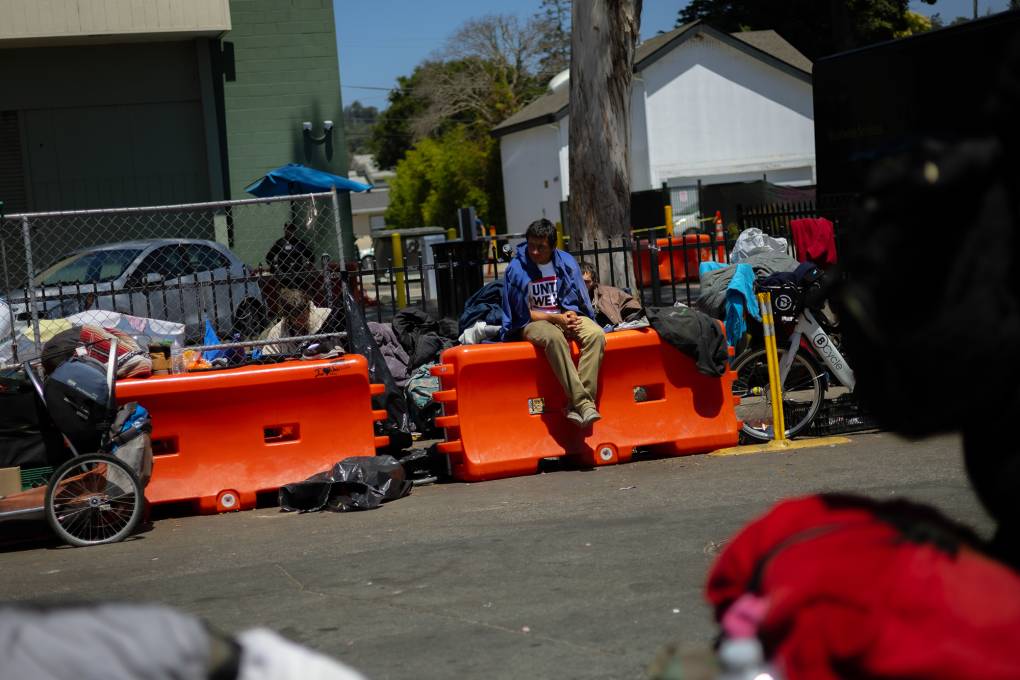
"caption": "Coral Street in Santa Cruz has become a prominent hangout for the unhoused community, who find resources at the Housing Matters shelter during the day.",
"credit": "Manuel Orbegozo/CalMatters",
"altTag": null,
"description": null,
"imgSizes": {
"medium": {
"file": "https://cdn.kqed.org/wp-content/uploads/sites/10/2024/08/080724_Santa-Cruz-Sweeps_MO_CM_14-1-800x533.jpg",
"width": 800,
"height": 533,
"mimeType": "image/jpeg"
},
"large": {
"file": "https://cdn.kqed.org/wp-content/uploads/sites/10/2024/08/080724_Santa-Cruz-Sweeps_MO_CM_14-1-1020x680.jpg",
"width": 1020,
"height": 680,
"mimeType": "image/jpeg"
},
"thumbnail": {
"file": "https://cdn.kqed.org/wp-content/uploads/sites/10/2024/08/080724_Santa-Cruz-Sweeps_MO_CM_14-1-160x107.jpg",
"width": 160,
"height": 107,
"mimeType": "image/jpeg"
},
"1536x1536": {
"file": "https://cdn.kqed.org/wp-content/uploads/sites/10/2024/08/080724_Santa-Cruz-Sweeps_MO_CM_14-1-1536x1024.jpg",
"width": 1536,
"height": 1024,
"mimeType": "image/jpeg"
},
"post-thumbnail": {
"file": "https://cdn.kqed.org/wp-content/uploads/sites/10/2024/08/080724_Santa-Cruz-Sweeps_MO_CM_14-1-672x372.jpg",
"width": 672,
"height": 372,
"mimeType": "image/jpeg"
},
"twentyfourteen-full-width": {
"file": "https://cdn.kqed.org/wp-content/uploads/sites/10/2024/08/080724_Santa-Cruz-Sweeps_MO_CM_14-1-1038x576.jpg",
"width": 1038,
"height": 576,
"mimeType": "image/jpeg"
},
"full-width": {
"file": "https://cdn.kqed.org/wp-content/uploads/sites/10/2024/08/080724_Santa-Cruz-Sweeps_MO_CM_14-1-1920x1280.jpg",
"width": 1920,
"height": 1280,
"mimeType": "image/jpeg"
},
"kqedFullSize": {
"file": "https://cdn.kqed.org/wp-content/uploads/sites/10/2024/08/080724_Santa-Cruz-Sweeps_MO_CM_14-1.jpg",
"width": 2000,
"height": 1333
}
},
"isLoading": false,
"fetchFailed": false
},
"news_11999676": {
"type": "attachments",
"id": "news_11999676",
"meta": {
"index": "attachments_1716263798",
"site": "news",
"id": "11999676",
"found": true
},
"title": "020_KQED_OneLoveBlackCommunity_11132022_qed",
"publishDate": 1723243359,
"status": "inherit",
"parent": 11999481,
"modified": 1723245393,
"caption": "View of the San Francisco skyline in the Bayview-Hunters Point neighborhood on Nov. 13, 2022.",
"credit": "Beth LaBerge/KQED",
"altTag": null,
"description": null,
"imgSizes": {
"medium": {
"file": "https://cdn.kqed.org/wp-content/uploads/sites/10/2024/08/020_KQED_OneLoveBlackCommunity_11132022_qed-800x533.jpg",
"width": 800,
"height": 533,
"mimeType": "image/jpeg"
},
"large": {
"file": "https://cdn.kqed.org/wp-content/uploads/sites/10/2024/08/020_KQED_OneLoveBlackCommunity_11132022_qed-1020x680.jpg",
"width": 1020,
"height": 680,
"mimeType": "image/jpeg"
},
"thumbnail": {
"file": "https://cdn.kqed.org/wp-content/uploads/sites/10/2024/08/020_KQED_OneLoveBlackCommunity_11132022_qed-160x107.jpg",
"width": 160,
"height": 107,
"mimeType": "image/jpeg"
},
"1536x1536": {
"file": "https://cdn.kqed.org/wp-content/uploads/sites/10/2024/08/020_KQED_OneLoveBlackCommunity_11132022_qed-1536x1024.jpg",
"width": 1536,
"height": 1024,
"mimeType": "image/jpeg"
},
"post-thumbnail": {
"file": "https://cdn.kqed.org/wp-content/uploads/sites/10/2024/08/020_KQED_OneLoveBlackCommunity_11132022_qed-672x372.jpg",
"width": 672,
"height": 372,
"mimeType": "image/jpeg"
},
"twentyfourteen-full-width": {
"file": "https://cdn.kqed.org/wp-content/uploads/sites/10/2024/08/020_KQED_OneLoveBlackCommunity_11132022_qed-1038x576.jpg",
"width": 1038,
"height": 576,
"mimeType": "image/jpeg"
},
"full-width": {
"file": "https://cdn.kqed.org/wp-content/uploads/sites/10/2024/08/020_KQED_OneLoveBlackCommunity_11132022_qed-1920x1280.jpg",
"width": 1920,
"height": 1280,
"mimeType": "image/jpeg"
},
"kqedFullSize": {
"file": "https://cdn.kqed.org/wp-content/uploads/sites/10/2024/08/020_KQED_OneLoveBlackCommunity_11132022_qed.jpg",
"width": 2000,
"height": 1333
}
},
"isLoading": false,
"fetchFailed": false
},
"news_11999625": {
"type": "attachments",
"id": "news_11999625",
"meta": {
"index": "attachments_1716263798",
"site": "news",
"id": "11999625",
"found": true
},
"title": "Governor Gavin Newsom along with Caltrans clean up an encampement site near Paxton Street and Remick Avenue in Los Angeles as the state's Clean California initiative continues",
"publishDate": 1723229310,
"status": "inherit",
"parent": 11999607,
"modified": 1723229358,
"caption": "Gov. Gavin Newsom along with Caltrans clean up an encampment site near Paxton Street and Remick Avenue in Los Angeles as the state's Clean California initiative continues on Thursday, Aug. 8, 2024 in Los Angeles. ",
"credit": "Jason Armond/Los Angeles Times via Getty Images",
"altTag": null,
"description": null,
"imgSizes": {
"medium": {
"file": "https://cdn.kqed.org/wp-content/uploads/sites/10/2024/08/GettyImages-2165417501-800x534.jpg",
"width": 800,
"height": 534,
"mimeType": "image/jpeg"
},
"large": {
"file": "https://cdn.kqed.org/wp-content/uploads/sites/10/2024/08/GettyImages-2165417501-1020x680.jpg",
"width": 1020,
"height": 680,
"mimeType": "image/jpeg"
},
"thumbnail": {
"file": "https://cdn.kqed.org/wp-content/uploads/sites/10/2024/08/GettyImages-2165417501-160x107.jpg",
"width": 160,
"height": 107,
"mimeType": "image/jpeg"
},
"post-thumbnail": {
"file": "https://cdn.kqed.org/wp-content/uploads/sites/10/2024/08/GettyImages-2165417501-672x372.jpg",
"width": 672,
"height": 372,
"mimeType": "image/jpeg"
},
"twentyfourteen-full-width": {
"file": "https://cdn.kqed.org/wp-content/uploads/sites/10/2024/08/GettyImages-2165417501-1024x576.jpg",
"width": 1024,
"height": 576,
"mimeType": "image/jpeg"
},
"kqedFullSize": {
"file": "https://cdn.kqed.org/wp-content/uploads/sites/10/2024/08/GettyImages-2165417501.jpg",
"width": 1024,
"height": 683
}
},
"isLoading": false,
"fetchFailed": false
},
"news_11996242": {
"type": "attachments",
"id": "news_11996242",
"meta": {
"index": "attachments_1716263798",
"site": "news",
"id": "11996242",
"found": true
},
"title": "240703-JAPANESE AMERICAN FAMILY FARM-MD-15-KQED",
"publishDate": 1721326800,
"status": "inherit",
"parent": 0,
"modified": 1721326971,
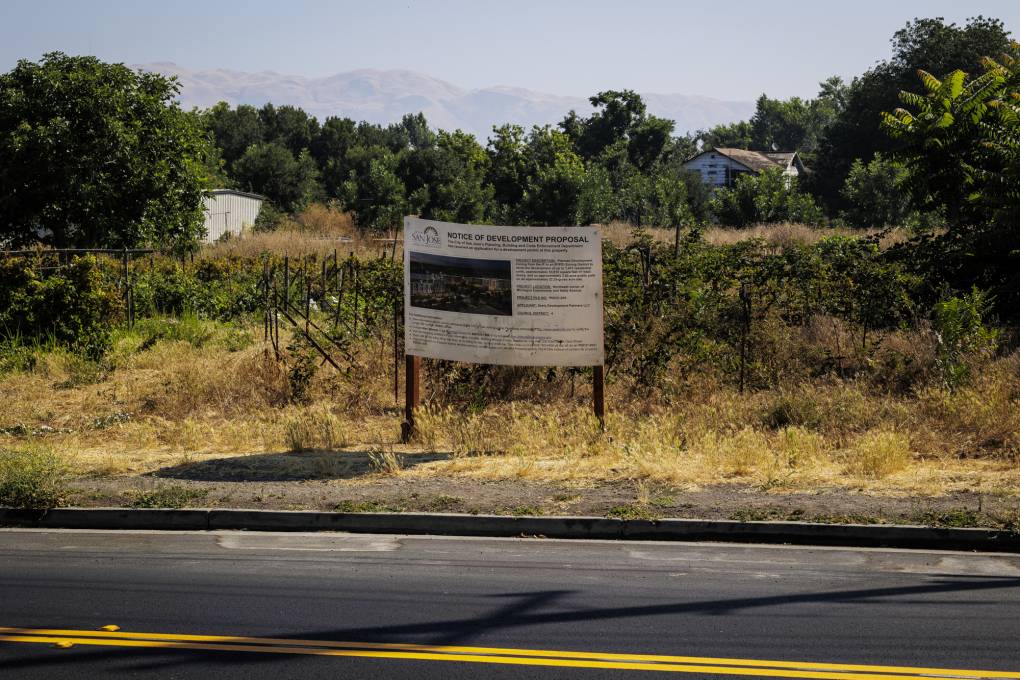
"caption": "A sign announces the proposed development of the Sakauye family farm in San José on July 10, 2024.",
"credit": "Martin do Nascimento/KQED",
"altTag": null,
"description": null,
"imgSizes": {
"medium": {
"file": "https://cdn.kqed.org/wp-content/uploads/sites/10/2024/07/240703-JAPANESE-AMERICAN-FAMILY-FARM-MD-15-KQED-800x533.jpg",
"width": 800,
"height": 533,
"mimeType": "image/jpeg"
},
"large": {
"file": "https://cdn.kqed.org/wp-content/uploads/sites/10/2024/07/240703-JAPANESE-AMERICAN-FAMILY-FARM-MD-15-KQED-1020x680.jpg",
"width": 1020,
"height": 680,
"mimeType": "image/jpeg"
},
"thumbnail": {
"file": "https://cdn.kqed.org/wp-content/uploads/sites/10/2024/07/240703-JAPANESE-AMERICAN-FAMILY-FARM-MD-15-KQED-160x107.jpg",
"width": 160,
"height": 107,
"mimeType": "image/jpeg"
},
"1536x1536": {
"file": "https://cdn.kqed.org/wp-content/uploads/sites/10/2024/07/240703-JAPANESE-AMERICAN-FAMILY-FARM-MD-15-KQED-1536x1024.jpg",
"width": 1536,
"height": 1024,
"mimeType": "image/jpeg"
},
"post-thumbnail": {
"file": "https://cdn.kqed.org/wp-content/uploads/sites/10/2024/07/240703-JAPANESE-AMERICAN-FAMILY-FARM-MD-15-KQED-672x372.jpg",
"width": 672,
"height": 372,
"mimeType": "image/jpeg"
},
"twentyfourteen-full-width": {
"file": "https://cdn.kqed.org/wp-content/uploads/sites/10/2024/07/240703-JAPANESE-AMERICAN-FAMILY-FARM-MD-15-KQED-1038x576.jpg",
"width": 1038,
"height": 576,
"mimeType": "image/jpeg"
},
"full-width": {
"file": "https://cdn.kqed.org/wp-content/uploads/sites/10/2024/07/240703-JAPANESE-AMERICAN-FAMILY-FARM-MD-15-KQED-1920x1280.jpg",
"width": 1920,
"height": 1280,
"mimeType": "image/jpeg"
},
"kqedFullSize": {
"file": "https://cdn.kqed.org/wp-content/uploads/sites/10/2024/07/240703-JAPANESE-AMERICAN-FAMILY-FARM-MD-15-KQED.jpg",
"width": 2000,
"height": 1333
}
},
"isLoading": false,
"fetchFailed": false
},
"news_11998579": {
"type": "attachments",
"id": "news_11998579",
"meta": {
"index": "attachments_1716263798",
"site": "news",
"id": "11998579",
"found": true
},
"title": "240801-ENCAMPMENT SWEEPS-MD-14-KQED",
"publishDate": 1722601953,
"status": "inherit",
"parent": 0,
"modified": 1722601995,
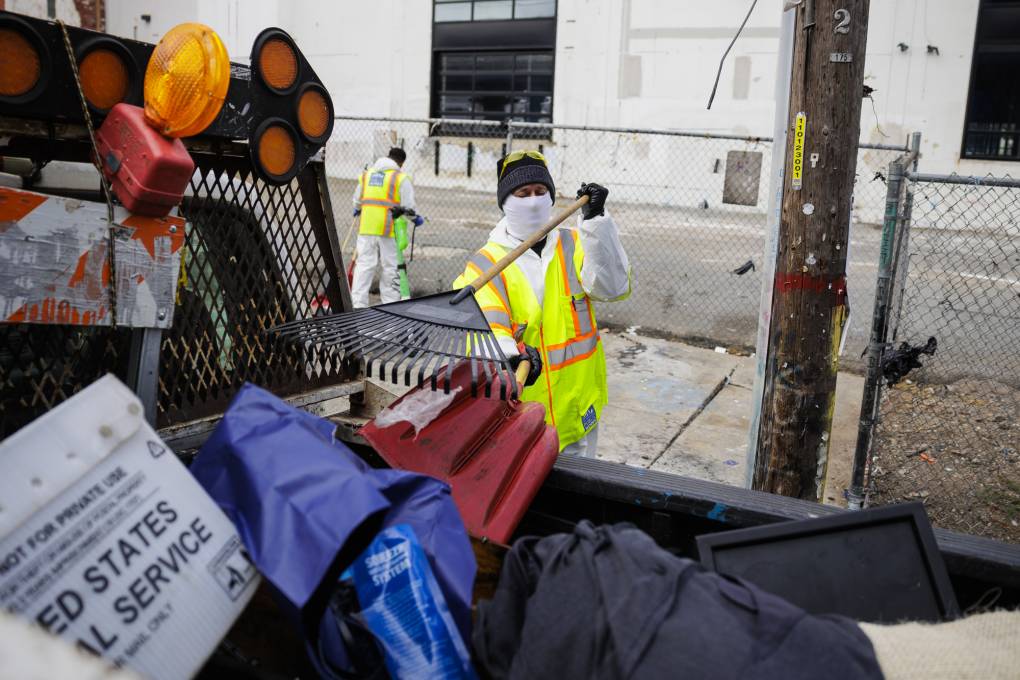
"caption": "San Francisco's Department of Public Works sweeps an encampment around Showplace Square in San Francisco on Aug. 1, 2024.",
"credit": "Martin do Nascimento/KQED",
"altTag": null,
"description": null,
"imgSizes": {
"medium": {
"file": "https://cdn.kqed.org/wp-content/uploads/sites/10/2024/08/240801-ENCAMPMENT-SWEEPS-MD-14-KQED-800x533.jpg",
"width": 800,
"height": 533,
"mimeType": "image/jpeg"
},
"large": {
"file": "https://cdn.kqed.org/wp-content/uploads/sites/10/2024/08/240801-ENCAMPMENT-SWEEPS-MD-14-KQED-1020x680.jpg",
"width": 1020,
"height": 680,
"mimeType": "image/jpeg"
},
"thumbnail": {
"file": "https://cdn.kqed.org/wp-content/uploads/sites/10/2024/08/240801-ENCAMPMENT-SWEEPS-MD-14-KQED-160x107.jpg",
"width": 160,
"height": 107,
"mimeType": "image/jpeg"
},
"1536x1536": {
"file": "https://cdn.kqed.org/wp-content/uploads/sites/10/2024/08/240801-ENCAMPMENT-SWEEPS-MD-14-KQED-1536x1024.jpg",
"width": 1536,
"height": 1024,
"mimeType": "image/jpeg"
},
"post-thumbnail": {
"file": "https://cdn.kqed.org/wp-content/uploads/sites/10/2024/08/240801-ENCAMPMENT-SWEEPS-MD-14-KQED-672x372.jpg",
"width": 672,
"height": 372,
"mimeType": "image/jpeg"
},
"twentyfourteen-full-width": {
"file": "https://cdn.kqed.org/wp-content/uploads/sites/10/2024/08/240801-ENCAMPMENT-SWEEPS-MD-14-KQED-1038x576.jpg",
"width": 1038,
"height": 576,
"mimeType": "image/jpeg"
},
"full-width": {
"file": "https://cdn.kqed.org/wp-content/uploads/sites/10/2024/08/240801-ENCAMPMENT-SWEEPS-MD-14-KQED-1920x1280.jpg",
"width": 1920,
"height": 1280,
"mimeType": "image/jpeg"
},
"kqedFullSize": {
"file": "https://cdn.kqed.org/wp-content/uploads/sites/10/2024/08/240801-ENCAMPMENT-SWEEPS-MD-14-KQED.jpg",
"width": 2000,
"height": 1333
}
},
"isLoading": false,
"fetchFailed": false
},
"news_11998626": {
"type": "attachments",
"id": "news_11998626",
"meta": {
"index": "attachments_1716263798",
"site": "news",
"id": "11998626",
"found": true
},
"title": "080124_PigeonPalace_FM_CM_05 copy",
"publishDate": 1722624273,
"status": "inherit",
"parent": 11998618,
"modified": 1722629672,
"caption": "The Pigeon Palace covered in scaffolding and tarps in San Francisco on Aug. 1, 2024. The housing complex operates through a community land trust or a nonprofit that buys land and then sells or rents the buildings to low-income residents to create permanently affordable housing. The Pigeon Palace tenants, who co-manage the building, are renovating the space. ",
"credit": "Florence Middleton/CalMatters",
"altTag": null,
"description": null,
"imgSizes": {
"medium": {
"file": "https://cdn.kqed.org/wp-content/uploads/sites/10/2024/08/080124_PigeonPalace_FM_CM_05-copy-800x534.jpg",
"width": 800,
"height": 534,
"mimeType": "image/jpeg"
},
"large": {
"file": "https://cdn.kqed.org/wp-content/uploads/sites/10/2024/08/080124_PigeonPalace_FM_CM_05-copy-1020x680.jpg",
"width": 1020,
"height": 680,
"mimeType": "image/jpeg"
},
"thumbnail": {
"file": "https://cdn.kqed.org/wp-content/uploads/sites/10/2024/08/080124_PigeonPalace_FM_CM_05-copy-160x107.jpg",
"width": 160,
"height": 107,
"mimeType": "image/jpeg"
},
"1536x1536": {
"file": "https://cdn.kqed.org/wp-content/uploads/sites/10/2024/08/080124_PigeonPalace_FM_CM_05-copy-1536x1025.jpg",
"width": 1536,
"height": 1025,
"mimeType": "image/jpeg"
},
"post-thumbnail": {
"file": "https://cdn.kqed.org/wp-content/uploads/sites/10/2024/08/080124_PigeonPalace_FM_CM_05-copy-672x372.jpg",
"width": 672,
"height": 372,
"mimeType": "image/jpeg"
},
"twentyfourteen-full-width": {
"file": "https://cdn.kqed.org/wp-content/uploads/sites/10/2024/08/080124_PigeonPalace_FM_CM_05-copy-1038x576.jpg",
"width": 1038,
"height": 576,
"mimeType": "image/jpeg"
},
"full-width": {
"file": "https://cdn.kqed.org/wp-content/uploads/sites/10/2024/08/080124_PigeonPalace_FM_CM_05-copy-1920x1281.jpg",
"width": 1920,
"height": 1281,
"mimeType": "image/jpeg"
},
"kqedFullSize": {
"file": "https://cdn.kqed.org/wp-content/uploads/sites/10/2024/08/080124_PigeonPalace_FM_CM_05-copy.jpg",
"width": 2000,
"height": 1334
}
},
"isLoading": false,
"fetchFailed": false
},
"news_11997226": {
"type": "attachments",
"id": "news_11997226",
"meta": {
"index": "attachments_1716263798",
"site": "news",
"id": "11997226",
"found": true
},
"title": "Millbrae City Hall in Millbrae on July 10, 2024.",
"publishDate": 1721859702,
"status": "inherit",
"parent": 11997219,
"modified": 1721859793,
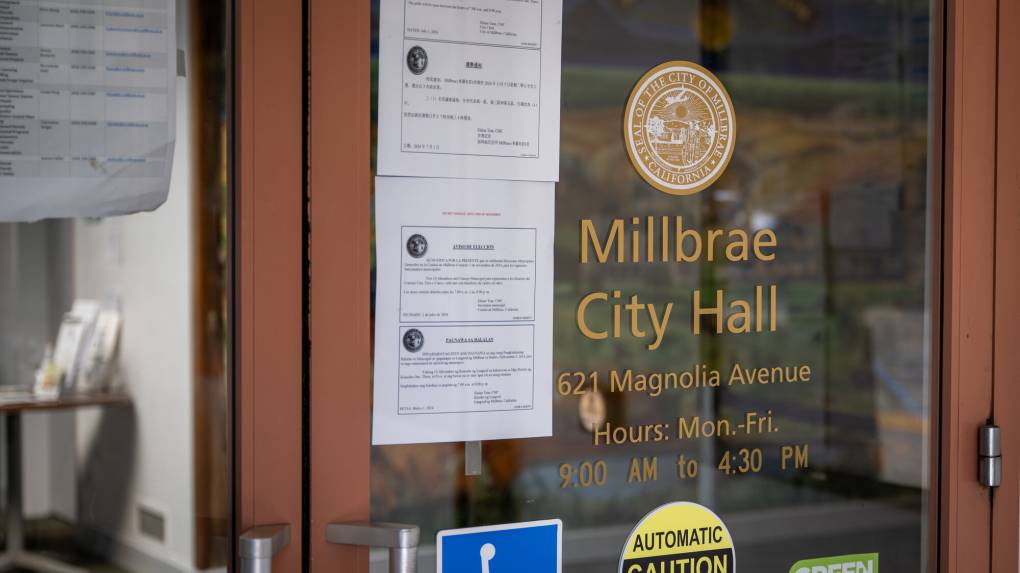
"caption": "Millbrae City Hall in Millbrae on July 10, 2024. Stemming from a bitter debate over plans to turn a hotel into supportive housing, the recall effort against two Millbrae City Council members appears to have passed.",
"credit": "Beth LaBerge/KQED",
"altTag": null,
"description": null,
"imgSizes": {
"medium": {
"file": "https://cdn.kqed.org/wp-content/uploads/sites/10/2024/07/240710-MillbraeCityHall-01-BL_qed-800x450.jpg",
"width": 800,
"height": 450,
"mimeType": "image/jpeg"
},
"large": {
"file": "https://cdn.kqed.org/wp-content/uploads/sites/10/2024/07/240710-MillbraeCityHall-01-BL_qed-1020x573.jpg",
"width": 1020,
"height": 573,
"mimeType": "image/jpeg"
},
"thumbnail": {
"file": "https://cdn.kqed.org/wp-content/uploads/sites/10/2024/07/240710-MillbraeCityHall-01-BL_qed-160x90.jpg",
"width": 160,
"height": 90,
"mimeType": "image/jpeg"
},
"1536x1536": {
"file": "https://cdn.kqed.org/wp-content/uploads/sites/10/2024/07/240710-MillbraeCityHall-01-BL_qed-1536x863.jpg",
"width": 1536,
"height": 863,
"mimeType": "image/jpeg"
},
"post-thumbnail": {
"file": "https://cdn.kqed.org/wp-content/uploads/sites/10/2024/07/240710-MillbraeCityHall-01-BL_qed-672x372.jpg",
"width": 672,
"height": 372,
"mimeType": "image/jpeg"
},
"twentyfourteen-full-width": {
"file": "https://cdn.kqed.org/wp-content/uploads/sites/10/2024/07/240710-MillbraeCityHall-01-BL_qed-1038x576.jpg",
"width": 1038,
"height": 576,
"mimeType": "image/jpeg"
},
"full-width": {
"file": "https://cdn.kqed.org/wp-content/uploads/sites/10/2024/07/240710-MillbraeCityHall-01-BL_qed-1920x1079.jpg",
"width": 1920,
"height": 1079,
"mimeType": "image/jpeg"
},
"kqedFullSize": {
"file": "https://cdn.kqed.org/wp-content/uploads/sites/10/2024/07/240710-MillbraeCityHall-01-BL_qed.jpg",
"width": 2000,
"height": 1124
}
},
"isLoading": false,
"fetchFailed": false
},
"news_11998505": {
"type": "attachments",
"id": "news_11998505",
"meta": {
"index": "attachments_1716263798",
"site": "news",
"id": "11998505",
"found": true
},
"title": "008_KQED_SanFrancisco_TentEncampments_05052020_qed",
"publishDate": 1722552429,
"status": "inherit",
"parent": 11998474,
"modified": 1722552444,
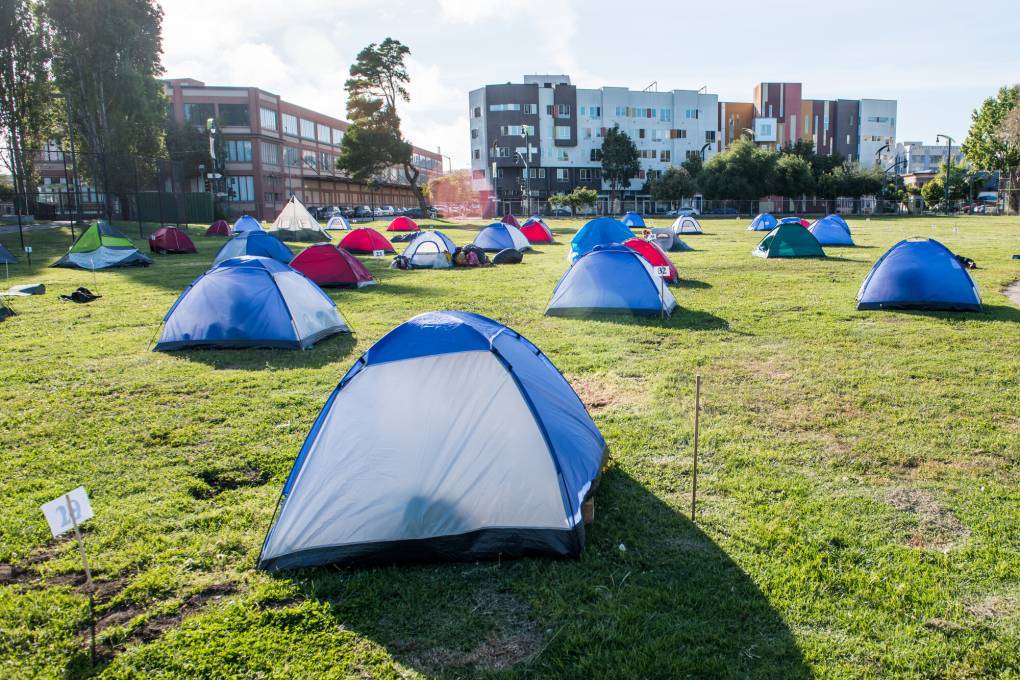
"caption": "Tents are spaced for social distancing at Bay View Park K.C. Jones Playground on April 5, 2020.",
"credit": "Beth LaBerge/KQED",
"altTag": null,
"description": null,
"imgSizes": {
"medium": {
"file": "https://cdn.kqed.org/wp-content/uploads/sites/10/2024/08/008_KQED_SanFrancisco_TentEncampments_05052020_qed-800x533.jpg",
"width": 800,
"height": 533,
"mimeType": "image/jpeg"
},
"large": {
"file": "https://cdn.kqed.org/wp-content/uploads/sites/10/2024/08/008_KQED_SanFrancisco_TentEncampments_05052020_qed-1020x680.jpg",
"width": 1020,
"height": 680,
"mimeType": "image/jpeg"
},
"thumbnail": {
"file": "https://cdn.kqed.org/wp-content/uploads/sites/10/2024/08/008_KQED_SanFrancisco_TentEncampments_05052020_qed-160x107.jpg",
"width": 160,
"height": 107,
"mimeType": "image/jpeg"
},
"1536x1536": {
"file": "https://cdn.kqed.org/wp-content/uploads/sites/10/2024/08/008_KQED_SanFrancisco_TentEncampments_05052020_qed-1536x1024.jpg",
"width": 1536,
"height": 1024,
"mimeType": "image/jpeg"
},
"post-thumbnail": {
"file": "https://cdn.kqed.org/wp-content/uploads/sites/10/2024/08/008_KQED_SanFrancisco_TentEncampments_05052020_qed-672x372.jpg",
"width": 672,
"height": 372,
"mimeType": "image/jpeg"
},
"twentyfourteen-full-width": {
"file": "https://cdn.kqed.org/wp-content/uploads/sites/10/2024/08/008_KQED_SanFrancisco_TentEncampments_05052020_qed-1038x576.jpg",
"width": 1038,
"height": 576,
"mimeType": "image/jpeg"
},
"full-width": {
"file": "https://cdn.kqed.org/wp-content/uploads/sites/10/2024/08/008_KQED_SanFrancisco_TentEncampments_05052020_qed-1920x1280.jpg",
"width": 1920,
"height": 1280,
"mimeType": "image/jpeg"
},
"kqedFullSize": {
"file": "https://cdn.kqed.org/wp-content/uploads/sites/10/2024/08/008_KQED_SanFrancisco_TentEncampments_05052020_qed.jpg",
"width": 1999,
"height": 1333
}
},
"isLoading": false,
"fetchFailed": false
},
"news_11998181": {
"type": "attachments",
"id": "news_11998181",
"meta": {
"index": "attachments_1716263798",
"site": "news",
"id": "11998181",
"found": true
},
"title": "default",
"publishDate": 1722449094,
"status": "inherit",
"parent": 0,
"modified": 1722449915,
"caption": "Construction at People's Park on July 31, 2024.",
"credit": "Martin do Nascimento/KQED",
"altTag": null,
"description": null,
"imgSizes": {
"medium": {
"file": "https://cdn.kqed.org/wp-content/uploads/sites/10/2024/07/240731-PEOPLES-PARK-CONSTRUCTION-MD-01-KQED-800x533.jpg",
"width": 800,
"height": 533,
"mimeType": "image/jpeg"
},
"large": {
"file": "https://cdn.kqed.org/wp-content/uploads/sites/10/2024/07/240731-PEOPLES-PARK-CONSTRUCTION-MD-01-KQED-1020x680.jpg",
"width": 1020,
"height": 680,
"mimeType": "image/jpeg"
},
"thumbnail": {
"file": "https://cdn.kqed.org/wp-content/uploads/sites/10/2024/07/240731-PEOPLES-PARK-CONSTRUCTION-MD-01-KQED-160x107.jpg",
"width": 160,
"height": 107,
"mimeType": "image/jpeg"
},
"1536x1536": {
"file": "https://cdn.kqed.org/wp-content/uploads/sites/10/2024/07/240731-PEOPLES-PARK-CONSTRUCTION-MD-01-KQED-1536x1024.jpg",
"width": 1536,
"height": 1024,
"mimeType": "image/jpeg"
},
"post-thumbnail": {
"file": "https://cdn.kqed.org/wp-content/uploads/sites/10/2024/07/240731-PEOPLES-PARK-CONSTRUCTION-MD-01-KQED-672x372.jpg",
"width": 672,
"height": 372,
"mimeType": "image/jpeg"
},
"twentyfourteen-full-width": {
"file": "https://cdn.kqed.org/wp-content/uploads/sites/10/2024/07/240731-PEOPLES-PARK-CONSTRUCTION-MD-01-KQED-1038x576.jpg",
"width": 1038,
"height": 576,
"mimeType": "image/jpeg"
},
"full-width": {
"file": "https://cdn.kqed.org/wp-content/uploads/sites/10/2024/07/240731-PEOPLES-PARK-CONSTRUCTION-MD-01-KQED-1920x1280.jpg",
"width": 1920,
"height": 1280,
"mimeType": "image/jpeg"
},
"kqedFullSize": {
"file": "https://cdn.kqed.org/wp-content/uploads/sites/10/2024/07/240731-PEOPLES-PARK-CONSTRUCTION-MD-01-KQED.jpg?ver=1722449813",
"width": 2000,
"height": 1333
}
},
"isLoading": false,
"fetchFailed": false
},
"news_11981873": {
"type": "attachments",
"id": "news_11981873",
"meta": {
"index": "attachments_1716263798",
"site": "news",
"id": "11981873",
"found": true
},
"title": "240403-AARONPESKIN-003-BL-KQED",
"publishDate": 1712247440,
"status": "inherit",
"parent": 0,
"modified": 1722383571,
"caption": "Aaron Peskin, President of the Board of Supervisors, sits in his office in San Francisco on April 3, 2024.",
"credit": "Beth LaBerge/KQED",
"altTag": null,
"description": null,
"imgSizes": {
"medium": {
"file": "https://cdn.kqed.org/wp-content/uploads/sites/10/2024/04/240403-AARONPESKIN-003-BL-KQED-800x533.jpg",
"width": 800,
"height": 533,
"mimeType": "image/jpeg"
},
"large": {
"file": "https://cdn.kqed.org/wp-content/uploads/sites/10/2024/04/240403-AARONPESKIN-003-BL-KQED-1020x680.jpg",
"width": 1020,
"height": 680,
"mimeType": "image/jpeg"
},
"thumbnail": {
"file": "https://cdn.kqed.org/wp-content/uploads/sites/10/2024/04/240403-AARONPESKIN-003-BL-KQED-160x107.jpg",
"width": 160,
"height": 107,
"mimeType": "image/jpeg"
},
"1536x1536": {
"file": "https://cdn.kqed.org/wp-content/uploads/sites/10/2024/04/240403-AARONPESKIN-003-BL-KQED-1536x1024.jpg",
"width": 1536,
"height": 1024,
"mimeType": "image/jpeg"
},
"post-thumbnail": {
"file": "https://cdn.kqed.org/wp-content/uploads/sites/10/2024/04/240403-AARONPESKIN-003-BL-KQED-672x372.jpg",
"width": 672,
"height": 372,
"mimeType": "image/jpeg"
},
"twentyfourteen-full-width": {
"file": "https://cdn.kqed.org/wp-content/uploads/sites/10/2024/04/240403-AARONPESKIN-003-BL-KQED-1038x576.jpg",
"width": 1038,
"height": 576,
"mimeType": "image/jpeg"
},
"full-width": {
"file": "https://cdn.kqed.org/wp-content/uploads/sites/10/2024/04/240403-AARONPESKIN-003-BL-KQED-1920x1280.jpg",
"width": 1920,
"height": 1280,
"mimeType": "image/jpeg"
},
"kqedFullSize": {
"file": "https://cdn.kqed.org/wp-content/uploads/sites/10/2024/04/240403-AARONPESKIN-003-BL-KQED.jpg",
"width": 2000,
"height": 1333
}
},
"isLoading": false,
"fetchFailed": false
},
"news_11998035": {
"type": "attachments",
"id": "news_11998035",
"meta": {
"index": "attachments_1716263798",
"site": "news",
"id": "11998035",
"found": true
},
"title": "240730-serramontedelrey-1-RETAIL-CROPPED-KQED",
"publishDate": 1722372142,
"status": "inherit",
"parent": 0,
"modified": 1722377061,
"caption": "The Jefferson Union High School District in San Mateo County completed this 122-unit affordable apartment complex for teachers and other school staff in May 2022. As a result, district officials say, it’s been able to significantly reduce staff turnover.",
"credit": "Courtesy of Jefferson Union High School District",
"altTag": null,
"description": null,
"imgSizes": {
"medium": {
"file": "https://cdn.kqed.org/wp-content/uploads/sites/10/2024/07/240730-serramontedelrey-1-RETAIL-CROPPED-KQED-800x533.jpg",
"width": 800,
"height": 533,
"mimeType": "image/jpeg"
},
"large": {
"file": "https://cdn.kqed.org/wp-content/uploads/sites/10/2024/07/240730-serramontedelrey-1-RETAIL-CROPPED-KQED-1020x680.jpg",
"width": 1020,
"height": 680,
"mimeType": "image/jpeg"
},
"thumbnail": {
"file": "https://cdn.kqed.org/wp-content/uploads/sites/10/2024/07/240730-serramontedelrey-1-RETAIL-CROPPED-KQED-160x107.jpg",
"width": 160,
"height": 107,
"mimeType": "image/jpeg"
},
"1536x1536": {
"file": "https://cdn.kqed.org/wp-content/uploads/sites/10/2024/07/240730-serramontedelrey-1-RETAIL-CROPPED-KQED-1536x1024.jpg",
"width": 1536,
"height": 1024,
"mimeType": "image/jpeg"
},
"post-thumbnail": {
"file": "https://cdn.kqed.org/wp-content/uploads/sites/10/2024/07/240730-serramontedelrey-1-RETAIL-CROPPED-KQED-672x372.jpg",
"width": 672,
"height": 372,
"mimeType": "image/jpeg"
},
"twentyfourteen-full-width": {
"file": "https://cdn.kqed.org/wp-content/uploads/sites/10/2024/07/240730-serramontedelrey-1-RETAIL-CROPPED-KQED-1038x576.jpg",
"width": 1038,
"height": 576,
"mimeType": "image/jpeg"
},
"full-width": {
"file": "https://cdn.kqed.org/wp-content/uploads/sites/10/2024/07/240730-serramontedelrey-1-RETAIL-CROPPED-KQED-1920x1280.jpg",
"width": 1920,
"height": 1280,
"mimeType": "image/jpeg"
},
"kqedFullSize": {
"file": "https://cdn.kqed.org/wp-content/uploads/sites/10/2024/07/240730-serramontedelrey-1-RETAIL-CROPPED-KQED.jpg",
"width": 2000,
"height": 1333
}
},
"isLoading": false,
"fetchFailed": false
},
"news_11997838": {
"type": "attachments",
"id": "news_11997838",
"meta": {
"index": "attachments_1716263798",
"site": "news",
"id": "11997838",
"found": true
},
"title": "240613-DeanPreston-02-BL_qed",
"publishDate": 1722278109,
"status": "inherit",
"parent": 11997837,
"modified": 1722278122,
"caption": "Supervisor Dean Preston speaks to a local resident at a bus stop at McAllister and Divisadero in San Francisco on June 13, 2024, while campaigning for reelection to the Board of Supervisors District 5.",
"credit": "Beth LaBerge/KQED",
"altTag": null,
"description": null,
"imgSizes": {
"medium": {
"file": "https://cdn.kqed.org/wp-content/uploads/sites/10/2024/07/240613-DeanPreston-02-BL_qed-800x533.jpg",
"width": 800,
"height": 533,
"mimeType": "image/jpeg"
},
"large": {
"file": "https://cdn.kqed.org/wp-content/uploads/sites/10/2024/07/240613-DeanPreston-02-BL_qed-1020x680.jpg",
"width": 1020,
"height": 680,
"mimeType": "image/jpeg"
},
"thumbnail": {
"file": "https://cdn.kqed.org/wp-content/uploads/sites/10/2024/07/240613-DeanPreston-02-BL_qed-160x107.jpg",
"width": 160,
"height": 107,
"mimeType": "image/jpeg"
},
"1536x1536": {
"file": "https://cdn.kqed.org/wp-content/uploads/sites/10/2024/07/240613-DeanPreston-02-BL_qed-1536x1024.jpg",
"width": 1536,
"height": 1024,
"mimeType": "image/jpeg"
},
"post-thumbnail": {
"file": "https://cdn.kqed.org/wp-content/uploads/sites/10/2024/07/240613-DeanPreston-02-BL_qed-672x372.jpg",
"width": 672,
"height": 372,
"mimeType": "image/jpeg"
},
"twentyfourteen-full-width": {
"file": "https://cdn.kqed.org/wp-content/uploads/sites/10/2024/07/240613-DeanPreston-02-BL_qed-1038x576.jpg",
"width": 1038,
"height": 576,
"mimeType": "image/jpeg"
},
"full-width": {
"file": "https://cdn.kqed.org/wp-content/uploads/sites/10/2024/07/240613-DeanPreston-02-BL_qed-1920x1280.jpg",
"width": 1920,
"height": 1280,
"mimeType": "image/jpeg"
},
"kqedFullSize": {
"file": "https://cdn.kqed.org/wp-content/uploads/sites/10/2024/07/240613-DeanPreston-02-BL_qed.jpg",
"width": 2000,
"height": 1333
}
},
"isLoading": false,
"fetchFailed": false
}
},
"audioPlayerReducer": {
"postId": "stream_live",
"isPaused": true,
"isPlaying": false,
"pfsActive": false,
"pledgeModalIsOpen": true,
"playerDrawerIsOpen": false,
"liveAudioPlayStartedAt": 0,
"liveAudioPlayContext": ""
},
"authorsReducer": {
"byline_news_11999880": {
"type": "authors",
"id": "byline_news_11999880",
"meta": {
"override": true
},
"slug": "byline_news_11999880",
"name": "Marisa Kendall, Calmatters",
"isLoading": false
},
"byline_news_11999607": {
"type": "authors",
"id": "byline_news_11999607",
"meta": {
"override": true
},
"slug": "byline_news_11999607",
"name": "Trân Nguyễn, Associated Press",
"isLoading": false
},
"byline_news_11998618": {
"type": "authors",
"id": "byline_news_11998618",
"meta": {
"override": true
},
"slug": "byline_news_11998618",
"name": "\u003ca href=\"https://calmatters.org/author/feliciacalmatters-org/\">Felicia Mello\u003c/a>, CalMatters",
"isLoading": false
},
"ecruzguevarra": {
"type": "authors",
"id": "8654",
"meta": {
"index": "authors_1716337520",
"id": "8654",
"found": true
},
"name": "Ericka Cruz Guevarra",
"firstName": "Ericka",
"lastName": "Cruz Guevarra",
"slug": "ecruzguevarra",
"email": "ecruzguevarra@kqed.org",
"display_author_email": true,
"staff_mastheads": [
"news"
],
"title": "Producer, The Bay Podcast",
"bio": "Ericka Cruz Guevarra is host of \u003ca href=\"https://www.kqed.org/podcasts/thebay\">\u003cem>The Bay\u003c/em>\u003c/a> podcast at KQED. Before host, she was the show’s producer. Her work in that capacity includes a three-part reported series on policing in Vallejo, which won a 2020 excellence in journalism award from the Society of Professional Journalists. Ericka has worked as a breaking news reporter at Oregon Public Broadcasting, helped produce the Code Switch podcast, and was KQED’s inaugural Raul Ramirez Diversity Fund intern. She’s also an alumna of NPR’s Next Generation Radio program. Send her an email if you have strong feelings about whether Fairfield and Suisun City are the Bay. Ericka is represented by SAG-AFTRA.",
"avatar": "https://secure.gravatar.com/avatar/accefc1de4bafc7e234b69bcb9b6f6536c130fd84709bc3069ef11a78787e1bb?s=600&d=blank&r=g",
"twitter": "NotoriousECG",
"bluesky": null,
"facebook": null,
"instagram": null,
"linkedin": null,
"sites": [
{
"site": "arts",
"roles": [
"subscriber"
]
},
{
"site": "news",
"roles": [
"editor",
"manage_categories"
]
},
{
"site": "futureofyou",
"roles": [
"subscriber"
]
},
{
"site": "stateofhealth",
"roles": [
"subscriber"
]
},
{
"site": "science",
"roles": [
"editor"
]
},
{
"site": "forum",
"roles": [
"subscriber"
]
}
],
"headData": {
"title": "Ericka Cruz Guevarra | KQED",
"description": "Producer, The Bay Podcast",
"ogImgSrc": "https://secure.gravatar.com/avatar/accefc1de4bafc7e234b69bcb9b6f6536c130fd84709bc3069ef11a78787e1bb?s=600&d=blank&r=g",
"twImgSrc": "https://secure.gravatar.com/avatar/accefc1de4bafc7e234b69bcb9b6f6536c130fd84709bc3069ef11a78787e1bb?s=600&d=blank&r=g"
},
"isLoading": false,
"link": "/author/ecruzguevarra"
},
"amontecillo": {
"type": "authors",
"id": "11649",
"meta": {
"index": "authors_1716337520",
"id": "11649",
"found": true
},
"name": "Alan Montecillo",
"firstName": "Alan",
"lastName": "Montecillo",
"slug": "amontecillo",
"email": "amontecillo@kqed.org",
"display_author_email": false,
"staff_mastheads": [
"news"
],
"title": "KQED Contributor",
"bio": "Alan Montecillo is the senior editor of \u003cem>\u003ca href=\"http://kqed.org/thebay\">The Bay\u003c/a>, \u003c/em> KQED's local news podcast. Before moving to the Bay Area, he worked as a senior talk show producer for WILL in Champaign-Urbana, Illinois and at Oregon Public Broadcasting in Portland, Oregon. He has won journalism awards from the Society of Professional Journalists Northern California, the Public Media Journalists Association, The Signal Awards, and has also received a regional Edward R. Murrow award. Alan is a Filipino American from Hong Kong and a graduate of Reed College.",
"avatar": "https://secure.gravatar.com/avatar/268f53a2066899ea9efdd8a5900218b17c822d9862cbc9326cccec53ef41d349?s=600&d=blank&r=g",
"twitter": "alanmontecillo",
"bluesky": null,
"facebook": null,
"instagram": null,
"linkedin": null,
"sites": [
{
"site": "",
"roles": [
"editor"
]
},
{
"site": "news",
"roles": [
"editor",
"manage_categories"
]
}
],
"headData": {
"title": "Alan Montecillo | KQED",
"description": "KQED Contributor",
"ogImgSrc": "https://secure.gravatar.com/avatar/268f53a2066899ea9efdd8a5900218b17c822d9862cbc9326cccec53ef41d349?s=600&d=blank&r=g",
"twImgSrc": "https://secure.gravatar.com/avatar/268f53a2066899ea9efdd8a5900218b17c822d9862cbc9326cccec53ef41d349?s=600&d=blank&r=g"
},
"isLoading": false,
"link": "/author/amontecillo"
},
"ebaldassari": {
"type": "authors",
"id": "11652",
"meta": {
"index": "authors_1716337520",
"id": "11652",
"found": true
},
"name": "Erin Baldassari",
"firstName": "Erin",
"lastName": "Baldassari",
"slug": "ebaldassari",
"email": "ebaldassari@KQED.org",
"display_author_email": true,
"staff_mastheads": [
"news"
],
"title": "Staff Writer",
"bio": "Erin Baldassari covers housing for KQED. She's a former print journalist and most recently worked as the transportation reporter for the \u003cem>Mercury News\u003c/em> and \u003cem>East Bay Times. \u003c/em>There, she focused on how the Bay Area’s housing shortage has changed the way people move around the region. She also served on the \u003cem>East Bay Times\u003c/em>’ 2017 Pulitzer Prize-winning team for coverage of the Ghost Ship Fire in Oakland. Prior to that, Erin worked as a breaking news and general assignment reporter for a variety of outlets in the Bay Area and the greater Boston area. A Tufts University alumna, Erin grew up in the foothills of the Sierra Nevada mountains and in Sonoma County. She is a life-long KQED listener.",
"avatar": "https://secure.gravatar.com/avatar/5e95cad64a8ca08288082212e199d2b0cbeb4fd8e8ef5339395f361032bbe005?s=600&d=blank&r=g",
"twitter": "e_baldi",
"bluesky": null,
"facebook": null,
"instagram": null,
"linkedin": null,
"sites": [
{
"site": "news",
"roles": [
"edit_others_posts",
"editor"
]
},
{
"site": "science",
"roles": [
"editor"
]
},
{
"site": "liveblog",
"roles": [
"editor"
]
}
],
"headData": {
"title": "Erin Baldassari | KQED",
"description": "Staff Writer",
"ogImgSrc": "https://secure.gravatar.com/avatar/5e95cad64a8ca08288082212e199d2b0cbeb4fd8e8ef5339395f361032bbe005?s=600&d=blank&r=g",
"twImgSrc": "https://secure.gravatar.com/avatar/5e95cad64a8ca08288082212e199d2b0cbeb4fd8e8ef5339395f361032bbe005?s=600&d=blank&r=g"
},
"isLoading": false,
"link": "/author/ebaldassari"
},
"abandlamudi": {
"type": "authors",
"id": "11672",
"meta": {
"index": "authors_1716337520",
"id": "11672",
"found": true
},
"name": "Adhiti Bandlamudi",
"firstName": "Adhiti",
"lastName": "Bandlamudi",
"slug": "abandlamudi",
"email": "abandlamudi@kqed.org",
"display_author_email": false,
"staff_mastheads": [
"news"
],
"title": "KQED Housing Reporter",
"bio": "Adhiti Bandlamudi reports for KQED's Housing desk. She focuses on how housing gets built across the Bay Area. Before joining KQED in 2020, she reported for WUNC in Durham, North Carolina, WABE in Atlanta, Georgia and Capital Public Radio in Sacramento. In 2017, she was awarded a Kroc Fellowship at NPR where she reported on everything from sprinkles to the Golden State Killer's arrest. When she's not reporting, she's baking new recipes in her kitchen or watching movies with friends and family. She's originally from Georgia and has strong opinions about Great British Bake Off.",
"avatar": "https://secure.gravatar.com/avatar/868129c8b257bb99a3500e2c86a65400?s=600&d=mm&r=g",
"twitter": "oddity_adhiti",
"facebook": null,
"instagram": null,
"linkedin": null,
"sites": [
{
"site": "arts",
"roles": [
"author"
]
},
{
"site": "news",
"roles": [
"editor"
]
},
{
"site": "liveblog",
"roles": [
"author"
]
}
],
"headData": {
"title": "Adhiti Bandlamudi | KQED",
"description": "KQED Housing Reporter",
"ogImgSrc": "https://secure.gravatar.com/avatar/868129c8b257bb99a3500e2c86a65400?s=600&d=mm&r=g",
"twImgSrc": "https://secure.gravatar.com/avatar/868129c8b257bb99a3500e2c86a65400?s=600&d=mm&r=g"
},
"isLoading": false,
"link": "/author/abandlamudi"
},
"sjohnson": {
"type": "authors",
"id": "11840",
"meta": {
"index": "authors_1716337520",
"id": "11840",
"found": true
},
"name": "Sydney Johnson",
"firstName": "Sydney",
"lastName": "Johnson",
"slug": "sjohnson",
"email": "sjohnson@kqed.org",
"display_author_email": false,
"staff_mastheads": [
"news"
],
"title": "KQED Reporter",
"bio": "Sydney Johnson is a general assignment reporter at KQED. She previously reported on public health and city government at the San Francisco Examiner, and before that, she covered statewide education policy for EdSource. Her reporting has won multiple local, state and national awards. Sydney is a graduate of the University of California, Berkeley and lives in San Francisco.",
"avatar": "https://secure.gravatar.com/avatar/97855f2719b72ad6190b7c535fe642c8?s=600&d=blank&r=g",
"twitter": "sydneyfjohnson",
"facebook": null,
"instagram": null,
"linkedin": null,
"sites": [
{
"site": "news",
"roles": [
"editor"
]
}
],
"headData": {
"title": "Sydney Johnson | KQED",
"description": "KQED Reporter",
"ogImgSrc": "https://secure.gravatar.com/avatar/97855f2719b72ad6190b7c535fe642c8?s=600&d=blank&r=g",
"twImgSrc": "https://secure.gravatar.com/avatar/97855f2719b72ad6190b7c535fe642c8?s=600&d=blank&r=g"
},
"isLoading": false,
"link": "/author/sjohnson"
},
"jgeha": {
"type": "authors",
"id": "11906",
"meta": {
"index": "authors_1716337520",
"id": "11906",
"found": true
},
"name": "Joseph Geha",
"firstName": "Joseph",
"lastName": "Geha",
"slug": "jgeha",
"email": "jgeha@kqed.org",
"display_author_email": false,
"staff_mastheads": [
"news",
"science"
],
"title": "KQED Contributor",
"bio": null,
"avatar": "https://secure.gravatar.com/avatar/ea84d2b6dd93d6369d453edf19dd583f117cd1759d2d9c9c92f9de77017354fe?s=600&d=blank&r=g",
"twitter": null,
"bluesky": null,
"facebook": null,
"instagram": null,
"linkedin": null,
"sites": [
{
"site": "news",
"roles": [
"editor"
]
},
{
"site": "liveblog",
"roles": [
"author"
]
}
],
"headData": {
"title": "Joseph Geha | KQED",
"description": "KQED Contributor",
"ogImgSrc": "https://secure.gravatar.com/avatar/ea84d2b6dd93d6369d453edf19dd583f117cd1759d2d9c9c92f9de77017354fe?s=600&d=blank&r=g",
"twImgSrc": "https://secure.gravatar.com/avatar/ea84d2b6dd93d6369d453edf19dd583f117cd1759d2d9c9c92f9de77017354fe?s=600&d=blank&r=g"
},
"isLoading": false,
"link": "/author/jgeha"
},
"kdebenedetti": {
"type": "authors",
"id": "11913",
"meta": {
"index": "authors_1716337520",
"id": "11913",
"found": true
},
"name": "Katie DeBenedetti",
"firstName": "Katie",
"lastName": "DeBenedetti",
"slug": "kdebenedetti",
"email": "kdebenedetti@kqed.org",
"display_author_email": false,
"staff_mastheads": [
"news",
"science"
],
"title": "KQED Contributor",
"bio": "Katie DeBenedetti is a digital reporter covering daily news for the Express Desk. Prior to joining KQED as a culture reporting intern in January 2024, she covered education and city government for the Napa Valley Register.",
"avatar": "https://secure.gravatar.com/avatar/6e31073cb8f7e4214ab03f42771d0f45?s=600&d=blank&r=g",
"twitter": null,
"facebook": null,
"instagram": null,
"linkedin": null,
"sites": [
{
"site": "news",
"roles": [
"author"
]
},
{
"site": "science",
"roles": [
"author"
]
},
{
"site": "liveblog",
"roles": [
"author"
]
}
],
"headData": {
"title": "Katie DeBenedetti | KQED",
"description": "KQED Contributor",
"ogImgSrc": "https://secure.gravatar.com/avatar/6e31073cb8f7e4214ab03f42771d0f45?s=600&d=blank&r=g",
"twImgSrc": "https://secure.gravatar.com/avatar/6e31073cb8f7e4214ab03f42771d0f45?s=600&d=blank&r=g"
},
"isLoading": false,
"link": "/author/kdebenedetti"
},
"slim": {
"type": "authors",
"id": "11920",
"meta": {
"index": "authors_1716337520",
"id": "11920",
"found": true
},
"name": "Samantha Lim",
"firstName": "Samantha",
"lastName": "Lim",
"slug": "slim",
"email": "slim@KQED.org",
"display_author_email": false,
"staff_mastheads": [],
"title": "KQED Contributor",
"bio": null,
"avatar": "https://secure.gravatar.com/avatar/82e592e6c15fe1a04d385e8ad0fb0b4e?s=600&d=blank&r=g",
"twitter": null,
"facebook": null,
"instagram": null,
"linkedin": null,
"sites": [
{
"site": "news",
"roles": []
}
],
"headData": {
"title": "Samantha Lim | KQED",
"description": "KQED Contributor",
"ogImgSrc": "https://secure.gravatar.com/avatar/82e592e6c15fe1a04d385e8ad0fb0b4e?s=600&d=blank&r=g",
"twImgSrc": "https://secure.gravatar.com/avatar/82e592e6c15fe1a04d385e8ad0fb0b4e?s=600&d=blank&r=g"
},
"isLoading": false,
"link": "/author/slim"
}
},
"pagesReducer": {
"news_tag_housing": {
"type": "terms",
"id": "news_1775",
"meta": {
"index": "terms_1716263798",
"site": "news",
"id": "1775",
"score": 7.0360975
},
"featImg": null,
"name": "housing",
"description": null,
"taxonomy": "tag",
"headData": {
"twImgId": null,
"twTitle": null,
"ogTitle": null,
"ogImgId": null,
"twDescription": null,
"description": null,
"title": "housing Archives | KQED News",
"ogDescription": null
},
"ttid": 1790,
"slug": "housing",
"isLoading": false,
"title": "housing",
"pageMeta": {
"site": "news",
"WpPageTemplate": "page-topic-editorial",
"currentPage": 31
},
"blocks": [
{
"blockName": "kqed/post-list",
"attrs": {
"layout": "cardArticle2",
"query": "posts/news?tag=housing",
"seeMore": false,
"paginated": true,
"page": 31
}
},
{
"blockName": "kqed/ad"
}
]
}
},
"pfsSessionReducer": {},
"postsReducer": {
"stream_live": {
"type": "live",
"id": "stream_live",
"audioUrl": "https://streams.kqed.org/kqedradio",
"title": "Live Stream",
"excerpt": "Live Stream information currently unavailable.",
"link": "/radio",
"featImg": "",
"label": {
"name": "KQED Live",
"link": "/"
}
},
"stream_kqedNewscast": {
"type": "posts",
"id": "stream_kqedNewscast",
"audioUrl": "https://www.kqed.org/.stream/anon/radio/RDnews/newscast.mp3?_=1",
"title": "KQED Newscast",
"featImg": "",
"label": {
"name": "88.5 FM",
"link": "/"
}
},
"news_11999880": {
"type": "posts",
"id": "news_11999880",
"meta": {
"index": "posts_1716263798",
"site": "news",
"id": "11999880",
"score": null,
"sort": [
1723498206000
]
},
"guestAuthors": [],
"slug": "we-gotta-be-somewhere-unhoused-californians-react-to-newsoms-crackdown",
"title": "'We Gotta Be Somewhere': Unhoused Californians React to Newsom's Crackdown",
"publishDate": 1723498206,
"format": "standard",
"headTitle": "‘We Gotta Be Somewhere’: Unhoused Californians React to Newsom’s Crackdown | KQED",
"labelTerm": {},
"content": "\u003cp>[dropcap]G[/dropcap]ov. Gavin Newsom’s message on homelessness in recent weeks has been clear: The state will no longer tolerate encampments, and cities shouldn’t either.\u003c/p>\n\u003cp>Californians who live on the streets, as well as the outreach workers who support them, say they’re already feeling the difference. Places, where someone used to be able to pitch a tent and sleep in peace, have suddenly become inhospitable. Police seem to be clearing camps more often and more aggressively and are less likely to give advance notice before they come in with bulldozers and trash compactors, according to anecdotal reports in some cities. Even in cities where officials said publicly nothing would change, unhoused people and activists say it’s become harder to live without a home.\u003c/p>\n\u003cp>But the shift, \u003ca href=\"https://www.kqed.org/news/11997352/newsom-orders-state-agencies-to-dismantle-homeless-encampments-across-california\">sparked by a Supreme Court ruling\u003c/a> and then further fueled by an executive order, hasn’t caused a significant increase in shelter beds or affordable housing.\u003c/p>\n\u003cp>That’s led people on the streets to ask: Where are we supposed to go?\u003c/p>\n\u003cp>“We gotta be somewhere,” said Tré Watson, who lives in a tent in Santa Cruz and said unhoused people are running out of places to go. “We can’t hover. We come here; they run us away. We go to any park and they run us away. We go to the Pogonip (nature preserve), and they bring bulldozers.”\u003c/p>\n\u003cfigure id=\"attachment_11999893\" class=\"wp-caption aligncenter\" style=\"max-width: 1916px\">\u003cimg loading=\"lazy\" decoding=\"async\" class=\"size-full wp-image-11999893\" src=\"https://cdn.kqed.org/wp-content/uploads/sites/10/2024/08/TreWatson.png\" alt=\"\" width=\"1916\" height=\"1278\" srcset=\"https://cdn.kqed.org/wp-content/uploads/sites/10/2024/08/TreWatson.png 1916w, https://cdn.kqed.org/wp-content/uploads/sites/10/2024/08/TreWatson-800x534.png 800w, https://cdn.kqed.org/wp-content/uploads/sites/10/2024/08/TreWatson-1020x680.png 1020w, https://cdn.kqed.org/wp-content/uploads/sites/10/2024/08/TreWatson-160x107.png 160w, https://cdn.kqed.org/wp-content/uploads/sites/10/2024/08/TreWatson-1536x1025.png 1536w\" sizes=\"(max-width: 1916px) 100vw, 1916px\">\u003cfigcaption class=\"wp-caption-text\">Tré Watson stands outside the Housing Matters shelter in Santa Cruz on Aug. 7. \u003ccite>(Manuel Orbegozo/CalMatters)\u003c/cite>\u003c/figcaption>\u003c/figure>\n\u003cp>Californians experiencing homelessness and activists from San Diego to Sacramento told CalMatters that enforcement has become more frequent and more aggressive. Some city leaders have made their intentions to ramp up enforcement explicitly clear. The Fresno City Council recently passed an ordinance, which, if it gets final approval later this month, will make it illegal to camp on public property at all times. San Francisco Mayor London Breed said the city will launch a “very aggressive” crackdown, \u003ca href=\"https://www.sfchronicle.com/sf/article/mayor-breed-says-aggressive-sweep-of-sf-19582134.php\">according to the\u003cem> San Francisco Chronicle\u003c/em>\u003c/a>.\u003c/p>\n\u003cp>[ad fullwidth]\u003c/p>\n\u003cp>Others have said they won’t \u003cspan style=\"margin: 0px;padding: 0px\">change their encampment strategies. the \u003cem>Los Angeles\u003c/em> \u003cem>Times\u003c/em> reported that the Los Angeles County Board of Supervisors last month reaffirmed that the county won’t use its jails to hold unhoused people arrested for camping. Los Angeles Mayor Karen Bass has also \u003c/span>been critical of criminalizing public camping.\u003c/p>\n\u003ch2>Newsom pushes for a crackdown on encampments\u003c/h2>\n\u003cp>Homelessness has been a defining obstacle of Newsom’s career ever since he was mayor of San Francisco in the early 2000s. And it’s only become more pressing — California’s estimated unhoused population has swelled to more than 181,000, at the same time, Newsom is widely rumored to have \u003ca href=\"https://calmatters.org/politics/2024/07/gavin-newsom-biden-democrats/\">presidential ambitions\u003c/a>.\u003c/p>\n\u003cp>Earlier this summer, the conservative majority on the U.S. Supreme Court \u003ca href=\"https://calmatters.org/housing/2024/06/california-homeless-camps-grants-pass-ruling/\">handed cities a new cudgel\u003c/a> to crack down on the encampments that proliferate across California’s parks, sidewalks and open spaces. Per the Grants Pass v. Johnson ruling, law enforcement can now cite or arrest people for sleeping on public property — even if there are no shelter beds available to them. That’s a major change from prior legal precedent, which said it was unconstitutional to punish someone for sleeping outside if they had nowhere else to go.\u003c/p>\n\u003cfigure id=\"attachment_11999895\" class=\"wp-caption aligncenter\" style=\"max-width: 1914px\">\u003cimg loading=\"lazy\" decoding=\"async\" class=\"size-full wp-image-11999895\" src=\"https://cdn.kqed.org/wp-content/uploads/sites/10/2024/08/Sidewalk.png\" alt=\"\" width=\"1914\" height=\"1276\" srcset=\"https://cdn.kqed.org/wp-content/uploads/sites/10/2024/08/Sidewalk.png 1914w, https://cdn.kqed.org/wp-content/uploads/sites/10/2024/08/Sidewalk-800x533.png 800w, https://cdn.kqed.org/wp-content/uploads/sites/10/2024/08/Sidewalk-1020x680.png 1020w, https://cdn.kqed.org/wp-content/uploads/sites/10/2024/08/Sidewalk-160x107.png 160w, https://cdn.kqed.org/wp-content/uploads/sites/10/2024/08/Sidewalk-1536x1024.png 1536w\" sizes=\"(max-width: 1914px) 100vw, 1914px\">\u003cfigcaption class=\"wp-caption-text\">Roberta Titus, 67, sits outside a juice shop on Front Street in Santa Cruz on Aug. 7. \u003ccite>(Manuel Orbegozo/CalMatters)\u003c/cite>\u003c/figcaption>\u003c/figure>\n\u003cp>A month later, Newsom responded with an executive order directing state agencies to ramp up enforcement against encampments and encouraging cities to do the same. The order didn’t technically require cities to act, but last week, \u003ca href=\"https://www.kqed.org/news/11999607/newsom-vows-to-take-away-funding-from-cities-and-counties-for-not-clearing-encampments\">Newsom made it clear there will be consequences\u003c/a> for cities that don’t.\u003c/p>\n\u003cp>If he doesn’t see results in the next few months, and if he doesn’t feel local leaders are acting with a “sense of urgency,” he’ll start redirecting their funding, Newsom said during a news conference outside a homeless encampment in Los Angeles.\u003c/p>\n\u003cp>“We’re done with the excuses,” he said. “And the last big excuse was, ‘Well, the courts are saying we can’t do anything.’ Well, that’s no longer the case. So we had a simple executive order: Do your job. There’s no more excuses.”\u003c/p>\n\u003cp>The state agencies that will be most immediately affected by Newsom’s order — Caltrans, California State Parks and the California Department of Fish and Wildlife — did not answer questions requesting details about how the executive order will change how they clear encampments on their property, nor did they provide data on their prior abatement efforts. State Parks referred questions to the governor’s office, which did not respond.\u003c/p>\n\u003ch2>What it’s like for unhoused Californians\u003c/h2>\n\u003cp>In Santa Cruz, enforcement has become particularly “brutal” in recent weeks, said Keith McHenry, an activist who hands out food and other supplies to homeless communities through his organization Food Not Bombs. Though, as in many cities, it’s hard to tell how much of the change is a direct result of the Supreme Court decision and executive order. The tide was already shifting toward enforcement before the justices ruled.\u003c/p>\n\u003cp>In April, Santa Cruz pushed between 30 and 40 people out of a major encampment in a community park, according to the city. Many of the people displaced from the park then set up tents on Coral Street, outside the local homeless shelter, McHenry said. The city cleared that camp in June. After those sweeps, some people relocated to the Pogonip nature preserve at the edge of the city. Late last month, the city swept the nature preserve.\u003c/p>\n\u003cp>The city said just five people were removed from the Pogonip in that sweep, but McHenry suspects it was more.\u003c/p>\n\u003cp>The city said its strategy for dealing with homeless camps hasn’t changed.\u003c/p>\n\u003cp>“The City’s current practices have proven effective and are already consistent with Governor Newsom’s suggested encampment-related policies for local governments contained in his recent executive order,” city spokesperson Erika Smart said in an email.\u003c/p>\n\u003cfigure id=\"attachment_11999897\" class=\"wp-caption aligncenter\" style=\"max-width: 1912px\">\u003cimg loading=\"lazy\" decoding=\"async\" class=\"size-full wp-image-11999897\" src=\"https://cdn.kqed.org/wp-content/uploads/sites/10/2024/08/Spraq.png\" alt=\"\" width=\"1912\" height=\"1272\" srcset=\"https://cdn.kqed.org/wp-content/uploads/sites/10/2024/08/Spraq.png 1912w, https://cdn.kqed.org/wp-content/uploads/sites/10/2024/08/Spraq-800x532.png 800w, https://cdn.kqed.org/wp-content/uploads/sites/10/2024/08/Spraq-1020x679.png 1020w, https://cdn.kqed.org/wp-content/uploads/sites/10/2024/08/Spraq-160x106.png 160w, https://cdn.kqed.org/wp-content/uploads/sites/10/2024/08/Spraq-1536x1022.png 1536w\" sizes=\"(max-width: 1912px) 100vw, 1912px\">\u003cfigcaption class=\"wp-caption-text\">Spraq, 46, stays with his dogs and a partner in a small camp outside the Housing Matter shelter in Santa Cruz. \u003ccite>(Manuel Orbegozo/CalMatters)\u003c/cite>\u003c/figcaption>\u003c/figure>\n\u003cp>On a recent Wednesday morning, a man who goes by the nickname Spraq was packing his belongings onto a bike trailer, preparing for the sweep he thought might come later that day on Coral Street. Spraq, who ended up on the streets after the truck he was living in got repossessed about 10 years ago, was camping in the park until police kicked everyone out. He and his ex-girlfriend moved to a nearby street, and two days later, police found them, threw away his ex’s clothes and other possessions, and forced them to move on, Spraq said. So they moved into a parking spot on the street outside Costco – a place where they’d camped without issue many times before, he said. Again, police found them, said they couldn’t be there, and threw away their belongings, Spraq said.\u003c/p>\n\u003cp>“They kept doing that until we had nothing,” he said.\u003c/p>\n\u003cfigure id=\"attachment_11999900\" class=\"wp-caption aligncenter\" style=\"max-width: 1912px\">\u003cimg loading=\"lazy\" decoding=\"async\" class=\"size-full wp-image-11999900\" src=\"https://cdn.kqed.org/wp-content/uploads/sites/10/2024/08/EncampmentSantaCruz.png\" alt=\"\" width=\"1912\" height=\"1276\" srcset=\"https://cdn.kqed.org/wp-content/uploads/sites/10/2024/08/EncampmentSantaCruz.png 1912w, https://cdn.kqed.org/wp-content/uploads/sites/10/2024/08/EncampmentSantaCruz-800x534.png 800w, https://cdn.kqed.org/wp-content/uploads/sites/10/2024/08/EncampmentSantaCruz-1020x681.png 1020w, https://cdn.kqed.org/wp-content/uploads/sites/10/2024/08/EncampmentSantaCruz-160x107.png 160w, https://cdn.kqed.org/wp-content/uploads/sites/10/2024/08/EncampmentSantaCruz-1536x1025.png 1536w\" sizes=\"(max-width: 1912px) 100vw, 1912px\">\u003cfigcaption class=\"wp-caption-text\">A group of unhoused people camp outside the Housing Matters shelter in Santa Cruz on Aug. 7. \u003ccite>(Manuel Orbegozo/CalMatters)\u003c/cite>\u003c/figcaption>\u003c/figure>\n\u003cp>Combined, McHenry said the recent sweeps mark the biggest push to dismantle encampments that he’s seen in Santa Cruz in years. Before, he said, people would relocate after a sweep and the city would generally leave them alone for a while. This time, police have been coming back regularly to spots like Coral Street to make sure people don’t return, he said. The city recently erected a chain-link fence and orange plastic barricades along the sidewalk to deter campers.\u003c/p>\n\u003cp>“There’s just a full-court press to keep people from being settled anywhere,” McHenry said.\u003c/p>\n\u003ch2>Cities respond to Newsom’s push for a crackdown\u003c/h2>\n\u003cp>Enforcement seems to be ramping up along the bank of the San Diego River, where about 300 people live in tents and make-shift shacks — many of whom ended up there after police kicked them out of other camps closer to town, said Kendall Burdett, an outreach worker with the nonprofit PATH. Lately, the authorities have been clearing camps along the river multiple times per week, Burdett said. Before Newsom’s executive order, sweeps happened closer to a few times a month, he said.\u003c/p>\n\u003cp>The riverbank includes land controlled by Caltrans and by the city, and it’s not always clear who is sweeping camps, Burdett said. But he said he’s noticing the authorities are less likely to give advance notice before sweeping, leaving him and his co-workers scrambling to help their clients. That’s making it harder to get people into housing, Burdett said. People often lose their identifying documents in sweeps — which they need to get into subsidized housing.\u003c/p>\n\u003cp>“That sets the whole thing back,” he said.\u003c/p>\n\u003cp>Other times, Burdett can’t find clients after they’re swept. As a result, sometimes clients end up losing their housing placements.\u003c/p>\n\u003cp>San Diego already had been ramping up enforcement, passing an \u003ca href=\"https://calmatters.org/housing/homelessness/2024/04/homeless-encampment-ban/\">ordinance banning encampments\u003c/a> in certain areas last year. But the city said recent developments have changed nothing.\u003c/p>\n\u003cp>“There has been no change or move to increase abatements after the Supreme Court decision or following Newsom’s executive order,” city spokesperson Matt Hoffman said. “It’s just business as usual as of now.”\u003c/p>\n\u003cp>[aside label='Related Coverage' tag='homelessness']\u003c/p>\n\u003cp>In San Francisco, where Mayor Breed promised an aggressive crackdown following the court ruling, the city removed 82 tents and five other structures from the streets the week of July 29 through Aug. 2. Abatement teams engaged with 326 people during those operations — 38 of whom accepted a shelter bed — and arrested or cited nine people, according to the city.\u003c/p>\n\u003cp>Other cities are passing or considering new, more punitive rules as a result of Newsom’s executive order. In Fresno, the City Council granted preliminary approval last month to an ordinance that would ban camping on public property at all times, the Fresno Bee \u003ca href=\"https://www.fresnobee.com/news/local/article290535239.html\">reported\u003c/a>. Fresno County approved a similar measure.\u003c/p>\n\u003cp>Stockton Mayor Kevin Lincoln \u003ca href=\"https://twitter.com/kevinjlincoln/status/1816551503617736817/photo/2\" target=\"_blank\" rel=\"noopener\">said on social media site X that\u003c/a> the city must “move urgently” to ensure public safety while also supporting those in need. He made plans for a public study session later this month to discuss how the city will enforce anti-camping ordinances going forward.\u003c/p>\n\u003cp>In Sacramento, the city distributes fliers to educate its unhoused residents about the changes under the Supreme Court ruling. The light-blue notices, titled “Attention: Unlawful Camping,” warn that people can be charged with a misdemeanor for camping on public property.\u003c/p>\n\u003cp>“They’re forcing someone under threat of arrest to pack up and move all their belongings,” said Niki Jones, executive director of the Sacramento Regional Coalition to End Homelessness. “And people’s bodies literally can’t handle the physical stress.”\u003c/p>\n\u003ch2>‘Where do we go?’\u003c/h2>\n\u003cp>While Newsom has provided an influx of money for shelter beds and other services in recent years — including $1 billion in this year’s budget for Homeless Housing, Assistance and Prevention funds that cities and counties can spend as they see fit — his recent executive order comes with no additional funding. Last year, California cities and counties reported having roughly 71,000 shelter beds. They’d need more than twice that to accommodate every unhoused Californian.\u003c/p>\n\u003cp>“Folks are rightly asking, ‘Where do we go?’” Jones said.\u003c/p>\n\u003cp>Even when shelter beds are available, sweeps often fail to fill them. Santa Cruz, for example, estimates between 30 and 40 people were living in the park encampment it swept in April. Just 16 of those people accepted a shelter placement. No one kicked out of the nature preserve accepted shelter.\u003c/p>\n\u003cfigure id=\"attachment_11999902\" class=\"wp-caption aligncenter\" style=\"max-width: 1916px\">\u003cimg loading=\"lazy\" decoding=\"async\" class=\"size-full wp-image-11999902\" src=\"https://cdn.kqed.org/wp-content/uploads/sites/10/2024/08/Ross.png\" alt=\"\" width=\"1916\" height=\"1278\" srcset=\"https://cdn.kqed.org/wp-content/uploads/sites/10/2024/08/Ross.png 1916w, https://cdn.kqed.org/wp-content/uploads/sites/10/2024/08/Ross-800x534.png 800w, https://cdn.kqed.org/wp-content/uploads/sites/10/2024/08/Ross-1020x680.png 1020w, https://cdn.kqed.org/wp-content/uploads/sites/10/2024/08/Ross-160x107.png 160w, https://cdn.kqed.org/wp-content/uploads/sites/10/2024/08/Ross-1536x1025.png 1536w\" sizes=\"(max-width: 1916px) 100vw, 1916px\">\u003cfigcaption class=\"wp-caption-text\">Stephanie Ross, 49, has been unhoused in Santa Cruz and receives help from local activists. \u003ccite>(Manuel Orbegozo/CalMatters)\u003c/cite>\u003c/figcaption>\u003c/figure>\n\u003cp>People living on the streets of Santa Cruz say police often tell them to go to a sanctioned encampment on the National Guard Armory property — where residents sleep in tents and get meals and showers. But many people won’t even consider it. Several unhoused people CalMatters spoke to said they didn’t want to live somewhere with strict rules and a curfew.\u003c/p>\n\u003cp>Stephanie Ross, who has been living on the streets of Santa Cruz for seven months, recently lost everything in a sweep. All she had left was the outfit she was wearing — a dinosaur-print dress, pants covered in pink flowers and a sweater she found on the ground. On Wednesday, she met up with McHenry to pick up a new tent to replace the one she said was confiscated by police a few days ago.\u003c/p>\n\u003cp>Ross said she can’t concentrate on finding a job or doing anything else because she’s constantly worried about hiding her blankets and other possessions from the police. Even so, she worries she’d chafe under the rules of the Armory tent shelter.\u003c/p>\n\u003cp>“I need a little bit more freedom than that,” she said.\u003c/p>\n\u003cp>Demarr Clark, 42, said no one offered him a bed when police recently kicked him out of his camp on the sidewalk outside the Santa Cruz shelter. He lost everything he owned, including his tent, he said. Afterward, Clark moved across the street with a new tent gifted to him by a friend.\u003c/p>\n\u003cp>Clark grew up in Santa Cruz, and the city always seemed like a place where you could find somewhere out of the way to camp, he said. But that’s changing, he said. “It just seems like they have no tolerance for it anymore.”\u003c/p>\n\u003cp>[ad floatright]\u003c/p>\n\u003cp>\u003cem>CalMatters originally published this \u003c/em>\u003ca href=\"https://calmatters.org/\" target=\"_blank\" rel=\"noopener\">\u003cem>article\u003c/em>\u003c/a>\u003cem>.\u003c/em>\u003c/p>\n\n",
"blocks": [],
"excerpt": "Californians experiencing homelessness and activists say authorities are cracking down harder on encampments after getting the green light from the U.S. Supreme Court and Gov. Gavin Newsom.\r\n",
"status": "publish",
"parent": 0,
"modified": 1723502913,
"stats": {
"hasAudio": false,
"hasVideo": false,
"hasChartOrMap": false,
"iframeSrcs": [],
"hasGoogleForm": false,
"hasGallery": false,
"hasHearkenModule": false,
"hasPolis": false,
"paragraphCount": 46,
"wordCount": 2381
},
"headData": {
"title": "'We Gotta Be Somewhere': Unhoused Californians React to Newsom's Crackdown | KQED",
"description": "Californians experiencing homelessness and activists say authorities are cracking down harder on encampments after getting the green light from the U.S. Supreme Court and Gov. Gavin Newsom.\r\n",
"ogTitle": "",
"ogDescription": "",
"ogImgId": "",
"twTitle": "",
"twDescription": "",
"twImgId": "",
"schema": {
"@context": "https://schema.org",
"@type": "NewsArticle",
"headline": "'We Gotta Be Somewhere': Unhoused Californians React to Newsom's Crackdown",
"datePublished": "2024-08-12T14:30:06-07:00",
"dateModified": "2024-08-12T15:48:33-07:00",
"image": "https://cdn.kqed.org/wp-content/uploads/2020/02/KQED-OG-Image@1x.png",
"isAccessibleForFree": "True",
"publisher": {
"@type": "NewsMediaOrganization",
"@id": "https://www.kqed.org/#organization",
"name": "KQED",
"logo": "https://cdn.kqed.org/wp-content/uploads/2020/02/KQED-OG-Image@1x.png",
"url": "https://www.kqed.org",
"sameAs": [
"https://www.facebook.com/KQED",
"https://twitter.com/KQED",
"https://www.instagram.com/kqed/",
"https://www.tiktok.com/@kqedofficial",
"https://www.linkedin.com/company/kqed",
"https://www.youtube.com/channel/UCeC0IOo7i1P_61zVUWbJ4nw"
]
}
}
},
"source": "CalMatters",
"sourceUrl": "https://calmatters.org/",
"sticky": false,
"nprByline": "Marisa Kendall, Calmatters",
"nprStoryId": "kqed-11999880",
"excludeFromSiteSearch": "Include",
"showOnAuthorArchivePages": "No",
"articleAge": "0",
"path": "/news/11999880/we-gotta-be-somewhere-unhoused-californians-react-to-newsoms-crackdown",
"audioTrackLength": null,
"parsedContent": [
{
"type": "contentString",
"content": "\u003cdiv class=\"post-body\">\u003cp>\u003cp>\u003c/p>\u003cp>\u003cspan class=\"utils-parseShortcode-shortcodes-__dropcapShortcode__dropcap\">G\u003c/span>\u003c/p>\u003cp>ov. Gavin Newsom’s message on homelessness in recent weeks has been clear: The state will no longer tolerate encampments, and cities shouldn’t either.\u003c/p>\n\u003cp>Californians who live on the streets, as well as the outreach workers who support them, say they’re already feeling the difference. Places, where someone used to be able to pitch a tent and sleep in peace, have suddenly become inhospitable. Police seem to be clearing camps more often and more aggressively and are less likely to give advance notice before they come in with bulldozers and trash compactors, according to anecdotal reports in some cities. Even in cities where officials said publicly nothing would change, unhoused people and activists say it’s become harder to live without a home.\u003c/p>\n\u003cp>But the shift, \u003ca href=\"https://www.kqed.org/news/11997352/newsom-orders-state-agencies-to-dismantle-homeless-encampments-across-california\">sparked by a Supreme Court ruling\u003c/a> and then further fueled by an executive order, hasn’t caused a significant increase in shelter beds or affordable housing.\u003c/p>\n\u003cp>That’s led people on the streets to ask: Where are we supposed to go?\u003c/p>\n\u003cp>“We gotta be somewhere,” said Tré Watson, who lives in a tent in Santa Cruz and said unhoused people are running out of places to go. “We can’t hover. We come here; they run us away. We go to any park and they run us away. We go to the Pogonip (nature preserve), and they bring bulldozers.”\u003c/p>\n\u003cfigure id=\"attachment_11999893\" class=\"wp-caption aligncenter\" style=\"max-width: 1916px\">\u003cimg loading=\"lazy\" decoding=\"async\" class=\"size-full wp-image-11999893\" src=\"https://cdn.kqed.org/wp-content/uploads/sites/10/2024/08/TreWatson.png\" alt=\"\" width=\"1916\" height=\"1278\" srcset=\"https://cdn.kqed.org/wp-content/uploads/sites/10/2024/08/TreWatson.png 1916w, https://cdn.kqed.org/wp-content/uploads/sites/10/2024/08/TreWatson-800x534.png 800w, https://cdn.kqed.org/wp-content/uploads/sites/10/2024/08/TreWatson-1020x680.png 1020w, https://cdn.kqed.org/wp-content/uploads/sites/10/2024/08/TreWatson-160x107.png 160w, https://cdn.kqed.org/wp-content/uploads/sites/10/2024/08/TreWatson-1536x1025.png 1536w\" sizes=\"(max-width: 1916px) 100vw, 1916px\">\u003cfigcaption class=\"wp-caption-text\">Tré Watson stands outside the Housing Matters shelter in Santa Cruz on Aug. 7. \u003ccite>(Manuel Orbegozo/CalMatters)\u003c/cite>\u003c/figcaption>\u003c/figure>\n\u003cp>Californians experiencing homelessness and activists from San Diego to Sacramento told CalMatters that enforcement has become more frequent and more aggressive. Some city leaders have made their intentions to ramp up enforcement explicitly clear. The Fresno City Council recently passed an ordinance, which, if it gets final approval later this month, will make it illegal to camp on public property at all times. San Francisco Mayor London Breed said the city will launch a “very aggressive” crackdown, \u003ca href=\"https://www.sfchronicle.com/sf/article/mayor-breed-says-aggressive-sweep-of-sf-19582134.php\">according to the\u003cem> San Francisco Chronicle\u003c/em>\u003c/a>.\u003c/p>\n\u003cp>\u003c/p>\u003c/div>",
"attributes": {
"named": {},
"numeric": []
}
},
{
"type": "component",
"content": "",
"name": "ad",
"attributes": {
"named": {
"label": "fullwidth"
},
"numeric": [
"fullwidth"
]
}
},
{
"type": "contentString",
"content": "\u003cdiv class=\"post-body\">\u003cp>\u003c/p>\n\u003cp>Others have said they won’t \u003cspan style=\"margin: 0px;padding: 0px\">change their encampment strategies. the \u003cem>Los Angeles\u003c/em> \u003cem>Times\u003c/em> reported that the Los Angeles County Board of Supervisors last month reaffirmed that the county won’t use its jails to hold unhoused people arrested for camping. Los Angeles Mayor Karen Bass has also \u003c/span>been critical of criminalizing public camping.\u003c/p>\n\u003ch2>Newsom pushes for a crackdown on encampments\u003c/h2>\n\u003cp>Homelessness has been a defining obstacle of Newsom’s career ever since he was mayor of San Francisco in the early 2000s. And it’s only become more pressing — California’s estimated unhoused population has swelled to more than 181,000, at the same time, Newsom is widely rumored to have \u003ca href=\"https://calmatters.org/politics/2024/07/gavin-newsom-biden-democrats/\">presidential ambitions\u003c/a>.\u003c/p>\n\u003cp>Earlier this summer, the conservative majority on the U.S. Supreme Court \u003ca href=\"https://calmatters.org/housing/2024/06/california-homeless-camps-grants-pass-ruling/\">handed cities a new cudgel\u003c/a> to crack down on the encampments that proliferate across California’s parks, sidewalks and open spaces. Per the Grants Pass v. Johnson ruling, law enforcement can now cite or arrest people for sleeping on public property — even if there are no shelter beds available to them. That’s a major change from prior legal precedent, which said it was unconstitutional to punish someone for sleeping outside if they had nowhere else to go.\u003c/p>\n\u003cfigure id=\"attachment_11999895\" class=\"wp-caption aligncenter\" style=\"max-width: 1914px\">\u003cimg loading=\"lazy\" decoding=\"async\" class=\"size-full wp-image-11999895\" src=\"https://cdn.kqed.org/wp-content/uploads/sites/10/2024/08/Sidewalk.png\" alt=\"\" width=\"1914\" height=\"1276\" srcset=\"https://cdn.kqed.org/wp-content/uploads/sites/10/2024/08/Sidewalk.png 1914w, https://cdn.kqed.org/wp-content/uploads/sites/10/2024/08/Sidewalk-800x533.png 800w, https://cdn.kqed.org/wp-content/uploads/sites/10/2024/08/Sidewalk-1020x680.png 1020w, https://cdn.kqed.org/wp-content/uploads/sites/10/2024/08/Sidewalk-160x107.png 160w, https://cdn.kqed.org/wp-content/uploads/sites/10/2024/08/Sidewalk-1536x1024.png 1536w\" sizes=\"(max-width: 1914px) 100vw, 1914px\">\u003cfigcaption class=\"wp-caption-text\">Roberta Titus, 67, sits outside a juice shop on Front Street in Santa Cruz on Aug. 7. \u003ccite>(Manuel Orbegozo/CalMatters)\u003c/cite>\u003c/figcaption>\u003c/figure>\n\u003cp>A month later, Newsom responded with an executive order directing state agencies to ramp up enforcement against encampments and encouraging cities to do the same. The order didn’t technically require cities to act, but last week, \u003ca href=\"https://www.kqed.org/news/11999607/newsom-vows-to-take-away-funding-from-cities-and-counties-for-not-clearing-encampments\">Newsom made it clear there will be consequences\u003c/a> for cities that don’t.\u003c/p>\n\u003cp>If he doesn’t see results in the next few months, and if he doesn’t feel local leaders are acting with a “sense of urgency,” he’ll start redirecting their funding, Newsom said during a news conference outside a homeless encampment in Los Angeles.\u003c/p>\n\u003cp>“We’re done with the excuses,” he said. “And the last big excuse was, ‘Well, the courts are saying we can’t do anything.’ Well, that’s no longer the case. So we had a simple executive order: Do your job. There’s no more excuses.”\u003c/p>\n\u003cp>The state agencies that will be most immediately affected by Newsom’s order — Caltrans, California State Parks and the California Department of Fish and Wildlife — did not answer questions requesting details about how the executive order will change how they clear encampments on their property, nor did they provide data on their prior abatement efforts. State Parks referred questions to the governor’s office, which did not respond.\u003c/p>\n\u003ch2>What it’s like for unhoused Californians\u003c/h2>\n\u003cp>In Santa Cruz, enforcement has become particularly “brutal” in recent weeks, said Keith McHenry, an activist who hands out food and other supplies to homeless communities through his organization Food Not Bombs. Though, as in many cities, it’s hard to tell how much of the change is a direct result of the Supreme Court decision and executive order. The tide was already shifting toward enforcement before the justices ruled.\u003c/p>\n\u003cp>In April, Santa Cruz pushed between 30 and 40 people out of a major encampment in a community park, according to the city. Many of the people displaced from the park then set up tents on Coral Street, outside the local homeless shelter, McHenry said. The city cleared that camp in June. After those sweeps, some people relocated to the Pogonip nature preserve at the edge of the city. Late last month, the city swept the nature preserve.\u003c/p>\n\u003cp>The city said just five people were removed from the Pogonip in that sweep, but McHenry suspects it was more.\u003c/p>\n\u003cp>The city said its strategy for dealing with homeless camps hasn’t changed.\u003c/p>\n\u003cp>“The City’s current practices have proven effective and are already consistent with Governor Newsom’s suggested encampment-related policies for local governments contained in his recent executive order,” city spokesperson Erika Smart said in an email.\u003c/p>\n\u003cfigure id=\"attachment_11999897\" class=\"wp-caption aligncenter\" style=\"max-width: 1912px\">\u003cimg loading=\"lazy\" decoding=\"async\" class=\"size-full wp-image-11999897\" src=\"https://cdn.kqed.org/wp-content/uploads/sites/10/2024/08/Spraq.png\" alt=\"\" width=\"1912\" height=\"1272\" srcset=\"https://cdn.kqed.org/wp-content/uploads/sites/10/2024/08/Spraq.png 1912w, https://cdn.kqed.org/wp-content/uploads/sites/10/2024/08/Spraq-800x532.png 800w, https://cdn.kqed.org/wp-content/uploads/sites/10/2024/08/Spraq-1020x679.png 1020w, https://cdn.kqed.org/wp-content/uploads/sites/10/2024/08/Spraq-160x106.png 160w, https://cdn.kqed.org/wp-content/uploads/sites/10/2024/08/Spraq-1536x1022.png 1536w\" sizes=\"(max-width: 1912px) 100vw, 1912px\">\u003cfigcaption class=\"wp-caption-text\">Spraq, 46, stays with his dogs and a partner in a small camp outside the Housing Matter shelter in Santa Cruz. \u003ccite>(Manuel Orbegozo/CalMatters)\u003c/cite>\u003c/figcaption>\u003c/figure>\n\u003cp>On a recent Wednesday morning, a man who goes by the nickname Spraq was packing his belongings onto a bike trailer, preparing for the sweep he thought might come later that day on Coral Street. Spraq, who ended up on the streets after the truck he was living in got repossessed about 10 years ago, was camping in the park until police kicked everyone out. He and his ex-girlfriend moved to a nearby street, and two days later, police found them, threw away his ex’s clothes and other possessions, and forced them to move on, Spraq said. So they moved into a parking spot on the street outside Costco – a place where they’d camped without issue many times before, he said. Again, police found them, said they couldn’t be there, and threw away their belongings, Spraq said.\u003c/p>\n\u003cp>“They kept doing that until we had nothing,” he said.\u003c/p>\n\u003cfigure id=\"attachment_11999900\" class=\"wp-caption aligncenter\" style=\"max-width: 1912px\">\u003cimg loading=\"lazy\" decoding=\"async\" class=\"size-full wp-image-11999900\" src=\"https://cdn.kqed.org/wp-content/uploads/sites/10/2024/08/EncampmentSantaCruz.png\" alt=\"\" width=\"1912\" height=\"1276\" srcset=\"https://cdn.kqed.org/wp-content/uploads/sites/10/2024/08/EncampmentSantaCruz.png 1912w, https://cdn.kqed.org/wp-content/uploads/sites/10/2024/08/EncampmentSantaCruz-800x534.png 800w, https://cdn.kqed.org/wp-content/uploads/sites/10/2024/08/EncampmentSantaCruz-1020x681.png 1020w, https://cdn.kqed.org/wp-content/uploads/sites/10/2024/08/EncampmentSantaCruz-160x107.png 160w, https://cdn.kqed.org/wp-content/uploads/sites/10/2024/08/EncampmentSantaCruz-1536x1025.png 1536w\" sizes=\"(max-width: 1912px) 100vw, 1912px\">\u003cfigcaption class=\"wp-caption-text\">A group of unhoused people camp outside the Housing Matters shelter in Santa Cruz on Aug. 7. \u003ccite>(Manuel Orbegozo/CalMatters)\u003c/cite>\u003c/figcaption>\u003c/figure>\n\u003cp>Combined, McHenry said the recent sweeps mark the biggest push to dismantle encampments that he’s seen in Santa Cruz in years. Before, he said, people would relocate after a sweep and the city would generally leave them alone for a while. This time, police have been coming back regularly to spots like Coral Street to make sure people don’t return, he said. The city recently erected a chain-link fence and orange plastic barricades along the sidewalk to deter campers.\u003c/p>\n\u003cp>“There’s just a full-court press to keep people from being settled anywhere,” McHenry said.\u003c/p>\n\u003ch2>Cities respond to Newsom’s push for a crackdown\u003c/h2>\n\u003cp>Enforcement seems to be ramping up along the bank of the San Diego River, where about 300 people live in tents and make-shift shacks — many of whom ended up there after police kicked them out of other camps closer to town, said Kendall Burdett, an outreach worker with the nonprofit PATH. Lately, the authorities have been clearing camps along the river multiple times per week, Burdett said. Before Newsom’s executive order, sweeps happened closer to a few times a month, he said.\u003c/p>\n\u003cp>The riverbank includes land controlled by Caltrans and by the city, and it’s not always clear who is sweeping camps, Burdett said. But he said he’s noticing the authorities are less likely to give advance notice before sweeping, leaving him and his co-workers scrambling to help their clients. That’s making it harder to get people into housing, Burdett said. People often lose their identifying documents in sweeps — which they need to get into subsidized housing.\u003c/p>\n\u003cp>“That sets the whole thing back,” he said.\u003c/p>\n\u003cp>Other times, Burdett can’t find clients after they’re swept. As a result, sometimes clients end up losing their housing placements.\u003c/p>\n\u003cp>San Diego already had been ramping up enforcement, passing an \u003ca href=\"https://calmatters.org/housing/homelessness/2024/04/homeless-encampment-ban/\">ordinance banning encampments\u003c/a> in certain areas last year. But the city said recent developments have changed nothing.\u003c/p>\n\u003cp>“There has been no change or move to increase abatements after the Supreme Court decision or following Newsom’s executive order,” city spokesperson Matt Hoffman said. “It’s just business as usual as of now.”\u003c/p>\n\u003cp>\u003c/p>\u003c/div>",
"attributes": {
"named": {},
"numeric": []
}
},
{
"type": "component",
"content": "",
"name": "aside",
"attributes": {
"named": {
"label": "Related Coverage ",
"tag": "homelessness"
},
"numeric": []
}
},
{
"type": "contentString",
"content": "\u003cdiv class=\"post-body\">\u003cp>\u003c/p>\n\u003cp>In San Francisco, where Mayor Breed promised an aggressive crackdown following the court ruling, the city removed 82 tents and five other structures from the streets the week of July 29 through Aug. 2. Abatement teams engaged with 326 people during those operations — 38 of whom accepted a shelter bed — and arrested or cited nine people, according to the city.\u003c/p>\n\u003cp>Other cities are passing or considering new, more punitive rules as a result of Newsom’s executive order. In Fresno, the City Council granted preliminary approval last month to an ordinance that would ban camping on public property at all times, the Fresno Bee \u003ca href=\"https://www.fresnobee.com/news/local/article290535239.html\">reported\u003c/a>. Fresno County approved a similar measure.\u003c/p>\n\u003cp>Stockton Mayor Kevin Lincoln \u003ca href=\"https://twitter.com/kevinjlincoln/status/1816551503617736817/photo/2\" target=\"_blank\" rel=\"noopener\">said on social media site X that\u003c/a> the city must “move urgently” to ensure public safety while also supporting those in need. He made plans for a public study session later this month to discuss how the city will enforce anti-camping ordinances going forward.\u003c/p>\n\u003cp>In Sacramento, the city distributes fliers to educate its unhoused residents about the changes under the Supreme Court ruling. The light-blue notices, titled “Attention: Unlawful Camping,” warn that people can be charged with a misdemeanor for camping on public property.\u003c/p>\n\u003cp>“They’re forcing someone under threat of arrest to pack up and move all their belongings,” said Niki Jones, executive director of the Sacramento Regional Coalition to End Homelessness. “And people’s bodies literally can’t handle the physical stress.”\u003c/p>\n\u003ch2>‘Where do we go?’\u003c/h2>\n\u003cp>While Newsom has provided an influx of money for shelter beds and other services in recent years — including $1 billion in this year’s budget for Homeless Housing, Assistance and Prevention funds that cities and counties can spend as they see fit — his recent executive order comes with no additional funding. Last year, California cities and counties reported having roughly 71,000 shelter beds. They’d need more than twice that to accommodate every unhoused Californian.\u003c/p>\n\u003cp>“Folks are rightly asking, ‘Where do we go?’” Jones said.\u003c/p>\n\u003cp>Even when shelter beds are available, sweeps often fail to fill them. Santa Cruz, for example, estimates between 30 and 40 people were living in the park encampment it swept in April. Just 16 of those people accepted a shelter placement. No one kicked out of the nature preserve accepted shelter.\u003c/p>\n\u003cfigure id=\"attachment_11999902\" class=\"wp-caption aligncenter\" style=\"max-width: 1916px\">\u003cimg loading=\"lazy\" decoding=\"async\" class=\"size-full wp-image-11999902\" src=\"https://cdn.kqed.org/wp-content/uploads/sites/10/2024/08/Ross.png\" alt=\"\" width=\"1916\" height=\"1278\" srcset=\"https://cdn.kqed.org/wp-content/uploads/sites/10/2024/08/Ross.png 1916w, https://cdn.kqed.org/wp-content/uploads/sites/10/2024/08/Ross-800x534.png 800w, https://cdn.kqed.org/wp-content/uploads/sites/10/2024/08/Ross-1020x680.png 1020w, https://cdn.kqed.org/wp-content/uploads/sites/10/2024/08/Ross-160x107.png 160w, https://cdn.kqed.org/wp-content/uploads/sites/10/2024/08/Ross-1536x1025.png 1536w\" sizes=\"(max-width: 1916px) 100vw, 1916px\">\u003cfigcaption class=\"wp-caption-text\">Stephanie Ross, 49, has been unhoused in Santa Cruz and receives help from local activists. \u003ccite>(Manuel Orbegozo/CalMatters)\u003c/cite>\u003c/figcaption>\u003c/figure>\n\u003cp>People living on the streets of Santa Cruz say police often tell them to go to a sanctioned encampment on the National Guard Armory property — where residents sleep in tents and get meals and showers. But many people won’t even consider it. Several unhoused people CalMatters spoke to said they didn’t want to live somewhere with strict rules and a curfew.\u003c/p>\n\u003cp>Stephanie Ross, who has been living on the streets of Santa Cruz for seven months, recently lost everything in a sweep. All she had left was the outfit she was wearing — a dinosaur-print dress, pants covered in pink flowers and a sweater she found on the ground. On Wednesday, she met up with McHenry to pick up a new tent to replace the one she said was confiscated by police a few days ago.\u003c/p>\n\u003cp>Ross said she can’t concentrate on finding a job or doing anything else because she’s constantly worried about hiding her blankets and other possessions from the police. Even so, she worries she’d chafe under the rules of the Armory tent shelter.\u003c/p>\n\u003cp>“I need a little bit more freedom than that,” she said.\u003c/p>\n\u003cp>Demarr Clark, 42, said no one offered him a bed when police recently kicked him out of his camp on the sidewalk outside the Santa Cruz shelter. He lost everything he owned, including his tent, he said. Afterward, Clark moved across the street with a new tent gifted to him by a friend.\u003c/p>\n\u003cp>Clark grew up in Santa Cruz, and the city always seemed like a place where you could find somewhere out of the way to camp, he said. But that’s changing, he said. “It just seems like they have no tolerance for it anymore.”\u003c/p>\n\u003cp>\u003c/p>\u003c/div>",
"attributes": {
"named": {},
"numeric": []
}
},
{
"type": "component",
"content": "",
"name": "ad",
"attributes": {
"named": {
"label": "floatright"
},
"numeric": [
"floatright"
]
}
},
{
"type": "contentString",
"content": "\u003cdiv class=\"post-body\">\u003cp>\u003c/p>\n\u003cp>\u003cem>CalMatters originally published this \u003c/em>\u003ca href=\"https://calmatters.org/\" target=\"_blank\" rel=\"noopener\">\u003cem>article\u003c/em>\u003c/a>\u003cem>.\u003c/em>\u003c/p>\n\n\u003c/div>\u003c/p>",
"attributes": {
"named": {},
"numeric": []
}
}
],
"link": "/news/11999880/we-gotta-be-somewhere-unhoused-californians-react-to-newsoms-crackdown",
"authors": [
"byline_news_11999880"
],
"categories": [
"news_6266",
"news_8",
"news_13"
],
"tags": [
"news_16",
"news_4020",
"news_1775",
"news_17968",
"news_29607"
],
"featImg": "news_11999892",
"label": "source_news_11999880"
},
"news_11999481": {
"type": "posts",
"id": "news_11999481",
"meta": {
"index": "posts_1716263798",
"site": "news",
"id": "11999481",
"score": null,
"sort": [
1723395611000
]
},
"guestAuthors": [],
"slug": "sf-sues-man-for-illegally-packing-3-bedroom-home-highlights-desperate-housing-need",
"title": "SF Sues Man for Illegally Packing 3-Bedroom Home, Highlights Desperate Housing Need",
"publishDate": 1723395611,
"format": "standard",
"headTitle": "SF Sues Man for Illegally Packing 3-Bedroom Home, Highlights Desperate Housing Need | KQED",
"labelTerm": {
"site": "news"
},
"content": "\u003cp>One Bayview house has been the subject of a decade of complaints from multiple city departments — black mold and mildew lining the bedroom baseboards and bathroom, mice droppings littering the property and a rotting floor.\u003c/p>\n\u003cp>Despite citations for unsafe conditions, the owner has been raking in almost $10,000 a month by renting the three-bedroom home to 15 people, including three minors.\u003c/p>\n\u003cp>On Thursday, City Attorney David Chiu announced that his office had filed a lawsuit against Rafael Garcia Sanchez, who owns the single-family house at 1465 Oakdale Ave. that was illegally divided into five units. Sanchez is accused of violating state housing law, profiting from people living in unsafe conditions and “endangering the health and safety of the tenants.”\u003c/p>\n\u003cp>Housing policy experts say this isn’t a one-off situation.\u003c/p>\n\u003cp>[ad fullwidth]\u003c/p>\n\u003cp>In the Bay Area, the rate of new housing production hasn’t kept up with population growth. The median rental asking price \u003ca href=\"https://default.sfplanning.org/publications_reports/Housing-Needs-and-Trends-Report-2018.pdf\">increased 50% in San Francisco\u003c/a> and 30% overall in the region between 2012 and 2015. The lack of space and affordable options has made some people desperate to hang on to whatever housing they can get, according to Sarah Karlinsky, the research director at UC Berkeley’s Terner Center for Housing Innovation.\u003c/p>\n\u003cp>“Kind of liken it to a game of musical chairs,” she told KQED. “The chairs keep getting taken away, but you still have the same number of players. Those remaining chairs become very coveted.”\u003c/p>\n\u003cfigure id=\"attachment_11999682\" class=\"wp-caption aligncenter\" style=\"max-width: 1999px\">\u003cimg loading=\"lazy\" decoding=\"async\" class=\"size-full wp-image-11999682\" src=\"https://cdn.kqed.org/wp-content/uploads/sites/10/2024/08/025_SanFrancisco_Housing_07292021_qed.jpg\" alt=\"\" width=\"1999\" height=\"1333\" srcset=\"https://cdn.kqed.org/wp-content/uploads/sites/10/2024/08/025_SanFrancisco_Housing_07292021_qed.jpg 1999w, https://cdn.kqed.org/wp-content/uploads/sites/10/2024/08/025_SanFrancisco_Housing_07292021_qed-800x533.jpg 800w, https://cdn.kqed.org/wp-content/uploads/sites/10/2024/08/025_SanFrancisco_Housing_07292021_qed-1020x680.jpg 1020w, https://cdn.kqed.org/wp-content/uploads/sites/10/2024/08/025_SanFrancisco_Housing_07292021_qed-160x107.jpg 160w, https://cdn.kqed.org/wp-content/uploads/sites/10/2024/08/025_SanFrancisco_Housing_07292021_qed-1536x1024.jpg 1536w, https://cdn.kqed.org/wp-content/uploads/sites/10/2024/08/025_SanFrancisco_Housing_07292021_qed-1920x1280.jpg 1920w\" sizes=\"auto, (max-width: 1999px) 100vw, 1999px\">\u003cfigcaption class=\"wp-caption-text\">A “For Rent” sign hangs in the window of an apartment building in Nob Hill in San Francisco on July 29, 2021. \u003ccite>(Beth LaBerge/KQED)\u003c/cite>\u003c/figcaption>\u003c/figure>\n\u003cp>People are crammed into housing units, pay more of their wages toward rent than is reasonable or live in homes where the conditions are less than acceptable because it’s all they can afford, according to Karlinsky, who previously worked for the nonprofit policy organization SPUR. A \u003ca href=\"https://www.spur.org/sites/default/files/2021-05/SPUR_What_It_Will_Really_Take_To_Create_An_Affordable_Bay_Area_Report.pdf\">study\u003c/a> published by the think tank in 2021 showed that the Bay Area needed to build a little over 1 million housing units over the previous two decades to keep up with population demand.\u003c/p>\n\u003cp>Only 358,500 units were added at that time.\u003c/p>\n\u003cp>“When you underbuild for decade after decade after decade, but you continue to add jobs, you end up with a chronic housing shortage,” she said.\u003c/p>\n\u003cp>Between 2010 and 2019, the incidence of overcrowding, which is defined as more than one person per room in a home, increased almost 1%, another SPUR \u003ca href=\"https://www.spur.org/sites/default/files/2023-03/SPUR_Losing_Ground_0.pdf\">study\u003c/a> found. According to the U.S. Census Bureau data, there were 362,354 households in San Francisco in 2019, meaning roughly 14,856 households were considered severely overcrowded.\u003c/p>\n\u003cp>\u003cspan style=\"font-weight: 400;\">[aside postID=news_11998121 hero='https://cdn.kqed.org/wp-content/uploads/sites/10/2024/04/240403-AARONPESKIN-003-BL-KQED-1020x680.jpg']\u003c/span>\u003c/p>\n\u003cp>In 2014, an executive summary from the city planning department estimated that there were between 30,000 and 50,000 illegal additional units. While the city now has legislation that allows people to legalize some previously unauthorized ADUs, there are still homes where too many people live or homes that aren’t up to code, like the one Sanchez allegedly rented.\u003c/p>\n\u003cp>Muhammad Alameldin, an associate professor at the Terner Center, said that units with poor conditions are often the last line of defense for people at risk of becoming unhoused or having to move out of the region where they work and have built their lives.\u003c/p>\n\u003cp>“To be in a situation where you have to split up existing houses into multiple units for multiple families means that we have not built enough housing for everyone in this county, and people are being forced into desperate situations because of that,” he said.\u003c/p>\n\u003cp>Karlinsky said it doesn’t have to be this way.\u003c/p>\n\u003cp>In November, voters will decide on a \u003ca href=\"https://www.kqed.org/news/11992046/20-billion-affordable-housing-bond-heads-to-bay-area-voters\">$20 billion affordable housing bond\u003c/a> put on the ballot by the Bay Area Housing Finance Authority. If passed, the funds would be used to build or preserve at least 70,000 affordable housing units, almost half of which would be reserved for very low-income households in the nine Bay Area counties.\u003c/p>\n\u003cp>She also said municipalities could change zoning laws to allow for more apartments, especially in suburban areas near transit. Additionally, more small and mid-size apartments could be built in single-family neighborhoods. Legislation signed by Gov. Gavin Newsom in 2021 allows homeowners to divide a single-family lot into as many as four units in some cases.\u003c/p>\n\u003cp>Karlinsky said if done many times, these conversions could contribute substantially to the housing supply.\u003c/p>\n\u003cp>“There are many policy levers that can be pulled to help the region and the state kind of get out of this situation and enable people to live in safe, decent, affordable housing,” she told KQED. “It’s just really a matter of political will to make those things happen.”\u003c/p>\n\u003cp>\u003c/p>\n",
"blocks": [],
"excerpt": "San Francisco’s city attorney filed a lawsuit against a homeowner for illegally converting a single-family house into five unsafe units. Experts say this isn’t an isolated case. ",
"status": "publish",
"parent": 0,
"modified": 1738785046,
"stats": {
"hasAudio": false,
"hasVideo": false,
"hasChartOrMap": false,
"iframeSrcs": [],
"hasGoogleForm": false,
"hasGallery": false,
"hasHearkenModule": false,
"hasPolis": false,
"paragraphCount": 21,
"wordCount": 827
},
"headData": {
"title": "SF Sues Man for Illegally Packing 3-Bedroom Home, Highlights Desperate Housing Need | KQED",
"description": "San Francisco’s city attorney filed a lawsuit against a homeowner for illegally converting a single-family house into five unsafe units. Experts say this isn’t an isolated case. ",
"ogTitle": "",
"ogDescription": "",
"ogImgId": "",
"twTitle": "",
"twDescription": "",
"twImgId": "",
"schema": {
"@context": "https://schema.org",
"@type": "NewsArticle",
"headline": "SF Sues Man for Illegally Packing 3-Bedroom Home, Highlights Desperate Housing Need",
"datePublished": "2024-08-11T10:00:11-07:00",
"dateModified": "2025-02-05T11:50:46-08:00",
"image": "https://cdn.kqed.org/wp-content/uploads/2020/02/KQED-OG-Image@1x.png",
"isAccessibleForFree": "True",
"publisher": {
"@type": "NewsMediaOrganization",
"@id": "https://www.kqed.org/#organization",
"name": "KQED",
"logo": "https://cdn.kqed.org/wp-content/uploads/2020/02/KQED-OG-Image@1x.png",
"url": "https://www.kqed.org",
"sameAs": [
"https://www.facebook.com/KQED",
"https://twitter.com/KQED",
"https://www.instagram.com/kqed/",
"https://www.tiktok.com/@kqedofficial",
"https://www.linkedin.com/company/kqed",
"https://www.youtube.com/channel/UCeC0IOo7i1P_61zVUWbJ4nw"
]
}
}
},
"sticky": false,
"nprStoryId": "kqed-11999481",
"excludeFromSiteSearch": "Include",
"articleAge": "0",
"path": "/news/11999481/sf-sues-man-for-illegally-packing-3-bedroom-home-highlights-desperate-housing-need",
"audioTrackLength": null,
"parsedContent": [
{
"type": "contentString",
"content": "\u003cdiv class=\"post-body\">\u003cp>\u003cp>One Bayview house has been the subject of a decade of complaints from multiple city departments — black mold and mildew lining the bedroom baseboards and bathroom, mice droppings littering the property and a rotting floor.\u003c/p>\n\u003cp>Despite citations for unsafe conditions, the owner has been raking in almost $10,000 a month by renting the three-bedroom home to 15 people, including three minors.\u003c/p>\n\u003cp>On Thursday, City Attorney David Chiu announced that his office had filed a lawsuit against Rafael Garcia Sanchez, who owns the single-family house at 1465 Oakdale Ave. that was illegally divided into five units. Sanchez is accused of violating state housing law, profiting from people living in unsafe conditions and “endangering the health and safety of the tenants.”\u003c/p>\n\u003cp>Housing policy experts say this isn’t a one-off situation.\u003c/p>\n\u003cp>\u003c/p>\u003c/div>",
"attributes": {
"named": {},
"numeric": []
}
},
{
"type": "component",
"content": "",
"name": "ad",
"attributes": {
"named": {
"label": "fullwidth"
},
"numeric": [
"fullwidth"
]
}
},
{
"type": "contentString",
"content": "\u003cdiv class=\"post-body\">\u003cp>\u003c/p>\n\u003cp>In the Bay Area, the rate of new housing production hasn’t kept up with population growth. The median rental asking price \u003ca href=\"https://default.sfplanning.org/publications_reports/Housing-Needs-and-Trends-Report-2018.pdf\">increased 50% in San Francisco\u003c/a> and 30% overall in the region between 2012 and 2015. The lack of space and affordable options has made some people desperate to hang on to whatever housing they can get, according to Sarah Karlinsky, the research director at UC Berkeley’s Terner Center for Housing Innovation.\u003c/p>\n\u003cp>“Kind of liken it to a game of musical chairs,” she told KQED. “The chairs keep getting taken away, but you still have the same number of players. Those remaining chairs become very coveted.”\u003c/p>\n\u003cfigure id=\"attachment_11999682\" class=\"wp-caption aligncenter\" style=\"max-width: 1999px\">\u003cimg loading=\"lazy\" decoding=\"async\" class=\"size-full wp-image-11999682\" src=\"https://cdn.kqed.org/wp-content/uploads/sites/10/2024/08/025_SanFrancisco_Housing_07292021_qed.jpg\" alt=\"\" width=\"1999\" height=\"1333\" srcset=\"https://cdn.kqed.org/wp-content/uploads/sites/10/2024/08/025_SanFrancisco_Housing_07292021_qed.jpg 1999w, https://cdn.kqed.org/wp-content/uploads/sites/10/2024/08/025_SanFrancisco_Housing_07292021_qed-800x533.jpg 800w, https://cdn.kqed.org/wp-content/uploads/sites/10/2024/08/025_SanFrancisco_Housing_07292021_qed-1020x680.jpg 1020w, https://cdn.kqed.org/wp-content/uploads/sites/10/2024/08/025_SanFrancisco_Housing_07292021_qed-160x107.jpg 160w, https://cdn.kqed.org/wp-content/uploads/sites/10/2024/08/025_SanFrancisco_Housing_07292021_qed-1536x1024.jpg 1536w, https://cdn.kqed.org/wp-content/uploads/sites/10/2024/08/025_SanFrancisco_Housing_07292021_qed-1920x1280.jpg 1920w\" sizes=\"auto, (max-width: 1999px) 100vw, 1999px\">\u003cfigcaption class=\"wp-caption-text\">A “For Rent” sign hangs in the window of an apartment building in Nob Hill in San Francisco on July 29, 2021. \u003ccite>(Beth LaBerge/KQED)\u003c/cite>\u003c/figcaption>\u003c/figure>\n\u003cp>People are crammed into housing units, pay more of their wages toward rent than is reasonable or live in homes where the conditions are less than acceptable because it’s all they can afford, according to Karlinsky, who previously worked for the nonprofit policy organization SPUR. A \u003ca href=\"https://www.spur.org/sites/default/files/2021-05/SPUR_What_It_Will_Really_Take_To_Create_An_Affordable_Bay_Area_Report.pdf\">study\u003c/a> published by the think tank in 2021 showed that the Bay Area needed to build a little over 1 million housing units over the previous two decades to keep up with population demand.\u003c/p>\n\u003cp>Only 358,500 units were added at that time.\u003c/p>\n\u003cp>“When you underbuild for decade after decade after decade, but you continue to add jobs, you end up with a chronic housing shortage,” she said.\u003c/p>\n\u003cp>Between 2010 and 2019, the incidence of overcrowding, which is defined as more than one person per room in a home, increased almost 1%, another SPUR \u003ca href=\"https://www.spur.org/sites/default/files/2023-03/SPUR_Losing_Ground_0.pdf\">study\u003c/a> found. According to the U.S. Census Bureau data, there were 362,354 households in San Francisco in 2019, meaning roughly 14,856 households were considered severely overcrowded.\u003c/p>\n\u003cp>\u003cspan style=\"font-weight: 400;\">\u003c/p>\u003c/div>",
"attributes": {
"named": {},
"numeric": []
}
},
{
"type": "component",
"content": "",
"name": "aside",
"attributes": {
"named": {
"postid": "news_11998121",
"hero": "https://cdn.kqed.org/wp-content/uploads/sites/10/2024/04/240403-AARONPESKIN-003-BL-KQED-1020x680.jpg",
"label": ""
},
"numeric": []
}
},
{
"type": "contentString",
"content": "\u003cdiv class=\"post-body\">\u003cp>\u003c/span>\u003c/p>\n\u003cp>In 2014, an executive summary from the city planning department estimated that there were between 30,000 and 50,000 illegal additional units. While the city now has legislation that allows people to legalize some previously unauthorized ADUs, there are still homes where too many people live or homes that aren’t up to code, like the one Sanchez allegedly rented.\u003c/p>\n\u003cp>Muhammad Alameldin, an associate professor at the Terner Center, said that units with poor conditions are often the last line of defense for people at risk of becoming unhoused or having to move out of the region where they work and have built their lives.\u003c/p>\n\u003cp>“To be in a situation where you have to split up existing houses into multiple units for multiple families means that we have not built enough housing for everyone in this county, and people are being forced into desperate situations because of that,” he said.\u003c/p>\n\u003cp>Karlinsky said it doesn’t have to be this way.\u003c/p>\n\u003cp>In November, voters will decide on a \u003ca href=\"https://www.kqed.org/news/11992046/20-billion-affordable-housing-bond-heads-to-bay-area-voters\">$20 billion affordable housing bond\u003c/a> put on the ballot by the Bay Area Housing Finance Authority. If passed, the funds would be used to build or preserve at least 70,000 affordable housing units, almost half of which would be reserved for very low-income households in the nine Bay Area counties.\u003c/p>\n\u003cp>She also said municipalities could change zoning laws to allow for more apartments, especially in suburban areas near transit. Additionally, more small and mid-size apartments could be built in single-family neighborhoods. Legislation signed by Gov. Gavin Newsom in 2021 allows homeowners to divide a single-family lot into as many as four units in some cases.\u003c/p>\n\u003cp>Karlinsky said if done many times, these conversions could contribute substantially to the housing supply.\u003c/p>\n\u003cp>“There are many policy levers that can be pulled to help the region and the state kind of get out of this situation and enable people to live in safe, decent, affordable housing,” she told KQED. “It’s just really a matter of political will to make those things happen.”\u003c/p>\n\u003cp>\u003c/p>\n\u003c/div>\u003c/p>",
"attributes": {
"named": {},
"numeric": []
}
}
],
"link": "/news/11999481/sf-sues-man-for-illegally-packing-3-bedroom-home-highlights-desperate-housing-need",
"authors": [
"11913"
],
"categories": [
"news_6266",
"news_6188",
"news_8"
],
"tags": [
"news_24805",
"news_1775",
"news_21358",
"news_38",
"news_27707"
],
"featImg": "news_11999676",
"label": "news"
},
"news_11999607": {
"type": "posts",
"id": "news_11999607",
"meta": {
"index": "posts_1716263798",
"site": "news",
"id": "11999607",
"score": null,
"sort": [
1723230045000
]
},
"guestAuthors": [],
"slug": "newsom-vows-to-take-away-funding-from-cities-and-counties-for-not-clearing-encampments",
"title": "Newsom Vows to Take Away Funding From Cities and Counties for Not Clearing Encampments",
"publishDate": 1723230045,
"format": "standard",
"headTitle": "Newsom Vows to Take Away Funding From Cities and Counties for Not Clearing Encampments | KQED",
"labelTerm": {
"site": "news"
},
"content": "\u003cp>Gov. Gavin Newsom on Thursday had a message for local governments: Clean up homeless encampments now or lose out on state funding next year.\u003c/p>\n\u003cp>Standing in front of a cleared homeless encampment in Los Angeles, Newsom vowed to start taking state funding away from cities and counties that are not doing enough to move people out of encampments and into shelters. The governor joined the California Department of Transportation, known as Caltrans, on Thursday to clear several encampment sites in the area.\u003c/p>\n\u003cp>“I want to see results,” Newsom told reporters at a news conference. “I don’t want to read about them. I don’t want to see the data. I want to see it.”\u003c/p>\n\u003cp>[ad fullwidth]\u003c/p>\n\u003cp>Thursday’s announcement was part of Newsom’s escalating campaign to push local governments into doing more homeless encampment sweeps. Newsom last month \u003ca href=\"https://apnews.com/article/california-homeless-encampment-newsom-7d4478801de6e9f8a708c7c7c6ef3e5f\">ordered state agencies\u003c/a> to start clearing encampments on state land. He also pressured local government to do the same, though he cannot legally force them to act.\u003c/p>\n\u003cp>The executive order came after the U.S. Supreme Court \u003ca href=\"https://apnews.com/article/supreme-court-homeless-camping-bans-506ac68dc069e3bf456c10fcedfa6bee\">overturned\u003c/a> a lower court ruling that said governments could not force people to leave encampments if there weren’t any shelter beds available. Newsom’s administration \u003ca href=\"https://www.supremecourt.gov/DocketPDF/23/23-175/302201/20240304155924650_Newsome%20Amicus%20Brief%203-4-2024.pdf\">wrote in support (PDF)\u003c/a> of cities’ arguments that previous rulings, including one that \u003ca href=\"https://apnews.com/article/lawsuits-oakland-9685f0a4350f8eb45602417ad334006f\">barred San Francisco from clearing encampments\u003c/a>, have \u003ca href=\"https://apnews.com/article/california-newsom-homeless-encampments-san-francisco-court-1d4a4a2b9532881d50b7a445d618ca7d\">prevented the state from solving a critical problem\u003c/a>.\u003c/p>\n\u003cp>California is home to roughly \u003ca href=\"https://apnews.com/article/homeless-california-study-poverty-high-rent-a2a4bfc9b386cb70fdd14d593f31b68c\">one-third of the nation’s population of homeless people\u003c/a>, a problem that has dogged Newsom since he took office. There are thousands of tents and makeshift shelters across the state that line freeways and fill parking lots and public parks.\u003c/p>\n\u003cp>The state has spent roughly $24 billion under Newsom’s leadership to clean up streets and house people. That includes at least $3.2 billion in grants given to local government to build shelters, clear encampments and connect homeless people to services as they see fit, Newsom said.\u003c/p>\n\u003cp>[aside label=\"Related Stories\" postID=\"news_11997352,news_11991340,news_11999041\"]\u003c/p>\n\u003cp>Those have been unprecedented investments from the state, he added, but his administration will start redirecting that money in January.\u003c/p>\n\u003cp>“This is not about criminalization,” Newsom said. “What’s criminal is neglecting people that are struggling and suffering and dying on our watch.”\u003c/p>\n\u003cp>It’s not the first time Newsom has vowed to cut funding over what he sees as the lackluster efforts from local governments to address homelessness. In 2022, he threatened to \u003ca href=\"https://apnews.com/article/california-gavin-newsom-homelessness-government-and-politics-974ba8eb253f8437e009affca7645540\">withhold $1 billion\u003c/a> in homelessness spending from cities and counties over the lack of progress. Last month, his office \u003ca href=\"https://fox5sandiego.com/news/local-news/state-rescinds-10m-grant-to-build-tiny-homes-in-san-diego-county-still-moves-forward-with-controversial-plan/\">clawed back a $10 million grant\u003c/a> sent to San Diego to build tiny homes because the county didn’t act fast enough.\u003c/p>\n\u003cp>San Francisco’s mayor has taken more aggressive action in \u003ca href=\"https://apnews.com/article/san-francisco-mayor-california-homeless-encampments-3f8b79c8446bb60b5168711f8b06695c\">clearing encampments\u003c/a>.\u003c/p>\n\u003cp>However, others, including Los Angeles Mayor Karen Bass and Los Angeles County officials, have pushed back, saying the governor’s approach won’t work. Newsom on Thursday praised Bass’ work at successfully reducing the number of people sleeping outside in Los Angeles, adding that his frustration is mostly directed toward counties.\u003c/p>\n\u003cp>California State Association of Counties, which represents 58 counties in California, said it won’t weigh in on the governor’s announcement on Thursday. A spokesperson instead pointed to a statement in response to Newsom’s order last month that the counties “will continue to work together with the Governor and share his sense of urgency.”\u003c/p>\n\u003cp>\u003c/p>\n",
"blocks": [],
"excerpt": "'I want to see results,' Newsom told reporters at a news conference, saying he would take state funding away from cities and counties that are not doing enough to move people out of encampments and into shelter.",
"status": "publish",
"parent": 0,
"modified": 1740527456,
"stats": {
"hasAudio": false,
"hasVideo": false,
"hasChartOrMap": false,
"iframeSrcs": [],
"hasGoogleForm": false,
"hasGallery": false,
"hasHearkenModule": false,
"hasPolis": false,
"paragraphCount": 16,
"wordCount": 609
},
"headData": {
"title": "Newsom Vows to Take Away Funding From Cities and Counties for Not Clearing Encampments | KQED",
"description": "'I want to see results,' Newsom told reporters at a news conference, saying he would take state funding away from cities and counties that are not doing enough to move people out of encampments and into shelter.",
"ogTitle": "",
"ogDescription": "",
"ogImgId": "",
"twTitle": "",
"twDescription": "",
"twImgId": "",
"schema": {
"@context": "https://schema.org",
"@type": "NewsArticle",
"headline": "Newsom Vows to Take Away Funding From Cities and Counties for Not Clearing Encampments",
"datePublished": "2024-08-09T12:00:45-07:00",
"dateModified": "2025-02-25T15:50:56-08:00",
"image": "https://cdn.kqed.org/wp-content/uploads/2020/02/KQED-OG-Image@1x.png",
"isAccessibleForFree": "True",
"publisher": {
"@type": "NewsMediaOrganization",
"@id": "https://www.kqed.org/#organization",
"name": "KQED",
"logo": "https://cdn.kqed.org/wp-content/uploads/2020/02/KQED-OG-Image@1x.png",
"url": "https://www.kqed.org",
"sameAs": [
"https://www.facebook.com/KQED",
"https://twitter.com/KQED",
"https://www.instagram.com/kqed/",
"https://www.tiktok.com/@kqedofficial",
"https://www.linkedin.com/company/kqed",
"https://www.youtube.com/channel/UCeC0IOo7i1P_61zVUWbJ4nw"
]
}
}
},
"sticky": false,
"nprByline": "Trân Nguyễn, Associated Press",
"nprStoryId": "kqed-11999607",
"excludeFromSiteSearch": "Include",
"showOnAuthorArchivePages": "No",
"articleAge": "0",
"path": "/news/11999607/newsom-vows-to-take-away-funding-from-cities-and-counties-for-not-clearing-encampments",
"audioTrackLength": null,
"parsedContent": [
{
"type": "contentString",
"content": "\u003cdiv class=\"post-body\">\u003cp>\u003cp>Gov. Gavin Newsom on Thursday had a message for local governments: Clean up homeless encampments now or lose out on state funding next year.\u003c/p>\n\u003cp>Standing in front of a cleared homeless encampment in Los Angeles, Newsom vowed to start taking state funding away from cities and counties that are not doing enough to move people out of encampments and into shelters. The governor joined the California Department of Transportation, known as Caltrans, on Thursday to clear several encampment sites in the area.\u003c/p>\n\u003cp>“I want to see results,” Newsom told reporters at a news conference. “I don’t want to read about them. I don’t want to see the data. I want to see it.”\u003c/p>\n\u003cp>\u003c/p>\u003c/div>",
"attributes": {
"named": {},
"numeric": []
}
},
{
"type": "component",
"content": "",
"name": "ad",
"attributes": {
"named": {
"label": "fullwidth"
},
"numeric": [
"fullwidth"
]
}
},
{
"type": "contentString",
"content": "\u003cdiv class=\"post-body\">\u003cp>\u003c/p>\n\u003cp>Thursday’s announcement was part of Newsom’s escalating campaign to push local governments into doing more homeless encampment sweeps. Newsom last month \u003ca href=\"https://apnews.com/article/california-homeless-encampment-newsom-7d4478801de6e9f8a708c7c7c6ef3e5f\">ordered state agencies\u003c/a> to start clearing encampments on state land. He also pressured local government to do the same, though he cannot legally force them to act.\u003c/p>\n\u003cp>The executive order came after the U.S. Supreme Court \u003ca href=\"https://apnews.com/article/supreme-court-homeless-camping-bans-506ac68dc069e3bf456c10fcedfa6bee\">overturned\u003c/a> a lower court ruling that said governments could not force people to leave encampments if there weren’t any shelter beds available. Newsom’s administration \u003ca href=\"https://www.supremecourt.gov/DocketPDF/23/23-175/302201/20240304155924650_Newsome%20Amicus%20Brief%203-4-2024.pdf\">wrote in support (PDF)\u003c/a> of cities’ arguments that previous rulings, including one that \u003ca href=\"https://apnews.com/article/lawsuits-oakland-9685f0a4350f8eb45602417ad334006f\">barred San Francisco from clearing encampments\u003c/a>, have \u003ca href=\"https://apnews.com/article/california-newsom-homeless-encampments-san-francisco-court-1d4a4a2b9532881d50b7a445d618ca7d\">prevented the state from solving a critical problem\u003c/a>.\u003c/p>\n\u003cp>California is home to roughly \u003ca href=\"https://apnews.com/article/homeless-california-study-poverty-high-rent-a2a4bfc9b386cb70fdd14d593f31b68c\">one-third of the nation’s population of homeless people\u003c/a>, a problem that has dogged Newsom since he took office. There are thousands of tents and makeshift shelters across the state that line freeways and fill parking lots and public parks.\u003c/p>\n\u003cp>The state has spent roughly $24 billion under Newsom’s leadership to clean up streets and house people. That includes at least $3.2 billion in grants given to local government to build shelters, clear encampments and connect homeless people to services as they see fit, Newsom said.\u003c/p>\n\u003cp>\u003c/p>\u003c/div>",
"attributes": {
"named": {},
"numeric": []
}
},
{
"type": "component",
"content": "",
"name": "aside",
"attributes": {
"named": {
"label": "Related Stories ",
"postid": "news_11997352,news_11991340,news_11999041"
},
"numeric": []
}
},
{
"type": "contentString",
"content": "\u003cdiv class=\"post-body\">\u003cp>\u003c/p>\n\u003cp>Those have been unprecedented investments from the state, he added, but his administration will start redirecting that money in January.\u003c/p>\n\u003cp>“This is not about criminalization,” Newsom said. “What’s criminal is neglecting people that are struggling and suffering and dying on our watch.”\u003c/p>\n\u003cp>It’s not the first time Newsom has vowed to cut funding over what he sees as the lackluster efforts from local governments to address homelessness. In 2022, he threatened to \u003ca href=\"https://apnews.com/article/california-gavin-newsom-homelessness-government-and-politics-974ba8eb253f8437e009affca7645540\">withhold $1 billion\u003c/a> in homelessness spending from cities and counties over the lack of progress. Last month, his office \u003ca href=\"https://fox5sandiego.com/news/local-news/state-rescinds-10m-grant-to-build-tiny-homes-in-san-diego-county-still-moves-forward-with-controversial-plan/\">clawed back a $10 million grant\u003c/a> sent to San Diego to build tiny homes because the county didn’t act fast enough.\u003c/p>\n\u003cp>San Francisco’s mayor has taken more aggressive action in \u003ca href=\"https://apnews.com/article/san-francisco-mayor-california-homeless-encampments-3f8b79c8446bb60b5168711f8b06695c\">clearing encampments\u003c/a>.\u003c/p>\n\u003cp>However, others, including Los Angeles Mayor Karen Bass and Los Angeles County officials, have pushed back, saying the governor’s approach won’t work. Newsom on Thursday praised Bass’ work at successfully reducing the number of people sleeping outside in Los Angeles, adding that his frustration is mostly directed toward counties.\u003c/p>\n\u003cp>California State Association of Counties, which represents 58 counties in California, said it won’t weigh in on the governor’s announcement on Thursday. A spokesperson instead pointed to a statement in response to Newsom’s order last month that the counties “will continue to work together with the Governor and share his sense of urgency.”\u003c/p>\n\u003cp>\u003c/p>\n\u003c/div>\u003c/p>",
"attributes": {
"named": {},
"numeric": []
}
}
],
"link": "/news/11999607/newsom-vows-to-take-away-funding-from-cities-and-counties-for-not-clearing-encampments",
"authors": [
"byline_news_11999607"
],
"categories": [
"news_31795",
"news_6266",
"news_8",
"news_13"
],
"tags": [
"news_16",
"news_21214",
"news_1775",
"news_29607"
],
"featImg": "news_11999625",
"label": "news"
},
"news_11999500": {
"type": "posts",
"id": "news_11999500",
"meta": {
"index": "posts_1716263798",
"site": "news",
"id": "11999500",
"score": null,
"sort": [
1723201232000
]
},
"guestAuthors": [],
"slug": "historic-japanese-american-family-farm-is-about-to-fade-into-much-needed-housing-in-san-jose",
"title": "Historic Japanese American Family Farm Is About to Fade Into Much-Needed Housing in San José",
"publishDate": 1723201232,
"format": "standard",
"headTitle": "Historic Japanese American Family Farm Is About to Fade Into Much-Needed Housing in San José | KQED",
"labelTerm": {
"site": "news"
},
"content": "\u003cp>[dropcap]W[/dropcap]hile James Tsukuda doesn’t say too much about his farm work, his attention to detail makes his care for the craft apparent.\u003c/p>\n\u003cp>For harvesting raspberries — some so deeply red in color they appear purple in the right light — he keeps a small metal coffee can tied around his midsection where he collects them.\u003c/p>\n\u003cp>For growing heirloom tomatoes, he ties the branches to stakes to help support the weight of the fruit. It’s extra work, but the twine is more effective than tomato cages, he said.\u003c/p>\n\u003cp>“If the tomatoes sit on the ground, the slugs will put a lot of holes in them,” he said.\u003c/p>\n\u003cp>The farm and the Tsukuda’s stand — located on a plot of land bordered by the busy Montague Expressway near the corner of Seely Avenue — are an unusual sight in San José. Surrounded by tech company office buildings, Tsukuda harvests fruits and vegetables for the day starting at dawn.\u003c/p>\n\u003cfigure id=\"attachment_11996299\" class=\"wp-caption alignnone\" style=\"max-width: 1999px\">\u003cimg loading=\"lazy\" decoding=\"async\" class=\"size-full wp-image-11996299\" src=\"https://cdn.kqed.org/wp-content/uploads/sites/10/2024/07/240703-JAPANESE-AMERICAN-FAMILY-FARM-MD-26_qed.jpg\" alt=\"\" width=\"1999\" height=\"1333\" srcset=\"https://cdn.kqed.org/wp-content/uploads/sites/10/2024/07/240703-JAPANESE-AMERICAN-FAMILY-FARM-MD-26_qed.jpg 1999w, https://cdn.kqed.org/wp-content/uploads/sites/10/2024/07/240703-JAPANESE-AMERICAN-FAMILY-FARM-MD-26_qed-800x533.jpg 800w, https://cdn.kqed.org/wp-content/uploads/sites/10/2024/07/240703-JAPANESE-AMERICAN-FAMILY-FARM-MD-26_qed-1020x680.jpg 1020w, https://cdn.kqed.org/wp-content/uploads/sites/10/2024/07/240703-JAPANESE-AMERICAN-FAMILY-FARM-MD-26_qed-160x107.jpg 160w, https://cdn.kqed.org/wp-content/uploads/sites/10/2024/07/240703-JAPANESE-AMERICAN-FAMILY-FARM-MD-26_qed-1536x1024.jpg 1536w, https://cdn.kqed.org/wp-content/uploads/sites/10/2024/07/240703-JAPANESE-AMERICAN-FAMILY-FARM-MD-26_qed-1920x1280.jpg 1920w\" sizes=\"(max-width: 1999px) 100vw, 1999px\">\u003cfigcaption class=\"wp-caption-text\">James Tsukuda harvests zucchini in front of the Tsukuda Fruit Stand in San José on July 10, 2024. \u003ccite>(Martin do Nascimento/KQED)\u003c/cite>\u003c/figcaption>\u003c/figure>\n\u003cp>The Tsukudas started leasing the farmland after James’ father, Eiji Tsukuda, and his family lost some of their own farmland off Oakland Road four decades ago through the eminent domain process. The forced sale allowed the Orchard School District to purchase the land and build its facilities there.\u003c/p>\n\u003cp>James Tsukuda took over the lion’s share of the planting and harvesting work nearly 20 years ago after his father was diagnosed with cancer and died. His mother, Miyo, might be an octogenarian but said her age is “a secret.” She helps at the stand — which is not much more than a set of bright yellow tables under wooden arbors.\u003c/p>\n\u003cp>As active Japanese American farmers, the Tsukudas are a rarity in the South Bay. But after the fall season’s popular persimmon harvest, they will close up shop.\u003c/p>\n\u003cp>Why?\u003c/p>\n\u003cp>The family that owns the land under the stand, the Sakauyes, is preparing to sell it to a developer. And with the sale, a significant piece of Japanese American history is at risk of disappearing. A decision on the fate of the land is expected to be made Tuesday by the San José City Council.\u003c/p>\n\u003cp>“I feel sad. I’m going to miss this work,” Miyo Tsukuda said while working the stand, tossing extra raspberries into a basket for a customer. “What am I going to do now? I’m going to miss all these people coming here.”\u003c/p>\n\u003cfigure id=\"attachment_11996241\" class=\"wp-caption alignnone\" style=\"max-width: 2000px\">\u003cimg loading=\"lazy\" decoding=\"async\" class=\"size-full wp-image-11996241\" src=\"https://cdn.kqed.org/wp-content/uploads/sites/10/2024/07/240703-JAPANESE-AMERICAN-FAMILY-FARM-MD-14-KQED.jpg\" alt=\"\" width=\"2000\" height=\"1333\" srcset=\"https://cdn.kqed.org/wp-content/uploads/sites/10/2024/07/240703-JAPANESE-AMERICAN-FAMILY-FARM-MD-14-KQED.jpg 2000w, https://cdn.kqed.org/wp-content/uploads/sites/10/2024/07/240703-JAPANESE-AMERICAN-FAMILY-FARM-MD-14-KQED-800x533.jpg 800w, https://cdn.kqed.org/wp-content/uploads/sites/10/2024/07/240703-JAPANESE-AMERICAN-FAMILY-FARM-MD-14-KQED-1020x680.jpg 1020w, https://cdn.kqed.org/wp-content/uploads/sites/10/2024/07/240703-JAPANESE-AMERICAN-FAMILY-FARM-MD-14-KQED-160x107.jpg 160w, https://cdn.kqed.org/wp-content/uploads/sites/10/2024/07/240703-JAPANESE-AMERICAN-FAMILY-FARM-MD-14-KQED-1536x1024.jpg 1536w, https://cdn.kqed.org/wp-content/uploads/sites/10/2024/07/240703-JAPANESE-AMERICAN-FAMILY-FARM-MD-14-KQED-1920x1280.jpg 1920w\" sizes=\"(max-width: 2000px) 100vw, 2000px\">\u003cfigcaption class=\"wp-caption-text\">Miyo Tsukuda (center) chats with a customer at the Tsukuda family fruit stand in San José on July 3, 2024. \u003ccite>(Martin do Nascimento/KQED)\u003c/cite>\u003c/figcaption>\u003c/figure>\n\u003ch2>\u003cstrong>Japanese American family history \u003c/strong>\u003c/h2>\n\u003cp>The 22.8-acre plot of land is steeped in history and has been owned by the Sakauyes — a Japanese American family with a long farming legacy — for roughly 120 continuous years. While many Japanese American families \u003ca href=\"https://www.kqed.org/news/10459596/hard-row-to-hoe-japanese-farming-in-the-santa-clara-valley\">lost their property during World War II\u003c/a>, the Sakauyes were able to retain their land due to the stewardship of a white neighbor. (A fire broke out Thursday, burning 3–5 acres and a barn not considered historically significant before San José Fire Department crews stopped it.)\u003c/p>\n\u003cp>The land was first brought into the family after Japanese immigrant Yuwakichi Sakauye bought the initial plots in 1907, only several years before the Alien Land Act would have prevented an Asian immigrant from owning such property. It was later managed by his eldest son, Eiichi Edward Sakauye.\u003c/p>\n\u003cp>[ad fullwidth]\u003c/p>\n\u003cp>Eiichi Sakauye became a prominent farmer and civic figure serving on local boards and commissions. He was also a steadfast booster and advocate for the preservation of Japanese American history in the region.\u003c/p>\n\u003cp>The farm is one of only a handful of remaining active farming and orchard sites in the city’s boundaries and represents the last patch of agricultural land owned in the immediate area by the Sakauyes.\u003c/p>\n\u003cfigure id=\"attachment_11999082\" class=\"wp-caption alignright\" style=\"max-width: 800px\">\u003cimg loading=\"lazy\" decoding=\"async\" class=\"wp-image-11999082 size-medium\" src=\"https://cdn.kqed.org/wp-content/uploads/sites/10/2024/08/JAPANESE-AMERICAN-FAMILY-FARM-ARCHIVAL-03-KQED-800x800.jpg\" alt=\"\" width=\"800\" height=\"800\" srcset=\"https://cdn.kqed.org/wp-content/uploads/sites/10/2024/08/JAPANESE-AMERICAN-FAMILY-FARM-ARCHIVAL-03-KQED-800x800.jpg 800w, https://cdn.kqed.org/wp-content/uploads/sites/10/2024/08/JAPANESE-AMERICAN-FAMILY-FARM-ARCHIVAL-03-KQED-160x160.jpg 160w, https://cdn.kqed.org/wp-content/uploads/sites/10/2024/08/JAPANESE-AMERICAN-FAMILY-FARM-ARCHIVAL-03-KQED.jpg 944w\" sizes=\"(max-width: 800px) 100vw, 800px\">\u003cfigcaption class=\"wp-caption-text\">Eiichi Sakauye is photographed with a pear tree following his return to his farm in San José from the Heart Mountain Relocation Center in Wyoming on July 9, 1945. \u003ccite>(Hikaru Iwasaki courtesy of Calisphere)\u003c/cite>\u003c/figcaption>\u003c/figure>\n\u003cp>The family once grew the plots under their control into a veritable farming empire of around 200 acres in the region, despite facing severe hurdles, including entrenched racism against Asian immigrants; government-sanctioned discrimination such as the Alien Land Act and Asian Exclusion Act; two World Wars, including four years during WWII when the family was sent to a concentration camp at \u003ca href=\"https://www.kqed.org/news/10459596/hard-row-to-hoe-japanese-farming-in-the-santa-clara-valley\">Heart Mountain, Wyoming\u003c/a>; and a technological revolution that collapsed the agriculture and canning industry here.\u003c/p>\n\u003cp>The Sakauyes, led by Eiichi Sakauye’s son Ron, planned to develop or sell off much of the acreage they once owned beginning in the 1980s, and indeed, a pair of large commercial offices sit today on nearby land owned by some of the family members.\u003c/p>\n\u003cp>However, Eiichi Sakauye painted a more complicated picture of what happened to the rest of their farmland in a \u003ca href=\"https://ddr.densho.org/interviews/ddr-jamsj-2-7-1/?tableft=segments\">February 2005 interview\u003c/a> with the Japanese American Museum of San Jose, alluding to disagreements with in-laws.\u003c/p>\n\u003cp>“It’s a sad story. We had family disputes, so gradually, we got in debt and lost it,” he said. He died later that year at the age of 93.\u003c/p>\n\u003cp>But over the decades, the family has held onto this cleaver-shaped parcel the longest, part of the original farmland worked by the patriarch, Yuwakichi Sakauye in the early 1900s, and now farmed largely by James and Miyo Tsukuda.\u003c/p>\n\u003ch2>\u003cstrong>Historical Sites into housing\u003c/strong>\u003c/h2>\n\u003cp>About half of the site is eligible to be listed as an entire historic district in the state’s Register of Historic Resources, according to a consultant report commissioned by the developer. On the site are several buildings — such as barns and pump houses — in addition to the rows of crops, dirt roads and fruit trees.\u003c/p>\n\u003cp>One of those buildings is an adobe home with a red clay tile roof built around 1920. This home is where Eiichi Sakauye lived his entire life, save for the years he was interned during World War II. It is eligible on its own for listing in the register.\u003c/p>\n\u003cfigure id=\"attachment_11996245\" class=\"wp-caption aligncenter\" style=\"max-width: 2000px\">\u003cimg loading=\"lazy\" decoding=\"async\" class=\"wp-image-11996245 size-full\" src=\"https://cdn.kqed.org/wp-content/uploads/sites/10/2024/07/240703-JAPANESE-AMERICAN-FAMILY-FARM-MD-22-KQED.jpg\" alt=\"\" width=\"2000\" height=\"1333\" srcset=\"https://cdn.kqed.org/wp-content/uploads/sites/10/2024/07/240703-JAPANESE-AMERICAN-FAMILY-FARM-MD-22-KQED.jpg 2000w, https://cdn.kqed.org/wp-content/uploads/sites/10/2024/07/240703-JAPANESE-AMERICAN-FAMILY-FARM-MD-22-KQED-800x533.jpg 800w, https://cdn.kqed.org/wp-content/uploads/sites/10/2024/07/240703-JAPANESE-AMERICAN-FAMILY-FARM-MD-22-KQED-1020x680.jpg 1020w, https://cdn.kqed.org/wp-content/uploads/sites/10/2024/07/240703-JAPANESE-AMERICAN-FAMILY-FARM-MD-22-KQED-160x107.jpg 160w, https://cdn.kqed.org/wp-content/uploads/sites/10/2024/07/240703-JAPANESE-AMERICAN-FAMILY-FARM-MD-22-KQED-1536x1024.jpg 1536w, https://cdn.kqed.org/wp-content/uploads/sites/10/2024/07/240703-JAPANESE-AMERICAN-FAMILY-FARM-MD-22-KQED-1920x1280.jpg 1920w\" sizes=\"(max-width: 2000px) 100vw, 2000px\">\u003cfigcaption class=\"wp-caption-text\">James Tsukuda picks cucumbers in front of an old building on the Sakauye family farm in San José on July 10, 2024. \u003ccite>(Martin do Nascimento/KQED)\u003c/cite>\u003c/figcaption>\u003c/figure>\n\u003cp>Now, a contract is in place for the Sakauyes to sell the land to the Hanover Company, a Houston-based developer that has mapped out plans to level the entire site to build nearly 1,500 apartments and townhomes, as well as a 2.5-acre public park.\u003c/p>\n\u003cp>The San José City Council will consider the proposal at its Aug. 13 meeting.\u003c/p>\n\u003ch2>\u003cstrong>Not worth preservation, according to family\u003c/strong>\u003c/h2>\n\u003cp>While no one disagrees that housing is sorely needed in the region, some in the city are concerned about the apparent ease with which city officials, the Sakauye family and the developer are willing to allow the historic structures to be leveled.\u003c/p>\n\u003cp>In letters to the city, family members said they are proud of their father’s accomplishments and contributions in the community but don’t care about saving his former home.\u003c/p>\n\u003cfigure id=\"attachment_11999081\" class=\"wp-caption alignright\" style=\"max-width: 800px\">\u003cimg loading=\"lazy\" decoding=\"async\" class=\"wp-image-11999081 size-medium\" src=\"https://cdn.kqed.org/wp-content/uploads/sites/10/2024/08/JAPANESE-AMERICAN-FAMILY-FARM-ARCHIVAL-02-KQED-800x800.jpg\" alt=\"\" width=\"800\" height=\"800\" srcset=\"https://cdn.kqed.org/wp-content/uploads/sites/10/2024/08/JAPANESE-AMERICAN-FAMILY-FARM-ARCHIVAL-02-KQED-800x800.jpg 800w, https://cdn.kqed.org/wp-content/uploads/sites/10/2024/08/JAPANESE-AMERICAN-FAMILY-FARM-ARCHIVAL-02-KQED-160x160.jpg 160w, https://cdn.kqed.org/wp-content/uploads/sites/10/2024/08/JAPANESE-AMERICAN-FAMILY-FARM-ARCHIVAL-02-KQED.jpg 940w\" sizes=\"(max-width: 800px) 100vw, 800px\">\u003cfigcaption class=\"wp-caption-text\">The Sakauye family outside their home in San José following their return from the Heart Mountain Relocation Center in Wyoming on July 9, 1945. \u003ccite>(Hikaru Iwasaki courtesy of Calisphere)\u003c/cite>\u003c/figcaption>\u003c/figure>\n\u003cp>“While Carolyn Sakauye and Jane May, the children of Eiichi Edward Sakauye, have very fond memories of growing up and spending their childhoods in that family farmhouse, they do not think it is worth trying to preserve it,” their attorney, Sam Farb, wrote to the city in June. The sisters declined to be interviewed for this story, citing advice from their attorney.\u003c/p>\n\u003cp>Scott Youdall, a development partner at Hanover, told city officials the public park will include a prominently featured historic interpretation area with embedded storyboards that would tell the story of Eiichi Sakauye’s life in San José, his internment, and his contributions to agriculture. Youdall did not respond to requests for comment for this story.\u003c/p>\n\u003cp>“It’s hard to see this last patch of the farm and orchard land be converted into apartment buildings. It’s very difficult to see,” said Vanessa Hatakeyama, the acting director of the \u003ca href=\"https://www.jamsj.org/\">Japanese American Museum of San José\u003c/a>.\u003c/p>\n\u003cp>“There are very few Japanese American farms. And so I think to see one of the last ones in this area go, it is a little bit painful,” she said, citing the once large cultural influence on farming by Japanese Americans.\u003c/p>\n\u003cp>Hatakeyama said the museum is in a tough spot. The organization is dedicated to preserving and perpetuating the stories of Japanese Americans in the South Bay but also wants to respect the wishes of the family members who have decided to sell the land.\u003c/p>\n\u003cp>Eiichi Sakauye seemed resigned to the fate of farms like his even decades ago. In a 1982 feature story in the San José \u003cem>Mercury News\u003c/em> about the changing of the guard in his family, he described his farming in the area at the time as a hobby.\u003c/p>\n\u003cp>“I hate to see it going like this, but there’s no way you can save the valley. It’s too far gone already. All the canners and packers have moved out, all the equipment people have moved out, all the cold storage people have moved out,” he said at the time.\u003c/p>\n\u003cfigure id=\"attachment_11996249\" class=\"wp-caption aligncenter\" style=\"max-width: 2000px\">\u003cimg loading=\"lazy\" decoding=\"async\" class=\"wp-image-11996249 size-full\" src=\"https://cdn.kqed.org/wp-content/uploads/sites/10/2024/07/240703-JAPANESE-AMERICAN-FAMILY-FARM-MD-27-KQED.jpg\" alt=\"\" width=\"2000\" height=\"1333\" srcset=\"https://cdn.kqed.org/wp-content/uploads/sites/10/2024/07/240703-JAPANESE-AMERICAN-FAMILY-FARM-MD-27-KQED.jpg 2000w, https://cdn.kqed.org/wp-content/uploads/sites/10/2024/07/240703-JAPANESE-AMERICAN-FAMILY-FARM-MD-27-KQED-800x533.jpg 800w, https://cdn.kqed.org/wp-content/uploads/sites/10/2024/07/240703-JAPANESE-AMERICAN-FAMILY-FARM-MD-27-KQED-1020x680.jpg 1020w, https://cdn.kqed.org/wp-content/uploads/sites/10/2024/07/240703-JAPANESE-AMERICAN-FAMILY-FARM-MD-27-KQED-160x107.jpg 160w, https://cdn.kqed.org/wp-content/uploads/sites/10/2024/07/240703-JAPANESE-AMERICAN-FAMILY-FARM-MD-27-KQED-1536x1024.jpg 1536w, https://cdn.kqed.org/wp-content/uploads/sites/10/2024/07/240703-JAPANESE-AMERICAN-FAMILY-FARM-MD-27-KQED-1920x1280.jpg 1920w\" sizes=\"(max-width: 2000px) 100vw, 2000px\">\u003cfigcaption class=\"wp-caption-text\">A modern office park for Cadence Design Systems is located across the street from the Tsukuda Fruit Stand and the farm owned by the Sakauye family in San José on July 10, 2024. \u003ccite>(Martin do Nascimento/KQED)\u003c/cite>\u003c/figcaption>\u003c/figure>\n\u003cp>Then, in the 2005 videotaped interview with the local museum, Eiichi was asked what he thought of the future for Japanese Americans in agriculture in Santa Clara Valley.\u003c/p>\n\u003cp>“I believe there’s none,” he said. “Because there’s very few of us in agriculture, and those very few are not producing as much.”\u003c/p>\n\u003ch2>\u003cstrong>Eiichi Sakauye’s legacy \u003c/strong>\u003c/h2>\n\u003cp>Hatakeyama noted that Eiichi Sakauye purchased a home on Fifth Street in San José and generously donated it to the Japanese American Resource Center in 1998, an organization he helped found, which later became the first iteration of the museum.\u003c/p>\n\u003cp>[aside label=\"Related Stories\" postID=\"news_11979430,news_11857895,news_11969746\"]\u003c/p>\n\u003cp>The family also donated many other farm tools, equipment and artifacts that support the museum’s exhibit on Japanese American agriculture in the valley, including a pear sorting machine that Eiichi and his brothers engineered. Carolyn Sakauye and Jane May are also members of the museum’s advisory board.\u003c/p>\n\u003cp>“Their contributions were really huge already as a family. So even though it’s difficult, and even though we always like to preserve things … sometimes you have to remember that these are people’s personal stories and their personal lives,” Hatakeyama said. “It is their story to tell, and it is their property to control.”\u003c/p>\n\u003cp>The museum has advocated for the public park to be named after Eiichi Sakauye, not just the family name, Hatakeyama said, so people will remember his unique story and contributions, including his force of spirit while incarcerated.\u003c/p>\n\u003cp>Eiichi, while with his family at Heart Mountain, took on a variety of roles, such as block manager and activities coordinator, and he was assigned to be the assistant superintendent of agriculture because of his depth of farming knowledge.\u003c/p>\n\u003cp>He recruited other farmers interned there and together they helped produce bounties for thousands of people forcibly living at the camp, according to city and museum records. He led the construction of a \u003ca href=\"https://www.powelltribune.com/stories/heart-mountain-miracle,134795\">root cellar\u003c/a>, which was preserved and \u003ca href=\"https://www.powelltribune.com/stories/annual-heart-mountain-pilgrimage-highlights-lessons-from-the-past,3125\">dedicated\u003c/a> there in 2015.\u003c/p>\n\u003cfigure id=\"attachment_11999518\" class=\"wp-caption aligncenter\" style=\"max-width: 2249px\">\u003cimg loading=\"lazy\" decoding=\"async\" class=\"wp-image-11999518 size-full\" src=\"https://cdn.kqed.org/wp-content/uploads/sites/10/2024/08/Japanese-American-Family-Farm-Diptych-2.jpg\" alt=\"\" width=\"2249\" height=\"997\" srcset=\"https://cdn.kqed.org/wp-content/uploads/sites/10/2024/08/Japanese-American-Family-Farm-Diptych-2.jpg 2249w, https://cdn.kqed.org/wp-content/uploads/sites/10/2024/08/Japanese-American-Family-Farm-Diptych-2-800x355.jpg 800w, https://cdn.kqed.org/wp-content/uploads/sites/10/2024/08/Japanese-American-Family-Farm-Diptych-2-1020x452.jpg 1020w, https://cdn.kqed.org/wp-content/uploads/sites/10/2024/08/Japanese-American-Family-Farm-Diptych-2-160x71.jpg 160w, https://cdn.kqed.org/wp-content/uploads/sites/10/2024/08/Japanese-American-Family-Farm-Diptych-2-1536x681.jpg 1536w, https://cdn.kqed.org/wp-content/uploads/sites/10/2024/08/Japanese-American-Family-Farm-Diptych-2-2048x908.jpg 2048w, https://cdn.kqed.org/wp-content/uploads/sites/10/2024/08/Japanese-American-Family-Farm-Diptych-2-1920x851.jpg 1920w\" sizes=\"(max-width: 2249px) 100vw, 2249px\">\u003cfigcaption class=\"wp-caption-text\">Left: Eiichi Sakauye operates a bean thrasher on the farm at the Heart Mountain Relocation Center in Wyoming on Nov. 22, 1943. Right: Eiichi Sakauye checks the moisture of the soil on the farm at the Heart Mountain Relocation Center in Wyoming on March 10, 1944. \u003ccite>(Hikaru Iwasaki courtesy of Calisphere)\u003c/cite>\u003c/figcaption>\u003c/figure>\n\u003cp>With a camera he managed to bring into the camp, Eiichi documented life at Heart Mountain in photographs and \u003ca href=\"https://ddr.densho.org/interviews/ddr-densho-1005-1-1/\">video footage\u003c/a>, which were used in a national television documentary in the 1960s. In 2000, he published a \u003ca href=\"https://asianamericanbooks.com/books/2892.htm\">photo book\u003c/a> called \u003cem>Heart Mountain: A Reflection of the Heart Mountain Relocation Center\u003c/em>.\u003c/p>\n\u003cp>Hatakeyama said the property in North San José is visible evidence of not only Japanese American lineage and the journey of an entire community but also of allyship and of \u003cem>gaman\u003c/em>, a Japanese term meaning to persevere and endure through difficult times.\u003c/p>\n\u003cp>Eiichi and his father were able to preserve the land in part because of a close friendship with their neighbors, the Seely family, from whom Yuwakichi first bought the land. During World War I, which lasted from 1914–18, the Sakauyes helped take care of the Seely farm and Edward Seely’s ill mother while Edward Seely served in the military, according to city reports and museum accounts.\u003c/p>\n\u003cp>During WWII, when the Sakauye family was incarcerated, the Seelys took ownership of the Sakauye family’s land and protected it for them until they returned, then handed it back, while many other Japanese Americans lost their land, homes and possessions during that time.\u003c/p>\n\u003cp>“They persevered, and they endured, and they managed to hold on to that farm and make it thrive even after resettling in the area,” Hatakeyama said.\u003c/p>\n\u003ch2>\u003cstrong>Losing history for good?\u003c/strong>\u003c/h2>\n\u003cp>Members of Preservation Action Council San Jose are hoping city officials will push for a rejiggering of the plans to allow at least the home that Eiichi Sakauye grew up in to be preserved on the site and incorporated into the development, and possibly some of the remaining orchard trees.\u003c/p>\n\u003cp>“We don’t have a lot of sites that really tell such a compelling story,” Ben Leech, the president of the action council, told KQED.\u003c/p>\n\u003cp>“Here’s a major preservationist [Eiichi Sakauye] telling a major San José story, and his own house is now threatened,” Leech said. “That just seemed like we needed to speak up and say, there’s got to be a better way to treat this as a development site.”\u003c/p>\n\u003cp>Leech said his organization has had conversations with the developer and the city, but overall, his organization’s requests are being met with apathy, with no one yet willing to take responsibility for the home.\u003c/p>\n\u003cp>“I like plaques as much as the next person, but this still exists. And it is being proposed as if this was a blank slate, and it’s not a blank slate. It’s actually an incredible site,” Leech said.\u003c/p>\n\u003cfigure id=\"attachment_11996244\" class=\"wp-caption aligncenter\" style=\"max-width: 2000px\">\u003cimg loading=\"lazy\" decoding=\"async\" class=\"wp-image-11996244 size-full\" src=\"https://cdn.kqed.org/wp-content/uploads/sites/10/2024/07/240703-JAPANESE-AMERICAN-FAMILY-FARM-MD-19-KQED.jpg\" alt=\"\" width=\"2000\" height=\"1333\" srcset=\"https://cdn.kqed.org/wp-content/uploads/sites/10/2024/07/240703-JAPANESE-AMERICAN-FAMILY-FARM-MD-19-KQED.jpg 2000w, https://cdn.kqed.org/wp-content/uploads/sites/10/2024/07/240703-JAPANESE-AMERICAN-FAMILY-FARM-MD-19-KQED-800x533.jpg 800w, https://cdn.kqed.org/wp-content/uploads/sites/10/2024/07/240703-JAPANESE-AMERICAN-FAMILY-FARM-MD-19-KQED-1020x680.jpg 1020w, https://cdn.kqed.org/wp-content/uploads/sites/10/2024/07/240703-JAPANESE-AMERICAN-FAMILY-FARM-MD-19-KQED-160x107.jpg 160w, https://cdn.kqed.org/wp-content/uploads/sites/10/2024/07/240703-JAPANESE-AMERICAN-FAMILY-FARM-MD-19-KQED-1536x1024.jpg 1536w, https://cdn.kqed.org/wp-content/uploads/sites/10/2024/07/240703-JAPANESE-AMERICAN-FAMILY-FARM-MD-19-KQED-1920x1280.jpg 1920w\" sizes=\"(max-width: 2000px) 100vw, 2000px\">\u003cfigcaption class=\"wp-caption-text\">James Tsukuda harvests produce for the Tsukuda Fruit Stand beside the Montague Expressway in San José on July 10, 2024. \u003ccite>(Martin do Nascimento/KQED)\u003c/cite>\u003c/figcaption>\u003c/figure>\n\u003cp>While Carolyn Sakauye and Jane May’s attorney said they don’t believe the developer nor the city should have to bear the costs of preserving their father’s home, Leech thinks it can be done without affecting the bottom line of the deal for the family and developer.\u003c/p>\n\u003cp>“Sometimes the site and the story transcend the personal interests of the people involved in a positive way,” Leech said.\u003c/p>\n\u003cp>“As much as it is significant that two of the daughters aren’t championing preservation, it doesn’t mean that preservation isn’t important to the larger community. In the future, 50 years from now, 100 years from now, people will forget who was for and who was against saving this thing. They’ll just be glad that it’s still around.”\u003c/p>\n\u003cp>Hatakeyama also worries about what else is lost when something is gone.\u003c/p>\n\u003cp>“I think the loss that might come with this transformation of the property, it might be one that we don’t realize immediately off the bat,” she said. “There is something that can be very, very magical about being able to actually stand in a space that is still full of generations of history.”\u003c/p>\n\u003ch2>\u003cstrong>The future of San José family farming\u003c/strong>\u003c/h2>\n\u003cp>Some customers of the Tsukuda fruit stand share a similar sentiment.\u003c/p>\n\u003cp>“Before my time here, I heard there were orchards everywhere,” said Rich Buttrey, a customer for the last two years, as he loaded his haul from the fruit stand into his car. “And this is one of the last remaining ones, and we’re very fortunate to have it.”\u003c/p>\n\u003cp>“They’re wonderful people, really make you feel at home, and they have really good food,” Buttrey said of James Tsukuda and his mother.\u003c/p>\n\u003cfigure id=\"attachment_11999524\" class=\"wp-caption aligncenter\" style=\"max-width: 2500px\">\u003cimg loading=\"lazy\" decoding=\"async\" class=\"wp-image-11999524 size-full\" src=\"https://cdn.kqed.org/wp-content/uploads/sites/10/2024/08/Japanese-American-Family-Farm-Diptych-3-1.jpg\" alt=\"\" width=\"2500\" height=\"855\" srcset=\"https://cdn.kqed.org/wp-content/uploads/sites/10/2024/08/Japanese-American-Family-Farm-Diptych-3-1.jpg 2500w, https://cdn.kqed.org/wp-content/uploads/sites/10/2024/08/Japanese-American-Family-Farm-Diptych-3-1-800x274.jpg 800w, https://cdn.kqed.org/wp-content/uploads/sites/10/2024/08/Japanese-American-Family-Farm-Diptych-3-1-1020x349.jpg 1020w, https://cdn.kqed.org/wp-content/uploads/sites/10/2024/08/Japanese-American-Family-Farm-Diptych-3-1-160x55.jpg 160w, https://cdn.kqed.org/wp-content/uploads/sites/10/2024/08/Japanese-American-Family-Farm-Diptych-3-1-1536x525.jpg 1536w, https://cdn.kqed.org/wp-content/uploads/sites/10/2024/08/Japanese-American-Family-Farm-Diptych-3-1-2048x700.jpg 2048w, https://cdn.kqed.org/wp-content/uploads/sites/10/2024/08/Japanese-American-Family-Farm-Diptych-3-1-1920x657.jpg 1920w\" sizes=\"(max-width: 2500px) 100vw, 2500px\">\u003cfigcaption class=\"wp-caption-text\">Left: Inez Lismonde (left) and Rich Buttrey (right) chat at the Tsukuda fruit stand. Right: Produce for sale at the Tsukuda fruit stand. \u003ccite>(Martin do Nascimento/KQED)\u003c/cite>\u003c/figcaption>\u003c/figure>\n\u003cp>Another grower in the region, Phil Cosentino, along with his daughters, still maintains the 2-acre \u003ca href=\"https://cosentinofamilyfarm.com/\">J&P Cosentino Family Farm\u003c/a> near Highway 85 in South San José that was started in the 1940s by his father, Dominic Cosentino.\u003c/p>\n\u003cp>Phil Cosentino said he’s saddened but not surprised to see the paving over of another patch of what he calls the “most fertile fruit-producing region” in the state.\u003c/p>\n\u003cp>“But what are you going to do? Money talks. Nothing else seems to matter anymore,” he said. “History and all that, what there was here in the valley, is meaningless. Money is the only thing that means anything, and nothing else matters.”\u003c/p>\n\u003cp>James Tsukuda said he doesn’t know what he’s going to do next after his time working the farmland here comes to an end. The Tsukudas say they likely won’t continue their business elsewhere after they close, especially given the exorbitant prices for land in the area.\u003c/p>\n\u003cfigure id=\"attachment_11996250\" class=\"wp-caption alignnone\" style=\"max-width: 2000px\">\u003cimg loading=\"lazy\" decoding=\"async\" class=\"size-full wp-image-11996250\" src=\"https://cdn.kqed.org/wp-content/uploads/sites/10/2024/07/240703-JAPANESE-AMERICAN-FAMILY-FARM-MD-28-KQED.jpg\" alt=\"\" width=\"2000\" height=\"1333\" srcset=\"https://cdn.kqed.org/wp-content/uploads/sites/10/2024/07/240703-JAPANESE-AMERICAN-FAMILY-FARM-MD-28-KQED.jpg 2000w, https://cdn.kqed.org/wp-content/uploads/sites/10/2024/07/240703-JAPANESE-AMERICAN-FAMILY-FARM-MD-28-KQED-800x533.jpg 800w, https://cdn.kqed.org/wp-content/uploads/sites/10/2024/07/240703-JAPANESE-AMERICAN-FAMILY-FARM-MD-28-KQED-1020x680.jpg 1020w, https://cdn.kqed.org/wp-content/uploads/sites/10/2024/07/240703-JAPANESE-AMERICAN-FAMILY-FARM-MD-28-KQED-160x107.jpg 160w, https://cdn.kqed.org/wp-content/uploads/sites/10/2024/07/240703-JAPANESE-AMERICAN-FAMILY-FARM-MD-28-KQED-1536x1024.jpg 1536w, https://cdn.kqed.org/wp-content/uploads/sites/10/2024/07/240703-JAPANESE-AMERICAN-FAMILY-FARM-MD-28-KQED-1920x1280.jpg 1920w\" sizes=\"(max-width: 2000px) 100vw, 2000px\">\u003cfigcaption class=\"wp-caption-text\">James Tsukuda on the Sakauye family farm in San José on July 10, 2024. \u003ccite>(Martin do Nascimento/KQED)\u003c/cite>\u003c/figcaption>\u003c/figure>\n\u003cp>“We’ve gone through this before. So for me, this is roughly the same experience or a similar experience,” he said. “Once we’re done, I think I’ll miss it.”\u003c/p>\n\u003cp>One thing he’s sure of: he won’t be visiting the area to gaze at the multi-story apartment buildings about to replace the rows of crops he’s worked in for years.\u003c/p>\n\u003cp>“It’s not for me. I might come and take a look at the development once after they finish,” James Tsukuda said. “And I’ll probably never come back here again.”\u003c/p>\n\u003cp>[ad floatright]\u003c/p>\n",
"blocks": [],
"excerpt": "After surviving through wars, racist laws and a tech boom, a piece of San José farmland held by one Japanese American family is set to be sold and developed with nearly 1,500 apartments and homes.",
"status": "publish",
"parent": 0,
"modified": 1725111682,
"stats": {
"hasAudio": false,
"hasVideo": false,
"hasChartOrMap": false,
"iframeSrcs": [],
"hasGoogleForm": false,
"hasGallery": false,
"hasHearkenModule": false,
"hasPolis": false,
"paragraphCount": 69,
"wordCount": 3173
},
"headData": {
"title": "Historic Japanese American Family Farm Is About to Fade Into Much-Needed Housing in San José | KQED",
"description": "After surviving through wars, racist laws and a tech boom, a piece of San José farmland held by one Japanese American family is set to be sold and developed with nearly 1,500 apartments and homes.",
"ogTitle": "",
"ogDescription": "",
"ogImgId": "",
"twTitle": "",
"twDescription": "",
"twImgId": "",
"schema": {
"@context": "https://schema.org",
"@type": "NewsArticle",
"headline": "Historic Japanese American Family Farm Is About to Fade Into Much-Needed Housing in San José",
"datePublished": "2024-08-09T04:00:32-07:00",
"dateModified": "2024-08-31T06:41:22-07:00",
"image": "https://cdn.kqed.org/wp-content/uploads/2020/02/KQED-OG-Image@1x.png",
"isAccessibleForFree": "True",
"publisher": {
"@type": "NewsMediaOrganization",
"@id": "https://www.kqed.org/#organization",
"name": "KQED",
"logo": "https://cdn.kqed.org/wp-content/uploads/2020/02/KQED-OG-Image@1x.png",
"url": "https://www.kqed.org",
"sameAs": [
"https://www.facebook.com/KQED",
"https://twitter.com/KQED",
"https://www.instagram.com/kqed/",
"https://www.tiktok.com/@kqedofficial",
"https://www.linkedin.com/company/kqed",
"https://www.youtube.com/channel/UCeC0IOo7i1P_61zVUWbJ4nw"
]
}
}
},
"audioUrl": "https://traffic.omny.fm/d/clips/0af137ef-751e-4b19-a055-aaef00d2d578/ffca7e9f-6831-41c5-bcaf-aaef00f5a073/9e6b7cb0-e619-4c03-879f-b1cb0105947d/audio.mp3",
"sticky": false,
"nprStoryId": "kqed-11999500",
"excludeFromSiteSearch": "Include",
"articleAge": "0",
"path": "/news/11999500/historic-japanese-american-family-farm-is-about-to-fade-into-much-needed-housing-in-san-jose",
"audioTrackLength": null,
"parsedContent": [
{
"type": "contentString",
"content": "\u003cdiv class=\"post-body\">\u003cp>\u003cp>\u003c/p>\u003cp>\u003cspan class=\"utils-parseShortcode-shortcodes-__dropcapShortcode__dropcap\">W\u003c/span>\u003c/p>\u003cp>hile James Tsukuda doesn’t say too much about his farm work, his attention to detail makes his care for the craft apparent.\u003c/p>\n\u003cp>For harvesting raspberries — some so deeply red in color they appear purple in the right light — he keeps a small metal coffee can tied around his midsection where he collects them.\u003c/p>\n\u003cp>For growing heirloom tomatoes, he ties the branches to stakes to help support the weight of the fruit. It’s extra work, but the twine is more effective than tomato cages, he said.\u003c/p>\n\u003cp>“If the tomatoes sit on the ground, the slugs will put a lot of holes in them,” he said.\u003c/p>\n\u003cp>The farm and the Tsukuda’s stand — located on a plot of land bordered by the busy Montague Expressway near the corner of Seely Avenue — are an unusual sight in San José. Surrounded by tech company office buildings, Tsukuda harvests fruits and vegetables for the day starting at dawn.\u003c/p>\n\u003cfigure id=\"attachment_11996299\" class=\"wp-caption alignnone\" style=\"max-width: 1999px\">\u003cimg loading=\"lazy\" decoding=\"async\" class=\"size-full wp-image-11996299\" src=\"https://cdn.kqed.org/wp-content/uploads/sites/10/2024/07/240703-JAPANESE-AMERICAN-FAMILY-FARM-MD-26_qed.jpg\" alt=\"\" width=\"1999\" height=\"1333\" srcset=\"https://cdn.kqed.org/wp-content/uploads/sites/10/2024/07/240703-JAPANESE-AMERICAN-FAMILY-FARM-MD-26_qed.jpg 1999w, https://cdn.kqed.org/wp-content/uploads/sites/10/2024/07/240703-JAPANESE-AMERICAN-FAMILY-FARM-MD-26_qed-800x533.jpg 800w, https://cdn.kqed.org/wp-content/uploads/sites/10/2024/07/240703-JAPANESE-AMERICAN-FAMILY-FARM-MD-26_qed-1020x680.jpg 1020w, https://cdn.kqed.org/wp-content/uploads/sites/10/2024/07/240703-JAPANESE-AMERICAN-FAMILY-FARM-MD-26_qed-160x107.jpg 160w, https://cdn.kqed.org/wp-content/uploads/sites/10/2024/07/240703-JAPANESE-AMERICAN-FAMILY-FARM-MD-26_qed-1536x1024.jpg 1536w, https://cdn.kqed.org/wp-content/uploads/sites/10/2024/07/240703-JAPANESE-AMERICAN-FAMILY-FARM-MD-26_qed-1920x1280.jpg 1920w\" sizes=\"(max-width: 1999px) 100vw, 1999px\">\u003cfigcaption class=\"wp-caption-text\">James Tsukuda harvests zucchini in front of the Tsukuda Fruit Stand in San José on July 10, 2024. \u003ccite>(Martin do Nascimento/KQED)\u003c/cite>\u003c/figcaption>\u003c/figure>\n\u003cp>The Tsukudas started leasing the farmland after James’ father, Eiji Tsukuda, and his family lost some of their own farmland off Oakland Road four decades ago through the eminent domain process. The forced sale allowed the Orchard School District to purchase the land and build its facilities there.\u003c/p>\n\u003cp>James Tsukuda took over the lion’s share of the planting and harvesting work nearly 20 years ago after his father was diagnosed with cancer and died. His mother, Miyo, might be an octogenarian but said her age is “a secret.” She helps at the stand — which is not much more than a set of bright yellow tables under wooden arbors.\u003c/p>\n\u003cp>As active Japanese American farmers, the Tsukudas are a rarity in the South Bay. But after the fall season’s popular persimmon harvest, they will close up shop.\u003c/p>\n\u003cp>Why?\u003c/p>\n\u003cp>The family that owns the land under the stand, the Sakauyes, is preparing to sell it to a developer. And with the sale, a significant piece of Japanese American history is at risk of disappearing. A decision on the fate of the land is expected to be made Tuesday by the San José City Council.\u003c/p>\n\u003cp>“I feel sad. I’m going to miss this work,” Miyo Tsukuda said while working the stand, tossing extra raspberries into a basket for a customer. “What am I going to do now? I’m going to miss all these people coming here.”\u003c/p>\n\u003cfigure id=\"attachment_11996241\" class=\"wp-caption alignnone\" style=\"max-width: 2000px\">\u003cimg loading=\"lazy\" decoding=\"async\" class=\"size-full wp-image-11996241\" src=\"https://cdn.kqed.org/wp-content/uploads/sites/10/2024/07/240703-JAPANESE-AMERICAN-FAMILY-FARM-MD-14-KQED.jpg\" alt=\"\" width=\"2000\" height=\"1333\" srcset=\"https://cdn.kqed.org/wp-content/uploads/sites/10/2024/07/240703-JAPANESE-AMERICAN-FAMILY-FARM-MD-14-KQED.jpg 2000w, https://cdn.kqed.org/wp-content/uploads/sites/10/2024/07/240703-JAPANESE-AMERICAN-FAMILY-FARM-MD-14-KQED-800x533.jpg 800w, https://cdn.kqed.org/wp-content/uploads/sites/10/2024/07/240703-JAPANESE-AMERICAN-FAMILY-FARM-MD-14-KQED-1020x680.jpg 1020w, https://cdn.kqed.org/wp-content/uploads/sites/10/2024/07/240703-JAPANESE-AMERICAN-FAMILY-FARM-MD-14-KQED-160x107.jpg 160w, https://cdn.kqed.org/wp-content/uploads/sites/10/2024/07/240703-JAPANESE-AMERICAN-FAMILY-FARM-MD-14-KQED-1536x1024.jpg 1536w, https://cdn.kqed.org/wp-content/uploads/sites/10/2024/07/240703-JAPANESE-AMERICAN-FAMILY-FARM-MD-14-KQED-1920x1280.jpg 1920w\" sizes=\"(max-width: 2000px) 100vw, 2000px\">\u003cfigcaption class=\"wp-caption-text\">Miyo Tsukuda (center) chats with a customer at the Tsukuda family fruit stand in San José on July 3, 2024. \u003ccite>(Martin do Nascimento/KQED)\u003c/cite>\u003c/figcaption>\u003c/figure>\n\u003ch2>\u003cstrong>Japanese American family history \u003c/strong>\u003c/h2>\n\u003cp>The 22.8-acre plot of land is steeped in history and has been owned by the Sakauyes — a Japanese American family with a long farming legacy — for roughly 120 continuous years. While many Japanese American families \u003ca href=\"https://www.kqed.org/news/10459596/hard-row-to-hoe-japanese-farming-in-the-santa-clara-valley\">lost their property during World War II\u003c/a>, the Sakauyes were able to retain their land due to the stewardship of a white neighbor. (A fire broke out Thursday, burning 3–5 acres and a barn not considered historically significant before San José Fire Department crews stopped it.)\u003c/p>\n\u003cp>The land was first brought into the family after Japanese immigrant Yuwakichi Sakauye bought the initial plots in 1907, only several years before the Alien Land Act would have prevented an Asian immigrant from owning such property. It was later managed by his eldest son, Eiichi Edward Sakauye.\u003c/p>\n\u003cp>\u003c/p>\u003c/div>",
"attributes": {
"named": {},
"numeric": []
}
},
{
"type": "component",
"content": "",
"name": "ad",
"attributes": {
"named": {
"label": "fullwidth"
},
"numeric": [
"fullwidth"
]
}
},
{
"type": "contentString",
"content": "\u003cdiv class=\"post-body\">\u003cp>\u003c/p>\n\u003cp>Eiichi Sakauye became a prominent farmer and civic figure serving on local boards and commissions. He was also a steadfast booster and advocate for the preservation of Japanese American history in the region.\u003c/p>\n\u003cp>The farm is one of only a handful of remaining active farming and orchard sites in the city’s boundaries and represents the last patch of agricultural land owned in the immediate area by the Sakauyes.\u003c/p>\n\u003cfigure id=\"attachment_11999082\" class=\"wp-caption alignright\" style=\"max-width: 800px\">\u003cimg loading=\"lazy\" decoding=\"async\" class=\"wp-image-11999082 size-medium\" src=\"https://cdn.kqed.org/wp-content/uploads/sites/10/2024/08/JAPANESE-AMERICAN-FAMILY-FARM-ARCHIVAL-03-KQED-800x800.jpg\" alt=\"\" width=\"800\" height=\"800\" srcset=\"https://cdn.kqed.org/wp-content/uploads/sites/10/2024/08/JAPANESE-AMERICAN-FAMILY-FARM-ARCHIVAL-03-KQED-800x800.jpg 800w, https://cdn.kqed.org/wp-content/uploads/sites/10/2024/08/JAPANESE-AMERICAN-FAMILY-FARM-ARCHIVAL-03-KQED-160x160.jpg 160w, https://cdn.kqed.org/wp-content/uploads/sites/10/2024/08/JAPANESE-AMERICAN-FAMILY-FARM-ARCHIVAL-03-KQED.jpg 944w\" sizes=\"(max-width: 800px) 100vw, 800px\">\u003cfigcaption class=\"wp-caption-text\">Eiichi Sakauye is photographed with a pear tree following his return to his farm in San José from the Heart Mountain Relocation Center in Wyoming on July 9, 1945. \u003ccite>(Hikaru Iwasaki courtesy of Calisphere)\u003c/cite>\u003c/figcaption>\u003c/figure>\n\u003cp>The family once grew the plots under their control into a veritable farming empire of around 200 acres in the region, despite facing severe hurdles, including entrenched racism against Asian immigrants; government-sanctioned discrimination such as the Alien Land Act and Asian Exclusion Act; two World Wars, including four years during WWII when the family was sent to a concentration camp at \u003ca href=\"https://www.kqed.org/news/10459596/hard-row-to-hoe-japanese-farming-in-the-santa-clara-valley\">Heart Mountain, Wyoming\u003c/a>; and a technological revolution that collapsed the agriculture and canning industry here.\u003c/p>\n\u003cp>The Sakauyes, led by Eiichi Sakauye’s son Ron, planned to develop or sell off much of the acreage they once owned beginning in the 1980s, and indeed, a pair of large commercial offices sit today on nearby land owned by some of the family members.\u003c/p>\n\u003cp>However, Eiichi Sakauye painted a more complicated picture of what happened to the rest of their farmland in a \u003ca href=\"https://ddr.densho.org/interviews/ddr-jamsj-2-7-1/?tableft=segments\">February 2005 interview\u003c/a> with the Japanese American Museum of San Jose, alluding to disagreements with in-laws.\u003c/p>\n\u003cp>“It’s a sad story. We had family disputes, so gradually, we got in debt and lost it,” he said. He died later that year at the age of 93.\u003c/p>\n\u003cp>But over the decades, the family has held onto this cleaver-shaped parcel the longest, part of the original farmland worked by the patriarch, Yuwakichi Sakauye in the early 1900s, and now farmed largely by James and Miyo Tsukuda.\u003c/p>\n\u003ch2>\u003cstrong>Historical Sites into housing\u003c/strong>\u003c/h2>\n\u003cp>About half of the site is eligible to be listed as an entire historic district in the state’s Register of Historic Resources, according to a consultant report commissioned by the developer. On the site are several buildings — such as barns and pump houses — in addition to the rows of crops, dirt roads and fruit trees.\u003c/p>\n\u003cp>One of those buildings is an adobe home with a red clay tile roof built around 1920. This home is where Eiichi Sakauye lived his entire life, save for the years he was interned during World War II. It is eligible on its own for listing in the register.\u003c/p>\n\u003cfigure id=\"attachment_11996245\" class=\"wp-caption aligncenter\" style=\"max-width: 2000px\">\u003cimg loading=\"lazy\" decoding=\"async\" class=\"wp-image-11996245 size-full\" src=\"https://cdn.kqed.org/wp-content/uploads/sites/10/2024/07/240703-JAPANESE-AMERICAN-FAMILY-FARM-MD-22-KQED.jpg\" alt=\"\" width=\"2000\" height=\"1333\" srcset=\"https://cdn.kqed.org/wp-content/uploads/sites/10/2024/07/240703-JAPANESE-AMERICAN-FAMILY-FARM-MD-22-KQED.jpg 2000w, https://cdn.kqed.org/wp-content/uploads/sites/10/2024/07/240703-JAPANESE-AMERICAN-FAMILY-FARM-MD-22-KQED-800x533.jpg 800w, https://cdn.kqed.org/wp-content/uploads/sites/10/2024/07/240703-JAPANESE-AMERICAN-FAMILY-FARM-MD-22-KQED-1020x680.jpg 1020w, https://cdn.kqed.org/wp-content/uploads/sites/10/2024/07/240703-JAPANESE-AMERICAN-FAMILY-FARM-MD-22-KQED-160x107.jpg 160w, https://cdn.kqed.org/wp-content/uploads/sites/10/2024/07/240703-JAPANESE-AMERICAN-FAMILY-FARM-MD-22-KQED-1536x1024.jpg 1536w, https://cdn.kqed.org/wp-content/uploads/sites/10/2024/07/240703-JAPANESE-AMERICAN-FAMILY-FARM-MD-22-KQED-1920x1280.jpg 1920w\" sizes=\"(max-width: 2000px) 100vw, 2000px\">\u003cfigcaption class=\"wp-caption-text\">James Tsukuda picks cucumbers in front of an old building on the Sakauye family farm in San José on July 10, 2024. \u003ccite>(Martin do Nascimento/KQED)\u003c/cite>\u003c/figcaption>\u003c/figure>\n\u003cp>Now, a contract is in place for the Sakauyes to sell the land to the Hanover Company, a Houston-based developer that has mapped out plans to level the entire site to build nearly 1,500 apartments and townhomes, as well as a 2.5-acre public park.\u003c/p>\n\u003cp>The San José City Council will consider the proposal at its Aug. 13 meeting.\u003c/p>\n\u003ch2>\u003cstrong>Not worth preservation, according to family\u003c/strong>\u003c/h2>\n\u003cp>While no one disagrees that housing is sorely needed in the region, some in the city are concerned about the apparent ease with which city officials, the Sakauye family and the developer are willing to allow the historic structures to be leveled.\u003c/p>\n\u003cp>In letters to the city, family members said they are proud of their father’s accomplishments and contributions in the community but don’t care about saving his former home.\u003c/p>\n\u003cfigure id=\"attachment_11999081\" class=\"wp-caption alignright\" style=\"max-width: 800px\">\u003cimg loading=\"lazy\" decoding=\"async\" class=\"wp-image-11999081 size-medium\" src=\"https://cdn.kqed.org/wp-content/uploads/sites/10/2024/08/JAPANESE-AMERICAN-FAMILY-FARM-ARCHIVAL-02-KQED-800x800.jpg\" alt=\"\" width=\"800\" height=\"800\" srcset=\"https://cdn.kqed.org/wp-content/uploads/sites/10/2024/08/JAPANESE-AMERICAN-FAMILY-FARM-ARCHIVAL-02-KQED-800x800.jpg 800w, https://cdn.kqed.org/wp-content/uploads/sites/10/2024/08/JAPANESE-AMERICAN-FAMILY-FARM-ARCHIVAL-02-KQED-160x160.jpg 160w, https://cdn.kqed.org/wp-content/uploads/sites/10/2024/08/JAPANESE-AMERICAN-FAMILY-FARM-ARCHIVAL-02-KQED.jpg 940w\" sizes=\"(max-width: 800px) 100vw, 800px\">\u003cfigcaption class=\"wp-caption-text\">The Sakauye family outside their home in San José following their return from the Heart Mountain Relocation Center in Wyoming on July 9, 1945. \u003ccite>(Hikaru Iwasaki courtesy of Calisphere)\u003c/cite>\u003c/figcaption>\u003c/figure>\n\u003cp>“While Carolyn Sakauye and Jane May, the children of Eiichi Edward Sakauye, have very fond memories of growing up and spending their childhoods in that family farmhouse, they do not think it is worth trying to preserve it,” their attorney, Sam Farb, wrote to the city in June. The sisters declined to be interviewed for this story, citing advice from their attorney.\u003c/p>\n\u003cp>Scott Youdall, a development partner at Hanover, told city officials the public park will include a prominently featured historic interpretation area with embedded storyboards that would tell the story of Eiichi Sakauye’s life in San José, his internment, and his contributions to agriculture. Youdall did not respond to requests for comment for this story.\u003c/p>\n\u003cp>“It’s hard to see this last patch of the farm and orchard land be converted into apartment buildings. It’s very difficult to see,” said Vanessa Hatakeyama, the acting director of the \u003ca href=\"https://www.jamsj.org/\">Japanese American Museum of San José\u003c/a>.\u003c/p>\n\u003cp>“There are very few Japanese American farms. And so I think to see one of the last ones in this area go, it is a little bit painful,” she said, citing the once large cultural influence on farming by Japanese Americans.\u003c/p>\n\u003cp>Hatakeyama said the museum is in a tough spot. The organization is dedicated to preserving and perpetuating the stories of Japanese Americans in the South Bay but also wants to respect the wishes of the family members who have decided to sell the land.\u003c/p>\n\u003cp>Eiichi Sakauye seemed resigned to the fate of farms like his even decades ago. In a 1982 feature story in the San José \u003cem>Mercury News\u003c/em> about the changing of the guard in his family, he described his farming in the area at the time as a hobby.\u003c/p>\n\u003cp>“I hate to see it going like this, but there’s no way you can save the valley. It’s too far gone already. All the canners and packers have moved out, all the equipment people have moved out, all the cold storage people have moved out,” he said at the time.\u003c/p>\n\u003cfigure id=\"attachment_11996249\" class=\"wp-caption aligncenter\" style=\"max-width: 2000px\">\u003cimg loading=\"lazy\" decoding=\"async\" class=\"wp-image-11996249 size-full\" src=\"https://cdn.kqed.org/wp-content/uploads/sites/10/2024/07/240703-JAPANESE-AMERICAN-FAMILY-FARM-MD-27-KQED.jpg\" alt=\"\" width=\"2000\" height=\"1333\" srcset=\"https://cdn.kqed.org/wp-content/uploads/sites/10/2024/07/240703-JAPANESE-AMERICAN-FAMILY-FARM-MD-27-KQED.jpg 2000w, https://cdn.kqed.org/wp-content/uploads/sites/10/2024/07/240703-JAPANESE-AMERICAN-FAMILY-FARM-MD-27-KQED-800x533.jpg 800w, https://cdn.kqed.org/wp-content/uploads/sites/10/2024/07/240703-JAPANESE-AMERICAN-FAMILY-FARM-MD-27-KQED-1020x680.jpg 1020w, https://cdn.kqed.org/wp-content/uploads/sites/10/2024/07/240703-JAPANESE-AMERICAN-FAMILY-FARM-MD-27-KQED-160x107.jpg 160w, https://cdn.kqed.org/wp-content/uploads/sites/10/2024/07/240703-JAPANESE-AMERICAN-FAMILY-FARM-MD-27-KQED-1536x1024.jpg 1536w, https://cdn.kqed.org/wp-content/uploads/sites/10/2024/07/240703-JAPANESE-AMERICAN-FAMILY-FARM-MD-27-KQED-1920x1280.jpg 1920w\" sizes=\"(max-width: 2000px) 100vw, 2000px\">\u003cfigcaption class=\"wp-caption-text\">A modern office park for Cadence Design Systems is located across the street from the Tsukuda Fruit Stand and the farm owned by the Sakauye family in San José on July 10, 2024. \u003ccite>(Martin do Nascimento/KQED)\u003c/cite>\u003c/figcaption>\u003c/figure>\n\u003cp>Then, in the 2005 videotaped interview with the local museum, Eiichi was asked what he thought of the future for Japanese Americans in agriculture in Santa Clara Valley.\u003c/p>\n\u003cp>“I believe there’s none,” he said. “Because there’s very few of us in agriculture, and those very few are not producing as much.”\u003c/p>\n\u003ch2>\u003cstrong>Eiichi Sakauye’s legacy \u003c/strong>\u003c/h2>\n\u003cp>Hatakeyama noted that Eiichi Sakauye purchased a home on Fifth Street in San José and generously donated it to the Japanese American Resource Center in 1998, an organization he helped found, which later became the first iteration of the museum.\u003c/p>\n\u003cp>\u003c/p>\u003c/div>",
"attributes": {
"named": {},
"numeric": []
}
},
{
"type": "component",
"content": "",
"name": "aside",
"attributes": {
"named": {
"label": "Related Stories ",
"postid": "news_11979430,news_11857895,news_11969746"
},
"numeric": []
}
},
{
"type": "contentString",
"content": "\u003cdiv class=\"post-body\">\u003cp>\u003c/p>\n\u003cp>The family also donated many other farm tools, equipment and artifacts that support the museum’s exhibit on Japanese American agriculture in the valley, including a pear sorting machine that Eiichi and his brothers engineered. Carolyn Sakauye and Jane May are also members of the museum’s advisory board.\u003c/p>\n\u003cp>“Their contributions were really huge already as a family. So even though it’s difficult, and even though we always like to preserve things … sometimes you have to remember that these are people’s personal stories and their personal lives,” Hatakeyama said. “It is their story to tell, and it is their property to control.”\u003c/p>\n\u003cp>The museum has advocated for the public park to be named after Eiichi Sakauye, not just the family name, Hatakeyama said, so people will remember his unique story and contributions, including his force of spirit while incarcerated.\u003c/p>\n\u003cp>Eiichi, while with his family at Heart Mountain, took on a variety of roles, such as block manager and activities coordinator, and he was assigned to be the assistant superintendent of agriculture because of his depth of farming knowledge.\u003c/p>\n\u003cp>He recruited other farmers interned there and together they helped produce bounties for thousands of people forcibly living at the camp, according to city and museum records. He led the construction of a \u003ca href=\"https://www.powelltribune.com/stories/heart-mountain-miracle,134795\">root cellar\u003c/a>, which was preserved and \u003ca href=\"https://www.powelltribune.com/stories/annual-heart-mountain-pilgrimage-highlights-lessons-from-the-past,3125\">dedicated\u003c/a> there in 2015.\u003c/p>\n\u003cfigure id=\"attachment_11999518\" class=\"wp-caption aligncenter\" style=\"max-width: 2249px\">\u003cimg loading=\"lazy\" decoding=\"async\" class=\"wp-image-11999518 size-full\" src=\"https://cdn.kqed.org/wp-content/uploads/sites/10/2024/08/Japanese-American-Family-Farm-Diptych-2.jpg\" alt=\"\" width=\"2249\" height=\"997\" srcset=\"https://cdn.kqed.org/wp-content/uploads/sites/10/2024/08/Japanese-American-Family-Farm-Diptych-2.jpg 2249w, https://cdn.kqed.org/wp-content/uploads/sites/10/2024/08/Japanese-American-Family-Farm-Diptych-2-800x355.jpg 800w, https://cdn.kqed.org/wp-content/uploads/sites/10/2024/08/Japanese-American-Family-Farm-Diptych-2-1020x452.jpg 1020w, https://cdn.kqed.org/wp-content/uploads/sites/10/2024/08/Japanese-American-Family-Farm-Diptych-2-160x71.jpg 160w, https://cdn.kqed.org/wp-content/uploads/sites/10/2024/08/Japanese-American-Family-Farm-Diptych-2-1536x681.jpg 1536w, https://cdn.kqed.org/wp-content/uploads/sites/10/2024/08/Japanese-American-Family-Farm-Diptych-2-2048x908.jpg 2048w, https://cdn.kqed.org/wp-content/uploads/sites/10/2024/08/Japanese-American-Family-Farm-Diptych-2-1920x851.jpg 1920w\" sizes=\"(max-width: 2249px) 100vw, 2249px\">\u003cfigcaption class=\"wp-caption-text\">Left: Eiichi Sakauye operates a bean thrasher on the farm at the Heart Mountain Relocation Center in Wyoming on Nov. 22, 1943. Right: Eiichi Sakauye checks the moisture of the soil on the farm at the Heart Mountain Relocation Center in Wyoming on March 10, 1944. \u003ccite>(Hikaru Iwasaki courtesy of Calisphere)\u003c/cite>\u003c/figcaption>\u003c/figure>\n\u003cp>With a camera he managed to bring into the camp, Eiichi documented life at Heart Mountain in photographs and \u003ca href=\"https://ddr.densho.org/interviews/ddr-densho-1005-1-1/\">video footage\u003c/a>, which were used in a national television documentary in the 1960s. In 2000, he published a \u003ca href=\"https://asianamericanbooks.com/books/2892.htm\">photo book\u003c/a> called \u003cem>Heart Mountain: A Reflection of the Heart Mountain Relocation Center\u003c/em>.\u003c/p>\n\u003cp>Hatakeyama said the property in North San José is visible evidence of not only Japanese American lineage and the journey of an entire community but also of allyship and of \u003cem>gaman\u003c/em>, a Japanese term meaning to persevere and endure through difficult times.\u003c/p>\n\u003cp>Eiichi and his father were able to preserve the land in part because of a close friendship with their neighbors, the Seely family, from whom Yuwakichi first bought the land. During World War I, which lasted from 1914–18, the Sakauyes helped take care of the Seely farm and Edward Seely’s ill mother while Edward Seely served in the military, according to city reports and museum accounts.\u003c/p>\n\u003cp>During WWII, when the Sakauye family was incarcerated, the Seelys took ownership of the Sakauye family’s land and protected it for them until they returned, then handed it back, while many other Japanese Americans lost their land, homes and possessions during that time.\u003c/p>\n\u003cp>“They persevered, and they endured, and they managed to hold on to that farm and make it thrive even after resettling in the area,” Hatakeyama said.\u003c/p>\n\u003ch2>\u003cstrong>Losing history for good?\u003c/strong>\u003c/h2>\n\u003cp>Members of Preservation Action Council San Jose are hoping city officials will push for a rejiggering of the plans to allow at least the home that Eiichi Sakauye grew up in to be preserved on the site and incorporated into the development, and possibly some of the remaining orchard trees.\u003c/p>\n\u003cp>“We don’t have a lot of sites that really tell such a compelling story,” Ben Leech, the president of the action council, told KQED.\u003c/p>\n\u003cp>“Here’s a major preservationist [Eiichi Sakauye] telling a major San José story, and his own house is now threatened,” Leech said. “That just seemed like we needed to speak up and say, there’s got to be a better way to treat this as a development site.”\u003c/p>\n\u003cp>Leech said his organization has had conversations with the developer and the city, but overall, his organization’s requests are being met with apathy, with no one yet willing to take responsibility for the home.\u003c/p>\n\u003cp>“I like plaques as much as the next person, but this still exists. And it is being proposed as if this was a blank slate, and it’s not a blank slate. It’s actually an incredible site,” Leech said.\u003c/p>\n\u003cfigure id=\"attachment_11996244\" class=\"wp-caption aligncenter\" style=\"max-width: 2000px\">\u003cimg loading=\"lazy\" decoding=\"async\" class=\"wp-image-11996244 size-full\" src=\"https://cdn.kqed.org/wp-content/uploads/sites/10/2024/07/240703-JAPANESE-AMERICAN-FAMILY-FARM-MD-19-KQED.jpg\" alt=\"\" width=\"2000\" height=\"1333\" srcset=\"https://cdn.kqed.org/wp-content/uploads/sites/10/2024/07/240703-JAPANESE-AMERICAN-FAMILY-FARM-MD-19-KQED.jpg 2000w, https://cdn.kqed.org/wp-content/uploads/sites/10/2024/07/240703-JAPANESE-AMERICAN-FAMILY-FARM-MD-19-KQED-800x533.jpg 800w, https://cdn.kqed.org/wp-content/uploads/sites/10/2024/07/240703-JAPANESE-AMERICAN-FAMILY-FARM-MD-19-KQED-1020x680.jpg 1020w, https://cdn.kqed.org/wp-content/uploads/sites/10/2024/07/240703-JAPANESE-AMERICAN-FAMILY-FARM-MD-19-KQED-160x107.jpg 160w, https://cdn.kqed.org/wp-content/uploads/sites/10/2024/07/240703-JAPANESE-AMERICAN-FAMILY-FARM-MD-19-KQED-1536x1024.jpg 1536w, https://cdn.kqed.org/wp-content/uploads/sites/10/2024/07/240703-JAPANESE-AMERICAN-FAMILY-FARM-MD-19-KQED-1920x1280.jpg 1920w\" sizes=\"(max-width: 2000px) 100vw, 2000px\">\u003cfigcaption class=\"wp-caption-text\">James Tsukuda harvests produce for the Tsukuda Fruit Stand beside the Montague Expressway in San José on July 10, 2024. \u003ccite>(Martin do Nascimento/KQED)\u003c/cite>\u003c/figcaption>\u003c/figure>\n\u003cp>While Carolyn Sakauye and Jane May’s attorney said they don’t believe the developer nor the city should have to bear the costs of preserving their father’s home, Leech thinks it can be done without affecting the bottom line of the deal for the family and developer.\u003c/p>\n\u003cp>“Sometimes the site and the story transcend the personal interests of the people involved in a positive way,” Leech said.\u003c/p>\n\u003cp>“As much as it is significant that two of the daughters aren’t championing preservation, it doesn’t mean that preservation isn’t important to the larger community. In the future, 50 years from now, 100 years from now, people will forget who was for and who was against saving this thing. They’ll just be glad that it’s still around.”\u003c/p>\n\u003cp>Hatakeyama also worries about what else is lost when something is gone.\u003c/p>\n\u003cp>“I think the loss that might come with this transformation of the property, it might be one that we don’t realize immediately off the bat,” she said. “There is something that can be very, very magical about being able to actually stand in a space that is still full of generations of history.”\u003c/p>\n\u003ch2>\u003cstrong>The future of San José family farming\u003c/strong>\u003c/h2>\n\u003cp>Some customers of the Tsukuda fruit stand share a similar sentiment.\u003c/p>\n\u003cp>“Before my time here, I heard there were orchards everywhere,” said Rich Buttrey, a customer for the last two years, as he loaded his haul from the fruit stand into his car. “And this is one of the last remaining ones, and we’re very fortunate to have it.”\u003c/p>\n\u003cp>“They’re wonderful people, really make you feel at home, and they have really good food,” Buttrey said of James Tsukuda and his mother.\u003c/p>\n\u003cfigure id=\"attachment_11999524\" class=\"wp-caption aligncenter\" style=\"max-width: 2500px\">\u003cimg loading=\"lazy\" decoding=\"async\" class=\"wp-image-11999524 size-full\" src=\"https://cdn.kqed.org/wp-content/uploads/sites/10/2024/08/Japanese-American-Family-Farm-Diptych-3-1.jpg\" alt=\"\" width=\"2500\" height=\"855\" srcset=\"https://cdn.kqed.org/wp-content/uploads/sites/10/2024/08/Japanese-American-Family-Farm-Diptych-3-1.jpg 2500w, https://cdn.kqed.org/wp-content/uploads/sites/10/2024/08/Japanese-American-Family-Farm-Diptych-3-1-800x274.jpg 800w, https://cdn.kqed.org/wp-content/uploads/sites/10/2024/08/Japanese-American-Family-Farm-Diptych-3-1-1020x349.jpg 1020w, https://cdn.kqed.org/wp-content/uploads/sites/10/2024/08/Japanese-American-Family-Farm-Diptych-3-1-160x55.jpg 160w, https://cdn.kqed.org/wp-content/uploads/sites/10/2024/08/Japanese-American-Family-Farm-Diptych-3-1-1536x525.jpg 1536w, https://cdn.kqed.org/wp-content/uploads/sites/10/2024/08/Japanese-American-Family-Farm-Diptych-3-1-2048x700.jpg 2048w, https://cdn.kqed.org/wp-content/uploads/sites/10/2024/08/Japanese-American-Family-Farm-Diptych-3-1-1920x657.jpg 1920w\" sizes=\"(max-width: 2500px) 100vw, 2500px\">\u003cfigcaption class=\"wp-caption-text\">Left: Inez Lismonde (left) and Rich Buttrey (right) chat at the Tsukuda fruit stand. Right: Produce for sale at the Tsukuda fruit stand. \u003ccite>(Martin do Nascimento/KQED)\u003c/cite>\u003c/figcaption>\u003c/figure>\n\u003cp>Another grower in the region, Phil Cosentino, along with his daughters, still maintains the 2-acre \u003ca href=\"https://cosentinofamilyfarm.com/\">J&P Cosentino Family Farm\u003c/a> near Highway 85 in South San José that was started in the 1940s by his father, Dominic Cosentino.\u003c/p>\n\u003cp>Phil Cosentino said he’s saddened but not surprised to see the paving over of another patch of what he calls the “most fertile fruit-producing region” in the state.\u003c/p>\n\u003cp>“But what are you going to do? Money talks. Nothing else seems to matter anymore,” he said. “History and all that, what there was here in the valley, is meaningless. Money is the only thing that means anything, and nothing else matters.”\u003c/p>\n\u003cp>James Tsukuda said he doesn’t know what he’s going to do next after his time working the farmland here comes to an end. The Tsukudas say they likely won’t continue their business elsewhere after they close, especially given the exorbitant prices for land in the area.\u003c/p>\n\u003cfigure id=\"attachment_11996250\" class=\"wp-caption alignnone\" style=\"max-width: 2000px\">\u003cimg loading=\"lazy\" decoding=\"async\" class=\"size-full wp-image-11996250\" src=\"https://cdn.kqed.org/wp-content/uploads/sites/10/2024/07/240703-JAPANESE-AMERICAN-FAMILY-FARM-MD-28-KQED.jpg\" alt=\"\" width=\"2000\" height=\"1333\" srcset=\"https://cdn.kqed.org/wp-content/uploads/sites/10/2024/07/240703-JAPANESE-AMERICAN-FAMILY-FARM-MD-28-KQED.jpg 2000w, https://cdn.kqed.org/wp-content/uploads/sites/10/2024/07/240703-JAPANESE-AMERICAN-FAMILY-FARM-MD-28-KQED-800x533.jpg 800w, https://cdn.kqed.org/wp-content/uploads/sites/10/2024/07/240703-JAPANESE-AMERICAN-FAMILY-FARM-MD-28-KQED-1020x680.jpg 1020w, https://cdn.kqed.org/wp-content/uploads/sites/10/2024/07/240703-JAPANESE-AMERICAN-FAMILY-FARM-MD-28-KQED-160x107.jpg 160w, https://cdn.kqed.org/wp-content/uploads/sites/10/2024/07/240703-JAPANESE-AMERICAN-FAMILY-FARM-MD-28-KQED-1536x1024.jpg 1536w, https://cdn.kqed.org/wp-content/uploads/sites/10/2024/07/240703-JAPANESE-AMERICAN-FAMILY-FARM-MD-28-KQED-1920x1280.jpg 1920w\" sizes=\"(max-width: 2000px) 100vw, 2000px\">\u003cfigcaption class=\"wp-caption-text\">James Tsukuda on the Sakauye family farm in San José on July 10, 2024. \u003ccite>(Martin do Nascimento/KQED)\u003c/cite>\u003c/figcaption>\u003c/figure>\n\u003cp>“We’ve gone through this before. So for me, this is roughly the same experience or a similar experience,” he said. “Once we’re done, I think I’ll miss it.”\u003c/p>\n\u003cp>One thing he’s sure of: he won’t be visiting the area to gaze at the multi-story apartment buildings about to replace the rows of crops he’s worked in for years.\u003c/p>\n\u003cp>“It’s not for me. I might come and take a look at the development once after they finish,” James Tsukuda said. “And I’ll probably never come back here again.”\u003c/p>\n\u003cp>\u003c/p>\u003c/div>",
"attributes": {
"named": {},
"numeric": []
}
},
{
"type": "component",
"content": "",
"name": "ad",
"attributes": {
"named": {
"label": "floatright"
},
"numeric": [
"floatright"
]
}
},
{
"type": "contentString",
"content": "\u003cdiv class=\"post-body\">\u003cp>\u003c/p>\n\u003c/div>\u003c/p>",
"attributes": {
"named": {},
"numeric": []
}
}
],
"link": "/news/11999500/historic-japanese-american-family-farm-is-about-to-fade-into-much-needed-housing-in-san-jose",
"authors": [
"11906"
],
"categories": [
"news_31795",
"news_6266",
"news_1169",
"news_8",
"news_34199"
],
"tags": [
"news_3921",
"news_27626",
"news_1775",
"news_17856",
"news_2672",
"news_21285"
],
"featImg": "news_11996242",
"label": "news"
},
"news_11999041": {
"type": "posts",
"id": "news_11999041",
"meta": {
"index": "posts_1716263798",
"site": "news",
"id": "11999041",
"score": null,
"sort": [
1722980020000
]
},
"guestAuthors": [],
"slug": "san-francisco-workers-clearing-homeless-encampments-need-better-training-judge-rules",
"title": "San Francisco Workers Clearing Homeless Encampments Need Better Training, Judge Rules",
"publishDate": 1722980020,
"format": "standard",
"headTitle": "San Francisco Workers Clearing Homeless Encampments Need Better Training, Judge Rules | KQED",
"labelTerm": {
"site": "news"
},
"content": "\u003cp>As San Francisco officials vow to \u003ca href=\"https://www.kqed.org/news/11998871/the-rhetoric-is-amplified-sf-homeless-sweeps-a-focal-point-of-mayors-race\">ramp up sweeps of homeless encampments\u003c/a>, a federal judge is requiring the city to better train its workers on what to do with people’s belongings.\u003c/p>\n\u003cp>The case filed by a group of unhoused residents in 2022 centered on arguments that the city routinely disregarded its own policy by destroying property during sweeps and that workers were violating residents’ Fourth Amendment rights, protecting them from unreasonable seizures by the government.\u003c/p>\n\u003cp>U.S. Chief Magistrate Judge Donna Ryu ruled Monday that the city must work with the plaintiffs on a new policy training city staff on how to properly handle and store property, but Ryu denied the plaintiffs’ request to have someone oversee the city’s implementation of the policy.\u003c/p>\n\u003cp>The ruling comes as Mayor London Breed has promised, beginning this month, a \u003ca href=\"https://www.kqed.org/news/11996234/sf-mayor-says-very-aggressive-encampment-sweeps-will-start-in-august\">“very aggressive” crackdown\u003c/a> on encampments. According to the mayor’s office, the city last week engaged with 235 people. Of those, 24 accepted offers of shelter, seven received shelter, and one person was placed on a mental health hold. The vast majority — 195 people — declined offers or provided no information to city workers.\u003c/p>\n\u003cp>[aside postID=news_11998871 hero='https://cdn.kqed.org/wp-content/uploads/sites/10/2024/08/240801-ENCAMPMENT-SWEEPS-MD-04-KQED-1020x680.jpg']Nisha Kashyap, an attorney for the plaintiffs with Lawyers’ Committee for Civil Rights of the San Francisco Bay Area, called the ruling “incredibly important.”\u003c/p>\n\u003cp>“We have said for a very long time — plaintiffs have said, our clients have said — that they have real concerns about the city’s compliance with its ‘bag and tag’ policy, and that was the impetus of bringing this claim in the first place,” she said.\u003c/p>\n\u003cp>That policy prohibits workers from throwing away people’s belongings, with the exception of hazardous or perishable materials. It also requires them to distinguish between abandoned property and property that has been left unattended temporarily.\u003c/p>\n\u003cp>“They’re not allowed to throw away people’s property, and they’re doing that,” said Jennifer Friedenbach, the executive director of the Coalition on Homelessness, which brought the suit. “If it’s unattended property, they’re supposed to bag and tag it.”\u003c/p>\n\u003cp>In her ruling, Ryu agreed with the unhoused residents that there was sufficient evidence the city was not consistently following its own policy and said its training program “raises more questions than answers.” However, Ryu also decided that it would be unnecessary to require the city to provide regular and detailed reports regarding the property it collects.\u003c/p>\n\u003cp>[ad fullwidth]\u003c/p>\n\u003cp>Jen Kwart, a spokesperson for the city attorney’s office, said in a statement that the city appreciated the judge’s decision to deny part of the plaintiffs’ request.\u003c/p>\n\u003cp>“But we are disappointed the court found the amount of training to be inadequate,” she wrote. “We are evaluating any appropriate next steps.”\u003c/p>\n\u003cp>The expansive case — which initially contained 13 claims — had been \u003ca href=\"https://sfstandard.com/2024/02/23/san-francisco-homelessness-lawsuit-paused/\">placed on hold\u003c/a> in February, pending the U.S. Supreme Court’s \u003ca href=\"https://www.kqed.org/news/11991340/supreme-court-says-laws-criminalizing-homeless-camping-do-not-violate-constitution\">ruling in \u003cem>Grants Pass v. Johnson\u003c/em>\u003c/a>, which took up the question of whether it is cruel and unusual punishment to fine or jail someone for sleeping on public property if there are no alternative shelter spaces available. After the high court determined cities could enforce anti-camping bans, the Ninth Circuit vacated part of Ryu’s injunction on related claims.\u003c/p>\n\u003cp>It left alive a preliminary injunction related to the unhoused residents’ Fourth Amendment claims. Kashyap said other claims in the case will now be considered, including whether the city’s practices violate the rights of people who have disabilities and whether the city’s action constitutes a “state-created danger” — essentially, whether the city’s sweeps place people in even more danger than they would be if they had simply been out on the street.\u003c/p>\n\u003cp>[aside postID=news_11998474 hero='https://cdn.kqed.org/wp-content/uploads/sites/10/2024/08/008_KQED_SanFrancisco_TentEncampments_05052020_qed-1020x680.jpg']Kashyap pointed to \u003ca href=\"https://www.sciencedirect.com/science/article/pii/S0277953623007657#bib25\">multiple\u003c/a> \u003ca href=\"https://www.sciencedirect.com/science/article/pii/S2667321522000269?via%3Dihub\">research\u003c/a> \u003ca href=\"https://bmcpublichealth.biomedcentral.com/articles/10.1186/s12889-022-13227-4\">studies\u003c/a> \u003ca href=\"https://jamanetwork.com/journals/jama/article-abstract/2803840\">showing\u003c/a> that clearing encampments without providing appropriate housing or services often leads to more harm, by disrupting people’s connections to service providers, as well as the direct loss of survival gear, medication and legal documents.\u003c/p>\n\u003cp>“[Sweeps] don’t help individuals exit homelessness. They are counterproductive and expensive. And, it is political theater to act otherwise,” she said. “The sooner our local officials make the choice to invest in true solutions to homelessness — which are prevention, affordable housing, and, in the short term, temporary shelter — the sooner we will see real progress on this issue.”\u003c/p>\n\u003cp>Kashyap said she expects a trial on the lawsuit’s remaining claims next spring.\u003c/p>\n\u003cp>\u003c/p>\n",
"blocks": [],
"excerpt": "The ruling requires the city and a group of homeless residents to jointly craft a new training program on the “bag and tag” policy regarding people’s belongings.",
"status": "publish",
"parent": 0,
"modified": 1740611653,
"stats": {
"hasAudio": false,
"hasVideo": false,
"hasChartOrMap": false,
"iframeSrcs": [],
"hasGoogleForm": false,
"hasGallery": false,
"hasHearkenModule": false,
"hasPolis": false,
"paragraphCount": 18,
"wordCount": 821
},
"headData": {
"title": "San Francisco Workers Clearing Homeless Encampments Need Better Training, Judge Rules | KQED",
"description": "The ruling requires the city and a group of homeless residents to jointly craft a new training program on the “bag and tag” policy regarding people’s belongings.",
"ogTitle": "",
"ogDescription": "",
"ogImgId": "",
"twTitle": "",
"twDescription": "",
"twImgId": "",
"schema": {
"@context": "https://schema.org",
"@type": "NewsArticle",
"headline": "San Francisco Workers Clearing Homeless Encampments Need Better Training, Judge Rules",
"datePublished": "2024-08-06T14:33:40-07:00",
"dateModified": "2025-02-26T15:14:13-08:00",
"image": "https://cdn.kqed.org/wp-content/uploads/2020/02/KQED-OG-Image@1x.png",
"isAccessibleForFree": "True",
"publisher": {
"@type": "NewsMediaOrganization",
"@id": "https://www.kqed.org/#organization",
"name": "KQED",
"logo": "https://cdn.kqed.org/wp-content/uploads/2020/02/KQED-OG-Image@1x.png",
"url": "https://www.kqed.org",
"sameAs": [
"https://www.facebook.com/KQED",
"https://twitter.com/KQED",
"https://www.instagram.com/kqed/",
"https://www.tiktok.com/@kqedofficial",
"https://www.linkedin.com/company/kqed",
"https://www.youtube.com/channel/UCeC0IOo7i1P_61zVUWbJ4nw"
]
}
}
},
"sticky": false,
"nprStoryId": "kqed-11999041",
"excludeFromSiteSearch": "Include",
"articleAge": "0",
"path": "/news/11999041/san-francisco-workers-clearing-homeless-encampments-need-better-training-judge-rules",
"audioTrackLength": null,
"parsedContent": [
{
"type": "contentString",
"content": "\u003cdiv class=\"post-body\">\u003cp>\u003cp>As San Francisco officials vow to \u003ca href=\"https://www.kqed.org/news/11998871/the-rhetoric-is-amplified-sf-homeless-sweeps-a-focal-point-of-mayors-race\">ramp up sweeps of homeless encampments\u003c/a>, a federal judge is requiring the city to better train its workers on what to do with people’s belongings.\u003c/p>\n\u003cp>The case filed by a group of unhoused residents in 2022 centered on arguments that the city routinely disregarded its own policy by destroying property during sweeps and that workers were violating residents’ Fourth Amendment rights, protecting them from unreasonable seizures by the government.\u003c/p>\n\u003cp>U.S. Chief Magistrate Judge Donna Ryu ruled Monday that the city must work with the plaintiffs on a new policy training city staff on how to properly handle and store property, but Ryu denied the plaintiffs’ request to have someone oversee the city’s implementation of the policy.\u003c/p>\n\u003cp>The ruling comes as Mayor London Breed has promised, beginning this month, a \u003ca href=\"https://www.kqed.org/news/11996234/sf-mayor-says-very-aggressive-encampment-sweeps-will-start-in-august\">“very aggressive” crackdown\u003c/a> on encampments. According to the mayor’s office, the city last week engaged with 235 people. Of those, 24 accepted offers of shelter, seven received shelter, and one person was placed on a mental health hold. The vast majority — 195 people — declined offers or provided no information to city workers.\u003c/p>\n\u003cp>\u003c/p>\u003c/div>",
"attributes": {
"named": {},
"numeric": []
}
},
{
"type": "component",
"content": "",
"name": "aside",
"attributes": {
"named": {
"postid": "news_11998871",
"hero": "https://cdn.kqed.org/wp-content/uploads/sites/10/2024/08/240801-ENCAMPMENT-SWEEPS-MD-04-KQED-1020x680.jpg",
"label": ""
},
"numeric": []
}
},
{
"type": "contentString",
"content": "\u003cdiv class=\"post-body\">\u003cp>Nisha Kashyap, an attorney for the plaintiffs with Lawyers’ Committee for Civil Rights of the San Francisco Bay Area, called the ruling “incredibly important.”\u003c/p>\n\u003cp>“We have said for a very long time — plaintiffs have said, our clients have said — that they have real concerns about the city’s compliance with its ‘bag and tag’ policy, and that was the impetus of bringing this claim in the first place,” she said.\u003c/p>\n\u003cp>That policy prohibits workers from throwing away people’s belongings, with the exception of hazardous or perishable materials. It also requires them to distinguish between abandoned property and property that has been left unattended temporarily.\u003c/p>\n\u003cp>“They’re not allowed to throw away people’s property, and they’re doing that,” said Jennifer Friedenbach, the executive director of the Coalition on Homelessness, which brought the suit. “If it’s unattended property, they’re supposed to bag and tag it.”\u003c/p>\n\u003cp>In her ruling, Ryu agreed with the unhoused residents that there was sufficient evidence the city was not consistently following its own policy and said its training program “raises more questions than answers.” However, Ryu also decided that it would be unnecessary to require the city to provide regular and detailed reports regarding the property it collects.\u003c/p>\n\u003cp>\u003c/p>\u003c/div>",
"attributes": {
"named": {},
"numeric": []
}
},
{
"type": "component",
"content": "",
"name": "ad",
"attributes": {
"named": {
"label": "fullwidth"
},
"numeric": [
"fullwidth"
]
}
},
{
"type": "contentString",
"content": "\u003cdiv class=\"post-body\">\u003cp>\u003c/p>\n\u003cp>Jen Kwart, a spokesperson for the city attorney’s office, said in a statement that the city appreciated the judge’s decision to deny part of the plaintiffs’ request.\u003c/p>\n\u003cp>“But we are disappointed the court found the amount of training to be inadequate,” she wrote. “We are evaluating any appropriate next steps.”\u003c/p>\n\u003cp>The expansive case — which initially contained 13 claims — had been \u003ca href=\"https://sfstandard.com/2024/02/23/san-francisco-homelessness-lawsuit-paused/\">placed on hold\u003c/a> in February, pending the U.S. Supreme Court’s \u003ca href=\"https://www.kqed.org/news/11991340/supreme-court-says-laws-criminalizing-homeless-camping-do-not-violate-constitution\">ruling in \u003cem>Grants Pass v. Johnson\u003c/em>\u003c/a>, which took up the question of whether it is cruel and unusual punishment to fine or jail someone for sleeping on public property if there are no alternative shelter spaces available. After the high court determined cities could enforce anti-camping bans, the Ninth Circuit vacated part of Ryu’s injunction on related claims.\u003c/p>\n\u003cp>It left alive a preliminary injunction related to the unhoused residents’ Fourth Amendment claims. Kashyap said other claims in the case will now be considered, including whether the city’s practices violate the rights of people who have disabilities and whether the city’s action constitutes a “state-created danger” — essentially, whether the city’s sweeps place people in even more danger than they would be if they had simply been out on the street.\u003c/p>\n\u003cp>\u003c/p>\u003c/div>",
"attributes": {
"named": {},
"numeric": []
}
},
{
"type": "component",
"content": "",
"name": "aside",
"attributes": {
"named": {
"postid": "news_11998474",
"hero": "https://cdn.kqed.org/wp-content/uploads/sites/10/2024/08/008_KQED_SanFrancisco_TentEncampments_05052020_qed-1020x680.jpg",
"label": ""
},
"numeric": []
}
},
{
"type": "contentString",
"content": "\u003cdiv class=\"post-body\">\u003cp>Kashyap pointed to \u003ca href=\"https://www.sciencedirect.com/science/article/pii/S0277953623007657#bib25\">multiple\u003c/a> \u003ca href=\"https://www.sciencedirect.com/science/article/pii/S2667321522000269?via%3Dihub\">research\u003c/a> \u003ca href=\"https://bmcpublichealth.biomedcentral.com/articles/10.1186/s12889-022-13227-4\">studies\u003c/a> \u003ca href=\"https://jamanetwork.com/journals/jama/article-abstract/2803840\">showing\u003c/a> that clearing encampments without providing appropriate housing or services often leads to more harm, by disrupting people’s connections to service providers, as well as the direct loss of survival gear, medication and legal documents.\u003c/p>\n\u003cp>“[Sweeps] don’t help individuals exit homelessness. They are counterproductive and expensive. And, it is political theater to act otherwise,” she said. “The sooner our local officials make the choice to invest in true solutions to homelessness — which are prevention, affordable housing, and, in the short term, temporary shelter — the sooner we will see real progress on this issue.”\u003c/p>\n\u003cp>Kashyap said she expects a trial on the lawsuit’s remaining claims next spring.\u003c/p>\n\u003cp>\u003c/p>\n\u003c/div>\u003c/p>",
"attributes": {
"named": {},
"numeric": []
}
}
],
"link": "/news/11999041/san-francisco-workers-clearing-homeless-encampments-need-better-training-judge-rules",
"authors": [
"11652"
],
"categories": [
"news_6266",
"news_6188",
"news_8"
],
"tags": [
"news_27626",
"news_21214",
"news_4020",
"news_1775",
"news_38"
],
"featImg": "news_11998579",
"label": "news"
},
"news_11998618": {
"type": "posts",
"id": "news_11998618",
"meta": {
"index": "posts_1716263798",
"site": "news",
"id": "11998618",
"score": null,
"sort": [
1722695492000
]
},
"guestAuthors": [],
"slug": "taking-it-off-the-speculative-market-these-nonprofits-help-tenants-afford-to-stay-put",
"title": "'Affordable Housing for Another Generation': California Trusts Pull Properties Off the Market",
"publishDate": 1722695492,
"format": "standard",
"headTitle": "‘Affordable Housing for Another Generation’: California Trusts Pull Properties Off the Market | KQED",
"labelTerm": {
"term": 18481,
"site": "news"
},
"content": "\u003cp>Nine years ago, tenants of the Pigeon Palace at 2840–2848 Folsom Street in San Francisco faced a dilemma. Their aging landlord, who had long rented at affordable rates, was unable to continue overseeing the place. Instead, a court-appointed conservator took steps to auction off the building.\u003c/p>\n\u003cp>Because Pigeon Palace is in the popular and increasingly expensive Mission neighborhood, the residents feared a new owner might dramatically raise their rents — or kick them out altogether. So they crowdfunded $300,000 and gave it to a nonprofit called the San Francisco Community Land Trust, which combined it with loans from a bank and the city to place the winning bid of more than $3 million. The trust then rented units back to the tenants at affordable rates.\u003c/p>\n\u003cp>Much of the political debate about California’s housing crisis has focused on building new units. However, community land trusts, a method of preserving existing affordable housing that dates back to the Civil Rights Movement, have quietly been gaining steam.\u003c/p>\n\u003cp>The number of community land trusts — nonprofits that buy up land and then sell or rent the buildings on top of it to residents with low-income — has tripled in California since 2014, according to the \u003ca href=\"https://www.cacltnetwork.org/\">California Community Land Trust Network\u003c/a>.\u003c/p>\n\u003cp>[ad fullwidth]\u003c/p>\n\u003cp>While the housing units that such trusts oversee number only in the low thousands, supporters say the model is cheaper than building new and can help stabilize communities at risk of gentrification and displacement. Indigenous tribes, immigrant neighborhoods and formerly affordable inland cities are among the communities experimenting with community land trusts.\u003c/p>\n\u003cp>Today, tenants of Pigeon Palace, a six-unit Queen Anne building, pay between $1,400 and $3,000 per month for spacious two-bedroom apartments in one of the pricey city’s most desirable neighborhoods. They share a bike room and garden with outdoor meeting space and make decisions together about building management.\u003c/p>\n\u003cp>“We shifted from being renters in a market where someone could buy our building any day to where no one’s coming to buy our building,” said Keith Hennessy, an experimental dance performer who’s lived at the Palace for 22 years. With that stability, he said, “it’s easier to build a family. It’s easier to build community.”\u003c/p>\n\u003cp>Meanwhile, the San Francisco Community Land Trust has grown to oversee 150 units, including two larger buildings in the Tenderloin district that primarily house Spanish- and Mayan-speaking service workers. Last year, philanthropist \u003ca href=\"https://www.sfchronicle.com/sf/article/bezo-s-ex-donates-20m-s-f-affordable-housing-18353981.php\">MacKenzie Scott gave the organization $20 million\u003c/a> to expand its portfolio and help incubate new land trusts.\u003c/p>\n\u003cp>Community land trusts can oversee single-family homes or multi-unit buildings, and residents can rent or own. When residents own their homes, the trust retains control over the land, leasing it to homeowners long-term and requiring that any home sales be to other lower- or moderate-income buyers or back to the trust. Tenants in multi-unit buildings typically cooperate to manage the property and sit on the trust’s board.\u003c/p>\n\u003cp>Rather than just creating new affordable housing, community land trusts help stem the bleed of existing affordable housing being converted to units for wealthier residents. While the trusts are not new in California, concern about growing \u003ca href=\"https://calmatters.org/housing/2024/03/institutional-investors-corporate-landlords/\">corporate control of housing\u003c/a> and the rising cost of new construction have driven increased interest in the model, experts say.\u003c/p>\n\u003cp>The California Community Land Trust Network represents 50 established and emerging trusts across the state, with most of the newest ones springing up in working-class Black and brown communities, according to the network.\u003c/p>\n\u003cp>“We’re giving control of buildings to the community. We’re taking it off the speculative market, and we’re ensuring that tenants can become homeowners if they want to,” said Jessica Melendez, director of policy for T.R.U.S.T. South LA, which recently bought two small multi-unit buildings in gentrifying South Los Angeles with the goal of turning them into cooperatives.\u003c/p>\n\u003cp>The organization also owns the Rolland Curtis Gardens, a 140-unit apartment complex with a health clinic and market near the University of Southern California, on a site that was slated for conversion to market-rate housing until the trust purchased and rehabbed it.\u003c/p>\n\u003cp>\u003c!-- iframe plugin v.4.3 wordpress.org/plugins/iframe/ -->\u003cbr>\n\u003ciframe loading=\"lazy\" src=\"https://datawrapper.dwcdn.net/327SC/6/\" width=\"800\" height=\"850\" scrolling=\"yes\" class=\"iframe-class\" frameborder=\"0\">\u003c/iframe>\u003c/p>\n\u003cp>“Community land trusts could be a tool to help close the homeownership gap between Black and white individuals,” said Muhammad Alameldin, a policy associate at \u003ca href=\"https://ternercenter.berkeley.edu/\">UC Berkeley’s Terner Center for Housing Innovation\u003c/a>. The construction of condominiums has slowed nationwide in the past 15 years, he said, restricting options for entry-level homeowners who \u003ca href=\"https://calmatters.org/california-divide/2022/03/california-home-prices-black-latino-households/\">lack generational wealth\u003c/a>.\u003c/p>\n\u003cp>But he said community land trusts also have to navigate a financial and legal system that doesn’t tend to favor cooperative ownership.\u003c/p>\n\u003cp>The challenge of raising capital has constrained the growth of community land trusts. They currently house about 3,500 California residents, with most properties consisting of fewer than 10 units.\u003c/p>\n\u003cp>The movement took a hit this year when California lawmakers seeking to close a budget deficit scrapped a $500 million program that would have given tenants and community land trusts grants to buy properties at risk of foreclosure.\u003c/p>\n\u003cfigure id=\"attachment_11998629\" class=\"wp-caption alignnone\" style=\"max-width: 1568px\">\u003cimg loading=\"lazy\" decoding=\"async\" class=\"size-full wp-image-11998629\" src=\"https://cdn.kqed.org/wp-content/uploads/sites/10/2024/08/080124_PigeonPalace_FM_CM-06-copy.jpg\" alt=\"\" width=\"1568\" height=\"1046\" srcset=\"https://cdn.kqed.org/wp-content/uploads/sites/10/2024/08/080124_PigeonPalace_FM_CM-06-copy.jpg 1568w, https://cdn.kqed.org/wp-content/uploads/sites/10/2024/08/080124_PigeonPalace_FM_CM-06-copy-800x534.jpg 800w, https://cdn.kqed.org/wp-content/uploads/sites/10/2024/08/080124_PigeonPalace_FM_CM-06-copy-1020x680.jpg 1020w, https://cdn.kqed.org/wp-content/uploads/sites/10/2024/08/080124_PigeonPalace_FM_CM-06-copy-160x107.jpg 160w, https://cdn.kqed.org/wp-content/uploads/sites/10/2024/08/080124_PigeonPalace_FM_CM-06-copy-1536x1025.jpg 1536w\" sizes=\"(max-width: 1568px) 100vw, 1568px\">\u003cfigcaption class=\"wp-caption-text\">The Pigeon Palace in San Francisco, on Aug. 1, 2024. \u003ccite>(Florence Middleton/CalMatters)\u003c/cite>\u003c/figcaption>\u003c/figure>\n\u003cp>Community land trusts are instead turning to local funding streams: A $20 billion affordable \u003ca href=\"https://calmatters.org/housing/2024/06/california-housing-bond-bahfa-billion/\">housing bond on the ballot in the San Francisco Bay Area \u003c/a>this November would set aside $3 billion to preserve existing affordable housing, plus $6 billion for local communities to spend flexibly on priorities including preservation. And in Los Angeles, part of the revenue from the city’s “mansion tax” on real estate purchases, over $5 million, will go toward acquiring and rehabilitating affordable housing.\u003c/p>\n\u003cp>Once concentrated in the Bay Area and Los Angeles, community land trusts are spreading to other areas where the cost of living is rising. The Bakersfield City Council voted last year to establish a community land trust; Irvine already has one, and Long Beach is considering it.\u003c/p>\n\u003cp>[aside label=\"Related Stories\" postID=\"news_11979610,news_11992758,news_11997102\"]\u003c/p>\n\u003cp>The fledgling Sacramento Community Land Trust just bought its first property — a garden used by residents transitioning out of homelessness — where it plans to build tiny homes, executive director Tamika L’Ecluse said.\u003c/p>\n\u003cp>And the Wiyot Tribe in Humboldt County has set up a land trust focused on conservation as well as housing. “As housing prices are pricing our people out of the Tribe’s ancestral lands, this land trust is an attempt to make change in our community,” tribal administrator Michelle Vassel said by email. “Our intention is to take the profit margin out of housing development.”\u003c/p>\n\u003cp>Whether or not community land trusts can scale to become a significant part of California’s housing landscape, the model cuts across some of the traditional binaries of the state’s housing conversation. Land trust acquisitions can bring together cash-strapped tenants and small landlords who want to sell their properties, two groups often pitted against each other. And the idea goes beyond the debate between NIMBYs and YIMBYs about whether to build; community land trust advocates argue it’s not just about how much housing we have but who controls it.\u003c/p>\n\u003cp>Hennessy, the Pigeon Palace tenant, said he loves co-managing his building with a multi-ethnic community of 11 adults, four kids and two regularly visiting grandchildren. The building is undergoing renovations, and he said the tenants made decisions together about everything, down to the paint colors for its facade (lavender in back, greens and blues in front).\u003c/p>\n\u003cp>“This is affordable housing for another generation,” he said. He doesn’t have children himself, but his unit will go to another lower- to moderate-income tenant after him.\u003c/p>\n\u003cp>“I’m building a house for people I don’t know in the future,” he said. “It’s another kind of legacy.”\u003c/p>\n\u003cp>\u003cem>Ben Christopher contributed reporting.\u003c/em>\u003c/p>\n\u003cp>[ad floatright]\u003c/p>\n",
"blocks": [],
"excerpt": "California community land trusts — which buy land and sell or rent the buildings on it to lower-income residents — have tripled.",
"status": "publish",
"parent": 0,
"modified": 1722876064,
"stats": {
"hasAudio": false,
"hasVideo": false,
"hasChartOrMap": true,
"iframeSrcs": [
"https://datawrapper.dwcdn.net/327SC/6/"
],
"hasGoogleForm": false,
"hasGallery": false,
"hasHearkenModule": false,
"hasPolis": false,
"paragraphCount": 30,
"wordCount": 1353
},
"headData": {
"title": "'Affordable Housing for Another Generation': California Trusts Pull Properties Off the Market | KQED",
"description": "California community land trusts — which buy land and sell or rent the buildings on it to lower-income residents — have tripled.",
"ogTitle": "",
"ogDescription": "",
"ogImgId": "",
"twTitle": "",
"twDescription": "",
"twImgId": "",
"schema": {
"@context": "https://schema.org",
"@type": "NewsArticle",
"headline": "'Affordable Housing for Another Generation': California Trusts Pull Properties Off the Market",
"datePublished": "2024-08-03T07:31:32-07:00",
"dateModified": "2024-08-05T09:41:04-07:00",
"image": "https://cdn.kqed.org/wp-content/uploads/2020/02/KQED-OG-Image@1x.png",
"isAccessibleForFree": "True",
"publisher": {
"@type": "NewsMediaOrganization",
"@id": "https://www.kqed.org/#organization",
"name": "KQED",
"logo": "https://cdn.kqed.org/wp-content/uploads/2020/02/KQED-OG-Image@1x.png",
"url": "https://www.kqed.org",
"sameAs": [
"https://www.facebook.com/KQED",
"https://twitter.com/KQED",
"https://www.instagram.com/kqed/",
"https://www.tiktok.com/@kqedofficial",
"https://www.linkedin.com/company/kqed",
"https://www.youtube.com/channel/UCeC0IOo7i1P_61zVUWbJ4nw"
]
}
}
},
"sticky": false,
"nprByline": "\u003ca href=\"https://calmatters.org/author/feliciacalmatters-org/\">Felicia Mello\u003c/a>, CalMatters",
"nprStoryId": "kqed-11998618",
"excludeFromSiteSearch": "Include",
"showOnAuthorArchivePages": "No",
"articleAge": "0",
"path": "/news/11998618/taking-it-off-the-speculative-market-these-nonprofits-help-tenants-afford-to-stay-put",
"audioTrackLength": null,
"parsedContent": [
{
"type": "contentString",
"content": "\u003cdiv class=\"post-body\">\u003cp>\u003cp>Nine years ago, tenants of the Pigeon Palace at 2840–2848 Folsom Street in San Francisco faced a dilemma. Their aging landlord, who had long rented at affordable rates, was unable to continue overseeing the place. Instead, a court-appointed conservator took steps to auction off the building.\u003c/p>\n\u003cp>Because Pigeon Palace is in the popular and increasingly expensive Mission neighborhood, the residents feared a new owner might dramatically raise their rents — or kick them out altogether. So they crowdfunded $300,000 and gave it to a nonprofit called the San Francisco Community Land Trust, which combined it with loans from a bank and the city to place the winning bid of more than $3 million. The trust then rented units back to the tenants at affordable rates.\u003c/p>\n\u003cp>Much of the political debate about California’s housing crisis has focused on building new units. However, community land trusts, a method of preserving existing affordable housing that dates back to the Civil Rights Movement, have quietly been gaining steam.\u003c/p>\n\u003cp>The number of community land trusts — nonprofits that buy up land and then sell or rent the buildings on top of it to residents with low-income — has tripled in California since 2014, according to the \u003ca href=\"https://www.cacltnetwork.org/\">California Community Land Trust Network\u003c/a>.\u003c/p>\n\u003cp>\u003c/p>\u003c/div>",
"attributes": {
"named": {},
"numeric": []
}
},
{
"type": "component",
"content": "",
"name": "ad",
"attributes": {
"named": {
"label": "fullwidth"
},
"numeric": [
"fullwidth"
]
}
},
{
"type": "contentString",
"content": "\u003cdiv class=\"post-body\">\u003cp>\u003c/p>\n\u003cp>While the housing units that such trusts oversee number only in the low thousands, supporters say the model is cheaper than building new and can help stabilize communities at risk of gentrification and displacement. Indigenous tribes, immigrant neighborhoods and formerly affordable inland cities are among the communities experimenting with community land trusts.\u003c/p>\n\u003cp>Today, tenants of Pigeon Palace, a six-unit Queen Anne building, pay between $1,400 and $3,000 per month for spacious two-bedroom apartments in one of the pricey city’s most desirable neighborhoods. They share a bike room and garden with outdoor meeting space and make decisions together about building management.\u003c/p>\n\u003cp>“We shifted from being renters in a market where someone could buy our building any day to where no one’s coming to buy our building,” said Keith Hennessy, an experimental dance performer who’s lived at the Palace for 22 years. With that stability, he said, “it’s easier to build a family. It’s easier to build community.”\u003c/p>\n\u003cp>Meanwhile, the San Francisco Community Land Trust has grown to oversee 150 units, including two larger buildings in the Tenderloin district that primarily house Spanish- and Mayan-speaking service workers. Last year, philanthropist \u003ca href=\"https://www.sfchronicle.com/sf/article/bezo-s-ex-donates-20m-s-f-affordable-housing-18353981.php\">MacKenzie Scott gave the organization $20 million\u003c/a> to expand its portfolio and help incubate new land trusts.\u003c/p>\n\u003cp>Community land trusts can oversee single-family homes or multi-unit buildings, and residents can rent or own. When residents own their homes, the trust retains control over the land, leasing it to homeowners long-term and requiring that any home sales be to other lower- or moderate-income buyers or back to the trust. Tenants in multi-unit buildings typically cooperate to manage the property and sit on the trust’s board.\u003c/p>\n\u003cp>Rather than just creating new affordable housing, community land trusts help stem the bleed of existing affordable housing being converted to units for wealthier residents. While the trusts are not new in California, concern about growing \u003ca href=\"https://calmatters.org/housing/2024/03/institutional-investors-corporate-landlords/\">corporate control of housing\u003c/a> and the rising cost of new construction have driven increased interest in the model, experts say.\u003c/p>\n\u003cp>The California Community Land Trust Network represents 50 established and emerging trusts across the state, with most of the newest ones springing up in working-class Black and brown communities, according to the network.\u003c/p>\n\u003cp>“We’re giving control of buildings to the community. We’re taking it off the speculative market, and we’re ensuring that tenants can become homeowners if they want to,” said Jessica Melendez, director of policy for T.R.U.S.T. South LA, which recently bought two small multi-unit buildings in gentrifying South Los Angeles with the goal of turning them into cooperatives.\u003c/p>\n\u003cp>The organization also owns the Rolland Curtis Gardens, a 140-unit apartment complex with a health clinic and market near the University of Southern California, on a site that was slated for conversion to market-rate housing until the trust purchased and rehabbed it.\u003c/p>\n\u003cp>\u003c!-- iframe plugin v.4.3 wordpress.org/plugins/iframe/ -->\u003cbr>\n\u003ciframe loading=\"lazy\" src=\"https://datawrapper.dwcdn.net/327SC/6/\" width=\"800\" height=\"850\" scrolling=\"yes\" class=\"iframe-class\" frameborder=\"0\">\u003c/iframe>\u003c/p>\n\u003cp>“Community land trusts could be a tool to help close the homeownership gap between Black and white individuals,” said Muhammad Alameldin, a policy associate at \u003ca href=\"https://ternercenter.berkeley.edu/\">UC Berkeley’s Terner Center for Housing Innovation\u003c/a>. The construction of condominiums has slowed nationwide in the past 15 years, he said, restricting options for entry-level homeowners who \u003ca href=\"https://calmatters.org/california-divide/2022/03/california-home-prices-black-latino-households/\">lack generational wealth\u003c/a>.\u003c/p>\n\u003cp>But he said community land trusts also have to navigate a financial and legal system that doesn’t tend to favor cooperative ownership.\u003c/p>\n\u003cp>The challenge of raising capital has constrained the growth of community land trusts. They currently house about 3,500 California residents, with most properties consisting of fewer than 10 units.\u003c/p>\n\u003cp>The movement took a hit this year when California lawmakers seeking to close a budget deficit scrapped a $500 million program that would have given tenants and community land trusts grants to buy properties at risk of foreclosure.\u003c/p>\n\u003cfigure id=\"attachment_11998629\" class=\"wp-caption alignnone\" style=\"max-width: 1568px\">\u003cimg loading=\"lazy\" decoding=\"async\" class=\"size-full wp-image-11998629\" src=\"https://cdn.kqed.org/wp-content/uploads/sites/10/2024/08/080124_PigeonPalace_FM_CM-06-copy.jpg\" alt=\"\" width=\"1568\" height=\"1046\" srcset=\"https://cdn.kqed.org/wp-content/uploads/sites/10/2024/08/080124_PigeonPalace_FM_CM-06-copy.jpg 1568w, https://cdn.kqed.org/wp-content/uploads/sites/10/2024/08/080124_PigeonPalace_FM_CM-06-copy-800x534.jpg 800w, https://cdn.kqed.org/wp-content/uploads/sites/10/2024/08/080124_PigeonPalace_FM_CM-06-copy-1020x680.jpg 1020w, https://cdn.kqed.org/wp-content/uploads/sites/10/2024/08/080124_PigeonPalace_FM_CM-06-copy-160x107.jpg 160w, https://cdn.kqed.org/wp-content/uploads/sites/10/2024/08/080124_PigeonPalace_FM_CM-06-copy-1536x1025.jpg 1536w\" sizes=\"(max-width: 1568px) 100vw, 1568px\">\u003cfigcaption class=\"wp-caption-text\">The Pigeon Palace in San Francisco, on Aug. 1, 2024. \u003ccite>(Florence Middleton/CalMatters)\u003c/cite>\u003c/figcaption>\u003c/figure>\n\u003cp>Community land trusts are instead turning to local funding streams: A $20 billion affordable \u003ca href=\"https://calmatters.org/housing/2024/06/california-housing-bond-bahfa-billion/\">housing bond on the ballot in the San Francisco Bay Area \u003c/a>this November would set aside $3 billion to preserve existing affordable housing, plus $6 billion for local communities to spend flexibly on priorities including preservation. And in Los Angeles, part of the revenue from the city’s “mansion tax” on real estate purchases, over $5 million, will go toward acquiring and rehabilitating affordable housing.\u003c/p>\n\u003cp>Once concentrated in the Bay Area and Los Angeles, community land trusts are spreading to other areas where the cost of living is rising. The Bakersfield City Council voted last year to establish a community land trust; Irvine already has one, and Long Beach is considering it.\u003c/p>\n\u003cp>\u003c/p>\u003c/div>",
"attributes": {
"named": {},
"numeric": []
}
},
{
"type": "component",
"content": "",
"name": "aside",
"attributes": {
"named": {
"label": "Related Stories ",
"postid": "news_11979610,news_11992758,news_11997102"
},
"numeric": []
}
},
{
"type": "contentString",
"content": "\u003cdiv class=\"post-body\">\u003cp>\u003c/p>\n\u003cp>The fledgling Sacramento Community Land Trust just bought its first property — a garden used by residents transitioning out of homelessness — where it plans to build tiny homes, executive director Tamika L’Ecluse said.\u003c/p>\n\u003cp>And the Wiyot Tribe in Humboldt County has set up a land trust focused on conservation as well as housing. “As housing prices are pricing our people out of the Tribe’s ancestral lands, this land trust is an attempt to make change in our community,” tribal administrator Michelle Vassel said by email. “Our intention is to take the profit margin out of housing development.”\u003c/p>\n\u003cp>Whether or not community land trusts can scale to become a significant part of California’s housing landscape, the model cuts across some of the traditional binaries of the state’s housing conversation. Land trust acquisitions can bring together cash-strapped tenants and small landlords who want to sell their properties, two groups often pitted against each other. And the idea goes beyond the debate between NIMBYs and YIMBYs about whether to build; community land trust advocates argue it’s not just about how much housing we have but who controls it.\u003c/p>\n\u003cp>Hennessy, the Pigeon Palace tenant, said he loves co-managing his building with a multi-ethnic community of 11 adults, four kids and two regularly visiting grandchildren. The building is undergoing renovations, and he said the tenants made decisions together about everything, down to the paint colors for its facade (lavender in back, greens and blues in front).\u003c/p>\n\u003cp>“This is affordable housing for another generation,” he said. He doesn’t have children himself, but his unit will go to another lower- to moderate-income tenant after him.\u003c/p>\n\u003cp>“I’m building a house for people I don’t know in the future,” he said. “It’s another kind of legacy.”\u003c/p>\n\u003cp>\u003cem>Ben Christopher contributed reporting.\u003c/em>\u003c/p>\n\u003cp>\u003c/p>\u003c/div>",
"attributes": {
"named": {},
"numeric": []
}
},
{
"type": "component",
"content": "",
"name": "ad",
"attributes": {
"named": {
"label": "floatright"
},
"numeric": [
"floatright"
]
}
},
{
"type": "contentString",
"content": "\u003cdiv class=\"post-body\">\u003cp>\u003c/p>\n\u003c/div>\u003c/p>",
"attributes": {
"named": {},
"numeric": []
}
}
],
"link": "/news/11998618/taking-it-off-the-speculative-market-these-nonprofits-help-tenants-afford-to-stay-put",
"authors": [
"byline_news_11998618"
],
"categories": [
"news_31795",
"news_1758",
"news_6266",
"news_8"
],
"tags": [
"news_3921",
"news_1775",
"news_34360",
"news_28957",
"news_21308",
"news_25160",
"news_34359"
],
"affiliates": [
"news_18481"
],
"featImg": "news_11998626",
"label": "news_18481"
},
"news_11998391": {
"type": "posts",
"id": "news_11998391",
"meta": {
"index": "posts_1716263798",
"site": "news",
"id": "11998391",
"score": null,
"sort": [
1722592856000
]
},
"guestAuthors": [],
"slug": "why-millbrae-voters-recalled-2-city-councilmembers",
"title": "Why Millbrae Voters Recalled 2 City Councilmembers",
"publishDate": 1722592856,
"format": "audio",
"headTitle": "Why Millbrae Voters Recalled 2 City Councilmembers | KQED",
"labelTerm": {},
"content": "\u003cp class=\"p1\">\u003ca href=\"#episode-transcript\">\u003ci>View the full episode transcript.\u003c/i>\u003c/a>\u003c/p>\n\u003cp>\u003cspan style=\"font-weight: 400\">In late July, voters in the city of Millbrae, in northern San Mateo County, overwhelmingly recalled 2 of their 5 city councilmembers. \u003c/span>\u003c/p>\n\u003cp>\u003cspan style=\"font-weight: 400\">It’s a fight that started nearly a year ago, when former Councilmembers Angelina Cahalan and Maurice Goodman declined to publicly oppose a permanent supportive housing project. KQED’s Adhiti Bandlamudi tells us how that dispute snowballed into yet another recall election in the Bay Area.\u003c/span>\u003c/p>\n\u003cdiv class=\"card card--enclosed grey\">\n\u003cp id=\"embed-code\" class=\"inconsolata\">\n\u003c!-- iframe plugin v.4.3 wordpress.org/plugins/iframe/ -->\u003cbr>\n\u003ciframe loading=\"lazy\" frameborder=\"0\" height=\"200\" scrolling=\"no\" src=\"https://playlist.megaphone.fm/?e=KQINC7815950873&light=true\" width=\"100%\" class=\"iframe-class\">\u003c/iframe>\n\u003c/p>\n\u003ch2 id=\"episode-transcript\">Episode Transcript\u003c/h2>\n\u003cp>\u003ci>This is a computer-generated transcript. While our team has reviewed it, there may be errors.\u003c/i>\u003c/p>\n\u003cp>\u003cstrong>Ericka Cruz Guevarra: \u003c/strong>Hey, it’s Ericka Cruz Guevarra And we’re back. While we were taking a break from making new episodes of the show, Alan and I have been looking for our new producer and we hope to make an announcement about that sometime real soon. It’s been a crazy July. Between that President Joe Biden dropping out of the presidential race.\u003c/p>\n\u003cp>\u003cstrong>Ericka Cruz Guevarra: \u003c/strong>That huge wildfire near Chico right now, a global tech outage, homeless sweeps. I mean, phew. But we’re here and we’re ready to get back to bringing you deep dives into the important stories of our region. Make sure you’re subscribed so you don’t miss a beat. It’s good to be back, y’all. Let’s get it.\u003c/p>\n\u003cp>\u003cstrong>Ericka Cruz Guevarra: \u003c/strong>I’m Ericka Cruz Guevarra and welcome to the bay. Local news to keep you rooted. Millbury voters have recalled two of their city councilors by a landslide after a special election late last month with a controversial affordable housing project at the center of it all.\u003c/p>\n\u003cp>\u003cstrong>Speaker 4: \u003c/strong>They want to know more about how the project will impact our community, affect on their property values, security issues, street safety, hygiene problems, and are there sufficient staff to take care of and supervise the residents today?\u003c/p>\n\u003cp>\u003cstrong>Ericka Cruz Guevarra: \u003c/strong>How an affordable housing fight in Millbury snowballed into a recall campaign.\u003c/p>\n\u003cp>\u003cstrong>Adhiti Bandlamudi: \u003c/strong>Millbrae is a super small city. You probably have passed by it or passed through it on your way to SFO, the Airport authority.\u003c/p>\n\u003cp>\u003cstrong>Ericka Cruz Guevarra: \u003c/strong>Adhiti Bandlamudi is a housing reporter for KQED.\u003c/p>\n\u003cp>\u003cstrong>Adhiti Bandlamudi: \u003c/strong>It’s in the peninsula in San Mateo County. It’s tucked between San Bruno and like Burlingame, there’s only about like 20,000 people who live there. It’s a lot of families mostly earning like six figures as the median household income.\u003c/p>\n\u003cp>\u003cstrong>Ericka Cruz Guevarra: \u003c/strong>So this is in San Mateo County, which is one of the most expensive counties in the Bay Area. So and I imagine it’s expensive to live in Millbrae as well.\u003c/p>\n\u003cp>\u003cstrong>Adhiti Bandlamudi: \u003c/strong>Very much so. I was looking at a rocket home study from June of this year and the median home sold price was 1.9 million. You know, it’s like it’s it’s got good schools. It’s a great place for families. And it’s it’s a pretty like sleepy area.\u003c/p>\n\u003cp>\u003cstrong>Ericka Cruz Guevarra: \u003c/strong>Is there much affordable housing? There is. And is homelessness much of an issue in the city?\u003c/p>\n\u003cp>\u003cstrong>Adhiti Bandlamudi: \u003c/strong>They have some affordable housing in the city. There is an 80 unit, low income housing development, mostly leased to veterans that just opened and it’s close to the Mill Bay Bart station. But there is a unhoused population there and, you know, many of them live nearby that Bart station.\u003c/p>\n\u003cp>\u003cstrong>Ericka Cruz Guevarra: \u003c/strong>Well, now I want to talk about where this recall effort really began. I mean, we’re talking to you about Millbury because voters there recently decided to recall two city council members. What is this all about?\u003c/p>\n\u003cp>\u003cstrong>Adhiti Bandlamudi: \u003c/strong>So a lot of back story basically leads to this recall. So in the fall of last year, the board of supervisors are basically starting to talk about buying two hotels, one in Millbrae, which is the La Quinta and another one in south San Francisco.\u003c/p>\n\u003cp>\u003cstrong>News Cast Audio: \u003c/strong>San Mateo County wants to buy this hotel for $33 million and convert it into permanent rental housing for people experiencing homelessness.\u003c/p>\n\u003cp>\u003cstrong>Adhiti Bandlamudi: \u003c/strong>And the idea of purchasing the La Quinta Inn is that it’s a ten minute walk from the Bart station. It’s close to the 1 to 1. It’s right off of El Camino Real. And the county wants to turn this basically into permanent supportive housing for people who are exiting homelessness. And they were going to do this through Project Homekey funding.\u003c/p>\n\u003cp>\u003cstrong>Adhiti Bandlamudi: \u003c/strong>Homekey was this program headed by Governor Gavin Newsom to basically convert hotels into housing for those experiencing homelessness? And De La Quinta was also in a really good position to be purchased. The owners were planning to retire and their kids didn’t want to take on the hotel business. So it seemed like sort of the perfect opportunity.\u003c/p>\n\u003cp>\u003cstrong>Adhiti Bandlamudi: \u003c/strong>They proposed the project would house families and seniors that were experiencing homelessness, and they basically would have supportive housing services. So that means they would have like education and benefits assistance, you know, physical and behavioral health care, substance use services, things like that. And it would basically convert the 100 room hotel into like a 75 unit complex.\u003c/p>\n\u003cp>\u003cstrong>Ericka Cruz Guevarra: \u003c/strong>So this would be a complex that houses people who are transitioning out of homelessness, as you said. And this is, of course, a plan by the San Mateo County Board of Supervisors. But how did people in the city of Millbrae respond at the time?\u003c/p>\n\u003cp>\u003cstrong>Adhiti Bandlamudi: \u003c/strong>Millbrae does not have any permanent supportive housing like this project. And city officials from Millbrae said they were largely blindsided by this decision. They said they only found out about the hotel purchase and the intentions to do so after the board started talking about it without them.\u003c/p>\n\u003cp>\u003cstrong>Speaker: \u003c/strong>I’d ask that you submit your questions on the men to meet her hands in a card so your community members can be heard.\u003c/p>\n\u003cp>\u003cstrong>Adhiti Bandlamudi: \u003c/strong>So in August of last year, sort of like middle of that month, the county held an informational meeting about the project. And for the most part, the county isn’t really asking people if they want this. They’re telling people, we’re going to purchase this and we can answer questions about it.\u003c/p>\n\u003cp>\u003cstrong>Speaker 6: \u003c/strong>Unfortunately, that this is not up for this is not up for a vote. This is an information session here. I hope to give you that information.\u003c/p>\n\u003cp>\u003cstrong>News Cast Audio: \u003c/strong>We didn’t get to the next questions.\u003c/p>\n\u003cp>\u003cstrong>Adhiti Bandlamudi: \u003c/strong>I think this is really where the conflict stemmed. The residents of Millbrae were largely upset and said that, you know, they feel like they weren’t asked about whether they wanted this housing and it’s just sort of being sprung upon them.\u003c/p>\n\u003cp>\u003cstrong>Speaker: \u003c/strong>On behalf of the residents of the building right near here. They want to know more about how the project will impact our community. For example, effect on their property values, security issues, street safety, hygiene problems, and are there sufficient staff?\u003c/p>\n\u003cp>\u003cstrong>Adhiti Bandlamudi: \u003c/strong>People brought up the fact that it’s like close to elementary schools and playgrounds. You know, there were concerns that there would be more 911 calls made to this area and that generally, like public safety, would be a bigger issue.\u003c/p>\n\u003cp>\u003cstrong>Albert Yam \u003c/strong>And many other facilities throughout the state, there are incidents of violence, sex offenders, drugs and murder. How can we trust you? It will not happen at a location within a block from three schools. And why would you need wraparound service for these facilities?\u003c/p>\n\u003cp>\u003cstrong>Ericka Cruz Guevarra: \u003c/strong>Kind of the the sorts of things that we hear when we hear about an affordable housing, low income housing project popping up in in some sort of community. Right?\u003c/p>\n\u003cp>\u003cstrong>Adhiti Bandlamudi: \u003c/strong>Yeah. These are concerns that people will have about supportive housing, about low income housing. They’re not necessarily backed by statistics and by fact. In fact, KQED correspondent Guy Marzorati looked into 911 calls to see if they actually, like, increase in frequency.\u003c/p>\n\u003cp>\u003cstrong>Adhiti Bandlamudi: \u003c/strong>And he found that that actually doesn’t happen. And what’s more, it’s like this housing is for families and seniors, you know, sort of I think there was misinformation that it was going to be like a shelter or like interim housing when in fact, this would have been, you know, permanent supportive housing.\u003c/p>\n\u003cp>\u003cstrong>Ericka Cruz Guevarra: \u003c/strong>It sounds like residents were upset by this idea and this plan by the county to convert this hotel into permanent supportive housing. What do city leaders in Millbury decide to do in response to these plans? Do they try and stop the county from doing it?\u003c/p>\n\u003cp>\u003cstrong>Adhiti Bandlamudi: \u003c/strong>So on September 1st, so a few weeks after that informational meeting, the city council members basically hosted this special meeting to discuss what they’re going to do about this plan that seemingly they didn’t have a part to play in it, and they don’t know how much power they really have in stopping the county from doing it anyway. The city council basically decides to send a letter opposing the project and asking for more information about how this would impact the city.\u003c/p>\n\u003cp>\u003cstrong>Speaker 1: \u003c/strong>City Manager Please read it into the record.\u003c/p>\n\u003cp>\u003cstrong>Thomas Williams: \u003c/strong>Okay. The letter the address letter is to the San Mateo County Board of Supervisors care of Dave Pine.\u003c/p>\n\u003cp>\u003cstrong>Adhiti Bandlamudi: \u003c/strong>Many city council members bring up the fact that this hotel generates revenue for the city because the hotel pays a tax to the city that then funds services. Now, some city council members do note that, you know, hey, this might have been the issue anyway because the owners are thinking of retiring. But nonetheless, the question is there of how is this going to impact the city?\u003c/p>\n\u003cp>\u003cstrong>Thomas Williams: \u003c/strong>We urge the county to meet with our staff and the city council to further discuss ways that both parties can work together proactively.\u003c/p>\n\u003cp>\u003cstrong>Adhiti Bandlamudi: \u003c/strong>So they draft this letter, basically getting ready to send it to the board of Supervisors.\u003c/p>\n\u003cp>\u003cstrong>Ericka Cruz Guevarra: \u003c/strong>And is this a letter that has any kind of like legal power?\u003c/p>\n\u003cp>\u003cstrong>Adhiti Bandlamudi: \u003c/strong>It really doesn’t. It’s sort of it’s like urging the board of supervisors to not purchase the hotel and instead work with the city on an alternative solution that doesn’t take away this revenue stream.\u003c/p>\n\u003cp>\u003cstrong>Ericka Cruz Guevarra: \u003c/strong>Okay, so this letter doesn’t quite have any legal power, but these city leaders write it up opposing the project. Did everyone agree that this project was a bad idea for Millbury, or did every city councilor sign on to this letter?\u003c/p>\n\u003cp>\u003cstrong>Adhiti Bandlamudi: \u003c/strong>There are two city council members who don’t sign the letter. Angelina Cahalan is one of them. And Vice Mayor Morris Goodman is another.\u003c/p>\n\u003cp>\u003cstrong>Angelina Cahalan: \u003c/strong>I’d like to address a few different items.\u003c/p>\n\u003cp>\u003cstrong>Adhiti Bandlamudi: \u003c/strong>Cahalan’s comments. She says she actually lives near the hotel and her kids went to the elementary school that’s nearby.\u003c/p>\n\u003cp>\u003cstrong>Angelina Cahalan: \u003c/strong>I very much hear our community’s fear for safety. I know so many of us have worked so hard to, you know, build a life where we can afford a home and raise our family and be in a community like Millbury where we feel safe.\u003c/p>\n\u003cp>\u003cstrong>Adhiti Bandlamudi: \u003c/strong>And she says that, you know, many of the people who would be living in the permanent supportive housing are very similar to the current residents of Millbrae. You know, family is seniors, people who would be in the community long term.\u003c/p>\n\u003cp>\u003cstrong>Angelina Cahalan: \u003c/strong>I think it’s important to recognize that we are we do have people in our community that are struggling financially, that are experiencing mental illness, that might be experiencing addiction, that are in recovery. And they’re all active members of our community that we all live together.\u003c/p>\n\u003cp>\u003cstrong>Adhiti Bandlamudi: \u003c/strong>Vice Mayor Maurice Goodman is also against signing the letter and in favor of the supportive housing. And he sort of says, like the letter is dog whistling, talking about the public safety concerns that might come up with this development and the kinds of, you know, issues that it could raise within the city.\u003c/p>\n\u003cp>\u003cstrong>Maurice Goodman: \u003c/strong>It is my belief that while there is a need for communication to our Board of Supervisors counterparts, I feel that this letter at this time is nothing short of a carefully crafted letter to be utilized as propaganda, to further manipulate and politicize our collective responsibility, to welcome care for and support those in need.\u003c/p>\n\u003cp>\u003cstrong>Adhiti Bandlamudi: \u003c/strong>He makes it clear that he doesn’t want to sign the letter, but welcomes the opportunity for it to be presented.\u003c/p>\n\u003cp>\u003cstrong>Maurice Goodman: \u003c/strong>I do support the project and I believe that we all can do better at leading our collective community, both city and county, and not continue to drive a wedge between a compassionate and welcoming community using dog whistle political rhetoric.\u003c/p>\n\u003cp>\u003cstrong>Adhiti Bandlamudi: \u003c/strong>You know, basically, Goodman and Carlin don’t send the letter, but out of the five city council members, three of them do sign the letters. So the majority signs it. It goes through, but it doesn’t really change much because on September 12th, just a few weeks after they send the letter, the board of supervisors votes to move forward with this project anyway. And I think this is kind of the turning point of what kicks off the recall campaign.\u003c/p>\n\u003cp>\u003cstrong>Ericka Cruz Guevarra: \u003c/strong>Coming up, the results of Millbrae’s recall election and what it says about our fights over affordable housing. Stay with us.\u003c/p>\n\u003cp>\u003cstrong>Ericka Cruz Guevarra: \u003c/strong>All right, Adhiti. So you were just talking about this letter. City leaders in Millbury opposing this project, and then the county basically going on to approve it anyway. But how does all this turn into a recall effort against two of these Millbrae city council members?\u003c/p>\n\u003cp>\u003cstrong>Adhiti Bandlamudi: \u003c/strong>I totally understand the framing. Like on the surface, it seems kind of weird, right? Like two city council members are getting recalled for not wanting to sign a letter that got sent anyway. But I spoke with Albert Yam, who is the head of the organizing campaign for the recall, and he basically told me that the letter is just one piece of the puzzle.\u003c/p>\n\u003cp>\u003cstrong>Adhiti Bandlamudi: \u003c/strong>He was concerned about the safety aspects of the affordable housing development. He was worried about the fact that it was close to elementary schools. And he said there wasn’t really a discussion that was able to happen.\u003c/p>\n\u003cp>\u003cstrong>Albert Yam: \u003c/strong>Hello, my name is Albert Yam. I’m a new resident of Millbrae, but I’ve been coming to Millbrae Tuesday to.\u003c/p>\n\u003cp>\u003cstrong>Adhiti Bandlamudi: \u003c/strong>You know, he spoke at the special meeting that Millbrae hosted before they sent this letter. And he basically was saying like, this is not fair.\u003c/p>\n\u003cp>\u003cstrong>Albert Yam: \u003c/strong>I think there were a lot of questions that Millbrae residents asked at the town hall meeting if they were addressed but not answer.\u003c/p>\n\u003cp>\u003cstrong>Adhiti Bandlamudi: \u003c/strong>You know, he moved to this country to, you know, be in a place where he could have a say in the decisions that government makes. And, you know, he felt like that wasn’t happening here.\u003c/p>\n\u003cp>\u003cstrong>Albert Yam: \u003c/strong>I work hard. I pay taxes. And I totally understood, you know, that there are the less fortunate that needs to be helped. But also, it almost makes me feel like this is this is becoming a socialist state. You know, that’s where I came from. I thought America is a land of freedom of speech, freedom, free capitalism and innovation, meaning all the ideas of the people should be listened to and make good decisions.\u003c/p>\n\u003cp>\u003cstrong>Ericka Cruz Guevarra: \u003c/strong>What were the supporters of Cahalan and Goodman saying?\u003c/p>\n\u003cp>\u003cstrong>Adhiti Bandlamudi: \u003c/strong>There were people who were against the recall. There were people who support supportive housing and getting unhoused people into housing. You know, I heard from people who were either involved in affordable housing, nonprofits, people who had previously experienced homelessness, who were speaking especially loud against the recall.\u003c/p>\n\u003cp>\u003cstrong>Adhiti Bandlamudi: \u003c/strong>The San Mateo Democratic Party was actually particularly vocal against the recall, and they were the ones who really, you know, said that this isn’t the way a democracy works, where you recall someone that you don’t agree with. Not everything an elected official does is going to like, you know, sit right with you. But you have to, like have some give and take.\u003c/p>\n\u003cp>\u003cstrong>Ericka Cruz Guevarra: \u003c/strong>And so the recall was held in a special election in late July already. How many people participated in that election and how did those who did participate vote?\u003c/p>\n\u003cp>\u003cstrong>Adhiti Bandlamudi: \u003c/strong>Yeah. So there are 5688 registered voters in Bilbray and only about 2617 participated in the special election. So about 46% of people voted. But of the people who participated, more than 70% voted in favor of recalling. Angelina Kaylin and Maurice Goodman from the city council seats.\u003c/p>\n\u003cp>\u003cstrong>Ericka Cruz Guevarra: \u003c/strong>This special election authority was held on July 23rd, and the recall campaign won by quite a lot. I mean, what reactions have you heard, starting with the pro recall side?\u003c/p>\n\u003cp>\u003cstrong>Adhiti Bandlamudi: \u003c/strong>Yeah, I unfortunately didn’t get tape of my conversation with Albert GM, but he told me he was exhausted but really happy with the results. He said it confirmed what he had expected, which is that the people felt that the council members actions didn’t align with the concerns of the voters.\u003c/p>\n\u003cp>\u003cstrong>Ericka Cruz Guevarra: \u003c/strong>And what about supporters of Cahalan and Goodman? How have they responded to their recall?\u003c/p>\n\u003cp>\u003cstrong>Kalimah Salahuddin: \u003c/strong>The repercussions that happened in Millbury and their decision is going to ripple across the county.\u003c/p>\n\u003cp>\u003cstrong>Adhiti Bandlamudi: \u003c/strong>I spoke with Kalima Salahuddin, who was a volunteer for Goodman’s campaign, actually, and she said that she was devastated to see the results.\u003c/p>\n\u003cp>\u003cstrong>Kalimah Salahuddin: \u003c/strong>You know, I’ve come to this as someone who was homeless. And the hardest part about being homeless was the stigma.\u003c/p>\n\u003cp>\u003cstrong>Adhiti Bandlamudi: \u003c/strong>And it especially hurt her to hear the rhetoric that was being used against unhoused people and how that really catalyzed this movement to oppose affordable housing for people who were like her.\u003c/p>\n\u003cp>\u003cstrong>Kalimah Salahuddin: \u003c/strong>You know, we all need to care about each other regardless of the lines that have been drawn and life that we all drop.\u003c/p>\n\u003cp>\u003cstrong>Ericka Cruz Guevarra: \u003c/strong>Well, already. I mean, Millbrae is now down to city councilors. What is going to happen in the meantime and I guess in the immediate term.\u003c/p>\n\u003cp>\u003cstrong>Adhiti Bandlamudi: \u003c/strong>So the remaining city council members could appoint two people to fill those vacant seats. And what’s interesting is that the remaining council members terms actually end in December. So we’ll see if those seats get appointed before then or by election. Callan and Goodman’s terms were set to expire in 2026, so whoever takes up that role will only have two years in office.\u003c/p>\n\u003cp>\u003cstrong>Ericka Cruz Guevarra: \u003c/strong>And what about this housing project at the La Quinta Inn? I mean, is it happening? Is it not?\u003c/p>\n\u003cp>\u003cstrong>Adhiti Bandlamudi: \u003c/strong>What’s interesting is, like despite the recall and all the sort of drama that surrounds the La Quinta, the project seems to be moving along. The the county bought it and they’re right now working on a formal application that will, you know, be submitted and, you know, voted on. So we’ll see.\u003c/p>\n\u003cp>\u003cstrong>Ericka Cruz Guevarra: \u003c/strong>We’ll see what happens. I mean, one thing I think that stands out to me about this story is that there are fights over affordable housing in California all the time. But I don’t feel like they usually look like this, like in the form of a recall campaign. Is that right?\u003c/p>\n\u003cp>\u003cstrong>Adhiti Bandlamudi: \u003c/strong>They really don’t. Like, this is a really interesting example of how discussions about about affordable housing and where it should be placed, you know, spill out into politics. It’s it’s a very interesting time in California right now because cities and counties are facing overwhelming pressure to make way for more housing and to streamline it so that the housing can come online faster.\u003c/p>\n\u003cp>\u003cstrong>Adhiti Bandlamudi: \u003c/strong>But at the same time, there are many people who move to California and who move to cities like Millbrae largely because they are sleepy. They are filled with single family homes and they see these projects and see that as sort of an offense to the way that they have been living. Now, some of these perceptions of, you know, what these kind of projects could bring are not necessarily rooted in fact, but they result in these political movements that have real consequences.\u003c/p>\n\u003cp>\u003cstrong>Ericka Cruz Guevarra: \u003c/strong>Well, Adhiti, thank you so much.\u003c/p>\n\u003cp>\u003cstrong>Adhiti Bandlamudi: \u003c/strong>Thanks for having me.\u003c/p>\n\u003cp>\u003cstrong>Ericka Cruz Guevarra: \u003c/strong>That was Adhiti Bandlamudi housing reporter for KQED. This 30 minute conversation with Adhiti was cut down and edited by senior editor Alan Montecillo. I produced this episode, scored it, and added all the tape music courtesy of the audio network.\u003c/p>\n\u003cp>If you’re new to the Bay, what’s up? We’re a local news podcast bringing the best of local Bay Area journalism to your earbuds. Each episode is really about what it means to live here. Subscribe wherever you get your podcasts. New episodes drop Monday, Wednesday and Friday.\u003c/p>\n\u003cp>The Bay is a production of KQED Public Media in San Francisco. I am Ericka Cruz Guevarra. Thanks so much for listening. Peace.\u003c/p>\n\u003c/div>\n\u003cp>[ad fullwidth]\u003c/p>\u003cp>[ad floatright]\u003c/p>\n",
"blocks": [],
"excerpt": "In late July, voters in Millbrae overwhelmingly recalled 2 of their 5 city councilmembers.",
"status": "publish",
"parent": 0,
"modified": 1729640919,
"stats": {
"hasAudio": true,
"hasVideo": false,
"hasChartOrMap": false,
"iframeSrcs": [],
"hasGoogleForm": false,
"hasGallery": false,
"hasHearkenModule": false,
"hasPolis": false,
"paragraphCount": 91,
"wordCount": 3734
},
"headData": {
"title": "Why Millbrae Voters Recalled 2 City Councilmembers | KQED",
"description": "In late July, voters in Millbrae overwhelmingly recalled 2 of their 5 city councilmembers.",
"ogTitle": "",
"ogDescription": "",
"ogImgId": "",
"twTitle": "",
"twDescription": "",
"twImgId": "",
"schema": {
"@context": "https://schema.org",
"@type": "NewsArticle",
"headline": "Why Millbrae Voters Recalled 2 City Councilmembers",
"datePublished": "2024-08-02T03:00:56-07:00",
"dateModified": "2024-10-22T16:48:39-07:00",
"image": "https://cdn.kqed.org/wp-content/uploads/2020/02/KQED-OG-Image@1x.png",
"isAccessibleForFree": "True",
"publisher": {
"@type": "NewsMediaOrganization",
"@id": "https://www.kqed.org/#organization",
"name": "KQED",
"logo": "https://cdn.kqed.org/wp-content/uploads/2020/02/KQED-OG-Image@1x.png",
"url": "https://www.kqed.org",
"sameAs": [
"https://www.facebook.com/KQED",
"https://twitter.com/KQED",
"https://www.instagram.com/kqed/",
"https://www.tiktok.com/@kqedofficial",
"https://www.linkedin.com/company/kqed",
"https://www.youtube.com/channel/UCeC0IOo7i1P_61zVUWbJ4nw"
]
}
}
},
"source": "The Bay",
"sourceUrl": "https://www.kqed.org/podcasts/thebay",
"audioUrl": "https://www.podtrac.com/pts/redirect.mp3/chrt.fm/track/G6C7C3/traffic.megaphone.fm/KQINC7815950873.mp3?updated=1722535723",
"sticky": false,
"nprStoryId": "kqed-11998391",
"excludeFromSiteSearch": "Include",
"articleAge": "0",
"path": "/news/11998391/why-millbrae-voters-recalled-2-city-councilmembers",
"audioTrackLength": null,
"parsedContent": [
{
"type": "contentString",
"content": "\u003cdiv class=\"post-body\">\u003cp>\u003cp class=\"p1\">\u003ca href=\"#episode-transcript\">\u003ci>View the full episode transcript.\u003c/i>\u003c/a>\u003c/p>\n\u003cp>\u003cspan style=\"font-weight: 400\">In late July, voters in the city of Millbrae, in northern San Mateo County, overwhelmingly recalled 2 of their 5 city councilmembers. \u003c/span>\u003c/p>\n\u003cp>\u003cspan style=\"font-weight: 400\">It’s a fight that started nearly a year ago, when former Councilmembers Angelina Cahalan and Maurice Goodman declined to publicly oppose a permanent supportive housing project. KQED’s Adhiti Bandlamudi tells us how that dispute snowballed into yet another recall election in the Bay Area.\u003c/span>\u003c/p>\n\u003cdiv class=\"card card--enclosed grey\">\n\u003cp id=\"embed-code\" class=\"inconsolata\">\n\u003c!-- iframe plugin v.4.3 wordpress.org/plugins/iframe/ -->\u003cbr>\n\u003ciframe loading=\"lazy\" frameborder=\"0\" height=\"200\" scrolling=\"no\" src=\"https://playlist.megaphone.fm/?e=KQINC7815950873&light=true\" width=\"100%\" class=\"iframe-class\">\u003c/iframe>\u003c/div>",
"attributes": {
"named": {},
"numeric": []
}
},
{
"type": "contentString",
"content": "\u003cdiv class=\"post-content post-body\">\u003ch2 id=\"episode-transcript\">Episode Transcript\u003c/h2>\n\u003cp>\u003ci>This is a computer-generated transcript. While our team has reviewed it, there may be errors.\u003c/i>\u003c/p>\n\u003cp>\u003cstrong>Ericka Cruz Guevarra: \u003c/strong>Hey, it’s Ericka Cruz Guevarra And we’re back. While we were taking a break from making new episodes of the show, Alan and I have been looking for our new producer and we hope to make an announcement about that sometime real soon. It’s been a crazy July. Between that President Joe Biden dropping out of the presidential race.\u003c/p>\n\u003cp>\u003cstrong>Ericka Cruz Guevarra: \u003c/strong>That huge wildfire near Chico right now, a global tech outage, homeless sweeps. I mean, phew. But we’re here and we’re ready to get back to bringing you deep dives into the important stories of our region. Make sure you’re subscribed so you don’t miss a beat. It’s good to be back, y’all. Let’s get it.\u003c/p>\n\u003cp>\u003cstrong>Ericka Cruz Guevarra: \u003c/strong>I’m Ericka Cruz Guevarra and welcome to the bay. Local news to keep you rooted. Millbury voters have recalled two of their city councilors by a landslide after a special election late last month with a controversial affordable housing project at the center of it all.\u003c/p>\n\u003cp>\u003cstrong>Speaker 4: \u003c/strong>They want to know more about how the project will impact our community, affect on their property values, security issues, street safety, hygiene problems, and are there sufficient staff to take care of and supervise the residents today?\u003c/p>\n\u003cp>\u003cstrong>Ericka Cruz Guevarra: \u003c/strong>How an affordable housing fight in Millbury snowballed into a recall campaign.\u003c/p>\n\u003cp>\u003cstrong>Adhiti Bandlamudi: \u003c/strong>Millbrae is a super small city. You probably have passed by it or passed through it on your way to SFO, the Airport authority.\u003c/p>\n\u003cp>\u003cstrong>Ericka Cruz Guevarra: \u003c/strong>Adhiti Bandlamudi is a housing reporter for KQED.\u003c/p>\n\u003cp>\u003cstrong>Adhiti Bandlamudi: \u003c/strong>It’s in the peninsula in San Mateo County. It’s tucked between San Bruno and like Burlingame, there’s only about like 20,000 people who live there. It’s a lot of families mostly earning like six figures as the median household income.\u003c/p>\n\u003cp>\u003cstrong>Ericka Cruz Guevarra: \u003c/strong>So this is in San Mateo County, which is one of the most expensive counties in the Bay Area. So and I imagine it’s expensive to live in Millbrae as well.\u003c/p>\n\u003cp>\u003cstrong>Adhiti Bandlamudi: \u003c/strong>Very much so. I was looking at a rocket home study from June of this year and the median home sold price was 1.9 million. You know, it’s like it’s it’s got good schools. It’s a great place for families. And it’s it’s a pretty like sleepy area.\u003c/p>\n\u003cp>\u003cstrong>Ericka Cruz Guevarra: \u003c/strong>Is there much affordable housing? There is. And is homelessness much of an issue in the city?\u003c/p>\n\u003cp>\u003cstrong>Adhiti Bandlamudi: \u003c/strong>They have some affordable housing in the city. There is an 80 unit, low income housing development, mostly leased to veterans that just opened and it’s close to the Mill Bay Bart station. But there is a unhoused population there and, you know, many of them live nearby that Bart station.\u003c/p>\n\u003cp>\u003cstrong>Ericka Cruz Guevarra: \u003c/strong>Well, now I want to talk about where this recall effort really began. I mean, we’re talking to you about Millbury because voters there recently decided to recall two city council members. What is this all about?\u003c/p>\n\u003cp>\u003cstrong>Adhiti Bandlamudi: \u003c/strong>So a lot of back story basically leads to this recall. So in the fall of last year, the board of supervisors are basically starting to talk about buying two hotels, one in Millbrae, which is the La Quinta and another one in south San Francisco.\u003c/p>\n\u003cp>\u003cstrong>News Cast Audio: \u003c/strong>San Mateo County wants to buy this hotel for $33 million and convert it into permanent rental housing for people experiencing homelessness.\u003c/p>\n\u003cp>\u003cstrong>Adhiti Bandlamudi: \u003c/strong>And the idea of purchasing the La Quinta Inn is that it’s a ten minute walk from the Bart station. It’s close to the 1 to 1. It’s right off of El Camino Real. And the county wants to turn this basically into permanent supportive housing for people who are exiting homelessness. And they were going to do this through Project Homekey funding.\u003c/p>\n\u003cp>\u003cstrong>Adhiti Bandlamudi: \u003c/strong>Homekey was this program headed by Governor Gavin Newsom to basically convert hotels into housing for those experiencing homelessness? And De La Quinta was also in a really good position to be purchased. The owners were planning to retire and their kids didn’t want to take on the hotel business. So it seemed like sort of the perfect opportunity.\u003c/p>\n\u003cp>\u003cstrong>Adhiti Bandlamudi: \u003c/strong>They proposed the project would house families and seniors that were experiencing homelessness, and they basically would have supportive housing services. So that means they would have like education and benefits assistance, you know, physical and behavioral health care, substance use services, things like that. And it would basically convert the 100 room hotel into like a 75 unit complex.\u003c/p>\n\u003cp>\u003cstrong>Ericka Cruz Guevarra: \u003c/strong>So this would be a complex that houses people who are transitioning out of homelessness, as you said. And this is, of course, a plan by the San Mateo County Board of Supervisors. But how did people in the city of Millbrae respond at the time?\u003c/p>\n\u003cp>\u003cstrong>Adhiti Bandlamudi: \u003c/strong>Millbrae does not have any permanent supportive housing like this project. And city officials from Millbrae said they were largely blindsided by this decision. They said they only found out about the hotel purchase and the intentions to do so after the board started talking about it without them.\u003c/p>\n\u003cp>\u003cstrong>Speaker: \u003c/strong>I’d ask that you submit your questions on the men to meet her hands in a card so your community members can be heard.\u003c/p>\n\u003cp>\u003cstrong>Adhiti Bandlamudi: \u003c/strong>So in August of last year, sort of like middle of that month, the county held an informational meeting about the project. And for the most part, the county isn’t really asking people if they want this. They’re telling people, we’re going to purchase this and we can answer questions about it.\u003c/p>\n\u003cp>\u003cstrong>Speaker 6: \u003c/strong>Unfortunately, that this is not up for this is not up for a vote. This is an information session here. I hope to give you that information.\u003c/p>\n\u003cp>\u003cstrong>News Cast Audio: \u003c/strong>We didn’t get to the next questions.\u003c/p>\n\u003cp>\u003cstrong>Adhiti Bandlamudi: \u003c/strong>I think this is really where the conflict stemmed. The residents of Millbrae were largely upset and said that, you know, they feel like they weren’t asked about whether they wanted this housing and it’s just sort of being sprung upon them.\u003c/p>\n\u003cp>\u003cstrong>Speaker: \u003c/strong>On behalf of the residents of the building right near here. They want to know more about how the project will impact our community. For example, effect on their property values, security issues, street safety, hygiene problems, and are there sufficient staff?\u003c/p>\n\u003cp>\u003cstrong>Adhiti Bandlamudi: \u003c/strong>People brought up the fact that it’s like close to elementary schools and playgrounds. You know, there were concerns that there would be more 911 calls made to this area and that generally, like public safety, would be a bigger issue.\u003c/p>\n\u003cp>\u003cstrong>Albert Yam \u003c/strong>And many other facilities throughout the state, there are incidents of violence, sex offenders, drugs and murder. How can we trust you? It will not happen at a location within a block from three schools. And why would you need wraparound service for these facilities?\u003c/p>\n\u003cp>\u003cstrong>Ericka Cruz Guevarra: \u003c/strong>Kind of the the sorts of things that we hear when we hear about an affordable housing, low income housing project popping up in in some sort of community. Right?\u003c/p>\n\u003cp>\u003cstrong>Adhiti Bandlamudi: \u003c/strong>Yeah. These are concerns that people will have about supportive housing, about low income housing. They’re not necessarily backed by statistics and by fact. In fact, KQED correspondent Guy Marzorati looked into 911 calls to see if they actually, like, increase in frequency.\u003c/p>\n\u003cp>\u003cstrong>Adhiti Bandlamudi: \u003c/strong>And he found that that actually doesn’t happen. And what’s more, it’s like this housing is for families and seniors, you know, sort of I think there was misinformation that it was going to be like a shelter or like interim housing when in fact, this would have been, you know, permanent supportive housing.\u003c/p>\n\u003cp>\u003cstrong>Ericka Cruz Guevarra: \u003c/strong>It sounds like residents were upset by this idea and this plan by the county to convert this hotel into permanent supportive housing. What do city leaders in Millbury decide to do in response to these plans? Do they try and stop the county from doing it?\u003c/p>\n\u003cp>\u003cstrong>Adhiti Bandlamudi: \u003c/strong>So on September 1st, so a few weeks after that informational meeting, the city council members basically hosted this special meeting to discuss what they’re going to do about this plan that seemingly they didn’t have a part to play in it, and they don’t know how much power they really have in stopping the county from doing it anyway. The city council basically decides to send a letter opposing the project and asking for more information about how this would impact the city.\u003c/p>\n\u003cp>\u003cstrong>Speaker 1: \u003c/strong>City Manager Please read it into the record.\u003c/p>\n\u003cp>\u003cstrong>Thomas Williams: \u003c/strong>Okay. The letter the address letter is to the San Mateo County Board of Supervisors care of Dave Pine.\u003c/p>\n\u003cp>\u003cstrong>Adhiti Bandlamudi: \u003c/strong>Many city council members bring up the fact that this hotel generates revenue for the city because the hotel pays a tax to the city that then funds services. Now, some city council members do note that, you know, hey, this might have been the issue anyway because the owners are thinking of retiring. But nonetheless, the question is there of how is this going to impact the city?\u003c/p>\n\u003cp>\u003cstrong>Thomas Williams: \u003c/strong>We urge the county to meet with our staff and the city council to further discuss ways that both parties can work together proactively.\u003c/p>\n\u003cp>\u003cstrong>Adhiti Bandlamudi: \u003c/strong>So they draft this letter, basically getting ready to send it to the board of Supervisors.\u003c/p>\n\u003cp>\u003cstrong>Ericka Cruz Guevarra: \u003c/strong>And is this a letter that has any kind of like legal power?\u003c/p>\n\u003cp>\u003cstrong>Adhiti Bandlamudi: \u003c/strong>It really doesn’t. It’s sort of it’s like urging the board of supervisors to not purchase the hotel and instead work with the city on an alternative solution that doesn’t take away this revenue stream.\u003c/p>\n\u003cp>\u003cstrong>Ericka Cruz Guevarra: \u003c/strong>Okay, so this letter doesn’t quite have any legal power, but these city leaders write it up opposing the project. Did everyone agree that this project was a bad idea for Millbury, or did every city councilor sign on to this letter?\u003c/p>\n\u003cp>\u003cstrong>Adhiti Bandlamudi: \u003c/strong>There are two city council members who don’t sign the letter. Angelina Cahalan is one of them. And Vice Mayor Morris Goodman is another.\u003c/p>\n\u003cp>\u003cstrong>Angelina Cahalan: \u003c/strong>I’d like to address a few different items.\u003c/p>\n\u003cp>\u003cstrong>Adhiti Bandlamudi: \u003c/strong>Cahalan’s comments. She says she actually lives near the hotel and her kids went to the elementary school that’s nearby.\u003c/p>\n\u003cp>\u003cstrong>Angelina Cahalan: \u003c/strong>I very much hear our community’s fear for safety. I know so many of us have worked so hard to, you know, build a life where we can afford a home and raise our family and be in a community like Millbury where we feel safe.\u003c/p>\n\u003cp>\u003cstrong>Adhiti Bandlamudi: \u003c/strong>And she says that, you know, many of the people who would be living in the permanent supportive housing are very similar to the current residents of Millbrae. You know, family is seniors, people who would be in the community long term.\u003c/p>\n\u003cp>\u003cstrong>Angelina Cahalan: \u003c/strong>I think it’s important to recognize that we are we do have people in our community that are struggling financially, that are experiencing mental illness, that might be experiencing addiction, that are in recovery. And they’re all active members of our community that we all live together.\u003c/p>\n\u003cp>\u003cstrong>Adhiti Bandlamudi: \u003c/strong>Vice Mayor Maurice Goodman is also against signing the letter and in favor of the supportive housing. And he sort of says, like the letter is dog whistling, talking about the public safety concerns that might come up with this development and the kinds of, you know, issues that it could raise within the city.\u003c/p>\n\u003cp>\u003cstrong>Maurice Goodman: \u003c/strong>It is my belief that while there is a need for communication to our Board of Supervisors counterparts, I feel that this letter at this time is nothing short of a carefully crafted letter to be utilized as propaganda, to further manipulate and politicize our collective responsibility, to welcome care for and support those in need.\u003c/p>\n\u003cp>\u003cstrong>Adhiti Bandlamudi: \u003c/strong>He makes it clear that he doesn’t want to sign the letter, but welcomes the opportunity for it to be presented.\u003c/p>\n\u003cp>\u003cstrong>Maurice Goodman: \u003c/strong>I do support the project and I believe that we all can do better at leading our collective community, both city and county, and not continue to drive a wedge between a compassionate and welcoming community using dog whistle political rhetoric.\u003c/p>\n\u003cp>\u003cstrong>Adhiti Bandlamudi: \u003c/strong>You know, basically, Goodman and Carlin don’t send the letter, but out of the five city council members, three of them do sign the letters. So the majority signs it. It goes through, but it doesn’t really change much because on September 12th, just a few weeks after they send the letter, the board of supervisors votes to move forward with this project anyway. And I think this is kind of the turning point of what kicks off the recall campaign.\u003c/p>\n\u003cp>\u003cstrong>Ericka Cruz Guevarra: \u003c/strong>Coming up, the results of Millbrae’s recall election and what it says about our fights over affordable housing. Stay with us.\u003c/p>\n\u003cp>\u003cstrong>Ericka Cruz Guevarra: \u003c/strong>All right, Adhiti. So you were just talking about this letter. City leaders in Millbury opposing this project, and then the county basically going on to approve it anyway. But how does all this turn into a recall effort against two of these Millbrae city council members?\u003c/p>\n\u003cp>\u003cstrong>Adhiti Bandlamudi: \u003c/strong>I totally understand the framing. Like on the surface, it seems kind of weird, right? Like two city council members are getting recalled for not wanting to sign a letter that got sent anyway. But I spoke with Albert Yam, who is the head of the organizing campaign for the recall, and he basically told me that the letter is just one piece of the puzzle.\u003c/p>\n\u003cp>\u003cstrong>Adhiti Bandlamudi: \u003c/strong>He was concerned about the safety aspects of the affordable housing development. He was worried about the fact that it was close to elementary schools. And he said there wasn’t really a discussion that was able to happen.\u003c/p>\n\u003cp>\u003cstrong>Albert Yam: \u003c/strong>Hello, my name is Albert Yam. I’m a new resident of Millbrae, but I’ve been coming to Millbrae Tuesday to.\u003c/p>\n\u003cp>\u003cstrong>Adhiti Bandlamudi: \u003c/strong>You know, he spoke at the special meeting that Millbrae hosted before they sent this letter. And he basically was saying like, this is not fair.\u003c/p>\n\u003cp>\u003cstrong>Albert Yam: \u003c/strong>I think there were a lot of questions that Millbrae residents asked at the town hall meeting if they were addressed but not answer.\u003c/p>\n\u003cp>\u003cstrong>Adhiti Bandlamudi: \u003c/strong>You know, he moved to this country to, you know, be in a place where he could have a say in the decisions that government makes. And, you know, he felt like that wasn’t happening here.\u003c/p>\n\u003cp>\u003cstrong>Albert Yam: \u003c/strong>I work hard. I pay taxes. And I totally understood, you know, that there are the less fortunate that needs to be helped. But also, it almost makes me feel like this is this is becoming a socialist state. You know, that’s where I came from. I thought America is a land of freedom of speech, freedom, free capitalism and innovation, meaning all the ideas of the people should be listened to and make good decisions.\u003c/p>\n\u003cp>\u003cstrong>Ericka Cruz Guevarra: \u003c/strong>What were the supporters of Cahalan and Goodman saying?\u003c/p>\n\u003cp>\u003cstrong>Adhiti Bandlamudi: \u003c/strong>There were people who were against the recall. There were people who support supportive housing and getting unhoused people into housing. You know, I heard from people who were either involved in affordable housing, nonprofits, people who had previously experienced homelessness, who were speaking especially loud against the recall.\u003c/p>\n\u003cp>\u003cstrong>Adhiti Bandlamudi: \u003c/strong>The San Mateo Democratic Party was actually particularly vocal against the recall, and they were the ones who really, you know, said that this isn’t the way a democracy works, where you recall someone that you don’t agree with. Not everything an elected official does is going to like, you know, sit right with you. But you have to, like have some give and take.\u003c/p>\n\u003cp>\u003cstrong>Ericka Cruz Guevarra: \u003c/strong>And so the recall was held in a special election in late July already. How many people participated in that election and how did those who did participate vote?\u003c/p>\n\u003cp>\u003cstrong>Adhiti Bandlamudi: \u003c/strong>Yeah. So there are 5688 registered voters in Bilbray and only about 2617 participated in the special election. So about 46% of people voted. But of the people who participated, more than 70% voted in favor of recalling. Angelina Kaylin and Maurice Goodman from the city council seats.\u003c/p>\n\u003cp>\u003cstrong>Ericka Cruz Guevarra: \u003c/strong>This special election authority was held on July 23rd, and the recall campaign won by quite a lot. I mean, what reactions have you heard, starting with the pro recall side?\u003c/p>\n\u003cp>\u003cstrong>Adhiti Bandlamudi: \u003c/strong>Yeah, I unfortunately didn’t get tape of my conversation with Albert GM, but he told me he was exhausted but really happy with the results. He said it confirmed what he had expected, which is that the people felt that the council members actions didn’t align with the concerns of the voters.\u003c/p>\n\u003cp>\u003cstrong>Ericka Cruz Guevarra: \u003c/strong>And what about supporters of Cahalan and Goodman? How have they responded to their recall?\u003c/p>\n\u003cp>\u003cstrong>Kalimah Salahuddin: \u003c/strong>The repercussions that happened in Millbury and their decision is going to ripple across the county.\u003c/p>\n\u003cp>\u003cstrong>Adhiti Bandlamudi: \u003c/strong>I spoke with Kalima Salahuddin, who was a volunteer for Goodman’s campaign, actually, and she said that she was devastated to see the results.\u003c/p>\n\u003cp>\u003cstrong>Kalimah Salahuddin: \u003c/strong>You know, I’ve come to this as someone who was homeless. And the hardest part about being homeless was the stigma.\u003c/p>\n\u003cp>\u003cstrong>Adhiti Bandlamudi: \u003c/strong>And it especially hurt her to hear the rhetoric that was being used against unhoused people and how that really catalyzed this movement to oppose affordable housing for people who were like her.\u003c/p>\n\u003cp>\u003cstrong>Kalimah Salahuddin: \u003c/strong>You know, we all need to care about each other regardless of the lines that have been drawn and life that we all drop.\u003c/p>\n\u003cp>\u003cstrong>Ericka Cruz Guevarra: \u003c/strong>Well, already. I mean, Millbrae is now down to city councilors. What is going to happen in the meantime and I guess in the immediate term.\u003c/p>\n\u003cp>\u003cstrong>Adhiti Bandlamudi: \u003c/strong>So the remaining city council members could appoint two people to fill those vacant seats. And what’s interesting is that the remaining council members terms actually end in December. So we’ll see if those seats get appointed before then or by election. Callan and Goodman’s terms were set to expire in 2026, so whoever takes up that role will only have two years in office.\u003c/p>\n\u003cp>\u003cstrong>Ericka Cruz Guevarra: \u003c/strong>And what about this housing project at the La Quinta Inn? I mean, is it happening? Is it not?\u003c/p>\n\u003cp>\u003cstrong>Adhiti Bandlamudi: \u003c/strong>What’s interesting is, like despite the recall and all the sort of drama that surrounds the La Quinta, the project seems to be moving along. The the county bought it and they’re right now working on a formal application that will, you know, be submitted and, you know, voted on. So we’ll see.\u003c/p>\n\u003cp>\u003cstrong>Ericka Cruz Guevarra: \u003c/strong>We’ll see what happens. I mean, one thing I think that stands out to me about this story is that there are fights over affordable housing in California all the time. But I don’t feel like they usually look like this, like in the form of a recall campaign. Is that right?\u003c/p>\n\u003cp>\u003cstrong>Adhiti Bandlamudi: \u003c/strong>They really don’t. Like, this is a really interesting example of how discussions about about affordable housing and where it should be placed, you know, spill out into politics. It’s it’s a very interesting time in California right now because cities and counties are facing overwhelming pressure to make way for more housing and to streamline it so that the housing can come online faster.\u003c/p>\n\u003cp>\u003cstrong>Adhiti Bandlamudi: \u003c/strong>But at the same time, there are many people who move to California and who move to cities like Millbrae largely because they are sleepy. They are filled with single family homes and they see these projects and see that as sort of an offense to the way that they have been living. Now, some of these perceptions of, you know, what these kind of projects could bring are not necessarily rooted in fact, but they result in these political movements that have real consequences.\u003c/p>\n\u003cp>\u003cstrong>Ericka Cruz Guevarra: \u003c/strong>Well, Adhiti, thank you so much.\u003c/p>\n\u003cp>\u003cstrong>Adhiti Bandlamudi: \u003c/strong>Thanks for having me.\u003c/p>\n\u003cp>\u003cstrong>Ericka Cruz Guevarra: \u003c/strong>That was Adhiti Bandlamudi housing reporter for KQED. This 30 minute conversation with Adhiti was cut down and edited by senior editor Alan Montecillo. I produced this episode, scored it, and added all the tape music courtesy of the audio network.\u003c/p>\n\u003cp>If you’re new to the Bay, what’s up? We’re a local news podcast bringing the best of local Bay Area journalism to your earbuds. Each episode is really about what it means to live here. Subscribe wherever you get your podcasts. New episodes drop Monday, Wednesday and Friday.\u003c/p>\n\u003cp>The Bay is a production of KQED Public Media in San Francisco. I am Ericka Cruz Guevarra. Thanks so much for listening. Peace.\u003c/p>\n\u003c/div>\n\u003cp>\u003c/p>\u003cp>\u003c/p>\n\u003c/div>"
}
],
"link": "/news/11998391/why-millbrae-voters-recalled-2-city-councilmembers",
"authors": [
"8654",
"11672",
"11649"
],
"programs": [
"news_28779"
],
"categories": [
"news_6266",
"news_8",
"news_33520"
],
"tags": [
"news_1775",
"news_33812",
"news_34356",
"news_21509",
"news_22598"
],
"featImg": "news_11997226",
"label": "source_news_11998391"
},
"news_11998474": {
"type": "posts",
"id": "news_11998474",
"meta": {
"index": "posts_1716263798",
"site": "news",
"id": "11998474",
"score": null,
"sort": [
1722552475000
]
},
"guestAuthors": [],
"slug": "breed-orders-sf-homeless-outreach-workers-to-offer-relocation-out-of-city-before-shelter",
"title": "Breed Orders SF Homeless Outreach Workers to Offer Relocation Out of City Before Shelter",
"publishDate": 1722552475,
"format": "standard",
"headTitle": "Breed Orders SF Homeless Outreach Workers to Offer Relocation Out of City Before Shelter | KQED",
"labelTerm": {
"site": "news"
},
"content": "\u003cp>\u003cem>Updated 4:30 p.m. Thursday\u003c/em>\u003c/p>\n\u003cp>As encampment sweeps ramp up across San Francisco, Mayor London Breed has directed homeless outreach workers to prioritize “relocation support” out of the city over housing or shelter.\u003c/p>\n\u003cp>Under the executive directive issued Thursday, all city and contracted nonprofit staffers must offer access to Journey Home or another of the city’s relocation assistance programs before providing other services, including housing and shelter.\u003c/p>\n\u003cp>“We’ve made significant progress in housing many long-time San Franciscans who became homeless, but we are seeing an increase in people in our data who are coming from elsewhere. Today’s order will ensure that all our city departments are leveraging our relocation programs to address this growing trend,” Breed said in a press release.\u003c/p>\n\u003cp>Data from the city’s January point-in-time count of the unhoused population showed that 37% of those surveyed who had been previously housed had been living in San Francisco for less than a year, and 40% said they came to California from out of the country or state — both double-digit percentage increases since prior to the pandemic.\u003c/p>\n\u003cp>[ad fullwidth]\u003c/p>\n\u003cp>The Journey Home program offers travel assistance and temporary housing for people experiencing homelessness and people with substance use disorders, according to the release. It is a part of the city’s efforts under the Drug Market Agency Coordination Center, a centralized hub for local, state and federal law enforcement agencies to \u003ca href=\"https://www.kqed.org/news/11997174/sfs-top-district-5-candidates-outline-bold-plans-to-tackle-drug-crisis-in-tenderloin\">disrupt drug dealing and public drug use\u003c/a> in the Tenderloin and South of Market neighborhoods, started by Breed in May 2023.\u003c/p>\n\u003cp>Another relocation program known as Problem Solving Relocation Assistance is the successor to Homeward Bound, which started in 2005 to offer bus tickets out of the city. The newer program tries to connect people with “stabilizing networks of family and friends” back home, Department of Homelessness and Supportive Housing executive director Shireen McSpadden said in the release.[aside postID=news_11997352 hero='https://cdn.kqed.org/wp-content/uploads/sites/10/2024/07/GavinNewsomGetty-1020x708.jpg']The shift comes as city officials on Monday began clearing encampments in the Mission, Potrero Hill and Lake Merced neighborhoods following an \u003ca href=\"https://www.kqed.org/news/11996234/sf-mayor-says-very-aggressive-encampment-sweeps-will-start-in-august\">announcement from Breed\u003c/a> last month that “very aggressive” sweeps would begin in August.\u003c/p>\n\u003cp>Jennifer Friedenbach, director of the Coalition on Homelessness, criticized the city’s approach of more aggressive sweeps and said the solution to homelessness is preventing it in the first place.\u003c/p>\n\u003cp>“We have over 700 vacant units in San Francisco that are permanent supportive housing that we’re paying a lot of money for. We need to fix our broken housing placement system,” she said. “So there’s a number of steps that the city should be working on that would vastly improve the humanitarian crises that folks are facing on the streets.”\u003c/p>\n\u003cp>Between Monday and Wednesday, the city’s Healthy Streets Operations Center reported removing 75 tents and four structures from public spaces. Nine people accepted housing.\u003c/p>\n\u003cp>Last week, Gov. Gavin Newsom issued an \u003ca href=\"https://www.kqed.org/news/11997352/newsom-orders-state-agencies-to-dismantle-homeless-encampments-across-california\">executive order\u003c/a> directing state agencies to dismantle encampments and encouraging cities to follow suit, citing a June decision by the Supreme Court granting local jurisdictions more power to crack down on unhoused encampments.\u003c/p>\n\u003cp>Following the ruling, a federal magistrate judge lifted a temporary order blocking the city from arresting unhoused people who refused to move when no shelter was available, which was put in place in 2022 as a lawsuit by the Coalition on Homelessness worked its way through the courts. Though the city could and did continue to clear encampments despite the order, its lifting seems to have renewed Breed’s efforts to do so.\u003c/p>\n\u003cp>Friedenbach said that during the sweeps, the city was violating its own “bag and tag” policies by throwing away the belongings of unhoused people.\u003c/p>\n\u003cp>“The Supreme Court removed that requirement so cities could just cite and arrest — they don’t have to offer shelter first — but that did not change anything with regards to illegal property confiscation,” Friedenbach said. “It is still illegal to take property out of someone else’s hands against their will.”\u003c/p>\n\u003cp>During a meeting of the Homelessness Oversight Commission on Thursday, Commissioner Christin Evans said that when people have their property taken, they often lose important belongings like identification documents, medications and safety gear.\u003c/p>\n\u003cp>“It makes it harder for us to do our job and get them to a safe and stable exit from homelessness. The mayor’s policy is making our job harder,” she said.\u003c/p>\n\u003cp>\u003cem>\u003ca href=\"https://www.kqed.org/author/calam\">KQED’s Christopher Alam\u003c/a> contributed to this report.\u003c/em>\u003c/p>\n\u003cp>\u003c/p>\n",
"blocks": [],
"excerpt": "Mayor London Breed’s order requires staffers to offer programs that pay for bus tickets and other relocation aid before providing other services, including housing and shelter.",
"status": "publish",
"parent": 0,
"modified": 1740530274,
"stats": {
"hasAudio": false,
"hasVideo": false,
"hasChartOrMap": false,
"iframeSrcs": [],
"hasGoogleForm": false,
"hasGallery": false,
"hasHearkenModule": false,
"hasPolis": false,
"paragraphCount": 19,
"wordCount": 786
},
"headData": {
"title": "Breed Orders SF Homeless Outreach Workers to Offer Relocation Out of City Before Shelter | KQED",
"description": "Mayor London Breed’s order requires staffers to offer programs that pay for bus tickets and other relocation aid before providing other services, including housing and shelter.",
"ogTitle": "",
"ogDescription": "",
"ogImgId": "",
"twTitle": "",
"twDescription": "",
"twImgId": "",
"schema": {
"@context": "https://schema.org",
"@type": "NewsArticle",
"headline": "Breed Orders SF Homeless Outreach Workers to Offer Relocation Out of City Before Shelter",
"datePublished": "2024-08-01T15:47:55-07:00",
"dateModified": "2025-02-25T16:37:54-08:00",
"image": "https://cdn.kqed.org/wp-content/uploads/2020/02/KQED-OG-Image@1x.png",
"isAccessibleForFree": "True",
"publisher": {
"@type": "NewsMediaOrganization",
"@id": "https://www.kqed.org/#organization",
"name": "KQED",
"logo": "https://cdn.kqed.org/wp-content/uploads/2020/02/KQED-OG-Image@1x.png",
"url": "https://www.kqed.org",
"sameAs": [
"https://www.facebook.com/KQED",
"https://twitter.com/KQED",
"https://www.instagram.com/kqed/",
"https://www.tiktok.com/@kqedofficial",
"https://www.linkedin.com/company/kqed",
"https://www.youtube.com/channel/UCeC0IOo7i1P_61zVUWbJ4nw"
]
}
}
},
"sticky": false,
"nprStoryId": "kqed-11998474",
"excludeFromSiteSearch": "Include",
"articleAge": "0",
"path": "/news/11998474/breed-orders-sf-homeless-outreach-workers-to-offer-relocation-out-of-city-before-shelter",
"audioTrackLength": null,
"parsedContent": [
{
"type": "contentString",
"content": "\u003cdiv class=\"post-body\">\u003cp>\u003cp>\u003cem>Updated 4:30 p.m. Thursday\u003c/em>\u003c/p>\n\u003cp>As encampment sweeps ramp up across San Francisco, Mayor London Breed has directed homeless outreach workers to prioritize “relocation support” out of the city over housing or shelter.\u003c/p>\n\u003cp>Under the executive directive issued Thursday, all city and contracted nonprofit staffers must offer access to Journey Home or another of the city’s relocation assistance programs before providing other services, including housing and shelter.\u003c/p>\n\u003cp>“We’ve made significant progress in housing many long-time San Franciscans who became homeless, but we are seeing an increase in people in our data who are coming from elsewhere. Today’s order will ensure that all our city departments are leveraging our relocation programs to address this growing trend,” Breed said in a press release.\u003c/p>\n\u003cp>Data from the city’s January point-in-time count of the unhoused population showed that 37% of those surveyed who had been previously housed had been living in San Francisco for less than a year, and 40% said they came to California from out of the country or state — both double-digit percentage increases since prior to the pandemic.\u003c/p>\n\u003cp>\u003c/p>\u003c/div>",
"attributes": {
"named": {},
"numeric": []
}
},
{
"type": "component",
"content": "",
"name": "ad",
"attributes": {
"named": {
"label": "fullwidth"
},
"numeric": [
"fullwidth"
]
}
},
{
"type": "contentString",
"content": "\u003cdiv class=\"post-body\">\u003cp>\u003c/p>\n\u003cp>The Journey Home program offers travel assistance and temporary housing for people experiencing homelessness and people with substance use disorders, according to the release. It is a part of the city’s efforts under the Drug Market Agency Coordination Center, a centralized hub for local, state and federal law enforcement agencies to \u003ca href=\"https://www.kqed.org/news/11997174/sfs-top-district-5-candidates-outline-bold-plans-to-tackle-drug-crisis-in-tenderloin\">disrupt drug dealing and public drug use\u003c/a> in the Tenderloin and South of Market neighborhoods, started by Breed in May 2023.\u003c/p>\n\u003cp>Another relocation program known as Problem Solving Relocation Assistance is the successor to Homeward Bound, which started in 2005 to offer bus tickets out of the city. The newer program tries to connect people with “stabilizing networks of family and friends” back home, Department of Homelessness and Supportive Housing executive director Shireen McSpadden said in the release.\u003c/p>\u003c/div>",
"attributes": {
"named": {},
"numeric": []
}
},
{
"type": "component",
"content": "",
"name": "aside",
"attributes": {
"named": {
"postid": "news_11997352",
"hero": "https://cdn.kqed.org/wp-content/uploads/sites/10/2024/07/GavinNewsomGetty-1020x708.jpg",
"label": ""
},
"numeric": []
}
},
{
"type": "contentString",
"content": "\u003cdiv class=\"post-body\">\u003cp>The shift comes as city officials on Monday began clearing encampments in the Mission, Potrero Hill and Lake Merced neighborhoods following an \u003ca href=\"https://www.kqed.org/news/11996234/sf-mayor-says-very-aggressive-encampment-sweeps-will-start-in-august\">announcement from Breed\u003c/a> last month that “very aggressive” sweeps would begin in August.\u003c/p>\n\u003cp>Jennifer Friedenbach, director of the Coalition on Homelessness, criticized the city’s approach of more aggressive sweeps and said the solution to homelessness is preventing it in the first place.\u003c/p>\n\u003cp>“We have over 700 vacant units in San Francisco that are permanent supportive housing that we’re paying a lot of money for. We need to fix our broken housing placement system,” she said. “So there’s a number of steps that the city should be working on that would vastly improve the humanitarian crises that folks are facing on the streets.”\u003c/p>\n\u003cp>Between Monday and Wednesday, the city’s Healthy Streets Operations Center reported removing 75 tents and four structures from public spaces. Nine people accepted housing.\u003c/p>\n\u003cp>Last week, Gov. Gavin Newsom issued an \u003ca href=\"https://www.kqed.org/news/11997352/newsom-orders-state-agencies-to-dismantle-homeless-encampments-across-california\">executive order\u003c/a> directing state agencies to dismantle encampments and encouraging cities to follow suit, citing a June decision by the Supreme Court granting local jurisdictions more power to crack down on unhoused encampments.\u003c/p>\n\u003cp>Following the ruling, a federal magistrate judge lifted a temporary order blocking the city from arresting unhoused people who refused to move when no shelter was available, which was put in place in 2022 as a lawsuit by the Coalition on Homelessness worked its way through the courts. Though the city could and did continue to clear encampments despite the order, its lifting seems to have renewed Breed’s efforts to do so.\u003c/p>\n\u003cp>Friedenbach said that during the sweeps, the city was violating its own “bag and tag” policies by throwing away the belongings of unhoused people.\u003c/p>\n\u003cp>“The Supreme Court removed that requirement so cities could just cite and arrest — they don’t have to offer shelter first — but that did not change anything with regards to illegal property confiscation,” Friedenbach said. “It is still illegal to take property out of someone else’s hands against their will.”\u003c/p>\n\u003cp>During a meeting of the Homelessness Oversight Commission on Thursday, Commissioner Christin Evans said that when people have their property taken, they often lose important belongings like identification documents, medications and safety gear.\u003c/p>\n\u003cp>“It makes it harder for us to do our job and get them to a safe and stable exit from homelessness. The mayor’s policy is making our job harder,” she said.\u003c/p>\n\u003cp>\u003cem>\u003ca href=\"https://www.kqed.org/author/calam\">KQED’s Christopher Alam\u003c/a> contributed to this report.\u003c/em>\u003c/p>\n\u003cp>\u003c/p>\n\u003c/div>\u003c/p>",
"attributes": {
"named": {},
"numeric": []
}
}
],
"link": "/news/11998474/breed-orders-sf-homeless-outreach-workers-to-offer-relocation-out-of-city-before-shelter",
"authors": [
"11913"
],
"categories": [
"news_6266",
"news_8"
],
"tags": [
"news_4020",
"news_1775",
"news_6931",
"news_38",
"news_29607"
],
"featImg": "news_11998505",
"label": "news"
},
"news_11998188": {
"type": "posts",
"id": "news_11998188",
"meta": {
"index": "posts_1716263798",
"site": "news",
"id": "11998188",
"score": null,
"sort": [
1722461917000
]
},
"guestAuthors": [],
"slug": "uc-berkeley-quietly-starts-construction-at-peoples-park-capping-decades-of-conflict",
"title": "UC Berkeley Quietly Starts Construction at People’s Park, Capping Decades of Conflict",
"publishDate": 1722461917,
"format": "standard",
"headTitle": "UC Berkeley Quietly Starts Construction at People’s Park, Capping Decades of Conflict | KQED",
"labelTerm": {
"site": "news"
},
"content": "\u003cp>After decades of conflict and legal dispute over the \u003ca href=\"https://www.kqed.org/news/11971915/peoples-park-fight-pits-housing-against-history\">fate of People’s Park\u003c/a>, UC Berkeley quietly began the construction of its controversial housing development there last week.\u003c/p>\n\u003cp>The first phase of construction is focused on site preparation and landscaping efforts, according to a campus press release. Contractors and crews hired by the university cleared the area of existing structures and fixtures while also performing earthwork and ground grading procedures.\u003c/p>\n\u003cp>What once was a nearly 3-acre green space famed for its folk art, protests and role in the free speech movement is now a leveled-off dirt lot, still surrounded by the \u003ca href=\"https://www.kqed.org/news/11971858/berkeley-locals-lament-the-closure-of-peoples-park-as-shipping-container-barricades-go-up\">shipping container barriers\u003c/a> that were put up in January after police cleared anti-development demonstrators from the park.\u003c/p>\n\u003cp>In the coming years, crews will build a dormitory with capacity for more than 1,000 students and a supportive housing facility for dozens of low-income and formerly unhoused residents.\u003c/p>\n\u003cp>[ad fullwidth]\u003c/p>\n\u003cp>The start of construction at People’s Park comes nearly two months after a \u003ca href=\"https://www.kqed.org/news/11989237/uc-berkeley-can-start-building-on-peoples-park-california-supreme-court-rules\">California Supreme Court ruling\u003c/a> cleared the way for UC Berkeley to break ground.\u003c/p>\n\u003cp>That decision ended a case stemming from an environmental lawsuit first brought against the university in 2021 by two neighborhood groups, Make UC A Good Neighbor and the People’s Park Historic District. Pushing against the university’s Long Range Development Plan, which aims to add nearly 12,000 student beds among other facilities, advocates argued that the park should be protected as a historic landmark.\u003c/p>\n\u003cp>“Everybody’s grieving,” Lisa Teague, a local volunteer and longtime park activist, said of the construction. “For the people who’ve been fighting for it for 40, 50 years, or even all 55 years, it’s devastating. That’s a significant part of your life.”\u003c/p>\n\u003cdiv style=\"width: 100%;\" align=\"center\">\n\u003c!-- iframe plugin v.4.3 wordpress.org/plugins/iframe/ -->\u003cbr>\n\u003ciframe loading=\"lazy\" width=\"500\" height=\"800\" src=\"https://www.instagram.com/reel/C-JCr9-hp5z/embed\" frameborder=\"0\" scrolling=\"yes\" class=\"iframe-class\">\u003c/iframe>\n\u003c/div>\n\u003cdiv align=\"center\">\u003c/div>\n\u003cp>The university originally purchased the lot that would become People’s Park in the 1960s. After the land sat abandoned for nearly a decade, collecting garbage and old cars, Berkeley residents began turning the space into an open park and a gathering spot for community activists. It was around this time that UC Berkeley fought to reclaim the land, beginning the decades-long dispute over its right to develop.\u003c/p>\n\u003cp>Still, People’s Park persisted as the city’s primary open green space and a reliable location for unhoused individuals to find resources and medical assistance. Some neighbors, meanwhile, expressed concerns over crime and recreational drug use taking place in the area.\u003c/p>\n\u003cp>Although Teague called the loss of People’s Park a “huge disappointment,” she noted that \u003ca href=\"https://www.kqed.org/news/11989984/six-months-after-peoples-park-closure-many-former-residents-and-supporters-struggle-to-adjust\">volunteers have continued their efforts\u003c/a> to support the community. They’ve been meeting at the Chuck P. Herrick Peace and Freedom Memorial Park, a tiny triangle of open space at the intersection of Dwight Way and Telegraph Avenue, to continue providing residents with mutual aid services.\u003c/p>\n\u003cp>Dan Mogulof, a spokesperson for UC Berkeley, said the student housing unit should be open by 2027.\u003c/p>\n\u003cp>“The university really appreciates the profound amount of support we’ve received from the mayor, from elected representatives in Berkeley, from our students [and] from members of the community,” Mogulof said.\u003c/p>\n\u003cp>He added that the university is also in the process of securing a contractor for the supportive housing component of its development plan, which would provide the city with 100 units of new housing.\u003c/p>\n\u003cp>\u003c/p>\n",
"blocks": [],
"excerpt": "The park, an icon of the free speech movement, is now a leveled-off dirt lot in preparation for a controversial university housing development.",
"status": "publish",
"parent": 0,
"modified": 1725921759,
"stats": {
"hasAudio": false,
"hasVideo": false,
"hasChartOrMap": true,
"iframeSrcs": [
"https://www.instagram.com/reel/C-JCr9-hp5z/embed"
],
"hasGoogleForm": false,
"hasGallery": false,
"hasHearkenModule": false,
"hasPolis": false,
"paragraphCount": 15,
"wordCount": 568
},
"headData": {
"title": "UC Berkeley Quietly Starts Construction at People’s Park, Capping Decades of Conflict | KQED",
"description": "The park, an icon of the free speech movement, is now a leveled-off dirt lot in preparation for a controversial university housing development.",
"ogTitle": "",
"ogDescription": "",
"ogImgId": "",
"twTitle": "",
"twDescription": "",
"twImgId": "",
"schema": {
"@context": "https://schema.org",
"@type": "NewsArticle",
"headline": "UC Berkeley Quietly Starts Construction at People’s Park, Capping Decades of Conflict",
"datePublished": "2024-07-31T14:38:37-07:00",
"dateModified": "2024-09-09T15:42:39-07:00",
"image": "https://cdn.kqed.org/wp-content/uploads/2020/02/KQED-OG-Image@1x.png",
"isAccessibleForFree": "True",
"publisher": {
"@type": "NewsMediaOrganization",
"@id": "https://www.kqed.org/#organization",
"name": "KQED",
"logo": "https://cdn.kqed.org/wp-content/uploads/2020/02/KQED-OG-Image@1x.png",
"url": "https://www.kqed.org",
"sameAs": [
"https://www.facebook.com/KQED",
"https://twitter.com/KQED",
"https://www.instagram.com/kqed/",
"https://www.tiktok.com/@kqedofficial",
"https://www.linkedin.com/company/kqed",
"https://www.youtube.com/channel/UCeC0IOo7i1P_61zVUWbJ4nw"
]
}
}
},
"sticky": false,
"nprStoryId": "kqed-11998188",
"excludeFromSiteSearch": "Include",
"showOnAuthorArchivePages": "No",
"articleAge": "0",
"path": "/news/11998188/uc-berkeley-quietly-starts-construction-at-peoples-park-capping-decades-of-conflict",
"audioTrackLength": null,
"parsedContent": [
{
"type": "contentString",
"content": "\u003cdiv class=\"post-body\">\u003cp>\u003cp>After decades of conflict and legal dispute over the \u003ca href=\"https://www.kqed.org/news/11971915/peoples-park-fight-pits-housing-against-history\">fate of People’s Park\u003c/a>, UC Berkeley quietly began the construction of its controversial housing development there last week.\u003c/p>\n\u003cp>The first phase of construction is focused on site preparation and landscaping efforts, according to a campus press release. Contractors and crews hired by the university cleared the area of existing structures and fixtures while also performing earthwork and ground grading procedures.\u003c/p>\n\u003cp>What once was a nearly 3-acre green space famed for its folk art, protests and role in the free speech movement is now a leveled-off dirt lot, still surrounded by the \u003ca href=\"https://www.kqed.org/news/11971858/berkeley-locals-lament-the-closure-of-peoples-park-as-shipping-container-barricades-go-up\">shipping container barriers\u003c/a> that were put up in January after police cleared anti-development demonstrators from the park.\u003c/p>\n\u003cp>In the coming years, crews will build a dormitory with capacity for more than 1,000 students and a supportive housing facility for dozens of low-income and formerly unhoused residents.\u003c/p>\n\u003cp>\u003c/p>\u003c/div>",
"attributes": {
"named": {},
"numeric": []
}
},
{
"type": "component",
"content": "",
"name": "ad",
"attributes": {
"named": {
"label": "fullwidth"
},
"numeric": [
"fullwidth"
]
}
},
{
"type": "contentString",
"content": "\u003cdiv class=\"post-body\">\u003cp>\u003c/p>\n\u003cp>The start of construction at People’s Park comes nearly two months after a \u003ca href=\"https://www.kqed.org/news/11989237/uc-berkeley-can-start-building-on-peoples-park-california-supreme-court-rules\">California Supreme Court ruling\u003c/a> cleared the way for UC Berkeley to break ground.\u003c/p>\n\u003cp>That decision ended a case stemming from an environmental lawsuit first brought against the university in 2021 by two neighborhood groups, Make UC A Good Neighbor and the People’s Park Historic District. Pushing against the university’s Long Range Development Plan, which aims to add nearly 12,000 student beds among other facilities, advocates argued that the park should be protected as a historic landmark.\u003c/p>\n\u003cp>“Everybody’s grieving,” Lisa Teague, a local volunteer and longtime park activist, said of the construction. “For the people who’ve been fighting for it for 40, 50 years, or even all 55 years, it’s devastating. That’s a significant part of your life.”\u003c/p>\n\u003cdiv style=\"width: 100%;\" align=\"center\">\n\u003c!-- iframe plugin v.4.3 wordpress.org/plugins/iframe/ -->\u003cbr>\n\u003ciframe loading=\"lazy\" width=\"500\" height=\"800\" src=\"https://www.instagram.com/reel/C-JCr9-hp5z/embed\" frameborder=\"0\" scrolling=\"yes\" class=\"iframe-class\">\u003c/iframe>\n\u003c/div>\n\u003cdiv align=\"center\">\u003c/div>\n\u003cp>The university originally purchased the lot that would become People’s Park in the 1960s. After the land sat abandoned for nearly a decade, collecting garbage and old cars, Berkeley residents began turning the space into an open park and a gathering spot for community activists. It was around this time that UC Berkeley fought to reclaim the land, beginning the decades-long dispute over its right to develop.\u003c/p>\n\u003cp>Still, People’s Park persisted as the city’s primary open green space and a reliable location for unhoused individuals to find resources and medical assistance. Some neighbors, meanwhile, expressed concerns over crime and recreational drug use taking place in the area.\u003c/p>\n\u003cp>Although Teague called the loss of People’s Park a “huge disappointment,” she noted that \u003ca href=\"https://www.kqed.org/news/11989984/six-months-after-peoples-park-closure-many-former-residents-and-supporters-struggle-to-adjust\">volunteers have continued their efforts\u003c/a> to support the community. They’ve been meeting at the Chuck P. Herrick Peace and Freedom Memorial Park, a tiny triangle of open space at the intersection of Dwight Way and Telegraph Avenue, to continue providing residents with mutual aid services.\u003c/p>\n\u003cp>Dan Mogulof, a spokesperson for UC Berkeley, said the student housing unit should be open by 2027.\u003c/p>\n\u003cp>“The university really appreciates the profound amount of support we’ve received from the mayor, from elected representatives in Berkeley, from our students [and] from members of the community,” Mogulof said.\u003c/p>\n\u003cp>He added that the university is also in the process of securing a contractor for the supportive housing component of its development plan, which would provide the city with 100 units of new housing.\u003c/p>\n\u003cp>\u003c/p>\n\u003c/div>\u003c/p>",
"attributes": {
"named": {},
"numeric": []
}
}
],
"link": "/news/11998188/uc-berkeley-quietly-starts-construction-at-peoples-park-capping-decades-of-conflict",
"authors": [
"11920"
],
"categories": [
"news_6266",
"news_8"
],
"tags": [
"news_3921",
"news_21863",
"news_27626",
"news_1775",
"news_29198",
"news_17597"
],
"featImg": "news_11998181",
"label": "news"
},
"news_11998121": {
"type": "posts",
"id": "news_11998121",
"meta": {
"index": "posts_1716263798",
"site": "news",
"id": "11998121",
"score": null,
"sort": [
1722434448000
]
},
"guestAuthors": [],
"slug": "sf-moves-to-ban-ai-housing-tools-linked-to-price-fixing-in-thousands-of-rentals",
"title": "SF Moves to Ban AI Housing Tools Linked to Price Fixing in Thousands of Rentals",
"publishDate": 1722434448,
"format": "standard",
"headTitle": "SF Moves to Ban AI Housing Tools Linked to Price Fixing in Thousands of Rentals | KQED",
"labelTerm": {
"site": "news"
},
"content": "\u003cp>San Francisco is poised to become the first city in the country to \u003ca href=\"https://www.kqed.org/news/11995878/ai-raising-the-rent-san-francisco-could-be-the-first-city-to-ban-the-practice\">ban algorithmic software\u003c/a> used to set and raise rental prices.\u003c/p>\n\u003cp>The Board of Supervisors on Tuesday unanimously adopted an ordinance blocking the use and sale of artificial intelligence tools that allegedly enable price fixing by large corporate landlords.\u003c/p>\n\u003cp>The city’s ordinance comes as the U.S. Department of Justice is \u003ca href=\"https://www.politico.com/news/2024/03/20/rental-housing-market-doj-investigation-00147333\">investigating RealPage\u003c/a>, a revenue management company whose software is used by landlords to maximize rents. Attorney generals across the country have filed \u003ca href=\"https://url.us.m.mimecastprotect.com/s/wPwFCwpkPvsy6WkvSKomPN?domain=reuters.com\">lawsuits\u003c/a> alleging RealPage’s tools empower collusion and price-gouging among large corporate property owners.\u003c/p>\n\u003cp>“Banning algorithmic price gouging is pro-housing policy, and it’s entirely consistent with our shared goal of a functioning housing market that meets our real housing needs,” Board President Aaron Peskin, who introduced the legislation, said at Tuesday’s meeting. “Wall Street has gotten into the housing business, and it’s a phenomenon we have seen here locally.”\u003c/p>\n\u003cp>Tens of thousands of units in San Francisco are estimated to be owned by companies that use AI technology, according to Lee Hepner, senior legal counsel at the American Economic Liberties Project.\u003c/p>\n\u003cp>[ad fullwidth]\u003c/p>\n\u003cp>“Landlords, who should be ordinarily competing against each other, are instead adopting the price recommendations of this third-party revenue management software. And the effect of that is an old-fashioned price-fixing scheme,” Hepner said. “It is not unlike the kind of price fixing that antitrust laws have addressed for well over a century.”\u003c/p>\n\u003cp>Tenant advocates have similarly raised concerns about rent hikes coordinated by property owners using software to artificially inflate rents and vacancy rates.\u003c/p>\n\u003cp>“Tenants experience the effects of RealPage in the form of rent hikes, miscellaneous fees to get around rent control and arbitrary evictions. It’s a dangerous tool in the hands of well-resourced corporate landlords,” Lenea Maibaum, a tenant organizer for the Housing Rights Committee and a member of the Veritas Tenants Association, said in a statement. “Since Veritas, then Brookfield (Properties), took over my apartment building and the management of thousands of other rental units in San Francisco, we’ve noticed dramatic increases in rent for new tenants and new tactics to harass and displace long-term tenants.”\u003c/p>\n\u003cp>The legislation will go before the board for final approval on Sept. 3.\u003c/p>\n\u003cp>Peskin said he hopes the legislation will be a model for other local governments around the country, comparing the urgency around the ordinance to the city’s early regulation of Airbnb.\u003c/p>\n\u003cp>\u003c/p>\n\u003cp>“Let’s build housing for renters, not real estate investors,” he said.\u003c/p>\n\n",
"blocks": [],
"excerpt": "Thousands of homes in San Francisco are estimated to be owned by landlords who use artificial intelligence-based revenue management companies. ",
"status": "publish",
"parent": 0,
"modified": 1726245023,
"stats": {
"hasAudio": false,
"hasVideo": false,
"hasChartOrMap": false,
"iframeSrcs": [],
"hasGoogleForm": false,
"hasGallery": false,
"hasHearkenModule": false,
"hasPolis": false,
"paragraphCount": 13,
"wordCount": 449
},
"headData": {
"title": "SF Moves to Ban AI Housing Tools Linked to Price Fixing in Thousands of Rentals | KQED",
"description": "Thousands of homes in San Francisco are estimated to be owned by landlords who use artificial intelligence-based revenue management companies. ",
"ogTitle": "",
"ogDescription": "",
"ogImgId": "",
"twTitle": "",
"twDescription": "",
"twImgId": "",
"schema": {
"@context": "https://schema.org",
"@type": "NewsArticle",
"headline": "SF Moves to Ban AI Housing Tools Linked to Price Fixing in Thousands of Rentals",
"datePublished": "2024-07-31T07:00:48-07:00",
"dateModified": "2024-09-13T09:30:23-07:00",
"image": "https://cdn.kqed.org/wp-content/uploads/2020/02/KQED-OG-Image@1x.png",
"isAccessibleForFree": "True",
"publisher": {
"@type": "NewsMediaOrganization",
"@id": "https://www.kqed.org/#organization",
"name": "KQED",
"logo": "https://cdn.kqed.org/wp-content/uploads/2020/02/KQED-OG-Image@1x.png",
"url": "https://www.kqed.org",
"sameAs": [
"https://www.facebook.com/KQED",
"https://twitter.com/KQED",
"https://www.instagram.com/kqed/",
"https://www.tiktok.com/@kqedofficial",
"https://www.linkedin.com/company/kqed",
"https://www.youtube.com/channel/UCeC0IOo7i1P_61zVUWbJ4nw"
]
}
}
},
"sticky": false,
"excludeFromSiteSearch": "Include",
"articleAge": "0",
"path": "/news/11998121/sf-moves-to-ban-ai-housing-tools-linked-to-price-fixing-in-thousands-of-rentals",
"audioTrackLength": null,
"parsedContent": [
{
"type": "contentString",
"content": "\u003cdiv class=\"post-body\">\u003cp>\u003cp>San Francisco is poised to become the first city in the country to \u003ca href=\"https://www.kqed.org/news/11995878/ai-raising-the-rent-san-francisco-could-be-the-first-city-to-ban-the-practice\">ban algorithmic software\u003c/a> used to set and raise rental prices.\u003c/p>\n\u003cp>The Board of Supervisors on Tuesday unanimously adopted an ordinance blocking the use and sale of artificial intelligence tools that allegedly enable price fixing by large corporate landlords.\u003c/p>\n\u003cp>The city’s ordinance comes as the U.S. Department of Justice is \u003ca href=\"https://www.politico.com/news/2024/03/20/rental-housing-market-doj-investigation-00147333\">investigating RealPage\u003c/a>, a revenue management company whose software is used by landlords to maximize rents. Attorney generals across the country have filed \u003ca href=\"https://url.us.m.mimecastprotect.com/s/wPwFCwpkPvsy6WkvSKomPN?domain=reuters.com\">lawsuits\u003c/a> alleging RealPage’s tools empower collusion and price-gouging among large corporate property owners.\u003c/p>\n\u003cp>“Banning algorithmic price gouging is pro-housing policy, and it’s entirely consistent with our shared goal of a functioning housing market that meets our real housing needs,” Board President Aaron Peskin, who introduced the legislation, said at Tuesday’s meeting. “Wall Street has gotten into the housing business, and it’s a phenomenon we have seen here locally.”\u003c/p>\n\u003cp>Tens of thousands of units in San Francisco are estimated to be owned by companies that use AI technology, according to Lee Hepner, senior legal counsel at the American Economic Liberties Project.\u003c/p>\n\u003cp>\u003c/p>\u003c/div>",
"attributes": {
"named": {},
"numeric": []
}
},
{
"type": "component",
"content": "",
"name": "ad",
"attributes": {
"named": {
"label": "fullwidth"
},
"numeric": [
"fullwidth"
]
}
},
{
"type": "contentString",
"content": "\u003cdiv class=\"post-body\">\u003cp>\u003c/p>\n\u003cp>“Landlords, who should be ordinarily competing against each other, are instead adopting the price recommendations of this third-party revenue management software. And the effect of that is an old-fashioned price-fixing scheme,” Hepner said. “It is not unlike the kind of price fixing that antitrust laws have addressed for well over a century.”\u003c/p>\n\u003cp>Tenant advocates have similarly raised concerns about rent hikes coordinated by property owners using software to artificially inflate rents and vacancy rates.\u003c/p>\n\u003cp>“Tenants experience the effects of RealPage in the form of rent hikes, miscellaneous fees to get around rent control and arbitrary evictions. It’s a dangerous tool in the hands of well-resourced corporate landlords,” Lenea Maibaum, a tenant organizer for the Housing Rights Committee and a member of the Veritas Tenants Association, said in a statement. “Since Veritas, then Brookfield (Properties), took over my apartment building and the management of thousands of other rental units in San Francisco, we’ve noticed dramatic increases in rent for new tenants and new tactics to harass and displace long-term tenants.”\u003c/p>\n\u003cp>The legislation will go before the board for final approval on Sept. 3.\u003c/p>\n\u003cp>Peskin said he hopes the legislation will be a model for other local governments around the country, comparing the urgency around the ordinance to the city’s early regulation of Airbnb.\u003c/p>\n\u003cp>\u003c/p>\n\u003cp>“Let’s build housing for renters, not real estate investors,” he said.\u003c/p>\n\n\u003c/div>\u003c/p>",
"attributes": {
"named": {},
"numeric": []
}
}
],
"link": "/news/11998121/sf-moves-to-ban-ai-housing-tools-linked-to-price-fixing-in-thousands-of-rentals",
"authors": [
"11840"
],
"categories": [
"news_6266",
"news_28250",
"news_8",
"news_13"
],
"tags": [
"news_195",
"news_3921",
"news_25184",
"news_1775",
"news_38"
],
"featImg": "news_11981873",
"label": "news"
},
"news_11997949": {
"type": "posts",
"id": "news_11997949",
"meta": {
"index": "posts_1716263798",
"site": "news",
"id": "11997949",
"score": null,
"sort": [
1722375964000
]
},
"guestAuthors": [],
"slug": "california-schools-keep-losing-teachers-the-state-wants-to-help-build-homes-for-them",
"title": "California Schools Keep Losing Teachers. The State Wants to Help Build Homes for Them",
"publishDate": 1722375964,
"format": "standard",
"headTitle": "California Schools Keep Losing Teachers. The State Wants to Help Build Homes for Them | KQED",
"labelTerm": {
"site": "news"
},
"content": "\u003cp>To stem an outflow of teachers from schools across the state, California’s Department of Education encourages districts to venture into a different business: \u003ca href=\"https://www.kqed.org/news/tag/housing\">housing\u003c/a>.\u003c/p>\n\u003cp>Superintendent Tony Thurmond on Tuesday announced an initiative that aims to establish the department as a go-to resource for districts looking to build homes for teachers on their property. The move comes as the state faces a housing affordability crisis and a shortage of some \u003ca href=\"https://storymaps.arcgis.com/stories/94729ab1648d43b1811c1698a748c136\">2.5 million homes\u003c/a>. School districts lose, on average, \u003ca href=\"https://www.csba.org/-/media/CSBA/Files/Advocacy/LegislativeAdvocacy/ResearchReport.ashx\">12% of their staff\u003c/a> each year to retirements and turnover.\u003c/p>\n\u003cp>“This is a strategy to help allow us to keep our workforce,” Thurmond said. “This is part of a larger plan to make sure that people can afford to live where they work, that they can afford the American dream and to buy a home, and that they have earnings that support them.”\u003c/p>\n\u003cp>The nearly 11,000 school districts across the state control more than 151,000 acres of total property. A 2021 analysis by UC Berkeley and UCLA found that of that land, there are enough developable parcels to support \u003ca href=\"https://www.csba.org/-/media/CSBA/Files/Advocacy/LegislativeAdvocacy/ResearchReport.ashx\">2.3 million new homes\u003c/a> or more than 90% of the state’s estimated shortage.\u003c/p>\n\u003cp>[ad fullwidth]\u003c/p>\n\u003cp>Districts have shown recent success in overcoming \u003ca href=\"https://www.cbsnews.com/sanfrancisco/news/san-jose-unified-teachers-react-affordable-housing-proposal/\">opposition\u003c/a> to affordable housing for teachers. In Menlo Park, voters in 2022 defeated an attempt to \u003ca href=\"https://www.kqed.org/news/11929505/from-menlo-park-to-laguna-beach-residents-turn-to-ballot-box-to-fight-new-california-housing-mandates\">block a teacher housing project\u003c/a> in a single-family neighborhood. And in San Jose, school district leaders voted last week to \u003ca href=\"https://www.mercurynews.com/2024/07/26/1-2-billion-south-bay-school-facilities-bond-headed-for-november-ballot/\">place a $1.2 billion bond\u003c/a> on the November ballot, part of which would fund new teacher housing.\u003c/p>\n\u003cp>Thurmond plans to convene a housing summit on Aug. 14, bringing together members of the construction and building trades, labor unions, school districts and others to identify barriers to housing development and ensure the Department of Education can make it easier for districts to build.\u003c/p>\n\u003cfigure id=\"attachment_11998056\" class=\"wp-caption aligncenter\" style=\"max-width: 1999px\">\u003cimg loading=\"lazy\" decoding=\"async\" class=\"size-full wp-image-11998056\" src=\"https://cdn.kqed.org/wp-content/uploads/sites/10/2024/07/38721084395_0e50d3503f_o_qed.jpg\" alt=\"\" width=\"1999\" height=\"1333\" srcset=\"https://cdn.kqed.org/wp-content/uploads/sites/10/2024/07/38721084395_0e50d3503f_o_qed.jpg 1999w, https://cdn.kqed.org/wp-content/uploads/sites/10/2024/07/38721084395_0e50d3503f_o_qed-800x533.jpg 800w, https://cdn.kqed.org/wp-content/uploads/sites/10/2024/07/38721084395_0e50d3503f_o_qed-1020x680.jpg 1020w, https://cdn.kqed.org/wp-content/uploads/sites/10/2024/07/38721084395_0e50d3503f_o_qed-160x107.jpg 160w, https://cdn.kqed.org/wp-content/uploads/sites/10/2024/07/38721084395_0e50d3503f_o_qed-1536x1024.jpg 1536w, https://cdn.kqed.org/wp-content/uploads/sites/10/2024/07/38721084395_0e50d3503f_o_qed-1920x1280.jpg 1920w\" sizes=\"(max-width: 1999px) 100vw, 1999px\">\u003cfigcaption class=\"wp-caption-text\">State Superintendent Tony Thurmond on Tuesday announced an initiative that aims to establish the Department of Education as a go-to resource for districts looking to build homes for teachers on their property. \u003ccite>(Courtesy of the Thurmond Campaign)\u003c/cite>\u003c/figcaption>\u003c/figure>\n\u003cp>“The school districts have one of the most important parts of being able to create educator housing: They own land,” Thurmond said. “So there’s no need to make a purchase, to acquire land to develop that land.”\u003c/p>\n\u003cp>Districts can use local bonds and \u003ca href=\"https://ahcd.assembly.ca.gov/sites/ahcd.assembly.ca.gov/files/AB%203308_Gabriel_AHCD_ABPCA.pdf\">state tax credits\u003c/a>, some $500 million of which were approved for educator housing as part of the 2020 state budget. And in 2022, the Legislature approved AB 2295, which \u003ca href=\"https://legiscan.com/CA/text/AB2295/id/2609196#:~:text=This%20bill%20would%20deem%20a,objective%20design%20review%20standards%2C%20as\">essentially rezoned\u003c/a> school properties to allow housing.\u003c/p>\n\u003cp>However, despite the additional tax credit funding and legislation, only a \u003ca href=\"https://www.google.com/maps/d/u/0/viewer?mid=1CZW87xekMzSDEidilfGRyzE-QlbosGo&ll=36.526851860206364%2C-120.4401245&z=6\">handful of districts\u003c/a> across the state have completed educator housing projects, though dozens more have \u003ca href=\"https://www.edweek.org/leadership/more-districts-are-building-housing-for-teachers-heres-what-to-know/2023/11\">expressed interest\u003c/a> or are in various stages of the development process, according to the California School Boards Association. Andrew Keller, a senior director with the association, said one big reason is that not enough districts know how to go about building housing.[aside postID=news_11996949 hero='https://cdn.kqed.org/wp-content/uploads/sites/10/2024/07/005_KQED_Housing_Berkeley_ShadowStandards_02272020__qed-1-1020x680.jpg']“Chief among those roadblocks, actually, is the fact that schools aren’t in the housing business,” Keller said. “This is something that’s new to them.”\u003c/p>\n\u003cp>The school board association leads workshops for district staff on approaching and constructing housing on their properties, including connecting them with developers and financial institutions. But uptake has been slow.\u003c/p>\n\u003cp>Thurmond said he was hoping to accelerate that with the new initiative, which will include creating a “scalable blueprint” for districts to use to develop housing and exploring potential legislation that may include allowing school bond funds to go toward housing for families in the district, not just teachers and staff members.\u003c/p>\n\u003cp>Andy Lie, a trustee of the Jefferson Union High School District in San Mateo County, said he’s seen the impact of educator housing firsthand. The district faced a 25% staff turnover before completing a 122-unit apartment complex in May 2022. Since then, the district has had no vacancies, he said.\u003c/p>\n\u003cp>“The staff morale is up,” Lie said. “But most importantly, we can’t give our best to our students if our educators are struggling with housing insecurity.”\u003c/p>\n\u003cp>In Palo Alto, the local educators association is supporting two housing projects that association president Teri Baldwin said would go a long way toward enabling teachers and other school staff to live in the districts where they teach.\u003c/p>\n\u003cp>“Our teachers, especially our newer teachers who are lower on the salary scale, they can’t afford to live close by,” Baldwin said. “As a teacher, you want to be part of your community.”\u003c/p>\n\u003cp>\u003cem>Editor’s Note: An earlier version of this story incorrectly identified Andrew Keller’s title. He is the Senior Director of Executive Office Operations & Strategic Initiatives.\u003c/em>\u003c/p>\n\u003cp>\u003c/p>\n",
"blocks": [],
"excerpt": "The Department of Education is aiming to help districts looking to build homes on their properties as California faces a housing shortage and high teacher turnover.",
"status": "publish",
"parent": 0,
"modified": 1725921764,
"stats": {
"hasAudio": false,
"hasVideo": false,
"hasChartOrMap": false,
"iframeSrcs": [],
"hasGoogleForm": false,
"hasGallery": false,
"hasHearkenModule": false,
"hasPolis": false,
"paragraphCount": 18,
"wordCount": 830
},
"headData": {
"title": "California Schools Keep Losing Teachers. The State Wants to Help Build Homes for Them | KQED",
"description": "The Department of Education is aiming to help districts looking to build homes on their properties as California faces a housing shortage and high teacher turnover.",
"ogTitle": "",
"ogDescription": "",
"ogImgId": "",
"twTitle": "",
"twDescription": "",
"twImgId": "",
"schema": {
"@context": "https://schema.org",
"@type": "NewsArticle",
"headline": "California Schools Keep Losing Teachers. The State Wants to Help Build Homes for Them",
"datePublished": "2024-07-30T14:46:04-07:00",
"dateModified": "2024-09-09T15:42:44-07:00",
"image": "https://cdn.kqed.org/wp-content/uploads/2020/02/KQED-OG-Image@1x.png",
"isAccessibleForFree": "True",
"publisher": {
"@type": "NewsMediaOrganization",
"@id": "https://www.kqed.org/#organization",
"name": "KQED",
"logo": "https://cdn.kqed.org/wp-content/uploads/2020/02/KQED-OG-Image@1x.png",
"url": "https://www.kqed.org",
"sameAs": [
"https://www.facebook.com/KQED",
"https://twitter.com/KQED",
"https://www.instagram.com/kqed/",
"https://www.tiktok.com/@kqedofficial",
"https://www.linkedin.com/company/kqed",
"https://www.youtube.com/channel/UCeC0IOo7i1P_61zVUWbJ4nw"
]
}
}
},
"sticky": false,
"nprStoryId": "kqed-11997949",
"excludeFromSiteSearch": "Include",
"articleAge": "0",
"path": "/news/11997949/california-schools-keep-losing-teachers-the-state-wants-to-help-build-homes-for-them",
"audioTrackLength": null,
"parsedContent": [
{
"type": "contentString",
"content": "\u003cdiv class=\"post-body\">\u003cp>\u003cp>To stem an outflow of teachers from schools across the state, California’s Department of Education encourages districts to venture into a different business: \u003ca href=\"https://www.kqed.org/news/tag/housing\">housing\u003c/a>.\u003c/p>\n\u003cp>Superintendent Tony Thurmond on Tuesday announced an initiative that aims to establish the department as a go-to resource for districts looking to build homes for teachers on their property. The move comes as the state faces a housing affordability crisis and a shortage of some \u003ca href=\"https://storymaps.arcgis.com/stories/94729ab1648d43b1811c1698a748c136\">2.5 million homes\u003c/a>. School districts lose, on average, \u003ca href=\"https://www.csba.org/-/media/CSBA/Files/Advocacy/LegislativeAdvocacy/ResearchReport.ashx\">12% of their staff\u003c/a> each year to retirements and turnover.\u003c/p>\n\u003cp>“This is a strategy to help allow us to keep our workforce,” Thurmond said. “This is part of a larger plan to make sure that people can afford to live where they work, that they can afford the American dream and to buy a home, and that they have earnings that support them.”\u003c/p>\n\u003cp>The nearly 11,000 school districts across the state control more than 151,000 acres of total property. A 2021 analysis by UC Berkeley and UCLA found that of that land, there are enough developable parcels to support \u003ca href=\"https://www.csba.org/-/media/CSBA/Files/Advocacy/LegislativeAdvocacy/ResearchReport.ashx\">2.3 million new homes\u003c/a> or more than 90% of the state’s estimated shortage.\u003c/p>\n\u003cp>\u003c/p>\u003c/div>",
"attributes": {
"named": {},
"numeric": []
}
},
{
"type": "component",
"content": "",
"name": "ad",
"attributes": {
"named": {
"label": "fullwidth"
},
"numeric": [
"fullwidth"
]
}
},
{
"type": "contentString",
"content": "\u003cdiv class=\"post-body\">\u003cp>\u003c/p>\n\u003cp>Districts have shown recent success in overcoming \u003ca href=\"https://www.cbsnews.com/sanfrancisco/news/san-jose-unified-teachers-react-affordable-housing-proposal/\">opposition\u003c/a> to affordable housing for teachers. In Menlo Park, voters in 2022 defeated an attempt to \u003ca href=\"https://www.kqed.org/news/11929505/from-menlo-park-to-laguna-beach-residents-turn-to-ballot-box-to-fight-new-california-housing-mandates\">block a teacher housing project\u003c/a> in a single-family neighborhood. And in San Jose, school district leaders voted last week to \u003ca href=\"https://www.mercurynews.com/2024/07/26/1-2-billion-south-bay-school-facilities-bond-headed-for-november-ballot/\">place a $1.2 billion bond\u003c/a> on the November ballot, part of which would fund new teacher housing.\u003c/p>\n\u003cp>Thurmond plans to convene a housing summit on Aug. 14, bringing together members of the construction and building trades, labor unions, school districts and others to identify barriers to housing development and ensure the Department of Education can make it easier for districts to build.\u003c/p>\n\u003cfigure id=\"attachment_11998056\" class=\"wp-caption aligncenter\" style=\"max-width: 1999px\">\u003cimg loading=\"lazy\" decoding=\"async\" class=\"size-full wp-image-11998056\" src=\"https://cdn.kqed.org/wp-content/uploads/sites/10/2024/07/38721084395_0e50d3503f_o_qed.jpg\" alt=\"\" width=\"1999\" height=\"1333\" srcset=\"https://cdn.kqed.org/wp-content/uploads/sites/10/2024/07/38721084395_0e50d3503f_o_qed.jpg 1999w, https://cdn.kqed.org/wp-content/uploads/sites/10/2024/07/38721084395_0e50d3503f_o_qed-800x533.jpg 800w, https://cdn.kqed.org/wp-content/uploads/sites/10/2024/07/38721084395_0e50d3503f_o_qed-1020x680.jpg 1020w, https://cdn.kqed.org/wp-content/uploads/sites/10/2024/07/38721084395_0e50d3503f_o_qed-160x107.jpg 160w, https://cdn.kqed.org/wp-content/uploads/sites/10/2024/07/38721084395_0e50d3503f_o_qed-1536x1024.jpg 1536w, https://cdn.kqed.org/wp-content/uploads/sites/10/2024/07/38721084395_0e50d3503f_o_qed-1920x1280.jpg 1920w\" sizes=\"(max-width: 1999px) 100vw, 1999px\">\u003cfigcaption class=\"wp-caption-text\">State Superintendent Tony Thurmond on Tuesday announced an initiative that aims to establish the Department of Education as a go-to resource for districts looking to build homes for teachers on their property. \u003ccite>(Courtesy of the Thurmond Campaign)\u003c/cite>\u003c/figcaption>\u003c/figure>\n\u003cp>“The school districts have one of the most important parts of being able to create educator housing: They own land,” Thurmond said. “So there’s no need to make a purchase, to acquire land to develop that land.”\u003c/p>\n\u003cp>Districts can use local bonds and \u003ca href=\"https://ahcd.assembly.ca.gov/sites/ahcd.assembly.ca.gov/files/AB%203308_Gabriel_AHCD_ABPCA.pdf\">state tax credits\u003c/a>, some $500 million of which were approved for educator housing as part of the 2020 state budget. And in 2022, the Legislature approved AB 2295, which \u003ca href=\"https://legiscan.com/CA/text/AB2295/id/2609196#:~:text=This%20bill%20would%20deem%20a,objective%20design%20review%20standards%2C%20as\">essentially rezoned\u003c/a> school properties to allow housing.\u003c/p>\n\u003cp>However, despite the additional tax credit funding and legislation, only a \u003ca href=\"https://www.google.com/maps/d/u/0/viewer?mid=1CZW87xekMzSDEidilfGRyzE-QlbosGo&ll=36.526851860206364%2C-120.4401245&z=6\">handful of districts\u003c/a> across the state have completed educator housing projects, though dozens more have \u003ca href=\"https://www.edweek.org/leadership/more-districts-are-building-housing-for-teachers-heres-what-to-know/2023/11\">expressed interest\u003c/a> or are in various stages of the development process, according to the California School Boards Association. Andrew Keller, a senior director with the association, said one big reason is that not enough districts know how to go about building housing.\u003c/p>\u003c/div>",
"attributes": {
"named": {},
"numeric": []
}
},
{
"type": "component",
"content": "",
"name": "aside",
"attributes": {
"named": {
"postid": "news_11996949",
"hero": "https://cdn.kqed.org/wp-content/uploads/sites/10/2024/07/005_KQED_Housing_Berkeley_ShadowStandards_02272020__qed-1-1020x680.jpg",
"label": ""
},
"numeric": []
}
},
{
"type": "contentString",
"content": "\u003cdiv class=\"post-body\">\u003cp>“Chief among those roadblocks, actually, is the fact that schools aren’t in the housing business,” Keller said. “This is something that’s new to them.”\u003c/p>\n\u003cp>The school board association leads workshops for district staff on approaching and constructing housing on their properties, including connecting them with developers and financial institutions. But uptake has been slow.\u003c/p>\n\u003cp>Thurmond said he was hoping to accelerate that with the new initiative, which will include creating a “scalable blueprint” for districts to use to develop housing and exploring potential legislation that may include allowing school bond funds to go toward housing for families in the district, not just teachers and staff members.\u003c/p>\n\u003cp>Andy Lie, a trustee of the Jefferson Union High School District in San Mateo County, said he’s seen the impact of educator housing firsthand. The district faced a 25% staff turnover before completing a 122-unit apartment complex in May 2022. Since then, the district has had no vacancies, he said.\u003c/p>\n\u003cp>“The staff morale is up,” Lie said. “But most importantly, we can’t give our best to our students if our educators are struggling with housing insecurity.”\u003c/p>\n\u003cp>In Palo Alto, the local educators association is supporting two housing projects that association president Teri Baldwin said would go a long way toward enabling teachers and other school staff to live in the districts where they teach.\u003c/p>\n\u003cp>“Our teachers, especially our newer teachers who are lower on the salary scale, they can’t afford to live close by,” Baldwin said. “As a teacher, you want to be part of your community.”\u003c/p>\n\u003cp>\u003cem>Editor’s Note: An earlier version of this story incorrectly identified Andrew Keller’s title. He is the Senior Director of Executive Office Operations & Strategic Initiatives.\u003c/em>\u003c/p>\n\u003cp>\u003c/p>\n\u003c/div>\u003c/p>",
"attributes": {
"named": {},
"numeric": []
}
}
],
"link": "/news/11997949/california-schools-keep-losing-teachers-the-state-wants-to-help-build-homes-for-them",
"authors": [
"11652"
],
"categories": [
"news_6266",
"news_8"
],
"tags": [
"news_3921",
"news_18538",
"news_25612",
"news_20472",
"news_20013",
"news_1775",
"news_18434",
"news_2044",
"news_23313"
],
"featImg": "news_11998035",
"label": "news"
},
"news_11997837": {
"type": "posts",
"id": "news_11997837",
"meta": {
"index": "posts_1716263798",
"site": "news",
"id": "11997837",
"score": null,
"sort": [
1722281425000
]
},
"guestAuthors": [],
"slug": "yimby-lawsuit-over-sf-supervisor-dean-prestons-housing-record-is-thrown-out",
"title": "YIMBY Lawsuit Over SF Supervisor Dean Preston’s Housing Record Is Thrown Out",
"publishDate": 1722281425,
"format": "standard",
"headTitle": "YIMBY Lawsuit Over SF Supervisor Dean Preston’s Housing Record Is Thrown Out | KQED",
"labelTerm": {
"site": "news"
},
"content": "\u003cp>A lawsuit brought by the leader of a prominent pro-development group against San Francisco Supervisor Dean Preston, accusing him of lying about his housing record in his reelection paperwork, has been thrown out by a judge who called it “linguistic fencing.”\u003c/p>\n\u003cp>The \u003ca href=\"https://www.kqed.org/news/11992055/san-francisco-supervisor-defends-housing-record-calling-lawsuit-a-publicity-stunt\">June lawsuit\u003c/a> from Corey Smith, executive director of the Housing Action Coalition, sought a writ of mandate that would have ordered the San Francisco Department of Elections to remove a line from Preston’s candidate statement saying that he has voted to approve 30,000 units of housing during his tenure. Smith argued the number was closer to 14,000, a claim that Preston had dismissed as a publicity stunt that was “splitting hairs” over his housing record.\u003c/p>\n\u003cp>On Monday, San Francisco Superior Court Judge Richard Ulmer sided with Preston, denying Smith’s accusation that Preston’s statement was “false and misleading.” He said Smith had to cite “clear and convincing proof” that Preston’s statements were false, and “he does not.”\u003c/p>\n\u003cp>Preston’s housing record has long been the subject of debate and NIMBY speculation, most notably in a 2021 report titled “\u003ca href=\"https://nimby.report/preston\">Dean Preston’s Housing Graveyard\u003c/a>” from SF YIMBY volunteer David Broockman, who is cited in the suit.\u003c/p>\n\u003cp>[ad fullwidth]\u003c/p>\n\u003cp>The report accuses Preston of opposing market-rate housing development projects, including 128 homes at 650 Divisadero St. and 321 more on the site of an abandoned gas station at 400 Divisadero St. An opposing \u003ca href=\"https://www.deanshousingrecord.com/\">report\u003c/a> written in 2023 by volunteers supporting Preston said that he led the charge to change the 650 Divisadero project to a 100% affordable housing development that is “\u003ca href=\"https://www.deanshousingrecord.com/\">being acquired by the city\u003c/a>” and is trying to do the same at 400 Divisadero.\u003c/p>\n\u003cp>“The fact is that my housing record — available in public records — includes stopping thousands of evictions in our city, taxing billionaires to the tune of over $300 million since I took office, and approving 30,000 new homes, 86% affordable,” Preston said in a statement.[aside postID=news_11997233 hero='https://ww2.kqed.org/app/uploads/sites/10/2023/08/RS67599_230802-CableCarAnniversary-13-BL-KQED-1020x680.jpg']In his lawsuit, Smith argued that Preston was inflating the number of new homes he’d voted to approve by including hotel rooms that were converted to housing during the COVID-19 pandemic and units that were approved through Proposition K, which voters passed in 2020. Preston noted that he had authored the proposition and voted to put it on the ballot.\u003c/p>\n\u003cp>Ulmer ruled that Preston’s votes to approve both the motel room acquisitions and Proposition K were undisputed and not misleading, and neither was writing that he had approved 30,000 homes in total.\u003c/p>\n\u003cp>Smith’s suit alleged that more than 8,000 hotel rooms used to house formerly unhoused people during the pandemic, which Preston includes in the 30,000, are “not real homes.” Ulmer wrote that by Smith’s own definition of home — “one’s place of residence” — they are, since “many thousand San Franciscans reside in hotel rooms for months.”\u003c/p>\n\u003cp>Ulmer also disagreed with Smith’s claim that Preston didn’t approve the 10,000 units of housing approved by Proposition K, as they also needed approval from voters and housing regulators.\u003c/p>\n\u003cp>“Approval of Prop. K by Preston and his board colleagues was step one to the other approvals,” Ulmer wrote in his ruling.\u003c/p>\n\u003cp>Smith said he would not be contesting the ruling.\u003c/p>\n\u003cp>“I’m disappointed in the decision and think Preston’s votes opposing housing speaks for itself,” he said via email.\u003c/p>\n\u003cp>\u003c/p>\n",
"blocks": [],
"excerpt": "The leader of a prominent pro-development group had accused Preston of lying about how many homes he had voted to approve. A judge called the suit “linguistic fencing.”",
"status": "publish",
"parent": 0,
"modified": 1725921768,
"stats": {
"hasAudio": false,
"hasVideo": false,
"hasChartOrMap": false,
"iframeSrcs": [],
"hasGoogleForm": false,
"hasGallery": false,
"hasHearkenModule": false,
"hasPolis": false,
"paragraphCount": 14,
"wordCount": 632
},
"headData": {
"title": "YIMBY Lawsuit Over SF Supervisor Dean Preston’s Housing Record Is Thrown Out | KQED",
"description": "The leader of a prominent pro-development group had accused Preston of lying about how many homes he had voted to approve. A judge called the suit “linguistic fencing.”",
"ogTitle": "",
"ogDescription": "",
"ogImgId": "",
"twTitle": "",
"twDescription": "",
"twImgId": "",
"schema": {
"@context": "https://schema.org",
"@type": "NewsArticle",
"headline": "YIMBY Lawsuit Over SF Supervisor Dean Preston’s Housing Record Is Thrown Out",
"datePublished": "2024-07-29T12:30:25-07:00",
"dateModified": "2024-09-09T15:42:48-07:00",
"image": "https://cdn.kqed.org/wp-content/uploads/2020/02/KQED-OG-Image@1x.png",
"isAccessibleForFree": "True",
"publisher": {
"@type": "NewsMediaOrganization",
"@id": "https://www.kqed.org/#organization",
"name": "KQED",
"logo": "https://cdn.kqed.org/wp-content/uploads/2020/02/KQED-OG-Image@1x.png",
"url": "https://www.kqed.org",
"sameAs": [
"https://www.facebook.com/KQED",
"https://twitter.com/KQED",
"https://www.instagram.com/kqed/",
"https://www.tiktok.com/@kqedofficial",
"https://www.linkedin.com/company/kqed",
"https://www.youtube.com/channel/UCeC0IOo7i1P_61zVUWbJ4nw"
]
}
}
},
"sticky": false,
"nprStoryId": "kqed-11997837",
"excludeFromSiteSearch": "Include",
"articleAge": "0",
"path": "/news/11997837/yimby-lawsuit-over-sf-supervisor-dean-prestons-housing-record-is-thrown-out",
"audioTrackLength": null,
"parsedContent": [
{
"type": "contentString",
"content": "\u003cdiv class=\"post-body\">\u003cp>\u003cp>A lawsuit brought by the leader of a prominent pro-development group against San Francisco Supervisor Dean Preston, accusing him of lying about his housing record in his reelection paperwork, has been thrown out by a judge who called it “linguistic fencing.”\u003c/p>\n\u003cp>The \u003ca href=\"https://www.kqed.org/news/11992055/san-francisco-supervisor-defends-housing-record-calling-lawsuit-a-publicity-stunt\">June lawsuit\u003c/a> from Corey Smith, executive director of the Housing Action Coalition, sought a writ of mandate that would have ordered the San Francisco Department of Elections to remove a line from Preston’s candidate statement saying that he has voted to approve 30,000 units of housing during his tenure. Smith argued the number was closer to 14,000, a claim that Preston had dismissed as a publicity stunt that was “splitting hairs” over his housing record.\u003c/p>\n\u003cp>On Monday, San Francisco Superior Court Judge Richard Ulmer sided with Preston, denying Smith’s accusation that Preston’s statement was “false and misleading.” He said Smith had to cite “clear and convincing proof” that Preston’s statements were false, and “he does not.”\u003c/p>\n\u003cp>Preston’s housing record has long been the subject of debate and NIMBY speculation, most notably in a 2021 report titled “\u003ca href=\"https://nimby.report/preston\">Dean Preston’s Housing Graveyard\u003c/a>” from SF YIMBY volunteer David Broockman, who is cited in the suit.\u003c/p>\n\u003cp>\u003c/p>\u003c/div>",
"attributes": {
"named": {},
"numeric": []
}
},
{
"type": "component",
"content": "",
"name": "ad",
"attributes": {
"named": {
"label": "fullwidth"
},
"numeric": [
"fullwidth"
]
}
},
{
"type": "contentString",
"content": "\u003cdiv class=\"post-body\">\u003cp>\u003c/p>\n\u003cp>The report accuses Preston of opposing market-rate housing development projects, including 128 homes at 650 Divisadero St. and 321 more on the site of an abandoned gas station at 400 Divisadero St. An opposing \u003ca href=\"https://www.deanshousingrecord.com/\">report\u003c/a> written in 2023 by volunteers supporting Preston said that he led the charge to change the 650 Divisadero project to a 100% affordable housing development that is “\u003ca href=\"https://www.deanshousingrecord.com/\">being acquired by the city\u003c/a>” and is trying to do the same at 400 Divisadero.\u003c/p>\n\u003cp>“The fact is that my housing record — available in public records — includes stopping thousands of evictions in our city, taxing billionaires to the tune of over $300 million since I took office, and approving 30,000 new homes, 86% affordable,” Preston said in a statement.\u003c/p>\u003c/div>",
"attributes": {
"named": {},
"numeric": []
}
},
{
"type": "component",
"content": "",
"name": "aside",
"attributes": {
"named": {
"postid": "news_11997233",
"hero": "https://ww2.kqed.org/app/uploads/sites/10/2023/08/RS67599_230802-CableCarAnniversary-13-BL-KQED-1020x680.jpg",
"label": ""
},
"numeric": []
}
},
{
"type": "contentString",
"content": "\u003cdiv class=\"post-body\">\u003cp>In his lawsuit, Smith argued that Preston was inflating the number of new homes he’d voted to approve by including hotel rooms that were converted to housing during the COVID-19 pandemic and units that were approved through Proposition K, which voters passed in 2020. Preston noted that he had authored the proposition and voted to put it on the ballot.\u003c/p>\n\u003cp>Ulmer ruled that Preston’s votes to approve both the motel room acquisitions and Proposition K were undisputed and not misleading, and neither was writing that he had approved 30,000 homes in total.\u003c/p>\n\u003cp>Smith’s suit alleged that more than 8,000 hotel rooms used to house formerly unhoused people during the pandemic, which Preston includes in the 30,000, are “not real homes.” Ulmer wrote that by Smith’s own definition of home — “one’s place of residence” — they are, since “many thousand San Franciscans reside in hotel rooms for months.”\u003c/p>\n\u003cp>Ulmer also disagreed with Smith’s claim that Preston didn’t approve the 10,000 units of housing approved by Proposition K, as they also needed approval from voters and housing regulators.\u003c/p>\n\u003cp>“Approval of Prop. K by Preston and his board colleagues was step one to the other approvals,” Ulmer wrote in his ruling.\u003c/p>\n\u003cp>Smith said he would not be contesting the ruling.\u003c/p>\n\u003cp>“I’m disappointed in the decision and think Preston’s votes opposing housing speaks for itself,” he said via email.\u003c/p>\n\u003cp>\u003c/p>\n\u003c/div>\u003c/p>",
"attributes": {
"named": {},
"numeric": []
}
}
],
"link": "/news/11997837/yimby-lawsuit-over-sf-supervisor-dean-prestons-housing-record-is-thrown-out",
"authors": [
"11913"
],
"categories": [
"news_6266",
"news_8"
],
"tags": [
"news_27045",
"news_1775",
"news_17968",
"news_38",
"news_196"
],
"featImg": "news_11997838",
"label": "news"
}
},
"podcastsReducer": {
"isFetching": false,
"fetchFailed": false,
"hasFetched": false,
"podcasts": {}
},
"radioProgramsReducer": {
"isFetching": false,
"fetchFailed": false,
"hasFetched": false,
"radioPrograms": {}
},
"radioSearchSegmentsReducer": {},
"programsReducer": {
"all-things-considered": {
"id": "all-things-considered",
"title": "All Things Considered",
"info": "Every weekday, \u003cem>All Things Considered\u003c/em> hosts Robert Siegel, Audie Cornish, Ari Shapiro, and Kelly McEvers present the program's trademark mix of news, interviews, commentaries, reviews, and offbeat features. Michel Martin hosts on the weekends.",
"airtime": "MON-FRI 1pm-2pm, 4:30pm-6:30pm\u003cbr />SAT-SUN 5pm-6pm",
"imageSrc": "https://cdn.kqed.org/wp-content/uploads/2024/04/All-Things-Considered-Podcast-Tile-360x360-1.jpg",
"officialWebsiteLink": "https://www.npr.org/programs/all-things-considered/",
"meta": {
"site": "news",
"source": "npr"
},
"link": "/radio/program/all-things-considered"
},
"american-suburb-podcast": {
"id": "american-suburb-podcast",
"title": "American Suburb: The Podcast",
"tagline": "The flip side of gentrification, told through one town",
"info": "Gentrification is changing cities across America, forcing people from neighborhoods they have long called home. Call them the displaced. Now those priced out of the Bay Area are looking for a better life in an unlikely place. American Suburb follows this migration to one California town along the Delta, 45 miles from San Francisco. But is this once sleepy suburb ready for them?",
"imageSrc": "https://cdn.kqed.org/wp-content/uploads/2024/04/American-Suburb-Podcast-Tile-703x703-1.jpg",
"officialWebsiteLink": "/news/series/american-suburb-podcast",
"meta": {
"site": "news",
"source": "kqed",
"order": 19
},
"link": "/news/series/american-suburb-podcast/",
"subscribe": {
"npr": "https://rpb3r.app.goo.gl/RBrW",
"apple": "https://itunes.apple.com/WebObjects/MZStore.woa/wa/viewPodcast?mt=2&id=1287748328",
"tuneIn": "https://tunein.com/radio/American-Suburb-p1086805/",
"rss": "https://ww2.kqed.org/news/series/american-suburb-podcast/feed/podcast",
"google": "https://podcasts.google.com/feed/aHR0cHM6Ly9mZWVkcy5tZWdhcGhvbmUuZm0vS1FJTkMzMDExODgxNjA5"
}
},
"baycurious": {
"id": "baycurious",
"title": "Bay Curious",
"tagline": "Exploring the Bay Area, one question at a time",
"info": "KQED’s new podcast, Bay Curious, gets to the bottom of the mysteries — both profound and peculiar — that give the Bay Area its unique identity. And we’ll do it with your help! You ask the questions. You decide what Bay Curious investigates. And you join us on the journey to find the answers.",
"imageSrc": "https://cdn.kqed.org/wp-content/uploads/2024/04/Bay-Curious-Podcast-Tile-703x703-1.jpg",
"imageAlt": "KQED Bay Curious",
"officialWebsiteLink": "/news/series/baycurious",
"meta": {
"site": "news",
"source": "kqed",
"order": 3
},
"link": "/podcasts/baycurious",
"subscribe": {
"apple": "https://podcasts.apple.com/us/podcast/bay-curious/id1172473406",
"npr": "https://www.npr.org/podcasts/500557090/bay-curious",
"rss": "https://ww2.kqed.org/news/category/bay-curious-podcast/feed/podcast",
"amazon": "https://music.amazon.com/podcasts/9a90d476-aa04-455d-9a4c-0871ed6216d4/bay-curious",
"stitcher": "https://www.stitcher.com/podcast/kqed/bay-curious",
"spotify": "https://open.spotify.com/show/6O76IdmhixfijmhTZLIJ8k"
}
},
"bbc-world-service": {
"id": "bbc-world-service",
"title": "BBC World Service",
"info": "The day's top stories from BBC News compiled twice daily in the week, once at weekends.",
"airtime": "MON-FRI 9pm-10pm, TUE-FRI 1am-2am",
"imageSrc": "https://cdn.kqed.org/wp-content/uploads/2024/04/BBC-World-Service-Podcast-Tile-360x360-1.jpg",
"officialWebsiteLink": "https://www.bbc.co.uk/sounds/play/live:bbc_world_service",
"meta": {
"site": "news",
"source": "BBC World Service"
},
"link": "/radio/program/bbc-world-service",
"subscribe": {
"apple": "https://itunes.apple.com/us/podcast/global-news-podcast/id135067274?mt=2",
"tuneIn": "https://tunein.com/radio/BBC-World-Service-p455581/",
"rss": "https://podcasts.files.bbci.co.uk/p02nq0gn.rss"
}
},
"californiareport": {
"id": "californiareport",
"title": "The California Report",
"tagline": "California, day by day",
"info": "KQED’s statewide radio news program providing daily coverage of issues, trends and public policy decisions.",
"imageSrc": "https://cdn.kqed.org/wp-content/uploads/2024/04/The-California-Report-Podcast-Tile-703x703-1.jpg",
"imageAlt": "KQED The California Report",
"officialWebsiteLink": "/californiareport",
"meta": {
"site": "news",
"source": "kqed",
"order": 8
},
"link": "/californiareport",
"subscribe": {
"apple": "https://podcasts.apple.com/us/podcast/kqeds-the-california-report/id79681292",
"amazon": "https://music.amazon.com/podcasts/26099305-72af-4542-9dde-ac1807fe36d5/kqed-s-the-california-report",
"npr": "https://www.npr.org/podcasts/432285393/the-california-report",
"stitcher": "https://www.stitcher.com/podcast/kqedfm-kqeds-the-california-report-podcast-8838",
"rss": "https://ww2.kqed.org/news/tag/tcram/feed/podcast"
}
},
"californiareportmagazine": {
"id": "californiareportmagazine",
"title": "The California Report Magazine",
"tagline": "Your state, your stories",
"info": "Every week, The California Report Magazine takes you on a road trip for the ears: to visit the places and meet the people who make California unique. The in-depth storytelling podcast from the California Report.",
"airtime": "FRI 4:30pm-5pm, 6:30pm-7pm, 11pm-11:30pm",
"imageSrc": "https://cdn.kqed.org/wp-content/uploads/2024/04/The-California-Report-Magazine-Podcast-Tile-703x703-1.jpg",
"imageAlt": "KQED The California Report Magazine",
"officialWebsiteLink": "/californiareportmagazine",
"meta": {
"site": "news",
"source": "kqed",
"order": 10
},
"link": "/californiareportmagazine",
"subscribe": {
"apple": "https://podcasts.apple.com/us/podcast/the-california-report-magazine/id1314750545",
"google": "https://podcasts.google.com/feed/aHR0cHM6Ly9mZWVkcy5tZWdhcGhvbmUuZm0vS1FJTkM3NjkwNjk1OTAz",
"npr": "https://www.npr.org/podcasts/564733126/the-california-report-magazine",
"stitcher": "https://www.stitcher.com/podcast/kqed/the-california-report-magazine",
"rss": "https://ww2.kqed.org/news/tag/tcrmag/feed/podcast"
}
},
"city-arts": {
"id": "city-arts",
"title": "City Arts & Lectures",
"info": "A one-hour radio program to hear celebrated writers, artists and thinkers address contemporary ideas and values, often discussing the creative process. Please note: tapes or transcripts are not available",
"imageSrc": "https://ww2.kqed.org/radio/wp-content/uploads/sites/50/2018/05/cityartsandlecture-300x300.jpg",
"officialWebsiteLink": "https://www.cityarts.net/",
"airtime": "SUN 1pm-2pm, TUE 10pm, WED 1am",
"meta": {
"site": "news",
"source": "City Arts & Lectures"
},
"link": "https://www.cityarts.net",
"subscribe": {
"tuneIn": "https://tunein.com/radio/City-Arts-and-Lectures-p692/",
"rss": "https://www.cityarts.net/feed/"
}
},
"closealltabs": {
"id": "closealltabs",
"title": "Close All Tabs",
"tagline": "Your irreverent guide to the trends redefining our world",
"info": "Close All Tabs breaks down how digital culture shapes our world through thoughtful insights and irreverent humor.",
"imageSrc": "https://cdn.kqed.org/wp-content/uploads/2025/02/CAT_2_Tile-scaled.jpg",
"imageAlt": "KQED Close All Tabs",
"officialWebsiteLink": "/podcasts/closealltabs",
"meta": {
"site": "news",
"source": "kqed",
"order": 1
},
"link": "/podcasts/closealltabs",
"subscribe": {
"apple": "https://podcasts.apple.com/us/podcast/close-all-tabs/id214663465",
"rss": "https://feeds.megaphone.fm/KQINC6993880386",
"amazon": "https://music.amazon.com/podcasts/92d9d4ac-67a3-4eed-b10a-fb45d45b1ef2/close-all-tabs",
"spotify": "https://open.spotify.com/show/6LAJFHnGK1pYXYzv6SIol6?si=deb0cae19813417c"
}
},
"code-switch-life-kit": {
"id": "code-switch-life-kit",
"title": "Code Switch / Life Kit",
"info": "\u003cem>Code Switch\u003c/em>, which listeners will hear in the first part of the hour, has fearless and much-needed conversations about race. Hosted by journalists of color, the show tackles the subject of race head-on, exploring how it impacts every part of society — from politics and pop culture to history, sports and more.\u003cbr />\u003cbr />\u003cem>Life Kit\u003c/em>, which will be in the second part of the hour, guides you through spaces and feelings no one prepares you for — from finances to mental health, from workplace microaggressions to imposter syndrome, from relationships to parenting. The show features experts with real world experience and shares their knowledge. Because everyone needs a little help being human.\u003cbr />\u003cbr />\u003ca href=\"https://www.npr.org/podcasts/510312/codeswitch\">\u003cem>Code Switch\u003c/em> offical site and podcast\u003c/a>\u003cbr />\u003ca href=\"https://www.npr.org/lifekit\">\u003cem>Life Kit\u003c/em> offical site and podcast\u003c/a>\u003cbr />",
"airtime": "SUN 9pm-10pm",
"imageSrc": "https://cdn.kqed.org/wp-content/uploads/2024/04/Code-Switch-Life-Kit-Podcast-Tile-360x360-1.jpg",
"meta": {
"site": "radio",
"source": "npr"
},
"link": "/radio/program/code-switch-life-kit",
"subscribe": {
"apple": "https://podcasts.apple.com/podcast/1112190608?mt=2&at=11l79Y&ct=nprdirectory",
"google": "https://podcasts.google.com/feed/aHR0cHM6Ly93d3cubnByLm9yZy9yc3MvcG9kY2FzdC5waHA_aWQ9NTEwMzEy",
"spotify": "https://open.spotify.com/show/3bExJ9JQpkwNhoHvaIIuyV",
"rss": "https://feeds.npr.org/510312/podcast.xml"
}
},
"commonwealth-club": {
"id": "commonwealth-club",
"title": "Commonwealth Club of California Podcast",
"info": "The Commonwealth Club of California is the nation's oldest and largest public affairs forum. As a non-partisan forum, The Club brings to the public airwaves diverse viewpoints on important topics. The Club's weekly radio broadcast - the oldest in the U.S., dating back to 1924 - is carried across the nation on public radio stations and is now podcasting. Our website archive features audio of our recent programs, as well as selected speeches from our long and distinguished history. This podcast feed is usually updated twice a week and is always un-edited.",
"airtime": "THU 10pm, FRI 1am",
"imageSrc": "https://cdn.kqed.org/wp-content/uploads/2024/04/Commonwealth-Club-Podcast-Tile-360x360-1.jpg",
"officialWebsiteLink": "https://www.commonwealthclub.org/podcasts",
"meta": {
"site": "news",
"source": "Commonwealth Club of California"
},
"link": "/radio/program/commonwealth-club",
"subscribe": {
"apple": "https://itunes.apple.com/us/podcast/commonwealth-club-of-california-podcast/id976334034?mt=2",
"google": "https://podcasts.google.com/feed/aHR0cDovL3d3dy5jb21tb253ZWFsdGhjbHViLm9yZy9hdWRpby9wb2RjYXN0L3dlZWtseS54bWw",
"tuneIn": "https://tunein.com/radio/Commonwealth-Club-of-California-p1060/"
}
},
"forum": {
"id": "forum",
"title": "Forum",
"tagline": "The conversation starts here",
"info": "KQED’s live call-in program discussing local, state, national and international issues, as well as in-depth interviews.",
"airtime": "MON-FRI 9am-11am, 10pm-11pm",
"imageSrc": "https://cdn.kqed.org/wp-content/uploads/2024/04/Forum-Podcast-Tile-703x703-1.jpg",
"imageAlt": "KQED Forum with Mina Kim and Alexis Madrigal",
"officialWebsiteLink": "/forum",
"meta": {
"site": "news",
"source": "kqed",
"order": 9
},
"link": "/forum",
"subscribe": {
"apple": "https://podcasts.apple.com/us/podcast/kqeds-forum/id73329719",
"google": "https://podcasts.google.com/feed/aHR0cHM6Ly9mZWVkcy5tZWdhcGhvbmUuZm0vS1FJTkM5NTU3MzgxNjMz",
"npr": "https://www.npr.org/podcasts/432307980/forum",
"stitcher": "https://www.stitcher.com/podcast/kqedfm-kqeds-forum-podcast",
"rss": "https://feeds.megaphone.fm/KQINC9557381633"
}
},
"freakonomics-radio": {
"id": "freakonomics-radio",
"title": "Freakonomics Radio",
"info": "Freakonomics Radio is a one-hour award-winning podcast and public-radio project hosted by Stephen Dubner, with co-author Steve Levitt as a regular guest. It is produced in partnership with WNYC.",
"imageSrc": "https://ww2.kqed.org/news/wp-content/uploads/sites/10/2018/05/freakonomicsRadio.png",
"officialWebsiteLink": "http://freakonomics.com/",
"airtime": "SUN 1am-2am, SAT 3pm-4pm",
"meta": {
"site": "radio",
"source": "WNYC"
},
"link": "/radio/program/freakonomics-radio",
"subscribe": {
"npr": "https://rpb3r.app.goo.gl/4s8b",
"apple": "https://itunes.apple.com/us/podcast/freakonomics-radio/id354668519",
"tuneIn": "https://tunein.com/podcasts/WNYC-Podcasts/Freakonomics-Radio-p272293/",
"rss": "https://feeds.feedburner.com/freakonomicsradio"
}
},
"fresh-air": {
"id": "fresh-air",
"title": "Fresh Air",
"info": "Hosted by Terry Gross, \u003cem>Fresh Air from WHYY\u003c/em> is the Peabody Award-winning weekday magazine of contemporary arts and issues. One of public radio's most popular programs, Fresh Air features intimate conversations with today's biggest luminaries.",
"airtime": "MON-FRI 7pm-8pm",
"imageSrc": "https://cdn.kqed.org/wp-content/uploads/2024/04/Fresh-Air-Podcast-Tile-360x360-1.jpg",
"officialWebsiteLink": "https://www.npr.org/programs/fresh-air/",
"meta": {
"site": "radio",
"source": "npr"
},
"link": "/radio/program/fresh-air",
"subscribe": {
"npr": "https://rpb3r.app.goo.gl/4s8b",
"apple": "https://itunes.apple.com/WebObjects/MZStore.woa/wa/viewPodcast?s=143441&mt=2&id=214089682&at=11l79Y&ct=nprdirectory",
"tuneIn": "https://tunein.com/radio/Fresh-Air-p17/",
"rss": "https://feeds.npr.org/381444908/podcast.xml"
}
},
"here-and-now": {
"id": "here-and-now",
"title": "Here & Now",
"info": "A live production of NPR and WBUR Boston, in collaboration with stations across the country, Here & Now reflects the fluid world of news as it's happening in the middle of the day, with timely, in-depth news, interviews and conversation. Hosted by Robin Young, Jeremy Hobson and Tonya Mosley.",
"airtime": "MON-THU 11am-12pm",
"imageSrc": "https://cdn.kqed.org/wp-content/uploads/2024/04/Here-And-Now-Podcast-Tile-360x360-1.jpg",
"officialWebsiteLink": "http://www.wbur.org/hereandnow",
"meta": {
"site": "news",
"source": "npr"
},
"link": "/radio/program/here-and-now",
"subsdcribe": {
"apple": "https://itunes.apple.com/WebObjects/MZStore.woa/wa/viewPodcast?mt=2&id=426698661",
"tuneIn": "https://tunein.com/radio/Here--Now-p211/",
"rss": "https://feeds.npr.org/510051/podcast.xml"
}
},
"hidden-brain": {
"id": "hidden-brain",
"title": "Hidden Brain",
"info": "Shankar Vedantam uses science and storytelling to reveal the unconscious patterns that drive human behavior, shape our choices and direct our relationships.",
"imageSrc": "https://ww2.kqed.org/radio/wp-content/uploads/sites/50/2018/05/hiddenbrain.jpg",
"officialWebsiteLink": "https://www.npr.org/series/423302056/hidden-brain",
"airtime": "SUN 7pm-8pm",
"meta": {
"site": "news",
"source": "NPR"
},
"link": "/radio/program/hidden-brain",
"subscribe": {
"apple": "https://itunes.apple.com/us/podcast/hidden-brain/id1028908750?mt=2",
"tuneIn": "https://tunein.com/podcasts/Science-Podcasts/Hidden-Brain-p787503/",
"rss": "https://feeds.npr.org/510308/podcast.xml"
}
},
"how-i-built-this": {
"id": "how-i-built-this",
"title": "How I Built This with Guy Raz",
"info": "Guy Raz dives into the stories behind some of the world's best known companies. How I Built This weaves a narrative journey about innovators, entrepreneurs and idealists—and the movements they built.",
"imageSrc": "https://ww2.kqed.org/news/wp-content/uploads/sites/10/2018/05/howIBuiltThis.png",
"officialWebsiteLink": "https://www.npr.org/podcasts/510313/how-i-built-this",
"airtime": "SUN 7:30pm-8pm",
"meta": {
"site": "news",
"source": "npr"
},
"link": "/radio/program/how-i-built-this",
"subscribe": {
"npr": "https://rpb3r.app.goo.gl/3zxy",
"apple": "https://itunes.apple.com/us/podcast/how-i-built-this-with-guy-raz/id1150510297?mt=2",
"tuneIn": "https://tunein.com/podcasts/Arts--Culture-Podcasts/How-I-Built-This-p910896/",
"rss": "https://feeds.npr.org/510313/podcast.xml"
}
},
"hyphenacion": {
"id": "hyphenacion",
"title": "Hyphenación",
"tagline": "Where conversation and cultura meet",
"info": "What kind of no sabo word is Hyphenación? For us, it’s about living within a hyphenation. Like being a third-gen Mexican-American from the Texas border now living that Bay Area Chicano life. Like Xorje! Each week we bring together a couple of hyphenated Latinos to talk all about personal life choices: family, careers, relationships, belonging … everything is on the table. ",
"imageSrc": "https://cdn.kqed.org/wp-content/uploads/2025/03/Hyphenacion_FinalAssets_PodcastTile.png",
"imageAlt": "KQED Hyphenación",
"officialWebsiteLink": "/podcasts/hyphenacion",
"meta": {
"site": "news",
"source": "kqed",
"order": 15
},
"link": "/podcasts/hyphenacion",
"subscribe": {
"apple": "https://podcasts.apple.com/us/podcast/hyphenaci%C3%B3n/id1191591838",
"spotify": "https://open.spotify.com/show/2p3Fifq96nw9BPcmFdIq0o?si=39209f7b25774f38",
"youtube": "https://www.youtube.com/c/kqedarts",
"amazon": "https://music.amazon.com/podcasts/6c3dd23c-93fb-4aab-97ba-1725fa6315f1/hyphenaci%C3%B3n",
"rss": "https://feeds.megaphone.fm/KQINC2275451163"
}
},
"jerrybrown": {
"id": "jerrybrown",
"title": "The Political Mind of Jerry Brown",
"tagline": "Lessons from a lifetime in politics",
"info": "The Political Mind of Jerry Brown brings listeners the wisdom of the former Governor, Mayor, and presidential candidate. Scott Shafer interviewed Brown for more than 40 hours, covering the former governor's life and half-century in the political game – and Brown has some lessons he'd like to share. ",
"imageSrc": "https://cdn.kqed.org/wp-content/uploads/2024/04/The-Political-Mind-of-Jerry-Brown-Podcast-Tile-703x703-1.jpg",
"imageAlt": "KQED The Political Mind of Jerry Brown",
"officialWebsiteLink": "/podcasts/jerrybrown",
"meta": {
"site": "news",
"source": "kqed",
"order": 18
},
"link": "/podcasts/jerrybrown",
"subscribe": {
"npr": "https://www.npr.org/podcasts/790253322/the-political-mind-of-jerry-brown",
"apple": "https://itunes.apple.com/us/podcast/id1492194549",
"rss": "https://ww2.kqed.org/news/series/jerrybrown/feed/podcast/",
"tuneIn": "http://tun.in/pjGcK",
"stitcher": "https://www.stitcher.com/podcast/kqed/the-political-mind-of-jerry-brown",
"spotify": "https://open.spotify.com/show/54C1dmuyFyKMFttY6X2j6r?si=K8SgRCoISNK6ZbjpXrX5-w",
"amazon": "https://music.amazon.com/podcasts/44420f75-3b0e-4301-ab3b-16da6b09e543/the-political-mind-of-jerry-brown"
}
},
"latino-usa": {
"id": "latino-usa",
"title": "Latino USA",
"airtime": "MON 1am-2am, SUN 6pm-7pm",
"info": "Latino USA, the radio journal of news and culture, is the only national, English-language radio program produced from a Latino perspective.",
"imageSrc": "https://ww2.kqed.org/radio/wp-content/uploads/sites/50/2018/04/latinoUsa.jpg",
"officialWebsiteLink": "http://latinousa.org/",
"meta": {
"site": "news",
"source": "npr"
},
"link": "/radio/program/latino-usa",
"subscribe": {
"npr": "https://rpb3r.app.goo.gl/xtTd",
"apple": "https://itunes.apple.com/WebObjects/MZStore.woa/wa/viewPodcast?s=143441&mt=2&id=79681317&at=11l79Y&ct=nprdirectory",
"tuneIn": "https://tunein.com/radio/Latino-USA-p621/",
"rss": "https://feeds.npr.org/510016/podcast.xml"
}
},
"marketplace": {
"id": "marketplace",
"title": "Marketplace",
"info": "Our flagship program, helmed by Kai Ryssdal, examines what the day in money delivered, through stories, conversations, newsworthy numbers and more. Updated Monday through Friday at about 3:30 p.m. PT.",
"airtime": "MON-FRI 4pm-4:30pm, MON-WED 6:30pm-7pm",
"imageSrc": "https://cdn.kqed.org/wp-content/uploads/2024/04/Marketplace-Podcast-Tile-360x360-1.jpg",
"officialWebsiteLink": "https://www.marketplace.org/",
"meta": {
"site": "news",
"source": "American Public Media"
},
"link": "/radio/program/marketplace",
"subscribe": {
"apple": "https://itunes.apple.com/WebObjects/MZStore.woa/wa/viewPodcast?s=143441&mt=2&id=201853034&at=11l79Y&ct=nprdirectory",
"tuneIn": "https://tunein.com/radio/APM-Marketplace-p88/",
"rss": "https://feeds.publicradio.org/public_feeds/marketplace-pm/rss/rss"
}
},
"masters-of-scale": {
"id": "masters-of-scale",
"title": "Masters of Scale",
"info": "Masters of Scale is an original podcast in which LinkedIn co-founder and Greylock Partner Reid Hoffman sets out to describe and prove theories that explain how great entrepreneurs take their companies from zero to a gazillion in ingenious fashion.",
"airtime": "Every other Wednesday June 12 through October 16 at 8pm (repeats Thursdays at 2am)",
"imageSrc": "https://cdn.kqed.org/wp-content/uploads/2024/04/Masters-of-Scale-Podcast-Tile-360x360-1.jpg",
"officialWebsiteLink": "https://mastersofscale.com/",
"meta": {
"site": "radio",
"source": "WaitWhat"
},
"link": "/radio/program/masters-of-scale",
"subscribe": {
"apple": "http://mastersofscale.app.link/",
"rss": "https://rss.art19.com/masters-of-scale"
}
},
"mindshift": {
"id": "mindshift",
"title": "MindShift",
"tagline": "A podcast about the future of learning and how we raise our kids",
"info": "The MindShift podcast explores the innovations in education that are shaping how kids learn. Hosts Ki Sung and Katrina Schwartz introduce listeners to educators, researchers, parents and students who are developing effective ways to improve how kids learn. We cover topics like how fed-up administrators are developing surprising tactics to deal with classroom disruptions; how listening to podcasts are helping kids develop reading skills; the consequences of overparenting; and why interdisciplinary learning can engage students on all ends of the traditional achievement spectrum. This podcast is part of the MindShift education site, a division of KQED News. KQED is an NPR/PBS member station based in San Francisco. You can also visit the MindShift website for episodes and supplemental blog posts or tweet us \u003ca href=\"https://twitter.com/MindShiftKQED\">@MindShiftKQED\u003c/a> or visit us at \u003ca href=\"/mindshift\">MindShift.KQED.org\u003c/a>",
"imageSrc": "https://cdn.kqed.org/wp-content/uploads/2024/04/Mindshift-Podcast-Tile-703x703-1.jpg",
"imageAlt": "KQED MindShift: How We Will Learn",
"officialWebsiteLink": "/mindshift/",
"meta": {
"site": "news",
"source": "kqed",
"order": 12
},
"link": "/podcasts/mindshift",
"subscribe": {
"apple": "https://podcasts.apple.com/us/podcast/mindshift-podcast/id1078765985",
"google": "https://podcasts.google.com/feed/aHR0cHM6Ly9mZWVkcy5tZWdhcGhvbmUuZm0vS1FJTkM1NzY0NjAwNDI5",
"npr": "https://www.npr.org/podcasts/464615685/mind-shift-podcast",
"stitcher": "https://www.stitcher.com/podcast/kqed/stories-teachers-share",
"spotify": "https://open.spotify.com/show/0MxSpNYZKNprFLCl7eEtyx"
}
},
"morning-edition": {
"id": "morning-edition",
"title": "Morning Edition",
"info": "\u003cem>Morning Edition\u003c/em> takes listeners around the country and the world with multi-faceted stories and commentaries every weekday. Hosts Steve Inskeep, David Greene and Rachel Martin bring you the latest breaking news and features to prepare you for the day.",
"airtime": "MON-FRI 3am-9am",
"imageSrc": "https://cdn.kqed.org/wp-content/uploads/2024/04/Morning-Edition-Podcast-Tile-360x360-1.jpg",
"officialWebsiteLink": "https://www.npr.org/programs/morning-edition/",
"meta": {
"site": "news",
"source": "npr"
},
"link": "/radio/program/morning-edition"
},
"onourwatch": {
"id": "onourwatch",
"title": "On Our Watch",
"tagline": "Deeply-reported investigative journalism",
"info": "For decades, the process for how police police themselves has been inconsistent – if not opaque. In some states, like California, these proceedings were completely hidden. After a new police transparency law unsealed scores of internal affairs files, our reporters set out to examine these cases and the shadow world of police discipline. On Our Watch brings listeners into the rooms where officers are questioned and witnesses are interrogated to find out who this system is really protecting. Is it the officers, or the public they've sworn to serve?",
"imageSrc": "https://cdn.kqed.org/wp-content/uploads/2024/04/On-Our-Watch-Podcast-Tile-703x703-1.jpg",
"imageAlt": "On Our Watch from NPR and KQED",
"officialWebsiteLink": "/podcasts/onourwatch",
"meta": {
"site": "news",
"source": "kqed",
"order": 11
},
"link": "/podcasts/onourwatch",
"subscribe": {
"apple": "https://podcasts.apple.com/podcast/id1567098962",
"google": "https://podcasts.google.com/feed/aHR0cHM6Ly9mZWVkcy5ucHIub3JnLzUxMDM2MC9wb2RjYXN0LnhtbD9zYz1nb29nbGVwb2RjYXN0cw",
"npr": "https://rpb3r.app.goo.gl/onourwatch",
"spotify": "https://open.spotify.com/show/0OLWoyizopu6tY1XiuX70x",
"tuneIn": "https://tunein.com/radio/On-Our-Watch-p1436229/",
"stitcher": "https://www.stitcher.com/show/on-our-watch",
"rss": "https://feeds.npr.org/510360/podcast.xml"
}
},
"on-the-media": {
"id": "on-the-media",
"title": "On The Media",
"info": "Our weekly podcast explores how the media 'sausage' is made, casts an incisive eye on fluctuations in the marketplace of ideas, and examines threats to the freedom of information and expression in America and abroad. For one hour a week, the show tries to lift the veil from the process of \"making media,\" especially news media, because it's through that lens that we see the world and the world sees us",
"airtime": "SUN 2pm-3pm, MON 12am-1am",
"imageSrc": "https://ww2.kqed.org/radio/wp-content/uploads/sites/50/2018/04/onTheMedia.png",
"officialWebsiteLink": "https://www.wnycstudios.org/shows/otm",
"meta": {
"site": "news",
"source": "wnyc"
},
"link": "/radio/program/on-the-media",
"subscribe": {
"apple": "https://itunes.apple.com/us/podcast/on-the-media/id73330715?mt=2",
"tuneIn": "https://tunein.com/radio/On-the-Media-p69/",
"rss": "http://feeds.wnyc.org/onthemedia"
}
},
"pbs-newshour": {
"id": "pbs-newshour",
"title": "PBS NewsHour",
"info": "Analysis, background reports and updates from the PBS NewsHour putting today's news in context.",
"airtime": "MON-FRI 3pm-4pm",
"imageSrc": "https://cdn.kqed.org/wp-content/uploads/2024/04/PBS-News-Hour-Podcast-Tile-360x360-1.jpg",
"officialWebsiteLink": "https://www.pbs.org/newshour/",
"meta": {
"site": "news",
"source": "pbs"
},
"link": "/radio/program/pbs-newshour",
"subscribe": {
"apple": "https://itunes.apple.com/us/podcast/pbs-newshour-full-show/id394432287?mt=2",
"tuneIn": "https://tunein.com/radio/PBS-NewsHour---Full-Show-p425698/",
"rss": "https://www.pbs.org/newshour/feeds/rss/podcasts/show"
}
},
"perspectives": {
"id": "perspectives",
"title": "Perspectives",
"tagline": "KQED's series of daily listener commentaries since 1991",
"info": "KQED's series of daily listener commentaries since 1991.",
"imageSrc": "https://cdn.kqed.org/wp-content/uploads/2025/01/Perspectives_Tile_Final.jpg",
"imageAlt": "KQED Perspectives",
"officialWebsiteLink": "/perspectives/",
"meta": {
"site": "radio",
"source": "kqed",
"order": 14
},
"link": "/perspectives",
"subscribe": {
"apple": "https://podcasts.apple.com/us/podcast/id73801135",
"npr": "https://www.npr.org/podcasts/432309616/perspectives",
"rss": "https://ww2.kqed.org/perspectives/category/perspectives/feed/",
"google": "https://podcasts.google.com/feed/aHR0cHM6Ly93dzIua3FlZC5vcmcvcGVyc3BlY3RpdmVzL2NhdGVnb3J5L3BlcnNwZWN0aXZlcy9mZWVkLw"
}
},
"planet-money": {
"id": "planet-money",
"title": "Planet Money",
"info": "The economy explained. Imagine you could call up a friend and say, Meet me at the bar and tell me what's going on with the economy. Now imagine that's actually a fun evening.",
"airtime": "SUN 3pm-4pm",
"imageSrc": "https://ww2.kqed.org/radio/wp-content/uploads/sites/50/2018/04/planetmoney.jpg",
"officialWebsiteLink": "https://www.npr.org/sections/money/",
"meta": {
"site": "news",
"source": "npr"
},
"link": "/radio/program/planet-money",
"subscribe": {
"npr": "https://rpb3r.app.goo.gl/M4f5",
"apple": "https://itunes.apple.com/us/podcast/planet-money/id290783428?mt=2",
"tuneIn": "https://tunein.com/podcasts/Business--Economics-Podcasts/Planet-Money-p164680/",
"rss": "https://feeds.npr.org/510289/podcast.xml"
}
},
"politicalbreakdown": {
"id": "politicalbreakdown",
"title": "Political Breakdown",
"tagline": "Politics from a personal perspective",
"info": "Political Breakdown is a new series that explores the political intersection of California and the nation. Each week hosts Scott Shafer and Marisa Lagos are joined with a new special guest to unpack politics -- with personality — and offer an insider’s glimpse at how politics happens.",
"airtime": "THU 6:30pm-7pm",
"imageSrc": "https://cdn.kqed.org/wp-content/uploads/2024/04/Political-Breakdown-2024-Podcast-Tile-703x703-1.jpg",
"imageAlt": "KQED Political Breakdown",
"officialWebsiteLink": "/podcasts/politicalbreakdown",
"meta": {
"site": "radio",
"source": "kqed",
"order": 5
},
"link": "/podcasts/politicalbreakdown",
"subscribe": {
"apple": "https://podcasts.apple.com/us/podcast/political-breakdown/id1327641087",
"amazon": "https://music.amazon.com/podcasts/e0c2d153-ad36-4c8d-901d-f1da6a724824/political-breakdown",
"npr": "https://www.npr.org/podcasts/572155894/political-breakdown",
"stitcher": "https://www.stitcher.com/podcast/kqed/political-breakdown",
"spotify": "https://open.spotify.com/show/07RVyIjIdk2WDuVehvBMoN",
"rss": "https://ww2.kqed.org/news/tag/political-breakdown/feed/podcast"
}
},
"possible": {
"id": "possible",
"title": "Possible",
"info": "Possible is hosted by entrepreneur Reid Hoffman and writer Aria Finger. Together in Possible, Hoffman and Finger lead enlightening discussions about building a brighter collective future. The show features interviews with visionary guests like Trevor Noah, Sam Altman and Janette Sadik-Khan. Possible paints an optimistic portrait of the world we can create through science, policy, business, art and our shared humanity. It asks: What if everything goes right for once? How can we get there? Each episode also includes a short fiction story generated by advanced AI GPT-4, serving as a thought-provoking springboard to speculate how humanity could leverage technology for good.",
"airtime": "SUN 2pm",
"imageSrc": "https://cdn.kqed.org/wp-content/uploads/2024/04/Possible-Podcast-Tile-360x360-1.jpg",
"officialWebsiteLink": "https://www.possible.fm/",
"meta": {
"site": "news",
"source": "Possible"
},
"link": "/radio/program/possible",
"subscribe": {
"apple": "https://podcasts.apple.com/us/podcast/possible/id1677184070",
"spotify": "https://open.spotify.com/show/730YpdUSNlMyPQwNnyjp4k"
}
},
"pri-the-world": {
"id": "pri-the-world",
"title": "PRI's The World: Latest Edition",
"info": "Each weekday, host Marco Werman and his team of producers bring you the world's most interesting stories in an hour of radio that reminds us just how small our planet really is.",
"airtime": "MON-FRI 2pm-3pm",
"imageSrc": "https://cdn.kqed.org/wp-content/uploads/2024/04/The-World-Podcast-Tile-360x360-1.jpg",
"officialWebsiteLink": "https://www.pri.org/programs/the-world",
"meta": {
"site": "news",
"source": "PRI"
},
"link": "/radio/program/pri-the-world",
"subscribe": {
"apple": "https://itunes.apple.com/us/podcast/pris-the-world-latest-edition/id278196007?mt=2",
"tuneIn": "https://tunein.com/podcasts/News--Politics-Podcasts/PRIs-The-World-p24/",
"rss": "http://feeds.feedburner.com/pri/theworld"
}
},
"radiolab": {
"id": "radiolab",
"title": "Radiolab",
"info": "A two-time Peabody Award-winner, Radiolab is an investigation told through sounds and stories, and centered around one big idea. In the Radiolab world, information sounds like music and science and culture collide. Hosted by Jad Abumrad and Robert Krulwich, the show is designed for listeners who demand skepticism, but appreciate wonder. WNYC Studios is the producer of other leading podcasts including Freakonomics Radio, Death, Sex & Money, On the Media and many more.",
"airtime": "SUN 12am-1am, SAT 2pm-3pm",
"imageSrc": "https://ww2.kqed.org/radio/wp-content/uploads/sites/50/2018/04/radiolab1400.png",
"officialWebsiteLink": "https://www.wnycstudios.org/shows/radiolab/",
"meta": {
"site": "science",
"source": "WNYC"
},
"link": "/radio/program/radiolab",
"subscribe": {
"apple": "https://itunes.apple.com/us/podcast/radiolab/id152249110?mt=2",
"tuneIn": "https://tunein.com/radio/RadioLab-p68032/",
"rss": "https://feeds.wnyc.org/radiolab"
}
},
"reveal": {
"id": "reveal",
"title": "Reveal",
"info": "Created by The Center for Investigative Reporting and PRX, Reveal is public radios first one-hour weekly radio show and podcast dedicated to investigative reporting. Credible, fact based and without a partisan agenda, Reveal combines the power and artistry of driveway moment storytelling with data-rich reporting on critically important issues. The result is stories that inform and inspire, arming our listeners with information to right injustices, hold the powerful accountable and improve lives.Reveal is hosted by Al Letson and showcases the award-winning work of CIR and newsrooms large and small across the nation. In a radio and podcast market crowded with choices, Reveal focuses on important and often surprising stories that illuminate the world for our listeners.",
"airtime": "SAT 4pm-5pm",
"imageSrc": "https://ww2.kqed.org/radio/wp-content/uploads/sites/50/2018/04/reveal300px.png",
"officialWebsiteLink": "https://www.revealnews.org/episodes/",
"meta": {
"site": "news",
"source": "npr"
},
"link": "/radio/program/reveal",
"subscribe": {
"apple": "https://itunes.apple.com/us/podcast/reveal/id886009669",
"tuneIn": "https://tunein.com/radio/Reveal-p679597/",
"rss": "http://feeds.revealradio.org/revealpodcast"
}
},
"rightnowish": {
"id": "rightnowish",
"title": "Rightnowish",
"tagline": "Art is where you find it",
"info": "Rightnowish digs into life in the Bay Area right now… ish. Journalist Pendarvis Harshaw takes us to galleries painted on the sides of liquor stores in West Oakland. We'll dance in warehouses in the Bayview, make smoothies with kids in South Berkeley, and listen to classical music in a 1984 Cutlass Supreme in Richmond. Every week, Pen talks to movers and shakers about how the Bay Area shapes what they create, and how they shape the place we call home.",
"imageSrc": "https://cdn.kqed.org/wp-content/uploads/2024/04/Rightnowish-Podcast-Tile-500x500-1.jpg",
"imageAlt": "KQED Rightnowish with Pendarvis Harshaw",
"officialWebsiteLink": "/podcasts/rightnowish",
"meta": {
"site": "arts",
"source": "kqed",
"order": 16
},
"link": "/podcasts/rightnowish",
"subscribe": {
"npr": "https://www.npr.org/podcasts/721590300/rightnowish",
"rss": "https://ww2.kqed.org/arts/programs/rightnowish/feed/podcast",
"apple": "https://podcasts.apple.com/us/podcast/rightnowish/id1482187648",
"stitcher": "https://www.stitcher.com/podcast/kqed/rightnowish",
"google": "https://podcasts.google.com/feed/aHR0cHM6Ly9mZWVkcy5tZWdhcGhvbmUuZm0vS1FJTkMxMjU5MTY3NDc4",
"spotify": "https://open.spotify.com/show/7kEJuafTzTVan7B78ttz1I"
}
},
"science-friday": {
"id": "science-friday",
"title": "Science Friday",
"info": "Science Friday is a weekly science talk show, broadcast live over public radio stations nationwide. Each week, the show focuses on science topics that are in the news and tries to bring an educated, balanced discussion to bear on the scientific issues at hand. Panels of expert guests join host Ira Flatow, a veteran science journalist, to discuss science and to take questions from listeners during the call-in portion of the program.",
"airtime": "FRI 11am-1pm",
"imageSrc": "https://cdn.kqed.org/wp-content/uploads/2024/04/Science-Friday-Podcast-Tile-360x360-1.jpg",
"officialWebsiteLink": "https://www.wnycstudios.org/shows/science-friday",
"meta": {
"site": "news",
"source": "npr"
},
"link": "/radio/program/science-friday",
"subscribe": {
"apple": "https://itunes.apple.com/WebObjects/MZStore.woa/wa/viewPodcast?s=143441&mt=2&id=73329284&at=11l79Y&ct=nprdirectory",
"tuneIn": "https://tunein.com/radio/Science-Friday-p394/",
"rss": "http://feeds.wnyc.org/science-friday"
}
},
"snap-judgment": {
"id": "snap-judgment",
"title": "Snap Judgment",
"tagline": "Real stories with killer beats",
"info": "The Snap Judgment radio show and podcast mixes real stories with killer beats to produce cinematic, dramatic radio. Snap's musical brand of storytelling dares listeners to see the world through the eyes of another. This is storytelling... with a BEAT!! Snap first aired on public radio stations nationwide in July 2010. Today, Snap Judgment airs on over 450 public radio stations and is brought to the airwaves by KQED & PRX.",
"airtime": "SAT 1pm-2pm, 9pm-10pm",
"imageSrc": "https://cdn.kqed.org/wp-content/uploads/2024/05/Snap-Judgment-Podcast-Tile-703x703-1.jpg",
"imageAlt": "KQED Snap Judgment",
"officialWebsiteLink": "https://snapjudgment.org",
"meta": {
"site": "arts",
"source": "kqed",
"order": 4
},
"link": "https://snapjudgment.org",
"subscribe": {
"apple": "https://podcasts.apple.com/us/podcast/snap-judgment/id283657561",
"npr": "https://www.npr.org/podcasts/449018144/snap-judgment",
"stitcher": "https://www.pandora.com/podcast/snap-judgment/PC:241?source=stitcher-sunset",
"spotify": "https://open.spotify.com/show/3Cct7ZWmxHNAtLgBTqjC5v",
"rss": "https://snap.feed.snapjudgment.org/"
}
},
"soldout": {
"id": "soldout",
"title": "SOLD OUT: Rethinking Housing in America",
"tagline": "A new future for housing",
"info": "Sold Out: Rethinking Housing in America",
"imageSrc": "https://cdn.kqed.org/wp-content/uploads/2024/04/Sold-Out-Podcast-Tile-703x703-1.jpg",
"imageAlt": "KQED Sold Out: Rethinking Housing in America",
"officialWebsiteLink": "/podcasts/soldout",
"meta": {
"site": "news",
"source": "kqed",
"order": 13
},
"link": "/podcasts/soldout",
"subscribe": {
"npr": "https://www.npr.org/podcasts/911586047/s-o-l-d-o-u-t-a-new-future-for-housing",
"apple": "https://podcasts.apple.com/us/podcast/introducing-sold-out-rethinking-housing-in-america/id1531354937",
"rss": "https://feeds.megaphone.fm/soldout",
"spotify": "https://open.spotify.com/show/38dTBSk2ISFoPiyYNoKn1X",
"stitcher": "https://www.stitcher.com/podcast/kqed/sold-out-rethinking-housing-in-america",
"tunein": "https://tunein.com/radio/SOLD-OUT-Rethinking-Housing-in-America-p1365871/"
}
},
"spooked": {
"id": "spooked",
"title": "Spooked",
"tagline": "True-life supernatural stories",
"info": "",
"imageSrc": "https://cdn.kqed.org/wp-content/uploads/2024/10/Spooked-Podcast-Tile-703x703-1.jpg",
"imageAlt": "KQED Spooked",
"officialWebsiteLink": "https://spookedpodcast.org/",
"meta": {
"site": "news",
"source": "kqed",
"order": 7
},
"link": "https://spookedpodcast.org/",
"subscribe": {
"apple": "https://podcasts.apple.com/us/podcast/spooked/id1279361017",
"npr": "https://www.npr.org/podcasts/549547848/snap-judgment-presents-spooked",
"spotify": "https://open.spotify.com/show/76571Rfl3m7PLJQZKQIGCT",
"rss": "https://feeds.simplecast.com/TBotaapn"
}
},
"tech-nation": {
"id": "tech-nation",
"title": "Tech Nation Radio Podcast",
"info": "Tech Nation is a weekly public radio program, hosted by Dr. Moira Gunn. Founded in 1993, it has grown from a simple interview show to a multi-faceted production, featuring conversations with noted technology and science leaders, and a weekly science and technology-related commentary.",
"airtime": "FRI 10pm",
"imageSrc": "https://cdn.kqed.org/wp-content/uploads/2024/04/Tech-Nation-Radio-Podcast-Tile-360x360-1.jpg",
"officialWebsiteLink": "http://technation.podomatic.com/",
"meta": {
"site": "science",
"source": "Tech Nation Media"
},
"link": "/radio/program/tech-nation",
"subscribe": {
"rss": "https://technation.podomatic.com/rss2.xml"
}
},
"ted-radio-hour": {
"id": "ted-radio-hour",
"title": "TED Radio Hour",
"info": "The TED Radio Hour is a journey through fascinating ideas, astonishing inventions, fresh approaches to old problems, and new ways to think and create.",
"airtime": "SUN 3pm-4pm, SAT 10pm-11pm",
"imageSrc": "https://ww2.kqed.org/radio/wp-content/uploads/sites/50/2018/04/tedRadioHour.jpg",
"officialWebsiteLink": "https://www.npr.org/programs/ted-radio-hour/?showDate=2018-06-22",
"meta": {
"site": "news",
"source": "npr"
},
"link": "/radio/program/ted-radio-hour",
"subscribe": {
"npr": "https://rpb3r.app.goo.gl/8vsS",
"apple": "https://itunes.apple.com/WebObjects/MZStore.woa/wa/viewPodcast?s=143441&mt=2&id=523121474&at=11l79Y&ct=nprdirectory",
"tuneIn": "https://tunein.com/radio/TED-Radio-Hour-p418021/",
"rss": "https://feeds.npr.org/510298/podcast.xml"
}
},
"thebay": {
"id": "thebay",
"title": "The Bay",
"tagline": "Local news to keep you rooted",
"info": "Host Devin Katayama walks you through the biggest story of the day with reporters and newsmakers.",
"imageSrc": "https://cdn.kqed.org/wp-content/uploads/2024/04/The-Bay-Podcast-Tile-703x703-1.jpg",
"imageAlt": "KQED The Bay",
"officialWebsiteLink": "/podcasts/thebay",
"meta": {
"site": "radio",
"source": "kqed",
"order": 2
},
"link": "/podcasts/thebay",
"subscribe": {
"apple": "https://podcasts.apple.com/us/podcast/the-bay/id1350043452",
"amazon": "https://music.amazon.com/podcasts/d800ea4c-7a2c-42f2-b861-edaf78a5db0b/the-bay",
"npr": "https://www.npr.org/podcasts/586725995/the-bay",
"stitcher": "https://www.stitcher.com/podcast/kqed/the-bay",
"spotify": "https://open.spotify.com/show/4BIKBKIujizLHlIlBNaAqQ",
"rss": "https://feeds.megaphone.fm/KQINC8259786327"
}
},
"thelatest": {
"id": "thelatest",
"title": "The Latest",
"tagline": "Trusted local news in real time",
"info": "",
"imageSrc": "https://cdn.kqed.org/wp-content/uploads/2025/05/The-Latest-2025-Podcast-Tile-703x703-1.jpg",
"imageAlt": "KQED The Latest",
"officialWebsiteLink": "/thelatest",
"meta": {
"site": "news",
"source": "kqed",
"order": 6
},
"link": "/thelatest",
"subscribe": {
"apple": "https://podcasts.apple.com/us/podcast/the-latest-from-kqed/id1197721799",
"npr": "https://www.npr.org/podcasts/1257949365/the-latest-from-k-q-e-d",
"spotify": "https://open.spotify.com/show/5KIIXMgM9GTi5AepwOYvIZ?si=bd3053fec7244dba",
"rss": "https://feeds.megaphone.fm/KQINC9137121918"
}
},
"theleap": {
"id": "theleap",
"title": "The Leap",
"tagline": "What if you closed your eyes, and jumped?",
"info": "Stories about people making dramatic, risky changes, told by award-winning public radio reporter Judy Campbell.",
"imageSrc": "https://cdn.kqed.org/wp-content/uploads/2024/04/The-Leap-Podcast-Tile-703x703-1.jpg",
"imageAlt": "KQED The Leap",
"officialWebsiteLink": "/podcasts/theleap",
"meta": {
"site": "news",
"source": "kqed",
"order": 17
},
"link": "/podcasts/theleap",
"subscribe": {
"apple": "https://podcasts.apple.com/us/podcast/the-leap/id1046668171",
"npr": "https://www.npr.org/podcasts/447248267/the-leap",
"stitcher": "https://www.stitcher.com/podcast/kqed/the-leap",
"spotify": "https://open.spotify.com/show/3sSlVHHzU0ytLwuGs1SD1U",
"rss": "https://ww2.kqed.org/news/programs/the-leap/feed/podcast"
}
},
"the-moth-radio-hour": {
"id": "the-moth-radio-hour",
"title": "The Moth Radio Hour",
"info": "Since its launch in 1997, The Moth has presented thousands of true stories, told live and without notes, to standing-room-only crowds worldwide. Moth storytellers stand alone, under a spotlight, with only a microphone and a roomful of strangers. The storyteller and the audience embark on a high-wire act of shared experience which is both terrifying and exhilarating. Since 2008, The Moth podcast has featured many of our favorite stories told live on Moth stages around the country. For information on all of our programs and live events, visit themoth.org.",
"airtime": "SAT 8pm-9pm and SUN 11am-12pm",
"imageSrc": "https://ww2.kqed.org/radio/wp-content/uploads/sites/50/2018/04/theMoth.jpg",
"officialWebsiteLink": "https://themoth.org/",
"meta": {
"site": "arts",
"source": "prx"
},
"link": "/radio/program/the-moth-radio-hour",
"subscribe": {
"apple": "https://itunes.apple.com/us/podcast/the-moth-podcast/id275699983?mt=2",
"tuneIn": "https://tunein.com/radio/The-Moth-p273888/",
"rss": "http://feeds.themoth.org/themothpodcast"
}
},
"the-new-yorker-radio-hour": {
"id": "the-new-yorker-radio-hour",
"title": "The New Yorker Radio Hour",
"info": "The New Yorker Radio Hour is a weekly program presented by the magazine's editor, David Remnick, and produced by WNYC Studios and The New Yorker. Each episode features a diverse mix of interviews, profiles, storytelling, and an occasional burst of humor inspired by the magazine, and shaped by its writers, artists, and editors. This isn't a radio version of a magazine, but something all its own, reflecting the rich possibilities of audio storytelling and conversation. Theme music for the show was composed and performed by Merrill Garbus of tUnE-YArDs.",
"airtime": "SAT 10am-11am",
"imageSrc": "https://cdn.kqed.org/wp-content/uploads/2024/04/The-New-Yorker-Podcast-Tile-360x360-1.jpg",
"officialWebsiteLink": "https://www.wnycstudios.org/shows/tnyradiohour",
"meta": {
"site": "arts",
"source": "WNYC"
},
"link": "/radio/program/the-new-yorker-radio-hour",
"subscribe": {
"apple": "https://itunes.apple.com/us/podcast/id1050430296",
"tuneIn": "https://tunein.com/podcasts/WNYC-Podcasts/New-Yorker-Radio-Hour-p803804/",
"rss": "https://feeds.feedburner.com/newyorkerradiohour"
}
},
"the-sam-sanders-show": {
"id": "the-sam-sanders-show",
"title": "The Sam Sanders Show",
"info": "One of public radio's most dynamic voices, Sam Sanders helped launch The NPR Politics Podcast and hosted NPR's hit show It's Been A Minute. Now, the award-winning host returns with something brand new, The Sam Sanders Show. Every week, Sam Sanders and friends dig into the culture that shapes our lives: what's driving the biggest trends, how artists really think, and even the memes you can't stop scrolling past. Sam is beloved for his way of unpacking the world and bringing you up close to fresh currents and engaging conversations. The Sam Sanders Show is smart, funny and always a good time.",
"airtime": "FRI 12-1pm AND SAT 11am-12pm",
"imageSrc": "https://cdn.kqed.org/wp-content/uploads/2025/11/The-Sam-Sanders-Show-Podcast-Tile-400x400-1.jpg",
"officialWebsiteLink": "https://www.kcrw.com/shows/the-sam-sanders-show/latest",
"meta": {
"site": "arts",
"source": "KCRW"
},
"link": "https://www.kcrw.com/shows/the-sam-sanders-show/latest",
"subscribe": {
"rss": "https://feed.cdnstream1.com/zjb/feed/download/ac/28/59/ac28594c-e1d0-4231-8728-61865cdc80e8.xml"
}
},
"the-splendid-table": {
"id": "the-splendid-table",
"title": "The Splendid Table",
"info": "\u003cem>The Splendid Table\u003c/em> hosts our nation's conversations about cooking, sustainability and food culture.",
"imageSrc": "https://cdn.kqed.org/wp-content/uploads/2024/04/The-Splendid-Table-Podcast-Tile-360x360-1.jpg",
"officialWebsiteLink": "https://www.splendidtable.org/",
"airtime": "SUN 10-11 pm",
"meta": {
"site": "radio",
"source": "npr"
},
"link": "/radio/program/the-splendid-table"
},
"this-american-life": {
"id": "this-american-life",
"title": "This American Life",
"info": "This American Life is a weekly public radio show, heard by 2.2 million people on more than 500 stations. Another 2.5 million people download the weekly podcast. It is hosted by Ira Glass, produced in collaboration with Chicago Public Media, delivered to stations by PRX The Public Radio Exchange, and has won all of the major broadcasting awards.",
"airtime": "SAT 12pm-1pm, 7pm-8pm",
"imageSrc": "https://ww2.kqed.org/radio/wp-content/uploads/sites/50/2018/04/thisAmericanLife.png",
"officialWebsiteLink": "https://www.thisamericanlife.org/",
"meta": {
"site": "news",
"source": "wbez"
},
"link": "/radio/program/this-american-life",
"subscribe": {
"apple": "https://itunes.apple.com/WebObjects/MZStore.woa/wa/viewPodcast?s=143441&mt=2&id=201671138&at=11l79Y&ct=nprdirectory",
"rss": "https://www.thisamericanlife.org/podcast/rss.xml"
}
},
"tinydeskradio": {
"id": "tinydeskradio",
"title": "Tiny Desk Radio",
"info": "We're bringing the best of Tiny Desk to the airwaves, only on public radio.",
"airtime": "SUN 8pm and SAT 9pm",
"imageSrc": "https://cdn.kqed.org/wp-content/uploads/2025/04/300x300-For-Member-Station-Logo-Tiny-Desk-Radio-@2x.png",
"officialWebsiteLink": "https://www.npr.org/series/g-s1-52030/tiny-desk-radio",
"meta": {
"site": "news",
"source": "npr"
},
"link": "/radio/program/tinydeskradio",
"subscribe": {
"rss": "https://feeds.npr.org/g-s1-52030/rss.xml"
}
},
"wait-wait-dont-tell-me": {
"id": "wait-wait-dont-tell-me",
"title": "Wait Wait... Don't Tell Me!",
"info": "Peter Sagal and Bill Kurtis host the weekly NPR News quiz show alongside some of the best and brightest news and entertainment personalities.",
"airtime": "SUN 10am-11am, SAT 11am-12pm, SAT 6pm-7pm",
"imageSrc": "https://cdn.kqed.org/wp-content/uploads/2024/04/Wait-Wait-Podcast-Tile-300x300-1.jpg",
"officialWebsiteLink": "https://www.npr.org/programs/wait-wait-dont-tell-me/",
"meta": {
"site": "news",
"source": "npr"
},
"link": "/radio/program/wait-wait-dont-tell-me",
"subscribe": {
"npr": "https://rpb3r.app.goo.gl/Xogv",
"apple": "https://itunes.apple.com/WebObjects/MZStore.woa/wa/viewPodcast?s=143441&mt=2&id=121493804&at=11l79Y&ct=nprdirectory",
"tuneIn": "https://tunein.com/radio/Wait-Wait-Dont-Tell-Me-p46/",
"rss": "https://feeds.npr.org/344098539/podcast.xml"
}
},
"weekend-edition-saturday": {
"id": "weekend-edition-saturday",
"title": "Weekend Edition Saturday",
"info": "Weekend Edition Saturday wraps up the week's news and offers a mix of analysis and features on a wide range of topics, including arts, sports, entertainment, and human interest stories. The two-hour program is hosted by NPR's Peabody Award-winning Scott Simon.",
"airtime": "SAT 5am-10am",
"imageSrc": "https://cdn.kqed.org/wp-content/uploads/2024/04/Weekend-Edition-Podcast-Tile-360x360-1.jpg",
"officialWebsiteLink": "https://www.npr.org/programs/weekend-edition-saturday/",
"meta": {
"site": "news",
"source": "npr"
},
"link": "/radio/program/weekend-edition-saturday"
},
"weekend-edition-sunday": {
"id": "weekend-edition-sunday",
"title": "Weekend Edition Sunday",
"info": "Weekend Edition Sunday features interviews with newsmakers, artists, scientists, politicians, musicians, writers, theologians and historians. The program has covered news events from Nelson Mandela's 1990 release from a South African prison to the capture of Saddam Hussein.",
"airtime": "SUN 5am-10am",
"imageSrc": "https://cdn.kqed.org/wp-content/uploads/2024/04/Weekend-Edition-Podcast-Tile-360x360-1.jpg",
"officialWebsiteLink": "https://www.npr.org/programs/weekend-edition-sunday/",
"meta": {
"site": "news",
"source": "npr"
},
"link": "/radio/program/weekend-edition-sunday"
}
},
"racesReducer": {},
"racesGenElectionReducer": {},
"racesGenElection2026Reducer": {},
"radioSchedulesReducer": {},
"listsReducer": {
"posts/news?tag=housing": {
"isFetching": false,
"latestQuery": {
"from": 360,
"size": 12
},
"vitalsOnly": false,
"totalRequested": 12,
"isLoading": false,
"isLoadingMore": true,
"total": {
"value": 907,
"relation": "eq"
},
"items": [
"news_11999880",
"news_11999481",
"news_11999607",
"news_11999500",
"news_11999041",
"news_11998618",
"news_11998391",
"news_11998474",
"news_11998188",
"news_11998121",
"news_11997949",
"news_11997837"
],
"complete": true
}
},
"recallGuideReducer": {
"intros": {},
"policy": {},
"candidates": {}
},
"savedArticleReducer": {
"articles": [],
"status": {}
},
"newslettersReducer": {
"isFetching": false,
"fetchFailed": false,
"hasFetched": false,
"newsletters": {},
"isSubscribing": false,
"isUnsubscribing": false,
"subscribedNewsletters": {}
},
"termsReducer": {
"about": {
"name": "About",
"type": "terms",
"id": "about",
"slug": "about",
"link": "/about",
"taxonomy": "site"
},
"arts": {
"name": "Arts & Culture",
"grouping": [
"arts",
"pop",
"trulyca"
],
"description": "KQED Arts provides daily in-depth coverage of the Bay Area's music, art, film, performing arts, literature and arts news, as well as cultural commentary and criticism.",
"type": "terms",
"id": "arts",
"slug": "arts",
"link": "/arts",
"taxonomy": "site"
},
"artschool": {
"name": "Art School",
"parent": "arts",
"type": "terms",
"id": "artschool",
"slug": "artschool",
"link": "/artschool",
"taxonomy": "site"
},
"bayareabites": {
"name": "KQED food",
"grouping": [
"food",
"bayareabites",
"checkplease"
],
"parent": "food",
"type": "terms",
"id": "bayareabites",
"slug": "bayareabites",
"link": "/food",
"taxonomy": "site"
},
"bayareahiphop": {
"name": "Bay Area Hiphop",
"type": "terms",
"id": "bayareahiphop",
"slug": "bayareahiphop",
"link": "/bayareahiphop",
"taxonomy": "site"
},
"campaign21": {
"name": "Campaign 21",
"type": "terms",
"id": "campaign21",
"slug": "campaign21",
"link": "/campaign21",
"taxonomy": "site"
},
"careers": {
"name": "Careers",
"type": "terms",
"id": "careers",
"slug": "careers",
"link": "/careers",
"taxonomy": "site"
},
"checkplease": {
"name": "KQED food",
"grouping": [
"food",
"bayareabites",
"checkplease"
],
"parent": "food",
"type": "terms",
"id": "checkplease",
"slug": "checkplease",
"link": "/food",
"taxonomy": "site"
},
"education": {
"name": "Education",
"grouping": [
"education"
],
"type": "terms",
"id": "education",
"slug": "education",
"link": "/education",
"taxonomy": "site"
},
"elections": {
"name": "Elections",
"type": "terms",
"id": "elections",
"slug": "elections",
"link": "/elections",
"taxonomy": "site"
},
"events": {
"name": "Events",
"type": "terms",
"id": "events",
"slug": "events",
"link": "/events",
"taxonomy": "site"
},
"event": {
"name": "Event",
"alias": "events",
"type": "terms",
"id": "event",
"slug": "event",
"link": "/event",
"taxonomy": "site"
},
"filmschoolshorts": {
"name": "Film School Shorts",
"type": "terms",
"id": "filmschoolshorts",
"slug": "filmschoolshorts",
"link": "/filmschoolshorts",
"taxonomy": "site"
},
"food": {
"name": "KQED food",
"grouping": [
"food",
"bayareabites",
"checkplease"
],
"type": "terms",
"id": "food",
"slug": "food",
"link": "/food",
"taxonomy": "site"
},
"forum": {
"name": "Forum",
"relatedContentQuery": "posts/forum?",
"parent": "news",
"type": "terms",
"id": "forum",
"slug": "forum",
"link": "/forum",
"taxonomy": "site"
},
"futureofyou": {
"name": "Future of You",
"grouping": [
"science",
"futureofyou"
],
"parent": "science",
"type": "terms",
"id": "futureofyou",
"slug": "futureofyou",
"link": "/futureofyou",
"taxonomy": "site"
},
"jpepinheart": {
"name": "KQED food",
"relatedContentQuery": "posts/food,bayareabites,checkplease",
"parent": "food",
"type": "terms",
"id": "jpepinheart",
"slug": "jpepinheart",
"link": "/food",
"taxonomy": "site"
},
"liveblog": {
"name": "Live Blog",
"type": "terms",
"id": "liveblog",
"slug": "liveblog",
"link": "/liveblog",
"taxonomy": "site"
},
"livetv": {
"name": "Live TV",
"parent": "tv",
"type": "terms",
"id": "livetv",
"slug": "livetv",
"link": "/livetv",
"taxonomy": "site"
},
"lowdown": {
"name": "The Lowdown",
"relatedContentQuery": "posts/lowdown?",
"parent": "news",
"type": "terms",
"id": "lowdown",
"slug": "lowdown",
"link": "/lowdown",
"taxonomy": "site"
},
"mindshift": {
"name": "Mindshift",
"parent": "news",
"description": "MindShift explores the future of education by highlighting the innovative – and sometimes counterintuitive – ways educators and parents are helping all children succeed.",
"type": "terms",
"id": "mindshift",
"slug": "mindshift",
"link": "/mindshift",
"taxonomy": "site"
},
"news": {
"name": "News",
"grouping": [
"news",
"forum"
],
"type": "terms",
"id": "news",
"slug": "news",
"link": "/news",
"taxonomy": "site"
},
"newsletters": {
"name": "newsletters",
"type": "terms",
"id": "newsletters",
"slug": "newsletters",
"link": "/newsletters",
"taxonomy": "site"
},
"perspectives": {
"name": "Perspectives",
"parent": "radio",
"type": "terms",
"id": "perspectives",
"slug": "perspectives",
"link": "/perspectives",
"taxonomy": "site"
},
"podcasts": {
"name": "Podcasts",
"type": "terms",
"id": "podcasts",
"slug": "podcasts",
"link": "/podcasts",
"taxonomy": "site"
},
"pop": {
"name": "Pop",
"parent": "arts",
"type": "terms",
"id": "pop",
"slug": "pop",
"link": "/pop",
"taxonomy": "site"
},
"pressroom": {
"name": "Pressroom",
"type": "terms",
"id": "pressroom",
"slug": "pressroom",
"link": "/pressroom",
"taxonomy": "site"
},
"quest": {
"name": "Quest",
"parent": "science",
"type": "terms",
"id": "quest",
"slug": "quest",
"link": "/quest",
"taxonomy": "site"
},
"radio": {
"name": "Radio",
"grouping": [
"forum",
"perspectives"
],
"description": "Listen to KQED Public Radio – home of Forum and The California Report – on 88.5 FM in San Francisco, 89.3 FM in Sacramento, 88.3 FM in Santa Rosa and 88.1 FM in Martinez.",
"type": "terms",
"id": "radio",
"slug": "radio",
"link": "/radio",
"taxonomy": "site"
},
"root": {
"name": "KQED",
"image": "https://ww2.kqed.org/app/uploads/2020/02/KQED-OG-Image@1x.png",
"imageWidth": 1200,
"imageHeight": 630,
"headData": {
"title": "KQED | News, Radio, Podcasts, TV | Public Media for Northern California",
"description": "KQED provides public radio, television, and independent reporting on issues that matter to the Bay Area. We’re the NPR and PBS member station for Northern California."
},
"type": "terms",
"id": "root",
"slug": "root",
"link": "/root",
"taxonomy": "site"
},
"science": {
"name": "Science",
"grouping": [
"science",
"futureofyou"
],
"description": "KQED Science brings you award-winning science and environment coverage from the Bay Area and beyond.",
"type": "terms",
"id": "science",
"slug": "science",
"link": "/science",
"taxonomy": "site"
},
"stateofhealth": {
"name": "State of Health",
"parent": "science",
"type": "terms",
"id": "stateofhealth",
"slug": "stateofhealth",
"link": "/stateofhealth",
"taxonomy": "site"
},
"support": {
"name": "Support",
"type": "terms",
"id": "support",
"slug": "support",
"link": "/support",
"taxonomy": "site"
},
"thedolist": {
"name": "The Do List",
"parent": "arts",
"type": "terms",
"id": "thedolist",
"slug": "thedolist",
"link": "/thedolist",
"taxonomy": "site"
},
"trulyca": {
"name": "Truly CA",
"grouping": [
"arts",
"pop",
"trulyca"
],
"parent": "arts",
"type": "terms",
"id": "trulyca",
"slug": "trulyca",
"link": "/trulyca",
"taxonomy": "site"
},
"tv": {
"name": "TV",
"type": "terms",
"id": "tv",
"slug": "tv",
"link": "/tv",
"taxonomy": "site"
},
"voterguide": {
"name": "Voter Guide",
"parent": "elections",
"alias": "elections",
"type": "terms",
"id": "voterguide",
"slug": "voterguide",
"link": "/voterguide",
"taxonomy": "site"
},
"guiaelectoral": {
"name": "Guia Electoral",
"parent": "elections",
"alias": "elections",
"type": "terms",
"id": "guiaelectoral",
"slug": "guiaelectoral",
"link": "/guiaelectoral",
"taxonomy": "site"
},
"news_tag_housing": {
"isLoading": true
},
"news_1775": {
"type": "terms",
"id": "news_1775",
"meta": {
"index": "terms_1716263798",
"site": "news",
"id": "1775",
"found": true
},
"relationships": {},
"featImg": null,
"name": "housing",
"description": null,
"taxonomy": "tag",
"headData": {
"twImgId": null,
"twTitle": null,
"ogTitle": null,
"ogImgId": null,
"twDescription": null,
"description": null,
"title": "housing Archives | KQED News",
"ogDescription": null
},
"ttid": 1790,
"slug": "housing",
"isLoading": false,
"link": "/news/tag/housing"
},
"source_news_11999880": {
"type": "terms",
"id": "source_news_11999880",
"meta": {
"override": true
},
"name": "CalMatters",
"link": "https://calmatters.org/",
"isLoading": false
},
"source_news_11998391": {
"type": "terms",
"id": "source_news_11998391",
"meta": {
"override": true
},
"name": "The Bay",
"link": "https://www.kqed.org/podcasts/thebay",
"isLoading": false
},
"news_6266": {
"type": "terms",
"id": "news_6266",
"meta": {
"index": "terms_1716263798",
"site": "news",
"id": "6266",
"found": true
},
"relationships": {},
"featImg": null,
"name": "Housing",
"description": null,
"taxonomy": "category",
"headData": {
"twImgId": null,
"twTitle": null,
"ogTitle": null,
"ogImgId": null,
"twDescription": null,
"description": null,
"title": "Housing Archives | KQED News",
"ogDescription": null
},
"ttid": 6290,
"slug": "housing",
"isLoading": false,
"link": "/news/category/housing"
},
"news_8": {
"type": "terms",
"id": "news_8",
"meta": {
"index": "terms_1716263798",
"site": "news",
"id": "8",
"found": true
},
"relationships": {},
"featImg": null,
"name": "News",
"description": null,
"taxonomy": "category",
"headData": {
"twImgId": null,
"twTitle": null,
"ogTitle": null,
"ogImgId": null,
"twDescription": null,
"description": null,
"title": "News Archives | KQED News",
"ogDescription": null
},
"ttid": 8,
"slug": "news",
"isLoading": false,
"link": "/news/category/news"
},
"news_13": {
"type": "terms",
"id": "news_13",
"meta": {
"index": "terms_1716263798",
"site": "news",
"id": "13",
"found": true
},
"relationships": {},
"name": "Politics",
"slug": "politics",
"taxonomy": "category",
"description": null,
"featImg": null,
"headData": {
"title": "Politics | KQED News",
"description": null,
"ogTitle": null,
"ogDescription": null,
"ogImgId": null,
"twTitle": null,
"twDescription": null,
"twImgId": null
},
"ttid": 13,
"isLoading": false,
"link": "/news/category/politics"
},
"news_16": {
"type": "terms",
"id": "news_16",
"meta": {
"index": "terms_1716263798",
"site": "news",
"id": "16",
"found": true
},
"relationships": {},
"featImg": null,
"name": "Gavin Newsom",
"description": null,
"taxonomy": "tag",
"headData": {
"twImgId": null,
"twTitle": null,
"ogTitle": null,
"ogImgId": null,
"twDescription": null,
"description": null,
"title": "Gavin Newsom Archives | KQED News",
"ogDescription": null
},
"ttid": 16,
"slug": "gavin-newsom",
"isLoading": false,
"link": "/news/tag/gavin-newsom"
},
"news_4020": {
"type": "terms",
"id": "news_4020",
"meta": {
"index": "terms_1716263798",
"site": "news",
"id": "4020",
"found": true
},
"relationships": {},
"name": "Homelessness",
"slug": "homelessness",
"taxonomy": "tag",
"description": null,
"featImg": null,
"headData": {
"title": "Homelessness | KQED News",
"description": null,
"ogTitle": null,
"ogDescription": null,
"ogImgId": null,
"twTitle": null,
"twDescription": null,
"twImgId": null,
"metaRobotsNoIndex": "index"
},
"ttid": 4039,
"isLoading": false,
"link": "/news/tag/homelessness"
},
"news_17968": {
"type": "terms",
"id": "news_17968",
"meta": {
"index": "terms_1716263798",
"site": "news",
"id": "17968",
"found": true
},
"relationships": {},
"name": "Politics",
"slug": "politics",
"taxonomy": "tag",
"description": null,
"featImg": null,
"headData": {
"title": "Politics | KQED News",
"description": null,
"ogTitle": null,
"ogDescription": null,
"ogImgId": null,
"twTitle": null,
"twDescription": null,
"twImgId": null
},
"ttid": 18002,
"isLoading": false,
"link": "/news/tag/politics"
},
"news_29607": {
"type": "terms",
"id": "news_29607",
"meta": {
"index": "terms_1716263798",
"site": "news",
"id": "29607",
"found": true
},
"relationships": {},
"featImg": null,
"name": "unhoused",
"description": null,
"taxonomy": "tag",
"headData": {
"twImgId": null,
"twTitle": null,
"ogTitle": null,
"ogImgId": null,
"twDescription": null,
"description": null,
"title": "unhoused Archives | KQED News",
"ogDescription": null
},
"ttid": 29624,
"slug": "unhoused",
"isLoading": false,
"link": "/news/tag/unhoused"
},
"news_33738": {
"type": "terms",
"id": "news_33738",
"meta": {
"index": "terms_1716263798",
"site": "news",
"id": "33738",
"found": true
},
"relationships": {},
"featImg": null,
"name": "California",
"description": null,
"taxonomy": "interest",
"headData": {
"twImgId": null,
"twTitle": null,
"ogTitle": null,
"ogImgId": null,
"twDescription": null,
"description": null,
"title": "California Archives | KQED News",
"ogDescription": null
},
"ttid": 33755,
"slug": "california",
"isLoading": false,
"link": "/news/interest/california"
},
"news_33739": {
"type": "terms",
"id": "news_33739",
"meta": {
"index": "terms_1716263798",
"site": "news",
"id": "33739",
"found": true
},
"relationships": {},
"featImg": null,
"name": "Housing",
"description": null,
"taxonomy": "interest",
"headData": {
"twImgId": null,
"twTitle": null,
"ogTitle": null,
"ogImgId": null,
"twDescription": null,
"description": null,
"title": "Housing Archives | KQED News",
"ogDescription": null
},
"ttid": 33756,
"slug": "housing",
"isLoading": false,
"link": "/news/interest/housing"
},
"news_33734": {
"type": "terms",
"id": "news_33734",
"meta": {
"index": "terms_1716263798",
"site": "news",
"id": "33734",
"found": true
},
"relationships": {},
"featImg": null,
"name": "Local Politics",
"description": null,
"taxonomy": "interest",
"headData": {
"twImgId": null,
"twTitle": null,
"ogTitle": null,
"ogImgId": null,
"twDescription": null,
"description": null,
"title": "Local Politics Archives | KQED News",
"ogDescription": null
},
"ttid": 33751,
"slug": "local-politics",
"isLoading": false,
"link": "/news/interest/local-politics"
},
"news_33733": {
"type": "terms",
"id": "news_33733",
"meta": {
"index": "terms_1716263798",
"site": "news",
"id": "33733",
"found": true
},
"relationships": {},
"featImg": null,
"name": "News",
"description": null,
"taxonomy": "interest",
"headData": {
"twImgId": null,
"twTitle": null,
"ogTitle": null,
"ogImgId": null,
"twDescription": null,
"description": null,
"title": "News Archives | KQED News",
"ogDescription": null
},
"ttid": 33750,
"slug": "news",
"isLoading": false,
"link": "/news/interest/news"
},
"news_6188": {
"type": "terms",
"id": "news_6188",
"meta": {
"index": "terms_1716263798",
"site": "news",
"id": "6188",
"found": true
},
"relationships": {},
"featImg": null,
"name": "Law and Justice",
"description": null,
"taxonomy": "category",
"headData": {
"twImgId": null,
"twTitle": null,
"ogTitle": null,
"ogImgId": null,
"twDescription": null,
"description": null,
"title": "Law and Justice Archives | KQED News",
"ogDescription": null
},
"ttid": 6212,
"slug": "law-and-justice",
"isLoading": false,
"link": "/news/category/law-and-justice"
},
"news_24805": {
"type": "terms",
"id": "news_24805",
"meta": {
"index": "terms_1716263798",
"site": "news",
"id": "24805",
"found": true
},
"relationships": {},
"featImg": null,
"name": "affordable housing crisis",
"description": null,
"taxonomy": "tag",
"headData": {
"twImgId": null,
"twTitle": null,
"ogTitle": null,
"ogImgId": null,
"twDescription": null,
"description": null,
"title": "affordable housing crisis Archives | KQED News",
"ogDescription": null
},
"ttid": 24822,
"slug": "affordable-housing-crisis",
"isLoading": false,
"link": "/news/tag/affordable-housing-crisis"
},
"news_21358": {
"type": "terms",
"id": "news_21358",
"meta": {
"index": "terms_1716263798",
"site": "news",
"id": "21358",
"found": true
},
"relationships": {},
"featImg": null,
"name": "housing crisis",
"description": null,
"taxonomy": "tag",
"headData": {
"twImgId": null,
"twTitle": null,
"ogTitle": null,
"ogImgId": null,
"twDescription": null,
"description": null,
"title": "housing crisis Archives | KQED News",
"ogDescription": null
},
"ttid": 21375,
"slug": "housing-crisis",
"isLoading": false,
"link": "/news/tag/housing-crisis"
},
"news_38": {
"type": "terms",
"id": "news_38",
"meta": {
"index": "terms_1716263798",
"site": "news",
"id": "38",
"found": true
},
"relationships": {},
"featImg": null,
"name": "San Francisco",
"description": null,
"taxonomy": "tag",
"headData": {
"twImgId": null,
"twTitle": null,
"ogTitle": null,
"ogImgId": null,
"twDescription": null,
"description": null,
"title": "San Francisco Archives | KQED News",
"ogDescription": null
},
"ttid": 58,
"slug": "san-francisco",
"isLoading": false,
"link": "/news/tag/san-francisco"
},
"news_27707": {
"type": "terms",
"id": "news_27707",
"meta": {
"index": "terms_1716263798",
"site": "news",
"id": "27707",
"found": true
},
"relationships": {},
"featImg": null,
"name": "tenants",
"description": null,
"taxonomy": "tag",
"headData": {
"twImgId": null,
"twTitle": null,
"ogTitle": null,
"ogImgId": null,
"twDescription": null,
"description": null,
"title": "tenants Archives | KQED News",
"ogDescription": null
},
"ttid": 27724,
"slug": "tenants",
"isLoading": false,
"link": "/news/tag/tenants"
},
"news_33729": {
"type": "terms",
"id": "news_33729",
"meta": {
"index": "terms_1716263798",
"site": "news",
"id": "33729",
"found": true
},
"relationships": {},
"featImg": null,
"name": "San Francisco",
"description": null,
"taxonomy": "interest",
"headData": {
"twImgId": null,
"twTitle": null,
"ogTitle": null,
"ogImgId": null,
"twDescription": null,
"description": null,
"title": "San Francisco Archives | KQED News",
"ogDescription": null
},
"ttid": 33746,
"slug": "san-francisco",
"isLoading": false,
"link": "/news/interest/san-francisco"
},
"news_31795": {
"type": "terms",
"id": "news_31795",
"meta": {
"index": "terms_1716263798",
"site": "news",
"id": "31795",
"found": true
},
"relationships": {},
"featImg": null,
"name": "California",
"description": null,
"taxonomy": "category",
"headData": {
"twImgId": null,
"twTitle": null,
"ogTitle": null,
"ogImgId": null,
"twDescription": null,
"description": null,
"title": "California Archives | KQED News",
"ogDescription": null
},
"ttid": 31812,
"slug": "california",
"isLoading": false,
"link": "/news/category/california"
},
"news_21214": {
"type": "terms",
"id": "news_21214",
"meta": {
"index": "terms_1716263798",
"site": "news",
"id": "21214",
"found": true
},
"relationships": {},
"featImg": null,
"name": "homeless encampments",
"description": null,
"taxonomy": "tag",
"headData": {
"twImgId": null,
"twTitle": null,
"ogTitle": null,
"ogImgId": null,
"twDescription": null,
"description": null,
"title": "homeless encampments Archives | KQED News",
"ogDescription": null
},
"ttid": 21231,
"slug": "homeless-encampments",
"isLoading": false,
"link": "/news/tag/homeless-encampments"
},
"news_1169": {
"type": "terms",
"id": "news_1169",
"meta": {
"index": "terms_1716263798",
"site": "news",
"id": "1169",
"found": true
},
"relationships": {},
"featImg": null,
"name": "Immigration",
"description": null,
"taxonomy": "category",
"headData": {
"twImgId": null,
"twTitle": null,
"ogTitle": null,
"ogImgId": null,
"twDescription": null,
"description": null,
"title": "Immigration Archives | KQED News",
"ogDescription": null
},
"ttid": 1180,
"slug": "immigration",
"isLoading": false,
"link": "/news/category/immigration"
},
"news_34199": {
"type": "terms",
"id": "news_34199",
"meta": {
"index": "terms_1716263798",
"site": "news",
"id": "34199",
"found": true
},
"relationships": {},
"name": "Reparations",
"slug": "reparations",
"taxonomy": "category",
"description": null,
"featImg": null,
"headData": {
"title": "Reparations Archives | KQED News",
"description": null,
"ogTitle": null,
"ogDescription": null,
"ogImgId": null,
"twTitle": null,
"twDescription": null,
"twImgId": null
},
"ttid": 34216,
"isLoading": false,
"link": "/news/category/reparations"
},
"news_3921": {
"type": "terms",
"id": "news_3921",
"meta": {
"index": "terms_1716263798",
"site": "news",
"id": "3921",
"found": true
},
"relationships": {},
"featImg": null,
"name": "affordable housing",
"description": null,
"taxonomy": "tag",
"headData": {
"twImgId": null,
"twTitle": null,
"ogTitle": null,
"ogImgId": null,
"twDescription": null,
"description": null,
"title": "affordable housing Archives | KQED News",
"ogDescription": null
},
"ttid": 3940,
"slug": "affordable-housing",
"isLoading": false,
"link": "/news/tag/affordable-housing"
},
"news_27626": {
"type": "terms",
"id": "news_27626",
"meta": {
"index": "terms_1716263798",
"site": "news",
"id": "27626",
"found": true
},
"relationships": {},
"featImg": null,
"name": "featured-news",
"description": null,
"taxonomy": "tag",
"headData": {
"twImgId": null,
"twTitle": null,
"ogTitle": null,
"ogImgId": null,
"twDescription": null,
"description": null,
"title": "featured-news Archives | KQED News",
"ogDescription": null
},
"ttid": 27643,
"slug": "featured-news",
"isLoading": false,
"link": "/news/tag/featured-news"
},
"news_17856": {
"type": "terms",
"id": "news_17856",
"meta": {
"index": "terms_1716263798",
"site": "news",
"id": "17856",
"found": true
},
"relationships": {},
"featImg": null,
"name": "Japanese Americans",
"description": null,
"taxonomy": "tag",
"headData": {
"twImgId": null,
"twTitle": null,
"ogTitle": null,
"ogImgId": null,
"twDescription": null,
"description": null,
"title": "Japanese Americans Archives | KQED News",
"ogDescription": null
},
"ttid": 17890,
"slug": "japanese-americans",
"isLoading": false,
"link": "/news/tag/japanese-americans"
},
"news_2672": {
"type": "terms",
"id": "news_2672",
"meta": {
"index": "terms_1716263798",
"site": "news",
"id": "2672",
"found": true
},
"relationships": {},
"featImg": null,
"name": "Photography",
"description": "Witness the Bay Area through captivating images and compelling narratives. Explore the latest visually-driven storytelling by KQED and immerse yourself in the heart of our community.",
"taxonomy": "tag",
"headData": {
"twImgId": null,
"twTitle": null,
"ogTitle": null,
"ogImgId": null,
"twDescription": null,
"description": "Witness the Bay Area through captivating images and compelling narratives. Explore the latest visually-driven storytelling by KQED and immerse yourself in the heart of our community.",
"title": "Photography Archives | KQED News",
"ogDescription": null
},
"ttid": 2689,
"slug": "photography",
"isLoading": false,
"link": "/news/tag/photography"
},
"news_21285": {
"type": "terms",
"id": "news_21285",
"meta": {
"index": "terms_1716263798",
"site": "news",
"id": "21285",
"found": true
},
"relationships": {},
"featImg": null,
"name": "South Bay",
"description": null,
"taxonomy": "tag",
"headData": {
"twImgId": null,
"twTitle": null,
"ogTitle": null,
"ogImgId": null,
"twDescription": null,
"description": null,
"title": "South Bay Archives | KQED News",
"ogDescription": null
},
"ttid": 21302,
"slug": "south-bay",
"isLoading": false,
"link": "/news/tag/south-bay"
},
"news_33736": {
"type": "terms",
"id": "news_33736",
"meta": {
"index": "terms_1716263798",
"site": "news",
"id": "33736",
"found": true
},
"relationships": {},
"featImg": null,
"name": "Arts and Culture",
"description": null,
"taxonomy": "interest",
"headData": {
"twImgId": null,
"twTitle": null,
"ogTitle": null,
"ogImgId": null,
"twDescription": null,
"description": null,
"title": "Arts and Culture Archives | KQED News",
"ogDescription": null
},
"ttid": 33753,
"slug": "arts-and-culture",
"isLoading": false,
"link": "/news/interest/arts-and-culture"
},
"news_33745": {
"type": "terms",
"id": "news_33745",
"meta": {
"index": "terms_1716263798",
"site": "news",
"id": "33745",
"found": true
},
"relationships": {},
"featImg": null,
"name": "Criminal Justice",
"description": null,
"taxonomy": "interest",
"headData": {
"twImgId": null,
"twTitle": null,
"ogTitle": null,
"ogImgId": null,
"twDescription": null,
"description": null,
"title": "Criminal Justice Archives | KQED News",
"ogDescription": null
},
"ttid": 33762,
"slug": "criminal-justice",
"isLoading": false,
"link": "/news/interest/criminal-justice"
},
"news_33731": {
"type": "terms",
"id": "news_33731",
"meta": {
"index": "terms_1716263798",
"site": "news",
"id": "33731",
"found": true
},
"relationships": {},
"featImg": null,
"name": "South Bay",
"description": null,
"taxonomy": "interest",
"headData": {
"twImgId": null,
"twTitle": null,
"ogTitle": null,
"ogImgId": null,
"twDescription": null,
"description": null,
"title": "South Bay Archives | KQED News",
"ogDescription": null
},
"ttid": 33748,
"slug": "south-bay",
"isLoading": false,
"link": "/news/interest/south-bay"
},
"news_33750": {
"type": "terms",
"id": "news_33750",
"meta": {
"index": "terms_1716263798",
"site": "news",
"id": "33750",
"found": true
},
"relationships": {},
"featImg": null,
"name": "Climate",
"description": null,
"taxonomy": "interest",
"headData": {
"twImgId": null,
"twTitle": null,
"ogTitle": null,
"ogImgId": null,
"twDescription": null,
"description": null,
"title": "Climate Archives | KQED News",
"ogDescription": null
},
"ttid": 33767,
"slug": "climate",
"isLoading": false,
"link": "/news/interest/climate"
},
"news_1758": {
"type": "terms",
"id": "news_1758",
"meta": {
"index": "terms_1716263798",
"site": "news",
"id": "1758",
"found": true
},
"relationships": {},
"featImg": null,
"name": "Economy",
"description": null,
"taxonomy": "category",
"headData": {
"twImgId": null,
"twTitle": null,
"ogTitle": null,
"ogImgId": null,
"twDescription": null,
"description": "Full coverage of the economy",
"title": "Economy Archives | KQED News",
"ogDescription": null
},
"ttid": 2648,
"slug": "economy",
"isLoading": false,
"link": "/news/category/economy"
},
"news_34360": {
"type": "terms",
"id": "news_34360",
"meta": {
"index": "terms_1716263798",
"site": "news",
"id": "34360",
"found": true
},
"relationships": {},
"name": "land trust",
"slug": "land-trust",
"taxonomy": "tag",
"description": null,
"featImg": null,
"headData": {
"title": "land trust | KQED News",
"description": null,
"ogTitle": null,
"ogDescription": null,
"ogImgId": null,
"twTitle": null,
"twDescription": null,
"twImgId": null,
"metaRobotsNoIndex": "noindex"
},
"ttid": 34377,
"isLoading": false,
"link": "/news/tag/land-trust"
},
"news_28957": {
"type": "terms",
"id": "news_28957",
"meta": {
"index": "terms_1716263798",
"site": "news",
"id": "28957",
"found": true
},
"relationships": {},
"featImg": null,
"name": "landlords",
"description": null,
"taxonomy": "tag",
"headData": {
"twImgId": null,
"twTitle": null,
"ogTitle": null,
"ogImgId": null,
"twDescription": null,
"description": null,
"title": "landlords Archives | KQED News",
"ogDescription": null
},
"ttid": 28974,
"slug": "landlords",
"isLoading": false,
"link": "/news/tag/landlords"
},
"news_21308": {
"type": "terms",
"id": "news_21308",
"meta": {
"index": "terms_1716263798",
"site": "news",
"id": "21308",
"found": true
},
"relationships": {},
"featImg": null,
"name": "low-income",
"description": null,
"taxonomy": "tag",
"headData": {
"twImgId": null,
"twTitle": null,
"ogTitle": null,
"ogImgId": null,
"twDescription": null,
"description": null,
"title": "low-income Archives | KQED News",
"ogDescription": null
},
"ttid": 21325,
"slug": "low-income",
"isLoading": false,
"link": "/news/tag/low-income"
},
"news_25160": {
"type": "terms",
"id": "news_25160",
"meta": {
"index": "terms_1716263798",
"site": "news",
"id": "25160",
"found": true
},
"relationships": {},
"featImg": null,
"name": "NIMBY",
"description": null,
"taxonomy": "tag",
"headData": {
"twImgId": null,
"twTitle": null,
"ogTitle": null,
"ogImgId": null,
"twDescription": null,
"description": null,
"title": "NIMBY Archives | KQED News",
"ogDescription": null
},
"ttid": 25177,
"slug": "nimby",
"isLoading": false,
"link": "/news/tag/nimby"
},
"news_34359": {
"type": "terms",
"id": "news_34359",
"meta": {
"index": "terms_1716263798",
"site": "news",
"id": "34359",
"found": true
},
"relationships": {},
"name": "nonprofit",
"slug": "nonprofit",
"taxonomy": "tag",
"description": null,
"featImg": null,
"headData": {
"title": "nonprofit | KQED News",
"description": null,
"ogTitle": null,
"ogDescription": null,
"ogImgId": null,
"twTitle": null,
"twDescription": null,
"twImgId": null,
"metaRobotsNoIndex": "noindex"
},
"ttid": 34376,
"isLoading": false,
"link": "/news/tag/nonprofit"
},
"news_18481": {
"type": "terms",
"id": "news_18481",
"meta": {
"index": "terms_1716263798",
"site": "news",
"id": "18481",
"found": true
},
"relationships": {},
"featImg": null,
"name": "CALmatters",
"description": null,
"taxonomy": "affiliate",
"headData": {
"twImgId": null,
"twTitle": null,
"ogTitle": null,
"ogImgId": null,
"twDescription": null,
"description": null,
"title": "CALmatters Archives | KQED Arts",
"ogDescription": null
},
"ttid": 18515,
"slug": "calmatters",
"isLoading": false,
"link": "/news/affiliate/calmatters"
},
"news_28779": {
"type": "terms",
"id": "news_28779",
"meta": {
"index": "terms_1716263798",
"site": "news",
"id": "28779",
"found": true
},
"relationships": {},
"featImg": null,
"name": "The Bay",
"description": null,
"taxonomy": "program",
"headData": {
"twImgId": null,
"twTitle": null,
"ogTitle": null,
"ogImgId": null,
"twDescription": null,
"description": "The Bay is a daily news and culture program from KQED that covers the latest headlines, trends, and stories that matter to the Bay Area.",
"title": "The Bay Area Archives | KQED",
"ogDescription": null
},
"ttid": 28796,
"slug": "the-bay",
"isLoading": false,
"link": "/news/program/the-bay"
},
"news_33520": {
"type": "terms",
"id": "news_33520",
"meta": {
"index": "terms_1716263798",
"site": "news",
"id": "33520",
"found": true
},
"relationships": {},
"featImg": null,
"name": "Podcast",
"description": null,
"taxonomy": "category",
"headData": {
"twImgId": null,
"twTitle": null,
"ogTitle": null,
"ogImgId": null,
"twDescription": null,
"description": null,
"title": "Podcast Archives | KQED News",
"ogDescription": null
},
"ttid": 33537,
"slug": "podcast",
"isLoading": false,
"link": "/news/category/podcast"
},
"news_33812": {
"type": "terms",
"id": "news_33812",
"meta": {
"index": "terms_1716263798",
"site": "news",
"id": "33812",
"found": true
},
"relationships": {},
"featImg": null,
"name": "Interests",
"description": null,
"taxonomy": "tag",
"headData": {
"twImgId": null,
"twTitle": null,
"ogTitle": null,
"ogImgId": null,
"twDescription": null,
"description": null,
"title": "Interests Archives | KQED News",
"ogDescription": null
},
"ttid": 33829,
"slug": "interests",
"isLoading": false,
"link": "/news/tag/interests"
},
"news_34356": {
"type": "terms",
"id": "news_34356",
"meta": {
"index": "terms_1716263798",
"site": "news",
"id": "34356",
"found": true
},
"relationships": {},
"name": "millbrae",
"slug": "millbrae",
"taxonomy": "tag",
"description": null,
"featImg": null,
"headData": {
"title": "millbrae | KQED News",
"description": null,
"ogTitle": null,
"ogDescription": null,
"ogImgId": null,
"twTitle": null,
"twDescription": null,
"twImgId": null,
"metaRobotsNoIndex": "noindex"
},
"ttid": 34373,
"isLoading": false,
"link": "/news/tag/millbrae"
},
"news_21509": {
"type": "terms",
"id": "news_21509",
"meta": {
"index": "terms_1716263798",
"site": "news",
"id": "21509",
"found": true
},
"relationships": {},
"featImg": null,
"name": "recall",
"description": null,
"taxonomy": "tag",
"headData": {
"twImgId": null,
"twTitle": null,
"ogTitle": null,
"ogImgId": null,
"twDescription": null,
"description": null,
"title": "recall Archives | KQED News",
"ogDescription": null
},
"ttid": 21526,
"slug": "recall",
"isLoading": false,
"link": "/news/tag/recall"
},
"news_22598": {
"type": "terms",
"id": "news_22598",
"meta": {
"index": "terms_1716263798",
"site": "news",
"id": "22598",
"found": true
},
"relationships": {},
"featImg": null,
"name": "The Bay",
"description": "\u003cimg class=\"alignnone size-medium wp-image-11638190\" src=\"https://ww2.kqed.org/news/wp-content/uploads/sites/10/2018/02/TheBay_1200x6301.png\" alt=\"\" />\r\n\u003cbr/>\r\n\r\nEvery good story starts local. So that’s where we start. \u003ci>The Bay\u003c/i> is storytelling for daily news. KQED host Devin Katayama talks with reporters to help us make sense of what’s happening in the Bay Area. One story. One conversation. One idea.\r\n\r\n\u003cstrong>Subscribe to The Bay:\u003c/strong>\r\n\r\n\u003ca href=\"https://itunes.apple.com/us/podcast/the-bay/id1350043452?mt=2\">\u003cimg src=\"https://ww2.kqed.org/news/wp-content/uploads/sites/10/2018/01/Listen_on_Apple_Podcasts_sRGB_US-e1515635079510.png\" />\u003c/a>",
"taxonomy": "tag",
"headData": {
"twImgId": null,
"twTitle": null,
"ogTitle": null,
"ogImgId": null,
"twDescription": null,
"description": "Every good story starts local. So that’s where we start. The Bay is storytelling for daily news. KQED host Devin Katayama talks with reporters to help us make sense of what’s happening in the Bay Area. One story. One conversation. One idea. Subscribe to The Bay:",
"title": "The Bay Archives | KQED News",
"ogDescription": null
},
"ttid": 22615,
"slug": "the-bay",
"isLoading": false,
"link": "/news/tag/the-bay"
},
"news_6931": {
"type": "terms",
"id": "news_6931",
"meta": {
"index": "terms_1716263798",
"site": "news",
"id": "6931",
"found": true
},
"relationships": {},
"featImg": null,
"name": "London Breed",
"description": null,
"taxonomy": "tag",
"headData": {
"twImgId": null,
"twTitle": null,
"ogTitle": null,
"ogImgId": null,
"twDescription": null,
"description": null,
"title": "London Breed Archives | KQED News",
"ogDescription": null
},
"ttid": 6955,
"slug": "london-breed",
"isLoading": false,
"link": "/news/tag/london-breed"
},
"news_21863": {
"type": "terms",
"id": "news_21863",
"meta": {
"index": "terms_1716263798",
"site": "news",
"id": "21863",
"found": true
},
"relationships": {},
"featImg": null,
"name": "development",
"description": null,
"taxonomy": "tag",
"headData": {
"twImgId": null,
"twTitle": null,
"ogTitle": null,
"ogImgId": null,
"twDescription": null,
"description": null,
"title": "development Archives | KQED News",
"ogDescription": null
},
"ttid": 21880,
"slug": "development",
"isLoading": false,
"link": "/news/tag/development"
},
"news_29198": {
"type": "terms",
"id": "news_29198",
"meta": {
"index": "terms_1716263798",
"site": "news",
"id": "29198",
"found": true
},
"relationships": {},
"featImg": null,
"name": "people's park",
"description": null,
"taxonomy": "tag",
"headData": {
"twImgId": null,
"twTitle": null,
"ogTitle": null,
"ogImgId": null,
"twDescription": null,
"description": null,
"title": "people's park Archives | KQED News",
"ogDescription": null
},
"ttid": 29215,
"slug": "peoples-park",
"isLoading": false,
"link": "/news/tag/peoples-park"
},
"news_17597": {
"type": "terms",
"id": "news_17597",
"meta": {
"index": "terms_1716263798",
"site": "news",
"id": "17597",
"found": true
},
"relationships": {},
"featImg": null,
"name": "UC Berkeley",
"description": null,
"taxonomy": "tag",
"headData": {
"twImgId": null,
"twTitle": null,
"ogTitle": null,
"ogImgId": null,
"twDescription": null,
"description": null,
"title": "UC Berkeley Archives | KQED News",
"ogDescription": null
},
"ttid": 17631,
"slug": "uc-berkeley",
"isLoading": false,
"link": "/news/tag/uc-berkeley"
},
"news_33742": {
"type": "terms",
"id": "news_33742",
"meta": {
"index": "terms_1716263798",
"site": "news",
"id": "33742",
"found": true
},
"relationships": {},
"featImg": null,
"name": "Berkeley",
"description": null,
"taxonomy": "interest",
"headData": {
"twImgId": null,
"twTitle": null,
"ogTitle": null,
"ogImgId": null,
"twDescription": null,
"description": null,
"title": "Berkeley Archives | KQED News",
"ogDescription": null
},
"ttid": 33759,
"slug": "berkeley",
"isLoading": false,
"link": "/news/interest/berkeley"
},
"news_28250": {
"type": "terms",
"id": "news_28250",
"meta": {
"index": "terms_1716263798",
"site": "news",
"id": "28250",
"found": true
},
"relationships": {},
"featImg": null,
"name": "Local",
"description": null,
"taxonomy": "category",
"headData": {
"twImgId": null,
"twTitle": null,
"ogTitle": null,
"ogImgId": null,
"twDescription": null,
"description": null,
"title": "Local Archives | KQED News",
"ogDescription": null
},
"ttid": 28267,
"slug": "local",
"isLoading": false,
"link": "/news/category/local"
},
"news_195": {
"type": "terms",
"id": "news_195",
"meta": {
"index": "terms_1716263798",
"site": "news",
"id": "195",
"found": true
},
"relationships": {},
"featImg": null,
"name": "Aaron Peskin",
"description": null,
"taxonomy": "tag",
"headData": {
"twImgId": null,
"twTitle": null,
"ogTitle": null,
"ogImgId": null,
"twDescription": null,
"description": null,
"title": "Aaron Peskin Archives | KQED News",
"ogDescription": null
},
"ttid": 203,
"slug": "aaron-peskin",
"isLoading": false,
"link": "/news/tag/aaron-peskin"
},
"news_25184": {
"type": "terms",
"id": "news_25184",
"meta": {
"index": "terms_1716263798",
"site": "news",
"id": "25184",
"found": true
},
"relationships": {},
"featImg": null,
"name": "AI",
"description": null,
"taxonomy": "tag",
"headData": {
"twImgId": null,
"twTitle": null,
"ogTitle": null,
"ogImgId": null,
"twDescription": null,
"description": null,
"title": "AI Archives | KQED News",
"ogDescription": null
},
"ttid": 25201,
"slug": "ai",
"isLoading": false,
"link": "/news/tag/ai"
},
"news_18538": {
"type": "terms",
"id": "news_18538",
"meta": {
"index": "terms_1716263798",
"site": "news",
"id": "18538",
"found": true
},
"relationships": {},
"featImg": null,
"name": "California",
"description": null,
"taxonomy": "tag",
"headData": {
"twImgId": null,
"twTitle": null,
"ogTitle": null,
"ogImgId": null,
"twDescription": null,
"description": null,
"title": "California Archives | KQED News",
"ogDescription": null
},
"ttid": 31,
"slug": "california",
"isLoading": false,
"link": "/news/tag/california"
},
"news_25612": {
"type": "terms",
"id": "news_25612",
"meta": {
"index": "terms_1716263798",
"site": "news",
"id": "25612",
"found": true
},
"relationships": {},
"featImg": null,
"name": "California Department of Education",
"description": null,
"taxonomy": "tag",
"headData": {
"twImgId": null,
"twTitle": null,
"ogTitle": null,
"ogImgId": null,
"twDescription": null,
"description": null,
"title": "California Department of Education Archives | KQED News",
"ogDescription": null
},
"ttid": 25629,
"slug": "california-department-of-education",
"isLoading": false,
"link": "/news/tag/california-department-of-education"
},
"news_20472": {
"type": "terms",
"id": "news_20472",
"meta": {
"index": "terms_1716263798",
"site": "news",
"id": "20472",
"found": true
},
"relationships": {},
"featImg": null,
"name": "california housing",
"description": null,
"taxonomy": "tag",
"headData": {
"twImgId": null,
"twTitle": null,
"ogTitle": null,
"ogImgId": null,
"twDescription": null,
"description": null,
"title": "california housing Archives | KQED News",
"ogDescription": null
},
"ttid": 20489,
"slug": "california-housing",
"isLoading": false,
"link": "/news/tag/california-housing"
},
"news_20013": {
"type": "terms",
"id": "news_20013",
"meta": {
"index": "terms_1716263798",
"site": "news",
"id": "20013",
"found": true
},
"relationships": {},
"featImg": null,
"name": "education",
"description": null,
"taxonomy": "tag",
"headData": {
"twImgId": null,
"twTitle": null,
"ogTitle": null,
"ogImgId": null,
"twDescription": null,
"description": null,
"title": "education Archives | KQED News",
"ogDescription": null
},
"ttid": 20030,
"slug": "education",
"isLoading": false,
"link": "/news/tag/education"
},
"news_18434": {
"type": "terms",
"id": "news_18434",
"meta": {
"index": "terms_1716263798",
"site": "news",
"id": "18434",
"found": true
},
"relationships": {},
"featImg": null,
"name": "teacher shortage",
"description": null,
"taxonomy": "tag",
"headData": {
"twImgId": null,
"twTitle": null,
"ogTitle": null,
"ogImgId": null,
"twDescription": null,
"description": null,
"title": "teacher shortage Archives | KQED News",
"ogDescription": null
},
"ttid": 18468,
"slug": "teacher-shortage",
"isLoading": false,
"link": "/news/tag/teacher-shortage"
},
"news_2044": {
"type": "terms",
"id": "news_2044",
"meta": {
"index": "terms_1716263798",
"site": "news",
"id": "2044",
"found": true
},
"relationships": {},
"featImg": null,
"name": "teachers",
"description": null,
"taxonomy": "tag",
"headData": {
"twImgId": null,
"twTitle": null,
"ogTitle": null,
"ogImgId": null,
"twDescription": null,
"description": null,
"title": "teachers Archives | KQED News",
"ogDescription": null
},
"ttid": 2059,
"slug": "teachers",
"isLoading": false,
"link": "/news/tag/teachers"
},
"news_23313": {
"type": "terms",
"id": "news_23313",
"meta": {
"index": "terms_1716263798",
"site": "news",
"id": "23313",
"found": true
},
"relationships": {},
"featImg": null,
"name": "Tony Thurmond",
"description": null,
"taxonomy": "tag",
"headData": {
"twImgId": null,
"twTitle": null,
"ogTitle": null,
"ogImgId": null,
"twDescription": null,
"description": null,
"title": "Tony Thurmond Archives | KQED News",
"ogDescription": null
},
"ttid": 23330,
"slug": "tony-thurmond",
"isLoading": false,
"link": "/news/tag/tony-thurmond"
},
"news_33746": {
"type": "terms",
"id": "news_33746",
"meta": {
"index": "terms_1716263798",
"site": "news",
"id": "33746",
"found": true
},
"relationships": {},
"featImg": null,
"name": "Education",
"description": null,
"taxonomy": "interest",
"headData": {
"twImgId": null,
"twTitle": null,
"ogTitle": null,
"ogImgId": null,
"twDescription": null,
"description": null,
"title": "Education Archives | KQED News",
"ogDescription": null
},
"ttid": 33763,
"slug": "education",
"isLoading": false,
"link": "/news/interest/education"
},
"news_27045": {
"type": "terms",
"id": "news_27045",
"meta": {
"index": "terms_1716263798",
"site": "news",
"id": "27045",
"found": true
},
"relationships": {},
"featImg": null,
"name": "Dean Preston",
"description": null,
"taxonomy": "tag",
"headData": {
"twImgId": null,
"twTitle": null,
"ogTitle": null,
"ogImgId": null,
"twDescription": null,
"description": null,
"title": "Dean Preston Archives | KQED News",
"ogDescription": null
},
"ttid": 27062,
"slug": "dean-preston",
"isLoading": false,
"link": "/news/tag/dean-preston"
},
"news_196": {
"type": "terms",
"id": "news_196",
"meta": {
"index": "terms_1716263798",
"site": "news",
"id": "196",
"found": true
},
"relationships": {},
"featImg": null,
"name": "San Francisco Board of Supervisors",
"description": null,
"taxonomy": "tag",
"headData": {
"twImgId": null,
"twTitle": null,
"ogTitle": null,
"ogImgId": null,
"twDescription": null,
"description": null,
"title": "San Francisco Board of Supervisors Archives | KQED News",
"ogDescription": null
},
"ttid": 204,
"slug": "san-francisco-board-of-supervisors",
"isLoading": false,
"link": "/news/tag/san-francisco-board-of-supervisors"
}
},
"userPermissionsReducer": {
"wpLoggedIn": false
},
"eventsReducer": {},
"fssReducer": {},
"tvDailyScheduleReducer": {},
"tvWeeklyScheduleReducer": {},
"tvPrimetimeScheduleReducer": {},
"tvMonthlyScheduleReducer": {},
"userAccountReducer": {
"user": {
"email": null,
"emailStatus": "EMAIL_UNVALIDATED",
"loggedStatus": "LOGGED_OUT",
"loggingChecked": false,
"articles": [],
"firstName": null,
"lastName": null,
"phoneNumber": null,
"fetchingMembership": false,
"membershipError": false,
"memberships": [
{
"id": null,
"startDate": null,
"firstName": null,
"lastName": null,
"familyNumber": null,
"memberNumber": null,
"memberSince": null,
"expirationDate": null,
"pfsEligible": false,
"isSustaining": false,
"membershipLevel": "Prospect",
"membershipStatus": "Non Member",
"lastGiftDate": null,
"renewalDate": null,
"lastDonationAmount": null
}
]
},
"authModal": {
"isOpen": false,
"view": "LANDING_VIEW"
},
"error": null
},
"youthMediaReducer": {},
"checkPleaseReducer": {
"filterData": {
"region": {
"key": "Restaurant Region",
"filters": [
"Any Region"
]
},
"cuisine": {
"key": "Restaurant Cuisine",
"filters": [
"Any Cuisine"
]
}
},
"restaurantDataById": {},
"restaurantIdsSorted": [],
"error": null
},
"userAgentReducer": {
"userAgent": "Mozilla/5.0 AppleWebKit/537.36 (KHTML, like Gecko; compatible; ClaudeBot/1.0; +claudebot@anthropic.com)",
"isBot": true
},
"requestOutcomesReducer": {
"notFound": []
}
}